
Syndax 2026 R&D Event July 14, 2026 Exhibit 99.2
Forward-looking statements disclosure This presentation contains forward-looking statements within the meaning of the Private Securities Litigation Reform Act of 1995. Words such as "may," "will," "expect," "plan," "anticipate" and similar expressions (as well as other words or expressions referencing future events, progress, timing or circumstances) are intended to identify forward-looking statements. All statements other than statements of historical facts contained in this presentation, including statements regarding future operations, financial results and the financial condition of Syndax Pharmaceuticals, Inc. (“Syndax” or the “Company”), including financial position, strategy and plans, the progress, timing, clinical development and scope of clinical trials and the reporting of clinical data for Syndax’s product candidates, the progress of regulatory submissions and approvals and subsequent commercialization and the potential use of Syndax’s product candidates to treat various cancer indications and fibrotic diseases, and Syndax’s expectations for liquidity and future operations, are forward-looking statements. Many factors may cause differences between current expectations and actual results, including unexpected safety or efficacy data observed during preclinical studies or clinical trials, clinical site activation rates or clinical trial enrollment rates that are lower than expected; changes in expected or existing competition; the impact of macroeconomic conditions (the Russia-Ukraine war, inflation, among others) on Syndax’s business and that of the third parties on which Syndax depends, including delaying or otherwise disrupting Syndax’s clinical trials and preclinical studies, manufacturing and supply chain, or impairing employee productivity; failure of our collaborators to support or advance collaborations or product candidates and unexpected litigation or other disputes. Moreover, Syndax operates in a very competitive and rapidly changing environment. Other factors that may cause our actual results to differ from current expectations are discussed in Syndax’s filings with the U.S. Securities and Exchange Commission, including the “Risk Factors” sections contained therein. New risks emerge from time to time. It is not possible for Syndax’s management to predict all risks, nor can Syndax assess the impact of all factors on its business or the extent to which any factor, or combination of factors, may cause actual results to differ materially from those contained in any forward-looking statement. In light of these risks, uncertainties and assumptions, the forward-looking events and circumstances discussed in this presentation may not occur and actual results could differ materially and adversely from those anticipated or implied. Except as required by law, neither Syndax nor any other person assumes responsibility for the accuracy and completeness of the forward- looking statements. Syndax undertakes no obligation to update publicly any forward-looking statements for any reason after the date of this presentation to conform these statements to actual results or to changes in Syndax’s expectations.
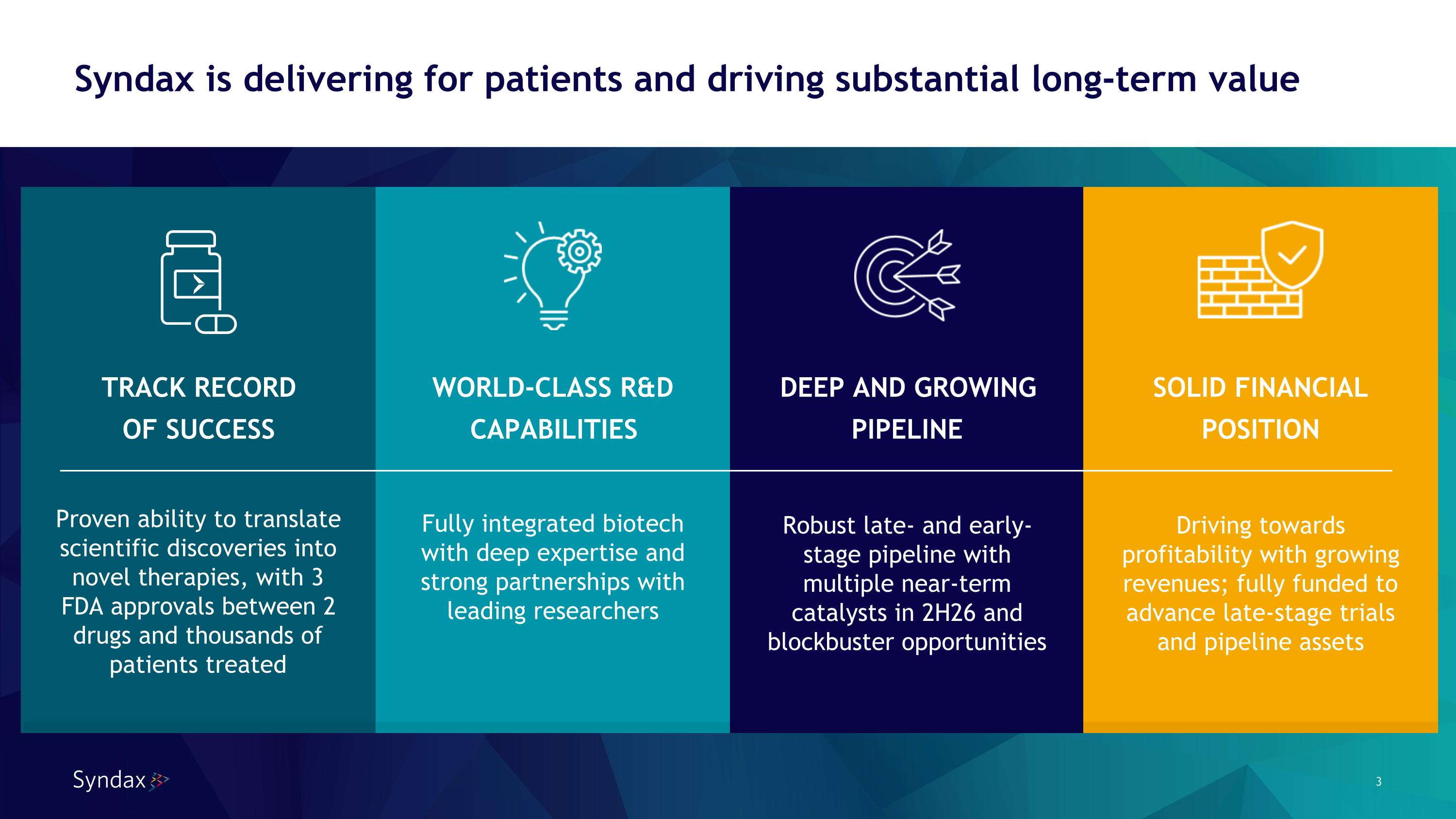
Syndax is delivering for patients and driving substantial long-term value Proven ability to translate scientific discoveries into novel therapies, with 3 FDA approvals between 2 drugs and thousands of patients treated Fully integrated biotech with deep expertise and strong partnerships with leading researchers Robust late- and early-stage pipeline with multiple near-term catalysts in 2H26 and blockbuster opportunities Driving towards profitability with growing revenues; fully funded to advance late-stage trials and pipeline assets SOLID FINANCIAL POSITION TRACK RECORD OF SUCCESS WORLD-CLASS R&D CAPABILITIES DEEP AND GROWING PIPELINE
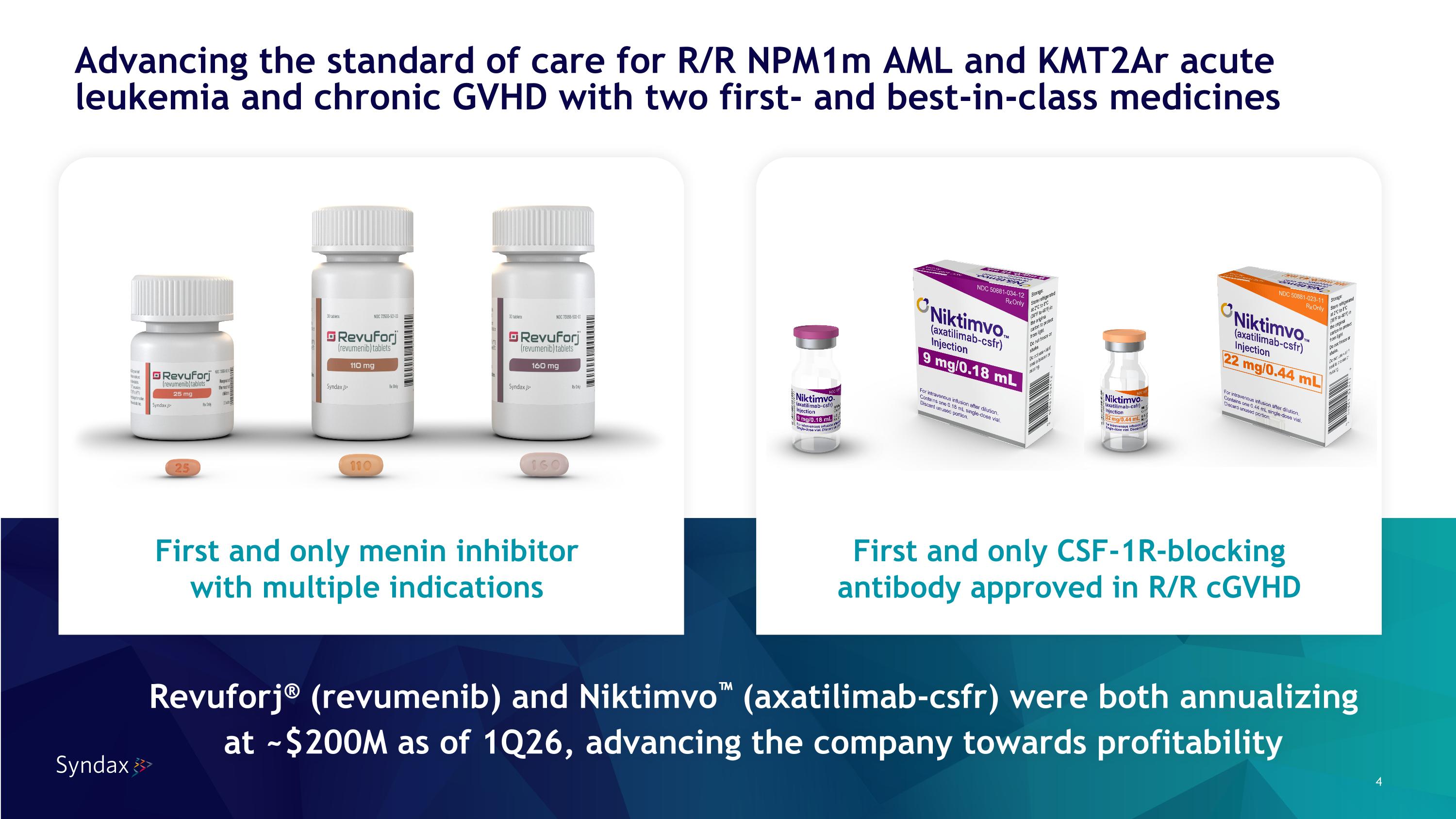
Advancing the standard of care for R/R NPM1m AML and KMT2Ar acute leukemia and chronic GVHD with two first- and best-in-class medicines Revuforj® (revumenib) and Niktimvo™ (axatilimab-csfr) were both annualizing at ~$200M as of 1Q26, advancing the company towards profitability First and only menin inhibitor with multiple indications First and only CSF-1R-blocking antibody approved in R/R cGVHD

Syndax is driving innovation for patients
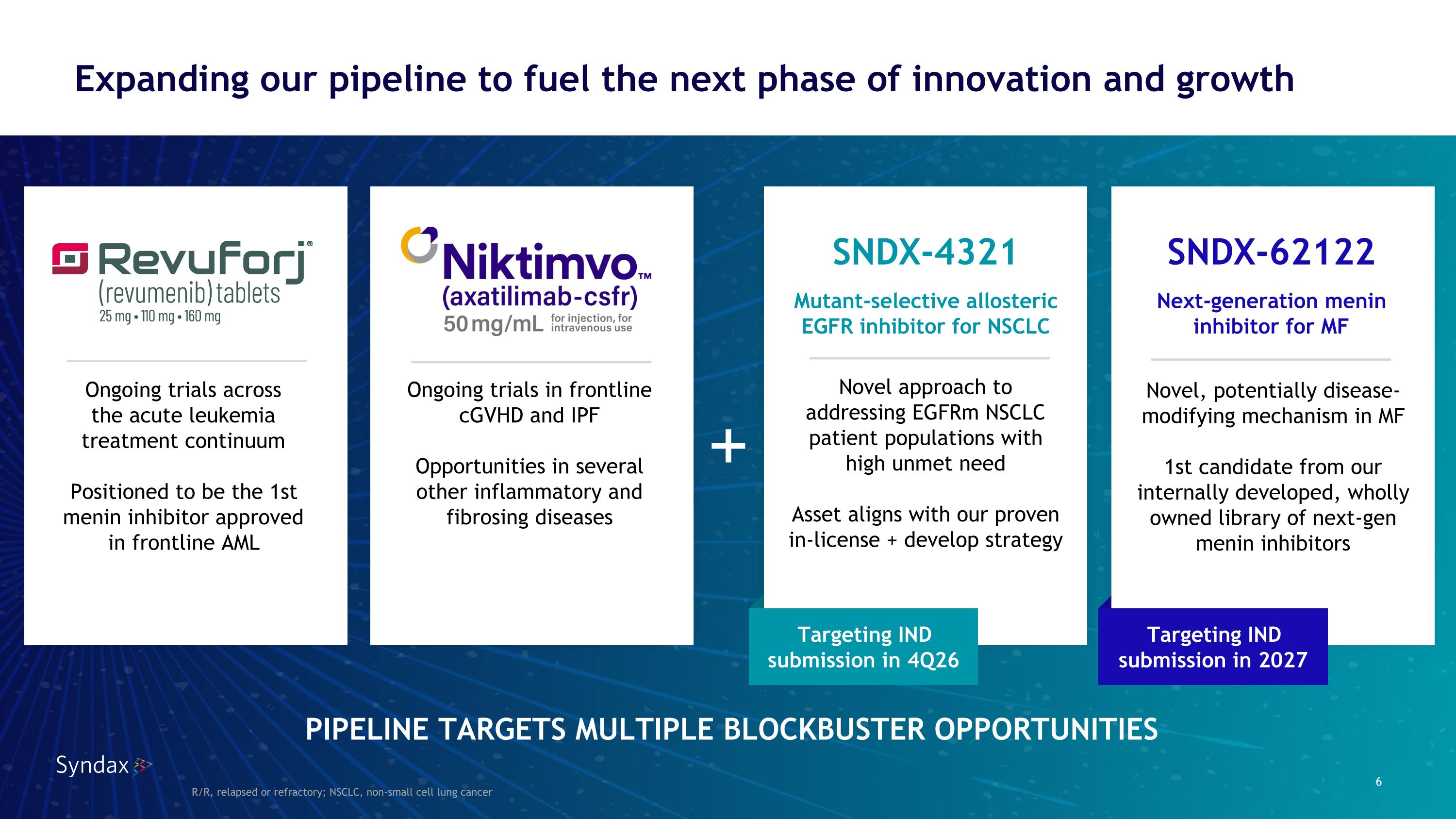
Expanding our pipeline to fuel the next phase of innovation and growth R/R, relapsed or refractory; NSCLC, non-small cell lung cancer + Ongoing trials across the acute leukemia treatment continuum Positioned to be the 1st menin inhibitor approved in frontline AML Ongoing trials in frontline cGVHD and IPF Opportunities in several other inflammatory and fibrosing diseases SNDX-4321 Mutant-selective allosteric EGFR inhibitor for NSCLC Novel approach to addressing EGFRm NSCLC patient populations with high unmet need Asset aligns with our proven in-license + develop strategy Next-generation menin inhibitor for MF SNDX-62122 Novel, potentially disease-modifying mechanism in MF 1st candidate from our internally developed, wholly owned library of next-gen menin inhibitors Targeting IND submission in 2027 Targeting IND submission in 4Q26 PIPELINE TARGETS MULTIPLE BLOCKBUSTER OPPORTUNITIES

Today’s speakers Syndax speakers Nick Botwood, MBBS Head of R&D and Chief Medical Officer Peter Ordentlich, PhD Chief Scientific Officer and Founder Toby M. Maher, MD, PhD Professor of Clinical Medicine and Director of Interstitial Lung Disease, Keck Medical School of University of Southern California Michael A. Metzger Chief Executive Officer and Director John D. Crispino, PhD, MBA Director, Division of Experimental Hematology, St. Jude Children's Research Hospital Michael J. Eck, MD, PhD Professor, Department of Cancer Biology, Dana-Farber Cancer Institute; Professor, Department of Biological Chemistry & Molecular Pharmacology, Harvard Medical School Thought leaders
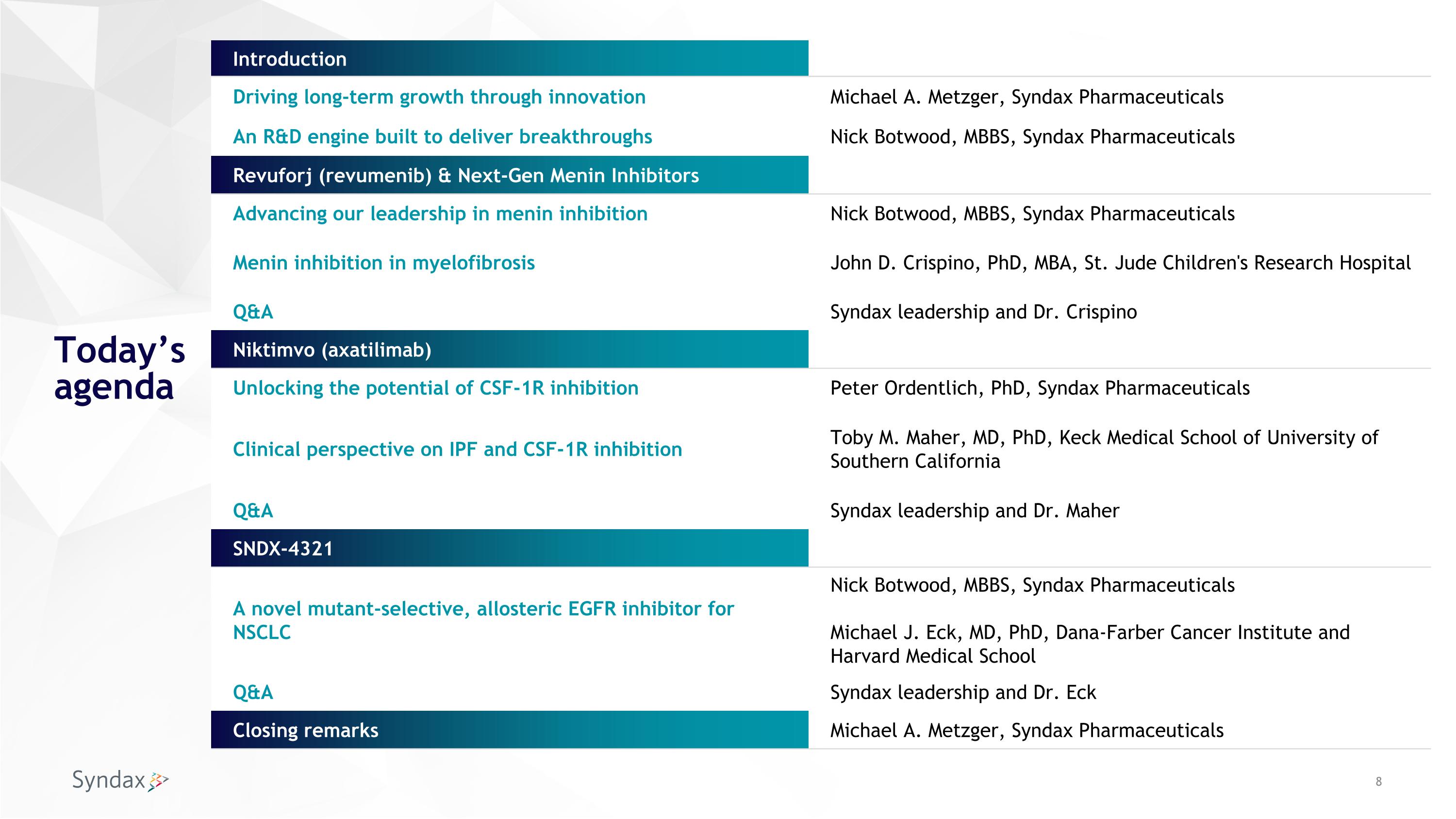
Today’s agenda Introduction Driving long-term growth through innovation Michael A. Metzger, Syndax Pharmaceuticals An R&D engine built to deliver breakthroughs Nick Botwood, MBBS, Syndax Pharmaceuticals Revuforj (revumenib) & Next-Gen Menin Inhibitors Advancing our leadership in menin inhibition Nick Botwood, MBBS, Syndax Pharmaceuticals Menin inhibition in myelofibrosis John D. Crispino, PhD, MBA, St. Jude Children's Research Hospital Q&A Syndax leadership and Dr. Crispino Niktimvo (axatilimab) Unlocking the potential of CSF-1R inhibition Peter Ordentlich, PhD, Syndax Pharmaceuticals Clinical perspective on IPF and CSF-1R inhibition Toby M. Maher, MD, PhD, Keck Medical School of University of Southern California Q&A Syndax leadership and Dr. Maher SNDX-4321 A novel mutant-selective, allosteric EGFR inhibitor for NSCLC Nick Botwood, MBBS, Syndax Pharmaceuticals Michael J. Eck, MD, PhD, Dana-Farber Cancer Institute and Harvard Medical School Q&A Syndax leadership and Dr. Eck Closing remarks Michael A. Metzger, Syndax Pharmaceuticals
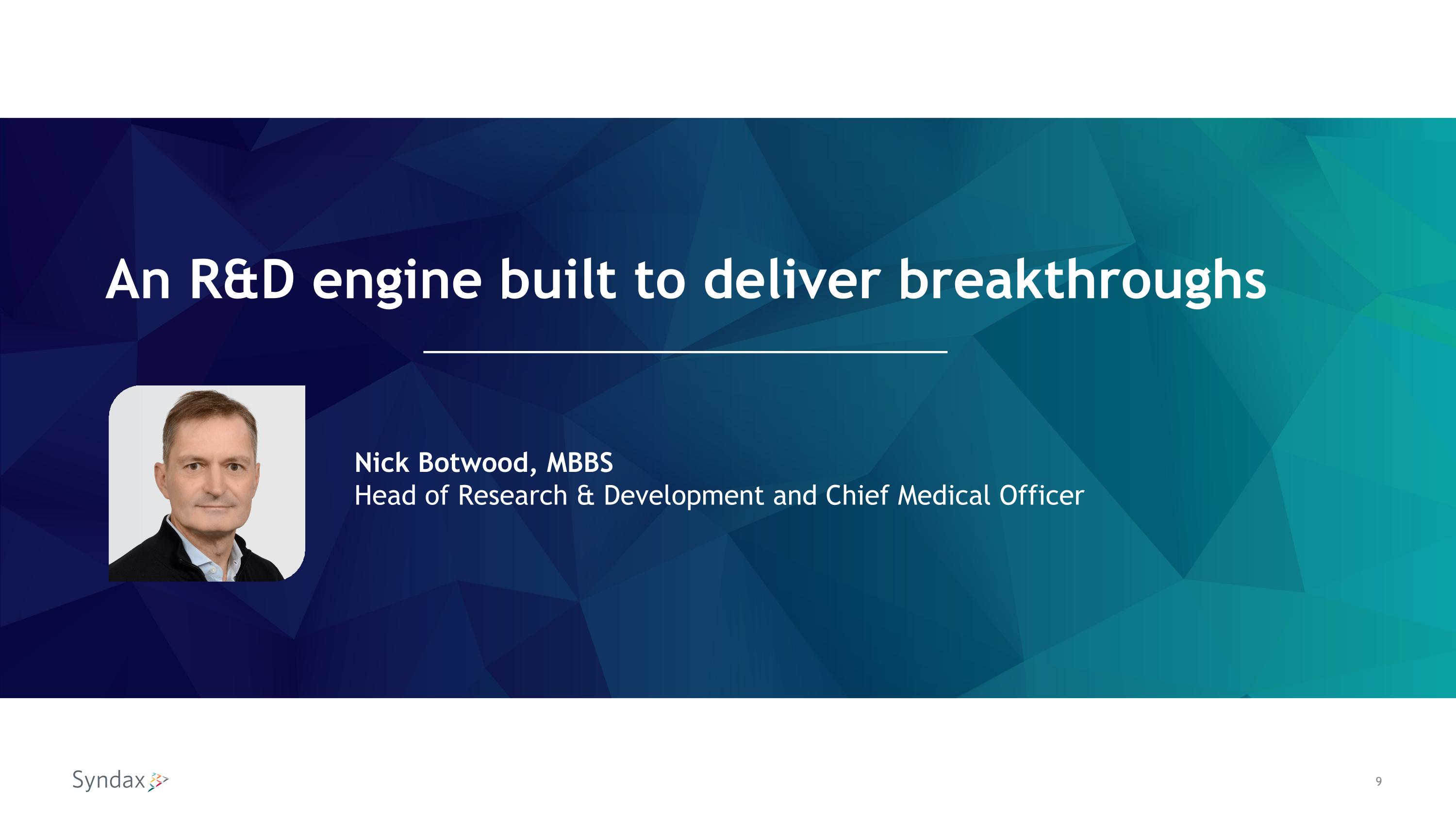
An R&D engine built to deliver breakthroughs Nick Botwood, MBBS Head of Research & Development and Chief Medical Officer
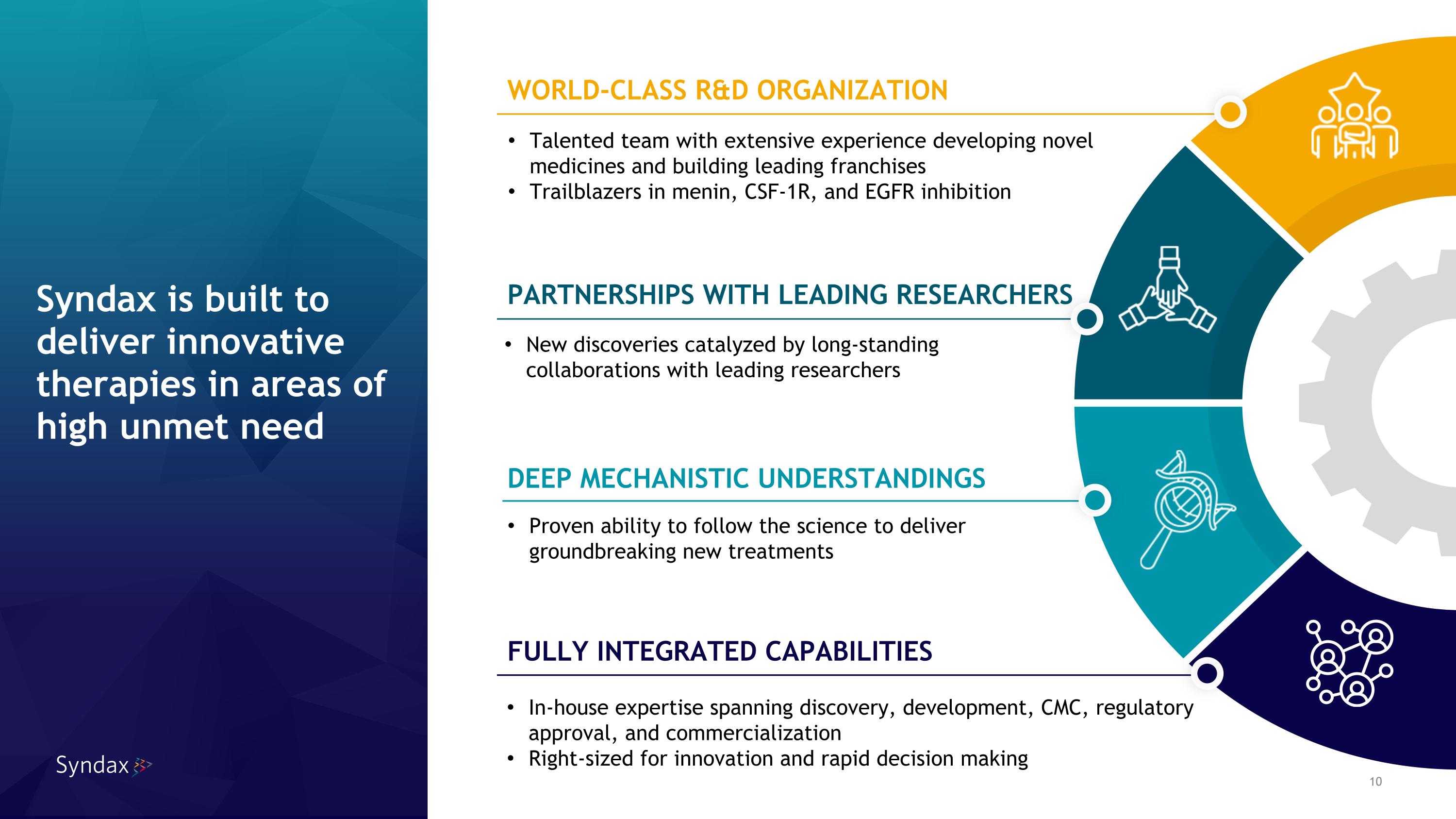
WORLD-CLASS R&D ORGANIZATION PARTNERSHIPS WITH LEADING RESEARCHERS DEEP MECHANISTIC UNDERSTANDINGS FULLY INTEGRATED CAPABILITIES Talented team with extensive experience developing novel medicines and building leading franchises Trailblazers in menin, CSF-1R, and EGFR inhibition In-house expertise spanning discovery, development, CMC, regulatory approval, and commercialization Right-sized for innovation and rapid decision making Proven ability to follow the science to deliver groundbreaking new treatments New discoveries catalyzed by long-standing collaborations with leading researchers Syndax is built to deliver innovative therapies in areas of high unmet need
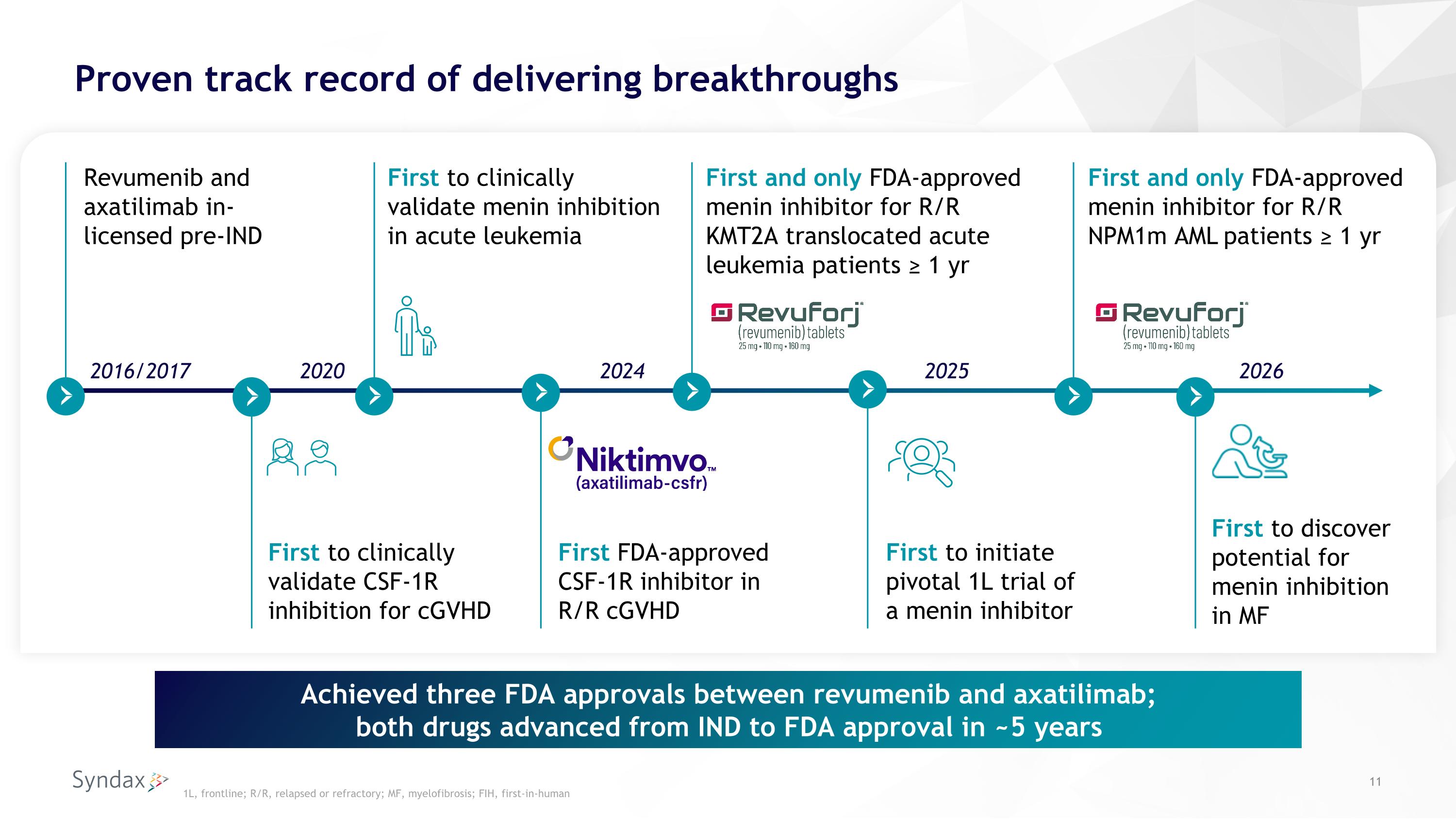
Proven track record of delivering breakthroughs 1L, frontline; R/R, relapsed or refractory; MF, myelofibrosis; FIH, first-in-human First to clinically validate menin inhibition in acute leukemia 2020 First and only FDA-approved menin inhibitor for R/R KMT2A translocated acute leukemia patients ≥ 1 yr 2025 First to initiate pivotal 1L trial of a menin inhibitor 2024 First and only FDA-approved menin inhibitor for R/R NPM1m AML patients ≥ 1 yr First to clinically validate CSF-1R inhibition for cGVHD First FDA-approved CSF-1R inhibitor in R/R cGVHD First to discover potential for menin inhibition in MF Achieved three FDA approvals between revumenib and axatilimab; both drugs advanced from IND to FDA approval in ~5 years 2026 Revumenib and axatilimab in-licensed pre-IND 2016/2017
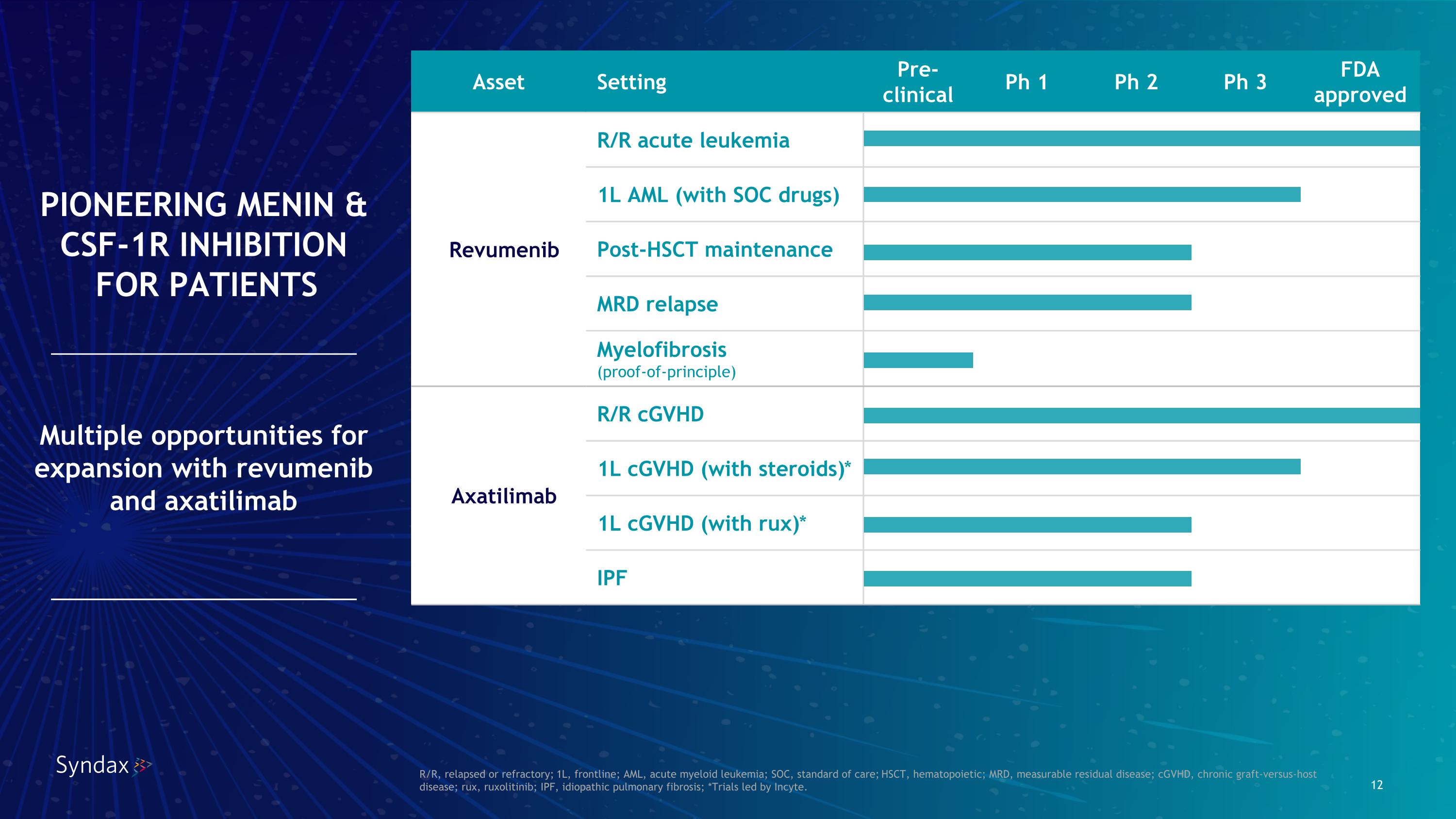
R/R, relapsed or refractory; 1L, frontline; AML, acute myeloid leukemia; SOC, standard of care; HSCT, hematopoietic; MRD, measurable residual disease; cGVHD, chronic graft-versus-host disease; rux, ruxolitinib; IPF, idiopathic pulmonary fibrosis; *Trials led by Incyte. Asset Setting Pre-clinical Ph 1 Ph 2 Ph 3 FDA approved Revumenib R/R acute leukemia 1L AML (with SOC drugs) Post-HSCT maintenance MRD relapse Myelofibrosis (proof-of-principle) Axatilimab R/R cGVHD 1L cGVHD (with steroids)* 1L cGVHD (with rux)* IPF PIONEERING MENIN & CSF-1R INHIBITION FOR PATIENTS Multiple opportunities for expansion with revumenib and axatilimab
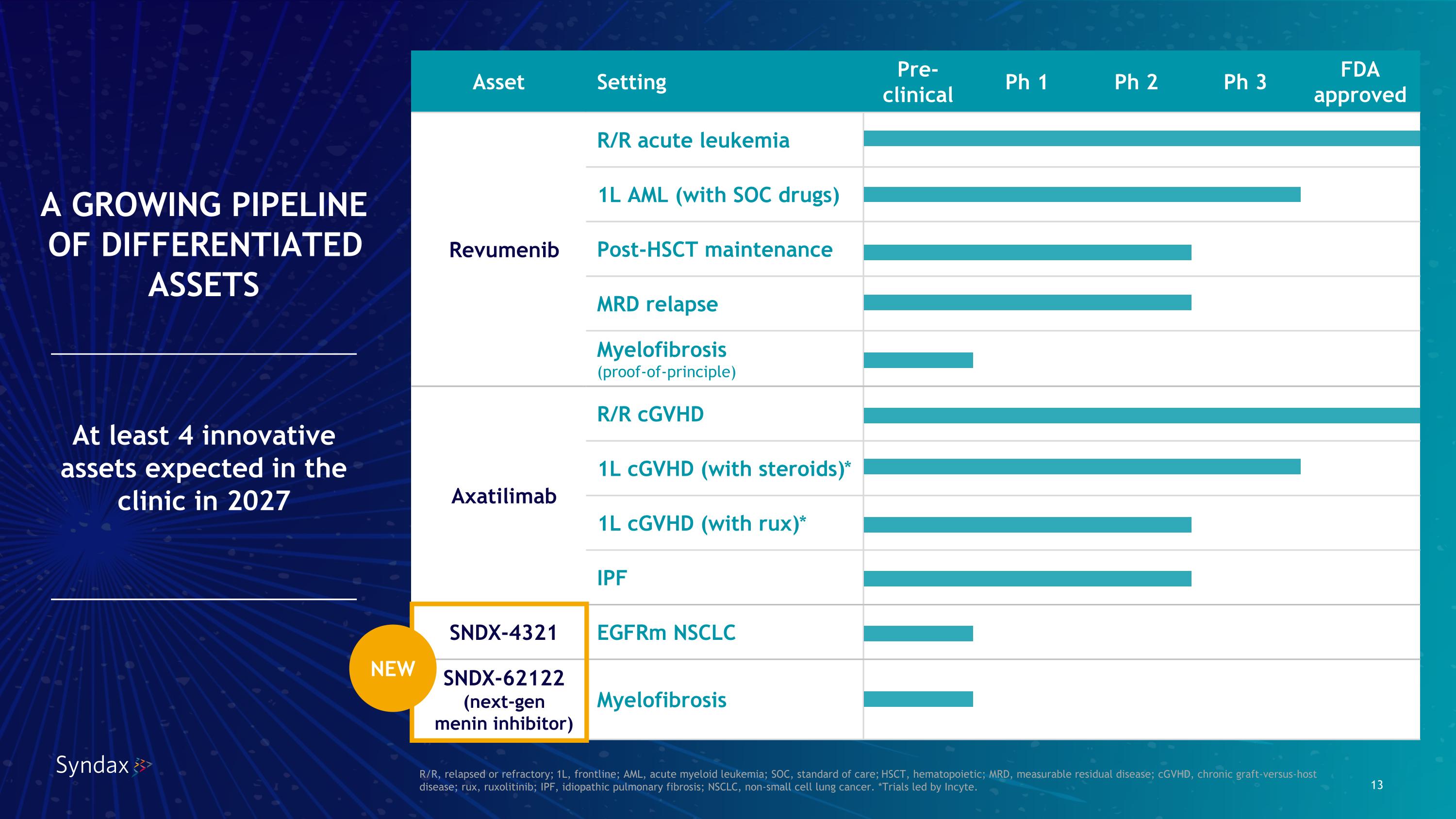
R/R, relapsed or refractory; 1L, frontline; AML, acute myeloid leukemia; SOC, standard of care; HSCT, hematopoietic; MRD, measurable residual disease; cGVHD, chronic graft-versus-host disease; rux, ruxolitinib; IPF, idiopathic pulmonary fibrosis; NSCLC, non-small cell lung cancer. *Trials led by Incyte. Asset Setting Pre-clinical Ph 1 Ph 2 Ph 3 FDA approved Revumenib R/R acute leukemia 1L AML (with SOC drugs) Post-HSCT maintenance MRD relapse Myelofibrosis (proof-of-principle) Axatilimab R/R cGVHD 1L cGVHD (with steroids)* 1L cGVHD (with rux)* IPF SNDX-4321 EGFRm NSCLC SNDX-62122 (next-gen menin inhibitor) Myelofibrosis A GROWING PIPELINE OF DIFFERENTIATED ASSETS At least 4 innovative assets expected in the clinic in 2027 NEW
Advancing our leadership in menin inhibition Nick Botwood, MBBS Head of Research & Development and Chief Medical Officer
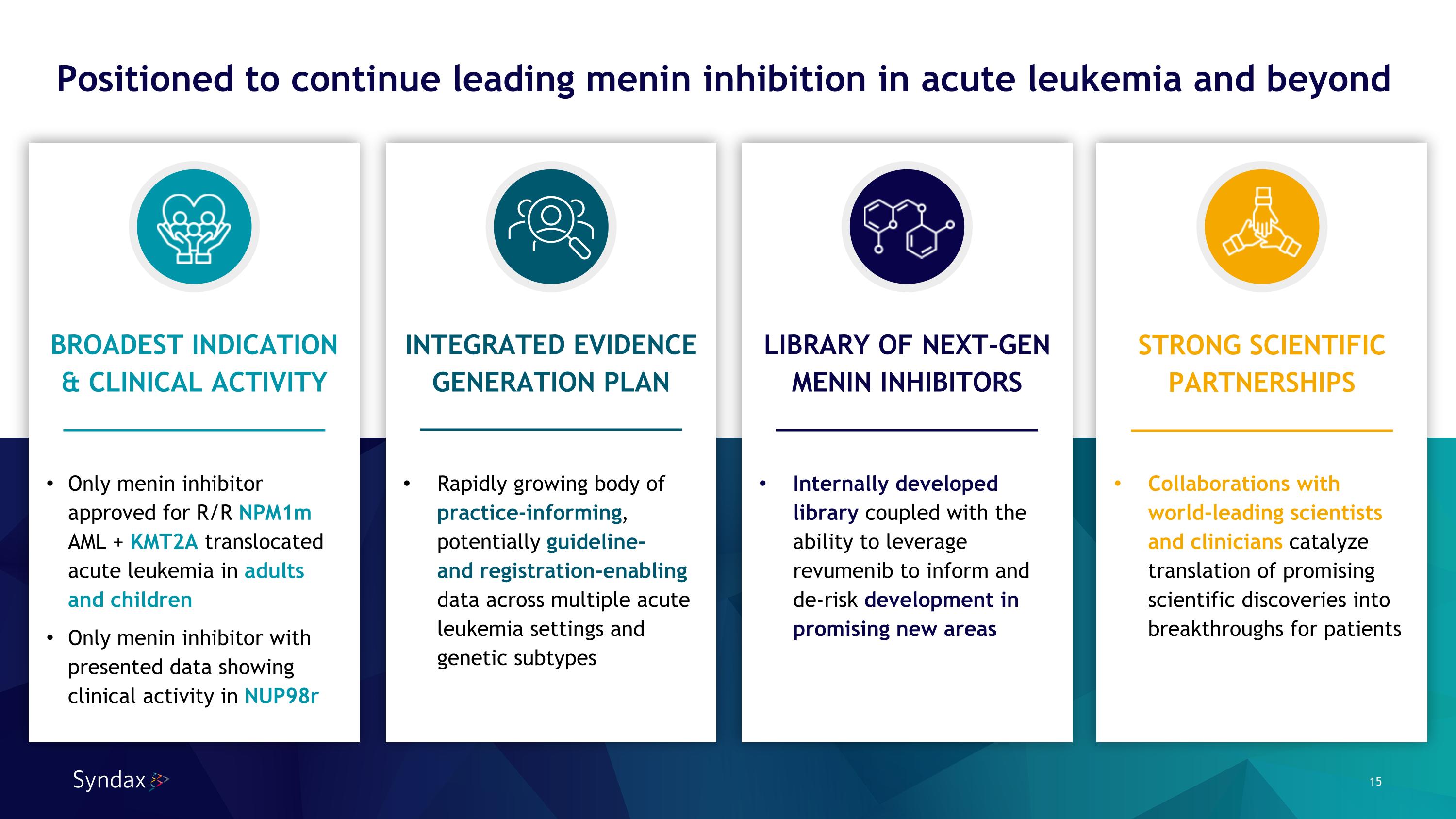
Positioned to continue leading menin inhibition in acute leukemia and beyond Only menin inhibitor approved for R/R NPM1m AML + KMT2A translocated acute leukemia in adults and children Only menin inhibitor with presented data showing clinical activity in NUP98r BROADEST INDICATION & CLINICAL ACTIVITY INTEGRATED EVIDENCE GENERATION PLAN Rapidly growing body of practice-informing, potentially guideline- and registration-enabling data across multiple acute leukemia settings and genetic subtypes LIBRARY OF NEXT-GEN MENIN INHIBITORS Internally developed library coupled with the ability to leverage revumenib to inform and de-risk development in promising new areas STRONG SCIENTIFIC PARTNERSHIPS Collaborations with world-leading scientists and clinicians catalyze translation of promising scientific discoveries into breakthroughs for patients
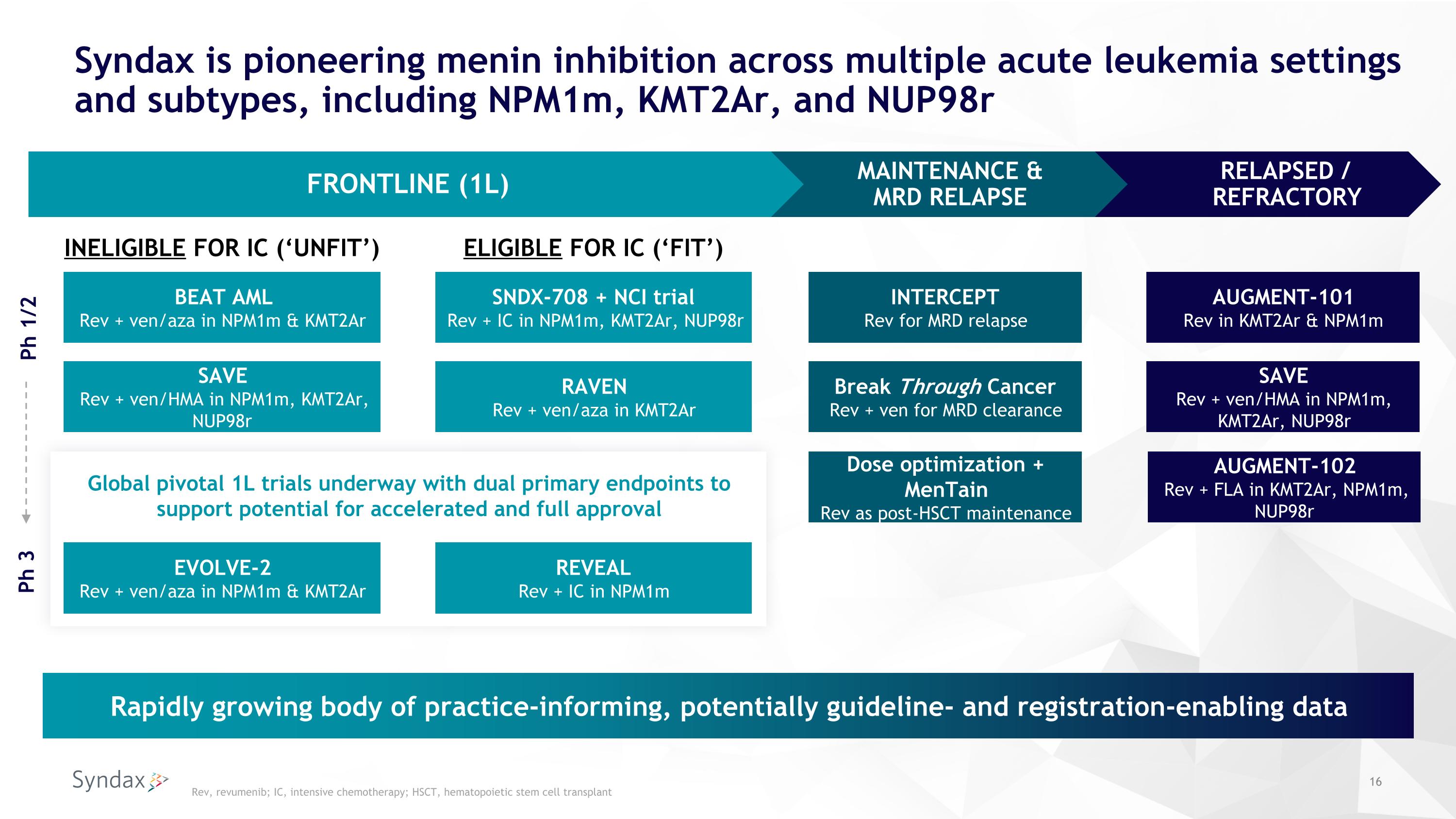
Break Through Cancer Rev + ven for MRD clearance INTERCEPT Rev for MRD relapse Dose optimization + MenTain Rev as post-HSCT maintenance Global pivotal 1L trials underway with dual primary endpoints to support potential for accelerated and full approval RELAPSED / REFRACTORY MAINTENANCE & MRD RELAPSE Syndax is pioneering menin inhibition across multiple acute leukemia settings and subtypes, including NPM1m, KMT2Ar, and NUP98r AUGMENT-101 Rev in KMT2Ar & NPM1m SAVE Rev + ven/HMA in NPM1m, KMT2Ar, NUP98r BEAT AML Rev + ven/aza in NPM1m & KMT2Ar AUGMENT-102 Rev + FLA in KMT2Ar, NPM1m, NUP98r FRONTLINE (1L) EVOLVE-2 Rev + ven/aza in NPM1m & KMT2Ar SNDX-708 + NCI trial Rev + IC in NPM1m, KMT2Ar, NUP98r Rev, revumenib; IC, intensive chemotherapy; HSCT, hematopoietic stem cell transplant SAVE Rev + ven/HMA in NPM1m, KMT2Ar, NUP98r REVEAL Rev + IC in NPM1m RAVEN Rev + ven/aza in KMT2Ar INELIGIBLE FOR IC (‘UNFIT’) ELIGIBLE FOR IC (‘FIT’) Ph 1/2 Ph 3 Rapidly growing body of practice-informing, potentially guideline- and registration-enabling data
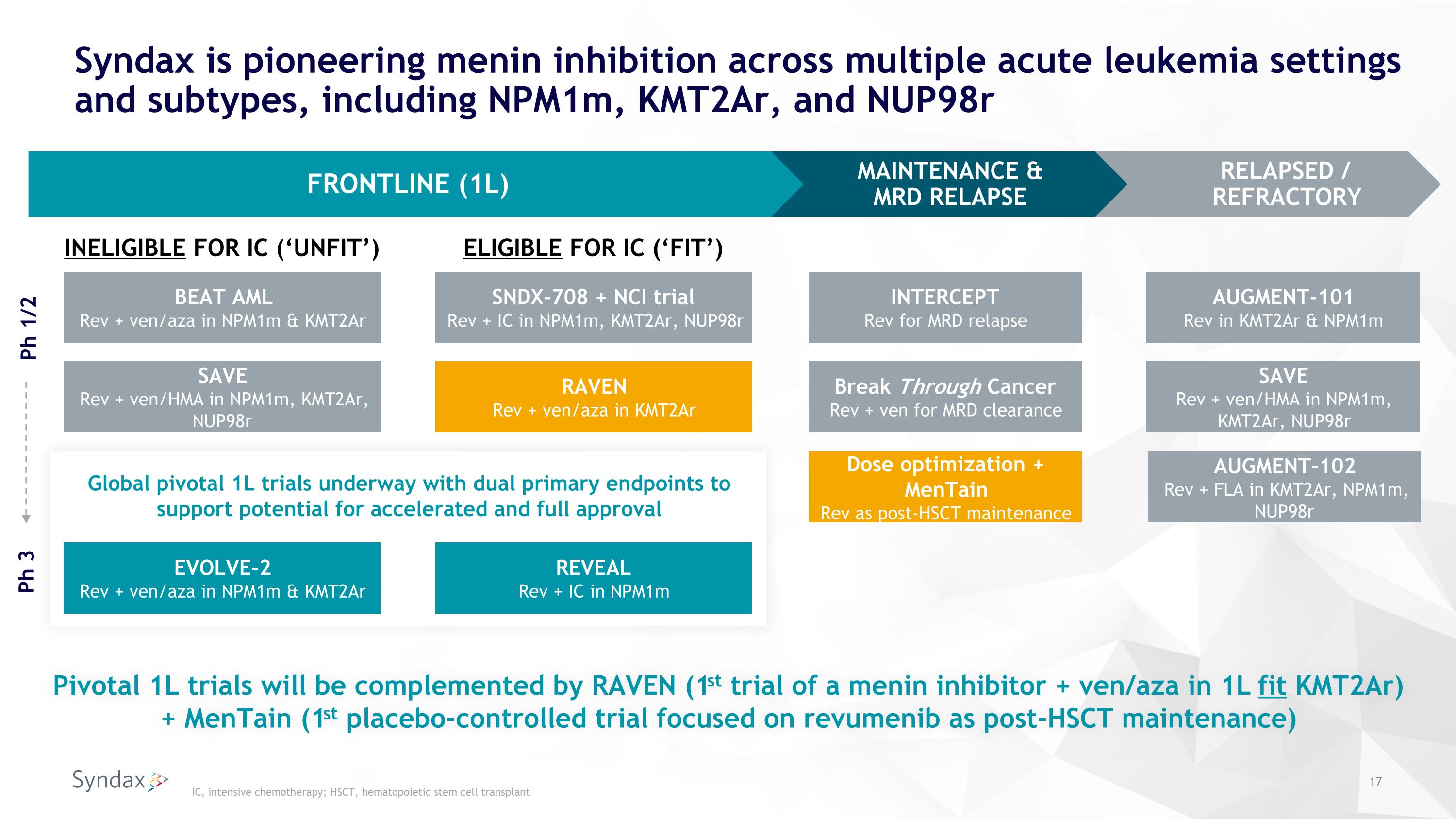
Break Through Cancer Rev + ven for MRD clearance INTERCEPT Rev for MRD relapse Dose optimization + MenTain Rev as post-HSCT maintenance Global pivotal 1L trials underway with dual primary endpoints to support potential for accelerated and full approval RELAPSED / REFRACTORY MAINTENANCE & MRD RELAPSE Syndax is pioneering menin inhibition across multiple acute leukemia settings and subtypes, including NPM1m, KMT2Ar, and NUP98r AUGMENT-101 Rev in KMT2Ar & NPM1m SAVE Rev + ven/HMA in NPM1m, KMT2Ar, NUP98r BEAT AML Rev + ven/aza in NPM1m & KMT2Ar AUGMENT-102 Rev + FLA in KMT2Ar, NPM1m, NUP98r FRONTLINE (1L) EVOLVE-2 Rev + ven/aza in NPM1m & KMT2Ar SNDX-708 + NCI trial Rev + IC in NPM1m, KMT2Ar, NUP98r IC, intensive chemotherapy; HSCT, hematopoietic stem cell transplant SAVE Rev + ven/HMA in NPM1m, KMT2Ar, NUP98r REVEAL Rev + IC in NPM1m RAVEN Rev + ven/aza in KMT2Ar INELIGIBLE FOR IC (‘UNFIT’) ELIGIBLE FOR IC (‘FIT’) Ph 1/2 Ph 3 Pivotal 1L trials will be complemented by RAVEN (1st trial of a menin inhibitor + ven/aza in 1L fit KMT2Ar) + MenTain (1st placebo-controlled trial focused on revumenib as post-HSCT maintenance)
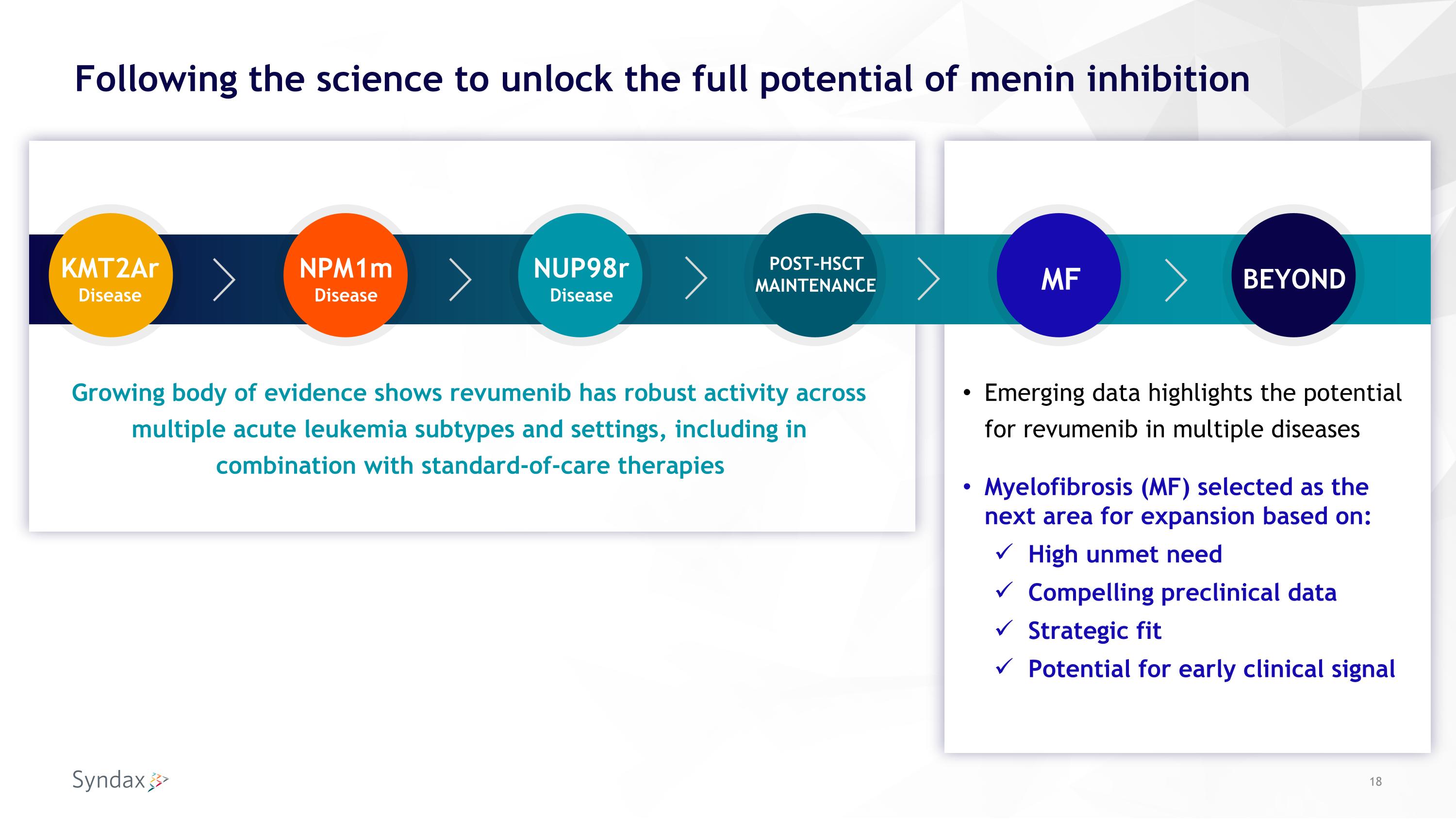
Following the science to unlock the full potential of menin inhibition Emerging data highlights the potential for revumenib in multiple diseases Myelofibrosis (MF) selected as the next area for expansion based on: High unmet need Compelling preclinical data Strategic fit Potential for early clinical signal Growing body of evidence shows revumenib has robust activity across multiple acute leukemia subtypes and settings, including in combination with standard-of-care therapies KMT2Ar Disease NPM1m Disease NUP98r Disease POST-HSCT MAINTENANCE MF BEYOND
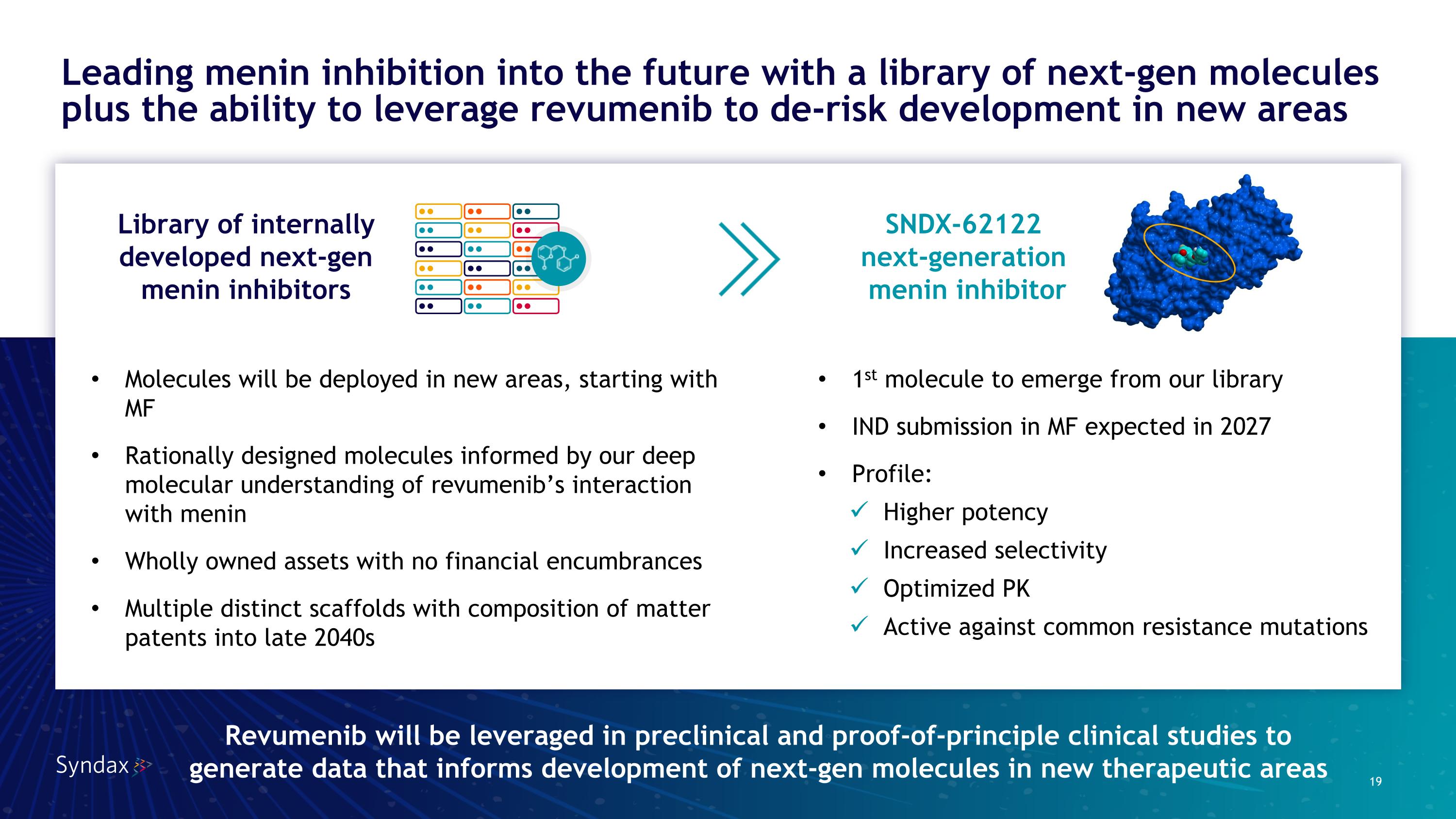
Leading menin inhibition into the future with a library of next-gen molecules plus the ability to leverage revumenib to de-risk development in new areas Revumenib will be leveraged in preclinical and proof-of-principle clinical studies to generate data that informs development of next-gen molecules in new therapeutic areas Library of internally developed next-gen menin inhibitors Molecules will be deployed in new areas, starting with MF Rationally designed molecules informed by our deep molecular understanding of revumenib’s interaction with menin Wholly owned assets with no financial encumbrances Multiple distinct scaffolds with composition of matter patents into late 2040s SNDX-62122 next-generation menin inhibitor 1st molecule to emerge from our library IND submission in MF expected in 2027 Profile: Higher potency Increased selectivity Optimized PK Active against common resistance mutations
Menin inhibition in myelofibrosis John D. Crispino, PhD, MBA Director, Division of Experimental Hematology, St. Jude Children's Research Hospital
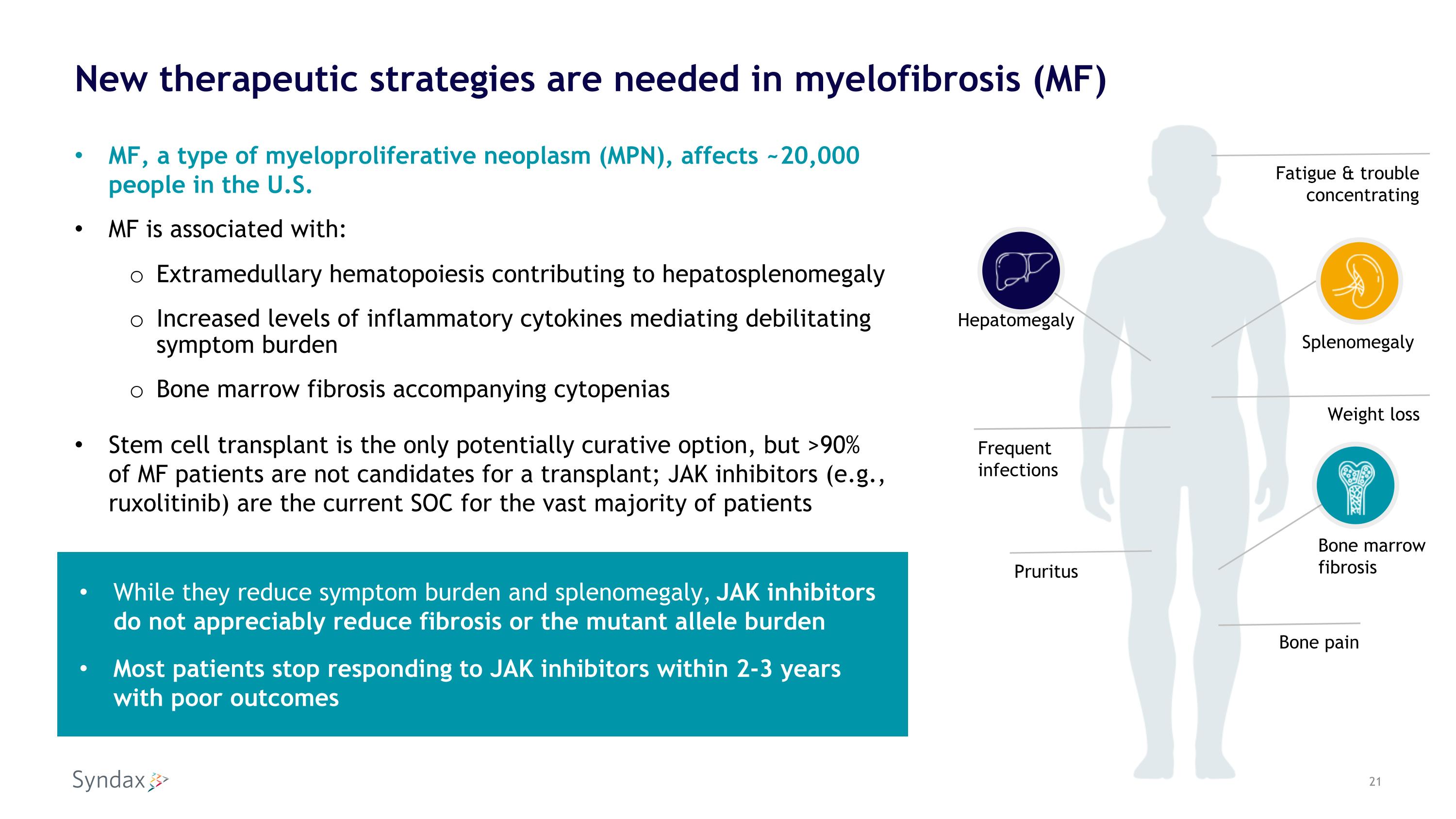
New therapeutic strategies are needed in myelofibrosis (MF) MF, a type of myeloproliferative neoplasm (MPN), affects ~20,000 people in the U.S. MF is associated with: Extramedullary hematopoiesis contributing to hepatosplenomegaly Increased levels of inflammatory cytokines mediating debilitating symptom burden Bone marrow fibrosis accompanying cytopenias Stem cell transplant is the only potentially curative option, but >90% of MF patients are not candidates for a transplant; JAK inhibitors (e.g., ruxolitinib) are the current SOC for the vast majority of patients While they reduce symptom burden and splenomegaly, JAK inhibitors do not appreciably reduce fibrosis or the mutant allele burden Most patients stop responding to JAK inhibitors within 2-3 years with poor outcomes Splenomegaly Hepatomegaly Fatigue & trouble concentrating Frequent infections Bone marrow fibrosis Bone pain Pruritus Weight loss
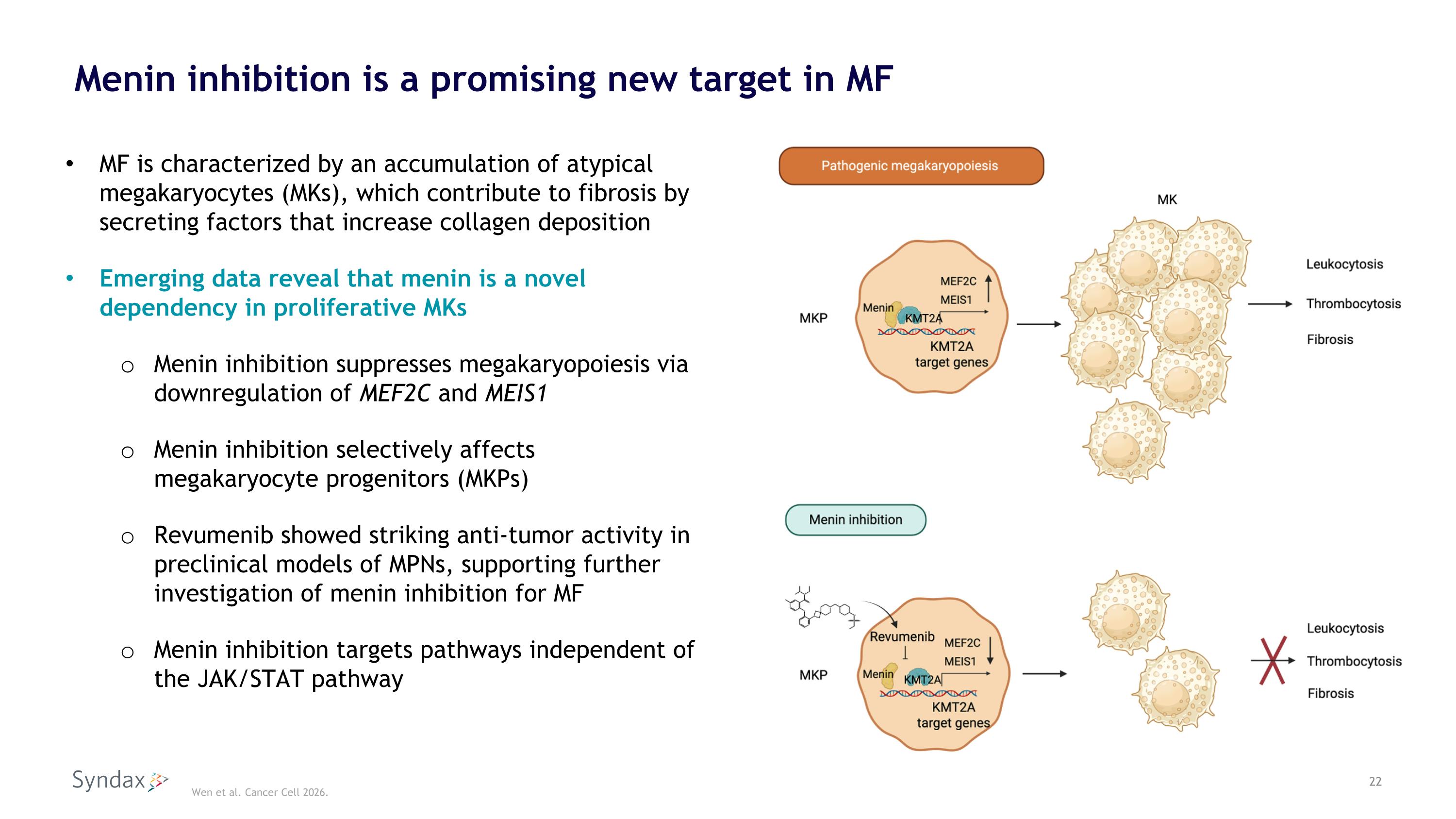
Menin inhibition is a promising new target in MF Wen et al. Cancer Cell 2026. MF is characterized by an accumulation of atypical megakaryocytes (MKs), which contribute to fibrosis by secreting factors that increase collagen deposition Emerging data reveal that menin is a novel dependency in proliferative MKs Menin inhibition suppresses megakaryopoiesis via downregulation of MEF2C and MEIS1 Menin inhibition selectively affects megakaryocyte progenitors (MKPs) Revumenib showed striking anti-tumor activity in preclinical models of MPNs, supporting further investigation of menin inhibition for MF Menin inhibition targets pathways independent of the JAK/STAT pathway
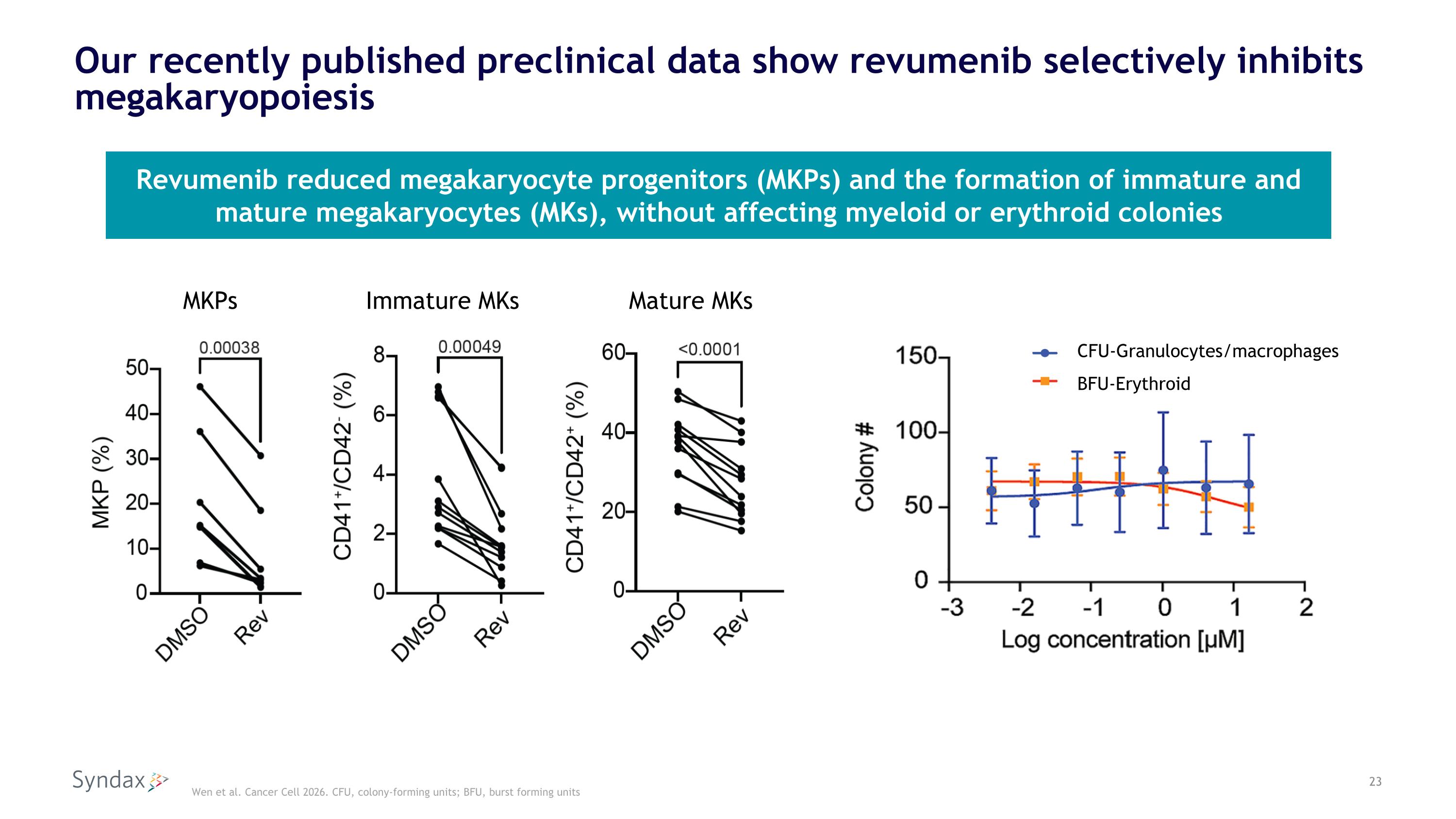
Our recently published preclinical data show revumenib selectively inhibits megakaryopoiesis Wen et al. Cancer Cell 2026. CFU, colony-forming units; BFU, burst forming units CFU-Granulocytes/macrophages BFU-Erythroid Revumenib reduced megakaryocyte progenitors (MKPs) and the formation of immature and mature megakaryocytes (MKs), without affecting myeloid or erythroid colonies Immature MKs Mature MKs MKPs
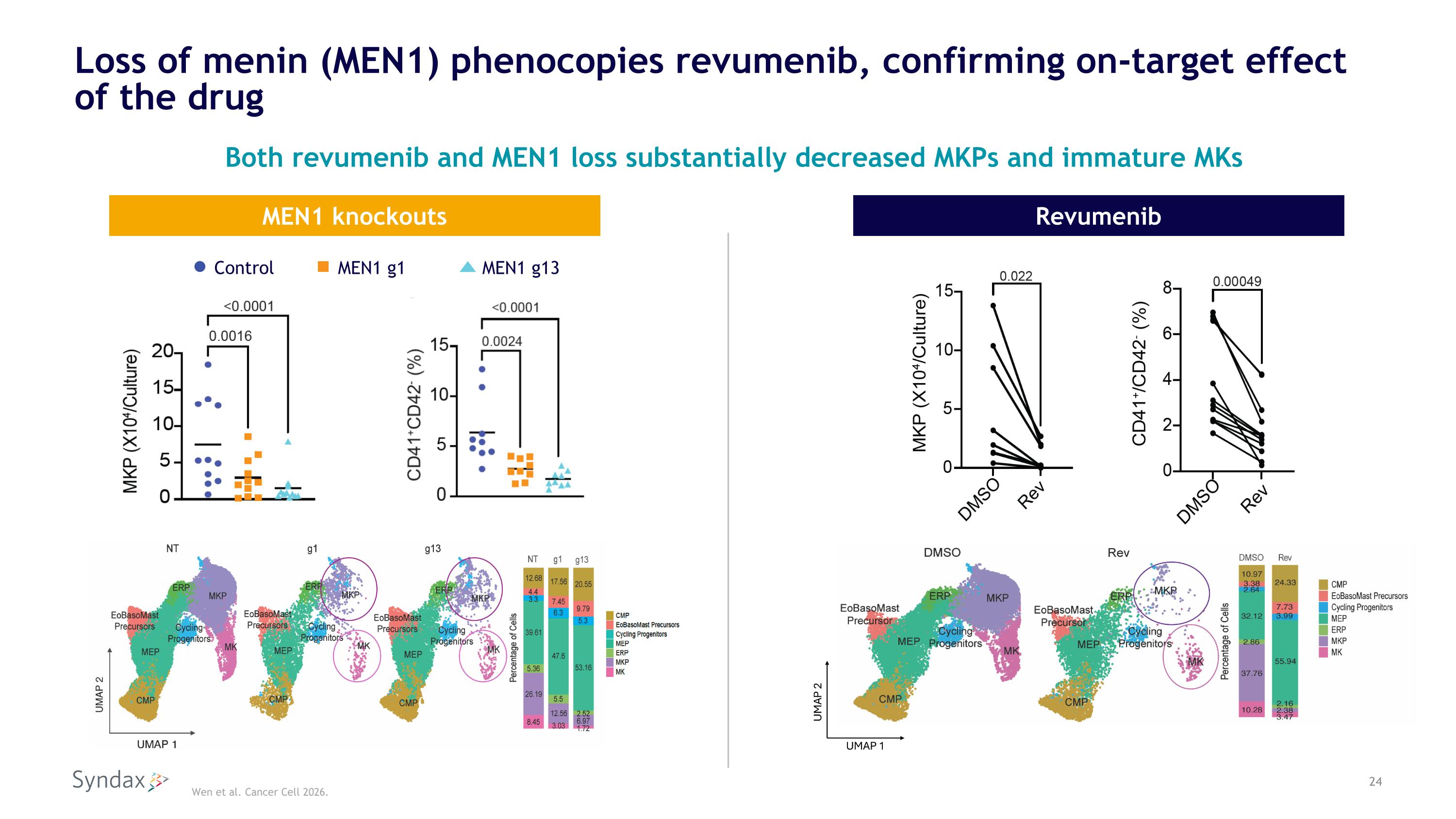
Loss of menin (MEN1) phenocopies revumenib, confirming on-target effect of the drug Control MEN1 g1 MEN1 g13 Revumenib MEN1 knockouts Both revumenib and MEN1 loss substantially decreased MKPs and immature MKs Wen et al. Cancer Cell 2026.
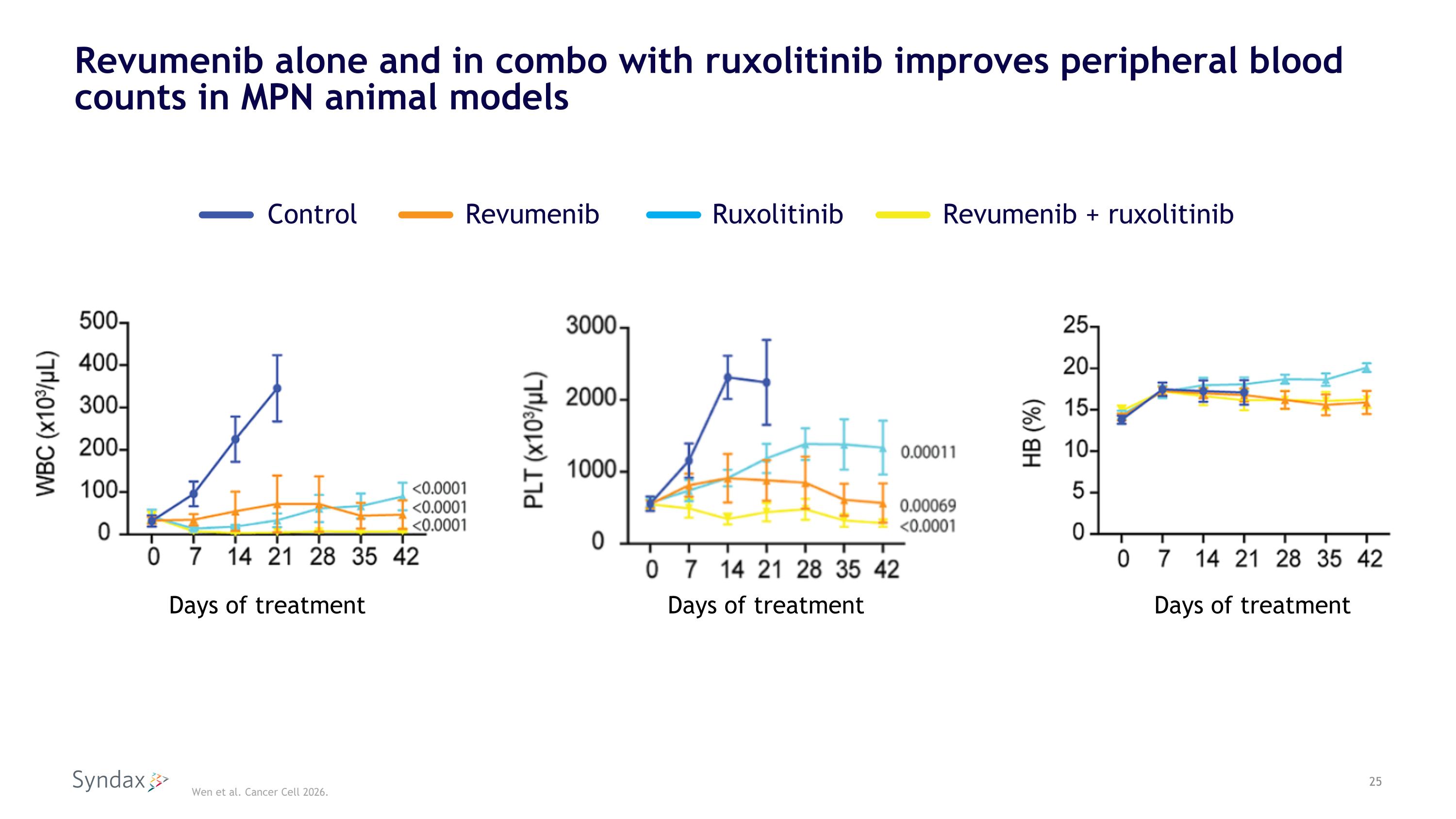
Revumenib alone and in combo with ruxolitinib improves peripheral blood counts in MPN animal models Days of treatment Days of treatment Days of treatment Control Revumenib Ruxolitinib Revumenib + ruxolitinib Wen et al. Cancer Cell 2026.
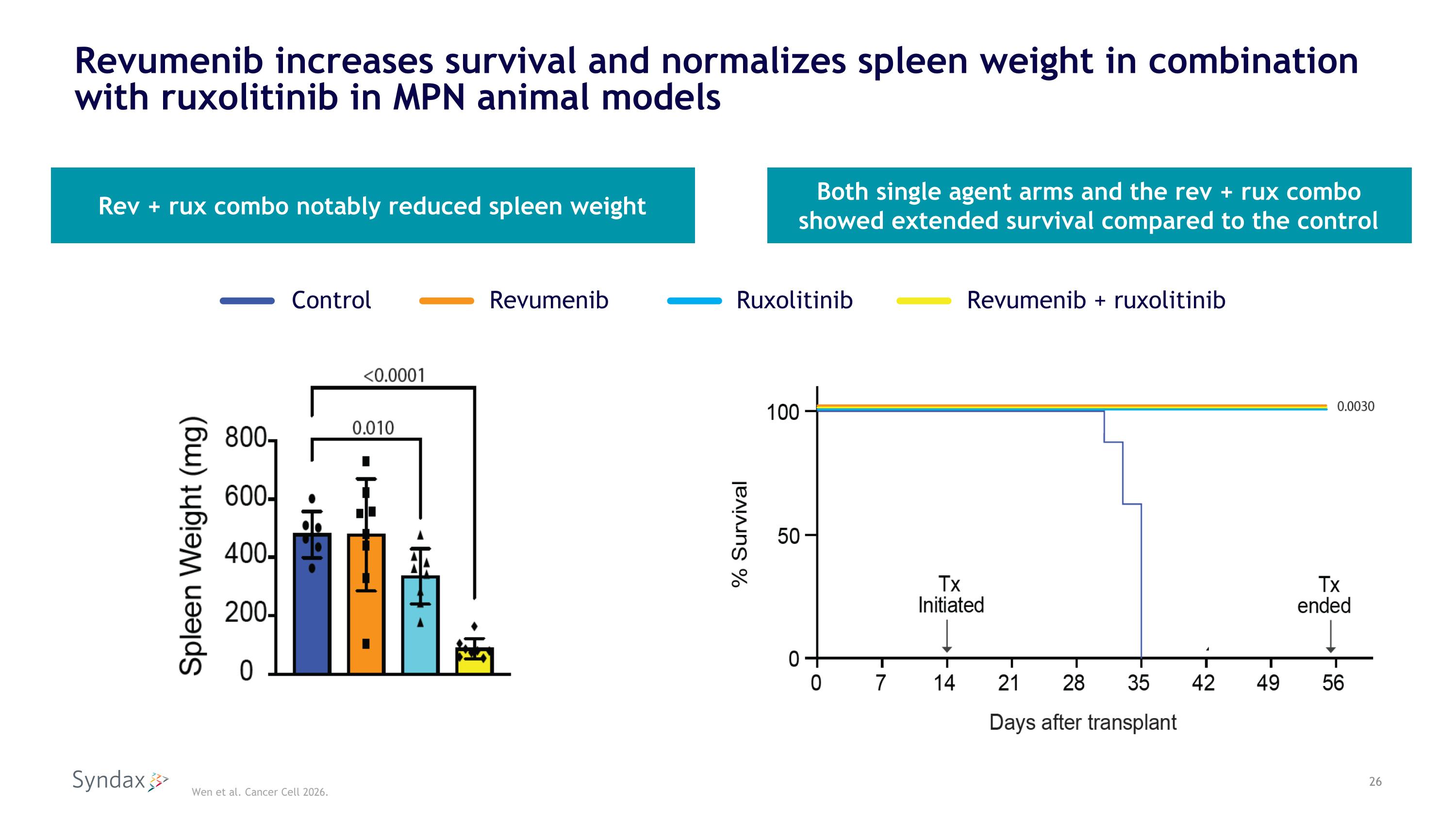
Revumenib increases survival and normalizes spleen weight in combination with ruxolitinib in MPN animal models Control Revumenib Ruxolitinib Revumenib + ruxolitinib Rev + rux combo notably reduced spleen weight Both single agent arms and the rev + rux combo showed extended survival compared to the control Wen et al. Cancer Cell 2026.
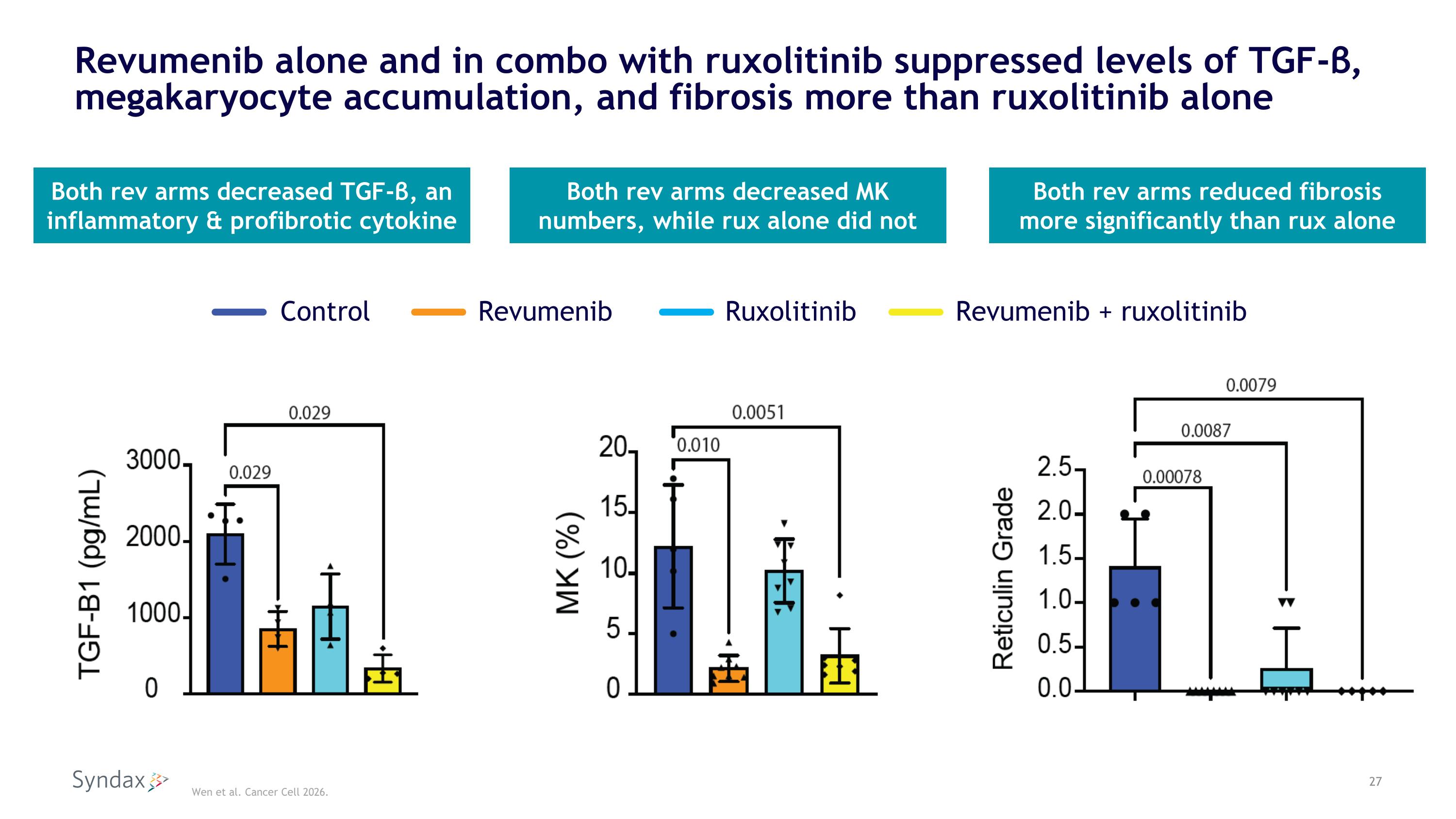
Revumenib alone and in combo with ruxolitinib suppressed levels of TGF-β, megakaryocyte accumulation, and fibrosis more than ruxolitinib alone Control Revumenib Ruxolitinib Revumenib + ruxolitinib Both rev arms decreased TGF-β, an inflammatory & profibrotic cytokine Both rev arms decreased MK numbers, while rux alone did not Both rev arms reduced fibrosis more significantly than rux alone Wen et al. Cancer Cell 2026.
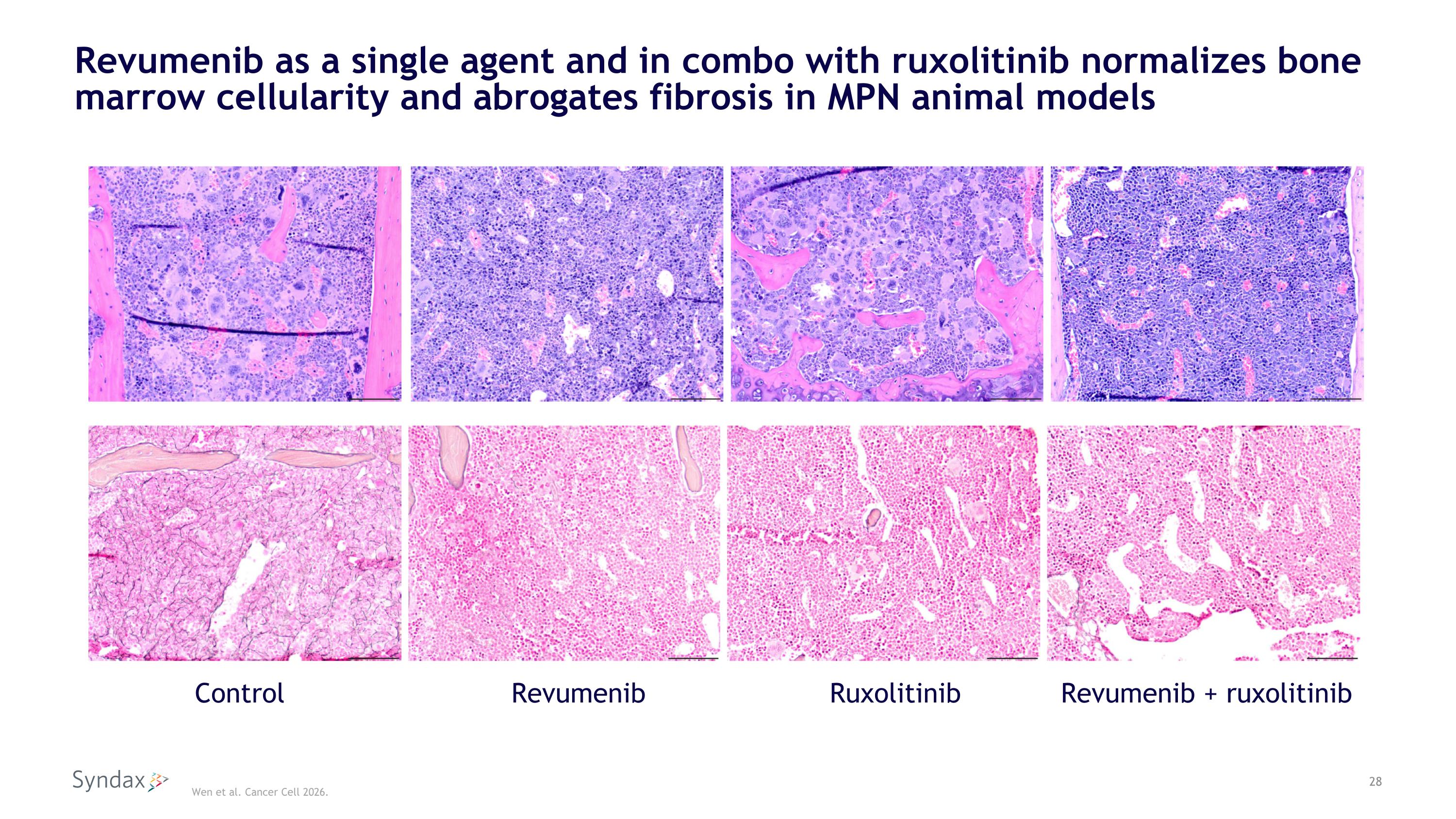
Revumenib as a single agent and in combo with ruxolitinib normalizes bone marrow cellularity and abrogates fibrosis in MPN animal models Control Revumenib Ruxolitinib Revumenib + ruxolitinib Wen et al. Cancer Cell 2026.
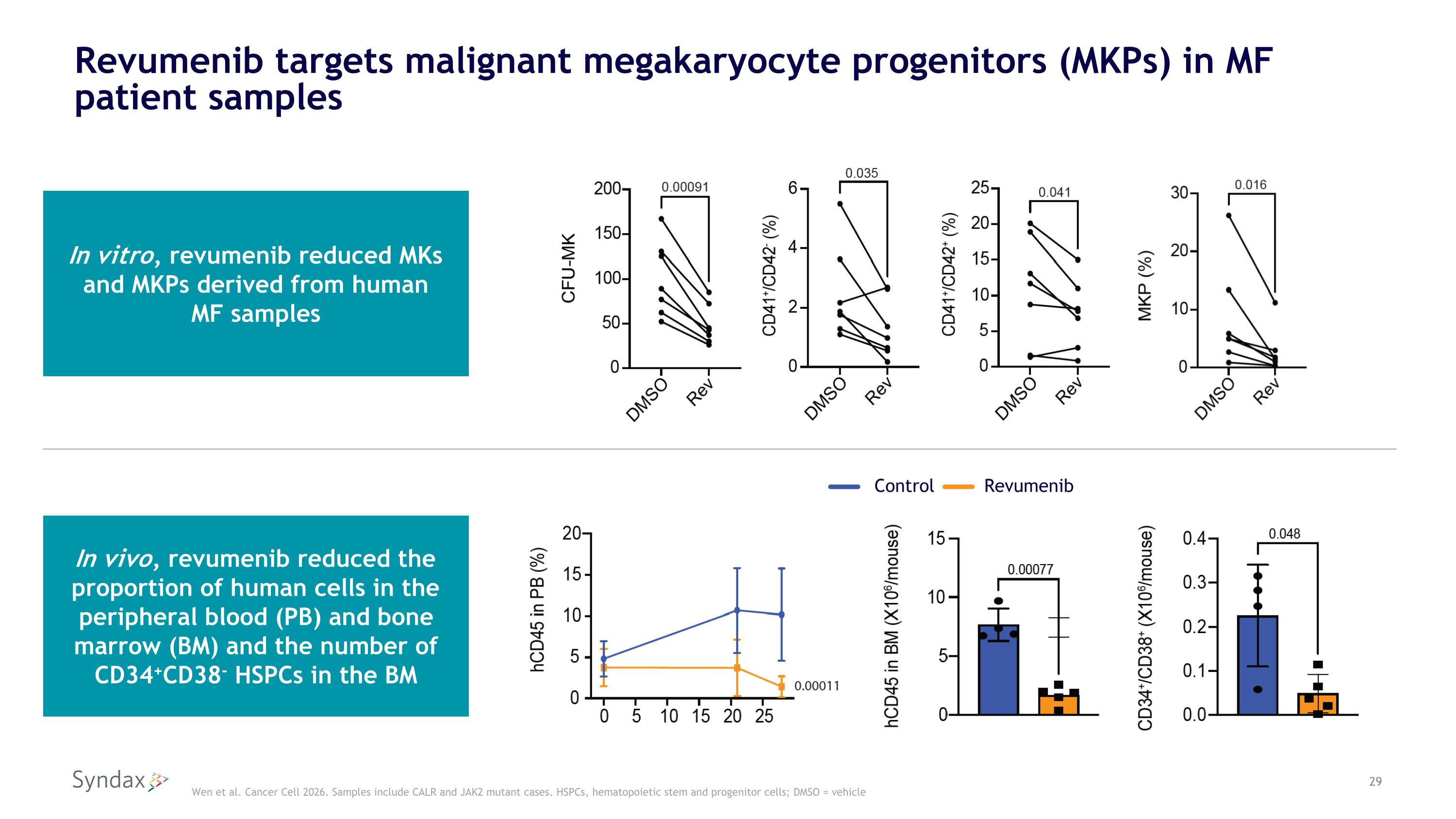
Revumenib targets malignant megakaryocyte progenitors (MKPs) in MF patient samples Wen et al. Cancer Cell 2026. Samples include CALR and JAK2 mutant cases. HSPCs, hematopoietic stem and progenitor cells; DMSO = vehicle In vitro, revumenib reduced MKs and MKPs derived from human MF samples In vivo, revumenib reduced the proportion of human cells in the peripheral blood (PB) and bone marrow (BM) and the number of CD34+CD38- HSPCs in the BM Control Revumenib
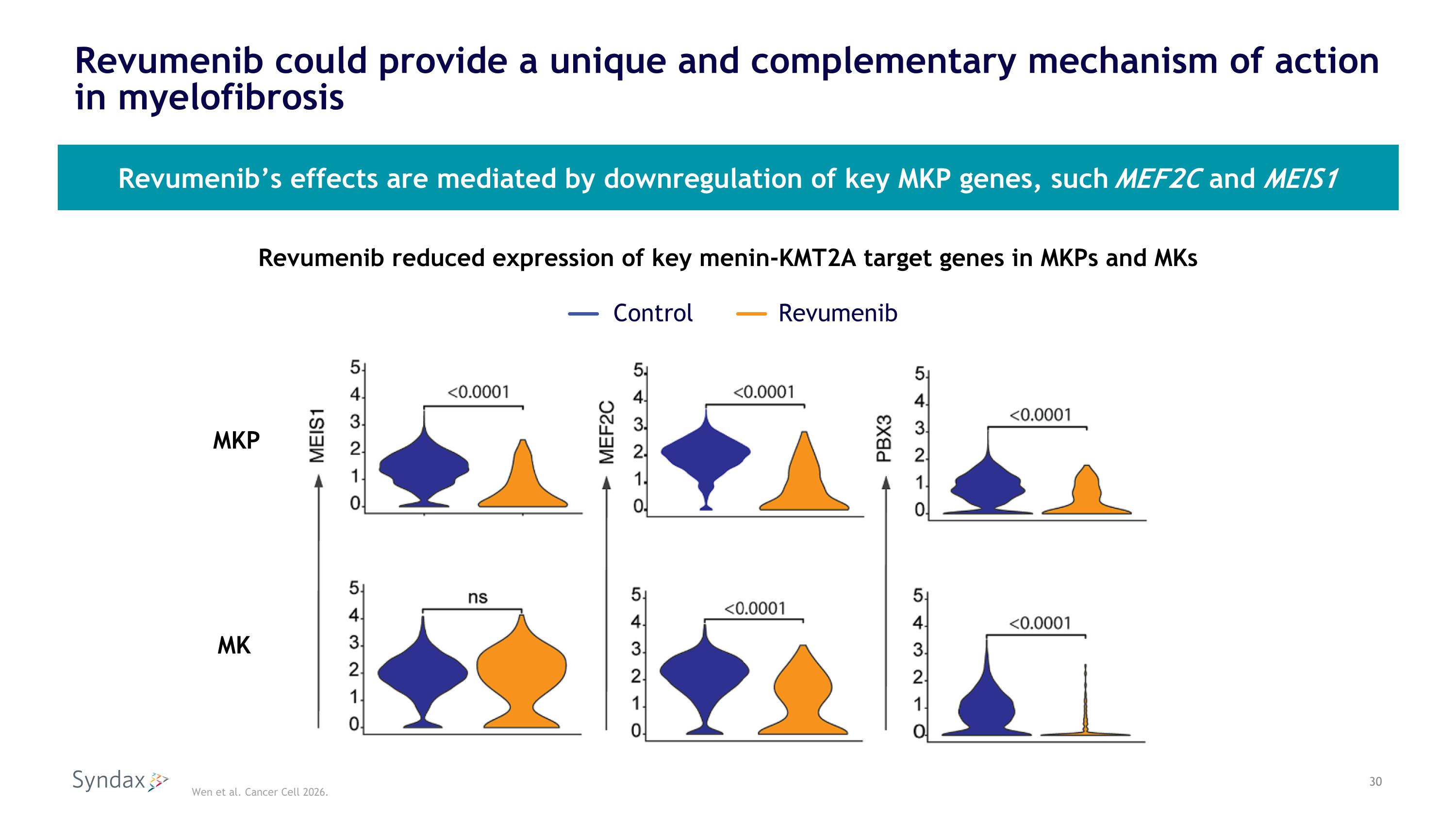
Revumenib could provide a unique and complementary mechanism of action in myelofibrosis Revumenib’s effects are mediated by downregulation of key MKP genes, such MEF2C and MEIS1 Control Revumenib Revumenib reduced expression of key menin-KMT2A target genes in MKPs and MKs MK MKP Wen et al. Cancer Cell 2026.
Summary Menin inhibition suppresses megakaryopoiesis in times of stress or disease when progenitors are highly proliferative; on-target effect in MF is driven in part by downregulation of MEF2C and MEIS1 Revumenib has anti-tumor effects in multiple MPN mouse models as a single agent and in combination with ruxolitinib Revumenib and ruxolitinib appear to synergistically suppress MF cell growth by targeting regulation of key MKP genes and JAK/STAT signaling, respectively Menin inhibition may be complimentary to other emerging targeted therapies for MF (e.g., mutCALR-targeted, JAK2 selective) which target activated JAK/STAT pathway Our study provides rationale for further clinical investigation of menin inhibition in MPNs
Menin inhibition in MF - Next steps Nick Botwood, MBBS Head of Research & Development and Chief Medical Officer
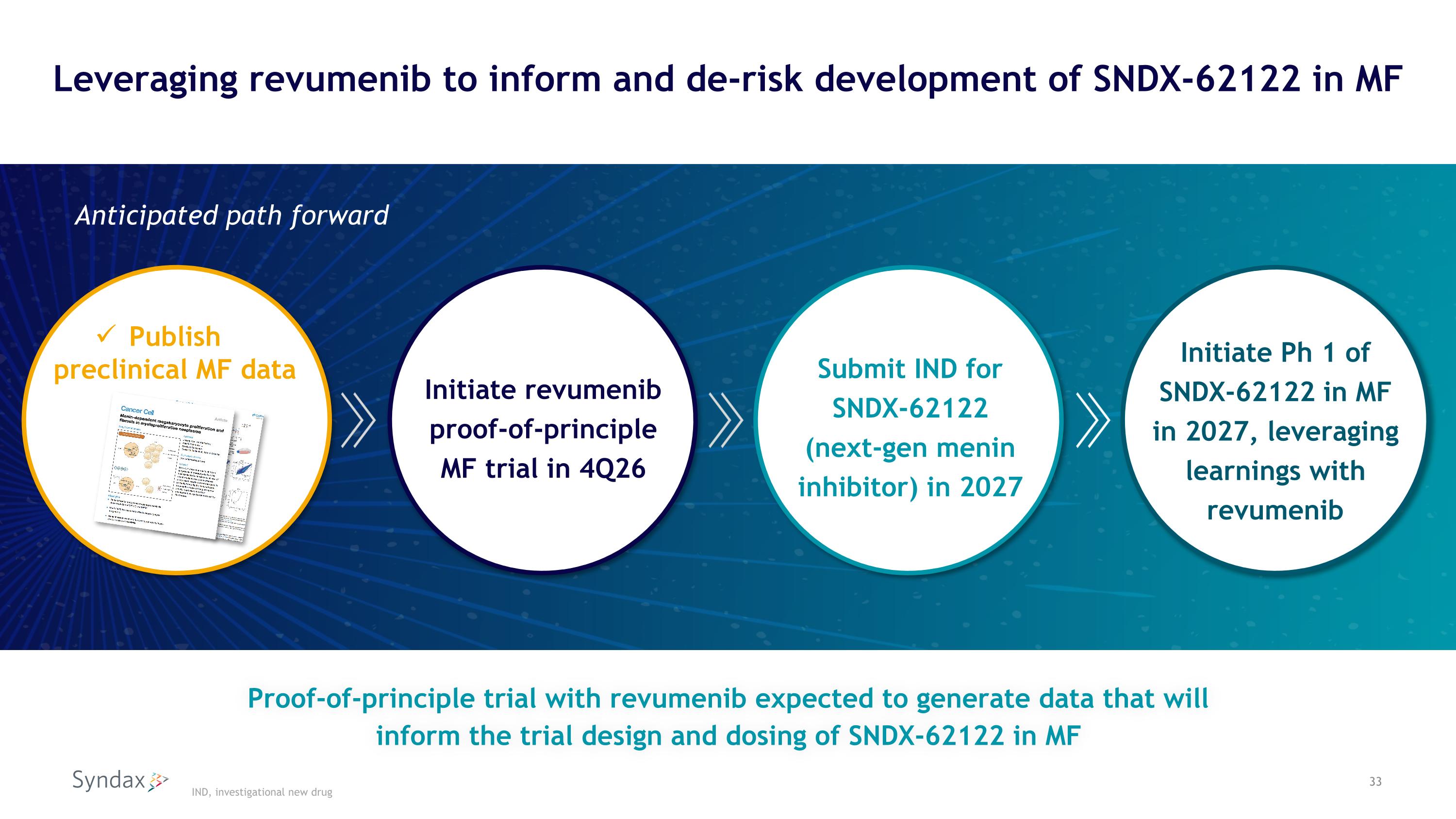
Leveraging revumenib to inform and de-risk development of SNDX-62122 in MF Publish preclinical MF data Initiate revumenib proof-of-principle MF trial in 4Q26 IND, investigational new drug Anticipated path forward Submit IND for SNDX-62122 (next-gen menin inhibitor) in 2027 Initiate Ph 1 of SNDX-62122 in MF in 2027, leveraging learnings with revumenib Proof-of-principle trial with revumenib expected to generate data that will inform the trial design and dosing of SNDX-62122 in MF
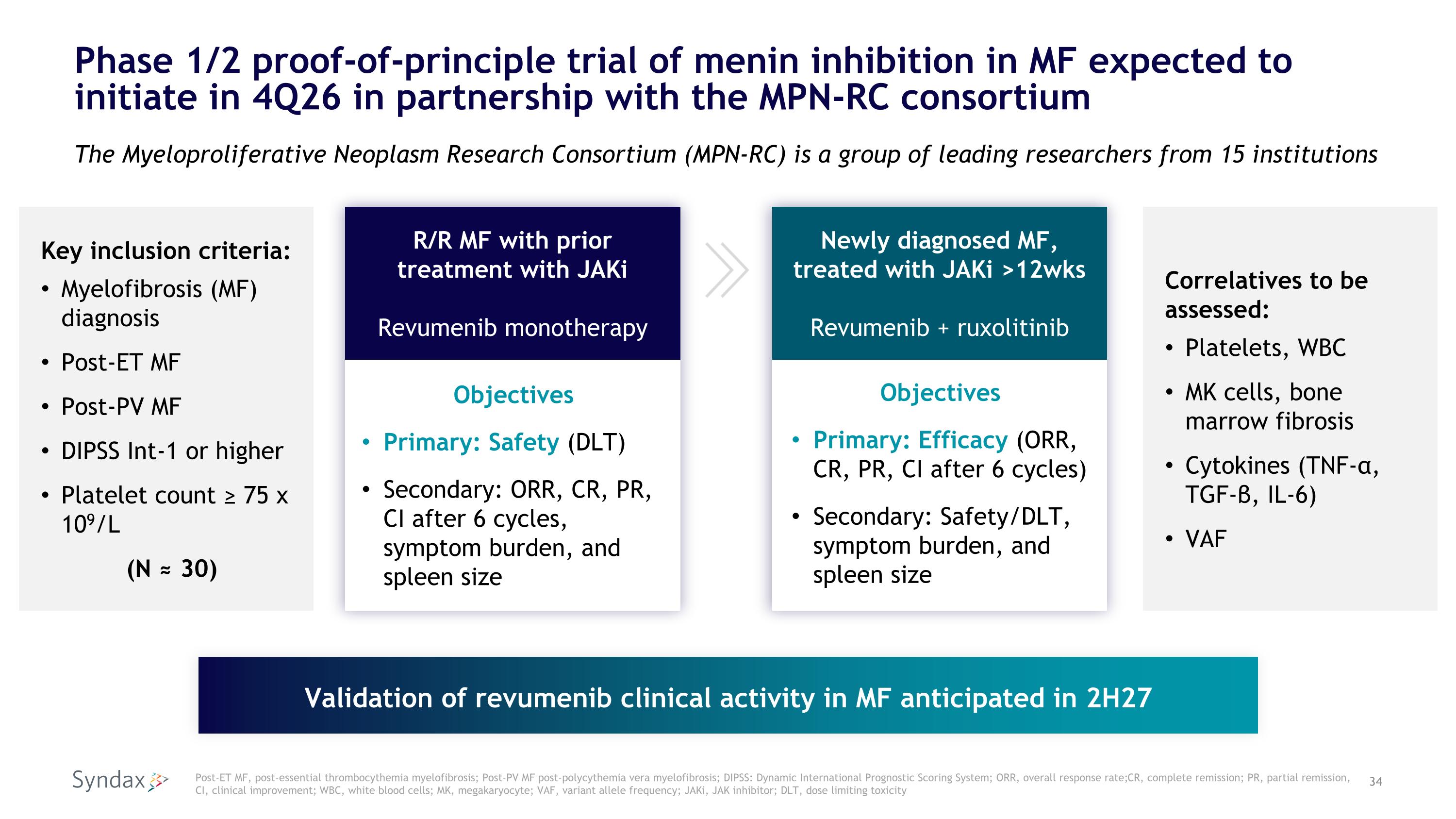
Phase 1/2 proof-of-principle trial of menin inhibition in MF expected to initiate in 4Q26 in partnership with the MPN-RC consortium Key inclusion criteria: Myelofibrosis (MF) diagnosis Post-ET MF Post-PV MF DIPSS Int-1 or higher Platelet count ≥ 75 x 109/L (N ≈ 30) R/R MF with prior treatment with JAKi Revumenib monotherapy Objectives Primary: Safety (DLT) Secondary: ORR, CR, PR, CI after 6 cycles, symptom burden, and spleen size Newly diagnosed MF, treated with JAKi >12wks Revumenib + ruxolitinib Objectives Primary: Efficacy (ORR, CR, PR, CI after 6 cycles) Secondary: Safety/DLT, symptom burden, and spleen size Correlatives to be assessed: Platelets, WBC MK cells, bone marrow fibrosis Cytokines (TNF-α, TGF-β, IL-6) VAF Post-ET MF, post-essential thrombocythemia myelofibrosis; Post-PV MF post-polycythemia vera myelofibrosis; DIPSS: Dynamic International Prognostic Scoring System; ORR, overall response rate; CR, complete remission; PR, partial remission, CI, clinical improvement; WBC, white blood cells; MK, megakaryocyte; VAF, variant allele frequency; JAKi, JAK inhibitor; DLT, dose limiting toxicity The Myeloproliferative Neoplasm Research Consortium (MPN-RC) is a group of leading researchers from 15 institutions Validation of revumenib clinical activity in MF anticipated in 2H27
Q&A – Revumenib and Next-Gen Menin Inhibitors Nick Botwood, MBBS Head of R&D and Chief Medical Officer Michael A. Metzger Chief Executive Officer and Director Peter Ordentlich, PhD Chief Scientific Officer and Founder John D. Crispino, PhD, MBA Director, Division of Experimental Hematology, St. Jude Children's Research Hospital
Unlocking the potential of CSF-1R inhibition Peter Ordentlich, PhD Chief Scientific Officer and Founder
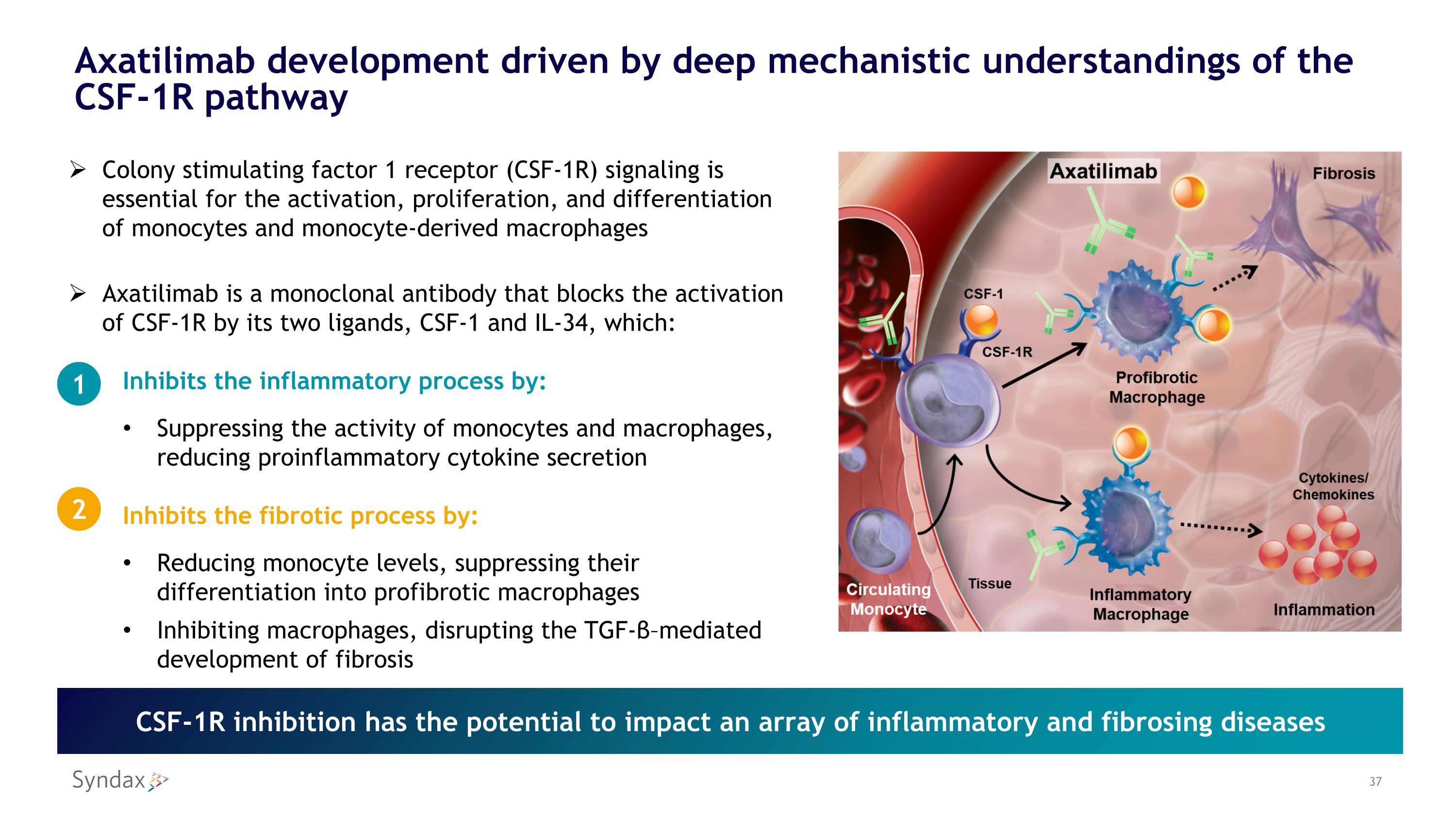
Axatilimab development driven by deep mechanistic understandings of the CSF-1R pathway Colony stimulating factor 1 receptor (CSF-1R) signaling is essential for the activation, proliferation, and differentiation of monocytes and monocyte-derived macrophages Axatilimab is a monoclonal antibody that blocks the activation of CSF-1R by its two ligands, CSF-1 and IL-34, which: Inhibits the inflammatory process by: Suppressing the activity of monocytes and macrophages, reducing proinflammatory cytokine secretion Inhibits the fibrotic process by: Reducing monocyte levels, suppressing their differentiation into profibrotic macrophages Inhibiting macrophages, disrupting the TGF-β–mediated development of fibrosis 1 CSF-1R inhibition has the potential to impact an array of inflammatory and fibrosing diseases 2
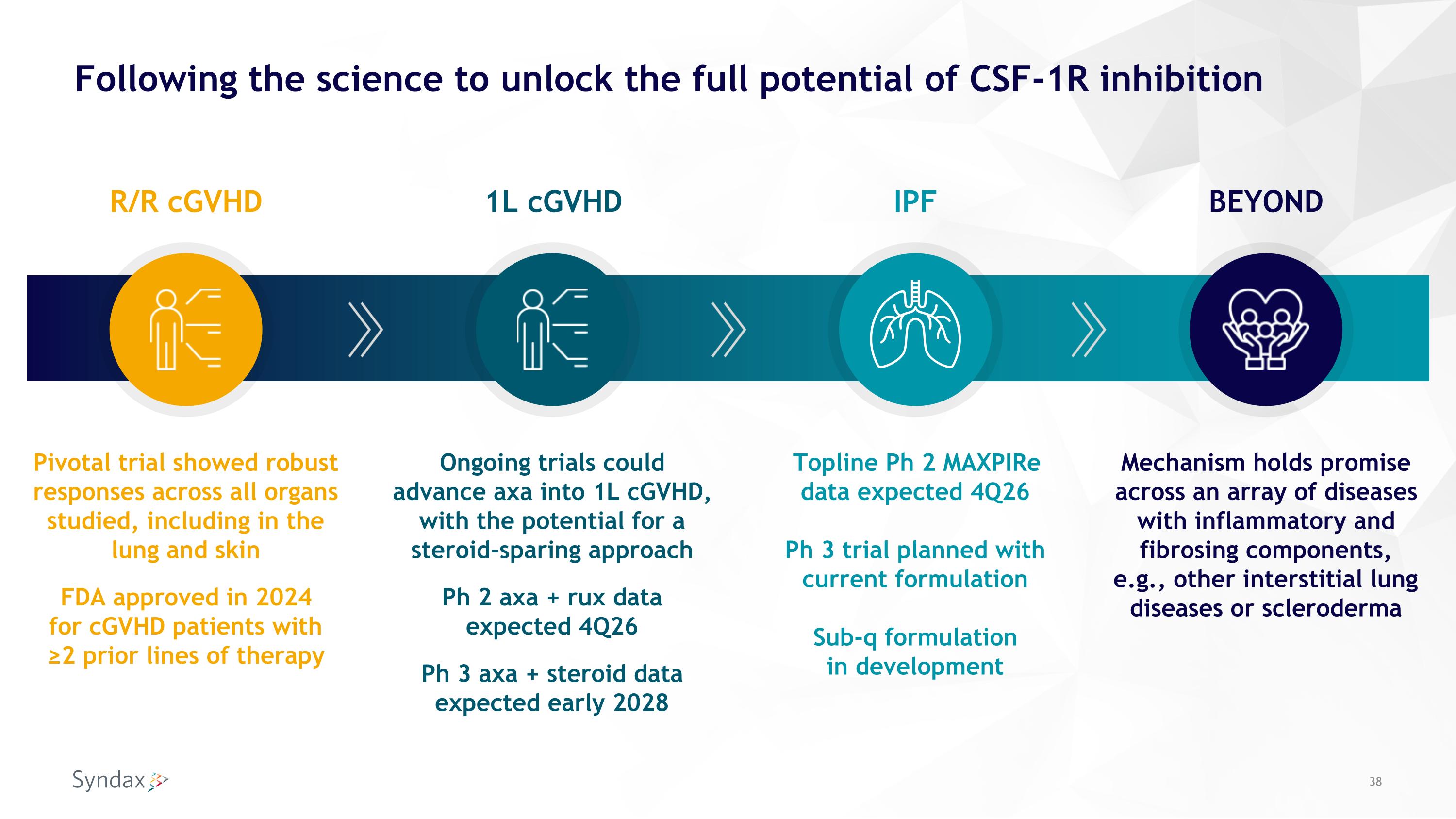
Following the science to unlock the full potential of CSF-1R inhibition BEYOND IPF R/R cGVHD 1L cGVHD Pivotal trial showed robust responses across all organs studied, including in the lung and skin FDA approved in 2024 for cGVHD patients with ≥2 prior lines of therapy Ongoing trials could advance axa into 1L cGVHD, with the potential for a steroid-sparing approach Ph 2 axa + rux data expected 4Q26 Ph 3 axa + steroid data expected early 2028 Topline Ph 2 MAXPIRe data expected 4Q26 Ph 3 trial planned with current formulation Sub-q formulation in development Mechanism holds promise across an array of diseases with inflammatory and fibrosing components, e.g., other interstitial lung diseases or scleroderma
Toby M. Maher, MD, PhD Professor of Clinical Medicine and Director of Interstitial Lung Disease, Keck Medical School of University of Southern California Clinical perspective on IPF and CSF-1R inhibition
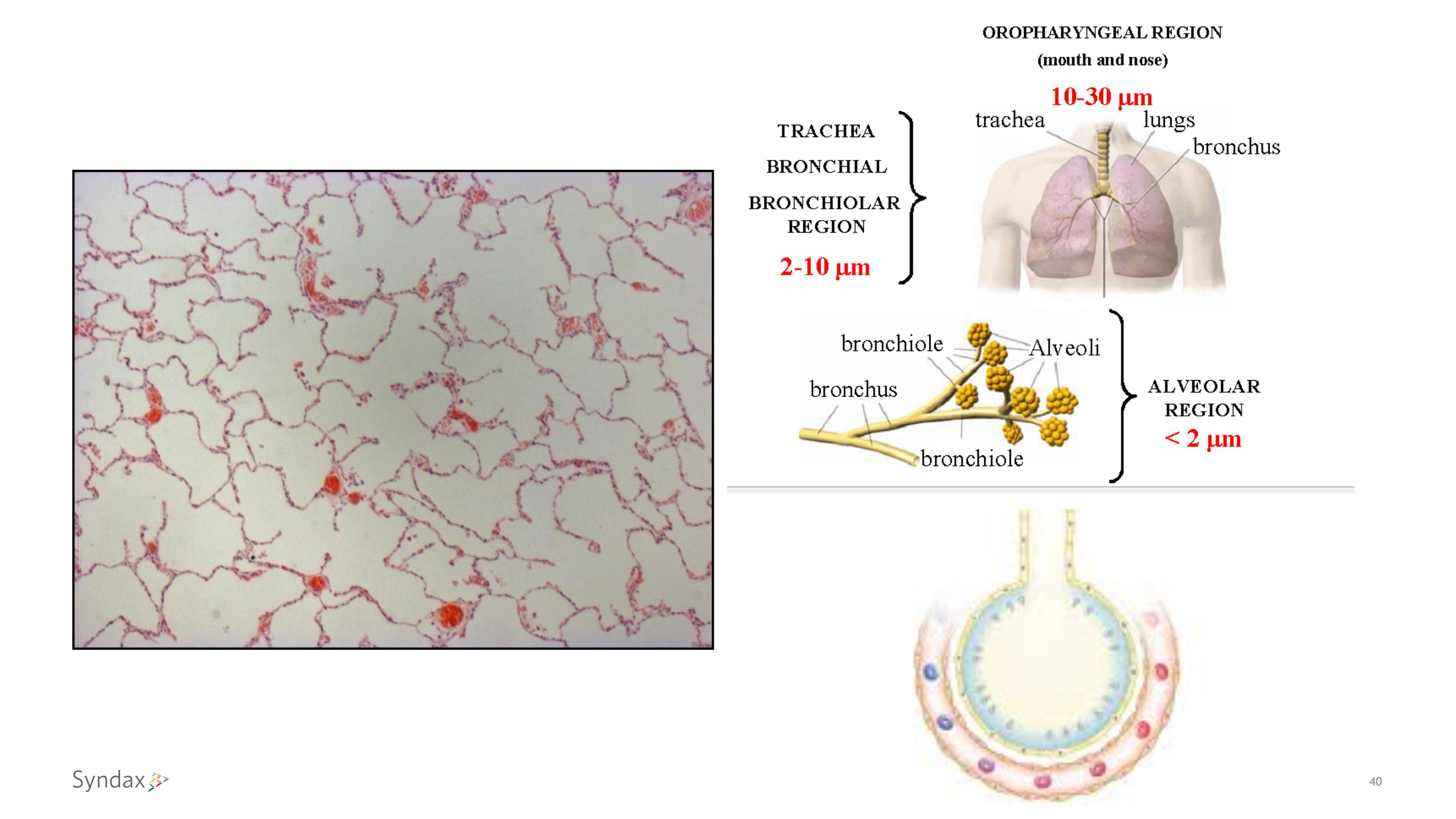
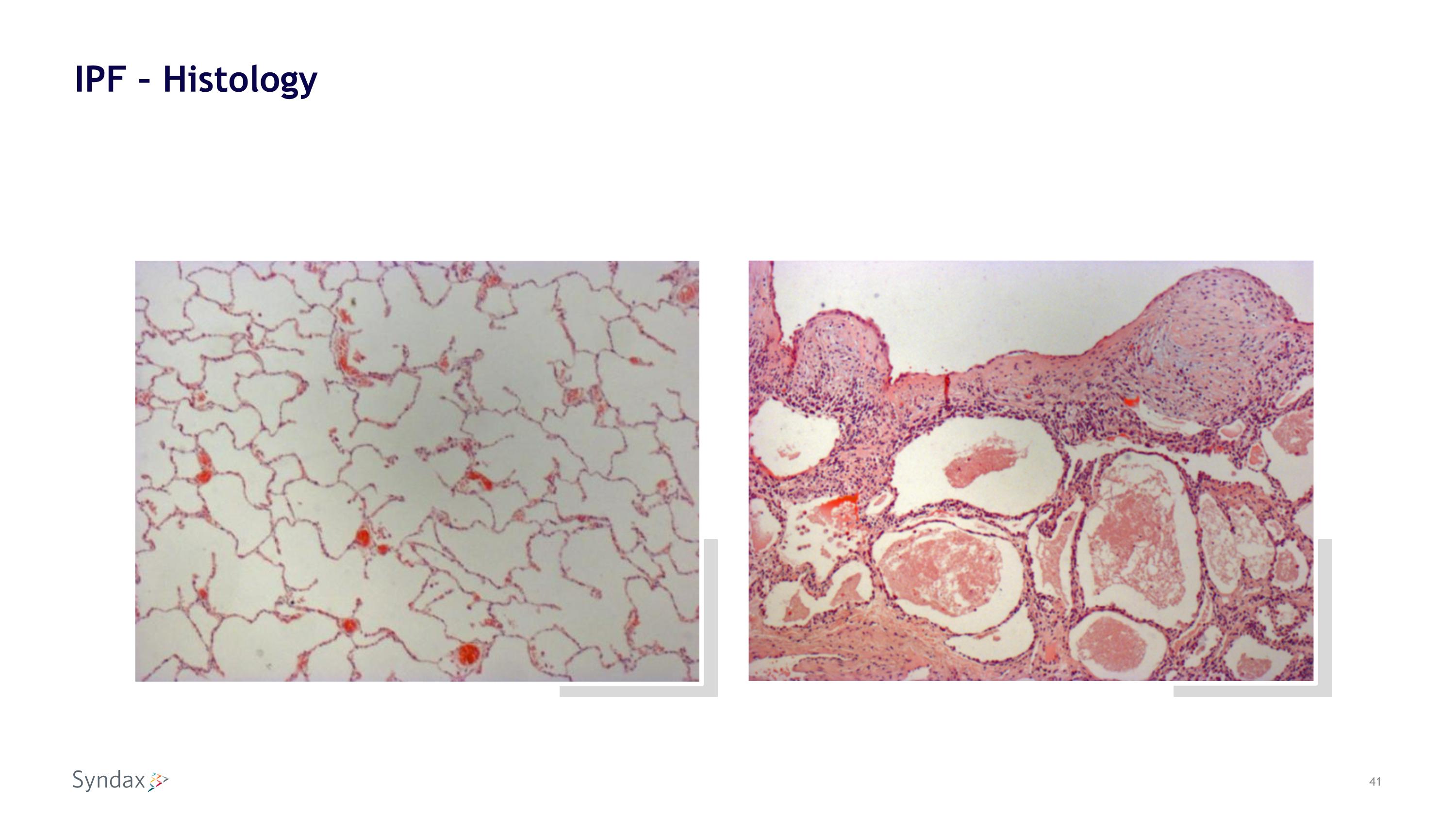
IPF – Histology
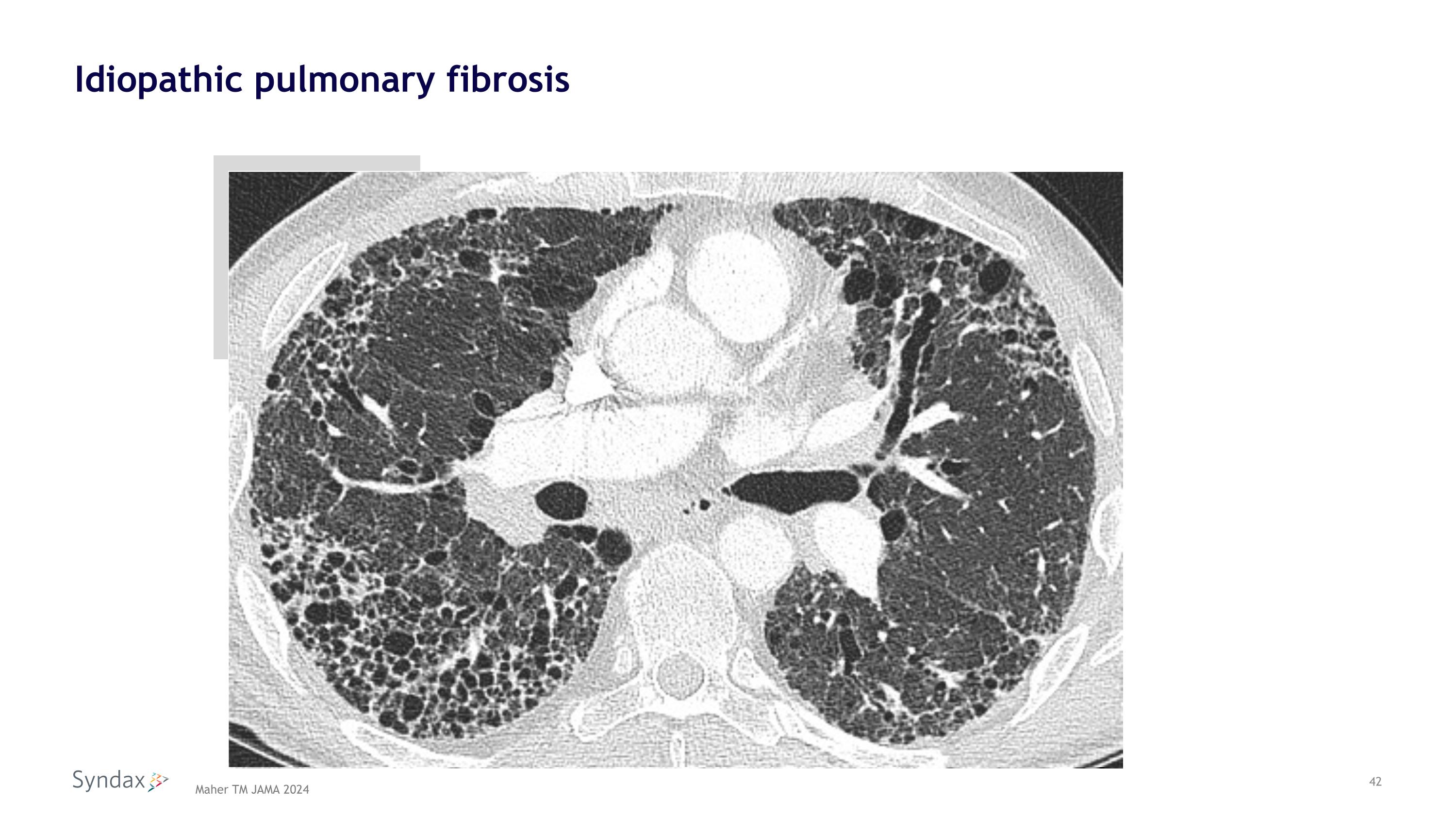
Idiopathic pulmonary fibrosis Maher TM JAMA 2024
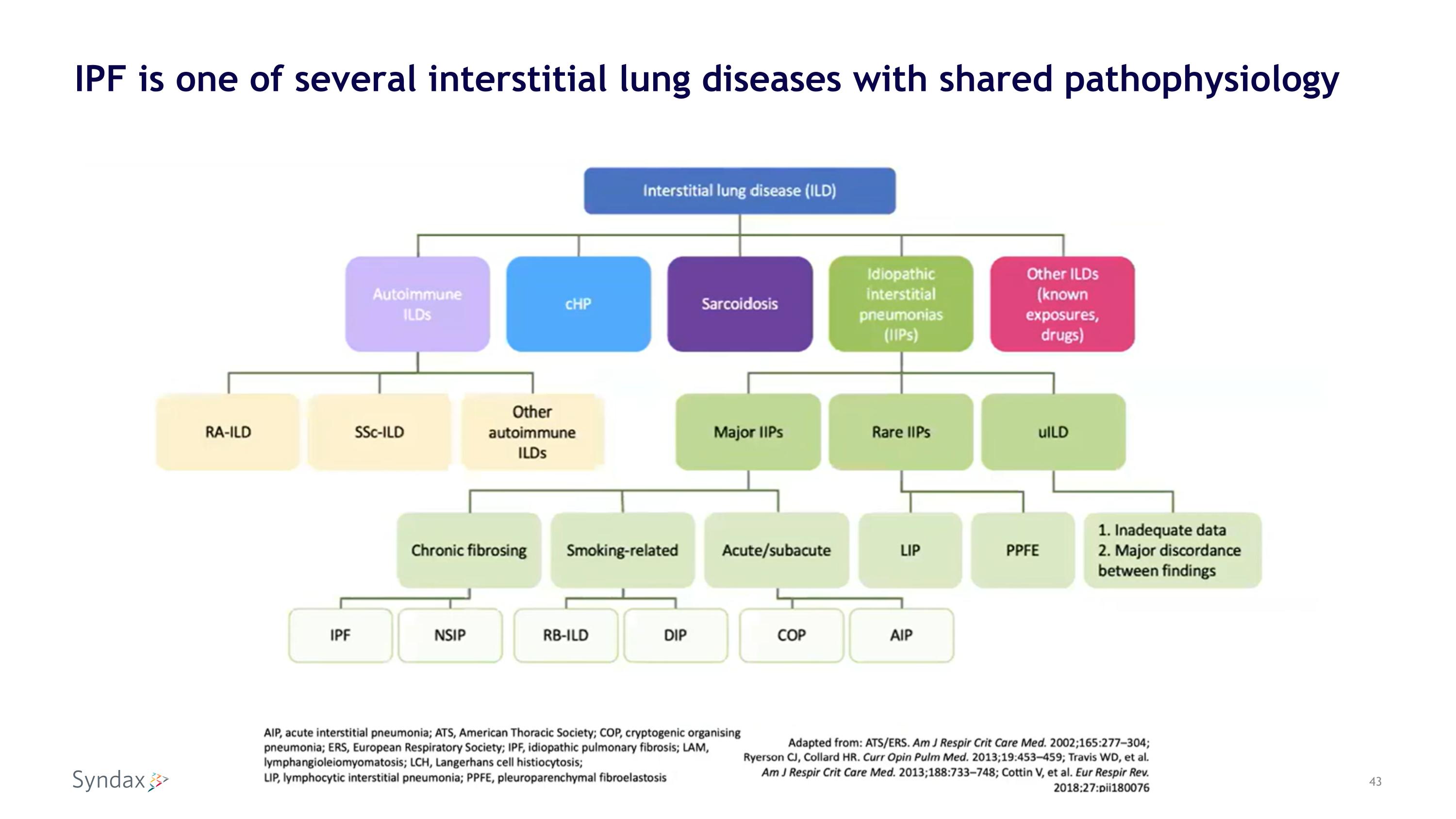
IPF is one of several interstitial lung diseases with shared pathophysiology
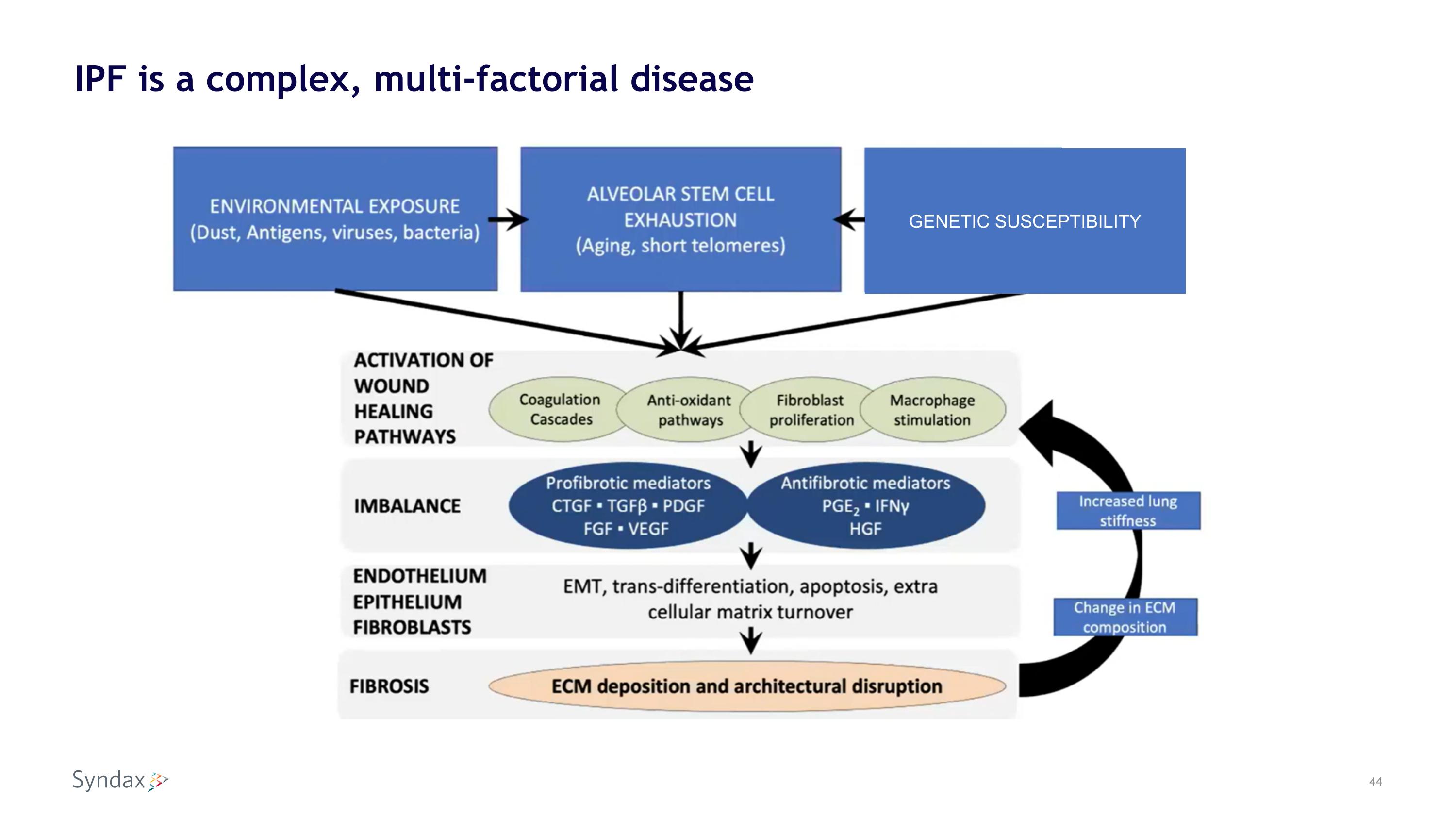
IPF is a complex, multi-factorial disease GENETIC SUSCEPTIBILITY
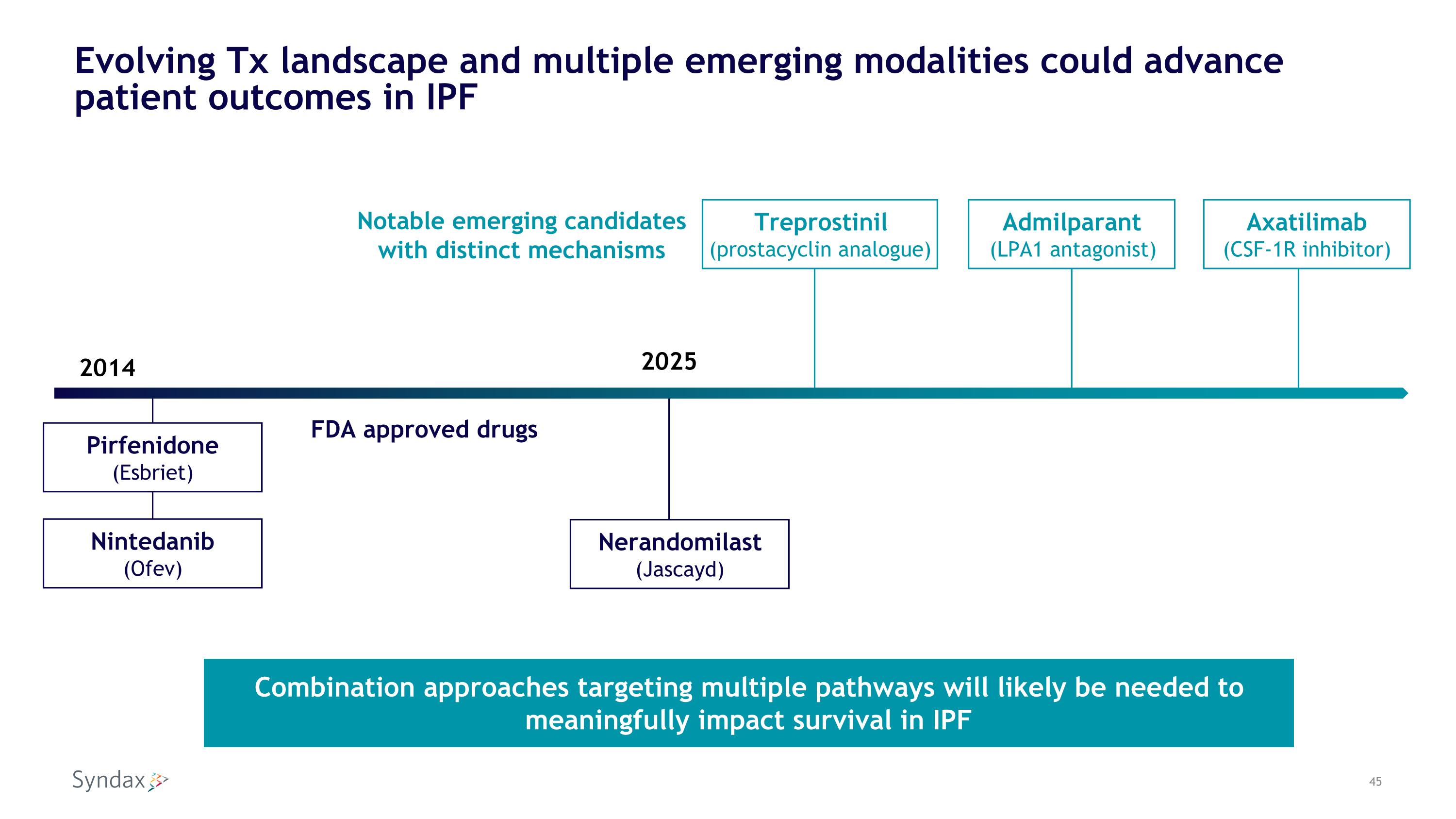
Evolving Tx landscape and multiple emerging modalities could advance patient outcomes in IPF Combination approaches targeting multiple pathways will likely be needed to meaningfully impact survival in IPF FDA approved drugs Notable emerging candidates with distinct mechanisms Pirfenidone (Esbriet) Nintedanib (Ofev) 2014 Nerandomilast (Jascayd) 2025 Treprostinil (prostacyclin analogue) Admilparant (LPA1 antagonist) Axatilimab (CSF-1R inhibitor)
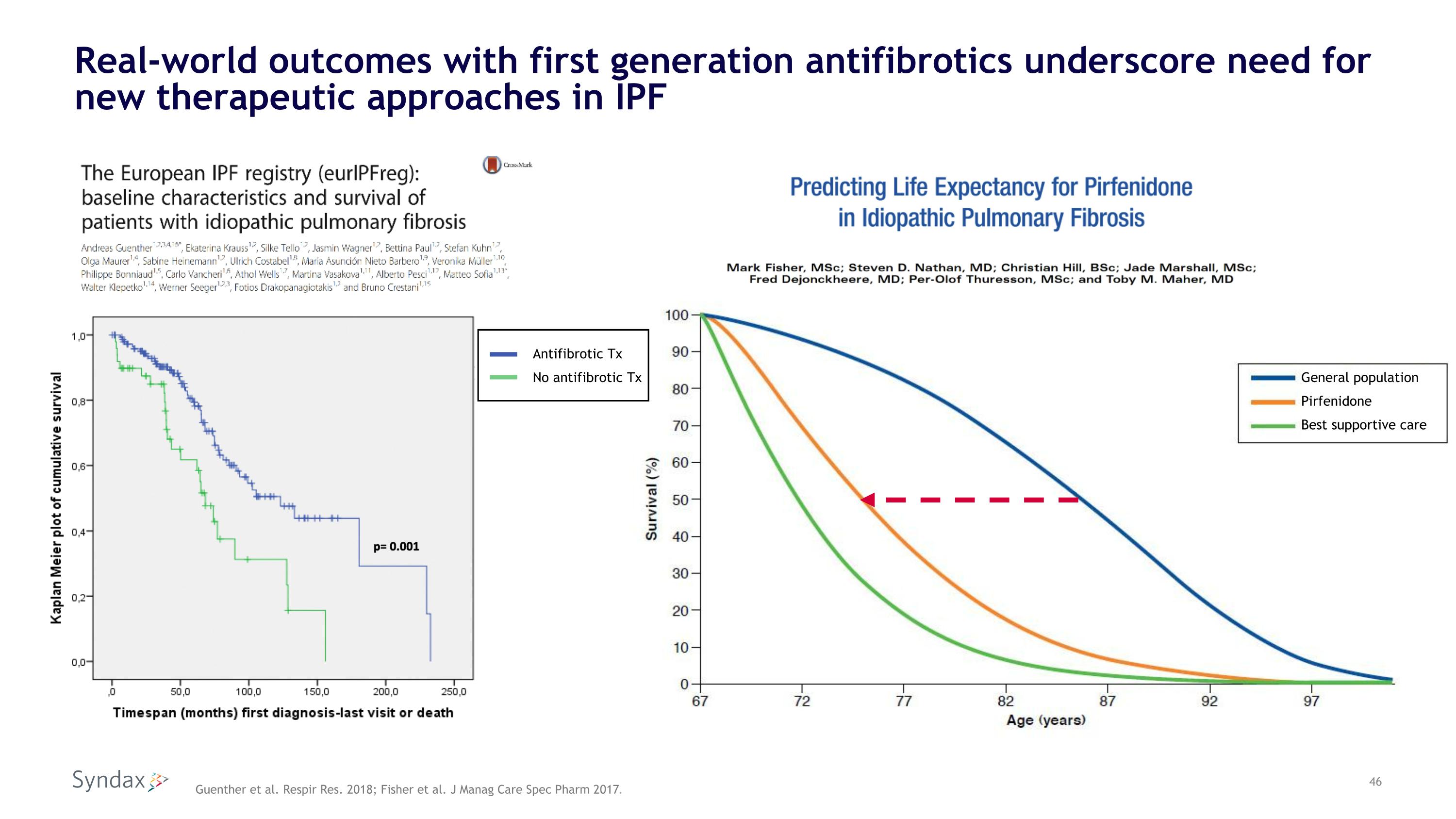
Real-world outcomes with first generation antifibrotics underscore need for new therapeutic approaches in IPF General population Pirfenidone Best supportive care Guenther et al. Respir Res. 2018; Fisher et al. J Manag Care Spec Pharm 2017. Antifibrotic Tx No antifibrotic Tx
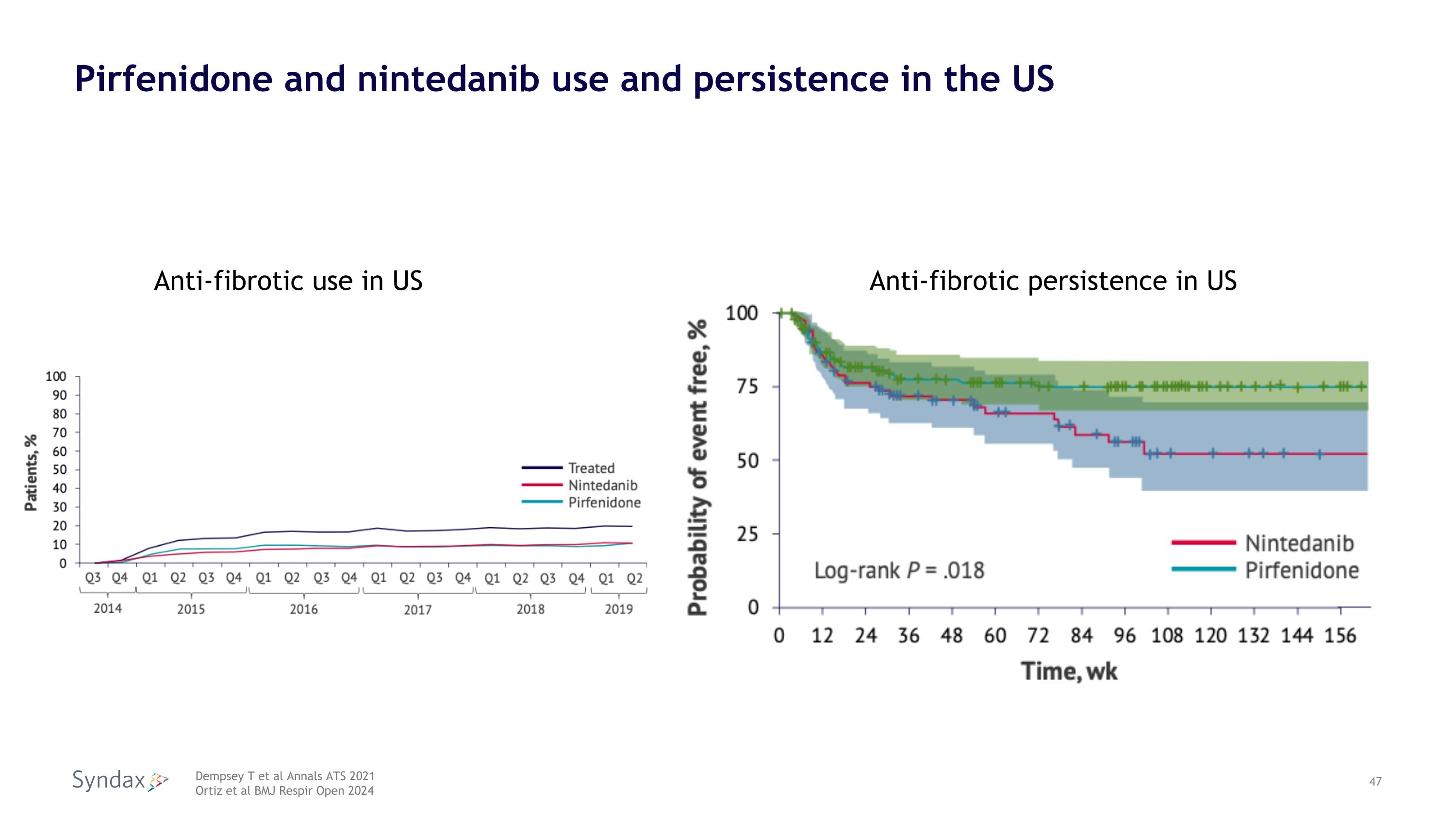
Pirfenidone and nintedanib use and persistence in the US Anti-fibrotic use in US Anti-fibrotic persistence in US Dempsey T et al Annals ATS 2021 Ortiz et al BMJ Respir Open 2024
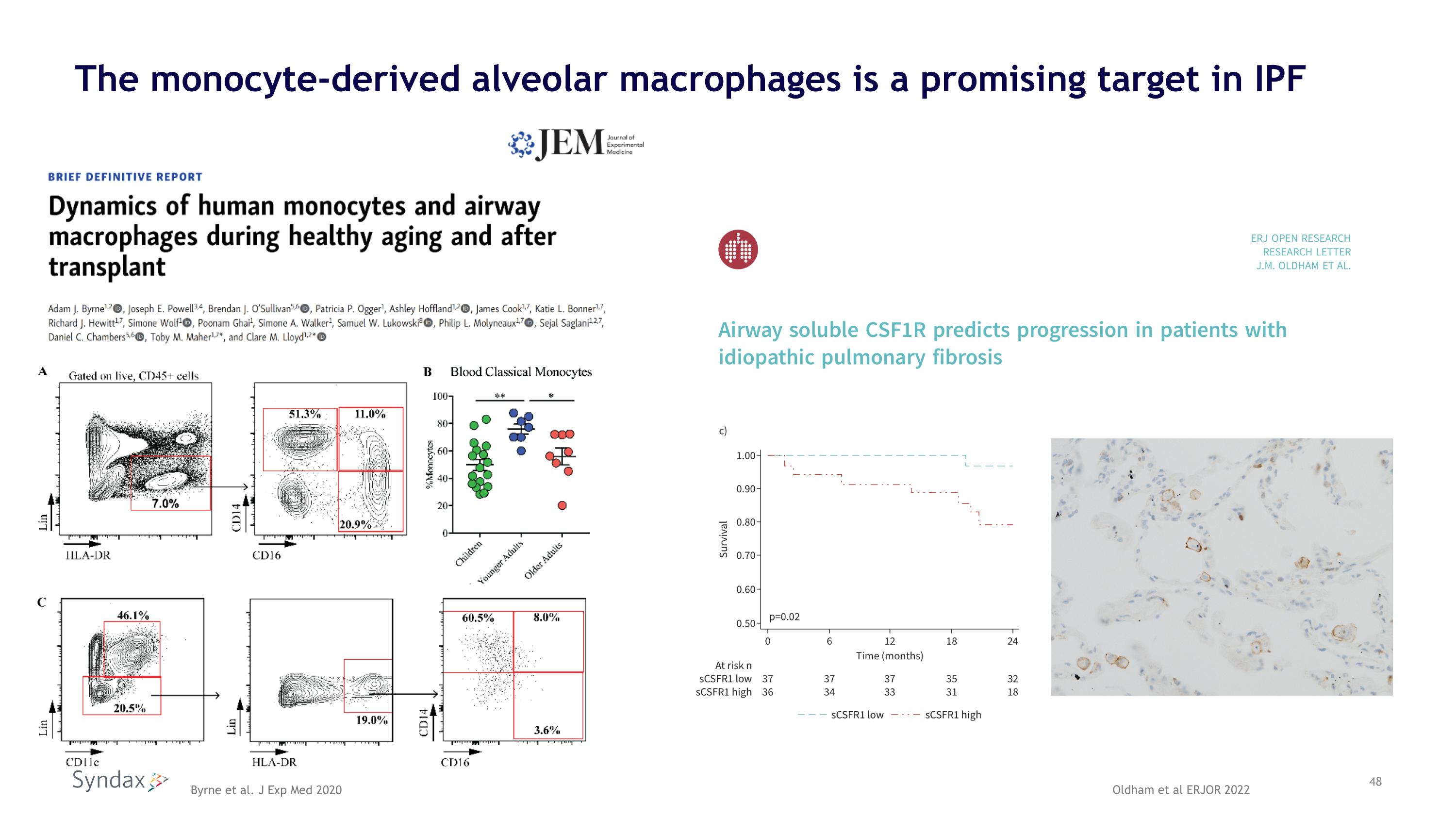
The monocyte-derived alveolar macrophages is a promising target in IPF Byrne et al. J Exp Med 2020 Oldham et al ERJOR 2022
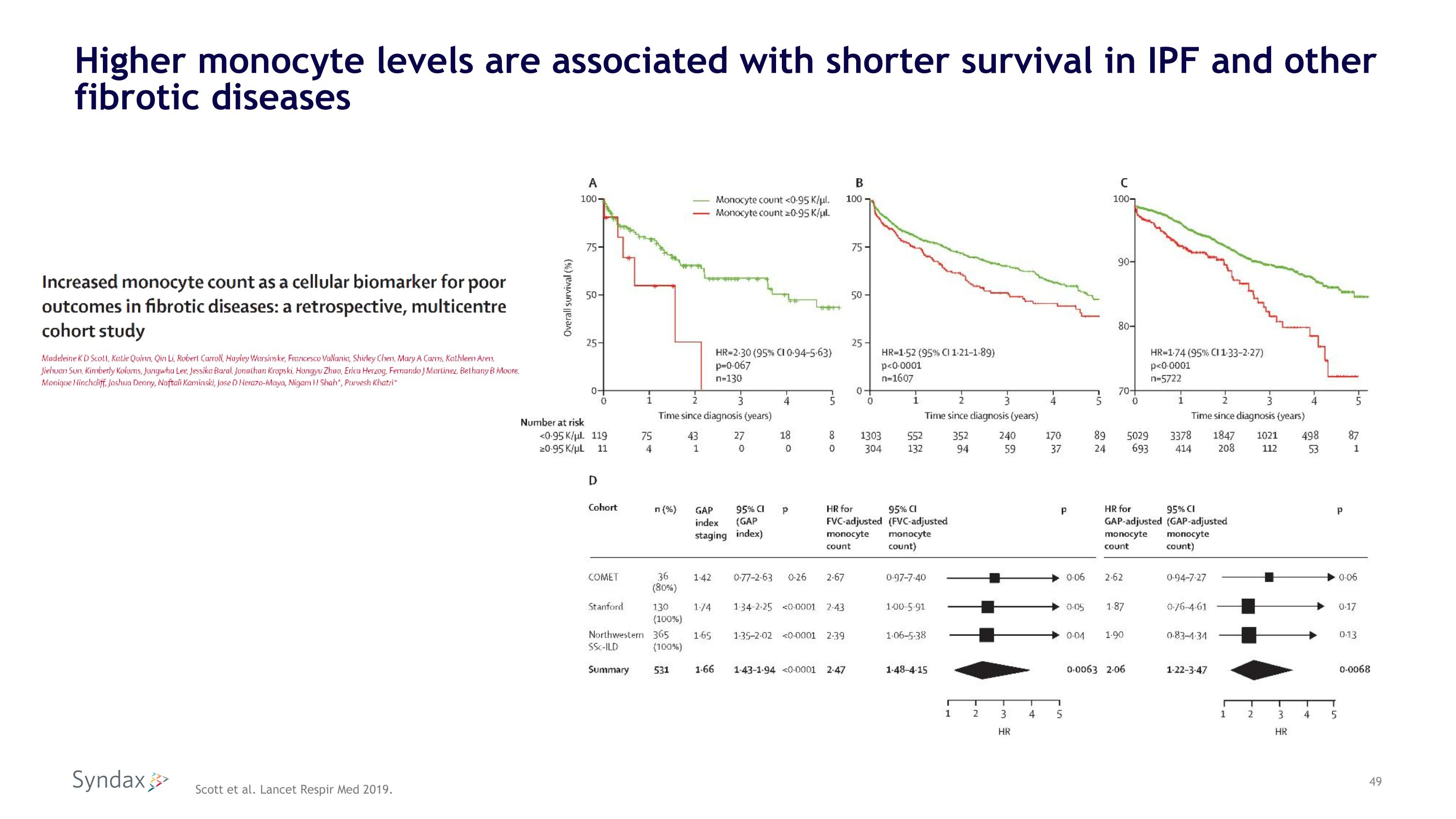
Scott et al. Lancet Respir Med 2019. Higher monocyte levels are associated with shorter survival in IPF and other fibrotic diseases
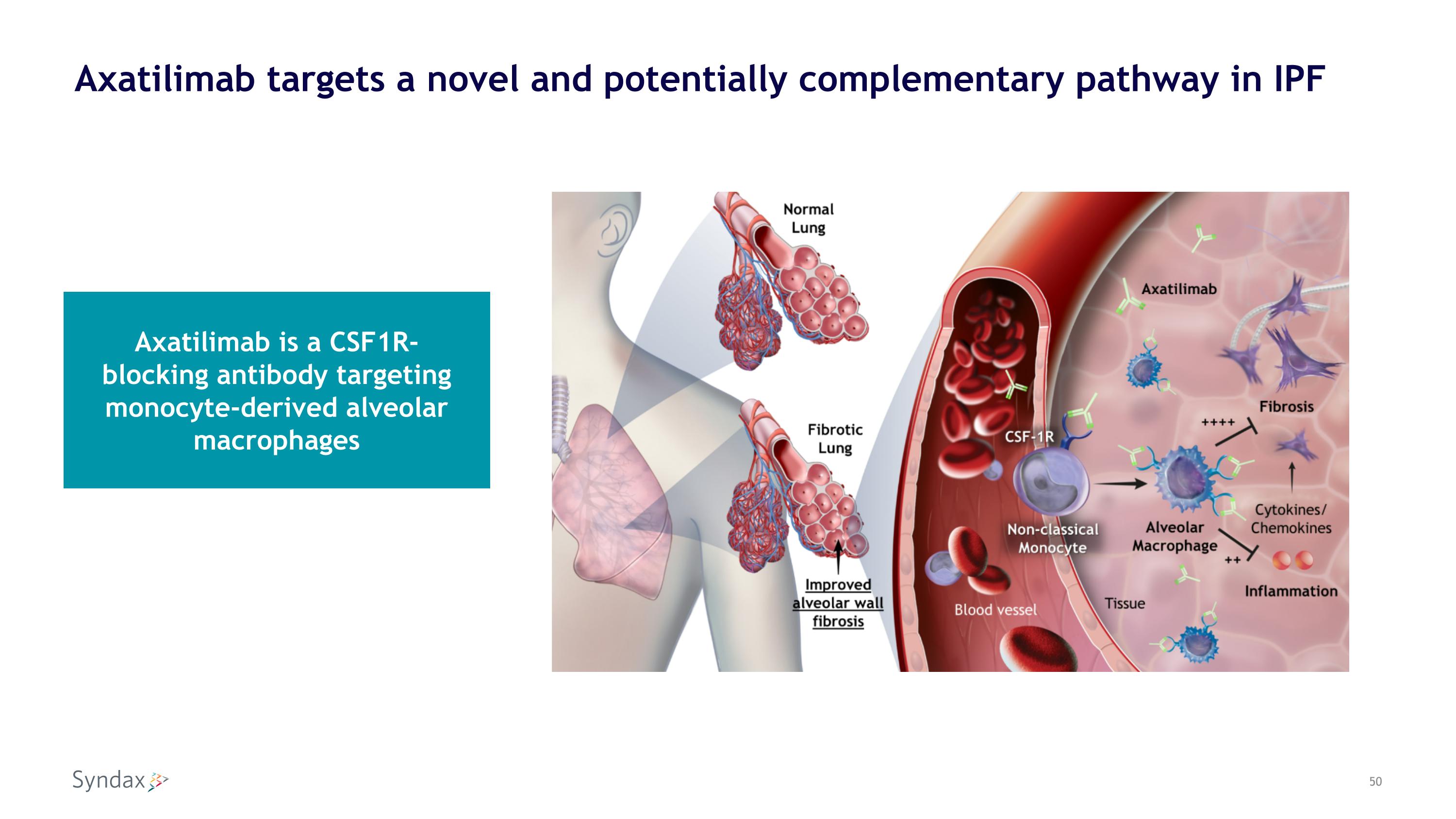
Axatilimab targets a novel and potentially complementary pathway in IPF Axatilimab is a CSF1R-blocking antibody targeting monocyte-derived alveolar macrophages
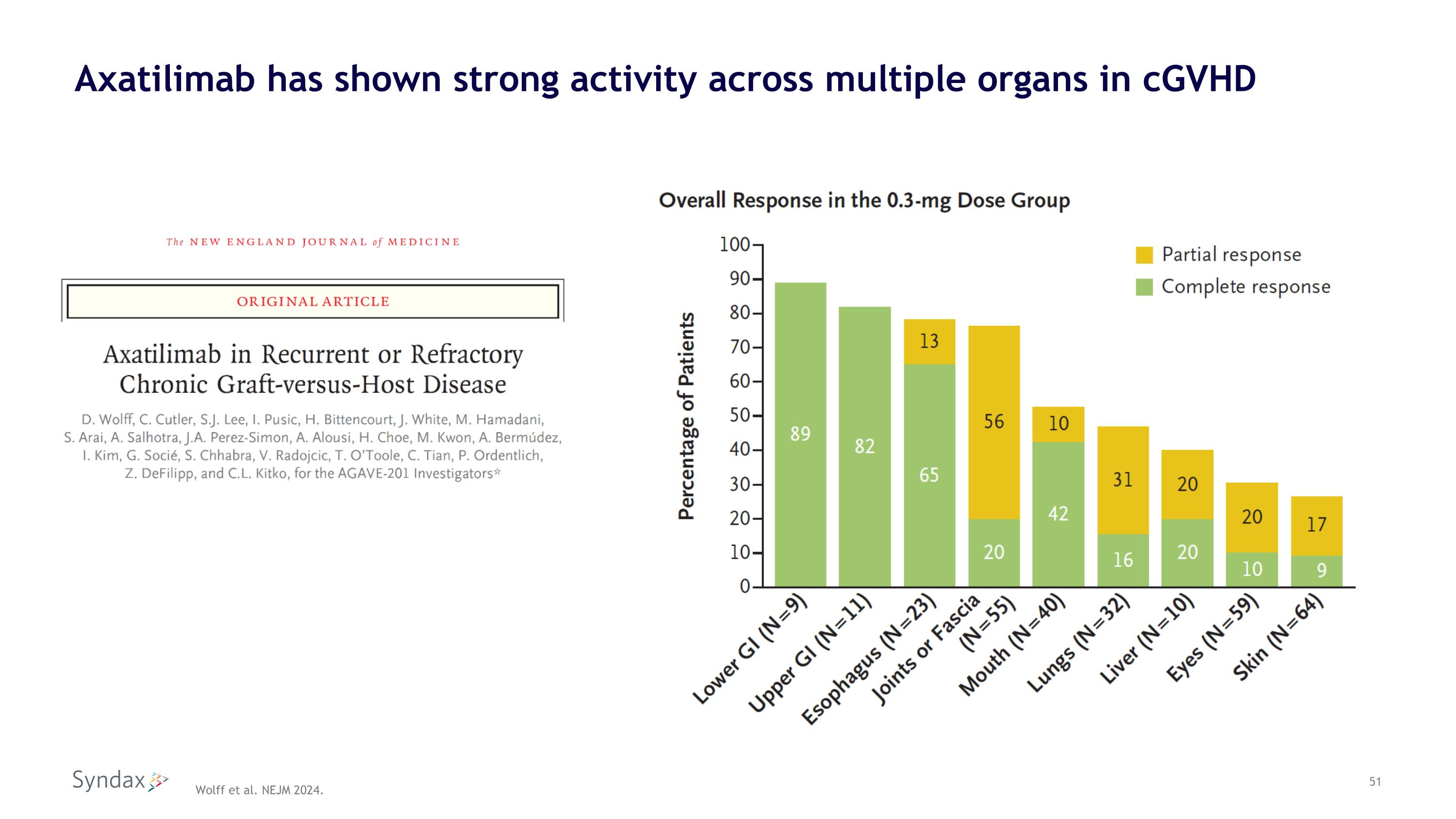
Axatilimab has shown strong activity across multiple organs in cGVHD Wolff et al. NEJM 2024.
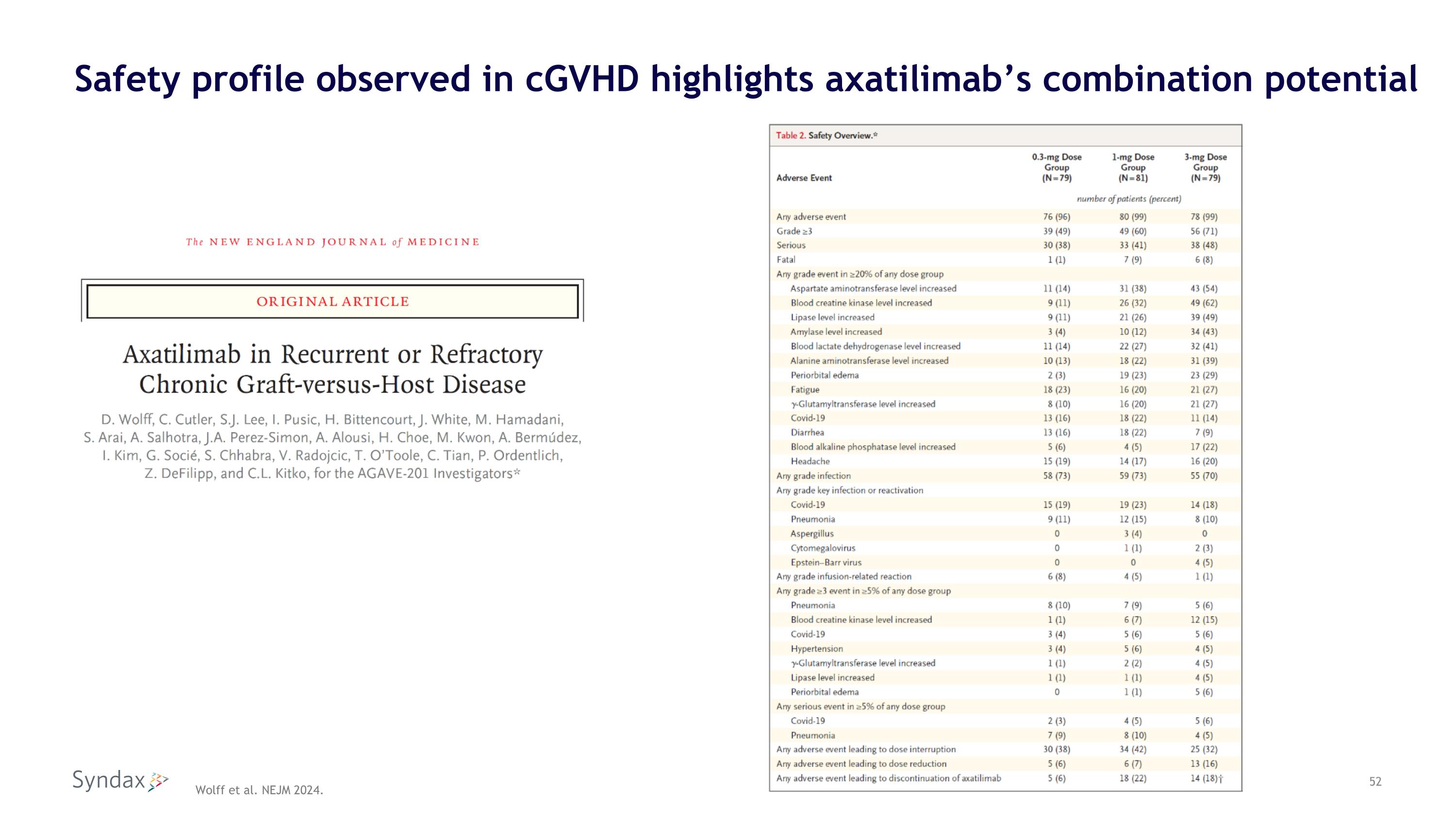
Safety profile observed in cGVHD highlights axatilimab’s combination potential Wolff et al. NEJM 2024.
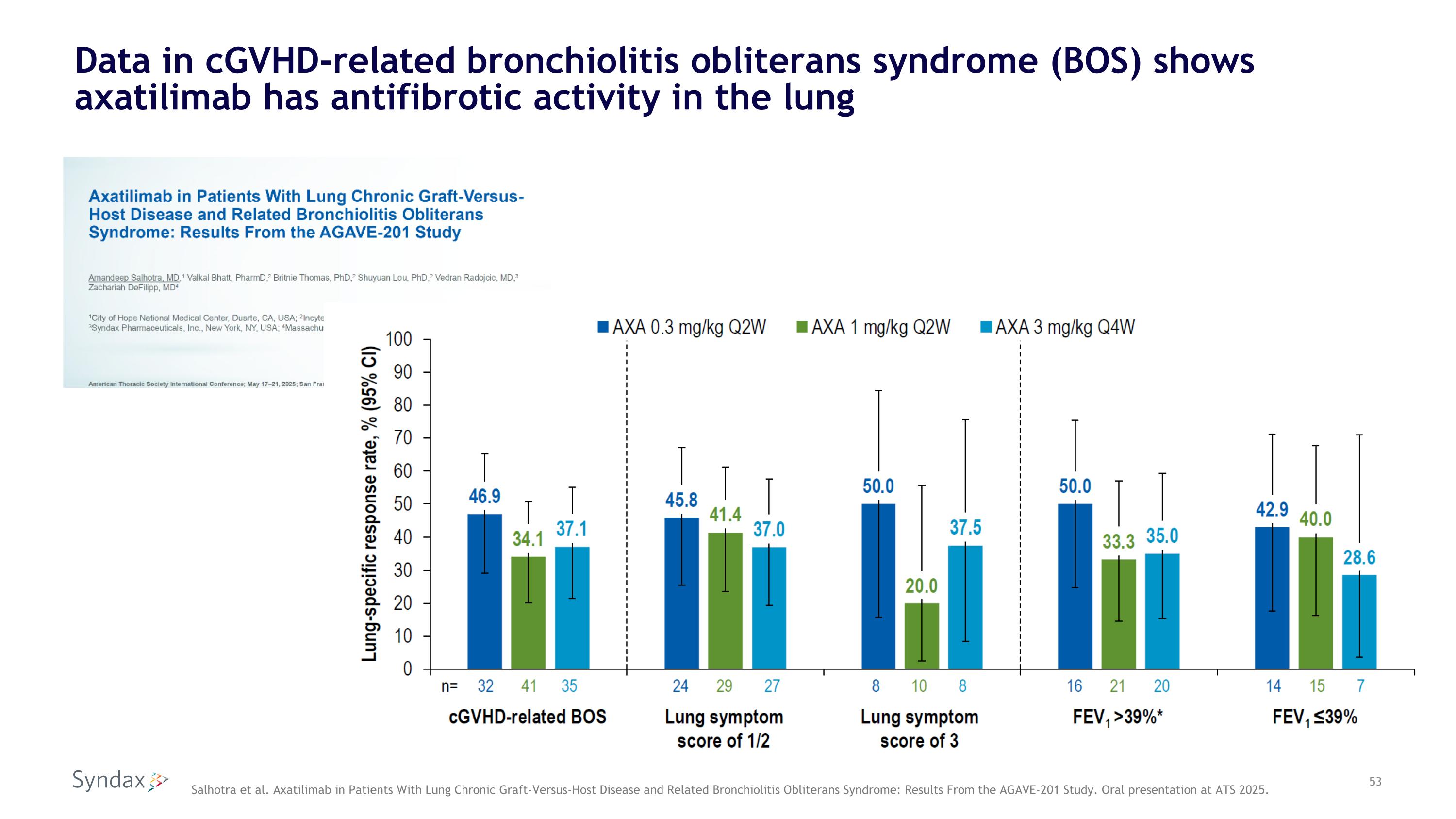
Data in cGVHD-related bronchiolitis obliterans syndrome (BOS) shows axatilimab has antifibrotic activity in the lung Salhotra et al. Axatilimab in Patients With Lung Chronic Graft-Versus-Host Disease and Related Bronchiolitis Obliterans Syndrome: Results From the AGAVE-201 Study. Oral presentation at ATS 2025.
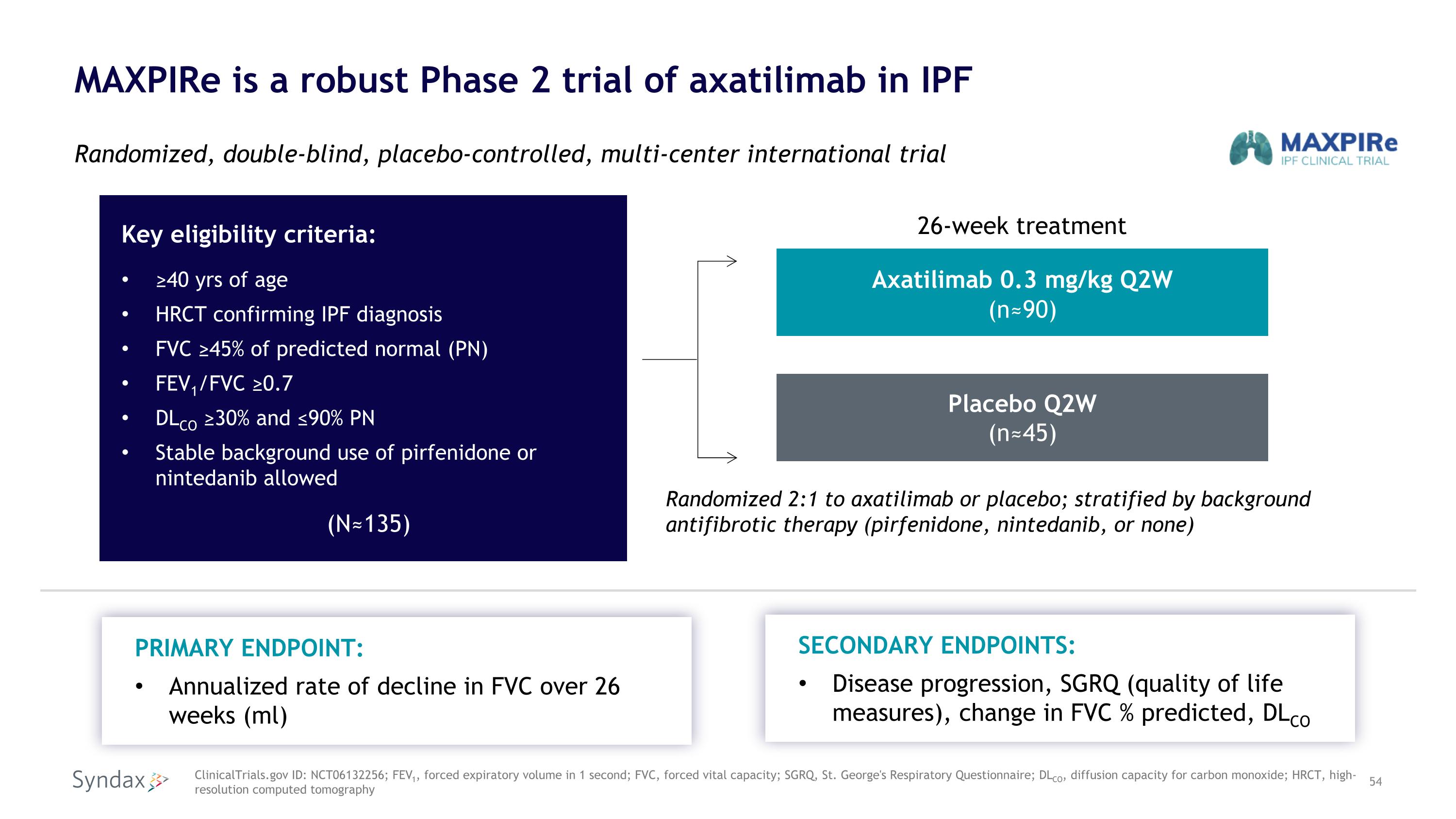
MAXPIRe is a robust Phase 2 trial of axatilimab in IPF Randomized, double-blind, placebo-controlled, multi-center international trial Key eligibility criteria: ≥40 yrs of age HRCT confirming IPF diagnosis FVC ≥45% of predicted normal (PN) FEV1/FVC ≥0.7 DLCO ≥30% and ≤90% PN Stable background use of pirfenidone or nintedanib allowed (N≈135) Placebo Q2W (n≈45) ClinicalTrials.gov ID: NCT06132256; FEV1, forced expiratory volume in 1 second; FVC, forced vital capacity; SGRQ, St. George's Respiratory Questionnaire; DLCO, diffusion capacity for carbon monoxide; HRCT, high-resolution computed tomography PRIMARY ENDPOINT: Annualized rate of decline in FVC over 26 weeks (ml) Axatilimab 0.3 mg/kg Q2W (n≈90) Randomized 2:1 to axatilimab or placebo; stratified by background antifibrotic therapy (pirfenidone, nintedanib, or none) SECONDARY ENDPOINTS: Disease progression, SGRQ (quality of life measures), change in FVC % predicted, DLCO 26-week treatment
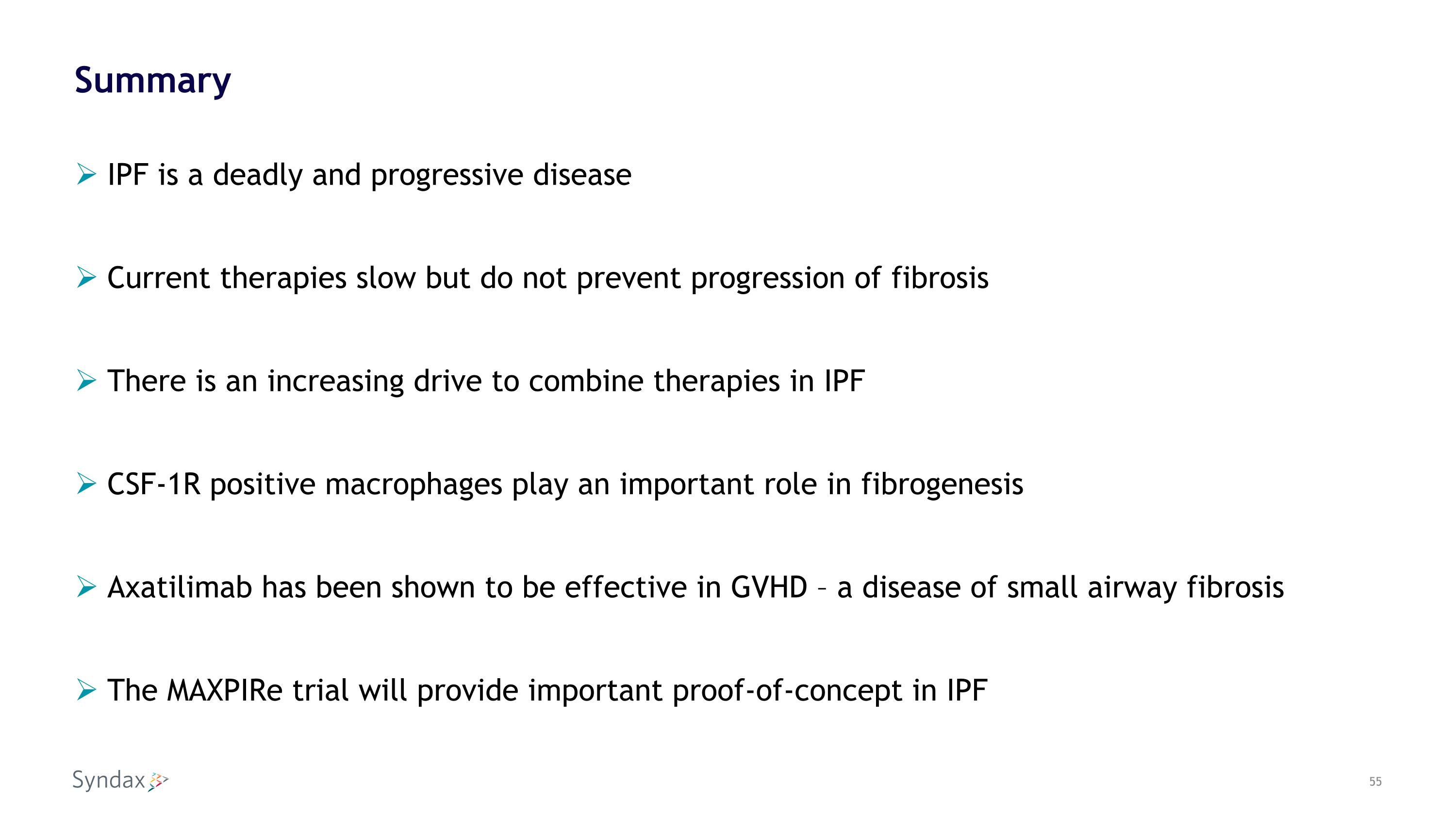
Summary IPF is a deadly and progressive disease Current therapies slow but do not prevent progression of fibrosis There is an increasing drive to combine therapies in IPF CSF-1R positive macrophages play an important role in fibrogenesis Axatilimab has been shown to be effective in GVHD – a disease of small airway fibrosis The MAXPIRe trial will provide important proof-of-concept in IPF
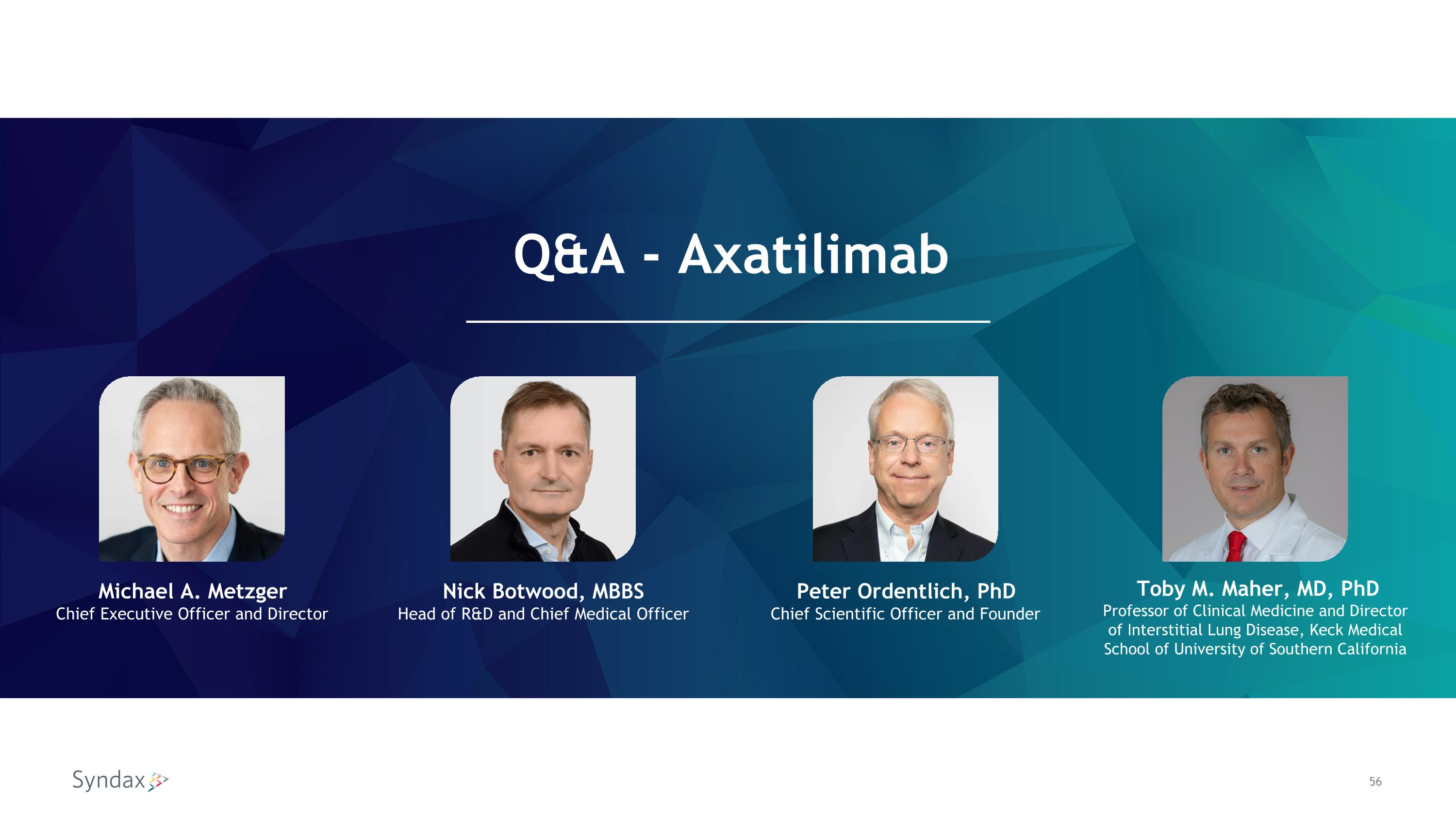
Q&A - Axatilimab Nick Botwood, MBBS Head of R&D and Chief Medical Officer Michael A. Metzger Chief Executive Officer and Director Peter Ordentlich, PhD Chief Scientific Officer and Founder Toby M. Maher, MD, PhD Professor of Clinical Medicine and Director of Interstitial Lung Disease, Keck Medical School of University of Southern California
Expanding our pipeline into EGFRm NSCLC with SNDX-4321 Nick Botwood, MBBS Head of Research & Development and Chief Medical Officer
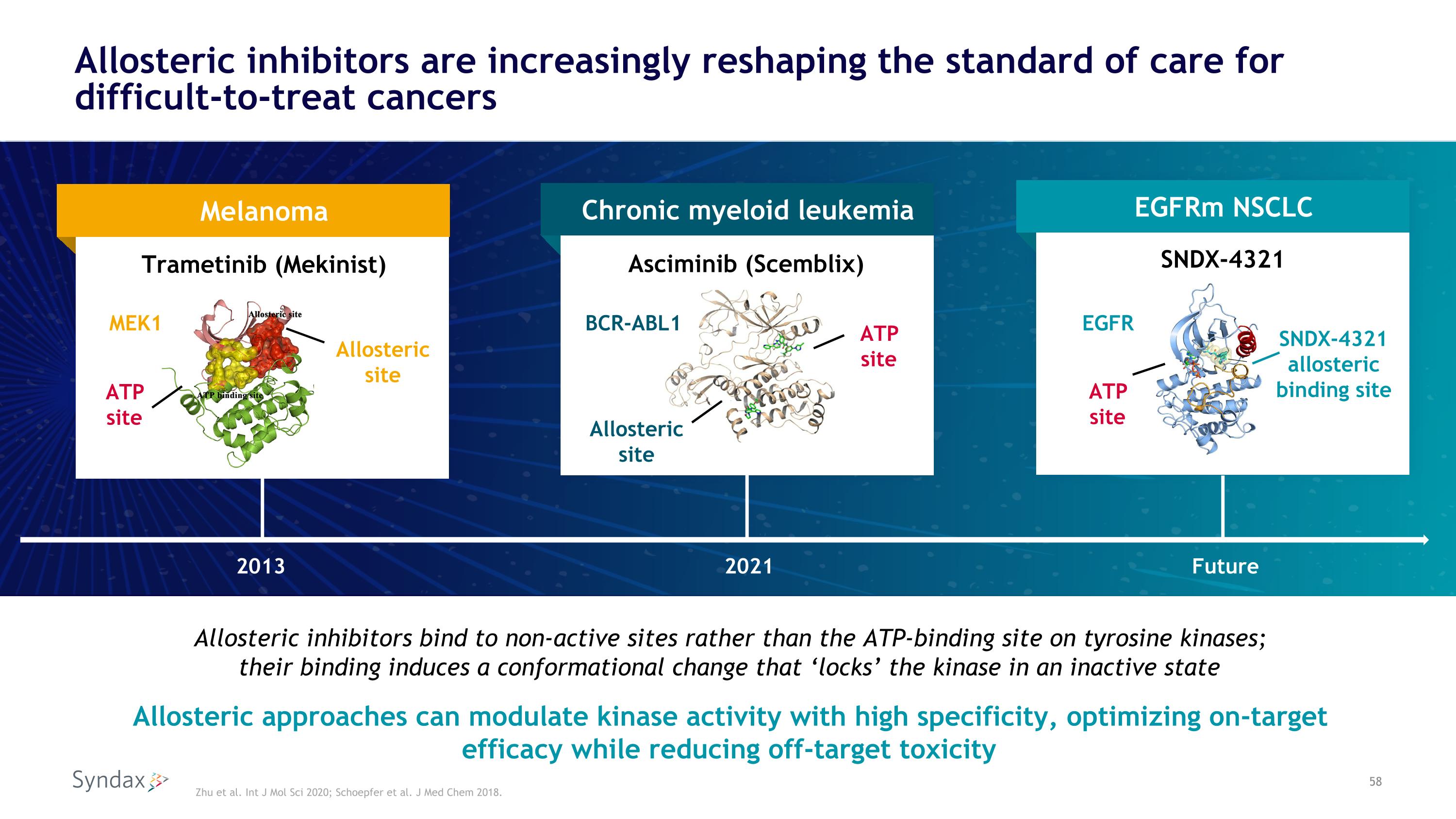
Allosteric inhibitors are increasingly reshaping the standard of care for difficult-to-treat cancers Future Allosteric inhibitors bind to non-active sites rather than the ATP-binding site on tyrosine kinases; their binding induces a conformational change that ‘locks’ the kinase in an inactive state Allosteric approaches can modulate kinase activity with high specificity, optimizing on-target efficacy while reducing off-target toxicity SNDX-4321 allosteric binding site ATP site EGFR Asciminib (Scemblix) Trametinib (Mekinist) EGFRm NSCLC SNDX-4321 Chronic myeloid leukemia Melanoma 2013 2021 ATP site Allosteric site BCR-ABL1 ATP site Allosteric site MEK1 Zhu et al. Int J Mol Sci 2020; Schoepfer et al. J Med Chem 2018.
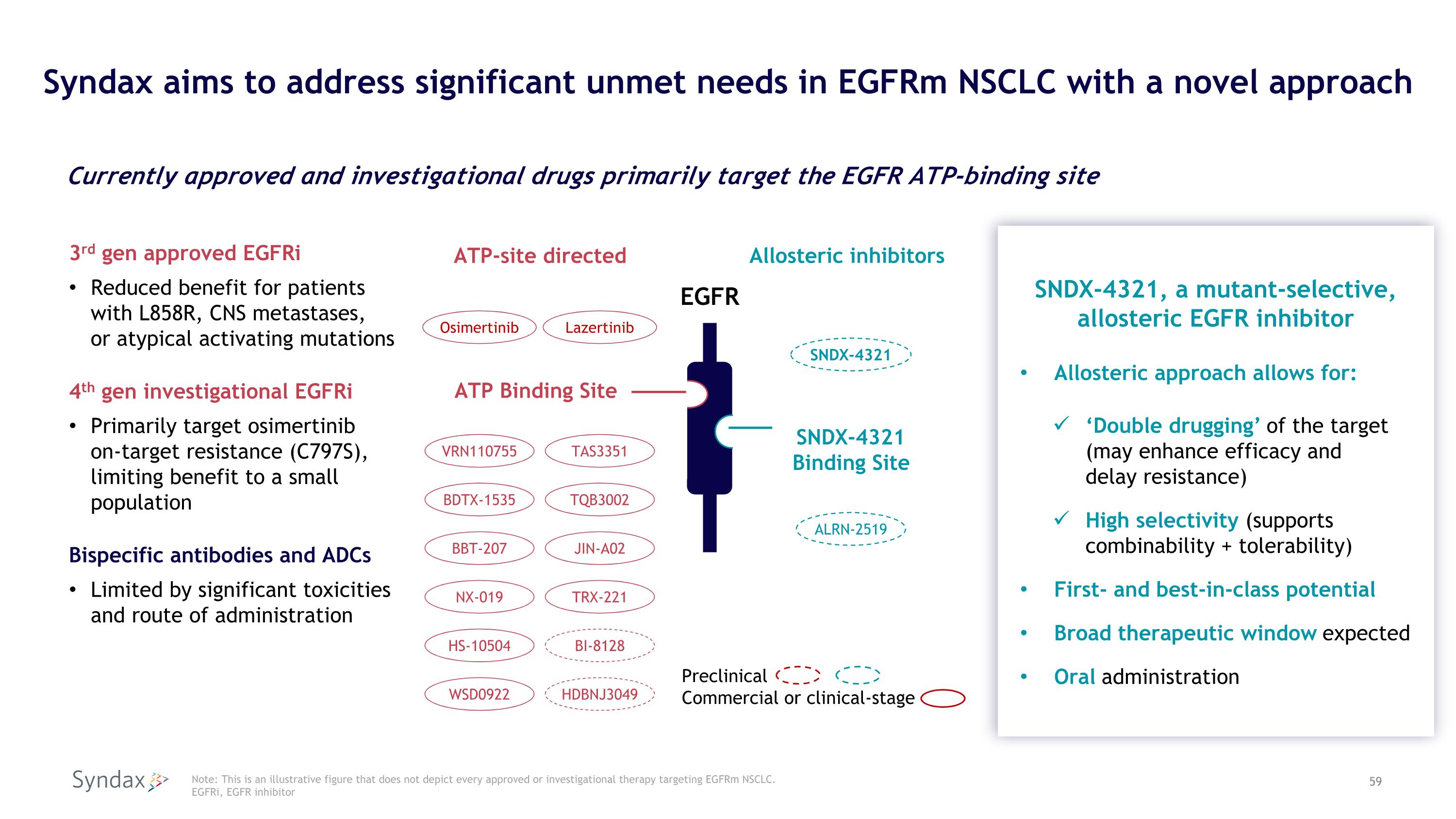
Syndax aims to address significant unmet needs in EGFRm NSCLC with a novel approach Note: This is an illustrative figure that does not depict every approved or investigational therapy targeting EGFRm NSCLC. EGFRi, EGFR inhibitor BI-8128 TAS3351 SNDX-4321 ATP Binding Site SNDX-4321 Binding Site 3rd gen approved EGFRi Reduced benefit for patients with L858R, CNS metastases, or atypical activating mutations 4th gen investigational EGFRi Primarily target osimertinib on-target resistance (C797S), limiting benefit to a small population Bispecific antibodies and ADCs Limited by significant toxicities and route of administration Currently approved and investigational drugs primarily target the EGFR ATP-binding site Allosteric inhibitors Osimertinib BDTX-1535 BBT-207 ALRN-2519 VRN110755 TQB3002 NX-019 JIN-A02 TRX-221 HDBNJ3049 EGFR ATP-site directed Lazertinib SNDX-4321, a mutant-selective, allosteric EGFR inhibitor Allosteric approach allows for: ‘Double drugging’ of the target (may enhance efficacy and delay resistance) High selectivity (supports combinability + tolerability) First- and best-in-class potential Broad therapeutic window expected Oral administration Preclinical Commercial or clinical-stage HS-10504 WSD0922
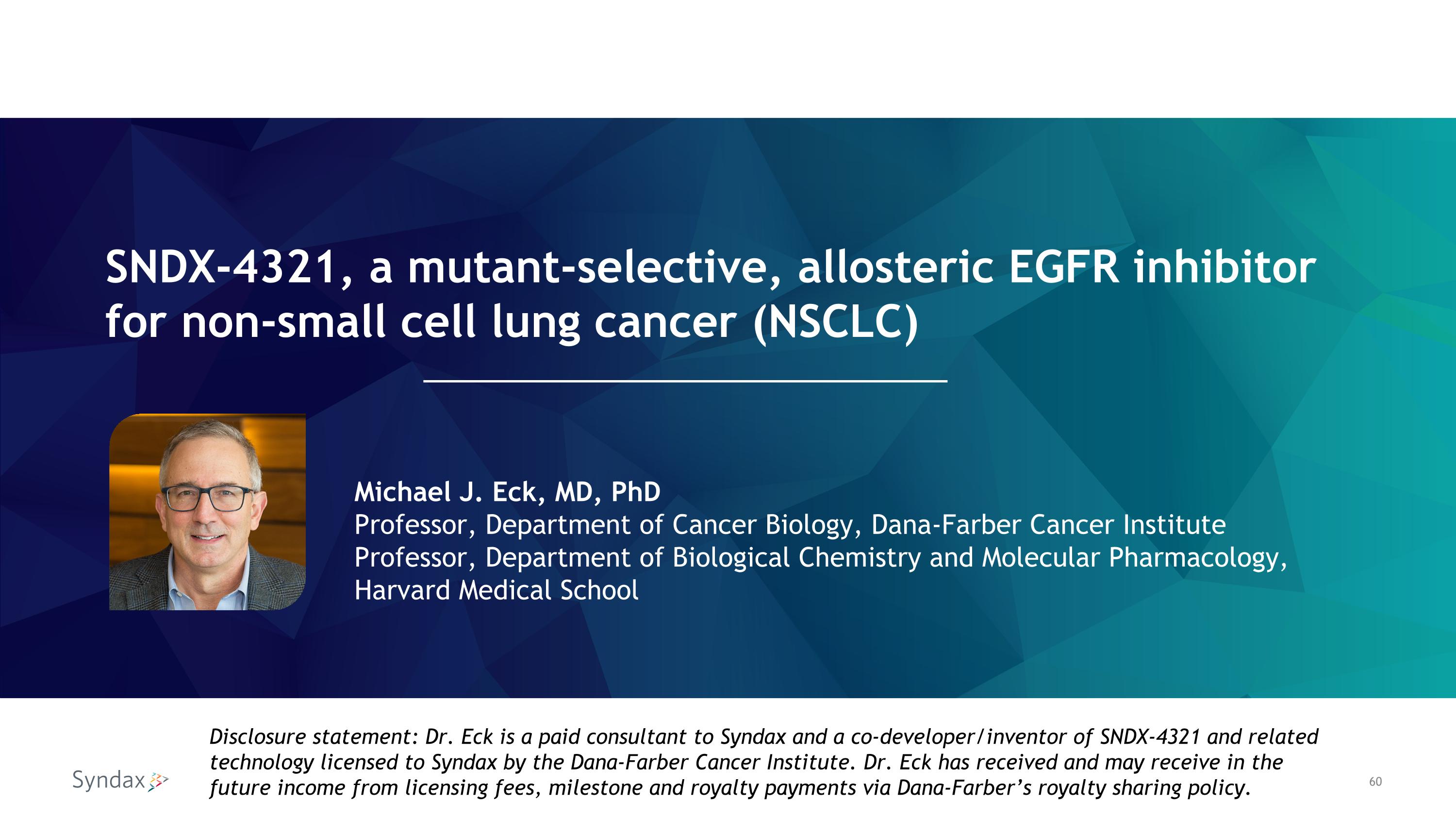
Michael J. Eck, MD, PhD Professor, Department of Cancer Biology, Dana-Farber Cancer Institute Professor, Department of Biological Chemistry and Molecular Pharmacology, Harvard Medical School SNDX-4321, a mutant-selective, allosteric EGFR inhibitor for non-small cell lung cancer (NSCLC) Disclosure statement: Dr. Eck is a paid consultant to Syndax and a co-developer/inventor of SNDX-4321 and related technology licensed to Syndax by the Dana-Farber Cancer Institute. Dr. Eck has received and may receive in the future income from licensing fees, milestone and royalty payments via Dana-Farber’s royalty sharing policy.
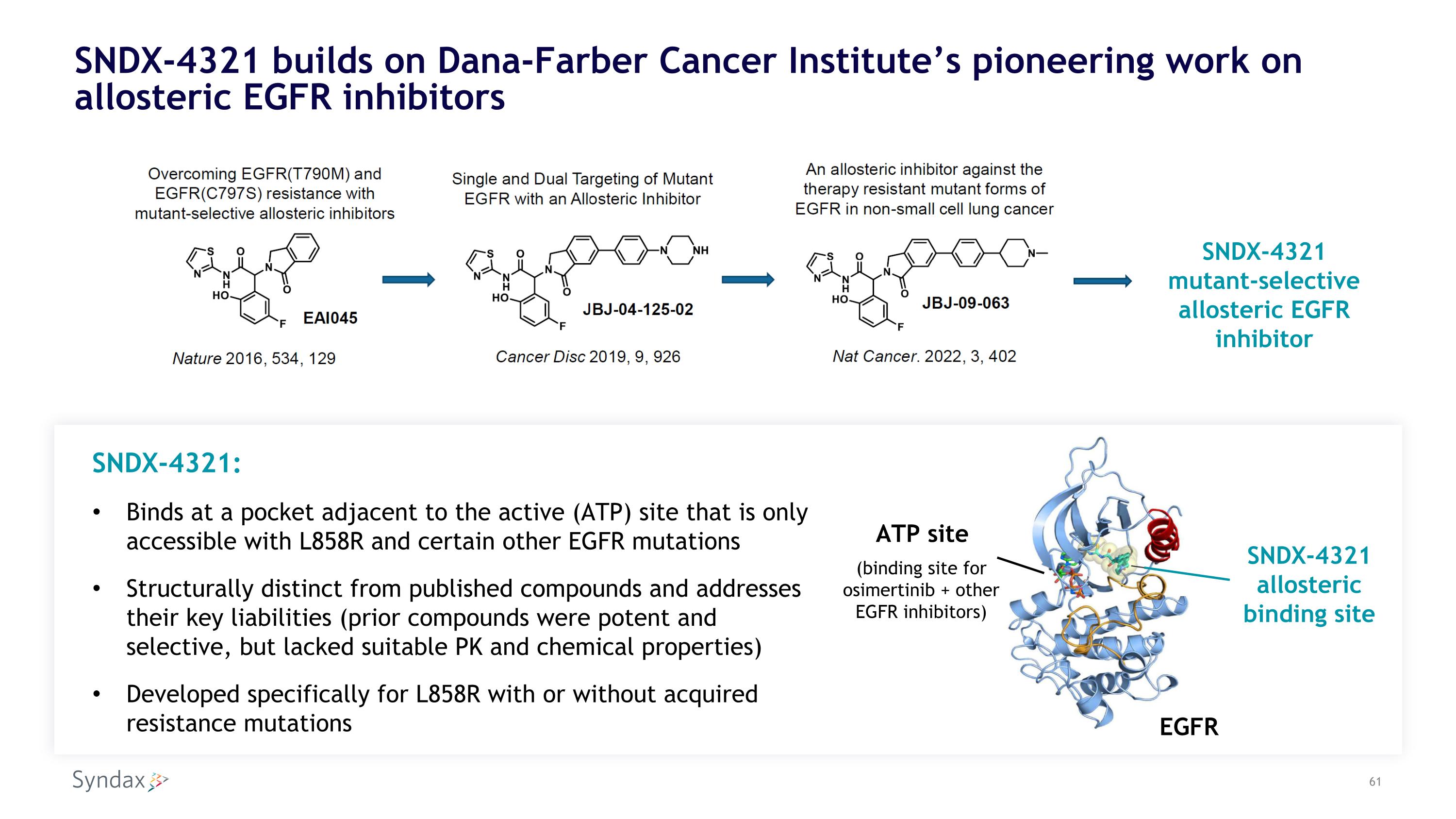
SNDX-4321 builds on Dana-Farber Cancer Institute’s pioneering work on allosteric EGFR inhibitors SNDX-4321 allosteric binding site ATP site (binding site for osimertinib + other EGFR inhibitors) SNDX-4321: Binds at a pocket adjacent to the active (ATP) site that is only accessible with L858R and certain other EGFR mutations Structurally distinct from published compounds and addresses their key liabilities (prior compounds were potent and selective, but lacked suitable PK and chemical properties) Developed specifically for L858R with or without acquired resistance mutations EGFR SNDX-4321 mutant-selective allosteric EGFR inhibitor
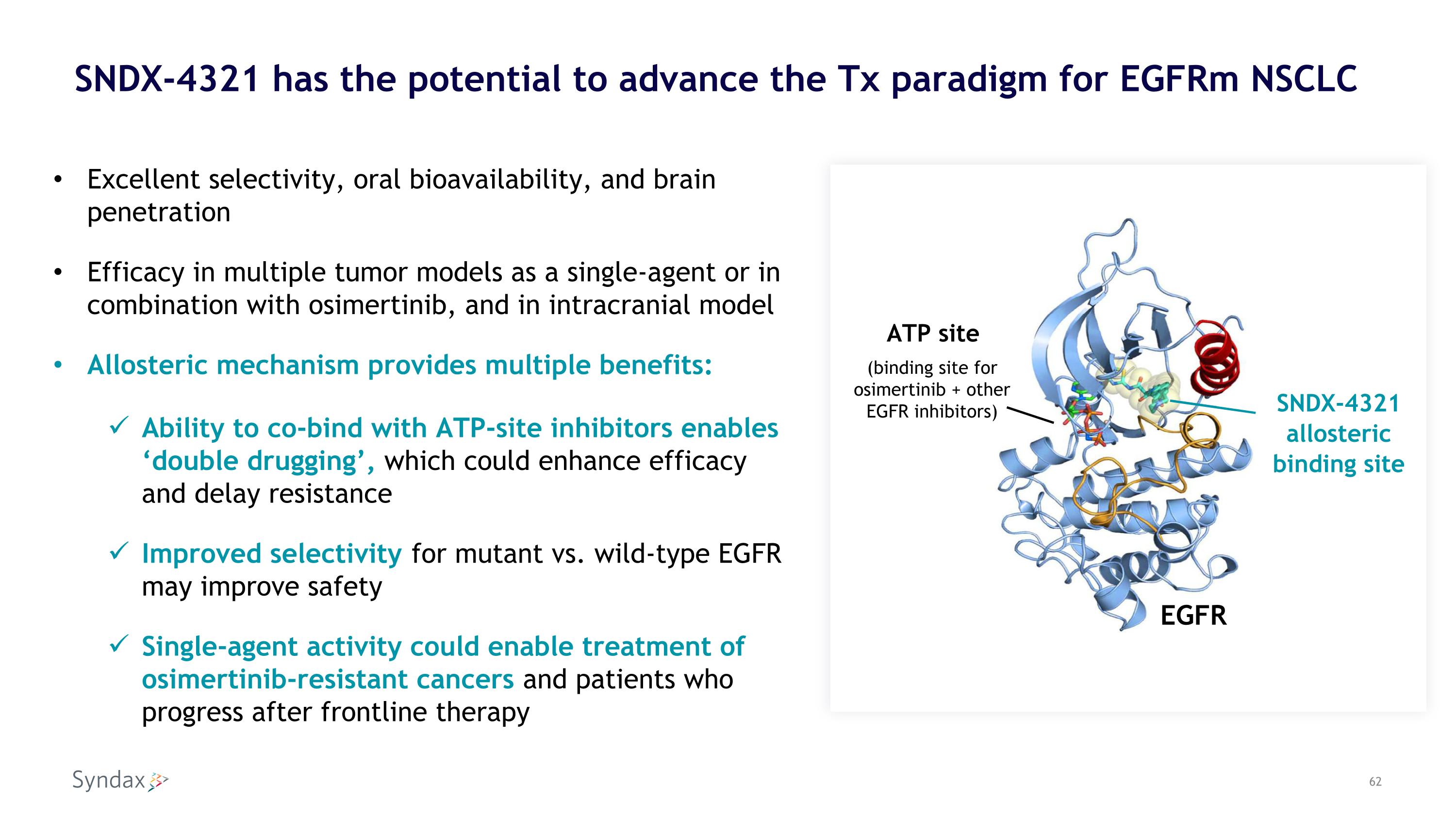
SNDX-4321 has the potential to advance the Tx paradigm for EGFRm NSCLC SNDX-4321 allosteric binding site ATP site (binding site for osimertinib + other EGFR inhibitors) Excellent selectivity, oral bioavailability, and brain penetration Efficacy in multiple tumor models as a single-agent or in combination with osimertinib, and in intracranial model Allosteric mechanism provides multiple benefits: Ability to co-bind with ATP-site inhibitors enables ‘double drugging’, which could enhance efficacy and delay resistance Improved selectivity for mutant vs. wild-type EGFR may improve safety Single-agent activity could enable treatment of osimertinib-resistant cancers and patients who progress after frontline therapy EGFR
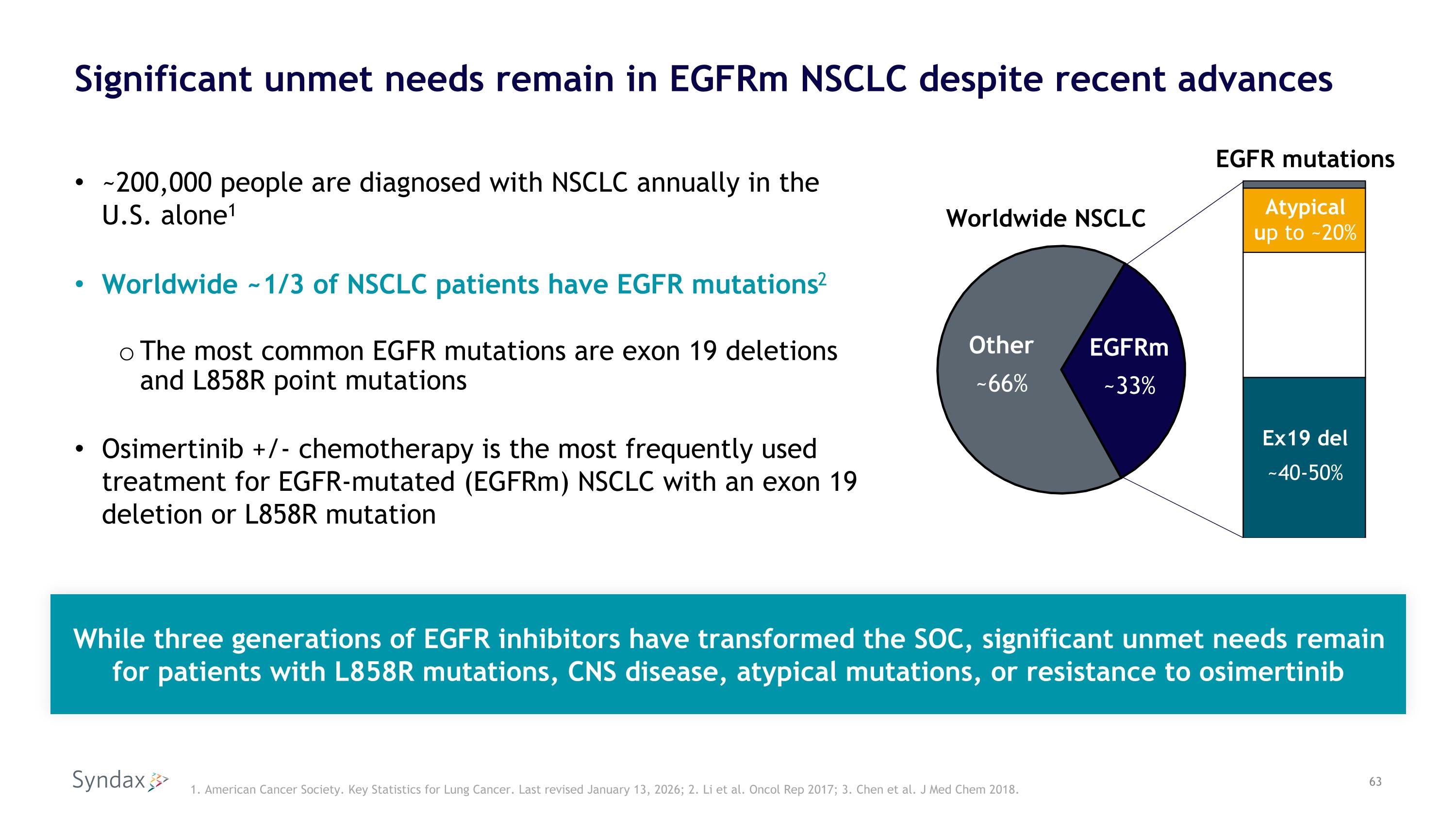
Significant unmet needs remain in EGFRm NSCLC despite recent advances ~200,000 people are diagnosed with NSCLC annually in the U.S. alone1 Worldwide ~1/3 of NSCLC patients have EGFR mutations2 The most common EGFR mutations are exon 19 deletions and L858R point mutations Osimertinib +/- chemotherapy is the most frequently used treatment for EGFR-mutated (EGFRm) NSCLC with an exon 19 deletion or L858R mutation L858R ~30-40% Ex19 del ~40-50% Atypical up to ~20% EGFRm ~33% Other ~66% Worldwide NSCLC EGFR mutations While three generations of EGFR inhibitors have transformed the SOC, significant unmet needs remain for patients with L858R mutations, CNS disease, atypical mutations, or resistance to osimertinib 1. American Cancer Society. Key Statistics for Lung Cancer. Last revised January 13, 2026; 2. Li et al. Oncol Rep 2017; 3. Chen et al. J Med Chem 2018.
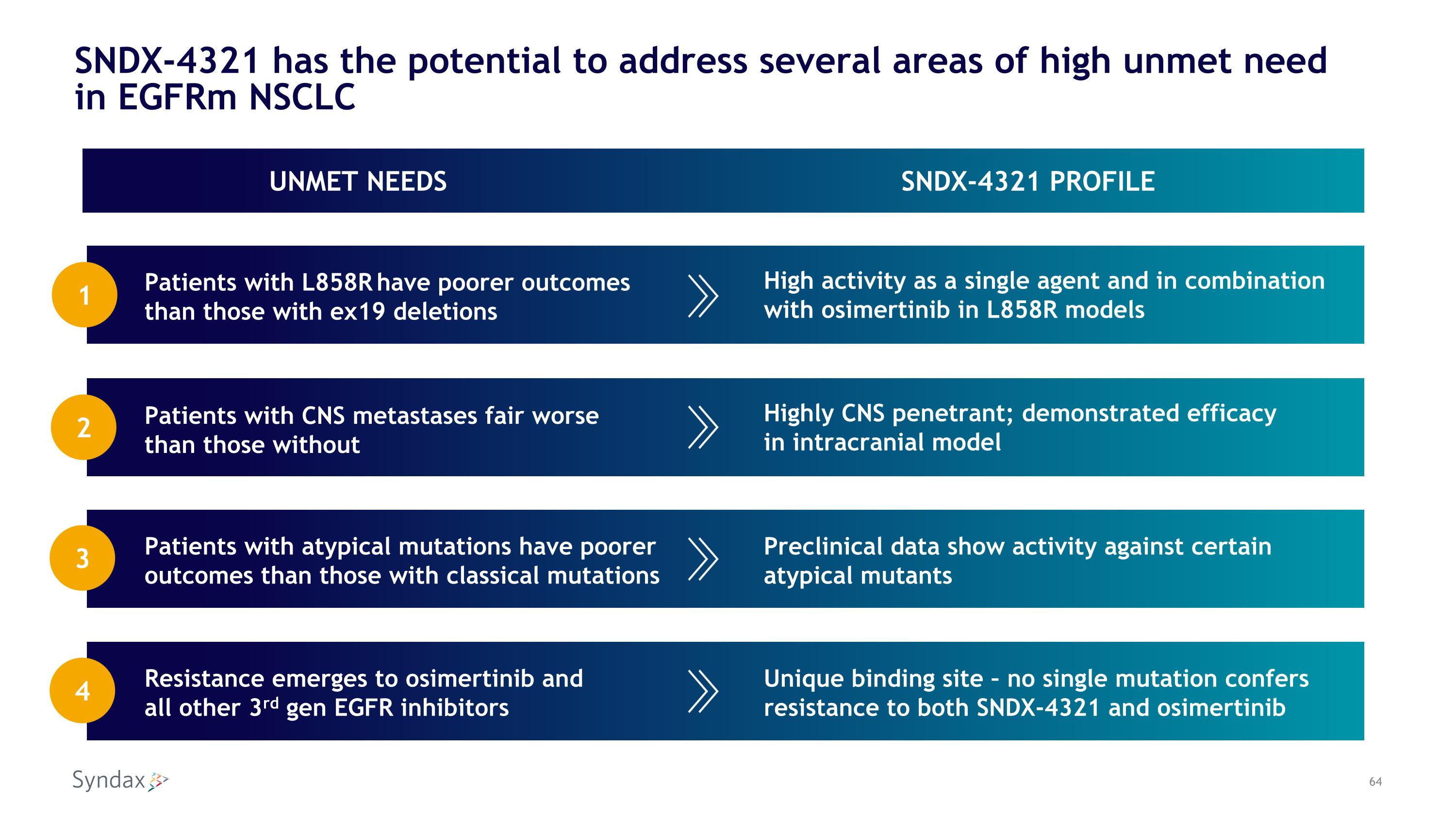
SNDX-4321 has the potential to address several areas of high unmet need in EGFRm NSCLC Patients with L858R have poorer outcomes than those with ex19 deletions Patients with atypical mutations have poorer outcomes than those with classical mutations Preclinical data show activity against certain atypical mutants UNMET NEEDS SNDX-4321 PROFILE 1 High activity as a single agent and in combination with osimertinib in L858R models Patients with CNS metastases fair worse than those without Highly CNS penetrant; demonstrated efficacy in intracranial model Resistance emerges to osimertinib and all other 3rd gen EGFR inhibitors Unique binding site – no single mutation confers resistance to both SNDX-4321 and osimertinib 2 3 4
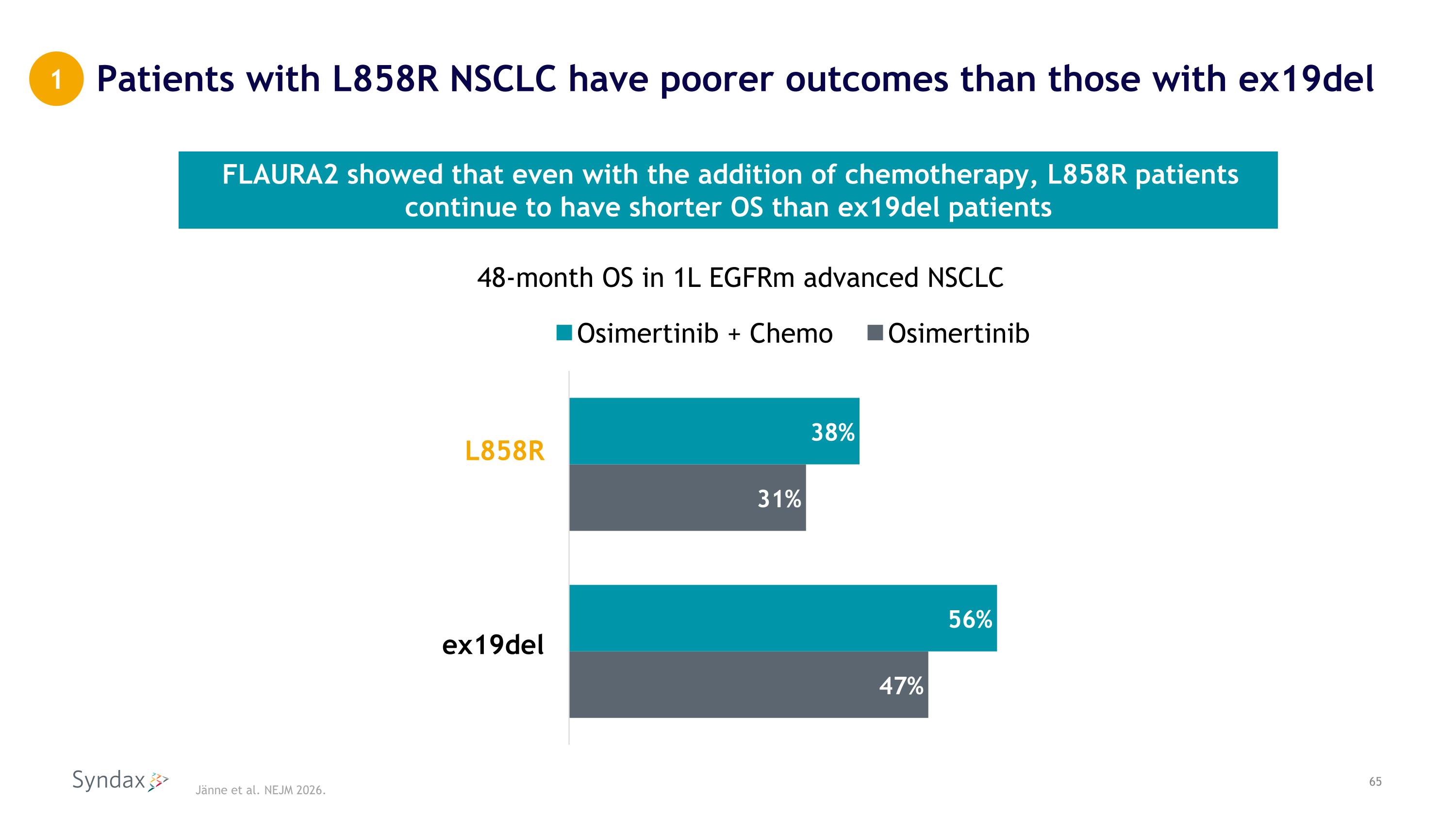
Jänne et al. NEJM 2026. Patients with L858R NSCLC have poorer outcomes than those with ex19del 1 48-month OS in 1L EGFRm advanced NSCLC L858R ex19del FLAURA2 showed that even with the addition of chemotherapy, L858R patients continue to have shorter OS than ex19del patients
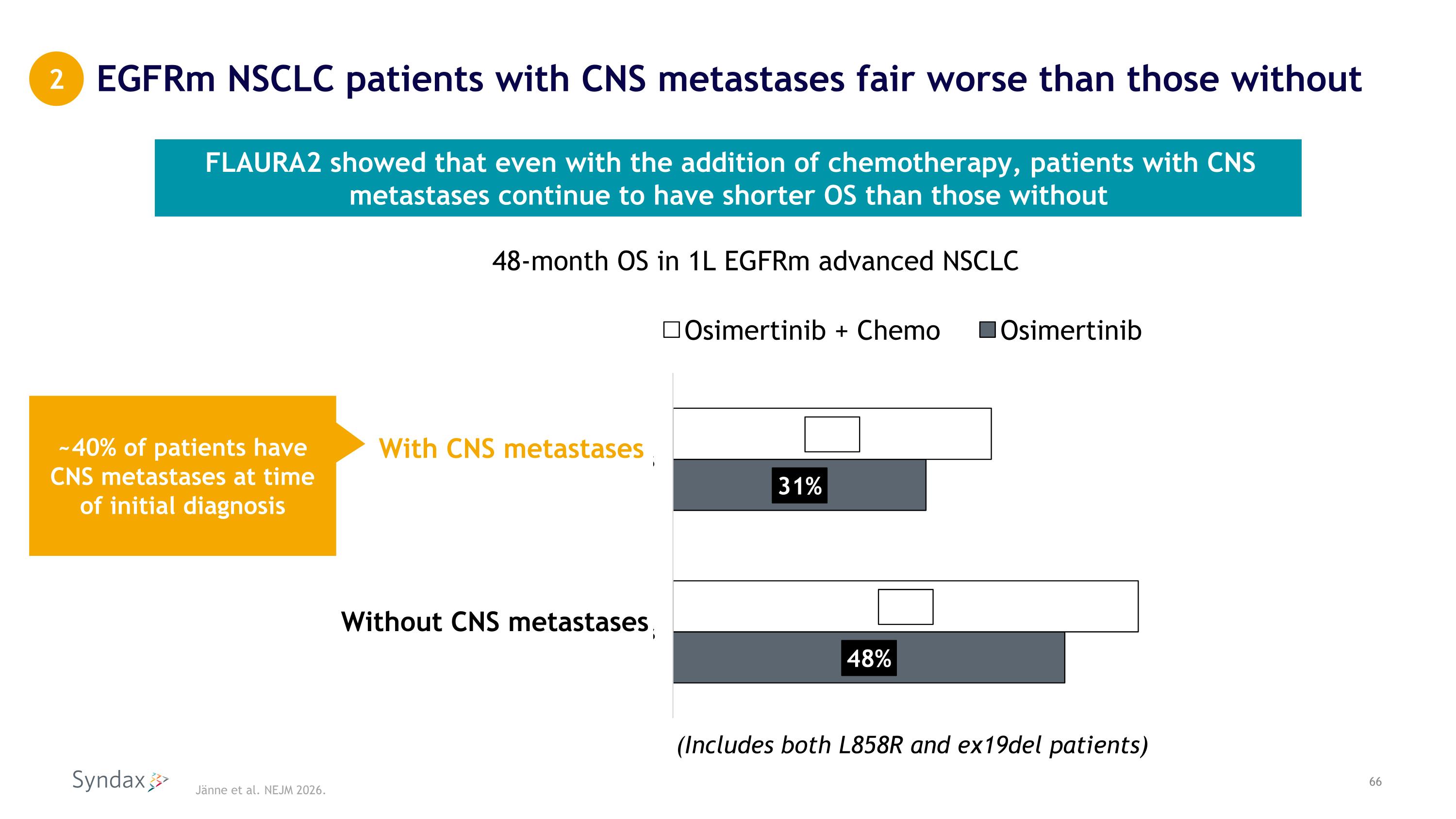
EGFRm NSCLC patients with CNS metastases fair worse than those without 48-month OS in 1L EGFRm advanced NSCLC (Includes both L858R and ex19del patients) With CNS metastases Without CNS metastases 2 Jänne et al. NEJM 2026. FLAURA2 showed that even with the addition of chemotherapy, patients with CNS metastases continue to have shorter OS than those without ~40% of patients have CNS metastases at time of initial diagnosis
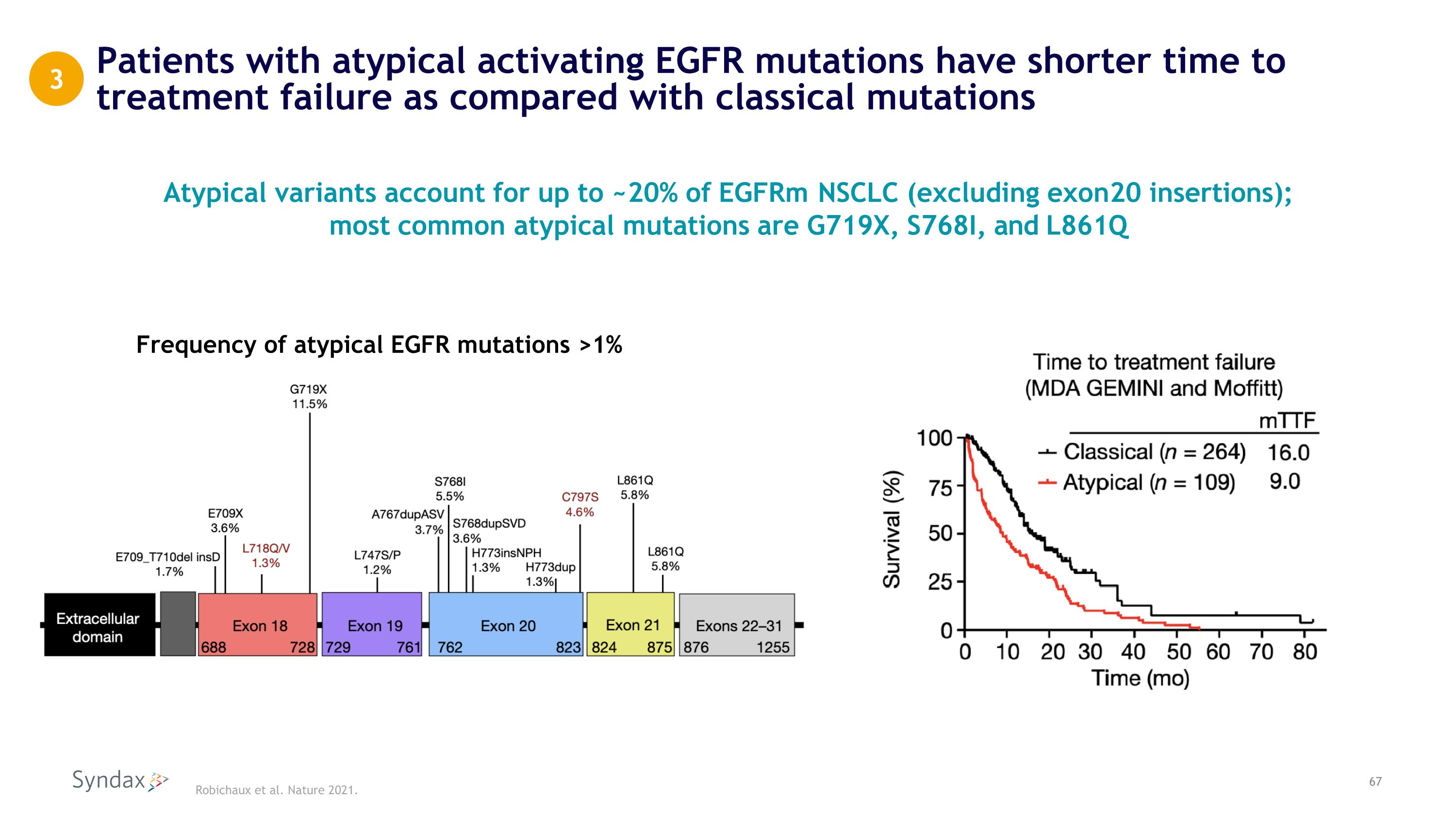
Patients with atypical activating EGFR mutations have shorter time to treatment failure as compared with classical mutations 3 Atypical variants account for up to ~20% of EGFRm NSCLC (excluding exon20 insertions); most common atypical mutations are G719X, S768I, and L861Q Frequency of atypical EGFR mutations >1% Robichaux et al. Nature 2021.
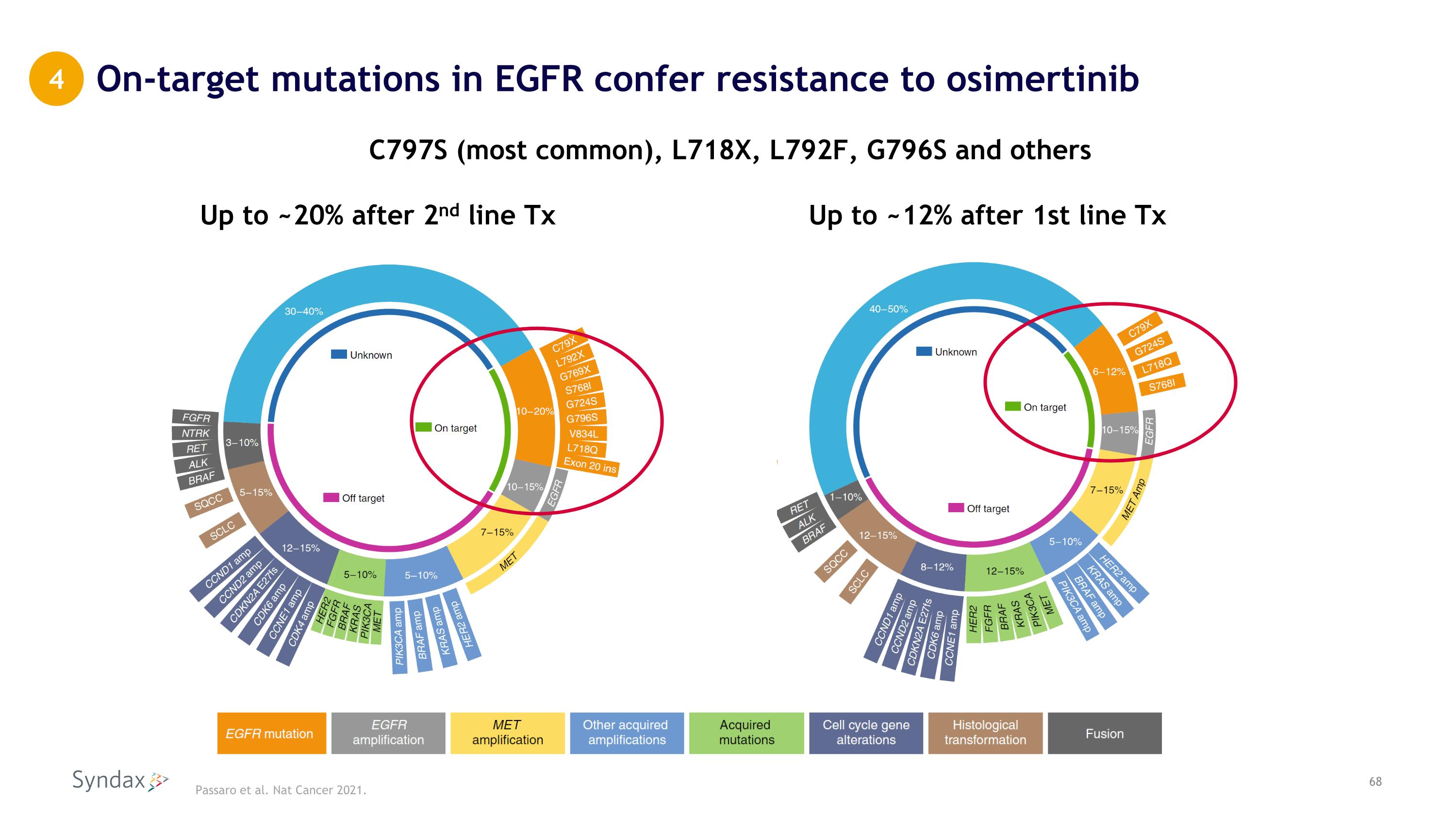
On-target mutations in EGFR confer resistance to osimertinib Passaro et al. Nat Cancer 2021. C797S (most common), L718X, L792F, G796S and others Up to ~20% after 2nd line Tx Up to ~12% after 1st line Tx 4
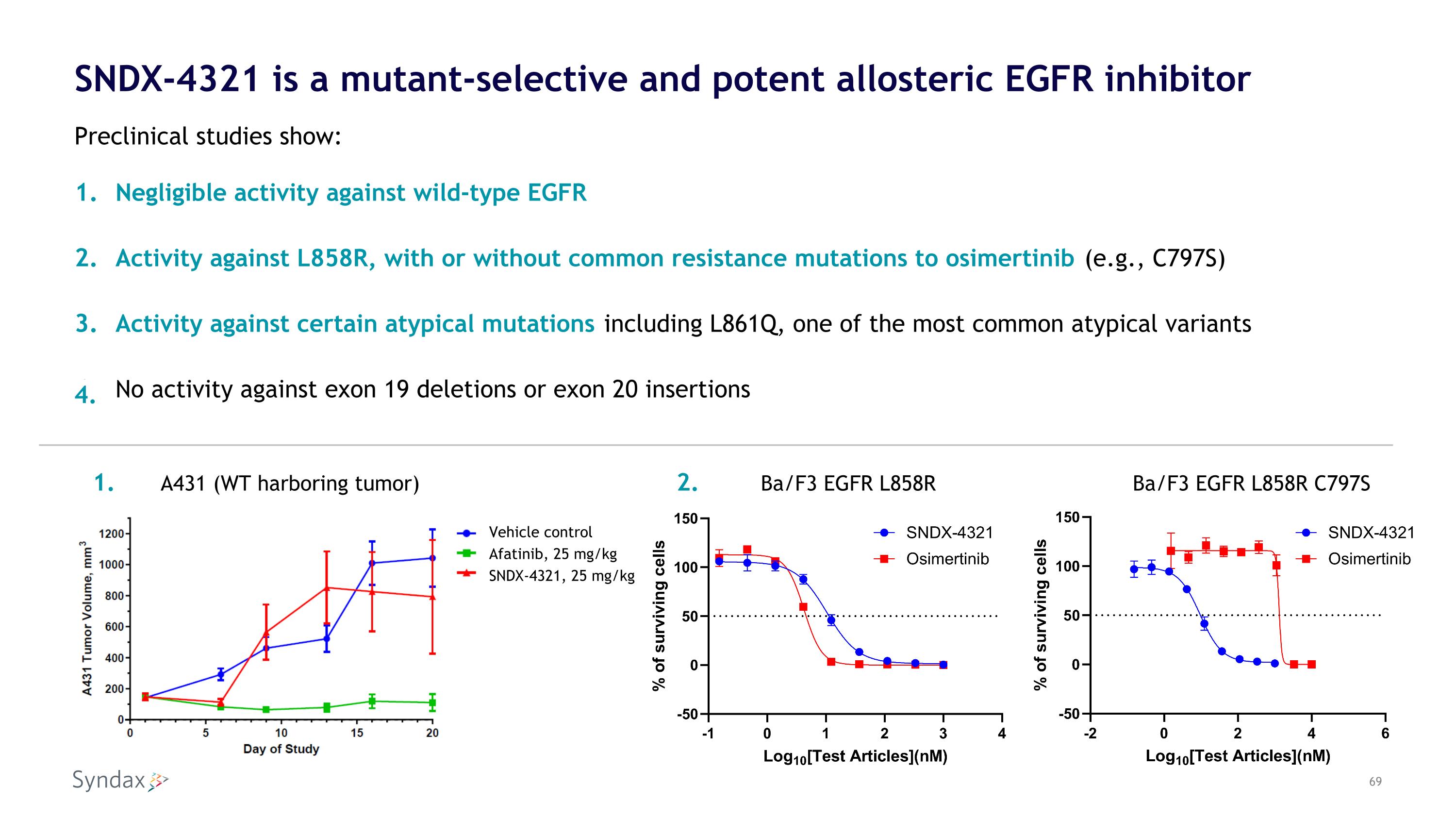
Preclinical studies show: Negligible activity against wild-type EGFR Activity against L858R, with or without common resistance mutations to osimertinib (e.g., C797S) Activity against certain atypical mutations including L861Q, one of the most common atypical variants No activity against exon 19 deletions or exon 20 insertions SNDX-4321 is a mutant-selective and potent allosteric EGFR inhibitor Ba/F3 EGFR L858R Ba/F3 EGFR L858R C797S A431 (WT harboring tumor) 1. 2. 4. Vehicle control Afatinib, 25 mg/kg SNDX-4321, 25 mg/kg
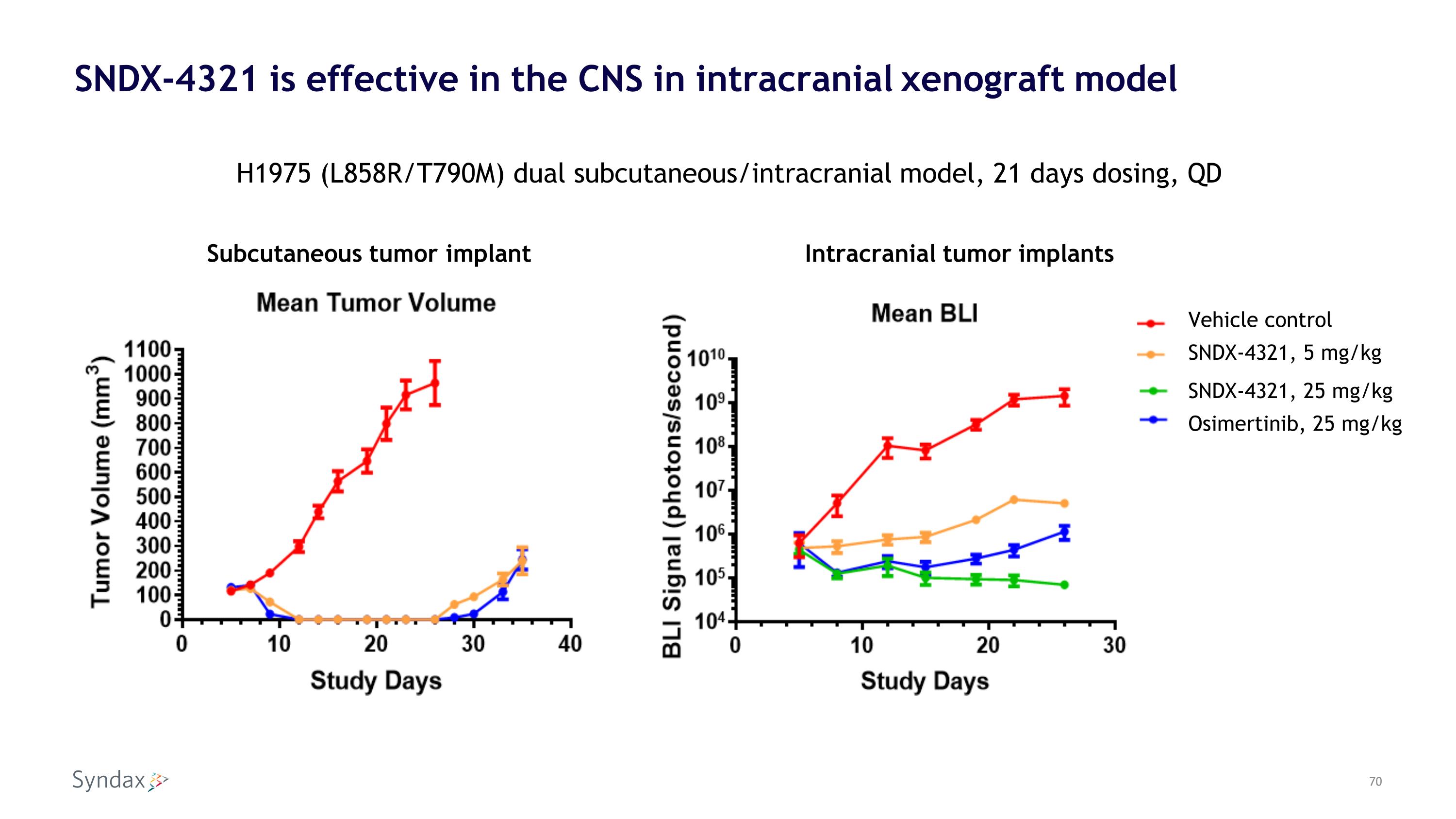
SNDX-4321 is effective in the CNS in intracranial xenograft model Subcutaneous tumor implant Intracranial tumor implants H1975 (L858R/T790M) dual subcutaneous/intracranial model, 21 days dosing, QD SNDX-4321, 25 mg/kg Osimertinib, 25 mg/kg Vehicle control SNDX-4321, 5 mg/kg
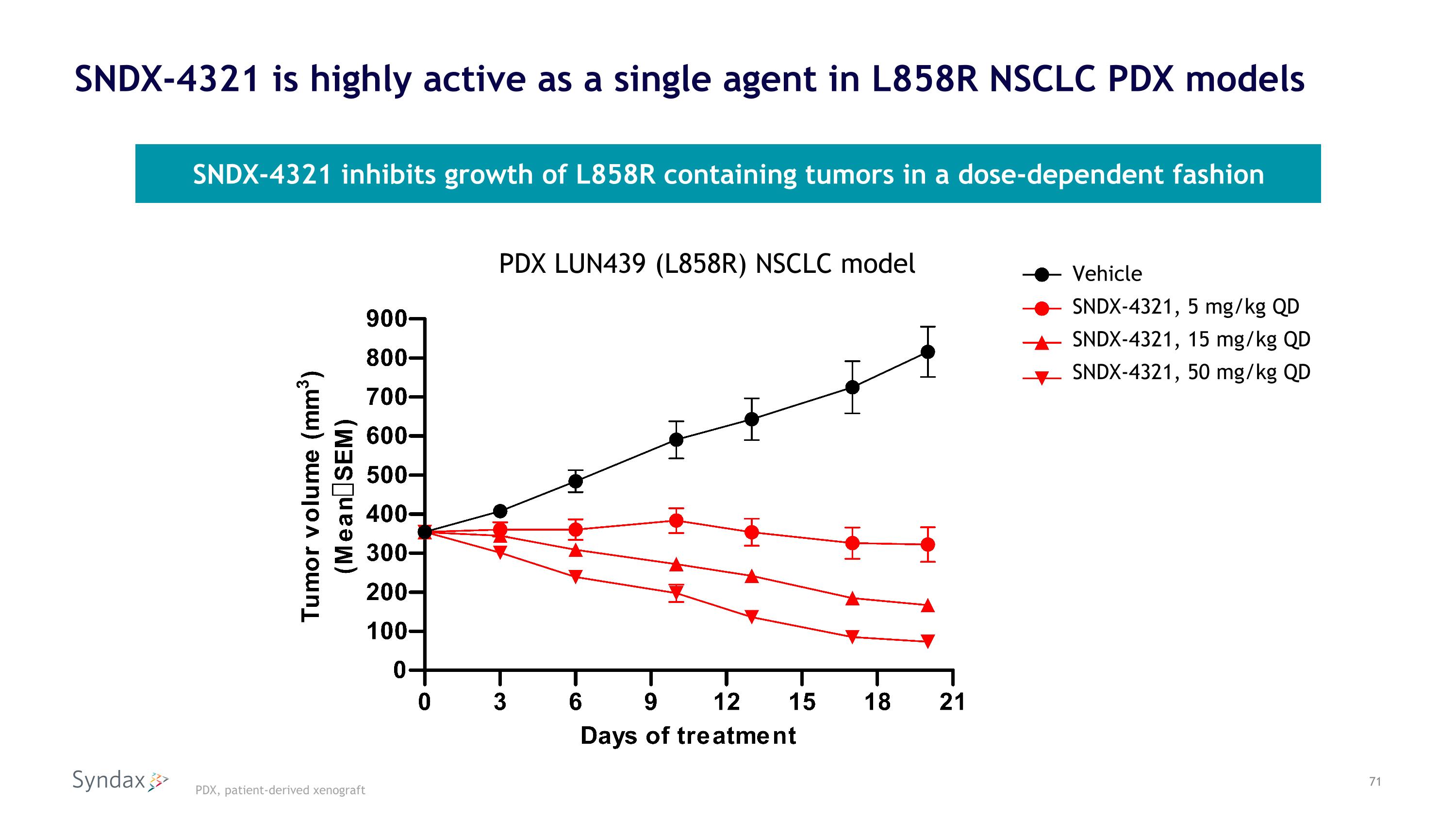
SNDX-4321 is highly active as a single agent in L858R NSCLC PDX models Vehicle SNDX-4321, 5 mg/kg QD SNDX-4321, 15 mg/kg QD SNDX-4321, 50 mg/kg QD PDX LUN439 (L858R) NSCLC model PDX, patient-derived xenograft SNDX-4321 inhibits growth of L858R containing tumors in a dose-dependent fashion
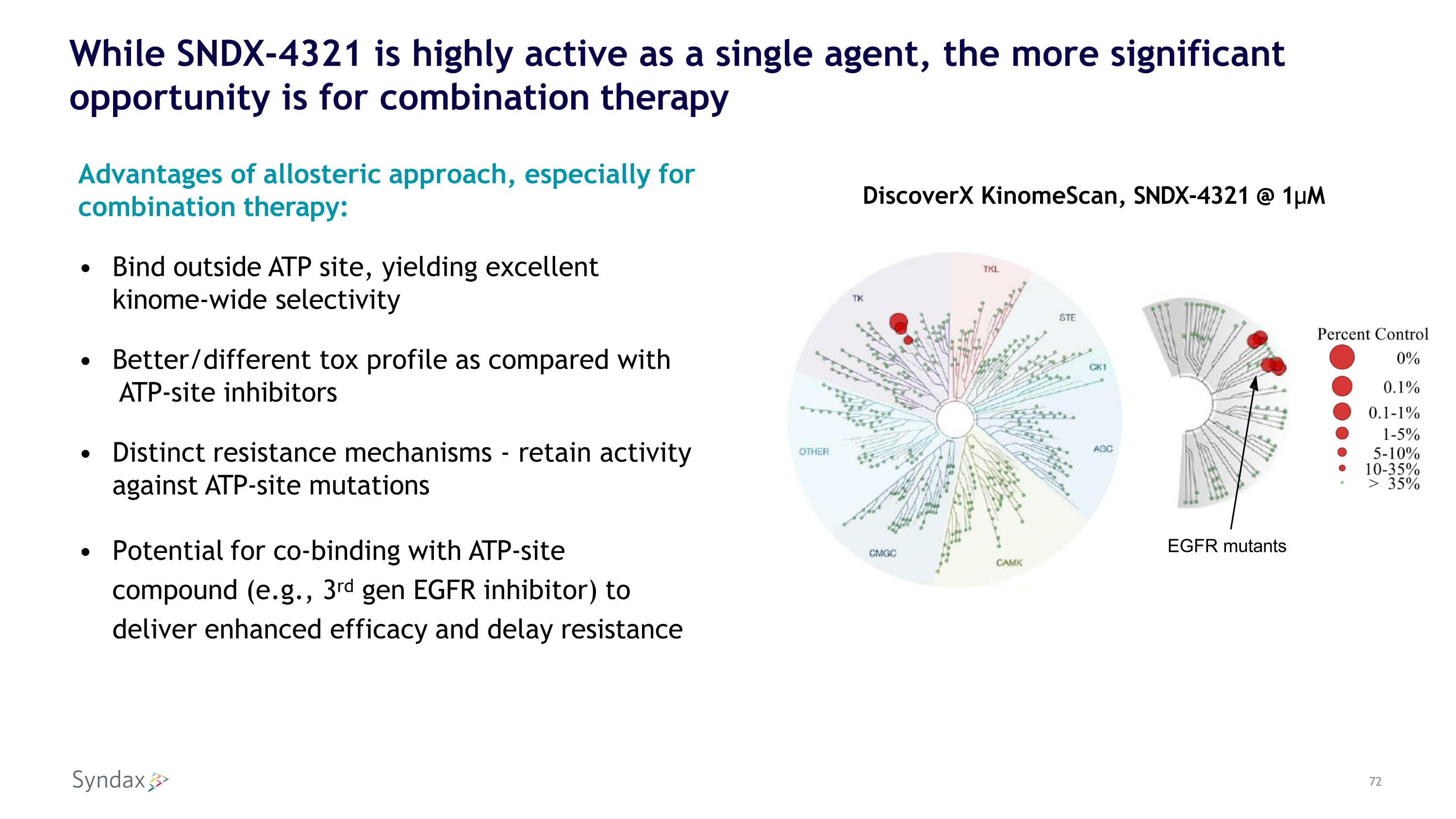
While SNDX-4321 is highly active as a single agent, the more significant opportunity is for combination therapy Advantages of allosteric approach, especially for combination therapy: Bind outside ATP site, yielding excellent kinome-wide selectivity Better/different tox profile as compared with ATP-site inhibitors Distinct resistance mechanisms - retain activity against ATP-site mutations Potential for co-binding with ATP-site compound (e.g., 3rd gen EGFR inhibitor) to deliver enhanced efficacy and delay resistance DiscoverX KinomeScan, SNDX-4321 @ 1μM EGFR mutants
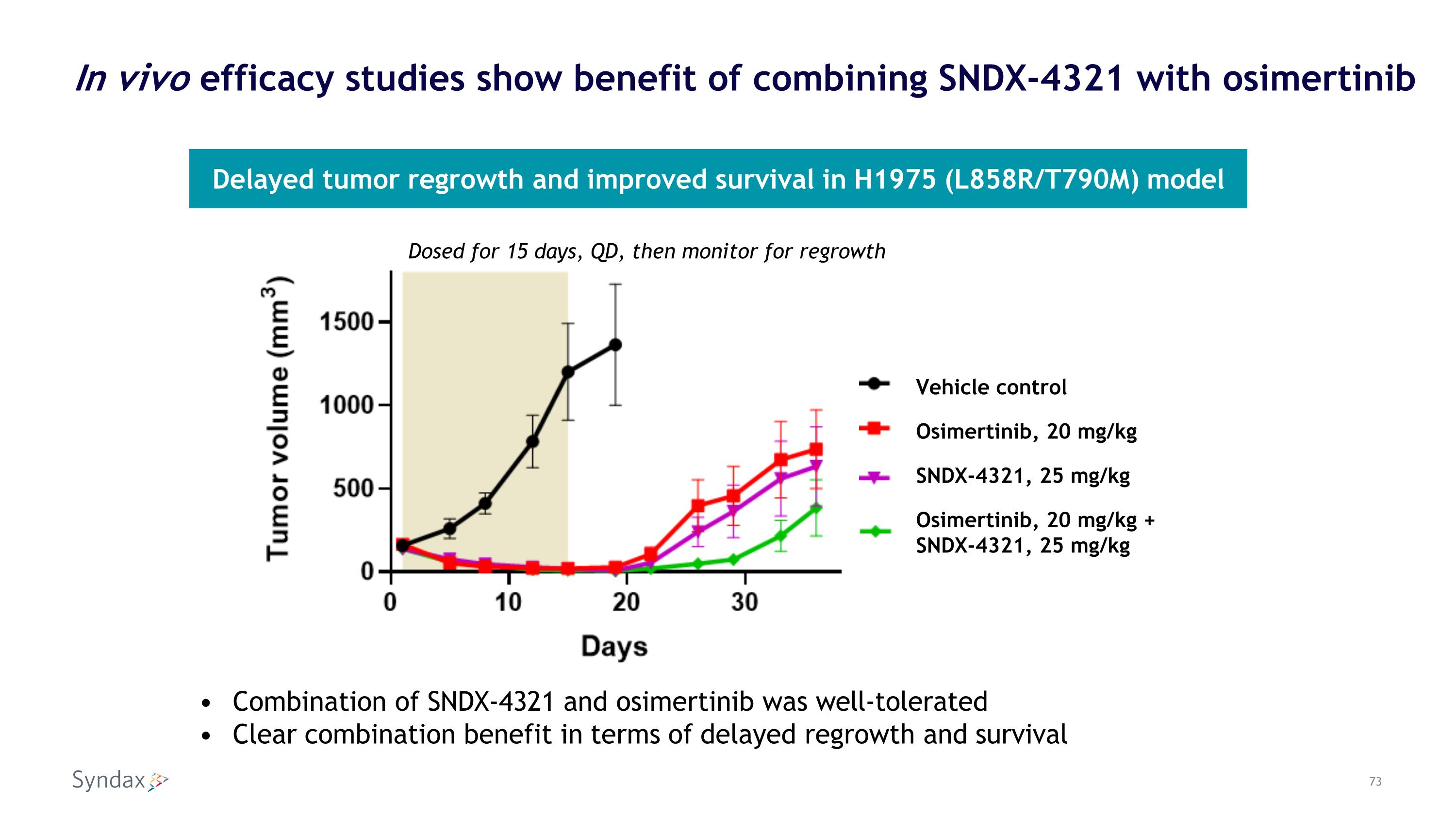
In vivo efficacy studies show benefit of combining SNDX-4321 with osimertinib Combination of SNDX-4321 and osimertinib was well-tolerated Clear combination benefit in terms of delayed regrowth and survival Vehicle control Osimertinib, 20 mg/kg SNDX-4321, 25 mg/kg Osimertinib, 20 mg/kg + SNDX-4321, 25 mg/kg Dosed for 15 days, QD, then monitor for regrowth Delayed tumor regrowth and improved survival in H1975 (L858R/T790M) model
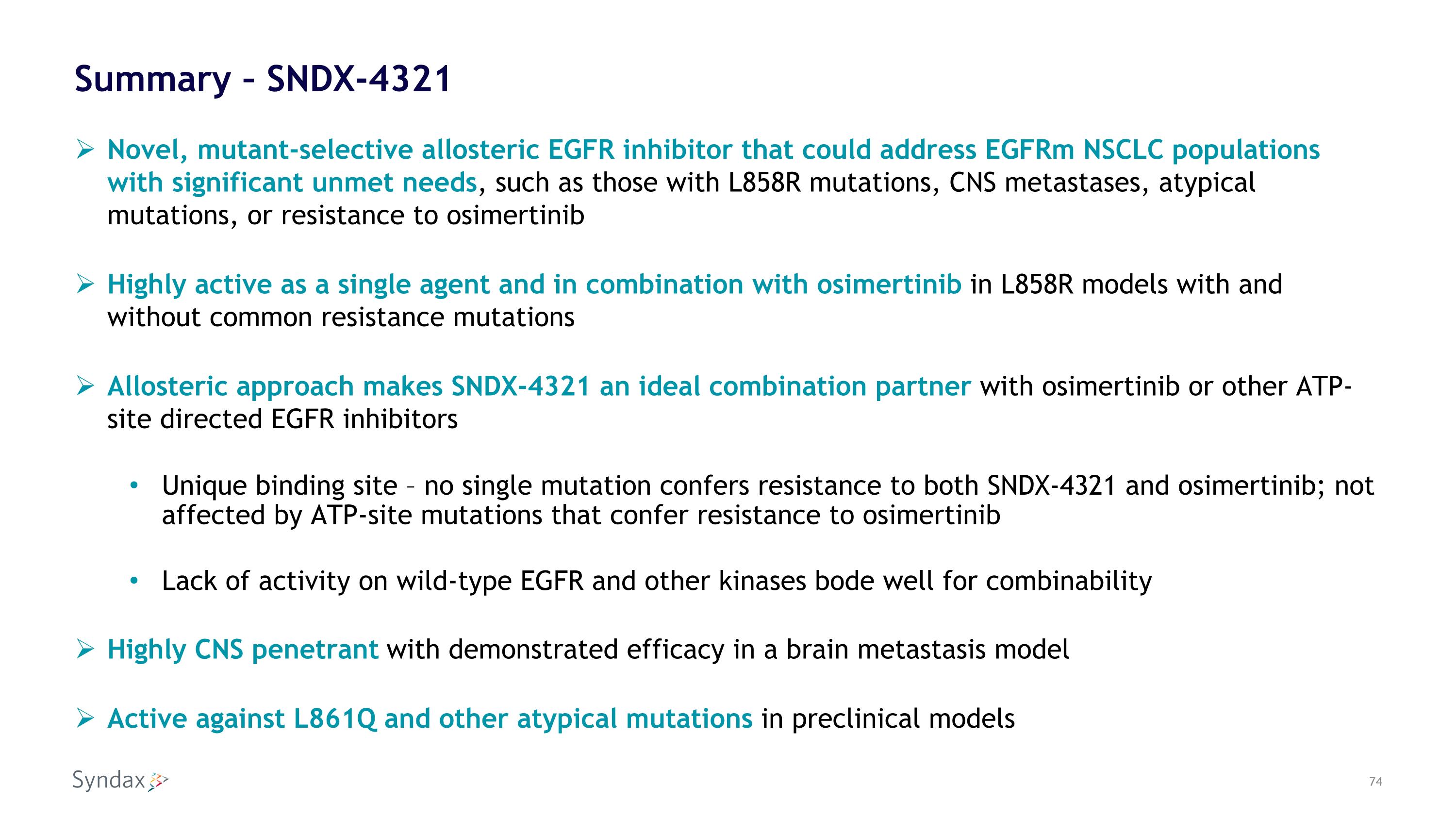
Summary – SNDX-4321 Novel, mutant-selective allosteric EGFR inhibitor that could address EGFRm NSCLC populations with significant unmet needs, such as those with L858R mutations, CNS metastases, atypical mutations, or resistance to osimertinib Highly active as a single agent and in combination with osimertinib in L858R models with and without common resistance mutations Allosteric approach makes SNDX-4321 an ideal combination partner with osimertinib or other ATP-site directed EGFR inhibitors Unique binding site – no single mutation confers resistance to both SNDX-4321 and osimertinib; not affected by ATP-site mutations that confer resistance to osimertinib Lack of activity on wild-type EGFR and other kinases bode well for combinability Highly CNS penetrant with demonstrated efficacy in a brain metastasis model Active against L861Q and other atypical mutations in preclinical models
SNDX-4321 - Next steps Nick Botwood, MBBS Head of Research & Development and Chief Medical Officer
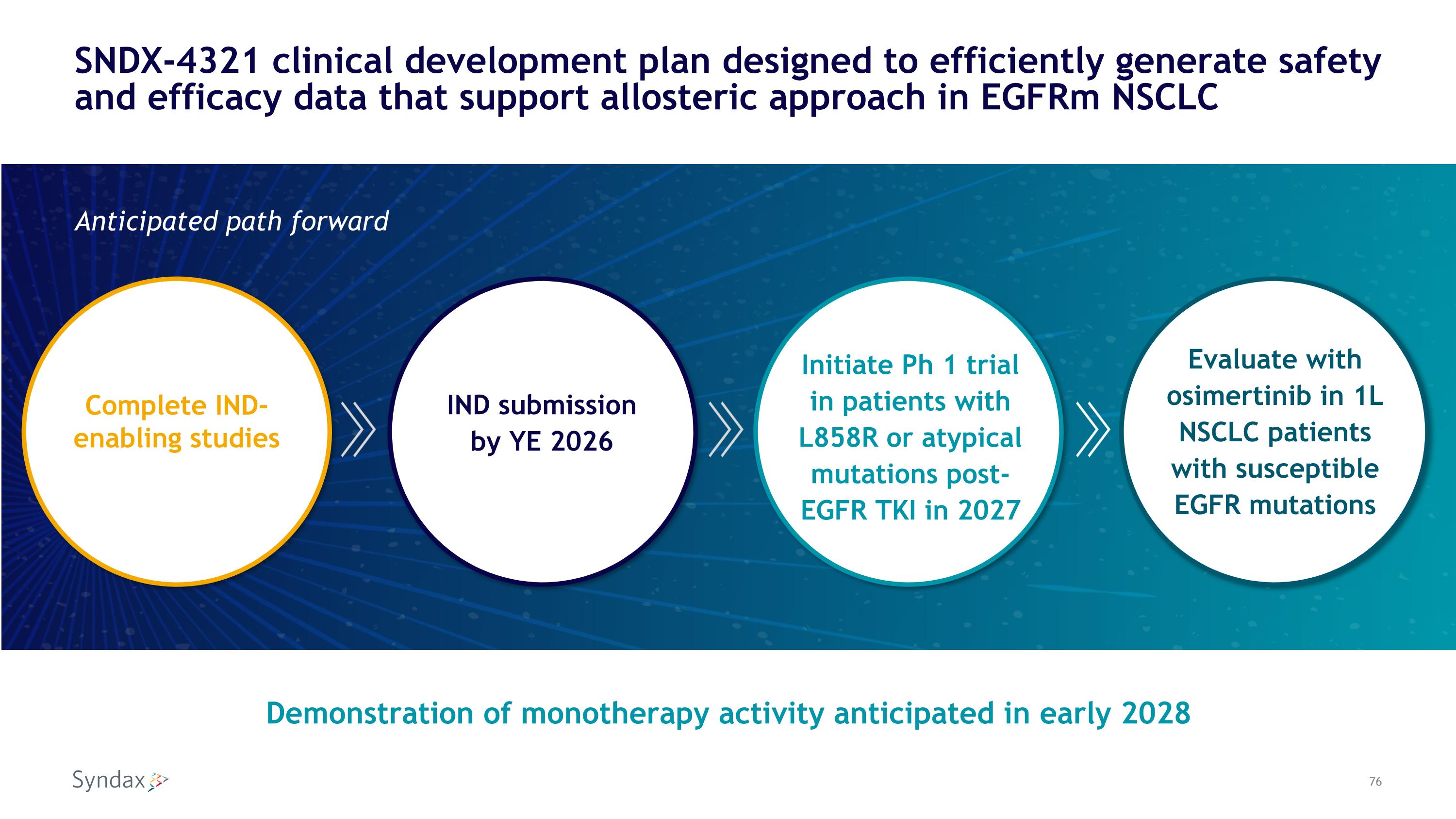
SNDX-4321 clinical development plan designed to efficiently generate safety and efficacy data that support allosteric approach in EGFRm NSCLC Complete IND-enabling studies IND submission by YE 2026 Evaluate with osimertinib in 1L NSCLC patients with susceptible EGFR mutations Initiate Ph 1 trial in patients with L858R or atypical mutations post-EGFR TKI in 2027 Anticipated path forward Demonstration of monotherapy activity anticipated in early 2028
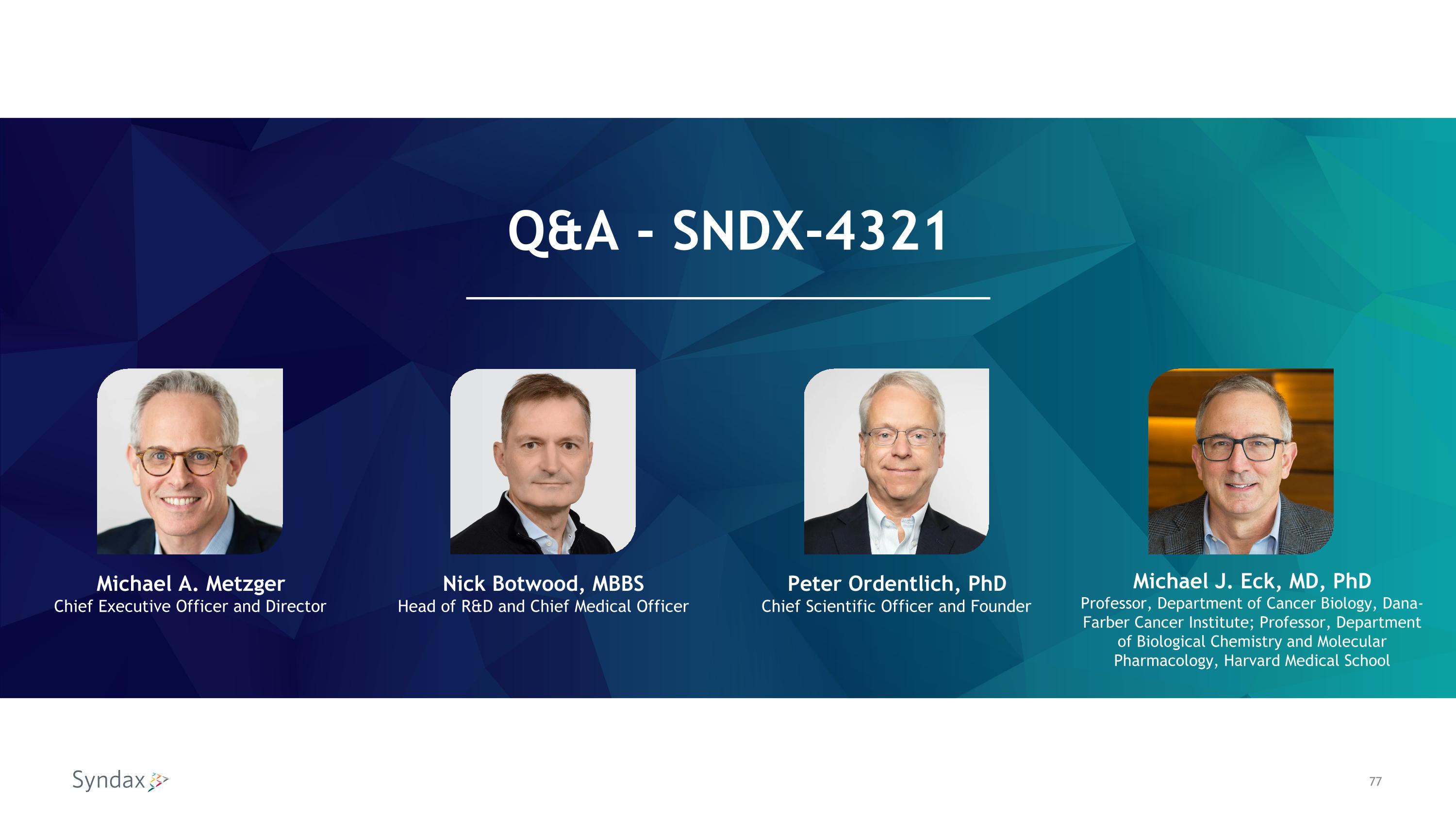
Q&A - SNDX-4321 Nick Botwood, MBBS Head of R&D and Chief Medical Officer Michael A. Metzger Chief Executive Officer and Director Michael J. Eck, MD, PhD Professor, Department of Cancer Biology, Dana-Farber Cancer Institute; Professor, Department of Biological Chemistry and Molecular Pharmacology, Harvard Medical School Peter Ordentlich, PhD Chief Scientific Officer and Founder
Michael A. Metzger Chief Executive Officer and Director Closing remarks
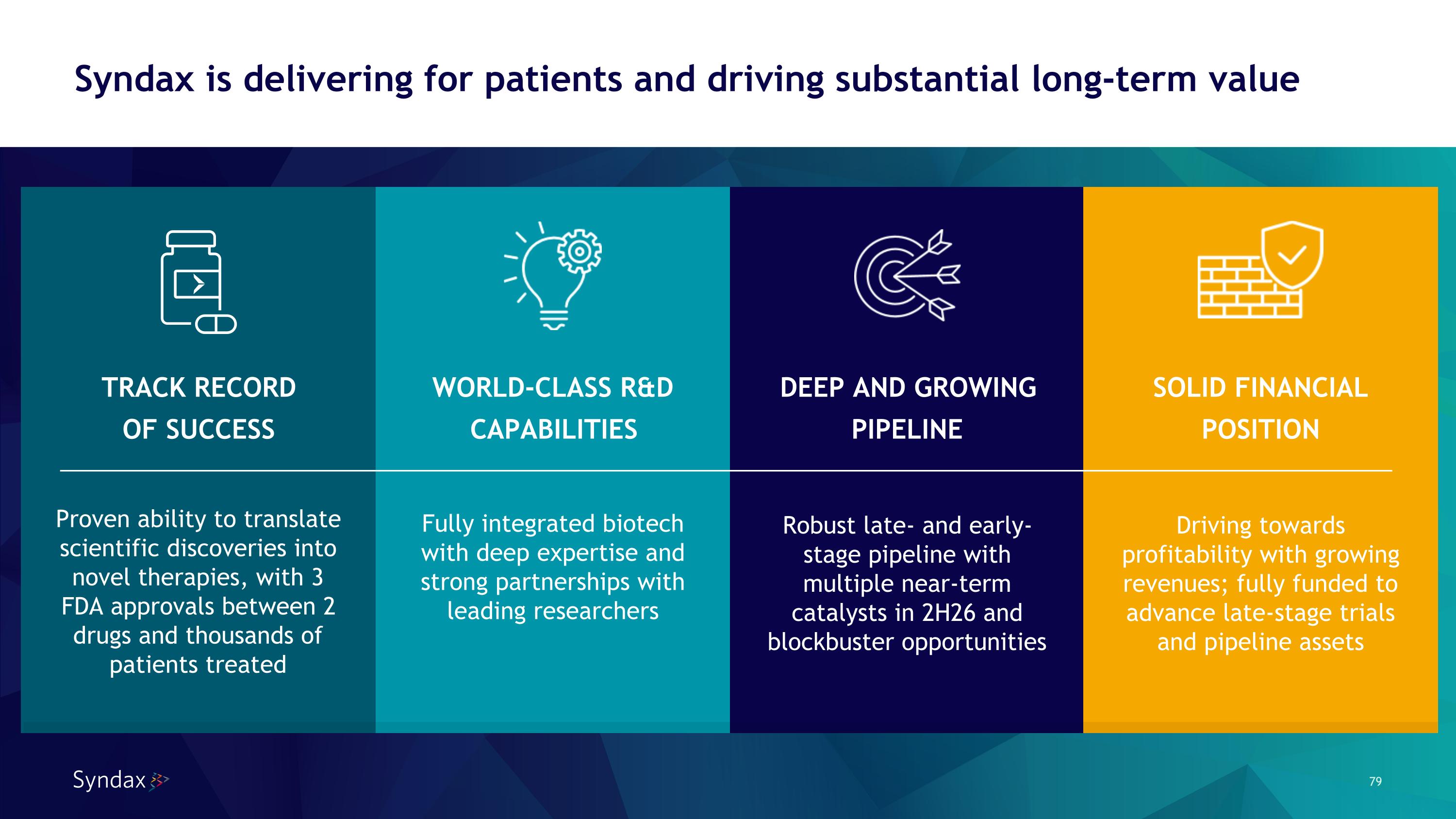
Syndax is delivering for patients and driving substantial long-term value Proven ability to translate scientific discoveries into novel therapies, with 3 FDA approvals between 2 drugs and thousands of patients treated Fully integrated biotech with deep expertise and strong partnerships with leading researchers Robust late- and early-stage pipeline with multiple near-term catalysts in 2H26 and blockbuster opportunities Driving towards profitability with growing revenues; fully funded to advance late-stage trials and pipeline assets SOLID FINANCIAL POSITION TRACK RECORD OF SUCCESS WORLD-CLASS R&D CAPABILITIES DEEP AND GROWING PIPELINE
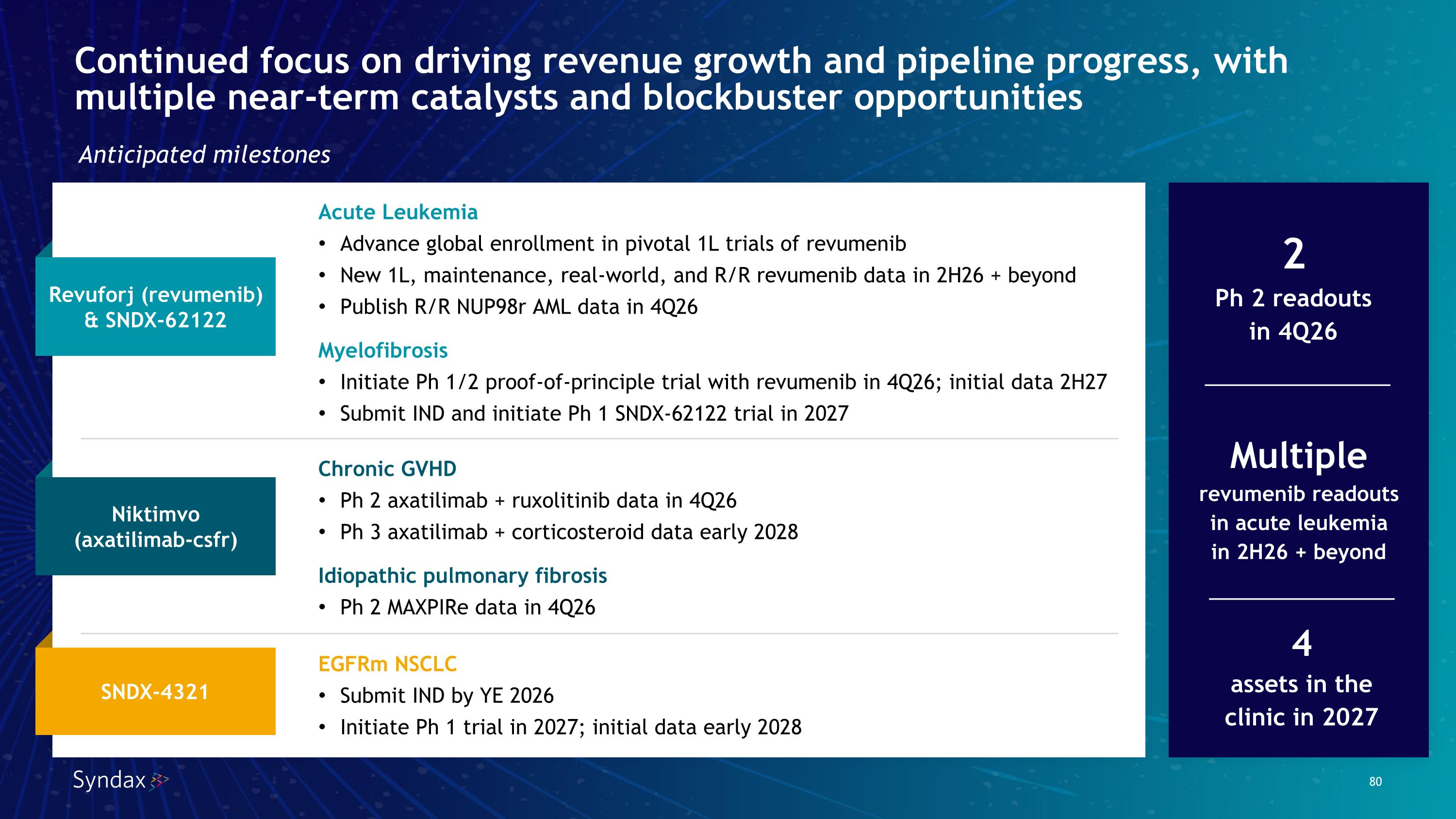
Continued focus on driving revenue growth and pipeline progress, with multiple near-term catalysts and blockbuster opportunities Acute Leukemia Advance global enrollment in pivotal 1L trials of revumenib New 1L, maintenance, real-world, and R/R revumenib data in 2H26 + beyond Publish R/R NUP98r AML data in 4Q26 Myelofibrosis Initiate Ph 1/2 proof-of-principle trial with revumenib in 4Q26; initial data 2H27 Submit IND and initiate Ph 1 SNDX-62122 trial in 2027 Chronic GVHD Ph 2 axatilimab + ruxolitinib data in 4Q26 Ph 3 axatilimab + corticosteroid data early 2028 Idiopathic pulmonary fibrosis Ph 2 MAXPIRe data in 4Q26 EGFRm NSCLC Submit IND by YE 2026 Initiate Ph 1 trial in 2027; initial data early 2028 Anticipated milestones Revuforj (revumenib) & SNDX-62122 SNDX-4321 Niktimvo (axatilimab-csfr) 4 assets in the clinic in 2027 2 Ph 2 readouts in 4Q26 Multiple revumenib readouts in acute leukemia in 2H26 + beyond