Exhibit 3.1
 |
|
|
|
AMENDED AND RESTATED
ARTICLES OF INCORPORATION
OF
GLOBAL SHIP LEASE, INC.
Reg. No. 28891
|
|
|
|
|
||
|
|
||
|
|
REPUBLIC OF THE MARSHALL ISLANDS
REGISTRAR OF CORPORATIONS
DUPLICATE COPY
The original of this document was
|
NON-RESIDENT
|
FILED ON |
|
| July 14, 2026 | ||
 |
 |
|
|
Bridget Russell
Deputy Registrar
|
|
|
|
|
||
|
|
||
|
|
STATEMENT TO AMEND AND RESTATE
THE AMENDED AND RESTATED ARTICLES OF INCORPORATION OF
GLOBAL SHIP LEASE, INC.
UNDER SECTION 93 OF THE
MARSHALL ISLANDS BUSINESS CORPORATIONS ACT
The undersigned, Thomas A. Lister, as the Chief Executive Officer of Global Ship Lease, Inc. (the “Corporation”), a corporation incorporated under the laws of the Republic of the Marshall
Islands, for the purpose of amending and restating the Amended and Restated Articles of Incorporation of said Corporation pursuant to Section 93 of the Marshall Islands Business Corporations Act, hereby certifies that:
|
1.
|
The name of the Corporation is: Global Ship Lease, Inc.
|
|
2.
|
The Articles of Incorporation were filed with the Registrar of Corporations on March 14, 2008.
|
|
3.
|
The Amended and Restated Articles of Incorporation were filed with the Registrar of Corporations on August 14, 2008.
|
|
4.
|
The Articles of Amendment to the Amended and Restated Articles of Incorporation were filed with the Registrar of Corporations on March 22, 2019.
|
|
5.
|
The Amended and Restated Articles of Incorporation, as amended, are amended and restated in their entirety and are replaced by the Second Amended and Restated Articles of
Incorporation, attached hereto.
|
|
6.
|
The Second Amended and Restated Articles of Incorporation were proposed by the Board of Directors and authorized by action of the Shareholders of the Corporation.
|
IN WITNESS WHEREOF, the undersigned has executed this Statement to Amend and Restate the Amended and Restated Articles of Incorporation, as amended, on this 14th day of July, 2026.
|
|
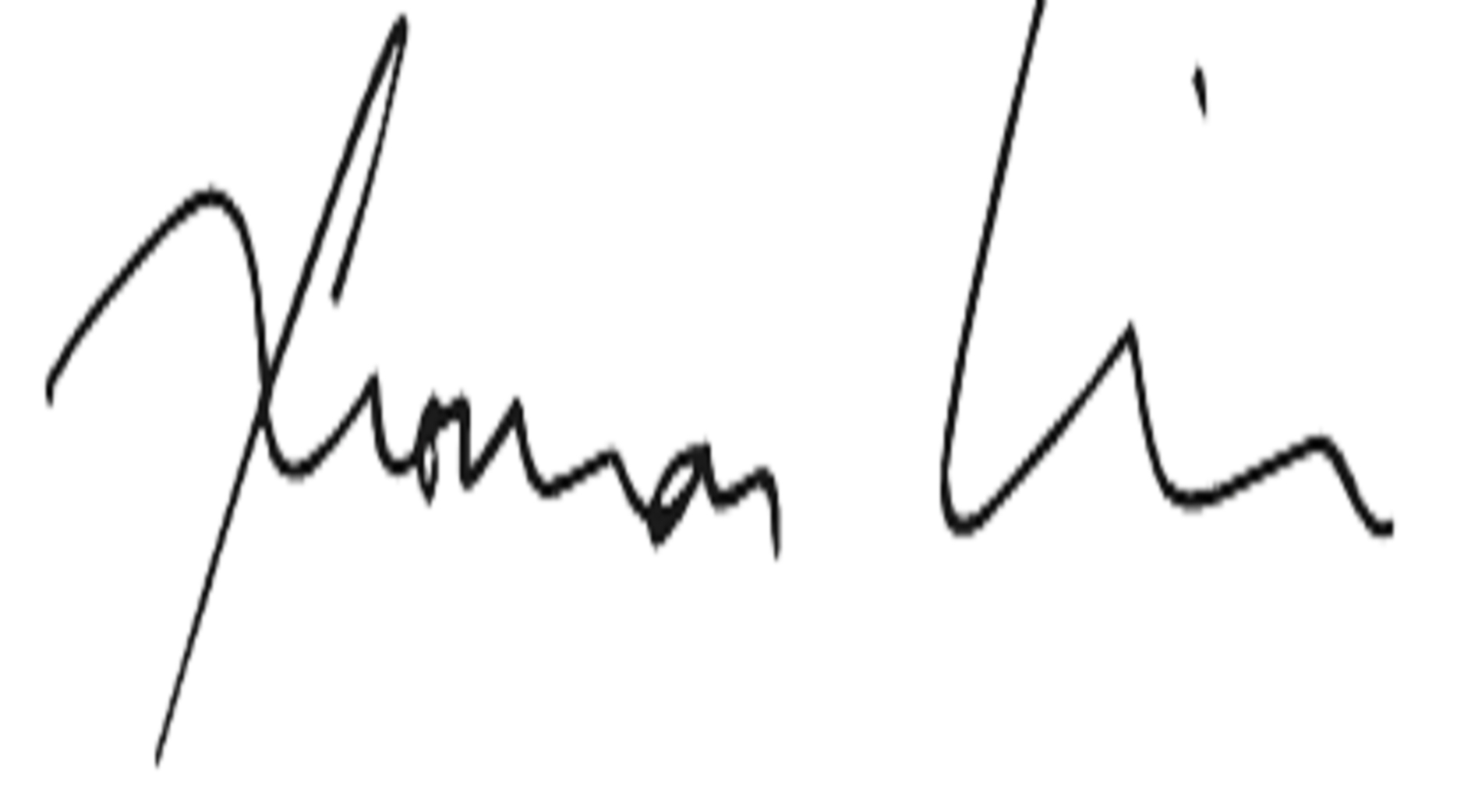 |
|
|
|
Name: | Thomas A. Lister |
|
|
Title: | Chief Executive Officer |
SECOND AMENDED AND RESTATED ARTICLES OF INCORPORATION
OF
GLOBAL SHIP LEASE, INC.
PURSUANT TO THE MARSHALL ISLANDS BUSINESS CORPORATIONS ACT
ARTICLE I
NAME; PURPOSE; POWERS; DURATION; REGISTERED ADDRESS AND REGISTERED AGENT
NAME; PURPOSE; POWERS; DURATION; REGISTERED ADDRESS AND REGISTERED AGENT
Section 1.1 Name. The name of the corporation (the “Corporation”) is: Global Ship Lease, Inc.
Section 1.2 Purpose. The purpose of the Corporation is to engage in any lawful act or activity for which corporations may now or hereafter be organized under the Marshall Islands Business Corporations Act (the “BCA”).
Section 1.3 Powers. The Corporation shall have every power which a corporation now or hereafter organized
under the BCA may have, including the power to engage in any lawful act or activity relating to the business of maritime transportation.
Section 1.4 Duration. The Corporation shall have a perpetual existence.
Section 1.5 Registered Address and Registered Agent. The registered address of the
Corporation in the Republic of the Marshall Islands is Trust Company Complex, Ajeltake Road, Ajeltake Island, Majuro, Marshall Islands MH96960. The name of the Corporation’s registered agent at such address is The Trust Company of the Marshall
Islands, Inc.
Section 1.6 Offices. The Board of Directors of the Corporation (the “Board of Directors”) may establish branches, offices or
agencies in any place in the world and may appoint legal representatives anywhere in the world.
ARTICLE II
AUTHORIZED SHARES
AUTHORIZED SHARES
Section 2.1 Authorized Shares. The aggregate number of shares of stock that the Corporation is authorized to issue is two hundred
fifty million (250,000,000) registered shares of capital stock, consisting of:
(a) two hundred forty-nine million (249,000,000) registered Class A common shares, each with a par value of one United States cent (US$0.01); and
(b) one million (1,000,000) registered preferred shares, each with a par value of one United States cent (US$0.01) (the “Preferred Shares”). The Preferred Shares may
be issued from time to time in one or more series or classes. The Board of Directors is vested with authority, with respect to any series or class of Preferred Shares, to fix by resolution or resolutions the designations and the powers,
preferences and relative, participating, optional or other rights and qualifications, limitations or restrictions thereon of each such series or class, including, without limitation, (1) the designation of the series or class; (2) the number of
shares in the series or class, which the Board of Directors may, except where otherwise provided in the Preferred Shares designation, to the extent permitted by applicable law, increase or decrease, but not below the
number of shares then outstanding; (3) whether dividends, if any, will be cumulative or non-cumulative and the dividend rate of the series or class; (4) the dates at which dividends, if any, will be payable; (5) the redemption rights and price or
prices, if any, for shares of the series or class; (6) the terms and amounts of any sinking fund provided for the purchase or redemption of shares of the series or class; (7) the amounts payable on shares of the series or class in the event of
any voluntary or involuntary liquidation, dissolution or winding-up of the affairs of the Corporation; (8) whether the shares of the series or class will be convertible into shares of any other class or series, or any other security, of the
Corporation or any other entity, and, if so, the specification of the other class or series or other security, the conversion price or prices or rate or rates, any rate adjustments, the date or dates as of which the shares will be convertible and
all other terms and conditions upon which the conversion may be made; (9) conditions or restrictions on the issuance of shares of the same series or class or of any other class or series of the Preferred Shares; and (10) the voting rights, if
any, of the holders of the series. In case the number of shares of any series shall be decreased, the shares constituting such decrease shall resume the status of undesignated Preferred Shares.
Section 2.2 Preemptive Rights. No holder of shares of the Corporation of any class or series, now or hereafter
authorized, shall have, solely by reason thereof, any preferential or preemptive rights to subscribe for, purchase or receive any shares of the Corporation of any class or series, now or hereafter authorized, or any other security of the
Corporation. Nothing herein shall prevent the Corporation from granting preferential or preemptive rights by contract.
ARTICLE III
BOARD OF DIRECTORS
BOARD OF DIRECTORS
Section 3.1 Powers. The management of all the affairs, property and business of the Corporation shall be vested
in the Board of Directors, who shall have and may exercise all powers except such as are exclusively conferred upon the shareholders by law or by these Second Amended and Restated Articles of Incorporation.
Section 3.2 Number and Class. The number of persons constituting the Board of Directors shall not be less than
one (1) or more than twelve (12), as fixed from time to time by the affirmative vote of the holders of a majority of the Voting Power of the aggregate outstanding Voting Shares of the Corporation (subject to any rights of the holders of Preferred
Shares) or by majority vote of the entire Board of Directors. The Board of Directors shall be divided into three (3) classes (“Term I,” “Term II,” and “Term III,” respectively), as nearly equal in number as the then total
number of directors constituting the entire Board of Directors permits, with the term of office of one or another of the three (3) terms expiring each year. The initial term of office of the Term I directors expired at the 2009 annual meeting of
shareholders, the initial term of office of the Term II directors expired at the 2010 annual meeting of shareholders, and the initial term of office of the Term III directors expired at the 2011 annual meeting of shareholders. The directors
elected at an annual meeting of shareholders to succeed those whose terms then expire shall be identified as being directors of the same term as the directors whom they succeed, and each of them shall hold office until the third succeeding annual
meeting of shareholders and until such director’s successor is elected and has qualified, unless such director is removed, resigns or dies prior to the annual meeting of shareholders in which such director’s term of office expires.
Section 3.3 Election. Except as provided in Section 3.5, each director shall be elected by the vote of the
majority of the votes cast with respect to the director at any meeting for the election of directors at which a quorum is present, provided that if as of the record date the number of nominees exceeds the number of directors to be elected, the
directors shall be elected by the vote of a plurality of the shares represented in person or by proxy at any such meeting and entitled to vote on the election of directors. For purposes of this Section 3.3, a majority of the votes cast means that
the number of votes cast “FOR” a director must exceed the number of votes cast “AGAINST” that director. Cumulative voting, as defined in Section 71(2) of the BCA, shall not be used to elect directors. Elections of directors need not be by written
ballot unless the bylaws of the Corporation shall so provide.
Section 3.4 Removal. Notwithstanding any other provisions of these Second Amended and Restated Articles of
Incorporation or the bylaws of the Corporation, any or all of the directors of the Corporation may be removed at any time, but only for cause and only by the affirmative vote of the holders of a majority of the Voting Power of the aggregate
outstanding Voting Shares of the Corporation cast at a meeting of the shareholders called for that purpose (subject to any rights of the holders of Preferred Shares).
Section 3.5 Vacancies. Except as otherwise provided in these Second Amended and Restated Articles of
Incorporation, any vacancies in the Board of Directors for any reason, and any newly created directorships resulting from any increase in the number of directors, may be filled by the vote of not less than a majority of the remaining members of
the Board of Directors then in office, although less than a quorum, and any directors so chosen shall hold office until the next election of the term for which such directors shall have been chosen and until their successors shall be elected and
qualified. No decrease in the number of directors shall shorten the term of any incumbent director.
Section 3.6 Outstanding Preferred Shares. Notwithstanding the foregoing, and except as otherwise required by
law, whenever the holders of any one or more class or series of Preferred Shares shall have the right, voting as a class, to elect one or more directors of the Corporation, the provisions of Section 3.2, Section 3.3, Section 3.4 and Section 3.5
shall not apply with respect to the director or directors elected by such holders of Preferred Shares.
Section 3.7 Power of the Board of Directors Regarding Bylaws. The Board of Directors has the authority to
adopt, amend and repeal the bylaws of the Corporation without a vote of the shareholders. The shareholders shall also have the authority to amend the bylaws of the Corporation by the affirmative vote of the holders of not less than a majority of
the Voting Power of the aggregate outstanding Voting Shares of the Corporation.
ARTICLE IV
SHAREHOLDER MEETINGS
Section 4.1 Quorum. At all meetings of shareholders of the Corporation, except as otherwise expressly provided by law, there must be
present either in person or by proxy shareholders of record holding at least one-third (1/3) of the Voting Power of the aggregate Voting Shares of the Corporation issued and outstanding and entitled to vote at such meeting in order to constitute
a quorum. If less than a quorum is present, a majority of the Voting Power of the aggregate outstanding Voting Shares of the Corporation present either in person or by proxy shall have power to adjourn any meeting until a quorum shall be present.
Section 4.2 Action by Shareholders. Any action to be taken upon a vote of the holders of the Class A common shares must be taken at
an annual or special meeting of shareholders, provided, however, any vote may be taken without a meeting if a consent in writing, setting forth the action to be taken, is signed by all the shareholders entitled to vote with respect to the subject
matter thereof.
Section 4.3 Definitions. As used in these Second Amended and Restated Articles of Incorporation:
“Voting Power” means, with respect to a class or series of capital stock or classes of capital stock, as the
context may require, the aggregate number of votes that the holder(s) of such class or series of capital stock or classes of capital stock, or any relevant portion thereof, entitled to vote at a meeting of shareholders, as the context may
require, have.
“Voting Shares” means, with respect to any corporation, shares of any class or series of capital stock entitled
to vote in connection with the election of directors and/or all other matters submitted to a vote and, with respect to any entity that is not a corporation, any equity interest entitled to vote in connection with the election of the directors or
other governing body of such entity and/or all other matters submitted to a vote.
ARTICLE V
BUSINESS COMBINATIONS WITH INTERESTED SHAREHOLDERS
BUSINESS COMBINATIONS WITH INTERESTED SHAREHOLDERS
Section 5.1 Definitions. For the purpose of this Article V only, the following terms shall have the meanings
as described herein:
(i) “Affiliate” means a person that directly, or indirectly through one or more intermediaries, controls, or is controlled by, or is
under common control with, another person.
(ii) “Associate,” when used to indicate a relationship with any person, means: (1) any corporation, partnership, unincorporated association or other entity
of which such person is a director, officer or partner or is, directly or indirectly, the owner of 20% or more of any class of Voting Shares; (2) any trust or other estate in which such person has at least a 20% beneficial interest or as to which
such person serves as trustee or in a similar fiduciary capacity; and (3) any relative or spouse of such person, or any relative of such spouse, who has the same residence as such person.
(iii) “Business Combination,” when used in reference to the Corporation and any Interested Shareholder (as defined below) of the Corporation, means:
(A) any merger or consolidation of the Corporation or any direct or indirect majority-owned subsidiary of the Corporation with (1) the Interested
Shareholder or any of its Affiliates; or (2) with any other corporation, partnership, unincorporated association or other entity if the merger or consolidation is caused by the Interested Shareholder;
(B) any sale, lease, exchange, mortgage, pledge, transfer or other disposition (in one transaction or a series of transactions),
except proportionately as a shareholder of the Corporation, to or with the Interested Shareholder, whether as part of a dissolution or otherwise, of assets of the Corporation or of any direct or indirect majority-owned subsidiary of the
Corporation which assets have an aggregate market value equal to 10% or more of either the aggregate market value of all the assets of the Corporation determined on a consolidated basis or the aggregate market value of all the outstanding Class A
common shares of the Corporation;
(C) any transaction that results in the issuance or transfer by the Corporation or by any direct or indirect majority-owned subsidiary of the Corporation
of any shares of the Corporation, or any shares of such subsidiary, to the Interested Shareholder, except: (1) pursuant to the exercise, exchange or conversion of securities exercisable for, exchangeable for or convertible into shares of the
Corporation, or shares of any such subsidiary, which securities were outstanding prior to the time that the Interested Shareholder became such; (2) pursuant to a merger with a direct or indirect wholly-owned subsidiary of the Corporation solely
for purposes of forming a holding company; (3) pursuant to a dividend or distribution paid or made, or the exercise, exchange or conversion of securities exercisable for, exchangeable for or convertible into shares of the Corporation, or shares
of any such subsidiary, which security is distributed, pro rata to all holders of a class or series of shares subsequent to the time the Interested Shareholder became such; (4) pursuant to an exchange
offer by the Corporation to purchase shares made on the same terms to all holders of said shares; or (5) any issuance or transfer of shares by the Corporation; provided, however, that in no case under items (3)-(5) of this
subparagraph (C), shall there be an increase in the Interested Shareholder’s proportionate share of any class or series of shares of the Corporation;
(D) any transaction involving the Corporation or any direct or indirect majority-owned subsidiary of the Corporation that has the effect, directly or
indirectly, of increasing the proportionate share of any class or series of shares, or securities convertible into any class or series of shares, or shares of any such subsidiary, or securities convertible into such shares of the Corporation,
which are owned by the Interested Shareholder, except as a result of immaterial changes due to fractional share adjustments or as a result of any purchase or redemption of any shares not caused, directly or indirectly, by the Interested
Shareholder; or
(E) any receipt by the Interested Shareholder of the benefit, directly or indirectly (except proportionately as a shareholder of the Corporation), of any
loans, advances, guarantees, pledges or other financial benefits (other than those expressly permitted in subparagraphs (A)-(D) of this subsection) provided by or through the Corporation or any direct or indirect majority-owned subsidiary.
(iv) “control,” including the terms “controlled by” and “under common control with,” means the possession,
directly or indirectly, of the power to direct or cause the direction of the management and policies of a person, whether through the ownership of Voting Shares, by contract or otherwise. A person who is the owner of 20% or more of the
outstanding Voting Shares of any corporation, partnership, unincorporated association or other entity shall be presumed to have control of such entity, in the absence of proof by a preponderance of the evidence to the contrary. Notwithstanding
the foregoing, a presumption of control shall not apply where such person holds Voting Shares, in good faith and not for the purpose of circumventing this provision, as an agent, bank, broker, nominee, custodian or trustee for one or more owners
who do not individually or as a group have control of such entity.
(v) “Interested Shareholder” means any person (other than the Corporation and any direct or
indirect majority-owned subsidiary of the Corporation) that (1) is the owner of 15% or more of the outstanding Class A common shares of the Corporation; or (2) is an Affiliate or Associate of the Corporation and was the owner of 15% or more of
the outstanding Class A common shares of the Corporation at any time within the three (3)-year period immediately prior to the date on which it is sought to be determined whether such person is an Interested Shareholder; or (3) is an Affiliate or
Associate of any person listed in clauses (1) and (2) above; provided, however, that the term “Interested Shareholder” shall not include any person whose ownership of shares in excess of the 15% limitation set forth herein is the
result of action taken solely by the Corporation; provided, that such person shall be an Interested Shareholder if thereafter such person acquires additional Class A common shares of the Corporation, except as a result of further action
by the Corporation not caused, directly or indirectly, by such person. For the purpose of determining whether a person is an Interested Shareholder, the Class A common shares of the Corporation deemed to be outstanding shall include Class A
common shares deemed to be owned by the person through application of subsection (vi) below, but shall not include any other unissued shares which may be issuable pursuant to any agreement, arrangement or understanding, or upon exercise of
conversion rights, warrants or options, or otherwise.
(vi) “owner,” including the terms “own” and “owned,” when used with respect to any shares,
means a person that individually or with or through any of its Affiliates or Associates:
(A) beneficially owns such shares, directly or indirectly;
(B) has (1) the right to acquire such shares (whether such right is exercisable immediately or only after the passage of time) pursuant to any agreement,
arrangement or understanding, or upon the exercise of conversion rights, exchange rights, warrants or options, or otherwise; provided, however, that a person shall not be deemed the owner of shares tendered pursuant to a tender or
exchange offer made by such person or any of such person’s Affiliates or Associates until such tendered shares is accepted for purchase or exchange; or (2) the right to vote such shares pursuant to any agreement, arrangement or understanding; provided,
however, that a person shall not be deemed the owner of any shares because of such person’s right to vote such shares if the agreement, arrangement or understanding to vote such shares arises solely from a revocable proxy or consent given
in response to a proxy or consent solicitation made to ten (10) or more persons; or
(C) has any agreement, arrangement or understanding for the purpose of acquiring, holding, voting (except voting pursuant to a revocable proxy or consent
as described in item (2) of subparagraph (B) of this subsection (vi)), or disposing of such shares with any other person that beneficially owns, or whose Affiliates or Associates beneficially own, directly or indirectly, such shares.
(vii) “person” means any individual, corporation, partnership, unincorporated association or other entity.
Section 5.2 Business Combinations.
(a) The Corporation shall not engage in any Business Combination with any Interested Shareholder for a period of three (3) years following the date of
the transaction in which the person became an Interested Shareholder, unless:
(i) prior to such date, the Board of Directors approved either the Business Combination or the transaction which resulted in the
shareholder becoming an Interested Shareholder;
(ii) upon consummation of the transaction that resulted in the shareholder becoming an Interested Shareholder, the Interested
Shareholder owned at least 85% of the Class A common shares of the Corporation outstanding at the time the transaction commenced, excluding for purposes of determining the number of Class A common shares outstanding those shares owned (1) by
persons who are directors and officers; and (2) employee stock plans in which employee participants do not have the right to determine confidentially whether shares held subject to the plan will be tendered in a tender or exchange offer; or
(iii) at or subsequent to such time, the Business Combination is approved by the Board of Directors and authorized at an annual or
special meeting of shareholders, and not by written consent, by the affirmative vote of at least 66 2/3% of the Voting Power of the aggregate outstanding Voting Shares of the Corporation that are not owned by the Interested Shareholder.
(b) The restrictions contained in this Article V shall not apply if:
(i) a shareholder becomes an Interested Shareholder inadvertently and (1) as soon as practicable divests itself of ownership of
sufficient shares so that the shareholder ceases to be an Interested Shareholder and (2) would not, at any time within the three (3)-year period immediately prior to a Business Combination between the Corporation and such shareholder, have been
an Interested Shareholder but for the inadvertent acquisition of ownership; or
(ii) the Business Combination is proposed prior to the consummation or abandonment of, and subsequent to the earlier of the public
announcement or the notice required hereunder of, a proposed transaction, which (A) constitutes one of the transactions described in the following sentence; (B) is with or by a person who either was not an Interested Shareholder during the
previous three (3) years or who became an Interested Shareholder with the approval of the Board of Directors and (C) is approved or not opposed by a majority of the members of the Board of Directors then in office (but not less than one (1)) who
were directors prior to any person becoming an Interested Shareholder during the previous three (3) years or were recommended for election or elected to succeed such directors by a majority of such directors. The proposed transactions referred to
in the preceding sentence are limited to:
(A) a merger or consolidation of the Corporation (except for a merger in respect of which, pursuant to the BCA, no vote of the
shareholders of the Corporation is required);
(B) a sale, lease, exchange, mortgage, pledge, transfer or other disposition (in one transaction or a series of transactions), whether
as part of a dissolution or otherwise, of assets of the Corporation or of any direct or indirect majority-owned subsidiary of the Corporation (other than to any direct or indirect wholly-owned subsidiary or to the Corporation) having an aggregate
market value equal to 50% or more of either that aggregate market value of all of the assets of the Corporation determined on a consolidated basis or the aggregate market value of all the outstanding Class A common shares of the Corporation; or
(C) a proposed tender or exchange offer for 50% or more of the outstanding Class A common shares of the Corporation.
(c) The Corporation shall give not less than twenty (20) days’ notice to all Interested
Shareholders prior to the consummation of any of the transactions described in subparagraph (A) or (B) of the second sentence of Section 5.2(b)(ii).
ARTICLE VI
LIMITATION ON DIRECTOR LIABILITY AND INDEMNIFICATION
LIMITATION ON DIRECTOR LIABILITY AND INDEMNIFICATION
Section 6.1 Limitation of Director Liability. To the fullest extent permitted by the BCA as the same exists or
may hereafter be amended, no director of the Corporation shall be personally liable to the Corporation or its shareholders for monetary damages for breach of fiduciary duty as a director.
Section 6.2 Indemnification. The Corporation shall indemnify and hold harmless any person who was or is a party
or is threatened to be made a party to any threatened, pending or completed action, suit or proceeding, whether civil, criminal, administrative or investigative, including in an action by or in the right of the Corporation, by reason of the fact
that he or she is or was a director or officer of the Corporation or is or was serving at the request of the Corporation, a director or officer of another corporation, partnership, joint venture, trust or other enterprise (the “Indemnitee”),
against expenses (including attorneys’ fees), judgments, fines and amounts paid in settlement actually and reasonably incurred by him or her in connection with such action, suit or proceeding unless a final and unappealable determination by a
court of competent jurisdiction has been made that he or she did not act in good faith or in a manner he or she did not reasonably believe to be in or not opposed to the best interest of the Corporation, and, with respect to any criminal action
or proceeding, had reasonable cause to believe that his or her conduct was unlawful.
The termination of any action, suit or proceeding by judgment, order, settlement, conviction or upon a plea of no contest, or its equivalent, shall not,
of itself, create a presumption that the person did not act in good faith and in a manner which he or she reasonably believed to be in or not opposed to the best interests of the Corporation, and, with respect to any criminal action or
proceeding, had reasonable cause to believe that his conduct was unlawful.
The purpose of this provision is to fully indemnify the Indemnitee to the fullest extent permitted by the BCA or any successor statute.
Section 6.3 Expenses Payable in Advance. The right to be indemnified shall include, without limitation, the
right of an Indemnitee to be paid expenses in advance of the final disposition of any proceeding upon receipt of an undertaking to repay such amount if it shall ultimately be determined that he or she is not entitled to be indemnified hereunder.
The purpose of this provision is to advance funds to the fullest extent permitted by the BCA or any successor statute.
Section 6.4 Expenses of Enforcement. An Indemnitee shall also be paid reasonable costs, expenses and
attorneys’ fees (including expenses) in connection with the enforcement of rights to the indemnification granted hereunder.
Section 6.5 Non-exclusivity of Rights. The rights of indemnification shall not be exclusive of any other
rights to which an Indemnitee may be entitled and shall not be limited by the provisions of the BCA or any successor statute.
Section 6.6 Insurance. The Corporation shall have the power to purchase and maintain insurance on behalf of any
person who is or was a director of officer of the Corporation or serving in such capacity in another corporation at the request of the Corporation against any liability asserted against such person and incurred by such person in such capacity
whether or not the Corporation would have the power to indemnify such person against such liability by law or under the provisions of these Second Amended and Restated Articles of Incorporation.
Section 6.7 Other Action. The Board of Directors may take such action as it deems necessary or desirable to
carry out the provisions set forth in this Article VI, including adopting procedures for determining and enforcing the rights guaranteed hereunder, and is expressly empowered to adopt, approve and amend from time to time such bylaws, resolutions
or contracts implementing such provisions or such further indemnification arrangement as may be permitted by law.
Section 6.8 Amendment or Repeal of Article VI. Neither the amendment or repeal of this Article VI, nor the
adoption of any provision of these Second Amended and Restated Articles of Incorporation inconsistent with this Article VI, shall eliminate or reduce any rights afforded by this Article VI to any person with respect to their status or any
activities in their official capacities prior to such amendment, repeal or adoption.
Section 6.9 Amendment of BCA. If the BCA is amended after the date of the filing of these Second Amended and
Restated Articles of Incorporation to authorize corporate action further eliminating or limiting the personal liability of directors or permitting indemnification to a fuller extent, then the liability of a director of the Corporation shall be
eliminated or limited, and indemnification shall be extended, in each case to the fullest extent permitted by the BCA, as so amended from time to time. No repeal or modification of this Section 6.9 by the shareholders shall adversely affect any
right or protection of a director of the Corporation existing by virtue of this Section 6.9 at the time of such repeal or modification.
ARTICLE VII
AMENDMENTS
AMENDMENTS
Section 7.1 Amendments. Except as otherwise provided by law, any provision herein requiring a vote of
shareholders may only be amended by such a vote. Further, except as otherwise provided by law, Articles III, V, VI and VII may only be amended by affirmative vote of the holders of at least a majority of the Voting Power of the aggregate
outstanding Voting Shares of the Corporation.