
Seres Company Overview July 2026 Seres Therapeutics, Inc. © 2026 Exhibit 99.2
Disclaimers Forward Looking Statements This communication contains forward-looking statements within the meaning of the Private Securities Litigation Reform Act of 1995. All statements contained in this communication that do not relate to matters of historical fact should be considered forward-looking statements, including statements about: the design, timing and results of our current or planned preclinical and clinical trials, studies and data readouts, current or future products or product candidates and their potential benefits; our clinical development plans; communications with, feedback from, or submissions to the FDA; future product candidates; our cash runway; our ability to secure a strategic partnership and or funding sources; the advancement of IND-enabling activities; our drug candidates and their potential impacts and outcomes, including the potential market and commercial opportunity for SER-155, if approved; operating plans and our future cash runway; our planned strategic focus; the anticipated timing of any of the foregoing; and other statements that are not historical fact. These forward-looking statements are based on management’s current expectations. These statements are neither promises nor guarantees, but involve known and unknown risks, uncertainties and other important factors that may cause our actual results, performance or achievements to be materially different from any future results, performance or achievements expressed or implied by the forward-looking statements, including, but not limited to, the following: (1) our need for additional funding; (2) our ability to continue as a going concern; (3) we have incurred significant losses, are not currently profitable and may never become profitable; (4) our cost reduction actions may not achieve their intended benefits, including an extended cash runway; (5) our limited operating history; (6) we may not be able to realize the anticipated benefits of the VOWST sale, and may face new challenges as a smaller, less diversified company; (7) we have in the past and may in the future receive notice of the failure to satisfy a continued listing rule from The Nasdaq Stock Market LLC; (8) our novel approach to therapeutic intervention; (9) our reliance on third parties to conduct our clinical trials and manufacture our product candidates; (10) our ability to achieve market acceptance necessary for commercial success; (11) the competition we will face; (12) our ability to protect our intellectual property; (13) impact of our recent management transitions and appointments and our ability to retain key personnel; and (14) disruptions at the FDA or other government agencies. These and other important factors discussed under the caption “Risk Factors” in our Quarterly Report on Form 10-Q for the quarterly period ended May 5, 2026, as well as our other reports filed with the SEC, could cause actual results to differ materially from those indicated by the forward-looking statements made in this communication. Any such forward-looking statements represent management’s estimates as of the date of this communication. While we may elect to update such forward-looking statements at some point in the future, except as required by law, we disclaim any obligation to do so, even if subsequent events cause our views to change. These forward-looking statements should not be relied upon as representing our views as of any date subsequent to the date of this communication.
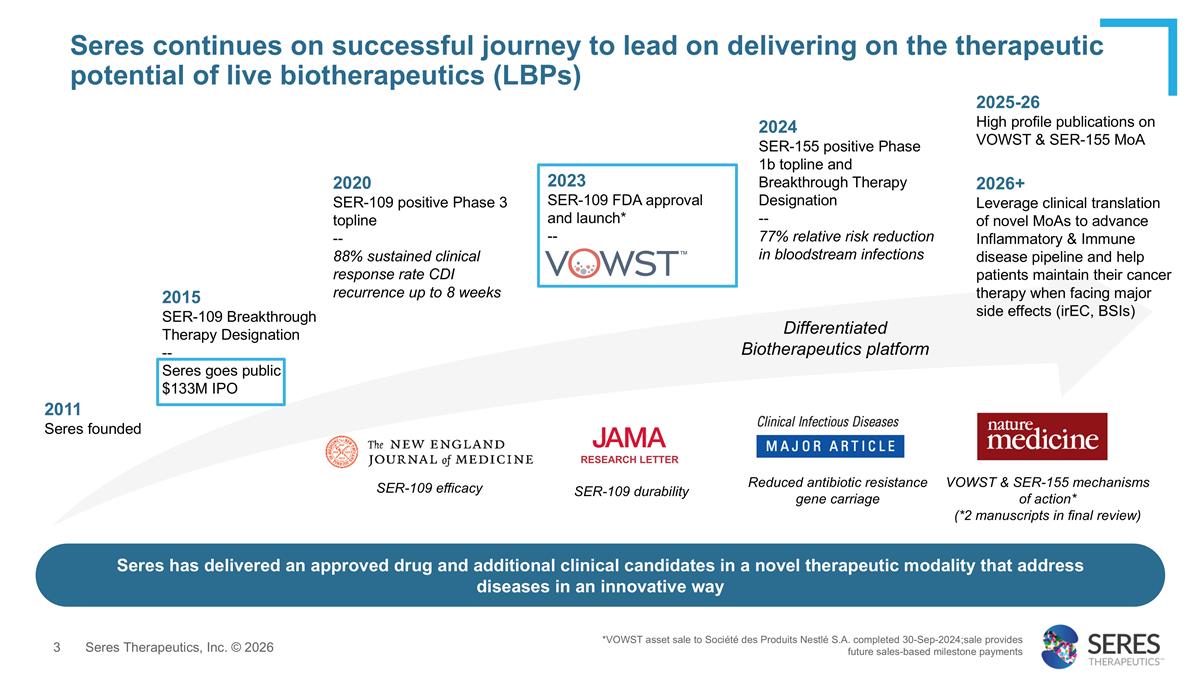
Seres continues on successful journey to lead on delivering on the therapeutic potential of live biotherapeutics (LBPs) 2011 Seres founded 2015 SER-109 Breakthrough Therapy Designation -- Seres goes public $133M IPO 2023 SER-109 FDA approval and launch* -- 2020 SER-109 positive Phase 3 topline -- 88% sustained clinical response rate CDI recurrence up to 8 weeks 2024 SER-155 positive Phase 1b topline and Breakthrough Therapy Designation -- 77% relative risk reduction in bloodstream infections Seres has delivered an approved drug and additional clinical candidates in a novel therapeutic modality that address diseases in an innovative way SER-109 efficacy RESEARCH LETTER SER-109 durability Reduced antibiotic resistance gene carriage 2025-26 High profile publications on VOWST & SER-155 MoA VOWST & SER-155 mechanisms of action* (*2 manuscripts in final review) 2026+ Leverage clinical translation of novel MoAs to advance Inflammatory & Immune disease pipeline and help patients maintain their cancer therapy when facing major side effects (irEC, BSIs) *VOWST asset sale to Société des Produits Nestlé S.A. completed 30-Sep-2024;sale provides future sales-based milestone payments Differentiated Biotherapeutics platform
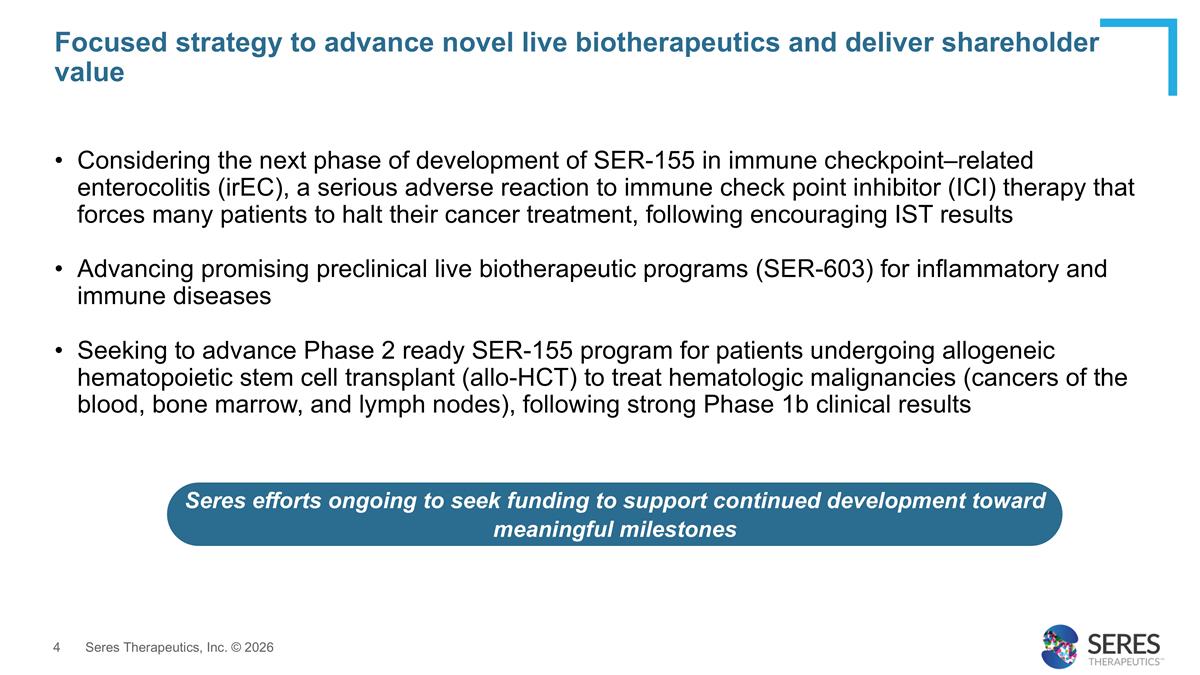
Focused strategy to advance novel live biotherapeutics and deliver shareholder value Considering the next phase of development of SER-155 in immune checkpoint–related enterocolitis (irEC), a serious adverse reaction to immune check point inhibitor (ICI) therapy that forces many patients to halt their cancer treatment, following encouraging IST results Advancing promising preclinical live biotherapeutic programs (SER-603) for inflammatory and immune diseases Seeking to advance Phase 2 ready SER-155 program for patients undergoing allogeneic hematopoietic stem cell transplant (allo-HCT) to treat hematologic malignancies (cancers of the blood, bone marrow, and lymph nodes), following strong Phase 1b clinical results Seres efforts ongoing to seek funding to support continued development toward meaningful milestones
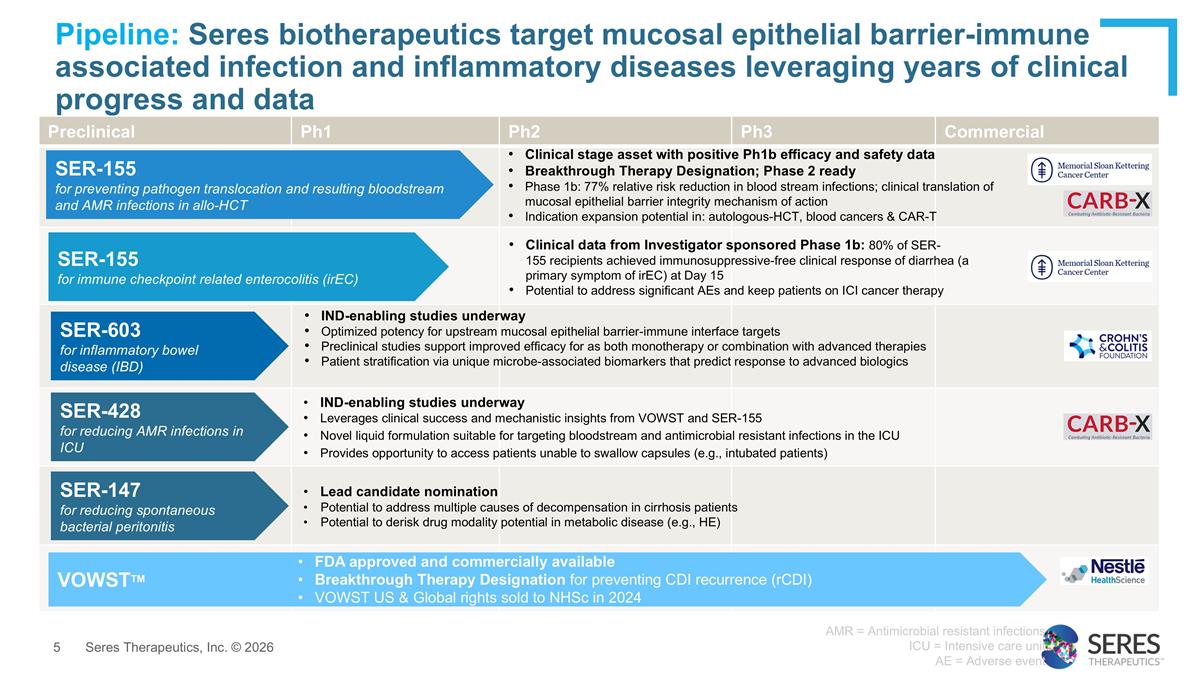
Pipeline: Seres biotherapeutics target mucosal epithelial barrier-immune associated infection and inflammatory diseases leveraging years of clinical progress and data Preclinical Ph1 Ph2 Ph3 Commercial VOWSTTM IND-enabling studies underway Optimized potency for upstream mucosal epithelial barrier-immune interface targets Preclinical studies support improved efficacy for as both monotherapy or combination with advanced therapies Patient stratification via unique microbe-associated biomarkers that predict response to advanced biologics Clinical stage asset with positive Ph1b efficacy and safety data Breakthrough Therapy Designation; Phase 2 ready Phase 1b: 77% relative risk reduction in blood stream infections; clinical translation of mucosal epithelial barrier integrity mechanism of action Indication expansion potential in: autologous-HCT, blood cancers & CAR-T FDA approved and commercially available Breakthrough Therapy Designation for preventing CDI recurrence (rCDI) VOWST US & Global rights sold to NHSc in 2024 SER-155 for preventing pathogen translocation and resulting bloodstream and AMR infections in allo-HCT SER-603 for inflammatory bowel disease (IBD) Clinical data from Investigator sponsored Phase 1b: 80% of SER-155 recipients achieved immunosuppressive-free clinical response of diarrhea (a primary symptom of irEC) at Day 15 Potential to address significant AEs and keep patients on ICI cancer therapy SER-155 for immune checkpoint related enterocolitis (irEC) IND-enabling studies underway Leverages clinical success and mechanistic insights from VOWST and SER-155 Novel liquid formulation suitable for targeting bloodstream and antimicrobial resistant infections in the ICU Provides opportunity to access patients unable to swallow capsules (e.g., intubated patients) SER-428 for reducing AMR infections in ICU AMR = Antimicrobial resistant infections ICU = Intensive care unit AE = Adverse event Lead candidate nomination Potential to address multiple causes of decompensation in cirrhosis patients Potential to derisk drug modality potential in metabolic disease (e.g., HE) SER-147 for reducing spontaneous bacterial peritonitis
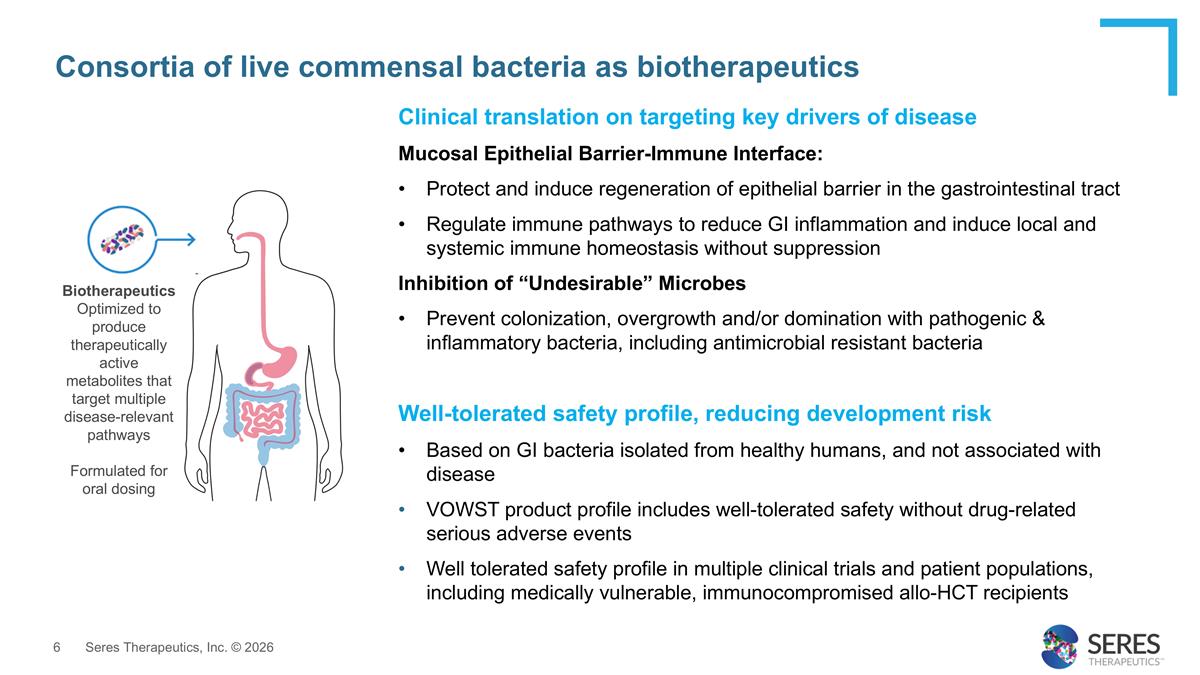
Consortia of live commensal bacteria as biotherapeutics Biotherapeutics Optimized to produce therapeutically active metabolites that target multiple disease-relevant pathways Formulated for oral dosing Clinical translation on targeting key drivers of disease Mucosal Epithelial Barrier-Immune Interface: Protect and induce regeneration of epithelial barrier in the gastrointestinal tract Regulate immune pathways to reduce GI inflammation and induce local and systemic immune homeostasis without suppression Inhibition of “Undesirable” Microbes Prevent colonization, overgrowth and/or domination with pathogenic & inflammatory bacteria, including antimicrobial resistant bacteria Well-tolerated safety profile, reducing development risk Based on GI bacteria isolated from healthy humans, and not associated with disease VOWST product profile includes well-tolerated safety without drug-related serious adverse events Well tolerated safety profile in multiple clinical trials and patient populations, including medically vulnerable, immunocompromised allo-HCT recipients
Accessed the vast functional potential of millions of years of co-evolution between microbes and their hosts to prevent and treat diseases Clinical translation on targeting key drivers of disease Mucosal Epithelial Barrier-Immune Interface: Protect and induce regeneration of epithelial barrier in the gastrointestinal tract Regulate immune pathways to reduce GI inflammation and induce local and systemic immune homeostasis without suppression Inhibition of “Undesirable” Microbes Prevent colonization, overgrowth and/or domination with pathogenic & inflammatory bacteria, including antimicrobial resistant bacteria Seres has… Accessed the vast functional potential of millions of years of co-evolution between microbes and their hosts to prevent and treat diseases Track-record of realizing ambitious, impactful therapeutic goals: First company to go from novel concept through clinical development and regulatory approval to commercialization of oral microbiome biotherapeutic (VOWST™) Achieved two Breakthrough Therapy Designations (VOWST & SER-155) and established regulatory precedent for drug pharmacology & manufacturing Proven ability to discover and develop LBPs with strong discovery engine that can deliver additional candidates across multiple unmet medical needs AI-enabled MbTx® Platform can interrogate microbe-host functional interactions specifically and at scale, with demonstrated clinical translation for previously inaccessible biology and disease targets Industry Leadership: Discovery to Approval
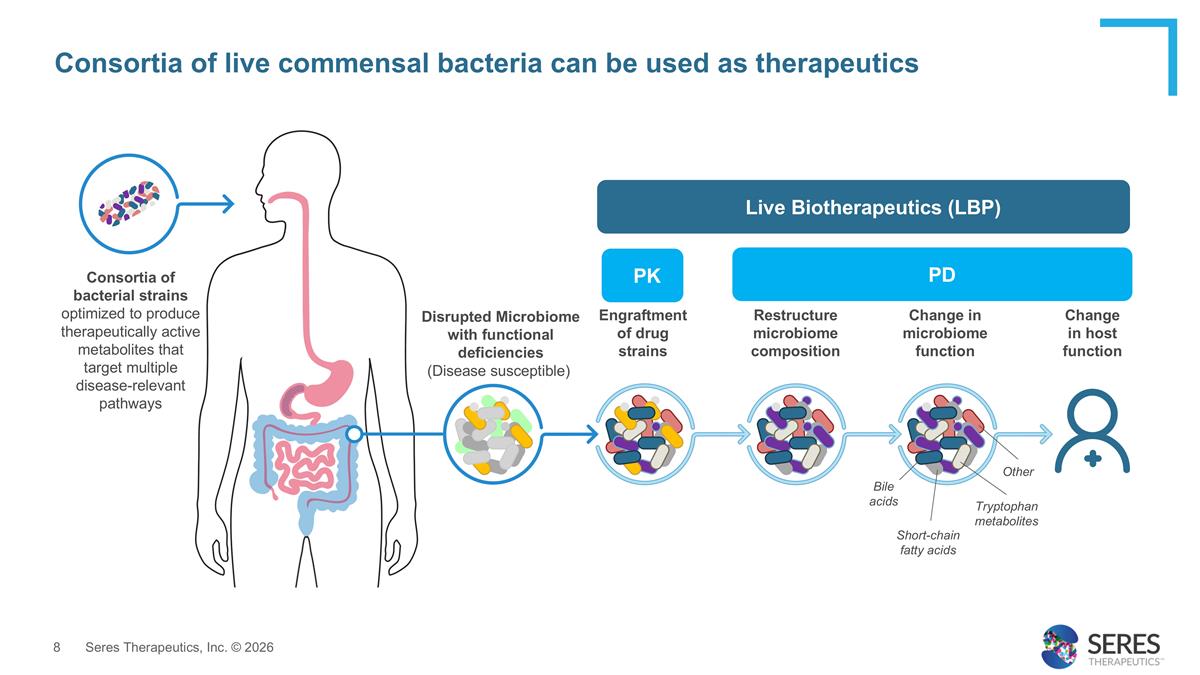
Consortia of live commensal bacteria can be used as therapeutics Change in microbiome function Bile acids Short-chain fatty acids Tryptophan metabolites Other Restructure microbiome composition Engraftment of drug strains Disrupted Microbiome with functional deficiencies (Disease susceptible) Change in host function Consortia of bacterial strains optimized to produce therapeutically active metabolites that target multiple disease-relevant pathways Live Biotherapeutics (LBP) PK PD
Seres’ biotherapeutics and pipeline candidates are expected to have well tolerated safety profile, reducing development risk Sources: Nanayakkara et al, CA Cancer J Clin 2021; Penack et al, Blood Adv 2020; Zheng et al, Infect Dis Ther 2021 Based on GI bacteria naturally found in healthy humans, and not associated with disease VOWST product profile includes well tolerated safety without drug-related serious adverse events Well tolerated safety profile in multiple clinical trials and patient populations, including medically vulnerable allo-HCT recipients Safety profile has potential to mitigate a primary cause of drug development failure
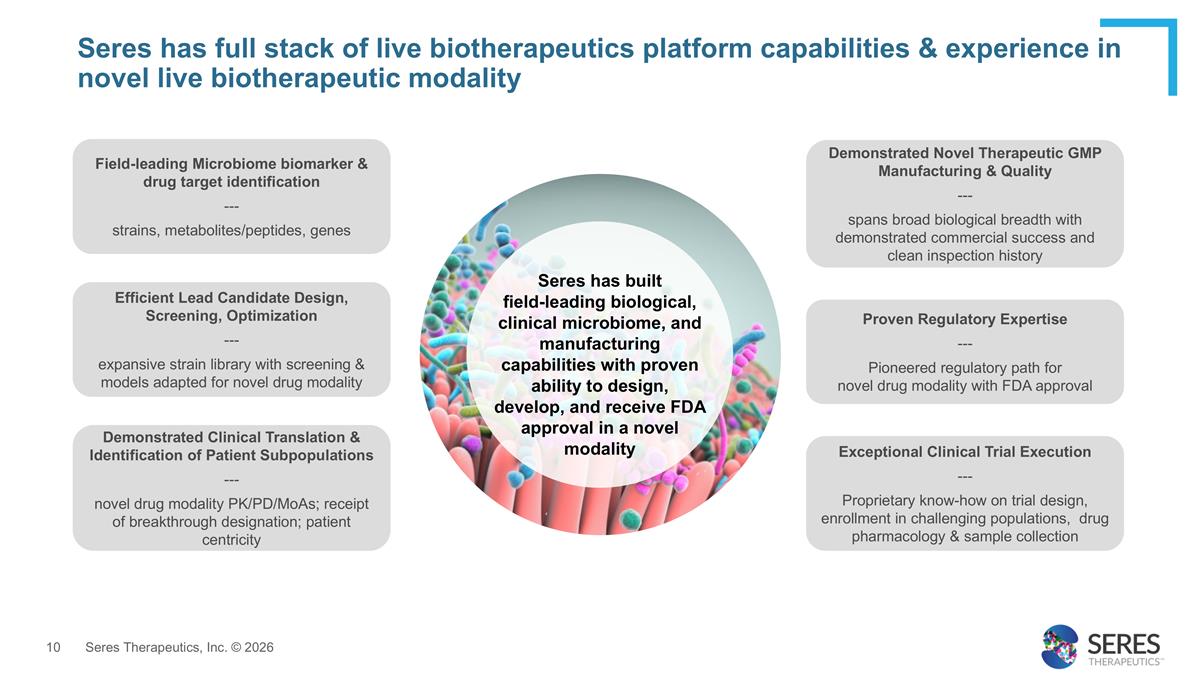
Seres has full stack of live biotherapeutics platform capabilities & experience in novel live biotherapeutic modality Field-leading Microbiome biomarker & drug target identification --- strains, metabolites/peptides, genes Seres has built field-leading biological, clinical microbiome, and manufacturing capabilities with proven ability to design, develop, and receive FDA approval in a novel modality Demonstrated Clinical Translation & Identification of Patient Subpopulations --- novel drug modality PK/PD/MoAs; receipt of breakthrough designation; patient centricity Efficient Lead Candidate Design, Screening, Optimization --- expansive strain library with screening & models adapted for novel drug modality Proven Regulatory Expertise --- Pioneered regulatory path for novel drug modality with FDA approval Exceptional Clinical Trial Execution --- Proprietary know-how on trial design, enrollment in challenging populations, drug pharmacology & sample collection Demonstrated Novel Therapeutic GMP Manufacturing & Quality --- spans broad biological breadth with demonstrated commercial success and clean inspection history
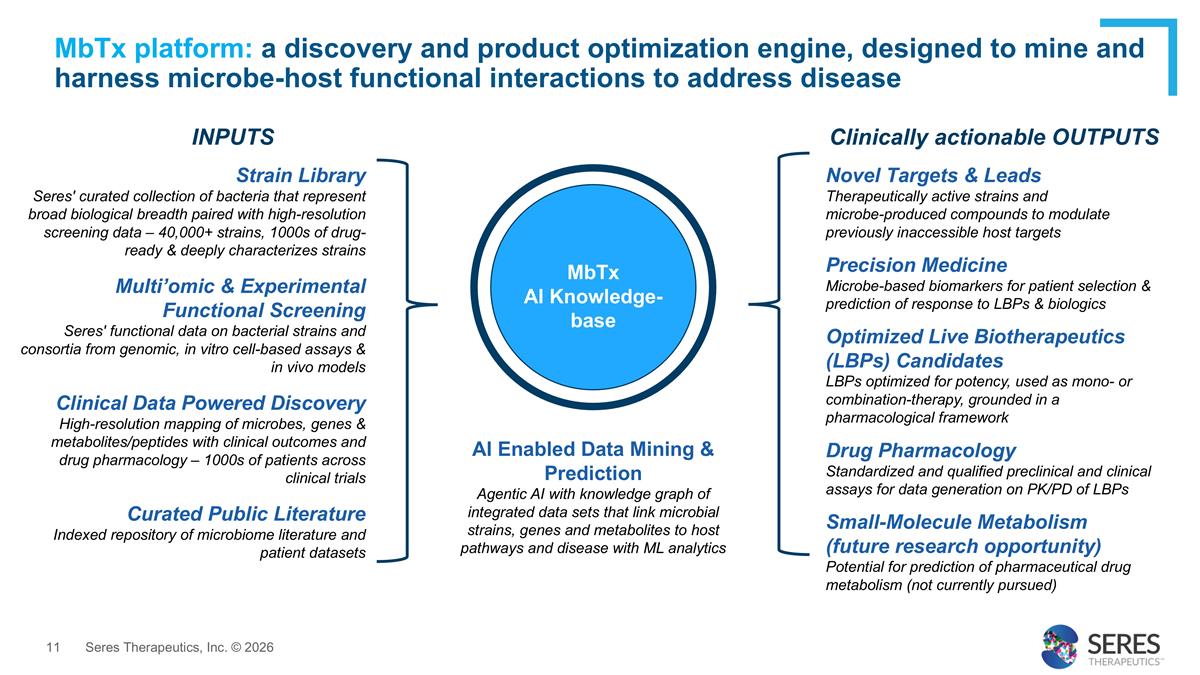
MbTx platform: a discovery and product optimization engine, designed to mine and harness microbe-host functional interactions to address disease Strain Library Seres' curated collection of bacteria that represent broad biological breadth paired with high-resolution screening data – 40,000+ strains, 1000s of drug-ready & deeply characterizes strains Multi’omic & Experimental Functional Screening Seres' functional data on bacterial strains and consortia from genomic, in vitro cell-based assays & in vivo models Clinical Data Powered Discovery High-resolution mapping of microbes, genes & metabolites/peptides with clinical outcomes and drug pharmacology – 1000s of patients across clinical trials Curated Public Literature Indexed repository of microbiome literature and patient datasets MbTx AI Knowledge- base AI Enabled Data Mining & Prediction Agentic AI with knowledge graph of integrated data sets that link microbial strains, genes and metabolites to host pathways and disease with ML analytics INPUTS Clinically actionable OUTPUTS Novel Targets & Leads Therapeutically active strains and microbe-produced compounds to modulate previously inaccessible host targets Optimized Live Biotherapeutics (LBPs) Candidates LBPs optimized for potency, used as mono- or combination-therapy, grounded in a pharmacological framework Precision Medicine Microbe-based biomarkers for patient selection & prediction of response to LBPs & biologics Small-Molecule Metabolism (future research opportunity) Potential for prediction of pharmaceutical drug metabolism (not currently pursued) Drug Pharmacology Standardized and qualified preclinical and clinical assays for data generation on PK/PD of LBPs
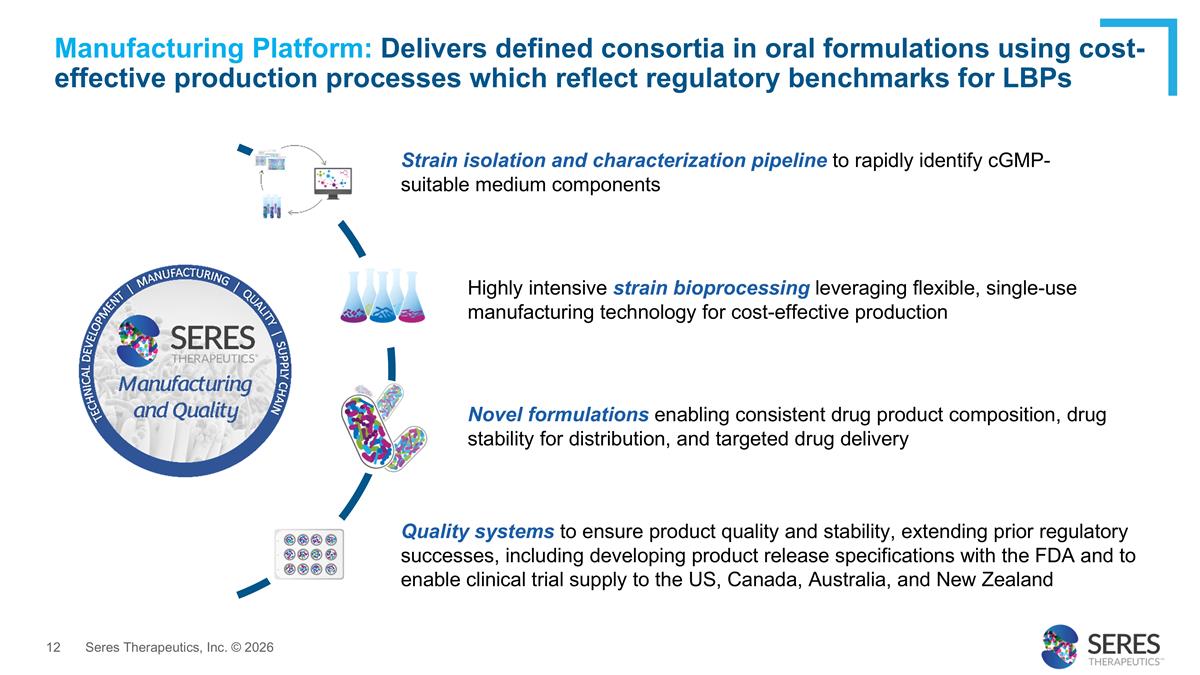
Manufacturing Platform: Delivers defined consortia in oral formulations using cost-effective production processes which reflect regulatory benchmarks for LBPs Novel formulations enabling consistent drug product composition, drug stability for distribution, and targeted drug delivery Quality systems to ensure product quality and stability, extending prior regulatory successes, including developing product release specifications with the FDA and to enable clinical trial supply to the US, Canada, Australia, and New Zealand Highly intensive strain bioprocessing leveraging flexible, single-use manufacturing technology for cost-effective production Strain isolation and characterization pipeline to rapidly identify cGMP-suitable medium components
Prevention of pathogen epithelial barrier translocation & bloodstream infections (BSI) SER-155
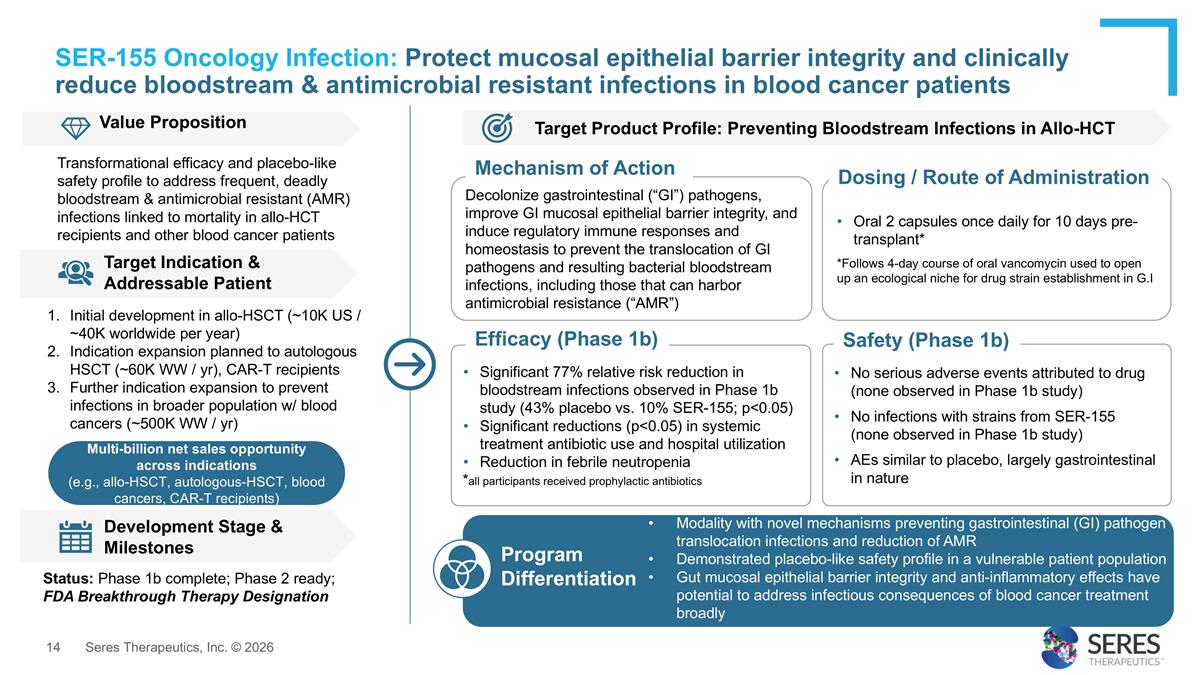
Value Proposition Transformational efficacy and placebo-like safety profile to address frequent, deadly bloodstream & antimicrobial resistant (AMR) infections linked to mortality in allo-HCT recipients and other blood cancer patients Target Indication & Addressable Patient Initial development in allo-HSCT (~10K US / ~40K worldwide per year) Indication expansion planned to autologous HSCT (~60K WW / yr), CAR-T recipients Further indication expansion to prevent infections in broader population w/ blood cancers (~500K WW / yr) Development Stage & Milestones Decolonize gastrointestinal (“GI”) pathogens, improve GI mucosal epithelial barrier integrity, and induce regulatory immune responses and homeostasis to prevent the translocation of GI pathogens and resulting bacterial bloodstream infections, including those that can harbor antimicrobial resistance (“AMR”) Mechanism of Action Oral 2 capsules once daily for 10 days pre-transplant* *Follows 4-day course of oral vancomycin used to open up an ecological niche for drug strain establishment in G.I Dosing / Route of Administration Significant 77% relative risk reduction in bloodstream infections observed in Phase 1b study (43% placebo vs. 10% SER-155; p<0.05) Significant reductions (p<0.05) in systemic treatment antibiotic use and hospital utilization Reduction in febrile neutropenia *all participants received prophylactic antibiotics Efficacy (Phase 1b) No serious adverse events attributed to drug (none observed in Phase 1b study) No infections with strains from SER-155 (none observed in Phase 1b study) AEs similar to placebo, largely gastrointestinal in nature Safety (Phase 1b) Program Differentiation Modality with novel mechanisms preventing gastrointestinal (GI) pathogen translocation infections and reduction of AMR Demonstrated placebo-like safety profile in a vulnerable patient population Gut mucosal epithelial barrier integrity and anti-inflammatory effects have potential to address infectious consequences of blood cancer treatment broadly Target Product Profile: Preventing Bloodstream Infections in Allo-HCT Status: Phase 1b complete; Phase 2 ready; FDA Breakthrough Therapy Designation Multi-billion net sales opportunity across indications (e.g., allo-HSCT, autologous-HSCT, blood cancers, CAR-T recipients) SER-155 Oncology Infection: Protect mucosal epithelial barrier integrity and clinically reduce bloodstream & antimicrobial resistant infections in blood cancer patients
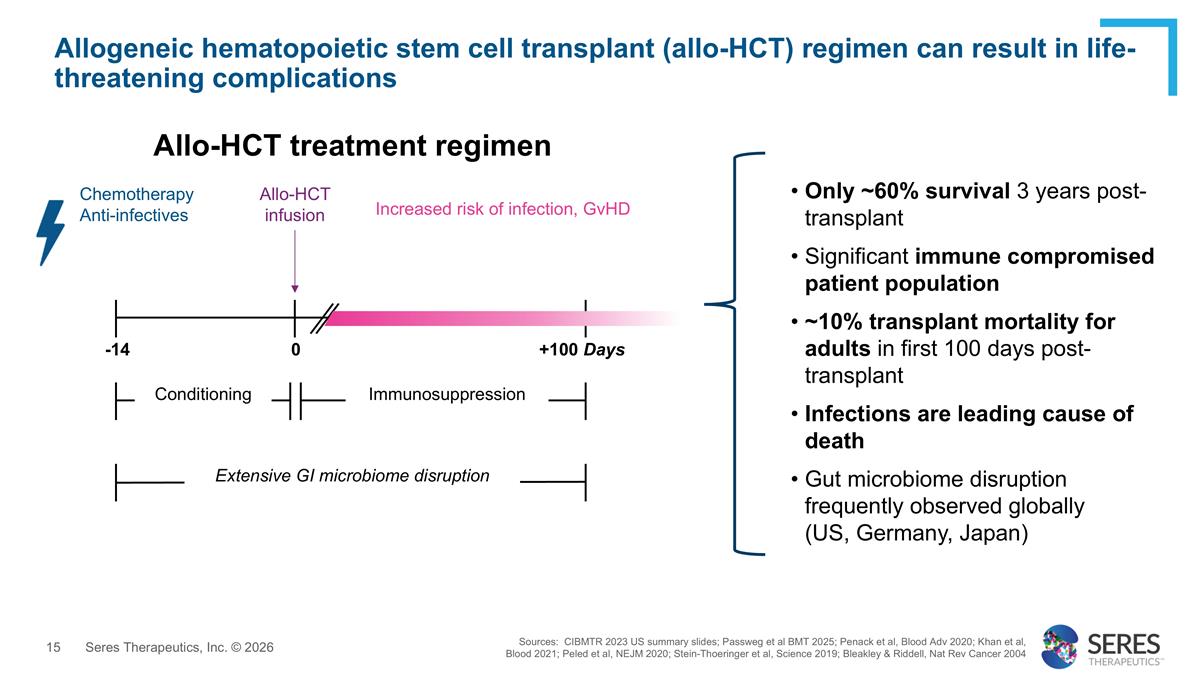
Allogeneic hematopoietic stem cell transplant (allo-HCT) regimen can result in life-threatening complications Only ~60% survival 3 years post-transplant Significant immune compromised patient population ~10% transplant mortality for adults in first 100 days post-transplant Infections are leading cause of death Gut microbiome disruption frequently observed globally (US, Germany, Japan) Allo-HCT treatment regimen -14 0 +100 Days Conditioning Immunosuppression Chemotherapy Anti-infectives Increased risk of infection, GvHD Allo-HCT infusion Extensive GI microbiome disruption Sources: CIBMTR 2023 US summary slides; Passweg et al BMT 2025; Penack et al, Blood Adv 2020; Khan et al, Blood 2021; Peled et al, NEJM 2020; Stein-Thoeringer et al, Science 2019; Bleakley & Riddell, Nat Rev Cancer 2004
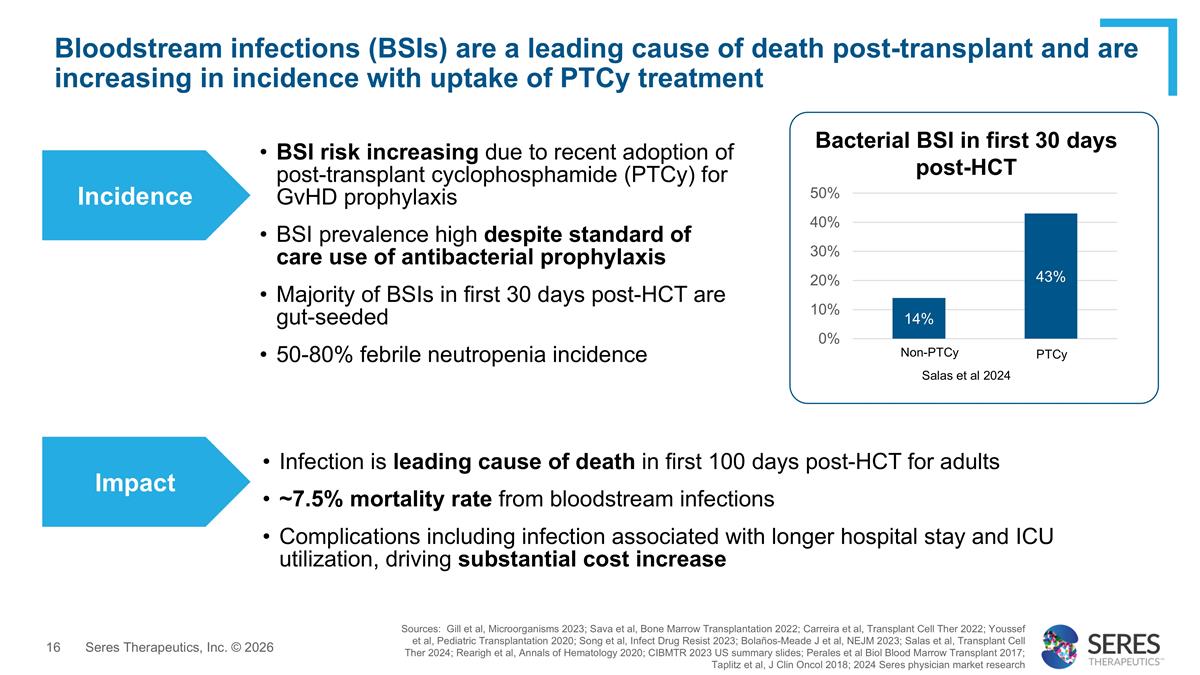
Bloodstream infections (BSIs) are a leading cause of death post-transplant and are increasing in incidence with uptake of PTCy treatment BSI risk increasing due to recent adoption of post-transplant cyclophosphamide (PTCy) for GvHD prophylaxis BSI prevalence high despite standard of care use of antibacterial prophylaxis Majority of BSIs in first 30 days post-HCT are gut-seeded 50-80% febrile neutropenia incidence Incidence Bacterial BSI in first 30 days post-HCT Salas et al 2024 Impact Infection is leading cause of death in first 100 days post-HCT for adults ~7.5% mortality rate from bloodstream infections Complications including infection associated with longer hospital stay and ICU utilization, driving substantial cost increase PTCy Non-PTCy Sources: Gill et al, Microorganisms 2023; Sava et al, Bone Marrow Transplantation 2022; Carreira et al, Transplant Cell Ther 2022; Youssef et al, Pediatric Transplantation 2020; Song et al, Infect Drug Resist 2023; Bolaños-Meade J et al, NEJM 2023; Salas et al, Transplant Cell Ther 2024; Rearigh et al, Annals of Hematology 2020; CIBMTR 2023 US summary slides; Perales et al Biol Blood Marrow Transplant 2017; Taplitz et al, J Clin Oncol 2018; 2024 Seres physician market research
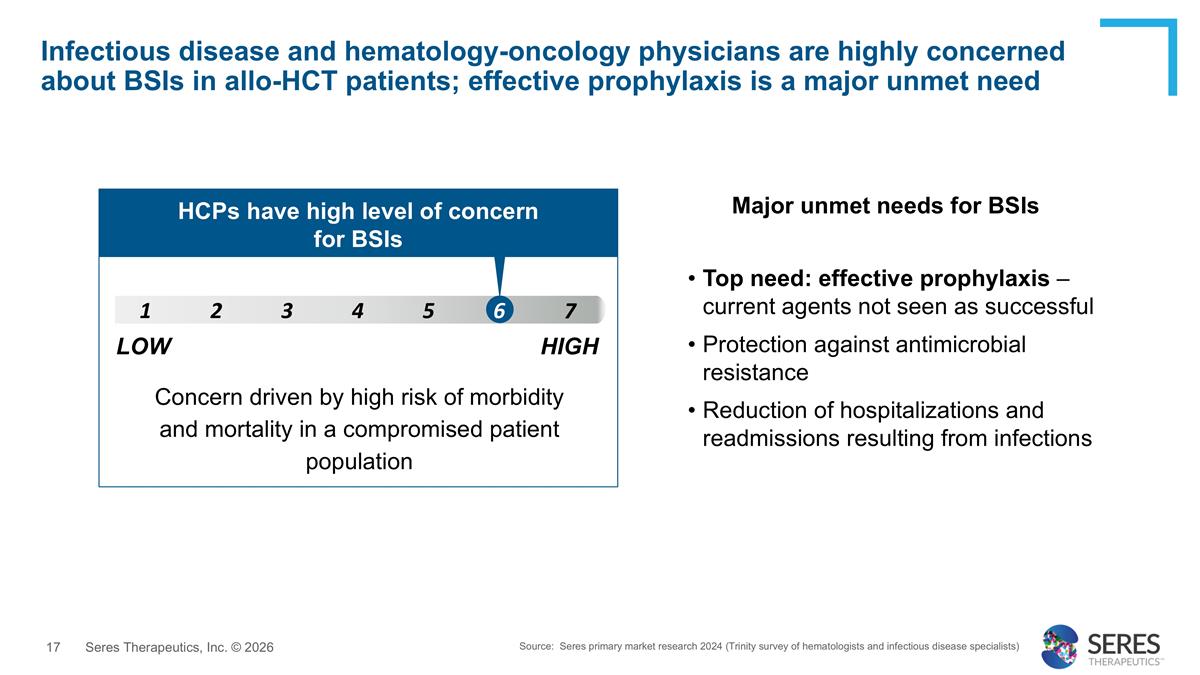
Source: Seres primary market research 2024 (Trinity survey of hematologists and infectious disease specialists) Concern driven by high risk of morbidity and mortality in a compromised patient population HCPs have high level of concern for BSIs LOW HIGH 1 2 3 4 5 6 7 Major unmet needs for BSIs Top need: effective prophylaxis – current agents not seen as successful Protection against antimicrobial resistance Reduction of hospitalizations and readmissions resulting from infections Infectious disease and hematology-oncology physicians are highly concerned about BSIs in allo-HCT patients; effective prophylaxis is a major unmet need
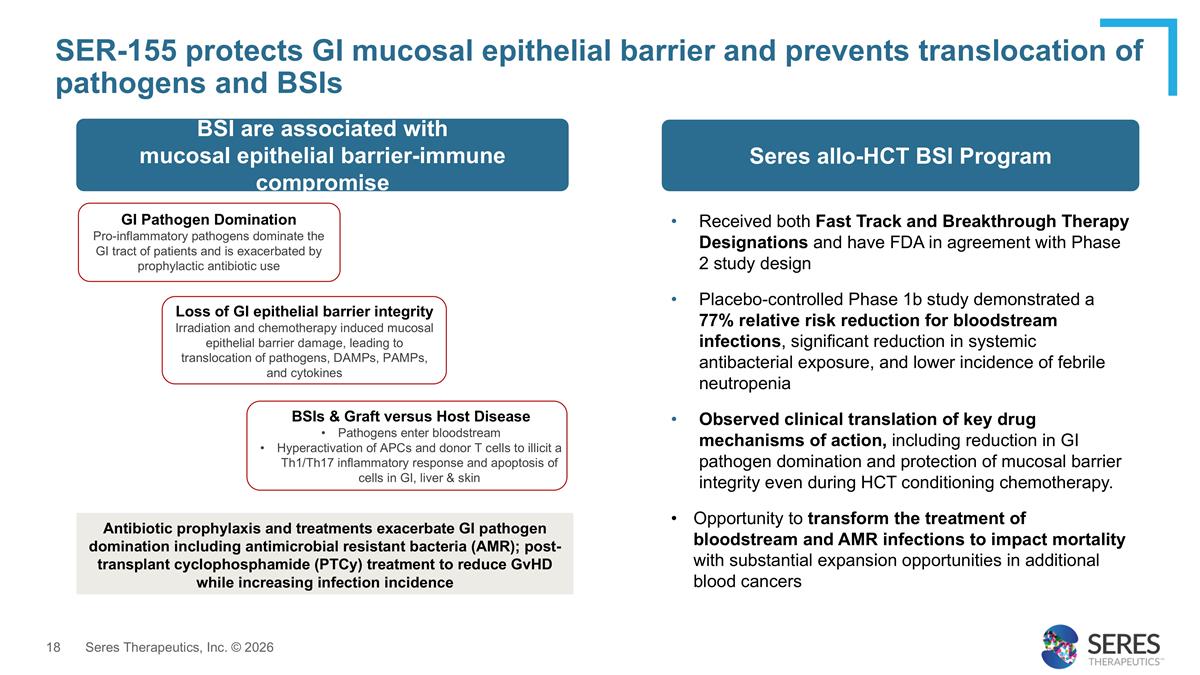
SER-155 protects GI mucosal epithelial barrier and prevents translocation of pathogens and BSIs GI Pathogen Domination Pro-inflammatory pathogens dominate the GI tract of patients and is exacerbated by prophylactic antibiotic use Loss of GI epithelial barrier integrity Irradiation and chemotherapy induced mucosal epithelial barrier damage, leading to translocation of pathogens, DAMPs, PAMPs, and cytokines BSIs & Graft versus Host Disease Pathogens enter bloodstream Hyperactivation of APCs and donor T cells to illicit a Th1/Th17 inflammatory response and apoptosis of cells in GI, liver & skin BSI are associated with mucosal epithelial barrier-immune compromise Antibiotic prophylaxis and treatments exacerbate GI pathogen domination including antimicrobial resistant bacteria (AMR); post-transplant cyclophosphamide (PTCy) treatment to reduce GvHD while increasing infection incidence Seres allo-HCT BSI Program Received both Fast Track and Breakthrough Therapy Designations and have FDA in agreement with Phase 2 study design Placebo-controlled Phase 1b study demonstrated a 77% relative risk reduction for bloodstream infections, significant reduction in systemic antibacterial exposure, and lower incidence of febrile neutropenia Observed clinical translation of key drug mechanisms of action, including reduction in GI pathogen domination and protection of mucosal barrier integrity even during HCT conditioning chemotherapy. Opportunity to transform the treatment of bloodstream and AMR infections to impact mortality with substantial expansion opportunities in additional blood cancers
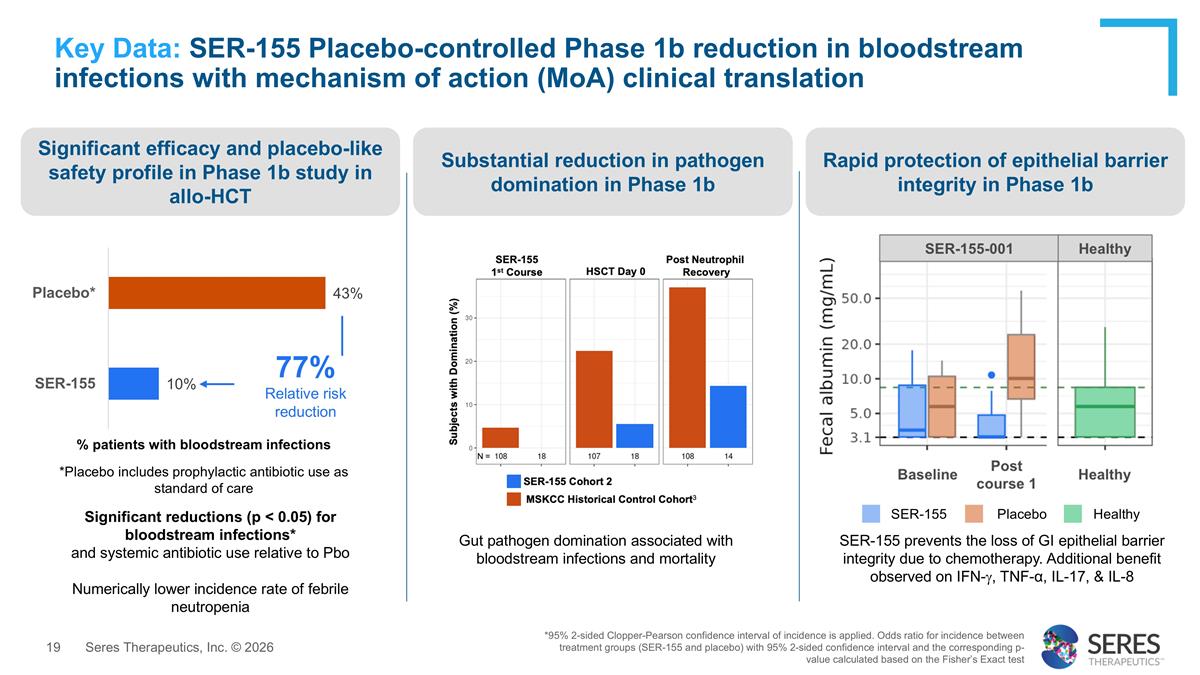
Significant efficacy and placebo-like safety profile in Phase 1b study in allo-HCT Substantial reduction in pathogen domination in Phase 1b Rapid protection of epithelial barrier integrity in Phase 1b Gut pathogen domination associated with bloodstream infections and mortality SER-155 prevents the loss of GI epithelial barrier integrity due to chemotherapy. Additional benefit observed on IFN-g, TNF-α, IL-17, & IL-8 % patients with bloodstream infections Significant reductions (p < 0.05) for bloodstream infections* and systemic antibiotic use relative to Pbo Numerically lower incidence rate of febrile neutropenia 77% Relative risk reduction *Placebo includes prophylactic antibiotic use as standard of care SER-155 Placebo Healthy Key Data: SER-155 Placebo-controlled Phase 1b reduction in bloodstream infections with mechanism of action (MoA) clinical translation *95% 2-sided Clopper-Pearson confidence interval of incidence is applied. Odds ratio for incidence between treatment groups (SER-155 and placebo) with 95% 2-sided confidence interval and the corresponding p-value calculated based on the Fisher’s Exact test
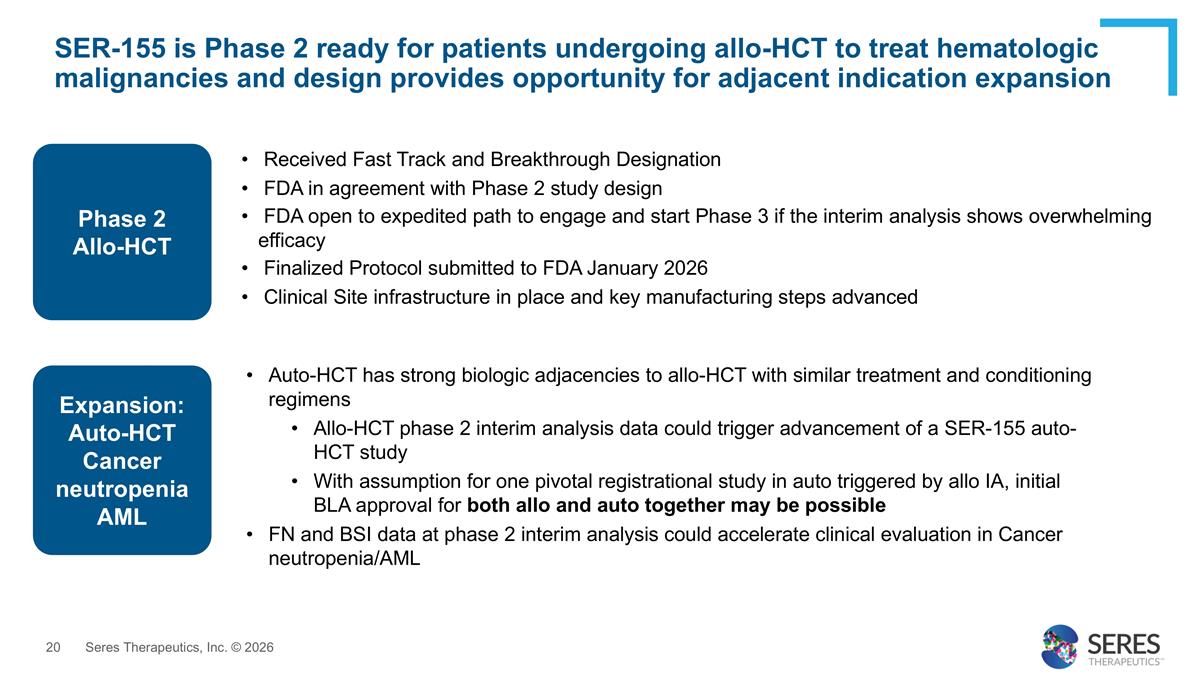
SER-155 is Phase 2 ready for patients undergoing allo-HCT to treat hematologic malignancies and design provides opportunity for adjacent indication expansion Expansion: Auto-HCT Cancer neutropenia AML Phase 2 Allo-HCT Auto-HCT has strong biologic adjacencies to allo-HCT with similar treatment and conditioning regimens Allo-HCT phase 2 interim analysis data could trigger advancement of a SER-155 auto-HCT study With assumption for one pivotal registrational study in auto triggered by allo IA, initial BLA approval for both allo and auto together may be possible FN and BSI data at phase 2 interim analysis could accelerate clinical evaluation in Cancer neutropenia/AML Received Fast Track and Breakthrough Designation FDA in agreement with Phase 2 study design FDA open to expedited path to engage and start Phase 3 if the interim analysis shows overwhelming efficacy Finalized Protocol submitted to FDA January 2026 Clinical Site infrastructure in place and key manufacturing steps advanced
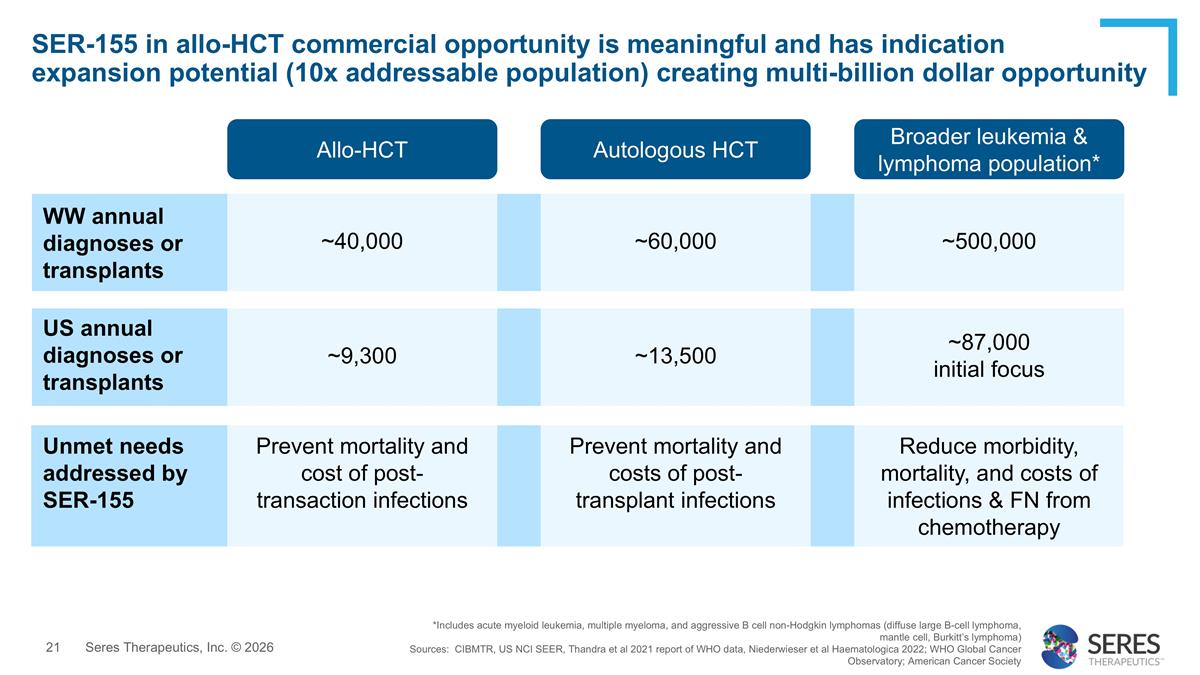
US annual diagnoses or transplants Unmet needs addressed by SER-155 Allo-HCT ~9,300 Prevent mortality and cost of post-transaction infections Autologous HCT ~13,500 Prevent mortality and costs of post-transplant infections Broader leukemia & lymphoma population* ~87,000 initial focus Reduce morbidity, mortality, and costs of infections & FN from chemotherapy *Includes acute myeloid leukemia, multiple myeloma, and aggressive B cell non-Hodgkin lymphomas (diffuse large B-cell lymphoma, mantle cell, Burkitt’s lymphoma) Sources: CIBMTR, US NCI SEER, Thandra et al 2021 report of WHO data, Niederwieser et al Haematologica 2022; WHO Global Cancer Observatory; American Cancer Society WW annual diagnoses or transplants ~40,000 ~60,000 ~500,000 SER-155 in allo-HCT commercial opportunity is meaningful and has indication expansion potential (10x addressable population) creating multi-billion dollar opportunity
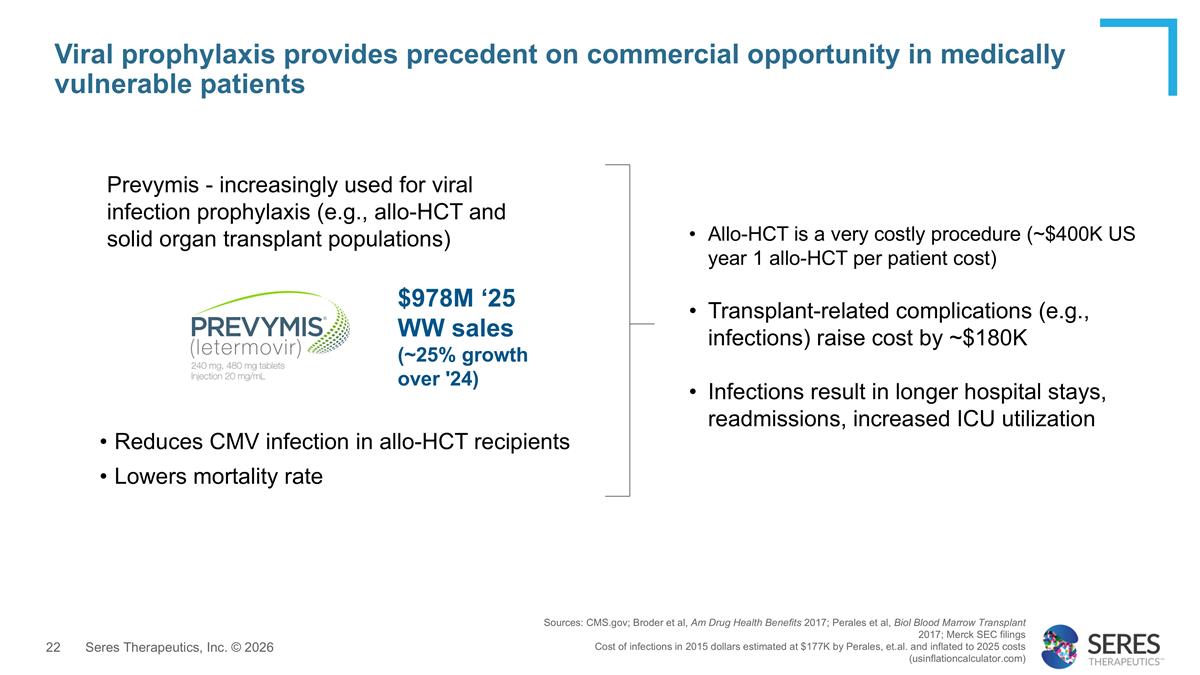
Viral prophylaxis provides precedent on commercial opportunity in medically vulnerable patients Prevymis - increasingly used for viral infection prophylaxis (e.g., allo-HCT and solid organ transplant populations) $978M ‘25 WW sales (~25% growth over '24) Reduces CMV infection in allo-HCT recipients Lowers mortality rate Allo-HCT is a very costly procedure (~$400K US year 1 allo-HCT per patient cost) Transplant-related complications (e.g., infections) raise cost by ~$180K Infections result in longer hospital stays, readmissions, increased ICU utilization Sources: CMS.gov; Broder et al, Am Drug Health Benefits 2017; Perales et al, Biol Blood Marrow Transplant 2017; Merck SEC filings Cost of infections in 2015 dollars estimated at $177K by Perales, et.al. and inflated to 2025 costs (usinflationcalculator.com)
Immune Checkpoint Inhibitor-Related Enterocolitis (irEC) SER-155
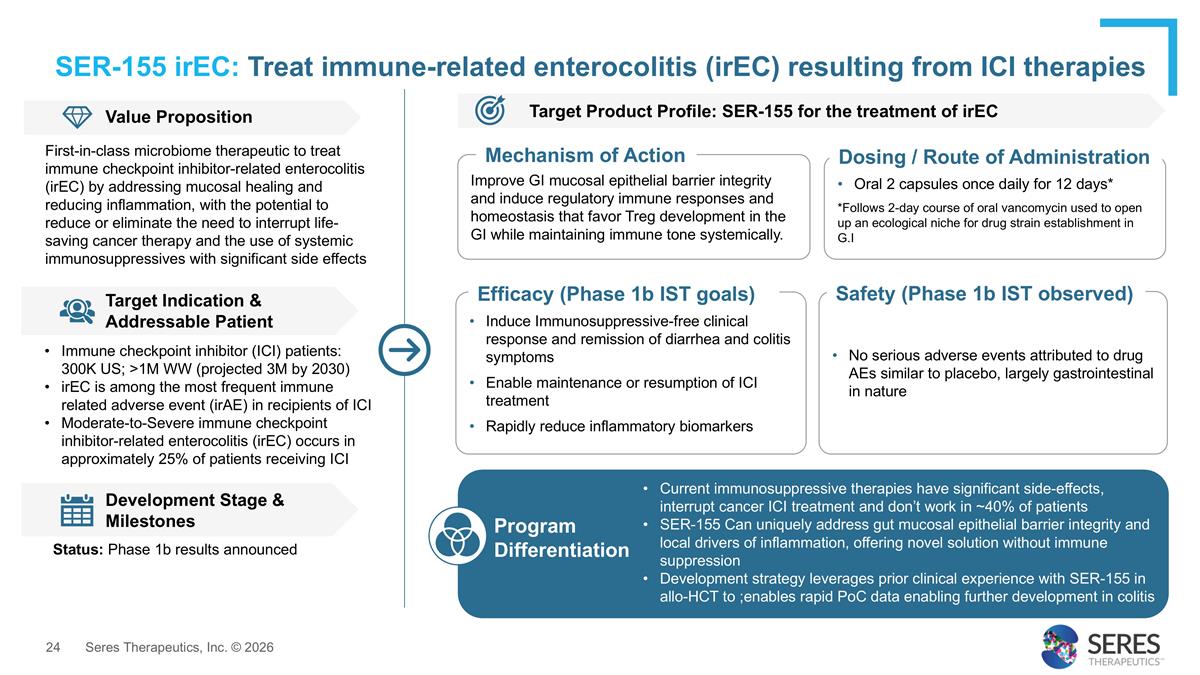
SER-155 irEC: Treat immune-related enterocolitis (irEC) resulting from ICI therapies Value Proposition First-in-class microbiome therapeutic to treat immune checkpoint inhibitor-related enterocolitis (irEC) by addressing mucosal healing and reducing inflammation, with the potential to reduce or eliminate the need to interrupt life-saving cancer therapy and the use of systemic immunosuppressives with significant side effects Target Indication & Addressable Patient Immune checkpoint inhibitor (ICI) patients: 300K US; >1M WW (projected 3M by 2030) irEC is among the most frequent immune related adverse event (irAE) in recipients of ICI Moderate-to-Severe immune checkpoint inhibitor-related enterocolitis (irEC) occurs in approximately 25% of patients receiving ICI Development Stage & Milestones Improve GI mucosal epithelial barrier integrity and induce regulatory immune responses and homeostasis that favor Treg development in the GI while maintaining immune tone systemically. Mechanism of Action Oral 2 capsules once daily for 12 days* *Follows 2-day course of oral vancomycin used to open up an ecological niche for drug strain establishment in G.I Dosing / Route of Administration Induce Immunosuppressive-free clinical response and remission of diarrhea and colitis symptoms Enable maintenance or resumption of ICI treatment Rapidly reduce inflammatory biomarkers Efficacy (Phase 1b IST goals) No serious adverse events attributed to drug AEs similar to placebo, largely gastrointestinal in nature Safety (Phase 1b IST observed) Program Differentiation Current immunosuppressive therapies have significant side-effects, interrupt cancer ICI treatment and don’t work in ~40% of patients SER-155 Can uniquely address gut mucosal epithelial barrier integrity and local drivers of inflammation, offering novel solution without immune suppression Development strategy leverages prior clinical experience with SER-155 in allo-HCT to ;enables rapid PoC data enabling further development in colitis Target Product Profile: SER-155 for the treatment of irEC Status: Phase 1b results announced
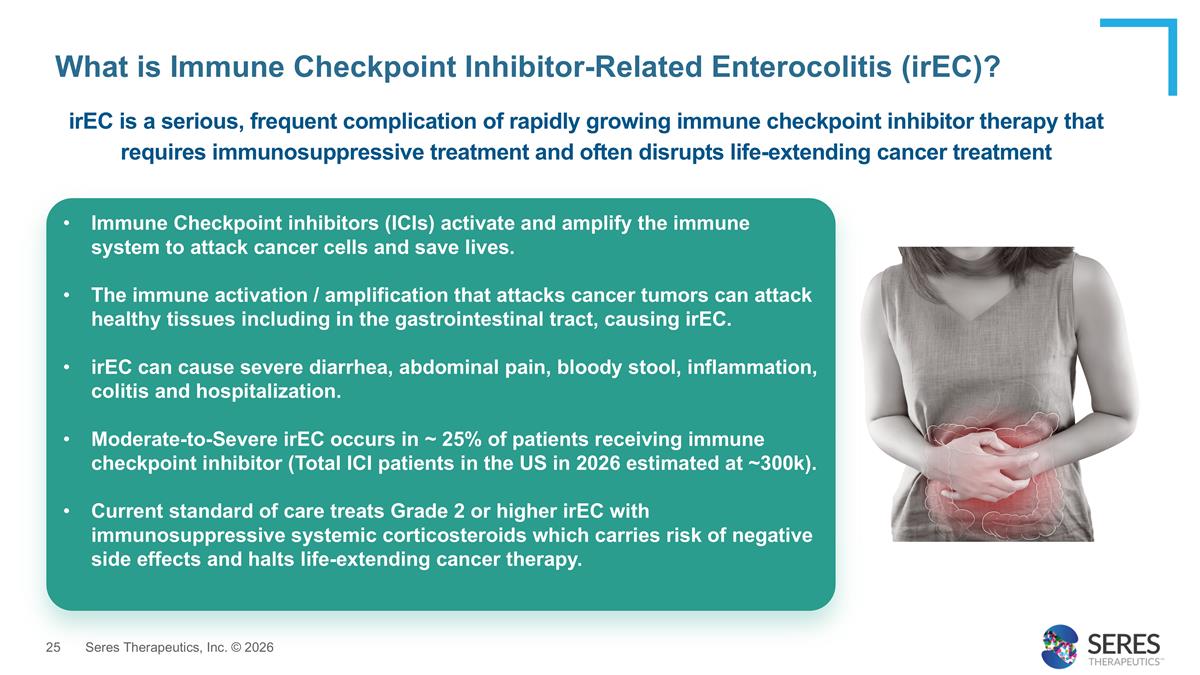
irEC is a serious, frequent complication of rapidly growing immune checkpoint inhibitor therapy that requires immunosuppressive treatment and often disrupts life-extending cancer treatment What is Immune Checkpoint Inhibitor-Related Enterocolitis (irEC)? Immune Checkpoint inhibitors (ICIs) activate and amplify the immune system to attack cancer cells and save lives. The immune activation / amplification that attacks cancer tumors can attack healthy tissues including in the gastrointestinal tract, causing irEC. irEC can cause severe diarrhea, abdominal pain, bloody stool, inflammation, colitis and hospitalization. Moderate-to-Severe irEC occurs in ~ 25% of patients receiving immune checkpoint inhibitor (Total ICI patients in the US in 2026 estimated at ~300k). Current standard of care treats Grade 2 or higher irEC with immunosuppressive systemic corticosteroids which carries risk of negative side effects and halts life-extending cancer therapy.
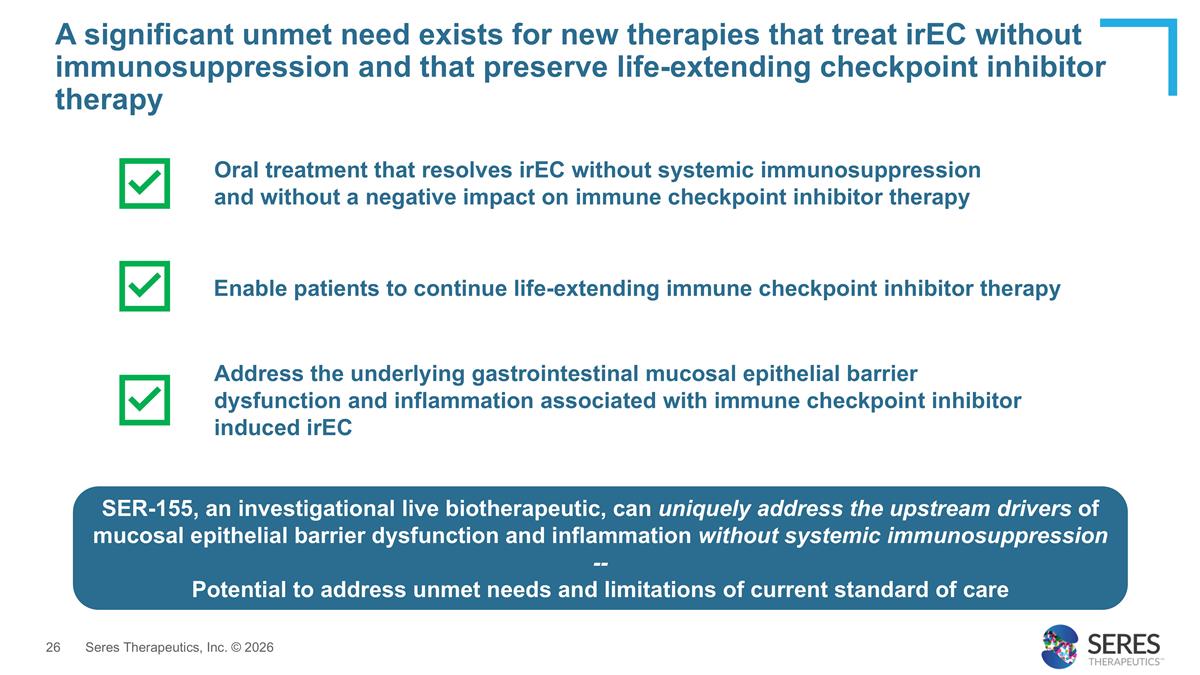
A significant unmet need exists for new therapies that treat irEC without immunosuppression and that preserve life-extending checkpoint inhibitor therapy Oral treatment that resolves irEC without systemic immunosuppression and without a negative impact on immune checkpoint inhibitor therapy Address the underlying gastrointestinal mucosal epithelial barrier dysfunction and inflammation associated with immune checkpoint inhibitor induced irEC Enable patients to continue life-extending immune checkpoint inhibitor therapy SER-155, an investigational live biotherapeutic, can uniquely address the upstream drivers of mucosal epithelial barrier dysfunction and inflammation without systemic immunosuppression -- Potential to address unmet needs and limitations of current standard of care
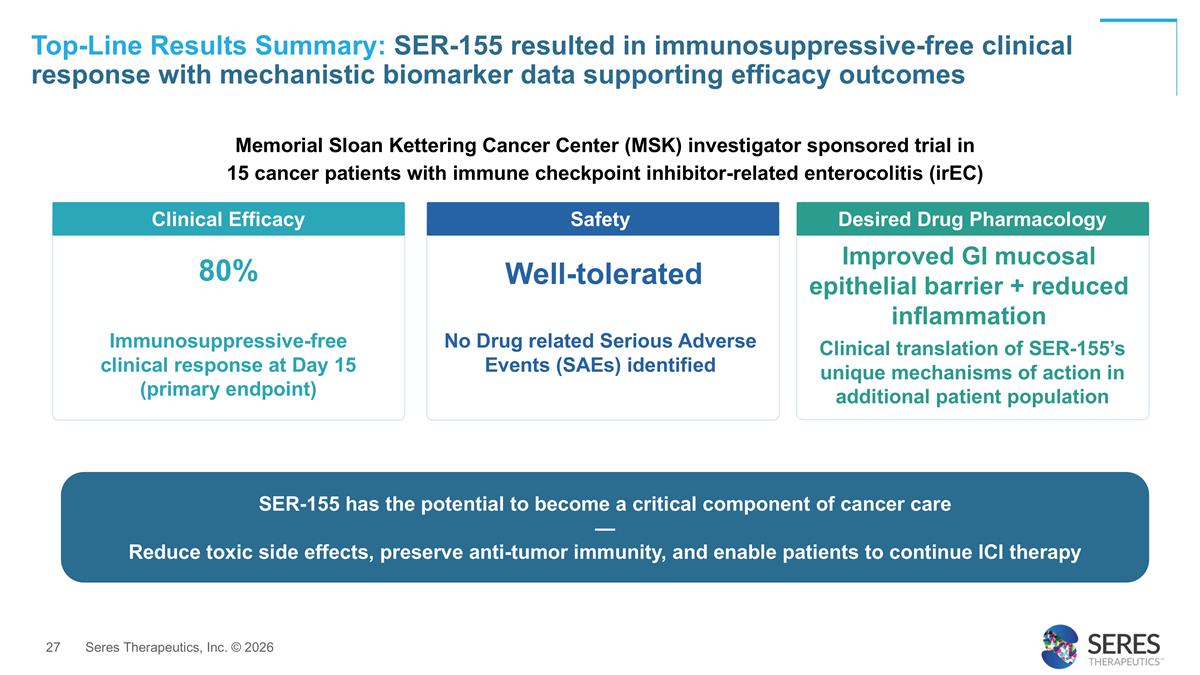
Clinical Efficacy 80% Immunosuppressive-free clinical response at Day 15 (primary endpoint) Safety No Drug related Serious Adverse Events (SAEs) identified Desired Drug Pharmacology Improved GI mucosal epithelial barrier + reduced inflammation Clinical translation of SER-155’s unique mechanisms of action in additional patient population SER-155 has the potential to become a critical component of cancer care — Reduce toxic side effects, preserve anti-tumor immunity, and enable patients to continue ICI therapy Memorial Sloan Kettering Cancer Center (MSK) investigator sponsored trial in 15 cancer patients with immune checkpoint inhibitor-related enterocolitis (irEC) Top-Line Results Summary: SER-155 resulted in immunosuppressive-free clinical response with mechanistic biomarker data supporting efficacy outcomes Well-tolerated
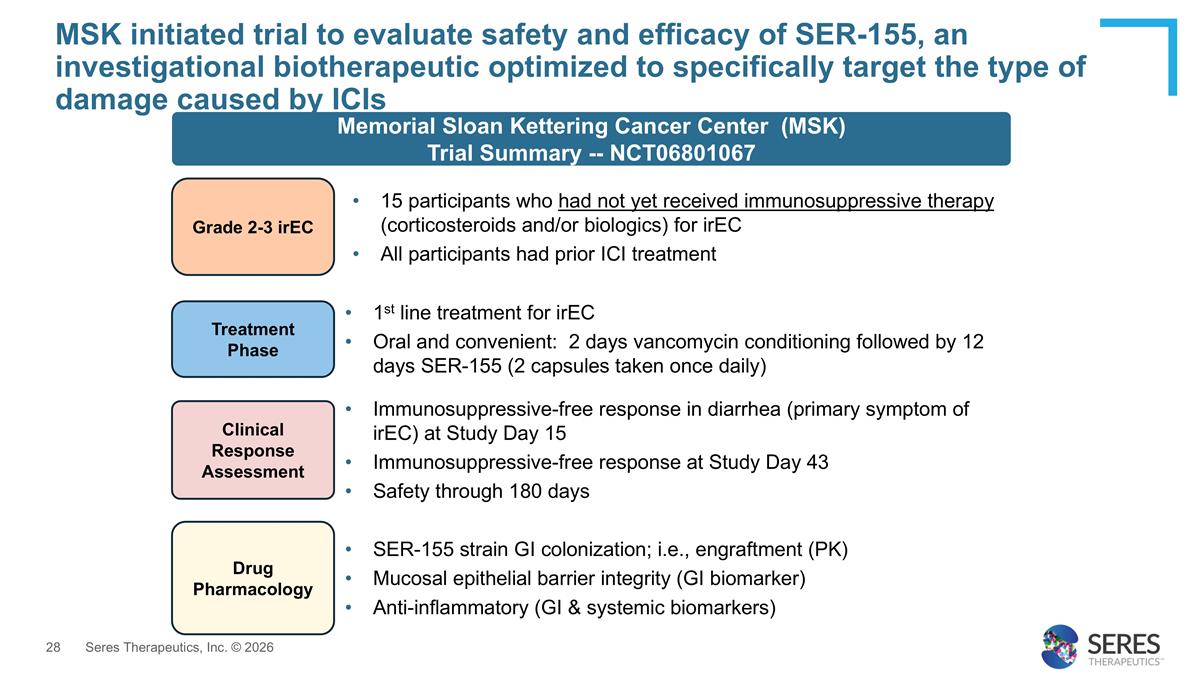
MSK initiated trial to evaluate safety and efficacy of SER-155, an investigational biotherapeutic optimized to specifically target the type of damage caused by ICIs Memorial Sloan Kettering Cancer Center (MSK) Trial Summary -- NCT06801067 Grade 2-3 irEC 15 participants who had not yet received immunosuppressive therapy (corticosteroids and/or biologics) for irEC All participants had prior ICI treatment Treatment Phase 1st line treatment for irEC Oral and convenient: 2 days vancomycin conditioning followed by 12 days SER-155 (2 capsules taken once daily) Clinical Response Assessment Immunosuppressive-free response in diarrhea (primary symptom of irEC) at Study Day 15 Immunosuppressive-free response at Study Day 43 Safety through 180 days Drug Pharmacology SER-155 strain GI colonization; i.e., engraftment (PK) Mucosal epithelial barrier integrity (GI biomarker) Anti-inflammatory (GI & systemic biomarkers)
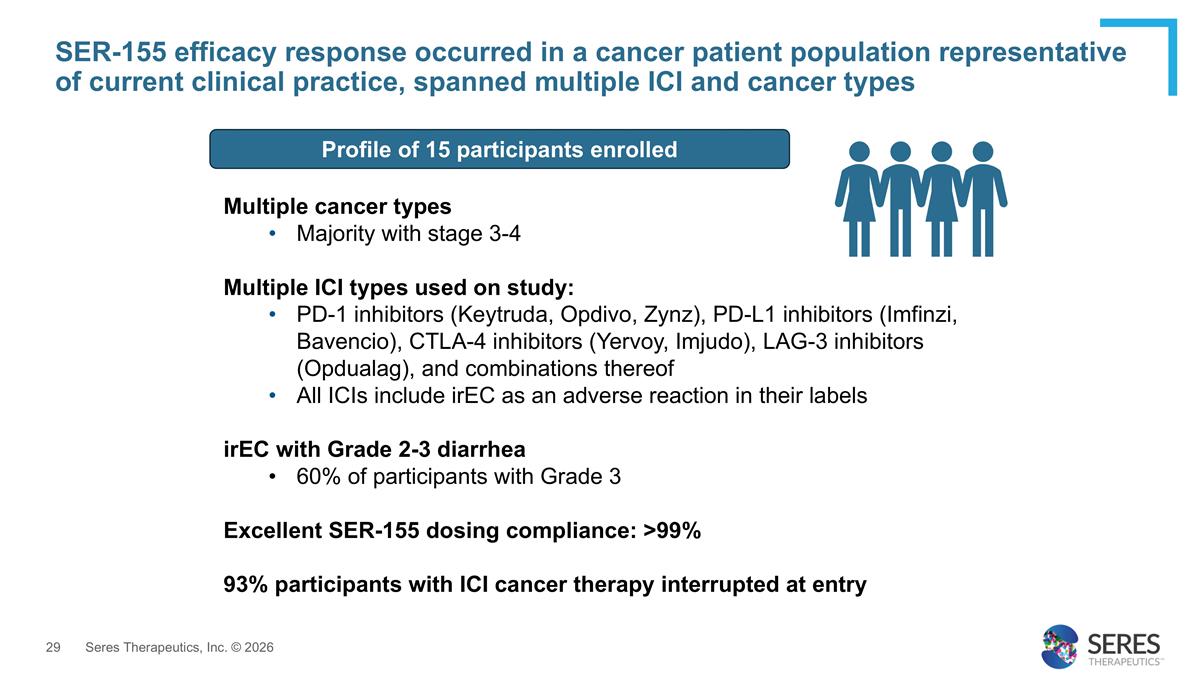
SER-155 efficacy response occurred in a cancer patient population representative of current clinical practice, spanned multiple ICI and cancer types Multiple cancer types Majority with stage 3-4 Multiple ICI types used on study: PD-1 inhibitors (Keytruda, Opdivo, Zynz), PD-L1 inhibitors (Imfinzi, Bavencio), CTLA-4 inhibitors (Yervoy, Imjudo), LAG-3 inhibitors (Opdualag), and combinations thereof All ICIs include irEC as an adverse reaction in their labels irEC with Grade 2-3 diarrhea 60% of participants with Grade 3 Excellent SER-155 dosing compliance: >99% 93% participants with ICI cancer therapy interrupted at entry Profile of 15 participants enrolled
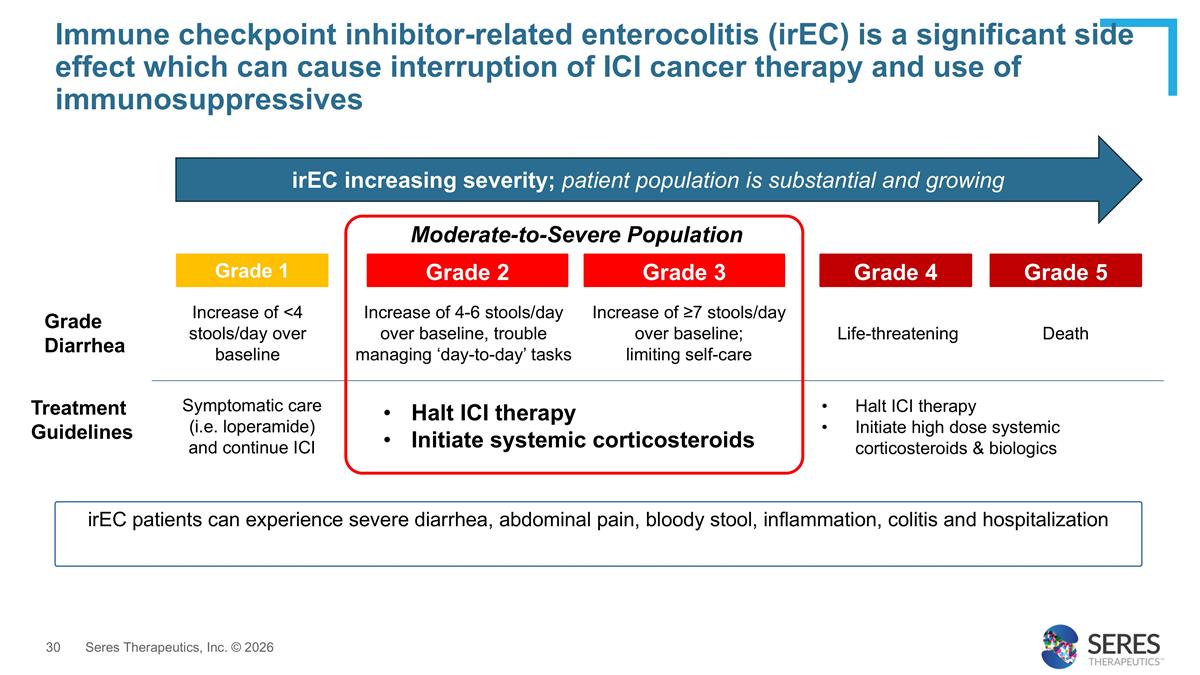
Immune checkpoint inhibitor-related enterocolitis (irEC) is a significant side effect which can cause interruption of ICI cancer therapy and use of immunosuppressives Grade 1 Grade 2 Grade 3 Grade 5 Grade 4 Grade Diarrhea Treatment Guidelines Increase of <4 stools/day over baseline irEC increasing severity; patient population is substantial and growing Increase of 4-6 stools/day over baseline, trouble managing ‘day-to-day’ tasks Increase of ≥7 stools/day over baseline; limiting self-care Life-threatening Death Symptomatic care (i.e. loperamide) and continue ICI Halt ICI therapy Initiate systemic corticosteroids Halt ICI therapy Initiate high dose systemic corticosteroids & biologics irEC patients can experience severe diarrhea, abdominal pain, bloody stool, inflammation, colitis and hospitalization Moderate-to-Severe Population
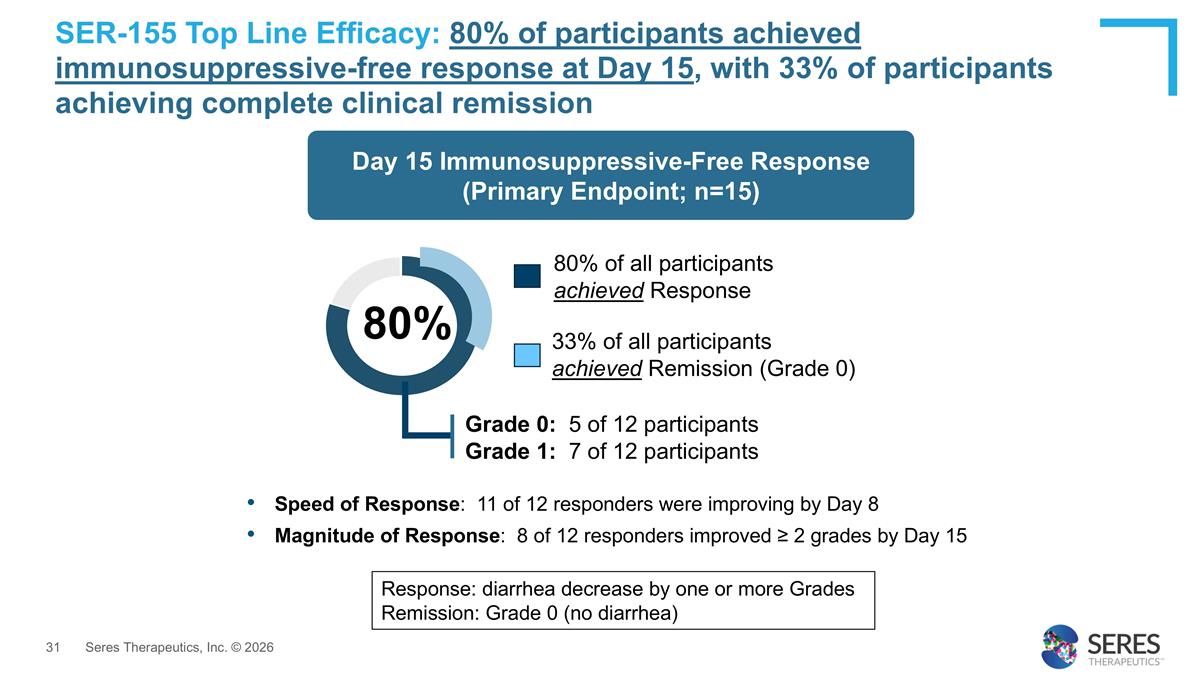
SER-155 Top Line Efficacy: 80% of participants achieved immunosuppressive-free response at Day 15, with 33% of participants achieving complete clinical remission Day 15 Immunosuppressive-Free Response (Primary Endpoint; n=15) 80% 80% of all participants achieved Response 33% of all participants achieved Remission (Grade 0) Grade 0: 5 of 12 participants Grade 1: 7 of 12 participants Speed of Response: 11 of 12 responders were improving by Day 8 Magnitude of Response: 8 of 12 responders improved ≥ 2 grades by Day 15 Response: diarrhea decrease by one or more Grades Remission: Grade 0 (no diarrhea)
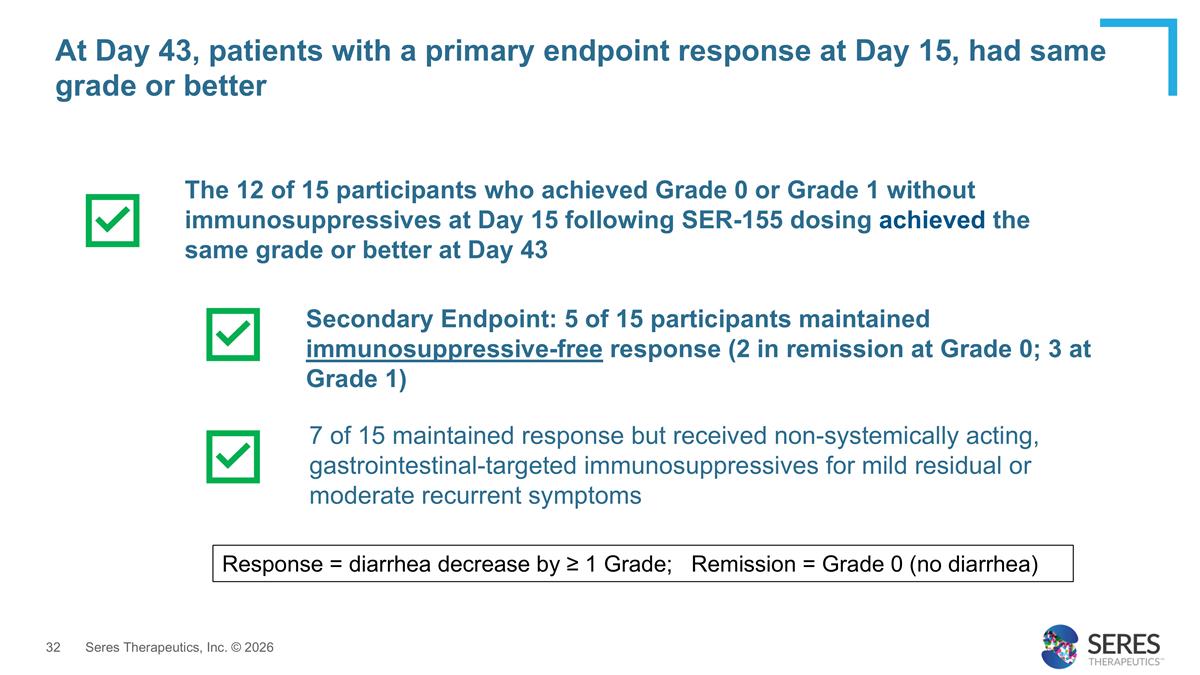
At Day 43, patients with a primary endpoint response at Day 15, had same grade or better Response = diarrhea decrease by ≥ 1 Grade; Remission = Grade 0 (no diarrhea) Secondary Endpoint: 5 of 15 participants maintained immunosuppressive-free response (2 in remission at Grade 0; 3 at Grade 1) 7 of 15 maintained response but received non-systemically acting, gastrointestinal-targeted immunosuppressives for mild residual or moderate recurrent symptoms The 12 of 15 participants who achieved Grade 0 or Grade 1 without immunosuppressives at Day 15 following SER-155 dosing achieved the same grade or better at Day 43
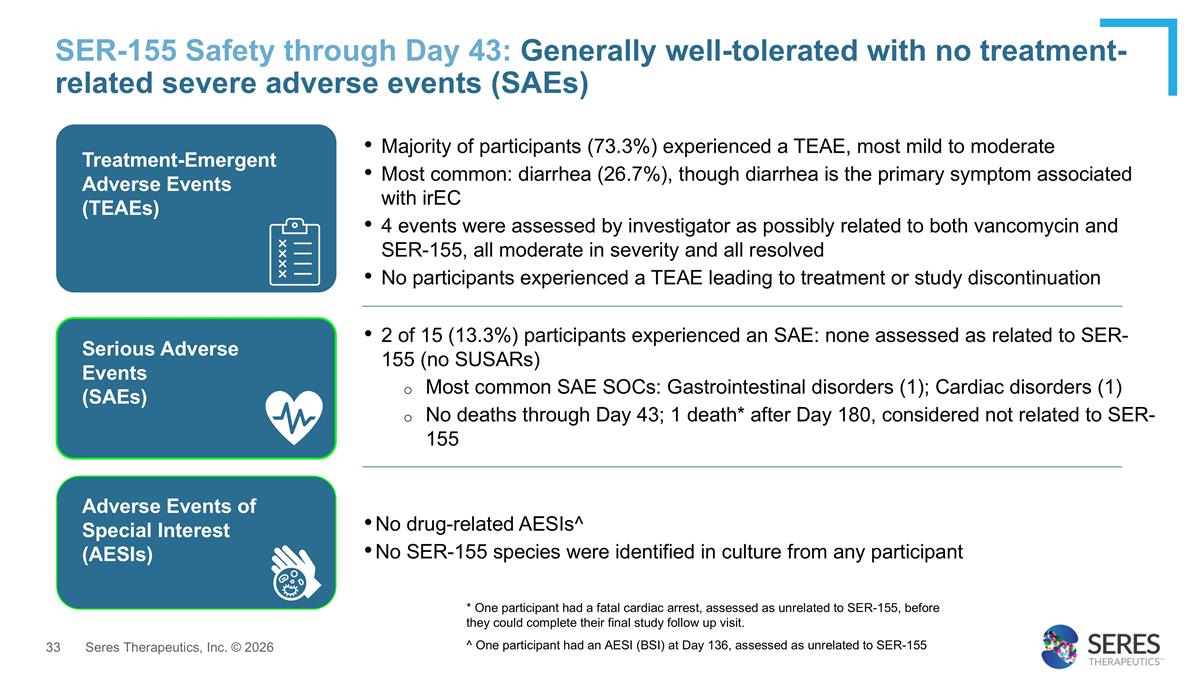
SER-155 Safety through Day 43: Generally well-tolerated with no treatment-related severe adverse events (SAEs) Majority of participants (73.3%) experienced a TEAE, most mild to moderate Most common: diarrhea (26.7%), though diarrhea is the primary symptom associated with irEC 4 events were assessed by investigator as possibly related to both vancomycin and SER-155, all moderate in severity and all resolved No participants experienced a TEAE leading to treatment or study discontinuation 2 of 15 (13.3%) participants experienced an SAE: none assessed as related to SER-155 (no SUSARs) Most common SAE SOCs: Gastrointestinal disorders (1); Cardiac disorders (1) No deaths through Day 43; 1 death* after Day 180, considered not related to SER-155 No drug-related AESIs^ No SER-155 species were identified in culture from any participant * One participant had a fatal cardiac arrest, assessed as unrelated to SER-155, before they could complete their final study follow up visit. ^ One participant had an AESI (BSI) at Day 136, assessed as unrelated to SER-155 Treatment-Emergent Adverse Events (TEAEs) Serious Adverse Events (SAEs) Adverse Events of Special Interest (AESIs)
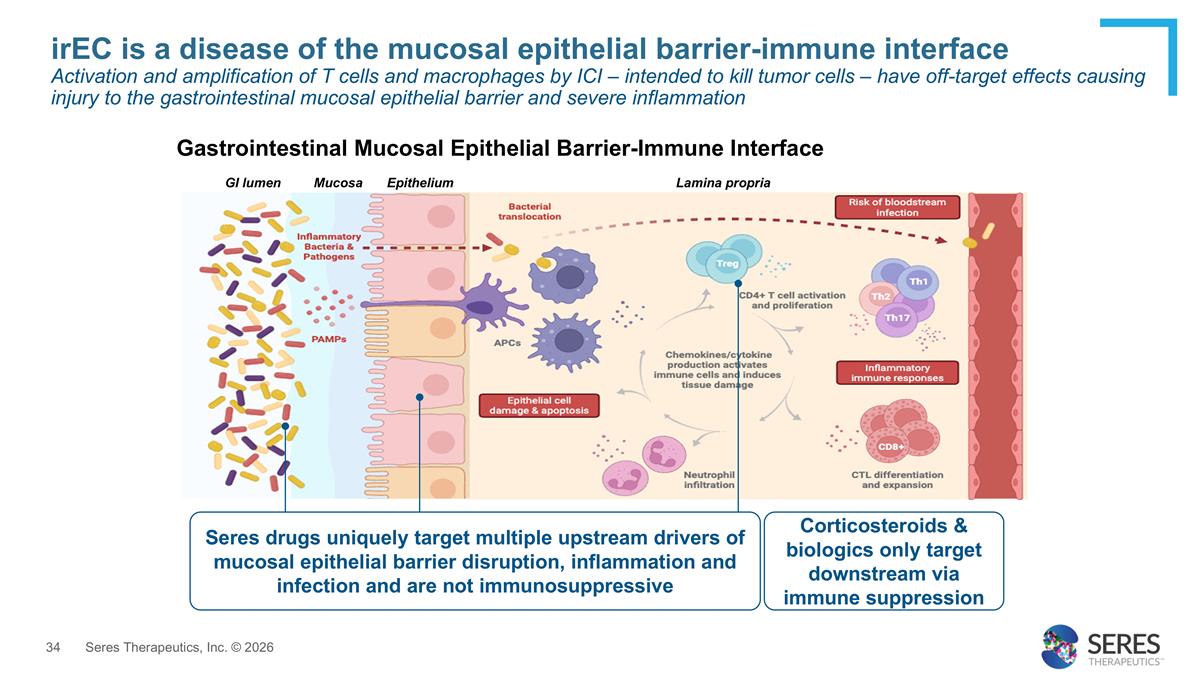
irEC is a disease of the mucosal epithelial barrier-immune interface Activation and amplification of T cells and macrophages by ICI – intended to kill tumor cells – have off-target effects causing injury to the gastrointestinal mucosal epithelial barrier and severe inflammation Seres drugs uniquely target multiple upstream drivers of mucosal epithelial barrier disruption, inflammation and infection and are not immunosuppressive Corticosteroids & biologics only target downstream via immune suppression Gastrointestinal Mucosal Epithelial Barrier-Immune Interface GI lumen Epithelium Lamina propria Mucosa
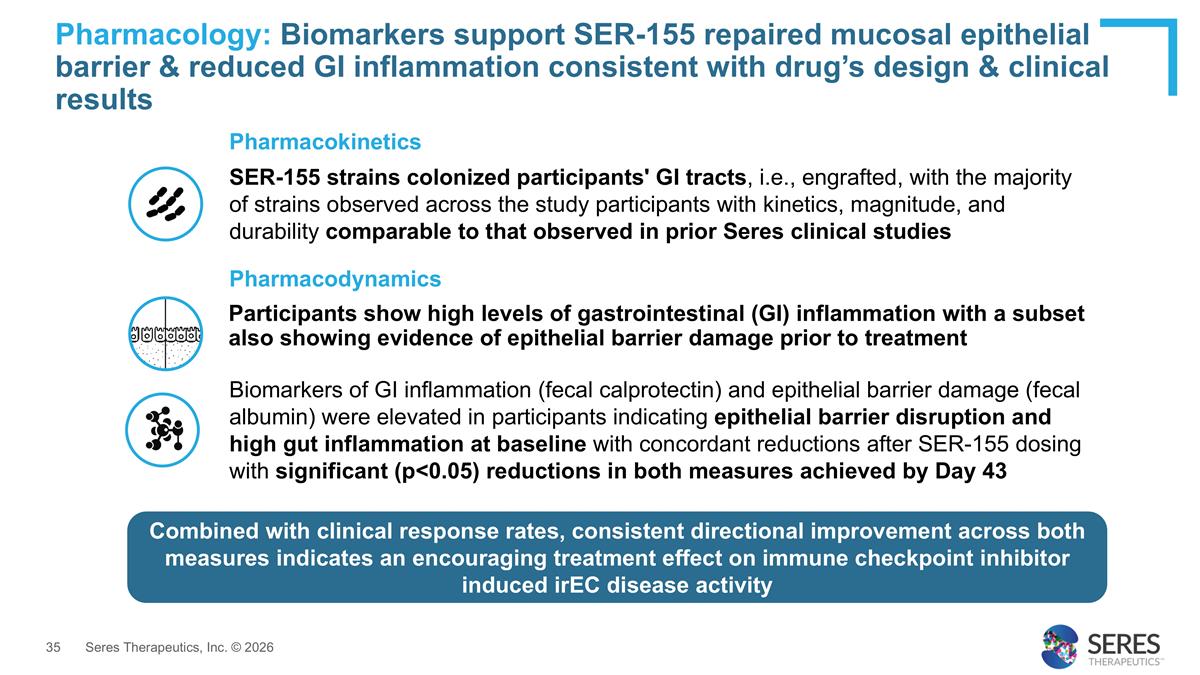
Pharmacology: Biomarkers support SER-155 repaired mucosal epithelial barrier & reduced GI inflammation consistent with drug’s design & clinical results Participants show high levels of gastrointestinal (GI) inflammation with a subset also showing evidence of epithelial barrier damage prior to treatment Combined with clinical response rates, consistent directional improvement across both measures indicates an encouraging treatment effect on immune checkpoint inhibitor induced irEC disease activity Pharmacokinetics Pharmacodynamics SER-155 strains colonized participants' GI tracts, i.e., engrafted, with the majority of strains observed across the study participants with kinetics, magnitude, and durability comparable to that observed in prior Seres clinical studies Biomarkers of GI inflammation (fecal calprotectin) and epithelial barrier damage (fecal albumin) were elevated in participants indicating epithelial barrier disruption and high gut inflammation at baseline with concordant reductions after SER-155 dosing with significant (p<0.05) reductions in both measures achieved by Day 43

SER-603
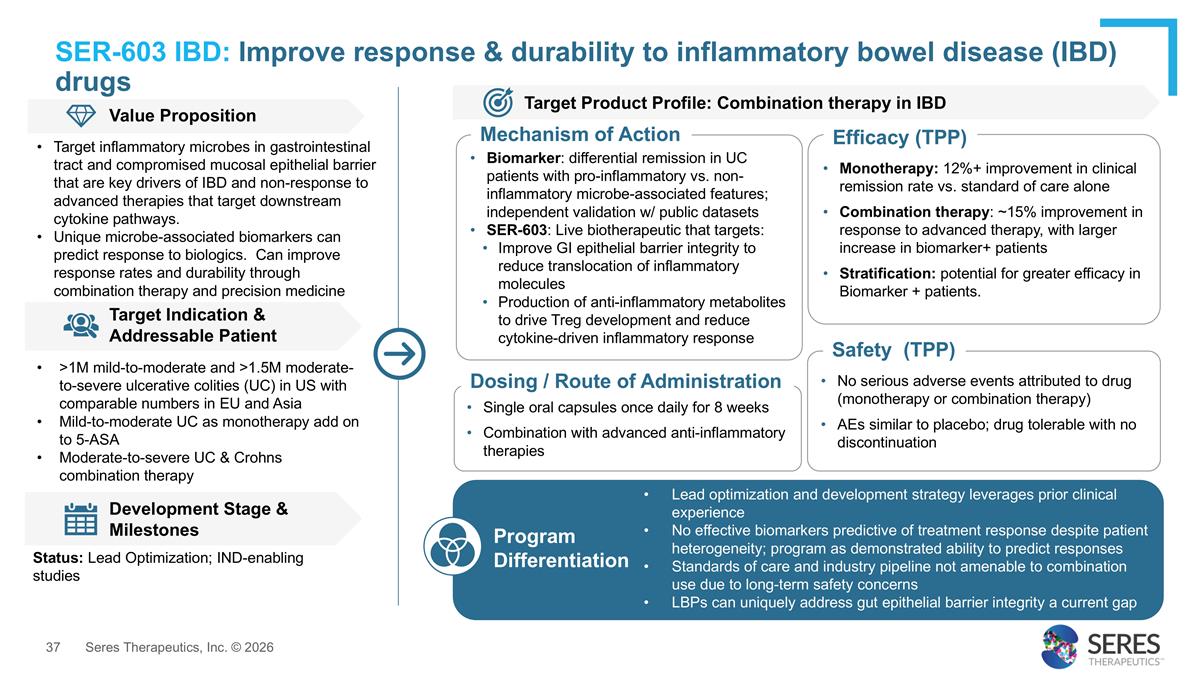
SER-603 IBD: Improve response & durability to inflammatory bowel disease (IBD) drugs Value Proposition Target inflammatory microbes in gastrointestinal tract and compromised mucosal epithelial barrier that are key drivers of IBD and non-response to advanced therapies that target downstream cytokine pathways. Unique microbe-associated biomarkers can predict response to biologics. Can improve response rates and durability through combination therapy and precision medicine Target Indication & Addressable Patient >1M mild-to-moderate and >1.5M moderate-to-severe ulcerative colities (UC) in US with comparable numbers in EU and Asia Mild-to-moderate UC as monotherapy add on to 5-ASA Moderate-to-severe UC & Crohns combination therapy Development Stage & Milestones Biomarker: differential remission in UC patients with pro-inflammatory vs. non-inflammatory microbe-associated features; independent validation w/ public datasets SER-603: Live biotherapeutic that targets: Improve GI epithelial barrier integrity to reduce translocation of inflammatory molecules Production of anti-inflammatory metabolites to drive Treg development and reduce cytokine-driven inflammatory response Mechanism of Action Single oral capsules once daily for 8 weeks Combination with advanced anti-inflammatory therapies Dosing / Route of Administration Monotherapy: 12%+ improvement in clinical remission rate vs. standard of care alone Combination therapy: ~15% improvement in response to advanced therapy, with larger increase in biomarker+ patients Stratification: potential for greater efficacy in Biomarker + patients. Efficacy (TPP) No serious adverse events attributed to drug (monotherapy or combination therapy) AEs similar to placebo; drug tolerable with no discontinuation Safety (TPP) Program Differentiation Lead optimization and development strategy leverages prior clinical experience No effective biomarkers predictive of treatment response despite patient heterogeneity; program as demonstrated ability to predict responses Standards of care and industry pipeline not amenable to combination use due to long-term safety concerns LBPs can uniquely address gut epithelial barrier integrity a current gap Target Product Profile: Combination therapy in IBD Status: Lead Optimization; IND-enabling studies
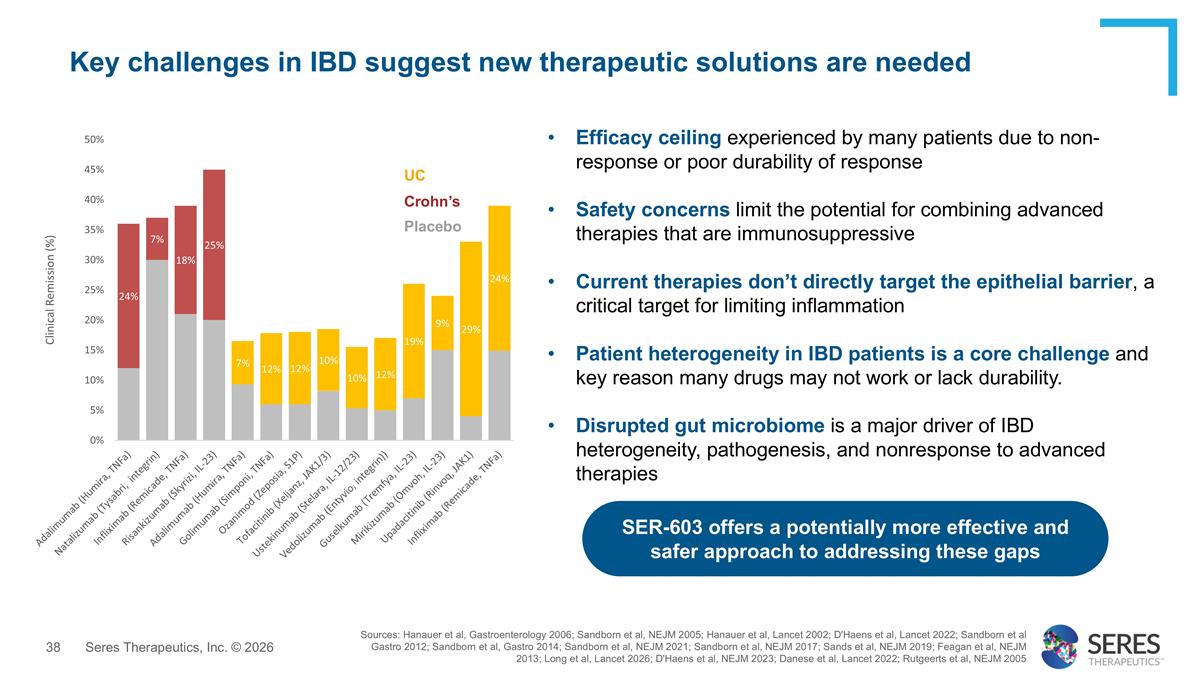
Key challenges in IBD suggest new therapeutic solutions are needed Efficacy ceiling experienced by many patients due to non-response or poor durability of response Safety concerns limit the potential for combining advanced therapies that are immunosuppressive Current therapies don’t directly target the epithelial barrier, a critical target for limiting inflammation Patient heterogeneity in IBD patients is a core challenge and key reason many drugs may not work or lack durability. Disrupted gut microbiome is a major driver of IBD heterogeneity, pathogenesis, and nonresponse to advanced therapies UC Crohn’s Placebo SER-603 offers a potentially more effective and safer approach to addressing these gaps Sources: Hanauer et al, Gastroenterology 2006; Sandborn et al, NEJM 2005; Hanauer et al, Lancet 2002; D'Haens et al, Lancet 2022; Sandborn et al Gastro 2012; Sandborn et al, Gastro 2014; Sandborn et al, NEJM 2021; Sandborn et al, NEJM 2017; Sands et al, NEJM 2019; Feagan et al, NEJM 2013; Long et al, Lancet 2026; D'Haens et al, NEJM 2023; Danese et al, Lancet 2022; Rutgeerts et al, NEJM 2005
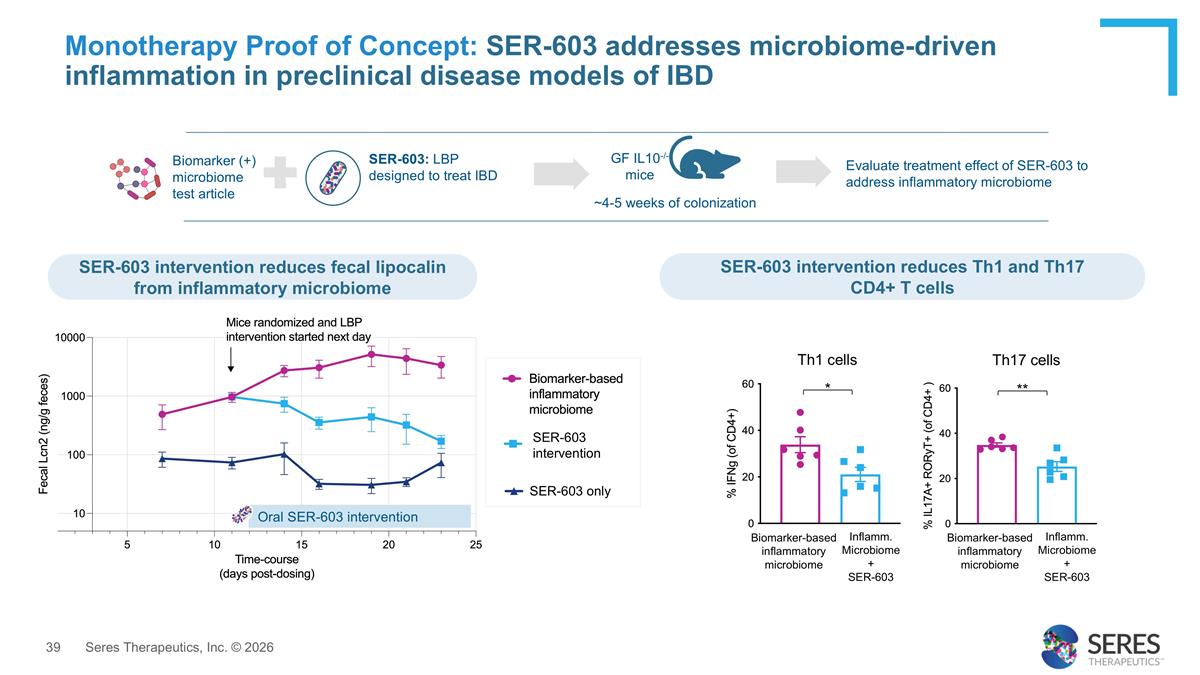
Monotherapy Proof of Concept: SER-603 addresses microbiome-driven inflammation in preclinical disease models of IBD Th1 cells Th17 cells SER-603 intervention reduces fecal lipocalin from inflammatory microbiome SER-603 intervention reduces Th1 and Th17 CD4+ T cells * ** Biomarker-based inflammatory microbiome Inflamm. Microbiome + SER-603 Biomarker-based inflammatory microbiome Inflamm. Microbiome + SER-603 GF IL10-/-mice Biomarker (+) microbiome test article ~4-5 weeks of colonization Evaluate treatment effect of SER-603 to address inflammatory microbiome SER-603: LBP designed to treat IBD SER-603 intervention SER-603 only Oral SER-603 intervention
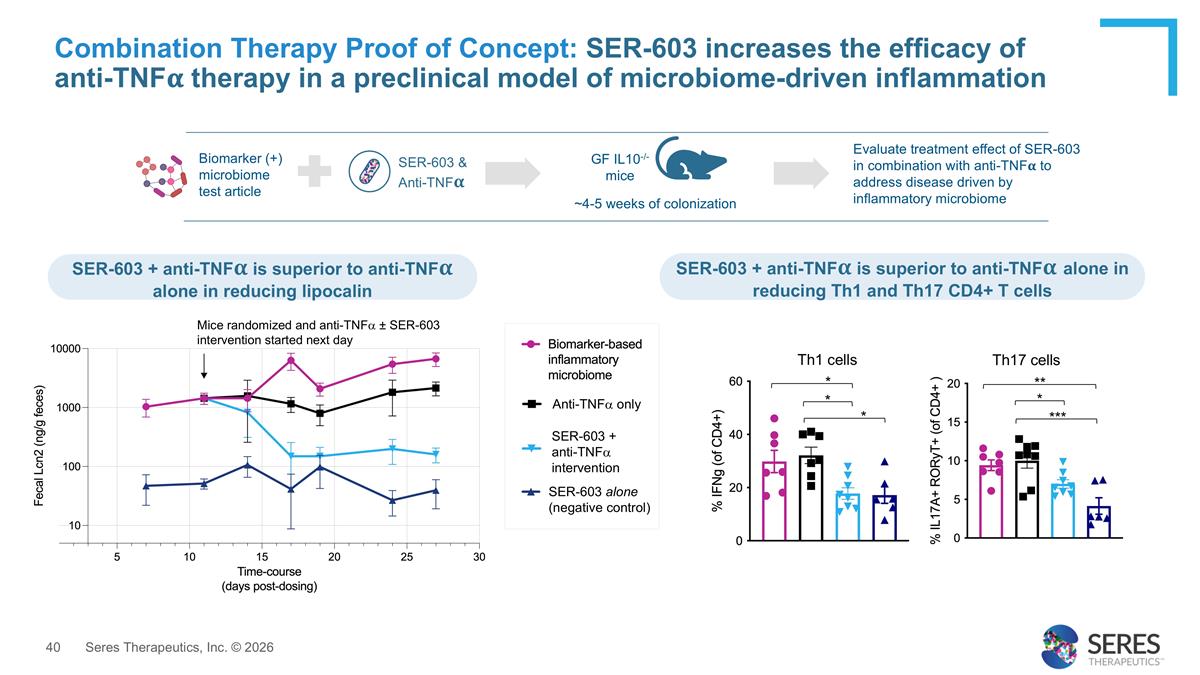
Combination Therapy Proof of Concept: SER-603 increases the efficacy of anti-TNF�� therapy in a preclinical model of microbiome-driven inflammation GF IL10-/-mice Biomarker (+) microbiome test article ~4-5 weeks of colonization Evaluate treatment effect of SER-603 in combination with anti-TNF�� to address disease driven by inflammatory microbiome SER-603 & Anti-TNF�� SER-603 + anti-TNF�� is superior to anti-TNF�� alone in reducing lipocalin SER-603 + anti-TNF�� is superior to anti-TNF�� alone in reducing Th1 and Th17 CD4+ T cells SER-603 + anti-TNFa intervention SER-603 alone (negative control) Anti-TNFa only Mice randomized and anti-TNFa ± SER-603 intervention started next day Th1 cells Th17 cells * * * ** * ***
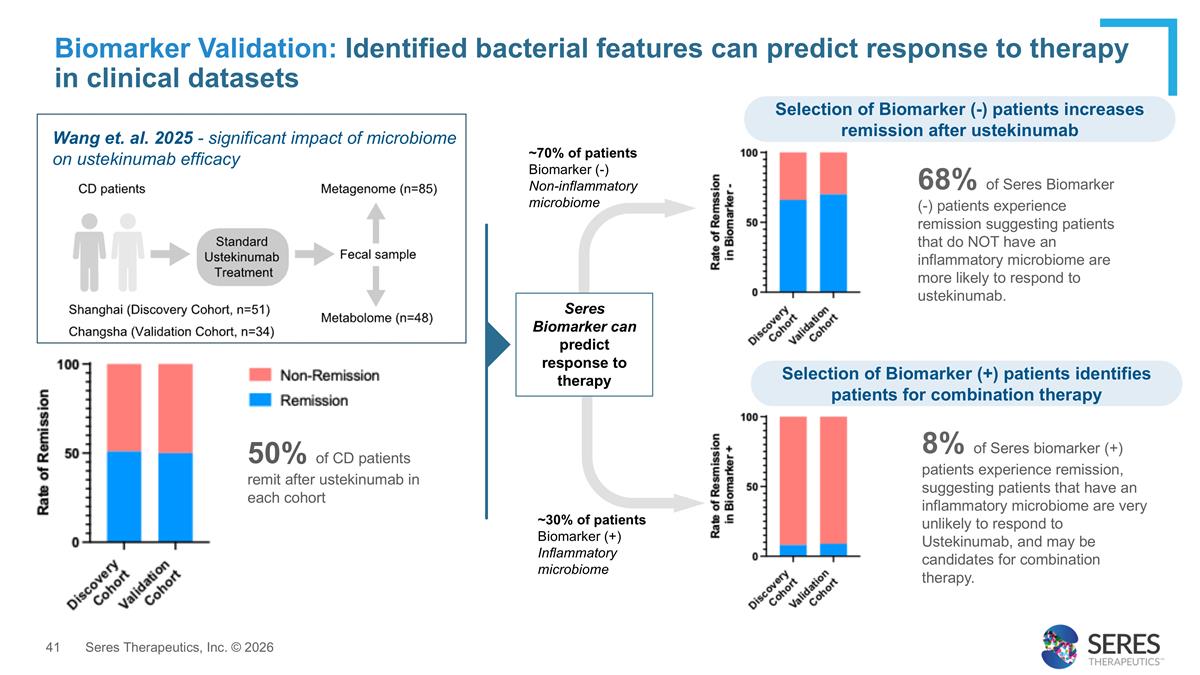
Biomarker Validation: Identified bacterial features can predict response to therapy in clinical datasets 8% of Seres biomarker (+) patients experience remission, suggesting patients that have an inflammatory microbiome are very unlikely to respond to Ustekinumab, and may be candidates for combination therapy. 68% of Seres Biomarker (-) patients experience remission suggesting patients that do NOT have an inflammatory microbiome are more likely to respond to ustekinumab. Selection of Biomarker (-) patients increases remission after ustekinumab 50% of CD patients remit after ustekinumab in each cohort ~30% of patients Biomarker (+) Inflammatory microbiome ~70% of patients Biomarker (-) Non-inflammatory microbiome Seres Biomarker can predict response to therapy Wang et. al. 2025 - significant impact of microbiome on ustekinumab efficacy Selection of Biomarker (+) patients identifies patients for combination therapy
SER-147
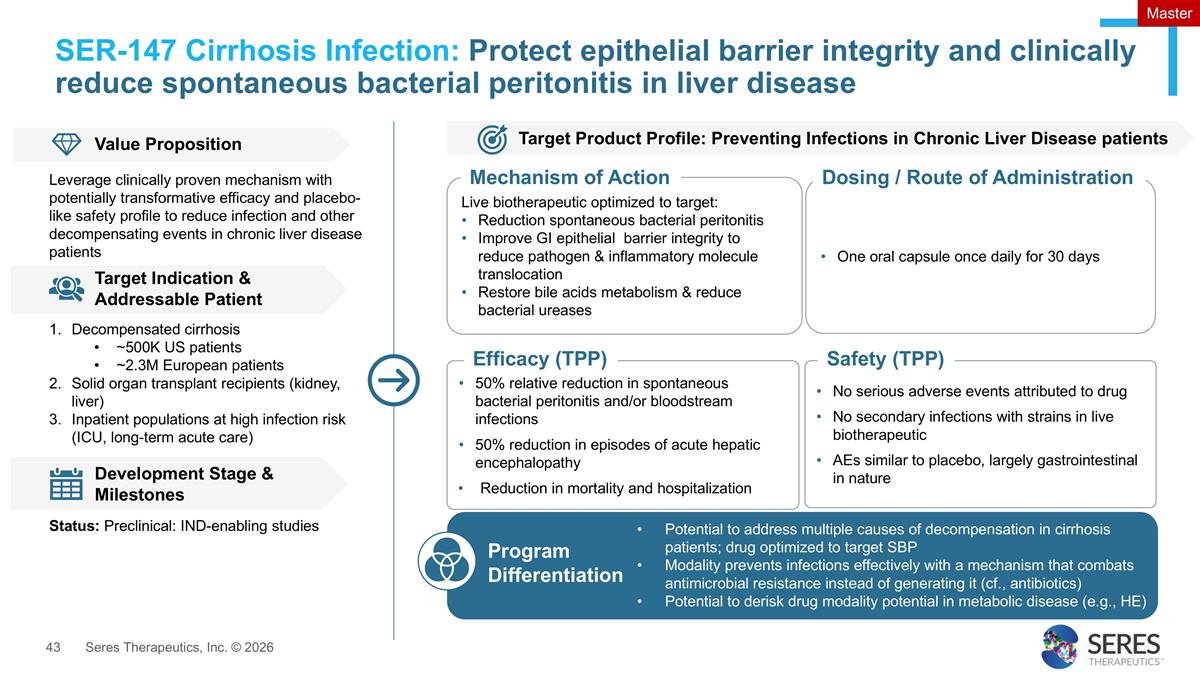
SER-147 Cirrhosis Infection: Protect epithelial barrier integrity and clinically reduce spontaneous bacterial peritonitis in liver disease Value Proposition Leverage clinically proven mechanism with potentially transformative efficacy and placebo-like safety profile to reduce infection and other decompensating events in chronic liver disease patients Target Indication & Addressable Patient Decompensated cirrhosis ~500K US patients ~2.3M European patients Solid organ transplant recipients (kidney, liver) Inpatient populations at high infection risk (ICU, long-term acute care) Development Stage & Milestones Live biotherapeutic optimized to target: Reduction spontaneous bacterial peritonitis Improve GI epithelial barrier integrity to reduce pathogen & inflammatory molecule translocation Restore bile acids metabolism & reduce bacterial ureases Mechanism of Action One oral capsule once daily for 30 days Dosing / Route of Administration 50% relative reduction in spontaneous bacterial peritonitis and/or bloodstream infections 50% reduction in episodes of acute hepatic encephalopathy Reduction in mortality and hospitalization Efficacy (TPP) No serious adverse events attributed to drug No secondary infections with strains in live biotherapeutic AEs similar to placebo, largely gastrointestinal in nature Safety (TPP) Program Differentiation Potential to address multiple causes of decompensation in cirrhosis patients; drug optimized to target SBP Modality prevents infections effectively with a mechanism that combats antimicrobial resistance instead of generating it (cf., antibiotics) Potential to derisk drug modality potential in metabolic disease (e.g., HE) Target Product Profile: Preventing Infections in Chronic Liver Disease patients Status: Preclinical: IND-enabling studies Master
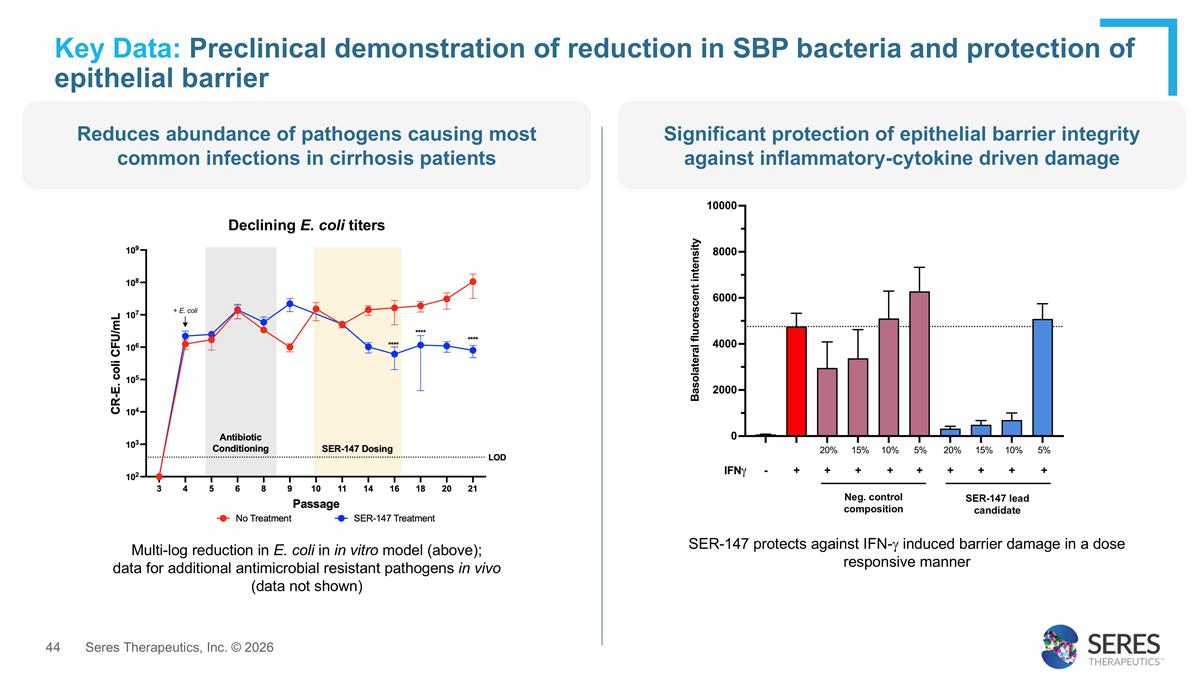
Significant protection of epithelial barrier integrity against inflammatory-cytokine driven damage Reduces abundance of pathogens causing most common infections in cirrhosis patients Declining E. coli titers Multi-log reduction in E. coli in in vitro model (above); data for additional antimicrobial resistant pathogens in vivo (data not shown) SER-147 protects against IFN-g induced barrier damage in a dose responsive manner Neg. control composition SER-147 lead candidate Key Data: Preclinical demonstration of reduction in SBP bacteria and protection of epithelial barrier

Path Forward
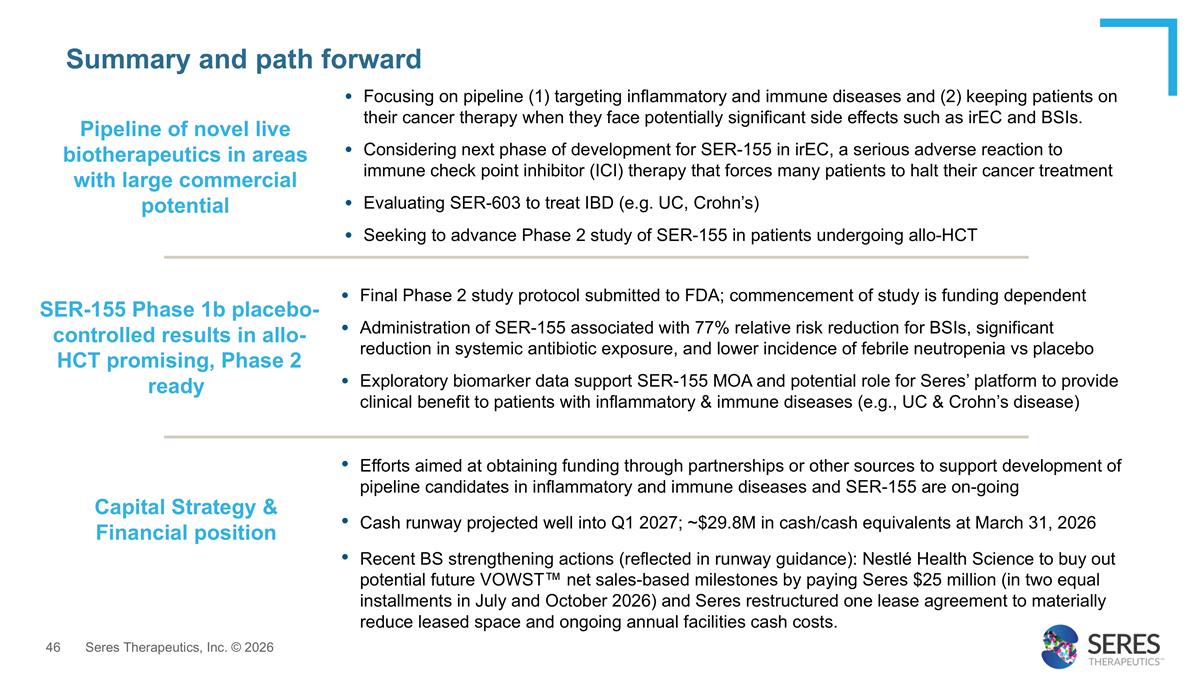
Summary and path forward SER-155 Phase 1b placebo-controlled results in allo-HCT promising, Phase 2 ready Final Phase 2 study protocol submitted to FDA; commencement of study is funding dependent Administration of SER-155 associated with 77% relative risk reduction for BSIs, significant reduction in systemic antibiotic exposure, and lower incidence of febrile neutropenia vs placebo Exploratory biomarker data support SER-155 MOA and potential role for Seres’ platform to provide clinical benefit to patients with inflammatory & immune diseases (e.g., UC & Crohn’s disease) Capital Strategy & Financial position Efforts aimed at obtaining funding through partnerships or other sources to support development of pipeline candidates in inflammatory and immune diseases and SER-155 are on-going Cash runway projected well into Q1 2027; ~$29.8M in cash/cash equivalents at March 31, 2026 Recent BS strengthening actions (reflected in runway guidance): Nestlé Health Science to buy out potential future VOWST™ net sales-based milestones by paying Seres $25 million (in two equal installments in July and October 2026) and Seres restructured one lease agreement to materially reduce leased space and ongoing annual facilities cash costs. Pipeline of novel live biotherapeutics in areas with large commercial potential Focusing on pipeline (1) targeting inflammatory and immune diseases and (2) keeping patients on their cancer therapy when they face potentially significant side effects such as irEC and BSIs. Considering next phase of development for SER-155 in irEC, a serious adverse reaction to immune check point inhibitor (ICI) therapy that forces many patients to halt their cancer treatment Evaluating SER-603 to treat IBD (e.g. UC, Crohn’s) Seeking to advance Phase 2 study of SER-155 in patients undergoing allo-HCT
Appendix --- SER-155 allo-HCT Phase 1b Study Results
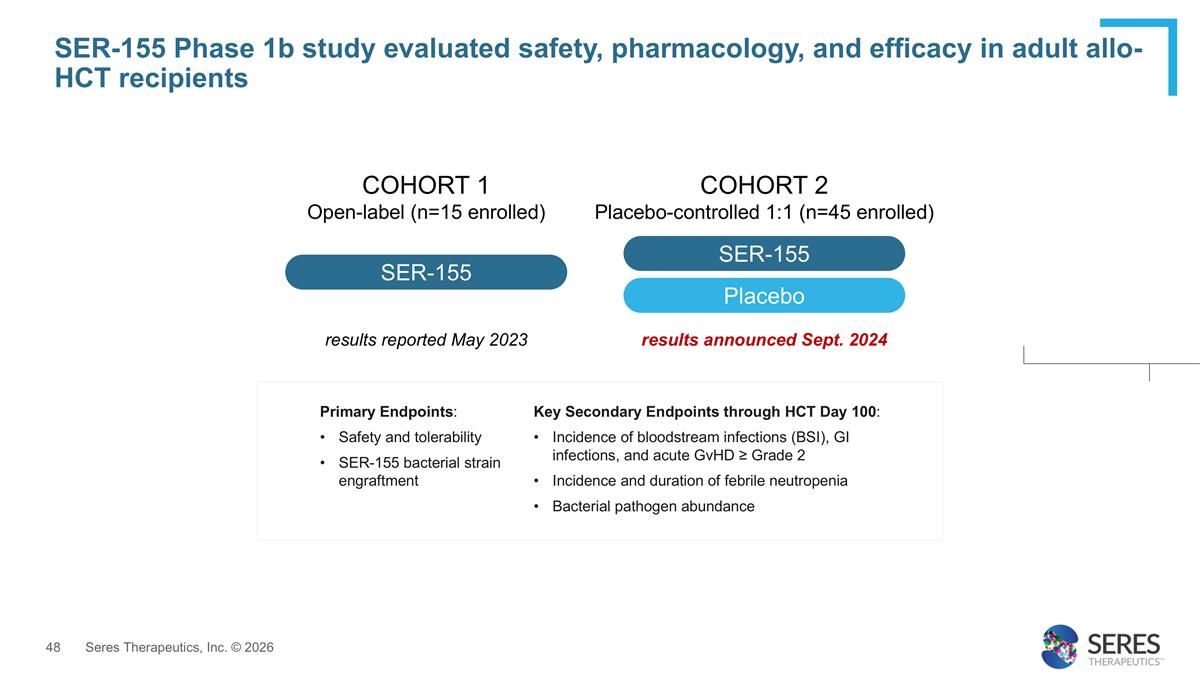
SER-155 Phase 1b study evaluated safety, pharmacology, and efficacy in adult allo-HCT recipients SER-155 COHORT 1 Open-label (n=15 enrolled) COHORT 2 Placebo-controlled 1:1 (n=45 enrolled) SER-155 Placebo results reported May 2023 results announced Sept. 2024 Primary Endpoints: Safety and tolerability SER-155 bacterial strain engraftment Key Secondary Endpoints through HCT Day 100: Incidence of bloodstream infections (BSI), GI infections, and acute GvHD ≥ Grade 2 Incidence and duration of febrile neutropenia Bacterial pathogen abundance
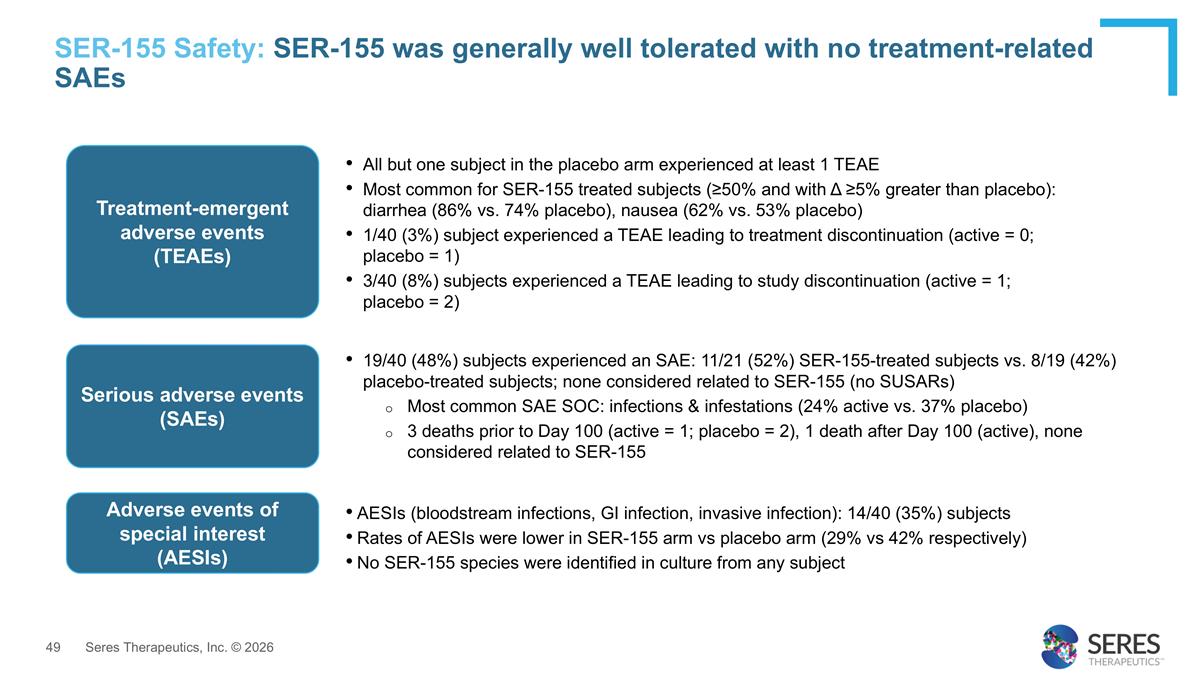
SER-155 Safety: SER-155 was generally well tolerated with no treatment-related SAEs Treatment-emergent adverse events (TEAEs) All but one subject in the placebo arm experienced at least 1 TEAE Most common for SER-155 treated subjects (≥50% and with Δ ≥5% greater than placebo): diarrhea (86% vs. 74% placebo), nausea (62% vs. 53% placebo) 1/40 (3%) subject experienced a TEAE leading to treatment discontinuation (active = 0; placebo = 1) 3/40 (8%) subjects experienced a TEAE leading to study discontinuation (active = 1; placebo = 2) Serious adverse events (SAEs) 19/40 (48%) subjects experienced an SAE: 11/21 (52%) SER-155-treated subjects vs. 8/19 (42%) placebo-treated subjects; none considered related to SER-155 (no SUSARs) Most common SAE SOC: infections & infestations (24% active vs. 37% placebo) 3 deaths prior to Day 100 (active = 1; placebo = 2), 1 death after Day 100 (active), none considered related to SER-155 Adverse events of special interest (AESIs) AESIs (bloodstream infections, GI infection, invasive infection): 14/40 (35%) subjects Rates of AESIs were lower in SER-155 arm vs placebo arm (29% vs 42% respectively) No SER-155 species were identified in culture from any subject
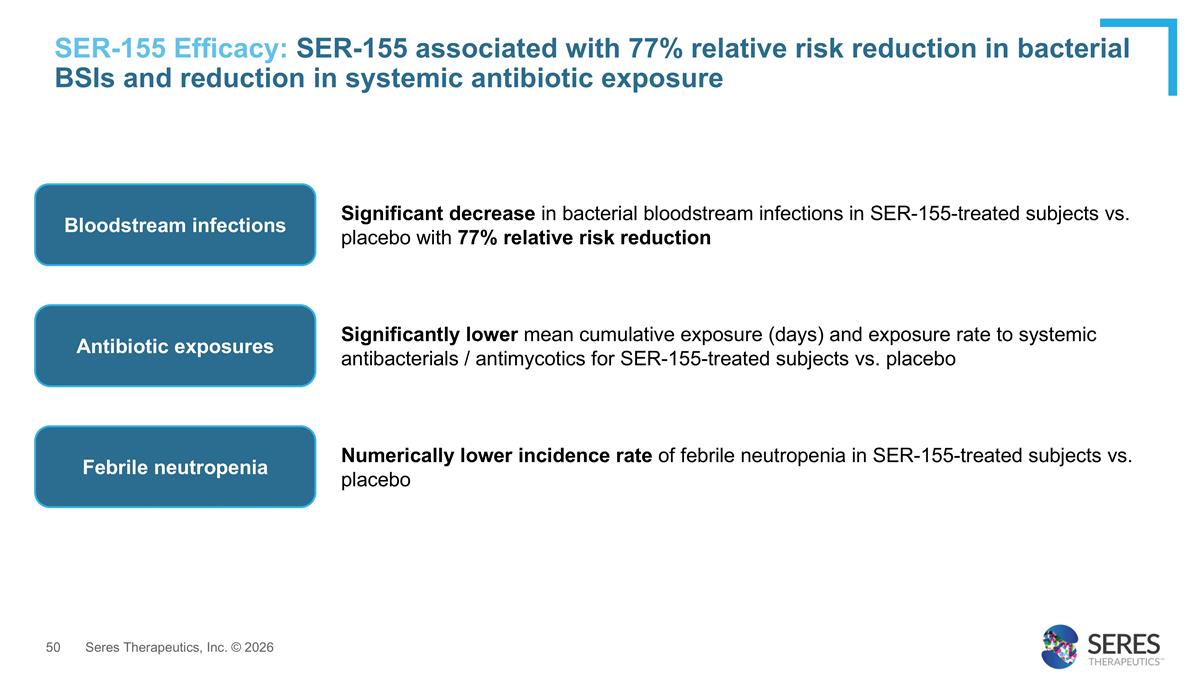
SER-155 Efficacy: SER-155 associated with 77% relative risk reduction in bacterial BSIs and reduction in systemic antibiotic exposure Bloodstream infections Significant decrease in bacterial bloodstream infections in SER-155-treated subjects vs. placebo with 77% relative risk reduction Numerically lower incidence rate of febrile neutropenia in SER-155-treated subjects vs. placebo Febrile neutropenia Antibiotic exposures Significantly lower mean cumulative exposure (days) and exposure rate to systemic antibacterials / antimycotics for SER-155-treated subjects vs. placebo
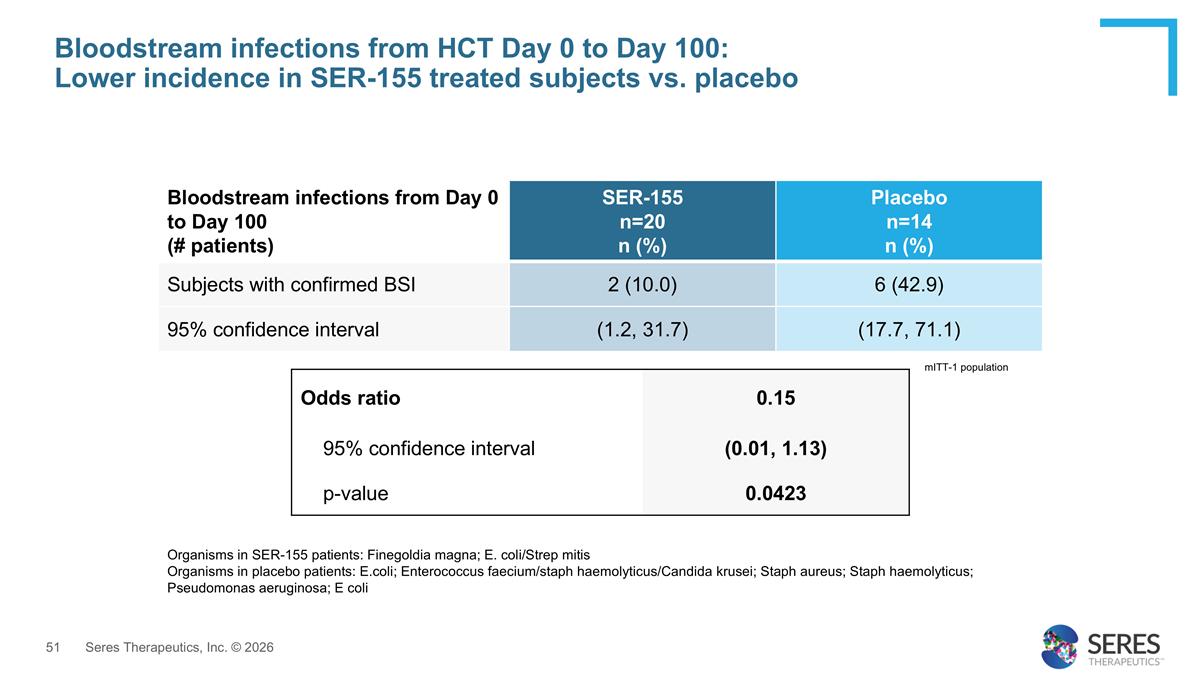
Bloodstream infections from HCT Day 0 to Day 100: Lower incidence in SER-155 treated subjects vs. placebo Bloodstream infections from Day 0 to Day 100 (# patients) SER-155 n=20 n (%) Placebo n=14 n (%) Subjects with confirmed BSI 2 (10.0) 6 (42.9) 95% confidence interval (1.2, 31.7) (17.7, 71.1) Odds ratio 0.15 95% confidence interval (0.01, 1.13) p-value 0.0423 mITT-1 population Organisms in SER-155 patients: Finegoldia magna; E. coli/Strep mitis Organisms in placebo patients: E.coli; Enterococcus faecium/staph haemolyticus/Candida krusei; Staph aureus; Staph haemolyticus; Pseudomonas aeruginosa; E coli
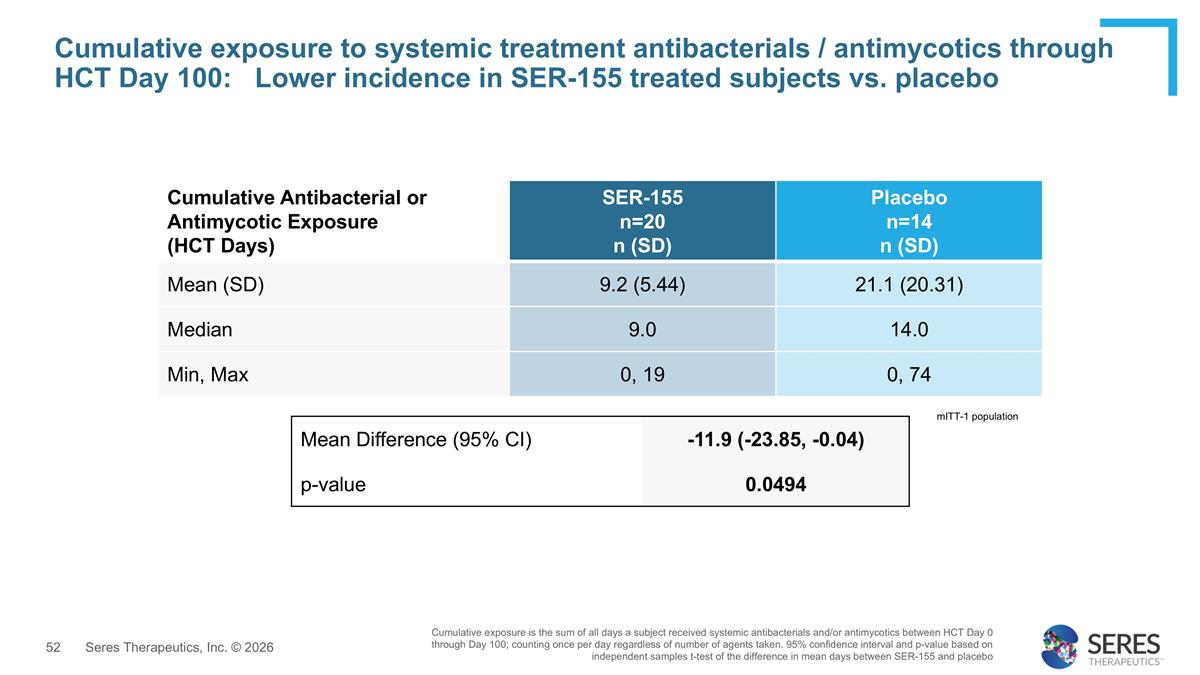
Cumulative exposure to systemic treatment antibacterials / antimycotics through HCT Day 100: Lower incidence in SER-155 treated subjects vs. placebo Cumulative Antibacterial or Antimycotic Exposure (HCT Days) SER-155 n=20 n (SD) Placebo n=14 n (SD) Mean (SD) 9.2 (5.44) 21.1 (20.31) Median 9.0 14.0 Min, Max 0, 19 0, 74 Cumulative exposure is the sum of all days a subject received systemic antibacterials and/or antimycotics between HCT Day 0 through Day 100; counting once per day regardless of number of agents taken. 95% confidence interval and p-value based on independent samples t-test of the difference in mean days between SER-155 and placebo Mean Difference (95% CI) -11.9 (-23.85, -0.04) p-value 0.0494 mITT-1 population
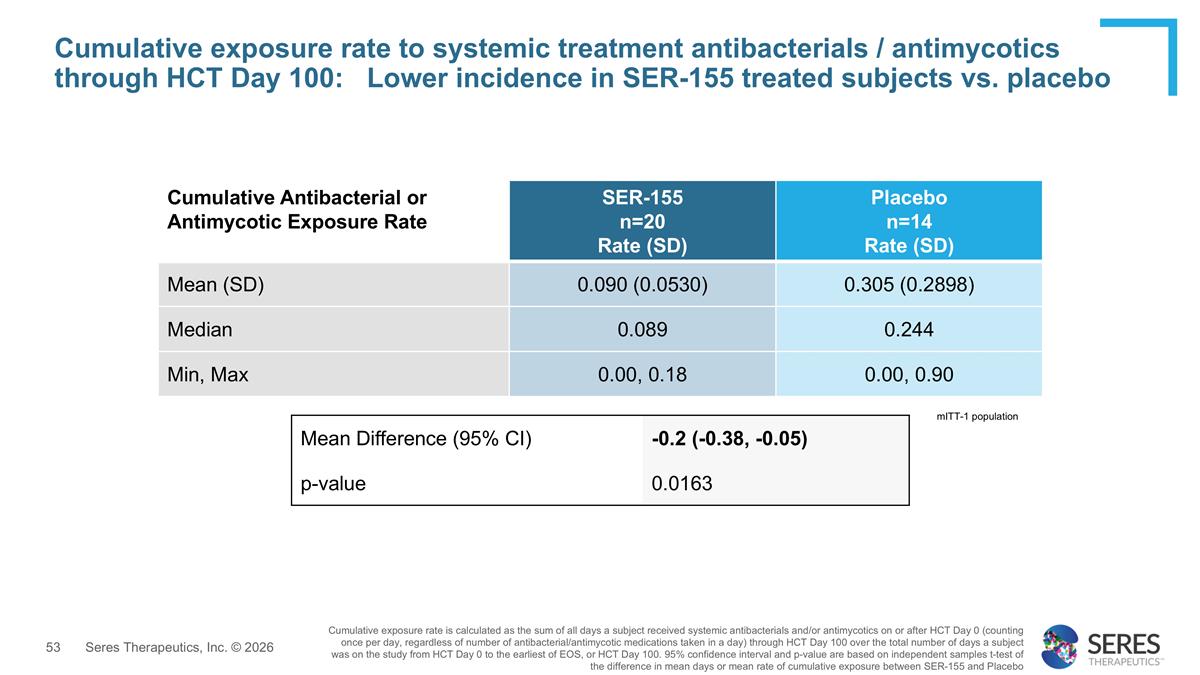
Cumulative exposure rate to systemic treatment antibacterials / antimycotics through HCT Day 100: Lower incidence in SER-155 treated subjects vs. placebo Cumulative Antibacterial or Antimycotic Exposure Rate SER-155 n=20 Rate (SD) Placebo n=14 Rate (SD) Mean (SD) 0.090 (0.0530) 0.305 (0.2898) Median 0.089 0.244 Min, Max 0.00, 0.18 0.00, 0.90 Cumulative exposure rate is calculated as the sum of all days a subject received systemic antibacterials and/or antimycotics on or after HCT Day 0 (counting once per day, regardless of number of antibacterial/antimycotic medications taken in a day) through HCT Day 100 over the total number of days a subject was on the study from HCT Day 0 to the earliest of EOS, or HCT Day 100. 95% confidence interval and p-value are based on independent samples t-test of the difference in mean days or mean rate of cumulative exposure between SER-155 and Placebo Mean Difference (95% CI) -0.2 (-0.38, -0.05) p-value 0.0163 mITT-1 population