Exhibit 99.1
NOTICE TO READER
This revised Annual Information Form of Silvercorp Metals Inc. ("Silvercorp") for the year ended March 31, 2026 (the "Revised AIF") amends the original annual information form of Silvercorp for the same period filed on SEDAR+ on June 29, 2026 (the "Original AIF") in order to include a corrected version of the table describing the external auditor services fees under Item 11, as an incorrect version of the table describing the external auditor services fees was included in the Original AIF.
Except as discussed above and expressly set forth herein, no other information in this Revised AIF has been amended from the information contained in the Original AIF, nor does this Revised AIF reflect any events that have occurred after the Original AIF was filed.

REVISED ANNUAL INFORMATION FORM
FOR THE YEAR ENDED MARCH 31, 2026
DATED AS OF JUNE 29, 2026
SILVERCORP METALS INC.
Suite 1750 – 1066 West Hastings Street
Vancouver, BC V6E 3X1
Tel: (604) 669-9397
Fax: (604) 669-9387
Email: investor@silvercorp.ca
Website: http://www.silvercorpmetals.com
4 | ||
4 | ||
4 | ||
Cautionary Note to U.S. Investors Concerning Estimates of Mineral Reserves and Mineral Resources | 6 | |
6 | ||
7 | ||
8 | ||
8 | ||
10 | ||
12 | ||
12 | ||
12 | ||
24 | ||
24 | ||
Corporate Governance, Safety, Environment and Social Responsibility | 29 | |
Laws and Regulations Related to Mining and Foreign Investments | 31 | |
41 | ||
78 | ||
79 | ||
114 | ||
129 | ||
143 | ||
151 | ||
166 | ||
166 | ||
169 | ||
170 | ||
170 | ||
172 | ||
174 | ||
174 | ||
175 | ||
175 | ||
175 | ||
175 | ||
179 | ||
180 |
3
All information in this revised Annual Information Form (“AIF”) is as of March 31, 2026, unless otherwise indicated.
Certain statements and information in this AIF for Silvercorp Metals Inc. (“Silvercorp” or the “Company”) constitute “forward-looking statements” within the meaning of the United States Private Securities Litigation Reform Act of 1995 and also are “forward-looking information” within the meaning of applicable securities legislation (collectively, “forward-looking statements or information”). Forward-looking statements or information include, but are not limited to, information concerning mineral resource and mineral reserve estimates to the extent that they involve estimates of the mineralization that will be encountered if the property is developed, any statements or information that express or involve discussions with respect to predictions, expectations, beliefs, plans, projections, objectives, assumptions or future events or performance (often, but not always, using words or phrases such as “expects”, “is expected”, “anticipates”, “believes”, “plans”, “projects”, “estimates”, “assumes”, “intends”, “strategies”, “targets”, “goals”, “forecasts”, “objectives”, “budgets”, “schedules”, “potential” or variations thereof or stating that certain actions, events or results “may”, “could”, “would”, “might” or “will” be taken, occur or be achieved, or the negative of any of these terms and similar expressions) are not statements of historical fact and may be forward-looking statements or information. Forward-looking statements or information relate to, among other things: the price of silver, gold, lead, zinc, copper, and other metals; estimates of the Company’s revenues and capital expenditures; the accuracy of mineral resource and mineral reserve estimates at the Company’s properties; the Company’s guidance and outlook including estimated production from the Company’s mines on the Ying Property and from the GC Mine, including estimated ore production and grades; estimated construction progress at the El Domo, Chaarat ZAAV and Kuanping projects; timing of development ore from the Kuanping Project becoming available for processing; projected cash operating costs and all-in sustaining costs (“AISC”), and budgets, on a consolidated and mine-by-mine basis; availability of funds from production to finance the Company’s operations; access to and availability of funding for future construction and development of the Company’s properties or for acquisitions; future profitability, cash flow, growth, mine life, dividends, mergers or acquisitions, and other forecasts and predictions with respect to the Company and its properties; statements regarding anticipated exploration, drilling, development, construction and other activities or achievements of the Company; timing of receipt of permits, licenses and regulatory approvals; and timing of completion of the underground mining pre-feasibility study for the Condor Project.
4
Forward-looking statements are based on the opinions, assumptions, factors and estimates of management considered reasonable at the date the statements are made. The opinions, assumptions, factors and estimates which may prove to be incorrect, include, but are not limited to: the specific assumptions set forth in this AIF, or incorporated by reference herein; the expectations and beliefs of management; that prices for minerals, particularly silver, gold, lead and zinc remain consistent with the Company’s expectations; that there are no significant disruptions affecting operations, including labour disruptions, supply disruptions, power disruptions, security disruptions, damage to or loss of equipment, whether due to flooding, political changes, title issues, intervention by local communities, environmental concerns, tariffs, widespread health emergencies or otherwise; that the duration and effects of epidemics, pandemics or other health crises on operations and workforce will not materially differ from expectations; that operations, development and exploration at the Company’s projects proceed on a basis consistent with expectations and the Company does not change its development and exploration plans and forecasts; that prices for key mining supplies, including labour costs and consumables remain consistent with the Company’s current expectations; that the availability and costs of inputs and the price and market for outputs remain consistent with expectations; that plant, equipment and processes will operate as anticipated; that there are no material variations in the current tax and regulatory environment or the tax positions taken by the Company; that foreign exchange rates, taxation levels and current and future social, economic and political conditions remain substantially consistent with expectations; that the Company will maintain access to surface rights; that the Company will be able to obtain and maintain government approvals, permits and licenses in connection with its current and planned operations, development and exploration activities; that the Company is able to meet current and future obligations; and that the Company can access adequate financing, appropriate equipment and sufficient labour, all at acceptable rates; that estimates, projections, forecasts, studies and assessments are accurate and reliable; and that the Company will be able to meet or achieve its estimates, projections and forecasts.
By their very nature, forward-looking statements or information are subject to a variety of known and unknown risks, uncertainties and other factors that could cause actual events or results or performance to differ from those reflected in forward-looking statements or information, including, without limitation, risks relating to the matters described in this AIF under Item 4.4 "Risk Factors" under the following headings: fluctuating commodity prices; recent market events and conditions; shares reserved for future issuances; dilution; short selling and hedging activities; estimation of mineral resources, mineral reserves and mineralization and metal recovery; interpretations and assumptions of mineral resource and mineral reserve estimates; exploration and development programs; mine closure obligations; compliance with laws and regulations in foreign jurisdictions; anti-corruption and anti-bribery laws; regulatory scrutiny in the United States; foreign private issuer status and MJDS reporting; continued stock exchange listing requirements; climate change; economic factors affecting the Company; timing, estimated amount, capital and operating expenditures and economic returns of future production; integration of future acquisitions into existing operations; permits and licences for mining and exploration in China; title to properties; ongoing permitting, licensing and regulatory timing risks, including potential revocation of licenses and permits; customer concentration; non-controlling interest shareholders; acquisition of commercially mineable mineral rights; financing; tailings storage facilities; public company costs; competition; operations and political conditions; regulatory environment in China; regulatory environment and political climate in Bolivia and Ecuador; the integration and operations of Adventus; environmental risks; natural disasters; reliance on third-party operators and contractors; infrastructure availability; utility supply; labour market conditions and labour costs; community relations and reputation; public health crises; inventory management; dependence on management and key personnel; foreign exchange rate fluctuations; insurance; risks and hazards of mining operations; conflicts of interest; internal control over financial reporting as per the requirements of the Sarbanes-Oxley Act; disclosure controls and procedures; regulatory investigations, outcome of current or future litigation or regulatory actions; bringing actions and enforcing judgments under U.S. securities laws; cyber-security risks; increasing labour costs; risks relating to feasibility and engineering reports; crude oil supply risks related to regional conflict; the Company’s investment in New Pacific Metals Corp. (“New Pacific”) and in Auro Metals Inc. (“Auro”, formerly Tincorp Metals Inc.); risks relating to the Company’s China operations and doing business in China; risks related to Ecuador and the El Domo Project; mining by illegal and artisanal miners in Ecuador; and risks related to the Tulkubash and
5
Kyzyltash Chaarat gold projects and exploration licenses hosting the Karator and Ishakuld gold zones in the Republic of Kyrgyzstan (the “Chaarat ZAAV Project”).
This list of risk factors described in this AIF and the Company’s other disclosure documents is not exhaustive of the factors that may affect any of the Company’s forward-looking statements or information. Although the Company has attempted to identify important factors that could cause actual results to differ materially from those contained in forward-looking statements, there may be other factors that cause results not to be as anticipated, estimated, described or intended. There can be no assurance that forward-looking statements will prove to be accurate.
We caution that all forward-looking statements or information are inherently subject to change and uncertainty and that actual results may differ materially from those expressed or implied by the forward-looking information. A number of risks, uncertainties and other factors, including the risk factors described below under the heading “Risk Factors”, and in other filings with Canadian and U.S. regulators on www.sedarplus.ca and www.sec.gov, could cause actual results and events to differ materially from those expressed or implied in the forward-looking information or could cause our current objectives, strategies and intentions to change.
Accordingly, we warn investors to exercise caution when considering statements containing forward-looking information, and that it would be unreasonable to rely on such statements as creating legal rights regarding our future results or plans. We cannot guarantee that any forward-looking information will materialize and you are cautioned not to place undue reliance on this forward-looking information. Any forward-looking information contained herein represents expectations as of the date hereof, and are subject to change after such date. However, we are under no obligation (and we expressly disclaim any such obligation) to update or alter any statements containing forward-looking information, the factors or assumptions underlying them, whether as a result of new information, future events or otherwise, except as required by law. Other than as required by applicable securities laws, the Company does not assume any obligation to update forward-looking statements or information if circumstances or management’s assumptions, beliefs, expectations or opinions should change. All of the forward-looking statements or information herein are qualified by the cautionary statements herein.
1.3 | Cautionary Note to U.S. Investors Concerning Estimates of Mineral Reserves and Mineral Resources |
Unless otherwise indicated, all mineral reserve and resource estimates included in this AIF have been prepared in accordance with Canadian National Instrument 43-101 - Standards of Disclosure for Mineral Projects (“NI 43-101”) and the Canadian Institute of Mining, Metallurgy and Petroleum (the “CIM”) — CIM Definition Standards on Mineral Resources and Mineral Reserves, adopted by the CIM Council, as amended (the “CIM Standards”). NI 43-101 is a rule developed by the Canadian Securities Administrators that establishes standards for all public disclosure an issuer makes of scientific and technical information concerning mineral projects. Canadian standards, including NI 43-101, differ from the requirements of the United States Securities and Exchange Commission (the “SEC”), including under subpart 1300 of Regulation S-K (the “SEC Modernization Rules”). Accordingly, mineral reserve and resource information and other technical and scientific information included herein may not be comparable to similar information disclosed by U.S. companies.
1.4Currency and Financial Information
The Company’s financial results are prepared and reported in accordance with the IFRS® Accounting Standards as issued by the International Accounting Standards Board and are presented in United States dollars. The symbol $ or US$ denotes lawful money of the United States.
6
The symbol “CAD$” or “C$” denotes lawful money of Canada, “A$” denotes lawful money of Australia, and “RMB” denotes lawful money of the People’s Republic of China (“PRC” or “China”). The following table sets forth, for each of the periods indicated, the year-end exchange rate, the average closing rate and the high and low closing exchange rates for one Canadian dollar expressed in U.S. dollar, as quoted by the Bank of Canada:
Year Ended March 31, | ||||||
| | 2026 | | 2025 | | 2024 |
High |
| 0.7399 |
| 0.7429 |
| 0.7617 |
Low |
| 0.6970 |
| 0.6848 |
| 0.7207 |
Average |
| 0.7237 |
| 0.7191 |
| 0.7416 |
Period End |
| 0.7174 |
| 0.6956 |
| 0.7380 |
The following table sets forth, for each of the periods indicated, the year-end exchange rate, the average closing rate and the high and low closing exchange rates for one US dollar expressed in Chinese Renminbi (“RMB”), which is converted based on the exchange rate between the Canadian dollar and RMB relative to the exchange rate between the Canadian dollar and the US dollar, as quoted by the Bank of Canada:
Year Ended March 31, | ||||||
| | 2026 | | 2025 | | 2024 |
High |
| 7.3506 |
| 7.3333 |
| 7.3448 |
Low |
| 6.8406 |
| 7.0104 |
| 6.8664 |
Average |
| 7.1017 |
| 7.2200 |
| 7.1663 |
Period End |
| 6.8971 |
| 7.2569 |
| 7.2267 |
This AIF refers to alternative performance (non-GAAP) measures, such as cash cost per ounce of silver, net of by-product credits, all-in sustaining cost (“AISC”) per ounce of silver, cash cost per tonne, and all-in sustaining cost per tonne. These measures do not have standardized meaning under IFRS® Accounting Standards and therefore are unlikely comparable to similar measures presented by other companies. Readers should refer to the section entitled “Alternative Performance (Non-GAAP) Measures” in our management’s discussion and analysis for the year ended March 31, 2026, for a detailed description and reconciliation of these non-GAAP measures.
Per Ounce Measures – Cash Costs and AISC
Cash costs and AISC per ounce of silver, net of by-product credits, are non-GAAP measures. The Company produces by-product metals incidentally to its silver mining activities. The Company has adopted the practice of calculating performance measures with the net costs of producing an ounce of silver, its primary payable metal, after deducting revenues gained from incidental by-product production. This performance measure has been commonly used in the mining industry for many years and was developed as a relatively simple way of comparing the net production costs of the primary metal for a specific period against the prevailing market price of such metal.
Cash costs is calculated by deducting revenue from the sales of all metals other than silver and is calculated per ounce of silver sold.
AISC is an extension of the “cash costs” metric and provides a comprehensive measure of the Company’s operating performance and ability to generate cash flows. AISC has been calculated based on World Gold Council (“WGC”) guidance released in 2013 and updated in 2018. The WGC is not a regulatory organization and does not have the authority to develop accounting standards for disclosure requirements.
7
AISC is based on the Company’s cash costs, net of by-product sales, and further includes general and administrative expenses, mineral resources tax, government fees and other taxes, reclamation cost accretion, lease liability payments, and sustaining capital expenditures. Sustaining capital expenditures are those costs incurred to sustain and maintain existing assets at current productive capacity and constant planned levels of production output. Excluded are non-sustaining capital expenditures, which result in a material increase in the life of assets, materially increase resources or reserves, productive capacity, or future earning potential, or significant improvement in recovery or grade, or which do not relate to the current production activities. The Company believes that this measure represents the total sustainable costs of producing silver from current operations and provides additional information about the Company’s operational performance and ability to generate cash flows.
Per Tonne Measures – Cash Cost and AISC
The Company uses cost per tonne of ore processed to manage and evaluate operating performance at each of its mines. Cash cost per tonne of ore processed is calculated based on total production cost on a sales basis, adjusted for changes in inventory, to arrive at total production costs that relate to ore production during the period. This total production cost is then further divided into mining cost, shipping cost, and milling cost. Mining cost includes cost of material and supplies, labour cost, applicable mine overhead cost, and mining contractor cost for mining ore; shipping cost includes freight charges for shipping stockpile ore from mine sites and mill sites, and milling cost includes cost of materials and supplies, labour cost, and applicable mill overhead cost related to ore processing. Mining cost per tonne are the mining costs divided by the tonnage of ore mined, shipping cost per tonne is the shipping costs divided by the tonnage of ore shipped from mine sites to mill sites; and milling cost per tonne is the milling costs divided by the tonnage of ore processed at the mill. Cash cost per tonne of ore processed are the total of per tonne mining costs, per tonne shipping costs, and per tonne milling costs.
All-in sustaining production costs per tonne is an extension of the production costs per tonne and provides a comprehensive measure of the Company’s operating performance and ability to generate cash flows. All-in sustaining production cost per tonne is based on the Company’s cash costs, and further includes general and administrative expenses, government fees and other taxes, reclamation cost accretion, lease liability payments, and sustaining capital expenditures that have already been paid. Mineral resources tax, which are mainly levied based on revenue, is not included in the calculation of all-in sustaining cost per tonne. The Company believes that this measure represents the total sustainable costs of processing ore from current operations and provides additional information about the Company’s operational performance and ability to generate cash flow.
2.1Names, Addresses and Incorporation
Silvercorp is a corporation incorporated under the laws of British Columbia, Canada, with its head office, principal address and registered and records office of the Company located at 1750 – 1066 West Hastings Street, Vancouver, British Columbia, V6E 3X1. The Company’s shares are listed for trading on the Toronto Stock Exchange (the “TSX”) and the NYSE American, LLC (“NYSE American”), both under the symbol “SVM”. The Company is a reporting issuer in British Columbia, Alberta, Saskatchewan, Manitoba, Ontario, Quebec, New Brunswick, Nova Scotia, Prince Edward Island, Newfoundland and Labrador.
Silvercorp was formed as Spokane Resources Ltd. pursuant to an amalgamation of Julia Resources Corporation and MacNeill International Industries Inc. under the Company Act (British Columbia) on October 31, 1991. By a special resolution dated October 5, 2000, Spokane Resources Ltd. consolidated its share capital on a ten for one basis and altered its Memorandum and Articles of Incorporation by changing its name to “SKN Resources Ltd.” At the Company’s Annual and Special General Meeting held on October
8
20, 2004, the shareholders approved an increase to the Company’s authorized capital to an unlimited number of common shares (each, a “Common Share”) and adopted new Articles consistent with the transition to the Business Corporations Act (British Columbia) and passed a special resolution to change the Company’s name. On May 2, 2005, the Company filed a Notice of Alteration with the British Columbia Registrar of Companies changing its name from “SKN Resources Ltd.” to “Silvercorp Metals Inc.” At the Company’s Annual and Special General Meeting held on September 28, 2007, shareholders approved a three-for-one share split for its common shares. The stock split was set at the close of business on October 31, 2007.
The Company’s operations in China are conducted through legal entities incorporated in China, over which the Company has control through holding majority equity interest and voting power. With respect to remitting funds outside of China to Silvercorp or its shareholders from these entities, it is prescribed in the Foreign Investment Law of China that foreign investors may, in accordance with laws, freely remit into or out of China, in Renminbi or any other foreign currency, their capital contributions, profits, capital gains, income from asset disposal, intellectual property royalties, lawfully acquired compensation, indemnity or liquidation income in China.
On July 31, 2024, the Company completed the acquisition of all the issued and outstanding common shares of Adventus Mining Corporation (“Adventus”) that it did not already own by way of a statutory plan of arrangement under the provisions of the Canada Business Corporations Act (the “Arrangement”). Following the completion of the Arrangement, Adventus shares were delisted from the TSX Venture Exchange, and Adventus ceased to be a reporting issuer. The Company now holds a 75% interest in the Curipamba copper-gold project, containing the El Domo deposit in Ecuador (the “El Domo Project”), together with a right to priority repayment of its investment in the project, and a 100% interest in the Condor gold project in Ecuador (the “Condor Project”), along with other exploration projects in Ecuador. The El Domo Project is a development-stage project located in central Ecuador on which a feasibility study was completed in 2021 and the Condor Project is the subject of a preliminary economic assessment that was completed by a previous operator.
On January 27, 2026, the Company completed the acquisition of a 100% interest in Chaarat ZAAV CJSC (“ZAAV”) for cash consideration of $92 million. ZAAV holds a 100% interest in the mining license hosting the fully-permitted Tulkubash and Kyzyltash gold projects as well as surrounding exploration licenses (27.42 square kilometres) hosting the Karator and Ishakuld gold zones. On May 10, 2026, the Government of the Kyrgyz Republic extended the mining license validity period for the Tulkubash and Kyzyltash projects for 30 years from an expiry of 2032 to 2062. Following this extension, the Company made a $60 million payment to the National Investment Agency under the President of the Kyrgyz Republic (the "NIA"), pursuant to a Cooperation Agreement. In addition, the Company completed a restructuring under which the 30% free-carried interest in ZAAV was transferred to Kyrgyzaltyn, a wholly‑owned subsidiary of the Kyrgyz Republic. The acquisition has diversified Silvercorp’s mining assets and expanded its geographical market presence into Central Asia.
See “ITEM 2 – 2.2 Intercorporate Relationships” and “ITEM 4 – 4.4 Risk Factors” for more details.
9
2.2Intercorporate Relationships
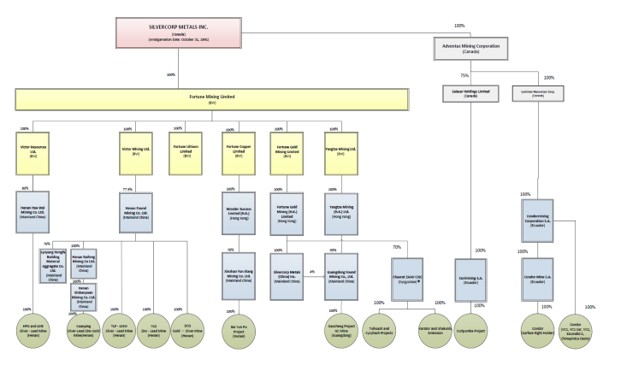
The chart set out below illustrates the corporate structure of the Company and its material subsidiaries, their respective jurisdictions of incorporation, the percentage of voting securities held and their respective interest in the Company’s material mining properties. Certain aspects of the ownership structure have been simplified.

*On April 28, 2026, the Company transferred 30% equity interest in Chaarat ZAAV CJSC to Kyrgyzaltyn, a state-owned entity of Kyrgyz Republic pursuant to the agreements with the National Investment Agency.
The Company is the sole shareholder of Fortune Mining Limited (“Fortune”) which was incorporated under the laws of the British Virgin Islands (“BVI”) on August 23, 2002, to be the holding company of several other subsidiaries which are parties to agreements relating to mineral properties in China. Fortune owns 100% of the following material subsidiary companies:
(a) | Victor Mining Ltd. (“Victor Mining”) was incorporated on October 23, 2003, under the laws of BVI and continued into Barbados on August 27, 2009, and back to the BVI on March 18, 2016. Victor Mining is a party to a cooperative agreement under which it has earned a 77.5% equity interest in Henan Found Mining Co. Ltd. (“Henan Found”), the Chinese company holding, among other assets, the following assets forming part of the Ying Property: (i) the Ying Property’s flagship silver-lead-zinc project (the “SGX Mine”) and a satellite silver-lead mine (the “HZG Mine”) located approximately 5 km south of the SGX Mine; (ii) a silver-lead mine in Tieluping (“TLP Mine”) approximately 11 km southeast of the SGX Mine; (iii) a silver-gold-lead-zinc mine in Haopinggou (the “HPG Mine”) northeast of the SGX Mine; (iv) a silver-lead-zinc mine in Longmen EAST (“LME Mine”) approximately 12 km southeast of the SGX Mine; (v) a silver-lead-zinc mine in Longmen West (the “LMW Mine”) approximately 2.4 km to the west of the LME Mine; and (vi) a development project in Dong Cao Gou (the “DCG Mine”), each in Henan Province. Henan Found holds a 100% interest of Shanxian Xinbaoyuan Mining Co. Ltd., which holds a 100% interest in the Kuanping silver-lead-zinc-gold project (the “Kuanping Project”). The remaining 22.5% interest in Henan Found is held |
10
by Henan Non-Ferrous Geological and Mineral Resources Group Co., Ltd., a state-owned enterprise owned by the Bureau of Non-ferrous Metals and Geological Minerals of Henan Province, and its affiliates.
(b) | Victor Resources Ltd. (“Victor Resources”) was incorporated on May 30, 2003, under the laws of the BVI and is a party to a cooperative agreement under which it earned an 80% equity interest in Henan Huawei Mining Co. Ltd. (“Henan Huawei”), the Chinese company, through agreements with Henan Found, holding a 100% beneficial interest in the HPG Mine and the LME Mine. |
(c) | Yangtze Mining Ltd. (“Yangtze Mining”) was incorporated on February 11, 2002, under the laws of the BVI. It holds a 100% equity interest in Yangtze Mining (H.K.) Ltd. (“Yangtze Mining HK”). Yangtze Mining HK holds a 95% equity interest in Guangdong Found Mining Co. Ltd. (“Guangdong Found”), a company incorporated on October 26, 2008, under the laws of the People’s Republic of China, that holds a 100% interest in the silver-lead-zinc exploration mine in Gaocheng (the “GC Mine”, “GC”, or “Gaocheng”) in Guangdong Province. In October 2018, Silvercorp Metals (China) Inc., a wholly owned subsidiary of the Company, acquired an additional 4% equity interest in Guangdong Found, and as a result, the Company now beneficially owns a 99% interest in Guangdong Found. The remaining 1% interest in Guangdong Found is held by Guoruiteng Mining Investment (Beijing) Co., Ltd., a private company owned by two Chinese nationals. |
(d) | Fortune Copper Limited was incorporated on August 23, 2002, under the laws of the BVI. It holds a 100% interest in Wonder Success Limited, a Hong Kong company which has a 70% equity interest in Xinshao Yun Xiang Mining Co. Ltd., which owns the BYP gold, lead, and zinc mine in Hunan Province (the “BYP Mine”). The BYP Mine was placed on care and maintenance in August 2014 due to required capital upgrades to sustain its ongoing production and the market environment. The Company has been conducting activities to apply for a new mining license. Although the process has taken longer than expected, the Company expects that some developments on the application will be achieved in Fiscal 2027. There is no guarantee that the new mining license for the BYP Mine will be issued, or if it is issued, that it will be issued under reasonable operational and/or financial terms, or in a timely manner, or that the Company will be in a position to comply with all conditions that are imposed thereon. Under China’s Regulation for Implementing the Foreign Investment Law, the Company’s operations in China are largely conducted as foreign-invested enterprises, over which the Company has control. See “Item 4 Description of the Business, 4.3 Chinese Mining Law”. |
(e) | Fortune Gold Mining Limited was incorporated on July 29, 2003, under the laws of the BVI. It holds a 100% interest in Fortune Gold Mining (H.K.) Limited, a Hong Kong company which has a 70% equity interest in ZAAV, which holds a 100% interest in the Chaarat ZAAV Project. |
The Company is also the sole shareholder of Adventus, which was incorporated under the federal laws of Canada on October 24, 2016 and holds several other subsidiaries with various exploration stage projects in Ecuador. Adventus owns 75% of Salazar Holdings Ltd., an entity existing under the laws of the Province of British Columbia and which holds 100% of Curimining S.A (“Curimining”), an Ecuadorian company holding a 100% interest in the El Domo Project. Adventus also owns 100% of Luminex Resources Corp. (“Luminex”), which owns 100% of the Condor Project.
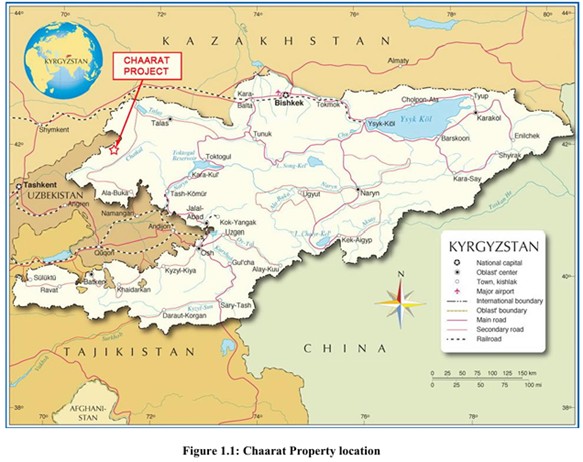
The only mineral properties that are currently considered to be material properties of the Company are (a) the Ying Mining District, Henan Province, China; (b) the GC Mine located in Guangdong Province, China; (c) the Curipamba-El Domo Project located in the provinces of Bolivar and Los Rios, Ecuador; (d) the Condor project, located in the Zamora-Chinchipe province, Ecuador; and (e) the Chaarat ZAAV Project, located in the Tien Shan belt of northwestern Kyrgyzstan. See “Item 5 Mineral Properties”.
11
ITEM 3GENERAL DEVELOPMENT OF THE BUSINESS
Silvercorp is a Canadian mining company producing silver, gold, lead, zinc, and other metals with a long history of profitability and growth potential. The Company’s strategy is to create shareholder value by focusing on generating free cashflow from long life mines; continued growth through extensive drilling for discovery; ongoing merger and acquisition efforts to unlock value; and long-term commitment to responsible mining and sound environmental, social, and governance (“ESG”). Silvercorp operates several silver-lead-zinc mines at the Ying Mining District in Henan Province, China and the GC silver-lead-zinc mine in Guangdong Province, China.
Silvercorp has been acquiring, exploring, developing, and operating mineral properties in China since 2003. Production at the SGX Mine at the Ying Mining District commenced on April 1, 2006, and since that time, several of the Company’s other properties at the Ying Mining District in Henan Province, China also commenced production. In addition, the Company’s GC Mine commenced production in July 2014.
(b) | Overview of Key Developments |
i. | Fiscal 2026 (year ended March 31, 2026) |
In Fiscal 2026, on a consolidated basis, the Company processed 1,475,512 tonnes of ore, up 12% compared to 1,312,695 tonnes in the year ended March 31, 2025 ("Fiscal 2025"). A total of 121,489 tonnes of gold ore were processed in Fiscal 2026, up 40% compared to 86,488 tonnes in Fiscal 2025. Approximately 8,723 ounces ("oz") of gold, 6.803 million oz of silver, or approximately 7.457 million oz of silver equivalent, plus 60.4 million pounds ("lb") of lead and 21.7 million lb of zinc were produced in Fiscal 2026, representing increases of 16% in gold production, and decreases of 2%, 2%, 3% and 7%, respectively, in silver, silver equivalent, lead and zinc production over Fiscal 2025.
In Fiscal 2026, the Company reported revenue of $438.1 million up 47% compared to $298.9 million in Fiscal 2025; cash flow provided by operating activities of $310.6 million, up $172.0 million compared to $138.6 million in the prior year; net loss attributable to equity holders of the Company of $9.9 million, or $0.05 loss per share, compared to net income attributable to equity holders of the Company of $58.2 million, or $0.29 earnings per share, in Fiscal 2025; and adjusted net income attributable to equity shareholders of $150.8 million, or $0.69 per share, after excluding the non-cash or one-time items, compared to $75.1 million or $0.37 per share in Fiscal 2025.
On April 23, 2025, the Company announced its construction plan for the El Domo Project in Ecuador, targeting production by the end of 2026 with an estimated cost of approximately $240.5 million, compared to the $247.6 million estimate in the 2021 feasibility study. The commercial contract for site preparation work under Package #1 had been awarded in January 2025 to CRCC 14 Bureau Group Co. Ltd., with earthworks already underway.
12
On May 12, 2025, the Company reported an updated independent mineral resource estimate (“MRE”) for its Condor gold project in Ecuador, prepared by SRK Consulting (Canada) Inc. effective February 28, 2025. The updated MRE focused on higher-grade material accessible through underground mining at the Camp and Los Cuyes deposits. At a 2.2 g/t gold equivalent cutoff grade, indicated underground mineral resources totaled 3.17 million tonnes containing approximately 0.34 million ounces of gold, 2.0 million ounces of silver, and 49.4 million pounds of zinc, while inferred underground mineral resources totaled 12.1 million tonnes containing approximately 1.38 million ounces of gold, 8.56 million ounces of silver, and 204.2 million pounds of zinc. Additional conceptual open pit constrained MRE were reported for the Soledad and Enma deposits. Initial metallurgical test work indicated laboratory gold recoveries of up to 96% at Camp and 88% at Los Cuyes based on cyanide leaching.
On May 26, 2025, the Company announced that the board of directors declared a semi-annual dividend of US$0.0125 per share to be paid to all shareholders of record at the close of business on June 6, 2025, with a payment date of the dividend scheduled on or before June 26, 2025. The payment was made on June 11, 2025.
On August 5, 2025, the Company announced that the Constitutional Court of Ecuador unanimously rejected the final legal challenge against the environmental license for the El Domo Project, upholding the validity of the license. The Court’s decision followed earlier rulings by local and provincial courts confirming that Ecuador’s Ministry of Environment, Water, and Ecological Transition complied with environmental consultation requirements prior to issuing the license. The El Domo Project is the first mining project in Ecuador to have conducted an environmental consultation aligned with the Escazú Agreement standards and that the consultation process received support from 98% of the population within the project’s area of influence.
On September 4, 2025, the Company announced the filing of a base shelf prospectus (the “Base Shelf Prospectus”) with the securities commissions in all of the provinces and territories of Canada and a corresponding registration statement in Form F-10 with the U.S. Securities and Exchange Commission, qualifying the Company to offer up to US$400 million of securities over a 25-month period that the Base Shelf Prospectus remains effective.
On September 10, 2025, the Company published its Fiscal 2025 Sustainability Report, detailing the Company’s environmental, social, and governance commitments, performance, and targets. During Fiscal 2025, the Company invested $1.3 million in local community initiatives, delivered more than 68,000 hours of employee training, reduced its Lost Time Incident Rate by 44% to 0.52, and achieved a 17% reduction in Scope 1 and 2 greenhouse gas emissions from its 2020 baseline. The Company also reported zero significant environmental incidents and introduced new policies related to biodiversity, tailings management, procurement, and board diversity. This report was prepared with reference to several international sustainability reporting frameworks, including GRI, TCFD, SASB, and ICMM standards.
On September 17, 2025, the Company announced the renewal of its normal course issuer bid (“NCIB”) program, effective September 19, 2025, allowing the repurchase of up to 8,747,245 common shares, representing approximately 4% of its issued and outstanding shares as of September 5, 2025. The repurchase program will remain in effect until September 18, 2026. The NCIB is intended to provide flexibility if market conditions result in its shares being undervalued relative to its mining and corporate assets. Repurchases may be made through the TSX, NYSE American, and alternative trading systems in Canada and the United States at prevailing market prices, subject to regulatory requirements. Under the previous NCIB program, the Company repurchased and cancelled 300,000 common shares at a weighted average price of CAD$4.51 per share.
13
On September 26, 2025, the Company reported its 2025 annual general meeting (“AGM”) results. All matters submitted for shareholder approval at its 2025 AGM held on September 26, 2025, were approved by the requisite majority of votes cast. A total of 108,216,233 common shares, representing 49.5% of outstanding shares as of the record date, were represented at the AGM. Shareholders approved the election of directors, re-approved the Company’s share-based compensation plan, and re-appointed Deloitte LLP as the Company’s auditor for the ensuing year.
On October 15, 2025, the Company reported that the Ying Mining District was affected by temporary mine closures. The GC Mine experienced temporary interruptions due to severe weather conditions. Construction activities advanced at both the Kuanping and El Domo projects, including ramp development, tunneling, material removal, tailings storage facility preparation, power line construction, and equipment procurement. The Company also initiated a preliminary economic assessment study for underground mining at the Condor Project.
On November 6, 2025, the Company announced that it had drawn the first $43.9 million under the Wheaton stream financing agreement for El Domo construction.
On November 7, 2025, the Company announced that its Board of Directors declared a semi-annual dividend of US$0.0125 per share to be paid to all shareholders of record at the close of business on November 28, 2025, with a payment date of the dividend scheduled on or before December 12, 2025. The payment was made on December 8, 2025.
On November 12, 2025, the Company announced retirement of Derek Liu as Chief Financial Officer effective November 10, 2025 and the appointment of Winnie Wang as Interim Chief Financial Officer. Ms. Wang previously served as CFO of the Company’s China Operations and brings more than 15 years of experience in corporate finance, accounting, treasury planning, and internal controls. The Company also appointed Lei Wu as Corporate Controller, responsible for financial reporting, planning, operations, project management, and treasury functions.
On December 22, 2025, the Company reported the results of a preliminary economic assessment (“PEA”) for the Condor gold project in Ecuador, outlining a proposed underground mining operation with a 13-year life of mine. At base case metal prices, the project is estimated to generate an after-tax net present value of $522 million and an internal rate of return of 29%, with initial capital costs of $292 million and a post-tax payback period of three years from commercial production.
On January 20, 2026, the Company announced it had entered into a share purchase agreement (the “Chaarat Share Purchase Agreement”) with Chaarat Gold Holdings Limited (“Chaarat Gold”). Pursuant to the Chaarat Share Purchase Agreement, the Company agreed to acquire a 100% interest in ZAAV, which holds a 100% interest in the mining license (~7 square kilometres) hosting the fully-permitted Tulkubash/Kyzyltash gold projects as well as surrounding exploration licenses (27.42 square kilometres) hosting the Karator and Ishakuld gold zones (the “Projects”) located in the Tien Shan area of the Kyrgyz Republic for cash consideration of US$92 million.
14
In connection with the Chaarat Share Purchase Agreement, the Company also entered into a cooperation agreement and a share purchase and shareholders’ agreement (the “Cooperation Agreements”) with the National Investment Agency under the President of the Kyrgyz Republic (the “NIA”). Pursuant to the Cooperation Agreements, it was agreed that (a) the Company shall transfer 30% interest in ZAAV to an entity designated by the Kyrgyz Republic for nil consideration; (b) a US$70 million payment to be made to the NIA shall be paid in two stages: (i) US$60 million upon the Kyrgyz Government issuing a waiver of its statutory pre-emptive right on the Projects and an extension of the validity period of ZAAV’s mining licence from 2032 to 2062; and (ii) US$10 million after the achievement of certain milestones. Subsequent to Fiscal 2026, the Company paid US$60 million to the NIA pursuant to the Cooperation Agreement on April 29, 2026, following the Government of the Kyrgyz Republic extending the mining license validity period to July 25, 2062. The Company also completed a restructuring under which the 30% free-carried interest in ZAAV was transferred to Kyrgyzaltyn, a wholly-owned entity of the Kyrgyz Republic.
The Projects are planned to be developed in two phases. Phase 1 contemplated a US$150 million commitment to develop the Tulkubash open-pit heap leach operation, expected to produce approximately 110,000 oz of gold annually for 3-4 years, once in production in 2027-2028. Phase 2 contemplated approximately US$400 million in investment to develop the Kyzyltash sulfide deposit into an open pit and underground mining operation with flotation, BIOX, and carbon-in-leach processing, potentially producing approximately 190,000 to 230,000 oz of gold annually for over 18 years starting from 2031.
On January 27, 2026, the Company announced the completion of its acquisition of ZAAV, following the Kyrgyz government’s waiver of its statutory pre-emptive right and the Company’s payment of $92 million to Chaarat Gold.
On February 4, 2026, the Company provided an updated construction budget and schedule for the El Domo Project in Ecuador. The total project budget increased to $284 million, mainly due to higher VAT, increased equipment and logistics costs, additional infrastructure and engineering requirements, local procurement initiatives, and an extended construction schedule. During 2025, the Company spent $44.5 million on construction activities, completed most archaeological clearance work, moved more than 2.6 million cubic metres of material, built roads and water management infrastructure, completed a 600-bed construction camp, and advanced process plant engineering and equipment procurement. Construction and permitting activities continued for the open pit mining contract, processing plant, external powerline, and backup diesel power systems.
On March 6, 2026, the Company announced the filing of an updated MRE technical report for the Chaarat ZAAV Project in the Republic of Kyrgyzstan, which was amended on June 24, 2026 to correct certain typographical errors. The amended report, titled “Amended NI 43-101 Technical Report and Updated Mineral Resource Estimate for the Tulkubash and Kyzyltash Chaarat Gold Project Republic of Kyrgyzstan,” has an effective date of October 15, 2025.
ii. | Fiscal 2025 (year ended March 31, 2025) |
In Fiscal 2025, on a consolidated basis, the Company processed 1,312,695 tonnes of ore, up 19% compared to 1,106,195 tonnes in the year ended March 31, 2024 ("Fiscal 2024"). A total of 86,488 tonnes of gold ore were processed in Fiscal 2025, up 48% compared to 58,262 tonnes in Fiscal 2024. Approximately 7,495 ounces ("oz") of gold, 6.948 million oz of silver, or approximately 7.589 million oz of silver equivalent, plus 62.2 million pounds ("lb") of lead and 23.3 million lb of zinc were produced in Fiscal 2025, representing increases of 3%, 12% and 11%, respectively, in gold, silver and silver equivalent production, and decreases of 2%, and 0.3%, respectively, in lead and zinc production over Fiscal 2024.
15
In Fiscal 2025, the Company reported revenue of $298.9 million up 39% compared to $215.2 million in Fiscal 2024; cash flow provided by operating activities of $138.6 million, up $47.1 million compared to $91.6 million in the prior year; and net income attributable to equity holders of the Company of $58.2 million, or $0.29 per share, compared to net income attributable to equity holders of the Company of $36.3 million or $0.21 per share in Fiscal 2024.
On April 26, 2024 the Company announced that it had entered into a definitive arrangement agreement (the “Arrangement Agreement”) pursuant to which the Company agreed to acquire all of the issued and outstanding common shares of Adventus (the “Transaction”) by way of a plan of arrangement. Concurrent with the execution of the Arrangement Agreement on April 26, 2024, Silvercorp and Adventus entered into an investment agreement pursuant to which Silvercorp subscribed for 67,441,217 Adventus Shares at an issue price of C$0.38 per share for aggregate gross proceeds of C$25,627,662, which placement was completed on May 1, 2024, resulting in Silvercorp holding approximately 15% of the then issued and outstanding Adventus Shares.
On July 5, 2024, Silvercorp announced it considered litigation brought by a group of plaintiffs which sought to void the environmental licence of the El Domo Project to be a Material Adverse Effect (as defined in the Arrangement Agreement). On July 31, 2024, the Company announced that the local court in Las Naves Canton, Bolívar Province, Ecuador rejected the litigation on July 24, 2024. The Court ruled that the Ecuadorian government correctly discharged its environmental consultation obligations prior to issuing an environmental licence for the Project. With this local court ruling in favour of Adventus, the Company proceeded to close the Transaction on the basis that closing conditions had been satisfied.
On July 31, 2024, the Company announced that it had completed its previously announced acquisition of Adventus whereby the Company acquired all of the issued and outstanding shares of Adventus (“Adventus Shares”) that it did not already hold, pursuant to a court-approved plan of arrangement under the Canada Business Corporations Act (the “Adventus Acquisition”). Under the terms of the Adventus Acquisition, shareholders of Adventus (other than the Company) received 0.1015 of one common share of Silvercorp (“Silvercorp Shares”) for each Adventus Share held at the effective time of the plan of arrangement (the “Exchange Ratio”). The Exchange Ratio represented a premium of 31% based on the 20-day volume weighted average prices (VWAP) of Silvercorp Shares on the TSX and Adventus Shares on the TSXV, both as at April 25, 2024, being the date prior to the announcement of the proposed Transaction. The implied equity value of the Adventus Acquisition was approximately C$200 million.
The El Domo Project is a permitted, construction stage copper-gold project, 75% owned by Adventus, covering approximately 172 ha with a buffer of 118 ha (2.9 km2 in total). The project is located in central Ecuador, approximately 150 km northeast of the major port city of Guayaquil - about a 3-hour drive. The project spans low-lying hills and plains between 300 to 900 m above sea level. In 2017, Adventus entered into an agreement with Salazar Resources Ltd. (“Salazar”) pursuant to which Adventus earned its majority interest in the El Domo Project by funding exploration and development expenditures of US$25 million over five years and meeting certain development obligations. In 2021, Adventus announced it had completed its earn-in option to obtain majority ownership (75%) of the project and entered into a shareholders agreement dated January 4, 2022 (the “Shareholders’ Agreement”) with Salazar, Salazar Holdings Ltd. (the 100% shareholder of Curimining S.A) and Curimining S.A. (the registered holder of the mining concessions comprising the El Domo Project). Pursuant to the Shareholders’ Agreement, Adventus is responsible to fund 100% of all capital costs to commercial production and is entitled to receive 95% of the free cash flows until all of its investments since 2017 are repaid, after which the project cash flows will be shared 75% to Adventus and 25% to Salazar.
16
The El-Domo Project is the subject of an Investment Contract announced on December 28, 2022, with the Government of Ecuador, which supports the development of the project and provides various financial, tax and legal incentives and economic development benefits. The Condor Project is also the subject of an Investment Agreement with the Government of Ecuador, which is intended to support the continued advancement of the project.
In order to develop the El Domo Project, Adventus entered into a precious metals purchase agreement dated January 17, 2022 (the “PMPA”) with Wheaton Precious Metals International Ltd. (“Wheaton”). The PMPA provides Adventus with access to an upfront cash consideration of $175.5 million and a $5.0 million equity commitment. Of this, $13.0 million was made available as an early deposit (the “Early Deposit”) for pre-construction activities, and $0.5 million for local community development initiatives (the “ESG Deposit”) prior to production. The remainder will be available in four installments during construction, subject to certain customary conditions precedent being satisfied. Under the PMPA, Wheaton will purchase 50% of the payable gold production until 145,000 ounces have been delivered, thereafter dropping to 33% for the life of mine; and 75% of the payable silver production until 4,600,000 ounces have been delivered, thereafter dropping to 50% for the life of mine. Wheaton will make ongoing payments for the gold and silver ounces delivered equal to 18% of the spot prices (“Production Payment”) until the value of gold and silver delivered less the Production Payment is equal to the upfront consideration of $175.5 million at which point the Production Payment will increase to 22% of the spot prices. An amount of $13.25 million under the Early Deposit and ESG Deposit was previously drawn but was subsequently repaid as announced by the Company on November 15, 2024.
The acquisition has been accounted for as an asset acquisition as it was determined that the mineral projects did not constitute a business as defined by IFRS 3 - Business Combination. The consideration paid along with the transaction costs incurred in connection with the acquisition of Adventus, was determined in accordance with IFRS 2 - Share-based Payment, and was allocated to the assets acquired and liabilities assumed based on their relative fair values.
The Company has been working to reorganize the Adventus operational structure and to advance the project. The Company has among other things, reviewed the execution plan, specifically the contracting plan, purchasing plan and construction sequence, completed an 800 m metallurgical drilling program to facilitate a metallurgical test work program aimed at optimizing the process flow sheet to improve gold recovery in copper concentrate, re-initiated the engineering works to optimize the mine layout and processing plant and is adjusting plans for surface water management infrastructure to simplify construction and reduce civil excavation and concrete requirements. Certain advance priority projects prior to commencing construction will also include site infrastructure preparation, including power and an access road, and reviewing and selecting suitable equipment and construction vendors.
On August 6, 2024, the Company announced that the Ministry of Energy and Mines of the Government of Ecuador issued a Resolution of Change of Phase for the El Domo Project which advanced the legal status of the El Domo Project from the Economic Evaluation Phase to the Exploitation Phase and allowed for the start of construction and subsequent operation of the mine. On August 21, 2024, the Company announced plans to initiate the process for construction preparation at the El Domo Project with a goal to bring the project into production.
On September 16, 2024, the Company announced the publishing of its annual Sustainability Report for fiscal 2024, detailing the Company’s ESG commitments, performance and targets. The report was prepared with reference to the GRI Standards 2021 of the Global Sustainability Standard Board (GSSB), as well as regarding the Sustainable Development Goals (SDGs) by the United National Global Compact (UNGC), the Recommendations of the Task Force on Climate-Related Financial
17
Disclosures (TCFD), the Global Industry Standard on Tailings by the International Council on Mining and Metals (ICMM) and the Sustainability Accounting Standards Board (SASB) standard on Metals and Mining.
On September 17, 2024, the Company announced the renewal of a NCIB allowing the Company to acquire up to 8,670,700 common shares of the Company, representing approximately 4% of the common shares issued and outstanding as of September 5, 2024 (“2024 NCIB”). The 2024 NCIB program is valid from September 19, 2024, to September 18, 2025. Purchases will be made at the discretion of the directors at prevailing market prices, through the facilities of the TSX, the NYSE American, and alternative trading systems in Canada and the United States, in compliance with the regulatory requirements. The Company purchased and cancelled 300,000 shares in Fiscal 2025.
On October 8, 2024, the Company announced that its Yuelianggou Mining License covering the SGX Mine and HZG Mine located in the western part of the Ying Property had been renewed for a further 11 years until September 24, 2035, with an increased capacity of 500,000 tonnes per year.
On November 11, 2024, the Company announced that the board of directors declared a semi-annual dividend of $0.0125 per share to be paid to all shareholders of record at the close of business on November 29, 2024, with a payment date of the dividend scheduled on or before December 13, 2024.
On November 15, 2024, the Company announced that the Provincial Court of Bolivar, in the province of Ecuador where the El Domo project is located, dismissed the appeal filed by the plaintiffs on November 12, 2024 in respect of the El Domo constitutional protective action, affirming the rights of the Company’s Ecuadorian subsidiary, Curimining to continue construction of the Project.
Further, the Company repaid the funds previously drawn by Adventus from Wheaton under the PMPA. As at September 30, 2024, Wheaton had advanced a total of $13.25 million. Pursuant to the PMPA, Adventus was required to deliver approximately 92.3 ounces of gold per month (at the gold prices of November 15, 2024, it would be equivalent to an annual interest rate of approximately 18.5%) starting July 2024, until the construction of El Domo reached certain milestones or these funds were repaid. As a result of the repayment, the PMPA’s full $175.5 million cash contribution was available to be drawn by Silvercorp during construction, subject to certain conditions.
On November 25, 2024, the Company issued unsecured Convertible Senior Notes ("Convertible Notes") under an indenture dated November 25, 2024 (the “Convertible Note Indenture”) and received gross proceeds of $150 million, before transaction costs of $6.6 million. The Convertible Notes mature on December 15, 2029, and bear interest at 4.75% per annum, payable semi-annually in arrears on June 15 and December 15 of each year, beginning June 15, 2025. In addition, the Convertible Notes are convertible at the holder’s option into common shares of the Company at any time prior to maturity at a fixed conversion rate of 216.0761 common shares per $1,000 principal amount, representing an initial conversion price of approximately $4.628 per share, subject to certain anti-dilution adjustments. Prior to December 20, 2027, the Company may not redeem the notes except in the event of certain changes in Canadian tax law. In the event of a fundamental change, the Company is required to offer to purchase its outstanding Convertible Notes at a cash purchase price equal to 100% of the principal amount plus accrued and unpaid interest, ensuring protection against major corporate transformations that could affect the value of the investment held by the holders.
On December 4, 2024, the Company reported its intention to develop the Condor Project, located in southern Ecuador as a high-grade underground mine.
18
On January 14, 2025, the Company reported completion of the construction of the No. 3 tailings storage facility and the new 1,500 tonne per day flotation production line at the Ying Mining District, Henan Province, China (the “Ying Property” or “Ying”) in early December 2024, on time and under budget. Both facilities are now fully operating as designed, following a one-month commissioning period.
With the addition of the new production line, the total milling capacity at Ying is expected to reach over 1.3 million tonnes per year, enough to process increased mining capacity at Ying, plus future production from the nearby Kuanping mine.
iii. | Fiscal 2024 (year ended March 31, 2024) |
For the year ended March 31, 2024, on a consolidated basis, the Company mined 1,117,118 tonnes of ore, up 5% compared to 1,068,983 tonnes of ore mined in the year ended March 31, 2023 (“Fiscal 2023”). Ore milled in Fiscal 2024 was 1,106,195 tonnes of ore, up 3% compared to 1,072,654 tonnes of ore milled in Fiscal 2023. A total of 58,262 tonnes of gold ore were processed in Fiscal 2024.
In Fiscal 2024, the Company produced approximately 7,268 ounces of gold, 6.2 million ounces of silver, plus 63.2 million pounds of lead and 23.4 million pounds of zinc, representing an increase of 65% in gold, essentially the same quantity of zinc, and decreases of 6% and 7%, respectively, in silver and lead produced over Fiscal 2023.
In Fiscal 2024, the Company reported revenue of $215.2 million up 3% compared to $208.1 million in Fiscal 2023; cash flow provided by operating activities of $91.6 million, up $5.9 million compared to $85.6 million in the prior year; and net income attributable to equity holders of the Company of $36.3 million, or $0.21 per share, compared to net income equity holders of the Company of $20.6 million or $0.12 per share in Fiscal 2023.
The Company announced on May 15, 2023 the signing of a non-binding term sheet with Celsius Resources Limited (ASX/AIM: CLA) (“Celsius”) regarding a proposed transaction pursuant to which Silvercorp would acquire all of the issued and outstanding shares of Celsius at a price of A$0.03 per share, in exchange for consideration comprising 90% Silvercorp shares and 10% in cash. On August 9, 2023, Silvercorp announced that negotiation of a definitive agreement had ceased. Subsequently, the Company participated in several follow-on private placements to preserve its participation rights and maintain its interest in Celsius.
On August 6, 2023, the Company announced the signing of a binding scheme implementation deed whereby Silvercorp would acquire all of the ordinary shares of OreCorp Limited (“OreCorp”), with each shareholder of OreCorp to receive A$0.15 in cash and 0.0967 of a Silvercorp share per share of OreCorp by way of a scheme of arrangement. Concurrently with entering into the scheme implementation deed, Silvercorp and OreCorp also entered into a placement agreement, whereby Silvercorp agreed to purchase 70,411,334 new fully-paid ordinary shares of OreCorp at a price of A$0.40 per OreCorp Share for aggregate proceeds of approximately $18.5 million (A$28 million). The placement was completed in August 2023, and as a result, the Company held approximately 15% of the total outstanding ordinary shares of OreCorp. Subsequent to the private placement, the Company acquired additional 3,477,673 OreCorp Shares on the market through the Australian Securities Exchange (the “ASX”) for approximately $1.1 million, and as of December 31, 2023, the Company held 73,889,007 OreCorp Shares, representing 15.74% of the total outstanding ordinary shares of OreCorp.
In November 2023, the deed was amended so that each shareholder of OreCorp would receive A$0.19 in cash and 0.0967 Silvercorp Share per share of OreCorp. As a result of Perseus Mining Limited acquiring a 19.9% relevant interest in OreCorp
19
and indicating they would vote against the Scheme, in December 2023, Silvercorp entered into a bid implementation deed pursuant to which Silvercorp agreed to acquire, by means of an off-market takeover offer, all of the shares of OreCorp for consideration comprising 0.0967 Silvercorp Shares and A$0.19 cash per share of OreCorp. On January 15, 2024, this offer was declared open. In March 2024, Silvercorp announced that it had been unable to obtain a minimum of 50.1% interest in OreCorp pursuant to its off-market takeover offer for OreCorp’s shares and elected not to exercise its right to match a competing offer for OreCorp. In April, 2024, the Company received approximately A$42.5 million after accepting the competing offer to acquire OreCorp and a $2.8 million break fee from OreCorp.
On September 15, 2023, the Company announced an NCIB which allowed the Company to acquire up to 8,487,191 common shares of the Company, representing approximately 4.8% of the common shares issued and outstanding as of September 5, 2023 (“2023 NCIB”). The 2023 NCIB program was valid from September 19, 2023, to September 18, 2024. The Company purchased and cancelled 191,770 shares in Fiscal 2024
In January 2024, Silvercorp and Auro Metals Inc. (TSXV: AURO), entered into an interest-free unsecured credit facility agreement with no conversion features to allow Auro to advance up to $1.0 million from Silvercorp. Silvercorp advanced $0.5 million to Auro and received 350,000 common shares of Auro for the granting of such facility, which has a maturity date of January 31, 2025. In April 2024, Silvercorp advanced the remaining $0.5 million to Auro (the “Credit Facility Agreement”).
In February 2024, Ms. Helen Cai was appointed to the board of directors of the Company as an independent director. Ms. Cai is a finance and investment professional with over two decades of experience; she is extensively versed in capital markets and all aspects of corporate finance from strategic planning to M&A transactions.
(c) | Production |
The following table summarizes the total metal produced, on a consolidated basis, in the past three years.
Years Ended March 31 | ||||||
| | 2026 | | 2025 | | 2024 |
Gold (ounces) |
| 8,723 |
| 7,495 |
| 7,268 |
Silver (‘000s ounces) |
| 6,803 |
| 6,948 |
| 6,204 |
Lead (‘000s pounds) |
| 60,379 |
| 62,170 |
| 63,171 |
Zinc (‘000s pounds) |
| 21,744 |
| 23,317 |
| 23,385 |
Ying Mining District
The Ying Mining District is the Company’s primary source of production, and consists of four mining licenses, including the SGX-HZG, HPG, TLP-LME-LMW, and DCG mines.
In Fiscal 2026, a total of 1,188,459 tonnes of ore was processed at the Ying Mining District, up 17% compared to 1,013,659 tonnes milled in Fiscal 2025.
Average head grades of ore processed were 193 g/t for silver, 2.4% for lead, and 0.4% for zinc compared to 212 g/t for silver, 2.8% for lead, and 0.6% for zinc in Fiscal 2025.
Metals produced at the Ying Mining District were approximately 8,723 oz of gold, 6.345 million oz of silver, or approximately 6.999 million oz of silver equivalent, 55.1 million lb of lead and 6.6 million lb of zinc, representing increase of 16% in gold and decreases of
20
1%, 1%, 3% and 23% in silver, silver equivalent, lead, and zinc, respectively, compared to 7,495 oz of gold, 6.431 million oz of silver, or approximately 7.072 million oz of silver equivalent, 56.8 million lb of lead, and 8.6 million lb of zinc in Fiscal 2025.
In Fiscal 2026, the cash cost was $79.71 per tonne of ore processed, down 10% compared to $88.46 in Fiscal 2025. Mainly attributable to i) a higher percentage of ore mined by the more mechanized and less expensive shrinkage mining method versus labour intensive re-suing mining and ii) lower unit overhead cost allocation due to an increase of 18% in ore processed. The AISC was $134.19 per tonne of ore processed, down 4% compared to $139.33 in Fiscal 2025, mainly attributable to lower cash cost, partially offset by an increase of 13% in sustaining capital expenditure as more tunnels were completed.
In Fiscal 2026, the cash cost per ounce of silver, net of by-product credits, was $0.01, compared to $0.62 in Fiscal 2025, mainly attributable to i) a higher percentage of using the more cost-efficient and mechanized shrinkage mining method and ii) an increase of $10.0 million in by-product credits from revenue of non-silver metals. The AISC per ounce of silver, net of byproduct credits, was $11.49, compared to $9.68 in Fiscal 2025, mainly due to an increase in sustaining capital expenditure as explained above.
GC Mine
In Fiscal 2026, a total of 287,053 tonnes were processed at the GC Mine, down 4% compared to 299,036 tonnes milled in Fiscal 2025.
Average head grades of ore milled were 59 g/t for silver, 0.9% for lead, and 2.7% for zinc compared to 67 g/t for silver, 0.9% for lead, and 2.5% for zinc in Fiscal 2025.
Metals produced at the GC Mine were approximately 0.458 million oz of silver, 5.2 million lb of lead, and 15.1 million lb of zinc, compared to 0.517 million oz of silver, 5.3 million lb of lead, and 14.765 million lb of zinc in Fiscal 2025. The decrease was mainly due to the lower head grade achieved.
The cash cost was $60.08 per tonne of ore processed, up 9% compared to $54.97 in Fiscal 2025. The AISC was $87.48, up 5%, compared to $83.36 in Fiscal 2025.
In Fiscal 2026, the cash costs per ounce of silver, net of by-product credits, at the GC Mine, were negative $14.23, compared to negative $14.71 in Fiscal 2025. The all-in sustaining costs per ounce of silver, net of by-product credits, were $4.70, compared to $3.12 in Fiscal 2025.
Capitalized Exploration and Development Expenditures
Ying Mining District
In Fiscal 2026, a total of 138,163 metres or $3.9 million worth of drilling were growth drilling and capitalized (Fiscal 2025 – 60,804 metres or $1.9 million). In addition, 105,216 metres or $52.2 million worth of sustaining or growth horizontal tunnels, raises, ramps, and declines were completed and capitalized (Fiscal 2025 – 96,521 metres or $46.3 million).
In Fiscal 2026, the Company has completed the mining permits extension and mining capacity expansion for the four mining permits of the Ying Mining District, which are the SGX, TLP-LM, HPG, and DCG mining permits. The total mining capacity allowed by the mining permits is 1.32 million tonnes per year. Following the grants of the new mining permits of SGX, TLP-LM, HPG, and DCG, the company is working on the renewal of the production safety licenses: For SGX, the safety facility design has been approved, and it is currently in the construction phase; For TLP, the safety facility design has been submitted to the emergency management department of Henan
21
Province for approval; For HPG, the safety facility design has been reviewed by the emergency management department, pending final signature; and for DCG, the safety facility design has been completed and submitted to the emergency management department for approval.
GC Mine
In Fiscal 2026, a total of 20,749 metres or $0.5 million worth of drilling were growth drilling and capitalized (Fiscal 2025 – 41,335 metres or $0.9 million). In addition, 11,597 metres or $4.9 million worth of sustaining or growth horizontal tunnels, raises, ramps, and declines were completed and capitalized (Fiscal 2025 – 12,165 metres or $5.2 million).The Company has commissioned Changsha Mining Research Institute to prepare the development and utilization plan to change the GC mine’s classification from a lead-zinc mine to a silver mine. GC mine has an annual production capacity of 300,000 tonnes, is considered a medium-scale operation and is limited to no more than three production levels operating simultaneously. Once classified as a silver mine, GC mine would be considered large-scale and would no longer be subject to this restriction.
Kuanping Project
The Kuanping Project has received all required permits and licenses, and mine construction commenced in Fiscal 2026. In Fiscal 2026, 7,562 metres or $4.3 million worth of growth tunnels, raises, ramps and declines were completed and capitalized, and 1,625 metres or $0.08 million worth of diamond drilling were capitalized.
BYP Mine
The BYP Mine was placed on care and maintenance in August 2014 due to required capital upgrades to sustain its ongoing production and the market environment. The Company is in the process of applying for a new mining license with Hunan Provincial Department of Natural Resources including a mining rights license and a mining permit. In Fiscal 2026, the Company engaged an independent firm to conduct studies, including a mineral resources estimate update as per the regulations in China which has been completed and under the filing process. In Fiscal 2026, the application of the mining rights license has been filed and is expected to be approved in Fiscal 2027.
El Domo Project
The Company acquired the El Domo Project through the acquisition of Adventus on July 31, 2024. On April 16, 2026, the Company issued an updated construction plan and schedule. The total estimated costs ($283.6 million) and schedule remain unchanged from the February 4, 2026 news release.
During the year ended March 31, 2026, approximately 2.7 million cubic metres of material were removed with $45.8 million of expenditures capitalized. Construction at the El Domo project continued to advance in Q4 Fiscal 2026 despite heavy rainfall. During the quarter, approximately 0.4 million cubic metres of material were excavated. Cumulative earthmoving volumes have now reached 58% of the total design volume for Construction Package 1, with activities focused on haul road development, non-contact water channels, and tailings storage facility (“TSF”) Starter Dam foundation excavation.
Construction contracts for three sections of the external power lines and 3 substations were awarded to qualified Ecuadorian contractors this past September and recently received formal approval from the Corporación Nacional de Electricidad.
22
Klohn Crippen Berger (KCB) mobilized its technical team to site to provide specialist Construction Quality Assurance (“CQA”) of TSF construction. To support ongoing operations and the ramp-up in activity, the Company maintained a regional workforce of 372 personnel as of March 31, 2026. Infrastructure development remains on schedule, highlighted by the timely completion of the ROM ore shed. Concurrently, earthworks and site preparation for the process plant were completed in line with the updated budget and schedule, supported by continuous rock blasting and site leveling operations.
As a key milestone, the Company executed and signed the definitive mining contract with China Railway 19th Bureau Group Co., Ltd. (“CRCC 19”) in early February 2026 for open-pit mining and stripping for the Construction Period and first 5 Operation Periods. CRCC 19 mobilized personnel and equipment to site immediately and transitioned into active construction, including access road development to the open pit and initial stripping preparation. Complementing this, the construction team completed the installation of 80 prefabricated modules for the Phase 2 construction camp, positioning the project to accommodate the peak workforce requirement.
Condor Project
The Condor Project in southern Ecuador is 100% owned by the Company and was acquired through the purchase of Adventus on July 31, 2024.
On May 12, 2025, the Company reported an updated independent mineral resources estimate, focused on the higher-grade material that would be accessible through underground mining and prepared in accordance with NI 43-101.
In Fiscal 2026, total expenditures incurred and capitalized were $3.0 million, in which 2,268 metres of diamond drilling was completed for the purpose to define and upgrade the mineral resources to support potential underground mining. A PEA study for an underground mining operation was completed in Q3 Fiscal 2026. The PEA underscores significant potential for the project. The water permits have been approved by the relevant government authorities. Technical reports for the environmental license were also completed and submitted to the related government authorities for review. The Environmental Impact Study ("EIS") for the Condor Project has been approved by the Ministry of Energy and Mines.
The Company initiated the Free, Prior and Informed Consultation ("FPIC") and Citizen Participation Process ("PPC") required to obtain the small-scale mining environmental license, targeted for Q2 F2027. Once this license is secured, the Company will commence the development of underground access tunnels into the Camp and Los Cuyes deposits to facilitate advanced underground exploration and resource definition.
23
ITEM 4DESCRIPTION OF THE BUSINESS
Silvercorp’s principal products and its sources of sales are silver-bearing lead and zinc concentrates. At present, Silvercorp sells all its products to local smelters or companies in the mineral products trading business.
For each of the Company’s two most recently completed fiscal years, revenues for each category of products are as follows:
In 000s’ $ | | 2026 | | 2025 |
Silver (Ag) |
| 316,391 |
| 186,756 |
Lead (Pb) |
| 57,743 |
| 60,014 |
Zinc (Zn) |
| 22,955 |
| 26,023 |
Gold(Ag) | | 31,493 | | 17,816 |
Other | | 9,823 | | 8,286 |
Additional information is provided in the Company’s financial statements and management’s discussion and analysis for its most recently completed fiscal year.
The mining industry is intensely competitive, and the Company competes with many companies possessing similar or greater financial and technical resources. The Company’s competitive position is largely reliant upon its ability to maintain a high margin operation, resulting from relatively high-grade resources, and lower production cost in China compared to the cost of other producers outside China. The Company’s competitive advantage also results from the quality of its concentrates and its proximity to local smelters.
In Fiscal 2026, the Company processed a total of 1,475,512 tonnes of ore and produced approximately 6.8 million ounces of silver, 8,723 ounces of gold, 60.4 million pounds of lead, and 21.7 million pounds of zinc. Ore processed surpassed the higher end of the guidance and metal production were below the guidance due to lower head grades.
In Fiscal 2025, the Company processed a total of 1,312,695 tonnes of ore and produced approximately 7,495 ounces of gold, 6.9 million ounces of silver, 62.2 million pounds of lead, and 23.3 million pounds of zinc.
In Fiscal 2024, the Company processed a total of 1,106,195 tonnes of ore and produced approximately 7,268 ounces of gold, 6.2 million ounces of silver, 63.2 million pounds of lead, and 23.4 million pounds of zinc.
As of March 31, 2026, the Company had 1,367 employees at the Ying Mining District (including 25 at the Kuanping Project), 286 at the GC Mine, 4 at the BYP Mine, 59 at Silvercorp Beijing corporate office, 34 at the Vancouver corporate office, 339 for our operations in Ecuador, and 53 for our operations in the Kyrgyz Republic.
Fiscal 2027 Outlook
Production and production costs
In Fiscal 2027, the Company expects to process 1,526,600 to 1,607,000 tonnes of ore, yielding approximately 9,500 to 10,000 oz of gold, 6.8 to 7.1 million oz of silver, or 7.5 to 7.8 million ounces of silver equivalent, 62.7 to 65.8 million lb of lead, and 22.3 to 23.4 million lb of zinc. The guidance represents increases of 3%-9% in ore processed, and 9% to 15% in gold, 0.04% to 4% in silver, 4% to 9% in lead, and 3% to 8% in zinc metal production compared to the Fiscal 2026 results.
24
The Ying Mining District plans to process 1,237,000 to 1,302,000 tonnes of ore, including nominal development ore from Kuanping, to produce 9,500 to 10,000 oz of gold, 6.4 to 6.6 million oz of silver, or 7.1 to 7.3 million ounces of silver equivalent, 56.4 to 59.2 million lb of lead, and 6.8 to 7.1 million lb of zinc for Fiscal 2027. This production guidance represents production increases of 4% to 10% in ore, 9% to 15% in gold, 0.1% to 4% in silver, 2% to 7% in lead and 3% to 8% in zinc, compared to the Fiscal 2026 results.
The cash cost at the Ying Mining District is expected to be $88.2 to $90.4 per tonne of ore, compared to the cash cost of $79.71 in Fiscal 2026. The all-in sustaining cost (AISC) is estimated at $155.4 to $161.2 per tonne, compared to the AISC of $134.19 recorded in Fiscal 2026. The higher cash cost and AISC are due to anticipated increases in contractor unit costs and more development tunnels and facilities planned for higher ore production in Fiscal 2027. More details on the near and longer term mine plan will be contained in an updated NI 43-101 technical report expected to be released in the coming weeks.
The GC Mine plans to process 290,000 to 305,000 tonnes of ore to produce 0.46 to 0.49 million oz of silver, 6.3 to 6.6 million lb of lead, and 15.5 to 16.3 million lb of zinc. Fiscal 2027 production guidance at the GC Mine represents production increases of 1% to 6% in ore and 0.4% to 7% in silver, 20% to 26% in lead and 2% to 8% in zinc compared to the Fiscal 2026 results.
The cash cost at the GC Mine is expected to be $63.1 to $64.6 per tonne of ore, compared to $60.08 recorded in Fiscal 2026. The AISC is estimated at $90.4 to $93.3 per tonne of ore processed, compared to $87.48 recorded in Fiscal 2026 as more exploration tunneling has been planned in Fiscal 2027.
The consolidated cash cost in Fiscal 2027 is expected to be $83.3 to $85.4 per tonne, while the consolidated AISC is expected to be $155.3 to $161.2 per tonne.
Development and Capital Expenditures for China Operations
The table below summarizes the capital expenditure the Company expects to be incurred for our projects in Fiscal 2027.
| | | F2027 Guidance | ||||||
| | | Ying Mining | | | | | | |
| | | District | | GC Mine | | Kuanping | | Total |
| Ramp and Development | (Metres) | 53,200 |
| 4,500 |
| 7,600 |
| 65,300 |
| Tunneling¹ | ($ Million) | 37.2 |
| 2.7 |
| 3.9 |
| 43.8 |
| Exploration Tunneling | (Metres) | 90,200 |
| 14,200 |
| 4,400 |
| 108,800 |
Capitalized | | ($ Million) | 35.3 |
| 5.9 |
| 1.4 |
| 42.6 |
Expenditures | Diamond Drilling | (Metres) | 91,100 |
| 34,300 |
| 5,300 |
| 130,700 |
| | ($ Million) | 2.8 |
| 0.8 |
| 0.2 |
| 3.8 |
| Facilities and Equipment¹ | ($ Million) | 26.1 |
| 0.7 |
| 1.3 |
| 28.1 |
| No. 3 Mill | ($ Million) | 22.7 |
| — |
| — |
| 22.7 |
| Total | ($ Million) | 124.1 |
| 10.1 |
| 6.8 |
| 141.0 |
Note 1: Items included in AISC
25
Ying Mining District
The total capital expenditure at the Ying Mining District in Fiscal 2027 is estimated at $124.1 million as the Company continues to increase ore production and grow its mineral resources. The Company plans to spend:
| ● | $37.2 million to develop 53,200 metres of ramps and tunnels, enabling access for mining of new areas where exploration has identified additional material, to be outlined in the upcoming technical report; |
| ● | $35.3 million to develop 90,200 metres of exploration tunnels and to spend $2.8 million to drill 91,100 metres of exploration diamond drill holes; |
| ● | $26.1 million in facilities and equipment upgrades. Major items include $6.8 million for mining equipment replacement, $7.6 million for waste dump construction, $4.5 million for substation upgrades and $5.6 million for infrastructure and the TSF; and |
| ● | $22.7 million out of the total $31.6 million to build a new mill, the No. 3 Mill, expected to add 3,000 tonnes per day of capacity, and be commissioned in Q1 Fiscal 2028. |
The No. 3 Mill is under design and construction, and intended to meet the increasing demand on ore processing at the Ying Mining District where annual mine throughput is expected to reach 1.6 million tonnes per year by fiscal year 2029. The No. 1 Mill will be decommissioned, leaving Ying with a net effective 6,500 tonnes per day of milling capacity.
26
The following table summarizes the estimated budget and construction schedules for the new Mill:
| | | Estimated Expenditures | |||||
Category | Description | Target | (in millions of US$) | |||||
| | Completion | | | Beyond Fiscal | | | |
| | Schedule | | Fiscal 2027 | 2027 | | Total | |
| Land Lease & Rezoning | Apr-26 | | 0.6 | | — | | 0.6 |
Design & | Design & Engineering | May-26 |
| 0.2 |
| — |
| 0.2 |
Permitting | Environmental & Safety Assessment | Jul-26 |
| 0.1 |
| — |
| 0.1 |
| Site Preparation | Apr-26 |
| 0.8 |
| 0.3 |
| 1.1 |
| Road Construction | Jun-27 |
| 0.4 |
| 0.2 |
| 0.5 |
Construction & | Mill Construction | Mar-27 |
| 6.5 |
| 2.8 |
| 9.2 |
Equipment | Equipment Acquisition | Nov-26 |
| 10.8 |
| 0.6 |
| 11.4 |
| Installation | Mar-27 |
| 1.0 |
| 2.7 |
| 3.7 |
| Contingency | Apr-27 |
| 2.4 |
| 2.4 |
| 4.7 |
Total Expenditures | |
| 22.7 |
| 8.9 |
| 31.6 | |
| ● | Development tunneling, equipment replacement and facilities upgrades, other than the new mill, have been included in AISC. |
GC Mine
The total capital expenditure at the GC Mine in Fiscal 2027 is estimated at $10.1 million to maintain its production and mineral resources. The Company plans to spend:
| ● | $2.7 million to develop 4,500 metres of ramps and tunnels; |
| ● | $5.9 million to develop 14,200 metres of exploration tunnels and to spend $0.8 million to drill 34,300 metres of exploration diamond drill holes; and |
| ● | $0.7 million on equipment replacement, facility upgrades and construction, which is also included in AISC. |
| ● | Development tunneling, equipment replacement and facilities upgrades have been included in AISC. |
Kuanping Project
Underground mine construction continues as preparations for production move forward, with a total investment of $6.8 million which includes $3.9 million for 7,600 m of ramp and tunnel development, $1.4 million for 4,400 m of exploration tunnels, $0.2 million for 5,300 m of diamond drilling and $1.3 million for equipment and facilities.
27
Development and Capital Expenditures for Ecuador Operations
El Domo Project
The table below summarizes the costs to construct the El Domo Project:
| | | | Fiscal 2026 | | Fiscal 2027 | | Total | |||
| | | | ($Million) | | ($Million) | | ($Million) | |||
1 |
| Package #1 - Site preparation/Roads/Channel/TSF/SWD | | $ | 29.2 | | $ | 27.7 | | $ | 56.9 |
2 |
| Package #2 – Open Pit Mining and Stripping | |
| 7.0 | |
| 23.1 | | | 30.1 |
3 |
| Package #3 - Processing Plant Construction and Equipment | |
| 14.0 | |
| 36.1 | | | 50.1 |
4 |
| Construction and Permanent Camps | |
| 2.0 | |
| 3.0 | | | 5.0 |
5 |
| Packages #4,5 -Site Infrastructure (bypass roads, powerline, back up generators, water treatment plant) | |
| 16.0 | |
| 23.8 | | | 39.8 |
|
| Direct costs sub-total | | $ | 68.2 | | $ | 113.7 | | $ | 181.9 |
6 |
| Owner's Contingency | |
| 13.6 | |
| 11.5 | |
| 25.1 |
7 |
| Owner's Cost | |
| 12.0 | |
| 12.8 | |
| 24.8 |
8 |
| Value added tax (VAT) | |
| 8.2 | |
| 21.8 | |
| 30.0 |
|
| Total | | $ | 102.0 | | $ | 159.8 | | $ | 261.8 |
The total budget for the El Domo project remains unchanged at $283.6 million, consistent with the February revised budget, with an expected completion date of July 1, 2027. Spending in Q4 Fiscal 2026 totaled $15.9 million. Key activities included site preparation for the processing plant, construction of the ore shed, camp and internal roads, and ordering of major equipment.
Condor Project
In Fiscal 2027, the Company plans to obtain the environmental permit for small-scale mining, which will then allow the development of two 1,500 metre long underground tunnels totaling 3,000 metres that will provide access to the main ore bodies and to carry out underground drilling to upgrade mineral resource categories into measured and indicated. Based on these results, a Pre-Feasibility or Feasibility Study Report can be completed for a 5,000 t/d underground mine, processing plant and related tailings storage facility per the PEA dated December 22, 2025. The Company expects to pool with other property owners that have “small-scale mining permits” and the local community to build a 1,000 tonne per day mill, TSF starter dam, and associated infrastructure. The total capital expenditures at the Condor Project are estimated at $10.9 million in Fiscal 2027.
Specialized Skill and Knowledge
Our business requires specialized skills and knowledge, certain of which are in high demand and in limited supply. Such skills and knowledge include the areas of permitting, engineering, geology, metallurgy, logistical planning, implementation of exploration programs, mine construction and development, mine operation, as well as legal compliance, finance and accounting. We have highly qualified management personnel and staff, an active recruitment program, and believe that persons having the necessary skills are generally available. We have found that we can locate and retain competent employees and consultants in such fields. We do not anticipate having significant difficulty in recruiting other personnel as needed. Training programs are in place for workers that are recruited locally.
28
Competitive Conditions
The exploration and mining business is a competitive business. We compete with numerous other companies and individuals in the search for and the acquisition of quality properties, mineral claims, permits, concessions and other mineral interests, as well as recruiting and retaining qualified employees.
Business Cycles
The mining business is subject to mineral prices and investment climate cycles. The marketability of minerals is also affected by worldwide economic and demand cycles. It is difficult to assess whether the current commodity prices are long-term trends, and there is uncertainty as to the recovery, or otherwise, of the world economy. If global economic conditions weaken and commodity prices decline as a consequence, a continuing period of lower prices could significantly affect the economic potential of the Company’s projects.
International Operations
Our principal mining operations and assets are in China and Ecuador, and the Kyrgyz Republic. Our operations are exposed to various levels of political, economic and other risks and uncertainties. These risks and uncertainties include, but are not limited to, government regulations (or changes to such regulations) with respect to restrictions on production, export controls, income taxes, royalties, excise and other taxes, expropriation of property, repatriation of profits, environmental legislation, land use, water use, local ownership requirements and land claims of local people, regional and national instability and security, mine safety and sanctions. The effect of these factors cannot be accurately predicted. See “Item 4.3 Laws and Regulations Related to Mining and Foreign Investments in China and Ecuador, and the Kyrgyz Republic”, and “4.4 Risk Factors below”.
Economic Dependence
The Company’s business is not substantially dependent on any contract such as a contract to sell a major part of its products or services or to purchase a major part of its requirements for goods, services or raw materials, or on any franchise, license or other agreements to use a patent, formula, trade secret, process or trade name upon which its business depends.
Bankruptcy and Similar Procedures
There are no bankruptcy, receivership or similar proceedings against the Company, nor is the Company aware of any such pending or threatened proceedings. There have not been any voluntary bankruptcy, receivership or similar proceedings by the Company within the three most recently completed financial years or currently proposed for the current financial year.
4.2Corporate Governance, Safety, Environment and Social Responsibility
The Company’s core objectives are to be safe, efficient, and sustainable, and operate responsibly with the environment and cooperatively with the local communities. The Company strives to build a strong cooperative culture centered around our key values of respect, equality, and responsibility, and aim to deliver social and economic benefits while creating shareholder value.
As a responsible miner, the Company is committed to integrating environmental, social, and governance factors into our business strategies and generating impactful changes in the communities in which the Company works and lives. Through the integration of ESG factors into our strategic planning, operations, and management, the Company is able to bring about sustainable economic, social,
29
and environmental value to all stakeholders. Details of our ESG performance will be provided in the Company’s Fiscal 2026 Sustainability Report, which is expected to be available in the second quarter of Fiscal 2027.
Corporate Governance
The Corporate Governance and Nominating Committee of the Board of the Company reviews the Company’s policies on an annual basis, including Anti-Corruption Policy, Code of Ethical Conduct, Clawback Policy, Corporate Disclosure Policy, and Whistleblower Policy, which are then approved by the Board of the Company. All of the Company’s directors and officers were re-certified with all the policies, confirming they are familiar with and acknowledge the contents of the Company’s policies, and committing to fulfill them and to report any violation. The Company also regularly trains its critical employees in anti-corruption practices. In Fiscal 2024, the Sustainability Committee of the Board of the Company adopted a Community Relations Policy, a Human Rights Protection Policy, an Environmental Protection Policy, and an Occupational Health and Safety Policy, which were then approved by the Board of the Company.
On March 26, 2025, the Board adopted the Board Diversity Policy, Biodiversity Policy, Procurement Policy and Tailings Facility Policy, and revised the Environmental Protection Policy, as proposed by the Sustainability Committee.
For more information on the Company’s Corporate Governance practices, please review the Company’s Annual Information Form and Management Information Circular available on SEDAR+ at www.sedarplus.ca, EDGAR at www.sec.gov, and the Company’s website at www.silvercorpmetals.com.
Health, Safety and Environment
The Company prioritizes environmental protection, as well as ensuring a safe workplace for all employees and contractors at all our sites. In an effort to further illustrate the Company’s commitment to strengthening our management team, both the Ying Mining District and GC Mine have successfully passed the annual review for the Environmental Management System (ISO 14001) certification in Fiscal 2026.
Safety is a top priority at Silvercorp. In Fiscal 2026, the Company arranged 1,607 safety training sessions, which covered 100% of workers at the Ying Mining District and the GC Mine.
In response to associated occupational health risks, the Company further improved its risk identification and management process. Both the Ying Mining District and GC Mine have successfully passed the annual review for the Occupational Health and Safety Management System (ISO 45001) certification in Fiscal 2026.
In addition to the “Green Mine” certification at SGX-HZG, TLP-LM, and HPG mines at the Ying Mining District and the GC Mine, the DCG mine at the Ying Mining District is also in the process to apply for the certification of the “Green Mine”. In Fiscal 2026, the Company processed approximately 494,022 tonnes of waste rock from the Ying Mining District.
Social Responsibility and Economic Value
The Company is committed to creating sustainable value in the communities where our people work and live. Guided by research conducted by our local offices, the Company participates in and contributes to numerous community programs that typically centre on education and health, nutrition, environmental awareness, local infrastructure and fostering additional economic activity. In
30
addition to the taxes and fees paid to various levels of government in China, in Fiscal 2026, the Company also contributed approximately $3.15 million to social programs.
Since the Company’s acquisition of Adventus, the Company has been focused on integrating the Company’s procedures and policies, including ESG policies, in our operations in Ecuador with continued investment in social and community. One of the key focuses will be the promotion of local trade and production, prioritizing productive chains that generate sustainable economic opportunities to the community. The Company invested and continued to promote sports and cultural spaces for children and adolescents, promoting integral development and family participation as a key element.
4.3Laws and Regulations Related to Mining and Foreign Investments
Currently, the Company’s material properties are located in China, Ecuador, and Kyrgyzstan.
Mineral Resources Law in China
Exploration for and exploitation of mineral resources in China are governed by the Mineral Resources Law of the People’s Republic of China which was first enacted in 1986 and has been revised several times since then. The latest revision was adopted on November 8, 2024, and came into effect on July 1, 2025.
The Mineral Resources Law regulates the exploration, development, utilization, and management of mineral resources in China. It defines mineral resources as non-renewable natural resources found on or under the earth’s surface, including metallic minerals, non-metallic minerals, and fossil fuels.
Some key provisions of the Mineral Resources Law include:
| ● | Ownership of mineral resources: The law states that all mineral resources in China belong to the state, and the state has the right to grant exploration and mining rights to qualified individuals or organizations. |
| ● | Exploration and mining rights: Individuals or organizations must obtain exploration and mining rights from the government before engaging in these activities. These rights are granted by governments through a competitive bidding process, auction or listing, unless in very limited circumstances such as when the projects are related to rare earth and radioactive minerals, or key construction projects approved by the State Council, where mining rights can be granted by written transfer agreement between the government and the applicants. |
| ● | Environmental protection: The law requires mining companies to take measures to protect the environment and minimize the impact of their operations on surrounding ecosystems. |
| ● | Resource conservation: The law also mandates the conservation of mineral resources and requires companies to adopt efficient mining practices. |
| ● | Safety regulations: The law includes provisions related to safety in mining operations, including requirements for safety equipment, training for workers, and regular safety inspections. |
| ● | Financial obligations: Mining companies are required to pay fees and taxes to the government, including exploration fees, mining rights fees, resource taxes, and land use fees. |
The Mineral Resources Law provides for equal legal status for domestic enterprises and enterprises with foreign investment, security and transferability of mineral titles and exclusivity of mining rights. Exploration and mining rights grant the right to explore and exploit
31
minerals. The holder of an exploration right has the privileged priority to obtain mining right to the mineral resources within the exploration area, provided the holders meet the conditions and requirements specified in the Mineral Resources Laws.
The Mineral Resources Law is subject to further revision through various notices and guidelines issued by different government agencies to regulate and streamline the administrative approval process and promulgate new laws to improve the regulation of mineral resources. It also places a stronger emphasis on safety and environmental protection within the mining industry.
Environmental Protection Law
The Ministry of Ecology and Environment is responsible for the supervision of environmental protection in, establishment and implementation of national standards for environmental quality and discharge of pollutants for, and supervision of the environmental management system of, the Chinese government. Environmental protection bureaus at the county level or above are responsible for environmental protection within their jurisdictions.
The Environmental Protection Law of China requires entities that operate production facilities that may cause pollution or produce other toxic materials to take steps to protect the environment and establish an environmental protection and management system. The system includes the adopting of effective measures to prevent and control exhaust gas, sewage, waste residues, dust or other waste materials. Entities discharging pollutants must register with the relevant environmental protection authorities.
The Environmental Protection Law of China and the Administrative Regulations on Environmental Protection for Construction Project stipulate that prior to the construction of new facilities or expansion or transformation of existing facilities that may cause a significant impact on the environment, a report on the environmental impact of the construction project needs to be submitted to the relevant environmental protection authority for approval. Environmental protection facilities shall be designed, constructed and put into use concurrently with the main production facilities. The newly constructed production facilities may not be operated until the relevant authority is satisfied after inspection that accompanied environmental protection facilities are in compliance with all relevant environmental protection standards.
Under the Mineral Resources Law of China, the amended Land Administration Law of China and Regulation on Land Rehabilitation, exploration of mineral resources must be in compliance with the legal requirements on environmental protection so as to prevent environmental pollution. If any damage is caused to cultivated land, grassland or forest as a result of exploration or mining activities, mining enterprises must restore the land to a state appropriate for use by reclamation, re-planting trees or grass or such other measures as appropriate to the local conditions. Mining enterprises are required to submit a rehabilitation plan when applying for construction land or mining rights and are required to include land rehabilitation expenses in their production costs or in their gross investment in construction projects. At completion of the rehabilitation stipulated in the plan, the rehabilitation is required to pass an acceptance examination conducted by the relevant government authority. If the rehabilitation is not completed or does not comply with the relevant examination requirements, the mining enterprise must pay a fee for land rehabilitation.
Upon closure of a mine, a report in relation to land rehabilitation and environmental protection must be submitted for approval. Enterprises which fail to perform or satisfy the requirements on land rehabilitation may be penalised by the relevant land administration authority.
The Ministry of Ecology and Environmental shall formulate national standards on emission of pollutants in accordance with the national standards on environmental quality, and the State economic and technological conditions. Governments at the provincial level and of the autonomous regions and municipalities may formulate their respective local standards on the discharge of pollutants
32
for items not specified in the national standards. These local governments may formulate local standards which are more stringent than the national ones for items already specified in the national standards. Pursuant to the requirements under the amended Law on Prevention of Water Pollution of China, the amended Law on Prevention of Air Pollution of China, and Law on Environmental Protection Tax of China, Enterprises and producers that directly discharge taxable pollutants into the environment are the taxpayers of environmental protection tax and shall pay environmental protection tax in accordance with the provisions of the Law. Taxpayers who file quarterly returns shall, within fifteen days from the end of the quarter, file tax returns and pay taxes to the tax authorities.
Under the amended Law on Prevention of Environmental Pollution Caused by Solid Waste of China, entities and individuals collecting, storing, transporting, utilising or disposing of solid waste must take precautions against the spread, loss, and leakage of such solid waste or adopt such other measures to prevent such solid waste from polluting the environment.
The penalties for breach of the environmental protection laws vary from warnings, fines, suspending production or operation to other administrative sanctions, depending on the degree of damage or the results of the incidents. The responsible person of the entity may be subject to criminal liabilities for serious breaches resulting in significant damage to private or public property or personal injury or death.
As the environmental protection is under the administration and supervision of authorities that are distinct from the ones issuing the exploration and mining permits, the breach of the relevant environmental protection laws would not entail revocation of the exploration and mining permits directly. However, the environmental protection authorities may seek cooperation from the authorities in charge of the issuance of such permits, which are competent to revoke the exploration and mining permits pursuant to the Mineral Resources Law of China.
Mine Safety Production Law
The Chinese government has formulated a relatively comprehensive set of laws and regulations on production safety, including the Law on Production Safety of China, the Law on Mine Safety of China, the Law on Fire Protection of China, the Law on Road Traffic Safety of China, the Law on Special Equipment Safety of China, the Law on Emergency Response of China, the Law on Occupational Disease Prevention and Control of China as well as several regulations, such as the Safety Production License, etc., which pertain to the mining, processing and smelting operation of the mining industry. The Ministry of Emergency Management is responsible for the overall supervision and management of production safety nationwide while the departments in charge of production safety at the county level or above are responsible for the overall supervision and management of the production safety within their own jurisdictions.
The State implements a licensing system for production safety of mining enterprises. No mining enterprise may engage in production activities without holding a valid production safety certificate. Enterprises which fail to fulfil the production safety conditions are not allowed to carry out any production activity. Mining enterprises which have obtained the production safety certificate may not lower their production safety standards and are subject to the supervision and inspection by the licensing authorities from time to time. If the licensing authorities are of the opinion that the mining enterprises do not fulfil the production safety requirements, the production safety certificate may be withheld or revoked. At the same, the State implements a system of registered safety engineer and mining enterprises should have registered safety engineers engaged in safety production management work.
The State has also formulated a set of national standards on production safety for the mining industry. In general, the mine design must comply with the production safety requirements and industry practice.
33
A mining enterprise must establish a management body or a designated safety management team to be responsible for production safety matters. Education and training on production safety must be provided to workers to ensure that they fully understand the regulations and the procedures required for production safety and are able to master the necessary skills for operation safety for their own positions. Those who do not receive this education and training are not permitted to work at the mine.
The penalties for breach of production safety laws vary from warnings, fines, suspension of production or operation and other administrative sanctions, depending on the degree of damage and the nature of the incident. The person who is personally responsible for such an incident may be subject to demotion or termination of employment, or criminal liability for serious breaches resulting in significant incidents. The State has implemented an accountability system over incidents relating to production safety.
As production safety is under the administration and supervision of authorities that are different from the ones issuing the exploration and mining permits, the breach of the relevant production safety laws would not entail revocation of the exploration and mining permits directly. However, the production safety authorities may seek cooperation from the authorities in charge of the issuance of such permits, which have the authority to revoke the exploration and mining permits according to the Mineral Resources Law of China.
Foreign Investment
Under the Foreign Investment Law of the PRC (adopted on March 15, 2019, and effective as of January 1, 2020), foreign-invested enterprises are generally subject to the same legal and regulatory framework as domestic enterprises in sectors outside the negative list, in accordance with the principle of pre-establishment national treatment. Different rules or additional compliance obligations may apply to foreign-invested enterprises only in sectors included in the negative list, or with respect to certain procedural requirements such as foreign investment information reporting and foreign exchange registration.
The Implementing Rules of Foreign Investment Law, which was promulgated by the PRC State Council on December 26, 2019 and became effective on January 1, 2020, further clarified that the state encourages and promotes foreign investment, protects the lawful rights and interests of foreign investors, regulates foreign investment administration, continues to optimize the foreign investment environment, and advances a higher-level opening. On the same day, the PRC Supreme People’s Court issued an Interpretation on Certain Issues Concerning the Application of the Foreign Investment Law of the PRC, or the Interpretation, which also came into effect on January 1, 2020. The Interpretation provides guidance on questions relating to the effectiveness and enforceability of agreements relating to foreign investments, such as shareholder agreements, share transfer agreements, and project contracts that may arise under the new negative list system for administration of foreign investment, according to which, investment agreements relating to foreign investment in violation of the negative list management system may be void.
According to the 2024 Edition of the Special Administrative Measures for Access of Foreign Investment (“Negative List”) effective November 1, 2024, as long as the mineral resources are not “rare earth, radioactive minerals and tungsten” in the Negative List, foreign investors can engage in the mining activities in China, either directly or indirectly.
On January 1, 2020, the Regulation for Implementing the Foreign Investment Law (“FIL”) came into force in China. FIL and supporting regulations and policies were amended to further open up China and provide foreign-invested enterprises (“FIEs”) “national treatment”. Under FIL, FIEs are treated equal to domestic enterprises in many important respects, including the reduction of pre-approval and filing procedures. FIL replaces the laws on foreign investment passed in China between 1979 and 1990, namely the Law on Sino-Foreign Contractual Joint Ventures (“CJV Law”).
34
Corporate Governance
Pursuant to the FIL, effective January 1, 2020, the corporate form, governance structure, and operating rules of newly established FIEs shall, depending on the nature of the entity, be governed by the Company Law of the PRC or the Partnership Enterprise Law of the PRC, as applicable. FIEs established prior to the implementation of the FIL shall complete the restructuring of their forms of organization within five years of the law’s effective date (being January 1, 2020). Following the expiry of the five-year transition period, all FIEs are now subject to the Company Law of the PRC, the Partnership Enterprise Law of the PRC, and other applicable laws and regulations.
In accordance with the foregoing statutory requirements, all subsidiaries and operating entities established by the Company in the PRC (collectively, the "Domestic Entities") have duly completed the required restructuring and amendments of their corporate form, governance structures, and operational rules in compliance with the applicable law. The highest governing authority of each Domestic Entity has been changed from the board of directors to the shareholders’ meeting, which now exercises, in accordance with the law, the ultimate decision-making authority over significant corporate matters, including but not limited to the election and removal of directors, and holds broad authority with respect to the Company’s business policies, investment plans, and financial management.
Resolutions of the shareholders’ meeting on material corporate matters, such as amendments to the articles of association, increases or reductions of registered capital, mergers, divisions, dissolutions, or changes in corporate form, shall be approved by shareholders representing two-thirds or more of the voting rights, subject to any alternative voting arrangements stipulated in the articles of association. The term of operation of each Domestic Entity has been changed from a fixed period of 30 years to an indefinite term with no prescribed expiry date. There is generally no statutory limitation on the percentage of foreign ownership that may be held in the equity of a Domestic Entity, except where restrictions are imposed under the Negative List and other applicable regulatory policies and guidance.
All of the foregoing changes were implemented by the Company’s Domestic Entities in accordance with applicable laws, and all required registration and filings have been completed with the relevant governmental and regulatory authorities. Consequently, all of the Company’s Domestic Entities are now governed by the Company Law of the PRC, the Partnership Enterprise Law of the PRC, and other applicable laws and regulations, and shall, in principle, be subject to substantially the same legal and regulatory framework applicable to domestic-invested enterprises in PRC and benefit from the principle of pre-establishment national treatment.
Equity Transfer
Under CJV Law, a shareholder needs to obtain consents of all other shareholders if it intends to transfer its shares in the joint venture regardless of whether it is an internal transfer (i.e., transfer to another shareholder if there are more than two shareholders) or it is an external transfer. In contrast, FIL offers more flexible transfer mechanisms – there is no consent requirement if it is an internal transfer. In cases of external transfers, consents of more than half of the other shareholders are required and if any other shareholder refuses the transfer but refuses to buy such shares to be transferred, then such shareholder shall be deemed having agreed with the proposed transfer. The FIL also allows the shareholders to agree on different share transfer mechanisms, which gives more flexibility to shareholders on transfer of shares.
Under FIL, FIEs can participate in government procurement, issue shares, corporate bonds and other forms of financing to the public in accordance with applicable laws. Capital gains within China by FIEs can be freely remitted in RMB or any other foreign currency. In addition to accepting supervision and inspection by applicable regulatory authorities, no organization or individual may illegally restrict the currency, amount, and frequency of remittances.
35
National Security Review for Foreign Investment
China has further developed the national security review for foreign investment. Such review may leave certain discretion in the hands of the government, and therefore, whether they will have an adverse effect on foreign investors will depend on how they are applied in practice.
Under the FIL, it is reiterated that security review may be conducted for any foreign investment that affects or may affect the national security of China. On December 19, 2020, the Ministry of Commerce (“MOFCOM”) and the National Development and Reform Commission (“NDRC”) jointly promulgated the Measures for National Security Review of Foreign Investment (“Measures”), taking effect on January 18, 2021. The Measures cover a wide range of industry sectors, from defence and technology involving foreign investment, to critical agricultural production, energy and resources, cultural products and financial services where a foreign investor gains actual control of an investment target. The term “actual control” is defined quite broadly and includes the following situations: if foreign investors own more than 50 percent of the shares; if foreign investors owns less than 50 percent of the shares, but have sufficient voting rights to exert a material influence over the shareholders’ vote and resolutions of the board of directors; or if foreign investors have a significant impact on the target’s business decisions-making, human resources, finance or technologies, etc. Further, foreign investors are subject to national security review not only for investing in new projects or acquiring equity or assets, but also for any other types of investment such as nominal shareholders, trust, multiple-layer investments, lease, control by agreement or offshore transactions. Regarding any transaction falling under the Measures, a foreign investor will have to file a notification with the review task force headed by NDRC and MOFCOM. After their review, the foreign investment may be approved, directly prohibited or granted conditional approval.
On September 19, 2020, MOFCOM initially announced the Provisions on the Unreliable Entity List, aiming to punish firms, organizations or individuals that damage national security. Companies that are on the list could be banned from trade and investing in China and face hefty fines or entry restrictions on their employees. On January 9, 2021, MOFCOM further issued the Rules on Counteracting Unjustified Extra - Territorial Application of Foreign Legislation and Other Measures. A Chinese person or organization that is prohibited or restricted by foreign legislation from engaging in normal economic, trade and related activities with a third State or region or its persons or organizations, must report the situation to the competent department of commerce of the State Council within 30 days. The commerce department along with other relevant central departments (working mechanism) will then assess a case for its potential violation of international law, impact on China’s sovereignty and national security, and impact on Chinese persons or organizations. After assessment, the working mechanism may confirm that there exists unjustified extra-territorial application of foreign legislation/measures and decide that the competent department of commerce of the State Council shall issue a prohibition order.
See “Risk Factors - Risks Relating to Our China Operations and Doing Business in China”.
Mining in Ecuador
Ecuador is a Spanish-speaking democratic republic located in western South America, bordered by Colombia to the north and Peru to the east and south. Ecuador adopted the United States dollar as its official currency in 2000.
The Government of Ecuador (the “GOE”) over the past several years propped up the country’s growth by continued high levels of public spending to stimulate the economy as oil prices fell. Ecuador holds South America’s third-largest oil reserves. The reliance on oil has been cited by the GOE as a problem, while the increase in mining sector activity is viewed as an avenue for diversification and
36
a significant source of foreign direct investment. Over the past several years, the GOE has made significant efforts to encourage foreign direct investment and access to global capital markets, through various policy reforms.
Starting in 2012, the GOE worked to revise the mining laws and agreements with foreign mining companies and encouraged investment in the mining sector. In 2014, Wood Mackenzie, a global energy, metals and mining research and consultancy group, was commissioned by the GOE to compare Ecuador’s mining policy to those of other prominent Latin American mining jurisdictions and make recommendations for potential improvements. As successful milestones in 2019, the first two modern industrial large-scale mines were completed and began operations in Ecuador: the Mirador open-pit copper-gold mine (the “Mirador Project”) owned by Ecuacorriente S.A, a subsidiary of a Chinese consortium CRCC-Tongguan, and the Fruta del Norte underground gold mine owned by Lundin Gold Inc., each located in the Zamora-Chinchipe province in southern Ecuador. The combined capital cost of the mines was over $2 billion and the projects created thousands of jobs for Ecuadorians.
There are still several areas where Ecuador needs to update or revise its regulations, specifically in the area of exploration permitting and consultation. The land system has remained closed now for over six years in order to clean up several inconsistencies and to establish revised methods for “staking” of concessions and clearer rules on work requirements and prior consultation with communities.
In 2023, former President Guillermo Lasso did not complete his term due to the triggering of “muerte cruzada”, a constitutional mechanism whereby the Presidency and the National Assembly were dissolved, and elections were held. A new National Assembly was elected and Daniel Noboa, from the National Democratic Action (ADN) party, was elected to assume the presidency in November 2023 for a period of 18 months, being the balance of Former President Lasso’s term. In 2025, President Noboa was re-elected for a full four-year term, providing a potential opportunity for greater political continuity. President Noboa has faced the following main issues: (i) an increase in crime, including drug trafficking, (ii) economic factors including subsidies for fuels and electricity, and (iii) the severe shortage of electricity due to a drought in 2024.
In 2024, electricity shortages became a big issue in Ecuador, resulting in electricity being unavailable for periods of more than 8 hours a day throughout the country. Under these circumstances, the GOE in mid-October 2024 ceased providing electricity to the Mirador Project and the mine had no option other than to temporarily close production. Electricity rates for large consumers, including mining companies have been increased, leading to higher costs of operation. Large consumers, including mining companies, will need to contemplate and plan for their own power generation or find a suitable private provider of electricity.
In addition, recent decisions of the Constitutional Court of Ecuador have created significant uncertainty regarding the ability to permit exploration activities near protected forests and the need to carry out consultation activities prior to the start of any activities. Any shifts in political attitudes, changes in laws or Constitutional Court rulings that may result in, among other things, significant changes to mining laws or any other national legal body of regulations or policies are beyond the control of the Company and may adversely affect its business. The Company faces the risk that governments may adopt substantially different policies, which might extend to the expropriation of assets, the prohibition or restriction of certain mining activities or increased government participation in the mining sector. In addition, changes in resource development or investment policies, lack of government resources, increases in taxation rates, higher mining fees and royalty payments, revocation or cancellation of mining concession rights or shifts in political attitudes in Ecuador may adversely affect Company’s business.
Ecuador offers potential investment opportunities despite its current political and economic challenges. The country has shown resilience and determination towards economic reforms and has taken steps to improve its investment climate. In terms of politics, Ecuador has experienced some instability in recent years, but the current government has shown a commitment to anticorruption
37
measures and governance improvements. This includes efforts to enhance transparency, streamline regulations, and create a favourable environment for foreign investment. The government has also expressed a willingness to engage with the private sector.
Economically, Ecuador has taken measures to address its fiscal imbalances, reduce public debt, and diversify its economy. The country is implementing structural reforms to boost competitiveness, attract foreign investment, and promote sectors such as renewable energy, agribusiness, and mining. Additionally, Ecuador offers attractive incentives for foreign investors, such as tax breaks, streamlined customs procedures, and investment protection guarantees.
Ecuador has a young and growing workforce, which presents opportunities for skilled labor and innovation. The country has also made efforts to improve infrastructure, including transportation, energy, and telecommunications, to support business operations and facilitate investment. Ecuador has faced social issues such as poverty, inequality, and limited access to basic services, which have contributed to social unrest and protests. These social challenges can pose risks to businesses and investments in the country, including potential disruptions to operations and supply chains.
38
Taxes in Ecuador
Below is a summary of the additional payments and taxes expected to be required in connection with the El Domo Project under Ecuadorian law:
Applicable Payment or Tax | Description |
Income Tax | The mining concessionaire will be subject to 20% corporate income tax on its gross income less deductible costs, including operating expenses and certain investments and fiscal charges applicable to revenues and pre-tax profits (see below). |
Profit Sharing Contributions | The mining concessionaire must make a total profit-sharing payment equal to 15% of its pre-tax income. Of this amount, distributions are made to the mining concessionaire’s employees and to the GOE to be used for social investment projects involving health, education and housing through local organizations in the area surrounding the El Domo Project: ● Small-scale mining – 10% to mining concessionaire’s employees and 5% to the GOE ● Medium-scale mining – 5% to mining concessionaire’s employees and 10% to the GOE ● Large-scale mining – 3% to mining concessionaire’s employees and 12% to the GOE Profit sharing payments are a deductible expense for income tax purposes. |
Value Added Tax | The mining concessionaire must pay VAT on goods and services purchased within Ecuador or imported from abroad, subject to certain exclusions for items such as Ecuadorian payroll, fuel, power, food and medicines. The standard rate of VAT is 15%. VAT paid by the Company after January 1, 2018 will be refunded as a credit against other taxes once the Company begins to generate export sales. VAT paid on acquisitions of goods and services that has not been offset as a tax credit or refunded will be credited against the sovereign adjustment described below. |
Royalty | The mining concessionaire is subject to a net smelter royalty from production: ● Small-scale mining – 3% ● Medium and large-scale mining – between 3%-8% Decreto Ejecutivo No. 273 (issued December 31, 2025) introduced reforms to the calculation of mining royalties in Ecuador, specifically targeting medium and large-scale operations. The reform enforces a progressive royalty range of 3% to 8%, with specific percentages often determined by the average market price over a 10-year statistical period plus standard deviation thresholds |
Sovereign Adjustment | To the extent that the GOE’s cumulative benefit falls below 50%, the Company will be required to pay an annual sovereign adjustment. Each year, the benefits to the Company will be calculated as the net present value of the actual cumulative free cash flows of the El Domo Project from its inception. The GOE’s benefit will be calculated as the present value of the cumulative sum of taxes paid including corporate income taxes, royalties, labour profit sharing paid to the State, non-recoverable value-added tax, and any previous sovereign adjustment payments. |
Other Taxes | The mining concessionaire is also subject to other taxes common to businesses operating in Ecuador including customs duties, capital outflow tax, municipal fees, and property tax. These are not eligible for government benefit (Sovereign Adjustment). |
39
See “Risk Factors – Risks Related to Ecuador and the El Domo Project”.
Mining in Kyrgyzstan
Foreign-invested companies engaged in mining and related activities in the Kyrgyz Republic are subject to a number of laws and regulations, including those relating to corporate and civil law, subsoil use, foreign investment, taxation, environmental and industrial safety, labour and strategic objects.
Corporate and Civil Law
Joint stock companies in the Kyrgyz Republic are incorporated and operate under the Civil Code of the Kyrgyz Republic (Part I) dated May 8, 1996 No. 15 and the Law of the Kyrgyz Republic “On Joint Stock Companies” dated March 27, 2003 No. 64. These laws govern, among other matters, the legal status of joint stock companies, the limited liability of shareholders and the corporate governance framework, including the respective powers of the general meeting of shareholders, the board of directors and the executive body, as well as the requirements and procedures for the approval of major transactions and related party transactions.
Subsoil Use and Mining Regulation
Exploration and mining activities in the Kyrgyz Republic are principally regulated by the Law of the Kyrgyz Republic “On Subsoil” dated May 19, 2018 No. 49 and the Regulation on the Procedure for Licensing Subsoil Use approved by Resolution of the Government of the Kyrgyz Republic dated November 29, 2018 No. 561. These instruments establish State ownership of subsoil resources and prescribe the conditions and procedures for the granting, extension, suspension and revocation of exploration and mining licences. Article 30 of the Law “On Subsoil” further imposes an obligation on subsoil users in respect of deposits of national significance to enter into “social package” agreements with local administrative bodies, providing for investment in the socio economic development of the local communities where such deposits are located.
Investment Protection and Guarantees
Foreign investments in the Kyrgyz Republic are governed by the Law of the Kyrgyz Republic “On Investments in the Kyrgyz Republic” dated August 12, 2025 No. 198. This law provides, among other things, for national treatment of foreign investors, freedom to make investments and the right to repatriate profits, dividends and capital, and sets out protections against expropriation or nationalization other than on the basis of law, for public purposes and against fair market compensation. It also establishes a “stabilisation regime” under which qualifying investors may, subject to prescribed conditions, elect to apply more favourable tax and non tax conditions for a period of up to 10 years where subsequent legislative changes would otherwise adversely affect such conditions.
Taxation
Business activities in the Kyrgyz Republic are subject to the Tax Code of the Kyrgyz Republic dated January 18, 2022 No. 3. In addition to generally applicable taxes (including corporate income tax and value added tax), subsoil users are subject to specific subsoil related taxes, such as:
· | bonuses, being one off payments levied upon the granting of subsoil rights or upon certain changes in the ownership of the charter capital of a subsoil user; and |
· | royalties, being recurring payments calculated by reference to the use of subsoil for the extraction of minerals. |
40
Environmental and Industrial Safety
Mining operations in the Kyrgyz Republic are required to comply with environmental protection and industrial safety requirements under applicable legislation. Technical projects for the development of subsoil deposits are subject to mandatory state ecological expertise, industrial safety expertise and subsoil protection assessments. Operators are required, among other things, to conduct environmental impact assessments and to implement and fund land reclamation measures, including through the establishment of a dedicated reclamation fund in accordance with Kyrgyz Labour and Employment legislation.
Employment relationships in the Kyrgyz Republic are regulated by the Labour Code of the Kyrgyz Republic dated January 23, 2025 No. 23. Employers must comply with statutory requirements in respect of working hours and rest periods, minimum remuneration and other employment standards, as well as occupational health and safety obligations.
Strategic Objects Regulation
Certain mineral deposits and related assets in the Kyrgyz Republic may be designated as strategic objects of national significance. The corporate ownership of legal entities holding such strategic objects, and any transfers of their shares, are regulated by the Regulation on the Procedure for the Implementation by the Cabinet of Ministers of the Kyrgyz Republic of the Pre emptive Right to Purchase Strategic Objects approved by Resolution No. 164 dated September 7, 2021. Under this framework, the State holds a statutory pre emptive right to acquire shares in legal entities that hold conditional upon a formal waiver of this pre emptive right by the Cabinet of Ministers of the Kyrgyz Republic, and, absent such waiver, the relevant transaction may be invalid under Kyrgyz law.
An investment in the Common Shares of the Company involves a significant degree of risk and ought to be considered a highly speculative investment. The following risk factors, as well as risks not currently known to the Company, could materially adversely affect the Company’s future business, operations and financial condition and could cause them to differ materially from the estimates described in the forward-looking statements and information relating to the Company.
The prices of silver, lead, zinc, gold and other metals fluctuate widely, and a substantial or extended decline in prices could materially and adversely affect our results of operations or financial condition.
The Company primarily produces and sells silver, lead, zinc, gold and other metals. As the company does not operate a smelter, the Company’s revenues are in large part derived from sales of silver, lead, zinc, and gold in concentrates produced by the company’s mining and milling activities to different smelters or trading companies. In line with market practice, the Company prices its metal concentrates based on the quoted market prices and the head grades of its metal concentrates. The Company’s sales price for silver is fixed against the Shanghai White Platinum & Silver Exchange; lead and zinc are fixed against the Shanghai Metals Exchange; and gold is fixed against the Shanghai Gold Exchange, after the deduction of certain smelter charges by smelters.
The Company’s revenues, if any, are expected to be in large part derived from the mining and sale of silver, lead, zinc, and gold contained in metal concentrates. The prices of those commodities have fluctuated widely, particularly in recent years, and are affected by numerous factors beyond the Company’s control including international and regional economic and political conditions; emerging risks relating to pandemics; expectations of inflation; currency exchange fluctuations; interest rates; global or regional supply and demand for jewelry and industrial products containing silver and other metals; sale of silver and other metals by central banks and other holders, forward selling activities, speculators and producers of silver and other metals; availability and costs of metal substitutes; and increased production due to new mine developments and improved mining and production methods. The effects of
41
these factors on the price of base and precious metals, and therefore the viability of the Company’s exploration projects and mining operations, cannot be accurately predicted and thus the price of base and precious metals may have a significant influence on the market price of the Company’s shares and the value of its projects.
If silver and other metal prices were to decline significantly for an extended period of time, the Company may be unable to continue operations, develop its projects, or fulfil obligations under agreements with the Company’s non-controlling interest holders or under its permits or licenses. Fluctuations in the price of metals may also impact the financial condition of the Company under certain metal delivery arrangements entered into by the Company or that may be entered into in the future.
Recent market events and conditions of worldwide securities markets may adversely impact our ability to obtain financing.
Over the past several years market events and conditions, including disruptions in the Canadian, United States and international credit markets and other financial systems, along with the uncertainty of the Canadian, United States and global economic conditions which have been heightened due to risks relating to pandemics, and the prior decline in precious and base metal prices, could, among other things, impede access to capital or increase the cost of capital, which would have an adverse effect on the Company’s ability to fund its working capital and other capital requirements.
Over the past several years, worldwide securities markets, particularly those in the United States and Canada, have experienced a high level of price and volume volatility. Of note, the share prices of natural resource companies have in the past experienced an extraordinary decline in value and in the number of buyers willing to purchase such securities. In addition, significantly higher redemptions by holders of mutual funds have forced many of such funds (including those holding the Company’s securities) to sell such securities with little consideration to the price received.
Therefore, there can be no assurance that significant fluctuations in the trading price of the Company’s common shares will not occur, or that such fluctuations will not materially adversely impact the Company’s ability to raise equity funding without significant dilution to its existing shareholders, or at all.
Shares Reserved for Future Issuances; Dilution
We are authorized to issue an unlimited number of shares, and we may issue additional equity securities, including additional common shares, preferred shares or other equity-linked securities, in private placements or public offerings. The Company cannot predict the size of future issuances of securities of the Company or the effect, if any, that future issuances and sales of securities will have on the market price or any securities of the Company that are issued and outstanding from time to time.
Sales or issuances of substantial amounts of securities of the Company, or the perception that such sales could occur, may adversely affect market prices for the securities of the Company that are issued and outstanding from time to time. The Convertible Notes, in accordance with their terms, are convertible into Common Shares of the Company. In addition, the Company has outstanding stock options, restricted share units and share purchase warrants. Any such convertible securities are more likely to be exercised when the market price of the Company’s Common Shares exceeds the exercise price of such instruments. The issuance of shares and the exercise of convertible securities and the subsequent resale of such Common Shares in the public markets could adversely affect the prevailing market price of the Company’s Common Shares. Any share issuances from the Company’s treasury will result in immediate dilution to existing shareholders.
42
Techniques employed by short sellers and hedging activities may depress the trading price of our shares.
Short selling is the practice of selling securities that the seller does not own but rather has borrowed from a third party with the intention of buying identical securities back at a later date to return to the lender. Short sellers hope to profit from a decline in the price of the securities between the sale of the borrowed securities and the purchase of the replacement securities, as short sellers expect to pay less in that purchase than they received in the sale. As it is in the short sellers’ interest for the price of the security to decline, many short sellers publish, or arrange for the publication of, negative opinions regarding the relevant issuer and its business prospects in order to create negative market momentum and generate profits for themselves after selling a security short. These short attacks have, in the past, led to selling of shares in the market.
Public companies that have substantially all of their operations in China have been the subject of short selling. Much of the scrutiny and negative publicity has centered on allegations of a lack of effective internal control over financial reporting resulting in financial and accounting irregularities and mistakes, inadequate corporate governance policies or a lack of adherence thereto and, in many cases, allegations of fraud. If we were to become the subject of any unfavourable allegations, whether such allegations are proven to be true or untrue, we could have to expend a significant amount of resources to investigate such allegations and/ or defend ourselves. While we would strongly defend against any such short seller attacks, we may be constrained in the way we can proceed against the relevant short seller by principles of freedom of speech, applicable state law or issues of commercial confidentiality. Such a situation could be costly and time-consuming and could distract our management from growing our business. Even if such allegations are ultimately proven to be groundless, allegations against us could severely impact our business operations, and any investment in our shares could be greatly reduced or even rendered worthless.
Mineral reserve and mineral resource estimates are based on a number of assumptions and may not reflect the amount of minerals that may ultimately be extracted.
The estimates of mineral resources and mineral reserves are based on a number of assumptions made by the relevant Qualified Persons in accordance with NI 43-101 (each a “Qualified Person”). Any report of mineral resources and mineral reserves estimates of our mineral assets not reviewed and checked by a Qualified Person is not NI 43-101 compliant and cannot be relied on.
While operating in China, one must follow Chinese mining-related laws and regulations to apply or renew mining permits, including approval of a report of mineral resources and mineral reserves estimates by relevant governmental authorities. Then the report needs to be filed with the Ministry of Natural Resources or provincial natural resources authorities (depending on the size). Once a mining permit has been granted, the report of mineral resources and mineral reserves estimates does not have to be updated until the time to renew the mining permit. As the Chinese report generally uses different standards for matters such as cut-off grade and cut-off time data or effective date, it may have different results from NI 43-101 mineral resources and mineral reserves estimates.
Each year, mines in China are required to file a “Dynamic Reconnaissance Report” on mineral resources, which reports tonnage and grades mined and remaining at the year-end during the valid period of the mining permit from the zones in which the resources were reported in the first report of mineral resources and mineral reserves estimates that has been filed with Department of Natural Resources before applying the mining permit. Based on the new mining law of China, effectively July 1, 2025, the “Dynamic Reconnaissance Report” regulation is annulled.
As the Chinese government does not require an updated report of mineral resources and mineral reserves estimates every year, any new discovery after the mining permit is issued and production begins may not be reflected in the annual “Dynamic Reconnaissance
43
Report”. Accordingly, this “Dynamic Reconnaissance Report” (prepared before the annulment) may have different results from a NI 43-101 report which may have been completed for that year as the NI 43-101 report will include any new discovery.
There is a degree of uncertainty attributable to the estimation of mineral resources, mineral reserves, mineralization and corresponding grades being mined or dedicated to future production. Until mineral resources, mineral reserves or mineralization are actually mined and processed, the quantity of metals and grades must be considered as estimates only. The figures for mineral reserves and mineral resources contained herein are estimates only and based on a number of assumptions, any adverse changes to which could require us to lower our mineral resource and mineral reserve estimates and no assurance can be given that the anticipated tonnages and grades will be achieved, that the indicated level of recovery will be realized or that mineral reserves could be mined or processed profitably. Our estimates of economically recoverable reserves are primarily based upon interpretations of geological models, which make various assumptions, such as assumptions with respect to, prices, costs, regulations, and environmental and geological factors. These assumptions have a significant effect on the amounts recognized in our technical reports and our financial statements, and any material difference between these assumptions and actual events may affect the economic viability of our properties or any project undertaken by us. There are numerous uncertainties inherent in estimating mineral reserves and mineral resources, including many factors beyond the Company’s control. Such estimation is a subjective process, and the accuracy of any reserve or resource estimate is a function of the quantity and quality of available data and of the assumptions made and judgments used in engineering and geological interpretation. Short-term operating factors relating to the mineral reserves, such as the need for orderly development of the ore bodies or the processing of new or different ore grades, may cause the mining operation to be unprofitable in any particular accounting period. Valid estimates made at a given time may significantly change when new information becomes available. Any material change in quantity of mineral resources, mineral reserves, mineralization, or grade may affect the economic viability of the Company’s projects. In addition, there can be no assurance that precious or other metal recoveries in small-scale laboratory tests will be duplicated in larger scale tests or during production, or that the known and experienced recoveries will continue.
Mineral reserve and mineral resource estimates may change adversely, and such changes may negatively impact our results of operations or financial condition.
Unless otherwise indicated, mineral resource and mineral reserve estimates presented in this AIF and in the Company’s other filings with securities regulatory authorities, press releases and other public statements that may be made from time to time are based upon estimates made by the Company’s personnel and independent geologists/mining engineers. These estimates are imprecise and depend upon geologic interpretation and statistical inferences drawn from drilling and sampling analysis, which may prove to be unreliable. The mineral resource and mineral reserve estimates contained in this AIF have been determined based on assumed future prices, cut-off grades, operating costs and other estimates that may prove to be inaccurate. There can be no assurance that these estimates will be accurate, that mineral reserve, mineral resource or other mineralization figures will be accurate, or that the mineralization could be mined or processed profitably. The interpretation of drill results, the geology, grade and continuity of the Company’s mineral deposits contains inherent uncertainty. Any material reductions in estimates of mineralization, or of the Company’s ability to extract this mineralization, could have a material adverse effect on its results of operations or financial condition.
The market price of silver, gold, copper, lead, zinc and other metals is subject to fluctuations, which can affect the economic viability of developing our mineral reserves for a specific project or lead to a reduction in reserves. There is no guarantee that mineral resource estimates will be reclassified as proven or probable mineral reserves or that the mineralization can be mined or processed profitably. Inferred mineral resources are highly uncertain in terms of their existence and economic and legal feasibility. Additionally, mineral resource estimates may be revised based on actual production experience. The evaluation of reserves and resources is influenced by
44
economic and technological factors that may change over time. If our mineral reserve or mineral resource figures are decreased in the future, it could have a negative impact on the Company’s cash flows, earnings, operational results, and financial condition.
Mineral exploration activities have a high risk of failure and may never result in finding ore bodies sufficient to develop a producing mine.
The long-term operation of the Company’s business and its profitability is dependent, in part, on the costs and success of its exploration and development programs. Mineral exploration and development involve a high degree of risk and few properties that are explored are ultimately developed into producing mines. There can be no assurance that the Company’s mineral exploration and development programs will result in any discoveries of bodies of commercial mineralization. There can also be no assurance that even if commercial quantities of mineralization are discovered that a mineral property will be brought into commercial production. Development of the Company’s mineral properties will follow only upon obtaining satisfactory exploration results. Discovery of mineral deposits is dependent upon a number of factors, including the technical skill of the exploration personnel involved. The commercial viability of a mineral deposit once discovered is also dependent upon a number of factors, some of which are the particular attributes of the deposit (such as size, grade and proximity to infrastructure), metals prices and government regulations, including regulations relating to royalties, allowable production, importing and exporting of minerals, and environmental protection. Most of the above factors are beyond the control of the Company. As a result, there can be no assurance that the Company’s exploration and development programs will yield reserves to replace or expand current resources. Unsuccessful exploration or development programs could have a material adverse effect on the Company’s operations and profitability.
Mineral projects have a finite life and eventual closure of mineral projects will entail costs and risks regarding ongoing remediation, rehabilitation, and compliance with environmental standards.
All mining operations have a finite life and will eventually close. The key costs and risks for mine closures are (i) long-term management of permanent engineered structures; (ii) achievement of environmental remediation, rehabilitation and closure standards (including the assessment, funding and implementation of post-closure polluted and extraneous water pumping treatment); (iii) orderly retrenchment of employees; and (iv) relinquishment of the site with associated permanent structures and community development infrastructure and programs to new owners. The successful completion of these tasks is dependent on our ability to successfully implement negotiated agreements with the relevant government authorities, communities, and employees. The consequences of a difficult closure range from increased closure costs and handover delays to ongoing environmental rehabilitation costs and damage to our reputation if a desired outcome cannot be achieved, all of which could materially and adversely affect our business and results of operations.
We are subject to laws and regulations in other jurisdictions, violation of which could have a material and adverse impact on our business, results of operations, financial condition and business prospects.
The Company is incorporated in Canada with a corporate office in Vancouver, Canada. As at the date of this AIF, the Company (i) has its shares listed on the TSX and the NYSE American, (ii) is subject to continuous reporting obligations under the U.S. Exchange Act of 1934, as amended (the “Exchange Act”) and under Canadian securities laws, (iii) is conducting mining and exploration operations in China, Kyrgyzstan, and Ecuador; (iv) holds a minority interest in New Pacific, which holds majority interests in three different mineral properties located in Bolivia; (v) holds a minority interest in Auro, which holds interests in two tin projects in Bolivia; and (vi) controls several exploration projects in Ecuador and Ireland through the Adventus Acquisition.
45
In addition, we also control a subsidiary which is incorporated in Mexico and used to hold an exploration permit in Mexico. We are subject to laws and regulations in those jurisdictions. Foreign laws and regulations, particularly, in areas of mining, import and export controls, data protection and privacy may have significant impacts on our operations. Such laws and regulations may require us to obtain licenses, permits and consents from various governmental authorities and indigenous groups. Failure to comply with applicable laws and regulations, including licensing and permitting requirements, may result in civil or criminal fines, penalties or enforcement actions, including orders issued by regulatory or judicial authorities enjoining or curtailing operations, requiring corrective measures, requiring the installation of additional equipment, requiring remedial actions or imposing additional local or foreign parties as joint venture partners, any of which could result in significant expenditures or loss of income by us. We may also be required to compensate private parties suffering loss or damage by reason of a breach of such laws, regulations, licensing requirements or permitting requirements.
Our existing operations, investments and development projects income and mining, exploration and development projects could be adversely affected by amendments to such laws and regulations, by future laws and regulations, by more stringent enforcement of current laws and regulations, by changes in the policies of China, Canada, the United States, Ecuador, Bolivia, Kyrgyzstan, and Mexico and other applicable jurisdictions affecting investment, mining and repatriation of financial assets, by shifts in political attitudes in those jurisdictions and by exchange controls and currency fluctuations. The effect, if any, of these factors cannot be accurately predicted. Further, there can be no assurance that we will be able to obtain or maintain all necessary licenses and permits that may be required to carry out exploration, development and mining operations in those jurisdictions.
Compliance with foreign laws and regulations may be onerous and costly. Such laws and regulations are evolving, and they may not be consistent from jurisdiction to jurisdiction, which may further increase our compliance costs. We cannot guarantee that our efforts in complying with such laws and regulations are sufficient and effective and are updated in a timely manner. In addition, we may further expand our operations into other foreign jurisdictions, which will expose us to further legal risks and incur additional compliance costs to us. If we are found to be in breach of laws and regulations in foreign jurisdictions, we may be subject to penalties, fines and sanctions by relevant regulatory authorities, which in turn may have a material and adverse impact on our business, results of operations, financial condition and business prospects. As at date of this report, all the Company’s material mining operations are in China. Accordingly, our business, results of operations and financial condition are, to a material extent, subject to the economic, political and social conditions and legal and regulatory developments in China. The market conditions and levels of consumer spending in China are influenced by many factors beyond our control, including consumer perception of current and future economic conditions, levels of employment, inflation or deflation, household income, interest rates, taxation and currency exchange rates.
It may be difficult for us to predict all the risks and uncertainties that we may face from the current and future economic, political, social, legal and regulatory development in China, Ecuador, Bolivia, and the Kyrgyz Republic. Any severe or prolonged negative impacts on the economic, political or social conditions in these countries in which we operate may affect our business, results of operations, financial condition, investments and business prospects.
We are subject to anti-corruption and anti-bribery laws, and any violations could have a material adverse effect on our business.
Our operations are governed by, and involve interactions with, various levels of government in multiple jurisdictions, including Canada, the United States, China, Ecuador, and the Kyrgyz Republic. We are required to comply with anti-corruption and anti-bribery laws, including the U.S. Foreign Corrupt Practices Act (the “FCPA”) and similar anti-corruption regulations. These laws generally prohibit bribery or improper payments to government officials to obtain or retain business and mandate accurate books, records, and internal controls. The FCPA also requires companies to maintain accurate books and records and internal controls. Violations can arise not only from our employees but also from contractors, subsidiaries, or third-party agents acting on our behalf.
46
Enforcement of these laws has intensified in recent years, with heightened scrutiny, severe penalties, and potential reputational harm for violators. While we maintain internal compliance policies and procedures, they may not always be effective in ensuring that the Company, our employees, contractors or third-party agents will comply strictly with all such applicable laws. Any enforcement action, investigation, or finding of noncompliance could result in substantial fines, sanctions, business restrictions, or other adverse consequences, materially impacting our reputation, business, financial condition, results of operations, or prospects.
We may be subject to heightened scrutiny by the SEC or other regulators in the United States that could adversely affect our business and operations.
In recent years, there have been heightened scrutiny of U.S.-listed companies with operations in China, evolving disclosure requirements, and the Public Company Accounting Oversight Board (“PCAOB”) audit access issues. In particular, the Holding Foreign Companies Accountable Act, as amended by the Accelerating Holding Foreign Companies Accountable Act, empowered the SEC to impose U.S. trading prohibitions on issuers whose auditors cannot be fully inspected or investigated by the PCAOB for a specified period because of positions taken by foreign authorities. Although the PCAOB announced in recent years that it had secured complete access to inspect and investigate registered public accounting firms in China and Hong Kong, there can be no assurance that such access will continue or that future regulatory or political developments will not adversely affect companies with operations in China.
Due to our China operations, we may be subject to heightened scrutiny by the SEC or other regulators and political institutions in the United States that may adversely affect our ability to do business or maintain our stock exchange listing in the United States. Such scrutiny may also result in additional compliance obligations, increased costs associated with legal, accounting and regulatory matters, enhanced disclosure requirements, or requests for additional information regarding our business and operations.
We are a foreign private issuer within the meaning of the rules under the Exchange Act that files reports and other documents with the SEC pursuant to the Canada-U.S. multijurisdictional disclosure system (“MJDS”), and as such we are exempt from certain provisions applicable to United States domestic public companies and non-MJDS foreign private issuers.
Because we are a foreign private issuer under the Exchange Act, we are exempt from certain provisions of the securities rules and regulations in the U.S. that are applicable to U.S. domestic issuers, including:
· | the rules under the Exchange Act requiring the filing of quarterly reports on Form 10-Q or current reports on Form 8-K with the SEC; |
· | the sections of the Exchange Act regulating the solicitation of proxies, consents, or authorizations in respect of a security registered under the Exchange Act; |
· | the sections of the Exchange Act requiring certain insiders to file public reports of their stock ownership and trading activities, imposing liability for insiders who profit from trades made in a short period of time and prohibiting short sales; and |
· | the selective disclosure rules by issuers of material non-public information under Regulation FD under the Exchange Act. |
Because we are a Canadian company that is eligible to file reports and other documents with the SEC pursuant to the MJDS system, we are also:
· | permitted to file our annual report with the SEC on Form 40-F in reliance upon Canadian securities law requirements, which exempts us from many of the disclosure requirements otherwise applicable to foreign private issuer on Form 20-F; and |
· | permitted to disclose technical and scientific information, including estimates of mineral resources and mineral reserves, for our mineral properties pursuant to the NI 43-101 Code, in lieu of complying with the SEC’s standards for such disclosures |
47
under subpart 1300 of Regulation S-K (“Subpart 1300”), and are exempt from the requirement to file Subpart 1300 compliant technical report summaries with the SEC.
We are required to file an annual report with the SEC following the end of each fiscal year. In addition, we intend to publish our results on a quarterly basis through press releases, distributed pursuant to the rules and regulations of the NYSE American. Press releases relating to financial results and material events will also be furnished to the SEC on Form 6-K. However, the information we are required to file with or furnish to the SEC may be less extensive and less timely than that required to be filed with the SEC by U.S. domestic issuers and non-MJDS foreign private issuers. The information we disclose may also differ significantly from the information that would be disclosed by U.S. domestic issuers and non-MJDS foreign private issuers. As a result, you may not be afforded the same protections or information that would be made available to you were you investing in a U.S. domestic issuer.
We may be unable to maintain compliance with NYSE American and TSX continued listing standards, which would likely cause the liquidity and market price of our shares to decline.
Our shares are currently listed on the NYSE American and the TSX. We are subject to the continued listing criteria of the NYSE American and the TSX, and such exchanges will consider suspending dealings in, or delisting, securities of an issuer that does not meet its continued listing standards. In order to maintain the listings, we must maintain certain corporate governance standards. We must also satisfy certain objective standards, such as share prices, shareholders’ equity, market capitalization and share distribution targets. In addition, the NYSE American may delist the securities of any issuer, among other reasons, if the issuer sells or disposes of principal operating assets, ceases to be an operating company or has discontinued a substantial portion of its operations or business for any reason or the NYSE American otherwise determines that the securities are unsuitable for continued trading. We may not be able to satisfy these standards and remain listed on the NYSE American and the TSX.
Delisting of our shares may result in a breach or default under certain of our agreements. A delisting of our shares could also adversely affect our reputation, our ability to raise funds through the sale of equity or securities convertible into equity and the terms of any such fundraising, the liquidity and market price of our shares and the ability of broker-dealers to purchase our shares.
Our operations and financial results could be adversely affected by climate change.
There is significant evidence of the effects of climate change on our planet and an intensifying focus on addressing these issues. The Company recognizes that climate change is a global challenge that may have both favourable and adverse effects on our business in a range of possible ways. Mining and processing operations are energy intensive and result in a carbon footprint either directly or through the purchase of fossil-fuel based electricity. As such, the Company is impacted by current and emerging policy and regulation relating to greenhouse gas emission levels, energy efficiency, and reporting of climate-change related risks. While some of the costs associated with reducing emissions may be offset by increased energy efficiency, technological innovation, or the increased demand for our metals as part of technological innovations, the current regulatory trend may result in additional transition costs at some of our operations. Governments are introducing climate change legislation and treaties at the international, national, and local levels, and regulations relating to emission levels and energy efficiency are evolving and becoming more rigorous. Current laws and regulatory requirements are not consistent across the jurisdictions in which we operate, and regulatory uncertainty is likely to result in additional complexity and cost in our compliance efforts. Public perception of mining is, in some respects, negative and there is increasing pressure to curtail mining in many jurisdictions as a result, in part, of perceived adverse effects of mining on the environment.
Concerns around climate change may also affect the market price of our shares as institutional investors and others may divest interests in industries that are thought to have more environmental impacts. While we are committed to operating responsibly and
48
reducing the negative effects of our operations on the environment, our ability to reduce emissions, energy and water usage by increasing efficiency and by adopting new innovation is constrained by technological advancement, operational factors and economics. Adoption of new technologies, the use of renewable energy, and infrastructure and operational changes necessary to reduce water usage may also increase our costs significantly. Concerns over climate change, and our ability to respond to regulatory requirements and societal pressures, may have significant impacts on our operations and on our reputation, and may even result in reduced demand for our products.
The physical risks of climate change could also adversely impact our operations. These risks include, among other things, extreme weather events, resource shortages, changes in rainfall and in storm patterns and intensities, water shortages, changing sea levels and extreme temperatures. Climate-related events such as mudslides, floods, droughts and fires can have significant impacts, directly and indirectly, on our operations and could result in damage to our facilities, disruptions in accessing our sites with labor and essential materials or in shipping products from our mines, risks to the safety and security of our personnel and to communities, shortages of required supplies such as fuel and chemicals, inability to source enough water to supply our operations, and the temporary or permanent cessation of one or more of our operations. There is no assurance that we will be able to anticipate, respond to, or manage the risks associated with physical climate change events and impacts, and this may result in material adverse consequences to our business and to our financial results.
Market conditions may adversely affect our results of operations and financial condition.
Many industries, including the mining industry, are impacted by market conditions. Some of the key impacts of the recent financial market turmoil include risks relating to public health crises, contraction in credit markets resulting in a widening of credit risk, devaluations and high volatility in global equity, commodity, foreign exchange and precious metals markets, and a lack of market liquidity. A continued or worsened slowdown in the financial markets or other economic conditions, including but not limited to, consumer spending, employment rates, business conditions, inflation, fuel and energy costs, consumer debt levels, lack of available credit, the state of the financial markets, interest rates, and tax rates may adversely affect the Company’s growth and profitability. Specifically: the (i) volatility of silver, lead, zinc, gold and copper prices may impact the Company’s revenues, profits, losses, cash flow and prospects; (ii) volatile energy prices, commodity and consumable prices and currency exchange rates would impact the Company’s production costs; and (iii) the devaluation and volatility of global stock markets may impact the valuation of the Company’s equity and other securities. These factors could have a material adverse effect on the Company’s financial condition and results of operations.
Actual capital costs, operating costs, production and economic returns may differ significantly from those we have anticipated and future development activities may not result in profitable mining operations.
There are no assurances if and when a particular mineral property of the Company can enter into production. The amount of future production is based on, among other things, the estimates prepared by or for the Company. The capital and operating costs to take the Company’s projects into production or maintain or increase production levels may be significantly higher than anticipated. Capital and operating costs of production and economic returns are based on estimates prepared by or for the Company and may differ significantly from their actual values. There can be no assurance that the Company’s actual capital and operating costs will not be higher than currently anticipated. In addition, the construction and development of mines and infrastructure are complex. Resources invested in construction and development may yield outcomes that may differ significantly from those anticipated by the Company.
49
We may fail to successfully integrate future acquisitions into existing operations.
If the Company plans to acquire mineral assets in other overseas jurisdictions, the successful completion of such acquisitions are subject to risks and uncertainties relating to the relevant countries or regions, including but not limited to: (i) exposure to international, regional and local economic conditions and regulatory policies; (ii) exposure to different legal standards and ability to enforce contracts in some jurisdictions; (iii) changes in legal development and enforcement; (iv) restrictions or requirements relating to foreign investment, in particular, on mineral resources; and (v) compliance with the requirements of applicable sanctions, anti-bribery and related laws and regulations.
If the Company makes other acquisitions, any positive effects will depend on a variety of factors, including but not limited to: integration of the acquired business or property in a timely and efficient manner; maintaining the Company’s financial and strategic focus while integrating the acquired business or property; implementing uniform standards, controls, procedures and policies at the acquired business, as appropriate; and to the extent that the Company makes an acquisition outside of markets in which it has previously operated, conducting and managing operations in a new operating environment.
Acquiring additional businesses or properties could place pressure on the Company’s cash reserves if such acquisitions involve cash consideration or if such acquisitions involve share consideration, existing shareholders may experience dilution.
The integration of the Company’s existing operations with any acquired business may require significant expenditures of time, attention and funds. Achievement of the benefits expected from consolidation may require the Company to incur significant costs in connection with, among other things, implementing financial and planning systems. The Company may not be able to integrate the operations of a recently acquired business or restructure the Company’s previously existing business operations without encountering difficulties and delays. In addition, this integration may require significant attention from the Company’s management team, which may detract attention from the Company’s day-to-day operations.
Over the short-term, difficulties associated with integration could have a material adverse effect on the Company’s business, operating results, financial condition and the price of the Company’s common shares. In addition, the acquisition of mineral properties may subject the Company to unforeseen liabilities, including environmental liabilities, which could have a material adverse effect on the Company.
The title to some of our mineral projects may be uncertain or defective, which could put our investment in such properties at risk.
The validity of mining or exploration titles or claims or rights, which constitute most of our property holdings, can be uncertain and may be contested. Our properties may be subject to prior unregistered liens, agreements or transfers, indigenous land claims, or undetected title defects. In some cases, we do not own or hold rights to the mineral concessions we mine. We have not conducted surveys of all the claims in which we hold direct or indirect interests and therefore, the precise area and location of such claims may be in doubt. No assurance can be given that applicable governments will not revoke or significantly alter the conditions of the applicable exploration and mining titles or claims, or that such exploration and mining titles or claims will not be challenged or impugned by third parties.
We may be unable to operate our properties as expected, or to enforce our rights to our properties. Any defects in title to our properties, or the revocation of our rights to mine, could have a material adverse effect on our operations and financial condition.
We operate in countries with developing mining laws, and changes in such laws could materially impact our rights or interests to our properties. We are also subject to expropriation risk, including the risk of expropriation or extinguishment of property rights based on
50
a perceived lack of development or advancement. Expropriation, extinguishment of rights and any other such similar governmental actions would likely have a material adverse effect on our operations and profitability.
In the jurisdictions in which we operate, legal rights applicable to mining concessions are different and separate from legal rights applicable to surface lands. Accordingly, title holders of mining concessions in many jurisdictions must agree with surface land owners on compensation in respect of mining activities conducted on such land. We do not hold title to all of the surface lands at many of our operations and rely on contracts or other similar rights to conduct surface activities.
Title insurance is generally not available for mineral properties in China and the Company’s ability to ensure that it has obtained secure claims to individual mineral properties or mining concessions may be severely constrained. Accordingly, the Company may have little or no recourse as a result of any successful challenge to title to any of its properties. The Company’s properties may be subject to prior unregistered liens, agreements or transfers, land claims or undetected title defects which may have a material adverse effect on the Company’s ability to develop or exploit the properties.
We derive a substantial portion of our sales from a small number of customers.
The Company sells a substantial portion of its products to a small number of customers. In line with the industry norm, smelting companies usually strategically choose to transact with suppliers close to them to reduce production costs, which they usually need to bear. Because the Ying Property is located close to large smelting companies in the Henan Province of China, we record a significant portion of our revenue from sales to a small number of our top customers. We usually enter into an annual framework agreement with our customers primarily to establish the business relationship and the principal framework for the transactions between us. Such framework agreement typically stipulates our policies on pricing, delivery and inspection, while not including binding provisions on the purchase amount nor specific price of our products. Our customers usually negotiate with us on the purchase of our products on a monthly basis and then enter into sales agreements as supplementary agreements to the annual framework agreement. Our customers may switch suppliers without incurring significant costs. There is no assurance that we will be able to retain these customers on mutually acceptable terms or at all or that they will maintain their current level of business with us. If there is a reduction or cessation of orders from these customers for any reason and we are unable to obtain, in substitution, suitable orders of a comparable volume, our business, financial condition and results of operations may be materially and adversely affected.
Our non-controlling interest shareholders could materially affect our results of operations and financial condition.
The Company’s interests in various projects may, in certain circumstances, become subject to the risks normally associated with the conduct of non-controlling interest shareholders. The existence or occurrence of one or more of the following events could have a material adverse impact on the Company’s profitability or the viability of its interests held with non-controlling interest shareholders, which could have a material adverse impact on the Company’s business prospects, results of operations and financial condition: (i) disagreements with non-controlling interest shareholders on how to conduct exploration; (ii) inability of non-controlling interest shareholders to meet their obligations to the applicable entity or third parties; and (iii) disputes or litigation between shareholders regarding budgets, development activities, reporting requirements and other matters.
51
Failure or improper management of our tailings storage facilities (TSFs) could negatively impact our business, reputation and results of operations.
Mining companies face inherent operational, environmental, health and safety risks in their operation and management of TSFs. TSFs are critical structures designed and managed to contain fine mining waste or tailing, being the waste materials remaining after the extraction of valuable minerals from ore.
Structural failures or improper management of TSFs could result in severe consequences for nearby communities, local economies and the surrounding environment. Such risks may be exacerbated in regions prone to seismic activity or extreme weather events. For example, heavy rainfall or flooding may lead to rising water levels overflow, or structure failure, while earthquakes may cause instability, subsidence or collapse of TSFs. In addition, structural deficiencies, including inadequate slope design, substandard drainage systems, aging seepage controls or ineffective monitoring systems, can further heighten these risks by undermining TSFs’ bearing capacity and structural integrity. Tailings may contain hazardous substances, including heavy metals and other contaminants, which, if leaked, could cause significant damage to surrounding ecosystems. Unauthorized activities such as excavation and blasting, as well as improper handling or deposition of tailings, could further destabilize the TSFs.
In the event of any TSF failure, we may be subject to increased regulatory scrutiny and more stringent environmental, health and safety requirements. Regulatory developments and evolving industry standards, including the Global Industry Standard on Tailing Management (GISTM) established by the International Council on Mining and Metals (ICMM), the United Nations Environment Programme (UNEP) and the Principles for Responsible Investment (PRI), may result in increased operational costs and require modifications to our existing tailing management operations to ensure compliance with these heightened standards. There can be no assurance that additional and more stringent regulations or standards will not be introduced in the jurisdictions in which we operate.
The occurrence of any of the foregoing risks could have a material adverse effect on our business, financial condition and results of operations.
We may not successfully acquire additional commercially mineable mineral rights.
Most exploration projects do not result in the discovery of commercially mineable ore deposits and no assurance can be given that any particular level of recovery of mineral reserves will be realized or that any identified mineral deposit will ever qualify as a commercially mineable (or viable) ore body which can be legally and economically exploited.
The Company’s future growth and productivity will depend, in part, on its ability to identify and acquire additional mineral rights, and on the costs and results of continued exploration and development programs. Mineral exploration is highly speculative in nature and is frequently non-productive. Substantial expenditures are required to: establish mineral reserves through drilling and metallurgical and other testing techniques; determine metal content and metallurgical recovery processes to extract metal from the ore; and construct, renovate or expand mining and processing facilities.
In addition, if the Company discovers a mineral deposit, it would likely take at least several years from the initial phases of exploration until production is possible. During this time, the economic feasibility of production may change.
The Company’s success at completing any acquisitions will depend on a number of factors, including, but not limited to: identifying acquisitions that fit the Company’s business strategy; negotiating acceptable terms with the seller of the business or property to be acquired; and obtaining approval from regulatory authorities in the jurisdictions of the business or property to be acquired. As a result of these uncertainties, there can be no assurance that the Company will successfully acquire additional mineral rights.
52
Our business requires significant and continuous capital investment and we may experience difficulty obtaining financing.
Our operations and future growth require a high level of capital expenditure. We have invested significant amounts in the past and will continue to invest in maintaining and expanding our mining operations. The amount of our capital expenditure depends on a number of factors, such as the projected production mine plan over the life of mine, refurbishing infrastructure, replacement of equipment due to wear and tear and availability of funding for our exploration projects.
The Company has limited financial resources. If more of the Company’s exploration programs are successful in establishing ore of commercial tonnage and grade, additional funds will be required for the development of the ore body and to place it in commercial production. Therefore, the Company’s ability to continue its exploration and development activities, if any, will depend in part on the Company’s ability to obtain suitable financing.
The Company intends to fund capital expenditures, future acquisitions and plan of operations from working capital, proceeds of production, external financing, strategic alliances, sale of property interests and other financing alternatives. The sources of external financing that the Company may use for these purposes include project or bank financing, or public or private offerings of equity or debt. Our ability to obtain external financing in the future at a reasonable cost is subject to a variety of uncertainties, including, among others: (i) our future financial condition, results of operations and cash flows; (ii) the condition of the global and domestic financial markets; and (iii) changes in the monetary policy of the relevant jurisdictions with respect to bank interest rates and lending practices. There is no assurance that those sources of external financing will continue to be available as required or on suitable terms, or at all. If we require additional funds and cannot obtain them on acceptable terms when required or at a reasonable financing cost or at all, we may be unable to fulfill our working capital needs, upgrade our existing facilities or expand our business. These or other factors may also prevent us from entering into transactions that would otherwise benefit our business or implementing our future strategies. Any of these factors may have a material adverse effect on our business, financial condition and results of operations.
In addition, another source of future funds presently available to the Company is through the sale of equity capital. There is no assurance this source of financing will continue to be available as required or on suitable terms, or at all. If it is available, future equity financings may result in substantial dilution to shareholders. Another alternative for the financing of further exploration would be the offering by the Company of an interest in the properties to be earned by another party or parties carrying out further exploration or development thereof. There can be no assurance the Company will be able to conclude any such agreements, on favourable terms or at all. The failure to obtain financing could have a material adverse effect on the Company’s growth strategy and results of operations and financial condition.
We incur increased costs as a result of being a public company.
As a public company, we incur significant legal, accounting, and other expenses that we may not incur as a private company. The Sarbanes-Oxley Act of 2002, as well as rules subsequently implemented by the SEC, NYSE American and the TSX, impose various requirements on the corporate governance practices of public companies. The SEC is currently reevaluating, and may increase, the disclosure requirements applicable to foreign private issuers. We expect these rules and regulations to increase our legal and financial compliance costs and to make some corporate activities more time-consuming and costly. Our management will be required to devote substantial time and attention to our public company reporting obligations and other compliance matters. We are currently evaluating and monitoring developments with respect to these rules and regulations, and we cannot predict or estimate the amount of additional costs we may incur or the timing of such costs. Our reporting and other compliance obligations as a public company may place a strain on our management, operational and financial resources and systems for the foreseeable future.
53
We operate in a highly competitive industry.
The mining industry in general is intensely competitive and there is no assurance that a ready market will exist for the sale of ore, or concentrate, by the Company. Marketability of natural resources which may be discovered by the Company will be affected by numerous factors beyond the control of the Company, such as market fluctuations, the proximity and capacity of natural resource markets and processing equipment, government regulations including regulations relating to prices, royalties, land tenure, land use, importing and exporting of minerals and environmental protection. The exact effect of such factors cannot be predicted but they may result in the Company not receiving an adequate return on its capital.
The Company may be at a competitive disadvantage in acquiring additional mining properties because it must compete with other individuals and companies, many of which have greater financial resources, operational experience and technical capabilities than the Company. The Company may also encounter increasing competition from other mining companies in its efforts to hire experienced mining professionals. Competition for exploration resources at all levels is currently very intense, particularly affecting the availability of manpower. Increased competition could adversely affect the Company’s ability to attract necessary capital funding or acquire suitable producing properties or prospects for mineral exploration in the future.
We rely on third parties, including contract miners, to operate certain of our mines.
We primarily outsource our (i) drilling; (ii) mining and tunneling; and (iii) ore transportation within our mines and ore processing plants to third-party contractors according to our design and plan and the applicable production safety requirements.
As a result, our operations will be affected by the performance of these third-party contractors. Operational difficulties at these mines, increased competition for contract miners and other factors beyond our control could affect the availability, cost and quality of our operations. If these third parties fail to meet their obligations under those contracts or are otherwise ineffective, it could increase our costs and, therefore, lower our earnings and adversely affect our results of operations. Although we monitor the work of those third-party contractors to ensure that they are carried out on time, on budget and in accordance with our mine planning and specifications, we may not be able to control the quality, safety and environmental standards of the work conducted by those third-party contractors to the same extent as the work conducted by our own employees. In such event, we may become engaged in disputes with them, which could lead to additional expenses, distractions and potentially the loss of production time and additional costs, any of which could materially and adversely affect our business, financial condition and results of operations.
The production, processing and product delivery capabilities of our mining assets rely on their infrastructure being adequate and remaining available.
The Company’s exploring, mining, and processing operations depend on adequate infrastructure to support our mining assets. Road access, power sources, transport infrastructure and water supplies are essential for the conduct of these operations and the availability and cost of these utilities and infrastructure affect capital and operating costs and, therefore, our ability to maintain expected levels of production and results of operations. Unusual weather or other natural phenomena, sabotage or other interference in the maintenance or provision of such infrastructure could impact the development of a project, reduce production volumes, increase extraction or exploration costs, or delay the transportation of raw materials to the mines and projects and commodities to end customers. Any such issues arising in respect of the infrastructure supporting or on our sites could have a material adverse effect on our business, results of operations, financial condition and prospects.
54
We may not be able to maintain the provision of adequate and uninterrupted supplies of utilities at commercially acceptable prices, or at all.
Electricity and water are the main utilities used in our operations. Our mining and ore processing processes require an adequate and stable supply of electricity. No assurance can be given that we will not be subject to any power shortage, power shutdown or water shortfall in the future. In addition, changes in energy or water supply policies implemented by the Chinese government and any other overseas government where our mineral assets are located may affect the availability and cost of such utilities. Any interruption or insufficiency in the supply of electricity or water, or any adverse changes in applicable policies, could disrupt our production. Our business, financial condition and results of operations may therefore be adversely and materially affected. In addition, there can be no assurance that the supply of such utilities will not be interrupted or that their costs will not increase in the future. In the event that our existing suppliers cease to supply us with utilities at commercially acceptable prices or at all, our operations will be interrupted, and our financial condition and results of operations will be materially and adversely affected.
Developments in the labor market, increases in labor costs or any possible labor unrest may adversely affect our business and results of operations
Competition for skilled labor is intense in the industry, and the labor market is always developing. The development of the labor market may consequently increase our labor costs, which could result in a material adverse effect on our business, financial condition and results of operations.
No assurance can be given that there is no potential for unrest among our employees, local communities and/or labor unions. Such unrest could result in a material work slowdown, stoppage or strike and/or negative publicity in respect of us, which may adversely affect our business, financial condition and results of operations.
Our reputation in the communities in which we operate could deteriorate.
The continued success of our existing operations and our future projects are in part dependent upon the broad support of, and a healthy relationship with the local stakeholders and the respective local communities in which we operate, in addition to conducting operations in a manner that is not detrimental to the environment. If it is perceived that we are not respecting or advancing the economic and social progress and safety of the communities in which we operate, our reputation and shareholder value could be damaged, which could have a negative impact on our “social license to operate”, being the level of community acceptance of our exploration, development and mining activities.
The consequences of negative community reaction could therefore have a material adverse impact on the cost, profitability, ability to finance or even the viability of an operation. Such events could lead to disputes with national or local governments or with local communities or any other stakeholders and give rise to material reputational damage. If our operations are delayed or shut down as a result of political and community instability, our earnings may be constrained, and the long-term value of our business could be adversely impacted. Even in cases where no action adverse to us is actually taken, the uncertainty associated with such political or community instability could negatively impact the perceived value of our assets and mining investments and, consequently, have a material adverse effect on our financial condition. Failure to comply with the social and labor plan could adversely impact upon our social license to operate and may result in the suspension and/or cancellation of our mining rights.
55
Our activities and business could be adversely affected by the effects of public health crises in regions where we conduct our business operations.
Global financial conditions and the global economy in general have at various times in the past and may in the future, experience extreme volatility in response to economic shocks or other events. Many industries, including the mining industry, are impacted by volatile conditions in response to the widespread outbreak of epidemics, pandemics, or other health crises. Such public health crises and the responses of governments and private actors can result in disruptions and volatility in economies, financial markets, and the global supply chain as well as declining trade and market sentiment and reduced mobility of people, all of which could impact commodity prices, interest rates, credit ratings, credit risk and inflation.
There is no guarantee that we will not experience disruptions to some of the active mining operations due to any health epidemics in the future. Any spread of public health crises could materially and adversely impact the Company’s business, including without limitation, employee health, workforce availability and productivity, limitations on travel, supply chain disruptions, increased insurance premiums, increased costs and reduced efficiencies, the availability of industry experts and personnel, restrictions on the Company’s exploration and drilling programs and/or the timing to process drill and other metallurgical testing and the slowdown or temporary suspension of operations at some or all of the Company’s properties, resulting in reduced production volumes. Although we have the capacity to continue certain administrative functions remotely, many other functions, including mining operations, cannot be conducted remotely. Any such disruptions could have adverse effect on the Company’s production, revenue, net income and business.
Failure to maintain appropriate inventory levels could cause us to lose sales or face excessive inventory risks and holding costs, which could have a material adverse effect on our business, financial condition, and results of operations.
Demand for our products is dependent on numerous market and other factors, including metal price. Also see “– The prices of silver, lead, zinc, gold and other metals fluctuate widely, and a substantial or extended decline in prices could materially and adversely affect our results of operations or financial condition” above. We must maintain an appropriate level of materials and finished goods inventory to meet market demand. Our inventories mainly consist of concentrate inventories, direct smelting ore, stockpile ore and operating materials and supplies. We adjust our production schedule regularly based on anticipated changes in demand and our customers’ orders so as to maintain our inventory of raw materials at an appropriate level. However, we cannot guarantee that we will be able to maintain an adequate inventory level of our products, which may cause us to lose sales and market share to our competitors. We may also be exposed to the risk of holding excessive inventory, which may increase our inventory holding costs and subject us to the risk of inventory obsolescence or write-offs, which could have a material adverse effect on our business, financial condition, and results of operations.
We are subject to costs and risks related to mine closures.
Our existing mining operations have a finite life. Eventual closure of our operating mines will entail costs and risks regarding on-going, rehabilitation and compliance with environmental standards. Our operating mines include the Ying Project and the GC Mine. As stated in the most recent technical reports for the Ying Project and GC Mine, the life-of-mine for the Ying Project is through the fiscal year ended March 31, 2042 and for the GC Mine is through the fiscal year ended March 31, 2043. The key costs and risks for mine closures are (i) long-term management of permanent engineered structures; (ii) achievement of environmental remediation rehabilitation and closure standards (including the assessment, funding and implementation of post-closure polluted and extraneous water pumping treatment); (iii) orderly retrenchment of employees; and (iv) relinquishment of the site with associated permanent structures and community development infrastructure and programs to new owners. The successful completion of these tasks is dependent on our
56
ability to successfully implement negotiated agreements with the relevant government authorities, communities, and employees. The consequences of a difficult closure range from increased closure costs and handover delays to on-going environmental rehabilitation costs and damage to our reputation if a desired outcome cannot be achieved, all of which could materially and adversely affect our business and results of operations.
We are dependent on management and key personnel.
Key members of our management team and non-executive directors have extensive experience in the mineral resources industry. The Company’s success depends to a significant extent upon its ability to retain, attract and train key management personnel, in Canada, China, Ecuador and other jurisdictions in which the Company conducts business operations.
The Company depends on the services of several key personnel, including the Chief Executive Officer, President, Chief Financial Officer, and the operational management team, the loss of any one of whom could have an adverse effect on the Company’s operations.
The Company’s ability to manage growth effectively will require it to continue to implement and improve management systems and to recruit and train new employees. There is no assurance that the Company will be successful in attracting and retaining skilled and experienced personnel.
Currency fluctuations may affect our results of operation and financial condition.
The Company reports its financial statements in U.S. dollars. The functional currency of the head office, Canadian subsidiaries, Ecuadorian subsidiaries, and intermediate holding companies, is the U.S. dollar. The Company’s producing mines are all located in China and the functional currency of all Chinese subsidiaries is RMB. The functional currency of all Kyrgyz subsidiaries is the Kyrgyz som ("KGS"). The Company is exposed to foreign exchange risk when the Company undertakes transactions and holds assets and liabilities in currencies other than its functional currencies. The exchange rate of the RMB and KGS against the U.S. dollar and other foreign currencies fluctuates and is affected by, among other things, the policies of the Chinese and Kyrgyz government and changes in China, Kyrgyzstan, and international political and economic conditions, as well as supply and demand in the local market. There is no assurance that, under a certain exchange rate, we will have sufficient foreign exchange to meet our foreign exchange requirements. It is difficult to predict how market forces or government policies may impact the exchange rate between the RMB, KGS, and the Hong Kong dollar, the U.S. dollar, or other currencies in the future. Currently we do not have a foreign currency hedging policy. The fluctuation of the exchange rate between the reporting currency and its functional currencies may materially and adversely affect the Company’s financial position.
Our insurance may not provide adequate coverage in the event of a loss.
The Company’s mining activities are subject to the risks normally inherent in the industry, including but not limited, to environmental hazards, flooding, fire, periodic or seasonal hazardous climate and weather conditions, unexpected rock formations, industrial accidents and metallurgical and other processing problems. These risks could result in damage to, or destruction of, mineral properties, production facilities or other properties; personal injury; environmental damage; delays in mining activities; increased production costs; monetary losses; and possible legal liability. The Company may become subject to liability that is not insurable or that we elect not to insure due to high premium costs or other reasons. Where considered practical to do so, the Company maintains insurance coverage against risks in the operation of its business in amounts which the Company believes to be reasonable. Such insurance, however, contains deductibles, exclusions and limitations on coverage. The Company cannot provide any assurance that such insurance coverage will continue to be available, be available at commercially acceptable terms or be adequate to fully cover any
57
resulting liability. In some cases, coverage is not available or considered too expensive relative to the perceived risk. Any uninsured or underinsured losses could have a material adverse effect on our business, financial condition and results of operations.
Our operations involve significant risks and hazards inherent to the mining industry.
Mining is inherently dangerous and the Company’s operations are subject to a number of risks and hazards including, without limitation: environmental hazards; discharge of pollutants or hazardous chemicals; industrial accidents; failure of processing and mining equipment; labor disputes; supply problems and delays; encountering unusual or unexpected geologic formations or other geological or grade problems; encountering unanticipated ground or water conditions; cave-ins, pit wall failures, flooding, rock bursts and fire; periodic interruptions due to inclement or hazardous weather conditions; equipment breakdown; other unanticipated difficulties or interruptions in development, construction or production; other acts of God or unfavourable operating conditions; and health and safety risks associated with the outbreak of epidemics, pandemics, or other health crises.
Such risks could result in damage to, or destruction of, mineral properties or processing facilities, personal injury or death, loss of key employees, environmental damage, operational delays, monetary losses and potential legal liability. Any such events could result in substantial cost and could have a material adverse effect on the Company’s future cash flow, results of operations and financial condition.
Our directors and officers may have conflicts of interest as a result of their relationships with other mining companies that are not affiliated with us.
Conflicts of interest may arise as a result of the directors and officers of the Company also holding positions as directors and/or officers of other companies, including New Pacific and Auro. Some of those persons who are directors and officers of the Company have and will continue to be engaged in the identification and evaluation of assets and businesses opportunities and companies on their own behalf and on behalf of other companies, and situations may arise where the directors and officers may be in direct competition with the Company. Conflicts, if any, will be subject to the procedures and remedies under the Business Corporations Act (British Columbia).
If we are unable to implement and maintain effective internal controls over financial reporting, investors may lose confidence in the accuracy and completeness of our financial reports.
Management of the Company is responsible for establishing and maintaining an adequate system of internal control over financial reporting and used the Internal Control – Integrated Framework (2013) issued by the Committee of Sponsoring Organizations of the Treadway Commission to evaluate, with the participation of the CEO and CFO, the effectiveness of internal controls. The Company’s internal control over financial reporting includes:
| ● | maintaining records, that in reasonable detail, accurately and fairly reflect our transactions and dispositions of the assets of the Company; |
| ● | providing reasonable assurance that transactions are recorded as necessary for preparation of our consolidated financial statements in accordance with generally accepted accounting principles; |
| ● | providing reasonable assurance that receipts and expenditures are made in accordance with authorizations of management and the directors of the Company; and |
| ● | providing reasonable assurance that unauthorized acquisition, use or disposition of company assets that could have a material effect on the Company’s consolidated financial statements would be prevented or detected on a timely basis. |
58
No matter how well a system of internal control over financial reporting is designed, any system has inherent limitations. Even systems determined to be effective can provide only reasonable assurance of the reliability of financial statement preparation and presentation. Also, controls may become inadequate in the future because of changes in conditions or deterioration in the degree of compliance with the Company’s policies and procedures. In addition, as some of the Company’s risk management and internal control policies and procedures are relatively new, the Company may need to establish and implement additional policies and procedures to further improve the Company’s systems from time to time. Since the Company’s risk management and internal controls depend on implementation by Company employees, there is a risk that such implementation will involve human errors or mistakes. If the Company fails to implement its policies and procedures in a timely manner or fails to identify risks that affect the Company’s business, the Company’s business, results of operations and financial condition could be materially and adversely affected.
The failure to achieve and maintain the adequacy of our internal control over financial reporting on a timely basis could result in the loss of investor confidence in the reliability of the financial statements, which in turn could harm the business and negatively impact the trading price of shares or market value of other securities. In addition, any failure to implement required new or improved controls, or difficulties encountered in their implementation, could harm the operating results or cause us to fail to meet the reporting obligations. There can be no assurance that the Company will be able to remediate material weaknesses, if any, identified in future periods, or maintain all of the controls necessary for continued compliance, and there can be no assurance that the Company will be able to retain sufficient skilled finance and accounting personnel, especially in light of the increased demand for such personnel among publicly traded companies. Future acquisitions of companies may provide the Company with challenges in implementing the required processes, procedures and controls in the acquired operations. Acquired companies may not have disclosure controls and procedures or internal control over financial reporting that are as thorough or effective as those required by securities laws currently applicable to the Company.
Any failure by us to maintain effective disclosure controls could have an adverse effect on our business, financial position, and results of operations.
We are subject to the periodic reporting requirements of the Exchange Act and under Canadian securities laws and we are required to maintain disclosure controls and procedures that are designed to provide reasonable assurance that information required to be disclosed by us in reports we file or submit under the Exchange Act and under Canadian Securities Laws is recorded, processed, summarized and reported within the time periods specified by the rules and forms of the SEC and the Canadian Securities Administrators and that such information is accumulated and communicated to management to allow timely decisions regarding required disclosure.
Any failure or alleged failure by us to maintain effective disclosure controls could have an adverse effect on investor confidence or on our business, financial position and results of operations. Further, our efforts to maintain effective disclosure controls may result in increased general and administrative expenses and may divert management’s time and attention from our business.
We may be subject to regulatory investigations, claims and legal proceedings that could materially and adversely impact our business, financial condition or results of operations.
Due to the nature of its business, the Company may be subject to numerous regulatory investigations, claims, lawsuits and other proceedings in the ordinary course of its business or inherited from acquired entities. The results of these legal proceedings cannot be predicted with certainty due to the uncertainty inherent in litigation, including the discovery of evidence process, the difficulty of predicting decisions of judges and juries and the possibility that decisions may be reversed on appeal. There can be no assurances that these matters will not have a material adverse effect on the Company’s business.
59
No assurance can be given with respect to the ultimate outcome of current or future litigation or regulatory proceedings, and the amount of any damages awarded or penalties assessed in such a proceeding could be substantial. In addition to monetary damages and penalties, the allegations made in connection with the proceedings may have a material adverse effect on the reputation of the Company and may impact its ability to conduct operations in the normal course.
Litigation and regulatory proceedings also require significant resources to be expended by the directors, officers and employees of the Company and as a result, the diversion of such resources could materially affect the ability of the Company to conduct its operations in the normal course of business. Significant fees and expenses may be incurred by the Company in connection with the investigation and defense of litigation and regulatory proceedings. The Company may also be obligated to indemnify certain directors, officers, employees and experts for additional legal and other expenses pursuant to such proceedings, which additional costs may be substantial and could have a negative effect on the Company’s future operating results. The Company may be able to recover certain costs and expenses incurred in connection with such matters from its insurer. However, there can be no assurance regarding when or if the insurer will reimburse the Company for such costs and expenses.
The Company is subject to various claims and legal proceedings covering a wide range of matters that arise in the ordinary course of business activities. Each of these matters is subject to various uncertainties and it is possible that some of these other matters may be resolved in a manner that is unfavourable to the Company, which may result in a material adverse impact on the Company’s financial performance, cash flow or results of operations. The Company carries liability insurance coverage and establishes provisions for matters that are probable and can be reasonably estimated, however there can be no guarantee that the amount of such coverage is sufficient to protect against all potential liabilities. In addition, the Company may in the future be subjected to regulatory investigations or other proceedings and may be involved in disputes with other parties which may result in a significant adverse impact on our financial condition, cash flow and results of operations.
With respect to Adventus, a group of plaintiffs commenced an action against a government agency of Ecuador concerning the environmental consultation process of the Company’s El Domo Project, seeking to void the environmental license of the project. The local court in Las Naves Canton, Bolivar Province, Ecuador rejected the claim and ruled the Ecuadorian government correctly discharged its environmental consultation obligation prior to issuing an environmental license for the project on July 24, 2024. The plaintiffs filed an appeal to the relevant provincial court, and the appeal was heard by the provincial court of Bolivar Province (the “Provincial Court”) on October 17, 2024. On November 12, 2024, the Provincial Court issued its decision and dismissed the appeal, affirming the lower court decision that the Ministry of Environment, Water, and Ecological Transition of Ecuador ("MAATE") correctly discharged its environmental consultation obligations prior to issuing an environmental license of the El Domo Project. The plaintiffs subsequently filed an Extraordinary Protection Action (EPA) before the Constitutional Court of Ecuador. On February 26, 2025, the Constitutional Court issued a decision declining to admit the EPA. On March 3, 2025, the plaintiffs filed a motion for clarification. A clarification motion may proceed where disputed issues have not been fully resolved. On July 24, 2025, the Constitutional Court unanimously rejected the clarification motion.
On August 15, 2025, a constitutional protection action was filed challenging the validity of the environmental license and related mining rights for the El Domo project. Although the case was initially dismissed by a Quito judge for lack of jurisdiction on August 19, 2025, the plaintiffs appealed the decision. Subsequent to the year ended March 31, 2026, on April 29, 2026, the Provincial Court of Pichincha accepted the appeal and remanded the case back to the lower court for a formal hearing. Management believes it is too early to reliably assess the likelihood of the outcome or estimate any potential financial impact.
While the Company considers the risk of further action to be low, there can be no assurance that the Constitutional Court will not take jurisdiction in the future, or that any subsequent proceedings would not adversely affect the El Domo Project schedule.
60
You may not be able to enforce civil liabilities against us, our directors, executive officers or experts.
Investors in the United States or in other jurisdictions outside of Canada may have difficulty bringing actions and enforcing judgments against the Company, its directors, its executive officers and some of the experts named in this AIF based on civil liabilities provisions of the federal securities laws, other laws in the U.S. state(s) or under the equivalent laws of other jurisdictions of residence.
Our investment in New Pacific is subject to a number of risks and may prove unprofitable.
The Company is a strategic investor in New Pacific, a Canadian public company listed on the TSX under the symbol “NUAG” and NYSE American under the symbol “NEWP”. As of March 31, 2026, the Company owned 51,426,988 shares of New Pacific, representing a 27.96% ownership interest. New Pacific is a mining company engaged in exploring and developing mineral properties in Bolivia. Investments in junior mining companies involve volatile share prices, liquidity risk, and may result in possible loss of principal. New Pacific has no revenue from operations and no ongoing mining operations of any kind.
Resource exploration and development is a speculative business and involves a high degree of risk, including, among other things, unprofitable efforts resulting both from the failure to discover mineral deposits and from finding mineral deposits which, though present, are insufficient in size and grade, and from the inability to obtain government approval for mining permits, environment licenses and to reach agreement with communities for development. The marketability of natural resources which may be acquired or discovered by New Pacific will be affected by numerous factors beyond the control of New Pacific. These factors include market fluctuations, the proximity and capacity of natural resource markets, and government regulations, including regulations relating to prices, taxes, royalties, land use, importing and exporting of minerals and environmental protection. The exact effect of these factors cannot be accurately predicted, but the combination of these factors may result in the Company not receiving an adequate return on invested capital or the possible loss of principal.
Substantial expenditures are required to establish ore reserves through drilling, metallurgical, and other testing techniques, determine metal content and metallurgical recovery processes to extract metal from the ore, and construct, renovate, or expand mining and processing facilities. No assurance can be given that any level of recovery of ore reserves will be realized or that any identified mineral deposit, even if it is established to contain an estimated resource, will ever qualify as a commercial mineable ore body, which can be legally and economically exploited.
In addition to the high degree of risk associated with investing in junior mining companies, the Company’s investment in New Pacific entails an additional risk by virtue of the fact that its projects are located in Bolivia. There has been a significant level of political and social unrest in Bolivia in recent years resulting from a number of factors, including Bolivia’s history of political and economic instability under a variety of governments and high rate of unemployment. New Pacific’s exploration and development activities may be affected by changes in government, political instability, and the nature of various government regulations relating to the mining industry. Bolivia’s fiscal regime has historically been favourable to the mining industry, but there is a risk that this could change. New Pacific cannot predict the government’s positions on foreign investment, mining concessions, land tenure, environmental regulation, or taxation. A change in government positions on these issues could adversely affect New Pacific’s business and/or its holdings, assets, and operations in Bolivia. Any changes in regulations or shifts in political conditions are beyond the control of New Pacific. Moreover, protestors and cooperatives have previously targeted foreign companies in the mining sector, and as a result there is no assurance that future social unrest will not have an adverse impact on the Company’s operations.
Mining companies are increasingly required to operate in a sustainable manner and to provide benefits to affected communities and there are risks associated with New Pacific failing to acquire and subsequently maintain a “social licence” to operate on its mineral
61
properties. “Social licence” does not refer to a specific permit or licence, but rather is a broad and generic term used to describe community acceptance of a company’s plans and activities related to exploration, development or operations on its mineral projects. New Pacific intends to place a high priority on, and dedicates considerable efforts and resources toward, its community relationships and responsibilities. Despite its best efforts, there are factors that may affect New Pacific’s efforts to establish and maintain social licence at any of its projects, including national or local changes in sentiment toward mining, evolving social concerns, changing economic conditions and challenges, and the influence of third-party opposition toward mining on local support. There can be no guarantee that a social licence can be earned by New Pacific or if established, that a social licence can be maintained in the long term, and without strong community support the ability to secure necessary permits, obtain project financing, and/or move a project into development or operation may be compromised. Delays in projects attributable to a lack of community support or other community related disruptions or delays can translate directly into a decrease in the value of a project or into an inability to bring New Pacific’s projects to, or maintain, production. The cost of measures and other issues relating to the sustainable development of mining operations may result in additional operating costs, higher capital expenditures, reputational damage, active community opposition (possibly resulting in delays, disruptions and stoppages), legal suits, regulatory intervention and investor withdrawal.
Labor in Bolivia is customarily unionized and there are risks that labor unrest or wage agreements may impact operations. New Pacific’s operations in Bolivia may also be adversely affected by economic uncertainty characteristic of developing countries. In addition, operations may be affected in varying degrees by government regulations with respect to restrictions on production, price controls, export controls, currency remittance, income taxes, expropriation of property, foreign investment, maintenance of claims, environmental legislation, land use, land claims of local people, water use, and safety factors. There is no assurance that New Pacific will be successful in obtaining ratification of the mining production contract (“MPC”) it signed with Corporación Minera de Bolivia (COMIBOL) in a timely manner or at all, or that they will be obtained on reasonable terms. New Pacific cannot predict the government’s positions on foreign investment, mining concessions, land tenure, environmental regulation, community relations, or taxation. A change in government positions on these issues could adversely affect the ratification of the MPC and New Pacific’s business.
Exploration and development of, and production from, any deposits at New Pacific’s mineral projects require permits from various government authorities. There can be no assurance that any required permits will be obtained in a timely manner or at all, or on reasonable terms. Delays or failure to obtain, expiry of, or a failure to comply with the terms of such permits could prohibit development of New Pacific’s mineral projects and have a material adverse impact on New Pacific.
We face risks associated with the Adventus Acquisition, and if we fail to successfully integrate our recently acquired business or any future targets into our own operations, our post-acquisition performance and business prospects may be adversely affected.
We completed the acquisition of all of the equity interests in Adventus on July 31, 2024. There can be no assurance that the Adventus Acquisition will bring benefits to us to the extent anticipated. We may not be able to successfully integrate Adventus into our existing business to achieve the expected synergies with our existing operations and to fulfill the contemplated purposes of this acquisition. These synergies are inherently uncertain, and are subject to significant business, economic and competitive uncertainties, and contingencies, many of which are difficult to predict and are beyond our control. If implemented ineffectively or if impacted by unforeseen negative economic or market conditions or other factors, we may not realize the full anticipated benefits of the Adventus Acquisition. Our failure to meet the challenges involved in realizing the anticipated benefits of the Adventus Acquisition could cause an interruption of, or a loss of momentum in, our activities and could adversely affect our results of operations. The acquisition and integration of the businesses may result in material unanticipated problems, expenses, liabilities, competitive responses and diversion of management’s attention, and we may record related impairment charges or write-offs if the anticipated benefits of the acquisition fail to realize.
62
Adventus’ operations are subject to government approvals, licenses and permits. No guarantee can be given that the necessary government exploration and mining permits and licenses will be issued to Adventus or, if they are issued, that they will be renewed in an appropriate or timely manner, or that Adventus will be in a position to comply with all conditions that are imposed.
Even if we achieve the expected benefits, they may not be achieved within the anticipated time frame. Also, the synergies from the Adventus Acquisition may be offset by costs incurred in the acquisition, losses of or disputes with key customers, suppliers, shareholders and employees of Adventus, increases in other expenses, operating losses, liabilities or problems in the business unrelated to our collaboration. As a result, there can be no assurance that these synergies will be achieved.
See “Risk Factors - – We may be subject to regulatory investigations, claims and legal proceedings that could materially and adversely impact our business, financial condition or results of operations.”
Our investment in Auro Metals Inc. is subject to a number of risks and may prove unprofitable.
The Company is a strategic investor in Auro Metals, a Canadian public company listed on the TSX-V under the symbol “AURO”. As of March 31, 2026, the Company owned 20,738,698 common shares of Auro, representing a 29.15% interest in Auro.
Auro is a junior mining company currently in the business of acquiring and exploring mineral properties. Investments in junior mining companies involve volatile share prices, liquidity risk, and may result in possible loss of principal. Auro has no revenue from operations and no ongoing mining operations of any kind. If Auro is not able to raise the funds needed to continue its operations or meet its liabilities, if the results from its exploration activities are unsuccessful, or if Auro’s share price declines significantly for a prolonged period, the Company may have to record impairment charges against its investment.
Long-term operation of Auro’s business and its profitability are dependent, in part, on the cost and success of its exploration and future development programs. Mineral exploration and development involve a high degree of risk and historically few properties that are explored are ultimately developed into producing mines. There is no assurance that Auro’s mineral exploration and future development programs will result in any discoveries, expansions of mineral resources or the definition of mineral reserves. There is also no assurance that, even if commercially viable quantities of mineral resources or mineral reserves are discovered, a mineral property will be brought into commercial production. Development of Auro’s mineral properties will only commence if it obtains satisfactory exploration results. Discovery of mineral deposits is dependent upon a number of factors, including the technical skill of the exploration geoscientists involved. The commercial viability of a mineral deposit is also dependent upon a number of factors including: the particular attributes of the deposit such as size, grade and proximity to infrastructure; metal prices; and government regulations, including regulations relating to royalties, allowable production, importing and exporting of minerals and environmental protection. Most of these factors are beyond the control of Auro. Unsuccessful exploration or development programs could have a material adverse impact on Auro’s operations and profitability.
In addition, Auro’s mineral projects are subject to a number of risks that may make it less successful than anticipated, including, without limitation: (a) delays or higher than expected exploration costs; (b) negative technical results; (c) delays in receiving environmental permits and/or social license from indigenous groups; (d) delays in receiving permits;.
Auro’s operations are subject to government approvals, licences and permits. No guarantee can be given that the necessary government exploration and mining permits and licenses will be issued to Auro or, if they are issued, that they will be renewed in an appropriate or timely manner, or that Auro will be in a position to comply with all conditions that are imposed. The granting and enforcement of the terms of such approvals, licences and permits are, as a practical matter, subject to the discretion of the applicable
63
governments or governmental officials. To the extent such approvals, licenses or permits are required and not obtained, Auro may be curtailed or prohibited from continuing or proceeding with exploration or development of mineral properties.
Auro’s projects are located in Ecuador and Bolivia and, therefore, Auro’s current and future mineral exploration and mining activities are exposed to various levels of political economic, and other risks and uncertainties. Auro’s exploration activities may be affected by changes in government, political instability, and the nature of various government regulations relating to the mining industry.
Ecuador and Bolivia have historically been favourable to the mining industry, but there is a risk that this could change. Auro cannot predict the government’s positions on foreign investment, mining concessions, land tenure, environmental regulation, or taxation. A change in government positions on these issues could adversely affect Auro’s business and/or its holdings, assets, and operations in Bolivia. Any changes in regulations or shifts in political conditions are beyond the control of Auro. Moreover, protestors and cooperatives have previously targeted foreign companies in the mining sector, and as a result there is no assurance that future social unrest will not have an adverse impact on Auro’s operations.
Despite Auro’s best efforts, there are factors that may affect its efforts to establish and maintain social licence at any of its projects, including national or local changes in sentiment toward mining, evolving social concerns, changing economic conditions and challenges, and the influence of third-party opposition toward mining on local support. There can be no guarantee that a social licence can be earned by Auro or if established, that a social licence can be maintained in the long term, and without strong community support the ability to secure necessary permits, obtain project financing, and/or move a project into development or operation may be compromised. Delays in projects attributable to a lack of community support or other community related disruptions or delays can translate directly into a decrease in the value of a project or into an inability to bring Auro’s projects to production, or maintain production. The cost of measures and other issues relating to the sustainable development of mining operations may result in additional operating costs, higher capital expenditures, reputational damage, active community opposition (possibly resulting in delays, disruptions and stoppages), legal suits, regulatory intervention and investor withdrawal.
Labour in Bolivia is customarily unionized and there are risks that labor unrest or wage agreements may impact operations. Auro’s operations in Bolivia may also be adversely affected by economic uncertainty characteristic of developing countries. In addition, operations may be affected in varying degrees by government regulations with respect to restrictions on production, price controls, export controls, currency remittance, income taxes, expropriation of property, foreign investment, maintenance of claims, environmental legislation, land use, land claims of local people, water use, and safety factors. Auro cannot predict the government’s positions on foreign investment, mining concessions, land tenure, environmental regulations, community relations, taxation or otherwise.
Our information technology systems may be vulnerable to disruption, which could place our systems at risk for data loss, operational failure or compromise of confidential information.
The Company is subject to cybersecurity risks including unauthorized access to privileged information, destroy data or disable, degrade or sabotage our systems, including through the introduction of computer viruses. Although we take steps to secure our configurations and manage our information system, including our computer systems, internet sites, emails and other telecommunications, and financial/geological data, there can be no assurance that measures we take to ensure the integrity of our systems will provide adequate protection, especially because cyberattack techniques used change frequently or are not recognized until successful. The Company has not experienced any material cybersecurity incident in the past, but there can be no assurance that the Company will not experience such incidents in the future. If our systems are compromised, do not operate properly or are disabled, we could suffer
64
financial loss, disruption of business, loss of geology data which could affect our ability to conduct effective mine planning and accurate mineral resources estimates, loss of financial data which could affect our ability to provide accurate and timely financial reporting.
A continued or worsened slowdown in the financial markets or other economic conditions could have a material adverse effect on our business, financial condition and results of operations.
General economic conditions may adversely affect our growth, profitability and ability to obtain financing. Events in global financial markets in the past several years have had a profound impact on the global economy. Many industries, including the silver and gold mining industry, have been and continue to be impacted by these market conditions. Some of the key impacts of the current financial market turmoil include contraction in credit markets resulting in a widening of credit risk, inflationary pressures; devaluations, high volatility in global equity, commodity, foreign exchange and precious metal markets and a lack of market confidence and liquidity. A continued or worsened slowdown in the financial markets or other economic conditions, including but not limited to, consumer spending, employment rates, business conditions, inflation, fuel and energy costs, consumer debt levels, lack of available credit, the state of the financial markets, interest rates and tax rates, may adversely affect our growth, profitability and ability to obtain financing. A number of issues related to economic conditions could have a material adverse effect on our business, financial condition and results of operations, including:
| ● | contraction in credit markets could impact the cost and availability of financing and our overall liquidity; |
| ● | the volatility of silver, gold, lead, zinc and other metal prices would impact our revenues, profits, losses and cash flow; |
| ● | recessionary pressures could adversely impact demand for our production; |
| ● | volatile energy, commodity and consumables prices and currency exchange rates could impact our production costs; |
| ● | the devaluation and volatility of global stock markets could impact the valuation of our equity and other securities; and |
| ● | significant disruption to the global economic conditions caused by public health crises may adversely affect our operations and financial conditions. |
Crude oil supply risk related to regional conflict (Iran War)
The Company’s operations are exposed to fluctuations in the supply and price of crude oil. An armed conflict involving Iran could disrupt global oil supplies, given Iran’s position as a major crude oil producer and its control over strategic shipping routes such as the Strait of Hormuz. Such disruptions could lead to sharp increases in international crude oil prices and create volatility in domestic refined product markets. The Company does not control geopolitical events in the Middle East, and the duration, severity, or outcome of any such conflict cannot be accurately predicted. If crude oil prices rise significantly or diesel supply becomes constrained as a result of the Iran war, the Company’s operating and capital costs and overall financial performance could be materially and adversely affected. Any sustained impact on diesel markets could impair the Company’s ability to meet its sales commitments, maintain profitability, or continue normal operations.
Risks Relating to Our China Operations and Doing Business in China
Our activities in China are subject to additional political, economic and other uncertainties not necessarily present for activities taking place in other jurisdictions.
The Company’s principal operations are located in China. These operations are subject to the risks normally associated with conducting business in China, which has different regulatory and legal standards than North America. Some of these risks are more prevalent in countries which have emerging economies, including risk of changes in laws or policies, increases in foreign taxation or royalty
65
obligations, license fees, permit fees, delays in obtaining or the inability to obtain necessary governmental permits, limitations on ownership and repatriation of earnings, and foreign exchange controls and currency devaluations, all of which could adversely affect the Company’s business and financial condition.
In addition, the Company may face import and export regulations, including export restrictions, disadvantages of competing against companies from countries that are not subject to similar laws, restrictions on the ability to pay dividends offshore, and risk of loss due to disease and other potential endemic health issues. Although the Company is not currently experiencing any significant or extraordinary problems in China arising from such risks, there can be no assurance that such problems will not arise in the future. The Company currently does not carry political risk insurance coverage.
The Company’s interests in its mineral properties are held through legal entities incorporated under and governed by the laws of China. The non-controlling interest partners in China include state-sector entities and, like other state-sector entities, their actions and priorities may be dictated by government policies instead of purely commercial considerations, which could adversely affect the Company’s business and results of operations. Under the FIL of the PRC, FIEs are generally subject to the same legal and regulatory framework as domestic enterprises in sectors outside the Negative List, in accordance with the principle of pre-establishment national treatment. Different rules or additional compliance obligations may apply to FIEs only in sectors included in the Negative List, or with respect to certain procedural requirements such as foreign investment information reporting and foreign exchange registration
The Chinese government currently allows foreign investment in certain mining projects under central government guidelines. There can be no assurance that these guidelines will not change in the future. Any further such changes may constrain the Company’s future expansion plans and adversely affect its profitability. See Item 4.3 Laws and Regulations Related to Mining and Foreign Investments in China.
The regulatory and legal environment in China may materially affect our results of operations and financial results, including in relation to our future equity, financings and share listing applications that may be required under the laws of China.
The Company’s principal operations are located in China and are subject to a range of Chinese laws, regulations, policies, standards and requirements in relation to, among other things, mine exploration, development, production, taxation, labor standards, occupational health and safety, waste treatment and environmental protection, and operation management. Any changes to these laws, regulations, policies, standards and requirements or to the interpretation or enforcement thereof may increase the Company’s operating costs and thus adversely affect the Company’s results of operations. The laws of China differ significantly from those of the United States and Canada and all such laws are subject to change.
Failure to comply with applicable laws and regulations may result in enforcement actions and may also include corrective measures requiring capital expenditures, installation of additional equipment or remedial actions. Parties engaged in mining operations may be required to compensate those suffering loss or damage by reason of mining activities and may have civil or criminal fines or penalties imposed for violations of applicable laws and regulations.
China’s legislation is undergoing a relatively fast transformation with some old laws superseded by newly enacted laws. New laws and regulations, amendments to existing laws and regulations, administrative interpretation of existing laws and regulations, or more stringent enforcement of existing laws and regulations could create risks or uncertainty for investors in mineral projects or have a material adverse impact on future cash flow, results of operations and the financial condition of the Company.
66
In December 2021, Cyberspace Administration of China (“CAC”) announced the adoption of the Cybersecurity Review Measures, which became effective on February 15, 2022 and pursuant to which network platform operators possessing personal information of more than one million individual users must undergo a cybersecurity review by the CAC when they seek a listing on a foreign exchange (the “Cybersecurity Review Measures”). The Cybersecurity Review Measures provide that critical information infrastructure operators purchasing network products and services and network platform operators carrying out data processing activities, which affect or may affect national security, shall apply for cybersecurity review to the applicable local cyberspace administration in accordance with the provisions thereunder. The Company and its subsidiaries in China do not carry out business in China through any self-owned network platform or hold personal information, and the Company currently is not subject to the cybersecurity review. However, it is uncertain if the Company will be required to apply for the cybersecurity review in the future. If the review is required, it is uncertain whether the Company can fully or timely comply with the Cybersecurity Review Measures and related regulations. Non-compliance could materially and adversely affect our business, financial condition, and results of operations.
On July 6, 2021, the General Office of the Central Committee of the Communist Party of China and the General Office of the State Council jointly issued the Opinions on Strictly Cracking Down on Illegal Securities Activities, which emphasized the need to strengthen the administration over illegal listing, and the supervision over overseas listing by domestic companies. Stringent measures aimed at establishing a robust regulatory system are expected to be taken to deal with the risks associated with overseas listed companies based in or having significant operations in China, and to tackle any related cybersecurity and data security, cross-border data transmission, and confidential information management, among other matters.
In February 2023, China Securities Regulatory Commission (“CSRC”) issued the Trial Administrative Measures of Overseas Securities Offering and listing by Domestic Companies and five interpretative guidelines (collectively, the “Overseas Listing Trial Measures”) which apply to overseas offerings and listings by domestic companies of equity securities, depository receipts, corporate bonds convertible to equity shares and other equity securities, and came into effect on March 31, 2023. According to the Overseas Listing Trial Measures, overseas offering and listing by domestic companies shall be made in strict compliance with relevant laws, administrative regulations and rules concerning national security in spheres of foreign investment, cybersecurity and data security and duly fulfill their obligations to protect national security, and the domestic companies may be required to rectify, make certain commitment, divest business or assets, or take any other measures as per the competent authorities’ requirements, so as to eliminate or avert any impact of national security resulting from such overseas offering and listing. No overseas offering and listing shall be made under any of the following circumstances: (i) such securities offering and listing is explicitly prohibited by provisions in laws, administrative regulations and relevant state rules; (ii) the intended securities offering and listing may endanger national security as reviewed and determined by competent authorities under the State Council in accordance with law, among other scenarios. The Overseas Listing Trial Measures provide that if an issuer meets both of the following conditions, the overseas securities offering and listing conducted by such issuer will be determined as an indirect overseas offering and listing subject to the filing procedure set forth under the Overseas Listing Trial Measures: (i) 50% or more of the issuer’s operating revenue, total profit, total assets or net assets as documented in its audited consolidated financial statements for the most recent accounting year is accounted for by domestic companies; and (ii) the main parts of the issuer’s business activities are conducted in the Chinese Mainland, or its main places of business are located in the Chinese Mainland, or the senior managers in charge of its business operation and management are mostly Chinese citizens or domiciled in the Chinese Mainland. For an initial public offering and listing in an overseas market, the issuer shall designate a major domestic operating entity to file with the CSRC within three working days after the relevant application is submitted overseas.
Pursuant to these regulations, our future capital raising activities such as follow-on equity or debt offerings, listing on other stock exchanges, and going private transactions, may be subject to the filing requirement with the CSRC. Failure to complete such filing
67
procedures as required under the Overseas Listing Trial Measures, or a rescission of any such filings completed by us, would subject us to sanctions by the CSRC or other Chinese regulatory authorities, which could include fines and penalties on our operations in China, and other forms of sanctions that may materially and adversely affect our business, financial condition and results of operations.
Furthermore, on February 24, 2023, CSRC, Ministry of Finance; National Administration of State Secrets Protection and National Archives Administration of China issued the Provisions on Strengthening Confidentiality and Archives Administration of Overseas Securities Offering and Listing by Domestic Companies (“Revised Confidentiality and Archives Administration Provisions”) which became effective on March 31, 2023. The Revised Confidentiality and Archives Administration Provisions require that in the overseas issuance and listing activities of domestic enterprises, the securities companies and securities service providers that undertake relevant businesses shall strictly abide by applicable laws and regulations of China and the Revised Confidentiality and Archives Administration Provisions, enhance legal awareness of keeping state secrets and strengthening archives administration, institute a sound confidentiality and archives administration system, take necessary measures to fulfill confidentiality and archives administration obligations, and shall not leak any state secret and working secret of government agencies, or harm national security and public interest. Failure to comply with the Revised Confidentiality and Archives Administration Provisions may have negative impact on the Company’s financing activities as the CSRC may not accept our filing and may also expose management to legal liabilities in China.
In addition, China has further strengthened its national security review of foreign investment. The Measures (as defined below) will continue to create an additional layer of uncertainty with respect to foreign investment. Investment plans, timetables, terms and conditions for closing for investment must take into account the timing and contingency of obtaining approval from the national security review process. See Item 4.3 Laws and Regulations Related to Mining and Foreign Investments in China.
Although the Company seeks to comply with all new Chinese laws, regulations, policies, standards and requirements applicable to the mining industry or all changes in existing laws, regulations, policies, standards and requirements, the Company may not be able to comply with them economically or at all. Furthermore, any such new Chinese laws, regulations, policies, standards and requirements or any such change in existing laws, regulations, policies, standards and requirements may also constrain the Company’s future expansion plans and adversely affect its profitability.
The M&A Rules and certain other regulations establish complex procedures for certain acquisition of Chinese companies by foreign investors, which could make it more difficult for us to pursue growth opportunities through acquisition in China.
On August 8, 2006, six Chinese regulatory authorities, including the Ministry of Commerce ("MOFCOM") and other government authorities jointly issued the Rules on Mergers and Acquisitions of Domestic Enterprise by Foreign Investors which was effective on September 8, 2006 and amended on June 22, 2009 (the “M&A Rules”). The M&A Rules and other regulations and rules concerning mergers and acquisitions established procedures and requirements that could make merger and acquisition activities by foreign investors time-consuming and complex. For example, the M&A Rules requires MOFCOM be notified in advance of any change-of control transaction in which a foreign investor takes control of a Chinese domestic enterprise, if (i) any important industry is concerned; (ii) such transaction involves factors that have or may have impact on the national economic security; or (iii) such transaction will lead to a change in control of a domestic enterprise which bolds a famous trademark or China time-honored brand. Moreover, the Anti-Monopoly Law of China promulgated by the Standing Committee of the National People’s Congress ("SCNPC") which became effective in 2008 and recently amended in 2022 requires that transactions which are deemed concentrations and meet the applicable turnover-based statutory filing thresholds must be cleared by the State Administration for Market Supervision ("SAMR") before they can be completed. In addition, the Notice of the General Office of the State Council on the Implementation of Security Review System for Mergers and Acquisitions of Domestic Enterprises by Foreign Investors, effective in March 2011, and Measures for the Security Review
68
of Foreign Investment, effective in January 2021, require acquisitions by foreign investors of Chinese companies engaged in certain industries that are crucial to national security be subject to security review before the consummation of such acquisition.
In the future, we may grow our business by acquiring complementary businesses. Complying with the requirements of the above-mentioned regulations and other relevant rules to complete such transactions could be time consuming, and any required approval processes, including obtaining approval from the MOFCOM or its local counterparts, may delay or inhibit our ability to complete such transactions. The MOFCOM or other government agencies may publish explanations in the future determining that our business is in an industry subject to the security review, in which case our future acquisitions in China, including those by way of entering contractual control arrangements with target entities, may be closely scrutinized or prohibited. Our ability to expand our business or maintain or expand our market share through future acquisitions would as such be materially and adversely affected.
The permits and licenses required for our mining and exploration operations in China may not be granted or renewed.
All mineral resources and mineral reserves of the Company’s subsidiaries are owned by legal entities incorporated under and governed by their respective jurisdictions. The Company’s mineral exploration and mining activities may only be conducted after the Company has obtained or renewed its exploration or mining permits, land usage right, environmental approval, safety production permits and other permits, licenses, and certificates related to our mining activities in accordance with the relevant mining laws and regulations. Under Chinese laws and regulations, if there are residual reserves in a property when the mining permit in respect of such property expires, the holder of the expiring mining permit will be entitled to apply for an extension for an additional term. The Company believes that there will be no material substantive obstacle in renewing such permits, as the company has renewed its mining permits, land usage rights, environmental approval, safety production permits and other permits related to our mining activities in the past. Nevertheless, there can be no assurance as to whether the current relevant Chinese laws and regulations, as well as the current mining industry policy, will remain unchanged at the time of the extension application of such permits, nor can there be any assurance that the competent authorities will not use their discretion to deny or delay the renewal or the extension of relevant mining permits, land usage rights, environmental approval, safety production permits and other permits related to our mining activities due to factors outside the Company’s control. Therefore, there can be no assurance that the Company will successfully renew its mining permits on favourable terms, or at all, once such permits expire.
In China, to renew or apply for capacity expansion for each mining permit, the Company is required to complete a series of studies and reports for the permit area, including 1) a Mineral Resource estimate to Chinese standards; 2) a mine development plan; 3) a mine reclamation plan, an environment and soil preservation plan; 4) Soil and Water Conservation Program Design; 5) Mineral Right Valuation Report including reconciliation of resource; 6) Project Social Stability Risk Assessment Report; 7) Land Usage Pre-examination and Site Selection Opinion; and 8) Apply for Project Filing with the Development and Reform Commission of the local City.
Once a mining permit is issued or renewed, from the environmental permit aspect, the following work and procedures are required: 1) to complete an Environment Impact Assessment Report update; 2) to be reviewed by independent panel; 3) to be filed with the provincial government authority; and 4) Self Environmental Protection evaluation and Acceptance after the mine development plan is completed. From a Safety Production aspect, the following work and procedures are required: 1) a detailed design for Safety Production Facility for the mine development plan by a qualified Chinese engineering firm; 2) to be reviewed by independent panels; 3) Filing with provincial Department of Emergency Response; 4) Safety Production Facility Completion Assessment Report by third party; and 5) Granting of the Safety Production License.
69
The Company has completed the mining permits extension and mining capacity expansion for the four mining permits of the Ying Mining District, which are the SGX, TLP-LM, HPG, and DCG mining permits. Following the grants of the new mining permits, the company is working on the renewal of the production safety licenses: For SGX, the safety facility design has been approved, and it is currently in the construction phase; For TLP, the safety facility design has been submitted to the emergency management department of Henan Province for approval; For HPG, the safety facility design has been reviewed by the emergency management department, pending final signature; and for DCG, the safety facility design has been completed and submitted to the emergency management department for approval.
Any failure to obtain or any delay in obtaining or retaining any required governmental approval and filing, permits or licenses could subject the Company to a variety of administrative penalties or other government actions and adversely impact the Company’s business operations. The relevant state and provincial authorities in China do not allow permit renewal applications to be submitted earlier than 30 days before the permit expiration date and a delay of 2 to 3 months for permit application processing times is not uncommon. The relevant state and provincial authorities in China do not issue formal documentation to guarantee permit renewal while processing renewal applications. If any administrative penalties and other government actions are imposed on or taken against the Company due to the Company’s failure to obtain, or delay in obtaining or retaining, any required governmental approvals, permits or licenses, the Company’s business, financial condition and results of operations could be materially and adversely affected.
No guarantee can be given that the necessary exploration and mining permits and licenses will be issued to the Company or, if they are issued, that they will be renewed, or if renewed under reasonable operational and/or financial terms, or in a timely manner, or that the Company will be in a position to comply with all conditions that are imposed. See Item 4.3 Laws and Regulations Related to Mining and Foreign Investments in China.
We are subject to environmental and health and safety laws, regulations and permits that may subject us to material costs, liabilities and obligations.
The Company’s activities are subject to extensive laws and regulations governing environmental protection and employee health and safety, including environmental laws and regulations in China and in other jurisdictions where our mineral assets are located. These laws address emissions into the air, discharges into water, management of waste, management of hazardous substances, protection of natural resources, antiquities and endangered species, and reclamation of lands disturbed by mining operations. The Company’s Chinese subsidiaries are required to have been issued environmental permits and safety production permits with various expiration dates. In China, these permits are also subject to annual inspection by government authorities. Failure to pass the annual inspections may result in penalties, suspensions or revocations. There is no assurance that these requisite permits will be issued to the Company or, if they are issued, that they will be renewed, or if renewed under reasonable operational and/or financial terms, or in a timely manner, or that the Company will be in a position to comply with all conditions that are imposed. Failure to comply with the relevant jurisdiction’s environmental laws and safety production regulations could materially and adversely affect the Company’s business and results of operations.
Nearly all mining projects require government approval and permits relating to environmental, social, land and water usage, community matters, and other matters.
There are also laws and regulations prescribing reclamation activities on some mining properties. Environmental legislation in many countries, including China, is evolving and the trend has been toward stricter standards and enforcement, increased fines and penalties for non-compliance, more stringent environmental assessments of proposed projects and increasing responsibility for companies and their officers, directors and employees. Compliance with environmental laws and regulations may require significant capital outlays
70
on behalf of the Company and may cause material changes or delays in the Company’s intended activities. There can be no assurance that the Company has been or will be at all times in complete compliance with current and future environmental, and health and safety laws, and the status of permits will not materially adversely affect the Company’s business, results of operations or financial condition. Amendments to current laws and regulations governing operations and activities of mining companies or more stringent implementation thereof could have a material adverse impact on the Company and cause increases in capital expenditure, production costs or reductions in levels of production at producing properties or require abandonment or delays in the development of new mining properties. It is possible that future changes in these laws or regulations could have a significant adverse impact on some portion of the Company’s business, causing the Company to re-evaluate those activities at that time. The Company’s compliance with environmental laws and regulations entails uncertain costs.
The enforcement of the labor contract laws, social insurance law, and other labor related regulations in China and any failure of our contribution to social insurance and housing provident fund may materially affect our business, financial condition, and results of operations.
Pursuant to the Labor Contract Law of China, employers are subject to strict requirements in terms of signing labor contracts, minimum wages, paying remuneration, overtime working hours limitations, determining the term of employees’ probation and unilaterally terminating labor contracts. In the event that we decide to terminate the employment of some of our employees or otherwise change our employment or labor practices, the Chinese Labor Contract Law and its implementation rules may limit our ability to effect those changes in a desirable or cost-effective manner, which could adversely affect our business and results of operations.
According to the Social Insurance Law of China, employees shall participate in pension insurance, work-related injury insurance, medical insurance, unemployment insurance and maternity insurance and the employers shall, together with their employees or separately, pay the social insurance premiums for such employees. We as employers are required to make contributions to social insurance funds including these insurances in accordance with applicable Chinese laws and regulations. According to the Regulation on the Administration of Housing Provident Funds, which was promulgated by the State Council and became effective on April 3, 1999 and amended on March 24, 2019, we are required to set up housing provident fund accounts and pay the housing provident fund on time and in full for our employees. According to the Chinese Social Insurance Law, which was promulgated by the Standing Committee of the National People’s Congress on October 28, 2010 and became effective on July 1, 2011, and amended on December 29, 2018, a Chinese enterprise is required to obtain social insurance certificates for its employees and to pay the social insurance contributions on time and in full.
In the event of any non-compliance with social insurance and housing provident fund contribution, the relevant competent authorities may order us to pay the outstanding amount within a certain period of time. If we fail to comply, the relevant competent authorities may apply to the people’s court for enforcement. In the event of any non-compliance with social insurance contribution, the relevant competent authorities may order us to pay the outstanding amount within a certain period of time and impose an overdue fee amounting to 0.05% of the outstanding amount per day. If we fail to comply, the relevant competent authorities may further impose a fine amounting to no less than one time but less than three times the outstanding amount.
As the interpretation and implementation of the Chinese Labor Contract Law, the Chinese Social Insurance Law, the Regulation on the Administration of Housing Provident Funds and other labor-related regulations (the “labor-related laws and regulations”) are still evolving, no assurance can be given that our employment practice do not and will not violate labor-related laws and regulations in China, which may subject us to labor disputes or government investigations. If we are deemed to have violated relevant labor-related laws and regulations, we could be required to provide additional compensation to our employees and our business, financial condition and results of operations could be materially and adversely affected.
71
The Chinese government’s policy on foreign currency conversion may adversely affect our business, the results of operations, and our ability to receive dividends out of China.
Conversion and remittance of foreign currencies are subject to the foreign exchange regulations in China. It cannot be guaranteed that under a certain exchange rate, we shall have sufficient foreign exchange to meet our foreign exchange needs. Under the current foreign exchange control system in China, foreign exchange transactions under the current account conducted by us, including the payment of dividends, do not require advance approval from the State Administration of Foreign Exchange (“SAFE”), but we are required to present relevant documentary evidence of such transactions and conduct such transactions at designated foreign exchange banks within China that have the licenses to carry out foreign exchange business. Foreign exchange transactions under the capital account, however, normally need to be approved by or registered with the SAFE or its local branch or its designated banks unless otherwise permitted by law. Any restriction on or insufficiency of foreign exchange may restrict our ability to obtain sufficient foreign exchange for dividend payments to shareholders or satisfy any other foreign exchange obligation. If we fail to convert RMB into any foreign exchange for any of the above purposes, any offshore capital expenditure we may have in the future and even our business may be materially and adversely affected.
The reduced corporate income tax rate currently enjoyed by our Chinese subsidiaries may be changed or discontinued, which may increase our income tax expenses and materially reduce our net income.
The standard income tax rate of our subsidiaries in China is 25%. In order to encourage enterprises to invest more funds into research and development, the Chinese government introduced a program to give high and new technology enterprises (“HNTEs”) a tax break to 15% based on a series of criteria on a three year term base that is renewable. This tax treatment of HNTEs in China is designed to foster innovation and technological advancement. Henan Found and Guangdong Found have been classified as HNTEs now in their second third-year terms to enjoy a reduced corporate income tax rate of 15%. Failure to renew as a HNTE based on applicable criteria may result in Henan Found and Guangdong Found returning to the standard 25% income tax rate.
In addition, the tax incentives for HNTEs are subject to changes in government policies and regulations. No assurance can be given that the reduced corporate tax rate treatment for HNTEs under Chinese laws will not change or be discontinued in the future. The reduction or elimination of the tax incentive may increase our income tax expense and materially reduce our net income.
Risks Related to Ecuador and the El Domo Project
We face risks associated with certain political and economic instability in Ecuador where the El Domo Project is located.
The Company is subject to certain risks and possible political and economic instability specific to Ecuador, arising from change of government, political unrest, labour disputes, invalidation of government orders, permits or property rights, legal proceedings and referendums seeking to suspend mining activities, unsupportive local and regional governments, risk of corruption, military repression, war, civil disturbances, criminal and terrorist acts, hostage taking, changes in laws, expropriation, nationalization, renegotiation or nullification of existing concessions, agreements, licenses or permits and changes to monetary or taxation policies. The occurrence of any of these risks may adversely affect the mining industry, mineral exploration and mining activities generally or the Company specifically and could result in the impairment or loss of mineral concessions or other mineral rights.
Ecuador is experiencing a period of instability. In 2023, former President Guillermo Lasso did not complete his term due to the triggering of “muerte cruzada”, a constitutional mechanism whereby the Presidency and the National Assembly was dissolved, and elections were held. A new National Assembly was elected and Daniel Noboa, from the National Democratic Action (“ADN") party,
72
was elected to assume the presidency in November 2023 for a period of 18 months, being the balance of Former President Lasso’s term. Noboa won re-election in April 2025, and was inaugurated for a full four-year term on May 24, 2025. Despite this electoral mandate, uncertainty persists regarding his ability to stabilize the country due to challenges including, but not limited to, lack of majority in the National Assembly, the significant national debt, the security situation and the condition of the economy. The instability present in Ecuador, and overall risks associated with foreign operations, may impact the Company’s operations and financial results. In addition, this instability could impact the Company’s ability to obtain financing in the future or to obtain such financing on terms favourable to the Company. This may, in turn, impact the Company’s ability to execute on further acquisitions, developments or exploration if financing is required.
Our mining and exploration interests in Ecuador are also subject to changes in regulations (or the application of regulations) or shifts in political attitudes in Ecuador, which are beyond the control of the Company and may adversely affect our business. Future development and operations may be affected in varying degrees by factors such as government regulations (or changes to such regulations or the application of regulations) with respect to the restrictions on production, export controls, taxes, expropriation of property, restrictions on repatriation of profits, environmental legislation, land use, water use, labour, operating activities, land claims of local people and mine safety. The impact of these factors cannot be accurately predicted.
Tax regimes in Ecuador may be subject to differing interpretations and are subject to change without notice. Increasingly, the fiscal condition of the country is driving the Government to focus on tax reforms. The Company’s interpretation of tax law as applied to its transactions and activities may differ with that of the tax authorities, including the introduction of new or modified taxes, and may be disputed. As a result, the taxation applicable to transactions and operations may be challenged or revised by the tax authorities, which could result in significant additional taxes, penalties and/or interest and may impact on the Company’s cash flow forecasts, operating costs and AISC.
There is a risk that restrictions on the repatriation of earnings from Ecuador to foreign entities will be imposed in the future and Silvercorp has no control over withholding tax rates. In addition, there is a risk that laws and regulations in Ecuador may result in a capital gains tax on profits derived from the sale of shares ownership interests and other rights, such as exploration rights, of companies with permanent establishments in the country. It is unknown at this time what, if any, liability the Company or its subsidiaries may be subject to as a result of the application of this law. There is a risk that the Company’s access to financing may be affected as a result of indirect taxation. The Company’s operating subsidiary will pay VAT on goods and services required for its projects in Ecuador, and is eligible to receive a credit against future VAT payable. There is a risk that the tax authority in Ecuador may deny the Company’s such VAT claims or unduly delay the processing of VAT refunds, which could have a negative effect on Silvercorp’s financial position or cash flow.
Our operations in Ecuador are subject to laws and regulations which may change.
Exploration, development, extraction and production operations in Ecuador are affected in varying degrees by government regulations with respect to, but not limited to, restrictions on future exploration, development and production, price controls, export controls, income taxes, labour and immigration, and by delays in obtaining or the inability to obtain necessary permits, opposition to mining from environmental and other non-governmental organizations, limitations on foreign ownership, expropriation of property, ownership of assets, environmental legislation, labor relations, limitations on repatriation of income and return of capital, high rates of inflation, increased financing costs and site safety. In addition, the legislative uncertainty regarding the consultation process for environmental licenses may pose a risk for future permitting of exploration activity near protected forests and the need to carry out consultation activities prior to commencing work. These factors may affect both the ability of the Company to undertake exploration and development activities in respect of current and future properties in the manner contemplated, as well as its ability to continue
73
to explore, develop and operate those properties in which it has an interest or in respect of which it has obtained exploration and development rights to date. Any shifts in political attitudes or changes in laws that may result in, among other things, significant changes to mining laws or any other laws, regulations or policies are beyond the control of the Company and may adversely affect its business. The Company also faces the risk that governments or courts may adopt substantially different policies or interpretation of laws, which might extend to the expropriation of assets or increased government participation in the mining sector. In addition, changes in resource development or investment policies, increases in taxation rates or changes to tax regulations, higher mining fees and royalty payments, revocation or cancellation of mining concession rights or shifts in political attitudes in Ecuador may adversely affect the Company’s business.
Our operations are subject to ongoing permitting, licensing and regulatory timing risks, including the potential revocations of licenses and permits.
Various permits and licenses granted by the Government of Ecuador are required for the Company to conduct business and advance its portfolio of projects in Ecuador. In particular, the Company is focused on the advancement of the El Domo Project to the construction and operations phase, which requires the official approval of various permits. In January 2024, the environmental license was issued and on August 2, 2024, the Ministry of Energy and Mines issued an approval for the project to pass into the exploitation stage. The mining concession “Las Naves” where the project is located expires in March 2033 but is potentially renewable. However, the August 2, 2024 license approval only permits a renewal if new discoveries are made, and there is no assurance that a renewal will be granted. Work is ongoing to advance the remaining permits required to start construction. Any delays in obtaining the requisite approvals will risk the planned timeline and execution of the project and operations, which would adversely impact investment economics and economic development. Permits or licenses that are granted may also be opposed or the subject of challenge by stakeholders including NGOs or surrounding communities which may lead to construction or operational delays at the project. See “Risk Factors - Anti-mining sentiment could adversely impact our operations” below. At the beginning of 2024, due to issues regarding the definition of the “Prior Consultation” and a ruling in the Constitutional Court, the indigenous sector and communities have been making statements of alert and monitoring of the consultation process and statements regarding public rejection of the advancement of mining in their territories. Constitutional protection actions are normally filed by those opposed to mining activities on the basis of environmental damage and/or the lack of proper consultation with affected communities (including in regard to consultations conducted by the Ministry of Environment as part of the environmental licensing process). Since 2018, constitutional courts have more frequently been ruling in favour of revoking environmental licenses on the basis of potential environmental damage or failure to conduct proper consultations and have accepted referendum requests to oppose mining activity. In July 2024, during the Adventus Acquisition, a group of plaintiffs commenced an action against a government agency of Ecuador concerning the environmental consultation process of the El Domo Project, seeking to void the environmental license of the project. The local court in Las Naves Canton, Bolivar Province, Ecuador rejected the claim and ruled the Ecuadorian government correctly discharged its environmental consultation obligation prior to issuing an environmental license for the project on July 24, 2024. The plaintiffs filed an appeal to the Provincial Court on October 17, 2024. On November 12, 2024, the Provincial Court issued its decision and dismissed the appeal on the basis that the plaintiffs had not demonstrated a violation of any fundamental constitutional rights and held that the environmental license process and related consultations complied with legal standards. The plaintiffs subsequently filed an Extraordinary Protection Action (EPA) before the Constitutional Court of Ecuador. On February 26, 2025, the Constitutional Court issued a decision declining to admit the EPA. On March 3, 2025, the plaintiffs filed a motion for clarification. A clarification motion may proceed where disputed issues have not been fully resolved. As of March 31, 2025, the Constitutional Court has not ruled on the clarification motion. Even if the Court issues a clarification order, it will not change the substance of the original inadmissibility decision or reverse it. While the Company considers the risk of further action to be low, there can be no assurance that the Constitutional Court will not take jurisdiction in the future, or that any subsequent proceedings would not adversely affect the El Domo Project. The El Domo Project is the subject
74
of a change of phase approval granted on August 2, 2024 and an Investment Contract with the Government of Ecuador in support of the development of the project. Expropriation, a change of government, or the lack of receipt of requisite permits in a timely manner, could result in a significant amount of time, resources and funds being expended, without any assurance of funds being recovered, which could have a material adverse effect on the El Domo Project.
Although the Company has investigated its title and rights to explore its mineral properties and believes that it has received government records for its mineral claims, licenses and other rights, and fulfilled all obligations for expenditures, payment of concession patent fees and reporting, there is no guarantee of title which may be subject to prior unregistered liens (including royalty interests), agreements, transfers or claims and the Company’s rights may be affected by, among other things, undetected defects in title.
Anti-mining sentiment and our inability to maintain positive relationships with the surrounding communities in which we operate could adversely impact our operations.
The Company’s relationship with the communities near which it operates and with other stakeholders is critical to ensure the future success of El Domo and the exploration and development of the Company’s other concessions. The Company’s mineral concessions, including El Domo Project, are located near groups that have been historically opposed to mining activities from time to time in the past, which may affect the Company’s operation at El Domo, and the Company’s exploration and development activities on its other concessions in the short and long term.
The Company prioritizes sourcing goods and services locally, where possible. The Company’s local procurement activities and employment, however, may not meet the expectations of local communities, which may negatively impact on community relations. Furthermore, local communities may be influenced by external entities, groups or organizations opposed to mining activities. In recent years, anti-mining non-governmental organizations (“NGOs”) and indigenous group activities in Ecuador have increased. These communities, NGOs and indigenous groups have taken such actions as civil unrest, road closures and work stoppages around the country and legal challenges. Such actions may have a material adverse effect on our operations at El Domo, on our Condor exploration activities, and on our financial position, cash flow and results of operations. While the Company is committed to operating in a socially responsible manner, there can be no assurance that the Company’s efforts in this respect will mitigate this potential risk.
Recent anti-mining sentiment in Ecuador has resulted in protests at certain mining projects and multiple mining projects being paralyzed due to opposition and legal action. The Ecuadorian provinces of Pichincha, Cotopaxi, Bolivar (where the El Domo Project is located) and Azuay are the four provinces that have turned out the most protestors and generally have the highest anti-mining sentiment in Ecuador. Pichincha is located to the north where referendum results in 2023 halted illegal mining activity at the Chocó Andino UNESCO site near Quito where there is no activity from the formal sector. The Azuay province is located in the southern region of the country and has a historical anti-mining posture. The Province of Bolivar is an area with high anti-mining sentiment and any opposition to the Company’s plans to develop and commence construction would lead to delays, diversion of the Company’s resources, including the time and attention of management, and increased costs, which could have a material adverse impact on the Company’s ability to operate the El Domo Project.
We face various social, safety and security risks that may affect safety at our El Domo Project.
Due to the economic challenges in recent years, as well as the increasing presence of organized criminal activities related to drug cartels, Ecuador has faced a number of political and social incidents that have disrupted normal business and social activities nationally. These incidents have posed serious social and security challenges for the government at different levels. In response, increased safety
75
and security protocols have been implemented in project work areas as well as in cities where personnel and contractors operate. The El Domo Project located in the Province of Bolivar is particularly controversial and has had historic conflict with certain local groups stemming from local anti-mining ideology and overall poverty and challenging socio-economic issues. The Company is exposed to various levels of safety and security risks which could result in injury or death, theft, sabotage or damage to property, work stoppages, or blockades of its mining operations. Risks and uncertainties include, but are not limited to, hostage taking and gang activities. Opposition to mining could arise and such opposition may be violent. Resistance or unrest in certain areas of Ecuador could have a material adverse effect on our operations and profitability.
Mining by illegal and artisanal miners often occurs on mineral concessions in Ecuador. While the Company and the Government of Ecuador try to monitor this activity, the operations of artisanal and illegal miners could interfere with the Company’s activities and could result in conflicts. Under Ecuadorian law, the mining concessionaire is obliged to file a report regarding any illegal mining activities occurring within its mining concession area and can insist that the mining authorities take enforcement actions upon the lodging of such reports. The mining concessionaire may also commence an action in the criminal courts with the district judge. Potential artisanal mining activities can cause damage to mineral projects including pollution, environmental damage or personal injury or death, for which companies could potentially be held responsible. The presence of artisanal and illegal miners can lead to project delays, disputes, mine stoppages, environmental issues and could, if they occur, have a material adverse effect on the results of operations at the El Domo Project.
Risks associated with construction and start-up of operations at the El Domo Project.
The development of the El Domo Project requires the construction of significant new mining and processing facilities. The success of construction projects, plant expansions and the start-up of a new mine by the Company is subject to a number of risks and challenges including the availability and performance of engineering and construction contractors, suppliers and consultants, unforeseen geological formations, the implementation of new mining processes, the receipt of required governmental approvals and permits, including environmental and operating permits, potential price escalation on components of construction and start-up, engineering and mine design adjustments, the underlying characteristics, quality and unpredictability of the exact nature of mineralogy of a deposit and the consequent accurate understanding of ore or concentrate production, the successful completion and operation of haulage ramp and conveyors to move ore and other operational elements. Any delay in the performance of any one or more of the contractors, suppliers, consultants or other persons on which the Company is dependent in connection with its construction activities, a delay in or failure to receive requisite materials, supplies, equipment or the required governmental approvals and permits in a timely manner or on reasonable terms, or failure to optimize performance of operational elements could delay or prevent the successful construction and start-up of the El Domo Project as planned and may result in additional costs being incurred by the Company beyond those budgeted. There can be no assurance that current or future construction and start-up plans implemented by the Company will be successful.
Measures to Protect Endangered Species and Critical Habitats.
Ecuador is a country with a diverse and fragile ecosystem and the federal government, regional governments, indigenous groups and NGOs are vigilant in their protection of endangered species and critical habitats. The existence or discovery of endangered species or critical habitats at the El Domo Project could have a number of adverse consequences to the Company’s plans and operations, such as temporary delays in construction activities. The existence or discovery of an endangered species or critical habitat at the El Domo Project could also result in negative social media for the project, which would pose further challenges to project development and could impact the Company’s reputation.
76
Inability to maintain positive relationships with joint venture or strategic alliance partners could have a material adverse effect.
The Adventus properties in Ecuador, including the 75% owned El Domo Project, are held with Salazar Resources Ltd. (25% owner). The financial health, performance, and good standing of any third-party company whom the Company is financially, operationally or economically cooperating with may adversely impact the Company’s ability to execute on its published plans. While the Company has a good working relationship with Salazar Resources Ltd., there is no guarantee that this will continue or that disagreements or disputes will not arise in future, which could have a material adverse effect on our ability to execute, operate and manage intended plans at the El Domo Project.
Risks Related to Kyrgyzstan and the Chaarat ZAAV Project
We face risks associated with our acquisition of Chaarat ZAAV, and failure to successfully integrate its operations could adversely affect our post-acquisition performance and business aspects.
Our acquisition of ZAAV was completed in January 2026. Currently, we are in the process of integrating ZAAV into our existing enterprise structure. There can be no assurance that the acquisition will bring benefits to us to the extent anticipated or that we will successfully integrate ZAAV into our existing business to achieve the expected synergies with our existing operations and fulfill the acquisition’s purposes. These synergies are inherently uncertain and subject to significant business, economic and competitive uncertainties and contingencies, many of which are difficult to predict and are beyond our control. If implemented ineffectively or if impacted by unforeseen negative economic or market conditions or other factors, we may not realize all the anticipated benefits of the acquisition of ZAAV. Our failure to meet the challenges involved in realizing the anticipated benefits of the acquisition of ZAAV could cause an interruption of, or a loss of momentum in, our activities and could adversely affect our results of operations. The acquisition and integration of ZAAV may result in material unanticipated problems, expenses, liabilities, competitive responses and diversion of management’s attention, and we may record impairment charges.
Through the acquisition of ZAAV and under the related agreements, we held a 70% interest of the ZAAV Project, located in the Tien Shan area of the Kyrgyz Republic. Operations at the ZAAV Project require government approvals, licences and permits. The Chaarat ZAAV Project was covered by one mining licence and one exploration licence. However, there is no assurance that the existing licences will not be revoked or cancelled in the future. Loss of the licences or failure to extend the licences will materially and adversely affect our operations at the Chaarat ZAAV Project and our overall business and financial condition.
Even if the synergies are achieved, they may not materialize within the anticipated time frame and could be offset by acquisition costs, losses of key customers and/or suppliers, employee disputes, changes in local government policies, expense increases, operating losses, or other business issues. As a result, there can be no assurance that the acquisition will prove commercially viable.
As a result of the Kyrgyzstan government historically having submitted an outdated and erroneous map to UNESCO, part of the Chaarat ZAAV Project is included in the protected area of the Western Tien Shan UNESCO Natural Heritage Site.
Part of the Chaarat ZAAV Project is included in the protected area of the Western Tien Shan UNESCO Natural Heritage Site. This overlap is as a result of the Kyrgyzstan government historically having submitted an outdated and erroneous map to UNESCO for inscribing the Western Tien-Shan Site in 2016. Having recognized this mistake, Kyrgyzstan, together with Kazakhstan and Uzbekistan submitted a joint boundary adjustment application to UNESCO in December 2023. UNESCO has since then requested the three countries to revise the adjustment proposal in line with certain technical requirements and resubmit for review.
77
Despite the UNESCO Natural Heritage Site overlap issue, (i) the license area does not overlap with any of Kyrgyzstan’s natural reserve sites; (ii) the License Area’s land category permits mining and exploration activities; and (iii) any UNESCO directives are binding on States but not private entities. Accordingly, the Company is permitted under Kyrgyz law to conduct mining and exploration activities within the License Area.
In case of a failure to resolve the UNESCO Issue, there are no statutory penalties, fines, or risks of license revocation imposed on ZAAV under Kyrgyz law. The Company has contractual safeguards against potential delays caused by the UNESCO Issue: (1) the resolution of this issue is a condition precedent for a US$10,000,000 payment to the State, and (2) any project delays caused by the UNESCO Issue expressly exempt the Company from penalties (license term reductions) related to its US$150,000,000 investment commitment under mining license numbered 3117AE.
As instructed by the Center for Court Representation under the Ministry of Justice, an international environmental consultancy firm has already been engaged by the Company as of February 2026 to conduct the required environmental impact assessment for submission to UNESCO. The National Commission of the Kyrgyz Republic for UNESCO has initiated the process of clarifying and updating the boundary maps of the Besh-Aral Reserve with the relevant ministries. Further, under the 2026 Co-operation Agreement, the Cabinet of Ministers is legally bound to coordinate with Kazakhstan and Uzbekistan to remove the Shandalash Area from the West Tien-Shan Site.
However, in case of a failure to resolve the UNESCO Natural Heritage Site overlap issue, it may have an adverse effect on our reputation and business condition, and operations.
The Company has interests in mineral properties located in China, Ecuador, and Kyrgyz Republic. As of March 31, 2026, these properties were carried on the Company’s consolidated statements of financial position as assets with a book value of approximately $779.7 million. The book value consists of acquisition costs plus cumulative expenditures on properties, net of amortization and impairment charges for which the Company has future development plans.
For the purposes of NI 43-101, the following properties have been determined to be material to the Company as of March 31, 2026: (a) the Ying Mining District, Henan Province, China; (b) the GC Mine located in Guangdong Province, China; (c) the Curipamba-El Domo Project located in the provinces of Bolivar and Los Rios, Ecuador; (d) the Condor project, located in the Zamora-Chinchipe province, Ecuador; and (e) the Chaarat ZAAV Project, located in the Tien Shan belt of northwestern Kyrgyzstan.
Except as otherwise disclosed, Guoliang Ma, P. Geo., Manager of Exploration and Resource of the Company, is the Qualified Person for Silvercorp under NI 43-101 who has reviewed and given consent to the scientific and technical information contained in this AIF.
78
5.1Ying Mining District, Henan Province, China
Ying 2026 Technical Report
AMC Mining Consultants (Canada) Ltd. (AMC) was commissioned by Silvercorp Metals Inc. to prepare a Technical Report (“Ying 2026 Technical Report or Technical Report”) on the Ying silver-lead-zinc-gold property (“Ying Property”) in Henan Province, China, encompassing the Ying Project (SGX, HZG, HPG, TLP, LME, LMW, and DCG underground mines) and the Kuanping Project (KP underground mine start-up). The report, titled “NI 43-101 Technical Report Update on the Ying Ag-Pb-Zn-Au Property in Henan Province, People’s Republic of China”, had an effective date of May 18, 2026 and was filed on June 18, 2026. AMC has previously prepared Technical Reports on the Property in:
· | 2024 (filed 28 August 2024, effective date July 16, 2024) |
· | 2022 (filed 4 November 2022, effective date September 20, 2022) |
· | 2020 (filed 14 October 2020, effective date July 31, 2020) |
· | 2017 (filed 24 February 2017, effective date December 31, 2016) |
· | 2014 (filed 5 September 2014, effective date December 31, 2013) |
· | 2012 (filed 15 June 2012, effective date May 1, 2012) |
· | 2013 (minor update to 2012 report, filed May 6, 2013, effective date May 1, 2012) |
The eleven authors of the Technical Report are independent Qualified Persons (QPs). Six of the authors have visited the Ying Property. The latest visit, by AMC QPs Mr. HA. Smith, Mr. RJ. Chesher, and Mr. JE. Glanvill, was in May 2026. The immediately preceding visit by AMC QPs Mr. HA. Smith, Mr. S. Robinson, Mr. RJ. Chesher, and Mr. D Claffey, was in February 2024. The latest visit by AMC QP Dr. GK. Vartell was in July 2016. During the site visits, aspects of the project have been examined by the QPs, including drill core, exploration sites, underground workings, processing plant, laboratory, tailings management facilities, and other surface infrastructure.
Portions of the following information are based on the assumptions, qualifications and procedures described in the Ying 2026 Technical Report, which are not fully described herein. The full text of the Ying 2026 Technical Report which is available for review on SEDAR+ at www.sedarplus.ca or on EDGAR at www.sec.gov is incorporated by reference in this AIF.
The information regarding the Ying Property set forth in the Technical Report and herein is presented on a 100% property basis. Silvercorp’s indirect ownership of the relevant mines is 77.5% in the SGX, HZG, TLP, LMW and DCG mines, and 80% in the HPG and LME mines.
The Ying Project is about 240 kilometres (km) west-southwest of Zhengzhou, the capital city of Henan Province, and 145 km south-west of Luoyang, which is the nearest major city. The city of Luoning is about 56 km by paved roads from Silvercorp’s Ying mill site. The KP Project is 34 km south-east of Sanmenxia City, Henan Province and 30 km north of the Ying Mill Complex. The Project areas have good road access and operate year-round. The area has a continental sub-tropical climate with four distinct seasons. Silver-lead-zinc mineralization in the Ying Project area has been known and intermittently mined for several hundred years. Silvercorp acquired an interest in the SGX project in 2004, the HPG project in 2006, the TLP / LMW / LME projects in late 2007, and the KP Project in late 2021. Mining and processing output has risen in recent years, with production close to 650,000 tonnes per annum (tpa) from FY2021 through FY2022, 773,000 tpa in FY2023, 827,000 tpa in FY2024, and just over 1,000,000 tpa in FY2025. The QP notes that the Silvercorp fiscal year (FY) begins in April, thus FY2025 runs from 1 April 2024 to 31 March 2025.
79
Geology, exploration, and Mineral Resources
The Ying Property is situated in the 300 km-long west-northwest trending Qinling orogenic belt, a major structural belt formed by the collision of two large continental tectonic plates in Paleozoic time. Rocks along the orogenic belt are severely folded and faulted, offering optimal structural conditions for the emplacement of mineral deposits. Several operating silver-lead-zinc mines, including those in the Property, occur along this belt. The dominant structures in the region are west-northwest trending folds and faults, the faults comprising numerous thrusts with sets of conjugate shear structures trending either north-west or north-east. These shear zones are associated with all the important mineralization in the district. Mineralization predominantly comprises numerous, silver-lead-zinc-rich, quartz-carbonate veins in steeply dipping, fault-fissure zones which cut Precambrian gneiss and greenstone. The veins thin and thicken abruptly along the structures in classic “pinch-and-swell” fashion with widths varying from a few centimetres up to a few metres. The fault-fissure zones extend for hundreds to a few thousand metres along strike. To date, significant mineralization has been defined or developed in at least 591 discrete vein structures, and many other smaller veins have been found but not yet well explored. Included in the number of veins are 38 gold -rich veins which have been a recent exploration target for Silvercorp. The vein systems of the various mine areas in the district are generally similar in mineralogy, with slight differences between some of the separate mine areas and between the different vein systems within each area.
On the Ying Project, from January 2004 to December 2025, a total of 2,851,119 metres (m) in 14,463 holes were drilled from surface and underground locations. Since the last technical report (from 1 January 2024 to 30 October 2025), Silvercorp drilled 3,293 underground holes and 377 surface holes, for a total of 459,231 m. A portion of the deposits have been mined out. Most drill core is NQ-sized (48 millimetres (mm)). Drill core recoveries range from 63.33% to 100% and average 98.72%.
On the KP Project, from 2012 to December 2022, a total of 19,780 m in 87 holes was drilled from surface locations. The drilling procedures prior to Silvercorp’s ownership are not known. The KP Project constitutes 0.6% of the Measured and Indicated Mineral Resource tonnes, thus this is not a material risk to the Ying Property. For drilling conducted by Silvercorp in 2022, most drill core is NQ-sized (48 mm) and drill procedures are the same as the Ying Project. Drill core recoveries range between 63.64% and 100%, with average recovery being 98.72%.
Other than drilling, the Ying Project mines have been explored primarily from underground workings. The workings follow vein structures along strike, on levels spaced approximately 30 to 50 m apart. Channel samples across the structures are collected at 5 m intervals. From 1 January 2024 to 31 December 2025, Silvercorp undertook 136,034 m of tunnelling, and collected 89,501 channel samples. This brings the total number of metres of tunnelling completed on the Property by Silvercorp to 934,031 m with 394,877 channel samples collected. A portion of the deposits have been mined out.
Silvercorp has implemented industry standard practices for sample preparation, security, and analysis. All core and channel sampling are completed by Silvercorp personnel. Samples from NQ drill cores are collected following detailed geological logging at secure core processing facilities located at each mine site. Samples are prepared by cutting the core in half with a diamond saw. One half of the core is marked with sample number and sample boundary and then returned to the core box for archival storage. The other half is placed in a labelled cotton cloth bag with sample number marked on the bag. Bagged and sealed half core drillhole samples are transported by Silvercorp personnel or courier to one of eight commercial laboratories. Channel sampling is completed by cutting channels into walls or backs of tunnels and crosscuts and collecting composite chip samples. Channel samples are transported by Silvercorp personnel to the Ying site laboratory at the mill complex in Luoning County.
The sample preparation procedures used at the various laboratories (nine used since January 2020, eight in 2025), incorporate sample drying to between 60°Celsius (C) and 105°C, crushing to at least 3 mm, subsampling via splitter or mat and scoop, and then pulverizing to 74 micron (µm). Analytical procedures for Ag, Pb, and Zn typically include a two or four acid digest of between 0.1 gram (g) and 1 g
80
pulp followed by AAS or ICP with either mass spectroscopy or optical emission spectrometry as the finishes. Fire assay (10 g to 30 g) is used for gold analysis, and silver over-range analysis.
Silvercorp has established Quality Assurance / Quality Control (QA/QC) procedures which monitor accuracy, precision and sample contamination during sampling, preparation, and analytical processes through the inclusion of Certified Reference Materials (CRM), coarse blanks, and field duplicates with sample batches. Umpire sampling has been completed by several independent laboratories. Insertion rates for the various types were between 0.4% and 2.9%.
Silvercorp’s present protocols employed at the Ying Project do not encompass all aspects of a comprehensive QA/QC program and have relatively low rates of insertion by comparison with international peers. Despite these issues, a review by the QP shows that there are no material accuracy, precision, or systematic contamination errors within the Ying sample database. The QP considers the Ying sample database to be acceptable for Mineral Resource estimation.
At the KP Project, from 2008 to 2011 surface drilling of 11,390.52 m was conducted but no records of laboratory protocols or QA/QC were maintained for sampling prior to 2022. In 2022, 32 diamond drillholes were completed by Silvercorp for 8,389.31 m that included 1,913 samples, 27 CRMs, 27 duplicates, and 82 umpire samples. The lab used in the 2022 drilling was the SGS Tianjian laboratory, which used four-acid digest, with fire assay for Au, and multi-elements by ICP-OES. The QP considers the QA/QC recorded for KP to be insufficient to meet expected standards. The QP recommends all drilling and sampling at KP is upgraded to meet as a minimum the QA/QC protocols applied at the Ying Project. All records of QA/QC submissions and treatment should be maintained. The KP Project constitutes 0.6% of the Measured and Indicated Mineral Resource tonnes thus the substandard QA/QC is not considered a material risk to the Ying Property.
Data verification was completed by the QPs and, while some minor issues were found, the QPs do not consider the issues noted to have a material impact on Mineral Resource estimates. The QPs consider the data to be acceptable for Mineral Resource estimation.
The Mineral Resource estimates for the SGX, HZG, HPG, TLP, LME, LMW, DCG, and KP deposits at the Ying Property were prepared by AMC employees. Grade estimation was completed for 591 veins using a block modelling approach using the inverse distance squared (ID2) interpolation method in Datamine or Vulcan software. Grade estimates were completed for Ag, Pb, Cu in all deposits, Zn in selected deposits, and Au within selected veins at selected deposits.
Independent AMC QPs estimated, or supervised the estimates, and take responsibility for the Mineral Resource estimates at the Ying Property.
The interpretation and construction of mineralization wireframes was completed by Silvercorp personnel using Micromine software by either digitizing strings in cross-section and then linking strings to create three-dimensional (3D) wireframes, or by creating separate 3D surfaces for hangingwall (HW) and footwall (FW) vein contacts and then creating solid 3D wireframes from those surfaces. Mineralization interpretations were constructed primarily from vein contacts recorded in drill core and underground mapping and then modified based on silver, lead, zinc, and where relevant, gold and copper grades.
Mineralized veins at the SGX, HZG, TLP, LME mines, and Ag-Pb-Zn veins at LMW mines were modelled using a nominal threshold of 65 grams per tonne (g/t) silver equivalent (AgEq). Mineralized veins at the DCG and KP mines were modelled using a nominal threshold of 80 g/t AgEq. Mineralized veins at the HPG mine and the veins with significant Au at the LMW mines were modelled using a nominal threshold of 0.85 g/t gold equivalent (AuEq). Modelling cut-off grades (COGs) were driven by mine specific controls.
Mineralization interpretations were reviewed by the relevant QPs. Wireframes were modified by the QPs as required.
A composite interval of 0.4 m was selected for all mines based on the predominant sample length. Appropriate top capping was applied based on a review of each vein.
81
The Mineral Resources include material (approximately 21% of total Mineral Resources by AgEq metal and 24% of the total Mineral Resources by tonnes) below the lower elevation limit of Silvercorp’s current mining licenses. The renewal of mining licenses and extension of mining depth and boundaries occur in the ordinary course of business as long as Mineral Resources exist, are defined, the required documentation is submitted, and the applicable government resources taxes and fees are paid. Therefore, the QPs for the Mineral Resource estimation are satisfied that there is minimal material risk associated with the granting of approval to Silvercorp to extend the lower depth limit of its licenses and to develop these Mineral Resources as and when required.
Mineral Resources by mine for the Property as of December 31, 2025 are presented in Table 1.1. Mineral Resources are reported above a COG based on in situ values in AgEq terms or AuEq terms. COGs incorporate mining, processing, and general and administration (G&A) costs were provided by Silvercorp for each mine and reviewed by the QP for Mineral Reserves. The AgEq and AuEq formulas and COG applied to each mine are noted in the footnotes of Table 1.1.
Copper was added to the 2025 Mineral Resource as it has been demonstrated to be a recoverable byproduct.
Mineral Resources are not Mineral Reserves and do not have demonstrated economic viability. There is no certainty that all or any part of the Mineral Resources will be converted to Mineral Reserves.
82
Table 1.1 Ying Mineral Resources as of 31 December 2025
| | | Au | Ag | Pb | Zn | Cu | Au | Ag | Pb | Zn | Cu |
Mine | Resource | Tonnes | grade | grade | grade | grade | grade | metal | metal | metal | metal | metal |
| category | (Mt) | (g/t) | (g/t) | (%) | (%) | (%) | (koz) | (Moz) | (kt) | (kt) | (kt) |
| Measured | 6.98 | 0.06 | 205 | 3.99 | 2.08 | 0.03 | 13.85 | 45.95 | 278.43 | 145.13 | 2.11 |
| Indicated | 5.63 | 0.05 | 157 | 2.95 | 1.66 | 0.05 | 9 .57 | 28.49 | 165.77 | 93.27 | 2.54 |
SGX | Meas + lnd | 12.61 | 0.06 | 184 | 3.52 | 1.89 | 0.04 | 23.43 | 74.44 | 444.20 | 238.40 | 4.65 |
| Inferred | 3.77 | 0.07 | 150 | 3.06 | 1.21 | 0.05 | 8.17 | 18 .22 | 115.32 | 45.77 | 2.04 |
| Measured | 0.86 | — | 229 | 0.89 | — | 0.31 | — | 6.32 | 7.63 | — | 2.71 |
| Indicated | 0.87 | — | 189 | 0.72 | — | 0.28 | — | 5.28 | 6.27 | — | 2.44 |
HZG | Meas + lnd | 1.73 | — | 208 | 0.80 | — | 0.30 | — | 11.60 | 13.90 | — | 5.14 |
| Inferred | 0.63 | — | 266 | 0.69 | — | 0.29 | — | 5.39 | 4.38 | — | 1.85 |
| Measured | 1.81 | 0.82 | 57 | 2.42 | 0.75 | 0.06 | 47.57 | 3.32 | 43.61 | 13.53 | 1.00 |
| Indicated | 2.27 | 0.78 | 47 | 1.92 | 0.66 | 0.05 | 57.01 | 3.44 | 43.78 | 15.11 | 1.11 |
HPG | Meas + lnd | 4.08 | 0.80 | 51 | 2.14 | 0.70 | 0.05 | 104.57 | 6.75 | 87.39 | 28.64 | 2.11 |
| Inferred | 2.55 | 0.79 | 48 | 1.57 | 0.66 | 0.08 | 64.88 | 3.91 | 39.95 | 16.89 | 1.96 |
| Measured | 6.51 | 0.00 | 131 | 2.33 | — | 0.05 | 0.21 | 27.40 | 151.77 | — | 3.22 |
TLP | Indicated | 5.14 | 0.00 | 111 | 1.89 | — | 0.07 | 0.58 | 18.37 | 97.46 | — | 3 .49 |
| Meas+ lnd | 11.65 | 0.00 | 122 | 2.14 | — | 0.06 | 0.79 | 45.77 | 249.23 | — | 6 .71 |
| Inferred | 2.06 | 0.14 | 113 | 2.02 | — | 0.09 | 9.07 | 7.53 | 4 1.64 | — | 1.93 |
| Measured | 1.55 | 0.03 | 216 | 1.08 | 0.24 | 0.03 | 1.34 | 10.75 | 16 .74 | 3.79 | 0.53 |
| Indicated | 2.97 | 0.09 | 172 | 0.93 | 0.25 | 0.05 | 8.29 | 16.46 | 27.79 | 7.57 | 1.41 |
LME | Meas + lnd | 4.52 | 0.07 | 187 | 0.98 | 0.25 | 0.04 | 9.63 | 27.21 | 44.53 | 11.36 | 1.94 |
| Inferred | 1.54 | 0.16 | 145 | 1.06 | 0.31 | 0.05 | 8.09 | 7.19 | 16 .36 | 4.79 | 0 .79 |
| Measured | 2.71 | — | 178 | 1.64 | — | 0.11 | — | 15.46 | 44.47 | — | 3.01 |
LMW | Indicated | 2.83 | — | 131 | 1.42 | — | 0.07 | — | 11.95 | 40 .05 | — | 2.04 |
(Ag-rich veins) | Meas + lnd | 5.54 | — | 154 | 1.53 | — | 0.09 | — | 27.41 | 84.52 | — | 5.06 |
| Inferred | 1.22 | — | 129 | 1.42 | — | 0.08 | — | 5.05 | 17 .35 | — | 0.95 |
| Measured | 0.29 | 2.49 | 66 | 0.31 | — | 0.26 | 22.92 | 0.61 | 0.90 | — | 0.73 |
LMW | Indicated | 0.83 | 1.36 | 50 | 0.36 | — | 0.19 | 36.04 | 1.34 | 2.96 | — | 1.58 |
(Au-rich veins) | Meas+ Ind | 1.11 | 1.65 | 54 | 0.35 | — | 0.21 | 58.96 | 1.94 | 3.86 | — | 2.31 |
| Inferred | 0.81 | 1.19 | 25 | 0.22 | — | 0.12 | 31.12 | 0.66 | 1.81 | — | 0.99 |
| Measured | 0.25 | 1.62 | 54 | 1.68 | — | 0.04 | 12.97 | 0.43 | 4.17 | — | 0.09 |
| Indicated | 0.44 | 1.01 | 35 | 2.01 | — | 0.02 | 14.27 | 0.50 | 8.84 | — | 0.08 |
DCG | Meas+ lnd | 0.69 | 1.23 | 42 | 1.89 | — | 0.03 | 27.24 | 0.93 | 13.01 | — | 0.17 |
| Inferred | 0.35 | 1.18 | 35 | 2.01 | — | 0.02 | 13.41 | 0.40 | 7.13 | — | 0.08 |
| Measured | — | — | — | — | — | — | — | — | — | — | — |
| Indicated | 0.25 | 0.75 | 197 | 1.29 | 2.34 | 0.00 | 5.99 | 1.57 | 3.20 | 5.82 | 0.00 |
KP | Meas+ Ind | 0.25 | 0.75 | 197 | 1.29 | 2.34 | 0.00 | 5.99 | 1.57 | 3.20 | 5.82 | 0.00 |
| Inferred | 0.61 | 0.39 | 199 | 0.77 | 1.78 | 0.00 | 7.66 | 3.91 | 4.75 | 10.93 | 0.00 |
| Measured | 20.94 | 0.15 | 164 | 2.62 | 0.78 | 0.06 | 98.86 | 110.24 | 547.72 | 162.45 | 13.41 |
| Indicated | 21.24 | 0.19 | 128 | 1.87 | 0.57 | 0.07 | 131.75 | 87.39 | 396.11 | 121.77 | 14.68 |
ALL | Meas+ Ind | 42.18 | 0.17 | 146 | 2.24 | 0.67 | 0.07 | 230.61 | 197.63 | 943.84 | 284.22 | 28.10 |
| Inferred | 13.55 | 0.33 | 120 | 1.84 | 0.58 | 0.08 | 142.40 | 52.26 | 248.70 | 78.38 | 10.60 |
Notes:
| • | CIM Definition Standards (2014) were used for reporting. |
| • | Measured and Indicated Mineral Resources are inclusive of Mineral Reserves. |
| • | Metal prices: gold US$3,200/troy ounce (oz), silver US$35.00/troy oz, lead US$1.03 per pound (lb), zinc US$1.36/lb, copper US$4.74/lb. |
| • | Exchange rate: Chinese Yuan (RMB) 7.00: US$1.00. |
| • | Mineral Resources exclude the first 5 m below surface. |
| • | Veins diluted to minimum extraction width of 0.4 m after estimation except for HZG which was modelled to a minimum width of 0.4 m. |
| • | COGs: SGX 75 g/t AgEq; HZG 75 g/t AgEq; HPG 0.95 g/t AuEq; TLP 65 g/t AgEq; LME 70 g/t AgEq; LMW silver rich veins 65 g/t AgEq; LMW gold rich veins 0.85 g/t AuEq; DCG 80 g/t AgEq, KP 90 g/t AgEq. |
| • | AgEq equivalent formulas by mine for silver rich veins: |
⎯ SGX = Ag g/t + 21.3351 * Pb% + 15.7268 * Zn% + 37.3575 * Cu%.
⎯ HZG = Ag g/t + 19.557 * Pb% + 39.5464 * Cu%.
⎯ TLP = Ag g/t + 20.4155 * Pb% + 37.2718 * Cu%.
⎯ LME = Ag g/t + 19.3704 * Pb% + 8.3614 * Zn% + 36.0026 * Cu%.
83
⎯ LMW = Ag g/t + 20.6682 * Pb% + 38.6489 * Cu%.
⎯ DCG = Ag g/t + 19.1772 * Pb% + 33.4296 * Cu%.
| • | AuEq equivalent formulas by mine: |
⎯ HPG (all veins) = Au g/t+0.0119*Ag g/t+0.2544*Pb%+0.1888*Zn%+0.4926*Cu%.
⎯ LMW (gold rich veins: LM21, LM22, LM26, LM27, LM28, LM28a, LM50, LM50_3, LM51, LM52, LM53, LM54, LM54_1, LM54_2, LM55, LM58, LM58_1, LM59, LM59_2) = Au g/t + 0.0133 * Ag g/t + 0.2748 * Pb% + 0.5139 * Cu%.
| • | AgEq formulas used for significant gold bearing veins: |
⎯ SGX (Veins S16W, S18E, S21, S74) = Ag g/t + 52.7753 * Au g/t + 21.3351 * Pb% + 15.7268 * Zn% + 37.3575 * Cu%.
⎯ TLP (T50, T51, T52, T53) = Ag g/t + 54.8113 * Au g/t + 20.4155 * Pb% + 37.2718 * Cu%.
⎯ LME (Vein LM4E2) = Ag g/t + 46.0927 * Au g/t + 19.3704 * Pb% + 8.3614 * Zn% + 36.0026 * Cu%.
⎯ DCG (C76, C9_1, C9_2, C9_3, C9_4, C9_5, C9_6, C9E1, C9E3, C9W1) = Ag g/t + 76.6609 * Au g/t + 19.1772 * Pb% + 33.4296 * Cu%.
⎯ KP (all veins) = Ag g/t + 76.6609 * Au g/t + 19.1772 * Pb% + 17.9076 * Zn% + 33.4296 * Cu%.
| • | Processing recovery factors: |
⎯ SGX – 61.3% Au, 95.6% Ag, 96.4% Pb, 70.1% Zn, 90.8% Cu.
⎯ HZG – 62.2% Au, 95.6% Ag, 88.4% Pb, 96.2% Cu.
⎯ HPG – 91.0% Au, 88.8% Ag, 90.1% Pb, 66.0% Zn, 93.8% Cu.
⎯ TLP – 61.8% Au, 92.8% Ag, 89.6% Pb, 88.0% Cu.
⎯ LME – 53.3% Au, 95.2% Ag, 87.2% Pb, 37.1% Zn, 87.2% Cu.
⎯ LMW – 87.2% Au, 95.4% Ag, 93.3% Pb, 93.8% Cu.
⎯ DCG – 75.9% Au, 81.4% Ag, 73.8% Pb, 69.2% Cu.
⎯ KP - 75.9% Au, 81.4%, Ag, 73.8%, Pb, 68.0 % Zn, 69.2% Cu.
| • | Payables: Au – 85%; Ag – 94.5%; Pb – 99.0%; Zn – 76.0%, Cu – 40%. |
| • | Includes assay results up to and including 31 October 2025. |
| • | Depleted for mine production to 31 December 2025. Non-recoverable Mineral Resources (sterile areas due to the proximity to stopes, unstable ground or where access to the vein is limited) defined as of 31 December 2025. |
| • | Where gold grades show zero g/t, this reflects limited numbers of gold veins informing the Mineral Resource. |
| • | Where copper grades show zero grade, this reflects the low tenor of the copper in the deposits. |
| • | Numbers may not compute exactly due to rounding. |
Comparison of Mineral Resources, June 30, 2024 and December 31, 2025
A comparison of Mineral Resource estimates between June 30, 2024 (2024 Q2) and December 31, 2025 (2025 Q4) indicates the following:
| • | Measured and Indicated tonnes have increased by 90% overall. The Inferred tonnes have increased by 54%. |
| • | Measured and Indicated grades have decreased for gold and silver by 15% and 28%, respectively. Measured and Indicated grades have decreased for lead by 27% and zinc by 22%. |
| • | Inferred grades decreased for gold, silver, lead, and zinc by 42%, 36%, 38%, and 9%, respectively. |
| • | The net result in the Measured and Indicated categories has been an increase in the contained gold and silver metal of 62% and 37% respectively. Contained Measured and Indicated lead metal and zinc metal have increased by 39% and 48% respectively. |
| • | The net result in the Inferred category has been a decrease in the contained gold metal, silver metal, and lead metal of 10%, 1%, and 4% respectively. Inferred zinc metal has increased by 40%. |
The reasons for the differences in grade, tonnes, and contained metal include changes made to vein interpretations for the 2025 Q4 model, conversion to higher categories arising from drilling and level development, application of different COGs and depletion due to mining. The QPs note that metal prices have increased by 78% for Au, 67% for Ag, 3% for Pb, and 36% for Zn. This has resulted in a reduction in COGs for all deposits.

84
In the case of gold, the QPs note that gold was only estimated for 113 of the total 591 veins (69 veins at HPG, six veins at KP, and 38 selected veins from SGX, LME, LMW, and DCG. The notable 62% increase in the Measured plus Indicated gold metal in the 2025 Q4 model is due to the discovery of an additional 20 gold veins since the 2024 Q2 model.
Copper has not been included in previous Mineral Resource estimates at the Ying Property. Copper is included in the current Mineral Resource. The KP deposit has been included in the current Ying Property Mineral Resource for the first time.
Mining and Mineral Reserves
The Mineral Reserve estimates for the Property were prepared by Silvercorp under the guidance of independent QP Mr. HA. Smith, P.Eng., who takes responsibility for those estimates. Table 1.2 summarizes the Mineral Reserve estimates for each mine and for the entire Ying operation. 55% of the Mineral Reserve tonnage is categorized as Proven and 45% is categorized as Probable.
To convert Mineral Resources to Mineral Reserves, mining COGs have been applied, mining dilution has been added, and mining recovery factors assessed on an individual vein mining block basis. Only Measured and Indicated Mineral Resources have been used for Mineral Reserves estimation.
85
Table 1.2 Ying Mineral Reserve estimates at 31 December 2025
| | | | | | | | Metal contained in Mineral Reserves | ||||
Mine | Category | Mt | Au | Ag | Pb | Zn | Cu | Au | Ag | Pb | Zn | Cu |
| | | (g/t) | (g/t) | (%) | (%) | (%) | (koz) | (Moz) | (kt) | (kt) | (kt) |
| Proven | 4.43 | 0.05 | 201 | 3.97 | 1.89 | | 7.0 | 28.6 | 175.9 | 83.5 | |
SGX | Probable | 2.81 | 0.03 | 198 | 3.70 | 1.70 | | 2.6 | 17.9 | 104.3 | 47.8 | |
| Subtotal P&P | 7.24 | 0.04 | 200 | 3.87 | 1.81 | | 9.6 | 46.5 | 280.2 | 131.4 | |
| Proven | 0.53 | | 212 | 0.75 | | 0.29 | | 3.6 | 4.0 | | 1.5 |
HZG | Probable | 0.56 | | 185 | 0.64 | | 0.26 | | 3.3 | 3.5 | | 1.4 |
| Subtotal P&P | 1.09 | | 198 | 0.69 | | 0.28 | | 6.9 | 7.5 | | 3.0 |
| Proven | 0.68 | 1.01 | 62 | 2.60 | 0.61 | 0.07 | 22.3 | 1.4 | 17.8 | 4.1 | 0.5 |
HPG | Probable | 0.67 | 0.96 | 61 | 2.36 | 0.69 | 0.06 | 20.6 | 1.3 | 15.7 | 4.6 | 0.4 |
| Subtotal P&P | 1.35 | 0.99 | 62 | 2.48 | 0.65 | 0.07 | 42.8 | 2.7 | 33.5 | 8.7 | 0.9 |
| Proven | 2.48 | | 150 | 2.28 | | | | 12.0 | 56.5 | | |
TLP | Probable | 1.58 | | 136 | 2.01 | | | | 6.9 | 31.9 | | |
| Subtotal P&P | 4.07 | | 145 | 2.18 | | | | 18.9 | 88.4 | | |
| Proven | 0.73 | 0.01 | 254 | 1.07 | 0.24 | | 0.3 | 5.9 | 7.8 | 1.7 | |
LME | Probable | 1.56 | 0.04 | 214 | 1.03 | 0.25 | | 2.2 | 10.7 | 16.0 | 3.8 | |
| Subtotal P&P | 2.28 | 0.03 | 227 | 1.04 | 0.24 | | 2.5 | 16.7 | 23.8 | 5.6 | |
| Proven | 1.41 | 0.29 | 181 | 1.37 | | 0.13 | 13.2 | 8.2 | 19.3 | | 1.9 |
LMW | Probable | 1.06 | 0.50 | 152 | 1.23 | | 0.09 | 17.0 | 5.2 | 13.1 | | 0.9 |
| Subtotal P&P | 2.48 | 0.38 | 168 | 1.31 | | 0.11 | 30.2 | 13.4 | 32.4 | | 2.8 |
| Proven | 0.15 | 1.64 | 44 | 0.46 | | | 8.0 | 0.2 | 0.7 | | |
DCG | Probable | 0.21 | 1.40 | 25 | 1.53 | | | 9.6 | 0.2 | 3.3 | | |
| Subtotal P&P | 0.36 | 1.50 | 33 | 1.08 | | | 17.6 | 0.4 | 3.9 | | |
| Proven | | | | | | | | | | | |
KP | Probable | 0.21 | 0.66 | 158 | 1.12 | 2.20 | | 4.4 | 1.1 | 2.3 | 4.5 | |
| Subtotal P&P | 0.21 | 0.66 | 158 | 1.12 | 2.20 | | 4.4 | 1.1 | 2.3 | 4.5 | |
| Proven | 10.41 | 0.15 | 179 | 2.71 | 0.87 | 0.04 | 50.8 | 59.9 | 282.0 | 90.4 | 3.9 |
Ying Mines | Probable | 8.66 | 0.20 | 167 | 2.19 | 0.71 | 0.03 | 56.3 | 46.6 | 190.1 | 61.7 | 2.7 |
| Total P&P | 19.08 | 0.17 | 174 | 2.47 | 0.80 | 0.04 | 107.1 | 106.5 | 472.1 | 150.2 | 6.7 |
Notes to Mineral Reserve Statement:
| • | Cut‐off grades (AgEq g/t): SGX – 180 Resuing, 155 Shrinkage; HZG – 150 Resuing, 130 Shrinkage; HPG – 195 Resuing (2.10 AuEq), 175 Shrinkage (1.90 AuEq); TLP – 160 Resuing, 135 Shrinkage; LME – 170 Resuing, 145 Shrinkage, 145 Room & Pillar; LMW – 170 Resuing, 150 Shrinkage, 150 Longhole, 150 Room & Pillar (1.8 g/t AuEq); DCG – 220 Resuing, 195 Shrinkage; KP - 225 Resuing, 205 Shrinkage. |
| • | Stope Marginal cut‐off grades (AgEq g/t): SGX – 155 Resuing, 130 Shrinkage; HZG – 130 Resuing, 110 Shrinkage; HPG – 165 Resuing (1.80 AuEq), 145 Shrinkage (1.60 AuEq); TLP – 230 Resuing, 1.95 Shrinkage; LME – 135 Resuing, 105 Shrinkage, 105 Room & Pillar; LMW - 135 Resuing, 110 Shrinkage, 110 Longhole, 110 Room & Pillar (1.35 AuEq); DCG – 145 Resuing, 125 Shrinkage. |
| • | Development Ore cutoff grades (AgEq g/t): SGX – 100; HZG – 80; HPG – 115; TLP – 90; LME – 80; LMW – 90; DCG – 90; KP – 95. |
| • | Unplanned dilution (zero grade) assumed as 0.05 m on each wall of a resuing stope and 0.10 m on each wall of a shrinkage stope. 20% unplanned dilution assumed for LMW longhole. 27%, 31%, and 62% average dilution assumed for Room & Pillar at LME, LMW, and KP, respectively. |
| • | Mining recovery factors assumed as 95% for resuing and 92% for shrinkage, room and pillar, and longhole. |
| • | Metal prices: gold US$2,800/troy oz, silver US$28.00/troy oz, lead US$0.90/lb, zinc US$1.20/lb, copper US$4.40/lb. |
| • | Processing recovery factors: SGX – 61.3% Au, 95.6% Ag, 96.4% Pb, 70.1% Zn, 90.80% Cu; HZG – 62.2% Au, 95.6% Ag, 88.4% Pb, 96.2% Cu; HPG – 91.0% Au, 88.8% Ag, 90.1% Pb, 66.0% Zn, 93.8% Cu; TLP – 61.8% Au; 92.8% Ag, 89.6% Pb, 88.0% Cu; LME – 53.3% Au, 95.2% Ag, 87.2% Pb, 37.1% Zn, 87.2% Cu; LMW – 87.2% Au, 95.4% Ag, 93.3% Pb, 93.8% Cu; DCG – 75.9% Au, 81.4% Ag, 73.8% Pb, 69.2% Cu; KP – 75.9% Au, 81.4% Ag, 73.8% Pb, 68.0% Zn, 69.2% Cu. |
| • | Payables: Au – 85%; Ag – 94.5%; Pb – 99.0%; Zn – 76.0%, Cu – 40.0%. |
| • | Exchange rate assumed is RMB 7.00: US$1.00. |
| • | Numbers may not compute exactly due to rounding. |
Ying average Mineral Reserve grades for gold, silver, lead and zinc are 76%, 88%, 98%, and 163%, respectively, of the reported grades for the operating period from FY2023Q4 through end-FY2025. This is consistent with utilization of a lower COG and production generally moving to deeper mine areas.
86
In terms of Ying Mineral Reserve AgEq metal content, SGX remains the main contributor at 47%, followed by TLP at 16%, LME and LMW each at 12%, HPG at 6%, HZG at 5%, and DCG and KP each at 1%.
A continued focus on best mining practices and minimizing dilution will be key to achieving Mineral Reserve grades over the Ying life-of-mine (LOM).
The Mineral Reserve estimation assumes that current stoping practices will continue to be predominant at the Ying property, namely cut and fill resuing and shrinkage stoping for most veins, using hand-held drills (jacklegs) and hand-mucking within stopes, and loading to mine cars by rocker-shovel or by hand. The QP also recognizes the increased use of more mechanized mining techniques at the Ying operations. The typically sub-vertical veins, generally competent ground, reasonably regular vein width, and generally hand-mining techniques using short rounds, allow a significant degree of selectivity and control in the stoping process. Minimum mining widths of 0.5 m for resuing and 1.0 m for shrinkage are assumed. The QP has observed the resuing and shrinkage mining methods at the Ying property on several occasions and considers the minimum extraction and mining width assumptions to be reasonable. Minimum dilution assumptions are 0.10 m of total overbreak for a resuing cut and 0.2 m of total overbreak for a shrinkage stope. Average Ying dilution projections for resuing and shrinkage are 17% and 20%, respectively.
The QP notes that, for a small number of veins with relatively low-angle dip – generally veins with significant gold content – room and pillar stoping with slushers is now being used at the Property. Longhole stoping has also been recently employed in some areas of the LMW mine.
For longhole mining at LMW, 20% dilution has been assumed. For room and pillar mining at LMW, LME, and KP, a minimum mining width of 1.2 m or vein width + 0.2 m where vein width is greater than 1.0 m has been assumed, with average dilution approximately 31%, 27%, and 62%, respectively.
Of the total tonnage estimated as Ying Mineral Reserves, approximately 64% is associated with resuing, 32% with shrinkage, 3% with room and pillar, and 1% with longhole.
As with previous Technical Reports, the sensitivity of the Ying Mineral Reserves to variation in COG has been tested by applying a 20% increase in COG to Mineral Reserves at each of the Ying mines. The lowest sensitivity, at 9% reduction in AgEq ounces, continues to be seen at SGX. For the entire Ying Mining District, an approximate 16% reduction in AgEq ounces for a 20% COG increase demonstrates moderate overall COG sensitivity.
Total Ying Mineral Reserve tonnes are approximately 45% of Mineral Resource (Measured plus Indicated) tonnes. Gold, silver, lead, zinc, and copper Mineral Reserve grades are 103%, 119%, 110%, 119%, and 50%, respectively, of the corresponding Measured plus Indicated Mineral Resource grades. Metal conversion percentages for gold, silver, lead, zinc, and copper are 46%, 54%, 50%, 53%, and 24%, respectively.
With respect to the difference in tonnes and metal content between (Measured plus Indicated) Mineral Resources and (Proven plus Probable) Mineral Reserves, the QP notes that the Mineral Resources have not had modifying factors applied that would allow consideration of conversion to Mineral Reserves.
Underground access to each of the mines in the steeply sloped, mountainous district is via adits at various elevations, inclined rail haulageways, shaft / internal shafts (winzes), and declines (ramps). The mines are developed using trackless equipment, with single-boom jumbos, 1 m3 scoops, and 5 t, 15 t, and 30 t payload trucks. Small, conventional tracked equipment – electric / diesel locomotives, rail cars, electric rocker shovels and load haul ramp trucks – and pneumatic hand-held drills, have been predominant in
87
operations to date, but with an increased use of trackless equipment now in some mine areas and a focus on more mechanized mining will be a key part of future mine planning.
The global extraction sequence is top-down between levels, and generally outwards from the central shaft or main access location. The stope extraction sequence is bottom-up, with shrinkage and resuing being the main mining methods, and using jacklegs. In some flatter-lying veins, room and pillar mining is now employed. A trial production for uppers longhole stoping has also been undertaken recently, with further longhole initiatives planned.
Recent initiatives at the Ying operations have resulted in a +20% increase in annual production in the last two years, with additional mine expansion activities also underway. In the future, the Ying operation plans to develop deeper mining zones within each mining area, as part of an aim to further enhance overall production rates.
Reconciliation
Table 1.3 summarizes the Silvercorp reconciliation between Mineral Reserve estimates in areas mined and production as mill feed for the Ying mines from January 1, 2023 to December 31 2025.
Table 1.3 Mineral Reserve to production reconciliation: January 2023 – December 2025
| | Mineral | Grade | Metal | ||||||
| Mine | Reserve (kt) | Au (g/t) | Ag (g/t) | Pb (%) | Zn (%) | Au (koz) | Ag (koz) | Pb (kt) | Zn (kt) |
| SGX | 556 | 0.07 | 239 | 4.26 | 1.87 | 1.3 | 4,272 | 23.7 | 10.4 |
| HZG | 105 | | 263 | 0.72 | | | 888 | 0.8 | |
| HPG | 186 | 1.45 | 58 | 2.12 | 0.71 | 8.7 | 349 | 4.0 | 1.3 |
Reserve | LME | 74 | | 347 | 1.47 | | | 824 | 1.1 | |
(Proven + Probable) | LMW | 206 | 0.41 | 238 | 1.91 | | 2.7 | 1,580 | 3.9 | |
| TLP | 543 | | 168 | 1.95 | | | 2,939 | 10.6 | |
| DCG | 10 | 1.02 | 39 | 2.20 | | 0.3 | 13 | 0.2 | |
| TOTAL | 1,681 | 0.24 | 201 | 2.63 | 0.70 | 13.0 | 10,865 | 44.2 | 11.7 |
| SGX | 552 | 0.12 | 247 | 4.24 | 1.39 | 2.1 | 4,392 | 23.4 | 7.7 |
| HZG | 138 | | 239 | 0.79 | | | 1,057 | 1.1 | |
| HPG | 147 | 1.11 | 72 | 2.03 | 0.50 | 5.2 | 338 | 3.0 | 0.7 |
Reconciled | LME | 97 | | 237 | 1.17 | | | 737 | 1.1 | |
Mine Production | LMW | 291 | 0.53 | 215 | 1.75 | | 5.0 | 2,009 | 5.1 | |
| TLP | 489 | | 152 | 1.99 | | | 2,394 | 9.7 | |
| DCG | 13 | 0.61 | 42 | 1.34 | | 0.2 | 17 | 0.2 | |
| TOTAL | 1,726 | 0.23 | 197 | 2.52 | 0.49 | 12.6 | 10,945 | 43.6 | 8.4 |
| SGX | 99% | 166% | 104% | 100% | 74% | 165% | 103% | 99% | 74% |
| HZG | 131% | — | 91% | 110% | | | 119% | 144% | |
| HPG | 79% | 77% | 123% | 95% | 70% | 60% | 97% | 75% | 55% |
Mine | LME | 131% | | 68% | 80% | | | 89% | 104% | |
Production as % of Reserves | LMW | 141% | 130% | 90% | 92% | | 184% | 127% | 129% | |
| TLP | 90% | | 90% | 102% | | | 81% | 92% | |
| DCG | 125% | 59% | 108% | 61% | | 74% | 135% | 76% | |
| Total | 103% | 94% | 98% | 96% | 70% | 97% | 101% | 99% | 72% |
Notes:
| • | Assumes 2.5% moisture in wet ore. |
| • | Numbers may not compute exactly due to rounding. |
| • | Low Cu values at HPG and LMW not referenced and not material. |
88
The QP makes the following observations relative to the data in Table 1.3:
| • | Overall, the mine produced 3% more tonnes from Mineral Reserves at gold, silver, lead and zinc grades that were, respectively, 6%, 2%, 4%, and 30% lower than reserve grades. Contained gold, silver, lead, and zinc metal values were, respectively, 3% lower, 1% higher, 1% lower, and 28% lower relative to Mineral Reserve estimates. |
| • | The slightly lower mined grades for Au, Ag, and Pb suggest that, overall, dilution control has not suffered significantly in the recent move towards increased production, but with some greater fluctuation seen on an individual mine basis. |
| • | The particularly low zinc grade and metal recovered vs reserves may be attributed, to some extent, to processing recovery uncertainty affecting reconciled values, and to an expected greater processing focus on the higher value metals. The QP notes that zinc contributes only about 4% to Ying revenue in the LOM plan. |
| • | General factors that may contribute to results variability include: |
| • | Over- and / or under-estimation of Mineral Resource / Reserve tonnes and grades at individual sites. |
| • | Variable or adverse ground conditions. |
| • | Increased use of shrinkage stoping in very narrow and / or discontinuous veins. |
| • | Mining of lower grade, but still economic, material outside of the vein proper. |
| • | Misattribution of feed source to the mill. |
| • | Mill process control issues. |
| • | Mill focus issues on metal prioritization. |
Silvercorp has previously placed a high level of focus on dilution control and, as part of that effort, revised its stockpiling and record keeping procedures and implemented a work quality checklist management enhancement program. The QP recommends that Silvercorp continue to emphasize the dilution control aspects of the mining process and notes that this will be even more important with an LOM plan that projects yet higher production rates. The QP recommends that Silvercorp undertake regular mill audits aimed at ensuring optimum process control and mill performance.
Comparison of Mineral Reserves, June 30, 2024 to December 31, 2025
A comparison of Mineral Reserve estimates between June 30, 2024 (2024 Technical Report) and December 31, 2025 (this Technical Report) indicates the following:
| • | 50% increase in total (Proven + Probable) Ying Mineral Reserve tonnes: 45% increase in Proven Mineral Reserves and 55% increase in Probable Mineral Reserves. |
| • | 1% increase in Ying Mineral Reserve gold grade and reductions of 20%, 23%, and 17% in silver, lead, and zinc grades, respectively. Increase in gold, silver, lead, and zinc metal content of 52%, 20%, 16%, and 22%, respectively. · SGX continues to be the leading contributor to the total Ying Mineral Reserves, accounting for 38% of tonnes, 9% of gold, 44% of silver, 59% of lead, and 87% of zinc, compared to respective values of 42%, 6%, 44%, 58%, and 90% in the previous Technical Report. |
| • | 34% increase in Mineral Reserve tonnes at SGX. 77% increase in gold grade and 11%, 12% and 12% reductions in silver, lead, and zinc grades, respectively. Increases in gold, silver, lead, and zinc metal content of 138%, 19%, 19%, and 18%, respectively. |
| • | TLP remains the second largest contributor to total Ying Mineral Reserves, with 18% of tonnes, 19% of silver, and 20% of lead. |
| • | 21% increase in Mineral Reserve tonnes at TLP. 22% decrease in both silver and lead grades, with a 6% reduction in both silver and lead metal content. |
| • | LMW remains the third largest contributor to total Ying Mineral Reserves, with 13% of tonnes, 28% of gold, 13% of silver, 70% of lead, and 42% of copper. |
89
| • | 48% increase in Mineral Reserve tonnes at LMW. 77% increase in gold grade, with 32% and 36% reductions in silver and lead grades, respectively. Increases in gold and silver metal content of 162% and 1%, respectively; decrease in lead metal content of 6%. |
| • | 40% of Ying total Mineral Reserves gold metal at HPG |
| • | First Mineral Reserves of 0.21 Mt at KP. |
| • | In terms of AgEq metal in total Ying Mineral Reserves, approximate respective contributions are silver 67%, lead 22%, gold 6%, zinc 5%, and copper 1%. |
| • | In total Ying Mineral Reserves, SGX, TLP, LME, LMW, HPG, HZG, DCG, and KP contribute 47%, 16%, 12%, 12%, 6%, 1%, and 1% of AgEq metal, respectively. |
The QP notes that, except for gold, the Ying Mineral Reserves general trend of significant increase in tonnes, decrease in grades, and increase in metal content compared to the 2024 Mineral Reserves is largely attributable to use of lower COGs driven by the increased silver price ($28/oz in 2025 vs $21/oz in 2024). The QP also notes that the $28/oz silver price is very much lower than prevailing silver price levels at the time of writing of the Technical Report.
Life-of-mine plan
Table 1.4 is a summary of the projected LOM production for each of the Ying mines and for the entire operation based on the December 31, 2025 Mineral Reserve estimates.
Annual ore production in the LOM plan is projected to rise from the projected full-year FY2026 level of about 1.2 Mt to: 1.3 Mt in FY2027, 1.5Mt in FY2028, and over 1.6 Mt in FY2029, with that level being maintained through to FY2031. From FY2032, a slow year-over-year decline is projected to around 1.52 Mt in FY2034, followed by a more rapid decline from 1.37 Mt in FY2035, 1.26 Mt in FY2036, 1.17 Mt in FY2037, 830 kt in FY2038, and a further year-over-year decline to 300 kt in the currently projected final year of FY2042.
90
Table 1.4: Ying Mines LOM production plan
SGX | FY2026Q4 | FY2027 | FY2028 | FY2029 | FY2030 | FY2031 | FY2032 | FY2033 | FY2034 | FY2035 | FY2036 | FY2037 | FY2038 | FY2039 | FY2040 | FY2041 | FY2042 | Total LOM |
Production (kt) | 73 | 370 | 441 | 481 | 507 | 519 | 503 | 503 | 511 | 509 | 512 | 487 | 477 | 407 | 398 | 331 | 214 | 7,243 |
Au (g/t) | 0.11 | 0.09 | 0.01 | 0.06 | 0.04 | 0.02 | 0.05 | 0.06 | 0.03 | 0.08 | 0.04 | 0.03 | 0.05 | 0.03 | 0.01 | 0.01 | | 0.04 |
Ag (g/t) | 215 | 215 | 215 | 215 | 215 | 214 | 212 | 212 | 208 | 204 | 196 | 191 | 184 | 183 | 178 | 162 | 140 | 200 |
Pb (%) | 4.02 | 4.26 | 4.25 | 4.04 | 3.67 | 3.98 | 3.96 | 3.82 | 3.94 | 4.19 | 3.71 | 3.77 | 3.52 | 3.51 | 4.03 | 3.73 | 3.09 | 3.87 |
Zn (%) | 1.68 | 1.64 | 1.67 | 1.72 | 1.69 | 2.16 | 1.83 | 1.98 | 1.93 | 1.57 | 1.88 | 1.71 | 1.89 | 1.95 | 2.07 | 1.64 | 1.40 | 1.81 |
Cu (%) | | | | | | | | | | | | | | | | | | |
AgEq (g/t) | 345 | 348 | 344 | 342 | 332 | 346 | 339 | 339 | 336 | 334 | 317 | 310 | 301 | 300 | 309 | 278 | 236 | 324 |
HZG | FY2026Q4 | FY2027 | FY2028 | FY2029 | FY2030 | FY2031 | FY2032 | FY2033 | FY2034 | FY2035 | FY2036 | FY2037 | FY2038 | FY2039 | FY2040 | FY2041 | FY2042 | Total LOM |
Production (kt) | 11 | 100 | 100 | 100 | 100 | 100 | 100 | 101 | 101 | 100 | 97 | 76 | | | | | | 1,086 |
Au (g/t) | | | | | | | | | | | | | | | | | | |
Ag (g/t) | 176 | 206 | 202 | 202 | 203 | 205 | 206 | 202 | 202 | 201 | 182 | 161 | | | | | | 198 |
Pb (%) | 0.56 | 0.68 | 0.79 | 0.73 | 0.72 | 0.63 | 0.56 | 0.83 | 0.84 | 0.66 | 0.61 | 0.56 | | | | | | 0.69 |
Zn (%) | | | | | | | | | | | | | | | | | | |
Cu (%) | 0.29 | 0.28 | 0.35 | 0.34 | 0.33 | 0.29 | 0.34 | 0.23 | 0.19 | 0.20 | 0.23 | 0.23 | | | | | | 0.28 |
AgEq (g/t) | 201 | 233 | 235 | 233 | 234 | 232 | 233 | 230 | 229 | 224 | 206 | 183 | | | | | | 225 |
HPG | FY2026Q4 | FY2027 | FY2028 | FY2029 | FY2030 | FY2031 | FY2032 | FY2033 | FY2034 | FY2035 | FY2036 | FY2037 | FY2038 | FY2039 | FY2040 | FY2041 | FY2042 | Total LOM |
Production (kt) | 20 | 115 | 116 | 119 | 125 | 130 | 131 | 132 | 132 | 132 | 107 | 88 | | | | | | 1,348 |
Au (g/t) | 0.80 | 0.82 | 1.08 | 1.28 | 1.27 | 1.07 | 1.01 | 0.88 | 1.14 | 0.58 | 0.65 | 1.14 | | | | | | 0.99 |
Ag (g/t) | 63 | 63 | 63 | 56 | 54 | 65 | 64 | 70 | 64 | 71 | 71 | 23 | | | | | | 62 |
Pb (%) | 2.22 | 2.29 | 1.73 | 1.97 | 2.21 | 2.81 | 2.97 | 3.04 | 2.29 | 3.20 | 2.83 | 1.61 | | | | | | 2.48 |
Zn (%) | 0.62 | 0.60 | 0.46 | 0.73 | 0.57 | 0.49 | 0.68 | 0.86 | 0.47 | 0.91 | 0.73 | 0.59 | | | | | | 0.65 |
Cu (%) | 0.09 | 0.10 | 0.10 | 0.06 | 0.06 | 0.04 | 0.06 | 0.06 | 0.10 | 0.06 | 0.04 | 0.02 | | | | | | 0.07 |
AgEq (g/t) | 204 | 207 | 217 | 236 | 237 | 240 | 242 | 240 | 236 | 219 | 212 | 178 | | | | | | 225 |
TLP | FY2026Q4 | FY2027 | FY2028 | FY2029 | FY2030 | FY2031 | FY2032 | FY2033 | FY2034 | FY2035 | FY2036 | FY2037 | FY2038 | FY2039 | FY2040 | FY2041 | FY2042 | Total LOM |
Production (kt) | 84 | 332 | 373 | 416 | 413 | 402 | 393 | 362 | 340 | 306 | 255 | 248 | 142 | | | | | 4,066 |
Au (g/t) | | | | | | | | | | | | | | | | | | |
Ag (g/t) | 158 | 160 | 170 | 167 | 170 | 162 | 158 | 152 | 135 | 122 | 91 | 77 | 73 | | | | | 145 |
Pb (%) | 2.33 | 2.31 | 2.13 | 2.10 | 1.88 | 2.09 | 2.08 | 2.18 | 2.40 | 1.63 | 2.59 | 2.61 | 2.60 | | | | | 2.18 |
Zn (%) | | | | | | | | | | | | | | | | | | |
Cu (%) | | | | | | | | | | | | | | | | | | |
AgEq (g/t) | 210 | 212 | 217 | 214 | 212 | 209 | 205 | 200 | 188 | 158 | 149 | 135 | 131 | | | | | 193 |
LM East | FY2026Q4 | FY2027 | FY2028 | FY2029 | FY2030 | FY2031 | FY2032 | FY2033 | FY2034 | FY2035 | FY2036 | FY2037 | FY2038 | FY2039 | FY2040 | FY2041 | FY2042 | Total LOM |
Production (kt) | 23 | 101 | 104 | 128 | 148 | 147 | 154 | 157 | 156 | 158 | 158 | 160 | 160 | 152 | 152 | 143 | 88 | 2,289 |
Au (g/t) | | | | 0.04 | | | | | 0.17 | 0.01 | 0.19 | | 0.09 | | | | | 0.03 |
Ag (g/t) | 217 | 236 | 257 | 239 | 226 | 238 | 229 | 225 | 232 | 213 | 223 | 210 | 206 | 225 | 230 | 230 | 228 | 227 |
Pb (%) | 0.97 | 0.98 | 1.01 | 1.04 | 1.23 | 0.88 | 1.03 | 1.39 | 0.99 | 0.89 | 0.74 | 0.79 | 1.18 | 1.24 | 1.37 | 1.05 | 1.01 | 1.05 |
Zn (%) | 0.20 | 0.22 | 0.22 | 0.26 | 0.23 | 0.23 | 0.33 | 0.29 | 0.27 | 0.19 | 0.22 | 0.17 | 0.26 | 0.19 | 0.20 | 0.33 | 0.32 | 0.24 |
Cu (%) | | | | | | | | | | | | | | | | | | |
AgEq (g/t) | 239 | 259 | 281 | 265 | 254 | 259 | 254 | 257 | 264 | 234 | 250 | 228 | 238 | 253 | 261 | 256 | 253 | 253 |
91
LM West | FY2026Q4 | FY2027 | FY2028 | FY2029 | FY2030 | FY2031 | FY2032 | FY2033 | FY2034 | FY2035 | FY2036 | FY2037 | FY2038 | FY2039 | FY2040 | FY2041 | FY2042 | Total LOM |
Production (kt) | 66 | 235 | 250 | 250 | 249 | 247 | 247 | 242 | 229 | 170 | 132 | 107 | 51 | | | | | 2,475 |
Au (g/t) | 0.61 | 0.52 | 0.51 | 0.48 | 0.53 | 0.39 | 0.42 | 0.27 | 0.17 | 0.15 | 0.19 | 0.22 | 0.41 | | | | | 0.38 |
Ag (g/t) | 150 | 180 | 167 | 172 | 165 | 178 | 165 | 166 | 166 | 172 | 173 | 164 | 123 | | | | | 168 |
Pb (%) | 1.13 | 1.23 | 1.28 | 1.16 | 1.05 | 1.16 | 1.24 | 1.43 | 1.67 | 1.42 | 1.21 | 1.51 | 2.38 | | | | | 1.31 |
Zn (%) | | | | | | | | | | | | | | | | | | |
Cu (%) | 0.16 | 0.16 | 0.12 | 0.16 | 0.14 | 0.12 | 0.10 | 0.09 | 0.05 | 0.09 | 0.14 | 0.05 | 0.03 | | | | | 0.11 |
AgEq (g/t) | 233 | 258 | 244 | 245 | 239 | 241 | 232 | 224 | 220 | 220 | 222 | 218 | 212 | | | | | 234 |
DCG | FY2026Q4 | FY2027 | FY2028 | FY2029 | FY2030 | FY2031 | FY2032 | FY2033 | FY2034 | FY2035 | FY2036 | FY2037 | FY2038 | FY2039 | FY2040 | FY2041 | FY2042 | Total LOM |
Production (kt) | 1 | 22 | 21 | 53 | 55 | 55 | 56 | 54 | 47 | | | | | | | | | 365 |
Au (g/t) | 1.21 | 2.11 | 2.27 | 2.09 | 1.79 | 1.59 | 1.02 | 1.01 | 0.91 | | | | | | | | | 1.50 |
Ag (g/t) | 27 | 39 | 35 | 40 | 36 | 27 | 32 | 30 | 30 | | | | | | | | | 33 |
Pb (%) | 0.86 | 0.94 | 0.34 | 0.24 | 0.59 | 0.46 | 2.01 | 1.66 | 1.97 | | | | | | | | | 1.08 |
Zn (%) | | | | | | | | | | | | | | | | | | |
Cu (%) | | | | | | | | | | | | | | | | | | |
AgEq (g/t) | 146 | 235 | 233 | 220 | 198 | 170 | 159 | 150 | 148 | | | | | | | | | 181 |
KP | FY2026Q4 | FY2027 | FY2028 | FY2029 | FY2030 | FY2031 | FY2032 | FY2033 | FY2034 | FY2035 | FY2036 | FY2037 | FY2038 | FY2039 | FY2040 | FY2041 | FY2042 | Total LOM |
Production (kt) | | 35 | 97 | 97 | 18 | | | | | | | | | | | | | 248 |
Au (g/t) | | 0.40 | 0.63 | 0.76 | 0.80 | | | | | | | | | | | | | 0.66 |
Ag (g/t) | | 132 | 178 | 151 | 142 | | | | | | | | | | | | | 158 |
Pb (%) | | 0.83 | 1.13 | 1.21 | 1.09 | | | | | | | | | | | | | 1.12 |
Zn (%) | | 1.24 | 2.38 | 2.48 | 1.60 | | | | | | | | | | | | | 2.20 |
Cu (%) | | | | | | | | | | | | | | | | | | |
AgEq (g/t) | | 207 | 302 | 289 | 264 | | | | | | | | | | | | | 281 |
Ying Mine | FY2026Q4 | FY2027 | FY2028 | FY2029 | FY2030 | FY2031 | FY2032 | FY2033 | FY2034 | FY2035 | FY2036 | FY2037 | FY2038 | FY2039 | FY2040 | FY2041 | FY2042 | Total LOM |
Production (kt) | 278 | 1,308 | 1,503 | 1,644 | 1,616 | 1,600 | 1,584 | 1,552 | 1,516 | 1,374 | 1,261 | 1,166 | 830 | 559 | 550 | 474 | 302 | 19,119 |
Au (g/t) | 0.24 | 0.24 | 0.24 | 0.30 | 0.26 | 0.21 | 0.20 | 0.17 | 0.18 | 0.11 | 0.12 | 0.12 | 0.07 | 0.02 | 0.01 | 0.01 | 0.00 | 0.18 |
Ag (g/t) | 169 | 177 | 181 | 176 | 177 | 179 | 174 | 173 | 169 | 170 | 164 | 152 | 165 | 194 | 192 | 183 | 166 | 174 |
Pb (%) | 2.29 | 2.38 | 2.32 | 2.24 | 2.15 | 2.36 | 2.42 | 2.48 | 2.54 | 2.55 | 2.54 | 2.54 | 2.84 | 2.89 | 3.30 | 2.92 | 2.49 | 2.47 |
Zn (%) | 0.50 | 0.57 | 0.69 | 0.72 | 0.61 | 0.76 | 0.67 | 0.74 | 0.72 | 0.69 | 0.86 | 0.78 | 1.14 | 1.47 | 1.56 | 1.24 | 1.08 | 0.79 |
Cu (%) | 0.06 | 0.06 | 0.05 | 0.05 | 0.05 | 0.04 | 0.04 | 0.03 | 0.03 | 0.03 | 0.04 | 0.02 | 0.00 | 0.00 | 0.00 | 0.00 | 0.00 | 0.03 |
AgEq (g/t) | 252 | 264 | 270 | 268 | 261 | 266 | 260 | 258 | 256 | 250 | 247 | 235 | 254 | 287 | 296 | 271 | 241 | 260 |
Ag (t) | 47 | 232 | 272 | 290 | 285 | 286 | 276 | 268 | 257 | 234 | 207 | 178 | 137 | 109 | 106 | 87 | 50 | 3,320 |
Notes:
| ● | Numbers may not compute exactly due to rounding. |
| ● | Low zinc grades with minimal value not included for HZG, TLP, LME, LMW, and DCG. |
| ● | DCG mine plan includes ~ 40 kt of Inferred Resources – not material to Ying Mineral Reserves. |
| ● | Other very minor and non-material differences between schedule and Mineral Reserves. |
92
Metallurgical testwork and processing
Prior to operation of the mines and the construction of Silvercorp’s mills, metallurgical tests had been conducted by various labs to address the recoveries of the different types of mineralization. TLP mineralization was tested by the Changsha Design and Research Institute (CDRI) in 1994, SGX mineralization was tested by Hunan Nonferrous Metal Research Institute (HNMRI) in May 2005, HZG mineralization was tested by Tongling Nonferrous Metals Design Institute (TNMDI) in 2006, and HPG mineralization was tested by Changchun Gold Research Institute (CCGRI) in 2021.
Additional mineralization testing in 2021 was completed by CITIC Heavy Industry Machinery Co., Ltd (CITIC). CITIC was commissioned to conduct grindability tests on sulphide ore from SGX, TLP, LME, and LMW, and oxide ore from TLP and HPG.
The results predicted a metallurgically amenable ore with clean lead-zinc separation by differential flotation and, with the possible exception of silver halides in the upper zones of the TLP deposit, high silver recoveries. Ying on-site metallurgists have conducted plant-tuning programs to continually improve metallurgical performance.
Silvercorp runs two processing plants - Plant 1 (also known as No.1 Mill or Xiayu Plant) and Plant 2 (also known as No. 2 Mill or Zhuangtou Plant) - for the Ying operations, with a total design capacity of 1,800 tonnes per day (tpd) (prior to October 2011), and then 2,800 tpd after October 2011 when expansion Phase II was completed. The two plants are situated within 2 km of each other. An extension to No. 2 Mill - which increased its processing capacity to 3,500 tpd - was completed in November 2024. The combined, designed plant capacity is 4,300 tpd, and the actual, demonstrated capacity is 4,000 tpd.
A third processing plant (No. 3 Mill or Plant 3) is planned to begin operation in 2027 and is currently in the final design and construction planning stages.
The overall processes of the existing plants, and of Plant 3 when it comes into operation, are similar and comprise crushing, grinding, flotation of lead and zinc concentrates, and concentrate dewatering. A Knelson concentrator was also installed at Plant 2 to recover coarse-grained gold from the ball mill discharge. At the same time, a linear sieve was installed before the Knelson concentrator to screen out coarse ore particles larger than 2 mm.
Processing information for FY2025 indicates:
| • | For Plant 2, ore from all mines was used as the feed for flotation, although only a small proportion of ore from HZG was processed in Plant 2. |
| • | Ore from HZG was generally lower grade and was primarily processed in Plant 1, along with about 40% of HPG ore, 5% of TLP ore, 56% of LMW ore, and 5% of DCG ore. |
| • | 77% of the ore was processed at Plant 2, with an average daily processing rate of about 2,400 tpd versus the design capacity of 3,500 tpd. |
| • | 23% of the ore was processed at Plant 1, with an average daily processing rate of about 700 tpd, versus the capacity of 700 tpd. |
From the LOM mine schedule, a mill feed schedule has been derived based on the following assumptions:
| • | Plant 1 and Plant 2 (current capacity of 4,300 tpd) will both continue to operate until Plant 3 is completed and put into operation in 2027. At that time, Plant 2 and Plant 3 will be in operation, each with two flotation lines and a combined design capacity of 6,500 tpd (3,500 tpd from Plant 2 and 3,000 tpd from Plant 3). |
93
Personnel
Silvercorp operates the Ying mines mainly using contractors for mine development, production, ore transportation, and exploration. The mill plant and surface workshops are operated and maintained using Silvercorp personnel. Silvercorp provides its own management, technical services, and supervisory staff to manage the mine operations.
A recent snapshot of the Ying mines workforce showed a total of 3,804 persons, comprising 1,140 Silvercorp staff, 67 Silvercorp hourly employees, and 2,597 contract workers.
Main infrastructure, including tailings dams
Historically, tailings generated by ore processing activities were stored in either of two engineered tailings storage facilities, located close to the processing plants, named TSF1 and TSF2. In May 2025, a third TSF was commissioned; it was officially put into operation in December 2025. Deposition to TSF1 ceased in early November 2025.
As of December 31, 2025, the remaining tailings storage capacity in TSF2 was calculated to be approximately 1.14 million cubic metres (Mm3). As designed, TSF3 has a tailings storage volume of 17.2 Mm3.
All three tailings facilities have been designed in accordance with prevailing Chinese standards, with TSF3 as per the most recent iteration of the standard published in 2020 (GB 39496 – 2020, Safety Regulations for Tailings Ponds), which replaced the earlier 2006 version (AQ2006-2005, Safety Technical Regulations for Tailings Ponds).
Overall, QP D Claffey notes that the TSF facilities seen at the time of the February 2024 site visit appeared to be in good condition, well maintained, well operated, and appropriately managed. Visual observations during the May 2026 site visit support Mr Claffey’s comments.
The facilities are in an area of low seismic activity and are founded on competent bedrock. Facility designs are conventional and reasonable.
Monitoring systems and procedures are extensive and commensurate with accepted international good practice. The facilities are extensively inspected by a range of internal and external parties and are subject to considerable oversight from local regulators.
Based on the data presented during the 2024 site visit, it appears that the facilities were constructed to a high standard, with adequate levels of oversight and in accordance with an appropriate QA/QC program. Detailed ‘as-built’ reports are available for each of the three TSFs, including signed-off construction drawings.
Both the TSF1 and TSF2 facilities are noted to have been designed and operated in accordance with Chinese standards, although these standards may, in certain areas, differ from current commonly accepted international standards.
The new TSF3 is similar in design and operation to the existing two facilities, with some notable exceptions, including the incorporation of a complete basal liner to the impoundment area, reflecting the increased standards now required by local regulators. Design documentation is extensive, again reflecting the increased requirements, as regulators move towards an alignment with international standards.
Supporting studies for the new facility thus include a Tailings Dam Breach Analysis and three-dimensional seepage modelling.
94
The QP has made TSF recommendations on hydrological design criteria - including Inflow Design Flood events; reassessment of slope stability analysis; and, for TSF3, that consideration should be given to the installation of an underdrainage system, installed above the high-density polyethylene (HDPE) basin liner in the area immediately upstream of the starter dam. The Silvercorp responses to these recommendations are included in Section 18.1 of the Technical Report.
Wastewater is generated from mining activities, mineral processing, and domestic sewage.
Ying TSF tailings water is collected via culvert under the TSF embankments and piped back to the processing plant for reuse. No tailings water is discharged to the environment.
Mine dewatering is undertaken in accordance with the “Chinese Safety Regulations of Metal and Non-metal Mines”.
Sewage from the SGX mining areas is collected and treated by a biological and artificial wetland treatment system. The QP understands that the treated water meets all the criteria of water reuse, with 100% being reused for landscape watering. There is no discharge to the reservoir. At the HZG, HPG, TLP, LME, LMW, and DCG mines, underground water and domestic sewage are filtered through gravel pits and then discharged to the environment.
Data provided by Silvercorp indicates that, with few exceptions, any water released to the environment complies with regulatory requirements.
Waste rock dumps are sited throughout the Property and adjacent to the mines. In 2021, the Hongfa Aggregate Plant (Hongfa) was constructed to recycle and crush waste rock from the Ying Mining District. Since Hongfa has been in operation, Silvercorp has evaluated each waste dump, and decided to reclaim three waste dumps (two waste dumps at the SGX mine, and one at the HZG mine). The role of the other waste dumps is changing to temporary waste rock storage, from which waste rock is hauled to the Hongfa plant each day.
Power for the Ying Property is drawn from the Chinese national grid, with high-voltage lines to sub-stations in proximity to the different mine camps and mill plants. Diesel generators act as back-up power supply in the event of a grid power outage. The QP understands that existing main power supply provisions will be able to meet the power requirements of the increased mining and milling operations and TSF requirements. Two 10 kV lines supply power to the KP mine, with one coming from the Gang-Qian line and the other from Xi-Zhang line as a backup.
In 2020, access to the SGX / HZG mine from the mill-office complex was via a 7 km paved road to Hedong wharf of Guxian Reservoir, and then across the reservoir by boat to the mine site. Silvercorp shipped ore from the SGX / HZG and HPG mines to Hedong wharf by two large barges that could carry up to five 45-tonne trucks. Since the beginning of 2021, ore transport from the SGX / HZG and HPG mines has changed to an alternative ore transport route. This route is via a 10 km road that passes through three tunnels in sequence, with three bridges connecting the tunnels. The HPG mine can be accessed by 12 km paved road, south-west of the main office complex. The TLP, LME, and LMW mines are approximately 15 km south-east of the main office complex and are accessed by paved road along the Chongyang River. A 1,756 m transportation ramp was built in 2020 from the TLP camp area to the DCG mine for ore haulage. The DCG mine can also be accessed by a 10.5 km paved road, south-southwest of the mills. Ore from the KP Project will also be hauled to the Ying mill complex by 45-tonne electric trucks. The one-way transport distance is around 120 km.
Domestic water for the SGX mine is sourced from the Guxian Reservoir, while water for the HPG, TLP, LME, LMW, HZG, and DCG mines is sourced from nearby creeks and springs. Water is regularly tested and reported test results indicate that its quality and quantity meet requirements. Mine production water for drilling and dust suppression is sourced from underground. The water supply for the KP mine is sourced from a well close to the main office building.
95
Market studies and contracts
Contracts for underground mining operations are in place with several contracting firms, including Henan Sanyi Mine Construction Engineering Co. Ltd and Luoyang Xinsheng Mining Engineering Co. Ltd.
The QP understands that the lead and zinc concentrates are marketed to existing smelter customers in Henan and Shaanxi provinces and appropriate terms have been negotiated. All contracts have freight and related expenses to be paid by the smelter customers. The key elements of the smelter contracts are subject to change based on market conditions when the contracts are renewed each month; they may vary between smelters.
With respect to recently indicated concentrate terms, the QP notes that lead payability of approximately 100% is higher than the industry norm of 95%. Silver payability of 92.5% to 96% is lower than the industry norm of 95%. Gold payability of 80% to 84% is lower than the norm of 95%.
Zinc concentrate payability of approximately 77% is lower than the industry norm of 80% to 85%. Silver - the only payable minor component, is commonly paid using a standard deduction of 90 g/t and 90% payability for the remainder. The QP understands that Ying zinc concentrate silver has attracted payability of 50% since November 2025.
With respect to copper, when lead concentrate contains 1% to 1.5% of copper, copper is payable at 30% of copper price, and when lead concentrate contains more than 1.5% of copper, copper is payable at 40% of copper price.
Regarding harmful element assessment in concentrates, the QP notes that, other than for silicon dioxide, both the Ying concentrates exhibit deleterious material percentages below the standard maxima. The QP also understands that silicon dioxide has never been considered in concentrate sales contracts and that Silvercorp has had no issues of significance with respect to the saleability of its concentrates since the start of operations in 2006.
Environmental, permitting, social / community impact
Silvercorp has all the required permits for its operations on the Property. The existing mining permits cover all the active mining areas and, in conjunction with safety and environmental certificates, give Silvercorp the right to carry out full mining and mineral processing operations. Silvercorp has also obtained approvals and certificates for wastewater discharge locations at the SGX mine, the HPG mine, and the three TSFs. All certificates must be renewed periodically.
The Environmental Impact Assessment (EIA) report of the Shimengou TSF (TSF3), which was built and put into operation in November 2024, has been completed and approved by the Luoyang Branch of the Luoyang Ecological Environment Bureau. Also, the EIA report for the technical renovation and capacity expansion project of Mill Plant 2 was approved by the Luoyang branch of the Luoyang Ecological Environment Bureau in July 2024.
There are no cultural minority groups within and around the Ying Property. The culture of the broader Luoning County and Shanzhou District is predominantly Han Chinese. No records of cultural heritage sites exist within or near the SGX, HZG, HPG, TLP, LME, LMW, DCG, and KP Project areas. The surrounding land near the mines is used predominantly for agriculture. The mining areas do not cover any natural conservation, ecological forests, or strict land control zones. The current vegetation within the project area is mainly secondary, including farm plantings. Larger wild mammals have not been found in the region. Small birds nesting and moving in the woodland are observed occasionally. The surrounding villagers raise domestic animals, such as chickens, ducks, pigs, sheep, goats, cows, etc.
96
Silvercorp has made a range of cash donations and contributions to local capital projects and community support programs, sponsoring university students, and undertaking projects such as road construction and school repairs, upgrading, and construction. In 2024 and 2025, Silvercorp donated Chinese Yuan (“CNY”) 10.85 million and CNY 8.6 million (M), respectively; and, as of December 31, 2025, Silvercorp had, in total, donated around CNY 150M in cash or in kind. Silvercorp has also made economic contributions in the form of direct hiring and retention of local contractors, suppliers, and service providers. The QP understands that there are no records of public complaints in relation to Silvercorp’s Ying Property operations.
The Ying operation has an environmental protection department consisting of eight full-time staff. The full-time environment management personnel are mainly responsible for the environment management and rehabilitation management work in the Ying Property. There are three part-time environment management personnel at the KP mine.
Environmental monitoring is undertaken for air and dust emissions, noise and wastewater. The monitoring work is completed by qualified persons and licensed institutes. For water environment monitoring, an intensive program has been developed and implemented, including once-a-quarter testing of domestic sewage water and ground water for TSFs, and once-a-year testing of the ground water near the mine and twice-a-year testing of the surface water at Yuelianggou, HPG, and Chongyang River (TLP) by the Luoyang Liming Testing Company. The mine water from Yuelianggou (SGX and HZG), HPG, TLP-LM, and DCG is also tested once-a-quarter by the Luoyang Liming Testing Company. Surface water flowing into the Guxian Reservoir from SGX and HPG is tested monthly by the Yellow River Basin Environmental Monitoring Centre, an inter-provincial government organization. Silvercorp will make a plan in the first half of 2026 to start monitoring the water quality at KP.
Production activities on the Property are compliant with Chinese labour regulations. Formal contracts are signed for all full-time employees with wages well above minimum levels. The company provides annual medical surveillance, and checks are conducted for its employees before, during, and after their employment with the Company. The Company does not use child or under-age labour.
Remediation and reclamation plans were developed during the project approval stage, including measures for project construction, operation, and closure. From FY2016 through FY2025, the Company has spent approximately CNY 213.2M on environmental protection, including dust control measures, wastewater treatment, solid waste disposal, under-drainage tunnel construction, soil and water conservation, noise control, ecosystem rehabilitation, and emergency response plans. In the same period, a land area of 1,366,500 m2 was planted with trees and grasses, as planned in the EIA; of this, 54,700 m2 of land was planted in 2024 and 116,800 m2 in 2025. Unused mining tunnels have been closed and rehabilitation coverage at all the mines has been undertaken.
Based on Chinese national regulatory requirements, Silvercorp will complete a site decommissioning plan at least one year before mine closure. Site rehabilitation and closure cost estimates will be made at that time.
Capital and operating costs
An exchange rate of United States Dollar (US$)1 = CNY 7.00 is assumed for all capital and operating cost estimates.
Table 1.5 indicates anticipated capital expenditures on exploration and mine development; facilities, plant, and equipment; and general investment capital through to the projected end of mine life in 2042. The basis for calculating these capital costs is the LOM plan for mining and processing based on the December 31, 2025 Mineral Reserve estimates.
As of December 31, 2025, LOM projected capital expenditures, inclusive of construction completion and commissioning of Mill Plant 3, but also including ore sorting and TSF costs, planned to be completed in FY2028, total $365M.
The QP considers the projected capital costs to be reasonable relative to the planned exploration, development, mining, processing, and associated site facilities, equipment, and infrastructure.
97
Table 1.5 Projected Ying LOM Capex (US$M)
Cost item | Total LOM | FY 2026 Q4 | FY 2027 | FY 2028 | FY 2029 | FY 2030 | FY 2031 | FY 2032 | FY 2033 | FY 2034 | FY 2035 | FY 2036 | FY 2037 | FY 2038 | FY 2039 | FY 2040 | FY 2041 | FY 2042 |
SGX | | | | | | | | | | | | | | | | | | |
Sustaining Capex | | | | | | | | | | | | | | | | | | |
Exploration & mine development tunneling | 57.62 | 3.27 | 14.50 | 12.32 | 10.97 | 4.09 | 3.53 | 2.98 | 2.12 | 1.97 | 1.73 | 0.08 | 0.06 | | | | | |
Facilities, Plant, and Equipment | 9.92 | 0.07 | 3.56 | 0.41 | 0.44 | 0.47 | 0.48 | 0.47 | 0.47 | 0.47 | 0.47 | 0.47 | 0.45 | 0.44 | 0.38 | 0.37 | 0.31 | 0.20 |
Investment Capex | 59.73 | 1.66 | 18.96 | 12.94 | 7.47 | 5.37 | 3.29 | 3.00 | 2.40 | 1.63 | 0.94 | 0.41 | 0.42 | 0.31 | 0.31 | 0.31 | 0.31 | 0.00 |
Total SGX Capex | 127.28 | 5.00 | 37.02 | 25.67 | 18.88 | 9.93 | 7.30 | 6.44 | 4.98 | 4.08 | 3.14 | 0.96 | 0.94 | 0.75 | 0.69 | 0.68 | 0.62 | 0.20 |
HZG | | | | | | | | | | | | | | | | | | |
Sustaining Capex | | | | | | | | | | | | | | | | | | |
Exploration & mine development tunneling | 11.14 | 3.40 | 4.86 | 1.53 | 0.77 | 0.18 | 0.13 | 0.13 | 0.13 | 0.02 | | | | | | | | |
Facilities, Plant, and Equipment | 7.95 | 0.10 | 3.30 | 0.47 | 0.52 | 0.51 | 0.50 | 0.49 | 0.45 | 0.42 | 0.38 | 0.32 | 0.31 | 0.18 | | | | |
Investment Capex | 38.62 | 0.90 | 12.86 | 7.09 | 3.24 | 2.45 | 2.21 | 2.04 | 1.93 | 1.89 | 1.87 | 1.66 | 0.50 | | | | | |
Total HZG Capex | 57.70 | 4.40 | 21.02 | 9.08 | 4.53 | 3.14 | 2.84 | 2.66 | 2.51 | 2.33 | 2.25 | 1.98 | 0.81 | 0.18 | | | | |
HPG | | | | | | | | | | | | | | | | | | |
Sustaining Capex | | | | | | | | | | | | | | | | | | |
Exploration & mine development tunneling | 3.27 | 0.48 | 2.40 | 0.39 | | | | | | | | | | | | | | |
Facilities, Plant, and Equipment | 1.95 | 0.01 | 0.92 | 0.05 | 0.06 | 0.07 | 0.07 | 0.07 | 0.07 | 0.07 | 0.07 | 0.07 | 0.07 | 0.07 | 0.07 | 0.07 | 0.07 | 0.04 |
Investment Capex | 28.48 | 0.70 | 6.49 | 3.72 | 2.64 | 1.81 | 1.90 | 1.70 | 1.47 | 1.46 | 1.41 | 1.31 | 1.14 | 0.87 | 0.76 | 0.56 | 0.53 | 0.00 |
Total HPG Capex | 33.70 | 1.19 | 9.82 | 4.16 | 2.70 | 1.88 | 1.97 | 1.77 | 1.55 | 1.53 | 1.48 | 1.39 | 1.22 | 0.94 | 0.83 | 0.63 | 0.60 | 0.04 |
98
TLP | | | | | | | | | | | | | | | | | | |
Sustaining Capex | | | | | | | | | | | | | | | | | | |
Exploration & mine development tunneling | 10.97 | 1.54 | 5.24 | 2.89 | 0.64 | 0.25 | 0.13 | 0.08 | 0.10 | 0.09 | 0.02 | | | | | | | |
Facilities, Plant, and Equipment | 5.26 | 0.09 | 2.35 | 0.32 | 0.32 | 0.32 | 0.32 | 0.32 | 0.31 | 0.30 | 0.22 | 0.17 | 0.14 | 0.07 | | | | |
Investment Capex | 31.17 | 1.04 | 11.77 | 6.47 | 4.34 | 1.43 | 1.16 | 1.28 | 0.92 | 0.80 | 0.68 | 0.49 | 0.38 | 0.38 | | | | |
Total TLP Capex | 47.40 | 2.67 | 19.36 | 9.68 | 5.31 | 2.00 | 1.61 | 1.68 | 1.34 | 1.19 | 0.91 | 0.66 | 0.52 | 0.45 | | | | |
LME | | | | | | | | | | | | | | | | | | |
Sustaining Capex | | | | | | | | | | | | | | | | | | |
Exploration & mine development tunneling | 8.90 | 0.36 | 2.75 | 1.64 | 0.77 | 0.58 | 0.53 | 0.54 | 0.62 | 0.50 | 0.53 | 0.08 | | | | | | |
Facilities, Plant, and Equipment | 6.31 | 0.06 | 1.38 | 0.50 | 0.50 | 0.50 | 0.50 | 0.50 | 0.50 | 0.51 | 0.50 | 0.48 | 0.38 | | | | | |
Investment Capex | 21.49 | 0.67 | 6.63 | 3.85 | 2.85 | 1.81 | 1.21 | 1.04 | 0.88 | 0.97 | 0.79 | 0.72 | 0.08 | | | | | |
Total LME Capex | 36.69 | 1.09 | 10.75 | 5.99 | 4.12 | 2.89 | 2.24 | 2.08 | 2.01 | 1.97 | 1.82 | 1.29 | 0.46 | | | | | |
LMW | | | | | | | | | | | | | | | | | | |
Sustaining Capex | | | | | | | | | | | | | | | | | | |
Exploration & mine development tunneling | 17.47 | 1.07 | 5.60 | 3.15 | 1.70 | 1.21 | 1.22 | 0.76 | 1.28 | 1.49 | | | | | | | | |
Facilities, Plant, and Equipment | 5.07 | 0.06 | 1.34 | 0.38 | 0.38 | 0.40 | 0.42 | 0.42 | 0.42 | 0.42 | 0.41 | 0.41 | | | | | | |
Investment Capex | 18.77 | 0.59 | 5.66 | 3.56 | 1.76 | 1.80 | 1.58 | 1.49 | 1.75 | 0.45 | 0.14 | | | | | | | |
Total LMW Capex | 41.30 | 1.72 | 12.60 | 7.09 | 3.84 | 3.40 | 3.22 | 2.68 | 3.45 | 2.35 | 0.55 | 0.41 | 0.00 | 0.00 | 0.00 | 0.00 | 0.00 | 0.00 |
| | | | | | | | | | | | | | | | | | |
Cost item | Total LOM | FY 2026 Q4 | FY 2027 | FY 2028 | FY 2029 | FY 2030 | FY 2031 | FY 2032 | FY 2033 | FY 2034 | FY 2035 | FY 2036 | FY 2037 | FY 2038 | FY 2039 | FY 2040 | FY 2041 | FY 2042 |
DCG | | | | | | | | | | | | | | | | | | |
Sustaining Capex | | | | | | | | | | | | | | | | | | |
Exploration & mine development tunneling | 4.10 | 0.08 | 2.77 | 0.98 | 0.27 | | | | | | | | | | | | | |
Facilities, Plant, and Equipment | 0.95 | 0.00 | 0.23 | 0.04 | 0.11 | 0.12 | 0.11 | 0.12 | 0.11 | 0.10 | | | | | | | | |
Investment Capex | 4.17 | 0.06 | 1.26 | 0.75 | 0.83 | 0.57 | 0.46 | 0.13 | 0.06 | 0.06 | | | | | | | | |
Total DCG Capex | 9.22 | 0.13 | 4.27 | 1.77 | 1.20 | 0.69 | 0.57 | 0.24 | 0.18 | 0.16 | | | | | | | | |
KP | | | | | | | | | | | | | | | | | | |
Sustaining Capex | | | | | | | | | | | | | | | | | | |
Exploration & mine development tunneling | 4.25 | 0.66 | 1.93 | 1.66 | | | | | | | | | | | | | | |
Facilities, Plant, and Equipment | 1.05 | 0.00 | 0.41 | 0.29 | 0.29 | 0.06 | | | | | | | | | | | | |
Investment Capex | 6.25 | 0.64 | 3.42 | 2.05 | 0.10 | 0.06 | | | | | | | | | | | | |
Total DCG Capex | 11.55 | 1.30 | 5.76 | 4.00 | 0.39 | 0.11 | | | | | | | | | | | | |
Ying total | | | | | | | | | | | | | | | | | | |
Sustaining Capex | | | | | | | | | | | | | | | | | | |
Exploration & mine development tunneling | 117.71 | 10.86 | 40.06 | 24.54 | 15.11 | 6.31 | 5.53 | 4.49 | 4.25 | 4.06 | 2.28 | 0.16 | 0.06 | | | | | |
Facilities, Plant, and Equipment | 38.45 | 0.39 | 13.49 | 2.47 | 2.64 | 2.45 | 2.41 | 2.39 | 2.35 | 2.29 | 2.05 | 1.92 | 1.35 | 0.76 | 0.45 | 0.44 | 0.37 | 0.24 |
Investment Capex | 208.68 | 6.24 | 67.05 | 40.42 | 23.23 | 15.29 | 11.80 | 10.67 | 9.42 | 7.26 | 5.82 | 4.59 | 2.53 | 1.57 | 1.07 | 0.87 | 0.85 | 0.00 |
Total Ying Capex | 364.84 | 17.50 | 120.60 | 67.43 | 40.97 | 24.04 | 19.74 | 17.55 | 16.01 | 13.61 | 10.15 | 6.67 | 3.94 | 2.32 | 1.52 | 1.31 | 1.22 | 0.24 |
Note: Numbers may not compute exactly due to rounding.
99
Major operating cost categories are mining, shipping, milling, G&A, product selling, Mineral Resources tax, and government fees and other taxes.
Silvercorp utilizes contract labour for mining on a rate per tonne or a rate per metre basis. The contracts include all labour, all fixed and mobile equipment, materials, and consumables, including fuel and explosives, which are purchased through the Company. Ground support consumables such as timber, and power to the portal areas are the responsibility of the Company.
Shipping costs are for moving ore from each mine to the processing plant.
The principal components of the milling costs are utilities (power and water), consumables (grinding steel and reagents), and labour, each typically about one third of the total cost.
G&A costs represent employee salaries and benefits, office and administrative expenses, and professional fees.
As of July 1, 2016, the previous Mineral Resources tax was switched to a levy based on percentage of sales. The provision for Mineral Resources tax is approximately 3% of sales.
Mineral rights royalty has been paid and included in Government fee and other taxes since November 2024 pursuant to the guideline of "Measure for the Levy of Mining Rights Transfer Royalty" implemented by the Province of Henan, China in 2024.
Table 1.6 summarizes projected LOM unit and total operating costs in US$, by mine, and for Ying as a whole.
The QP notes that, for Ying as a whole, the unit operating cost estimates are in close alignment with those used for Mineral Reserve COG determination. In the case of LME, an approximately 18% lower unit mining cost/t projection may be seen as a reflection of the benefits of scale associated with LOM annual average planned production at close to three times that of FY2025. At DCG, an approximately 24% lower unit mining cost/t projection can be attributed to not only significantly higher projected annual production but also the recent underground connection with TLP promising increases in operating efficiency.
Overall, the QP considers the operating cost estimates to be reasonable relative to the methods and technology used and the scale of operations envisaged over the LOM. Inflationary pressures on costs have also been noted and, while the projected overall annual production rate increases and the introduction of more mechanized mining can facilitate the achievement of costs around projected levels, a constant focus on operational efficiency and cost effectiveness will still be essential.
100
Table 1.6 Projected Ying LOM Opex (US$M)
| Unit | Total | FY 2026 | FY | FY | FY | FY | FY | FY | FY | FY | FY | FY | FY | FY | FY | FY | FY | FY |
Cost item | cost | LOM | Q4 | 2027 | 2028 | 2029 | 2030 | 2031 | 2032 | 2033 | 2034 | 2035 | 2036 | 2037 | 2038 | 2039 | 2040 | 2041 | 2042 |
SGX | | | | | | | | | | | | | | | | | | | |
Mining | 89.19 | 645.99 | 7.78 | 38.28 | 43.84 | 42.75 | 45.38 | 46. 17 | 45.48 | 45.55 | 46.24 | 44.54 | 44.22 | 41.08 | 41.44 | 36.57 | 34.16 | 27.03 | 15.48 |
Shipping | 3.25 | 23.52 | 0.24 | 1.20 | 1.43 | 1.56 | 1.65 | 1.69 | 1.63 | 1.63 | 1.66 | 1.65 | 1.66 | 1.58 | 1.55 | 1.32 | 1.29 | 1 .07 | 0.70 |
Milling | 12.40 | 89.81 | 0.91 | 4.59 | 5.47 | 5.96 | 6.28 | 6.44 | 6.24 | 6.24 | 6.34 | 6.31 | 6.35 | 6.04 | 5.91 | 5.05 | 4.93 | 4. 10 | 2.66 |
G&A and product selling | 7.05 | 51.09 | 0.52 | 2.61 | 3.11 | 3.39 | 3.57 | 3.66 | 3.55 | 3.55 | 3.61 | 3.59 | 3.61 | 3.44 | 3.36 | 2.87 | 2.81 | 2.33 | 1.51 |
Mineral Resources tax and royalty | 12.58 | 91.09 | 1.93 | 6.89 | 7.00 | 6.05 | 6.18 | 6.63 | 6.28 | 6.26 | 6.33 | 6.26 | 5.99 | 5.59 | 5.30 | 4.52 | 4.58 | 3.43 | 1.88 |
Government fee and other taxes | 3.52 | 25.47 | 0.26 | 1.30 | 1.55 | 1.69 | 1.78 | 1.83 | 1.77 | 1.77 | 1.80 | 1.79 | 1.80 | 1.71 | 1.68 | 1.43 | 1.40 | 1.16 | 0.75 |
Total SGX Opex | 127.98 | 926.98 | 11.64 | 54.87 | 62.39 | 61.41 | 64.84 | 66.41 | 64.94 | 65.00 | 65.98 | 64.13 | 63.62 | 59.44 | 59.25 | 51.76 | 49.17 | 39.13 | 22.97 |
HZG | | | | | | | | | | | | | | | | | | | |
Mining | 78.71 | 85.48 | 0.95 | 8.13 | 8.75 | 7.31 | 7.76 | 8.60 | 8.33 | 8.30 | 8.19 | 7.85 | 6.60 | 4.71 | | | | | |
Shipping | 3.82 | 4.15 | 0.04 | 0.38 | 0.38 | 0.38 | 0.38 | 0.38 | 0.38 | 0.38 | 0.39 | 0.38 | 0.37 | 0.29 | | | | | |
Milting | 12.41 | 13.48 | 0.14 | 1.25 | 1.24 | 1.25 | 1.24 | 1.24 | 1.24 | 1.25 | 1.26 | 1.24 | 1.20 | 0.94 | | | | | |
G&A and product selling | 7.06 | 7.67 | 0.08 | 0.71 | 0.71 | 0.71 | 0.71 | 0.71 | 0.71 | 0.71 | 0.71 | 0.70 | 0.68 | 0.53 | | | | | |
Mineral Resources tax and royalty | 8.61 | 9.35 | 0.20 | 1.36 | 1.10 | 0.79 | 0.80 | 0.79 | 0.79 | 0.80 | 0.80 | 0.77 | 0.68 | 0.47 | | | | | |
Government fee and other taxes | 3.52 | 3.82 | 0.04 | 0.35 | 0.35 | 0.35 | 0.35 | 0.35 | 0.35 | 0.35 | 0.36 | 0.35 | 0.34 | 0.27 | | | | | |
Total HZG Opex | 114.13 | 123.95 | 1.46 | 12.18 | 12.53 | 10.80 | 11.24 | 12.07 | 11.80 | 11.79 | 11.70 | 11.29 | 9.87 | 7.22 | | | | | |
HPG | | | | | | | | | | | | | | | | | | | |
Mining | 75.55 | 101.86 | 1.72 | 9.15 | 10.01 | 10.86 | 10.92 | 9.72 | 9.88 | 8.40 | 9.95 | 9.42 | 6.88 | 4.95 | | | | | |
Shipping | 2.45 | 3.30 | 0.05 | 0.28 | 0.28 | 0.29 | 0.31 | 0.32 | 0.32 | 0.32 | 0.32 | 0.32 | 0.26 | 0.22 | | | | | |
Milling | 12.40 | 16.72 | 0.24 | 1.42 | 1.44 | 1.48 | 1.55 | 1.62 | 1.62 | 1.64 | 1.64 | 1.64 | 1.33 | 1.10 | | | | | |
G&A and product selling | 7.06 | 9.51 | 0.14 | 0.81 | 0.82 | 0.84 | 0.88 | 0.92 | 0.92 | 0.93 | 0.93 | 0.93 | 0.76 | 0.62 | | | | | |
Mineral Resources tax and royalty | 6.51 | 8.78 | 0.20 | 0.88 | 0.76 | 0.72 | 0.77 | 0.86 | 0.89 | 0.92 | 0.83 | 0.88 | 0.68 | 0.39 | | | | | |
Government fee and other taxes | 3.52 | 4.74 | 0.07 | 0.40 | 0.41 | 0.42 | 0.44 | 0.46 | 0.46 | 0.47 | 0.46 | 0.46 | 0.38 | 0.31 | | | | | |
Total HPG Opex | 107.49 | 144.91 | 2.42 | 12.95 | 13.72 | 14.61 | 14.86 | 13.91 | 14.10 | 12.68 | 14.14 | 13.66 | 10.29 | 7.58 | | | | | |
101
| Unit | Total | FY2026 | FY | FY | FY | FY | FY | FY | FY | FY | FY | FY | FY | FY | FY | FY | FY | FY |
Cost item | cost | LOM | Q4 | 2027 | 2028 | 2029 | 2030 | 2031 | 2032 | 2033 | 2034 | 2035 | 2036 | 2037 | 2038 | 2039 | 2040 | 2041 | 2042 |
TLP | | | | | | | | | | | | | | | | | | | |
Mining | 61.24 | 248.98 | 6.56 | 24.22 | 24.56 | 26.20 | 25.42 | 24.06 | 23.47 | 21.33 | 19.79 | 17.72 | 14.61 | 13.86 | 7.17 | | | | |
Shipping | 2.84 | 11.53 | 0.24 | 0.94 | 1.06 | 1.18 | 1.17 | 1.14 | 1.11 | 1.03 | 0.96 | 0.87 | 0.72 | 0.70 | 0.40 | | | | |
Milling | 12.40 | 50.43 | 1.05 | 4. 11 | 4.63 | 5.15 | 5.13 | 4.98 | 4.87 | 4.50 | 4.22 | 3.79 | 3.16 | 3.07 | 1.76 | | | | |
G&A and product selling | 7.06 | 28.69 | 0.59 | 2.34 | 2.64 | 2.93 | 2.92 | 2.83 | 2.77 | 2.56 | 2.40 | 2.16 | 1.80 | 1.75 | 1.00 | | | | |
Mineral Resources tax and royalty | 7.63 | 31.00 | 1.46 | 3.89 | 3.77 | 3.13 | 3.07 | 2.96 | 2.84 | 2.57 | 2.29 | 1.71 | 1.38 | 1.23 | 0.69 | | | | |
Government fee and other taxes | 3.52 | 14.30 | 0.30 | 1.17 | 1.31 | 1.46 | 1.45 | 1 .41 | 1.38 | 1.27 | 1.20 | 1.08 | 0.90 | 0.87 | 0.50 | | | | |
Total TLP Opex | 94.68 | 384.93 | 10.20 | 36.67 | 37.97 | 40.06 | 39.17 | 37.38 | 36.46 | 33.26 | 30.86 | 27.33 | 22.56 | 21.48 | 11.54 | | | | |
LME | | | | | | | | | | | | | | | | | | | |
Mining | 63.99 | 146.46 | 2.11 | 10.06 | 8.83 | 9.96 | 10.45 | 9.89 | 9.98 | 10.06 | 9.17 | 9.17 | 9.33 | 8.51 | 9.68 | 8.43 | 8.29 | 7.97 | 4.58 |
Shipping | 2.84 | 6.49 | 0.06 | 0.29 | 0.30 | 0.36 | 0.42 | 0.42 | 0.44 | 0.44 | 0.44 | 0.45 | 0.45 | 0.45 | 0.45 | 0.43 | 0.43 | 0.41 | 0.25 |
Milling | 12.40 | 28.39 | 0.28 | 1.25 | 1.29 | 1.59 | 1.84 | 1.83 | 1.91 | 1.94 | 1.94 | 1.95 | 1.96 | 1.98 | 1.98 | 1.89 | 1.88 | 1.78 | 1.10 |
G&A and product selling | 7.06 | 16.15 | 0.16 | 0.71 | 0.73 | 0.91 | 1.04 | 1.04 | 1.09 | 1.11 | 1.10 | 1.11 | 1.11 | 1.13 | 1.13 | 1.07 | 1.07 | 1.01 | 0.62 |
Mineral Resources tax and royalty | 9.61 | 22.01 | 0.51 | 1.57 | 1.44 | 1.21 | 1.35 | 1.36 | 1.40 | 1.45 | 1.46 | 1.31 | 1.38 | 1.30 | 1.36 | 1.38 | 1.42 | 1.31 | 0.80 |
Government fee and other taxes | 3.52 | 8.05 | 0.08 | 0.35 | 0.37 | 0.45 | 0.52 | 0.52 | 0.54 | 0.55 | 0.55 | 0.55 | 0.56 | 0.56 | 0.56 | 0.53 | 0.53 | 0.50 | 0.31 |
Total LME Opex | 99.42 | 227.55 | 3 .21 | 14.23 | 12.95 | 14.49 | 15.62 | 15.04 | 15.36 | 15.55 | 14.67 | 14.56 | 14.78 | 13.93 | 15.16 | 13.74 | 13.62 | 12.98 | 7.65 |
LMW | | | | | | | | | | | | | | | | | | | |
Mining | 64.59 | 159.86 | 4.48 | 18.39 | 17.48 | 17.40 | 15.89 | 15.53 | 15.43 | 15.14 | 13.80 | 10.46 | 7.16 | 5.66 | 3.03 | | | | |
Shipping | 2.84 | 7.02 | 0.19 | 0.67 | 0.71 | 0.71 | 0.71 | 0.70 | 0.70 | 0.69 | 0.65 | 0.48 | 0.37 | 0.30 | 0.14 | | | | |
Milling | 12.41 | 30.70 | 0.82 | 2.92 | 3.10 | 3.10 | 3.09 | 3.07 | 3.06 | 3.00 | 2.84 | 2.11 | 1.63 | 1.33 | 0.63 | | | | |
G&A and product selling | 7.06 | 17.47 | 0.47 | 1.66 | 1.77 | 1.76 | 1.76 | 1.74 | 1.74 | 1.71 | 1.62 | 1.20 | 0.93 | 0.76 | 0.36 | | | | |
Mineral Resources tax and royalty | 8.74 | 21.64 | 1.15 | 3.16 | 2.59 | 1.98 | 1.90 | 1.96 | 1.87 | 1.83 | 1.74 | 1.29 | 0.99 | 0.80 | 0.36 | | | | |
Government fee and other taxes | 3.52 | 8.71 | 0.23 | 0.83 | 0.88 | 0.88 | 0.88 | 0.87 | 0.87 | 0.85 | 0.81 | 0.60 | 0.46 | 0.38 | 0.18 | | | | |
Total LMW Opex | 99.15 | 245.39 | 7.34 | 27.61 | 26.53 | 25.83 | 24.23 | 23.87 | 23.67 | 23.22 | 21.45 | 16.14 | 11.55 | 9.23 | 4.71 | | | | |
| Unit | Total | FY2026 | FY | FY | FY | FY | FY | FY | FY | FY | FY | FY | FY | FY | FY | FY | FY | FY |
Cost item | cost | LOM | Q4 | 2027 | 2028 | 2029 | 2030 | 2031 | 2032 | 2033 | 2034 | 2035 | 2036 | 2037 | 2038 | 2039 | 2040 | 2041 | 2042 |
DCG | | | | | | | | | | | | | | | | | | | |
Mining | 74.88 | 27.30 | 0.31 | 2.03 | 2.14 | 3.91 | 4.30 | 4.01 | 3.82 | 3.64 | 3. 14 | | | | | | | | |
Shipping | 2.84 | 1.03 | 0.00 | 0.06 | 0.06 | 0.15 | 0.16 | 0.16 | 0.16 | 0.15 | 0.13 | | | | | | | | |
Milling | 12.40 | 4.52 | 0.02 | 0.27 | 0.26 | 0.66 | 0.69 | 0.68 | 0.69 | 0.68 | 0.58 | | | | | | | | |
G&A and product selling | 7.06 | 2.57 | 0.01 | 0. 15 | 0.15 | 0.37 | 0.39 | 0.39 | 0.39 | 0.38 | 0.33 | | | | | | | | |
Mineral Resources t ax and royalty | 4.29 | 1.56 | 0.01 | 0. 15 | 0.11 | 0.24 | 0.24 | 0.20 | 0.23 | 0.21 | 0.18 | | | | | | | | |
Government fee and other taxes | 3.52 | 1.28 | 0.00 | 0.08 | 0.07 | 0.19 | 0.19 | 0.19 | 0.20 | 0.19 | 0.16 | | | | | | | | |
Total DCG Opex | 104.98 | 38.28 | 0.36 | 2.74 | 2.80 | 5.53 | 5.97 | 5.62 | 5.50 | 5.25 | 4.53 | | | | | | | | |
KP | | | | | | | | | | | | | | | | | | | |
Mining | 105.71 | 26.18 | | 5.50 | 10.10 | 8.87 | 1.70 | | | | | | | | | | | | |
Shipping | 6.11 | 1.51 | | 0.21 | 0.60 | 0.59 | 0.11 | | | | | | | | | | | | |
Milling | 12.40 | 3.07 | | 0.43 | 1.21 | 1.20 | 0.23 | | | | | | | | | | | | |
G&A and product selling | 7.06 | 1.75 | | 0.24 | 0.69 | 0.69 | 0.13 | | | | | | | | | | | | |
Mineral Resources tax and royalty | 10.51 | 2.60 | | 0.36 | 1.20 | 0.89 | 0.15 | | | | | | | | | | | | |
Government fee and other taxes | 3.52 | 0.87 | | 0.12 | 0.34 | 0.34 | 0.06 | | | | | | | | | | | | |
Total DCG Opex | 145.31 | 35.98 | | 6.87 | 14.14 | 12.58 | 2.39 | | | | | | | | | | | | |
Ying total | | | | | | | | | | | | | | | | | | | |
Mining | 75.43 | 1442. 1 | 23.92 | 115.76 | 125.72 | 127.26 | 121.82 | 117.97 | 116.39 | 112.42 | 110.29 | 99.16 | 88.79 | 78.78 | 61.33 | 45.00 | 42.45 | 35.01 | 20.05 |
Shipping | 3.06 | 58.56 | 0.82 | 4.03 | 4.82 | 5.23 | 4.90 | 4.80 | 4.75 | 4.65 | 4 .56 | 4.15 | 3.84 | 3.55 | 2.55 | 1.75 | 1.72 | 1.48 | 0.95 |
Milling | 12.40 | 237.13 | 3.46 | 16.23 | 18.65 | 20.40 | 20.05 | 19.85 | 19.64 | 19.24 | 18.82 | 17.04 | 15.63 | 14.46 | 10.29 | 6.93 | 6.81 | 5.88 | 3.75 |
G&A and product selling | 7.06 | 134.89 | 1.97 | 9.24 | 10.61 | 11.60 | 11.40 | 11.29 | 11.17 | 10.94 | 10.70 | 9.69 | 8.89 | 8.23 | 5.85 | 3.94 | 3.88 | 3.34 | 2.13 |
Mineral Resources tax and royalty | 9.83 | 188.03 | 5.46 | 18.26 | 17.96 | 15.03 | 14.45 | 14.76 | 14.30 | 14.04 | 13.63 | 12.23 | 11.10 | 9.78 | 7.71 | 5.90 | 6.00 | 4.74 | 2.68 |
Government fee and other taxes | 3.52 | 67.24 | 0.98 | 4.60 | 5.29 | 5.78 | 5.68 | 5.63 | 5.57 | 5.46 | 5.34 | 4.83 | 4.43 | 4. 10 | 2.92 | 1.97 | 1.93 | 1.67 | 1.06 |
Total Ying Opex | 111.30 | 2,128 | 36.62 | 168.13 | 183.04 | 185.31 | 178.31 | 174.31 | 171.82 | 166.75 | 163.34 | 147.10 | 132.68 | 118.89 | 90.65 | 65.50 | 62.80 | 52.11 | 30.63 |
Note: Numbers may not compute exactly due to rounding.
102
Economic analysis
Although Silvercorp is a producing issuer and, therefore, does not require an economic analysis of the Ying Property for the purposes of a NI 43-101 Technical Report, the QPs have considered it reasonable to include a high-level analysis to illustrate the potential economic impact relative to the latest Mineral Reserve estimation and the associated production schedule.
The following Ying realized selling metal prices (Ying averages over projected LOM except where stated), average costs, and exchange rate were used for the economic analysis (all values in $US):
● Gold price / troy ounce | $3,400 FY2026Q4, $2,975 FY2027, $2,800 LOM | |
● Silver price / troy ounce | $76.80 FY2026Q4, $48.00 FY2027, $38.40 FY2028, $26.88 LOM | |
● Lead price/lb | $0.90 | |
● Zinc price/lb | $1.92 | |
● Copper price/lb | $1.76 | |
● Mining cost/t | $75.43 | |
● Milling cost/t | $12.40 | |
● Shipping cost/t | $3.06 | |
● Mineral Resources tax & rights royalty/t | $9.87 | |
● G&A/t | $7.05 | |
● Government fees and other taxes/t | $3.52 | |
● Sustaining and growth capital/t | $19.08 | |
● Exchange rate | US$1 = CNY7.00 | |
The QP notes the following about the above economic parameters:
| ● | Ying realized metal prices are as per Silvercorp advice and assume the following $US market prices: |
| - | Gold/oz: $4,000 FY2026Q4, $3,500 FY2027, $2,800 remaining LOM. |
| - | Silver/oz: $80 FY2026Q4, $50 FY2027, $40 FY2028, $28 remaining LOM. |
| - | Lead/lb: $0.90. |
| - | Zinc/lb: $1.20. |
| - | Copper/lb: $4.40. |
| - | Other than for FY2026Q4 / FY2027 for gold, and FY2026Q4 / FY2027 / FY2028 for silver, the above market prices are as per those used in the mining COG calculations. |
| ● | Cost values are as per those indicated in Section 21 (sustaining and growth capital includes mill expansion, TSF, and ore sorting capital through to FY2028). |
The QP also notes that approximate spot metal prices at the time of writing of the Technical Report are: gold - $4,745/oz; silver - $75.50/oz; lead - $0.86/lb; zinc - $1.49/lb, copper - $5.85/lb.
Based on the LOM production profile and the metal price and other assumptions shown above, pre-tax and post-tax cashflow projections have been generated. At 5% discount rate, pre-tax and post-tax net present values (NPVs) of $1,275M and $1,030M, respectively, are projected. Over the LOM, 69.3% of the net revenue is projected to come from silver, 20.1% from lead, 5.4% from gold, 4.6% from zinc, and 0.6% from copper.
103
Pre-tax NPV sensitivity was also examined (see Figure 1.1) over a +/- 30% change in Ag, Au, Pb, and Zn metal prices, and in operating and capital costs.

Source: AMC, from Silvercorp data.
Most sensitivity is seen in silver price (the sensitivity would effectively be the same with variation in Ag grade) and, to a lesser extent, in operating cost. The NPV is moderately sensitive to lead price and capex, and slightly sensitive to gold price and zinc price.
The Ying mine complex is seen to be a very viable operation with a projected LOM through to 2042 based on Proven and Probable Mineral Reserves. There remains significant potential to extend the LOM beyond 2042 via further exploration and development, particularly in areas with identified Inferred Resources.
Recommendations
Other than for costs estimated below for exploration tunnelling and drilling – totaling US$39.95M and which are part of planned LOM capital expenditures – the QPs consider that implementation of the following recommendations will form part of the day-to-day operating cost of the Ying mines.
Safety in general
Maintain indicated focus and measures employed related to mine and site safety, including implementation of a policy whereby the more stringent of either Chinese or Canadian safety standards is employed. The QP notes that Silvercorp has gone beyond Chinese statutory requirements in certain areas of safety and the Company has indicated a continuing focus on production procedure safety improvement.
104
Exploration
Continue exploration tunnelling and diamond drilling at the Ying Property. The exploration tunnelling is used to upgrade the drill-defined Resources to the Measured category, and the diamond drilling is used to expand and upgrade the previous drill-defined Resources, explore for new mineralized zones within the unexplored portions of vein structures, and test for the down-dip and along strike extensions of the vein structures. The proposed exploration work is as follows:
SGX
Tunnelling:
| ● | 3,140 m exploration tunnelling on vein structures S14, S14_1, S14_2, S16E, S16E2, S16E5, S16W, S16W1, S18E2, S19, S19E, S19E1, S19W, S1W, S1W2, S1W3, S1W5, S2, S21, S21W, S21W3, S21W5, S22, S23, S23W, S27E1, S27E2, S2W, S2W1, S2W2, S2W2_3, S31, S31E, S32, S37, S37E, S39, S39W, S4E, S5, S6, S7, S7_1, S7_1E, S7_2, S7_2a2, S7_2E, S7_2Ea, S7_3, S7_4, S74, S76, S7W, S7W1, S7W11, S8, S8_1, S8E, S8E1, S8W, and S8W2 between Levels -40 m and 850 m. |
Drilling:
| ● | 8,530 m surface drilling and 56,470 m underground diamond drilling on vein structures S1, S10, S11, S14, S14_1, S14_2, S16E1, S16E2, S16W, S16W1, S18, S18E2, S18W, S19, S19E, S19W, S1W, S1W2, S1W3, S1W5, S2, S21, S21W1, S23, S23W, S26, S26E, S26W, S27, S27E, S27E1, S27E2, S27W, S28, S28E, S29, S2W, S2W1, S2W2, S2W2_1, S2W2_3, S31, S31E, S32, S32E, S33, S36, S39, S51, S53, S54, S54N, S6, S6E1, S7, S7_1, S7_1E, S7_2, S7_2E, S74, S7E, S7E2, S7W1, S7W11, S8, S8E1, S8W, and S8W2. |
HZG
Tunnelling:
| ● | 6,275 m exploration tunnelling on vein structures HZ10, HZ11, HZ12, HZ15, HZ15W2, HZ20, HZ20E, HZ22, HZ22S, HZ26, HZ26W, S28, and S8 between Levels 300 m and 850 m. |
Drilling:
| ● | 7,920 m surface drilling and 14,080 m underground drilling on vein structures HZ10, HZ11, HZ12, HZ15, HZ18, HZ20, HZ20E, HZ22, HZ22E1, HZ22S, HZ22W, HZ26, HZ26E, HZ26E8, HZ26W_1, HZ27, S19, S27, S28, S7_1, and S8. |
HPG
Tunnelling:
| ● | 10,400 m exploration tunnelling on major vein structures H10, H10_1, H10_1a, H11, H12, H12_1, H12W, H13, H14, H14a, H15, H15W, H15W4, H16, H16_1, H16_3, H16_3E, H16_5, H17, H17_1, H17_1a, H18, H20W, H29, H32, H32a, H32E1, H38, H39_1a, H40, H40W, H42, H5, H5_1, H5_2, and H5W between Levels 50 m and 790 m. |
105
Drilling:
| ● | 1,245 m surface drilling and 34,095 m underground diamond drilling on vein structures B03, H10, H10_1, H10_1a, H11, H12, H12_1, H13, H14, H14a, H15, H15_1, H15W, H16, H16_1, H16_3, H16_5, H17, H17_1a, H18, H20W, H32, H32E1, H38, H39_1, H40, H41, H5, H5_2, and H9. |
LME
Tunnelling:
| ● | 6,280 m on vein structures LM1, LM2, LM2W, LM3_2, LM3_2E, LM3_4, LM3E, LM3W2, LM4, LM4E2, LM5, LM5a, LM5E, LM5E1, LM5E2, LM5W5, LM6, LM6_1, LM6W, LM6W_1, LM73, LM75, LM75a, LM79, LM82, and LM82E between Levels 400 m and 1,100 m. |
Drilling:
| ● | 710 m surface drilling and 29,290 m underground diamond drilling on vein LM1, LM18E1, LM18W3, LM2, LM2E4, LM2W1, LM2W2, LM3, LM3_1, LM3_2, LM3_2E, LM3_4, LM3E2, LM3W, LM3W2, LM3W3, LM4, LM4E2, LM4W, LM4W1, LM4W3, LM5, LM5E, LM5E1, LM5E2, LM5W, LM5W7, LM6, LM6_1, LM68, LM6W, LM6W_1, LM71, LM73, LM75, LM76, LM79, LM82, LM82E, LM84, LM86, LM9, and M4W1. |
LMW
Tunnelling:
| ● | 18,500 m on vein structures LM11, LM11E, LM11E1, LM12, LM12_1, LM12_3, LM12_4, LM12E, LM12E6, LM12E6a, LM12Ea2, LM13W, LM13W2, LM13Wa, LM14, LM14_2, LM14a, LM17, LM17W, LM17W1, LM17W2, LM17W4, LM17W5, LM17W6, LM19, LM19_1, LM19W1, LM19W2, LM19Wa, LM20, LM21, LM22, LM25, LM25W, LM25W1, LM26, LM26a, LM28, LM30, LM32, LM32E, LM32E1, LM33, LM34, LM41E, LM41E2, LM41E7, LM41W, LM50, LM50_3, LM50a, LM52, LM52_1, LM53, LM54, LM54_1, LM58, LM7, LM7E, LM8, LM8_3, LM8_4a, LM8_5, LM8_7, LM8_9, T24, W1, W18, W18E1, W2, W2W, W2W1, W5, W6, W6a, W6E, W6E1, W6E2, and W6W as well as their parallel subzones between Levels 500 m and 1,070 m. |
Drilling:
| ● | 3,000 m surface drilling and 60,000 m underground drilling on vein LM11, LM11E, LM12_1, LM12_2, LM12E, LM12E1, LM12E6, LM13W, LM14, LM14_1, LM14a, LM14W, LM16, LM16E1, LM17, LM17E1, LM17W, LM17W1, LM17W2, LM17W3, LM19_1, LM19E1, LM19W1, LM19W2, LM19W4, LM20, LM20E, LM20W, LM22, LM25, LM25W1, LM26, LM28, LM32, LM32E, LM41, LM41_1, LM41E, LM41E1, LM41E2, LM41E4, LM41E7, LM41W, LM50, LM51, LM52, LM53, LM54, LM54_1, LM56, LM58, LM58_1, LM59, LM7, LM7E, LM7W2, LM8, LM8_13, LM8_3a, LM8_4, LM8_5, W1, W18, W18E2, W18W, W18W_2, W6, W6E, W6E1, W6E2, and W6W and their parallel vein structures. |
106
TLP
Tunnelling:
| ● | 21,600 m exploration tunnelling on vein structures T1 series, T2 series, T3 series, T4, T4E, T5 series, T11, T11E4, T11W1, T12, T12E, T14 series, T15 series, T16 series, T17 series, T20, T21, T21W, T22 series, T23 series, T24, T26, T26E1, T27, T27E, T27W, T28, T28, T28_1, T28E, T29, T30, T31 series, T33 series, T35E, T35E1, T38, T38E, T39E1, T39E, T39W, and T53 between Levels 500 m and 1,120 m. |
Drilling:
| ● | 2,660 m surface drilling and 67,340 m underground drilling on vein structures T1 series, T2, T3 series, T5, T11 series, T12, T14, T14E, T15 series, T16 series, T17 series, T20, T21, T21W1, T22 series, T23, T24, T26, T26E, T28, T31, T31W3, T31W5, T33 series, T35 series, T39 series, T41, T50, T51, T52, and T53. |
DCG
Tunnelling:
| ● | 2,152 m exploration tunnelling on vein structures C4, C4E, C7_1, C7_1a, C7_2, C8, C8E1, C9_1, C9W1, C9W2 between Levels 700 m and 780 m. |
Drilling:
| ● | 5,000 m underground drilling on vein structures C8, C8E1, C9_1, C9_2, C9_5, C9E1, C9E3, C9W2, CJ9, and CJ9W. |
KP
Tunnelling:
| ● | 4,101 m exploration tunnelling on vein structures K3, and K4 between Levels 805 m and 1,120 m. |
Drilling:
| ● | 2,315 m surface drilling and 7,200 m underground drilling on vein structures K1, K2, and K3. |
Exploration costs
The estimated cost for the above exploration work is:
| ● | Tunnelling: CNY 221,120,000 (US$31.59M) |
| ● | Drilling: CNY 58,557,000 (US$8.37M) |
107
Drilling
The QP recommends the following:
| ● | The procedures used in the 2020 density measurement for SGX should be independently reviewed and modified, if necessary. |
| ● | All density samples should be geologically described, with particular attention to the degree of oxidation and the presence or absence of vugs or porosity. |
| ● | The minimum size of the density samples should be 1 kg. The part of the sample that is selected for assaying should be as representative of the mineralization in the part used for density measurement as possible. Assaying of the density sample itself is preferable but only if the wax does not lead to problems with assay sample preparation. |
| ● | The regression models are likely to be improved for some samples by inclusion of assays for copper and iron. In samples with a significant content of chalcopyrite, freibergite, pyrite, or hematite, these minerals may make a significant contribution to the overall density of the samples. |
| ● | The procedures used in for the KP density measurement should be documented. |
| ● | HZG, DCG, and KP are underrepresented in the current density data. Further sampling of these deposits is required. |
Sample preparation, analyses, and security
All recommendations in this Section refer to the Ying Project other than those indicated as specific to the KP Project.
Laboratories
| ● | Laboratories should be chosen based on similar protocols, or protocols should be standardized between laboratories where possible. |
| ● | Attempt to standardize the crush methodology, crush sub-sampling method, and sample size, lower and upper detection limits and overlimit techniques that are utilized by the various laboratories. |
| ● | Halt the use of roll mats to mix samples prior to sub-sampling. Riffle splitting or automated rotary sample dividers are a more robust system less inclined to sampling bias. |
| ● | Wet sizing of pulps should be conducted to test the grind size protocols. |
CRMs
| ● | The issue of excessively precise results from some laboratories needs to be discussed with the laboratory managers. |
| ● | Maintain a ‘table of fails’ that documents the remedial action completed on any failed batch. |
| ● | Implement a system whereby the original assays of failed batches are retained in the sample database and available for audit. |
| ● | Consider implementing the review of CRM (and QA/QC) samples for all mines collectively, in addition to the present practice of reviewing QA/QC samples separately at each mine. Given that CRMs and laboratories are common to all mines, this will provide additional data to monitor laboratory performance and trends. |
| ● | Issues of data bias (both positive and negative) as well as analytical drift should be further investigated, including the standardization of sample preparation and analysis methods between all labs. |
| ● | Consider developing several custom Ying specific CRMs. Several CRM suppliers can create CRMs from surplus coarse reject material and provide relevant certification and documentation. This may help to reduce the number of CRMs required and would also provide CRMs with matrix matched to the Ying deposits. |
| ● | Consider adding a CRM that monitors low grade zinc (less than (<) 0.2%). |
108
Blanks
| ● | Send a batch of coarse blank samples to several laboratories to enable statistics on grade distribution of Ag, Pb, and Zn of the blank source material to be determined. This should be completed for each quarry site to ensure the source has sufficiently low Ag, Pb, Zn, and Au concentrations. If blank materials from different quarry sites are used, each blank material should be given an identification so that the source can be traced. |
| ● | Revise protocols so that blanks are inserted using a systematic approach at a rate of at least one blank in every 25 samples (4%) for both drilling and underground samples. |
| ● | Insert blanks immediately after expected high-grade mineralization. |
| ● | Implement the use of both coarse and fine (pulp) blank material to enable sample preparation and analytical processes to be monitored for contamination. |
| ● | Ensure that all laboratories are running their own internal blanks to monitor contamination. If possible, internal laboratory QA/QC data should be acquired in real time and incorporated into the Silvercorp database. |
| ● | Investigate if detection limits and analytical methods can be standardized between labs to ensure blank material is performing consistently |
| ● | Implement the monitoring of blank results in real-time and ensure that sample batches with blanks exceeding failure limits are investigated and re-analyzed. |
| ● | Maintain a ‘table of fails’ that documents the remedial action completed on any failed batch. |
| ● | Implement a system whereby the original assays of failed batches are retained in the sample database and available for audit. |
| ● | Submit pulp duplicate samples for analysis to enable practical detection limits to be determined for each laboratory. |
Duplicates
| ● | Duplicates insertion rates should be increased to 5 - 6% of total samples submitted and should comprise field duplicates, coarse crush duplicates and pulp duplicates. The collection of duplicates at different stages of the sampling process will enable the source of sampling variance to be understood. |
| ● | Investigate the cause of poor field duplicate performance in both core and underground samples. This could include a test phase that incorporates the following: |
| ● | Submitting the second half of the core, instead of quarter core as the field duplicates (if required, a thin slice of core could be sliced off and retained for archival storage before cutting the core into halves). |
| ● | Consider increasing the size of underground samples. |
Umpire samples
| ● | Select a single, third-party laboratory to act as the umpire laboratory. |
| ● | Submit a random selection of pulp samples to the umpire laboratory on a regular basis, with CRMs, blanks, and duplicates. This is to assess the performance of the batch at the umpire laboratory. |
| ● | Increase umpire sampling submissions to 4-5% of all samples collected. |
109
General recommendations
Ying Project
| ● | Laboratory protocols for sample preparation and analysis should be standardized where possible. |
| ● | Insertion rates for all QA/QC sample types should be increased to conform with generally accepted industry standards. QA/QC samples should be included with every batch of samples submitted to the laboratory. |
| ● | Insert QA/QC samples randomly within sample batches as opposed to the present practice of consistently inserting consecutive CRMs, blanks, and duplicates. This will make it more difficult for the laboratory to pre-determine the QA/QC types. |
| ● | Investigate whether internal laboratory QA/QC data are available, and whether these can be reviewed in addition to Silvercorp data. |
| ● | Populate and utilize the planned implementation of a commercial drillhole database with QA/QC capability. |
| ● | Maintain and report a ‘table of fails’ that documents the remedial action completed on any failed batch. |
| ● | Implement a system whereby the original assays of failed batches are retained in the sample database and available for audit. |
| ● | Consider implementing the review of QA/QC samples for all mines collectively, in addition to the present practice of reviewing QA/QC samples separately at each mine. Given that laboratories are common to all mines, this will provide additional data to monitor laboratory performance and trends. |
| ● | Standardize the coding of batch IDs for all samples (including QA/QC samples) to allow for the review of data on a batch basis. |
KP Project
| ● | Upgrade all drilling and sampling to meet, as a minimum, the QA/QC protocols applied at the Ying Project. |
| ● | All records of QA/QC submissions and treatment should be maintained. |
Data verification
| ● | Progress centralizing and standardizing all mine databases to reduce duplicate data and minimize version control issues. Rules or lookup tables should be set to ensure data is valid prior to upload. |
| ● | Establish standard dataset boundaries for each mine, including overlaps as required. |
| ● | Ensure assay data is recorded without rounding to accurately reflect the original assay certificates. |
| ● | Establish a protocol for the consistent treatment of samples with analytical results below the LLD. |
| ● | Undertake further random assay checks of the channel sample database and make corrections as appropriate. |
| ● | Establish a protocol to ensure unsampled intervals are consistently, and unambiguously, recorded in the database. |
| ● | Ensure that when a sample ID is on two certificates there is a documented rationale and flag for what assays are used for the Mineral Resources. |
| ● | Duplicated drillhole and channel Hole IDs should be addressed to allow the Ying database to be audited as a whole. Develop procedures to ensure Hole IDs and Sample IDs are unique for each deposit. |
| ● | Store QA/QC data within the database and ensure that Certificate (batch) IDs are consistent between sample and QA/QC data. |
| ● | Ensure that date fields are populated in a consistent format within the assay database. All dates should be checked for validity and corrected as required. Missing dates should be corrected using historical records or by cross-referencing drill dates, samples dates, and assay dates. |
110
Mineral Resource
Estimation process
| ● | Continue to standardize modelling protocols at all mines to facilitate efficient model auditing. |
| ● | Establish clear responsibilities for key personnel during the Mineral Resource estimation process. This should include a rigorous internal peer review of all inputs including input databases, 3D vein / domain models, as-built and sterilization triangulations, etc. This internal review process could include something as structured as a formal internal data sign-off at each key stage of the modelling process. |
| ● | Ensure that vein models are appropriate for use as estimation domains in the context of established parameters (e.g. hard boundary search neighbourhood). Disparate veins in similar structural positions, considered within the mining context as the same vein, may need to be separated into separate domains (different vein domain names). Conversely, spatially related veins with minor fault offsets may be grouped into single domains (same vein domain name). This will enable blocks to be informed by appropriate data and eliminate boundary artefacts in the resulting block model. |
Resource database
| ● | Finalize the ongoing migration of all Mineral Resource datasets from the individual mine-based data solutions (Excel™ files) to the central Micromine GeobankTM database and implement data validation checks. |
| ● | Create fields within the database to identify any drillhole or channel samples that should be excluded from the Mineral Resource. Documentation of why any data are excluded should be maintained and provided to any external QPs completing work on the project. |
| ● | Consider standardizing the translation of Chinese vein names to English vein names to ensure consistency between successive (i.e. yearly) Mineral Resource updates. This will allow more detailed comparisons of individual block models on a vein-by-vein basis. This could also be accomplished through a tracking document that records successive names for the same vein. |
Vein modelling
| ● | Develop standardized procedures for vein modelling across all deposits for the purpose of Mineral Resource estimation. This should encompass standards that cover how far to extrapolate veins from known mineralization, criteria for combining (or splitting) veins into a single estimation domain, and minimum vein width criteria. |
| ● | Increase the number of vertices during wireframe construction to increase the resolution of triangulations, and to prevent deleterious triangle artefacts in veins with highly variable or sparse data density. Investigate possible advanced vein modelling tools such as implicit modelling to create more appropriate and robust vein wireframes. |
| ● | Where appropriate, clip intersecting veins using wireframe Boolean tools. |
| ● | Adjust wireframing processes to reduce wireframes pinching out to thicknesses of less than 0.4 m between data. |
Depletion modelling
| ● | In building depletion and sterilization wireframes, ensure that ‘cookie cutter’ coding wireframes are orthogonal to the strike / dip of vein models. |
| ● | As-builts should be used in addition to any ‘cookie cutter’ wireframe built in the longitudinal plane to ensure that raises and crosscut drives are appropriately coded and depleted. |
111
Mineral processing
| ● | Undertake periodic mill audits aimed at ensuring optimum process control and mill performance. |
| ● | Continue with targeting of improvements on processing systems and auxiliary facilities, including XRT sorting, to enhance metal recovery and reduce energy consumption. |
| ● | For XRT sorting, establish and maintain a comprehensive performance data collection regime to facilitate optimum use and processing value contribution. |
| ● | Ensure that tight control is exercised over construction and commissioning of Mill Plant 3, and for the changeover period as Mill Plant 1 is phased out. |
Tailings storage facilities
QP note: Initial Silvercorp responses to recommendations are included in Section 18.1 of the Technical Report.
| ● | Consideration should be given to the adoption of more stringent hydrological design criteria for all three facilities, adopting a more extreme Inflow Design Flood than the presently adopted 1:500-year or 1:1,000-yr events. |
| ● | A reassessment of the slope stability analysis for the existing facilities should be undertaken, using up to date methods of analyses and considering all appropriate loading conditions. Initially, this should entail a rigorous review of all data obtained from field and laboratory testing with a particular focus on the identification of contractive materials based on the results of cone penetrometer test (CPTu) data. Undrained limit equilibrium analyses should be conducted. Depending on the results of this review and the undrained analyses, more complex methods of analyses may be required using advanced numerical models, i.e., non-linear deformation analyses (NDA). |
| ● | For TSF3, consideration should be given to the installation of an underdrainage system, installed above the HDPE basin liner in the area immediately upstream of the starter dam. The aim of this system would be to facilitate the drainage of the tailings mass on which subsequent upstream raises would be constructed. |
| ● | Also for TSF3, engage with an independent TSF design specialist to review and inspect the as-built construction, inclusive of diversion channels, adjacent slope stability aspects, and maintenance of road access in the event of extreme weather events. |
Surface roads and transportation
| ● | Assess all roads in steep slope areas and take appropriate action to offset risk in any sections that lack road safety barriers and / or where there may be potential for slope failures. |
| ● | For road transportation in general at the Ying property, and the surrounding area, and with particular reference to increased road traffic and interaction with non-company vehicles on roads and in tunnels, continue to ensure that appropriate safety protocols are in place and adhered to. |
Mining
| ● | For internal planning and forecasting and for external reporting, continue with process of fully integrating Resource estimation, Reserve estimation, and mine planning processes at each mine and for Ying as a whole. |
| ● | Continue the focus on dilution and grade control and implementation of best mining practices via the Mining Quality Control Department. This will be fundamental to achieving Mineral Reserve grades over the Ying LOM while also producing ore at significantly increased rates. |
112
| ● | Maintain a major and continual focus on mine planning and control in general – particularly of dilution aspects as noted above, but also with respect to personnel numbers and capabilities, and on mechanized equipment maintenance. |
| ● | Ensure that geotechnical understanding and planning is at the forefront of implementing and maintaining safe ground control in all the Ying mines. |
| ● | Continue with the plan to introduce more advanced technology at the Ying operations, while developing and implementing all necessary operating and safety measures related to the use of more mechanized equipment and new mining methods. This introduction brings additional safety considerations, with specific training and enforced protocols and operating practices being required. Equipment and personnel operating around open brows, raises, and ore-passes; remote mucking practices and operator protection, and provision of safety bays and adequate equipment clearances relative to drift widths are specific examples of aspects to be addressed. The QP acknowledges the Silvercorp indication of training implementation and that all current tasks in the Ying operation have been assessed and standardized for safe production. |
| ● | Maintain a high degree of development planning, scheduling, and control throughout the Ying operation. In this regard, achievement of development projections, particularly in the next few years, will be a key contributor to the further planned production increases. |
| ● | Ensure consistent contractor awareness and fulfilment of requirements and responsibilities, including provision and availability of resources, particularly skilled manpower numbers and appropriately maintained equipment, and with respect to safety protocol adherence. |
| ● | For recently introduced longhole mining, ensure a comprehensive program is continued to monitor drilling and blasting performance against design, inclusive of regular cavity monitoring surveys. With a view to optimizing longhole performance in general - and particularly regarding safety, production rate and dilution - engagement of specialist guidance is recommended. This could include advice on stope access and design, equipment, operating protocols, drill and blast design, geotechnical assessment and ground support – particularly around brows and hangingwalls, and backfilling. |
| ● | Again, with respect to longhole mining, consider a more widespread application of the methodology in appropriate areas, with a view to further increasing stope production rates. In undertaking such, it must be recognized that design and blasting practices aimed at dilution control will require yet more focus. |
| ● | For room and pillar mining, ensure design and operating practices include geotechnical and support assessment and result in adequate pillar stability and stable backs, both locally and in the wider room and pillar areas. |
| ● | For the predominant resuing and shrinkage mining methods, maintain a high degree of process control on design, drilling, and blasting. This will be critical to achieving dilution targets. |
| ● | As appropriate, engage specialist guidance on paste backfill, including for recipes, binder type and usage, appropriate strength requirements and achievement over time, testing protocols, delivery system, and placement. |
| ● | With respect to diesel equipment operation, ensure that regulatory and best practice ventilation standards are maintained, including with respect to noxious gases and diesel particulate matter (DPM) concentrations. |
| ● | Particularly for room and pillar and longhole mining, monitor and assess ore recovery factors against current projections. |
| ● | Maintain the focus on stockpiling and record keeping procedures, and on assessing all aspects of reconciliation performance between mine and mill. |
| ● | Where viable and safe, maintain consideration of placement of waste material into stope voids for all appropriate mining methods. |
| ● | Maintain a constant focus on operational efficiency and cost effectiveness. The QP considers that unit cost estimates are reasonable relative to projected annual production rate increases and the introduction of more mechanized mining but, particularly in recognition of cost inflation pressures, such a focus will be essential. |
| ● | Consider increasing use of electric / battery mining vehicles at the Ying operations. |
113
GC 2025 Technical Report
Except as otherwise stated, the information in this section is based on the Technical Report (the "GC 2025 Technical Report") titled “Technical Report on the Gaocheng Silver-Lead-Zinc Project in Guangdong Province, People’s Republic of China”, dated April 20, 2026 with an effective date of December 31, 2025 on the GC Property, located in Gaocun Township, Yun’an County, Guangdong Province, China. The Qualified Persons for the GC 2025 Technical Report are Falong Hu, FAusIMM (CP), of SRK Consulting (China) Ltd., Yanfang Zhao, MAIG, MAusIMM, of SRK Consulting (China) Ltd., Huaixiang Li, MAIG, Senior Consultant (Geology), of SRK Consulting China Ltd., Lanliang Niu, MAusIMM, Principal Consultant (Mineral Processing), of SRK Consulting China Ltd., Nan Xue, MAusIMM, Principal Consultant (Environment), SRK Consulting China Ltd. and Tzuhsuan Chuang, MAusIMM, Senior Consultant (Mining), of SRK Consulting China Ltd.
The following is a summary from the GC 2025 Technical Report and is based on the assumptions, qualifications and procedures which are not fully described herein. The full text of the GC 2025 Technical Report which is available for review on SEDAR+ at www.sedarplus.ca or on EDGAR at www.sec.gov is incorporated by reference in this AIF.
Introduction
SRK Consulting China Limited (“Ltd.” or “SRK”) was requested by Silvercorp Metals Inc. to prepare a Qualified Person’s Report (“QPR” or Competent Person’s Report, “CPR”)) for Gaocheng Silver-Lead-Zinc Project (the “GC Project”), located in Yunfu City of Guangdong Province, People’s Republic of China (the “PRC” or “China”) in compliance with the requirements of NI 43-101 and the Rules Governing the Listing of Securities on The Stock Exchange of Hong Kong Limited (the “Listing Rules”) for the listing by Silvercorp Metals Inc., who indirectly owns 99% of GC Mine.
This QPR or CPR is an independent review of the GC Mine’s geology, exploration, Mineral Resources, Mineral Reserves, mining, mineral processing, capital investment, operating cost, and environmental and social aspects.
The scope of work includes the review the Mineral Resources estimates, modifying factors for Mineral Reserve conversion, operation records and mining operations of the GC Mine as of the effective date of the report, conducting site visit by the Qualified Persons, and preparation of the QPR in compliance with the NI 43-101 and the Listing Rules.
The Mineral Resource statement reported herein is a collaborative effort between GC Mine, SVM and SRK personnel.
The exploration database was compiled and maintained by GC Mine and was reviewed by SRK. The geological model and wireframes defining the mineralization were constructed by SVM in December 2025, In SRK’s opinion, the geological model is a reasonable representation of the distribution of the targeted mineralization at the current level of sampling.
The statistical analysis, block model(s) and grade estimate were constructed by SRK, between January and February 2026.
Based on the Mineral Resource estimates and model(s), the mine plan and operation practices, GC Mine converted the qualified Mineral Resources into Mineral Reserves and scheduled the productions of the mine under SRK’s review. SRK updated the technical-economic analysis to demonstrate the project economic viability for perspective operation.
114
Overview
GC Mine, 99% owned by SVM, in the vicinity of Gaocheng village, Gaocun Township, Yun’an District, Yunfu City, Guangdong Province, which is accessed from Guangzhou, the capital of Guangdong Province, is via a 178 kilometer (“km”), four-lane express highway to Yunfu, then a 48 km of paved road to the Project.
The poly-metallic mineralization of the GC deposits belongs to the mesothermal vein infill style of deposit, with silver, lead and zinc elements for commercial extraction.
The Mine is an operating underground mine (“UG”), with related facilities and infrastructure that are suitable and constructed for supporting the operation, and necessary regulation permits and licenses.
The GC Mine is a producing UG Mine applying decline (ramp) and shaft hybrid access method and shrinkage, resuing and overhand cut and fill mining methods, to produce plant feed ore since Q2 2014. The GC processing plant has a nominate capacity of 330 thousand tonnes per annual (“ktpa”) feed ore to produce commercial lead concentrate and zinc concentrate.
SRK has worked on the GC Mine since November 2025, conducted data verification programs and carried out quality assurance and quality control (“QA/QC”) programs on drill hole information. SRK reviewed the active database and economic and technical parameters provided by GC Mine and SVM and opined the estimation of Mineral Resources is reasonable.
The Mineral Resource statements for GC Mine are shown in Table 1.1.
Table 1.1: Mineral Resource Statement for GC Mine, as of December 31, 2025
| | | | | | | | | | | | | | |
Resource | | Tonnes | | | | | | | | Contained Metal | ||||
Classification | | (Mt) | | Ag (g/t) | | Pb (%) | | Zn (%) | | Ag (koz) | | Pb (kt) | | Zn (kt) |
Measured | | 8.97 | | 66 | | 1.01 | | 2.44 | | 19,091 | | 91 | | 219 |
Indicated |
| 9.30 |
| 64 |
| 0.82 |
| 2.04 |
| 19,180 |
| 76 |
| 190 |
Measured+Indicated |
| 18.28 |
| 65 |
| 0.91 |
| 2.24 |
| 38,271 |
| 167 |
| 408 |
Inferred |
| 7.36 |
| 75 |
| 0.84 |
| 1.91 |
| 17,729 |
| 62 |
| 140 |
Sources: GC Mine, SRK summarized Notes:
1. | Mineral Resource Statement as of December 31, 2025. |
2. | Source: Silvercorp Metals Inc., Verified by SRK |
3. | Mineral Resource are reported at a cut-off grade of 80 gram per tonne (“g/t”) AgEq. |
4. | The totals may not compute exactly due to rounding. |
5. | The veins within the sub-surface/ 5m below surface are not included in the Mineral Resource estimate |
6. | The price refers to the long-term prediction published by Consensus Market Forecasts in Q4 2025 |
7. | AgEq = Ag+28.74*Pb+33.53*Zn. |
The mine plan prepared by GC Mine is based on the eligible Mineral Resource, that are Measure and Indicated categories (“MI”) and generates an 18 year life of mine (“LOM”) for the GC Mine at a production rate of about 370 ktpa run of mine (“ROM”), which was converted to Mineral Reserve after considering and applying the modifying factors.
115
GC Mine could be scheduled for more than 25 years based on eligible Measured and Indicated categories Resources (9.32 million tonnes (“Mt”)), primarily driven by: increases or upgrades in the Mineral Resources resulting from exploration investment; reductions in cut-off grade (“COG”) due to higher metal prices; and planned development of deeper Mineral Resources. After accounting for the tailings used in backfilling, total tailings generation, and the remaining tailing storage facility (“TSF”) capacity, the mine schedule has been shortened to 18 years to match the mine’s TSF remaining capacity.
SRK is of the view that the project’s Mineral Resources present an opportunity to extend the mine life; however, a TSF expansion study or the design of a second TSF will be required at an appropriate stage. The capital costs and operating costs provided to SRK, were matched production capacity and the current economic conditions. The economic analysis results demonstrate the economic viability of GC Mine.
Based on the SRK’s review, the key assumptions and projection using discount cash flow modelling, the GC Mine has a net present value (the “NPV”) of US Dollar (the “USD”) 101.4 million at a discount rate of 8%. The economically mineable parts of the Measured and Indicated Mineral Resources within the designed stopes, including diluting materials and allowance for losses, were classified as Proven and Probable Mineral Reserves, respectively. The Mineral Reserve is estimated based on the reference point being the primary crusher or temporary stockpile at the crusher feed. The Mineral Reserve statement for GC Mine is shown in Table 1.2.
Table 1.2: Mineral Reserve Statement for GC Mine, as of December 31, 2025
| | | | | | | | | | | | | | |
Category | | Tonnes | | Ag | | Pb | | Zn | | Contained Metal | ||||
| | (Mt) | | (g/t) | | (%) | | (%) | | Ag (koz) | | Pb (kt) | | Zn (kt) |
Proven | | 3.57 | | 59 | | 0.96 | | 2.27 | | 6,789 | | 34 | | 81 |
Probable |
| 2.62 |
| 67 |
| 0.84 |
| 2.17 |
| 5,673 |
| 22 |
| 57 |
Total |
| 6.19 |
| 63 |
| 0.91 |
| 2.23 |
| 12,462 |
| 56 |
| 138 |
Sources: GC Mine, SRK summarized
Notes:
| 1. | Any differences between totals and sum of components are due to rounding. |
| 2. | 100 g/t AgEq and 130 g/t AgEq COG was applied to Shrinkage (including overhand cut & fill) and resuing stopes, |
respectively.
| 3. | The COG estimates are based on the forecast prices 31 USD/oz silver, 2,000 USD/t lead, and 2,800 USD/t zinc. |
| 4. | The Mineral Reserves are reported on a metric dry tonne basis. |
| 5. | The Mineral Reserves are reported at the reference point of ROM stockpile before crushing or directly crushing. |
| 6. | The Mineral Reserves are effective as of December 31, 2025. |
Property Description and Ownership
The GC mine is located in the vicinity of Gaocheng Village of Gaocun Township, Yun’an District, Yunfu City, Guangdong Province, China. Altitudes in the region range from 78 to 378 meter (“m”) above sea level (“ASL”), usually 150 to 250 m ASL, with relative differences of 50 to 150 m. Vegetation is in the form of secondary forests of pine and hardwoods, bushes, and grasses. Topsoil covers most of the ground. Outcrops of bedrocks can only be observed in valleys.
The region belongs to a sub-tropical monsoon climate zone with average annual temperature of 20 – 22 degree Celsius (“°C”). Rainfall is mainly concentrated in spring and summer from March to August. Winters feature short periods of frosting. The GC Mine is able to operate year-round.
116
In 2008, SVM acquired 100% of the shares of Yangtze Gold Ltd. (“Yangtze Gold”), a private British Virgin Island (“BVI”) company, which in turn wholly owns Yangtze Mining Ltd. (“Yangtze Mining”).
Guangdong Found Mining Co. Ltd. (China), (“Guangdong Found”), is the designated joint venture operating company of the GC Mine. Yangtze Mining (H.K.) Ltd. (“Yangtze Mining HK”), a wholly owned subsidiary of Yangtze Mining, owns 95% of Guangdong Found.
In October 2018, Silvercorp Metals (China) Inc., a wholly owned subsidiary of SVM, acquired an additional 4% equity interest in Guangdong Found, and as a result, the SVM now beneficially owns a 99% interest in Guangdong Found, who has a 100% beneficial interest in GC Mine.
GRT Mining Investment (Beijing) Co., Ltd. is a 1% equity interest holder of Guangdong Found.
Table 1.3 summarizes the status of key operational licences and permits for GC Mine. SRK has reviewed the information provided and is satisfied that the extent of the properties described in the various rights are consistent with the maps and diagrams received from GC Mine.
Table 1.3: Key Operational Licences and Permits
| | | | | | | | | | | | |
| | | | | | Safety | | | | | | |
| | Business | | Mining | | Production | | Land/Forest | | Water Use | | Site Discharge |
Holder | | Licence | | Licences | | Permits | | Use Permit | | Permit | | Permit |
GC Mine | | Y | | Y | | Y | | Y | | Y | | Y |
Notes: “Y” denotes the licence/permit is granted and has been sighted by SRK.
Geology and Mineralization
History
Prior to Yangtze Mining Ltd. acquiring the project in 2005, illegal mining activity resulted in the excavation of several tunnels and small-scale mining of veins. In 2008, SVM acquired a 100% interest in the shares of Yangtze Gold which in turn wholly owned the entirety of Yangtze Mining.
The GC Mine was discovered in 1959 by traditional prospecting methods. From 1959 to 2007, Geophysical Survey Brigade of Guangdong Bureau of Geology and Mineral Resources and Guangdong Provincial Institute of Geological Survey (“GIGS”) conducted the exploration work on the GC Mine, and SVM started the exploration work from 2008, while detailed systematic drilling commenced in 2011 and has been on-going.
Prior to Yangtze Mining acquiring the Property, illegal mining activity resulted in the excavation of several tunnels and small-scale mining of veins; V2, V2-2, V3, V4, V5, V6, and V10. GIGS reported that a total of 1,398 m of excavation comprised of 10 adits and tunnels had been completed on the Property through the illegal activity.
Since 2008, six Mineral Resource estimates for the GC Mine have been documented by AMC Mining Consultants (Canada) Ltd. (“AMC”) following the Canadian Institute of Mining, Metallurgy and Petroleum (“CIM”) Definition Standards.
117
Geological Setting and Mineralisation
The Project is located on the east margin of the Luoding basin, east of the Wuchuan – Sihui major fault within the north portion of the Yunkai uplift of the South China Orogenic Belt. Basement geology in the area comprises late Proterozoic Sinian sedimentary clastics and carbonate rocks; Palaeozoic (Ordovician, Silurian, Devonian, Carboniferous) sedimentary clastics and carbonate rocks; and Mesozoic (Triassic) coal-bearing clastic rocks and Cretaceous red clastic rocks. Silver (“Ag”)-lead (“Pb”)-zinc (“Zn”) polymetallic deposits occur within late Proterozoic rocks. Copper (“Cu”)-Pb-Zn, manganese (“Mn”), and gold (“Au”)-Ag deposits occur within Paleozoic rocks.
The majority of Ag-Zn-Pb mineralization is hosted by the Mesozoic granite. The granite dips south and strikes west north-west, parallel to the majority of mineralized veins on the GC property.
Ag-Pb-Zn mineralization at the GC deposit can be divided into two types: primary and oxidized. The primary mineralization is mainly composed of galena-sphalerite-silver minerals, which occur sparsely, as disseminations, veinlets, and lumps. Primary mineralization accounts for 95% of the entire Mineral Resource. Oxide mineralization occurs on and near the surface. Alteration minerals associated with the GC vein systems include quartz, sericite, pyrite, and chlorite, together with clay minerals and limonite. Silicification commonly occurs near the centre of the veins. Chlorite and sericite occur near and slightly beyond the vein margins.
Deposit Types
The poly-metallic mineralization of the GC deposit belongs to the mesothermal vein infill style of deposit.
Exploration and Data Management
Various state-sponsored Chinese Geological Brigades and companies have conducted geological and exploration work in the Project area.
During 2001 and 2002, and again in 2004 and 2005, GIGS conducted general prospecting at the GC Mine area and defined some mineralized bodies and estimated Mineral Resources for the GC deposit.
From 2006 to 2007, GIGS conducted detailed prospecting at the GC Mine area, and completed a 36-hole, 11,470 m surface diamond drilling program and 1,964 cubic meter (“m3”) of trenching and surface stripping to update and upgrade the Mineral Resources of the GC deposit.
In 2008, SVM completed a surface exploration program including soil sampling, geological mapping, and trenching. After 2008, SVM continued the underground tunnelling and sampling at the Property Area.
All SVM drilling from 2008 to 2025 was conducted using NQ-sized core (47.6 mm diameter core), with all drill programs managed by SVM. Drillhole collars were surveyed using a total station, and downhole surveys were completed every 50 m using a Photographical Inclinometer manufactured by Beizheng Weiye Science and Technology Co. Ltd. (Chinese equivalent of the Sperry-Sun downhole survey tool). After the completion of drilling, surface drillhole collars were cemented closed, and the locations were marked with concrete blocks measuring 50 x 30 x 20 centimeter (“cm”). Core recoveries from SVM’s drilling programs ranged from 35.66% to 100.00%, with an average recovery rate of 99.36%. A review of the relationship between grade and core recovery showed no bias.
118
From 2008, SVM continued the underground tunnelling and sampling at the GC Mine. Details of drill programs completed between 2008 and 2025 are presented in Section 5 of this report.
Channel sampling was conducted at 5 m intervals across mineralized vein structures in the adits, with wider spacing (15 or 25 m) in non-mineralized sections. Each channel comprised multiple chip samples taken across the mineralization and wallrocks.
All data for the GC Mine is stored within a central Microsoft Access Database, which is managed by two designated database administrators. Drillhole data is collected in Microsoft Excel software and imported into the Access database software. Underground mapping is recorded on grid paper and in Excel and then imported into Access or Micromine 3D software.
SVM has established QA/QC procedures which cover sample collection and processing at the GC Mine. These QA/QC protocols have been progressively refined since 2011. Certified Reference Materials (“CRMs”) and coarse blanks have been included with drilling samples since 2011, and with underground samples since 2014. Field duplicates have been included with drilling samples since 2012 and with underground samples since 2014. Check (umpire) samples (pulp duplicates) have been sent to a separate ‘umpire’ laboratory since 2012.
In 2018, SVM further improved their QA/QC protocols to include regular and more frequent submission of CRMs, coarse blanks, and field duplicates with drilling and underground samples. Coarse reject duplicates and pulp duplicates were also incorporated into drill sampling programs. The proportion of check samples, sent to a different laboratory was also increased. In 2019, SVM initiated real-time monitoring of QA/QC protocols.
SRK has reviewed QA/QC data collected to date. Except for a small portion of data missing, all the data collected shows reasonable analytical accuracy and precision. SRK considers the GC Mine Mineral Resource database acceptable for Mineral Resource estimation.
Mineral Resource and Mineral Reserve Estimates
The database, estimation domains of GC Mine was completed by SVM Resource Geologists. Mr. Huaixiang (Hubert) Li (Member of the Australian Institute of Geoscientists, (“MAIG”)), Senior Geologist and Ms. Yanfang Zhao, Principal Geologist (MAIG), both full-time employees of SRK have reviewed the database, estimation domains and are satisfied that they comply with reasonable industry practice. SRK has generated the block models, performed the grade estimation and prepared the Mineral Resource estimate work.
The Qualified Person (“QP”) responsible for the Mineral Resources are Mr. Huaixiang Li (MAIG #8667) and Ms. Yanfang Zhao (MAIG #10796). Mr. Huaixiang Li and Ms. Yanfang Zhao, visited the GC Mine between the 28 and 29 of April 2026.
The estimates are based on drilling samples and underground samples information available up to December 2025. With respect to drilling and underground sample information available for the December 2025 Mineral Resource estimates, SRK believes the current drilling and channel sampling information is sufficiently reliable to interpret with confidence the boundaries for GC deposits and that the assay data is sufficiently reliable to support the Mineral Resource estimation.
The location, quantity, grade or quality, continuity and other geological characteristics of a Mineral Resource are known, estimated, or interpreted from specific geological evidence and knowledge, including sampling. SRK considers that the majority of the GC Mine is amenable for underground mining.
Within the current mining License area, as of December 31, 2025, the GC Mine, above a COG of 80g/ t equivalent silver grade (“AgEq”) [AgEq, considered Pb and Zn grades after applying the equivalent factors. AgEq = Ag+28.74*Pb+33.53*Zn], there are 18.28 Mt of
119
Measured and Indicated Mineral Resources at an average grade of 65 gram per tonne (“g/t”) Ag, 0.91% Pb, 2.24% Zn; and 7.36 Mt of Inferred Mineral Resources at an average grade of 75 g/t Ag, 0.84% Pb, 1.91% Zn.
The Mineral Reserve estimation work was completed by Mr. Falong Hu, Principal Mining Engineer, Fellow of the Australasian Institute of Mining and Metallurgy (“FAusIMM”), a full-time employee of SRK, based on the review of modifying factors supplied by GC Mine and the mine plan by Mr. Chengsen Lin, Mining Engineer of GC Mine.
The QP responsible for the Mineral Reserve is Mr Falong Hu, who visited the GC Mine between the 28 and 29 of April 2026.
Within the current mining License area and mine plan scope, as of December 31, 2025, the GC Mine, by applying the Modifying Factors, the economically mineable parts of the Measured and Indicated Mineral Resources within the designed stopes, including diluting materials and allowance for losses, were classified as Proven and Probable Mineral Reserves, respectively. The ROM ore is estimated based on the reference point being the primary crusher or temporary stockpile at the crusher feed.
Above a COG of 100 g/t AgEq and 130 g/t AgEq applied to Shrinkage (including overhand cut and fill (“OCAF”)) and resuing stopes, respectively, there are 6.19 Mt of Proven and Probable Mineral Reserve at an average grade of 63g/t Ag, 0.91% Pb, 2.23% Zn. The estimated Mineral Reserves are shown in Table 1.2.
Due to the restriction of the TSFs capacity, there are still 3.13 Mt categorised as Measured and Indicated Mineral Resources are not converted to Mineral Reserves. SVM should consider expanding the current TSF or building another TSF in order to mine this part of the resources. This requires detailed design studies to be carried out.
Development and Operations
Geotechnical and Hydrogeological Considerations
The rock mass condition is categorized as Fair to Good, and it is anticipated that the vein and host rocks in the mine area will continue to be largely competent and require minimal ground support other than in weaker ground areas. For AMC’s preliminary geotechnical assessments, minor water inflows (less than five litres per minute locally) were assumed. SRK notes that operating experience to date indicates that the assumption of minor water inflows is reasonable.
Mining Method
UG mining to date has been conducted in two Phases, and designing the third Phase, which are horizontally defined by mine sections and vertically by elevations:
| ● | Stage 1 targeted bringing the project into production as soon as practicable using mobile, rubbertired, diesel-powered equipment (development drilling jumbo rig (“jumbo”), loader, and truck) with surface declines access down to -50 ASL. |
| ● | Stage 2 development from -50 ASL down to -300 ASL employs conventional tracked equipment (battery powered locomotives, rail cars, electric rocker shovels and pneumatic hand-held drills) via a surface shaft access and surface decline extension. |
| ● | Stage 3 is on design, which mines the Mineral Resources located between -300 ASL and -500 ASL. |
The mining method employed by the mine was traditionally shrinkage and resuing stoping methods, prior to 2021. Overhand cut and fill method has been introduced as the backfill plant finished construction.
120
The underground infrastructure, including water supply and dewatering system, hoisting system, ventilation, power supply, compressed air supply, are well constructed for the first two Phases of mining.
The mine is scheduled to operate 8 hours per shift, 3 shifts per day, 330 days per year. The nominate capacity is to be 330 ktpa ROM plant feed.
Annual ore production is forecast to increase from the current level of approximately 345 kt to about 365 kt for the period 2026–2028 and then stabilise at around 373 kt from 2029 for the remainder of the planned mine life. The key reason of production ramp up is associated with the third Phase development and more stopes employing mobile equipment. The key target of the mine plan is to achieve the planned grade, mining more efficiently and lower the cost base. The LOM schedule is summarized in Table 1.4.
Table 1.4: Summary of LOM Schedule
| | | | | | | | | | | | | | | | | | |
Year | | ROM | | AgEq | | Ag | | Pb | | Zn | | Capital Dev | | Exploration Dev | | Stope Dev | | Total Dev |
Unit | | kt | | g/t | | g/t | | % | | % | | m | | m | | m | | m |
2026 | | 345 | | 168 | | 58 | | 0.97 | | 2.44 | | 3,978 | | 13,932 | | 10,890 | | 28,800 |
2027 | | 350 | | 176 | | 62 | | 1.06 | | 2.50 | | 7,390 | | 5,913 | | 6,828 | | 20,131 |
2028 | | 365 | | 164 | | 62 | | 0.98 | | 2.22 | | 9,122 | | 1,578 | | 15,683 | | 26,384 |
2029 | | 372 | | 164 | | 68 | | 0.93 | | 2.04 | | 4,216 | | 1,918 | | 14,826 | | 20,959 |
2030 | | 372 | | 172 | | 68 | | 0.88 | | 2.35 | | 3,064 | | 1,814 | | 15,520 | | 20,398 |
2031 | | 373 | | 171 | | 68 | | 0.84 | | 2.35 | | 1,217 | | 1,934 | | 15,652 | | 18,803 |
2032 | | 373 | | 166 | | 68 | | 0.82 | | 2.20 | | 749 | | 1,895 | | 15,191 | | 17,835 |
2033 | | 372 | | 169 | | 62 | | 0.89 | | 2.44 | | 795 | | 3,493 | | 13,401 | | 17,688 |
2034 | | 373 | | 151 | | 59 | | 0.88 | | 1.99 | | 518 | | 3,012 | | 14,927 | | 18,456 |
2035 | | 372 | | 162 | | 63 | | 0.86 | | 2.20 | | 561 | | 2,328 | | 13,687 | | 16,576 |
2036 | | 372 | | 168 | | 66 | | 0.87 | | 2.29 | | 357 | | 2,163 | | 15,114 | | 17,634 |
2037 | | 373 | | 160 | | 65 | | 0.86 | | 2.10 | | 388 | | 2,490 | | 13,784 | | 16,661 |
2038 | | 373 | | 161 | | 56 | | 1.02 | | 2.24 | | 471 | | 2,406 | | 14,766 | | 17,643 |
2039 | | 373 | | 154 | | 60 | | 0.95 | | 2.00 | | 827 | | 1,963 | | 14,314 | | 17,104 |
2040 | | 372 | | 158 | | 59 | | 0.88 | | 2.20 | | 532 | | 1,457 | | 12,168 | | 14,157 |
2042 | | 223 | | 165 | | 62 | | 1.05 | | 2.18 | | 147 | | 562 | | 7,329 | | 8,038 |
2043 | | 62 | | 161 | | 60 | | 0.84 | | 2.27 | | 0 | | 0 | | 1,305 | | 1,305 |
LOM total | | 6,186 | | 163 | | 63 | | 0.91 | | 2.23 | | 35,075 | | 51,632 | | 224,077 | | 310,785 |
Source: GC Mine, summarized by SRK
Notes:
| 1 | ROM stands for run of mine, which includes mining dilution and ore loss. |
| 2 | Dev stands for drive development. |
| 3 | Stope Prep stands for stope preparation development. |
| 4 | Inferred Mineral Resources are not included. |
| 5 | ROM is considered feed the processing plant directly or rehandled from the temporary stockpile. Therefore, the processing plan is the same as mine schedule |
Recovery Method
The GC Mine contains silver-lead-zinc polymetallic ore, with minor quantities of copper and tin available for comprehensive recovery. The processing test work conducted by the Hunan Research Institute for Nonferrous Metals in 2009 employed a preferential flotation process, sequentially yielding lead, zinc, and sulfur concentrates with favourable results, providing technical support for the design of the GC processing plant. An exploratory test on tin recovery from tailings was undertaken, achieving a recovery rate of 34% through gravity separation using classified shaking tables. Additionally, a copper-lead separation flotation test was performed on the lead concentrate, successfully producing copper concentrate.
121
The GC processing plant is designed with a processing capacity of 1,600 tonnes per day (“tpd”), and the grinding and flotation system consists of two parallel circuits. The original lead-zinc-sulphur sequential preferential flotation process was modified in 2013 to a lead preferential flotation, a zincsulphur mixed flotation and then zinc-sulphur separation flotation process. The actual capacity of each circuit has reached between 900 and 950 tpd. Historical production indicators are positive, with the lead concentrate averaging a lead grade of 45%, a lead recovery rate of 90%, and containing 1,500 g/t of silver with a silver recovery rate of 60%, and a zinc content of 6%. The zinc concentrate has a zinc grade of 44%, a zinc recovery rate of 89%, and contains 290 g/t of silver with a silver recovery rate of 23%. The sulphur concentrate has a sulphur grade of 45% and a sulphur recovery rate of 49%.
In 2023, the newly implemented intelligent pre-sorting system replaced the manual hand-sorting methodology, allowing for the preliminary removal of waste rock and enhancing the grade of ore fed into the mill. This advancement is particularly beneficial for the processing of low-grade ores. The system is currently undergoing continuous optimization, and it is anticipated to significantly contribute to the efficient pre-discarding of tailings, thereby yielding improved economic benefits.
The GC TSF is a dry-stacking tailings dam, located in a valley on the south side of the GC processing plant, 200 m away from the GC processing plant in a straight line. Between the GC processing plant and the TSF are the tailings dewatering station and the paste filling station. The tailings from the GC processing plant is pumped to the deep cone thickener for thickening, after which it is primarily used for the underground paste filling needs, and the remaining part is pressed and filtrated in the tailings press filter workshop, and the filter cake is transported to the TSF by the belt conveyor, which will be levelled and compacted by bulldozers and excavators. The total designed dam height of the TSF is 99.5 m (elevation of 233 m ASL), and the total storage capacity is 2,989,300 m3. At present, the tailings stacking height is 71 m (elevation of 204.5 m ASL) with the tailings stacking stock of about 1,356,000 m3 (45.4% of capacity), and the remaining storage capacity is 1,633,300m3 corresponding to a tailings stacking volume of 2,858 kt according to a tailings stacking specific gravity of 1.75t/ m3.
The GC TSF is a third-class dam with a number of displacement monitoring facilities and phreatic line monitoring systems installed to monitor the safety of the dam body and obtained the latest “Safety Production Permit” on August 31, 2023, valid until August 30, 2026. It is renewal every 3 year as the regulation requirement.
Environmental Studies, Permitting and Social or Community Impact
The GC Mine has obtained the main environmental protection-related permits required for operation, including the safety production permit, water use permit, and site discharge permit. An environmental impact assessment report for the project was prepared by Guangdong Heli Engineering Survey Institute in March 2020. Guangdong Province Environmental Protection Bureau issued aforementioned Environmental Impact Assessment (“EIA”) approval on 13 June 2010. The EIA report covers the main production facilities including the mine site, GC processing plant and TSF.
Some treated dewatering water is reused to supplement fresh water for underground mining operations and GC processing plant production, while the remaining portion is discharged. All processing wastewater is internally recycled and not discharged externally. The project conducts comprehensive environmental monitoring every quarter, which includes water quality monitoring, noise emission and dust emission. Additionally, surface water and groundwater monitoring are conducted annually, separately during the first and second halves of the year.
The GC Mine does not cover any nature reserves, scenic spots, or cultural relics. The general project area does not include any cultural minority groups. The project area consists mostly of secondary forest land, with a few hillsides cleared for farmland. The company actively participates in a range of social welfare and charitable initiatives, such as community development, support for vulnerable
122
groups, educational assistance, and contributions to foundations. Moreover, it offers a variety of employment opportunities for working-age residents in the local area.
Capital Cost and Operating Cost
Forecasting of capital expenditure (“Capex”) and record of operating cost (“Opex”) for the last three fiscal years have been provided to SRK. The associated Capex for expansion development (deepening the mine) are estimated by GC Mine. The other sustainable Capex such as mine closure, facilities upgrades, and capital maintenance are also estimated. The summary of Capex is presented in Table 1.5.
Table 1.5: Summary of Capex for GC Mine
| | | | |
Item | | Unit | | LOM Total |
Capitalization Development |
| USD Million |
| 21.2 |
Processing Upgrades |
| USD Million |
| 2.4 |
Infrastructure Upgrades |
| USD Million |
| 0.2 |
Mine Closure & Reclamation |
| USD Million |
| 2.0 |
Total |
| USD Million |
| 26 |
Sources: GC Mine, summarized by SRK
Notes: Any differences between totals and sum of components are due to rounding
GC Mine has a relative stable operation which addresses the Opex forecasting via their historic production records. The Opex is forecasted from the historical operation records of the past three years, which is USD 69.4/t. The operating costs are categorized into mining, processing, backfill, tailings and filtration, sale, general and administrative, (“S&GA”), and corporate social responsibility costs (“CSR”). Table 1.6 presented the summary of unit costs for the last three years and the weighted average parameters.
Table 1.6: Summary of Opex Historical & Forecasted for GC Mine
| | | | | | | | | | |
| | | | | | | | | | Weighted Average |
Item | | Unit | | 2023 | | 2024 | | 2025 | | as Forecasted |
Mining |
| USD/t ROM |
| 39.8 |
| 44.4 |
| 38.5 |
| 40.9 |
Plant |
| USD/t Feed |
| 15.8 |
| 16.5 |
| 16.8 |
| 16.4 |
Backfill |
| USD/t ROM |
| 3.1 |
| 2.9 |
| 3.1 |
| 3.1 |
Tailings filtration |
| USD/t Feed |
| 0.5 |
| 0.3 |
| 0.4 |
| 0.4 |
S&GA |
| USD/t Feed |
| 8.3 |
| 9.0 |
| 8.5 |
| 8.6 |
CSR |
| USD/t Feed |
| 0.1 |
| 0.1 |
| 0.0 |
| 0.1 |
Total cash unit cost |
| USD/t |
| 67.6 |
| 73.2 |
| 67.3 |
| 69.4 |
Mine ROM |
| kt |
| 300 |
| 290 |
| 291 |
| |
Plant Feed |
| kt |
| 300 |
| 290 |
| 291 |
| |
123
| | | | | | | | | | |
| | | | | | | | | | Weighted Average |
Item | | Unit | | 2023 | | 2024 | | 2025 | | as Forecasted |
Mining |
| USD/t ROM |
| 39.8 |
| 44.4 |
| 38.5 |
| 40.9 |
Plant |
| USD/t Feed |
| 15.8 |
| 16.5 |
| 16.8 |
| 16.4 |
Backfill |
| USD/t ROM |
| 3.1 |
| 2.9 |
| 3.1 |
| 3.1 |
Tailings filtration |
| USD/t Feed |
| 0.5 |
| 0.3 |
| 0.4 |
| 0.4 |
S&GA |
| USD/t Feed |
| 8.3 |
| 9.0 |
| 8.5 |
| 8.6 |
CSR |
| USD/t Feed |
| 0.1 |
| 0.1 |
| 0.0 |
| 0.1 |
Total cash unit cost |
| USD/t |
| 67.6 |
| 73.2 |
| 67.3 |
| 69.4 |
Mine ROM |
| kt |
| 300 |
| 290 |
| 291 |
| |
Plant Feed |
| kt |
| 300 |
| 290 |
| 291 |
| |
Sources: GC Mine, summarized by SRK
Notes: Mining and backfill costs are united by mine ROM and the others are united by plant feed.
Technical-Economic Analysis
The cash flow estimate includes only the revenue, costs, taxes, and other factors directly associated with GC Mine. The assumptions are as follows:
| ● | The ROM and finial products of GC Mine, which are lead and zinc concentrates, are based on the LOM schedule. |
| ● | The local currency for the Project is Chinese Renminbi (“RMB”), while US dollars are used for technical-economic analysis. The exchange rate is set statically at USD1 = RMB7.12 |
| ● | Annual gross revenue is calculated by applying the forecasted metal prices and payable metal percentages from contracts to the annual recovered metal for each operating year. |
| ● | SRK does not consider future inflation or currency and cost fluctuations; the cost remains constant over the LOM. |
| ● | Financing is assumed to be on a 100% equity basis; no debt or related financing costs have been included in the technical-economic analysis. |
| ● | Corporate obligations and financing costs are not considered. |
| ● | Exploration Capex, which is aimed at discovering additional Mineral Resources that are currently outside the Mineral Reserves estimates, is not considered during this analysis. |
| ● | No salvage value has been included in the technical-economic analysis. |
| ● | Working Capex will be fully recovered at the end of LOM. |
| ● | The reference date or effective date is December 31, 2025. |
The technical-economic analysis was conducted using conventional Discounted Cash Flow (“DCF”) techniques. The projection for Project operation shows a positive economic prospect. At a discount rate of 8%, the NPV of the Project is USD 101.4 million. The NPVs at different discount rates were estimated by SRK through DCF model, presented in Table 1.7.
124
Table 1.7: Estimated NPVs at Different Discount Rate
| | | | | | | | | | | | | | | | | | | | | | |
Discount Rate | | 5% | | 6% | | 7% | | 8% | | 9% | | 10% | | 11% | | 12% | | 13% | | 14% | | 15% |
NPV |
| 119.2 |
| 112.6 |
| 106.7 |
| 101.4 |
| 96.5 |
| 92.1 |
| 88.1 |
| 84.4 |
| 81.0 |
| 77.9 |
| 75.1 |
SRK conducted a single-factor sensitivity analysis for the Project. The analysis focused on metal prices, Capex, and Opex, each tested within a ±30% range. The results showed that the Project is most sensitive to changes in metal prices. The break-even prices (NPV=0, at 8% discount rate) are around a change of -30.5% simultaneously of silver, lead and zinc, from the base scenario prices used in the model. In summary, all the three metal prices drop to about 69.5% of the forecasting prices, the Project NPV will become negative.
Risk Assessment
SRK completed a risk assessment of the risks identified for the GC Mine in relation to their likelihood of occurrence within the LOM and consequence in accordance with Guidance Note 7 to the Listing Rules.
In general, project risk decreases from exploration, development, through to the production stage. GC Mine is at production stage.
SRK considered various technical aspects which may affect the feasibility and future cash flow and conducted a qualitative risk analysis which has been summarised in Table 1.8. In this risk analysis, various risk sources/ issues have been assessed for likelihood and consequence, and then an overall risk rating has been assigned.
125
Table 1.8: Risk Assessment
Risk | Description | Likelihood | Consequence | Rating |
Biased chip sampling | Lower ore grade than estimated in the Mineral Resource model. | Possible | Minor | Low |
Inaccurate grade estimates | Wide spaced sampling may result in incorrect grade estimates in Indicated and Inferred Mineral Resource categories | Possible | Moderate | Medium |
Lack of Measured + Indicated Resources for Mineral Reserve conversion | Insufficient high-category Mineral Resources restricts Mineral Reserve supplement, possibly mismatching production plans, affecting stable mining, and even shortening the mine life ahead of the LOM plan. | Unlikely | Moderate | Low |
Mining | ||||
Production plan | Significant Production Shortfalls due to the insufficient skilled labor or professional from the contractor | Possible | Moderate | Medium |
Production plan | The over output than the mining permit leading to financial penalties or shutdown | Possible | Minor | Low |
Geotechnical | Significant Geological Structure leading production shutdown or safety issues | Unlikely | Moderate | Low |
Hydrogeological | More water in-flow than expectation leading to underground flooding, making production shutdown or production shortfalls | Unlikely | Minor | Low |
Waste rock management | Inadequate space for waste rock dumping or the unreliable on selling waste rock contracting | Possible | Moderate | Medium |
Stockpile management | Inadequate space for ore stockpile. | Unlikely | Minor | Low |
Equipment shortage | Insufficient quantity of production equipment as a result of unstable total material movement. | Possible | Minor | Low |
Processing | ||||
Unable to achieve the anticipated performance of the X-ray intelligent sorting ("XRT intelligent sorting"), resulting in an over-estimate of metals recoveries | The test of XRT intelligent sorting achieved 41.8% of waste reject rate and metal loss of 6.43% (Pb+Zn) with waste grade of 0.33% (Pb+Zn). The installed XRT intelligent sorting facility performed poorer than the test. In the first quarter of 2024, the waste reject rate is 23.1% with the waste grade of 0.81% (Pb+Zn) and metal loss of 11.42% (Pb+Zn). The high metal loss will cause the total metal recovery decrease. | Possible | Moderate | Medium |
The metals recovery decreases due to the change of the properties of plant feed ore. | The plant feed materials come from multiple ore bodies, and the ore property changes from different ore bodies. The changes will drive the adjustment of flotation parameters to keep the metals recovery. If the adjustment is not timely, the metals recovery will fall. | Possible | Minor | Low |
Infrastructure | ||||
Power supply | Lack of power supply in heavy load season, leading production unstable | Unlikely | Minor | Low |
TSF | ||||
TSF management | TSF failure leading tailings leak out | Unlikely | Major | Medium |
Lack of TSF volume capacity leading LOM failure | The insufficient TSF capacity will cause the generated tailings to exceed the TSF’s remaining storage limit before the scheduled LOM, forcing the mine to suspend production in advance and resulting in LOM failure. | Unlikely | Major | Medium |
126
Risk | Description | Likelihood | Consequence | Rating |
Environment and Social | ||||
Land disturbance and river diversion may result in habitat loss and biodiversity decline | The landform and topography in the project’s area were changed by mining, waste rock and tailings dumping, haul roads, office buildings and dormitories, and other facilities. River diversion will change the original habitat environment of aquatic organisms, especially the benthic animals. | Possible | Minor | Low |
Water abstraction, surface water and groundwater pollution due to the mining and processing activities | Indiscriminate discharge of untreated production and domestic wastewater will have negative impacts on surface and groundwater. The mining activities may lead to the change of the groundwater table. | Possible | Moderate | Medium |
Acid rock drainage ("ARD") from waste rock and tailings | No geochemical characterization of waste rocks/ tailings or ARD assessment has been conducted. ARD has the potential to introduce acidity and dissolved metals into water, which can be harmful to surface and groundwater. | Possible | Moderate | Medium |
Social impact and community engagement | The lack of participation of stakeholders, especially local communities, in project development can lead to a range of social impacts. | Unlikely | Moderate | Low |
Capex and Opex | ||||
Management plan | Poor mine management plan leading lack of cash resulting the Capex investment delay to impact production | Unlikely | Moderate | Low |
Capex increases | Poor plan or budget leading the Capex increases significantly impact the financial performance. | Possible | Minor | Low |
Opex under forecasted | Opex increased significantly leading the failure of operation or impact the financial performance. | Unlikely | Moderate | Low |
Conclusions and Recommendations
| ● | The data verification shows reasonable analytical accuracy and precision. The QP considers the GC Mineral Resource database acceptable for Mineral Resource estimation. |
| ● | SRK believes the current drilling and channel sampling information is sufficiently reliable to interpret with confidence the boundaries for GC deposits and that the assay data is sufficiently reliable to support Mineral Resource estimation. |
| ● | The mine is operating at industrial good practice and with a reasonable perspective feasible extraction of the eligible Mineral Resources. |
| ● | The production process and operating parameters of the GC processing plant are suitable for the ore properties of the GC Mine. The historical performance shows that the targets of producing commercial lead concentrate and zinc concentrate have been achieved, and the recovery rates of silver, lead and zinc have also reached the design value. |
127
| ● | GC Mine has obtained the main environmental protection-related permits required for operation, including the safety production permit, water use permit, and site discharge permit. An EIA report for the project was prepared by Guangdong Heli Engineering Survey Institute in March 2020. Guangdong Province Environmental Protection Bureau issued aforementioned EIA approval on 13 June 2010. The EIA report covers the main production facilities including mine site, GC processing plant and TSF. |
| ● | The associated Capex for development associated with the deepening of the mine are estimated by GC Mine. The other sustainable Capex such as mine closure, facilities upgrades and capital maintenance are also estimated. GC Mine has a relative stable operation which addresses the Opex forecasting via their practice records. |
| ● | The economic analysis demonstrates the project could be economic viable operated according to the principal assumptions. |
| ● | As reviewed by SRK from the geology, exploration, data management and Mineral Resource estimation, the QP recommendations for the GC mine are indicated below: |
| ● | Regarding the sample database and QA/QC samples, SRK recommends ensuring that all records, including drillhole and channel samples, are assigned a consistent year between the collar and assay files. This will help reduce reporting discrepancies. |
| - | Additional bulk density measurements should be conducted on representative samples with varying base metal and pyrite content. |
| - | Bulk density measurements should also be taken from samples of the surrounding waste material. |
| - | The umpire (check) samples from 2024 to 2025 show slightly bias results compared to the original samples in the higher end of the assay range for Ag and Zn. It is recommended that it be assessed whether the storage of samples leads to this situation, which may be related to swelling and caking during oxidation. |
| - | In the 2024 and 2026 site underground channel sampling observed, only the larger blocks on the plastic sheet were taken, all the fines were discarded, and the sampling was biased against the hanging wall and footwall units, with a larger proportion of the mineralization zone chipped. Although SRK recognises that channel sampling is challenging due to the variable hardness of the rock units and uneven surface for sampling, SRK recommends that the chip sampling can be improved using a diamond saw to cut a channel for the chipping, which will also reduce the volume of sample and allow the full sample of coarse and fine material to be collected. |
Based on the site visit and review of available technical information, and Mineral Reserve estimates, the QP recommendations for the GC mine are indicated below:
| ● | Conducting technical studies on long-hole stoping method for the relative wider veins, and well recording the test stope data, for the improvement of mining efficiency and cost reduction. |
| ● | Conducting reconciliation on not only Mineral Resources versus Processed Feed, but also on the mineral flows, from the Mineral Resource model, grade control results, mining, then processing. |
| ● | Conducting reconciliation on exploration investment versus Mineral Resources updates to demonstrate the Capex efficiency. |
| ● | Considering utilising commercial mine planning software for mine scheduling, more efficient for modifying. |
| ● | As part of ongoing operations at the mine, geotechnical and ground support aspects should be continuously reviewed in a formal and recordable manner, bearing in mind previous recommendations, local and mine-wide operating experience in all rock types encountered, any advisable data collection, and looking to future mining development. |
| ● | Conduct a TSF expansion study or the design of a second tailings storage facility for the future LOM expansion. |
128
Condor 2025 Technical Report
Except as otherwise stated, the information in this section is based on the Technical Report ("Condor 2025 Technical Report") titled “Independent Technical Report for the Condor Gold Project, Zamora Chinchipe Province, Ecuador”, dated January 30, 2026 with an effective date of November 30, 2025 on the Condor project, located in the Zamora-Chinchipe province, one of Ecuador’s most developed and prolific mining regions. The Qualified Persons for the Condor 2025 Technical Report are Mr. Mark Wanless, FGSSA, Pr.Sci.Nat, Principal Geologist with SRK Consulting (Canada) Inc., Mr. Benny Zhang, M.Eng., P.Eng., Principal Mining Engineer with SRK Consulting (Canada) Inc., Mr. Sean Kautzman, P.Eng, Principal Mining Engineer with SRK Consulting (Canada) Inc., Dr. Jianhui Huang, Ph.D., P.Eng, Principal Process Engineer with Tetra Tech Canada Inc., Dr. Jinxing Ji, P.Eng., Metallurgist with JJ Metallurgical Services, Mr. Chris Johns, P.Eng, Principal Geotechnical Engineer with Tetra Tech Canada Inc. and Mr. Mark Liskowich, PGeo, associate Principal Environmental Consultant SRK Consulting (Canada) Inc.
The following is a summary from the Condor 2025 Technical Report and is based on the assumptions, qualifications and procedures which are not fully described herein. The full text of the Condor 2025 Technical Report which is available for review on SEDAR+ at www.sedarplus.ca or on EDGAR at www.sec.gov is incorporated by reference in this AIF.
Introduction
This report has been prepared by SRK Consulting (Canada) Inc. on behalf of Silvercorp Metals Inc. (Silvercorp). The purpose of this report is to provide a technical report that documents all supporting work, methods used and results relevant to a Preliminary Economic Assessment (PEA) that fulfills the reporting requirements in accordance with NI 43-101.
Property Description and Ownership
The Condor Project is located in the Province of Zamora-Chinchipe, near the Ecuador-Peru border and the southern end of the Cordillera del Condor. The Project is approximately 400 kilometres (km) southeast of Quito, 149 km east of the city of Loja, and 76 km east of the town of Zamora.
The ownership history of the Condor Project began with artisanal and small-scale miners operating in the area pre-1988. In 1988, modern exploration commenced through a joint venture between ISSFA and Prominex UK. This partnership lasted until 1991 when Prominex UK withdrew, and in 1993, TVX Gold, Inc. (TVX) and Chalupas Mining joined the venture. They remained involved until 2000, after which Goldmarca (formerly Hydromet Technologies Ltd.) formed a new joint venture with ISSFA in 2002. Goldmarca was rebranded to Ecometals Ltd. in 2007 and continued operations until the Ecuadorian government imposed a moratorium on mineral exploration from April 2008 to November 2009. In 2010, Ecometals sold its interest to Ecuador Capital, which was later renamed Ecuador Gold and Copper Corp. (EGX). Lumina Gold Corp (Lumina) acquired EGX in 2016, and in 2018, Lumina spun out Luminex Resources Corp. (Luminex), leading to the Condor Project being 90% owned by Condormining, a Luminex subsidiary, with ISSFA retaining a 10% stake. However, ISSFA has made no funding contribution to the continuing operation of the project; consequently, its share has been diluted to 1.3% to date. In January 2024, Adventus Mining Corporation (Adventus) merged with Luminex. In July 2024, Silvercorp acquired Adventus and assumed the ownership of the Condor Project.
129
Geology and Mineralization
The Condor Project is located in the Cordillera del Condor in the Zamora copper-gold metallogenic belt. The Project area comprises epithermal gold-silver, porphyry copper-gold ±molybdenum, and numerous alluvial gold deposits.
The Condor Project’s geology is both diverse and complex, particularly in the Condor North area. This region is characterized by distinctive low- to intermediate-sulphidation epithermal vein swarms located in the northern part. These vein swarms form a series of north-northwest-striking, narrow, high-grade gold and electrum-bearing manganoan carbonate veins, often accompanied by base metals and hosted in dacite porphyry. The Condor breccia, dyke, and dome complex is further divided into four main zones: Camp, Los Cuyes, Soledad and Enma. Gold-silver mineralization in these zones is linked with sphalerite-pyrite/marcasite veins, which typically occur within breccias, along the contacts of rhyolite dykes, and as replacements and disseminations. These veins are often disrupted by post-mineral extensional faults.
Camp: The Camp deposit features gold and silver mineralization linked to a swarm of northwest-striking rhyolite-dacite dykes, likely originating from a larger buried rhyolite intrusion. These dykes are concentrated at the contact between a volcanic/intrusive complex and a major granodiorite intrusion. The mineralized zone, dipping steeply at 85° to the northeast, extends over 700 m along strike and is 200 m wide. Gold occurs within veins containing pyrite, marcasite, iron-rich sphalerite (marmatite), galena, ± chalcopyrite, pyrrhotite, quartz, and rhodochrosite gangue. Host rocks include altered granodiorites, breccias, flowbanded rhyolite, and phreatomagmatic breccia. The area is capped by 30 to 80 m of trachyte to rhyolitic welded tuff, with the Camp ridge bounded by the Camp Fault and Piedras Blancas Fault.
Los Cuyes: Los Cuyes is hosted within an oval-shaped diatreme measuring 450 m northeast-southwest, 300 m northwest-southeast, and extending to at least 350 m in depth. This diatreme, resembling an inverted cone plunging approximately 50° to the southeast, consists of an outer shell of polymictic phreatomagmatic breccia and an internal fill of well-sorted rhyolitic lapilli tuffs, breccias, and volcanic sandstones. Amphibolite and quartz arenite fragments occur around its periphery, with dacite and rhyolite ring dykes intruding the steep margins. Lithological contacts, such as dykes cutting through the diatreme and its outer breccia shell, favoured vein development. The mineralization and alteration at Los Cuyes post-date all local rock types, including blocks of the Hollín Formation, indicating that the mineralization is post-Early Cretaceous.
Soledad: The Soledad Zone features a 700-m diameter oval-shaped rhyolite intrusion within the Zamora Batholith, surrounded by discontinuous pyritic breccias. The overall mineralization at Soledad is described as a north-south elongated wine glass-shaped body, tapering between 200 to 300 m below the surface and extending approximately 110 m northwest by 50 m northeast. Sphalerite transitions to pyrite as the dominant sulphide at around 100 m below the surface, leading to diminished gold and silver grades similar to Los Cuyes.
Enma: Gold and silver mineralization at Enma is hosted in a west-northwest-trending rhyolitic breccia that occurs at the contact between andesite lapilli tuffs and the Zamora batholith. The deposit has dimensions of 280 m east-northeast, is approximately 20 to 75 m wide, and has a vertical extent of 350 m. Alteration mineralogy is primarily chlorite with minor quartz-sericite ± alunite-kaolinite. Gold is associated with pyritesphalerite-quartz and locally rhodochrosite veins. At depths greater than 200 m, gold-poor, pyrite-pyrrhotite ± chalcopyrite veins are more dominant.
130
Camp, Los Cuyes, Soledad and Enma Deposits are consistent with low- to intermediate sulphidation epithermal mineralization. Characteristics of such deposits are:
| ● | Occur at convergent plate settings, typically in calc-alkaline volcanic arcs |
| ● | Form at shallow depths (<2 km) from near-neutral pH, sulfur-poor hydrothermal fluids, often of meteoric origin, with metals derived from underlying porphyry intrusions. |
| ● | Structural permeability created by hydrothermal fluid over-pressuring allows for mineralized fluids to permeate, with gold precipitated by boiling. |
| ● | Sub-types include sulphide-poor deposits with rhyolites, sulphide-rich deposits with andesites/rhyodacites, and sulphide-poor deposits with alkali rocks. |
| ● | Hydrothermal alteration is zoned and subtle, characterized by sericite, illite, smectite, and carbonate |
| ● | Features quartz, quartz-carbonate, and carbonate veins with various textures |
| ● | Sulphide content varies (1-20%), typically <5%, with pyrite, sphalerite, galena, and low copper (chalcopyrite). |
| ● | High gold, silver, arsenic, antimony, mercury, zinc, lead, selenium, and low copper, tellurium |
Exploration Status
Since 1994, the Condor Project has undergone extensive drilling by various operators. The drilling campaigns of Condor Project from 1994 to 2023, totaling 538 holes with 157,312 m, focused primarily on the Condor North Area and Condor Central Area.
No QAQC data are available for the TVX drilling programme.
From 2004 to August 2007, the Certified Reference Materials (CRMs or Standards), blanks and quarter core duplicate samples were used on the Project. The QAQC procedure from July 2007 to 2011 involved inserting a blank every 6 samples, a standard after 7 samples, a duplicate after 6 samples, followed by another blank. Checks by SRK indicate that this methodology was not strictly adhered to in terms of the number of blanks and standards. From July 2007, OREAS standards and blanks were used, mine waste material was no longer used.
During the Goldmarca / Ecuador Gold and Copper Corp. (EGX) drill programs from 2012 to 2014, CRMS, blanks and quarter core duplicate sample were inserted after every 20 samples as part of the QAQC procedure.
Quality control failures for programs from 2012–2015 were addressed with programs of remedial assay analysis.
During the 2017–2018 drill program, QAQC samples are inserted after every six core samples. These include three certified standards (high, medium and low gold grades), a blank, and a coarse duplicate
During the 2019–2021 drill program, QAQC samples are inserted with the insert rate about 2% - 4% for each type, including the certified standards, blank, coarse duplicate and fine duplicates.
The author considers that quality control measures adopted for assaying of the Condor Mineral Resource drilling have established that the assaying is representative and free of any biases or other factors that may materially impact the reliability of the analytical results. The author considers that the sample preparation, security and analytical procedures adopted for Condor drilling provide an adequate basis for the current Mineral Resource estimates.
131
SRK conducted a site inspection of the Condor Project from June 19 to 20, 2024. The inspection was led by Principal Geologist Mark Wanless (QP) from SRK Canada, Falong, Hu (Principal Mining Consultant) and Yanfang Zhao (Principal Geologist) from SRK China, who carried out a series of verification steps. These included a thorough examination of the Project area, meetings with company representatives, and discussions with geologists regarding sample collection, preparation, storage, and QAQC procedures. The team also reviewed geological interpretations, inspected outcrops, mineralization, and fault structures, and verified drillhole sealing marks. Additionally, they visually checked stratigraphy against interpreted drilling sections and visited the drill core storage facility and core catalog room to assess the company’s core storage protocols and procedures.
The QP was provided the database named CN_DH_Export_Database_8Sept2023.xlsx which covers the QAQC data for several deposits from 1994 to 2023. A review of historical QAQC data was conducted by SRK.
Based on SRK’s site visit, review of the previous and ongoing exploration datasets, communication with the Condor’s technical personnel and consideration of the mineralization characteristics of the deposit, SRK is satisfied with the quality and result of the sample preparation and assay conducted by related analytical laboratories. The analytical procedures are consistent with generally accepted industry practices and the primary sample results are therefore suitably reliable for use in Mineral Resource estimation.
Mineral Resource Estimates
Condor Project comprises several deposits, however this section only focuses on the Camp, Los Cuyes, Soledad and Enma deposits in the Condor North area, which are included in the Mineral Resources estimation.
The Mineral Resource estimation work of Condor Project was completed by SRK in 2025. The estimates are based on drilling samples information available up to 2023. The QP believes the drilling information is sufficiently reliable to interpret with confidence the boundaries for the deposits and that the assay data are sufficiently reliable to support Mineral Resource estimation. Mr. Mark Wanless (Pr.Sci.Nat, FGSSA), and Ms. Yanfang Zhao (MAusIMM), who are Principal Geologists from SRK have reviewed the drillhole database, geological model and the mineralisation domains generated by Silvercorp, made some adjustment, performed the grade estimation, classified the Mineral Resources and prepared the Mineral Resource estimate using Datamine, Isatis.Neo and Leapfrog Geo and Edge.
The Qualified Person responsible for the Mineral Resources is Mr. Mark Wanless, who is a full time employee of SRK Consulting (Canada) Inc. (SRK Canada) and registered with the South African Council for Natural Scientific Professionals as Pr.Sci.Nat, 400178/05, Fellow of the Geological Society of South Africa, Member of the Geostatistical Association of South Africa and a Member of the South African Institute for Mining and Metallurgy (SAIMM). Mr. Mark Wanless visited the Condor Project between the 19th and 20th of June 2024.
The Mineral Resources have been estimated in accordance with generally accepted CIM Definition Standards and are reported in compliance with NI 43-101.
The Company considered future operation on Soledad and Enma using surface mining. However, at Camp and Los Cuyes the Company plans underground mining due to the steep terrain conditions, relative complexity, high grade tabular mineralization, and that the surface infrastructure might best be located in Camp and/or Los Cuyes area.
The optimization parameters reflect a conventional open pit operation although the cost and revenue assumptions on Soledad and Enma used are not related to any mine plan or financial analysis, they were used only to define the reasonable prospects for eventual economic extraction (RPEEE) envelope, and the figures were derived from the current information.
132
For the higher-grade and thicker tabular domains at Camp and Los Cuyes, there is the opportunity of using a bulk mining method such as long hole open stoping for underground extraction. For the open pit deposits, the Mineral Resource is constrained by a conceptual pit, designed using Whittle software. For the underground Mineral Resources, SRK used a Mineable Shapes Optimiser (MSO) to outline areas of the mineralization domain that have suitable continuity and grade to sustain underground mining operations. The summary of the estimated Mineral Resources is shown in Table 1-1 for Mineral Resources with underground mining potential, and in Table 1-2 for Mineral Resources with open pit mining potential.
The commodity prices are sourced from an independent analyst, Consensus Market Forecast (CMF) for gold, silver, lead, and zinc. The projected outlook (in real USD) was issued by CMF in November 2025. The long-term prices were used for the consideration of the Reasonable Prospect for Eventual Economic Extraction (RPEEE), with a 15% premium used for the Mineral Resource evaluation.
Within the current mining license area, as of 30 November 2025, Mineral Resources are reported for the Condor Project, above a COG of 0.5 g/t and 0.4 g/t gold equivalent for Enma and Soledad respectively which are amenable for open pit extraction.
Table 1-1: Underground Extraction Mineral Resource Statement for Condor Project, November 30, 2025
| | | | | | | | | | | | | | | | | | | | | | |
| | | | Average Grade | | Contained Metal | ||||||||||||||||
Deposit | | Tonnes | | AuEq | | Au | | Ag | | Pb | | Zn | | AuEq | | Au | | Ag | | Pb | | Zn |
| | (Mt) | | (g/t) | | (g/t) | | (g/t) | | (%) | | (%) | | (koz) | | (koz) | | (koz) | | (lb'000) | | (lb'000) |
Indicated | | | | | | | | | | | | | | | | | | | | | | |
Camp | | 5.93 | | 2.46 | | 1.94 | | 15.51 | | 0.06 | | 0.61 | | 468 | | 370 | | 2,956 | | 7,914 | | 79,864 |
Los Cuyes | | 4.22 | | 2.07 | | 1.84 | | 11.06 | | 0.05 | | 0.36 | | 280 | | 249 | | 1,500 | | 4,301 | | 33,067 |
Total | | 10.15 | | 2.30 | | 1.90 | | 13.66 | | 0.05 | | 0.50 | | 748.9 | | 620 | | 4,456 | | 12,215 | | 112,931 |
Inferred | | | | | | | | | | | | | | | | | | | | | | |
Camp | | 20.04 | | 2.42 | | 1.87 | | 14.83 | | 0.05 | | 0.68 | | 1,557 | | 1,202 | | 9,558 | | 23,042 | | 298,873 |
Los Cuyes | | 10.06 | | 2.63 | | 2.37 | | 13.26 | | 0.07 | | 0.36 | | 849 | | 767 | | 4,287 | | 14,936 | | 80,696 |
Total | | 30.10 | | 2.49 | | 2.03 | | 14.31 | | 0.06 | | 0.57 | | 2,406 | | 1,969 | | 13,846 | | 37,978 | | 379,569 |
Notes: Mineral Resources are reported within a MSO shape for Camp and Los Cuyes with no additional cut-off value applied. Including must take material. Mineral Resources are not Mineral Reserves and do not have demonstrated economic viability. All figures are rounded to reflect the relative accuracy of the estimate. The Mineral Resources are reported on a 100% basis, and not the portion attributable to Silvercorp.
The resource statement does not include mineralization in the Halo domain of the Los Cuyes, and its economic potential remains to be further investigated in future studies. Optimisations are undertaken using a gold price of USD/oz 3,000, silver price of USD/oz 40, zinc price of USD/lb 1.47 and lead price of USD/lb 1.05.
1 troy ounce = 31.1034768 metric grams
1 metric tonne = 2204.62 lb
133
Table 1-2: Open Pit Mineral Resource Statement for Condor Project, November 30, 2025
| | | | | | | | | | | | | | | | | | | | | | |
| | | | Average Grade | | Contained Metal | ||||||||||||||||
Deposit | | Tonnes | | AuEq | | Au | | Ag | | Pb | | Zn | | AuEq | | Au | | Ag | | Pb | | Zn |
| | (Mt) | | (g/t) | | (g/t) | | (g/t) | | (%) | | (%) | | (koz) | | (koz) | | (koz) | | (lb'000) | | (lb'000) |
Indicated | | | | | | | | | | | | | | | | | | | | | | |
Soledad | | 4.63 | | 1.06 | | 0.98 | | 6.86 | | 0.05 | | 0.54 | | 158.0 | | 146 | | 1,020 | | 4,651 | | 55,499 |
Enma | | 0.02 | | 1.20 | | 1.12 | | 6.73 | | 0.04 | | 0.34 | | 0.9 | | 1 | | 5 | | 21 | | 180 |
Total | | 4.65 | | 1.06 | | 0.98 | | 6.86 | | 0.05 | | 0.54 | | 158.9 | | 147 | | 1,025 | | 4,672 | | 55,679 |
Inferred | | | | | | | | | | | | | | | | | | | | | | |
Soledad | | 19.99 | | 0.73 | | 0.66 | | 5.97 | | 0.04 | | 0.46 | | 467.8 | | 422 | | 3,839 | | 16,588 | | 202,758 |
Enma | | 0.01 | | 0.95 | | 0.86 | | 7.82 | | 0.04 | | 0.28 | | 0.2 | | 0 | | 1 | | 4 | | 34 |
Total | | 20.00 | | 0.73 | | 0.66 | | 5.97 | | 0.04 | | 0.46 | | 468.0 | | 422 | | 3,841 | | 16,592 | | 202,792 |
Notes: Mineral Resources are reported in relation to a conceptual pit shell for Soledad and Enma. Mineral Resources are not Mineral Reserves and do not have demonstrated economic viability. All figures are rounded to reflect the relative accuracy of the estimate. The Mineral Resources are reported on a 100% basis, and not the portion attributable to Silvercorp.
Open pit Mineral Resources are reported at a cut-off grade of 0.5 g/t AuEq for Enma and 0.4 g/t AuEq for Soledad. Open pit optimizations have been determined using a gold price of USD/oz 3,000, silver price of USD/oz 40, zinc price of USD/lb 1.47 and lead price of USD/lb 1.05.
1 troy ounce = 31.1034768 metric grams
1 metric tonne = 2204.62 lb
Mineral Processing and Metallurgical Testing
A large amount of metallurgical testwork was carried out by Plenge laboratory in Peru between 2020 and 2023 using the mineralized samples from the domains of Camp, and Los Cuyes. The metallurgical testwork included the gravity concentration, whole-ore cyanide leach, bulk flotation, cyanide leach of the bulk flotation concentrate, and sequential selective flotation of gold/silver/lead/zinc from the cyanide leached residue. Some early testwork was completed by Goldmarca Mining Peru, Independent Metallurgical Laboratories and Lehne & Associates Applied Mineralogy.
Most of gold is free milling. The whole-ore cyanide leach resulted in gold recovery on the order of 96% for the Camp domain and 89% for the Los Cuyes domain. A significant amount of gold is recoverable by gravity concentration. The preliminary gravity concentration testwork achieved 34% gold recovery for the Camp domain, 23% gold recovery for the Los Cuyes domain. These results indicate that the flowsheet of gravity concentration followed by cyanide leach is preferred so that the final product will be gold/silver dore. Subject to the metal prices and operating cost, the remaining gold, silver, lead and zinc in the cyanide leached residue may be recovered by selective flotation to generate the marketable lead/silver concentrate and zinc/silver concentrate.
Mine Geotechnical
A reasonable drillhole based geotechnical data set has been established for both the Camp and Los Cuyes areas, including an extensive point load test data set for each area. The majority but not all veins have sufficient geotechnical data covering the current mining areas. 3D geological models have been built for both areas including a limited structural model.
134
Camp geotechnical conditions are generally good with little variability, and only occasional weaker or altered zones concurrent with the NW veins. The stope design at Camp includes options for both longitudinal and transverse orientations with a maximum long-wall hydraulic radius of 6.3 m (20mH x 35mL).
Geotechnical conditions at Los Cuyes are generally fair to good with evidence of adverse matrix alteration or matrix weakening associated with some geological contacts which results in the presence of poor ground conditions. Longitudinal and transverse stope designs have maximum long-wall hydraulic radii of 4.2 m (20mH x 15mL) and 4.7m (20mH x 18mL) respectively.
Ground support has been designed for all permanent excavations using resin grouted rebar, and temporary areas using inflatable (Swellex or Omega type) anchors; walls and back require welded wire mesh and an allocation of shotcrete has been included for areas of broken or lower quality ground. Ground support for stoping assumes cable bolting is required for all transverse stope backs, and for longitudinal stopes over 6.0mW (hangingwall to footwall distance).
Future geotechnical work should include: geotechnical re-logging of historic core in the Los Cuyes area; dedicated geotechnical drill holes in particularly the footwall and critical infrastructure areas; an intact rock properties laboratory testing program; update to the structural model and extents of weakening alteration types; review of the temporary pillar stability strategy; and numerical modeling of stope and pillar geometries, and global mine extraction sequence.
Mining Method
The underground mine design is based on updated geological block models that incorporate the latest resource estimation and NSR values derived from metal prices, metallurgical recoveries, and operating cost assumptions. The NSR was used to define stope envelopes and establish the economic limits for underground extraction. Both the Camp and Los Cuyes zones contain multiple steeply dipping, gold-bearing vein systems with variable widths and grades that are amenable to longhole open stoping methods
The proposed mine will be accessed via a main portal at approximately 1,100 m elevation, providing access to both Camp and Los Cuyes through ramps and production levels. The life-of-mine plan spans approximately 13 years of production, excluding the pre-production and construction period. The design supports a nominal production rate of 1.8 million tonnes per annum, or 5,000 tonnes per day (tpd).
Each deposit is subdivided into five mining fronts to facilitate concurrent development and maintain consistent mill feed production. Stope sequencing within each mining front will follow a bottom-up extraction sequence. The overall mining sequence between fronts will proceed top-down, allowing for progressive access and ventilation development. At the mining level scale, both transverse primary–secondary stoping and longitudinal retreat stoping methods will be employed, depending on vein geometry and mineralization thickness.
Run-of-mine (ROM) material will be hauled to surface using 50-tonne capacity trucks and directly dumped onto the mill ROM pad for processing. Waste rock generated underground will be hauled by 30-tonne capacity ejector-type trucks either to mined-out stopes for backfilling or, when backfill voids are unavailable, to a surface temporary waste stockpile.
Backfill will be primarily sourced from development waste, with any shortfall supplemented by truck-hauled waste material or gravel aggregate obtained from nearby riverbeds.
135
The mine ventilation system is designed to deliver approximately 675 cubic metres per second (m³/s) of airflow to support a maximum production rate of 5,000 tpd. This capacity includes a contingency allowance comprising a 20% leakage factor and a 10% transition factor. Fresh air intake will be provided through the main adit and a network of fresh-air raises (FARs), while exhaust air will exit through the return-air raise (RAR) system. Both the FAR and RAR will be developed using raise boring methods. Each of the Camp and Los Cuyes zones will be equipped with dedicated FAR and RAR systems, ensuring sufficient airflow capacity for underground operations.
Underground main sumps and pump stations will be installed at approximately 100 m vertical intervals, starting from the bottom level of the mining front below the main adit level. Water collected at each level will be pumped in stages to the sump at the next higher level and ultimately discharged to the surface via the main adit. No main sumps or pump stations are planned above the main adit level, as water in these areas will be drained by gravity to the adit level before being directed to the surface.
ROM Material in Mine Plan
There are no mineral reserves declared for the Condor project. In the PEA, Indicated, and Inferred Mineral Resource categories, were considered for inclusion into the mine plans. The resource block models were used for the designs of mining shapes targeting all mineral resources within a mining shape above in situ net smelter return (NSR) cut-off values (COV) of $105/t for the Camp zone and $100/t for the Los Cuyes zone respectively, which were based on gold price of $2,450/oz, silver price of $27.25/oz, lead price of $0.88/lb, zinc price of 1.20/lb, initial estimated total site costs of $95, and varied initial metallurgical recoveries with rock types provided by processing QP. Mining recovery and dilution parameters were applied based on the selected mining methods and geotechnical considerations. External dilution ranges from 7% to 68% depending on the mining method. Mining recoveries vary from 85% to 95% depending on the mining method.
For reporting purposes, a separate set of commodity prices of $2,600/oz for gold, $31.00/oz for silver, $0.91/lb for lead, and $1.27/lb for zinc was used to derive updated NSR formulae. Table 1-3 presents the ROM material estimate by resource class.
The PEA is preliminary in nature and includes inferred mineral resources that are considered too speculative geologically to have the economic considerations applied to them that would enable them to be categorized as mineral reserves, and there is no certainty that the PEA will be realized.
136
Table 1-3: Run of Mine Material by Resource Class
| | | | | | | | | | | | | | |
| | | | Run-of-Mine Plant Feed | ||||||||||
Mine | | Category | | Tonnes | | Au | | Ag | | Pb | | Zn | | NSR |
| | | | (Mt) | | (g/t) | | (g/t) | | (%) | | (%) | | ($/t) |
| | Measured | | — |
| — |
| — |
| — |
| — |
| — |
|
| Indicated |
| 3.07 |
| 2.14 |
| 15.09 |
| 0.06 |
| 0.60 |
| 181 |
Camp |
| Measured + Indicated |
| 3.07 |
| 2.14 |
| 15.09 |
| 0.06 |
| 0.60 |
| 181 |
|
| Inferred |
| 10.75 |
| 1.99 |
| 14.78 |
| 0.05 |
| 0.65 |
| 169 |
|
| Measured |
| — |
| — |
| — |
| — |
| — |
| — |
|
| Indicated |
| 1.79 |
| 2.09 |
| 12.16 |
| 0.05 |
| 0.38 |
| 169 |
Los Cuyes |
| Measured + Indicated |
| 1.79 |
| 2.09 |
| 12.16 |
| 0.05 |
| 0.38 |
| 169 |
|
| Inferred |
| 5.73 |
| 2.48 |
| 13.27 |
| 0.07 |
| 0.35 |
| 199 |
|
| Measured |
| — |
| — |
| — |
| — |
| — |
| — |
|
| Indicated |
| 4.86 |
| 2.12 |
| 14.01 |
| 0.06 |
| 0.52 |
| 176 |
Total |
| Measured + Indicated |
| 4.86 |
| 2.12 |
| 14.01 |
| 0.06 |
| 0.52 |
| 176 |
|
| Inferred |
| 16.48 |
| 2.16 |
| 14.26 |
| 0.06 |
| 0.54 |
| 179 |
Total ROM |
| Measured + Indicated + Inferred |
| 21.33 |
| 2.15 |
| 14.20 |
| 0.06 |
| 0.54 |
| 179 |
Notes:
1. Totals may not sum due to rounding.
2. The estimated run-of-mine is partly based on Inferred mineral resources that are considered too speculative geologically to have the economic considerations applied to them that would enable them to be categorized as mineral reserves, and there is no certainty that the preliminary economic assessment based on these mineral resources will be realized.
3. The reader is cautioned that the mineralized material should not be misconstrued as a mineral resource or a mineral reserve. The quantities and grade estimates are derived from the block model and include mining dilution and losses.
Mine Production Schedule
The Condor Project is planned to be contractor-operated for the full duration of the mine life, from start-up through final production. Collaring of the main adit is planned to begin in September of Year-2, initiating underground development activities. Total ROM material mined from Year-1 through Year 1 is estimated at approximately 1.37 million tonnes (Mt), consistent with the planned mill construction and commissioning timeline.
Year 1 marks the start of commercial production, during which mine output continues to ramp up until steady-state ROM throughput of 5,000 tpd or 1.8 million tonnes per annum (Mtpa) is reached in Year 2. Steady production is maintained from Year 2 through Year 12, with Year 13 serving as the final year of mining. The mine schedule is based on 360 operating days per year to allow for routine maintenance and operational downtime. Total LOM ROM material is estimated at 21.34 Mt, grading an average NSR value of $179/t.
LOM lateral development is estimated at approximately 136.7 (km), comprising 42.6 km of capitalized development and 94.1 km of operating development. LOM vertical development totals 4.8 km, all of which is capitalized.
Total LOM waste rock broken is estimated at 3.70 Mt. The underground backfill requirement is 12.34 Mt, to be supplied by approximately 3.70 Mt of development waste and 8.65 Mt of riverbed gravels. As a result, no waste rock is expected to remain on surface at the end of the mine life.
Definition drilling costs have been included in the operating cost estimates; however, a detailed definition drilling schedule has not yet been developed.
137
Water Management
A scoping level design for a water management system was prepared. The objectives of the water management system were to provide sufficient water for processing, segregate non-contact and contact water and treat discharge contact water. The sizing of water management infrastructure (e.g. diversions, channels, ponds and the water treatment plant) were not based on climate and hydrologic data collected from site. Climate and hydrologic data from a nearby site (
Sources of contact water are groundwater inflows to the underground mine, runoff from the waste rock pad and process plant pad and excess process water from the tailings storage facility. Contact water from the waste rock and process plant is assumed to be slightly acidic with elevated metal concentrations and the tailings water has a circum-neutral pH and elevated metal concentrations. Contact water is conveyed to a pond from which influent to the water treatment plant is drawn. The water treatment process is high density sludge lime treatment to neutralize acidity and precipitate metals. The sludge from the treatment process will discharge into the tailings line and be deposited in the tailings storage facility.
Costs for the water management and treatment system were estimated.
Recovery Methods and Processing
There are several distinct mineralization zones within the Condor property. The study focuses on the Camp Zone and the Los Cuyes Zone. The Condor process flowsheet is developed based on the metallurgical test work results described in Section 13 and the mine plan presented in Section 16. The primary metal values are gold and silver, with minor associated values from lead and zinc. The metallurgical test results indicate that the Condor mineralization is amenable to gold and silver recovery through a combination of gravity concentration and cyanidation. Although the lead and zinc grades of the mineralization are relatively low, the lead and zinc minerals also respond well to a conventional flotation process.
The proposed process plant will treat the mineralized material at a milling rate of 5,000 t/d, or 1.8 Mt/a, with an average LOM head grade of 2.15 g/t gold and 14.2 g/t silver. The overall gold and silver recoveries to doré in cyanidation circuit are estimated to be approximately 93% and 46%, respectively. A two-stage grinding circuit, integrated with a gravity concentration, is proposed to grind the cyanide leach feed to 80% passing (P80) approximately 74 µm. The ground mill feed is processed in a carbon-in-pulp (CIP) cyanidation circuit. The loaded carbon is washed and stripped, and resulting pregnant solution is treated by an electrowinning unit to recover gold and silver, producing gold-silver doré. The leach residue is treated to destroy residual weak acid dissociable (WAD) cyanide. Subsequently, the leach residue is further processed by conventional differential flotation to produce marketable silver-lead and zinc concentrates separately. The flotation tailings is thickened and pumped to Tailings Storage Facility (TSF) for storage.
Tailings Management
A cross-valley embankment TSF was designed to retain conventional slurry. The TSF location is approximately 3 km southwest of the proposed processing plant and was selected after a comparison of several options based on the embankment volume to storage capacity ratio and the TSF catchment area. The TSF was designed to accommodate 21.3 Mt of tailings over the life of the mine. The zoned rockfill embankment will be constructed in stages using downstream construction methods over the mine life to suit tailings and water storage requirements. A 40-m high starter dam will be constructed to accommodate the first two years of production followed by five raises throughout the 13 year mine life.
138
Environmental
The Project currently holds all necessary environmental permits for the advanced exploration phase and complies with all applicable legal and regulatory obligations.
In 2015, Condor project obtained EIA certification, granting them an environmental license for advanced exploration.
A new EIS report was submitted to the Ministry of Environment in March 2025, to obtain a new environmental permit for exploitation (the current one is for exploration only), under the regime of Small Mining. With this new environmental permit, underground development can occur to provide access for underground resource definition drill programs. Currently, the report has been reviewed and approved by various functional departments of the ministry, with a final statement of approval to be announced by the regularization directory of the ministry. Once the approval of the EIS is announced, the PPC process can be initiated to get the approval or consent of the local communities. Silvercorp project team has been working together with the local communities to get their social consent. Once the PPC is completed and assuming it is in favour of the proposed project, the ministry can issue the new environmental permit. The EIS announcement is expected to be delivered prior to the end of 2025.
Illegal and informal mining represent a high risk, as they operate within and around the project’s concession areas. The Shuar Indigenous communities are vulnerable to accepting the presence of informal and illegal miners due to limited State support, poverty, and weakened social organizations. Silvercorp recognize this risk and are developing a strategy to address this risk. Additionally, employment demands must comply with Ecuadorian law, which requires that 80% of workers be local residents.
Economic Analysis
The Condor Gold Project has been evaluated on a discounted cash flow basis in constant 2025 US dollars assuming all equity project financing. Economic results are presented for the entire project. SRK understands that as of the date of this report Silvercorp owns 98.73% of the Condor Gold Project through its ownership of Condormining S.A.
The economic analysis includes capital costs that are forecast to be incurred after the start of a two-year construction period. Condor Gold Project expenditures that will be incurred prior to this point, such as costs for further exploration drilling, field investigations and analysis, more detailed technical and environmental studies, and surface rights land acquisition, are excluded from the PEA economic analysis.
Base case economic results are summarized in Table 1-4. The results of the analysis show the Condor mineral resources to be potentially viable and relatively strong project economics. At a base case gold price of $2,600/oz, the potential pre-tax present value of the net cash flow at the start of the projected two-year construction period using a 5% discount rate (NPV5%) is estimated at $720M, and potential project post-tax NPV5% is estimated at $522M. Potential internal rates of return (IRR) are respectively 36% pre-tax and 29% post-tax.
At the base case gold price and project cost estimates payback of the initial capital is forecast to occur in the third year of the 13-year operating mine life. The payback period is defined as the time after process plant start-up that is required to recover the initial expenditures incurred developing the Condor Gold Project. At this point in time the project’s cumulative undiscounted net cash flow is zero.
139
Table 1-4: Base Case Economic Results Summary
| | | | |
| | Unit | | Total |
Plant Feed |
| Mt |
| 21.34 |
Payable Gold |
| Oz (000) |
| 1,375 |
Payable Silver |
| Oz (000) |
| 5,266 |
Payable Lead |
| lbs (000) |
| 8,448 |
Payable Zinc |
| lbs (000) |
| 95,656 |
Equiv. Payable Gold |
| Oz (000) |
| 1,487 |
Net Smelter Return | | $/t |
| 179 |
Operating Costs | | |
| |
Mining | | $M |
| 875 |
Processing | | $M |
| 392 |
Water Management | | $M |
| 15 |
Mining Supervision Fees | | $M |
| 17 |
Conservation Fees | | $M |
| 2 |
Refining and Freight | | $M |
| 54 |
Royalties | | $M |
| 191 |
Profit Sharing State | | $M |
| 164 |
Profit Sharing Employee | | $M |
| 41 |
All Other G&A | | $M |
| 288 |
Total Operating Cost | | $M |
| 2,038 |
Total Operating Cost | | $/t-milled |
| 95.51 |
Capital Costs | | |
| |
Initial Capital | | $M |
| 292 |
Sustaining Capital | | $M |
| 382 |
LOM Total Capital | | $M |
| 674 |
Project All-In Cost | | $M |
| 3,002 |
Cash Cost | | $/EqOz-Payable |
| 1,118 |
All-in Sustaining Cost (AISC)* | | $/EqOz-Payable |
| 1,359 |
Project All-in Cost | | $/EqOz-Payable |
| 2,018 |
Economic Indicators | | |
| |
Project Pre-tax Cash Flow | | $M |
| 1,156 |
Pretax NPV 5% | | $M |
| 720 |
Pre-tax IRR | | |
| 36% |
Payback from Mill Start | | Yr |
| 3.0 |
Post-tax Cash Flow | | $M |
| 865 |
Post-tax NPV 5% | | $M |
| 522 |
Post-tax IRR | | |
| 29% |
* Based on World Gold Council June 27,2013 Press Release: "Guidance Note on Non-GAAP Metrics - All-In Sustaining Costs and All-in Costs"
The sensitivity analysis was performed on the base case considering variations in gold price, operating cost, and capital cost.
Like most greenfield mining projects, the key economic indicators of NPV5% and IRR are most sensitive to change in gold price (i.e. revenue), as it affects directly the revenue stream. A 10% reduction from the US$2,600/oz base case gold price reduces Condor’s post-tax NPV5% and IRR by 28.5% and 6 percentage, respectively. A 10% increase from the US$2,600/oz base case gold price increases Condor’s post-tax NPV5% and IRR by 28.5% and 5 percentage, respectively. The sensitivity analysis shows that the project is less sensitive to operating cost and capital expenditure.
140
The PEA is preliminary in nature and includes inferred mineral resources that are considered too speculative geologically to have the economic considerations applied to them that would enable them to be categorized as mineral reserves, and there is no certainty that the PEA will be realized.
Conclusions and Recommendations
Silvercorp has reviewed, re-logged, and remodelled the mineralization at the Condor Project. At the Los Cuyes and Camp deposits the updated model of mineralization has included identification of several highgrade tabular domains which are potentially amenable to extraction using underground mining methods. At Soledad, Enma and outside of the high-grade domains at Los Cuyes Silvercorp have modelled a lower grade disseminated mineralization which has the potential for extraction using an open pit mining method.
This mineralization interpretation at Los Cuyes is a change from the previous model which only considered a disseminated mineralization style, and did not isolate the high-grade zones separately. For some domains at Los Cuyes (such as the LCW domain) the data strongly support the revised interpretation, with good continuity in the mineralization observed over the project area. While for other domains, the continuity is less clear, and the quantity of data supporting these is less, resulting in lower confidence in these interpretations. The lateral extents of some of the domains are based on wider spaced drilling which naturally carries some additional risk to the confidence in the interpretation of the domain continuity.
At Camp, the previous models relied on interpolated domain definition using indicators, and the current interpretation is supported by a more geologically rigorous interpretation using a combination of the grade and geological logs to link up intersections between drill holes into more coherent and continuous domains.
The geological interpretation at Soledad and Enma is not as well developed as that of Los Cuyes and Camp, relying on grade shells to constrain the mineralization. At Soledad, there is sufficient dense sampling in several locations to confirm the continuity of the mineralization despite the lower understanding of the mineralization controls, and SRK considers this sufficient to support an Indicated Mineral Resource classification.
For all the deposits, the metallurgical test work indicated that there are reasonable prospects for achieving the recoveries applied to the economic assessment. However, further work is required to be able to confirm the optimal processing configuration for each style of mineralization. As such, there is a risk that these recovery factors may change with additional test work and depending on the ultimate processing flow sheet that is selected if the project is developed.
To confirm the interpretation of the high-grade domains at Camp and Los Cuyes, SRK recommends that an exploration program should be undertaken. Silvercorp has planned an initial exploration program of underground drilling program from an exploration drive (pending the approval of an environmental permit which is currently in progress to intersect the mineralization, and to provide platforms for drilling which will allow for better targeted drilling of shorter holes from the underground development. The cost of the development and a 30,000 m drilling program is estimated at US$10.5M.
Geotechnical confidence at Los Cuyes should be improved by expanding core-based data coverage through re-logging or machine-learning analysis of historical drill core, supplemented by dedicated oriented geotechnical drilling with focus on hangingwall, vein, footwall and critical infrastructure areas. Laboratory strength testing to confirm intact rock strength for dominant lithologies and correlations for point-load testing. The structural model and geotechnical domains should be updated to reflect structure, alteration, and rock mass variability, and used to reassess pillar stability and refine stope designs. These updates should be validated through numerical modeling of stopes, pillars, and the overall mine extraction sequence to confirm ground stability and design assumptions.
141
The updated block models for the Camp and Los Cuyes zones provide a robust foundation for mine planning, incorporating NSR values derived from metallurgical recoveries, processing costs, and metal prices to support realistic economic evaluation, stope design, and cut-off grade determination. The selected longhole stoping method is technically appropriate for the steeply dipping vein systems, with preliminary designs indicating that orebody geometry and geotechnical conditions can sustain stable stopes with acceptable dilution and recovery. The main portal at approximately 1,100 m elevation provides efficient access for haulage, ventilation, and services, and the mine plan defines an operating life of approximately 13 years (excluding pre-production development) at a steady-state throughput of 1.8 Mtpa (5,000 tpd) from the Camp and Los Cuyes zones.
To advance the project to PFS level, metal prices, treatment charges, and recoveries should be rebenchmarked and sensitivity analyses completed to validate NSR cut-offs, while stope geometries should be refined using updated geotechnical and structural data and validated through numerical modeling or trial stope simulations. Further work is also required to evaluate backfill options, confirm pillar stability, and optimize ramp and level spacing to balance capital efficiency and production flexibility. A detailed mine scheduling study should be completed to confirm production targets and ore delivery consistency, supported by a review of mobile equipment fleet sizing, utilization, and ventilation compatibility, including potential adoption of low-emission equipment. In parallel, the design of key underground infrastructure systems, including power, pumping, dewatering, and materials handling, should be advanced to a PFS level of definition.
No fatal flaws related to water management have been identified; however, the current level of site data is insufficient to support detailed system design. Advancement of the project requires additional studies to characterize climate, hydrology, hydrogeology, geochemistry, and water quality, including investigation of waste rock, tailings, quarry materials, and baseline water conditions, with particular attention to potential mercury contamination from artisanal mining. A comprehensive program should include installation of meteorological and hydrologic gauging stations, characterization of river and creek flows and floodplains near planned infrastructure, assessment of groundwater conditions and geotechnical properties within water management footprints, and development of an integrated site-wide water balance. Hydrogeological field data should be collected through exploration or geotechnical drilling, including hydraulic testing and monitoring well installation, with targeted testing of geological structures that may represent dominant groundwater inflow pathways.
A proposed TSF located 3 km southwest of the processing plant is designed to accommodate 21.3 Mt of tailings over the life of the mine. A 40-m high starter dam will be constructed to accommodate the first two years of production, followed by five raises throughout the 13-year mine life. The cost of this facility will be US$91.8M, with initial capital cost estimated at $18.1M.
A required upgrade to the current Cumbaratza substation includes a new bay with 138/69 kV and transformer of 25 MVA to supply power to the mine in 69 kV. An overhead power transmission line with single-circuit configuration of Aluminum Conductor Alloy Reinforced (ACAR) with incorporated Optical Ground Wire (OPGW) Project Infrastructure is required to transfer power to the project. An independent 13.8 kV feeder from the main switchgear is required for each mine with a 13.88/4.16 kV substation, switchgear, and 4.16 kV feeder cables to the portable underground substations. A single 13.8/4.16 kV transformer will power the mill motors at medium voltage, all others are 13.8/0.48 kV for primarily low voltage motors. Dry-type transformers are considered for environmental, safety and ease of installation criteria.
The social context surrounding the project is marked by the expansion of informal and illegal mining, the vulnerability of Shuar communities, and the growing local demand for employment and services. Silvercorp is aware of this risk and are developing a strategy to address the social risks associated with development in this region in order to secure a social license to operate the Condor Project. Compliance with national labor regulations and proactive management of population dynamics will be essential to ensure the project’s long-term social viability and positive community relations.
142
The economic analysis indicates that the Condor Project is potentially favourable, with a sensitivity analysis demonstrating that project value is most strongly influenced by gold price, followed by capital costs and, to a lesser extent, operating costs. A key project risk is the potential for gold prices to underperform the longterm assumptions applied in this study, which would materially impact economic outcomes. Additional fiscal risk exists related to potential unforeseen taxation; however, the assumption that the project, as a gold mining operation and exporter, would not be subject to Ecuadorian VAT or customs duties, or would be eligible for full VAT recovery during pre-production and operations, is supported by current mining regulations and publicly available information, but should be formally confirmed with the relevant Ecuadorian tax authorities
Chaarat 2026 Technical Report
Except as otherwise stated, the information in this section is based on the Technical Report ("Chaarat 2026 Technical Report") titled "Amended NI 43-101 Technical Report and Updated Mineral Resource Estimate For The Tulkubash And Kyzyltash Chaarat Gold Project Republic Of Kyrgyzstan”, dated June 24, 2026 with an effective date of October 15, 2025 on the Chaarat ZAAV Project, located in the Tien Shan belt of northwestern Kyrgyzstan, approximately 490 km by road southwest of the capital city of Bishkek. The Qualified Persons for Chaarat 2026 Technical Report are Lei Xue, Guoliang Ma and Alex Zhang.
The following is a summary from the Chaarat 2026 Technical Report and is based on the assumptions, qualifications and procedures which are not fully described herein. The full text of the Chaarat 2026 Technical Report which is available for review on SEDAR+ at www.sedarplus.ca or on EDGAR at www.sec.gov is incorporated by reference in this AIF.
Introduction
The report has been prepared by Silvercorp’s Technical Services department, in accordance with NI 43-101.
The main purpose of the Chaarat 2026 Technical Report is to report on the updated Mineral Resource for the Chaarat ZAAV Project.
ZAAV holds a 100% interest in the mining license (~7 square kilometres) hosting the fully-permitted Tulkubash/Kyzyltash gold projects as well as surrounding exploration licenses (27.42 square kilometres) hosting the Karator and Ishakuld gold zones located in the Tien Shan area of the Kyrgyz Republic. ZAAV is a joint venture company (“JVC”) with Kyrgyzaltyn (a wholly-owned subsidiary of the Kyrgyz Republic), with Silvercorp holding a 70% interest and being the operator of the JVC and Kyrgyzaltyn holding a 30% free-carried interest.
This report and Mineral Resource Estimate has been prepared by Silvercorp’s Technical Services department consisting of Ms. Lei Xue, B.Sc., P.Geo. and Dr. Donovan Pienaar, Ph.D., M.Sc., MBA, under the guidance of Guoliang Ma (P.Geo), Manager of Exploration and Resource at Silvercorp, and Alex Zhang (P.Geo), consultant to Silvercorp. The effective date of this report is 15th October 2025. This Mineral resource estimate update included remodeling of the Tulkubash and Kyzyltash ore wireframes, geostatistical analysis and grade interpolation incorporating all the technical data prepared by the Silvercorp technical team.
Silvercorp is a Canadian mining company producing silver, gold, lead, and zinc with a long history of profitability and growth potential. The Company’s strategy is to create shareholder value by 1) focusing on generating free cash flow from stable operations with a long life of mine; 2) organic growth through extensive drilling for discovery; 3) ongoing mergers and acquisition efforts to unlock value; and 4) long term commitment to responsible mining and ESG. For more information, please visit our website at www.silvercorpmetals.com.
143
Mineral resource estimates were prepared following with the Canadian Institute of Mining, Metallurgy and Petroleum (CIM) Estimation of Mineral Resources and Mineral Reserves Best Practice Guidelines (CIM, 2019) and reported in accordance with the CIM Definition Standards for Mineral Resources and Mineral Reserves (CIM Definition Standards, 2014).
All units of measure in this Report are metric unless otherwise stated.
All amounts are in US dollars (US$) unless otherwise stated.
Property Description, Location and Mineral Tenure
The Chaarat ZAAV Project is located on the southeastern portion of the Sandalash mountain range, along the northwestern margin of the Sandalash River, in the Chatkal district, Jalal-Abad Oblast of western Kyrgyzstan, approximately 300 km southwest of the capital of Bishkek.

The project has an area of 3,443 hectares composed of one mining license (#3117AE) of 700 hectares valid until 2032 (extended to 2062 on May 10, 2026), and one exploration license (#3319AP) of 2,743 hectares valid until September 2026.
The project has been explored with a combination of surface core drilling, underground core drilling, chip and channel samples from road cuts, trench sampling across the strike of structural zones at surface, and continuous chip channel sampling along mineralised exposures of underground workings.
144
Prior work by other consultants have provided more detailed reviews of sampling, assaying, and laboratory QA/QC practices. The reader is referred to a number of previous Resource Estimate and technical reports prepared for the Chaarat ZAAV Project, with particular emphasis on the published reports by SRK Consulting (South Africa), 2009, Wardell Armstrong International (UK), 2012, “Chaarat Project Resource Update”, effective date of report: March 2012; GeoSystems International Inc. “Chaarat Gold Project, Republic of Kyrgyzstan, effective date report: 19 October 2014” and “Mineral Resource update Tulkubash zone, Chaarat Gold Project, Republic of Kyrgyzstan, effective date of report: 5 February, 2017”; Tetra Tech (UK), 2018, “Bankable Feasibility Study for the Tulkubash Gold Project, Kyrgyz Republic”, effective date of report: 25 April 2018; Logiproc (South Africa), 2019, “Tulkubash Gold Project Bankable Feasibility Study Update Report”, effective date: August 2019; Logiproc (South Africa), 2021, “Tulkubash Gold Project Bankable Feasibility Study Update Report”, effective date: May 2021. The classification of Mineral Resources in earlier reports was conducted in accordance with the JORC Code and its associated guidelines. Subsequent reports after those dates were also reviewed, with particular attention given to internal documents developed by Chaarat Gold Holdings Ltd. By Mr. Dimitar Lazarov Dimitrov MAIG, “Kyzyltash Gold Project Mineral Resource update, date: October 15th, 2024” and “Tulkubash Gold Project Mineral Resource Estimate, date: April 2022”.
Members of Silvercorp’s technical services team conducted a site visit to the sample preparation and assay laboratory (SAEL laboratories) in Kara Balta, which is utilized for analytical purposes related to the project. Based on direct observations and the findings of prior consultants, the QPs consider the sample database to be meeting the best industry standards and correctly represented in this report, and to be of sufficient quality to support Mineral Resource estimation for the Tulkubash and Kyzyltash deposits.
Geological Setting and Mineralization
The Chaarat Property is situated in a vast Geological Belt located within the extensive Tien Shan Metallogenic Belt, a geological formation stretching over 2,500 kilometers that was created during the Hercynian mountain-building period. This belt is a classic example of a fold and thrust belt, formed by the collision of tectonic plates. The Tien Shan belt is comprised of three main tectono-stratigraphic units, which are separated by significant structural zones. These units are interpreted as accretionary prisms that developed at the edge of the ancient Eurasian continent.
The property itself lies within the Middle Tien Shan province, which is made up of tectonic fragments of rocks dating from the Ordovician to Carboniferous periods. The Middle Tien Shan extends in a roughly east-west direction, with a width ranging from 20 to 100 kilometers to the south of the Northern Tien Shan. A major geological feature, the Talas-Fergana transverse fault, divides this province into two distinct parts: the Naryn sector to the east and the Chatkal sector to the west.
The northern boundary of the Middle Tien Shan is defined by the Nikolayev’s fault (also referred to as Nikolayev’s line), while its southern boundary is marked by the Atbashy Inylchek fault in the Naryn sector and the Kara-Suu fault in the Chatkal sector.
Structurally, the eastern and western sectors of the Middle Tien Shan show notable differences. In the Naryn sector, the folded geological structures predominantly have an east west orientation. In contrast, the folded structures in the Chatkal region exhibit a north-east strike that gradually changes to a south-east strike as they approach the Talas-Fergana fault.
The metallogeny of the Middle Tien Shan is rich and varied, hosting several major mineral deposits. This includes significant gold deposits such as Kumtor and Makmal. The region is also endowed with molybdenum, found at deposits like Molo and Chaartash, and tungsten at locations including Kensu and Kumbel. Furthermore, there are substantial iron deposits at Gava and Jetym, as well as uranium, molybdenum, and vanadium at Saryjaz. The area’s mineral wealth is further exemplified by copper deposits at Kuru-Tegerek and Bozymchak, polymetallic deposits at Sumsar, and antimony at Terek and Kassan.
145
The geology of the Chaarat ZAAV Project, which includes the Tulkubash and Kyzyltash areas, is situated within the Tien Shan Metallogenic Belt, an extensive fold and thrust belt that traverses Central Asia. Both mineralization zones are classified as orogenic gold deposits, formed during the deformation of metamorphic belts, yet they exhibit distinct characteristics that reflect different formation conditions.
There are clear visual clues to detect the more mineralized shear zones, such as quartz carbonate veining, shearing, and veining; these will be helpful for grade control in an operating mine; however, while these clues are easily observed in the field, they are more difficult to distinguish in the core boxes, due to core crumbling, particularly if mineralized.
In summary, the geology of the Chaarat ZAAV Project reveals a large-scale, structurally controlled orogenic gold system. Kyzyltash represents a deeper, high-grade, and moderately-refractory sulphide rich style of mineralization, while Tulkubash represents an oxidised, shallower, lower-grade, more extensive manifestation with easily extractable gold, thus showcasing the diversity of mineralization styles within the same regional geological system.
In the opinion of the QP, the knowledge of the deposit setting, lithology, structural and alteration controls, and mineralization style is sufficiently well understood to support the current Mineral Resource estimate at this stage of the property’s development.
Exploration
An in-depth exploration program at the Chaarat ZAAV Project has been undertaken to expand the existing NI 43-101 resource by testing the potential for new gold zones. This program has included a variety of methods such as geological mapping, geophysics, surface rock sampling, core drilling, preliminary metallurgical test work, and mineral resource estimation. The drilling efforts, for the most part, have been concentrated on previously untested areas and potential strike extensions of known gold-hosting structural trends. Additionally, the program has investigated outlying targets not currently part of the resource, where trenching has revealed gold anomalies supported by geophysical data.
The exploration activities have successfully defined the Tulkubash and Kyzyltash mineralization as trending southwest-northeast with a sub-vertical to -60° dip. Despite challenges posed by topography and avalanches that prevent drilling in certain areas, the remarkable strike continuity of the mineralized zones suggests they are connected. However, without drilling, no resource can be officially delineated in these gaps. The quality of the data gathered is considered high, meeting industry standards for resource estimation and mine planning. There is strong potential for resource expansion, particularly to the northeast and within the undrilled gaps along the strike, which will likely require underground access.
Silvercorp reviewed the exploration work conducted by the previous project owner (Chaarat Gold Holdings Limited (CGH)) and believe that the Project warrants further exploration to validate and expand on the existing mineralization, and to identify other mineralized zones on the property. Additional drilling targets will be defined in the future to increase the confidence of the known resource, as well as to add additional resources through brown fields exploration.
In the opinion of the QP, the exploration programs completed to date are appropriate for the deposit and prospect styles present within the Project. The strike extent of currently known veins is likely to be extended with additional drilling in areas of challenging topography and beneath post-mineral cover.
146
Data Verification
The scope of the site inspection was to discuss and analyze general data acquisition and sampling procedures, quality assurance and quality control (QA/QC) procedures, geology, mineralization, structural characteristics, mineral processing and metallurgical testing, mineral resource estimation, drill pads, core storage, drill core recovery, as well as infrastructure and permits granted to the project owner.
SVM collected samples for independent check assays and verification from 13 drill holes, which covered the Tulkubash oxide deposit (3 drill holes, 4 samples), Kyzyltash main zone (4 drill holes, 5 samples), Kyzyltash contact zone (5 drill holes, 8 samples), and the Karator oxide exploration target (1 drill holes, 2 samples). The check assays did not show any systematic bias from the original assay results. Furthermore, all drilling phases were reported in news releases and internal reports by the previous project owner and published on the company’s website. These reports are considered to be sufficient by the QP as evidence of the presence of economic grades of mineralization.
The site visit to the Chaarat ZAAV Project to complete the NI 43-101 requirements was conducted from 11 September to 17 September 2025, by Alex Zhang (P. Geo) and Dr. Donovan Pienaar. Based on the data verification performed, the QP is of the opinion that the collar coordinates, downhole surveys, lithologies, mineralization, and assay results comply with industry standards and are adequate for Mineral Resource estimation.
Mineral Processing and Metallurgical Testing
Recent mineralogical and metallurgical studies by SGS Lakefield on the Kyzyltash ore confirmed that the mineralization is dominated by quartz and muscovite, with minor potassium-feldspars and ankerite/dolomite. Sulphide mineralization consists primarily of arsenopyrite and pyrite, which host most of the gold. The gold is predominantly fine-grained, with 60% to 80% being less than 10 μm, and is classified as sulphide-rich, unoxidized refractory material occurring within the arsenopyrite and pyrite. Consequently, for the gold to be accessible for cyanide extraction, the sulphide host matrix must first be decomposed, typically through a chemical or biological pre-oxidation of a sulphide flotation concentrate. Silver also occurs in solid solution within antimony sulphides such as stibnite and boulangerite. A detailed metallurgical study is currently underway to define the most suitable processing route for the refractory ore at Kyzyltash, which is planned to be developed through both open pit and underground mining.
Metallurgical test work was conducted on 78 metallurgical composites comprising 991 individual samples. It was found that total sulphur content influenced the metallurgical recoveries of gold in a meaningful way, with high sulphur samples (un-oxidised) yielding lower recoveries than oxidised samples, which yielded higher gold recoveries. In 2021, approximately 3,500 meters of metallurgical drilling were completed at Kyzyltash, including the twinning of historical holes. The most recent drilling and metallurgical data was used to further inform the 2024 wireframe update. A bulk sample for metallurgical testing at Kyzyltash was obtained from an underground exploration adit developed in 2006.
Silvercorp and the QP are in full agreement with conclusions drawn from previous test work. Silvercorp recognises that two stages of mining and processing are required for the Chaarat ZAAV Project, with the first phase entailing the development, mining, and processing of the Tulkubash oxide ore, which can be processed through heap leaching, and a second stage that would include the sulphide-rich ore of the Kyzyltash deposit. Processing of the Kyzyltash ores would likely require alternative processing methods involving flotation- BIOX on floatation concentrate-CIL, returning overall gold recoveries of 88.2% for the Contact Zone ore, and 82.2% for the Main Zone ore as indicated by previous test work on samples from Kyzyltash. Similar processing could be tested for the increasingly sulphide rich ore located at depth at Tulkubash in future metallurgical programs.
147
Mineral Resource Estimates
Guoliang Ma, P.Geo., reviewed and validated the resource model prepared for this technical report. It is the opinion of the QP that the reported Mineral Resource is a reasonable representation of the available and up to date technical data and represents a solid base for further Feasibility Study and Ore Reserve estimates.
For this resource update, the Tulkubash deposit estimate is supported by 711 drillholes totalling 100,791 meters, while the Kyzyltash deposit estimate is based on 384 drillholes totalling 78,735 meters.
Not all historical and new holes were used in the update of the Mineral Resource Estimate since the database includes holes outside of the current geological models delivered by the geology team, which are the basis of this Mineral Resource Estimate.
The mineralization interpretation was done without reference to any historical models. The interpretation prioritized the continuity of mineralization trends and structural alignment, emphasizing zones of consistent grade rather than isolated high-grade intercepts.
Instead of assigning global average densities, IDW2 was used to estimate density for the Tulkubash and Kyzyltash to reflect spatially variability.
The Resource model was consolidated in a single block mode, in which all mineralized vein systems are organized under a unified file structure within the Micromine® software.
Table 1.1: Chaarat block model definition.
| | Min Center | | Block Size | | Max Center | | Blocks | | Min Size |
| | | | (m) | | | | | | (m) |
East |
| 12678535.5 |
| 10 |
| 12683033.5 |
| 452 |
| 1 |
North |
| 4655552.5 |
| 10 |
| 4661384.5 |
| 585 |
| 1 |
Elevation |
| 1753.5 |
| 10 |
| 3040.5 |
| 131 |
| 1 |
To address the gradual changes in mineralization across the deposits, a combined approach was adopted. Rather than defining static search ellipsoids for each set of veins with similar strike and dips, trend files were generated to systematically capture these changes. These trend files essentially represent a dynamic anisotropy model composed of ellipsoids and were incorporated into the estimation process. Where the general trends did not adequately represent local conditions, supplementary search ellipsoids were also created and applied. This dual approach ensures that both the gradual regional variations and specific local anomalies are accurately accounted for in the resource estimation.
The ultimate grade interpolation was done via Inverse Distance Weight with inverse power of 2 selected (IDW2). The interpolation was completed separately for each wireframe within each domain, taking in to account the geometry of mineralized zones, and gradually increasing the search ellipse size and decreasing the minimal requirements.
A comprehensive graphical validation of the resource block model was undertaken across all estimation domains. This process involved a detailed visual review of cross-sections and plan views directly on the computer screen. Key aspects verified included the alignment of block grades with the underlying composite data, the integrity of the composite data itself, and the overall model’s conformance with the topographic surface.
148
Swath plots were generated as part of the statistical validation of the block model. This analysis provides a robust means of assessing whether the grade interpolation process has preserved the overall grade distribution and trends present in the original composite data, helping to identify any conditional bias or over-smoothing in the model.
Resource classification was carried out using a multi-stage approach. Initially, classification was based on fundamental criteria such as drill hole spacing and sample density.
Subsequently, additional parameters were introduced to account for increased uncertainty at depth.
Based on industry practice, material is deemed economically viable for further processing if it’s contained value exceeds the estimated processing cost. Accordingly, SVM has selected a gold cut-off grade of 0.21 g/t for reporting Mineral Resources at Tulkubash within the conceptual pit shell, and 1.0 g/t for reporting underground Mineral Resources at Kyzyltash.
Table 1.2 and Table 1.3 have been rounded to reflect the Mineral Resource estimate is considered an approximation. The current undiluted Mineral Resources, which are not mineral reserves, do not demonstrate economic viability at this stage. No Mineral Reserves have been identified to date within the Tulkubash open pit area or the Kyzyltash underground zone.
Table 1.2: Tulkubash Pit Constrained Mineral Resource Estimate OBJ
| | | | | | | | | | |
| | | | Au Grade | | Ag Grade | | Contained | | Contained |
Category | | Tonnes(Mt) | | (g/t) | | (g/t) | | Au (koz) | | Ag (koz) |
Measured |
| 7.35 |
| 1.61 |
| 1.38 |
| 380.5 |
| 327.0 |
Indicated |
| 1.28 |
| 1.99 |
| 1.45 |
| 81.7 |
| 59.6 |
Tot al M+I |
| 8.63 |
| 1.67 |
| 1.39 |
| 462.2 |
| 386.6 |
Inferred |
| 0.01 |
| 1.29 |
| 0.58 |
| 0.5 |
| 0.2 |
Notes:
| ● | The effective date of the resource is 15th October 2025. |
| ● | The qualified person (as defined in NI 43-101) for the purposes of the MRE is Lei Xue, P. Geo., Resource Geologist for the Company |
| ● | Grade estimation completed via Inverse Distance Weight method, within block model with a parent block size of 10 m x 10m x 10 m and minimal sub-blocking of 1m. |
| ● | Mineral Resources are constrained by Resource shell defined as per $1,800/oz gold price, applied variable recovery estimations and a cut-off grade 0.21 g/t Au. See Table 14.9 for conceptual parameter details. |
| ● | The Mineral Resources are not Mineral Reserves and do not demonstrate economic viability. |
| ● | Numbers may not sum due to rounding. |
149
Table 1.3: Kyzyltash Mineral Resource Estimate.
| | | | Au Grade | | Ag Grade | | Contained Au | | Contained Ag |
Category | | Tonnes (Mt) | | (g/t) | | (g/t) | | (Koz) | | (Koz) |
Measured |
| 3.27 |
| 2.58 |
| 7.94 |
| 271.2 |
| 836.0 |
Indicated |
| 47.04 |
| 2.43 |
| 8.96 |
| 3,670.7 |
| 13,548.8 |
Total M+I |
| 50.31 |
| 2.44 |
| 8.89 |
| 3,941.9 |
| 14,384.8 |
Inferred |
| 21.36 |
| 2.30 |
| 8.66 |
| 1,576.8 |
| 5,947.9 |
Notes:
| 1. | The effective date of the reported Resource is 15th October 2025. |
| 2. | The qualified person (as defined in NI 43-101) for the purposes of the MRE is Lei Xue, P. Geo., Resource Geologist for the Company |
| 3. | Grade estimation completed via Inverse Distance Weight method, within block model with a parent block size of 10 m x 10 m x 10 m and minimal sub-blocking of 1m. |
| 4. | Applied cutoff grade of 1.0 g/t Au. See Table 14.10 for conceptual parameter details. |
| 5. | The Mineral Resources are not Mineral Reserves and do not demonstrate economic viability. |
| 6. | Numbers may not sum due to rounding. |
Interpretation and Conclusions
Qualified Persons responsible for this technical report reviewed all the available geological information such as geology, geochemical, geophysical, surface trenching and diamond drill core sampling from Tulkubash and Kyzyltash. The compilation and update of all available information was done in conformity with CIM Estimation of Mineral Resources & Mineral Reserves Best Practice Guidelines (2014 and 2019).
ZAAV implements a well-developed system of procedures and protocols that have been modified and improved over more than twenty-five-years of ongoing operations during exploration and advancement of the project.
In the opinion of the responsible QP, the following interpretations and conclusions are appropriate to the project’s status:
| ● | Information from legal experts supports that the mining tenure held is valid and sufficient to support a declaration of Mineral Resources. |
| ● | There is no awareness of any significant environmental, social or permitting issues that would prevent continued exploitation of the project deposits. |
| ● | Knowledge of the deposit settings and lithologies, as well as the structural and alteration controls on mineralization and the mineralization style and setting, is sufficient to support Mineral Resource estimation. |
| ● | The exploration programs completed to date are appropriate for the style of the deposits and prospects within the project. The strike extent of presently-known veins are likely to be extended with additional drilling in areas of subdued topography and under post-mineral cover. Numerous instances of quartz veins and silicified rock with anomalous gold values remain to be thoroughly evaluated. |
| ● | The quantity and quality of the lithological, geotechnical, collar and down-hole survey data collected during the exploration and delineation drilling programs are sufficient to support gold and silver Mineral Resource Estimate. The collected sample data adequately reflect the deposit dimensions, true widths of mineralization, and the style of mineralisation for the deposits. Sampling is representative of the metal grades in the deposit, reflecting areas of higher and lower grades. |
| ● | The QA/QC procedures adequately address precision, accuracy and cross contamination issues. Drilling programs typically included blanks, duplicates and CRM samples. QA/QC submission rates meet industry-accepted standards. The QA/QC programs did not detect any material sample biases. |
150
| ● | Factors that may affect the Mineral Resource estimates include metal prices and assumptions related to shell constraining for Open Pit Mineral Resources including mining, dilution, processing and G&A costs, metal recoveries, and pit slope angle. |
The Curipamba – El Domo Project is a copper-gold development stage project located in Ecuador approximately 150 km south-southwest of the capital city of Quito and approximately 150 km north-northeast of Guayaquil in the provinces of Bolivar and Los Rios. Silvercorp owns 75% of the Curipamba – El Domo Project through its 100% ownership of the shares of Adventus.
Except as otherwise stated, the below summary is a direct extract and reproduction of certain parts of the summary contained in the El Domo Technical Report titled “Technical Report on Curipamba-El Domo Polymetallic Project, in Ecuador” dated May 31, 2026 (with an effective date of December 31, 2025) (the “El Domo Technical Report”), without material modification or revision and all defined terms used in the summary shall have the meanings ascribed to them in the El Domo Technical Report. The Qualified Persons for the El Domo Technical Report are Falong Hu, FAusIMM (CP), of SRK Consulting (China) Ltd.; Yanfang Zhao, MAIG, MAusIMM, Senior Consultant (Mineral Processing); Xiangfeng Yang, MAusIMM, Senior Processing Engineer of SRK; Nan Xue, MAusIMM, Principal Consultant (Environment), SRK Consulting China Ltd.; and Tzuhsuan Chuang, MAusIMM, Senior Consultant (Mining), of SRK Consulting China Ltd.
The below summary is subject to all the assumptions, qualifications and procedures set out in the El Domo Technical Report. The El Domo Technical Report was prepared in accordance with NI 43-101. For full technical details of the report, reference should be made to the completed text of the El Domo Technical Report, which has been filed with the applicable regulatory authorities and has been posted on SEDAR+ and the summary set forth below is qualified in its entirety with reference to the full text of the El Domo Technical Report.
Summary
Introduction
In November 2025, SRK Consulting China Ltd. (“SRK”) was requested by Silvercorp Metals Inc. (“SVM” or “Silvercorp”) to prepare a Qualified Person’s Report (“QPR” or Competent Person’s Report, “CPR”) on El Domo Project (“El Domo” or the “Project”), located in the provinces of Bolivar and Los Rios, Ecuador. The deliverable of this project is an independent technical review report which will enable potential equity investors and possible future shareholders to review the Project’s studies and conditions.
This QPR or CPR is an independent review of El Domo Project’s geology, exploration, Mineral Re-sources, Mineral Reserves, mining, mineral processing, capital investment, operating cost, and environmental and social aspects.
The scope of work includes the review the Mineral Resources estimates, modifying factors for Mineral Reserve conversion, operation records and mining operations for the Domo Project as of the effective date of the report, conducting site visit by the Qualified Persons, and preparation of the QPR in compliance with the NI 43-101 and the Listing Rules.
The Mineral Resource statement reported herein is a collaborative effort between El Domo Project, SVM and SRK personnel.
The exploration database was compiled and maintained by El Domo Project and was reviewed by SRK. The geological model and wireframes defining the mineralisation were constructed by SVM in December 2025, In SRK’s opinion, the geological model is a reasonable representation of the distribution of the targeted mineralisation at the current level of sampling.
151
The statistical analysis, block model(s) and grade estimate were constructed by SRK, between January and February 2026.
Based on the Mineral Resource estimates and model(s), the mine plan and operation practices, El Domo Project converted the qualified Mineral Resources into Mineral Reserves and scheduled the productions of the mine under the SRK’s review. SRK updated the technical-economic analysis to demonstrate the project economic viability for perspective operation.
Overview
El Domo Project, 75% owned by SVM, in Bolívar Province, central Ecuador, which is accessed from Guayaquil is approximately 150km, the closest town to the Project is Las Naves and Encheandía Canton, which is approximately 20 km to the southwest.
The El Domo Project is a typical VMS deposit related to submarine volcanism, with stockwork hydro-thermal alteration and seafloor massive sulphide mineralization. Formed in rifted arc and back‑arc settings via magmatically driven hydrothermal circulation, its metal assemblage (Cu‑Au‑Zn or Zn‑Cu‑Pb‑Ag) is controlled by crustal type.
The Project is a planned open pit mine (“OP”), with related facilities and infrastructure that are under construction, and necessary regulation permits and licenses were guaranteed for the construction.
The El Domo Project is planned as a conventional truck‑and‑shovel open pit operation using haul trucks, hydraulic excavators and wheel loaders, to produce plant feed ore. The processing plant has been designed as a nominate capacity of 666 thousand tonnes per annual (“ktpa”) feed ore to pro-duce commercial copper concentrate, lead concentrate and zinc concentrate.
SRK has worked on the El Domo Project since November 2025, conducted data verification pro-grams and carried out quality assurance and quality control programs on drill hole information. SRK reviewed the active database and economic and technical parameters provided by El Domo and SVM and opined the estimation of Mineral Resources is reasonable.
The Mineral Resource statements for El Domo Mine are shown in Table 1.1.
Table 1.1: Mineral Resource Statement for El Demo Project, as of December 31, 2025
| | | | | | | | | | | | | | | | | | | | | | |
| | | Grade | Contained Metal | ||||||||||||||||||
Resource | | Tonnes | | | | | | | | | | | | | | | | | | | | |
Category | | (Mt) | | Cu(%) | | Pb(%) | | Zn(%) | | Au(g/t) | | Ag(g/t) | | Cu(kt) | | Pb(kt) | | Zn(kt) | | Au(koz) | | Ag(koz) |
|
| Open Pit Resources | ||||||||||||||||||||
Measured |
| 3.6 |
| 2.67 |
| 0.25 |
| 2.59 |
| 3.09 |
| 46.77 |
| 97.3 |
| 9.0 |
| 94.2 |
| 362 |
| 5,473 |
Indicated |
| 7.5 |
| 1.42 |
| 0.21 |
| 2.36 |
| 1.66 |
| 39.67 |
| 105.5 |
| 15.8 |
| 176.2 |
| 397 |
| 9,504 |
M+I |
| 11.1 |
| 1.83 |
| 0.22 |
| 2.44 |
| 2.13 |
| 42.00 |
| 202.8 |
| 24.8 |
| 270.4 |
| 759 |
| 14,978 |
Inferred |
| 3.5 |
| 0.48 |
| 0.12 |
| 1.00 |
| 0.72 |
| 22.10 |
| 16.7 |
| 4.3 |
| 34.7 |
| 80 |
| 2,472 |
|
| Underground Resources | ||||||||||||||||||||
Indicated |
| 0.3 |
| 2.73 |
| 0.12 |
| 1.72 |
| 1.58 |
| 31.14 |
| 8.8 |
| 0.4 |
| 5.5 |
| 16 |
| 321 |
Inferred |
| 0.4 |
| 0.25 |
| 0.20 |
| 0.67 |
| 1.53 |
| 89.06 |
| 0.9 |
| 0.7 |
| 2.5 |
| 18 |
| 1,051 |
|
| Total Mineral Resources | ||||||||||||||||||||
Measured |
| 3.6 |
| 2.67 |
| 0.25 |
| 2.59 |
| 3.09 |
| 46.76 |
| 97.4 |
| 9.0 |
| 94.2 |
| 362 |
| 5,474 |
Indicated |
| 7.8 |
| 1.47 |
| 0.21 |
| 2.34 |
| 1.66 |
| 39.32 |
| 114.2 |
| 16.1 |
| 181.7 |
| 414 |
| 9,825 |
M+I |
| 11.4 |
| 1.85 |
| 0.22 |
| 2.42 |
| 2.11 |
| 41.69 |
| 211.6 |
| 25.2 |
| 275.9 |
| 775 |
| 15,299 |
Inferred |
| 3.8 |
| 0.46 |
| 0.13 |
| 0.97 |
| 0.80 |
| 28.49 |
| 17.6 |
| 5.0 |
| 37.1 |
| 98 |
| 3,524 |
152
Notes:
1. CIM (2014) definitions were followed for Mineral Resources.
2. Mineral Resources are reported above an NSR cut-off value of US$38/t for potential open pit Mineral Resources and the underground portion are reported using an NSR cut-off value of US$100/t NSR.
3. The NSR value is based on estimated processing recoveries, assumed metal prices, and smelter terms, which include payable factors treatment charges, penalties, and refining charges:84.9 *[Cu] (%) +46.9*[Au] (g/t) + 0.6*[Ag] (g/t) + 3.4 *[Pb] (%) + 19.8*[Zn] (%).
4. Mineral Resources are estimated using the metal price assumptions: USD 10,700/t Cu, USD 3,000/ oz Au, USD40/oz Ag, USD 2,300/t Pb, and USD3,220/t Zn.
5. Mineral Resources are inclusive of Mineral Reserves.
6. Mineral Resources that are not Mineral Reserves do not have demonstrated economic viability.
7. Numbers may not add due to rounding.
The mine plan prepared by El Domo is based on the eligible Mineral Resource, that are Measure and Indicated categories (“MI”) and generates a 13-year LOM, commencing in January 2026, comprising approximately 1.5 years of construction and pre-production followed by 11.5 years of commercial operation. The full production rate is about 666 ktpa ROM, which was converted to Mineral Reserve after considering the modifying factors.
The capital costs and operating costs provided to SRK, were matched production capacity and the current economic conditions. The economic analysis results demonstrate the economic viability of El Domo Project. Based on the SRK’s review, the key assumptions and projection using discount cash flow modelling, the El Domo Project has a net present value (the “NPV”) of US Dollar (the “USD”) 573 million at a discount rate of 8%.
The Mineral Reserve statement for El Domo Project is shown in Table 1.2.
Table 1.2: Mineral Reserve Statement For El Demo Mine, as of December 31, 2025
| | | | | | | ||||||||||||||||||
| | Ore Reserve | | NSR | | Au | | Ag | | Cu | | Pb | | Zn | | Contained Au | | Contained Ag | | Contained Cu | | Contained Pb | | Contained Zn |
Category | | (kt) | | (USD/t) | | (g/t) | | (g/t) | | (%) | | (%) | | (%) | | (koz) | | (koz) | | (kt) | | (kt) | | (kt) |
Proven |
| 2,667 |
| 392 |
| 3.33 |
| 48.42 |
| 2.60 |
| 0.26 |
| 2.63 |
| 285 |
| 4,153 |
| 69.34 |
| 6.99 |
| 70.18 |
Probable |
| 4,462 |
| 263 |
| 2.08 |
| 47.45 |
| 1.53 |
| 0.26 |
| 2.63 |
| 299 |
| 6,807 |
| 68.38 |
| 11.44 |
| 117.47 |
Sub Total |
| 7,129 |
| 312 |
| 2.55 |
| 47.82 |
| 1.93 |
| 0.26 |
| 2.63 |
| 584 |
| 10,960 |
| 137.72 |
| 18.44 |
| 187.65 |
Notes:
1. Any differences between totals and sum of components are due to rounding.
2. 55 USD/t ROM COV was applied.
3. The COV estimates are based on the forecast prices 2,600USD/oz gold, 31 USD/oz silver, 9250 USD/t copper, 2,000 USD/t lead, and 2,800 USD/t zinc.
4. The Mineral Reserves are reported on a metric dry tonne basis.
5. Mineral Resources are inclusive of Mineral Reserves.
6. The Mineral Resources are effective as of December 31, 2025.
Property Description and Ownership
In 2017, Adventus (formerly Adventus Zinc Corporation) entered into an agreement with Salazar Resources Ltd. to earn a majority interest in Ecuador’s Curipamba project by funding US$25 million in exploration and development over five years and fulfilling relevant obligations, including completing a feasibility study for the high-grade copper-gold El Domo VMS deposit in 2021. Later, Adventus completed the earn-in to obtain majority ownership, with cashflow arrangements specifying 95% to Adventus until its 2017-onward investments are repaid, then 75% to Adventus and 25% to Salazar. On July 31, 2024, SVM acquired a 75% interest in the Curipamba El Domo Project by purchasing Adventus, while Salazar retained its 25% stake.
153
The Curipamba project consists of seven contiguous concessions totalling 21,537.48 ha, wholly owned by Curimining (a Salazar subsidiary in Ecuador), with all tenements in good standing and free of liens. Originally registered to Salazar between 2003 and 2006, the tenements were reissued new titles under the Ecuadorian Mining Act, granting 25-year exclusive mining rights (22 years, 11 months, 22 days for Las Naves, where El Domo is located).
Classified under the small-scale mining regime in 2016, the tenements allow simultaneous exploration and exploitation, bypassing the general regime’s staged schedule. In February 2024, Ecuador’s Ministry of Energy and Mines issued a reform clarifying regulations for medium-scale mining’s transition from exploration to production, supporting the El Domo-Curipamba project.
Curimining has fulfilled all obligations, including paying conservation patent fees, submitting annual exploration reports (since at least 2014), holding approved environmental licenses, water use permits, and complying with reporting requirements. It has also met community involvement requirements and conducted outreach programs for 10 years. The project is located 150 km southwest of Quito and 150 km northeast of Guayaquil, with the nearest town being Ventanas (≈20 km away, 38,000 population in 2010).
Geology and Mineralization
The El Domo Project area is characterized by the volcanic and volcaniclastic rocks of the Macuchi Group, dating from the Middle Paleocene–Eocene age. The stratigraphy includes a basal rhyodacite unit overlain by two interlayered volcaniclastic sequences: one mafic and one felsic. Younger andesitic and rhyolitic lithofacies intrude these sequences. Massive sulphides are found along the contact between the rhyodacite and the volcaniclastic rocks, as well as within the mafic volcaniclastics, known locally as grainstone, which serves as a marker unit for exploration. The strata are sub-horizontal with a synclinal shape, disrupted by sub-vertical faults causing vertical offsets up to 50 meters.
Mineralization at El Domo shows broad zoning:
| ● | Upper "cap" of barite enriched in silica, sphalerite, galena, and gold. |
| ● | Underlain by a massive sulphide zone with zinc-rich mineralization near the hanging wall and copper-rich at the base. |
The El Domo Project is characteristic of a Volcanogenic Massive Sulphide (VMS) deposit and exhibits the following features:
| ● | VMS deposits are associated with submarine felsic and/or mafic volcanism and are characterized by an underlying stockwork or feeder zone with major hydrothermal alteration, more prominent in the footwall than in the hanging wall, and massive or semi-massive mineralization formed on or near the seafloor. |
| ● | The principal model for VMS genesis involves a submarine rifting environment, where a sub-seafloor magma chamber drives a hydrothermal convective cell. Cold seawater enters the oceanic crust through faults and cracks, heats up near the magma chamber, and leaches metals from surrounding rocks. The heated, metal-laden fluids rise back to the seafloor and precipitate metals upon mixing with cold seawater. |
| ● | Ancient VMS deposits mainly formed in oceanic and continental nascent-arc, rifted-arc, and back-arc settings. Crustal composition significantly influences the mineral content of VMS de-posits: Cu-Au-Zn deposits form on primitive crust, while Zn-Cu-Pb-Ag deposits form on continental crust (Barrie and Hannington, 1999). |
154
Exploration Status
Since RTZ’s initial regional stream‑sediment survey in 1991, the Project has been explored through a series of systematic programs including mapping, rock and soil sampling, BLEG surveys, IP and magnetic geophysics, and multiple drilling phases. Early work by RTZ and Newmont highlighted strong gold and base metal potential, while 2007 IP surveys and Phase I drilling led to the discovery of massive sulphide mineralization at El Domo. Subsequent drilling campaigns (Phases II–VI, VIII and IX) comprising tens of thousands of metres of core drilling have progressively delineated and infill‑drilled the El Domo deposit, upgraded Mineral Resource classifications, and improved under-standing of both open pit and underground potential. Throughout this history, integrated geochemical and geophysical surveys have continually refined the geological model, providing a robust basis for ongoing and future exploration.
During Phase I (2007–2008), a QA/QC system using standards, blanks, and field duplicates (1 in 30 samples) was applied to rock, soil, and stream sediment samples. In Phase II (2010), Salazar Re-sources inserted standards (1 in 10–15) and blanks (1 in 30), re‑analyzed samples exceeding 5 g/t Au, 5% Cu or 5% Zn, and sent pulps of every 10th sample to an independent laboratory, but did not use core duplicates. From Phase III onward, Salazar used only standards and blanks at similar insertion rates, with high‑grade pulps re‑assayed and 10% of samples sent for external checks; in Phase IV (2011–2012), QA/QC was further reduced to standards and blanks only, with no duplicates or external check assays. In 2013, BISA conducted independent verification by re‑sampling 143 representative samples (core twins, coarse rejects, and pulps) and inserting standards, blanks, and pulp duplicates for internal and external control. Curimining subsequently applied a strengthened QA/QC program in 2018 and 2020–2024, using certified reference materials, blanks, and pulp duplicates with analyses at a secondary laboratory.
The author considers that quality control measures adopted for assaying of the El Domo Mineral Resource drilling have established that the assaying is representative and free of any biases or other factors that may materially impact the reliability of the analytical results. The author considers that the sample preparation, security and analytical procedures adopted for El Domo drilling provide an adequate basis for the current Mineral Resource estimates.
Mineral Resource and Mineral Reserve Estimates
The database, estimation domains of El Domo project was completed by Resource Geologist of SVM. Ms. Yanfang Zhao, Principal Geologists of SRK (MAIG) has reviewed the database, estimation do-mains and were satisfied that they comply with reasonable industry practice. SRK has generated the block models, performed the grade estimation and prepared the Mineral Resource estimate work.
The Qualified Person responsible for the Mineral Resources is Ms. Yanfang Zhao (MAIG #10796), who is full time employee of SRK. Ms. Yanfang Zhao visited the project between the 21 and 23 of June 2024. There are limited drillings updated since last visit, but a series of constructions are going on. The 2026 site visit is between 27 and 28 May 2026.
The estimates are based on drilling samples and underground samples information available up to December 2025. With respect to drilling sample information available for the December 2025 Mineral Resource estimates, SRK believes the current drilling information is sufficiently reliable to interpret with confidence the boundaries for El Domo deposits and that the assay data is sufficiently reliable to support the Mineral Resource estimation.
The location, quantity, grade or quality, continuity and other geological characteristics of a Mineral Resource are known, estimated, or interpreted from specific geological evidence and knowledge, including sampling.
155
Within the current mining License area, as of December 31, 2025, the El Domo Project, above a COV of USD38 /t NSR for the potential open pit mining and USD100/t NSR for the underground portion, there are 11.4 million tonnes (“Mt”) of Measured and Indicated Mineral Resources at an average grade of 1.85% Cu, 0.22% Pb, 2.42% Zn, 2.11g/t Au and 41.69g/t Ag; and 3.8 Mt of Inferred
Mineral Resources at an average grade of 0.46% Cu, 0.13% Pb, 0.97% Zn, 0.80g/t Au and 28.49g/t Ag.
The Mineral Reserve estimation work was reviewed by Falong Hu, Principal Mining Engineer of SRK based on the review of modifying factors supplied by El Domo and the mine plan by Mr. Qingxiong Hu, Mining Engineer, under the supervision of Alexander Thin, who is a Corporate Mining Engineer of SRK.
The modifying factors relevant to metallurgical and processing are relied on the opinions from Ms. Xiangfeng Yang, Senior Processing Engineer of SRK; the modifying factors relevant to environmental permitting, and social impact are relied on the opinions from Mr. Nan Xue, Principal Environmental Scientist, of SRK; the modifying factors relevant to costings and technical-economic analysis are relied on the opinions from Ms. TzuHsuan Chuang, Senior Mining Engineer of SRK. Mr Falong Hu and engineers or scientists he reliance on are satisfied that they comply with reasonable industry practice.
The Qualified Person responsible for the Mineral Reserve is Mr Falong Hu, who is a full-time employee of SRK Consulting (China) Ltd. and, Fellow of the Australasian Institute of Mining and Metallurgy (“AusIMM”). Mr Falong Hu visited the project between the 21 and 23 of June 2024. There are constructions are going on. The 2026 site visit is between 27 and 28 May 2026, conducted by the principal consultant Falong Hu (Mining) and Nan Xue (Environmental).
Within the current mining License area and mine plan scope, as of December 31, 2025, the El Domo Project, by applying the Modifying Factors, the economically mineable parts of the Measured and Indicated Mineral Resources within the designed open pit, including diluting materials and allowance for losses, were classified as Proven and Probable Mineral Reserves, respectively. The feed ore is estimated based on the reference point being the primary crusher or temporary stockpile at the crusher feed.
Above a COV of 55 USD/t, there are 7,129 kt of Proven and Probable Mineral Reserve at an average grade of 312 USD/t NSR, 2.55 g/t Au, 47.82 g/t Ag, 1.93% Cu, 0.26% Pb, 2.63% Zn.
Development and Operations
Geotechnical and Hydrogeological Considerations
Open pit slope design is based on dedicated geotechnical site investigations, including 5 HQ triple-tube geotechnical drillholes (1,211.7 m), systematic geotechnical logging of most resource drilling (RMR from 343 holes ~68,000 m; RQD from 350 holes ~66,000 m), detailed core review and a comprehensive field and laboratory testing program (over 17,000 point-load tests and 102 UCS tests on 10 geotechnical units), with hydrogeological conditions characterised separately.
Geotechnical domains were defined primarily on lithology, with structural controls and pit wall orientation incorporated in stability analyses using HxGN MinePlan and Rocscience Slide2. Recommended inter-ramp slope angles range from 45°to 55°, with inter-ramp heights limited to 70 m and 12–14 m geotechnical berms above that height; final slopes are to be excavated with controlled blasting and require effective depressurisation (e.g., drainholes) to meet design criteria.
156
Mining Method
The El Domo Project is planned as a conventional truck-and-shovel open pit operation using haul trucks, hydraulic excavators and wheel loaders. Ore will be hauled either directly to the ROM pad or to a ROM stockpile, where it will be segregated by ore type (High Zn, mixed Zn/Cu, High Cu) to support mill feed blending into a 666 kt/a process plant, with High Cu ore limited to 15% of feed when sufficient Zn ore is available.
Five pit phases have been defined to maintain continuous ore exposure and to recover sufficient andesite, tuff and other non-acid-generating (NAG) rock for construction of the tailings embankments; the main haul ramp has been laid out, where practicable, to act both as an access ramp and as a geotechnical berm to reduce waste stripping requirements.
The mine is scheduled to operate 10 hours per shift, 2 shifts per day, 350 days per year. The nominate capacity is to be 666 ktpa plant feed. The schedule provides for a 13-year LOM, commencing in January 2026, comprising approximately 1.5 years of construction and pre-production followed by 11.5 years of commercial operation. The life of mine schedule summarized in Figure 1.1 below.

Sources: El Domo Mine, SRK summarized
Mineral Processing and Metallurgical Testing
El Domo is a polymetallic deposit containing copper, gold, silver, lead, and zinc. Three separate concentrates may be produced by flotation from the future operation, which are copper concentrate, zinc concentrate and lead concentrate. Gold and silver are distributed among these three concentrates.
From 2019 to 2023, extensive metallurgical testwork was carried out by BML on multiple ore samples from the El Domo deposit. In July 2025, BML analyzed and summarized the historical test results and conducted verification and optimization tests based on the preferred flowsheet and test conditions. The BML metallurgical test conclusions are summarized as follows:
| ● | The valuable elements are copper, zinc, gold and silver, with potential credits from lead and sulphur. The primary copper mineral is chalcopyrite, with lesser amounts of bornite, chalcocite and tennantite. Zinc occurs mainly as sphalerite and lead primarily as galena. The valuable metals are predominantly hosted in sulphide minerals, indicating that flotation is a suitable method for target metal recovery. |
157
| ● | All the gravity tests indicated that the proportion of gravity-recoverable gold is very low, and gravity separation is not a suitable processing option for the El Domo ore. |
| ● | A large number of flotation tests have been carried out on samples from the El Domo deposit over several years to optimize flotation conditions and develop an appropriate flowsheet. At a primary grind of 80% passing 125 µm, the Cu/Pb rougher concentrates and Zn rougher concentrates were considered satisfactory. |
| ● | The gold and silver lost in zinc tailings are high, and utmost occurs sub-microscopic inclusions. Intensive cyanidation after regrinding (P80=15μm) can recover 23% to 40% gold of the zinc tailings, but the sodium cyanide consumption is high as 18kg/t. A SART process was recommended to mitigate the cost. |
| ● | Ultrafine regrinding of the bulk rougher concentrate is required to achieve effective separation of copper, lead and zinc, due to the fine dissemination and interlocking of the target sulphide minerals. |
| ● | At a primary grinding fineness of P80=125 µm and regrinding fineness of P80 =28 µm, BML conducted the locked-cycle test on Master C Sample in 2025, with the results presented in Table 1.3. |
Table 1.3: Flotation Locked Cycle Tests Results of 2025 Program-BML
| | | | | | | | | | | | | | | | | | | | | | | | |
| | | | | | Grade | | Recovery | ||||||||||||||||
Product | | Test | | Mass | | Cu | | Pb | | Zn | | Au | | Ag | | Cu | | Pb | | Zn | | Au | | Ag |
| | | | % | | % | | % | | % | | g/t | | g/t | | | | | | % | | | | |
Feed |
| Closed-Circuit Average |
| 100.0 |
| 2.0 |
| 0.2 |
| 2.5 |
| 2.3 |
| 37.0 |
| 100.0 |
| 100.0 |
| 100.0 |
| 100.0 |
| 100.0 |
|
| Closed-Circuit Cleaner C-18 |
| 100.0 |
| 1.9 |
| 0.2 |
| 2.6 |
| 2.5 |
| 45.8 |
| 100.0 |
| 100.0 |
| 100.0 |
| 100.0 |
| 100.0 |
Cu/Pb Conc |
| Closed-Circuit Average |
| 7.3 |
| 23.8 |
| 2.2 |
| 8.5 |
| 12.2 |
| 173.0 |
| 88.0 |
| 69.0 |
| 24.7 |
| 38.7 |
| 34.0 |
|
| Closed-Circuit Cleaner C-18 |
| 6.0 |
| 27.5 |
| 1.9 |
| 3.5 |
| 9.9 |
| 170.0 |
| 85.4 |
| 52.0 |
| 8.2 |
| 23.5 |
| 22.0 |
Zn Conc |
| Closed-Circuit Average |
| 3.1 |
| 2.7 |
| 0.9 |
| 52.0 |
| 9.9 |
| 344.0 |
| 4.2 |
| 12.0 |
| 64.0 |
| 13.2 |
| 29.0 |
|
| Closed-Circuit Cleaner C-18 |
| 3.6 |
| 2.3 |
| 1.0 |
| 57.4 |
| 11.8 |
| 454.0 |
| 4.2 |
| 15.0 |
| 80.2 |
| 16.7 |
| 35.0 |
Source: El Domo Project – Summary of BML’s Metallurgical Testwork Results, July 2025, BML.
In December 2025, Youyan Resources and Environment Technology Research Institute (Beijing) Co., Ltd. (“GRINM”) was commissioned to carry out test work on polymetallic ore samples from El Domo, including process mineralogy studies, beneficiation testwork to determine flotation conditions, and closed-circuit tests for different flowsheet configurations. On the above basis, the partial preferential–bulk flotation with subsequent separation flowsheet was selected as the principal process.
At a primary grinding fineness of P80=125 µm and regrinding fineness of P80 =16–19 µm, GRINM conducted the locked - cycle test, with the results presented in Table 1.4. The test indicated that both saleable copper and zinc concentrates were produced. The copper concentrate achieved a copper recovery of 89.81%, with a grade of 25.03% Cu, 2.30% Pb, and 3.86% Zn. The relatively high lead and zinc contents may adversely affect the marketability of the copper concentrate. The zinc concentrate achieved a zinc recovery of 82.33%, with a zinc grade of 53.56% Zn. Both the copper and zinc concentrate has low arsenic content (below 0.3%).
158
Table 1.4: GRINM Flotation Closed-circuit Test Results of Recommended Process
| | | | | | | | | | | | | | | | | | | | | | | | | | |
| | | | Grade/% | | Recovery/% | ||||||||||||||||||||
Product | | Yield/% | | Cu | | Pb | | Zn | | Au* | | Ag* | | s | | Cu | | Pb | | Zn | | Au | | Ag | | s |
Cu K1 |
| 4.67 |
| 27.71 |
| 1.98 |
| 3.69 |
| 10.35 |
| 187 |
| 38.29 |
| 66.05 |
| 40.01 |
| 6.76 |
| 23.55 |
| 21.33 |
| 7.56 |
Cu K2 |
| 2.36 |
| 19.73 |
| 2.93 |
| 4.19 |
| 16.16 |
| 248 |
| 38 |
| 23.76 |
| 29.9 |
| 3.88 |
| 18.56 |
| 14.26 |
| 3.79 |
Cu K1+K2 |
| 7.04 |
| 25.03 |
| 2.3 |
| 3.86 |
| 12.3 |
| 208 |
| 38.19 |
| 89.81 |
| 69.92 |
| 10.64 |
| 42.11 |
| 35.59 |
| 11.35 |
ZnK |
| 3.92 |
| 2.1 |
| 0.71 |
| 53.56 |
| 8.73 |
| 345 |
| 37.75 |
| 4.19 |
| 12.11 |
| 82.33 |
| 16.64 |
| 32.95 |
| 6.25 |
ZnX |
| 41.86 |
| 0.2 |
| 0.06 |
| 0.31 |
| 1.63 |
| 24 |
| 44.69 |
| 4.16 |
| 11.04 |
| 5. 17 |
| 33.1 |
| 24.11 |
| 79.03 |
TailX |
| 47.19 |
| 0.08 |
| 0.03 |
| 0.1 |
| 0.35 |
| 6 |
| 1.69 |
| 1.84 |
| 6.94 |
| 1.85 |
| 8.15 |
| 7.35 |
| 3.37 |
Feed |
| 100 |
| 1.96 |
| 0.23 |
| 2.55 |
| 2.05 |
| 41 |
| 23.67 |
| 100 |
| 100 |
| 100 |
| 100 |
| 100 |
| 100 |
Source: Beneficiation Testwork Study Report for the Curipamba El Domo Deposit, GRINM, December 2025
Additionally, after combining copper concentrate 1 and copper concentrate 2, exploratory Cu–Pb separation tests were carried out. The Pb grade is low (9.97% Pb) in lead concentrate, indicating that the separation of the Cu–Pb bulk concentrate is not satisfactory, and a saleable lead concentrate cannot be produced. In view of the low overall lead grade of the ore, it is recommended that Cu–Pb separation be considered in future production when the lead grade is relatively high.
Overall, the GRINM test results are satisfactory. However, the recoveries of gold and silver in the test results are relatively low, so it is recommended to carry out further test work on tailings regrinding and beneficiation to improve gold and silver recoveries. In addition, it is recommended to take representative ore samples and conduct tests on the influence of recycled water on flotation, in order to determine whether a water treatment system is required.
Recovery Methods
The Feasibility Study for the Project was prepared by DRA Global Ltd. (“DRA”) and issued in December 2021. Based on this study, the preliminary design of the processing plant was completed in February 2026 by Yantai Oriental Metallurgical Engineering Co., Ltd. (“Yantai Oriental”). The plant has a nominal design capacity of 666 ktpa, and primarily treats ore sourced from the open pit. The plant will operate on a continuous basis, 330 days per year, with two 12-hour shifts per day while the crushing system will operate in two shifts per day, 6 hours per shift.
The comminution circuit has been designed as a “crushing – semi-autogenous grinding – ball milling (SAB)” configuration. The downstream beneficiation flowsheet comprises “partial preferential Cu–Pb flotation, Cu–Pb–Zn bulk flotation, regrinding of the bulk flotation concentrate, Cu–Pb–Zn differential flotation, Cu–Pb separation and Zn–S separation”.
The designed final products will be copper concentrate (25.35% Cu), zinc concentrate (53.50% Zn), and lead concentrate (20.65% Pb). The associated elements Au and Ag are mainly concentrated among these three concentrates for overall recovery. Flotation tailings will be thickened and then flow to the tailings storage facility (TSF) for deposition.
Based on metallurgical testwork undertaken by BML and GRINM, together with reference from comparable concentrators in the region, Yantai Oriental has developed the key processing indicators for the Project, which are shown in Table 1.5.
159
Table 1.5: Designed Processing Indicators
| | | | | | | | | | | | | | | | | | | | | | | | | | |
| | Yield | | Production | | Grade, % or g/t for Au and Ag | | Recovery, % | ||||||||||||||||||
Product | | % | | t/d | | t/h | | Cu | | Pb | | Zn | | Au | | Ag | | Cu | | Pb | | Zn | | Au | | Ag |
ROM feed |
| 100.00 |
| 1,850.00 |
| 77.08 |
| 1.96 |
| 0.23 |
| 2. 55 |
| 2.05 |
| 41.00 |
| 100.00 |
| 100.00 |
| 100.00 |
| 100.00 |
| 100.00 |
Copper Concentrate |
| 6.79 |
| 125.62 |
| 5.23 |
| 25.35 |
| 1.64 |
| 3.80 |
| 12.50 |
| 197.00 |
| 87.82 |
| 48.42 |
| 10.12 |
| 41.40 |
| 32.63 |
Lead Concentrate |
| 0.24 |
| 4.44 |
| 0.19 |
| 15.52 |
| 20.65 |
| 3.63 |
| 6.08 |
| 425.25 |
| 1.90 |
| 21.54 |
| 0.34 |
| 0.71 |
| 2.49 |
Zinc Concentrate |
| 3.92 |
| 72.52 |
| 3.02 |
| 2.10 |
| 0.70 |
| 53.50 |
| 8.50 |
| 340.00 |
| 4.20 |
| 11.93 |
| 82.24 |
| 16.25 |
| 32.51 |
Bulk Flotation Tail |
| 47.00 |
| 869.50 |
| 36.23 |
| 0.08 |
| 0.03 |
| 0.10 |
| 0.35 |
| 6.00 |
| 1.92 |
| 6.13 |
| 1.84 |
| 8.02 |
| 6.88 |
Zn Flotation Tail |
| 42.05 |
| 777.93 |
| 32.41 |
| 0.19 |
| 0.07 |
| 0.33 |
| 1.64 |
| 24.86 |
| 4.16 |
| 11.98 |
| 5.45 |
| 33.61 |
| 25.50 |
Total Tail |
| 89.05 |
| 1,647.43 |
| 68.64 |
| 0.13 |
| 0.05 |
| 0.21 |
| 0.96 |
| 14.91 |
| 6.08 |
| 18.11 |
| 7.30 |
| 41.63 |
| 32.38 |
Source: Preliminary Design for the 1,850 tpd Mineral Processing Plant of El Domo Project, Yantai Oriental, February 2026.
The target metal grades and lithologies vary significantly across the deposit, which will lead to unstable metallurgical performance for the proposed flowsheet. A ROM blending strategy is therefore required to stabilize the plant feed grade.
Environmental Studies, Permitting and Social or Community Impact
The Project is currently in the infrastructure development stage and has obtained the required environmental approvals for both the advanced exploration and development phases. In addition, a number of environment-related permits have been secured, including those for water abstraction and hazardous waste management. An Environmental Impact Assessment (EIA) report (April 2022) was prepared for the exploitation and beneficiation phases of the El Domo Project. The EIA scope encompasses the main production facilities, including the open pit, processing plant, and tailings storage facility.
Monitoring of surface water undertaken in February, April, and July 2025 encompassed multiple sampling locations, including points situated both upstream and downstream. The majority of measured parameters met relevant regulatory criteria. Although the July 2025 dataset showed that concentrations of metals and inorganic constituents were within permissible limits, earlier sampling campaigns in February and April 2025 recorded elevated levels of certain metals in some samples. These elevated concentrations are interpreted as reflecting the natural geochemical background associated with the polymetallic mineralisation. Groundwater investigations conducted over the period from 2020 to 2025 did not identify the presence of key contaminants such as cyanide. However, relatively high concentrations of major ions were detected. The Company has established various initiatives aimed at supporting the development of local communities. Based on findings from internal due diligence and the MAE social assessment, no Indigenous groups or ancestrally occupied lands were identified within either the direct or indirect area of influence of the El Domo Project.
Capital Cost and Operating Cost
The total LOM Capex for the El Domo Project is estimated at USD 373.46 million. The LOM Capex is divided into three main categories: Initial Capex, Sustaining Capex, and Closure Cost. The majority of the capital investment is allocated to the initial peak construction period in 2026 and 2027. A summary breakdown of the LOM Capex is presented in Table 1.6.
160
Table 1.6: Summary of Capex for El Demo Project
| | | | |
Item | | Unit | | LOM Total |
Initial Capex |
| USD Million |
| 283.68 |
Project Construction Cost |
| USD Million |
| 188.84 |
Imported Equipment Procurement |
| USD Million |
| 42.39 |
Owner's Cost |
| USD Million |
| 35.40 |
Contingency (10%) |
| USD Million |
| 17.05 |
Sustaining Capex |
| USD Million |
| 72.48 |
Capitalization Stripping |
| USD Million |
| 12.48 |
General Sustaining |
| USD Million |
| 60.00 |
Closure Cost |
| USD Million |
| 17.30 |
Total |
| USD Million |
| 373.46 |
Sources: El Domo Mine, summarized by SRK
Notes: Any differences between totals and sum of components are due to rounding
The total estimated LOM operating cost is USD 416.29 million, resulting in an average unit cash cost of USD 58.4 /t-milled. The cost estimates and contracted rates provided by the client are summarized in Table 1.7.
Table 1.7: Summary of Estimated Unit Cash Opex
| | | | | | |
| | | | Average Unit Cost | | Total Cost over LOM |
Item | | Unit Cost Assumption | | (USD/t-milled) | | (USD Million) |
Mining Cost |
| 1.71 (USD/t-ore) |
| 1.71 |
| 12.19 |
Stripping Cost |
| 2.20 (USD/t-waste) |
| 16.44 |
| 117.21 |
Processing Cost |
| 25.00 (USD/t-milled) |
| 25.00 |
| 178.23 |
Water Treatment |
| 3.66 (USD/t-milled) |
| 3.66 |
| 26.09 |
SG&A costs |
| 14.00 (USD/t-milled) |
| 11.58 |
| 82.56 |
Total |
| N/A |
| 58.39 |
| 416.29 |
Sources: El Domo Mine, summarized by SRK
Note: SG&A schedule varies in the late stages of the mine life
Technical-Economic Analysis
The cash flow estimate includes only the revenue, costs, taxes, and other factors directly associated with El Domo Project. The assumptions are as follows:
| ● | The ROM and finial products of El Domo Project, which are lead, zinc, and copper concentrates, are based on the LOM schedule. |
| ● | The local currency for El Domo Project is USD and is used for technical-economic analysis. |
| ● | Annual gross revenue is calculated by applying the forecasted metal prices and payable metal percentages from contracts to the annual recovered metal for each operating year. |
| ● | SRK does not consider future inflation or currency and cost fluctuations; the cost remains constant over the LOM. |
161
| ● | Financing is assumed to be on a 100% equity basis; no debt or related financing costs have been included in the technical-economic analysis. |
| ● | Corporate obligations and financing costs are not considered. |
| ● | Exploration Capex, which is aimed at discovering additional Mineral Resources that are currently outside the Mineral Reserves estimates, is not considered during this analysis. |
| ● | No salvage value has been included in the technical-economic analysis. |
| ● | Working capital will be fully recovered at the end of LOM. |
| ● | The reference date or effective date is December 31, 2025. |
The technical-economic analysis was conducted using conventional Discounted Cash Flow (“DCF”) techniques. The projection for Project operation shows a positive economic prospect. At a discount rate of 8%, the NPV of the Project is USD 573 million. The net present values (“NPVs”) at different discount rates were estimated by SRK through DCF model, presented in Table 1.8.
Table 1.8: Estimated NPVs at Different Discount Rate
| | | | | | | | | | | | | | | | | | | | | | |
Discount Rate | | 5% | | 6% | | 7% | | 8% | | 9% | | 10% | | 11% | | 12% | | 13% | | 14% | | 15% |
NPV | | 705.59 | | 657.8 | | 613.7 | | 572.9 | | 535.0 | | 499.9 | | 467.2 | | 436.8 | | 408.5 | | 382.0 | | 357.3 |
Sources: SRK
SRK conducted a single-factor sensitivity analysis for the Project. The analysis focused on metal prices, Capex, and Opex, each tested within a ±30% range, exploration Capex, and corporate income tax rate. The results showed that the Project is most sensitive to changes in metal prices. The break-even prices (NPV=0, at 8% discount rate) are around a change of -52% simultaneously of gold, silver, copper, lead and zinc, from the base scenario prices used in the model. In other words, all the 5 metal prices drop to about 48% of the forecasting prices, the Project NPV will become negative.
Risk Assessment
SRK completed a risk assessment of the risks identified for the Domo Project in relation to their likelihood of occurrence within the LOM and consequence in accordance with Guidance Note 7 to the Listing Rules.
In general, project risk decreases from exploration, development, through to the production stage. Domo Project is at development stage.
SRK considered various technical aspects which may affect the feasibility and future cash flow and conducted a qualitative risk analysis which has been summarised in Table 1.9. In this risk analysis, various risk sources/ issues have been assessed for likelihood and consequence, and then an overall risk rating has been assigned.
162
Table 1.9: Risk Assessment
Risk | Description | Likelihood | Consequence | Rating | |||
Mineral Resource and Mineral Reserve | |||||||
QC samples | No coarse duplicates were insert in all the drilling programme that there may be the bias in sample preparation | Possible | Moderate | Medium | |||
Lack of Measured + Indicated Re-sources for Re-serve conversion | Insufficient high-category resources restrict reserve supplement, possibly mismatching production plans, affecting stable mining, and even shortening the mine life ahead of the LOM plan. | Unlikely | Moderate | Low | |||
Mining | |||||||
Production plan | Significant Production Shortfalls due to the insufficient labor or equipment | Possible | Moderate | Medium | |||
Production plan | Significant Production Shortfalls due to the poor mine plan or, due to the production capacity forecast is overly optimistic | Possible | Minor | Low | |||
Geotechnical | Significant Geological Structure leading production shutdown or safety issues | Unlikely | Moderate | Low | |||
Hydrogeological | More water in-flow than expectation leading to pit flooding, making production shutdown or production shortfalls | Unlikely | Minor | Low | |||
Waste rock management | Inadequate space for waste rock dumping or the unreliable on selling waste rock contracting | Possible | Moderate | Medium | |||
Stockpile management | Inadequate space for ore stockpile. | Unlikely | Minor | Low | |||
Equipment shortage | Insufficient quantity of production equipment as a result of unstable total material movement. | Possible | Minor | Low | |||
Processing | |||||||
Production capacity | Significant variability in feed ore characteristics may cause processing capacity to fall below target. | Possible | Moderate | Medium | |||
Product recovery | The actual recoveries of copper, zinc, gold, and silver may be lower than the design targets. | Possible | Moderate | Medium | |||
Infrastructure | |||||||
Steep terrain leads to restricted operation | Limited flat areas in the open pit result in inadequate room for ore and waste stockpiles; narrow and steep haul roads constrain truck throughput, causing congestion, delays and increased safety risks during daily mining operations. | Possible | Minor | Low | |||
Power supply | Lack of power supply in heavy load season, leading to production unstable. | Unlikely | Minor | Low | |||
TSF | |||||||
Dam management/WRF 2 | Dam failure leading tailings leak out. | Unlikely | Unlikely | Unlikely | |||
163
Risk | Description | Likelihood | Consequence | Rating |
Waste rock management risk due to potential under-provision of acid- forming waste rock storage. | inaccurate estimation of the proportion of acid- forming waste rock during operation may lead to insufficient capacity in dedicated acid waste dumps, causing improper disposal, environmental risks and operational disruptions. | Possible | Moderate | Medium |
Lack of TSF volume capacity leading LOM failure | The insufficient TSF capacity will cause the generated tailings to exceed the TSF’s remaining storage limit before the scheduled LOM, forcing the mine to suspend production in advance and resulting in LOM failure. | Unlikely | Major | Medium |
Environment and Social | ||||
Negative impact on biodiversity | Mining infrastructure development and operational activities result in land disturbance and soil loss, posing threats to natural habitats and biological diversity. | Possible | Minor | Low |
Water pollution to the surroundings | Indiscriminate discharge of untreated production and domestic wastewater will have negative impacts on surface and groundwater. In addition, ARD has the potential to introduce acidity and dissolved metals into water, which can be harmful to surface and groundwater. | Possible | Moderate | Medium |
Social impact and community engagement | The impact of mining operations on water usage and agricultural production of surrounding communities.The lack of participation of stakeholders, especially local communities, in project development can lead to a range of social impacts. | Possible | Moderate | Medium |
Capex and Opex | ||||
Management plan | Poor mine management plan leading lack of cash resulting the Capex investment delay to impact production | Possible | Moderate | Medium |
Capex increases | Poor plan or budget leading the Capex increases significantly impact the operating performance. | Possible | Moderate | Medium |
Opex under forecasted | Opex increased significantly leading the failure of operation or impact the operating performance. | Unlikely | Moderate | Low |
Conclusions and Recommendations
The structural and geological models for El Domo Project have been modelled by SLR in 2021 used Leapfrog software and updated by SVM in 2025 based on a combination of geological logs, assays, and sectional information to construct a detailed geological model in Leapfrog, activating the structural model.
The base and precious metal mineralization occurs mainly in a tabular zone comprising semi-massive to massive sulphides. Secondary loci of mineralization are found in the breccia zone within the immediate hanging wall of the massive sulphide zone and smaller lenses in the footwall.
The 2025 metallurgical test work indicated that there are reasonable prospects for achieving the recoveries applied to the economic assessment. However, further work is required to be able to confirm the optimal processing configuration for the mineralization. As such, there is a risk that these recovery factors may change with additional test work and depending on the ultimate processing flow sheet that is selected if the project is developed.
164
The mine method is studied at industrial good practice and with a reasonable perspective feasible extraction of the eligible Mineral Resources. The process and designed parameters of the processing plant are suitable for the ore properties of the Project. Based on the ROM grade, SRK considers that there may be a risk of compromising copper recovery if copper and lead concentrates are separated via flotation.
The El Domo Project is currently at the infrastructure development stage, with environmental permits obtained for advanced exploration and development, as well as licences for water abstraction and hazardous waste disposal. An EIA report for the exploitation and beneficiation phases was completed in April 2022.
Most surface water and groundwater monitoring parameters comply with regulatory standards. Individual metal exceedances in some surface water samples are believed to relate to the natural polymetallic deposit background, and no cyanide was detected in groundwater.
The feasibility study only includes conceptual mine closure strategies, and a detailed formal mine closure plan has not yet been developed.
No indigenous communities or ancestral territories exist within the project’s direct and indirect area of influence, so mandatory prior consultation with indigenous peoples is not required
The associated Capex for mine construction are estimated at a feasibility study level. The economic analysis demonstrates the project could be economic viable operated according to the principal assumptions.
As reviewed by SRK, the QPs recommendations for the Domo Project are indicated below:
| ● | To confirm the interpretation of the domains for El Domo, SRK recommends an exploration program should be undertaken. And optimized the QAQC procedure, including a) Insert Coarse and more pulp duplicates was recommended. b) Revise protocols so that QC samples are inserted using a systematic approach at a rate of 1 sample in every 20 samples (5%). |
| ● | The products scheme be adjusted timely during production in response to changing market conditions or requirements from concentrate purchasers, and that a mixed copper-lead concentrate may also be considered as one of the feasible options. |
| ● | Conducting reconciliation on not only Mineral Resources versus Processed Feed, but also on the mineral flows, from the Mineral Resource model, grade control results, mining, then processing. |
| ● | Conducting reconciliation on exploration investment versus Mineral Resources updates to demonstrate the Capex efficiency. |
| ● | As part of ongoing progress at the mine, geotechnical, slope stable analysis and monitoring aspects should be continuously reviewed in a formal and recordable manner, bearing in mind previous recommendations, local and mine-wide operating experience in all rock types encountered, any advisable data collection, and looking to future mining development. |
| ● | Conduct a TSF expansion study or the design of a second tailings storage facility for the future LOM expansion. |
165
ITEM 6DIVIDENDS AND DISTRIBUTIONS
The Company declared its first annual dividend of CAD$0.05 per share in calendar year 2007 (fiscal year 2008) and has declared and paid dividends as set out in the table below.
Fiscal Year ended March 31, | Dividends Declared per | Total Dividends Paid per |
| share (US$) | share (US$) |
2019 | $0.025 | $0.025 |
2020 | $0.025 | $0.025 |
2021 | $0.025 | $0.025 |
2022 | $0.025 | $0.025 |
2023 | $0.025 | $0.025 |
2024 | $0.025 | $0.025 |
2025 | $0.025 | $0.025 |
2026 | $0.025 | $0.025 |
Since Fiscal 2019, the Company has been paying semi-annual dividend of US$0.0125 per share (US$0.025 per share on an annual basis).
The declaration and payment of future dividends, if any, is at the discretion of the Board and will be based on a number of relevant factors including commodity prices, market conditions, financial results, cash flows from operations, and expected cash requirements.
ITEM 7DESCRIPTION OF CAPITAL STRUCTURE
General Description of Capital Structure
The Company has an authorized capital of an unlimited number of Common Shares without par value, of which 220,910,911 Common Shares were issued and outstanding as of March 31, 2026. Under the Company’s amended and restated share-based compensation plan (the “Omnibus Plan”), the maximum number of shares issuable under the Omnibus Plan shall not in the aggregate exceed 10% of the issued and outstanding Common Shares, from time to time. As of March 31, 2026, there were 2,056,209 common shares issuable upon the settlement of outstanding restricted share units, 809,274 common shares issuable upon the exercise of outstanding stock options at exercise prices ranging from CAD$2.67 to CAD$10.85 per share and with terms of between three and five years, with the last options expiring on December 8, 2030; and 1,370,249 common shares issuable upon exercise of outstanding warrants at prices of C$4.41.
166
Our Common Shares
All of our common shares rank equally as to voting rights, participation in a distribution of our assets on a liquidation, dissolution or winding-up of the Company and entitlement to any dividends declared by us. The holders of the common shares are entitled to receive notice of, attend and vote at any meeting of the shareholders of the Company. The common shares carry one vote per share. There are no cumulative voting rights, and directors do not stand for re-election at staggered intervals. The holders of common shares are entitled to receive on a pro rata basis such dividends as may be declared by the board of directors of Silvercorp out of available funds. There are no indentures or agreements limiting the payment of dividends. In the event of the liquidation, dissolution or winding up of the Company, the holders of the common shares will be entitled to receive on a pro rata basis all of the assets of the Company remaining after payment of all of the Company’s liabilities. No pre-emptive, redemption, sinking fund or conversion rights are attached to the common shares, and the common shares, when fully paid, will not be liable to further call or assessment. There are no provisions discriminating against any existing or prospective holder of common shares as a result of such shareholder owning a substantial number of common shares.
The rights of holders of common shares may only be changed by a special resolution of holders of 66 2/3% of the issued and outstanding common shares, in accordance with the requirements of the BCBCA. Provisions as to the modification, amendment or variation of such rights or provisions are contained in our articles and in the BCBCA. See “Risk Factors”.
Convertible Notes
As described above, on November 25, 2024, the Company issued an aggregate amount of $150 million in unsecured Convertible Notes. The Convertible Notes mature on December 15, 2029, and bear interest at 4.75% per annum, payable semi-annually in arrears on June 15 and December 15 of each year, beginning June 15, 2025. In addition, the Convertible Notes are convertible at the holder’s option into common shares of the Company at any time prior to maturity at a fixed conversion rate of 216.0761 common shares per $1,000 principal amount, representing an initial conversion price of approximately $4.628 per share, subject to certain anti-dilution adjustments.
In addition, if certain fundamental changes occur, including a change in control or upon notice of redemption by the Company as described below, the holders may elect to convert their Convertible Notes and may be entitled to an increased conversion rate. A fundamental change includes the following occurrences:
| ● | A change in control where a person or group becomes the beneficial owner of more than 50% of our voting stock, or gains the power to elect a majority of our board of directors. |
| ● | The consummation of significant transactions such as certain mergers or consolidations pursuant to which our common shares will be converted or exchanged for cash, securities or other property, or sales of substantially all our assets that change the corporate structure or ownership. |
| ● | Approval by our shareholders of any plan for liquidation or dissolution. |
167
Prior to December 20, 2027, the Company may not redeem the notes except in the event of certain changes in Canadian tax law. At any time on or after December 20, 2027, and until maturity, the Company may redeem all or part of the Convertible Notes for cash if the price of the Company’s common shares for at least 20 trading days in a period of 30 consecutive trading days, ending on the trading day prior to the date of notice of redemption, exceeds 130% of the conversion price in effect on each such day. The redemption price is equal to 100% of the principal amount of the Convertible Notes to be redeemed. In the event of a fundamental change, the Company is required to offer to purchase its outstanding Convertible Notes at a cash purchase price equal to 100% of the principal amount plus accrued and unpaid interest, ensuring protection against major corporate transformations that could affect the value of the investment held by the holders.
A copy of the Convertible Note Indenture is available under the Company’s SEDAR+ profile at www.sedarplus.ca. The Convertible Note Indenture was amended by the supplemental no.1 to indenture dated November 26, 2025 to correct a typographical error and by supplemental no.2 dated March 18, 2026 to remove the Company’s option to settle conversions of the Convertible Notes in cash, reclassifying the conversion feature from a derivative liability to equity to avoid future fair value volatility in the Profit & Loss account on the Company’s financial statements. Following this second amendment, upon conversion, the Company is required to settle the principal amount of the Convertible Notes exclusively through the issuance of common shares.
The Notes do not carry any rights to vote alongside the holders of the Company’s Common Shares on any shareholder resolutions and, prior to conversion, holders of the Convertible Notes do not have any of the rights of holders of the Company’s Common Shares, including the right to receive dividends or other distributions paid on the Common Shares.
168
The Common Shares were initially listed for trading on the TSX-V under the symbol “SVM”. The Common Shares commenced trading on the TSX under the same symbol and delisted from the TSX-V on October 24, 2005. The Common Shares began trading on the NYSE Amex Equities (now known as the NYSE American) under the symbol “SVM” on February 17, 2009, and trading moved to the NYSE under the symbol of “SVM” on November 5, 2009. The Company voluntarily delisted its Common Shares from the NYSE in September 2015. The Common Shares commenced trading on the NYSE American on May 15, 2017.
The following table sets forth the high, low and month-end closing prices and volume of the Common Shares traded on the TSX for the periods indicated (stated in Canadian dollars):
Date | High | Low | Close | Volume |
March 2026 | 19.08 | 12.06 | 14.96 | 35,813,400 |
February 2026 | 19.02 | 13.09 | 18.96 | 28,194,700 |
January 2026 | 19.09 | 10.93 | 13.71 | 29,169,500 |
December 2025 | 12.60 | 10.57 | 11.48 | 24,911,200 |
November 2025 | 10.99 | 8.41 | 10.98 | 12,004,600 |
October 2025 | 10.92 | 8.38 | 9.10 | 24,851,300 |
September 2025 | 8.93 | 6.59 | 8.78 | 22,016,000 |
August 2025 | 6.74 | 5.91 | 6.64 | 13,553,200 |
July 2025 | 7.14 | 5.90 | 6.03 | 14,929,100 |
June 2025 | 6.27 | 5.44 | 5.77 | 13,997,800 |
May 2025 | 5.63 | 4.81 | 5.40 | 13,006,900 |
April 2025 | 5.64 | 4.50 | 5.15 | 12,375,100 |
The following table sets forth the high, low and month-end closing prices and volume of the Common Shares traded on the NYSE American for the periods indicated (stated in United States dollars):
Date | High | Low | Close | Volume |
March 2026 | 13.91 | 8.78 | 10.74 | 115,169,900 |
February 2026 | 13.98 | 9.56 | 13.93 | 126,238,900 |
January 2026 | 14.00 | 7.95 | 10.07 | 151,569,800 |
December 2025 | 9.17 | 7.55 | 8.34 | 133,397,000 |
November 2025 | 7.86 | 5.97 | 7.82 | 84,322,400 |
October 2025 | 7.78 | 5.95 | 6.49 | 168,623,800 |
September 2025 | 6.46 | 4.77 | 6.32 | 142,088,300 |
August 2025 | 4.91 | 4.27 | 4.84 | 91,066,400 |
July 2025 | 5.22 | 4.26 | 4.37 | 124,624,000 |
June 2025 | 4.60 | 3.96 | 4.22 | 156,621,100 |
May 2025 | 4.07 | 3.48 | 3.89 | 121,712,800 |
April 2025 | 4.06 | 3.15 | 3.75 | 125,155,100 |
169
The Company has no securities currently held in escrow.
Name, Occupation and Security Holding
The following table sets out the names of the directors and officers of the Company, the current position and office held, each person’s principal occupation, business or employment during the last five years, the period of time during which each has been a director or officer of the Company and the number of Common Shares beneficially owned by each, directly and indirectly, or over which each exercised control or direction as at the date of this AIF.
Name and | Current Positions and | Principal Occupations During the Last Five Years(1) | Date of Appointment as Director or Officer | |||
Dr. Rui Feng(5) | Chairman, Chief Executive Officer, and Director | Chairman and CEO of Silvercorp from September 2003 to present. CEO of New Pacific from May 2010 to April 2020, and from January 2022 to September 2023, and Director of New Pacific from May 2004 to September 2023, Director of Auro Metals Inc. (formerly, Tincorp Metals Inc.) from May 2021 to May 2026. | September 4, 2003 | |||
S. Paul | Director | Lead Independent Director of Silvercorp, Corporate Securities Lawyer holding a Certificate in Mining Law from Osgoode Hall Law School at Armstrong Simpson, Barristers & Solicitors. Director of New Pacific Metals Corp. since September 2023. | June 24, 2003 | |||
Yikang Liu(4)(5) | Director | Former Deputy Secretary General of China Mining Association from February 2000 to February 2006. | July 24, 2006 | |||
Marina Katusa(3)(4)(5) Vancouver, BC, Canada | Director | President/CEO of Canita Consulting Corporation 2010 to present. Director of Osisko Development Corp. from May 2021 to December 2024. Member of the Board of Directors of Family Services of Greater Vancouver from 2016 to 2020. Director Corporate Development and Strategy, GCT Global Container Terminals Inc. from 2013 to 2017. Vice President Corporate Development, Exeter Resource Corporation from 2012 to 2013. | September 29, 2017 | |||
170
Helen Cai(2) Hong Kong, China | Director | Ms. Cai was appointed Senior Executive Vice President and Chief Financial Officer of Barrick Mining Corporation (“Barrick”), effective March 1, 2026. She has served on the Board of Directors of Barrick since November 2021. She served as an Independent Director of Largo Inc. from May 2023 to May 2025, Managing Director of China International Capital Corporation until 2021, and Vice President of Goldman, Sachs & Co. from 2003 to 2009. | February 7, 2024 |
Lon Shaver Surrey, BC, Canada | President | President of Silvercorp since September 2023 and Vice President since August 2018. Previously served as Senior Vice President (2011–2016) and Vice President (2005–2011) of Investment Banking, Equity Capital Markets at Raymond James. Director of Omai Gold Mines Corp. since November 2020 and Director of Auro Metals Inc. since May 2026. | October 1, 2018 |
Winnie Wang Beijing P.R.C. | Interim Chief Financial Officer | Interim Chief Financial Officer since November, 2025 and previously served as the CFO of SVM’s China Operations. | February 6, 2015 |
Jonathan Hoyles Vancouver, BC, Canada | General Counsel and Corporate Secretary | General Counsel and Corporate Secretary of Silvercorp and New Pacific since 2023. General Counsel of Auro since July 2023. Director and Chief Legal Officer (from March 2023 to July 2023), Director and CEO (from 2019 to 2023), and Chief Commercial Officer and General Counsel (from 2018 to 2019) of Perk Labs Inc. (formerly Glance Technologies Inc.). | July 17, 2023 |
Notes:
1. | The information as to municipality of residence and principal occupation of each nominee has been individually furnished by the respective director or officer. |
2. | Member of Audit Committee. |
3. | Member of Corporate Governance and Nominating Committee. |
4. | Member of Compensation Committee. |
5. | Member of Sustainability Committee. |
The current term of office for each of the directors expires at the next annual general meeting of shareholders.
All of the directors and officers of the Company, as a group, beneficially own, directly or indirectly, or exercise control over 8,594,204 Common Shares representing approximately 3.9% of Common Shares issued and outstanding as of the close of business on June 26, 2026.
Cease Trade Orders, Bankruptcies, Penalties or Sanctions
As of the date of this AIF and within the 10 years before the date of this AIF, no director or executive officer of the Company, is or has been a director, chief executive officer or chief financial officer of any company (including the Company), that:
(a) | while that person was acting in that capacity, was subject to a cease trade order or similar order or an order that denied the relevant company access to any exemption under securities legislation, for a period of more than 30 consecutive days; or |
(b) | was subject to a cease trade order or similar order or an order that denied the relevant company access to any exemption under securities legislation, for a period of more than 30 consecutive days, that was issued after that person ceased to be a director, chief executive officer, or chief financial officer and which resulted from an event that occurred while that person was acting as a director, chief executive officer or chief financial officer of the company. |
171
As of the date of this AIF and within the 10 years before the date of this AIF, no director or executive officer of the Company nor any shareholder holding sufficient number of securities of the Company to materially affect control of the Company, is or has been a director or executive officer of any company (including the Company), that:
(a) | while that person was acting in that capacity, or within a year of that person ceasing to act in that capacity, became bankrupt, made a proposal under any legislation relating to bankruptcy or insolvency or was subject to or instituted any proceedings, arrangement or compromise with creditors or had a receiver, receiver manager or trustee appointed to hold its assets; or |
(b) | has within 10 years before the date of this AIF, became bankrupt, made a proposal under any legislation relating to bankruptcy or insolvency or was subject to or instituted any proceedings, arrangement or compromise with creditors or had a receiver, receiver manager or trustee appointed to hold the assets of the director, officers or shareholders. |
No director or executive officer of the Company or any shareholder holding a sufficient number of securities of the Company to affect materially the control of the Company, has, within the 10 years prior to the date of this AIF, been subject to:
(a) | any penalties or sanctions imposed by a court relating to securities legislation or by a securities regulatory authority or has entered into a settlement agreement with a securities regulatory authority; or |
(b) | any other penalties or sanctions imposed by a court or regulatory body that would likely be considered important to a reasonable investor in making an investment decision. |
Conflicts of Interest
Certain directors and officers of the Company are also directors, officers or shareholders of other companies that are similarly engaged in the business of acquiring and exploiting natural resources properties. These associations to other companies in the resource sector may give rise to conflicts of interest from time to time.
Under the laws of the Province of British Columbia, the directors and officers of the Company are required by law to act honestly and in good faith with a view to the best interests of the Company. In the event that such a conflict of interest arises at a meeting of the Board, a director who has such a conflict will disclose such interest in a contract or transaction and will abstain from voting on any resolution in respect of such contract or transaction. See also “Item 4.4 Risk Factors” and “Item 14 Interest of Management and Others in Material Transactions”.
Audit Committee Charter
A copy of the Charter of the Audit Committee is attached hereto as Schedule “A”. A description of the responsibilities, powers and operation of the committee can be found therein.
The Audit Committee, among other things, reviews the annual financial statements of the Company for recommendation to the Board, reviews and approves the quarterly financial statements, oversees the annual audit process, the Company’s internal accounting controls and the resolution of issues identified by the Company’s auditors, and recommends to the Board the firm of independent auditors to be nominated for appointment by the shareholders at the next annual general meeting. In addition, the Audit Committee meets annually with the Company’s auditors both with and without the presence of any members of the Company’s management.
172
Composition of the Audit Committee
The current members of the Audit Committee are Ken Robertson, Paul Simpson and Helen Cai, all of whom are considered independent and financially literate, pursuant to National Instrument 52-110 Audit Committees (“NI 52-110”). The Audit Committee will be re-constituted after the 2026 annual general meeting of shareholders.
Relevant Education and Experience
Ken Robertson, Director
Mr. Robertson holds a Bachelor of Commerce degree from McMaster University obtained in May 1979 and has been a Chartered Professional Accountant of the Institute of Chartered Accountants of Ontario (subsequently known as the Institute of Chartered Professional Accountants of Ontario) since December 1981. He was a partner and the global director of the mining industry group with Ernst & Young for over 35 years until July 2015. Mr. Robertson served as an independent non-executive director of SAIS Limited (previously known as Sarment Holding Limited) from March 2019 to August 2020. Currently, Mr. Robertson is a director of Gold Royalty Corporation since November 2020. Mr. Robertson holds an ICD.D designation from the Institute of Corporate Directors.
Paul Simpson, Director
Mr. Simpson has been a corporate lawyer for around 40 years with experience in the mining sector and is a Vancouver-based corporate securities lawyer with the firm Armstrong Simpson. Mr. Simpson obtained a Bachelor of Arts in English and a Bachelor of Law from the University of British Columbia in November 1980 and May 1984, respectively. He was admitted as a barrister and solicitor of the Law Society of British Columbia, Canada in September 1985 and obtained a Certificate in Mining Law from Osgoode Hall Law School in April 2016. Mr. Simpson has been a director of New Pacific Metals Corp. (TSX: NUAG and NYSE American: NEWP), a company with principal business activities in precious metals and mineral exploration, since September 2023.
Helen Cai, Director
Ms. Cai is a finance and investment professional with over two decades of experience, she is extensively versed in capital markets and all aspects of corporate finance from strategic planning to M&A transactions. She has served as an executive director, senior executive vice president, and chief financial officer of Barrick Mining Corporation since March 2026. Prior to March 2026, Ms. Cai served as an independent director on Barrick Mining Corporation’s board from 2021 to 2026. She also served as an independent director of Largo Inc. from 2023 to 2025. Prior to this, Ms. Cai worked as a managing director at China International Capital Corporation Limited until 2021, and as a vice president at Goldman, Sachs & Co. from 2003 to 2009. Ms. Cai is a Chartered Financial Analyst (CFA) and Chartered Alternative Investment Analyst (CAIA), and obtained those designations in 2006 and 2007, respectively. She graduated from the Massachusetts Institute of Technology in the United States in 2003, where she received two Master of Science degrees.
Reliance on Certain Exemptions
At no time since the commencement of the Company’s most recently completed financial year has the Company relied on the exemption in sections 2.4, 3.2, 3.3(2), 3.4, 3.5, 3.6 or 3.8 of NI 52-110, or an exemption from NI 52-110, in whole or in part, granted under Part 8 of NI 52-110.
173
Audit Committee Oversight
During the last year, all recommendations of the Audit Committee to nominate or compensate an external auditor were adopted by the Board.
Pre-Approval Policies and Procedures
The Audit Committee has adopted a specific policy and procedure for the engagement of non-audit services as described in Section IV of the Audit Committee Charter. The Audit Committee must pre-approve all non-audit services to be provided to the Company or its subsidiary entities by the Company’s external auditor.
External Auditor Services Fees
The Company’s independent registered public accounting firm for the years ended March 31, 2026, and 2025 was Deloitte LLP. The Audit Committee has reviewed the nature and amount of the services provided by the principal accountants to ensure auditor independence. Fees (stated in Canadian dollars) paid or billed for audit and other services provided by Deloitte LLP in the last two fiscal years are outlined below:
Nature of Services | Year Ended March 31, 2026 | Year Ended March 31, 2025 |
Audit Fees(1) | $1,419,370 | $1,300,388 |
Audit-Related Fees (2) | $1,057,118 | $1,388,224 |
Tax Fees (3) | Nil | Nil |
All Other Fees (4) | Nil | Nil |
Total | $2,447,088 | $2,688,612 |
Notes:
1. | “Audit Fees” include the aggregate fees billed for professional services of the principal accountant for the audit of the Company’s annual financial statements and the audit of the Company’s internal control over financial reporting for Fiscal 2026 and Fiscal 2025, or review services that are normally provided by the principal accountant in connection with interim filings or engagements for those fiscal years. For the years ended March 31, 2026 and 2025, fees of $175,144 and $159,120, respectively, related to the review of interim filings have been included as part of “Audit Fees”. Audit fees for fiscal 2025 have been updated from the amount previously disclosed to reflect additional amounts billed related to audit-related overruns and reimbursable expenses by the auditor subsequent to the filing of the prior year's annual information form. |
2. | “Audit-Related Fees” include the aggregate fees billed for assurance and related services by the principal accountant that are reasonably related to the performance of the audit or review of the Company’s financial statements and are not reported under above note (1). Audit-related fees incurred during the year ended March 31, 2026 relate to services provided in connection with Hong Kong listing and securities filings. |
3. | “Tax Fees” include the aggregate fees billed for professional services rendered by the principal accountant for tax compliance, tax advice, and tax planning. |
4. | “All Other Fees” include the aggregate fees billed for products and services provided by the principal accountant, other than the services reported in the above items. |
No person or company has been a promoter of the Company or a subsidiary of the Company within the two most recently completed financial years or during the current financial year.
ITEM 13LEGAL PROCEEDINGS AND REGULATORY ACTIONS
The Company is not aware of any other actual or pending material legal proceedings or any regulatory actions to which the Company is or was a party to, or is likely to be a party to, or of which any of its business or property is or was the subject of during Fiscal 2026.
174
ITEM 14INTEREST OF MANAGEMENT AND OTHERS IN MATERIAL TRANSACTIONS
No director or executive officer, person or company that beneficially owns and controls or directs, directly or indirectly, more than 10% of the Common Shares, or any associate or affiliate of such person, company or director or executive officer, have had any material interest, direct or indirect, in any material transaction of Silvercorp within the Company’s three most recently completed financial years or during the current financial year, which has materially affected or is reasonably expected to materially affect Silvercorp.
ITEM 15TRANSFER AGENTS AND REGISTRARS
Effective June 1, 2026, the Company changed its transfer agent and registrar in Canada from Computershare Investor Services Inc. to TSX Trust Company of Suite #2310, 733 Seymour Street, Vancouver, BC, Canada V6B 0S6 and its U.S. Co-Transfer Agent from Computershare Trust Company, N.A. to Continental Stock Transfer & Trust Company of 1 State Street, 30th Floor, New York, NY 10004-1561.
There are no contracts other than those entered into in the ordinary course of the Company’s business that are material to the Company and which were entered into in the most recently completed financial year ended March 31, 2026, or before the most recently completed financial year but are still in effect as of the date of this AIF.
Names of Experts
Ying 2026 Technical Report
AMC was commissioned by Silvercorp to prepare the Ying Report titled “NI 43-101 Technical Report Update on the Ying Ag-Pb-Zn-Au Property in Henan Province, People’s Republic of China” dated June 12, 2026, with an effective date of May 18, 2026.
175
The authors of the 2026 Ying Report are as follows:
Qualified Person | Position | Employer | Independent of Silvercorp | Date of Last Site Visit | Professional Designation | Sections of Report(1) |
Mr. H. A. Smith | Senior Principal Mining Engineer | AMC Mining Consultants (Canada) Ltd. | Yes | 12 - 14 May 2026 | P.Eng. (BC), P.Eng.(ON), P. Eng. (AB), P.Eng. (NT) | 2 - 6, 15, 16, 20, 21, 22, 24, and parts of 1, 12.1, 18, 19, 25, 26, and 27 |
Dr. G.K. Vartell | Technical Lead Geosciences / Senior Principal Geologist | AMC Mining Consultants (Canada) Ltd. | Yes | 13 - 20 Jul 2016 | P.Geo. (BC) | 7, 9, 10, 23, and parts of 1, 12, 25, 26, and 27 |
Mr. S. Robinson | Principal Geologist | AMC Mining Consultants (Canada) Ltd. | Yes | Feb 26-29, 2024 | P.Geo. (BC) P.Geo (ON) MAIG | 8 and parts of 1, 12.1, 12.2, 25, 26, and 27 |
Mr. J.E. Glanvill | Principal Geologist | AMC Consultants (UK) Ltd. | Yes | 12 - 14 May 2026 | Pr.Sci.Nat | Parts of 1, 12.1, 12.2, 14, 25, 26, and 27 |
Mr. A. Wilkins | Principal Geologist | AMC Consultants (UK) Limited. | Yes | None | CGeol, EurGeol | Parts of 1, 14, 25, 26, and 27 |
Mr. R.C. Stewart | Senior Geologist | AMC Mining Consultants (Canada) Ltd. | Yes | None | P.Geo (BC) | Parts of 1, 14, 25, 26 and 27 |
Mr. B. Nielsen | Senior Geologist | AMC Consultants Pty Ltd | Yes | None | MAIG | Parts of 1, 14, 25, 26, and 27 |
Mr. M. Kent | Principal Geologist | AMC Consultants Pty Ltd | Yes | None | FAusIMM | Parts of 1, 14, 25, 26, and 27 |
Mr. R. Carlson | Technical Lead Geosciences /Principal Geologist | AMC Consultants Pty Ltd. | Yes | None | FAIG, RPGeo | 11 and parts of 1, 25, 26 and 27 |
Mr. RJ. Chesher | Senior Principal Consultant (Metallurgy) | AMC Consultants Pty Ltd. | Yes | May 12 - 14, 2024 | FAusIMM (CP) | 13, 17, and parts of 1, 12.1, 19, 25, 26, and 27 |
Mr. D. Claffey | Principal Consultant | Hillerton Consulting Ltd. | Yes | Feb 26-29, 2024 | MIEAust, CPEng | Parts of 1, 12.1, 18, 25, 26, and 27 |
(1) Note: For Section 14 of the Ying Report, Mr. Wilkins is responsible for the SGX and DCG estimates. Mr. Kent is responsible for the HZG estimate. Mr. Nielson is responsible for the HPG and LME estimates. Mr. Glanvill is responsible for the TLP and KP estimates. Dr Stewart is responsible for the LMW estimate. Mr. Smith is responsible for Section 18, other than for the TSFs discussion, for which Mr. Claffey takes responsibility. For other sections where QPs are indicated as having part responsibility, that responsibility reflects their individual area of expertise, whether geological, mining, metallurgical, or other.
176
GC 2025 Technical Report
SRK Consulting China Ltd. was commissioned by Silvercorp to prepare the GC Report titled “Technical Report on Gaocheng Silver-Lead-Zinc Project in Guangdong Province, China”, dated April 20, 2026 with an effective date of December 31, 2025 on the GC Property, located in Gaocun Township, Yun’an County, Guangdong Province, China.
The Qualified Persons of the GC Technical Report are as follows:
Qualified Person | Position | Discipline | Professional Designation | Role | Site Visit |
Falong Hu | Principal Consultant | Mining | FAusIMM, PMP | Project Management, Mining and Mineral Reserve Review | Yes |
Yanfang Zhao (Bonnie) | Principal Consultant | Geology | MAIG, MAusIMM | Geology and Mineral Resource Review | Yes |
Huaixiang Li | Senior Consultant | Geology | MAIG | Geology and Mineral Resource Review | Yes |
TzuHsuan Chuang (Shan) | Senior Consultant | Mining | MAusIMM | Costs and Technical-Economic Review | No |
Lanliang Niu | Principal Consultant | Processing | MAusIMM | Metallurgical Test, Processing Plant, and Infrastructure Review | Yes |
Nan Xue | Principal Consultant | Environment | MAusIMM | Environmental and Permitting Review | Yes |
Condor 2025 Technical Report
SRK Consulting (Canada) Inc. was commissioned by Silvercorp to prepare the Condor 2025 Technical Report titled “Independent Technical Report for the Condor Gold Project, Zamora Chinchipe Province, Ecuador”, dated January 30, 2026 with an effective date of November 30, 2025 on the Condor Project, located in the Province of Zamora-Chinchipe, near the Ecuador-Peru border and the southern end of the Cordillera del Condor.
177
Complete list of Qualified Persons responsible are listed in the table below.
Qualified Person | Company | QP Responsibility/Role | Report Section(s) |
Mark Wanless | SRK Consulting (Canada) Inc. | Resource Estimation | Sections 3, 5, 6, 7, 8, 9, 10, 11, 12, 14, 23. Shared responsibility for Sections 1, 2, 24, 25, 26, and 27 |
Benny Zhang | SRK Consulting (Canada) Inc. | Mining Engineering | Sections 15, 16, 19, 21.3.2-21.3.8, 21.3.10, 22. Shared responsibility for Sections 1, 2, 24, 25, 26, and 27 |
Mark Liskowich | SRK Consulting (Canada) Inc. | Environment and Permitting | Sections 4 and 20. Shared responsibility for Sections 1, 25, and 26 |
Sean Kautzman | SRK Consulting (Canada) Inc. | Infrastructure | Shared responsibility for Sections 1, 18, 21, 25, and 26 |
Jinxing Ji | JJ Metallurgical Services Inc. | Metallurgical Test Work and Recoveries | Section 13. Shared responsibility for Sections 1, 25, and 26 |
John (Jianhui) Huang | Tetra Tech Canada Inc. | Mineral Processing | Section 17. Shared responsibility for Sections 1, 21, 25, 26 and 27 |
Chris Johns | Tetra Tech Canada Inc. | TSF Geotechnical | Section 18.5. Shared responsibility for Sections 1, 21, 25, 26, 27 |
Chaarat 2026 Technical Report
The Chaarat 2026 Technical Report titled “Amended NI 43-101 Technical Report and Updated Mineral Resource Estimate for the Tulkubash and Kyzyltash Chaarat Gold Project Republic of Kyrgyzstan” has been prepared by Silvercorp Metals Inc., in accordance with the disclosure requirements of NI 43-101.
The Qualified Persons responsible for the Chaarat 2026 Technical Report are as follows:
Qualified Person | Company | Professional Designation | Role | Responsibility / Report Section(s) |
Lei Xue | Silvercorp Metals Inc. | P. Geo, B.Sc. (Geology) | Resource Geologist | Section 14 |
Alex Zhang | Silvercorp Metals Inc. | M. Eng., M.Sci., P. Geo | Consultant Geologist | All Sections except Section 14 |
Guoliang Ma | Silvercorp Metals Inc. | P.Geo, M.Sci. | Manager Exploration and Resource | General responsible role in the technical report |
El Domo Technical Report
SRK Consulting China Ltd. was commissioned by Silvercorp to prepare the El Domo Technical Report titled “Technical Report on Curipamba-El Domo Polymetallic Project, in Ecuador” dated May 31, 2026 (with an effective date of December 31, 2025).
178
The Qualified Persons responsible for El Domo Technical Report are as follows:
Qualified Person | Position | Discipline | Professional Designation | Role | Site Visit |
|---|---|---|---|---|---|
Falong Hu | Principal Consultant | Mining | FAusIMM, PMP | Project Management, Mining and Mineral Reserve Review | Yes |
Yanfang Zhao (Bonnie) | Principal Consultant | Geology | MAIG | Geology and Mineral Resource Review | Yes |
TzuHsuan Chuang (Shan) | Senior Consultant | Mining | MAusIMM | Costs and Technical-Economic Review | No |
Xiangfeng Yang | Senior Consultant | Processing | MAusIMM | Metallurgical Test, Processing Plant, and Infrastructure Review | No |
Nan Xue | Principal Consultant | Environment | MAusIMM | Environmental and Permitting Review | Yes |
Interests of Experts
Additional scientific and technical information contained in this AIF has been reviewed and approved by Mr. Guoliang Ma, P.Geo., Manager of Exploration and Resources of the Company, who is a non-independent Qualified Person as such term is defined in NI 43-101.
None of the independent consulting geologists and independent Qualified Persons named above, when or after they prepared the statement, report or valuation, has received any registered or beneficial interests, direct or indirect, in any securities or other property of the Company or of one of the Company’s associates or affiliates and as at the date hereof, each of the Qualified Persons and other experts named above, beneficially owned, directly or indirectly, less than 1% of the Company’s common shares. This information has been provided to the Company by the individual experts.
Auditor
Deloitte LLP is the independent registered public accounting firm of the Company and is independent with respect to the Company within the meaning of the Rules of Professional Conduct of the Chartered Professional Accountants of British Columbia and the United States Securities Act of 1933, as amended and the applicable rules and regulations thereunder adopted by the Securities and Exchange Commission and the Public Company Accounting Oversight Board (United States).
Additional information on the Company can be found on the Company’s website at www.silvercorp.ca, or on SEDAR+ at www.sedarplus.ca, or on EDGAR at www.sec.gov. Additional information, including directors’ and officers’ remuneration and indebtedness, principal holders of the Company’s securities and securities authorized for issuance under equity compensation plans, if applicable, is contained in the Company’s information circular for its most recent annual meeting of shareholders that involved the election of directors. Additional information is provided in the Company’s most recent financial statements and the management’s discussion and analysis for its most recently completed financial year.
179
SILVERCORP METALS INC.
(the “Company”)
(Adopted by the Board on August 5, 2025)
I. Purpose
The Audit Committee represents the Board in overseeing the work of the Company’s external auditor engaged for the purpose of preparing or issuing an auditor’s report or performing other audit, review or attest services for the Company (the “Auditors”) and in fulfilling its oversight responsibilities with respect to (a) the financial statements and other financial information provided by the Company to its shareholders, the public and others, (b) the Company’s compliance with legal and regulatory requirements, (c) the qualification, independence and performance of the Auditors and (d) the Company’s risk management and internal financial and accounting controls, and management information systems.
Although the Committee has the powers and responsibilities set forth in this Charter, the role of the Committee is oversight. The members of the Committee are not full-time employees of the Company and may or may not be accountants or auditors by profession or experts in the fields of accounting or auditing and, in any event, do not serve in such capacity. Consequently, it is not the duty of the Committee to conduct audits or to determine that the Company’s financial statements and disclosures are complete and accurate and are in accordance with generally accepted accounting principles and applicable rules and regulations.
II. Organization
The Committee shall consist of three or more directors and shall satisfy the laws governing the Company and the independence, financial literacy, expertise and experience requirements under applicable securities law, stock exchange and any other regulatory requirements applicable to the Company. The members of the Committee and the Chair of the Committee shall be appointed by the Board. A majority of the members of the Committee shall constitute a quorum. A majority of the members of the Committee shall be empowered to act on behalf of the Committee. Matters decided by the Committee shall be decided by majority votes.
Any member of the Committee may be removed or replaced at any time by the Board and shall cease to be a member of the Committee as soon as such member ceases to be a director. The Committee may form and delegate authority to subcommittees when appropriate.
III. Meetings
The Committee shall meet as frequently as circumstances require, but not less frequently than four times per year. The Committee shall meet at least quarterly. The Committee may invite, from time to time, such persons as it may see fit to attend its meetings and to take part in discussion and consideration of the affairs of the Committee. The Company’s accounting and financial officer(s) and the Auditors shall attend any meeting when requested to do so by the Chair of the Committee.
180
IV. Responsibilities
(1) The Committee shall recommend to the Board of directors:
(a) the external auditor to be nominated for the purpose of preparing or issuing an auditor’s report or performing other audit, review or attest services for the Company; and
(b) the compensation of the external auditor.
(2) The Committee shall be directly responsible, subject to any authority reserved by law to the Company’s shareholders, for the appointment, compensation, retention, and oversight of the work of the external auditor engaged for the purpose of preparing or issuing an auditor’s report or performing other audit, review or attest services for the Company, including the resolution of disagreements between management and the external auditor regarding financial reporting.
(3) The Committee must ensure that the auditors submit to the Committee, on an annual basis, a written statement (consistent with the applicable requirements of the Public Company Accounting Oversight Board) delineating all relationships and services between the auditors and the Company, actively engaging in a dialogue with the auditors with respect to disclosed relationships or services that may impact the objectivity and independence of the auditors, and taking appropriate actions to oversee the auditors’ independence.
(4) The Committee must pre-approve all non-audit services to be provided to the Company or its subsidiary entities by the Company’s external auditor.
(5) The Committee must review the Company’s financial statements, MD&A and annual and interim earnings press releases before the Company publicly discloses this information.
(6) The Committee must be satisfied that adequate procedures are in place for the review of the Company’s public disclosure of financial information extracted or derived from the Company’s financial statements, other than the public disclosure referred to in subsection (4), and must periodically assess the adequacy of those procedures.
(7) The Committee must establish procedures for:
(a) the receipt, retention and treatment of complaints received by the Company regarding accounting, internal accounting controls, or auditing matters; and
(b) the confidential, anonymous submission by employees of the Company of concerns regarding questionable accounting or auditing matters.
(8) The Committee must review and approve the Company’s hiring policies regarding partners, employees and former partners and employees of the present and former external auditor of the issuer.
(9) The Committee must review and reassess the adequacy of this charter on an annual basis.
(10) The Committee must review and monitor all related party transactions which may be entered into by the Company.
181
V. Authority
The Committee shall have the following authority:
(a) the Committee shall engage independent counsel and other advisors as it determines necessary to carry out its duties,
(b) the Committee shall receive appropriate funding from the Company, as determined by the Committee, for payment of compensation to the Company’s independent auditors, any other accounting firm engaged to perform services for the Company, any outside counsel and any other advisors to the Committee, and ordinary administrative expenses of the Committee,
(c) the Auditors shall report directly to the Committee; and
(d) the Committee shall communicate directly with the internal auditors.
This charter was reviewed by the Corporate Governance and Nominating Committee and last approved by the board of directors on August 5, 2025.
182