
© 2025 Inspire Medical Systems, Inc. All Rights Reserved Wells Fargo 2026 MedTech Innovation Spotlight June 26, 2026
Disclaimer and Disclosure Considerations This presentation contains forward-looking statements within the meaning of the Private Securities Litigation Reform Act of 1995. All statements other than statements of historical facts are forward- looking statements, including, without limitation, statements regarding coding and reimbursement, potential clinical outcomes, the interpretation of clinical data and the expected adoption and use of Inspire therapy. In some cases, you can identify forward-looking statements by terms such as ‘‘may,’’ ‘‘will,’’ ‘‘should,’’ ‘‘expect,’’ ‘‘plan,’’ ‘‘anticipate,’’ ‘‘could,’’ “future,” “outlook,” “guidance,” ‘‘intend,’’ ‘‘target,’’ ‘‘project,’’ ‘‘contemplate,’’ ‘‘believe,’’ ‘‘estimate,’’ ‘‘predict,’’ ‘‘potential,’’ ‘‘continue,’’ or the negative of these terms or other similar expressions, although not all forward-looking statements contain these words. These forward-looking statements are based on management’s current expectations and involve known and unknown risks and uncertainties that may cause our actual results, performance, or achievements to be materially different from any future results, performance, or achievements expressed or implied by the forward-looking statements. Such risks and uncertainties include, among others: our dependency on our Inspire system for revenues; our ability to achieve and maintain adequate and clear levels of coverage or reimbursement for our Inspire system or any future products we may seek to commercialize; fluctuations in our financial results and the market price of our common stock; our ability to sustain or increase our profitability and our history of operating losses; commercial success and market acceptance of our Inspire therapy; competitive companies, technologies, and pharmaceuticals in our industry; our ability to expand our indications and develop and commercialize additional products and enhancements to our Inspire system; future needs for additional financing; our ability to forecast demand and manage our inventory; our dependence on third- parties; risks related to consolidation in the healthcare industry; our ability to expand, manage, and maintain our direct sales and marketing organization, and to market and sell our Inspire system in markets outside of the United States; our ability to manage our growth; risks related to product liability claims and warranty claims; our ability to address quality issues that may arise with our Inspire system; any failure of key information technology systems, processes, or sites or damage to or inability to access our physical facilities; our ability to timely commercialize or obtain regulatory approvals or certifications for our Inspire therapy and system; any violations of anti-bribery, anti-corruption, and anti-money laundering laws; risks related to our tax assets and changes in tax laws; U.S. Food and Drug Administration (FDA) or other United States or foreign regulatory actions affecting us or the healthcare industry generally; and our ability to establish and maintain intellectual property protection for our Inspire therapy and system or avoid claims of infringement. Other important factors that could cause actual results, performance or achievements to differ materially from those contemplated in this presentation can be found under the captions “Risk Factors” and "Management's Discussion and Analysis of Financial Condition and Results of Operations“ in our Annual Report on Form 10-K for the fiscal year ended December 31, 2025, as such factors may be updated from time to time in our other filings with the SEC, which are accessible on the SEC’s website at www.sec.gov and the Investors page of our website at www.inspiresleep.com. These and other important factors could cause actual results to differ materially from those indicated by the forward-looking statements made in this presentation. Any such forward-looking statements represent management’s estimates as of the date of this presentation. While we may elect to update such forward-looking statements at some point in the future, unless required by applicable law, we disclaim any obligation to do so, even if subsequent events cause our views to change. Thus, one should not assume that our silence over time means that actual events are bearing out as expressed or implied in such forward-looking statements. These forward-looking statements should not be relied upon as representing our views as of any date after the date of this presentation. This presentation contains trademarks, trade names and service marks of other companies, which are the property of their respective owners. We do not intend our use or display of other parties' trademarks, trade names or service marks to imply, and such use or display should not be construed to imply, a relationship with, or endorsement or sponsorship of us by, these other parties. The clinical studies and publications referenced in this presentation vary in design, patient populations, endpoints, and methodologies. As a result, outcomes across studies are not directly comparable, and findings from observational or retrospective analyses may not establish causation. Certain statements also involve comparisons to alternative therapies; such comparisons are based on individual study findings and should be interpreted with caution. These data should be considered in the context of the limitations of each study and the broader body of clinical evidence.
Inspire Innovation Spotlight Presentation Agenda • Coding Update • Inspire V Product Launch and Patient Outcomes • Importance of Closed-Loop Stimulation and Inspiratory Overlap • Inspire SleepSync Patient Management System • Clinical Outcomes with Adhere Registry and Predictor Study • Hypoxic Burden and improved ability to track improvement in Cardiovascular Health • NEW Independent Clinical Evidence of Cardiovascular Health with Inspire compared to CPAP and No Treatment
© 2025 Inspire Medical Systems, Inc. All Rights Reserved Coding and Reimbursement Update June 26, 2026
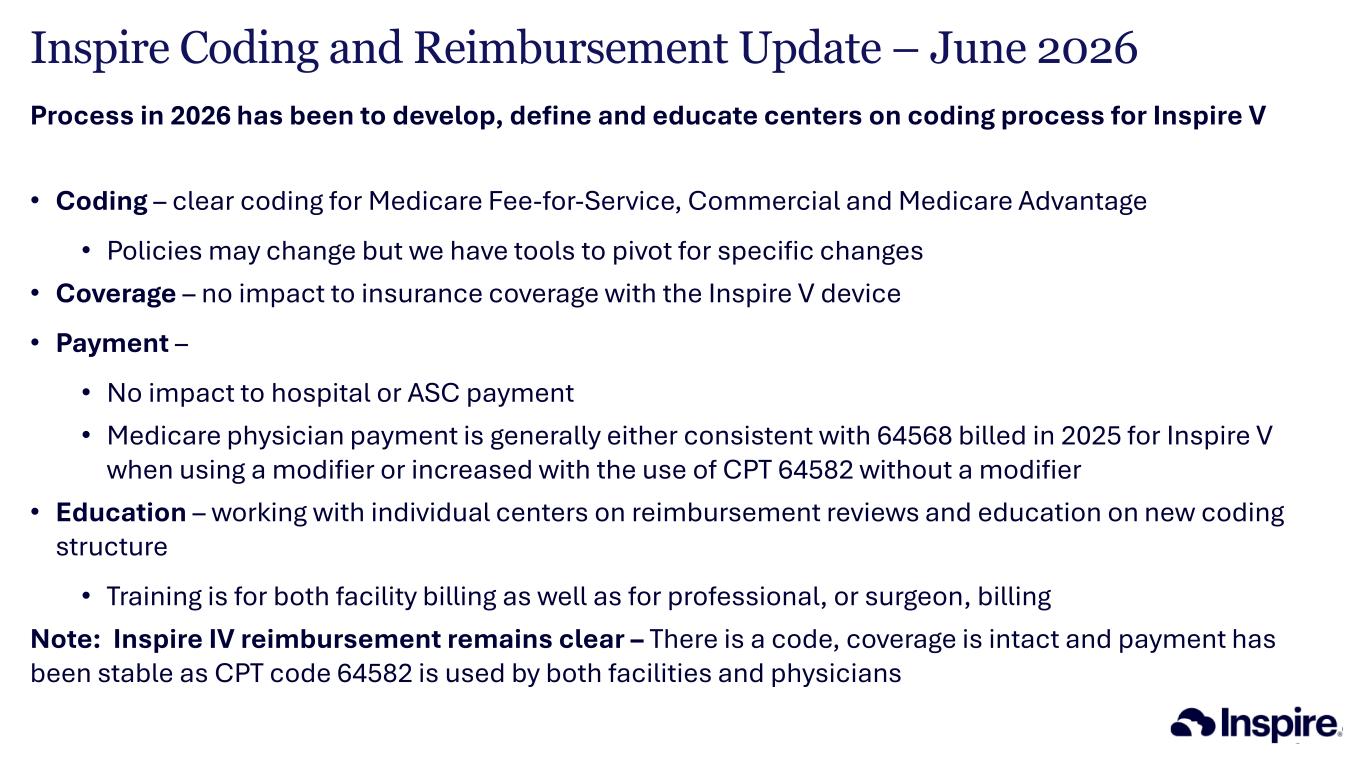
Inspire Coding and Reimbursement Update – June 2026 Process in 2026 has been to develop, define and educate centers on coding process for Inspire V • Coding – clear coding for Medicare Fee-for-Service, Commercial and Medicare Advantage • Policies may change but we have tools to pivot for specific changes • Coverage – no impact to insurance coverage with the Inspire V device • Payment – • No impact to hospital or ASC payment • Medicare physician payment is generally either consistent with 64568 billed in 2025 for Inspire V when using a modifier or increased with the use of CPT 64582 without a modifier • Education – working with individual centers on reimbursement reviews and education on new coding structure • Training is for both facility billing as well as for professional, or surgeon, billing Note: Inspire IV reimbursement remains clear – There is a code, coverage is intact and payment has been stable as CPT code 64582 is used by both facilities and physicians
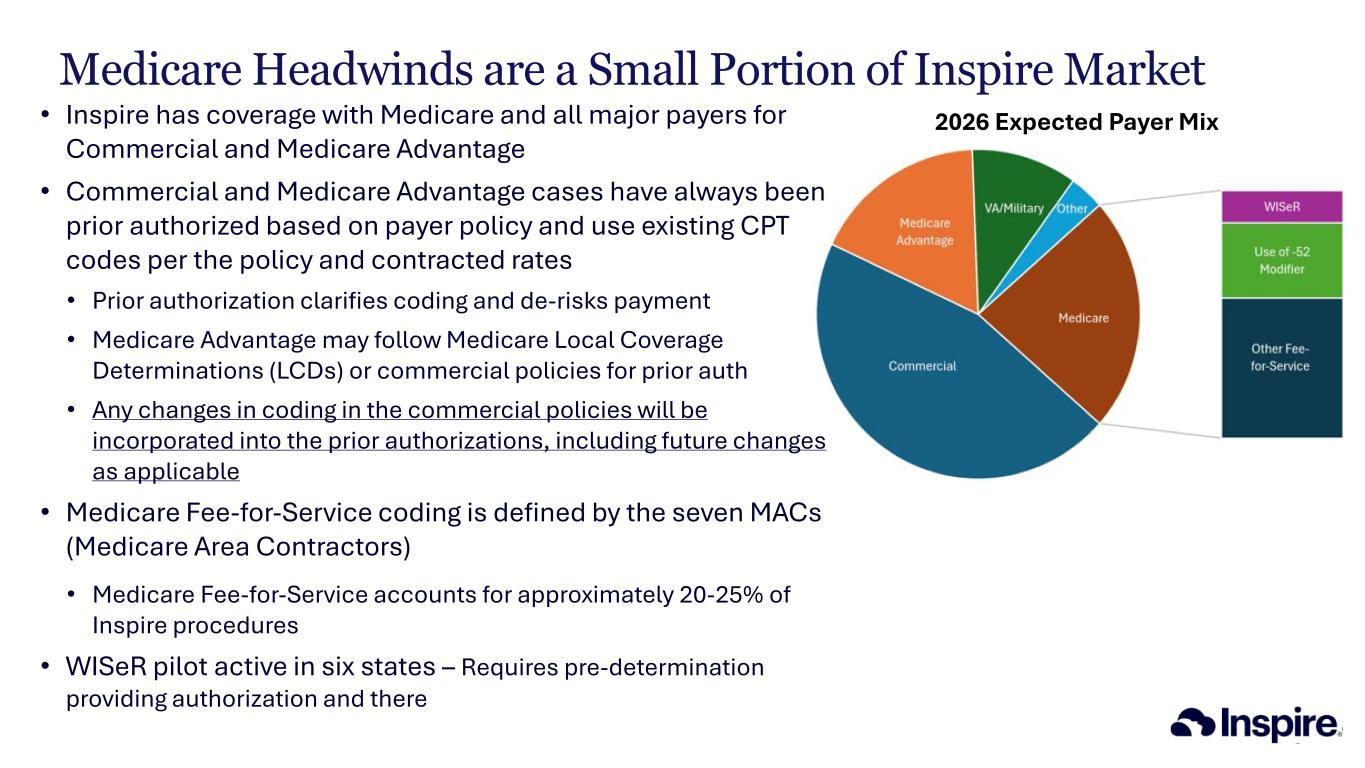
Medicare Headwinds are a Small Portion of Inspire Market • Inspire has coverage with Medicare and all major payers for Commercial and Medicare Advantage • Commercial and Medicare Advantage cases have always been prior authorized based on payer policy and use existing CPT codes per the policy and contracted rates • Prior authorization clarifies coding and de-risks payment • Medicare Advantage may follow Medicare Local Coverage Determinations (LCDs) or commercial policies for prior auth • Any changes in coding in the commercial policies will be incorporated into the prior authorizations, including future changes as applicable • Medicare Fee-for-Service coding is defined by the seven MACs (Medicare Area Contractors) • Medicare Fee-for-Service accounts for approximately 20-25% of Inspire procedures • WISeR pilot active in six states – Requires pre-determination providing authorization and there 2026 Expected Payer Mix
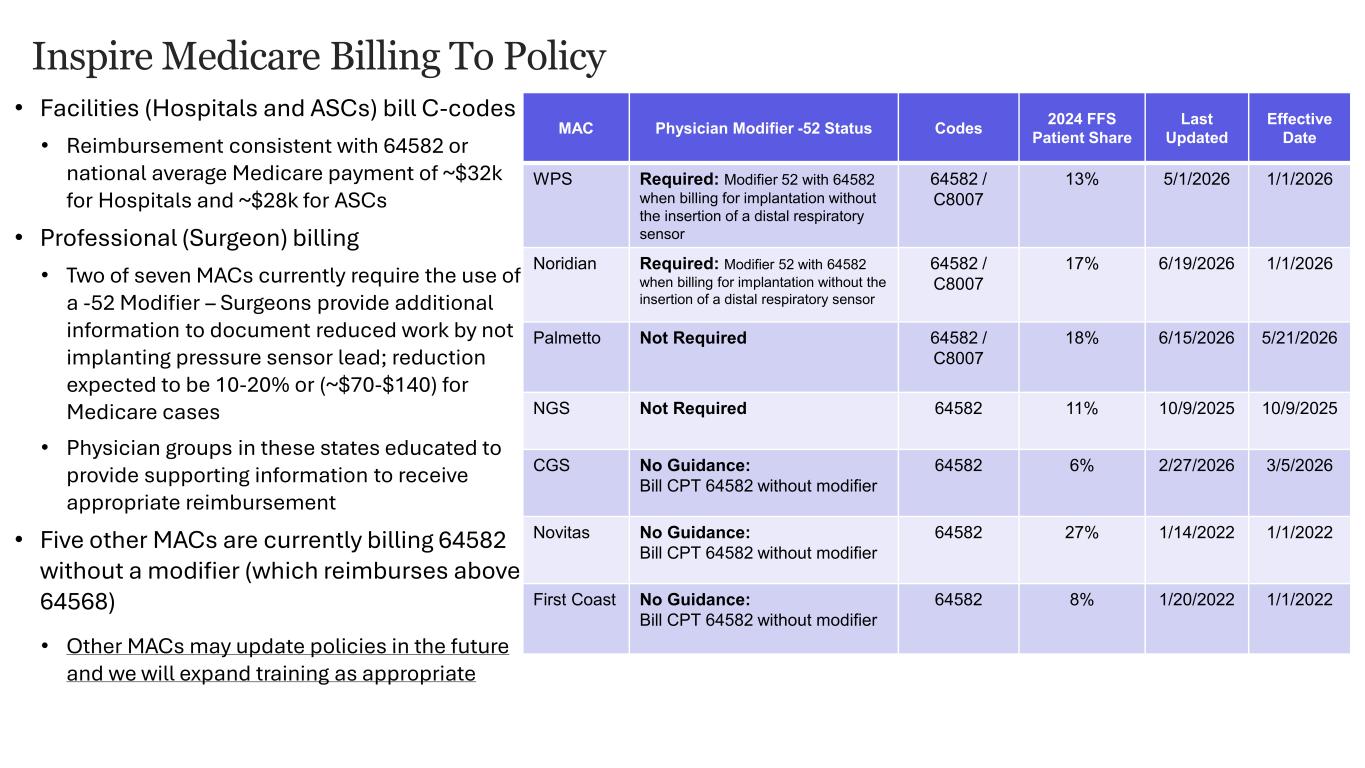
Inspire Medicare Billing To Policy MAC Physician Modifier -52 Status Codes 2024 FFS Patient Share Last Updated Effective Date WPS Required: Modifier 52 with 64582 when billing for implantation without the insertion of a distal respiratory sensor 64582 / C8007 13% 5/1/2026 1/1/2026 Noridian Required: Modifier 52 with 64582 when billing for implantation without the insertion of a distal respiratory sensor 64582 / C8007 17% 6/19/2026 1/1/2026 Palmetto Not Required 64582 / C8007 18% 6/15/2026 5/21/2026 NGS Not Required 64582 11% 10/9/2025 10/9/2025 CGS No Guidance: Bill CPT 64582 without modifier 64582 6% 2/27/2026 3/5/2026 Novitas No Guidance: Bill CPT 64582 without modifier 64582 27% 1/14/2022 1/1/2022 First Coast No Guidance: Bill CPT 64582 without modifier 64582 8% 1/20/2022 1/1/2022 • Facilities (Hospitals and ASCs) bill C-codes • Reimbursement consistent with 64582 or national average Medicare payment of ~$32k for Hospitals and ~$28k for ASCs • Professional (Surgeon) billing • Two of seven MACs currently require the use of a -52 Modifier – Surgeons provide additional information to document reduced work by not implanting pressure sensor lead; reduction expected to be 10-20% or (~$70-$140) for Medicare cases • Physician groups in these states educated to provide supporting information to receive appropriate reimbursement • Five other MACs are currently billing 64582 without a modifier (which reimburses above 64568) • Other MACs may update policies in the future and we will expand training as appropriate
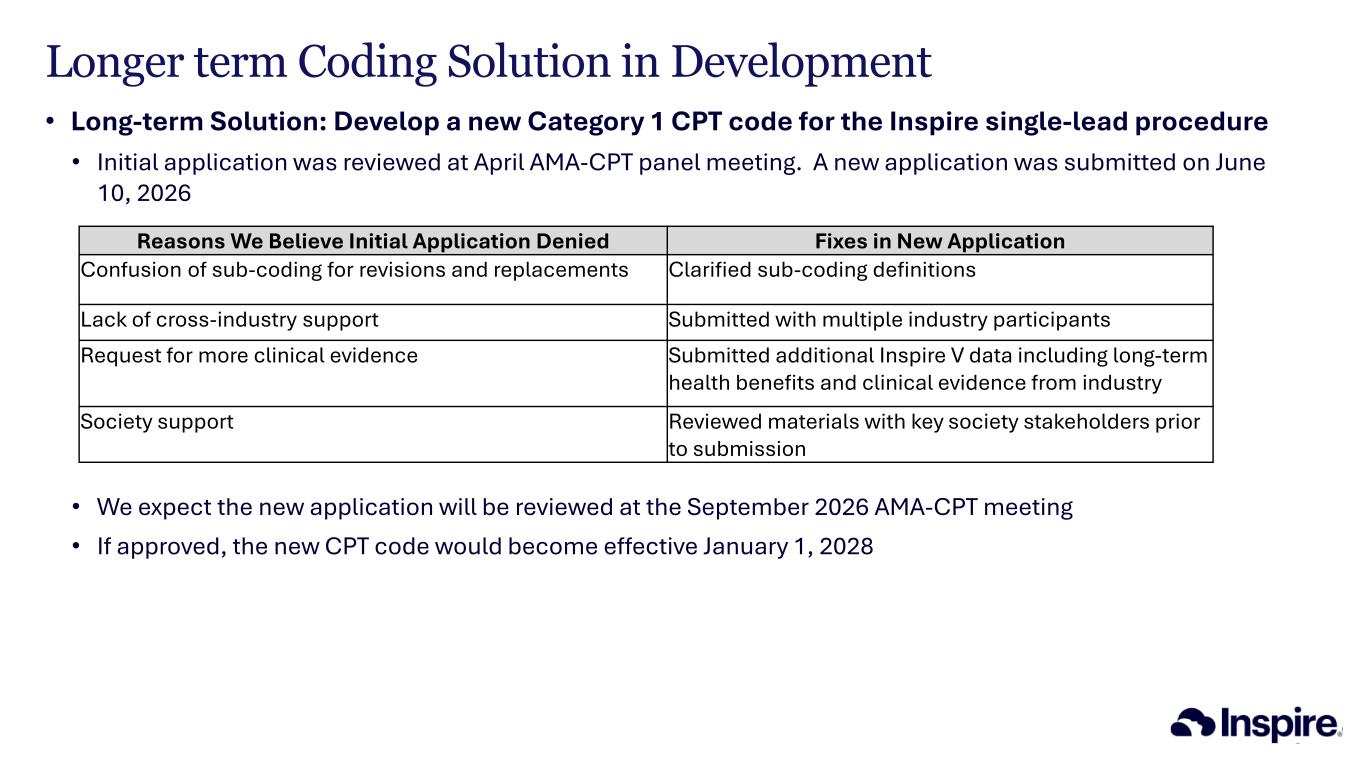
Longer term Coding Solution in Development • Long-term Solution: Develop a new Category 1 CPT code for the Inspire single-lead procedure • Initial application was reviewed at April AMA-CPT panel meeting. A new application was submitted on June 10, 2026 • We expect the new application will be reviewed at the September 2026 AMA-CPT meeting • If approved, the new CPT code would become effective January 1, 2028 Reasons We Believe Initial Application Denied Fixes in New Application Confusion of sub-coding for revisions and replacements Clarified sub-coding definitions Lack of cross-industry support Submitted with multiple industry participants Request for more clinical evidence Submitted additional Inspire V data including long-term health benefits and clinical evidence from industry Society support Reviewed materials with key society stakeholders prior to submission
© 2025 Inspire Medical Systems, Inc. All Rights Reserved Inspire V System and SleepSync Pipeline Update June 26, 2026
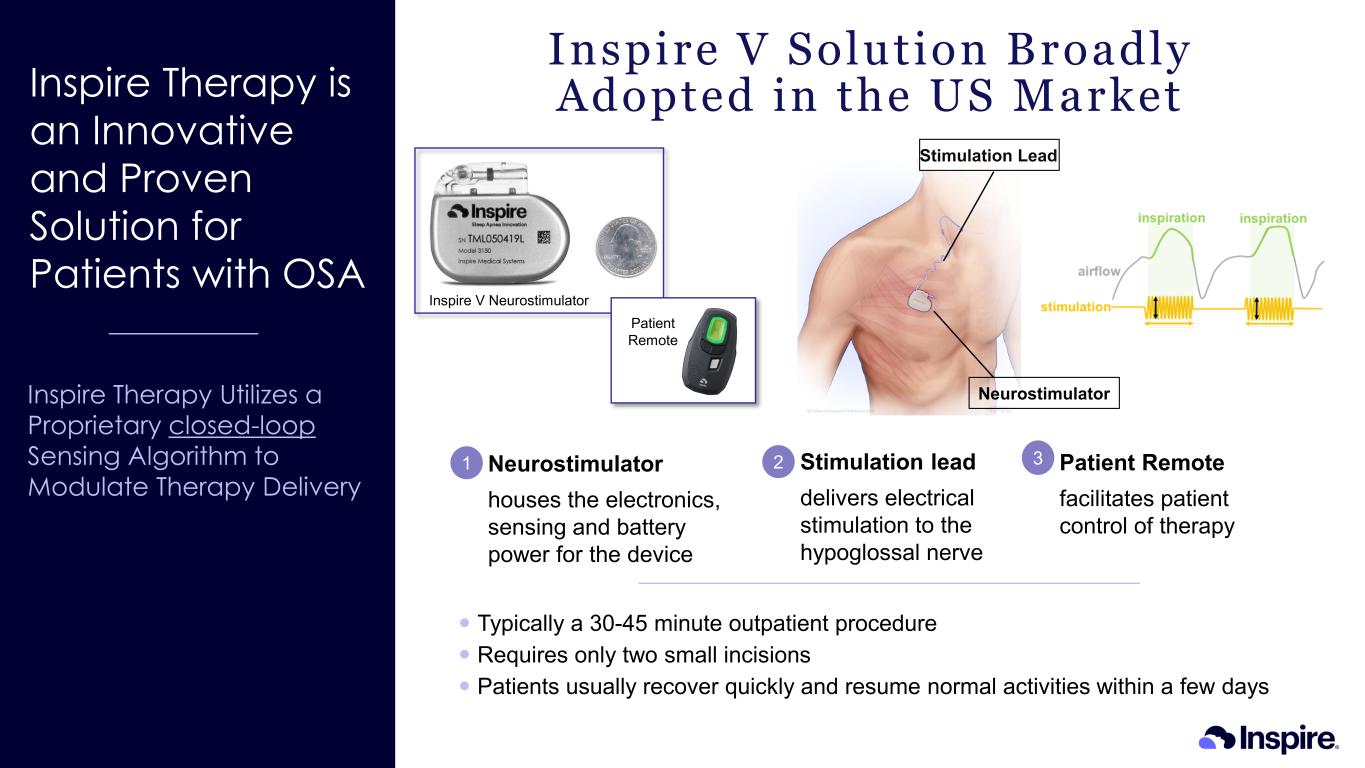
Inspire Therapy is an Innovative and Proven Solution for Patients with OSA Inspire Therapy Utilizes a Proprietary closed-loop Sensing Algorithm to Modulate Therapy Delivery Inspire V Solution Broadly Adopted in the US Market 2 Typically a 30-45 minute outpatient procedure Requires only two small incisions Patients usually recover quickly and resume normal activities within a few days 31 Neurostimulator houses the electronics, sensing and battery power for the device Patient Remote facilitates patient control of therapy Stimulation lead delivers electrical stimulation to the hypoglossal nerve Stimulation Lead Neurostimulator Inspire V Neurostimulator Patient Remote
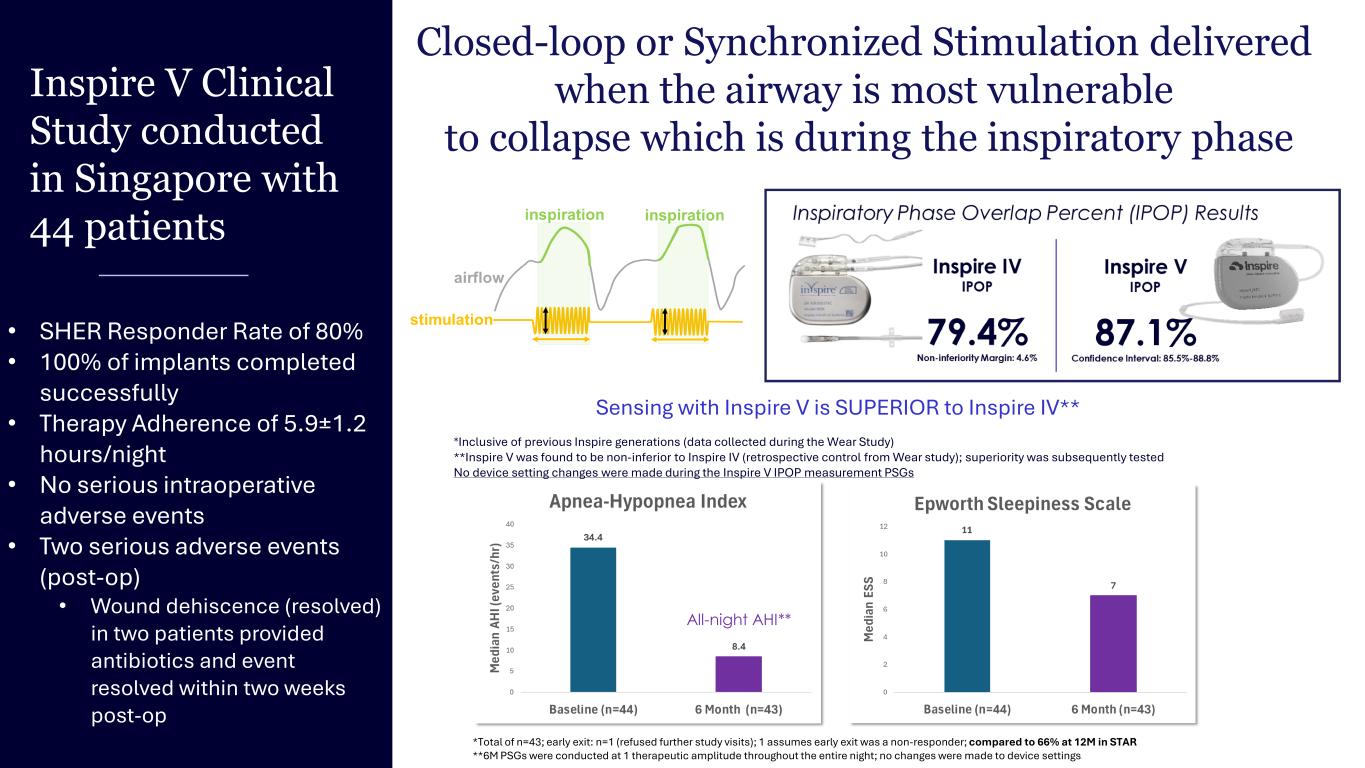
• SHER Responder Rate of 80% • 100% of implants completed successfully • Therapy Adherence of 5.9±1.2 hours/night • No serious intraoperative adverse events • Two serious adverse events (post-op) • Wound dehiscence (resolved) in two patients provided antibiotics and event resolved within two weeks post-op Inspire V Clinical Study conducted in Singapore with 44 patients *Inclusive of previous Inspire generations (data collected during the Wear Study) **Inspire V was found to be non-inferior to Inspire IV (retrospective control from Wear study); superiority was subsequently tested No device setting changes were made during the Inspire V IPOP measurement PSGs *Total of n=43; early exit: n=1 (refused further study visits); 1 assumes early exit was a non-responder; compared to 66% at 12M in STAR **6M PSGs were conducted at 1 therapeutic amplitude throughout the entire night; no changes were made to device settings** All-night AHI** Closed-loop or Synchronized Stimulation delivered when the airway is most vulnerable to collapse which is during the inspiratory phase Sensing with Inspire V is SUPERIOR to Inspire IV**
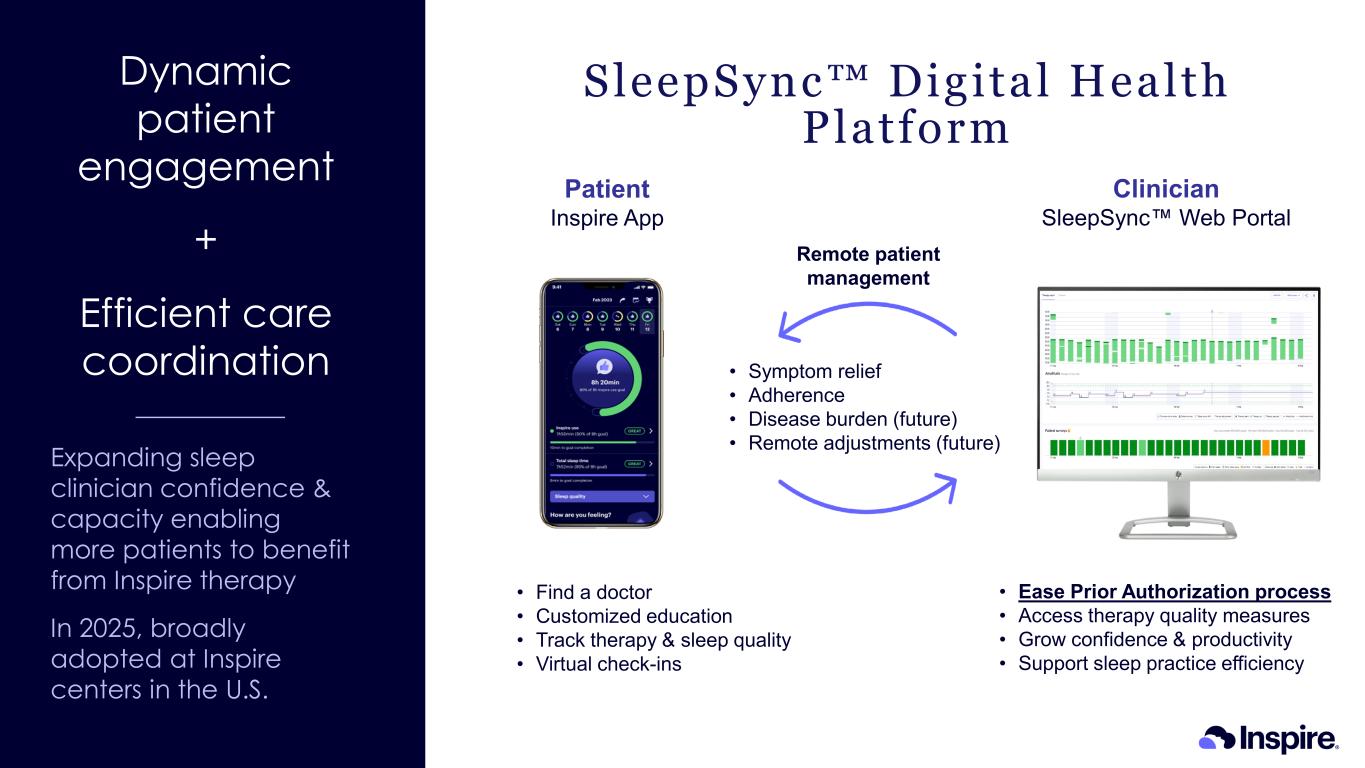
Dynamic patient engagement + Efficient care coordination Expanding sleep clinician confidence & capacity enabling more patients to benefit from Inspire therapy In 2025, broadly adopted at Inspire centers in the U.S. Remote patient management Patient Inspire App Clinician SleepSync Web Portal • Find a doctor • Customized education • Track therapy & sleep quality • Virtual check-ins • Ease Prior Authorization process • Access therapy quality measures • Grow confidence & productivity • Support sleep practice efficiency • Symptom relief • Adherence • Disease burden (future) • Remote adjustments (future) SleepSync Digital Health Platform

© 2025 Inspire Medical Systems, Inc. All Rights Reserved Inspire Clinical Evidence Update June 26, 2026
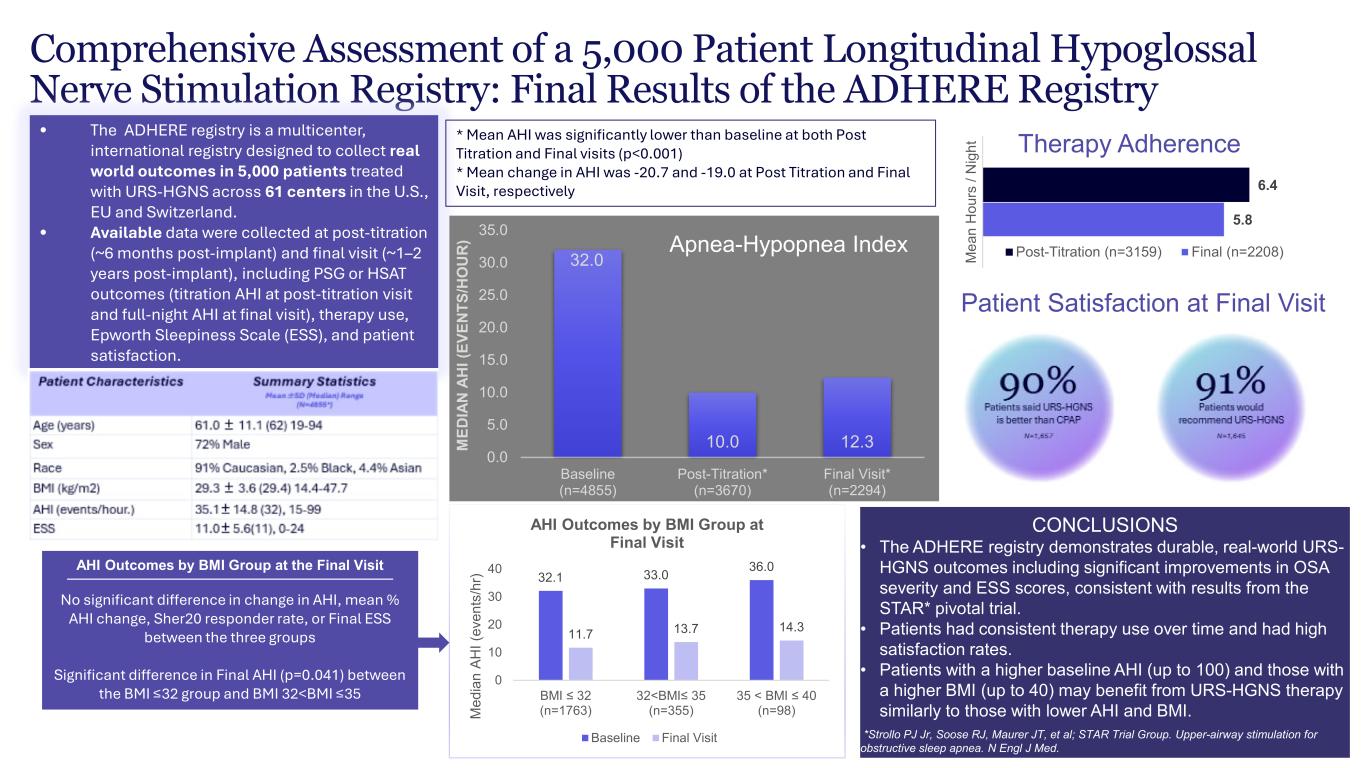
Comprehensive Assessment of a 5,000 Patient Longitudinal Hypoglossal Nerve Stimulation Registry: Final Results of the ADHERE Registry • The ADHERE registry is a multicenter, international registry designed to collect real world outcomes in 5,000 patients treated with URS-HGNS across 61 centers in the U.S., EU and Switzerland. • Available data were collected at post-titration (~6 months post-implant) and final visit (~1–2 years post-implant), including PSG or HSAT outcomes (titration AHI at post-titration visit and full-night AHI at final visit), therapy use, Epworth Sleepiness Scale (ESS), and patient satisfaction. 32.0 10.0 12.3 0.0 5.0 10.0 15.0 20.0 25.0 30.0 35.0 Baseline (n=4855) Post-Titration* (n=3670) Final Visit* (n=2294) M ED IA N A H I ( EV EN TS /H O U R) Apnea-Hypopnea Index * Mean AHI was significantly lower than baseline at both Post Titration and Final visits (p<0.001) * Mean change in AHI was -20.7 and -19.0 at Post Titration and Final Visit, respectively AHI Outcomes by BMI Group at the Final Visit No significant difference in change in AHI, mean % AHI change, Sher20 responder rate, or Final ESS between the three groups Significant difference in Final AHI (p=0.041) between the BMI ≤32 group and BMI 32<BMI ≤35 32.1 33.0 36.0 11.7 13.7 14.3 0 10 20 30 40 BMI ≤ 32 (n=1763) 32<BMI≤ 35 (n=355) 35 < BMI ≤ 40 (n=98)M ed ia n AH I ( ev en ts /h r) AHI Outcomes by BMI Group at Final Visit Baseline Final Visit 5.8 6.4 M ea n H ou rs / N ig ht Post-Titration (n=3159) Final (n=2208) Therapy Adherence Patient Satisfaction at Final Visit CONCLUSIONS • The ADHERE registry demonstrates durable, real-world URS- HGNS outcomes including significant improvements in OSA severity and ESS scores, consistent with results from the STAR* pivotal trial. • Patients had consistent therapy use over time and had high satisfaction rates. • Patients with a higher baseline AHI (up to 100) and those with a higher BMI (up to 40) may benefit from URS-HGNS therapy similarly to those with lower AHI and BMI. *Strollo PJ Jr, Soose RJ, Maurer JT, et al; STAR Trial Group. Upper-airway stimulation for obstructive sleep apnea. N Engl J Med.
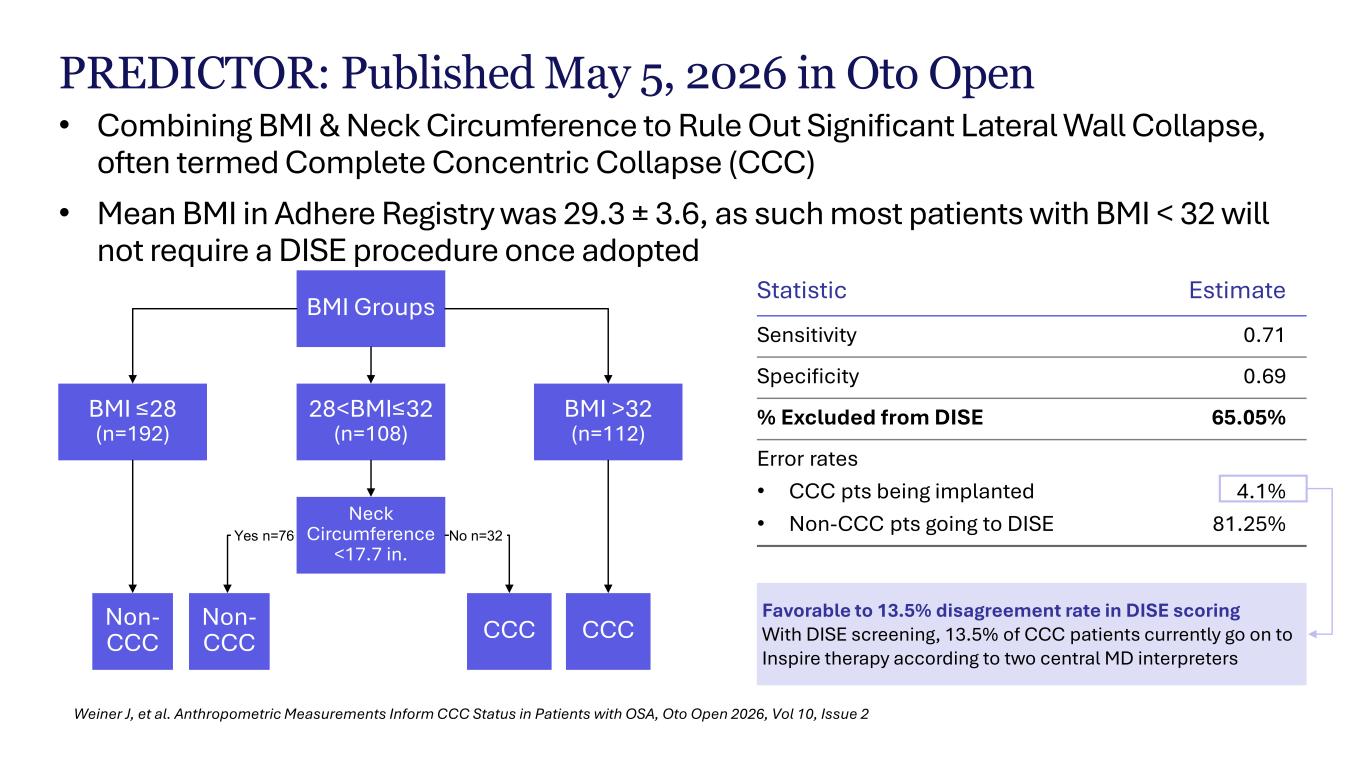
PREDICTOR: Published May 5, 2026 in Oto Open Weiner J, et al. Anthropometric Measurements Inform CCC Status in Patients with OSA, Oto Open 2026, Vol 10, Issue 2 BMI Groups 28<BMI≤32 (n=108) Neck Circumference <17.7 in. BMI ≤28 (n=192) Non- CCC BMI >32 (n=112) Non- CCC CCC CCC Yes n=76 No n=32 Statistic Estimate Sensitivity 0.71 Specificity 0.69 % Excluded from DISE 65.05% Error rates • CCC pts being implanted 4.1% • Non-CCC pts going to DISE 81.25% • Combining BMI & Neck Circumference to Rule Out Significant Lateral Wall Collapse, often termed Complete Concentric Collapse (CCC) • Mean BMI in Adhere Registry was 29.3 ± 3.6, as such most patients with BMI < 32 will not require a DISE procedure once adopted Favorable to 13.5% disagreement rate in DISE scoring With DISE screening, 13.5% of CCC patients currently go on to Inspire therapy according to two central MD interpreters

© 2025 Inspire Medical Systems, Inc. All Rights Reserved Inspire Therapy and Cardiovascular Health June 26, 2026
Inspire has been shown to improve Cardiovascular Health • Definition and impact of Hypoxic Burden • STAR trial restated in terms of Hypoxic Burden • Clinical Evidence of Cardiovascular Health with Inspire • What does this mean for OSA patients and healthcare providers
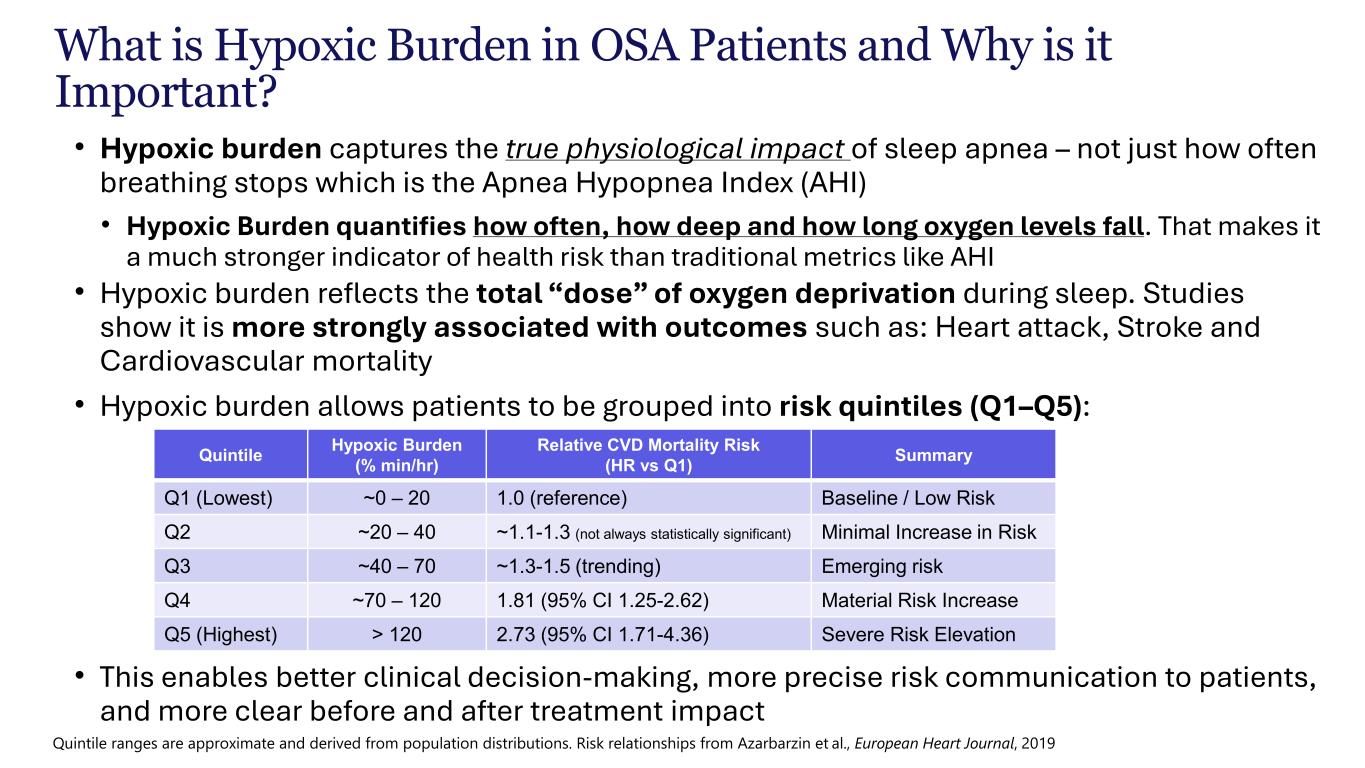
What is Hypoxic Burden in OSA Patients and Why is it Important? • Hypoxic burden captures the true physiological impact of sleep apnea – not just how often breathing stops which is the Apnea Hypopnea Index (AHI) • Hypoxic Burden quantifies how often, how deep and how long oxygen levels fall. That makes it a much stronger indicator of health risk than traditional metrics like AHI • Hypoxic burden reflects the total “dose” of oxygen deprivation during sleep. Studies show it is more strongly associated with outcomes such as: Heart attack, Stroke and Cardiovascular mortality • Hypoxic burden allows patients to be grouped into risk quintiles (Q1–Q5): • This enables better clinical decision-making, more precise risk communication to patients, and more clear before and after treatment impact Quintile Hypoxic Burden (% min/hr) Relative CVD Mortality Risk (HR vs Q1) Summary Q1 (Lowest) ~0 – 20 1.0 (reference) Baseline / Low Risk Q2 ~20 – 40 ~1.1-1.3 (not always statistically significant) Minimal Increase in Risk Q3 ~40 – 70 ~1.3-1.5 (trending) Emerging risk Q4 ~70 – 120 1.81 (95% CI 1.25-2.62) Material Risk Increase Q5 (Highest) > 120 2.73 (95% CI 1.71-4.36) Severe Risk Elevation Quintile ranges are approximate and derived from population distributions. Risk relationships from Azarbarzin et al., European Heart Journal, 2019
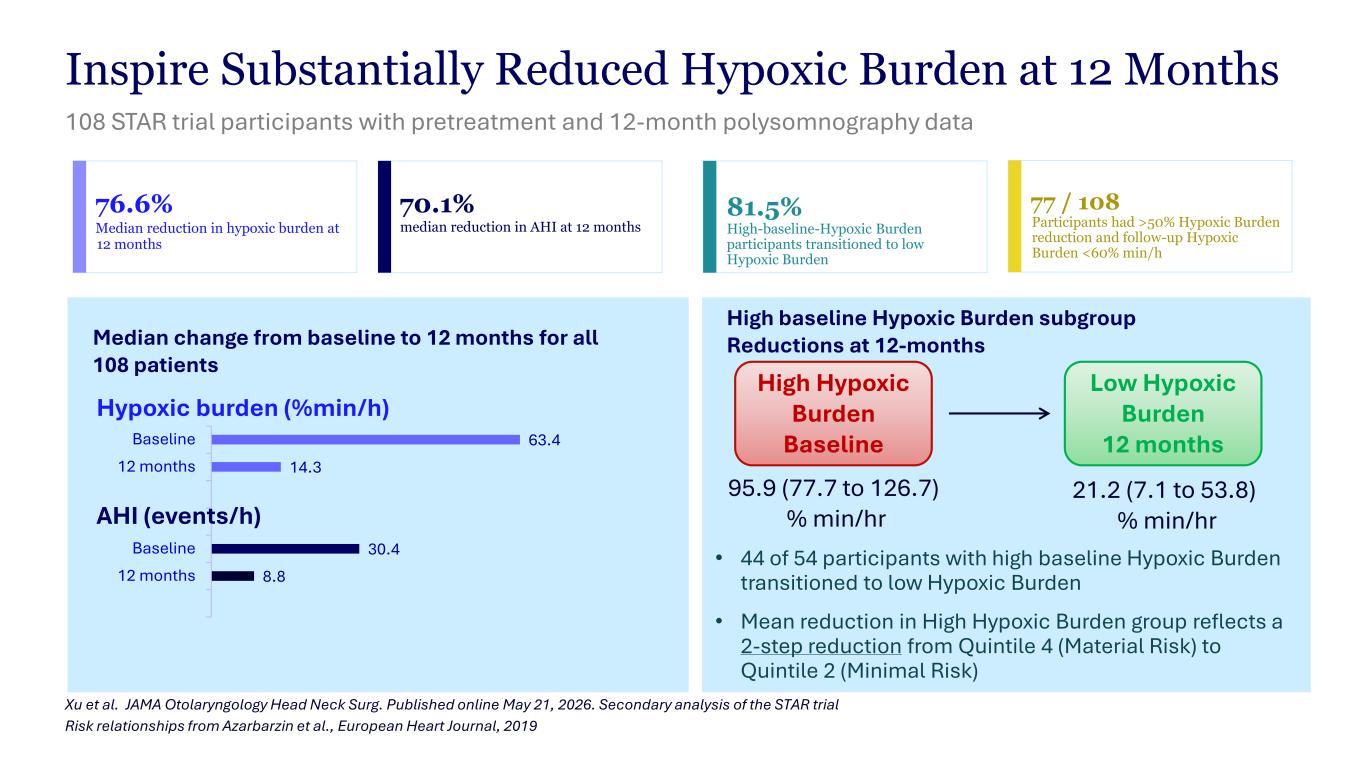
Inspire Substantially Reduced Hypoxic Burden at 12 Months 108 STAR trial participants with pretreatment and 12-month polysomnography data Median change from baseline to 12 months for all 108 patients High baseline Hypoxic Burden subgroup Reductions at 12-months Xu et al. JAMA Otolaryngology Head Neck Surg. Published online May 21, 2026. Secondary analysis of the STAR trial Risk relationships from Azarbarzin et al., European Heart Journal, 2019 76.6% Median reduction in hypoxic burden at 12 months 77 / 108 Participants had >50% Hypoxic Burden reduction and follow-up Hypoxic Burden <60% min/h 81.5% High-baseline-Hypoxic Burden participants transitioned to low Hypoxic Burden 70.1% median reduction in AHI at 12 months 8.8 30.4 14.3 63.4 12 months Baseline 12 months Baseline Hypoxic burden (%min/h) AHI (events/h) High Hypoxic Burden Baseline Low Hypoxic Burden 12 months • 44 of 54 participants with high baseline Hypoxic Burden transitioned to low Hypoxic Burden • Mean reduction in High Hypoxic Burden group reflects a 2-step reduction from Quintile 4 (Material Risk) to Quintile 2 (Minimal Risk) 95.9 (77.7 to 126.7) % min/hr 21.2 (7.1 to 53.8) % min/hr
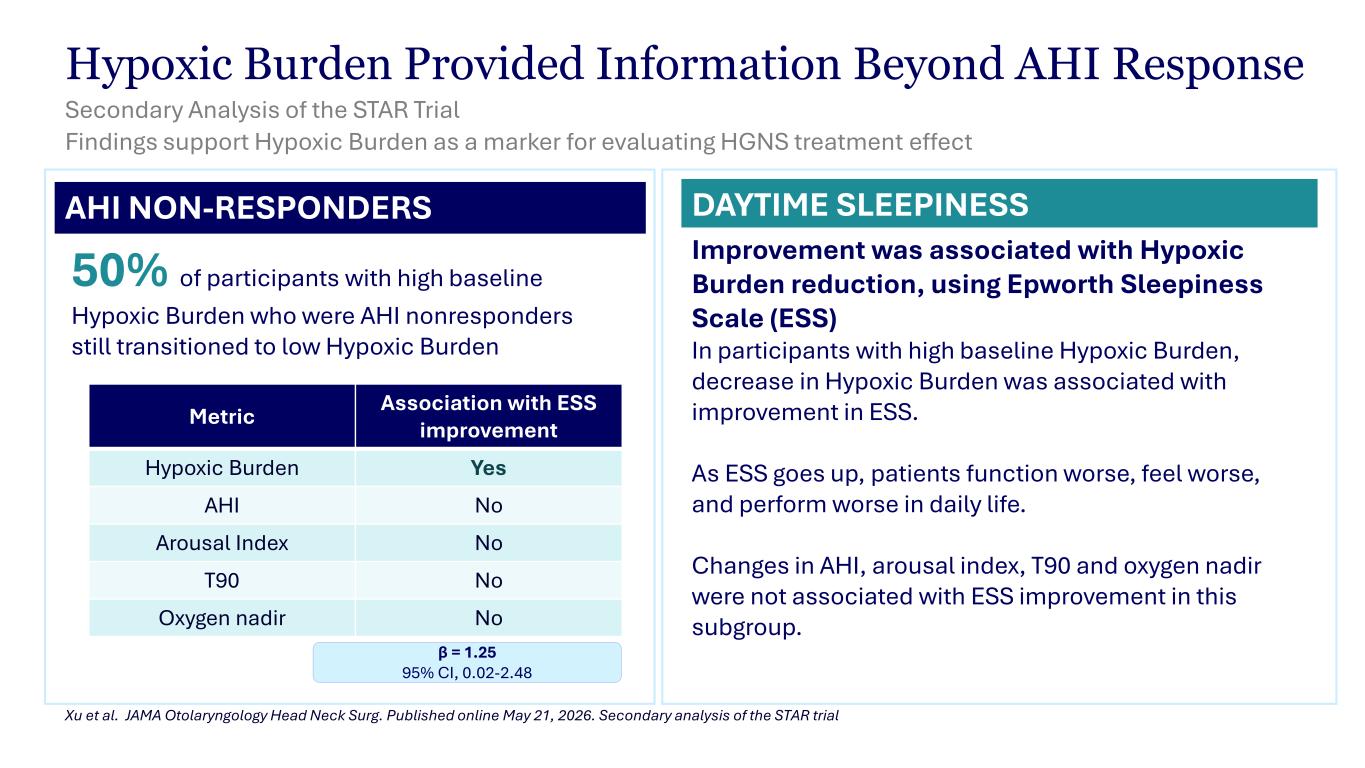
Hypoxic Burden Provided Information Beyond AHI Response Secondary Analysis of the STAR Trial Findings support Hypoxic Burden as a marker for evaluating HGNS treatment effect Xu et al. JAMA Otolaryngology Head Neck Surg. Published online May 21, 2026. Secondary analysis of the STAR trial AHI NON-RESPONDERS 50% of participants with high baseline Hypoxic Burden who were AHI nonresponders still transitioned to low Hypoxic Burden DAYTIME SLEEPINESS Improvement was associated with Hypoxic Burden reduction, using Epworth Sleepiness Scale (ESS) In participants with high baseline Hypoxic Burden, decrease in Hypoxic Burden was associated with improvement in ESS. As ESS goes up, patients function worse, feel worse, and perform worse in daily life. Changes in AHI, arousal index, T90 and oxygen nadir were not associated with ESS improvement in this subgroup. β = 1.25 95% CI, 0.02-2.48 Metric Association with ESS improvement Hypoxic Burden Yes AHI No Arousal Index No T90 No Oxygen nadir No
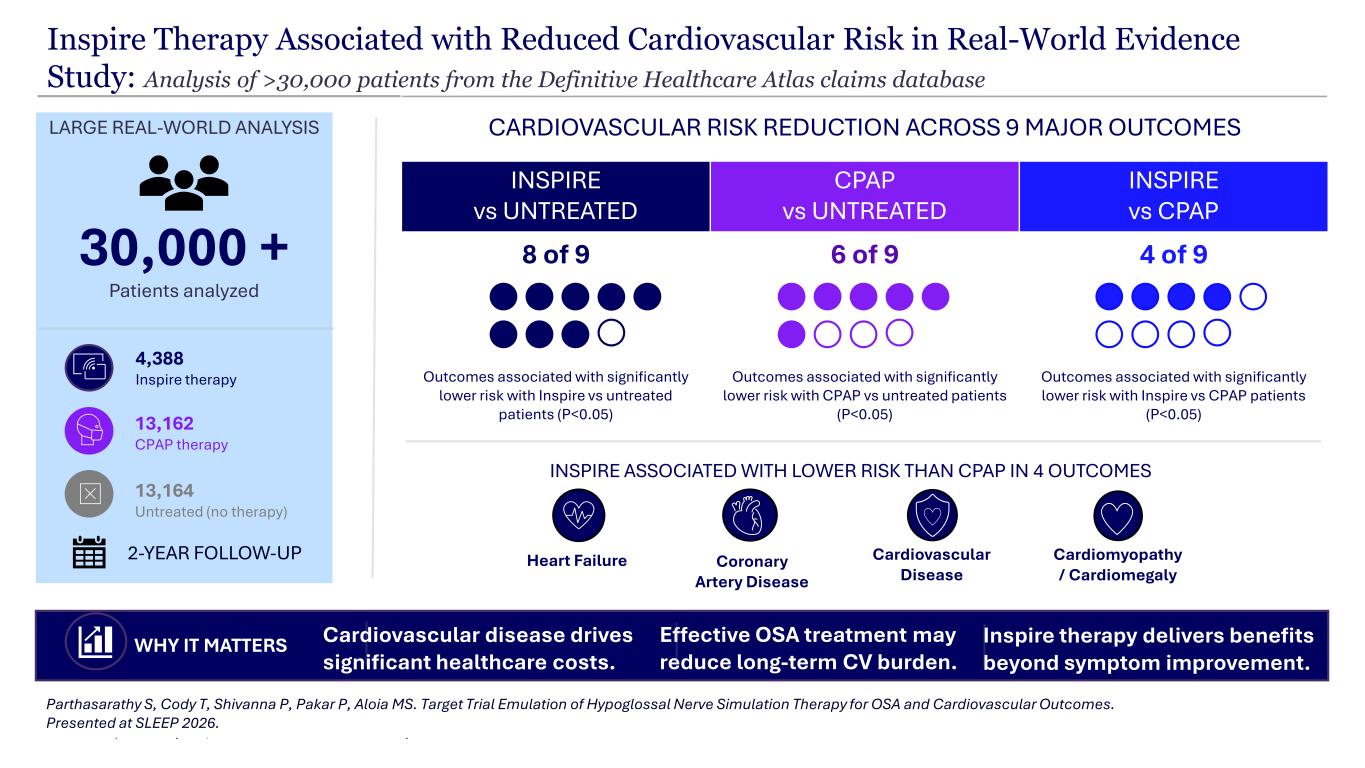
INSPIRE CONFIDENTIAL. Inspire is a public company and has an Insider Trading Policy. The content in this deck is not to be shared with anybody outside of Inspire Medical Systems, Inc. It is for internal review and discussion only Inspire Therapy Associated with Reduced Cardiovascular Risk in Real-World Evidence Study: Analysis of >30,000 patients from the Definitive Healthcare Atlas claims database LARGE REAL-WORLD ANALYSIS 30,000 + Patients analyzed Parthasarathy S, Cody T, Shivanna P, Pakar P, Aloia MS. Target Trial Emulation of Hypoglossal Nerve Simulation Therapy for OSA and Cardiovascular Outcomes. Presented at SLEEP 2026. 4,388 Inspire therapy 13,162 CPAP therapy 13,164 Untreated (no therapy) 2-YEAR FOLLOW-UP Heart Failure Coronary Artery Disease Cardiovascular Disease Cardiomyopathy / Cardiomegaly INSPIRE ASSOCIATED WITH LOWER RISK THAN CPAP IN 4 OUTCOMES Cardiovascular disease drives significant healthcare costs. Effective OSA treatment may reduce long-term CV burden. Inspire therapy delivers benefits beyond symptom improvement. WHY IT MATTERS CARDIOVASCULAR RISK REDUCTION ACROSS 9 MAJOR OUTCOMES INSPIRE vs UNTREATED CPAP vs UNTREATED INSPIRE vs CPAP 8 of 9 6 of 9 4 of 9 Outcomes associated with significantly lower risk with Inspire vs untreated patients (P<0.05) Outcomes associated with significantly lower risk with CPAP vs untreated patients (P<0.05) Outcomes associated with significantly lower risk with Inspire vs CPAP patients (P<0.05)
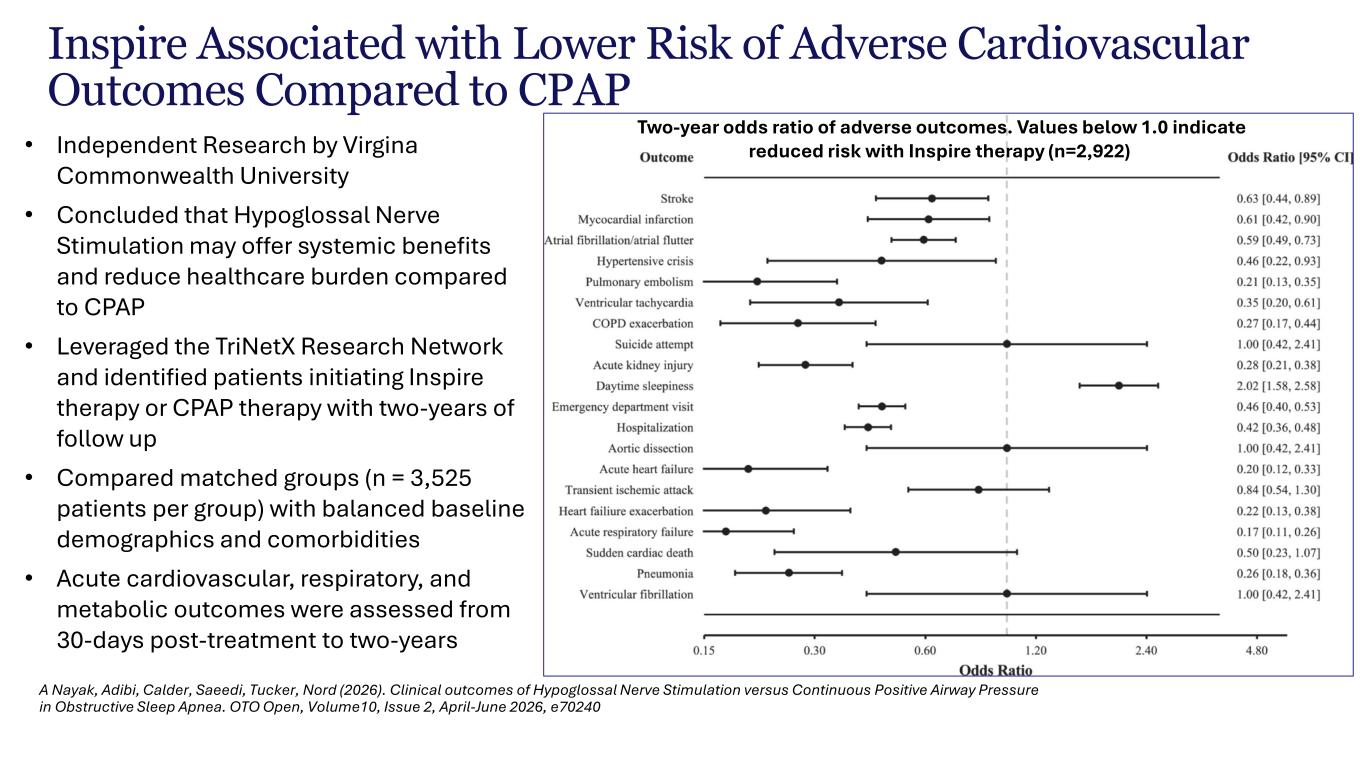
A Nayak, Adibi, Calder, Saeedi, Tucker, Nord (2026). Clinical outcomes of Hypoglossal Nerve Stimulation versus Continuous Positive Airway Pressure in Obstructive Sleep Apnea. OTO Open, Volume10, Issue 2, April-June 2026, e70240 Inspire Associated with Lower Risk of Adverse Cardiovascular Outcomes Compared to CPAP • Independent Research by Virgina Commonwealth University • Concluded that Hypoglossal Nerve Stimulation may offer systemic benefits and reduce healthcare burden compared to CPAP • Leveraged the TriNetX Research Network and identified patients initiating Inspire therapy or CPAP therapy with two-years of follow up • Compared matched groups (n = 3,525 patients per group) with balanced baseline demographics and comorbidities • Acute cardiovascular, respiratory, and metabolic outcomes were assessed from 30-days post-treatment to two-years Two-year odds ratio of adverse outcomes. Values below 1.0 indicate reduced risk with Inspire therapy (n=2,922)
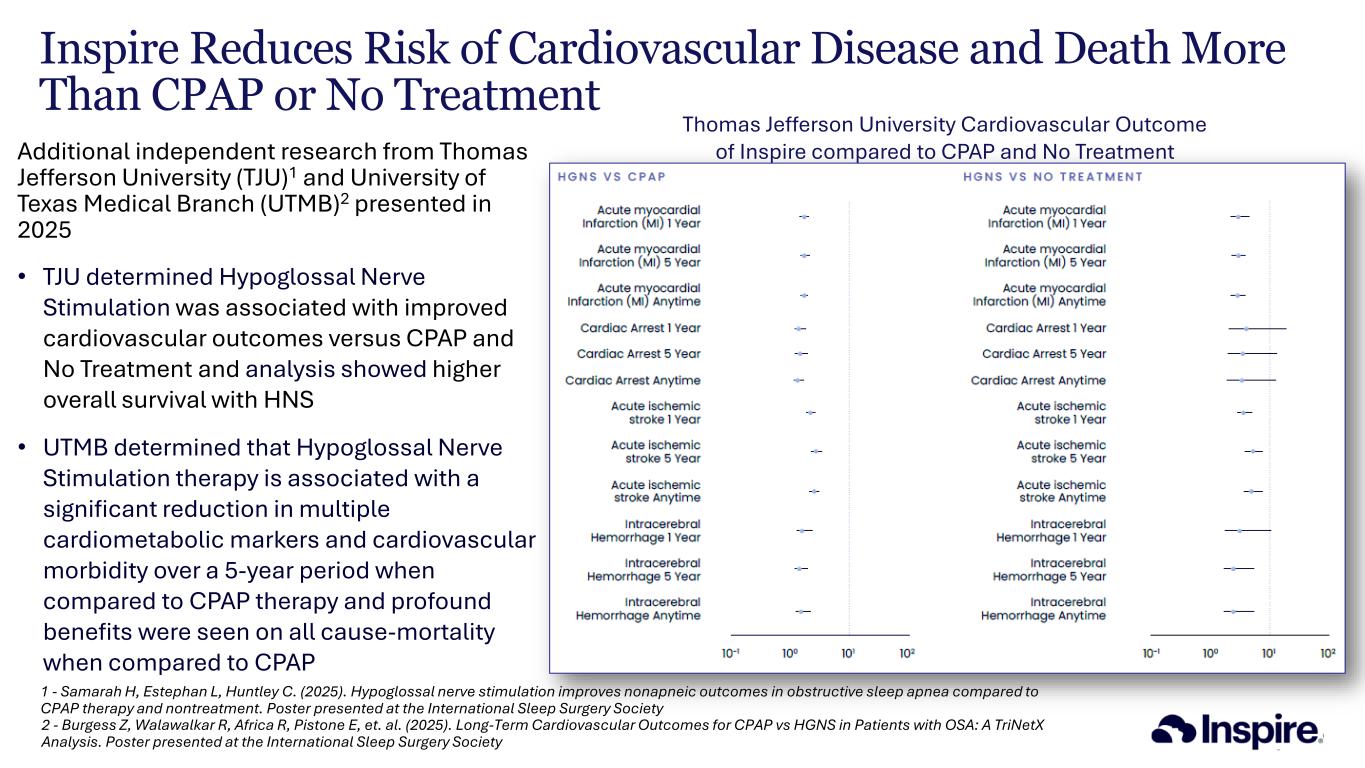
1 - Samarah H, Estephan L, Huntley C. (2025). Hypoglossal nerve stimulation improves nonapneic outcomes in obstructive sleep apnea compared to CPAP therapy and nontreatment. Poster presented at the International Sleep Surgery Society Inspire Reduces Risk of Cardiovascular Disease and Death More Than CPAP or No Treatment Additional independent research from Thomas Jefferson University (TJU)1 and University of Texas Medical Branch (UTMB)2 presented in 2025 • TJU determined Hypoglossal Nerve Stimulation was associated with improved cardiovascular outcomes versus CPAP and No Treatment and analysis showed higher overall survival with HNS • UTMB determined that Hypoglossal Nerve Stimulation therapy is associated with a significant reduction in multiple cardiometabolic markers and cardiovascular morbidity over a 5-year period when compared to CPAP therapy and profound benefits were seen on all cause-mortality when compared to CPAP 2 - Burgess Z, Walawalkar R, Africa R, Pistone E, et. al. (2025). Long-Term Cardiovascular Outcomes for CPAP vs HGNS in Patients with OSA: A TriNetX Analysis. Poster presented at the International Sleep Surgery Society Thomas Jefferson University Cardiovascular Outcome of Inspire compared to CPAP and No Treatment
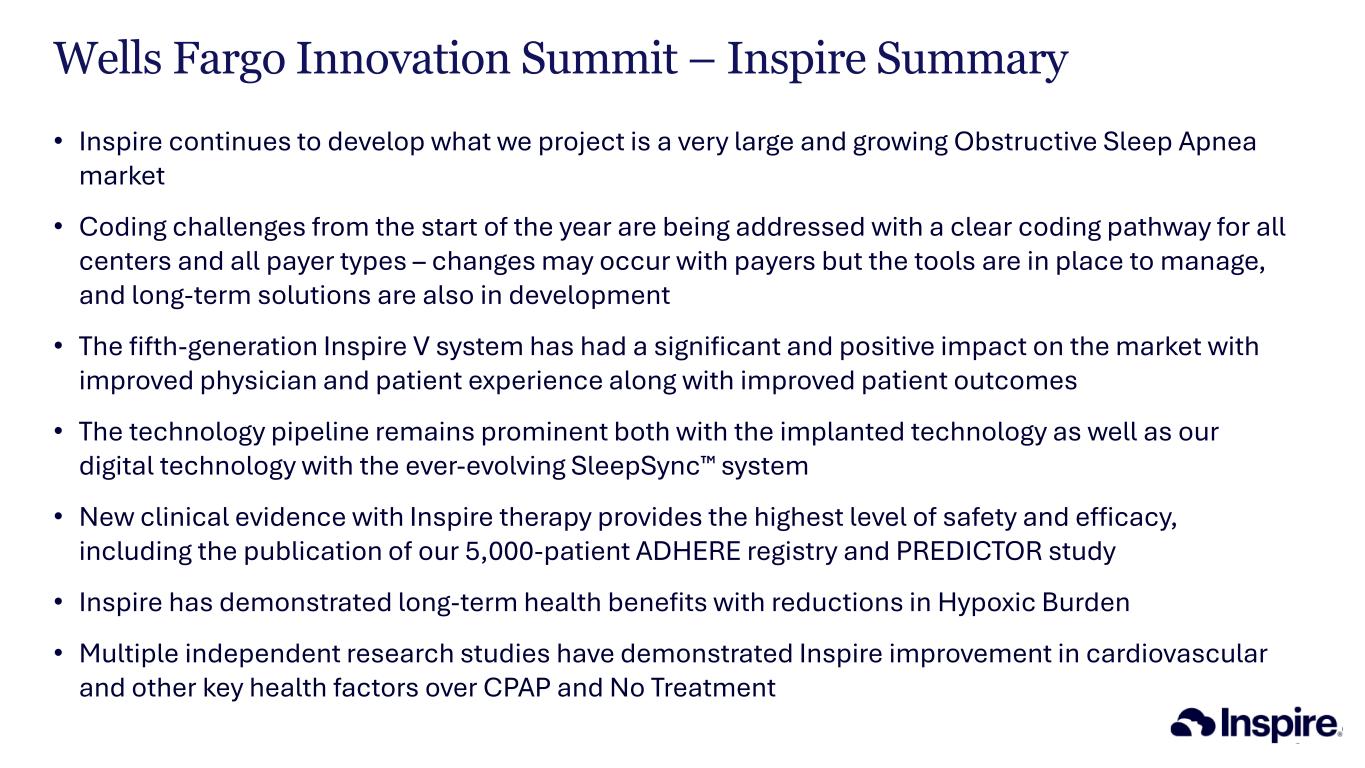
Wells Fargo Innovation Summit – Inspire Summary • Inspire continues to develop what we project is a very large and growing Obstructive Sleep Apnea market • Coding challenges from the start of the year are being addressed with a clear coding pathway for all centers and all payer types – changes may occur with payers but the tools are in place to manage, and long-term solutions are also in development • The fifth-generation Inspire V system has had a significant and positive impact on the market with improved physician and patient experience along with improved patient outcomes • The technology pipeline remains prominent both with the implanted technology as well as our digital technology with the ever-evolving SleepSync system • New clinical evidence with Inspire therapy provides the highest level of safety and efficacy, including the publication of our 5,000-patient ADHERE registry and PREDICTOR study • Inspire has demonstrated long-term health benefits with reductions in Hypoxic Burden • Multiple independent research studies have demonstrated Inspire improvement in cardiovascular and other key health factors over CPAP and No Treatment
Thank You. © 2025 Inspire Medical Systems, Inc. All Rights Reserved