
Corporate Presentation June 2026
Confidential information, forward-looking statements, and third-party information This presentation (including any discussion that accompanies this presentation) contains highly confidential information regarding Odyssey Therapeutics, Inc. (the “Company,” “Odyssey,” “we,” or “us”) and its subsidiaries and may not be disclosed, copied, or distributed to any person other than the intended recipient, directly or indirectly, in whole or in part, without the Company’s prior written consent. This presentation contains forward-looking statements within the meaning of the “safe harbor” provisions of the Private Securities Litigation Reform Act of 1995. All statements other than statements of historical facts are forward-looking statements, including, but not limited to, statements regarding our business strategy; the future clinical development, efficacy, safety, and therapeutic potential of our product candidates; expectations regarding the initiation, design, and reporting of data from our preclinical studies and clinical trials; future financial results; anticipated manufacturing plans; expectations regarding regulatory approval of any of our product candidates; and plans for future operations or other characterizations of future events. In some cases, you can identify forward-looking statements through the use of words such as “may,” “will,” “should,” “expects,” “plans,” “anticipates,” “could,” “intends,” “target,” “projects,” “contemplates,” “believes,” “estimates,” “predicts,” “potential,” or “continue,” or the negatives of these words or other similar terms or expressions that concern our expectations, strategy, plans, or intentions. These statements are not guarantees of future performance and involve risks and uncertainties, some of which are beyond our control, and you are cautioned not to place undue reliance on any forward-looking statements. Among the factors that could cause actual results to differ materially from those suggested by forward-looking statements are: our current and future research and development activities and expenses; sufficiency of our capital resources; our anticipated regulatory activities and our ability to obtain regulatory approval for any of our product candidates; our ability to commercialize future products, if approved; our ability to enroll patients in clinical trials; possible safety and efficacy concerns; the timing and results of our preclinical studies and clinical trials; and risks facing our operations and intellectual property. Although the Company believes the information contained in this presentation related to the Company is accurate in all material respects, neither the Company nor any other person assumes responsibility for the accuracy and completeness of the information contained in this presentation except to the extent required by law. The information contained in this presentation is provided for discussion purposes only as of the date hereof, and the Company undertakes no obligation to update or revise such information, including any forward-looking statements, whether as a result of new information, future events or circumstances, or otherwise, except to the extent required by law. Certain information contained in this presentation and statements made orally during this presentation may relate to or be based on studies, publications, estimates, projections, and other data obtained from third-party sources as well as our own internal estimates and research. While we believe these third-party sources to be reliable as of the date of this presentation, we have not independently verified, and make no representation as to the adequacy, fairness, accuracy, or completeness of any information obtained from third-party sources. Intellectual property This presentation contains references to our trademarks and service marks and to those belonging to other entities. Solely for convenience, trademarks and trade names referred to in this presentation, including logos, artwork and other visual displays, may appear without the ® or TM symbols, but such references are not intended to indicate in any way that we will not assert, to the fullest extent under applicable law, our rights or the rights of the applicable licensor to these trademarks and trade names. This presentation may also contain trademarks, service marks, and trade names of third parties, which are the property of their respective owners. We do not intend our use or display of other entities’ trade names, trademarks, or service marks to imply a relationship with, or endorsement or sponsorship of us by, any other entity. Disclaimers
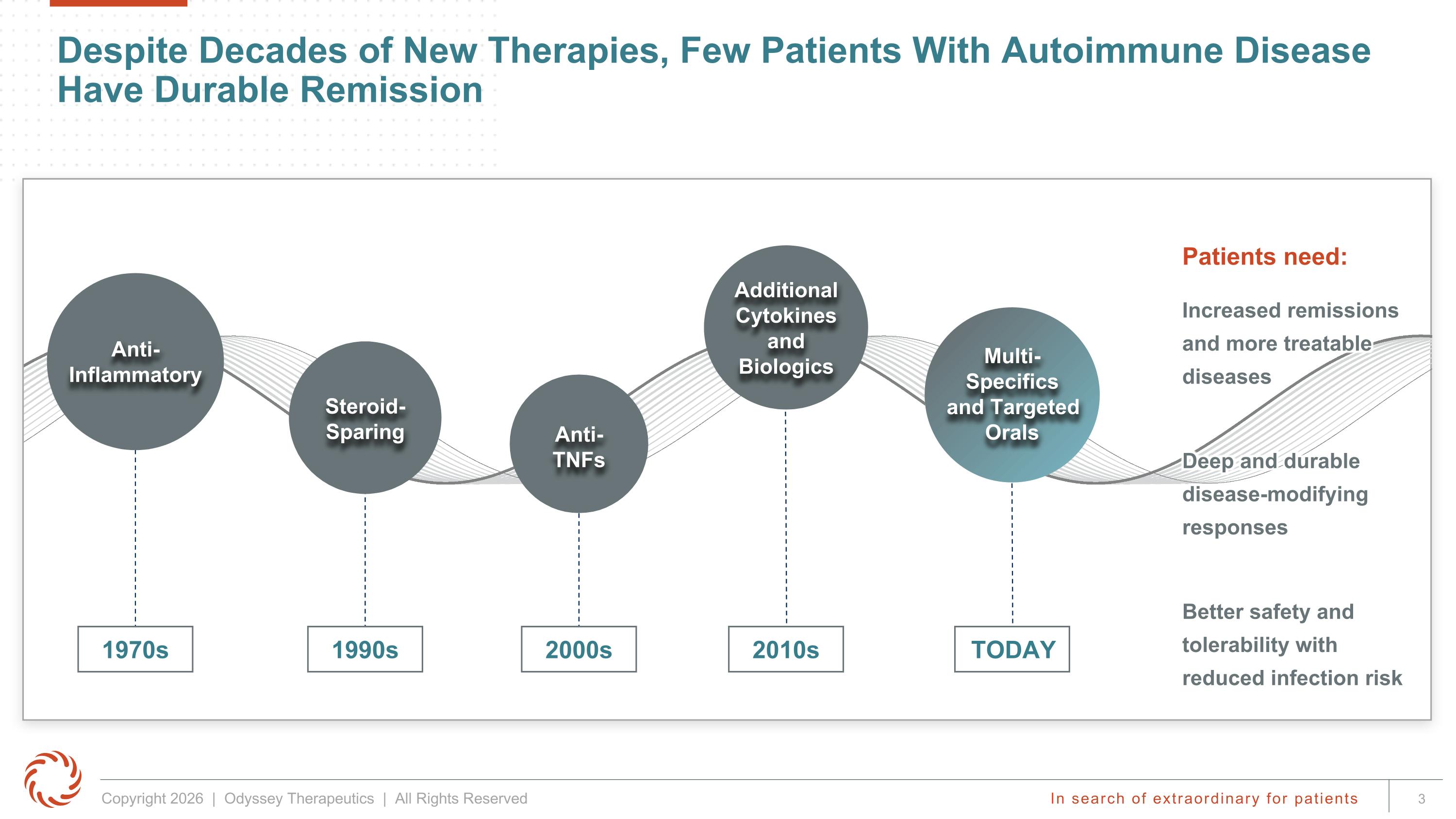
Despite Decades of New Therapies, Few Patients With Autoimmune Disease Have Durable Remission Patients need: Increased remissions and more treatable diseases Deep and durable disease-modifying responses Better safety and tolerability with reduced infection risk Anti-Inflammatory 1970s Steroid-Sparing 1990s Anti-TNFs 2000s Additional Cytokines and Biologics 2010s Multi-Specifics and Targeted Orals TODAY
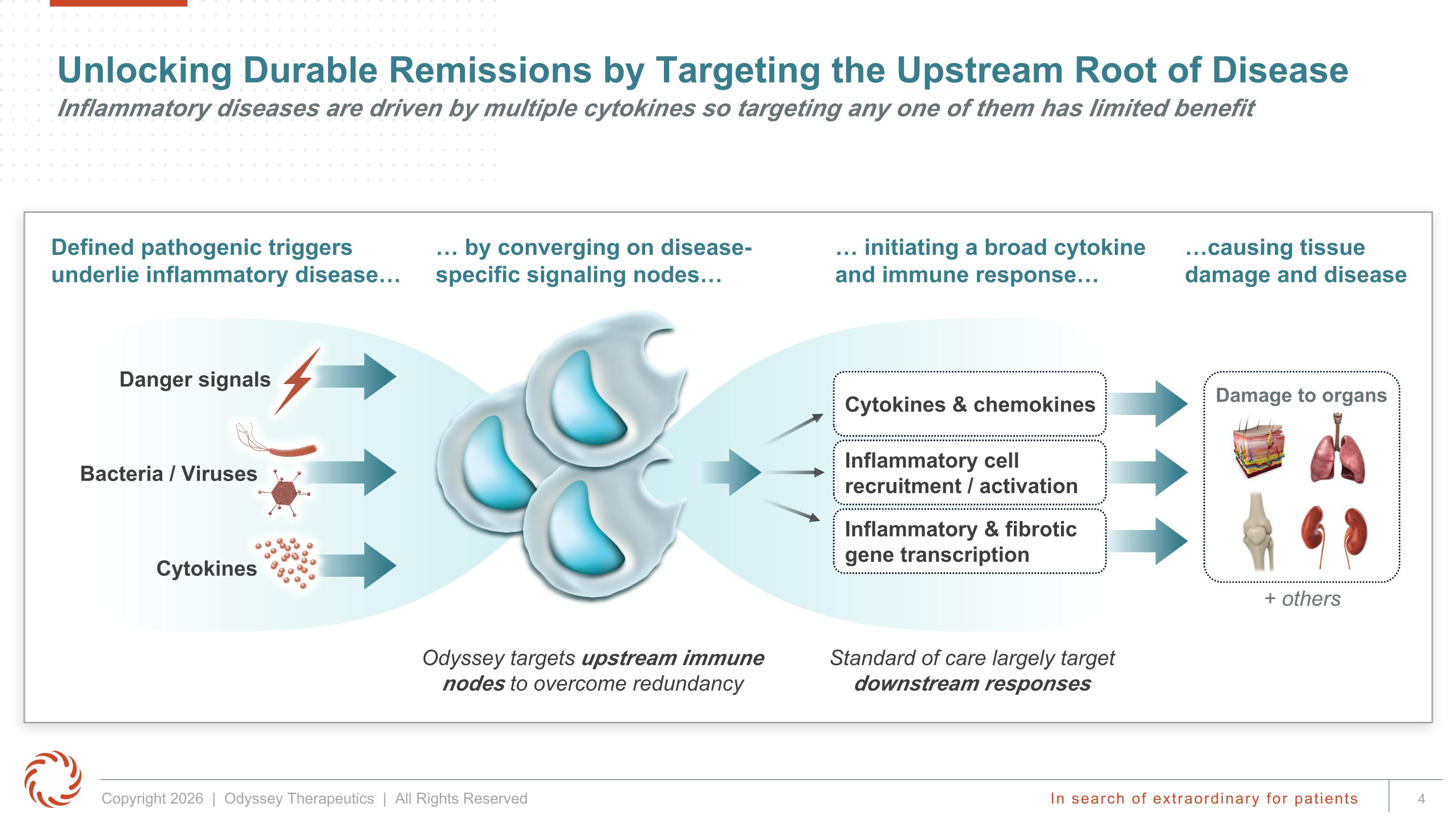
Unlocking Durable Remissions by Targeting the Upstream Root of Disease Defined pathogenic triggers underlie inflammatory disease… … by converging on disease-specific signaling nodes… … initiating a broad cytokine and immune response… …causing tissue damage and disease Cytokines & chemokines Inflammatory cell recruitment / activation Inflammatory & fibrotic gene transcription Odyssey targets upstream immune nodes to overcome redundancy Bacteria / Viruses Danger signals Cytokines Damage to organs + others Standard of care largely target downstream responses Inflammatory diseases are driven by multiple cytokines so targeting any one of them has limited benefit
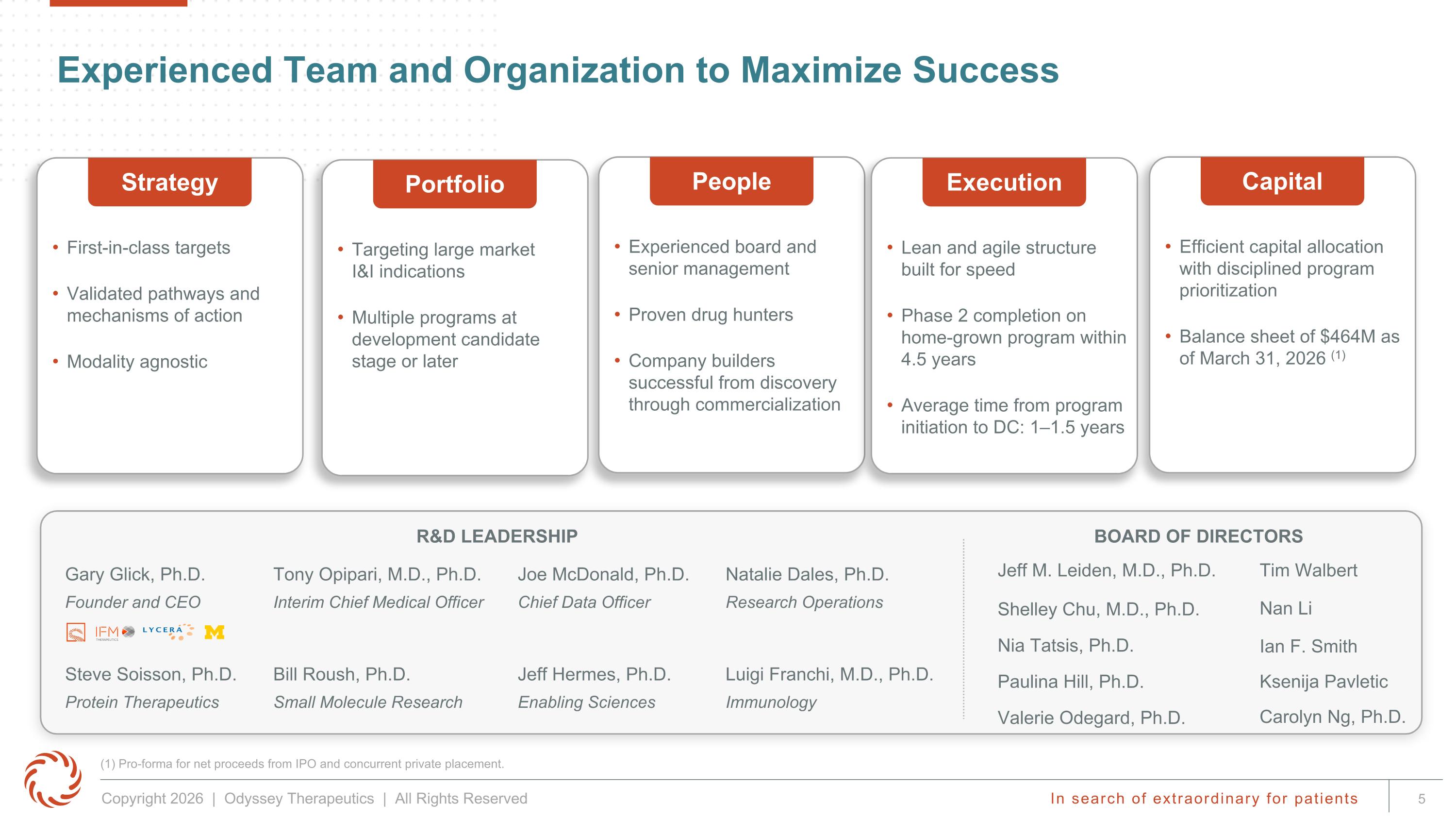
BOARD OF DIRECTORS Experienced Team and Organization to Maximize Success Gary Glick, Ph.D. Founder and CEO Tony Opipari, M.D., Ph.D. Interim Chief Medical Officer Joe McDonald, Ph.D. Chief Data Officer Natalie Dales, Ph.D. Research Operations Steve Soisson, Ph.D. Protein Therapeutics Bill Roush, Ph.D. Small Molecule Research Jeff Hermes, Ph.D. Enabling Sciences Luigi Franchi, M.D., Ph.D. Immunology Valerie Odegard, Ph.D. Tim Walbert Nia Tatsis, Ph.D. Jeff M. Leiden, M.D., Ph.D. Ian F. Smith R&D LEADERSHIP First-in-class targets Validated pathways and mechanisms of action Modality agnostic Strategy Experienced board and senior management Proven drug hunters Company builders successful from discovery through commercialization People Targeting large market I&I indications Multiple programs at development candidate stage or later Portfolio Lean and agile structure built for speed Phase 2 completion on home-grown program within 4.5 years Average time from program initiation to DC: 1–1.5 years Execution Efficient capital allocation with disciplined program prioritization Balance sheet of $464M as of March 31, 2026 (1) Capital (1) Pro-forma for net proceeds from IPO and concurrent private placement. Nan Li Paulina Hill, Ph.D. Ksenija Pavletic Shelley Chu, M.D., Ph.D. Carolyn Ng, Ph.D.
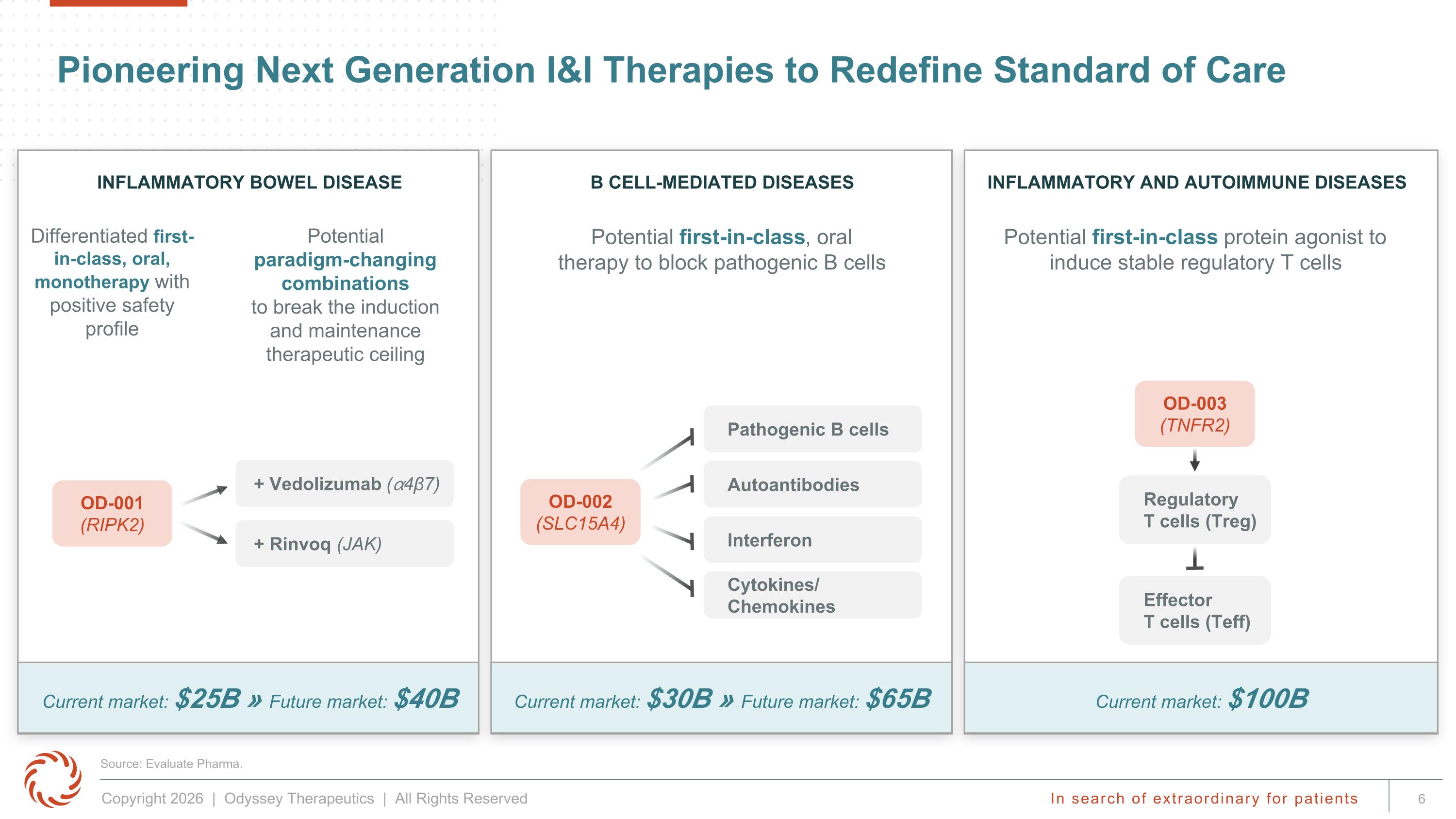
Pioneering Next Generation I&I Therapies to Redefine Standard of Care Current market: $100B INFLAMMATORY BOWEL DISEASE B CELL-MEDIATED DISEASES INFLAMMATORY AND AUTOIMMUNE DISEASES Differentiated first-in-class, oral, monotherapy with positive safety profile Potential first-in-class, oral therapy to block pathogenic B cells Potential first-in-class protein agonist to induce stable regulatory T cells Potential paradigm-changing combinations to break the induction and maintenance therapeutic ceiling OD-001 (RIPK2) + Vedolizumab (⍺4β7) + Rinvoq (JAK) OD-002 (SLC15A4) Pathogenic B cells Autoantibodies Interferon Cytokines/ Chemokines Current market: $30B » Future market: $65B Current market: $25B » Future market: $40B OD-003 (TNFR2) Regulatory T cells (Treg) Effector T cells (Teff) Source: Evaluate Pharma.
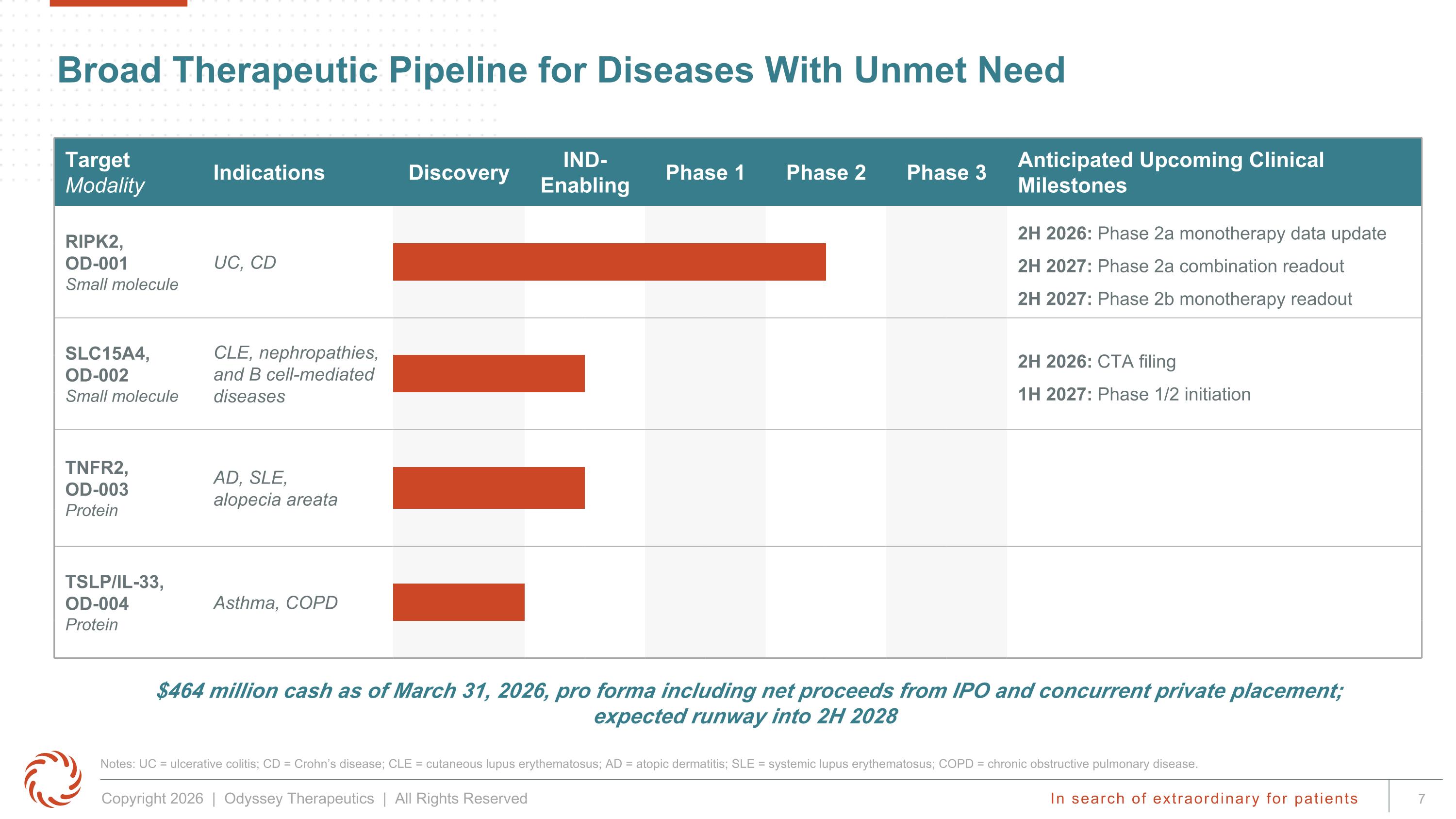
Broad Therapeutic Pipeline for Diseases With Unmet Need Notes: UC = ulcerative colitis; CD = Crohn’s disease; CLE = cutaneous lupus erythematosus; AD = atopic dermatitis; SLE = systemic lupus erythematosus; COPD = chronic obstructive pulmonary disease. Target Modality Indications Discovery IND-Enabling Phase 1 Phase 2 Phase 3 Anticipated Upcoming Clinical Milestones RIPK2, OD-001 Small molecule UC, CD 2H 2026: Phase 2a monotherapy data update 2H 2027: Phase 2a combination readout 2H 2027: Phase 2b monotherapy readout SLC15A4, OD-002 Small molecule CLE, nephropathies, and B cell-mediated diseases 2H 2026: CTA filing 1H 2027: Phase 1/2 initiation TNFR2, OD-003 Protein AD, SLE, alopecia areata TSLP/IL-33, OD-004 Protein Asthma, COPD $464 million cash as of March 31, 2026, pro forma including net proceeds from IPO and concurrent private placement; expected runway into 2H 2028
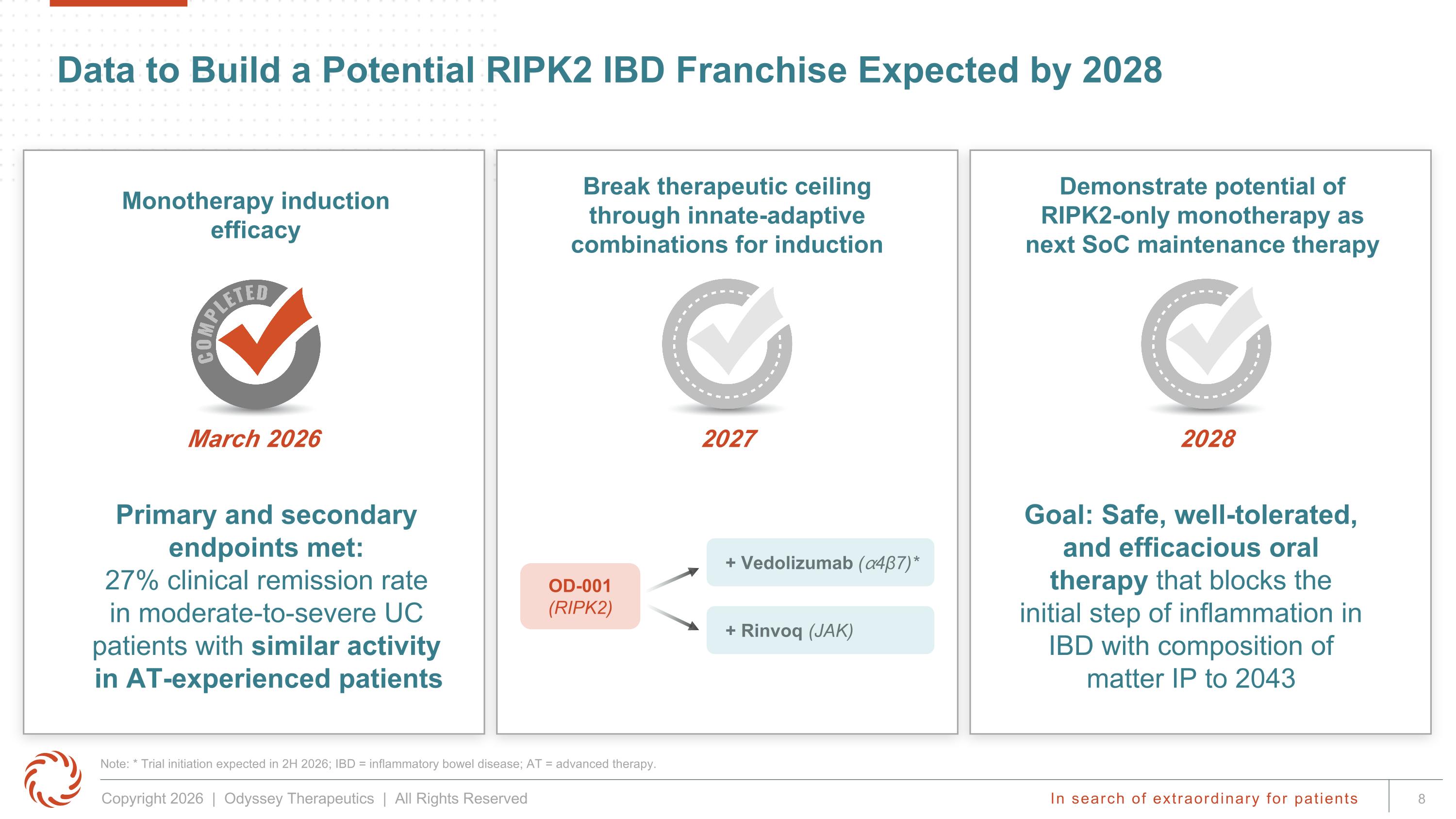
2028 Data to Build a Potential RIPK2 IBD Franchise Expected by 2028 Monotherapy induction efficacy Break therapeutic ceiling through innate-adaptive combinations for induction Demonstrate potential of RIPK2-only monotherapy as next SoC maintenance therapy Note: * Trial initiation expected in 2H 2026; IBD = inflammatory bowel disease; AT = advanced therapy. 2027 Primary and secondary endpoints met: 27% clinical remission rate in moderate-to-severe UC patients with similar activity in AT-experienced patients March 2026 OD-001 (RIPK2) + Vedolizumab (⍺4β7)* + Rinvoq (JAK) Goal: Safe, well-tolerated, and efficacious oral therapy that blocks the initial step of inflammation in IBD with composition of matter IP to 2043
Oral RIPK2 Scaffolding Inhibitor: OD-001 Addressing a Root Cause of Inflammation in IBD Using a Novel Mechanism of Action Proof-of-Concept Achieved in Ulcerative Colitis Program Inception to Phase 2 Proof-of-Concept: 4.5 Years
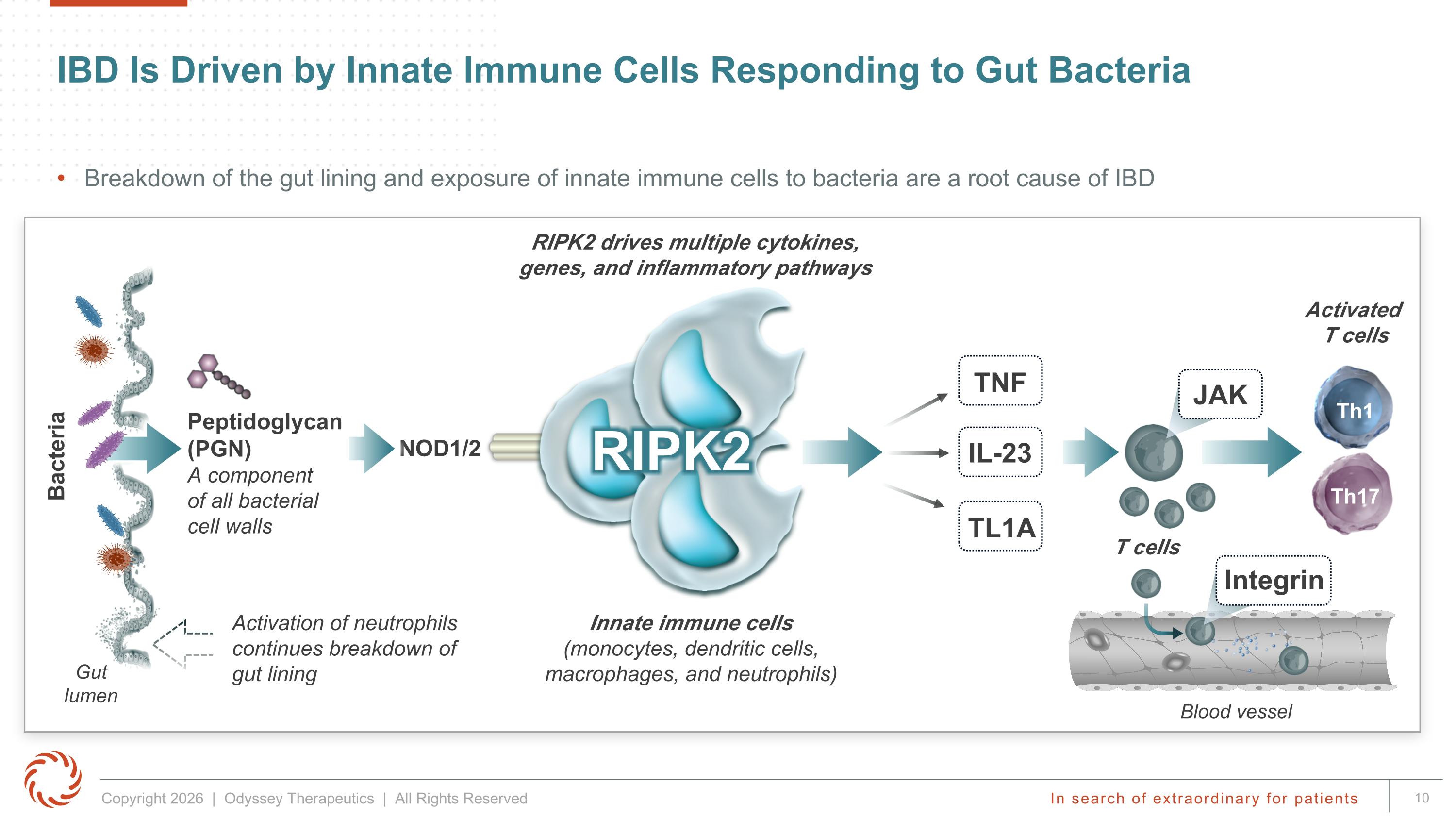
IBD Is Driven by Innate Immune Cells Responding to Gut Bacteria Breakdown of the gut lining and exposure of innate immune cells to bacteria are a root cause of IBD Gut lumen Activated T cells T cells TNF IL-23 Activation of neutrophils continues breakdown of gut lining TL1A Th1 Th17 Innate immune cells (monocytes, dendritic cells, macrophages, and neutrophils) NOD1/2 RIPK2 JAK Bacteria Blood vessel Integrin Peptidoglycan (PGN) A component of all bacterial cell walls RIPK2 drives multiple cytokines, genes, and inflammatory pathways
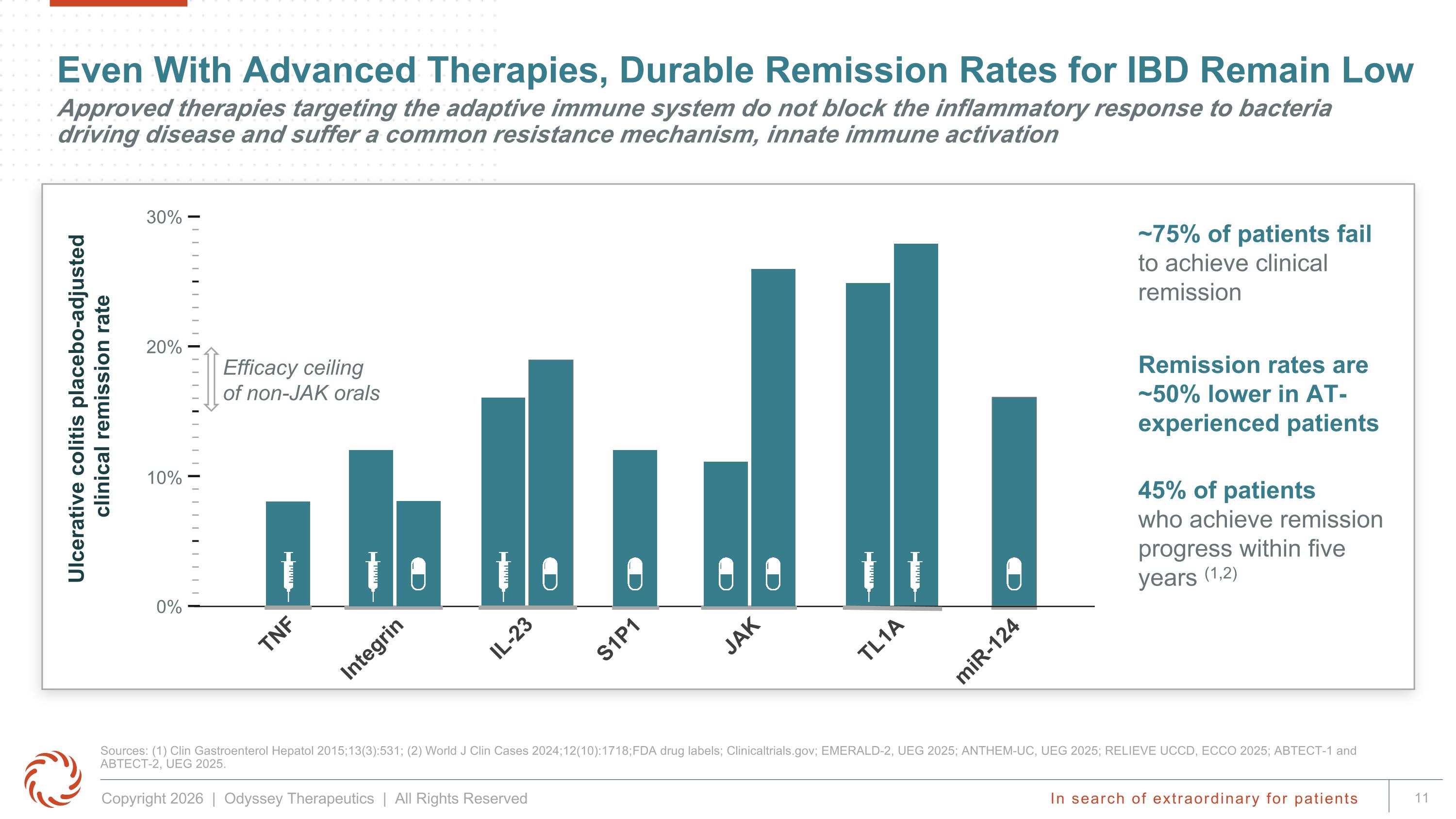
miR-124 Even With Advanced Therapies, Durable Remission Rates for IBD Remain Low ~75% of patients fail to achieve clinical remission 45% of patients who achieve remission progress within five years (1,2) Sources: (1) Clin Gastroenterol Hepatol 2015;13(3):531; (2) World J Clin Cases 2024;12(10):1718; FDA drug labels; Clinicaltrials.gov; EMERALD-2, UEG 2025; ANTHEM-UC, UEG 2025; RELIEVE UCCD, ECCO 2025; ABTECT-1 and ABTECT-2, UEG 2025. TNF Integrin S1P1 JAK TL1A IL-23 0% 10% 20% 30% Efficacy ceiling of non-JAK orals Ulcerative colitis placebo-adjusted clinical remission rate Approved therapies targeting the adaptive immune system do not block the inflammatory response to bacteria driving disease and suffer a common resistance mechanism, innate immune activation Remission rates are ~50% lower in AT-experienced patients
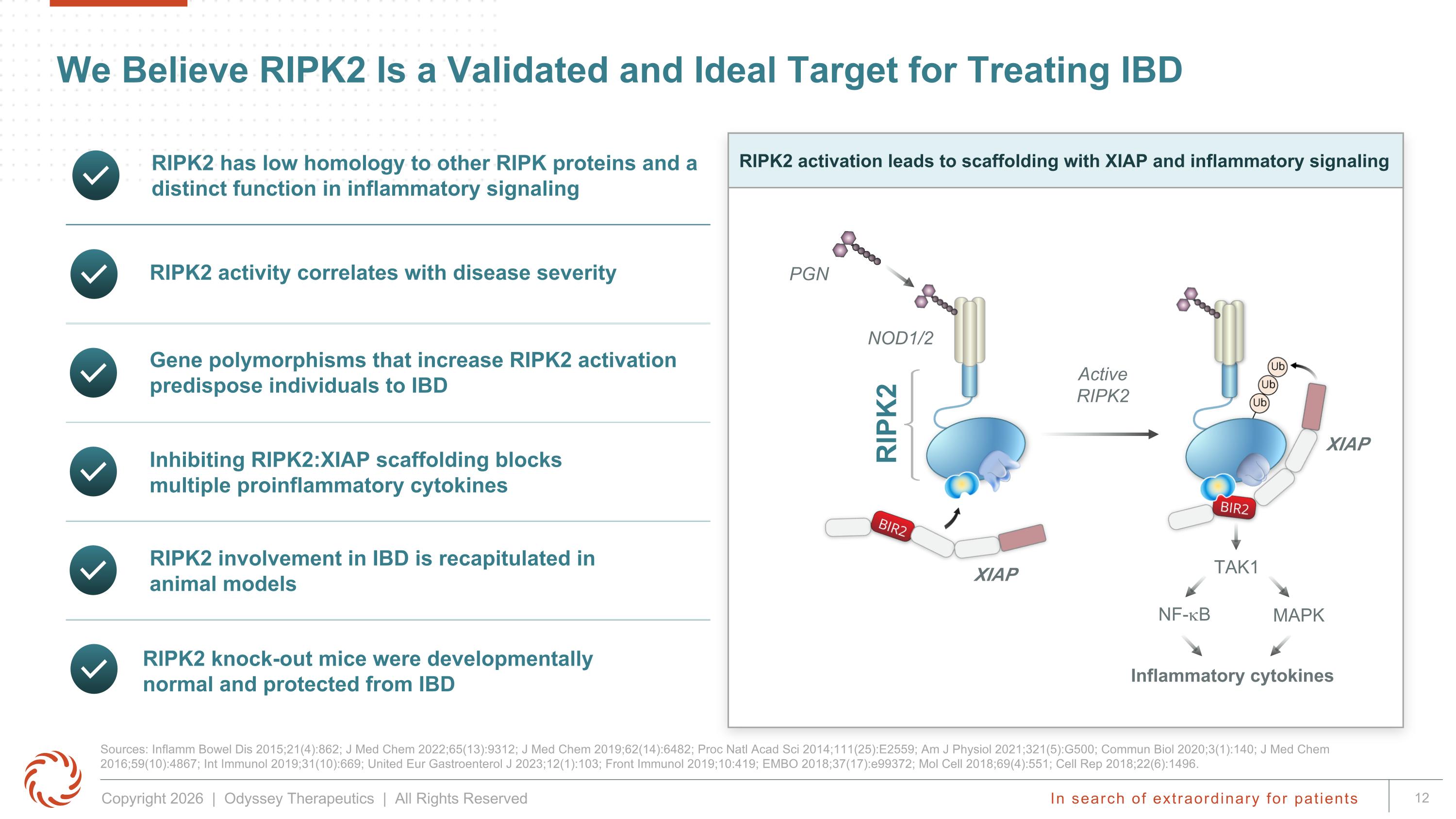
We Believe RIPK2 Is a Validated and Ideal Target for Treating IBD Sources: Inflamm Bowel Dis 2015;21(4):862; J Med Chem 2022;65(13):9312; J Med Chem 2019;62(14):6482; Proc Natl Acad Sci 2014;111(25):E2559; Am J Physiol 2021;321(5):G500; Commun Biol 2020;3(1):140; J Med Chem 2016;59(10):4867; Int Immunol 2019;31(10):669; United Eur Gastroenterol J 2023;12(1):103; Front Immunol 2019;10:419; EMBO 2018;37(17):e99372; Mol Cell 2018;69(4):551; Cell Rep 2018;22(6):1496. Gene polymorphisms that increase RIPK2 activation predispose individuals to IBD Inhibiting RIPK2:XIAP scaffolding blocks multiple proinflammatory cytokines RIPK2 involvement in IBD is recapitulated in animal models RIPK2 knock-out mice were developmentally normal and protected from IBD RIPK2 activity correlates with disease severity RIPK2 activation leads to scaffolding with XIAP and inflammatory signaling RIPK2 Inflammatory cytokines NF-kB MAPK TAK1 XIAP Active RIPK2 NOD1/2 PGN XIAP XIAP RIPK2 has low homology to other RIPK proteins and a distinct function in inflammatory signaling
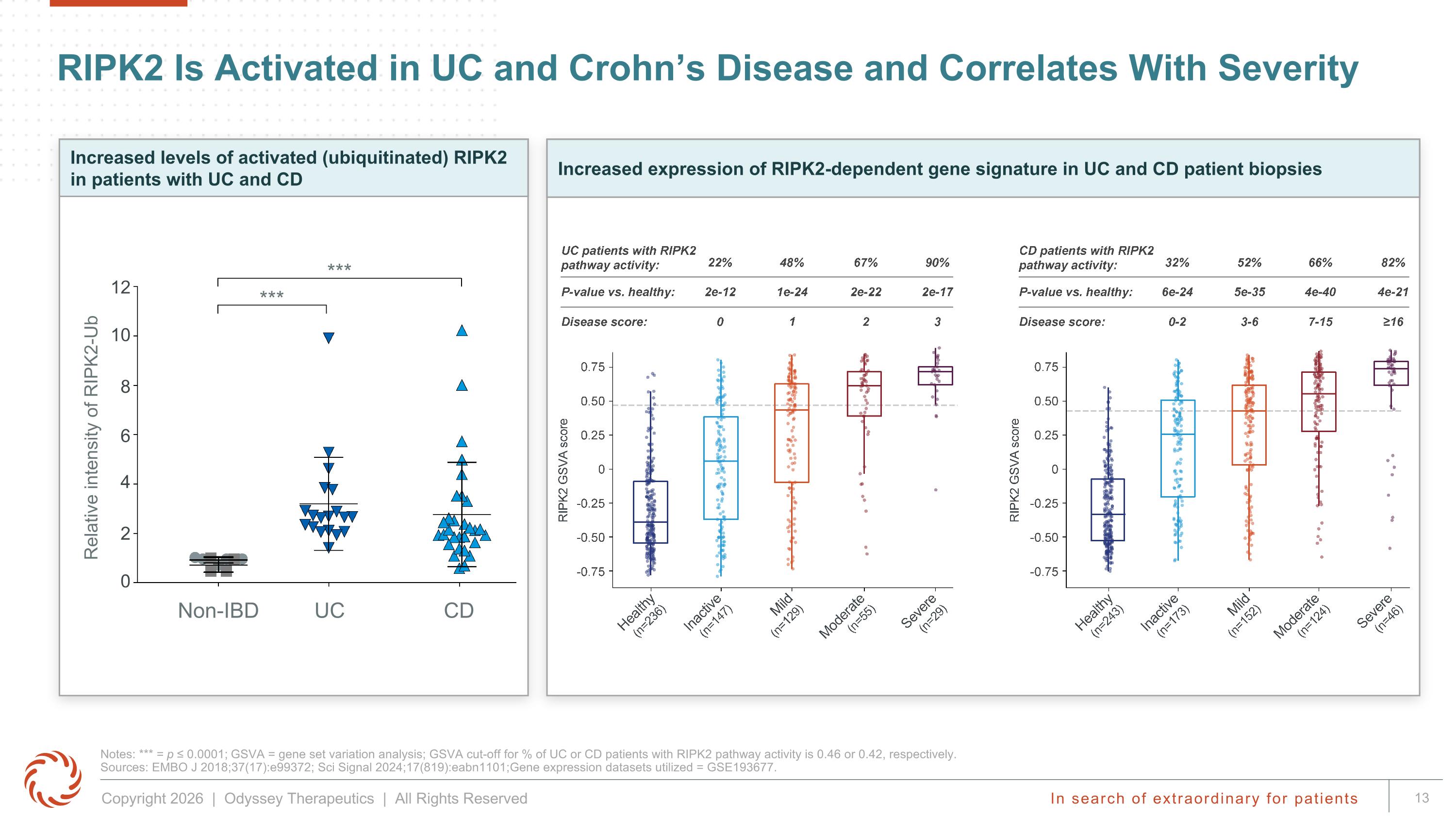
Increased expression of RIPK2-dependent gene signature in UC and CD patient biopsies RIPK2 Is Activated in UC and Crohn’s Disease and Correlates With Severity Notes: *** = p ≤ 0.0001; GSVA = gene set variation analysis; GSVA cut-off for % of UC or CD patients with RIPK2 pathway activity is 0.46 or 0.42, respectively. Sources: EMBO J 2018;37(17):e99372; Sci Signal 2024;17(819):eabn1101; Gene expression datasets utilized = GSE193677. Relative intensity of RIPK2-Ub Non-IBD UC CD 12 10 8 6 4 2 0 *** *** Increased levels of activated (ubiquitinated) RIPK2 in patients with UC and CD
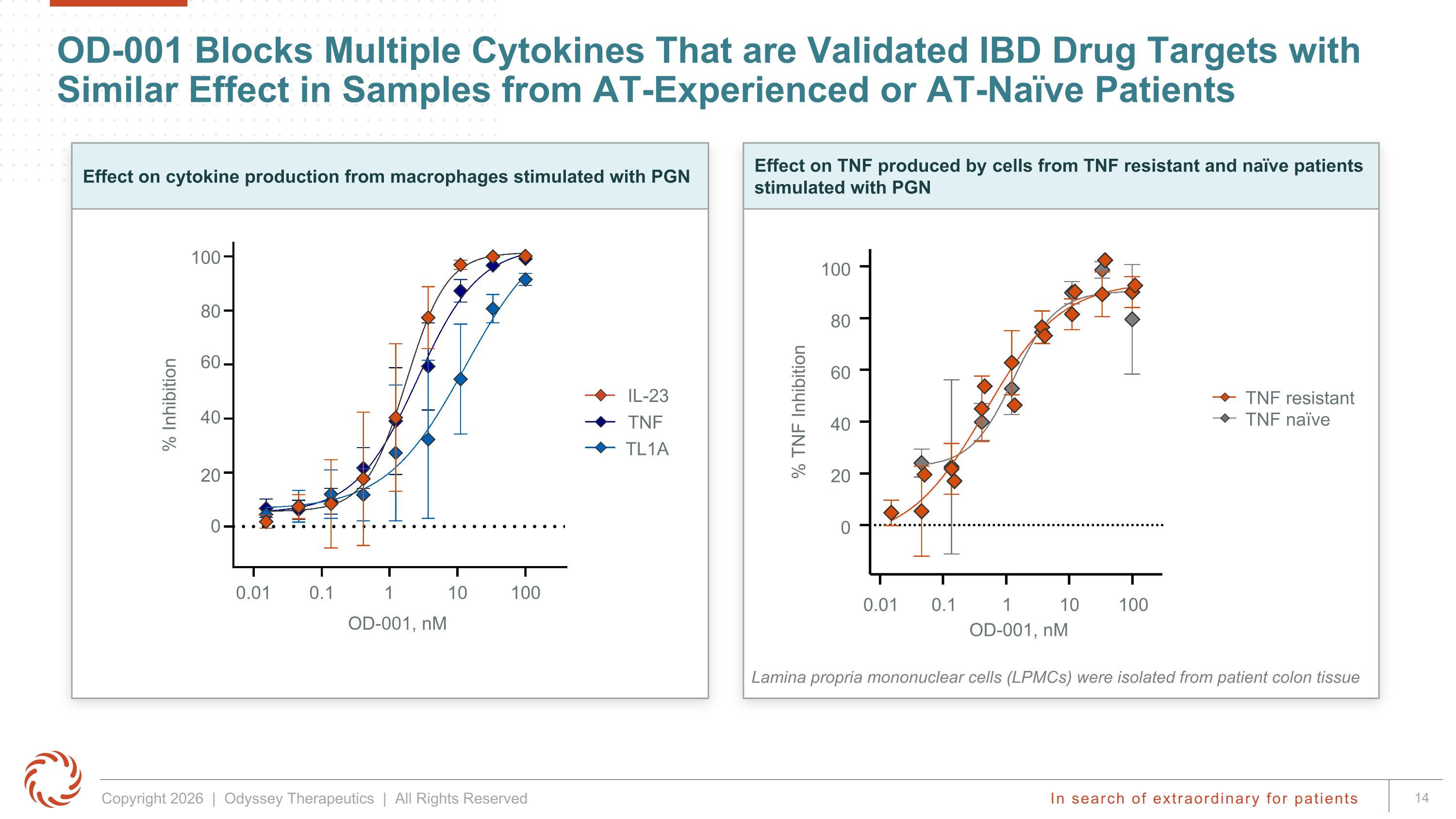
Effect on cytokine production from macrophages stimulated with PGN OD-001 Blocks Multiple Cytokines That are Validated IBD Drug Targets with Similar Effect in Samples from AT-Experienced or AT-Naïve Patients TNF IL-23 TL1A % Inhibition OD-001, nM 0.01 0.1 1 10 100 0 20 40 60 80 100 TNF naïve TNF resistant Effect on TNF produced by cells from TNF resistant and naïve patients stimulated with PGN Lamina propria mononuclear cells (LPMCs) were isolated from patient colon tissue % TNF Inhibition 0 20 40 60 80 100 OD-001, nM 0.01 0.1 1 10 100
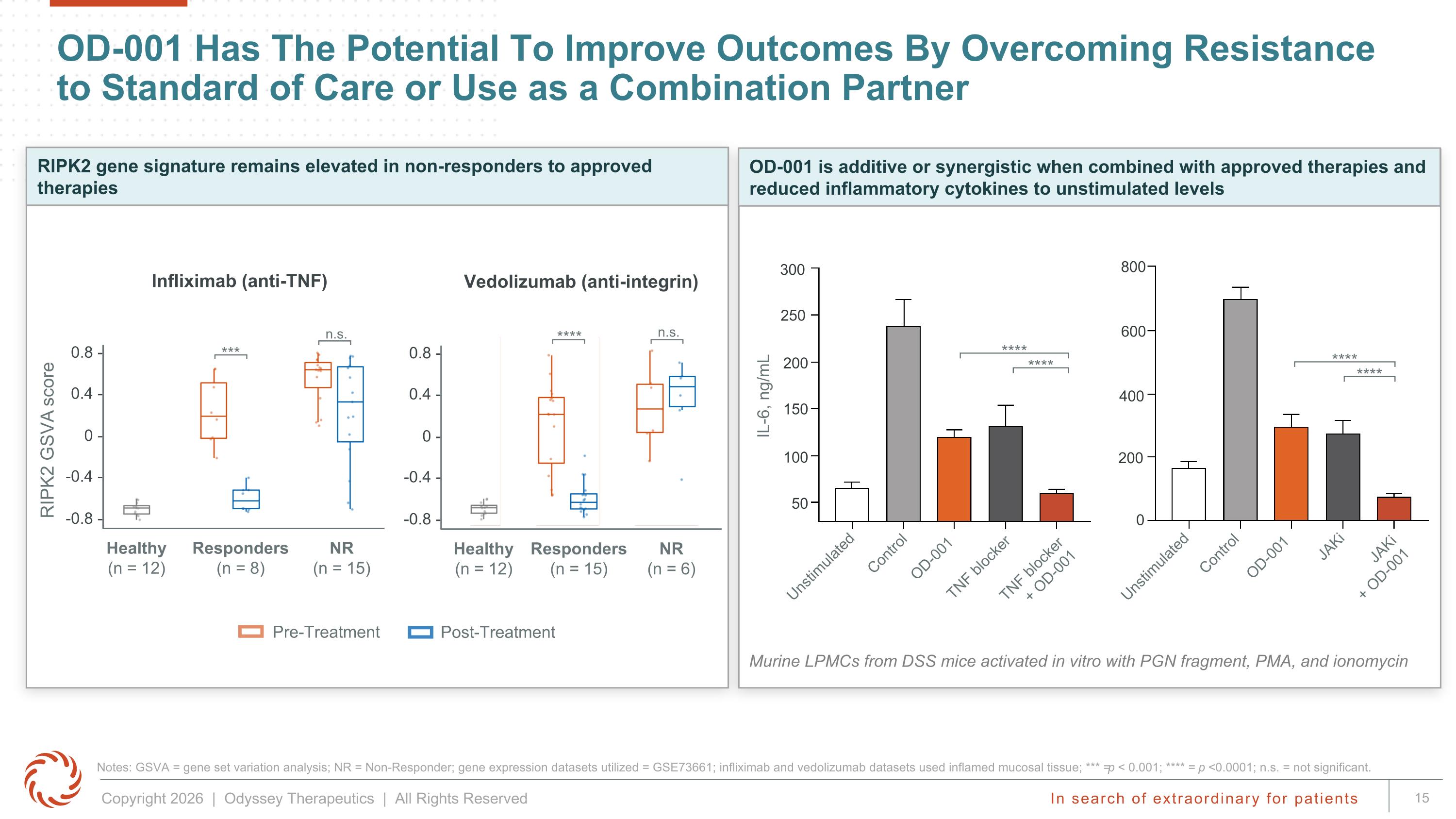
OD-001 Has The Potential To Improve Outcomes By Overcoming Resistance to Standard of Care or Use as a Combination Partner Notes: GSVA = gene set variation analysis; NR = Non-Responder; gene expression datasets utilized = GSE73661; infliximab and vedolizumab datasets used inflamed mucosal tissue; *** = p < 0.001; **** = p <0.0001; n.s. = not significant. RIPK2 gene signature remains elevated in non-responders to approved therapies Pre-Treatment Post-Treatment Infliximab (anti-TNF) RIPK2 GSVA score -0.8 - -0.4 - 0 - 0.4 - 0.8 - Responders (n = 8) NR (n = 15) Healthy (n = 12) *** n.s. **** Vedolizumab (anti-integrin) Responders (n = 15) NR (n = 6) Healthy (n = 12) -0.8 - -0.4 - 0 - 0.4 - 0.8 - n.s. IL-6, ng/mL Unstimulated OD-001 TNF blocker Control **** **** **** **** **** **** Unstimulated OD-001 JAKi JAKi + OD-001 Control **** **** **** **** **** **** TNF blocker + OD-001 300 250 200 100 150 50 800 600 200 400 0 Murine LPMCs from DSS mice activated in vitro with PGN fragment, PMA, and ionomycin OD-001 is additive or synergistic when combined with approved therapies and reduced inflammatory cytokines to unstimulated levels
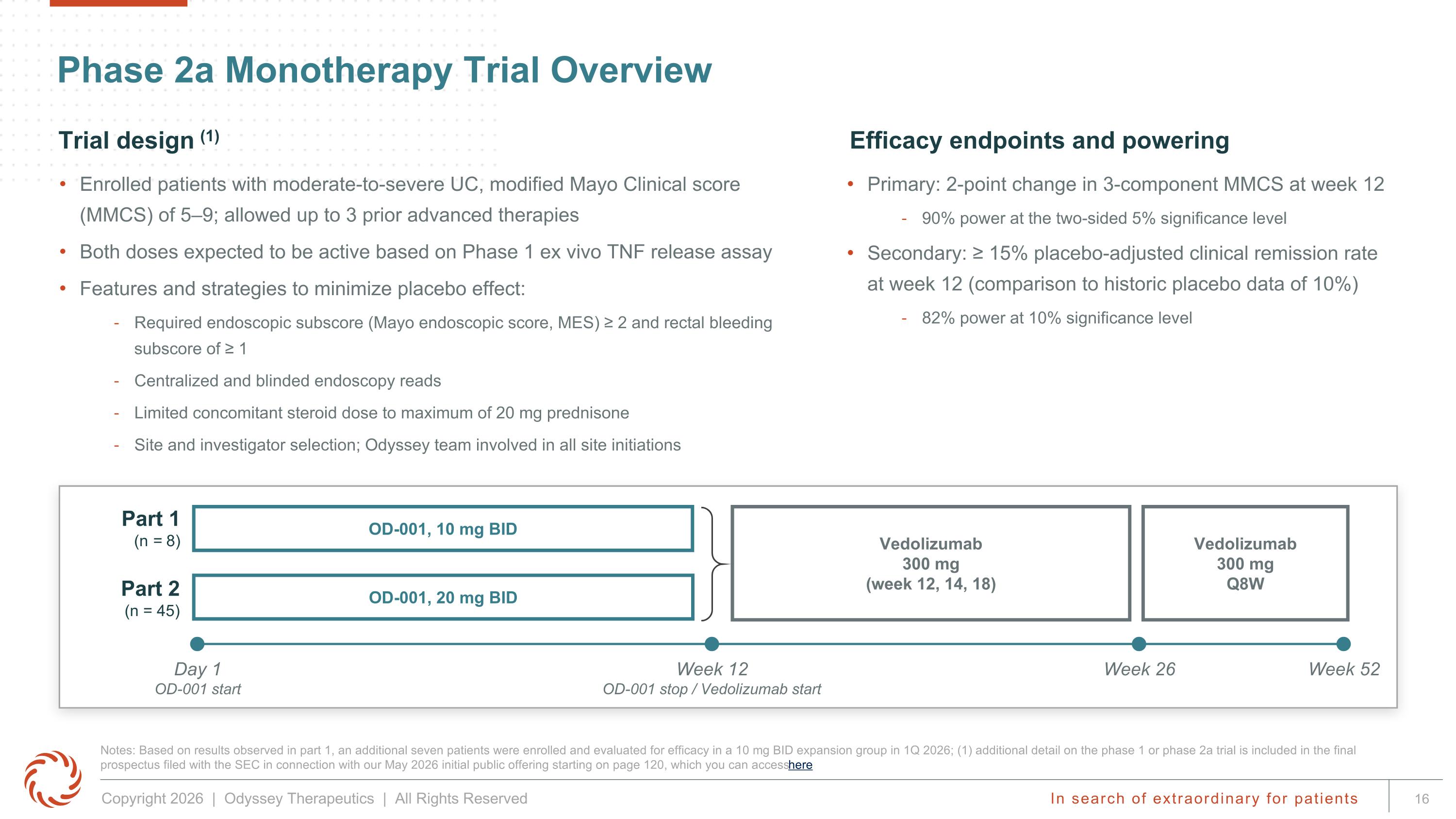
Enrolled patients with moderate-to-severe UC, modified Mayo Clinical score (MMCS) of 5–9; allowed up to 3 prior advanced therapies Both doses expected to be active based on Phase 1 ex vivo TNF release assay Features and strategies to minimize placebo effect: Required endoscopic subscore (Mayo endoscopic score, MES) ≥ 2 and rectal bleeding subscore of ≥ 1 Centralized and blinded endoscopy reads Limited concomitant steroid dose to maximum of 20 mg prednisone Site and investigator selection; Odyssey team involved in all site initiations Primary: 2-point change in 3-component MMCS at week 12 90% power at the two-sided 5% significance level Secondary: ≥ 15% placebo-adjusted clinical remission rate at week 12 (comparison to historic placebo data of 10%) 82% power at 10% significance level Efficacy endpoints and powering Trial design (1) Phase 2a Monotherapy Trial Overview Notes: Based on results observed in part 1, an additional seven patients were enrolled and evaluated for efficacy in a 10 mg BID expansion group in 1Q 2026; (1) additional detail on the phase 1 or phase 2a trial is included in the final prospectus filed with the SEC in connection with our May 2026 initial public offering starting on page 120, which you can access here Vedolizumab 300 mg Q8W Vedolizumab 300 mg (week 12, 14, 18) Day 1 OD-001 start Week 12 OD-001 stop / Vedolizumab start Week 26 Week 52 OD-001, 10 mg BID OD-001, 20 mg BID Part 1 (n = 8) Part 2 (n = 45)
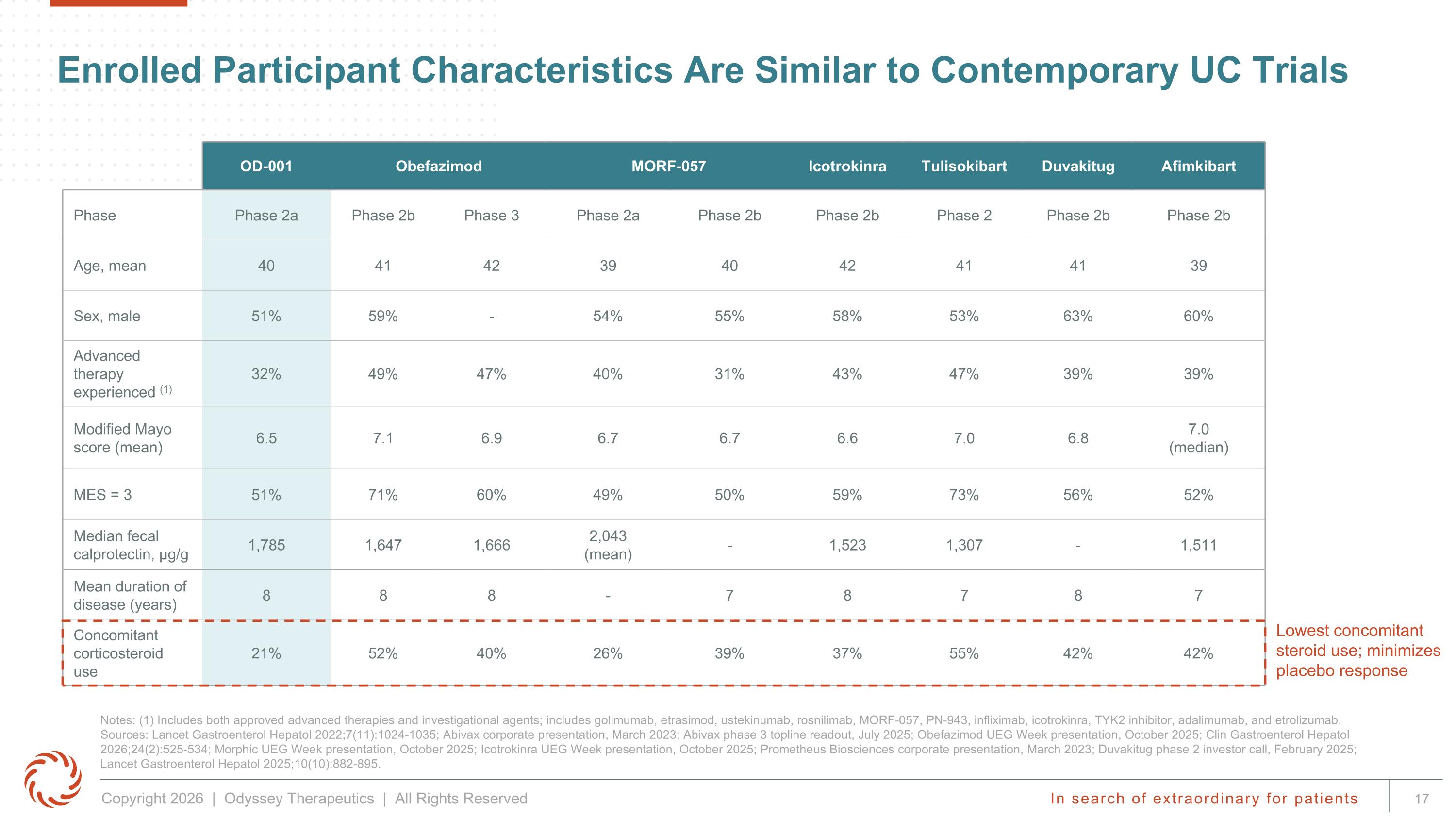
Enrolled Participant Characteristics Are Similar to Contemporary UC Trials Notes: (1) Includes both approved advanced therapies and investigational agents; includes golimumab, etrasimod, ustekinumab, rosnilimab, MORF-057, PN-943, infliximab, icotrokinra, TYK2 inhibitor, adalimumab, and etrolizumab. Sources: Lancet Gastroenterol Hepatol 2022;7(11):1024-1035; Abivax corporate presentation, March 2023; Abivax phase 3 topline readout, July 2025; Obefazimod UEG Week presentation, October 2025; Clin Gastroenterol Hepatol 2026;24(2):525-534; Morphic UEG Week presentation, October 2025; Icotrokinra UEG Week presentation, October 2025; Prometheus Biosciences corporate presentation, March 2023; Duvakitug phase 2 investor call, February 2025; Lancet Gastroenterol Hepatol 2025;10(10):882-895. OD-001 Obefazimod MORF-057 Icotrokinra Tulisokibart Duvakitug Afimkibart Phase Phase 2a Phase 2b Phase 3 Phase 2a Phase 2b Phase 2b Phase 2 Phase 2b Phase 2b Age, mean 40 41 42 39 40 42 41 41 39 Sex, male 51% 59% - 54% 55% 58% 53% 63% 60% Advanced therapy experienced (1) 32% 49% 47% 40% 31% 43% 47% 39% 39% Modified Mayo score (mean) 6.5 7.1 6.9 6.7 6.7 6.6 7.0 6.8 7.0 (median) MES = 3 51% 71% 60% 49% 50% 59% 73% 56% 52% Median fecal calprotectin, µg/g 1,785 1,647 1,666 2,043 (mean) - 1,523 1,307 - 1,511 Mean duration of disease (years) 8 8 8 - 7 8 7 8 7 Concomitant corticosteroid use 21% 52% 40% 26% 39% 37% 55% 42% 42% Lowest concomitant steroid use; minimizes placebo response
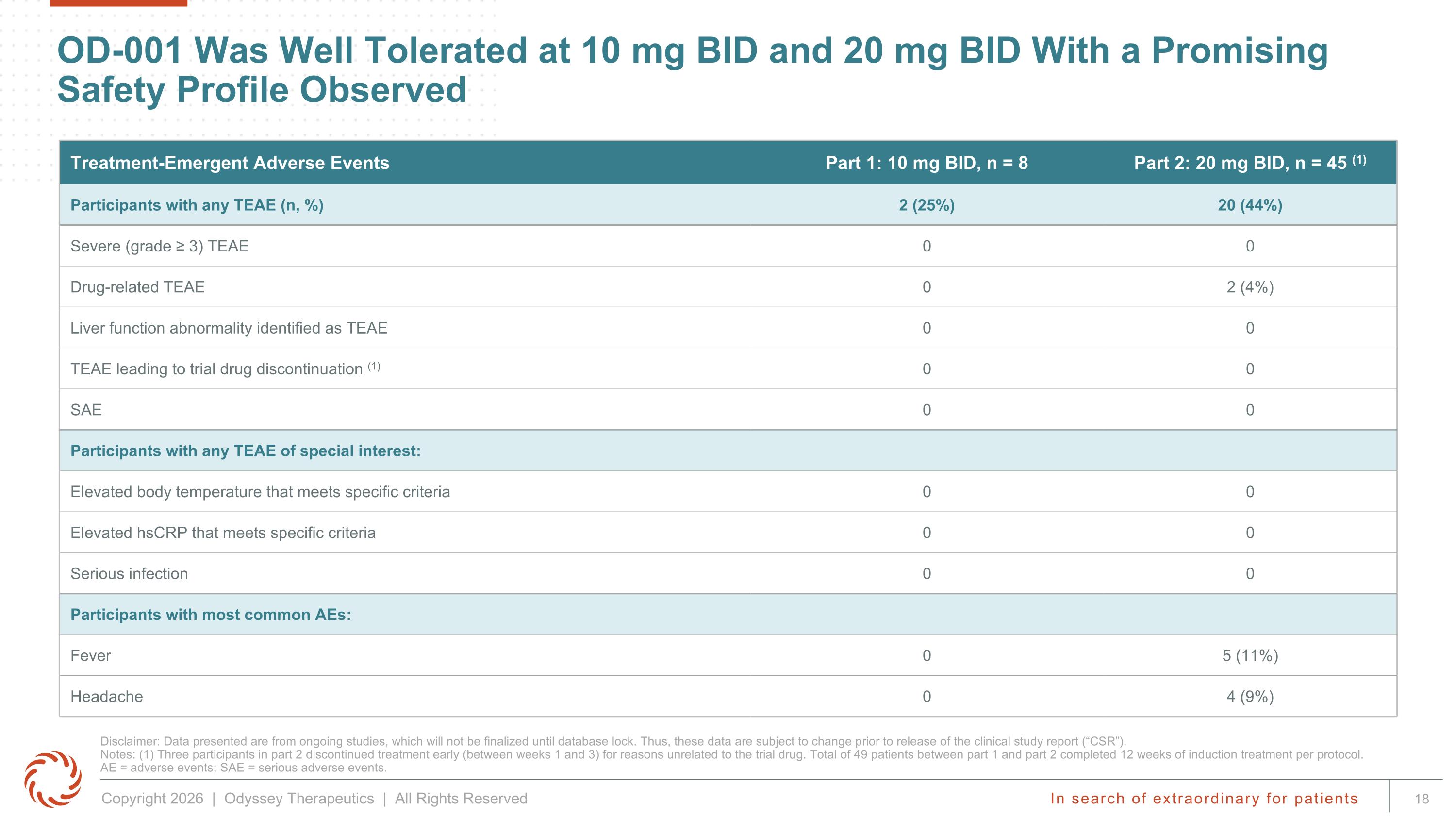
OD-001 Was Well Tolerated at 10 mg BID and 20 mg BID With a Promising Safety Profile Observed Disclaimer: Data presented are from ongoing studies, which will not be finalized until database lock. Thus, these data are subject to change prior to release of the clinical study report (“CSR”). Notes: (1) Three participants in part 2 discontinued treatment early (between weeks 1 and 3) for reasons unrelated to the trial drug. Total of 49 patients between part 1 and part 2 completed 12 weeks of induction treatment per protocol. AE = adverse events; SAE = serious adverse events. Treatment-Emergent Adverse Events Part 1: 10 mg BID, n = 8 Part 2: 20 mg BID, n = 45 (1) Participants with any TEAE (n, %) 2 (25%) 20 (44%) Severe (grade ≥ 3) TEAE 0 0 Drug-related TEAE 0 2 (4%) Liver function abnormality identified as TEAE 0 0 TEAE leading to trial drug discontinuation (1) 0 0 SAE 0 0 Participants with any TEAE of special interest: Elevated body temperature that meets specific criteria 0 0 Elevated hsCRP that meets specific criteria 0 0 Serious infection 0 0 Participants with most common AEs: Fever 0 5 (11%) Headache 0 4 (9%)
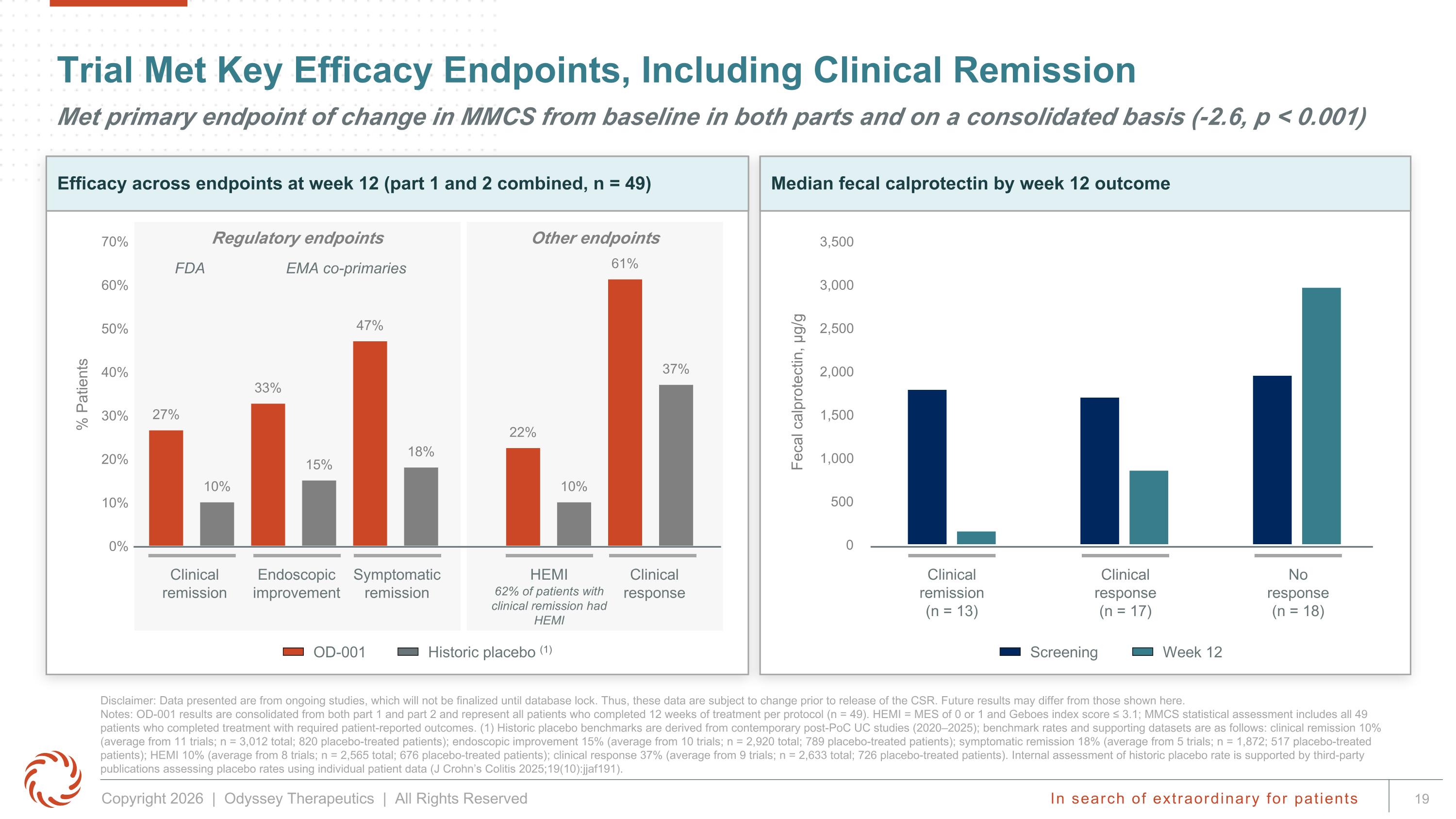
Trial Met Key Efficacy Endpoints, Including Clinical Remission Met primary endpoint of change in MMCS from baseline in both parts and on a consolidated basis (-2.6, p < 0.001) Disclaimer: Data presented are from ongoing studies, which will not be finalized until database lock. Thus, these data are subject to change prior to release of the CSR. Future results may differ from those shown here. Notes: OD-001 results are consolidated from both part 1 and part 2 and represent all patients who completed 12 weeks of treatment per protocol (n = 49). HEMI = MES of 0 or 1 and Geboes index score ≤ 3.1; MMCS statistical assessment includes all 49 patients who completed treatment with required patient-reported outcomes. (1) Historic placebo benchmarks are derived from contemporary post-PoC UC studies (2020–2025); benchmark rates and supporting datasets are as follows: clinical remission 10% (average from 11 trials; n = 3,012 total; 820 placebo-treated patients); endoscopic improvement 15% (average from 10 trials; n = 2,920 total; 789 placebo-treated patients); symptomatic remission 18% (average from 5 trials; n = 1,872; 517 placebo-treated patients); HEMI 10% (average from 8 trials; n = 2,565 total; 676 placebo-treated patients); clinical response 37% (average from 9 trials; n = 2,633 total; 726 placebo-treated patients). Internal assessment of historic placebo rate is supported by third-party publications assessing placebo rates using individual patient data (J Crohn’s Colitis 2025;19(10):jjaf191). Median fecal calprotectin by week 12 outcome Screening Week 12 Clinical remission (n = 13) Clinical response (n = 17) No response (n = 18) Other endpoints Regulatory endpoints Efficacy across endpoints at week 12 (part 1 and 2 combined, n = 49) OD-001 Historic placebo (1) Clinical remission Endoscopic improvement Symptomatic remission Clinical response HEMI 62% of patients with clinical remission had HEMI FDA EMA co-primaries
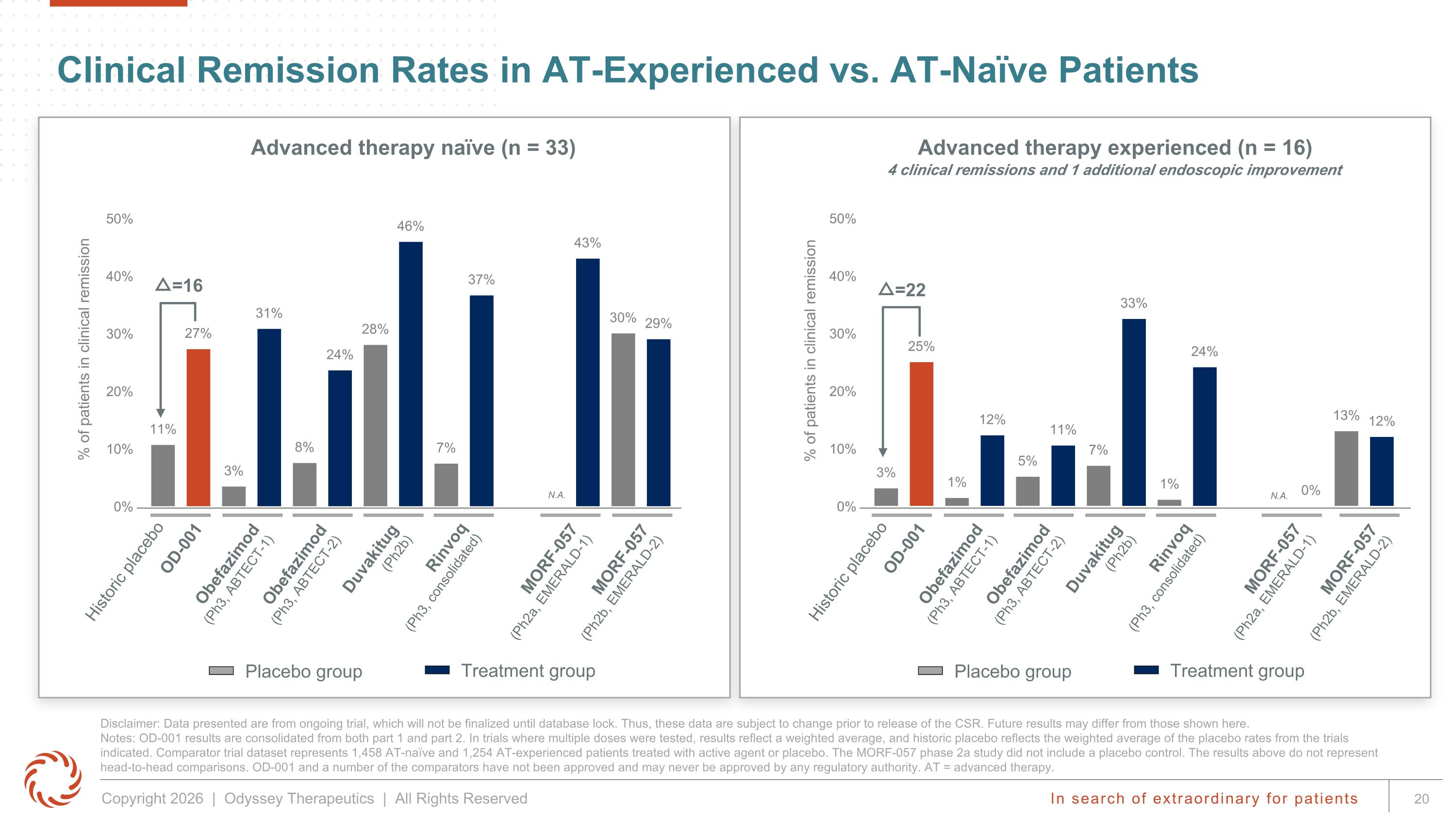
Clinical Remission Rates in AT-Experienced vs. AT-Naïve Patients Disclaimer: Data presented are from ongoing trial, which will not be finalized until database lock. Thus, these data are subject to change prior to release of the CSR. Future results may differ from those shown here. Notes: OD-001 results are consolidated from both part 1 and part 2. In trials where multiple doses were tested, results reflect a weighted average, and historic placebo reflects the weighted average of the placebo rates from the trials indicated. Comparator trial dataset represents 1,458 AT-naïve and 1,254 AT-experienced patients treated with active agent or placebo. The MORF-057 phase 2a study did not include a placebo control. The results above do not represent head-to-head comparisons. OD-001 and a number of the comparators have not been approved and may never be approved by any regulatory authority. AT = advanced therapy. Advanced therapy naïve (n = 33) Advanced therapy experienced (n = 16) 4 clinical remissions and 1 additional endoscopic improvement Placebo group Treatment group Obefazimod (Ph3, ABTECT-1) Obefazimod (Ph3, ABTECT-2) MORF-057 (Ph2b, EMERALD-2) Rinvoq (Ph3, consolidated) Historic placebo OD-001 Duvakitug (Ph2b) MORF-057 (Ph2a, EMERALD-1) Placebo group Treatment group Obefazimod (Ph3, ABTECT-1) Obefazimod (Ph3, ABTECT-2) MORF-057 (Ph2b, EMERALD-2) Rinvoq (Ph3, consolidated) Historic placebo OD-001 Duvakitug (Ph2b) MORF-057 (Ph2a, EMERALD-1) N.A. △=16 N.A. △=22
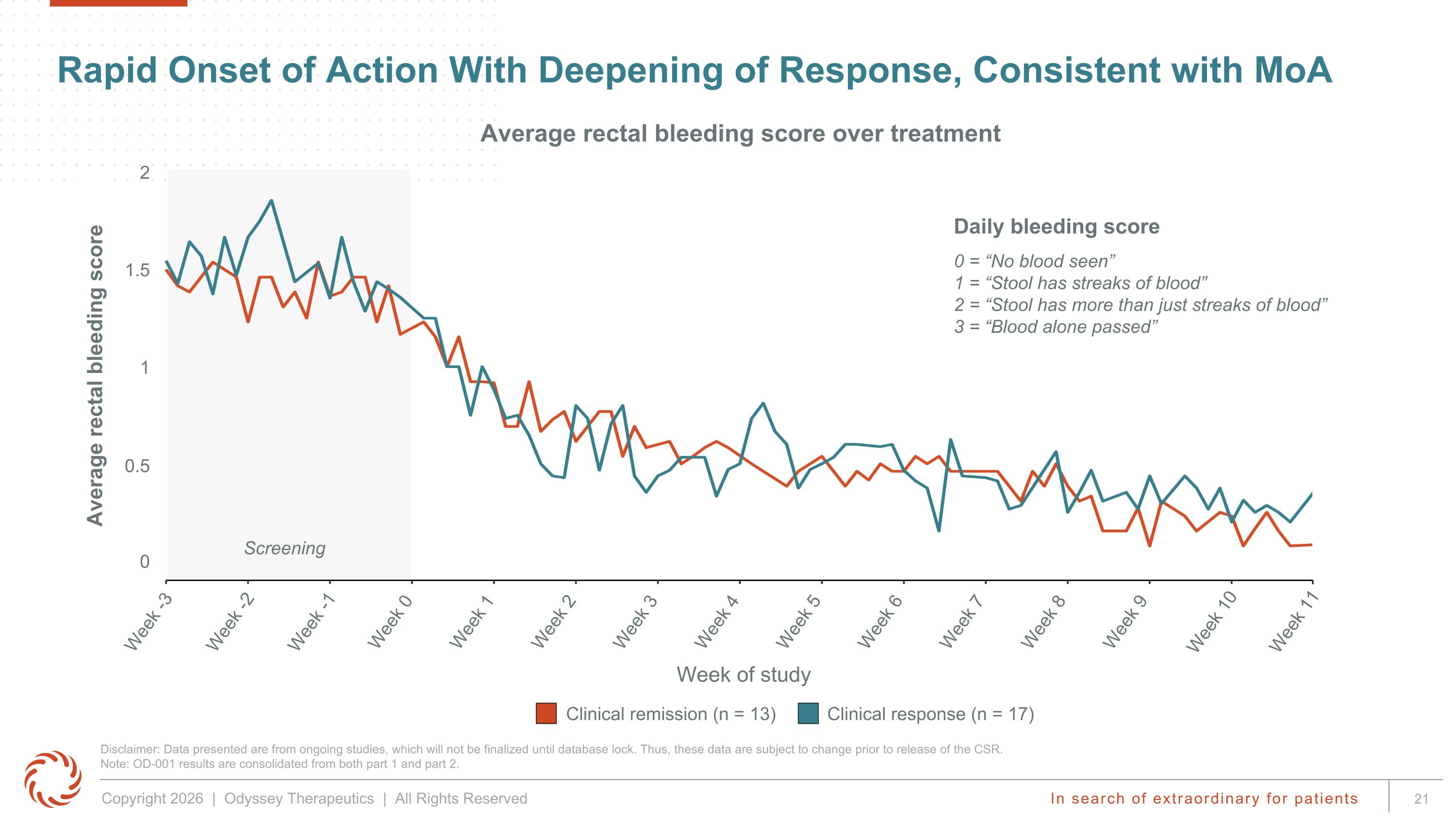
Disclaimer: Data presented are from ongoing studies, which will not be finalized until database lock. Thus, these data are subject to change prior to release of the CSR. Note: OD-001 results are consolidated from both part 1 and part 2. Rapid Onset of Action With Deepening of Response, Consistent with MoA Screening Clinical remission (n = 13) Clinical response (n = 17) Average rectal bleeding score Daily bleeding score 0 = “No blood seen” 1 = “Stool has streaks of blood” 2 = “Stool has more than just streaks of blood” 3 = “Blood alone passed” Week -3 Week -2 Week 0 Week 1 Week 3 Week 4 Week 6 Week 7 Week 9 Week 10 Week 11 Week 8 Week -1 Week 2 Week 5 0 0.5 1 1.5 2 Week of study Average rectal bleeding score over treatment
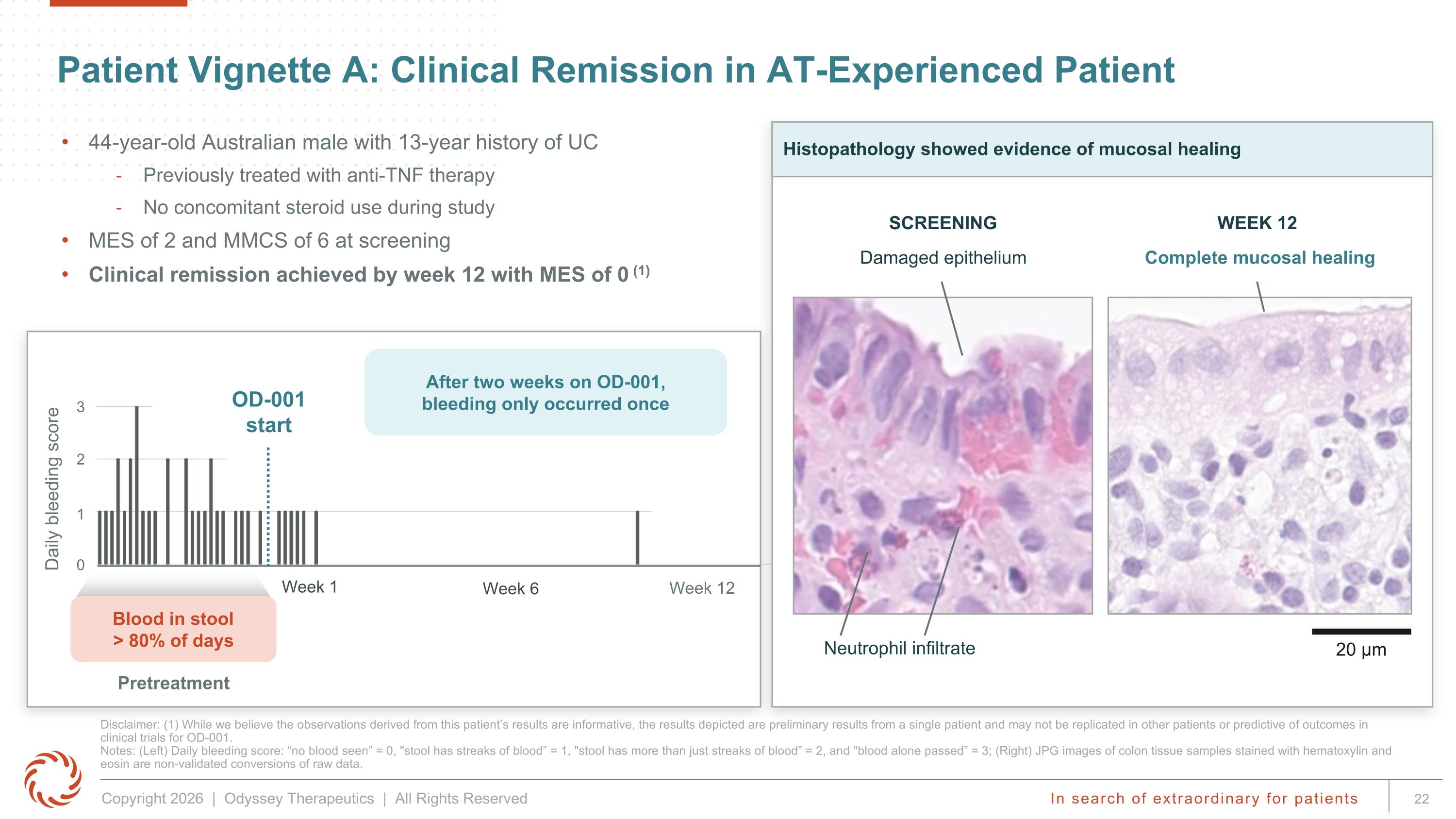
Week 1 Week 6 OD-001 start Patient Vignette A: Clinical Remission in AT-Experienced Patient Disclaimer: (1) While we believe the observations derived from this patient’s results are informative, the results depicted are preliminary results from a single patient and may not be replicated in other patients or predictive of outcomes in clinical trials for OD-001. Notes: (Left) Daily bleeding score: “no blood seen” = 0, "stool has streaks of blood” = 1, "stool has more than just streaks of blood” = 2, and "blood alone passed” = 3; (Right) JPG images of colon tissue samples stained with hematoxylin and eosin are non-validated conversions of raw data. 44-year-old Australian male with 13-year history of UC Previously treated with anti-TNF therapy No concomitant steroid use during study MES of 2 and MMCS of 6 at screening Clinical remission achieved by week 12 with MES of 0 (1) Histopathology showed evidence of mucosal healing Damaged epithelium Complete mucosal healing SCREENING WEEK 12 Neutrophil infiltrate 20 µm Daily bleeding score 3 2 1 0 Week 12 Blood in stool > 80% of days After two weeks on OD-001, bleeding only occurred once Pretreatment
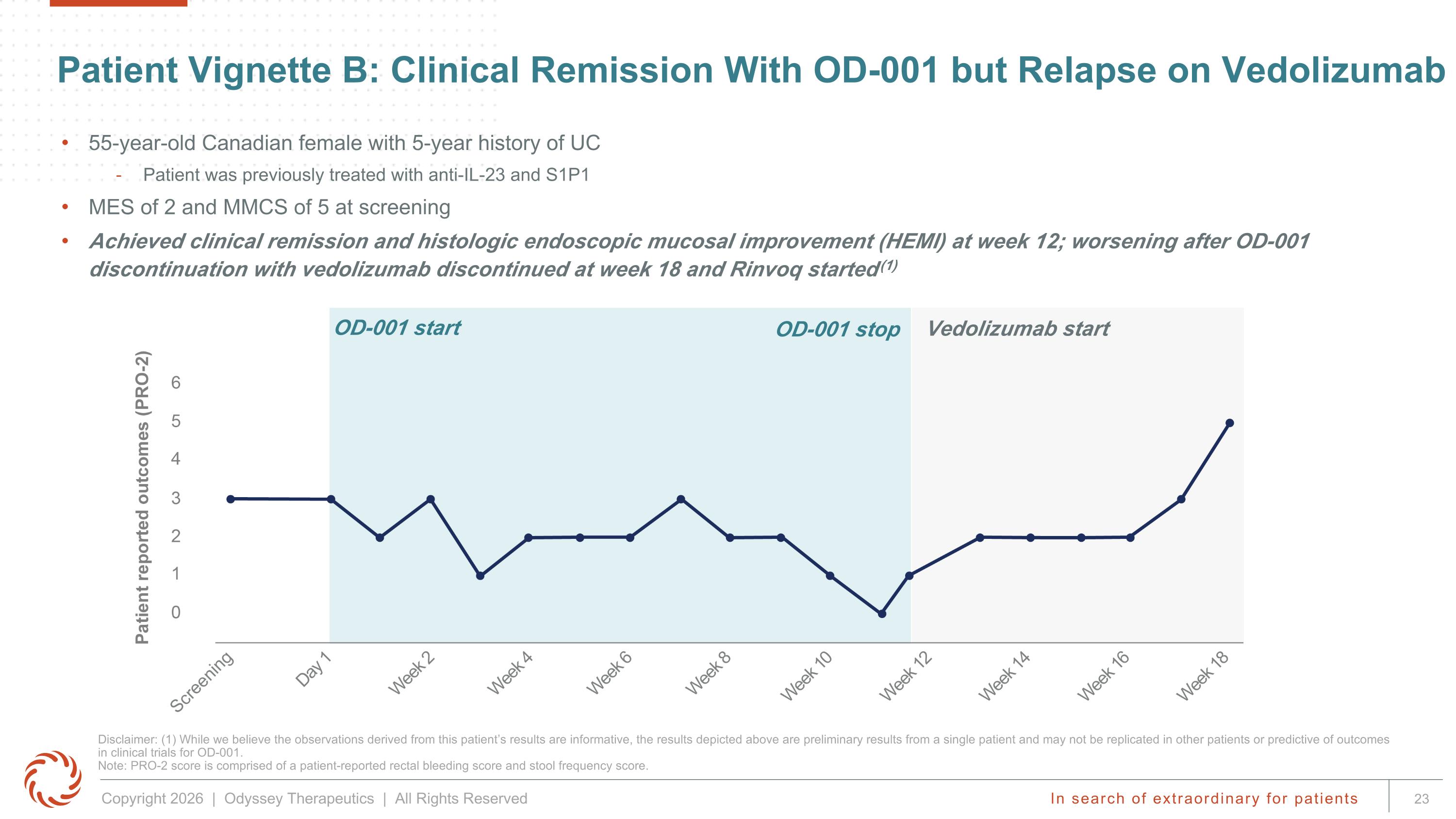
OD-001 start OD-001 stop Vedolizumab start 55-year-old Canadian female with 5-year history of UC Patient was previously treated with anti-IL-23 and S1P1 MES of 2 and MMCS of 5 at screening Achieved clinical remission and histologic endoscopic mucosal improvement (HEMI) at week 12; worsening after OD-001 discontinuation with vedolizumab discontinued at week 18 and Rinvoq started (1) Patient Vignette B: Clinical Remission With OD-001 but Relapse on Vedolizumab Disclaimer: (1) While we believe the observations derived from this patient’s results are informative, the results depicted above are preliminary results from a single patient and may not be replicated in other patients or predictive of outcomes in clinical trials for OD-001. Note: PRO-2 score is comprised of a patient-reported rectal bleeding score and stool frequency score.
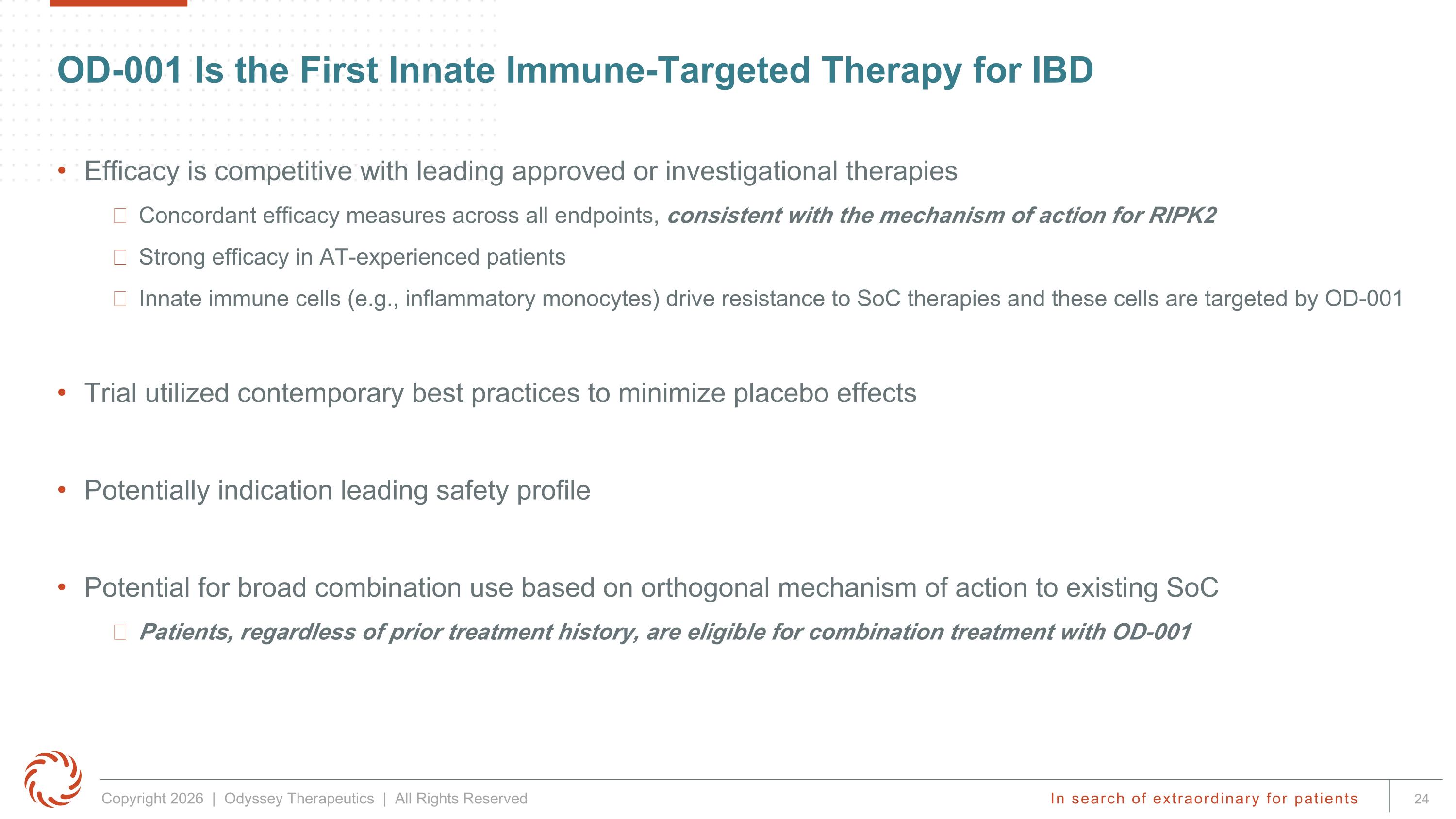
OD-001 Is the First Innate Immune-Targeted Therapy for IBD Efficacy is competitive with leading approved or investigational therapies Concordant efficacy measures across all endpoints, consistent with the mechanism of action for RIPK2 Strong efficacy in AT-experienced patients Innate immune cells (e.g., inflammatory monocytes) drive resistance to SoC therapies and these cells are targeted by OD-001 Trial utilized contemporary best practices to minimize placebo effects Potentially indication leading safety profile Potential for broad combination use based on orthogonal mechanism of action to existing SoC Patients, regardless of prior treatment history, are eligible for combination treatment with OD-001
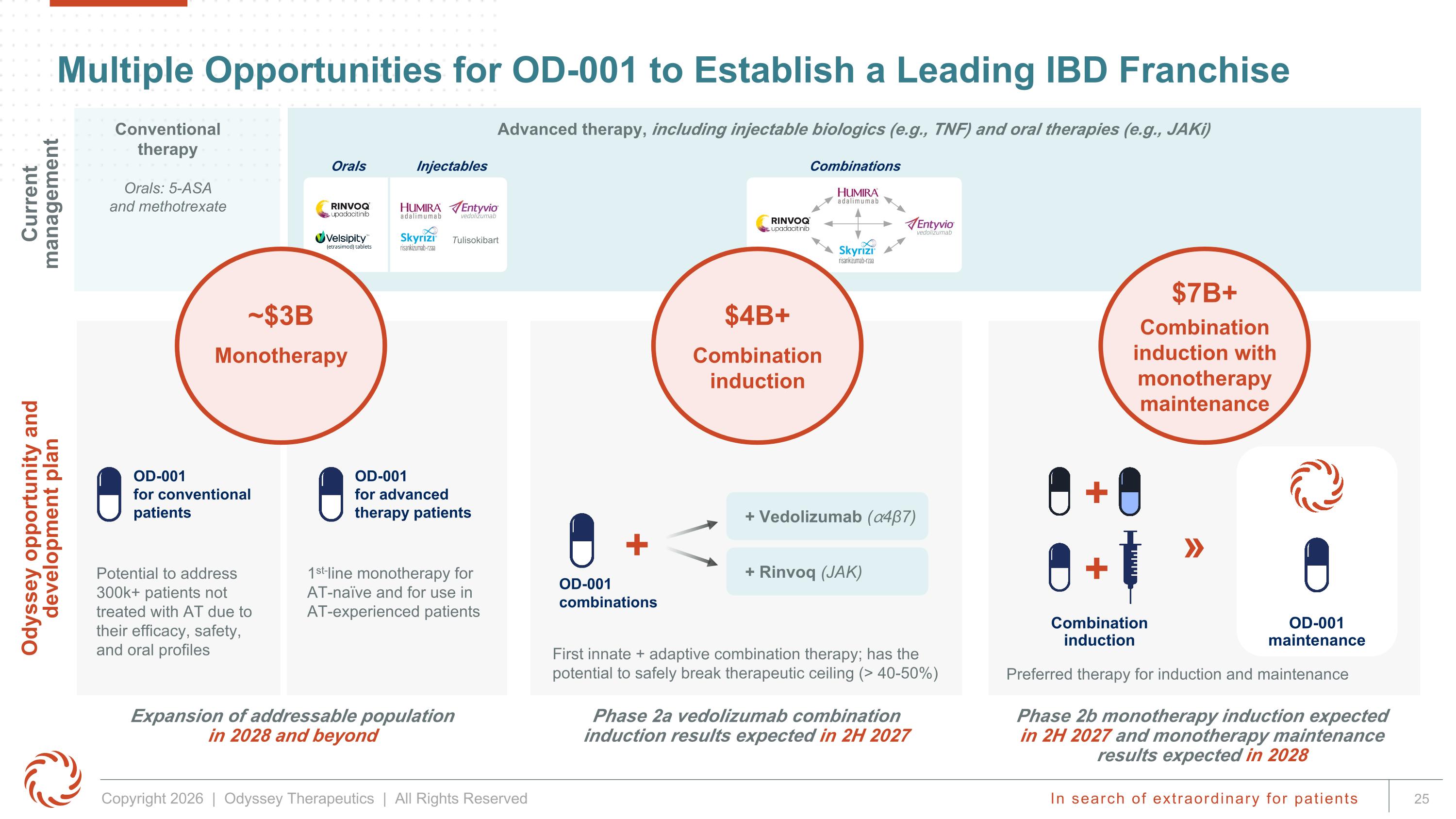
Multiple Opportunities for OD-001 to Establish a Leading IBD Franchise Conventional therapy Phase 2a vedolizumab combination induction results expected in 2H 2027 Phase 2b monotherapy induction expected in 2H 2027 and monotherapy maintenance results expected in 2028 Expansion of addressable population in 2028 and beyond Potential to address 300k+ patients not treated with AT due to their efficacy, safety, and oral profiles First innate + adaptive combination therapy; has the potential to safely break therapeutic ceiling (> 40-50%) Current management Odyssey opportunity and development plan 1st-line monotherapy for AT-naïve and for use in AT-experienced patients Tulisokibart Combination induction OD-001 maintenance » + Orals: 5-ASA and methotrexate OD-001 for conventional patients OD-001 for advanced therapy patients Advanced therapy, including injectable biologics (e.g., TNF) and oral therapies (e.g., JAKi) Orals Injectables Combinations $4B+ Combination induction $7B+ Combination induction with monotherapy maintenance ~$3B Monotherapy OD-001 combinations + + Vedolizumab (⍺4β7) + Rinvoq (JAK) Preferred therapy for induction and maintenance +
Oral SLC15A4 Inhibitor: OD-002 Modulating B Cell Activity and Interferon Signaling IND-Enabling Studies Ongoing Program Inception to GLP Studies: 15 Months
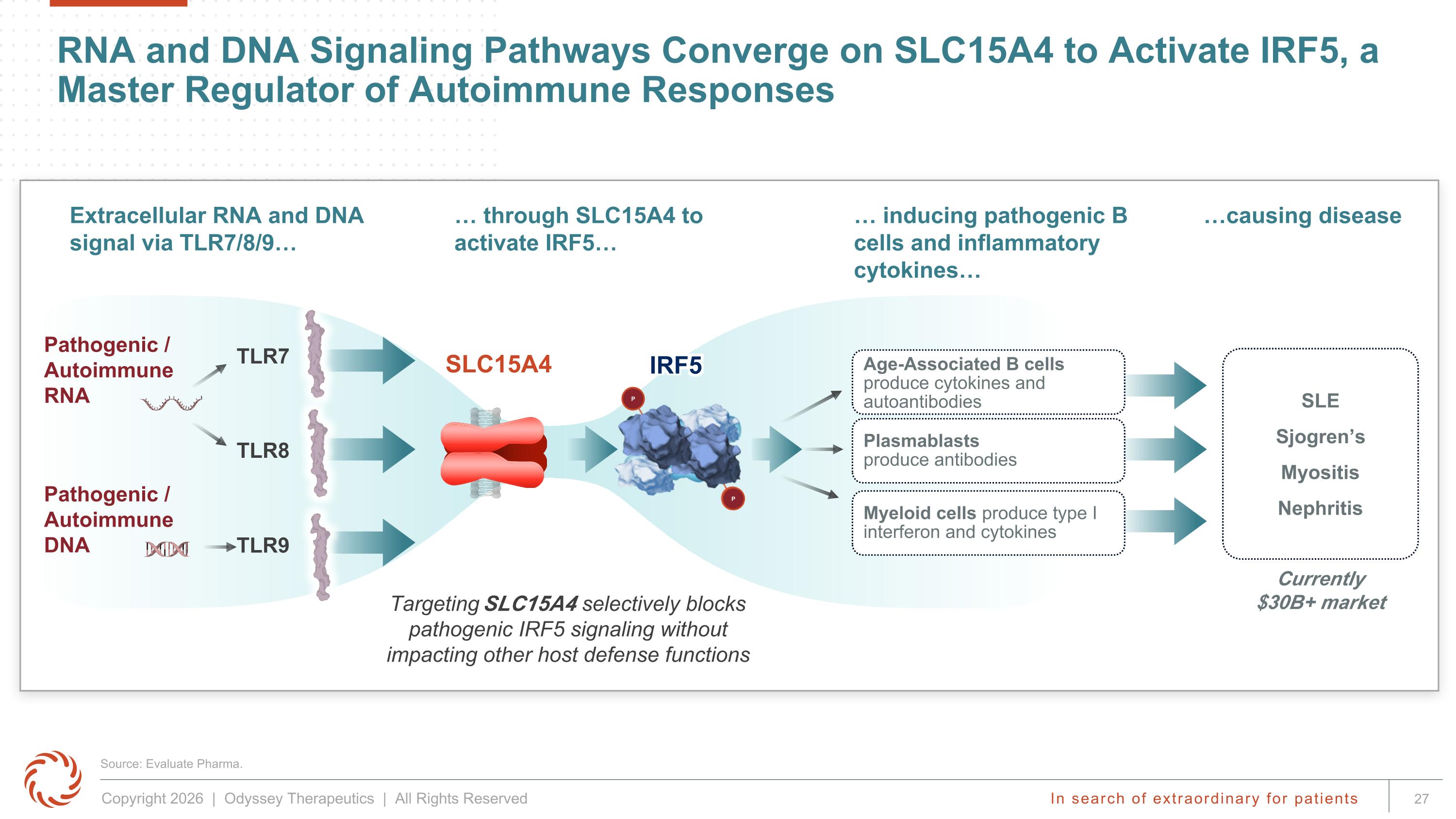
RNA and DNA Signaling Pathways Converge on SLC15A4 to Activate IRF5, a Master Regulator of Autoimmune Responses Extracellular RNA and DNA signal via TLR7/8/9… … through SLC15A4 to activate IRF5… … inducing pathogenic B cells and inflammatory cytokines… …causing disease Myeloid cells produce type I interferon and cytokines Age-Associated B cells produce cytokines and autoantibodies Plasmablasts produce antibodies Targeting SLC15A4 selectively blocks pathogenic IRF5 signaling without impacting other host defense functions TLR8 TLR7 TLR9 SLE Sjogren’s Myositis Nephritis Pathogenic / Autoimmune RNA SLC15A4 IRF5 P P Pathogenic / Autoimmune DNA Currently $30B+ market Source: Evaluate Pharma.
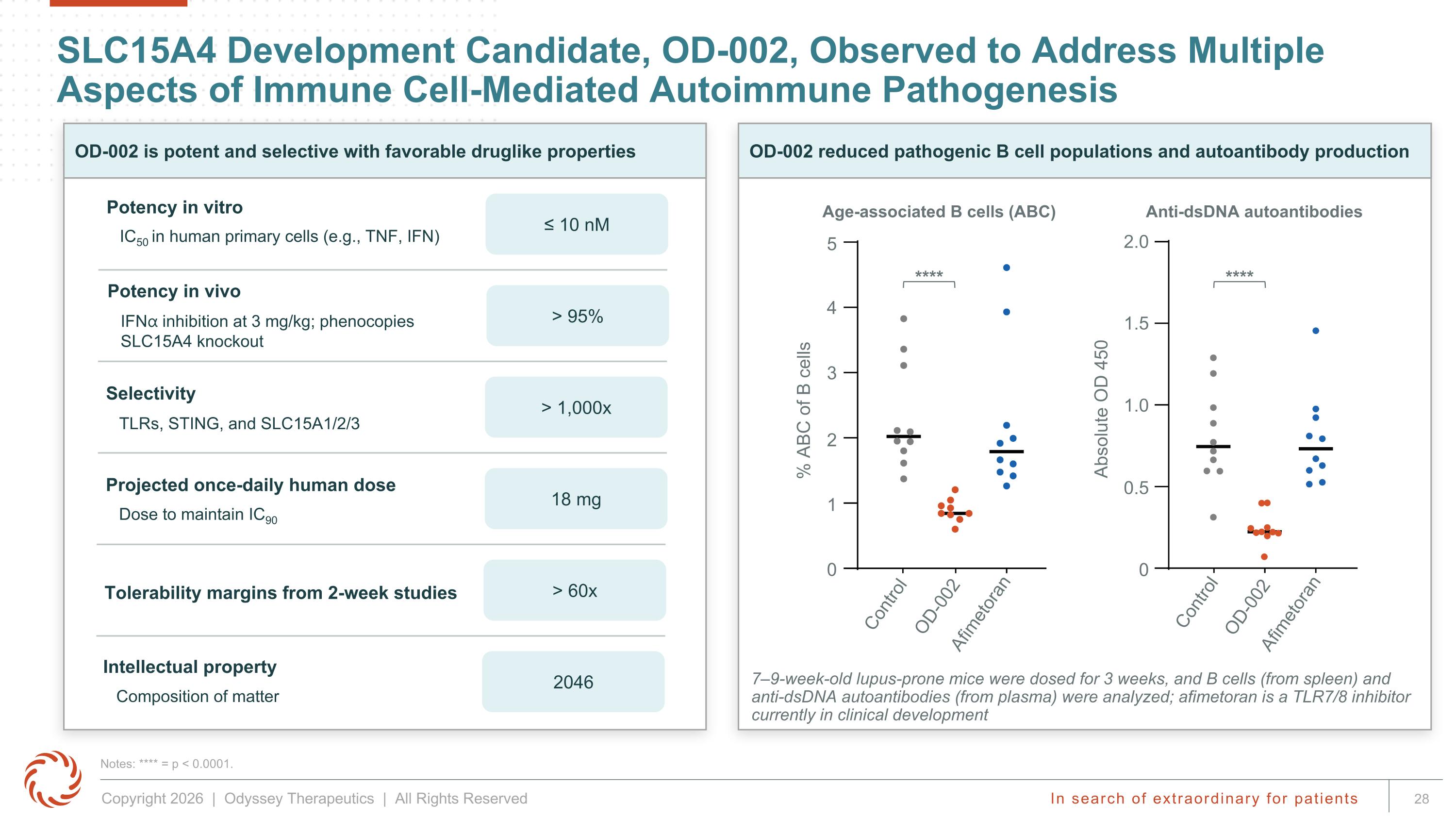
OD-002 is potent and selective with favorable druglike properties OD-002 reduced pathogenic B cell populations and autoantibody production SLC15A4 Development Candidate, OD-002, Observed to Address Multiple Aspects of Immune Cell-Mediated Autoimmune Pathogenesis Notes: **** = p < 0.0001. 7–9-week-old lupus-prone mice were dosed for 3 weeks, and B cells (from spleen) and anti-dsDNA autoantibodies (from plasma) were analyzed; afimetoran is a TLR7/8 inhibitor currently in clinical development Control OD-002 Anti-dsDNA autoantibodies Absolute OD 450 0 0.5 2.0 1.5 1.0 **** Afimetoran Control OD-002 Age-associated B cells (ABC) % ABC of B cells 4 5 0 1 3 2 Afimetoran **** Potency in vitro IC50 in human primary cells (e.g., TNF, IFN) Projected once-daily human dose Dose to maintain IC90 Tolerability margins from 2-week studies Selectivity TLRs, STING, and SLC15A1/2/3 ≤ 10 nM > 1,000x 18 mg > 60x Intellectual property Composition of matter 2046 Potency in vivo IFN⍺ inhibition at 3 mg/kg; phenocopies SLC15A4 knockout > 95%
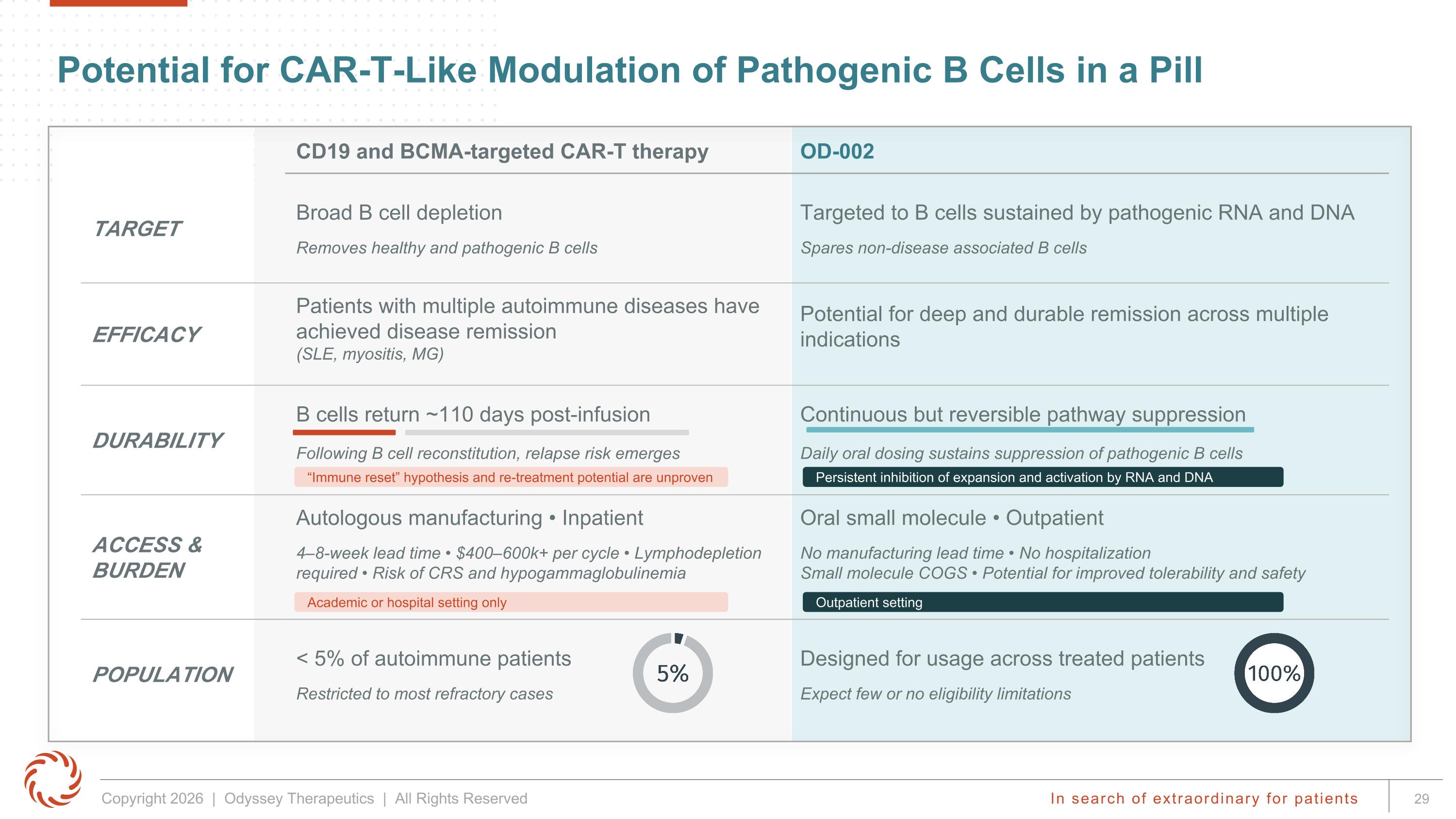
Potential for CAR-T-Like Modulation of Pathogenic B Cells in a Pill Academic or hospital setting only Persistent inhibition of expansion and activation by RNA and DNA Outpatient setting CD19 and BCMA-targeted CAR-T therapy OD-002 TARGET Broad B cell depletion Removes healthy and pathogenic B cells Targeted to B cells sustained by pathogenic RNA and DNA Spares non-disease associated B cells EFFICACY Patients with multiple autoimmune diseases have achieved disease remission (SLE, myositis, MG) Potential for deep and durable remission across multiple indications DURABILITY B cells return ~110 days post-infusion Following B cell reconstitution, relapse risk emerges Continuous but reversible pathway suppression Daily oral dosing sustains suppression of pathogenic B cells ACCESS & BURDEN Autologous manufacturing • Inpatient 4–8-week lead time • $400–600k+ per cycle • Lymphodepletion required • Risk of CRS and hypogammaglobulinemia Oral small molecule • Outpatient No manufacturing lead time • No hospitalization Small molecule COGS • Potential for improved tolerability and safety POPULATION < 5% of autoimmune patients Restricted to most refractory cases Designed for usage across treated patients Expect few or no eligibility limitations “Immune reset” hypothesis and re-treatment potential are unproven
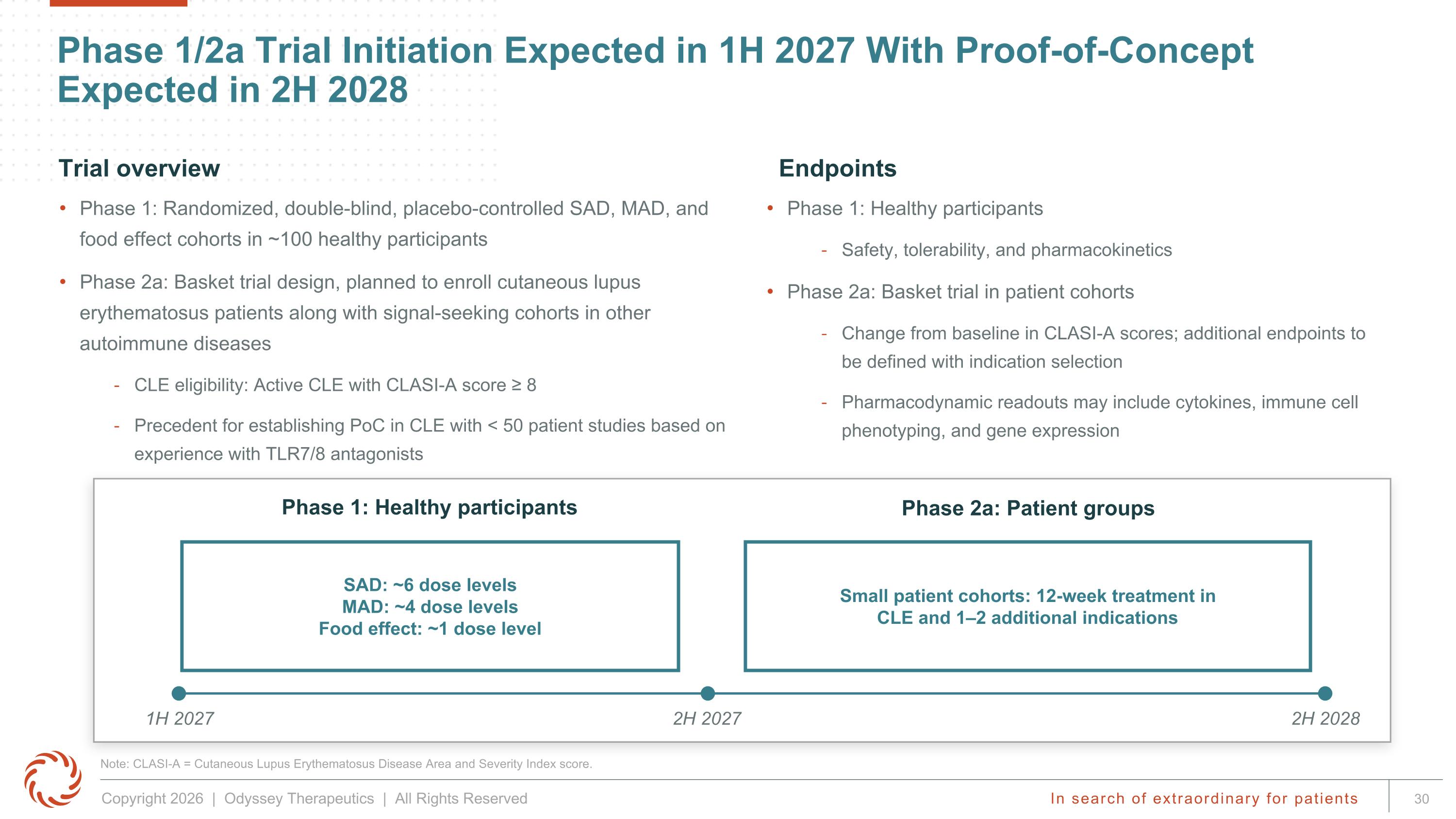
Phase 1/2a Trial Initiation Expected in 1H 2027 With Proof-of-Concept Expected in 2H 2028 Small patient cohorts: 12-week treatment in CLE and 1–2 additional indications SAD: ~6 dose levels MAD: ~4 dose levels Food effect: ~1 dose level 1H 2027 2H 2027 2H 2028 Phase 2a: Patient groups Phase 1: Randomized, double-blind, placebo-controlled SAD, MAD, and food effect cohorts in ~100 healthy participants Phase 2a: Basket trial design, planned to enroll cutaneous lupus erythematosus patients along with signal-seeking cohorts in other autoimmune diseases CLE eligibility: Active CLE with CLASI-A score ≥ 8 Precedent for establishing PoC in CLE with < 50 patient studies based on experience with TLR7/8 antagonists Phase 1: Healthy participants Safety, tolerability, and pharmacokinetics Phase 2a: Basket trial in patient cohorts Change from baseline in CLASI-A scores; additional endpoints to be defined with indication selection Pharmacodynamic readouts may include cytokines, immune cell phenotyping, and gene expression Endpoints Trial overview Phase 1: Healthy participants Note: CLASI-A = Cutaneous Lupus Erythematosus Disease Area and Severity Index score.
TNFR2 Agonist: OD-003 Modulating Treg to Treat Autoimmune and Inflammatory Disease IND-Enabling Studies Ongoing
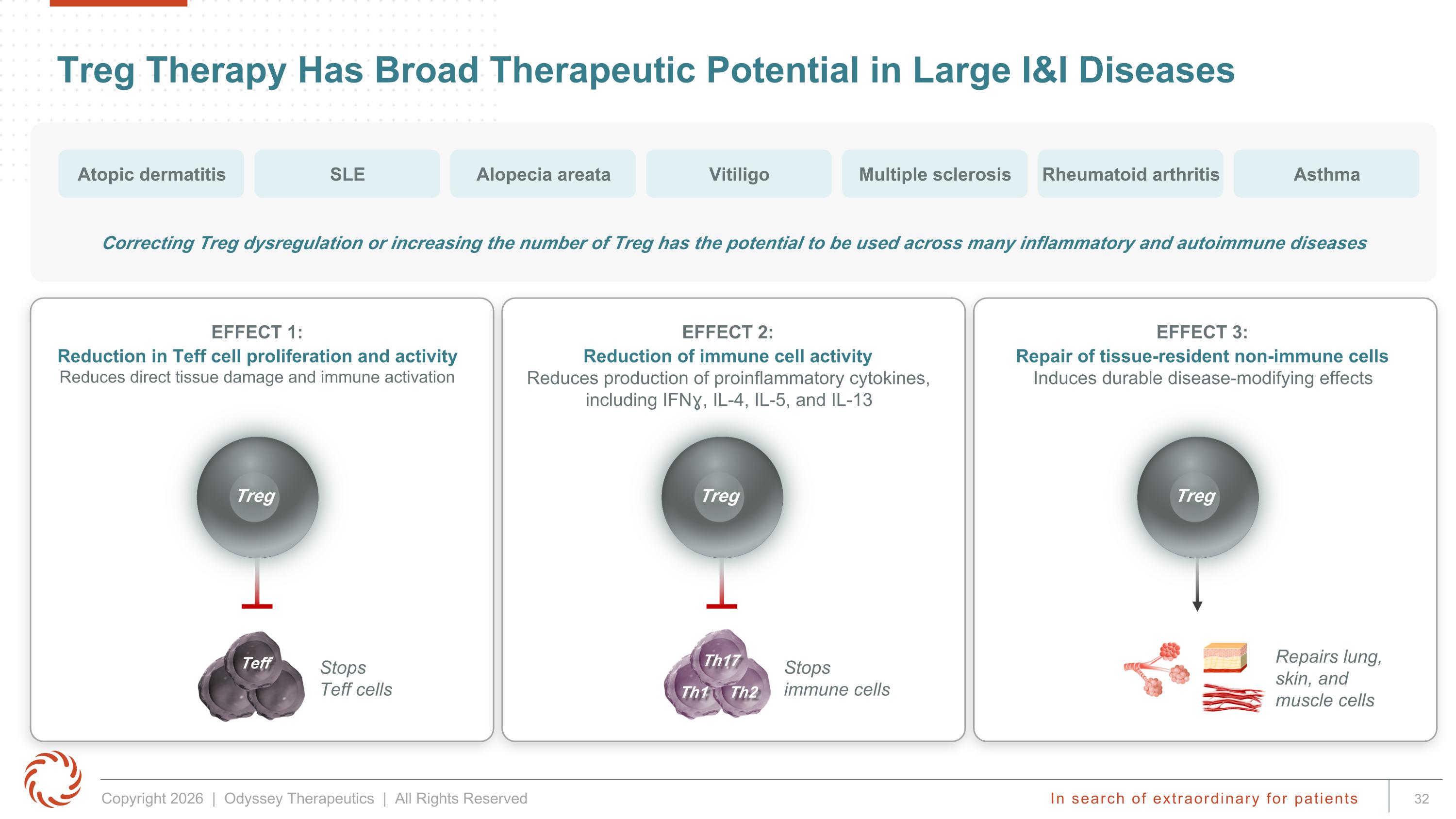
Treg Therapy Has Broad Therapeutic Potential in Large I&I Diseases Correcting Treg dysregulation or increasing the number of Treg has the potential to be used across many inflammatory and autoimmune diseases Atopic dermatitis SLE Alopecia areata Multiple sclerosis Rheumatoid arthritis Asthma EFFECT 1: Reduction in Teff cell proliferation and activity Reduces direct tissue damage and immune activation Stops Teff cells Treg EFFECT 2: Reduction of immune cell activity Reduces production of proinflammatory cytokines, including IFNɣ, IL-4, IL-5, and IL-13 EFFECT 3: Repair of tissue-resident non-immune cells Induces durable disease-modifying effects Stops immune cells Treg Repairs lung, skin, and muscle cells Treg Th17 Th1 Th2 Teff Vitiligo
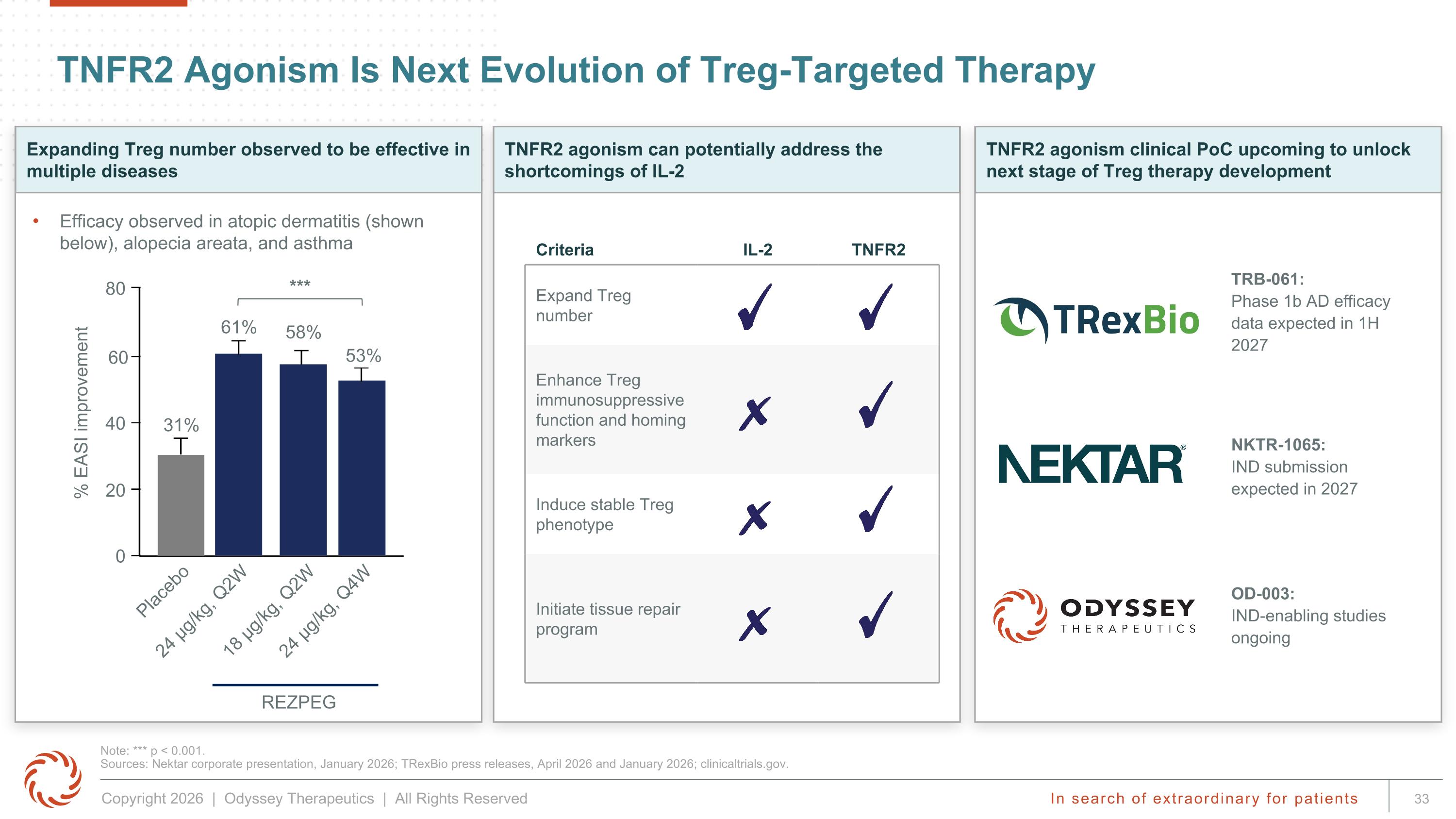
TNFR2 agonism clinical PoC upcoming to unlock next stage of Treg therapy development Expanding Treg number observed to be effective in multiple diseases TNFR2 agonism can potentially address the shortcomings of IL-2 TNFR2 Agonism Is Next Evolution of Treg-Targeted Therapy Note: *** p < 0.001. Sources: Nektar corporate presentation, January 2026; TRexBio press releases, April 2026 and January 2026; clinicaltrials.gov. Criteria IL-2 TNFR2 Expand Treg number Enhance Treg immunosuppressive function and homing markers Induce stable Treg phenotype Initiate tissue repair program NKTR-1065: IND submission expected in 2027 OD-003: IND-enabling studies ongoing Efficacy observed in atopic dermatitis (shown below), alopecia areata, and asthma TRB-061: Phase 1b AD efficacy data expected in 1H 2027 *** % EASI improvement 80 0 20 60 40 31% 61% 58% 53% Placebo 18 µg/kg, Q2W 24 µg/kg, Q4W 24 µg/kg, Q2W REZPEG
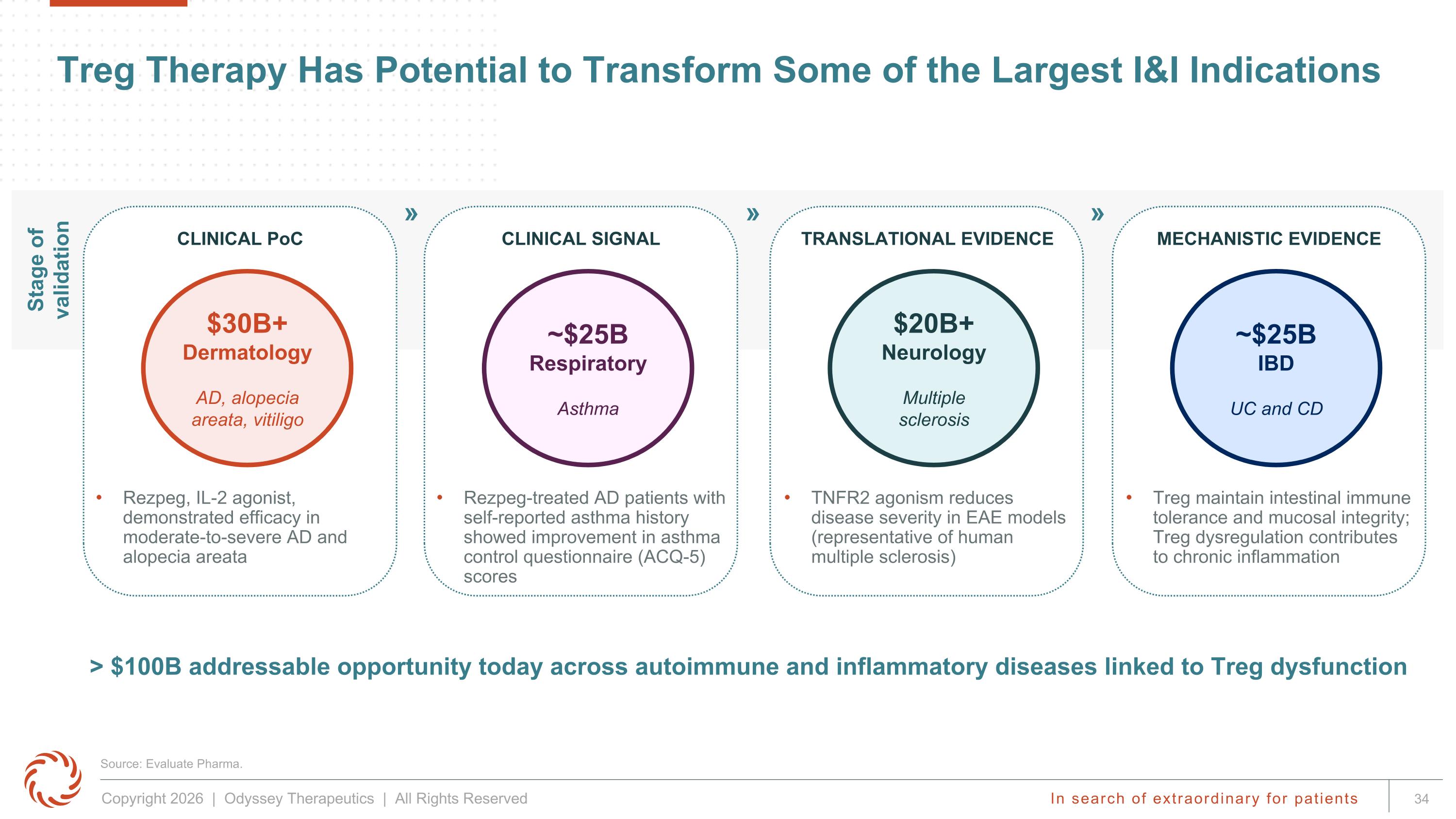
CLINICAL SIGNAL Rezpeg-treated AD patients with self-reported asthma history showed improvement in asthma control questionnaire (ACQ-5) scores ~$25B Respiratory Asthma MECHANISTIC EVIDENCE Treg maintain intestinal immune tolerance and mucosal integrity; Treg dysregulation contributes to chronic inflammation ~$25B IBD UC and CD Treg Therapy Has Potential to Transform Some of the Largest I&I Indications > $100B addressable opportunity today across autoimmune and inflammatory diseases linked to Treg dysfunction Stage of validation CLINICAL PoC Rezpeg, IL-2 agonist, demonstrated efficacy in moderate-to-severe AD and alopecia areata $30B+ Dermatology AD, alopecia areata, vitiligo TRANSLATIONAL EVIDENCE TNFR2 agonism reduces disease severity in EAE models (representative of human multiple sclerosis) $20B+ Neurology Multiple sclerosis » » » Source: Evaluate Pharma.
Final Words
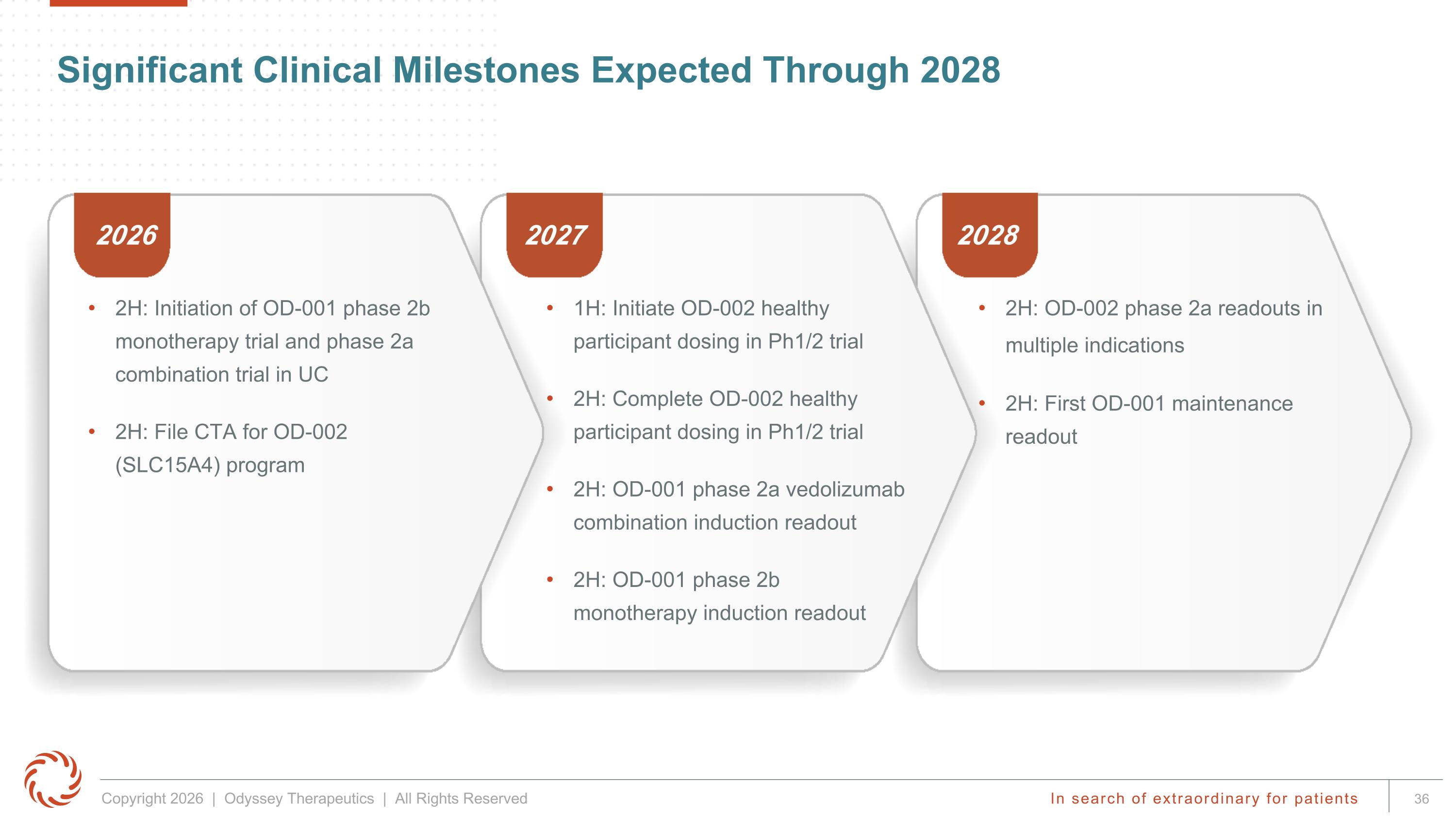
Significant Clinical Milestones Expected Through 2028 2026 2027 2028 1H: Initiate OD-002 healthy participant dosing in Ph1/2 trial 2H: Complete OD-002 healthy participant dosing in Ph1/2 trial 2H: OD-001 phase 2a vedolizumab combination induction readout 2H: OD-001 phase 2b monotherapy induction readout 2H: OD-002 phase 2a readouts in multiple indications 2H: First OD-001 maintenance readout 2H: Initiation of OD-001 phase 2b monotherapy trial and phase 2a combination trial in UC 2H: File CTA for OD-002 (SLC15A4) program

Appendix
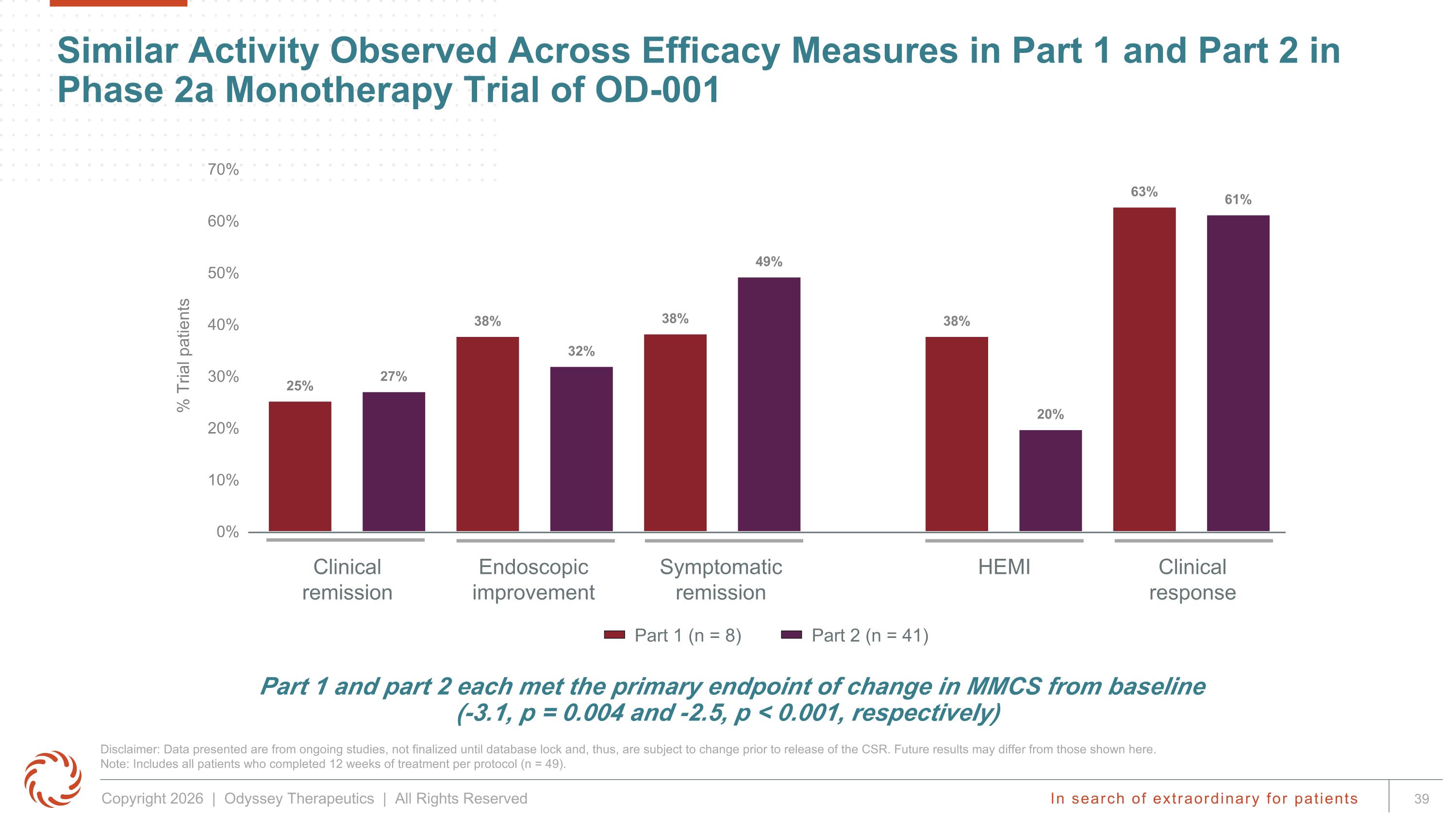
Similar Activity Observed Across Efficacy Measures in Part 1 and Part 2 in Phase 2a Monotherapy Trial of OD-001 Disclaimer: Data presented are from ongoing studies, not finalized until database lock and, thus, are subject to change prior to release of the CSR. Future results may differ from those shown here. Note: Includes all patients who completed 12 weeks of treatment per protocol (n = 49). Part 1 and part 2 each met the primary endpoint of change in MMCS from baseline (-3.1, p = 0.004 and -2.5, p < 0.001, respectively) Part 1 (n = 8) Part 2 (n = 41) Clinical remission Endoscopic improvement Symptomatic remission Clinical response HEMI
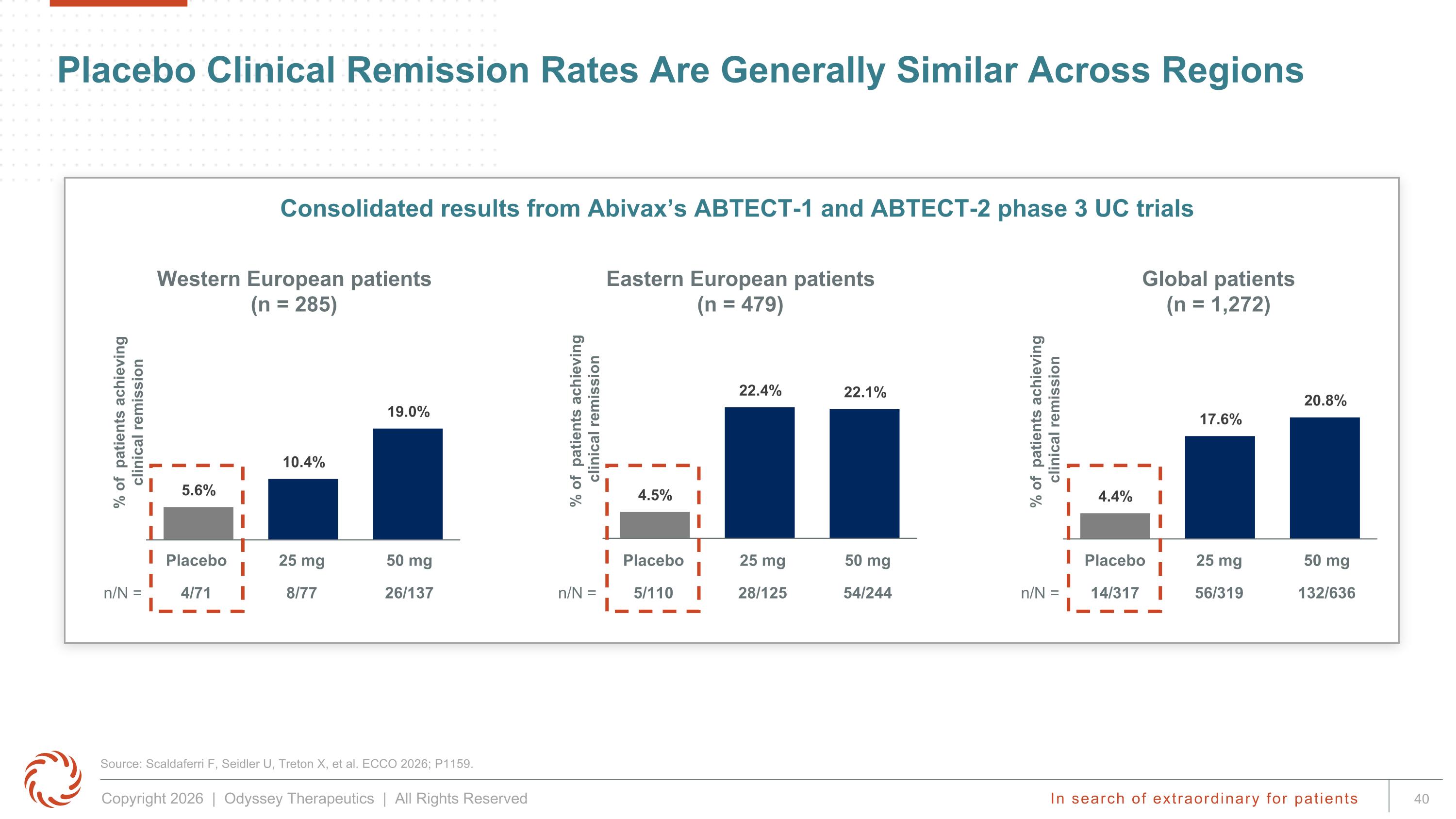
Placebo Clinical Remission Rates Are Generally Similar Across Regions Source: Scaldaferri F, Seidler U, Treton X, et al. ECCO 2026; P1159. Eastern European patients (n = 479) Global patients (n = 1,272) n/N = 4/71 8/77 26/137 Western European patients (n = 285) n/N = 5/110 28/125 54/244 n/N = 14/317 56/319 132/636 Placebo 25 mg 50 mg Placebo 25 mg 50 mg Placebo 25 mg 50 mg Consolidated results from Abivax’s ABTECT-1 and ABTECT-2 phase 3 UC trials