TSHA-102 Rett Syndrome program Update: Longer-term Results from REVEAL Phase 1/2 trials June 2026 Exhibit 99.2
This presentation is intended to be viewed by investors in the U.S. only Legal disclosure FORWARD LOOKING STATEMENTS This presentation contains forward-looking statements that involve substantial risks and uncertainties. All statements, other than statements of historical facts, contained in this presentation, including statements regarding the potential of TSHA-102, the durability and reproducibility of the clinical data from the REVEAL trials, the anticipated Part B trial design, our research, development and regulatory plans, and our strategy, future operations, future financial position, future revenues, projected costs, prospects, plans and objectives of management, are forward-looking statements. The words “anticipate,” “believe,” “estimate,” “expect,” “intend,” “may,” “might,” “plan,” “predict,” “project,” “target,” “potential,” “will,” “would,” “could,” “should,” “continue,” and similar expressions are intended to identify forward-looking statements, although not all forward-looking statements contain these identifying words. These forward-looking statements are subject to a number of risks, uncertainties and assumptions. Risks regarding our business are described in detail in our Securities and Exchange Commission filings, including in our Annual Report on Form 10-K for the year ended December 31, 2025, our Quarterly Report on Form 10-Q for the quarter ended March 31, 2026, and our other filings with the SEC, which are available on the SEC’s website at www.sec.gov. We may not actually achieve the plans, intentions or expectations disclosed in our forward-looking statements, and you should not place undue reliance on our forward-looking statements. Actual results or events could differ materially from the plans, intentions and expectations disclosed in the forward-looking statements we make. The forward-looking statements contained in this presentation reflect our current views with respect to future events, and we assume no obligation to update any forward-looking statements except as required by applicable law. This presentation includes statistical and other industry and market data that we obtained from industry publications and research, surveys and studies conducted by third parties as well as our own estimates of potential market opportunities. All of the market data used in this presentation involves a number of assumptions and limitations, and you are cautioned not to give undue weight to such data. Industry publications and third-party research, surveys and studies generally indicate that their information has been obtained from sources believed to be reliable, although they do not guarantee the accuracy or completeness of such information. Our estimates of the potential market opportunities for our product candidates include several key assumptions based on our industry knowledge, industry publications, third-party research and other surveys, which may be based on a small sample size and may fail to accurately reflect market opportunities. While we believe that our internal assumptions are reasonable, no independent source has verified such assumptions. This presentation shall not constitute an offer to sell or the solicitation of an offer to buy these securities, nor shall there be any sale of these securities in any state or jurisdiction in which such offer, solicitation, or sale would be unlawful prior to registration or qualification under the securities laws of any such state or jurisdiction.
Agenda Rett Syndrome Overview & REVEAL Pivotal Trial Update TSHA-102 Clinical Data from Part A of REVEAL Phase 1/2 Trials Next Steps & Concluding Remarks
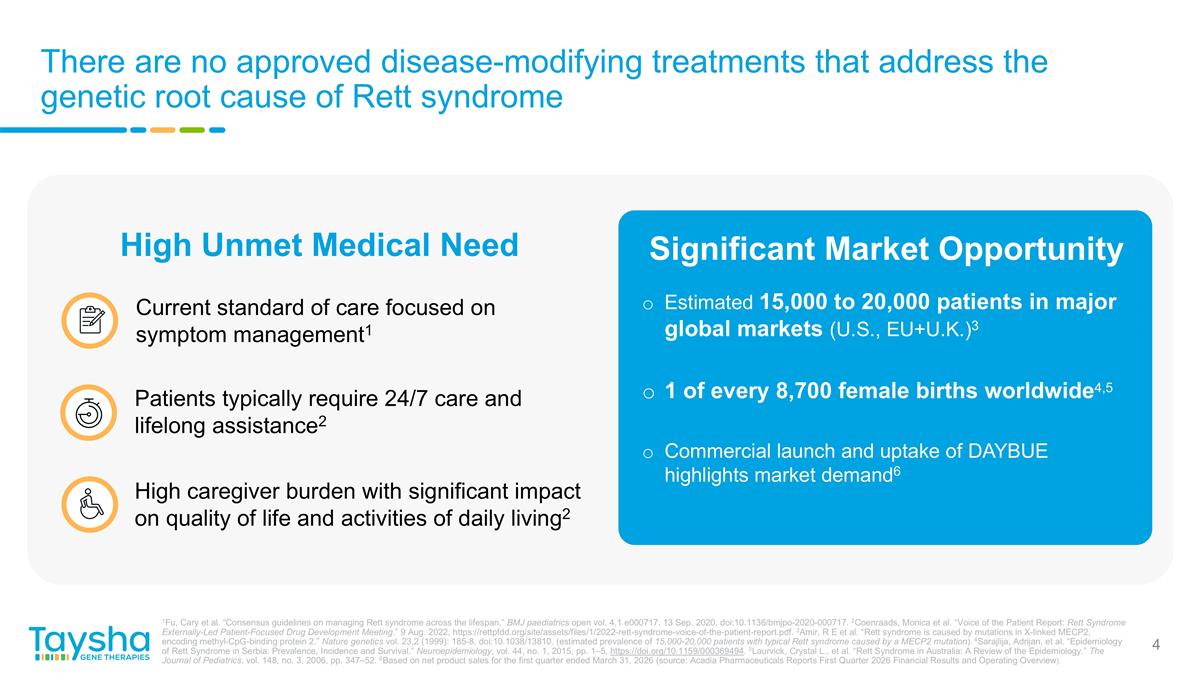
High caregiver burden with significant impact on quality of life and activities of daily living2 Current standard of care focused on symptom management1 There are no approved disease-modifying treatments that address the genetic root cause of Rett syndrome High Unmet Medical Need Significant Market Opportunity Estimated 15,000 to 20,000 patients in major global markets (U.S., EU+U.K.)3 1 of every 8,700 female births worldwide4,5 Commercial launch and uptake of DAYBUE highlights market demand6 1Fu, Cary et al. “Consensus guidelines on managing Rett syndrome across the lifespan.” BMJ paediatrics open vol. 4,1 e000717. 13 Sep. 2020, doi:10.1136/bmjpo-2020-000717. 2Coenraads, Monica et al. “Voice of the Patient Report: Rett Syndrome Externally-Led Patient-Focused Drug Development Meeting.” 9 Aug. 2022, https://rettpfdd.org/site/assets/files/1/2022-rett-syndrome-voice-of-the-patient-report.pdf. 3Amir, R E et al. “Rett syndrome is caused by mutations in X-linked MECP2, encoding methyl-CpG-binding protein 2.” Nature genetics vol. 23,2 (1999): 185-8. doi:10.1038/13810. (estimated prevalence of 15,000-20,000 patients with typical Rett syndrome caused by a MECP2 mutation). 4Sarajlija, Adrijan, et al. “Epidemiology of Rett Syndrome in Serbia: Prevalence, Incidence and Survival.” Neuroepidemiology, vol. 44, no. 1, 2015, pp. 1–5, https://doi.org/10.1159/000369494. 5Laurvick, Crystal L., et al. “Rett Syndrome in Australia: A Review of the Epidemiology.” The Journal of Pediatrics, vol. 148, no. 3, 2006, pp. 347–52. 6Based on net product sales for the first quarter ended March 31, 2026 (source: Acadia Pharmaceuticals Reports First Quarter 2026 Financial Results and Operating Overview). Patients typically require 24/7 care and lifelong assistance2
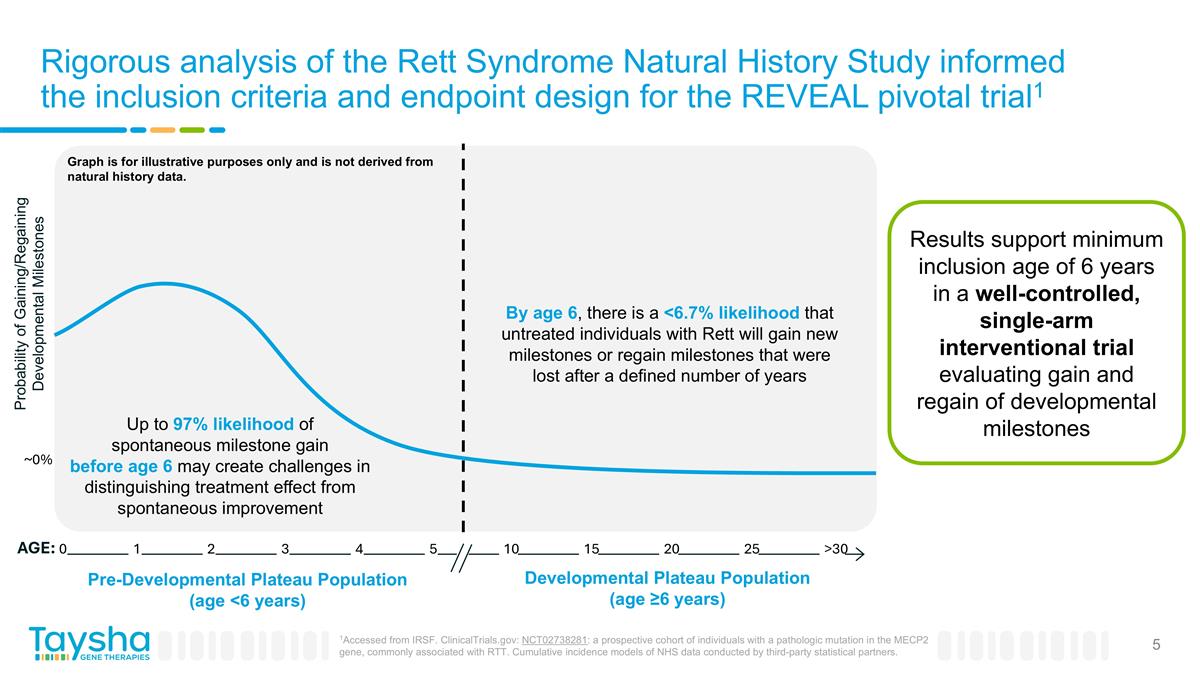
~0% AGE: 0 1 2 3 4 5 10 15 20 25 >30 By age 6, there is a <6.7% likelihood that untreated individuals with Rett will gain new milestones or regain milestones that were lost after a defined number of years Probability of Gaining/Regaining Developmental Milestones Results support minimum inclusion age of 6 years in a well‑controlled, single‑arm interventional trial evaluating gain and regain of developmental milestones Developmental Plateau Population (age ≥6 years) Pre-Developmental Plateau Population (age <6 years) Rigorous analysis of the Rett Syndrome Natural History Study informed the inclusion criteria and endpoint design for the REVEAL pivotal trial1 Graph is for illustrative purposes only and is not derived from natural history data. 1Accessed from IRSF. ClinicalTrials.gov: NCT02738281: a prospective cohort of individuals with a pathologic mutation in the MECP2 gene, commonly associated with RTT. Cumulative incidence models of NHS data conducted by third-party statistical partners. Up to 97% likelihood of spontaneous milestone gain before age 6 may create challenges in distinguishing treatment effect from spontaneous improvement
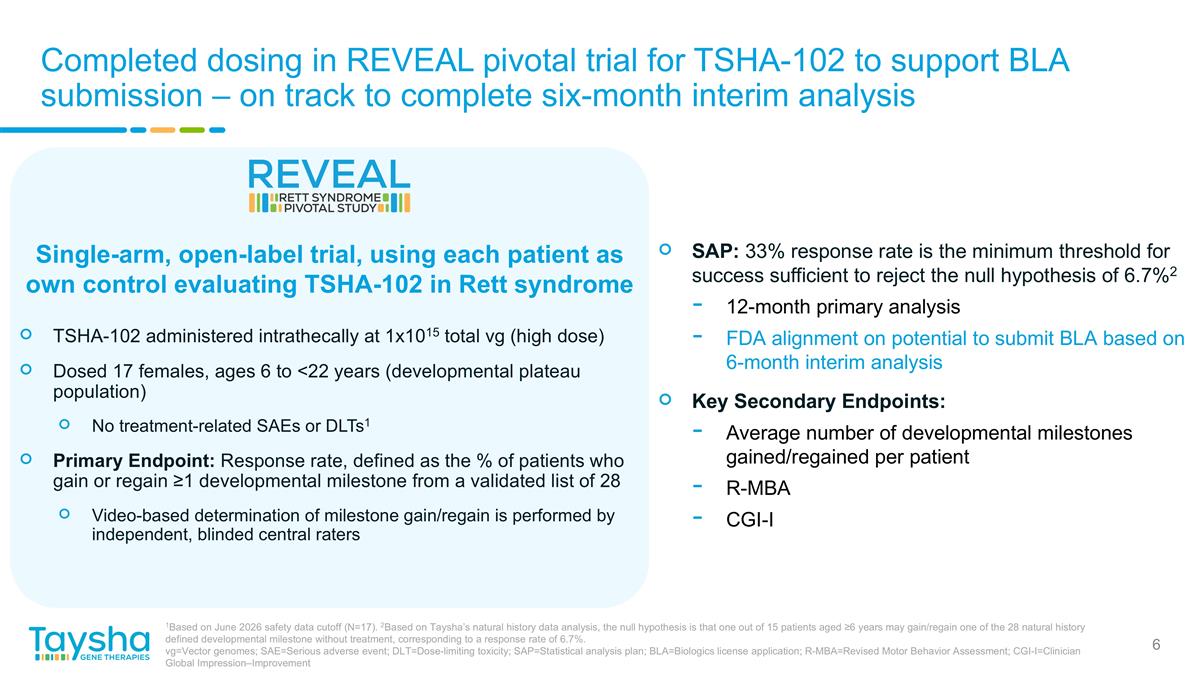
Completed dosing in REVEAL pivotal trial for TSHA-102 to support BLA submission – on track to complete six-month interim analysis Response rate = 100% (N = 12) across all patients treated with TSHA-102 post-treatment3 1Based on June 2026 safety data cutoff (N=17). 2Based on Taysha’s natural history data analysis, the null hypothesis is that one out of 15 patients aged ≥6 years may gain/regain one of the 28 natural history defined developmental milestone without treatment, corresponding to a response rate of 6.7%. vg=Vector genomes; SAE=Serious adverse event; DLT=Dose-limiting toxicity; SAP=Statistical analysis plan; BLA=Biologics license application; R-MBA=Revised Motor Behavior Assessment; CGI-I=Clinician Global Impression–Improvement Single-arm, open-label trial, using each patient as own control evaluating TSHA-102 in Rett syndrome TSHA-102 administered intrathecally at 1x10¹⁵ total vg (high dose) Dosed 17 females, ages 6 to <22 years (developmental plateau population) No treatment-related SAEs or DLTs1 Primary Endpoint: Response rate, defined as the % of patients who gain or regain ≥1 developmental milestone from a validated list of 28 Video-based determination of milestone gain/regain is performed by independent, blinded central raters SAP: 33% response rate is the minimum threshold for success sufficient to reject the null hypothesis of 6.7%2 12-month primary analysis FDA alignment on potential to submit BLA based on 6-month interim analysis Key Secondary Endpoints: Average number of developmental milestones gained/regained per patient R-MBA CGI-I
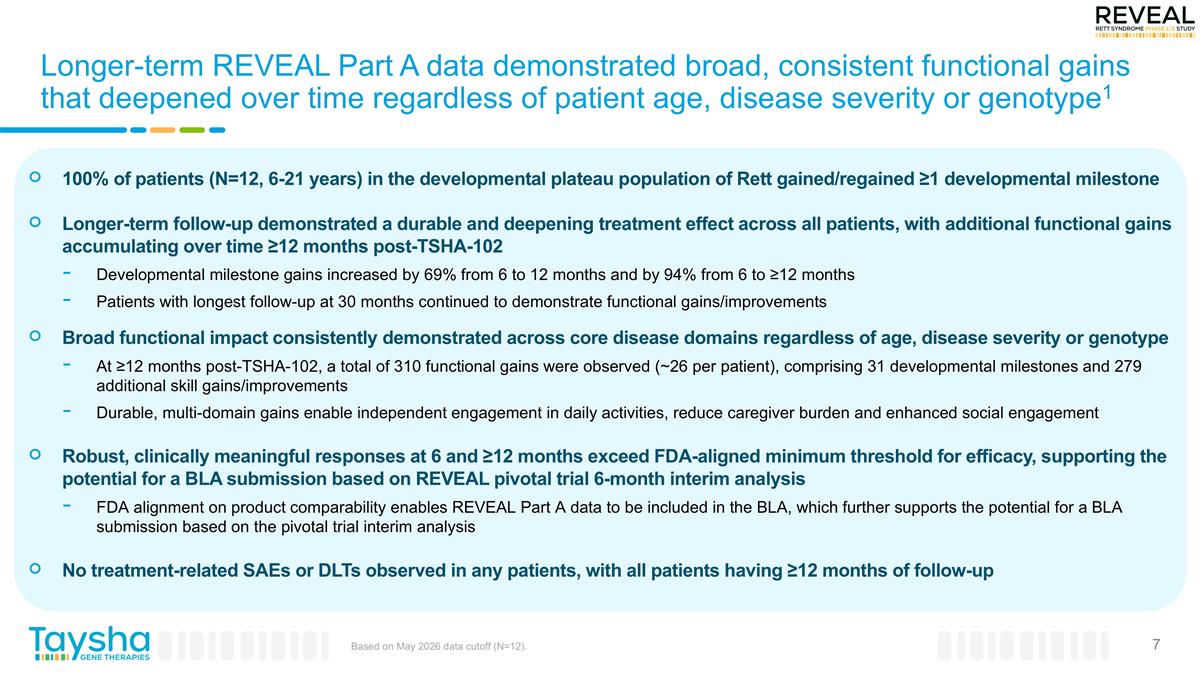
Longer-term REVEAL Part A data demonstrated broad, consistent functional gains that deepened over time regardless of patient age, disease severity or genotype1 Based on May 2026 data cutoff (N=12). 100% of patients (N=12, 6-21 years) in the developmental plateau population of Rett gained/regained ≥1 developmental milestone Longer-term follow‑up demonstrated a durable and deepening treatment effect across all patients, with additional functional gains accumulating over time ≥12 months post-TSHA-102 Developmental milestone gains increased by 69% from 6 to 12 months and by 94% from 6 to ≥12 months Patients with longest follow-up at 30 months continued to demonstrate functional gains/improvements Broad functional impact consistently demonstrated across core disease domains regardless of age, disease severity or genotype At ≥12 months post-TSHA-102, a total of 310 functional gains were observed (~26 per patient), comprising 31 developmental milestones and 279 additional skill gains/improvements Durable, multi-domain gains enable independent engagement in daily activities, reduce caregiver burden and enhanced social engagement Robust, clinically meaningful responses at 6 and ≥12 months exceed FDA-aligned minimum threshold for efficacy, supporting the potential for a BLA submission based on REVEAL pivotal trial 6-month interim analysis FDA alignment on product comparability enables REVEAL Part A data to be included in the BLA, which further supports the potential for a BLA submission based on the pivotal trial interim analysis No treatment-related SAEs or DLTs observed in any patients, with all patients having ≥12 months of follow-up
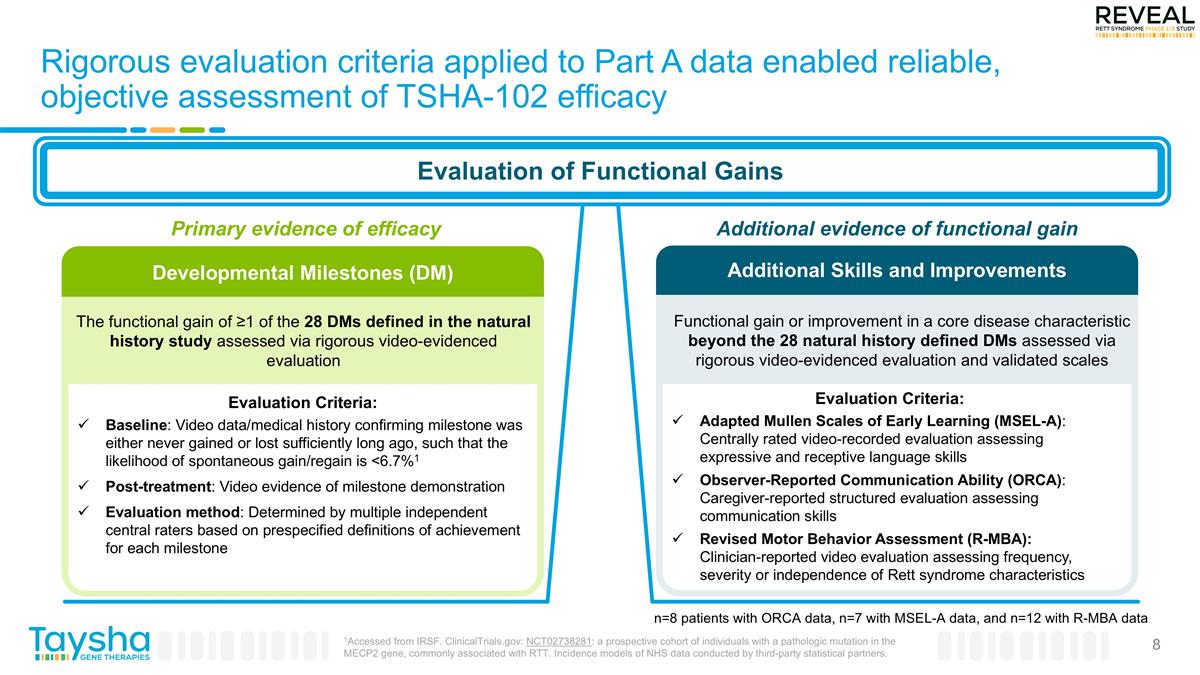
Rigorous evaluation criteria applied to Part A data enabled reliable, objective assessment of TSHA-102 efficacy Evaluation of Functional Gains Developmental Milestones (DM) Primary evidence of efficacy The functional gain of ≥1 of the 28 DMs defined in the natural history study assessed via rigorous video-evidenced evaluation Evaluation Criteria: Baseline: Video data/medical history confirming milestone was either never gained or lost sufficiently long ago, such that the likelihood of spontaneous gain/regain is <6.7%1 Post-treatment: Video evidence of milestone demonstration Evaluation method: Determined by multiple independent central raters based on prespecified definitions of achievement for each milestone Additional Skills and Improvements Additional evidence of functional gain Functional gain or improvement in a core disease characteristic beyond the 28 natural history defined DMs assessed via rigorous video-evidenced evaluation and validated scales Evaluation Criteria: Adapted Mullen Scales of Early Learning (MSEL-A): Centrally rated video-recorded evaluation assessing expressive and receptive language skills Observer-Reported Communication Ability (ORCA): Caregiver-reported structured evaluation assessing communication skills Revised Motor Behavior Assessment (R-MBA): Clinician-reported video evaluation assessing frequency, severity or independence of Rett syndrome characteristics 1Accessed from IRSF. ClinicalTrials.gov: NCT02738281: a prospective cohort of individuals with a pathologic mutation in the MECP2 gene, commonly associated with RTT. Incidence models of NHS data conducted by third-party statistical partners. n=8 patients with ORCA data, n=7 with MSEL-A data, and n=12 with R-MBA data
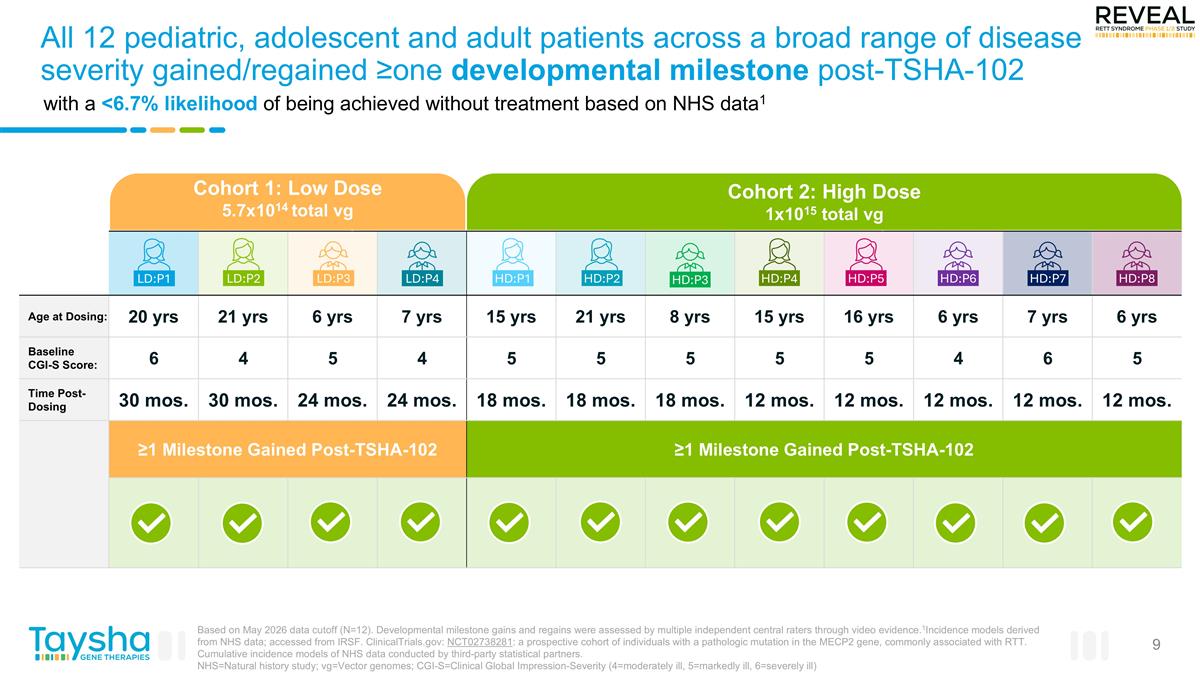
Based on May 2026 data cutoff (N=12). Developmental milestone gains and regains were assessed by multiple independent central raters through video evidence.1Incidence models derived from NHS data; accessed from IRSF. ClinicalTrials.gov: NCT02738281: a prospective cohort of individuals with a pathologic mutation in the MECP2 gene, commonly associated with RTT. Cumulative incidence models of NHS data conducted by third-party statistical partners. NHS=Natural history study; vg=Vector genomes; CGI-S=Clinical Global Impression-Severity (4=moderately ill, 5=markedly ill, 6=severely ill) Cohort 1: Low Dose 5.7x10¹⁴ total vg Cohort 2: High Dose 1x10¹⁵ total vg Age at Dosing: 20 yrs 21 yrs 6 yrs 7 yrs 15 yrs 21 yrs 8 yrs 15 yrs 16 yrs 6 yrs 7 yrs 6 yrs Baseline CGI-S Score: 6 4 5 4 5 5 5 5 5 4 6 5 Time Post-Dosing 30 mos. 30 mos. 24 mos. 24 mos. 18 mos. 18 mos. 18 mos. 12 mos. 12 mos. 12 mos. 12 mos. 12 mos. ≥1 Milestone Gained Post-TSHA-102 ≥1 Milestone Gained Post-TSHA-102 LD:P1 LD:P2 LD:P3 LD:P4 HD:P1 HD:P2 HD:P5 HD:P3 HD:P6 HD:P7 All 12 pediatric, adolescent and adult patients across a broad range of disease severity gained/regained ≥one developmental milestone post-TSHA-102 with a <6.7% likelihood of being achieved without treatment based on NHS data1 HD:P4 HD:P8 Cohort 2: High Dose 1x10¹⁵ total vg Cohort 1: Low Dose 5.7x10¹⁴ total vg
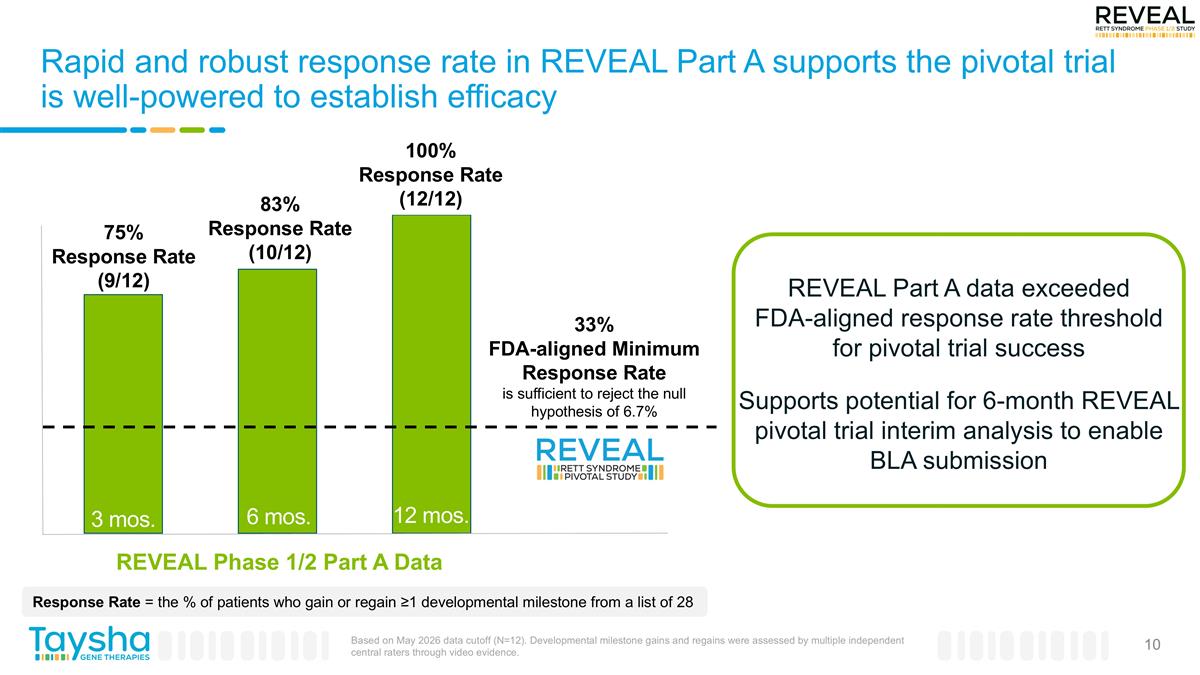
Rapid and robust response rate in REVEAL Part A supports the pivotal trial is well-powered to establish efficacy 100% Response Rate (12/12) 83% Response Rate (10/12) 33% FDA-aligned Minimum Response Rate is sufficient to reject the null hypothesis of 6.7% REVEAL Phase 1/2 Part A Data 6 mos. 12 mos. REVEAL Part A data exceeded FDA‑aligned response rate threshold for pivotal trial success Supports potential for 6-month REVEAL pivotal trial interim analysis to enable BLA submission 75% Response Rate (9/12) 3 mos. Based on May 2026 data cutoff (N=12). Developmental milestone gains and regains were assessed by multiple independent central raters through video evidence. Response Rate = the % of patients who gain or regain ≥1 developmental milestone from a list of 28
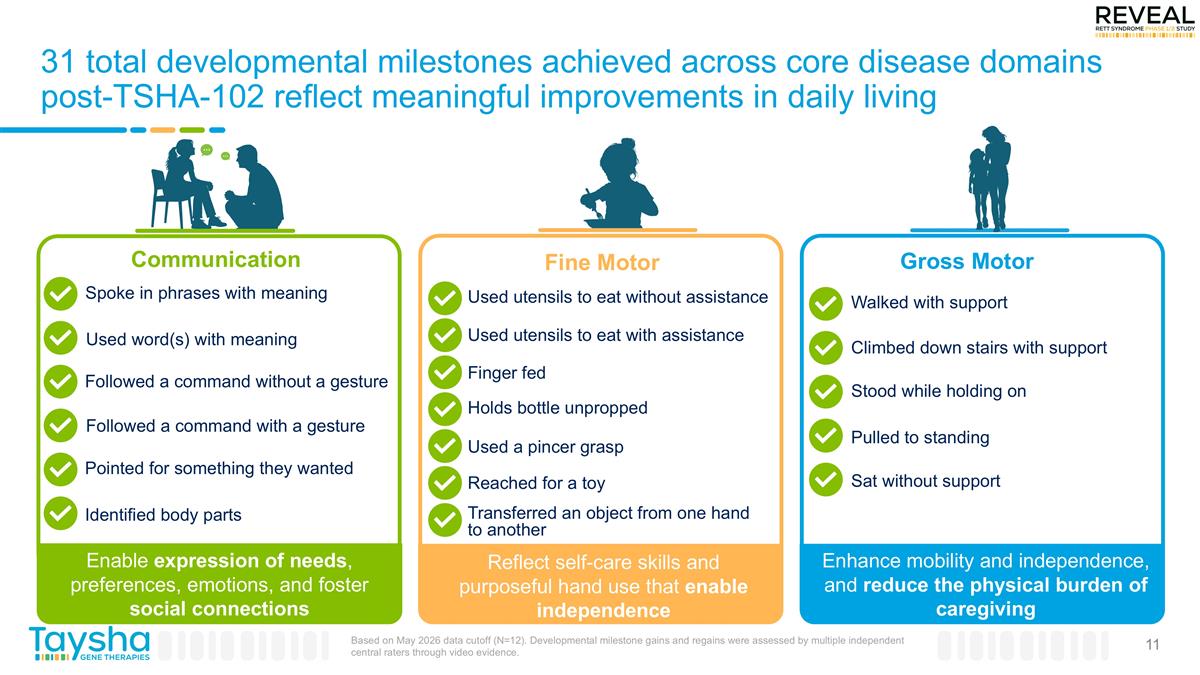
31 total developmental milestones achieved across core disease domains post-TSHA‑102 reflect meaningful improvements in daily living Based on May 2026 data cutoff (N=12). Developmental milestone gains and regains were assessed by multiple independent central raters through video evidence. Spoke in phrases with meaning Used word(s) with meaning Followed a command without a gesture Followed a command with a gesture Pointed for something they wanted Identified body parts Gross Motor Reflect self-care skills and purposeful hand use that enable independence Used utensils to eat without assistance Finger fed Holds bottle unpropped Reached for a toy Transferred an object from one hand to another Fine Motor Used a pincer grasp Used utensils to eat with assistance Enable expression of needs, preferences, emotions, and foster social connections Communication Enhance mobility and independence, and reduce the physical burden of caregiving Walked with support Climbed down stairs with support Stood while holding on Pulled to standing Sat without support
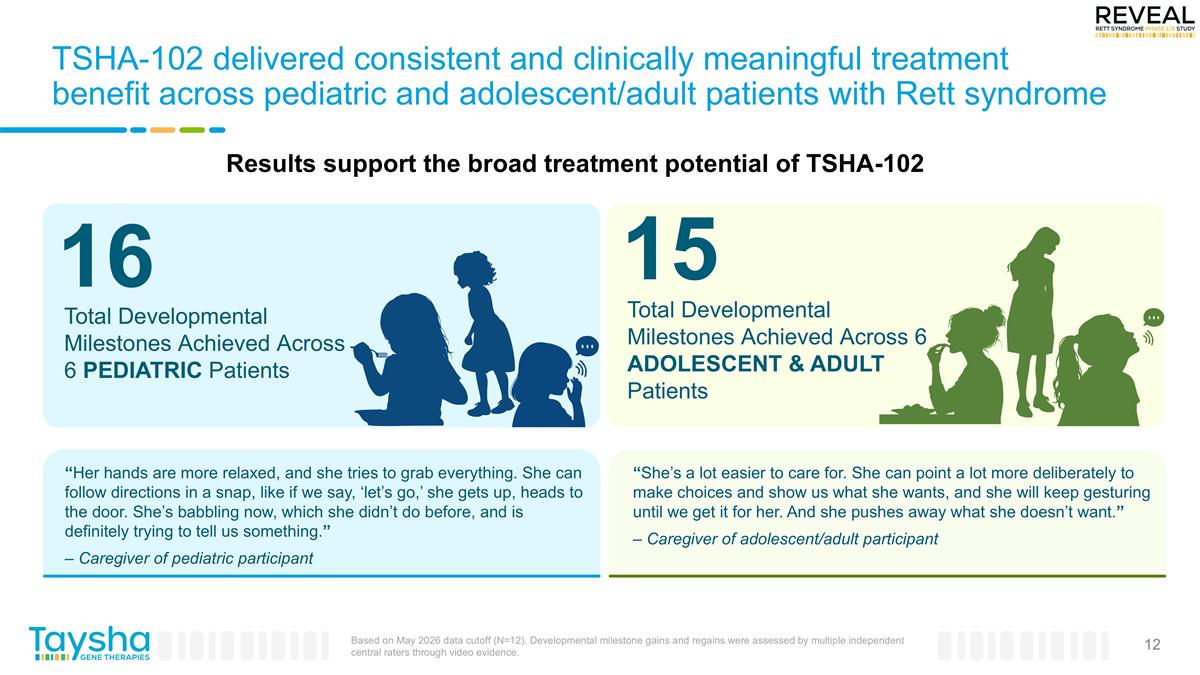
TSHA-102 delivered consistent and clinically meaningful treatment benefit across pediatric and adolescent/adult patients with Rett syndrome 16 15 “Her hands are more relaxed, and she tries to grab everything. She can follow directions in a snap, like if we say, ‘let’s go,’ she gets up, heads to the door. She’s babbling now, which she didn’t do before, and is definitely trying to tell us something.” – Caregiver of pediatric participant Total Developmental Milestones Achieved Across 6 ADOLESCENT & ADULT Patients Total Developmental Milestones Achieved Across 6 PEDIATRIC Patients “She’s a lot easier to care for. She can point a lot more deliberately to make choices and show us what she wants, and she will keep gesturing until we get it for her. And she pushes away what she doesn’t want.” – Caregiver of adolescent/adult participant Based on May 2026 data cutoff (N=12). Developmental milestone gains and regains were assessed by multiple independent central raters through video evidence. Results support the broad treatment potential of TSHA-102
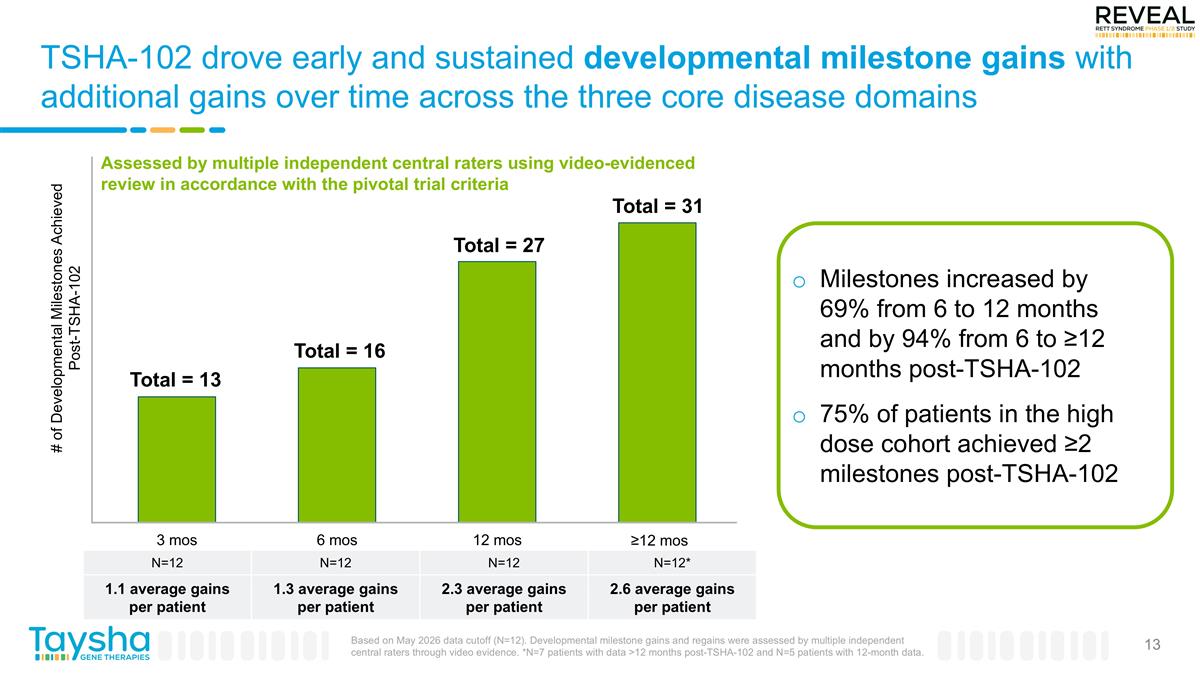
TSHA‑102 drove early and sustained developmental milestone gains with additional gains over time across the three core disease domains # of Developmental Milestones Achieved Post-TSHA-102 Total = 13 Total = 16 Total = 27 Total = 31 N=12 N=12 N=12 N=12* 1.1 average gains per patient 1.3 average gains per patient 2.3 average gains per patient 2.6 average gains per patient Based on May 2026 data cutoff (N=12). Developmental milestone gains and regains were assessed by multiple independent central raters through video evidence. *N=7 patients with data >12 months post-TSHA-102 and N=5 patients with 12-month data. Milestones increased by 69% from 6 to 12 months and by 94% from 6 to ≥12 months post-TSHA-102 75% of patients in the high dose cohort achieved ≥2 milestones post-TSHA-102 Assessed by multiple independent central raters using video-evidenced review in accordance with the pivotal trial criteria
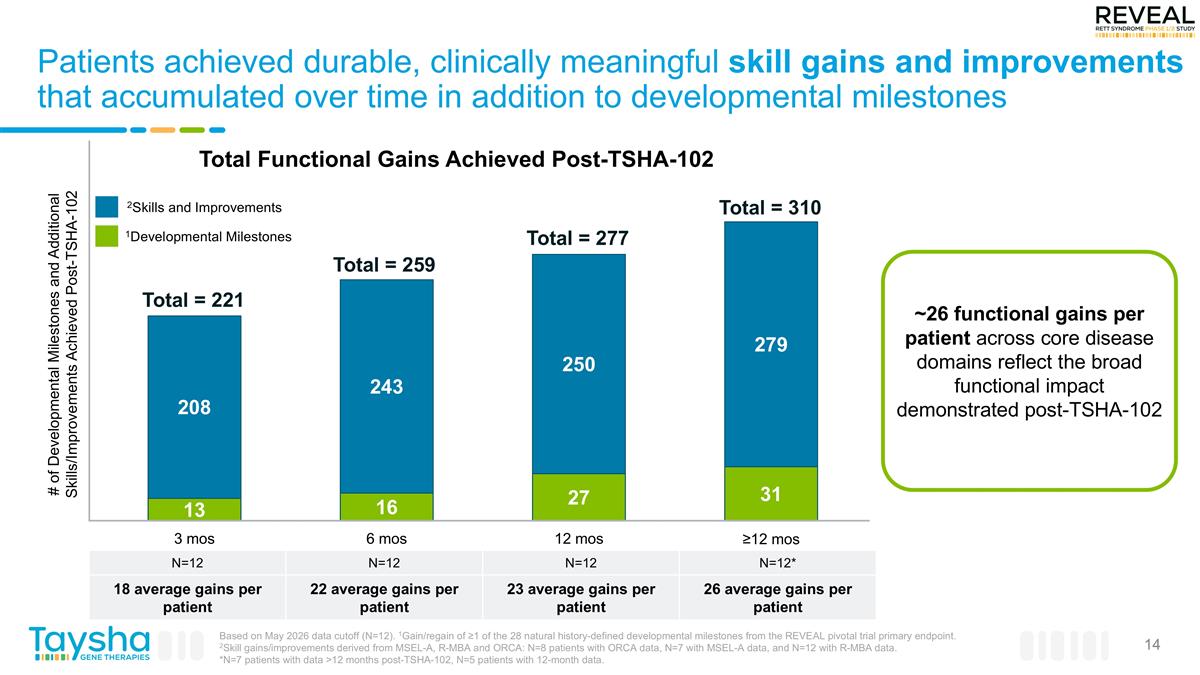
Patients achieved durable, clinically meaningful skill gains and improvements that accumulated over time in addition to developmental milestones 1Developmental Milestones 2Skills and Improvements Based on May 2026 data cutoff (N=12). 1Gain/regain of ≥1 of the 28 natural history-defined developmental milestones from the REVEAL pivotal trial primary endpoint. 2Skill gains/improvements derived from MSEL-A, R-MBA and ORCA: N=8 patients with ORCA data, N=7 with MSEL-A data, and N=12 with R-MBA data. *N=7 patients with data >12 months post-TSHA-102, N=5 patients with 12-month data. ~26 functional gains per patient across core disease domains reflect the broad functional impact demonstrated post-TSHA-102 # of Developmental Milestones and Additional Skills/Improvements Achieved Post-TSHA-102 N=12 N=12 N=12 N=12* 18 average gains per patient 22 average gains per patient 23 average gains per patient 26 average gains per patient Total Functional Gains Achieved Post-TSHA-102
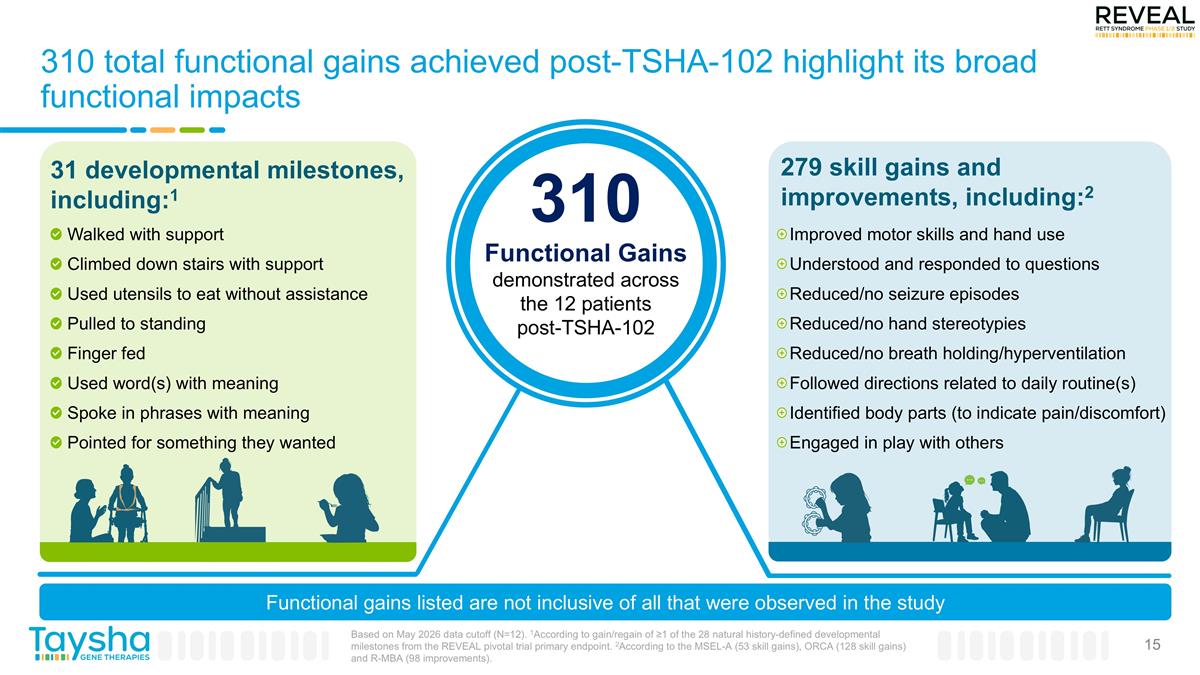
310 total functional gains achieved post-TSHA-102 highlight its broad functional impacts Based on May 2026 data cutoff (N=12). 1According to gain/regain of ≥1 of the 28 natural history-defined developmental milestones from the REVEAL pivotal trial primary endpoint. 2According to the MSEL-A (53 skill gains), ORCA (128 skill gains) and R-MBA (98 improvements). 310 Functional Gains demonstrated across the 12 patients post-TSHA-102 31 developmental milestones, including:1 Walked with support Climbed down stairs with support Used utensils to eat without assistance Pulled to standing Finger fed Used word(s) with meaning Spoke in phrases with meaning Pointed for something they wanted 279 skill gains and improvements, including:2 Improved motor skills and hand use Understood and responded to questions Reduced/no seizure episodes Reduced/no hand stereotypies Reduced/no breath holding/hyperventilation Followed directions related to daily routine(s) Identified body parts (to indicate pain/discomfort) Engaged in play with others Functional gains listed are not inclusive of all that were observed in the study
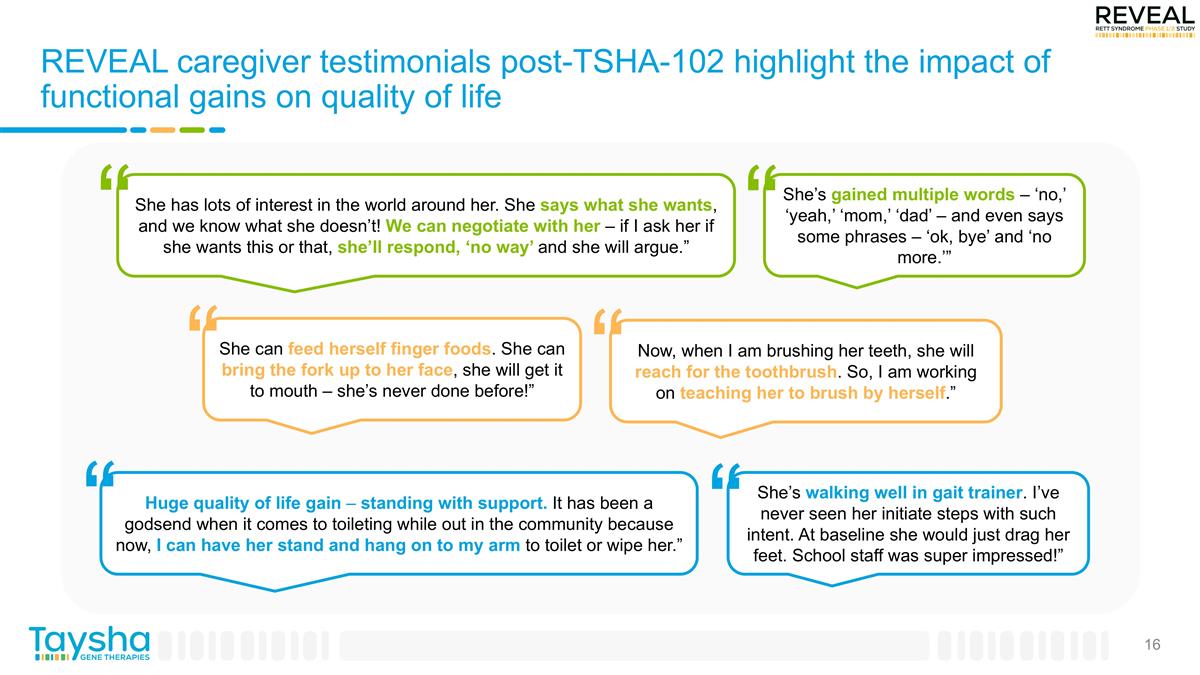
REVEAL caregiver testimonials post-TSHA-102 highlight the impact of functional gains on quality of life She can feed herself finger foods. She can bring the fork up to her face, she will get it to mouth – she’s never done before!” Now, when I am brushing her teeth, she will reach for the toothbrush. So, I am working on teaching her to brush by herself.” Huge quality of life gain – standing with support. It has been a godsend when it comes to toileting while out in the community because now, I can have her stand and hang on to my arm to toilet or wipe her.” She has lots of interest in the world around her. She says what she wants, and we know what she doesn’t! We can negotiate with her – if I ask her if she wants this or that, she’ll respond, ‘no way’ and she will argue.” “ “ “ She’s gained multiple words – ‘no,’ ‘yeah,’ ‘mom,’ ‘dad’ – and even says some phrases – ‘ok, bye’ and ‘no more.’” “ “ She’s walking well in gait trainer. I’ve never seen her initiate steps with such intent. At baseline she would just drag her feet. School staff was super impressed!” “
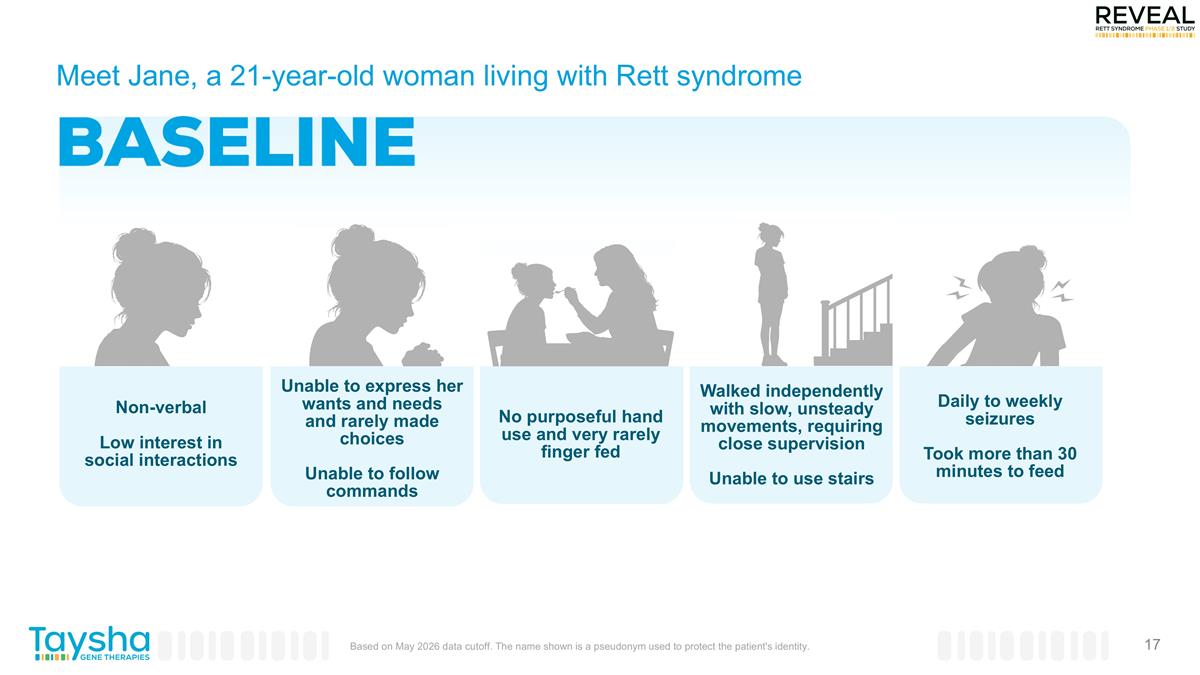
Meet Jane, a 21-year-old woman living with Rett syndrome Non-verbal Low interest in social interactions Unable to express her wants and needs and rarely made choices Unable to follow commands No purposeful hand use and very rarely finger fed Walked independently with slow, unsteady movements, requiring close supervision Unable to use stairs Daily to weekly seizures Took more than 30 minutes to feed Based on May 2026 data cutoff. The name shown is a pseudonym used to protect the patient's identity.
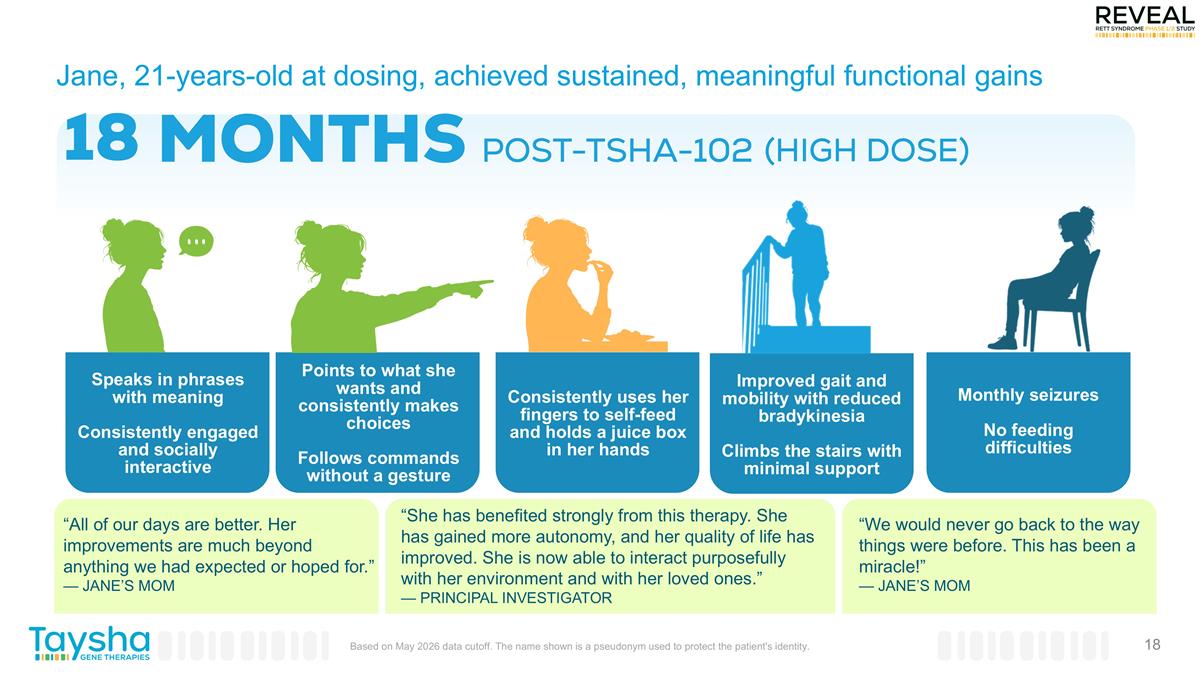
Jane, 21-years-old at dosing, achieved sustained, meaningful functional gains “All of our days are better. Her improvements are much beyond anything we had expected or hoped for.” — JANE’S MOM “We would never go back to the way things were before. This has been a miracle!” — JANE’S MOM Speaks in phrases with meaning Consistently engaged and socially interactive Points to what she wants and consistently makes choices Follows commands without a gesture Consistently uses her fingers to self-feed and holds a juice box in her hands Improved gait and mobility with reduced bradykinesia Climbs the stairs with minimal support Monthly seizures No feeding difficulties “She has benefited strongly from this therapy. She has gained more autonomy, and her quality of life has improved. She is now able to interact purposefully with her environment and with her loved ones.” — PRINCIPAL INVESTIGATOR Based on May 2026 data cutoff. The name shown is a pseudonym used to protect the patient's identity.
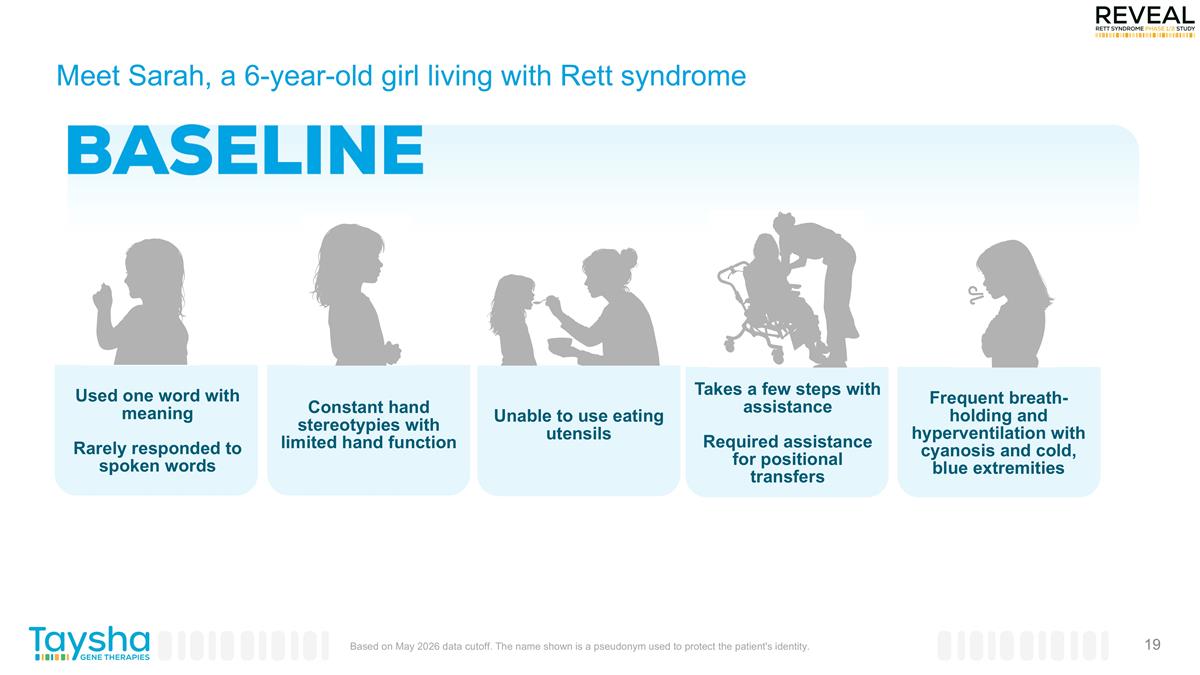
Meet Sarah, a 6-year-old girl living with Rett syndrome Used one word with meaning Rarely responded to spoken words Takes a few steps with assistance Required assistance for positional transfers Frequent breath-holding and hyperventilation with cyanosis and cold, blue extremities Unable to use eating utensils Constant hand stereotypies with limited hand function Based on May 2026 data cutoff. The name shown is a pseudonym used to protect the patient's identity.
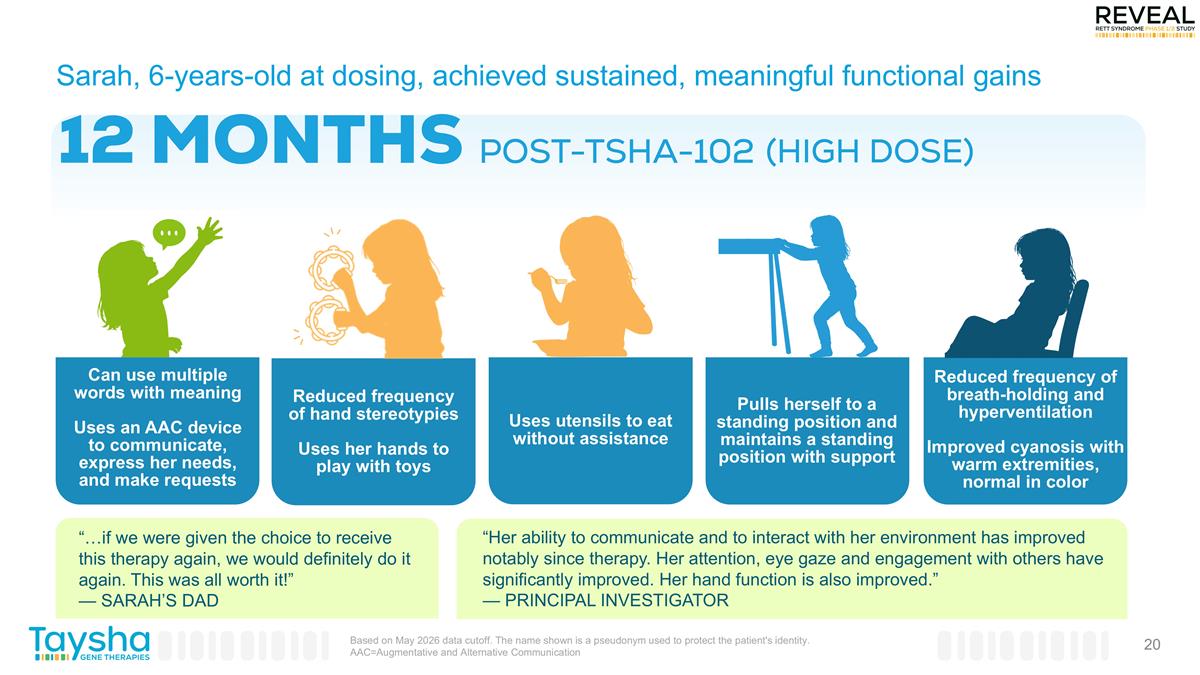
Sarah, 6-years-old at dosing, achieved sustained, meaningful functional gains Reaches 100% of the time Pulls herself to a standing position and maintains a standing position with support Reduced frequency of breath-holding and hyperventilation Improved cyanosis with warm extremities, normal in color “…if we were given the choice to receive this therapy again, we would definitely do it again. This was all worth it!” — SARAH’S DAD “Her ability to communicate and to interact with her environment has improved notably since therapy. Her attention, eye gaze and engagement with others have significantly improved. Her hand function is also improved.” — PRINCIPAL INVESTIGATOR Uses utensils to eat without assistance Reduced frequency of hand stereotypies Uses her hands to play with toys Based on May 2026 data cutoff. The name shown is a pseudonym used to protect the patient's identity. AAC=Augmentative and Alternative Communication Can use multiple words with meaning Uses an AAC device to communicate, express her needs, and make requests
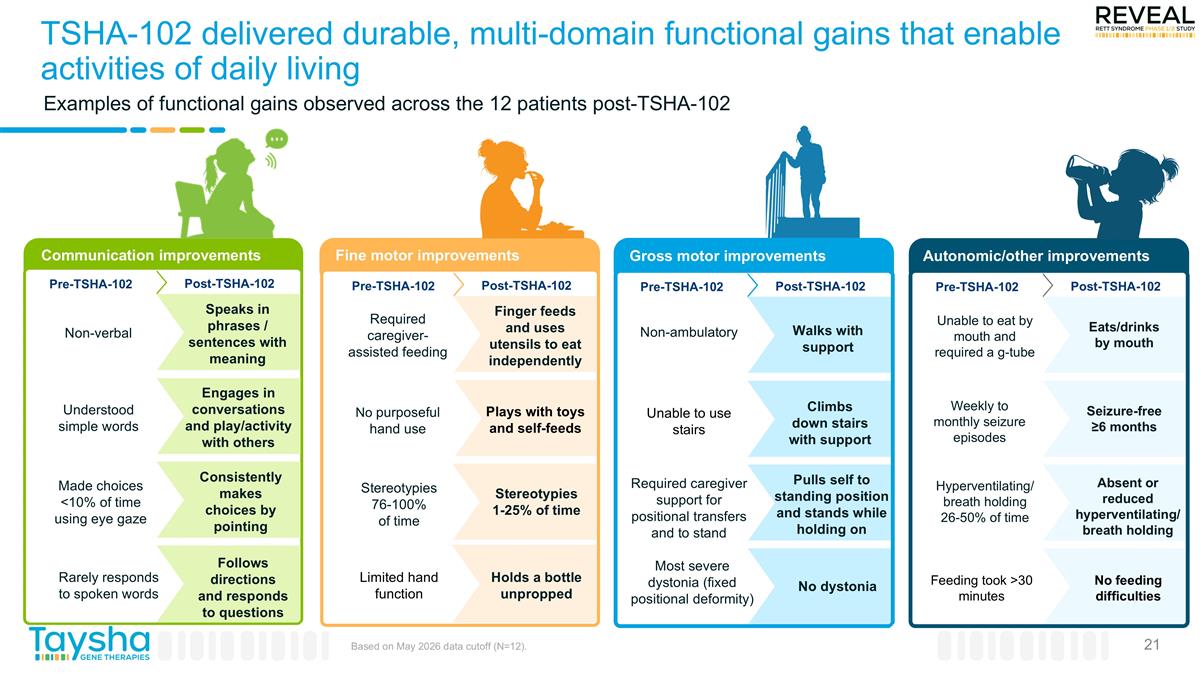
TSHA-102 delivered durable, multi-domain functional gains that enable activities of daily living Examples of functional gains observed across the 12 patients post-TSHA-102 Non-verbal Speaks in phrases / sentences with meaning Communication improvements Understood simple words Engages in conversations and play/activity with others Made choices <10% of time using eye gaze Consistently makes choices by pointing Rarely responds to spoken words Follows directions and responds to questions Post-TSHA-102 Pre-TSHA-102 Fine motor improvements Post-TSHA-102 Pre-TSHA-102 Stereotypies 76-100% of time Stereotypies 1-25% of time No purposeful hand use Plays with toys and self-feeds Required caregiver-assisted feeding Finger feeds and uses utensils to eat independently Holds a bottle unpropped Limited hand function Gross motor improvements Post-TSHA-102 Pre-TSHA-102 Most severe dystonia (fixed positional deformity) Non-ambulatory Walks with support Required caregiver support for positional transfers and to stand Pulls self to standing position and stands while holding on Unable to use stairs Climbs down stairs with support No dystonia Post-TSHA-102 Pre-TSHA-102 Hyperventilating/breath holding 26-50% of time Absent or reduced hyperventilating/breath holding Weekly to monthly seizure episodes Seizure-free ≥6 months Unable to eat by mouth and required a g-tube Eats/drinks by mouth Feeding took >30 minutes No feeding difficulties Based on May 2026 data cutoff (N=12). Autonomic/other improvements
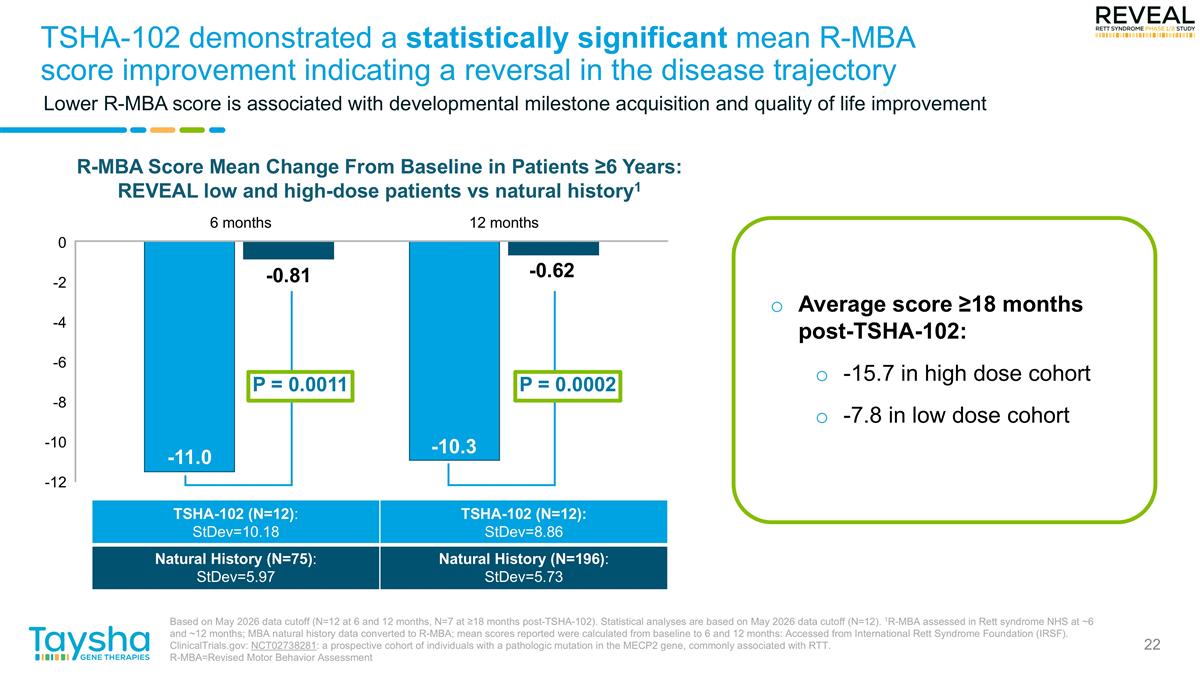
TSHA-102 (N=12): StDev=10.18 TSHA-102 (N=12): StDev=8.86 Natural History (N=75): StDev=5.97 Natural History (N=196): StDev=5.73 TSHA-102 demonstrated a statistically significant mean R-MBA score improvement indicating a reversal in the disease trajectory Lower R-MBA score is associated with developmental milestone acquisition and quality of life improvement Based on May 2026 data cutoff (N=12 at 6 and 12 months, N=7 at ≥18 months post-TSHA-102). Statistical analyses are based on May 2026 data cutoff (N=12). 1R-MBA assessed in Rett syndrome NHS at ~6 and ~12 months; MBA natural history data converted to R-MBA; mean scores reported were calculated from baseline to 6 and 12 months: Accessed from International Rett Syndrome Foundation (IRSF). ClinicalTrials.gov: NCT02738281: a prospective cohort of individuals with a pathologic mutation in the MECP2 gene, commonly associated with RTT. R-MBA=Revised Motor Behavior Assessment Average score ≥18 months post-TSHA-102: -15.7 in high dose cohort -7.8 in low dose cohort R-MBA Score Mean Change From Baseline in Patients ≥6 Years: REVEAL low and high-dose patients vs natural history1 -12 -10 -8 -6 -4 -2 0 6 months 12 months -11.0 -10.3 -0.81 -0.62 P = 0.0011 P = 0.0002
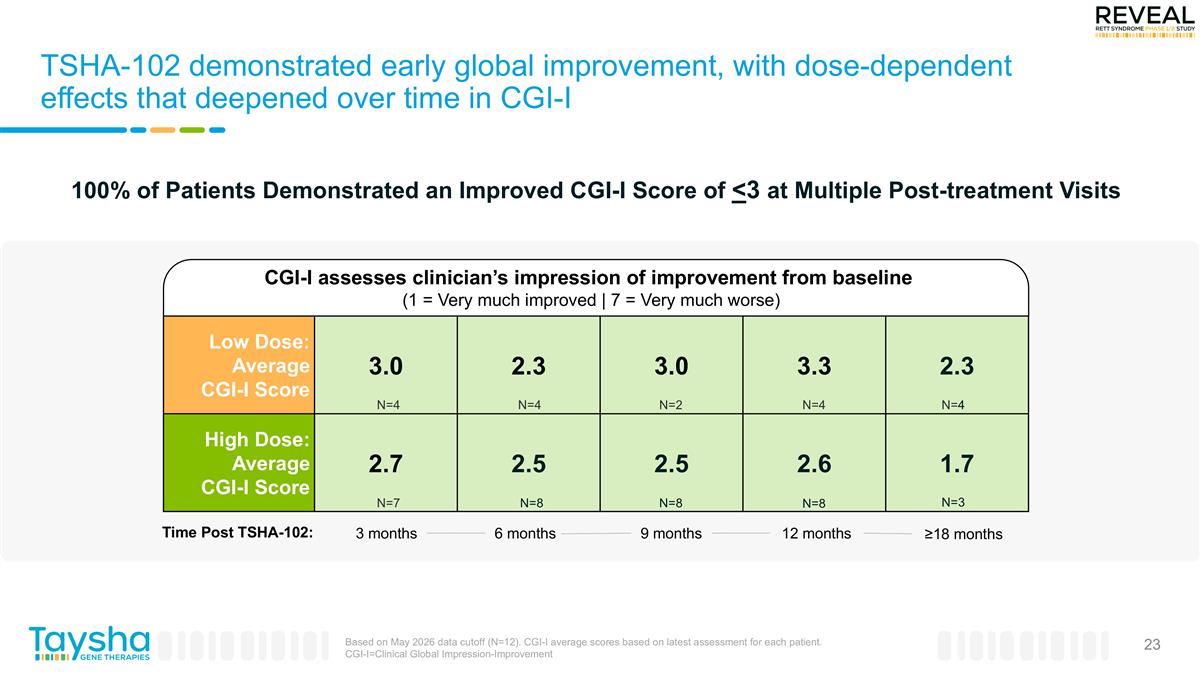
TSHA-102 demonstrated early global improvement, with dose-dependent effects that deepened over time in CGI-I Based on May 2026 data cutoff (N=12). CGI-I average scores based on latest assessment for each patient. CGI-I=Clinical Global Impression-Improvement Low Dose: Average CGI-I Score 3.0 2.3 3.0 3.3 2.3 High Dose: Average CGI-I Score 2.7 2.5 2.5 2.6 1.7 N=7 N=8 N=8 N=4 N=4 N=2 N=4 N=4 100% of Patients Demonstrated an Improved CGI-I Score of <3 at Multiple Post-treatment Visits 3 months 6 months 9 months 12 months ≥18 months Time Post TSHA-102: N=8 N=3 CGI-I assesses clinician’s impression of improvement from baseline (1 = Very much improved | 7 = Very much worse)
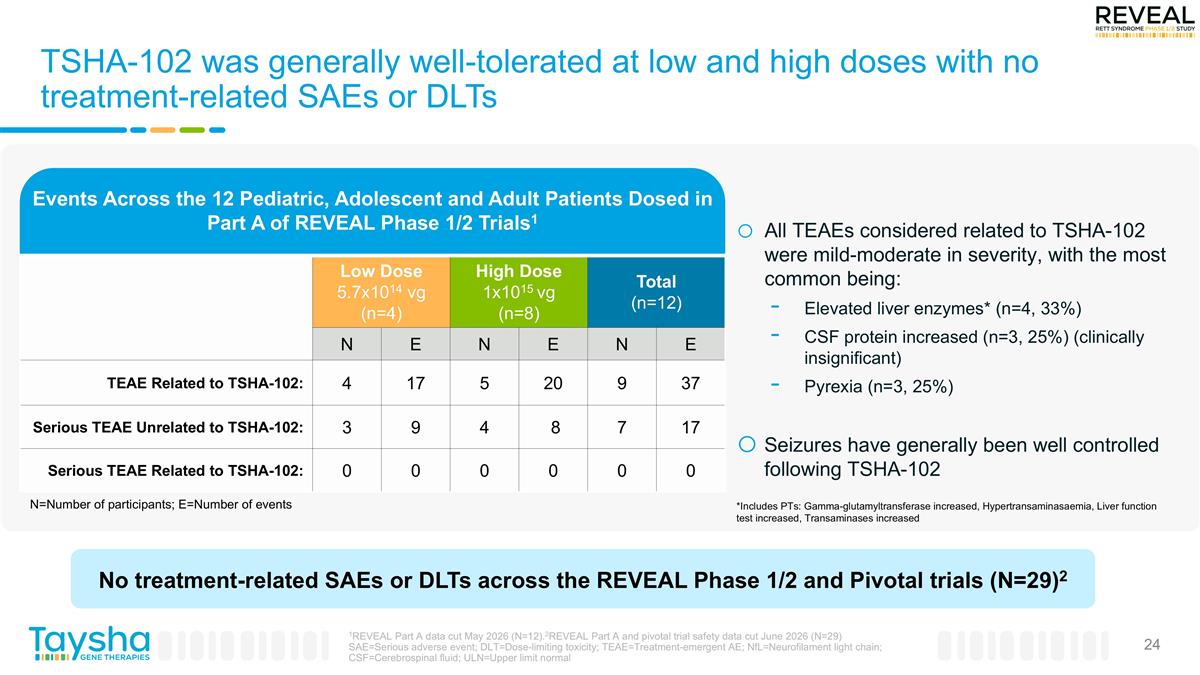
TSHA-102 was generally well-tolerated at low and high doses with no treatment-related SAEs or DLTs All TEAEs considered related to TSHA-102 were mild-moderate in severity, with the most common being: Elevated liver enzymes* (n=4, 33%) CSF protein increased (n=3, 25%) (clinically insignificant) Pyrexia (n=3, 25%) Seizures have generally been well controlled following TSHA-102 1REVEAL Part A data cut May 2026 (N=12).2REVEAL Part A and pivotal trial safety data cut June 2026 (N=29) SAE=Serious adverse event; DLT=Dose-limiting toxicity; TEAE=Treatment-emergent AE; NfL=Neurofilament light chain; CSF=Cerebrospinal fluid; ULN=Upper limit normal Events Across the 12 Pediatric, Adolescent and Adult Patients Dosed in Part A of REVEAL Phase 1/2 Trials1 Low Dose 5.7x10¹⁴ vg (n=4) High Dose 1x10¹⁵ vg (n=8) Total (n=12) N E N E N E TEAE Related to TSHA-102: 4 17 5 20 9 37 Serious TEAE Unrelated to TSHA-102: 3 9 4 8 7 17 Serious TEAE Related to TSHA-102: 0 0 0 0 0 0 No treatment-related SAEs or DLTs across the REVEAL Phase 1/2 and Pivotal trials (N=29)2 N=Number of participants; E=Number of events *Includes PTs: Gamma-glutamyltransferase increased, Hypertransaminasaemia, Liver function test increased, Transaminases increased
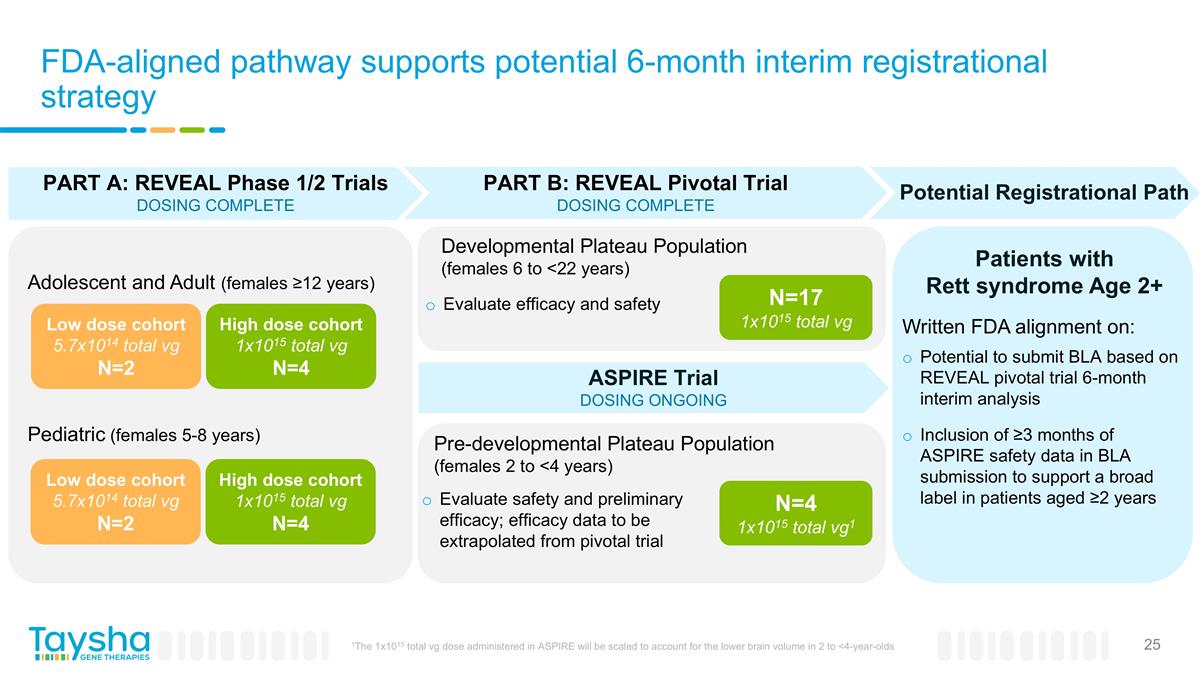
FDA‑aligned pathway supports potential 6‑month interim registrational strategy PART A: REVEAL Phase 1/2 Trials DOSING COMPLETE PART B: REVEAL Pivotal Trial DOSING COMPLETE N=17 1x10¹⁵ total vg Adolescent and Adult (females ≥12 years) Low dose cohort 5.7x10¹⁴ total vg N=2 High dose cohort 1x10¹⁵ total vg N=4 Developmental Plateau Population (females 6 to <22 years) Pre-developmental Plateau Population (females 2 to <4 years) Pediatric (females 5-8 years) Potential Registrational Path Patients with Rett syndrome Age 2+ ASPIRE Trial DOSING ONGOING 1The 1x10¹⁵ total vg dose administered in ASPIRE will be scaled to account for the lower brain volume in 2 to <4‑year‑olds N=4 1x10¹⁵ total vg1 Written FDA alignment on: Potential to submit BLA based on REVEAL pivotal trial 6-month interim analysis Inclusion of ≥3 months of ASPIRE safety data in BLA submission to support a broad label in patients aged ≥2 years Evaluate safety and preliminary efficacy; efficacy data to be extrapolated from pivotal trial Evaluate efficacy and safety Low dose cohort 5.7x10¹⁴ total vg N=2 High dose cohort 1x10¹⁵ total vg N=4
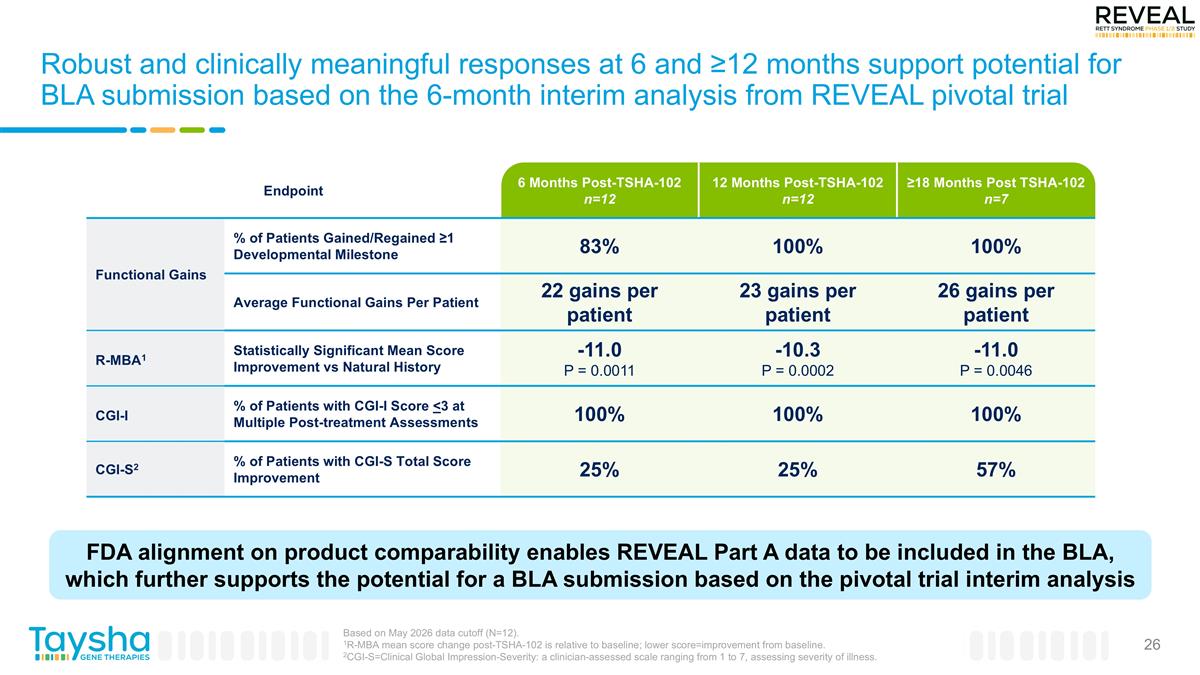
Robust and clinically meaningful responses at 6 and ≥12 months support potential for BLA submission based on the 6-month interim analysis from REVEAL pivotal trial Based on May 2026 data cutoff (N=12). 1R-MBA mean score change post-TSHA-102 is relative to baseline; lower score=improvement from baseline. 2CGI-S=Clinical Global Impression-Severity: a clinician-assessed scale ranging from 1 to 7, assessing severity of illness. Endpoint 6 Months Post-TSHA-102 n=12 12 Months Post-TSHA-102 n=12 ≥18 Months Post TSHA-102 n=7 Functional Gains % of Patients Gained/Regained ≥1 Developmental Milestone 83% 100% 100% Average Functional Gains Per Patient 22 gains per patient 23 gains per patient 26 gains per patient R-MBA1 Statistically Significant Mean Score Improvement vs Natural History -11.0 P = 0.0011 -10.3 P = 0.0002 -11.0 P = 0.0046 CGI-I % of Patients with CGI-I Score <3 at Multiple Post-treatment Assessments 100% 100% 100% CGI-S2 % of Patients with CGI-S Total Score Improvement 25% 25% 57% FDA alignment on product comparability enables REVEAL Part A data to be included in the BLA, which further supports the potential for a BLA submission based on the pivotal trial interim analysis
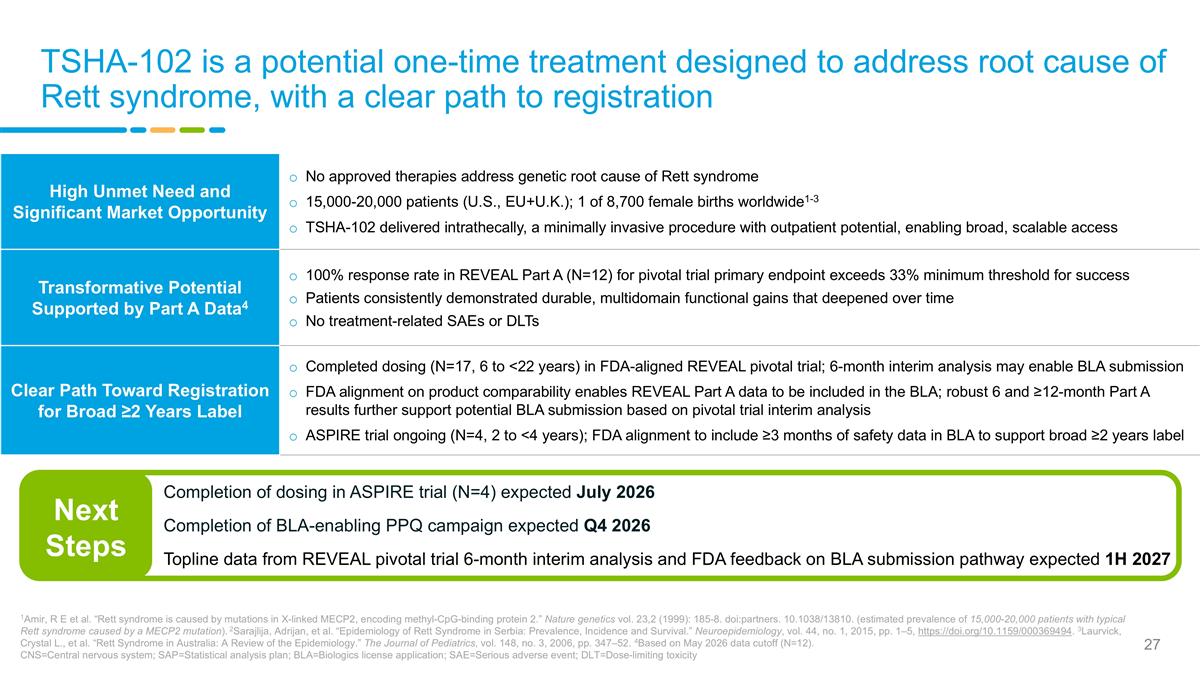
TSHA-102 is a potential one-time treatment designed to address root cause of Rett syndrome, with a clear path to registration 1Amir, R E et al. “Rett syndrome is caused by mutations in X-linked MECP2, encoding methyl-CpG-binding protein 2.” Nature genetics vol. 23,2 (1999): 185-8. doi:partners. 10.1038/13810. (estimated prevalence of 15,000-20,000 patients with typical Rett syndrome caused by a MECP2 mutation). 2Sarajlija, Adrijan, et al. “Epidemiology of Rett Syndrome in Serbia: Prevalence, Incidence and Survival.” Neuroepidemiology, vol. 44, no. 1, 2015, pp. 1–5, https://doi.org/10.1159/000369494. 3Laurvick, Crystal L., et al. “Rett Syndrome in Australia: A Review of the Epidemiology.” The Journal of Pediatrics, vol. 148, no. 3, 2006, pp. 347–52. 4Based on May 2026 data cutoff (N=12). CNS=Central nervous system; SAP=Statistical analysis plan; BLA=Biologics license application; SAE=Serious adverse event; DLT=Dose-limiting toxicity High Unmet Need and Significant Market Opportunity No approved therapies address genetic root cause of Rett syndrome 15,000-20,000 patients (U.S., EU+U.K.); 1 of 8,700 female births worldwide1-3 TSHA-102 delivered intrathecally, a minimally invasive procedure with outpatient potential, enabling broad, scalable access Transformative Potential Supported by Part A Data4 100% response rate in REVEAL Part A (N=12) for pivotal trial primary endpoint exceeds 33% minimum threshold for success Patients consistently demonstrated durable, multidomain functional gains that deepened over time No treatment-related SAEs or DLTs Clear Path Toward Registration for Broad ≥2 Years Label Completed dosing (N=17, 6 to <22 years) in FDA-aligned REVEAL pivotal trial; 6-month interim analysis may enable BLA submission FDA alignment on product comparability enables REVEAL Part A data to be included in the BLA; robust 6 and ≥12-month Part A results further support potential BLA submission based on pivotal trial interim analysis ASPIRE trial ongoing (N=4, 2 to <4 years); FDA alignment to include ≥3 months of safety data in BLA to support broad ≥2 years label Completion of dosing in ASPIRE trial (N=4) expected July 2026 Completion of BLA-enabling PPQ campaign expected Q4 2026 Topline data from REVEAL pivotal trial 6‑month interim analysis and FDA feedback on BLA submission pathway expected 1H 2027 Next Steps
Thank you