
® © Rhythm® Pharmaceuticals, Inc. All rights reserved. June 13, 2026 Rhythm Pharmaceuticals Positive Interim Six-month Results from Phase 2 Trial Evaluating Setmelanotide in Patients with Prader-Willi Syndrome EXHIBIT 99.2

2 ® This presentation and the accompanying oral presentation contain forward-looking statements within the meaning of the Private Securities Litigation Reform Act of 1995. All statements contained in this presentation that do not relate to matters of historical fact should be considered forward-looking statements, including, without limitation, statements regarding our ongoing Phase 2 trial of setmelanotide in patients with Prader Willi Syndrome; the safety, efficacy, potential benefits of, and regulatory and clinical progress, potential regulatory submissions, approvals and timing thereof of setmelanotide and other product candidates; the clinical design or progress of any of our products or product candidates at any dosage or in any indication; the potential benefits of any of the Company’s products or product candidates for any specific disease indication or at any dosage; our participation in upcoming events and presentations, and the date, time and content thereof; the sufficiency of our cash, cash equivalents and short-term investments to fund our planned operations; and the timing of any of the foregoing. Statements using words such as “expect”, “anticipate”, “believe”, “may”, “will” and similar terms are also forward-looking statements. Such statements are subject to numerous risks, uncertainties, including, but not limited to, our ability to enroll patients in clinical trials, the design and outcome of clinical trials, the impact of competition, the ability to achieve or obtain necessary regulatory approvals, risks associated with data analysis and reporting, our ability to successfully commercialize setmelanotide, our liquidity and expenses, our ability to retain our key employees and consultants, and to attract, retain and motivate qualified personnel, and general economic conditions, and the other important factors, including those discussed under the caption “Risk Factors” in Rhythm’s Quarterly Report on Form 10-Q for the three months ended March 31, 2026 and our other filings with the Securities and Exchange Commission. Except as required by law, we undertake no obligations to make any revisions to the forward-looking statements contained in this release or to update them to reflect events or circumstances occurring after the date of this release, whether as a result of new information, future developments or otherwise. Industry and Other Data Unless otherwise indicated, information contained in this presentation concerning our industry and the markets in which Rhythm operates, including its general expectations, market position and market opportunity, is based on its management’s estimates and research, as well as industry and general publications and research, surveys and studies conducted by third parties. While we believe the information from these third-party publications, research, surveys and studies is reliable, it does not guarantee the accuracy or completeness of such information, and Rhythm has not independently verified this information. Management’s estimates are derived from publicly available information, their knowledge of the company's industry and their assumptions based on such information and knowledge, which they believe to be reasonable. This data involves a number of assumptions and limitations which are necessarily subject to a high degree of uncertainty and risk due to a variety of factors, including those described in our periodic reports filed with the Securities and Exchange Commission under the captions “Cautionary Note Regarding Forward Looking Statements,” “Summary Risk Factors” and “Risk Factors.” These and other factors could cause Rhythm’s future performance and market expectations to differ materially from its assumptions and estimates. Forward-looking Statements Phase 2 Trial Evaluating Setmelanotide in PWS ӏ ENDO 2026

3 ® On Today’s Call David Meeker, MD Chairman, President & Chief Executive Officer, Rhythm Pharmaceuticals Jennifer Miller, MD Professor of Pediatric Endocrinology, University of Florida Phase 2 Trial Evaluating Setmelanotide in PWS ӏ ENDO 2026

4 ® David Meeker, MD Chairman, President & Chief Executive Officer
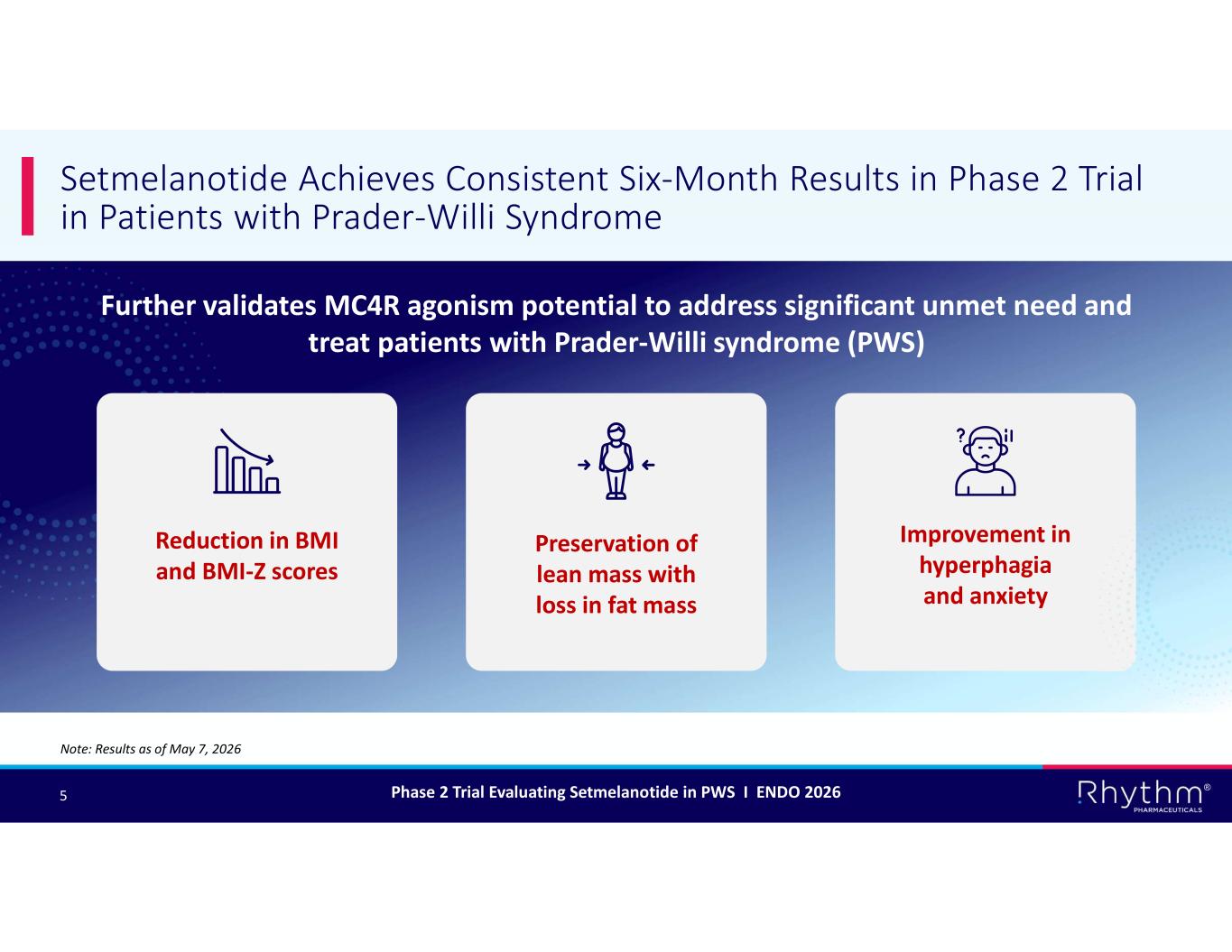
5 ® Reduction in BMI and BMI-Z scores Improvement in hyperphagia and anxiety Preservation of lean mass with loss in fat mass Setmelanotide Achieves Consistent Six-Month Results in Phase 2 Trial in Patients with Prader-Willi Syndrome Further validates MC4R agonism potential to address significant unmet need and treat patients with Prader-Willi syndrome (PWS) Note: Results as of May 7, 2026 Phase 2 Trial Evaluating Setmelanotide in PWS ӏ ENDO 2026
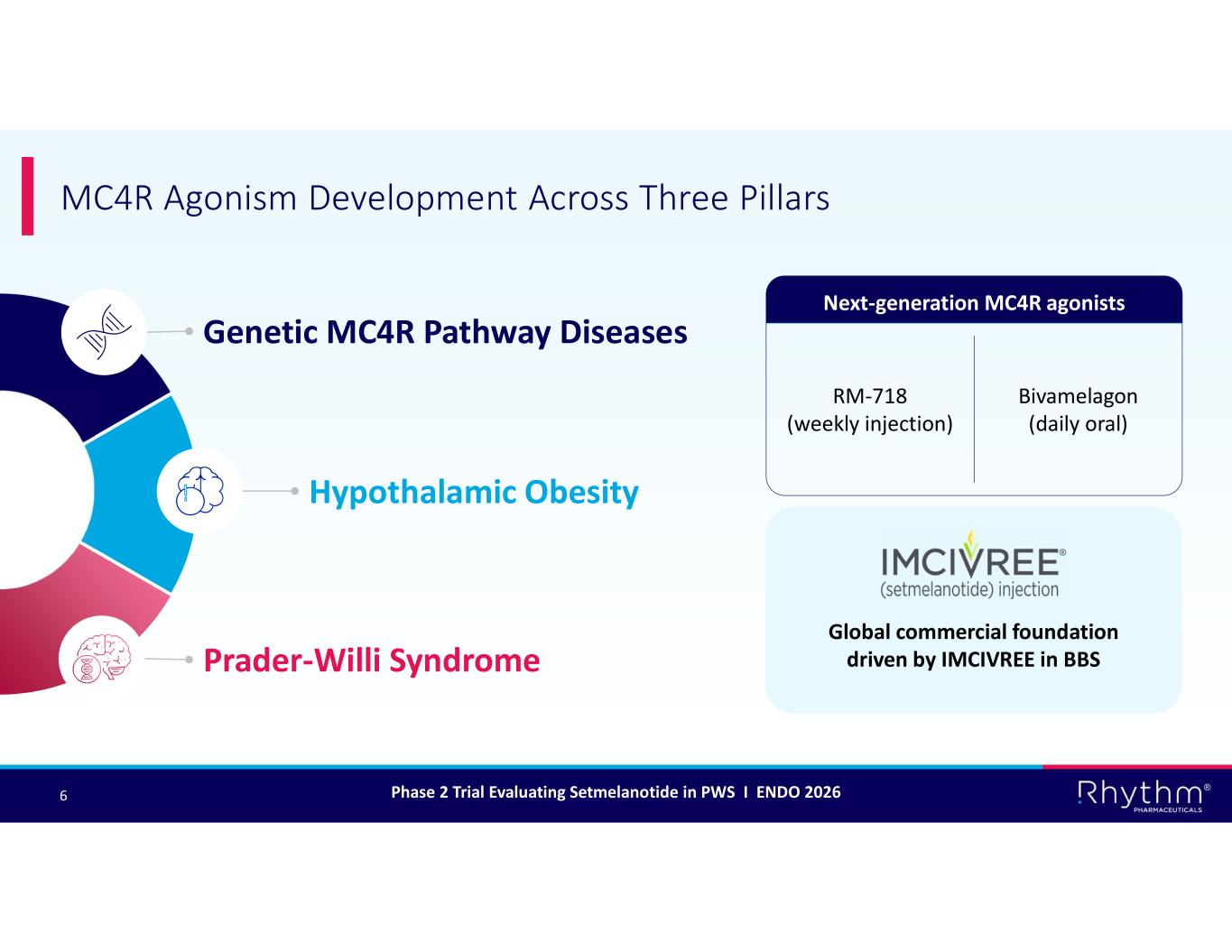
6 ® MC4R Agonism Development Across Three Pillars Global commercial foundation driven by IMCIVREE in BBS Next-generation MC4R agonists RM-718 (weekly injection) Bivamelagon (daily oral) Genetic MC4R Pathway Diseases Prader-Willi Syndrome Hypothalamic Obesity Phase 2 Trial Evaluating Setmelanotide in PWS ӏ ENDO 2026
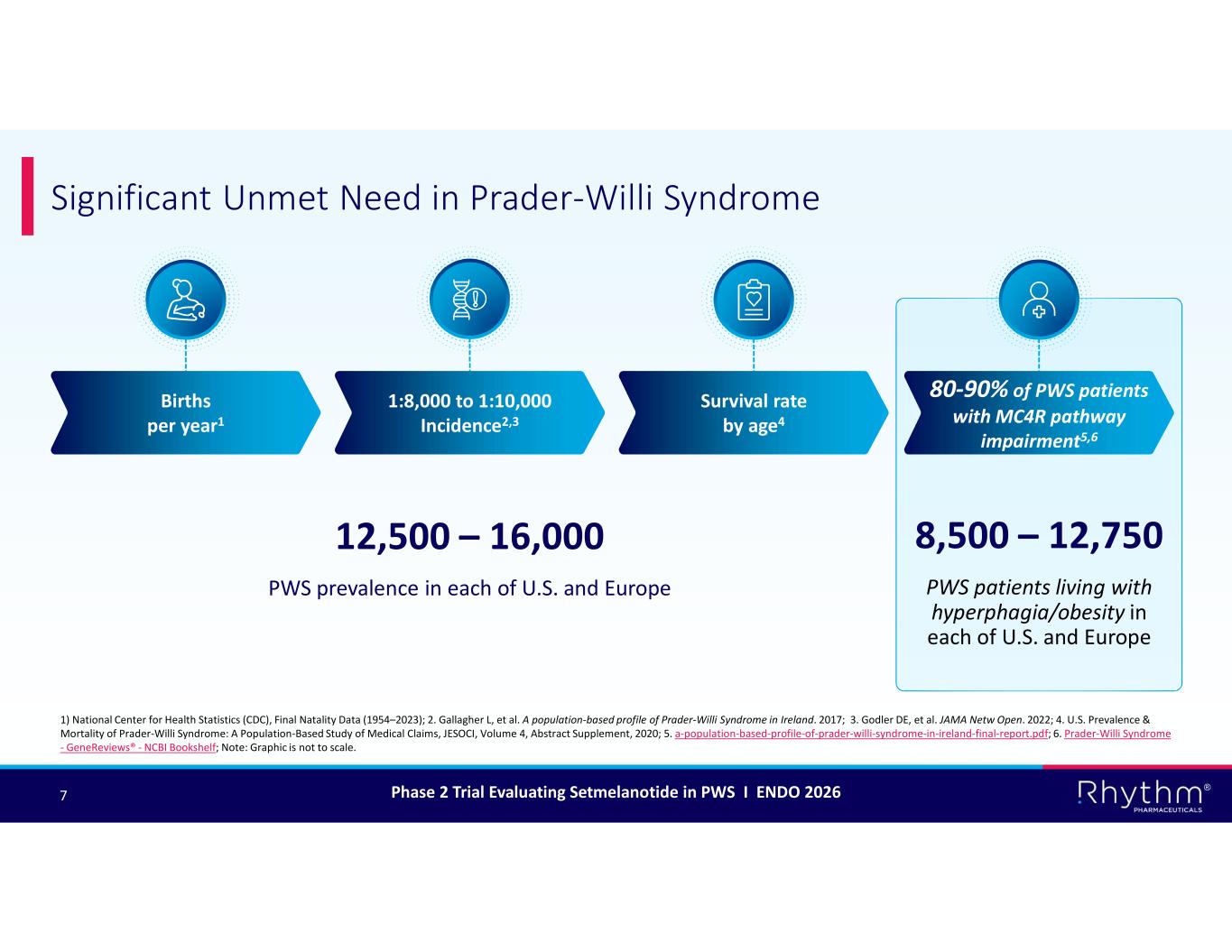
7 ® 12,500 – 16,000 PWS prevalence in each of U.S. and Europe 8,500 – 12,750 PWS patients living with hyperphagia/obesity in each of U.S. and Europe Significant Unmet Need in Prader-Willi Syndrome 1) National Center for Health Statistics (CDC), Final Natality Data (1954–2023); 2. Gallagher L, et al. A population-based profile of Prader-Willi Syndrome in Ireland. 2017; 3. Godler DE, et al. JAMA Netw Open. 2022; 4. U.S. Prevalence & Mortality of Prader-Willi Syndrome: A Population-Based Study of Medical Claims, JESOCI, Volume 4, Abstract Supplement, 2020; 5. a-population-based-profile-of-prader-willi-syndrome-in-ireland-final-report.pdf; 6. Prader-Willi Syndrome - GeneReviews® - NCBI Bookshelf; Note: Graphic is not to scale. Births per year1 1:8,000 to 1:10,000 Incidence2,3 Survival rate by age4 80-90% of PWS patients with MC4R pathway impairment5,6 Phase 2 Trial Evaluating Setmelanotide in PWS ӏ ENDO 2026
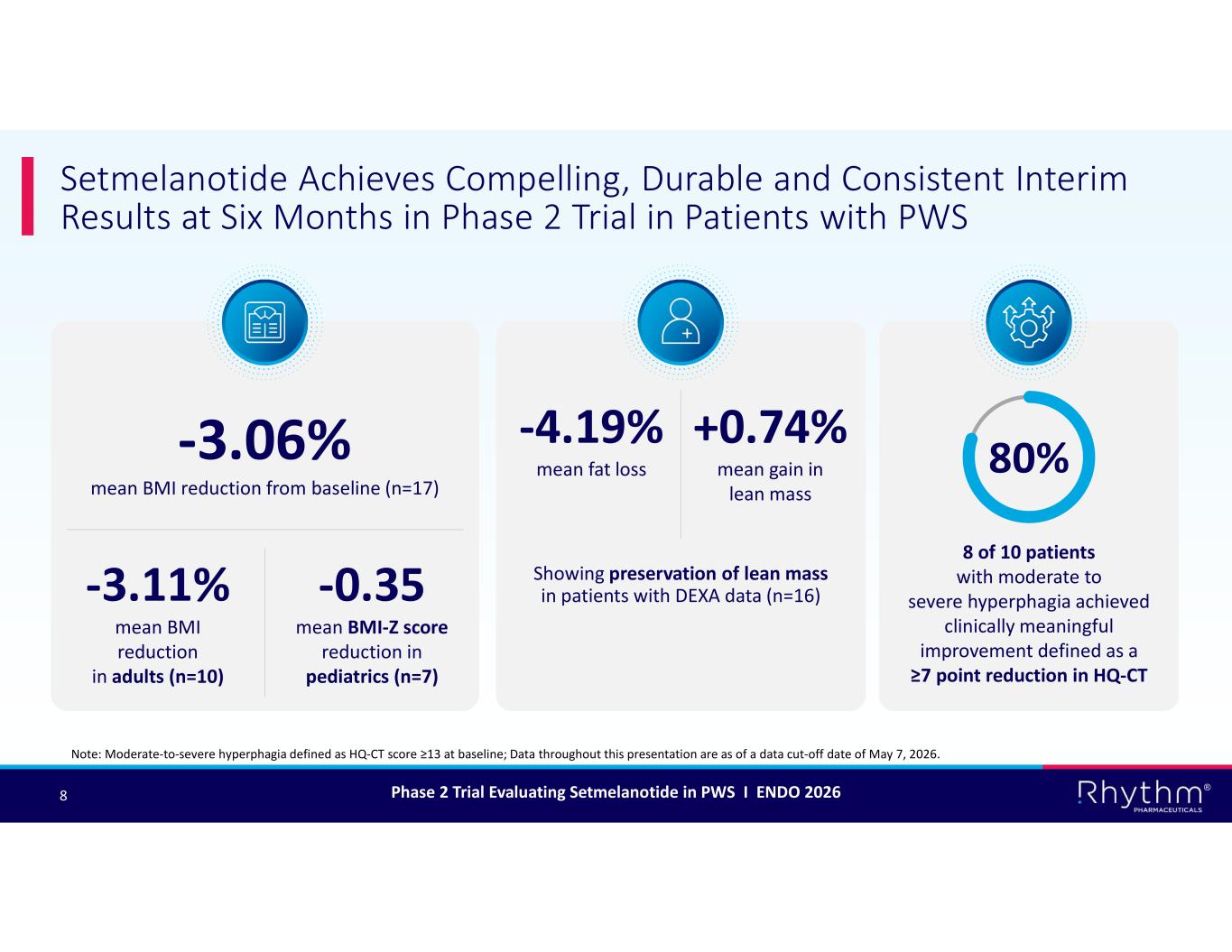
8 ® -3.06% mean BMI reduction from baseline (n=17) -3.11% mean BMI reduction in adults (n=10) -0.35 mean BMI-Z score reduction in pediatrics (n=7) -4.19% mean fat loss +0.74% mean gain in lean mass Setmelanotide Achieves Compelling, Durable and Consistent Interim Results at Six Months in Phase 2 Trial in Patients with PWS 8 of 10 patients with moderate to severe hyperphagia achieved clinically meaningful improvement defined as a ≥7 point reduction in HQ-CT 80% Showing preservation of lean mass in patients with DEXA data (n=16) Note: Moderate-to-severe hyperphagia defined as HQ-CT score ≥13 at baseline; Data throughout this presentation are as of a data cut-off date of May 7, 2026. Phase 2 Trial Evaluating Setmelanotide in PWS ӏ ENDO 2026
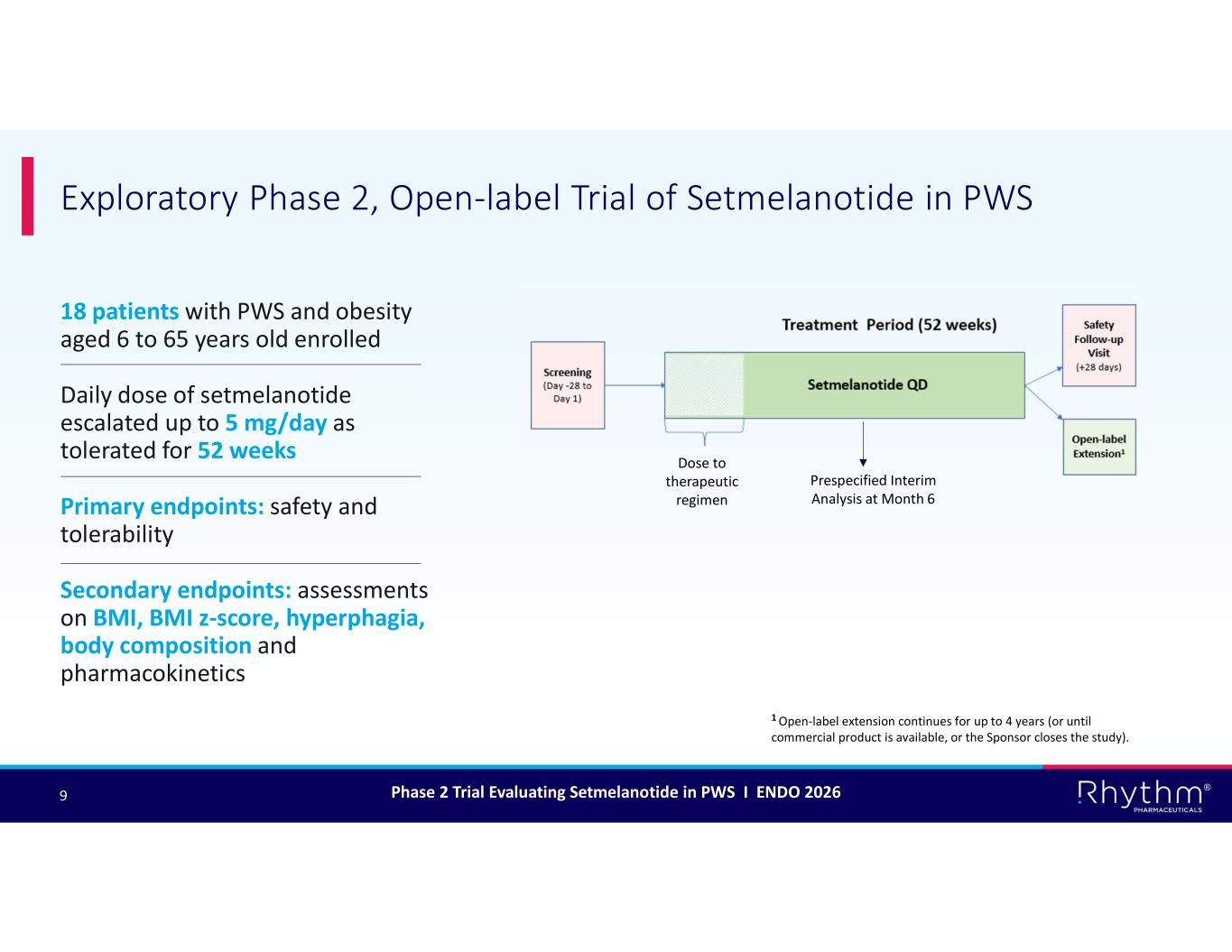
9 ® 18 patients with PWS and obesity aged 6 to 65 years old enrolled Daily dose of setmelanotide escalated up to 5 mg/day as tolerated for 52 weeks Primary endpoints: safety and tolerability Secondary endpoints: assessments on BMI, BMI z-score, hyperphagia, body composition and pharmacokinetics Exploratory Phase 2, Open-label Trial of Setmelanotide in PWS Phase 2 Trial Evaluating Setmelanotide in PWS ӏ ENDO 2026 1 Open-label extension continues for up to 4 years (or until commercial product is available, or the Sponsor closes the study). Dose to therapeutic regimen Prespecified Interim Analysis at Month 6
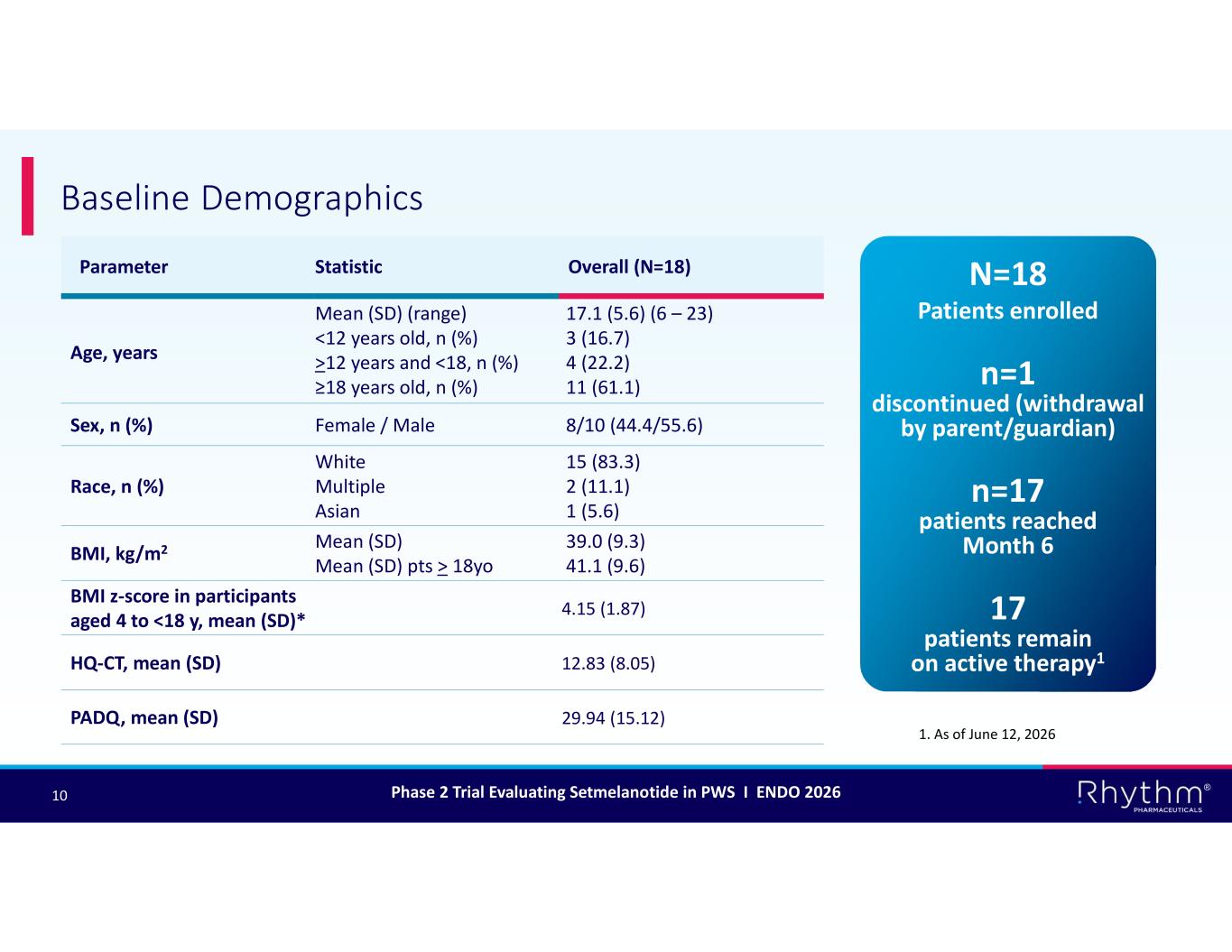
10 ® Baseline Demographics N=18 Patients enrolled Overall (N=18)StatisticParameter 17.1 (5.6) (6 – 23) 3 (16.7) 4 (22.2) 11 (61.1) Mean (SD) (range) <12 years old, n (%) >12 years and <18, n (%) ≥18 years old, n (%) Age, years 8/10 (44.4/55.6)Female / MaleSex, n (%) 15 (83.3) 2 (11.1) 1 (5.6) White Multiple Asian Race, n (%) 39.0 (9.3) 41.1 (9.6) Mean (SD) Mean (SD) pts > 18yoBMI, kg/m2 4.15 (1.87) BMI z-score in participants aged 4 to <18 y, mean (SD)* 12.83 (8.05)HQ-CT, mean (SD) 29.94 (15.12)PADQ, mean (SD) n=1 discontinued (withdrawal by parent/guardian) n=17 patients reached Month 6 17 patients remain on active therapy1 Phase 2 Trial Evaluating Setmelanotide in PWS ӏ ENDO 2026 1. As of June 12, 2026
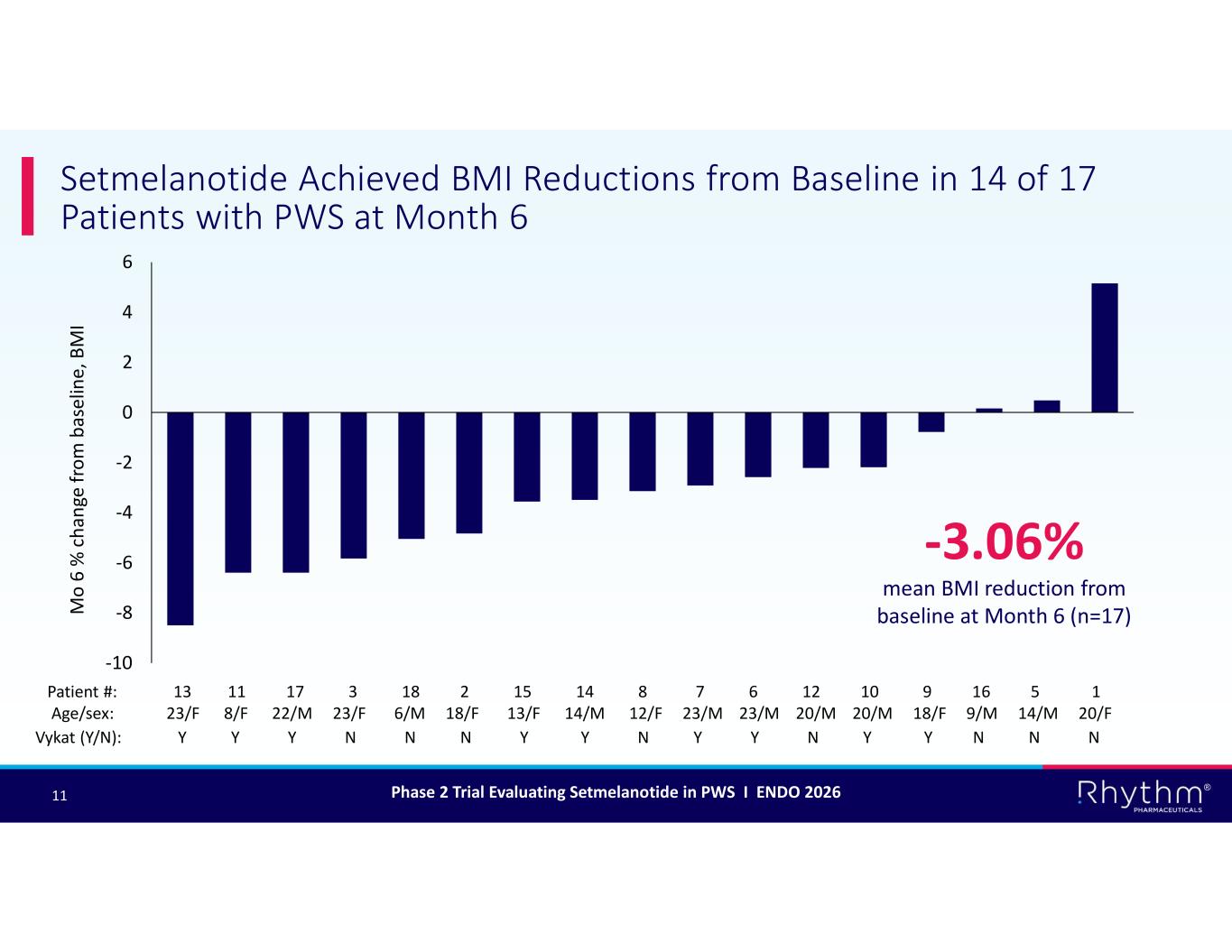
11 ® -10 -8 -6 -4 -2 0 2 4 6 M o 6 % c ha ng e fr om b as el in e, B M I Setmelanotide Achieved BMI Reductions from Baseline in 14 of 17 Patients with PWS at Month 6 Phase 2 Trial Evaluating Setmelanotide in PWS ӏ ENDO 2026 Patient #: 13 11 17 3 18 2 15 14 8 7 6 12 10 9 16 5 1 Age/sex: 23/F 8/F 22/M 23/F 6/M 18/F 13/F 14/M 12/F 23/M 23/M 20/M 20/M 18/F 9/M 14/M 20/F Vykat (Y/N): Y Y Y N N N Y Y N Y Y N Y Y N N N -3.06% mean BMI reduction from baseline at Month 6 (n=17)
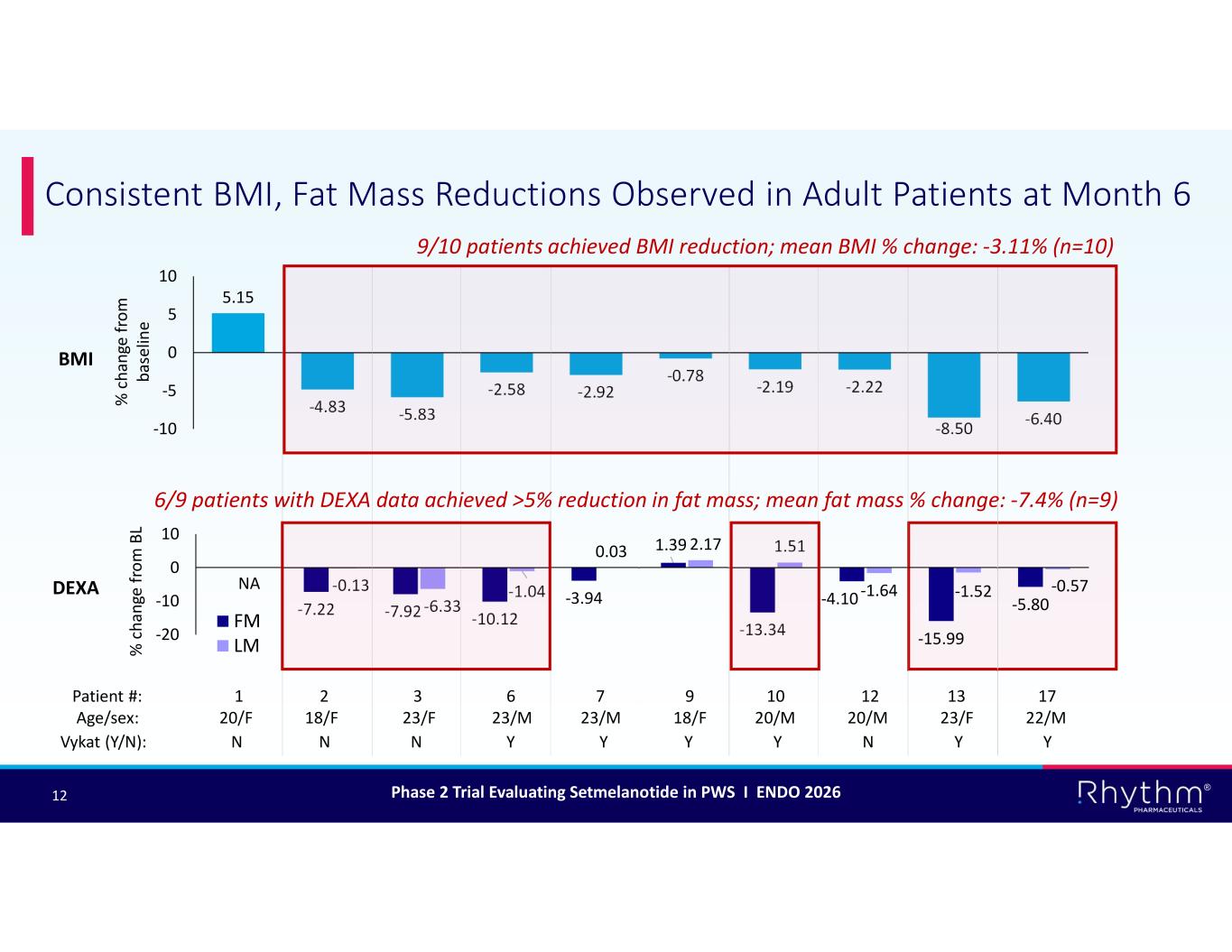
12 ® Patient #: 1 2 3 6 7 9 10 12 13 17 Age/sex: 20/F 18/F 23/F 23/M 23/M 18/F 20/M 20/M 23/F 22/M Vykat (Y/N): N N N Y Y Y Y N Y Y -7.22 -7.92 -10.12 -3.94 1.39 -13.34 -4.10 -15.99 -5.80 -0.13 -6.33 -1.04 0.03 2.17 1.51 -1.64 -1.52 -0.57 -20 -10 0 10 % c ha ng e fr om B L FM LM 5.15 -4.83 -5.83 -2.58 -2.92 -0.78 -2.19 -2.22 -8.50 -6.40-10 -5 0 5 10 % c ha ng e fr om ba se lin e Consistent BMI, Fat Mass Reductions Observed in Adult Patients at Month 6 BMI DEXA NA Phase 2 Trial Evaluating Setmelanotide in PWS ӏ ENDO 2026 9/10 patients achieved BMI reduction; mean BMI % change: -3.11% (n=10) 6/9 patients with DEXA data achieved >5% reduction in fat mass; mean fat mass % change: -7.4% (n=9)
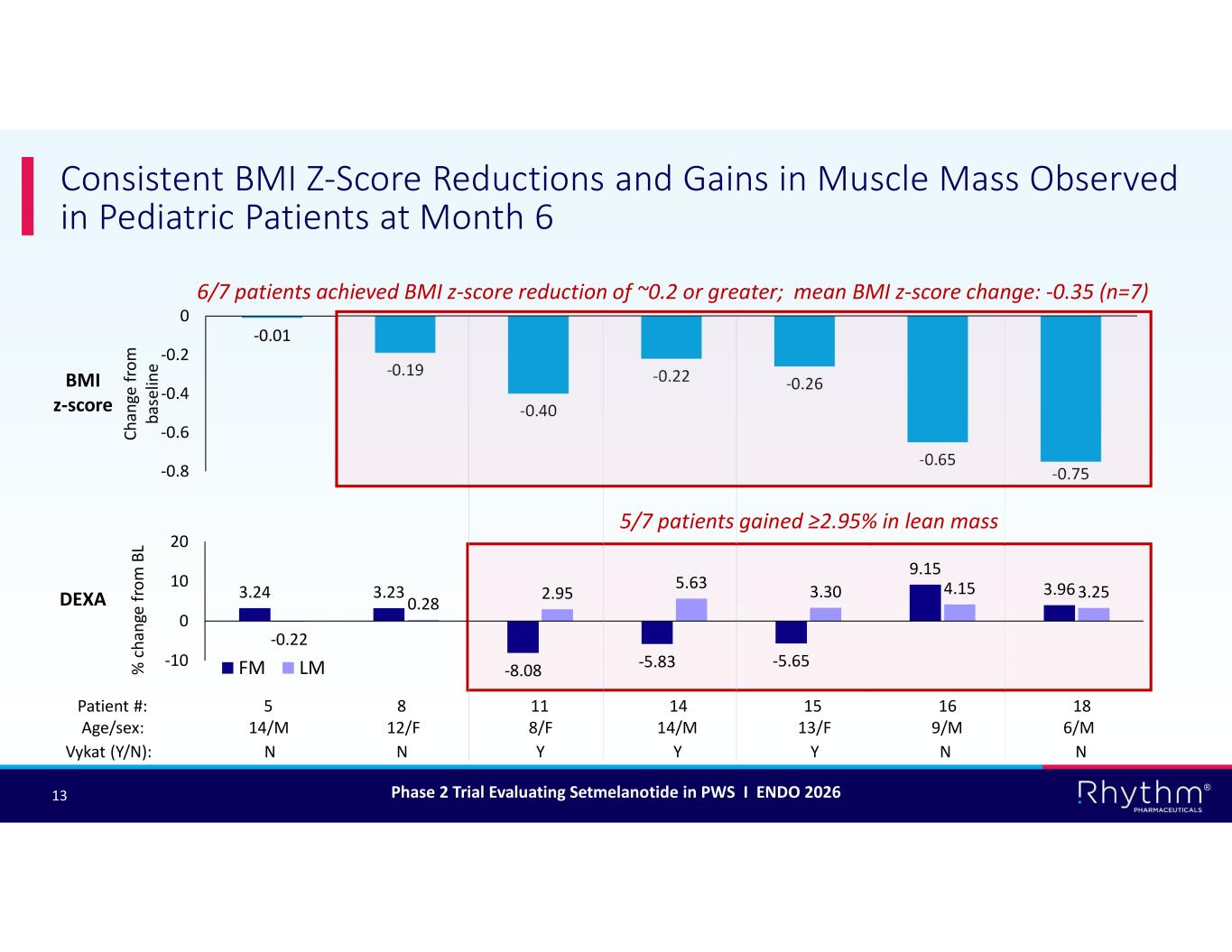
13 ® 3.24 3.23 -8.08 -5.83 -5.65 9.15 3.96 -0.22 0.28 2.95 5.63 3.30 4.15 3.25 -10 0 10 20 % c ha ng e fr om B L FM LM -0.01 -0.19 -0.40 -0.22 -0.26 -0.65 -0.75-0.8 -0.6 -0.4 -0.2 0 Ch an ge fr om ba se lin e 6/7 patients achieved BMI z-score reduction of ~0.2 or greater; mean BMI z-score change: -0.35 (n=7) Consistent BMI Z-Score Reductions and Gains in Muscle Mass Observed in Pediatric Patients at Month 6 BMI z-score DEXA Phase 2 Trial Evaluating Setmelanotide in PWS ӏ ENDO 2026 Patient #: 5 8 11 14 15 16 18 Age/sex: 14/M 12/F 8/F 14/M 13/F 9/M 6/M Vykat (Y/N): N N Y Y Y N N 5/7 patients gained ≥2.95% in lean mass
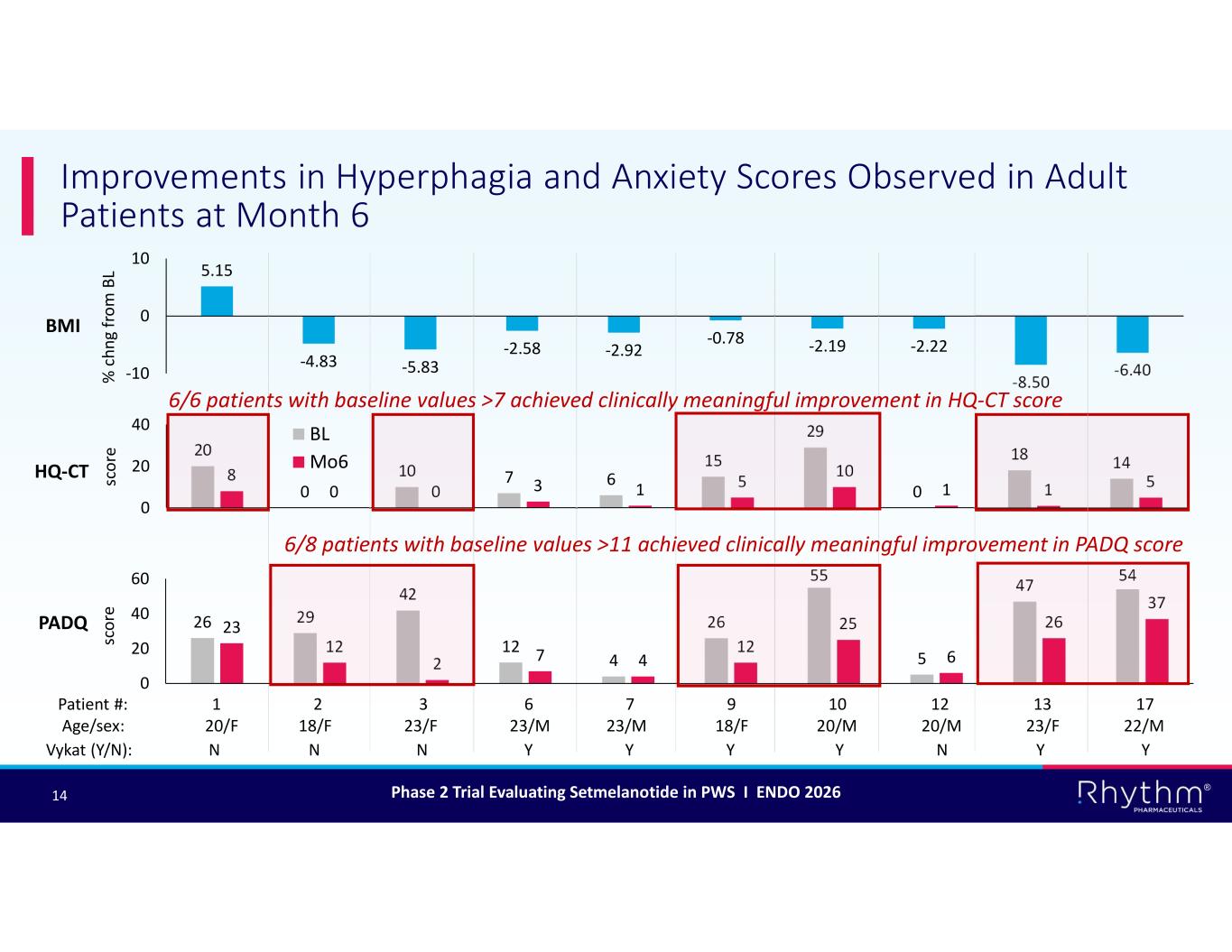
14 ® 20 0 10 7 6 15 29 0 18 14 8 0 0 3 1 5 10 1 1 5 0 20 40 sc or e BL Mo6 5.15 -4.83 -5.83 -2.58 -2.92 -0.78 -2.19 -2.22 -8.50 -6.40-10 0 10 % c hn g fr om B L Patient #: 1 2 3 6 7 9 10 12 13 17 Age/sex: 20/F 18/F 23/F 23/M 23/M 18/F 20/M 20/M 23/F 22/M Vykat (Y/N): N N N Y Y Y Y N Y Y 26 29 42 12 4 26 55 5 47 54 23 12 2 7 4 12 25 6 26 37 0 20 40 60 sc or e Improvements in Hyperphagia and Anxiety Scores Observed in Adult Patients at Month 6 BMI HQ-CT PADQ Phase 2 Trial Evaluating Setmelanotide in PWS ӏ ENDO 2026 6/8 patients with baseline values >11 achieved clinically meaningful improvement in PADQ score 6/6 patients with baseline values >7 achieved clinically meaningful improvement in HQ-CT score
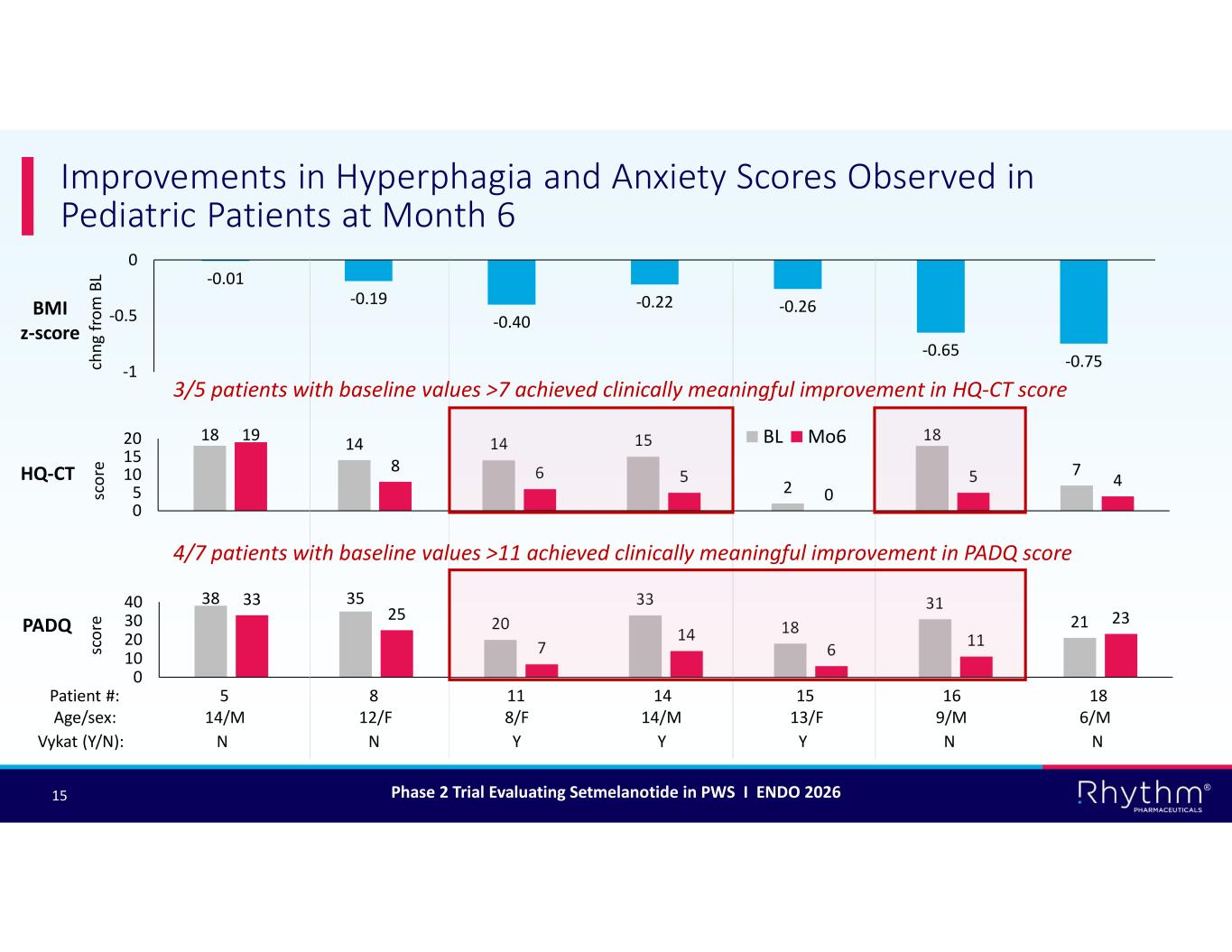
15 ® Improvements in Hyperphagia and Anxiety Scores Observed in Pediatric Patients at Month 6 -0.01 -0.19 -0.40 -0.22 -0.26 -0.65 -0.75-1 -0.5 0 ch ng fr om B L 38 35 20 33 18 31 21 33 25 7 14 6 11 23 0 10 20 30 40 sc or e 18 14 14 15 2 18 7 19 8 6 5 0 5 4 0 5 10 15 20 sc or e BL Mo6 Patient #: 5 8 11 14 15 16 18 Age/sex: 14/M 12/F 8/F 14/M 13/F 9/M 6/M Vykat (Y/N): N N Y Y Y N N HQ-CT PADQ BMI z-score Phase 2 Trial Evaluating Setmelanotide in PWS ӏ ENDO 2026 3/5 patients with baseline values >7 achieved clinically meaningful improvement in HQ-CT score 4/7 patients with baseline values >11 achieved clinically meaningful improvement in PADQ score
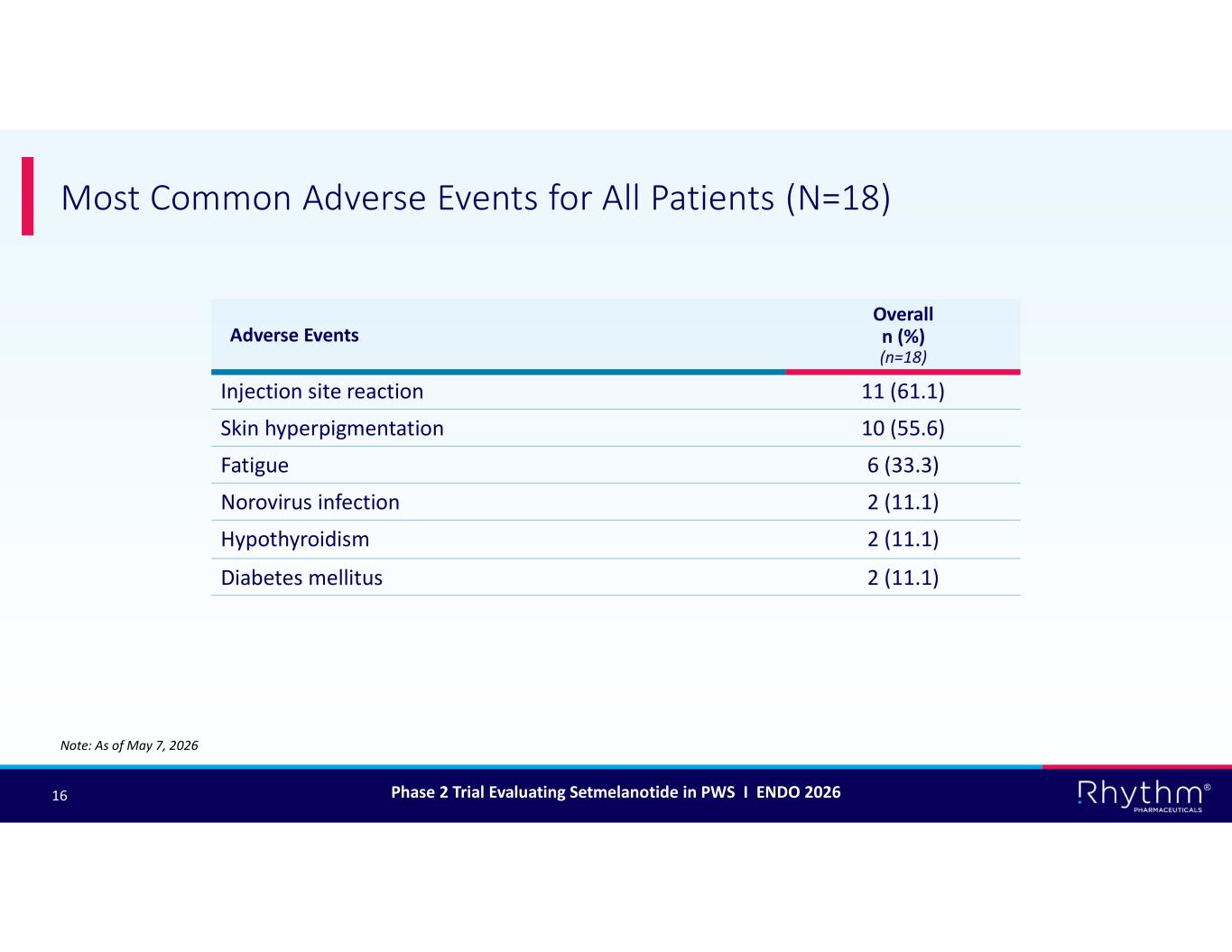
16 ® Overall n (%) (n=18) Adverse Events 11 (61.1)Injection site reaction 10 (55.6)Skin hyperpigmentation 6 (33.3)Fatigue 2 (11.1)Norovirus infection 2 (11.1)Hypothyroidism 2 (11.1)Diabetes mellitus Most Common Adverse Events for All Patients (N=18) Phase 2 Trial Evaluating Setmelanotide in PWS ӏ ENDO 2026 Note: As of May 7, 2026

17 ® Discussion with Dr. Jennifer Miller
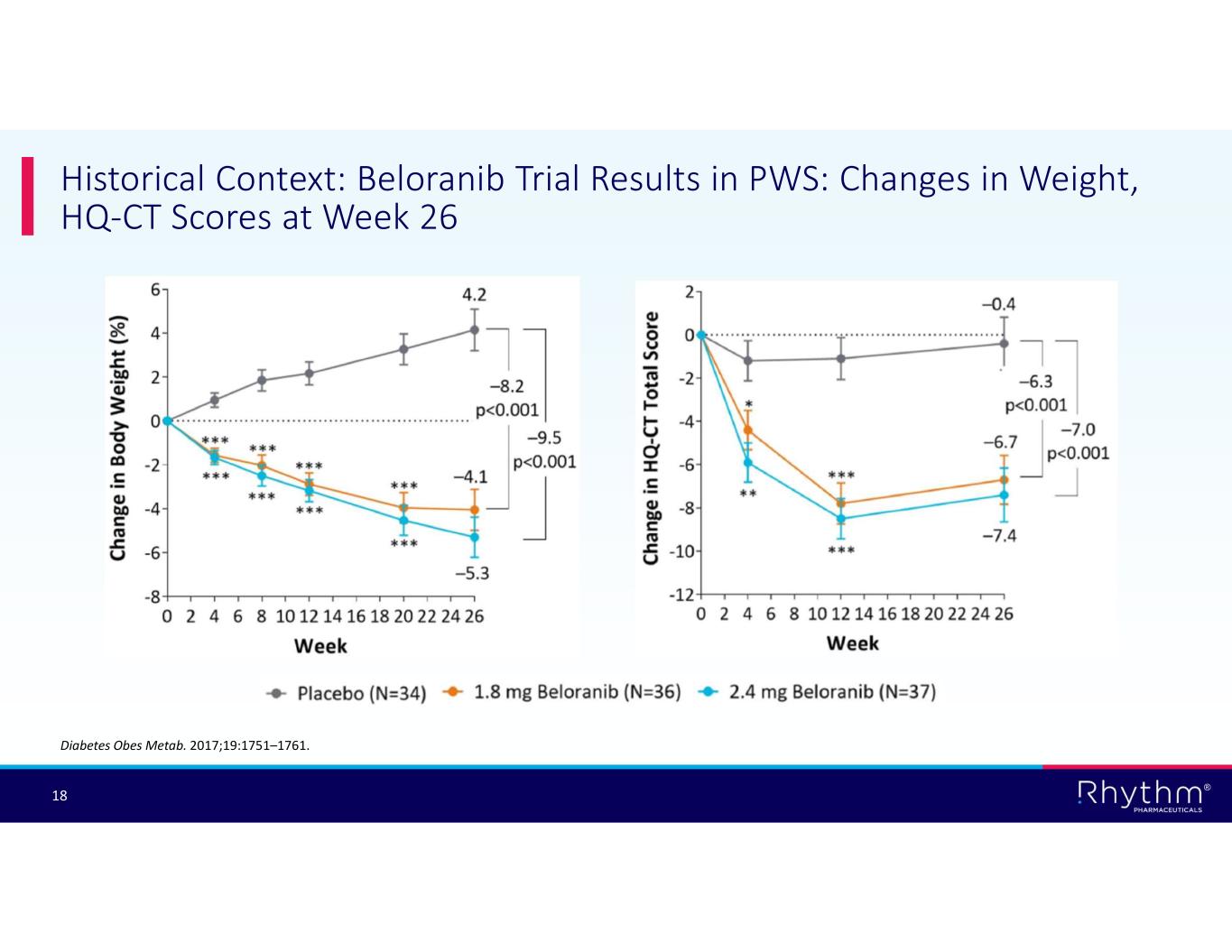
18 ® Historical Context: Beloranib Trial Results in PWS: Changes in Weight, HQ-CT Scores at Week 26 Diabetes Obes Metab. 2017;19:1751–1761.

19 ® Questions?

20 ® Appendix
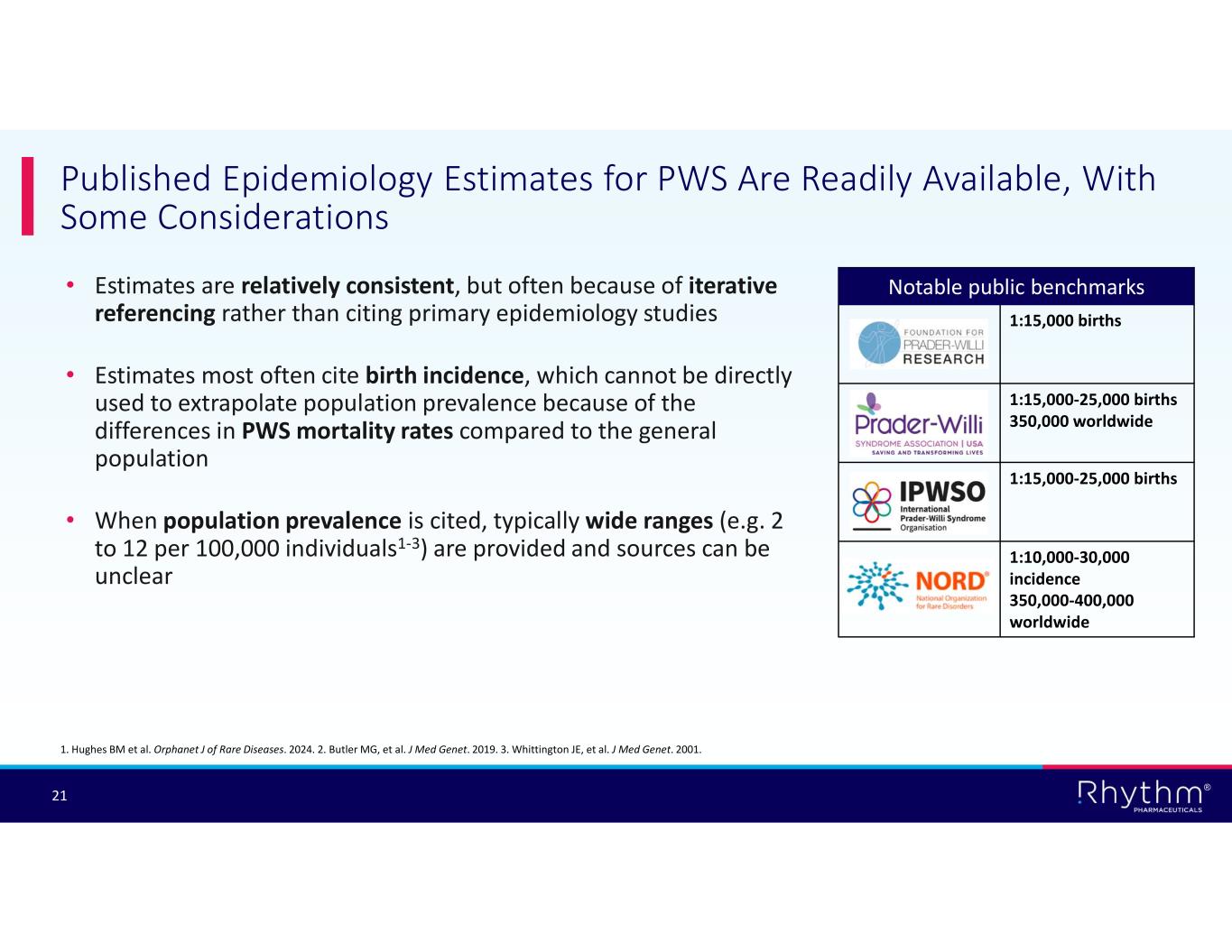
21 ® 1:15,000 births 1:15,000-25,000 births 350,000 worldwide 1:15,000-25,000 births 1:10,000-30,000 incidence 350,000-400,000 worldwide • Estimates are relatively consistent, but often because of iterative referencing rather than citing primary epidemiology studies • Estimates most often cite birth incidence, which cannot be directly used to extrapolate population prevalence because of the differences in PWS mortality rates compared to the general population • When population prevalence is cited, typically wide ranges (e.g. 2 to 12 per 100,000 individuals1-3) are provided and sources can be unclear Published Epidemiology Estimates for PWS Are Readily Available, With Some Considerations Notable public benchmarks 1. Hughes BM et al. Orphanet J of Rare Diseases. 2024. 2. Butler MG, et al. J Med Genet. 2019. 3. Whittington JE, et al. J Med Genet. 2001.
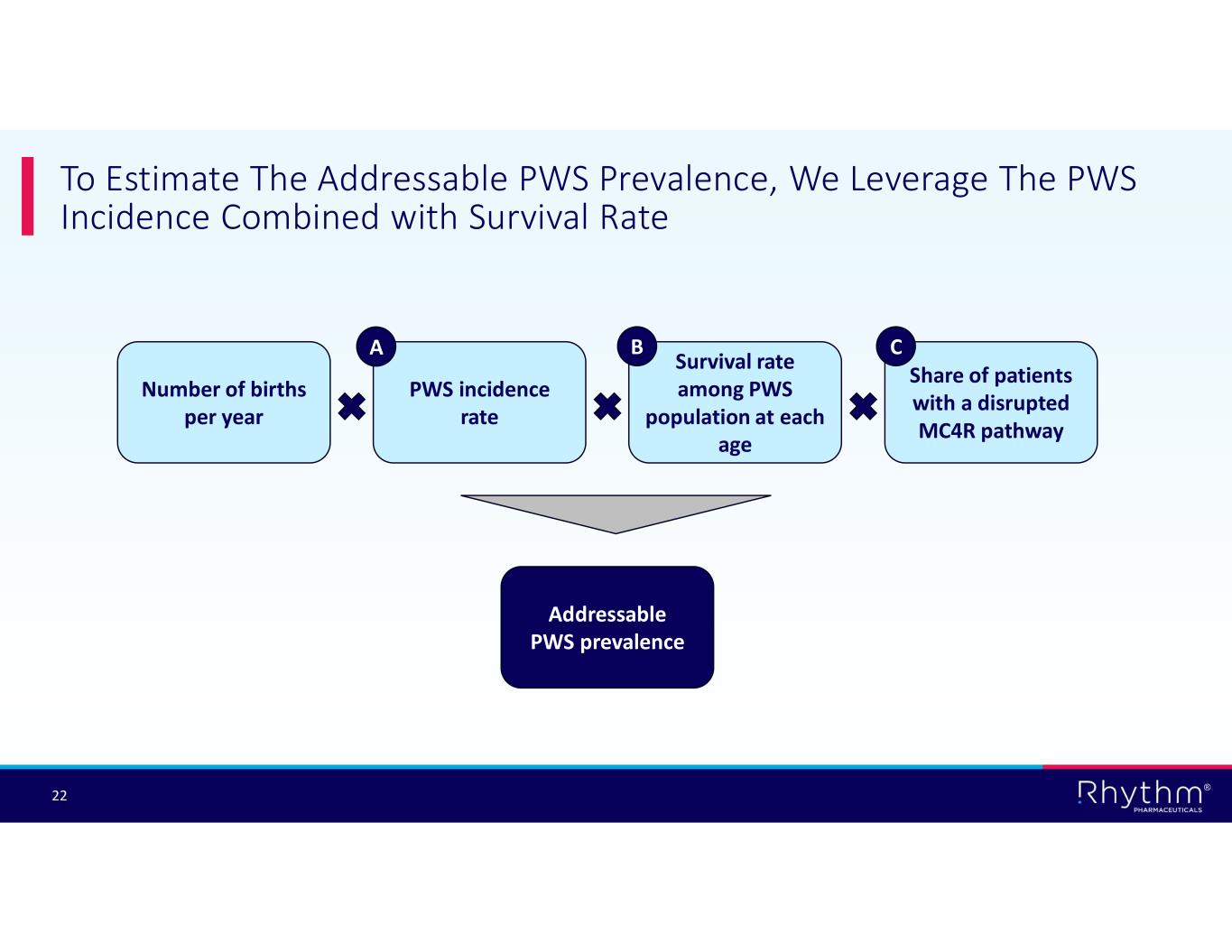
22 ® To Estimate The Addressable PWS Prevalence, We Leverage The PWS Incidence Combined with Survival Rate Number of births per year PWS incidence rate Survival rate among PWS population at each age Addressable PWS prevalence Share of patients with a disrupted MC4R pathway A B C
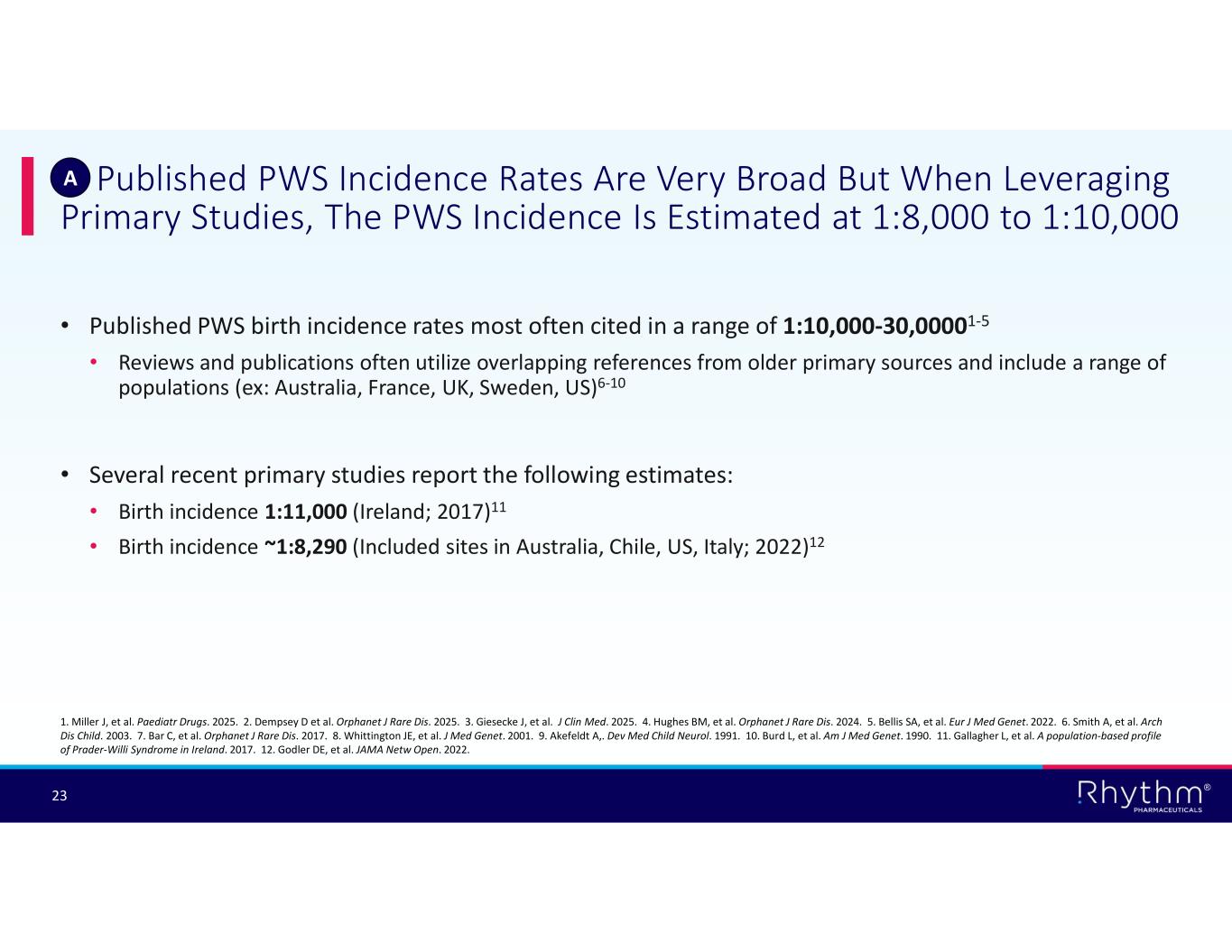
23 ® • Published PWS birth incidence rates most often cited in a range of 1:10,000-30,00001-5 • Reviews and publications often utilize overlapping references from older primary sources and include a range of populations (ex: Australia, France, UK, Sweden, US)6-10 • Several recent primary studies report the following estimates: • Birth incidence 1:11,000 (Ireland; 2017)11 • Birth incidence ~1:8,290 (Included sites in Australia, Chile, US, Italy; 2022)12 Published PWS Incidence Rates Are Very Broad But When Leveraging Primary Studies, The PWS Incidence Is Estimated at 1:8,000 to 1:10,000 1. Miller J, et al. Paediatr Drugs. 2025. 2. Dempsey D et al. Orphanet J Rare Dis. 2025. 3. Giesecke J, et al. J Clin Med. 2025. 4. Hughes BM, et al. Orphanet J Rare Dis. 2024. 5. Bellis SA, et al. Eur J Med Genet. 2022. 6. Smith A, et al. Arch Dis Child. 2003. 7. Bar C, et al. Orphanet J Rare Dis. 2017. 8. Whittington JE, et al. J Med Genet. 2001. 9. Akefeldt A,. Dev Med Child Neurol. 1991. 10. Burd L, et al. Am J Med Genet. 1990. 11. Gallagher L, et al. A population-based profile of Prader-Willi Syndrome in Ireland. 2017. 12. Godler DE, et al. JAMA Netw Open. 2022. A
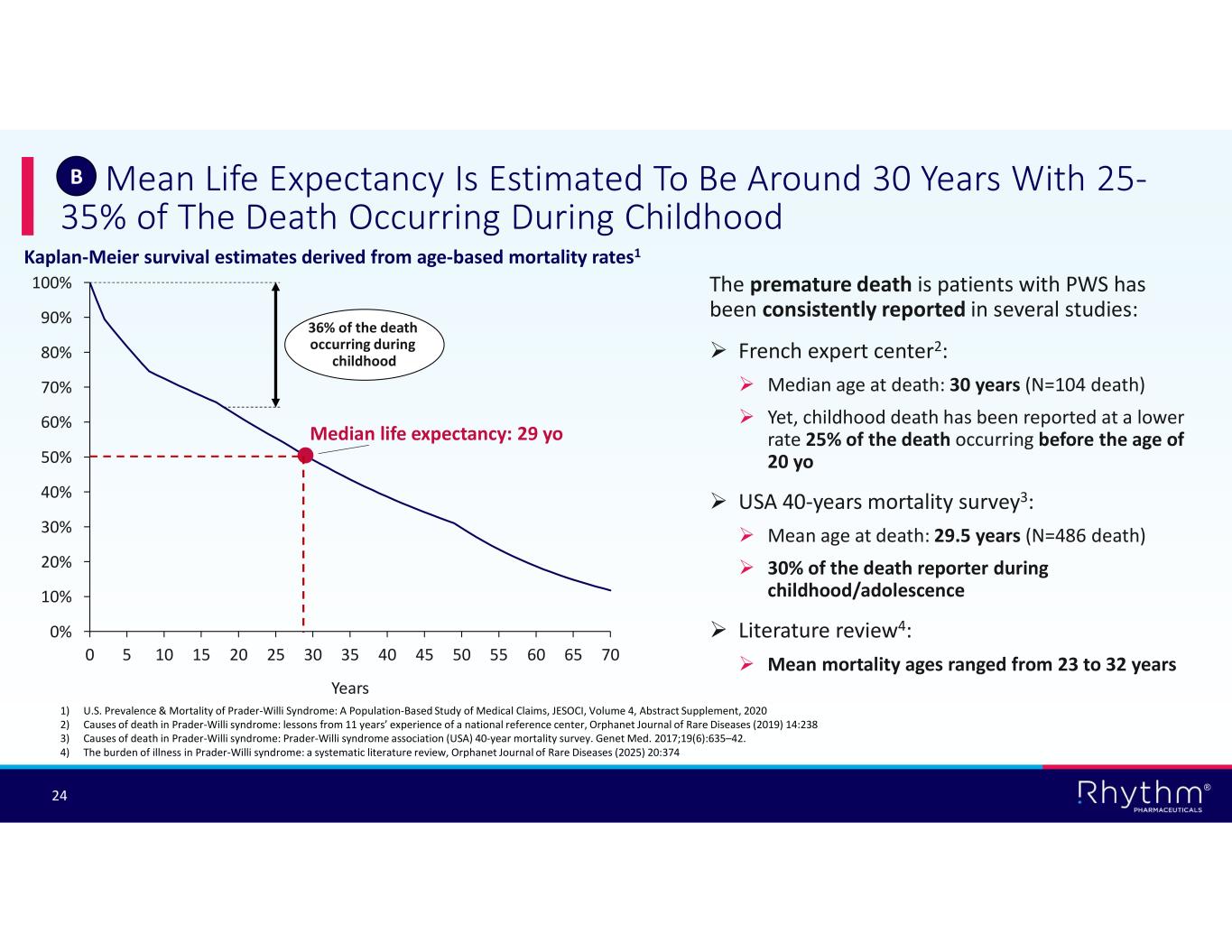
24 ® The premature death is patients with PWS has been consistently reported in several studies: French expert center2: Median age at death: 30 years (N=104 death) Yet, childhood death has been reported at a lower rate 25% of the death occurring before the age of 20 yo USA 40-years mortality survey3: Mean age at death: 29.5 years (N=486 death) 30% of the death reporter during childhood/adolescence Literature review4: Mean mortality ages ranged from 23 to 32 years Mean Life Expectancy Is Estimated To Be Around 30 Years With 25- 35% of The Death Occurring During Childhood 1) U.S. Prevalence & Mortality of Prader-Willi Syndrome: A Population-Based Study of Medical Claims, JESOCI, Volume 4, Abstract Supplement, 2020 2) Causes of death in Prader-Willi syndrome: lessons from 11 years’ experience of a national reference center, Orphanet Journal of Rare Diseases (2019) 14:238 3) Causes of death in Prader-Willi syndrome: Prader-Willi syndrome association (USA) 40-year mortality survey. Genet Med. 2017;19(6):635–42. 4) The burden of illness in Prader-Willi syndrome: a systematic literature review, Orphanet Journal of Rare Diseases (2025) 20:374 0 5 10 15 20 25 30 35 40 45 50 55 60 65 70 0% 10% 20% 30% 40% 50% 60% 70% 80% 90% 100% Years Median life expectancy: 29 yo 36% of the death occurring during childhood Kaplan-Meier survival estimates derived from age-based mortality rates1 B
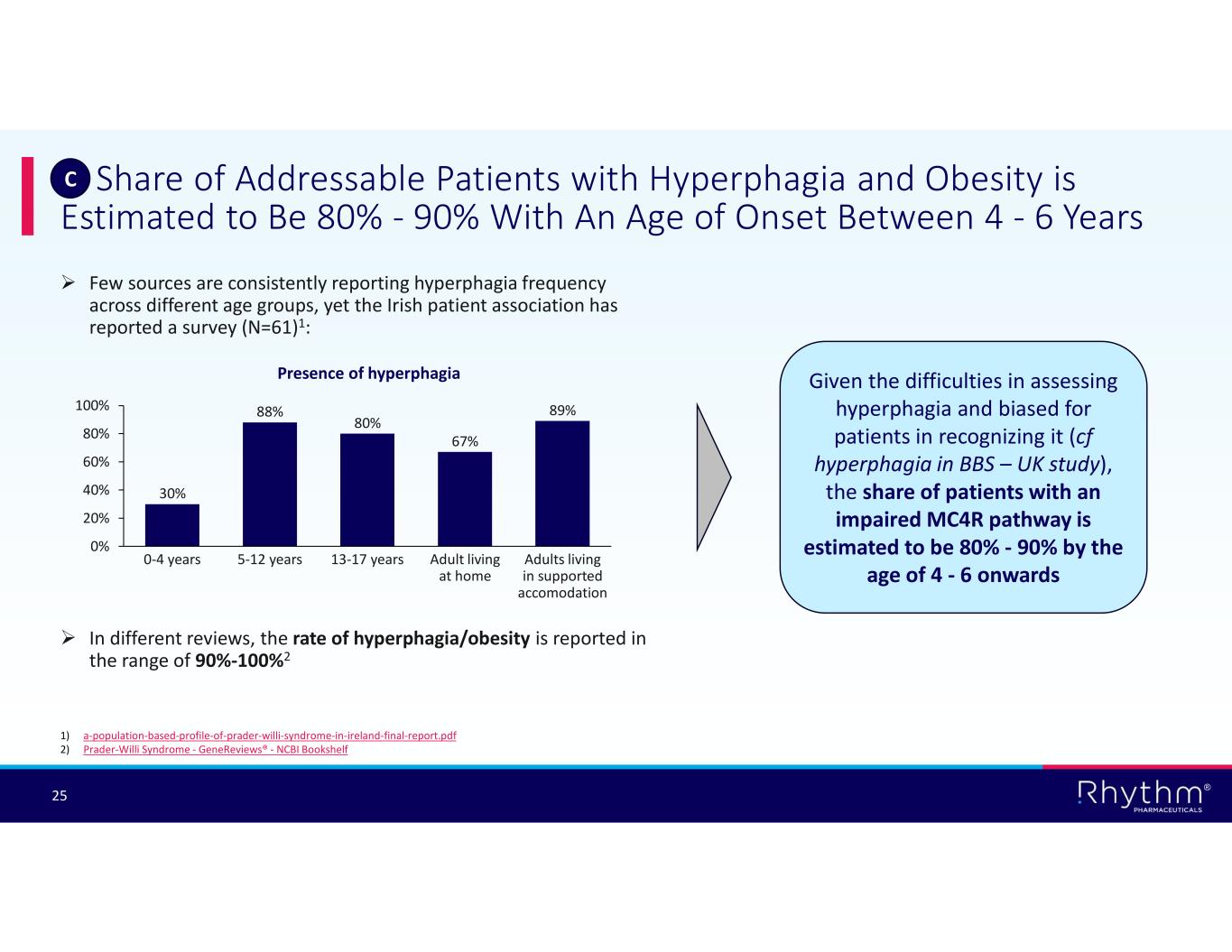
25 ® Few sources are consistently reporting hyperphagia frequency across different age groups, yet the Irish patient association has reported a survey (N=61)1: In different reviews, the rate of hyperphagia/obesity is reported in the range of 90%-100%2 Share of Addressable Patients with Hyperphagia and Obesity is Estimated to Be 80% - 90% With An Age of Onset Between 4 - 6 Years 1) a-population-based-profile-of-prader-willi-syndrome-in-ireland-final-report.pdf 2) Prader-Willi Syndrome - GeneReviews® - NCBI Bookshelf C Given the difficulties in assessing hyperphagia and biased for patients in recognizing it (cf hyperphagia in BBS – UK study), the share of patients with an impaired MC4R pathway is estimated to be 80% - 90% by the age of 4 - 6 onwards 30% 88% 80% 67% 89% 0% 20% 40% 60% 80% 100% 0-4 years 5-12 years 13-17 years Adult living at home Adults living in supported accomodation Presence of hyperphagia
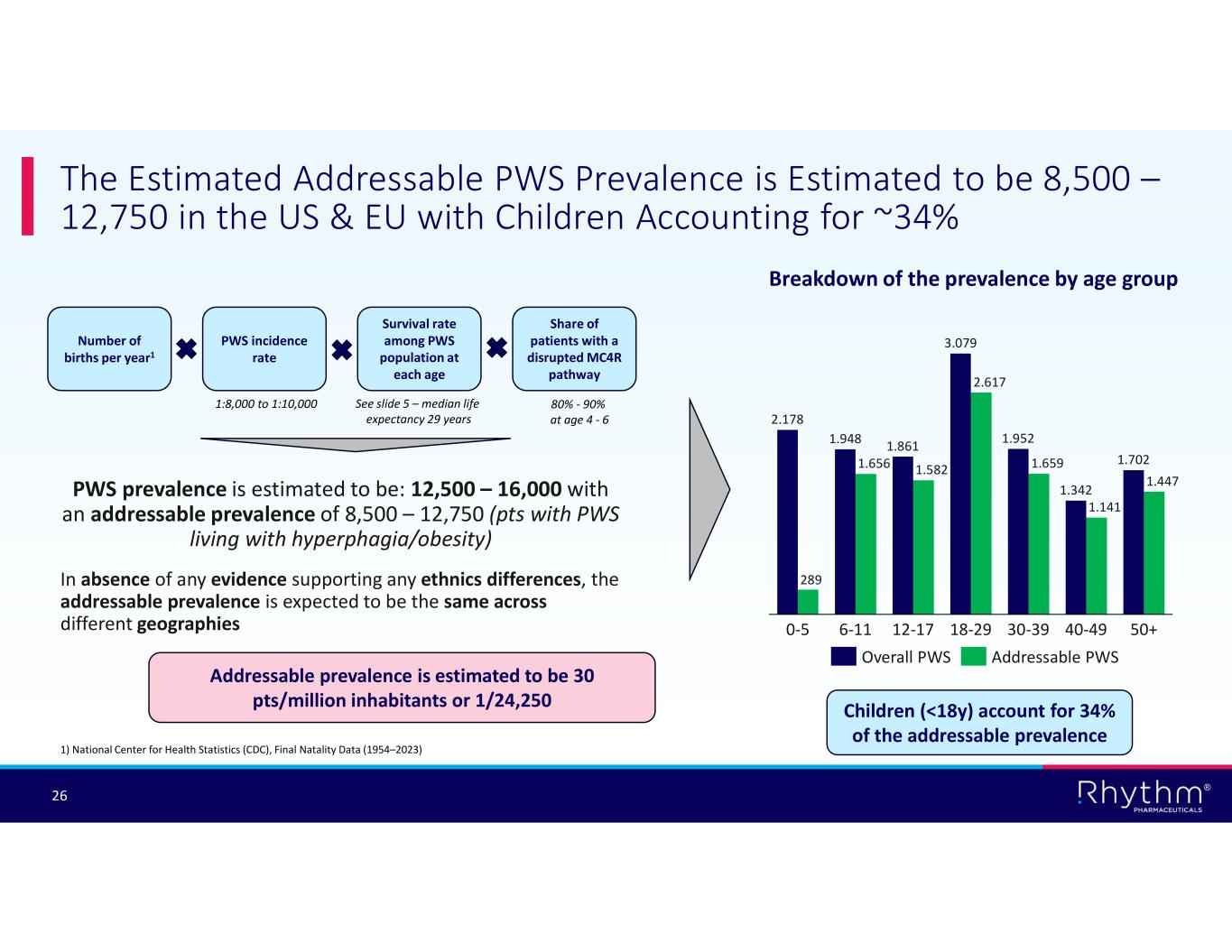
26 ® PWS prevalence is estimated to be: 12,500 – 16,000 with an addressable prevalence of 8,500 – 12,750 (pts with PWS living with hyperphagia/obesity) In absence of any evidence supporting any ethnics differences, the addressable prevalence is expected to be the same across different geographies The Estimated Addressable PWS Prevalence is Estimated to be 8,500 – 12,750 in the US & EU with Children Accounting for ~34% 1) National Center for Health Statistics (CDC), Final Natality Data (1954–2023) 289 0-5 6-11 12-17 18-29 30-39 40-49 50+ 2.178 1.948 1.656 1.861 1.582 3.079 2.617 1.952 1.659 1.342 1.141 1.702 1.447 Overall PWS Addressable PWS Breakdown of the prevalence by age group Children (<18y) account for 34% of the addressable prevalence Addressable prevalence is estimated to be 30 pts/million inhabitants or 1/24,250 Number of births per year1 PWS incidence rate Survival rate among PWS population at each age Share of patients with a disrupted MC4R pathway 1:8,000 to 1:10,000 See slide 5 – median life expectancy 29 years 80% - 90% at age 4 - 6