Protein degraded. Disease targeted. Lives transformed. June 2026
Forward-looking Statements and Intellectual Property 2 FORWARD-LOOKING STATEMENTS The following presentation contains forward-looking statements. All statements other than statements of historical fact are forward-looking statements, which are often indicated by terms such as “anticipate,” “believe,” “could,” “estimate,” “expect,” “goal,” “intend,” “look forward to,” “may,” “plan,” “potential,” “predict,” “project,” “should,” “will,” “would” and similar expressions. These forward-looking statements include, but are not limited to, statements regarding the therapeutic potential of C4 Therapeutics, Inc.’s technology and products. These forward-looking statements are not promises or guarantees and involve substantial risks and uncertainties. Among the factors that could cause actual results to differ materially from those described or projected herein include uncertainties associated generally with research and development, clinical trials and related regulatory reviews and approvals, as well as the fact that the product candidates that we are developing or may develop may not demonstrate success in clinical trials. Prospective investors are cautioned not to place undue reliance on these forward- looking statements. The forward-looking statements included in this presentation speak only as of the date hereof and are subject to a variety of risks and uncertainties, including those set forth in our most recent and future filings with the Securities and Exchange Commission. Our actual results could vary significantly from those anticipated in this presentation, and our financial condition and results of operations could be materially adversely affected. C4 Therapeutics, Inc., undertakes no obligation to update or revise the information contained in this presentation, whether as a result of new information, future events or circumstances or otherwise. This presentation also contains estimates, projections and other information concerning the markets for C4 Therapeutics, Inc.’s product candidates, including data regarding the estimated size of those markets, and the incidence and prevalence of certain medical conditions and patient use of medicines. Information that is based on estimates, forecasts, projections, market research, or similar methodologies is inherently subject to uncertainties and actual events, and circumstances may differ materially from events and circumstances reflected in this information. Unless otherwise expressly stated, the Company obtained this industry, business, market and other data from reports, research surveys, clinical trials studies and similar data prepared by market research firms and other third parties, from industry, medical and general publications, from other publicly available information, and from government data and similar sources. INTELLECTUAL PROPERTY C4 Therapeutics, Inc., owns various registered and unregistered trademarks and service marks in the U.S. and internationally, including, without limitation, C4 THERAPEUTICS, our housemark logo, the name of our TORPEDO platform, and the names of our BIDAC and MONODAC degrader products. All trademarks, service marks, or trade names referred to in this presentation that we do not own are the property of their respective owners. Solely for convenience, the trademarks, service marks, and trade names in this presentation are referred to without the symbols ®, SM and , but those references should not be construed as any indicator that their respective owners will not assert, to the fullest extent under applicable law, their rights to these trademarks, service marks, or trade names. © 2026 C4 Therapeutics, Inc.
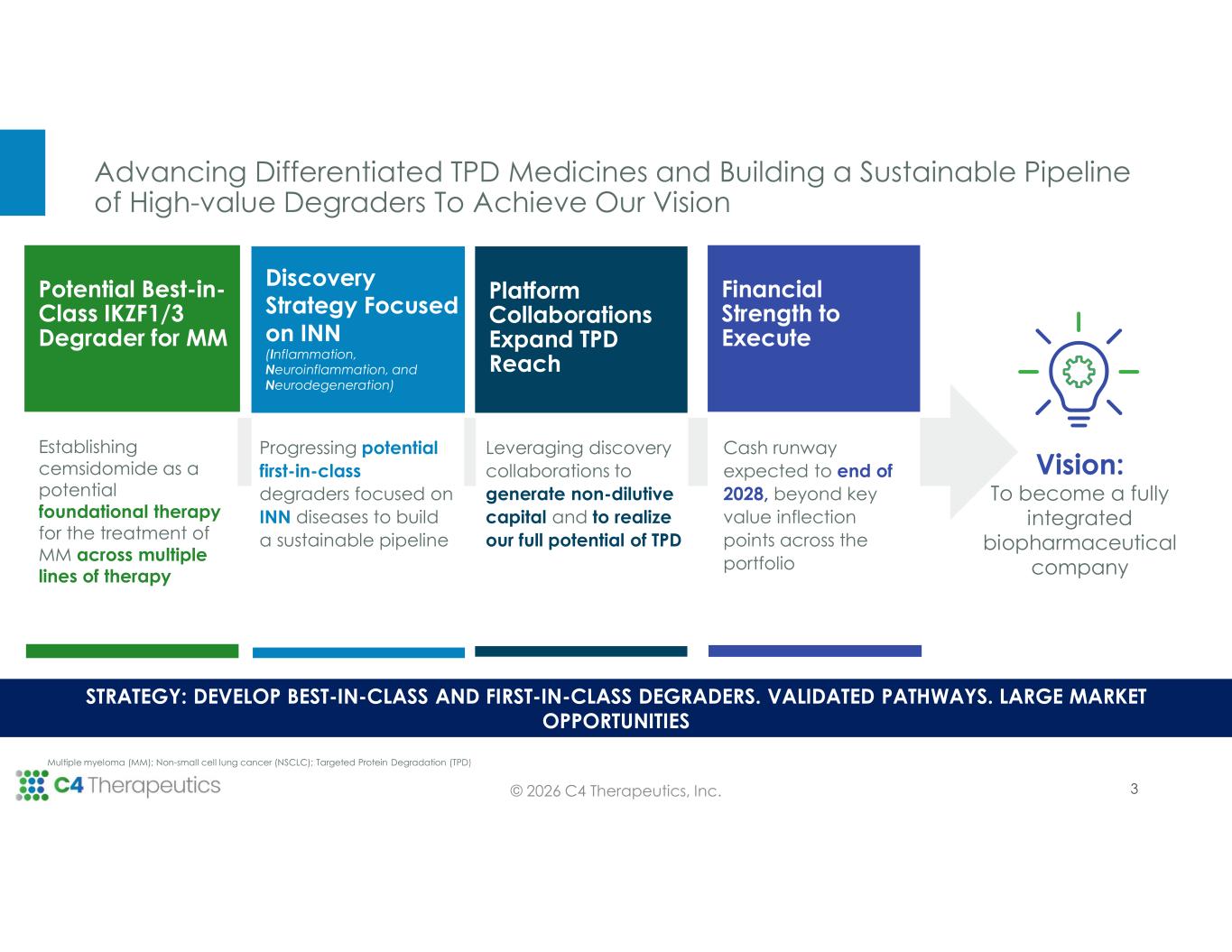
Advancing Differentiated TPD Medicines and Building a Sustainable Pipeline of High-value Degraders To Achieve Our Vision 3© 2026 C4 Therapeutics, Inc. STRATEGY: DEVELOP BEST-IN-CLASS AND FIRST-IN-CLASS DEGRADERS. VALIDATED PATHWAYS. LARGE MARKET OPPORTUNITIES Multiple myeloma (MM); Non-small cell lung cancer (NSCLC); Targeted Protein Degradation (TPD) Potential Best-in- Class IKZF1/3 Degrader for MM Discovery Strategy Focused on INN (Inflammation, Neuroinflammation, and Neurodegeneration) Financial Strength to Execute Establishing cemsidomide as a potential foundational therapy for the treatment of MM across multiple lines of therapy Progressing potential first-in-class degraders focused on INN diseases to build a sustainable pipeline Cash runway expected to end of 2028, beyond key value inflection points across the portfolio Vision: To become a fully integrated biopharmaceutical company Platform Collaborations Expand TPD Reach Leveraging discovery collaborations to generate non-dilutive capital and to realize our full potential of TPD
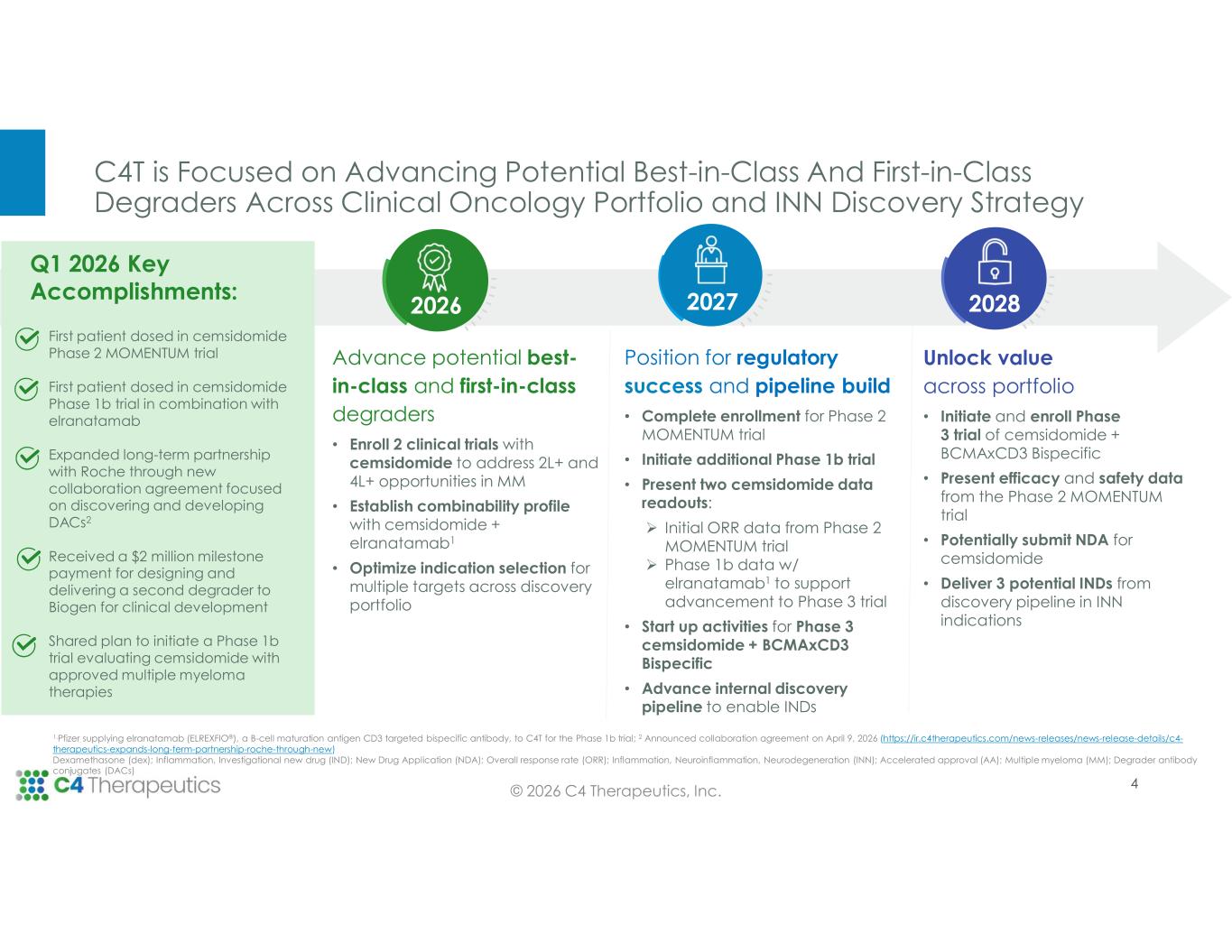
C4T is Focused on Advancing Potential Best-in-Class And First-in-Class Degraders Across Clinical Oncology Portfolio and INN Discovery Strategy © 2026 C4 Therapeutics, Inc. Advance potential best- in-class and first-in-class degraders • Enroll 2 clinical trials with cemsidomide to address 2L+ and 4L+ opportunities in MM • Establish combinability profile with cemsidomide + elranatamab1 • Optimize indication selection for multiple targets across discovery portfolio Unlock value across portfolio • Initiate and enroll Phase 3 trial of cemsidomide + BCMAxCD3 Bispecific • Present efficacy and safety data from the Phase 2 MOMENTUM trial • Potentially submit NDA for cemsidomide • Deliver 3 potential INDs from discovery pipeline in INN indications Position for regulatory success and pipeline build • Complete enrollment for Phase 2 MOMENTUM trial • Initiate additional Phase 1b trial • Present two cemsidomide data readouts: Initial ORR data from Phase 2 MOMENTUM trial Phase 1b data w/ elranatamab1 to support advancement to Phase 3 trial • Start up activities for Phase 3 cemsidomide + BCMAxCD3 Bispecific • Advance internal discovery pipeline to enable INDs 202820272026 1.Pfizer supplying elranatamab (ELREXFIO®), a B-cell maturation antigen CD3 targeted bispecific antibody, to C4T for the Phase 1b trial; 2 Announced collaboration agreement on April 9, 2026 (https://ir.c4therapeutics.com/news-releases/news-release-details/c4- therapeutics-expands-long-term-partnership-roche-through-new) Dexamethasone (dex); Inflammation, Investigational new drug (IND); New Drug Application (NDA); Overall response rate (ORR); Inflammation, Neuroinflammation, Neurodegeneration (INN); Accelerated approval (AA); Multiple myeloma (MM); Degrader antibody conjugates (DACs) 4 Q1 2026 Key Accomplishments: First patient dosed in cemsidomide Phase 2 MOMENTUM trial First patient dosed in cemsidomide Phase 1b trial in combination with elranatamab Expanded long-term partnership with Roche through new collaboration agreement focused on discovering and developing DACs2 Received a $2 million milestone payment for designing and delivering a second degrader to Biogen for clinical development Shared plan to initiate a Phase 1b trial evaluating cemsidomide with approved multiple myeloma therapies
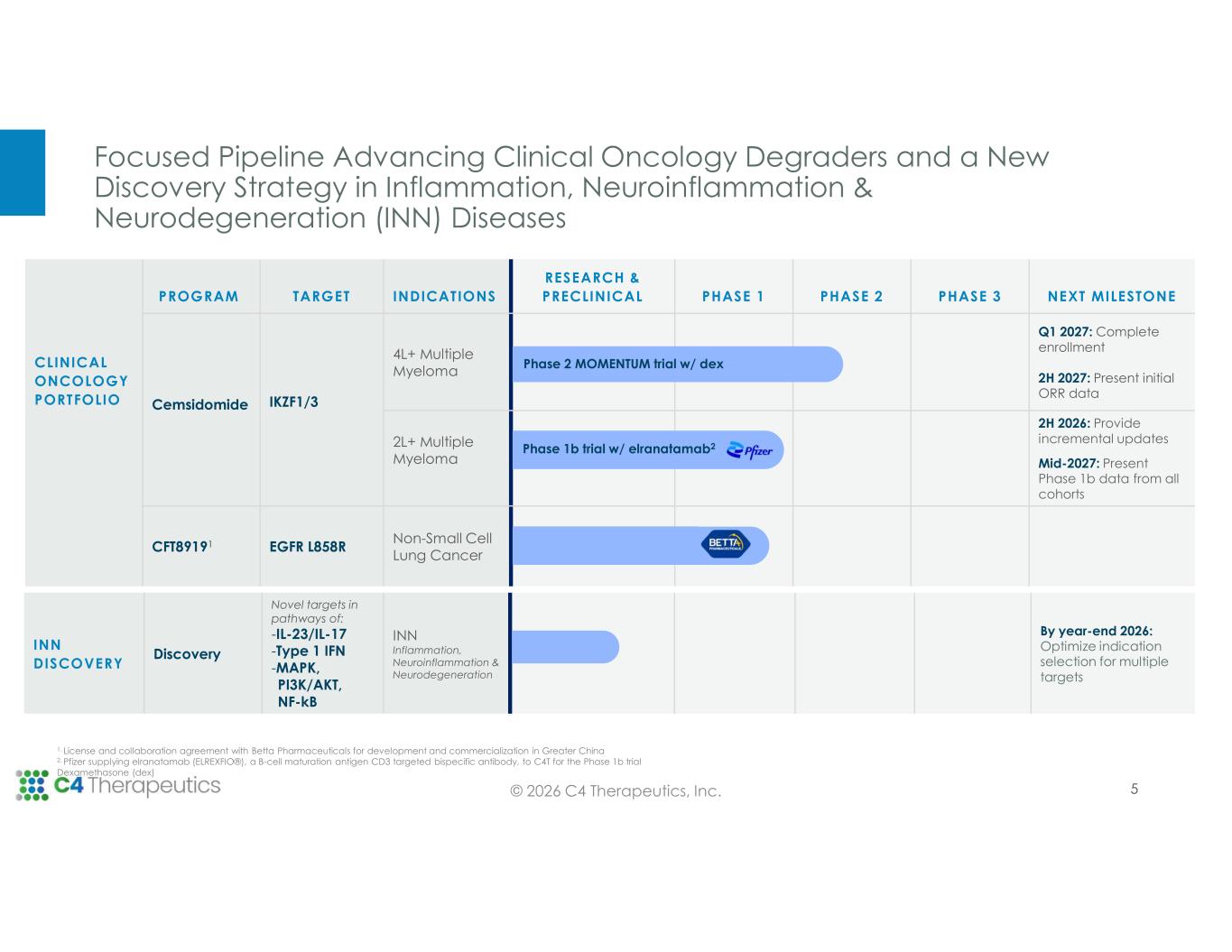
Focused Pipeline Advancing Clinical Oncology Degraders and a New Discovery Strategy in Inflammation, Neuroinflammation & Neurodegeneration (INN) Diseases 5© 2026 C4 Therapeutics, Inc. By year-end 2026: Optimize indication selection for multiple targets INN Inflammation, Neuroinflammation & Neurodegeneration Novel targets in pathways of: -IL-23/IL-17 -Type 1 IFN -MAPK, PI3K/AKT, NF-kB Discovery INN DISCOVERY 1. License and collaboration agreement with Betta Pharmaceuticals for development and commercialization in Greater China 2. Pfizer supplying elranatamab (ELREXFIO®), a B-cell maturation antigen CD3 targeted bispecific antibody, to C4T for the Phase 1b trial Dexamethasone (dex) NEXT MILESTONEPHASE 3PHASE 2PHASE 1 RESEARCH & PRECLINICALINDICATIONSTARGETPROGRAM CLINICAL ONCOLOGY PORTFOLIO Q1 2027: Complete enrollment 2H 2027: Present initial ORR data 4L+ Multiple Myeloma IKZF1/3Cemsidomide 2H 2026: Provide incremental updates Mid-2027: Present Phase 1b data from all cohorts 2L+ Multiple Myeloma Non-Small Cell Lung Cancer EGFR L858RCFT89191 Phase 2 MOMENTUM trial w/ dex Phase 1b trial w/ elranatamab2
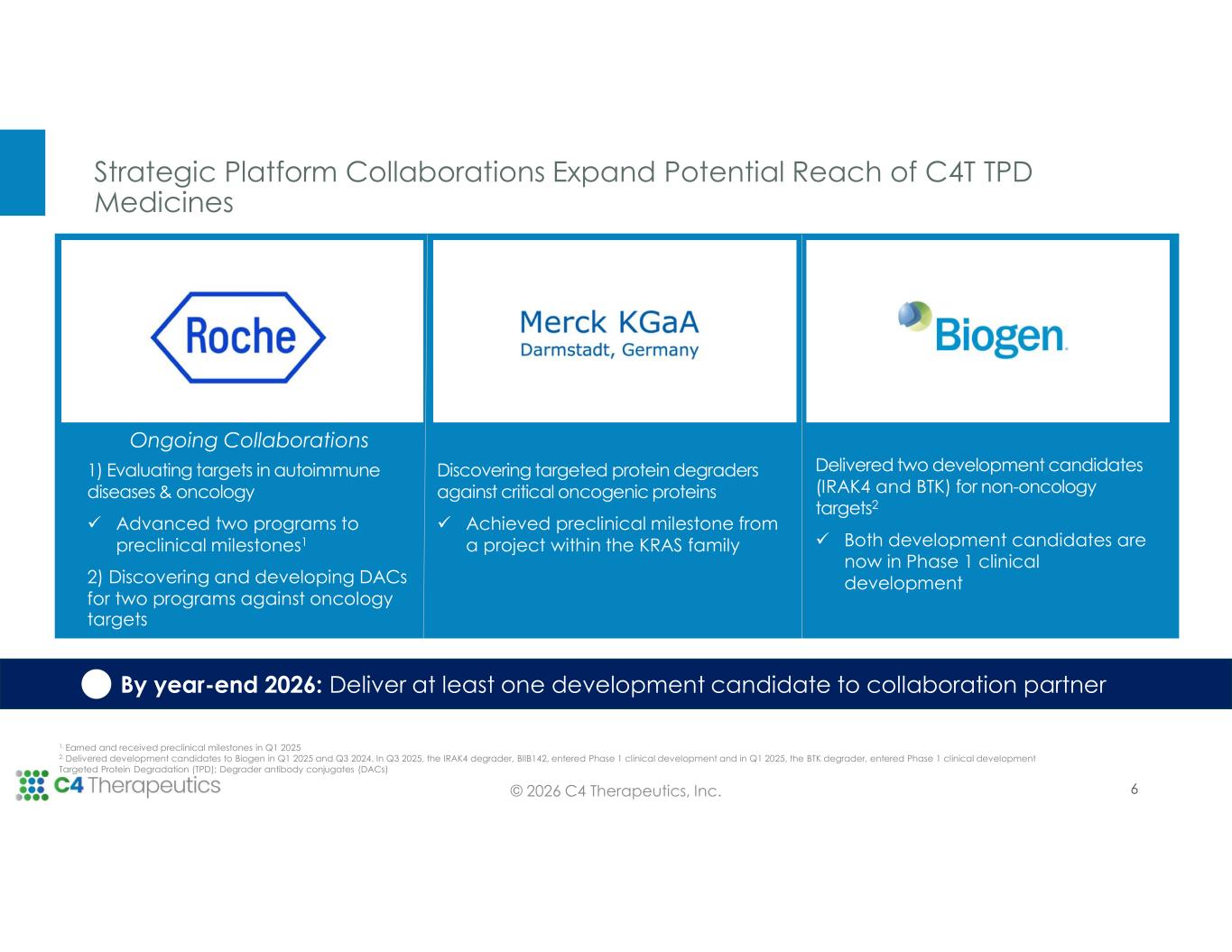
Strategic Platform Collaborations Expand Potential Reach of C4T TPD Medicines 6© 2026 C4 Therapeutics, Inc. 1. Earned and received preclinical milestones in Q1 2025 2. Delivered development candidates to Biogen in Q1 2025 and Q3 2024. In Q3 2025, the IRAK4 degrader, BIIB142, entered Phase 1 clinical development and in Q1 2025, the BTK degrader, entered Phase 1 clinical development Targeted Protein Degradation (TPD); Degrader antibody conjugates (DACs) By year-end 2026: Deliver at least one development candidate to collaboration partner 1) Evaluating targets in autoimmune diseases & oncology Advanced two programs to preclinical milestones1 2) Discovering and developing DACs for two programs against oncology targets Discovering targeted protein degraders against critical oncogenic proteins Achieved preclinical milestone from a project within the KRAS family Delivered two development candidates (IRAK4 and BTK) for non-oncology targets2 Both development candidates are now in Phase 1 clinical development Ongoing Collaborations
Cemsidomide IKZF1/3 Degrader Multiple Myeloma
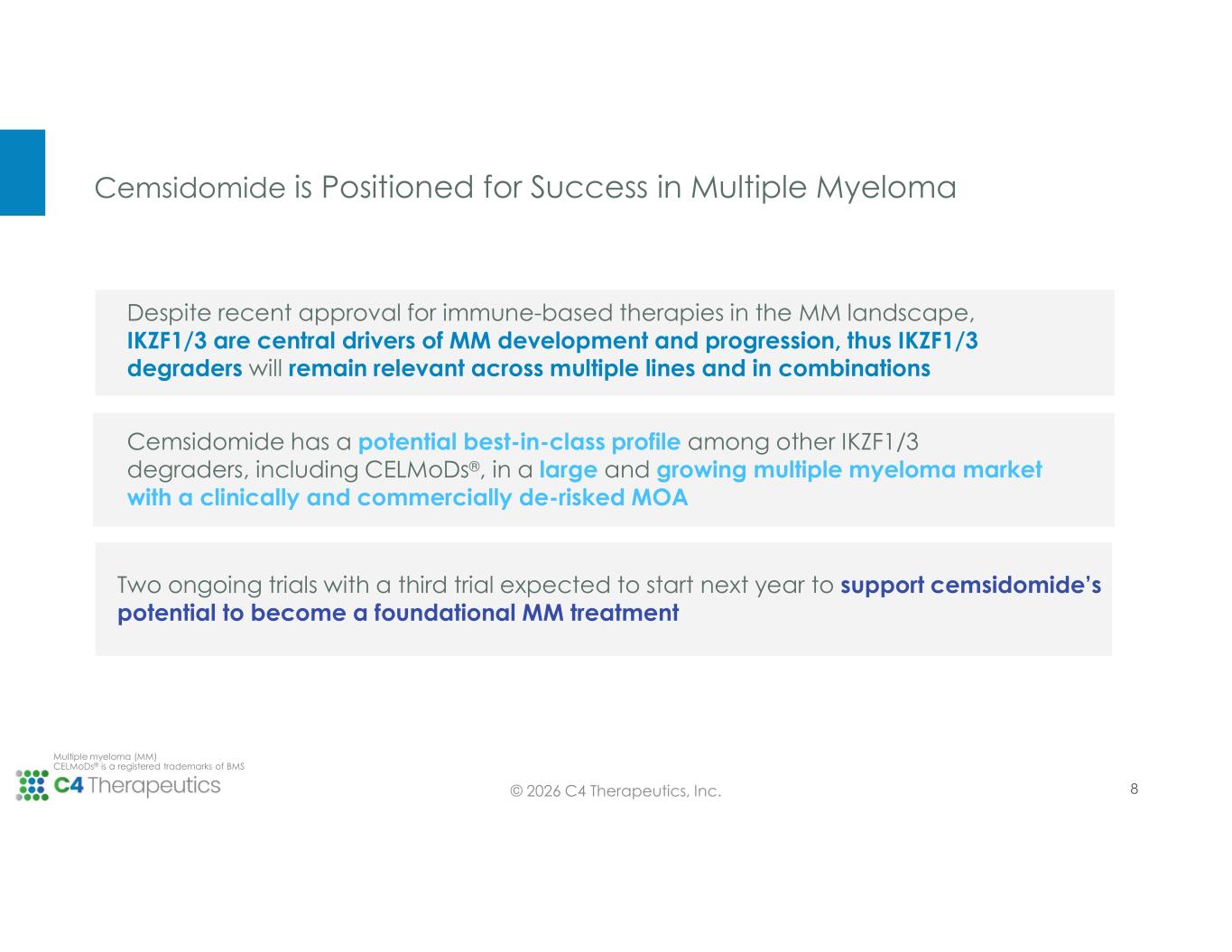
Cemsidomide is Positioned for Success in Multiple Myeloma 8© 2026 C4 Therapeutics, Inc. Two ongoing trials with a third trial expected to start next year to support cemsidomide’s potential to become a foundational MM treatment Cemsidomide has a potential best-in-class profile among other IKZF1/3 degraders, including CELMoDs®, in a large and growing multiple myeloma market with a clinically and commercially de-risked MOA Despite recent approval for immune-based therapies in the MM landscape, IKZF1/3 are central drivers of MM development and progression, thus IKZF1/3 degraders will remain relevant across multiple lines and in combinations Multiple myeloma (MM) CELMoDs® is a registered trademarks of BMS
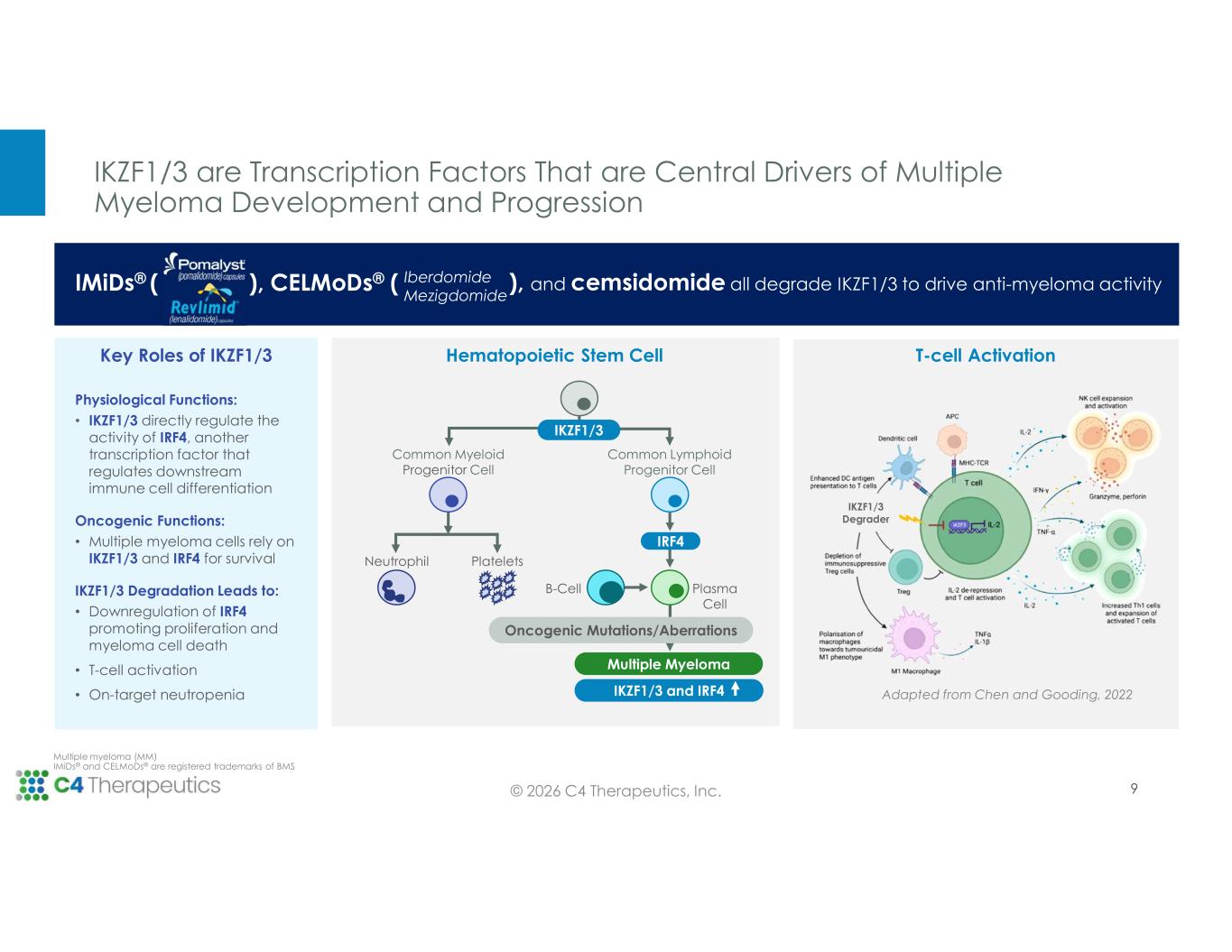
IKZF1/3 are Transcription Factors That are Central Drivers of Multiple Myeloma Development and Progression © 2026 C4 Therapeutics, Inc. Multiple myeloma (MM) IMiDs® and CELMoDs® are registered trademarks of BMS 9 Physiological Functions: • IKZF1/3 directly regulate the activity of IRF4, another transcription factor that regulates downstream immune cell differentiation Oncogenic Functions: • Multiple myeloma cells rely on IKZF1/3 and IRF4 for survival IKZF1/3 Degradation Leads to: • Downregulation of IRF4 promoting proliferation and myeloma cell death • T-cell activation • On-target neutropenia Key Roles of IKZF1/3 Common Myeloid Progenitor Cell Common Lymphoid Progenitor Cell Neutrophil Platelets B-Cell Plasma Cell Oncogenic Mutations/Aberrations Multiple Myeloma IRF4 IKZF1/3 and IRF4 IKZF1/3 Hematopoietic Stem Cell T-cell Activation Adapted from Chen and Gooding, 2022 IKZF1/3 Degrader IMiDs® ( ), CELMoDs® ( Iberdomide Mezigdomide ), and cemsidomide all degrade IKZF1/3 to drive anti-myeloma activity
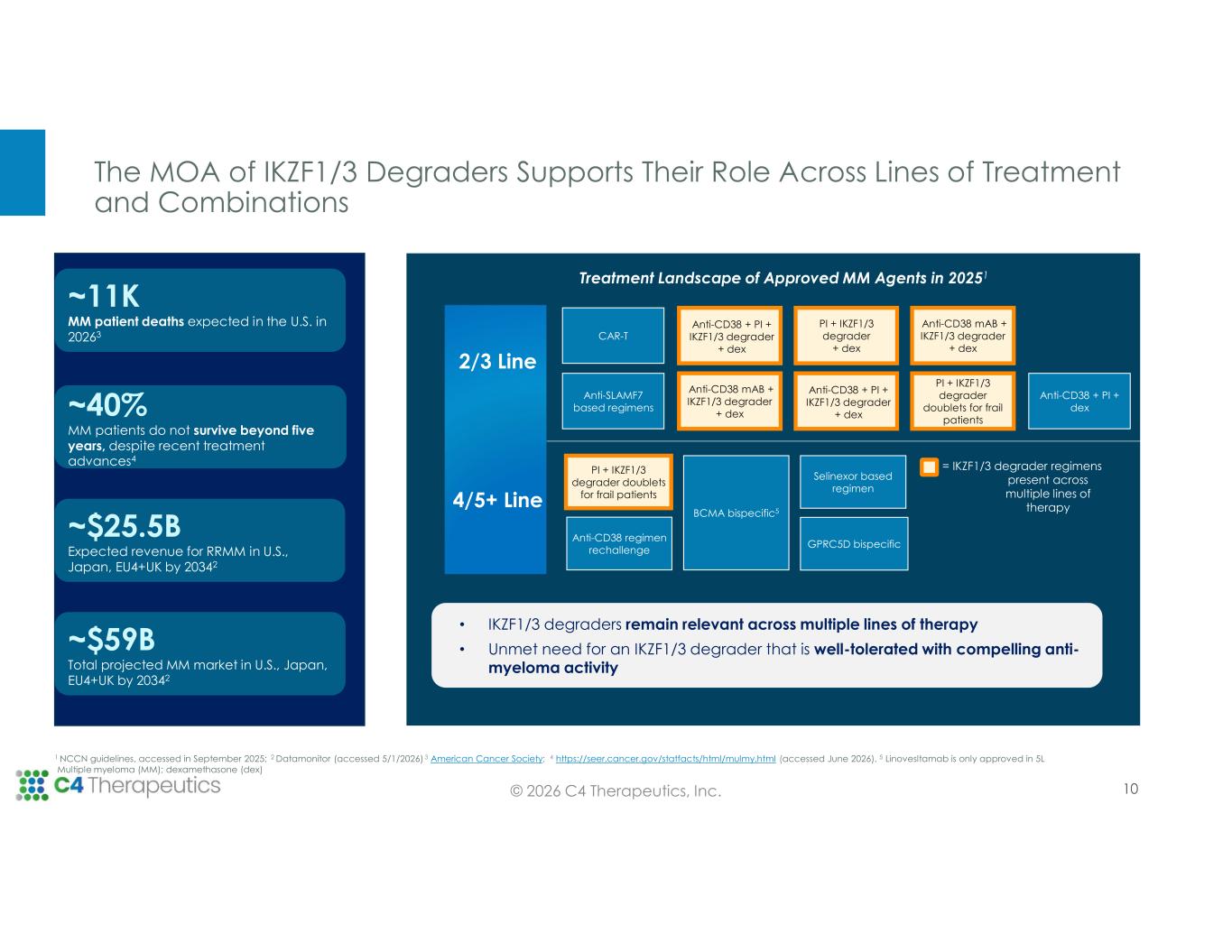
The MOA of IKZF1/3 Degraders Supports Their Role Across Lines of Treatment and Combinations 10 ~11K MM patient deaths expected in the U.S. in 20263 ~40% MM patients do not survive beyond five years, despite recent treatment advances4 ~$59B Total projected MM market in U.S., Japan, EU4+UK by 20342 2/3 Line • IKZF1/3 degraders remain relevant across multiple lines of therapy • Unmet need for an IKZF1/3 degrader that is well-tolerated with compelling anti- myeloma activity CAR-T Anti-CD38 + PI + IKZF1/3 degrader + dex PI + IKZF1/3 degrader + dex Anti-CD38 mAB + IKZF1/3 degrader + dex Anti-SLAMF7 based regimens Anti-CD38 mAB + IKZF1/3 degrader + dex Anti-CD38 + PI + IKZF1/3 degrader + dex PI + IKZF1/3 degrader doublets for frail patients Anti-CD38 + PI + dex PI + IKZF1/3 degrader doublets for frail patients BCMA bispecific5 Selinexor based regimen Anti-CD38 regimen rechallenge GPRC5D bispecific = IKZF1/3 degrader regimens present across multiple lines of therapy Treatment Landscape of Approved MM Agents in 20251 4/5+ Line 1 NCCN guidelines, accessed in September 2025; 2 Datamonitor (accessed 5/1/2026) 3 American Cancer Society; 4 https://seer.cancer.gov/statfacts/html/mulmy.html (accessed June 2026). 5 Linovesltamab is only approved in 5L Multiple myeloma (MM); dexamethasone (dex) ~$25.5B Expected revenue for RRMM in U.S., Japan, EU4+UK by 20342 © 2026 C4 Therapeutics, Inc.
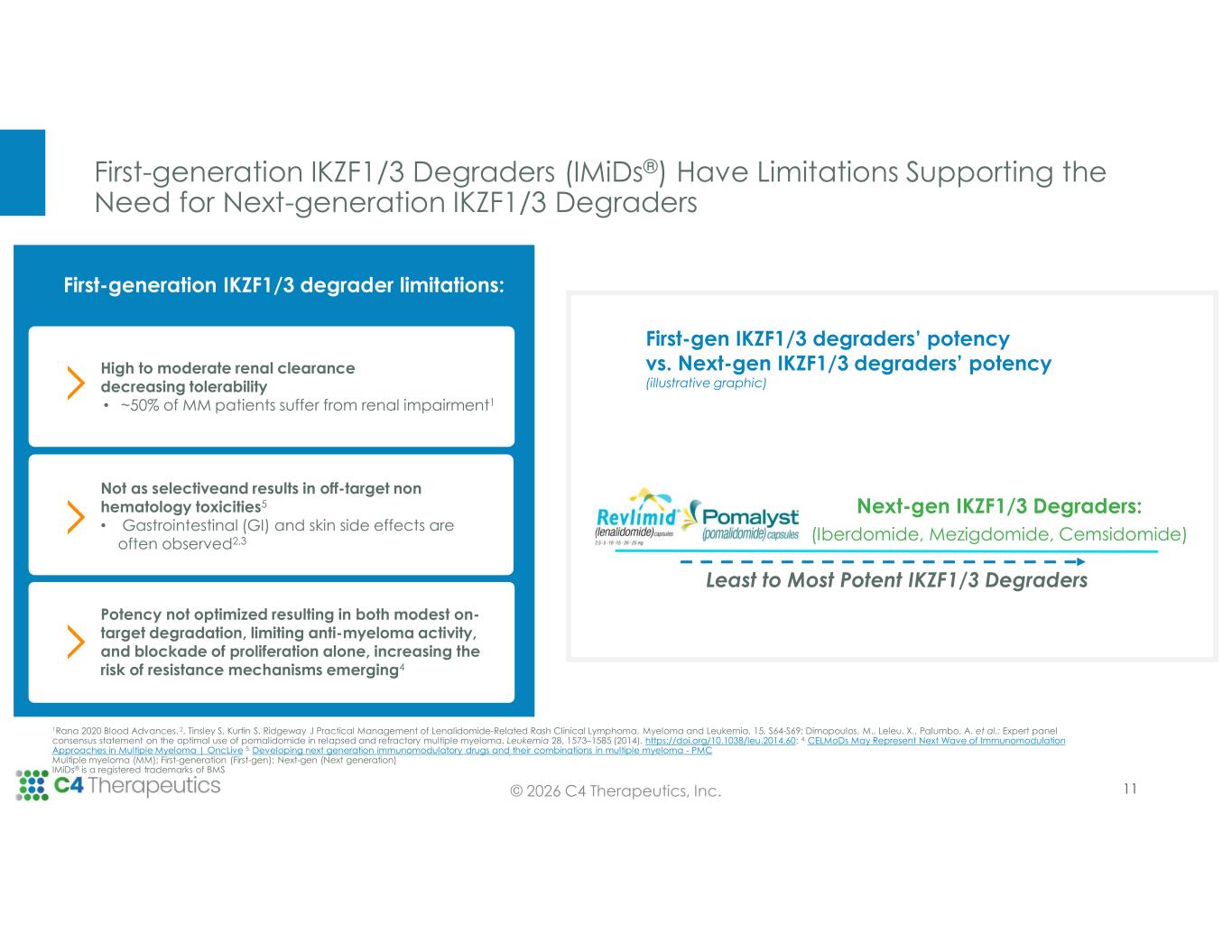
First-generation IKZF1/3 Degraders (IMiDs®) Have Limitations Supporting the Need for Next-generation IKZF1/3 Degraders 11© 2026 C4 Therapeutics, Inc. High to moderate renal clearance decreasing tolerability • ~50% of MM patients suffer from renal impairment1 First-gen IKZF1/3 degraders’ potency vs. Next-gen IKZF1/3 degraders’ potency (illustrative graphic) First-generation IKZF1/3 degrader limitations: 1Rana 2020 Blood Advances. 2. Tinsley S, Kurtin S, Ridgeway J Practical Management of Lenalidomide-Related Rash Clinical Lymphoma, Myeloma and Leukemia, 15, S64-S69; Dimopoulos, M., Leleu, X., Palumbo, A. et al.; Expert panel consensus statement on the optimal use of pomalidomide in relapsed and refractory multiple myeloma. Leukemia 28, 1573–1585 (2014). https://doi.org/10.1038/leu.2014.60; 4. CELMoDs May Represent Next Wave of Immunomodulation Approaches in Multiple Myeloma | OncLive 5. Developing next generation immunomodulatory drugs and their combinations in multiple myeloma - PMC Multiple myeloma (MM); First-generation (First-gen); Next-gen (Next generation) IMiDs® is a registered trademarks of BMS Potency not optimized resulting in both modest on- target degradation, limiting anti-myeloma activity, and blockade of proliferation alone, increasing the risk of resistance mechanisms emerging4 Not as selectiveand results in off-target non hematology toxicities5 • Gastrointestinal (GI) and skin side effects are often observed2,3 Least to Most Potent IKZF1/3 Degraders Next-gen IKZF1/3 Degraders: (Iberdomide, Mezigdomide, Cemsidomide)
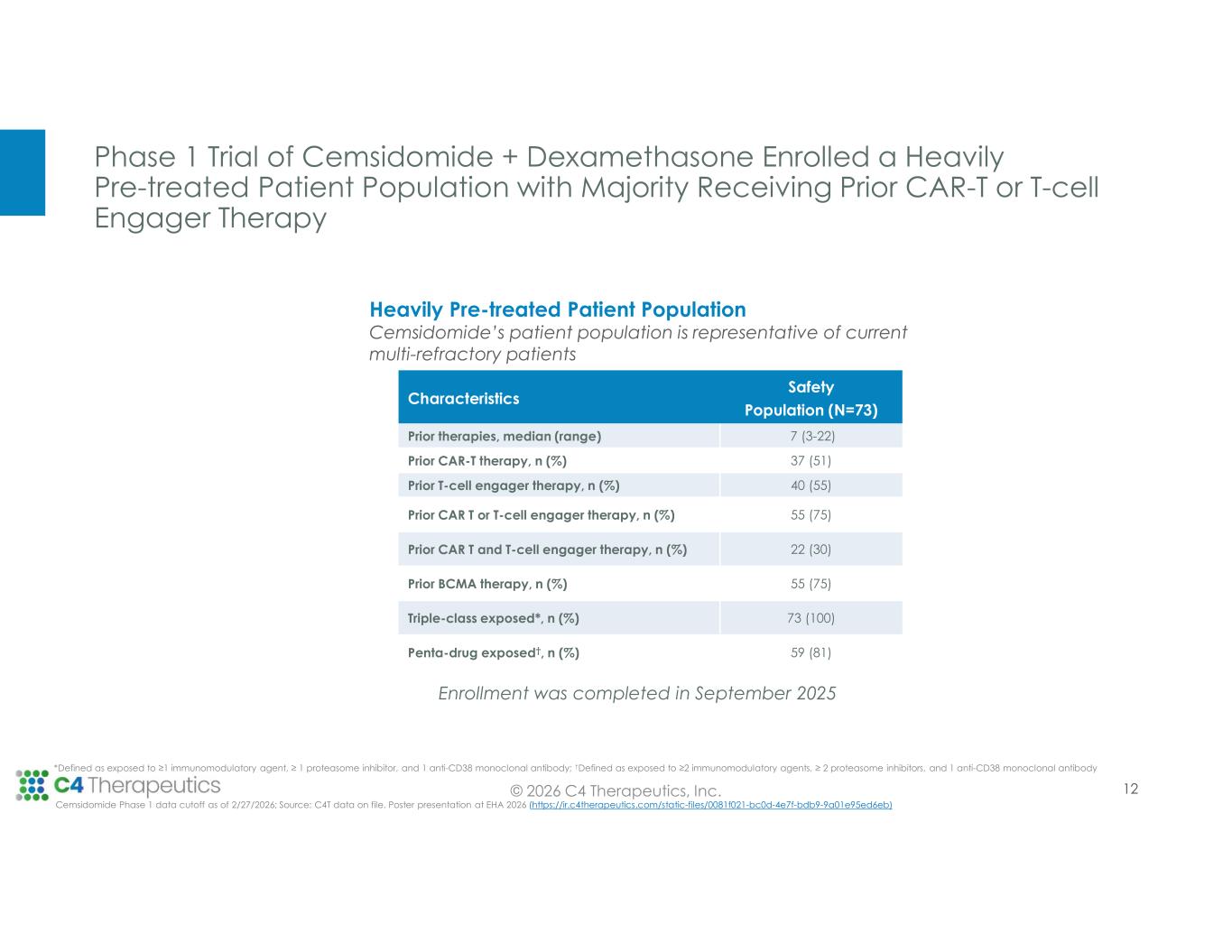
Phase 1 Trial of Cemsidomide + Dexamethasone Enrolled a Heavily Pre-treated Patient Population with Majority Receiving Prior CAR-T or T-cell Engager Therapy 12© 2026 C4 Therapeutics, Inc. Safety Population (N=73) Characteristics 7 (3-22)Prior therapies, median (range) 37 (51)Prior CAR-T therapy, n (%) 40 (55)Prior T-cell engager therapy, n (%) 55 (75)Prior CAR T or T-cell engager therapy, n (%) 22 (30)Prior CAR T and T-cell engager therapy, n (%) 55 (75)Prior BCMA therapy, n (%) 73 (100)Triple-class exposed*, n (%) 59 (81)Penta-drug exposed†, n (%) Heavily Pre-treated Patient Population Cemsidomide’s patient population is representative of current multi-refractory patients *Defined as exposed to ≥1 immunomodulatory agent, ≥ 1 proteasome inhibitor, and 1 anti-CD38 monoclonal antibody; †Defined as exposed to ≥2 immunomodulatory agents, ≥ 2 proteasome inhibitors, and 1 anti-CD38 monoclonal antibody Enrollment was completed in September 2025 Cemsidomide Phase 1 data cutoff as of 2/27/2026; Source: C4T data on file. Poster presentation at EHA 2026 (https://ir.c4therapeutics.com/static-files/0081f021-bc0d-4e7f-bdb9-9a01e95ed6eb)
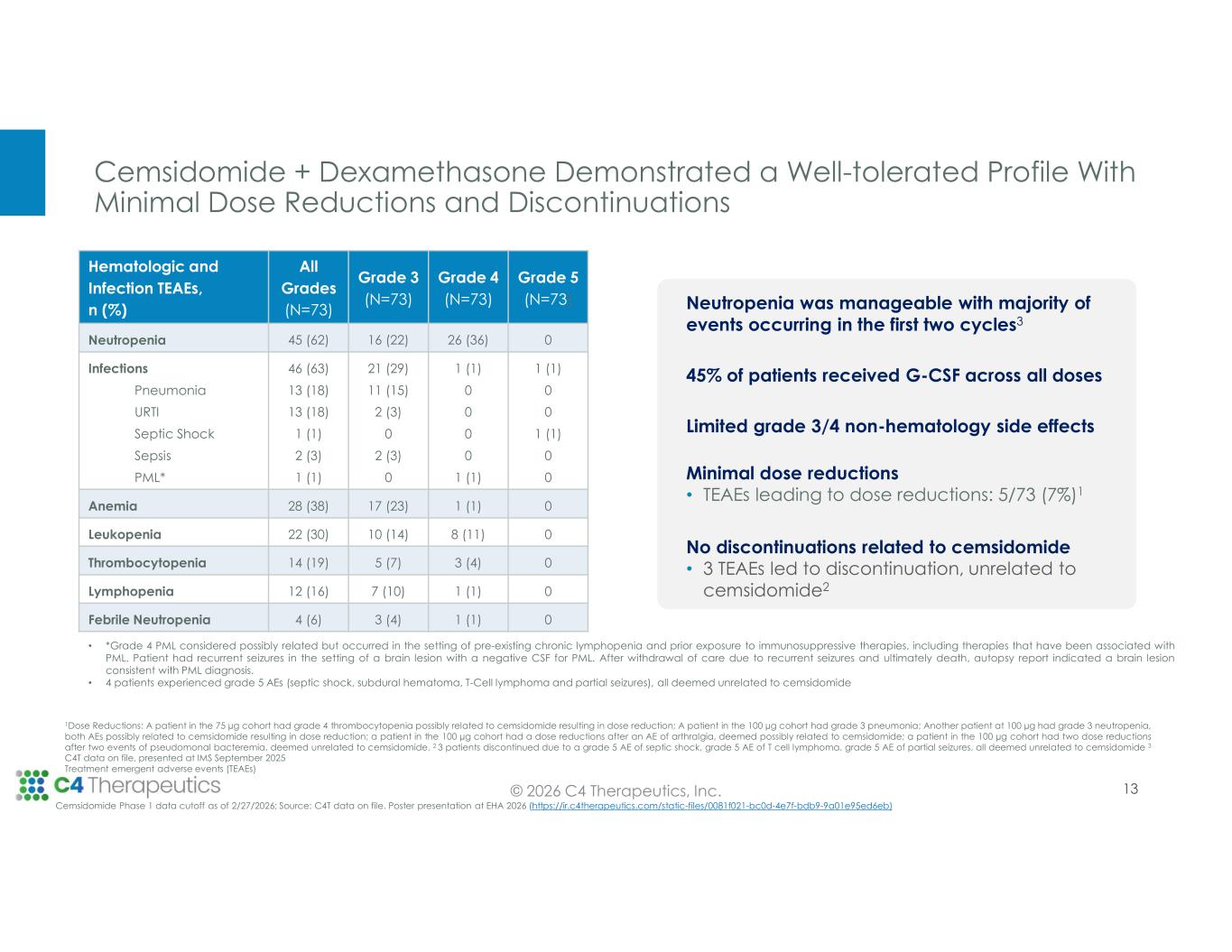
Cemsidomide + Dexamethasone Demonstrated a Well-tolerated Profile With Minimal Dose Reductions and Discontinuations 13© 2026 C4 Therapeutics, Inc. Grade 5 (N=73) Grade 4 (N=73) Grade 3 (N=73) All Grades (N=73) Hematologic and Infection TEAEs, n (%) 026 (36)16 (22)45 (62)Neutropenia 1 (1) 0 0 1 (1) 0 0 1 (1) 0 0 0 0 1 (1) 21 (29) 11 (15) 2 (3) 0 2 (3) 0 46 (63) 13 (18) 13 (18) 1 (1) 2 (3) 1 (1) Infections Pneumonia URTI Septic Shock Sepsis PML* 01 (1)17 (23)28 (38)Anemia 08 (11)10 (14)22 (30)Leukopenia 03 (4)5 (7)14 (19)Thrombocytopenia 01 (1)7 (10)12 (16)Lymphopenia 01 (1)3 (4)4 (6)Febrile Neutropenia Neutropenia was manageable with majority of events occurring in the first two cycles3 45% of patients received G-CSF across all doses Limited grade 3/4 non-hematology side effects Minimal dose reductions • TEAEs leading to dose reductions: 5/73 (7%)1 No discontinuations related to cemsidomide • 3 TEAEs led to discontinuation, unrelated to cemsidomide2 • *Grade 4 PML considered possibly related but occurred in the setting of pre-existing chronic lymphopenia and prior exposure to immunosuppressive therapies, including therapies that have been associated with PML. Patient had recurrent seizures in the setting of a brain lesion with a negative CSF for PML. After withdrawal of care due to recurrent seizures and ultimately death, autopsy report indicated a brain lesion consistent with PML diagnosis. • 4 patients experienced grade 5 AEs (septic shock, subdural hematoma, T-Cell lymphoma and partial seizures), all deemed unrelated to cemsidomide 1Dose Reductions: A patient in the 75 µg cohort had grade 4 thrombocytopenia possibly related to cemsidomide resulting in dose reduction; A patient in the 100 µg cohort had grade 3 pneumonia; Another patient at 100 µg had grade 3 neutropenia, both AEs possibly related to cemsidomide resulting in dose reduction; a patient in the 100 µg cohort had a dose reductions after an AE of arthralgia, deemed possibly related to cemsidomide; a patient in the 100 µg cohort had two dose reductions after two events of pseudomonal bacteremia, deemed unrelated to cemsidomide. 2 3 patients discontinued due to a grade 5 AE of septic shock, grade 5 AE of T cell lymphoma, grade 5 AE of partial seizures, all deemed unrelated to cemsidomide 3 C4T data on file, presented at IMS September 2025 Treatment emergent adverse events (TEAEs) Cemsidomide Phase 1 data cutoff as of 2/27/2026; Source: C4T data on file. Poster presentation at EHA 2026 (https://ir.c4therapeutics.com/static-files/0081f021-bc0d-4e7f-bdb9-9a01e95ed6eb)
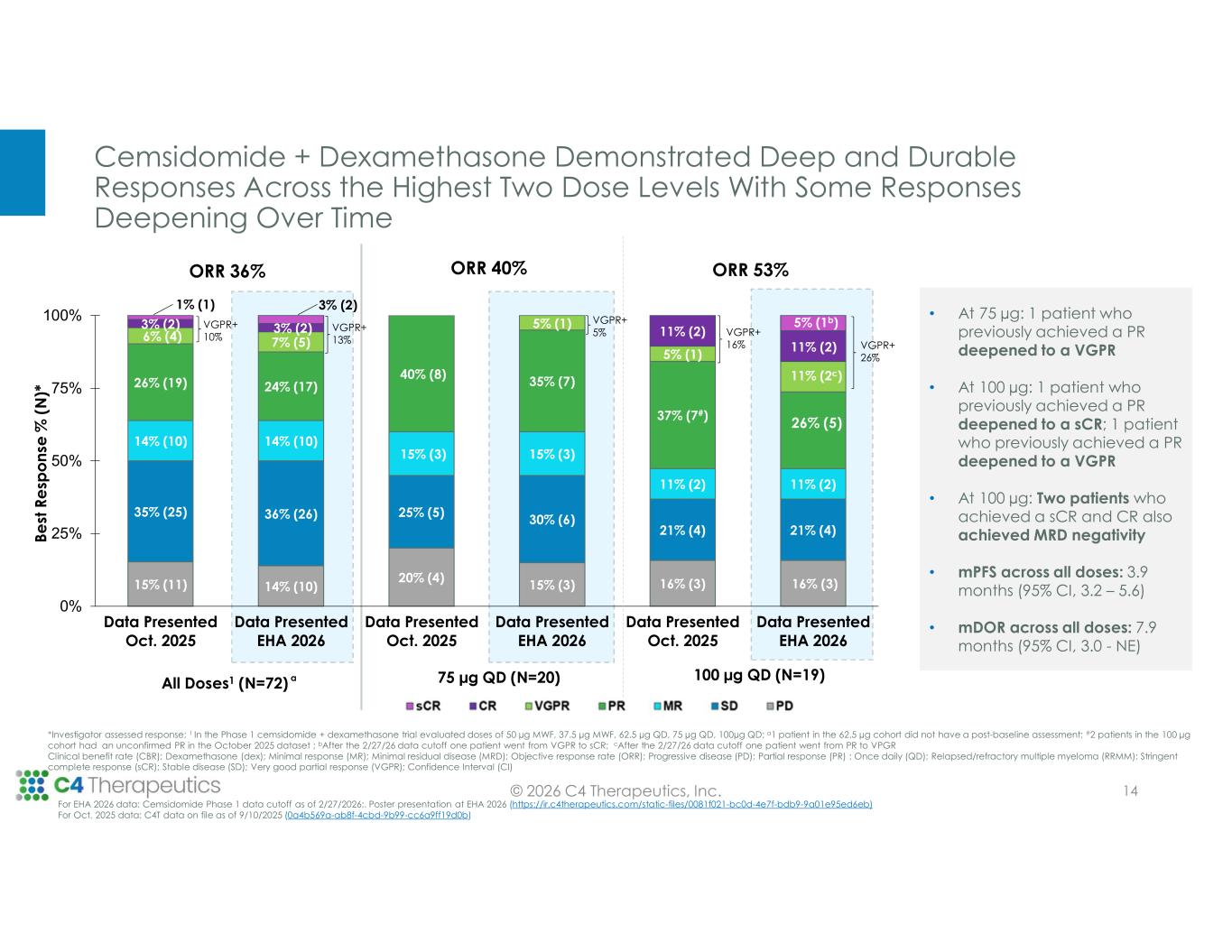
Cemsidomide + Dexamethasone Demonstrated Deep and Durable Responses Across the Highest Two Dose Levels With Some Responses Deepening Over Time © 2026 C4 Therapeutics, Inc. 14 a 15% (11) 14% (10) 20% (4) 15% (3) 16% (3) 16% (3) 35% (25) 36% (26) 25% (5) 30% (6) 21% (4) 21% (4) 14% (10) 14% (10) 15% (3) 15% (3) 11% (2) 11% (2) 26% (19) 24% (17) 40% (8) 35% (7) 37% (7#) 6% (4) 7% (5) 5% (1) 5% (1) 3% (2) 3% (2) 11% (2) 0% 25% 50% 75% 100% Data Presented Oct. 2025 Data Presented EHA 2026 Data Presented Oct. 2025 Data Presented EHA 2026 Data Presented Oct. 2025 Data Presented EHA 2026 Be st R e sp o ns e % ( N )* 26% (5) ORR 36% ORR 40% ORR 53% • At 75 µg: 1 patient who previously achieved a PR deepened to a VGPR • At 100 µg: 1 patient who previously achieved a PR deepened to a sCR; 1 patient who previously achieved a PR deepened to a VGPR • At 100 µg: Two patients who achieved a sCR and CR also achieved MRD negativity • mPFS across all doses: 3.9 months (95% CI, 3.2 – 5.6) • mDOR across all doses: 7.9 months (95% CI, 3.0 - NE) *Investigator assessed response; 1 In the Phase 1 cemsidomide + dexamethasone trial evaluated doses of 50 µg MWF, 37.5 µg MWF, 62.5 µg QD, 75 µg QD, 100µg QD; a1 patient in the 62.5 µg cohort did not have a post-baseline assessment; #2 patients in the 100 µg cohort had an unconfirmed PR in the October 2025 dataset ; bAfter the 2/27/26 data cutoff one patient went from VGPR to sCR; cAfter the 2/27/26 data cutoff one patient went from PR to VPGR Clinical benefit rate (CBR); Dexamethasone (dex); Minimal response (MR); Minimal residual disease (MRD); Objective response rate (ORR); Progressive disease (PD); Partial response (PR) ; Once daily (QD); Relapsed/refractory multiple myeloma (RRMM); Stringent complete response (sCR); Stable disease (SD); Very good partial response (VGPR); Confidence Interval (CI) a 75 µg QD (N=20) 100 µg QD (N=19)All Doses1 (N=72) For EHA 2026 data: Cemsidomide Phase 1 data cutoff as of 2/27/2026;. Poster presentation at EHA 2026 (https://ir.c4therapeutics.com/static-files/0081f021-bc0d-4e7f-bdb9-9a01e95ed6eb) For Oct. 2025 data: C4T data on file as of 9/10/2025 (0a4b569a-ab8f-4cbd-9b99-cc6a9ff19d0b) 11% (2c) 11% (2) 5% (1b) 1% (1) 3% (2) VGPR+ 10% VGPR+ 13% VGPR+ 5% VGPR+ 16% VGPR+ 26%
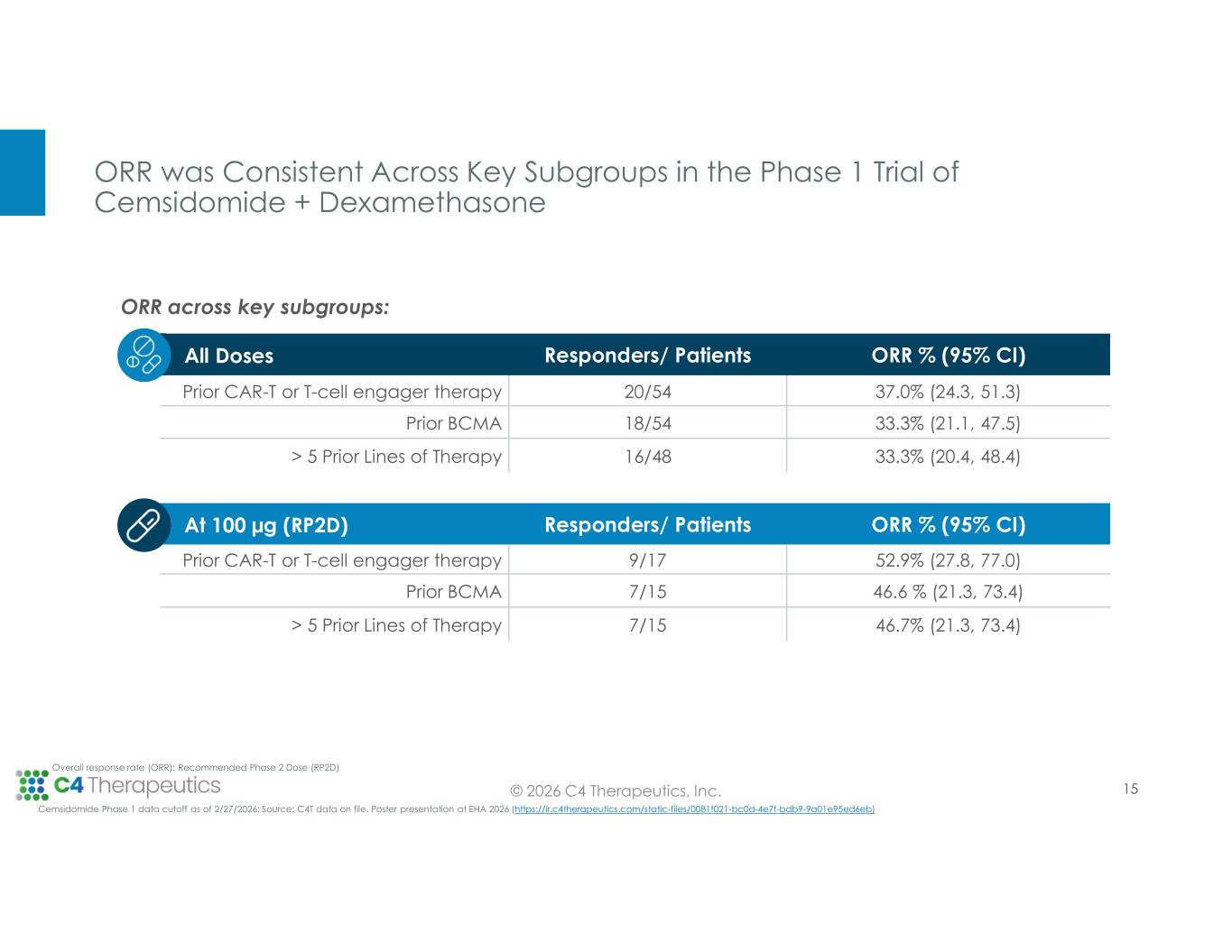
ORR was Consistent Across Key Subgroups in the Phase 1 Trial of Cemsidomide + Dexamethasone 15© 2026 C4 Therapeutics, Inc. Cemsidomide Phase 1 data cutoff as of 2/27/2026; Source: C4T data on file. Poster presentation at EHA 2026 (https://ir.c4therapeutics.com/static-files/0081f021-bc0d-4e7f-bdb9-9a01e95ed6eb) Overall response rate (ORR); Recommended Phase 2 Dose (RP2D) ORR across key subgroups: ORR % (95% CI)Responders/ PatientsAll Doses 37.0% (24.3, 51.3)20/54Prior CAR-T or T-cell engager therapy 33.3% (21.1, 47.5)18/54Prior BCMA 33.3% (20.4, 48.4)16/48> 5 Prior Lines of Therapy ORR acros key subgroups: ORR % (95% CI)Responders/ PatientsAt 100 µg (RP2D) 52.9% (27.8, 77.0)9/17Prior CAR-T or T-cell engager therapy 46.6 % (21.3, 73.4)7/15Prior BCMA 46.7% (21.3, 73.4)7/15> 5 Prior Lines of Therapy
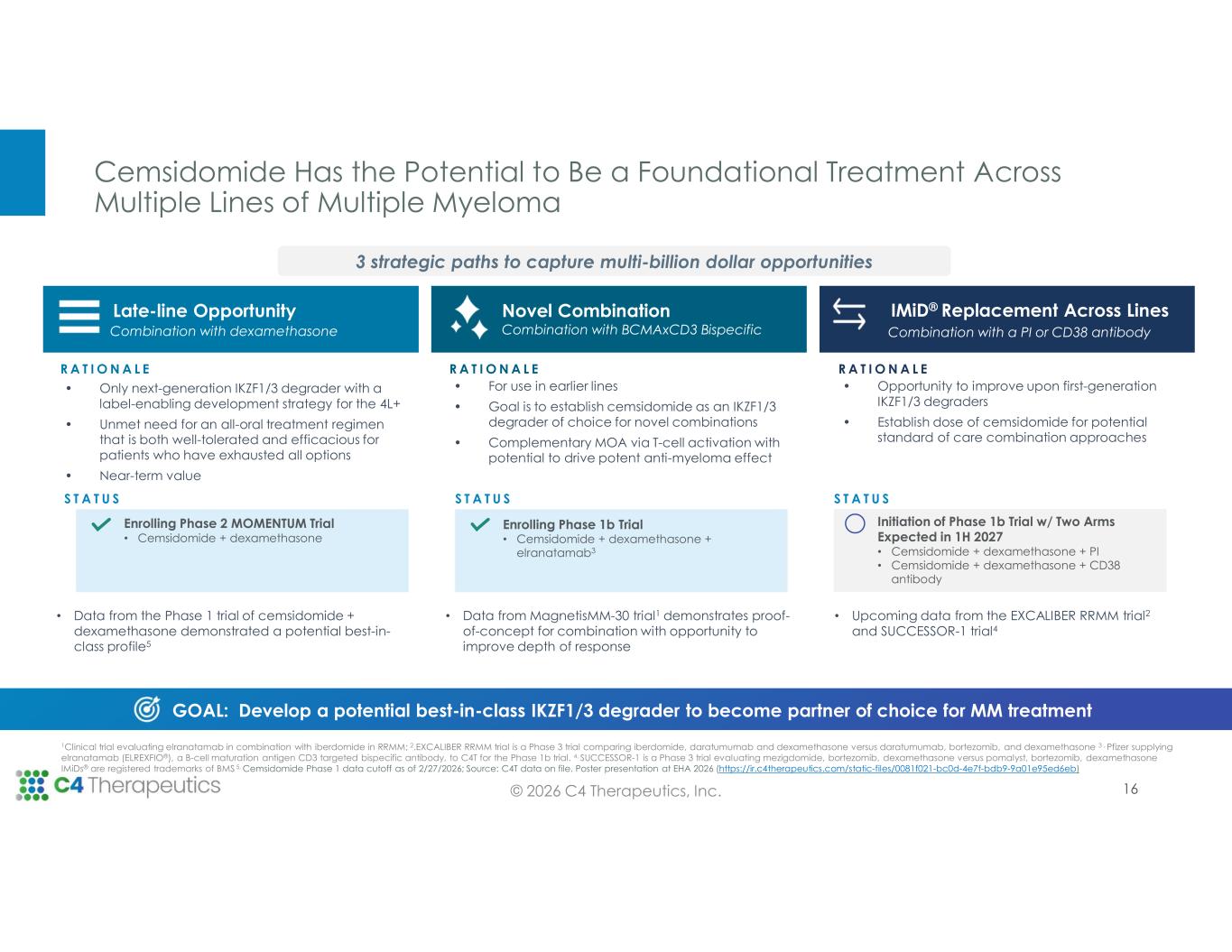
Cemsidomide Has the Potential to Be a Foundational Treatment Across Multiple Lines of Multiple Myeloma 16© 2026 C4 Therapeutics, Inc. Late-line Opportunity Combination with dexamethasone R A T I O N A L E • Only next-generation IKZF1/3 degrader with a label-enabling development strategy for the 4L+ • Unmet need for an all-oral treatment regimen that is both well-tolerated and efficacious for patients who have exhausted all options • Near-term value • Data from the Phase 1 trial of cemsidomide + dexamethasone demonstrated a potential best-in- class profile5 Novel Combination Combination with BCMAxCD3 Bispecific R A T I O N A L E • For use in earlier lines • Goal is to establish cemsidomide as an IKZF1/3 degrader of choice for novel combinations • Complementary MOA via T-cell activation with potential to drive potent anti-myeloma effect • Data from MagnetisMM-30 trial1 demonstrates proof- of-concept for combination with opportunity to improve depth of response IMiD® Replacement Across Lines Combination with a PI or CD38 antibody R A T I O N A L E • Opportunity to improve upon first-generation IKZF1/3 degraders • Establish dose of cemsidomide for potential standard of care combination approaches • Upcoming data from the EXCALIBER RRMM trial2 and SUCCESSOR-1 trial4 GOAL: Develop a potential best-in-class IKZF1/3 degrader to become partner of choice for MM treatment 1Clinical trial evaluating elranatamab in combination with iberdomide in RRMM; 2.EXCALIBER RRMM trial is a Phase 3 trial comparing iberdomide, daratumumab and dexamethasone versus daratumumab, bortezomib, and dexamethasone 3 . Pfizer supplying elranatamab (ELREXFIO®), a B-cell maturation antigen CD3 targeted bispecific antibody, to C4T for the Phase 1b trial. 4. SUCCESSOR-1 is a Phase 3 trial evaluating mezigdomide, bortezomib, dexamethasone versus pomalyst, bortezomib, dexamethasone IMiDs® are registered trademarks of BMS 5. Cemsidomide Phase 1 data cutoff as of 2/27/2026; Source: C4T data on file. Poster presentation at EHA 2026 (https://ir.c4therapeutics.com/static-files/0081f021-bc0d-4e7f-bdb9-9a01e95ed6eb) S T A T U S Enrolling Phase 2 MOMENTUM Trial • Cemsidomide + dexamethasone S T A T U S Enrolling Phase 1b Trial • Cemsidomide + dexamethasone + elranatamab3 S T A T U S Initiation of Phase 1b Trial w/ Two Arms Expected in 1H 2027 • Cemsidomide + dexamethasone + PI • Cemsidomide + dexamethasone + CD38 antibody GOAL: Develop a potential be t-in-class IKZF1/3 degrader to become partner of choice for MM treatment 3 strategic paths to capture multi-billion dollar opportunities
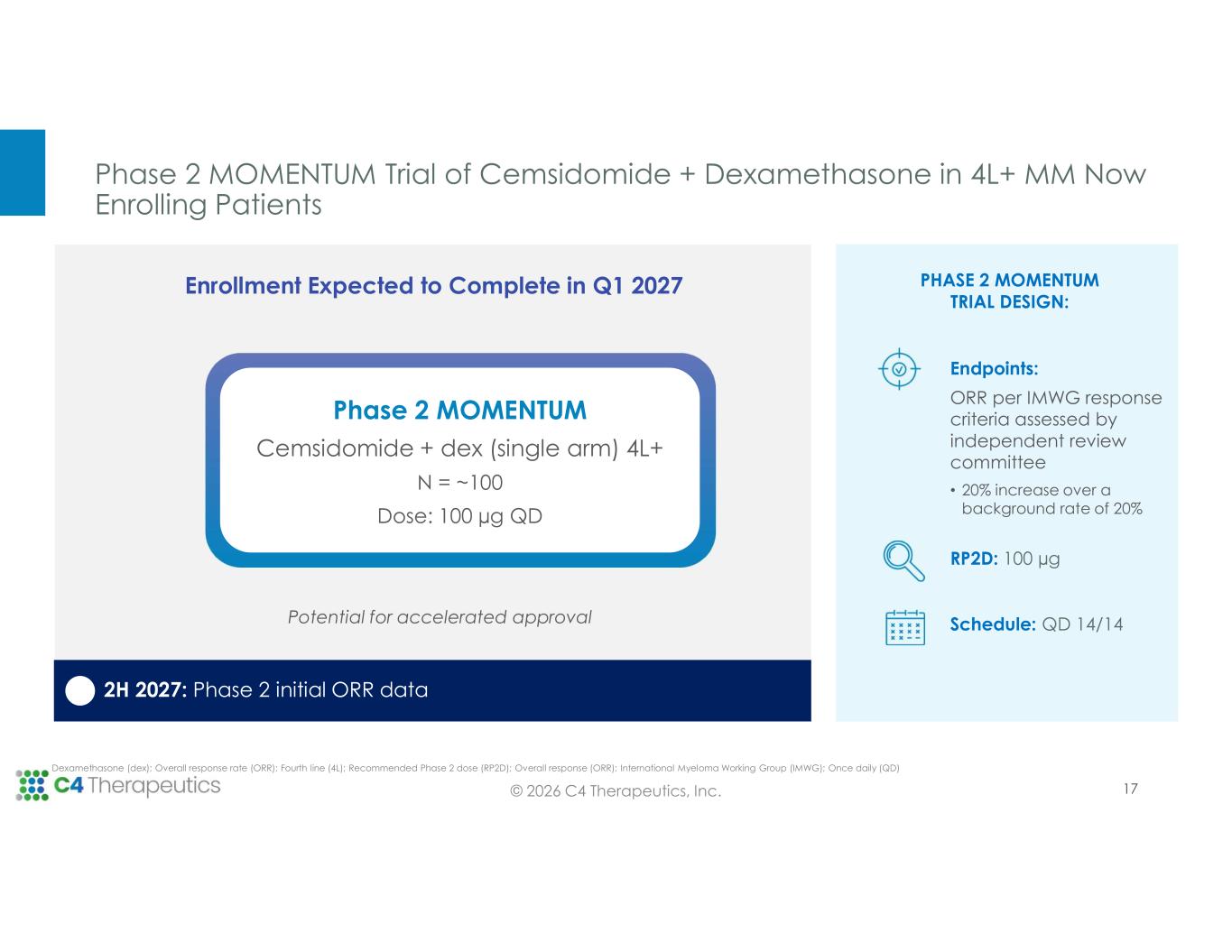
Phase 2 MOMENTUM Trial of Cemsidomide + Dexamethasone in 4L+ MM Now Enrolling Patients © 2026 C4 Therapeutics, Inc. Dexamethasone (dex); Overall response rate (ORR); Fourth line (4L); Recommended Phase 2 dose (RP2D); Overall response (ORR); International Myeloma Working Group (IMWG); Once daily (QD) 17 Endpoints: ORR per IMWG response criteria assessed by independent review committee • 20% increase over a background rate of 20% RP2D: 100 µg Schedule: QD 14/14 Potential for accelerated approval PHASE 2 MOMENTUM TRIAL DESIGN: 2H 2027: Phase 2 initial ORR data Phase 2 MOMENTUM Cemsidomide + dex (single arm) 4L+ N = ~100 Dose: 100 µg QD Enrollment Expected to Complete in Q1 2027
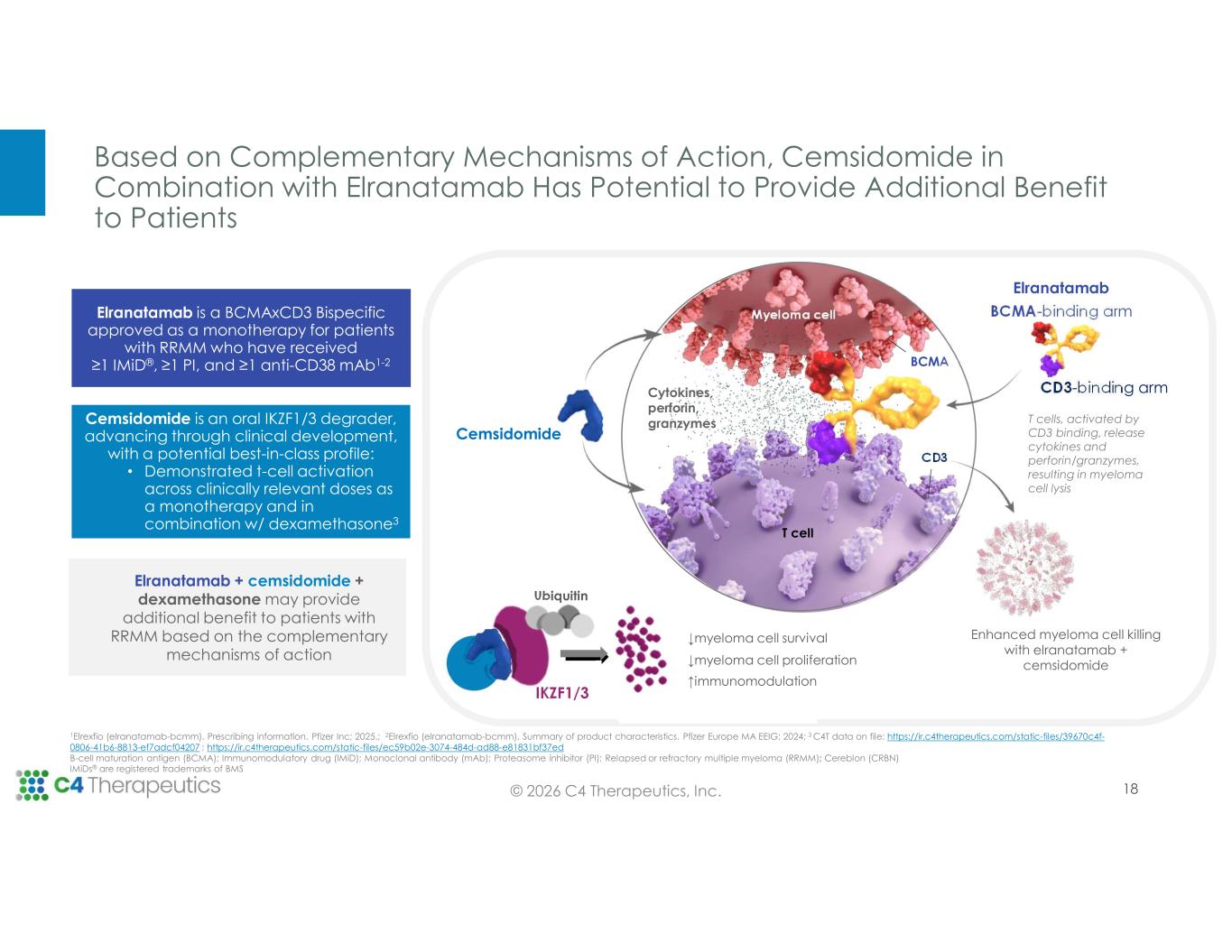
BCMA-binding arm CD3-binding arm Myeloma cell T cell CD3 Enhanced myeloma cell killing with elranatamab + cemsidomide Elranatamab BCMA Elranatamab + cemsidomide + dexamethasone may provide additional benefit to patients with RRMM based on the complementary mechanisms of action CRN Based on Complementary Mechanisms of Action, Cemsidomide in Combination with Elranatamab Has Potential to Provide Additional Benefit to Patients 18© 2026 C4 Therapeutics, Inc. Elranatamab is a BCMAxCD3 Bispecific approved as a monotherapy for patients with RRMM who have received ≥1 IMiD®, ≥1 PI, and ≥1 anti-CD38 mAb1-2 Cemsidomide is an oral IKZF1/3 degrader, advancing through clinical development, with a potential best-in-class profile: • Demonstrated t-cell activation across clinically relevant doses as a monotherapy and in combination w/ dexamethasone3 1Elrexfio (elranatamab-bcmm). Prescribing information. Pfizer Inc; 2025.; 2Elrexfio (elranatamab-bcmm). Summary of product characteristics. Pfizer Europe MA EEIG; 2024; 3 C4T data on file: https://ir.c4therapeutics.com/static-files/39670c4f- 0806-41b6-8813-ef7adcf04207 ; https://ir.c4therapeutics.com/static-files/ec59b02e-3074-484d-ad88-e81831bf37ed B-cell maturation antigen (BCMA); Immunomodulatory drug (IMiD); Monoclonal antibody (mAb); Proteasome inhibitor (PI); Relapsed or refractory multiple myeloma (RRMM); Cereblon (CRBN) IMiDs® are registered trademarks of BMS Cytokines, perforin, granzymes Cemsidomide IKZF1/3 Ubiquitin ↓myeloma cell survival ↓myeloma cell proliferation ↑immunomodulation T cells, activated by CD3 binding, release cytokines and perforin/granzymes, resulting in myeloma cell lysis
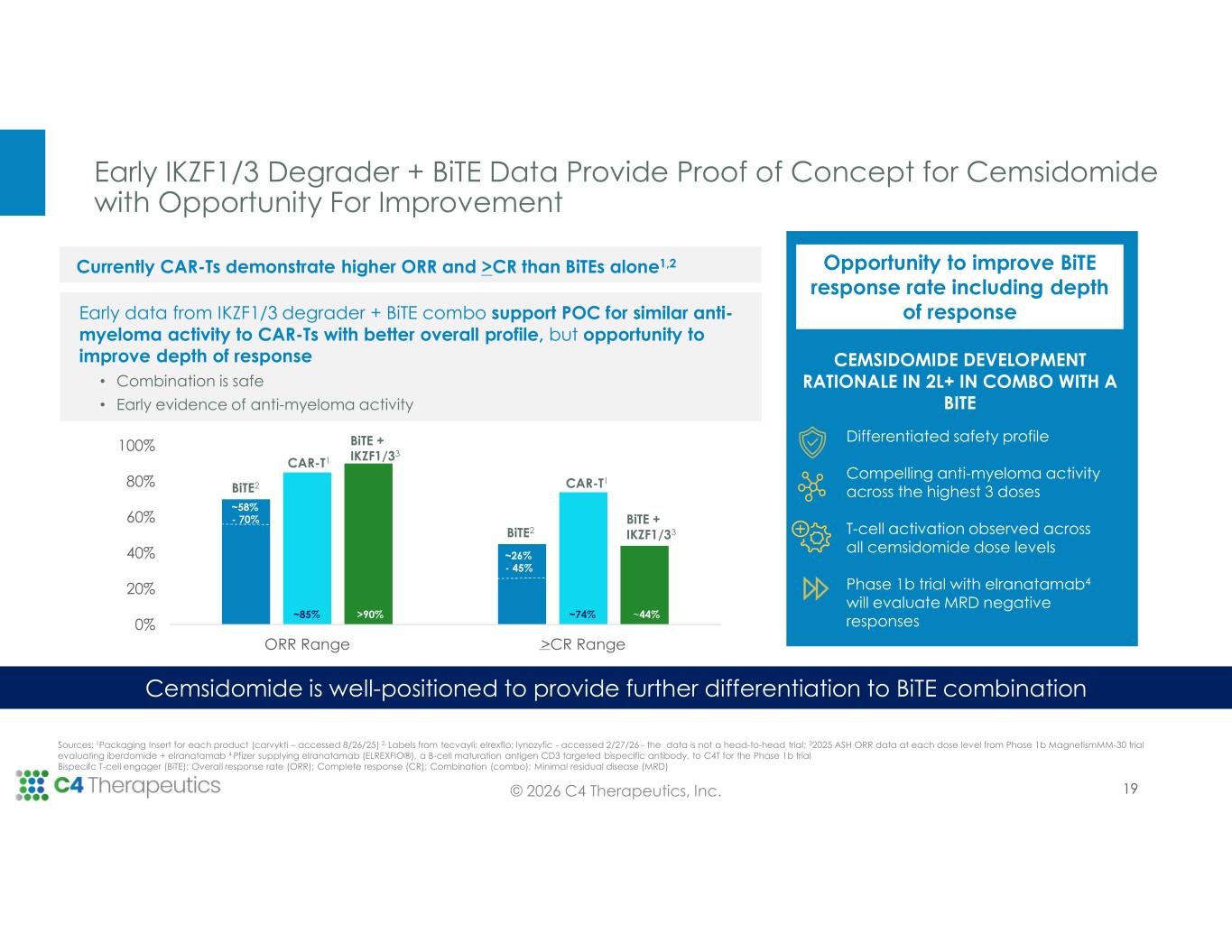
0% 20% 40% 60% 80% 100% ORR Range >CR Range Early IKZF1/3 Degrader + BiTE Data Provide Proof of Concept for Cemsidomide with Opportunity For Improvement © 2026 C4 Therapeutics, Inc. Currently CAR-Ts demonstrate higher ORR and >CR than BiTEs alone1,2 Early data from IKZF1/3 degrader + BiTE combo support POC for similar anti- myeloma activity to CAR-Ts with better overall profile, but opportunity to improve depth of response Cemsidomide is well-positioned to provide further differentiation to BiTE combination Sources: 1Packaging Insert for each product (carvykti – accessed 8/26/25) 2. Labels from tecvayli; elrexflo; lynozyfic - accessed 2/27/26 - the data is not a head-to-head trial; 32025 ASH ORR data at each dose level from Phase 1b MagnetismMM-30 trial evaluating iberdomide + elranatamab 4 Pfizer supplying elranatamab (ELREXFIO®), a B-cell maturation antigen CD3 targeted bispecific antibody, to C4T for the Phase 1b trial Bispecifc T-cell engager (BiTE); Overall response rate (ORR); Complete response (CR); Combination (combo); Minimal residual disease (MRD) CEMSIDOMIDE DEVELOPMENT RATIONALE IN 2L+ IN COMBO WITH A BITE Opportunity to improve BiTE response rate including depth of response 19 • Combination is safe • Early evidence of anti-myeloma activity Differentiated safety profile Compelling anti-myeloma activity across the highest 3 doses T-cell activation observed across all cemsidomide dose levels Phase 1b trial with elranatamab4 will evaluate MRD negative responses 74% ~58% - 70% CAR-T1 BiTE2 BiTE + IKZF1/33 BiTE + IKZF1/33 CAR-T1 BiTE2 ~74%>90% ~26% - 45% ~44%~85%
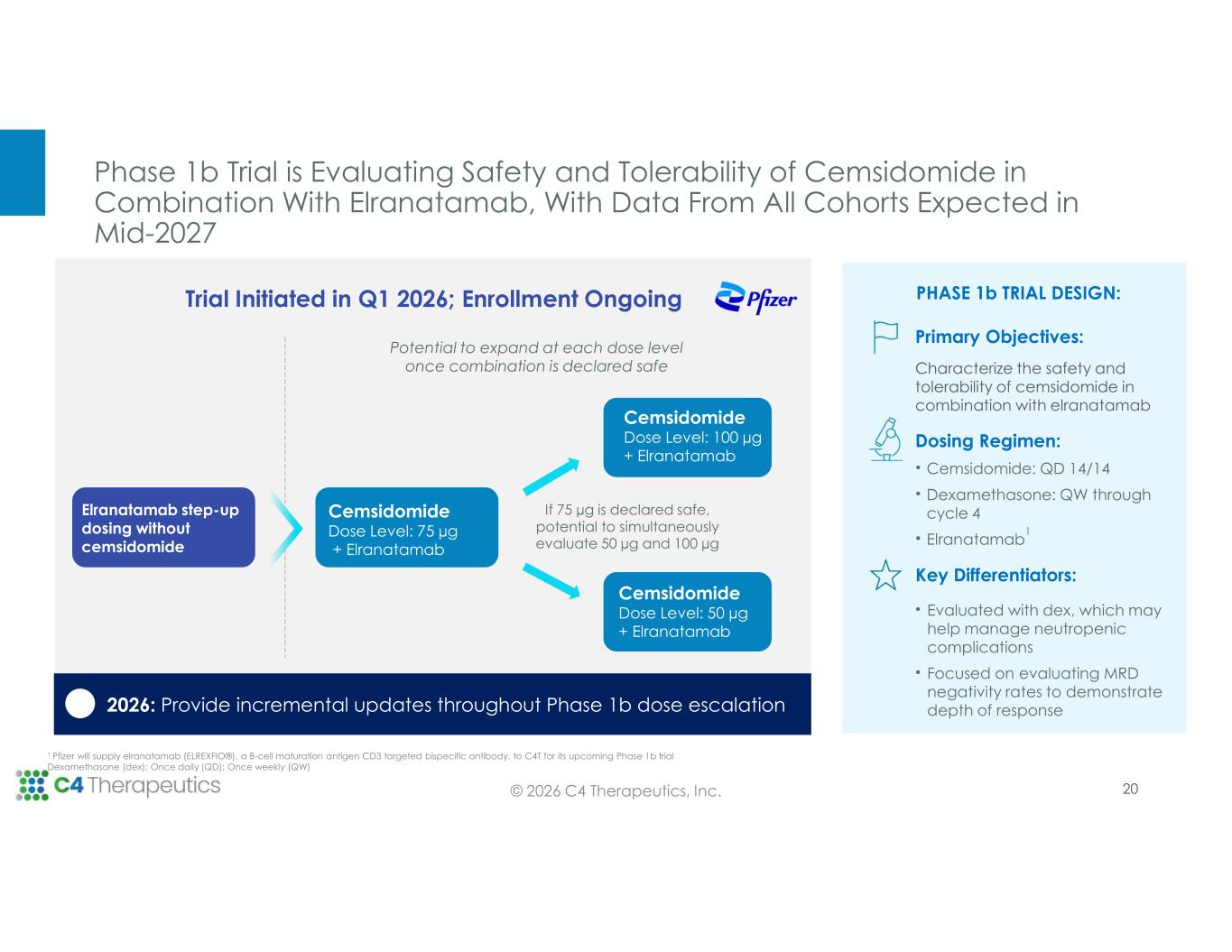
Phase 1b Trial is Evaluating Safety and Tolerability of Cemsidomide in Combination With Elranatamab, With Data From All Cohorts Expected in Mid-2027 © 2026 C4 Therapeutics, Inc. 1 Pfizer will supply elranatamab (ELREXFIO®), a B-cell maturation antigen CD3 targeted bispecific antibody, to C4T for its upcoming Phase 1b trial Dexamethasone (dex); Once daily (QD); Once weekly (QW) PHASE 1b TRIAL DESIGN: Primary Objectives: Characterize the safety and tolerability of cemsidomide in combination with elranatamab Dosing Regimen: • Cemsidomide: QD 14/14 • Dexamethasone: QW through cycle 4 • Elranatamab 1 Key Differentiators: • Evaluated with dex, which may help manage neutropenic complications • Focused on evaluating MRD negativity rates to demonstrate depth of response 20 Cemsidomide Dose Level: 75 µg + Elranatamab If 75 µg is declared safe, potential to simultaneously evaluate 50 µg and 100 µg Cemsidomide Dose Level: 50 µg + Elranatamab Cemsidomide Dose Level: 100 µg + Elranatamab Potential to expand at each dose level once combination is declared safe Trial Initiated in Q1 2026; Enrollment Ongoing 2026: Provide incremental updates throughout Phase 1b dose escalation Elranatamab step-up dosing without cemsidomide
Discovery Inflammation, Neuroinflammation, & Neurodegeneration (INN)
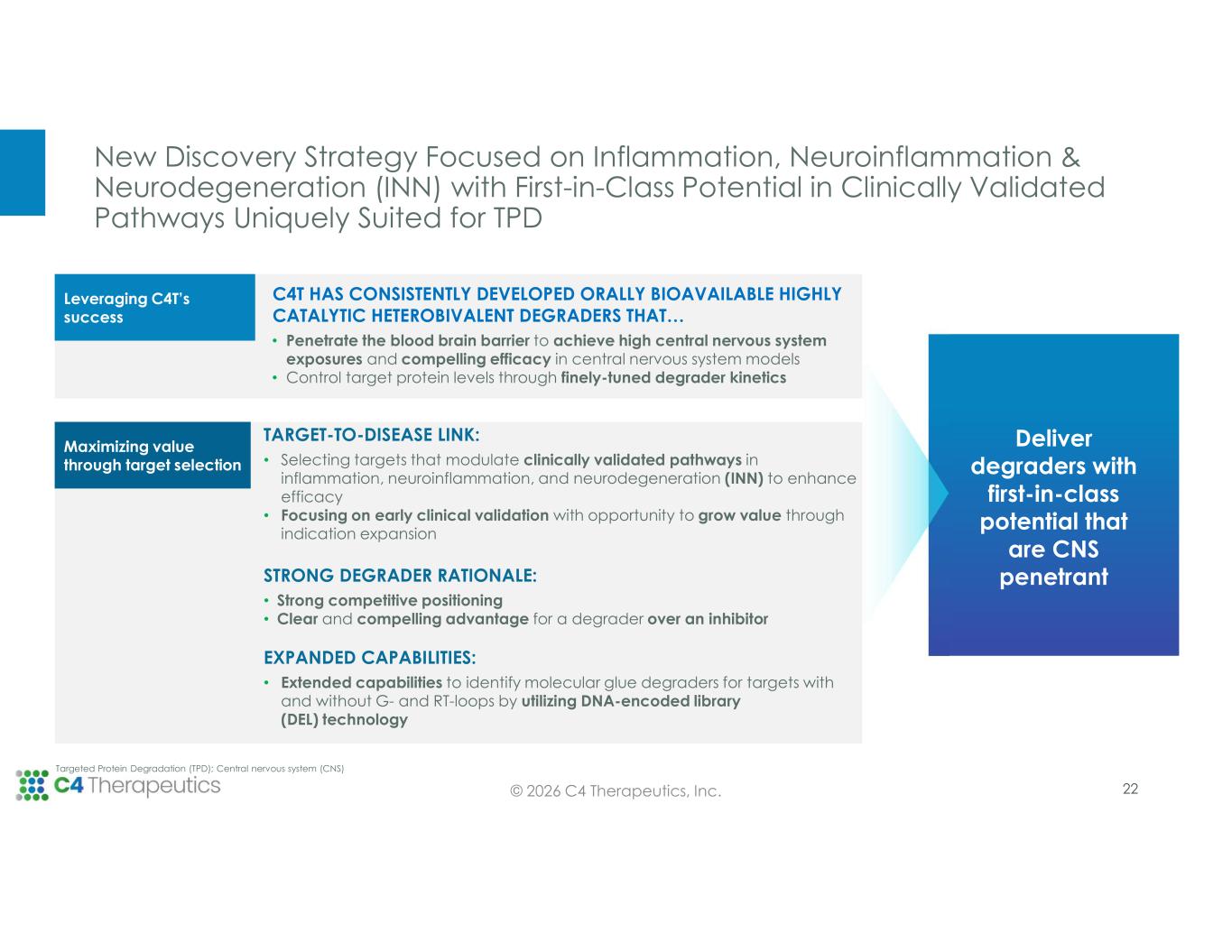
New Discovery Strategy Focused on Inflammation, Neuroinflammation & Neurodegeneration (INN) with First-in-Class Potential in Clinically Validated Pathways Uniquely Suited for TPD 22© 2026 C4 Therapeutics, Inc. Targeted Protein Degradation (TPD); Central nervous system (CNS) Leveraging C4T’s success Maximizing value through target selection Deliver degraders with first-in-class potential that are CNS penetrant C4T HAS CONSISTENTLY DEVELOPED ORALLY BIOAVAILABLE HIGHLY CATALYTIC HETEROBIVALENT DEGRADERS THAT… • Penetrate the blood brain barrier to achieve high central nervous system exposures and compelling efficacy in central nervous system models • Control target protein levels through finely-tuned degrader kinetics TARGET-TO-DISEASE LINK: • Selecting targets that modulate clinically validated pathways in inflammation, neuroinflammation, and neurodegeneration (INN) to enhance efficacy • Focusing on early clinical validation with opportunity to grow value through indication expansion STRONG DEGRADER RATIONALE: • Strong competitive positioning • Clear and compelling advantage for a degrader over an inhibitor EXPANDED CAPABILITIES: • Extended capabilities to identify molecular glue degraders for targets with and without G- and RT-loops by utilizing DNA-encoded library (DEL) technology
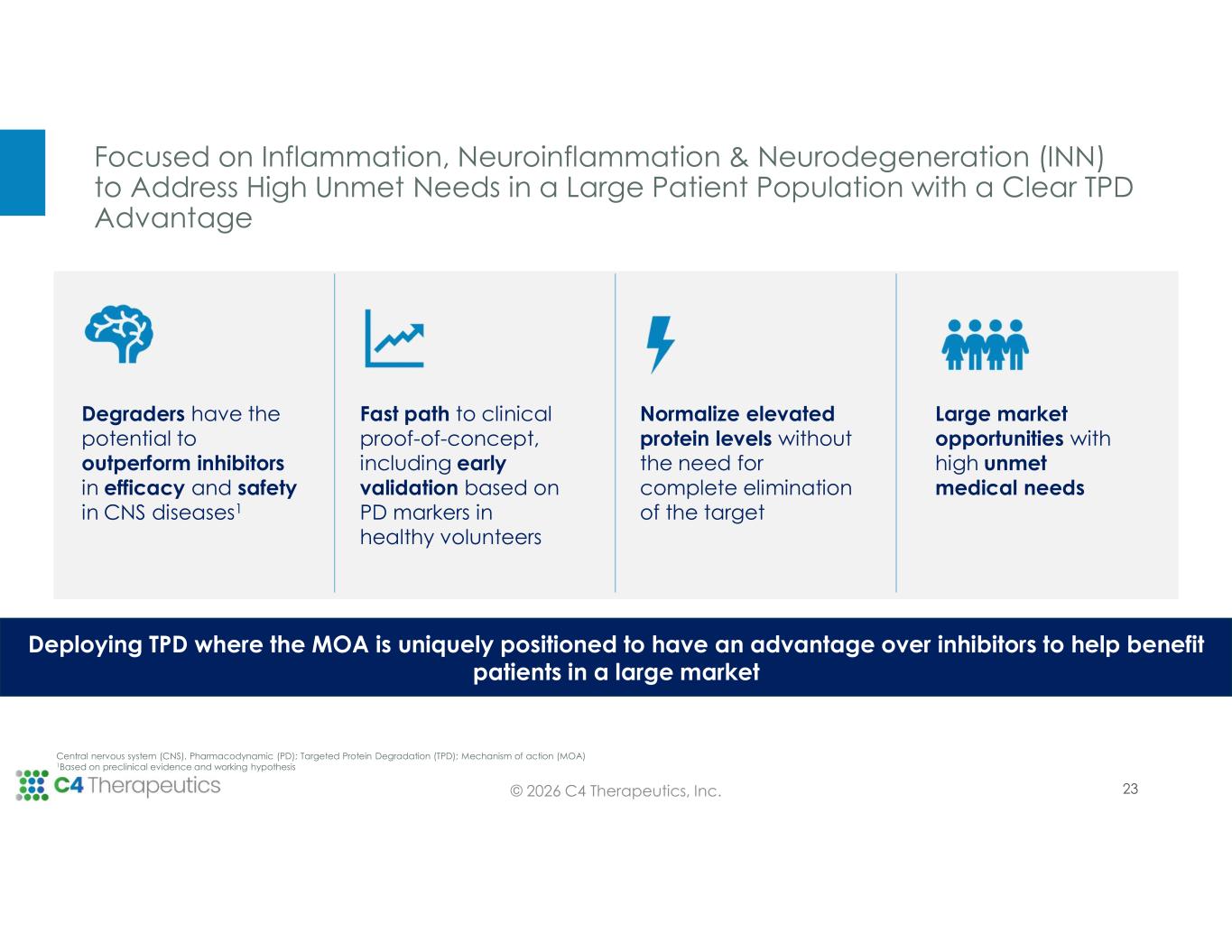
Focused on Inflammation, Neuroinflammation & Neurodegeneration (INN) to Address High Unmet Needs in a Large Patient Population with a Clear TPD Advantage © 2026 C4 Therapeutics, Inc. Central nervous system (CNS), Pharmacodynamic (PD); Targeted Protein Degradation (TPD); Mechanism of action (MOA) 1Based on preclinical evidence and working hypothesis 23 Deploying TPD where the MOA is uniquely positioned to have an advantage over inhibitors to help benefit patients in a large market Degraders have the potential to outperform inhibitors in efficacy and safety in CNS diseases1 Fast path to clinical proof-of-concept, including early validation based on PD markers in healthy volunteers Normalize elevated protein levels without the need for complete elimination of the target Large market opportunities with high unmet medical needs
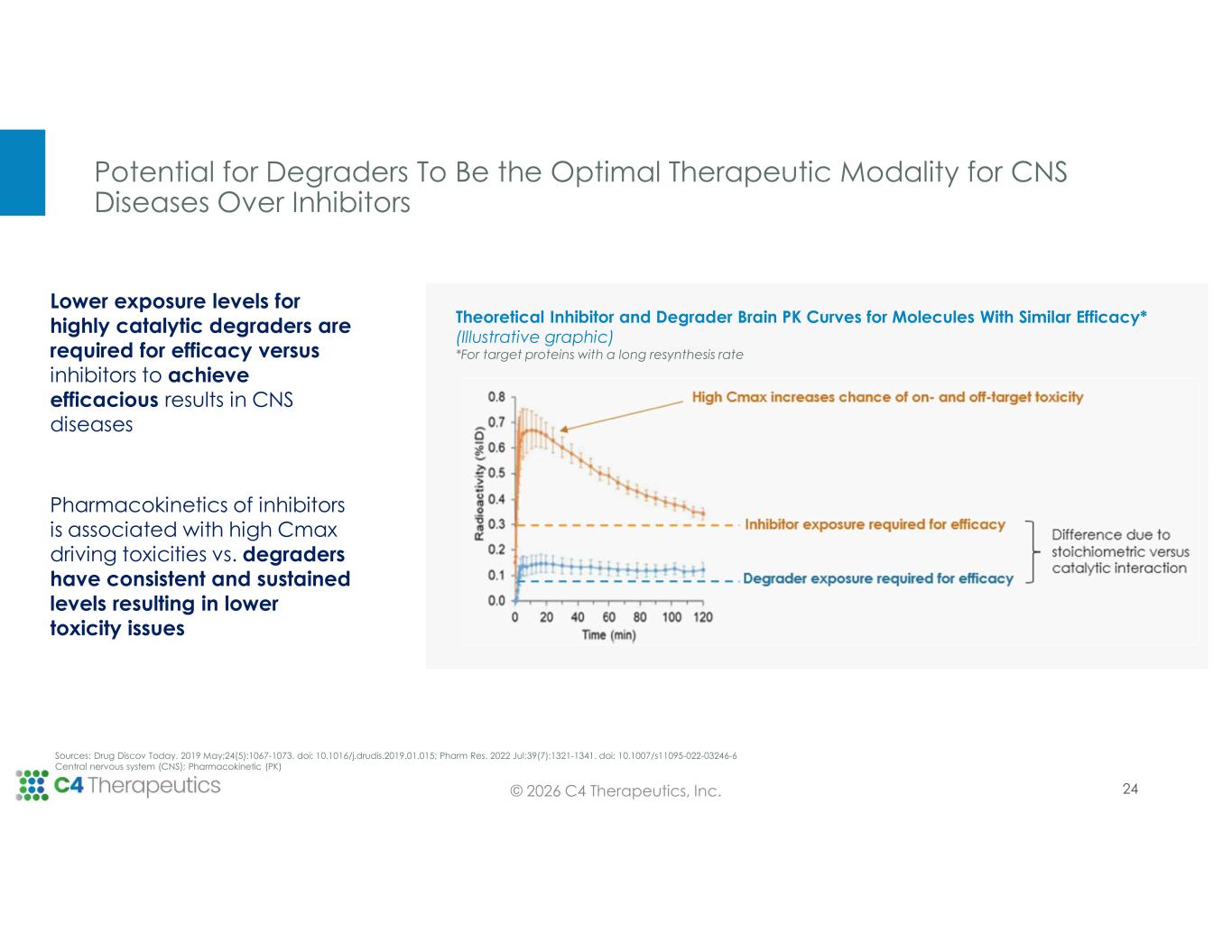
Potential for Degraders To Be the Optimal Therapeutic Modality for CNS Diseases Over Inhibitors 24 Theoretical Inhibitor and Degrader Brain PK Curves for Molecules With Similar Efficacy* (Illustrative graphic) *For target proteins with a long resynthesis rate Lower exposure levels for highly catalytic degraders are required for efficacy versus inhibitors to achieve efficacious results in CNS diseases Pharmacokinetics of inhibitors is associated with high Cmax driving toxicities vs. degraders have consistent and sustained levels resulting in lower toxicity issues Sources: Drug Discov Today. 2019 May;24(5):1067-1073. doi: 10.1016/j.drudis.2019.01.015; Pharm Res. 2022 Jul;39(7):1321-1341. doi: 10.1007/s11095-022-03246-6 Central nervous system (CNS); Pharmacokinetic (PK) © 2026 C4 Therapeutics, Inc.
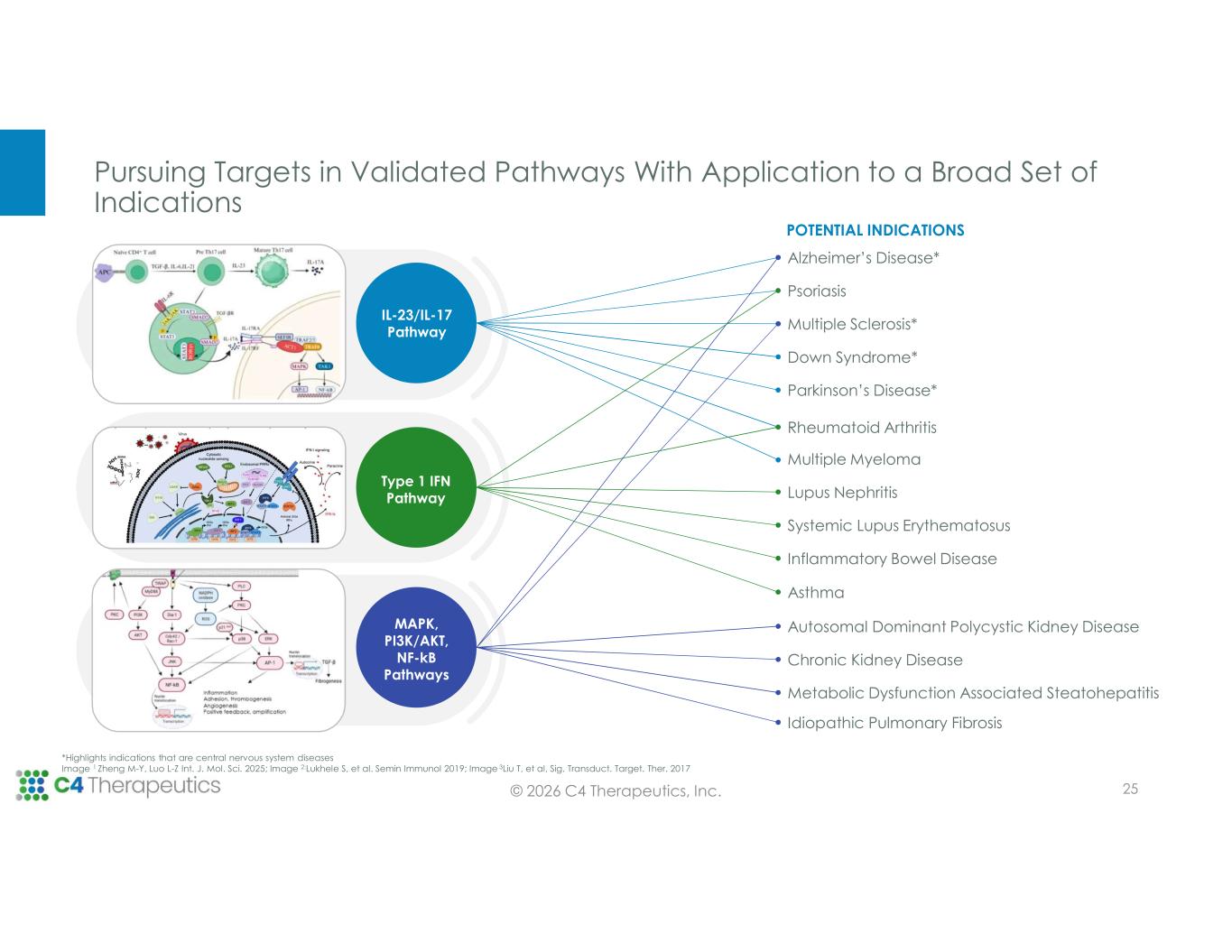
Pursuing Targets in Validated Pathways With Application to a Broad Set of Indications © 2026 C4 Therapeutics, Inc. *Highlights indications that are central nervous system diseases Image 1 Zheng M-Y, Luo L-Z Int. J. Mol. Sci. 2025; Image 2:Lukhele S, et al. Semin Immunol 2019; Image 3Liu T, et al, Sig. Transduct. Target. Ther. 2017 Alzheimer’s Disease* Psoriasis Multiple Sclerosis* Down Syndrome* Parkinson’s Disease* Rheumatoid Arthritis Multiple Myeloma Lupus Nephritis Systemic Lupus Erythematosus Inflammatory Bowel Disease Asthma Autosomal Dominant Polycystic Kidney Disease Chronic Kidney Disease Metabolic Dysfunction Associated Steatohepatitis Idiopathic Pulmonary Fibrosis POTENTIAL INDICATIONS IL-23/IL-17 Pathway Type 1 IFN Pathway MAPK, PI3K/AKT, NF-kB Pathways 25
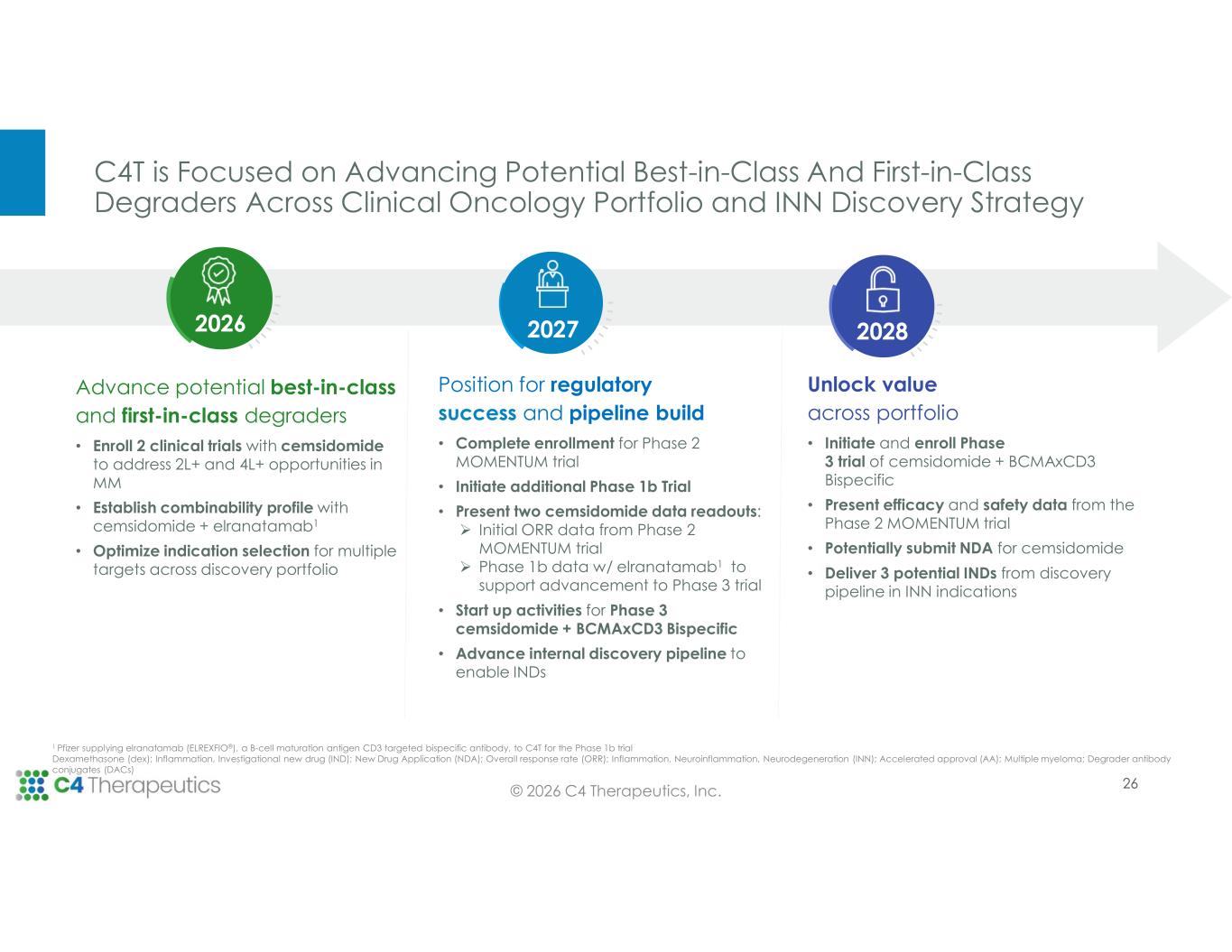
C4T is Focused on Advancing Potential Best-in-Class And First-in-Class Degraders Across Clinical Oncology Portfolio and INN Discovery Strategy © 2026 C4 Therapeutics, Inc. Advance potential best-in-class and first-in-class degraders • Enroll 2 clinical trials with cemsidomide to address 2L+ and 4L+ opportunities in MM • Establish combinability profile with cemsidomide + elranatamab1 • Optimize indication selection for multiple targets across discovery portfolio Unlock value across portfolio • Initiate and enroll Phase 3 trial of cemsidomide + BCMAxCD3 Bispecific • Present efficacy and safety data from the Phase 2 MOMENTUM trial • Potentially submit NDA for cemsidomide • Deliver 3 potential INDs from discovery pipeline in INN indications Position for regulatory success and pipeline build • Complete enrollment for Phase 2 MOMENTUM trial • Initiate additional Phase 1b Trial • Present two cemsidomide data readouts: Initial ORR data from Phase 2 MOMENTUM trial Phase 1b data w/ elranatamab1 to support advancement to Phase 3 trial • Start up activities for Phase 3 cemsidomide + BCMAxCD3 Bispecific • Advance internal discovery pipeline to enable INDs 202820272026 1 Pfizer supplying elranatamab (ELREXFIO®), a B-cell maturation antigen CD3 targeted bispecific antibody, to C4T for the Phase 1b trial Dexamethasone (dex); Inflammation, Investigational new drug (IND); New Drug Application (NDA); Overall response rate (ORR); Inflammation, Neuroinflammation, Neurodegeneration (INN); Accelerated approval (AA); Multiple myeloma; Degrader antibody conjugates (DACs) 26