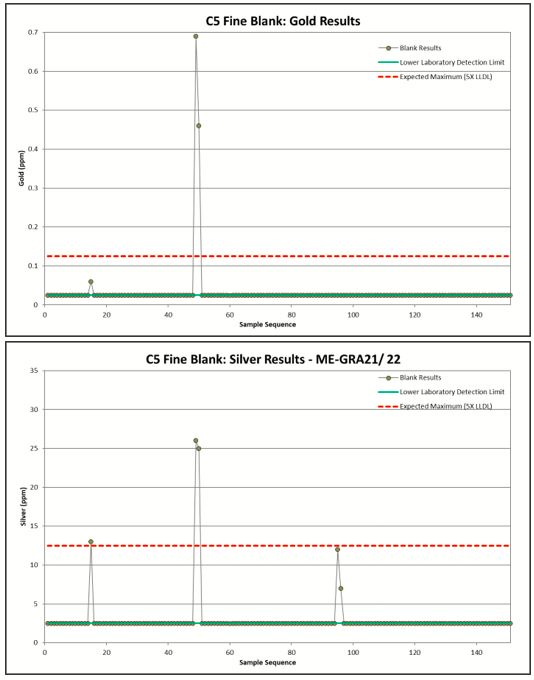
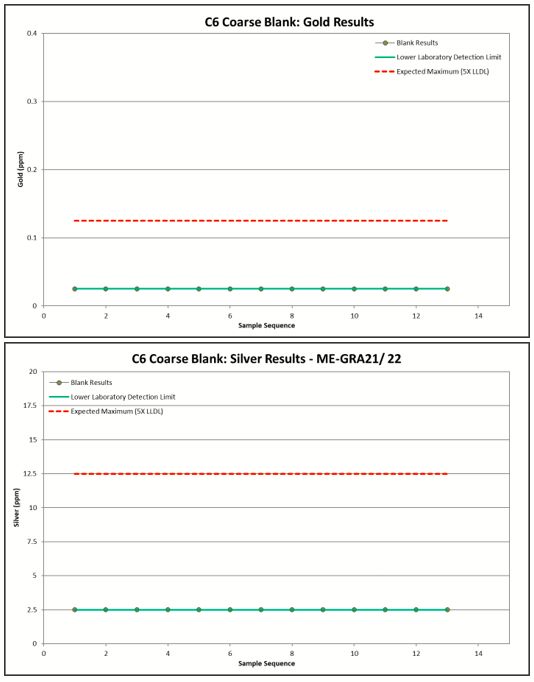
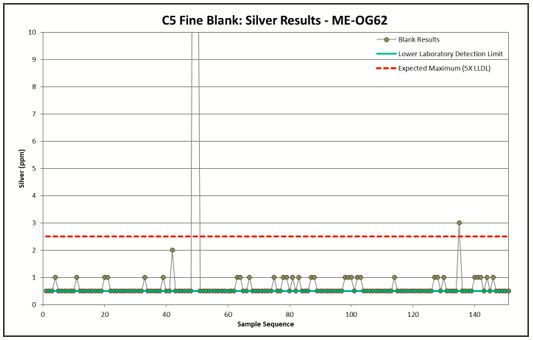
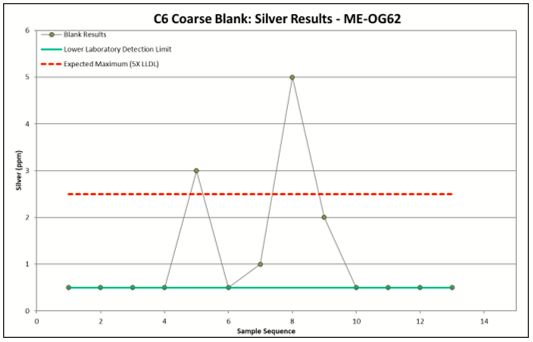
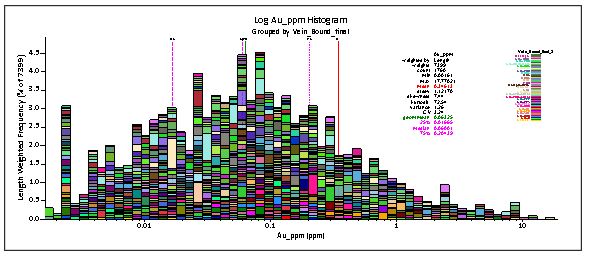
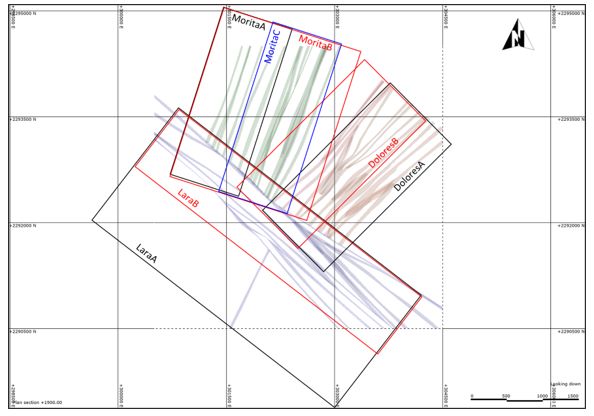
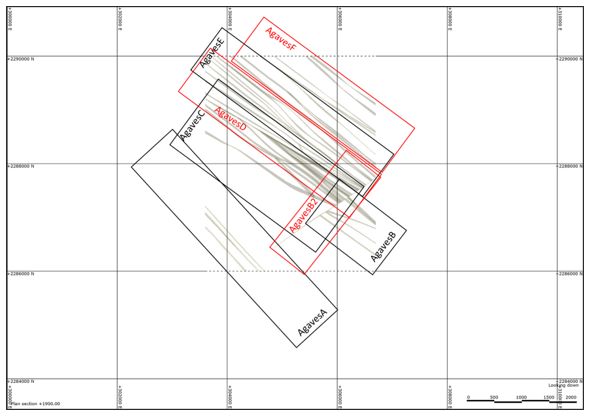
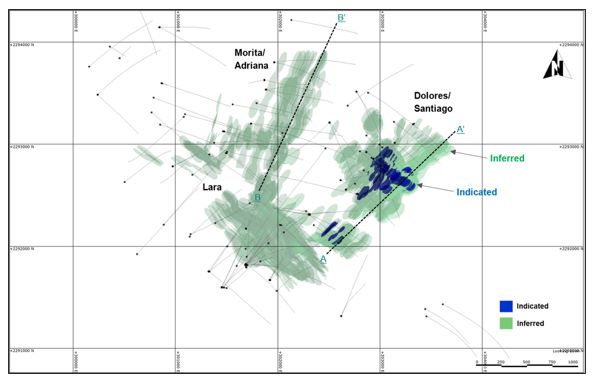
Exhibit 96.1

SEC Technical Report Summary
Sinda Project, Guanajuato, Mexico
 
Effective Date: November 24, 2025
Report Date: January 19, 2026
 
Report Prepared for
 
Sinda, LTD
Antiguo Camino a Don Diego S/N Fraccionamiento Mi Bendición,
Interior 6 San Miguel Allende, Guanajuato 37898 Mexico
 
Report Prepared by

 
 
SRK Consulting (U.S.), Inc.
999 Seventeenth Street, Suite 400
Denver, CO 80202

SRK Project Number: USPR002400
 

SRK Consulting (U.S.), Inc.
SEC Technical Report Summary – Sinda Project
Page ii
Table of Contents
 
1
Executive Summary
13
 
1.1
Property Description (Including Mineral Rights) and Ownership
13
 
1.2
Geology and Mineralization
13
 
1.3
Status of Exploration, Development, and Operations
13
 
1.4
Mineral Resources
14
 
1.5
Mineral Reserve Estimate
16
 
1.6
Mining Methods
16
 
1.7
Recovery Methods
16
 
1.8
Project Infrastructure
16
 
1.9
Environmental Studies and Permitting
17
 
1.10
Capital and Operating Costs
17
 
1.11
Economic Analysis
17
 
1.12
Conclusions and Recommendations
17
2
Introduction
19
 
2.1
Registrant for Whom the Technical Report Summary was Prepared
19
 
2.2
Terms of Reference and Purpose of the Report
19
 

2.2.1
Purpose of Report
19
 
2.3
Sources of Information
19
 
2.4
Details of Inspection
20
 
2.5
Report Version Update
20
3
Property Description
21
 
3.1
Property Location
21
 
3.2
Property Area
21
 
3.3
Mineral Title, Claim, Mineral Right, Lease, or Option Disclosure
22
 

3.3.1
Mineral Claims
22
 

3.3.2
Legal Surveys
24
 

3.3.3
Requirements to Maintain the Claims in Good Standing
24
 

3.3.4
Titles and Obligations/Agreements
24
 
3.4
Royalties or Other Encumbrances
25
 

3.4.1
Environmental Liabilities
26
 

3.4.2
Permits and Licenses
26
 

3.4.3
Other Significant Factors and Risks
26
4
Accessibility, Climate, Local Resources, Infrastructure, and Physiography
27
 
4.1
Topography, Elevation, and Vegetation
27
 

4.1.1
Vegetation
27


Sinda_TRS_SK1300_Report_USPR002400_Rev02
January 2026

SRK Consulting (U.S.), Inc.
SEC Technical Report Summary – Sinda Project
Page iii
 
4.2
Means of Access
27
 
4.3
Climate and Length of Operating Season
27
 
4.4
Infrastructure Availability and Sources
28
 

4.4.1
Water
28
 

4.4.2
Electricity
28
 

4.4.3
Personnel and Supplies
28
5
History
29
 
5.1
Previous Operations
29
 
5.2
Exploration and Development of Previous Owners or Operators
29
 

5.2.1
Historic Mineral Resource and Reserve Estimates
29
6
Geological Setting, Mineralization, and Deposit
31
 
6.1
Regional, Local, and Property Geology
31
 

6.1.1
Regional Geology
31
 

6.1.2
Local Geology
33
 
6.2
Property Geology
33
 
6.3
Mineral Deposit
36
 

6.3.1
Mineralization Style
36
 
6.4
Stratigraphic Column and Local Geology Cross-Section
37
7
Exploration
41
 
7.1
Exploration Work (Other Than Drilling)
41
 

7.1.1
Procedures and Parameters Relating to the Surveys and Investigations
41
 

7.1.2
Sampling Methods and Sample Quality
41
 

7.1.3
Information About the Area Covered
41
 

7.1.4
Significant Results and Interpretation
41
 
7.2
Exploration Drilling
42
 

7.2.1
Drilling Type and Extent
46
 

7.2.2
Collar Location Survey
47
 

7.2.3
Topographic Survey
47
 

7.2.4
Downhole Survey
48
 

7.2.5
Core Sampling
48
 

7.2.6
Drilling, Sampling, or Recovery Factors
52
 

7.2.7
Drilling Results and Interpretation
52
 
7.3
Exploration Potential
53
 
7.4
Hydrogeology
55
 
7.5
Geotechnical Data, Testing and Analysis
56
8
Sample Preparation, Analysis, and Security
58
 
8.1
Sample Preparation Methods and Quality Control Measures
58


Sinda_TRS_SK1300_Report_USPR002400_Rev02
January 2026

SRK Consulting (U.S.), Inc.
SEC Technical Report Summary – Sinda Project
Page iv
 
8.2
Laboratories
59
 
8.3
Analytical Procedures
60
 

8.3.1
Gold Fire Assay (Au-AA23)
60
 

8.3.2
Multi-Element Four Acid Digestion with ICP-MS Finish (ME-ICP61)
60
 

8.3.3
Fire Assay with Gravimetric Finish (ME-GRA21)
61
 

8.3.4
Multi-Element Four Acid Digestion with ICP-AES (ME-OG62)
61
 

8.3.5
Precious Metals in Concentrate (Ag-CON01 and Au-CON01)
62
 
8.4
Quality Control Procedures/Quality Assurance
62
 

8.4.1
Standards
63
 
8.4.2
Blanks
77
 
8.4.3
Duplicates
84
 

8.4.4
Wedge Drilling
89
 

8.4.5
External Check Assays
93
 

8.4.6
Re-Analysis Program
94
 

8.4.7
Actions
103
 

8.4.8
Sample Security
104
 

8.4.9
International Organization for Standardization 9000 Certification
104
 
8.5
Opinion on Adequacy
104
9
Data Verification
105
 
9.1
Data Verification Procedures
105
 

9.1.1
Site Verification
105
 

9.1.2
Discussions on Geological Attributes
105
 

9.1.3
Examination of Drill Holes
105
 

9.1.4
Sampling Techniques and Data Collection
106
 

9.1.5
Database Verification
106
 
9.1.6
Verifications of Analytical Quality Control Data
107
 
9.2
Limitations
108
 
9.3
Opinion on Data Adequacy
108
10
Mineral Processing and Metallurgical Testing
109
 
10.1
Testing and Procedures
109
 

10.1.1
Test Composites and Head Analyses
109
 

10.1.2
Mineralogy
110
 

10.1.3
Comminution
112
 
10.2
Sample Representativeness
112
 
10.3
Laboratories
113
 
10.4
Relevant Results
113
 

10.4.1
Flotation: Master Composite
113


Sinda_TRS_SK1300_Report_USPR002400_Rev02
January 2026

SRK Consulting (U.S.), Inc.
SEC Technical Report Summary – Sinda Project
Page v
 

10.4.2
Flotation: Variability Composites
119
 

10.4.3
Concentrate Quality
121
 

10.4.4
Cyanidation Test Work
121
 

10.4.5
Process Alternative Comparison
123
 
10.5
Adequacy of Mineral Processing and Metallurgical Testing
123
11
Mineral Resource Estimation
124
 
11.1
Key Assumptions, Parameters, and Methods Used
124
 

11.1.1
Drill Hole Database
124
 

11.1.2
Geologic Model
125
 
11.2
Assay Capping and Compositing
136
 

11.2.1
Compositing
136
 

11.2.2
Outlier Capping
141
 
11.3
Exploratory Data Analysis
145
 
11.4
Bulk Density
153
 
11.5
Variogram Analysis and Modeling
154
 
11.6
Block Model
154
 
11.7
Mineral Resources Estimates
161
 

11.7.1
Estimation Parameters
161
 

11.7.2
Post-Estimation Scripting
163
 

11.7.3
Estimation Summary
163
 
11.8
Resource Classification and Criteria
163
 
11.9
Mineral Resource Statement
168
 
11.10
Reasonable Prospects for Economic Extraction (RPEE)
169
 

11.10.1
Cut-off Grade Estimates
169
 
11.11
Mineral Resource Sensitivity
170
 
11.12
Comparison with Previous Estimate
175
 
11.13
Exploration Potential
175
 
11.14
Uncertainty
175
12
Mineral Reserve Estimates
177
13
Mining Methods
178
14
Processing and Recovery Methods
179
15
Infrastructure
180
16
Market Studies
181
17
Environmental Studies, Permitting, and Plans, Negotiations, or Agreements with Local Individuals or Groups
182
 
17.1
Existing Permits and Authorizations
182
 
17.2
Land Status
184


Sinda_TRS_SK1300_Report_USPR002400_Rev02
January 2026

SRK Consulting (U.S.), Inc.
SEC Technical Report Summary – Sinda Project
Page vi
 
17.3
Environmental Regulatory Framework
184
 

17.3.1
General Environmental Laws and Regulations
184
 

17.3.2
Mexico Mining Law and Mining Reform
185
 

17.3.3
Expropriations
189
 
17.4
Environmental Study Results
190
 
17.5
Environmental Issues
190
 
17.6
Social and Community
190
18
Capital and Operating Costs
192
19
Economic Analysis
193
20
Adjacent Properties
194
21
Other Relevant Data and Information
195
22
Interpretation and Conclusions
196
 
22.1
Exploration
196
 
22.2
Mineral Resource Estimate
197
 
22.3
Metallurgy and Processing
197
23
Recommendations
199
 
23.1
Recommended Work Programs
199
 
23.2
Exploration and Geology
199
 
23.3
Mineral Processing and Metallurgical Testing
200
 
23.4
Geotechnical
200
 
23.5
Environmental Studies and Permitting
201
 
23.6
Hydrogeology
201
24
References
203
25
Reliance on Information Provided by the Registrant
204
 
List of Tables

Table 1‑1: Sinda Underground (U/G) Mineral Resource Estimate at 150 g/t AgEq Cut-off Grade as of November 24, 2025 – SRK Consulting (U.S.), Inc.
16
Table 2‑1: Site Visit Participants
20
Table 3‑1: Exploration Concession Summary
22
Table 5‑1: Sinda Underground (U/G) Mineral Resource Estimate at 200 g/t AgEq Cut-off Grade as of June 24, 2021 – SRK Consulting (U.S.), Inc.
29
Table 5‑2: Sinda Underground (U/G) Mineral Resource Estimate at 200 g/t AgEq Cut-off Grade as of February 16, 2023 – SRK Consulting (U.S.), Inc.
30
Table 7‑1: Summary of Drill Holes by Campaign Year and Core Diameter Drilled
46
Table 7‑2: Summary of Raw Assay Intervals for Significant Intercepts at Sinda
53


Sinda_TRS_SK1300_Report_USPR002400_Rev02
January 2026

SRK Consulting (U.S.), Inc.
SEC Technical Report Summary – Sinda Project
Page vii
Table 7‑3: Examples of Significant Raw Assay Intervals within Exploration Target Areas
55
Table 8‑1: Au-AA23 Method Detection Limits
60
Table 8‑2: ME-ICP61 Method Detection Limits
61
Table 8‑3: ME-GRA21 Method Detection Limits
61
Table 8‑4: ME-OG62 Method Detection Limits
62
Table 8‑5: Ag-CON01 and Au-CON01 Method Detection Limits
62
Table 8‑6: Summary of QA/QC Standards
63
Table 8‑7: Summary of QA/QC Blank Samples
77
Table 8‑8: Summary of QA/QC Duplicate Samples
84
Table 8‑9: Summary of Duplicate Results, >10 ppm Ag
84
Table 8‑10: Summary of Duplicate Results, >0.1 ppm Au
84
Table 8‑11: Summary of QA/QC Standards for Re-Analysis Samples
94
Table 8‑12: Summary of QA/QC Blank Samples for Re-Analysis Samples
95
Table 10‑1: Head Assays and Master Composite (MC) Recipe
109
Table 10‑2: Detailed Head Analyses for Master Composite and Variability Composites
110
Table 10‑3: Silver Deportment Study (all values are %)
111
Table 10‑4: Gold Deportment Study
111
Table 10‑5: Summary of Bond Ball Mill Work Index Determination on the Master Composite
112
Table 10‑6: Grind Size vs. Rougher Flotation Recovery: Master Composite
113
Table 10‑7: Rougher Flotation Reagent Evaluation on Master Composite (Grind: P80 75 µm)
114
Table 10‑8: Rougher + Cleaner-1 Flotation With and Without Rougher Concentrate Regrind: Master Composite
116
Table 10‑9: Summary of Duplicate Rougher + Regrind + Three-Stage Cleaner Flotation Tests: Master Composite
118
Table 10‑10: Summary of Variability Composite Rougher + Cleaner Flotation Tests
120
Table 10‑11: Detailed Analyses on Cleaner-3 Flotation Concentrates
121
Table 10‑12: Cyanidation Results on Master Composite Feed
122
Table 10‑13: Cyanidation Results on Master Composite Concentrate
122
Table 10‑14: Process Option Recovery Evaluation
123
Table 11‑1: Summary of Sinda Wireframes in Caracol Area
127
Table 11‑2: Summary of Sinda Wireframes in Caracol and Agaves
128
Table 11‑3: Summary of Unsampled Drill Holes Crossing Sinda Wireframes
135
Table 11‑4: Summary of Drill Hole Composite Lengths, Inside Wireframes
136
Table 11‑5: Example of Statistical Capping Analysis for Ag (g/t), Dolores/Santiago
142
Table 11‑6: Example of Statistical Capping Analysis for Au (g/t), Dolores/Santiago
142
Table 11‑7: Applied Sample Capping Levels
145
Table 11‑8: Summary of Uncapped and Capped Samples, Within Domains and All Data
145
Table 11‑9: Descriptive Univariate Statistics for Ag (g/t) in Capped Composited Data in Caracol
146


Sinda_TRS_SK1300_Report_USPR002400_Rev02
January 2026

SRK Consulting (U.S.), Inc.
SEC Technical Report Summary – Sinda Project
Page viii
Table 11‑10: Descriptive Univariate Statistics for Au (g/t) in Capped Composited Data in Caracol
147
Table 11‑11: Descriptive Univariate Statistics for Ag (g/t) in Capped Composited Data in Adriana and Agaves Domains
148
Table 11‑12: Descriptive Univariate Statistics for Au (g/t) in Capped Composited Data in Adriana and Agaves Domain
149
Table 11‑13: Summary Descriptive Univariate Statistics for Sampled Data Outside of Current Estimation Domains
153
Table 11‑14: Block Model Specific Gravity Statistics
154
Table 11‑15: Summary Block Model Parameters – Caracol
155
Table 11‑16: Summary Block Model Parameters – Agaves
155
Table 11‑17: Volume Comparisons Between Wireframes and Block Models – Caracol
159
Table 11‑18: Volume Comparisons Between Wireframes and Block Models – Agaves
160
Table 11‑19: Estimation Parameters for Sinda Mineral Resources
162
Table 11‑20: Classification Summary by Domain
164
Table 11‑21: Sinda Underground (U/G) Mineral Resource Estimate at 150 g/t AgEq Cut-off Grade as of November 24, 2025 – SRK Consulting (U.S.), Inc.
168
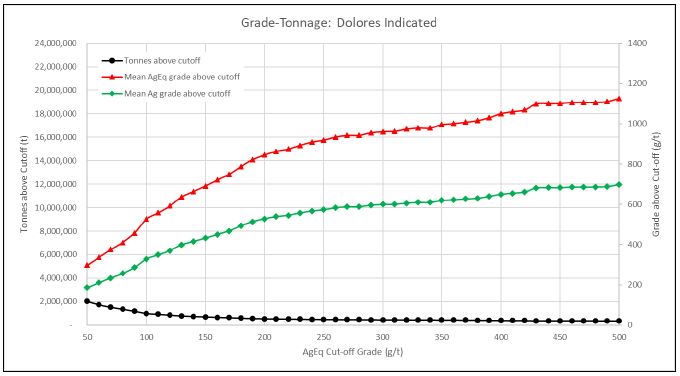
Table 11‑22: Grade Tonnage Table of Indicated Material – Dolores
170
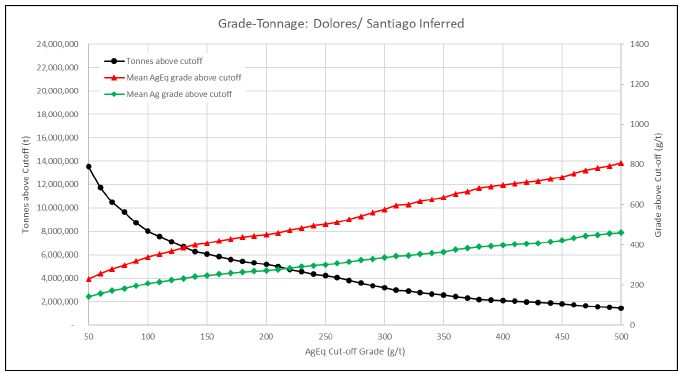
Table 11‑23: Grade Tonnage Table of Inferred Material – Dolores / Santiago
171
Table 11‑24: Grade Tonnage Table of Inferred Material – Lara
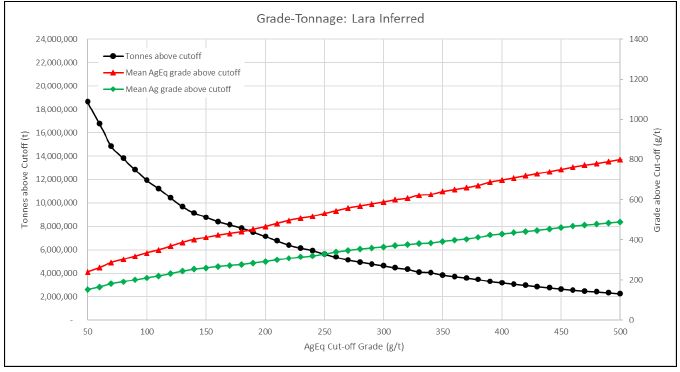
171
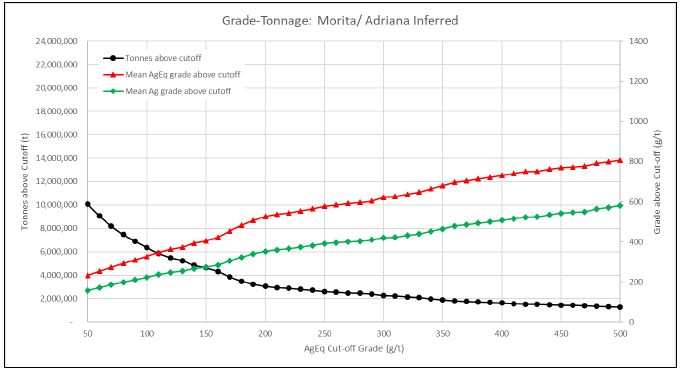
Table 11‑25: Grade Tonnage Table of Inferred Material – Morita / Adriana
171
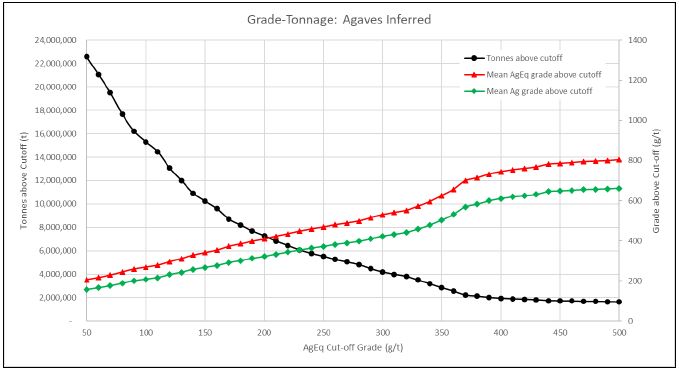
Table 11‑26: Grade Tonnage Table of Inferred Material – Agaves
172
Table 17‑1: Mineral Concessions Summary
184
Table 23‑1: Summary of Costs for Recommended Work
202
Table 25‑1: Reliance on Information Provided by the Registrant
204
 
List of Figures
 
Figure 3‑1: Location Map with Proximity to Major Silver Districts
21
Figure 3‑2: Land Tenure Map
23
Figure 4‑1: Weather by Month for Celaya, Guanajuato, Mexico
28
Figure 6‑1: Regional Geology Map
32
Figure 6‑2: Local Geology Map
34
Figure 6‑3: Sinda Vein Examples
35
Figure 6‑4: Generalized Geologic Map
38
Figure 6‑5: Local Geological Cross-Section at Caracol, Looking Northwest
39
Figure 6‑6: Stratigraphic Column
40
Figure 7‑1: Location Map of Drill Hole Collars
43
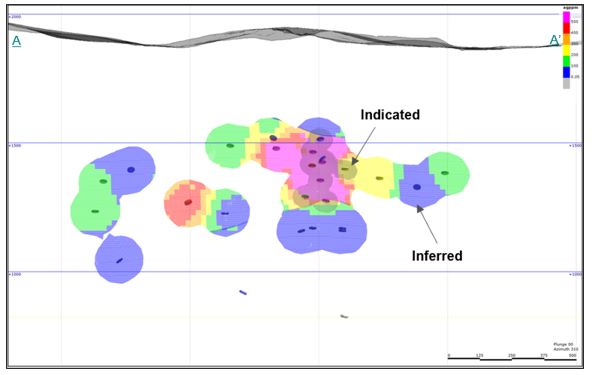
Figure 7‑2: Example Cross-Section (A-A') of Drill Holes
44
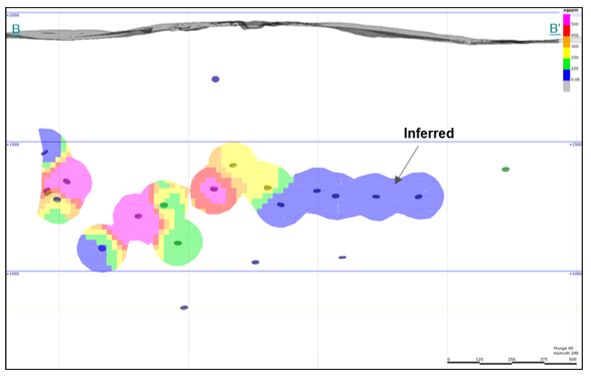
Figure 7‑3: Example Cross-Section (B-B') of Drill Holes
45


Sinda_TRS_SK1300_Report_USPR002400_Rev02
January 2026

SRK Consulting (U.S.), Inc.
SEC Technical Report Summary – Sinda Project
Page ix
Figure 7‑4: Core Drilling Platform Example
47
Figure 7‑5: Drill Core Sampling
50
Figure 7‑6: Drill Core Storage
51
Figure 8‑1: Sample Preparation Flowsheet
59
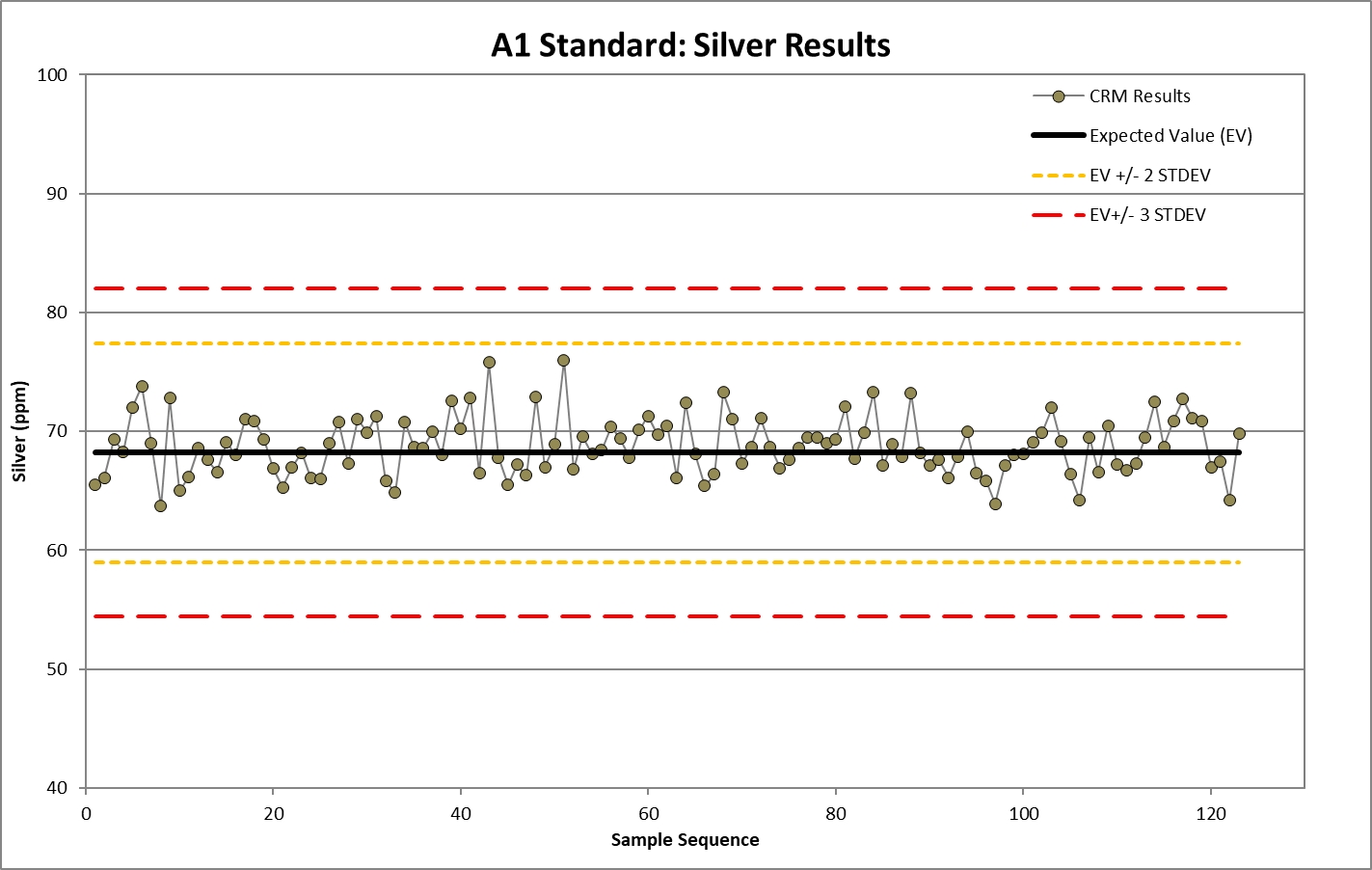
Figure 8‑2: A1 Standard Results
64
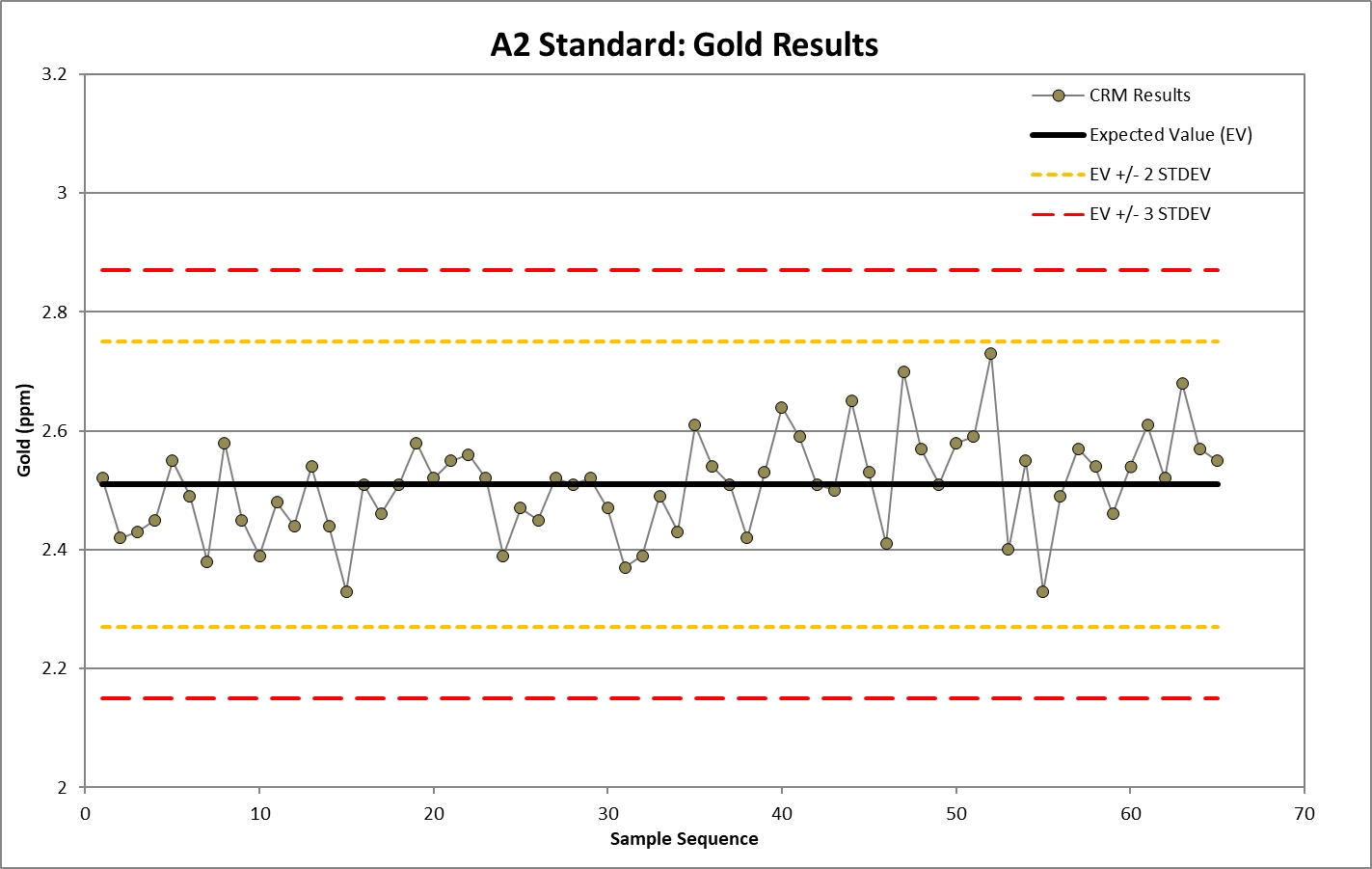
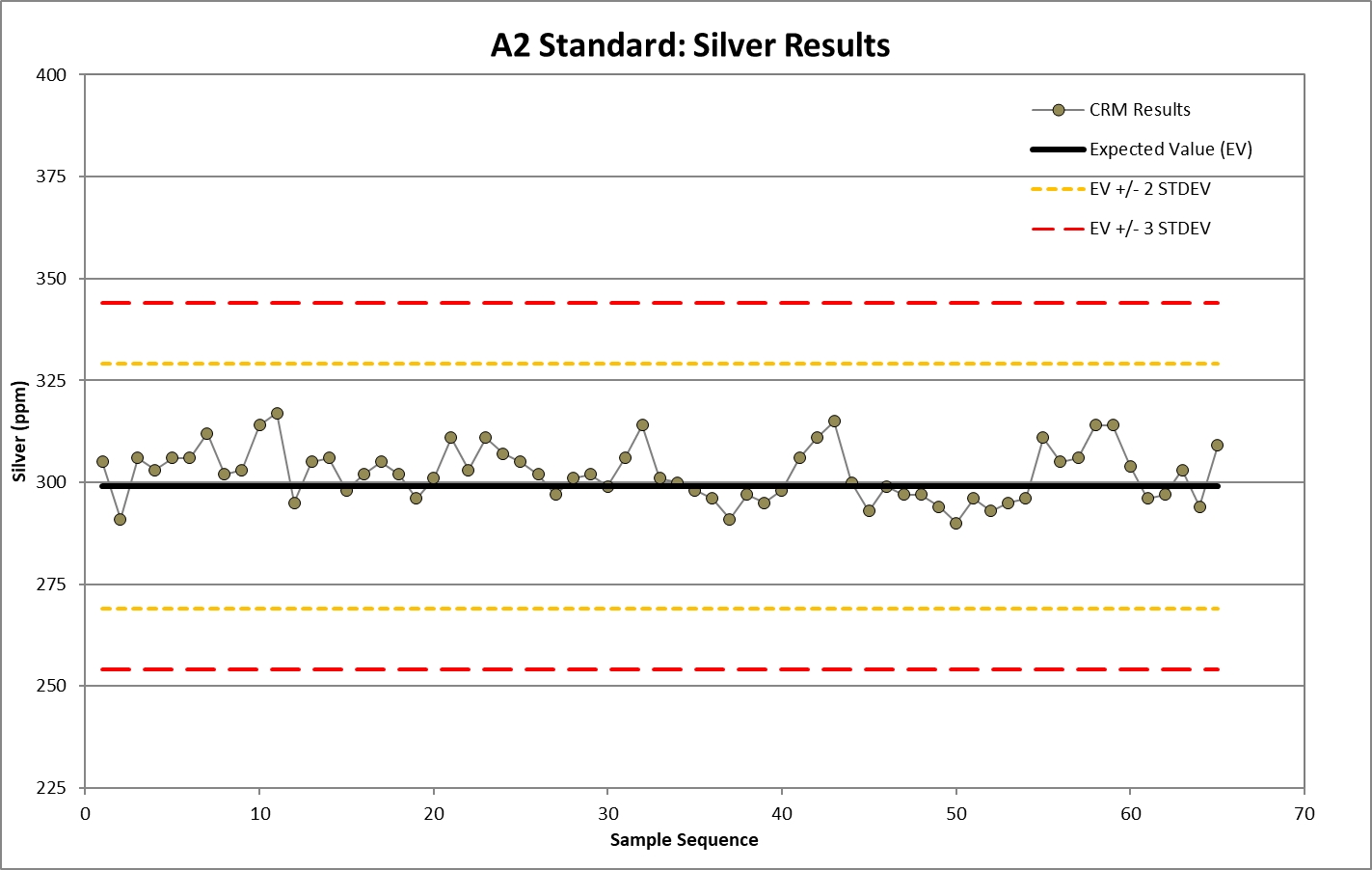
Figure 8‑3: A2 Standard Results
65
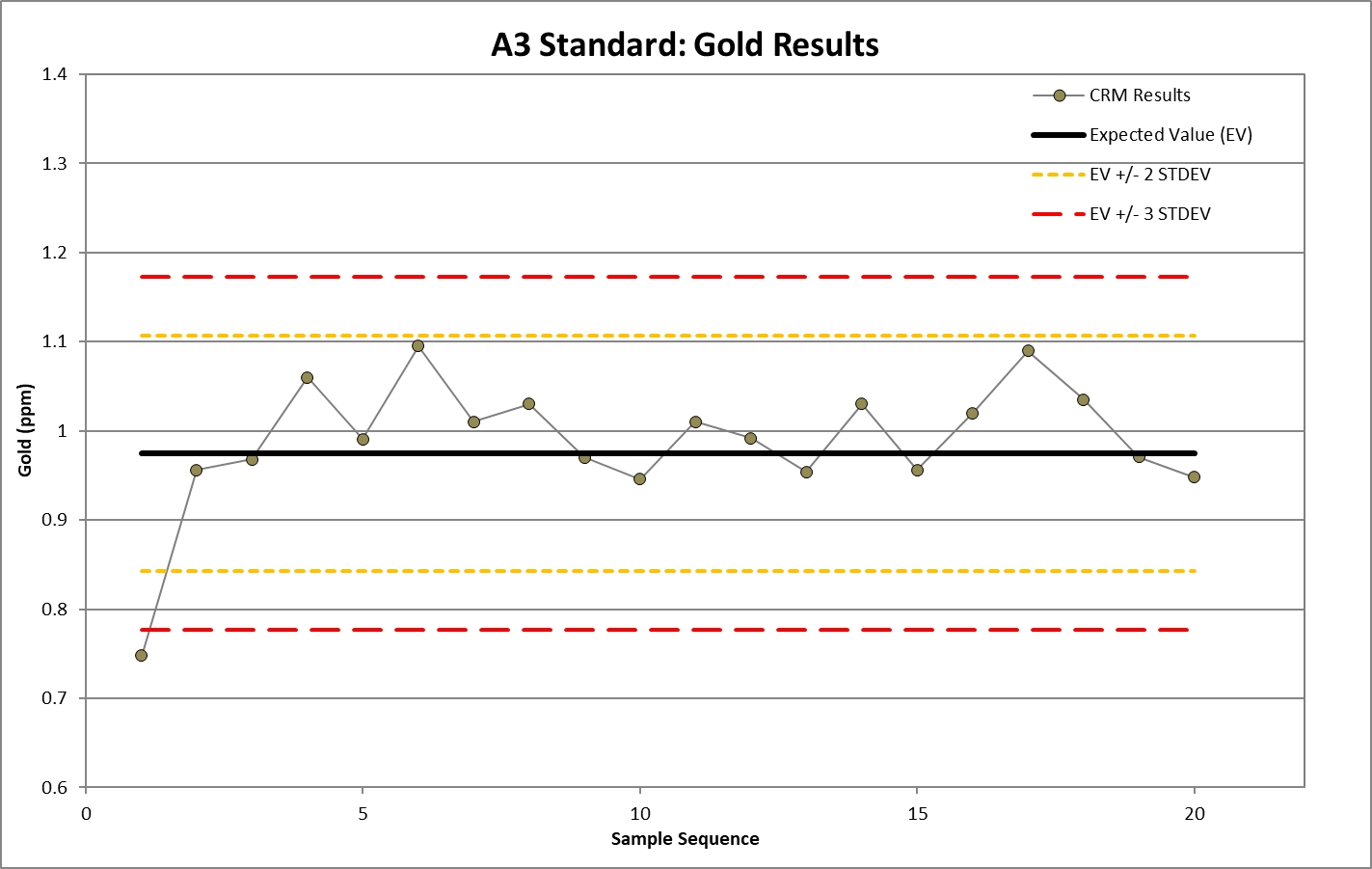
Figure 8‑4: A3 Standard Results
66
Figure 8‑5: AA Standard Results
67
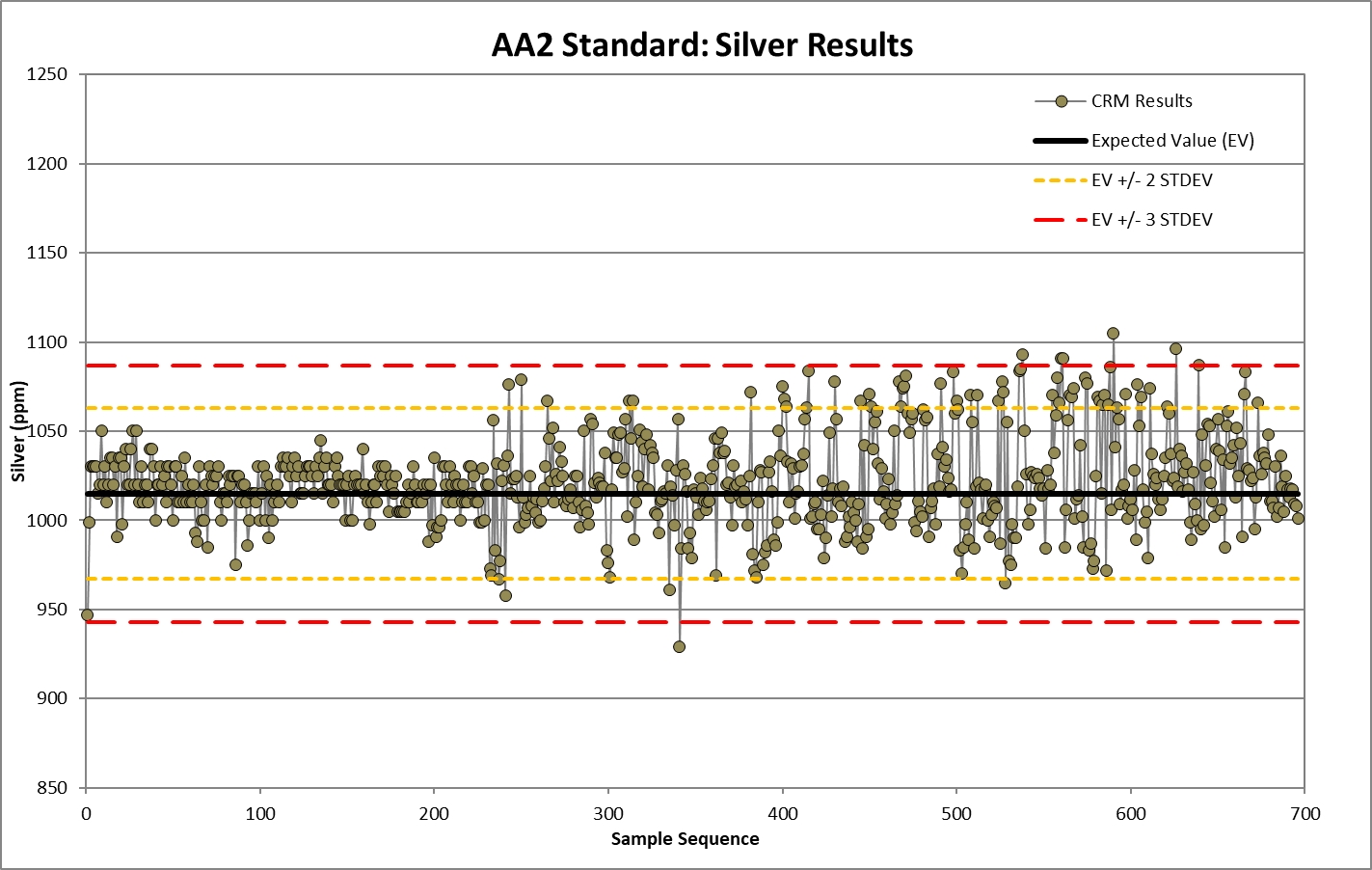
Figure 8‑6: AA2 Standard Results
68
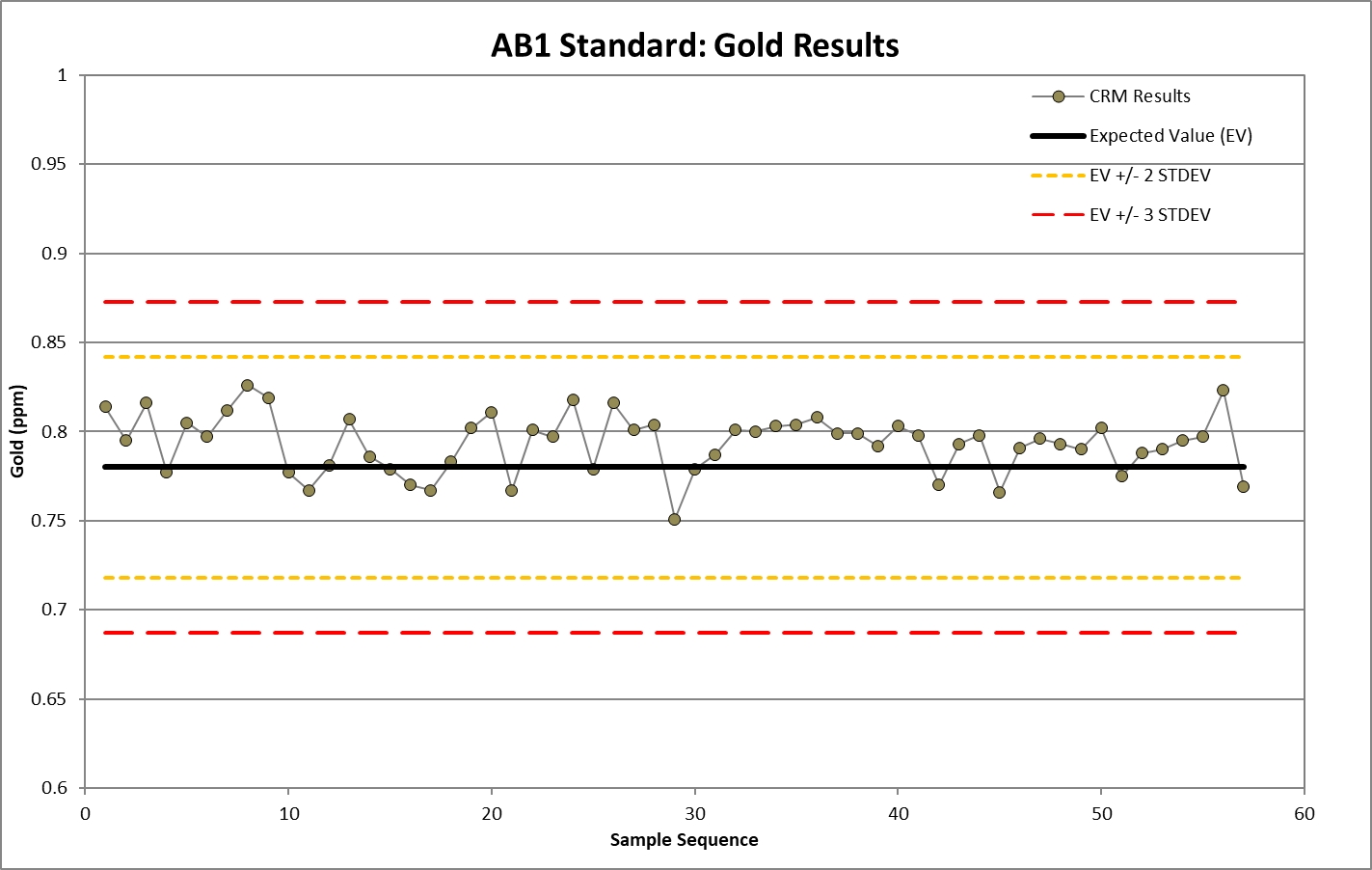
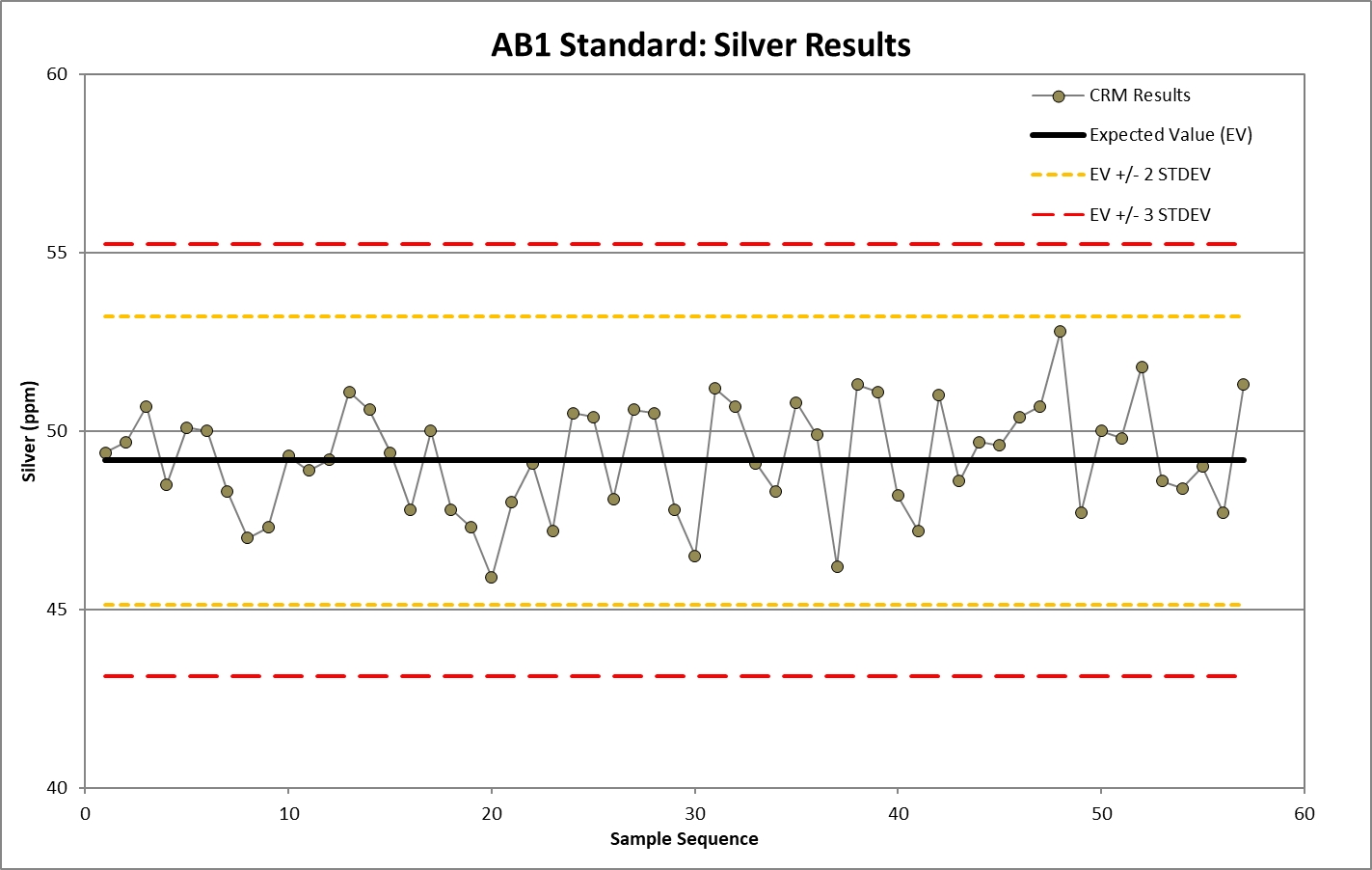
Figure 8‑7: AB1 Standard Results
69
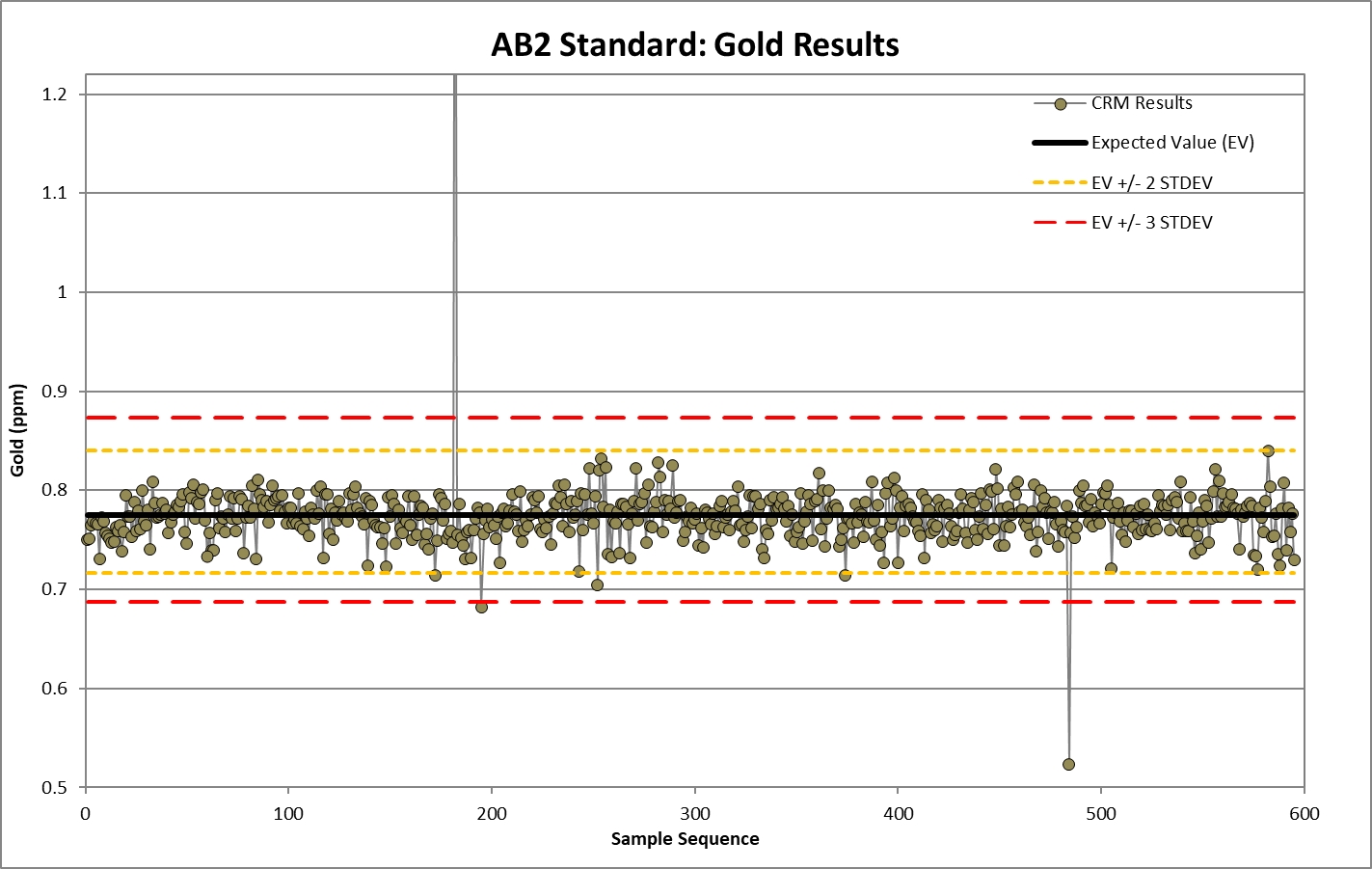
Figure 8‑8: AB2 Standard Results
70
Figure 8‑9: AB3 Standard Results
71
Figure 8‑10: AB4 Standard Results
72
Figure 8‑11: AM Standard Results
73
Figure 8‑12: AM2 Standard Results
74
Figure 8‑13: AM3 Standard Results
75
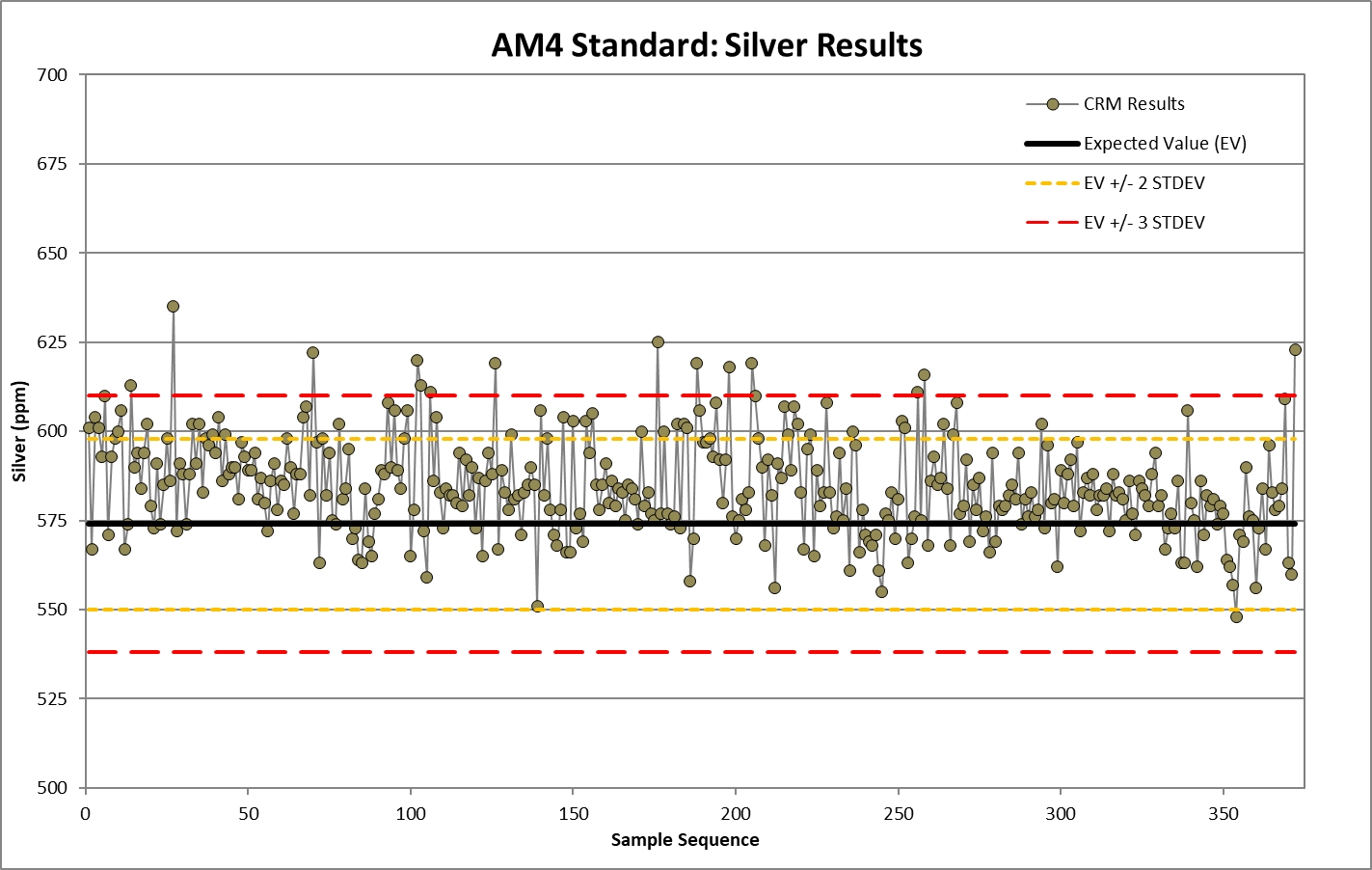
Figure 8‑14: AM4 Standard Results
76
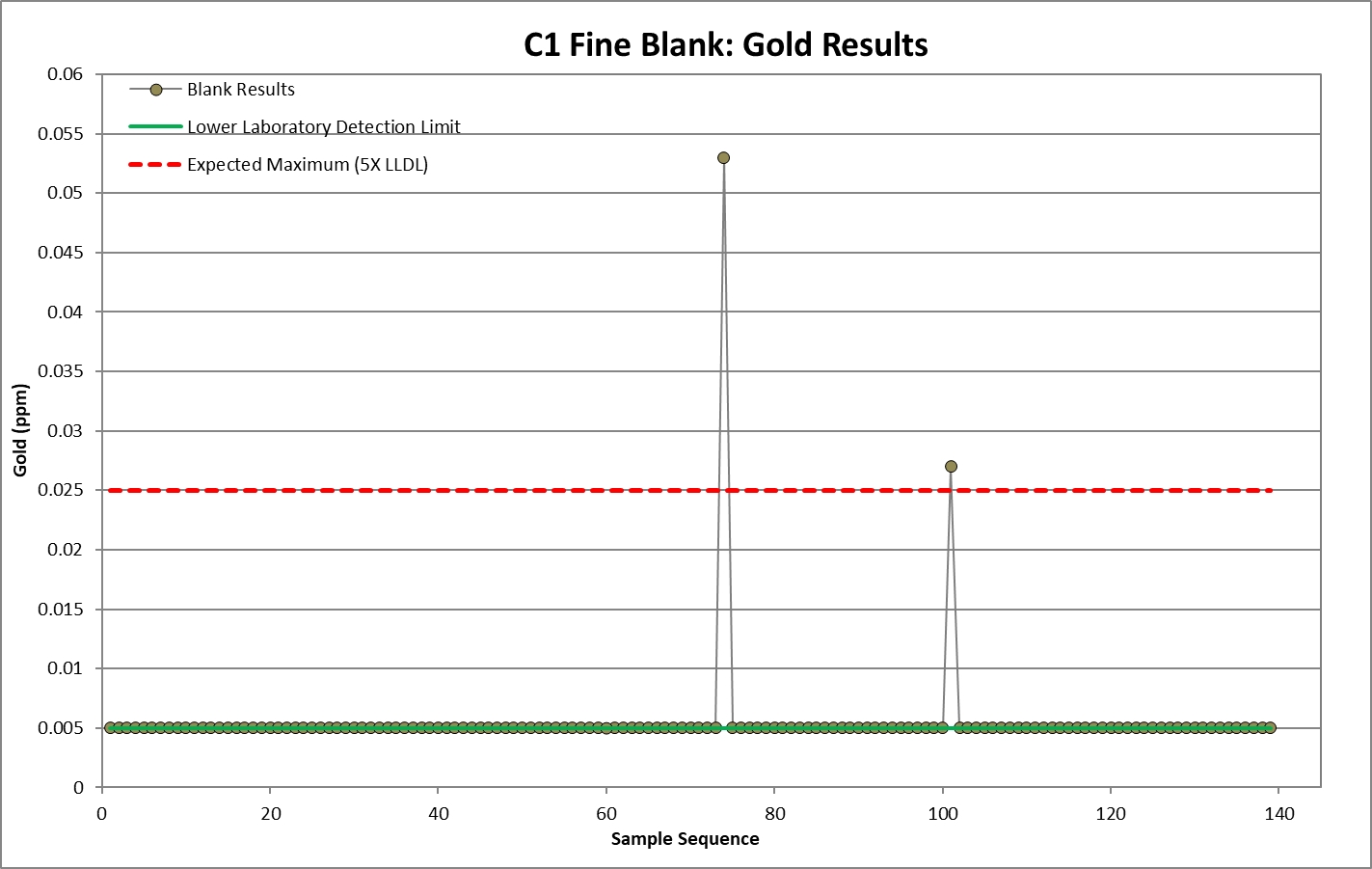
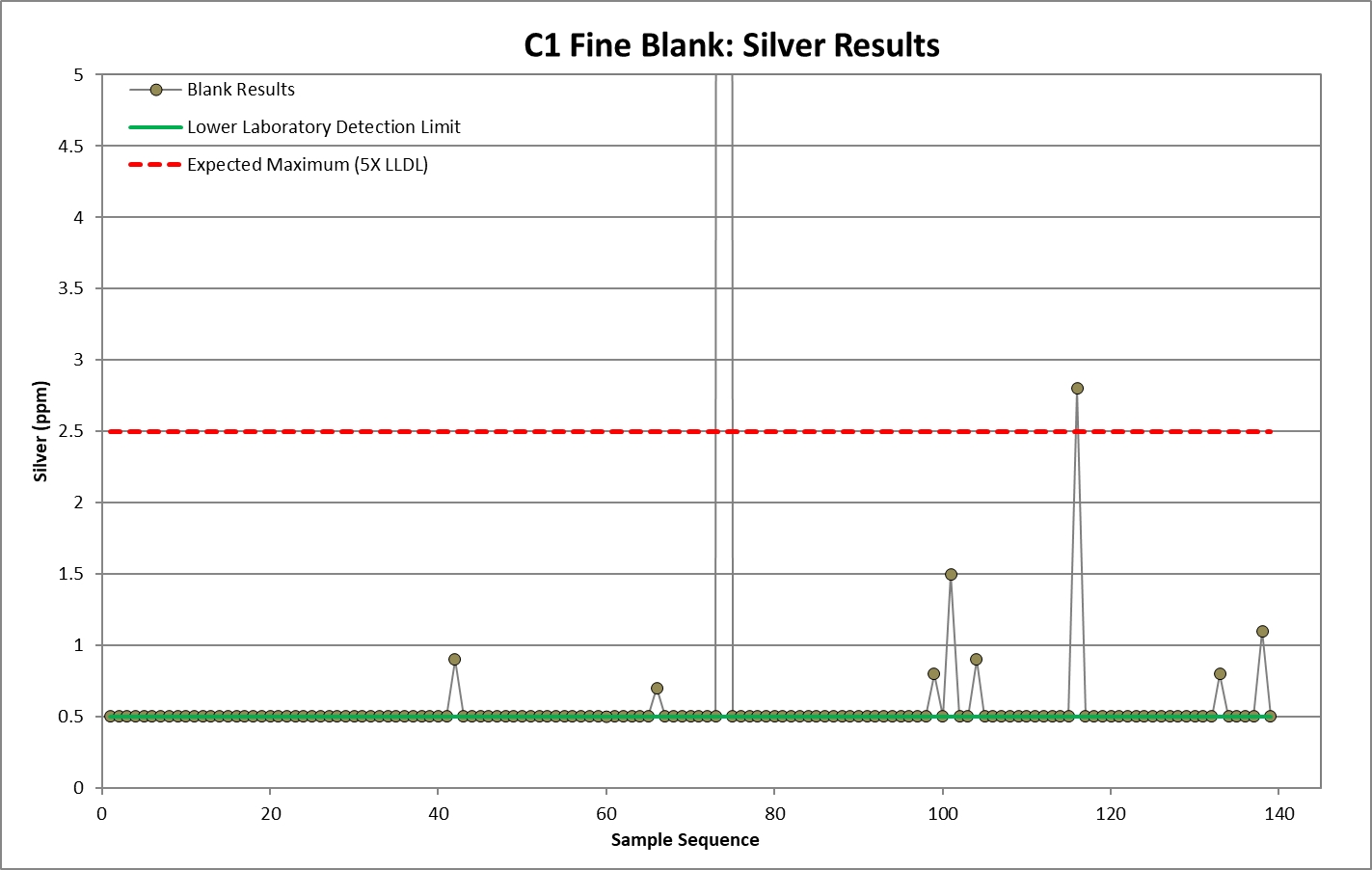
Figure 8‑15: C1 Fine Blank Results
78
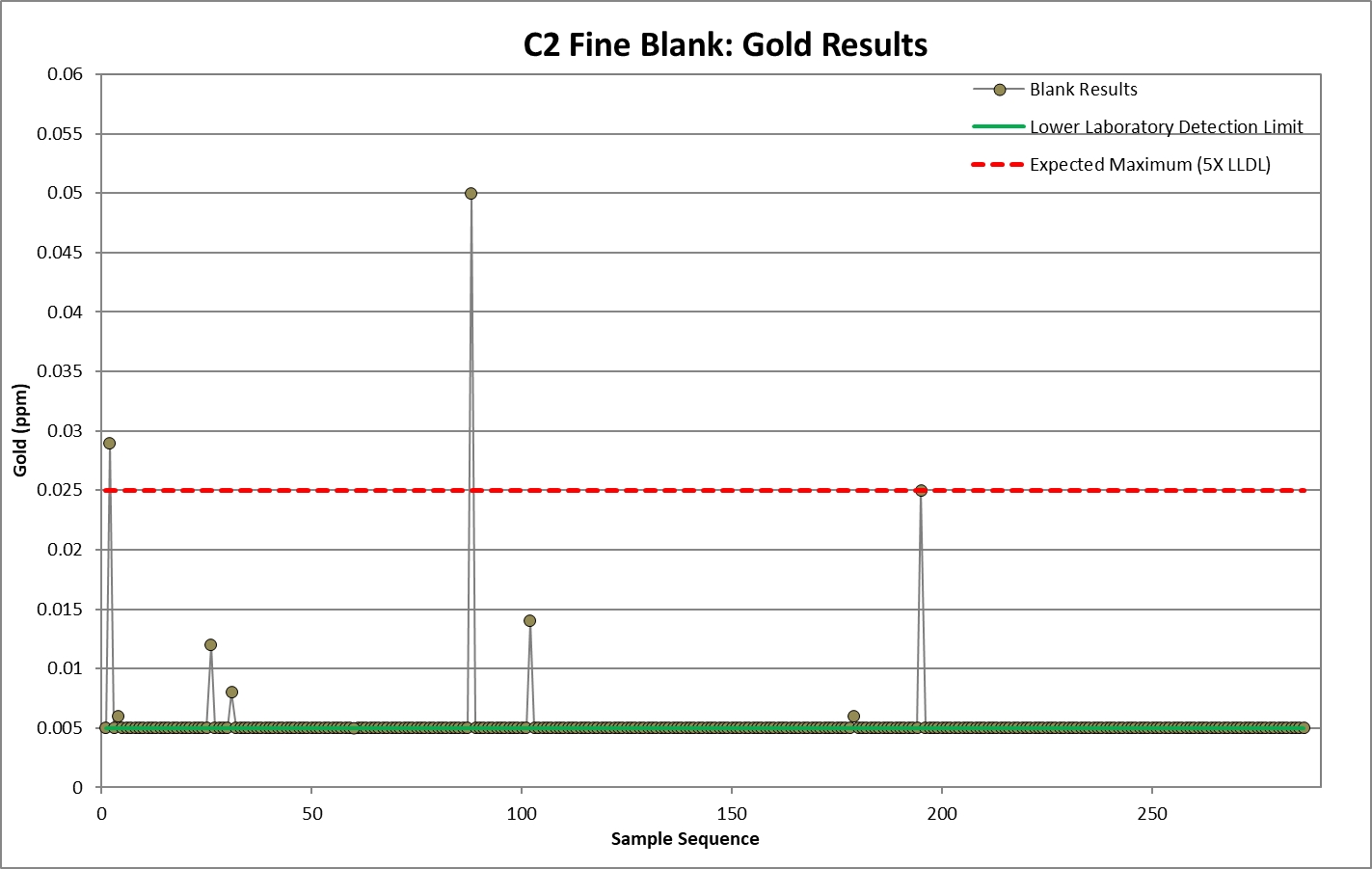
Figure 8‑16: C2 Fine Blank Results
79
Figure 8‑17: C3 Coarse Blank Results
80
Figure 8‑18: C4 Coarse Blank Results
81
Figure 8‑19: C5 Fine Blank Results
82
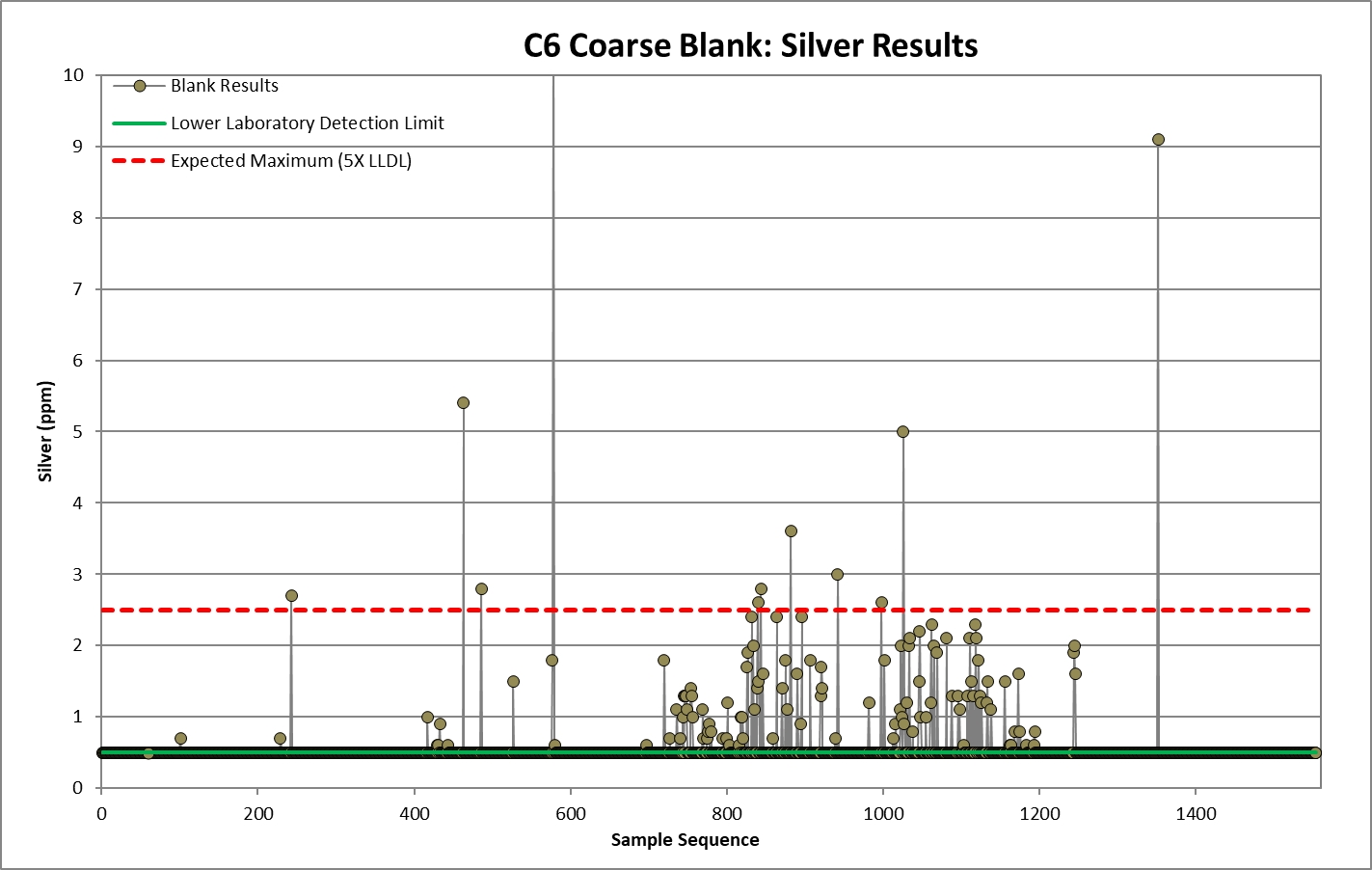
Figure 8‑20: C6 Coarse Blank Results
83
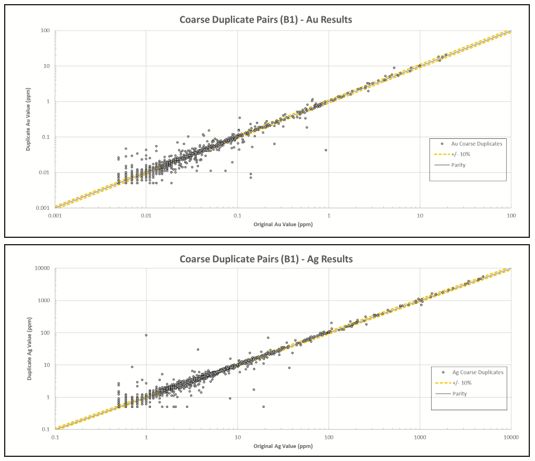
Figure 8‑21: Summary of Coarse Duplicate (B1) Results
86
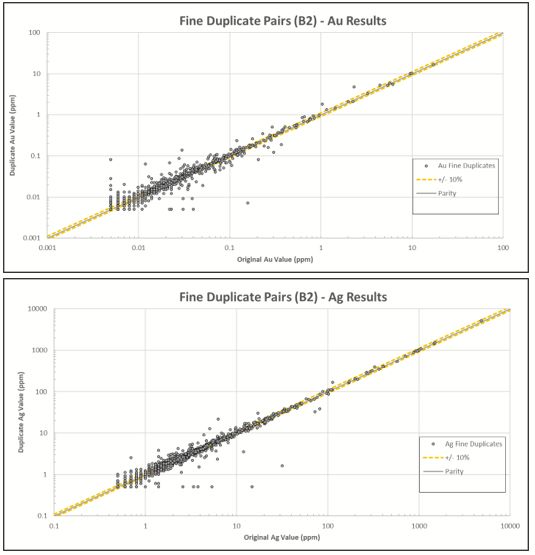
Figure 8‑22: Summary of Fine Duplicate (B2) Results
87
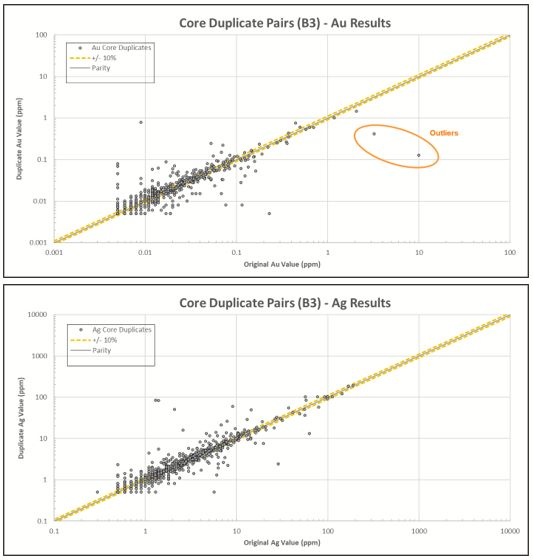
Figure 8‑23: Summary of Quarter Core Duplicate (B3) Results
88
Figure 8‑24: HARD Values for Coarse Duplicate (B1) Results
90
Figure 8‑25: HARD Values for Fine Duplicate (B2) Results
91
Figure 8‑26: HARD Values for Quarter Core Duplicate (B3) Results
92
Figure 8‑27: Summary of Check Assay (UA) Results
93
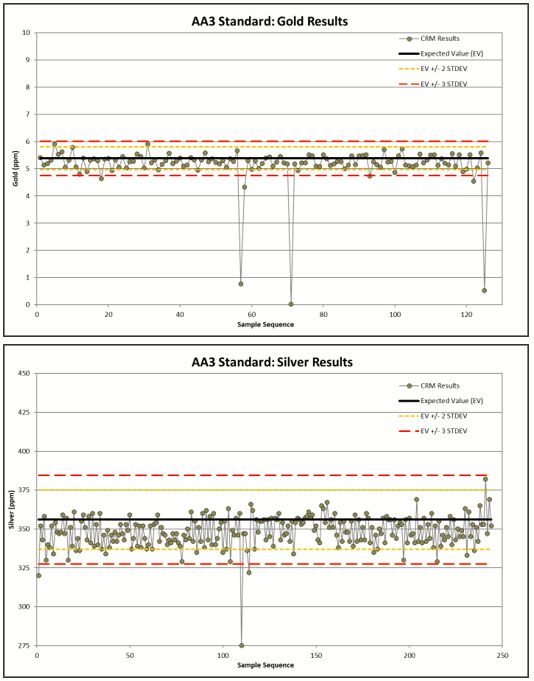
Figure 8‑28: AA3 Standard Results – Re-Analysis Samples
96
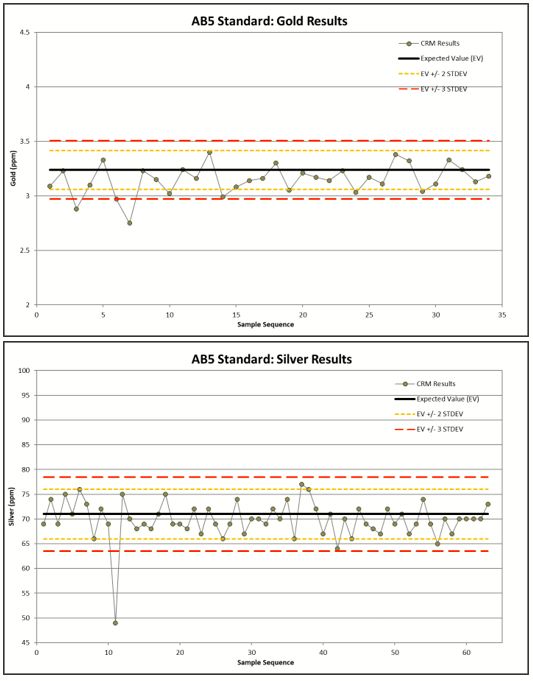
Figure 8‑29: AB5 Standard Results – Re-Analysis Samples
97
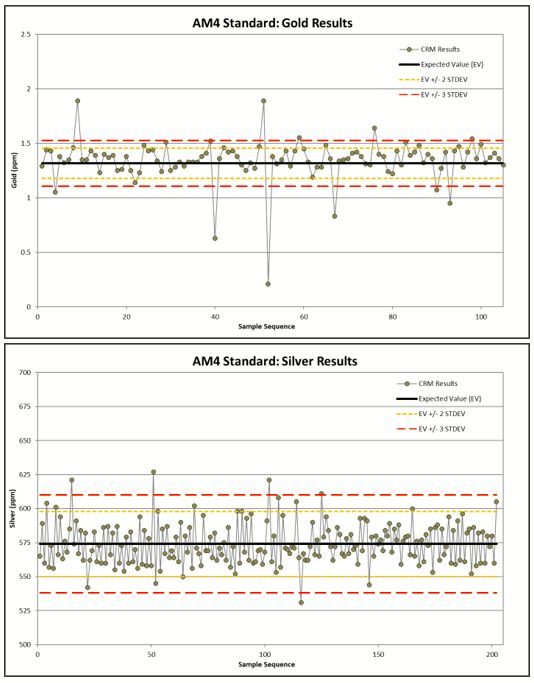
Figure 8‑30: AM4 Standard Results – Re-Analysis Samples
98
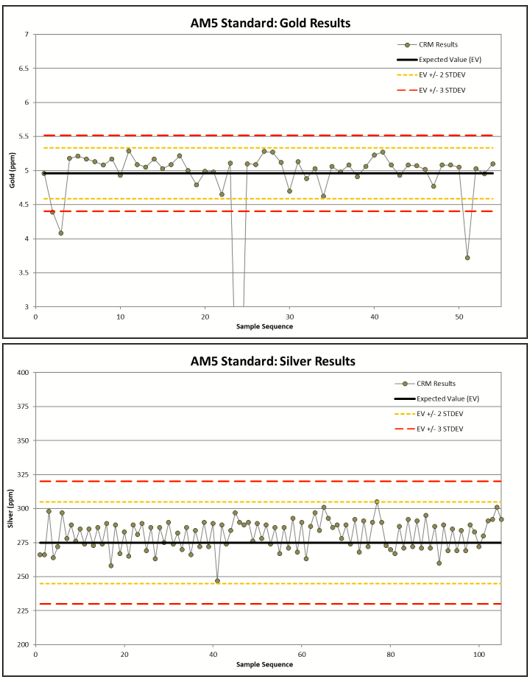
Figure 8‑31: AM5 Standard Results – Re-Analysis Samples
99
Figure 8‑32: C5 Fine Blank Results by ME-GRA21/ 22 – Re-Analysis Samples
100
Figure 8‑33: C6 Coarse Blank Results by ME-GRA21/ 22 – Re-Analysis Samples
101
Figure 8‑34: C5 Fine Blank Results by ME-OG62 – Re-Analysis Samples
102


Sinda_TRS_SK1300_Report_USPR002400_Rev02
January 2026

SRK Consulting (U.S.), Inc.
SEC Technical Report Summary – Sinda Project
Page x
Figure 8‑35: C6 Coarse Blank Results by ME-OG62 – Re-Analysis Samples
103
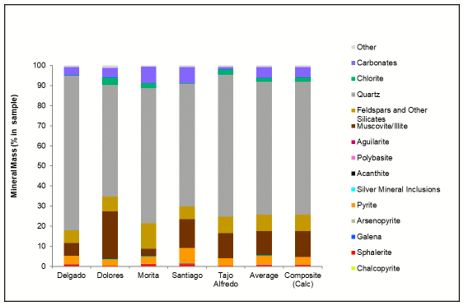
Figure 10‑1: Modal Mineralogy of Five Veins and Master Composite
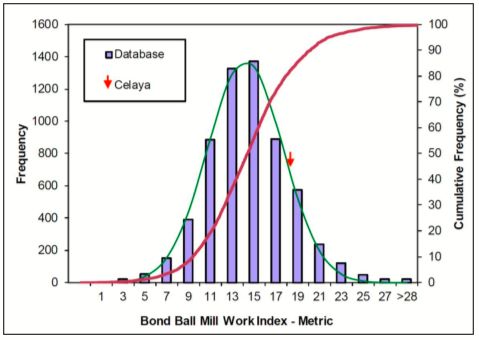
111
Figure 10‑2: Hardness Frequency Profile for the Master Composite
112
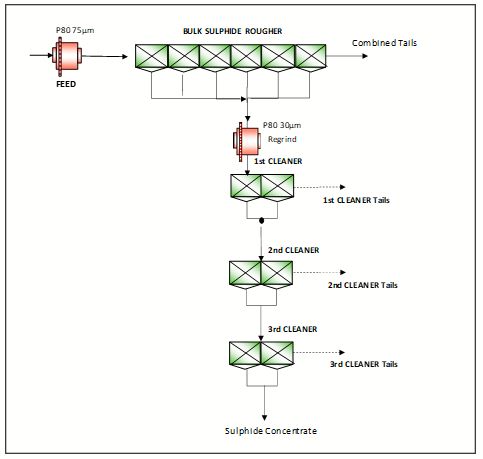
Figure 10‑3: Flotation Test Program Flowsheet
119
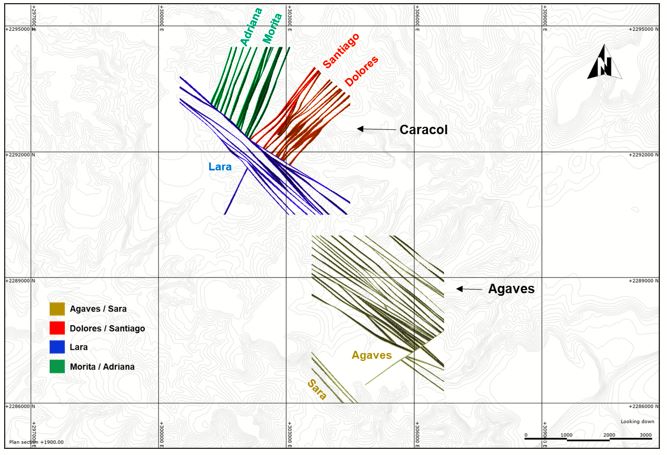
Figure 11‑1: Plan View of Sinda Geological Model Domains
129
Figure 11‑2: Plan View of Sinda Geological Model Domains – Caracol
130
Figure 11‑3: Plan View of Sinda Geological Model Domains – Agaves
131
Figure 11‑4: Cross-Section of Caracol Geological Domains, Looking Northeast
132
Figure 11‑5: Histogram Plots of Ag and Au, Raw Sampled Data
137
Figure 11‑6: Cumulative Probability Plots of Ag and Au, Raw Sampled Data
138
Figure 11‑7: Histogram Plot of Drill Hole Sample Length, Un-composited, All Data
139
Figure 11‑8: Histogram Plot of Length After Vein Width Compositing, Inside Wireframes and All Data
140
Figure 11‑9: Log Probability Plot Capping Analysis for Ag, Au, and Cu in Dolores/Santiago
143
Figure 11‑10: Log Probability Plot Capping Analysis for Pb, Zn, and As in Dolores/Santiago
144
Figure 11‑11: Box and Whisker Plots for Ag by Domain
150
Figure 11‑12: Box and Whisker Plots for Au by Domain
151
Figure 11‑13: Grouped Histogram of Ag and Au by Domain
152
Figure 11‑14: Plan Map of Block Model Boundaries - Caracol
156
Figure 11‑15: Plan Map of Block Model Boundaries - Agaves
157
Figure 11‑16: Plan View of Classification Distance Buffers to Composites – Caracol
165
Figure 11‑17: Long Section View, Looking N, of Classified Block Ag Grades – Dolores
166
Figure 11‑18: Long Section View, Looking N, of Classified Block Ag Grades – Morita
167
Figure 11‑19: Grade Tonnage Chart of Indicated Material – Dolores
172
Figure 11‑20: Grade Tonnage Chart of Inferred Material – Dolores / Santiago
173
Figure 11‑21: Grade Tonnage Chart of Inferred Material – Lara
173
Figure 11‑22: Grade Tonnage Chart of Inferred Material – Morita / Adriana
174
Figure 11‑23: Grade Tonnage Chart of Inferred Material – Agaves
174
Figure 17‑1: Presa Neutla ANP Map
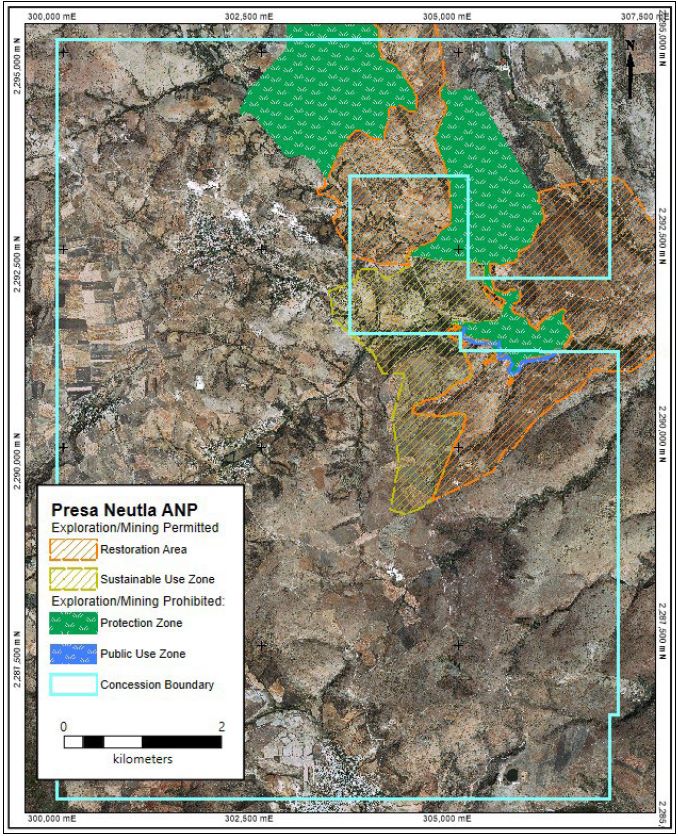
183
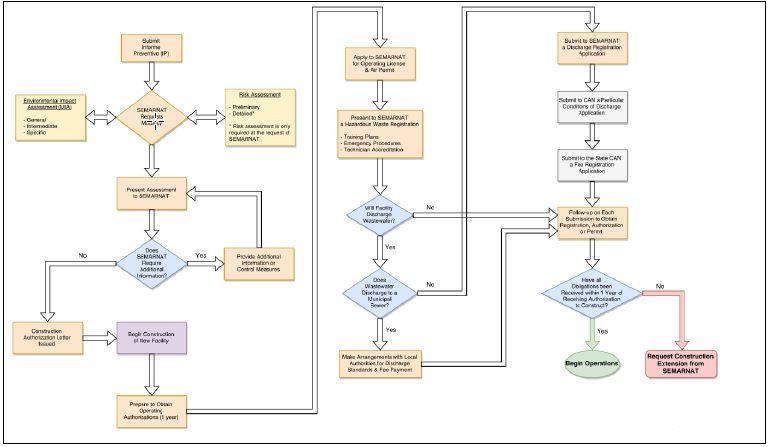
Figure 17‑2: General SEMARNAT Construction and Startup Authorization Process
186
 

Sinda_TRS_SK1300_Report_USPR002400_Rev02
January 2026

SRK Consulting (U.S.), Inc.
SEC Technical Report Summary – Sinda Project
Page xi
List of Abbreviations

Abbreviation
Unit or Term
AA
atomic absorption
ANFO
ammonium nitrate fuel oil
Ag
silver
Au
gold
°C
degrees Centigrade
CoG
cut-off grade
cm
centimeter
cm3
cubic centimeter
°
degree (degrees)
dia.
diameter
g
gram
gpm
gallons per minute
g/t
grams per tonne
ha
hectares
HDPE
High Density Polyethylene
ICP
induced couple plasma
IFC
International Finance Corporation
kg
kilograms
km
kilometer
km2
square kilometer
kt
thousand tonnes
kV
kilovolt
kW
kilowatt
kWh/t
kilowatt-hour per metric tonne
LHD
Load-Haul-Dump
LoM
Life-of-Mine
m
meter
m2
square meter
m3
cubic meter
m3/s
cubic meters per second
m3/y
cubic meters per year
masl
meters above sea level
mm
millimeter
mm2
square millimeter
mm3
cubic millimeter
mm/y
millimeters per year
MME
Mine & Mill Engineering
Mm3
million cubic meters
Moz
million troy ounces
Mt
million tonnes
MW
million watts
m.y.
million years
NGO
non-governmental organization
NI 43-101
Canadian National Instrument 43-101
OSC
Ontario Securities Commission
oz
troy ounce
%
percent
PLC
Programmable Logic Controller
PLS
Pregnant Leach Solution
PMF
probable maximum flood
ppb
parts per billion
ppm
parts per million
QA/QC
Quality Assurance/Quality Control
RC
rotary circulation drilling


Sinda_TRS_SK1300_Report_USPR002400_Rev02
January 2026

SRK Consulting (U.S.), Inc.
SEC Technical Report Summary – Sinda Project
Page xii
Abbreviation
Unit or Term
RoM
Run-of-Mine
RQD
Rock Quality Designation
SG
specific gravity
t
tonne (metric ton) (2,204.6 pounds)
t/h
tonnes per hour
t/d
tonnes per day
t/y
tonnes per year
TSF
tailings storage facility
µm
micron or microns
V
volts
W
watt
y
year
/y
per year


Sinda_TRS_SK1300_Report_USPR002400_Rev02
January 2026

SRK Consulting (U.S.), Inc.
SEC Technical Report Summary – Sinda Project
Page 13
1
Executive Summary
 
This report was prepared as a Technical Report Summary (TRS) in accordance with the U.S. Securities and Exchange Commission (SEC) S-K regulations (Title 17, Part 229, Items 601 and 1300 until 1305) for Sinda, LTD. (Sinda or the Company) by SRK Consulting (U.S.), Inc. (SRK) on the Sinda Project (the project) located in Guanajuato, Mexico.
 
1.1
Property Description (Including Mineral Rights) and Ownership
 
The Project is in central Mexico, 38 kilometers (km) north of the town of Celaya (population of approximately 310,000) and 15 km west of Comonfort, in the southeast quadrant of Guanajuato State. The Sinda Project is approximately 290 km northwest of Mexico City and 45 km southeast of the Guanajuato Mining District. The Project is 100 percent (%) controlled by Sinda and is contained within 6,232 hectares (ha) of exploration concessions.
 
1.2
Geology and Mineralization
 
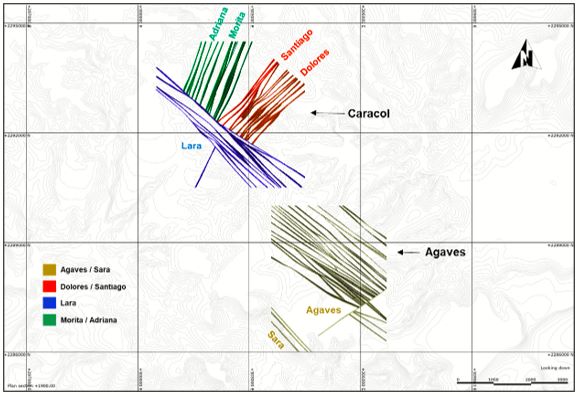
The Sinda deposits are comprised of multiple low-sulfidation epithermal vein systems with high-grade silver (Ag) and gold (Au) mineralization, along with accessory copper (Cu), lead (Pb) and zinc (Zn). Sinda estimates the combined strike lengths of vein systems within the exploration trends exceeds 110 km at the Sinda Project. Six vein systems are evaluated in the Mineral Resource estimate (MRE): Dolores, Morita, Santiago, Lara, Adriana and Agaves. The northern area of the Sinda Project hosting Dolores, Morita, Santiago, Lara and Adriana veins is also referred to collectively as the Caracol target area. The Agaves vein system is located approximately 4 km southeast of Caracol.
 
SRK has incorporated Sinda-provided geologic interpretations from the Company’s internal experts. Sinda is considered to be an extension of the Guanajuato Trend, which hosts Ag-rich, polymetallic mines exploiting epithermal veins. Understanding of this type of deposit style is well advanced with many technical and academic publications detailing alteration, litho-geochemical controls, spatial mineral associations, and genesis (e.g., Buchanan, 1981).
 
The deposit morphology shows a strong regional structural control to mineralization with three primary orientations: northeast-southwest, north-south, and northwest-southeast. Overall, mineralization observed within the primary exploration trends is reported to be similar, as the vein systems formed contemporaneously by analogous geological processes. Noteworthy post-mineralization structural dismemberment is reported to offset certain vein system segments, particularly in the Agaves area.
 
The current geological understanding is considered sufficient for conceptual exploration targeting, geological modeling, and resource estimation of the Sinda deposits.
 
1.3
Status of Exploration, Development, and Operations
 
Since late 2016, Sinda has explored the Project, targeting high-grade silver and gold mineralization hosted in the epithermal veins. At the time of reporting, additional drilling was started outside of the Resource area, which has not been reviewed. This Technical Report is focused on a MRE for only the Dolores, Morita, Santiago, Lara, Adriana and Agaves vein systems at Sinda.
 

Sinda_TRS_SK1300_Report_USPR002400_Rev02
January 2026

SRK Consulting (U.S.), Inc.
SEC Technical Report Summary – Sinda Project
Page 14
In 2015, Golden Minerals Company (Golden) completed five drill holes totaling 2,679 meters (m) at Sinda (Golden, 2018). Golden signed an earn‐in agreement with a subsidiary of Minera Adularia International Ltd. (Minera Adularia Exploración) in 2016. The Sinda Project is currently 100% owned and controlled by Minera Adularia, an affiliate of Sinda, LTD.
 
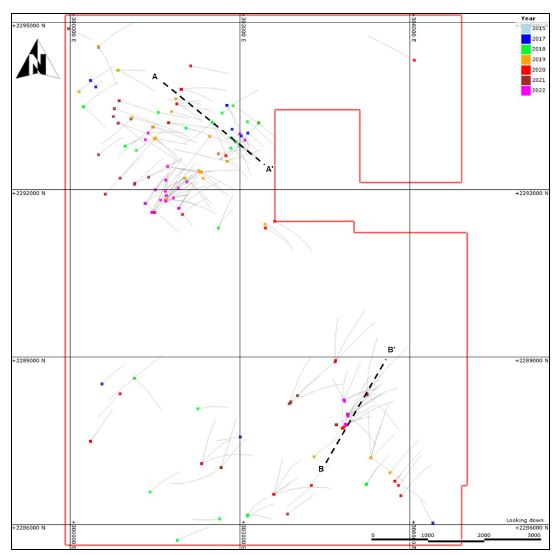
Since drilling commenced, a total of 232,522 m from 221 drill holes were completed at Sinda as of the January 11, 2023, database cut-off date. No further data was available for the current MRE. Within the Resource area at Sinda, a subset of 178 sampled drill holes defined the estimation domains with a total of 7,399.1 m of assayed intercepts crossing the modeled vein wireframes. In total, 1,760 individual vein width composites define 112 vein wireframes in the Resource area. Outside of the Sinda Resource area, 39 drill holes explored additional potential vein systems that do not define any current estimation domains. No previous artisanal metal mining operations, nor additional historical drilling campaigns are known to have occurred at Sinda.
 
SRK independently reviewed the core sampling, cutting, logging, sample preparation, security, and laboratory analytical procedures followed at Sinda during the July 2021 site visit. The exploration and sampling protocols practiced by Sinda are consistent with or exceed generally accepted industry practice and are deemed adequate for the project stage. In the opinion of the SRK Qualified Person (QP) for Mineral Resources, the Sinda drilling data are sufficiently accurate and reliable to inform the MRE of the Project.
 
For future targeting of Sinda exploration areas, SRK tabulated quantities of conceptual Exploration Targets, exclusive of Mineral Resources, using reasonable techniques for estimating speculative tonnages and grades. Globally, the conceptual Exploration Targets range from about 32 to 37 million tonnes (Mt) at grades ranging from 400 to 440 grams per tonne (g/t) silver equivalent (AgEq). For these high-level estimates, the AgEq calculations assumed a silver price of US$32.00/ounce (oz) and a gold price of US$2,750/oz, independent of potentially variable metallurgical recovery by metal, as recovery is assumed to be relatively equal for AgEq purposes. These potential quantity and grade ranges are conceptual in nature and insufficient exploration has been conducted to define this material as a Mineral Resource. It is uncertain whether further exploration will result in these Exploration Target estimates being delineated as Mineral Resources or converted to Mineral Reserves in the future. In SRK’s opinion, the areas encompassing this conceptual material tabulation should be considered as potential for further exploration and a focus of future evaluation work programs.
 
In addition to the Caracol and Agaves vein systems, exploration prospecting on the Sinda concessions has revealed other potential vein targets. Sinda is continuing to follow-up on local and regional exploration potential. Further drilling has the potential to develop additional Mineral Resources and increase confidence within existing Mineral Resources. Moreover, additional step-out and regional exploration drilling at Sinda has the potential to discover economic mineralization in areas where no modern exploration has occurred in a prospective area.
 
1.4
Mineral Resources
 
The Mineral Resource presented herein represents an evaluation of six vein systems at the Sinda Project: Dolores, Morita, Santiago, Lara, Adriana and Agaves. The resource estimation methodology conducted by SRK involved the following procedures:
 

Database review

Data conditioning (capping and compositing) for statistical analysis

Block modeling and grade interpolation

Resource classification and validation


Sinda_TRS_SK1300_Report_USPR002400_Rev02
January 2026

SRK Consulting (U.S.), Inc.
SEC Technical Report Summary – Sinda Project
Page 15

Assessment of “reasonable prospects for economic extraction” (RPEE) and application of appropriate reporting cut-off grade (CoG)

Preparation of the Mineral Resource statement
 
SRK has defined the Mineral Resource based on a CoG of 150 g/t AgEq derived from assumed economics for underground mining potential. The effective date of the Mineral Resource
 
(November 24, 2025) reflects the recent update to AgEq calculation formulas in the current block model. The underlying block grade estimates are unchanged from the Mineral Resource Estimate reported previously for internal use by Sinda with an effective date of February 16, 2023. The estimation was constrained within discrete vein domains interpreted by Sinda based on geology and grade. Sinda targeted 2 m minimum thickness during vein wireframe construction which considers likely mining dilution.
 
Mineral Resources are not Mineral Reserves and do not have demonstrated economic viability. There is no certainty that all or any part of the Mineral Resources will be converted into Mineral Reserves in the future. The Mineral Resource estimate may be materially affected by changes to the geological, geotechnical, and geometallurgical models, infill drilling to convert material to higher classification, drilling to test for extensions to known Mineral Resources, collection of additional bulk density data, significant changes to commodity prices, and by environmental permitting, legal, title, taxation, socio-political, marketing, or other relevant issues.
 
The Sinda Project Mineral Resource statement is presented in Table 1‑1.
 

Sinda_TRS_SK1300_Report_USPR002400_Rev02
January 2026

SRK Consulting (U.S.), Inc.
SEC Technical Report Summary – Sinda Project
Page 16
Table 1‑1: Sinda Underground (U/G) Mineral Resource Estimate at 150 g/t AgEq Cut-off Grade as of November 24, 2025 – SRK Consulting (U.S.), Inc.
 
 
Classification
 
Vein
Tonnage
('000 t)
 
Ag
Grade
(g/t)
 
Au
Grade
(g/t)
 
AgEq
Grade
(g/t)
 
Contained
Metal Ag
(000 oz)
 
Contained
Metal Au
(000 oz)
 
Contained
Metal
AgEq
(000
oz)
 
 
Indicated
 
Dolores
711
 
432
 
3.02
 
692
 
9,870
 
69
 
15,797
 
 
Total Indicated
   
711
 
432
 
3.02
 
692
 
9,870
 
69
 
15,797
 
 
Inferred
 
Adriana
129
 
147
 
0.19
 
163
 
609
 
0.8
 
676
 
Agaves
10,250
 
267
 
0.86
 
341
 
87,966
 
283
 
112,320
 
Dolores
5,326
 
214
 
1.90
 
377
 
36,610
 
325
 
64,540
 
Lara
8,799
 
260
 
1.77
 
412
 
73,557
 
500
 
116,549
 
Morita
4,503
 
277
 
1.58
 
413
 
40,064
 
229
 
59,745
 
Santiago
737
 
490
 
1.84
 
648
 
11,601
 
44
 
15,351
 
 
Total Inferred
   
29,615
 
263
 
1.45
 
388
 
250,407
 
1,382
 
369,180
 
Source: SRK, 2025
Notes:

Mineral Resources are not Mineral Reserves and do not have demonstrated economic viability. There is no certainty that all or any part of the mineral resources will be converted into mineral reserves in the future. There has been insufficient exploration to define the Indicated and Inferred Resources tabulated above as Measured Mineral Resource. The Mineral Resource estimate may be materially affected by changes to the geological, geotechnical, and geometallurgical models, infill drilling to convert material to higher classification, drilling to test for extensions to known Mineral Resources, collection of additional bulk density data, significant changes to commodity prices, and by environmental permitting, legal, title, taxation, socio-political, marketing, or other relevant issues.

The definitions for Mineral Resources in S-K 1300 were followed for the classification of Mineral Resources, which are consistent with the classification scheme under the CRIRSCO standards.

Mineral Resources with reasonable prospects for economic extraction stated as contained within estimation domains above a 150 g/t AgEq cut-off.

Cut-off grade calculations considered a silver price of US$32.00/oz and gold price of US$2750.00/oz, variable metallurgical recoveries based on available data (Ag at 94% from an overall average of testwork to-date), mining cost of US$75.00/t, process and tailings cost of US$20.00/t, G&A costs of US$10.00/t, treatment, refining, freight and marketing costs of US$2.00/oz, and Ag payability of 97.5%.

AgEq calculations assumed silver price of US$32.00/oz and gold price of US$2750.00/oz., independent of potentially variable metallurgical recovery by metal, as recovery is assumed to be equal for both Ag and Au for purposes of AgEq. Calculated AgEq = ((Ag grade * 32.00 ÷ 31.10348) + (Au grade * 2750.00 ÷ 31.10348)) ÷ (32.00 ÷ 31.10348).

All quantities are rounded to the appropriate number of significant figures; consequently, sums may not add up due to rounding.
 
1.5
Mineral Reserve Estimate
 
No Mineral Reserves have been established for this project given the current level of exploration and study.
 
1.6
Mining Methods
 
As no Mineral Reserves have been established for this project given the current level of exploration and study, there is no detailed analysis of mining methodology contemplated. The definition of reasonable potential for economic extraction currently considers a selective cut and fill underground mining method with generalized parameters.
 
1.7
Recovery Methods
 
No Mineral Reserves have been established for this project given the current level of exploration and study. As such, no detailed studies have been conducted relevant to processing or recovery methods.
 
1.8
Project Infrastructure
 
This work has not been conducted due to the current project stage and is not required for this report.
 

Sinda_TRS_SK1300_Report_USPR002400_Rev02
January 2026

SRK Consulting (U.S.), Inc.
SEC Technical Report Summary – Sinda Project
Page 17
1.9
Environmental Studies and Permitting
 
Sinda is conducting mineral exploration under a valid Preventive Report (IP) submitted to SEMARNAT (Secretaria de Medio Ambiente y Recursos Naturales) in 2024, with drill platforms permitted for identified vein systems and new targets. Exploration in the Presa Neutla Protected Natural Area is authorized separately. A new Environmental Impact Statement was submitted in June 2025, with authorization expected in Q1 2026.
 
Current mineral concessions cover 6,232 ha in Guanajuato under five lots, with a mix of private and ejido-controlled land. The regulatory framework includes the General Law of Ecological Equilibrium and the Protection of the Environment, with SEMARNAT overseeing environmental permitting. Recent mining law reforms (May 2023) require new concessions to be granted via public bidding along with environmental, social, and labor authorizations. Concession holders must negotiate land access, conduct impact studies, and fulfill new water use and waste management regulations.
 
Environmental studies found area rocks have medium to low permeability, restricting aquifer zones to fractures. Water infrastructure in the project area includes wells and pits. Groundwater availability for new concessions is limited, indicated by a significant deficit in the Valle de Celaya aquifer. Water quality sampling showed iron and arsenic levels often exceed official limits.
 
Sinda operates in Comonfort and Juventino Rosas, directly present in nine communities and serving 8,000 to 10,000 residents. Programs support local productive capacities and education. According to National Institute of Indigenous Peoples, there are no Indigenous communities in the area of influence. The socio-territorial assessment identifies risks related to community perceptions, water access, agrarian dynamics, and external actors; no active social conflicts are documented. Sinda maintains permanent engagement through community centers, a social management plan, and alignment with international standards.
 
1.10
Capital and Operating Costs
 
No Initial Assessment has been conducted for the project at this stage.
 
1.11
Economic Analysis
 
No Initial Assessment has been conducted for the project at this stage.
 
1.12
Conclusions and Recommendations
 
Sinda represents an early-stage exploration project hosting multiple silver-gold epithermal vein occurrences. The modeled veins are open along strike and along dip and at depth in certain areas. Further drilling and additional sampling of completed drill holes has the potential to develop additional Mineral Resources and increase confidence in existing Mineral Resources. Additional step-out and regional exploration drilling at Sinda has the potential to discover economic mineralization in areas where no modern exploration has occurred in a prospective area.
 

Sinda_TRS_SK1300_Report_USPR002400_Rev02
January 2026

SRK Consulting (U.S.), Inc.
SEC Technical Report Summary – Sinda Project
Page 18
In the opinion of SRK, the results of the exploration work completed on the Sinda Project to date are of substantial technical merit to recommend additional exploration expenditures. The next exploration campaign should include a combination of in-fill drilling to improve known mineralization continuity, improve geological understanding, and collect structural geology data, and wider-spaced drilling to test the strike length extents of the most prospective vein systems. Additionally, Sinda should continue assaying unsampled core in areas where drill holes are projected through interpreted mineralized wireframes, as these intervals are currently assigned half detection limit values in the estimation.
 
A Mineral Resource has been delineated at Sinda and has been classified consistent with international reporting standards such as those defined by Committee for Mineral Reserves International Reporting Standards (CRIRSCO). At present, the predominantly Inferred classification reflects relative uncertainties with the current project data based on spacing of drilling and sampling thus far. SRK is of the opinion that significant opportunities exist to both expand the current resource and enhance confidence through additional drilling and sampling at Sinda.
 
In Section 23, SRK has provided recommendations for future work programs across a multi-disciplinary scope, including exploration, geology, mineral processing, metallurgical testing, geotechnical, mining, environmental, and permitting. The total costs for the recommended work program to advance the project and progress toward an Initial Assessment (IA) report are estimated at approximately US$198 million.
 

Sinda_TRS_SK1300_Report_USPR002400_Rev02
January 2026

SRK Consulting (U.S.), Inc.
SEC Technical Report Summary – Sinda Project
Page 19
2
Introduction
 
This report was prepared as a TRS for Sinda, LTD (Sinda or the Company) by SRK Consulting (U.S.), Inc. (SRK or the Consultants) on the Sinda Project (Sinda or the Project). Previously, the Project was referred to as Celaya.
 
2.1
Registrant for Whom the Technical Report Summary was Prepared
 
This TRS was prepared for Sinda by SRK in accordance with the SEC S-K regulations (Title 17, Part 229, Items 601 and 1300 through 1305).
 
2.2
Terms of Reference and Purpose of the Report
 
The quality of information, conclusions, and estimates contained herein are consistent with the level of effort involved in SRK’s services, based on i) information available at the time of preparation, and ii) the assumptions, conditions, and qualifications set forth in this report. This report is intended for use by Sinda subject to the terms and conditions of its contract with SRK and relevant securities legislation. The contract permits Sinda to file this report as a TRS with United States securities regulatory authorities pursuant to the SEC S-K regulations, more specifically Title 17, Subpart 229.600, item 601(b)(96) - Technical Report Summary and Title 17, Subpart 229.1300 - Disclosure by Registrants Engaged in Mining Operations. Except for the purposes legislated under local securities law, any other uses of this report by any third party are at that party’s sole risk. The responsibility for this disclosure remains with Sinda.
 
The effective date of this report is November 24, 2025.
 
The TRS is preliminary in nature, in that it includes Inferred mineral resources that are considered too speculative geologically to have the economic considerations applied to them that would enable them to be categorized as mineral reserves, and there is no certainty that the TRS will be realized. Mineral resources that are not mineral reserves do not have demonstrated economic viability.
 
2.2.1
Purpose of Report
 
The purpose of this TRS on the Sinda Project is to provide an updated technical report addressing advances made on the property with respect to updated pricing and related reporting criteria.
 
The intent of this technical report is to provide the reader with a comprehensive review of the historical and current exploration activities conducted at the Sinda Project and an independent assessment of the contained mineral resources for the project as of the effective date of this report. The technical work described herein, and the technical report itself are prepared using industry-accepted practices, standards, and definitions within the Committee for Mineral Reserves International Reporting Standards (CRIRSCO) guidelines.
 
2.3
Sources of Information
 
This report is based in part on internal Company technical reports, previous studies, maps, published government reports, internal letters and memoranda, and public information. The sources of information include historical data and reports compiled by previous consultants and researchers of the project and supplied by Sinda as cited throughout this report and listed in the References section (Section 24).
 

Sinda_TRS_SK1300_Report_USPR002400_Rev02
January 2026

SRK Consulting (U.S.), Inc.
SEC Technical Report Summary – Sinda Project
Page 20
The Consultant’s opinion contained herein is based on information provided to the Consultants by Sinda or their designees throughout the course of the investigations. SRK has relied on Sinda internal experts for details on regional geology and geological interpretations.
 
SRK has not performed an independent verification of land title and tenure information as summarized in Section 3 of this report, which was verified separately by Sinda legal counsel. SRK did not verify the legality of any underlying agreement(s) that may exist concerning the permits or other agreement(s) between Sinda and third parties. As such, SRK expresses no opinion as to the ownership status of the Project.
 
The report has been prepared using the documents noted in the References section (Section 24). The Consultants used their experience to determine if the information from previous reports was suitable for inclusion in this technical report and adjusted information that required amending. This report includes technical information that required subsequent calculations to derive subtotals, totals, and weighted averages. Such calculations inherently involve a degree of rounding and consequently introduce a margin of error. Where these occur, the Consultants do not consider them to be material.
 
2.4
Details of Inspection
 
SRK visited the Project site from July 26 to July 28, 2021. No material changes have occurred to the Project since the previous personal inspection. The field visit allowed independent observation of the property, geology, sampling procedures, infrastructure, and geomechanical aspects of the Project (Table 2‑1). Additionally, the QP site visits fulfilled typical requirements for disclosure and the required level of validation outlined by international guidelines.
 
Table 2‑1: Site Visit Participants
 
 
Company
 
Expertise
 
Date(s) of Visit
 
Details of Inspection
 
SRK
 
Geology
 
July 26-28, 2021
 
Overview audit
 
2.5
Report Version Update
 
The user of this document should ensure that this is the most recent TRS for the property. Any previous report is no longer valid if a new TRS has been issued.


Sinda_TRS_SK1300_Report_USPR002400_Rev02
January 2026

SRK Consulting (U.S.), Inc.
SEC Technical Report Summary – Sinda Project
Page 21
3
Property Description
 
3.1
Property Location
 
The Project is located in central Mexico, 38 km north of the town of Celaya (population of approximately 310,000) and 15 km west of Comonfort, in the southeast quadrant of Guanajuato state. The Sinda Project is approximately 290 km northwest of Mexico City and 45 km southeast of the Guanajuato Mining District (Figure 3‑1). The Universal Transverse Mercator (UTM) coordinates for the center of the Project are East 303,000 longitude and North 2,290,000 latitude with a variable elevation between 1,850 and 2,050 m above sea level (masl).
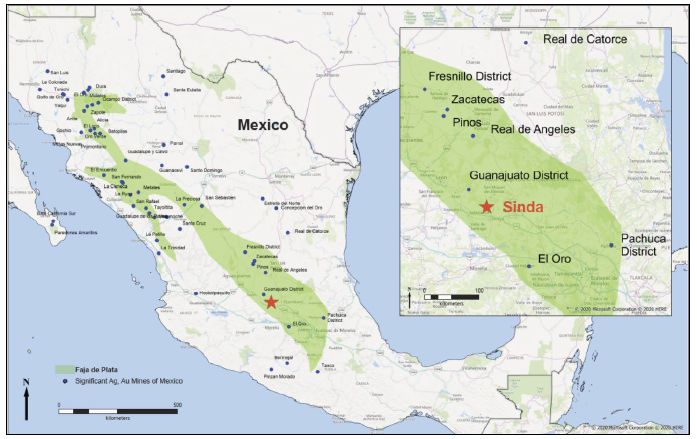
 
 
Source: SRK, 2025
Notes: Significant Mexican silver-gold mines noted by blue dots
 
Figure 3‑1: Location Map with Proximity to Major Silver Districts
 
3.2
Property Area
 
The Project area is centrally located in Mexico and crossed by major national highways and railways. Both the Pacific Ocean and Gulf of Mexico can be accessed equally, as well as major metropolitan areas, such as Monterrey, Mexico City, and Guadalajara. The accessibility of the region has led to growth in industrial manufacturing, especially the automotive sector, as an important economic segment.
 

Sinda_TRS_SK1300_Report_USPR002400_Rev02
January 2026

SRK Consulting (U.S.), Inc.
SEC Technical Report Summary – Sinda Project
Page 22
3.3
Mineral Title, Claim, Mineral Right, Lease, or Option Disclosure
 
3.3.1
Mineral Claims
 
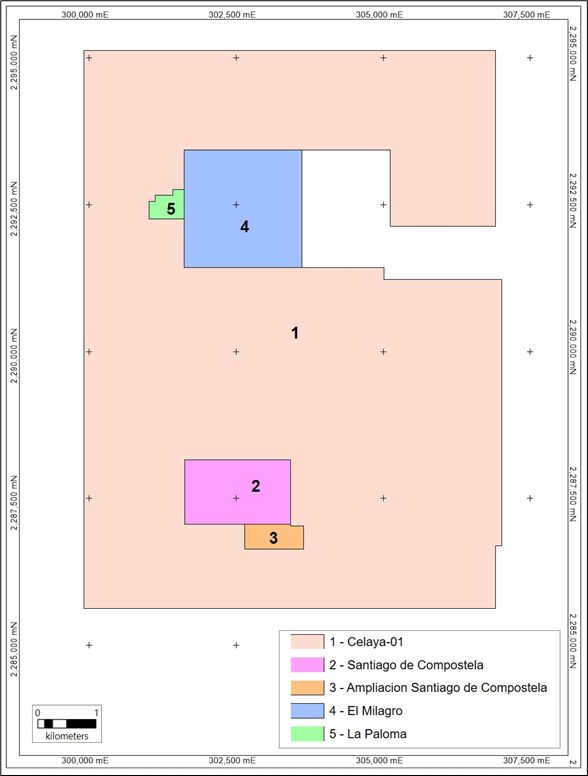
The Project is 100% controlled by Sinda and is contained within 6,232 ha of exploration concessions, summarized in Table 3‑1. A plan map of the Sinda Project boundary and concessions by type is provided as Figure 3‑2.
 
Table 3‑1: Exploration Concession Summary
 
No.
 
Lot
 
Holder
 
Surface
(ha)
 
Title
   
Type of
Concession
 
Term
 
Location
1
 
Celaya-01
 
Minera Adularia
Exploración, S. de
R.L. de C.V. (MAE)
 
5,566.74
 
232724
   
Mining
 
October 14,
2058
 
Santa Cruz de
Juventino Rosas,
Guanajuato
2
 
Santiago de
Compostela
 
Minera Adularia
Exploración, S. de
R.L. de C.V. (MAE)
 
198
 
219174
   
Mining
 
February 13,
2053
 
Santa Cruz de
Juventino Rosas,
Guanajuato
3
 
Ampliación
Santiago de
Compostela
 
Minera Adularia
Exploración, S. de
R.L. de C.V. (MAE)
 
41.9925
 
214657
   
Mining
 
October 25,
2051
 
Santa Cruz de
Juventino Rosas,
Guanajuato
4
 
El Milagro
 
Bernabé Silva
Sánchez (50%),
Agustín Mesita
(50%)
 
400
 
239753
   
Mining
 
January 27,
2053
 
Comonfort,
Guanajuato
5
 
La Paloma
 
Minera Adularia
Exploración, S. de
R.L. de C.V. (MAE)
 
 
24.9228
 
219235
   
Mining
 
February 19,
2053
 
Comonfort,
Guanajuato
 
Source: SRK, 2025
 

Sinda_TRS_SK1300_Report_USPR002400_Rev02
January 2026

SRK Consulting (U.S.), Inc.
SEC Technical Report Summary – Sinda Project
Page 23
 

Source: SRK, 2025
 
Figure 3‑2: Land Tenure Map


Sinda_TRS_SK1300_Report_USPR002400_Rev02
January 2026

SRK Consulting (U.S.), Inc.
SEC Technical Report Summary – Sinda Project
Page 24
3.3.2
Legal Surveys
 
The legal firm VHG Servicios Legales, S.C. (VHG), Mexico City, Mexico, was retained by Sinda to perform a due diligence (DD) focused on determining the current legal status, ownership, and validity of five mining concessions forming the Sinda Project. The legal title opinion was reported by VHG on August 13, 2021.
 
SRK has not performed an independent verification of land title and tenure information and expresses no opinion as to the ownership status of the Project.
 
3.3.3
Requirements to Maintain the Claims in Good Standing
 
The VHG title opinion report noted the following:
 

As Pursuant to that set forth in the Mining Law, holders of mining concessions are obliged to perform mining works in their concessions, taking into consideration for said purposes the minimum investment amounts provided for in the Regulations to the Mining Law.

Concessionaires that hold concessions covering a surface of more than 1,000 ha, also have the obligation to file before the DGM annual assessment works reports, during the month of May; concessionaires that hold less than 1,000 ha do not have this obligation. It is important to mention that the concessionaire must confirm if he has another mining concession, to know if he should or not comply with this obligation.

Notwithstanding the foregoing, it is of utmost importance to consider that the DGM may at any time verify the mining works within the lots; which would include the information contained in the reports submitted to such authority; should such be the case, also attend the inspection visit that must be carried out by the DGM.

As part of the obligations derived from titles of mining concessions, concessionaires have the obligation to file after the sixth year of the term of the concession: (i) production reports on mineral obtained from the concessions; and (ii) technical reports on works carried out (stating that) the company is current in the compliance in this obligation; this last obligation must be fulfilled only once after the sixth year of the term of the concession.
 
3.3.4
Titles and Obligations/Agreements
 
The VHG title opinion report noted the following:
 

As concerns the type of concessions and the life of said concessions, it is important to notice that, on April 28, 2005, the Mexican Mining Law was amended and one of the most important purposes of said amendment was to change the legal regime applicable to the mining concessions, from two kinds of concessions formerly recognized (exploration and exploitation) to only one kind of mining concession, with a term of 50 years counted from the date on which the respective title is recorded in the RPM, in such a manner that, effectively as of January 1, 2006, the mining concessionaires are formally allowed to perform exploration and exploitation works as well as beneficiation of minerals, since the date on which the mining concession title is issued.

Should there be any mining duties incorrectly or not paid, the DGM would have the obligation to provide to the concessionaire with an official communication granting the latter a 60-day term from the date on which the respective official communication is received, to either provide DGM with sufficient evidence that the respective payment was timely and correctly made or to cure said deficiency by means of paying the outstanding mining duties plus the corresponding surcharges and provide the DGM with copies of said payments. In the worst-case scenario, assuming the aforesaid official communication is issued, and the concessionaire does not properly answer during the abovementioned term of 60 days, DGM would initiate the procedure to cancel the respective concession for that reason.
 

Sinda_TRS_SK1300_Report_USPR002400_Rev02
January 2026

SRK Consulting (U.S.), Inc.
SEC Technical Report Summary – Sinda Project
Page 25
In conclusion, VHG stated: “subject to any possible liability or contingency not shown in the public records of the RPM and of the DGM, we are of the opinion that, as of the date hereof [August 13, 2021], the mining concessions covering the “CELAYA PROJECT” are valid, in full force and effect". Note, that the Sinda Project was previously referred to as the Celaya Project.
 
In December 2025, Sinda provided SRK with updated information regarding surface-access agreements, contractual arrangements, and royalty obligations associated with the concessions comprising the Sinda Project. The opinion confirms the current legal status, ownership, and validity of the mining concessions comprising the Sinda Project. According to DBR’s review, all concessions are valid, fully registered in the Public Registry of Mining, and in compliance with applicable legal obligations:
 

All five concessions are valid and in full force, with expiration dates ranging from 2051 to 2058, and each eligible for a 25-year extension under the Mining Law.

No liens, encumbrances, or recorded legal claims affect the concessions.

Sinda appears in the Public Registry of Mining as the lawful holder, and all filings and mandatory obligations are up to date, including minimum work investments and annual assessment reports.

A portion of two concessions presents an overlap with the Presa Neutla State Natural Protected Area (ANP). This overlap does not affect the validity of the concessions. The Company is evaluating the administrative subdivision of these polygons to isolate the overlapping areas, ensuring that any future regulatory considerations apply solely to those portions and not to the remainder of the concession package.

No risks were identified regarding title termination, cancellation, or limitation of rights under the current legal framework.
 
3.4
Royalties or Other Encumbrances
 
DBR Abogados reported no liens, encumbrances, or judicial or administrative proceedings in the Public Registry of Mining affecting the validity, continuity, or enforceability of the concessions. According to the updated legal title opinion prepared by DBR Abogados, S.C. (Mexico City), the Project has one royalty agreement currently in force.
 
The Ejido Delgado, owner of the mining concession El Milagro, granted Sinda the right to conduct exploration activities under an agreement that establishes a Net Smelter Return (NSR) royalty of 1.5% on payable metals derived from future production specifically from this concession.
 
This royalty becomes effective only upon commencement of commercial production, and therefore no royalty payments are currently due, as the Project remains in the exploration stage.
 
Sinda also maintains valid surface-access agreements with several ejidos and private landowners that control areas required for exploration, including Delgado de Abajo, Delgado de Arriba, Palmillas de San Juan, and Rincón de Centeno. These agreements provide access for drilling, temporary works, underground decline, and improvements to existing roads. Discussions for additional access agreements with nearby communities continue as part of the ongoing exploration program.
 

Sinda_TRS_SK1300_Report_USPR002400_Rev02
January 2026

SRK Consulting (U.S.), Inc.
SEC Technical Report Summary – Sinda Project
Page 26
3.4.1
Environmental Liabilities
 
No current environmental liabilities are known to exist for the Project.
 
3.4.2
Permits and Licenses
 
A discussion of existing permits and authorizations and the environmental regulatory framework are included in Section 17.
 
3.4.3
Other Significant Factors and Risks
 
No other significant factors or risks are known that affect access, title or right or ability to perform the exploration work recommended on the property.
 

Sinda_TRS_SK1300_Report_USPR002400_Rev02
January 2026

SRK Consulting (U.S.), Inc.
SEC Technical Report Summary – Sinda Project
Page 27
4
Accessibility, Climate, Local Resources, Infrastructure, and Physiography
 
4.1
Topography, Elevation, and Vegetation
 
The Sinda site has an elevation varying between 1,850 and 2,050 masl. The physiography of the Project is characterized as gently undulating terrain. Low sloping rocky hills are transected by relatively flat broad valleys that are utilized for farming activities.
 
4.1.1
Vegetation
 
Vegetation consists mainly of cacti, dispersed trees, such as mesquite, and desert grasses among planted fields and pastures. Guanajuato is a fertile agricultural state, and small local farms produce corn, onions, agave, and other vegetable crops for local distribution. Additionally, goats, cattle and poultry are raised locally.
 
4.2
Means of Access
 
Access to and from the Project is relatively simple and approachable from several alternate routes. From the city of Celaya, the Sinda site has vehicle access via Mexico 51 multi-lane highway to the north toward Comonfort (24 km). From Comonfort, a paved road (Carr. Comonfort) is followed west for approximately 16 km to reach the community of Delgado de Arriba and the Project. The driving time from the city of Celaya to the Sinda Project is approximately one hour.
 
Accessibility within the Sinda site is sufficient, and an extensive network of graded dirt and gravel roads provide four-wheeled drive vehicle access to most areas of the Project.
 
4.3
Climate and Length of Operating Season
 
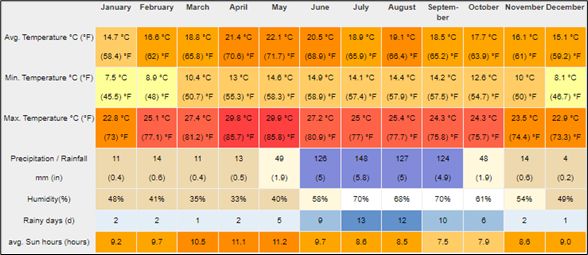
Field operations occur throughout the year and there is no seasonal limitation on operations. Climatic conditions do not adversely impact exploration activities. The average annual temperature is 18.5°C. Winter lows rarely reach less than 10°C with only occasional frosts. Local climate data by month for Celaya, Guanajuato, Mexico are provided in Figure 4‑1.
 
Most of the annual rainfall occurs in the summer, between June and September, when the average monthly rainfall is 130 millimeters (mm). Average monthly rainfall from October to May is 20 mm. Due to the semi-arid climate, drainages at the Project are ephemeral and rarely contain water in the dry season or between significant summer rain events.
 

Sinda_TRS_SK1300_Report_USPR002400_Rev02
January 2026

SRK Consulting (U.S.), Inc.
SEC Technical Report Summary – Sinda Project
Page 28
 
 
Source: https://en.climate-data.org/north-america/mexico/guanajuato/celaya-764314/
 
Figure 4‑1: Weather by Month for Celaya, Guanajuato, Mexico

4.4
Infrastructure Availability and Sources
 
4.4.1
Water
 
Water for the project is currently sourced from local community groundwater wells. Supply is adequate for potable and non-potable uses that support the current exploration stage activities.
 
4.4.2
Electricity
 
The Mexican governmental utility, Federal Electricity Commission (CFE – Comisión Federal de Electricidad), supplies almost all of the country’s power. The Sinda Project has reliable power from the national grid. Power is supplied to the site by a local utility transmission line.
 
4.4.3
Personnel and Supplies
 
Local skilled labor is available in the region and mining forms a significant portion of the regional economy. Most of the current Sinda technician labor force are from the local Delgado de Arriba community near the Project. Professional teams, consisting of geologists and engineers, are sourced in-country and travel to site on rotations. Professionals on rotation reside in local company housing in nearby San Miguel de Allende during overlapping, rotating work schedules (i.e., 20 days on/10 days off).
 

Sinda_TRS_SK1300_Report_USPR002400_Rev02
January 2026

SRK Consulting (U.S.), Inc.
SEC Technical Report Summary – Sinda Project
Page 29
5
History
 
5.1
Previous Operations
 
In 2015, Golden Minerals Company (Golden) completed five drill holes totaling 2,679 m at Sinda (Golden, 2018). A subsidiary of Golden (Minera Cordilleras) signed an earn‐in agreement with a subsidiary of Minera Adularia International Ltd. (Minera Adularia Exploración) in 2016. The Project is currently 100% controlled by Sinda.
 
5.2
Exploration and Development of Previous Owners or Operators
 
Limited exploration programs and no development work were conducted by historical metal mine operators, prior to the Company’s ownership. No previous artisanal metal mining operations are known to have occurred at Sinda. Small-volume, near-surface kaolin clay pits are scattered throughout the Project boundaries and are not considered material, as production was limited in depth and did not impact the precious and base metal mineralization, which is the focus of this Technical Report.
 
5.2.1
Historic Mineral Resource and Reserve Estimates
 
No historical resource estimates are known to exist for the Project, prior to Sinda’s ownership.
 
This section includes a brief discussion of historical resource estimates prepared for internal use by Sinda, using the original terminology and format of previous technical report disclosure. The current SRK QP and Sinda are not treating the historical estimate as current Mineral Resources or Mineral Reserves. A Qualified Person has not done sufficient work to classify the historical estimate as current Mineral Resource or Mineral Reserves. The historical estimates (Table 5‑1 and Table 5‑2) are summarized herein to provide a relative comparison to the current MRE discussed in this report.
 
Table 5‑1: Sinda Underground (U/G) Mineral Resource Estimate at 200 g/t AgEq Cut-off Grade as of June 24, 2021 – SRK Consulting (U.S.), Inc.
 
 
Vein
 
Classification
Tonnage
(000’s t)
 
Ag
Grade
(g/t)
 
Au
Grade
(g/t)
 
AgEq
Grade
(g/t)
 
Contained
Metal Ag
(000’s oz)
 
Contained
Metal Au
(000’s oz)
 
Contained
Metal AgEq
(000’s oz)
 
 
Dolores
 
Indicated
378
 
719
 
5.47
 
1,175
 
8,752
 
66
 
14,294
 
 
Total
 
Indicated
378
 
719
 
5.47
 
1,175
 
8,752
 
66
 
14,294
 
 
Agaves
 
Inferred
3,085
 
495
 
1.92
 
655
 
49,081
 
191
 
64,984
 
 
Dolores
4,216
 
265
 
2.39
 
464
 
35,929
 
324
 
62,910
 
 
Lara
3,237
 
413
 
3.27
 
685
 
42,929
 
340
 
71,300
 
 
Morita
2,276
 
342
 
2.27
 
531
 
25,052
 
166
 
38,887
 
 
Santiago
551
 
488
 
1.85
 
642
 
8,642
 
33
 
11,370
 
 
Total
 
Inferred
13,365
 
376
 
2.45
 
581
 
161,633
 
1,054
 
249,451
 
Source: SRK, 2021
Notes:

Mineral Resources are not Mineral Reserves and do not have demonstrated economic viability. There is no certainty that all or any part of the mineral resources will be converted into mineral reserves in the future. There has been insufficient exploration to define the Indicated and Inferred Resources tabulated above as Measured Mineral Resource. The Mineral Resource estimate may be materially affected by changes to the geological, geotechnical, and geometallurgical models, infill drilling to convert material to higher classification, drilling to test for extensions to known Mineral Resources, collection of additional bulk density data, significant changes to commodity prices, and by environmental permitting, legal, title, taxation, socio-political, marketing, or other relevant issues.

The Mineral Resources in this estimate were calculated using the Canadian Institute of Mining, Metallurgy and Petroleum (CIM), CIM Standards on Mineral Resources and Reserves, Definitions and Guidelines (CIM, 2014) prepared by the CIM Standing Committee on Reserve Definitions and adopted by CIM Council.

Mineral Resources with reasonable prospects for eventual economic extraction stated as contained within estimation domains above 200 g/t AgEq cut-off.


Sinda_TRS_SK1300_Report_USPR002400_Rev02
January 2026

SRK Consulting (U.S.), Inc.
SEC Technical Report Summary – Sinda Project
Page 30

AgEq calculations assumed silver price of US$18.00/oz and gold price of US$1500.00/oz., independent of potentially variable metallurgical recovery by metal, as recovery is assumed to be equal for both Ag and Au for purposes of AgEq.

All quantities are rounded to the appropriate number of significant figures; consequently, sums may not add up due to rounding.
 
Table 5‑2: Sinda Underground (U/G) Mineral Resource Estimate at 200 g/t AgEq Cut-off Grade as of February 16, 2023 – SRK Consulting (U.S.), Inc.
 
 
Classification
 
Vein
Tonnage
(000’s t)
 
Ag
Grade
(g/t)
 
Au
Grade
(g/t)
 
AgEq
Grade
(g/t)
 
Contained
Metal Ag
(000’s oz)
 
Contained
Metal Au
(000’s oz)
 
Contained
Metal AgEq
(000’s oz)
 
 
Indicated
 
Dolores
543
 
532
 
3.72
 
842
 
9,283
 
65
 
14,694
 
 
Total Indicated
   
543
 
532
 
3.72
 
842
 
9,283
 
65
 
14,694
 
 
Inferred
 
Adriana
--
 
--
 
--
 
--
 
--
 
--
 
--
 
Agaves
7,230
 
323
 
1.02
 
408
 
75,164
 
237
 
94,887
 
Dolores
4,457
 
235
 
2.12
 
411
 
33,674
 
303
 
58,942
 
Lara
7,102
 
293
 
2.04
 
463
 
66,950
 
465
 
105,722
 
Morita
3,036
 
353
 
2.04
 
523
 
34,479
 
199
 
51,049
 
Santiago
687
 
514
 
1.96
 
677
 
11,349
 
43
 
14,948
 
 
Total Inferred
   
22,511
 
306
 
1.72
 
450
 
221,617
 
1,247
 
325,549
 
Source: SRK, 2023
Notes:

Mineral Resources are not Mineral Reserves and do not have demonstrated economic viability. There is no certainty that all or any part of the mineral resources will be converted into mineral reserves in the future. There has been insufficient exploration to define the Indicated and Inferred Resources tabulated above as Measured Mineral Resource. The Mineral Resource estimate may be materially affected by changes to the geological, geotechnical, and geometallurgical models, infill drilling to convert material to higher classification, drilling to test for extensions to known Mineral Resources, collection of additional bulk density data, significant changes to commodity prices, and by environmental permitting, legal, title, taxation, socio-political, marketing, or other relevant issues.

The Mineral Resources in this estimate were prepared in accordance with the Canadian Institute of Mining, Metallurgy and Petroleum (CIM) Standards on Mineral Resources and Reserves, Definitions and Guidelines (CIM, 2014) prepared by the CIM Standing Committee on Reserve Definitions and adopted by CIM Council.

Mineral Resources with reasonable prospects for eventual economic extraction stated as contained within estimation domains above 200 g/t AgEq cut-off.

AgEq calculations assumed silver price of US$18.00/oz. and gold price of US$1500.00/oz., independent of potentially variable metallurgical recovery by metal, as recovery is assumed to be equal for both Ag and Au for purposes of AgEq. Calculated AgEq = ((Ag grade * 18 ÷ 31.10348) + (Au grade * 1500 ÷ 31.10348)) ÷ (18 ÷ 31.10348).

All quantities are rounded to the appropriate number of significant figures; consequently, sums may not add up due to rounding.
 
Both of the historical estimates were reported following Canadian National Instrument 43-101 disclosure guidelines. The technical reports were only for internal use and not disclosed publicly, as the Company was private and not subject to any disclosure responsibility within a particular jurisdiction.
 
The June 2021 historical estimate (Table 5‑1) was supported by a total of 152,642 m from
 
148 drillholes. The February 2023 historical estimate (Table 5‑2) was supported by a total of
 
232,522 m from 221 drillholes, an increase of approximately 80,000 m of drilling. The current Mineral Resource Estimate (effective November 24, 2025) discussed in this TRS uses the same drilling data and block grade estimates as the February 2023 historical estimate but reflects the recent update to the AgEq calculation formulas. Since the previous 2021 estimate, total contained AgEq ounces have increased 11% for Indicated and 48% for Inferred, based on the drilling additions and updates to the cut-off grade assumptions.
 

Sinda_TRS_SK1300_Report_USPR002400_Rev02
January 2026

SRK Consulting (U.S.), Inc.
SEC Technical Report Summary – Sinda Project
Page 31
6
Geological Setting, Mineralization, and Deposit
 
6.1
Regional, Local, and Property Geology
 
6.1.1
Regional Geology
 
The Sinda Project lies within and near the boundary of the Mesa Central physiographic province where it joins the easterly-trending Trans-Mexican Volcanic Belt, about 250 km northwest of Mexico City. The Mesa Central province is an elevated plateau of Cenozoic volcanic and volcaniclastic rock (66 mega annum [Ma] to present) located in central Mexico. It is bounded to the north and east by the Sierra Madre Oriental, to the west by the Sierra Madre Occidental, and to the south by the Trans-Mexican Volcanic Belt.
 
Rocks within the Mesa Central province consist of a Paleocene to Pliocene sequence of dacite-rhyolite, andesite, and basalt flows and tuffaceous units, with related intrusive bodies and intercalated local basin fill deposits of coarse sandstones and conglomerates. This Cenozoic volcanic-sedimentary sequence unconformably overlies an allochthonous package of deformed and weakly metamorphosed Late Jurassic through Cretaceous marine mafic volcanic and turbidite sediments.
 
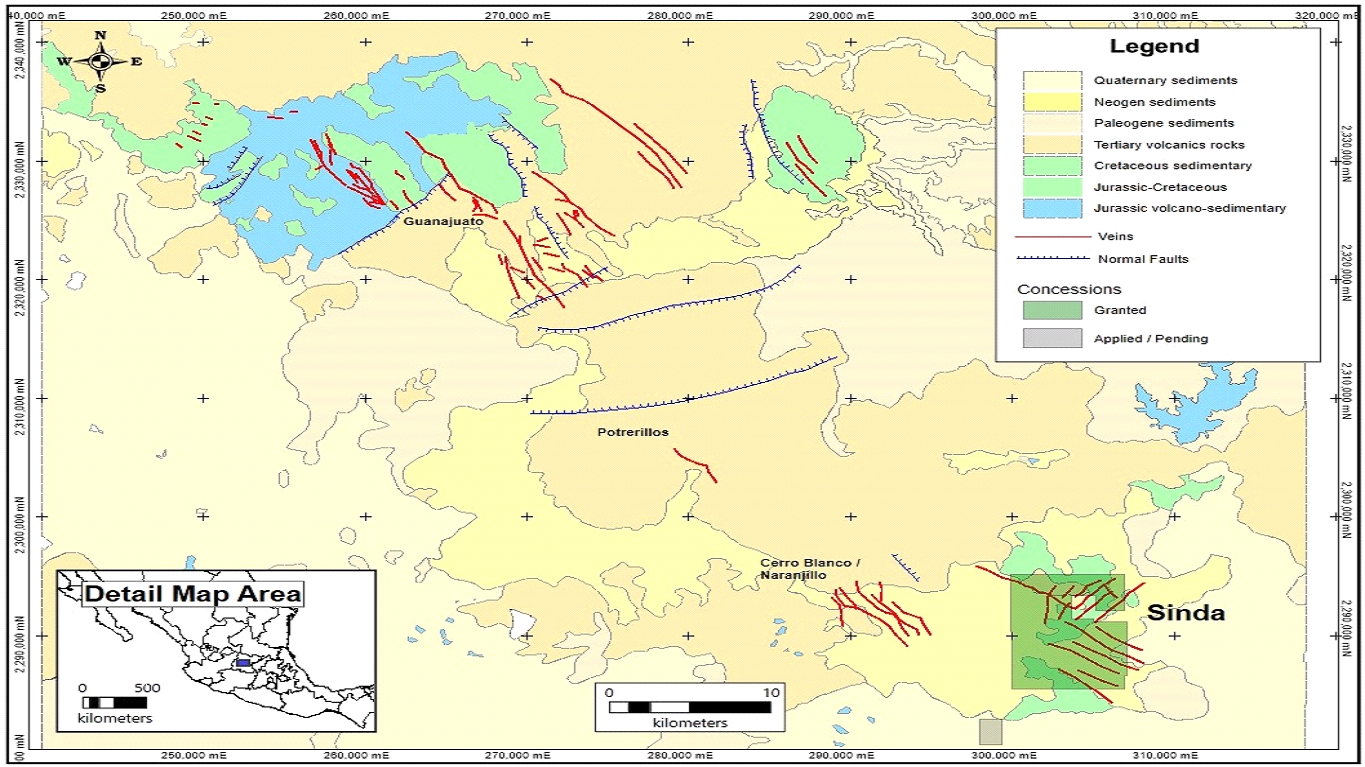
The Sinda Project is 45 km southeast of the Guanajuato Mining District. As the vein orientations, mineralogy and host rocks are similar in the two districts, many geologists have concluded that the Sinda veins are very likely southeast continuations along strike of the Guanajuato veins. Figure 6‑1 shows the regional geological setting of Sinda.
 
The Guanajuato district is situated within the Sierra de Santa Rosa, a northwest-trending (N45°W) anticlinal structure approximately 100 km long and 20 km wide. This mining district, a globally significant epithermal camp, is estimated to have produced over one billion ounces Ag and five million ounces (Moz) Au from three north-west trending vein systems. The Sierra, Veta Madre, and La Luz precious metal veins at Guanajuato were dated at 27.4 Ma (Gross, 1975). The deposit is interpreted by Sinda to have a similar age of mineralization as Guanajuato.
 

Sinda_TRS_SK1300_Report_USPR002400_Rev02
January 2026

SRK Consulting (U.S.), Inc.
SEC Technical Report Summary – Sinda Project
Page 32
Source: SRK, 2025
 
Figure 6‑1: Regional Geology Map

 
Sinda_TRS_SK1300_Report_USPR002400_Rev02.docxJanuary 2026
January 2026

SRK Consulting (U.S.), Inc.
SEC Technical Report Summary – Sinda Project
Page 33
6.1.2
Local Geology

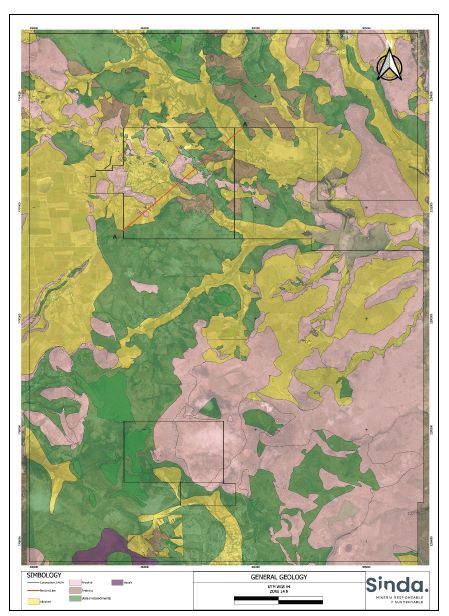
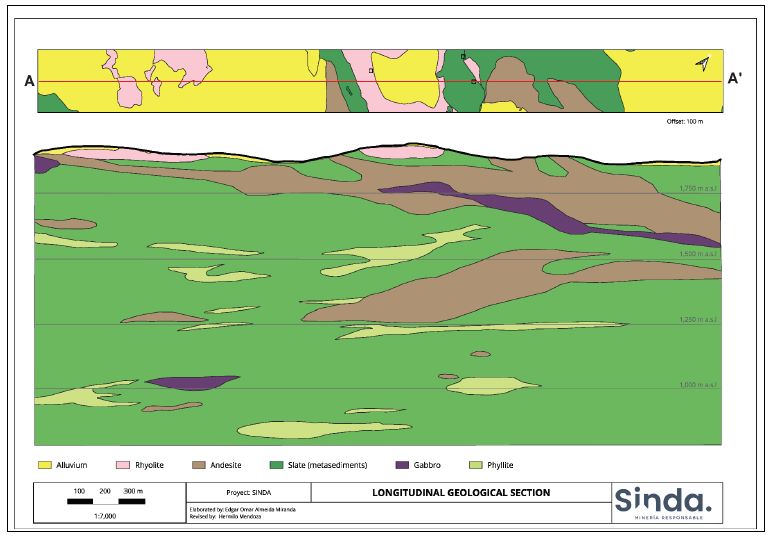
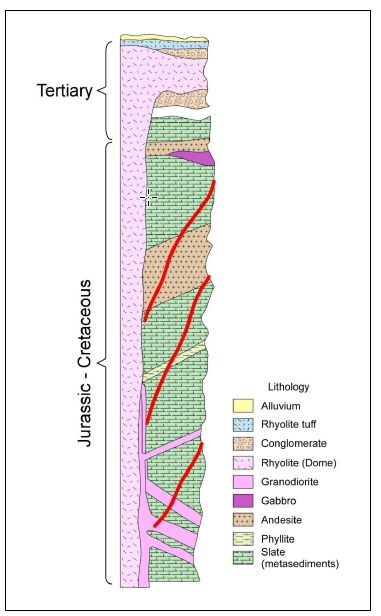
The Sinda Project is underlain by weakly to intensely folded and faulted Jurassic-Cretaceous marine sediments and interbedded subaqueous mafic lava flows (252 Ma to 66 Ma) of the Esperanza Formation. These same host rocks represent approximately two-thirds of precious metal production within the nearby Guanajuato district.
 
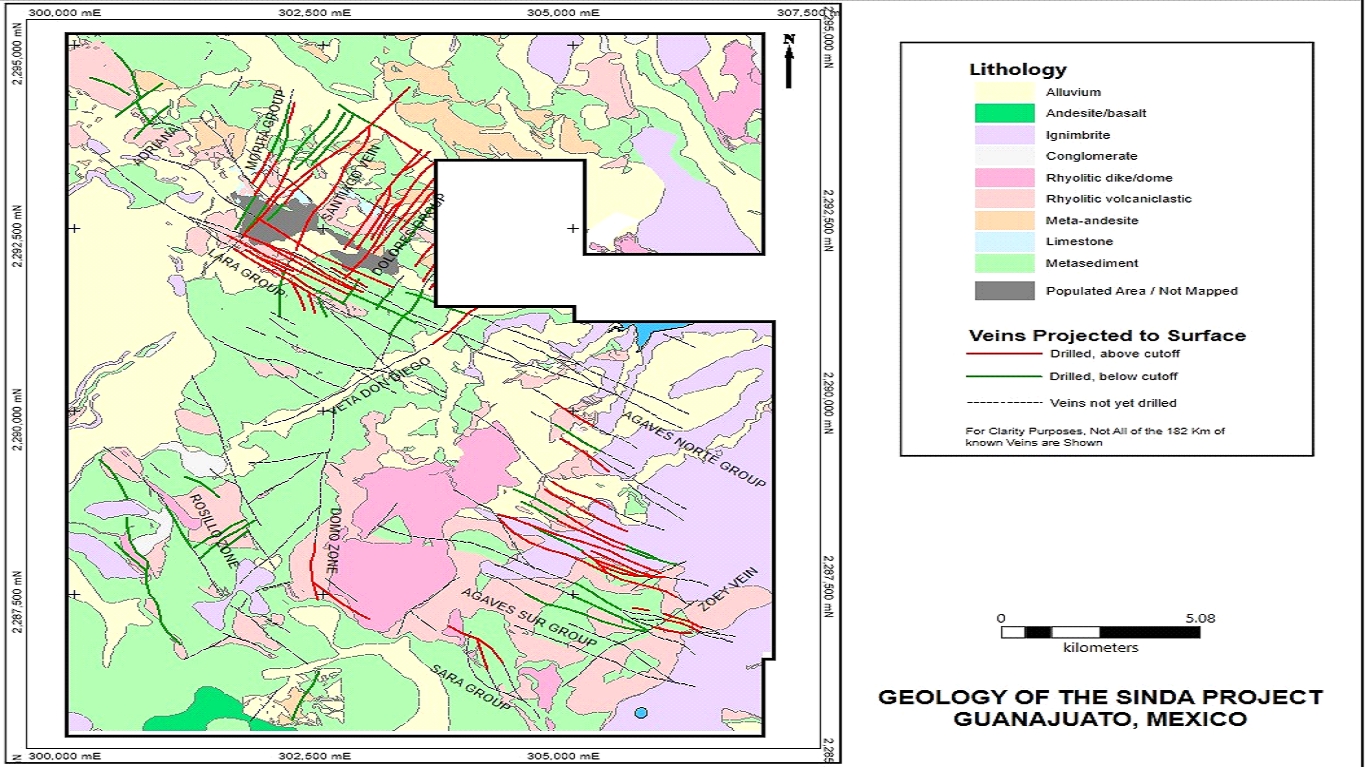
The basal sequence is cut by a variety of intrusive dikes and sills, ranging in composition from lesser monzonitic to a significant dioritic component. A rhyolitic dome is evident in the southern portion of the Sinda area. The more felsic monzonite intrusions are believed to be Tertiary in age and related to the dome. While the more mafic and somewhat metamorphosed diorite intrusions are believed to be Jurassic-Cretaceous in age, like the underlying metasediments and volcanic rocks. Figure 6‑2 shows the local geological setting of Sinda.
 
6.2
Property Geology
 
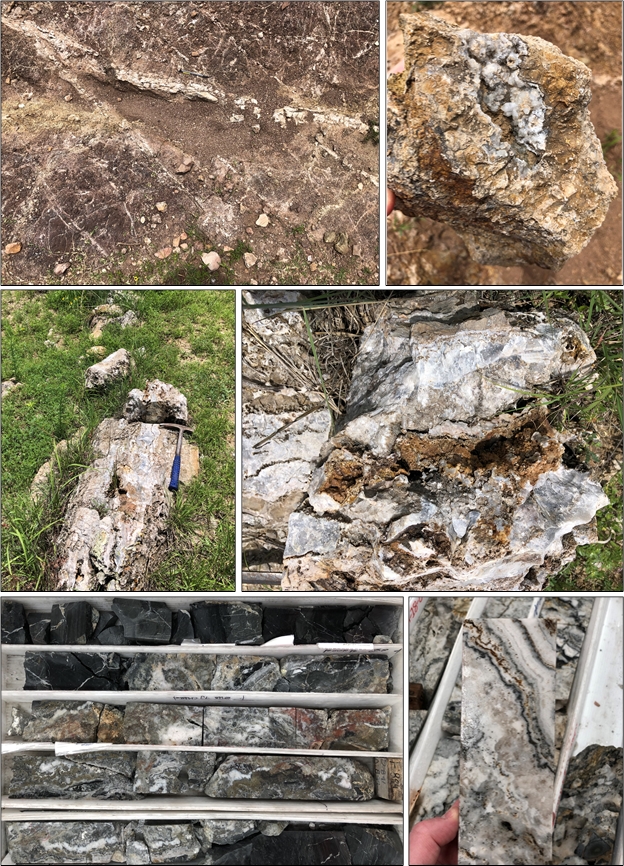
The mineralization at Sinda is hosted in classically zoned, low-sulfidation epithermal veining hosted within the Jurassic Cretaceous metasediments and volcanic rocks. The Sinda veins have poor surface exposure with most veins visible only as short (<10 m long) outcrops of narrow veinlets (<10 cm wide) that rarely reach 0.5 m thick.
 
The veins on surface (1900 to 1960 masl) present consistently as grey chalcedony, often crudely banded with coarse crystalline calcite, and often display quartz pseudomorphs after calcite. Iron oxides are absent to rare on outcrops and assay values are not typically remarkable. However, in the interval between the elevations of 1,550 to about 1,200 masl, the vein mineralogy changes to gangue minerals of chalcedony, minor adularia, calcite and amethystine quartz, fluorite, and locally (especially in deeper holes) arsenopyrite and marcasite. Minerals of economic significance are acanthite/argentite, aguilarite, proustite, polybasite and gold, with minor galena, sphalerite, chalcopyrite, and native silver. Veins show well-developed banded “ginguru” textures in the high-grade drill core intervals.
 
Figure 6‑3 shows examples of veins at Sinda.
 
 
Sinda_TRS_SK1300_Report_USPR002400_Rev02.docxJanuary 2026
January 2026

SRK Consulting (U.S.), Inc.
SEC Technical Report Summary – Sinda Project
Page 34
Source: SRK, 2025
 
Figure 6‑2: Local Geology Map

 
Sinda_TRS_SK1300_Report_USPR002400_Rev02.docxJanuary 2026
January 2026

SRK Consulting (U.S.), Inc.
SEC Technical Report Summary – Sinda Project
Page 35
Source: SRK, 2025
 
Notes: Upper four photographs are examples of surface outcrop exposure in Caracol, lower left: CEMO-19-003 drill core in Morita vein at ~895 m, lower right: CECA-18-001 drill core in Dolores vein at ~600 m (see Table 7-2 for assay ranges).
 
Figure 6‑3: Sinda Vein Examples
 
 
Sinda_TRS_SK1300_Report_USPR002400_Rev02.docxJanuary 2026
January 2026

SRK Consulting (U.S.), Inc.
SEC Technical Report Summary – Sinda Project
Page 36
6.3
Mineral Deposit
 
The Sinda deposits are comprised of multiple low-sulfidation epithermal vein systems with high-grade Ag and Au mineralization, along with accessory Cu, Pb, and Zn. The Company considers Sinda to be an extension of the Guanajuato Trend, which hosts many Ag-rich, polymetallic mines exploiting epithermal veins. Understanding of this deposit type is well advanced with many technical and academic publications detailing alteration, litho-geochemical controls, spatial mineral associations, and genesis (e.g., Buchanan, 1981).
 
Epithermal gold-silver deposits form in the uppermost parts of the crust, at less than about 1,500 m below the water table and contain gold and/or silver minerals in structurally controlled veins and breccias and disseminated in larger host rock volumes. These deposits are distributed throughout the world, most commonly along convergent plate margins. Known epithermal gold-silver deposits range in size from tens of thousands to greater than 100 Mt of ore. Gold contents range from anomalous (0.1 g/t Au) to high grade (approximately 49 g/t Au at Hishikari, Japan). Silver contents of less than 1 g/t Ag to several thousand parts per million (ppm) are common. Epithermal deposits are mined primarily for their gold and/or silver contents, although copper, lead, zinc, and/or mercury are important by-products in some deposits.
 
Epithermal deposits are broadly divided into three subtypes with type examples and typical mineral assemblages, as follows:
 
 
Low-sulfidation: adularia-sericite; Comstock, Creede, Midas, McLaughlin, USA; Sado, Hishikari, Japan; mineral assemblage: quartz ± calcite ± adularia ± illite (near-neutral pH)
 
Intermediate-sulfidation: adularia-sericite; Fresnillo, Zacatecas, Guanajuato, Pachuca, Mexico; Waihi, New Zealand; mineral assemblage: quartz ± calcite ± adularia ± illite (near-neutral pH)
 
High-sulfidation: acid-sulfate; Paradise Peak, Summitville, USA; Mulatos, Mexico; El Indio, Chile; mineral assemblage: quartz + alunite ± pyrophyllite ± dickite ± kaolinite (acidic pH)
 
Epithermal gold-silver deposits comprise vein, disseminated, and breccia deposits most hosted in broadly contemporaneous volcanic and volcanoclastic rocks. These deposits form at shallow depths (<1,500 m) and at temperatures less than 300°C.
 
Epithermal gold-silver deposits form in a wide range of tectonic environments. They are most common in subaerial volcanic arcs at convergent plate margins in continental and oceanic settings. The deposits form primarily from subaerial hydrothermal systems driven by magmatic heat and, less commonly, by deeply circulating groundwater rising along basin-bounding faults. Deposits range from Archean to Quaternary in age, although because of their formation at shallow depths and their poor preservation potential, most known deposits are Cenozoic.
 
6.3.1
Mineralization Style
 
A strong vertical zoning, common to many epithermal districts, is well-displayed at Sinda with the most consistently mineralized interval, the Favorable Interval (Buchanan, 1981), topping out about at 450 m below the current surface and extending down, dip for 250 to 450 m. Above this Favorable Interval, the veins are thinner, silica is present mostly as chalcedony, calcite is more abundant than chalcedony, and well mineralized vein intercepts are exceptionally rare. At depth within the Favorable Interval, not all vein intercepts are above a reasonable CoG with only approximately half of the veins encountered assaying above 200 g/t AgEq over a minimum 2 m true thickness.
 
 
Sinda_TRS_SK1300_Report_USPR002400_Rev02.docxJanuary 2026
January 2026

SRK Consulting (U.S.), Inc.
SEC Technical Report Summary – Sinda Project
Page 37
6.4
Stratigraphic Column and Local Geology Cross-Section
 
The Late Jurassic-Cretaceous Esperanza Formation sediments comprise a thick package of shales, phyllites, conglomerates and minor limestone sequences, interbedded with contemporaneous andesite flows and tuff/pyroclastic interbeds. These beds are commonly folded, often intensely, and the foliation in the sediments is often cut by high angle faults parallel to bedding planes. Many of these faults are believed to be related to Laramide thrusting events (Ruvalcaba-Ruiz and Thompson, 1988). After deposition, a long period of subaerial erosion occurred making a marked unconformity.
 
Above this irregular erosional surface, in the early to mid-Oligocene, rhyolitic ashflow tuff sheets spread out from numerous subaerial volcanic centers, covering the Jurassic-Cretaceous meta-sediments and volcanic rocks. The felsic intrusive and volcanic event occurred during a period when a tensional stress field replaced the earlier compressive stress (thrusting) regime. This environment resulted in numerous northwest-trending normal faults that crosscut all older rock units. Additionally, the faulting also cut the earliest basal Oligocene ashflow tuff units immediately lying atop the older, now-eroded sediments and volcanics. The structures that formed during this Early to Mid-Oligocene tensional/eruptive event host the Sinda mineralization.
 
Felsic eruptions continued to lay out additional rhyolitic ash flow sheets, effectively masking all underlying structures and older rock units with a relatively thin cover (20 to 100 m) of post-mineral ignimbrite. This post-mineral ignimbrite was partially eroded, exposing the faulted metasediments/volcanics below. However, the ignimbrite masks about 25% of the land position at higher elevations in the eastern and south-eastern portions of the Project area. Drill results indicate the veins continue below the post-mineral cover. Figure 6‑4 through Figure 6‑6 show a generalized geologic map, local geologic cross-section, and stratigraphic column for the Sinda deposit, respectively.

 
Sinda_TRS_SK1300_Report_USPR002400_Rev02.docxJanuary 2026
January 2026

SRK Consulting (U.S.), Inc.
SEC Technical Report Summary – Sinda Project
Page 38
Source: SRK, 2025
Notes: A to A’ cross-section location is depicted in red.
 
Figure 6‑4: Generalized Geologic Map
 
 
Sinda_TRS_SK1300_Report_USPR002400_Rev02.docxJanuary 2026
January 2026

SRK Consulting (U.S.), Inc.
SEC Technical Report Summary – Sinda Project
Page 39
Source: SRK, 2025

Figure 6‑5: Local Geological Cross-Section at Caracol, Looking Northwest
 
 
Sinda_TRS_SK1300_Report_USPR002400_Rev02.docxJanuary 2026
January 2026

SRK Consulting (U.S.), Inc.
SEC Technical Report Summary – Sinda Project
Page 40
Source: SRK, 2025
Notes: The red lines represent silver vein mineralization at Sinda.
 
Figure 6‑6: Stratigraphic Column
 
 
Sinda_TRS_SK1300_Report_USPR002400_Rev02.docxJanuary 2026
January 2026

SRK Consulting (U.S.), Inc.
SEC Technical Report Summary – Sinda Project
Page 41
7
Exploration
 
The primary method of exploration at Sinda has been drilling. Historic exploration by Golden Minerals (Golden) commenced in 2012 with large-scale regional mapping and culminated in the drilling of five diamond drill holes. Beginning in 2016, Sinda initiated prospecting efforts to recognize and assess potential mineral resources in the Project area.
 
7.1
Exploration Work (Other Than Drilling)
 
Previous exploration drilling by Golden demonstrated that anomalous mineralization was present at depth, even though surface sample assays were known to be typically barren. Due to the very large number of veins, and a large total strike length, the Company became interested in testing the Sinda district. Exploration commenced in earnest in 2016 with surface mapping of the entire concession.
 
7.1.1
Procedures and Parameters Relating to the Surveys and Investigations
 
On surface, outcrops of the Sinda veins are ubiquitously barren to low grade. Out of over 900 surface samples obtained during early exploration, only five grab samples reported values >1 g/t Au and two samples assayed >100 g/t Ag. The remaining surface samples of veins reported assay results below laboratory detection limits for Au and Ag. Due to the paucity of outcrops and low geochemical trace element results, it was not deemed prudent to use trenching and/or geophysics to help outline target zones. Thus, exploration progressed immediately to a drilling program.
 
7.1.2
Sampling Methods and Sample Quality
 
Target selection followed up on areas prospective for mineralization that were identified from geological mapping and observations at surface. Surface samples were obtained as grab samples from prospective vein outcrops. Since surface exposure of mineralized veins is limited, veins have been mainly identified through drilling blind targets at depth. In certain cases, clay alteration related to mineralization and associated with historic kaolin production follow trends that are useful for vein targeting at depth.
 
7.1.3
Information About the Area Covered
 
Mapping and rock chip sampling began at a scale of 1:10,000. However, it was soon evident that insufficient detail was being recorded and thus the program was revised to mapping at a scale of 1:2,500. Once the mapping had been completed and rock chip sample assay results reported, the data were digitized, and the Company outlined drill targets.
 
7.1.4
Significant Results and Interpretation
 
Veins that carry potentially mineable mineralization at depth are wider and often reach “bonanza” grades over shorter intervals. In the Favorable Interval at Sinda, silica, mostly as micro-crystalline quartz, becomes more dominant than calcite, precious metal grades are elevated, and base metals are minor (usually < 1% Pb+Zn total). Base metals content increases with depth in the veins below the Favorable Interval, often without the strong silver and gold values occurring above the base metal horizon.

 
Sinda_TRS_SK1300_Report_USPR002400_Rev02.docxJanuary 2026
January 2026

SRK Consulting (U.S.), Inc.
SEC Technical Report Summary – Sinda Project
Page 42
Within the Favorable Interval (1,550 to 1,200 masl), the average vein true thickness varies from 2 to 6 m and ranges from discrete veins of 0.5 m or less, up to wider zones comprised of multiple discrete veins as wide as 7.5 m. The overall average true thickness of veins with potentially economic grades is approximately 2.5 m.
 
An important aspect of all Sinda veins drilled to date is that for each vein that can be mapped on surface, numerous additional, subparallel veins are encountered during drilling that do not crop out. These "blind" veins are not visible on the surface. Overall averages of the drill results show about four blind veins for each mapped vein, which equates to potentially five individual structures per vein noted in surface mapping. Drilling data indicate approximately half of these blind veins are mineralized above potential mining CoGs at a minimum of 2 m true thickness.
 
To date, Sinda geologists have recognized 135 individual veins that can be identified either by mapping or are blind veins encountered in drilling. The total number of kilometers of veins identified to date are estimated at 182 km, but currently only 38% (69 km) of that total strike length has been drill-tested. The Company considers the potential total strike length of identified veins at Sinda will likely exceed 200 km, as the project progresses.
 
7.2
Exploration Drilling
 
In 2015, Golden Minerals completed five diamond drill holes totaling 2,679 m at Sinda (Golden, 2018). Four of the initial drill holes were too short to encounter the Favorable Interval and thus had no intersections that were above CoG. The fifth drill hole was deeper and at 700 m depth downhole encountered a vein grading 403 g/t AgEq over a true thickness of 2 m.
 
Three concessions and the exploration and exploitation rights on the El Milagro concession were acquired from Golden in 2016 and transferred to Sinda in 2018. All subsequent Project drilling campaigns have been completed by the Company, including activities on the La Paloma concession acquired in 2020. The fourth Sinda drill hole completed in 2017 intersected positive results. Drill hole CE-17-004 intersected 2.42 m true thickness of 405 g/t AgEq and a deeper blind vein of 2.49 m at 305 g/t AgEq. These intersections were followed-up by CE-17-005, which intersected 3.94 m true thickness of 1,435 g/t AgEq. The initial drill testing helped define the top and bottom of the Favorable Interval at Sinda, and subsequent drill holes had a high rate of successful vein intersections. Subsequently, the Company increased the number of drill rigs to test as many of the veins as possible and is continuing to drill across the Project.
 
Since drilling commenced in 2015, a total of 232,522 m in 221 drill holes were completed at Sinda as of the January 11, 2023, database cut-off date. No drilling has occurred within the Sinda Resource area since the most recent database update. Within the Resource area at Sinda, a subset of 178 sampled drill holes defined the estimation domains with a total of 7,399.1 m of intercepts crossing the modeled vein wireframes. In total, 1,760 individual vein width composites define 112 vein wireframes in the Resource area. Outside of the Sinda Resource area, 39 drill holes explored additional potential vein systems that do not define any current estimation domains. No previous artisanal metal mining operations, nor additional historical drilling campaigns are known to have occurred at Sinda.
 
A location map of Sinda drill hole collars is provided in Figure 7‑1. Representative drill hole cross-sections through the Caracol area and Agaves are provided as Figure 7‑2 and Figure 7‑3, respectively.
 
 
Sinda_TRS_SK1300_Report_USPR002400_Rev02.docxJanuary 2026
January 2026

SRK Consulting (U.S.), Inc.
SEC Technical Report Summary – Sinda Project
Page 43
Source: SRK, 2025
Figure 7‑1: Location Map of Drill Hole Collars
 
 
Sinda_TRS_SK1300_Report_USPR002400_Rev02.docxJanuary 2026
January 2026

SRK Consulting (U.S.), Inc.
SEC Technical Report Summary – Sinda Project
Page 44
Source: SRK, 2025
Notes: Approximate cross-section line shown on Figure 7‑1
 
Figure 7‑2: Example Cross-Section (A-A') of Drill Holes
 
 
Sinda_TRS_SK1300_Report_USPR002400_Rev02.docxJanuary 2026
January 2026

SRK Consulting (U.S.), Inc.
SEC Technical Report Summary – Sinda Project
Page 45
Source: SRK, 2025
Notes: Approximate cross-section line shown on Figure 7‑1
 
Figure 7‑3: Example Cross-Section (B-B') of Drill Holes
 
 
Sinda_TRS_SK1300_Report_USPR002400_Rev02.docxJanuary 2026
January 2026

SRK Consulting (U.S.), Inc.
SEC Technical Report Summary – Sinda Project
Page 46
7.2.1
Drilling Type and Extent
 
Since 2016, all drilling at Sinda has been performed by external contractors with diamond core rigs under the direction of local staff. Drill holes are typically collared with PQ-diameter core (85 mm) and advanced to less than 300 m prior to setting temporary casing. PQ core length averages approximately 172 m across all drill holes and equates to 16.3% of all drilling meters. The majority of the drill holes are completed with HQ-diameter core (63.5 mm) and, if required, reduced to NQ size (47.6 mm) to complete deeper holes. As a proportion of all drilling meters, respectively, HQ core accounts for 74.7% and NQ core comprises approximately 9.0%. Table 7‑1 presents the Sinda drill holes by campaign year and core diameter drilled.
 
Table 7‑1: Summary of Drill Holes by Campaign Year and Core Diameter Drilled
 
Year
Completed Drill Holes
PQ Meters
HQ Meters
NQ Meters
Total Drilled (m)
2015
5
-
2,678.55
-
2,678.55
2017
14
758.25
10,712.90
619.00
12,090.15
2018
44
6,014.20
34,102.05
1,269.30
41,385.55
2019
39
5,975.25
32,617.65
3,485.25
42,078.15
2020
43
8,319.65
38,377.05
4,392.25
51,088.95
2021
41
9,705.05
29,602.40
9,388.20
48,695.65
2022
38
7,203.10
25,558.75
1,743.20
34,505.05
Total
221
37,975.50
173,649.35
20,897.20
232,522.05
Source: SRK, 2025
 
Notes: Tabulation includes only drill holes completed by the data cut-off date of January 11, 2023.
 
Several in-country drilling contractors have been utilized over the course of the project, including BD Drilling, Intercore, Eco Drilling (formerly Moles), and Major Drilling. All contractors have had local operations and support services located in Mexico during the Sinda campaigns. Track mounted drilling rigs are used, and a typical rig model is CSD1800X from Coretech Drilling Equipment Company, Ltd, although tooling has varied by contractor and availability.
 
Level drilling platforms were installed by heavy equipment, where necessary, with the appropriate disturbed dimensions for the drilling and accessory equipment. Sufficient space is provided for temporary mud/cuttings tanks, and all drilling fluids are contained for offsite disposal. To conserve water and reduce volume of cuttings for disposal, two AMC solids removal units (SRUs) have been active in recent drilling campaigns. Figure 7‑4 depicts an example of a core drilling platform at Sinda.
 
Generally, multiple drill holes are completed from each drilling platform at different azimuths and dips. Overall, the drill holes have inclinations ranging between 40° to 85° and averaging 51.9°. Azimuths are variable across the Project with drill holes ranging between 0° to 72° in a general north-northeast direction (approximately 53% of the total), 77° to 160° in an east-southeast direction (38%), and lesser drill holes in a west-northwest orientation of 215° to 333° (10%), depending on the vein system targeted.
 
 
Sinda_TRS_SK1300_Report_USPR002400_Rev02.docxJanuary 2026
January 2026

SRK Consulting (U.S.), Inc.
SEC Technical Report Summary – Sinda Project
Page 47
Source: SRK, 2025
 
Figure 7‑4: Core Drilling Platform Example
 
7.2.2
Collar Location Survey
 
Coordinates were recorded in Universal Transverse Mercator (UTM) coordinate system, World Geodetic System 1984 (WGS-84) datum, Zone 14. Collar locations were surveyed using differential GPS equipment by local professional surveyors. At each platform, Sinda geologists confirmed the planned collar locations with handheld global positioning system (GPS) units and checked drill hole orientations prior to drilling.
 
Currently, collar surveying occurs in batches several times per year. For eleven recently completed drill holes in the current Resource area, no survey measurements were available at the database cut-off date. The collar coordinates for these drill holes were assigned from the detailed topographic surface or from previously surveyed holes on the same drilling platform, as many were twin drill holes. The lack of final survey for these limited drill holes is not considered material.
 
Drill Hole collar locations are marked routinely at the surface with PVC pipe oriented to drilling dip in a cement monument that is labeled with the drill hole name. During the July 2021 SRK QP site visit, multiple historical drill hole markers were observed that were appropriately located according to field maps.
 
7.2.3
Topographic Survey
 
To ensure the availability of detailed Project topography information, a satellite survey of 100 km2 was produced by Photosat in January 2021. A 1 m stereo satellite survey and 50 cm precision orthophoto were produced from 50 cm pixel resolution WorldView-3 stereo satellite photos. The satellite photos were acquired on December 31, 2020. The 1 m satellite survey and 50 cm precision orthophoto were produced using PhotoSat's proprietary Geophysical Satellite Processing system. The stereo satellite survey project was referenced to 23 survey points provided by Sinda.
 
 
Sinda_TRS_SK1300_Report_USPR002400_Rev02.docxJanuary 2026
January 2026

SRK Consulting (U.S.), Inc.
SEC Technical Report Summary – Sinda Project
Page 48
7.2.4
Downhole Survey
 
Sinda completed downhole trajectory deviation surveys for each drill hole. During drilling, single-shot measurements are recorded every 50 m with a REFLEX EZ-TRAC tool. A multi-shot survey is conducted downhole for comparison upon completion of drilling. The drillers record survey measurements on individual cards after each 50 m survey, which are collected and stored by the site geologists. Magnetic readings and survey information are uploaded and stored in the Sinda database.
 
In late 2020, Sinda began testing IMDEX HUB for online collection and approval of downhole survey data directly from the drillers. This process is planned to replace the current paper trail and will allow direct import of survey data to the GeoSpark database.
 
According to the survey data provided, SRK confirmed that measurements were obtained on regular intervals, at least every 50 m downhole. All drill holes in the database have recorded downhole survey information.
 
7.2.5
Core Sampling
 
Drill core runs were removed from the core tube by the drill crew and placed in plastic corrugated core boxes that hold approximately 3 m. The core boxes were labeled by the drill crew with hole ID and box number. Drill hole depths for each box are measured and labeled later by geologists in the core warehouse. Wooden core blocks are marked by the drill crew with the run length and depth and inserted into the core boxes at the end of each drill interval. Drill core was transported from the rigs by the drill crew via pickup truck to the core logging facility at the end of each shift.
 
Sinda geologists cleaned and logged the drill core samples prior to sampling. Drill core was photographed wet with signage depicting drill hole and from/to depth as a record of condition prior to sample collection. The photographs are reviewed by geologists for clarity and image files are re-named by drill hole ID and box number prior to uploading to the Sinda server. Geologists check the drill run blocks and mark every downhole meter on the core with indelible markers. Based on geological criteria, sample cutting marks and orientation lines (perpendicular to veins) were made along the length of the core samples by site geologists. The sample intervals were marked on the inside of each core box. Core samples were selected using as fundamental criteria that the samples were minimum 0.5 m to maximum 2.0 m in length. The sample intervals are measured to the hundredths and typically rounded to 0.05 m intervals considering the geology and mineralized intervals observed during logging. If encountered, sampling does not cross over changes in drill core diameter.
 
Prior to about August 2019, selective sampling of vein mineralized intervals was practiced. Currently, sampling is conducted continuously downhole. The sampling intervals chosen allow identification of mineralized vein areas, as well as determining the presence of geochemical anomalies and verifying the degree of dilution into the vein footwall and hanging wall. Generally, core recovery was considered good with no significant core losses observed. The average recovery is 92% from geotechnical data collected.
 
 
Sinda_TRS_SK1300_Report_USPR002400_Rev02.docxJanuary 2026
January 2026

SRK Consulting (U.S.), Inc.
SEC Technical Report Summary – Sinda Project
Page 49
Core sampling was completed by sawing the drill holes in half with 14-inch MK Electric diamond blade core saws (model #160634-14 MK-5005S) along the cut line marked by the site geologists. The other half was returned to the core box for permanent storage onsite. Four saws were active at the core warehouse during the SRK site visit. Each unit is labeled and used only for certain Project areas to prevent potential cross-contamination, as well as flushed with water between sample cuts. All cuttings from core sampling are contained in sumps for offsite disposal. In intervals with intensely fractured rock, the splitting procedure involves dividing the core sample to obtain a representative fraction for assay and leaving the remainder in the core box. After cutting, each box is covered with its matching lid and delivered to the core sampling crews. The core cutting area is monitored and recorded by closed-circuit security cameras that are viewable online by senior Sinda staff.
 
Experienced sampling technicians follow detailed written Sinda sampling protocols, are monitored by onsite geologists, and checked for accurate sampling. Additionally, the entire core sampling area is monitored and recorded by a closed-circuit security camera system. Drill core is placed in an unused clean plastic sample bag labeled with the sample number and sealed using industrial zip ties. Triplicate sample tag booklets are used to record the sample intervals. Individual tags are placed in the core box at the sample interval and in the sample bag for assay. The drill hole number, length, and sample number are recorded in a paper sampling register that is entered into the Sinda database. After sampling, core boxes were photographed a second time to show the split core and sample tags/numbers. Photographs of the general core sampling procedures are shown in Figure 7‑5.
 
Multiple individual sample bags are placed in a labeled polyethylene bag for delivery to the preparation laboratory. Pallets of samples are covered with tarps and stored by individual drill hole until laboratory pickup is scheduled. The lab is dispatched for sample pickup approximately every ten days, or when the maximum sample shipping allotment is prepared (approximately 650 sample bags). Records of sample preparation, analysis requested, quality assurance and quality control (QA/QC) sample insertion and sample shipment are maintained on paper logs.

 
Sinda_TRS_SK1300_Report_USPR002400_Rev02.docxJanuary 2026
January 2026

SRK Consulting (U.S.), Inc.
SEC Technical Report Summary – Sinda Project
Page 50
Source: SRK, 2025
Notes: Clockwise from upper left: Core sawing, split core interval, sample markings on core box, core sampling area with bags for laboratory dispatch, and sample register/tags.
 
Figure 7‑5: Drill Core Sampling
 
All split core is stored on metal racks in secured covered areas with controlled access, as depicted in Figure 7‑6. Approximately 105 km of split core is stored in the main Sinda “bodega” where sampling and logging is conducted. Sinda built a new offsite secured core storage facility in Comonfort, northeast of the Project. The facility has a capacity for over 500 km of core and was completed in 2022. All core boxes have been relocated to the Comonfort warehouse.

 
Sinda_TRS_SK1300_Report_USPR002400_Rev02.docxJanuary 2026
January 2026

SRK Consulting (U.S.), Inc.
SEC Technical Report Summary – Sinda Project
Page 51
Source: SRK, 2025
Notes: Clockwise from upper left: Main core storage warehouse, mezzanine level of core storage, secure storage of vein intervals at Sinda office (from 2021 prior to relocation to Comonfort), and storage rack labeling system.
 
Figure 7‑6: Drill Core Storage
 
Core Logging
 
Prior to sampling, Sinda geologists log whole drill core and record observations onto large-format paper logging forms that record 20 m of core per page. Detailed core logging included descriptions of lithology, alteration, mineralization, and structure. Graphical logs are hand-drawn and colored for each drill hole. Each evening, the paper logs are coded by the individual geologists into a relational database constructed by GeoSpark Consulting. A short trial of ten drill holes were logged directly into the database, but paper logs were preferred for allowing another QA/QC check on the data during the separate manual entry.
 
Logging follows written protocols, including common naming, abbreviation, and coloring conventions. The geological standards are well developed, and virtual copies are easily accessible from a QR code posted in the drill logging area. Polished billets of typical lithologies are labeled and displayed for comparison to core during logging to ensure consistency of interpretations.
 
 
Sinda_TRS_SK1300_Report_USPR002400_Rev02.docxJanuary 2026
January 2026

SRK Consulting (U.S.), Inc.
SEC Technical Report Summary – Sinda Project
Page 52
Geotechnical logging is conducted to record RMR (Rock Mass Rating) geomechanical index of Bieniawski (1989) and the Q index of Barton, et al (1974). The geotechnical parameters logged are the following: recovery, RQD (Rock Quality Data), spacing between structures, condition of structures, and number of structural sets. These data are maintained in a separate database from the geological characterization. 
 
The geologists provide weekly logging updates to the database manager. Presently, no backlog of drill core is maintained, and logging has kept pace with drilling rates. With rotating schedules, the geologists cross-over for ten days each month and are careful to transfer and coordinate information between shifts, so that no data losses occur. In the San Miguel de Allende office, binders of information are kept by drill hole that catalog all original paper data, including logging sheets, sample sheets, and survey information. These primary data are backed up as digital scans and duplicated as entries into the final Sinda database.
 
7.2.6
Drilling, Sampling, or Recovery Factors
 
Drilling in vein-hosted deposits is complicated by the angle of drill holes interception. Where possible, Sinda targeted veins at a low angle for drill hole interceptions that approached perpendicular to the veins. In many cases, the length of sample intersections (apparent width) was greater than the true thickness measured perpendicular to the modeled vein wireframes. Apparent width variation from the measured downhole length was considered during geological modeling. No other drilling, sampling, or recovery factors were identified that could materially affect the accuracy and reliability of the results.
 
7.2.7
Drilling Results and Interpretation
 
Predominantly, the design of the drilling grid was prepared as a function of the attitude of the mineralized structures. Most of the drill holes were angled from vertical to intercept the vein system at close to perpendicular. Drill hole spacing is approximately 100 m, or less, in the well-informed areas (e.g., Dolores main vein) and extends over 300 m in other Project areas, depending on the targeted structures.
 
A summary of significant drilling intercepts is provided in Table 7‑2, which represents the top ten composites used in the resource estimate ranked on capped AgEq values. The length of sample intersections (apparent width) is greater than the true thickness measured perpendicular to the modeled vein wireframes. On average, the measured true vein width of these significant intercepts is about 24% less than the apparent width of the downhole sample intervals.
 
All summary intervals are reported as raw uncapped assay values and composited proportionally to the length of the individual samples, which included allowance for lower grade dilution zones, if encountered. This matches the modeling methodology, which emulates mineable widths targeting a minimum of approximately 2 m true thickness. Many of the internal intervals within these high-grade intercepts will be capped as outliers prior to compositing and estimation. The intercept values have been rounded to reflect the relative accuracy of a single assay interval.
 
 
Sinda_TRS_SK1300_Report_USPR002400_Rev02.docxJanuary 2026
January 2026

SRK Consulting (U.S.), Inc.
SEC Technical Report Summary – Sinda Project
Page 53
Table 7‑2: Summary of Raw Assay Intervals for Significant Intercepts at Sinda
 
 
Area
 
Hole ID
From
To
Ag (g/t)
Au
(g/t)
AgEq (g/t)
Apparent
Width (m)
True
Width (m)
 
Dolores
 
CECA-18-001
597.25
602.0
6,188
26.9
8,500
4.75
4.53
 
including
597.25
598.75
15,893
72.8
22,149
1.50
 
Lara
 
CETA-22-040
836.4
846.6
2,810
9.0
3,580
10.20
4.45
 
including
841.15
845.5
6,127
20.1
7,855
4.35
 
Lara
 
CETA-20-015
673.15
676.6
1,518
5.7
2,008
3.45
2.35
 
Agaves
 
CEAG-19-012
1086.3
1091.15
1,931
0.9
2,010
4.85
3.64
 
including
1089.35
1091.15
4,340
1.1
4,432
1.80
 
Lara
 
CETA-22-033
860.65
864.85
1,059
9.1
1,837
4.20
2.65
 
including
861.6
862.6
3,110
31.3
5,800
1.00
 
Lara
 
CETA-18-003
931.5
934.8
635
12.2
1,684
3.30
2.48
 
including
932.0
934.1
901
16.6
2,328
2.10
 
Dolores
 
CECA-18-011
383.7
386.8
1,013
10.7
1,932
3.10
2.64
 
including
383.7
384.4
4,300
45.3
8,193
0.70
 
Morita
 
CEMO-19-003
893.55
897.1
1,980
6.6
2,548
3.55
2.92
 
including
893.55
894.6
4,640
16.6
6,067
1.05
 
Santiago
 
CE-17-009
594.55
599.35
1,142
4.9
1,565
4.80
3.72
 
Dolores
 
CESA-18-001
777.1
781.2
647
9.3
1,444
4.10
3.78
 
including
778.1
779.5
1,783
26.0
4,017
1.40
Source: SRK, 2025
 
During the July 2021 QP site visit, SRK reviewed the core sampling, cutting, and logging procedures followed by Sinda in practice. The protocols observed are consistent with or exceed generally accepted industry practice; and, therefore, are adequate for an exploration project at this stage. In the opinion of the SRK QP for Mineral Resources, the drilling data are sufficiently accurate and reliable to inform geology models and Mineral Resource estimates for the Sinda Project.
 
A significant number of modeled veins are crossed by unsampled drill core. The total length of the unsampled drill hole intervals crossing wireframes represents approximately 13.9% of all vein intervals. The assumption made in these cases is that these intervals were considered unmineralized by the geologist doing the initial logging and sampling; however, as the vein wireframes were constructed and interpreted later on unsampled intervals are periodically crossed by the interpreted veins. These vein wireframes are then comprised of a combination of both sampled and mineralized intervals and unsampled and presumed to be unmineralized intervals. It should be noted that a number of wireframes are comprised of both unsampled/unmineralized and sampled/mineralized intervals. The majority of the unsampled intervals are found in higher levels of the system where, in agreement with the deposit model, veins are quite narrow and not expected to be well-mineralized. Often the higher-level expressions of veins, which are above CoG and wider at depth, may only be faults, or centimeter-scale veinlets with subtle geochemical anomalies. SRK recommends that Sinda continue to log and sample those drilling intersections which are inferred to be continuations of the modeled structures, but which are currently unsampled for assay. The estimation methodology for treatment of unsampled intervals in vein wireframes is discussed further in Section 11.
 
7.3
Exploration Potential
 
Sinda represents an early-stage exploration project hosting multiple silver-gold epithermal vein occurrences. The modeled veins are open along strike and along dip and at depth in certain areas. Additionally, exploration drilling has intersected significant results along vein trends at greater drill spacing distances (e.g., more than 250 m) from neighboring samples. These zones of the block model outside of the drill hole distance buffers used for the current classification definition are considered Exploration Targets that are separate from the classified Mineral Resources disclosed in the report. Currently, estimation results in these areas are considered too speculative to meet the industry-accepted classification definitions due to risks related to lack of data support and unknown mineralization continuity within these sparsely drilled areas of the modeled Sinda veins.
 
 
Sinda_TRS_SK1300_Report_USPR002400_Rev02.docxJanuary 2026
January 2026

SRK Consulting (U.S.), Inc.
SEC Technical Report Summary – Sinda Project
Page 54
For future targeting of Sinda exploration areas, SRK tabulated quantities of conceptual Exploration Targets, exclusive of Mineral Resources, using reasonable techniques for estimating speculative tonnages and grades. Tabulation of this material is only provided for future exploration planning and Sinda internal studies and may change significantly, if/when further exploration is conducted. The block model estimates informing these quantity and grade ranges are derived from less restrictive search neighborhoods within modeled vein domains, as described in Section 11.6.
 
CRIRSCO defines Exploration Targets as “a statement or estimate of the exploration potential of a mineral deposit in a defined geological setting where the statement or estimate, quoted as a range of tonnes and a range of grade or quality, relates to mineralization for which there has been insufficient exploration to estimate Mineral Resources.” The potential quantity and grade ranges noted below are conceptual in nature and insufficient exploration has been conducted to define this material as a Mineral Resource. It is uncertain if further exploration will result in these Exploration Target estimates being delineated as Mineral Resources or converted to Mineral Reserves in the future. SRK cautions that estimates of Exploration Targets are not a CRIRSCO defined classification category, are not Mineral Resources, and are too speculative to fulfill the definition of Mineral Resources.
 
For this exploration potential study, ranges are defined as between elevated CoGs of 175 g/t and
200 g/t AgEq, but outside of the defined Mineral Resources. To date, the Adriana vein system has indicated relatively low-grade material which is below the defined CoGs and therefore is not counted in the Exploration Target quantities. The following tabulations are rounded to reflect the relative risk and low confidence of the approximations based on current drill hole spacing and geological understanding of these areas outside of classified Mineral Resources. For the current known vein systems, the approximate average tonnes, and grades of conceptual Exploration Target material range by area as follows:
 
 
Agaves – 17,100 to 20,300 kilotonnes (kt) containing average grades ranging from 320 to 360 g/t Ag, 1.2 to 1.3 g/t Au, and 430 to 470 g/t AgEq
 
Dolores – 6,300 to 7,000 kt, containing average grades ranging from 180 to 190 g/t Ag, 1.7 to 1.8 g/t Au, and 320 to 340 g/t AgEq
 
Lara – 3,000 to 3,600 kt, containing average grades ranging from 200 to 220 g/t Ag, 1.2 to 1.3 g/t Au, and 310 to 330 g/t AgEq
 
Morita – 4,600 to 5,200 kt, containing average grades ranging from 270 to 290 g/t Ag, 1.7 to 1.9 g/t Au, and 420 to 450 g/t AgEq
 
Santiago – 1,100 to 1,300 kt, containing average grades ranging from 440 to 470 g/t Ag, 1.8 to 2.0 g/t Au, and 590 to 640 g/t AgEq
 
Globally, the conceptual Exploration Targets range from about 32 to 37 Mt at grades ranging from 400 to 440 g/t AgEq. In SRK’s opinion, the areas encompassing this conceptual material tabulation should be considered as potential for further exploration and a focus of future evaluation work programs with the aim of potentially upgrading a portion of the inventory into Mineral Resources. SRK recommends additional drilling and sampling to determine grade variability and better define the Sinda vein domain interpretations in these Exploration Target areas as the project progresses. Table 7‑3 provides examples of significant raw assay intervals within Exploration Target areas. These drill holes are outside of the current classified Mineral Resource and represent follow-up targets.

 
Sinda_TRS_SK1300_Report_USPR002400_Rev02.docxJanuary 2026
January 2026

SRK Consulting (U.S.), Inc.
SEC Technical Report Summary – Sinda Project
Page 55
Table 7‑3: Examples of Significant Raw Assay Intervals within Exploration Target Areas
 
 
Area
 
Hole ID
From
To
Ag (g/t)
Au
(g/t)
AgEq
(g/t)
Apparent
Width (m)
 
Agaves
 
CEAG-19-007
934.4
937.1
425
1.3
534
2.7
 
Agaves
 
CEAG-19-008
927.95
930.35
1,278
0.3
1,305
2.4
 
Agaves
 
CEAG-19-009
949.35
953.65
814
1.0
869
4.3
 
Agaves
 
CEAG-19-010
985.1
987.15
472
1.1
563
2.0
 
Agaves
 
CEAG-21-042
1151.8
1153.8
355
0.4
392
2.0
 
Dolores
 
CECA-18-009
1013.8
1017.05
198
0.6
248
3.3
 
Dolores
 
CECA-18-015
842.15
844.15
127
6.8
711
2.0
 
Adriana
 
CENW-21-003
1051.9
1054.2
149
1.6
288
2.3
 
Lara
 
CETA-18-006
857.95
860.45
200
0.5
246
2.5
 
Lara
 
CETA-19-011
622.55
625.5
173
1.1
271
3.0
Source: SRK, 2025
 
In addition to the Caracol and Agaves vein systems, exploration prospecting on the Sinda concessions has revealed other potential vein targets. Sinda is continuing to follow-up on local and regional exploration potential. Further drilling has the potential to develop additional Mineral Resources and increase confidence in existing Mineral Resources. Moreover, additional step-out and regional exploration drilling at Sinda has the potential to discover economic mineralization in areas where no modern exploration has occurred in a prospective area.
 
7.4
Hydrogeology
 
Sinda is located in the Mesa Centro geomorphological unit that corresponds to extensive plains interrupted by mountain chains. The mine property is situated in the northern interfluves in Celaya Valley, close to the Presa de Neutla reservoir, on a small mountain chain in the northern part of Valle de Celaya Aquifer (INEGI, 1998). Fractured volcanic rocks of basaltic and rhyolitic composition constitute the bedrock. It presents considerable thicknesses and marked patterns of fracturing that generate heterogeneous and isotropic hydraulic properties that determine the occurrence and distribution of groundwater (Rubio, 2021).
 
The mean annual precipitation (MAP) in Celaya Valley is estimated in 739 millimeters per year (mm/y) and the evapotranspiration in 630 mm/y (Romero, 2017). A kriging interpolation of MAP in the valley shows values around 600 mm/y in the Sinda mine area (Rubio, 2021). The precipitation occurs in two seasons: from June to September, the most intense, and from November to February.
 
Considering the topographical gradients and the surface drainages in the area, most of the precipitation would be lost as evapotranspiration or runoff. Recharge for irrigation is also present in this area. However, a proper recharge estimate in the Project area has not been completed yet.
 
Preliminary analysis suggests a groundwater level around 1,680 m masl and flowing from the northeast to the southwest, following the general topographic gradient (Romero, 2017). However, most of the measured water levels are not located in bedrock, and there are no clear values of groundwater levels in the mine area.
 
 
Sinda_TRS_SK1300_Report_USPR002400_Rev02.docxJanuary 2026
January 2026

SRK Consulting (U.S.), Inc.
SEC Technical Report Summary – Sinda Project
Page 56
Boreholes from the exploration drilling campaign did not report groundwater occurrence. Only a borehole drilled at the southeast corner of the mining property found artesian conditions. However, no further details are available.
 
The planned underground mine is expected to reach well below the estimated saturated level. The lack of hydraulic tests in the Project area makes it difficult to estimate the hydraulic transmissivity and groundwater storage coefficients, which are required for groundwater flow estimates. However, preliminary estimates of the potential groundwater inflow could reach 2,000 to 4,000 gallons per minute (gpm) during the life of mine. This estimate did not consider any inrush flow from structures and is considered a very preliminary approach.
 
The Neutla reservoir is located 2,700 m to the east of the planned mine. Currently, it is unclear if some fault or fracture zones could connect the future underground developments and the surface water body. Therefore, the risk of potential high groundwater inflow from the reservoir and creeks cannot be dismissed.
 
SRK recommends that the following hydrogeologic data collection and studies be completed:

 
Water occurrence survey in the current and future mine areas.
 
Water levels in boreholes and springs (if any).
 
Hydrogeological analysis of the structures and fractures zones and the potential connection with surface water bodies.
 
Hydraulic tests (Packer tests, slug test) in selected boreholes from the previous campaign and future infilling or geotechnical drillings.
 
Installation of piezometers in bedrock units in the mine area.
 
Water quality survey for surface water and groundwater in the mine area.
 
Build a preliminary hydrogeological conceptual model for a better estimate of the dewatering requirements.

7.5
Geotechnical Data, Testing and Analysis
 
Geotechnical core logging data was available for 135 drill holes around the Caracol area of the Project (approximately 138,150 m of core), with the holes being drilled and logged between 2016 and 2022. SRK evaluated the provided data to review the parameters collected and method of data collection and conducted a quality assurance/quality control (QA/QC) check. Generally, the geotechnical data sets are considered to have low reliability and additional work is recommended.
 
The initial geotechnical data suggests that some areas of the proposed mine may be conducive to an open-stope mining method. To be able to assess mining methods and to advance the Project into the next level of study, SRK recommends that a geotechnical drill hole program be undertaken.
 
An adequate geotechnical drilling program may require additional drilling footage beyond the recommended in-fill drilling program, as some drilling will need to be from surface. SRK recommends that the following geotechnical data be collected:
 
 
Oriented data collection, including utilization of orientation tooling and downhole televiewer.
 
Detailed geotechnical core logging data.
 
Geomechanical testing, including, but not limited to, rock strength testing (e.g., unconfined compressive strength, triaxial compressive strength, and Brazilian tensile strength).

 
Sinda_TRS_SK1300_Report_USPR002400_Rev02.docxJanuary 2026
January 2026

SRK Consulting (U.S.), Inc.
SEC Technical Report Summary – Sinda Project
Page 57
 
Point load testing.
 
Explore trade-offs of different stope sizing and different mining methods for Sinda. Utilizing larger openings and/or different mining methods could have a positive impact on productivities and costs.

 
Sinda_TRS_SK1300_Report_USPR002400_Rev02.docxJanuary 2026
January 2026

SRK Consulting (U.S.), Inc.
SEC Technical Report Summary – Sinda Project
Page 58
8
Sample Preparation, Analysis, and Security

8.1
Sample Preparation Methods and Quality Control Measures
 
Mechanical preparation of the samples is a critical activity given the importance of sample homogenization and representativity in high-grade epithermal precious metal veins. The purpose of preparation is to produce a homogeneous sub-sample that is representative of the sampled drill core interval. A flow-chart of the Sinda sample preparation is provided as Figure 8‑1.
 
Upon receipt, samples are organized by the laboratory with respect to the sample dispatch sheet, entered in the laboratory information management system (LIMS), and labeled with a barcoded sample identification tag. Then, samples go through the ALS standard preparation procedure. If the samples are excessively wet, they may require time in ambient drying ovens at the laboratory. Samples are weighed and ground to 70% passing less than 2 mm and finally pulverized to an 85% less than 75 microns fraction. Samples are divided evenly with a riffle splitter and placed in a paper pulp envelope. A reject sample is extracted from the grinding stage and stored in the original plastic sample bag on pallets at the laboratory warehouse to later be taken back to the Project site for storage. The pulp envelopes obtained from the pulverizing stage are boxed by drillhole and shipped to ALS in Vancouver, Canada for chemical analysis.
 
 
Sinda_TRS_SK1300_Report_USPR002400_Rev02.docxJanuary 2026
January 2026

SRK Consulting (U.S.), Inc.
SEC Technical Report Summary – Sinda Project
Page 59
Source: SRK, 2025
 
Figure 8‑1: Sample Preparation Flowsheet

8.2
Laboratories
 
All analytical samples for drill core and surface grab samples were prepared consistently and analyzed with the same assay procedures. Most Sinda samples were prepared at ALS Global (ALS) preparation laboratory in Zacatecas, Mexico and analyzed chemically at ALS assay laboratory in Vancouver, Canada. The ALS facilities are ISO 9001:2015 certified and ISO/IEC 17025:2017 accredited methods in North America.
 
 
Sinda_TRS_SK1300_Report_USPR002400_Rev02.docxJanuary 2026
January 2026

SRK Consulting (U.S.), Inc.
SEC Technical Report Summary – Sinda Project
Page 60
Samples were sent to Bureau Veritas (BV) for assay in two separate phases, the first time in early 2020 to late 2020 due to temporary closure of ALS facilities, and the second time in late 2021 to late 2022. These samples were prepared in the Durango, Mexico preparation facility, and were analyzed in both Hermosillo, Mexico (fire assays) and Vancouver, Canada (multielement assays). Additionally, certain check assay samples have been sent to BV for third-party analytical control of the main ALS laboratory results. The BV laboratory has ISO/IEC 17025:2017 accreditation.
 
ALS and BV laboratories are third-party, commercial geochemical laboratories that operate independently of Sinda.
 
8.3
Analytical Procedures
 
All samples were assayed at the certified, third-party laboratories discussed above. The type of analysis performed on the samples considered the elements being detected and the detection limits and over-limits of each method for the elements of economic interest (Ag and Au) and those for determination of geochemical characteristics (e.g., Cu, Pb, Zn, As, etc.). The type of analyses performed on the samples depended on targeted data requirements and not all sample batches had the full analytical suite completed. The main ALS laboratory method codes described below correspond to the majority of completed assay analyses and are substantially similar to limited analyses completed at the BV laboratories.
 
8.3.1
Gold Fire Assay (Au-AA23)
 
A prepared sample (30 g) is fused with a mixture of lead oxide, sodium carbonate, borax, silica, and other reagents as required, inquarted with 6 mg of gold-free silver and then cupelled to yield a precious metal bead. Then, the bead is digested in 0.5 mL dilute nitric acid in the microwave oven, 0.5 mL concentrated hydrochloric acid is then added, and the bead is further digested in the microwave at a lower power setting. The digested solution is cooled, diluted to a total volume of 4 mL with de-mineralized water, and analyzed by atomic absorption (AA) spectroscopy against matrix-matched standards. The detection limits of this test are provided in Table 8‑1.
 
Table 8‑1: Au-AA23 Method Detection Limits
 
Element
Symbol
Units
Lower Limit
Upper Limit
Gold
Au
ppm
0.005
10
Source: SRK, 2025

8.3.2
Multi-Element Four Acid Digestion with ICP-MS Finish (ME-ICP61)
 
Initial sample decomposition with a hydrofluoric, nitric, perchloric acid digestion and HCl leach. The sample digest is analyzed by ICP-AES for all elements except mercury. Due to the high temperature (185°C) of the four-acid digestion, significant amounts of mercury can be lost by evaporation. Use of the lower temperature aqua regia digestion (115°C) prevents this evaporation allowing for more accurate results.
 
A prepared sample (0.25 g) is digested with perchloric, nitric, hydrofluoric, and hydrochloric acids. The residue is topped up with dilute hydrochloric acid and the resulting solution is analyzed by inductively coupled plasma-atomic emission spectrometry. Results are corrected for spectral inter-element interferences. The detection limits of this test are provided in Table 8‑2.
 
 
Sinda_TRS_SK1300_Report_USPR002400_Rev02.docxJanuary 2026
January 2026

SRK Consulting (U.S.), Inc.
SEC Technical Report Summary – Sinda Project
Page 61
Table 8‑2: ME-ICP61 Method Detection Limits
 
 
Element
 
Symbol
 
Units
Lower Limit
Upper Limit
 
Silver
 
Ag
 
ppm
0.5
100
 
Aluminum
 
Al
 
%
0.01
50
 
Arsenic
 
As
 
ppm
5
10,000
 
Barium
 
Ba
 
ppm
10
10,000
 
Beryllium
 
Be
 
ppm
0.5
1,000
 
Bismuth
 
Bi
 
ppm
2
10,000
 
Calcium
 
Ca
 
%
0.01
50
 
Cadmium
 
Cd
 
ppm
0.5
500
 
Cobalt
 
Co
 
ppm
1
10,000
 
Chromium
 
Cr
 
ppm
1
10,000
 
Copper
 
Cu
 
ppm
1
10,000
 
Iron
 
Fe
 
%
0.01
50
 
Gallium
 
Ga
 
ppm
10
10,000
 
Potassium
 
K
 
%
0.01
10
 
Lanthanum
 
La
 
ppm
10
10,000
 
Magnesium
 
Mg
 
%
0.01
50
 
Manganese
 
Mn
 
ppm
5
100,000
 
Molybdenum
 
Mo
 
ppm
1
10,000
 
Sodium
 
Na
 
%
0.01
10
 
Nickel
 
Ni
 
ppm
1
10,000
 
Phosphorus
 
P
 
ppm
10
10,000
 
Lead
 
Pb
 
ppm
2
10,000
 
Sulphur
 
S
 
%
0.01
10
 
Antimony
 
Sb
 
ppm
5
10,000
 
Scandium
 
Sc
 
ppm
1
10,000
 
Strontium
 
Sr
 
ppm
1
10,000
 
Thorium
 
Th
 
ppm
20
10,000
 
Titanium
 
Ti
 
%
0.01
10
 
Thallium
 
Tl
 
ppm
10
10,000
 
Uranium
 
U
 
ppm
10
10,000
 
Vanadium
 
V
 
ppm
1
10,000
 
Tungsten
 
W
 
ppm
10
10,000
 
Zinc
 
Zn
 
ppm
2
10,000
Source: SRK, 2025
 
8.3.3
Fire Assay with Gravimetric Finish (ME-GRA21)
 
A prepared sample (30 g) is fused with a mixture of lead oxide, sodium carbonate, borax, silica, and other reagents to produce a lead button. The lead button containing the precious metals is cupelled to remove the lead. The remaining gold and silver beads are parted in dilute nitric acid, annealed, and weighed as gold. Silver, if requested, is then determined by the difference in weights. The detection limits of this test are provided in Table 8‑3.
 
Table 8‑3: ME-GRA21 Method Detection Limits
 
Element
Symbol
Units
Lower Limit
Upper Limit
Gold
Au
ppm
0.05
1,000
Silver
Ag
ppm
5
10,000
Source: SRK, 2025
 
8.3.4
Multi-Element Four Acid Digestion with ICP-AES (ME-OG62)
 
A prepared sample is digested with nitric, perchloric, hydrofluoric, and hydrochloric acids, and then evaporated to incipient dryness. Hydrochloric acid and de-ionized water are added for further digestion, and the sample is heated for an additional allotted time. The sample is cooled to room temperature and transferred to a volumetric flask (100 mL). The resulting solution is diluted to volume with de-ionized water, homogenized and the solution is analyzed by inductively coupled plasma - atomic emission spectroscopy or by AA spectrometry. Results are corrected for spectral interelement interferences. The detection limits of this test are provided in Table 8‑4.
 
 
Sinda_TRS_SK1300_Report_USPR002400_Rev02.docxJanuary 2026
January 2026

SRK Consulting (U.S.), Inc.
SEC Technical Report Summary – Sinda Project
Page 62
Table 8‑4: ME-OG62 Method Detection Limits
 
Element
Symbol
Units
Lower Limit
Upper Limit
Silver
Ag
ppm
1
1,500
Arsenic
As
%
0.001
30
Copper
Cu
%
0.001
50
Lead
Pb
%
0.001
20
Zinc
Zn
%
0.001
30
Source: SRK, 2025
 
8.3.5
Precious Metals in Concentrate (Ag-CON01 and Au-CON01)
 
A prepared sample, typically 7.29 g or 14.58 g (1/4 or 1/2 assay ton), is fused with a mixture of lead oxide, sodium carbonate, borax, silica, and other reagents (the exact flux composition is dependent on the nature of the sample) to produce a lead button. The lead button containing the precious metals is cupelled, yielding a precious metal bead.
 
If gold and silver are requested, the precious metal bead is weighed, parted with nitric acid, annealed, and weighed as gold. The nitric acid parting solution is run for lead, bismuth, platinum, and palladium (impurities). The gold bead is digested with aqua regia and analyzed by AAS for silver (impurity). The impurity corrections are made for the element of interest.
 
This method was used for very high-grade overlimit testing of one sample (597.25 to 598.75 m downhole) in drill hole CECA-18-001. The detection limits of this test are provided in Table 8‑5.
 
Table 8‑5: Ag-CON01 and Au-CON01 Method Detection Limits
 
 
Element
 
Symbol
 
Units
Lower Limit
Upper Limit
 
Silver
 
Ag
 
ppm
0.7
995,000
 
Gold
 
Au
 
ppm
0.07
999,985
Source: SRK, 2025
 
8.4
Quality Control Procedures/Quality Assurance
 
Drill hole sampling was conducted by Sinda and followed industry accepted methods for QA/QC including the reported use of standards, blanks, and duplicate samples. For the purposes of this study, SRK reviewed the obtained QA/QC data to ensure the quality of information was acceptable for Mineral Resource estimation.
 
The QA/QC program for the chemical analysis of Project samples is reported by Sinda to be comprised of the following types of control samples:
 
 
Certified Reference Material (CRM) standards
 
Blank Samples
 
Duplicate Samples
 
External Check Assays
 
 
Sinda_TRS_SK1300_Report_USPR002400_Rev02.docxJanuary 2026
January 2026

SRK Consulting (U.S.), Inc.
SEC Technical Report Summary – Sinda Project
Page 63
Sinda provided QA/QC data to SRK in an Excel spreadsheet (GeoSpark Export CRMs and Blanks 28marzo2023.xlsx). These data had a cut-off date of January 11, 2023. Additionally, Sinda provided matching QA/QC data pairs from the database for duplicates and external check samples (Duplicates March 2023.xlsx).
 
8.4.1
Standards
 
Sinda recorded and charted performance of commercially available Ag and Au reference standards in the GeoSpark database and accessory Excel spreadsheets. CRMs are sourced from OREAS, and the original identification is removed from the packets (typically containing 60 or 100 grams) to provide a blind sample to the laboratory. An internal color system is used to indicate which standard packets equate to the named CRMs. The individual packets are pre-measured, sealed, and are stored in a locked storage cabinet prior to insertion into the sample stream. A total of 4,159 standards were provided and represent an insertion rate of 4.9% for all samples (n=85,589). When comparing against all samples, the total number of CRMs meet the industry-standard threshold of 5% of control samples compared to assay samples. Table 8‑6 summarizes the CRMs used for Sinda QA/QC.
 
Sinda considered CRM results greater than three standard deviations from the published CRM expected value to represent a QA/QC failure and samples with failed QA/QC are re-analyzed. Minimal QA/QC failures were observed with less than a 3.5% failure rate for individual standards with a statistically significant number of results. Due to early stage of the program, the results are not statistically significant for two of the thirteen CRMs used (i.e., CDN-ME-1204 BAJO and OREAS 607) due to the limited size of the sampling program (i.e., less than 30 control analyses) for specific CRMs with insufficient detail. The OREAS 611 standard with high-grade gold reported 27 results at 10.0 g/t Au. These results were removed from the QA/QC analysis as they are related to over-limit assays not being conducted, as a result of insufficient CRM material remaining. SRK did not detect any material systematic bias in the Sinda-provided standard data.
 
Figure 8‑2 through Figure 8‑14 show the detailed results of the CRM samples over time.
 
Table 8‑6: Summary of QA/QC Standards
 
 
Sinda ID
 
CRM Name
Number
of Samples
Expected
Value (ppm)
Number
of Failures
Failure
Rate (%)
Au
Ag
Au
Ag
Au
Ag
 
A1
 
CDN-ME-1101 BAJO
123
0.564
68.2
0
0
0
0
 
A2
 
CDN-ME-1604 ALTO
65
2.510
299
0
0
0
0
 
A3
 
CDN-ME-1204 BAJO
20
0.975
58.0
1
0
5.0
0
 
AA
 
OREAS 605 ALTO
270
1.670
965
3
4
1.1
1.5
 
AA2
 
OREAS 605B
696
1.720
1015
21
6
3.0
0.9
 
AB1
 
OREAS 601
57
0.780
49.2
0
0
0
0
 
AB2
 
OREAS 601b
595
0.775
50.1
3
0
0.5
0.0
 
AB3
 
OREAS 607
14
0.690
5.88
4
1
28.6
7.1
 
AB4
 
OREAS 611
548
15.70
80.0
7
19
1.3
3.5
 
AM
 
CDN-ME-1308 MEDIO
46
1.400
45.7
0
0
0
0
 
AM2
 
OREAS 602 MEDIO
320
1.950
115
1
1
0.3
0.3
 
AM3
 
OREAS 604b
1,006
1.690
507
16
4
1.6
0.4
 
AM4
 
CDN-ME-2001
372
1.317
574
10
14
2.7
3.8
Source: SRK, 2025
 
 
Sinda_TRS_SK1300_Report_USPR002400_Rev02.docxJanuary 2026
January 2026

SRK Consulting (U.S.), Inc.
SEC Technical Report Summary – Sinda Project
Page 64


Source: SRK, 2025
 
Figure 8‑2: A1 Standard Results
 
 
Sinda_TRS_SK1300_Report_USPR002400_Rev02.docxJanuary 2026
January 2026

SRK Consulting (U.S.), Inc.
SEC Technical Report Summary – Sinda Project
Page 65

Source: SRK, 2025
 
Figure 8‑3: A2 Standard Results
 
 
Sinda_TRS_SK1300_Report_USPR002400_Rev02.docxJanuary 2026
January 2026

SRK Consulting (U.S.), Inc.
SEC Technical Report Summary – Sinda Project
Page 66

Source: SRK, 2025
 
Figure 8‑4: A3 Standard Results
 
 
Sinda_TRS_SK1300_Report_USPR002400_Rev02.docxJanuary 2026
January 2026

SRK Consulting (U.S.), Inc.
SEC Technical Report Summary – Sinda Project
Page 67

Source: SRK, 2025
 
Figure 8‑5: AA Standard Results
 
 
Sinda_TRS_SK1300_Report_USPR002400_Rev02.docxJanuary 2026
January 2026

SRK Consulting (U.S.), Inc.
SEC Technical Report Summary – Sinda Project
Page 68

Source: SRK, 2025
 
Figure 8‑6: AA2 Standard Results
 
 
Sinda_TRS_SK1300_Report_USPR002400_Rev02.docxJanuary 2026
January 2026

SRK Consulting (U.S.), Inc.
SEC Technical Report Summary – Sinda Project
Page 69

Source: SRK, 2025
 
Figure 8‑7: AB1 Standard Results
 
 
Sinda_TRS_SK1300_Report_USPR002400_Rev02.docxJanuary 2026
January 2026

SRK Consulting (U.S.), Inc.
SEC Technical Report Summary – Sinda Project
Page 70

Source: SRK, 2025
 
Figure 8‑8: AB2 Standard Results
 
 
Sinda_TRS_SK1300_Report_USPR002400_Rev02.docxJanuary 2026
January 2026

SRK Consulting (U.S.), Inc.
SEC Technical Report Summary – Sinda Project
Page 71

Source: SRK, 2025
 
Figure 8‑9: AB3 Standard Results
 
 
Sinda_TRS_SK1300_Report_USPR002400_Rev02.docxJanuary 2026
January 2026

SRK Consulting (U.S.), Inc.
SEC Technical Report Summary – Sinda Project
Page 72

Source: SRK, 2025

Figure 8‑10: AB4 Standard Results
 
 
Sinda_TRS_SK1300_Report_USPR002400_Rev02.docxJanuary 2026
January 2026

SRK Consulting (U.S.), Inc.
SEC Technical Report Summary – Sinda Project
Page 73

Source: SRK, 2025
 
Figure 8‑11: AM Standard Results
 
 
Sinda_TRS_SK1300_Report_USPR002400_Rev02.docxJanuary 2026
January 2026

SRK Consulting (U.S.), Inc.
SEC Technical Report Summary – Sinda Project
Page 74

Source: SRK, 2025
 
Figure 8‑12: AM2 Standard Results
 
 
Sinda_TRS_SK1300_Report_USPR002400_Rev02.docxJanuary 2026
January 2026

SRK Consulting (U.S.), Inc.
SEC Technical Report Summary – Sinda Project
Page 75

Source: SRK, 2025
 
Figure 8‑13: AM3 Standard Results
 
 
Sinda_TRS_SK1300_Report_USPR002400_Rev02.docxJanuary 2026
January 2026

SRK Consulting (U.S.), Inc.
SEC Technical Report Summary – Sinda Project
Page 76

Source: SRK, 2025
 
Figure 8‑14: AM4 Standard Results
 
For both Ag and Au, Sinda is utilizing a variety of standards with certified grades in the appropriate range for Sinda mineralization (Table 8‑6). SRK recommends that Sinda investigate a higher-grade Ag CRM source for sample intervals that are visually estimated to exceed well above 1,000 ppm Ag, as the OREAS 605 ALTO and OREAS605B standards have expected values of 965 ppm Ag and 1,015 ppm Ag, respectively.
 
 
Sinda_TRS_SK1300_Report_USPR002400_Rev02.docxJanuary 2026
January 2026

SRK Consulting (U.S.), Inc.
SEC Technical Report Summary – Sinda Project
Page 77
Although Ag and Au are the primary economic elements of interest, Cu, Pb, Zn, S, and As values are assayed and estimated for both exploration guidance and metallurgical purposes. Reference standard values were available for these elements, but Sinda does not routinely track QA/QC protocols for all base metals unless needed to determine issues with the primary precious metals. SRK considers this practice acceptable, but it should be amended if possible future areas of the Project begin encountering potentially economic base metal grades.
 
8.4.2
Blanks
 
Sinda provided data for 4,318 blank samples as summarized in Table 8‑7. The overall blank insertion frequency was 5.0%, which meets the rate for generally accepted industry standards. Both fine pulps and coarse matrix blanks were utilized, which is appropriate for the Sinda mineralization and tests different aspects of the laboratory sampling progression. Blank material is processed for Sinda by Bureau Veritas from barren post-mineral ignimbrite sourced locally. The laboratory runs a five-laboratory round robin testing each time new blank material is batched to ensure no elevated metal values are encountered.
 
Internally, Sinda considered blank results greater than three standard deviations from the expected value to represent a QA/QC failure. This threshold is more conservative than the typical confidence limit of five times the lower laboratory detection limit (LLDL) for assessing blank results. Regardless, minimal QA/QC failures were observed with less than a 1% overall failure rate of blanks observed during the SRK review. Figure 8‑15 through Figure 8‑20 show the detailed results of the blank samples over time.
 
Table 8‑7: Summary of QA/QC Blank Samples
 
 
Sinda ID
 
Blank Type
Number of
Samples
5X LLDL
(ppm)
Failure
Rate (%)
Failure
Rate (%)
Au
Ag
Au
Ag
Au
Ag
 
C1
 
Fine Blank, silica
139
0.025
2.5
2
2
1.4
1.4
 
C2
 
Fine Blank, ignimbrite
286
0.025
2.5
2
4
0.7
1.4
 
C3
 
Coarse Blank, ingnimbrite
696
0.025
2.5
10
7
1.4
1.0
 
C4
 
Coarse Blank, ActLabs
569
0.025
2.5
2
1
0.4
0.2
 
C5
 
Fine Blank, ActLabs
1,074
0.025
2.5
2
3
0.2
0.3
 
C6
 
Coarse Blank, Bureau Veritas
1,554
0.025
2.5
11
11
0.7
0.7
Source: SRK, 2025
 
 
Sinda_TRS_SK1300_Report_USPR002400_Rev02.docxJanuary 2026
January 2026

SRK Consulting (U.S.), Inc.
SEC Technical Report Summary – Sinda Project
Page 78

Source: SRK, 2025
 
Figure 8‑15: C1 Fine Blank Results
 
 
Sinda_TRS_SK1300_Report_USPR002400_Rev02.docxJanuary 2026
January 2026

SRK Consulting (U.S.), Inc.
SEC Technical Report Summary – Sinda Project
Page 79

Source: SRK, 2025
 
Figure 8‑16: C2 Fine Blank Results
 
 
Sinda_TRS_SK1300_Report_USPR002400_Rev02.docxJanuary 2026
January 2026

SRK Consulting (U.S.), Inc.
SEC Technical Report Summary – Sinda Project
Page 80

Source: SRK, 2025
 
Figure 8‑17: C3 Coarse Blank Results
 
 
Sinda_TRS_SK1300_Report_USPR002400_Rev02.docxJanuary 2026
January 2026

SRK Consulting (U.S.), Inc.
SEC Technical Report Summary – Sinda Project
Page 81

Source: SRK, 2025

Figure 8‑18: C4 Coarse Blank Results
 
 
Sinda_TRS_SK1300_Report_USPR002400_Rev02.docxJanuary 2026
January 2026

SRK Consulting (U.S.), Inc.
SEC Technical Report Summary – Sinda Project
Page 82

Source: SRK, 2025
 
Figure 8‑19: C5 Fine Blank Results
 
 
Sinda_TRS_SK1300_Report_USPR002400_Rev02.docxJanuary 2026
January 2026

SRK Consulting (U.S.), Inc.
SEC Technical Report Summary – Sinda Project
Page 83

Source: SRK, 2025
 
Figure 8‑20: C6 Coarse Blank Results
 
 
Sinda_TRS_SK1300_Report_USPR002400_Rev02.docxJanuary 2026
January 2026

SRK Consulting (U.S.), Inc.
SEC Technical Report Summary – Sinda Project
Page 84
8.4.3
Duplicates
 
Sinda provided data for 3,679 Au duplicate samples and 5,492 Ag duplicates, as summarized in Table 8‑8. The overall duplicate insertion frequency was 6.4%, based on Ag, which exceeds industry standards. Duplicate material consisted of coarse material, fine pulps, and quarter drill core.
 
Table 8‑8: Summary of QA/QC Duplicate Samples
 
 
Sinda ID
 
Duplicate Type
Number of Au Samples
Number of Ag Samples
 
B1
 
Coarse (-10 mesh)
1,614
2,397
 
B2
 
Fine (-200 mesh)
1,372
2,109
 
B3
 
Quarter drill core
693
986
Source: SRK, 2025
 
In general, the duplicate results reasonably demonstrate the repeatability of analytical results for the different sample types. Coarse and fine duplicate pairs are generally near the ±10% confidence limits at higher grades with more spread at lower grades near the lower laboratory detection limits, reflecting adequate analytical and sampling precision. Drill core duplicate results demonstrate more variability, which represents natural variations in the samples inherent within these types of deposits. SRK cautions that this variability can be exacerbated by potentially inconsistent splitting practices and recommends Sinda remain attentive to careful and proper representative sample splitting.
 
Relatively few duplicate pairs are found above 200 ppm AgEq CoG. Given the importance of understanding variance within the grade ranges contained in the Mineral Resource, efforts should be made to increase the number of duplicate pairs at higher grades. SRK reviewed half absolute relative difference (HARD) results by duplicate type for data filtered above 10 ppm Ag and 0.1 ppm Au. These grade limits exclude lower-grade data nearer to the detection limits, where small relative differences can appear artificially as poor precision. The results of this analysis are provided in Table 8‑9 and Table 8‑10.
 
Table 8‑9: Summary of Duplicate Results, >10 ppm Ag
 
 
Duplicate Type
Number of Pairs
Duplicates Outside ±10% Tolerance
Inside Tolerance (%)
 
Coarse (B1)
292
30
89.7%
 
Fine (B2)
189
15
92.1%
 
Core (B3)
62
22
64.5%
Source: SRK, 2025
Notes: Data filtered to above 10 ppm Ag in original sample. HARD values are half the absolute difference between original and duplicate samples divided by the average of the duplicate pairs.

Table 8‑10: Summary of Duplicate Results, >0.1 ppm Au
 
 
Duplicate Type
Number of Pairs
Duplicates Outside ±10% Tolerance
Inside Tolerance (%)
 
Coarse (B1)
164
35
78.7%
 
Fine (B2)
112
23
79.5%
 
Core (B3)
39
21
46.2%
Source: SRK, 2025
Notes: Data filtered to above 0.1 ppm Au in original sample. HARD values are half the absolute difference between original and duplicate samples divided by the average of the duplicate pairs.
 
Sinda targets coarse duplicates that report at least 80% of values with less than ±10% HARD values. The higher-grade subset of coarse duplicates (B1) for Ag and Au display adequate comparison results (e.g., less than 20% outside of tolerance) across the population above nominal CoGs yet vary among individual duplicate pairs.
 
 
Sinda_TRS_SK1300_Report_USPR002400_Rev02.docxJanuary 2026
January 2026

SRK Consulting (U.S.), Inc.
SEC Technical Report Summary – Sinda Project
Page 85
HARD values for pulp duplicates (B2) should generally indicate at least 90% of values with less than ±10% difference between duplicate pairs. Limited data for the fine duplicates report acceptable results for Ag, while Au results are skewed with over 10% of paired duplicate data reporting outside acceptable relative difference tolerance. Sinda is conducting further testing to determine if coarse gold is affecting the sampling and re-analysis of duplicate pulps.
 
At the current project stage, results are not statistically significant for the quarter drill core duplicates due to the limited sample size available (i.e., less than ~50 pairs) for the higher-grade subset population. At least 70% of values with less than ±10% HARD values are targeted for core duplicates. The current Sinda threshold of ±10% HARD is conservative for core duplicate comparisons, which often exhibit more variance, and the tolerance should be evaluated further in future work. The variations in the available core duplicate data indicate the potential for inherent variability characteristic of narrow vein ore deposits and future QA/QC sampling should continue investigating potential bias as a result of precious metal distribution characteristics, sampling approach, sample preparation or laboratory analytical methods with further duplicate insertion. SRK recommends that additional higher grade duplicate values (>100 ppm Ag and >0.1 ppm Au) are tested in future sampling programs to increase the population of results above likely mining CoGs.
 
Charts summarizing the results for all data across the three duplicate types for Au and Ag pairs are provided in Figure 8‑21 through Figure 8‑23.


Sinda_TRS_SK1300_Report_USPR002400_Rev02
January 2026

SRK Consulting (U.S.), Inc.
SEC Technical Report Summary – Sinda Project
Page 86
Source: SRK, 2025
Figure 8‑21: Summary of Coarse Duplicate (B1) Results


Sinda_TRS_SK1300_Report_USPR002400_Rev02
January 2026

SRK Consulting (U.S.), Inc.
SEC Technical Report Summary – Sinda Project
Page 87
Source: SRK, 2025
Figure 8‑22: Summary of Fine Duplicate (B2) Results


Sinda_TRS_SK1300_Report_USPR002400_Rev02
January 2026

SRK Consulting (U.S.), Inc.
SEC Technical Report Summary – Sinda Project
Page 88
Source: SRK, 2025
Figure 8‑23: Summary of Quarter Core Duplicate (B3) Results

Two core duplicate results for Au are considered extreme outliers (Figure 8‑23, highlighted in the orange circle). These were selected for additional Sinda review:
 
 
CEMO-19-008 from 511.95 to 512.8 m:
 
o
Original sample at 18.65 ppm Au
 
o
Duplicate sample at 0.125 ppm Au
 
CESA-18-003 from 961.25 to 963.2 m:
 
o
Original sample at 3.24 ppm Au
 
o
Duplicate sample at 0.414 ppm Au


Sinda_TRS_SK1300_Report_USPR002400_Rev02
January 2026

SRK Consulting (U.S.), Inc.
SEC Technical Report Summary – Sinda Project
Page 89
In addition to possible contamination or assaying errors at the laboratory, variance between these particular outlier core duplicate pairs may be a result of sample swapping, database entry error, or ineffective sampling protocols. Sinda reviewed the above outlier duplicate results and determined that the variance was most likely due to variable sampling of high-grade (visible) gold in CEMO-19-008 and inadequate sample splitting in a highly fractured zone for the duplicate in CESA-18-003. After detailed review, Sinda determined the original samples should remain as valid in the current assay database. However, this highlights an area requiring further study. Monitoring and further analysis should be done to better understand the reasons for the presence of high variability among core duplicate outliers.
 
Figure 8‑24 through Figure 8‑26 show the results of the duplicate samples over time versus (vs.) half absolute relative difference (HARD) values. Note that the HARD values are plotted only for duplicate data filtered above 10 ppm Ag and 0.1 ppm Au.
 
8.4.4
Wedge Drilling
 
Sinda drilled eight closely spaced twin drill holes by wedging off of the main parent drill hole. The wedge drilling was designed to test short-range grade variation inherent within the deposit type. Twenty-five intervals intersected mineralization above CoGs (200 g/t AgEq), but only five of these intervals were reported by both the original and wedge drill holes. Additionally, several intervals showed significant grade variation over short distances, such as assays of 10 g/t AgEq to 1,108 g/t AgEq over only a 3.8 m distance between samples. The preliminary twin drilling results indicate the potential for short range, order of magnitude changes in grade that will require more closely spaced drilling and underground sampling to provide enhanced confidence in the deposit variability.
 

Sinda_TRS_SK1300_Report_USPR002400_Rev02
January 2026

SRK Consulting (U.S.), Inc.
SEC Technical Report Summary – Sinda Project
Page 90
Source: SRK, 2025
Figure 8‑24: HARD Values for Coarse Duplicate (B1) Results


Sinda_TRS_SK1300_Report_USPR002400_Rev02
January 2026

SRK Consulting (U.S.), Inc.
SEC Technical Report Summary – Sinda Project
Page 91
Source: SRK, 2025
Figure 8‑25: HARD Values for Fine Duplicate (B2) Results


Sinda_TRS_SK1300_Report_USPR002400_Rev02
January 2026

SRK Consulting (U.S.), Inc.
SEC Technical Report Summary – Sinda Project
Page 92
Source: SRK, 2025
Figure 8‑26: HARD Values for Quarter Core Duplicate (B3) Results


Sinda_TRS_SK1300_Report_USPR002400_Rev02
January 2026

SRK Consulting (U.S.), Inc.
SEC Technical Report Summary – Sinda Project
Page 93
8.4.5
External Check Assays
 
Sinda provided data for 136 check assay pairs for Ag and Au in ten drill holes. The umpire laboratory Bureau Veritas (BV) was utilized to check the original ALS sample pulps. Initial check assay results are summarized in Figure 8‑27.
 
 
Source: SRK, 2025
Figure 8‑27: Summary of Check Assay (UA) Results

SRK noted that limited third-party external check assays (labeled UA in the database) have been performed on Sinda data at this stage. This QA/QC methodology is recommended to evaluate the accuracy of the primary testing laboratory by comparison of check samples analyzed by a second certified, independent laboratory.
 

Sinda_TRS_SK1300_Report_USPR002400_Rev02
January 2026

SRK Consulting (U.S.), Inc.
SEC Technical Report Summary – Sinda Project
Page 94
Overall, the check assay results adequately demonstrate the repeatability of analytical results between laboratories. For silver, note that the two highest grade samples had insufficient pulp material for over-limit analyses at BV lab and were assigned the upper method detection limit value of 1,500 ppm.
 
During future drilling campaigns, it is recommended that Sinda analyze approximately 5% of all sample pulps at a second, independent certified laboratory with insertion of blind internal QA/QC control samples in the check assay batches. Moreover, SRK advises that additional higher-grade values (>100 ppm Ag and >0.1 ppm Au) are tested in future umpire sampling programs to increase the population of results above likely mining CoGs.
 
8.4.6
Re-Analysis Program
 
In 2022, QA/QC results indicated certain high-grade samples were not reporting the full, accurate Ag values for some samples analyzed at BV. The grade differences are thought to possibly be due to incomplete digestion with early-stage analytical methods, which resulted in underreporting of Ag concentration that did not flag samples for subsequent over-limit analyses. Further investigation into the potential influences of timing, geochemical characteristics, and correlations with grade and other elements were not conclusive.
 
The laboratory errors were isolated to 30,060 total samples analyzed between November 21, 2021, and September 1, 2022. Of these, a sub-set of 3,418 pulp samples was selected for re-analysis at ALS that were within modeled veins (n=1,900 samples) or at least over 10 g/t Ag in the original analysis (n=1,518). The remainder of the samples were unlikely to have material impact and were not re-assayed. The primary pulp samples were submitted with 398 duplicates and 501 new control samples.
 
In general, the re-analysis program resulted in an increased Ag grade for some samples. The validated assays from ALS replaced the original results in the Sinda database.
 
QA/QC was submitted with the re-analysis samples. Results from a total of 614 Ag standards and 319 Au standards were provided with the re-analysis samples, as summarized in Table 8‑11. Additionally, Sinda provided data for 164 blank samples, with Ag measured for multiple laboratory methods, as summarized in Table 8‑12.
 
Figure 8‑28 through Figure 8‑31 show the detailed results of the CRM samples over time. Figure 8‑32 through Figure 8‑35 show the detailed results of the blank samples over time.
 
The number of control samples is limited for most of the re-analysis QA/QC program. Generally, the initial results demonstrate good laboratory precision with no evidence of sample contamination or significant bias.
 
Table 8‑11: Summary of QA/QC Standards for Re-Analysis Samples
 
 
Sinda ID
 
CRM Name
Number of
Samples
Expected
Value (ppm)
Number of
Failures
Failure
Rate (%)
   
Au
 
Ag
 
Au
 
Ag
 
Au
 
Ag
 
Au
 
Ag
   
 
AA3
 
CDN-ME-1902
126
 
244
 
5.380
 
356
 
7
 
3
 
6%
 
1%
   
 
AB5
 
CDN-ME-2102
34
 
63
 
3.238
 
71
 
2
 
1
 
6%
 
2%
   
 
AM4
 
CDN-ME-2001
105
 
202
 
1.317
 
574
 
11
 
5
 
10%
 
2%
   
 
AM5
 
OREAS 603C
54
 
105
 
4.960
 
275
 
4
 
0
 
7%
 
0%
   
Source: SRK, 2025


Sinda_TRS_SK1300_Report_USPR002400_Rev02
January 2026

SRK Consulting (U.S.), Inc.
SEC Technical Report Summary – Sinda Project
Page 95
Table 8‑12: Summary of QA/QC Blank Samples for Re-Analysis Samples
 
 
Minera
Sinda ID
 
Blank Type
 
Lab
Method
Number of
Samples
 
5X LLDL
(ppm)
Number of
Failures
Failure
Rate (%)
 
Au
 
Ag
 
Au
 
Ag
 
Au
 
Ag
 
 
C5 Blank
 
Fine Blank,
ActLabs
 
ME-GRA21/ 22
151
 
0.125
 
12.5
 
2
 
3
 
1
 
2
 
         
ME-OG62
151
 
-
 
2.5
 
-
 
3
 
-
 
2
 
 
C6 Blank
 
Coarse Blank,
Bureau Veritas
 
ME-GRA21/ 22
13
 
0.125
 
12.5
 
0
 
0
 
0
 
0
 
         
ME-OG62
13
 
-
 
2.5
 
-
 
2
 
-
 
15
 
Source: SRK, 2025
 

Sinda_TRS_SK1300_Report_USPR002400_Rev02
January 2026

SRK Consulting (U.S.), Inc.
SEC Technical Report Summary – Sinda Project
Page 96
Source: SRK, 2025
Figure 8‑28: AA3 Standard Results – Re-Analysis Samples


Sinda_TRS_SK1300_Report_USPR002400_Rev02
January 2026

SRK Consulting (U.S.), Inc.
SEC Technical Report Summary – Sinda Project
Page 97
Source: SRK, 2025
Figure 8‑29: AB5 Standard Results – Re-Analysis Samples


Sinda_TRS_SK1300_Report_USPR002400_Rev02
January 2026

SRK Consulting (U.S.), Inc.
SEC Technical Report Summary – Sinda Project
Page 98
Source: SRK, 2025
Figure 8‑30: AM4 Standard Results – Re-Analysis Samples


Sinda_TRS_SK1300_Report_USPR002400_Rev02
January 2026

SRK Consulting (U.S.), Inc.
SEC Technical Report Summary – Sinda Project
Page 99
Source: SRK, 2025
Figure 8‑31: AM5 Standard Results – Re-Analysis Samples


Sinda_TRS_SK1300_Report_USPR002400_Rev02
January 2026

SRK Consulting (U.S.), Inc.
SEC Technical Report Summary – Sinda Project
Page 100
Source: SRK, 2025
Figure 8‑32: C5 Fine Blank Results by ME-GRA21/ 22 – Re-Analysis Samples


Sinda_TRS_SK1300_Report_USPR002400_Rev02
January 2026

SRK Consulting (U.S.), Inc.
SEC Technical Report Summary – Sinda Project
Page 101
Source: SRK, 2025
Figure 8‑33: C6 Coarse Blank Results by ME-GRA21/ 22 – Re-Analysis Samples


Sinda_TRS_SK1300_Report_USPR002400_Rev02
January 2026

SRK Consulting (U.S.), Inc.
SEC Technical Report Summary – Sinda Project
Page 102

Source: SRK, 2025
Figure 8‑34: C5 Fine Blank Results by ME-OG62 – Re-Analysis Samples


Sinda_TRS_SK1300_Report_USPR002400_Rev02
January 2026

SRK Consulting (U.S.), Inc.
SEC Technical Report Summary – Sinda Project
Page 103
Source: SRK, 2025
Figure 8‑35: C6 Coarse Blank Results by ME-OG62 – Re-Analysis Samples

8.4.7
Actions
 
Most reviewed CRM samples were within acceptable control ranges with less than a 3.5% failure rate for individual standards with a statistically significant number of results. Sinda tracks QA/QC failures in monthly reports and informs the laboratory of sample batches that require re-analysis. Actions taken by Sinda with potential control failures are adequately documented.
 
SRK recommends that Sinda continue to review QA/QC results periodically during drilling programs, approximately every five sample batches, to provide earlier indications of potential contamination. For control samples indicating possible analytical bias, multiple concurrent samples beyond two-sigma or one result beyond three-sigma deviation from the CRM standard value, the surrounding samples should be re-analyzed to determine potential for measurement error. Then, if subsequently passing QA/QC, the re-assayed samples should overwrite the existing sample results near the failure, typically as a separate data column that can be easily audited.
 
SRK recommends that Sinda develop formal written internal protocols for triggering enhanced data review and re-analysis based on QA/QC reporting in future sampling programs. Documentation of QA/QC procedures should be available to provide for independent third-party reviews, including verification review work considered for the duplicate sample outliers noted above.
 
When comparing against all samples, the total number of CRMs meet the industry-standard threshold of 5%. SRK notes that the insertion rate of standards should be maintained in the sampling protocols to provide the same frequency of available CRM results. During future drilling campaigns, it is recommended that Sinda analyze approximately 5% of all sample pulps at a second, independent certified laboratory with insertion of blind internal QA/QC control samples in the check assay batches. Additionally, SRK advises that a greater number of higher-grade values are tested in future duplicate and umpire sampling programs to increase the population of results above likely mining CoGs. Special attention should be paid to duplicate high-grade samples with highly variable duplicate values to better understand any contributing factors.
 

Sinda_TRS_SK1300_Report_USPR002400_Rev02
January 2026

SRK Consulting (U.S.), Inc.
SEC Technical Report Summary – Sinda Project
Page 104
8.4.8
Sample Security
 
For all Sinda drilling, core was delivered daily to the logging warehouse, which is staffed with continual security personnel and monitored by a closed-circuit security camera system. After logging, the drill core was stored in the secure warehouse facilities. After core cutting, wooden pallets of sample bags are covered with tarps and stored inside the walled compound of the warehouse facility prior to laboratory dispatch.
 
Typically, samples are delivered by Sinda personnel directly to the certified, third-party ALS preparation laboratory in Zacatecas, Mexico. Samples are dispatched with required analyses and instructions under standard chain-of-custody protocol. Upon delivery to the laboratory, the samples are laid out and checked by laboratory staff against the Sinda dispatch sheets. The laboratory has industry standard sample security protocols at all sample preparation and analytical facilities. After assaying is completed, reject material and sample pulp packets are returned to Sinda and stored at the secure warehouse.
 
8.4.9
International Organization for Standardization 9000 Certification
 
The ALS facilities are ISO 9001:2015 certified and ISO/IEC 17025:2017 accredited methods in North America. The BV laboratory has ISO/IEC 17025:2017 accreditation. Modern studies of metallurgical testing or analytical chemistry would comply with current ISO standards.
 
8.5
Opinion on Adequacy
 
The SRK review indicated reliability of the key economic variables of Au and Ag based on CRM standards, blanks, duplicates, and check assays. Future campaigns can be improved with additional third-party check assays and the development of formal written QA/QC protocols. Additionally, a greater number of higher-grade values should be tested in future duplicate and umpire sampling programs to increase the population of results above likely mining CoGs. Further evaluation (using wedge drilling) is recommended to continue to study short-range grade variability.
 
The security, sample preparation and analytical procedures have been audited by the SRK QP and are consistent with generally accepted industry standards. It is the opinion of the SRK QP for Mineral Resources that the QA/QC program reported by Sinda is adequate for an acceptable level of confidence in analytical data for the reporting of Mineral Resources as per S-K 1300 guidelines.


Sinda_TRS_SK1300_Report_USPR002400_Rev02
January 2026

SRK Consulting (U.S.), Inc.
SEC Technical Report Summary – Sinda Project
Page 105
9
Data Verification

9.1
Data Verification Procedures
 
Data verification has been an integral part of the Sinda process and is monitored routinely during drilling programs. Following internal protocols, drill cores, pulps, and rejects are properly stored on shelves located in a covered, dedicated warehouse and available for third-party corroboration. All activities related with sample collection, QA/QC, and dispatch to the laboratory were carried out under supervision of the Sinda geologist and/or engineer in charge of field activities.
 
All unsampled drill core (half cores, pulps, and rejects) are stored securely in Sinda-controlled facilities. Drilling data (e.g., assays, drill hole logs) are stored in an access-controlled relational database, which is managed by an onsite corporate database manager and backed up on secure corporate servers.
 
The Sinda drill hole databases supplied to SRK for review had a cut-off date of January 11, 2023. SRK received comma-separated value (.csv) files for collar, survey, assay, and lithology data exported directly from the GeoSpark database.
 
9.1.1
Site Verification
 
In accordance with S-K 1300 guidelines, the SRK QP visited the Sinda Project on July 26 through July 28, 2021. No material changes have occurred to the Project since the previous personal inspection. The purpose of the site visit was to examine available drill core, independently audit drilling and sampling procedures, visit drill sites, and examine the overall geological setting. During the site visit, relevant information was collected for the preparation of this Technical Report and for review of exploration potential for planning future work programs. SRK was given full access to relevant data and conducted interviews with Sinda personnel to understand procedures used to collect, record, store and analyze the exploration data.
 
9.1.2
Discussions on Geological Attributes
 
The discussions between the Sinda geology team and SRK focused on understanding geological data for use in modeling and exploration planning assistance, which included the genesis of the deposit, the main trends of mineralization, visible indications of vein systems at the surface, and the role played by the lithology and structural setting. SRK considers the current Sinda geological interpretations of mineralization continuity, controls and host lithologies adequate for an exploration project. Multiple outcrops and field locations were examined, as well as active drilling locations and exploration work carried out by Sinda.
 
9.1.3
Examination of Drill Holes
 
SRK examined multiple drill holes during the site visit and confirmed the presence of the Ag-Au mineralization in veins and their relationships to footwall/hangingwall contacts. Drill holes are logged for lithology, structure, alteration, mineralization, and geotechnical information. Logging procedures were observed by SRK during the site visit and are considered adequate.
 
Independently, SRK audited the Sinda detailed drill hole logs and assay results against several sampled drill holes and confirmed that logging was accurate and sufficiently detailed for the current project stage. During requests to view certain drill holes, SRK observed that back-up half cores were appropriately stored, organized and easily located by Sinda geologists in the core warehouse.
 

Sinda_TRS_SK1300_Report_USPR002400_Rev02
January 2026

SRK Consulting (U.S.), Inc.
SEC Technical Report Summary – Sinda Project
Page 106
9.1.4
Sampling Techniques and Data Collection
 
SRK observed drill hole assay cutting and sampling while on site during 2021. Sinda follows acceptable internal procedures for all facets of sampling and data collection. Whole drill cores were observed undergoing photography in boxes prior to logging. Several sample intervals were viewed prior to cutting and appeared to be marked on mineralogical features at measured sample intervals with a cut-line drawn by the Sinda geologists from detailed logging information. SRK observed a sampling technician perform several saw cuts on drill core, sample bags labeled relative to a cutting sheet and samples prepared for laboratory delivery. Overall, the sampling process appeared fit for purpose and is considered by SRK to meet or exceed industry standard guidelines for best practice.
 
9.1.5
Database Verification
 
During August 2021, SRK performed a detailed data verification exercise on the Sinda drilling database. Of the total 148 drill holes in the Sinda Resource area during 2021, nine drill holes (6.0% of total) were selected for comprehensive data verification that include 4,483 assay sample records (9.4% of total). The verification data subset was chosen to be representative of the entire database based on spatial distribution, block model area, encountered mineralization grades, and drilling year criteria. The following drill holes were audited by SRK in 2021: CE-17-009 in Santiago, CEAG-19-012 in Agaves, CEAG-20-028 in Agaves, CECA-18-001 in Dolores, CECA-18-007 in Dolores, CEMO-19-003 in Morita, CEMO-21-016 in Morita, CETA-18-003 in Lara, and CETA-20-015 in Lara.
 
The requested original laboratory assay certificates (as PDF and Excel spreadsheets) were available and verified for all selected drillholes vs. the current database. Original paper logs were available and verified for eight of the nine verification drill holes, all except CETA-20-015 which was initially entered directly into the GeoSpark database during logging. Additionally, downhole survey records, core diameter transition, total drilling depth, and planned drilling orientation were reviewed against primary data sources.
 
Values in the electronic database export were checked visually by record against the original source documents, including laboratory certificates, geologic logs, and downhole survey driller cards. Data verification evaluated precise matching of depth intervals of geologic units and assay sample grades for Ag and Au. The data verification findings are summarized below:
 
 
Assays: Zero errors were observed in the audited Ag and Au assay data of 4,483 sample intervals
 
Geology: Zero errors were determined for the main lithology column (Lith1) in the database vs. the scanned graphical geologic logs. For eleven of 194 intervals reviewed in the geology database, the lithology does not match the original paper log. Upon further investigation, these intervals were re-logged directly into the database during secondary sampling and do not represent inconsistencies to the intended GeoSpark dominant record.
 
Downhole survey: Five discrepancies were found in measured dip and azimuth values in the database vs. 221 reviewed original downhole survey records. This equated to an error rate of 2.2% for the survey verification dataset. The magnitude of these transcription errors averages 0.16° dip and 2.6° azimuth. Sinda is moving to a paperless online form for survey data approval and transmission (IMDEX HUB) that will eliminate future typographical errors.
 

Sinda_TRS_SK1300_Report_USPR002400_Rev02
January 2026

SRK Consulting (U.S.), Inc.
SEC Technical Report Summary – Sinda Project
Page 107
The observed discrepancies in the downhole survey records were communicated to and confirmed by Sinda and will be corrected in the GeoSpark database. These discrepancies are considered to have negligible impact on the suitability of the database for resource estimation or future continued exploration. Overall, the minimal amount of errors identified during the data verification provides evidence that the Sinda database is maintained adequately and accurately represents the original collected sample data.
 
Additionally, SRK validated the final drilling database using Leapfrog Geo software for all required data elements, including verification that:
 
 
Collar locations match topographic elevation and are in the correct location
 
Collar locations are unique for all holes
 
Downhole surveys are oriented to project below ground surface
 
Drilling data have consistent total depth (i.e., same ending depth in survey, collar, and assay files, as appropriate)
 
No overlapping and missing sample intervals exist (i.e., from-to depths are correct in assay and geology data)
 
Geologic unit names are unique and applied the same for identical lithologies.

9.1.6
Verifications of Analytical Quality Control Data
 
SRK has reviewed the results for the QA/QC data collected during Sinda drilling programs, and noted the following observations:
 
 
The certified reference material results displayed coherent and consistent behavior with regard to the established control limits with an overall failure rate of 1.9% for Ag and 1.8% for Au.
 
The CRMs insertion rate was 4.9% of all samples, which approached the industry-standard threshold of 5%.
 
Greater than 97% of Ag and Au blank sample results were consistent with expected values and no bias or contamination concerns were detected.
 
Available field duplicate results represented inherent variability typical of narrow vein ore deposits, while the results of fine and coarse duplicates did not indicate any material bias in sample preparation or analysis from the laboratory procedures.
 
Initial wedge drilling indicated potential for grade variance over short distances. Further testing is recommended to continue to study short-range grade variability.
 
External check assay results indicated good correlations with original laboratory values indicating good assay reliability between laboratories.
 
The number of duplicates and external check assays tested at higher grades was limited and advised to be increased in future sampling programs.
 
SRK reviewed the QA/QC results and is satisfied with the precision demonstrated by the primary assaying laboratory. The Sinda QA/QC program provided an acceptable level of confidence in analytical data for the reporting of Mineral Resources as per S-K 1300 guidelines.
 

Sinda_TRS_SK1300_Report_USPR002400_Rev02
January 2026

SRK Consulting (U.S.), Inc.
SEC Technical Report Summary – Sinda Project
Page 108
9.2
Limitations
 
No material errors were observed during SRK review of the final database provided by Sinda. Minor inconsistencies have been noted during previous database verification. These instances were corrected by the Sinda database administrator and do not represent material errors. No errors were observed during SRK review of the Sinda-provided final database.
 
The primary limitation on the provided data is the relative completeness of the assay data, which are known to not be representative of all mineralized intercepts which cross the modeled vein structures (due to unsampled intervals). This is an understood deficiency in the data and has been dealt with accordingly in the Mineral Resource estimation process. Re-sampling of existing drill core should be continued and incorporated into future versions of the geological model and resource estimates.
 
9.3
Opinion on Data Adequacy
 
SRK independently reviewed the core sampling, cutting, logging, sample preparation, security, and laboratory analytical procedures followed at Sinda during the July 2021 site visit. The exploration and sampling protocols practiced by Sinda are consistent with or exceed generally accepted industry practice and are deemed adequate for the project stage. Additionally, SRK independently verified a subset of the database in comparison to original data sources with negligible identified errors. In the opinion of the SRK QP for Mineral Resources, the drilling data as reported by Sinda are sufficiently accurate and reliable to inform the Mineral Resource estimation of the Sinda Project.
 

Sinda_TRS_SK1300_Report_USPR002400_Rev02
January 2026

SRK Consulting (U.S.), Inc.
SEC Technical Report Summary – Sinda Project
Page 109
10
Mineral Processing and Metallurgical Testing
 
This section is a summary of two metallurgical testing programs conducted by XPS Expert Process Solutions (XPS) in 2019 and 2020, which represent the most recent metallurgical tests at Sinda. The program was conducted on one master composite and five variability composites from the Caracol deposit area and included mineralogical analyses, comminution test work, flotation studies, “whole-ore” cyanidation, and flotation test work followed by cyanidation of the flotation concentrate. Extensive hard copy documentation of these programs was reviewed for the compilation of this work
 
10.1
Testing and Procedures

10.1.1
Test Composites and Head Analyses
 
Drill core samples from five veins from the Caracol area identified as Dolores, Morita, Santiago, Delgado, and Tajo Alfredo, were selected for metallurgical test work. Representative sub-samples from each of the five veins were composited to formulate a master composite based on the weighted contribution from each vein area as shown in Table 10‑1. The weighted silver and gold grade of the master composite was calculated to be 435 g/t Ag and 1.92 g/t Au. Each of the vein samples was also tested individually as variability samples. Detailed head analyses for the master composite and each of the individual vein variability composites are shown in Table 10‑2. The master composite head analysis contained 408 g/t Ag and 2.21 g/t Au which represents the average of multiple analyses. Elements of concern in the master composite include arsenic (0.05% As), lead (0.12% Pb), zinc (0.27% Zn) and antimony (0.02% Sb).
 
Table 10‑1: Head Assays and Master Composite (MC) Recipe
 
 
Sample
Ag (g/t)
 
Au (g/t)
 
MC (Ratio)
 
 
Dolores Average
284
 
3.33
 
28%
 
 
Delgado Average
537
 
0.68
 
35%
 
 
Morita Average
562
 
2.33
 
21%
 
 
Santiago Average
798
 
3.99
 
4%
 
 
Tajo Alfredo Average
161
 
0.88
 
12%
 
 
Master Composite (MC)
435
 
1.92
 
100%
 
Source: XPS, 2021
 

Sinda_TRS_SK1300_Report_USPR002400_Rev02
January 2026

SRK Consulting (U.S.), Inc.
SEC Technical Report Summary – Sinda Project
Page 110
Table 10‑2: Detailed Head Analyses for Master Composite and Variability Composites
 
 
Element
 
Unit
Master Comp
 
Dolores
 
Delgado
 
Morita
 
Santiago
 
Tajo Alfredo
 
 
Ag
 
g/t
408
 
284
 
537
 
562
 
798
 
161
 
 
Au
 
g/t
2.21
 
3.33
 
0.68
 
2.33
 
3.99
 
0.88
 
 
Hg
 
ppm
0.318
 
0.117
 
0.543
 
0.303
 
0.907
 
0.245
 
 
F
 
%
0.37
 
0.02
 
1.09
 
0.02
 
0.02
 
0.35
 
 
Al
 
%
3.61
 
5.69
 
2.38
 
1.83
 
3.29
 
3.55
 
 
As
 
%
0.05
 
0.04
 
0.02
 
0.14
 
0.05
 
0.02
 
 
Ca
 
%
2.38
 
1.92
 
1.92
 
4.84
 
2.47
 
0.54
 
 
Cu
 
%
0.018
 
0.016
 
0.015
 
0.017
 
0.027
 
0.029
 
 
Fe
 
%
3.07
 
3.6
 
2.57
 
2.71
 
4.16
 
3.06
 
 
K
 
%
1.9
 
2.6
 
1.6
 
1.3
 
1.7
 
1.8
 
 
Mg
 
%
0.43
 
0.54
 
0.16
 
0.51
 
0.16
 
0.69
 
 
Mn
 
%
0.09
 
0.12
 
0.04
 
0.13
 
0.20
 
0.06
 
 
Pb
 
%
0.12
 
0.046
 
0.16
 
0.182
 
0.434
 
0.076
 
 
S
 
%
2.13
 
1.76
 
2.46
 
2.07
 
4.28
 
2.00
 
 
Sb
 
%
0.02
 
0.005
 
0.007
 
0.009
 
0.015
 
< 0.002
 
 
Si
 
%
35.6
 
33.3
 
38.2
 
35.5
 
34.4
 
36.6
 
 
Ti
 
%
0.20
 
0.32
 
0.13
 
0.08
 
0.17
 
0.19
 
 
Zn
 
%
0.27
 
0.14
 
0.29
 
0.52
 
0.50
 
0.11
 
 
Source: XPS 2023
 
10.1.2
Mineralogy
 
The mineralogy, shown in Figure 10‑1, indicates that the veins are primarily quartz hosted (66%) with muscovite/illite (13%), feldspars (8%), carbonates (5%) and variable amounts of sulfides between 3.5% and 9% (average 4.5%). Sulfide mineralogy includes sphalerite, galena, pyrite and trace chalcopyrite and arsenopyrite. Silver and gold both occur in solid solution in pyrite, sphalerite, arsenopyrite and galena. Silver minerals include polybasite, acanthite, aguilarite and fine inclusions of silver associated with pyrite. A deportment study was conducted for both silver and gold to determine both the form of their occurrence and their variability among the veins. The study results presented in Table 10‑3 and Table 10‑4 show that about 92% of the silver and 95% of the gold occurs as discrete minerals with the remainder occurring as solid solution in sulfides. The high proportion of discrete minerals indicates that the material is likely amenable to either flotation or cyanidation processing options.


Sinda_TRS_SK1300_Report_USPR002400_Rev02
January 2026

SRK Consulting (U.S.), Inc.
SEC Technical Report Summary – Sinda Project
Page 111

Source: XPS, 2021
Figure 10‑1: Modal Mineralogy of Five Veins and Master Composite
 
Table 10‑3: Silver Deportment Study (all values are %)
 
 
Ag Deportment (%) - Based on
Average Ag Values
Delgado
 
Dolores
 
Morita
 
Santiago
 
Tajo Alfredo
 
 
Solid Solution Pyrite
4.50
 
5.99
 
3.72
 
5.51
 
11.47
 
 
Solid Solution Arsenopyrite
0.00
 
0.03
 
0.09
 
0.00
 
0.00
 
 
Solid Solution Sphalerite
2.85
 
1.72
 
4.04
 
2.51
 
1.81
 
 
Solid Solution Galena
0.10
 
0.06
 
0.1
 
0.13
 
0.08
 
 
Total Ag - Solid Solution
7.45
 
7.80
 
7.93
 
8.15
 
13.36
 
 
Discrete Silver Mineral Inclusions <5 µm
33.96
 
54.09
 
16.86
 
7.27
 
11.67
 
 
Discrete Acanthite
45.27
 
5.41
 
56.96
 
11.16
 
14.44
 
 
Discrete Polybasite
13.31
 
30.53
 
18.04
 
69.11
 
53.82
 
 
Discrete Aguilarite
0.00
 
2.17
 
0.21
 
4.31
 
6.71
 
 
Total Ag Discrete Phases
92.55
 
92.20
 
92.07
 
91.85
 
86.64
 
 
Source: XPS, 2021
 
Table 10‑4: Gold Deportment Study
 
 
Au Deportment (%) - Based on
Average Au Values
Delgado
 
Dolores
 
Morita
 
Santiago
 
Tajo Alfredo
 
 
Pyrite
0.04
 
0.03
 
0.04
 
0.08
 
0.04
 
 
Arsenopyrite
0.00
 
0.00
 
0.01
 
0.00
 
0.00
 
 
Sphalerite
0.02
 
0.01
 
0.03
 
0.03
 
0.00
 
 
Galena
0.00
 
0.00
 
0.0
 
0.00
 
0.00
 
 
Total Au - Solid Soln (g/t)
0.07
 
0.04
 
0.07
 
0.11
 
0.04
 
 
% of Deportment Solid Soln
7%
 
1%
 
3%
 
3%
 
5%
 
 
Total Au - Discrete (g/t)
0.95
 
3.29
 
2.26
 
3.88
 
0.84
 
 
% of Deportment Discrete Minerals
93%
 
99%
 
97%
 
97%
 
95%
 
 
Source: XPS, 2021
 

Sinda_TRS_SK1300_Report_USPR002400_Rev02
January 2026

SRK Consulting (U.S.), Inc.
SEC Technical Report Summary – Sinda Project
Page 112
10.1.3
Comminution
 
The results of a Bond ball mill work index (BWI) determination on the master composite are summarized in Table 10‑5. At a grind size of P80 75 µm, the BWI was determined to be 18.3 kWh/t, which classifies the sample as hard, and as shown in Figure 10‑2 falls in the 85th hardness percentile.
 
Table 10‑5: Summary of Bond Ball Mill Work Index Determination on the Master Composite
 
 
Sample Name
Mesh of
Grind
 
F80
(µm)
 
P80
(µm)
 
Gram per
Revolution
 
Work Index
(kWh/t)
 
Hardness
Percentile
 
 
CELA-10 MC-1 Coarse
170
 
2,310
 
75
 
1.01
 
18.3
 
85
 
 
Source: XPS, 2021
 
Source: XPS, 2021
Figure 10‑2: Hardness Frequency Profile for the Master Composite
 
10.2
Sample Representativeness
 
Drill core samples from five veins from the Caracol area identified as Dolores, Morita, Santiago, Delgado, and Tajo Alfredo, were selected for metallurgical test work. Representative sub-samples from each of the five veins were composited to formulate a master composite based on the weighted contribution from each vein area. Each of the vein samples was also tested individually as variability samples. The variability composites and master composite reasonably represent the mineralogy and grades of the deposit and were suitable for this level of study.
 

Sinda_TRS_SK1300_Report_USPR002400_Rev02
January 2026

SRK Consulting (U.S.), Inc.
SEC Technical Report Summary – Sinda Project
Page 113
10.3
Laboratories
 
Metallurgical testing programs were conducted by XPS Expert Process Solutions, a well-recognized commercial metallurgical laboratory located in Falconbridge Ontario, Canada.
 
10.4
Relevant Results

10.4.1
Flotation: Master Composite
 
Rougher flotation tests were conducted on the master composite to evaluate grind size, reagent usage and pH. This was followed by rougher + cleaner flotation tests on the master composite and variability composites that included rougher flotation followed by three stages of cleaner flotation, both with and without rougher concentrate regrind. The results of these tests are presented in this section.
 
Rougher Flotation vs. Grind Size
 
Rougher flotation tests were conducted to evaluate the primary grind size over the range from 80% passing (P80) 106 to 53 µm. The results of these tests are presented in Table 10‑6 which show that silver recovery increased from 88.4% to 94.9% and gold recovery increased from 94.8% to 99.7% as the grind size became finer over the range of grind sizes tested. Based on these tests a primary grind of P80 75 µm was established as the preferred grind size for the remainder of the test program.
 
Table 10‑6: Grind Size vs. Rougher Flotation Recovery: Master Composite
 
Grind
P80 µm
Calc. Head Grade
Rougher Concentrate
Grade
Rougher Distribution %
Ag g/t
Au g/t
S %
Wt%
Ag g/t
Au g/t
S %
Ag
Au
S
106
303
1.58
2.05
14.0
1,910
10.7
12.5
88.4
94.8
85.5
75
419
3.25
2.12
11.3
3,472
27.0
15.5
93.8
93.9
82.4
53
439
2.20
2.12
17.2
2,417
12.7
10.1
94.9
99.7
82.4
Assay Head
408
2.21
2.16


Source: XPS, 2020
Rougher Flotation vs. Reagent Usage and pH
 
Rougher flotation tests were conducted at a primary grind size of P80 75 µm to evaluate two different collectors: PAX (potassium amyl xanthate) and Aerofloat 3418 (dithioposphinate) and pH (natural and pH 6). The results of these tests are summarized in Table 10‑7, which indicate that the best reagent combination includes the addition of a 50:50 ratio of PAX and Aerofloat 3418 at a natural slurry pH. This reagent combination resulted in 96.4% silver recovery and 99.7% gold recovery into the rougher flotation concentrate. Based on these test results, the remaining rougher flotation test work was conducted at a primary grind of P80 75 µm using a 50:50 blend of PAX and Aerofloat 3418 at a natural pH with MIBC (methyl isobutyl carbinol) as the frother.


Sinda_TRS_SK1300_Report_USPR002400_Rev02
January 2026

SRK Consulting (U.S.), Inc.
SEC Technical Report Summary – Sinda Project
Page 114
Table 10‑7: Rougher Flotation Reagent Evaluation on Master Composite (Grind: P80 75 µm)
 
PAX 1
(g/t)
Aerofloat
3418 2
(g/t)
pH
Calc. Head Grade
Rougher Concentrate Grade
Rougher Distribution (%)
Ag g/t
Au g/t
S %
Wt%
Ag g/t
Au g/t
S %
Ag
Au
S
25
none
natural
419
3.25
2.12
11.3
3,472
27.0
15.5
93.8
93.9
82.4
25
none
6
429
2.34
2.10
14.5
2,848
16.1
12.4
96.2
99.7
85.4
none
25
natural
171
4.96
2.18
19.5
805
24.9
9.4
92.0
96.3
84.3
12.5
12.5
natural
429
2.14
2.14
16.3
2,539
13.1
11.3
96.4
99.7
85.9
Assay Head
 
 
408
2.21
2.16


Source: XPS, 2020
Notes:
1 Collector: potassium amyl xanthate
2 Collector: dithiophosphinate
 

Sinda_TRS_SK1300_Report_USPR002400_Rev02
January 2026

SRK Consulting (U.S.), Inc.
SEC Technical Report Summary – Sinda Project
Page 115
Rougher + Cleaner-1 Flotation With and Without Regrinding
 
Tests to evaluate rougher flotation followed a first stage of cleaner flotation both with and without rougher concentrate regrind prior to cleaner flotation, are summarized in Table 10‑8. Cleaner flotation (without regrinding of the rougher concentrate (test F-08) resulted in 94% silver recovery and 96.6% gold recovery into a final third stage cleaner concentrate containing 6,265 g/t Ag and 31.8 g/t Au. Cleaner flotation with rougher concentrate regrinding to about 20 to 30 µm (test F-09) resulted in 93.7% silver recovery and 99.1% gold recovery into a first stage cleaner concentrate containing 5,664 g/t Ag and 25.2 g/t Au. Similar metal recoveries were achieved both with and without regrinding, and it is not clear whether regrinding provided a metallurgical benefit. It is noted that without regrinding 80.4% of the sulfur was recovered into the cleaner concentrate and with regrinding 66.9% of the sulfur was recovered into the cleaner concentrate, indicating that some sulfide mineral liberation was achieved with regrinding. This trend was not observed in subsequent cleaner flotation tests and the need for rougher concentrate regrinding requires further evaluation. It is noted, however, that rougher concentrate regrinding to 20 to 30 µm prior to cleaner flotation was adopted for all remaining cleaner flotation test work.
 

Sinda_TRS_SK1300_Report_USPR002400_Rev02
January 2026

SRK Consulting (U.S.), Inc.
SEC Technical Report Summary – Sinda Project
Page 116
Table 10‑8: Rougher + Cleaner-1 Flotation With and Without Rougher Concentrate Regrind: Master Composite
 
Test
Regrind
P80 µm
Calc. Head Grade
Cleaner-1 Concentrate Grade
Cleaner-1 Conc. Dist. %
Ag g/t
Au g/t
S %
SiO2%
Wt%
Ag g/t
Au g/t
S %
SiO2 %
Ag
Au
S
SiO2
F-08
No Regrind
405
2.00
2.16
72.40
6.1
6,265
31.7
28.6
28.0
94.0
96.6
80.4
2.35
F-09
20 to 30
401
1.68
1.99
73.96
6.6
5,664
25.2
20.0
38.7
93.7
99.1
66.9
3.47
Assay Head
408
2.21
2.16
74.38
                 
 
Source: XPS, 2020
 

Sinda_TRS_SK1300_Report_USPR002400_Rev02
January 2026

SRK Consulting (U.S.), Inc.
SEC Technical Report Summary – Sinda Project
Page 117
Rougher Flotation + Regrind + Three-Stage Cleaner Flotation
 
Duplicate three-stage cleaner flotation tests on reground rougher concentrates using a high dilution cleaner flotation procedure designed to simulate cleaner flotation in a Jameson flotation cell were conducted according to the flowsheet shown in Figure 10‑3 and the results are summarized in
Table 10‑9. The first of these duplicate tests (F-010) resulted in 93.9% silver recovery and 98.6% gold recovery into a final concentrate containing 7,000 g/t Ag and 32.7 g/t Ag. The second test (F-011) resulted in 88.2% silver recovery and 86.5% gold recovery into a final concentrate containing 7,930 g/t Ag and 38.9 g/t Au. Test F-011 appears anomalous when compared to test F-010 and subsequent variability tests reported in the next section. Due to the anomalous nature of test F-011, SRK is of the opinion that test F-010 is a better indication of silver and gold recoveries achievable by flotation. SRK also notes that these bench scale tests were conducted in open circuit with the cleaner flotation tailing reported as losses. In a commercial concentrator, the cleaner flotation tailings would be recirculated within the flotation circuit. As such, silver recovery would likely be somewhat higher than indicated by the open circuit bench scale test work.


Sinda_TRS_SK1300_Report_USPR002400_Rev02
January 2026

SRK Consulting (U.S.), Inc.
SEC Technical Report Summary – Sinda Project
Page 118
Table 10‑9: Summary of Duplicate Rougher + Regrind + Three-Stage Cleaner Flotation Tests: Master Composite
 
Test
Calc. Head
Cleaner-3 Concentrate Grade
Cleaner-3 Conc Distribution %
Ag g/t
Au g/t
S %
As %
Wt%
Ag g/t
Au g/t
S %
As %
SiO2 %
Ag
Au
S
As
SiO2 %
F-010
427
1.90
2.20
0.06
5.7
7,000
32.7
32.7
0.62
25.67
93.9
98.6
85.0
60.6
1.9
F-011
469
2.33
2.13
 
5.2
7,930
38.6
34.2
 
19.08
88.2
86.5
83.8
 
1.3
Assay Head
4.08
2.21
2.16
0.05
 
                   
Source: XPS, 2020
 

Sinda_TRS_SK1300_Report_USPR002400_Rev02
January 2026

SRK Consulting (U.S.), Inc.
SEC Technical Report Summary – Sinda Project
Page 119
Source: Sinda Presentation, 2021
 
Figure 10‑3: Flotation Test Program Flowsheet
 
10.4.2
Flotation: Variability Composites
 
Flotation tests were conducted on each of the variability composites representing the Dolores, Delgado, Morita, Santiago and Tajo Alfredo deposit areas. Each flotation test was conducted according to the flowsheet shown in Figure 10‑3 with optimal test conditions established for the master composite. The results of these tests are summarized in Table 10‑10. Silver recoveries ranged from 91.5% to 98.1% (average 95.0%) and gold recoveries ranged from 98.3% to 99.5% (average 98.5%) into final cleaner flotation concentrates that ranged from 3,790 to 10,000 g/t Ag (average 6,543 g/t Ag) and 9.5 to 49.2 g/t Au (average 38.9 g/t Au).


Sinda_TRS_SK1300_Report_USPR002400_Rev02
January 2026

SRK Consulting (U.S.), Inc.
SEC Technical Report Summary – Sinda Project
Page 120
Table 10‑10: Summary of Variability Composite Rougher + Cleaner Flotation Tests
 
Comp.
Resource
Contrib. %
Calc. Head Grade
Cleaner-3 Concentrate Grade
Cleaner-3 Conc. Distribution %
Ag g/t
Au g/t
S %
As %
Wt%
Ag g/t
Au g/t
S %
As %
Ag
Au
S
As
Dolores
28%
260
3.46
1.75
0.04
4.6
5,490
74.2
31.9
0.47
97.7
99.2
84.4
54.7
Delgado
35%
547
0.83
2.27
0.02
8.6
6,030
9.5
23.2
0.20
94.7
98.3
87.7
86.9
Morita
21%
530
1.94
2.13
0.15
4.8
10,000
39.4
29.2
1.35
91.5
98.6
66.4
44.7
Santiago
4%
851
4.49
4.09
0.05
9.1
9,200
49.2
39.4
0.44
98.1
99.5
87.4
81.5
Tajo Alfredo
12%
258
 
2.33
0.02
6.7
3,790
 
29.9
0.25
97.8
 
85.3
89.9
Weighted Avg.
100%
439
2.09
2.17
0.05
6.5
6,543
38.9
28.2
0.53
95.0
98.5
81.7
68.9
Source: XPS, 2020
 

Sinda_TRS_SK1300_Report_USPR002400_Rev02
January 2026

SRK Consulting (U.S.), Inc.
SEC Technical Report Summary – Sinda Project
Page 121
10.4.3
Concentrate Quality
 
Concentrates containing significant silver and gold can be marketed to lead or copper smelters. Detailed elemental analyses of the concentrates produced from the master composite and each of the variability composites are shown in Table 10‑11. Arsenic at 0.62% As and antimony at 0.068% Sb in the master composite concentrate will likely incur penalties at both copper and lead smelters. Lead at 2.03% Pb and zinc at 3.54% Zn will likely incur penalties at a copper smelter. Due to the relatively high content of lead and zinc in the concentrate, smelting at a lead smelter would be the most likely choice.
 
Table 10‑11: Detailed Analyses on Cleaner-3 Flotation Concentrates
 
Element
Unit
Master Comp
Dolores
Delgado
Morita
Santiago
Tajo Alfredo
Ag
g/t
7,000
5,490
6,030
10,000
9,200
3,790
Au
g/t
32.7
74.2
9.5
39.4
49.2
na
Hg
ppm
2.92
1.39
3.48
3.97
7.40
3.64
F
%
0.04
0.02
0.05
0.04
< 0.01
0.02
Al
%
1.47
2.82
1.20
1.35
0.96
2.33
As
%
0.62
0.47
0.20
1.35
0.44
0.25
Ca
%
0.72
0.18
0.17
2.26
0.07
0.08
Cu
%
0.31
0.32
0.20
0.34
0.26
0.49
Fe
%
27.2
27.0
20.8
25.0
33.2
26.7
K
%
0.9
1.3
0.90
0.7
0.5
1.5
Mg
%
0.26
0.23
0.09
0.51
0.05
0.43
Ni
%
0.019
0.018
0.019
0.035
0.023
0.017
Pb
%
2.03
1.06
1.93
3.45
4.28
1.64
S
%
32.4
30.7
24.7
31.2
41.6
30.7
Si
%
11.3
10.8
19.2
7.4
4.8
12.2
Ti
%
0.28
0.58
0.28
0.15
0.16
0.37
W
%
0.013
0.012
0.012
0.023
0.016
< 0.005
Zn
%
3.54
2.17
3.21
7.96
5.30
2.08
Mn
%
0.048
0.045
0.021
0.106
0.057
0.036
Sb
%
0.068
0.076
0.053
0.078
0.138
0.038
Source: XPS, 2023
 
10.4.4
Cyanidation Test Work
 
Cyanidation tests were conducted by Kappes, Cassiday & Associates (KCA) on the master composite and on a first stage cleaner flotation concentrate produced from the master composite in order to evaluate “whole-ore” cyanidation and flotation followed by cyanidation of the flotation concentrate as alternative process options.
 
Two leach tests were performed on the master composite sample at grind sizes of P80 of 106 and 75 µm. After a 96-hour leach, approximately 85% of the Ag and 35% of the Au were extracted at the P80 75 µm grind size. The results are presented in Table 10‑12.
 
The concentrate cyanidation leach test was conducted on a first stage cleaner flotation concentrate that contained 4,263 g/t Ag and 18.1 g/t Au that had been reground to P80 30 µm. Based on the XPS flotation results, the concentrate contained 95.7% of the Ag and 96.3% of the Au from the feed. After a 72 hour leach, approximately 91% of the silver and 43% of the gold contained in the concentrate were extracted. The results are presented in Table 10‑13.
 

Sinda_TRS_SK1300_Report_USPR002400_Rev02
January 2026

SRK Consulting (U.S.), Inc.
SEC Technical Report Summary – Sinda Project
Page 122
Table 10‑12: Cyanidation Results on Master Composite Feed
 
KCA
Sample No.
KCA
Test No.
Description
Target
P80 Size,
mm
Head
Average,
gms Au/MT
Calculated
Head,
gms Au/MT
Extracted
gms Au/MT
Avg. Tails,
gms Au/MT
Au
Extracted, %
Leach Time,
hours
Consumption
NaCN, kg/MT
Addition
Ca(OH)2, kg/MT
85415 A
85419 A
CELA-10
Product 0143
0.106
2.417
2.055
0.594
1.461
29
96
2.46
0.50
85416 A
85419 B
Cela-10
Product 0145
0.075
2.417
2.313
0.804
1.509
35
96
1.99
0.50
KCA
Sample No.
KCA
Test No.
Description
Target
P80 Size,
mm
Head
Average,
gms Ag/MT
Calculated
Head,
gms Ag/MT
Extracted
gms Ag/MT
Avg. Tails,
gms Ag/MT
Ag
Extracted, %
Leach Time,
hours
Consumption
NaCN, kg/MT
Addition
Ca(OH)2, kg/MT
85415 A
85419 A
CELA-10
Product 0143
0.106
420.26
388.84
327.85
60.99
84
96
2.46
0.50
85416 A
85419 B
CELA-10
Product 0145
0.075
415.37
404.20
344.34
59.86
85
96
1.99
0.50
Source: XPS, 2021
 
Table 10‑13: Cyanidation Results on Master Composite Concentrate
 
KCA
Sample No.
KCA
Test No.
Description
Grind
Size
Head
Average,
gms Au/MT
Calculated
Head, gms
Au/MT
Extracted
gms Au/MT
Avg. Tails,
gms Au/MT
Au
Extracted, %
Leach Time,
hours
Consumption
NaCN, kg/MT
Addition
Ca(OH)2, kg/MT
85431 A
85445 A
CELA-10
Product 0027
As Rec’d
24.94
18.05
7.83
10.22
43%
72
7.37
1.00
KCA
Sample No.
KCA
Test No.
Description
Grind
Size
Head
Average,
gms Ag/MT
Calculated
Head, gms
Ag/MT
Extracted
gms Ag/MT
Avg. Tails,
gms Ag/MT
Ag
Extracted, %
Leach Time,
hours
Consumption
NaCN, kg/MT
Addition
Ca(OH)2, kg/MT
85431 A
85445 A
CELA-10
Product 0027
As Rec’d
4593.3
4262.7
3859.8
402.9
91%
72
7.37
1.00
Source: XPS, 2021
 

Sinda_TRS_SK1300_Report_USPR002400_Rev02
January 2026

SRK Consulting (U.S.), Inc.
SEC Technical Report Summary – Sinda Project
Page 123
10.4.5
Process Alternative Comparison
 
Silver and gold recoveries from the three process options that included: all-flotation, “whole-ore” cyanidation and flotation followed by cyanidation of the first stage cleaner concentrate have been evaluated and the results are summarized in Table 10‑14. An all-flotation process flowsheet is estimated to recover 94.4% of the silver and 98.6% of the gold into a flotation concentrate, whereas a “whole-ore” cyanidation process flowsheet is estimated to recover 81% of the silver and 33% into a final dore’ product. A process flowsheet that includes flotation followed by cyanidation of the first stage flotation concentrate is estimated to recover 83.1% of the silver and 39.4% of the gold into a final dore’ product. Based on the significantly higher silver and gold recoveries, the all-flotation process flowsheet is the preferred process option. It is noted that when evaluating silver and gold recovery by cyanidation, SRK discounts reported silver extraction by 4% and reported gold extraction by 2% to account for losses due to inherent cyanidation circuit inefficiencies.
 
Table 10‑14: Process Option Recovery Evaluation
 
Process
Flotation Recovery
(%)
Cyanidation Extraction
(%)
Overall Recovery % 1
Ag
Au
Ag
Au
Ag
Au
Flotation
94.4
98.6
 
 
94.4
98.6
Whole-Ore Cyanidation
 
 
85.0
35.0
81.0
33.0
Flotation + Concentrate
Cyanidation
95.7
96.3
91.0
43.0
83.1
39.4
 
Source: XPS and SRK
Notes:
1 Ag and Au extractions are discounted due to inherent plant inefficiencies to reflect achievable recovery
Au discount factor: 2%
Ag discount factor: 4%
 
10.5
Adequacy of Mineral Processing and Metallurgical Testing
 
The metallurgical program was conducted on one master composite and five variability composites from the Caracol deposit area and included mineralogical analyses, comminution test work, flotation studies, “whole-ore” cyanidation, and flotation test work followed by cyanidation of the flotation concentrate. The test program is considered suitable for this level of study.
 

Sinda_TRS_SK1300_Report_USPR002400_Rev02
January 2026

SRK Consulting (U.S.), Inc.
SEC Technical Report Summary – Sinda Project
Page 124
11
Mineral Resource Estimation
 
This section describes the Mineral Resource estimation methodology and summarizes the key assumptions adopted by SRK. In the opinion of SRK, the Mineral Resource estimate reported herein is a reasonable representation of the Mineral Resources found at the Sinda Project with the current level of sampling, data quality, and understanding.
 
A Mineral Resources statement and a classification of resources were prepared for Sinda in accordance with the definitions in S-K 1300, which are consistent with current industry and global regulatory practices and standards, as embodied by the Committee for Reserves International Reporting Standards (CRIRSCO). Mineral Resources are not Mineral Reserves and do not have demonstrated economic viability. There is no certainty that all or any part of the Mineral Resource will be converted into Mineral Reserve.
 
The Mineral Resource estimate was completed by the SRK QP, who is independent of Sinda. The effective date of the resource statement is November 24, 2025. The resource estimation is based on the current drill hole database, discrete vein wireframe domains and current topographic data. The resource estimation is supported by drilling and sampling current to the January 11, 2023, database cut-off date. No additional assay data was available after the database cut-off date. The estimation of Mineral Resources was completed utilizing a geological domain model and resource block model constructed in Leapfrog Geo™ and Leapfrog Edge™ software (version 2024.1.3).
 
The resource estimation methodology involved the following procedures:
 
Database review
Data conditioning (capping and compositing) for statistical analyses
Block modeling and grade interpolation
Resource validation and classification
Assessment of “reasonable prospects for economic extraction” (RPEE) and application of reporting CoG
Preparation of the Mineral Resource statement

11.1
Key Assumptions, Parameters, and Methods Used

11.1.1
Drill Hole Database
 
The Sinda-provided drill hole database consisted of 221 drill holes on the Sinda property, including more distal exploration drill holes away from the current resource estimation focus. Within the Resource area, a subset of 178 drill holes defined the estimation domains with a total of 7,399.1 m of sample intercepts crossing the Sinda vein wireframes. In total, 1,760 individual vein-width composites were used to define 112 vein wireframes in the Resource area. Of the intercepts defining the veins, a significant number of unsampled intervals are encountered (refer to Section 7.2.7 for discussion of unsampled intervals) that total 1,029 m, or approximately 13.9% of all vein bounds by sample length. Additionally, one partially assayed drill hole was used in the resource estimate (CETA-22-042-A), where completed results were available for the remainder of the drill hole. In CETA-22-042-A, the interval from 670 to 793.25 m downhole had pending results (i.e., no assay values reported yet) and this interval was ignored for modeling and estimation.
 

Sinda_TRS_SK1300_Report_USPR002400_Rev02
January 2026

SRK Consulting (U.S.), Inc.
SEC Technical Report Summary – Sinda Project
Page 125
Minor modifications were required to the estimation drill hole database prior to compositing and exploratory data analysis (EDA). The following procedures were performed to the Sinda drill hole database by SRK:
 
 
Values at half of the laboratory lower detection limit (LLDL) were assigned to unsampled intervals (coded as -99) in drill holes crossing the vein wireframes, as follows:
 
o
Ag at 0.05 ppm
 
o
Au at 0.00125 ppm
 
o
As, Cu, Pb, and Zn at 0.5 ppm (0.00005%)
 
Drill holes with partial assays that are pending results (coded as -9) were ignored
 
An alphanumeric character variable was added to sample intervals in the ‘Bound’ field by using interval selection in 3D to flag samples defining the individual wireframe domains boundaries
 
A silver equivalent (AgEq) value was calculated for internal use that compares the metals relative economic contribution and assumes no impact from potentially variable metallurgical recovery. The AgEq pricing was defined by Sinda as: Ag at US$32.00/troy ounce (oz) and Au at US$2,750.00/oz with assumed 100% metal recovery. AgEq = ((Ag grade * 32 ÷ 31.10348) + (Au grade * 2750 ÷ 31.10348)) ÷ (32 ÷ 31.10348).
 
Based on reviews of the database and QA/QC provided (discussed in previous sections), SRK is of the opinion that the assay data is adequately reliable to support Mineral Resource estimation. SRK notes that QA/QC results were not provided for As, Cu, Pb, and Zn. The elements are relatively low grade, are not reported as economic components of the resource, and therefore, the lack of QA/QC data is not considered to be material to Mineral Resource reporting. The following discussions and summary documentation focus only on the key economic variables of Ag and Au.
 
11.1.2
Geologic Model
 
The Sinda mineralization is interpreted to be hosted within structurally controlled, moderately dipping epithermal vein systems cutting mostly metasediments and lesser intermediate dikes. The Sinda Resource area mineralization is controlled primarily by the location of six vein systems: Dolores, Morita, Santiago, Lara, Adriana and Agaves.
 
SRK worked with Sinda in defining vein bounds and constructing implicit 3D wireframes to capture the Company’s geological interpretation of multiple sheeted vein systems with distinct cross-cutting relationships. Sinda interpretations on 100 m spaced sections, surface and level plans were registered in 3D to guide the modeling. Veins were implicitly modeled using Leapfrog™ software. Vein wireframes were created by targeting a nominal 2 m minimum width, which approximates a reasonable mining width. Variations from the nominal minimum width are attributed to uncertainties over core angle intercepts and contacts, and variances in sample lengths.
 
The wireframes were constructed using 3D interval selection of whole assay samples, including adding potential dilutive lower grade wall rock sample intervals, as required to model the domain thickness target. As needed, barren or lower-grade intervals were added to individual vein domains to meet the targeted nominal 2 m minimum width target. The wireframes were extended to surface, along strike and at depth for exploration planning purposes. The up dip, near surface vein extensions host many of the unsampled intervals, discussed previously in Section 7.2.7, where the vein expression and mineralization are difficult to ascertain visually during logging. These intervals are likely lower-grade and are assigned one-half LLDL values in the absence of assay results. Sinda is continuing to log and assay the unsampled intervals near modeled veins.
 

Sinda_TRS_SK1300_Report_USPR002400_Rev02
January 2026

SRK Consulting (U.S.), Inc.
SEC Technical Report Summary – Sinda Project
Page 126
Additionally, explicit modeling was controlled in some areas by adding footwall and hangingwall points to the vein wireframes to construct certain areas to match the geological interpretation. The wireframes were modeled as a vein system with cross-cutting timing relationships defined for termination of veins into each other. Due to distance, two separate geological domain models were constructed: Caracol in the north with Dolores, Morita, Santiago, Lara, and Adriana vein systems, and Agaves in the south.
 
The Sinda resource estimate utilized the modeled geologic controls to constrain mineralization limits to the interpreted wireframe volumes for each vein segment. In total, 112 individual wireframes were constructed for use as Sinda estimation domains, as summarized in Table 11‑1 and Table 11‑2. Additionally, a single late-stage, vein-fault surface (i.e., Zoey) was modeled in the Agaves area, which is mineralized and is interpreted to locally offset several earlier veins. SRK recommends that Sinda investigate the creation of a detailed structural model for possible further estimation domaining and to aid in the identification of future exploration areas, due to the potential complexity of faulting at Sinda.
 
At the current level of study, separate 3D lithological domains for the host metasediments and lesser dikes have not been created, due to vein location, orientation and width being the dominant control on the Resource area mineralization and negligible variation of grade across logged host rocks. Away from significant sample support, the vein widths are assumed to be consistent with widths of drill-defined areas. Potential uncertainty in actual vein widths vs. the interpreted domains in sparsely sampled areas were regarded during Mineral Resource classification.
 
Figure 11‑1 shows the general mineralized models supporting the Mineral Resource estimation and the relationship of the two main Resource areas. Figure 11‑2 and Figure 11‑3 show a closer view of the wireframes in Caracol and Agaves areas, respectively. A cross-section of the Caracol mineralization model is provided as Figure 11‑4, which shows typical drill hole support.
 

Sinda_TRS_SK1300_Report_USPR002400_Rev02
January 2026

SRK Consulting (U.S.), Inc.
SEC Technical Report Summary – Sinda Project
Page 127
Table 11‑1: Summary of Sinda Wireframes in Caracol Area
 
Area
Vein System
Domain
Volume (m3)
Number of Drill Holes
Caracol
Dolores
Dolores
6,927,300
27
Dolores
DolSplit_FW
1,275,100
5
Dolores
DolSplit_FWb
676,830
4
Dolores
DolSplit_HW
1,171,900
20
Dolores
DolSplit_HWb
440,610
7
Dolores
FD1
6,417,600
23
Dolores
FD1b
3,065,900
8
Dolores
FD2
7,720,700
20
Dolores
FD3
3,188,400
16
Dolores
FD4
3,001,100
10
Dolores
HD1
3,332,900
27
Dolores
HD1b
652,700
5
Dolores
HD1c
470,190
4
Dolores
HD2
7,185,000
30
Dolores
HD2b
4,788,200
25
Dolores
HD3
5,811,000
29
Dolores
HD3b
7,302,500
27
Dolores
HD4
5,400,000
26
Dolores
HD5
5,654,900
24
Dolores
HD6
3,338,300
26
Santiago
FS1
8,047,200
36
Santiago
FS2
4,794,200
38
Santiago
HS1
3,280,700
7
Santiago
HS2
1,020,300
4
Santiago
HS2b
3,199,500
11
Santiago
Santiago
9,324,500
22
Lara
LD_Delgado
11,283,000
30
Lara
LD_FL3
4,524,300
35
Lara
LD_FN1
8,467,800
39
Lara
LD_FN2
2,571,500
23
Lara
LD_FN3
2,600,600
17
Lara
LD_HL1
12,061,000
25
Lara
LD_HL2
12,089,000
39
Lara
LD_HN2
14,833,000
38
Lara
LD_HN3
12,105,000
40
Lara
LD_HN4
8,629,500
42
Lara
LD_HN7
5,371,200
41
Lara
LD_HN8
5,676,300
45
Lara
LD_HT2
3,272,400
35
Lara
LD_HT3
10,569,000
42
Lara
LD_Lara
18,263,000
39
Lara
LD_SinNombre
16,693,000
46
Lara
LD_Tajo
17,596,000
44
Lara
LD_Alli
7,143,800
2
Morita
LM_FM1
8,139,500
20
Morita
LM_FM2
8,469,300
19
Morita
LM_FM3
11,023,000
19
Morita
LM_HM1
9,125,700
19
Morita
LM_HM2
5,257,900
21
Morita
LM_HM2b
3,159,800
11
Morita
LM_HM3
7,372,500
20
Morita
LM_HM4
3,893,500
11
Morita
LM_HM5
7,470,600
19
Morita
LM_Morita
8,993,000
22
Adriana
Adriana
6,259,400
14
Adriana
AF1
7,677,800
24
Adriana
AF2
8,656,600
22
Adriana
AF3
9,168,900
19
 
Source: SRK, 2025
 

Sinda_TRS_SK1300_Report_USPR002400_Rev02
January 2026

SRK Consulting (U.S.), Inc.
SEC Technical Report Summary – Sinda Project
Page 128
Table 11‑2: Summary of Sinda Wireframes in Caracol and Agaves
 
Area
Vein System
Domain
Volume (m3)
Number of Drill Holes
Caracol
Adriana
AH1
6,378,600
9
Adriana
AH2
6,700,900
7
Adriana
AH3
9,050,500
5
Adriana
AH4
6,304,700
4
Agaves
Agaves
AG_2Hx1
7,382,000
3
Agaves
AG_2Hx2
6,330,900
3
Agaves
AG_3
17,488,000
4
Agaves
AG_3F1
8,832,700
4
Agaves
AG_3F2
10,216,000
4
Agaves
AG_3H1
7,389,300
3
Agaves
AG_3H2
9,174,300
7
Agaves
AG_3H3
3,666,800
7
Agaves
AG_4
13,705,000
11
Agaves
AG_4F1
7,473,700
10
Agaves
AG_4H1
10,252,000
10
Agaves
AG_4H2
18,177,000
14
Agaves
AG_5
13,045,000
20
Agaves
AG_5F1
13,034,000
20
Agaves
AG_5F2
11,898,000
20
Agaves
AG_5F3
6,803,800
16
Agaves
AG_5H1
11,678,000
20
Agaves
AG_6
12,020,000
24
Agaves
AG_6a
530,990
8
Agaves
AG_6F1
3,265,600
19
Agaves
AG_6F3
14,734,000
25
Agaves
AG_6H1
9,039,700
22
Agaves
AG_6H2
7,579,200
22
Agaves
AG_7
10,037,000
28
Agaves
AG_7_offset
3,296,400
3
Agaves
AG_7F1
1,700,000
10
Agaves
AG_7F1b
698,920
6
Agaves
AG_7F2
11,406,000
27
Agaves
AG_7F3
4,498,100
18
Agaves
AG_7F3b
8,871,200
23
Agaves
AG_7F4
541,630
4
Agaves
AG_7F6
5,616,800
19
Agaves
AG_7F7
554,620
4
Agaves
AG_7F8
6,292,200
20
Agaves
AG_7F9
7,679,900
22
Agaves
AG_7H1
6,825,800
27
Agaves
AG_7H1_offset
5,078,400
3
Agaves
AG_7H2
11,199,000
26
Agaves
AG_7H2_offset
3,252,200
3
Agaves
AG_7H3
8,964,800
24
Agaves
AG_7H4
5,202,100
20
Agaves
AG_8F1_offset
3,995,300
6
Agaves
AG_8F2_offset
5,488,700
4
Agaves
AG_8F3
9,060,100
20
Agaves
AG_8F3_offset
2,711,700
4
Agaves
AG_Zoey
7,432,800
2
Sara
AG_HR1
5,124,600
6
Sara
AG_HR2
5,395,400
4
Sara
AG_FR1
3,146,900
7
Sara
AG_Sara
7,702,500
6
Source: SRK, 2025
 

Sinda_TRS_SK1300_Report_USPR002400_Rev02
January 2026

SRK Consulting (U.S.), Inc.
SEC Technical Report Summary – Sinda Project
Page 129
 
Source: SRK, 2025
Notes: Plan section with ± 150 m projection to depict en échelon veins.
 
Figure 11‑1: Plan View of Sinda Geological Model Domains


Sinda_TRS_SK1300_Report_USPR002400_Rev02
January 2026

SRK Consulting (U.S.), Inc.
SEC Technical Report Summary – Sinda Project
Page 130

Source: SRK, 2025
Notes: Plan section with ± 150 m projection to depict en échelon veins.
 
Figure 11‑2: Plan View of Sinda Geological Model Domains – Caracol
 

Sinda_TRS_SK1300_Report_USPR002400_Rev02
January 2026

SRK Consulting (U.S.), Inc.
SEC Technical Report Summary – Sinda Project
Page 131
Source: SRK, 2025
Notes: Plan section with ± 150 m projection to depict en échelon veins.
 
Figure 11‑3: Plan View of Sinda Geological Model Domains – Agaves
 

Sinda_TRS_SK1300_Report_USPR002400_Rev02
January 2026

SRK Consulting (U.S.), Inc.
SEC Technical Report Summary – Sinda Project
Page 132

Source: SRK, 2025
Notes: Viewing northeast with ± 75 m projection. Morita/Adriana vein system in green and Dolores/Santiago in red. Vein names are listed on drill hole traces for reference.
 
Figure 11‑4: Cross-Section of Caracol Geological Domains, Looking Northeast
 

Sinda_TRS_SK1300_Report_USPR002400_Rev02
January 2026

SRK Consulting (U.S.), Inc.
SEC Technical Report Summary – Sinda Project
Page 133
SRK notes that one of the 112 wireframes (Zoey in Agaves) was defined by only two drill holes, which accounted for approximately 0.9% of the total modeled wireframe volume (in cubic meters). Because of the nature of veins as planar structures which can change orientation, thickness, and grade over relatively short distances, SRK strongly recommends that three drill hole pierce points, at a minimum, are utilized to define these deposits with any degree of certainty with respect to orientation of the structure. The uncertainty of wireframes with limited drill hole support is accounted for in the classification of Mineral Resources, and no Mineral Resources are hosted within wireframes that are supported by fewer than three drill holes, as discussed in further detail in that section of the report.
 
Sinda provided additional support for potential continuity of vein structures based on the experience of Dr. Larry Buchanan (Electrum Chief Consulting Geologist) and his considerable knowledge of these epithermal systems and this Project in particular. From this documentation, SRK notes the following based on the intended and applied Sinda geological interpretation:
 
 
Grade is considered to have continuity up to 100 m radius around drill holes, but may not be consistent everywhere along strike of veins
 
Unsampled intervals (refer to Section 7.2.7 for discussion of unsampled intervals) crossing vein wireframes are related to lack of visual mineralization; hence no samples were obtained by Project geologists during the initial sampling effort
 
Veins were interpreted by linking mineralized intervals along strike projections and are typically independent of logged host rock lithology
 
The early-stage nature of the project requires additional in-fill drill holes to increase confidence in vein and grade continuity and to better understand the distribution of high-grade mineralization. Additional drilling has continued after the data cut-off date of this report.
 
In addition to internal dilution due to Sinda minimum width modeling constraints, a majority of vein wireframes, approximately 68.8%, are crossed at least once by drill holes that are completely unsampled as they approach and exit the modeled vein domains. The assumption made in these cases is that these intervals were considered unmineralized during sampling; however, these unsampled intervals are included within the current mineralized vein interpretations for lateral continuity. Of the intercepts defining the veins, unsampled intervals represent approximately 13.9% of all vein bounds by total sampled composite length and 15.3% of sampled vein width composites by number (i.e., 270 unsampled out of 1,760 sampled vein composites) that define the modeled wireframes. A summary of the unsampled intervals affecting 77 of the 112 domains is provided in Table 11‑3.
 
As noted earlier, these unsampled intervals were assigned non-zero values at one-half of the lower laboratory detection limit (LLDL). This treatment of the unsampled intervals was preferred over ignoring these intervals, as they most likely did not have obvious mineralization during logging. During early drilling programs, these intervals were excluded from sampling when drill holes were being selectively sampled for intervals where easily observable mineralization and vein zones were present. This practice is no longer the current protocol. Currently, drill holes are sampled fully from the depth where the first signs of mineralization and veining appear until the end of the drill hole. The effect on local mean grades from LLDL value assignments is material due to the location of these unsampled intervals within the estimation domains; however, the global estimation mean differences are limited as resources are reported at a CoG that is well above the LLDL. Additionally, many of the unsampled intervals are located in areas where veins have been extended along strike and/or dip into sparsely drilled areas that do not meet the current definition of classified resources.
 

Sinda_TRS_SK1300_Report_USPR002400_Rev02
January 2026

SRK Consulting (U.S.), Inc.
SEC Technical Report Summary – Sinda Project
Page 134
Due to possible variability of exact wireframe locations near unsampled intervals, SRK recommended continuous sampling on 1 m intervals for at least 10 m on either side of the unsampled drill hole intersections crossing current wireframes to account for potential difficulty in visual identification of mineralization. This should provide better information to help guide the location of the vein for future wireframe construction. Any unsampled interval which returns assay values above detection will increase grade and tonnage estimated in, and reported from, the block model where the same intervals are currently assigned LLDL values. Alternatively, Sinda may review the accuracy of the current geological interpretation and exact wireframe position may shift considering the future results from these unsampled drill holes.
 
As the project advances, more precise vein location certainty will be required for improved confidence in resource estimation and classification. The location assurance potentially will improve with completion of additional assays on the unsampled intervals and additional drilling on a tighter spaced grid. These risks are factored into classification from an overarching point-of-view relating to confidence in and continuity of the resource estimation.
 
The Sinda vein wireframes were used to constrain the grade estimation as discrete interpreted domains. At the current level of study, separate 3D lithological domains for the host lithologies have not been created, due to vein location, orientation and width being the dominant control on the Resource area mineralization and negligible variation of grade across logged host rocks. Potential uncertainty in actual vein widths and locations vs. the interpreted domains in sparsely sampled areas were regarded during Mineral Resource classification.


Sinda_TRS_SK1300_Report_USPR002400_Rev02
January 2026

SRK Consulting (U.S.), Inc.
SEC Technical Report Summary – Sinda Project
Page 135
Table 11‑3: Summary of Unsampled Drill Holes Crossing Sinda Wireframes
 
Area
Domain
Drill Holes Defining
Wireframe
Unsampled Drill Holes
Crossing Wireframe
Unsampled
Drill Holes Percent
 
Area
Domain
Drill Holes Defining
Wireframe
Unsampled Drill Holes
Crossing Wireframe
Unsampled
Drill Holes Percent
Dolores
Dolores
27
1
4%
Adriana
Adriana
14
7
50%
FD1
23
1
4%
AF1
24
12
50%
FD1b
8
1
13%
AF2
22
10
45%
FD2
20
2
10%
AF3
19
7
37%
FD3
16
3
19%
AH1
9
3
33%
FD4
10
2
20%
AH2
7
2
29%
HD1
27
4
15%
AH4
4
1
25%
HD2
30
1
3%
Agaves
AG_3H3
7
2
29%
HD2b
25
2
8%
AG_4H2
14
2
14%
HD3
29
2
7%
AG_5F1
20
1
5%
HD3b
27
1
4%
AG_5F2
20
1
5%
HD4
26
3
12%
AG_5F3
16
1
6%
HD5
24
2
8%
AG_5H1
20
5
25%
HD6
26
7
27%
AG_6
24
1
4%
Santiago
FS1
36
21
58%
AG_6a
8
1
13%
FS2
38
14
37%
AG_6F3
25
5
20%
HS1
7
3
43%
AG_6H1
22
1
5%
HS2
4
1
25%
AG_6H2
22
1
5%
HS2b
11
7
64%
AG_7
28
2
7%
Santiago
22
10
45%
AG_7F2
27
1
4%
Lara
LD_FL3
35
8
23%
AG_7F3
18
1
6%
LD_FN1
39
5
13%
AG_7F3b
23
2
9%
LD_FN3
17
1
6%
AG_7F6
19
2
11%
LD_HL2
39
9
23%
AG_7F8
20
1
5%
LD_HN2
38
1
3%
AG_7F9
22
2
9%
LD_HN3
40
1
3%
AG_7H1
27
6
22%
LD_HN4
42
2
5%
AG_7H2
26
3
12%
LD_HN8
45
4
9%
AG_7H3
24
4
17%
LD_HT2
35
5
14%
AG_7H4
20
9
45%
LD_HT3
42
10
24%
AG_8F1 offset
6
3
50%
LD_Lara
39
4
10%
AG_8F3
20
11
55%
LD_Sin Nombre
46
2
4%
AG_FR1
7
1
14%
LD_Tajo
44
3
7%
AG_HR1
6
1
17%
Morita
LM_FM1
20
2
10%
AG_HR2
4
1
25%
LM_FM2
19
1
5%
AG_Sara
6
1
17%
LM_FM3
19
2
11%
         
LM_HM1
19
1
5%
         
LM_HM2
21
2
10%
         
LM_HM3
20
1
5%
         
LM_HM4
11
1
9%
       
LM_HM5
19
2
11%
       
LM_
Morita
22
1
5%
       
Source: SRK, 2025
 

Sinda_TRS_SK1300_Report_USPR002400_Rev02
January 2026

SRK Consulting (U.S.), Inc.
SEC Technical Report Summary – Sinda Project
Page 136
11.2
Assay Capping and Compositing
 
The raw assay sample data were plotted on histogram and cumulative distribution graphs to review the population statistical distribution. These data are not filtered for unsampled intervals with SRK assigned values; however, the data are filtered for inclusion within vein wireframes. The histograms and log probability plots show an overall distribution skewed to lower grades for Ag and Au populations within veins and are provided as Figure 11‑5 and Figure 11‑6.
 
11.2.1
Compositing
 
SRK analyzed the mean length of the core drilling samples in order to determine appropriate composite lengths (Table 11‑4, Figure 11‑7 and Figure 11‑8). This review was performed on interval selected data defined by estimation domain boundaries, which compares the original sample length within vein wireframes to the final composites. During sampling, the original assay lengths were chosen selectively for vein mineralization and are predominantly sampled at 0.5, 1.0, or 2.0 m lengths. The mean un-composited sample interval length is approximately 1.1 m with some unsampled intervals accounting for longer length outliers. For estimation purposes, samples were composited into vein width composites which breaks each drill hole into a single composite crossing the estimation domain boundaries. This compositing method was chosen to provide consistent support with respect to a mining scale and data smoothing across the variable width domains.
 
Table 11‑4: Summary of Drill Hole Composite Lengths, Inside Wireframes
 
Sample
Count
Minimum
Length (m)
Maximum
Length (m)
Average
Length (m)
Sum
Length (m)
Un-composited Sample Intervals
7,504
0.1
4.35
1.123
8.428
Vein Width Composites
1,760
1.25
40.0
4.204
7,399
Source: SRK, 2025
 
The mean composited interval length is approximately 4.2 m for all composites inside vein wireframes. Ten vein width composites were less than the approximate 2 m target for estimation domain modeling, located in Agaves, Dolores and Lara. These shorter composites represent null values assigned directly from the expanded vein wireframes or very low-grade samples in areas of low sample density. Additionally, twenty-one longer composites extended beyond 15 m in length. These composites are in areas where the drill holes are interpreted to cut the wireframes at odd angles of incidence or were drilled nearly parallel to the veins. Only two of these longer composites have a combined grade above 200 g/t AgEq.


Sinda_TRS_SK1300_Report_USPR002400_Rev02
January 2026

SRK Consulting (U.S.), Inc.
SEC Technical Report Summary – Sinda Project
Page 137
Source: SRK, 2025
Figure 11‑5: Histogram Plots of Ag and Au, Raw Sampled Data
 

Sinda_TRS_SK1300_Report_USPR002400_Rev02
January 2026

SRK Consulting (U.S.), Inc.
SEC Technical Report Summary – Sinda Project
Page 138
Source: SRK, 2025
Figure 11‑6: Cumulative Probability Plots of Ag and Au, Raw Sampled Data
 

Sinda_TRS_SK1300_Report_USPR002400_Rev02
January 2026

SRK Consulting (U.S.), Inc.
SEC Technical Report Summary – Sinda Project
Page 139
Source: SRK, 2025
Figure 11‑7: Histogram Plot of Drill Hole Sample Length, Un-composited, All Data
 

Sinda_TRS_SK1300_Report_USPR002400_Rev02
January 2026

SRK Consulting (U.S.), Inc.
SEC Technical Report Summary – Sinda Project
Page 140
Source: SRK, 2025
Figure 11‑8: Histogram Plot of Length After Vein Width Compositing, Inside Wireframes and All Data
 

Sinda_TRS_SK1300_Report_USPR002400_Rev02
January 2026

SRK Consulting (U.S.), Inc.
SEC Technical Report Summary – Sinda Project
Page 141
11.2.2
Outlier Capping
 
SRK used Phinar Software’s X10-Geo (X10) software to complete a detailed capping analysis for sample values by vein system, independent of individual wireframe domains. Analyzing capping levels by vein system was a new approach beginning with the 2023 resource model, as capping levels were previously reviewed on a global basis for all veins regardless of location. To assess capping levels, the X10 software enables multiple levels of capping to be evaluated both visually and statistically. This capping was supported by log-probability plots based on breaks in slope or composite distribution.
 
SRK analyzed the percentage of composites capped, total metal reduction, impact on the mean grades, and reduction in the coefficient of variation (CV) to arrive at final capping levels. Additionally, SRK reviewed the high-grade outlier composite intervals in 3D to determine if groupings of samples may record actual locally consistent, high-grade mineralization in veins that may not need to be capped. Capping was applied at the raw sample level, prior to vein width compositing. Examples of the statistical capping analysis for the Dolores/Santiago vein system are shown in Table 11‑5, Table 11‑6, Figure 11‑9, and Figure 11‑10.
 

Sinda_TRS_SK1300_Report_USPR002400_Rev02
January 2026

SRK Consulting (U.S.), Inc.
SEC Technical Report Summary – Sinda Project
Page 142
Table 11‑5: Example of Statistical Capping Analysis for Ag (g/t), Dolores/Santiago

 
Variable
   
Cap
(g/t)
   
Number of
Samples
Capped
   
Percentile
   
Percent of
Samples
Capped (%)
   
Reduction in
Contained
Metal (%)

 
Reduction
in CV (%)
 
Count of
Samples
 
Min
Grade
(Ag g/t)
 
Max
Grade
(Ag g/t)
 
Mean
Grade
(Ag g/t)
 
CV after
Capping
 
 
agppm


1,317
 
0.1
 
15,892.5
 
69.02
 
8.19
 
 
agppm
   
3,100.0
   
5
   
99.72%
   
0.4%
   
21%

 
44%
 
1,317
 
0.1
 
3,100.0
 
54.79
 
4.58
 
 
agppm
   
1,309.3
   
14
   
99.32%
   
1.1%
   
33%

 
56%
 
1,317
 
0.1
 
1,309.3
 
46.20
 
3.64
 
 
agppm
   
239.3
   
99
   
95%
   
8%
   
63%

 
72%
 
1,317
 
0.1
 
239.3
 
25.48
 
2.27
 
 
agppm
> 3100


5
 
3,240
 
15,892.5
 
7,987.35
 
0.85
 
 
agppm
<= 3100


1,312
 
0.1
 
3,080
 
45.90
 
4.14
 
Source: SRK, 2025
Notes: Capping level was selected at 3,100 g/t Ag which is the next sample value below the identified cap. Reference to ppm units in variable naming is equivalent to g/t.
 
Table 11‑6: Example of Statistical Capping Analysis for Au (g/t), Dolores/Santiago
 
 
Variable
 
Cap
(g/t)
 
Number of
Samples
Capped
 
Percentile
 
Percent of
Samples
Capped (%)
 
Reduction in
Contained
Metal (%)
 
Reduction
in CV (%)
 
Count of
Samples
 
Min
Grade
(Au g/t)
 
Max
Grade
(Au g/t)
 
Mean
Grade
(Au g/t)
 
CV after
Capping
 
 
auppm


1,317
 
0.0025
 
72.8
 
0.48
 
6.91
 
 
auppm
 
43.9
 
3
 
99.81%
 
0%
 
7%
 
12%
 
1,317
 
0.0025
 
43.9
 
0.45
 
6.07
 
 
auppm
 
9.9
 
13
 
99%
 
1.0%
 
33%
 
48%
 
1,317
 
0.0025
 
9.9
 
0.32
 
3.59
 
 
auppm
 
1.2
 
91
 
95%
 
6.9%
 
65%
 
74%
 
1,317
 
0.0025
 
1.2
 
0.17
 
1.82
 
 
auppm
> 43.9


3
 
45.3
 
72.8
 
59.93
 
0.28
 
 
auppm
<= 43.9


1,314
 
0.0025
 
43.6
 
0.36
 
5.29
 
Source: SRK, 2025
Notes: Capping level was selected at 43.9 g/t Au which is the next sample value below the identified cap. Reference to ppm units in variable naming is equivalent to g/t.


Sinda_TRS_SK1300_Report_USPR002400_Rev02
January 2026

SRK Consulting (U.S.), Inc.
SEC Technical Report Summary – Sinda Project
Page 143

Source: SRK, 2025

Figure 11 9: Log Probability Plot Capping Analysis for Ag, Au, and Cu in Dolores/Santiago


Sinda_TRS_SK1300_Report_USPR002400_Rev02
January 2026

SRK Consulting (U.S.), Inc.
SEC Technical Report Summary – Sinda Project
Page 144
Source: SRK, 2025

Figure 11‑10: Log Probability Plot Capping Analysis for Pb, Zn, and As in Dolores/Santiago
 

Sinda_TRS_SK1300_Report_USPR002400_Rev02
January 2026

SRK Consulting (U.S.), Inc.
SEC Technical Report Summary – Sinda Project
Page 145
For the Sinda Project, SRK applied capping to raw samples by metal on a vein system basis, independent of individual wireframe domaining due to the limited sampling of many veins. A summary of the final capping levels is shown in Table 11‑7. A statistical summary of uncapped and capped Ag and Au samples is provided as Table 11‑8.
 
Table 11‑7: Applied Sample Capping Levels
 
 
Vein System
   
Capping
 
Ag (g/t)
   
Au (g/t)
   
As (ppm)
 
Cu (%)
 
Pb (%)
 
Zn (%)
 
S (%)
 
 
Dolores/Santiago
   
Cap Level
 
3,100
   
43.9
   
4,085
 
0.76
 
1.66
 
3.4
 
14.2
 
 
# Samples
 
5
   
3
   
3
 
4
 
5
 
5
 
5
 
 
Morita/ Adriana
   
Cap Level
 
2,200
   
8.1
   
12,463
 
0.41
 
6.08
 
6.27
 
10
 
 
# Samples
 
5
   
3
   
4
 
4
 
3
 
5
 
5
 
 
Lara
   
Cap Level
 
3,945
   
26.8
   
3,820
 
0.90
 
2.90
 
6.10
 
13.9
 
 
# Samples
 
7
   
9
   
7
 
4
 
2
 
5
 
4
 
 
Agaves
   
Cap Level
 
4,150
   
17.5
   
73,000
 
0.37
 
4.7
 
8.15
 
11.4
 
 
# Samples
 
4
   
6
   
7
 
5
 
3
 
3
 
5
 
Source: SRK, 2025
 
Table 11‑8: Summary of Uncapped and Capped Samples, Within Domains and All Data
 

 Statistics  Silver
Gold
   Uncapped     Capped     Uncapped    
Capped
 
 
Samples
 
7,504
   
7,504
   
7,504
   
7,504
 
 
Mean (g/t)
 
56.25
   
49.93
   
0.362
   
0.304
 
 
Max (g/t)
 
15,892.5
   
4,150
   
381
   
43.9
 
 
Median (g/t)
 
2.7
   
2.7
   
0.023
   
0.023
 
 
St. Dev
 
393.6
   
251.8
   
3.949
   
1.80
 
 
CV
 
7.0
   
5.04
   
10.9
   
5.92


Source: SRK, 2025
 
It is noted that at the early stage of the Sinda project, there is insufficient data to support a definitive grade capping strategy, either globally or on an individual domain basis. The capping strategy of grouping the data population by vein system should be continuously evaluated as there is significant sensitivity to capping levels and strategies selected on the resource estimation results. Continued review of sampling and QA/QC duplicate procedures, along with additional closely spaced drilling and twin drill holes, is recommended to evaluate the grade distribution characteristics. Additionally, as more drilling is completed in each vein group, more samples may be available to investigate grade distributions and capping levels by vein system and/or eventually within individual veins.
 
11.3
Exploratory Data Analysis
 
Exploratory data analysis (EDA) was performed to evaluate the composited assay variables. Descriptive univariate statistics by domain for Ag and Au are provided in Table 11‑9 through Table 11‑12 for both Caracol and Agaves areas, respectively. Additional EDA was calculated per variable by domain, including histograms, box and whisker plots, and univariate/bivariate summary statistics. Reviewing analyses of Ag and Au shows significant differences between estimation domains across the mineralized veins, as intended by the wireframe modeling scheme. Grades vary between individual modeled veins or internally within veins.
 
Box and Whisker plots and a grouped histogram are provided in Figure 11‑11 through Figure 11‑13, respectively. As portrayed in these plots, grade ranges in 77 of the 112 domains are affected by unsampled intervals that are assigned one-half LLDL values.
 

Sinda_TRS_SK1300_Report_USPR002400_Rev02
January 2026

SRK Consulting (U.S.), Inc.
SEC Technical Report Summary – Sinda Project
Page 146
Table 11‑9: Descriptive Univariate Statistics for Ag (g/t) in Capped Composited Data in Caracol
 
 
Vein System
   
Domain
   
Count
   
Min
   
Max
   
Mean
   
Median
   
Std. Dev.
   
CV
 
 
Dolores
   
Dolores
   
26
   
0.80
   
2113.05
   
292.20
   
47.66
   
494.27
   
1.69
 
 
DolSplit_FW
   
5
   
3.40
   
15.58
   
6.45
   
4.92
   
4.54
   
0.70
 
 
DolSplit_FWb
   
4
   
5.44
   
43.97
   
17.15
   
6.35
   
17.51
   
1.02
 
 
DolSplit_HW
   
20
   
1.39
   
415.39
   
50.36
   
5.05
   
112.34
   
2.23
 
 
DolSplit_HWb
   
7
   
1.60
   
38.71
   
12.31
   
3.95
   
14.13
   
1.15
 
 
FD1
   
22
   
0.50
   
178.07
   
29.50
   
6.73
   
46.74
   
1.58
 
 
FD1b
   
7
   
2.06
   
11.75
   
5.36
   
2.84
   
4.17
   
0.78
 
 
FD2
   
18
   
0.80
   
182.43
   
40.60
   
6.43
   
58.39
   
1.44
 
 
FD3
   
13
   
0.52
   
261.59
   
32.16
   
1.83
   
70.13
   
2.18
 
 
FD4
   
8
   
0.18
   
124.55
   
27.90
   
13.26
   
38.60
   
1.38
 
 
HD1
   
23
   
1.44
   
354.60
   
35.59
   
6.58
   
77.79
   
2.19
 
 
HD1b
   
5
   
2.93
   
169.76
   
64.77
   
7.18
   
85.93
   
1.33
 
 
HD1c
   
4
   
1.20
   
30.25
   
9.36
   
2.46
   
12.64
   
1.35
 
 
HD2
   
29
   
0.81
   
177.79
   
12.95
   
5.64
   
31.07
   
2.40
 
 
HD2b
   
23
   
0.73
   
741.54
   
66.20
   
7.97
   
158.31
   
2.39
 
 
HD3
   
27
   
0.25
   
335.92
   
40.03
   
5.90
   
86.89
   
2.17
 
 
HD3b
   
26
   
0.25
   
175.45
   
26.45
   
6.30
   
39.65
   
1.50
 
 
HD4
   
23
   
0.87
   
387.94
   
46.39
   
9.56
   
84.62
   
1.82
 
 
HD5
   
22
   
0.40
   
646.80
   
38.75
   
6.27
   
134.19
   
3.46
 
 
HD6
   
19
   
0.25
   
15.35
   
2.58
   
1.32
   
3.68
   
1.42
 
 
Lara
   
LD_Delgado
   
30
   
0.25
   
278.53
   
57.70
   
7.64
   
83.68
   
1.45
 
 
LD_FL3
   
27
   
0.25
   
659.78
   
87.27
   
6.34
   
193.28
   
2.21
 
 
LD_FN1
   
34
   
0.22
   
964.89
   
59.02
   
6.08
   
185.13
   
3.14
 
 
LD_FN2
   
23
   
0.60
   
825.50
   
54.18
   
5.05
   
149.26
   
2.75
 
 
LD_FN3
   
16
   
0.25
   
734.55
   
100.78
   
3.59
   
239.49
   
2.38
 
 
LD_HL1
   
25
   
0.25
   
198.13
   
34.66
   
5.58
   
52.33
   
1.51
 
 
LD_HL2
   
30
   
0.30
   
154.33
   
9.24
   
1.15
   
26.09
   
2.82
 
 
LD_HN2
   
37
   
0.25
   
151.01
   
24.89
   
14.04
   
30.58
   
1.23
 
 
LD_HN3
   
39
   
0.25
   
205.82
   
15.83
   
2.79
   
36.13
   
2.28
 
 
LD_HN4
   
40
   
0.25
   
368.03
   
29.63
   
5.07
   
74.63
   
2.52
 
 
LD_HN7
   
41
   
0.25
   
154.24
   
20.28
   
4.97
   
36.34
   
1.79
 
 
LD_HN8
   
41
   
0.25
   
583.36
   
28.81
   
4.51
   
99.50
   
3.45
 
 
LD_HT2
   
30
   
0.25
   
992.65
   
65.80
   
15.11
   
167.07
   
2.54
 
 
LD_HT3
   
32
   
0.17
   
1692.41
   
172.04
   
6.33
   
453.63
   
2.64
 
 
LD_Lara
   
35
   
0.25
   
1474.48
   
80.29
   
6.39
   
266.09
   
3.31
 
 
LD_SinNombre
   
44
   
0.25
   
442.99
   
58.32
   
7.75
   
115.33
   
1.98
 
 
LD_Tajo
   
41
   
0.25
   
799.04
   
83.46
   
11.57
   
145.11
   
1.74
 
 
Morita
   
LM_FM1
   
18
   
0.25
   
637.83
   
75.06
   
20.90
   
157.53
   
2.10
 
 
LM_FM2
   
18
   
0.15
   
646.90
   
61.68
   
10.70
   
145.50
   
2.36
 
 
LM_FM3
   
17
   
0.20
   
68.63
   
25.40
   
13.61
   
27.02
   
1.06
 
 
LM_HM1
   
18
   
0.90
   
148.30
   
27.69
   
6.36
   
39.95
   
1.44
 
 
LM_HM2
   
19
   
1.00
   
313.13
   
46.05
   
14.33
   
74.31
   
1.61
 
 
LM_HM2b
   
11
   
0.25
   
390.83
   
64.12
   
5.24
   
134.13
   
2.09
 
 
LM_HM3
   
19
   
0.60
   
199.13
   
25.51
   
4.97
   
50.03
   
1.96
 
 
LM_HM4
   
10
   
0.43
   
229.25
   
39.65
   
2.95
   
72.75
   
1.84
 
 
LM_HM5
   
17
   
0.60
   
417.20
   
46.25
   
4.50
   
103.27
   
2.23
 
 
LM_Morita
   
21
   
1.46
   
1258.56
   
246.05
   
97.16
   
318.86
   
1.30
 
 
Santiago
   
FS1
   
15
   
0.07
   
257.09
   
46.13
   
13.31
   
77.79
   
1.69
 
 
FS2
   
24
   
0.06
   
188.67
   
21.93
   
1.74
   
52.21
   
2.38
 
 
HS1
   
4
   
0.74
   
22.86
   
11.72
   
10.70
   
8.53
   
0.73
 
 
HS2
   
3
   
33.07
   
85.68
   
63.77
   
52.61
   
26.79
   
0.42
 
 
HS2b
   
4
   
0.16
   
33.27
   
20.85
   
18.50
   
14.60
   
0.70
 
 
Santiago
   
12
   
0.10
   
1108.68
   
109.76
   
19.48
   
299.76
   
2.73
 
 
Adriana
   
Adriana
   
7
   
0.25
   
84.52
   
17.73
   
0.46
   
34.76
   
1.96
 
 
AF1
   
12
   
0.25
   
78.18
   
12.07
   
0.85
   
25.15
   
2.08
 
 
AF2
   
12
   
0.25
   
38.86
   
6.48
   
0.78
   
11.48
   
1.77
 
 
AF3
   
12
   
0.25
   
204.00
   
38.33
   
0.55
   
76.31
   
1.99
 
Source: SRK, 2025


Sinda_TRS_SK1300_Report_USPR002400_Rev02
January 2026

SRK Consulting (U.S.), Inc.
SEC Technical Report Summary – Sinda Project
Page 147
Table 11‑10: Descriptive Univariate Statistics for Au (g/t) in Capped Composited Data in Caracol
 
Vein System
   
Domain
   
Count
   
Min
   
Max
   
Mean
   
Median
   
Std.
Dev.
   
CV
 
 
Dolores
   
Dolores
   
26
   
0.012
   
17.770
   
1.909
   
0.113
   
4.30
   
2.25
 
 
DolSplit_FW
   
5
   
0.012
   
0.072
   
0.038
   
0.027
   
0.03
   
0.66
 
 
DolSplit_FWb
   
4
   
0.038
   
0.098
   
0.057
   
0.043
   
0.03
   
0.46
 
 
DolSplit_HW
   
20
   
0.004
   
2.206
   
0.287
   
0.054
   
0.56
   
1.96
 
 
DolSplit_HWb
   
7
   
0.028
   
8.652
   
1.434
   
0.042
   
3.43
   
2.39
 
 
FD1
   
22
   
0.006
   
0.716
   
0.126
   
0.042
   
0.17
   
1.37
 
 
FD1b
   
7
   
0.011
   
0.121
   
0.039
   
0.020
   
0.04
   
1.04
 
 
FD2
   
18
   
0.013
   
2.057
   
0.374
   
0.071
   
0.64
   
1.72
 
 
FD3
   
13
   
0.003
   
0.487
   
0.080
   
0.038
   
0.13
   
1.63
 
 
FD4
   
8
   
0.002
   
0.169
   
0.043
   
0.016
   
0.05
   
1.22
 
 
FS1
   
15
   
0.002
   
0.923
   
0.284
   
0.210
   
0.23
   
0.82
 
 
FS2
   
24
   
0.002
   
0.627
   
0.103
   
0.034
   
0.18
   
1.75
 
 
HD1
   
23
   
0.009
   
7.915
   
0.543
   
0.068
   
1.60
   
2.95
 
 
HD1b
   
5
   
0.015
   
3.442
   
1.177
   
0.021
   
1.83
   
1.56
 
 
HD1c
   
4
   
0.013
   
0.102
   
0.036
   
0.017
   
0.04
   
1.05
 
 
HD2
   
29
   
0.009
   
0.996
   
0.163
   
0.043
   
0.27
   
1.63
 
 
HD2b
   
23
   
0.011
   
10.367
   
0.636
   
0.071
   
2.05
   
3.22
 
 
HD3
   
27
   
0.003
   
2.729
   
0.239
   
0.063
   
0.50
   
2.08
 
 
HD3b
   
26
   
0.006
   
2.305
   
0.278
   
0.064
   
0.56
   
2.00
 
 
HD4
   
23
   
0.010
   
2.441
   
0.303
   
0.166
   
0.49
   
1.63
 
 
Lara
   
HD5
   
22
   
0.012
   
8.754
   
0.631
   
0.070
   
1.96
   
3.10
 
 
HD6
   
19
   
0.003
   
1.379
   
0.174
   
0.033
   
0.36
   
2.09
 
 
HS1
   
4
   
0.014
   
0.608
   
0.241
   
0.101
   
0.29
   
1.19
 
 
HS2
   
3
   
0.097
   
0.633
   
0.269
   
0.099
   
0.31
   
1.13
 
 
HS2b
   
4
   
0.002
   
0.116
   
0.064
   
0.061
   
0.05
   
0.72
 
 
LD_Delgado
   
30
   
0.003
   
4.905
   
0.659
   
0.087
   
1.32
   
2.01
 
 
LD_FL3
   
27
   
0.003
   
2.347
   
0.331
   
0.028
   
0.68
   
2.05
 
 
LD_FN1
   
34
   
0.003
   
2.380
   
0.157
   
0.040
   
0.36
   
2.27
 
 
LD_FN2
   
23
   
0.003
   
6.626
   
0.362
   
0.077
   
1.24
   
3.44
 
 
LD_FN3
   
16
   
0.004
   
12.200
   
1.149
   
0.026
   
3.13
   
2.72
 
 
LD_HL1
   
25
   
0.008
   
11.690
   
0.561
   
0.043
   
2.20
   
3.92
 
 
LD_HL2
   
30
   
0.004
   
0.869
   
0.076
   
0.037
   
0.15
   
1.95
 
 
LD_HN2
   
37
   
0.003
   
3.184
   
0.168
   
0.031
   
0.42
   
2.51
 
 
LD_HN3
   
39
   
0.004
   
0.798
   
0.114
   
0.036
   
0.20
   
1.76
 
 
LD_HN4
   
40
   
0.003
   
4.508
   
0.215
   
0.049
   
0.65
   
3.01
 
 
LD_HN7
   
41
   
0.003
   
2.017
   
0.182
   
0.037
   
0.39
   
2.12
 
 
LD_HN8
   
41
   
0.003
   
3.809
   
0.199
   
0.043
   
0.65
   
3.27
 
 
Morita
   
LD_HT2
   
30
   
0.003
   
8.296
   
0.572
   
0.079
   
1.77
   
3.10
 
 
LD_HT3
   
32
   
0.003
   
8.937
   
0.831
   
0.054
   
2.34
   
2.81
 
 
LD_Lara
   
35
   
0.003
   
7.992
   
0.391
   
0.028
   
1.47
   
3.77
 
 
LD_SinNombre
   
44
   
0.003
   
9.430
   
0.578
   
0.046
   
1.89
   
3.27
 
 
LD_Tajo
   
41
   
0.004
   
5.732
   
0.490
   
0.094
   
0.98
   
1.99
 
 
LM_FM1
   
18
   
0.018
   
2.461
   
0.372
   
0.147
   
0.58
   
1.57
 
 
LM_FM2
   
18
   
0.003
   
1.007
   
0.231
   
0.119
   
0.30
   
1.32
 
 
LM_FM3
   
17
   
0.002
   
0.675
   
0.172
   
0.077
   
0.21
   
1.23
 
 
LM_HM1
   
18
   
0.016
   
0.405
   
0.133
   
0.088
   
0.11
   
0.86
 
 
LM_HM2
   
19
   
0.004
   
1.063
   
0.233
   
0.105
   
0.31
   
1.33
 
 
Santiago
   
LM_HM2b
   
11
   
0.004
   
1.654
   
0.361
   
0.030
   
0.60
   
1.67
 
 
LM_HM3
   
19
   
0.009
   
5.866
   
0.361
   
0.038
   
1.29
   
3.57
 
 
LM_HM4
   
10
   
0.004
   
1.347
   
0.170
   
0.037
   
0.38
   
2.21
 
 
LM_HM5
   
17
   
0.010
   
1.853
   
0.198
   
0.058
   
0.43
   
2.17
 
 
LM_Morita
   
21
   
0.013
   
4.109
   
1.050
   
0.390
   
1.20
   
1.14
 
 
Santiago
   
12
   
0.003
   
4.922
   
0.734
   
0.170
   
1.37
   
1.87
 
 
Adriana
   
Adriana
   
7
   
0.003
   
0.923
   
0.255
   
0.011
   
0.41
   
1.61
 
 
AF1
   
12
   
0.003
   
0.436
   
0.050
   
0.011
   
0.11
   
2.15
 
 
AF2
   
12
   
0.003
   
0.867
   
0.107
   
0.010
   
0.23
   
2.13
 
 
AF3
   
12
   
0.003
   
1.066
   
0.204
   
0.007
   
0.37
   
1.80
 
Source: SRK, 2025
 

Sinda_TRS_SK1300_Report_USPR002400_Rev02
January 2026

SRK Consulting (U.S.), Inc.
SEC Technical Report Summary – Sinda Project
Page 148
Table 11‑11: Descriptive Univariate Statistics for Ag (g/t) in Capped Composited Data in Adriana and Agaves Domains
 
 
Vein System
   
Domain
   
Count
   
Min
   
Max
   
Mean
   
Median
   
Std.
Dev.
   
CV
 
 
Adriana
   
AH1
   
6
   
0.14
   
153.18
   
35.12
   
9.36
   
57.48
   
1.64
 
 
AH2
   
5
   
0.41
   
130.39
   
29.65
   
1.92
   
58.86
   
1.99
 
 
AH3
   
5
   
0.12
   
3.25
   
1.99
   
2.06
   
1.27
   
0.64
 
 
AH4
   
3
   
0.25
   
15.16
   
6.24
   
0.42
   
8.89
   
1.43
 
 
Agaves
   
AG_3
   
4
   
11.58
   
273.69
   
56.89
   
11.91
   
112.81
   
1.98
 
 
AG_3F1
   
4
   
7.02
   
108.54
   
55.35
   
20.51
   
51.44
   
0.93
 
 
AG_3F2
   
4
   
1.49
   
29.83
   
19.06
   
16.84
   
12.04
   
0.63
 
 
AG_3H1
   
3
   
10.37
   
24.86
   
18.86
   
16.05
   
7.18
   
0.38
 
 
AG_3H2
   
7
   
2.23
   
415.17
   
73.07
   
6.12
   
158.24
   
2.17
 
 
AG_3H3
   
5
   
0.25
   
22.99
   
10.99
   
4.89
   
11.15
   
1.01
 
 
AG_4
   
11
   
0.25
   
142.24
   
24.54
   
9.10
   
37.55
   
1.53
 
 
AG_4F1
   
10
   
0.61
   
215.00
   
18.87
   
1.85
   
55.98
   
2.97
 
 
AG_4H1
   
10
   
0.25
   
52.05
   
14.46
   
6.44
   
17.12
   
1.18
 
 
AG_4H2
   
12
   
0.25
   
145.18
   
34.94
   
2.08
   
60.21
   
1.72
 
 
AG_5
   
20
   
0.21
   
823.36
   
97.21
   
6.83
   
198.15
   
2.04
 
 
AG_5F1
   
19
   
0.25
   
87.98
   
17.23
   
8.36
   
24.92
   
1.45
 
 
AG_5F2
   
19
   
0.25
   
367.74
   
82.30
   
26.27
   
112.87
   
1.37
 
 
AG_5F3
   
15
   
0.25
   
785.78
   
168.16
   
17.09
   
265.67
   
1.58
 
 
AG_5H1
   
15
   
1.50
   
142.27
   
34.26
   
12.10
   
46.10
   
1.35
 
 
AG_6
   
23
   
0.25
   
463.38
   
88.91
   
25.31
   
129.22
   
1.45
 
 
AG_6a
   
7
   
0.25
   
54.85
   
10.96
   
0.41
   
21.64
   
1.97
 
 
AG_6F1
   
19
   
1.50
   
98.85
   
25.02
   
18.64
   
29.51
   
1.18
 
 
AG_6F3
   
20
   
0.33
   
583.54
   
69.84
   
12.20
   
148.11
   
2.12
 
 
AG_6H1
   
21
   
0.25
   
459.89
   
91.50
   
44.51
   
133.22
   
1.46
 
 
AG_6H2
   
21
   
0.25
   
303.50
   
53.76
   
26.00
   
74.73
   
1.39
 
 
AG_7
   
26
   
0.25
   
938.95
   
44.57
   
1.62
   
175.45
   
3.94
 
 
AG_7_offset
   
3
   
91.24
   
337.36
   
246.22
   
203.40
   
123.77
   
0.50
 
 
AG_7F1
   
10
   
0.25
   
78.45
   
25.31
   
9.68
   
30.76
   
1.22
 
 
AG_7F1b
   
6
   
0.25
   
24.74
   
10.30
   
3.57
   
10.78
   
1.05
 
 
AG_7F2
   
26
   
0.25
   
918.54
   
65.40
   
1.66
   
175.75
   
2.69
 
 
AG_7F3
   
17
   
0.25
   
516.45
   
79.75
   
0.57
   
161.12
   
2.02
 
 
AG_7F3b
   
21
   
0.25
   
502.13
   
35.96
   
1.30
   
103.77
   
2.89
 
 
AG_7F4
   
4
   
28.30
   
103.72
   
56.24
   
44.60
   
30.20
   
0.54
 
 
AG_7F6
   
17
   
0.25
   
1860.56
   
274.03
   
1.00
   
552.35
   
2.02
 
 
AG_7F7
   
4
   
5.66
   
151.15
   
49.05
   
21.94
   
63.27
   
1.29
 
 
AG_7F8
   
19
   
0.12
   
256.74
   
30.71
   
0.54
   
73.41
   
2.39
 
 
AG_7F9
   
20
   
0.25
   
435.54
   
61.03
   
1.45
   
119.63
   
1.96
 
 
AG_7H1
   
21
   
0.25
   
891.58
   
71.74
   
0.87
   
239.02
   
3.33
 
 
AG_7H1_offset
   
3
   
58.58
   
572.76
   
309.09
   
90.94
   
309.94
   
1.00
 
 
AG_7H2
   
23
   
0.25
   
110.10
   
10.69
   
0.56
   
25.45
   
2.38
 
 
AG_7H2_offset
   
3
   
47.42
   
142.09
   
91.04
   
62.50
   
50.00
   
0.55
 
 
AG_7H3
   
20
   
0.25
   
142.65
   
12.89
   
0.85
   
35.51
   
2.76
 
 
AG_7H4
   
11
   
0.25
   
20.04
   
2.84
   
0.54
   
5.31
   
1.87
 
 
AG_8F1_offset
   
3
   
0.32
   
5.36
   
4.08
   
2.30
   
2.09
   
0.51
 
 
AG_8F2_offset
   
4
   
1.96
   
10.57
   
7.63
   
7.08
   
3.44
   
0.45
 
 
AG_8F3
   
9
   
0.25
   
68.74
   
10.00
   
1.24
   
20.97
   
2.10
 
 
AG_8F3_offset
   
4
   
0.74
   
85.40
   
30.71
   
7.67
   
40.04
   
1.30
 
 
AG_FR1
   
6
   
1.95
   
228.06
   
60.41
   
38.77
   
68.36
   
1.13
 
 
AG_HR1
   
5
   
1.55
   
35.51
   
11.24
   
7.05
   
12.72
   
1.13
 
 
AG_HR2
   
3
   
3.48
   
21.17
   
9.79
   
4.81
   
8.36
   
0.85
 
 
AG_Sara
   
5
   
1.73
   
278.44
   
106.09
   
11.46
   
147.61
   
1.39
 
 
AG_Zoey
   
2
   
0.88
   
18.65
   
3.91
   
0.88
   
12.57
   
3.22
 
 
AG_2Hx1
   
3
   
2.11
   
18.25
   
11.79
   
7.82
   
8.03
   
0.68
 
 
AG_2Hx2
   
3
   
3.90
   
16.00
   
10.65
   
7.63
   
5.48
   
0.51
 
 
Alli
   
2
   
167.07
   
343.06
   
270.04
   
192.67
   
124.45
   
0.46
 
Source: SRK, 2025
 

Sinda_TRS_SK1300_Report_USPR002400_Rev02
January 2026

SRK Consulting (U.S.), Inc.
SEC Technical Report Summary – Sinda Project
Page 149
Table 11‑12: Descriptive Univariate Statistics for Au (g/t) in Capped Composited Data in Adriana and Agaves Domain
 
 
Vein System
   
Domain
   
Count
   
Min
   
Max
   
Mean
   
Median
   
Std.
Dev.
   
CV
 
 
Adriana
   
AH1
   
6
   
0.003
   
0.225
   
0.111
   
0.062
   
0.09
   
0.82
 
 
AH2
   
5
   
0.009
   
0.140
   
0.048
   
0.012
   
0.06
   
1.20
 
 
AH3
   
5
   
0.003
   
0.194
   
0.099
   
0.069
   
0.08
   
0.83
 
 
AH4
   
3
   
0.004
   
0.022
   
0.015
   
0.011
   
0.01
   
0.60
 
 
Agaves
   
AG_3
   
4
   
0.095
   
0.891
   
0.257
   
0.121
   
0.33
   
1.28
 
 
AG_3F1
   
4
   
0.040
   
0.484
   
0.213
   
0.187
   
0.17
   
0.79
 
 
AG_3F2
   
4
   
0.029
   
0.228
   
0.155
   
0.136
   
0.09
   
0.60
 
 
AG_3H1
   
3
   
0.075
   
0.129
   
0.107
   
0.096
   
0.03
   
0.24
 
 
AG_3H2
   
7
   
0.014
   
4.330
   
0.825
   
0.118
   
1.63
   
1.98
 
 
AG_3H3
   
5
   
0.003
   
1.583
   
0.420
   
0.043
   
0.74
   
1.76
 
 
AG_4
   
11
   
0.007
   
0.480
   
0.188
   
0.081
   
0.18
   
0.93
 
 
AG_4F1
   
10
   
0.017
   
0.218
   
0.113
   
0.101
   
0.08
   
0.70
 
 
AG_4H1
   
10
   
0.003
   
0.296
   
0.103
   
0.051
   
0.09
   
0.91
 
 
AG_4H2
   
12
   
0.004
   
0.305
   
0.067
   
0.015
   
0.08
   
1.16
 
 
AG_5
   
20
   
0.002
   
6.083
   
0.633
   
0.075
   
1.67
   
2.63
 
 
AG_5F1
   
19
   
0.003
   
1.273
   
0.146
   
0.067
   
0.25
   
1.74
 
 
AG_5F2
   
19
   
0.003
   
0.807
   
0.335
   
0.313
   
0.30
   
0.88
 
 
AG_5F3
   
15
   
0.009
   
0.846
   
0.296
   
0.136
   
0.31
   
1.06
 
 
AG_5H1
   
15
   
0.023
   
0.381
   
0.107
   
0.078
   
0.08
   
0.79
 
 
AG_6
   
23
   
0.003
   
2.777
   
0.536
   
0.052
   
0.84
   
1.57
 
 
AG_6a
   
7
   
0.003
   
5.161
   
0.663
   
0.003
   
1.84
   
2.77
 
 
AG_6F1
   
19
   
0.008
   
0.362
   
0.102
   
0.065
   
0.10
   
0.97
 
 
AG_6F3
   
20
   
0.007
   
1.433
   
0.355
   
0.138
   
0.45
   
1.27
 
 
AG_6H1
   
21
   
0.004
   
2.472
   
0.258
   
0.109
   
0.46
   
1.80
 
 
AG_6H2
   
21
   
0.003
   
2.070
   
0.282
   
0.213
   
0.45
   
1.61
 
 
AG_7
   
26
   
0.003
   
2.659
   
0.205
   
0.010
   
0.58
   
2.83
 
 
AG_7_offset
   
3
   
0.512
   
3.969
   
1.867
   
0.923
   
1.72
   
0.92
 
 
AG_7F1
   
10
   
0.006
   
0.199
   
0.129
   
0.143
   
0.08
   
0.60
 
 
AG_7F1b
   
6
   
0.006
   
0.542
   
0.163
   
0.036
   
0.22
   
1.38
 
 
AG_7F2
   
26
   
0.003
   
0.594
   
0.101
   
0.022
   
0.17
   
1.64
 
 
AG_7F3
   
17
   
0.003
   
1.261
   
0.208
   
0.019
   
0.34
   
1.64
 
 
AG_7F3b
   
21
   
0.003
   
1.005
   
0.136
   
0.018
   
0.27
   
1.97
 
 
AG_7F4
   
4
   
0.079
   
0.234
   
0.158
   
0.119
   
0.08
   
0.48
 
 
AG_7F6
   
17
   
0.003
   
0.954
   
0.269
   
0.021
   
0.38
   
1.43
 
 
AG_7F7
   
4
   
0.068
   
0.385
   
0.209
   
0.194
   
0.13
   
0.61
 
 
AG_7F8
   
19
   
0.003
   
0.196
   
0.044
   
0.014
   
0.06
   
1.31
 
 
AG_7F9
   
20
   
0.003
   
0.516
   
0.124
   
0.016
   
0.18
   
1.44
 
 
AG_7H1
   
21
   
0.004
   
2.911
   
0.270
   
0.048
   
0.77
   
2.84
 
 
AG_7H1_offset
   
3
   
0.122
   
2.758
   
1.450
   
0.434
   
1.54
   
1.06
 
 
AG_7H2
   
23
   
0.003
   
0.779
   
0.058
   
0.010
   
0.15
   
2.63
 
 
AG_7H2_offset
   
3
   
0.102
   
0.925
   
0.520
   
0.305
   
0.42
   
0.80
 
 
AG_7H3
   
20
   
0.003
   
0.717
   
0.055
   
0.009
   
0.17
   
2.99
 
 
AG_7H4
   
11
   
0.003
   
4.282
   
0.344
   
0.005
   
1.12
   
3.26
 
 
AG_8F1_offset
   
3
   
0.010
   
0.179
   
0.036
   
0.018
   
0.08
   
2.25
 
 
AG_8F2_offset
   
4
   
0.030
   
0.535
   
0.211
   
0.033
   
0.25
   
1.20
 
 
AG_8F3
   
9
   
0.005
   
1.990
   
0.441
   
0.128
   
0.70
   
1.59
 
 
AG_8F3_offset
   
4
   
0.010
   
0.325
   
0.135
   
0.045
   
0.15
   
1.08
 
 
AG_FR1
   
6
   
0.009
   
0.491
   
0.180
   
0.068
   
0.21
   
1.16
 
 
AG_HR1
   
5
   
0.006
   
0.716
   
0.265
   
0.118
   
0.29
   
1.10
 
 
AG_HR2
   
3
   
0.026
   
2.267
   
1.131
   
0.323
   
1.26
   
1.11
 
 
AG_Sara
   
5
   
0.005
   
1.002
   
0.553
   
0.331
   
0.51
   
0.92
 
 
AG_Zoey
   
2
   
0.025
   
2.927
   
0.520
   
0.025
   
2.05
   
3.95
 
 
AG_2Hx1
   
3
   
0.020
   
0.149
   
0.079
   
0.046
   
0.06
   
0.75
 
 
AG_2Hx2
   
3
   
0.069
   
0.315
   
0.140
   
0.069
   
0.13
   
0.93
 
 
Alli
   
2
   
0.147
   
0.733
   
0.490
   
0.232
   
0.41
   
0.85
 
Source: SRK, 2025
 

Sinda_TRS_SK1300_Report_USPR002400_Rev02
January 2026

SRK Consulting (U.S.), Inc.
SEC Technical Report Summary – Sinda Project
Page 150
Source: SRK, 2025

Figure 11‑11: Box and Whisker Plots for Ag by Domain
 

Sinda_TRS_SK1300_Report_USPR002400_Rev02
January 2026

SRK Consulting (U.S.), Inc.
SEC Technical Report Summary – Sinda Project
Page 151
Source: SRK, 2025

Figure 11‑12: Box and Whisker Plots for Au by Domain
 

Sinda_TRS_SK1300_Report_USPR002400_Rev02
January 2026

SRK Consulting (U.S.), Inc.
SEC Technical Report Summary – Sinda Project
Page 152
Source: SRK, 2025
Source: SRK, 2025
 
Figure 11‑13: Grouped Histogram of Ag and Au by Domain
 
The estimation domains were evaluated for validity using two methods. First, each domain was visually inspected to evaluate the functionality of the vein wireframes. The domains demonstrate reasonable capture ratio of appropriate data and the continuity of mineralization interpreted for the deposit between vein and wall rock (waste) regions. The grades in the vein wireframes include a reasonable amount of internal dilution, as inherently designed in Sinda modeling, ignoring the unsampled segments of drill holes. Second, the sample data outside of the domains was queried globally to determine the statistics of samples existing outside of the modeled domains. Statistical query validations are filtered for sampled intervals coded with potential future vein bound names and existing outside of the current modeled estimation domains and are presented in Table 11-13.


Sinda_TRS_SK1300_Report_USPR002400_Rev02
January 2026

SRK Consulting (U.S.), Inc.
SEC Technical Report Summary – Sinda Project
Page 153
Table 11‑13: Summary Descriptive Univariate Statistics for Sampled Data Outside of Current Estimation Domains
 
 
Metal
   
Domain
   
Count
   
Min
   
Max
   
Mean
   
Median
   
Std. Dev.
   
CV
 
 
Ag (ppm)
   
None
   
740
   
0.05
   
3,160
   
44.12
   
6.40
   
163.78
   
3.71
 
 
Au (ppm)
   
None
   
740
   
0.00125
   
32.10
   
0.416
   
0.061
   
1.84
   
4.42
 
 
Cu (%)
   
None
   
740
   
0.00005
   
2.40
   
0.017
   
0.0055
   
0.08
   
4.48
 
 
Pb (%)
   
None
   
740
   
0.00005
   
2.04
   
0.048
   
0.0055
   
0.15
   
3.21
 
 
Zn (%)
   
None
   
740
   
0.00005
   
21.29
   
0.216
   
0.0207
   
1.11
   
5.14
 
 
S (%)
   
None
   
740
   
0.00025
   
20.60
   
1.718
   
1.16
   
1.90
   
1.11
 
 
As (ppm)
   
None
   
740
   
0.5
   
42,800
   
723.26
   
94.08
   
3348.54
   
4.63
 
Source: SRK, 2025
 
The results indicate a few disparate high-grade intervals that were intercepted distal to the interpreted primary vein wireframes. Overall, a low-grade mean population was sampled in drilling outside of the modeled estimation domains. Partially, these outcomes are predicated by selective sampling for mineralized material during original assay sample selection, in addition to adequate domain wireframing interpretations.
 
Of the named sampled intervals that exist outside of domains, a total of 18 assay samples are individually greater than 1 m length and above a CoG of 200 g/t AgEq. These higher-grade intervals were investigated in 3D by Sinda and found to be consistent with the intended vein interpretation or outside of the current Resource area focus. Possible geologic continuity of these limited high-grade samples is currently unknown. However, these areas are subject to ongoing exploration and if further drilling confirms continuity of structure and grades, then these areas would be candidates for potential inclusion in future resource estimates.
 
11.4
Bulk Density
 
Specific gravity (SG) test work has been completed by ALS Global laboratory (ALS) and by the Sinda site personnel during each of the drilling campaigns. Previously, a total of 692 SG sample intervals (94 from veins) were measured onsite and averaged to assign a global SG of 2.68 to veins and 2.65 for non-mineralized rock. However, detailed analysis of the previous SG measurement method was found to not be fully accounting for surface pore space in vuggy samples.
 
During the recent drilling program, Sinda sent samples to ALS for paraffin-wax coated SG measurements. Due to the vuggy nature of some of the vein samples, Sinda revised the onsite procedures to include vacuum-sealing samples prior to Archimedes measurement. Across 74 individual samples, the third-party laboratory testing by both Archimedes and displacement methods were similar to Sinda-collected SG results and validated the updated collection procedures.
 
Although an insufficient number of measurements were collected in the individual vein domains to be statistically relevant by domain, variance observed between the domains is minimal and mean SG was assigned globally at 2.61 for all veins. For areas outside of the resource domains, no discernable difference was determined considering the relatively limited sample population, and the same background SG value (2.61) was applied to non-mineralized rock.
 
Sinda will continue to collect additional SG data in future campaigns with the updated vacuum-seal procedure and continue to grow the database of results for bulk density determination. Based on review of the available data and supporting analysis, SRK considers the bulk density data reasonable and consistent with the general host lithologies reported. The SRK QP for Mineral Resources considers the density values suitable for use in resource tabulation. Table 11‑14 lists the composited densities from Sinda-tested data that was assigned to the current block model.
 

Sinda_TRS_SK1300_Report_USPR002400_Rev02
January 2026

SRK Consulting (U.S.), Inc.
SEC Technical Report Summary – Sinda Project
Page 154
Table 11‑14: Block Model Specific Gravity Statistics
 
 
Domain
   
Count
   
Min
   
Max
   
Mean
 
 
All
   
74
   
2.03
   
4.21
   
2.61
 
 
In Domain
   
43
   
2.03
   
4.21
   
2.61
 
 
Waste Only
   
31
   
2.33
   
3.43
   
2.62
 
Source: SRK, 2025
 
11.5
Variogram Analysis and Modeling
 
Spatial continuity through variography analysis by domain was not calculated within individual vein domains due to the relatively limited sample data per domain. In addition, the mixed populations of sampled and unsampled intervals within many of the wireframes do not provide a reasonable basis for geostatistical approaches to continuity analysis or estimation. This type of analysis should be conducted as more data is added at tighter drill spacing, and as the unsampled intervals are handled through sampling or adjustment to the geological model. SRK has based assumptions on continuity at distances from drilling on experience in similar deposits in Mexico. Drill spacing at Sinda is not consistently on a grid and varies significantly depending on access and exposure. Drilling is locally clustered in higher grade areas, and sampling may demonstrate a bias on averages due to this clustering.
 
11.6
Block Model
 
Due to the number of veins, orientations of the vein systems and file size limitations, individual block models were created for each main area that included sub-sets of veins. Vein groupings from the full geological model were assigned individually to the particular block models, so that no duplication was possible in reporting the appropriate vein domains for each model. Sub-blocked resource models were created using Leapfrog Edge™ software. Models were rotated to align blocks with the relative strike position of the majority of the included estimation domains. The Z-axis was rotated to be perpendicular to the strike of the models, which allowed greater variability of block sizes in this direction which better approximates the vein thickness. The block model parameters and extents (in Leapfrog rotation convention) are presented in Table 11‑15 and Table 11‑16. Plan views of the model boundaries are shown in Figure 11‑14 and Figure 11‑15.


Sinda_TRS_SK1300_Report_USPR002400_Rev02
January 2026

SRK Consulting (U.S.), Inc.
SEC Technical Report Summary – Sinda Project
Page 155
Table 11‑15: Summary Block Model Parameters – Caracol
 
 
Parameters
   
Caracol Block Models
 
   
Dolores A
   
Dolores B
     
Lara A
   
Lara B
   
Morita A
   
Morita B
   
Morita C
 
 
Origin
 
X (m)
   
301,983.4
   
301,624.3
   
300,845.0
   
300,845.0
   
300,692.0
   
300,692.0
   
301,384.0
 
 
Y (m)
   
2,292,166.6
   
2,292,525.7
   
2,293,607.7
   
2,293,607.7
   
2,292,682.0
   
2,292,682.0
   
2,292,456.0
 
 
Z (m)
   
2,000
   
2,000
   
2,000
   
2,000
   
2,000
   
2,000
   
2,000
 
 
Offset
 
X (m)
   
2,540
   
2,540
   
4,280
   
4,280
   
2,500
   
2,500
   
2,500
 
 
Y (m)
   
1,500
   
1,500
   
1,700
   
1,700
   
1,700
   
1,700
   
1,700
 
 
Z (m)
   
1,200
   
1,200
   
2,000
   
1,000
   
1,000
   
2,000
   
1,000
 
 
Block
Number
 
X (m)
   
127
   
127
   
214
   
214
   
125
   
125
   
125
 
 
Y (m)
   
75
   
75
   
85
   
85
   
85
   
85
   
85
 
 
Z (m)
   
6
   
6
   
2
   
1
   
1
   
2
   
1
 
 
Parent
Block
Size
 
X (m)
   
20
   
20
   
20
   
20
   
20
   
20
   
20
 
 
Y (m)
   
20
   
20
   
20
   
20
   
20
   
20
   
20
 
 
Z (m)
   
200
   
200
   
1,000
   
1,000
   
1,000
   
1,000
   
100
 
 
Rotation
Degrees
 
Bearing
   
315
   
315
   
38
   
38
   
288
   
288
   
288
 
 
Plunge
   
0
   
0
   
0
   
0
   
0
   
0
   
0
 
 
Dip
   
90
   
90
   
90
   
90
   
90
   
90
   
90
 
Source: SRK, 2025
 
Table 11‑16: Summary Block Model Parameters – Agaves
 
  Parameters
 
Agaves Block Models
 
   
Agaves A
   
Agaves B2
   
Agaves B
   
Agaves C
   
Agaves D
   
Agaves E
   
Agaves F
 
 
Origin
   
X (m)
   
305,265.0
   
305,420.0
   
306,660.0
   
305,600.2
   
306,220.0
   
306,450.0
   
306,810.0
 
 
Y (m)
   
2,284,600.0
   
2,285,970.0
   
2,285,950.0
   
2,286,367.5
   
2,287,000.0
   
2,287,380.0
   
2,287,860.0
 
 
Z (m)
   
2,000
   
2,000
   
2,000
   
2,000
   
2,000
   
2,000
   
2,000
 
 
Offset
   
X (m)
   
4,500
   
800
   
1,560
   
3,320
   
3,920
   
3,900
   
3,440
 
 
Y (m)
   
1,560
   
1,560
   
1,560
   
1,560
   
1,560
   
1,560
   
1,560
 
 
Z (m)
   
1,000
   
2,250
   
1,000
   
1,500
   
1,000
   
1,000
   
1,000
 
 
Block
Number
   
X (m)
   
225
   
40
   
78
   
166
   
196
   
195
   
172
 
 
Y (m)
   
78
   
78
   
78
   
78
   
78
   
78
   
78
 
 
Z (m)
   
1
   
9
   
4
   
3
   
2
   
2
   
2
 
 
Parent
Block
Size
   
X (m)
   
20
   
20
   
20
   
20
   
20
   
20
   
20
 
 
Y (m)
   
20
   
20
   
20
   
20
   
20
   
20
   
20
 
 
Z (m)
   
1,000
   
250
   
250
   
500
   
500
   
500
   
500
 
 
Rotation
Degrees
   
Bearing
   
228
   
217
   
217
   
217
   
217
   
217
   
217
 
 
Plunge
   
0
   
0
   
0
   
0
   
0
   
0
   
0
 
 
Dip
   
90
   
90
   
90
   
90
   
90
   
90
   
90
 
Source: SRK, 2025
 

Sinda_TRS_SK1300_Report_USPR002400_Rev02
January 2026

SRK Consulting (U.S.), Inc.
SEC Technical Report Summary – Sinda Project
Page 156
Source: SRK, 2025

Figure 11‑14: Plan Map of Block Model Boundaries - Caracol
 

Sinda_TRS_SK1300_Report_USPR002400_Rev02
January 2026

SRK Consulting (U.S.), Inc.
SEC Technical Report Summary – Sinda Project
Page 157
Source: SRK, 2025

Figure 11‑15: Plan Map of Block Model Boundaries - Agaves
 

Sinda_TRS_SK1300_Report_USPR002400_Rev02
January 2026

SRK Consulting (U.S.), Inc.
SEC Technical Report Summary – Sinda Project
Page 158
Grade estimation was based on parent block dimensions of 20 m (X) x 20 m (Y) for all models and variable from 200 to 1,000 m (Z). Sub-blocking was broken on domain boundaries to 1 m (X) x 1 m (Y) x down to 0.1 m (Z). Sub-blocking to a variable dimension in the Z-direction allowed for the narrowest of the vein parts to be represented by smaller blocks, as this axis is rotated perpendicular to the vein thickness. As the target wireframe width is a minimum of approximately 2 m, the only places where sub-block sizes in the model z-direction approach 0.1 m are where cross-cutting relationships have been defined and one vein is interpreted to merge into another. The larger Z parent block dimension allows for waste blocks outside of the estimation domains to extend greater distances to keep the model file size smaller. The parent block size for estimation was selected based on typical drill spacing (i.e., approximately one-quarter of the 100 m or less spacing in well-informed areas) and characteristic narrow width and undulating nature of the modeled vein wireframes. The sub-block size was selected to best represent and improve the accuracy between estimation domain wireframes and the block volumes while minimizing dilution between domains.
 
Visual comparisons between the geological model (wireframes) and the block model show an acceptable fit for the equivalent domains. Table 11‑17 and Table 11‑18 show the volumetric comparison between wireframes and blocks in Caracol and Agaves, respectively. Several veins demonstrate a higher variance from the wireframe to model comparison, such as LD_Delgado, LD_FN1, LD_Sin Nombre, LD_Alli, Zoey, and AG_8F1_offset. These vein wireframes were reviewed in 3D, and all were interpreted during modeling to extend between drill holes along strike. However, the current sample support between more distant drill holes is unverified and speculative for certain vein wireframes. The present estimation neighborhood and block model schema do not populate every wireframe entirely with blocks, particularly at the edges of the model, which is considered appropriate for the current data. It is the opinion of the SRK QP for Mineral Resources that the block model volumes are satisfactory representations of the original wireframe volumes.
 

Sinda_TRS_SK1300_Report_USPR002400_Rev02
January 2026

SRK Consulting (U.S.), Inc.
SEC Technical Report Summary – Sinda Project
Page 159
Table 11‑17: Volume Comparisons Between Wireframes and Block Models – Caracol
 
Area
 
Vein System
   
Domain
   
Volume (m3)
   
Block Volume (m3)
   
Percent Difference (%)
 
 
Caracol
 
Dolores
   
Dolores
   
6,927,300
   
6,899,184
   
-0.406%
 
 
Dolores
   
DolSplit_FW
   
1,275,100
   
1,274,984
   
-0.009%
 
 
Dolores
   
DolSplit_FWb
   
676,830
   
676,817
   
-0.002%
 
 
Dolores
   
DolSplit_HW
   
1,171,900
   
1,171,897
   
0.000%
 
 
Dolores
   
DolSplit_HWb
   
440,610
   
440,605
   
-0.001%
 
 
Dolores
   
FD1
   
6,417,600
   
6,336,160
   
-1.269%
 
 
Dolores
   
FD1b
   
3,065,900
   
3,026,190
   
-1.295%
 
 
Dolores
   
FD2
   
7,720,700
   
7,664,262
   
-0.731%
 
 
Dolores
   
FD3
   
3,188,400
   
3,188,381
   
-0.001%
 
 
Dolores
   
FD4
   
3,001,100
   
3,001,107
   
0.000%
 
 
Dolores
   
HD1
   
3,332,900
   
3,332,872
   
-0.001%
 
 
Dolores
   
HD1b
   
652,700
   
652,698
   
0.000%
 
 
Dolores
   
HD1c
   
470,190
   
470,184
   
-0.001%
 
 
Dolores
   
HD2
   
7,185,000
   
7,155,465
   
-0.411%
 
 
Dolores
   
HD2b
   
4,788,200
   
4,771,865
   
-0.341%
 
 
Dolores
   
HD3
   
5,811,000
   
5,802,522
   
-0.146%
 
 
Dolores
   
HD3b
   
7,302,500
   
7,301,541
   
-0.013%
 
 
Dolores
   
HD4
   
5,400,000
   
5,399,610
   
-0.007%
 
 
Dolores
   
HD5
   
5,654,900
   
5,654,802
   
-0.002%
 
 
Dolores
   
HD6
   
3,338,300
   
3,338,277
   
-0.001%
 
 
Santiago
   
FS1
   
8,047,200
   
8,047,226
   
0.000%
 
 
Santiago
   
FS2
   
4,794,200
   
4,794,180
   
0.000%
 
 
Santiago
   
HS1
   
3,280,700
   
3,280,671
   
-0.001%
 
 
Santiago
   
HS2
   
1,020,300
   
1,020,263
   
-0.004%
 
 
Santiago
   
HS2b
   
3,199,500
   
3,199,482
   
-0.001%
 
 
Santiago
   
Santiago
   
9,324,500
   
9,322,669
   
-0.020%
 
 
Lara
   
LD_Delgado
   
11,283,000
   
10,191,556
   
-9.673%
 
 
Lara
   
LD_FL3
   
4,524,300
   
4,515,852
   
-0.187%
 
 
Lara
   
LD_FN1
   
8,467,800
   
7,457,004
   
-11.94%
 
 
Lara
   
LD_FN2
   
2,571,500
   
2,571,445
   
-0.002%
 
 
Lara
   
LD_FN3
   
2,600,600
   
2,600,610
   
0.000%
 
 
Lara
   
LD_HL1
   
12,061,000
   
12,061,152
   
0.001%
 
 
Lara
   
LD_HL2
   
12,089,000
   
12,089,024
   
0.000%
 
 
Lara
   
LD_HN2
   
14,833,000
   
14,257,457
   
-3.880%
 
 
Lara
   
LD_HN3
   
12,105,000
   
12,023,565
   
-0.673%
 
 
Lara
   
LD_HN4
   
8,629,500
   
8,627,885
   
-0.019%
 
 
Lara
   
LD_HN7
   
5,371,200
   
5,371,141
   
-0.001%
 
 
Lara
   
LD_HN8
   
5,676,300
   
5,654,625
   
-0.382%
 
 
Lara
   
LD_HT2
   
3,272,400
   
3,272,402
   
0.000%
 
 
Lara
   
LD_HT3
   
10,569,000
   
10,531,351
   
-0.356%
 
 
Lara
   
LD_Lara
   
18,263,000
   
18,260,637
   
-0.013%
 
 
Lara
   
LD_SinNombre
   
16,693,000
   
15,181,188
   
-9.057%
 
 
Lara
   
LD_Tajo
   
17,596,000
   
17,571,644
   
-0.138%
 
 
Lara
   
LD_Alli
   
7,143,800
   
6,404,634
   
-10.35%
 
 
Morita
   
LM_FM1
   
8,139,500
   
8,139,635
   
0.002%
 
 
Morita
   
LM_FM2
   
8,469,300
   
8,469,469
   
0.002%
 
 
Morita
   
LM_FM3
   
11,023,000
   
11,022,604
   
-0.004%
 
 
Morita
   
LM_HM1
   
9,125,700
   
9,125,642
   
-0.001%
 
 
Morita
   
LM_HM2
   
5,257,900
   
5,257,982
   
0.002%
 
 
Morita
   
LM_HM2b
   
3,159,800
   
3,159,764
   
-0.001%
 
 
Morita
   
LM_HM3
   
7,372,500
   
7,372,672
   
0.002%
 
 
Morita
   
LM_HM4
   
3,893,500
   
3,893,407
   
-0.002%
 
 
Morita
   
LM_HM5
   
7,470,600
   
7,470,450
   
-0.002%
 
 
Morita
   
LM_Morita
   
8,993,000
   
8,993,442
   
0.005%
 
 
Adriana
   
Adriana
   
6,259,400
   
6,259,429
   
0.000%
 
 
Adriana
   
AF1
   
7,677,800
   
7,677,789
   
0.000%
 
 
Adriana
   
AF2
   
8,656,600
   
8,656,671
   
0.001%
 
 
Adriana
   
AF3
   
9,168,900
   
9,173,074
   
0.046%
 
Source: SRK, 2025


Sinda_TRS_SK1300_Report_USPR002400_Rev02
January 2026

SRK Consulting (U.S.), Inc.
SEC Technical Report Summary – Sinda Project
Page 160
Table 11‑18: Volume Comparisons Between Wireframes and Block Models – Agaves
 
Area
   
Vein System
   
Domain
   
Volume (m3)
   
Block Volume (m3)
   
Percent Difference (%)
 
 
Caracol
   
Adriana
   
AH1
   
6,378,600
   
6,378,572
   
0.000%
 
 
Adriana
   
AH2
   
6,700,900
   
6,700,876
   
0.000%
 
 
Adriana
   
AH3
   
9,050,500
   
9,050,530
   
0.000%
 
 
Adriana
   
AH4
   
6,304,700
   
6,304,625
   
-0.001%
 
 
Agaves
   
Agaves
   
AG_2Hx1
   
7,382,000
   
7,381,997
   
0.000%
 
 
Agaves
   
AG_2Hx2
   
6,330,900
   
6,330,857
   
-0.001%
 
 
Agaves
   
AG_3
   
17,488,000
   
17,488,202
   
0.001%
 
 
Agaves
   
AG_3F1
   
8,832,700
   
8,832,489
   
-0.002%
 
 
Agaves
   
AG_3F2
   
10,216,000
   
10,215,798
   
-0.002%
 
 
Agaves
   
AG_3H1
   
7,389,300
   
7,389,363
   
0.001%
 
 
Agaves
   
AG_3H2
   
9,174,300
   
9,174,289
   
0.000%
 
 
Agaves
   
AG_3H3
   
3,666,800
   
3,666,725
   
-0.002%
 
 
Agaves
   
AG_4
   
13,705,000
   
13,704,909
   
-0.001%
 
 
Agaves
   
AG_4F1
   
7,473,700
   
7,473,661
   
-0.001%
 
 
Agaves
   
AG_4H1
   
10,252,000
   
10,252,034
   
0.000%
 
 
Agaves
   
AG_4H2
   
18,177,000
   
18,292,343
   
0.635%
 
 
Agaves
   
AG_5
   
13,045,000
   
13,044,923
   
-0.001%
 
 
Agaves
   
AG_5F1
   
13,034,000
   
13,034,156
   
0.001%
 
 
Agaves
   
AG_5F2
   
11,898,000
   
11,898,384
   
0.003%
 
 
Agaves
   
AG_5F3
   
6,803,800
   
6,803,601
   
-0.003%
 
 
Agaves
   
AG_5H1
   
11,678,000
   
11,678,248
   
0.002%
 
 
Agaves
   
AG_6
   
12,020,000
   
12,020,693
   
0.006%
 
 
Agaves
   
AG_6a
   
530,990
   
530,970
   
-0.004%
 
 
Agaves
   
AG_6F1
   
3,265,600
   
3,265,593
   
0.000%
 
 
Agaves
   
AG_6F3
   
14,734,000
   
14,734,616
   
0.004%
 
 
Agaves
   
AG_6H1
   
9,039,700
   
9,039,604
   
-0.001%
 
 
Agaves
   
AG_6H2
   
7,579,200
   
7,579,273
   
0.001%
 
 
Agaves
   
AG_7
   
10,037,000
   
10,036,948
   
-0.001%
 
 
Agaves
   
AG_7_offset
   
3,296,400
   
3,296,490
   
0.003%
 
 
Agaves
   
AG_7F1
   
1,700,000
   
1,699,962
   
-0.002%
 
 
Agaves
   
AG_7F1b
   
698,920
   
698,901
   
-0.003%
 
 
Agaves
   
AG_7F2
   
11,406,000
   
11,406,651
   
0.006%
 
 
Agaves
   
AG_7F3
   
4,498,100
   
4,498,099
   
0.000%
 
 
Agaves
   
AG_7F3b
   
8,871,200
   
8,871,265
   
0.001%
 
 
Agaves
   
AG_7F4
   
541,630
   
541,616
   
-0.003%
 
 
Agaves
   
AG_7F6
   
5,616,800
   
5,616,843
   
0.001%
 
 
Agaves
   
AG_7F7
   
554,620
   
554,567
   
-0.010%
 
 
Agaves
   
AG_7F8
   
6,292,200
   
6,296,644
   
0.071%
 
 
Agaves
   
AG_7F9
   
7,679,900
   
7,732,041
   
0.679%
 
 
Agaves
   
AG_7H1
   
6,825,800
   
6,825,927
   
0.002%
 
 
Agaves
   
AG_7H1_offset
   
5,078,400
   
5,078,320
   
-0.002%
 
 
Agaves
   
AG_7H2
   
11,199,000
   
11,197,290
   
-0.015%
 
 
Agaves
   
AG_7H2_offset
   
3,252,200
   
3,250,846
   
-0.042%
 
 
Agaves
   
AG_7H3
   
8,964,800
   
8,960,630
   
-0.047%
 
 
Agaves
   
AG_7H4
   
5,202,100
   
5,202,054
   
-0.001%
 
 
Agaves
   
AG_8F1_offset
   
3,995,300
   
3,649,734
   
-8.649%
 
 
Agaves
   
AG_8F2_offset
   
5,488,700
   
5,427,711
   
-1.111%
 
 
Agaves
   
AG_8F3
   
9,060,100
   
9,056,310
   
-0.042%
 
 
Agaves
   
AG_8F3_offset
   
2,711,700
   
2,708,188
   
-0.130%
 
 
Agaves
   
AG_Zoey
   
7,432,800
   
6,532,027
   
-12.12%
 
 
Sara
   
AG_HR1
   
5,124,600
   
5,124,402
   
-0.004%
 
 
Sara
   
AG_HR2
   
5,395,400
   
5,383,403
   
-0.222%
 
 
Sara
   
AG_FR1
   
3,146,900
   
3,146,822
   
-0.002%
 
 
Sara
   
AG_Sara
   
7,702,500
   
7,701,480
   
-0.013%
 
Source: SRK, 2025


Sinda_TRS_SK1300_Report_USPR002400_Rev02
January 2026

SRK Consulting (U.S.), Inc.
SEC Technical Report Summary – Sinda Project
Page 161
11.7
Mineral Resources Estimates
 
The six main epithermal vein systems within the Sinda Project were estimated for Ag, Au, Cu, Pb, Zn, and As using inverse distance weighting with SG scripted based on mean values. The base metals and arsenic were included for both exploration guidance and metallurgical characterization (as elements which have potential to be deleterious) but are not reported in the Mineral Resource. All block grade estimates were made in Leapfrog Edge™ software (version 2024.1.3) using capped vein width composites. The resource is constrained within the hard-boundary vein domains constructed in Leapfrog Geo™ software.
 
11.7.1
Estimation Parameters
 
The grade estimation was performed using an inverse distance weighting cubed (IDW3) estimation methodology considering only the composites and blocks within each unique domain (i.e., hard boundary conditions). SRK considered multiple estimation methods and proceeded with the IDW3 method based on visual reviews of grade distribution in long-sections for the well-drilled veins, statistical validation of the results of the estimate, and discussions with Sinda regarding these concepts. The grade estimation considered all parent blocks with centroids within the estimation domains and sub-blocks are coded based on the parent block centroid.
 
A two-pass search neighborhood was used to optimize block estimation so that well-informed blocks are interpolated using a tighter search ellipsoid. Blocks that are considered poorly informed were then estimated using a less restrictive sample selection criteria over a larger search neighborhood. The ‘EstPass’ variable records which estimation pass was used for individual block interpolation. This multi-pass approach allows for most blocks within the estimation domains to be populated with grade values.
 
The estimation search neighborhood was defined globally and is consistent between each grade variable (i.e., Ag, Au, Cu, Pb, Zn, and As). Each element was estimated independently. The estimation parameters between variables are identical for all metals, individual vein domains, in both the Caracol and Agaves block models. Vein width composites are derived from single drill holes passing through the estimation domains. The estimation search neighborhoods are isotropic to account for variations in orientation within the estimation domain wireframes and made large enough to ensure that multiple composites (i.e., drill holes) are found. This allows data to contribute to estimations despite changes in orientation or thickness over short distances. No anisotropy was considered as the drilling is generally insufficient to define this within the veins at a spacing consistent with observed short-range grade. A quadrant restriction was utilized to provide a spatial limitation in addition to the other search parameters. The quadrant search ellipse was oriented to the average strike and dip of each individual vein.
 
The selection criteria used for search ellipsoid size, number of samples, and other criteria are derived based on data spacing to ensure interpolation as well as visual and statistical evaluation of iterative trial runs. The estimation parameters are listed in Table 11‑19.
 

Sinda_TRS_SK1300_Report_USPR002400_Rev02
January 2026

SRK Consulting (U.S.), Inc.
SEC Technical Report Summary – Sinda Project
Page 162
Table 11‑19: Estimation Parameters for Sinda Mineral Resources
 
Pass
 
Estimation
   
Bearing
(Z)
   
Plunge
(Y)
   
Dip
(X)
   
Major
Axis -
X (m)
   
Semi-
Major
Axis -
Y (m)
   
Minor
Axis -
Z (m)
   
Min Samples/
DH per Est
   
Max Samples/
DH per Est
   
Max Samples
per Quadrant
   
Max Empty
Quadrant
Sectors
 
 
1
 
IDW3
   
Variable by vein
   
150
   
150
   
150
   
2
   
5
   
2
   
3
 
 
2
 
IDW3
   
Variable by vein
   
250
   
250
   
250
   
1
   
5
   
1
   
3
 
Source: SRK, 2025
Notes: Samples and drill holes (DH) are equivalent, due to use of vein width composites.
 

Sinda_TRS_SK1300_Report_USPR002400_Rev02
January 2026

SRK Consulting (U.S.), Inc.
SEC Technical Report Summary – Sinda Project
Page 163
11.7.2
Post-Estimation Scripting
 
A series of post-estimation scripts were run on the model using Leapfrog Edge™ software to assign additional variables, as follows:
 

Mean density for mineralized and non-mineralized wireframe domain blocks (SG=2.61)

Background one-half LLDL grade inside of estimation domains beyond search parameters

AgEq calculation from estimated block grades based on economic inputs from Sinda

Pre-classification script based on search pass, number of samples, and distance

Final classification assignments based on separate classification models

Information based on a separate concession model for internal Sinda usage
 
11.7.3
Estimation Summary
 
It is the opinion of SRK that the methodology and search neighborhood used to estimate the Sinda Project resource model are consistent with industry standards, acceptable for the level of sample data, and results in quality estimation results in well-informed areas. The other portions of the veins are considered poorly informed in terms of drilling and certainty of geological interpretation and should be targeted for future drilling to improve confidence in both geological continuity and grade estimation. The relative confidence in grade estimations based on estimation passes are considered in resource classification.
 
11.8
Resource Classification and Criteria
 
The Mineral Resources are classified as Indicated and Inferred according to S-K 1300 definitions. This classification is based on several factors including; geological understanding and uncertainty, confidence in the geological continuity of the mineralized structures, drill sample spacing on an individual domain basis, the quality and quantity of fundamental exploration data supporting the estimates, geostatistical confidence in the tonnage and grade estimates, data QA/QC and verification to original sources, specific gravity determinations, accuracy of drill collar locations, quality of the assay data, spatial representativity of ore type interpretations and many other factors, which influence the confidence of the resource estimation. No single factor controls the resource classification, rather each factor influences the result.
 
Inferred Mineral Resource classification is assigned to blocks based on moderate confidence in geology, grade continuity, moderate to low confidence based on estimation quality variables and drill spacing less than 100 m. Similarly, Indicated Mineral Resource classification is assigned to areas that have drilling continuity of less than 50 m. No Measured Mineral Resources are reported for the Project.
 
These distance criteria were selected based on commentary from Sinda geologists in reference to continuity, as well as SRK’s experience on these systems and their generally demonstrated maximum grade continuity. The classified blocks represent mineralized material within a modeled wireframe volume with relatively wide-spaced data and a geological model supporting the continuity.
 
Numerical modeling was selected over manual digitization of continuity for a more uniform application of classification to the large number of discrete vein domains. SRK generated 50 and 100 m distance buffers to vein composites (drill hole intercepts) for each individual vein, including all intervals which cross the vein (inclusive of unsampled intersections), as shown in Figure 11‑16. The contiguous portions of these distance buffers were evaluated to determine locations where vein intercepts seemed correlated within the structure at this spacing. Additional search parameters were considered during final classification from a pre-classification block script. SRK noted that two of the 112 vein wireframes, Alli in Lara and Zoey in Agaves, were defined by only two drill holes each. Due to uncertainty of the vein orientation from this limited sampling, the Alli and Zoey vein wireframes were excluded from potential resource classification.
 

Sinda_TRS_SK1300_Report_USPR002400_Rev02
January 2026

SRK Consulting (U.S.), Inc.
SEC Technical Report Summary – Sinda Project
Page 164
The preliminary numerical distance buffers were clipped against the vein wireframe domains where multiple drill adjoining intersections are noted. Additionally, resulting unusual remnants distal to the primary contiguous distance buffer volumes were removed for certain veins where geological and grade continuity was not as certain. The final classification wireframes were used to code individual blocks by the subblock centroids within the wireframe. Depending on drill hole geometry, the actual average distance between composites in the estimates ends up being larger than the correlated distance buffers.
 
Indicated Resources occur only in the Dolores vein system where drilling is more closely spaced with an average distance of 90.4 m between composites. The Indicated Resources account for less than 4% of all estimated blocks in the Dolores/Santiago vein system. Inferred Resources have an average distance between composites of between 112.4 and 162.8 m, depending on vein system. The average distance to estimated blocks by classification is summarized in Table 11‑20. The proportion of blocks classified as Inferred varies from 23.0 to 58.8% of all estimated blocks, depending on vein system. The remainder of estimated blocks are considered more speculative and are not classified as Mineral Resources but are considered to have exploration potential for future drill hole targeting.
 
Table 11‑20: Classification Summary by Domain
 
 
Vein System
 
Classification
 
Average Distance to Samples (m)
 
Percentage of Classified Blocks
vs. All Estimated Blocks
 
 
Minimum
 
Maximum
 
Mean
 
 
Agaves
 
Inferred
 
19.3
 
245.5
 
162.8
 
24.3%
 
 
Dolores/
Santiago
 
Indicated
 
32.4
 
177.6
 
90.4
 
3.9%
 
 
Inferred
 
6.4
 
216.0
 
112.4
 
27.8%
 
 
Morita/Adriana
 
Inferred
 
19.8
 
247.5
 
134.1
 
23.0%
 
 
Lara
 
Inferred
 
13.5
 
249.9
 
159.5
 
58.8%
 
Source: SRK, 2025
 
Figure 11‑17 and Figure 11‑18 show the classification applied to Dolores and Morita, respectively. These sections can be directly compared to the longitudinal sections showing grade distribution relative to drilling that were presented earlier (Figure 11‑14 and Figure 11‑15).
 
In the opinion of the SRK QP for Mineral Resources, the classification for the Mineral Resources reported at Sinda is reasonable for the type of mineralization, deposit morphology, and current level of exploration.
 

Sinda_TRS_SK1300_Report_USPR002400_Rev02
January 2026

SRK Consulting (U.S.), Inc.
SEC Technical Report Summary – Sinda Project
Page 165
Source: SRK, 2025
Notes: Approximate locations are provided for the cross-sections in subsequent figures.

Figure 11‑16: Plan View of Classification Distance Buffers to Composites – Caracol


Sinda_TRS_SK1300_Report_USPR002400_Rev02
January 2026

SRK Consulting (U.S.), Inc.
SEC Technical Report Summary – Sinda Project
Page 166
Source: SRK, 2025
Notes: Indicated portion of blocks shown in grey shading within the larger Inferred blocks that are colored by silver grade.
 
Figure 11‑17: Long Section View, Looking N, of Classified Block Ag Grades – Dolores


Sinda_TRS_SK1300_Report_USPR002400_Rev02
January 2026

SRK Consulting (U.S.), Inc.
SEC Technical Report Summary – Sinda Project
Page 167
Source: SRK, 2025
Notes: Inferred blocks are colored by silver grade.

Figure 11‑18: Long Section View, Looking N, of Classified Block Ag Grades – Morita
 

Sinda_TRS_SK1300_Report_USPR002400_Rev02
January 2026

SRK Consulting (U.S.), Inc.
SEC Technical Report Summary – Sinda Project
Page 168
11.9
Mineral Resource Statement
 
Definitions for resource categories used in this TRS are those defined by SEC in S-K 1300. Mineral Resources are classified into Measured, Indicated, and Inferred categories.
 
SRK defined the Mineral Resource based on a CoG derived from assumed economics for underground mining at Sinda. The summarized tonnage and grades are in situ and not reported, nor diluted, within any minable stope optimization (MSO) volumes.
 
The Sinda Mineral Resource statement is presented in Table 11‑21. Mineral Resources are not Mineral Reserves and do not have demonstrated economic viability. There is no certainty that all or any part of the Mineral Resources will be converted into Mineral Reserves in the future. The Mineral Resource estimate may be materially affected by changes to the geological, geotechnical, and geometallurgical models, infill drilling to convert material to higher classification, drilling to test for extensions to known Mineral Resources, collection of additional bulk density data, significant changes to commodity prices, and by environmental permitting, legal, title, taxation, socio-political, marketing, or other relevant issues.
 
Table 11‑21: Sinda Underground (U/G) Mineral Resource Estimate at 150 g/t AgEq Cut-off Grade as of November 24, 2025 – SRK Consulting (U.S.), Inc.
 
Classification
Vein
Tonnage ('000 t)
Ag Grade (g/t)
Au Grade (g/t)
AgEq Grade (g/t)
Contained Metal Ag (000 oz)
Contained Metal Au (000 oz)
 
Contained Metal AgEq (000 oz)
 
Indicated
Dolores
711
432
3.02
692
9,870
69
 
15,797
 
Total Indicated
 
711
432
3.02
692
9,870
69
 
15,797
 
Inferred
Adriana
129
147
0.19
163
609
0.8
 
676
 
Agaves
10,250
267
0.86
341
87,966
283
 
112,320
 
Dolores
5,326
214
1.90
377
36,610
325
 
64,540
 
Lara
8,799
260
1.77
412
73,557
500
 
116,549
 
Morita
4,503
277
1.58
413
40,064
229
 
59,745
 
Santiago
737
490
1.84
648
11,601
44
 
15,351
 
Total Inferred
 
29,615
263
1.45
388
250,407
1,382
 
369,180
 
Source: SRK, 2025
Notes:

Mineral Resources are not Mineral Reserves and do not have demonstrated economic viability. There is no certainty that all or any part of the mineral resources will be converted into mineral reserves in the future. There has been insufficient exploration to define the Indicated and Inferred Resources tabulated above as Measured Mineral Resource. The Mineral Resource estimate may be materially affected by changes to the geological, geotechnical, and geometallurgical models, infill drilling to convert material to higher classification, drilling to test for extensions to known Mineral Resources, collection of additional bulk density data, significant changes to commodity prices, and by environmental permitting, legal, title, taxation, socio-political, marketing, or other relevant issues.

The definitions for Mineral Resources in S-K 1300 were followed for the classification of Mineral Resources, which are consistent with the classification scheme under the CRIRSCO standards.

Mineral Resources with reasonable prospects for economic extraction stated as contained within estimation domains above a 150 g/t AgEq cut-off.

Cut-off grade calculations considered a silver price of US$32.00/oz and gold price of US$2750.00/oz, variable metallurgical recoveries based on available data (Ag at 94% from an overall average of testwork to-date), mining cost of US$75.00/t, process and tailings cost of US$20.00/t, G&A costs of US$10.00/t, treatment, refining, freight and marketing costs of US$2.00/oz and Ag payability of 97.5%.

AgEq calculations assumed silver price of US$32.00/oz and gold price of US$2750.00/oz., independent of potentially variable metallurgical recovery by metal, as recovery is assumed to be equal for both Ag and Au for purposes of AgEq. Calculated AgEq = ((Ag grade * 32.00 ÷ 31.10348) + (Au grade * 2750.00 ÷ 31.10348)) ÷ (32.00 ÷ 31.10348).

All quantities are rounded to the appropriate number of significant figures; consequently, sums may not add up due to rounding.
 

Sinda_TRS_SK1300_Report_USPR002400_Rev02
January 2026

SRK Consulting (U.S.), Inc.
SEC Technical Report Summary – Sinda Project
Page 169
11.10
 Reasonable Prospects for Economic Extraction (RPEE)
 
SRK applied a cut-off grade (CoG) that accounts for benchmarked operational costs based on the assumed mining method, assumed processing costs, assumed G&A costs, metallurgical recovery, and market-driven metal pricing. Additionally, the geological models of the veins targeted a minimum of 2 metres, which is considered to be a reasonable minimum mining width.
 
11.10.1
Cut-off Grade Estimates
 
The Sinda Resource area is defined by Dolores, Morita, Santiago, Lara, Adriana and Agaves vein systems that are constrained within 3D wireframe domains. Mineralization represented by the resource block model was evaluated for reasonable prospects for eventual economic extraction by applying a 150 AgEq CoG from underground mining methods, processing costs, and other related assumptions disclosed in this report. To evaluate the potential for underground mining, Sinda based the CoG calculations on an assumed 4,000 t/d ore production using conventional cut-and-fill mining methods. The calculation used was: CoG = (Mining cost + Processing cost + G&A cost) / [(Silver price – TCRCs – F&M) * Silver recovery * Silver payability)]. Estimated inputs to the cut-off grade calculation included:
 

Mining cost: US$75.00/t

Processing/Tailings cost: US$20.00/t

General/Administrative (G&A) cost: US$10.00/t

Treatment/Refining Charges: US$1.00/oz

Freight/Marketing (F&M): US$1.00/oz

Silver Price: US$32.00/oz

Silver Recovery: 94%

Silver Payability: 97.5%

Mining Dilution: 5%
 
The calculated CoG from the Sinda inputs resulted in a grade of approximately 125 g/t AgEq, based on estimated recoveries for Caracol. Due to the early stage of the project and potential future changes to the input assumptions, Sinda elected to report at a slightly elevated CoG. SRK considers this approach reasonable for providing reporting consistency and reducing risk of material changes if/when future engineering and economic studies determine more certainty on mining cost inputs.
 
Silver and gold are over-the-counter, publicly-traded metals. Pricing assumptions were derived from long-term market consensus forecasts provided by Sinda. The estimates were from market analysts at major banks (e.g. Scotia, CIBC, JP Morgan). The utilized metal pricing is below the current spot price. In the opinion of the SRK QP, the estimated commodity pricing used to calculate the resource CoG is reasonable for up to a 25-year period, which likely exceeds the life of mine.
 
For this multiple commodity mineral resource, the individual grade of each metal and the commodity prices, recoveries, and any other relevant conversion factors are disclosed. To estimate the metal or equivalent grade, the AgEq value for each block was calculated by post-estimation scripting based on the assumed metal prices for the units (g/t) of metal estimated into blocks. The following simple equivalency equation used was: AgEq = [(Ag grade * (32.00÷ 31.10348)) + (Au grade * (2,750.00 ÷ 31.10348))] / (32.00 ÷ 31.10348). Potentially variable metallurgical recovery inputs by metal or domain were not assessed for metal equivalency at this time, as applicable testing is limited and preliminary at this stage of the Project.
 

Sinda_TRS_SK1300_Report_USPR002400_Rev02
January 2026

SRK Consulting (U.S.), Inc.
SEC Technical Report Summary – Sinda Project
Page 170
11.11
 Mineral Resource Sensitivity
 
The results of grade sensitivity analysis completed for each mineralized domain were analyzed to show the sensitivity to CoG. This is presented to illustrate the continuity of the grade estimates at various cut‐off increments in each of the domain areas and the sensitivity of the Mineral Resource to changes in CoG assumptions.
 
The reader is cautioned that the figures and tables should not be misconstrued with the Mineral Resource statement. The figures are only presented to show the sensitivity of the block model estimated grades and tonnages to the selection of CoG. All figures are rounded to reflect the relative accuracy of the estimates.
 
To assess the sensitivity of the resource to changes in CoG, SRK summarized tonnage and grade above AgEq cut-offs at a series of increasing intervals by area and category. For these high-level estimates, the AgEq calculations assumed a silver price of US$32.00/ounce (oz.) and a gold price of US$2,750.00/oz., independent of potentially variable metallurgical recovery by metal, as recovery is assumed to be relatively equal for AgEq purposes. Silver equivalency is utilized to respect assay grade values instead of NSR values that are subject to change. The sensitivity analysis results for Indicated and Inferred blocks have been separated for reporting; no Measured Resources were determined at Sinda.
 
The CoG sensitivities are provided in Table 11‑22 through Table 11-26. Grade-tonnage charts for each area and classification category are provided in Figure 11‑19 through Figure 11‑23.

Table 11‑22: Grade Tonnage Table of Indicated Material – Dolores
 
AgEq Cut-Off
  Indicated - Dolores
 
(ppm)
   
Tonnes
(000’s t)


Ag Grade
(ppm)


Au Grade
(ppm)


AgEq Grade
(ppm)


Contained Metal
 
 
Ag
(000’s oz)
   
Au
(000’s oz)
   
AgEq
(000’s oz)
 
 
50
   
 2,017
   
186
   
1.30
   
298
   
 12,043
   
 84
   
 19,292
 
 
100
   
 1,000
   
328
   
2.30
   
526
   
 10,556
   
 74
   
 16,920
 
 
150
   
 711
   
432
   
3.02
   
692
   
 9,869
   
 69
   
 15,797
 
 
200
   
 547
   
529
   
3.70
   
846
   
 9,302
   
 65
   
 14,894
 
 
250
   
 490
   
573
   
4.03
   
920
   
 9,024
   
 64
   
 14,484
 
 
300
   
 460
   
599
   
4.22
   
962
   
 8,859
   
 62
   
 14,221
 
 
350
   
 436
   
619
   
4.39
   
997
   
 8,680
   
 62
   
 13,972
 
 
400
   
 400
   
650
   
4.67
   
1052
   
 8,364
   
 60
   
 13,930
 
 
450
   
 371
   
682
   
4.88
   
1102
   
 8,131
   
 58
   
 13,134
 
 
500
   
 356
   
697
   
5.00
   
1126
   
 7,983
   
 57
   
 12,904
 
Source: SRK, 2025


Sinda_TRS_SK1300_Report_USPR002400_Rev02
January 2026

SRK Consulting (U.S.), Inc.
SEC Technical Report Summary – Sinda Project
Page 171
Table 11‑23: Grade Tonnage Table of Inferred Material – Dolores / Santiago
 
AgEq Cut-Off
(ppm)
 
Inferred - Dolores / Santiago
 
 
Tonnes
(000’s t)
 
Ag Grade
(ppm)
 
Au Grade
(ppm)
 
AgEq Grade
(ppm)
 
Contained Metal
 
 
Ag
(000’s oz)
 
Au
(000’s oz)
 
AgEq
(000’s oz)
 
 
50
 
 13,548
 
142
 
1.02
 
230
 
 61,748
 
 446
 
 100,073
 
 
100
 
 8,036
 
208
 
1.53
 
339
 
 53,670
 
 396
 
 87,662
 
 
150
 
 6,088
 
247
 
1.88
 
409
 
 48,333
 
 369
 
 80,017
 
 
200
 
 5,174
 
271
 
2.09
 
451
 
 45,109
 
 348
 
 74,987
 
 
250
 
 4,218
 
302
 
2.34
 
502
 
 40,892
 
 317
 
 68,128
 
 
300
 
 3,181
 
337
 
2.78
 
576
 
 34,468
 
 285
 
 58,926
 
 
350
 
 2,572
 
365
 
3.16
 
636
 
 30,164
 
 261
 
 52,625
 
 
400
 
 2,094
 
397
 
3.49
 
697
 
 26,755
 
 235
 
 50,861
 
 
450
 
 1,823
 
421
 
3.68
 
737
 
 24,701
 
 216
 
 43,222
 
 
500
 
 1,446
 
460
 
4.03
 
807
 
 21,394
 
 187
 
 37,508
 
Source: SRK, 2025
 
Table 11‑24: Grade Tonnage Table of Inferred Material – Lara


Inferred - Lara
 

AgEq Cut-Off
(ppm)


Tonnes
(000’s t)

 
Ag Grade
(ppm)

 
Au Grade
(ppm)

 
AgEq Grade
(ppm)

 
Contained Metal


Ag
(000’s oz)
 
Au
(000’s oz)
 
AgEq
(000’s oz)
 
 
50
 
 18,665
 
152
 
1.03
 
240
 
 91,131
 
 617
 
 144,160

 
100
 
 11,943
 
211
 
1.45
 
336
 
 81,146
 
 555
 
 128,870

 
150
 
 8,799
 
260
 
1.77
 
412
 
 73,551
 
 500
 
 116,547
 
 
200
 
 7,168
 
291
 
2.03
 
466
 
 67,170
 
 468
 
 107,366
 
 
250
 
 5,648
 
329
 
2.35
 
531
 
 59,758
 
 427
 
 96,475
 
 
300
 
 4,636
 
365
 
2.60
 
588
 
 54,338
 
 387
 
 87,624
 
 
350
 
 3,863
 
392
 
2.90
 
641
 
 48,637
 
 360
 
 79,553
 
 
400
 
 3,187
 
430
 
3.11
 
697
 
 44,013
 
 319
 
 78,107
 
 
450
 
 2,666
 
461
 
3.37
 
750
 
 39,508
 
 288
 
 64,296
 
 
500
 
 2,264
 
489
 
3.61
 
799
 
 35,575
 
 263
 
 58,178
 
Source: SRK, 2025
 
Table 11‑25: Grade Tonnage Table of Inferred Material – Morita / Adriana
 
   
AgEq Cut-Off
(ppm)
 
Inferred - Morita / Adriana
 
   
Tonnes
(000’s t)
 
Ag Grade
(ppm)
 
Au Grade
(ppm)
 
AgEq Grade
(ppm)
 
Contained Metal
 
Ag
(000’s oz)
 
Au
(000’s oz)
 
AgEq
(000’s oz)
 
 
50
 
 10,097
 
157
 
0.89
 
233
 
 51,048
 
 288
 
 75,795
 
 
100
 
 6,365
 
222
 
1.23
 
328
 
 45,530
 
 252
 
 67,211
 
 
150
 
 4,631
 
273
 
1.54
 
406
 
 40,666
 
 230
 
 60,422
 
 
200
 
 3,055
 
352
 
2.03
 
526
 
 34,577
 
 199
 
 51,698
 
 
250
 
 2,613
 
391
 
2.17
 
577
 
 32,863
 
 182
 
 48,497
 
 
300
 
 2,274
 
419
 
2.36
 
622
 
 30,612
 
 173
 
 45,451
 
 
350
 
 1,893
 
465
 
2.52
 
681
 
 28,268
 
 153
 
 41,419
 
 
400
 
 1,626
 
506
 
2.62
 
731
 
 26,472
 
 137
 
 40,426
 
 
450
 
 1,447
 
542
 
2.65
 
769
 
 25,212
 
 123
 
 35,790
 
 
500
 
 1,279
 
580
 
2.65
 
808
 
 23,870
 
 109

 33,220
 
Source: SRK, 2025


Sinda_TRS_SK1300_Report_USPR002400_Rev02.docx
January 2026

SRK Consulting (U.S.), Inc.

SEC Technical Report Summary – Sinda Project
Page 172
Table 11‑26: Grade Tonnage Table of Inferred Material – Agaves
 
    
AgEq Cut-Off
(ppm)
  Inferred - Agaves
   
Tonnes
(000’s t)
 
Ag Grade
(ppm)
 
Au Grade
(ppm)
 
AgEq Grade
(ppm)
 
Contained Metal
 
           
Ag
(000’s oz)
 
Au
(000’s oz)
 
AgEq
(000’s oz)
 
 
50
 
 22,583
 
157
 
0.58
 
206
 
 113,645
 
 419
 
 149,659
 
 
100
 
 15,309
 
208
 
0.71
 
269
 
 102,564
 
 348
 
 132,480
 
 
150
 
 10,250
 
267
 
0.86
 
341
 
 87,976
 
 283
 
 112,316
 
 
200
 
 7,287
 
322
 
1.02
 
409
 
 75,325
 
 239
 
 95,865
 
 
250
 
 5,530
 
372
 
1.13
 
469
 
 66,065
 
 201
 
 83,341
 
 
300
 
 4,191
 
423
 
1.25
 
530
 
 56,997
 
 168
 
 71,440
 
 
350
 
 2,849
 
503
 
1.43
 
625
 
 46,067
 
 131
 
 57,286
 
 
400
 
 1,951
 
611
 
1.55
 
744
 
 38,304
 
 97
 
 53,951
 
 
450
 
 1,729
 
648
 
1.60
 
785
 
 36,035
 
 89
 
 43,664
 
 
500
 
 1,633
 
662
 
1.65
 
804
 
 34,751
 
 87
 
 42,195
 
Source: SRK, 2025
 

Source: SRK, 2025
Figure 11‑19: Grade Tonnage Chart of Indicated Material – Dolores
 

Sinda_TRS_SK1300_Report_USPR002400_Rev02.docx
January 2026

SRK Consulting (U.S.), Inc.

SEC Technical Report Summary – Sinda Project
Page 173
 
Source: SRK, 2025
Figure 11‑20: Grade Tonnage Chart of Inferred Material – Dolores / Santiago

 
Source: SRK, 2025
Figure 11‑21: Grade Tonnage Chart of Inferred Material – Lara
 

Sinda_TRS_SK1300_Report_USPR002400_Rev02.docx
January 2026

SRK Consulting (U.S.), Inc.

SEC Technical Report Summary – Sinda Project
Page 174

Source: SRK, 2025
Figure 11‑22: Grade Tonnage Chart of Inferred Material – Morita / Adriana
 
 
Source: SRK, 2025
Figure 11‑23: Grade Tonnage Chart of Inferred Material – Agaves
 

Sinda_TRS_SK1300_Report_USPR002400_Rev02.docx
January 2026

SRK Consulting (U.S.), Inc.

SEC Technical Report Summary – Sinda Project
Page 175
11.12
Comparison with Previous Estimate
 
Previous estimate comparisons are not relevant for this TRS. In 2021 and 2023, SRK Consulting (U.S), Inc. (SRK) completed internal resource estimates for Sinda use, as summarized in Section 5.2.1. The current resource in this TRS is the initial publicly released Mineral Resource Estimate for Sinda.
 
11.13
 Exploration Potential
 
As discussed in Section 7.3, SRK tabulated conceptual Exploration Target quantities, exclusive of Mineral Resources, using reasonable techniques for estimation of speculative tonnages and grades. These potential quantity and grade ranges are conceptual in nature and insufficient exploration has been conducted to define this material as a Mineral Resource. It is uncertain if further exploration will result in these Exploration Target estimates being delineated as Mineral Resources or converted to Mineral Reserves in the future.
 
Exploration potential tabulations result from zones of the block model outside of the drill hole distance buffers used for classification definition and are considered Exploration Targets that are separate from the classified Mineral Resources disclosed in the report. Currently, estimation results in these areas are considered too speculative to meet the S-K 1300 or CRIRSCO classification definitions due to risks related to lack of data support and unknown mineralization continuity within these sparsely drilled areas of the modeled Sinda veins. The block model estimates informing the quantity and grade ranges of Exploration Targets are derived from Pass 2, which is the least restrictive search neighborhood, within data-poor areas of the modeled vein domains. For the exploration potential study, ranges are defined from estimated blocks between elevated CoGs of 175 g/t and 200 g/t AgEq, but outside of the defined Mineral Resources.
 
Globally, the conceptual Exploration Targets range from about 32 to 37 Mt at grades ranging from 400 to 440 g/t AgEq. These numbers are rounded to reflect the relative risk and low confidence of the estimates based on current drill hole spacing and geological understanding of these areas outside of classified Mineral Resources. In SRK’s opinion, the areas encompassing this conceptual material tabulation should be considered as potential for further exploration and a focus of future evaluation work programs.
 
11.14
 Uncertainty
 
SRK notes that future economic assessment could result in a change in the CoG which would potentially result in a change in the tonnage of available mineable material. Mineralization represented by the resource block model was evaluated for reasonable prospects of economic extraction for underground mining methods by applying an appropriate CoG. SRK did not independently audit recovery, processing costs, or other assumptions for the CoG.
 
The current Sinda vein interpretations locally make assumptions on continuity that are subject to significant and material volumetric changes, common at an early stage of exploration. SRK relied upon the Sinda geological interpretation to construct wireframes for estimation purposes. Potential inaccuracies in consistent determination of actual vein widths, orientations, structural offsets, or continuity within the interpreted domains were reflected in classification of the Mineral Resources as predominantly Inferred. SRK recommends additional drilling to determine grade variability and better define the Sinda vein domain interpretations as the project progresses.
 

Sinda_TRS_SK1300_Report_USPR002400_Rev02.docx
January 2026

SRK Consulting (U.S.), Inc.

SEC Technical Report Summary – Sinda Project
Page 176
Due to the early-stage nature of the project, portions of the deposit remain sparsely drilled, including high-grade zones that should be investigated through more closely spaced sample intervals (including twin or wedged drill holes), which would improve understanding of the distribution and continuity of these critical high-grade zones. Grade capping levels will need to be more thoroughly reviewed and analyzed as more data becomes available. With subsequent study, individual veins or vein systems may have different grade continuity characteristics and require variable capping levels to reduce possible bias of high-grade samples.
 
Approximately 68.8% of the modeled Sinda vein domains are crossed at least once by drill holes that are completely unsampled as they approach and exit the modeled vein domains (refer to Section 7.2.7 for discussion of unsampled intervals). The assumption made in these cases is that these intervals were considered unmineralized during sampling; however, these unsampled intervals are included within the current mineralized vein interpretations for lateral continuity. These unsampled intervals were assigned non-zero values at half of the LLDL, due to the likelihood of limited mineralization based on the veins being overlooked during original sampling.
 
Of the intercepts defining the veins, unsampled intervals represent approximately 13.9% of all vein bounds by total sampled composite length and 15.3% of sampled vein width composites by number (i.e., 270 unsampled out of 1,760 sampled vein composites) that define the modeled wireframes. The effect on local mean grades is material due to the location of these unsampled intervals within the modeled veins; however, the global estimation mean differences are limited due to reporting resources at a nominal CoG. Additionally, many of the unsampled intervals are not in portions of veins which contain other samples above CoG, and which are not necessarily expected to contain high concentrations of silver and gold, based on the deposit model. Many, though not all, of these unsampled zones were systematically sampled by Sinda and any future additional results will be considered in future studies, as appropriate.
 
With the exception of these potential future impacts to Mineral Resources, SRK is not aware of any other factors to which the mineral resource estimates could be materially affected, such as environmental, permitting, legal, title, taxation, socio-economic, marketing, political, or other relevant factors. Noted risk factors can be reduced through further exploration and technical studies.
 
The SRK QP is of the opinion that with consideration of the recommendations summarized in Sections 1 and 23 of this TRS, any issues relating to all relevant technical and economic factors likely to influence the prospect of economic extraction can be resolved with further work.
 

Sinda_TRS_SK1300_Report_USPR002400_Rev02.docx
January 2026

SRK Consulting (U.S.), Inc.

SEC Technical Report Summary – Sinda Project
Page 177
12
Mineral Reserve Estimates
 
The Sinda Project currently has no defined Mineral Reserves.
 

Sinda_TRS_SK1300_Report_USPR002400_Rev02.docx
January 2026

SRK Consulting (U.S.), Inc.

SEC Technical Report Summary – Sinda Project
Page 178
13
Mining Methods
 
As no Mineral Reserves have been established for this project given the current level of exploration and study, there is no detailed analysis of mining methodology contemplated. The definition of reasonable prospects for economic extraction (RPEE) at Sinda currently considers a selective cut and fill underground mining method with generalized parameters.
 

Sinda_TRS_SK1300_Report_USPR002400_Rev02.docx
January 2026

SRK Consulting (U.S.), Inc.

SEC Technical Report Summary – Sinda Project
Page 179
14
Processing and Recovery Methods
 
Preliminary metallurgical test work on material from the Caracol area has demonstrated that silver and gold can be most effectively recovered in a flotation concentrator that would produce a silver- and gold-bearing concentrate that would be sent to a smelter for final processing. The process flowsheet would include conventional three-stage crushing, ball mill grinding, rougher flotation, regrinding of the rougher concentrate and three stages of cleaner flotation. It is anticipated that the concentrator would be constructed with an initial capacity of 2,000 tonnes per day (t/d) with an increase to 4,000 t/d in year 7 when silver and gold grades are expected to decline. It is anticipated that provision would be made during the initial concentrator and infrastructure design and layout for the subsequent expansion to 4,000 t/d.
 
Further work has not been conducted due to the current project stage and is not required for this report.
 

Sinda_TRS_SK1300_Report_USPR002400_Rev02.docx
January 2026

SRK Consulting (U.S.), Inc.

SEC Technical Report Summary – Sinda Project
Page 180
15
Infrastructure
 
This work has not been conducted due to the current project stage and is not required for this report.
 

Sinda_TRS_SK1300_Report_USPR002400_Rev02.docx
January 2026

SRK Consulting (U.S.), Inc.

SEC Technical Report Summary – Sinda Project
Page 181
16
Market Studies
 
Silver and gold are over-the-counter, publicly-traded metals. Pricing assumptions used to calculate the resource cut-off grade were derived from long-term market consensus forecasts provided by Sinda. The estimates were from market analysts at major banks (e.g. Scotia, RBC, Canaccord, Morgan Stanley) and the SRK QP considers the pricing reasonable for up to a twenty-five year period.
 
Further work has not been conducted due to the current project stage and is not required for this report.


Sinda_TRS_SK1300_Report_USPR002400_Rev02.docx
January 2026

SRK Consulting (U.S.), Inc.

SEC Technical Report Summary – Sinda Project
Page 182
17
Environmental Studies, Permitting, and Plans, Negotiations, or Agreements with Local Individuals or Groups
 
17.1
Existing Permits and Authorizations
 
Sinda is currently conducting exploration under a valid Preventive Report (IP) which was submitted to the Ministry of the Environment and Natural Resources (Secretaría de Medio Ambiente y Recursos Naturales or SEMARNAT) in 2024. Adequate drill platforms are permitted under this IP to Sinda to test the vein systems currently identified, as well as new targets. Exploration within the Presa Neutla Protect Natural Area (Area Natural Protegida or ANP) to the north of the Celaya 2 exploration project is authorized separately under the Celaya ANP MIA (GTO.133.1/314/2022). These areas are depicted in Figure 17‑1. On June 6, 2025, a new Environmental Impact Statement was submitted to obtain the authorization for new surface drill pads and underground development for exploration drilling. Sinda expects this authorization to be issued during Q1 2026 with timing dependent on the review and approval by SEMARNAT.
 

Sinda_TRS_SK1300_Report_USPR002400_Rev02.docx
January 2026

SRK Consulting (U.S.), Inc.

SEC Technical Report Summary – Sinda Project
Page 183
 
Source: SRK, 2025
Figure 17‑1: Presa Neutla ANP Map
 

Sinda_TRS_SK1300_Report_USPR002400_Rev02.docx
January 2026

SRK Consulting (U.S.), Inc.

SEC Technical Report Summary – Sinda Project
Page 184
17.2
Land Status
 
Current mineral concessions consist of 6,232 ha of concessions in Guanajuato. Surface ownership for the mineral concessions is a mix of private and ejido-controlled land. Concessions are held under five separate lots, as detailed in Table 17‑1:
 
Table 17‑1: Mineral Concessions Summary
 
 
No.
 
Lot
 
Holder
 
Surface
(ha)
 
Title
   
Type of
Concession
 
Term
 
Location
 
 
1
 
Celaya-01
 
Minera Adularia Exploración, S. de R.L. de C.V. (MAE)
 
5,566.74
 
232724
   
Mining
 
October 14, 2058
 
Santa Cruz de Juventino Rosas, Guanajuato
 
 
2
 
Santiago de Compostela
 
Minera Adularia Exploración, S. de R.L. de C.V.
(MAE)
 
198.00
 
219174
   
Mining
 
February 13, 2053
 
Santa Cruz de Juventino Rosas,
Guanajuato
 
 
3
 
Ampliación Santiago de Compostela
 
Minera Adularia Exploración, S. de R.L. de C.V.
(MAE)
 
41.99
 
214657
   
Mining
 
October 25, 2051
 
Santa Cruz de Juventino Rosas,
Guanajuato
 
 
4
 
El Milagro
 
Bernabé Silva Sánchez (50%), Agustín Mesita
(50%)
 
400.00
 
239753
   
Mining
 
January 27, 2053
 
Comonfort, Guanajuato
 
 
5
 
La Paloma
 
 Minera Adularia Exploración, S. de R.L. de C.V. (MAE)
 
 
24.9228
 
219235
   
Mining
 
February 19, 2053
 
Comonfort, Guanajuato
 
Source: SRK, 2025
 
17.3
Environmental Regulatory Framework
 
17.3.1
General Environmental Laws and Regulations
 
Mexico’s environmental protection system is based on the General Environmental Law known as the General Law of Ecological Equilibrium and the Protection of the Environment (Ley General del Equilibrio Ecológico y la Protección al Ambiente or LGEEPA).
 
SEMARNAT is the Mexican federal authority overseeing the environment and natural resources. Internal regulations of SEMARNAT were amended in 2022 to include the following decentralized entities:
 

General Attorney’s Office for the Protection of Environment (Procuraduría Federal de Protección al Ambiente or PROFEPA):

o
Responsible for law enforcement, public participation, and environmental education

National Commission of Natural Protected Areas (Comisión Nacional de Areas Naturales Protegidas or CONANP):

o
Responsible for the management of 173 natural areas in Mexico, representing more than 25,250,963 ha

National Water Commission (Comisión Nacional del Agua or CONAGUA):

o
Responsible for assessing fees related to water use and discharges; in addition, the CONAGUA issues permits and concessions relating to the construction and use of surface water, as well as land use in the federal zones managed by this authority, after obtaining the relevant environmental authorization from SEMARNAT


Sinda_TRS_SK1300_Report_USPR002400_Rev02.docx
January 2026

SRK Consulting (U.S.), Inc.

SEC Technical Report Summary – Sinda Project
Page 185

National Agency of Industrial Safety and Environmental Protection for the Hydrocarbons Sector (Agencia de Seguridad Energia y Ambiente or ASEA):

o
Specific to the oil and gas sector
 
As discussed above, Sinda is currently conducting exploration under a valid IP and EIS authorization. Figure 17‑2 shows the General SEMARNAT Construction and Startup Authorization Process.
 
17.3.2
Mexico Mining Law and Mining Reform
 
Mining in Mexico is regulated through the Mining Law (Ley Minera), approved on June 26, 1992, and amended by decree on December 24, 1996, which regulates Article 27 of the Mexican Constitution. In 2005 Mexico further amended its Mining Law to simplify the regulation of mining concessions. In May of 2023, a series of amendments to Mexico’s mining law, water law, general law of ecological balance and environmental protection amendments, and general law for the prevention and integral management of waste (cumulatively known as The Mining Reform) were approved by the Senate with the aim of promoting:
 

Environmental protection, prioritizing the rights and interests of indigenous and Afro-Mexican communities, and enforcing stricter regulation of mining concessions.

Sustainable water use practices and reduced conflicts between mining companies and local communities.

Safeguards for natural resources and the environment, emphasizing the protection of sensitive ecosystems and promoting environmentally responsible mining operations.

The long-term rehabilitation of mined areas, helping to minimize the environmental footprint of mining projects and preventing long-lasting damage to the environment and local communities.

The management of mining and metallurgical waste aims to improve waste management practices in the mining industry, reduce environmental impacts, and hold concession holders accountable for their waste management responsibilities.

The prevention of contamination of critical ecosystems and water resources and minimization of potential health risks to local communities.
 

Sinda_TRS_SK1300_Report_USPR002400_Rev02.docx
January 2026

SRK Consulting (U.S.), Inc.

SEC Technical Report Summary – Sinda Project
Page 186

Source: SEMARNAT, 2022
Figure 17‑2: General SEMARNAT Construction and Startup Authorization Process
 

Sinda_TRS_SK1300_Report_USPR002400_Rev02.docx
January 2026

SRK Consulting (U.S.), Inc.

SEC Technical Report Summary – Sinda Project
Page 187
These mining law amendments are effective as of May 9, 2023, and additional implementing regulation is expected to be issued. Key elements of The Mining Reform are summarized below, as adapted from Mayer Brown (2023), Norton Rose Fulbright (2023), and the Mining Law (Mexico Secretary General, 2023):
 

Mining Law Amendments:

o
Concessions will be granted exclusively through a public bidding process, replacing the current first-come, first-served system. The awarded bidder will receive the concession only after securing any and all necessary environmental, social, and/or labor authorizations and permits.

o
Concession holders have the right to request temporary occupation or the establishment of easements on necessary lands for carrying out mining exploitation and beneficiation works instead of the right to obtain an expropriation; therefore, the concession holders would need to negotiate with land owners.

o
The preferential status of the mining concessions over any other use or exploitation of the land has been eliminated.

o
A Social and Environmental impact assessment is required for each mining concession. Awarded bidders for a concession shall carry out the social impact study and obtain the environmental impact authorization of their mining activities on nearby populations and lands. Additionally, the awarded bidder must carry out the prevention, mitigation, and compensation measures indicated by the Ministry of Economy (Secretaría de Economía).

o
Before granting any mining concessions or allocations, the Secretaría de Economía must coordinate a free, informed, culturally appropriate and bona fide consultation process involving Indigenous and Afro-Mexican peoples and communities. The person or entity requesting the mining concession or allocation shall pay the costs of this consultation.

o
If a concession is awarded for land inhabited or occupied by Indigenous or Afro-Mexican communities, the concessionaire must sign an agreement with the community, and pay to such community a minimum consideration of 5% of the fiscal result of the concessionaire (according to the Income Tax Law) minus the amounts paid for non-deductible contributions for purposes of such tax.

o
The new concessions period has been shortened to 30 years, designating the initial 5 years for pre-operational activities. It permits a one-time-only 25-year extension if the owner has not incurred any of the concession’s cancellation causes. After the extension, the concessionaire may participate in a competitive bidding process for the same lot.

-
According to NRF (2023), existing mining concessions will not be revoked or cancelled, but it is currently unclear whether existing concessions would be subject to their original renewal terms.

o
The mining concession is conditioned to the availability of water and, where appropriate, to obtain a water concession. Use of water from mine workings for exploitation and beneficiation of minerals or substances, as well as domestic use, is allowed for upon payment of rights and notification to the CONAGUA.

o
Concession holders must implement reuse measures to achieve 60% recycling of treated wastewater at their facilities.

o
The holders of mining concessions are required to present an insurance policy, letter of credit, deposit with the Federal Treasury (Tesorería de la Federación) or any other financial instrument to guarantee the prevention, mitigation, and compensation measures derived from the social impact assessment. The owners of current mining concessions have one year to present such financial instrument to guarantee the mining activities.


Sinda_TRS_SK1300_Report_USPR002400_Rev02.docx
January 2026

SRK Consulting (U.S.), Inc.

SEC Technical Report Summary – Sinda Project
Page 188

o
Allocations for strategic minerals reserved to the state (e.g., lithium and uranium) granted by the Secretaría de Economía to the federal public administration entities have an indefinite term.

o
The Secretaría de Economía shall authorize the transfer of the mining concessions. The Secretaría de Economía may authorize the transfer once the assignee has paid the corresponding rights and meets the original requirements imposed on the assignor. The transfer shall be registered in the Mining Public Registry (Registro Público de Minería), and if the transfer does not comply with the aforementioned authorization, the assignor and assignee shall be jointly and severally liable. Any private agreement violating these prerequisites will be deemed null and void.

o
New grounds for concession termination have been accepted, such as (i) the omission of reporting potential damages or risks to the ecological balance, (ii) the omission to present the mine closure program, (iii) not having the corresponding water concession, and (iv) in case of an imminent risk of ecological imbalance or irreversible damage to natural resources and pollution cases with dangerous repercussions for ecosystems, in which case the concessionaire will have three months to carry out any prevention or remediation activities.

o
Concessions will be granted for only one mineral or substance. However, if concession holders detect any unauthorized mineral or substance, they may request its inclusion in their concession title after paying a discovery premium and the percentage of the amount covered by the concession considering the new minerals or substances.

o
Concession holders are not allowed to use their titles as guarantees for obligations without obtaining prior approval from the Secretaría de Economía. Such authorization is granted only if the mine is already operational, and, in case the guarantee is enforced, the new titleholder demonstrates compliance with the concessionaire requirements or, alternatively, transfers the concession rights as previously outlined.

o
Addition of a chapter on industry-related crimes such as illegal extraction, transfer or trafficking of non-concessioned minerals, compromising worker safety, and illegal transport of mining products across national borders, further enhancing regulatory enforcement.

National Water Law Amendments:

o
Introduction of a water concession specifically for use in mining, with a term of 30 years with a possible extension of 25 years if the mining concession is still valid and the holders comply with the Mines Restoration, Closing and Post-Closing Program. The water concession titles can be revoked if any supervening event causes any social, economic, or environmental imbalance.

o
Addition of transitional provisions granting the current holders of a water concession for industrial uses a period of 90 calendar days after the law’s entry into force for requesting the CONAGUA to change the use to “mining industrial uses.”

General Law of Ecological Balance and Environmental Protection Amendments:

o
Prohibition on granting of mining concessions in ANPs. ANPs are designated to conserve biodiversity, maintain ecological processes and services, and protect unique natural heritage sites:


Sinda_TRS_SK1300_Report_USPR002400_Rev02.docx
January 2026

SRK Consulting (U.S.), Inc.

SEC Technical Report Summary – Sinda Project
Page 189

-
Minera Adularia’s concessions were granted prior to reform of the Mining Law in May of 2023. Concessions for Celaya-01 and El Milagro partially overlap with Presa Neutla ANP and expire in 2058 and 2053, respectively. According to NRF (2023), existing mining concessions will not be revoked or cancelled as a direct result of the new Mining Law. However, according to Meyer Brown (2023) extensions of concessions within the ANPs will not be granted. As Minera Adularia’s concessions expire after the Project’s proposed active mining life, which is anticipated to end in 2048, this is unlikely to be an issue under the currently proposed mine plan.

o
Mining concession holders must submit to the SEMARNAT a Restoration, Closure, and Post-closure Program to ensure compliance with environmental regulations upon the termination of a mining concession for any reason. This program includes plans for site remediation, waste management, and environmental monitoring during and after the closure of mining operations.

General Law for the Prevention and Integral Management of Waste Amendments:

o
Mining and metallurgical waste is included within the scope of regulated objects under the law. This amendment empowers federal authorities to establish regulations, norms, or provisions that govern the integral management of mining and metallurgical waste. This allows for the creation of specific guidelines and standards tailored to the unique challenges and hazards of mining waste.

o
Limitations placed on the final disposal of waste whereby there are restrictions on the final disposal of mining and metallurgical waste, prohibiting its disposal in protected areas, wetlands, watercourses, and federal zones of national waters, as well as in locations where the waste’s trajectory could impact a population.

o
The waste generated by the exploration, benefit, or exploitation of a mining concession is the permanent and non-transferable responsibility of the concession holder, regardless of whether the impact was caused by a third party who shall be jointly and severally responsible.
 
Despite the initial uncertainty following the 2023 Mining Reform, two years of implementation have resulted in a more stable and predictable regulatory environment. SEMARNAT has continued to process and approve Environmental Impact Statements (EISMIAs) for both exploration and mining projects, and the Ministry of Economy has reiterated that competitiveness, legal certainty, and responsible investment remain national priorities. Recent federal messaging underscores that mining is viewed as a strategic sector for economic development, the energy transition, and regional well-being.
 
Industry indicators also point to a gradual recovery in investor confidence, including improved positioning in international benchmarking studies such as the Fraser Institute’s Investment Attractiveness Index. Overall, recent policy signals and permitting performance suggest a clearer, more functional operating framework for responsible mining development in Mexico.
 
17.3.3
Expropriations
 
Expropriation of ejido-controlled and communal properties is subject to the provisions of agrarian laws.
 

Sinda_TRS_SK1300_Report_USPR002400_Rev02.docx
January 2026

SRK Consulting (U.S.), Inc.

SEC Technical Report Summary – Sinda Project
Page 190
17.4
Environmental Study Results
 
Environmental studies are limited to those that were done in support of the Celaya 2 EIS, the Celaya ANP EIS, the 2024 IP and the Ramp EIS, all of which are located in the concession area.
 
In April 2024, in order to understand the current geological and hydrogeological conditions of the subsurface in the project area, a Baseline study was conducted to determine the baseline conditions of the area and defining the existing hydrogeological and geohydrological conditions across several of its project areas.
 
17.5
Environmental Issues
 
Water resources in the vicinity of the mineral concessions are restricted. The Baseline study conducted in April 2024 to determine the conditions of the area and define the existing hydrogeological and geohydrological conditions across several of its project areas reached the following conclusions:
 
Hydrogeological and Geological Findings
 

Igneous, sedimentary, and metamorphic rocks, with a stratigraphic record spanning from the Lower Cretaceous to the Recent, outcrop on the surface of the study area. The general permeability of these rocks ranges from medium to low.

Seventeen water infrastructure features were visited in the study area, of which 11 correspond to wells and 6 to traditional water pits (norias).

The area where the mining lots are located contains materials that generally function as barriers to water flow, restricting potential aquifer zones only to sites where fractures or structural lineaments cause greater material permeability.

According to the groundwater availability document published by CONAGUA (National Water Commission) in 2024, there is no available volume to grant new concessions for the Valle de Celaya aquifer. On the contrary, its deficit is 156,452,210 cubic meters per year, which is being extracted at the expense of the aquifer's non-renewable storage.

The water quality at the sampled surface and subsurface points across the different stages indicates that iron and arsenic concentrations mostly exceed the maximum permissible limits established by the Official Mexican Standard NOM-127-SSA1-2021.

Some sites where the water level depth could be measured on two occasions show recoveries in levels during the second measurement stage, such as: MA-03 with a recovery of +0.73 m and MA-13 with a recovery of +43.70 m.

Conversely, some other features show drawdown (lowering of levels). These sites are MA-01 with -0.24 m, MA-04 with -0.84 m, and MA-17 with -0.93 m.
 
17.6
Social and Community
 
Sinda operates within the municipalities of Comonfort and Juventino Rosas in the state of Guanajuato, with direct presence in the communities of Neutla, Delgado de Abajo, Delgado de Arriba, Don Diego, El Pozo, El Puertecito, Rincón del Centeno, El Rosillo, and Cañada del Agua. The project’s social area of influence comprises an estimated population of approximately 8,000 to 10,000 residents.
 
In partnership with the State Training Institute (IECA), Sinda delivers programs aimed at strengthening local productive capacities, including artisanal development and technical skills training. Additionally, in collaboration with the Adult Literacy and Basic Education Institute, the project facilitates access to continuous education programs. These initiatives are supported by a permanent program focused on access to information, transparency, dialogue, and community empowerment, which reinforces Sinda’s social due diligence processes.
 

Sinda_TRS_SK1300_Report_USPR002400_Rev02.docx
January 2026

SRK Consulting (U.S.), Inc.

SEC Technical Report Summary – Sinda Project
Page 191
According to the official classification of the National Institute of Indigenous Peoples (INPI), no Indigenous communities are present within the project’s area of influence.
 
The socio-territorial assessment identifies material social risks primarily linked to community perceptions of mining activities, water access and use, agrarian dynamics related to land tenure, and the potential involvement of external actors—including activists, pressure groups, political interests, or social intermediaries. While no active social conflicts associated with the project have been documented, historical precedents of social tensions, internal ejido governance disputes, and occasional community mobilizations could affect land access or operational continuity if not managed appropriately.
 
To address these risks, Sinda implements a Comprehensive Community and Stakeholder Engagement Strategy grounded in permanent, on-the-ground presence through four community centers, six liaison spaces, and a Mobile Community Service Unit. This strategy is supported by structured protocols for early engagement, community participation, and transparent communication.
 
The project is guided by a Social Management Plan methodologically aligned with the EVIS (Social Impact Assessment), incorporating updated stakeholder mapping, social impact analysis, participation strategies, perception monitoring, a grievance mechanism, and a social risk management plan.
 
Sinda reaffirms its alignment with international principles and standards, including the UN Guiding Principles on Business and Human Rights, global frameworks on Human Rights and Indigenous Peoples, and recognized best practices for early engagement, consultation, and social due diligence.
 

Sinda_TRS_SK1300_Report_USPR002400_Rev02.docx
January 2026

SRK Consulting (U.S.), Inc.

SEC Technical Report Summary – Sinda Project
Page 192
18
Capital and Operating Costs
 
No Initial Assessment has been conducted for the project at this stage. This work has not been conducted due to the current project stage and is not required for this report.
 

Sinda_TRS_SK1300_Report_USPR002400_Rev02.docx
January 2026

SRK Consulting (U.S.), Inc.

SEC Technical Report Summary – Sinda Project
Page 193
19
Economic Analysis
 
No Initial Assessment has been conducted for the project at this stage. This work has not been conducted due to the current project stage and is not required for this report.
 

Sinda_TRS_SK1300_Report_USPR002400_Rev02.docx
January 2026

SRK Consulting (U.S.), Inc.

SEC Technical Report Summary – Sinda Project
Page 194
20
Adjacent Properties
 
Information on adjacent properties is not material to this Technical Report and publicly available data is limited. There are no known adjacent properties or other commercial-scale operating mines with current S-K 1300 compliant resources in the immediate Sinda Project area.
 
The Guanajuato mining district has been active for hundreds of years with significant historical silver and gold production and is located 45 km northwest of Sinda along the same structural trend. Since the 1500s, estimated production from the Guanajuato district exceeded one billion ounces Ag and five million ounces Au. Regional exploration projects near Sinda are known that actively target similar style and grade mineralization.
 
In 2012, Plata Latina Minerals Corporation discovered the Naranjillo silver-gold epithermal vein deposit, located approximately 10 km west of Sinda. The deposit is hosted within multiple northwest-trending and southwest-dipping veins and occurs from approximately 350 to 700 m below the surface. The Villa vein at Naranjillo was reported to average 3,181 g/t Ag and 13.28 Au over 10.95 m (7.74 m true thickness) in the original blind discovery hole (BDD-N-10). Additional high-grade drilling intercepts were reported at Naranjillo, but no current or historical estimates of Mineral Resources are known to exist in the public domain. In 2017, a subsidiary of Fresnillo optioned the project from Plata Latina and formally exercised the option by purchasing Naranjillo in February 2020.
 
Cerro Blanco is another project controlled by Fresnillo, adjacent to Naranjillo, and located approximately 10 km to the west of Sinda. No exploration results for this project have been released by Fresnillo.
 
The SRK QP for Mineral Resources has not verified information outside of the Sinda Project area. The reported adjacent property data is not necessarily indicative of the mineralization or future potential Mineral Resources at Sinda.
 

Sinda_TRS_SK1300_Report_USPR002400_Rev02.docx
January 2026

SRK Consulting (U.S.), Inc.

SEC Technical Report Summary – Sinda Project
Page 195
21
Other Relevant Data and Information
 
There is no other known relevant data or information other than that presented in this report.
 

Sinda_TRS_SK1300_Report_USPR002400_Rev02.docx
January 2026

SRK Consulting (U.S.), Inc.

SEC Technical Report Summary – Sinda Project
Page 196
22
Interpretation and Conclusions
 
Sinda represents an early-stage exploration project hosting multiple silver-gold epithermal vein occurrences. The modeled veins are open along strike and along dip and at depth in certain areas. Further in-fill drilling and additional sampling of completed drill holes has the potential to develop additional Mineral Resources and increase the confidence in existing Mineral Resources. Additional step-out and regional exploration drilling at Sinda has the potential to discover economic mineralization in areas where no modern exploration has occurred in a prospective area.
 
22.1
Exploration
 
In the opinion of SRK, the results of the exploration work completed on the Sinda Project to date are of substantial technical merit to recommend additional exploration expenditures. The next exploration campaign should include a combination of in-fill drilling to improve known mineralization continuity along strike and up/down dip (particularly in areas surrounding high-grade samples), improve geological understanding, and collect structural geology data. Wider-spaced drilling is needed to test the strike length extents of the most prospective vein systems. Additionally, Sinda should continue assaying unsampled core in areas where drill holes are projected through interpreted mineralized wireframes.
 
To the extent known, there are no significant risks or uncertainties that could be reasonably expected to affect the reliability or confidence in the exploration and drilling information collected by Sinda. The exploration drilling programs appear to have been carried out in a prudent and careful manner. Due to the early-stage nature of the project, the understanding of high-grade silver and gold distribution should be enhanced through the completion of more closely spaced drilling (including additional twin and or/ wedged drill holes). Data collected from this effort will better inform capping and estimation strategies in the future. Short-range grade variability will require further study and will likely require future underground sampling to facilitate understanding of expected grade variance over limited distances.
 
Initial sampling only focused on the most promising vein zones and may have omitted some zones with lower-grade mineralization. As a result, some potentially important geological features may not have been sampled initially and should be reviewed by Sinda. These areas are the source of the significant numbers of unsampled intervals which cross the modeled vein wireframes at various points. This represents a significant near-term opportunity to improve confidence in data with minimal effort. Many, though not all, of these unsampled zones were systematically sampled by Sinda, considering that portions of veins which are high in the system are not necessarily expected to contain high precious metal concentrations. Plans for continuing and future drilling campaigns will include more continuous sampling of drill holes and reduce the importance of visual identification of all potential mineralization during logging.
 
SRK independently evaluated the Sinda sampling preparation, security and analytical protocols, which are consistent with or exceed generally accepted industry standard practices. To ensure the quality and reliability of the data obtained from sampling and chemical analysis, Sinda implemented a QA/QC program with certified reference material standards, blanks, and duplicates. With the exception of the re-analysis program work which duplicated analytical results of 3,816 samples at both BV and ALS laboratories, the number of umpire samples is limited in number. SRK recommends including additional external check assays to the QA/QC protocols in the future. SRK reviewed the Sinda-provided QA/QC data and is satisfied that the reference standard results are consistent and do not display material bias. Based on the reviews performed by SRK, in the opinion of the Qualified Person, the exploration data provided are adequately reliable for an early-stage exploration project and suitable for Mineral Resource estimation.
 

Sinda_TRS_SK1300_Report_USPR002400_Rev02.docx
January 2026

SRK Consulting (U.S.), Inc.

SEC Technical Report Summary – Sinda Project
Page 197
Mineral Resources have been stated in this TRS for the Sinda Project and have been classified in accordance with S-K 1300 definitions and guidelines as predominantly Inferred resources, with lesser Indicated resources in the Dolores area, based on sampling density and confidence in the vein models. Additionally, SRK provided a tabulation of Exploration Target material outside of Mineral Resources for possible future exploration, as well as internal conceptual study.
 
In the opinion of the SRK QP for Mineral Resources, the results of the exploration work completed on the Sinda Project to date are of substantial technical merit to recommend additional exploration expenditures, as outlined in Section 23.
 
22.2
Mineral Resource Estimate
 
The Mineral Resource presented herein represents an evaluation of the six known vein systems at the Sinda Project: Dolores, Morita, Santiago, Lara, Adriana and Agaves. SRK has defined the Mineral Resource based on a CoG of 150 g/t AgEq based on assumed economics for underground mining potential. SRK notes that future economic assessment could result in a change in the CoG which would potentially result in a change in the tonnage of available mineable material. The estimation was constrained within discrete vein domains interpreted by Sinda based on geology and grade. Sinda targeted 2 m minimum thickness during vein wireframe construction which considers likely mining dilution.
 
The current Sinda vein interpretations locally make assumptions on continuity that are subject to significant and material volumetric changes, common at an early stage of exploration. Potential inaccuracies in consistent determination of actual vein widths, orientations, structural offsets, or continuity within the interpreted domains were reflected in classification of the Mineral Resources as predominantly Inferred. With subsequent study, individual veins or vein systems may have different grade continuity characteristics and require variable capping levels to reduce possible bias of high-grade samples. SRK recommends additional drilling to determine grade variability and better define the Sinda vein domain interpretations as the project progresses.
 
22.3
Metallurgy and Processing
 
Metallurgical studies were conducted to evaluate all-flotation, cyanidation and flotation + concentrate cyanidation flowsheets. The all-flotation process flowsheet resulted in the highest overall silver and gold recoveries and the all-flotation process flowsheet is recommended for the project.
 
Sulfide mineralogy includes sphalerite, galena, pyrite and trace chalcopyrite and arsenopyrite. Silver minerals include polybasite, acanthite, aguilarite and fine inclusions of silver associated with pyrite. A silver and gold deportment study found 92% of the silver and 95% of the gold occurs as discrete minerals with the remainder occurring as solid solution in sulfides.
 
For Caracol, SRK estimates overall silver recovery at 94% Ag and overall gold recovery at 98% Au based on test work conducted to-date. For Agaves, SRK estimates 83% silver recovery and 87% gold recovery from a single test on a composite that is not representative; further testing is required for this deposit.


Sinda_TRS_SK1300_Report_USPR002400_Rev02.docx
January 2026

SRK Consulting (U.S.), Inc.

SEC Technical Report Summary – Sinda Project
Page 198
It is noted that plant feed grade will decrease significantly after about year six. No test work has been conducted to assess silver and gold recovery from lower grade plant feed material.
 
Flotation concentrates containing 6,500 to 7,000 g/t Ag and 33 to 39 g/t Au have been demonstrated based on test work conducted to-date. Test work on lower grade feed materials should be conducted during the next phase of study to assess the impact of feed grade on final concentrate grade.
 
Arsenic at about 0.62% As and antimony at about 0.068% Sb in the final flotation concentrate will likely incur penalties at both copper and lead smelters. Lead at 2.03% Pb and zinc at 3.54% Zn will likely incur penalties at a copper smelter. Due to the relatively high content of lead and zinc in the concentrate, smelting at a lead smelter would be the most likely choice.
 

Sinda_TRS_SK1300_Report_USPR002400_Rev02.docx
January 2026

SRK Consulting (U.S.), Inc.

SEC Technical Report Summary – Sinda Project
Page 199
23
Recommendations
 
23.1
Recommended Work Programs
 
A Mineral Resource has been delineated at Sinda and has been classified consistent with international reporting standards, such as those defined by CRIRSCO. Based on exploration results to date, SRK recommends that work continue on the Project to progress toward an Initial Assessment (IA) report. To advance the project, SRK has provided recommendations below for future work programs across a multi-disciplinary scope, including exploration, geology, mineral processing, metallurgical testing, geotechnical, mining, environmental, and permitting. An estimate for the cost of this work is summarized below in Table 23‑1.
 
23.2
Exploration and Geology
 
At present, the predominantly Inferred classification of the Mineral Resource reflects relative uncertainties with the current project data based on spacing of drilling and sampling thus far. SRK is of the opinion that significant opportunities exist to both expand the current resource and enhance confidence through additional drilling and sampling at Sinda. The next exploration campaign should include a combination of targets, including in-fill drilling to upgrade resources and in-fill drilling in areas identified to have exploration potential. This sampling is expected to improve known mineralization continuity, improve geological understanding, and provide an opportunity to collect structural and geomechanical data. Additionally, wider-spaced drilling is recommended to test lateral extensions of the veins along strike. The proportion of funds committed to each type of drilling should be determined by Sinda and align with the corporate development plan for the project.
 
Drilling included in the recommended work program is intended to provide an estimate of costs needed to convert Inferred Mineral Resources to higher-confidence Measured and Indicated classification. Through experience with previous drilling campaigns, Sinda has established that the expected amount and spacing of drilling needed to support a tighter sample grid is likely to be difficult and expensive with only drilling from surface. An underground opening may be required to provide better access for drill stations. Sinda will continue to evaluate the most time and cost-effective strategy to conduct the substantial amount of drilling required to progress the project.
 
SRK recommends the following exploration and geology work programs for the Sinda Project:
 

Additional twin drill holes and/or wedging, and more closely spaced drilling around high-grade intercepts to better understand short to medium range continuity of high-grade mineralization and appropriate capping levels

Review of sampling, sample preparation, and QA/QC procedures, with a particular focus on improving the understanding of, and confidence in, high-grade samples

Logging and sampling of drilling intersections which are inferred to be continuations of the modeled structures, but may be unsampled for assay

Continued test work related to mineralogy and metallurgical recovery

Collection of additional density measurements, especially within veins

Modeling should continue to focus on mineralization continuity based on the interpretation, incorporating geological logging, structural data, and utilization of robust 3D modeling practices.


Sinda_TRS_SK1300_Report_USPR002400_Rev02.docx
January 2026

SRK Consulting (U.S.), Inc.

SEC Technical Report Summary – Sinda Project
Page 200
Sinda plans to conduct underground drilling from an exploration decline that is currently undergoing permitting. About 9 km of development length has been designed that will include two ramps to access both Dolores and Lara vein systems. The exploration decline development will enable easier access to deeper infill drilling targets than surface drill pads. The decline openings will be driven at 5.5 m by 5.5 m, which will allow underground exploration drilling and eventually may be converted for mine production use.

23.3
Mineral Processing and Metallurgical Testing
 
The following metallurgical work programs are recommended during the next phase of study:
 

Develop representative master and variability test composites from each deposit area based on updated resource development. Specifically, Agaves requires more metallurgical testing.

Undertake a detailed metallurgical program with the objective of optimizing the process parameters and development of process design criteria

The next phase metallurgical program should include:

o
Comminution test work on master composites and variability composites. This work should include: Bond low energy impact test work (CWI), Bond ball mill work index (BWI), SMC (SAG Mill Comminution) test work and abrasion index (Ai) determinations

o
Rougher flotation grind size vs. recovery evaluation

o
Rougher flotation reagent optimization

o
Rougher concentrate regrind and cleaner flotation test work

o
Rougher and cleaner flotation vs. feed grade testing on composites which represent various mining phases and years of mining. It has been noted that plant feed grade will decrease significantly after Year 6 and test work should be conducted on lower grade feed material to better understand the relationship between feed grade and final concentrate grade

o
Locked-cycle tests (LCTs) on the master composite and each variability composite under optimized test conditions. The objective of LCT test work is to assess the impact of recirculation of intermediate flow streams (cleaner flotation tailings) and process water on overall silver and gold recovery and flotation concentrate grade

o
Concentrate thickening and filtration test work

o
Final tailing thickening and filtration test work. Tailing filtration test work is recommended since dry stack TSF is considered

o
Geochemical and geotechnical evaluation of the final tailings
 
23.4
Geotechnical
 
A geotechnical drill hole program is needed for future work. This program may require additional drilling footage beyond the recommended in-fill drilling program, as some drilling will need to be from surface. SRK recommends that the following geotechnical data be collected:
 

Oriented data collection, including utilization of orientation tooling and downhole televiewer

Detailed geotechnical core logging data, including, but not limited to:

o
Joint characterization of individual joints (per Barton’s Q and Bieniawski’s RMR89 systems)

o
Joint orientation of individual joints


Sinda_TRS_SK1300_Report_USPR002400_Rev02.docx
January 2026

SRK Consulting (U.S.), Inc.

SEC Technical Report Summary – Sinda Project
Page 201

o
Geotechnical characteristics per International Society for Rock Mechanics (ISRM) guidelines (intact rock strength, rock mass weathering, and rock mass alteration)

o
Major structure logging, including parameters of geotechnical quality and confidence level

o
Microdefect logging

Geomechanical testing, including, but not limited to, rock strength testing (e.g., unconfined compressive strength, triaxial compressive strength, and Brazilian tensile strength)

Point load testing

Explore trade-offs of different stope sizing and different mining methods for Sinda. Utilizing larger openings and/or different mining methods could have a positive impact on productivities and costs.
 
23.5
Environmental Studies and Permitting
 
SRK recommends that the following data collection and studies be completed:

Perform hydrology studies to better understand the nature of drainages within the footprints of proposed tailings and waste rock facilities to ensure that these areas do not qualify as “waterways” in accordance with Mexico’s mining law.

Perform groundwater quality and quantity studies to better understand area aquifers, available water quantity and known water quality of the area

Waste characterization studies should be initiated in support of baseline data collection for the MIA, as well as future closure of the site

Understand the potential need for future funding mechanisms, and if compliance with IFC/EP will be required. If compliance with IFC/EP will be required, ensure that all environmental studies, stakeholder engagement, management plans, and health and safety programs, etc. are developed and executed to be compliant with IFC/EP standards
 
23.6
Hydrogeology
 
SRK recommends that the following hydrogeologic data collection and studies be completed:
 

Water occurrence survey in the current and future mine areas

Water levels in boreholes and springs (if any)

Hydrogeological analysis of the structures and fractures zones and the potential connection with surface water bodies

Hydraulic tests (Packer tests, slug test) in selected boreholes from the previous campaign and future infilling or geotechnical drillings

Installation of piezometers in bedrock units in the mine area

Water quality survey for surface water and groundwater in the mine area

Build a preliminary hydrogeological conceptual model for a better estimate of the dewatering requirements.
 
The total costs for the recommended work program to progress toward an IA are estimated at approximately US$198 million, as summarized in Table 23‑1. Sinda anticipates budgeting this estimated spend over a three-year period.


Sinda_TRS_SK1300_Report_USPR002400_Rev02.docx
January 2026

SRK Consulting (U.S.), Inc.

SEC Technical Report Summary – Sinda Project
Page 202
Table 23‑1: Summary of Costs for Recommended Work
 
 
Discipline
 
Program
Description
 
Cost
(US$
Million)
   
No Further Work is
Recommended Reason
 
Property Description and Ownership
 
-
 
-
   
Acceptable understanding
 
Geology and Mineralization
 
-
 
-
   
Acceptable understanding
 
Exploration, Development and Operations
 
Surface Drilling
 
50
     
 
Underground Drilling
 
40
     
 
Exploration Decline
 
90
     
 
Mineral Processing and Metallurgical
 
Testwork
 
0.5
     
 
Technical Studies
 
Update Disclosure
 
4.5
     
 
Mineral Reserve Estimate
 
Geology/Mining
 
1.0
     
 
Mining Methods
 
Geotechnical
 
1.0
     
 
Recovery Methods
 
Testwork
 
0.5
     
 
Project Infrastructure
 
Baseline studies
 
0.5
     
 
Environmental Studies and Permitting
 
Baseline studies
 
10
     
 
Total US$
     
$198 M
     
Source: SRK, 2025


Sinda_TRS_SK1300_Report_USPR002400_Rev02.docx
January 2026

SRK Consulting (U.S.), Inc.

SEC Technical Report Summary – Sinda Project
Page 203
24
References
 
Buchanan, L.J. (1981). Precious Metal Deposits associated with Volcanic Environments in the Southwest, in Dickson, W.R., and Payne, W.D., eds., Relations of Tectonics to Ore Deposits in the Southern Cordillera. Arizona Geol. Soc. Digest, v. 14, p. 237-262.
 
Electrum (2019). Celaya Background Information, internal Electrum report, December 5, 2019, 2 p.
 
Golden Minerals (2018). Corporate Presentation, Golden Minerals Company, March 2, 2018, 27 p.
 
Gross, W.H. (1975). New Ore Discovery and Source of Silver-Gold Veins, Guanajuato, Mexico: Economic Geology and the Bulletin of the Society of Economic Geologists, v. 70, p. 1175-1189.
 
INEGI (1998). Estudio Hidrológico del Estado de Guanajuato, Instituto nacional de estadística geografía e informática, ISBN970-13-1916-8, 28-32.
 
Mayer Brown. (2023). Amendments to Mexican Mining and Environmental Laws: a Comprehensive Overview. May 8, 2023.
 
Norton Rose Fulbright (NRF) (2023). Major overhaul to Mexico’s mining regulation. May 2023.
 
Romero (2017). “Estimación de la Sobreexplotación Producida en el Acuífero Valle de Celaya (México)”, ISSN 0187-8336. Publication in “Tecnología y Ciencias del Agua”, vol. VIII, number. 4, July-August 2017, pages 127-138.
 
Rubio (2021), Modelación de la Dinámica del Agua Subterránea del Acuífero Valle de Celaya, Tesis. Developed by Ana Rubio (IPCYT), July 2021.
 
Ruvalcaba-Ruiz, D.C. and Thomson, T.B. (1988). Ore Deposits of the Fresnillo Mine, Zacatecas, Mexico: Economic Geology, v. 83, no. 8, p. 1583-1596.
 
SRK (2025). Preliminary Economic Assessment Level Geotechnical Report, Sinda Project.
 
VHG (2021). Title Opinion: Minera Adularia Exploración, S. de R.L. de C.V, Mining Concessions, VHG, Servicios Legales, S.C., August 13, 2021, 10 p.
 
XPS (2020). XPS - Expert Process Solutions. Celaya Silver Deposit Scoping Study. Phase II – Metallurgical Testing. Prepared for The Electrum Group LLC. Revision 0. Friday 7 August.
 

Sinda_TRS_SK1300_Report_USPR002400_Rev02.docx
January 2026

SRK Consulting (U.S.), Inc.

SEC Technical Report Summary – Sinda Project
Page 204
25
Reliance on Information Provided by the Registrant
 
The authors, as Qualified Persons, have examined the historical data for the Project provided by Sinda, and has relied upon that basic data to support the statements and opinions presented in this Technical Report.
 
Sufficient information is available to prepare this report and support the declaration of Inferred Mineral Resource, and any statements in this report related to deficiency of information are addressed through the resource classification and disclosed as risks.
 
As noted in Table 25‑1, SRK has relied upon the work of others in selected areas of this report.
 
Table 25‑1: Reliance on Information Provided by the Registrant
 
 
Category
 
Report Item/
Portion
 
Portion
of TRS
 
Disclose Why the QP
Considers it Reasonable
to Rely upon the Registrant
 
 
Property
 
Mineral Title, Claims,
Validity and Good
Standing Requirements
 
Section 3
 
SRK has relied on Sinda and their legal counsel for ownership information in Section 3. The legal firm VHG Servicios Legales, S.C. (VHG), Mexico City, Mexico was retained by Sinda to perform a due diligence (DD) focused on determining the current legal status, ownership, and validity of five mining concessions forming the Sinda Project. The legal title opinion was reported by VHG on August 13, 2021. Additionally, in December 2025, Sinda provided SRK with an updated legal title opinion prepared by DBR Abogados, S.C. (DBR), Mexico City, Mexico. The opinion confirms the current legal status, ownership, and validity of the mining concessions comprising the Sinda Project. According to DBR’s review, all concessions are valid, fully registered in the Public Registry of Mining, and in compliance with applicable legal obligations.
 
 
Source: SRK, 2025

The authors and SRK Consulting (U.S.), Inc. are not insiders, associates, or affiliates of Sinda. The results of this Technical Report Summary are not dependent upon any prior agreements concerning the conclusions to be reached, nor are there any undisclosed understandings concerning any future business dealings between Sinda and SRK Consulting (U.S.), Inc.

Table 25‑1 identifies the categories of information provided by the registrant, identifies the particular portions of the TRS that were prepared in reliance on information provided by the registrant (and the extent of that reliance) pursuant to Subpart 1302 (f)(1), and discloses why the QP considers it reasonable to rely upon the registrant for any of the information specified in Subpart 1302 (f)(1).


Sinda_TRS_SK1300_Report_USPR002400_Rev02.docx
January 2026