
PART II – INFORMATION REQUIRED IN OFFERING CIRCULAR
An offering statement pursuant to Regulation A relating to these securities has been filed with the Securities and Exchange Commission. Information contained in this Preliminary Offering Circular is subject to completion or amendment. These securities may not be sold nor may offers to buy be accepted before the offering statement filed with the Commission is qualified. This Preliminary Offering Circular shall not constitute an offer to sell or the solicitation of an offer to buy nor may there be any sales of these securities in any state in which such offer, solicitation or sale would be unlawful before registration or qualification under the laws of any such state. We may elect to satisfy our obligation to deliver a Final Offering Circular by sending you a notice within two business days after the completion of our sale to you that contains the URL where the Final Offering Circular or the offering statement in which such Final Offering Circular was filed may be obtained.
PRELIMINARY OFFERING CIRCULAR
SUBJECT TO COMPLETION DATED _________, 2026
Minimum Offering: N/A
Maximum Offering: 5,000,000 Series C Preferred Units
UC ASSET LP
Series C Preferred Units
$1.00 per unit
This is our secondary public offering (“SPO”). We are offering a maximum of 5,000,000 series C preferred units representing limited partner interests at a price of $1.00 per unit. The minimum investment is 500 preferred units, or $500 based on the per unit price.
We estimate that we will receive a net proceeds of $4.75 million if we sell the maximum amount of securities offered, after fees, commissions and other costs.
Our preferred units may be converted into common units, both of which represent limited partner interests. See Item 14 “Securities Being Offered” contained in this Offering Circular. Potential investors are urged to consult their tax advisor regarding the tax consequences to them of acquiring, holding and disposing of our preferred units, in light of their particular circumstances.
Prior to this offering, our common units have been traded and quoted on platforms operated by the OTC Market Group, first on OTCQX from January 01, 2019, and then on OTCQB from January 01, 2024. Our trading was temporarily moved to the expert market between June 2024 till August 2024, due to the absence of qualified auditor report, which we provided later on August 09, 2024. Our stocks restarted trading under Pink Current status, and was moved back to OTCQB on November 05, 2024.
There is no public market for our preferred units. However, our preferred units will be eligible for conversion into common units, at the discretion of unit holders, after 12 months of holding period.
We intend to offer and sell the Series C preferred units through one or more underwriters or other dealers or agents licensed to sell or resell securities pursuant to Regulation A, including those who operate online portals selling securities for Reg A+. At this moment, no such broker-dealers or agents have been engaged, although we have solicited term sheets and/or sample contracts from a number of them. We also will offer and sell through the efforts of the members of our general partner, UCF Asset LLC, acting on our behalf.
The Series C preferred units will be offered on a best effort basis. The following table provides some information about this offering based on our current estimates. Please refer to Table 6.1 in Use of Proceeds section for more explanation about some of these numbers:
| Price to Public | Underwriting discount and commissions | Proceeds to Issuer | Proceeds to other persons *** | |||||||||||||
| Per Unit | $ | 1.00 | $ | 0.015 | * | $ | 0.985 | $ | 0.00 | |||||||
| Total Minimum | n/a | n/a | n/a | n/a | ||||||||||||
| Total Maximum | $ | 5,000,000 | $ | 75,000 | $ | 4,925,000 | ** | $ | 0.00 | |||||||
| * | Based on the sample contract provided by a licensed broker, we estimate that we will pay a $25,000 upfront fee and a 1% commission to the broker. We have not reached agreement with any brokers, and the actual number may significantly vary from our estimates herein. |
| ** | This does not deduct marketing costs, legal costs, accounting and auditing costs, blue sky compliance, and other expenses to be borne by the issuer. Net proceeds to the Issuer, therefore, will be considerably lower. We estimate all the other expenses at $175,000, and our net proceeds will be $4,750,000. |
| *** | We do not intend to pay any person who is not a licensed broker any fees, such as finder’s fees. |
The offering will terminate upon the earlier of: (i) a date determined by our general partner, or (ii) __________, which is one calendar year after the qualification of the offering statement of which this Offering Statement forms a part. The proceeds of this offering from sales by the respective selling platforms or other supplementary brokers will be placed into escrow account designated by them, if any. However, there will be no escrow account for proceeds from direct sale by the members of our general partner, nor if the respective selling platforms or supplementary brokers do not designate escrow accounts.
Some of our Risk Factors include:
| ● | General risk related to our Partnership: We have a limited operating history. We are significantly dependent on our general partner and its members. Our investors will have limited ability to exercise control over the operation of our partnership due to their status as limited partners. |
| ● | Risks Related to our Operations in General: Real estate investments are illiquid. Our portfolio may not appreciate in value. Our properties may not generate any income to include rent income. Our portfolio may not be diversified due to limited size. We may not have control over costs arising from maintenance of properties, including tax and insurance. We may not have control over costs arising from redevelopment or renovation of properties. We may not be able to find sufficient properties available to achieve our investment goals. We may overpay for our properties at the point of acquisition, and may be forced to sell properties under their fair market value. We may suffer losses that are not covered by insurance. We may have limited control over the performance of our investments in other real estate companies. And our debt investment may become uncollectible. |
| ● | Risks Related to Cannabis Property Investment: Business activities of our cannabis tenant may remain illegal under U.S. federal law, while federal government’s approach towards cannabis laws and regulations may change to become more adversary. Security Exchange Commission (SEC) may change policies and act against public companies for investing in properties used for cannabis cultivation. Business institutions, such as banks and insurance companies, may refrain from providing services to cannabis-related properties. State and local governments may change laws and regulations on cannabis activities. And our cannabis tenants may become non-compliant with state and local laws and regulations. |
| ● | Risks Related to Conflict of Interests: The operation of the partnership involves transactions between the partnership and the general partner or its affiliates which may involve conflicts of interest. See Risk Factors – Conflicts of Interest. |
| ● | Risks Related to This Offering, our Preferred Units and Common Units: Investors will not have access to funds subscribed to our offering, during a portion of the offering period. Investors may experience dilution of their investment when converting their holdings into common units. Investment in our preferred shares will only be redeemable or eligible for company repurchases under specific conditions. Our preferred units are not publicly traded. Our common units have limited trading activities, so investors may not be able to resell their units at satisfactory prices, even after converted into common units. Value of investment will be subject to market fluctuations. |
Further, there are risks associated with federal laws regarding investment companies and federal taxes, as well as other domestic and international eco-political factors.
See “Risk Factors” section in Item 3: Summary and Risk Factors, for a more comprehensive discussion of risks to consider before purchasing the securities offered in this Offering Circular.
This offering is being conducted pursuant to an exemption from registration under Regulation A of the Securities Act of 1933, as amended. The disclosure we are providing to you herein contains the information required by the Offering Circular format described in Part II of an offering statement on Form 1-A under Regulation A.
Generally, no sale may be made to you in this offering if the aggregate purchase price you pay is more than 10% of the greater of your annual income or net worth. Different rules apply to accredited investors and non-natural persons. Before making any representation that your investment does not exceed applicable thresholds, we encourage you to review Rule 251(d)(2)(i)(C) of Regulation A. For general information on investing, we encourage you to refer to www.investor.gov.
Our partnership is managed by our general partner under the terms of our partnership’s Limited Partnership Agreement. Our and our general partner’s principal office is located at 537 Peachtree Street NE, Atlanta, Georgia 30308. Our phone number is (470) 475-1035. Our website is www.ucasset.com.
The United States Securities and Exchange Commission does not pass upon the merits of or give its approval to any securities offered or the terms of the offering, nor does it pass upon the accuracy or completeness of any offering circular or other solicitation materials. These securities are offered pursuant to an exemption from registration with the Commission; however, the Commission has not made an independent determination that the securities offered are exempt from registration.
The date of this Offering Circular is , 2026.
ITEM 2: TABLE OF CONTENTS
Until , 2026 (90 days after qualification of the offering statement of which this Offering Circular forms a part), all dealers that buy, sell or trade our common units, whether or not participating in this offering, may be required to deliver a copy Offering Circular subject to the provisions of Rule 251(d)(2)(ii) under Regulation A.
- i -
IMPORTANT INFORMATION ABOUT THIS OFFERING CIRCULAR
Please carefully read the information in this document and any accompanying supplement, which we refer to collectively as the Offering Circular. You should rely only on the information contained in this Offering Circular prepared by or on behalf of us and delivered or made available to you. Neither we nor any person acting on our behalf have authorized anyone to provide you with additional or different information. We are offering to sell, and seeking offers to buy, any securities offered herein only in jurisdictions where offers and sales are permitted. The information contained in this Offering Circular is accurate only as of its date, regardless of its time of delivery or of any sale of our securities offered herein. Our business, financial condition, operating results, and prospects may have changed since that date.
As used in this Offering Circular, references to “we,” “us,” “our,” or the “partnership” refer to UC Asset LP and references to “general partner” refer to UCF Asset LLC, the general partner of UC Asset LP.
SPECIAL NOTE REGARDING FORWARD-LOOKING STATEMENTS
This Offering Circular contains forward-looking statements. All statements other than statements of historical facts contained in this Offering Circular, including statements regarding our future results of operations and financial position, business strategy, and likelihood of success and other plans and objectives of management for future operations, and future results of current and anticipated products are forward-looking statements. These statements involve known and unknown risks, uncertainties and other important factors that may cause our actual results, performance or achievements to be materially different from any future results, performance or achievements expressed or implied by the forward-looking statements.
In some cases, you can identify forward-looking statements by terms such as “may,” “will,” “should,” “expect,” “plan,” “aim,” “anticipate,” “could,” “intend,” “target,” “project,” “contemplate,” “believe,” “estimate,” “predict,” “potential” or “continue” or the negative of these terms or other similar expressions. The forward-looking statements in this Offering Circular are only predictions. We have based these forward-looking statements largely on our current expectations and projections about future events and financial trends that we believe may affect our business, financial condition and results of operations. These forward-looking statements speak only as of the date of this Offering Circular and are subject to a number of risks, uncertainties and assumptions described under the sections in this Offering Circular titled “Risk Factors” and “Management’s Discussion and Analysis of Financial Condition and Results of Operations” and elsewhere in this Offering Circular. Forward-looking statements are subject to inherent risks and uncertainties, some of which cannot be predicted or quantified and some of which are beyond our control. The events and circumstances reflected in our forward-looking statements may not be achieved or occur and actual results could differ materially from those projected in the forward-looking statements. Moreover, new risk factors and uncertainties may emerge from time to time, and it is not possible for management to predict all risk factors and uncertainties that we may face. Except as required by applicable law, we do not plan to publicly update or revise any forward-looking statements contained herein, whether as a result of any new information, future events, changed circumstances or otherwise.
- ii -
ITEM 3: SUMMARY and RISK FACTORS
This summary highlights information contained elsewhere in this Offering Circular. This summary does not contain all of the information you should consider before investing in the securities offered in this Offering Circular. You should read this entire Offering Circular carefully, especially the section in this Offering Circular titled “Risk Factors,” before making an investment decision.
Overview
Our Company
UC Asset LP (“UC Asset,” the “Company,” the “Partnership”, “we,” or “us”) is a limited partnership formed on February 01, 2016, under the laws of the State of Delaware. We have executive offices in both the State of Georgia, and the State of Oklahoma.
The business purpose of our Partnership is to invest in real estate for capital appreciation.
Our business model is to invest “innovatively” in real estate, by investing in properties before the market situation may experience substantial change due to the emergence of new technologies, new economic factors, and/or new regulations. In addition, we may implement innovative financial engineering strategies to enhance our returns.
Beginning in 2023, our major business focus has shifted to investing in real estate dedicated to cannabis cultivation. These real estates will be referred to as “cannabis properties” hereinunder.
Our Business Plan Pursuant to this Offering
The primary goal for this offering is to raise capital to expand our cannabis property portfolio, for the following strategic reasons:
| — | Our current cannabis property portfolio has substantially outperformed the industry average over the past two years, based on our internal market intelligence. In 2025, it generated all of our gross profit, while our legacy assets incurred operating losses. |
| — | We attributed this outperformance to our investment strategy and our well-defined acquisition criteria. We believe we can replicate our historical success by applying the same strategy and acquisition criteria. |
| — | The cannabis property market appears to have reached a historical low point, with potential of remarkable property value appreciation in the foreseeable future, given that the consolidation of growers may result in rental income increase, and changes in legislation and public policy may continue to favor property value growth. |
However, because it seeks to achieve significant returns, our investment strategy should be considered speculative and involves substantial risk of loss. Prospective investors must carefully review the ‘Risk Factors’ section of this offering statement. No investment decision should be made without fully understanding the potential for loss and the uncertainties inherent in our strategy.
Detailed discussion on our business plan pursuant to cannabis property investment can be found in Item 6: : “Use of Proceeds – Criteria for Cannabis Property Acquisition” and Item 7: “Description of Our Business – Cannabis Property Investment”.
- 1 -
Risks Related to Our Business
Our business and our ability to execute our business strategy are subject to a number of risks as more fully described in the section titled “Risk Factors.” These risks include, among others:
| ● | Real estate investments are illiquid, and it is difficult for managers to adjust their portfolio in response to changing circumstances. Our portfolio, due to its limited size, is not diversified, and thereby more vulnerable to negative impacts from changing circumstances. Our performance may be negatively impacted by factors beyond our control, including regional factors in metro Atlanta, Georgia, and Oklahoma City, Oklahoma, where all our portfolio properties are concentrated. |
| ● | Cannabis Property Investments are exposed to high risks from legal and regulatory perspective. Business activities of our cannabis tenant may remain illegal under U.S. federal law, while federal government’s approach towards cannabis laws and regulations may change to become more adversary. Security Exchange Commission (SEC) may change policies and act against public companies for investing in properties used for cannabis cultivation. Business institutions, such as banks and insurance companies, may refrain from providing services to cannabis-related properties. And our cannabis tenants may become non-compliance with state and local laws and regulations, particularly if those laws and regulations will change. |
| ● | Our management team are lean, in the sense that our general partner has only two members, and the loss of either of them could adversely affect our ability to continue operations. |
| ● | No Specific Properties have been identified as our acquisition targets, and therefore increase uncertainty and may cause delay for investors to receive their returns. |
| ● | No active market exists for our preferred units offered herein, and the trading activity of our common units is limited. Investors may not be able to resell their shares at satisfactory prices, even after converted into common units. |
Regulation A+
We are offering our Series C preferred units pursuant to rules by the Securities and Exchange Commission mandated under the Jumpstart Our Business Startups Act of 2012, or the JOBS Act. These offering rules are often referred to as “Regulation A+”, or “Reg A+” for short, among which we are relying upon “Tier 2” of Regulation A.
We completed our Initial Public Offering(“IPO”) under Reg A+ in the year 2018 and, in compliance with the requirements of Tier 2 of Reg A+, have been publicly filing annual, semiannual, and current event reports with the Securities and Exchange Commission (“SEC”) since the qualification of our IPO’s offering statement. We will continue to meet these filing requirements, regardless of whether this offering statement, of which this Offering Circular constitutes a part, will be qualified by the SEC.
Generally, no sale may be made to you in this offering if you do not satisfy the investor suitability standards described in this Offering Circular under Plan of Distribution. We encourage you to review Rule 251(d)(2)(i)(C) of Regulation A. For general information on investing, we encourage you to refer to www.investor.gov.
- 2 -
The Offering
We are offering a maximum number of 5,000,000 shares of Series C Preferred Units (“Series C”, “Preferred Units”, or “the offered Units”) at an offering price of $1.00 per unit. For the terms and conditions of Series C, please refer to a generic copy of the certificate of Series C, which is contained herein as an Exhibit.
This is our secondary public offering (“SPO”). The Company is authorized to issue and deliver the offered Units under Section 4.01(a) of our current by-law, which is the 7th amended and restated version of our Limited Partnership Agreement (“By-law”, or “LPA”), dated May 31, 2023. A link to our current By-law can be found in the Exhibits of this offering statement.
Our initial public offering (“IPO”) was a Reg A+ tier 2 offering qualified by SEC on June 14, 2018, subsequently amended and qualified by SEC on Sept 12, 2018. Our IPO was closed on October 12, 2018. We raised $1.45 million through IPO. Since January 2, 2019, our shares have been quoted and traded on the OTC Markets, initially on the OTCQX segment, and then, starting from January 2, 2023, on the OTCQB segment.
The following table lists key elements of our SPO:
| Series C preferred units offered by us | Maximum: 5,000,000 units | |
| Series C preferred units to be outstanding after this offering | Maximum: 5,000,000 units | |
| Use of proceeds | We intend to use the proceeds of this offering to acquire cannabis properties meeting certain criteria in the State of Oklahoma, and to invest in acquisition and renovation of additional properties, cannabis or non-cannabis, in other metro areas to include Atlanta, Georgia, and other uses. See “Use of Proceeds” for a more detailed description. | |
| Offering price | $1.00 per unit | |
| Gross Proceeds | Maximum: $5,000,000 | |
| Duration | The offering will terminate upon the earlier of: (i) a date determined by our general partner, or (ii) 12 months after the date of qualification of our offering statements by SEC. | |
| Risk factors | See “Risk Factors” and other information included in this Offering Circular for a discussion of factors that you should consider carefully before deciding to invest in our common units. | |
| Preferred Dividend | Subject to the larger of i)net operating proceeds generated from portfolio investments which will be formed using net proceeds raised through this Offering; or ii) net income of the Company, holders of Series C preferred units shall receive a preferred dividend at 8% per annum, equivalent to $0.08 per unit annually, to be distributed on an annual basis. Terms and conditions applicable. Please refer to Exhibit: Certificate of Series C Preferred Units(Amended and Reinstated) for more information. | |
| Secondary trading | Twelve months following the closing date of our SPO, all Series C units will become eligible for conversion into common units. Our common units are currently traded on OTCQB. | |
| Conversion Ratio | The number of common units that will be issued to a shareholder for converting any number of Series C preferred units shall be equal to the sum amount of the total face value of the converted preferred units and the total unpaid dividend due on those converted preferred units, divided by Conversion Price, and then rounded to the nearest integer. | |
| Conversion Price | Conversion Price shall be set at the lower of 1) $1.00 per unit; or 2) audited book value per common unit of the most recent audited financial statement preceding the conversion date. |
- 3 -
Investing in the securities offered in this Offering Circular involves a high degree of risk, to the extent that you may lose all of your investment. You should carefully consider the risks described below, as well as the other information in this Offering Circular before deciding whether to invest in our preferred units. The occurrence of any of the events or developments described below could harm our financial condition, results of operations, business, and prospects. Additional risks and uncertainties that are not presently known to us or that we currently deem immaterial also may harm our business, financial conditions, result of operations, and prospects.
General Risks Related to our Partnership
We have a limited operating history.
We were formed in February 2016 and have a limited operating history. As a result, there is only a limited period on which to base an assumption that our business operations will prove to be successful. Our future operating results will depend on many factors, including our ability to raise adequate working capital, availability of properties for investment, and our ability to manage portfolio of properties.
We are significantly dependent on our general partner and its members.
Our business plan is significantly dependent upon the abilities and continued participation of our current members, especially the managing members, of our general partner. The loss or unavailability of their services would have an adverse effect on our business, operations, and prospects. There can be no assurance that we would be able to locate or employ personnel to replace any one of the current members of our general partner, should any of them have their services discontinued. In the event that all of their services become unavailable, we may be required to cease pursuing our business, which could result in a loss to your investment.
Our general partner has broad discretion to manage our partnership, and you will have limited ability to exercise control over the operation of our partnership.
UCF Asset LLC, our general partner, has the power to make operational decisions without input from the limited partners. Our general partner determines our major policies, including our policies regarding financing, growth and debt capitalization. Our general partner may amend or revise these and other policies without a vote of the limited partners. Our general partner’s broad discretion increases the uncertainty and risks you face as a limited partner.
Our ability to make distributions to our limited partners is subject to fluctuations in our operating results and financial performance.
We do not currently have an established policy on paying distributions to our common unit holders. Since our IPO, we have made only one dividend distribution of $0.10 per common unit in the year 2021. There is no guarantee or assurance that we may pay any distributions to common unit holders in the future. Meanwhile, preferred shareholders will be entitled to receive preferred dividends whether or not any dividends are distributed to common unit holders. The Company’s ability to pay preferred dividends is subject to fluctuations in our operating results and financial performance.
Risks Related to our Operations in General
Real estate investments are illiquid.
Because real estate investments are relatively illiquid, our ability to promptly sell one or more properties or investments in our portfolio in response to changing economic, financial and investment conditions may be limited. We may be unable to realize our investment objectives by sale, other disposition or refinance at attractive prices within any given period of time or may otherwise be unable to complete any exit strategy.
- 4 -
Our portfolio may not appreciate in value.
We intend to invest in undervalued properties for capital appreciation. There is no assurance that our real estate investments will appreciate in value or will ever be sold at a profit. The marketability and value of the properties will depend upon many factors beyond the control of our management, such as general economic conditions, availability of financing, interest rates and other factors, including supply and demand, that are beyond our control.
Our properties may not generate any income during the time of holding.
We also intend to manage our invested properties to generate income such as rental income, during the time we hold these portfolio properties. There is no assurance that our portfolio properties will generate any income during our holding period. Our ability to generate income from any properties will depend upon many factors beyond the control of our management, such as general economic conditions, availability of financing, interest rates and other factors, including supply and demand, that are beyond our control.
Our portfolio may not be diversified due to limited size.
Our capital is limited and so is the size of our portfolio, and hence we will focus on limited sections of markets, both geographically and industrially, when selecting our investment properties. The lack of diversification may result in our performance being volatile, as it may be disproportionally affected by adverse changes in regional and industrial and other segmental conditions.
We may not have control over costs arising from maintenance of properties, including taxes and insurance.
Most of our portfolio properties will likely require regular maintenance to preserve their value, this will include paying property taxes and insurance and utility bills. These maintenance costs may rise due to factors beyond our control, including the decisions by local governments and utility companies, and local economic conditions which may cause the maintenance costs to rise.
We may not have control over costs arising from redevelopment or renovation of properties.
Subject to the condition of invested properties, we may retain contractors to redevelop and/or renovate them to increase our profit, or, our third-party business partners who have managing power over our portfolio properties may choose to redevelop and/or renovate them. As a result, we will be subject to risks in connection with the ability of our contractors and/or business partners to control costs, which will be subject to their ability to build in conformity with plans and specification, to complete projects in time, and to other economic factors which may be beyond their and our control.
Inventory or available properties might not be sufficient to achieve our investment goals.
We may not be successful in identifying suitable properties that meet our acquisition criteria, or in consummating acquisitions or investments on satisfactory terms. Failures in identifying or consummating acquisitions would impair the pursuit of our business plan.
The consideration paid for our target acquisition may exceed fair market value.
The consideration that we pay for a property will be based upon numerous factors, and the acquisition may be purchased in a negotiated transaction rather than through a competitive bidding process. We cannot assure anyone that the purchase price that we pay for an acquisition of a property will be a fair price, or that the location or other relevant economic and financial data of any properties that we acquire will meet acceptable risk profiles.
We may be forced to sell properties under fair market value and thereby may suffer a loss.
Like any real estate business, we may face shortage of cash flow and other distressful situations under which we may have to sell properties to obtain cash. In addition, we may obtain lines of credit or other financing that may be secured by our properties, which may result in a forced sale or even foreclosure of the pledged properties, if we do not have adequate cash to pay back our financing obligations. In any of these events, some or all of our portfolio properties will likely be sold under their fair market value, which will increase the risk of losing our investment in these properties.
- 5 -
We may suffer losses that are not covered by insurance.
The geographic areas in which we hold properties may be at risk for damage to property due to certain weather-related and environmental events, including such things as severe thunderstorms, hurricanes, flooding, and tornadoes, as well as other damages due to unexpected events such as theft and fire. To the extent possible, the general partner may but is not required to attempt to acquire insurance against those hazards. However, such insurance may not be available in all areas, nor are all hazards insurable. In addition, an insurance company may deny coverage for certain claims or determine that the value of the claim is less than the cost to restore the property, resulting in further losses to our partnership.
We may have limited control over the performance of our investments in other real estate companies.
We may invest in other real estate companies in forms of equity or debt or a combination of both. We may have limited control and even no control over the management and performance of these companies. There is no assurance or guarantee that our equity investment in other real estate companies will generate return, or that our debt investment in them will be paid back. Further, if the company we invested in is a public company, our investment in it may be subject to risks of volatility of the trading price and volume of its stocks, which is beyond our control.
Our debt investment may become uncollectible.
We may invest part of our cash reserve into debt instruments, including but not limited to government, municipal and/or corporate bonds, with the intention of improving our profitability. Any of these debt investments may become uncollectible due to economic and other factors that are beyond our control.
Risks Related to Potential Conflicts of Interest Between our General Partner/Affiliates and the Partnership
Conflicts of Interests may exist between the Partnership and its GP/Affiliates
Our Limited Partnership Agreement allows our General Partner, including its members, officers and/or other affiliates (collectively, “GP/Affiliates”) to participate in investment programs or business transactions which may differ from or be identical to those advised upon or engaged in by the General Partner for the Partnership’s account. Subject to regulatory requirements of disclosure, GP/Affiliates may also act as a party in transactions involving our Partnership. This may result in material conflicts of interests between our Partnership and its GP/Affiliates, including but not limited to those disclosed hereinunder. These potential conflicts of interests may have material adverse effects on the performance of our Partnership and the interests of our Limited Partners.
GP/Affiliates may become general partner or an affiliate of the general partner in similar investment entities
As of the date of this filing, our GP/Affiliates is not a general partner or an affiliate of the general partner in any other investment entities (public and/or private) engaged in making similar investments or otherwise arranging for similar investments. However, subject to regulatory disclosures, our GP/Affiliates may engage in such business activities in the future. Any such business activities undertaken by our GP/Affiliates may adversely impact the performance of our Partnership and the interests of our Limited Partners.
Our General Partner has the authority to invest our funds into other partnerships in which they are a general partner or an affiliate of the general partner
As of the date of this filing, our GP/Affiliates are not the general partner, nor do they have an interest in the general partner, in any other partnerships. However, there is no guarantee that our GP/Affiliates will not engage in such business activities in the future. If they become the general partner or acquire an interest in the general partner of other partnerships, they would have the authority to invest our fund into these partnerships. This may result in conflict of interest, and therefore may adversely impact the performance of our Partnership and the interests of our Limited Partners.
Our Partnership may buy/sell Properties from/to GP/Affiliates or entities in which they have an interest.
As of the date of this filing, the major member (90% membership interest) of our General Partner, Larry Xianghong Wu, who is also the sole managing partner of our General Partner, has never engaged in any business transactions with our Partnership, under which our Partnership bought or sold properties from or to him or entities in which he has an interest. However, subject to regulatory disclosures, he is allowed to engage in such transactions under our Limited Partnership Agreement, and any such business transactions engaged by him may constitute conflicts of interest which may adversely impact the performance of our Partnership and the interests of our Limited Partners.
- 6 -
Except for those disclosed hereinunder, as of the date of this filing, our Partnership has never bought or sold any properties from or to any other GP/Affiliates or to entities in which any other GP/Affiliates have an interest. However, subject to regulatory disclosures, our Partnership may engage in such transactions, and any such business transactions may constitute conflicts of interest which may adversely impact the performance of our Partnership and the interests of our Limited Partners.
In March 2025, our Partnership acquired the remaining 50% interest of a property from Jason Cunningham, who, at the time of transaction, was our General Partner’s minor member (10% membership interest). Jason Cunningham is not a managing member of our General Partner and does not hold material decision-making power over transactions of this kind for our Partnership. We believe that the purchase price is reasonable. In addition, more than 2/3 of the purchase was paid in series B preferred units of our Partnership, which was issued to Jason Cunningham at a price ($1.20/share) significantly higher than our net equity per unit ($0.95 as of 12/32/24) attributable to common units, and those preferred units can only be converted into our common units when the financial performance on the said property reaches certain milestones. Please refer to the Certificate of Series B Preferred Shares (filed previously with our Form 1-A on May 08, 2025) for more information.
Our primary goal of acquisition using proceeds from this offering is two properties (as disclosed in the Use of Proceeds section), in both of which Jason Cunningham is a passive investor with 60% ownership. Jason Cunningham is not a managing member of our General Partner and does not hold material decision-making power over transactions of this kind for our Partnership. In addition, we do not intend to close these acquisitions unless the closing prices are considerably lower than the appraised prices of these properties. However, appraisals are only estimates of value and should not be relied on as measures of realized value. Therefore, we cannot warrant or represent that these proposed acquisitions, if closed, will not benefit Jason Cunningham at the cost of our Partnership or the interests of our Limited Partners.
A minor member of our General Partner has an interest in properties adjacent to a property purchased by the partnership
As disclosed in the subsection hereinabove, a minor (10% membership interest) and non-managing member of our General Partner, Jason Cunningham, current owns a 60% passive interest in a property that is across the street from the property purchased by us in April 2025. This is also one of the properties we plan to acquire using proceeds from this offering. We do not believe that the purchase price we paid for the current property is above its fair market value, and do not believe the adjacency has become a factor in increasing the fair market value of the adjacent property which we plan to acquire. However, there may be market mechanisms beyond our comprehension that may have resulted in the adjacent property increasing its market value because of its adjacency to our property. If so, it may result in us purchasing the property at a price higher than it would be without such adjacency.
GP/Affiliates may act as brokers/agents for our Partnership, in general and for this offering
As of the date of this filing, our GP/Affiliates do not act as underwriters, real estate brokers or managers, mortgage place officers or otherwise act as finance brokers, or insurance agent or brokers for our Partnership. However, our Limited Partnership Agreement does not prohibit our GP/Affiliates from acting in those capacities, subject to regulatory disclosures. If any GP/Affiliate acts in such capacities in the future, depending on their compensation plan and structure, it may constitute a conflict of interest and therefore may have adverse effects on our Partnership or the interests of our Limited Partners.
- 7 -
Our GP/Affiliates intend to participate in selling securities under this offering. In addition, certain states may require our general partner and its members to be registered as securities broker in order to offer our securities in these states, regardless of whether our general partner and its members actually participate in selling securities or not. If any of our GP/Affiliates participate in selling securities under this offering, they will not be paid any commissions or any other forms of compensation solely for selling securities.
The compensation plan for the General Partner may create a conflict between the interests of the General Partner and those of the partnership
Our General Partner is compensated with a 2% management fee and will participate in profit allocation if the profit of our Partnership surpasses a “hurdle rate”. While this is a standard practice of similar partnerships, this compensation plan may create a conflict of interest between the General Partner and our Partnership or our Limited Partners under certain circumstances, which may be influenced by factors beyond our control.
Proposed method of dealing with such potential conflict of interests
We will continue to provide disclosure about transactions that may cause potential conflicts in our annual filings, as required by regulatory rules. Particularly, in the “Interest of Management and Others in Certain Transactions” section in this offering circular as well as in our annual filings post this offering.
As of the date of this filing, our majority member of general partner, Larry Xianghong Wu, has refrained from participating in any significant transactions with the Partnership. All disclosed transactions that may cause conflicts of interests occurred, or will occur, between the Partnership and a minority member of the general partner. Those members have never owned more than 20% in our general partner’s interests and have never had control over decisions which lead to the occurrence of concerned transactions.
As of the date of this response letter, Larry Wu intends to continue refraining from participating in any significant transactions with the Partnership. We plan to disclose any changes of his such intention in a timely manner.
Risks Related to Cannabis Property Investment
Business activities of our cannabis tenant may remain illegal under U.S. federal law.
We have invested and intend to continue investing in properties which, through direct and indirect business relationships, are leased to state-licensed cannabis growers. The business activities of our cannabis tenants, while believed to be compliant with applicable U.S. state and local laws, are currently illegal under U.S. federal law. There have been campaigns to federally legalize those regulated cannabis business, but there is no guarantee or assurance that federal legalization of cannabis business will happen in the foreseeable future. Our revenue generated from those properties may still be interpreted by federal authorities as from sources involved with illegal activities, and adverse actions may be taken by federal authorities against us, including but not limited to forfeit related revenue and impose fines. In addition, We may face difficulties in enforcing our contracts in federal and certain state courts, when cannabis operations are part of these contracts.
The U.S. federal government’s approach towards cannabis laws and regulations, including those imposed and enforced by DoJ, DHHS and FDA, may remain adversary and may change to become more adversary.
For the past two decades, the U.S. federal government, including its legislative and executive branches, have been advocating measures to legalize certain activities pursuant to the cultivation, transportation, transaction and consumption of cannabis products. In addition to other moves, the Department of Justice (DOJ) and the Drug Enforcement Administration (DEA) issued a final order that immediately moved FDA-approved cannabis products and state-licensed medical marijuana into Schedule III of the Controlled Substances Act (CSA), on April 24, 2026. However, this rule does not apply to Adult-Use (Recreational) Cannabis. In general, the U.S. federal government’s approach towards cannabis and cannabis-related activities remains uncertain, and the uncertainty may increase. If the U.S. federal government’s approach toward cannabis laws and regulations will change to restrict activities pursuant to cultivation, transportation, transaction and consumption of cannabis products, it will have a material adverse effect on our current and future cannabis tenants, and may in turn have a material adverse effect on our cannabis property investments. In addition, despite that we, as a property owner who does not engage in cultivation, transportation or transaction of cannabis products, and therefore, is not currently subject to FDA regulation, it is possible that FDA may change their policies and extend the application of certain rules to cover property owners.
- 8 -
Security Exchange Commission (SEC) may change policies and take action against public companies for investing in properties used for cannabis cultivation
There are a few other U.S. public companies besides us, which invest in properties directly or indirectly leased to cannabis growers. Among those two of them are listed on major national exchanges: Innovative Industrial Properties Inc (NYSE: IIPR) and Power REIT (NYSE American: PW). As far as we are aware of, there is no current action taken by SEC against those company solely on the basis that they have portfolio properties which are leased to cannabis growers, and we don’t expect SEC to take any actions of this kind in the foreseeable future. However, there is no assurance that SEC will not change its policies and start to take actions against public companies solely for investing in properties used for cannabis cultivation. If so, we may be assessed financial punishment, ordered to exit our investment in cannabis properties, or disqualified to continue operating as a public company.
Business institutions may refrain from providing services to cannabis-related properties
Many business institutions which provide services critical to our continuous operation, including but not limited to commercial banks, insurance companies, licensed broker dealers, auditors, and realtors, are subject to federal regulations or are beneficiaries of federal grants and services. Therefore, these institutions may take precautious measures to not provide certain services to us, in regard of our investments in cannabis properties. This may limit the scope and quality of services we can receive, and therefore have material adverse effects on our performance.
State and local governments may change laws and regulations on cannabis activities
We believe that our cannabis tenants are currently in compliance with applicable state and local laws and regulations, and expect them to continue being so. However, some states and local governments have changed, and may continue to change, laws and/or regulations to apply more restrictions on cultivation, transportation, transaction and consumption of cannabis products. Any such change will have material adverse effect on our current and future cannabis tenants, and may in turn have a material adverse effect on our cannabis property investments. In addition, any such change may expand application to property owners, who currently are not subject to those regulations in the states when we conduct business.
Our cannabis tenants may become non-compliance with state and local laws and regulations
Cannabis cultivation is highly regulated business at state and local level. Cannabis growers are subject to a significant amount of reporting requirements, examinations, and other burdensome regulatory obligations. Tenants to our cannabis properties may not always be capable of maintaining their status as in compliance with state and local laws and regulations. If any of these tenants become non-compliant, they will have to decrease and even cease their cultivation operations, and may have to terminate their leases. This may result in material loss of value of our cannabis properties.
Investment Company Risks
Investors will not receive the benefit of the regulations provided to real estate investment trusts or investment companies.
We are not a real estate investment trust and enjoy a broader range of permissible activities. Neither are we an investment company under the Investment Company Act of 1940 (referred to as the “1940 Act”). We intend to continue operating in such manner. As a result, investors will be exposed to certain risks that would not be present if we were subjected to a more restrictive regulatory situation.
The exemption from the Investment Company Act of 1940 may restrict our operating flexibility.
We do not believe that at any time we will be deemed an “investment company” under the 1940 Act as we do not intend on trading or selling securities. However, if at any time we may be deemed an “investment company,” we believe we will be afforded an exemption under Section 3(c)(5)(C) of the 1940 Act, as Section 3(c)(5)(C) of the 1940 Act excludes from regulation as an “investment company” any entity that is primarily engaged in the business of purchasing or otherwise acquiring “mortgages and other liens on and interests in real estate”. Maintaining this exemption may adversely affect our ability to acquire or retain investments, engage in future business activities that we consider potentially profitable, or may compel us to dispose of investments we would otherwise prefer to keep.
- 9 -
If we are deemed to be an investment company, we may be required to institute burdensome compliance requirements, and our activities may be restricted.
If we are ever deemed to be an investment company under the 1940 Act, we may be subject to certain restrictions, including restrictions on the nature of our investments and restrictions on the issuance of securities. In addition, we may have imposed upon us certain burdensome requirements, including registration as an investment company; adoption of a specific form of corporate structure; and reporting, record keeping, voting, proxy, compliance policies and procedures and disclosure requirements and other rules and regulations.
If we are deemed to be an investment company we will no longer meet the eligibility requirements of Form 1-A, and our offering may have to be withdrawn and proceeds from the offering may have to be returned.
Rule 251(b)(4) of Regulation A prohibits companies that are, or are required to be, registered as investment companies under the Investment Company Act of 1940 from using the exemption offered by Regulation A. If we are deemed to be an investment company we will no longer meet the eligibility requirements of Form 1-A. In that event, we could be required to withdraw our offering circular, and to return the proceeds raised from this offering.
Federal Income Tax Risks
The Internal Revenue Service may challenge our characterization of material tax aspects of your investment in our common units.
You are urged to consult with your own tax advisor with respect to the federal, state, local, and foreign tax considerations of an investment in our partnership. We do not intend to seek any rulings from the Internal Revenue Service regarding any of the tax issues impacting our partnership. Accordingly, we cannot assure you that the tax conclusions discussed in this offering, if contested, would be sustained by the Internal Revenue Service or any court.
You may realize taxable income without cash distributions, and you may have to use funds from other sources to fund tax liabilities.
As a limited partner, you will be required to report your allocable share of our taxable income on your personal income tax return regardless of whether you have received any cash distribution from us. It is possible that your shares will be allocated taxable income in excess of your cash distributions. As a result, you may have to use funds from other sources to pay your tax liability.
You may not be able to benefit from any tax losses that are allocated to your investments.
Units in our partnership, whether common or preferred, may be allocated their share of tax losses if any arise. Section 469 of the Internal Revenue Code limits the allowance of deductions for losses attributable to passive activities, which are defined generally as activities in which the taxpayer does not materially participate. Any tax losses allocated to investors will be characterized as passive losses, and, accordingly, the deductibility of such losses will be subject to these limitations. Losses from passive activities are generally deductible only to the extent of a taxpayer’s income or gains from passive activities and will not be allowed as an offset against other income, including salary or other compensation for personal services, active business income or “portfolio income”, which includes non-business income derived from dividends, interest, royalties, annuities and gains from the sale of property held for investment. Accordingly, you may receive no benefit from your share of tax losses unless you are concurrently being allocated passive income from other sources.
You may not be entitled to tax refund related to Internal Revenue Code Section 280E.
Our partnership is a pass-through entity and, in general, your income from our Partnership will not be eligible for a tax refund. However, we may change the tax status of our Partnership, or you may be otherwise eligible due to your personal tax circumstance. In event of such eligibility, you may still not be entitled to tax refund, as Internal Revenue Code Section 280E disallows all deductions or credits for any amount paid or incurred in carrying on any trade or business that consists of illegally trafficking in a Schedule I or II controlled substance within the meaning of the federal Controlled Substances Act, and your income from our Partnership may be categorized by Internal Revenue Service (“IRS”) as from such a business.
We may be audited which could subject you to additional tax, interest, and penalties.
Our federal income tax returns may be audited by the Internal Revenue Service. Any audit of our partnership could result in an audit of your tax return. The results of any such audit may require adjustments of items unrelated to your investment, in addition to adjustments to items related to our partnership. In the event of any such audit or adjustments, you might incur attorneys’ fees, court costs, and other expenses in contesting deficiencies asserted by the Internal Revenue Service. You may also be liable for interest on any underpayment and penalties from the date your tax was originally due. The tax treatment of all partnership items will generally be determined at the partnership level in a single proceeding rather than in separate proceedings with each partner, and our general partner is primarily responsible for contesting federal income tax adjustments proposed by the Internal Revenue Service. In such a contest, our general partner may choose to extend the statute of limitations to all partners and, in certain circumstances, may bind the partners to a settlement with the Internal Revenue Service. Further, our general partner may cause us to take advantage of simplified flow-through reporting of partnership items. If so, adjustments to partnership items would continue to be determined at the partnership level however, and any such adjustments would be accounted for in the year they take effect, rather than in the year to which such adjustments relate. Our general partner will have the discretion in such circumstances either to pass along any such adjustments to the partners or to bear such adjustments at the partnership level.
- 10 -
Risks Related to This Offering, our Preferred Units and Common Units
Investors will not have use of funds subscribed during a portion of the offering period.
We cannot assure you that all or any offered securities will be sold, or that they will be sold in a timely manner. We have no firm commitment from anyone to purchase all or any of our securities offered. During a portion of the offering period, until a closing or a cancellation occurs, investors will not have use of the funds they have provided to subscribe to the offering.
A material portion of net proceeds of the offering is not committed to specific properties
This will increase uncertainty and risk to investors since investors are unable to evaluate the manner in which the proceeds are to be invested and the economic merit of the particular real estate projects prior to investment. There may be a substantial period of time before the proceeds of the offering are invested, and therefore a delay to investors in receiving a return on their investment.
You may experience dilution of your investment in the future.
You may experience dilution by purchasing preferred C units if and when they are converted into common units. See the “Dilution” section of this Offering Circular for a more detailed discussion. Also, in the future if we issue additional common units, or securities convertible into or exchangeable or exercisable for common units, our limited partners, including investors who purchase preferred C units in this offering, could experience dilution at that time also.
Our common units have limited trading activity, and you may not be able to resell your units at satisfactory price.
Our common units have been quoted and traded on the OTC markets since January 2019 (OTCQX from 2019 to 2023, and OTCQB starting from January 2024 till now). However, the trading volume of our common units is limited, and there is no assurance that our common units will continue to be quoted and traded on OTCQB or any other trading platforms. In addition, there are no public trading markets for our preferred units offered in this Offering Circular, and we have no intention of applying for our preferred units to be traded on any public platforms. Because of the lack of any active market for our preferred units, and because of the limited trading activity of our common units, you may be unable to exit your investments, either by selling your preferred units, or by converting your preferred units into common units and then selling those common units, at a price that you consider attractive or satisfactory.
Your investment may not be redeemable or eligible for company repurchases
Our partnership does not currently have a redemption or repurchase program for common units, and there is only limited conditions under which our partnership will redeem or repurchase (“buy back”) your preferred units. We have repurchased limited amounts of our common units, through private transactions. However, the repurchase prices were significantly lower than both the trading price of our common units and the book value per common unit, at the time of repurchase.
Value of your investment will be subject to market fluctuations.
Like any publicly traded securities, the market price (public trading price) of our common units are subject to substantial fluctuations. The value of your investment measured by its market price, therefore, will be subject to substantial fluctuations and may result in substantial loss of value of your investment.
If relations between the United States and China worsen, our Chinese investors may take actions that may have adverse impact on market price of our common units.
A significant number of our common units are and will be owned by Chinese individuals. At various times during recent years, the U.S. and China have had significant disagreements over political and economic issues. Controversies may arise in the future between these two countries. Any political or trade controversies between the U.S. and China, whether or not directly related to our business, could prompt our Chinese investors to take certain actions that may reduce the market price of our common units.
- 11 -
The price per unit of our Series C preferred units being offered is slightly higher than the most recent audited amount of net book value per unit of our common units. As of December 31, 2025, we had a net tangible book value of $0.89 per common unit, on the basis of historical cost. Meanwhile, our offered price for Series C is $1.00 per unit. Besides, the net tangible book value is subject to fluctuations and is expected to change from time to time
Although the offered price for Series C is higher than the current net book value per common unit, when preferred units are eligible to be converted into common units, it will not be converted at 1:1 ratio. Instead, the conversion price will be set at the lower of 1) the most recent audited amount of net book value per unit of our common units; or 2) $1.00 per unit. These terms are intended to offer protection against dilution for Series C preferred unit holders.
If Series C preferred shareholders convert their preferred units into common units when eligible, they will be exposed to the same risk of dilution as other common unit holders. Our Limited Partnership Agreement (“LPA”) includes terms which are intended to protect investors from dilution arisen out of future issuance of shares.. However, these protections may be changed if our partners, including both General Partner and Limited Partners, amend our partnership agreement and remove these protections. If such amendment occurs, the Partnership may be able to issue additional common units, or securities convertible into or exchangeable or exercisable for common units, at a unit price significantly lower than the unit price of previous investors; and our limited partners, including investors who purchase preferred units in this offering, could experience additional dilution, and any such issuances may result in downward pressure on the value of our common units.
- 12 -
This is our secondary public offering. We are offering a maximum amount of 5,000,000 Series C preferred units representing limited partner interests in our partnership.
Our common units are quoted and traded on the OTCQB® Venture Market (“OTCQB”), an electronic quoting platform managed by the OTC Markets Group Inc. Our Series C preferred units will be new issues of securities with no established trading market, and we have no intention of having them listed on a national securities exchange, quotation system or over-the-counter market. Series C preferred units will be eligible to convert into our common units, and will immediately become eligible to be traded on OTCQB as any shares of our common units.
We may offer and sell these Series C preferred units:
| ● | through one or more underwriters or other dealers or agents licensed to sell or resell securities pursuant to Regulation A, including those who operate online portals selling securities for Reg A+; AND/OR |
| ● | through the efforts of the members of our general partner acting on our behalf; AND/OR |
| ● | in any other manner permitted by applicable law and rules. |
We believe, in the event our securities are offered through the efforts of the members of our general partner, that the members of our general partner are exempt from registration as a broker-dealer under the provisions of Rule 3a4-1 promulgated under the Securities Exchange Act of 1934 (the “Exchange Act”). In particular, the members (a) are not subject to a statutory disqualification, (b) will not be compensated in connection with their participation by payment of commissions or other remuneration based either directly or indirectly on transactions in securities, (c) are not an associated persons of a broker or dealer, (d) intend to primarily perform substantial duties for or on behalf of our partnership otherwise than in connection with this offering, (e) were not a broker or dealer, or an associated person of a broker or dealer, within the preceding 12 months, and (f) do not participate in selling and offering of securities for any issuer more than once every 12 months other than for our partnership.
Underwriters or agents could make sales in privately negotiated transactions and any other method permitted by law. Securities may be sold in one or more of the following transactions: (a) block transactions (which may involve crosses) in which a broker-dealer may sell all or a portion of the securities as agent but may position and resell all or a portion of the block as principal to facilitate the transaction; (b) purchases by a broker-dealer as principal and resale by the broker-dealer for its own account pursuant to a prospectus supplement; (c) a special offering, an exchange distribution or a secondary distribution in accordance with the applicable rules of the platforms where our securities are or will be quoted and traded; (d) ordinary brokerage transactions and transactions in which a broker-dealer solicits purchasers, including to publicly solicit via electronic communications such as internet; or (e) through a combination of any of these methods. Broker-dealers may also receive compensation from purchasers of these securities which is not expected to exceed those customary in the types of transactions involved.
We have not entered into any definitive agreements with any underwriters or agents, either conventional underwriters, or dealers who operate online selling portals for Reg A+ offerings. Consistent with Rule 252(f)(2)(ii) of Regulation S-K, we will file and distribute a post-qualification amendment to this Offering Circular to identify any underwriters, dealers or agents involved in the offering, and will set forth any applicable purchase price, fee, commission or discount arrangement with such underwriters, dealers or agents, and among such underwriters, dealers or agents, or the basis upon which such amounts may be calculated.
If underwriters are used in the sale, they will acquire the securities for their own account and may resell the securities from time to time in one or more transactions at a fixed public offering price or at varying prices determined at the time of sale. The obligations of the underwriters to purchase the securities will be subject to the conditions set forth in the applicable underwriting agreement. We may offer the securities to the public through underwriting syndicates represented by managing underwriters or by underwriters without a syndicate. Subject to certain conditions, the underwriters may be obligated to purchase all of the securities offered by this offering circular.
Any underwriters, dealers or agents that may be engaged in any of the transactions described above may perform separate services for us in the ordinary course of business. We may have agreements with the underwriters, dealers or agents, to indemnify them against specified civil liabilities, including liabilities under the Securities Act or to contribute with respect to payments that the underwriters, dealers or agents may be required to make.
Unless sooner withdrawn or canceled by us, this offering will continue until the earlier of (i) a date determined by the general partner at its sole discretion; or (ii) ______________ (the “Offering Termination Date”), which is one calendar year after the qualification of the offering statement of which this Offering Circular forms a part.
- 13 -
Investors seeking to purchase our Preferred C Units and who satisfy the “qualified purchaser” standards as described below should:
| ● | read the entire Offering Statement (of which this Offering Circular forms a part) and any of its supplements; |
| ● | complete and execute a copy of the subscription agreement (a copy of which is included as an exhibit to the Offering Statement); and |
| ● | provide a check, bank draft or money order, or ACH instructions payable in U.S. dollars to us for the full purchase price of the offered securities being purchased. |
By executing the subscription agreement and paying the full purchase price for the subscribed preferred units, each investor agrees to accept the terms of the subscription agreement and attests that the investor meets the minimum standards of a “qualified purchaser,” and that such subscription does not exceed 10% of the greater of such (natural person) investor’s annual income or net worth.
Upon executing the subscription agreement, subscriptions will be binding upon investors, and will be accepted or rejected within 30 days after receiving the subscription. The fund sent for the subscription is irrevocable and nonrefundable, unless the subscription is rejected, or the offering is withdrawn or canceled.
If the offering is withdrawn or canceled prior to the Offering Termination Date, all proceeds will be promptly returned without interest or deduction to the investors.
We reserve the right to reject any investor’s subscription in whole or in part for any reason, including if we determine in our sole and absolute discretion that such investor is not a “qualified purchaser.” If any prospective investor’s subscription is rejected, all funds received from such investors will be promptly returned without interest or deduction.
Our officers and executives, including members of our general partners, will not purchase preferred C units offered in this offering circular.
Minimum Purchase Requirements
The minimum investment in our preferred C units is 500 units, or $500 based on the per unit price.
Qualified Purchaser
Generally, no sale may be made to you in this offering if the aggregate purchase price you pay is more than 10% of the greater of your annual income or net worth. Different rules apply to accredited investors and non-natural persons. Before making any representation that your investment does not exceed applicable thresholds, we encourage you to review Rule 251(d)(2)(i)(C) of Regulation A. For general information on investing, we encourage you to refer to www.investor.gov.
Pricing Considerations
We determined the offering price of our preferred units in this offering based upon the assessment of our general partner as well as other considerations, including:
| ● | historical and present trading price of our common units; |
| ● | our last audited net equity per common units; and |
| ● | our past and present operation. |
Expenses
Investors will not pay our offering expenses, which are expected to be approximately $225,000. These expenses include legal, accounting, printer, contract employees, promotion, and other offering costs. In addition to offering expenses, we may pay a fee or commission to underwriters as a percentage of the proceeds from selling our offered securities by the underwriters.
- 14 -
ITEM 6: USE OF PROCEEDS TO ISSUERS
Our goal is to raise $4.75 million in net proceeds from this round of offering, assuming an offering price of $1.00 per unit, after deducting estimated offering expenses.
Overview
We plan to use majority of the net proceeds to acquire cannabis cultivation properties in the metropolitan area of the Oklahoma City, due to the following reasons:
¾ Our current cannabis property portfolio has substantially outperformed the industry average over the past two years, based on our internal market intelligence. *
¾ In 2025, cannabis property investments generated all our gross profit. Expanding this part of our portfolio may likely improve the overall performance of our Partnership.
¾ The cannabis property market appears to have reached a historical low point, given that both public equity prices and cannabis product prices have reached a stabilized stage in the past few years. **
¾ Consolidation of growers in the regional market, the State of Oklahoma, may lead to larger market shares and higher profits for successful growers, who may then be able to afford higher rents. ***
¾ Changes in legislation and public policy may continue to favor significant property value growth in the foreseeable future. ****
¾ In the long run, regions like Oklahoma will likely have a competitive advantage in a nationwide cannabis market, and therefore see significant value appreciation in cannabis properties. *****
| * | See: Item 7: Description of Business – Cannabis Property Investment – ROI of Our Cannabis Portfolio. |
| ** | See: Item 7: Description of Business – Cannabis Property Investment – Our Cannabis Investment Strategy – #1, and Item 9: Management Discussion – Trend Information – #1 |
| *** | In 2021 there were 9,400 active grower licenses in the State of Oklahoma. The number has declined to 2021 as of May 2026 (Source: Oklahoma State Government) |
| **** | See: Item 9: Management Discussion – Trend Information – #2 and #3. |
| ***** | See: Item 7: Description of Business – Cannabis Property Investment – Our cannabis Investment Strategy – #5. |
Use of Proceeds: Itemized
We anticipate that we will use the net proceeds of this offering as follows:
50% of Goal Reached |
● |
$2.0 million of the net proceeds will be used to acquire and improve cannabis properties in the State of Oklahoma. All acquisitions must meet our criteria, which is defined below within this Item 6. | |
| ● | The remaining net proceeds will be used for 1) paying down certain debts that bears an interests rate of 12% per annum or higher ; and 2) working capital and general investment purposes. | ||
| 100% of Goal Reached ($4.75 million) |
● | $3.6 million of the net proceeds will be used to acquire and improve cannabis properties in the State of Oklahoma. All acquisitions must meet our criteria, which is defined below within this Item 6. We have conducted research on a number of potential acquisition targets; however, at this time, we are not committed to any specific property. | |
| ● | $1,000,000 will be used on following possible initiatives, at the sole discretion of our management, subject to business and economic factors: 1) paying down any debt that bears a interests rate of 12% per annum or higher; or 2) providing supplemental capital for the Rufus Rose House project (See Item 7: “other investments//other real estate investments//Rufus Rose House project” for more information.) | ||
| ● | The remaining net proceeds will be used for working capital and general purposes. |
- 15 -
The table below provides estimates of the number of preferred units we’ll need to sell, in order to reach our net proceeds goals.
Table 6.1: Estimate of Gross Proceeds, Net Proceeds and Use of Net Proceeds
| 50% | 100% | |||||||
| Series C Preferred units sold | 2,500,000 | 5,000,000 | ||||||
| Gross Proceeds | $ | 2,500,000 | $ | 5,000,000 | ||||
| Offering Expenses1 | $ | 150,000 | $ | 175,000 | ||||
| Selling Commissions & Fees2 | $ | 50,000 | $ | 75,000 | ||||
| Net Proceeds | $ | 2,300,000 | $ | 4,750,000 | ||||
| Acquiring and Improving Green Oak Property | $ | 2,000,000 | $ | 2,000,000 | ||||
| Acquiring and Improving Waterloo Property | $ | 0 | $ | 1,600,000 | ||||
| Paying Debt, Acquiring & Renovating Properties 3 | $ | 150,000 | $ | 1,000,000 | ||||
| Working Capital & General Purpose | $ | 150,000 | $ | 150,000 | ||||
| Total Use of Net Proceeds | $ | 2,300,000 | $ | 4,750,000 |
| (1) | These expenses include $50,000 in legal costs, $20,000 accounting costs, $5,000 in blue-sky compliance, and the rest are promotion and other miscellaneous costs. |
| (2) | We have not reached agreements with any brokers. We estimate commission to be at 1% of gross proceeds plus a fixed fee of $25,000, based on sample contracts we solicited from some brokers. However, actual fees and commission could be significantly more. |
| (3) | This may include: i) paying down any debt that bears 12% or higher annual interest; or iii) providing supplemental capital for the Rufus Rose House project. |
The expected use of the net proceeding from this offering reflects our intentions based on our current business plans and financial conditions. As of the date of this Offering Circular, we cannot predict with certainty the specific uses for the net proceeds to be received upon the completion of this offering, nor can we predict with certainty the amount that we will actually spend on the uses set forth above. .
The amounts and timing of our actual expenditure of the net proceeds from this offering may vary significantly depending on numerous factors. If any of the uses of proceeds set forth hereinabove cannot be carried out within reasonable means, or are deemed undesirable by our general partner, we intend to allocate the net proceeding from this offering to other use of proceeds set forth hereinabove. Consequently, our general partner will retain broad discretion over the allocation of the net proceeding from this offering, including the option to invest the net proceeds in a variety of assets, ventures, and capital preservation investments, which may be substantially different from the uses of proceeds set forth hereinabove, but should still be within the scope of our business purpose as described under the heading “Description of Business”.
- 16 -
Criteria for Cannabis Property Acquisition
At this moment, we have not identified any specific properties to acquire using the net proceeds from this SPO.
Based on our investment strategy (See Item 7: Description of our Business – Cannabis Property Investment) , we have established the following criteria to evaluate and select properties for acquisition (the “Target Properties”):
| 1. | LOCATION: Target Properties should be located within the metropolitan Oklahoma City area, preferably within a 50-mile radius of Will Rogers International airport. |
| 2. | CLASS: Target Properties should meet our definition of “premium properties” (See Item 7: Description of Our Business – Cannabis Property Investment – #2), in the sense that it is equipped or readily adaptable to support comprehensive, computerized environmental control. |
| 3. | REGULATORY COMPLIANCE: Targe Properties should possess a valid Certificate of Occupancy (“COO”) permitting use for cannabis cultivation, or otherwise be eligible for such COO. |
| 4. | COST-BASED VALUATION: Acquisition price will be determined on the replacement cost of the physical building, using industry-average benchmark. We will not base acquisition pricing on current rent revenue. |
| 5. | PROPERTY ONLY: Existing property management contracts and most tenant leases should be fully terminatable or amendable upon acquisition. Our objective is to acquire the real estate asset itself, rather than any ongoing business operations associated with the property. |
| 6. | SELLER INDEPEDENCE. The seller of the property should be independent of and non-affiliated with the majority of the property’s tenants. We plan to not engage in buy-and-rent-back(“sale-leaseback”) transactions due to the inherent conflict of interest associated with such deals, as evidenced by the industry experience in recent years. |
For the rationale behind these criteria please refer to our discussion in Item 7: Description of Business – Cannabis Property Investment.
These criteria are forward-looking in nature and reflect the anticipation of our management as of the time of this filing. They do not constitute guarantees or warranties regarding our cannabis property investments. Actual implementation of our acquisition strategy may differ materially from these criteria, but will remain within the scope of our overall business purpose.
Illustrative Examples of Similar Properties
As of the date of this filing, we have not identified any specific properties for acquisition. The following examples are for illustrative purposes only, intended to provide investors with tangible context and to demonstrate the availability of comparable properties. Some of these examples are from publicly available listings. The others are from solicitations provided by real estate agents. Listing prices of these properties will not determine our acquisition price, even if we choose to pursue acquisition of any of them in the future. Links to internet information of these properties are subject to changes beyond our control, and may become invalid at any time.
A. A Complex Located on E Waterloo Rd, Edmond, OK
Link to listing: https://www.loopnet.ca/Listing/3275-E-Waterloo-Rd-Edmond-OK/36271349/
This complex is a 1.18-acre lot, hosting 12 detached buildings (units), each of which provides 1,800 square feet of growing and office spaces, listed for approximately $2.4 million:
Pic 6.1: The Edmond property
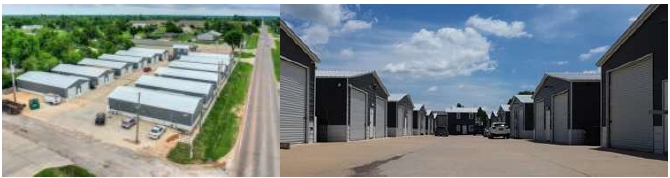
B. A Property Located in Norman, OK
Link to listing: https://www.420property.com/listing/rare-opportunity-state-of-the-art-facility-at-7885-sq-ft-and-almost-14-acres-with-a-3815-sq-ft-home/
- 17 -
This property includes a 7885 sq ft growing facility with a 3815 sq ft home on a lot of approximately 14 acres, listed for approximately $3.0 million:
Pic 6.2: The Norman property
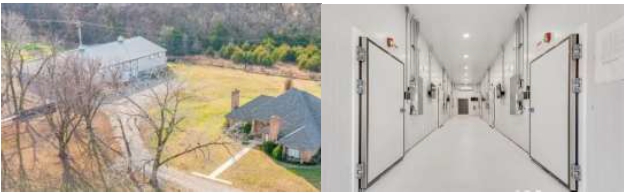
C. The Green Oak property
The Green Oak property is a 1.19-acre lot, hosting 13 detached buildings (units), each of which provides 1,800 square feet of growing and office spaces. The property is off market:
Pic 6.3: The Green Oak property
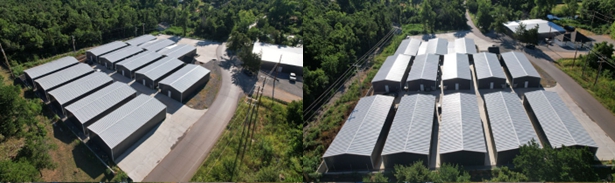
D. The Waterloo property
The Waterloo property is a 0.83-acre lot, hosting 12 detached buildings (units), each of which provides 1,200 square feet of growing and office spaces. The property is off market:
Pic 6.4: The Waterloo property
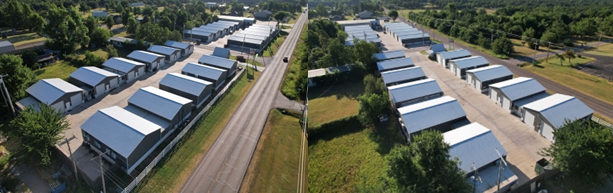
- 18 -
Indebtedness to be discharged
The following table provides information about the promissory notes bearing interests at or higher than 12% per annum, which we intend to pay off fully or partially, using proceeds from this offering:
Table 6.3: Promissory notes, in order of priority to be discharged
| Principal | by Affiliate | Interest | Maturity | Use of Proceeds | ||||||||
| $ | 318,000 | No | 12.99% | 01/01/27 | 1) Paying for purchase of Apple Valley property; and 2) Marketing, auditing, legal fees, and other admin. cost. | |||||||
| $ | 260,000 | No | 12.5% | 03/01/27 | 1) Covering a loan to Rufus House J/V partner at 14% interest; 2) paying off overdue property tax on Rufus House; and 3) marketing and other admin. costs | |||||||
| $ | 350,000 | No | 12.5% | 02/01/27 | 1) Paying for purchase of Apple Valley property; and 2) Marketing, auditing, legal fees, and other admin. cost. | |||||||
| $ | 40,000 | No | 12% | 01/06/27 | Paying off an older note incurred more than one year ago | |||||||
Rufus Rose House project
See Item 7: “other investments//other real estate investments//Rufus Rose House project” for description and financial projection on this project.
Net proceeds from this offering will be used as supplemental capital for Rufus Rose House project. In other words, it does not necessarily cover the full amount of capital required, and the actual capital used may range from $0 to the maximum required amount, which was estimated at approximately $1.24 million.
Alternative Investment Plans under Certain Circumstances
1. Net proceeds less than $1.6 million
In the event that the net proceeds from this offering are less than $1.6 million, we may not have sufficient funds to acquire any cannabis properties meeting the scale of efficiency. If this occurs, we will allocate raised net proceeds between paying off the debt listed above (maximum $968,000) and using as supplemental capital for the Rufus Rose House project (maximum $1,240,000), at the discretion of our management.
2. Unable to close acquisitions on any cannabis properties
In the event that we raise the maximum amount ($4.75 million), but are not able to close acquisitions on any cannabis properties meeting our criteria, we will use all net proceeds to pay off the debt listed above (maximum $968,000) and then provide capital for the Rufus Rose House project (maximum $1.24 million), plus approximately $300,000 for working capital and general purposes. These expenditures, totaling about $2.45 million, will account for more than 50% of all net proceeds we receive.
For the remaining $2.30 million, we plan to allocate them in the following priority order: 1) purchasing short-rental properties in the metro Atlanta area for instant cash income and long term property value appreciation, up to $1.50 million; 2) expanding the capacity of Apple Valley property by building extra growing spaces, with up to $500,000; and 3) investing in other opportunities at the General Partner’s discretion, which should be within the scope of our business purpose as described under the heading “Description of Business” .
- 19 -
ITEM 7: DESCRIPTION OF BUSINESS
Overview
UC Asset LP is a limited partnership formed on February 10, 2016, under the laws of the State of Delaware. Our principal office address is 537 Peachtree Street, NE, Atlanta, GA, 30308. We have an executive office at the address of 7408 Apply Valley Rd, Edmond, OK, 73034.
The business purpose of our Partnership is to invest in real estate for capital appreciation, especially in properties that are considerably undervalued or have considerable potential to appreciate in the near future. We prefer to invest in niche markets where the property value is expected to experience dramatic increases, due to the emergence of new technologies, new economic factors, and/or new regulations.
Prior to the year 2023, the Company had invested in residential properties, a piece of farmland, and a historic landmark building. As of and by date of this Offering Circular, the majority of the Company’s portfolio consists of these investments.
Starting from the year 2023, the Company has shifted its primary business focus to investing in “cannabis properties” or “cannabis real estate”, which, by our definition, refers to real estate properties used to cultivate cannabis plants with intention of producing legalized medical or recreational cannabis flower products. Generally, the term “cannabis real estate” also includes other real estate properties such as retail spaces for cannabis dispensaries, industrial facilities for processing and purifying cannabinoids, and manufacturing spaces for producing cannabinoids-containing products. However, we do not, and have no intention to, invest in any other kinds of cannabis real estate besides properties for cultivation.
In this Offering Circular, the term “cannabis properties” or “cannabis real estate” will specifically refer to cannabis cultivation facilities, unless otherwise stated.
Our partnership is managed by our general partner, UCF Asset LLC, under the terms of our Partnership Agreement. Except for limited conditions defined in our limited partnership agreement, UCF Asset LLC as general partner has authority to exercise full management of our partnership. Limited partners are passive investors and have limited power over our partnership and our general partner.
General Partner
UCF Asset LLC is a limited liability company formed on January 26, 2016, under the law of the State of Georgia. The principal office of our general partner is the same as that of our partnership.
The individuals who, directly or indirectly, own and control our general partner are “Larry” Xianghong Wu with a 90% interest and Jason Cunningham with a 10% interest. Larry Wu is the managing member of our general partner.
UCF Asset LLC does not engage in any business activities other than managing our partnership.
The general partner may be removed, upon consent of the limited partners representing at least sixty-six and two-thirds percent (66 2/3%) of the outstanding common units voting as a single class, where (i) the general partner has been convicted of fraud, embezzlement, or a similar felony by a court of competent jurisdiction in a final judgement, or (ii) the general partner materially and willfully breaches our limited partnership agreement.
- 20 -
The general partner may, at any time, assign all or a portion of its partnership interest to any persons and, in the general partner’s sole discretion, admit the persons as an additional or substitute general partner.
The primary purpose of this SPO is to raise capital to expand our portfolio of cannabis cultivation properties, and to do the other things discussed under the heading “Use of Proceeds”.
In this section, we will discuss:
| ● | Description of our first cannabis property: Apple Valley; |
| ● | ROI of Our Cannabis Portfolio, in Comparison to Our Peers; |
| ● | Our Cannabis Investment Strategy |
Description of our First Cannabis Property: Apple Valley
In May 2023, we made our first cannabis property investment by acquiring 50% ownership of Apple Valley Property. Subsequently, we acquired 100% ownership of this property in March 2025. Located in Edmond, a suburban town in the metro Oklahoma City area, this property is 20 miles from downtown Oklahoma City and 30 miles from its primary airport. The property is held fee-simple by our wholly-owned subsidiary AZO Property LLC, which is a State of Oklahoma limited liability company.
This property is a 100% indoor growing facility, equipped with fully computerized control of critical environment factors, including light exposure, temperature, humidity, carbon dioxide level, irrigation and fertilization.
It has approximately 13,000 square feet of growing space, plus a detached office building of 1,550 square feet.
Pic 7.1: Interior of one of the growing rooms, Apple Vally Property
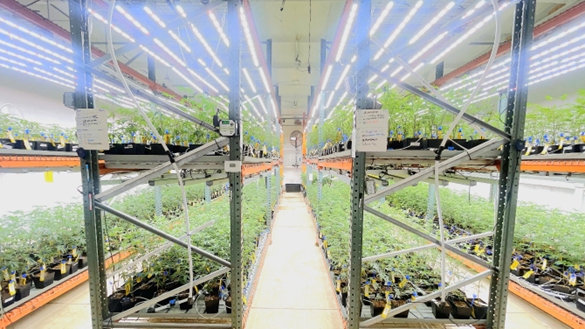
- 21 -
Pic 7.2: Interior of one of the growing rooms, Apple Vally Property
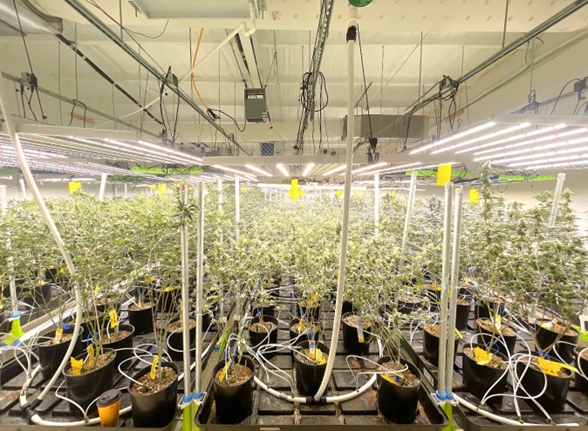
Pic 7.3: Computerized control systems, Apple Vally Property.
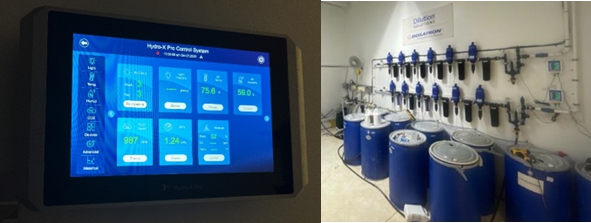
- 22 -
Pict 7.4: Overview of Growing Facility. Apple Valley Property.
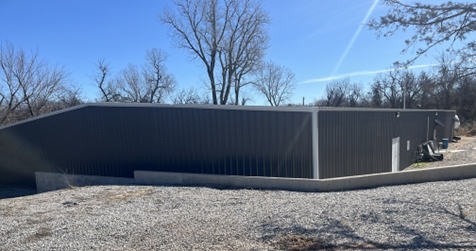
Pict 7.5: Detached office building, Apple Valley Property. Overview.
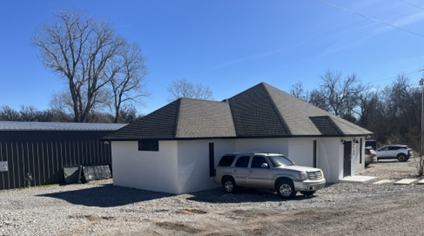
Pic 7.6: Detached office building, Apple Valley Property. Interior.
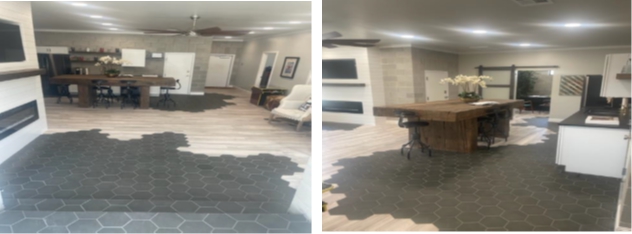
- 23 -
ROI of Our Cannabis Portfolio, in Comparison to Our Peers
As of and by December 31, 2025, to our knowledge, we are one of only four SEC (“Security and Exchange Commission”)-reporting public companies investing in cannabis properties.
Based on our calculations, the ROE (return on equity) of our cannabis property portfolio has outperformed that of all comparable public companies, measured by rent income (or revenue directly derived from rent income) as a percentage of the shareholder equity allocated to the cannabis property portfolio.
Tab 7.1: Return on Equity, based on net equity allocated to common unit shareholders, 2024-27
| Year | Rent Income | Net Equity | ROE* | |||||||||
| 2024 (9 months annualized) | $ | 144,000 | $ | 1,000,000 | 14.4 | % | ||||||
| 2025 | $ | 156,000 | $ | 1,150,000 | 13.6 | % | ||||||
| 2026 (6 months annualized) | $ | 156,000 | $ | 1,150,000 | 13.6 | % | ||||||
| 2027 (projected) ** | $ | 192,000 | $ | 1,280,000 | 15.0 | % | ||||||
| * | Depreciation excluded. If considered, it would decrease current ROE but would substantially improve future ROE due to shrinking equity base. |
| ** | See below: “Lease after July 2026” for discussion on this projection |
The decline in ROE in 2025 and 2026 resulted from our continued investment to improve the property and increase our ownership percentage. These investments were capitalized and therefore increased shareholders’ net equity, but the corresponding increase in rent was not sufficient to offset the larger equity base.
Based on publicly available information, we believe that our cannabis portfolio ROI was significantly higher than industry average. For example, Players Club Capital stated in January 2025 that “Cap rates for (cannabis cultivation) properties typically range from 7-10%” (https://www.playersclub.capital/blog/cannabis-properties-offer-investors-higher-cap-rates).
We also believe that our ROI is higher than the ROI of similar portfolios held by any other public companies during the year 2024, based on our interpretation of their SEC filings. However, we may have misinterpreted their filings, and we strongly recommend investors to conduct their own research on this matter. Further, even if our portfolio did outperform our peers, there is no assurance that we will continue doing so.
Lease after July 2026
We intend to improve Apple Valley property to stay in compliance with regulatory requirements in the second half of 2026. The budget for improvement is estimated at between $45,000 to $55,000. After improvement, we may be able to lease the property for higher price, at $16,000 per month triple-net.
Our Cannabis Investment Strategy
We believe we have developed an investment strategy which is distinguishable from those of most cannabis property investors, public or private. We believe our strategy has proven to be successful, and will continue to produce satisfying results, although there is no assurance of this.
| 1. | We invest when the cannabis industry is likely to be at a periodic low point |
Members of our management team has been following the development of legal cannabis industry from as early as 2013. Yet when our Company was founded in 2016, we decided that cannabis industry was in a “wild west” phase, and, despite the potential for higher gains, investors would be exposed to higher risk of uncertainty, which outweighed the benefits for smaller investors like us. In 2020, we observed that the industry was maturing. However, after further research, we determined that cannabis properties were overpriced in most regions and held back our investments. This action helped us dodge the sharp drop in cannabis property prices during 2021-22.
- 24 -
In the year 2023, we concluded that cannabis property prices had possibly reached their periodical low. Meanwhile, the industry reached a stage of maturity where the risk of uncertainty was more acceptable. We made our first investment in May 2023 and increased our investment in March 2025.
We believe our decision is in line with the real movements of the market, shown in the following charts. The first is Cannabis ETF(NYSE/ARCA: MSOS) chart since its formation until January 2025. After a fast climb to its peak at $51.94 in February 2021, MSOS has lost 93% of its value and is possibly at a periodic low point. The second chart shows that the stock of companies investing in cannabis properties have experienced a similar pattern, only with much larger volatility (than MSOS companies).
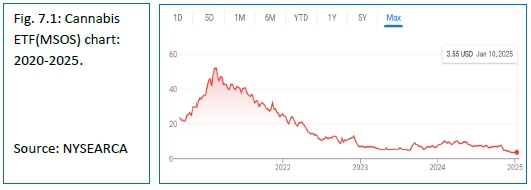
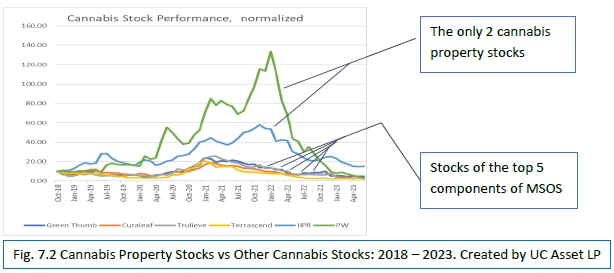
- 25 -
Assuming that stock performance correlates with valuation used in private deals, the above charts suggest that investing after 2023, whether on the stock market or on private transactions, presents lower entry points for investors, than investing at any time between 2020-2022.
We believe the next 6-12 months may continue to present periodic low entry points to cannabis property investors.
Cannabis is still a young industry with huge potential of growth. Combined U.S. medical and recreational cannabis sales could reach $33.6 billion by the end of 2023. Retail cannabis sales are projected to be upwards of $53.5 billion by 2027, according to an analysis conducted by MJBiz Factbook. (https://insights.mjbizdaily.com/factbook-2023/)
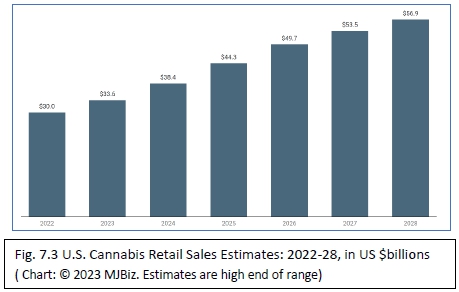
Meanwhile, cultivators are exiting the market at a rapid pace, significantly reducing market supply. Taking the State of Oklahoma (where our cannabis portfolio is based) as an example, the number of licenses for cannabis growers was about 10,000 by the end of 2021, and had dropped to around 3,000 by December 2024 (Source: Oklahoma Medical Marijuana Authority).
The combination of increasing market demand and decreasing market supply, in our opinion, may lead to an increase in cannabis product prices in the next 12-24 months, which may also result in an increase in the value of cannabis properties, however, there is no assurance of this.
Further, there are potential policy developments that may increase the value of cannabis properties. Among these the access to bank service for the cannabis industry may be the most promising. Please see the section “Trend Information” of Item 9 of this Offering Circular for more discussion on this matter.
| 2. | We invest in “premium” properties featuring advanced technologies |
We have observed that, in the earlier stage of US cannabis industry, when the profit margin of cannabis products was much higher, investors intended to build “low-tech” growing facilities, which required less capital and less time to complete, enabling investors to get their products to the market faster and cheaper. For investors who wanted to maximize their short-term returns, this appeared to be a reasonable strategy.
Typical “low-tech” cannabis cultivation facilities include: i) massive growing spaces converted from vacant factories or warehouses; ii) growing spaces converted from smaller spare spaces, such as used containers, used mobile houses, or basements in residential houses; iii) green-houses converted from conventional agricultural green-houses or built to the standard of conventional agricultural green-houses; iv) outdoor growing facilities with mobile tents, which are usually plastic; and iv) outdoor growing farmlands with almost no improvements.
- 26 -
The following collage shows some examples of these “low-tech” cannabis properties:
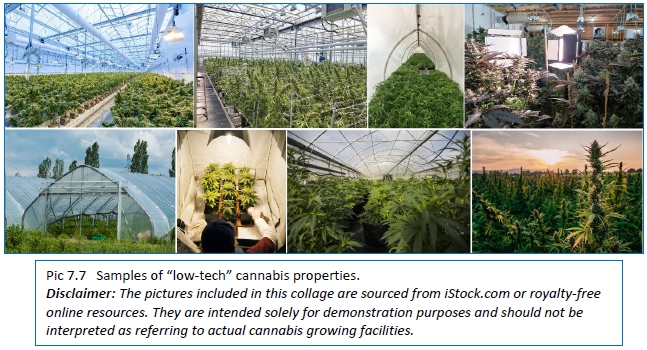
In contrast, we chose to invest in “premium” properties, i.e., cultivation facilities designed to achieve comprehensive control of environment, including light exposure, temperature, humidity, carbon dioxide level, irrigation, and fertilization. The environmental control is computerized and can be programmed to accommodate different cannabis strains for higher yields and better quality. “Premium” properties usually require higher initial investments per square foot to construct.
Example of “premium” properties includes our Apple Valley property which is described above. See: Description of our First Cannabis Property: Apple Valley.
The primary drawback of “low-tech” growing facilities, in our opinion, is their inefficiency in cultivating. This inefficiency results in their marginal costs for continuous operation being significantly higher compared to those of “premium” properties. When cultivating top-shelf and high-quality cannabis strains, the comparative advantage in marginal operation cost of “premium” properties is more remarkable, based on our own case studies.
Average cannabis product prices, over the past few years, have experienced continuous decline. Consequently, growers with higher marginal operating costs found it difficult to stay profitable, and many of them were compelled to exit the market. Meanwhile, growers operating out of “premium” properties have been gaining market shares, thanks to their ability to maintain lower marginal costs. This will potentially increase the demand for “premium” properties and may subsequently increase the return of investment in “premium” properties.
Another potential benefit from investing in “premium” properties is rooted in the shift of consumer preference. Recent data shows that consumers have increasingly favored flower products, including dried flowers and pre-rolls:
Table: 7.2 Year over Year (6/2023-6/2024) Change of Cannabis Sales, by Category
| Category | Pre-rolls | Dried Flowers | Vapor Pens | Edible | Concentrates | Others(Average) | ||||||||||||||||||
| Change | +11.89 | % | +0.44 | % | +3.44 | % | -0.17 | % | -11.55 | % | -6.82 | % | ||||||||||||
Source: CustomConesUSA.com & Headset.io. https://www.greenmarketreport.com/by-the-numbers-the-state-of-the-pre-roll-industry/)
- 27 -
The shift to follower products (dried flowers and pre-rolls) may further increase the demand for “premium” properties. Non-flower products can usually be made from cannabinoids extracted from low-grade cannabis strains, but flower products, especially high-quality ones, can only be cultivated cost-efficiently from “premium” properties.
| 3. | Instead of diversification, we emphasis on long-term partnerships with few selected tenants |
“Diversification” is a widely-recognized principle for investing. We believe, however, it should not be applied to cannabis property investments in the current evolving stage of the industry.
In the dynamic early stage of an emerging industry such as cannabis, businesses, in particular, growers/cultivators, have a significantly high rate of failure. Back in 2016, Mac Mahon, founder and CEO of a start-up accelerator, projected that cannabis startups would have a higher failure rate than 97%, which was the typical failure rate for technology startups(https://www.newcannabisventures.com/cannabis-startup-failure-rate-to-exceed-97-according-to-this-incubator-ceo/).
When an industry has a high failure rate, investors who diversified their investments must make exorbitant profits from a few successful ventures, in order to offset their losses from the majority of failed ones. However, property investors do not receive extra profit when a tenant/grower becomes highly successful, as the rent is usually in a fixed amount and not linked to the tenant’s profit. Meanwhile, if a tenant fails, the property owner may lose all the rental income. Based on the above argument, the strategy of diversification, mathematically, does not work for property investors in an emerging industry.
The above argument suggests that a more effective strategy than diversification is to be selective and invest only in properties with tenants who are likely to be among the top growers and may ultimately succeed. This is the strategy we have followed, and will continue to follow.
We believe in our strategy of working with selected tenants. However, there is no guarantee that we will be able to find tenants who are competent and willing to form such partnerships with us. Additionally, there is no assurance that such partnerships will be successful.
| 4. | We emphasis on seller independence and will avoid “sale-leaseback” |
We have observed notable drawback of the popular “sale-leaseback” model in cannabis property investment. Under the traditional “sale-leaseback” model, investors pay a lump-sum to buy out a property from a grower, and then lease it back to the grower. However, growers sometimes lose interest in continuous operations if they have realized significant profits from selling their property.
To motivate tenants/growers to commit to the desired long-term partnership, we tried to improve “sale-leaseback” by creating deal structures under which growers who sell properties to us will only realize profit from the continuous success of our business. One option is to acquire properties not with cash, but with securities that will realize more value for growers when they succeed in continuous operation. We have applied this model to our first acquisition of the Apple Valley Property.
- 28 -
In general, we intend to avoid “sale-leaseback” and only acquire properties from owners not affiliated to their tenants.
| 5. | Geographically, we prioritize long-term competitiveness in productivity over local market size |
We believe it is reasonable to expect full-scale or partial-scale legalization of medical and/or recreational cannabis use at the federal level in the next few years. There is no assurance that this will occur, but if it does, most cannabis properties will be operating in a (fully or partially) federal legalized market, for the rest of their life cycle which may be several decades. Therefore, when assessing the potential for value appreciation of cannabis properties, we should consider their potential competitiveness in a federally legalized, nationwide market.
For this reason, we choose to invest in regions where cannabis growers may have competitive advantages, if they will compete on a nationwide market.
According to our research, cost of property construction, electricity and labor are three major costs in cannabis cultivation. The following tables show some of the states with lowest costs in these categories:
Table 7.3. Lowest land and construction costs by states
| Land Cost(1) | Construction Cost(2) | |||||||||
| State | Price per Acre | State | Cost per Square Foot | |||||||
| New Mexico | $ | 5,352 | Mississippi | $ | 137 | |||||
| Wyoming | $ | 5,597 | Arkansas | $ | 137 | |||||
| North Dakota | $ | 6,503 | Alabama | $ | 139 | |||||
| Kansas | $ | 7,330 | Louisiana | $ | 141 | |||||
| Oklahoma | $ | 7,779 | North Carolina | $ | 141 | |||||
| Montana | $ | 7,826 | Florida | $ | 142 | |||||
| Colorado | $ | 8,696 | Oklahoma | $ | 143 | |||||
| West Virginia | $ | 9,806 | South Carolina | $ | 143 | |||||
| Mississippi | $ | 9,976 | South Dakota | $ | 144 | |||||
| Alaska | $ | 10,857 | Tennessee | $ | 144 | |||||
| (1) | Source: Nasdaq.com, 2023. https://www.nasdaq.com/articles/10-cheapest-states-to-buy-an-acre-of-land |
| (2) | Source: Nasdaq.com, 2023. https://www.nasdaq.com/articles/most-and-least-expensive-states-to-build-a-home |
Table 7.4. States with lowest unit costs of industrial electricity, year 2023
| States | $/million btu | |||
| New Mexico | 16.86 | |||
| Louisiana | 17.23 | |||
| Tennessee | 18.25 | |||
| Oklahoma | 18.35 | |||
| Washington | 18.6 | |||
| Kentucky | 19.21 | |||
| Texas | 19.34 | |||
| South Carolina | 19.57 | |||
| Arkansas | 20.12 | |||
| New York | 20.13 | |||
(Source: EIA, 2024)
- 29 -
Table 7.5 States with lowest cultivation labor costs when worker participation rate above 0.8 (1):
| State | Hourly mean wage ($) | Workers per 1,000 jobs | ||||||
| Florida | 14.40 | 1.148 | ||||||
| New Mexico | 14.83 | 2.235 | ||||||
| Idaho | 15.63 | 2.355 | ||||||
| Arizona | 16.55 | 2.067 | ||||||
| Oregon | 16.88 | 4.109 | ||||||
| Oklahoma | 16.92 | 0.968 | ||||||
| California | 17.63 | 9.563 | ||||||
| Washington | 17.84 | 2.367 | ||||||
| New Jersey | 17.80 | 0.817 | ||||||
| Maine | 19.02 | 0.941 | ||||||
| (1) | Data is for subcategory “farm workers & laborers: Crop, nursery and greenhouse” |
(Source: US Bureau of Labor Statistics, 2024)
Based on the above data and other factors, we have chosen the State of Oklahoma as our first geographic focus to build our cannabis property portfolio. We may choose to expand into one or two other states if we believe these states also present great potential for cannabis growers to achieve long-term competitiveness.
However, there are other factors we have taken and will continue to take into consideration when making our investment decisions. The research results here do not constitute a guarantee or warranty that we will invest in any of these states, nor do they exclude us from investing in other states.
Further, our strategy will not be effective if federal legalization does not happen in the near future. Please refer to “risk factors” in Item 3 and “trend information” in Item 9, for more discussion on this matter.
Other Real Estate Property Investments
Prior to the year 2023, the Company had invested in residential properties, farmlands, and historic landmark buildings. As part of our business plan to shift our focus to cannabis real estate, we have been exiting our non-cannabis investments since 2023. We sold a piece of farmland for $1.9 million in January 2023, and sold a residential lot for $340,000 in July 2024.
As of and by the date of this offering circular, the majority of the Company’s portfolio still consists of non-cannabis properties. The following table lists our current non-cannabis property investments:
| Property Type/Name | Location | Status | Book Value* (Cost based) | Appraised Value | ||||||||
| Historic Landmark | ||||||||||||
| Rufus Rose House | Atlanta, GA | Renovation | $ | 2,249,755 | N/A | |||||||
| Residential | ||||||||||||
| Valley Hall | Sandy Springs, GA | Hold for investment | $ | 988,932 | $ | 1,006,000 | ** | |||||
| * | Book value is based on historical cost recorded by and as of December 31, 2025. |
| ** | Appraised value is from the most recent appraisal report dated October 05, 2023, which was provided by an independent and licensed appraiser, Sterling Appraisal Services, LLC (PO Box 2092, Roswell, GA 30077) |
We intend to exit most or all of our non-cannabis investments in the next few years. The pace of such exiting transactions will be subject to market conditions and other economic factors. We do not exclude the possibility that we will continue to hold some of, even all of, these non-cannabis property investments indefinitely if we believe that there are sound business reasons to do so.
- 30 -
While we are still holding some of our non-cannabis properties, the Company has started to spin off the daily management and operation of these properties to non-affiliate business partners, with the intention to improve our efficiency and productivity. In December 2023, we (through a wholly owned subsidiary) entered into a joint-venture agreement with Vaycaychella Inc (OTC Pink: VAYK) for the latter to manage the renovation and operation of the Rufus Rose House, a historic landmark owned by us. More details about this historic landmark and the joint-venture can be found below in the subsection of “Rufus Rose House Project”.
Rufus Rose House Project
In the third quarter of 2021, the Company, through its wholly owned subsidiary Atlanta Landsight LLC (“ALS”), acquired the historic Rufus Rose House in Atlanta, GA. The property is a federally registered historic building as it is the oldest residential property and the only standing Victoria-style mansion in downtown Atlanta. After acquisition, ALS partially renovated the interior of the building, which includes replacing and reinforcing a significant part of its wooden framework. The original concept was to renovate it into a boutique office building. In January 2024, ALS entered into a joint-venture agreement with Vaycaychella Inc (“VAYK”), to develop this property into a boutique Airbnb.
The following table lists major categories of our budget to develop of Rufus Rose House into a boutique short-rental property:
Table 7.7: Rufus Rose House budget estimates (as of December 31, 2024)
| Category | Total Budget | Invested/Spent | Required/To be Raised | |||||||||
| Property purchase | $ | 1,650,000 | $ | 1,650,000 | $ | 0 | ||||||
| Interior Renovation | $ | 770,000 | $ | 264,000 | $ | 506,000 | ||||||
| Exterior Renovation | $ | 669,000 | $ | 25,000 | $ | 644,000 | ||||||
| Administration incl tax | $ | 200,000 | $ | 110,000 | $ | 90,000 | ||||||
| Total | $ | 3,289,000 | $ | 2,049,000 | $ | 1,240,000 | ||||||
The figures presented in the above table are provided by our current licensed contractor using their best effort estimates. It is not examined or audited by any other parties. We cannot guarantee the accuracy of these estimates, although our past experience with the same contractor indicated that their actual work costs would usually go under or over budget by less than 20%.
The figures presented in the above table are subject to adjustment due to changes in macroeconomic and industrial conditions, local market dynamics, and other factors beyond our control. Consequently, the actual capital required to complete Rufus Rose House project may vary significantly from the projected estimates.
The following projection was made prior to the summer of 2025:
Upon completion of the project, we estimate that the property will provide 5 units as short-term rental, and may generate an average gross revenue at about $1,100 -1500 per day, or $400,000 - $540,000 per annum. Net proceeds may be about $250,000 - 380,000 per annum. Further, as a historic landmark, it may be rented out as venue for special events including movie/TV show filming, for which daily rent may be as high as $10,000 (based on offers we received in the past). Overall, we project that net proceeds from completed Rufus Rose House may reach $300,000 - $430,000 per annum.
Upon completion, fair market value of the property, using an industrial wide 4-10% cap rate (See: What Is Cap Rate and How Does It Apply to Short-Term Rentals? https://www.airdna.co/glossary/cap-rate-short-term-rental. This article by AirDNA, an independent analyst firm, estimated that in February 2025, “A good cap rate for short-term rentals (STRs) typically falls between 4% and 10%”), will likely fall in the range of $3.0- $10.1 million, with a mid-value of approximately $6.5 million.
However, due to events beyond our control, the economic environment surrounding this project materially changed in 2025. In addition to other events, the federal government, along with the passing of One Big Beautiful Bill Act in July 2025, reverted and rescinded $157 million of federal funds that was granted to the City of Atlanta , under a project called “the Stitch”. The Stitch project was only two blocks from Rufus Rose House and had significant positive impact on the projected value of the property after completion of renovation, prior to its reversion and rescinding. As a result, the Company has adjusted the mid-value of the property upon completion of renovation by 10%, to approximately $5.8 million.
- 31 -
The above projections, including the projection on the fair market value of the property, are highly speculative and with great uncertainty. The real results may vary significantly from these projections.
Termination of the Rufus Rose House joint venture
Since the projected profit margin became significantly smaller, the Company decided to take full control of the project and no longer work through a joint venture, with the intention to not share profit with other parties. The Company was able to terminate the joint venture agreement on Rufus Rose House in May 2026.
Investment in Other Real Estate Companies
The Company also holds two convertible notes of a total principle amount of approximately $564,000 in a real estate management company, Vaycaychella Inc. (OTC: VAYK). These include a note in the principal amount of $414,000, carrying a 12% annual interest rate and maturing on July 31, 2027, and another note in the principal amount of $290,000, carrying a 14% annual interest rate and maturing on July 05, 2027. VAYK is a real estate management company specializing in developing and managing short-term rental properties.
The Company may from time to time invest less than 10% of its net assets in non-real estate investment products. Currently, the Company holds a $200,000 promissory note from Curative Technology Inc (OTC: CURA). The Note matures on November 30, 2026. The management of Curative, including its CEO, CFO and a board member has provided personal guarantees for the collection of the monthly payment on this note.
| Borrower | Amount | Rate Per Annum | Due Date | |||||||
| Curative Technology Inc | $ | 200,000 | 18 | % | November, 2026 | |||||
| Total | $ | 200,000 | 18 | % | ||||||
As of and by the end of December 2025, we had received payments in the aggregate amount of $128,000 including monthly interests and penalties. As of and by the end of May 2026, we have received payments in the aggregate amount of $149,000 including monthly interests and penalties. CURA still owns us the principal in the amount of $200,000.
Employees
Operational services for our partnership are provided by our general partner. In addition to the two members, including a managing member, our general partner employs two people on a part-time basis. We also utilize the services of third party service providers, such as contractors, realtors and attorneys, in connection with the management of our real estate portfolio.
- 32 -
ITEM 8: DESCRIPTION OF PROPERTIES
Information pertaining to our properties can be found under the following sections of Item 7:
--Item 7: Cannabis Property Investment// Description of our first cannabis property: Apple Valley
--Item 7: Other Investments: Other Real Estate Property Investments
- 33 -
ITEM 9: MANAGEMENT’S
DISCUSSION AND ANALYSIS OF FINANCIAL CONDITION
AND RESULTS OF OPERATIONS
You should read the following discussion and analysis of our financial condition and results of operations together with our financial statements and the related notes and other financial information included elsewhere in this Offering Circular. Some of the information contained in this discussion and analysis or set forth elsewhere in this Offering Circular, including information with respect to our plans and strategy for our business, includes forward-looking statements that involve risks and uncertainties. You should review the “Risk Factors” section of this Offering Circular for a discussion of important factors that could cause our actual results to differ materially from the results described in or implied by the forward-looking statements contained in the following discussion and analysis.
We have been profitable for most years since our incorporation in the year 2016. We were profitable for the year 2024 with net profits of $0.02 per share, but posted a loss of $0.06 per share in the year of 2025.
In general, the whole real estate industry has slowed down over the past two years, due to factors beyond our control. According to the National Association of Realtors, 2023 was the weakest year for existing U.S. home sales since 1995, and 2024 home sales was only slightly higher than in 2023 but still at a historically low level. According to the Case-Schiller home price index, average home price in metro-Atlanta has been declining since reaching its peak in May 2025. By the end of 2025, it had decreased by 2.1%. This has negatively impacted on our overall performance.
Meanwhile, our investment in cannabis properties continued to perform well in the year 2025, posting a 13.6% cash-by-cash return in 2025, after a 14.4% annualized cash-by-cash return in 2024.
Material Changes in Financial Statements: 12-month period by December 31, from 2024 to 2025
Change of Annual Revenue and Gross Profit
Total revenue decreased to approximately $225,000 in the fiscal year 2025, from approximately $405,000 in the fiscal year 2024. This decrease was primarily the result of a decrease in our real estate sales.
| 2025 | 2024 | |||||||
| INCOME | ||||||||
| Sales of real estate | $ | - | $ | 340,000 | ||||
| Other real estate based income (rent, dividends etc.) | $ | 225,163 | $ | 65,168 | ||||
| Total income | $ | 225,163 | $ | 405,168 | ||||
| Total Cost of sales | $ | - | $ | 351,733 | ||||
| Gross Margin | $ | 225,163 | $ | 53,435 | ||||
Our business model is to invest in real estate for capital appreciation. We are not a builder or developer and are under no pressure to sell any property in our portfolio (inventory) unless we desire to. Usually, we will only sell a portfolio property to realize our investment gain when we believe it has reached its desired level of value appreciation. Otherwise, we will hold on to our portfolio properties in expectation of further appreciation. Since the real estate market was slow in 2025, we decided that it would be better to hold on to our portfolio properties and did not actively pursue selling most of them.
Our gross margin increased because most of our revenue in 2025 was rent income and therefore did not have any cost of sales. However, operating cost increased (see below) as depreciation was applied on rental properties.
- 34 -
Change of Operating Expenses
| 2025 | 2024 | |||||||
| OPERATING EXPENSES | ||||||||
| Management fees | $ | 116,516 | $ | 102,481 | ||||
| Professional fees | 150,183 | 49,847 | ||||||
| Other operating expenses | 238,851 | 85,502 | ||||||
| Depreciation | 48,365 | - | ||||||
| Total operating expenses | $ | 553,915 | $ | 237,830 | ||||
After two years of reduction of operating expenses, we saw a hike of operating expenses in 2025, mostly from the increase of marketing cost to prepare for our public offering, which reflected in “other operating expenses”. Our professional fees also increased mostly from legal fees associated with filing preparation for public offering. Despite the increase of operating cost from $238,000 in 2024 to approximately $554,000 in 2025, it was still lower than $609,000 in the year 2022, when we started to cut our operating costs. In particular, our management team reduced their management fee from approximately $188,000 in the year 2022, to approximately $102,500 and $116,500 in 2024 and 2025 respectively.
Change of Profit Per Unit
For the fiscal year of 2025, our gross profit improved considerably, because of the shift of business model and most of our revenue was generated from rent income, without much cost of sales. However, net income decreased due to the rise of operating expenses.
| Period end | Gross Profit |
Per
Common Unit* |
Net Income | Per Common Unit* | ||||||||||||
| December 31, 2024 | $ | 53,435 | $ | 0.01 | $ | 132,410 | $ | 0.02 | ||||||||
| December 31, 2025 | $ | 225,163 | $ | 0.04 | $ | (339,596 | ) | $ | (0.06 | ) | ||||||
| * | Based on the fact that preferred units were not allocated any gross profit or net income for the concerned fiscal years. |
Other Material Changes in Financial Statements
None for the reporting period.
Liquidity and Capital Resources
Cash Flows
As an investor, we usually do not manage the daily operation of any of our portfolio property. Except for some insignificant and non-material operating activities, we intend to form partnerships with third party operators or managers to conduct our daily business. We usually require the third party to bear related operating costs.
- 35 -
Meanwhile we are applying a disciplined investment strategy, under which we will usually make new investments only when we have cash available.
Under such a business model, we don’t usually have a significant amount of cash commitments, except for 1) management fees and professional fees, which are usually stable and predictable period-to-period; and 2) amount paid due to our debt financing.
Despite the limited amount of cash commitments, we believe that the cash reserves of the Company was at a concerning level of $9,984, by the end of the year 2024. Management made several attempts to increase our cash position, including borrowing in the form of short-term loans. By the end of the year 2025, our cash position improved to $41,765. This is still a concerning level of cash reserve, in the opinion of our management. Management will continue to work and improve our cash position in the year 2026.
12-month period changes from 2023 to 2024
| Fiscal Year Ended Dec 31, 2025 | Fiscal Year Ended Dec 31, 2024 | |||||||
| Net cash provided by (used in) operating activities | $ | (440,634 | ) | $ | (13,606 | ) | ||
| Net cash provided by (used in) investing activities | $ | (1,681,336 | ) | $ | 14,002 | |||
| Net cash provided by (used in) financing activities | $ | 2,153,751 | $ | 6,457 | ||||
| Cash at beginning of period | $ | 9,984 | $ | 3,131 | ||||
| Cash at end of period | $ | 41,765 | $ | 9,984 | ||||
Commitments and Contingencies
| 1. | Management Fee |
The partnership is obligate to pay a management fee to our general partner, regardless of whether its operation is profitable. Management fees are calculated at 2.0% of assets under management (AUM) as of the last day of our preceding fiscal year. Starting from the year 2023, we have changed the method of calculating AUM to historical cost, with the intention to reduce management fees. As a result, management fees were reduced by approximately 45%, from approximately $188,000 in the year 2022, to approximately $102,000 in the year 2024. Management fees increased slight to $116,500 in 2025.
- 36 -
| 2. | Private Debts |
At December 31, 2025 and 2024, the partnership carries owed debt obligations to related and unrelated parties, of a total amount of $1,018,000 and $109,926, respectively. The total amount of debts that were collateralized with properties was $818,000 and $0, respectively, at December 31, 2025 and 2024.
| 3. | Other |
From time to time we may be subject to liabilities that may arise in the ordinary course of business. At December 31, 2025, and 2024, the partnership is not aware of any claims or related liabilities.
Capital Resources
Since our inception, we have funded our operations primarily through the sale of limited partner interests sold in private placements. Our Initial Public Offering pursuant to Regulation A plus was closed on October 12, 2018. The net proceeds of capital raised in the offering were approximately $1.15 million.
Since March 2020, we have not raised any capital. The Company bought back shares from a number of investors for a total amount of approximately $90,000, in the year 2021. The Company also redeemed $300,000 series-A preferred shares in July 2022. We made a $544,000 distribution in the year 2022. Altogether, our available capital has decreased by $934,000 since the year 2021.
In 2023 and subsequently in 2025, the Company issued a total amount of $1.6 million preferred shares to acquire a piece of property. From the perspective of capital formation, the seller made in-kind capital contribution of $1.6 million into our Company.
The Company is currently seeking to raise capital through a public offering of its partnership interests. Prior to or after the planned public offering, the company may raise more capital through private offerings of its partnership interests. There are no guarantees, however, that the Company will close any public or private offerings.
Debt financing
On December 31, 2025 and 2024, the partnership was indebted to related and unrelated parties, in the total amount of $1,018,000 and $109,926, respectively. The total amount of debts that were collateralized with properties was $818,000 and $0, respectively, on December 31, 2025 and 2024.
The following discussion covers some significant trends or uncertainties affecting our business during the reporting period, which had impacts on our continuing operations, particularly on our portfolio investments.
1. Unit Pricing for Regulated Cannabis Products
Overall, US cannabis whole sale price, measured with the SPOT index, has stabilized after significant declines between 2020 – 2022. As a matter of fact, US SPOT index manifests very limited volatility from 2024 to 2026. This may indicate that the supply-demand of regulated cannabis has approached a balanced point. As a result, cannabis property market may have reached its periodic lowest point.
- 37 -
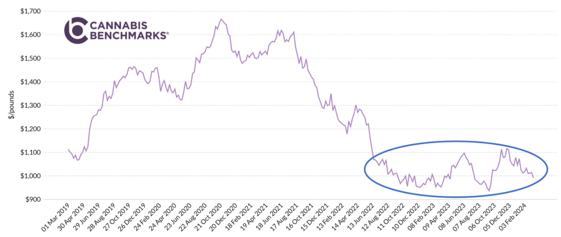
Fig 9.1: US cannabis wholesale price index (SPOT Index), 2019 - 2024 (Source: New Leaf Data Services)
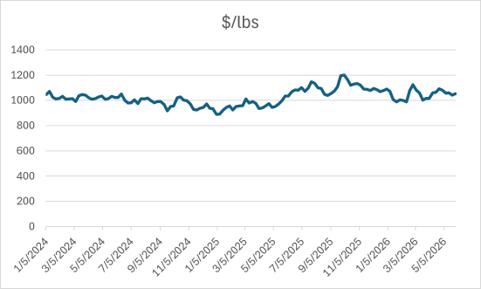
Fig 9.2: US cannabis wholesale price index (SPOT Index), 2024 – 2026 (Source: New Leaf Data Services)
2. Prospects of Cannabis legalization under Trump Administration
In 2025, President Trump signed an executive order directing his administration to reclassify medical cannabis from Schedule I to Schedule III of the Controlled Substances Act. On April 23, 2026, the U.S. Department of Justice (DOJ) and the Drug Enforcement Administration (DEA) officially finalized this reclassification.
- 38 -
This historic shift, which took effect on April 28, 2026, marks the first major change to federal marijuana policy in over 50 years. Immediate impacts may include: 1) Tax Relief: medical marijuana businesses will no longer be subject to the strict tax penalties of Section 280E of the Internal Revenue Code, allowing them to deduct business expenses; 2) Banking Access: the move is expected to increase access to financial services for medical marijuana operators; and 3) Research: it makes it significantly easier for researchers to study marijuana.
The change specifically applies to FDA-approved marijuana products and state-licensed medical marijuana. However, it does not legalize recreational or adult-use marijuana, which remains a Schedule I substance.
3. SAFER Banking Act
Under current federal legislation, commercial banks with FDIC insurance and federal oversight generally are restricted from providing mortgages on cannabis cultivation properties. Because cannabis remains a Schedule controlled substance federally, traditional lenders risk federal money laundering penalties and asset forfeiture if they finance primary cannabis operations.
The SAFER Banking Act is specific legislation in the works to address this issue. It aims to provide a “safe harbor” for banks, insurers, and federally backed mortgage programs, protecting them from federal penalties for serving state-compliant cannabis businesses. This legislation has bipartisan support and has passed the U.S. House of Representatives multiple times in various formats.
If the SAFER Banking Act or similar legislation is passed, it could result in a substantial increase in cannabis property values, even without comprehensive federal-level legalization of cannabis products. Currently, the cannabis property market relies heavily on private loans, which typically carry interest rates in the range of 12%–14% per annum and often mature within 12–24 months. Commercial bank mortgage loans, if permitted, could offer interest rates of 6%-8%, amortized over 10 – 30 years. This would greatly increase the availability of capital for cannabis property buyers.
We have no critical accounting estimates for the foreseeable future.
- 39 -
ITEM 10: DIRECTORS, EXECUTIVE OFFICERS AND SIGNIFICANT EMPLOYEES
The operation of our partnership is managed by our general partner. As of the time of this filing, we do not have any other directors, officers, or significant employees. The following are all members of our general partner and their respective ages and positions as of the time of this filing.
| Name | Position | Age | Since | |||
| “Larry” Xianghong Wu | Major Member of General Partner | 55 | formation in January 2016 | |||
| Jason D. Cunningham | Minor Member of General Partner | 54 | January 2025 |
Dr. “Larry” Xianghong Wu held a majority interest of UCF Asset LLC (which is our general partner) since its formation in January 2016. Between 2012 and 2016, he was the founder and chief executive officer of Shanghai Heqing Asset Management LP, a limited partnership based in Shanghai, China, focused on Chinese investments in the U.S., particularly real estate. Between 2011 and 2012, he was chief executive officer of EHE Capital, a Chinese PE fund managing a portfolio of approximately $1 billion, mostly in real estate properties. Between 2009 and 2011, he worked at Cisco Systems, Inc. as a vice president for Cisco’s strategic business transformation in China. Dr. Wu has served as policy advisor and counselor to the Chinese government. He also served as a Board Member of Finance and Investment of the Capital Club in China from 2009 to 2013.
Jason D. Cunningham has 30 plus years of management expertise in medical and real estate industry, and currently oversees our operation of cannabis properties. Prior to becoming a member of our general partner, he managed our operation of medical cannabis properties in metropolitan Oklahoma City area. He is the founder of Fire Ranch, a multi-site collective of over two dozen indoor commercial medical cannabis properties, as well as the founder of Fire Ranch Farmacy, a retail outlet for Medical Grade Cannabis and Cannabis products. Jason graduated from the University of Oklahoma (1994) with Degrees in Zoology and Chemistry, and spent 22 years with Bristol Myers Squibb/Celgene in Hematological Oncology, specializing in B cell Malignancies.
Previous Members of Management Team
Jason Armstrong served as managing member of UCF Asset LLC between December 2023 to December 2024. He had previously worked as a contracted project director for UC Asset since the year 2021. He is the founder and manager of EES Contracting, which he started in 2004 as a site development company, and expanded into a licensed new construction and high-end remodeling business in the year 2008. Mr. Armstrong also worked as a project management consultant to multiple real estate investment groups between 2012 and 2018.
Board of Directors and Audit Committee
Our Company is a limited partnership and is not required to establish a board of directors.
From the beginning of 2022, the Company changed its quoting platform from OTCQX to OTCQB. As a result, the Company was no longer required to have an Audit Committee.
- 40 -
ITEM 11. COMPENSATION OF DIRECTORS AND EXECUTIVE OFFICERS
The operation of our partnership is managed by our general partner, UCF Asset LLC. Our partnership does not have any other directors or officers who receive compensation.
We pay management fees quarterly to our general partner. Management fees are calculated at 2.0% of the fair market value of assets under management as of the last day of our preceding fiscal year. The fee is paid quarterly. Management fees for the fiscal year 2023 and 2024 were approximately $112,000 and $102,000, respectively. In addition, the General Partner will receive 20% of all distributions the Company makes above a “hurdle rate”. See “Distributions”.
In addition to the management fee, we reimburse the general partner for standard expenses it may incur in managing the Company in accordance with our limited partnership agreement. These reimbursable expenses include: organizational expenses; fees for accountants, attorneys, auditors, and other professionals; expenses associated with partnership taxation reporting; operational expenses including insurance, valuation reports, and real estate brokerage commissions; and government filing fees, among others.
- 41 -
ITEM 12: SECURITY OWNERSHIP OF MANAGEMENT AND CERTAIN SECURITYHOLDERS
As of and by the date of December 31, 2025, there was only one unit holder that beneficially owns more than 5% of our common units. The managing member of UCF Asset, LLC, “Larry” Xianghong Wu, beneficially owns 195,603 of our common units (3.57%). The other member of UCF Asset LLC, Jason D. Cunningham, beneficially owns 500,000 of our series B preferred units.
The general partner is entitled to 20% of all distribution to be made by the Company after the common unit holders receive a return equal to the Company audited book value. See “Distribution”.
As of the date of December 31, 2025, the security ownership of significant ownership interest is listed as below:
| Beneficial Owner | Title | Security | Amount | Percentage of Same Type of Securities |
||||||
| Ying Huang | None | Common Units | 302,667 | 5.52 | % | |||||
| Officers and Directors: | ||||||||||
| “Larry” Xianghong Wu | Major Member of General Partner | Common Units | 195,603 | 3.57 | % | |||||
| Jason D Cunningham | Minor Member of General Partner | Series B Preferred Units | 1,333,334 | 100.00 | % | |||||
- 42 -
ITEM 13: INTEREST OF MANAGEMENT AND OTHERS IN CERTAIN TRANSACTIONS
Transactions with Jason Cunningham
In December 2024, Jason Cunningham acquired 10% of membership interest in UCF Asset LLC, which is our general partner. Subsequently, Cunningham become a member of our general partner on January 01, 2025.
Fire Ranch LLC, of which Jason Cunningham owns 50%, is a licensed cannabis grower in the State of Oklahoma. Prior to Cunningham becoming a member of our general partner, Fire Ranch LLC had entered into a lease on the Apple Valley property from AZO Properties LLC. The rental payment from Fire Ranch LLC to AZO Properties LLC is the source of the $12,000 monthly dividend we are receiving from AZO Properties LLC. After Cunningham became a member of our general partner, this lease remained effective until March 31, 2025.
On March 16, 2025, we issued 833,334 shares of Series B preferred units, with a face value of $1.0 million, to Jason Cummingham, and paid $500,000 cash, for 50% ownership of AZO Properties LLC. After this transaction, AZO Properties LLC became a wholly owned subsidiary of UC Asset.
On April 01, 2025, Fire Ranch LLC entered into a new lease (the “New Fire Ranch Lease”) with AZO Properties LLC, to rent and operate the Apple Valley property. The lease is a double-net lease, with a monthly rental rate of $13,000 until the end of 2025, and a monthly rental rate of $16,000 from January 2026 till March 2027. Starting from April 2027, the monthly rent will increase by 5% every 24 months. The lease is a five-year lease but will automatically renew year by year beyond the term, until terminated.
In January 2026, the Company found out that Cunningham had sold his ownership in Fire Ranch in January 2025 to a third party, a material information which he failed to disclose to the Company at the time when he broke the New Fire Ranch Lease. Following this finding, discussion have been initiated with Cunningham to ensure the interests of our Company are protected, including but not limited to possible reduction of the acquisition price of the Apple Valley property.
Transactions with Jason Armstrong
On April 25, 2023, Mr. Jason Armstrong was hired as manager of UCF Asset LLC. On December 2023, Jason Armstrong became a 10% member of UCF Asset LLC.
Before Mr. Armstrong joined UCF Asset LLC, his company, EES Engineering LLC, had worked as a contractor to UC Asset LP. For the period starting from April 26,2023 till December 31, 2023, EES Engineering LLC continued working with UC Asset LP, and received a total amount of $144,047 under contracts with UC Asset LP, out of which $75,717 was to fulfil the contracts signed before Mr. Armstrong became the manager of UCF Asset LLC, while a total amount of $68,330 was received under contracts signed after Mr. Armstrong served as the manager of UCF Asset LLC.
For the fiscal year of 2024, EES Engineering was contracted and compensated by UC Asset LP for a total amount of $5,882. Mr. Armstrong resigned his position as a member of our general partner in December, 2024.
Fiduciary Responsibilities of The General Partner
A general partner is accountable to a limited partnership as a fiduciary and consequently must execute good faith and integrity in handling partnership affairs. Investors with questions concerning the duties of a general partner should consult with their counsel.
The general partner and its affiliates, or their respective members, partners, officers, directors, employees, shareholders, agents, and managers may not be liable to our partnership or limited partners based on errors in judgment or other acts or omissions not amounting to willful misconduct or gross negligence, as is provided in our limited partnership agreement. Therefore, investors have a more limited right of action against those persons than they would have absent that limitation in the limited partnership agreement.
Our limited partnership agreement provides for indemnification of the general partner and its affiliates, or their respective members, partners, officers, directors, employees, shareholders, agents, and managers by our partnership for liabilities incurred in dealing with third parties on behalf of our partnership. To the extent the indemnification purports to include indemnification for liabilities arising under the Securities Act of 1933, we have been informed that in the opinion of the Securities and Exchange Commission such indemnification is against public policy as expressed in such act and is, therefore, unenforceable.
- 43 -
ITEM 14: SECURITIES BEING OFFERED
General
The following is a summary of the rights of our Series C Preferred Units being offered, key provisions of Certificate of Series C Preferred Units, key provisions of our limited partnership agreement, and certain tax consequences of our partnership and being a limited partner.
Series C Preferred Units
Series C Preferred Units represent preferred limited partner interests in our partnership. There are 5,000,000 shares of Series C preferred units being offered.
The holders of Series C Preferred Units (the “Series C Holders”) are entitled to received 8% preferred dividends and exercise the rights or privileges available to limited partners under our limited partnership agreement, subject to terms and conditions in the Certificate of Designation 8.0% Series C Accumulative & Convertible Preferred Units of UC Asset LP (the “Certificate”).
Series C Preferred Units may be converted into our common units, subject to terms and conditions in the Certificate.
Common Units
Common units represent limited partner interests in our partnership. The holders of common units are entitled to participate in partnership distributions and exercise the rights or privileges available to limited partners under our limited partnership agreement. For a description of the rights and privileges of limited partners under our limited partnership agreement, including voting rights, please read “Limited Partnership Agreement” below.
There are currently 5,435,025 common units outstanding.
Rights of common unit holders are defined in our Limited Partnership Agreement, of which a summary is contained hereinunder.
Certificate of Series C Preferred Units
The Certificate is the governing instrument establishing the terms and conditions pursuant to Series C Preferred Units. The following is a summary of the Certificate. A copy of the Certificate is included as an exhibit to the offering statement of which this Offering Circular forms a part. This summary is qualified by reference to the exhibit containing the complete Certificate.
A prospective investor in our partnership should read the Certificate prior to making a decision to subscribe our Series C Preferred Units.
Issuance
No units of Series C may be issued prior to the date (the “Qualification Date”) when the Security and Exchange Commission (the “SEC”) qualifies the Company’s offering circular on Form 1-A. No fractional number of shares shall be issued. No units of Series C may be issued to any person who, under security laws and regulations, is not qualified to participate in a Regulation A public offering;
All Series C Preferred Units shall bear the same issuance date (the “Issuance Date”) as the date when the Company closes and terminates this offering, regardless of the actual date when a Series C Preferred Units is issued and delivered.
- 44 -
Face Value
Each Series C Preferred Unit shall bear a face value of $1.00, with no par value.
Ranking
Series C Preferred Units are senior to common units and to all other preferred units except for Series B Preferred Units. There are no more Series A preferred units outstanding.
Voting Rights
Holders of Series C Preferred Units shall be entitled to no voting rights on any business matters of the Company. However, holders of Series C Preferred Units shall become holders of Common Units, and thereby gain voting rights the same as any other Common Unit holders, immediately at the moment when the holder converts any number of Series C Preferred Units into Common Units.
Transferability
Series C Preferred Units may be transferred and reassigned with the written approval of the Company, provided that the holder has held their Series C Preferred Units for a period exceeding 12 months.
Series C Portfolio Investments
At least 80% of net proceeds from this offering, i.e., from the issuance of Series C Preferred Units, shall be contributed into a newly established and wholly-owned subsidiary of the Company, of which the sole business is to invest and manage those contributed capital in line with the business purpose of the Company. The total asset of the new subsidiary constitutes a portfolio of investments referred to as “Series C Portfolio Investments”.
Preferred Dividends.
Series C Holders are entitled to an 8% preferred dividend, or, $0.08 per unit, for each fiscal year. However, the total amount of distribution of preferred dividend shall not exceed the higher amount (“Maximum Annual Distribution”) of i) net operating profit from Series C Portfolio Investments; or ii) audited net income of the Company for the Dividend Year. If the Maximum Annual Distribution of a fiscal year is insufficient to cover the distribution of preferred dividend, the deficit shall be accumulated and added to the payable dividend for the subsequent fiscal year. However, for any fiscal year, the total amount of payable Series C preferred dividend, including the current year dividend plus any amount accumulated from prior years, shall not exceed 20% of the face value, i.e., $0.20 per unit (“Dividend Cap”). Any amount of payable dividend exceeding the Dividend Cap shall be automatically and irrevocably forgiven and cancelled.
Except for preferred dividends defined above, Series C Holders shall NOT be entitled to receive any dividends, regardless of any dividends that may be attributed to any other classes of units of the Company, including Common Units and other series of Preferred Units.
Holders of Series C preferred units will have the top priority order in receiving dividend distributions over holders of common units and any other preferred units other than Series A or B holders. However, all Series A preferred units have been cancelled, and all Series B preferred unit holders are NOT entitled to receive any dividend,
Conversion
Series C Preferred Units may be convertible into shares of common units at a conversion price (“Conversion Price”) set as the lower one of:
a. $1.00; or
b. The audited net book value per common unit for the fiscal year preceding the conversion.
The number of common units issuable upon conversion of any number of preferred units shall be determined using the following formula, rounded to the nearest whole number:
Conversion Issuance Amount = (Total Face Value+ Total Accumulated Balance of Unpaid Preferred Dividend from Preceding Years) / Conversion Price.
- 45 -
Conversion at Option of Holder
Series C Holders may convert any number of preferred units into common units, at their sole discretion, at any time or times on or after 12 months from the Issuance Date.
Market Triggered Conversion
The Company may, at its option and sole discretion, without consent from any Series C Holders, cause all outstanding Series C preferred units, together with accrued but unpaid dividends, to be converted into common units, if the following event (the “Market Trigger Event”) occurs:
a. The trading price of its common units shall have equaled or exceeded 200% of the applicable conversion price, either i) for a consecutively 15 trading day period, or ii) for at least 25 days in a 30 consecutive trading day period; AND
b. The average trading volume of its common units during the applicable trading day period shall equal or exceed ten thousand US dollars ($10,000).
The Company shall initiate a market triggered conversion no later than 60 business days and no less than one (1) business day following the occurrence of the Market Trigger Event.
Redemption
If, in any a fiscal year, the total unpaid and accumulated dividend exceeds the Dividend Cap of $0.20 per preferred unit, and results in cancellation of the exceeded amount of payable dividend, all outstanding Series C preferred units shall become eligible for redemption during a period of 30 days, starting from the occurrence of such dividend cancellation event. During this period, any Series C Holders may opt to redeem all or part of their Series C Preferred Units at the price of their face value, which is $1.00 per unit. However, holders must irrevocably forgive any unpaid balance of preferred dividends on the redeemed preferred units
Since Series C preferred units will only be entitled to receive a maximum of $0.08 per preferred unit each fiscal year after the closing of this offering, it is practically not possible for any series C preferred units to be eligible for redemption until at least 3 years after the closing date of this offering. Further, no series C preferred units will be eligible for redemption as long as the Company makes adequate payment for preferred dividends.
The Company shall pay for the redeemed preferred units within 10 business days, by either: 1) make full payment in cash; or 2) make any amount of cash payment deemed practicable at the sole discretion of the Company, and issue to the redeeming Series C Holder a promissory note for the remaining balance. The promissory note shall carry an 8% interest per annum and shall mature in 6 months. If, after 6 months, the Company fails to pay off the matured note, any unpaid amounts will automatically become a default debt held by the redeeming Series C Holder against the Company, due immediately, and bearing a punitive interest of 12% per annum.
Repurchase.
The Company may from time to time repurchase Series C Preferred Units, subject to compliance with all applicable securities and other laws, through privately negotiated transactions, public tender offers, or any other legal means subject to the Company’s Bylaw, without notice to or consent of any other holders of the then outstanding Series C Preferred Units except for the holders whose Series C Preferred Units are subject to such repurchase.
Forum selection
Subscription Agreement of Series C Preferred Units set the governing law as the laws of the State of Delaware, and set the forum for any disputes arising out of the subscription of Series C preferred units in federal courts sitting the State of Delaware. However, this provision does not apply to actions arising under the Securities Act or Exchange Act, as expressly stated in the Subscription Agreement. Forum selection will apply for actions that do not fall under the Securities Act or Exchange Act, which may have on potential investors including, but not limited to, increased costs to bringing a claim, and thereby may discourage claims or limit investors’ ability to bring a claim in a judicial forum that they find favorable.
Limited Partnership Agreement
Our limited partnership agreement, as amended from time to time, is the governing instrument establishing the terms and conditions pursuant to which our partnership will conduct business. Our limited partnership agreement also establishes the rights and obligations between and among the limited partners and our general partner, as well as other important terms and provisions relating to our partnership.
Holders of both our common units and preferred units are our limited partners.
- 46 -
The following is a summary of our limited partnership agreement. A copy of our limited partnership agreement is included as an exhibit to the offering statement of which this Offering Circular forms a part. This summary is qualified by reference to the exhibit containing our complete limited partnership agreement.
A prospective investor in our partnership should read our limited partnership agreement prior to making a decision to join our partnership.
Profits and Losses
Losses for any fiscal year shall be allocated among the limited partners in proportion to their capital account balances, until the balance of each capital account equals zero. Thereafter, all losses shall be allocated in accordance to each limited partner’s respective percentage interest in our partnership. Profits will first be allocated pro rata to the limited partners in accordance with the amount of losses previously allocated if such previous losses were not offset by profits. Thereafter, profits shall be allocated in accordance with actual distributions as described below.
Distributions
Except as provided elsewhere in our limited partnership agreement, net cash flow of our partnership with respect to each disposed portfolio investment shall be distributed to the partners at the discretion of our general partner, in the following order:
| (i) | First, “preferred return”, which means 100% to the limited partners in priority order of their share classes and then in proportion to their respective percentage interests, , until the limited partners have received an aggregate amount equal to 8% (the “hurdle rate”) of the audited book value for the fiscal year immediately preceding such distribution. | |
| (ii) | Second, 100% to our general partner until the cumulative distribution to our general partner pursuant to this clause (ii) equals twenty percent (20%) of the total amounts distributed pursuant to clause (i) and this clause (ii), in each case, attributable to such portfolio investment (including any capital contributions used to fund fees and expenses with respect to such portfolio investment) and all other portfolio investments that have been previously disposed of (and not previously recouped) in the same fiscal year. | |
| (iii) | Third, 80% to the limited partners in proportion to their respective percentage interests and 20% to our general partner. |
Voting Rights
The limited partners will have no right to participate in the management of our partnership and will have limited voting rights. Limited partners shall have the right to vote only on the following matters:
Removal of General Partner for Cause
The limited partners, by an affirmative vote of limited partners representing more than 66 2/3% of the outstanding common units, shall have the right to remove our general partner where (i) our general partner has been convicted of fraud, embezzlement, or a similar felony by a court of competent jurisdiction in a final judgment; or (ii) our general partner has willfully and materially breached our limited partnership agreement. An action for removal also provides for the election of a substitute general partner by the limited partners.
- 47 -
Amendment of Limited Partnership Agreement
Our limited partnership agreement may be amended or modified by the limited partners representing at least a majority of the outstanding common units; provided, however, that our limited partnership agreement may be amended by our general partner without the consent of the limited partners (i) in any manner that does not materially adversely affect the limited partners, individually or collectively, (ii) to effect any changes required by any governmental body or agency, or (iii) to comply with any applicable laws or regulations; provided further, that there shall be no amendment that (i) would materially reduce the rights, or increase the obligations, of a limited partner unless the amendment (A) is consented to by such limited partner or (B) by its terms applies to all limited partners; or (ii) (A) increases a limited partner’s capital commitment or (B) imposes personal liability upon a limited partner for any debts or obligations of our partnership unless, in each case, the amendment is consented to by such limited partner.
Consent of Limited Partners
In any circumstances requiring the approval or consent of the limited partners, a failure to respond in the time specified by our general partner, which time shall not be less than 15 days, shall constitute a vote and consent to approve the proposed action.
Annual Meetings
Our general partner shall specify the time and place of each annual meeting of the partners. Special meetings may be called only by our general partner or by the limited partners representing at least a majority of the outstanding common units. Notice of such meetings shall be provided not less than ten (10) calendar days nor more than sixty (60) calendar days before the date of the meeting, to each record holder entitled to vote at such meeting.
List of Limited Partners Entitled to Vote
A complete list of limited partners entitled to vote at any meeting of the partners shall be open to the examination of any limited partner, for any purpose germane to the meeting, during ordinary business hours, for a period of at least ten (10) days before the meeting, at the principal place of business of our partnership.
Tax Information Returns to Limited Partners
Our partnership shall use commercially reasonable efforts to provide to each limited partner and, to the extent necessary, each former limited partner, Internal Revenue Service Schedule K-1 with respect to such fiscal year by April 15th of the calendar year immediately following the end of each fiscal year.
Audited and Unaudited Financial Reports to Limited Partners
As soon as reasonably possible at the end of each fiscal year, our partnership shall prepare and transmit to each limited partner an audited financial report. Each limited partner will receive unaudited statements at least semi-annually. Financial statements shall be considered as being transmitted to each and every limited partners when they are included into the Partnership’s SEC filings and made available online through the SEC’s EDGAR database.
No Right to Repurchase or Redemption of Common Units.
Our limited partnership agreement does not provide for the repurchase or redemption of common units.
Death, Disability, Incompetency or Bankruptcy of a Limited Partner
In the event of the death, disability, incapacity or adjudicated incompetency of a limited partner or if a limited partner becomes bankrupt, his, her or its rights as a limited partner to share in our partnership’s distributions and allocations and to assign his, her or its interest or cause the substitution of a substituted limited partner will transfer to his, her or its personal representative, administrator, guardian, conservator, trustee in bankruptcy or other legal representative.
Limits on General Partner’s Liability
Our general partner shall be fully protected and indemnified by our partnership against all liabilities and losses suffered by our general partner (including attorneys’ fees, costs of investigation, fines, judgments and amounts paid in settlement, actually and reasonably incurred by our general partner in connection with such action, suit or proceeding) by virtue of its status as general partner with respect to any acts or omissions, except for gross negligence, criminal misconduct, or willful misconduct.
- 48 -
Other Activities of General Partner
Our general partner shall devote such time as reasonably necessary to manage our partnership’s business affairs. Subject to the other express provisions of our limited partnership agreement, our general partner, at any time and from time to time may engage in and possess interests in other business ventures of any and every type and description, independently or with others, including ventures in competition with our partnership, with no obligation to offer to our partnership or any limited partner the right to participate therein,
Dissolution of the Partnership
Our partnership shall be dissolved upon the first to occur of the following events: (i) an election to dissolve our partnership by our general partner that is approved by limited partners representing at least a majority of the outstanding common units, (ii) the sale, exchange, or other disposition of all or substantially all of partnership assets, (iii) our partnership ceasing to have any limited partners, or (iv) the entry of a decree of a judicial dissolution of our partnership.
Power of Attorney
By becoming a party to our limited partnership agreement, each limited partner will appoint our general partner as his, her or its attorney-in-fact and empower and authorize our general partner to make, execute, acknowledge, publish and file on behalf of such limited partner in all necessary or appropriate places, such documents as may be necessary or appropriate to carry out the intent and purposes of our limited partnership agreement.
Accounting Records and Reports
Our partnership may engage an independent accountant or accounting firm, in the discretion of our general partner, to act as the accountant for our partnership and to audit our partnership’s books and accounts as of the end of each fiscal year. As soon as practicable after the end of such fiscal year, our general partner shall provide to each limited partner a balance sheet and an income statement of our partnership as of the end of and for such fiscal year. Upon inquiry, limited partners may be given access to additional information at the general partner’s discretion. Additional information made available to any limited partner will be made available to each other limited partner making a similar request; provided, that no information is confidential or proprietary as to a limited partner.
Tax Matters
Our general partner is designated as the Tax Matters Partner, who is authorized and required to represent our partnership in connection with all tax audits, examinations and investigations of the affairs of our partnership by any federal, state or local tax authorities, including any resulting administrative and judicial proceedings. Our general partner shall keep all partners reasonably informed of the progress of any tax audit, examination or investigation.
Undertakings
Our partnership undertakes to send to each limited partner at least on an annual basis a detailed statement of any transactions with the general partner or its affiliates, and of fees, commissions, compensation and other benefits paid, or accrued to the general partner or its affiliate for the fiscal year completed, showing the amount paid or accrued to each recipient and the services performed.
- 49 -
Taxation
The following is a summary of certain relevant federal income tax considerations resulting from an investment in our partnership, but does not purport to cover all of the potential tax considerations applicable to any specific purchaser. Prospective investors are urged to consult with and rely upon their own tax advisors for advice on these and other tax matters with specific reference to their own tax situation and potential changes in applicable law.
Taxation of Undistributed Fund Income
Under the laws pertaining to federal income taxation of limited partnerships, no federal income tax is paid by our partnership as an entity. Each individual limited partner reports on the limited partner’s federal income tax return the distributive share of partnership income, gains, losses, deductions and credits, whether or not any actual distribution is made to the limited partner during a taxable year. Each individual limited partner may deduct the limited partner’s distributive share of partnership losses, if any, to the extent of the tax basis of the limited partner’s interests at the end of the year in which the losses occurred. The characterization of an item of profit or loss will usually be the same for the limited partner as it was for our partnership. Since individual limited partners will be required to include partnership income in their personal income without regard to whether there are distributions of partnership income, limited partners may become liable for federal and state income taxes on partnership income even though they have received no cash distributions from our partnership with which to pay such taxes.
Tax Returns
We will provide limited partners sufficient information from our partnership’s informational tax return for limited partners to prepare their individual federal, state, and local tax returns. Our informational tax returns will be prepared by accountants selected by our general partner.
- 50 -
Part F/S: FINANCIAL STATEMENTS
INDEX
F-1
Reports of Independent Registered Public Accounting Firm
| Robert L. Adams, Jr. CPA 23418 Grayson Drive Southfield, MI 48075 robert.adams@rlacapital.com (734) 274-1372 - voice (734) 274-8894 - fax To the General and Limited Partners UC Asset, LP 537 Peachtree Street NE Atlanta, GA 30308 |
 |
Opinion:
We have audited the accompanying consolidated financial statements of UC Asset, LP and its subsidiaries (collectively, the “Partnership”), a Delaware limited partnership, which comprise the consolidated balance sheets as of December 31, 2025 and 2024, and the related consolidated statements of operations, changes in partners’ capital, and cash flows for the years then ended, and the related notes to the consolidated financial statements.
In our opinion, the consolidated financial statements present fairly, in all material respects, the financial position of the Partnership as of December 31, 2025 and 2024, and the results of its operations and its cash flows for the years then ended, in accordance with accounting principles generally accepted in the United States of America (U.S. GAAP).
Basis for Opinion:
We conducted our audits in accordance with auditing standards generally accepted in the United States of America (GAAS). Our responsibilities under those standards are further described in the Auditor’s Responsibilities for the Audit of the Consolidated Financial Statements section of this report. We are independent of the Partnership and have fulfilled our other ethical responsibilities in accordance with the relevant requirements. We believe that the audit evidence we have obtained is sufficient and appropriate to provide a basis for our opinion.
Responsibilities of Management for the Consolidated Financial Statements:
Management is responsible for the preparation and fair presentation of the consolidated financial statements in accordance with U.S. GAAP, and for the design, implementation, and maintenance of internal control relevant to the preparation of consolidated financial statements that are free from material misstatement, whether due to fraud or error. This responsibility includes selecting and applying appropriate accounting policies and making accounting estimates that are reasonable in the circumstances.
Management is also responsible for assessing the Partnership’s ability to continue as a going concern, and for disclosing, as applicable, matters related to going concern. In preparing the consolidated financial statements, management is required to evaluate whether there are conditions or events, considered in the aggregate, that raise substantial doubt about the Partnership’s ability to continue as a going concern within one year after the date that the consolidated financial statements are available to be issued.
Auditor’s Responsibilities for the Audit of the Consolidated Financial Statements:
Our objectives are to obtain reasonable assurance about whether the consolidated financial statements are free from material misstatement, whether due to fraud or error, and to issue an auditor’s report that includes our opinion. Reasonable assurance is a high level of assurance but is not absolute; it is not a guarantee that an audit conducted in accordance with GAAS will always detect a material misstatement when it exists. Misstatements can arise from fraud or error and are considered material if, individually or in the aggregate, they could reasonably be expected to influence the economic decisions of users made on the basis of these consolidated financial statements.
In performing audits in accordance with GAAS, we exercise professional judgment and maintain professional skepticism throughout the audits. We identify and assess the risks of material misstatement of the consolidated financial statements, whether due to fraud or error, and design and perform audit procedures responsive to those risks. We obtain an understanding of internal control relevant to the audits in order to design audit procedures that are appropriate in the circumstances, but not for the purpose of expressing an opinion on the effectiveness of the Partnership’s internal control. Accordingly, no such opinion is expressed. We evaluate the appropriateness of accounting policies used and the reasonableness of significant accounting estimates made by management, as well as evaluate the overall presentation of the consolidated financial statements. We conclude whether, in our judgment, there are conditions or events, considered in the aggregate, that raise substantial doubt about the Partnership’s ability to continue as a going concern for a reasonable period of time.
We are required to communicate with those charged with governance regarding, among other matters, the planned scope and timing of the audit, significant audit findings, and certain internal control-related matters that we identified during the audit.
| /s/ Robert L. Adams, Jr. | |
| Robert L. Adams, Jr. CPA | |
| Southfield, Michigan | |
| May 12, 2026 |
F-2
UC
ASSET, LP
Consolidated Balance Sheets
As of December 31, 2025 and 2024
(Audited)
| 2025 | 2024 | |||||||
| ASSETS | ||||||||
| CURRENT ASSETS | ||||||||
| Cash and cash equivalents | $ | 41,765 | $ | 9,984 | ||||
| Accounts receivable | 54,000 | 12,500 | ||||||
| Loan receivable, third parties, net of reserve | 206,000 | 191,000 | ||||||
| Convertible loans receivable, third parties | 830,693 | 634,518 | ||||||
| Loans receivable, related parties | 10,323 | 256,000 | ||||||
| Prepaid expenses and other assets | 32,205 | 58,817 | ||||||
| Total current assets | 1,174,986 | 1,162,819 | ||||||
| NON-CURRENT ASSETS | ||||||||
| Property and equipment, net | 998,932 | - | ||||||
| Real estate held for sale | 3,080,547 | 980,988 | ||||||
| Investments in joint ventures | 2,249,755 | 3,791,935 | ||||||
| Total non-current assets | 6,329,234 | 4,772,923 | ||||||
| Total Assets | $ | 7,504,220 | $ | 5,935,742 | ||||
| LIABILITIES AND PARTNERS’ CAPITAL | ||||||||
| CURRENT LIABILITIES | ||||||||
| Due to related party | 150,000 | 41,146 | ||||||
| Short-term note payable, third party | 50,000 | 68,780 | ||||||
| Total current liabilities | 200,000 | 109,926 | ||||||
| NON-CURRENT LIABILITIES | ||||||||
| Mortgage loan | 818,000 | - | ||||||
| Total non-current liabilities | 818,000 | - | ||||||
| Total Liabilities | $ | 1,018,000 | $ | 109,926 | ||||
| PARTNERS’ CAPITAL | ||||||||
| Series B preferred units, 1,333,334 and 500,000 issued and outstanding on December 31, 2025 and 2024, respectively | 1,600,000 | 600,000 | ||||||
| Common units, 5,485,025 and 5,485,025 issued and outstanding on December 31, 2025 and 2024, respectively | 4,886,220 | 5,225,816 | ||||||
| Total partners’ capital | $ | 6,486,220 | $ | 5,825,816 | ||||
| Total Liabilities and Partners’ Capital | $ | 7,504,220 | $ | 5,935,742 | ||||
The accompanying notes are an integral part of these consolidated financial statements.
F-3
UC ASSET, LP
Consolidated Statements of Operations
Years Ended December 31, 2025 and 2024
(Audited)
| 2025 | 2024 | |||||||
| INCOME | ||||||||
| Sales of real estate | $ | - | $ | 340,000 | ||||
| Rental income | 109,500 | - | ||||||
| Real estate-based dividends | 36,000 | 108,000 | ||||||
| Real estate-based interest income | 79,663 | 65,168 | ||||||
| Total income | 225,163 | 513,168 | ||||||
| COST OF SALES | ||||||||
| Cost of sales | - | 351,733 | ||||||
| Total cost of sales | - | 351,733 | ||||||
| Gross margin | 225,163 | 161,435 | ||||||
| OPERATING EXPENSES | ||||||||
| Management fees | 116,516 | 102,481 | ||||||
| Professional fees | 150,183 | 49,847 | ||||||
| Marketing and business development | 43,864 | - | ||||||
| Property tax and insurance | 153,037 | - | ||||||
| Other operating expenses | 41,949 | 85,502 | ||||||
| Depreciation | 48,365 | - | ||||||
| Total operating expenses | 553,914 | 237,830 | ||||||
| Net loss from operations | (328,751 | ) | (76,395 | ) | ||||
| OTHER INCOME (EXPENSE) | ||||||||
| Gain on investment in marketable equity securities | - | 130,000 | ||||||
| Gain on settlement of related-party loan | 1,146 | - | ||||||
| Gain from acquisition | 48,280 | - | ||||||
| Loss on joint venture investment | - | (21,699 | ) | |||||
| Long-lived asset impairment reserve | - | 84,000 | ||||||
| Non-real-estate based interest income | - | 36,000 | ||||||
| Interest expense | (21,288 | ) | (22,813 | ) | ||||
| Financing expense | (38,983 | ) | - | |||||
| Other income | - | 3,317 | ||||||
| Total other income (expense) | (10,845 | ) | 208,805 | |||||
| Net income (loss) | $ | (339,596 | ) | $ | 132,410 | |||
| Net income (loss) per common unit - basic and diluted | $ | (0.06 | ) | $ | 0.02 | |||
| Weighted average common units outstanding - basic and diluted | 5,485,025 | 5,485,025 | ||||||
The accompanying notes are an integral part of these consolidated financial statements.
F-4
Consolidated Statements of Changes in Partners’ Capital
Years Ended December 31, 2025 and 2024
(Audited)
| Common Units | Preferred B Units | Common Units Amount | Preferred B Units Amount | Total Partners’ Capital | ||||||||||||||||
| Balance, January 1, 2024 | 5,485,025 | 500,000 | $ | 5,093,406 | $ | 600,000 | $ | 5,693,406 | ||||||||||||
| Net income | 132,410 | 132,410 | ||||||||||||||||||
| Balance, December 31, 2024 | 5,485,025 | 500,000 | 5,225,816 | 600,000 | $ | 5,825,816 | ||||||||||||||
| Issuance of Series B preferred units in acquisition | 833,334 | 1,000,000 | 1,000,000 | |||||||||||||||||
| Net loss | (339,596 | ) | (339,596 | ) | ||||||||||||||||
| Balance, December 31, 2025 | 5,485,025 | 1,333,334 | $ | 4,886,220 | $ | 1,600,000 | $ | 6,486,220 | ||||||||||||
The accompanying notes are an integral part of these consolidated financial statements.
F-5
Consolidated Statements of Cash Flows
Years Ended December 31, 2025 and 2024
(Audited)
| 2025 | 2024 | |||||||
| CASH FLOWS FROM OPERATING ACTIVITIES | ||||||||
| Net income (loss) | $ | (339,596 | ) | $ | 132,410 | |||
| Adjustment to conform with consolidated income statement | - | 400 | ||||||
| Adjusted income for reconciliation purposes | (339,596 | ) | 132,810 | |||||
| Adjustments to reconcile net income (loss) to operating cash flows: | ||||||||
| Amortization of prepaid expense | 26,613 | 12,418 | ||||||
| Gain on recoupment of impairment of investment in related party | - | (84,000 | ) | |||||
| Loss on joint venture investment | - | 21,699 | ||||||
| Depreciation | 48,365 | - | ||||||
| Gain from acquisition and settlement of related-party loan | (49,426 | ) | - | |||||
| Changes in working capital items: | ||||||||
| Accrued interest receivable | (79,663 | ) | (76,420 | ) | ||||
| Accounts receivable | (41,500 | ) | (10,000 | ) | ||||
| Prepaid expenses | - | (24,710 | ) | |||||
| Accounts payable and accrued expenses | - | 14,597 | ||||||
| Net cash used in operating activities | (435,207 | ) | (13,606 | ) | ||||
| CASH FLOWS FROM INVESTING ACTIVITIES | ||||||||
| Investments in portfolio loans | (116,512 | ) | (117,889 | ) | ||||
| Acquisition of portfolio property, net of noncash consideration | (363,855 | ) | - | |||||
| Improvements on portfolio properties | (56,396 | ) | - | |||||
| Investment in related party receivable | - | (288,136 | ) | |||||
| Proceeds from sale of portfolio properties | - | 340,000 | ||||||
| Repayments of portfolio loans | - | 80,027 | ||||||
| Net cash provided by (used in) investing activities | (536,763 | ) | 14,002 | |||||
| CASH FLOWS FROM FINANCING ACTIVITIES | ||||||||
| Proceeds from related party loans and advances | 245,677 | - | ||||||
| Repayment of related party loans and advances | (41,146 | ) | - | |||||
| Proceeds from short-term loans | - | 230,000 | ||||||
| Repayment of short-term loans | (18,780 | ) | (223,543 | ) | ||||
| Proceeds from mortgage debt | 818,000 | - | ||||||
| Net cash provided by financing activities | 1,003,751 | 6,457 | ||||||
| Net increase in cash and cash equivalents | 31,781 | 6,853 | ||||||
| Cash and cash equivalents, beginning of year | 9,984 | 3,131 | ||||||
| Cash and cash equivalents, end of year | $ | 41,765 | $ | 9,984 | ||||
| SUPPLEMENTAL DISCLOSURE OF CASH FLOW INFORMATION | 2025 | 2024 | ||||||
| Interest paid in cash | $ | 21,288 | $ | 13,243 | ||||
| NONCASH INVESTING AND FINANCING ACTIVITIES | ||||||||
| Series B preferred units issued in acquisition | $ | 1,000,000 | $ | - | ||||
| Related-party seller financing from acquisition, net of 2025 principal payment | 150,000 | - | ||||||
| Previously held equity-method interest in acquisition | 1,588,148 | - | ||||||
| Exchange of Preferred B units for land | - | 600,000 | ||||||
| Exchange of marketable equity securities for settlement of debt | - | 208,120 | ||||||
| Note receivable exchanged for sale of investment in related party | - | 250,000 | ||||||
| Advance receivable capitalized into JV asset | - | 275,918 | ||||||
The accompanying notes are an integral part of these consolidated financial statements.
F-6
Notes to Consolidated Financial Statements
Years Ended December 31, 2025 and 2024
NOTE 1 - ORGANIZATION AND NATURE OF OPERATIONS
UC Asset, LP (the “Partnership” or “UCA”) is a Delaware limited partnership formed on February 1, 2016. The Partnership was formed for the purpose of making capital investments in limited liability companies, growth-equity investments, real estate properties, and real estate-related loans. The Partnership is managed by its General Partner, UCF Asset LLC.
The Partnership invests in real estate assets for capital appreciation and, where applicable, rental income. Beginning in 2023, the Partnership shifted its primary business focus toward cannabis cultivation real estate and expanded that strategy further during 2025. Cannabis cultivation real estate consists of real estate used by third-party operators for cultivation facilities. The Partnership does not operate a cannabis cultivation business; rather, it owns or invests in real estate and related financing arrangements.
The consolidated financial statements include UC Asset, LP and its consolidated subsidiaries, including Atlanta Landsight LLC and AZO Properties LLC. Atlanta Landsight LLC holds or manages the Partnership’s Georgia real estate investments, including the Sandy Springs property and the Rufus Rose House joint venture interest. AZO Properties LLC owns the Edmond, Oklahoma commercial property. During 2025, the Partnership acquired the remaining 50 percent ownership interest in AZO Properties LLC. Following that transaction, AZO Properties LLC became a wholly owned consolidated subsidiary.
NOTE 2 - SUMMARY OF SIGNIFICANT ACCOUNTING POLICIES
(a) Basis of Presentation
The consolidated financial statements are prepared on the accrual basis of accounting in accordance with accounting principles generally accepted in the United States of America (“U.S. GAAP”). The statements include comparative financial information for the years ended December 31, 2025 and 2024. Amounts are presented in U.S. dollars.
(b) Principles of Consolidation
The consolidated financial statements include the accounts of UC Asset, LP and entities it controls. All intercompany balances and transactions have been eliminated. Investments in entities over which the Partnership has significant influence but does not control are accounted for under the equity method. The Partnership consolidates an entity when it has a controlling financial interest through ownership, governance rights, or other contractual arrangements. For 2025, the consolidated financial statements include AZO Properties LLC following the acquisition of the remaining 50 percent ownership interest. At December 31, 2024, the Partnership’s interest in AZO Properties LLC was accounted for as an equity-method investment.
(c) Use of Estimates
The preparation of financial statements in conformity with U.S. GAAP requires management to make estimates and assumptions that affect reported amounts of assets, liabilities, revenues, expenses, and related disclosures. Significant estimates include the valuation and recoverability of real estate, estimated useful lives of depreciable assets, impairment of long-lived assets, collectability of loans and accounts receivable, fair value measurements, accounting for acquisitions, and valuation of equity-method investments. Actual results could differ from those estimates, and such differences could be material.
(d) Cash and Cash Equivalents
The Partnership considers all highly liquid instruments with original maturities of three months or less to be cash equivalents. Cash consists primarily of deposits with financial institutions. The Partnership had no cash equivalent instruments other than bank deposits at December 31, 2025 and 2024.
(e) Accounts Receivable
Accounts receivable are stated at amounts billed or earned but not collected. Management evaluates collectability based on the age of the receivable, customer or borrower payment history, underlying agreements, collateral, subsequent receipts, and other available information. An allowance is recorded when management concludes that collection is not probable. Accounts are written off when management determines that collection is remote.
(f) Loans and Convertible Loans Receivable
Loans receivable are recorded at principal outstanding plus accrued interest, less any allowance for credit losses or reserve for impairment. Interest income is recognized when earned under the contractual terms of the note unless collection is not considered probable. For convertible notes, management evaluates the legal terms, marketability of the underlying conversion feature, collectability of the debtor, and the expected method of settlement. The Partnership does not record unrealized gains on conversion features unless required by U.S. GAAP.
F-7
(g) Fair Value Measurements
Fair value is the price that would be received to sell an asset or paid to transfer a liability in an orderly transaction between market participants. Management uses observable inputs when available and unobservable inputs when observable market data is not available. Private loans, related-party balances, mortgage loans, and nonpublic real estate investments are generally Level 3 measurements for disclosure purposes because significant inputs are not observable in active markets. See Note 4 for further details regarding the Partnership’s fair value measurements and related classifications.
(h) Revenue Recognition
Revenue is recognized based on the applicable accounting guidance for each revenue stream. Real estate sales are recognized when control of the property transfers to the buyer and the Partnership has no continuing involvement that would preclude recognition. Rental income is recognized over the lease term as the tenant receives the right to use the property. Interest income is recognized over time based on contractual interest rates. Dividends and distributions from real estate-related investments are recognized when the Partnership’s right to receive the distribution is established.
(i) Real Estate and Property and Equipment
Real estate and property and equipment are recorded at cost. Costs that improve or extend the useful life of a property are capitalized. Repairs and maintenance are expensed as incurred. Buildings and improvements are depreciated using the straight-line method over estimated useful lives generally up to 30 years. Furniture, fixtures, and equipment are depreciated over estimated useful lives generally ranging from three to seven years.
(j) Assets Held for Sale
Long-lived assets are classified as held for sale when management commits to a plan to sell the asset, the asset is available for immediate sale in its present condition, an active program to locate a buyer has been initiated, the sale is probable, and the asset is being marketed at a reasonable price. Assets classified as held for sale are carried at the lower of carrying amount or fair value less costs to sell and are not depreciated while classified as held for sale.
(k) Impairment of Long-Lived Assets
Long-lived assets are reviewed for impairment when events or changes in circumstances indicate that their carrying amounts may not be recoverable. If the carrying amount of an asset exceeds the sum of its expected undiscounted cash flows, an impairment loss is recognized for the amount by which the carrying amount exceeds fair value. Management considers property market conditions, tenant performance, estimated sales proceeds, financing conditions, and changes in use when evaluating impairment.
(l) Equity-Method Investments
The Partnership accounts for investments over which it has significant influence, but not control, under the equity method. The carrying amount is adjusted for contributions, distributions, the Partnership’s share of earnings or losses, and other capitalized costs required by the underlying agreements. Equity-method income or loss is reported in other income or expense.
(m) Acquisitions
The Partnership accounts for acquisitions by evaluating whether the acquired set of assets and activities constitutes a business or an asset group. Consideration transferred may include cash, equity instruments, seller financing, settlement of existing balances, and the carrying amount or fair value of a previously held interest. Acquisition-related amounts are recognized based on the applicable U.S. GAAP model and the substance of the transaction.
(n) Leases
The Partnership acts as a lessor for certain real estate. Lease income is recognized over the lease term based on the contractual rent and applicable amendments. Lease receivables are recorded when rent is earned but not collected. Rent credits, offsets, and forbearance arrangements are evaluated based on their legal terms and economic substance. See Note 10 for further information regarding the Partnership’s lease arrangements, rental income, and future minimum base rent.
F-8
(o) Debt and Interest
Notes payable and mortgage loans are recorded at principal outstanding. Interest expense is recognized over the term of the borrowing using the stated contractual rate unless a different rate is required by U.S. GAAP. Debt is classified as current when it is due within one year of the balance sheet date or payable on demand, and noncurrent when repayment is due after one year and no current classification is otherwise required.
(p) Income Taxes
The Partnership is not a tax-paying entity for federal income tax purposes. Income, losses, deductions, and credits are passed through to the partners and reported on their respective income tax returns. Accordingly, no provision for federal income taxes is recorded. Management evaluated uncertain tax positions under ASC 740 and determined that no material liability was required at December 31, 2025 or 2024. Generally, the Partnership’s federal income tax returns remain subject to examination for three years.
(q) Net Income or Loss per Common Unit
Basic net income or loss per common unit is computed using the weighted average common units outstanding during the period. Diluted net income or loss per common unit includes potentially dilutive units when their effect is dilutive. For periods with a net loss, potentially dilutive units are excluded because their effect would be anti-dilutive.
(r) Reclassifications
Certain prior-year amounts have been reclassified to conform to the current-year presentation. These reclassifications had no effect on total assets, total liabilities, partners’ capital, net income, or cash flows. The 2024 investment balances previously presented separately as investments in equity investee and investments in joint ventures have been combined as investments in joint ventures in the consolidated balance sheets, consistent with the issued 2024 financial statement presentation.
(s) Recent Accounting Pronouncements
Management reviewed accounting pronouncements issued but not yet effective and determined that none had a material effect on the consolidated financial statements for the years ended December 31, 2025 and 2024. Management will continue to evaluate future standards as they become effective.
(t) Significant Segment Expenses
Management reviewed ASC 280-10-50-2 and ASU 2023-07 and determined that all of our business activities are under one single reportable segment, due to the fact that 1) all our business activities are managed by our general partner with no organizational divisions; 2) All our business operations have the same person as the chief operating decision maker; 3) All our funds can be used for the purpose of any activities across our business, with no division or segment to hinder the transfer of funds; and 4) None of our business activities has their own significant expense category and bear administrative costs proportionally.
NOTE 3 - LIQUIDITY AND MANAGEMENT’S PLANS
The Partnership reported a net loss of $339,596 and used $435,207 of cash in operating activities for the year ended December 31, 2025. At December 31, 2025, the Partnership had cash of $41,765, current assets of $1,174,986, current liabilities of $200,000, and total partners’ capital of $6,486,220.
Management’s operating plans include collecting loan and lease receivables, managing property-level costs, refinancing or extending debt when appropriate, selling or leasing real estate assets, and raising additional capital when market conditions permit. The Partnership also holds real estate and notes receivable that management believes may provide sources of liquidity through sale, collection, refinancing, or conversion. Management evaluated conditions and events through the date the consolidated financial statements were available to be issued.
Based on management’s evaluation of conditions and events through the date the consolidated financial statements were available to be issued, management concluded that substantial doubt about the Partnership’s ability to continue as a going concern was not raised for one year after the date the consolidated financial statements were available to be issued.
NOTE 4 - FAIR VALUE OF FINANCIAL INSTRUMENTS
ASC 820 defines fair value as the price that would be received to sell an asset or paid to transfer a liability in an orderly transaction between market participants at the measurement date. ASC 820 requires the use of valuation techniques that maximize observable inputs and minimize unobservable inputs.
F-9
The fair value hierarchy is as follows: Level 1 - quoted market prices in active markets for identical assets or liabilities; Level 2 - inputs other than quoted prices included in Level 1 that are directly or indirectly observable; and Level 3 - unobservable inputs that are not corroborated by market data.
The carrying amounts of cash, accounts receivable, current receivables, short-term notes payable, and related-party balances approximate fair value because of their short-term nature. Private loans, convertible loans, mortgage loans, and related-party notes are not traded in active markets; therefore, management generally classifies fair value estimates for these instruments within Level 3 for disclosure purposes.
Financial Assets
| Financial Instrument | Level 1 | Level 2 | Level 3 | Total | ||||||||||||
| December 31, 2025 | ||||||||||||||||
| Loans receivable, related parties | $ | - | $ | - | $ | 10,323 | $ | 10,323 | ||||||||
| Loan receivable, third parties, net of reserve | - | - | 206,000 | 206,000 | ||||||||||||
| Convertible loans receivable, third parties | - | - | 830,693 | 830,693 | ||||||||||||
| Investments in joint ventures | - | - | 2,249,755 | 2,249,755 | ||||||||||||
| Total financial assets | $ | - | $ | - | $ | 3,296,771 | $ | 3,296,771 | ||||||||
| December 31, 2024 | ||||||||||||||||
| Loans receivable, related parties | $ | - | $ | - | $ | 256,000 | $ | 256,000 | ||||||||
| Loan receivable, third parties, net of reserve | - | - | 191,000 | 191,000 | ||||||||||||
| Convertible loans receivable, third parties | - | - | 634,518 | 634,518 | ||||||||||||
| Investments in joint ventures | - | - | 3,791,935 | 3,791,935 | ||||||||||||
| Total financial assets | $ | - | $ | - | $ | 4,873,453 | $ | 4,873,453 | ||||||||
Financial Liabilities
| Financial Instrument | Level 1 | Level 2 | Level 3 | Total | ||||||||||||
| December 31, 2025 | ||||||||||||||||
| Due to related party | $ | - | $ | - | $ | 150,000 | $ | 150,000 | ||||||||
| Short-term note payable, third party | - | - | 50,000 | 50,000 | ||||||||||||
| Mortgage loans | - | - | 818,000 | 818,000 | ||||||||||||
| Total financial liabilities | $ | - | $ | - | $ | 1,018,000 | $ | 1,018,000 | ||||||||
| December 31, 2024 | ||||||||||||||||
| Due to related party | $ | - | $ | - | $ | 41,146 | $ | 41,146 | ||||||||
| Short-term note payable, third party | - | - | 68,780 | 68,780 | ||||||||||||
| Mortgage loans | - | - | - | - | ||||||||||||
| Total financial liabilities | $ | - | $ | - | $ | 109,926 | $ | 109,926 | ||||||||
The Partnership did not have recurring fair value measurements using quoted market prices at December 31, 2025 or 2024. Any fair value estimates for private real estate, private notes, or related-party instruments require significant judgment and could differ from amounts ultimately realized.
NOTE 5 - REVENUE
Revenue is generated from real estate sales, rental operations, dividends or distributions from real estate-related investments, and interest on loans. The following table disaggregates revenue by type for the years ended December 31:
| Revenue Type | 2025 | 2024 | ||||||
| Sales of real estate | $ | - | $ | 340,000 | ||||
| Rental income | 109,500 | - | ||||||
| Real estate-based dividends | 36,000 | 108,000 | ||||||
| Real estate-based interest income | 79,663 | 65,168 | ||||||
| Total income | $ | 225,163 | $ | 513,168 | ||||
F-10
The lease arrangements include base rent and certain credits and offsets described in Notes 10, 14, and 20. Real estate-based interest income was generated from loans and note receivable arrangements associated with real estate investments.
NOTE 6 - CONCENTRATIONS OF CREDIT RISK AND BUSINESS RISK
Cash
Funds are deposited in financial institutions insured by the Federal Deposit Insurance Corporation up to applicable limits. The Partnership’s cash balance was not in excess of FDIC insured limits at December 31, 2025 or 2024.
Receivables and Notes
The Partnership’s notes receivable are concentrated in a limited number of borrowers. At December 31, 2025, $830,693 of third-party notes were convertible into common stock of a publicly traded company at a discount to the then-market price, at the Partnership’s option. These arrangements expose the Partnership to borrower credit risk, market risk related to the underlying equity securities, liquidity risk, and risks associated with conversion timing and legal enforceability.
Real Estate and Cannabis-Property Exposure
A significant portion of the Partnership’s assets are invested in real estate. Real estate values and cash flows may be affected by property market conditions, tenant performance, regulatory conditions, financing availability, and changes in the intended use of the property. Because the Edmond, Oklahoma property is leased to a tenant involved in cannabis cultivation, changes in applicable laws, licensing, tenant operations, market demand, or enforcement priorities may affect the property’s value, rental income, and recoverability.
Governance and Operations
The Partnership is managed by its General Partner and relies on a limited number of key individuals and outside service providers. This concentration may increase operational and financial reporting risk if key personnel or service providers are unavailable or if controls are not performed timely.
NOTE 7 - RECEIVABLES AND LOANS RECEIVABLE
Receivables and loans receivable consisted of the following at December 31:
Receivable Category | 2025 | 2024 | ||||||
| Accounts receivable | $ | 54,000 | $ | 12,500 | ||||
| Loan receivable, third parties, net of reserve | 206,000 | 191,000 | ||||||
| Convertible loans receivable, third parties | 830,693 | 634,518 | ||||||
| Loans receivable, related parties | 10,323 | 256,000 | ||||||
| Total receivables and loans receivable | $ | 1,101,016 | $ | 1,094,018 | ||||
In September 2025, the Partnership entered into an investment agreement with an unrelated third party for a convertible note receivable. The note settled prior notes with face amounts of $90,000 and $150,000, including accrued interest, and included an additional cash disbursement of $26,512. The resulting note bears interest at 14 percent and matures on August 31, 2027. At December 31, 2025, the outstanding balance, including accrued interest, was $303,533.
The Partnership also held a convertible promissory note received in a prior exchange transaction. The note was extended to July 31, 2026. At December 31, 2025, the outstanding balance, including accrued interest, was $527,160.
The Partnership held a non-convertible third-party note receivable. Management evaluated collectability based on borrower status, collateral, subsequent activity, and other relevant information and determined that no reserve was required at December 31, 2025. The third-party loan receivable balance was $206,000 at December 31, 2025. The third-party loan receivable balance of $206,000 consisted of $200,000 of principal and $6,000 of deferred interest due under the note arrangement. Accrued interest receivable related to this note was $0 at December 31, 2025.
At December 31, 2024, the Partnership had established a reserve for bad debt of $36,000 related to a third-party note receivable. At December 31, 2025, management determined that the borrower had become current with interest payments and the reserve was no longer required.
F-11
NOTE 8 - LOANS RECEIVABLE - RELATED PARTIES
Related-party loans receivable consisted of $10,323 and $256,000 at December 31, 2025 and 2024, respectively. Related-party receivables include advances, amounts owed by affiliates or parties under common influence, and amounts arising from transactions with the General Partner or members of the General Partner.
On December 31, 2024, the Partnership entered into an agreement to sell a 10 percent ownership stake in UCF Asset LLC for $250,000. The Partnership recorded a non-interest-bearing note receivable for the transaction. The note matured on April 1, 2025 and was settled during 2025 in connection with the AZO Properties LLC acquisition and related arrangements. The settlement was not presented as a cash repayment in the consolidated statement of cash flows.
The Partnership previously advanced amounts to the Rufus Rose House Joint Venture for property improvement costs. The joint venture agreement was amended in December 2024 after Great Estate Builders LLC was acquired by an unrelated publicly traded company. Under the amendment, the Partnership agreed to capitalize the $275,918 receivable into the joint venture investment, and future qualifying expenditures by the Partnership would also be capitalized. See Note 11.
NOTE 9 - REAL ESTATE AND PROPERTY AND EQUIPMENT
Real estate and property and equipment consisted of the following at December 31:
| Asset Category | 2025 | 2024 | ||||||
| Property and equipment, net - Sandy Springs property held for investment | $ | 998,932 | $ | - | ||||
| Real estate held for sale - Edmond, Oklahoma property | 3,080,547 | - | ||||||
| Real estate held for sale - other properties | - | 980,988 | ||||||
| Total real estate and property and equipment | $ | 4,079,479 | $ | 980,988 | ||||
Sandy Springs, Georgia Property
In June 2020, the Partnership, through Atlanta Landsight LLC, entered into an assignment agreement for economic and operational rights to purchase a residential property in Sandy Springs, Georgia. The Partnership paid for the right to use and ultimately acquire the property before transfer of title. During 2025, the property was delisted and reclassified from real estate held for sale to property held for investment. At December 31, 2025, the property had a carrying value of $998,932.
Rufus Rose House
In July 2021, the Partnership, through Atlanta Landsight LLC, purchased the Rufus Rose House in Atlanta, Georgia. The property was improved and then contributed to the Rufus Rose House Joint Venture on January 31, 2023. The Partnership’s continuing interest is accounted for as a joint venture investment. See Note 11.
Edmond, Oklahoma Property
During 2025, the Partnership acquired the remaining 50 percent ownership interest in AZO Properties LLC, which owns the Edmond, Oklahoma commercial property. Following the acquisition, the Partnership began consolidating AZO Properties LLC. In the third quarter of 2025, the property was listed for sale and classified as real estate held for sale. At December 31, 2025, the property had a carrying value of $3,080,547. Depreciation expense related to portfolio properties was $48,365 for the year ended December 31, 2025. Depreciation was recognized only for the period before the property met the held-for-sale criteria, and depreciation ceased upon classification as held for sale. No impairment charges related to real estate or property and equipment were recognized for the years ended December 31, 2025 and 2024.
NOTE 10 - LEASES
The Partnership acts as a lessor through AZO Properties LLC. On April 1, 2025, AZO Properties LLC entered into a commercial lease with Fire Ranch LLC for the Edmond, Oklahoma property. The lease covers approximately 16,500 square feet. The tenant is responsible for insurance, repairs, maintenance, utilities, and certain operating costs, while the landlord is responsible for property taxes under the lease terms. The lease requires monthly base rent of $13,000 from April through December 2025 and provides for increased monthly rent beginning in 2026 under the lease and related agreements.
F-12
Rental income recognized for the year ended December 31, 2025 was $109,500. The 2025 rent arrangements included credits, offsets, and forbearance terms among AZO Properties LLC, Fire Ranch LLC, Jason Cunningham, and UC Asset, LP. These arrangements are further described in Note 14.
Future minimum base rent to be received under the lease, excluding contingent amounts, recoveries, credits, and potential renewal terms, is estimated as follows:
| Year Ending December 31 | Minimum Base Rent | |||
| 2026 | $ | 192,000 | ||
| 2027 | 192,000 | |||
| 2028 | 201,600 | |||
| 2029 | 201,600 | |||
| 2030 | 88,200 | |||
| Total | $ | 875,400 | ||
The future minimum base rent table excludes contingent amounts, recoveries, credits, offsets, temporary rent relief arrangements, and any retroactive amounts that management has not elected to collect. The February 2026 temporary rent relief arrangement is disclosed in Note 20.
NOTE 11 - INVESTMENTS IN JOINT VENTURES AND EQUITY-METHOD INVESTMENTS
Investments in joint ventures and equity-method investments consisted of the following at December 31:
Investment Category | 2025 | 2024 | ||||||
| Rufus Rose House Joint Venture | $ | 2,249,755 | $ | 2,203,787 | ||||
| AZO Properties LLC equity-method investment | - | 1,588,148 | ||||||
| Total investments in joint ventures | $ | 2,249,755 | $ | 3,791,935 | ||||
Rufus Rose House Joint Venture
On January 31, 2023, Atlanta Landsight LLC and Great Estate Builders LLC formed an unincorporated joint venture for the purpose of improving, renting, and possibly selling the Rufus Rose House property. Both parties have joint control. Atlanta Landsight LLC contributed the Rufus Rose House property with an agreed value of $1,838,719 and converted a $100,000 loan previously owed to it into a capital contribution.
The carrying amount of the Partnership’s investment in the Rufus Rose House Joint Venture changed as follows:
| Description | 2025 | 2024 | ||||||
| Balance at beginning of year | $ | 2,203,787 | $ | 1,938,719 | ||||
| Loan receivable capitalized into joint venture investment | - | 275,918 | ||||||
| Additional capitalized improvements and costs | 38,452 | - | ||||||
| Depreciation allocation and related equity-method adjustment | 7,516 | (10,850 | ) | |||||
| Balance at end of year | $ | 2,249,755 | $ | 2,203,787 | ||||
AZO Properties LLC Equity-Method Investment
On April 3, 2023, the Partnership formed AZO Properties LLC as a wholly owned subsidiary to pursue real estate opportunities in Oklahoma. On May 1, 2023, the Partnership entered into a securities exchange transaction with a third party, after which the Partnership held a 50 percent interest in AZO Properties LLC and accounted for that interest under the equity method. At December 31, 2024, the carrying amount of the equity-method investment in AZO Properties LLC was $1,588,148. In 2025, the Partnership acquired the remaining 50 percent interest in AZO Properties LLC and began consolidating AZO Properties LLC. See Note 12.
F-13
NOTE 12 - ACQUISITION OF AZO PROPERTIES LLC
During 2025, the Partnership acquired the remaining 50 percent ownership interest in AZO Properties LLC from Jason Cunningham, who was a related party at the time of the transaction because he was a member of the General Partner. After the acquisition, AZO Properties LLC became a wholly owned consolidated subsidiary of the Partnership.
Consideration for the transaction included cash, issuance of Series B preferred units, seller financing and related-party note arrangements, settlement of existing balances, and recognition of the Partnership’s previously held equity-method interest in AZO Properties LLC.
The transaction resulted in consolidation of the Edmond, Oklahoma commercial property and a gain from acquisition of $48,280 recorded in other income or expense for the year ended December 31, 2025.
The acquired property is leased to Fire Ranch LLC and was classified as held for sale during the third quarter of 2025. At December 31, 2025, the carrying value of the Edmond, Oklahoma property was $3,080,547. See Notes 9, 10, 13, 14, and 15 for related property, lease, debt, related-party, and partners’ capital disclosures.
NOTE 13 - NOTES PAYABLE, DUE TO RELATED PARTY, AND MORTGAGE LOANS
Short-Term Note Payable
On January 6, 2025, the Partnership issued a short-term secured promissory note to an unrelated third party in the principal amount of $50,000. The note bears interest at 12 percent per annum and was issued to refinance a prior 2024 note. The note was extended after its original July 7, 2025 maturity date and was subsequently extended to July 6, 2026 upon payment of accrued interest. At December 31, 2025, the outstanding principal balance was $50,000 and accrued interest was $0.
At December 31, 2024, the short-term note payable balance was $68,780, consisting of principal of $60,000 and accrued interest of $8,780. The 2024 note was repaid or refinanced during 2025.
| Short-Term Note Payable | 2025 | 2024 | ||||||
| Principal outstanding | $ | 50,000 | $ | 60,000 | ||||
| Accrued interest | - | 8,780 | ||||||
| Total short-term note payable | $ | 50,000 | $ | 68,780 | ||||
Due to Related Party
In connection with the 2025 acquisition of the remaining 50 percent interest in AZO Properties LLC, the Partnership issued a promissory note payable to the related-party seller. The note originally had principal of $250,000, bore interest at 12 percent per annum, and matured in January 2026. On July 30, 2025, the Partnership paid $100,000 of the principal balance, reducing the outstanding principal balance to $150,000. At December 31, 2025, the outstanding principal balance was $150,000 and accrued interest was $0.
In the ordinary course of business, the Partnership may make payments on behalf of related parties or receive payments and advances from related parties. These amounts are generally non-interest-bearing and payable on demand unless a written agreement provides otherwise. At December 31, 2025 and 2024, the Partnership had balances due to related parties of $150,000 and $41,146, respectively.
Subsequent to year-end, $53,500 of unpaid rent owed by Fire Ranch Farm LLC to AZO Properties LLC was applied against the related-party note payable, reducing the note balance from $150,000 to $96,500. See Note 20.
Mortgage Loans
Mortgage loans consisted of the following at December 31, 2025:
| Collateral / Property | Rate | Maturity | Principal | |||||||
| Sandy Springs, Georgia residential property | 12.50 | % | February 1, 2027 | $ | 350,000 | |||||
| Rufus Rose House, Atlanta, Georgia | 12.50 | % | March 1, 2027 | 150,000 | ||||||
| Edmond, Oklahoma commercial property | 12.99 | % | January 1, 2027 | 318,000 | ||||||
| Total mortgage loans | $ | 818,000 | ||||||||
The Sandy Springs note was originally issued on January 21, 2025 in the principal amount of $250,000 and was amended in August 2025 to increase the principal amount to $350,000. The Rufus Rose House note was issued on April 10, 2025 in the principal amount of $150,000. The Edmond, Oklahoma note was issued on June 10, 2025 in the principal amount of $318,000 and is secured by a mortgage, assignment of rents and leases, security agreement, and fixture filing on the Edmond, Oklahoma property.
F-14
The mortgage loans are interest-only through their stated maturity dates unless accelerated by the terms of the related agreements. The Sandy Springs and Rufus Rose House notes require periodic interest payments and mature upon the earlier of the stated maturity date or certain sale or transfer events involving the collateral property. The Edmond, Oklahoma mortgage note requires monthly interest-only payments of $3,442.35 beginning August 1, 2025 and a balloon principal payment at maturity. At December 31, 2025, accrued interest on mortgage loans was $0.
Scheduled debt maturities of notes payable, related-party debt, and mortgage loans at December 31, 2025 were as follows:
| Year Ending December 31 | Amount | |||
| 2026 | $ | 200,000 | ||
| 2027 | 818,000 | |||
| Total debt maturities | $ | 1,018,000 | ||
The maturity schedule reflects balances outstanding at December 31, 2025 and does not reflect the subsequent January 2026 settlement described in Note 20.
NOTE 14 - RELATED PARTY TRANSACTIONS
General Partner and Management Fee
The Partnership pays annual management fees to UCF Asset LLC, the General Partner. Management fees are calculated at 2.0 percent of assets under management on the first day of the fiscal year and are payable quarterly. Management fees were $116,516 and $102,481 for the years ended December 31, 2025 and 2024, respectively.
Loans, Advances, and Balances
The Partnership has provided loans to and received advances from related parties. Related-party receivable balances are disclosed in Note 8, and related-party payable balances are disclosed in Note 13.
Acquisition of AZO Properties LLC
During 2025, the Partnership acquired the remaining 50 percent ownership interest in AZO Properties LLC from Jason Cunningham. The seller was a member of the General Partner and therefore a related party at the time of the transaction. Consideration included Series B preferred units, seller financing, and cash payments or offsets. See Notes 12 and 13.
Lease and Settlement Arrangements
The 2025 rent credit, forbearance, and settlement arrangements among AZO Properties LLC, Fire Ranch LLC, Jason Cunningham, and UC Asset, LP involved a related party because Jason Cunningham was a member of the General Partner. See Notes 10, 13, and 20.
NOTE 15 - PARTNERS’ CAPITAL
The Partnership’s capital structure consists of limited partner common units and Series B preferred units. The Partnership had 72 limited partners at December 31, 2025. Total contributed capital since inception was $8,006,004 at December 31, 2025 and 2024.
Common units issued and outstanding were 5,485,025 at both December 31, 2025 and 2024. Series B preferred units issued and outstanding were 1,333,334 and 500,000 at December 31, 2025 and 2024, respectively. During 2025, the Partnership issued 833,334 Series B preferred units in connection with the acquisition of the remaining 50 percent ownership interest in AZO Properties LLC.
| Partners’ Capital Category | Units on Dec. 31, 2025 | Amount 2025 | Units on Dec. 31, 2024 | Amount 2024 | ||||||||||||
| Common units | 5,485,025 | $ | 4,886,220 | 5,485,025 | $ | 5,225,816 | ||||||||||
| Series B preferred units | 1,333,334 | 1,600,000 | 500,000 | 600,000 | ||||||||||||
| Total partners’ capital | $ | 6,486,220 | $ | 5,825,816 | ||||||||||||
F-15
The Series B preferred units carry the following rights and privileges: no automatic dividend rights; no voting rights; preference for dividends and liquidation over common units and any other preferred units; no redemption rights; and twelve months after issuance, the Series B preferred units are convertible into common units based on the conversion terms in the governing documents.
Distributions from the Partnership are made in accordance with the limited partnership agreement. No distributions were declared or paid for the years ended December 31, 2025 or 2024. Net profits and losses are allocated according to the order of preferences and allocation provisions in the partnership agreement.
NOTE 16 - INCOME TAXES
The Partnership is treated as a pass-through entity for federal income tax purposes. Accordingly, no provision for federal income taxes is recorded in the consolidated statements of operations. The partners are responsible for reporting their distributive shares of taxable income or loss on their respective tax returns.
Management evaluated uncertain tax positions and determined that the Partnership had no material uncertain tax positions requiring recognition at December 31, 2025 or 2024. Tax years generally remain open for examination for three years after filing, subject to applicable statutes and exceptions.
NOTE 17 - NET INCOME OR LOSS PER COMMON UNIT
Basic and diluted net income or loss per common unit were computed using the weighted average number of common units outstanding during each period. For the year ended December 31, 2025, Series B preferred units were excluded from diluted net loss per common unit because the Partnership reported a net loss and their inclusion would have been anti-dilutive.
| Description | 2025 | 2024 | ||||||
| Net income or loss | $ | (339,596 | ) | $ | 132,410 | |||
| Weighted average common units outstanding - basic and diluted | 5,485,025 | 5,485,025 | ||||||
| Net income or loss per common unit - basic and diluted | $ | (0.06 | ) | $ | 0.02 | |||
NOTE 18 - COMMITMENTS AND CONTINGENCIES
Management Fee Commitment
The Partnership is obligated to pay management fees to UCF Asset LLC as described in Note 14 regardless of whether the Partnership’s operations are profitable.
Private Debt and Collateral
As of December 31, 2025 and 2024, the Partnership had private debt, including related-party and unrelated-party obligations, totaling $1,018,000 and $109,926, respectively. Debt collateralized by real estate properties totaled $818,000 and $0 as of December 31, 2025 and 2024, respectively.
Legal and Regulatory Matters
From time to time, the Partnership may be subject to claims, regulatory communications, and liabilities arising in the ordinary course of business or in connection with securities filings, real estate ownership, financing, and property operations. Management is not aware of any asserted claims or related liabilities requiring accrual that would have a material effect on the consolidated financial statements as of December 31, 2025 or 2024.
Real Estate and Tenant Matters
The Partnership’s property operations are affected by tenant performance and property-specific risks, including maintenance, taxes, insurance, tenant licensing, property market conditions, and the ability to sell or refinance properties. A 2025 rent credit, forbearance, and settlement arrangement involving a related party is described in Notes 10, 13, and 14.
NOTE 19 - SUPPLEMENTAL CASH FLOW INFORMATION AND NONCASH TRANSACTIONS
The consolidated statement of cash flows for 2024 includes a $400 adjustment to conform net income with the consolidated statement of operations, resulting in adjusted income for reconciliation purposes of $132,810.
F-16
Supplemental cash flow information and significant noncash transactions consisted of the following for the years ended December 31:
| Description | 2025 | 2024 | ||||||
| Interest paid in cash | $ | 21,288 | $ | 13,243 | ||||
| Series B preferred units issued in acquisition | 1,000,000 | - | ||||||
| Related-party seller financing from acquisition, net of 2025 principal payment | 150,000 | - | ||||||
| Previously held equity-method interest included in acquisition | 1,588,148 | - | ||||||
| Exchange of Preferred B units for land | - | 600,000 | ||||||
| Exchange of marketable equity securities for settlement of debt | - | 208,120 | ||||||
| Note receivable exchanged for sale of investment in related party | - | 250,000 | ||||||
| Advance receivable capitalized into joint venture asset | - | 275,918 | ||||||
The supplemental noncash acquisition items are included to reconcile the acquisition of AZO Properties LLC and related property balances to the consolidated statements of cash flows. The values assigned to noncash consideration are based on executed agreements and related accounting records.
NOTE 20 – AUDITED FINANCIAL STATEMENTS OF AQUIREES PRIOR TO ACQUSITION
AZO Properties LLC Balance Sheets (Audited)
| March 30, 2025 | Dec 30, 2024 | |||||||
| ASSETS | ||||||||
| CURRENT ASSETS | ||||||||
| Cash and cash equivalents | $ | 0 | $ | 0 | ||||
| Total current assets | 0 | 0 | ||||||
| NON-CURRENT ASSETS | ||||||||
| Property and equipment, net | 3,096,560 | 3,122,420 | ||||||
| Total non-current assets | 3,096,560 | 3,122,420 | ||||||
| Total Assets | $ | 3,096,560 | $ | 3,122,420 | ||||
| LIABILITIES AND PARTNERS’ CAPITAL | ||||||||
| CURRENT LIABILITIES | ||||||||
| Total current liabilities | 0 | 0 | ||||||
| NON-CURRENT LIABILITIES | ||||||||
| Total non-current liabilities | 0 | 0 | ||||||
| Total Liabilities | 0 | 0 | ||||||
| PARTNERS’ CAPITAL | ||||||||
| 50% member ownership to Jason Cunningham | 1,548,280 | 1,561,210 | ||||||
| 50% member ownership to UC Asset LP | 1,548,280 | 1,561,210 | ||||||
| Total Partner’s Capital | 3,096,560 | 3,122,420 | ||||||
| Total Liabilities and Partners’ Capital | $ | 3,096,560 | $ | 3,122,420 | ||||
AZO Properties LLC Statements of Operations (Audited)
| 3-month period ended March 30, 2025 | 12-month period ended Dec 30, 2024 | |||||||
| INCOME | ||||||||
| Rent income | $ | 72,000 | $ | 216,000 | ||||
| Total income | 72,000 | 216,000 | ||||||
| COST OF SALES | ||||||||
| Cost of sales | 0 | 0 | ||||||
| Total cost of sales | 0 | 0 | ||||||
| Gross Margin | 72,000 | 216,000 | ||||||
| EXPENSES | ||||||||
| Operating Expenses | 0 | 0 | ||||||
| Depreciation * | 25,860 | 77,580 | ||||||
| Total expenses | ||||||||
| Net income | 46,140 | 138,420 | ||||||
| Net income allocated to Jason Cunningham(50%) | 23,070 | 69,210 | ||||||
| Net income allocated to UC Asset LP(50%) | 23,070 | 69,210 | ||||||
| * | Depreciation took place since Q2, 2024, for a total depreciable value of $3,103,183, using linear deprecation method over 30 years. The initial total value (including non-depreciating part) was $3,200,000. |
F-17
AZO Properties LLC Statements of Cash Flows (Audited)
| 3-months period ended March 30, 2025 | 12-months period ended Dec 30, 2024 | |||||||
| CASH FLOWS FROM OPERATING ACTIVITIES: | ||||||||
| Net income | $ | 46,140 | $ | 138,420 | ||||
| Depreciation | 25,860 | 77,580 | ||||||
| Net cash provided by operating activities | 72,000 | 216,000 | ||||||
| CASH FLOWS FROM INVESTING ACTIVITIES: | ||||||||
| Return of capital | (25,860 | ) | (77,580 | ) | ||||
| Net cash provided by (used in) investing activities | (25,860 | ) | (77,580 | ) | ||||
| CASH FLOWS FROM FINANCING ACTIVITIES: | ||||||||
| Distribution of net income | (46,140 | ) | (138,420 | ) | ||||
| Net cash provided by (used in) financing activities | (46,140 | ) | (138,420 | ) | ||||
| Net change in cash and cash equivalents | 0 | 0 | ||||||
| CASH and cash equivalents, beginning of period | 0 | 0 | ||||||
| CASH and cash equivalents , end of period | $ | 0 | $ | 0 | ||||
NOTE 21 - SUBSEQUENT EVENTS
Management evaluated subsequent events through May 12, 2026, the date the consolidated financial statements were available to be issued.
The short-term third-party note payable outstanding at December 31, 2025 was extended to July 6, 2026 upon payment of accrued interest.
In January 2026, the Partnership, AZO Properties LLC, Jason Cunningham, and Fire Ranch Farm LLC entered into a settlement agreement under which $53,500 of unpaid rent owed by Fire Ranch Farm LLC to AZO Properties LLC was applied against the unpaid balance of the related-party note payable owed by the Partnership to Jason Cunningham. This settlement was based on Jason Cunningham’s personal guarantee of the tenant’s rent payment to AZO Properties LLC for 2025. As a result of the settlement, the tenant’s unpaid rent balance was reduced to $0 and the principal balance of the note payable to Jason Cunningham was reduced from $150,000 to $96,500. References to Fire Ranch LLC and Fire Ranch Farm LLC reflect the tenant and related settlement parties identified in the applicable lease and settlement arrangements.
In February 2026, the Partnership and Fire Ranch Farm LLC entered into a temporary rent relief arrangement for the Edmond, Oklahoma property. Under the arrangement, the Partnership will continue to collect $13,000 per month in rent instead of increasing rent to $16,000 per month under the lease terms. The temporary relief does not constitute a waiver, and the Partnership reserved the right to collect the additional $3,000 per month retroactive to January 2026 at its discretion. This arrangement was treated as a subsequent-event disclosure and did not change amounts recognized at December 31, 2025.
Management identified no other material subsequent events requiring recognition or disclosure in the consolidated financial statements.
F-18
Part III – EXHIBITS
III-1
SIGNATURES
Pursuant to the requirements of Regulation A, the issuer certifies that it has reasonable grounds to believe that it meets all of the requirements for filing on Form 1-A and has duly caused this Offering Circular to be signed on its behalf by the undersigned, thereunto duly authorized, in the City of Atlanta, State of Georgia, on June 04, 2026.
| UC ASSET LP | |||
| By: | UCF ASSET LLC | ||
| /s/ Xianghong “Larry” Wu | |||
| Name: | Xianghong “Larry” Wu | ||
| Title: | Managing Member | ||
This offering statement has been signed by the following persons in the capacities and on the dates indicated.
| By: | (s) Xianghong “Larry” Wu | |
| Name: | Xianghong “Larry” Wu | |
| Title: | Principal Executive Officer, Principal Financial Officer, Principal accounting officer, and the Majority Member of its General Partner (governing body). | |
June 04, 2026 |
||
III-2