Table of Contents

As filed with the U.S. Securities and Exchange Commission on May 11, 2026.

Registration No. 333-295113


UNITED STATES

SECURITIES AND EXCHANGE COMMISSION

Washington, D.C. 20549


Amendment No. 2

to

FORM S-1

REGISTRATION STATEMENT

UNDER

THE SECURITIES ACT OF 1933


EagleRock Land, LLC

(Exact Name of Registrant as Specified in its Charter)


Texas   6792   41-3142321
(State or other jurisdiction
of incorporation or organization)
  (Primary Standard Industrial
Classification Code Number)
  (I.R.S. Employer
Identification No.)

9655 Katy Freeway, Suite 375

Houston, Texas 77024

(713) 280-7002

(Address, including zip code, and telephone number, including area code, of registrant’s principal executive offices)


Greg Pipkin Jr.

Chief Executive Officer

9655 Katy Freeway, Suite 375

Houston, Texas 77024

(713) 280-7002

(Name, address, including zip code, and telephone number, including area code, of agent for service)


Copies to:


Michael S. Telle

Scott D. Rubinsky

Vinson & Elkins L.L.P.

845 Texas Avenue, Suite 4700

Houston, Texas 77002

(713) 758-2222


Ryan J. Maierson

John J. Slater

Latham & Watkins LLP

811 Main Street, Suite 3700

Houston, Texas 77002

(713) 546-5400


Approximate date of commencement of proposed sale to the public: As soon as practicable after the effective date of this registration statement.

If any of the securities being registered on this Form are to be offered on a delayed or continuous basis pursuant to Rule 415 under the Securities Act of 1933 check the following box: 

If this Form is filed to register additional securities for an offering pursuant to Rule 462(b) under the Securities Act, check the following box and list the Securities Act registration statement number of the earlier effective registration statement for the same offering. 

If this Form is a post-effective amendment filed pursuant to Rule 462(c) under the Securities Act, check the following box and list the Securities Act registration statement number of the earlier effective registration statement for the same offering. 

If this Form is a post-effective amendment filed pursuant to Rule 462(d) under the Securities Act, check the following box and list the Securities Act registration statement number of the earlier effective registration statement for the same offering. 

Indicate by check mark whether the registrant is a large accelerated filer, an accelerated filer, a non-accelerated filer, smaller reporting company, or an emerging growth company. See the definitions of “large accelerated filer,” “accelerated filer,” “smaller reporting company,” and “emerging growth company” in Rule 12b-2 of the Exchange Act.


Large accelerated filer      Accelerated filer  
Non-accelerated filer      Smaller reporting company  
     Emerging growth company  

If an emerging growth company, indicate by check mark if the registrant has elected not to use the extended transition period for complying with any new or revised financial accounting standards provided pursuant to Section 7(a)(2)(B) of the Securities Act. 


The registrant hereby amends this Registration Statement on such date or dates as may be necessary to delay its effective date until the registrant shall file a further amendment that specifically states that this Registration Statement shall thereafter become effective in accordance with Section 8(a) of the Securities Act of 1933, as amended, or until this Registration Statement shall become effective on such date as the U.S. Securities and Exchange Commission, acting pursuant to said Section 8(a), may determine.


Table of Contents

The information in this preliminary prospectus is not complete and may be changed. We may not sell the securities described herein until the registration statement filed with the U.S. Securities and Exchange Commission is effective. This preliminary prospectus is not an offer to sell such securities, and it is not soliciting an offer to buy such securities, in any state or jurisdiction where the offer or sale is not permitted.


Subject to Completion, Preliminary Prospectus Dated May 11, 2026

Preliminary Prospectus

 

LOGO

EagleRock Land, LLC

17,300,000 Class A Shares

Representing Limited Liability Company Interests


This is the initial public offering of Class A shares representing limited liability company interests (“Class A shares”) of EagleRock Land, LLC, a Texas limited liability company (“EagleRock,” the “Company,” “we,” “us,” or “our”). We have elected to be treated as a corporation for U.S. federal income tax purposes.

We expect that the public offering price for our Class A shares will be between $17.00 and $20.00 per Class A share. We have applied to list our Class A shares on the New York Stock Exchange (the “NYSE”) and NYSE Texas, Inc. (“NYSE Texas”) under the symbol “EROK.”

Following this offering, we will have two classes of authorized equity securities outstanding: Class A shares and Class B shares representing limited liability company interests (“Class B shares” and, together with Class A shares, “common shares”). Our Class B shares have no economic rights but entitle holders to one vote per Class B share on all matters to be voted on by shareholders generally. Holders of Class A shares and Class B shares will vote together as a single class on all matters presented to our shareholders for their vote or approval, except as otherwise required by applicable law or by our LLC Agreement (as defined herein). Our outstanding Class A shares and Class B shares will represent approximately 19.2% and 80.8%, respectively, of the total voting power of our outstanding common shares immediately following this offering, assuming no exercise of the underwriters’ option to purchase additional Class A shares, with our Existing Owners (as defined herein) owning approximately 72.8% of such total voting power, without giving effect to any purchases that any of our affiliates may make through the directed share program.

We are an “emerging growth company” and a “smaller reporting company” under applicable federal securities laws and, as such, we have elected to take advantage of certain reduced public company reporting requirements for this prospectus and future filings. Please see the sections titled “Risk Factors” and “Summary—Emerging Growth Company and Smaller Reporting Company Status.” Immediately following this offering, our Existing Owners will collectively own approximately 72.8% of the total voting power of our outstanding common shares (or approximately 71.4% if the underwriters exercise their option to purchase additional Class A shares in full), and will agree with us, pursuant to the terms of Voting Agreements (as defined herein), to vote in favor of all director nominees recommended for election by our board of directors. As a result, we expect to be a “controlled company” within the meaning of the NYSE and NYSE Texas rules and will qualify for and intend to rely on exemptions from certain corporate governance requirements. See “Management—Status as a Controlled Company” for additional information.


Investing in our Class A shares involves risks. See “Risk Factors” beginning on page 51 of this prospectus to read about factors you should consider before investing in our Class A shares.


Neither the U.S. Securities and Exchange Commission (“SEC”) nor any state securities commission has approved or disapproved of these securities or passed upon the adequacy or accuracy of this prospectus. Any representation to the contrary is a criminal offense.


     Per Class A share      Total  

Public offering price

   $           $       

Underwriting discount(1)

   $           $       

Proceeds to EagleRock (before expenses)

   $           $       
 
(1)

See “Underwriting” for a description of compensation payable to the underwriters.

We have granted the underwriters the option to purchase, exercisable within 30 days from the date of this prospectus, up to 2,595,000 additional Class A shares from us, at the public offering price less the underwriting discounts.

At our request, the underwriters will reserve up to 10% of the Class A shares for sale at the public offering price through a directed share program to certain individuals associated with us. See “Underwriting—Directed Share Program.”

The underwriters expect to deliver the Class A shares to purchasers on or about     , 2026 through the book-entry facilities of The Depository Trust Company.


Goldman Sachs & Co. LLC   Barclays     J.P. Morgan
Piper Sandler       Raymond James
Pickering Energy Partners   Stephens Inc.   Texas Capital Securities


Prospectus dated      , 2026.
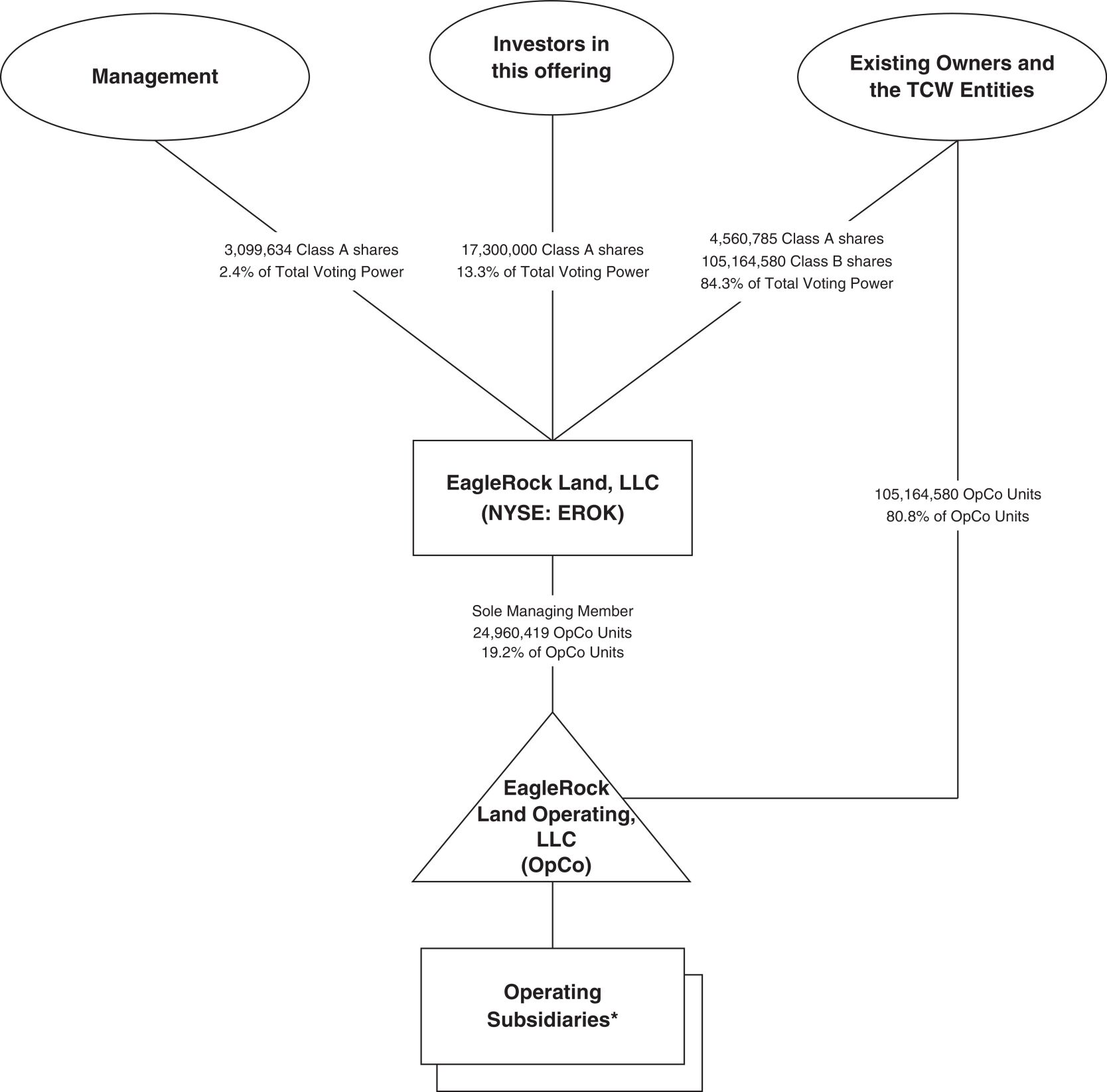


Table of Contents

LOGO


Table of Contents

TABLE OF CONTENTS


     Page  

Summary

     1  

Risk Factors

     51  

Cautionary Note Regarding Forward-Looking Statements

     111  

Use of Proceeds

     114  

Dividend Policy

     116  

Capitalization

     117  

Dilution

     119  

Management’s Discussion and Analysis of Financial Condition and Results of Operations

     121  

Business

     142  

Management

     182  

Executive Compensation

     189  

Corporate Reorganization

     200  

Security Ownership of Certain Beneficial Owners and Management

     202  

Certain Relationships and Related Party Transactions

     204  

Description of Shares

     212  

Our LLC Agreement

     215  

Shares Eligible for Future Sale

     225  

Material U.S. Federal Income Tax Considerations for Non-U.S. Holders

     228  

Certain ERISA Considerations

     233  

Underwriting

     236  

Legal Matters

     244  

Experts

     244  

Where You Can Find More Information

     245  

Glossary of Certain Industry Terms

     A-1  

Index to Financial Statements

     F-i  


You should rely only on the information contained in this prospectus and any free writing prospectus prepared by us or on our behalf or the information to which we have referred you. Neither we nor the underwriters have authorized anyone to provide you with information or to make any representations different from those contained in this prospectus and any free writing prospectus. We take no responsibility for, and can provide no assurance as to the reliability of, any other information that others may give you. We and the underwriters are offering to sell Class A shares and seeking offers to buy Class A shares only under circumstances and in jurisdictions where such offers and sales are lawful. The information in this prospectus is accurate only as of the date of this prospectus, regardless of the time of delivery of this prospectus or of any sale of the Class A shares. Our business, liquidity position, financial condition, prospects or results of operations may have changed since the date of this prospectus.

This prospectus contains forward-looking statements that are subject to a number of risks and uncertainties, many of which are beyond our control. See the sections titled “Risk Factors” and “Cautionary Note Regarding Forward-Looking Statements.”


i


Table of Contents

BASIS OF PRESENTATION

This is the initial public offering of Class A shares of EagleRock. We were formed on December 1, 2025 by Lea & Eddy Holdings, LLC (“L&E”) and have not conducted and will not conduct any material business operations prior to the completion of the transactions described under “Corporate Reorganization” (such transactions, the “Corporate Reorganization”) other than certain activities related to this offering. Following the Corporate Reorganization, EagleRock will be a holding company, the sole material asset of which will consist of membership interests (“OpCo Units”) in EagleRock Land Operating, LLC, a Texas limited liability company (“OpCo”). EagleRock will also be the sole managing member of OpCo. As part of the Corporate Reorganization, (i) L&E will contribute all its subsidiaries, other than Hydrosource Logistics, LLC (“Hydrosource” or the “Excluded Assets”) to OpCo (the “L&E Contribution”), (ii) Double Eagle IV Midco, LLC (“Double Eagle”) will contribute DE IV Flow, LLC (“DE Flow”) to OpCo (the “DE Flow Contribution”) and (iii) the existing owners of the Shallow Valley Ranch (the “Shallow Valley Owners”) will contribute the entities that own Shallow Valley Ranch (“Shallow Valley”) to OpCo (the “Shallow Valley Contribution”).

The Corporate Reorganization is expected to be effected immediately prior to, and conditioned upon, the consummation of this offering. All steps comprising the Corporate Reorganization are expected to occur in connection with the closing of this offering and will be completed substantially concurrently with, but in any event prior to, the issuance of the Class A shares to the public shareholders. If this offering is not consummated, the Corporate Reorganization will not be completed. The sequencing and completion of the steps in the Corporate Reorganization may be adjusted for administrative or technical reasons, including the receipt of required consents and approvals, but such adjustments will not alter the substantive outcomes described under “Corporate Reorganization.”

Our organizational structure following the Corporate Reorganization will allow us to retain a direct equity ownership in OpCo, which will be classified as a partnership for U.S. federal income tax purposes following the offering. Investors in this offering will, by contrast, hold a direct economic and voting ownership interest in us in the form of Class A shares, and an indirect ownership interest in OpCo through our ownership of OpCo Units. Although we were formed as a limited liability company, we have elected to be taxed as a corporation for U.S. federal income tax purposes.

Pursuant to our LLC Agreement and the OpCo LLC Agreement (both, as defined herein), our capital structure and the capital structure of OpCo will generally replicate one another and will provide for customary antidilution mechanisms in order to maintain the one-for-one exchange ratio between the OpCo Units and our Class A shares. In connection with the Corporate Reorganization and this offering, each holder of OpCo Units (other than EagleRock) will receive one Class B share representing a non-economic voting limited liability company interest in us for each OpCo Unit that it holds. Accordingly, holders of the OpCo Units will have a number of votes in us equal to the aggregate number of OpCo Units that they hold. Class B shares cannot be transferred except in connection with a permitted transfer of a corresponding number of OpCo Units. Following this offering, under the OpCo LLC Agreement, each holder of OpCo Units (other than EagleRock) will, subject to certain limitations, have the right to redeem its OpCo Units (together with the cancellation of a corresponding number of Class B shares) for the same number of Class A shares, as described in more detail under “Summary—Redemption Right.” Holders of Class A shares and Class B shares will vote together as a single class on all matters presented to our shareholders for their vote or approval, except as otherwise required by applicable law or by our LLC Agreement.

For additional information, please see “Corporate Reorganization” and “Certain Relationships and Related Party Transactions—OpCo LLC Agreement.”

Throughout this prospectus, we present operational and financial information regarding the business of OpCo. This information is generally presented on an enterprise-wide basis. However, the


ii


Table of Contents

Class A shares to be issued to the public shareholders in this offering will initially represent a minority economic interest in OpCo. We expect that our Existing Owners and the TCW Entities will initially hold a majority of the economic interest in OpCo, as non-controlling interest holders, through their ownership of a majority of the OpCo Units and Class A shares outstanding immediately following the closing of this offering. Immediately following this offering, our Existing Owners and the TCW Entities will directly control us and, as a result, will indirectly control OpCo through their ownership of Class B shares representing greater than a majority of our outstanding equity interests. Because the Class A shares issued in this offering will initially indirectly represent a minority economic interest in OpCo, prospective investors should therefore evaluate performance metrics and financial information in this prospectus accordingly. To the extent that OpCo Units (along with a corresponding number of our Class B shares) are redeemed for our Class A shares (or, at our election, for cash) over time, the relative economic interest of EagleRock and our public shareholders in OpCo’s economic results will increase relative to that of our Existing Owners and the TCW Entities.

Financial and Operating Data Presentation

References to “EagleRock,” “we,” “our,” “us” or like terms refer collectively to (i) L&E (other than the Excluded Assets), Shallow Valley and DE Flow, together with their consolidated subsidiaries, before the completion of the Corporate Reorganization and (ii) EagleRock Land, LLC and its consolidated subsidiaries, including L&E, Shallow Valley and DE Flow, as of and following the completion of the Corporate Reorganization. Unless otherwise indicated, the historical financial information presented in this prospectus is that of L&E, our predecessor for accounting purposes.

In certain instances in this prospectus, we present financial data on a “pro forma” or “pro forma, as adjusted” basis, as applicable. As used herein and as applicable based on the periods presented, unless otherwise indicated, these references have the following meanings:


the term “pro forma” refers to the historical financial data of our predecessor, as adjusted to give effect to (i) L&E’s acquisition of the equity interests of Accelerated Water Resources, LLC on April 14, 2025 (such entity, “Accelerated” and such acquisition, the “Accelerated Acquisition”), (ii) the exclusion of the Excluded Assets that are not being conveyed to EagleRock, (iii) the Shallow Valley Contribution and (iv) the DE Flow Contribution (collectively, the “Pro Forma Transactions”); and


the term “pro forma, as adjusted” refers to the historical financial data of our predecessor, as adjusted to give effect to (i) the Pro Forma Transactions, (ii) the Up-C Reorganization (as defined herein) and (iii) this offering and the application of the net proceeds therefrom as described in “Use of Proceeds” (collectively, the “Pro Forma As Adjusted Transactions”).

Unless otherwise indicated, (i) pro forma financial data for the year ended December 31, 2025 gives effect to the Pro Forma Transactions as if each transaction had been consummated on January 1, 2025, and (ii) pro forma, as adjusted financial data for the year ended December 31, 2025 gives effect to the Pro Forma As Adjusted Transactions as if such transactions had been consummated on January 1, 2025, except that the pro forma and pro forma, as adjusted balance sheet data has not been adjusted for the Accelerated Acquisition because the predecessor balance sheet as of December 31, 2025 fully reflects the Accelerated Acquisition, which was completed on April 14, 2025. Pro forma and pro forma, as adjusted financial data contain certain reclassification adjustments to conform the historical L&E, Accelerated, Shallow Valley and DE Flow financial statement presentation to the Company’s financial statement presentation, as applicable. The pro forma and pro forma, as adjusted financial data also give effect to (i) the exclusion of the Excluded Assets and the entry into the Hydrosource Recycling Agreement (as defined herein) in connection with the L&E Contribution and (ii) the entry into the DE Flow WSMA (as defined herein) in connection with the DE Flow Contribution.


iii


Table of Contents

The pro forma and pro forma, as adjusted financial data is presented for illustrative purposes only and should not be relied upon as an indication of the financial condition or the operating results that would have been achieved if the Pro Forma Transactions or the Pro Forma As Adjusted Transactions had taken place on the specified dates. In addition, future results may vary significantly from the results reflected in such pro forma and pro forma, as adjusted data and should not be relied on as an indication of future results. Please refer to our Unaudited Pro Forma Condensed Consolidated Financial Statements and the related notes thereto included elsewhere in this prospectus for additional information.

Unless otherwise indicated, all operational data in this prospectus is presented on a pro forma basis.


iv


Table of Contents

INDUSTRY DATA

Certain market and industry data and other statistical information used throughout this prospectus have been obtained from Enverus, an independent industry source, as well as from research reports prepared for other purposes. Some market data and statistical information contained in this prospectus are also based on management’s estimates and calculations, which are derived from our review and interpretation of publicly available industry publications, our internal research and our knowledge of the markets in which we currently operate and, as of the date of this prospectus, anticipate operating in the future. This information involves a number of assumptions and limitations, and you are cautioned not to give undue weight to such information. Forecasts and other forward-looking information obtained from these sources are subject to the same qualifications and uncertainties as the other forward-looking statements in this prospectus. While we are not aware of any misstatements regarding our industry data presented herein, our estimates involve risks and uncertainties and are subject to change based on various factors, including those discussed under the headings “Risk Factors” and “Cautionary Note Regarding Forward-Looking Statements” in this prospectus.

TRADEMARKS AND TRADE NAMES

We own or have rights to various trademarks, service marks and trade names that we use in connection with the operation of our business. This prospectus may also contain trademarks, service marks and trade names of third parties, which are the property of their respective owners. Our use or display of third parties’ trademarks, service marks, trade names or products in this prospectus is not intended to, and does not, imply a relationship with us or endorsement or sponsorship by or of us. Solely for convenience, the trademarks, service marks and trade names referred to in this prospectus may appear without the ®, TM or SM symbols, but the omission of such references is not intended to indicate, in any way, that we will not assert, to the fullest extent under applicable law, our rights or the right of the applicable owner or licensor to these trademarks, service marks and trade names.


v


Table of Contents

SUMMARY

Our Company

Access to land, resources and infrastructure is fundamental for critical industries like energy and technology to thrive. We are a land management company that owns or controls approximately 236,000 acres in the heart of the Delaware and Midland sub-basins within the prolific Permian Basin. In addition, we have an interest in up to approximately 70,000 acres pursuant to an acreage dedication related to our Midland Basin water infrastructure assets (the “DE Acreage Dedication”). Our acreage is vital to the efficient development of oil and natural gas resources in the Permian Basin and is strategically located to support the growing surface, resource, infrastructure and related commercial development needs of the power and other emerging industries in the Permian Basin.

Our assets are situated in the most active oil and natural gas development and production areas in Texas and New Mexico. The Permian Basin is regarded as the premier region for oil and gas development due to its prolific remaining resource, low break-even costs and robust network of service and infrastructure companies that support oil and gas development. The depth and quality of the remaining resource has attracted large, public and well-capitalized producers who have largely consolidated the core of the Midland and Delaware sub-basins. In turn, the abundance of economic and highly reliable energy has underpinned a number of emerging industries within the Permian Basin, including traditional and renewable power generation, transmission and storage and data centers. Our strategically located portfolio of assets provides the land and ability to construct infrastructure required for producing oil and natural gas, as well as supporting these emerging industries, which we believe will support growing and enduring revenue streams and cash flow.

Our assets are uniquely tailored to meet the needs of our customers in the distinct regulatory and operational environments in each sub-basin of the Permian Basin. Our Delaware Basin acreage sits in productive development corridors in the Permian Basin and supports water supply for drilling activity and produced water offtake, handling and recycling services to support the emerging beneficial reuse markets, generating activity-based revenue streams and royalties tied to recycled water. This position also provides abundant pore space capacity for sour gas and carbon dioxide injection (“AGI”), helping our customers mitigate the potential impact of local sour gas refining constraints and reducing flaring required by operators. In the Midland Basin, where geologic conditions are more favorable and regulatory conditions are more consistent for subsurface produced water disposal, we have valuable pore space capacity for produced water disposal in areas not affected by seismicity and over-pressurization concerns. Our acreage may also support future CO2 pipeline development in conjunction with our pore space, which is well suited for large scale CCUS. Our Midland Basin assets also include one of the largest produced water handling and disposal systems in the Permian Basin that, under a long-term agreement with DEF Operating, LLC (“DEF Operating”), an affiliate of Double Eagle Energy Holdings IV, LLC (“Double Eagle EH IV”), one of our operating partners, underpins our ability to monetize produced water handling, disposal, recycling and beneficial reuse activities across our footprint.

We seek to create value for our shareholders by growing and diversifying our revenue streams through a proven strategy of organic growth and accretive land acquisitions that complement our strategy, strengthen our competitive advantages and provide opportunities for our experienced management team to drive incremental organic growth. Our proactive land management strategy has driven organic growth by supporting the full life cycle of oil and gas operations, including drilling, completion, production, offtake, treatment, processing and handling and responsible waste management and disposal activities, to enhance efficient oil and gas development with minimal


1


Table of Contents

operating costs or capital expenditures by us. We intend to apply this same proactive approach to attract development by emerging industries on our land. We also seek to grow organically through the expansion of existing infrastructure and operations carried out on our acreage, as well as through the identification and exploitation of new and novel uses of our land to attract new customers and strategic partners. In turn, existing and additional development on our land augments our ability to attract further incremental activities and uses, as new customers are able to utilize existing infrastructure.

Our land holdings benefit from a number of strategic contractual arrangements that provide durable revenue streams and consistent demand from our customers. These agreements are characterized by long tenors, minimum payment obligations, minimum use commitments, inflation-linked fee escalators and exclusivity provisions. For example, we are party to surface use agreements and surface use and royalty agreements (each, an “SUA”) with a number of customers that have operations on our land. Our SUAs typically include 5 to 10-year initial terms, subject to renewal, and provide us with a fee when the SUA is executed, fixed monthly or annual fees that typically escalate annually based on the Consumer Price Index (“CPI”), and often include additional fees at the beginning of each renewal period. Our SUAs also typically include pre-defined terms for additional fees that we will receive for our customers’ development and use of drilling sites, new and existing roads, pipeline easements and electric transmission easements. Many of our SUAs require our customers to use rights-of-way (“ROWs”) and easements on our land as well as the resources from our land, such as water and caliche, for their operations on our land, for which we receive additional fees. Production of oil and natural gas from the reservoirs underlying our land is expected to continue for many decades and, as a result, we expect these contracts to be renewed for an extended period of time. Furthermore, our SUAs typically include provisions that require our customers to remove their assets from and remediate our land if such agreements are not renewed, providing an incentive for our customers to continue to renew their existing agreements with us.

In addition, our Midland Basin assets include an integrated water infrastructure system (the “DE Flow System”) from which we will generate royalty revenues from the activities of our operating partner, DEF Operating, under a Water System Management Agreement (the “DE Flow WSMA”), which we will enter into in connection with this offering. The DE Flow WSMA will have an initial 10-year term, include a minimum annual royalty commitment, and will be supported by the DE Acreage Dedication. Our produced water infrastructure is capable of handling up to approximately 400 MBbls/d of produced water under long-term contracts, and includes produced water gathering systems, saltwater disposal wells (“SWDs”), water sourcing and delivery pipelines and recycling facilities.

In connection with this offering, we will also enter into a long-term produced water recycling rights agreement (the “Hydrosource Recycling Agreement”) with Hydrosource, our other operating partner, pursuant to which we will receive a royalty for, among other things, each barrel of produced water Hydrosource treats and recycles for oil and gas customers on our land and within certain designated areas outside of our land. Under the Hydrosource Recycling Agreement, Hydrosource will provide treated, blended and recycled water to customers across certain parts of our acreage. The Hydrosource Recycling Agreement will have a 10-year term with a five-year minimum royalty commitment. The Company and Hydrosource have access to supplemental off-ranch water, and the Company’s surface pipeline has the capacity to move approximately 100 MBbls/d, or approximately 36.5 MMBbls per year, of off-ranch water from Texas to its land in New Mexico. Additionally, Hydrosource has a long-term agreement that provides it with access to up to 3 MMBbls/d of produced water that can be recycled from one of the largest water disposal companies’ produced water pipeline system in New Mexico (the “Hydrosource Recycled Water Supply Agreement”), as well as other water infrastructure on our land.


2


Table of Contents

As a land management company, we charge fees and royalties based on our customers’ usage of our land, assets and resources. The cost of developing our land and operating the assets in which we own interests is primarily borne by our customers and operating partners, allowing us to deploy little to no capital of our own while benefitting from the increasing use of our land, assets and resources. To promote our strategy, we collaborate commercially with our customers to support robust and efficient use of our resources to maximize returns for our shareholders. We generate revenue from multiple sources, including:


Resource Sales and Royalties: We receive fees when customers purchase our resources, such as water and caliche mined from our land for use in their operations. The development of oil and natural gas resources requires significant quantities of water, which are typically obtained from commercial water wells or recycling of produced water, as well as caliche for the construction of drilling pads, roads and production batteries. Under many of our SUAs, our customers are required to purchase from us or our operating partners the resources used in their operations at negotiated fees. We source water to fulfill our customers’ needs from commercial water wells on our fee lands, our operating partners and other third-party sources. Our commercial water wells in New Mexico, water infrastructure in Texas and off-ranch water from third party sources allow us to produce and sell in excess of 200 MMBbls of water per year. We sell caliche from 29 caliche mines on our land.


Surface Use Royalties and Revenues: We receive fees when customers use our surface acreage. Under our SUAs, we charge customers fees for land activity, including the construction of well pads, wellbores, central tank batteries, existing and new roads, electrical infrastructure, buried pipelines and reuse and frac ponds. Under our SUAs, we also generate revenue from the use of easements and ROWs by our customers. We also expect to generate long-term royalty revenue under the DE Flow WSMA from produced water handling activities in and adjacent to our land in the Midland Basin. Our produced water handling and disposal infrastructure has multiple SWD wells with significant valuable pore space in more stable geologic areas for the development of additional locations across our Midland Basin assets that our customers will be able to use for such disposal activities. Through Hydrosource and the Hydrosource Recycling Agreement, we have access to up to 3 MMBbls/d of produced water for treatment and recycling by Hydrosource and sold to customers on and off our land, from which we generate royalty revenue. We also expect to generate long-term royalty revenue under the DE Flow WSMA through its water supply and recycling activities in and adjacent to our land in the Midland Basin. In addition to generating royalty revenue from water-related activities, we have also experienced increased demand for our pore space for AGI wells in the Delaware Basin, from which we expect to generate royalty revenue. Our first AGI well is already contracted and projected to commence revenue activities within the next two years. Our largely contiguous acreage position underpins our ability to capture incremental revenue streams from sand mines, solid waste disposal facilities and other surface optimization opportunities, as well as serving as a location for development by emerging industries.

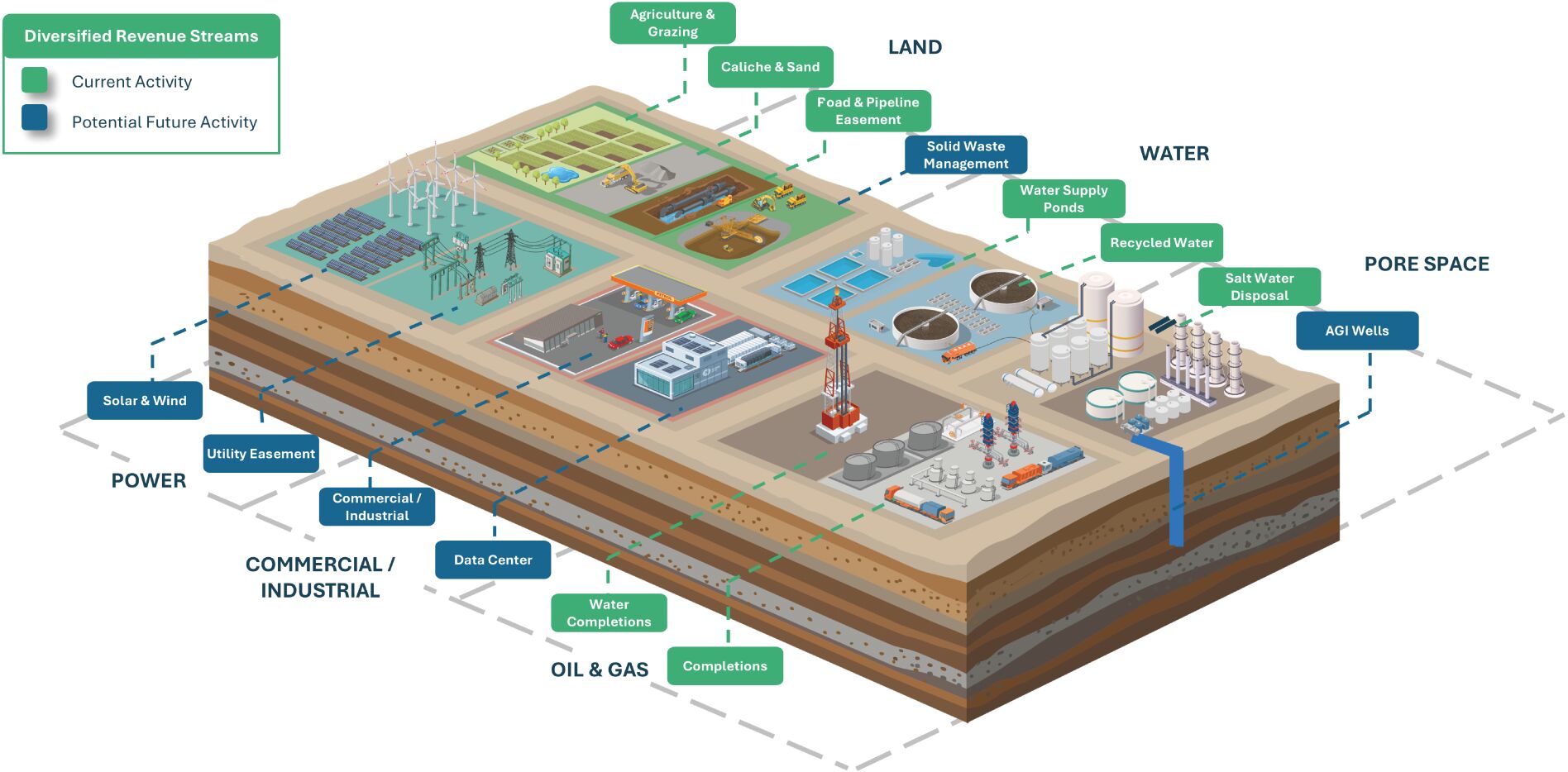
The diagram below depicts the activities that generate certain of our existing and potential future revenue streams and royalties on our surface. We do not currently engage in the activities identified as potential future activities. These activities represent opportunities we may pursue in the future but for which we have no binding agreements, committed capital or definitive development timelines. There can be no assurance that we will pursue any of these activities or that, if pursued, they will generate material revenues. Our ability to pursue these activities is subject to numerous risks and uncertainties, including regulatory approvals, market conditions, customer demand, competition, technological developments and our ability to negotiate favorable commercial terms. See “Risk Factors—Risks Related to Our Business and Operations—We may not be successful in pursuing additional commercial opportunities on our land from non-traditional energy production and other users.”


3


Table of Contents

EagleRock Land Revenue


LOGO

Our business model focuses on monetizing our land, resources and water infrastructure assets through the exclusive nature of our SUAs and royalty-based strategy that minimizes our exposure to operating costs and risks and under which our customers and operating partners assume substantially all operating and capital expenditures associated with activities on our land. This structure supports the generation of significant, sustainable Free Cash Flow. The following table summarizes our financial performance for the periods shown:


     Predecessor     Pro Forma,
as Adjusted
 
     Year Ended
December 31,
    Year Ended
December 31,
 
     2024     2025     2025  
     ($ in thousands)  

Total revenues

   $ 17,701     $ 72,173     $ 141,438  

Net (loss) income

   $ (1,075   $ (73,071   $ 2,409  

Net (loss) income attributable to Class A shareholders(1)

   $ —      $ —      $ 358  

Adjusted EBITDA(2)

   $ 7,350     $ 35,533     $ 118,581  

Cash flows from operating activities

   $ 907     $ 14,138    

Capital expenditures(3)

   $ (1,482   $ (5,252  

Free Cash Flow(2)

   $ 5,868     $ 30,281    

Acreage at end of period

     122,132       193,875       306,136  
 
(1)

Net of the allocation to noncontrolling interests.

(2)

Adjusted EBITDA and Free Cash Flow are non-GAAP financial measures. See “—Summary Consolidated Financial and Other Data” and “—Non-GAAP Financial Measures” for more information regarding these non-GAAP measures and reconciliations to the most comparable measures calculated and presented in accordance with GAAP.

(3)

Capital expenditures include costs incurred, inclusive of changes in accounts payable related to capital expenditures, for corporate office furniture and office equipment and costs incurred to install and maintain modest ancillary assets, such as ponds and pits, we own on our land.


4


Table of Contents

Our Proactive Management Strategy

We believe that maximizing the efficient utilization and cash flow generation of our assets is critical to creating long-term value for our shareholders. Our proactive management strategy seeks to optimize the amount of long-term activity utilizing the same surface acreage through our land and SUAs, which entitle us to diverse revenue streams while requiring our customers and operating partners to be responsible for most operating costs and capital expenditures. We actively seek to further our operating partners’ and customers’ development of our land through the expansion of existing infrastructure and operations carried out on our land, as well as identifying novel uses of our land to attract new customers and strategic partners. Existing and additional development on our land augments our ability to attract further incremental activities as new customers are able to utilize existing infrastructure. We expect to enter into SUAs or similar agreements with new or existing customers for any incremental or novel project on our surface acreage, from which we expect to receive surface use or similar fees and other payments in connection with the use of our land or resources. In addition, we generally do not expect to own or operate any such projects or expect to incur any significant capital expenditures in connection with such projects.

We consistently evaluate opportunities to expand the uses of our land to attract customers across a variety of industries. By entering into agreements with our customers and operating partners, such as the Hydrosource Recycling Agreement and the DE Flow WSMA, our land is utilized to address new and existing customers’ needs and monetize our land and resources. For example, these arrangements allow us to scale the existing produced water disposal infrastructure on our land, with the goal of supporting the increasing demands of operators. We recently entered into an AGI and pore space lease and royalty arrangement on our land under which our customer agreed to fund the construction of the AGI wells and lease our pore space in exchange for payment of lease and royalty fees. Additionally, we believe that our large land footprint will allow us to partner with new customers to meet the growing surface, resource, infrastructure and related commercial development needs of the power and other emerging industries in the Permian Basin, which will result in incremental high margin royalty-based cash flows.

Surface Access to Land and its Resources is Critical to Efficiently Develop Energy Assets

Access to land is fundamental to upstream oil and gas development. In addition, oil and gas development and production activities consume and produce large amounts of water and utilize other land resources, such as caliche and sand. During the drilling and completion process, water is used to lubricate and cool the drill bit and remove drilling mud and rock debris. During hydraulic fracturing operations, water is mixed with sand and chemicals and pumped downhole under high pressure to fracture the producing formation. Once a well is completed and begins producing, produced water must be safely and reliably separated, transported and disposed of to maintain production continuity. Using our surface acreage, water and other land resources and produced water infrastructure, we and our operating partners are able to provide the critical resources and infrastructure needed by our customers for the efficient and reliable development of their oil and gas assets in the Permian Basin.

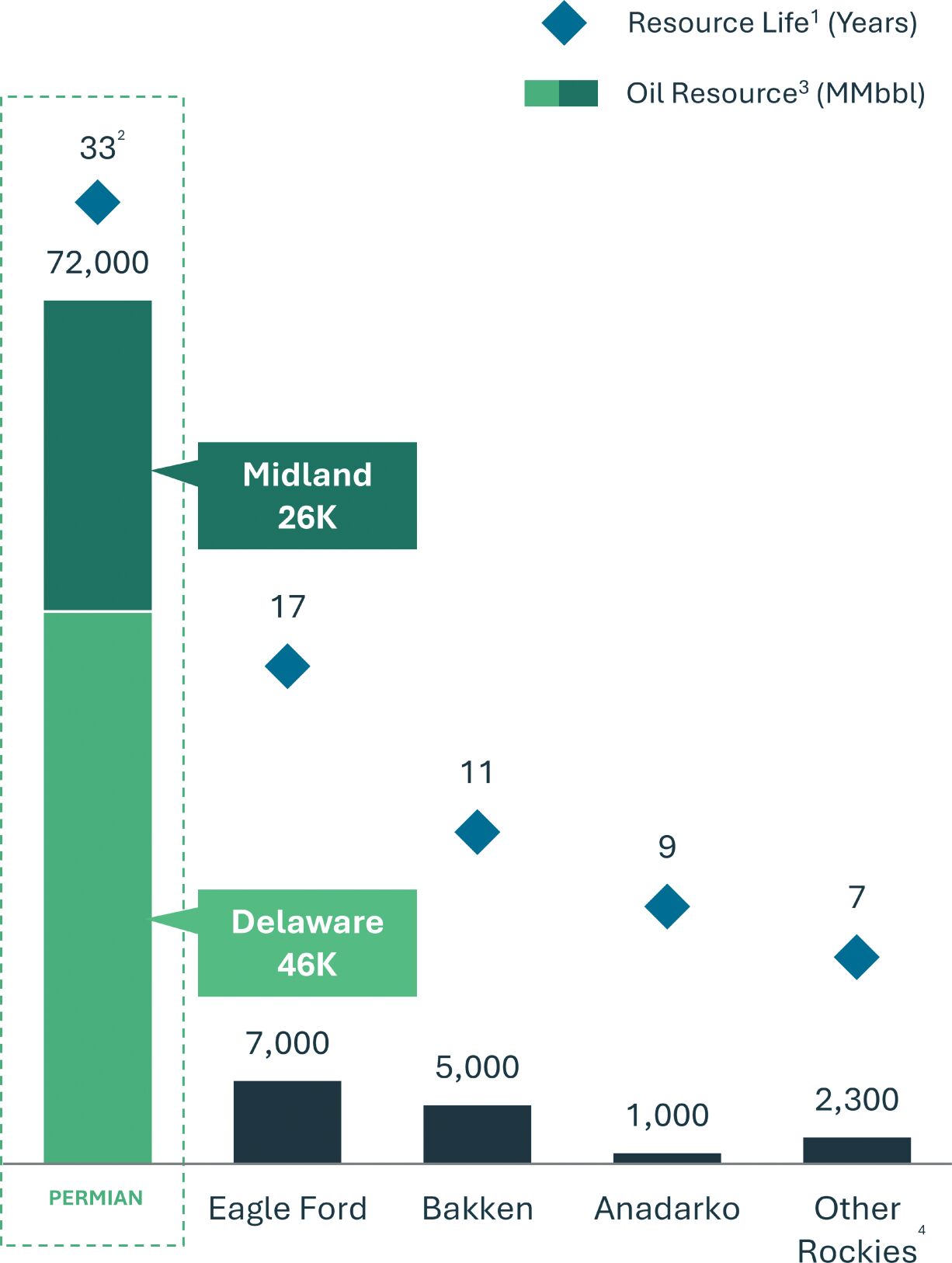
Our land is situated in the prolific Permian Basin, which includes both the Delaware and Midland Basins and is regarded as the premier region for oil and gas development, primarily due to its vast remaining hydrocarbon resources and low break-even costs. Our land sits atop some of the most productive areas in the Delaware and Midland Basins presenting significant oil and natural gas development potential and many decades of remaining inventory for our customers. We believe the location of our land will contribute to durable revenue streams and consistent demand from our customers. The chart below depicts the estimated remaining oil resource and basin resource life of the Delaware Basin, the Midland Basin and other notable basins, according to the U.S. Geological Survey.


5


Table of Contents

Basin Resource Life Comparison


LOGO

Source: USGS, Enverus | Note: (1) Resource Life is calculated by dividing USGS Remaining Resource estimate by the trailing twelve-month production rate for the applicable basin or play. (2) Weighted average of the Resource Life of the Delaware Basin (37 years) and Midland Basin (28 years). (3) 2024/25 USGS Remaining Resource Estimates (MMBbl). (4) Other Rockies includes Powder River Basin, DJ and Uinta basins.


6


Table of Contents

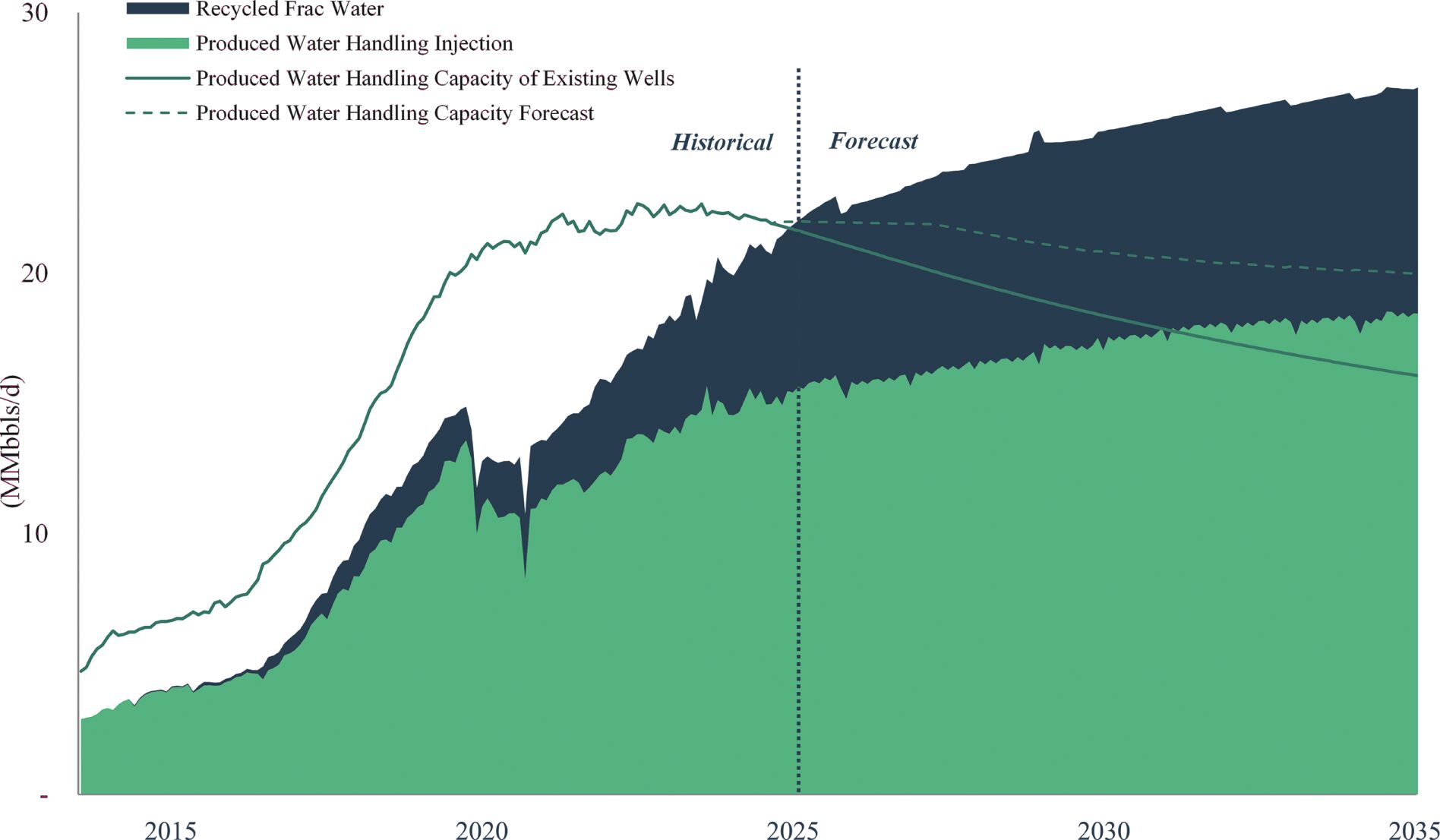
Oil and natural gas development in the Permian Basin generates significant and growing volumes of produced water that must be transported, treated, recycled or disposed of to sustain ongoing operations. As activity across the Permian Basin has expanded, produced water volumes have increasingly outpaced available handling and disposal capacity, creating logistical constraints that can impact drilling and completion schedules, operating costs and development efficiency. The chart below illustrates historical and forecasted Permian Basin produced water volumes relative to basin-wide operational handling capacity, underscoring the importance of surface access, infrastructure siting and proximity to disposal and recycling solutions in supporting continued development across the Permian Basin.

Permian Basin Water Volumes by Handling Method vs. Operational Produced Water Handling Capacity


LOGO

Source: B3 Insights and Pickering Energy Partners analysis as of June 30, 2025. | Note: Assumes a 20% decrease in basin-wide operational produced water handling capacity to account for logistical inefficiencies within the Permian Basin. Based on the 2023-2024 average number of new produced water handling facilities per year. Sub-plays are limited to two total produced water handling facilities and shallow production wells per section, and there are assumed to be no new shallow production wells drilled. Assumes zero new deep production wells will be drilled.

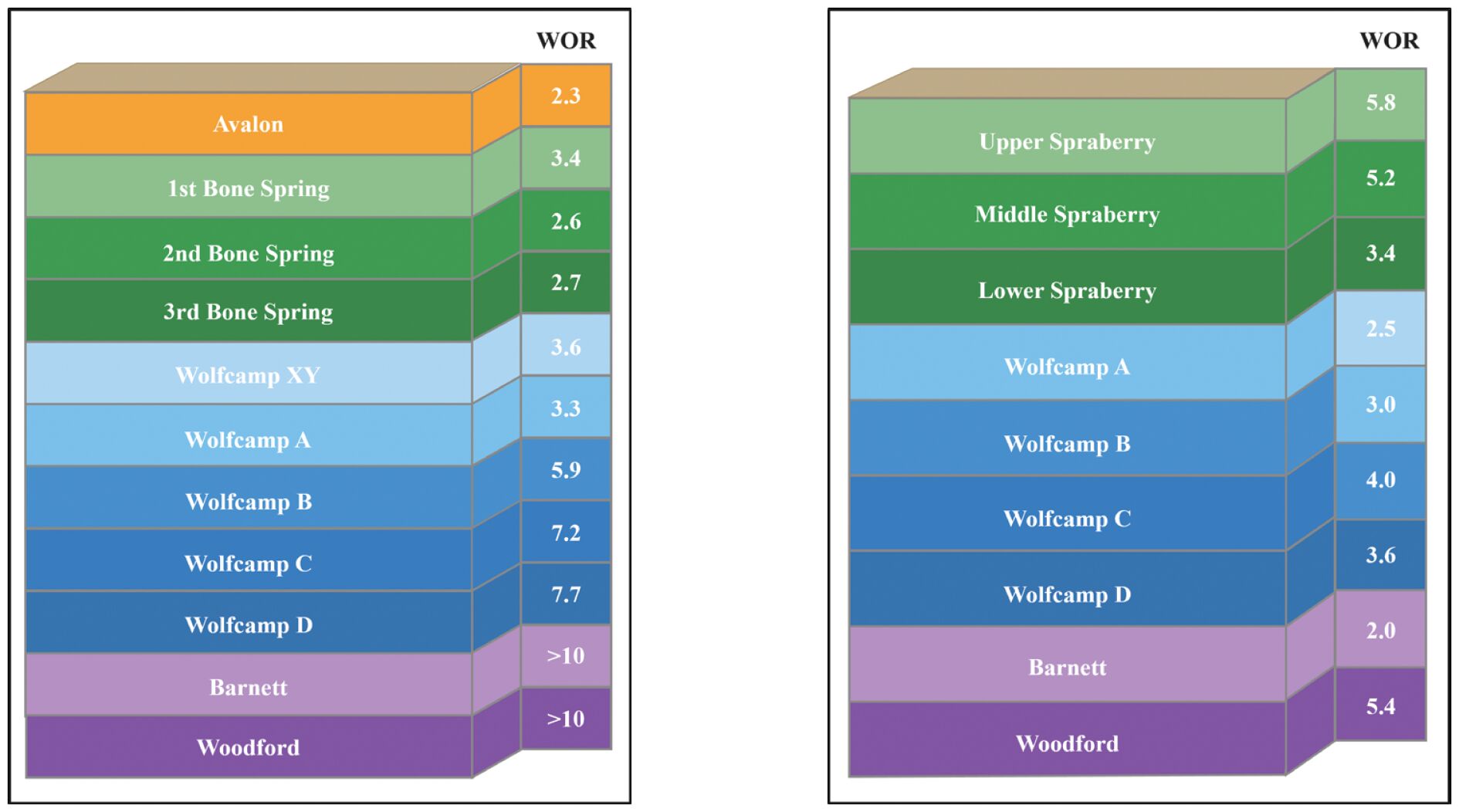
As depicted below, our land in the Delaware and Midland Basins sits atop multiple layers of stacked oil and natural gas formations, presenting significant oil and natural gas development potential and many decades of remaining inventory for our customers. These horizons represent decades of undeveloped energy resources. Successful and efficient development of these resources will be dependent on access to our land, resources and infrastructure, which allows operators to efficiently drill and complete new wells and manage high-volume produced-water throughput from those wells. We


7


Table of Contents

believe that our portfolio of land, resources and infrastructure will allow us to capture significant revenues through the life cycle of our customers’ oil and gas wells.


Delaware Basin Subsurface Diagram    Midland Basin Subsurface Diagram
LOGO

Source: Enverus | Note: WOR = Water to Oil Ratio. This ratio compares the amount of produced water relative to the amount of produced oil.

In addition to the large quantities of water needed during drilling and completion of a well, the production phase, which spans multiple years, requires significant produced water handling and disposal infrastructure to safely and reliably separate, transport and dispose produced water in order to maintain production continuity. The oil produced in and around our Midland Basin acreage is accompanied by significant volumes of produced water, averaging approximately 4 barrels of water per barrel of oil, or approximately 80% of total liquids produced from a typical well, according to the New Mexico Oil Conservation Division (the “NMOCD”). This water must be reliably handled in order for these wells to be brought online and remain in production, driving ongoing demand for water handling on acreage in close proximity to the operations of producers. We believe that our land resources and produced water infrastructure are well-situated to handle these large volumes of produced water.

Our produced water handling and disposal infrastructure is operated by our operating partner, DEF Operating, and underpinned by a minimum annual royalty commitment under a long-term contract with a 10-year initial term. Our produced water infrastructure is largely located in the Midland Basin, which benefits from a consistent and favorable regulatory environment and advantaged geologic conditions as compared to the Delaware Basin. Development of produced water disposal wells is regulated at the state level and is required to meet guidelines imposed by the relevant state agencies. Because the Delaware Basin is situated across the Texas–New Mexico state border, the planning, permitting and building of produced water infrastructure is dependent upon the laws and regulations of either Texas or New Mexico. Inconsistent regulations governing produced water reinjection between Texas and New Mexico


8


Table of Contents

have resulted in the transmission of significant quantities of produced water from New Mexico to reinjection locations in Texas, which has led to pore space constraints and geologic issues, such as seismicity and over-pressurization, in certain areas of the Texas Delaware Basin. Meanwhile, the Midland Basin’s location entirely in Texas provides a consistent regulatory environment in addition to advantaged geologic characteristics, which results in a more evenly distributed system for reinjecting produced water across the Midland Basin. Our Midland Basin acreage is located in areas with abundant pore space, low seismicity and reduced over-pressurization concerns, and we believe that the combination of favorable geological characteristics and a consistent regulatory environment complements our existing, permitted and future produced water disposal assets.

At the same time, through our Hydrosource Recycling Agreement, we will facilitate our customers’ sustainability goals through providing treated, blended and recycled water for their operations. Through the Hydrosource Recycled Water Supply Agreement, Hydrosource has access to up to 3 MMBbls/d of produced water from one of the largest water disposal company’s produced water pipeline system in New Mexico. Through these activities, produced water that would otherwise require reinjection is treated, blended and recycled for further use in our customers’ activities. In addition to those activities, as emerging technologies develop, we believe there will be future opportunities for the beneficial reuse of water in residential and municipal, agricultural, industrial and technology, aquifer replenishment and lithium extraction applications, which could provide us with additional revenue opportunities. We evaluate new opportunities on an ongoing basis, and we believe that we are well positioned to take advantage of such opportunities given our extensive infrastructure network.

Our Assets

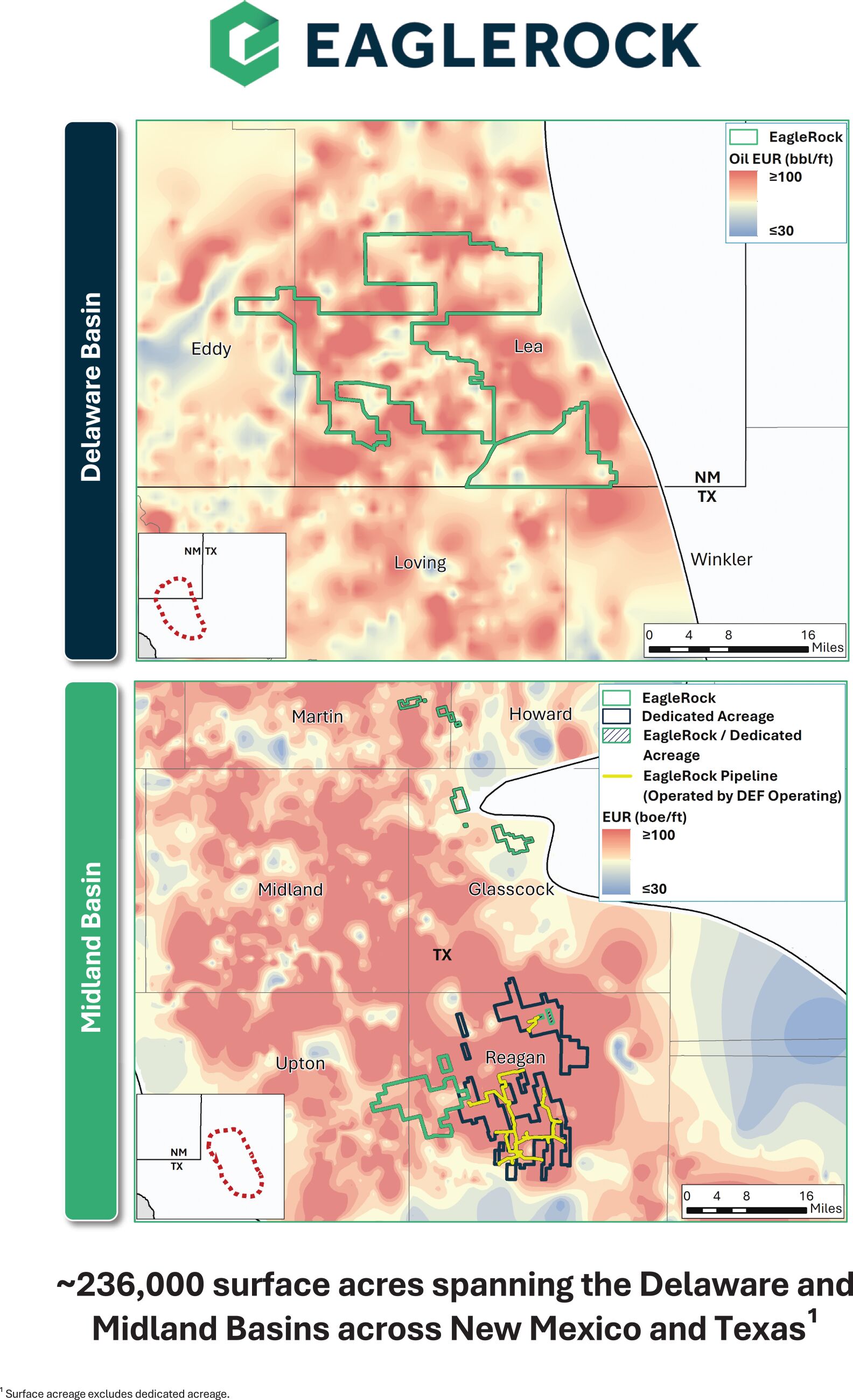
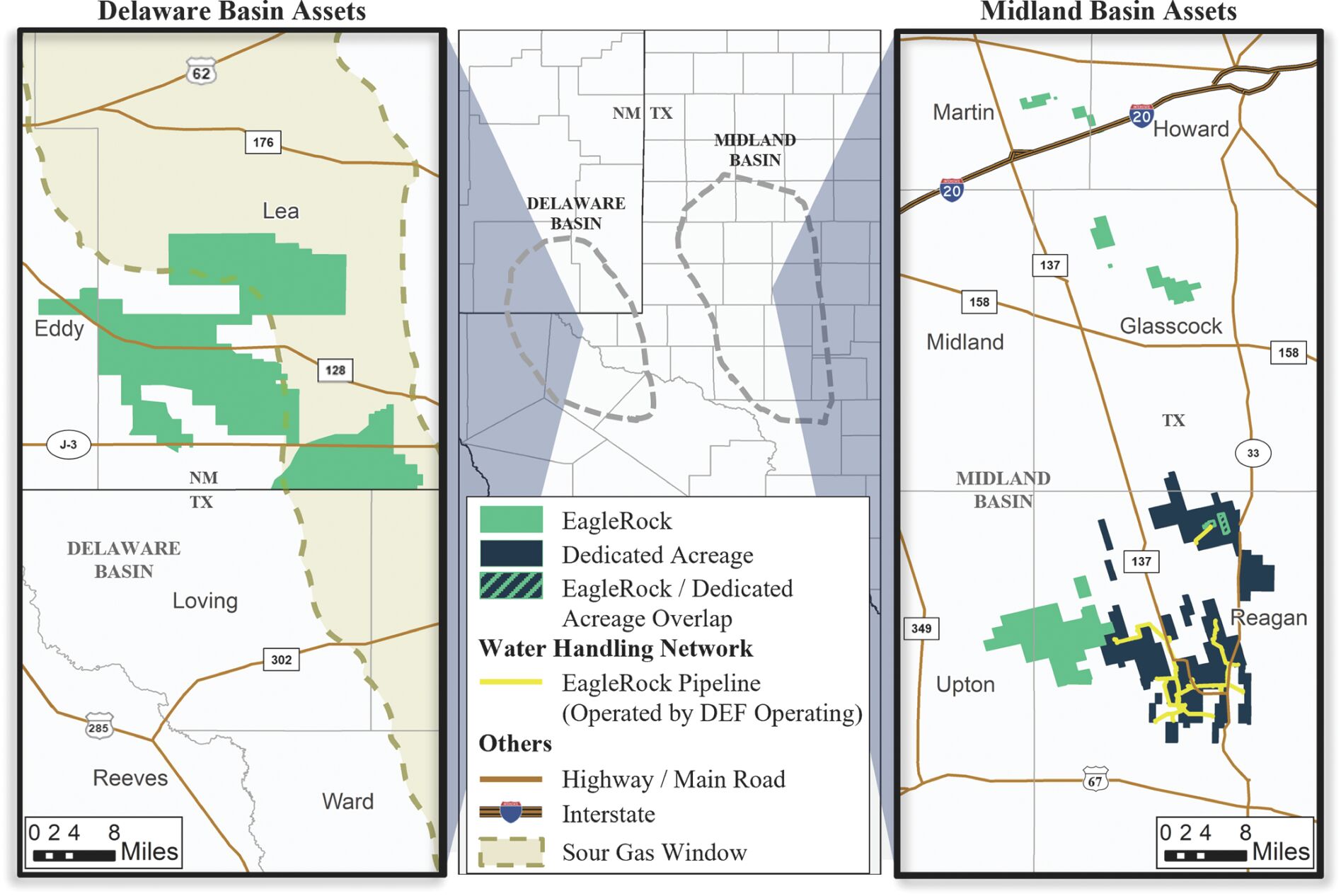
The map below shows our controlled acreage and selected assets in the Delaware Basin and Midland Basin.


9


Table of Contents

EagleRock Assets


LOGO

Source: Enverus, US Department of Transportation

The table below contains information regarding our acreage and assets in each of the Delaware Basin and Midland Basin as of December 31, 2025.


     Combined
Acres
Owned/
Controlled
    Commercial
Water Rights
and Supply
Capacity
(Bbls/y)
    Current
Above
Ground
Storage
Capacity
(Bbls)
     Mining
Sites
     SWDs     Produced
Water
Handling
Capacity
(MBbls/d)
 

Delaware Basin

     193,875       44,337,513       11,375,000        26               

Midland Basin

     112,261 (1)      167,802,272 (2)      16,930,739        3        21 (3)      400  
 
(1)

Includes up to approximately 70,000 acres in which we will have an interest pursuant to an acreage dedication related to our Midland Basin water infrastructure assets.

(2)

Consists of commercial on-ranch water supply of approximately 101,802,272 Bbls and sourced off-ranch water supply of 66,000,000 Bbls annually.

(3)

Total SWDs consist of 3 in-service off-ranch, 4 permitted off-ranch, 13 royalty-only on-ranch, and 1 permitted royalty-only on-ranch.

We own or control approximately 236,000 total surface acres across the Permian Basin, the most active oil and natural gas development and production region in the United States. In addition, we have an interest in up to approximately 70,000 acres pursuant to an acreage


10


Table of Contents

dedication related to our Midland Basin water infrastructure assets. We do not own the mineral interests that underlie our surface acreage. Our surface acreage is concentrated in two sub-basins of the Permian Basin, the Delaware Basin in New Mexico and the Midland Basin in Texas. Our critical acreage mass in these prolific sub-basins affords us with broader diversification and optionality to access unique trends in each region while also providing multiple avenues to further grow our platform. Through our land position and integrated infrastructure assets, we generate revenue and royalties from completion and production-based activities, including surface damages, ROWs, easements, commercial water supply and produced water recycling, handling and disposal and other surface and subsurface related activities by leading operators on our owned and controlled acres. As of January 2026, many of the most active operators in the Delaware and Midland Basins were actively drilling or have permits to drill on our surface acreage, including Chevron Corporation, ConocoPhillips Company, Devon Energy Corporation, Diamondback Energy, Inc., Double Eagle, EOG Resources, Inc., ExxonMobil Corporation, Matador Resources Company, Occidental Petroleum Corporation and Permian Resources Corporation. We believe these and other operators have significant remaining inventory of drilling locations to drill on our surface acreage based on information from Enverus.

The table below represents current sources of revenue for our assets in the Delaware and Midland Basins.


Activity


Region


Fee / Royalty Type

Oil & Gas Drilling and Production

Produced and recycled water handling and storage*

   All regions    Fixed fee, volume-based royalty

Water sales*

   All regions, Off-Ranch    Per barrel fee / royalty

Salt water disposal wells

   All regions    Volume-based royalty / surface fee

Sour gas treating

   Delaware    Volume-based royalty / surface fee

Roads, pads and access easements

   All regions    One-time + recurring fee

Caliche

   All regions    Cubic yard-based royalty

Other Land Uses


Agricultural grazing leases

   All regions    Lease, fixed fee, royalty

Commercial real estate leases

   All regions    Lease
 
*

Prior to this offering, produced and recycled water handling and storage have been handled by Hydrosource and DE Flow. Following this offering, water sales handling revenue will be generated through the Hydrosource Recycling Agreement and the DE Flow WSMA. Integrated water handling revenue generated from off-ranch pipeline in the Midland Basin.


11


Table of Contents

The table below represents selected potential future sources of revenue for our assets in the Delaware and Midland Basins.


Potential Future Activities*


Region


Fee / Royalty Type

Oil & Gas Drilling and Production

Sand mining

   All regions    Per unit royalty

Solid waste disposal

   All regions    Royalty

Other Land Uses


Behind the meter power generation

   All regions    Lease, royalty

Wind farm leases

   All regions    Lease, royalty

Solar farm leases

   All regions    Lease, royalty

Battery storage & microgrids

   All regions    Lease, royalty

Data centers

   All regions    Lease

Transmission lines

   All regions    One-time + recurring fee

Beneficial reuse

   All regions    Lease, royalty

CO2 sequestration

   All regions    Lease, royalty

Cryptocurrency mining

   All regions    Lease, royalty
 
*

We do not currently engage in the activities identified as potential future activities. These activities represent opportunities we may pursue in the future but for which we have no binding agreements, committed capital or definitive development timelines. There can be no assurance that we will pursue any of these activities or that, if pursued, they will generate material revenues. Our ability to pursue these activities is subject to numerous risks and uncertainties, including regulatory approvals, market conditions, customer demand, competition, technological developments and our ability to negotiate favorable commercial terms. See “Risk Factors—Risks Related to Our Business and Operations—We may not be successful in pursuing additional commercial opportunities on our land from non-traditional energy production and other users.”

Delaware Basin Assets

Delaware Basin Land

As of December 31, 2025, we owned or controlled approximately 194,000 acres in and near the core of the Delaware Basin in New Mexico. Our acreage spans across four parcels in Lea and Eddy Counties, New Mexico, which we refer to as the Desert Ram North, Desert Ram South, Limestone and Basin Ranches.

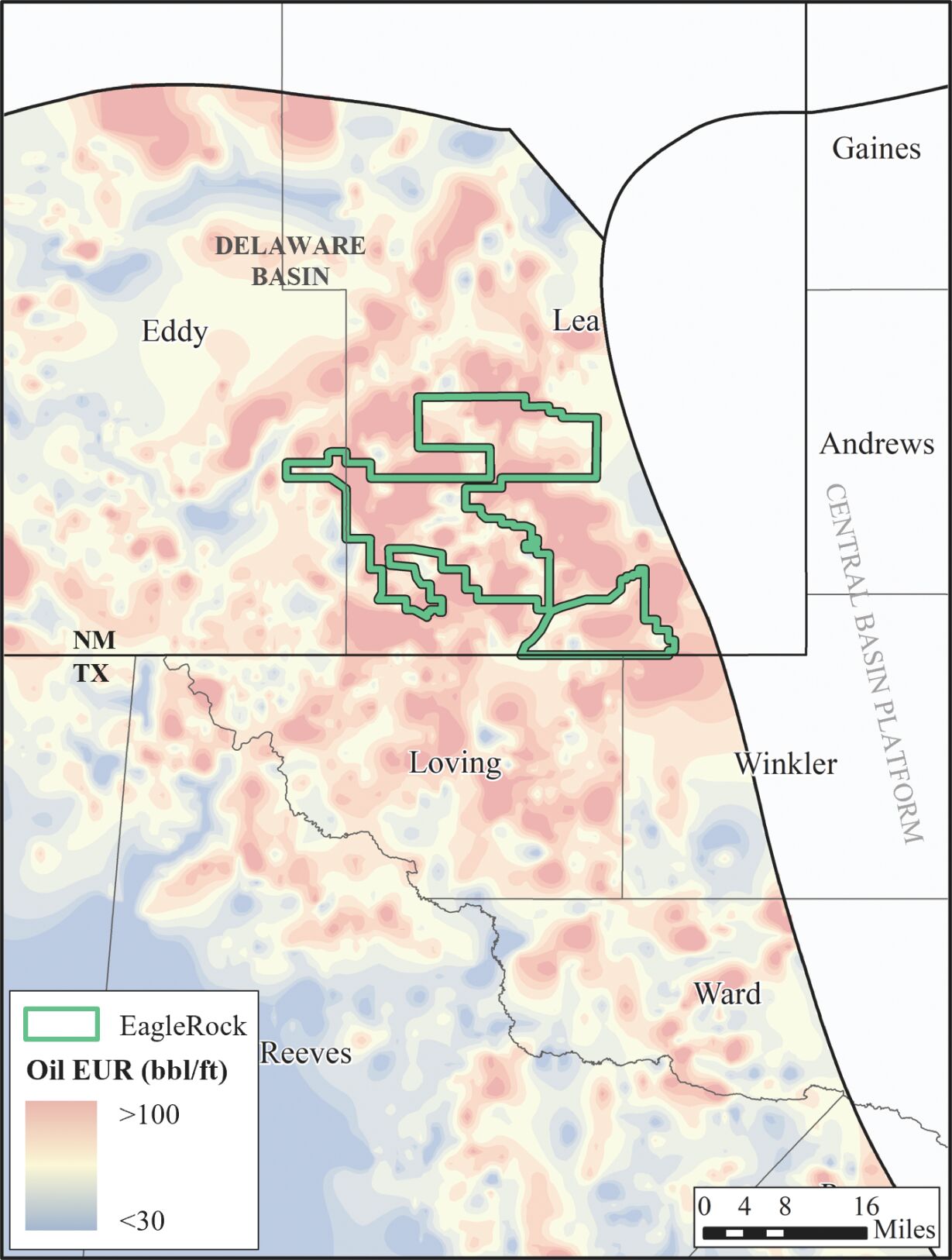
Our Delaware Basin acreage is shown below, together with the estimated ultimate recovery (“EUR”) per foot of lateral length (“EUR/ft”) of producing wells, according to Enverus, as of January 2026. EUR is the total amount of oil and natural gas expected to be recovered over the life of active wells. For comparability purposes, we show EUR/ft because lateral lengths vary, and wells with longer lateral lengths tend to have higher EUR/ft.


12


Table of Contents

Estimated Ultimate Recovery (EUR)


LOGO

Source: Enverus

Our Delaware Basin acreage encompasses approximately 37,000 acres of fee land, approximately 64,000 acres of state leased land and approximately 92,000 acres of federal leased land for a total of approximately 194,000 combined acres. This largely contiguous acreage position provides us control to support customers and their operations and allows us to optimize our revenues within the perimeter of the controlled acreage.

Our Delaware Basin land generates revenue primarily by charging fees and royalties for resource sales and surface use and damages. Under our SUAs with operators, substantially all customers that operate on our fee acreage, and in certain instances our controlled surface acres, are obligated to purchase all available resources from us, including water and caliche. In addition, our Delaware Basin acreage has substantial mining operations, including 26 sites for selling caliche and topsoil to various oilfield service providers.


13


Table of Contents

On our Delaware Basin land, we have access to up to 80.8 MMBbls of water per year from various sources. Our commercial water permits with the state of New Mexico permit us to produce and sell up to 44.3 MMBbls of commercial water per year. Our Delaware Basin land possesses a unique geologic water feature under the San Simon Sink, which holds substantial water reserves, and we have an existing lay-flat pipeline from the Texas border to one of our Delaware Basin land positions, along with additional storage infrastructure, that allows us to access an additional 36.5 MMBbls of commercial water per year. Furthermore, we have access to purchase similar off-ranch water volumes from several other suppliers, including the right to obtain up to 3 MMBbls/d of produced water, that may be treated, recycled and supplied to customers. Our Delaware Basin land has approximately 11.4 MMBbls of above ground water storage capacity and operates several trucked water stations that can constantly be refreshed from our water wells, helping us maintain efficiency and flowrate to our customers.

Additionally, our Delaware Basin land has a permit for what would be the fourth largest solid waste facility in the Permian Basin with over 21 million cubic yards of capacity, strategically located in an area of the Delaware Basin that has extensive development opportunities and many decades of remaining inventory, which we believe has the potential to drive future organic revenue growth for us. Under our Hydrosource Recycling Agreement, Hydrosource will have the exclusive right for two years following this offering to develop that facility and, if developed, we expect to receive a royalty equal to approximately 10% of the facility’s revenues. Furthermore, we believe our Delaware Basin land has a significant amount of commercially potent frac sand in areas proximate to upstream development, thereby reducing transportation costs and associated risks.

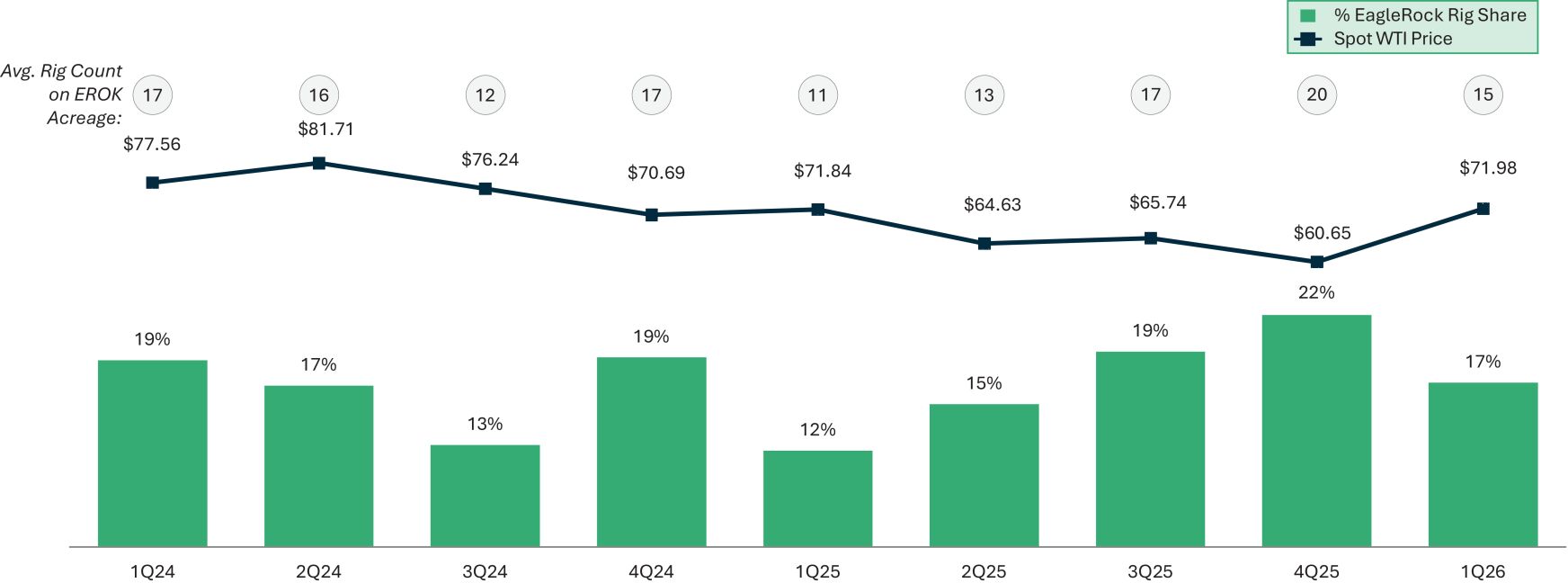
Activity on our Delaware Basin acreage has remained resilient and continues to capture a growing share of Lea and Eddy Counties’ drilling activity, even as commodity prices have declined. The chart below shows the percentage of total rigs operating in Lea and Eddy Counties that are located on EagleRock acreage each quarter. For example, in the fourth quarter of 2025, approximately 91 rigs were active across Lea and Eddy Counties, of which 20 rigs were operating on EagleRock acreage, representing approximately 22% of total regional activity. Notably, EagleRock’s share of active rigs increased from the mid-teens to over 20% during 2025, demonstrating sustained and growing operator activity on our acreage even during commodity price downturns. In the first quarter of 2026, the rig activity on our Delaware Basin acreage represented 17%, in line with the median share of regional rig activity since 2024.


14


Table of Contents

EagleRock Share of Rigs in Lea & Eddy Counties


LOGO

Source: Enverus, EIA

We believe our Delaware Basin land has significant potential for future activity, supported by 558 active horizontal drilling permits from various operators on our controlled acreage. According to NSAI, as of December 22, 2025, approximately 12,743 identified well locations across four formations exist within a 10-mile radius of our surface acreage in our Delaware Basin land. We own approximately 37,000 acres of fee land in New Mexico, and we control approximately 157,000 acres of land through our grazing and mining leases with the State of New Mexico and the Bureau of Land Management (“BLM”). Our leasehold interests in New Mexico state lands are generally grazing and mining leases that grant us rights with respect to the surface for periods ranging from one to five years from inception, and are renewable on an annual basis at our discretion. Under New Mexico law, the holder of an easement or right-of-way is required to compensate the lessee for the reasonable value of any measurable damage incurred upon improvements or other property belonging to the lessee. As the agricultural lessee, we have leased possession and use of the grazing interest. When the surface is excavated or occupied by a surface use implemented by a third party, we receive payments to compensate us for the impairment of value and costs to repair the physical damage. Additionally, our leasehold interests in federal lands with the BLM are


15


Table of Contents

generally grazing leases that grant us rights with respect to the surface for a period of approximately 10 years from inception. As part of our land management strategy, we leverage our total acreage footprint in driving our resource sales through our SUAs to our customers. Where our SUAs grant exclusive rights for commercial resources over land we control, the terms of those SUAs extend to leased land, and our customers are obligated to purchase resources such as water and caliche from us.

Delaware Basin Infrastructure

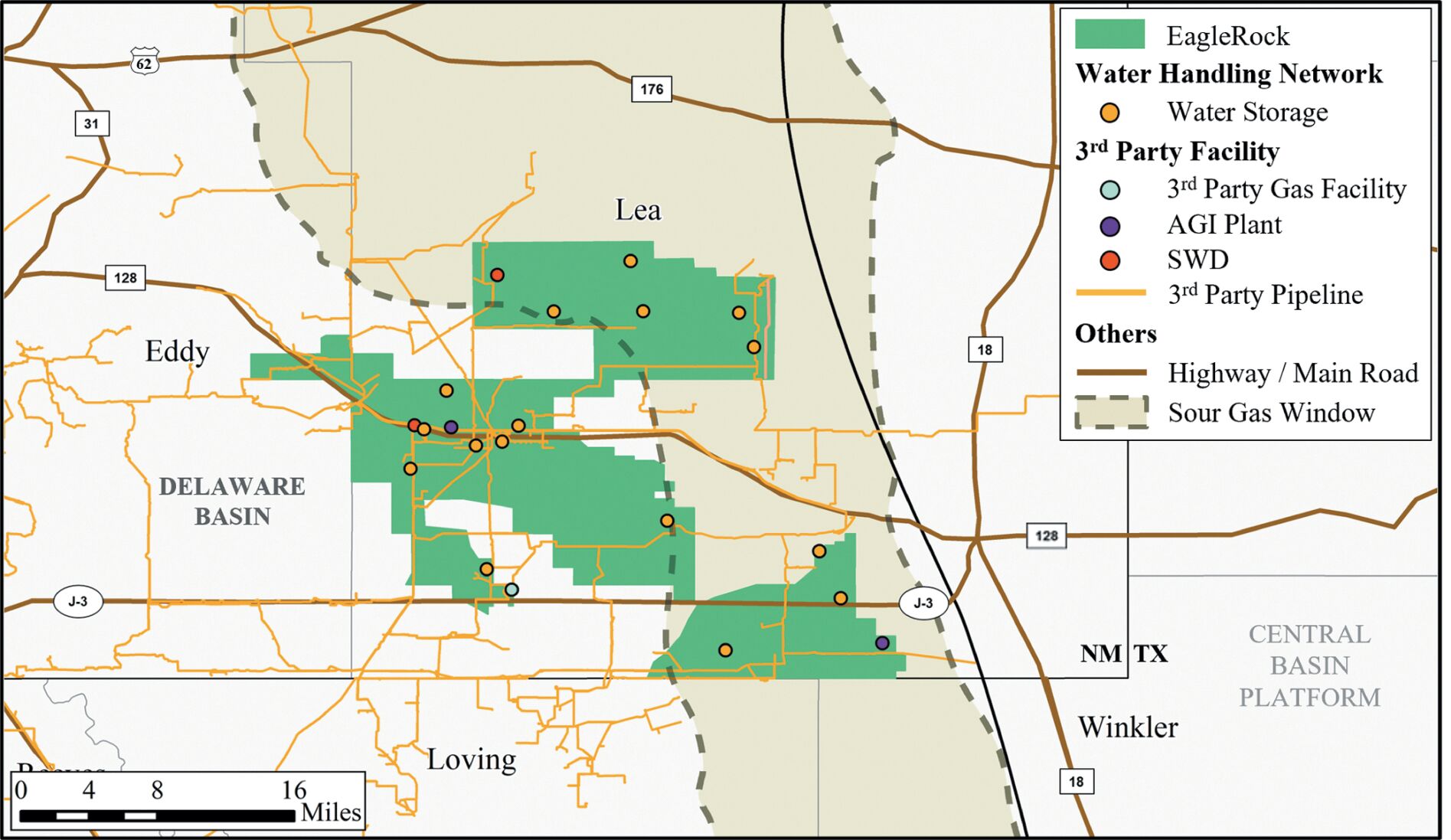
Our Delaware Basin infrastructure consists of a number of pipelines, pits, ponds and other storage systems used to facilitate our resource sales at strategic points within and around our Delaware Basin acreage. Additionally, our acreage contains significant third-party infrastructure, which facilitates our customers’ activity on our land. The map below illustrates our owned and controlled acreage and infrastructure in the Delaware Basin, and other oil and gas activities in the Delaware Basin.

EagleRock Delaware Basin Assets


LOGO

Source: Enverus


16


Table of Contents

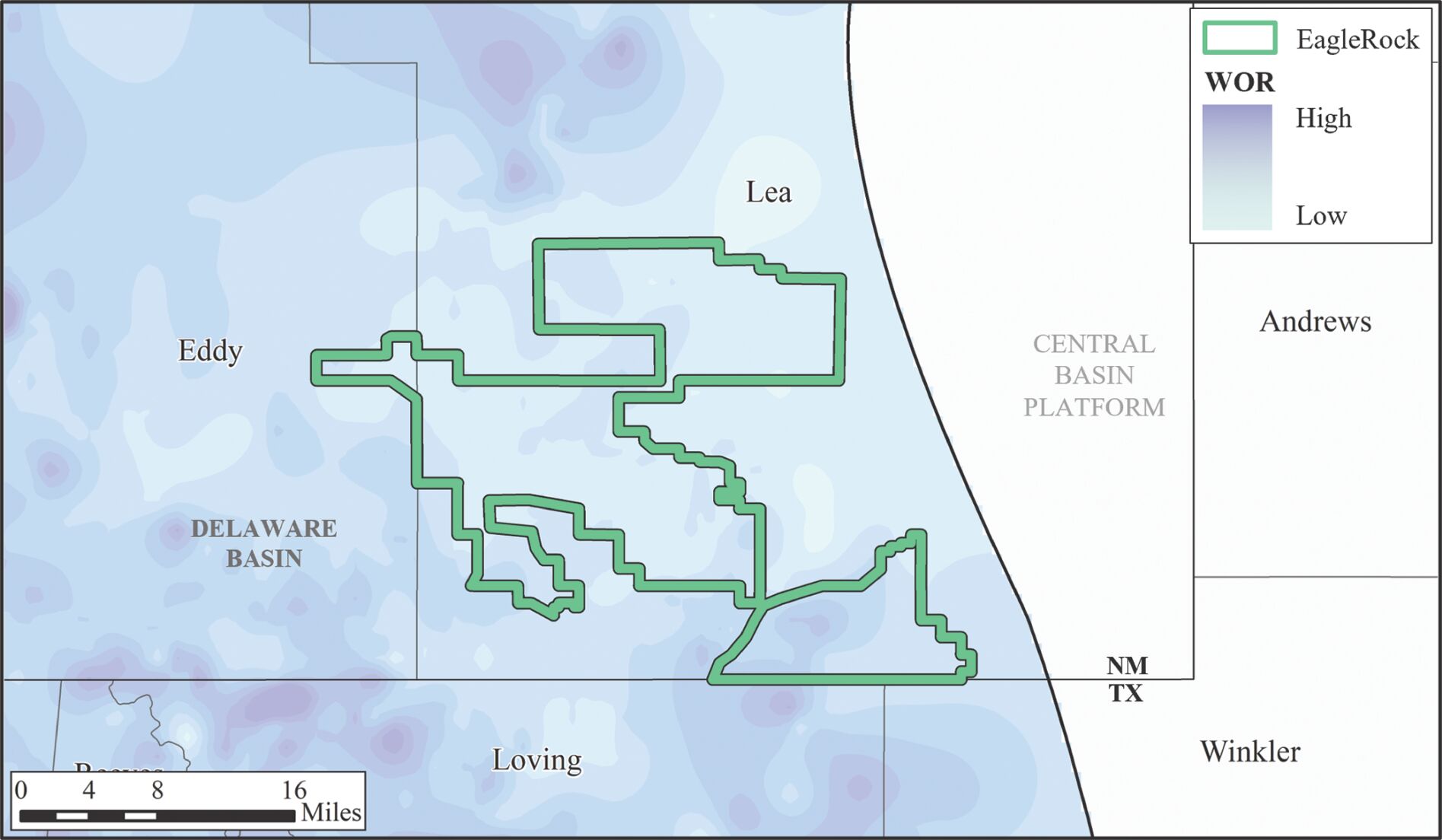
The Delaware Basin is characterized by high water production and high water to oil ratios (“WORs”) across formations, which results in significantly more produced water as a byproduct of production activities. Produced water originating in New Mexico generally must be transported to reinjection locations in Texas for disposal or recycled for use in drilling and completion activities. Our Hydrosource Recycling Agreement will position us to meet our customers’ demand for treated, blended and recycled water through Hydrosource’s water recycling infrastructure. Under the Hydrosource Recycling Agreement, we will earn a royalty for each barrel of produced water Hydrosource treats and recycles for oil and gas customers on our land. Our Delaware Basin water infrastructure assets are proximate to areas of high WORs, as depicted in the map below.

Water to Oil Ratios in the Delaware Basin


LOGO

Source: Enverus

In addition to oil and gas activity, we believe our Delaware Basin land has significant potential for future electricity transmission development, which we believe will attract new customers to our land as access to electricity increases. For instance, Oncor Electric Delivery Company (“Oncor”) is in the process of developing a 765kV transmission line that is expected to traverse portions of our Delaware Basin acreage, which we anticipate will result in fees for the related easement across our land. In addition, we believe the availability of reliable power connectivity will further expand the uses of our land and allow us to attract new customers. Oncor anticipates the transmission line, if approved by regulators, will be energized by December 2028.

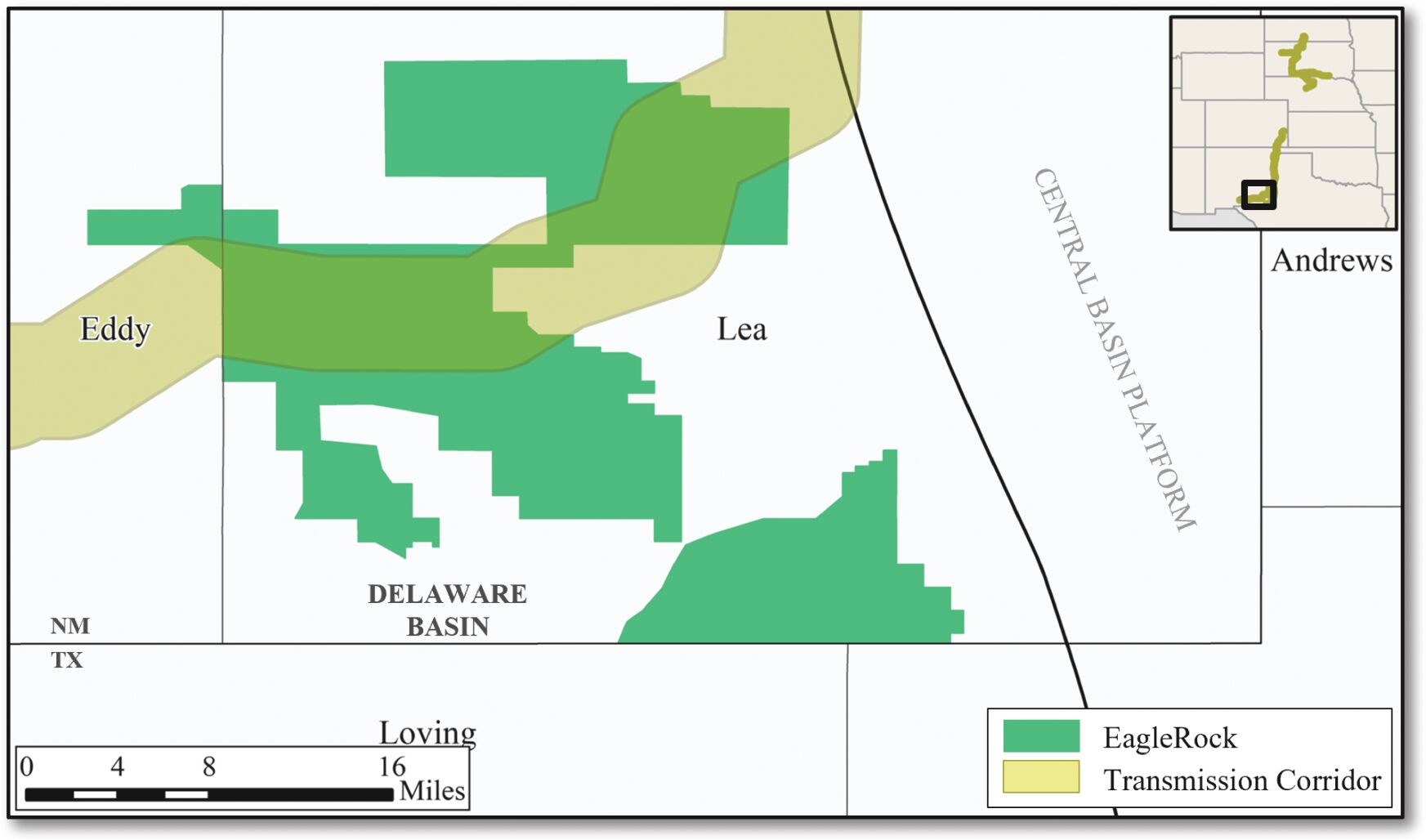
Additionally, the United States Department of Energy is considering designating land that crosses our acreage as a National Interest Electric Transmission Corridor (the “Transmission Corridor”). The map below shows the Transmission Corridor’s extent in Lea and Eddy County with proximity to our Delaware Basin land. We believe any future development of the Transmission Corridor could significantly increase the value and alternative uses of our surface.


17


Table of Contents

EagleRock Delaware Basin Acreage and Transmission Corridor


LOGO

Midland Basin Assets

Midland Basin Land

As of December 31, 2025, we owned approximately 42,000 acres in the Midland Basin, which is further supplemented by the DE Acreage Dedication. The Midland Basin benefits from a favorable regulatory environment, extensive midstream connectivity and access to power and transportation infrastructure, which, together with its extensive, deep inventory of drilling locations, make the Midland Basin one of the most prolific areas for ongoing energy development and infrastructure investment. Our Midland Basin acreage spans across owned parcels in Martin, Howard, Reagan, Glasscock and Upton Counties in Texas.

Our Midland Basin land generates recurring revenue from long-term SUAs, water resources and produced water handling and disposal, caliche royalties, surface leases and infrastructure easements supporting upstream, midstream, downstream and power development, and it complements our Delaware Basin acreage by adding scale, geographic balance and exposure to geologic formations that are more conducive to produced water reinjection as compared to our Delaware Basin acreage. Our Midland Basin land has approximately 300 MBbls of refresh flowrate per day or approximately 102 MMBbls per year of commercial water, and a water storage capacity of 16.9 MMBbls, including 5.5 MMBbls of off-ranch storage capacity. Our Midland Basin acreage also benefits from its proximity to Midland and Odessa, Texas, its proximity to the Interstate 20 corridor and several contiguous development corridors. Our Midland Basin land hosts critical ROWs, easements and fee tracts that support ongoing pad development, pipeline construction, power transmission and data infrastructure buildout for both energy and industrial applications in Texas.

Our Midland Basin land also hosts wind lease options with a potential combined 379 MW build-out, which would be supported by a base lease rate and royalty structure, with minimum


18


Table of Contents

projected lease revenue terms of 36 years. Additional income sources from our Midland Basin land include resource sales to customers operating within a certain mile-radius from our land and incremental royalty revenues from our infrastructure in and adjacent to our Midland Basin land that are operated by our operating partner, DEF Operating.

Midland Basin Infrastructure

Our Midland Basin assets also include water supply and produced water infrastructure in and adjacent to our Midland Basin land. Our infrastructure consists of a number of SWDs, water storage facilities, water wells and water pipelines used to facilitate delivery of water for drilling and completion activities, and the handling and disposal of produced water. Our water infrastructure that is adjacent to our Midland Basin acreage position is operated by one of our operating partners, DEF Operating, from which we receive royalty revenue under a long-term contract with a 10-year term and minimum annual royalty commitments. We also expect to receive royalties from Hydrosource in connection with its recycling of produced water sold in and around our land in the Midland Basin. Our produced water infrastructure, with peak handling capacity of approximately 400 MBbls/d, is strategically located in the Midland Basin, which benefits from access to abundant pore space, a favorable regulatory environment and advantaged geologic characteristics. Our supply water and produced water infrastructure portfolio serves numerous major operators, including large, well-capitalized producers with durable development programs, and is supported by 42,000 of our owned acres and the DE Acreage Dedication. The presence of these operators underscores the strategic importance of our assets and presents opportunities to capture incremental revenue streams as development activity continues.


19


Table of Contents

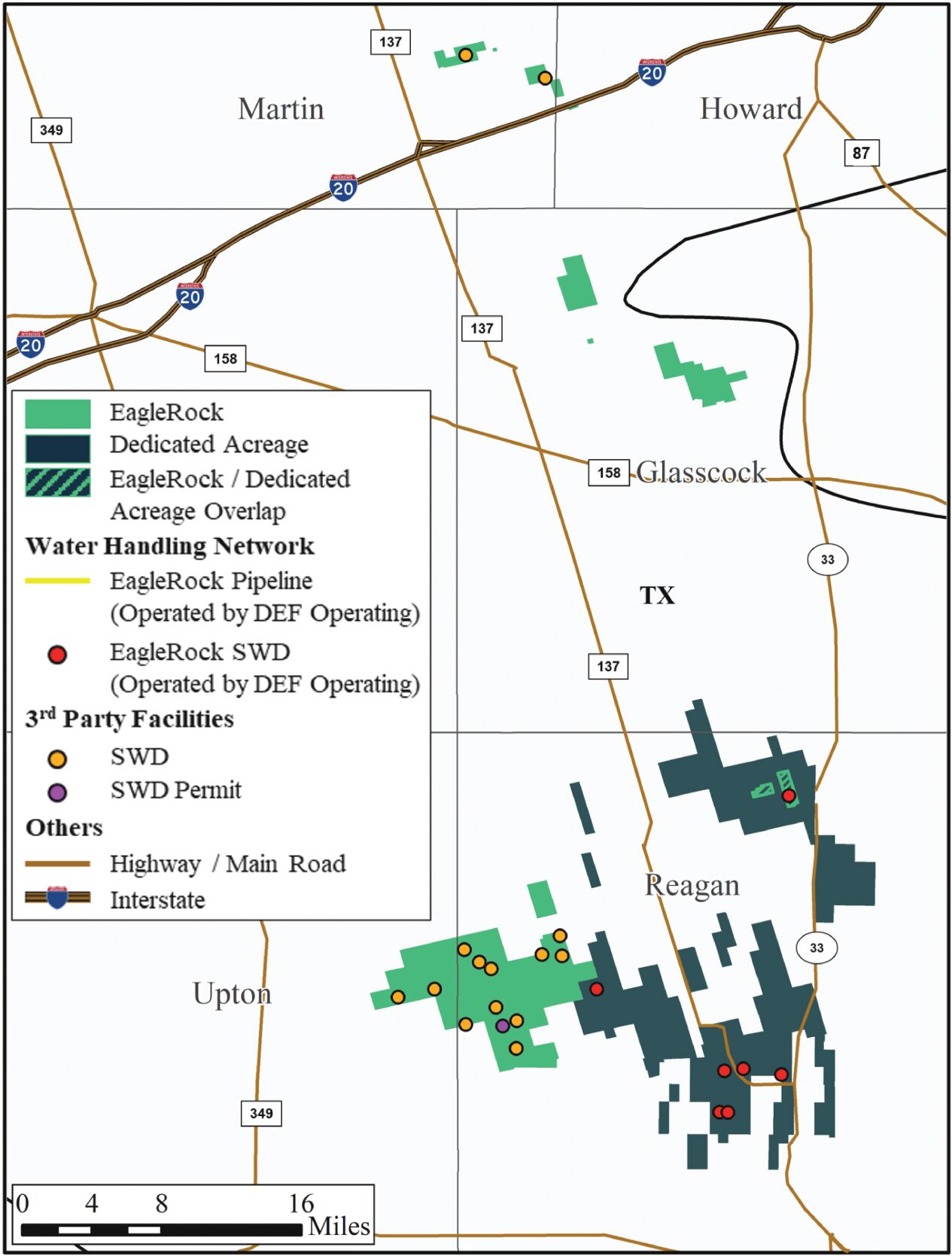
The map below illustrates our acreage and material assets in the Midland Basin.

EagleRock Midland Basin Assets


LOGO

Source: Enverus


20


Table of Contents

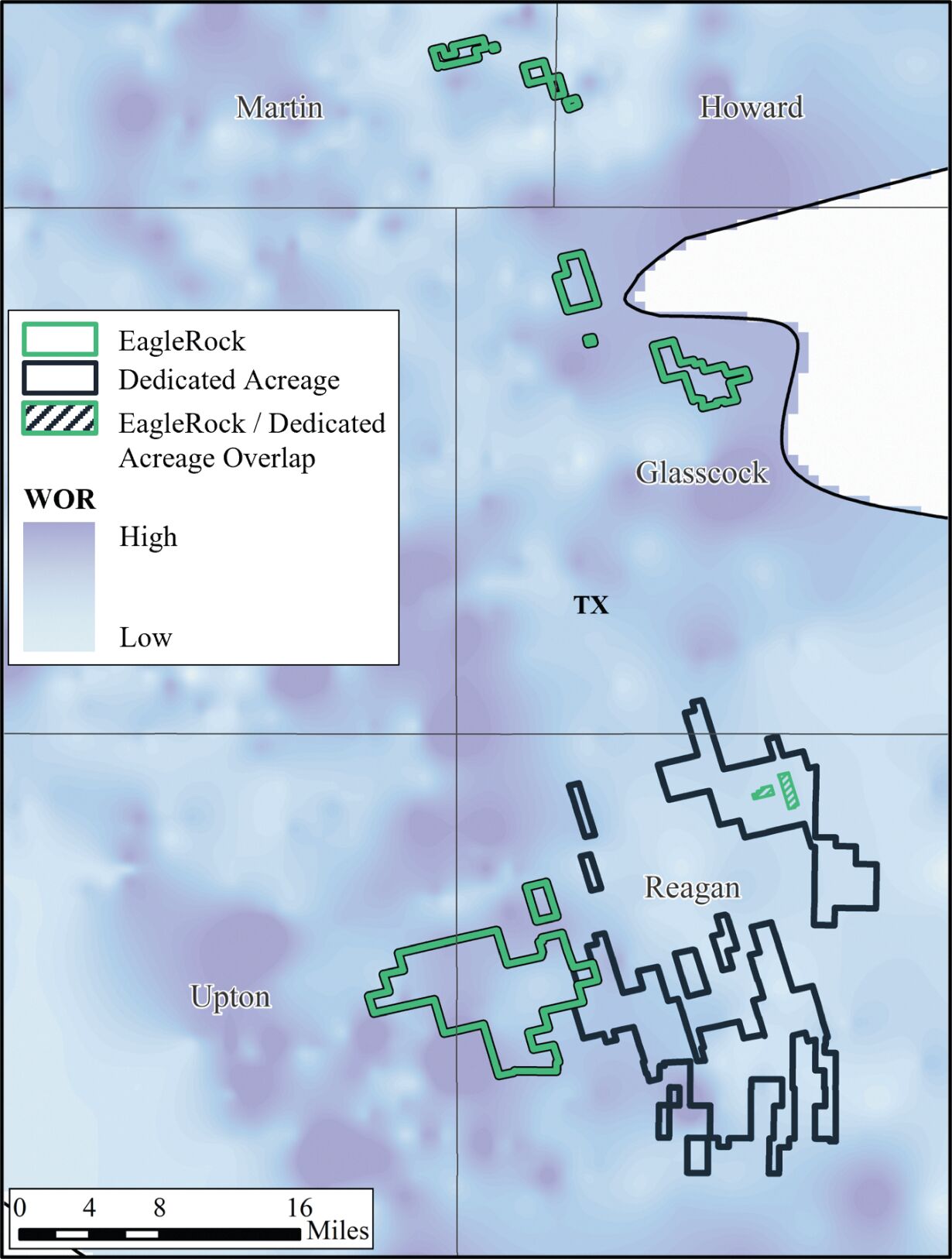
The Midland Basin is also characterized by high levels of water production across formations. While the Midland Basin’s primary producing formations generally have lower water production and WORs, its upside formations have comparatively higher water production and WORs, which would result in significantly more produced water as a byproduct of production activities over time. Our produced water handling and disposal infrastructure has multiple SWD wells with significant valuable pore space in more stable geologic areas for the development of additional locations across our Midland Basin assets, which will enable us to meet customers’ growing demands for produced water disposal. Our Midland Basin water infrastructure assets are proximate to areas of high WORs, as depicted in the map below.

Water to Oil Ratios in the Midland Basin


LOGO

Source: Enverus

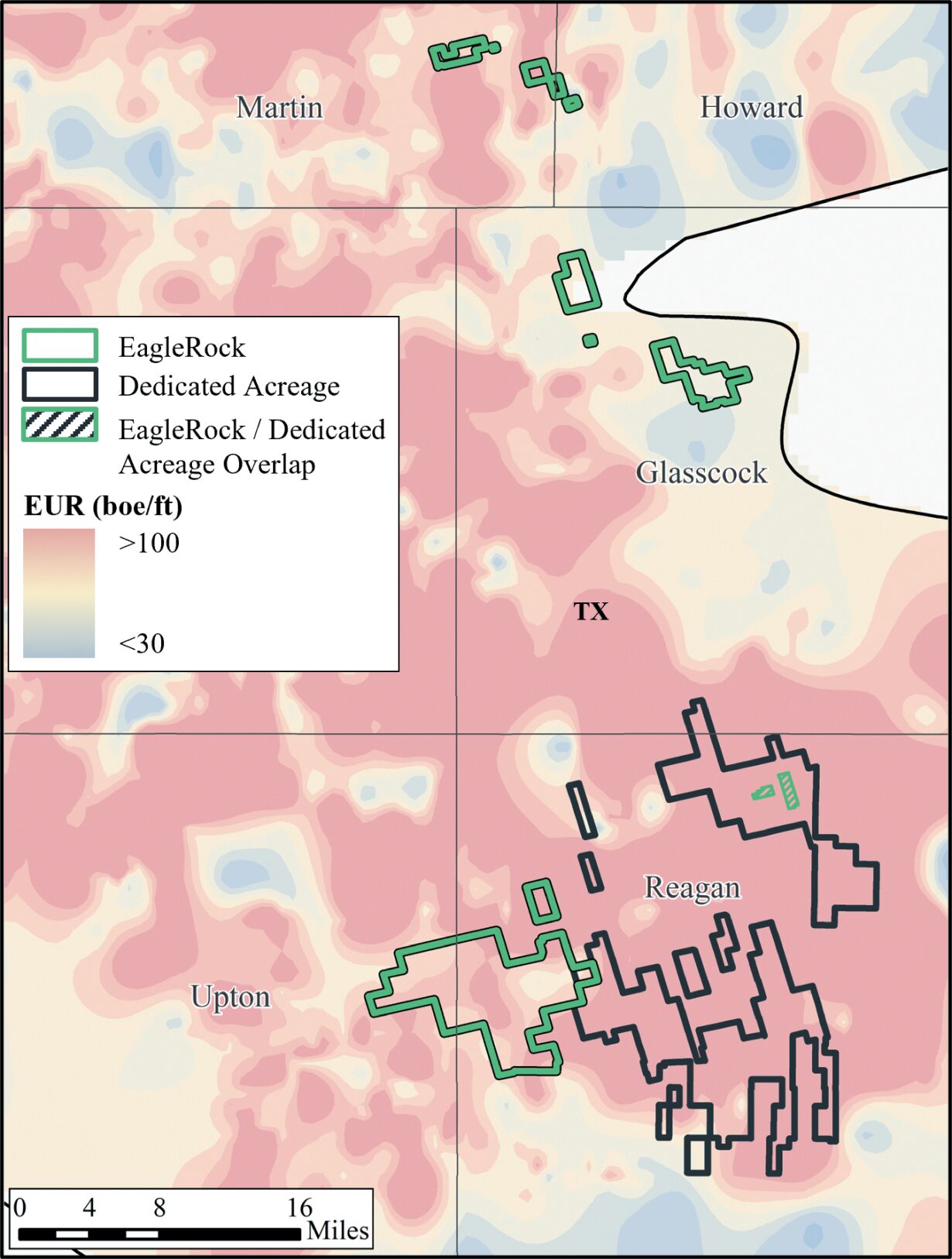
The Midland Basin is also distinguished by its consistent well productivity. EUR/ft benchmarking highlights Upton and Reagan Counties as among the highest-performing areas in the Permian Basin, with well results that support extended-reach laterals, dense development spacing and multi-zone economic viability across the Spraberry and Wolfcamp formations. Our Midland Basin land is


21


Table of Contents

concentrated within these high-quality geologic corridors, positioning us to benefit from continued development activity and long-term inventory depth in one of the most attractive oil-weighted regions in North America. The graphic below depicts the EUR/ft of lateral length from oil and natural gas wells on and near our land position, according to Enverus, as of January 2026.

Estimated Ultimate Recovery (EUR)


LOGO

Source: Enverus

Our Business Model

We focus on royalty-based opportunities with minimal capital expenditure exposure, high margins and minimal operating costs and risks that generate substantial Free Cash Flow, with limited exposure to commodity price changes. Our land management strategy is to actively increase the amount of revenue-generating activities on our land through resource sales, surface and pore space leases and royalties and alternative land uses beyond oil and gas development, underpinned by SUAs with a


22


Table of Contents

diversified group of large, well-capitalized producers and customers. We believe our predominantly fee-based SUAs, along with long-term royalty agreements with minimum annual revenue commitments, will facilitate stable cash flows through a variety of commodity price cycles.

Our Relationship with Our Operating Partners

Our relationships with our operating partners, DEF Operating and Hydrosource, allow us to focus on our land management strategies while we continue to realize the benefits of the available resources and long-term development opportunities on and around our land.

The DE Flow WSMA and Hydrosource Recycling Agreement described below are new agreements that will be entered into in connection with this offering. While the businesses we are acquiring (including DE Flow and Shallow Valley Ranch) have historically generated revenues from water-related activities, the royalty revenue structure described in this prospectus reflects the terms of these new agreements, which will supersede any prior arrangements and govern our relationship with DEF Operating and Hydrosource on a go-forward basis.

Double Eagle

Double Eagle is an independent oil and natural gas company focused on development and production throughout the Permian Basin. The company is backed by equity capital commitments from EnCap Investments L.P. (“EnCap”), Double Eagle Management and other strategic investors. Double Eagle continues to pursue acquisitions and ambitious development programs in the Permian Basin, supported by its strategic partnership with EnCap, strong cash flows through operations, as well as available debt facilities. Additionally, Double Eagle has historically maintained consistent drilling activity through a variety of commodity price cycles, supported by its private ownership structure and flexible capital base.

DEF Operating is a subsidiary of Double Eagle and will be a key operating partner of ours focused on providing critical water infrastructure across all phases of oil and gas development for Double Eagle and neighboring operators. Our DE Flow WSMA will be structured to provide long-term, predictable, largely commodity price-insulated cash flows through fixed-fee and royalty constructs tied to oil and gas activity on the Double Eagle operated acreage footprint. Our relationship will be anchored by a long-term agreement with an initial term of 10 years and minimum annual royalty commitments, which is expected to provide predictable cash flows. DEF Operating’s activities on and around our acreage have historically supported recurring surface royalties under long-term contracts with acreage dedications from the operators.

Hydrosource

Hydrosource is focused on water management and permitting solutions. Our relationship with Hydrosource will support land development, including management of water logistics for completions, recycling and other strategic long-term capital investments that will further optimize the development of our acreage. As our strategic water recycling partner, Hydrosource will promote and manage the sale of treated, blended and recycled water across our land and area of mutual interest to meet the demands of customers, from which we will earn royalties. Additionally, Hydrosource has access to up to 3 MMBbls/d of produced water under the Hydrosource Recycled Water Supply Agreement with one of the largest, well-capitalized produced water disposal companies in New Mexico through 300 access points along such company’s midstream assets co-located on our acreage. Hydrosource currently maintains 1 MMBbls/d of water recycling capacity, and the modular design of its recycling system allows it to move assets and expand capacity.


23


Table of Contents

Our Competitive Strengths

We believe that the following competitive strengths will allow us to successfully execute our business strategies and achieve our business objectives.

Balanced portfolio with strategically located assets in both the Delaware and Midland sub-basins.

Our diversified portfolio is balanced across the Permian Basin’s two prolific sub-basins, the Delaware Basin in New Mexico and the Midland Basin in Texas, which are the most active and inventory-rich development basins in North America. During the fourth quarter of 2025, oil and gas production from the Permian Basin represented approximately 46% of U.S. lower 48 states production. Large, well-capitalized public and private operators, including Chevron Corporation, ConocoPhillips Company, Devon Energy Corporation, Diamondback Energy, Inc., Double Eagle, EOG Resources, Inc., ExxonMobil Corporation, Matador Resources Company, Occidental Petroleum Corporation and Permian Resources Corporation, operate numerous locations and have a large undrilled inventory of locations on our land, and numerous other large operators frequently utilize our water infrastructure assets, both of which generate royalty revenue streams and contribute to the strength of our portfolio and durability of our revenue streams. Our expansive land footprint and available resource offerings across the Permian Basin also position us to take advantage of future growth opportunities in emerging industries such as power generation, transmission and storage, data centers and associated infrastructure.

Our Delaware Basin surface acreage is located in the core of the Delaware Basin’s lowest cost and most prolific remaining oil and natural gas resources and is primarily operated by large, well-capitalized public operators. The nature of our SUAs and other similar agreements and largely contiguous acreage positions us to benefit from the ongoing development of these resources through royalties that are not directly impacted by commodity prices. Our primary revenue streams on our Delaware Basin land are not directly dependent on access to SWD wells and produced water takeaway systems that may be impacted by potential constraints, including produced water pore space limitations, over-pressurization of subsurface reservoirs and regulatory risks. Instead, a meaningful portion of our Delaware Basin revenue streams result from water and resource sales, including from the beneficial reuse of produced water following treatment and recycling by Hydrosource, with the potential for our pore space to be utilized for AGI.

On our Midland Basin acreage, where regulatory and geologic conditions are more favorable, we have abundant pore space to support our existing SWDs and the development of multiple additional SWDs to support our customers’ growing produced water demand. Our Midland Basin assets also offer diversified exposure to future upstream development through both water resources supply and produced water handling as well as non-oil and gas revenue streams, including potentially from wind leases with a combined 379 MW build-out. Among upstream-related activities, these assets derive a significant portion of their revenue from many large, well-capitalized operators and have balanced exposure to both production and development activity. In addition, our Midland Basin land generates royalties from power infrastructure and other supporting infrastructure development on our land.

Diverse revenue streams underpinned by a large percentage of fee-based royalties and surface use agreements.

Our business model is built on recurring, contracted, long-term, fee-based revenue streams with a diverse group of large, well-capitalized producers and other customers tied to surface use of our


24


Table of Contents

land. We generate revenue from granting ROWs, easements and rights to conduct surface use activities, sourcing and delivering water for completions, handling, transporting, recycling and disposing of produced water, AGI pore space leases and providing access to mining sites for the sale of caliche and topsoil to customers. Many of our SUAs allow us to be the exclusive provider of our resources to upstream operators on our fee land, as well as select lands we control. We will also generate revenue under our Hydrosource Recycling Agreement and DE Flow WSMA when our customers utilize our and our operating partners’ water infrastructure assets, which, in the Midland Basin, will be supported by long-term acreage dedications. These activities support multiple sources of revenue, which are not directly impacted by commodity price volatility and require minimal ongoing operating or maintenance expenditures from us.

Hydrosource’s long-term contracted access to produced water and technical expertise positions us for significant long-term value creation. While beneficial reuse of produced water remains in the conceptual and early-development phase, we believe it holds meaningful economic potential over the coming years. Emerging applications include residential and municipal use, agricultural irrigation, industrial and technology-sector demand, aquifer replenishment and lithium extraction. Together, these opportunities represent a transformative pathway for converting produced water into a scalable, revenue-generating resource.

Multiple potential uses of land, including power and technology, to create long-term revenue streams.

Industrial activity on our land requires the development of infrastructure, which in turn can be used to support a variety of uses beyond the current activity. Our proactive management strategy seeks to optimize the amount of activity utilizing the same surface acreage on our land over the long-term. As a land management company, we facilitate development of our land and resources by seeking to expand existing infrastructure and operations on our land through frequent engagement with our customers, identifying novel uses of our land and resources and attracting potential customers and operating partners to develop new projects on our properties. Additionally, we believe our land is well suited for our entrepreneurial management team to work with customers to provide dedicated surface acres for data center infrastructure, power generation, transmission and storage facilities and related commercial development, which will improve our high margin royalty-based cash flows. In turn, the development on our land augments our ability to attract incremental activities as new customers make use of existing infrastructure. For example, as roads, power and other infrastructure are developed on our acreage, subsequent development by other customers is facilitated.

We generate a significant portion of our cash flows under long-term contracts with customers and operating partners. In the Midland Basin, we expect to generate significant cash flows under our DE Flow WSMA with DEF Operating that will provide for minimum annual royalty payments from our water infrastructure system, which will include supply water sales and produced water handling and disposal. This system is supported by long-term acreage dedications with Double Eagle, which continues to be one of the most active private operators in the Midland Basin. Double Eagle has a proven track record of continuing to develop oil and gas assets in a variety of commodity price environments due to its private ownership structure and flexible capital base. The expansive DE Flow water system allows connections with third parties for continued growth as well. Our Midland Basin water infrastructure system is located in an area with low seismicity, which allows the water infrastructure system to maintain its quality through consistent water sales and produced water handling and disposal. We believe there is significant remaining inventory with attractive break-even economics that will continue to support this asset and our royalty-based revenue stream for the long term. Similarly, our Hydrosource Recycling Agreement will generate consistent revenue and cash flow from the sale of water to producers across all of our acreage and will include a five-year minimum royalty commitment.


25


Table of Contents

In addition to the commercial uses of our land, we retain three partners to oversee an over 1,150 head cattle grazing operation on our land in New Mexico. As a part of these operations, we seek to operate to benefit our land and its wildlife and to partner with local government and other groups to further these goals.

We have an entrepreneurial management team with a track record of building businesses and creating value.

Our management team has several decades of combined experience in the energy industry, with a proven history of value creation specifically in the Permian Basin.

Our management team has sought, and continues to seek, opportunities to efficiently commercialize and optimize our land position. Since commencement of our operations in 2024, our management team has successfully acquired and/or integrated approximately 200,000 acres and the related land management operations, while actively unlocking incremental value by increasing the overall combined profitability of those operations, while also creating or identifying new sources of revenue with minimal capital investment. In addition, we have:


consolidated fragmented SUAs with various customers while renegotiating key commercial terms that increased revenue activities on our land;


increased our revenue stream through the 15-year, Hydrosource Recycled Water Supply Agreement between Hydrosource and one of the largest produced water disposal companies in New Mexico that allows us and our operating partners access to up to 3 MMBbls/d of produced water that can be treated and/or recycled by Hydrosource and sold to customers on and off our land;


increased our land footprint to approximately 236,000 acres across the Permian Basin, which is further supplemented by the DE Acreage Dedication, through the strategic combination of the L&E, Shallow Valley and Double Eagle assets as part of this offering, with the goal of developing one of the largest land management companies that supports oil and gas development in the Permian Basin; and


achieved the above strategies while maintaining a strong balance sheet.

Our Business Strategies

Our principal business objective is maximizing risk-adjusted total return to our shareholders by growing Free Cash Flow with minimal capital expenditures and operational risks. We intend to pursue the following business strategies to achieve this objective.

Increase cash flow per share and generate differentiated returns for our shareholders.

We intend to sustainably grow cash flow per share for our shareholders. Because our business model is largely fee-based and capital-light, we expect to generate significant Free Cash Flow relative to our capital investment needs. We believe focusing on per-share cash flow, rather than simply growing volume, aligns our strategy with long-term shareholder returns. We intend to grow per-share cash flow by pursuing high return growth opportunities. We also intend to seek to return capital to our shareholders through dividends, although we have not established a formal dividend policy.


26


Table of Contents

Promote efficient development of our assets through both existing and novel approaches to utilize our land and resources.

We will continue to actively manage and develop our acreage to maximize revenue and identify higher and better uses of our land. We intend to continue to grow our existing diversified revenue streams, which currently include royalties and fees from upstream operations on our acreage, royalties from water recycling and produced water handling and treatment and revenues from the sale of surface resources such as caliche. In addition, through the combination of L&E, Shallow Valley and Double Eagle assets as part of this offering, we will pursue new opportunities to enhance the use of our resources both across the combined footprint and among our operating partners. We also believe revenue generation opportunities exist from ancillary surface use activities, such as sand mining, solid waste disposal and pore space leases. We believe that our ability to offer a single commercial interface for land access, water sourcing and produced water logistics is a competitive advantage that reduces downtime and cost for operators, making our acreage the preferred platform for multi-year development programs for operators. Additionally, the water recycling services offered by our operating partners on our land provide our operators with access to a commercial solution to assist them with managing increasing produced-water volumes, as well as the ability to meet their individual sustainability goals. We will also seek to further develop and grow our non-oil and gas revenue streams, which we believe include traditional and renewable power generation, transmission and storage and data center infrastructure. Our goal is to efficiently increase revenue by maximizing fee-generating activities on the same land while minimizing permitting friction for our customers.

Pursue accretive acquisitions to enhance our asset base.

We intend to reinvest our cash flow accretively into our business by evaluating and pursuing selective acquisitions, potentially including acquisitions from the Existing Owners, that are complementary to our strategy and pursuing our capital-light development strategy on acquired acreage to increase our stable cash flow base. For example, Hydrosource recently acquired approximately 50,000 surface acres in Lea County, New Mexico that is proximate to our existing land holdings in the Delaware Basin. While no agreement or understanding exists between us and Hydrosource with respect to our acquisition of that acreage and no assurance can be given that any such agreement may be reached in the future, we may seek to acquire such acreage from Hydrosource. We intend to target opportunities that create near-term cash flow from the use of our surface acreage and can be quickly commercialized through our existing contract structure without significant incremental capital. We believe disciplined expansion of our land position can unlock new revenue opportunities and strengthen our strategic positioning in the sector. We intend to remain selective and pursue transactions that we believe will be accretive to cash flow per share.

Maintain a prudent balance sheet with capital flexibility.

We intend to maintain a prudent financial profile to preserve strategic flexibility. Our asset-light model allows us to support customer activity without large upfront capital requirements to support development of our acreage. We expect to maintain our balance sheet strength to continue investing in commercializing and optimizing our existing land position, pursue strategic, high-return bolt-on opportunities and return capital to shareholders, including through payment of dividends and/or opportunistic repurchases. Our strategy will continue to focus on growing our land position, a non-depreciable asset, with significant economic cash flow generation for multiple years. We believe maintaining balance sheet discipline positions us to act opportunistically in a basin where surface access, water logistics rights and ROW control are increasingly valuable to operators.


27


Table of Contents

Capitalize on our relationship with Hydrosource and DEF Operating to increase revenue.

Our operating partners, Hydrosource and DEF Operating, operate integrated water midstream systems in the Delaware Basin and Midland Basin. These assets include over 140 miles of pipeline and 6 produced water handling facilities capable of handling over 400 MBbls/d of produced water. Additionally, Hydrosource has access to up to 3 MMBbls/d of produced water under the Hydrosource Recycled Water Supply Agreement.

Our DE Flow System is designed for operational redundancy, customer flow assurance and recycling and redelivery across our Midland Basin position, and we believe it is a leader among the next generation of water handling facilities, including water recycling, enhanced evaporation and desalination facilities, which could potentially provide incremental surface use revenues and water sales royalties to us.

Our relationships with DEF Operating and Hydrosource allow us to focus on our land management strategies while we continue to realize the benefits of the available resources and long-term development opportunities on and around our land. We expect to grow organically alongside Hydrosource and DEF Operating as they increase operational capacities on our surface acreage. For each incremental barrel of sourced or produced water recycled by Hydrosource on our land, we will earn additional revenue while investing minimal capital. We have also been issued a permit to place a solid waste facility on our land, and Hydrosource has a two-year option to develop that facility. Additionally, should we choose to acquire additional surface acreage, we may be able to enhance returns by entering into additional commercial agreements with Hydrosource and/or Double Eagle when our respective business interests align.

Corporate Reorganization

EagleRock was formed as a Texas limited liability company by L&E on December 1, 2025. EagleRock has elected to be treated as a corporation for U.S. federal income tax purposes. EagleRock has not conducted and will not conduct any material business operations prior to the completion of the Corporate Reorganization, other than certain activities related to this offering.

Following the Corporate Reorganization, EagleRock will be the sole managing member of OpCo, will be responsible for all operational, management and administrative decisions relating to OpCo’s business and will consolidate financial results of OpCo and its subsidiaries. OpCo will own all of the outstanding membership interests in our operating subsidiaries and will operate our assets through these various subsidiaries.

In connection with the completion of this offering, the following transactions have occurred, or will occur, in substantially the following order, which are collectively referred to in this prospectus as our “Corporate Reorganization”:


OpCo will be formed by EagleRock;


Each of L&E, the Shallow Valley Owners and Double Eagle (collectively, the “Existing Owners”) will contribute cash to EagleRock in exchange for 109,725,365 Class B shares;


L&E will contribute all of its subsidiaries (other than the Excluded Assets) to OpCo in exchange for 42,716,907 OpCo Units and OpCo’s assumption of the Predecessor Credit Facility (as defined herein);


Each of the Shallow Valley Owners and Double Eagle will contribute certain of their subsidiaries to OpCo in exchange for 21,134,393 OpCo Units and 45,874,065 OpCo Units, respectively;


28


Table of Contents
   

Each of EagleRock’s and OpCo’s operating agreements will be amended and restated to facilitate this offering (the transactions set forth in this and the second bullet point above being the “Up-C Reorganization”);


Pursuant to a Warrant Exercise Agreement (the “Warrant Exercise Agreement”), each holder of L&E Warrants (including funds and accounts managed by TCW Asset Management Company LLC (“TCW”)), CCLF Holdings (D41) LLC and AWC Aqua, LLC (collectively, the “TCW Entities”) will exercise a portion of its L&E Warrants to purchase L&E units (the “Exercised Warrants”) and forfeit the remaining portion of such warrants (the “Forfeited Warrants”), which will be irrevocably cancelled, immediately following which (i) L&E will distribute 14,940,269 OpCo Units and a corresponding number of Class B shares to the TCW Entities in redemption of the L&E units received in respect of the Exercised Warrants, (ii) each Warrant Agreement will terminate and (iii) certain of such TCW Entities (the “Rollover TCW Entities”) will merge with one or more newly formed subsidiaries of EagleRock and receive one Class A share in exchange for each OpCo Unit (and Class B share) it holds, or an aggregate 4,560,785 Class A shares;


EagleRock will issue 17,300,000 Class A shares in this offering to the public, representing 100% of the economic rights in EagleRock, in exchange for the net proceeds of this offering at a price of $18.50 per Class A share (the midpoint of the price range set forth on the cover page of this prospectus);


EagleRock will contribute all of the net proceeds from this offering (including any net proceeds from the exercise of the underwriters’ option to purchase additional Class A shares) to OpCo in exchange for a number of OpCo Units equal to the number of Class A shares issued in this offering; and


OpCo will use the net proceeds (including any net proceeds from the exercise of the underwriters’ option to purchase additional Class A shares) from this offering, as described in “Use of Proceeds.”

To the extent the underwriters’ option to purchase additional Class A shares is exercised in full or in part, EagleRock will contribute the net proceeds therefrom to OpCo in exchange for an additional number of OpCo Units equal to the number of Class A shares issued pursuant to the underwriters’ option. OpCo intends to use such proceeds as described in “Use of Proceeds.”

After giving effect to the Corporate Reorganization, this offering and assuming the underwriters’ option to purchase additional Class A shares is not exercised:


our Existing Owners and the TCW Entities will own all 105,164,580 of our Class B shares (with 27,776,638 Class B shares held by L&E, 45,874,065 Class B shares held by Double Eagle, 21,134,393 Class B shares held by the Shallow Valley Owners and 10,379,484 Class B shares held by the TCW Entities), and the Rollover TCW Entities will own 4,560,785 of our Class A shares, collectively representing 84.3% of our common shares (or 21.3% held by L&E, 35.3% held by Double Eagle, 16.2% held by the Shallow Valley Owners and 11.5% held by the TCW Entities);


investors in this offering will own 17,300,000 of our Class A shares, representing 13.3% of our common shares;


EagleRock will own an approximate 19.2% interest in OpCo; and


our Existing Owners and the TCW Entities will own an approximate 80.8% interest in OpCo, including the indirect interest in OpCo owned by the Rollover TCW Entities (or 21.3% held by L&E, 35.3% held by Double Eagle, 16.2% held by the Shallow Valley Owners and 8.0% held by the TCW Entities).


29


Table of Contents

The diagrams under “—Organizational Structure” below depict a simplified version of our organization and ownership structure immediately before and after giving effect to this offering and the Corporate Reorganization.

For further details regarding the L&E Warrants, please see “Management’s Discussion and Analysis of Financial Condition and Results of Operations—Predecessor Liquidity and Capital Resources—L&E Warrants.”

For further details on our agreements with OpCo and its affiliates, please see “Certain Relationships and Related Party Transactions.”

Recent Developments

Preliminary First Quarter 2026 Financial Results

The following preliminary financial information presents our estimated financial results on a pro forma, as adjusted basis for the three months ended March 31, 2026. This presentation includes ranges for these preliminary financial results because closing procedures for the three months ended March 31, 2026 are not yet complete. These estimated ranges are preliminary and unaudited and are thus inherently uncertain and subject to change.

As customary quarterly close and review procedures as of and for the three months ended March 31, 2026 are completed, there can be no assurance that the final results for this period will not differ from the estimates presented below. During the course of the preparation of our consolidated financial statements and related notes as of and for the three months ended March 31, 2026, we may identify items that could cause our final reported results to be materially different from the preliminary financial estimates presented below. For a discussion of important factors that could cause actual results to differ from our preliminary estimates, see “Risk Factors,” “Cautionary Note Regarding Forward-Looking Statements” and “Management’s Discussion and Analysis of Financial Condition and Results of Operations.”

These estimates should not be viewed as a substitute for full interim financial statements prepared in accordance with GAAP. In addition, these preliminary estimates are for informational purposes only and are not necessarily indicative of the results to be achieved as of any future date or for any future period. The preliminary estimated unaudited financial results included in this prospectus have been prepared by, and are the responsibility of, our management. Our independent registered public accounting firm, Deloitte & Touche LLP, has not audited, reviewed, compiled or performed any procedures with respect to the preliminary financial results. Accordingly, Deloitte & Touche LLP does not express an opinion or any other form of assurance with respect thereto.

Set forth below is a range of estimates of our preliminary financial results for the three months ended March 31, 2026 on a pro forma, as adjusted basis:


     Pro Forma, as Adjusted  
     Three Months Ended March 31, 2026  

(in thousands)

   Low      High  

Revenue

   $ 29,551      $ 36,117  

Net income

   $ 13,263      $ 16,211  

Adjusted EBITDA

   $ 25,745      $ 31,467  


30


Table of Contents

The following table sets forth a reconciliation (to the midpoint of the low and high ranges set forth above) of our preliminary net income (loss) as determined in accordance with GAAP to Adjusted EBITDA and Adjusted EBITDA Margin for the periods indicated.


     Pro Forma, as Adjusted  

($ in thousands)

   Three Months Ended
March 31, 2026
 

Net Income (loss)

   $ 14,737  

Adjustments:


Depreciation, depletion, amortization, and accretion

     13,634  

Interest expense, net

     96  

Income tax expense (benefit)

     1,033  


EBITDA

   $ 29,500  


Adjustments:


Transaction-related expenses(1)

     2,386  

Other(2)

     (3,280


Adjusted EBITDA

   $ 28,606  


Net income (loss) margin

     44.9

Adjusted EBITDA Margin

     87.1
 
(1)

Transaction-related expenses consist of nonrecurring professional services expenses, including banker fees, legal and professional fees and integration costs directly attributable to completed or contemplated transactions. We do not adjust for ongoing integration or optimization costs unless they are incremental, non-recurring and directly attributable to the transaction.

(2)

Other consists primarily of a nonrecurring gain on sales-type lease and other nonrecurring transactions.

Our Common Shares

Our Second Amended and Restated Company Agreement (the “LLC Agreement”) will provide for two classes of common shares, Class A shares and Class B shares, representing limited liability company interests in us. Only our Class A shares will have economic rights and entitle holders thereof to participate in any dividends our board of directors may declare. Each holder of a Class A share will be entitled to one vote on all matters to be voted on by our shareholders generally. We have applied to list our Class A shares on the NYSE and NYSE Texas under the symbol “EROK.”

Class B shares will not be entitled to participate in any dividends our board of directors may declare but will be entitled to vote on the same basis as the Class A shares. Holders of Class A shares and Class B shares will vote together as a single class on all matters presented to our shareholders for their vote or approval, except as otherwise required by applicable law or by our LLC Agreement. We do not intend to list the Class B shares on any stock exchange. All of our Class B shares will initially be owned by our Existing Owners and the TCW Entities. For a description of the rights and privileges of shareholders under our LLC Agreement, including voting rights, please see “Description of Shares” and “Our LLC Agreement.”


31


Table of Contents

Our Operating Partners

While our relationship with Hydrosource and Double Eagle is a significant strength, it is also a source of potential conflicts. Please see “—Conflicts of Interest” and “Risk Factors.”

Following the completion of this offering, our Existing Owners and the TCW Entities will retain a significant interest in us through their ownership of 105,164,580 Class B shares (and a corresponding number of OpCo Units) and 4,560,785 Class A shares, representing an aggregate 84.3% voting interest in us. Our Existing Owners and the TCW Entities may purchase Class A shares in the offering.

Conflicts of Interest

Although we have established certain policies and procedures designed to mitigate and resolve conflicts of interest, no assurance can be given that these measures will be effective in identifying, eliminating or mitigating all conflicts. These measures rely on, among other things, disclosures, supervisory oversight and information barriers that are inherently limited and may be circumvented or prove ineffective. It is possible that actual, potential or perceived conflicts of interest could give rise to investor dissatisfaction, litigation or regulatory enforcement actions, monetary penalties, reputational harm, restrictions on our activities and adverse effects on our results of operations and financial condition. Conflicts may result in decisions that are not aligned with, or that are less favorable than, those that might have been made absent such conflicts.

Our LLC Agreement will provide that our Existing Owners and their respective affiliates are not restricted from owning assets or prohibited from engaging in other businesses or activities, including those that might be in direct competition with us. In addition, our Existing Owners and their respective affiliates may compete with us for investment opportunities and may own an interest in entities that compete with us. We will not have priority rights to any opportunities identified by our Existing Owners or their affiliates, and we may receive a reduced allocation of, or be excluded entirely from, opportunities that they pursue. Any allocation policies or procedures may be discretionary, may change without notice, and may not require our consent. Our LLC Agreement will also provide that we renounce any interest or expectancy in, or in being offered, an opportunity to participate in, any business opportunity that may from time to time be presented to our Existing Owners and their respective affiliates that would otherwise be subject to a corporate opportunity or other analogous doctrine under the TBOC other than any business opportunity that we establish by a preponderance of the evidence resulted from our or our subsidiaries’ confidential information. Our Existing Owners and their respective affiliates and certain of our directors may become aware, from time to time, of certain business opportunities (such as acquisition opportunities) and may direct such opportunities to other businesses in which they have invested, in which case we may not become aware of or otherwise have the ability to pursue such opportunity. In addition, our directors, officers and employees may have competing demands on their time and attention as a result of their roles with our Existing Owners and their affiliates, which may adversely affect the time devoted to our business. Our Existing Owners and their affiliates may also possess material non-public information with respect to issues or opportunities that, due to legal or contractual constraints or internal information barriers, they cannot share with us. As a result, we may be restricted from pursuing, or may pursue such opportunities without the benefit of, such information. These affiliates may have meaningful access to capital, which may change over time depending upon a variety of factors, including available equity capital and debt financing, market conditions and cash on hand. They may also have different return profiles, fee structures, tax considerations, regulatory constraints, or investment horizons that create incentives to favor their own accounts or other vehicles over us, including through differing pricing, timing, structure, or terms of transactions.


32


Table of Contents

Our key agreements, including our LLC Agreement and the First Amended and Restated Company Agreement of OpCo (the “OpCo LLC Agreement”), were negotiated among related parties, and their respective terms, including fees and other amounts payable, may not be as favorable to us as terms negotiated at an arm’s-length basis with unaffiliated parties. We and our affiliates may enter into additional related-party transactions from time to time, including service, financing, lease, hedging, or other commercial arrangements, and amendments or waivers under existing related-party agreements. Approvals of such matters may be made by persons or bodies that have interests that differ from, or conflict with, those of unaffiliated equityholders, and the standard of review for these determinations may be contractual rather than fiduciary in nature. Fees, expense allocations, and other economic arrangements under related-party agreements may incentivize our affiliates in ways that are not aligned with us. There can be no assurance that any conflicts in connection with related-party transactions will be resolved in our favor.

Redemption Right

Following this offering, under the OpCo LLC Agreement, each holder of an OpCo Unit (other than EagleRock) will, subject to certain limitations, have the right (the “Redemption Right”) to cause OpCo to acquire all or a portion of its OpCo Units (along with the cancellation of a corresponding number of our Class B shares) for, at OpCo’s election, (i) Class A shares at a redemption ratio of one Class A share for each OpCo Unit redeemed, subject to conversion rate adjustments for equity splits, dividends and reclassifications and other similar transactions (“applicable conversion rate adjustments”), or (ii) cash in an amount equal to the Cash Election Amount (as defined herein) of such Class A shares. Redemptions are subject to minimum volume requirements, including that each redemption must involve at least 150,000 OpCo Units (or all OpCo Units then held by the redeeming holder, if less than 150,000), and may generally be exercised no more frequently than once per calendar quarter (subject to exceptions for redemptions in connection with a registered offering pursuant to the Registration Rights Agreement or a Rule 10b5-1 trading plan approved by the Managing Member). Redemptions will also be subject to the conditions, timing, notice and other procedural requirements set forth in the OpCo LLC Agreement and applicable law, which may include blackout periods or other restrictions to ensure compliance with securities and other regulatory requirements. OpCo will determine whether to issue Class A shares or pay cash in an amount equal to the Cash Election Amount in lieu of the issuance of Class A shares based on facts in existence at the time of the decision, which we expect would include the relative value of the Class A shares (including the trading price for the Class A shares at the time), the cash purchase price, the availability of other sources of liquidity (such as an issuance of additional common shares) to acquire the OpCo Units and alternative uses for such cash. Alternatively, upon the exercise of the Redemption Right, we (instead of OpCo) will have the right (the “Call Right”) to, for administrative convenience, acquire each tendered OpCo Unit directly from the redeeming holder of OpCo Units (“OpCo Unitholder”) for, at our election, (x) one Class A share, subject to applicable conversion rate adjustments, or (y) cash in an amount equal to the Cash Election Amount of such Class A shares. We may exercise the Call Right only if an OpCo Unitholder first exercises its Redemption Right, and an OpCo Unitholder may exercise its Redemption Right beginning immediately following the consummation of this offering, subject to certain limitations in the OpCo LLC Agreement and the expiration of lock-up restrictions. As the sole managing member of OpCo, our decision to pay the Cash Election Amount upon an exercise of the Redemption Right or Call Right may be made by a conflicts committee consisting solely of independent directors. In connection with any redemption of OpCo Units pursuant to the Redemption Right or acquisition of OpCo Units pursuant to the Call Right, a corresponding number of Class B shares held by the redeeming OpCo Unitholder will be automatically cancelled. Redemptions and exchanges will reduce the number of OpCo Units held by persons other than us, increase our direct ownership in OpCo and, to the extent settled in Class A shares, increase the number of publicly traded Class A shares outstanding and the public float.


33


Table of Contents

Our acquisition (or deemed acquisition for U.S. federal income tax purposes) of OpCo Units pursuant to an exercise of the Redemption Right or the Call Right is expected to result in adjustments to the tax basis of the tangible and intangible assets of OpCo, and such adjustments will be allocated to us. These adjustments would not have been available to us absent our acquisition or deemed acquisition of OpCo Units and are expected to reduce the amount of cash tax that we would otherwise be required to pay in the future. The amount and timing of any such tax benefits will depend on a number of factors, including the price at which exchanges occur, the timing of redemptions, the nature and fair market value of the underlying assets at the time of the exchanges and applicable tax rates, and may vary significantly from period to period. The expected tax benefits are subject to the risk that the U.S. Internal Revenue Service could challenge all or part of the tax basis adjustments or the timing or amount of related deductions, and we may not prevail in any such challenge. Any realization of tax benefits may also be affected by future changes in tax law.

Our LLC Agreement will contain provisions effectively linking each OpCo Unit with one of our Class B shares such that Class B shares cannot be transferred without transferring an equal number of OpCo Units and vice versa. Accordingly, transfers, redemptions and exchanges will require corresponding transfers or cancellations, as applicable, and will be subject to the transfer restrictions, consents and other requirements set forth in the OpCo LLC Agreement and our LLC Agreement, as well as applicable securities laws. OpCo Unitholders may be required to provide customary representations and comply with procedural and timing requirements in connection with any redemption or exchange, and may be restricted from effecting redemptions or exchanges during lock-up periods, blackout windows or at times when they are in possession of material non-public information.

For additional information, please see “Certain Relationships and Related Party Transactions—OpCo LLC Agreement.”

Holding Company Structure

Our post-offering organizational structure will allow our Existing Owners to retain a direct equity ownership in OpCo, which will be classified as a partnership for U.S. federal income tax purposes following the offering. Investors in this offering will, by contrast, hold a direct equity ownership in us in the form of Class A shares, and an indirect ownership interest in OpCo through our ownership of OpCo Units. Although we were formed as a limited liability company, we have elected to be taxed as a corporation for U.S. federal income tax purposes.

Pursuant to our LLC Agreement and the OpCo LLC Agreement, our capital structure and the capital structure of OpCo will generally replicate one another and will provide for customary antidilution mechanisms in order to maintain the one-for-one exchange ratio between the OpCo Units and our Class A shares.

For additional information, please see “—Organizational Structure” and “Certain Relationships and Related Party Transactions—OpCo LLC Agreement.”


34


Table of Contents

Organizational Structure

The following diagram reflects our simplified organizational structure immediately following the completion of this offering and the transactions described under “—Corporate Reorganization” (assuming that the underwriters’ option to purchase additional Class A shares is not exercised).


LOGO

 
*

This diagram is provided for illustrative purposes only and has been simplified by not depicting each individual operating subsidiary. See “—Corporate Reorganization.”

The Class A shares to be issued to the public in this offering will initially represent an indirect minority interest in OpCo. Our Existing Owners and the TCW Entities will initially own approximately 80.8% of the economic interests in OpCo through their ownership of OpCo Units, and our Existing Owners and the TCW Entities will control us and OpCo through their ownership of approximately 84.3% of our outstanding common shares. See “Basis of Presentation” and “—Conflicts of Interest.”


35


Table of Contents

Concurrently with the closing of this offering, we will enter into (i) the DE Flow WSMA with DEF Operating, which will govern our royalty revenue arrangements with respect to the integrated water infrastructure system in the Midland Basin, and (ii) the Hydrosource Recycling Agreement with Hydrosource, which will govern our royalty revenue arrangements with respect to recycled water activities on our land. These agreements are not depicted in the above graphic but are conditions to closing of this offering.


36


Table of Contents

Summary Risk Factors

Risks Related to Our Business and Operations


Our revenues are substantially dependent on ongoing oil and natural gas exploration, development and production activity on or around our land.


The willingness of companies to engage in drilling, completion and production activities on and around our land is substantially influenced by the market prices of oil, natural gas and NGLs, which are highly volatile due to factors beyond our control.


Our business is difficult to evaluate because we have a limited operating history.


Future land acquisitions would expose us to risks associated with acquisitions and the commercialization of additional acreage.


Because a significant portion of our future revenue growth is expected to be derived from our operating partners, any development that materially and adversely affects their business, operations or financial condition could have a material adverse impact on us.


Our acreage is located in the Permian Basin, making us vulnerable to risks associated with geographic concentration in a single geographic area.


We may not be successful in pursuing additional commercial opportunities on our land from non-traditional energy production and other users.


A significant portion of our acreage is held by us through leases from the Bureau of Land Management and the State of New Mexico. If we are unable to renew these leases in the future on similar or favorable terms, or at all, our business and financial condition could be materially and adversely impacted.


The construction by customers of new infrastructure on and around our land is subject to regulatory, construction, supply chain and other risks common in the development and operation of facilities and other infrastructure.


This offering is conditioned on the occurrence of the Corporate Reorganization, but completion of the Corporate Reorganization and the contributions contemplated in connection with this offering may not occur as currently expected, or at all.


Rapid or sustained technological change in well completions, water sourcing, recycling and produced-water management could decrease demand for our water sales and produced-water transportation, recycling and handling on or around our land and require us or our operating partners to invest in new or unproven technologies at significant cost.


Competition in the energy industry is intense.


Sand operations are subject to operating risks that are often beyond the control of the mine operator. These risks can adversely affect production levels and costs, which could adversely affect sand production from our land.


Our insurance coverage may not fully cover our losses, and we may in the future encounter increased costs related to, and lack of availability of, insurance.


We have identified material weaknesses in our predecessor’s internal controls over financial reporting, and the failure to achieve and maintain effective internal controls over financial reporting could harm our business and negatively impact the value of our Class A shares. If we are unable to remediate these material weaknesses in a timely manner, we could be required to restate financial statements, delay or file late our periodic reports, incur increased audit and


37


Table of Contents
 

compliance costs, face regulatory scrutiny or litigation, and experience an adverse impact on our reputation, liquidity and cost of capital.

Risks Related to Environmental and Regulatory Matters


Oil, natural gas and NGLs operations are subject to various governmental laws and regulations. We generally do not control our customers’ operations on our surface acreage and cannot ensure their compliance with applicable requirements, which may increase our residual exposure notwithstanding contractual indemnities and insurance.


Legislation or regulatory initiatives intended to address seismic activity, over-pressurization or subsidence could restrict drilling, completion and production activities, as well as our operating partners’ ability to handle produced water gathered from its customers.


Current and future restrictions on our customers’ operations intended to protect certain species of wildlife may adversely affect their ability to expand certain existing operations and/or limit their ability to use our land.

Risks Related to Our Financial Condition


We are subject to interest rate risk, which may cause our debt service obligations to increase significantly.


Our obligations under the Credit Facility will be secured by a first priority security interest in substantially all of the assets of OpCo and its restricted subsidiaries.


We are subject to counterparty credit risk, including nonpayment or nonperformance by our customers.

Risks Related to this Offering, Our Corporate Structure and Our Class A Shares


The requirements of being a public company may increase our costs and divert management’s attention from other business concerns, and we may be unable to comply with these requirements in a timely or cost-effective manner.


Investors in this offering will experience immediate and substantial dilution of $15.50 per Class A share.


Any decision to pay cash dividends in the future will be made in the sole discretion of our board of directors. If we do not pay any cash dividends on our Class A shares following this offering, you may not receive a return on investment unless you sell your Class A shares for a price greater than that which you paid for them.


The Existing Owners have the ability to direct the voting of a majority of our common shares and control certain decisions with respect to our management and business. The Existing Owners’ interests may conflict with those of our other shareholders.


Our Existing Owners and their respective affiliates are not limited in their ability to compete with us, and may benefit from opportunities that might otherwise be available to us.


Certain of our directors and officers may have significant duties with, and spend significant time serving, other entities, including entities that may compete with us in seeking acquisitions and business opportunities, and, accordingly, may have conflicts of interest in allocating time or pursuing business opportunities.


38


Table of Contents
   

The U.S. federal income tax treatment of dividends on our Class A shares to a holder will depend upon our tax attributes and the holder’s tax basis in our Class A shares.

Emerging Growth Company and Smaller Reporting Company Status

We are an “emerging growth company” as defined in the Jumpstart Our Business Startups Act (the “JOBS Act”). For as long as we are an emerging growth company, unlike other public companies that are not emerging growth companies under the JOBS Act, we are not required to:


provide an auditor’s attestation report on management’s assessment of the effectiveness of our system of internal control over financial reporting pursuant to Section 404(b) of the Sarbanes-Oxley Act;


provide more than two years of audited financial statements and related management’s discussion and analysis of financial condition;


comply with any new requirements adopted by the Public Company Accounting Oversight Board (the “PCAOB”) requiring mandatory audit firm rotation or a supplement to the auditor’s report in which the auditor would be required to provide additional information about the audit and our financial statements;


provide certain disclosure regarding executive compensation required of larger public companies or hold shareholder advisory votes on executive compensation required by the Dodd-Frank Wall Street Reform and Consumer Protection Act; or


obtain shareholder approval of any golden parachute payments not previously approved.

We will cease to be an emerging growth company upon the earliest of:


the last day of the fiscal year in which we have $1.235 billion or more in annual revenues;


the date on which we become a “large accelerated filer” (the fiscal year-end on which the total market value of our common equity securities held by non-affiliates is $700 million or more as of June 30 of such year);


the date on which we issue more than $1.0 billion of non-convertible debt over a three-year period; or


the last day of the fiscal year following the fifth anniversary of our initial public offering.

In addition, Section 107 of the JOBS Act provides that an emerging growth company can take advantage of the extended transition period provided in Section 7(a)(2)(B) of the Securities Act of 1933, as amended (the “Securities Act”), for complying with new or revised accounting standards. This permits an emerging growth company to delay the adoption of certain accounting standards until those standards would otherwise apply to private companies. We are choosing to take advantage of this extended transition period and, as a result, we will comply with new or revised accounting standards on the relevant dates on which adoption of such standards is required for private companies.

We are also a “smaller reporting company” as defined under the Securities Act. We may continue to be a smaller reporting company even after we are no longer an emerging growth company. We may take advantage of certain scaled disclosures available to smaller reporting companies until the fiscal year following the determination that our common shares held by non-affiliates is $700 million or more, as measured on the last business day of our second fiscal quarter, and our annual revenues are


39


Table of Contents

$100 million or more during the most recently completed fiscal year or our common shares held by non-affiliates is $250 million or more measured on the last business day of our second fiscal quarter.

Controlled Company Status

Because our Existing Owners will initially own 94,785,096 OpCo Units and Class B shares, representing approximately 72.8% of our combined voting power following the completion of this offering and will agree with us, pursuant to the terms of Voting Agreements (each, a “Voting Agreement” and collectively, the “Voting Agreements”), that it and certain of its transferees will vote in favor of all director nominees recommended for election by our board of directors, we expect to be a controlled company as of the completion of this offering under the NYSE and NYSE Texas rules. A controlled company is not required to have a majority of independent directors on its board of directors or to form an independent compensation or nominating and corporate governance committee. As a controlled company, we will remain subject to the Sarbanes-Oxley Act and the rules of the NYSE and NYSE Texas that require us, subject to certain phase-in periods, to have an audit committee composed entirely of independent directors. Under these rules, we must have an audit committee that has one member that is independent by the date that our Class A shares are first traded on the NYSE and NYSE Texas (the “listing date”), a majority of members that are independent within 90 days of the effectiveness of the registration statement of which this prospectus forms a part (the “effective date”) and all members that are independent within one year of the effective date. We expect to have five independent directors upon the closing of this offering.

If at any time we cease to be a controlled company, we intend to take all action necessary to comply with the NYSE and NYSE Texas rules, including by appointing a majority of independent directors to our board of directors and establishing a compensation committee and a nominating and corporate governance committee, each composed entirely of independent directors, subject to a permitted “phase-in” period.

Principal Executive Offices and Internet Address

Our principal executive offices are located at 9655 Katy Freeway, Suite 375, Houston, Texas 77024, and our telephone number at that address is (713) 280-7002. Our website is located at EROK.com. We expect to make our periodic reports and other information filed with or furnished to the SEC available free of charge through our website as soon as reasonably practicable after those reports and other information are electronically filed with or furnished to the SEC. Information on, or otherwise accessible through, our website or any other website is not incorporated by reference herein and does not constitute a part of this prospectus.


40


Table of Contents

The Offering


Issuer

EagleRock Land, LLC.


Class A shares offered by us

17,300,000 Class A shares (or 19,895,000 Class A shares if the underwriters’ option to purchase additional Class A shares is exercised in full).


Option to purchase additional Class A shares

We have granted the underwriters the option to purchase, exercisable within 30 days from the date of this prospectus, up to an additional 2,595,000 Class A shares from us, at the same terms and conditions set forth above if the underwriters sell more than 17,300,000 Class A shares in this offering.


Class A shares to be outstanding immediately after completion of this offering

24,960,419 Class A shares (or 27,555,419 Class A shares if the underwriters’ option to purchase additional Class A shares is exercised in full).


Class B shares to be outstanding immediately after completion of this offering

105,164,580 Class B shares, or one Class B share for each OpCo Unit held by our Existing Owners and the TCW Entities immediately following this offering. Class B shares vote together as a single class with Class A shares, but do not have any economic rights and holders thereof have no right to receive any dividends. In connection with any redemption of OpCo Units pursuant to the Redemption Right or acquisition of OpCo Units pursuant to the Call Right, a corresponding number of Class B shares will be cancelled.


Voting power of Class A shares after giving effect to this offering

19.2% (or 20.8% if the underwriters’ option to purchase additional Class A shares is exercised in full). The voting power of our Class A shares would be 100% if all outstanding OpCo Units were redeemed (along with the cancellation of a corresponding number of our Class B shares) for newly issued Class A shares on a one-for-one basis.


Voting power of Class B shares after giving effect to this offering

80.8% (or 79.2% if the underwriters’ option to purchase additional Class A shares is exercised in full). The voting power of our Class B shares would be 0% if all outstanding OpCo Units were redeemed (along with the cancellation of a corresponding number of our Class B shares) for newly issued Class A shares on a one-for-one basis.


41


Table of Contents

Voting rights

Each Class A share entitles its holder to one vote on all matters to be voted on by shareholders generally. Each Class B share entitles its holder to one vote on all matters to be voted on by shareholders generally. Holders of our Class A shares and Class B shares vote together as a single class on all matters presented to our shareholders for their vote or approval, except as otherwise required by applicable law or by our LLC Agreement. Please see “Description of Shares” and “Our LLC Agreement.”


  Under Shareholder’s Agreements that each of our Existing Owners will enter into with us, our Existing Owners will have the right to designate more than a majority of the members of our board of directors for a potentially extended period of time following the completion of this offering, and, under the Voting Agreements, our Existing Owners have agreed with us to vote all of the common shares that they own in favor of all director nominees recommended for election by our board of directors. As a result, investors in this offering will not be able to elect a majority of our board of directors during such time and will, therefore, have a limited ability to influence the direction of our business. See “Certain Relationships and Related Party Transactions—Shareholder’s Agreements” and “Certain Relationships and Related Party Transactions—Voting Agreements.”


Use of proceeds

We expect to receive $288.2 million of proceeds (or $333.1 million if the underwriters’ option to purchase additional Class A shares is exercised in full) from this offering based upon the assumed public offering price of $18.50 per Class A share (the midpoint of the price range set forth on the cover page of this prospectus), net of underwriting discounts and estimated offering expenses payable by us. See “Underwriting.”


  We intend to contribute all of the net proceeds from this offering to OpCo in exchange for newly issued OpCo Units at a per-unit price equal to the per share price paid by the underwriters for our Class A shares in this offering. OpCo intends to use the net proceeds from this offering to repay in full, and terminate, the Predecessor Credit Facility and for general corporate purposes.


42


Table of Contents
  If the underwriters exercise their option to purchase additional Class A shares in full, we expect to receive approximately $44.9 million of additional net proceeds based upon the assumed public offering price of $18.50 per Class A share (the midpoint of the price range set forth on the cover page of this prospectus). We intend to contribute all of the net proceeds from any exercise of such option to OpCo in exchange for additional OpCo Units. OpCo intends to use such additional net proceeds to increase the amount of proceeds we will use for general corporate purposes. After the application of the net proceeds from this offering, we will own approximately 19.2% of outstanding OpCo Units (or approximately 20.8% of outstanding OpCo Units if the underwriters’ option to purchase additional Class A shares is exercised in full).


  Please see “Use of Proceeds” for a more complete description of the intended use of proceeds from this offering.


Dividend policy

We intend to seek to pay dividends on our Class A shares in amounts determined from time to time by our board of directors. Please see “Dividend Policy.”


Redemption Right

Following this offering, under the OpCo LLC Agreement, each holder of an OpCo Unit (other than EagleRock) will, subject to certain limitations, have a Redemption Right to cause OpCo to acquire all or a portion of its OpCo Units (along with the cancellation of a corresponding number of our Class B shares) for, at OpCo’s election, (i) Class A shares at a redemption ratio of one Class A share for each OpCo Unit redeemed, subject to applicable conversion rate adjustments or (ii) cash in an amount equal to the Cash Election Amount of such Class A shares. Each redemption must involve at least 150,000 OpCo Units (or all OpCo Units then held, if less) and may generally be exercised no more frequently than once per calendar quarter, subject to certain exceptions. OpCo will determine whether to issue Class A shares or pay cash in an amount equal to the Cash Election Amount in lieu of the issuance of Class A shares based on facts in existence at the time of the decision, which we expect would include the relative value of the Class A shares (including the trading price for the Class A shares at the time), the cash purchase


43


Table of Contents
 

price, the availability of other sources of liquidity (such as an issuance of additional common shares) to acquire the OpCo Units and alternative uses for such cash. Alternatively, upon the exercise of the Redemption Right, we (instead of OpCo) will have the Call Right to, for administrative convenience, acquire each tendered OpCo Unit directly from the redeeming OpCo Unitholder for, at our election, (x) one Class A share, subject to applicable conversion rate adjustments, or (y) cash in an amount equal to the Cash Election Amount of such Class A shares. We may exercise the Call Right only if an OpCo Unitholder first exercises its Redemption Right, and an OpCo Unitholder may exercise its Redemption Right beginning immediately following the consummation of this offering, subject to certain limitations in the OpCo LLC Agreement and the expiration of lock-up restrictions. As the sole managing member of OpCo, our decision to pay the Cash Election Amount upon an exercise of the Redemption Right or Call Right may be made by a conflicts committee consisting solely of independent directors. In connection with any redemption of OpCo Units pursuant to the Redemption Right or acquisition of OpCo Units pursuant to the Call Right, a corresponding number of Class B shares held by the redeeming OpCo Unitholder will be automatically cancelled.


  The OpCo LLC Agreement and our LLC Agreement will contain provisions effectively linking each OpCo Unit with one of our Class B shares such that Class B shares cannot be transferred without transferring a corresponding number of OpCo Units and vice versa.


  For additional information, please see “Certain Relationships and Related Party Transactions—OpCo LLC Agreement.”


Directed share program

At our request, the underwriters will reserve up to 10% of the Class A shares being offered by this prospectus for sale at the initial public offering price to our directors, officers, employees and other individuals associated with us and members of their families. The sales will be made by Raymond James & Associates, Inc., an underwriter of this offering, through a directed share program. We do not know if these persons will choose to purchase all or any portion of these reserved Class A shares, but any purchases they do make will reduce the number


44


Table of Contents
 

of Class A shares available to the general public. Any reserved Class A shares not so purchased will be offered by the underwriters to the general public on the same terms as the other Class A shares. Class A shares purchased by our directors, officers and employees in the directed share program will be subject to lock-up restrictions described in this prospectus. We will agree to indemnify Raymond James & Associates, Inc. against certain liability and expenses, including liabilities under the Securities Act, in connection with the sales of reserved Class A shares. See “Underwriting—Directed Share Program.”


Listing and trading symbol

We have applied for a dual listing of our Class A shares on the NYSE and NYSE Texas under the symbol “EROK.”


Risk factors

You should carefully read and consider the information set forth under the heading “Risk Factors” and all other information set forth in this prospectus before deciding to invest in our Class A shares.

The information above excludes (i) 13,012,499 Class A shares reserved for issuance under our LTIP (as defined herein), which we intend to adopt in connection with the completion of this offering, and (ii) 105,164,580 Class A shares reserved for issuance in connection with any exercise of the Redemption Right or the Call Right. Except as otherwise noted, all information in this prospectus assumes (i) no exercise by the underwriters of their option to purchase additional Class A shares and (ii) no purchase of Class A shares by our directors, officers, employees and other individuals associated with us and members of their families through the directed share program.


45


Table of Contents

Summary Consolidated Financial and Other Data

The following table shows summary historical, pro forma and pro forma, as adjusted financial data for each of the periods indicated. The summary historical consolidated financial data set forth below as of and for the years ended December 31, 2025 and 2024 have been derived from the audited consolidated financial statements of L&E, our predecessor, included elsewhere in this prospectus. The unaudited summary pro forma and pro forma, as adjusted financial data set forth below as of and for the year ended December 31, 2025 has been derived from our Unaudited Pro Forma Condensed Consolidated Financial Statements, which have been prepared in accordance with Article 11 of Regulation S-X, included elsewhere in this prospectus.

The unaudited pro forma statement of operations data set forth below gives effect to the Accelerated Acquisition, the exclusion of the Excluded Assets, the Shallow Valley Contribution and the DE Flow Contribution as if each transaction had occurred on January 1, 2025. The unaudited pro forma balance sheet data set forth below gives effect to the exclusion of the Excluded Assets, the Shallow Valley Contribution and the DE Flow Contribution as if each transaction had occurred on December 31, 2025.

The unaudited pro forma, as adjusted statement of operations data set forth below gives effect to the Accelerated Acquisition, the exclusion of the Excluded Assets, the Shallow Valley Contribution, the DE Flow Contribution, the Up-C Reorganization and this offering and the use of proceeds therefrom as described in “Use of Proceeds” as if each transaction had occurred on January 1, 2025. The pro forma, as adjusted information assumes an initial public offering price of $18.50 per share, the midpoint of the price range set forth on the cover of this prospectus, reflects the deduction of underwriting discounts and commissions and estimated offering expenses payable by us, and assumes no exercise of the underwriters’ option to purchase additional shares. The unaudited pro forma, as adjusted balance sheet data set forth below gives effect to the exclusion of the Excluded Assets, the Shallow Valley Contribution, the DE Flow Contribution, the Up-C Reorganization and this offering and the use of proceeds therefrom as described in “Use of Proceeds” as if each transaction had occurred on December 31, 2025.

The unaudited pro forma and pro forma, as adjusted financial data is presented for illustrative purposes only and is not necessarily indicative of the financial position that would have existed or the financial results that would have occurred if the applicable Pro Forma Transactions or the Pro Forma As Adjusted Transactions had been consummated on the dates indicated, nor are they necessarily indicative of the financial position or results of our operations in the future. The pro forma adjustments, as described in the notes to the Unaudited Pro Forma Condensed Consolidated Financial Statements, are preliminary and based upon currently available information and certain assumptions that our management believes are reasonable. The summary historical consolidated financial data is qualified in its entirety by, and should be read in conjunction with, the “Management’s Discussion and Analysis of Financial Condition and Results of Operations” section included in this prospectus and the consolidated financial statements and related notes and other financial information included in this prospectus. Historical results are not necessarily indicative of results that may be expected for any future period.


46


Table of Contents
    Predecessor(1)     Pro Forma(2)     Pro
Forma, as
Adjusted(3)
 
    Year ended December 31,  
    2024     2025     2025     2025  
    ($ in thousands)  

Statement of Operations Data:


Revenues


Resource sales

  $ 14,120     $ 55,179     $ 65,713     $ 65,713  

Resource royalties


Surface use related revenues

    3,120       13,667       21,922       21,922  

Surface use royalties

    461       3,327       53,803       53,803  


Total revenues(4)

  $ 17,701     $ 72,173     $ 141,438     $ 141,438  

Cost of sales (exclusive of depreciation and amortization)

  $ 4,873     $ 20,863     $ 19,178     $ 19,178  

Related party cost of sales

    3,438       10,207              

General and administrative expense

    2,600       9,834       7,799       65,142  

Related party general and administrative expense

    198       235       205       205  

Depreciation and amortization expense

    3,944       14,984       52,808       52,808  

Gain on sale of property, plants and equipment, net

    (4,954     (2,067     (3,833     (3,833


Total operating expenses

  $ 10,099     $ 54,056     $ 76,157     $ 133,500  


Operating Income (Loss)

  $ 7,602     $ 18,117     $ 65,281     $ 7,938  


Interest expense

                      (385

Interest expense—related party

    (8,703     (21,185     (21,185      

Interest income

                109       109  

Loss on extinguishment of debt

          (70,001     (70,001     (5,123


Income from operations before taxes

  $ (1,101   $ (73,069   $ (25,796   $ 2,539  


Income tax expense (benefit)

    (26     2       2       130  


Net income (loss)

  $ (1,075   $ (73,071   $ (25,798   $ 2,409  


Net income (loss) margin

    (6.1 )%      (101.2 )%      (18.2 )%      1.7

Net income (loss) attributable to Class A shareholders(5)

  $     $     $     $ 358  

Statement of Cash Flows Data:


Net cash provided by (used in):


Operating activities

  $ 907     $ 14,138      

Investing activities

  $ (64,556   $ (204,963    

Financing activities

  $ 64,711     $ 199,090      

Operating cash flow margin(6)

    5.1     19.6    

Supplementary Non-GAAP Financial and Operating Data:


Adjusted EBITDA(7)

  $ 7,350     $ 35,533     $ 118,581     $ 118,581  

Adjusted EBITDA Margin(7)

    41.5     49.2     83.8     83.8

Free Cash Flow(7)

  $ 5,868     $ 30,281      

Free Cash Flow Margin(7)

    33.2     42.0    

Surface Use Efficiency(8)

  $ 202.3     $ 415.6     $ 462.0     $ 462.0  

Total Water Volumes (MMBbls)(9)

    19.2       73.0       237.7       237.7  

Selected Balance Sheet Data (at end of period):


Cash and cash equivalents

  $ 1,062     $ 9,042     $     $ 16,818  

Total assets

  $ 86,694     $ 282,010     $ 1,505,254     $ 1,522,239  

Non-current liabilities

  $ 77,521     $ 306,594     $ 308,018     $ 2,537  

Total liabilities

  $ 87,769     $ 323,725     $ 322,568     $ 9,908  

Total equity

  $ (1,075   $ (41,715   $ 1,182,686     $ 1,512,331  
 
(1)

2024 and 2025 Resource sales referenced above consists of $10.9 million and $50.3 million reported as “Water sales,” $1.4 million and $0.5 million reported as “Related party water sales” and $1.8 million and


47


Table of Contents
  $4.3 million of mined caliche resource sales reported as “Surface and other revenues,” respectively, on our predecessor’s Consolidated Statement of Operations. The remaining revenues reported on our predecessor’s Consolidated Statement of Operations have been disaggregated between Surface use royalties and Surface use related revenues above.
(2)

Unless otherwise indicated, “pro forma” information reflects the historical financial data of our predecessor, adjusted to give effect to the Pro Forma Transactions. For the year ended December 31, 2025, pro forma statement of operations data give effect to the Pro Forma Transactions as if they had occurred on January 1, 2025; pro forma balance sheet data give effect to the relevant Pro Forma Transactions as if they had occurred on December 31, 2025. See “Unaudited Pro Forma Condensed Consolidated Financial Statements” and the related notes for additional information.

(3)

Unless otherwise indicated, “pro forma, as adjusted” information reflects the Pro Forma As Adjusted Transactions. For the year ended December 31, 2025, pro forma, as adjusted statement of operations data give effect to these transactions as if they had occurred on January 1, 2025; pro forma, as adjusted balance sheet data give effect to these transactions as if they had occurred on December 31, 2025. See “Unaudited Pro Forma Condensed Consolidated Financial Statements” and the related notes for additional information.

(4)

Refer to the Unaudited Pro Forma Condensed Consolidated Financial Statements included elsewhere in this prospectus for additional information on the reclassification of revenues included in the Predecessor’s 2025 financial statements to conform to the line items above.

(5)

Net of the allocation to noncontrolling interests.

(6)

Operating cash flow margin is calculated by dividing net cash provided by operating activities by total revenues.

(7)

Adjusted EBITDA, Adjusted EBITDA Margin, Free Cash Flow and Free Cash Flow Margin are Non-GAAP financial measures. See “—Non-GAAP Financial Measures” below for more information regarding these non-GAAP measures and reconciliations to the most comparable measures calculated and presented in accordance with GAAP.

(8)

Surface Use Efficiency is calculated by dividing total revenue by weighted average total surface acreage. See “Management’s Discussion and Analysis of Financial Condition and Results of Operations—How We Evaluate Our Operations” below for more information on the calculation and use of this metric.

(9)

See “Management’s Discussion and Analysis of Financial Condition and Results of Operations—How We Evaluate Our Operations” below for more information on the use of this metric.

Non-GAAP Financial Measures

We use certain non-GAAP financial measures to evaluate current and past performance and prospects for the future to supplement our financial information presented in accordance with GAAP. These measures are important indicators used by management to monitor our operating results, evaluate trends, benchmark performance against peers, and inform capital allocation decisions. We also believe these measures are useful to investors, research analysts and others because they provide additional insight into the underlying trends of our business. Non-GAAP financial measures should be considered in addition to, and not as a substitute for or superior to, the corresponding GAAP measures, and may be defined or calculated differently by other companies. We compensate for the limitations of these non-GAAP measures by relying primarily on our GAAP results and by using the non-GAAP measures only as supplemental information.

We present the most directly comparable GAAP measures with equal or greater prominence to the corresponding non-GAAP measures. Reconciliations of each non-GAAP measure to the most directly comparable GAAP measure are provided below for the periods indicated.


48


Table of Contents

Adjusted EBITDA and Adjusted EBITDA Margin

Adjusted EBITDA and Adjusted EBITDA Margin are used by our management and by external users of our financial statements, such as investors, research analysts and others, to assess the financial performance of our assets over the long term to generate sufficient cash to return capital to equity holders or service indebtedness. We define Adjusted EBITDA as net income (loss) minus interest, taxes, depreciation, amortization, depletion and accretion, which we refer to as “EBITDA” and from which we further deduct share-based compensation, non-recurring transaction-related expenses and other non-cash or non-recurring expenses. We define Adjusted EBITDA Margin as Adjusted EBITDA divided by total revenues.

Management believes Adjusted EBITDA and Adjusted EBITDA Margin are useful because they allow us to more effectively evaluate our operating performance and compare the results of our operations from period to period, and against our peers, without regard to our financing methods or capital structure. We exclude the items listed above from net income (loss) in arriving at Adjusted EBITDA and Adjusted EBITDA Margin because these amounts can vary substantially from company to company within our industry, depending upon accounting methods, book values of assets, capital structures and the method by which the assets were acquired.

The following table sets forth a reconciliation of net income (loss) as determined in accordance with GAAP to Adjusted EBITDA and Adjusted EBITDA Margin for the periods indicated.


     Predecessor     Pro Forma     Pro
Forma, as
Adjusted
 
     Year Ended December 31,  
   2024     2025     2025     2025  
     ($ in thousands)  

Net income (loss)

   $ (1,075   $ (73,071   $ (25,798   $ 2,409  

Adjustments:


Depreciation, depletion, amortization and accretion

     3,944       14,984       52,808       52,808  

Interest expense, net

     8,703       21,185       21,076       276  

Income tax expense (benefit)

     (26     2       2       130  


EBITDA

   $ 11,546     $ (36,900   $ 48,088     $ 55,623  


Adjustments:


Share-based compensation

   $     $     $     $ 57,343  

Transaction-related expenses(1)

     758       4,299       4,299       4,299  

Loss on extinguishment of debt(2)

           70,001       70,001       5,123  

Other(3)

     (4,954     (1,867     (3,807     (3,807


Adjusted EBITDA

   $ 7,350     $ 35,533     $ 118,581     $ 118,581  


Net income (loss) margin

     (6.1 )%      (101.2 )%      (18.2 )%      1.7

Adjusted EBITDA Margin

     41.5     49.2     83.8     83.8
 
(1)

Transaction-related expenses consist of nonrecurring professional services expenses, including banker fees, legal and professional fees and integration costs directly attributable to completed or contemplated transactions. We do not adjust for ongoing integration or optimization costs unless they are incremental, non-recurring and directly attributable to the transaction.

(2)

Loss on extinguishment of debt consists of a nonrecurring, noncash loss that resulted from the increase in the size of our Predecessor Credit Facility in April 2025.


49


Table of Contents
(3)

Other consists primarily of nonrecurring gain on sale of property, plant and equipment, net and other nonrecurring transactions.

Free Cash Flow and Free Cash Flow Margin

Free Cash Flow and Free Cash Flow Margin are performance measures used by our management and by external users of our financial statements, such as investors, research analysts and others, to assess our ability to generate cash from operations to repay our indebtedness, return capital to our shareholders and fund potential acquisitions without access to external sources of financing for such purposes. To calculate Free Cash Flow, net income is adjusted by the same items discussed above for EBITDA and Adjusted EBITDA and then further adjusted by deducting incurred capital expenditures, which includes changes in accounts payable related to capital expenditures. Free Cash Flow Margin is calculated as Free Cash Flow divided by total revenues.

Management believes Free Cash Flow and Free Cash Flow Margin are useful because they allow for an effective evaluation of both our operating and financial performance, as well as the capital intensity of our business, and subsequently the ability of our operations to generate cash flow that is available to distribute to our shareholders, reduce leverage or support acquisition activities.

The following table sets forth a reconciliation of cash flows from operating activities as determined in accordance with GAAP to Free Cash Flow and Free Cash Flow Margin, respectively, for the periods indicated.


     Predecessor  
     Year Ended
December 31,
 
   2024     2025  
     ($ in thousands)  

Net income (loss)

   $ (1,075   $ (73,071

Adjustments:


Depreciation, depletion, amortization and accretion

     3,944       14,984  

Interest expense, net

     8,703       21,185  

Income tax expense (benefit)

     (26     2  

Transaction-related expenses(1)

     758       4,299  

Loss on extinguishment of debt(2)

           70,001  

Other(3)

     (4,954     (1,867

Capital expenditures

     (1,206     (5,279

Change in accounts payable related to capital expenditures

     (276     27  


Free Cash Flow

   $ 5,868     $ 30,281  


Net income (loss) margin

     (6.1 )%      (101.2 )% 

Free Cash Flow Margin

     33.2     42.0
 
(1)

Transaction-related expenses consist of nonrecurring professional services expenses, including banker fees, legal and professional fees and integration costs directly attributable to completed or contemplated transactions. We do not adjust for ongoing integration or optimization costs unless they are incremental, non-recurring and directly attributable to the transaction.

(2)

Loss on extinguishment of debt consists of a nonrecurring, noncash loss that resulted from the increase in the size of our Predecessor Credit Facility in April 2025.

(3)

Other consists primarily of nonrecurring gain on sale of property, plant and equipment, net and other nonrecurring transactions.


50


Table of Contents

RISK FACTORS

Investing in our Class A shares involves a significant degree of risk. The risks described below as well as all other information in this prospectus, including the historical and pro forma financial statements and the notes thereto and the matters addressed under the sections titled “Management’s Discussion and Analysis of Financial Condition and Results of Operations” and “Cautionary Note Regarding Forward-Looking Statements,” should be considered carefully before deciding to invest in our Class A shares. The risks and uncertainties described below are not the only ones we face. Additional risks not presently known to us or that we currently deem immaterial may also materially affect our business. The occurrence of any of the following risks or additional risks and uncertainties that are currently deemed immaterial or unknown could have a material and adverse effect on our business, financial condition, liquidity, results of operations, cash flows and prospects. In such an event, the trading price of our Class A shares could decline, and you may lose all or part of your investment.

Risks Related to Our Business and Operations

Our revenues are substantially dependent on ongoing oil and natural gas exploration, development and production activity on or around our land. If E&P companies do not maintain drilling, completion and production activities on or around our land, the demand for the use of our land and resources, as well as the royalties we receive from activities on our land, could be reduced, which could have a material adverse effect on our results of operations, cash flows and financial position.

We are not an E&P company and have limited physical operations on our land. As a result, we have limited ability to influence or control the operation or future development of, or on, our properties. We are dependent on our customers to develop our properties, construct infrastructure and commence other operations on and around our land. Revenue is tied to E&P development intensity and midstream connectivity; delays in drilling, completions, takeaway or recycling demand can reduce volumes and fees. Contract renewals or new surface/easement grants may be delayed or repriced, impacting continuity and economics. We therefore remain exposed to our customers’ development pacing and capital allocation decisions, which we do not control.

The willingness and ability of companies to continue operations and development activities on and around our land is dependent on a variety of factors that are outside of their and our control, including:


the demand for and supply of oil, natural gas and NGLs;


prevailing oil, natural gas and NGL prices, and expectations regarding future oil, natural gas and NGL prices;


capital expenditures, including costs required for drilling, completion and production activities;


the ability to access, and cost of, capital;


the availability of supplies and resources, including suitable drilling equipment, production and transportation infrastructure and qualified operating personnel;


consolidation in the oil and gas industry, which may result in lower overall drilling and completion activity;


the producers’ expected return on investment on projects and in wells drilled on or around our land as compared to opportunities in other areas;


the terms of our agreements, which often include renewal and termination provisions that could be exercised adversely, reducing revenues, interrupting operations or increasing costs;


51


Table of Contents
   

trade policies of domestic and foreign governments, including the imposition of tariffs and other levies on cross-border movement of goods and services; and


regulatory developments, including, but not limited to, permitting timelines and outcomes for surface-disturbing activities, air and water authorizations and produced-water handling and disposal.

Many of our SUAs require our customers to use resources from our land, such as caliche, water and sand, for their operations on our land, for which we receive fees. As such, we are substantially dependent on our customers’ operations and/or drilling, completion and production activities by companies on or around our acreage. Similarly, the services our operating partners provide from which we earn royalties and fees are substantially dependent on those same activities. If companies do not maintain such activities on or around our land, their demand for the use of our land and resources and our operating partners’ services will decline, negatively impacting our results of operations, cash flows and financial position. In addition, customers may satisfy obligations through recycling or alternative handling pathways that reduce demand for water or shift produced-water flows away from higher-royalty configurations on our land.

Demand for the use of our land and resources, as well as the services provided by our operating partners, depends substantially on capital spending by producers to construct and maintain infrastructure on and around our acreage and explore for, develop and produce oil, natural gas and NGLs in the area. These expenditures are generally dependent on such producers’ overall financial position, capital allocation priorities and ability to access capital, and their views of future demand for, and prices of, oil, natural gas and NGLs. Volatility in oil, natural gas or NGLs prices (or the perception that oil, natural gas or NGLs prices will decrease) affects such producers’ capital expenditures and willingness to pursue development activities. This, in turn, could lead to lower demand for the use of our land and resources or our operating partners’ services, delays in payment of, or nonpayment of, amounts that are owed to us and cause lower rates and lower utilization of our land. As a result, a significant decrease in the price of oil, natural gas and NGLs or decrease in levels of production of oil, natural gas and NGLs on and around our land could adversely affect our results of operations, cash flows and financial position. Moreover, our agreements generally allow customers discretion over the pace and scope of development, which may accentuate these impacts during periods of commodity price weakness. For additional discussion of commodity price exposure, see “—The willingness of companies to engage in drilling, completion and production activities on and around our land is substantially influenced by the market prices of oil, natural gas and NGLs.”

For the year ended December 31, 2025, on an actual basis, we received revenue from approximately 75 customers, and our top ten customers represented approximately 77.2% of our total revenues. For the year ended December 31, 2025, on a pro forma basis, we received revenue from approximately 115 customers, and our top ten customers represented approximately 74.5% of our total revenues. While we expect these revenue streams to be recurring, our contracts with our significant customers, which represent a large portion of our revenues, often are structured as surface-use and royalty arrangements; however, many of these contracts do not include minimum commitments for land use or water volumes, and where such provisions exist, they may be subject to caps, carve-outs or other limitations. In particular, our Hydrosource Recycling Agreement will include a minimum annual royalty, and also entitle us to per-barrel royalties on certain volumes Hydrosource sells across the Permian Basin, which mitigates, but does not eliminate, volume risk under that agreement. In addition, certain Midland Basin water-infrastructure revenues are supported by long-term acreage dedications and minimum-volume commitments, which will include a minimum annual royalty under our DE Flow WSMA with DEF Operating, an affiliate of Double Eagle. These features mitigate, but do not eliminate, volume risk, and actual activity levels and volumes on or around our acreage will continue to drive our revenues.


52


Table of Contents

As a result, our revenues are dependent on ongoing demand from these customers, which may decrease due to factors beyond our control. Our producers make all decisions as to investments in, and production from, their wells, and our revenues are dependent upon decisions made by such producers, among other factors. For example, we cannot control whether a producer chooses to develop a property or the success of drilling and development activities, which depend on a number of factors under the control of such producer. There can be no assurance that such producers will take actions or make decisions that will be beneficial to us, which could result in adverse effects on our results of operations, cash flows and financial position.

We also depend on operating partners to construct and operate certain water management and related systems on or adjacent to our acreage, including Hydrosource in the Delaware and Midland Basins and DEF Operating in portions of the Midland Basin, and any reduction in activity by their upstream customers, failure to obtain or maintain permits or inability to access ROWs and pore space, could reduce volumes handled on or around our land and adversely affect the royalties and fees we receive.

Although many of our SUAs include long tenors, exclusivity for certain resources and specified fee schedules for surface uses, development pacing, commodity-driven spending, regulatory changes and permitting outcomes can still materially impact customer activity and the timing and level of payments to us. In Texas and New Mexico, state regulators have, at times, limited produced-water handling through Seismic Response Area (“SRA”) measures and permit actions, and future actions could disrupt produced-water handling on or near our land and reduce customer activity levels. Although our acreage is not currently included in any SRA, there can be no assurance this will remain the case. More broadly, permits for produced-water handling and disposal, air emissions, dredge and fill activities and surface-disturbing construction are subject to heightened scrutiny, evolving technical standards and more frequent third-party challenges, which can extend timelines, increase costs or result in permit denials or revocations after issuance. Limitations on obtaining or renewing necessary permits or accessing suitable pore space and rights-of-way near our acreage could divert volumes to areas where we do not earn royalties and materially and adversely affect our results of operations, cash flows and financial position.

The willingness of companies to engage in drilling, completion and production activities on and around our land is substantially influenced by the market prices of oil, natural gas and NGLs, which are highly volatile due to factors beyond our control. A substantial or extended decline in commodity prices may adversely affect our business, financial condition, results of operations and cash flows.

Historically, the markets for oil, natural gas and NGLs have been volatile, and they are likely to continue to be volatile. For example, political instability or armed conflicts in oil and gas producing regions have contributed to significant increases and volatility in the price for oil, natural gas and NGLs. Wide fluctuations in oil, natural gas and NGLs prices may result from relatively minor changes in the supply of or demand for oil, natural gas and NGLs, market uncertainty and other factors that are beyond our and our customers’ control, including:


worldwide and regional economic conditions, including the potential for a recession in the U.S. or worldwide, elevated interest rates and associated policies of the U.S. Federal Reserve Board (“Federal Reserve”);


the supply and demand for oil, natural gas and NGLs, including a potential increase in Venezuelan oil supply and any related impact on global oil prices and domestic oil production;


changes in seasonal temperatures, including the number of heating degree days during winter months and cooling degree days during summer months;


53


Table of Contents
   

U.S. federal, state and local and foreign governmental regulation, including U.S. and international trade policies and any resultant tariffs, and taxes;


supply chain disruptions;


the level of oil, natural gas and NGLs exploration, development and production activities;


the level of oil, natural gas and NGLs inventories;


prevailing prices, and expectations regarding future prices, on local price indexes in the areas near our acreage;


the proximity, capacity, cost and availability of gathering and transportation facilities;


localized and global supply and demand fundamentals and transportation availability;


the cost of exploring for, developing, producing and transporting oil, natural gas and NGLs;


weather conditions, such as severe storms, earthquakes and flooding, and other natural disasters;


technological advances affecting energy consumption, including those related to new and emerging technologies;


the development, price and availability of alternative fuels;


speculative trading in oil, natural gas and NGLs derivative contracts;


increased end-user conservation;


political and economic conditions in or affecting oil and gas producing regions or countries;


actions of the Organization of Petroleum Exporting Countries (“OPEC” and collectively with its allies, “OPEC+”), including the ability and willingness of the members of OPEC+ and other exporting nations to agree to and maintain oil price and production controls, including any anticipated increases in supply;


expectations about future commodity prices; and


the possibility of terrorist or physical, electronic and cybersecurity breaches and the consequences of any such attacks or breaches.

These factors and the volatility of the energy markets make it extremely difficult to predict future oil, natural gas and NGLs price movements with any certainty. From the beginning of 2022 through December of 2025, NYMEX WTI ranged from $55.44 to $123.64 per Bbl, and the NYMEX Henry Hub price of natural gas has ranged from $1.21 to $13.20 per MMBtu. The war in Ukraine, the war between the U.S. and Israel against Iran, the U.S. engagement in Venezuela, elevated interest rates, global supply chain disruptions, concerns about a potential economic downturn or recession, recent measures to combat persistent inflation and actions taken by OPEC+ all continue to contribute to economic and oil and natural gas price volatility. In particular, crude oil prices have risen significantly during the spring of 2026 as a result of concerns over supply-related constraints resulting from the war in the Middle East between the U.S., Israel and Iran. As a result of this conflict, significant production shut-ins have occurred and global shipping of crude oil and NGLs has been disrupted. However, the duration of that conflict and the longer term impact on crude oil prices remains uncertain. If the prices of oil, natural gas and NGLs decline, our operations and financial condition may be materially and adversely affected through a reduction in the use of our land and its resources and/or our operating partners’ services. Moreover, while U.S. natural gas prices are correlated with global oil price movements, they are also affected by local weather, transportation and consumption patterns. Further, NGLs are made up of ethane, propane, isobutane, normal butane and natural gasoline, all of which have different uses and different pricing characteristics, which adds further volatility to the pricing of NGLs.


54


Table of Contents

We cannot reasonably predict whether production levels will remain at current levels or the impact the full extent of the events above may have on our industry and our business. In addition, oil, natural gas and NGLs prices may reduce the amount of oil, natural gas and NGLs that can be produced economically by operators on or around our land, which may reduce their willingness to develop our properties and/or use our or our operating partners’ services. Operators on and around our land could also determine during periods of low commodity prices to shut in or curtail production from wells on our properties. In addition, they could determine during periods of low commodity prices to plug and abandon marginal wells that otherwise may have been allowed to continue to produce for a longer period under conditions of higher prices. Specifically, they may abandon any well if they reasonably believe that the well can no longer produce oil, natural gas and NGLs in commercially paying quantities. Other significant factors that are likely to continue to affect commodity prices in future periods include, but are not limited to, the effect of U.S. energy, monetary and trade policies, U.S. and global economic conditions and political developments, including the current U.S. administration’s trade, energy and environmental policies, all of which are beyond our control. Our business may also be adversely impacted by any future government rule, regulation or order that may impose production limits, as well as pipeline capacity, storage constraints and transportation delays.

Our business is difficult to evaluate because we have a limited operating history.

Although our predecessor commenced operations in early 2024, we were formed in December 2025 to facilitate this offering and certain transactions related thereto, and our business going forward will be a combination of newly acquired assets from multiple sources. In addition, our predecessor consummated two significant acquisitions since its formation—the Desert Ram Acquisition and the Accelerated Acquisition. As a result, our prior operating history and historical financial statements may not be a reliable basis for evaluating our business prospects or the future value of our Class A shares and may make it difficult to assess our ability to operate profitably. Our future results will be dependent on, among other things, a number of factors and trends discussed in the “Management’s Discussion and Analysis of Financial Condition and Results of Operations” section and elsewhere in this prospectus and the risks discussed elsewhere in this “Risk Factors” section, as well as our ability to execute our business model. Our business model may not be successful, and if unsuccessful, we may be unable to modify it in a timely and successful manner.

Because of our limited operating history, our business model and the attractiveness of our land and resources to our customers, as well as the performance of any other future assets, are not yet proven. As a result, it may be difficult to evaluate our business and results of operations to date and to assess our future prospects.

In addition, we may encounter risks, liabilities and difficulties experienced by companies whose performance is dependent upon newly acquired assets, such as unforeseen liabilities or failing to integrate, or realizing the expected benefits of, such assets. As a result of the foregoing, we may be less successful in achieving a consistent revenue base capable of generating cash flows from operations compared with a company that has a longer operating history. In addition, we may be less equipped to identify and address risks and hazards in the conduct of our business than those companies that have longer operating histories.

Moreover, our results and cash flows will depend on the development decisions and operating performance of producers and operating partners on and around our acreage, over which we have limited control, and which are affected by factors beyond our control, including commodity price volatility, access to capital, permitting and regulatory developments, supply chain constraints and labor availability. In the Midland Basin, for instance, our produced water handling revenues are supported by long-term arrangements on the DE Flow System with peak handling capacity of approximately 400 MBbls/d; however, producer activity levels, availability of pore space and regulatory constraints on


55


Table of Contents

injection and recycling could materially affect throughput and related royalties and fees. Similarly, our surface-use and resource revenues on our Delaware Basin acreage are influenced by producer drilling, completion and infrastructure activities, which have historically fluctuated with macroeconomic conditions and commodity pricing.

Future land acquisitions would expose us to risks associated with acquisitions and the commercialization of additional acreage.

We may pursue opportunistic future land acquisitions that we expect to complement or expand our current land position. We may not be able to identify attractive acquisition opportunities, and even if we do so, we may not be able to complete the acquisition on commercially acceptable terms, or at all. No assurance can be given that we will be able to identify additional suitable acquisition opportunities, negotiate acceptable terms, obtain financing for acquisitions on acceptable terms, or at all, or successfully acquire such identified acreage.

Additionally, we may potentially pursue selective acquisitions from the Existing Owners in the future. For example, Hydrosource recently acquired approximately 50,000 surface acres in Lea County, New Mexico that is proximate to our existing land holdings in the Delaware Basin and we may consider acquiring such acreage from Hydrosource in the future. However, these properties have not been offered to us by Hydrosource, no negotiations have occurred and no agreement currently exists, and there can be no assurance that any such agreement will be reached in the future or that we would have the capital necessary to acquire these assets in the event they were offered to us. Additionally, if any acquisition from the Existing Owners were to be pursued in the future, such acquisition would require approval from a conflicts committee of our board of directors comprised solely of independent and disinterested directors.

The process of integrating acquired acreage may involve unforeseen risks, liabilities and difficulties and may require a disproportionate amount of our managerial and financial resources. Our failure to realize the anticipated benefits of our acquisitions could have a material and adverse effect on our results of operations, cash flows and financial position. The successful acquisition and integration of acreage requires an assessment of several factors, including:


the availability of water and the suitability of the land for produced water handling;


proximity to recoverable oil, natural gas and NGLs reserves and the level of drilling, completion and production operations of the target acreage;


presence of minable sand;


future oil, natural gas and NGLs prices and their applicable differentials;


potential environmental and other liabilities;


any restrictive covenants or other use restrictions that would prohibit or restrict the ability to engage in certain activities on the target land; and


regulatory, permitting and other similar matters.

The accuracy of these assessments is inherently uncertain. Although we will perform a review of the subject acreage that we believe to be generally consistent with industry practices, the accuracy of these assessments is inherently uncertain and may not reveal all existing or potential problems or fully assess their deficiencies and capabilities. Inspections may not always be performed on the totality of such acreage, and environmental problems are not necessarily observable even when an inspection is undertaken. Even when problems are identified, the seller may be unwilling or unable to provide effective contractual protection against all or part of the problems.


56


Table of Contents

Even if we consummate acquisitions that we believe will increase our revenues and cash generated from operations, such transactions could nonetheless reduce our Free Cash Flow and cash flow per share, at least in the near term, and may limit our ability to return capital to shareholders or fund organic growth on our acreage. Any acquisition involves potential risks, including, among other things: the validity of our assumptions regarding surface-related revenues and royalties, including fees and rates under our SUAs, ROWs and easements, and water sourcing, produced water handling, recycling and disposal activities; a decrease in our liquidity from deploying a significant portion of cash generated from operations or borrowing capacity to finance acquisitions; a significant increase in our interest expense or financial leverage if we incur debt to fund acquisitions; the assumption of unknown liabilities, losses or costs for which we are not indemnified or for which any indemnity we receive is inadequate; inaccurate assumptions about our overall cost of equity or debt; our ability to obtain satisfactory title to, or adequately defend, the surface estates, ROWs, easements and pore space rights we seek to acquire; constraints on our ability to integrate newly acquired acreage into our commercial framework with operating partners; challenges in hiring, training or retaining qualified personnel to manage and operate a larger platform; and other significant changes, such as impairments of acquired assets, goodwill or other intangibles, asset devaluation or restructuring charges.

Because a significant portion of our future revenue growth is expected to be derived from our operating partners, any development that materially and adversely affects their business, operations or financial condition, including insolvency or bankruptcy proceedings, inability to obtain sufficient financing, mandated regulatory curtailments or suspensions or failure to perform under our agreements, could have a material adverse impact on us.

Our operating partners are expected to play an important role in our financial performance over the long term, and we are indirectly subject to the business risks they face. As a result, any development that materially and adversely affects an operating partner’s business, operations or financial condition, including reductions in upstream customer activity, inability to access capital on acceptable terms, or at all, regulatory delays or denials, loss of key permits, labor or supply chain constraints or counterparty defaults, could reduce volumes handled on or near our acreage, diminish demand for the use of our land and resources, delay or reduce payments owed to us and otherwise have a material adverse impact on our results of operations, cash flows and financial position. Because oil and natural gas wells exhibit declining production profiles, surface activity and associated fees tied to those wells will naturally decline over time, requiring us to proactively backfill demand by repositioning corridors and other surface rights for alternative and non-traditional uses and by structuring our agreements to allow for multiple uses over the life of the acreage.

In particular, we depend on operating partners to construct and operate water management and related systems on or adjacent to our acreage, and any reduction in activity by their upstream customers, failure to obtain or maintain required permits, or inability to access ROWs and pore space, could reduce throughput on such systems and adversely affect the royalties and fees we receive. As wells mature, are shut-in or plugged and abandoned, portions of our land may transition from drilling and completion activities to reclamation or repurposing, which can change the mix and timing of royalties and fees and necessitate incremental remediation or permitting before reuse. Although many of our surface use agreements include long terms, elements of exclusivity and specified fee schedules for surface uses, development pacing, commodity-driven spending, regulatory changes and permitting outcomes can materially impact customer activity and the timing and level of payments to us.

Our operating partners do not own all of the land on which their infrastructure is located, and certain portions of such infrastructure are subject to third-party leases, ROWs and easements. If an operating partner were to lose these rights or be required to relocate its infrastructure, our business could be materially and adversely affected through service interruptions or higher costs that reduce activity levels or delay projects on or around our land. In addition, if our operating partners are unable


57


Table of Contents

to enter into favorable commercial arrangements, obtain sufficient financing, or to obtain necessary regulatory and land use approvals on favorable terms and timelines, they may be unable to construct, expand or operate assets as anticipated, or at all, which could negatively affect our results of operations, cash flows and financial position.

Further, produced water handling and related activities depend on sufficient and reliable access to injection capacity and pore space, as well as regulatory approvals that are subject to change. Constraints in pore space availability, reservoir over-pressurization, seismicity-related curtailments, or new restrictions on injection, recycling or the cross-border movement of produced water, could limit our operating partners’ ability to handle produced water volumes, in turn reducing activity on or around our land and adversely affecting our revenues tied to such activity. These risks may be compounded by commodity price volatility and consolidation among upstream producers, which can alter development plans in our areas and materially affect throughput and surface utilization underlying our fee and royalty streams. In addition, temporary or permanent moratoria, suspensions or other regulatory actions affecting injection or produced water recycling—including induced-seismicity response measures or changes or revocations to existing permits or changes to future permitting regimes—could further constrain throughput and materially affect the timing and level of our fee and royalty streams.

Although our contracts with operating partners and customers may include features such as acreage dedications, specified fee schedules, and minimum-royalty commitments, these provisions do not eliminate the volume, timing and counterparty risks associated with dependence on operating partners and their and our customer base, and contractual protections may include caps, carve-outs or other limitations. Certain contractual protections may also be limited by bankruptcy or insolvency laws, and counterparties may seek to reject, renegotiate or fail to assume our agreements in such proceedings, which could diminish expected volumes and payments notwithstanding such protections. In addition, under a put option agreement between Double Eagle and Hydrosource, Double Eagle has the right to sell, and Hydrosource has the obligation to purchase, DEF Operating if Double Eagle undergoes certain change of control events or at any time following five years from the date of this offering. If Double Eagle exercises such put right, it would cease to be one of our operating partners and we would lose the benefits of that relationship, and Hydrosource, our other operating partner, would become the owner of DEF Operating, which is the party to the DE Flow WSMA and the minimum royalty obligation thereunder. As a result, sustained reductions in operating partner activity, loss of land access rights, inability to obtain or maintain permits or sufficient financing, regulatory or geologic constraints or other adverse developments affecting our operating partners could have a material adverse effect on our business, financial condition, results of operations and cash flows.

We rely on a small number of key individuals whose absence or loss could adversely affect our business, and difficulty attracting and retaining experienced personnel and qualified directors could reduce our competitiveness and prospects for future success.

The successful operation and growth of our business depends to a large extent on a small number of key individuals to whom many integral responsibilities within our business have been assigned. We rely on our key personnel for their knowledge of the energy industry, relationships within the industry and experience in operating a business in our areas of operation. In particular, we depend on the continued services of our senior management team, including our Chief Executive Officer, Greg Pipkin Jr., our President and Chief Financial Officer, Neal H. Shah, and our General Counsel, Robert W. Hunt Jr. The loss of the services of one or more of these key personnel, directors or management team members, including Mr. Pipkin, Mr. Shah or Mr. Hunt, and the inability to recruit or retain additional key personnel, could have an adverse effect on our business. Further, we do not currently have a succession plan for the replacement of, and do not maintain “key-person” life insurance policies on, such key personnel.


58


Table of Contents

In addition, our business and the success thereof is also dependent, in part, on our ability to attract and retain qualified personnel. Acquiring and keeping these personnel could prove more difficult or cost substantially more than estimated due to competition within the broader energy industry. Other companies may be able to offer better compensation and benefits packages to attract and retain such personnel. If we cannot retain experienced personnel or attract additional experienced personnel, our ability to compete in our industry could be harmed, which could have a material adverse effect on our results of operations, cash flows and financial position.

Our acreage is located in the Permian Basin, making us vulnerable to risks associated with geographic concentration in a single geographic area.

Our acreage is located in the Permian Basin in Texas and New Mexico, making us vulnerable to risks associated with geographic concentration in that basin. In particular, we and our customers may be disproportionately exposed to the impact of regional supply and demand factors, delays or interruptions of production from oil and natural gas wells in this area, availability of equipment, facilities, personnel or services, market limitations, governmental regulation and political activities, processing or transportation capacity constraints, natural disasters, adverse weather conditions, water shortages or other drought related conditions or interruption of the processing or transportation of produced water, oil, natural gas and NGLs. For example, state regulators in Texas and New Mexico have, at times, limited produced-water handling through SRA measures and permit actions (including the NMOCD’s July 2024 administrative cancellation of pending UIC Class II applications within the 10-mile County Line SRA), and similar actions in the future could disrupt produced-water handling on or near our land and reduce customer activity levels. Although our acreage is not currently included in any SRA, there can be no assurance that this will remain the case. These types of regional regulatory responses-and the underlying induced-seismicity concerns they seek to address-concentrate risk for operators within the Permian Basin relative to other basins.

In addition, the effect of fluctuations on supply and demand may become more pronounced within specific geographic oil and natural gas producing areas such as the Midland Basin and Delaware Basin, which may cause these conditions to occur with greater frequency or magnify the effects of these conditions. For instance, producer activity on and around our Midland Basin surface position ties directly to water infrastructure throughput contracts and any slowdown in development pacing, access to pore space, or permitting outcomes could reduce volumes that ultimately flow across our land and impact associated royalties and fees. In the Delaware Basin, localized seismicity management measures and differences between Texas and New Mexico produced-water permitting regimes can similarly affect development cadence on and around our surface position. Additionally, our water sales and other resource royalties may be adversely affected by risks associated with our geographic concentration, including the presence of a limited number of potential customers on or near our land, competition with adjacent landowners to provide an attractive development site for such resources, particularly if such landowners are closer to the location of oil and natural gas development activity, and legislation or regulatory initiatives limiting the utilization or transportation of water and other resources in the Permian Basin. In addition, our Hydrosource Recycling Agreement will include per-barrel royalties tied to recycled-water sales (with minimum annual volumes), such that any region-specific slowdowns or restrictions in the Permian Basin may directly impact our royalty receipts even when activity occurs off-ranch.

Our operations depend upon access to available pore space in subsurface geologic formations for AGI wells and disposal of produced water. Our inability to acquire new pore space or our loss of existing pore space may negatively impact our ability to service new and existing customers.

Our customers handle produced water generated during oil and natural gas operations by constructing produced water handling facilities and injecting such produced water into porous


59


Table of Contents

subsurface geologic formations. We have also experienced increased demand for our pore space for AGI wells, with the first AGI well contracted and projected to commence revenue activities within the next 12 months. The amount of subsurface pore space that is capable of permanently storing injected produced water or acid gas and carbon dioxide is finite. As third parties inject produced water or acid gas and carbon dioxide on our land, we may exhaust the geologic or technical limits of the subsurface strata. In addition, produced-water injection in parts of the Permian Basin has been subject to SRA measures and targeted permit actions, which can reduce or suspend injection in affected areas. For example, on July 11, 2024, the NMOCD administratively canceled 75 pending Class II permit applications within the 10-mile County Line SRA due to seismicity concerns. Although our acreage is not currently within an SRA, similar actions in the future could constrain injection alternatives near our land and heighten competition for available pore space.

Any loss of pore space or injection capacity on our land for technical, geological or regulatory reasons could require our customers to spend significant time and capital to locate, apply for, permit, drill, complete and place into service new produced water handling facilities and to build pipeline infrastructure to transport produced water to such new facilities. Our customers may also look for pore space on land we do not own or control. Permits for new produced water handling facilities could be challenged for a variety of reasons by our customers’ competitors, oil and natural gas producers, landowners or non-governmental organizations. Such regulatory challenges could be successful and prevent our customers from being able to secure access to additional pore space on our land. By way of example, Texas regulators have previously suspended or declined to issue certain deep-zone disposal permits within designated SRAs in response to seismicity, and New Mexico protocols require rate limits and other curtailments after qualifying seismic events; outcomes that can delay or displace new injection capacity even where subsurface pore space exists. While our SWD footprint is concentrated on Midland Basin acreage in Texas, where permitting has generally been more favorable and seismicity lower than in New Mexico, pore-space and pressure limitations still ultimately cap injection capacity and may necessitate recycling or longer-haul solutions if disposal is constrained.

Identified drilling locations, which are scheduled out over many years, are susceptible to uncertainties that could materially alter the occurrence or timing of their drilling.

As of December 22, 2025, operators for the acreage associated with our properties have advised us that they have identified more than 3,144 gross horizontal drilling locations across our acreage. These drilling locations represent a significant part of our growth strategy. The ability of operators on our properties to drill and develop identified potential drilling locations will depend on a number of factors, including the availability of capital, seasonal conditions, regulatory changes and approvals, negotiation of agreements with third parties, commodity prices, costs, the generation of additional seismic or geological information, the availability of drilling rigs, drilling results, construction of infrastructure, inclement weather and lease expirations.

Further, identified potential drilling locations are in various stages of evaluation, ranging from locations that are ready to drill to locations that will require substantial additional analysis of data. We will not be able to predict in advance of drilling and testing whether any particular drilling location will yield production in sufficient quantities for operators to recover drilling or completion costs or to be economically viable. Even if sufficient amounts of oil or natural gas reserves exist, the potentially productive hydrocarbon bearing formation may be damaged or mechanical difficulties may develop while drilling or completing the well, possibly resulting in a reduction in production from the well or abandonment of the well. If operators drill dry holes in our current and future drilling locations, our business may be materially harmed. We cannot assure you that the analogies drawn from available data from other wells, more fully explored locations or producing fields will be applicable to our drilling locations. Further, initial production rates reported by us or our operators in our areas of operations may not be indicative of future or long-term production rates.


60


Table of Contents

Because of these uncertainties, we do not know if the potential drilling locations identified on our acreage will ever be drilled or if oil or natural gas reserves will be able to be produced from these or any other potential drilling locations, and we have little or no control over the timing of future drilling with respect to our acreage. As such, actual drilling activities with respect to our acreage may materially differ from those presently identified, which could adversely affect our business, financial condition, results of operations and cash available for distribution.

We may not be successful in pursuing additional commercial opportunities on our land from non-traditional energy production and other users.

One of our strategies is to expand the use of our land and sources of revenue beyond what is traditionally associated with oil and gas development. For example, we intend to pursue new potential revenue sources from wind and solar farm leases, battery storage and microgrids, behind the meter power generation, electric transmission lines, data centers, beneficial reuse, cryptocurrency mining and commercial real estate leases. We do not have experience developing many of these commercial opportunities and our efforts to do so may not be successful. We may not be able to correctly identify such commercial opportunities or may be unsuccessful in attracting industry participants to develop projects on our land or to use our resources. The rapidly evolving and competitive nature of many of the industries we are targeting for such development makes it difficult to evaluate the future prospects of these projects. In addition, we have limited insight into emerging trends that may adversely affect the development of such projects on our land, the use of our resources or otherwise, and many of these potential customers, if they were to materialize, would encounter the risks and difficulties frequently experienced by growing companies and project developers in rapidly changing industries, including unpredictable and volatile revenues, increased expenses, an uncertain regulatory environment, novel litigation and corresponding outcomes and changes in business conditions. The viability of this business strategy and the resulting demand for the use of our land and resources by such potential customers will be affected by many factors outside of our control and may not be successful.

A significant portion of our acreage is held by us through leases from the Bureau of Land Management and the State of New Mexico. If we are unable to renew these leases in the future on similar or favorable terms, or at all, or if the activities we and our customers are permitted to conduct on our lands are materially changed or limited, our business and financial condition could be materially and adversely impacted.

As of December 31, 2025, a substantial portion of our land portfolio was held through leases with the Bureau of Land Management (the “BLM”) and the State of New Mexico. As of that date, we owned or controlled approximately 236,000 acres across Texas and New Mexico, including approximately 194,000 acres in the Delaware Basin, of which approximately 157,000 acres are controlled through grazing and mining leases with the State of New Mexico and the BLM, and approximately 37,000 acres are fee acreage. Our leasehold interests on New Mexico state lands are generally grazing and mining leases that grant us certain rights with respect to the surface for initial lease periods ranging from one to five years from inception. Our leasehold interests on federal lands with the BLM are generally grazing leases that grant us rights with respect to the surface for initial lease periods of approximately 10 years from inception. We anticipate renewing each of our existing leases, and any future additional leases, with the BLM and the State of New Mexico in accordance with the terms of each respective instrument; however, there can be no assurance we will be successful in procuring such renewals at all or on attractive terms. These leases do not convey permanent property rights and may be modified, repriced, suspended or not renewed by the issuing agencies based on changes to environmental standards, land use plans or other regulatory criteria.

As the agricultural lessee, we have leased possession and use of the grazing interest of the lands that are subject to the lease. When the surface is excavated or occupied by a surface use implemented


61


Table of Contents

by a third party, we receive payments to compensate us for the impairment of value and costs to repair the physical damage. Additionally, under New Mexico law, the holder of an easement or right-of-way is required to compensate the lessee for the reasonable value of any measurable damage incurred upon improvements or other property belonging to the lessee. These leases form the basis through which we are able to generate fees from our customers that operate on or use our land, as well as generate revenues from the sale of resources present on the acreage we control. On renewal, agencies may impose additional environmental mitigation measures, increase lease rental rates, restrict the timing, area or intensity of permissible activities or alter land use stipulations, any of which could increase our costs or constrain operations. Administrative appeals or litigation challenging agency decisions regarding our leases, rights of way or related approvals could delay planned activities, create uncertainty and result in higher legal and compliance costs. While New Mexico law requires holders of easements or rights of way to compensate the lessee for the reasonable value of measurable damage to the lessee’s improvements or other property, any such compensation may be uncertain, delayed or insufficient to offset lost surface use fees, royalties or broader impacts to our operations.

Our ability to monetize our lands also depends on our customers obtaining and maintaining rights of way and easements, constructing and operating infrastructure and purchasing resources such as water and caliche on or across our acreage. Material restrictions or increased costs on renewal could reduce surface use fees, resource sales and volumetric or other royalty revenues and could require us or our customers to seek alternative locations or permits, increasing costs and delaying projects.

Our surface position is concentrated in the Delaware Basin in southeastern New Mexico, and our leased state and federal tracts are intermingled with our fee acreage and adjacent to third party operations. Constraints or loss of access on leased tracts could reduce utilization of adjacent fee tracts, limit our ability to offer contiguous corridors for rights of way and diminish the value or throughput of infrastructure located on or connected to our lands.

Renewal, modification or assignment of our leases may depend on evolving land use management plans and environmental standards. Changes in political priorities or public policy, including habitat conservation initiatives, drought management measures or greenhouse gas reduction goals, could result in cancellation, suspension or material modification of leases or permits affecting surface disturbing activities, including activities conducted by our customers.

If we are unable to renew our leases with the BLM and the State of New Mexico or applicable state or federal policy or rules regarding land use were to alter the rights granted by such leases, we would lose control of the underlying acreage and the associated fees and royalty revenues generated therefrom, which could adversely impact our business and financial condition. Additionally, if the activities that we and our customers are permitted to conduct on our leased lands are materially changed or limited, our ability to retain existing customers and attract new customers to further develop our surface holdings could be negatively impacted and our business, results of operations and financial condition could be materially and adversely affected as a result.

The construction by customers of new infrastructure on and around our land is subject to regulatory, construction, supply chain and other risks common in the development and operation of facilities and other infrastructure.

We intend to receive a portion of our revenues through agreements pursuant to which our customers develop infrastructure on our land. These infrastructure projects involve numerous regulatory, environmental, political and legal uncertainties, including political opposition by environmental groups, local groups and other advocates. Such opposition can take many forms, including the delay or denial of required governmental permits, organized protests, attempts to block or sabotage operations on or around our land, intervention in regulatory or administrative proceedings


62


Table of Contents

related to our customers’ permitting efforts or otherwise involving their assets, or lawsuits or other actions designed to prevent, disrupt or delay the operation of our customers’ assets or their business. There can be no assurance that such infrastructure will be developed at all or that these projects will be completed on schedule or at an economical cost, and we may not realize the anticipated benefits of such projects.

Our customers may also encounter technical difficulties during the construction of such infrastructure, leading to a reduction in capacity or a shorter useful life. Moreover, our customers may undertake expansion projects to capture anticipated future growth that does not materialize or for which they are unable to acquire new customers. As a result, the new facilities and infrastructure developed by our customers on our acreage may not be able to attract enough demand to achieve their expected investment return, which could materially and adversely affect our results of operations, cash flows and financial position.

In addition, acts of sabotage or eco-terrorism could cause significant damage or injury to people, property or the environment or lead to extended interruptions of operations. Moreover, governmental authorities exercise considerable discretion in the timing and scope of permit issuance, and the public may engage in the permitting process, including through intervention in the courts. Broader supply-chain disruptions, driven by changing trade policies, embargoes or customs restrictions, global conflicts, labor unrest or epidemics, can delay materials and equipment availability for pipeline construction and other infrastructure, increasing costs and extending schedules. Negative public perception or changes in governmental policies, priorities or direction could cause the permits our customers require to conduct their operations on and around our land to be withheld, delayed or burdened by requirements that restrict their ability to profitably conduct their business. Any such event that delays or otherwise interrupts the revenues generated by operations on and around our land, or which causes them to make significant expenditures not covered by insurance, could adversely affect payments to us in respect of use of existing infrastructure as well as future development of infrastructure on and around our land.

This offering is conditioned on the occurrence of the Corporate Reorganization, but completion of the Corporate Reorganization and the contributions contemplated in connection with this offering may not occur as currently expected, or at all, which could materially and adversely affect our structure, strategy and the information presented in this prospectus.

The Corporate Reorganization, including the L&E Contribution, the DE Flow Contribution and the Shallow Valley Contribution (collectively, the “Contributions”), is expected to be effected immediately prior to, and is conditioned upon, the consummation of this offering; if this offering is not consummated, the Corporate Reorganization will not be completed. The sequencing and completion of the steps in the Corporate Reorganization may be adjusted for administrative, technical or other reasons, including the timing of required consents and approvals, and remain subject to uncertainties and contingencies outside our control. In addition, actions or decisions by the relevant boards or equityholders of the contributing parties (including withholding or conditioning approvals, changing transaction terms or terminating transaction steps where permitted) could delay, alter or prevent completion of some or all of the Contributions. If any of the Contributions are delayed, altered or fail to occur, our organizational structure, asset base, governance and economic arrangements could differ materially from those described in this prospectus, our pro forma financial information and related disclosures would be rendered inaccurate or require revision and we may need to pursue alternative transactions or strategies, any of which could adversely affect our results of operations, cash flows and financial position.


63


Table of Contents

We have identified material weaknesses in our predecessor’s internal controls over financial reporting, and the failure to achieve and maintain effective internal controls over financial reporting could harm our business and negatively impact the value of our Class A shares. If we are unable to remediate these material weaknesses in a timely manner, we could be required to restate financial statements, delay or file late our periodic reports, incur increased audit and compliance costs, face regulatory scrutiny or litigation, and experience an adverse impact on our reputation, liquidity and cost of capital.

In connection with the audit of our predecessor’s consolidated financial statements as of and for the year ended December 31, 2025, we identified material weaknesses in our predecessor’s internal control over financial reporting that we are currently working to remediate, which relate to: (a) insufficient segregation of duties in the financial statement reporting and general information technology processes; (b) a lack of sufficient levels of staff with public company, technical accounting, and general information technology experience to maintain proper control activities inclusive of detailed account analysis and reconciliations, and perform risk assessment and monitoring activities; and (c) insufficient general information technology controls, including access, security, and change management controls. A “material weakness” is a deficiency, or a combination of deficiencies, in internal control over financial reporting, such that there is a reasonable possibility that a material misstatement of the company’s annual or interim financial statements will not be prevented or detected on a timely basis. We have concluded that these material weaknesses in our predecessor’s internal control over financial reporting occurred because our predecessor did not have the necessary business processes, personnel and related internal controls to operate in a manner to satisfy the accounting and financial reporting timeline requirements of a public company.

Effective internal controls are necessary for us to provide reliable financial reports, prevent fraud and operate successfully as a public company. If we cannot provide reliable financial reports or prevent fraud, our reputation and operating results would be harmed. Weaknesses affecting our financial close, complex/non-routine transactions (including acquisitions and equity-based compensation), income tax accounting, or information technology general controls could increase the risk of errors in our financial statements that may require correction or restatement and could impair management’s ability to certify the effectiveness of disclosure controls and procedures. As a result of being a public company, we will be required, under Section 404 of the Sarbanes-Oxley Act, to furnish a report by management on, among other things, the effectiveness of our internal control over financial reporting beginning in the year following our first annual report required to be filed with the SEC. This assessment will need to include disclosure of any material weaknesses identified by our management in our internal control over financial reporting. While, as an “emerging growth company,” we are not initially required to obtain an auditor attestation report under Section 404(b), we must still perform a management assessment under Section 404(a) and maintain effective disclosure controls under the Securities Exchange Act of 1934, as amended (the “Exchange Act”), Exchange Act Rules 13a-15 and 15d-15. If we later cease to qualify for exemptions, we will be subject to auditor attestation, which could further increase costs and scrutiny. We will take steps to improve control processes as appropriate, validate through testing that controls are functioning as documented and implement a continuous reporting and improvement process for our internal control over financial reporting. If we identify one or more material weaknesses in our internal control over financial reporting during the evaluation and testing process, we may be unable to conclude that our internal controls are effective. There can be no assurance as to when we will remediate the identified material weaknesses, that our remediation plans will be effective, or that additional material weaknesses will not be identified in the future.

We are focused on designing and implementing effective internal control measures to improve our evaluation of disclosure controls and procedures, including internal control over financial reporting and remediating the material weaknesses identified in our predecessor’s internal controls over financial reporting. We plan to migrate from multiple legacy systems (including QuickBooks) to a new Oracle


64


Table of Contents

NetSuite ERP; implementation challenges may disrupt operations, delay reporting or create control deficiencies. While our remediation plan includes (i) recruiting additional qualified financial reporting and accounting personnel following the completion of this offering to enhance our financial reporting capabilities; (ii) establishing a SOX compliance program and internal audit function (in-house and/or co-sourced) with direct reporting to the audit committee; (iii) enhancing our financial close and reporting processes, policies and controls, including formal documentation, risk assessment and monitoring; (iv) implementing and enforcing information technology general controls over user access, security, change management, backups and logging, and periodic user access reviews; (v) implementing or upgrading enterprise resource planning and related sub-ledger systems and strengthening IT application controls; (vi) enhancing governance over non-routine and complex transactions (including business combinations, equity awards and income taxes) through technical accounting reviews and documented control approvals; and (vii) increasing oversight of and obtaining third-party SOC 1 reports (or equivalent assurance) for critical outsourced service providers and implementing complementary user controls, we cannot assure you that these measures will prevent or avoid potential future material weaknesses. Further, additional weaknesses in our disclosure controls and internal controls over financial reporting may be discovered in the future. Any failure to develop or maintain effective controls or any difficulties encountered in their implementation or improvement could limit our ability to prevent or detect a misstatement of our accounts or disclosures that could result in a material misstatement of our annual or interim financial statements. In such a case, we may be unable to maintain compliance with securities law requirements regarding the timely filing of periodic reports, in addition to the listing requirements of the NYSE and NYSE Texas, and investors may lose confidence in our financial reporting, and our stock price may decline as a result. In addition, control deficiencies could increase audit fees and advisory costs, strain management resources, adversely affect our ability to access the capital markets on acceptable terms, and, in severe cases, lead to debt covenant issues, regulatory investigations, shareholder litigation or delisting risk.

Rapid or sustained technological change in well completions, water sourcing, recycling and produced-water management could decrease demand for our water sales and produced-water transportation, recycling and handling on or around our land, require us or our operating partners to invest in new or unproven technologies at significant cost, and adversely affect our results of operations, cash flows and financial position.

Wide-scale adoption of higher-intensity recycling, beneficial reuse or alternatives to water-based hydraulic fracturing could reduce water demand for completions on our acreage, lower produced-water transport and handling volumes on systems located on or adjacent to our land, or redirect those volumes to infrastructure located off our land. These developments could reduce activity-based surface revenues and per-barrel royalties we receive from our operating partners and customers, including under arrangements that do not include minimum commitments or that are subject to caps, carve-outs or other limitations.

Several operators and service providers are investing in enhanced water recycling and reuse, including treatment of flowback and produced water for recompletion or other industrial uses, and in non-water fracturing techniques utilizing fluids such as propane, carbon dioxide, or nitrogen. If producers on or around our acreage were to shift completions toward higher-recycle designs or waterless fracturing at scale, the demand for our water sales could decline materially, and produced-water gathering and disposal patterns could shift away from facilities on or adjacent to our land, adversely affecting related royalties and fees.

Emerging beneficial-reuse concepts, such as treatment of produced water for industrial processes, non-consumptive agriculture, aquifer or reservoir recharge or technology-sector demand, may, over time, redirect volumes to third-party systems or uses that do not traverse our land or that reduce injection, transportation or handling activity associated with our royalty base, even if such concepts expand the overall market for treated produced water. While we believe beneficial reuse


65


Table of Contents

could create incremental commercial opportunities in the future, the pace, permitting pathways and economics of these applications are uncertain, and commercialization in our areas of operation may not benefit our assets or revenue mix.

Regulatory and permitting dynamics may amplify these technology shifts. In areas affected by seismicity-related constraints, regulators have suspended or limited produced-water injection and established SRAs, which can curtail disposal capacity and accelerate recycling investments by operators. Expanded recycling in response to injection constraints could reduce disposal throughput and associated fees or royalties on systems located on or proximate to our acreage, and prompt producers to re-route volumes to facilities located on third-party lands. In Texas and New Mexico, regulators have implemented protocols and permitting initiatives aimed at addressing seismicity, and additional measures could be adopted in the future that further restrict disposal locations, depths, rates or total volumes. Any of these actions could alter the economics of produced-water handling on our land and increase customers’ incentive to adopt lower-water or waterless completion technologies.

Even where demand persists, our ability to participate in future water-technology trends may depend on access to permits, pore space, ROWs, and long-lead infrastructure. The finite nature of subsurface pore space and evolving preferences for acid-gas or carbon-dioxide injection could compete with or crowd out produced-water disposal, requiring our operating partners to develop alternative facilities on or off our land at higher cost, with extended lead times, or subject to third-party land control. If suitable pore space, ROWs, or permits cannot be obtained on favorable terms near our acreage, volumes could migrate to areas where we do not earn royalties, and our revenues could decline.

Our commercial arrangements mitigate, but do not eliminate, these risks. Certain Midland Basin water-infrastructure revenues are supported by acreage dedications, minimum-volume commitments and long-term agreements, and our Hydrosource Recycling Agreement will include a minimum annual royalty. However, not all agreements contain minimums, and those that do may include caps or other limitations. Even under dedicated or minimum-volume frameworks, customers may satisfy commitments through recycling or alternative handling pathways that reduce brackish water demand or shift produced-water flows away from higher-royalty configurations on our land.

If producers in our areas of operation broadly adopt higher-recycle completions, waterless fracturing or other completion technologies that reduce water intensity, our brackish water sales could decline, potentially on short notice and without compensation under our agreements. Likewise, if produced-water throughput to facilities on or adjacent to our acreage decreases due to seismicity-driven operating limits, beneficial-reuse programs, permitting delays or denials or competition for pore space from other subsurface uses, our surface-use revenues and per-barrel royalties from gathering, transportation, recycling and disposal could be adversely affected. In each case, we and our operating partners could face pressure to invest in new treatment, recycling, desalination or delivery technologies to remain competitive, and such investments may require significant capital, involve execution and permitting risk or fail to generate returns commensurate with the cost. Any of these outcomes could have a material adverse effect on our results of operations, cash flows and financial position.

Inadequate water supplies could have a material adverse effect on our revenues.

One of our significant sources of revenue is the sale of water for use in oil, natural gas and NGLs drilling and completion operations. Our ability to meet the existing and future demand for water depends on an adequate supply of such water from our acreage. Additionally, regulatory restrictions on the use of water and the development of water wells, lack of available water rights, drought, overuse of sources of water, protection of threatened species or habitats or other factors may limit the availability of water. No assurance can be given that we will be able to produce enough water to fully satisfy future customer demand.


66


Table of Contents

If we are unable to produce adequate water supplies, our results of operations, cash flows, and financial position may be adversely affected by, among other things, the following:


a reduction in the amount of water we sell and reduced revenues therefrom;


an increase in operating costs; and


an increase in capital expenditures associated with building pipelines to connect to alternative sources of water supply, new wells to replace those that are no longer in service or are otherwise inadequate to meet the needs of customers, and reservoirs and other facilities to conserve or reclaim water.

We may or may not be able to recover increased operating and capital costs as a result of water shortages on a timely basis, or at all.

Competition in the energy industry is intense, which may adversely affect our and our customers’ and operating partners’ ability to succeed.

The energy industry is intensely competitive, and our customers and operating partners (including Hydrosource and Double Eagle) compete with other companies that may have greater resources. Many of these companies explore for and produce oil, natural gas and NGLs, conduct midstream and refining operations, engage in the recycling and reuse of produced water, and market petroleum and other products on a regional, national or worldwide basis. In addition, these companies may have a greater ability to continue operational activities during periods of low oil, natural gas and NGLs market prices. Our customers’ and operating partners’ larger and better capitalized competitors may be able to absorb the burden of present and future federal, state, local and other laws and regulations more easily than they can, which would adversely affect their competitive position. Our customers and operating partners may have fewer financial and human resources than many companies in their industry and may be at a disadvantage in bidding for developmental, transportation, gathering or exploratory prospects, conducting water recycling activities, expanding water recycling infrastructure, and producing or servicing oil, natural gas and NGLs properties. Furthermore, the oil and natural gas industry has experienced recent consolidation amongst some operators, which has resulted in certain instances of combined companies with larger resources. Such combined companies may compete against our customers or, in the case of consolidation amongst our customers, may choose to focus their operations on areas outside of our properties. In addition, our ability to acquire additional properties upon which potential customers may operate in the future will be dependent upon our ability to evaluate and select suitable properties and to consummate transactions in a highly competitive environment. Other risks as a result of competition and evolving markets may include but are not limited to: pricing pressure driven by new competition; volatile and/or unexpected operating and maintenance costs; lack of sufficient customers or loss of significant customers for the new line of business; increased regulation, including with respect to environmental and geological uses and impacts on industry operations; and uncertainty regarding outsourced third-parties, including our operating partners, providing water treatment recycling services.

Sand operations are subject to operating risks that are often beyond the control of the mine operator. These risks can adversely affect production levels and costs, which could adversely affect sand production from our land.

We do not operate the sand mines on our land, but certain of our customers may do so in the future. Customers who conduct such operations may be subject to risks normally encountered in the mining industry generally and the sand mining industry in particular. These risks include:


changes in the price and availability of transportation, natural gas or electricity;


unanticipated ground, grade or water conditions;


67


Table of Contents
   

unforeseen issues with sand quality or suitability for use in oil and gas completion operations;


unusual or unexpected geological formations or pressures;


pit wall failures or surface rock falls;


inclement or hazardous weather conditions;


environmental hazards contamination and industrial accidents;


changes in applicable laws and regulations (or the interpretation thereof);


inability to maintain necessary permits or mining or water rights;


restrictions on blasting operations;


inability to obtain necessary mining or production equipment or replacement parts;


fires, explosions or industrial accidents or other accidents;


technical difficulties or key equipment failures;


labor disputes;


late delivery of supplies; and


facility shutdowns in response to environmental regulatory actions.

Any of these risks could result in damage to mining properties or production facilities, personal injury, environmental damage, delays in mining or processing, losses or possible legal liability. Any prolonged downtime or shutdowns of mining properties or production facilities could have a material adverse effect on our results of operations, cash flows and financial position.

In addition, transportation and related logistics costs are a significant component of the total delivered cost of sand for oil and natural gas operations. As a result, the cost of transporting sand to the well site is a key factor in our customers’ purchasing decisions. The development of additional in-basin sand mines that are closer to areas of drilling activity could reduce demand for sand produced from our land. For example, a number of companies have announced plans to develop or acquire, are currently developing or expanding, or have recently acquired or completed sand mine projects in the Permian Basin that may be closer to ongoing development activity. Any such reduction in demand for sand from our land could materially affect our results of operations, cash flows and financial position.

Interruption of our customers’ supply chains could negatively impact our business and operations as well as reduce our revenues.

Our business model depends on the timely execution of drilling, completion, water management, midstream buildout and other infrastructure and extraction activities conducted by our customers and operating partners on and around our acreage in the Permian Basin. Any material interruption in our customers’ supply chains, including shortages, delays or increased costs for critical inputs and services, could reduce activity levels on or around our land, delay construction and development and decrease the royalties and fees we earn, thereby adversely affecting our results of operations, cash flows and financial position. Our customers rely on third party goods and services to drill and complete wells and to construct and operate gathering, produced water handling, recycling and disposal systems, power and grid interconnections and other infrastructure on our land, including drilling and completion equipment, pipe, pumps, electrical gear, chemicals, sand and proppant, caliche and road materials, heavy construction equipment and trucking and pipeline services, as well as skilled labor. Disruptions can arise from interruptions in service by third party providers or common carriers, congestion in regional logistics networks, tariffs and other trade restrictions, embargoes or customs


68


Table of Contents

rules, social or labor unrest, natural disasters, epidemics or pandemics, and political disputes or military conflicts, any of which can materially disrupt our customers’ supply chains. If these materials and services are unavailable when needed, are delayed, or can only be procured at uneconomic prices, our customers may defer, curtail or resequence operations, which would negatively impact payments to us under our surface use agreements, water sales, produced water royalties and other revenue streams.

Because a substantial portion of our revenues is activity linked, arising from surface use fees, easements and rights of way, brackish water sales, produced water transportation, recycling and disposal royalties and resource sales such as caliche, extended procurement delays or shortages for our customers can directly reduce the number, pace or scale of projects undertaken on our land. Our operating partners’ systems and commitments amplify this exposure. In the Midland Basin, our DE Flow System has peak handling capacity of approximately 400 MBbls/d and is backed by long-term acreage dedications and minimum volume commitments, but sustained supply chain constraints affecting pipeline, pump, electrical or disposal well equipment could limit throughput growth, delay tie ins or expansions or require reprioritization of projects, thereby reducing royalties and fees we expect to receive. Our Hydrosource Recycling Agreement will include a minimum annual royalty, and it will entitle us to per barrel royalties on certain recycled-water volumes sold across the Permian Basin, but equipment shortages, permitting delays, or inability to procure chemicals, power, trucking or commissioning services at reasonable rates could still defer or diminish activity and related payments to us. Regulatory and permitting constraints, including seismic response plans in Texas and New Mexico and produced water permitting practices, can further slow system adjustments, and weather and natural disasters can restrict site access, damage infrastructure or disrupt power and transportation networks, which together can delay construction and reduce handled volumes and near term revenues.

For example, a frac crew may be deferred because high pressure pumps or replacement parts are unavailable, which would reduce contemporaneous water sales and related surface use fees. Likewise, a delay in procuring electric transformers or switchgear needed to energize a water recycling facility could postpone ramp up of produced water handling volumes and associated royalties, and a shortage of pipe and valves could delay a produced water lateral tie in across our rights of way, deferring throughput and payments under our customers’ contracts. In addition, trade policy actions by the U.S. federal government or foreign governments, including tariffs, sanctions or other restrictions on cross-border movement of equipment and materials, and retaliatory measures, can increase costs, reduce availability and dampen activity levels and demand for the use of our land and resources, while macroeconomic volatility, including interest rates, commodity prices and consolidation among upstream operators, can influence capital allocation and procurement in ways that intensify constraints or extend lead times. Although our agreements often include fee schedules, exclusivity on resources or minimum commitments for certain services, none of these terms fully insulates us from the timing and volume impacts that follow extended supply chain disruptions, and prolonged or severe disruptions could materially and adversely affect our results of operations, cash flows and financial position.

Operational disruptions on or around our land from weather, natural disasters, terrorism or other similar causes could impact our results of operations, cash flows and financial position.

Operational disruptions on or around our land may arise from a wide range of acute and chronic events, including severe weather and climate-related events (such as extreme heat, winter storms and freezes, drought, heavy rainfall and flooding, hail and high winds and tornadoes), geologic events (including earthquakes), wildfires and smoke, power grid instability and outages, cyber-physical attacks, terrorism, sabotage, vandalism, civil unrest or other similar causes. These events could damage or destroy infrastructure located on or near our land, including roads, pad sites, electric transmission and distribution lines, water sourcing and disposal systems, communications networks


69


Table of Contents

and our customers’ gathering, processing and transportation infrastructure, and could result in evacuation orders, road closures, curtailments and extended downtime, any of which could disrupt operations on or around our land.

Additionally, our land is located in the Permian Basin, which is susceptible to periods of extreme heat, high winds and dust storms, intense thunderstorms, hail, flash flooding and winter freezes, as well as seismicity that may be associated with regional subsurface activities. These conditions could limit access to our land or facilities for extended periods, interrupt utility service (including electricity and water) and damage or otherwise impair our customers’ wells, tanks, gathering lines, processing facilities and other infrastructure. In addition, emergency response constraints, workforce safety stand-downs, third-party force majeure declarations and supply chain interruptions (including shortages of steel, sand, chemicals, fuel and replacement parts) could extend related downtime and increase repair costs. Such disruptions could materially and adversely affect our results of operations, cash flows and financial position.

Broader regional or global incidents—such as public health emergencies, pandemics or epidemics; prolonged power or telecommunications outages; or geopolitical conflicts—could similarly disrupt our or our customers’ businesses by restricting access to our land, reducing workforce availability, limiting contractor and supplier capacity, constraining the availability or increasing the cost of critical materials and services and curtailing demand or timing for our customers’ production and development activities.

Any such destruction of or damage to infrastructure or interruptions of operations could materially and adversely affect our results of operations, cash flows and financial position. Moreover, insurance may not be available, sufficient or collectable to cover all resulting losses or increased costs (including higher deductibles, exclusions for certain perils or premium increases upon renewal). Repeated or severe events could also prompt changes in laws, regulations, permitting practices or land-use restrictions applicable to our land or our customers’ operations, which could increase their costs, impose additional operational constraints or delay development. Finally, prolonged disruptions could adversely affect our relationships with customers and counterparties and could lead to disputes or litigation over performance, access, remediation obligations or force majeure, each of which could further impact our financial condition and results of operations.

We or our customers may be unable to obtain and renew permits necessary for operations, which could materially and adversely affect our results of operations, cash flows and financial position.

Our or our customers’ ability to conduct operations is subject to a variety of required permits from various governmental authorities, which may limit such operations, including those associated with oil and natural gas drilling, completion and production activities, disposal or transport of produced water and other hazardous materials or wastes, construction, stormwater, water use, air emissions, mining, and other activities that may be conducted in association with operations on our land. The public often has the right to comment on permit applications and otherwise participate in the permitting process, including through court intervention. In addition, governmental authorities at the federal, state and local levels often retain significant discretion over these types of permits and may exercise that discretion based on shifting governmental policies, priorities and direction. Accordingly, permits required to conduct our or our customers’ operations may not be issued, maintained or renewed, may not be issued or renewed in a timely fashion or may involve requirements that restrict our or our customers’ ability to economically conduct operations. Limitations on our or our customers’ ability to conduct operations due to the inability to obtain or renew necessary permits or similar approvals could materially and adversely affect our results of operations, cash flows and financial position.


70


Table of Contents

In particular, permits for produced water handling and disposal, air emissions, dredge and fill activities and surface-disturbing construction have become subject to heightened scrutiny, evolving technical standards and more frequent third-party challenges, which can extend timelines, increase costs or result in permit denials or revocations after issuance. In Texas and New Mexico, regulators have adopted seismic response measures and other directives that restrict or suspend certain produced water injection activities within designated areas, and future expansions of these measures could materially limit operations on or around our land, even where facilities previously operated in compliance with prior permits and practices. Moreover, changes in federal and state species-protection regimes and habitat designations, as well as local land-use controls, can impose additional permit conditions, seasonal timing restrictions or area-specific prohibitions that constrain drilling, infrastructure development and waste-handling activities on or adjacent to our acreage. Agencies also retain broad discretion to require enhanced monitoring, mitigation and reporting, or to reopen permits based on new information or policy priorities, which can increase compliance costs and delay development schedules for projects that are integral to our revenue streams. Finally, citizen suits, administrative appeals and other litigation can stay, overturn or narrow permits and approvals, even where applicants have satisfied all regulatory prerequisites, resulting in interruptions to operations, increased legal and consulting expenses and the need to redesign projects or seek alternative sites and ROWs.

The deterioration of the financial condition of our customers could adversely affect our business, and the termination of activities on or around our land by one or more significant customers could materially and adversely affect our results of operations, cash flows and financial position.

For the year ended December 31, 2025, on a pro forma basis, revenues from each of Double Eagle and Devon Energy Corporation individually comprised more than 10% of our total revenues and collectively represented 41.0% of our total revenues. Matador Production Company, Targa Resources Corp., MPLX LP and Chevron Corporation individually each comprised 17.1%, 14.1%, 11.3% and 10.6% of accounts receivable and collectively represented 53.1% of our outstanding accounts receivables at such date on a pro forma basis. For the year ended December 31, 2024, our predecessor’s revenues from Matador Production Company, Coterra, Permian Resources Operating LLC and EOG Resources Inc. each individually comprised more than 10% of our total revenues and collectively represented 68% of our total revenues. Matador Production Company and Texas Pacific Water Resources LLC individually each comprised approximately 59% and 10% of accounts receivable and collectively represented approximately 69% of our outstanding accounts receivables at December 31, 2024. No other customer accounted for more than 10% of our total revenues or outstanding accounts receivable.

We expect to continue to depend on key customers to support our revenues for the foreseeable future, and although most of our customers on our land are under long-term contracts, each of these customers has the right to reduce or cease operations on our acreage at their sole discretion under certain circumstances, as our contracts with such customers generally do not contain minimum commitment provisions for land use or brackish water volumes to be purchased. See “Business—Customers; Material Contracts and Marketing” for further information on our agreements with these customers. The loss of revenue derived from any of these customers’ operations on our land could adversely affect our results of operations, cash flows and financial position. During times when the oil and natural gas markets weaken, our customers are more likely to experience financial difficulties, including generating less cash flow due to lower oil and natural gas prices and being unable to access or receive favorable terms in connection with debt or equity financing, which could result in a reduction in our customers’ activities on or around our land. Furthermore, the determination by a customer to initiate or maintain activities on or around our land largely depends on the location of our surface acreage relative to the nature and location of such customer’s operations and such customer’s need for the use of our land and resources. Our customers are limited to entities operating on and around our acreage in the Permian Basin.


71


Table of Contents

We cannot assure you that any of our customers will continue to do business with us. If these customers do not maintain their activities on or around our land, their demand for use of our land and resources will be reduced. The loss of revenue from key customers, failure to renew contracts upon expiration, or a sustained decrease in demand by key customers could result in a substantial loss of revenues and could materially and adversely affect our results of operations, cash flows and financial position.

The unavailability, high cost or shortages of equipment, raw materials, supplies or personnel may restrict or result in increased costs for our customers related to their operations on and around our land.

The energy industry is cyclical, which can result in shortages of equipment, raw materials, supplies and personnel. When shortages occur, the costs and delivery times of equipment and supplies increase and demand for, and incentive costs and wage rates of, qualified personnel also rise with increases in demand. In addition, capital and operating costs in the energy industry have generally risen during periods of increasing commodity prices as operators seek to increase production to capitalize on higher commodity prices. We cannot predict whether these conditions will exist in the future and, if so, what their timing and duration will be. In accordance with customary industry practice, the operators on and around our land rely on independent third-party service providers to provide many of the services and equipment necessary to drill new wells. The cost of oilfield services typically fluctuates based on demand for those services, and the increase in commodity prices and supply constraints due to tariffs, the conflicts in Ukraine and the Middle East, elevated interest rates and associated policies of the Federal Reserve or otherwise, have increased the cost of oilfield services. While we believe the operators on and around our land currently have strong relationships with the oilfield service companies they contract with, there is no assurance that such operators will be able to contract for such services on a timely basis or that the cost of such services will remain at a satisfactory or affordable level. If such operators are unable to secure the equipment and supplies they require at reasonable costs, our financial condition and results of operations could suffer.

Because a substantial portion of our revenues is activity-linked, extended procurement delays or shortages for our customers can directly reduce the number, pace or scale of projects undertaken on or around our land and diminish the royalties and fees we earn, even where we have long-term agreements, acreage dedications or minimum commitments. For example, a frac crew may be deferred because high-pressure pumps or replacement parts are unavailable, which would reduce contemporaneous water sales and related surface-use fees; a delay in procuring electric transformers or switchgear needed to energize a water recycling facility could postpone ramp-up of produced-water handling volumes and associated per-barrel royalties; and a shortage of pipe and valves could delay a produced-water lateral tie-in across our rights of way, deferring throughput and payments under our customers’ contracts. Broader supply-chain disruptions, including tariffs, sanctions or other trade restrictions, embargoes or customs rules, social or labor unrest, natural disasters, epidemics or pandemics, and political disputes or military conflicts, can materially disrupt our customers’ supply chains and elevate costs, further dampening activity levels and demand for the use of our land and resources. Although our commercial arrangements often include specified fee schedules, exclusivity on certain resources and, in some cases, minimum-volume commitments, these provisions do not eliminate the timing and volume risks associated with supply-chain constraints, and prolonged or severe disruptions could materially and adversely affect our results of operations, cash flows and financial position.


72


Table of Contents

We may experience delays in the payment of royalties and fees and be unable to replace customers or operators on our land that do not make required payments to us, and we may not be able to terminate our agreements with defaulting customers or operators that declare bankruptcy.

We may experience delays in receiving royalties, fees and other payments from our customers or operators on our land. A failure on the part of a customer or operator to make royalty payments typically gives us the right to enforce payment obligations under the agreement and/or terminate the agreement. With respect to a customer or operator that is subject to a proceeding under Title 11 of the United States Code (the “Bankruptcy Code”), our right to enforce or terminate the agreement for any defaults, including nonpayment, may be substantially delayed or otherwise impaired. In general, in a proceeding under the Bankruptcy Code, the bankrupt customer or operator would have a substantial period of time to decide whether to ultimately reject or assume our agreement, which could prevent the execution of a new agreement or the assignment of the existing agreement to another customer or operator. In the event that the customer or operator rejected the agreement, our ability to collect amounts owed would be substantially delayed, and our ultimate recovery may be only a fraction of the amount owed or nothing. In addition, if we are able to enter into a new agreement with a new customer or operator, the replacement customer or operator may not achieve the same levels of activity on or around our land at the same price as the customer or operator it replaced.

Additionally, we are subject to the risk of loss resulting from nonpayment or nonperformance by our customers of their respective obligations. Although we maintain policies and procedures to limit such risks, our credit procedures and policies may not be adequate to fully eliminate customer credit risk. If we fail to adequately assess the creditworthiness of existing or future customers or unanticipated deterioration in their creditworthiness, any resulting increase in nonpayment or nonperformance by them of their respective obligations, and our inability to collect on outstanding receivables or find substitute customers could have an adverse effect on our results of operations, cash flows and financial position. A decline in oil, natural gas and NGLs prices could negatively impact the financial condition of our customers and sustained lower prices could impact their ability to meet their obligations to us. Further, our contract counterparties may not perform or adhere to our existing or future contractual arrangements. To the extent one or more of our contract counterparties is in financial distress or commences bankruptcy proceedings, contracts with these counterparties may be subject to renegotiation or rejection under applicable provisions of the Bankruptcy Code. Any material nonpayment or nonperformance by our contract counterparties due to inability or unwillingness to perform or adhere to contractual arrangements could adversely affect our results of operations, cash flows and financial position.

The fees charged to customers under our agreements for the gathering, transportation or handling of all our resources may not escalate sufficiently to cover increases in costs.

Though we incorporate inflation escalators in most of our long-term customer contracts, contractual provisions providing for inflation escalators in certain contracts are subject to caps, which may limit the amount of any single pricing increase, and may also vary as to the commencement date of such increases and the timing and calculation of the applicable adjustment. As a result, inflation may outpace the revenue adjustments provided by those provisions. Our customers may also experience supply chain constraints, due to international trade policies or otherwise, and inflationary pressure on their cost structures, which could impact the revenues we receive from them. Our customers also may face shortages of equipment, raw materials, supplies, commodities, labor and services, which may prevent them from executing their development plans on or around our land. These supply chain constraints, trade policies and inflationary pressures may continue to adversely impact our customers’ operating costs and, if they are unable to manage their supply chain, it may impact their ability to procure materials and equipment in a timely and cost-effective manner, if at all, which could materially


73


Table of Contents

and adversely affect the revenues received in respect of our customers’ operations on or around our land and consequently our business, results of operations and financial condition.

We and our customers may be subject to claims for personal injury and property damage, catastrophic events, and those related to contamination resulting from our customers’ operations, which could have a material and adverse effect on our results of operations, cash flows and financial position.

We and our customers may be subject to hazards and operational risks associated with their operations, which include, or may in the future include, oil and natural gas drilling, completion and production activities, sand mining, production and distribution of water, water handling, waste disposal, construction and operation of non-hazardous oilfield reclamation and solid waste facilities, power storage, microgrids, fuel stations, battery, wind and/or solar facilities, and any other operations, including our associated operations, that may occur on our properties now or in the future. These hazards may include the risk of fire, explosions, blowouts, seismic events, surface cratering, uncontrollable flows of oil, natural gas, NGLs and produced water, pipe or pipeline failures, abnormally pressured formations and pore spaces, casing collapses and environmental hazards such as oil and NGL spills, natural gas leaks and ruptures or discharges of toxic gases, release of hazardous materials into the environment and worker health and safety issues. The occurrence of any of these events could result in interruption of our customers’ operations or substantial losses to us and our customers due to injury or loss of life, severe damage to or destruction of property, natural resources and equipment, pollution or other environmental damage, clean-up responsibilities, regulatory investigations and penalties, suspension of operations and repairs required to resume operations, which could have a material adverse effect on our results of operations, cash flows and financial position.

Litigation arising from operations on our properties may cause us to be named as a defendant in lawsuits asserting potentially large claims, including claims for defense, indemnity, and exemplary damages. Our business entails frequent interaction with landowners, regulators and E&P counterparties that can give rise to disputes, including access, damages or environmental claims. We generally seek indemnity from our customers for liabilities arising from their operations on our land, and we maintain what we believe is customary and reasonable insurance to protect our business against these potential losses, but such indemnity and insurance may not be adequate to cover our liabilities, and we are not fully protected or insured against all risks.

Subject to certain exceptions, our customers assume responsibility for, including control and removal of, all other pollution or contamination that may result from their operations on our properties. We may have liability in such cases if we are grossly negligent or commit willful acts, or as owners of the land under laws that impose strict, joint and several liability for pollution clean-up, such as CERCLA (as defined herein). Our customers generally agree to indemnify and defend us against claims relating to contamination resulting from their operations and related closure and remedial obligations, damage or loss of a well, reservoir, geological formation, underground strata or water resources, or the loss of oil, natural gas, mineral or water, but sometimes such indemnity and defense is subject to exceptions for claims for gross negligence or willful misconduct, and we may not be able to collect under these indemnities if the applicable customer is in financial distress. Our customers also generally assume responsibility for claims arising from their employees’ personal injury or death, or the damage or loss of their property, to the extent that their employees are injured or their properties are damaged by operations on our properties, but sometimes such indemnity and defense is subject to exceptions for claims resulting from our gross negligence or willful misconduct, and we may not be able to collect under these indemnities if the applicable customer is in financial distress. Further, we might not succeed in enforcing such contractual risk allocation or might incur an unforeseen liability falling outside the scope of such risk allocation.


74


Table of Contents

The occurrence of any of these events could result in interruption of our customers’ operations or substantial losses to us or our customers, which could materially and adversely affect our results of operations, cash flows and financial position.

Our insurance coverage may not fully cover our losses, and we may in the future encounter increased costs related to, and lack of availability of, insurance.

While we maintain insurance coverage at levels that we believe are reasonable and prudent for a Permian Basin-focused land management company, our policies are subject to deductibles, self-insured retentions, exclusions and sublimits, including for pollution, cyber, named storms and seismic events, and certain risks may be uninsurable or uneconomic to insure at desired limits. We can provide no assurance that our current levels of insurance will be sufficient to cover any losses that we have incurred or may incur in the future, whether due to these retentions, coverage challenges or other limitations, and proceeds, if any, may not be paid in a timely manner. Moreover, we may not be able to maintain adequate insurance in the future at rates or on other terms we consider commercially reasonable, including as insurers raise rates or reduce capacity for traditional energy-related risks.

Our business model depends heavily on activities conducted by our customers and operating partners on and around our surface acreage, and although our contracts generally require them to carry specified insurance, name us as an additional insured on a primary and non-contributory basis, provide waivers of subrogation and furnish evidence of coverage, such obligations are subject to carve-outs (including for our gross negligence or willful misconduct), counterparty credit risk and claims-made program limitations. As a result, we cannot guarantee continuous compliance or that such policies will respond to all losses. We also generally seek indemnities from customers for liabilities arising from their operations, but those indemnities may be limited or unenforceable and, if a counterparty is in financial distress, may not be collectible.

Because our acreage is located in the Permian Basin, our exposure to extreme weather and natural hazards, such as storms, floods, tornadoes, droughts, wildfires and seismic events, can increase the likelihood of property damage and operational interruptions that may fall within policy exclusions, sublimits or elevated deductibles, or for which insurance may be unavailable. In addition, our growing reliance, and that of our customers and vendors, on information technology systems supporting activities such as produced water handling, sourcing and delivery, and rights-of-way administration exposes us to cyber incidents. While we maintain commercially reasonable safeguards, cyber risks are evolving and may exceed available insurance, particularly where policies include cyber sublimits or exclusions. If a significant event were to occur and its consequences were not covered by insurance or not fully insured, or if payment of a major insurance claim were significantly delayed or denied, our results of operations, cash flows and financial position could be materially and adversely affected.

Cyber incidents or attacks targeting systems and infrastructure used by the energy and infrastructure sectors, or systems we and third-parties use to administer surface access, SUAs, easements, ROWs and water midstream activities on and around our acreage, may adversely impact our operations, and a cyber incident or systems failure could result in information theft, data corruption or operational disruption and our results of operations, cash flows and financial position may be adversely impacted.

We and our customers increasingly rely on uninterrupted information technology systems and digital technologies to operate our respective businesses. This reliance extends to the majority of our and our customers’ operations, from monitoring and managing critical infrastructure to processing and storing proprietary and sensitive information, including systems supporting activities on and around our acreage, such as produced water gathering and disposal (including SWDs), water sourcing and


75


Table of Contents

delivery, recycling facilities, pipeline and power transmission ROWs, wind leases and other infrastructure. Our information technology systems and networks, and those of our customers, vendors and other business partners, are subject to damage or interruption from cyberattacks, power outages, computer and telecommunications failures, catastrophic events, such as natural disasters or acts of war or terrorism, usage errors by our employees or other personnel and other events unforeseen or generally beyond our control. Damage or interruption to information technology systems could result in significant costs and may lead to significant liability, loss of critical data, reputational damage and disruptions to services or operations.

Threats to information technology systems associated with cybersecurity risks and cyber incidents or attacks continue to grow. Cyber incidents, including deliberate attacks, have increased in frequency globally, with energy-related assets particularly at risk. Due to the critical nature of these assets, any such attack on energy infrastructure could result in widespread service disruptions and challenges in maintaining public trust. The U.S. government has issued public warnings that specifically indicate energy assets could be targets of cybersecurity threats. Our technologies, systems and networks, and those of our customers, affiliates, vendors and other business partners, may become the target of cyberattacks or information security breaches that could result in the unauthorized access, release, gathering, monitoring, corruption, misuse or destruction of proprietary, personal and other information, or other disruption of business operations. Any such event could lead to significant liability, loss of critical data, reputational damage and disruptions to our services or operations.

While we have implemented and maintain commercially reasonable security measures and safeguards, such security measures and safeguards may not be sufficient to protect against an attack. We do not own or operate most of the infrastructure on our land, which increases our dependence on the cybersecurity and operational resilience of third parties. Attackers are increasingly using advances in technologies, such as artificial intelligence and encryption bypasses that may evade our efforts. Emerging artificial intelligence technologies may improve or expand the capabilities of malicious third parties in a way we cannot predict at this time, including being used to develop new hacking tools, exploit vulnerabilities, obscure malicious activities and increase the difficulty of detecting threats. Moreover, some of our networks and systems are managed by third-party service providers and are not under our direct control. We regularly enter into transactions with third parties, some of whom may have less sophisticated electronic systems or networks and may be more vulnerable to cyberattacks. Our reliance on these third parties means that any vulnerability in their systems could propagate to our own systems, increasing our risk exposure despite our internal controls.

In addition, certain cyber incidents, such as surveillance, ransomware, deepfake-based social engineering attacks, and credential stuffing, may remain undetected for some period of time, and cybersecurity incidents and attacks are continually evolving and unpredictable. As cyber incidents and attacks continue to evolve, we may be required to expend additional resources to continue to modify or enhance our protective measures or to investigate and remediate any vulnerability to cyber incidents. While we utilize various procedures and controls to reduce the risk of the occurrence of cyber incidents, there can be no assurance that our business, finances, systems and assets will not be compromised in a cyber incident. Any failure or perceived failure to detect or respond effectively to a cybersecurity incident could lead to significant liability, undermine shareholder and stakeholder trust and negatively impact business continuity. Furthermore, we are subject to an evolving regulatory landscape, including state, federal and international data privacy laws that require rigorous cybersecurity standards and standards relating to artificial intelligence. Compliance with various data privacy and cybersecurity regulations may impose significant costs, and any perceived or actual failure to comply could result in regulatory penalties, litigation and reputational harm.


76


Table of Contents

The Unaudited Pro Forma Condensed Consolidated Financial Statements, and any other pro forma data, included herein are based on a number of preliminary estimates and assumptions and our actual results of operations, cash flows and financial position may differ materially.

The Unaudited Pro Forma Condensed Consolidated Financial Statements, and any other pro forma or pro forma, as adjusted information included in this prospectus, are based on numerous preliminary estimates and assumptions and are presented for illustrative purposes only. Our actual results of operations, cash flows and financial position following the contemplated transactions may differ materially and adversely from such pro forma or pro forma, as adjusted information. The pro forma and pro forma, as adjusted presentations reflect the effects of specific transactions and structuring steps, including the Accelerated Acquisition, the exclusion of the Excluded Assets, the Shallow Valley Contribution, the DE Flow Contribution, the Up-C Reorganization and this offering, as well as the application of the net proceeds therefrom as described under “Use of Proceeds,” and are not necessarily indicative of the results that would have been achieved had those transactions occurred on the dates assumed, nor are they indicative of our future results. Our pro forma information is derived from historical financial statements of L&E (our predecessor), and incorporates transaction accounting and reclassification adjustments to conform presentations across L&E, Accelerated, DE Flow and Shallow Valley. These adjustments are preliminary, based on currently available information and management assumptions that we believe are reasonable, but actual purchase accounting and conforming adjustments could differ materially once final valuations and alignments are completed. The Unaudited Pro Forma Condensed Consolidated Financial Statements have been prepared with the predecessor as the accounting acquirer under GAAP using the acquisition method in accordance with ASC 805 and fair value concepts under ASC 820, and reflect preliminary estimates of the fair value of assets to be acquired and liabilities to be assumed. These estimates are subject to change during the measurement period (which may extend up to one year from each acquisition date) as additional information becomes available, and any such changes could materially affect future depreciation, amortization, deferred taxes, goodwill, intangible asset values and related expenses.

Because the pro forma, as adjusted presentations assume this offering and the Up-C Reorganization occurred at specified dates, they embed assumptions regarding corporate structure, equity ownership and non-controlling interest that may not reflect our actual post-offering capitalization over time, particularly as OpCo Unitholders exercise redemption or exchange rights and our relative interest in OpCo increases, which may reduce comparability with historical or pro forma periods. The pro forma, as adjusted information assumes an application of net offering proceeds that includes repayment and termination of our Predecessor Credit Facility and funding for general corporate purposes. Changes in actual offering size, pricing, exercise of the underwriters’ option to purchase additional Class A shares, timing of closing or changes in the planned uses of proceeds would result in material differences from the pro forma balance sheet, capitalization and earnings profiles presented. Our pro forma, as adjusted tax provision reflects an assumed blended statutory tax rate associated with our election to be taxed as a corporation. Actual effective tax rates may differ due to changes in tax laws, regulations, apportionment, state mix, valuation allowances, permanent differences or the final purchase accounting for acquired assets and liabilities. The pro forma presentations necessarily exclude various incremental operating expenses and one-time costs, including certain public company costs, integration and transition costs and systems alignment expenses associated with combining the contributed assets and entities. Our actual results after the Pro Forma Transactions will reflect such costs and may therefore be less favorable than the unaudited pro forma information. The Accelerated Acquisition financing, warrant issuances and subsequent modifications, as well as any fair value changes for liability-classified warrants, could result in earnings volatility or differences from pro forma assumptions if accounting conclusions or fair value measurements differ from preliminary estimates.

Our pro forma results incorporate adjustments related to the exclusion of the Excluded Assets and the inclusion of the DE Flow Contribution and Shallow Valley Contribution. If the final terms,


77


Table of Contents

closing dates, fair value determinations, asset performance or integration outcomes differ from the assumptions reflected in the pro forma information, our actual revenues, margins, depreciation and amortization and cash flows could vary materially. Pro forma presentations rely on historical carve-out financial statements for certain contributed businesses and on reclassification adjustments to align accounting policies and presentation. Inaccuracies, limitations or subsequent updates to such historical financial statements, or differences in finalized policy alignments, could materially change the effects reflected in our unaudited pro forma financial information. In addition, assumptions embedded in our pro forma liquidity and capitalization, including the availability and expected use of the Credit Facility, our anticipated cash needs and our projected ability to fund operations and potential dividends from Free Cash Flow, are inherently uncertain and depend on factors outside our control, including activity on our acreage and broader market conditions. Adverse developments could require different financing strategies than those reflected in the pro forma presentations. For these reasons, investors should not place undue reliance on the Unaudited Pro Forma Condensed Consolidated Financial Statements or other pro forma, or pro forma, as adjusted information. Future results may differ from the pro forma information and the differences may be material and adverse.

Title to the properties in which we have an interest may be impaired by title defects.

Title defects can arise in numerous ways that may not be apparent from public records or typical broker-level examinations, including gaps or breaks in the chain of title; conflicting conveyances and reservations of mineral, royalty, overriding royalty or non-participating royalty interests; unrecorded liens or claims; heirship, probate or estate matters; survey or boundary discrepancies; prior lease terminations or expirations; pooling, unitization or spacing irregularities; and failures to properly record, authorize or index instruments in applicable counties or agencies. Any such defect may result in challenges to our ownership, curative costs, delays in development on or around our land, or the loss or dilution of our interests. Even when defects are identified, curative actions may be impracticable, costly or time-consuming, and there is no assurance we will be able to obtain satisfactory remedies. Curing title defects can require additional title work, new conveyances, ratifications, stipulations, corrective instruments, quiet title actions or other litigation, consents from third parties or governmental authorities, and payment of consideration to adverse claimants, any of which may delay commercial arrangements and increase transaction or operating costs. Moreover, sellers may be unwilling or unable to provide effective indemnities or other protection against all or part of identified problems, and title insurance may be unavailable or limited in scope. Our operations depend on a mosaic of surface and easement interests assembled over time; defects, competing claims, restrictive terms or challenges by counterparties could interrupt operations, increase costs or reduce revenues. Disputes regarding surface damages, access or use restrictions can be frequent and costly in our operating areas, and an adverse outcome could affect service availability or pricing. Title deficiencies can directly affect our revenues and liquidity.

New trade policies, such as tariffs, could adversely affect our operations, costs, and business.

There is currently significant uncertainty regarding the future relationship between the United States and various other countries arising from changes that may be implemented by the current presidential administration, including with respect to trade policies, treaties, tariffs, taxes, and other limitations on cross-border operations. Any actions taken by the United States’ federal government that restrict or otherwise impact the economics of trade—including tariffs, trade barriers, or other similar measures—could have the potential to disrupt existing supply chains and trigger retaliatory efforts by other countries, including the imposition of tariffs, raising taxation, setting foreign exchange or capital controls, or establishing embargos, sanctions, or other import/export restrictions, thereby negatively impacting our business, both directly and indirectly. These developments, or the perception that more of them could occur, may materially adversely affect the global economy and stability of global financial markets, potentially reducing trade and depressing economic activity. Such changes in international


78


Table of Contents

trade policies may result in direct impact to our business or that of our operators through increased costs, changes in business prospects or operating results, which could adversely affect our financial condition. The extent of such impacts cannot be predicted at this time.

Risks Related to Environmental and Regulatory Matters

Oil, natural gas and NGLs operations are subject to various governmental laws and regulations. Compliance with these laws and regulations can be burdensome and expensive for our customers, and failure to comply could result in our customers incurring significant liabilities, either of which may impact our customers’ willingness to operate on our surface acreage and may subject us to strict, as well as joint and several, liability for contamination resulting from such failure, even if we do not have control over such operations. We generally do not control our customers’ operations on our surface acreage and cannot ensure their compliance with applicable requirements, which may increase our residual exposure notwithstanding contractual indemnities and insurance.

The value of the revenues we receive from the use of our surface acreage and resources by our customers is substantially based on the level of oil and natural gas drilling and production and transportation and gathering activities with respect thereto. Our customers’ level of activities on our surface acreage is subject to various federal, state and local governmental laws and regulations that may change from time to time in response to economic and political conditions. Matters subject to these laws and regulations include drilling operations, production, gathering, transportation and distribution activities, water sourcing and disposal, air emissions, discharges or releases of pollutants or wastes, storage, plugging and abandonment of wells, maintenance and decommissioning of other facilities, the spacing of wells, unitization and pooling of properties and taxation. From time to time, regulatory agencies have imposed price controls and limitations on production by restricting the rate of flow of oil and natural gas wells below actual production capacity to conserve supplies of oil, natural gas and NGLs. More recently, certain state agencies have implemented seismic-response measures and permitting constraints that affect produced-water injection and related recycling, which can curtail drilling and completion cadence on or around our acreage.

In addition, the production, handling, storage, gathering and transportation of oil, natural gas and NGLs as well as the remediation, emission and disposal of oil, natural gas and NGLs wastes, by-products thereof and other substances and materials produced or used in connection with oil, natural gas and NGLs operations are subject to regulation under federal, state and local laws and regulations primarily relating to protection of worker safety and health, natural resources and the environment. Failure to comply with these laws and regulations may result in the assessment of sanctions on our customers, including administrative, civil or criminal penalties, permit, license or authorization revocations or suspensions, requirements for additional pollution controls, imposition of cleanup and site restoration costs and liens, and injunctions limiting or prohibiting some or all of our customers’ operations on our properties. Moreover, these laws and regulations have generally imposed increasingly strict requirements related to water use and disposal, air pollution control, species protection and waste management, among other matters.

Laws and regulations governing E&P activities may also affect production levels. Certain of our customers must comply with federal, state and local laws and regulations governing conservation matters, including:


provisions related to the unitization or pooling of oil and natural gas properties;


the establishment of maximum rates of production from wells;


the spacing of wells;


79


Table of Contents
   

the plugging and abandonment of wells; and


the removal of related production equipment.

Additionally, federal and state regulatory authorities may expand or alter applicable pipeline-safety laws and regulations. The Pipeline and Hazardous Materials Safety Administration has completed several regulatory actions over the last few years, consistent with the Protecting our Infrastructure of Pipelines and Enhancing Safety Act of 2020, which significantly expanded reporting and safety requirements for operators of gas gathering pipelines, including previously unregulated pipelines. Compliance with such regulations may require increased capital costs for third-party oil, natural gas and NGLs transporters. These transporters may attempt to pass on such costs to our customers, which in turn could affect the profitability of our surface acreage. Our customers must also comply with laws and regulations prohibiting fraud and market manipulations in energy markets. To the extent our customers are shippers on interstate pipelines, they must comply with the tariffs of those pipelines and with federal policies related to the use of interstate capacity.

Moreover, under certain environmental laws that impose strict as well as joint and several liability, we may be required to remediate contaminated properties owned by us even if a customer’s operations caused the contamination. In addition, our customers may be liable for the remediation of contamination at currently or formerly operated facilities and facilities of third parties that received waste generated by our customers’ operations, regardless of whether such contamination resulted from the conduct of others or from consequences of actions that were in compliance with all applicable environmental laws at the time those actions were taken. In addition, claims for damages to persons or property, including natural resources, may result from the environmental, safety and health impacts of the operations of our customers. While we seek to mitigate any potential liability we may have through indemnification, customary insurance policies and remediation activities, in each case, required under our contracts, as well as reliance on state funded programs (such as the Texas Railroad Commission’s (the “TRRC”) Orphan Well Program) for coverage of plugging and abandonment liabilities, if any of our customers declared bankruptcy or if our insurance policies did not fully cover such liabilities, we may not be fully protected. Additionally, although we generally have rights to inspect our property and the operations thereon, we may not become aware of all environmental, safety and health matters. The trend of more expansive and stringent environmental legislation and regulations applied to extractive industries, such as those in which our customers engage, could continue, resulting in increased costs of doing business and consequently affecting profitability. To the extent laws are enacted or other governmental actions are taken that restrict our customers’ operations or impose more stringent and costly operating requirements, our customers’ operations could face increased costs and potential curtailment of operations, which consequently could indirectly materially and adversely affect our business, cash flows, prospects, financial condition or results of operations. Please read “Business—Regulation of Environmental and Occupational Safety and Health Matters” for a description of the laws and regulations that affect our customers and that may affect us.

Federal and state legislative and regulatory initiatives relating to hydraulic fracturing could cause certain of our customers to incur increased costs, additional operating restrictions or delays and a reduction in potential drilling locations. Any such impacts could, in turn, reduce activity levels and related payments on or around our surface acreage.

Certain of our customers engage in hydraulic fracturing. Hydraulic fracturing is an important and common practice that is used to stimulate production of oil, natural gas and NGLs from dense subsurface rock formations. The process involves the injection of water, sand or alternative proppant and chemicals under pressure into targeted geological formations to fracture the surrounding rock and stimulate production. We do not operate our customers’ wells and therefore have limited ability to influence their compliance with evolving hydraulic fracturing requirements.


80


Table of Contents

Currently, hydraulic fracturing (other than that using diesel) is generally exempt from regulation under the Underground Injection Control (“UIC”) program of the U.S. Safe Drinking Water Act (the “SDWA”) and is typically regulated by state oil and gas commissions or similar agencies. While our customers engaged in hydraulic fracturing do not currently use diesel fuels in their hydraulic fracturing fluids, they may become subject to federal permitting under the SDWA if their fracturing formula changes and may incur significant costs to comply with disposal requirements for hydraulic fracturing fluids and produced water. In addition, the U.S. Congress (“Congress”) from time to time has considered legislation to amend the SDWA to remove the exemption currently available to hydraulic fracturing, which would place additional regulatory burdens on hydraulic fracturing operations including requirements to obtain a permit prior to commencing operations adhering to certain construction requirements, to establish financial assurance and to require reporting and disclosure of the chemicals used in those operations. If enacted, these changes could require permit acquisition prior to completions, redesign of job plans and equipment, and extended timelines to obtain or modify authorizations. This legislation has not been enacted.

Several federal agencies have asserted regulatory authority over certain aspects of the process. For example, the U.S. Environmental Protection Agency (the “EPA”) has published an effluent limit guideline final rule prohibiting the discharge of wastewater from onshore unconventional oil and gas extraction facilities to publicly owned wastewater treatment plants. In addition, the BLM finalized two rules in April and May 2024, increasing royalty rates, rentals and minimum bids, and updating the agency’s interpretation of its mandate that conservation is a use of federal land on par with mineral extraction and other uses (“Public Lands Rule”). In September 2025, the Department of the Interior announced its proposal to rescind the Public Lands Rule. Further, in May 2025, the BLM announced a policy designed to expedite the oil and gas leasing process on public lands. In July 2025, the One Big Beautiful Bill Act (“OBBB Act”) was signed into law, which included provisions directing expanded and expedited oil and gas leasing, removing restrictions on leasing and decreasing the royalty rate. Also, from time to time, legislation has been introduced, but not enacted, in Congress to provide for federal regulation of hydraulic fracturing and to require disclosure of the chemicals used in the hydraulic fracturing process. Agency actions and legislative initiatives can be subject to judicial challenges, stays or reversals, creating uncertainty around timing and compliance obligations for operators planning completions.

Moreover, some states, including Texas, have adopted, and other states are considering adopting, regulations that restrict or could restrict hydraulic fracturing in certain circumstances and that require the disclosure of the chemicals used in hydraulic fracturing operations. Further, state and local governmental entities have exercised the regulatory powers to regulate, curtail or in some cases prohibit hydraulic fracturing. In addition to state laws, local land use restrictions, such as city ordinances, may restrict drilling in general and/or hydraulic fracturing in particular. Some jurisdictions have pursued set-back requirements, traffic and noise limitations, or ballot initiatives that effectively limit or preclude completions in proximity to populated or environmentally sensitive areas, which could reduce the number of economic locations near our acreage. Expanded disclosure mandates or registry reporting may also increase compliance costs and raise trade-secret and supply-chain considerations for our customers and their service providers.

Increased regulation and attention given to the hydraulic fracturing process, including the disposal of produced water gathered from drilling and production activities, could lead to greater opposition to, and litigation concerning, oil, natural gas and NGLs production activities using hydraulic fracturing techniques in areas where we own surface acreage and/or mineral and royalty interests. Permitting challenges under environmental review statutes and private litigation seeking injunctive relief can delay or disrupt drilling and completion schedules, which may defer or reduce surface-use payments to us. Additional legislation or regulation could also lead to operational delays or increased operating costs for our customers in the production of oil, natural gas and NGLs, including from the development of


81


Table of Contents

shale plays, or could make it more difficult for such customers to perform hydraulic fracturing. The adoption of any federal, state or local laws or the implementation of regulations regarding hydraulic fracturing could potentially cause a decrease in certain of our customers’ completion of new oil and natural gas wells on our properties and an associated decrease in the production attributable to our interests, which could have a material adverse effect on our business, financial condition and results of operations. In addition, tighter constraints on hydraulic fracturing or related water management could reduce demand for our water sales, ROWs and other surface services even where drilling continues.

Legislation or regulatory initiatives intended to address seismic activity, over-pressurization or subsidence could restrict drilling, completion and production activities, as well as our operating partners’ ability to handle produced water gathered from its customers, which could have a material adverse effect on our results of operations, cash flows and financial position.

Our operating partners handle produced water in connection with customers’ drilling and production operations pursuant to permits issued by governmental authorities overseeing such produced water handling activities. While these permits are issued pursuant to existing laws and regulations, these legal and regulatory requirements are subject to change, which could result in the imposition of more stringent permitting or operating constraints or new monitoring and reporting requirements, owing to, among other things, concerns of the public or governmental authorities regarding such produced water handling activities. For example, there exists a growing concern that the injection of produced water into certain produced water handling facilities triggers seismic activity in certain areas, including New Mexico and Texas, where our surface acreage is located. This has led to the creation of operator-led response plans in certain areas in New Mexico or Texas by the NMOCD and the TRRC, respectively, which can include the TRRC suspending or declining to issue produced water handling permits, restrictions on the amount of material that can be handled or requiring producers to cease disposal in certain produced water handling facilities and in areas within the vicinity of seismic events. Regulators may also require enhanced seismic monitoring, pressure management plans, maximum allowable surface pressures, volumetric caps, step-rate testing, or temporary shut-ins for produced water handling facilities in affected areas. Because we do not operate these facilities, our ability to ensure compliance or to mitigate resulting curtailments is limited, notwithstanding contractual rights and indemnities.

State and federal regulatory agencies are continuing to study the possible linkage between oil and natural gas activity and induced seismicity. The U.S. Geological Survey has identified Texas and New Mexico as two of six states with the most significant hazards from induced seismicity. In addition, a number of lawsuits have been filed in some states alleging that produced water handling operations have caused seismic events, caused damage to neighboring properties or otherwise violated state and federal regulations related to waste disposal. Adverse outcomes in such proceedings, or expanded enforcement, could result in injunctions, monetary penalties, mandatory facility modifications or shutdowns, and increased insurance and compliance costs. In response to these concerns, regulators in some states have imposed, or are considering imposing, additional requirements, including requirements regarding produced water handling permits, to assess the relationship between seismicity and the use of such produced water handling facilities. For example, the TRRC previously published a rule governing permitting or re-permitting of produced water handling facilities that would require, among other things, the submission of information on seismic events occurring within a specified radius of the produced water handling facility location, as well as logs, geologic cross sections and structure maps relating to the water handling area in question. On certain occasions, state regulatory agencies have suspended produced water handling facilities within the boundaries of certain SRAs. Although our acreage is not currently included in any SRA, there can be no assurance that all or a portion of our acreage will not be included in an SRA in the future. Separately, in November 2021, the NMOCD implemented protocols requiring producers to take various actions within a specified proximity of certain seismic activity, including a requirement to limit injection rates if a


82


Table of Contents

seismic event of a certain magnitude occurs within a specified radius of a produced water handling facility. Further, on July 11, 2024, the NMOCD announced the administrative cancellation of 75 pending permit applications for UIC Class II wells within the 10-mile County Line SRA, due to the potential for increased seismicity within the area. Constraints of this nature can accelerate shifts toward recycling and re-routing of produced water, potentially increasing costs for customers and reducing throughput or activity on or near our acreage. The adoption and implementation of any new laws or regulations that restrict our customers’ ability to handle produced water gathered from E&P companies, by limiting volumes, fees, produced water handling facility locations or otherwise, or requiring us to shut down produced water handling facilities, could limit existing operations and future development activity in affected areas by our customers, including Hydrosource, and reduce their demand for the use of our land, resources and water management solutions, which could have a material adverse effect on our results of operations, cash flows and financial position.

Additionally, studies have linked hydraulic fracturing related activities with subsidence and expansion. Both the injection of produced water into produced water facilities and the extraction of water, oil, natural gas or mineral resources from the ground can result in surface subsidence and uplifts caused by changes underground (such as, but not limited to, loss of volume and pressure depletion). Such changes underground have been linked to various geological and environmental hazards, such as alteration of local ecosystems and impacts upon local communities, including a potential increase in seismic activity and the formation of sinkholes. In response, agencies or local authorities may require geotechnical studies, elevation and microseismic monitoring, corrective action plans, bonding or mitigation, or impose site-specific restrictions on injection or extraction activities. Any new laws or regulations that may be adopted and implemented with respect to addressing subsidence and expansion risks may lead to restrictions upon our operations, which could have a material and adverse effect on our results of operations, cash flows and financial position. Even where continued operations are permitted, compliance obligations could delay projects, increase costs or reduce available pore space and ROWs, which may shift volumes and activity off our land.

Restrictions on the ability of our customers to obtain water may have an adverse effect on our financial condition, results of operations and cash flows.

Water is an essential component of oil, natural gas and NGLs production during both the drilling and hydraulic fracturing processes. Under many of our SUAs, customers are required to purchase from us or our operating partners the water used in their operations. We source water to fulfill our customers’ needs through a variety of rights and agreements, including the Recycled Water Supply Agreement and the Hydrosource Recycling Agreement. Additionally, our commercial water wells in New Mexico, water infrastructure in Texas and off-ranch water from third-party sources allow us to produce and sell in excess of 200 MMBbls of water per year. On certain areas of our ranches, our customers’ demand for water has exceeded our annual capacity over the last several years.

There can be no guarantee that we will have access to sufficient amounts of water to meet our customers’ needs. If our customers are unable to obtain water to use in their operations from local sources, or if our operators are unable to effectively utilize flowback water, they may be unable to economically drill for, or produce, oil, natural gas and NGLs from our properties, which could have an adverse effect on our financial condition, results of operations and cash flows.

Over the past several years, portions of Texas and New Mexico have experienced drought conditions. As a result of the droughts, some local water districts have begun restricting the use of water subject to their jurisdiction for hydraulic fracturing to protect local water supply. Such conditions may be exacerbated by climate change. Because we generate fee revenue by providing water to our customers, restrictions on the use of water for hydraulic fracturing or other oil and gas operations could have an adverse effect on our financial condition, results of operation and cash flows.


83


Table of Contents

Our reliance on revenue generated from water sales and produced water handling operations exposes us to potential financial and regulatory risks.

There are unique risks associated with handling produced water, and the legal requirements related to handling produced water into a non-producing geologic formation by means of produced water handling facilities are subject to change based on concerns of the public or governmental authorities. In particular, evolving seismic-response measures, pore-space access constraints, and pressure-management directives can limit injection options or require significant operational modifications, even for facilities that previously operated in compliance with permits. There remains substantial uncertainty regarding the handling of produced water by means of produced water handling facilities, the regulation of which could have a material and adverse effect on us, our operating partners or our customers in a manner that cannot be predicted due to such uncertainty. Moreover, not all of our commercial arrangements include minimum-volume commitments or they may be subject to caps or carve-outs, which limits protection against volume and timing risk if customers curtail or re-route water flows. These include liabilities related to the handling, treatment, storage, disposal, transport, release and use of radioactive materials, which could be in produced water, and uncertainties regarding the ultimate, and potential exposure to, technical and financial risks associated with modifying or decommissioning produced water handling facilities. Produced water and related residuals may contain naturally occurring radioactive material and technologically enhanced NORM hydrogen sulfide, or other constituents subject to evolving standards, and any reclassification of certain wastes or tightening of exposure limits could increase compliance and disposal costs and restrict available outlets. Federal or state regulatory agencies could require the shutdown of produced water handling facilities for safety reasons or refuse to permit the restart of any facility after unplanned or planned outages. Agencies may also mandate enhanced monitoring, bonding or financial assurance, corrective action plans, and expanded reporting, which can increase operating costs and extend restart timelines. New or amended safety and regulatory requirements may give rise to additional operational and maintenance costs and capital expenditures. In addition, increased third-party challenges to permits, seismic-event investigations, and citizen suits can delay approvals, impose interim operating limits, or result in permit revocations or narrowed authorizations. Additionally, aging equipment or facilities may require increased capital expenditures to keep produced water infrastructure operating efficiently or in compliance with applicable laws and regulations. Such equipment is also likely to require periodic upgrading and improvement to maintain compliance. Supply-chain constraints, long-lead times for critical components (including pumps, automation, and electrical gear), and grid-power availability can further delay repairs, expansions or recommissioning and increase costs. Although the safety record of produced water handling generally has been very good, accidents and other unforeseen problems have occurred and may occur in the future. Spills, releases or pipeline failures could trigger remediation obligations, third-party claims, regulatory enforcement, and interruption of service, and available insurance may be subject to exclusions, sublimits, higher retentions, or limited availability in affected markets. The consequences of any major incident could be severe and may result in loss of life or property damage. Further, cybersecurity incidents or operational technology failures affecting our operating partners’ systems could disrupt produced-water gathering, treatment and disposal activities, delay billing and settlement processes, and increase compliance and remediation costs. Any of these developments, or sustained reductions in handled volumes due to recycling, beneficial reuse or regulatory constraints, could materially and adversely affect our results of operations, cash flows and financial position.


84


Table of Contents

A series of risks arising out of the threat of climate change could result in increased operating costs for our customers, limit the areas in which oil, natural gas and NGLs production may occur, and reduce demand for traditional energy sources and the services related to the production and transport thereof, which could have a material adverse effect on their business, which in turn could have a material adverse effect on our business.

The operations of our customers and their service providers and end-line customers are subject to a series of regulatory, political, litigation and financial risks associated with the threat of climate change, including the production, processing, transportation, gathering and handling of traditional energy sources and the emission of greenhouse gases (“GHGs”). We do not operate our customers’ assets and have limited ability to influence their compliance or mitigation strategies.

At the federal level, no comprehensive climate change law or regulation has been implemented to date, though the Inflation Reduction Act of 2022 (“IRA 2022”) advances numerous climate related objectives, including funding and incentives for research and development of low-carbon energy production methods, carbon capture and other programs directed at addressing climate change. The IRA 2022 includes a methane emissions reduction program for petroleum and natural gas sources through a methane emissions fee. In November 2024, the EPA promulgated a rule implementing the methane emissions fee, although in February 2025, Congress voted to eliminate the rule under the Congressional Review Act. Additionally, in the OBBB Act, Congress delayed the implementation of the methane emission charge until 2034. We cannot predict if the Trump Administration and/or Congress may take further action to repeal or revise this requirement of the IRA 2022; however, compliance with this and other air pollution control and permitting requirements has the potential to delay the development of natural gas projects and increase our customers’ costs of development, which could be significant. Related legislative and agency actions are subject to change and legal challenge, creating planning uncertainty and potential delays for projects on or around our land.

In addition, the EPA has adopted new rules under the federal Clean Air Act (the “CAA”). In December 2023, the EPA issued a final rule that established Subpart OOOOb implementing more stringent rules for GHG (in the form of a limitation on emissions of methane) and volatile organic compound (“VOC”) emissions for new, modified and reconstructed facilities in the crude oil and natural gas source category and Subpart OOOOc as first-time existing source standards of performance for methane and VOC emissions for the oil and natural gas source category. However, in March 2025, the EPA announced plans to reconsider Subparts OOOOb and OOOOc, in line with the Trump Administration’s deregulatory agenda. In July 2025, the EPA extended the compliance deadlines for certain provisions provided in Subparts OOOOb and OOOOc. Litigation challenging EPA’s interim final rule extending such compliance deadlines for new and existing oil and gas sources remains pending. Even where certain deadlines have been extended, operators may still incur material monitoring, repair and equipment costs and face enforcement exposure.

Various states and groups of states have adopted or are considering adopting legislation, regulations or other regulatory initiatives that are focused on such areas as GHG cap and trade programs, carbon taxes, reporting and tracking programs and restriction of GHG emissions. Certain measures may also tighten air permitting or flaring limits, affecting completion timing and costs. Although it is not possible at this time to predict how new laws or regulations that may be adopted or issued to address GHG emissions would impact our business or our customers’ operations, any such future laws, regulations or legal requirements imposing reporting or permitting obligations on, or limiting emissions of GHGs from, our or our customers’ equipment and operations could require us or our customers to incur costs to reduce emissions of GHGs associated with operations, as well as delay or restrict the ability to permit GHG emissions from new or modified sources. In addition, substantial limitations on GHG emissions could adversely affect the demand for natural gas, oil and NGLs, which may also adversely affect our operations and financial results. Prolonged drought or flooding can


85


Table of Contents

constrain water sourcing, damage roads and ROWs and delay surface-use activities that generate our fees and royalties.

Furthermore, we and our customers have been and could be impacted in the future by the effects of weather volatility. Climate variability predictions have forecasted increases in the frequency and duration of droughts, extreme temperature variability, decreases in water supply and changes in water usage patterns, increases in the frequency and severity of extreme weather events (including storms, wildfires and other natural disasters) and the costs to reduce risks associated therewith and changes in meteorological and hydrological patterns, all of which could adversely impact our and our customers operations and involve various risks of physical damage. For example, in the winter of 2022, many oil and gas operators were impacted by abnormal winter conditions that temporarily adversely affected production. In addition, weather-related forced stoppages at processing, storage and pipeline facilities operated by our customers or counterparties with which our customers contract for services may also adversely affect our operations and financial results.

Increased attention to sustainability-related matters and conservation measures may impact our business or the business of our operators.

Increased attention to climate change, conflicting societal expectations on companies to address climate change and other environmental and social impacts, investor and societal expectations regarding voluntary sustainability disclosures and consumer demand for alternative forms of energy may result in increased costs, reduced demand for our and our customers’ products and services, reduced profits, increased investigations and litigation and negative impacts on our or our customers’ suppliers and customers, which may ultimately have adverse impacts on our or our customers’ business, such as our and our customers’ access to the capital markets as well as the value of our Class A shares. Increased attention to climate change and environmental conservation, for example, may result in demand shifts from oil and natural gas products and services to alternative forms of energy outside the scope of our customers’ businesses. To the extent that societal pressures or political or other factors are involved, it is possible that such liability could be imposed without regard to our and our customers’ causation of, or contribution to, the asserted damage, or to other mitigating factors.

Some organizations that provide information to investors on corporate governance and related matters have developed rating and proxy voting recommendation processes for evaluating companies on their approach to sustainability concerns. Such ratings and proxy advisory services are used by some investors to inform their investment and voting decisions. While such ratings do not impact all investors’ investment or voting decisions, unfavorable ratings and any activism directed at shifting funding away from companies with traditional energy-related assets could lead to increased negative investor sentiment toward us, our customers and our industry as a whole and to the diversion of investment to other industries, which could have a negative impact on our access to, and costs of, capital. Several states either proposed or passed new laws requiring additional disclosure from proxy advisory firms concerning factors influencing their proxy advisory services, especially when those factors extend beyond traditional financial or pecuniary analyses (such as sustainability matters). These new or proposed laws face legal challenges, including Texas SB 2337 providing public companies headquartered or domiciled (or considering redomiciling) in Texas with such additional protections, but enforcement of which by the Texas Attorney General has been enjoined by the U.S. District Court for the Western District of Texas pending trial. Further, institutional lenders may, of their own accord, decide not to provide funding for traditional energy companies based on climate change related concerns, which could affect our or our customers’ access to capital for operations. Additionally, insurers may decide to raise rates and/or cease insuring us or our customers based on climate change-related concerns.


86


Table of Contents

Additionally, certain public statements with respect to sustainability matters, such as emissions reduction goals, other environmental targets, or other commitments addressing certain social issues, are becoming increasingly subject to heightened scrutiny from public and governmental authorities, as well as other parties, related to the risk of potential “greenwashing,” in other words, misleading information or false claims overstating potential benefits. Any alleged claims of greenwashing against us or others in our industry may lead to further negative sentiment and diversion of investments.

Certain employment practices and social initiatives are the subject of scrutiny by both those advocating for the continued advancement of such policies, as well as those who believe they should be curbed, including government actors, and the complex regulatory and legal frameworks applicable to such initiatives continue to evolve. We cannot be certain of the impact of such regulatory, legal and other developments on our business. More recent political developments could mean that we face increasing criticism or litigation risks from certain anti-sustainability parties, including various governmental agencies. Consideration of sustainability-related factors in our decision-making could be subject to increasing scrutiny and objection from such anti-sustainability parties. As a result, we may face increased litigation risk from private parties and governmental authorities related to our sustainability-related efforts.

The results of operations of our customers, as well as producers on or around our land, may be materially impacted by efforts to transition to a lower-carbon economy, which could have a material adverse effect on our business, results of operation, cash flows and financial position.

Concerns over the risk of climate change have increased the focus by global, regional, national, state and local regulators on GHG emissions, including carbon dioxide emissions, and on transitioning to a lower-carbon future. A number of countries and states have adopted, or are considering the adoption of, regulatory frameworks to reduce GHG emissions. These regulatory measures may include, among others, adoption of cap-and-trade regimes, carbon taxes, increased energy efficiency standards, prohibitions or reductions on the sales of new automobiles with internal combustion engines, and tax credits, incentives or mandates for battery-powered automobiles and/or wind, solar or other forms of alternative energy. These include laws such as the IRA, which appropriates significant federal funding for renewable energy initiatives and amends the federal CAA to impose a first-time fee on the emission of excess methane from sources required to report their GHG emissions to the EPA. In May 2024, the EPA issued a final rule to implement the IRA’s 2022 methane fee, however, on March 14, 2025, a joint Congressional resolution disapproved the EPA’s 2024 rule, and the rule is no longer in effect. While the future implementation or repeal of all or a portion of the IRA is uncertain at this time, it is possible that additional changes in the future could impact our results of operation and those of our customers. Compliance with changes in laws, regulations and obligations relating to climate change could result in increased costs of compliance for our customers on or around our land or costs of consuming oil and natural gas for such products, and thereby reduce demand for the use of our land and resources, which could reduce our profitability. Changes in laws and regulations may also result in delays or increased costs associated with obtaining permits needed for oil and natural gas operations. Additionally, our customers on or around our land could incur reputational risk tied to changing customer or community perceptions of our customers’ or their customers’ contribution to, or detraction from, the transition to a lower-carbon economy. These changing perceptions could lower demand for oil and natural gas products, resulting in lower prices and lower revenues as consumers avoid carbon-intensive industries, and could also pressure banks and investment managers to shift investments and reduce lending.

Separately, banks and other financial institutions, including investors, may decide to adopt policies that restrict or prohibit investment in, or otherwise funding, us or our customers on or around our land based on climate change-related concerns, which could affect our and our customers on or around our land’s access to and cost of capital for potential growth projects. This trend is, however,


87


Table of Contents

generally declining. Additionally, insurers may decide to raise rates and/or cease insuring us or our customers on or around our land based on climate change-related concerns.

Approaches to climate change and transition to a lower-carbon economy, including government regulation, company policies and consumer behavior, are continuously evolving. For example, in October 2023, the State of California adopted several laws that require disclosure on various climate risks, targets, and metrics; however, both laws are currently subject to litigation. Any such disclosure or other climate-related requirements like these laws or similar that we may become subject to could require us or our customers to incur significant costs and additional attention from management, including for the establishment of additional controls, given the relatively novel nature of such reporting. At this time, we cannot predict how such approaches may develop or otherwise reasonably or reliably estimate their impact on us or our customers’ financial condition, results of operations and ability to compete. However, any long-term material adverse effect on the oil and natural gas industry may affect our results of operations, cash flows and financial position.

Our business and financial results could be disrupted by natural or human causes beyond our control.

Our business and financial results could be disrupted by natural or human causes beyond our control. Our revenues depend on natural and environmental conditions affecting operations that result in royalties and utilize our water services, many of which occur on or around our acreage in the Permian Basin. As a result, our business is subject to disruption from natural or human causes beyond our control, including severe storms, flooding, tornadoes, drought and aquifer declines, wildfires, earthquakes (including induced seismicity), system failures and power outages, pipeline disruptions, environmental incidents such as oil and produced-water spills, accidents, terrorism or sabotage, civil unrest, political events, war and epidemics or pandemics. Any of these events could cause material adverse effects on oil and natural gas production and associated infrastructure on or adjacent to our land, which in turn could negatively impact our results of operations, cash flows and financial position. Our geographic concentration in the Permian Basin heightens exposure to regional weather, natural disaster and infrastructure constraints relative to diversified operators.

Physical and regulatory responses to induced seismicity in Texas and New Mexico can disrupt produced-water handling and curtail activity on or near our acreage, including through SRA measures such as suspensions, volumetric limits and rate restrictions for injection. In July 2024, the NMOCD administratively canceled 75 pending UIC Class II permit applications within the 10-mile County Line SRA due to seismicity concerns, and the TRRC has pursued initiatives since 2021 to reduce injection volumes and suspend certain deep injection within SRAs. Although our acreage is not currently within an SRA, there is no assurance this will remain the case, and similar or expanded actions could constrain injection alternatives near our land, increase competition for pore space, and shift volumes away from locations that generate royalties for us. In addition, our customers’ ability to conduct activity that generates our revenues depends on access to adequate water supply and pore space and on timely permits for water sourcing, produced-water handling, air emissions and surface-disturbing construction. Prolonged drought, overuse of aquifers, habitat protections and local water-district restrictions can limit availability or increase costs, and heightened regulatory scrutiny can delay, limit or revoke permits, all of which can disrupt operations and payments to us. 

Broader operational, supply-chain and power-system disruptions affecting our customers and operating partners can reduce activity levels on or near our land and delay projects that generate surface-use fees, water sales and produced-water royalties. Our indirect exposure to construction, operational and environmental hazards, including fires, explosions, blowouts, seismic events, pipeline failures and spills or releases, as well as cybersecurity risks to energy infrastructure and third-party systems, can cause interruptions, remediation obligations, investigations, penalties, third-party claims


88


Table of Contents

and increased insurance and compliance costs; insurance may have deductibles, exclusions and sublimits, may not cover all interruptions, and proceeds may be delayed or insufficient. Evolving climate-related physical risks, including increased frequency and severity of storms, droughts, wildfires, flooding and extreme temperature variability, and associated resilience costs may constrain water sourcing, damage infrastructure and increase downtime at midstream and power assets utilized by our customers, reducing the activity levels that drive our revenues.

Current and future restrictions on our customers’ operations intended to protect certain species of wildlife may adversely affect their ability to expand certain existing operations and/or limit their ability to use our land, including the limitation of drilling activities, development of infrastructure and disposal operations.

In the United States, the Endangered Species Act (the “ESA”) and comparable state laws were established to protect endangered and threatened species. Pursuant to the ESA, if a species is listed as threatened or endangered, restrictions may be imposed on activities adversely affecting that species’ habitat. Similar protections are offered to migratory birds under the Migratory Bird Treaty Act (the “MBTA”). These measures may include seasonal timing restrictions, buffer zones, survey and monitoring obligations, and participation in Habitat Conservation Plans or Candidate Conservation Agreements with Assurances. To the extent species that are listed or protected under the ESA or the MBTA, respectively, or similar state laws live in the areas where we own surface acreage and/or mineral and royalty interests and our customers operate, our customers’ abilities to conduct or expand operations could be limited, or our customers could be forced to incur material additional costs. Because we do not control our customers’ operations, our ability to influence their compliance approach or mitigation strategy is limited. For example, in May 2024, the U.S. Fish and Wildlife Service (“FWS”) issued a final rule listing the dunes sagebrush lizard as endangered under the ESA, although that listing decision has been challenged. In November 2022, the FWS formally listed two distinct population segments of the lesser prairie-chicken under the ESA, but in March 2025, the U.S. District Court for the Western District of Texas vacated the rule for the northern district population segment. In April 2024, the FWS and the National Marine Fisheries Service (“NMFS”) finalized three rules that revise regulations for classifying species and designating critical habitat, interagency cooperation and protecting endangered and threatened species. In April 2025, the FWS and the NMFS proposed a rule to rescind the regulatory definition of “harm” to species under the ESA, which includes habitat modification. In addition, in April 2025, the U.S. Department of the Interior reinstated a 2017 legal opinion that determined that the MBTA’s prohibitions on pursuing, hunting, taking, capturing and killing migratory birds do not apply to accidental or incidental taking or killing of migratory birds. Agency policies and judicial decisions in these areas have shifted over time, and certain states maintain their own incidental-take prohibitions, creating additional uncertainty and potential compliance obligations.

The identification or designation of previously unprotected species, or the redesignation of a species from threatened to endangered, in areas on or around our land and/or mineral and royalty interests could cause our customers’ operations to become subject to operating restrictions or bans, including restrictions of future development activities in the subject areas, or cause our customers to incur additional costs associated with their operations on our surface acreage or with respect to our mineral and royalty interests, which could have a material adverse effect on our results of operations, cash flows and financial position. Critical habitat designations and federal “consultation” requirements where a federal nexus exists can further delay permits and require compensatory mitigation (including conservation banking or off-site habitat projects), which may limit activity on or near our acreage.


89


Table of Contents

Risks Related to Our Financial Condition

We may be unable to generate sufficient cash to service all of our indebtedness and financial commitments and any future indebtedness could adversely affect our financial condition.

As of December 31, 2025, on an actual basis, we had $265.6 million of total debt outstanding, exclusive of $35.1 million of unamortized debt premium (discount) and issuance costs, net, and on a pro forma, as adjusted basis, we had no debt outstanding and $1.8 million of unamortized debt issuance costs. Our ability to make scheduled payments on, or to refinance, our indebtedness and financial commitments depends on our financial condition and operating performance, which are subject to prevailing economic and competitive conditions, including financial, business and other factors beyond our control, and may vary significantly from year to year. As a result, the amount of debt that we can manage in some periods may not be appropriate for us in other periods and we may be unable to generate sufficient cash flow to permit us to pay the principal, premium, if any, and interest on our indebtedness. Any insufficiency may impact our business.

If our cash flows and capital resources are insufficient to fund debt and other obligations, we may be forced to reduce or delay capital expenditures, sell assets, seek to raise additional capital or refinance or restructure our indebtedness. Our ability to restructure or refinance indebtedness will depend on the condition of the capital markets and our financial condition at such time. Any refinancing of indebtedness could be on unfavorable terms, including at higher interest rates, and may require us to comply with more restrictive covenants. The terms of our existing or future debt instruments may restrict us from adopting some of these alternatives. We cannot assure you that any refinancing or restructuring would be possible, that any assets, including land, could be sold or that, if sold, the timing of the sales and the amount of proceeds realized from those sales would be favorable to us or that additional financing could be obtained on favorable terms, if at all. In addition, any failure to service our debt, including paying interest or principal on a timely basis, would likely result in a reduction of our credit rating, if any, which could harm our ability to incur additional indebtedness. In addition, if we fail to comply with the covenants or other terms of any agreements governing our debt, our lenders will have the right to accelerate the maturity of that debt and foreclose upon the collateral, if any, securing that debt.

Our indebtedness could have important consequences for you and significant effects on our business, including:


increasing our vulnerability to adverse changes in general economic, industry and competitive conditions and limiting our ability to address such changes;


requiring us to dedicate a substantial portion of our cash flow from operations to make payments on our indebtedness, thereby reducing the availability of our cash flow to fund general company and other purposes, including capital expenditures and dividend payments;


restricting us from exploiting business opportunities and making strategic land acquisitions;


making it more difficult to satisfy our financial obligations, including payments on our indebtedness, and contractual and commercial commitments;


disadvantaging us when compared to our competitors that have less debt;


complying with covenants contained in the documents governing such indebtedness may require us to meet or maintain certain financial tests, which may affect our flexibility in planning for, and reacting to, changes in our industry, such as being able to take advantage of acquisition opportunities when they arise; and


increasing our borrowing costs or otherwise limiting our ability to borrow additional funds for the execution of our business strategy.


90


Table of Contents

Finally, the agreements governing our outstanding indebtedness limit our ability to incur additional debt, but such agreements do not prohibit us from doing so. As a result, we could incur more indebtedness in the future, which would exacerbate the foregoing risks.

We are subject to interest rate risk, which may cause our debt service obligations to increase significantly.

If interest rates increase, our debt service obligations on the variable rate indebtedness would increase even if the amount borrowed remained the same, and we would be required to devote more of our cash flow to servicing our indebtedness.

In March 2022, the Federal Reserve began, and continued through 2023, to raise interest rates in an effort to curb inflation. Although the Federal Reserve reduced benchmark interest rates three times in 2025, to the extent such rates remain elevated, we may continue to experience further financing cost increases if interest rates on borrowings, credit facilities and debt offerings increase compared to previous levels. Changes in interest rates, either positive or negative, may also affect the yield requirements of investors who invest in our Class A shares, and the elevated interest rate environment could have an adverse impact on the price of our Class A shares or our ability to issue equity or incur debt for acquisitions or other purposes.

We anticipate entering into a new credit facility following this offering that we expect will be secured by substantially all of the assets of OpCo and its subsidiaries. If we fail to comply with the restrictions and covenants in such credit facility or our future debt agreements, there could be an event of default under the terms of such agreements, which could result in an acceleration of payment and the potential loss of those assets.

We anticipate that we will use a portion of the net proceeds from this offering to repay in full, and terminate, the Predecessor Credit Facility. Following the completion of this offering, we anticipate that OpCo and certain of our other subsidiaries will enter into a new senior secured revolving credit facility (the “Credit Facility”) providing up to $200.0 million in revolving credit commitments, which will be administered by JPMorgan Chase Bank, N.A. The obligations under the Credit Facility will be secured by a first-priority lien on substantially all of the assets of OpCo and the Guarantors (as defined therein), including equity interests in the subsidiaries of OpCo, subject to customary exceptions and exclusions, and will be guaranteed by all material existing and future direct and indirect wholly owned domestic subsidiaries of OpCo. As a result, substantially all of our acreage, which as of December 31, 2025 consisted of approximately 236,000 surface acres across Texas and New Mexico, and our other assets, including our interests in our water infrastructure and other property, will be encumbered by first-priority mortgages (deeds of trust) and related security interests to secure the Credit Facility.

The Credit Facility will contain certain customary affirmative and negative covenants, which, among other things, will restrict the ability of OpCo and its restricted subsidiaries, subject to certain exceptions, to incur debt, grant liens, make restricted payments and investments, issue equity, sell or lease assets, dissolve or merge with another entity, enter into transactions with affiliates or restrictive agreements, change their business, prepay debt and amend their organizational documents and material agreements. In addition, OpCo will be required to comply with certain financial maintenance covenants, including a maximum net total leverage ratio of no greater than 3.50x (with maximum cash netting of up to $25.0 million if any loans are outstanding; if no loans are outstanding, all unrestricted cash and cash equivalents on the balance sheet of OpCo and its restricted subsidiaries and with a step up to 4.00x for a certain period after a material permitted acquisition) and a minimum interest coverage ratio of at least 2.75x. The Credit Facility will also contain customary events of default, including the failure of OpCo and the other loan parties to comply with the various financial, negative and affirmative covenants under the Credit Facility, subject to the cure provisions set forth therein. It will also include a customary holding company covenant applicable to us.


91


Table of Contents

A breach of compliance with any restriction or covenant in the Credit Facility or any of our future debt agreements could result in a default under the terms of the applicable agreement, and our ability to comply with such restrictions and covenants may be affected by events beyond our control, including prevailing economic and competitive conditions, changes in commodity prices, changes in law and regulation, and other factors affecting the energy sector. As a result, we cannot assure you that we will be able to comply with these restrictions and covenants. A default could result in acceleration of the indebtedness and a declaration of all amounts borrowed due and payable, which could have an adverse effect on us and negatively impact our ability to borrow. Because the Credit Facility will be secured by substantially all of the assets of OpCo and its subsidiaries, in the event of an event of default, the administrative agent may, with the consent of or at the direction of the required lenders, terminate the commitments and declare all outstanding loans and accrued interest and fees under the Credit Facility to be immediately due and payable. In addition, the administrative agent may enforce its security interests over OpCo and its subsidiaries assets that secure the obligations under the Credit Facility, take control of such assets and business, force us, OpCo and its subsidiaries to seek bankruptcy protection, or force us, OpCo or its restricted subsidiaries to curtail or abandon our or their current business plans. The loss of such assets, which constitute substantially all of our property, including the surface acreage and water infrastructure that generate our revenues, would have a material adverse effect on our business, results of operations, cash flows and financial position and could result in the loss of all, or a part of, your investment in our Class A shares.

If an acceleration occurs, OpCo may be unable to make all of the required payments and may be unable to find alternative financing. Even if alternative financing were available at that time, it may not be on terms that are favorable or acceptable to us, including as a result of higher interest rates or more restrictive covenants. Additionally, we may not be able to amend the Credit Facility or such future agreements governing our indebtedness or obtain necessary waivers on satisfactory terms. Our ability to restructure or refinance our indebtedness will depend on the condition of the capital markets and our financial condition at such time, and any refinancing of our indebtedness could be on unfavorable terms.

Our obligations under the Credit Facility will be secured by a first priority security interest in substantially all of the assets of OpCo and its restricted subsidiaries.

We expect that amounts borrowed pursuant to the terms of the Credit Facility will be secured by substantially all of OpCo’s and its restricted subsidiaries’ present and after-acquired assets. Additionally, we expect that the obligations under the Credit Facility will be jointly and severally guaranteed by OpCo and its material subsidiaries.

As a result of the above, in the event of the occurrence of a default under the Credit Facility, the administrative agent may enforce its security interests (for the ratable benefit of the lenders under the Credit Facility and the other secured parties) over OpCo’s and/or its restricted subsidiaries’ assets that secure the obligations under the Credit Facility, take control of such assets and business, force us, OpCo or its restricted subsidiaries to seek bankruptcy protection, or force us to curtail or abandon our current business plans. If that were to happen, you may lose all, or a part of, your investment in our Class A shares.

Changes to applicable tax laws and regulations, exposure to additional income tax liabilities, changes in our effective tax rates or an assessment of taxes resulting from an examination of our income or other tax returns could adversely affect our results of operations, cash flows and financial position, including our ability to repay our debt.

We are subject to various complex and evolving U.S. federal, state and local taxes. U.S. federal, state and local tax laws, policies, statutes, rules, regulations or ordinances could be interpreted, changed, modified or applied adversely to us, in each case, possibly with retroactive effect, and may have an adverse effect on our results of operations, cash flows and financial position, including our


92


Table of Contents

ability to repay our debt. The passage of tax legislation or other similar changes in U.S. federal income tax laws could adversely affect our results of operations, cash flows and financial position.

Changes in our effective tax rates or tax liabilities could also adversely affect our results of operations, cash flows and financial position. Our future effective tax rates could be subject to volatility or adversely affected by a number of factors, including:


changes in the valuation of our deferred tax assets and liabilities;


expected timing and amount of the release of any tax valuation allowances;


expansion into future activities in new jurisdictions;


the availability of tax deductions, credits, exemptions, refunds and other benefits to reduce tax liabilities; and


tax effects of share-based compensation.

In addition, an adverse outcome arising from an examination of our income or other tax returns could result in higher tax exposure, penalties, interest or other liabilities that could have an adverse effect on our results of operations, cash flows and financial position.

We are subject to counterparty credit risk. Nonpayment or nonperformance by our customers could have an adverse effect on our results of operations, cash flows and financial position.

We are subject to the risk of loss resulting from nonpayment or nonperformance by our customers of their respective obligations. Although we maintain policies and procedures to limit such risks, our credit procedures and policies may not be adequate to fully eliminate customer credit risk. If we fail to adequately assess the creditworthiness of existing or future customers or unanticipated deterioration in their creditworthiness, any resulting increase in nonpayment or nonperformance by them of their respective obligations and our inability to collect on outstanding receivables or find substitute customers could have an adverse effect on our results of operations, cash flows and financial position. A decline in oil and natural gas prices could negatively impact the financial condition of our customers and sustained lower prices could impact their ability to meet their obligations to us. Further, our contract counterparties may not perform or adhere to our existing or future contractual arrangements. To the extent one or more of our contract counterparties is in financial distress or commences bankruptcy proceedings, contracts with these counterparties may be subject to renegotiation or rejection under applicable provisions of the Bankruptcy Code. Any material nonpayment or nonperformance by our contract counterparties due to inability or unwillingness to perform or adhere to contractual arrangements could adversely affect our results of operations, cash flows and financial position.

We have a history of, and plan for, significant financing transactions; our capital structure includes significant indebtedness the terms of which may constrain us, and we intend to use offering proceeds to repay indebtedness.

We have incurred and amended material debt facilities to fund acquisitions and operations, including a $72.0 million term loan and a revolving credit facility and a subsequent $204.0 million term financing tied to the Accelerated Acquisition; indebtedness and related covenants may limit flexibility and increase refinancing risk. The incurrence of additional indebtedness would result in increased fixed payment obligations and could also result in certain restrictive covenants, such as limitations on our ability to incur additional debt, limitations on our ability to acquire additional acreage and other operating restrictions that could adversely impact our ability to conduct our business and may result in liens being placed on our assets. If we were to default on such indebtedness, we could lose such assets. The use of initial public offering proceeds to repay the Predecessor Credit Facility reduces cash available for operations and growth and increases our exposure to market conditions at pricing.


93


Table of Contents

Risks Related to this Offering, Our Corporate Structure and Our Class A Shares

The requirements of being a public company, including compliance with the reporting requirements of the Exchange Act, and the requirements of the Sarbanes-Oxley Act, may increase our costs and divert management’s attention from other business concerns, and we may be unable to comply with these requirements in a timely or cost-effective manner.

As a public company, we will need to comply with new laws, regulations and requirements, certain corporate governance provisions of the Sarbanes-Oxley Act, related regulations of the SEC and the NYSE and NYSE Texas rules, with which we are not required to comply as a private company. Complying with these statutes, regulations and requirements will occupy a significant amount of time of our board of directors and management and will significantly increase our costs and expenses. We will need to:


institute a more comprehensive compliance function;


comply with rules promulgated by the NYSE and NYSE Texas;


prepare and distribute periodic public reports in compliance with our obligations under the federal securities laws;


accurately implement and interpret GAAP;


institute and enforce new internal policies, such as those relating to insider trading; and


involve and retain to a greater degree outside counsel and accountants in the above activities.

Upon becoming a reporting issuer, we will be required to comply with the SEC’s rules implementing Sections 302 and 404 of the Sarbanes-Oxley Act, which will require management to certify financial and other information in our quarterly and annual reports and provide an annual management report on the effectiveness of internal controls over financial reporting. Although we will be required to disclose changes made in our internal controls and procedures on a quarterly basis, we will not be required to make our first annual assessment of our internal controls over financial reporting pursuant to Section 404 until the year following our first annual report required to be filed with the SEC. Additionally, we are not required to have our independent registered public accounting firm attest to the effectiveness of our internal controls until our first annual report subsequent to our ceasing to be an “emerging growth company” or a “smaller reporting company” under the applicable federal securities laws. Accordingly, we may not be required to have our independent registered public accounting firm attest to the effectiveness of our internal controls until as late as our annual report for the fiscal year ending December 31, 2031, if we are no longer a “smaller reporting company.” Once it is required to do so, our independent registered public accounting firm may issue a report that is adverse in the event it is not satisfied with the level at which our controls are documented, designed, operated or reviewed. Compliance with these requirements will strain our resources, increase our costs and distract management, and we may be unable to comply with these requirements in a timely or cost-effective manner.

In addition, we expect that being a public company subject to these rules and regulations may make it more difficult and more expensive for us to obtain director and officer liability insurance and we may be required to accept reduced policy limits and coverage or incur substantially higher costs to obtain the same or similar coverage. As a result, it may be more difficult for us to attract and retain qualified individuals to serve on our board of directors or as executive officers. We are currently evaluating these rules, and we cannot predict or estimate the amount of additional costs we may incur or the timing of such costs.


94


Table of Contents

Investors in this offering will experience immediate and substantial dilution of $15.50 per Class A share.

The initial public offering price of $18.50 per Class A share (the mid-point of the price range set forth on the cover page of this prospectus) exceeds our pro forma, as adjusted net tangible book value of $3.00 per Class A share. Based on the assumed initial public offering price of $18.50 per Class A share, shareholders will incur an immediate and substantial dilution of $15.50 per Class A share in the as adjusted net tangible book value per share. This dilution results primarily because our assets are recorded at their historical cost in accordance with GAAP, and not their fair value. Please see “Dilution.”

Future sales of Class A shares, or the perception that such sales may occur, may depress our share price, and any additional capital raised through the sale of equity or convertible securities may dilute your ownership in us.

We may in the future issue additional securities. The potential issuance of such additional shares may result in the dilution of the ownership interests of the holders of our Class A shares and may create downward pressure on the trading price of our Class A shares.

In addition, we have granted registration rights to all of our Existing Owners and the TCW Entities which cover (i) all of the 105,164,580 Class B shares, and an equal number of OpCo Units, and (ii) all of the 4,560,785 Class A shares that they will own following this offering. Such Existing Owners and TCW Entities may exercise their rights under the registration rights agreement in their sole discretion, subject to certain restrictions, and sales pursuant to such rights may be material in amount and occur at any time. See “Certain Relationships and Related Party Transactions—Registration Rights Agreement.” The sales of substantial amounts of our Class A shares (including Class A shares underlying Class B shares held by the Existing Owners or the TCW Entities) or the perception that these sales may occur could cause the market price of our Class A shares to decline and impair our ability to raise capital. We also may grant additional registration rights in connection with any future issuance of our capital stock.

We cannot predict the size of future issuances of our Class A shares or securities convertible into or redeemable, exercisable or exchangeable for Class A shares or the effect, if any, that future issuances and sales of shares of our Class A shares will have on the market price of our Class A shares.

Our ability to pay dividends to our shareholders may be limited by our holding company structure, contractual restrictions and regulatory requirements.

After this offering, we will be a holding company and will have no material assets other than our equity interest in OpCo, and we will not have any independent means of generating revenue. To the extent OpCo has available cash we intend to cause OpCo to make (i) generally pro rata distributions to all OpCo Unitholders, including us, in an amount at least sufficient to allow us to pay taxes, (ii) at the election of certain OpCo Unitholders, additional distributions in an amount generally intended to allow such OpCo Unitholders to satisfy their respective income tax liabilities with respect to their allocable share of the income of OpCo (based on certain assumptions and conventions), which additional distributions may be made on a pro rata basis to all OpCo Unitholders (including us) or a non-pro rata basis to OpCo Unitholders (other than us) in redemption of OpCo Units from such holders and (iii) non-pro rata distributions to us in an amount sufficient to cover our public company and other overhead expenses. In addition, as the sole managing member of OpCo, we would expect to cause OpCo to make pro rata distributions to all of its unitholders, including to us, in an amount sufficient to allow us to fund dividends to our shareholders in accordance with our dividend policy, to the extent our board of directors declares any such dividend. OpCo, however, is a distinct legal entity and may be


95


Table of Contents

subject to legal or contractual restrictions that, under certain circumstances, may limit our ability to obtain cash from it. If OpCo is unable to make distributions, we may not receive adequate distributions, which could materially and adversely affect our results of operations, cash flows, financial position and ability to fund any dividends.

Although we expect to seek to pay dividends on our Class A shares, we are not obligated to do so. We have not adopted a formal written dividend policy nor have we adopted a dividend policy to pay a fixed amount of cash each quarter in respect of each Class A share or to pay an amount based on the achievement of, or amount derivable based on, any specific financial metrics. Any future dividends are within the absolute discretion of our board of directors. Our board of directors has not declared any dividends and may determine not to declare any dividends in the future. Our board of directors will take into account general economic and business conditions, our financial condition and results of operations, our cash flows from operations and current and anticipated cash needs, our capital requirements, legal, tax, regulatory and contractual restrictions, and implications of such other factors as our board of directors may deem relevant in determining whether, and in what amounts, to pay such dividends. In addition, our debt agreements may limit the amount of distributions that OpCo’s subsidiaries can make to OpCo and OpCo can make to us and the purposes for which distributions could be made. Please read “Management’s Discussion and Analysis of Financial Condition and Results of Operations—Pro Forma Liquidity and Capital Resources—Pro Forma Debt Instruments” for further discussion of our debt agreements. Accordingly, we may not be able to pay dividends even if our board of directors would otherwise deem it appropriate. Please see “Dividend Policy,” “Management’s Discussion and Analysis of Financial Condition and Results of Operations—Pro Forma Liquidity and Capital Resources” and “Description of Shares.”

Any decision to pay cash dividends in the future will be made in the sole discretion of our board of directors. If we do not pay any cash dividends on our Class A shares following this offering, you may not receive a return on investment unless you sell your Class A shares for a price greater than that which you paid for them.

Any decision to declare and pay cash dividends in the future will be made in the sole discretion of our board of directors. We have not adopted a formal written dividend policy. In addition, our ability to pay cash dividends is, and may be, limited by covenants of any current or future outstanding indebtedness we or our subsidiaries incur. Any return on investment in our Class A shares may be solely dependent upon the appreciation of the price of our Class A shares on the open market, which may not occur.

For more information about these restrictions, see “Dividend Policy.” There can be no assurance that we will pay dividends in the future or continue to pay any dividends if we do commence paying dividends. Any decision to pay dividends will depend on many factors, including but not limited to our financial condition, earnings, capital requirements, contractual covenants, legal requirements, regulatory constraints, industry practice, ability to access capital markets and other factors deemed relevant by our board of directors. Investors in this offering should make any investment in our Class A shares without reliance on payment of any future dividend.

The Existing Owners have the ability to direct the voting of a majority of our common shares and control certain decisions with respect to our management and business. The Existing Owners’ interests may conflict with those of our other shareholders.

Upon completion of this offering, the Existing Owners will initially own an aggregate of 94,785,096 Class B shares representing 72.8% of our voting power (or 71.4% of our voting power if the underwriters’ option to purchase additional Class A shares is exercised in full). The Existing Owners may also purchase Class A shares through the directed share program, which would increase their voting power.


96


Table of Contents

The Existing Owners, by virtue of their director designation rights under the Shareholder’s Agreements and voting power under the Voting Agreements, each as described below, will be able to control matters requiring shareholder approval, including the election of directors, changes to our organizational documents, approval of acquisition offers and other significant corporate transactions. This concentration of ownership makes it unlikely that any other holder or group of holders of our Class A shares will be able to affect the way we are managed or the direction of our business. The interests of the Existing Owners with respect to matters potentially or actually involving or affecting us, such as future acquisitions, financings and other corporate opportunities and attempts to acquire us, may conflict with the interests of our other shareholders.

Furthermore, prior to the completion of this offering, we expect to enter into Shareholder’s Agreements with each of our Existing Owners, providing that our Existing Owners will have the right to designate members of our board of directors. Although none of our Existing Owners will be permitted to individually designate a majority of our board of directors, the terms of the Shareholder’s Agreements will result in the Existing Owners being able to collectively designate a majority of our board of directors for a potentially extended period of time following the completion of this offering. The Shareholder’s Agreements will provide, subject to compliance with applicable law and NYSE and NYSE Texas rules, for so long as any Existing Owner, and its affiliates and certain transferees, beneficially owns at least 30%, 20% and 10% of our outstanding common shares, such Existing Owner shall be entitled to designate three directors, two directors and one director, respectively, for nomination to our board of directors. If the size of the board of directors is increased or decreased from seven directors, each Existing Owner’s nomination rights will be proportionately adjusted. Of the directors designated by each of L&E and Double Eagle, at least two of each such Existing Owner’s designees (or if such Existing Owner is designating only one director, such designee) must qualify as “independent” for purposes of serving on the Audit Committee. So long as an Existing Owner is entitled to designate one or more directors and notifies the board of directors of its desire to remove, with or without cause, any director previously designated by it to the board, we are required to take all necessary action to cause such removal.

See “Certain Relationships and Related Transactions—Shareholder’s Agreements.”

Pursuant to separate Voting Agreements, each Existing Owner will agree with us that it and certain of its transferees will vote all of the common shares that it owns in favor of all director nominees recommended for election by our board of directors. As a result, investors in this offering have a limited ability to influence the direction of our business. See “Certain Relationships and Related Party Transactions—Voting Agreements.”

The Existing Owners’ substantial ownership of our common shares may have the effect of deterring hostile takeovers, delaying or preventing changes in control or changes in management, or limiting the ability of our other shareholders to approve transactions that they may deem to be in the best interests of our company. Moreover, the Existing Owners’ concentration of share ownership may adversely affect the trading price of our Class A shares to the extent investors perceive a disadvantage in owning shares of a company with a significant shareholder.

In addition, the Existing Owners may have different tax positions from us that could influence their decisions regarding whether and when to support the disposition of assets and the incurrence or refinancing of new or existing indebtedness. In addition, the determination of future tax reporting positions, the structuring of future transactions and the handling of any challenge by any taxing authority to our tax reporting positions may take into consideration the Existing Owners’ tax or other considerations, which may differ from the considerations of our other shareholders.


97


Table of Contents

We engage in transactions with related parties and such transactions present possible conflicts of interest that could have an adverse effect on us.

We have historically entered into transactions with our operating partners, each of which will be an affiliate of ours following the completion of this offering. Related party transactions create the possibility of conflicts of interest. Although we have established certain policies and procedures designed to mitigate and resolve conflicts of interest, there can be no assurance that these policies and procedures will be effective in doing so. It is possible that a conflict of interest could have a material adverse effect on our liquidity, results of operations and financial condition.

Our Existing Owners and their respective affiliates are not limited in their ability to compete with us, and may benefit from opportunities that might otherwise be available to us.

Our LLC Agreement will provide that our officers and directors and their respective affiliates and our Existing Owners and their respective affiliates (each an “Unrestricted Party”), are not restricted from owning assets or prohibited from engaging in other businesses or activities, including those that might be in direct competition with us, and that we renounce any interest or expectancy in any business opportunity that may from time to time be presented to them that would otherwise be subject to a corporate opportunity or other analogous doctrine under the TBOC. In addition, the Unrestricted Parties may compete with us for investment opportunities and may own an interest in entities that compete with us. In particular, our LLC Agreement, subject to the limitations of applicable law, will provide, among other things, that (i) the Unrestricted Parties may conduct business that competes with us and may make investments in any kind of property in which we may make investments, and (ii) if any of the Unrestricted Parties acquire knowledge of a potential business opportunity, transaction or other matter, they have no duty, to the fullest extent permitted by law, to communicate such offer to us, our shareholders or our affiliates.

We may refer any conflicts of interest or potential conflicts of interest involving any of the Unrestricted Parties to a conflicts committee, which must consist entirely of one or more independent directors, for resolution. Additionally, we anticipate that our board of directors will adopt a written related party transactions policy relating to the approval of related party transactions, pursuant to which any such transactions, including transactions with the Unrestricted Parties, will be reviewed and approved or ratified by our Audit Committee or such conflicts committee or pursuant to the procedures outlined in any such policy.

Our Existing Owners may become aware, from time to time, of certain business opportunities (such as acquisition opportunities) and may direct such opportunities to other businesses in which they have invested, in which case we may not become aware of or otherwise have the ability to pursue such opportunities. Furthermore, such businesses may choose to compete with us for these opportunities, possibly causing these opportunities to not be available to us or causing them to be more expensive for us to pursue. Furthermore, our Existing Owners are not required to utilize facilities located on our land in connection with any business opportunities, whether currently existing or arising in the future, and may pursue development opportunities with competing landowners or pursue an alternative land position without informing us of such opportunity or offering such opportunity to us. This renouncing of our interest and expectancy in any business opportunity may create actual and potential conflicts of interest between us and our Existing Owners, and result in less than favorable treatment of us and our shareholders if attractive business opportunities are pursued by our Existing Owners, for their own benefit rather than for ours.

Additionally, our operating partners, which are affiliated with certain of the Existing Owners, may have interests that deviate from ours in the day-to-day operation of their respective businesses. For example, Double Eagle may sell the upstream assets that underlie the DE Acreage Dedication in the


98


Table of Contents

future in its discretion. If such a sale were to occur, pursuant to the terms of a put option agreement between Double Eagle and Hydrosource, Double Eagle has the right to sell, and Hydrosource has the obligation to purchase, DEF Operating. If Double Eagle exercises such put right, it would cease to be one of our operating partners and we would lose the benefits of that relationship. In addition, our other operating partner, Hydrosource, would become the owner of DEF Operating, which is the party to the DE Flow WSMA and the minimum royalty obligation thereunder. In addition, Double Eagle may exercise the put option at any time following five years from the date of this offering.

Certain provisions of the TBOC and our LLC Agreement provide additional protections for our officers, directors and affiliates and limit the ability of shareholders to bring derivative claims or submit proposals at our annual meeting. As a result, our shareholders may be disadvantaged as compared to shareholders of Delaware corporations.

Certain provisions of the TBOC and our LLC Agreement may make it more difficult for our shareholders to bring claims against us, our directors and officers, or to submit proposals for consideration at meetings of our shareholders, as compared to the rights typically available to shareholders of a Delaware corporation. For example, pursuant to our LLC Agreement, each shareholder has waived any right to trial by jury in any action, proceeding or counterclaim concerning claims, including derivative claims, that are based on, arise from, or are related to our internal affairs, including fiduciary duty breaches. In addition, our LLC Agreement provides that, in order to institute a derivative proceeding, a shareholder must beneficially own a number of shares equaling greater than 2.5% of our outstanding shares, which is in addition to the other requirements for derivative proceedings set forth in the TBOC. This ownership threshold is more restrictive than what is generally required under Delaware law to bring a derivative action. The aforementioned waiver of jury trial and derivative proceeding provisions would not apply to claims brought to enforce a duty or liability created by the Exchange Act or the Securities Act. Furthermore, the TBOC provides a presumption that a manager of a limited liability company acted on an informed basis, in good faith and with the honest belief that the action taken was in the best interests of the company, which may make it more difficult for shareholders to successfully challenge actions taken by our board of directors.

Additionally, pursuant to our LLC Agreement, no shareholder or beneficial owner of shares, or group of shareholders or beneficial owners of shares, may submit a matter for consideration at an annual or special meeting of our shareholders, other than director nominations and procedural resolutions that are ancillary to the conduct of the meeting, unless such shareholder, beneficial owner or group holds a number of common shares, determined as of the date of submission of the proposal, equal to at least (i) $1 million in market value or (ii) 3% of our outstanding common shares. Such shareholder, beneficial owner or group must also have held such number of common shares for a continuous period of at least six months before the date of the meeting, hold such common shares throughout the entire duration of the meeting and solicit the beneficial owners of Class A shares representing at least 67% of Class A shares entitled to vote on the proposal. These requirements are significantly more burdensome than the ownership thresholds applicable to shareholder proposals of Delaware corporations under SEC Rule 14a-8 and may effectively prevent many of our shareholders from submitting proposals for our annual meetings. These provisions of the TBOC and our LLC Agreement may discourage or make it more difficult for our shareholders to pursue legal claims or present proposals for shareholder action, which, taken together, could limit the ability of shareholders to influence our governance.


99


Table of Contents

Certain of our directors and officers may have significant duties with, and spend significant time serving, other entities, including entities that may compete with us in seeking acquisitions and business opportunities, and, accordingly, may have conflicts of interest in allocating time or pursuing business opportunities.

Certain of our directors and officers, who are responsible for managing our business, may hold positions of responsibility with other entities, including those that are in the energy industry. The existing and potential positions held by these directors and officers may give rise to fiduciary or other duties that are in conflict with the duties they owe to us and may also otherwise require attention and time that could otherwise be devoted to our business. Although we expect that our directors and officers will initially spend a significant amount of their time on matters involving our business, we expect that they will also spend time on matters relating to other entities in which they are involved, including the Existing Owners. The ultimate allocation of our directors’ and officers’ time among us and such other entities will be subject to a variety of factors, including operational and business considerations. These directors and officers may become aware of business opportunities that may be appropriate for presentation to us as well as to the other entities with which they are or may become affiliated. Due to these existing and potential future affiliations, such directors and officers may present potential business opportunities to other entities prior to presenting them to us, which could cause additional conflicts of interest. They may also decide that certain opportunities are more appropriate for other entities with which they are affiliated, and, as a result, they may elect not to present those opportunities to us. These conflicts may not be resolved in our or your best interests.

A significant reduction by the Existing Owners of their ownership interests in us could adversely affect us.

We believe that the Existing Owners’ ownership interest in us provides them with an economic incentive to assist us in being successful. Upon the expiration of the lock-up restrictions on transfers or sales of our securities following the completion of this offering, the Existing Owners will not be subject to any obligation to maintain their ownership interest in us and may elect at any time thereafter to sell all or a substantial portion of or otherwise reduce their ownership interest in us. If the Existing Owners sell all or a substantial portion of their ownership interests in us, they may have less incentive to assist in our success and its affiliate(s) that are expected to serve as members of our board of directors may resign. Such actions could adversely affect our ability to successfully implement our business strategies, which could adversely affect our results of operations, cash flows and financial position.

The U.S. federal income tax treatment of dividends on our Class A shares to a holder will depend upon our tax attributes and the holder’s tax basis in our Class A shares, which are not necessarily predictable and can change over time, and could cause taxable gain or loss on the sale of our Class A shares to be more or less than expected.

We have not adopted a formal written dividend policy. Dividend payments of cash or property to holders of our Class A shares, if any, will constitute “dividends” for U.S. federal income tax purposes to the extent paid from our current or accumulated earnings and profits, as determined under U.S. federal income tax principles. To the extent such distribution amounts exceed our current and accumulated earnings and profits, such distributed amount will be treated as a non-taxable return of capital to the extent of a holder’s tax basis in our Class A shares and thereafter as capital gain from the sale or exchange of such shares.

If a holder sells its Class A shares, the holder will recognize a gain or loss equal to the difference between the amount realized and the holder’s tax basis in such Class A shares. To the extent that the amount of our dividends is treated as a non-taxable return of capital as described above, such dividends will reduce a holder’s tax basis in the Class A shares. Consequently, such excess dividends


100


Table of Contents

will result in a corresponding increase in the amount of gain, or a corresponding decrease in the amount of loss, recognized by the holder upon the sale of the Class A shares or subsequent dividends with respect to such shares. Please read “Material U.S. Federal Income Tax Considerations for Non-U.S. Holders—Gain on Sale or Other Taxable Disposition of Class A Shares” for a further discussion of the foregoing. Additionally, with regard to U.S. corporate holders of our Class A shares, to the extent that a dividend on our Class A shares exceeds both our current and accumulated earnings and profits and such holder’s tax basis in such shares, such holders would be unable to utilize the corporate dividends-received deduction (to the extent it would otherwise be applicable to such holder) with respect to the gain resulting from such excess dividend.

Prospective investors in our Class A shares are encouraged to consult their tax advisors regarding the tax consequences of receiving dividends on our Class A shares that are not treated as dividends for U.S. federal income tax purposes.

The Internal Revenue Service (“IRS”) Forms 1099-DIV that our shareholders receive from their brokers may over-report dividend income with respect to our Class A shares for U.S. federal income tax purposes, and failure to report dividend income in a manner consistent with the IRS Forms 1099-DIV may cause the IRS to assert audit adjustments to a shareholder’s U.S. federal income tax return. For non-U.S. holders of our Class A shares, brokers or other withholding agents may overwithhold taxes from dividends paid, in which case a shareholder generally would have to timely file a U.S. tax return or an appropriate claim for refund in order to claim a refund of the overwithheld taxes.

To the extent we make any payments of cash or property to holders of our Class A shares, such payments with respect to our Class A shares will constitute “dividends” for U.S. federal income tax purposes only to the extent of our current and accumulated earnings and profits. Dividends we pay in excess of our earnings and profits will not be treated as “dividends” for U.S. federal income tax purposes; instead, they will be treated first as a tax-free return of capital to the extent of a shareholder’s tax basis in their Class A shares and then as capital gain realized on the sale or exchange of such shares. We may be unable to timely determine the portion of our dividends that is a “dividend” for U.S. federal income tax purposes.

For a U.S. holder of our Class A shares, the IRS Forms 1099-DIV may not be consistent with our determination of the amount that constitutes a “dividend” for U.S. federal income tax purposes or a shareholder may receive a corrected IRS Form 1099-DIV (and may therefore need to file an amended federal, state or local income tax return). We will attempt to timely notify our shareholders of available information to assist with income tax reporting (such as posting the correct information on our website). However, the information that we provide to our shareholders may be inconsistent with the amounts reported by a broker on IRS Form 1099-DIV, and the IRS may disagree with any such information and may make audit adjustments to a shareholder’s tax return.

For a non-U.S. holder of our Class A shares, “dividends” for U.S. federal income tax purposes will be subject to withholding of U.S. federal income tax at a 30% rate unless an applicable income tax treaty provides for a lower rate or the dividends are effectively connected with conduct of a U.S. trade or business. Please read “Material U.S. Federal Income Tax Considerations for Non-U.S. Holders—Dividends and Other Distributions.” In the event that we are unable to timely determine the portion of our dividends that is a “dividend” for U.S. federal income tax purposes, or a shareholder’s broker or withholding agent chooses to withhold taxes from dividends in a manner inconsistent with our determination of the amount that constitutes a “dividend” for such purposes, a shareholder’s broker or other withholding agent may overwithhold taxes from dividends paid. In such a case, a shareholder generally would have to timely file a U.S. tax return or an appropriate claim for refund in order to obtain a refund of the overwithheld tax.


101


Table of Contents

The underwriters of this offering may waive or release parties to the lock-up agreements entered into in connection with this offering, which could adversely affect the price of our Class A shares.

We, all of our directors, all of our executive officers, the Existing Owners and the TCW Entities, and certain of their respective affiliates, will enter into lock-up agreements pursuant to which we and they will be subject to certain restrictions with respect to the sale or other disposition of our Class A shares or securities convertible into or redeemable, exercisable or exchangeable for Class A shares, including OpCo Units and Class B shares, for a period of 180 days following the date of this prospectus. Please see “Underwriting” for more information on these agreements. If the restrictions under the lock-up agreements are waived, then the Class A shares, subject to compliance with the Securities Act or exceptions therefrom, will be available for sale into the public markets, which could cause the market price of our Class A shares to decline and impair our ability to raise capital.

For as long as we are an emerging growth company and/or a smaller reporting company, we will not be required to comply with certain reporting requirements, including those relating to accounting standards and disclosure about our executive compensation, that apply to other public companies.

The JOBS Act contains provisions that, among other things, relax certain reporting requirements for “emerging growth companies,” including certain requirements relating to auditing standards and executive compensation disclosure. We are classified as an “emerging growth company” under the JOBS Act, and currently intend to take advantage of the following exemptions. For as long as we are an emerging growth company, which may be up to five full fiscal years, unlike other public companies, we will not be required to, among other things: (i) provide an auditor’s attestation report on management’s assessment of the effectiveness of our system of internal control over financial reporting pursuant to Section 404(b) of the Sarbanes-Oxley Act; (ii) comply with any new requirements adopted by the PCAOB requiring mandatory audit firm rotation or a supplement to the auditor’s report in which the auditor would be required to provide additional information about the audit and the financial statements of the issuer; (iii) provide certain disclosures regarding executive compensation required of larger public companies; or (iv) hold nonbinding advisory votes on executive compensation. We currently intend to take advantage of the exemptions described above. We have also elected to use the extended transition period for complying with new or revised accounting standards under Section 102(b)(2) of the JOBS Act. This election allows us to delay the adoption of new or revised accounting standards that have different effective dates for public and private companies until those standards apply to private companies. We will remain an emerging growth company for up to five years, although we will lose that status sooner if we have more than $1.235 billion of revenues in a fiscal year, have more than $700.0 million in market value of our Class A shares held by non-affiliates, or issue more than $1.0 billion of non-convertible debt over a three-year period.

Additionally, we qualify as a “smaller reporting company” as defined in Item 10(f)(1) of Regulation S-K under the Securities Act. Smaller reporting companies may take advantage of certain reduced disclosure obligations, including, among other things, omitting certain executive compensation disclosure and providing only two years of audited financial statements in their periodic reports and registration statements. We will remain a smaller reporting company until the last day of the fiscal year in which: (i) the market value of our common shares held by non-affiliates is $250 million or more as of the end of that fiscal year’s second fiscal quarter; or (ii) our annual revenues are $100 million or more during such completed fiscal year and the market value of our common shares held by non-affiliates is $700 million or more as of the end of that fiscal year’s second fiscal quarter. To the extent we elect to take advantage of such reduced disclosure obligations, it may also make comparison of our financial statements with other public companies difficult or impossible.


102


Table of Contents

To the extent that we rely on any of the exemptions available to emerging growth companies and/or smaller reporting companies, you will receive less information about our financial position, executive compensation and internal control over financial reporting than issuers that are not emerging growth companies or smaller reporting companies. Our election to rely on these exemptions may make it difficult to compare our financial statements to those of non-emerging growth companies and other emerging growth companies that have opted out of such exemptions. If some investors find our Class A shares to be less attractive as a result, there may be a less active trading market for our Class A shares and our Class A share price may be more volatile.

Because we have elected to take advantage of the extended transition period pursuant to Section 107 of the JOBS Act, our financial statements may not be comparable to those of other public companies.

Section 107 of the JOBS Act provides that an emerging growth company can use the extended transition period provided in Section 7(a)(2)(B) of the Securities Act for complying with new or revised accounting standards. This permits an emerging growth company to delay the adoption of certain accounting standards until those standards would otherwise apply to private companies. We are choosing to take advantage of this extended transition period and, as a result, we will comply with new or revised accounting standards on the relevant dates on which adoption of such standards is required for private companies. Accordingly, our financial statements may not be comparable to those of companies that comply with public company effective dates, and our shareholders and potential investors may have difficulty in analyzing our operating results by comparing us to such companies.

The market price of our Class A shares may be volatile or may decline regardless of our operating performance, which could cause the value of your investment to decline.

Even if a trading market develops, the market price of our Class A shares may be highly volatile and could be subject to wide fluctuations. Securities markets in general experience significant price and volume fluctuations that have often been unrelated to the operating performance of particular companies. As such, this market volatility, as well as general economic, market or political conditions, could reduce the value of our Class A shares regardless of our results of operations. In the past, following periods of volatility in the overall market and/or in the value of a company’s securities, securities class action litigation has often been instituted against these companies. Such litigation, if instituted against us, could result in substantial costs and a diversion of our management’s attention and resources.

The trading market for our Class A shares will also depend in part on the research and reports that securities or industry analysts publish about us or our business. We do not currently have and may never obtain research coverage by securities and industry analysts. If no securities or industry analysts commence coverage of us, the trading price for our Class A shares and other securities would be negatively affected. If such analysts do cover us, they may downgrade our Class A shares due to our operating results being below the expectations of such analysts and investors as a result of a number of potential factors, including variations in our quarterly operating results or dividends, if any, to holders of our Class A shares, additions or departures of key management personnel, failure to meet analysts’ earnings estimates, publication of research reports about our industry, litigation and government investigations, changes or proposed changes in laws or regulations or differing interpretations or enforcement thereof affecting our business, adverse market reaction to any indebtedness we may incur or securities we may issue in the future, changes in market valuations of similar companies or speculation in the press or investment community, announcements by our competitors of significant contracts, acquisitions, dispositions, strategic partnerships, joint ventures or capital commitments, adverse publicity about the industries in which we participate or individual scandals, and in response the market price of our Class A shares could decrease significantly. The trading volume of our Class A shares may decline, and you may be unable to resell your shares of Class A shares at or above the initial public offering price.


103


Table of Contents

The initial public offering price of our Class A shares may not be indicative of the market price of our Class A shares after this offering. In addition, an active, liquid and orderly trading market for our Class A shares may not develop or be maintained, and our Class A share price may be volatile.

Prior to this offering, our Class A shares were not traded on any market. After this offering, there will be only 17,300,000 publicly traded Class A shares. We do not know the extent to which investor interest will lead to the development of a trading market or how liquid that market might be. Our trading liquidity may also be adversely affected by our structure as a limited liability company, which generally would prevent us from being directly included in certain major stock market indices. Active, liquid and orderly trading markets usually result in less price volatility and more efficiency in carrying out investors’ purchase and sale orders. The market price of our Class A shares could vary significantly as a result of a number of factors, some of which are beyond our control. In the event of a drop in the market price of our Class A shares, you could lose a substantial part or all of your investment in our Class A shares. The initial public offering price for our Class A shares will be negotiated between us and the representatives of the underwriters, based on numerous factors which we discuss in “Underwriting,” and may not be indicative of the market price of our Class A shares after this offering. The market price of our Class A shares may decline below the initial public offering price. Consequently, you may not be able to sell our Class A shares at prices equal to or greater than the price paid by you in this offering.

The following factors could affect our Class A share price:


quarterly or annual variations in our financial and operating results, or those of other companies in our industry;


the public reaction to our press releases, our other public announcements and our filings with the SEC;


strategic actions by us or our competitors, including announcements of significant contracts or acquisitions;


changes in revenue or earnings estimates, or changes in recommendations or withdrawal of research coverage, by equity research analysts;


speculation in the press or investment community;


the failure of research analysts to cover our Class A shares;


sales of our Class A shares by us or other shareholders, or the perception that such sales may occur;


changes in accounting principles, policies, guidance, interpretations or standards;


additions or departures of key management personnel;


actions by our shareholders;


general market conditions, including fluctuations in oil and natural gas prices;


domestic and international economic, legal and regulatory factors unrelated to our performance; and


the realization of any risks described under this “Risk Factors” section.

The stock markets in general have experienced extreme volatility that has often been unrelated to the operating performance of particular companies. These broad market fluctuations may adversely affect the trading price of our Class A shares. Securities class action litigation has often been instituted against companies following periods of volatility in the overall market and in the market price of a company’s securities. Such litigation, if instituted against us, could result in very substantial costs, divert our management’s attention and resources and harm our results of operations, cash flows and financial position.


104


Table of Contents

The market price of our Class A shares could be adversely affected by sales of substantial amounts of our Class A shares in the public or private markets or the perception in the public markets that these sales may occur, including sales by the Existing Owners after the exercise of the Redemption Right.

After this offering, we will have 24,960,419 Class A shares and 105,164,580 Class B shares outstanding, assuming no exercise of the underwriters’ option to purchase additional Class A shares. The Class A shares sold in this offering will be freely tradable without restriction under the Securities Act, except for any Class A shares that may be held or acquired by our directors, officers or affiliates, which constitute “control securities” under the Securities Act. Any Class A shares purchased by the Existing Owners in this offering pursuant to the directed share program or received by the Existing Owners or the TCW Entities upon their exercise of the Redemption Right will be subject to resale restrictions under a 180 day lock-up agreement with the underwriters and certain additional lock-up restrictions pursuant to the Registration Rights Agreement. Each of the lock-up agreements with the underwriters may be waived in the discretion of certain of the underwriters. Sales by the Existing Owners or the TCW Entities after the exercise of the Redemption Right or sales by other large holders of our Class A shares in the public markets following this offering, or the perception that such sales might occur, could have a material adverse effect on the price of our Class A shares or could impair our ability to obtain capital through an offering of equity securities. In addition, we have agreed to provide registration rights to the Existing Owners and the TCW Entities. Alternatively, we may be required to undertake a future public or private offering of Class A shares and use the net proceeds from such offering to purchase an equal number of OpCo Units, with the cancellation of a corresponding number of Class B shares, from the Existing Owners. Please read “Shares Eligible for Future Sale.”

We may sell additional Class A shares in subsequent offerings. Sales of substantial amounts of our Class A shares (including shares issued in connection with an acquisition), or the perception that such sales could occur, may adversely affect prevailing market prices of our Class A shares.

We cannot predict the size of future issuances of our Class A shares or securities convertible into Class A shares or the effect, if any, that future issuances and sales of our Class A shares will have on the market price of our Class A shares.

We expect to be a “controlled company” within the meaning of the NYSE and NYSE Texas rules and, as a result, will qualify for and intend to rely on exemptions from certain corporate governance requirements.

Because our Existing Owners will initially own 94,785,096 OpCo Units and Class B shares, representing approximately 72.8% of our combined voting power following the completion of this offering, and will agree with us, pursuant to the terms of the Voting Agreements, to vote in favor of all director nominees recommended for election by our board of directors, we expect to be a controlled company as of the completion of this offering under the Sarbanes-Oxley Act and the NYSE and NYSE Texas rules. A controlled company is not required to have a majority of independent directors on its board of directors or to form an independent compensation or nominating and corporate governance committee. As a controlled company, we will remain subject to the Sarbanes-Oxley Act and the rules of the NYSE and NYSE Texas that require us, subject to certain phase-in periods, to have an audit committee composed entirely of independent directors. Under these rules, we must have an audit committee that has one member who is independent by the listing date, a majority of members that are independent within 90 days of the effective date and all members that are independent within one year of the effective date. We expect to have five independent directors upon the closing of this offering. Further, under these rules, a controlled company may elect not to comply with certain NYSE and NYSE Texas corporate governance requirements, including the requirements that:


a majority of the board of directors consists of independent directors as defined under the rules of the NYSE and NYSE Texas;


105


Table of Contents
   

the nominating and governance committee be composed entirely of independent directors with a written charter addressing the committee’s purpose and responsibilities; and


the compensation committee be composed entirely of independent directors with a written charter addressing the committee’s purpose and responsibilities.

These requirements will not apply to us as long as we remain a controlled company. A controlled company does not need its board of directors to have a majority of independent directors or to form independent compensation and nominating and governance committees. Following this offering, we intend to utilize some or all of these exemptions. Accordingly, you may not have the same protections afforded to shareholders of companies that are subject to all of the rules of the NYSE and NYSE Texas. Please see “Management” for additional information. If at any time we cease to be a controlled company, we intend to take all action necessary to comply with the Sarbanes-Oxley Act and the NYSE and NYSE Texas rules, including by appointing a majority of independent directors to our board of directors and establishing a compensation committee and a nominating and corporate governance committee, each composed entirely of independent directors, subject to a permitted “phase-in” period.

Our LLC Agreement, as well as Texas law, will contain provisions that could discourage acquisition bids or merger proposals, which may adversely affect the market price of our Class A shares and could deprive our investors of the opportunity to receive a premium for their shares.

Our LLC Agreement will authorize our board of directors to issue preferred shares without shareholder approval in one or more series, designate the number of shares constituting any series, and fix the rights, preferences, privileges and restrictions thereof, including dividend rights, voting rights, rights and terms of redemption, redemption prices and liquidation preferences of such series. If our board of directors elects to issue preferred shares, it could be more difficult for a third party to acquire us.

In addition, certain provisions of our LLC Agreement could make it more difficult for a third party to acquire control of us, even if the change of control would be beneficial to our shareholders. Among other things, upon completion of this offering, such provisions of our LLC Agreement include:


providing that after the Existing Owners no longer have the right, pursuant to the Shareholder’s Agreements, to appoint a majority of our board of directors (the “Trigger Event”), our board of directors will be divided into three classes that are as nearly equal in number as is reasonably possible and each director will be assigned to one of three classes, with each class of directors elected for a three-year term to succeed the directors of the same class whose terms are then expiring. If at the time of the Trigger Event, any of the directors are designees of Double Eagle, such designees shall, at Double Eagle’s election, be classified as members of the third class of directors;


prohibiting cumulative voting in the election of directors;


providing that after the Trigger Event, the affirmative vote of the holders of not less than 66 2/3% in voting power of all then-outstanding common shares entitled to vote generally in the election of our board of directors, voting together as a single class, will be required to remove any director from office, and such removal may only be for “cause”;


providing that after the Trigger Event, all vacancies, including newly created directorships, may, except as otherwise required by the terms of the Shareholder’s Agreements or, if applicable, the rights of holders of a series of preferred shares, only be filled by the affirmative vote of a majority of directors then in office, even if less than a quorum, or by a sole remaining director;


providing that after the Trigger Event, shareholders will not be permitted to call special meetings of shareholders;


106


Table of Contents
   

providing that after the Trigger Event, our shareholders may not act by written consent and may only act at a duly called annual or special meeting;


establish advance notice procedures with respect to shareholder proposals and nominations of persons for election to our board of directors, other than nominations made by or at the direction of our board of directors or any committee thereof; and


providing that a majority of our board of directors is expressly authorized to adopt, or to alter or repeal our LLC Agreement.

Further, as a Texas limited liability company, we are also subject to provisions of Texas law that may impair a takeover attempt that our shareholders may find beneficial. For additional information, see “Our LLC Agreement—Anti-Takeover Effects of Texas Law and Our LLC Agreement.” Any provision of our LLC Agreement or Texas law that has the effect of delaying or preventing a change in control could limit the opportunity for our shareholders to receive a premium for their common shares and could also affect the price that some investors are willing to pay for our Class A shares.

Our LLC Agreement will designate the Business Court in the Eleventh Business Court Division of the State of Texas (or, if the Business Court in the Eleventh Business Court Division of the State of Texas lacks jurisdiction, the U.S. District Court for the Southern District of Texas, or, if the U.S. District Court for the Southern District of Texas lacks jurisdiction, the district courts of Harris County, Texas) as the sole and exclusive forum for certain types of actions and proceedings that may be initiated by our shareholders (excluding claims under the federal securities laws for which the U.S. District Court for the Southern District of Texas will be the sole and exclusive forum), which could limit our shareholders’ ability to obtain a favorable judicial forum for disputes with us or our directors, officers, employees, other personnel or agents.

Our LLC Agreement will provide that unless we consent in writing to the selection of an alternative forum, the Business Court in the Eleventh Business Court Division of the State of Texas (or, if the Business Court in the Eleventh Business Court Division of the State of Texas lacks jurisdiction, the U.S. District Court for the Southern District of Texas, or, if the U.S. District Court for the Southern District of Texas lacks jurisdiction, the district courts of Harris County, Texas) will be the exclusive forum for the following types of actions or proceedings under Texas statutory or common law:


any derivative action or proceeding brought on our behalf;


any action asserting a claim of breach of a fiduciary duty owed by any of our directors, officers, other employees or agents to us or our shareholders;


any action asserting a claim against us or any director or officer or other employee of ours arising pursuant to any provision of the TBOC or our LLC Agreement; and


any action asserting a claim against us or any director or officer or other employee of ours for any other entity claims (as defined in Section 2.115 of the TBOC).

However, such forum selection provision would not apply to claims brought to enforce a duty or liability created by the Exchange Act, the Securities Act or any other claim for which the federal courts have exclusive jurisdiction. Instead, our LLC Agreement will provide that, to the fullest extent permitted by applicable law, the U.S. District Court for the Southern District of Texas will be the sole and exclusive forum for resolving any complaint asserting a cause of action under the Securities Act, the Exchange Act or any other claim for which the federal courts have exclusive jurisdiction.

This choice of forum provision may limit a shareholder’s ability to bring a claim in a judicial forum that it finds more favorable for disputes with us or with our directors, officers, other employees or


107


Table of Contents

agents, or our other shareholders, which may discourage such lawsuits against us and such other persons, and may result in increased costs for a shareholder to bring a claim. Alternatively, if a court were to find these provisions of our LLC Agreement inapplicable to, or unenforceable in respect of, one or more of the specified types of actions or proceedings, we may incur additional costs associated with resolving such matters in other jurisdictions, which could adversely affect our results of operations, cash flows, and financial position.

There are certain provisions in our LLC Agreement regarding fiduciary duties of our directors, exculpation and indemnification of our officers and directors and the approval of conflicted transactions that differ from the TBOC in a manner that may be less protective of the interests of our public shareholders and restricts the remedies available to shareholders for actions taken by our officers and directors that might otherwise constitute breaches of fiduciary duties.

Our LLC Agreement contains certain provisions regarding exculpation and indemnification of our officers and directors and the approval of conflicted transactions that differ from the TBOC in a manner that may be less protective of the interests of our public shareholders. For example, our LLC Agreement provides that to the fullest extent permitted by applicable law our directors or officers will not be liable to us. In contrast, if we were a corporation formed under the TBOC, a director or officer would be liable to us for (i) breach of the duty of loyalty to us or our shareholders, (ii) an act or omission not in good faith which constitutes a breach of duty or which involves intentional misconduct or knowing violations of the law, (iii) authorization of unlawful payments of dividends or unlawful stock repurchases or redemptions as provided in Section 21.316 of the TBOC, (iv) a transaction from which the director or officer derived an improper personal benefit, or (v) an act or omission for which the liability of a director or an officer is expressly provided for by an applicable statute.

Pursuant to our LLC Agreement and indemnification agreements, we must indemnify our directors and officers for acts or omissions to the fullest extent permitted by law. In contrast, if we were a corporation formed under the TBOC, we could only indemnify directors and officers for acts or omissions if the director or officer acted in good faith and, in the case of conduct in the person’s official capacity as a director, in a manner he or she reasonably believed to be in the best interests of the corporation and, in all other cases, that the person reasonably believed his or her conduct was not opposed to the best interests of the corporation and with respect to any criminal action or proceeding, that such person had no reasonable cause to believe his or her conduct was unlawful.

Accordingly, our LLC Agreement may be less protective of the interests of our public shareholders, when compared to the TBOC, insofar as it relates to the exculpation and indemnification of our officers and directors.

We are a holding company. Our sole material asset after completion of this offering will be our equity interest in OpCo, and accordingly, we will be dependent upon distributions from OpCo to pay taxes and cover our corporate and other overhead expenses.

We are a holding company and will have no material assets after the completion of this offering other than our equity interest in OpCo. Please see “Corporate Reorganization.” We will have no independent means of generating revenue. To the extent OpCo has available cash and subject to the terms of any debt instruments or other applicable agreements, we intend to cause OpCo to make (i) generally pro rata distributions to OpCo Unitholders, including us, in an amount at least sufficient to allow us to pay our taxes, (ii) at the election of certain holders of OpCo Units, additional distributions in an amount generally intended to allow such OpCo Unitholders to satisfy their respective income tax liabilities with respect to their allocable share of the income of OpCo (based on certain assumptions and conventions), which additional distributions may be made on a pro rata basis to all OpCo


108


Table of Contents

Unitholders (including us) or a non-pro rata basis to OpCo Unitholders (other than us) in redemption of OpCo Units from such holders and (iii) non pro rata distributions to us in an amount at least sufficient to reimburse us for our corporate and other overhead expenses. In addition, if our board of directors were to determine to pay dividends to holders of Class A shares, we, as the sole managing member of OpCo, would expect to cause OpCo to make pro rata distributions to all of its unitholders, including to us, in an amount sufficient to allow us to fund such dividends to our shareholders in accordance with our dividend policy. Therefore, although we expect to pay dividends on our Class A shares in amounts determined by our board of directors, from time to time, our ability to do so may be limited to the extent OpCo and its subsidiaries are limited in their ability to make these and other distributions to us. To the extent that we need funds and OpCo or its subsidiaries are restricted from making distributions under applicable law or under the terms of any current or future financing or other arrangements or are otherwise unable to provide such funds, our results of operations, cash flows and financial position could be materially and adversely affected.

In certain circumstances, OpCo will be required to make tax distributions to OpCo Unitholders, and such tax distribution may be substantial. To the extent we receive tax distributions in excess of our actual tax liabilities and retain such excess cash, the OpCo Unitholders would benefit from such accumulated cash balances if they exercise their Redemption Right.

Pursuant to the OpCo LLC Agreement, OpCo will make generally pro rata distributions to the OpCo Unitholders, including us, in an amount sufficient to allow us to satisfy our actual tax liabilities. In addition, to the extent OpCo has available cash, OpCo will be required to make additional pro rata tax distributions to all OpCo Unitholders in an amount generally intended to allow the OpCo Unitholders (other than us) to satisfy their assumed tax liabilities with respect to their allocable share of the income of OpCo (based on certain assumptions and conventions and as determined by OpCo). For this purpose, the determination of available cash will take into account, among other factors, (i) the existing indebtedness and other obligations of OpCo and its subsidiaries and their anticipated borrowing needs, (ii) the ability of OpCo and its subsidiaries to take on additional indebtedness on commercially reasonable terms and (iii) any necessary or appropriate reserves.

The amount of such additional tax distributions will be determined based on certain assumptions, including assumed income tax rates, and will be calculated after taking into account other distributions (including other tax distributions) made by OpCo. Additional tax distributions may significantly exceed the actual tax liability for many of the OpCo Unitholders, including us. If we retain the excess cash we receive from such distributions, the OpCo Unitholders would benefit from any value attributable to such accumulated cash balances as a result of their exercise of the Redemption Right. However, we intend to take steps to eliminate any material excess cash balances, which could include, but are not necessarily limited to, a distribution of the excess cash to holders of our Class A shares or the reinvestment of such cash in OpCo for additional OpCo Units.

In addition, the tax distributions that OpCo may be required to make may be substantial, and the amount of any additional tax distributions OpCo is required to make likely will exceed the tax liabilities that would be owed by a corporate taxpayer similarly situated to OpCo. Funds used by OpCo to satisfy its obligation to make tax distributions will not be available for reinvestment in our business, except to the extent we or certain other OpCo Unitholders use any excess cash received to reinvest in OpCo for additional OpCo Units. In addition, because cash available for additional tax distributions will be determined taking into account the ability of OpCo and its subsidiaries to take on additional borrowing, OpCo may be required to increase its indebtedness in order to fund additional tax distributions. Such additional borrowing may adversely affect our results of operations, cash flows and financial position by, without limitation, limiting our ability to borrow in the future for other purposes, such as capital expenditures, and increasing our interest expense and leverage ratios.


109


Table of Contents

If OpCo were to become a publicly traded partnership taxable as a corporation for U.S. federal income tax purposes, we and OpCo might be subject to potentially significant tax inefficiencies might result.

Section 7704 of the Internal Revenue Code of 1986, as amended (the “Code”), generally provides that a “publicly traded partnership” will be treated as a corporation for U.S. federal income tax purposes. We intend to operate such that OpCo does not become a publicly traded partnership taxable as a corporation for U.S. federal income tax purposes. A “publicly traded partnership” is a partnership the interests of which are traded on an established securities market or are readily tradable on a secondary market or the substantial equivalent thereof. Under certain circumstances, redemptions of OpCo Units pursuant to the Redemption Right (or acquisitions of OpCo Units pursuant to the Call Right) or other transfers of OpCo Units could cause OpCo to be treated as a publicly traded partnership. Applicable U.S. Treasury regulations provide for certain safe harbors from treatment as a publicly traded partnership, and we intend to operate such that redemptions or other transfers of OpCo Units qualify for one or more such safe harbors. For example, we intend to limit the number of OpCo Unitholders, and the OpCo LLC Agreement, which will be entered into in connection with the closing of this offering, will provide for limitations on the ability of OpCo Unitholders to transfer their OpCo Units and will provide us, as the managing member of OpCo, with the right to impose restrictions (in addition to those already in place) on the ability of OpCo Unitholders to redeem their OpCo Units pursuant to the Redemption Right to the extent we believe it is necessary to ensure that OpCo will continue to be treated as a partnership for U.S. federal income tax purposes.

If OpCo were to become a publicly traded partnership taxable as a corporation for U.S. federal income tax purposes, significant tax inefficiencies might result for us and for OpCo, including as a result of our inability to file a consolidated U.S. federal income tax return with OpCo. In particular, OpCo would pay U.S. federal (and any applicable state) income tax on its taxable income at the corporate tax rate. Distributions to EagleRock would generally be taxed again as corporate distributions (subject to any applicable corporate dividends received deduction). Because a tax would be imposed on OpCo as a corporation, the amount of cash distributions to us could be substantially reduced, which may cause a substantial reduction in the value of our Class A shares.

We will incur increased costs as a result of being a publicly traded company.

As a publicly traded company, we will incur significant legal, accounting, and other expenses that we did not incur prior to this offering. In addition, the Sarbanes-Oxley Act, as well as rules implemented by the NYSE, require publicly traded entities to adopt various corporate governance practices that will further increase our costs. As a result, we expect these requirements will increase our legal and financial compliance costs beyond that reflected in the financial statements included in this prospectus.

Forecasts and valuation assumptions underlying our initial public offering are preliminary and subject to change; our performance may not meet expectations.

All financial and operational projections are preliminary management estimates subject to diligence completion and market conditions; actual results and post-initial public offering results may differ materially. We may not achieve targeted margins, utilization or acquisition synergies, and the timing or terms of identified post-initial public offering acquisitions may vary or not occur. If our quarterly or annual operating results fall below the expectations of investors or securities analysts or any forecasts or guidance we may provide to the market, the price of our common shares could decline substantially. Such a share price decline could occur even when we have met any previously publicly stated guidance we may provide. We believe that quarterly or annual comparisons of our financial results are not necessarily meaningful and should not be relied upon as an indication of our future performance.


110


Table of Contents

CAUTIONARY NOTE REGARDING FORWARD-LOOKING STATEMENTS

Some of the information in this prospectus may contain “forward-looking statements.” All statements, other than statements of historical fact, included in this prospectus regarding our strategy, future operations, estimated revenues and losses, projected costs, prospects, plans and objectives of management are forward-looking statements. When used in this prospectus, words such as “may,” “assume,” “forecast,” “could,” “would,” “should,” “will,” “plan,” “believe,” “anticipate,” “intend,” “estimate,” “expect,” “project,” “budget” and similar expressions are intended to identify forward-looking statements, although not all forward-looking statements contain such identifying words. These forward-looking statements are based on our current expectations and assumptions about future events and are based on currently available information as to the outcome and timing of future events at the time such statements were made. When considering forward-looking statements, you should keep in mind the risk factors and other cautionary statements described under the section titled “Risk Factors” included in this prospectus. By their nature, forward-looking statements involve known and unknown risks and uncertainties because they relate to events and depend on circumstances that may or may not occur in the future. Although we believe that the forward-looking statements contained in this prospectus are based on reasonable assumptions, you should be aware that many factors could affect our actual results of operations, cash flows and financial position and could cause actual results to differ materially from those in such forward-looking statements, including:


our customers’ demand for and use of our surface, resources and water infrastructure assets;


our ability to enforce our SUA and other agreements with our customers;


the success of our operating partners in executing their business strategies, including their ability to construct and operate water infrastructure, attract customers and operate successfully;


our customers’ ability to develop our land or potential changes to our customers’ development plans, or any potential acquired acreage to accommodate any future surface use developments;


the domestic and foreign supply of, and demand for, energy sources, including the impact of actions relating to oil price and production controls by OPEC+ with respect to oil production levels and announcements of potential changes to such levels;


our reliance on a limited number of customers and a particular region for substantially all of our revenues, including the potential conditions of such customers within such region;


our ability to enter into favorable contracts regarding surface uses, access agreements and fee arrangements, including the prices we are able to charge and the margins we are able to realize;


our ability to maintain leases and permits, including our ability to renew leases on state and federal leased land;


changes in state and federal land use policies that change or restrict our right to use state and federal leased land or increase the cost of such leases;


our business strategies and our ability to execute thereon, including our ability to attract customers to use our land and resources;


commodity price volatility and trends related to changes in commodity prices, and our customers’ ability to manage through such volatility;


the level of competition from other companies, including those offering resources that compete with the resources from our land;


111


Table of Contents
   

changes in the price charged to our customers and availability of services necessary for our customers to conduct their businesses, as a result of oversupply, government regulations or other factors;


any planned or future expansion projects by us or our customers;


the development of advances or changes in energy technologies or practices;


our ability to successfully implement our growth plans, including through future acquisitions of acreage and/or introduction of new revenue streams;


the potential deterioration of our customers’ financial condition and their ability to access capital to fund their development programs;


the degree to which consolidation among our customers may affect spending on U.S. drilling and completions in the near term;


our customers’ ability to obtain necessary supplies, raw materials and other critical components on a timely basis, or at all;


our and our customers’ ability to obtain government approvals or acquire or maintain necessary permits, including those related to the development and operation of produced water handling facilities, mines and water wells;


operational disruptions and liability related thereto associated with our customers, including those due to environmental hazards, fires, explosions, chemical mishandling or other industrial accidents;


our liquidity and our ability to access the capital markets on favorable terms, or at all, which depends on general market conditions, including the impact of inflation, elevated interest rates and Federal Reserve policies and potential economic recession;


uncertainty of estimates of resources and minerals, such as oil, natural gas and NGL reserves and production, including those of our customers;


the effects of changes in general economic, business or industry conditions, market volatility, including as a result of slowing growth and a potential economic recession, an elevated inflation rate, high interest rates, changes in U.S. and international trade policies and relations, central bank policy and associated liquidity risks;


the effects of political instability or armed conflict in oil and natural gas producing regions, which may decrease demand for oil and natural gas or contribute to volatility in the prices for oil and natural gas, which could decrease demand for the use of our land and resources;


our level of indebtedness and our ability to service our indebtedness;


title defects in the acreage that we acquire;


the markets for real estate in the areas in which we operate and own or plan to own real estate, including pricing estimates, availability of land and our ability to acquire such land on favorable terms, or at all;


our ability to integrate acquired acreage, and any future acquisitions, and manage related growth;


our ability to recruit and retain, or secure the services of, key management and other personnel and service providers;


changes in laws and regulations (or the interpretation thereof), including those related to hydraulic fracturing, accessing water, disposing of wastewater, transferring produced water, interstate brackish water transfer, carbon pricing, pipeline construction, taxation or emissions, leasing, permitting or drilling and various other environmental matters;


112


Table of Contents
   

changes in effective tax rates, or adverse outcomes resulting from other tax increases or an examination of our income or other tax returns and tax inefficiencies;


general domestic and international political and regulatory conditions, including actions taken by the federal, state or foreign governments, such as executive orders or new or expanded regulations, including U.S. and international trade policies and tax policies, the OBBB Act and its impact on the IRA, and any action related to surface uses and/or development of our mineral and royalty interests;


the severity and duration of world health events, natural disasters or inclement or hazardous weather conditions, including cold weather, droughts, earthquakes, flooding and tornadoes;


evolving cybersecurity risks, such as those involving unauthorized access, denial-of-service attacks, malicious software, data privacy breaches by employees, insider or others with authorized access, cyber or phishing-attacks, ransomware, social engineering, physical breaches or other actions; and


other factors discussed elsewhere in this prospectus, including in the section titled “Risk Factors.”

We caution you that these forward-looking statements are subject to all of the risks and uncertainties, most of which are difficult to predict and many of which are beyond our control, incident to the operation of business in our industry. We disclose important factors that could cause our actual results to differ materially from our expectations under “Risk Factors” and “Management’s Discussion and Analysis of Financial Condition and Results of Operations” and elsewhere in this prospectus. Should one or more of the risks or uncertainties described in this prospectus occur, or should underlying assumptions prove incorrect, our actual results and plans could differ materially from those expressed in any forward-looking statements. Moreover, we operate in a very competitive and rapidly changing environment. New risks emerge from time to time. It is not possible for our management to predict all risks, nor can we assess the impact of all factors on our business or the extent to which any factor, or combination of factors, may cause actual results to differ materially from those contained in any forward-looking statements we may make.

All forward-looking statements, expressed or implied, included in this prospectus are expressly qualified in their entirety by this cautionary note. This cautionary note should also be considered in connection with any subsequent written or oral forward-looking statements that we or persons acting on our behalf may issue. Except as otherwise required by applicable law, we disclaim any duty to update any forward-looking statements, all of which are expressly qualified by the statements in this section, to reflect events or circumstances after the date of this prospectus.


113


Table of Contents

USE OF PROCEEDS

We expect to receive $288.2 million of proceeds (or $333.1 million if the underwriters’ option to purchase additional Class A shares is exercised in full) from this offering based upon the assumed public offering price of $18.50 per Class A share (the midpoint of the price range set forth on the cover page of this prospectus), net of underwriting discounts and estimated offering expenses payable by us. See “Underwriting.”

We intend to contribute all of the net proceeds from this offering to OpCo in exchange for newly issued OpCo Units at a per-unit price equal to the per share price paid by the underwriters for our Class A shares in this offering. OpCo intends to use the net proceeds from this offering to repay in full, and terminate, the Predecessor Credit Facility and for general corporate purposes.

The following table illustrates the anticipated use of the proceeds of this offering:


Source of Funds


Uses of Funds


Gross Proceeds from this offering

   $ 320,050,000     

Repayment of Predecessor Credit Facility

   $ 270,000,000  
            General Corporate Purposes   

18,226,450


Underwriting discounts, fees and expenses

     31,823,550  


Total

   $ 320,050,000     

Total

   $ 320,050,000  


If the underwriters exercise their option to purchase additional Class A shares in full, we expect to receive approximately $44.9 million of additional net proceeds based upon the assumed public offering price of $18.50 per Class A share (the midpoint of the price range set forth on the cover page of this prospectus). We intend to contribute all of the net proceeds from any exercise of such option to OpCo in exchange for additional OpCo Units. OpCo intends to use such additional net proceeds to increase the amount of proceeds we will use for general corporate purposes.

After the application of the net proceeds from this offering, we will own approximately 19.2% of outstanding OpCo Units (or approximately 20.8% of outstanding OpCo Units if the underwriters’ option to purchase additional Class A shares is exercised in full).

Each $1.00 increase or decrease in the assumed public offering price of $18.50 per Class A share (the midpoint of the price range set forth on the cover of this prospectus) would increase or decrease the net proceeds to us from this offering by approximately $16.2 million (or approximately $18.6 million if the underwriters’ option to purchase additional Class A shares is exercised in full) and, as a result, would increase or decrease the amount of proceeds we will use for general corporate purposes by approximately $16.2 million (or approximately $18.6 million if the underwriters’ option to purchase additional Class A shares is exercised in full), assuming that the number of Class A shares offered by us, as set forth on the cover page of this prospectus, remains the same and after deducting estimated underwriting discounts and estimated offering expenses payable by us. If the proceeds increase due to a higher public offering price or an increase in the number of Class A shares offered, we intend to contribute the additional net proceeds to OpCo in exchange for additional OpCo Units and OpCo intends to use such additional net proceeds to increase the amount of proceeds we will use for general corporate purposes. If the proceeds decrease due to a lower public offering price or a reduction in the number of Class A shares offered, we would contribute a lesser amount of net proceeds to OpCo and receive fewer OpCo Units and OpCo will decrease the amount of proceeds we will use for general corporate purposes.


114


Table of Contents

As of December 31, 2025, we had $265.6 million of outstanding borrowings under our Predecessor Credit Facility, exclusive of $35.1 million of unamortized debt premium (discount) and issuance costs, net, which matures on April 4, 2029. The weighted average interest rate on the total amount of borrowings outstanding under the Predecessor Credit Facility as of December 31, 2025 was 12.83% in the case of revolving credit borrowings and 12.81% in the case of term loan borrowings. We are currently in compliance with all affirmative and negative covenants under the facility.


115


Table of Contents

DIVIDEND POLICY

We expect to seek to pay dividends on our Class A shares in amounts determined from time to time by our board of directors.

While we expect to seek to pay dividends, we have not adopted a formal written dividend policy to pay any particular amount of dividends based on the achievement of, or derivable from, any specific financial metrics. Furthermore, we are not contractually obligated to pay any dividends and do not have any required minimum dividend amount, and the Credit Facility will limit our ability to pay dividends. If our board of directors determines to pay dividends in the future, the amount of such dividends may vary from quarter to quarter and may be significantly reduced or eliminated entirely. The actual amount of any dividends we pay may fluctuate depending on our cash flow needs, which may be impacted by the availability of financing alternatives, the need to service any future indebtedness or other liquidity needs, potential acquisition opportunities and general industry and business conditions, including the level of use of our land and its resources. Given our reliance on our customers and their activity on our land, we cannot provide any assurance that we will pay dividends in the future. For more information see “Risk Factors—Risks Related to this Offering, Our Corporate Structure and Our Class A Shares—Our ability to pay dividends to our shareholders may be limited by our holding company structure, contractual restrictions and regulatory requirements.” The declaration and payment of any dividends by us will be at the sole discretion of our board of directors, which may change our dividend policy or discontinue payment of dividends at any time. In determining whether to pay any dividends and the timing and amount thereof, we expect that our board of directors will consider:


general economic and business conditions;


our financial condition and results of operations;


our cash flows from operations and current and anticipated cash needs;


our capital requirements, including future acreage acquisitions;


legal, tax, regulatory and contractual (including under the Credit Facility and future financing arrangements) restrictions and implications on the payment of dividends by us to our shareholders or the payment of distributions by our subsidiaries to us; and


such other factors as our board of directors may deem relevant.


116


Table of Contents

CAPITALIZATION

The following table sets forth our cash and cash equivalents and capitalization as of December 31, 2025, as follows:


on an actual basis for L&E, our predecessor;


on a pro forma basis to give effect to the exclusion of the Excluded Assets, the Shallow Valley Contribution and the DE Flow Contribution; and


on a pro forma, as adjusted basis to give effect to the Pro Forma Transactions and the Up-C Reorganization and this offering at the assumed initial offering price of $18.50 per Class A share (the midpoint of the price range set forth on the cover of this prospectus) and the application of the net proceeds therefrom as described under the section titled “Use of Proceeds.”

The information set forth below is illustrative only and will be adjusted based on the actual public offering price and other final terms of this offering. The table below should be read in conjunction with, and is qualified in its entirety by reference to, the section titled “Management’s Discussion and Analysis of Financial Condition and Results of Operations” and the historical consolidated financial information of L&E and our unaudited pro forma condensed consolidated financial information for the periods and as of the dates indicated.


     As of December 31, 2025  
     Predecessor     Pro Forma     Pro
Forma, as
Adjusted
 
     (in thousands, except number of common
shares)
 

Cash and cash equivalents

   $ 9,042     $     $ 16,818  


Long-Term Debt:


Predecessor Credit Facility(1)

     265,610       265,610        

Credit Facility


Equity:


Common units (2,095 units authorized, 1,195 and 1,000 outstanding as of December 31, 2025 and 2024, respectively)

     14,016              

Additional paid in capital—members’ interests

     (1            

Additional paid in capital—warrants—related party(2)

     18,416              

Additional paid in capital

           1,272,087        

Accumulated deficit

     (74,146     (89,401      

Class A members’ equity; no Class A shares issued or outstanding (actual and pro forma); 24,960,419 Class A shares issued and outstanding (pro forma, as adjusted)

                 290,093  

Class B members’ equity; no Class B shares issued or outstanding (actual and pro forma); 105,164,580 Class B shares issued and outstanding (pro forma, as adjusted)


Noncontrolling interest(3)

                 1,222,238  


Total capitalization

   $ 223,895     $ 1,448,296     $ 1,512,331  


(1)

The balance of the Predecessor Credit Facility reflects outstanding borrowings as of December 31, 2025, and excludes $35.1 million of unamortized premium. As of May 1, the Predecessor Credit Facility had a payoff balance of approximately $270.0 million.


117


Table of Contents
(2)

As described in “Corporate Reorganization,” in connection with this offering, each TCW Entity will, pursuant to a Warrant Exercise Agreement, exercise a portion of its L&E Warrants and forfeit the remaining portion, which will be irrevocably cancelled, immediately following which (i) L&E will distribute 14,940,269 OpCo Units and a corresponding number of Class B shares to the TCW Entities in redemption of the L&E units received in respect of the Exercised Warrants, (ii) each Warrant Agreement will terminate and (iii) each of the Rollover TCW Entities will merge with one or more newly formed subsidiaries of EagleRock and receive one Class A share in exchange for each OpCo Unit (and Class B share) it holds, or an aggregate 4,560,785 Class A shares. As a result, the L&E Warrants will no longer be outstanding following this offering. For further details regarding the L&E Warrants, please see “Management’s Discussion and Analysis of Financial Condition and Results of Operations—Predecessor Liquidity and Capital Resources—L&E Warrants.”

(3)

On a pro forma, as adjusted basis, includes the OpCo Units not owned by us, which represent approximately 80.8% of outstanding OpCo Units immediately after this offering. Our Existing Owners will hold a non-controlling economic interest in OpCo. We will hold approximately 19.2% of outstanding OpCo Units immediately after this offering (or approximately 20.8% of outstanding OpCo Units if the underwriters’ option to purchase additional Class A shares is exercised in full).


118


Table of Contents

DILUTION

Purchasers of the Class A shares in this offering will experience immediate and substantial dilution in the net tangible book value per Class A share for accounting purposes. Our pro forma net tangible book value as of December 31, 2025, after giving effect to the Pro Forma Transactions, was $60.7 million, or $0.54 per Class A share. Pro forma net tangible book value per Class A share is determined by dividing our pro forma, as adjusted tangible net worth (tangible assets less total liabilities) by the total number of Class A shares that would have been outstanding immediately prior to the closing of this offering after giving effect to the Pro Forma As Adjusted Transactions other than this offering and the application of the net proceeds therefrom (assuming that 100% of our Class B shares have been cancelled in connection with a redemption of OpCo Units for Class A shares on a one-for-one basis).

After giving effect to the sale of Class A shares in this offering and further assuming the receipt of the estimated net proceeds from this offering (after deducting estimated underwriting discounts and estimated offering expenses payable by us), our pro forma, as adjusted net tangible book value as of December 31, 2025 would have been $390.3 million, or $3.00 per Class A share. This represents an immediate increase in the net tangible book value of $2.46 per Class A share (assuming that 100% of our Class B shares have been cancelled in connection with a redemption of OpCo Units for Class A shares) to our Existing Owners and the TCW Entities and an immediate dilution (i.e., the difference between the offering price and the as adjusted net tangible book value after this offering) to new investors purchasing Class A shares in this offering of $15.50 per Class A share. The following table illustrates the per Class A share dilution to new investors purchasing Class A shares in this offering (assuming that 100% of our Class B shares have been cancelled in connection with a redemption of OpCo Units for Class A shares on a one-for-one basis):


Public offering price per Class A share

      $ 18.50  

As adjusted net tangible book value per Class A share as of December 31, 2025 (after giving effect to the Pro Forma Transactions)

     0.54     

Increase per Class A share attributable to this offering and related transactions as described above

     2.46     


Pro forma, as adjusted net tangible book value per Class A share (after giving further effect to this offering and the related transactions as described above)

        3.00  


Dilution in pro forma, as adjusted net tangible book value per Class A share to new investors in this offering

      $ 15.50  


The dilution information discussed in this section is illustrative only and will change based on the actual public offering price and other terms of this offering to be determined at pricing. Each $1.00 increase or decrease in the public offering price of $18.50 per Class A share (the midpoint of the price range set forth on the cover of this prospectus) would increase or decrease the net proceeds to us from this offering by $16.2 million (or $18.6 million if the underwriters’ option to purchase additional Class A shares is exercised in full), assuming the number of Class A shares offered by us, as set forth on the cover page of this prospectus, remains the same, after deducting estimated underwriting discounts and estimated offering expenses payable by us.

The following table summarizes, on a pro forma, as adjusted basis as of December 31, 2025, the total number of Class A shares owned by our Existing Owners and the TCW Entities (assuming that 100% of our Class B shares have been cancelled in connection with a redemption of OpCo Units for Class A shares) and to be owned by new investors in this offering, the total consideration paid, and the average price per share paid by our Existing Owners and the TCW Entities and to be paid by new


119


Table of Contents

investors in this offering at our initial offering price of $18.50 per Class A share, calculated before deduction of estimated underwriting discounts and estimated offering expenses payable by us.


     Shares Acquired     Total Consideration     Average
Price Per
Share
 
     Number      Percent     Amount      Percent  
     (in thousands except share and per share amounts)  

Existing Owners and TCW Entities

     109,725,365        86.4   $ 991,446        75.6   $ 9.04  

New investors in this offering

     17,300,000        13.6     320,050        24.4     18.50  


Total

     127,025,365        100   $ 1,311,496        100.0   $ 10.32  


The information excludes (i) 13,012,499 Class A shares reserved for issuance under our LTIP, which we intend to adopt in connection with the completion of this offering, (ii) 3,099,634 Class A shares issued as bonuses in connection with this offering, and (iii) Class A shares reserved for issuance in connection with any exercise of the Redemption Right or the Call Right.

Except as otherwise noted, all information in this prospectus assumes (i) no exercise by the underwriters of their option to purchase additional Class A shares and (ii) no purchase of Class A shares by our directors, officers, employees and other individuals associated with us and members of their families through the directed share program. If the underwriters’ option to purchase additional Class A shares is exercised in full, the number of Class A shares held by new investors in this offering will be increased to 19,895,000, or 72.2% of the total number of Class A shares outstanding immediately after this offering.


120


Table of Contents

MANAGEMENT’S DISCUSSION AND ANALYSIS OF FINANCIAL CONDITION AND RESULTS OF OPERATIONS

The following Management’s Discussion and Analysis of Financial Condition and Results of Operations should be read in conjunction with “Summary—Summary Consolidated Financial and Other Data” and the accompanying financial statements and related notes included elsewhere in this prospectus. Unless otherwise indicated, all references to financial or operating data on a pro forma basis give effect to the Pro Forma Transactions described under “Basis of Presentation” and in the Unaudited Pro Forma Condensed Consolidated Financial Statements included elsewhere in this prospectus. The following discussion contains forward-looking statements that reflect our future plans, estimates, beliefs and expected performance. The forward-looking statements are dependent upon events, risks and uncertainties that may be outside our control. Factors that could cause or contribute to such differences include, but are not limited to, market prices for oil and natural gas, production volumes, economic and competitive conditions, regulatory changes and other uncertainties, as well as those factors discussed below and elsewhere in this prospectus, particularly in the sections titled “Risk Factors” and “Cautionary Note Regarding Forward-Looking Statements,” all of which are difficult to predict. In light of these risks, uncertainties and assumptions, actual results may differ materially from those contained in our forward-looking statements. We assume no obligation to publicly update any of these forward-looking statements except as otherwise required by applicable law.

Overview

Our Business

We are a land management company that owns or controls approximately 236,000 acres in the heart of the Delaware and Midland sub-basins within the prolific Permian Basin. In addition, we have an interest in up to approximately 70,000 acres pursuant to an acreage dedication related to our Midland Basin water infrastructure assets. Our acreage is vital to the efficient development of oil and natural gas resources in the Permian Basin and is strategically located to support the growing surface, resource, infrastructure and related commercial development needs of the power and other emerging industries in the Permian Basin. We do not own the oil and gas mineral interests that underlie our surface acreage.

Our assets are situated in the most active oil and natural gas development and production areas in Texas and New Mexico. The Permian Basin is regarded as the premier region for upstream development due to its prolific remaining resource, low break-even costs and robust network of service and infrastructure companies that support upstream activity. The depth and quality of the remaining resource has attracted large, public and well-capitalized producers who have largely consolidated the core of the Midland and Delaware sub-basins. In turn, the abundance of economic and highly reliable energy has underpinned a number of emerging industries within the Permian Basin, including traditional and renewable power generation, transmission and storage and data centers.

Market Condition and Outlook

Over the last several years, the global economy and the oil and natural gas industry have experienced considerable volatility driven by a range of macroeconomic and geopolitical factors. Global conflicts, ongoing ambiguity surrounding tariffs and international trade policies, domestic political developments, elevated inflation, higher interest rates and changing costs of capital have influenced business activity across the energy sector, contributing to broader economic uncertainty that continues to affect short- and long-term development decisions of energy companies.

These conditions, combined with the war in the Middle East involving the U.S., Israel and Iran, as well as other Middle Eastern countries, the situation in Venezuela, OPEC+ actions and evolving global supply-demand fundamentals, have driven increased volatility in commodity prices. From December 31,


121


Table of Contents

2024, to December 31, 2025, average WTI oil prices decreased approximately 14.7% year-over-year, while average Henry Hub natural gas prices increased approximately 60.2% over the same period. However, in March 2026, as a result of the escalating Middle East conflict, WTI posted price increased to over $94.0 per barrel or 38.0%, since December 31, 2025 as a result of production shut-ins, interruptions in global shipping routes and other uncertainties. Volatility in oil and natural gas prices may have an impact on customer activity levels on our land. If global oil prices continue to increase or remain high, we believe there could be increased oil and gas development activities in the Permian Basin where our acreage and assets are located. However, sustained higher crude oil prices could result in general price increases and ultimately increased cost inflation, which could adversely impact our and our customers’ future profitability if we and they are unable to timely pass-through the cost increases to our customers. Alternatively, resolution of the conflict in the Middle East, particularly if new sources of crude oil supply become available, could result in a decrease in crude oil prices, which could reduce the activity levels of customers on our acreage.

Despite the significant volatility in the global oil market, we believe the outlook for energy and infrastructure development, particularly in the Permian Basin, remains favorable. The focus on energy independence is promoting continued activity in the U.S., which is expected to drive significant investment in infrastructure, especially in the prolific Permian Basin where our land and assets are located. U.S. energy policy developments, including Executive Orders promoting domestic energy production through expedited infrastructure approvals and reduced barriers to resource development, may further support investment and operational activity in the basin. At the same time, federal incentives for alternative and renewable energy technologies may accelerate the broader energy transition. Many of these emerging energy initiatives, similar to traditional oil and gas development, require substantial surface acreage and related infrastructure, positioning companies with significant land and infrastructure assets to benefit from both traditional and renewable energy sources.

How We Generate Revenue

We generate revenue from multiple sources, including the use of our surface acreage, the sale of water and other resources from our land and our water handling infrastructure. The fees, royalty rates, payment structures and other commercial terms under our contracts are negotiated individually, reflecting the specific surface use, type of resource development, anticipated operational intensity and expected production or extraction volumes associated with each agreement. Further, the amount and composition of revenue we receive from a particular customer may vary significantly from period to period based on the nature, timing and scope of that customer’s activities on our land. We are focused on actively growing revenue from the use of our surface acreage and the sale of resources from our land. We believe that our largely fee-based SUAs, as well as our strong base of royalty fees, support cash flow stability through commodity price cycles.

The table below summarizes revenues for our predecessor on a historical and pro forma, as adjusted basis for the periods indicated:


     Predecessor(1)      Pro Forma,
as Adjusted
 
     Year Ended December 31,  
     2024      2025      2025  
     (in thousands)  

Resource sales and royalties:


Resource sales

   $ 14,120      $ 55,179      $ 65,713  

Resource royalties


Surface use royalties and revenues:


Surface use related revenues

     3,120        13,667        21,922  

Surface use royalties

    
461
 
     3,327        53,803  


Total revenues(2)

   $ 17,701      $ 72,173      $ 141,438  


122


Table of Contents
 
(1)

2024 and 2025 Resource sales referenced above consists of $10.9 million and $50.3 million reported as “Water sales,” $1.4 million and $0.5 million reported as “Related party water sales” and $1.8 million and $4.3 million of mined caliche resource sales reported as “Surface and other revenues,” respectively, on our predecessor’s Consolidated Statement of Operations. The remaining revenues reported on our predecessor’s Consolidated Statement of Operations have been disaggregated between Surface use royalties and Surface use related revenues above.

(2)

Refer to the Unaudited Pro Forma Condensed Consolidated Financial Statements included elsewhere in this prospectus for additional information on the reclassification of revenues included in the Predecessor’s 2025 financial statements to conform to the line items above.

In the early stages of a customer’s development program, we typically generate usage-based fees and other revenues related to the installation of infrastructure required to support long-term operations. As development progresses, these revenues generally transition toward royalty or lease revenues and resource sales based on the customer’s ongoing use of our land and the extraction of resources to support its oil and gas development activities.

The following table summarizes our revenue streams:


Resource Sales and Royalties


Resource sales

   Water sales based on a fee per barrel and caliche sold to customers at a fixed fee per cubic yard

Resource royalties

   Royalties generated from third-parties extracting and/or selling resources from our land

Surface Use Royalties and Revenue


Surface use royalties

   Royalties from produced water takeaway, transportation and disposal, and transportation and sale of recycled water, based on use of our assets

Surface use related revenues

   Surface lease and fees based on fixed fees and rates for a variety of activities

Resource Sales and Royalties

Under our SUAs, we supply water to upstream operators primarily for use in their well completions in exchange for a per barrel fee. These fees are negotiated and vary depending on the delivery point. Our SUAs provide us with the exclusive right to supply water and certain resources to support an operator’s completion activities on certain parts of our acreage at a negotiated fixed fee per barrel. Similarly, our customers are required to purchase caliche from us for the construction of access roads and well pads for which we receive a fixed-fee per cubic yard of caliche extracted from our surface acreage as stipulated in such SUAs.

Surface Use Royalties and Revenue

Under our SUAs, we receive a royalty based on a percentage of gross revenue derived from the use of our land and/or volumetric use of infrastructure installed on our land in exchange for rights of use of our land, one-time or annual payments and additional fees at each renewal period. We typically receive royalties from such operations under our SUAs throughout the lifecycle of our customers’ activities on our land. Surface use royalties include royalties from certain SWDs on and off our ranches


123


Table of Contents

and lease payments with a base rate from use of our subsurface pore space, third-party sales of recycled water, development and use of drilling sites, new and existing roads, pipeline easements and electric transmission easements.

Under the Hydrosource Recycling Agreement that will be entered into in connection with this offering, we will receive a fee for each barrel of recycled water Hydrosource sells on our land and within certain designated areas outside of our land, and Hydrosource is required to generate minimum annual royalty revenue of $5.0 million from its activities during the initial five years of the agreement. The Company and Hydrosource have access to supplemental off-ranch water (either recycled or brackish water), and the Company’s surface pipeline has the capacity to move approximately 100 MBbls/d, or approximately 36.5 MMBbls per year, of off-ranch water from Texas to its land in New Mexico. Under the Hydrosource Recycling Agreement, we may designate to Hydrosource the rights to manage certain of our customer brackish water demand for which we would expect to receive a royalty payment. Additionally, the Hydrosource Recycled Water Supply Agreement provides Hydrosource with access to up to 3 MMBbls/d of produced water for treatment and recycling within certain designated areas in the Permian Basin.

Additionally, we will receive revenue from our integrated water infrastructure system in the Midland Basin, which is operated by DEF Operating. The operating costs and maintenance expenses of these water infrastructure assets, which include produced water gathering systems, SWDs, water sourcing and delivery pipelines and recycling facilities, will be primarily borne by DEF Operating, with minimal operating costs or capital expenditures borne by us.

Our revenues may fluctuate materially from period to period due to variations in producer activity on and around our land, the introduction of new revenue streams, movements in commodity prices, changes in production volumes and the execution of our acquisition strategy, among other factors. Because our business is closely tied to the operational decisions of our customers, shifts in their development plans directly affect our revenue profile and periods of sustained oil and natural gas price declines have historically led customers to reduce activity levels, which would adversely impact our revenues. We expect to evaluate and pursue opportunities to expand and diversify our revenue base, including potential projects related to solar power generation, energy storage, water treatment and desalination, fueling infrastructure, data centers, telecommunications assets and other complementary uses of our land, although there can be no assurance that these initiatives will be successful or that any resulting revenues will materially diversify our overall revenue mix. In addition, we have grown our revenues, Adjusted EBITDA and cash flow through strategic acquisitions, customer pricing and volume improvements enabled by our ability to consolidate acreage with significant oil and gas development activity, and by working collaboratively with customers on and around our controlled surface acreage to sign new agreements and promote increased use of our land and resources. Our ability to source new commercial opportunities for assets we own or have acquired has contributed to strong financial results, and our business model and significant free cash flow generation continue to be underpinned by low or no capital expenditures with minimal operating costs and employee headcount. In addition, our long-term contracts provide predictable, stable cash flows that are protected from commodity price fluctuations.

Costs of Conducting our Business

Our costs consist primarily of the cost of sales and general and administrative expenses. Our business model and significant free cash flow generation continue to be underpinned by low or no capital expenditures with minimal operating costs and headcount. Our principal costs are as follows:

Cost of Sales. Cost of sales consists primarily of expenses incurred to manage our land, and its resources which include our field personnel’s compensation and related benefits, third-party water purchases, water treatment and handling costs, including cost of repairs and maintenance of ancillary


124


Table of Contents

water storage facilities and costs associated with compliance with our leased land obligations. These costs generally fluctuate with changes in volumes and activity levels of our customers. Water sourced from our water wells typically has insignificant lifting costs associated with the pumping and logistics of the water resources. In certain instances, we source and purchase supplemental water from other third parties to meet our incremental customer demands. We pass through the costs of our third-party sourced water and handling costs to our customers at costs plus a markup.

General and Administrative Expenses. General and administrative expenses consist primarily of corporate personnel costs, including salaries, bonuses, service fees, payroll taxes and employee-related insurance. These expenses also include professional services such as legal, consulting and accounting fees, as well as information technology and software costs that support our corporate functions. Office-related expenses, such as rent, office equipment rentals, supplies, communications, bank charges and dues and subscriptions, represent an additional component of our administrative cost structure. We also incur various commercial insurance costs, including general liability, directors and officers insurance, umbrella liability, workers’ compensation, auto insurance and property insurance, along with other corporate overhead such as marketing, travel, meals, vehicle lease expenses and miscellaneous administrative expenses. These costs reflect the resources required to manage our business, comply with regulatory and public company requirements and support the organizational infrastructure needed to execute our strategic objectives.

How We Evaluate Our Operations

We use a variety of financial and operational metrics to assess the performance of our business.


     Predecessor(1)     Pro Forma,
as Adjusted
 
     Year ended December 31,  
     2024     2025     2025  
     ($ in thousands)  

Statement of Operations Data:


Revenues


Resource sales

   $ 14,120     $ 55,179     $ 65,713  

Resource royalties


Surface use related revenues

     3,120       13,667       21,922  

Surface use royalties

     461       3,327       53,803  


Total revenues(2)

   $ 17,701     $ 72,173     $ 141,438  

Cost of sales (exclusive of depreciation and amortization)

   $ 4,873     $ 20,863     $ 19,178  

Related party cost of sales

     3,438       10,207        

General and administrative expense

     2,600       9,834       65,142  

Related party general and administrative expense

     198       235       205  

Depreciation and amortization expense

     3,944       14,984       52,808  

Gain on sale of property, plants and equipment, net

     (4,954     (2,067     (3,833


Total operating expenses

   $ 10,099     $ 54,056     $ 133,500  


Operating Income (Loss)

   $ 7,602     $ 18,117     $ 7,938  


Interest expense

                 (385

Interest expense—related party

     (8,703     (21,185      

Interest income

                 109  

Loss on extinguishment of debt

           (70,001     (5,123


Income from operations before taxes

   $ (1,101   $ (73,069   $ 2,539  


Income tax expense (benefit)

     (26     2       130  


Net income (loss)

   $ (1,075   $ (73,071   $ 2,409  


Net income (loss) Margin

     (6.1 )%      (101.2 )%      1.7

Net income (loss) attributable to Class A shareholders(3)

   $     $     $ 358  


125


Table of Contents
     Predecessor(1)     Pro Forma, as
Adjusted
 
     Year ended December 31,  
     2024     2025     2025  
     ($ in thousands)  

Statement of Cash Flows Data:


Net cash provided by (used in):


Operating activities

   $ 907     $ 14,138    

Investing activities

   $ (64,556   $ (204,963  

Financing activities

   $ 64,711     $ 199,090    

Operating cash flow margin

     5.1     19.6  

Supplementary Non-GAAP Financial and Operating Data:


Adjusted EBITDA(4)

   $ 7,350     $ 35,533     $ 118,581  

Adjusted EBITDA Margin

     41.5     49.2     83.8

Free Cash Flow(4)

   $ 5,868     $ 30,281    

Free Cash Flow Margin

     33.2     42.0  

Surface Use Efficiency(5)

   $ 202.3     $ 415.6     $ 462.0  

Total Water Volumes (MMBbls)(6)

     19.2       73.0       237.7  

Selected Balance Sheet Data (at end of period):


Cash and cash equivalents

   $ 1,062     $ 9,042     $ 16,818  

Total assets

   $ 86,694     $ 282,010     $ 1,522,239  

Non-current liabilities

   $ 77,521     $ 306,594     $ 2,537  

Total liabilities

   $ 87,769     $ 323,725     $ 9,908  

Total equity

   $ (1,075   $ (41,715   $ 1,512,331  
 
(1)

2024 and 2025 Resource sales referenced above consists of $10.9 million and $50.3 million reported as “Water sales,” $1.4 million and $0.5 million reported as “Related party water sales” and $1.8 million and $4.3 million of mined caliche resource sales reported as “Surface and other revenues,” respectively, on our predecessor’s Consolidated Statement of Operations. The remaining revenues reported on our predecessor’s Consolidated Statement of Operations have been disaggregated between Surface use royalties and Surface use related revenues above.

(2)

Refer to the Unaudited Pro Forma Condensed Consolidated Financial Statements included elsewhere in this prospectus for additional information on the reclassification of revenues included in the Predecessor’s 2025 financial statements to conform to the line items above.

(3)

Net of the allocation to noncontrolling interests.

(4)

See “Summary—Non-GAAP Financial Measures” for a reconciliation of these measures to the nearest GAAP measure.

(5)

Surface Use Efficiency is calculated by dividing revenue by weighted average total surface acreage. See “—Surface Use Efficiency” below for more information on the calculation and use of this metric.

(6)

See “Total Water Volumes” below for more information on the use of this metric.

Revenue

Revenue is a key performance indicator for our business. We monitor realized revenue on a monthly, quarterly and annual basis and compare these results to our internal forecasts and budgets. This analysis helps us validate, and when necessary, update, our assumptions regarding the macroeconomic factors influencing our business, the mix of contracts affecting average unit-level revenues, and the level of development activity and commodity pricing associated with our E&P customers, independent of the impact of our operating costs.


126


Table of Contents

Surface Use Efficiency

We calculate surface use efficiency as total revenues divided by our weighted average total surface acreage. Weighted average total surface acreage represents the total surface acreage owned or controlled by the Company, weighted based on the portion of the period during which the acreage was owned or controlled by the Company. The metric quantifies the effectiveness of our active land management strategy by looking at our ability to optimize revenue on our acreage, evaluate accretive acreage acquisition and compare results period over period. Additionally, we believe this metric serves as a benchmark of our team’s strategy, as well as the relative value of our surface acreage, compared to peers.

Total Water Volumes

Total water volumes sold or handled are an important revenue driver for our business. We generally charge a fixed per-barrel fee for water sales and expect to receive a royalty for water activity under the Hydrosource Recycling Agreement and DE Flow WSMA. Our SUAs provide us with the exclusive right to supply water and certain resources to support an operator’s completion activities on certain parts of our acreage. Revenue increases as total water volumes sold or handled increase, and these volumes are an indicator of activity on our land, which can be driven by our customers’ drilling and completion schedules. We believe this metric is useful because our revenues increase as total water volumes sold or handled increase. In addition, water volumes are an indicator of activity on our land and give visibility into our customers’ drilling and completion schedules, which influence our

financial performance.

Adjusted EBITDA and Adjusted EBITDA Margin

Adjusted EBITDA and Adjusted EBITDA Margin are used by our management and by external users of our financial statements, such as investors, research analysts and others, to assess the financial performance of our assets over the long term to generate sufficient cash to return capital to equity holders or service indebtedness and to evaluate our performance relative to our peers. For more information regarding Adjusted EBITDA and Adjusted EBITDA Margin, including reconciliations to the comparable GAAP measure, please read “Summary—Non-GAAP Financial Measures.”

Free Cash Flow and Free Cash Flow Margin

Free Cash Flow and Free Cash Flow Margin are used by our management and by external users of our financial statements, such as investors, research analysts and others, to assess our ability to repay our indebtedness, return capital to our shareholders, fund potential acquisitions without access to external sources of financing for such purposes and to evaluate our performance relative to our peers. For more information regarding Free Cash Flow and Free Cash Flow Margin, including reconciliations to the comparable GAAP measure, please read “Summary—Non-GAAP Financial Measures.”

Key Factors Affecting our Results of Operations

Dependence on Hydrocarbon Activity and Commodity Prices

Our results of operations are substantially dependent on the level of oil and natural gas exploration, development and production activity on and around our surface acreage in the Permian Basin, including our properties in the Delaware Basin in New Mexico and the Midland Basin in Texas, which activity is significantly influenced by prevailing and expected commodity prices. Although we are not an E&P company and have limited physical operations, we primarily generate revenues from


127


Table of Contents

surface use fees, easements and rights-of-way, resource sales, such as brackish water and caliche, and royalties associated with third-party development and infrastructure on or adjacent to our lands, rather than by operating drilling or midstream assets. As a result, any sustained reduction in operator activity on or around our lands could materially reduce our revenues, earnings and cash flows. Periods of lower commodity prices may cause operators to curtail drilling and completion programs, defer or renegotiate commercial arrangements or surrender leases, any of which could reduce demand for surface access, water and other resources sourced from our lands and diminish volumetric royalties tied to produced-water handling and disposal, thereby adversely affecting our ability to realize anticipated revenues from our existing asset base. While certain arrangements, such as our Hydrosource Recycling Agreement and DE Flow WSMA, which include minimum annual royalty revenues can partially mitigate volume risk, these features do not eliminate our exposure to reduced activity levels, delays or cancellations driven by commodity price weakness or volatility.

Our ability to grow also depends on continued demand for access to our lands and associated surface rights by E&P operators, midstream providers and other energy and infrastructure users, which demand is closely linked to commodity price expectations, industry capital spending and basin-level capital allocation. If oil and natural gas prices remain depressed or volatile for an extended period, or if operators reallocate capital away from the Delaware or Midland basins where our properties are concentrated, we could experience slower growth in new surface-use arrangements, reduced renewals or expansions of existing agreements and intensified competition for fewer development opportunities. In particular, throughput and related royalties from our Midland Basin produced-water handling network (operated by DEF Operating and currently designed for peak handling capacity of approximately 400 MBbls/d) depend on producer activity levels and the pace of tie-ins, constraints such as pore-space availability, recycling and injection permitting, supply-chain delays or deferrals of drilling and completion schedules can limit volumetric growth and associated payments to us notwithstanding contractual protections. More broadly, because a substantial portion of our revenues are activity-linked, arising from surface use fees, ROWs and easements, water sales, produced-water transportation, recycling and disposal royalties and resource sales (including caliche), industry slowdowns can directly reduce the number, timing and scale of projects undertaken on our land, negatively affecting our results of operations and our ability to execute our growth strategy.

Public Company Costs

Following the completion of this offering, we expect to incur incremental, non-recurring costs associated with our transition to a publicly traded and taxable entity. These transition-related expenses will include offering-related professional fees and other offering costs, as well as the initial design, documentation, implementation and testing of enhanced internal controls over financial reporting under the Sarbanes-Oxley Act. We also anticipate one-time investments in governance structures and policies, board and committee operations, director onboarding and training and upgrades to financial reporting, disclosure and compliance systems necessary to support public company requirements.

In addition to these non-recurring items, we expect to incur significant recurring costs as a public company. These ongoing expenses will include SEC reporting and compliance obligations (including the preparation, review and filing of annual, quarterly and current reports), registrar and transfer agent fees, national securities exchange listing fees, recurring audit and legal fees, investor relations activities and related communications and increased director and officer liability insurance premiums and director compensation. We also expect to incur continuing costs to maintain and periodically test internal controls and disclosure controls and procedures, sustain cybersecurity and data privacy programs appropriate for a public company environment and retain external advisors to support technical accounting, tax compliance and other specialized governance and regulatory matters.

In connection with this offering and our public company readiness efforts, we expect to hire additional employees and engage consultants, including accounting, finance, compliance, internal


128


Table of Contents

audit, tax and legal personnel, to support the operational, reporting and compliance requirements of being a publicly traded company. The timing and magnitude of these costs will vary based on the pace of our transition activities, evolving regulatory requirements and market practices, and could increase over time as our operations grow or as standards change. While we believe these investments are necessary to support our long-term strategy as a public entity, they will result in higher general and administrative expenses relative to historical periods.

Corporate Reorganization

We were formed solely to serve as the issuer in this offering and, other than activities related to this offering, have not conducted any material business operations to date. As a result, the historical consolidated financial statements and other historical financial information included in this prospectus reflect the results of our accounting predecessor, Lea & Eddy Holdings, LLC, and not our results as the post-reorganization public company. The Corporate Reorganization will be effected immediately prior to, and will be conditioned upon, the consummation of this offering. If the offering is not completed, the Corporate Reorganization will not occur. Accordingly, the historical consolidated financial data may not indicate what our results would have been had the Corporate Reorganization been completed at the beginning of the periods presented, nor what our future results are likely to be. See “Corporate Reorganization” for a detailed description of these steps.

Following the Corporate Reorganization, we will be a holding company and the sole managing member of OpCo, consolidating OpCo for financial reporting purposes while initially reflecting a noncontrolling interest for OpCo Units not owned by us. Our structure is commonly referred to as an “Up C,” in which public investors hold our Class A shares and thereby an indirect interest in OpCo, while our Existing Owners and the TCW Entities initially hold a majority of OpCo Units paired with our Class B shares. Our and OpCo’s capital structures will generally mirror one another to maintain a one-for-one exchange ratio between OpCo Units and our Class A shares. Although organized as a limited liability company, we have elected to be taxed as a corporation for U.S. federal income tax purposes. For additional detail regarding the sequencing of the Corporate Reorganization, our governance rights as OpCo’s sole managing member and our post-offering ownership and control, see “Corporate Reorganization” and “Certain Relationships and Related Party Transactions—OpCo LLC Agreement.”

Because of this structure, investors should carefully consider the basis of presentation used throughout this prospectus. Unless otherwise indicated, historical financial information reflects our predecessor (L&E), whereas certain pro forma and pro forma, as adjusted information gives effect to the Corporate Reorganization, related contributions and exclusions and this offering as described herein. The timing and magnitude of redemptions or exchanges of OpCo Units for our Class A shares over time will change our relative economic interest in OpCo and the amount of noncontrolling interest reflected in our consolidated financial statements, which may affect the comparability of our future results to historical or pro forma periods. For more information, including the illustrative effects of these transactions, see “Basis of Presentation,” “Corporate Reorganization,” and our Unaudited Pro Forma Condensed Consolidated Financial Statements included elsewhere in this prospectus.

Acquisitions

Concurrently with the completion of this offering, we expect to consummate the L&E Contribution, the DE Flow Contribution and the Shallow Valley Contribution, through which we will acquire significant surface acreage and water infrastructure assets that expand our operating footprint and revenue-generating asset base. These transactions will be accounted for in accordance with applicable GAAP, which may result in recognition of identifiable intangible assets and property, plant and equipment of the accounting acquirees at fair value and could include differences in the timing and classification of


129


Table of Contents

acquisition-related costs depending on the final accounting conclusion. As a result, our post-offering results will reflect a larger asset base and a different mix of revenues and expenses than those presented in our predecessor’s financial statements. See the Unaudited Pro Forma Condensed Consolidated Financial Statements included elsewhere in this prospectus for additional information regarding the DE Flow Contribution and the Shallow Valley Contribution and their pro forma effects.

These acquisitions will impact the comparability of our results of operations across periods. In particular, we expect changes in depreciation and amortization expense associated with the fair value step-up in the carrying value of acquired assets (if applicable), incremental operating and maintenance costs tied to the newly acquired water infrastructure and potential changes in revenue composition and margins as utilization ramps and commercial terms across the combined asset base are harmonized. We may also incur one-time integration and transition-related expenses, including costs to align systems, processes and contracts; rationalize overlapping functions; and implement common safety, environmental and operational standards. Accordingly, results in periods following the consummation of these contributions to us may not be comparable to our historical results. See “Risk Factors,” and “—Results of Operations” for discussion of the expected effects on our operating metrics and margins.

We may pursue additional acquisitions of surface acreage and related infrastructure in the future where we believe opportunities are strategic and appropriately priced. Any such transactions could further affect period-to-period comparability due to changes in scale, asset mix, contract profile, capital structure and purchase accounting effects, and could require incremental integration efforts and costs. The timing, size, structure and financing of any acquisitions will depend on market conditions, availability of suitable targets and our capital allocation priorities. See “Risk Factors—Risks Related to Our Business and Operations” and “—Pro Forma Liquidity and Capital Resources” for additional information about acquisition-related risks and financing consideration.

EagleRock Credit Facility

We anticipate that we will repay in full, and terminate, the Predecessor Credit Facility promptly following this offering, and enter into the Credit Facility, which will result in a reduction in the amount of our outstanding indebtedness and a change in our borrowing costs relative to those of our predecessor. See “Pro Forma Liquidity and Capital Resources—Pro Forma Debt Instruments—EagleRock Credit Facility” for more information.

Long Term Incentive Plan

In order to incentivize individuals providing services to us or our affiliates, we expect that our board of directors will adopt an LTIP, which will become effective upon the consummation of this offering, for employees and directors. Any individual who is our officer or employee or an officer or employee of any of our affiliates, and any other person who provides services to us or our affiliates, including our directors, may be eligible to receive awards under the LTIP at the discretion of our board of directors or a committee thereof, as applicable. We anticipate that the LTIP will provide for the grant, from time to time, at the discretion of our board of directors, or a committee thereof, of options, share appreciation rights, restricted shares, restricted share units, share awards, dividend equivalents, other share-based awards, cash awards, substitute awards and performance awards intended to align the interests of employees, directors and service providers with those of our shareholders. As such, our historical financial data may not present an accurate indication of what our actual results would have been if we had implemented the LTIP program prior to the periods presented within this prospectus. For more information about our LTIP, see “Executive Compensation—Additional Narrative Disclosure Regarding Executive Compensation Matters.”


130


Table of Contents

Income Taxes

Prior to this offering, we and our subsidiaries were primarily entities that were treated as partnerships for federal income tax purposes but were subject to certain minimal Texas franchise taxes.

As a result of our predominantly non-taxable structure historically, income taxes on taxable income or losses realized by the predecessor were generally the obligation of the individual members or of our predecessor. Accordingly, the financial data attributable to the predecessor contains no provision for U.S. federal income taxes or income taxes in any state or locality (other than margin tax in the State of Texas). Although we are a limited liability company, we have elected to be taxed as a corporation and will be subject to U.S. federal income taxes. We estimate that we will be subject to U.S. federal income taxes at a blended statutory rate of 26.25% of pre-tax earnings and would have incurred pro forma income tax expense of $0.1 million for the year ended December 31, 2025.

Pro Forma Liquidity and Capital Resources

Overview

We intend to contribute all of the net proceeds from this offering to OpCo in exchange for newly issued OpCo Units. OpCo intends to use the net proceeds from this offering to repay in full, and terminate, the Predecessor Credit Facility and for general corporate purposes. Following the completion of this offering, we expect our liquidity needs to be met primarily through cash flows from operations and borrowings under the Credit Facility. Our key liquidity requirements are expected to include cost of sales and general and administrative expenses. We currently believe that cash on hand following this offering, together with cash flows from operations, will be sufficient to fund such items as well as our capital expenditures, working capital and other capital requirements over both the short and long term. While we expect to rely on these sources to support our operations, we may also utilize borrowings under the Credit Facility (subject to the restrictions set forth therein) to fund certain operating or investing activities.

We aim to preserve financial flexibility and regularly evaluate potential capital sources, including equity and debt financing, to support our liquidity objectives and capital needs over the longer term. Adverse changes in market conditions, such as a material decline in revenues or an increase in operating costs, could reduce our cash flows and liquidity and may require us to pursue additional financing alternatives.

Pro Forma Capital Requirements

We believe that maximizing the efficient utilization and cash flow generation of our assets is critical to create long-term value for our shareholders. Under our long-term commercial agreements, the cost of developing our land and operating the assets we own interests in is primarily borne by our customers and our operating partners, allowing us to deploy little to no capital of our own while benefitting from the increasing use of our land, assets and resources to create Free Cash Flow. Over time, subject to market conditions, board approval and other factors, we intend to prioritize returning capital to shareholders through dividends and/or opportunistic share repurchases while maintaining capacity to pursue high-return growth opportunities. We intend to maintain a prudent financial profile to preserve strategic flexibility. Our asset-light model allows us to support customer activity without large upfront capital requirements. Our strategy will continue to focus on growing our land footprint, a non-depreciable asset, with significant economic cash flow generation for multiple years. We believe maintaining balance sheet discipline positions us to act opportunistically in a basin where surface access, water logistics rights and right-of-way control are increasingly valuable to operators. As a


131


Table of Contents

landowner, we incur the initial capital investment cost to acquire our acreage, but thereafter we incur modest development capital expenditures and operating expenses as they relate to operations on our land or our sale of our resources, as such expenses are transferred to or borne primarily by our customers and operating partners. As a result, our capital investment strategy will focus on the acquisition of additional surface acreage that is complementary to our business.

The level and allocation of our future acquisition-related capital investments will depend on various factors, including the size and timing of potential acquisition opportunities, cash flows from operating activities and our investing and financing decisions.

While we believe that our cash on hand, together with cash flows from operating activities and borrowings under the Credit Facility, will be sufficient to support the execution of our current strategy, our ability to generate cash is influenced by numerous factors, many of which are outside our control, including commodity prices and broader economic, financial, competitive, legislative and regulatory conditions. If additional capital is needed for acquisitions or other purposes, we may seek to obtain it through other borrowings, the issuance of debt or equity securities or other financing alternatives. Should we be unable to secure financing when required or on acceptable terms, we may be limited in our ability to pursue attractive acquisition opportunities.

If and when our board of directors declares cash dividends to our shareholders, we currently anticipate funding any such dividends with Free Cash Flow. We do not expect to borrow funds or alter our planned capital reinvestment to finance dividends on our shares. The timing, amount and method of financing any dividends will be determined at the discretion of our board of directors following this offering. See “Dividend Policy.”

Pro Forma Debt Instruments

EagleRock Credit Facility

We plan to use a portion of the proceeds from this offering to repay all borrowings outstanding under, and terminate, the Predecessor Credit Facility.

In connection with the closing of this offering we expect that OpCo and certain of our other subsidiaries will enter into the Credit Facility providing a $200.0 million revolving credit facility which will mature in June of 2031. The Credit Facility is administered by JPMorgan Chase Bank, N.A., as administrative agent. The Credit Facility is secured by a first-priority lien on substantially all of the assets of OpCo and the Guarantors, including equity interests in OpCo’s subsidiaries, subject to customary exceptions and exclusions, and is guaranteed by all material existing and future direct and indirect wholly owned domestic subsidiaries of OpCo. The Credit Facility includes an accordion feature providing for up to $100.0 million of additional commitments, a letter of credit sublimit of $10.0 million and customary conditions to borrowing.

Outstanding borrowings under the Credit Facility accrue interest at a rate based on the secured overnight financing rate (“SOFR”), plus an applicable margin. Borrowings under the Credit Facility accrue interest based on a four-tiered pricing grid tied to OpCo’s net total leverage ratio as follows:


if the net total leverage ratio is greater than or equal to 3.00x, the applicable margin will be 3.00% and the commitment fee on undrawn amounts will be 0.50%;


if the net total leverage ratio is less than 3.00x but greater than or equal to 2.50x, the applicable margin will be 2.75% and the commitment fee on undrawn amounts will be 0.50%;


if the net total leverage ratio is less than 2.50x but greater than or equal to 2.00x, the applicable margin will be 2.50% and the commitment fee on undrawn amounts will be 0.375%; and


132


Table of Contents
   

if the net total leverage ratio is less than 2.00x, the applicable margin will be 2.25% and the commitment fee on undrawn amounts will be 0.375%.

Subject to certain exceptions and materiality qualifiers, the Credit Facility includes certain customary affirmative and negative covenants, which, among other things, restricts the ability of OpCo and its restricted subsidiaries, subject to certain exceptions, to incur debt, grant liens, make restricted payments and investments, issue equity, sell or lease assets, dissolve or merge with another entity, enter into transactions with affiliates or restrictive agreements, change their business, prepay debt and amend their organizational documents and material agreements. It will also include a customary holding company covenant applicable to us.

The Credit Facility allows OpCo and its restricted subsidiaries to make restricted payments, including cash dividends to us that we could pay to our shareholders, so long as (i) no default or event of default exists or would result therefrom, (ii) the pro forma net total leverage ratio is less than 3.00x and (iii) pro forma liquidity (defined as cash plus availability under the Credit Facility) is equal to or greater than $50.0 million.

In addition, OpCo is required to comply with the following financial maintenance covenants: (i) a maximum net total leverage ratio of no greater than 3.50x (with maximum cash netting of up to $25.0 million if any loans are outstanding; if no loans are outstanding, all unrestricted cash and cash equivalents on the balance sheet of OpCo and its restricted subsidiaries and with a step up to 4.00x for a certain period after a material permitted acquisition); and (ii) a minimum interest coverage ratio of at least 2.75x.

The Credit Facility contains customary events of default, including for the failure of OpCo and the other loan parties to comply with the various financial, negative and affirmative covenants under the Credit Facility (subject to the cure provisions set forth therein). During the existence of an event of default (as defined under the Credit Facility), the administrative agent, with the consent of or at the direction of the required lenders thereunder, has a right to, among other available remedies, terminate the commitments and/or declare all outstanding loans and accrued interest and fees under the Credit Facility to be immediately due and payable.

Predecessor Results of Operations

Factors Affecting the Comparability of Our Results of Operations

Acquisitions

In April 2024, we consummated the acquisition of 100% of the equity interests of Desert Ram South Ranch, Inc. (f/k/a NGL South Ranch, Inc.) and Desert Ram North Ranch, LLC (f/k/a NGL North Ranch, LLC) (such acquisition, the “Desert Ram Acquisition”). We acquired approximately 122,000 acres (of which 14,000 acres consist of fee acreage, while the remaining are leased acres from the State of New Mexico and the BLM) in Lea County and Eddy County, New Mexico.

In April 2025, we consummated the Accelerated Acquisition. Through its subsidiaries, Accelerated owns certain parcels of land or surface acreage with an aggregate of approximately 72,000 acres (of which 23,000 acres consist of fee acreage while the remaining are leased acres from the State of New Mexico and the BLM) in Lea County, New Mexico.

Substantially all of the predecessor’s results of operations were generated from its activities in New Mexico.


133


Table of Contents

Year Ended December 31, 2025 Compared to the Year Ended December 31, 2024


     Predecessor  
     For the Year
Ended
December 31,
    Variance  
     2024     2025     Amount     Percent  
     (in thousands, except for percentages)  

Revenues


Water sales

   $ 12,346     $ 55,708     $ 43,362       351.2

Surface and other revenues

     5,355       16,465       11,110       207.5


Total revenues

   $ 17,701     $ 72,173     $ 54,472       307.7

Cost of sales (exclusive of depreciation and amortization)

   $ 8,311     $ 31,070     $ 22,759       273.8

General and administrative expense

     2,798       10,069       7,271       259.9

Depreciation and amortization expense

     3,944       14,984       11,040       279.9

Gain on sale of property, plants and equipment, net

     (4,954     (2,067     2,887       (58.3 )% 


Total operating expenses

   $ 10,099     $ 54,056     $ 43,957       435.3


Operating Income (Loss)

   $ 7,602     $ 18,117     $ 10,515       138.3


Interest expense—related party

     (8,703     (21,185     (12,482     143.4

Loss on extinguishment of debt

           (70,001     (70,001     nm  


Income from operations before taxes

   $ (1,101   $ (73,069   $ (71,968     6,536.6


Income tax expense (benefit)

     (26   $ 2     $ 28       (107.7 )% 


Net income (loss)

   $ (1,075   $ (73,071   $ (71,996     6,697.3


nm - not meaningful

Water Sales. Water sales increased by $43.4 million in the year ended December 31, 2025, as compared to the year ended December 31, 2024, consisting of a $19.9 million increase in recycled water sales, $16.8 million of incremental revenue from the Accelerated Acquisition, a $2.7 million increase in brackish water sales (excluding the impact of the Accelerated Acquisition) and an additional $4.0 million of water transfer and logistics revenue charged to customers for the delivery of water to locations different from the point of sale. The increase in water sales was largely driven by an increase in total water volume sold, incremental revenue associated with the Accelerated Acquisition and a full year of revenue activity related to our Desert Ram Acquisition. Total water sold increased by over 250% to approximately 73 MMBbls for year ended December 31, 2025, as compared to the year ended December 31, 2024, which was driven primarily by the sale of 100% of our commercial water allotment, an over 300% increase in recycled water barrels sold to our customers and additional brackish water volume sourced off-ranch from third-party brackish water suppliers.

Surface and Other Revenues. Surface and other revenues increased by $11.1 million in the year ended December 31, 2025, as compared to the year ended December 31, 2024, largely driven by $6.4 million of incremental revenue from the Accelerated Acquisition, which includes $3.2 million of incremental land use revenue relating to access road and easement use and damages easement from customer activities and $1.8 million of surface use royalties from salt-water disposal wells on the Accelerated ranches. Surface and other revenues increase was also driven by a $1.8 million increase in land use revenue, a $1.8 million increase in caliche sales and a $1.0 million increase in surface use royalties, each excluding the impact of the Accelerated Acquisition. These changes were largely attributable to increased customer activity levels on our land and a full year of revenue from the Desert Ram Acquisition.


134


Table of Contents

Cost of Sales. Cost of sales (exclusive of depreciation and amortization) increased by $22.8 million in the year ended December 31, 2025, as compared to the year ended December 31, 2024, consisting of a $9.4 million increase in the cost of water purchased and treated driven by higher volumes of recycled water and brackish water sourced from third-party suppliers, a $6.1 million increase attributable to the Accelerated Acquisition, a $2.9 million increase of third-party logistics costs incurred for water transfer and logistics to our customers, and $2.6 million increase in equipment costs and employee labor in connection with water handling and logistics. The increase in cost of sales was primarily due to higher customer activity levels on our land resulting from increased demand for our resources and increased cost levels following the expanded growth in our surface acreage and operations from the Accelerated Acquisition during the year 2025.

General and Administrative Expense. General and administrative expenses increased by $7.3 million in the year ended December 31, 2025, as compared to the year ended December 31, 2024, consisting of a $3.7 million increase in professional fees and a $3.6 million increase in employee-related costs and other general and administrative expenses. The increase in professional and transaction expenses was primarily related to costs incurred in connection with our initial public offering, the Accelerated Acquisition and the Desert Ram Acquisition. The increase in employee-related costs and other general and administrative expenses was related to growth of our company following the Accelerated Acquisition in 2025. Our headcount increased by approximately 12 employees as part of the Accelerated Acquisition.

Depreciation and Amortization Expense. Depreciation and amortization expense increased by $11.0 million in the year ended December 31, 2025, as compared to the year ended December 31, 2024, consisting of a $9.0 million increase attributable to assets acquired in the Accelerated Acquisition, a $2.0 million increase driven by a full year of expense from the Desert Ram Acquisition and additional fixed asset purchases during the period. We incurred additional capital expenditures to expand our water storage facilities to support the maintenance of certain water storage facilities and caliche pits.

Interest Expense. Interest expense increased by $12.5 million in the year ended December 31, 2025, as compared to the year ended December 31, 2024. The increase was primarily attributable to debt activity associated with the Desert Ram Acquisition and the Accelerated Acquisition. In 2024, we funded the Desert Ram Acquisition with a $72.0 million term loan and in 2025, we upsized our debt by $204.0 million to fund the Accelerated Acquisition. See “—Predecessor Liquidity and Capital Resources” for additional information regarding our debt instruments and interest expense.

Loss on Extinguishment of Debt. There was no loss on extinguishment of debt during the year ended December 31, 2024. The loss on extinguishment of debt for the year ended December 31, 2025 relates to the upsize of our Predecessor Credit Facility in connection with the Accelerated Acquisition.

Predecessor Liquidity and Capital Resources

Overview

Historically, our principal sources of liquidity have included borrowings under the Predecessor Credit Facility as well as capital contributions from our various equity owners. Our predecessor was formed on December 7, 2023, and has made two major acquisitions, the Desert Ram Acquisition and the Accelerated Acquisition. Our predecessor funded these acquisitions with borrowings under the Predecessor Credit Facility. See “—Predecessor Credit Facility.” Other than the Desert Ram Acquisition and the Accelerated Acquisition, our predecessor’s business required a minimal amount of capital expenditures and was able to support operations with cash on hand.

As of December 31, 2025, our predecessor’s working capital, calculated as current assets minus current liabilities, was $14.1 million, and we had cash and cash equivalents of $9.0 million.


135


Table of Contents

Predecessor Cash Flows

The following table summarizes our cash flow for the periods indicated:

Year Ended December 31, 2025 Compared to the Year Ended December 31, 2024


     Predecessor  
     For the Year Ended
December 31,
    Variance  
     2024     2025     Amount     Percent  
     (in thousands, except for percentages)  

Consolidated Statement of Cash Flow Data


Net cash provided by (used in) operating activities

   $ 907     $ 14,138     $ 13,231       1,458.8

Net cash provided by (used in) investing activities

     (64,556     (204,963     (140,407     217.5

Net cash provided by (used in) financing activities

     64,711       199,090       134,379       207.7


Net increase (decrease) in cash and cash equivalents

   $ 1,062     $ 8,265     $ 7,203       678.2


Net Cash Provided by Operating Activities. Net cash provided by operating activities increased by $13.2 million to $14.1 million for the year ended December 31, 2025, as compared to $0.9 million for the year ended December 31, 2024. The increase was primarily attributable to a net change in accounts receivable of $16.4 million as a result of increased activity levels and growth in our business following the Accelerated Acquisition. This increase was partially offset by a net decrease of $1.1 million in net income, net of non-cash items, and a $1.4 million decrease in cash flows from working capital accounts for the year ended December 31, 2025, compared to the year ended December 31, 2024.

Net Cash Used in Investing Activities. Net cash used in investing activities increased by $140.4 million to $205.0 million for the year ended December 31, 2025, as compared to $64.6 million for the year ended December 31, 2024. Cash used for acquisitions during the year ended December 31, 2024 was approximately $68.4 million, related to the Desert Ram Acquisition, compared to $191.7 million in the year ended December 31, 2025, related to the Accelerated Acquisition and an $8.0 million deposit made in connection with a prospective acquisition of surface acreage, grazing leases and related water rights. Capital expenditure increased from approximately $1.2 million in the year ended December 31, 2024 to $5.3 million in the year ended December 31, 2025. Capital expenditures in the year ended December 31, 2025 included the installation of water storage ponds as well as maintenance of certain assets acquired in the Accelerated Acquisition. The net change in proceeds from the sale of property, plant and equipment is driven by a $5.0 million divestiture of certain parcels of land during the year ended December 31, 2024.

Net Cash Provided by Financing Activities. Net cash provided by financing activities increased by $134.4 million to $199.1 million for the year ended December 31, 2025, as compared to $64.7 million for the year ended December 31, 2024. The increase in net cash from financing activities was driven by increased borrowings under our Predecessor Credit Facility. We borrowed $72.0 million during the year ended December 31, 2024 to fund the Desert Ram Acquisition, and upsized our debt by an additional $204.0 million during the year ended December 31, 2025 to fund the Accelerated Acquisition. Proceeds from the Predecessor Revolver (as defined below) also increased from $3.9 million during the year ended December 31, 2024 to $11.8 million during the year ended December 31, 2025, primarily driven by our working capital needs and deposits for strategic acquisitions. Our cash proceeds from borrowings were partially offset by higher debt issuance costs of approximately $6.6 million during the year ended December 31, 2025, compared to $3.5 million during the year ended December 31, 2024, as well as $23.8 million of debt repayments during the year ended


136


Table of Contents

December 31, 2025, compared to $7.7 million during the year ended December 31, 2024. Additionally, during the year ended December 31, 2025, our predecessor received approximately $14.0 million in proceeds from the issuance of common units.

Predecessor Capital Requirements

During the years ended December 31, 2024 and 2025, our predecessor invested approximately $68.4 million and $191.7 million, net of cash acquired, in connection with the Desert Ram Acquisition and Accelerated Acquisition, respectively. During the years ended December 31, 2024 and 2025, our predecessor incurred approximately $1.2 million and $5.3 million in capital expenditures for corporate office furniture and equipment as well as for installing and maintaining the modest assets we own on our land.

Predecessor Credit Facility

On April 4, 2024, certain subsidiaries of our predecessor entered into a 5-year financing agreement that included a $72.0 million term loan and a revolving credit facility (as amended, the “Predecessor Revolver”) with a maximum borrowing base of $5.0 million, both of which mature on April 4, 2029 (as amended, the “Predecessor Credit Facility”). Upon entering into the Predecessor Credit Facility, we borrowed $72.0 million under the Predecessor Credit Facility and $3.9 million under the Predecessor Revolver. Net proceeds from these borrowings were used to pay the purchase price in the Desert Ram Acquisition and support our working capital needs. On February 28, 2025, we amended the Predecessor Credit Facility to increase maximum borrowing base by $7.5 million. On April 14, 2025, in order to fund a portion of the purchase price of the Accelerated Acquisition, we further amended the Predecessor Credit Facility, to increase the maximum Term Loan borrowing base by an additional $204.0 million term. The Predecessor Credit Facility is secured by a first priority lien and security interest in all assets of the predecessor.

The Predecessor Credit Facility includes certain affirmative and restrictive covenants common in such agreements. See “Note 6—Long Term Debt—Related Party” within the notes to our predecessor’s consolidated financial statements and included elsewhere in this prospectus for further information with respect to such affirmative and restrictive covenants.

The Predecessor Credit Facility is fully and unconditionally guaranteed by the predecessor. Borrowings under the Predecessor Credit Facility bear interest at the secured overnight financing rate (“SOFR”), plus the applicable margin or certain reference rate, plus the applicable margin, which is set at 8.0%—8.5% depending on the applicable leverage ratio for the most recent four consecutive quarters. Principal amounts borrowed under the Predecessor Revolver may be repaid from time to time without penalty. Any principal amounts outstanding on the maturity date, July 3, 2027, become due and payable on such date. Borrowings under the Predecessor Credit Facility are secured by a first priority lien and security interest in all assets of the predecessor.

As of December 31, 2025, we had $265.6 million of total outstanding borrowings consisting of $7.0 million of revolving credit borrowings and $258.6 million of term loan borrowings and excluding $35.1 million of unamortized premium. The weighted average interest rate on the total amount of borrowings outstanding under the Predecessor Credit Facility as of December 31, 2025 was 12.83% in the case of revolving credit borrowings, and 12.81% in the case of term loan borrowings. We are currently in compliance with all affirmative and negative covenants under the facility.

L&E Warrants

In connection with its entry into the Predecessor Credit Facility, the predecessor issued the L&E Warrants, which are exercisable for equity interests in our predecessor, to the TCW Entities. In connection with the amendment to the Predecessor Credit Facility in April 2025 referenced above, the


137


Table of Contents

predecessor issued L&E Warrants to a new creditor and modified the terms of the original L&E Warrants. The net effect of the issuance and modification reduced the total number of L&E Warrants outstanding from 1,001 to 900. See “Note 6—Long Term Debt—Related Party” within the notes to our predecessor’s consolidated financial statements and included elsewhere in this prospectus for further information with respect to the warrants. The L&E Warrants are obligations of our predecessor and are not obligations of EagleRock or OpCo. As described in “Corporate Reorganization,” in connection with this offering, each TCW Entity will, pursuant to a Warrant Exercise Agreement, exercise a portion of its L&E Warrants and forfeit the remaining portion, which will be irrevocably cancelled, immediately following which (i) L&E will distribute 14,940,269 OpCo Units and a corresponding number of Class B shares to the TCW Entities in redemption of the L&E units received in respect of the Exercised Warrants, (ii) each Warrant Agreement will terminate and (iii) each of the Rollover TCW Entities will merge with one or more newly formed subsidiaries of EagleRock and receive one Class A share in exchange for each OpCo Unit (and Class B share) it holds, or an aggregate 4,560,785 Class A shares. As a result, the L&E Warrants will no longer be outstanding following this offering, and investors in this offering will not experience dilution from any future exercise of the L&E Warrants.

Quantitative and Qualitative Disclosure about Market Risk

We are exposed to market risks, which include the effects of adverse changes in commodity prices and counter-party and customer credit risks and interest rate risk as described below. The primary objective of the following information is to provide quantitative and qualitative information about our potential exposure to market risks. The term “market risk” refers to the risk of loss arising from adverse changes in commodity prices and counter-party and customer credit and interest rate risk. The disclosures are not meant to be precise indicators of expected future losses, but rather indicators of reasonably possible losses. This forward-looking information provides indicators of how we view and manage our ongoing market risk exposures.

Commodity Price Risk

A significant portion of our market risk is tied to the prices our customers receive for oil and natural gas produced from or serviced on our land. The market for the use of our land and its resources is indirectly affected by fluctuations in commodity prices, to the extent that such fluctuations influence drilling, completion and production activity, and consequently, the operational levels of our customers in the exploration, production and oilfield services sectors. Realized prices are primarily determined by prevailing oil and natural gas prices in the United States. However, we believe that our largely fee-based and surface use contracts, as well as our strong base of royalty fees support cash flow stability through commodity price cycles. Our commercial agreements are usually multi-year agreements that may contain acreage dedications and annual minimum revenue amounts, insulating us against fluctuations in commodity prices. Additionally, many of our SUAs stipulate that customers who have access to our land are required to use our resources, such as water or caliche, for their operations, further insulating us from fluctuations in commodity prices.

As of December 31, 2025, the Henry Hub spot price of natural gas was $3.35 per MMBtu and the WTI posted price was $57.95 per barrel. Declines in commodity prices can reduce our revenues because they may reduce customer activity levels by limiting the volumes of oil and natural gas that our customers can economically produce or service. We expect these markets to remain volatile, and a substantial or prolonged decline in commodity prices could materially adversely affect our results of operations, cash flows and financial condition.

We do not currently hedge our indirect exposure to commodity price risk. In the future, however, we may enter into derivative instruments, such as collars, swaps and basis swaps, to partially mitigate the impact of commodity price volatility. These hedging arrangements could help reduce, but would not eliminate, the potential effects of fluctuations in oil and natural gas prices on our operating cash flows.


138


Table of Contents

Market Risk

Demand for the use of our land and resources is largely driven by activity levels in the energy industry within the Permian Basin. These activity levels are influenced by numerous factors outside of our control, including the supply of and demand for oil and natural gas; current prices and expectations for future prices; costs associated with exploring, developing, producing and delivering oil and natural gas; rates of decline in existing production; the discovery of new reserves; available pipeline, rail and other transportation capacity; weather conditions; domestic and global economic conditions; political instability both in the U.S. and in oil-producing regions; environmental regulations; technological advances affecting energy consumption; the ongoing transition to a low-carbon economy; the price and availability of alternative fuels; advancements in alternative energy production; the ability of energy companies to secure equity or debt financing; and consolidation, merger and divestiture activity within the energy sector. U.S. energy production, including oil and natural gas development, has historically been volatile.

A prolonged or significant decline in oil and natural gas prices could reduce development and production activity, which in turn may decrease demand for oil and natural gas and the use of our land and resources. Any material reduction in commodity prices or Permian Basin activity could have an adverse impact on our results of operations, cash flows and financial condition.

Counter Party and Customer Credit Risk

We are exposed to the risk of financial loss if our counterparties, including our operating partners or customers, fail to fulfill their contractual obligations. Our primary credit risk arises from receivables generated by the activities of our customers and operating partners on our land. The inability or failure of significant customers or our operating partners to meet their obligations, or their insolvency or liquidation, could adversely impact our financial results.

To manage this risk, we assess the creditworthiness of each counterparty and customer and continuously monitor our exposure through credit analysis and monitoring procedures, including reviewing credit ratings, financial statements and payment history. For the year ended December 31, 2025, three customers accounted for 22%, 15% and 11% of our total revenues, respectively. For the year ended December 31, 2024, four customers represented 28%, 14%, 13% and 12% of total revenues, respectively. No other customer accounted for more than 10% of total revenues. Based on these assessments, we believe the credit risk associated with our counterparties and customers is within an acceptable range.

Interest Rate Risk

Our ability to borrow, as well as the interest rates available to us, may be adversely affected by deterioration in the credit markets or a decline in our credit profile or credit rating. Under the Credit Facility, any outstanding borrowings accrue interest based on the SOFR, plus an applicable margin, which exposes us to interest rate risk on any outstanding borrowings.

As of December 31, 2025, our predecessor had $265.6 million of total outstanding borrowings, consisting of $7.0 million in revolving credit borrowings and $258.6 million in term loan borrowings and excluding $35.1 million of unamortized premium. The weighted average interest rate on these borrowings was 12.83% for the revolving credit borrowings and 12.81% for the term loan borrowings. Assuming no change in the principal amount outstanding, a 1% increase or decrease in the weighted average interest rate would impact interest expense by approximately $2.7 million annually. We do not currently have, and do not plan to enter into, any derivative instruments to hedge against fluctuations in interest rates applicable to our outstanding debt. See “—Predecessor Credit Facility.”


139


Table of Contents

Critical Accounting Estimates

The preparation of our financial statements in accordance with GAAP requires management to make estimates and assumptions that affect the reported amounts of assets and liabilities, revenues and expenses and the disclosure of contingent assets and liabilities. We consider certain accounting estimates to be critical because they involve significant judgment and have the potential to materially impact our financial results if the underlying assumptions change. For additional information, see “Note 2—Summary of Significant Accounting Policies” within the notes to our predecessor’s consolidated financial statement and included elsewhere in this prospectus for further information with respect to our accounting policies.

Business Combinations

We account for business combinations using the acquisition method of accounting, whereby the identifiable assets and liabilities of the acquired business, including contingent consideration, as well as any non-controlling interest in the acquired business, are recorded at their estimated fair values as of the date that we obtain control of the acquired business. Any purchase consideration in excess of the estimated fair values of the net assets acquired is recorded as goodwill. Significant estimates may be used to determine the fair value of assets acquired and liabilities assumed. Critical estimates in valuing intangible assets include, but are not limited to, expected future cash flows and discount rates. Fair value estimates are based on the assumptions management believes a market participant would use in pricing the asset or liability. Amounts recorded in a business combination may change during the measurement period, which is a period not to exceed one year from the date of acquisitions, as additional information about conditions existing at the acquisition date becomes available.

Warrants

The Company accounts for the warrants as either equity-classified or liability-classified instruments based on an assessment of the warrant’s specific terms and applicable authoritative guidance in ASC 480, Distinguishing Liabilities from Equity (“ASC 480”) and ASC 815. The assessment considers whether the warrants are freestanding financial instruments pursuant to ASC 480, meet the definition of a liability pursuant to ASC 480, and whether the warrants meet all the requirements for equity classification under ASC 815, including whether the warrants are indexed to the Company’s own shares, among other conditions for equity classification. This assessment, which requires the use of professional judgment, is conducted at the time of warrant issuance and as of each subsequent quarterly period end date while the warrants are outstanding. For issued or modified warrants that meet all of the criteria for equity classification, the warrants are required to be recorded as a component of additional paid-in capital at the time of issuance. For issued or modified warrants that do not meet all the criteria for equity classification, the warrants are required to be recorded at their initial fair value on the date of issuance, and each balance sheet date thereafter. The determination of the fair value of the warrants at issuance and each reporting period is performed using a third-party valuation specialist and is subject to a variety of estimates.

Impairment of Long-lived assets

Management evaluates property, plant and equipment and definite-lived intangible assets for impairment whenever events or changes in circumstances indicate that the carrying amount of an asset group may not be recoverable. Asset groups are identified at the lowest level for which cash flows are largely independent. The recoverability assessment compares the carrying amount of the asset group to the expected undiscounted future cash flows. If the carrying amount is not recoverable, we measure the impairment loss as the excess of the carrying amount over the asset group’s estimated fair value.


140


Table of Contents

Recently Issued Accounting Pronouncements

In November 2023, the FASB issued ASU No. 2023-07, Segment Reporting (Topic 280). This guidance requires a public entity, including entities with a single reportable segment, to disclose significant segment expenses and other segment items on an annual and interim basis and provide in interim periods all disclosures about a reportable segment’s profit or loss and assets that are currently required annually. This ASU was effective for fiscal years beginning after December 15, 2023, and interim periods within fiscal years beginning after December 15, 2024. The adoption of this update did not have a material impact on our financial statements.

In December 2023, the FASB issued ASU 2023-09, Income Taxes (Topic 740). This guidance further enhances income tax disclosures, primarily through standardization and disaggregation of rate reconciliation categories and income taxes paid by jurisdiction. This ASU is effective for annual periods beginning after December 15, 2024, with early adoption permitted. We have adopted this guidance and the adoption did not have a material impact on its consolidated financial statements or related disclosures.

In November 2024, the FASB issued Accounting Standards Update No. 2024-03, “Income Statement—Reporting Comprehensive Income—Expense Disaggregation Disclosures (Subtopic 220-40): Disaggregation of Income Statement Expenses” (“ASU 2024-03”). The guidance in ASU 2024-03 requires public business entities to disclose in the notes to the financial statements, among other things, specific information about certain costs and expenses including purchases of inventory; employee compensation; and depreciation, amortization and depletion expenses for each caption on the income statement where such expenses are included. ASU 2024-03 is effective for annual reporting periods beginning after December 15, 2026, and interim reporting periods beginning after December 15, 2027. Early adoption is permitted, and the amendments may be applied prospectively to reporting periods after the effective date or retrospectively to all periods presented in the financial statements. We are currently evaluating the potential impact of adopting this new guidance on our consolidated financial statements and related disclosures.

Internal Controls and Procedures

We are not currently required to comply with the SEC’s rules implementing Section 404 of the Sarbanes-Oxley Act and are therefore not required to make a formal assessment of the effectiveness of our internal control over financial reporting for that purpose. Upon becoming a reporting issuer, we will be required to comply with the SEC’s rules implementing Section 302 of the Sarbanes-Oxley Act, which will require our management to certify financial and other information in our quarterly and annual reports and provide an annual management report on the effectiveness of our internal control over financial reporting. We will not be required to make our first assessment of the effectiveness of our internal control over financial reporting under Section 404 until our second annual report on Form 10-K after we become a public company.

Further, our independent registered public accounting firm is not required to attest to the effectiveness of our internal controls over financial reporting and will not be required to do so for as long as we are an “emerging growth company” and/or a “smaller reporting company” under applicable federal securities laws. Please see “Summary—Emerging Growth Company and Smaller Reporting Company Status” for more information.

Off Balance Sheet Arrangements

We currently have no material off-balance sheet arrangements.


141


Table of Contents

BUSINESS

Our Company

Access to land, resources and infrastructure is fundamental for critical industries like energy and technology to thrive. We are a land management company that owns or controls approximately 236,000 acres in the heart of the Delaware and Midland sub-basins within the prolific Permian Basin. In addition, we have an interest in up to approximately 70,000 acres pursuant to an acreage dedication related to our Midland Basin water infrastructure assets. Our acreage is vital to the efficient development of oil and natural gas resources in the Permian Basin and is strategically located to support the growing surface, resource, infrastructure and related commercial development needs of the power and other emerging industries in the Permian Basin.

Our assets are situated in the most active oil and natural gas development and production areas in Texas and New Mexico. The Permian Basin is regarded as the premier region for oil and gas development due to its prolific remaining resource, low break-even costs and robust network of service and infrastructure companies that support oil and gas development. The depth and quality of the remaining resource has attracted large, public and well-capitalized producers who have largely consolidated the core of the Midland and Delaware sub-basins. In turn, the abundance of economic and highly reliable energy has underpinned a number of emerging industries within the Permian Basin, including traditional and renewable power generation, transmission and storage and data centers. Our strategically located portfolio of assets provides the land and ability to construct infrastructure required for producing oil and natural gas, as well as supporting these emerging industries, which we believe will support growing and enduring revenue streams and cash flow.

Our assets are uniquely tailored to meet the needs of our customers in the distinct regulatory and operational environments in each sub-basin of the Permian Basin. Our Delaware Basin acreage sits in productive development corridors in the Permian Basin and supports water supply for drilling activity and produced water offtake, handling and recycling services to support the emerging beneficial reuse markets, generating activity-based revenue streams and royalties tied to recycled water. This position also provides abundant pore space capacity for AGI, helping our customers mitigate the potential impact of local sour gas refining constraints and reducing flaring required by operators. In the Midland Basin, where geologic conditions are more favorable and regulatory conditions are more consistent for subsurface produced water disposal, we have valuable pore space capacity for produced water disposal in areas not affected by seismicity and over-pressurization concerns. Our acreage may also support future CO2 pipeline development in conjunction with our pore space, which is well suited for large scale CCUS. Our Midland Basin assets also include one of the largest produced water handling and disposal systems in the Permian Basin that, under a long-term agreement with DEF Operating, an affiliate of Double Eagle EH IV, one of our operating partners, underpins our ability to monetize produced water handling, disposal, recycling and beneficial reuse activities across our footprint.

We seek to create value for our shareholders by growing and diversifying our revenue streams through a proven strategy of organic growth and accretive land acquisitions that complement our strategy, strengthen our competitive advantages and provide opportunities for our experienced management team to drive incremental organic growth. Our proactive land management strategy has driven organic growth by supporting the full life cycle of oil and gas operations, including drilling, completion, production, offtake, treatment, processing and handling and responsible waste management and disposal activities, to enhance efficient oil and gas development with minimal operating costs or capital expenditures by us. We intend to apply this same proactive approach to attract development by emerging industries on our land. We also seek to grow organically through the expansion of existing infrastructure and operations carried out on our acreage, as well as through the identification and exploitation of new and novel uses of our land to attract new customers and strategic


142


Table of Contents

partners. In turn, existing and additional development on our land augments our ability to attract further incremental activities and uses, as new customers are able to utilize existing infrastructure.

Our land holdings benefit from a number of strategic contractual arrangements that provide durable revenue streams and consistent demand from our customers. These agreements are characterized by long tenors, minimum payment obligations, minimum use commitments, inflation-linked fee escalators and exclusivity provisions. For example, we are party to SUAs with a number of customers that have operations on our land. Our SUAs typically include 5 to 10-year initial terms, subject to renewal, and provide us with a fee when the SUA is executed, fixed monthly or annual fees that typically escalate annually based on CPI, and often include additional fees at the beginning of each renewal period. Our SUAs also typically include pre-defined terms for additional fees that we will receive for our customers’ development and use of drilling sites, new and existing roads, pipeline easements and electric transmission easements. Many of our SUAs require our customers to use ROWs and easements on our land as well as the resources from our land, such as water and caliche, for their operations on our land, for which we receive additional fees. Production of oil and natural gas from the reservoirs underlying our land is expected to continue for many decades and, as a result, we expect these contracts to be renewed for an extended period of time. Furthermore, our SUAs typically include provisions that require our customers to remove their assets from and remediate our land if such agreements are not renewed, providing an incentive for our customers to continue to renew their existing agreements with us.

In addition, our Midland Basin assets include the DE Flow System from which we will generate royalty revenues from the activities of our operating partner, DEF Operating, under the DE Flow WSMA, which we will enter into in connection with this offering. The DE Flow WSMA will have an initial 10-year term, include a minimum annual royalty commitment, and will be supported by the DE Acreage Dedication. Our produced water infrastructure is capable of handling up to approximately 400 MBbls/d of produced water under long-term contracts, and includes produced water gathering systems, SWDs, water sourcing and delivery pipelines and recycling facilities.

In connection with this offering, we will also enter into the Hydrosource Recycling Agreement with Hydrosource, our other operating partner, pursuant to which we will receive a royalty for, among other things, each barrel of produced water Hydrosource treats and recycles for oil and gas customers on our land and within certain designated areas outside of our land. Under the Hydrosource Recycling Agreement, Hydrosource will provide treated, blended and recycled water to customers across certain parts of our acreage. The Hydrosource Recycling Agreement will have a 10-year term with a five-year minimum royalty commitment. The Company and Hydrosource have access to supplemental off-ranch water, and the Company’s surface pipeline has the capacity to move approximately 100 MBbls/d, or approximately 36.5 MMBbls per year, of off-ranch water from Texas to its land in New Mexico. Additionally, Hydrosource is party to the Hydrosource Recycled Water Supply Agreement, as well as other water infrastructure on our land.

As a land management company, we charge fees and royalties based on our customers’ usage of our land, assets and resources. The cost of developing our land and operating the assets in which we own interests is primarily borne by our customers and operating partners, allowing us to deploy little to no capital of our own while benefitting from the increasing use of our land, assets and resources. To promote our strategy, we collaborate commercially with our customers to support robust and efficient use of our resources to maximize returns for our shareholders. We generate revenue from multiple sources, including:


Resource Sales and Royalties: We receive fees when customers purchase our resources, such as water and caliche mined from our land for use in their operations. The development of oil and natural gas resources requires significant quantities of water, which are typically


143


Table of Contents
 

obtained from commercial water wells or recycling of produced water, as well as caliche for the construction of drilling pads, roads and production batteries. Under many of our SUAs, our customers are required to purchase from us or our operating partners the resources used in their operations at negotiated fees. We source water to fulfill our customers’ needs from commercial water wells on our fee lands, our operating partners and other third-party sources. Our commercial water wells in New Mexico, water infrastructure in Texas and off-ranch water from third party sources allow us to produce and sell in excess of 200 MMBbls of water per year. We sell caliche from 29 caliche mines on our land.


Surface Use Royalties and Revenues: We receive fees when customers use our surface acreage. Under our SUAs, we charge customers fees for land activity, including the construction of well pads, wellbores, central tank batteries, existing and new roads, electrical infrastructure, buried pipelines and reuse and frac ponds. Under our SUAs, we also generate revenue from the use of easements and ROWs by our customers. We also expect to generate long-term royalty revenue under the DE Flow WSMA from produced water handling activities in and adjacent to our land in the Midland Basin. Our produced water handling and disposal infrastructure has multiple SWD wells with significant valuable pore space in more stable geologic areas for the development of additional locations across our Midland Basin assets that our customers will be able to use for such disposal activities. Through Hydrosource and the Hydrosource Recycling Agreement, we have access to up to 3 MMBbls/d of produced water for treatment and recycling by Hydrosource and sold to customers on and off our land, from which we generate royalty revenue. We also expect to generate long-term royalty revenue under the DE Flow WSMA through its water supply and recycling activities in and adjacent to our land in the Midland Basin. In addition to generating royalty revenue from water-related activities, we have also experienced increased demand for our pore space for AGI wells in the Delaware Basin, from which we expect to generate royalty revenue. Our first AGI well is already contracted and projected to commence revenue activities within the next two years. Our largely contiguous acreage position underpins our ability to capture incremental revenue streams from sand mines, solid waste disposal facilities and other surface optimization opportunities, as well as serving as a location for development by emerging industries.


144


Table of Contents

The diagram below depicts the activities that generate certain of our existing and potential future revenue streams and royalties on our surface. We do not currently engage in the activities identified as potential future activities. These activities represent opportunities we may pursue in the future but for which we have no binding agreements, committed capital or definitive development timelines. There can be no assurance that we will pursue any of these activities or that, if pursued, they will generate material revenues. Our ability to pursue these activities is subject to numerous risks and uncertainties, including regulatory approvals, market conditions, customer demand, competition, technological developments and our ability to negotiate favorable commercial terms. See “Risk Factors—Risks Related to Our Business and Operations—We may not be successful in pursuing additional commercial opportunities on our land from non-traditional energy production and other users.”

EagleRock Land Revenue


LOGO

Our business model focuses on monetizing our land, resources and water infrastructure assets through the exclusive nature of our SUAs and royalty-based strategy that minimizes our exposure to operating costs and risks and under which our customers and operating partners assume substantially all operating and capital expenditures associated with activities on our land. This structure supports the generation of significant, sustainable Free Cash Flow. The following table summarizes our financial performance for the periods shown:


     Predecessor     Pro Forma,
As Adjusted
 
     Year Ended
December 31,
    Year Ended
December 31,
 
       2024         2025         2025    
     ($ in thousands)  

Total revenues

   $ 17,701     $ 72,173     $ 141,438  

Net (loss) income

   $ (1,075   $ (73,071   $ 2,409  

Net (loss) income attributable to Class A shareholders(1)

   $     $     $ 358  

Adjusted EBITDA(2)

   $ 7,350     $ 35,533     $ 118,581  

Cash flows from operating activities

   $ 907     $ 14,138    

Capital expenditures(3)

   $ (1,482   $ (5,252  

Free Cash Flow(2)

   $ 5,868     $ 30,281    

Acreage at end of period

     122,132       193,875       306,136  


145


Table of Contents
 
(1)

Net of the allocation to noncontrolling interests.

(2)

Adjusted EBITDA and Free Cash Flow are non-GAAP financial measures. See “Summary—Summary Consolidated Financial and Other Data” and “Summary—Non-GAAP Financial Measures” for more information regarding these non-GAAP measures and reconciliations to the most comparable measures calculated and presented in accordance with GAAP.

(3)

Capital expenditures include costs incurred, inclusive of changes in accounts payable related to capital expenditures, for corporate office furniture and office equipment and costs incurred to install and maintain modest ancillary assets, such as ponds and pits, we own on our land.

Our Proactive Management Strategy

We believe that maximizing the efficient utilization and cash flow generation of our assets is critical to creating long-term value for our shareholders. Our proactive management strategy seeks to optimize the amount of long-term activity utilizing the same surface acreage through our land and SUAs, which entitle us to diverse revenue streams while requiring our customers and operating partners to be responsible for most operating costs and capital expenditures. We actively seek to further our operating partners’ and customers’ development of our land through the expansion of existing infrastructure and operations carried out on our land, as well as identifying novel uses of our land to attract new customers and strategic partners. Existing and additional development on our land augments our ability to attract further incremental activities as new customers are able to utilize existing infrastructure. We expect to enter into SUAs or similar agreements with new or existing customers for any incremental or novel project on our surface acreage, from which we expect to receive surface use or similar fees and other payments in connection with the use of our land or resources. In addition, we generally do not expect to own or operate any such projects or expect to incur any significant capital expenditures in connection with such projects.

We consistently evaluate opportunities to expand the uses of our land to attract customers across a variety of industries. By entering into agreements with our customers and operating partners, such as the Hydrosource Recycling Agreement and the DE Flow WSMA, our land is utilized to address new and existing customers’ needs and monetize our land and resources. For example, these arrangements allow us to scale the existing produced water disposal infrastructure on our land, with the goal of supporting the increasing demands of operators. We recently entered into an AGI and pore space lease and royalty arrangement on our land under which our customer agreed to fund the construction of the AGI wells and lease our pore space in exchange for payment of lease and royalty fees. Additionally, we believe that our large land footprint will allow us to partner with new customers to meet the growing surface, resource, infrastructure and related commercial development needs of the power and other emerging industries in the Permian Basin, which will result in incremental high margin royalty-based cash flows.

Surface Access to Land and its Resources is Critical to Efficiently Develop Energy Assets

Access to land is fundamental to upstream oil and gas development. In addition, oil and gas development and production activities consume and produce large amounts of water and utilize other land resources, such as caliche and sand. During the drilling and completion process, water is used to lubricate and cool the drill bit and remove drilling mud and rock debris. During hydraulic fracturing operations, water is mixed with sand and chemicals and pumped downhole under high pressure to fracture the producing formation. Once a well is completed and begins producing, produced water must be safely and reliably separated, transported and disposed of to maintain production continuity. Using our surface acreage, water and other land resources and produced water infrastructure, we and our operating partners are able to provide the critical resources and infrastructure needed by our customers for the efficient and reliable development of their oil and gas assets in the Permian Basin.


146


Table of Contents

Our land is situated in the prolific Permian Basin, which includes both the Delaware and Midland Basins and is regarded as the premier region for oil and gas development, primarily due to its vast remaining hydrocarbon resources and low break-even costs. Our land sits atop some of the most productive areas in the Delaware and Midland Basins presenting significant oil and natural gas development potential and many decades of remaining inventory for our customers. We believe the location of our land will contribute to durable revenue streams and consistent demand from our customers. The chart below depicts the estimated remaining oil resource and basin resource life of the Delaware Basin, the Midland Basin and other notable basins, according to the U.S. Geological Survey.

Basin Resource Life Comparison


LOGO

Source: USGS, Enverus | Note: (1) Resource Life is calculated by dividing USGS Remaining Resource estimate by the trailing twelve-month production rate for the applicable basin or play. (2) Weighted average of the Resource Life of the Delaware Basin (37 years) and Midland Basin (28 years). (3) 2024/25 USGS Remaining Resource Estimates (MMBbl). (4) Other Rockies includes Powder River Basin, DJ and Uinta basins.


147


Table of Contents

Oil and natural gas development in the Permian Basin generates significant and growing volumes of produced water that must be transported, treated, recycled or disposed of to sustain ongoing operations. As activity across the Permian Basin has expanded, produced water volumes have increasingly outpaced available handling and disposal capacity, creating logistical constraints that can impact drilling and completion schedules, operating costs and development efficiency. The chart below illustrates historical and forecasted Permian Basin produced water volumes relative to basin-wide operational handling capacity, underscoring the importance of surface access, infrastructure siting and proximity to disposal and recycling solutions in supporting continued development across the Permian Basin.

Permian Basin Water Volumes by Handling Method vs. Operational Produced Water Handling Capacity


LOGO

Source: B3 Insights and Pickering Energy Partners analysis as of June 30, 2025. | Note: Assumes a 20% decrease in basin-wide operational produced water handling capacity to account for logistical inefficiencies within the Permian Basin. Based on the 2023-2024 average number of new produced water handling facilities per year. Sub-plays are limited to two total produced water handling facilities and shallow production wells per section, and there are assumed to be no new shallow production wells drilled. Assumes zero new deep production wells will be drilled.


148


Table of Contents

As depicted below, our land in the Delaware and Midland Basins sits atop multiple layers of stacked oil and natural gas formations, presenting significant oil and natural gas development potential and many decades of remaining inventory for our customers. These horizons represent decades of undeveloped energy resources. Successful and efficient development of these resources will be dependent on access to our land, resources and infrastructure, which allows operators to efficiently drill and complete new wells and manage high-volume produced-water throughput from those wells. We believe that our portfolio of land, resources and infrastructure will allow us to capture significant revenues through the life cycle of our customers’ oil and gas wells.

Delaware Basin Subsurface Diagram        Midland Basin Subsurface Diagram


LOGO

Source: Enverus | Note: WOR = Water to Oil Ratio. This ratio compares the amount of produced water relative to the amount of produced oil.

In addition to the large quantities of water needed during drilling and completion of a well, the production phase, which spans multiple years, requires significant produced water handling and disposal infrastructure to safely and reliably separate, transport and dispose produced water in order to maintain production continuity. The oil produced in and around our Midland Basin acreage is accompanied by significant volumes of produced water, averaging approximately 4 barrels of water per barrel of oil, or approximately 80% of total liquids produced from a typical well, according to the NMOCD. This water must be reliably handled in order for these wells to be brought online and remain in production, driving ongoing demand for water handling on acreage in close proximity to the operations of producers. We believe that our land resources and produced water infrastructure are well-situated to handle these large volumes of produced water.

Our produced water handling and disposal infrastructure is operated by our operating partner, DEF Operating, and underpinned by a minimum annual royalty commitment under a long-term contract with a 10-year initial term. Our produced water infrastructure is largely located in the Midland Basin, which benefits from a consistent and favorable regulatory environment and advantaged geologic conditions as compared to the Delaware Basin. Development of produced water disposal wells is


149


Table of Contents

regulated at the state level and is required to meet guidelines imposed by the relevant state agencies. Because the Delaware Basin is situated across the Texas–New Mexico state border, the planning, permitting and building of produced water infrastructure is dependent upon the laws and regulations of either Texas or New Mexico. Inconsistent regulations governing produced water reinjection between Texas and New Mexico have resulted in the transmission of significant quantities of produced water from New Mexico to reinjection locations in Texas, which has led to pore space constraints and geologic issues, such as seismicity and over-pressurization, in certain areas of the Texas Delaware Basin. Meanwhile, the Midland Basin’s location entirely in Texas provides a consistent regulatory environment in addition to advantaged geologic characteristics, which results in a more evenly distributed system for reinjecting produced water across the Midland Basin. Our Midland Basin acreage is located in areas with abundant pore space, low seismicity and reduced over-pressurization concerns, and we believe that the combination of favorable geological characteristics and a consistent regulatory environment complements our existing, permitted and future produced water disposal assets.

At the same time, through our Hydrosource Recycling Agreement, we will facilitate our customers’ sustainability goals through providing treated, blended and recycled water for their operations. Through the Hydrosource Recycled Water Supply Agreement, Hydrosource has access to up to 3 MMBbls/d of produced water from one of the largest water disposal company’s produced water pipeline system in New Mexico. Through these activities, produced water that would otherwise require reinjection is treated, blended and recycled for further use in our customers’ activities. In addition to those activities, as emerging technologies develop, we believe there will be future opportunities for the beneficial reuse of water in residential and municipal, agricultural, industrial and technology, aquifer replenishment and lithium extraction applications, which could provide us with additional revenue opportunities. We evaluate new opportunities on an ongoing basis, and we believe that we are well positioned to take advantage of such opportunities given our extensive infrastructure network.


150


Table of Contents

Our Assets

The map below shows our controlled acreage and selected assets in the Delaware Basin and Midland Basin.

EagleRock Assets


LOGO

Source: Enverus, US Department of Transportation

The table below contains information regarding our acreage and assets in each of the Delaware Basin and Midland Basin as of December 31, 2025.


     Combined
Acres
Owned/
Controlled
    Commercial
Water Rights
and Supply
Capacity
(Bbls/y)
    Current
Above
Ground
Storage
Capacity
(Bbls)
     Mining
Sites
     SWDs     Produced
Water
Handling
Capacity
(MBbls/d)
 

Delaware Basin

     193,875       44,337,513       11,375,000        26               

Midland Basin

     112,261 (1)      167,802,272 (2)      16,930,739        3        21 (3)      400  
 
(1)

Includes up to approximately 70,000 acres in which we will have an interest pursuant to an acreage dedication related to our Midland Basin water infrastructure assets.

(2)

Consists of commercial on-ranch water supply of approximately 101,802,272 Bbls and sourced off-ranch water supply of 66,000,000 Bbls annually.

(3)

Total SWDs consist of 3 in-service off-ranch, 4 permitted off-ranch, 13 royalty-only on-ranch, and 1 permitted royalty-only on-ranch.


151


Table of Contents

We own or control approximately 236,000 total surface acres across the Permian Basin, the most active oil and natural gas development and production region in the United States. In addition, we have an interest in up to approximately 70,000 acres pursuant to an acreage dedication related to our Midland Basin water infrastructure assets. We do not own the mineral interests that underlie our surface acreage. Our surface acreage is concentrated in two sub-basins of the Permian Basin, the Delaware Basin in New Mexico and the Midland Basin in Texas. Our critical acreage mass in these prolific sub-basins affords us with broader diversification and optionality to access unique trends in each region while also providing multiple avenues to further grow our platform. Through our land position and integrated infrastructure assets, we generate revenue and royalties from completion and production-based activities, including surface damages, ROWs, easements, commercial water supply and produced water recycling, handling and disposal and other surface and subsurface related activities by leading operators on our owned and controlled acres. As of January 2026, many of the most active operators in the Delaware and Midland Basins were actively drilling or have permits to drill on our surface acreage, including Chevron Corporation, ConocoPhillips Company, Devon Energy Corporation, Diamondback Energy, Inc., Double Eagle, EOG Resources, Inc., ExxonMobil Corporation, Matador Resources Company, Occidental Petroleum Corporation and Permian Resources Corporation. We believe these and other operators have significant remaining inventory of drilling locations to drill on our surface acreage based on information from Enverus.

The table below represents current sources of revenue for our assets in the Delaware and Midland Basins.


Activity


Region


Fee / Royalty Type

Oil & Gas Drilling and Production

Produced and recycled water handling and storage*

   All regions    Fixed fee, volume-based royalty

Water sales*

   All regions, Off-Ranch    Per barrel fee / royalty

Salt water disposal wells

   All regions    Volume-based royalty / surface fee

Sour gas treating

   Delaware    Volume-based royalty / surface fee

Roads, pads and access easements

   All regions    One-time + recurring fee

Caliche

   All regions    Cubic yard-based royalty

Other Land Uses


Agricultural grazing leases

   All regions    Lease, fixed fee, royalty

Commercial real estate leases

   All regions    Lease
 
*

Prior to this offering, produced and recycled water handling and storage have been handled by Hydrosource and DE Flow. Following this offering, water sales handling revenue will be generated through the Hydrosource Recycling Agreement and the DE Flow WSMA. Integrated water handling revenue generated from off-ranch pipeline in the Midland Basin.


152


Table of Contents

The table below represents selected potential future sources of revenue for our assets in the Delaware and Midland Basins.


Potential Future Activities*


Region


Fee / Royalty Type

Oil & Gas Drilling and Production


Sand mining

   All regions    Per unit royalty

Solid waste disposal

   All regions    Royalty

Other Land Uses


Behind the meter power generation

   All regions    Lease, royalty

Wind farm leases

   All regions    Lease, royalty

Solar farm leases

   All regions    Lease, royalty

Battery storage & microgrids

   All regions    Lease, royalty

Data centers

   All regions    Lease

Transmission lines

   All regions    One-time + recurring fee

Beneficial reuse

   All regions    Lease, royalty

CO2 sequestration

   All regions    Lease, royalty

Cryptocurrency mining

   All regions    Lease, royalty
 
*

We do not currently engage in the activities identified as potential future activities. These activities represent opportunities we may pursue in the future but for which we have no binding agreements, committed capital or definitive development timelines. There can be no assurance that we will pursue any of these activities or that, if pursued, they will generate material revenues. Our ability to pursue these activities is subject to numerous risks and uncertainties, including regulatory approvals, market conditions, customer demand, competition, technological developments and our ability to negotiate favorable commercial terms. See “Risk Factors—Risks Related to Our Business and Operations—We may not be successful in pursuing additional commercial opportunities on our land from non-traditional energy production and other users.”

Delaware Basin Assets

Delaware Basin Land

As of December 31, 2025, we owned or controlled approximately 194,000 acres in and near the core of the Delaware Basin in New Mexico. Our acreage spans across four parcels in Lea and Eddy Counties, New Mexico, which we refer to as the Desert Ram North, Desert Ram South, Limestone and Basin Ranches.


153


Table of Contents

Our Delaware Basin acreage is shown below, together with EUR/ft of producing wells, according to Enverus, as of January 2026. EUR is the total amount of oil and natural gas expected to be recovered over the life of active wells. For comparability purposes, we show EUR/ft because lateral lengths vary, and wells with longer lateral lengths tend to have higher EUR/ft.


Estimated Ultimate Recovery (EUR)


LOGO


  Source: Enverus

Our Delaware Basin acreage encompasses approximately 37,000 acres of fee land, approximately 64,000 acres of state leased land and approximately 92,000 acres of federal leased land for a total of approximately 194,000 combined acres. This largely contiguous acreage position provides us control to support customers and their operations and allows us to optimize our revenues within the perimeter of the controlled acreage.

Our Delaware Basin land generates revenue primarily by charging fees and royalties for resource sales and surface use and damages. Under our SUAs with operators, substantially all customers that operate on our fee acreage, and in certain instances our controlled surface acres, are obligated to purchase all available resources from us, including water and caliche. In addition, our Delaware Basin acreage has substantial mining operations, including 26 sites for selling caliche and topsoil to various oilfield service providers.


154


Table of Contents

On our Delaware Basin land, we have access to up to 80.8 MMBbls of water per year from various sources. Our commercial water permits with the state of New Mexico permit us to produce and sell up to 44.3 MMBbls of commercial water per year. Our Delaware Basin land possesses a unique geologic water feature under the San Simon Sink, which holds substantial water reserves, and we have an existing lay-flat pipeline from the Texas border to one of our Delaware Basin land positions, along with additional storage infrastructure, that allows us to access an additional 36.5 MMBbls of commercial water per year. Furthermore, we have access to purchase similar off-ranch water volumes from several other suppliers, including the right to obtain up to 3 MMBbls/d of produced water, that may be treated, recycled and supplied to customers. Our Delaware Basin land has approximately 11.4 MMBbls of above ground water storage capacity and operates several trucked water stations that can constantly be refreshed from our water wells, helping us maintain efficiency and flowrate to our customers.

Additionally, our Delaware Basin land has a permit for what would be the fourth largest solid waste facility in the Permian Basin with over 21 million cubic yards of capacity, strategically located in an area of the Delaware Basin that has extensive development opportunities and many decades of remaining inventory, which we believe has the potential to drive future organic revenue growth for us. Under our Hydrosource Recycling Agreement, Hydrosource will have the exclusive right for two years following this offering to develop that facility and, if developed, we expect to receive a royalty equal to approximately 10% of the facility’s revenues. Furthermore, we believe our Delaware Basin land has a significant amount of commercially potent frac sand in areas proximate to upstream development, thereby reducing transportation costs and associated risks.


155


Table of Contents

Activity on our Delaware Basin acreage has remained resilient and continues to capture a growing share of Lea and Eddy Counties’ drilling activity, even as commodity prices have declined. The chart below shows the percentage of total rigs operating in Lea and Eddy Counties that are located on EagleRock acreage each quarter. For example, in the fourth quarter of 2025, approximately 91 rigs were active across Lea and Eddy Counties, of which 20 rigs were operating on EagleRock acreage, representing approximately 22% of total regional activity. Notably, EagleRock’s share of active rigs increased from the mid-teens to over 20% during 2025, demonstrating sustained and growing operator activity on our acreage even during commodity price downturns. In the first quarter of 2026, the rig activity on our Delaware Basin acreage represented 17%, in line with the median share of regional rig activity since 2024.

EagleRock Share of Rigs in Lea & Eddy Counties


LOGO

Source: Enverus, EIA

We believe our Delaware Basin land has significant potential for future activity, supported by 558 active horizontal drilling permits from various operators on our controlled acreage. According to NSAI, as of December 22, 2025, approximately 12,743 identified well locations across four formations exist within a 10-mile radius of our surface acreage in our Delaware Basin land. We own approximately 37,000 acres of fee land in New Mexico, and we control approximately 157,000 acres of land through our grazing and mining leases with the State of New Mexico and BLM. Our leasehold interests in New Mexico state lands are generally grazing and mining leases that grant us rights with respect to the surface for periods ranging from one to five years from inception, and are renewable on an annual basis


156


Table of Contents

at our discretion. Under New Mexico law, the holder of an easement or right-of-way is required to compensate the lessee for the reasonable value of any measurable damage incurred upon improvements or other property belonging to the lessee. As the agricultural lessee, we have leased possession and use of the grazing interest. When the surface is excavated or occupied by a surface use implemented by a third party, we receive payments to compensate us for the impairment of value and costs to repair the physical damage. Additionally, our leasehold interests in federal lands with the BLM are generally grazing leases that grant us rights with respect to the surface for a period of approximately 10 years from inception. As part of our land management strategy, we leverage our total acreage footprint in driving our resource sales through our SUAs to our customers. Where our SUAs grant exclusive rights for commercial resources over land we control, the terms of those SUAs extend to leased land, and our customers are obligated to purchase resources such as water and caliche from us.

Delaware Basin Infrastructure

Our Delaware Basin infrastructure consists of a number of pipelines, pits, ponds and other storage systems used to facilitate our resource sales at strategic points within and around our Delaware Basin acreage. Additionally, our acreage contains significant third-party infrastructure, which facilitates our customers’ activity on our land. The map below illustrates our owned and controlled acreage and infrastructure in the Delaware Basin, and other oil and gas activities in the Delaware Basin.

EagleRock Delaware Basin Assets


LOGO


Source: Enverus

The Delaware Basin is characterized by high water production and high WORs across formations, which results in significantly more produced water as a byproduct of production activities. Produced water originating in New Mexico generally must be transported to reinjection locations in Texas for disposal or recycled for use in drilling and completion activities. Our Hydrosource Recycling Agreement will position us to meet our customers’ demand for treated, blended and recycled water


157


Table of Contents

through Hydrosource’s water recycling infrastructure. Under the Hydrosource Recycling Agreement, we will earn a royalty for each barrel of produced water Hydrosource treats and recycles for oil and gas customers on our land. Our Delaware Basin water infrastructure assets are proximate to areas of high WORs, as depicted in the map below.

Water to Oil Ratios in the Delaware Basin


LOGO

Source: Enverus

In addition to oil and gas activity, we believe our Delaware Basin land has significant potential for future electricity transmission development, which we believe will attract new customers to our land as access to electricity increases. For instance, Oncor is in the process of developing a 765kV transmission line that is expected to traverse portions of our Delaware Basin acreage, which we anticipate will result in fees for the related easement across our land. In addition, we believe the availability of reliable power connectivity will further expand the uses of our land and allow us to attract new customers. Oncor anticipates the transmission line, if approved by regulators, will be energized by December 2028.

Additionally, the United States Department of Energy is considering designating land that crosses our acreage as the Transmission Corridor. The map below shows the Transmission Corridor’s extent in Lea and Eddy County with proximity to our Delaware Basin land. We believe any future development of the Transmission Corridor could significantly increase the value and alternative uses of our surface.


158


Table of Contents

EagleRock Delaware Basin Acreage and Transmission Corridor


LOGO

Midland Basin Assets

Midland Basin Land

As of December 31, 2025, we owned approximately 42,000 acres in the Midland Basin, which is further supplemented by the DE Acreage Dedication. The Midland Basin benefits from a favorable regulatory environment, extensive midstream connectivity and access to power and transportation infrastructure, which, together with its extensive, deep inventory of drilling locations, make the Midland Basin one of the most prolific areas for ongoing energy development and infrastructure investment. Our Midland Basin acreage spans across owned parcels in Martin, Howard, Reagan, Glasscock and Upton Counties in Texas.

Our Midland Basin land generates recurring revenue from long-term SUAs, water resources and produced water handling and disposal, caliche royalties, surface leases and infrastructure easements supporting upstream, midstream, downstream and power development, and it complements our Delaware Basin acreage by adding scale, geographic balance and exposure to geologic formations that are more conducive to produced water reinjection as compared to our Delaware Basin acreage. Our Midland Basin land has approximately 300 MBbls of refresh flowrate per day or approximately 102 MMBbls per year of commercial water, and a water storage capacity of 16.9 MMBbls, including 5.5 MMBbls of off-ranch storage capacity. Our Midland Basin acreage also benefits from its proximity to Midland and Odessa, Texas, its proximity to the Interstate 20 corridor and several contiguous development corridors. Our Midland Basin land hosts critical ROWs, easements and fee tracts that support ongoing pad development, pipeline construction, power transmission and data infrastructure buildout for both energy and industrial applications in Texas.

Our Midland Basin land also hosts wind lease options with a potential combined 379 MW build-out, which would be supported by a base lease rate and royalty structure, with minimum projected lease revenue terms of 36 years. Additional income sources from our Midland Basin land include resource sales to customers operating within a certain mile-radius from our land and incremental royalty revenues from our infrastructure in and adjacent to our Midland Basin land that are operated by our operating partner, DEF Operating.


159


Table of Contents

Midland Basin Infrastructure

Our Midland Basin assets also include water supply and produced water infrastructure in and adjacent to our Midland Basin land. Our infrastructure consists of a number of SWDs, water storage facilities, water wells and water pipelines used to facilitate delivery of water for drilling and completion activities, and the handling and disposal of produced water. Our water infrastructure that is adjacent to our Midland Basin acreage position is operated by one of our operating partners, DEF Operating, from which we receive royalty revenue under a long-term contract with a 10-year term and minimum annual royalty commitments. We also expect to receive royalties from Hydrosource in connection with its recycling of produced water sold in and around our land in the Midland Basin. Our produced water infrastructure, with peak handling capacity of approximately 400 MBbls/d, is strategically located in the Midland Basin, which benefits from access to abundant pore space, a favorable regulatory environment and advantaged geologic characteristics. Our supply water and produced water infrastructure portfolio serves numerous major operators, including large, well-capitalized producers with durable development programs, and is supported by 42,000 of our owned acres and the DE Acreage Dedication. The presence of these operators underscores the strategic importance of our assets and presents opportunities to capture incremental revenue streams as development activity continues.


160


Table of Contents

The map below illustrates our acreage and material assets in the Midland Basin.


EagleRock Midland Basin Assets


LOGO


 Source: Enverus


161


Table of Contents

The Midland Basin is also characterized by high levels of water production across formations. While the Midland Basin’s primary producing formations generally have lower water production and WORs, its upside formations have comparatively higher water production and WORs, which would result in significantly more produced water as a byproduct of production activities over time. Our produced water handling and disposal infrastructure has multiple SWD wells with significant valuable pore space in more stable geologic areas for the development of additional locations across our Midland Basin assets, which will enable us to meet customers’ growing demands for produced water disposal. Our Midland Basin water infrastructure assets are proximate to areas of high WORs, as depicted in the map below.

Water to Oil Ratios in the Midland Basin


LOGO

Source: Enverus

The Midland Basin is also distinguished by its consistent well productivity. EUR/ft benchmarking highlights Upton and Reagan Counties as among the highest-performing areas in the Permian Basin, with well results that support extended-reach laterals, dense development spacing and multi-zone economic viability across the Spraberry and Wolfcamp formations. Our Midland Basin land is concentrated within these high-quality geologic corridors, positioning us to benefit from continued development activity and long-term inventory depth in one of the most attractive oil-weighted regions in


162


Table of Contents

North America. The graphic below depicts the EUR/ft of lateral length from oil and natural gas wells on and near our land position, according to Enverus, as of January 2026.


Estimated Ultimate Recovery (EUR)


LOGO


Source: Enverus

Our Business Model

We focus on royalty-based opportunities with minimal capital expenditure exposure, high margins and minimal operating costs and risks that generate substantial Free Cash Flow, with limited exposure to commodity price changes. Our land management strategy is to actively increase the amount of revenue-generating activities on our land through resource sales, surface and pore space leases and royalties and alternative land uses beyond oil and gas development, underpinned by SUAs with a diversified group of large, well-capitalized producers and customers. We believe our predominantly fee-based SUAs, along with long-term royalty agreements with minimum annual revenue commitments, will facilitate stable cash flows through a variety of commodity price cycles.


163


Table of Contents

Our Relationship with Our Operating Partners

Our relationships with our operating partners, DEF Operating and Hydrosource, allow us to focus on our land management strategies while we continue to realize the benefits of the available resources and long-term development opportunities on and around our land.

The DE Flow WSMA and Hydrosource Recycling Agreement described below are new agreements that will be entered into in connection with this offering. While the businesses we are acquiring (including DE Flow and Shallow Valley Ranch) have historically generated revenues from water-related activities, the royalty revenue structure described in this prospectus reflects the terms of these new agreements, which will supersede any prior arrangements and govern our relationship with DEF Operating and Hydrosource on a go-forward basis.

Double Eagle

Double Eagle is an independent oil and natural gas company focused on development and production throughout the Permian Basin. The company is backed by equity capital commitments from EnCap, Double Eagle Management and other strategic investors. Double Eagle continues to pursue acquisitions and ambitious development programs in the Permian Basin, supported by its strategic partnership with EnCap, strong cash flows through operations, as well as available debt facilities. Additionally, Double Eagle has historically maintained consistent drilling activity through a variety of commodity price cycles, supported by its private ownership structure and flexible capital base.

DEF Operating is a subsidiary of Double Eagle and will be a key operating partner of ours focused on providing critical water infrastructure across all phases of oil and gas development for Double Eagle and neighboring operators. Our DE Flow WSMA will be structured to provide long-term, predictable, largely commodity price-insulated cash flows through fixed-fee and royalty constructs tied to oil and gas activity on the Double Eagle operated acreage footprint. Our relationship will be anchored by a long-term agreement with an initial term of 10 years and minimum annual royalty commitments, which is expected to provide predictable cash flows. DEF Operating’s activities on and around our acreage have historically supported recurring surface royalties under long-term contracts with acreage dedications from the operators.

Hydrosource

Hydrosource is focused on water management and permitting solutions. Our relationship with Hydrosource will support land development, including management of water logistics for completions, recycling and other strategic long-term capital investments that will further optimize the development of our acreage. As our strategic water recycling partner, Hydrosource will promote and manage the sale of treated, blended and recycled water across our land and area of mutual interest to meet the demands of customers, from which we will earn royalties. Additionally, Hydrosource has access to up to 3 MMBbls/d of produced water under the Hydrosource Recycled Water Supply Agreement with one of the largest, well-capitalized produced water disposal companies in New Mexico through 300 access points along such company’s midstream assets co-located on our acreage. Hydrosource currently maintains 1 MMBbls/d of water recycling capacity, and the modular design of its recycling system allows it to move assets and expand capacity.

Our Competitive Strengths

We believe that the following competitive strengths will allow us to successfully execute our business strategies and achieve our business objectives.


164


Table of Contents

Balanced portfolio with strategically located assets in both the Delaware and Midland sub-basins.

Our diversified portfolio is balanced across the Permian Basin’s two prolific sub-basins, the Delaware Basin in New Mexico and the Midland Basin in Texas, which are the most active and inventory-rich development basins in North America. During the fourth quarter of 2025, oil and gas production from the Permian Basin represented approximately 46% of U.S. lower 48 states production. Large, well-capitalized public and private operators, including Chevron Corporation, ConocoPhillips Company, Devon Energy Corporation, Diamondback Energy, Inc., Double Eagle, EOG Resources, Inc., ExxonMobil Corporation, Matador Resources Company, Occidental Petroleum Corporation and Permian Resources Corporation, operate numerous locations and have a large undrilled inventory of locations on our land, and numerous other large operators frequently utilize our water infrastructure assets, both of which generate royalty revenue streams and contribute to the strength of our portfolio and durability of our revenue streams. Our expansive land footprint and available resource offerings across the Permian Basin also position us to take advantage of future growth opportunities in emerging industries such as power generation, transmission and storage, data centers and associated infrastructure.

Our Delaware Basin surface acreage is located in the core of the Delaware Basin’s lowest cost and most prolific remaining oil and natural gas resources and is primarily operated by large, well-capitalized public operators. The nature of our SUAs and other similar agreements and largely contiguous acreage positions us to benefit from the ongoing development of these resources through royalties that are not directly impacted by commodity prices. Our primary revenue streams on our Delaware Basin land are not directly dependent on access to SWD wells and produced water takeaway systems that may be impacted by potential constraints, including produced water pore space limitations, over-pressurization of subsurface reservoirs and regulatory risks. Instead, a meaningful portion of our Delaware Basin revenue streams result from water and resource sales, including from the beneficial reuse of produced water following treatment and recycling by Hydrosource, with the potential for our pore space to be utilized for AGI.

On our Midland Basin acreage, where regulatory and geologic conditions are more favorable, we have abundant pore space to support our existing SWDs and the development of multiple additional SWDs to support our customers’ growing produced water demand. Our Midland Basin assets also offer diversified exposure to future upstream development through both water resources supply and produced water handling as well as non-oil and gas revenue streams, including potentially from wind leases with a combined 379 MW build-out. Among upstream-related activities, these assets derive a significant portion of their revenue from many large, well-capitalized operators and have balanced exposure to both production and development activity. In addition, our Midland Basin land generates royalties from power infrastructure and other supporting infrastructure development on our land.

Diverse revenue streams underpinned by a large percentage of fee-based royalties and surface use agreements.

Our business model is built on recurring, contracted, long-term, fee-based revenue streams with a diverse group of large, well-capitalized producers and other customers tied to surface use of our land. We generate revenue from granting ROWs, easements and rights to conduct surface use activities, sourcing and delivering water for completions, handling, transporting, recycling and disposing of produced water, AGI pore space leases and providing access to mining sites for the sale of caliche and topsoil to customers. Many of our SUAs allow us to be the exclusive provider of our resources to upstream operators on our fee land, as well as select lands we control. We will also generate revenue under our Hydrosource Recycling Agreement and DE Flow WSMA when our customers utilize our and our operating partners’ water infrastructure assets, which, in the Midland Basin, will be supported by


165


Table of Contents

long-term acreage dedications. These activities support multiple sources of revenue, which are not directly impacted by commodity price volatility and require minimal ongoing operating or maintenance expenditures from us.

Hydrosource’s long-term contracted access to produced water and technical expertise positions us for significant long-term value creation. While beneficial reuse of produced water remains in the conceptual and early-development phase, we believe it holds meaningful economic potential over the coming years. Emerging applications include residential and municipal use, agricultural irrigation, industrial and technology-sector demand, aquifer replenishment and lithium extraction. Together, these opportunities represent a transformative pathway for converting produced water into a scalable, revenue-generating resource.

Multiple potential uses of land, including power and technology, to create long-term revenue streams.

Industrial activity on our land requires the development of infrastructure, which in turn can be used to support a variety of uses beyond the current activity. Our proactive management strategy seeks to optimize the amount of activity utilizing the same surface acreage on our land over the long-term. As a land management company, we facilitate development of our land and resources by seeking to expand existing infrastructure and operations on our land through frequent engagement with our customers, identifying novel uses of our land and resources and attracting potential customers and operating partners to develop new projects on our properties. Additionally, we believe our land is well suited for our entrepreneurial management team to work with customers to provide dedicated surface acres for data center infrastructure, power generation, transmission and storage facilities and related commercial development, which will improve our high margin royalty-based cash flows. In turn, the development on our land augments our ability to attract incremental activities as new customers make use of existing infrastructure. For example, as roads, power and other infrastructure are developed on our acreage, subsequent development by other customers is facilitated.

We generate a significant portion of our cash flows under long-term contracts with customers and operating partners. In the Midland Basin, we expect to generate significant cash flows under our DE Flow WSMA with DEF Operating that will provide for minimum annual royalty payments from our water infrastructure system, which will include supply water sales and produced water handling and disposal. This system is supported by long-term acreage dedications with Double Eagle, which continues to be one of the most active private operators in the Midland Basin. Double Eagle has a proven track record of continuing to develop oil and gas assets in a variety of commodity price environments due to its private ownership structure and flexible capital base. The expansive DE Flow water system allows connections with third parties for continued growth as well. Our Midland Basin water infrastructure system is located in an area with low seismicity, which allows the water infrastructure system to maintain its quality through consistent water sales and produced water handling and disposal. We believe there is significant remaining inventory with attractive break-even economics that will continue to support this asset and our royalty-based revenue stream for the long term. Similarly, our Hydrosource Recycling Agreement will generate consistent revenue and cash flow from the sale of water to producers across all of our acreage and will include a five-year minimum royalty commitment.

In addition to the commercial uses of our land, we retain three partners to oversee an over 1,150 head cattle grazing operation on our land in New Mexico. As a part of these operations, we seek to operate to benefit our land and its wildlife and to partner with local government and other groups to further these goals.


166


Table of Contents

We have an entrepreneurial management team with a track record of building businesses and creating value.

Our management team has several decades of combined experience in the energy industry, with a proven history of value creation specifically in the Permian Basin.

Our management team has sought, and continues to seek, opportunities to efficiently commercialize and optimize our land position. Since commencement of our operations in 2024, our management team has successfully acquired and/or integrated approximately 200,000 acres and the related land management operations, while actively unlocking incremental value by increasing the overall combined profitability of those operations, while also creating or identifying new sources of revenue with minimal capital investment. In addition, we have:


consolidated fragmented SUAs with various customers while renegotiating key commercial terms that increased revenue activities on our land;


increased our revenue stream through the 15-year, Hydrosource Recycled Water Supply Agreement between Hydrosource and one of the largest produced water disposal companies in New Mexico that allows us and our operating partners access to up to 3 MMBbls/d of produced water that can be treated and/or recycled by Hydrosource and sold to customers on and off our land;


increased our land footprint to approximately 236,000 acres across the Permian Basin, which is further supplemented by the DE Acreage Dedication, through the strategic combination of the L&E, Shallow Valley and Double Eagle assets as part of this offering, with the goal of developing one of the largest land management companies that supports oil and gas development in the Permian Basin; and


achieved the above strategies while maintaining a strong balance sheet.

Our Business Strategies

Our principal business objective is maximizing risk-adjusted total return to our shareholders by growing Free Cash Flow with minimal capital expenditures and operational risks. We intend to pursue the following business strategies to achieve this objective.

Increase cash flow per share and generate differentiated returns for our shareholders.

We intend to sustainably grow cash flow per share for our shareholders. Because our business model is largely fee-based and capital-light, we expect to generate significant Free Cash Flow relative to our capital investment needs. We believe focusing on per-share cash flow, rather than simply growing volume, aligns our strategy with long-term shareholder returns. We intend to grow per-share cash flow by pursuing high return growth opportunities. We also intend to seek to return capital to our shareholders through dividends, although we have not established a formal dividend policy.

Promote efficient development of our assets through both existing and novel approaches to utilize our land and resources.

We will continue to actively manage and develop our acreage to maximize revenue and identify higher and better uses of our land. We intend to continue to grow our existing diversified revenue streams, which currently include royalties and fees from upstream operations on our acreage, royalties from water recycling and produced water handling and treatment and revenues from the sale of surface resources such as caliche. In addition, through the combination of L&E, Shallow Valley and Double Eagle assets as part of this offering, we will pursue new opportunities to enhance the use of


167


Table of Contents

our resources both across the combined footprint and among our operating partners. We also believe revenue generation opportunities exist from ancillary surface use activities, such as sand mining, solid waste disposal and pore space leases. We believe that our ability to offer a single commercial interface for land access, water sourcing and produced water logistics is a competitive advantage that reduces downtime and cost for operators, making our acreage the preferred platform for multi-year development programs for operators. Additionally, the water recycling services offered by our operating partners on our land provide our operators with access to a commercial solution to assist them with managing increasing produced-water volumes, as well as the ability to meet their individual sustainability goals. We will also seek to further develop and grow our non-oil and gas revenue streams, which we believe include traditional and renewable power generation, transmission and storage and data center infrastructure. Our goal is to efficiently increase revenue by maximizing fee-generating activities on the same land while minimizing permitting friction for our customers.

Pursue accretive acquisitions to enhance our asset base.

We intend to reinvest our cash flow accretively into our business by evaluating and pursuing selective acquisitions, potentially including acquisitions from the Existing Owners, that are complementary to our strategy and pursuing our capital-light development strategy on acquired acreage to increase our stable cash flow base. For example, Hydrosource recently acquired approximately 50,000 surface acres in Lea County, New Mexico that is proximate to our existing land holdings in the Delaware Basin. While no agreement or understanding exists between us and Hydrosource with respect to our acquisition of that acreage and no assurance can be given that any such agreement may be reached in the future, we may seek to acquire such acreage from Hydrosource. We intend to target opportunities that create near-term cash flow from the use of our surface acreage and can be quickly commercialized through our existing contract structure without significant incremental capital. We believe disciplined expansion of our land position can unlock new revenue opportunities and strengthen our strategic positioning in the sector. We intend to remain selective and pursue transactions that we believe will be accretive to cash flow per share.

Maintain a prudent balance sheet with capital flexibility.

We intend to maintain a prudent financial profile to preserve strategic flexibility. Our asset-light model allows us to support customer activity without large upfront capital requirements to support development of our acreage. We expect to maintain our balance sheet strength to continue investing in commercializing and optimizing our existing land position, pursue strategic, high-return bolt-on opportunities and return capital to shareholders, including through payment of dividends and/or opportunistic repurchases. Our strategy will continue to focus on growing our land position, a non-depreciable asset, with significant economic cash flow generation for multiple years. We believe maintaining balance sheet discipline positions us to act opportunistically in a basin where surface access, water logistics rights and ROW control are increasingly valuable to operators.

Capitalize on our relationship with Hydrosource and DEF Operating to increase revenue.

Our operating partners, Hydrosource and DEF Operating, operate integrated water midstream systems in the Delaware Basin and Midland Basin. These assets include over 140 miles of pipeline and 6 produced water handling facilities capable of handling over 400 MBbls/d of produced water. Additionally, Hydrosource has access to up to 3 MMBbls/d of produced water under the Hydrosource Recycled Water Supply Agreement.

Our DE Flow System is designed for operational redundancy, customer flow assurance and recycling and redelivery across our Midland Basin position, and we believe it is a leader among the next generation of water handling facilities, including water recycling, enhanced evaporation and


168


Table of Contents

desalination facilities, which could potentially provide incremental surface use revenues and water sales royalties to us.

Our relationships with DEF Operating and Hydrosource allow us to focus on our land management strategies while we continue to realize the benefits of the available resources and long-term development opportunities on and around our land. We expect to grow organically alongside Hydrosource and DEF Operating as they increase operational capacities on our surface acreage. For each incremental barrel of sourced or produced water recycled by Hydrosource on our land, we will earn additional revenue while investing minimal capital. We have also been issued a permit to place a solid waste facility on our land, and Hydrosource has a two-year option to develop that facility. Additionally, should we choose to acquire additional surface acreage, we may be able to enhance returns by entering into additional commercial agreements with Hydrosource and/or Double Eagle when our respective business interests align.

Properties

As of December 31, 2025, we owned or controlled (through OpCo and its restricted subsidiaries) approximately 236,000 surface acres across Texas and New Mexico. In addition, we have an interest in up to approximately 70,000 acres pursuant to an acreage dedication related to our Midland Basin water infrastructure assets. Substantially all of the acreage and other assets of OpCo and its restricted subsidiaries will be encumbered by first-priority mortgages (deeds of trust) and related security interests to secure the Credit Facility. Other than such mortgages and our SUA easements, there are no material liens or encumbrances on our title to the surface estate on our acreage as of December 31, 2025. Acreage figures are approximate, reflect our current mapping and records, and may be subject to adjustment based on surveys, acquisitions or dispositions. We do not own the mineral interests that underlie our surface acreage.

The following table shows by sub-basin of the Permian Basin the surface acreage in which we have an interest as of December 31, 2025:


Location

   Number of
Surface Acres
 

Delaware Basin

     193,875  

Midland Basin


Owned Midland Basin

     42,156  

Dedicated Midland Basin(1)

     70,105  


Total Acres

     306,136  


(1)

Consists of up to 70,105 acres in which we will have an interest pursuant to an acreage dedication related to our Midland Basin water infrastructure assets.

Customers; Material Contracts and Marketing

Material Contracts and Marketing

We enter into various agreements with our customers in the ordinary course relating to the use of our land and resources, the fees, royalty rates, payment structure and other related terms under which are negotiated on a case-by-case basis, taking into account the surface use of our land, the type of resources extracted and the amount of use expected to be made of our land and the amount of resources to be produced and/or extracted, among other things. These agreements generally include defined fee schedules for specified surface activities and resource uses, and may provide exclusivity


169


Table of Contents

for certain resources within defined areas. We are also party to SUAs with a number of customers that have operations on our land. See “Certain Relationships and Related Party Transactions.” For a discussion regarding general market rates for similar uses of land and resources in our industry and geographic area, please see “Management’s Discussion and Analysis of Financial Condition and Results of Operations—How We Generate Revenue.” Our commercial terms frequently incorporate inflation escalators, audit and measurement rights and customary default and cure regimes. In select arrangements, we also receive royalties tied to volumetric throughput or gross revenues, including for produced water handling, recycling and disposal conducted on or adjacent to our acreage.

Although our agreements typically do not include minimum commitment provisions for activities on or around our land (for example, water purchase volumes), we may, in certain cases and based on a customer’s proposed use, negotiate minimum-use or minimum-volume commitments, acreage dedications, or take-or-pay constructs. Under our contracts, our customers generally bear liability for environmental, health and safety risks, through indemnification of us, mandated insurance coverage and covenants and representations regarding environmental, health and safety compliance for all such risks, in each case, related to their operations on our land. These agreements often include financial assurance or bonding requirements and require customers to name us as an additional insured, with waivers of subrogation where appropriate. Further, our contracts include inspection rights such that we may enter and oversee certain activities on our properties to monitor our customers’ compliance with environmental, health and safety requirements, and, following completion of the term of our agreements, our customers typically must remediate our land as close as is reasonably practicable to its state prior to such customers’ activities on the land.

Assignments, transfers and change-of-control transactions by customers are commonly subject to our consent, and our agreements may include step-in or suspension rights in the event of uncured breaches or imminent safety or environmental risk. For a description of our SUAs, see “Management’s Discussion and Analysis of Financial Condition and Results of Operations—How We Generate Revenue—Surface Use Royalties and Revenue—Surface Use Royalties.”

In addition, we are party to the following agreements with our operating partners. The DE Flow WSMA and Hydrosource Recycling Agreement described below are new agreements that will be entered into in connection with this offering. While the businesses we are acquiring (including DE Flow and Shallow Valley Ranch) have historically generated revenues from water-related activities, the royalty revenue structure described in this prospectus reflects the terms of these new agreements, which will supersede any prior arrangements and govern our relationship with DEF Operating and Hydrosource on a go-forward basis.

Produced Water Recycling Rights Agreement with Hydrosource

In connection with this offering, we will enter into the Hydrosource Recycling Agreement with Hydrosource, under which Hydrosource has the sole and exclusive right during the term to utilize our acreage to treat, process and recycle water on our land, including the right to construct, own and operate related water recycling infrastructure. The agreement will have an initial term of 10 years with automatic three-year renewals, unless terminated by a party prior to the renewal, and will have a five-year minimum royalty commitment. We will receive a royalty for each barrel of recycled water stored, treated, processed, recycled, disposed, purchased or sold on our land, and a percentage of the gross selling price for each barrel of recycled water sold off of our land, subject to the agreement. The agreement will also grant Hydrosource the exclusive, two-year option to lease a portion of our land and install and operate a solid waste facility. If the option is exercised, Hydrosource must purchase from us, at prevailing rates, all water and other resources needed for the construction and operation of the solid waste facility and will pay us for easements and surface damages associated therewith, as well as a royalty on the facility’s gross revenues. The agreement will provide for automatic annual increases in


170


Table of Contents

the flat rate royalties that are tied to the lesser of CPI and a fixed percentage, and mutual termination rights in the event of payment or performance defaults, and contains standard confidentiality, indemnification, insurance and change of control provisions.

Water System Management Agreement with DEF Operating

In connection with this offering, we will enter into the DE Flow WSMA with DEF Operating, pursuant to which DEF Operating is obligated to operate, maintain, repair, expand and optimize our integrated water infrastructure system. The agreement will have an initial term of 10 years with automatic three-year renewals, unless terminated by a party prior to the renewal, and will have a 10-year minimum royalty commitment. Under the agreement, DEF Operating will operate, maintain, repair, expand and optimize the water infrastructure system, and will utilize it to store, transport, treat, process, dispose of, purchase and sell produced water, fresh water, blended water, treated water and recycled water. We will receive monthly royalties on the net proceeds realized by DEF Operating. The agreement will also provide for automatic annual increases in royalties that are tied to the lesser of CPI and a fixed percentage, and mutual termination rights in the event of payment or performance defaults and contains standard confidentiality, indemnification, insurance and change of control provisions.

Pursuant to a put option agreement between Double Eagle and Hydrosource, Double Eagle has the right to sell, and Hydrosource has the obligation to purchase, DEF Operating if Double Eagle undergoes certain change of control events or at any time following five years from the date of this offering. If Double Eagle exercises such put right, Hydrosource would become the owner of DEF Operating, which is the party to the DE Flow WSMA and the minimum royalty obligation thereunder.

Infrastructure

In order to use our surface acreage to, among other things, support all stages of energy development and production to supply growing global demand, we have entered into various SUAs and other agreements through which our customers or operating partners have built and own or are developing infrastructure on our land, including oil, natural gas and produced water gathering pipelines, recycled water pipelines, produced water handling facilities and water recycling ponds, as of December 31, 2025. These agreements typically grant ROWs, easements and defined surface sites and include specified fee schedules for construction, operation and renewal. We also own water wells and ponds on our land. Where applicable, our SUAs provide resource exclusivity on defined tracts and include audit and measurement rights.

Additionally, our Midland Basin assets from which we generate royalty revenue, consist of an integrated produced-water handling and disposal infrastructure system with peak handling capacity of approximately 400 MBbls/d of produced water. This system is supported by long-term contracts, including acreage dedications and, in certain cases, minimum-volume commitments with multiple investment-grade operators, enhancing throughput visibility. Our produced water handling and disposal system is operated by our partner, DEF Operating, and includes pipelines, SWD wells and water storage tanks that enable water management for multiple investment grade operators across the Midland Basin. The system provides reliable, large-scale water handling, recycling and delivery infrastructure that is essential to supporting upstream development activity. Our royalty revenue from our Midland Basin infrastructure, under the DE Flow WSMA, will be underpinned with a long-term contract with a minimum guaranteed royalty commitment for a term of ten years.

In addition to the above infrastructure, improvements with respect to permanent electrical infrastructure, including telecommunication lines, drilling pad sites and roads, among other things, have been constructed on our land that improve reliability and lower operating costs for our customers.


171


Table of Contents

Although infrastructure with the ability to increase revenue-generating activities is already present on our surface acreage, we believe that our land presents a multitude of additional opportunities for further commercialization and optimization, including coordinating with potential customers to construct infrastructure relating to traditional and renewable power generation, transmission and storage and data center infrastructure.

Cyclical Nature of Oil and Natural Gas Industry

The oil and natural gas industry is a highly cyclical industry. Demand for the use of our land and its resources depends substantially on activity levels by producers on and around our land. Prevailing commodity prices and future demand for, and price of, oil and natural gas and volatility in oil or natural gas prices (or the perception that oil or natural gas prices will decrease) affect such producers’ capital expenditures and willingness to pursue development activities. As such, the willingness of our producers to engage in drilling activities on and around our land is substantially influenced by the market prices of oil and natural gas. Producers tend to increase capital expenditures in response to increases in oil and natural gas prices, which would generally be expected to result in greater revenues for us. Increased capital expenditures can also lead to greater production, which historically has resulted in increased supplies of oil and natural gas that can, in turn, reduce prices, thereby leading to a reduction in activity levels. For these reasons, the results of our operations may be cyclical and may fluctuate from quarter to quarter and from year to year, and these fluctuations may distort comparisons of results across periods.

Seasonality

While our business is not necessarily seasonal in nature, revenue from the use of our land and its resources may fluctuate over certain reporting periods due to fluctuations in the prices of oil and natural gas. Generally, but not always, the demand for natural gas, as well as associated production, decreases during the summer months and increases during the winter months, thereby affecting the amount we receive in association with natural gas production and related activities on our land. Seasonal anomalies, such as mild winters or hotter than normal summers, may lessen this fluctuation. Demand for oil has generally not been seasonal. Our other revenue streams, including sales of water, payments from SUAs and other surface-related revenue and sales of resources, may also vary from period to period due to seasonal changes in supply and demand, and a variety of additional seasonal factors that are beyond our control and the control of producers on or around our land.

Our results and business are significantly dependent on our customers and their activities on our land, which are beyond our control. Weather conditions in the Permian Basin generally result in higher drilling activity in the spring, summer and fall months, although summer and fall drilling activity can be restricted due to severe weather conditions. In the fourth quarter, due to inclement weather and the exhaustion of annual drilling and completion capital expenditure budgets, drilling activity typically declines in the Permian Basin. As a result, our results of operations, cash flows and financial position may vary year over year, with particular periods of results not necessarily indicative of our future results.

Human Capital Resources

Employees and Human Capital Resources

As of December 31, 2025, L&E had 28 full-time employees. Following the L&E Contribution, we expect to have 21 full time employees. None of L&E’s employees are represented by a labor union or party to a collective bargaining agreement.


172


Table of Contents

Our human capital resources objectives include, as applicable, identifying, recruiting, retaining, incentivizing, and integrating our existing and new employees, advisors, and consultants. We believe our success depends on our ability to attract, retain, develop, and motivate diverse, highly skilled personnel. In particular, we depend upon the personal efforts and abilities of the principal members of our senior management to partner effectively as a team and to provide strategic direction, develop our business, manage our operations, and maintain a cohesive and stable work environment.

We offer employees a 401(k) plan, and encourage participation as well as financial wellness education. We also offer health benefits, including services focused on emotional and mental health, as well as certain preventative health services related to the early detection of concerns, including breast cancer, diabetes and cardiovascular disease.

Personnel Health and Safety

Safety is important to us and begins with the protection and safety of our personnel and the communities in which we operate. We value people above all else and remain committed to making safety and health our top priority. We strive to comply with all applicable health and safety laws and regulations and continually seek to maintain and deepen our safety culture by providing a safe working environment that encourages active personnel engagement, including implementing safety programs and continuing education policies to achieve improvements in our safety culture. We intend to continue to develop and administer policies to promote our organizational goals and improve and maintain the safety of our workspace.

Competition

The market in which we operate is competitive due to the location of our land in the Permian Basin in Texas and New Mexico, the concentration of large, well-capitalized operators in our areas, and the services that we offer our customers. Given our geographic concentration in the Permian Basin, we compete with existing landowners in the area to provide an attractive development site for the limited number of potential customers that seek to develop and/or construct infrastructure in Texas and New Mexico to support their various business activities. We also encounter competition from landowners or controlling parties with critical ROWs and easements needed for aggregation corridors, grid interconnects and produced-water handling. We also compete with such landowners over the limited supply of, and demand for, resources, including water, in the area. Furthermore, to the extent any new property owner purchases land located in areas comparable to our surface acreage, such property owner could be a potential competitor. In addition, consolidation among upstream operators can shift development pacing and preferred surface access, intensifying competition for projects on specific corridors. As we continue to grow our business and enter into new business lines, we will experience increasing levels of competition. Competition in our current market is based primarily on the geographic location of land, business reputation, pricing arrangements for the use of the land and its resources and legal and regulatory restrictions, among other factors. Although some of our competitors may have a broader geographic scope, longer operating history and greater financial and other resources than we have, we believe that we are competitively well-positioned due to the premier location of our land, which also provides a multitude of resources and uses and our customer relationships.

Insurance

We maintain insurance coverage at levels that we believe are reasonable and prudent for a Permian Basin-focused land management company; however, as is customary in our industry, we do not fully insure against all risks associated with our business, either because such insurance is not


173


Table of Contents

available or because premium costs are considered prohibitive. Our policies are subject to deductibles, self-insured retentions, exclusions, sublimits (including for pollution, cyber, named storms and seismic events) and other limitations, and certain risks may be uninsurable or uneconomic to insure at desired limits. We may not be able to maintain adequate insurance in the future at rates or on other terms we consider commercially reasonable and our actual coverage may not insure against many types of interruptions or events that might occur. In addition, the proceeds of any such insurance may not be paid in a timely manner and may be insufficient if a loss event were to occur. The occurrence of such an event, the consequences of which are either not covered by insurance or not fully insured, or a significant delay in, or denial of, the payment of a major insurance claim, could have a material and adverse effect on our results of operations, cash flows and financial position. Our arrangements with our customers operating on our land require the maintenance of certain levels of insurance and such customers’ indemnification of us to protect for such events occurring with respect to their operations, including requirements to name us as an additional insured on specified liability policies on a primary and non-contributory basis, provide waivers of subrogation, furnish certificates and endorsements, and maintain financial assurance where appropriate. However, indemnities may be subject to carve-outs (such as for our gross negligence or willful misconduct) and counterparty credit risk, and customer insurance programs (often written on a claims-made basis) may not respond to all losses; we cannot guarantee continuous compliance by counterparties notwithstanding our contractual audit and inspection rights.

Near Term Business Plan and Capital Needs

We generate multiple revenue streams from the use of our surface acreage and the sale of resources from our land. During 2026, we intend to continue our active land management strategy of optimizing the current uses of our land and its resources, while also identifying and developing, or supporting the development of, new uses of and revenues from our land. We do not currently anticipate any significant capital requirements during 2026 associated with research and development or otherwise, although we may pursue any compelling acquisition opportunity that is presented to us.

Under most of our agreements with our customers, our customers bear substantially all of the operating and capital expenditures related to their operations on our land, which minimizes our capital requirements for both current and future commercial opportunities. We intend to contribute all of the net proceeds from this offering to OpCo in exchange for newly issued OpCo Units. OpCo intends to use the net proceeds from this offering to repay in full, and terminate, the Predecessor Credit Facility and for general corporate purposes.

Should we seek to grow our land position through acquisitions of additional acreage and additional capital were required in excess of our cash resources, we expect that we would seek to raise such capital through borrowings under the Credit Facility, offerings of debt and equity securities or other similar means.

Regulation of Environmental and Occupational Safety and Health Matters

Our customers’ business operations are subject to numerous environmental and occupational health and safety laws and regulations that may be imposed at the federal, regional, state and local levels. The activities that our customers conduct in the course of oil and natural gas exploration and production, produced water handling, sand mining, and other activities are subject to or may become subject to stringent environmental regulation. Our customers are responsible for compliance with various environmental laws and regulations in the course of their operations. Although we generally have the right to inspect our properties and the activities thereon, we typically do not have any control with respect to such activities. For land which we own and lease to a customer, we may be subject to


174


Table of Contents

strict, joint and several liability for any spills or contamination on those properties, even though we generally have no control over operations on those properties. For further information, see “Risk Factors—Risks Related to Environmental and Regulatory Matters—Federal and state legislative and regulatory initiatives relating to hydraulic fracturing could cause certain of our customers to incur increased costs, additional operating restrictions or delays and a reduction in potential drilling locations. Any such impacts could, in turn, reduce activity levels and related payments on or around our surface acreage.” To mitigate the risk of potential environmental liabilities that may arise in the course of operations on our properties that we do not control, we generally seek to partner with reputable customers and seek indemnification from our customers for liabilities arising from their operations on our land, and we maintain what we believe is customary and reasonable insurance to protect our business against these potential losses. We also typically include covenants relating to compliance with environmental, health and safety regulations and remediation provisions in our contracts. Additionally, we may be able to rely on state-funded programs (such as the TRRC’s Orphan Well Program) for coverage of certain plugging and abandonment liabilities upon declaration of bankruptcy by any of our customers. However, such actions may not be adequate to cover our liabilities, and we are not fully protected or insured against all risks. There can be no assurance that environmental compliance costs will not be material in the future or that such future compliance will not have a material adverse effect on our results of operations, cash flows and financial position, or on those of our customers.

The more significant of these existing environmental and occupational health and safety laws and regulations include the following U.S. legal standards, as amended from time to time:


the CAA, which restricts the emission of air pollutants from many sources and imposes various pre-construction, operational, monitoring and reporting requirements, and which the EPA has historically relied upon as authority for adopting climate change regulatory initiatives relating to GHG emissions;


the Federal Water Pollution Control Act, also known as the Clean Water Act (“CWA”), which regulates discharges of pollutants into state and federal waters and establishes the extent to which waterways are subject to federal jurisdiction and rulemaking as protected waters of the United States;


the Comprehensive Environmental Response, Compensation and Liability Act of 1980 (“CERCLA”), which imposes liability on generators, transporters, and arrangers of hazardous substances at sites where hazardous substance releases have occurred or are threatening to occur;


the Resource Conservation and Recovery Act (“RCRA”), which governs the generation, treatment, storage, transport, and disposal of solid wastes, including hazardous wastes;


the Oil Pollution Act of 1990, which subjects owners and operators of onshore facilities, pipelines and other facilities, as well as lessees or permittees of areas in which offshore facilities are located, that are the site of an oil spill in waters of the United States, to liability for removal costs and damages;


the SDWA, which ensures the quality of the United States’ public drinking water through the adoption of drinking water standards and control of the injection of waste fluids into below-ground formations that may adversely affect drinking water sources;


the ESA, which restricts activities that may affect federally identified endangered and threatened species or their habitats through the implementation of operating restrictions or a temporary, seasonal, or permanent ban in affected areas;


the National Environmental Policy Act, which requires federal agencies to evaluate major agency actions having the potential to impact the environment and that may require the


175


Table of Contents
 

preparation of environmental assessments and more detailed environmental impact statements that may be made available for public review and comment; and


the Occupational Safety and Health Act (“OSHA”), which establishes workplace standards for the protection of the health and safety of employees, including the implementation of hazard communications programs designed to inform employees about hazardous substances in the workplace, potential harmful effects of these substances, and appropriate control measures.

Texas and New Mexico have similar laws and regulations in many respects. These environmental and occupational health and safety laws and regulations generally restrict the level of substances generated as a result of operations that may be emitted to ambient air, discharged to surface water, and disposed or released to surface and below-ground soils and groundwater. Additionally, there exist state and local jurisdictions in the United States where we operate that also have, or are developing or considering developing, similar environmental and occupational health and safety laws and regulations governing many of these same types of activities. Any failure by us, or our customers, to comply with these laws and regulations may result in the assessment of sanctions, including administrative, civil, and criminal fines or penalties; the imposition of investigatory, remedial, and corrective action obligations or the incurrence of capital expenditures; the occurrence of restrictions, delays or cancellations in the permitting, development or expansion of projects; and the issuance of injunctions restricting or prohibiting some or all activities in a particular area. Certain environmental laws also provide for citizen suits, which allow environmental organizations to act in place of the government and sue customers for alleged violations of environmental law. The ultimate financial impact arising from environmental laws and regulations is neither clearly known nor determinable, as existing standards are subject to change and new standards continue to evolve.

Some of our land has been or is now operated by third parties or by previous owners or operators whose treatment and disposal of hazardous substances, wastes, or petroleum hydrocarbons is not under our control. Under environmental laws such as CERCLA and RCRA, we could incur strict, joint and several liability for remediating hydrocarbons, hazardous substances or wastes disposed of or released by us or prior owners or operators. We also could incur costs related to the clean-up of third-party sites to which we sent regulated substances for disposal or to which we sent equipment for cleaning, and for damages to natural resources or other claims related to releases of regulated substances at or from such third-party sites.

Waste Disposal. RCRA and comparable state statutes regulate the generation, transportation, treatment, storage, disposal and cleanup of hazardous and nonhazardous wastes. Pursuant to rules issued by the EPA, the individual states administer some or all of the provisions of RCRA, sometimes in conjunction with their own, more stringent requirements. Drilling fluids, produced water, and most of the other wastes associated with the exploration, development, and production of oil or gas, if properly handled, are currently exempt from regulation as hazardous waste under RCRA, and instead are regulated under RCRA’s less stringent nonhazardous waste provisions, state laws or other federal laws. However, it is possible that certain oil and natural gas drilling and production wastes now classified as nonhazardous could be classified as hazardous wastes in the future. Any loss of the RCRA exclusion for drilling fluids, produced water and related wastes could result in an increase in our and our oil and natural gas producing operators’ costs to manage and dispose of generated wastes, which could have a material adverse effect on our and our customers’ results of operations, cash flows and financial position. Texas and New Mexico have received authority from the EPA to administer the RCRA program in their respective jurisdictions, in addition to their own state regulations.

Wastes containing naturally occurring radioactive materials (“NORM”) may also be generated in connection with our customers’ operations. Certain processes used to produce oil and natural gas may enhance the radioactivity of NORM, which may be present in oilfield wastes. NORM is subject primarily


176


Table of Contents

to individual state radiation control regulations. For example, the TRRC and NMOCD generally regulate the management and disposal of NORM from oil and natural gas operations in their own respective jurisdictions. In addition, NORM handling and management activities are governed by regulations promulgated by OSHA. These state and OSHA regulations impose certain requirements concerning worker protection, the treatment, storage and disposal of NORM waste and the management of waste piles, containers and tanks containing NORM, as well as restrictions on the uses of land with NORM contamination.

The CWA and analogous state laws impose restrictions and strict controls with respect to the discharge of pollutants, including spills and leaks of oil and hazardous substances, into state waters and waters of the U.S. The discharge of pollutants into regulated waters is prohibited, except in accordance with the terms of a permit issued by the EPA or an analogous state agency. The CWA and analogous state laws also require individual permits or coverage under general permits for discharges of stormwater runoff from certain types of facilities.

Water Regulation. The CWA also prohibits the discharge of dredge and fill material in regulated waters, including wetlands, unless authorized by permit. There continues to be uncertainty regarding the federal government’s applicable jurisdictional reach under the CWA over waters of the U.S., including wetlands, as the EPA and the U.S. Army Corps of Engineers (“Corps”) under the Obama, Trump and Biden Administrations have pursued multiple rulemakings since 2015 in an attempt to determine the scope of such reach. In January 2023, the EPA and the Corps issued a final rule founded upon the pre-2015 regulations and incorporated updates based on existing Supreme Court decisions, including considerations based on regional and geographic differences. Additionally, the Supreme Court recently decided Sackett v. EPA, a case relating to the legal tests used to determine whether wetlands should be considered “waters of the United States.” A revised waters of the U.S. rule was issued in September 2023, amending the January 2023 rule based on the Sackett decision; however, that rule was challenged in multiple courts. Due to the rule’s injunction in certain states, the implementation of the September 2023 rule varies by state. In November 2025, however, the EPA and the Corps proposed another rule to further update and narrow the September 2023 definition. To the extent any judicial ruling, administrative rulemaking or other action changes the scope of the CWA’s jurisdiction, we, our operating partners and our producers and other customers could face increased costs and delays with respect to obtaining permits for dredge and fill activities in wetland areas. These laws and any implementing regulations provide for administrative, civil and criminal penalties for any unauthorized discharges of crude oil and other substances in reportable quantities and may impose substantial potential liability for the costs of removal, remediation and damages. To the extent that any new final rule or rules issued by the EPA and Corps under the Biden Administration expands the scope of the CWA’s jurisdiction in areas where we or our customers conduct operations, such developments could increase compliance expenditures or mitigation costs, contribute to delays, restrictions, or cessation of the development of projects, and also reduce the rate of production of oil and natural gas from producers with whom we have a business relationship and, in turn, have a material adverse effect on our results of operations, cash flows and financial position. Federal and state regulatory agencies can impose administrative, civil and criminal penalties for noncompliance with discharge permits or other requirements of the CWA and analogous state laws and regulations.

Air Emissions. The CAA and comparable state laws restrict the emission of air pollutants from many sources through air emissions standards, construction and operating permit programs and the imposition of other compliance standards. These laws and regulations may require us, or our customers, to obtain preapproval for the construction or modification of certain projects or facilities expected to produce or significantly increase air emissions, obtain and strictly comply with stringent air permit requirements or utilize specific equipment or technologies to control emissions of certain pollutants. The need to obtain permits has the potential to delay our projects as well as our customers’ development of various types of projects. Over the next several years, our customers may incur certain


177


Table of Contents

capital expenditures for air pollution control equipment or other air emissions related issues, which could lead to an increase in our customers’ operating costs or a decrease in our or our customers’ revenues and limit future development activity by our customers, including our operating partners, thereby reducing their demand for the use of our land and resources. For example, in 2015, the EPA issued a final rule under the CAA, making the National Ambient Air Quality Standard (“NAAQS”) for ground level ozone more stringent. Since that time, the EPA has issued attainment/nonattainment designations with respect to ground-level ozone, and in December 2020, the EPA under the first Trump Administration published a final action that, upon conducting a periodic review of the ozone standard in accord with CAA requirements, elected to retain the 2015 ozone NAAQS without revision on a going-forward basis. However, several groups filed litigation over this December 2020 decision, and in October 2021, the Biden Administration announced plans to reconsider the final action in favor of a more stringent ground-level ozone NAAQS. The 2015 NAAQS continue to be implemented at this time. State implementation of the revised NAAQS could also result in the imposition of more stringent requirements through permits issued by the New Mexico Environmental Department or the Texas Commission on Environmental Quality if projects on our land have air emissions above certain thresholds set under applicable laws and regulations. Compliance with the NAAQS requirements or other air pollution control and permitting requirements has the potential to delay the development of oil and natural gas and other projects and increase our or our customers’ costs of development and production, which costs could reduce demand for our services and have a material adverse impact on our results of operations, cash flows and financial position. In addition, the IRA amends the CAA to impose a fee on the emission of excess methane from sources required to report their GHG emissions to the EPA, including those sources in the onshore petroleum and natural gas production and gathering and boosting source categories. In May 2024, the EPA issued a final rule to implement the IRA’s methane fee, although in February 2025, Congress repealed the rule under the Congressional Review Act. Additionally, in the OBBB Act, Congress delayed the implementation of the methane emission charge until 2034. We cannot predict if the Trump Administration and/or Congress may take action to repeal or revise this requirement of the IRA; however, compliance with this and other air pollution control and permitting requirements has the potential to delay the development of natural gas projects and increase our customers’ cost of development, which costs could be significant, and, indirectly, adversely affect our results of operations, cash flows and financial position.

Produced Water Handling Facilities. Water handling via underground injection is regulated pursuant to the UIC program established under the SDWA and analogous state and local laws and regulations. The UIC program includes requirements for permitting, testing, monitoring, recordkeeping and reporting of produced water handling activities, as well as a prohibition against the migration of fluid containing any contaminant into underground sources of drinking water. State regulations require a permit from the applicable regulatory agencies to operate produced water handling facilities. Authority over underground injection and disposal wells has been delegated by the EPA to the TRRC and the NMOCD, respectively. Although our customers monitor the injection process of their facilities, any leakage from the subsurface portions of the produced water handling facilities could cause degradation of groundwater resources, potentially resulting in suspension of our customers’ UIC permits, issuance of fines and penalties from governmental agencies, incurrence of expenditures for remediation of the affected resource and imposition of liability by third parties claiming damages for alternative water supplies, property and personal injuries. A change in water handling regulations or the inability to obtain permits for new produced water handling permits in the future may affect our customers’ ability to handle produced water and other substances on our land, which could adversely affect our business, results of operations, cash flows and financial position.

Furthermore, in response to seismic events in the past several years near produced water handling facilities used for disposal by injection of produced water resulting from oil and natural gas activities, federal and some state agencies are investigating whether such facilities have caused increased seismic activity, and some states have restricted, suspended or shut down the use of such


178


Table of Contents

produced water handling facilities in certain areas prone to increased seismic activity. Developing research suggests that the link between seismic activity and wastewater disposal may vary by region and that only a very small fraction of the tens of thousands of produced water handling facilities have been suspected to be, or have been, the likely cause of induced seismicity. In 2016, the U.S. Geological Survey identified six states with the most significant hazards from induced seismicity, including Oklahoma, Kansas, Texas, Colorado, New Mexico and Arkansas. As a result of these concerns, regulators in some states have imposed, or are considering imposing, additional requirements in the permitting of produced water handling facilities or otherwise to assess any relationship between seismicity and the use of such wells. For example, the TRRC has issued rules for water handling facilities that imposed certain permitting and operating restrictions and reporting requirements on produced water handling facilities in proximity to faults. New Mexico has, in some parts of the state, issued monitoring and reporting guidelines with respect to seismic activity and requires significant spacing between produced water handling facilities.

States also may issue orders to temporarily shut down or to curtail the injection depth of existing facilities in the vicinity of seismic events. In Texas, the TRRC has pursued several regulatory initiatives since the latter half of 2021 as a result of recent seismic activity in an area of the Midland Basin including: (i) directing operators to pursue voluntary reductions in produced water handling from scores of produced water handling facilities in response to earthquakes; (ii) suspending certain deep produced water handling permits within SRAs: and (iii) suspending all produced water handling permits to inject oil and natural gas waste into deep strata within the boundaries of SRAs. In November 2021, New Mexico implemented protocols requiring operators to take various actions within a specified proximity of certain seismic activity, including a requirement to limit injection rates if a seismic event is of a certain magnitude. Further, in July 2024, New Mexico announced the administrative cancellation of 75 pending permit applications for UIC Class II wells within the 10-mile County Line SRA, due to the potential for increased seismicity within the area. An additional consequence of this seismic activity is lawsuits alleging that produced water handling operations have caused damage to neighboring properties or otherwise violated state and federal rules regulating waste disposal. The adoption and implementation of any new laws, regulations or directives that restrict our customers’, including our operating partners’, ability to dispose of wastewater on our land by limiting volumes, disposal rates, produced water handling facility locations or otherwise, or requiring our customers to shut down produced water handling facilities, could reduce the demand for use of our land and resources and limit the fees and royalties we receive from the transportation and the handling of produced water on our land, which would have a material adverse effect on our results of operations, cash flows and financial position.

Hydraulic Fracturing. Hydraulic fracturing involves the injection of water, sand or other proppants and chemical additives under pressure into targeted geological formations to fracture the surrounding rock and stimulate production. Hydraulic fracturing is an important and common practice that is typically regulated by state oil and natural gas commissions or similar agencies. However, the practice continues to be controversial in certain parts of the country, resulting in increased scrutiny and regulation of the hydraulic fracturing process, including by federal agencies that have asserted regulatory authority or pursued investigations over certain aspects of the hydraulic fracturing process.

Moreover, some state and local governments have adopted, and other governmental entities are considering adopting, regulations that could impose more stringent permitting, disclosure and well construction requirements on hydraulic fracturing operations, including states where our customers operate. For example, Texas, New Mexico and other states have adopted regulations that impose stringent permitting, disclosure, disposal and well construction requirements on hydraulic fracturing operations. The TRRC in 2014, for instance, issued a “well integrity rule” which updated the requirements for drilling, completing and cementing wells. States could also elect to place certain prohibitions on hydraulic fracturing. For example, in recent years, in New Mexico, there have been continued efforts to pause hydraulic fracturing and cease state issuance of permits for a four-year time period, although none of the bills introduced on this topic have yet passed the New Mexico Legislature.


179


Table of Contents

In the event that new federal, state or local restrictions or bans on the hydraulic fracturing process are adopted in areas where our land is located, our customers may incur additional costs or permitting requirements to comply with such requirements that may be significant in nature and our customers could experience added restrictions, delays or cancellations in their exploration, development, or production activities, which would in turn reduce the demand for use of our land and resources and have a material adverse effect on our results of operations, cash flows and financial position.

Climate Change. The threat of climate change continues to attract considerable attention from the public and policymakers in the U.S. and around the world. As a result, numerous proposals have been made, and more are likely forthcoming at the international, national, regional and state levels of government to monitor and limit existing emissions of GHGs as well as to restrict or eliminate such future emissions. As a result, our operations as well as the operations of our customers are subject to a series of regulatory, political, litigation, and financial risks associated with our and their operations, including those related to the production and processing of fossil fuels and emission of GHGs.

Endangered Species. The ESA restricts activities that may affect endangered or threatened species or their habitats. Similar protections are afforded under the MBTA, which prohibits the taking of protected migratory bird species without prior authorization by the FWS. To the degree that species listed under the ESA or similar state laws, or are protected under the MBTA, live in the areas where we or our customers operate, our and our customers’ abilities to conduct or expand operations and construct facilities could be limited or we and our customers could be forced to incur material additional costs. Moreover, our customers’ drilling activities may be delayed, restricted, or cancelled in protected habitat areas or during certain seasons, such as breeding and nesting seasons. Some of our land and the operations of our customers are located in areas that are designated as habitats for protected species. In addition, the FWS may make determinations on the listing of unlisted species as endangered or threatened under the ESA. The dunes sagebrush lizard and the lesser prairie chicken are examples of species that, if listed as endangered or threatened under the ESA in the future, could impact our or our customers’ operations. For example, in November 2022, the FWS listed the northern district population segment of the lesser prairie chicken (encompassing southwest Colorado, southcentral to western Kansas, western Oklahoma and the northeast Texas Panhandle) as threatened under the ESA, and the southern district population segment (covering eastern New Mexico and the southwest Texas Panhandle) as endangered. However, in March 2025, the U.S. District Court for the Western District of Texas vacated the rule for the northern district population segment. The FWS also listed the dunes sagebrush lizard as an endangered species under the ESA in a final rule effective June 20, 2024. However, this rule is also subject to challenge. Critical habitat for the species has not yet been designated, but is expected to occur after a separate rulemaking in the future. The designation of previously unidentified endangered or threatened species could indirectly cause us or our customers to incur additional costs, cause our or our customers’ operations to become subject to operating restrictions or bans and limit future development activity in affected areas. The FWS and similar state agencies may designate critical or suitable habitat areas that they believe are necessary for the survival of threatened or endangered species. Such a designation could materially restrict use of, or access to, federal, state, and private lands, including our land. Over time, the trend in environmental and occupational health and safety regulation is to typically place more restrictions and limitations on activities that may adversely affect the environment or expose workers to injury and thus, any changes in environmental or occupational health and safety laws and regulations or reinterpretation of enforcement policies that may arise in the future and result in more stringent or costly waste management or disposal, pollution control, remediation or occupational health and safety-related requirements could have a material adverse effect on our business, results of operations, cash flows and financial position. We may not have insurance or be fully covered by insurance against all environmental and occupational health and safety risks, and we may be unable to pass on increased compliance costs arising out of such risks to our customers. We review regulatory and environmental issues as they pertain to us and we consider regulatory and environmental issues as part of our


180


Table of Contents

general risk management approach. For more information on environmental and occupational health and safety matters, see “Risk Factors—Risks Related to Environmental and Regulatory Matters—Legislation or regulatory initiatives intended to address seismic activity, over-pressurization or subsidence could restrict drilling, completion and production activities, as well as our operating partners’ ability to handle produced water gathered from its customers, which could have a material adverse effect on our results of operations, cash flows and financial position,” “Risk Factors—Risks Related to Environmental and Regulatory Matters—The results of operations of our customers, as well as producers on or around our land, may be materially impacted by efforts to transition to a lower-carbon economy, which could have a material adverse effect on our business, results of operation, cash flows and financial position.” “Risk Factors—Risks Related to Our Business and Operations—We and our customers may be subject to claims for personal injury and property damage, catastrophic events, and those related to contamination resulting from our customers’ operations, which could have a material and adverse effect on our results of operations, cash flows and financial position,” “Risk Factors—Risks Related to Our Business and Operations—We or our customers may be unable to obtain and renew permits necessary for operations, which could materially and adversely affect our results of operations, cash flows and financial position” and “Risks Related to Our Business and Operations.”

Legal Proceedings

We are periodically party to proceedings and claims incidental to our business. While many of these other matters may not be predicted with certainty, we believe that the liability, if any, ultimately incurred with respect to such other proceedings and claims will not have a material adverse effect on our financial position or on our liquidity, capital resources, future results of operations or cash flows. We will continue to evaluate proceedings and claims involving us on a regular basis and will establish and adjust any estimated reserves as appropriate to reflect our assessment of the then-current status of the matters.


181


Table of Contents

MANAGEMENT

Set forth below are the names, ages and titles of our executive officers and director nominees:


Name

   Age     

Position with EagleRock Land, LLC

Greg Pipkin Jr.

     36      Chief Executive Officer and Sole Director

Neal H. Shah

     55      President and Chief Financial Officer

Robert W. Hunt Jr.

     45      General Counsel

Richard H. Coats

     66      Director Nominee

Raj Kumar

     53      Director Nominee

Jeff S. Lott

     64      Director Nominee

James C. Nelson

     62      Director Nominee

Stephanie Reed

     43      Director Nominee

Michael W. Wallace

     63      Director Nominee

Executive Officers and Director Nominees

The following is a biographical summary of the business experience of these executive officers and director nominees:

Greg Pipkin Jr.—Chief Executive Officer and Sole Director. Mr. Pipkin has served as our Chief Executive Officer since November 2025 and will continue to serve in such role upon the listing of our Class A shares. Prior to this offering, he also served as our sole director. Prior to joining EagleRock, Mr. Pipkin served as Senior Vice President, Corporate Development and Strategy of Infinity Natural Resources (“Infinity”) from March 2024 to November 2025. Prior to joining Infinity, he served as Senior Vice President, Permian Asset Team & Finance at Spur Energy Partners (“Spur”) from September 2021 to March 2024. While at Spur, Mr. Pipkin had previously held the position of Vice President, Finance & Corporate Development from June 2019 to September 2021. Previously, Mr. Pipkin held engineering roles at Wildhorse Resources Management Company, LLC, Memorial Resource Development Corp. and Halcon Resources Corporation. Mr. Pipkin holds a Bachelor of Science in Petroleum Engineering and a Master of Business Administration from the University of Texas at Austin.

Neal H. Shah—President and Chief Financial Officer. Mr. Shah has served as our President and Chief Financial Officer since December 2025 and will continue to serve in such role upon the listing of our Class A shares. Prior to joining EagleRock, Mr. Shah was elected as Executive Vice President and Chief Financial Officer of Pioneer Natural Resources Company (NYSE: PXD) (“Pioneer”), where he held the role of Chief Financial Officer from January 2021 through June 2024. Under his tenure as Chief Financial Officer, Pioneer’s stock price increased from approximately $113 to approximately $270 per share and culminated in Pioneer’s $65 billion acquisition by Exxon Mobil Corporation. Mr. Shah joined Pioneer in June 2017 as Vice President, Investor Relations.

Prior to Pioneer, Mr. Shah served as a Senior Equity Research Analyst at Thrivent Asset Management from June 2016 to June 2017 and as a Vice President at Nuveen LLC from March 2006 to June 2016. His deep operational experience is complemented with additional financial roles at Piper Jaffray & Company, RBC Capital Markets, and Goldman Sachs & Co. Mr. Shah holds a Bachelor of Science in Electrical Engineering from Louisiana State University and a Master of Business Administration from The University of Chicago Booth School of Business, where he was named a Siebel Scholar and received the Irwin J. Biederman Leadership Award.

Robert W. Hunt Jr.—General Counsel. Mr. Hunt has served as our General Counsel since January 2026 and will continue to serve in such role upon the listing of our Class A shares. Prior to joining EagleRock, Mr. Hunt served as Chief Legal Officer and Corporate Secretary of Aris Water Solutions, Inc. (“Aris”) from February 2024 until Aris’ merger with Western Midstream Partners, LP in


182


Table of Contents

October 2025. Prior to joining Aris, he served as Executive Vice President & General Counsel of Earthstone Energy, Inc. (“Earthstone”) from April 2022 until Earthstone’s merger with Permian Resources Corporation in November 2023. Prior to joining Earthstone, he served as Senior Vice President, General Counsel and Secretary of Indigo Natural Resources LLC (“Indigo”) from August 2016 until Indigo’s merger with Southwestern Energy Company in September 2021. From May 2010 until July 2016, Mr. Hunt worked for Cobalt International Energy, Inc., serving most recently as Associate General Counsel focusing primarily on capital markets and major transactions. Mr. Hunt began his career with Vinson & Elkins LLP, practicing corporate and securities law. Mr. Hunt holds a Bachelor of Science in Business Administration and Politics from Washington and Lee University and a Juris Doctor from the University of Texas School of Law.

Richard H. Coats—Director Nominee. Mr. Coats began his career in the oil and gas business in 1984. Since 2006, Mr. Coats has served as the Co-Founder of OGX Resources, LLC, Santa Elena Minerals, LLC, OGX Minerals, LP and OGX Minerals II, LP, entities focused on acquisition and development of oil and natural gas resources in the Permian Basin. Beginning in 2011, Mr. Coats began acquiring surface rights and, as of January 2026, owned approximately 83,000 acres, with 60,000 acres located in the Permian Basin and 23,000 acres located in Utah. Approximately 40,000 of such acreage in the Permian Basin is located in the Midland Basin, where substantial water infrastructure and SWD systems were developed from the ground up. Once empaneled, we expect Mr. Coats to serve as the chairman of our board of directors.

Prior to 2006, Mr. Coats founded Cactus Energy, Inc., which currently owns non-operated working interests in over 750 wells located primarily in the Permian Basin. Mr. Coats began his oil and gas career at Texas Oil & Gas Corp. after employment as an oil and gas lender at Republic Bank Dallas. Mr. Coats holds a Bachelor’s Degree from the University of Texas at Austin.

Raj Kumar—Director Nominee. Mr. Kumar has served as Executive Vice President and Chief Financial Officer of Kirby Corporation (NYSE: KEX) (“Kirby”) since November 2021. Prior to joining Kirby, Mr. Kumar served as Vice President and Chief Financial Officer of Dril-Quip, Inc. (NYSE: DRQ) (“Dril-Quip”) from 2020 to 2021, Vice President and Chief Accounting Officer from 2019 to 2020, and Vice President and Treasurer from 2017 to 2019. Prior to joining Dril-Quip, he served as Vice President Finance at Frank’s International (NYSE: FI) from 2015 to 2017. Prior to that, he served as a segment controller at LyondellBasell (NYSE: LYB) and in Division CFO, treasury, strategic planning and corporate development positions at FMC (NYSE: FMC) and Dell Inc. (NYSE: DELL). Mr. Kumar is a member of CPA Australia and holds a Master of Business Administration degree from Columbia University in New York City and a Bachelor of Business in Accounting degree from Deakin University in Australia.

Jeff S. Lott—Director Nominee. Mr. Lott has served as Managing Trustee and co-owner of Lott Mineral Trust for over 29 years. The Lott Mineral Trust comprises approximately 88,000 contiguous net mineral acres in West Texas. In this role, Mr. Lott oversees oil and gas royalties, leasing operations, water resource revenues—including fresh water sales and disposal—and easement and surface use royalties. In addition to his work with Lott Mineral Trust, Mr. Lott has been involved in numerous ventures in the oil and gas industry over the past three decades. From 2011 to 2014, he was Founder and Chief Executive Officer of Permian Basin Sand Haulers, which operated a fleet of over 140 trucks throughout the Permian Basin prior to its sale to Francis Drilling Fluids. From 2009 to 2011, he was co-founder and owner of Tech Management, an oilfield chemical company servicing more than 6,000 wells across West Texas and Eastern New Mexico, until its acquisition by Globe Energy Services. From 2007 to 2011, Mr. Lott served as Founder and Chief Executive Officer of Surpacifico, LLC, which owned and operated oil tankers and drilling assist barges off the coast of Northern Peru. Earlier in his career, beginning in 1986, he owned and operated several companies across Texas providing services in oilfield chemicals, conventional drilling and gas compression. Mr. Lott holds a Bachelor of Business Administration in Management from Texas Tech University.


183


Table of Contents

James C. Nelson—Director Nominee. Mr. Nelson serves as President, Chief Executive Officer and Chairman of Warren Equipment Company (“WEC”) and as Dealer Principal and President of Warren CAT. Prior to joining WEC, Mr. Nelson spent seven years in the investment industry as a Financial Consultant with Dean Witter Reynolds and Smith Barney, Harris Upham in Dallas, Texas. Mr. Nelson serves as Chairman of The Scharbauer Foundation in Midland, Texas and as a board member of HiVolt Energy. He previously served as Chairman of The Cooperative Association of Tractor Dealers, Inc., and as Chairman and member of the Advisory Council of the Moody College of Communication at The University of Texas. Mr. Nelson holds a bachelor’s degree in Finance from Michigan State University.

Stephanie Reed—Director Nominee. Ms. Reed has served as Partner of Formentera Partners, where she oversees business development, land, geosciences, and marketing and midstream functions, and supports asset management and operations since April 2022. Prior to joining Formentera, Ms. Reed served as Vice President of Oil & Gas Marketing & Midstream at Pioneer. Prior to Pioneer, she spent more than a decade at Parsley Energy, where she most recently served as Senior Vice President of Business Development, Land, Marketing & Midstream. During her tenure, she led business development and integration efforts representing over $20 billion in asset value. From October 2023 to May 2025, Ms. Reed served on the board of directors of Tamboran Resources Corporation (NYSE: TBN). Ms. Reed has over 15 years of experience in the oil and gas industry. She holds a Master of Business Administration and a Bachelor of Applied Science from Texas Tech University. In 2019, she was named to Oil and Gas Investor magazine’s “Forty Under 40” list.

Michael W. Wallace—Director Nominee. Mr. Wallace has served as Partner and Manager of Wallace Family Partnership, LP (“Wallace LP”), which holds non-operated working interests in oil and gas leases, midstream assets and other investments since 2010. He previously served on the Board of Directors of RSP Permian, Inc. (NYSE: RSPP), a public oil and gas company, from 2014 to 2018 when it was acquired by Concho Resources (NYSE: CXO) for $9.5 billion. Mr. Wallace served as President, Director and Manager of High Sky Partners LLC, a Midland, Texas-based oil and gas company with operations in the Spraberry Trend of the Permian Basin. Additionally, Mr. Wallace served as Executive Vice President of Production at Patriot Resource Partners LLC from 2007 to 2011. In 2004, he founded Flying W Resources, L.L.C., an independent oil and gas production company. Previously, Mr. Wallace held various technical and managerial roles at Conoco Inc. and ConocoPhillips Company from 2001 to 2004, and earlier in his career, he held roles at Burlington Resources Inc. Mr. Wallace holds a Bachelor of Science in Petroleum Engineering from Texas Tech University and is a member of the Society of Petroleum Engineers.

Status as a Controlled Company

Upon completion of this offering, our Existing Owners will initially own approximately 94,785,096 Class B shares, representing approximately 72.8% of our combined voting power. Pursuant to the terms of the Voting Agreements, each Existing Owner will agree with us that it and certain of its transferees will vote its respective Class A shares and Class B shares in favor of each of the director nominees recommended for election by our board of directors. See “Certain Relationships and Related Party Transactions—Voting Agreements.” As a result, we expect to be a controlled company as of the completion of this offering under the Sarbanes-Oxley Act and the NYSE and NYSE Texas rules. A controlled company is not required to have a majority of independent directors or to form an independent compensation or nominating and corporate governance committee. As a controlled company, we will remain subject to the Sarbanes-Oxley Act and the rules of the NYSE and NYSE Texas that require us, subject to certain phase-in periods, to have an audit committee composed entirely of independent directors. Under these rules, we must have an audit committee that has one


184


Table of Contents

member who is independent by the listing date, a majority of members that are independent within 90 days of the effective date and all members that are independent within one year of the effective date. We expect to have five independent directors upon the closing of this offering.

If at any time we cease to be a controlled company, we intend to take all action necessary to comply with the Sarbanes-Oxley Act and the NYSE and NYSE Texas rules, including by appointing a majority of independent directors to our board of directors and establishing a compensation committee and a nominating and corporate governance committee, each composed entirely of independent directors, subject to a permitted “phase-in” period.

Composition of Our Board of Directors

Upon consummation of this offering, our LLC Agreement will provide that our board of directors shall consist of such number of directors as shall be determined from time to time by our board of directors, but shall not consist of less than seven directors. At the closing of this offering, we will have a single class of directors, and directors will be subject to re-election on an annual basis at each annual meeting of shareholders. In connection with this offering, we will enter into a Shareholder’s Agreement with each of the Existing Owners, which will provide the Existing Owners with the right to designate a certain number of nominees to our board of directors so long as the Existing Owners, and their affiliates and certain transferees, collectively beneficially own a specified amount of the outstanding Class A and Class B shares. See “Certain Relationships and Related Party Transactions—Shareholder’s Agreements.” After the Trigger Event, our board of directors will be divided into three classes that are as nearly equal in number as is reasonably possible and each director will be assigned to one of the three classes. If at the time of the Trigger Event, any of the directors are designees of Double Eagle, such designees shall, at Double Eagle’s election, be classified as members of the third class of directors. After the Trigger Event, at each annual meeting of shareholders, a class of directors will be elected for a three-year term to succeed the directors of the same class whose terms are then expiring. The initial terms of the Class I, Class II and Class III directors will expire at the first, second and third, respectively, annual meeting following the Trigger Event. Upon the date that our Class A shares are first traded on the NYSE and NYSE Texas, we expect to have seven members on our board of directors.

Our LLC Agreement will not provide for cumulative voting in the election of directors, which means that the holders of a majority of our issued and outstanding common shares can elect all of the directors standing for election, and the holders of the remaining common shares will not be able to elect any directors. Our Existing Owners’ beneficial ownership of greater than 50% of our voting common shares immediately following this offering means our Existing Owners will be able to control matters requiring shareholder approval, which includes the election of directors.

Our directors hold office until the earlier of their death, resignation, retirement, disqualification or removal or until their successors have been duly elected and qualified.

Director Independence

Our board of directors intends to review the independence of our directors using the independence standards of each of the NYSE, NYSE Texas and the SEC. Currently, we anticipate that our board of directors will determine that each of Mr. Kumar, Mr. Nelson and Ms. Reed are independent within the meaning of the NYSE and NYSE Texas rules currently in effect and will be independent within the meaning of Rule 10A-3 of the Exchange Act.


185


Table of Contents

Director Compensation

For a discussion of our director compensation arrangements, see “Executive Compensation—Director Compensation.”

Committees of the Board of Directors

Following the completion of this offering, we intend to have an audit committee of our board of directors. In addition, our board of directors may establish such other committees as it determines necessary or advisable from time to time. We anticipate that each of the standing committees of the board of directors will have the composition and responsibilities described below. We will rely on the exemptions and phase-in provisions of Rule 10A-3 of the Exchange Act and the NYSE and NYSE Texas transition rules applicable to companies completing an initial listing.

Audit Committee

We are required to have an audit committee of at least three members, and all of its members are required to meet the independence and experience standards established by each of the Exchange Act and the NYSE and NYSE Texas rules, subject to certain transitional relief described below. We will establish an audit committee compliant with each of the SEC and the NYSE and NYSE Texas rules prior to the completion of this offering. We anticipate that following completion of this offering, our audit committee will consist of Mr. Kumar, Mr. Nelson and Ms. Reed, who are independent under the applicable rules of each of the SEC and the NYSE and NYSE Texas. We expect that our board of directors will determine that Mr. Kumar is an audit committee financial expert as defined by the SEC. We will rely on the phase-in rules of each of the SEC and the NYSE and NYSE Texas with respect to the independence of our audit committee.

The audit committee will oversee, review, act on and report on various auditing and accounting matters to our board of directors, including the selection of our independent accountants, the scope of our annual audits, fees to be paid to the independent accountants, the performance of our independent accountants and our accounting practices. In addition, the audit committee will oversee our compliance programs relating to legal and regulatory requirements and company policies and controls. The audit committee will have the sole authority to (1) retain and terminate our independent registered public accounting firm, (2) approve all auditing services and related fees and the terms thereof performed by our independent registered public accounting firm, and (3) pre-approve any non-audit services and tax services to be rendered by our independent registered public accounting firm. The audit committee will also be responsible for confirming the independence and objectivity of our independent registered public accounting firm. Our independent registered public accounting firm will be given unrestricted access to the audit committee and our management. We expect to adopt an audit committee charter defining the committee’s primary duties in a manner consistent with the rules of each of the SEC and the NYSE and NYSE Texas standards.

Conflicts Committee

In accordance with the terms of our LLC Agreement, our board of directors may from time to time refer specific matters that may involve conflicts of interest to a conflicts committee. The members of any such conflicts committee cannot be officers or employees of our Existing Owners or their respective affiliates, and must meet the independence and experience standards established by each of the SEC and the NYSE and NYSE Texas to serve on an audit committee of a board of directors. In addition, the members of any such conflicts committee cannot own any interest in our Existing Owners or their respective affiliates, or any interest in us or our subsidiaries other than shares or awards, if any, awarded under the LTIP.


186


Table of Contents

Compensation Committee

Because we will be a “controlled company” within the meaning of the NYSE and NYSE Texas rules, we will not be required to, and do not currently expect to, have a compensation committee in the present or foreseeable future.

If and when we are no longer a “controlled company” within the meaning of each of the NYSE and NYSE Texas rules, we will be required to establish a compensation committee compliant with each of the SEC and NYSE and NYSE Texas rules. We anticipate that such a compensation committee would consist of three directors who will be “independent” under the applicable rules of each of the SEC and the NYSE and NYSE Texas. This committee would establish salaries, incentives and other forms of compensation for officers and other employees. Any compensation committee would also administer our incentive compensation and benefit plans. Upon formation of any compensation committee, we would expect to adopt a compensation committee charter defining the committee’s primary duties in a manner consistent with the rules of each of the SEC and the NYSE and NYSE Texas.

Nominating and Corporate Governance Committee

Because we will be a “controlled company” within the meaning of the NYSE and NYSE Texas rules, we will not be required to, and do not currently expect to, have a nominating and corporate governance committee in the present or foreseeable future.

If and when we are no longer a “controlled company” within the meaning of the NYSE and NYSE Texas rules, we will be required to establish a nominating and corporate governance committee compliant with SEC and NYSE and NYSE Texas rules. We anticipate that such a nominating and corporate governance committee would consist of three directors who will be “independent” under the applicable rules of the SEC and the NYSE and NYSE Texas. This committee would identify, evaluate and recommend qualified nominees to serve on our board of directors, develop and oversee our internal corporate governance processes and maintain a management succession plan. Upon formation of any nominating and corporate governance committee, we would expect to adopt a nominating and corporate governance committee charter defining the committee’s primary duties in a manner consistent with the rules of the SEC and the NYSE and NYSE Texas.

Guidelines for Selecting Director Nominees

In evaluating director candidates, we will assess whether a candidate possesses the integrity, judgment, knowledge, experience, skills and expertise that are likely to enhance our board of directors’ ability to manage and direct our affairs and business, including, when applicable, to enhance the ability of a committee of the board to fulfill its duties. In particular, we will assess candidates who:


have demonstrated notable or significant achievements in business, education or public service;


possess the requisite intelligence, education and experience to make a significant contribution to the board of directors and bring a range of skills, diverse perspectives and backgrounds to its deliberations; and


have the highest ethical standards, a strong sense of professionalism and intense dedication to serving the interests of our shareholders.

We will consider a number of additional qualifications in evaluating a person’s candidacy for membership on the board of directors. We may require certain skills or attributes, such as financial or


187


Table of Contents

accounting experience, to meet specific board needs that arise from time to time, and we will also consider the overall experience and makeup of the board’s members to obtain a broad and diverse mix of board members.

Corporate Code of Business Conduct and Ethics

Prior to the completion of this offering, our board of directors will adopt a code of business conduct and ethics applicable, at a minimum, to our employees, directors and officers, in accordance with applicable U.S. federal securities laws and the corporate governance rules of the NYSE and NYSE Texas. Any waiver of this code may be made only by our board of directors and will be promptly disclosed as required by applicable U.S. federal securities laws and the corporate governance rules of the NYSE and NYSE Texas.

Corporate Governance Guidelines

Prior to the completion of this offering, our board of directors will adopt corporate governance guidelines in accordance with the corporate governance rules of the NYSE and NYSE Texas.


188


Table of Contents

EXECUTIVE COMPENSATION

We are currently considered an “emerging growth company” within the meaning of the Securities Act and the Exchange Act, for purposes of the SEC’s executive compensation disclosure rules. In accordance with such rules, we are required to provide a Summary Compensation Table and an Outstanding Equity Awards at Fiscal Year End Table, as well as limited narrative disclosures regarding executive compensation for our last completed fiscal year. Further, our reporting obligations generally extend only to each individual who, during the last completed fiscal year, served in the role of our principal executive officer, and to our two most highly compensated executive officers (such individuals are referred to herein as “Named Executive Officers”).

With respect to the year ended December 31, 2025, our Named Executive Officers were as follows:


Name


Principal Position

Gregory Pipkin Jr.


Chief Executive Officer

Neal H. Shah


President and Chief Financial Officer

2025 Summary Compensation Table

The following table represents information regarding the total compensation awarded to, earned by or paid to our Named Executive Officers during the fiscal year ended December 31, 2025:


Name and Principal Position

   Year      Salary
($)(1)
     Bonus
($)(2)
     Total ($)  

Gregory Pipkin Jr. (Chief Executive Officer)

     2025      $ 40,011      $ 250,000      $ 290,011  

Neal H. Shah (President and Chief Financial Officer)

     2025      $ 19,178      $ 250,000      $ 269,178  


(1)

Base salary values reflect amounts paid during the Named Executive Officer’s service following his respective hire date.

(2)

The 2025 bonus amount reflected for Mr. Pipkin was paid in February 2026. The 2025 bonus amount reflected for Mr. Shah was paid in January 2026.

Outstanding Equity Awards at Fiscal Year End

Neither of the Named Executive Officers held any equity awards at 2025 fiscal year-end.

Additional Narrative Disclosure Regarding Executive Compensation Matters

Employment Agreements and Compensation Arrangements with our Named Executive Officers

The narrative set forth below reflects compensation awarded to or earned by our named executive officers for the fiscal year ended December 31, 2025. In connection with the Company’s preparation for this offering, the employment agreements of Mr. Shah and Mr. Pipkin were amended during 2026 to provide for the assignment of such agreements to the Company automatically upon the completion of this offering, and to clarify the terms of certain incentive awards that may become earned upon the completion of this offering. These amendments did not affect compensation earned by Mr. Shah or Mr. Pipkin for fiscal year 2025.

Each of the following employment agreements was entered into with Hydrosource during 2025. In connection with this offering, the employment agreements will be assigned to the Company. The Named Executive Officers did not receive any compensation from the Company prior to entering into these employment agreements.


189


Table of Contents

Employment Agreement with Mr. Gregory Pipkin Jr.

Mr. Pipkin’s employment agreement provides for an initial two-year term ending November 17, 2027, unless earlier terminated. The employment agreement provides for Mr. Pipkin to serve as our Chief Executive Officer. Under the agreement, the Company may terminate Mr. Pipkin’s employment at any time with or without Cause (defined below), and Mr. Pipkin may resign for Good Reason (defined below) or for convenience. Under the terms of his employment agreement, Mr. Pipkin’s initial base salary is $500,000, subject to review and adjustment by the Company from time to time. Mr. Pipkin is also eligible for an annual discretionary bonus, as determined by the board of directors, and a one-time initial public offering bonus of $10,000,000 payable in cash or fully vested equity upon the successful completion of this offering, subject to his continued employment through that date, and a potential initial public offering bonus based on valuation multiples. If no initial public offering occurs but the Company or substantially all of its assets are sold, he is eligible for a discretionary one-time cash bonus. The agreement also provides severance benefits of $2,500,000 in the event of a qualifying termination without Cause or resignation for Good Reason (subject to timing limitations and execution of a release).

Employment Agreement with Mr. Neal H. Shah

Mr. Shah’s employment agreement provides for a fixed term ending December 31, 2027, unless earlier terminated. The employment agreement provides for Mr. Shah to serve as President and Chief Financial Officer of the Company. Under the agreement, the Company may terminate his employment at any time with or without Cause, and Mr. Shah may resign for Good Reason or for convenience. Under the terms of his employment agreement, Mr. Shah’s initial base salary is $500,000, subject to review and adjustment by the Company from time to time. Mr. Shah is also eligible to receive an initial $250,000 signing bonus, an annual discretionary bonus and, upon the completion of this offering, a one-time initial public offering bonus of $10,000,000 and a potential initial public offering additional bonus based on valuation multiples. If a Company sale or asset sale occurs before an initial public offering, he will receive a cash bonus equal to 1% of the sale proceeds (net of specified deductions). The agreement also provides severance benefits of up to $15,000,000 in combined cash and equity in the event of a qualifying termination without Cause or resignation for Good Reason, subject to timing limitations and execution of a release.

Severance or Change in Control Agreements

The employment agreements provide for potential severance benefits in the event of a termination of employment for “Cause” or “Good Reason.” The employment agreements generally provide that “Cause” means the person’s (i) willful failure to substantially perform duties or comply with a lawful directive from the board of directors, (ii) conviction, plea of nolo contendere or imposition of unadjudicated probation for any felony or any crime involving moral turpitude, (iii) unlawful use or possession of illegal drugs on Company premises or while performing duties, (iv) fraud, embezzlement, misappropriation, material misconduct or breach of fiduciary duty with respect to the Company or (v) a material breach of the employment agreement or any other written agreement with the company including a material breach of any representation, warranty or covenant, subject in certain cases to a 30-day cure right, if curable.

The employment agreements generally provide that “Good Reason” means (i) a material reduction in base salary or target bonus opportunity, (ii) a material reduction in title, authority, duties or responsibilities or (iii) relocation of the executive’s principal work location by more than 50 miles. For each executive, resignation for “Good Reason” requires written notice within 60 days of the triggering event, a 30-day opportunity for the Company to cure the condition, and, if not cured, resignation within 30 days after the cure period.


190


Table of Contents

Gregory Pipkin Jr.

Pursuant to the terms of Mr. Pipkin’s employment agreement, if his employment is terminated by the Company without Cause, or if he resigns for Good Reason under the conditions described in the agreement, he is entitled to receive a lump-sum severance payment of $2,500,000, subject to his execution of a release and continued compliance with standard restrictive covenants over a one-year period following his employment. If his employment is terminated for Cause, due to death or disability or if he resigns without Good Reason, he is entitled only to accrued but unpaid compensation and benefits.

Neal H. Shah

Pursuant to the terms of Mr. Shah’s employment agreement, if his employment is terminated by the Company without Cause, if he resigns for Good Reason, or upon the expiration of the contract term, he is entitled to receive a severance payment consisting of $5,000,000 in cash and $10,000,000 in fully vested equity (subject to a cap), contingent upon his execution of a release and continued compliance with restrictive covenants over a one-year period following his employment. If his employment is terminated for Cause, due to death or disability or if he resigns without Good Reason, he is entitled only to accrued but unpaid compensation and benefits. In the event he receives an initial public offering bonus (and any applicable additional listing bonus), he is not entitled to severance.

Anti-Hedging Policies

We expect to adopt a policy that will prohibit our employees, including all executive officers, and members of our board of directors from engaging in transactions that are considered to hedge or offset the financial impact of holding our Class A shares.

Clawback Policy

We intend to timely adopt an incentive compensation clawback policy that complies with the listing standards of the NYSE and NYSE Texas.

Director Compensation

We did not pay any compensation or grant any equity awards to any non-employee director during the 2025 calendar year. Our board of directors is currently comprised solely of our Chief Executive Officer, Greg Pipkin Jr., and Mr. Pipkin has not received any compensation for his service as a director. In connection with the completion of this offering, we intend to appoint each of the director nominees identified in this prospectus as a member of our board of directors. Once empaneled, we expect to adopt a director compensation program for non-employee directors on a go-forward basis that will include a significant element of share-based compensation awards from the LTIP described above, in order to align the interests of our directors and our shareholders, as well as a cash element. At this time, however, no non-employee director compensation program or arrangement has been adopted, approved or otherwise made binding, and the material terms of any such program or arrangement are not presently determinable. Accordingly, there are no additional material terms to disclose in this prospectus. We will disclose any such program or arrangement if and when adopted, in accordance with applicable SEC rules.


191


Table of Contents

Compensation Arrangements to be Adopted in Connection with this Offering

Long Term Incentive Plan (the “LTIP”)

In order to incentivize management members following the completion of this offering, we anticipate that our board of directors will adopt an LTIP for employees, consultants and directors. Our Named Executive Officers will be eligible to participate in this plan, which will become effective upon the consummation of this offering. We anticipate that the LTIP will provide for the grant of options, share appreciation rights, restricted shares, restricted share units, share awards, dividend equivalents, other share-based awards, cash awards, substitute awards and performance awards intended to align the interests of service providers (including the Named Executive Officers) with those of our shareholders. The description of the LTIP set forth below is a summary of the material anticipated features of the LTIP. This summary does not purport to be a complete description of all of the anticipated provisions of the LTIP and is qualified in its entirety by reference to the LTIP, the form of which will be filed as an exhibit to this registration statement.

LTIP Share Limits

Subject to adjustment in the event of certain transactions or changes of capitalization in accordance with the LTIP, a total of 13,012,499 of our Class A shares will initially be reserved for issuance pursuant to awards under the LTIP. The total number of shares reserved for issuance under the LTIP may be issued pursuant to incentive stock options (which generally are stock options that meet the requirements of Section 422 of the Code). Class A shares subject to an award that expires or is cancelled, forfeited, exchanged, settled in cash or otherwise terminated without delivery of shares will again be available for delivery pursuant to other awards under the LTIP; however, shares withheld to pay the exercise price of, or to satisfy the withholding obligations with respect to an award, will not be available for delivery pursuant to other awards under the LTIP. Substitute awards granted in accordance with applicable stock exchange requirements and in substitution or exchange for awards previously granted by a company acquired by us or any of our subsidiaries or with which we or any of our subsidiaries combines will not reduce the number of Class A shares authorized for issuance under the LTIP, nor will Class A shares subject to substitute awards be added to the Class A shares available for issuance under the LTIP.

Additionally, the LTIP limits the value of awards (based on their grant-date fair value) granted to a non-employee director in respect of his or her service as a non-employee director to a maximum of $750,000 during each calendar year during which the LTIP is in effect, except that, for any calendar year in which a non-employee director first commences service on our board of directors or serves as lead director or chairman of our board of directors, additional awards may be granted under the LTIP in excess of such limit.

Administration

The LTIP will be administered by a committee of two or more directors designated by our board of directors to administer the LTIP, such as our compensation committee, unless our board of directors elects to administer the LTIP (as applicable, the “administrator”). The administrator will have broad discretion to administer the LTIP, including the power to determine the eligible individuals to whom awards will be granted, the number and type of awards to be granted and the terms and conditions of awards. The administrator may also accelerate the vesting or exercise of any award and make all other determinations and to take all other actions necessary or advisable for the administration of the LTIP.

Eligibility

Any individual who is our officer or employee or an officer or employee of any of our affiliates, and any other person who provides services to us or our affiliates, including members of our board of directors, is eligible to receive awards under the LTIP at the discretion of the administrator.


192


Table of Contents

Stock Options

The administrator may grant incentive stock options and options that do not qualify as incentive stock options, except that incentive stock options may only be granted to persons who are our employees or employees of one of our subsidiaries, in accordance with Section 422 of the Code. The exercise price of a stock option generally cannot be less than 100% of the fair market value of our Class A shares on the date on which the option is granted and the option must not be exercisable for longer than 10 years following the date of grant. In the case of an incentive stock option granted to an individual who owns (or is deemed to own) at least 10% of the total combined voting power of all classes of our shares, the exercise price of the stock option must be at least 110% of the fair market value of a share of our Class A shares on the date of grant and the option must not be exercisable more than five years from the date of grant.

Share Appreciation Rights (“SARs”)

A SAR is the right to receive an amount equal to the excess of the fair market value of our Class A shares on the date of exercise over the grant price of the SAR. The grant price of a SAR generally cannot be less than 100% of the fair market value of our Class A shares on the date on which the SAR is granted. The term of a SAR may not exceed 10 years. SARs may be granted in connection with, or independent of, a stock option. SARs may be paid in cash, Class A shares or a combination of cash and Class A shares, as determined by the administrator.

Restricted Shares

Restricted shares are a grant of our Class A shares subject to the restrictions on transferability and risk of forfeiture imposed by the administrator. In the discretion of the administrator, dividends distributed prior to vesting may be subject to the same restrictions and risk of forfeiture as the restricted share with respect to which the distribution was made.

Restricted Share Units

A restricted share unit is a right to receive cash, our Class A shares or a combination of cash and our Class A shares at the end of a specified period equal to the fair market value of our Class A shares on the date of vesting. Restricted share units may be subject to the restrictions, including a risk of forfeiture, imposed by the administrator.

Share Awards

A share award is a transfer of unrestricted Class A shares on terms and conditions determined by the administrator.

Dividend Equivalents

Dividend equivalents entitle an individual to receive cash, our Class A shares, other awards or other property equal in value to dividends or other distributions paid with respect to a specified number of our Class A shares. Dividend equivalents may be awarded on a free-standing basis or in connection with another award.

Other Share-Based Awards

Subject to limitations under applicable law and the terms of the LTIP, the administrator may grant other awards related to our Class A shares. Such awards may include, without limitation, awards that are convertible or exchangeable debt securities, other rights convertible or exchangeable into our Class A shares, purchase rights for our Class A shares, awards with value and payment contingent


193


Table of Contents

upon our performance or any other factors designated by the administrator and awards valued by reference to the book value of our Class A shares or the value of securities of, or the performance of, our affiliates.

Cash Awards

The LTIP will permit the grant of awards denominated in and settled in cash as an element of or supplement to, or independent of, any award under the LTIP.

Substitute Awards

Awards may be granted in substitution or exchange for any other award granted under the LTIP or any other right of an eligible person to receive payment from us. Awards may also be granted under the LTIP in substitution for similar awards held by individuals who become eligible persons as a result of a merger, consolidation or acquisition of another entity or the assets of another entity by or with us or one of our affiliates.

Performance Awards

Performance awards represent awards with respect to which a participant’s right to receive cash, our Class A shares, or a combination of both, is contingent upon the attainment of one or more specified performance measures during a specified period. The administrator will determine the applicable performance period, the performance goals and such other conditions that apply to each performance award. The administrator may use any business criteria and other measures of performance it deems appropriate in establishing the performance goals applicable to a performance award.

Recapitalization

In the event of any change in our capital structure or business or other corporate transaction or event that would be considered an equity restructuring, the administrator shall or may (as required by applicable accounting rules) equitably adjust the (i) aggregate number or kind of shares that may be delivered under the LTIP, (ii) the number or kind of shares or amount of cash subject to an award, (iii) the terms and conditions of awards, including the purchase price or exercise price of awards and performance goals and (iv) the applicable share-based limitations with respect to awards provided in the LTIP, in each case to equitably reflect such event.

Change in Control

In the event of a change in control or other changes to us or our Class A shares, all outstanding awards shall immediately vest in full and, to the extent applicable, become exercisable and nonforfeitable, without the consent or approval of any holder and without any action by the administrator, unless otherwise expressly provided in an award agreement. In addition to the foregoing, the administrator, acting in its sole discretion without the consent or approval of any holder, may make any other adjustments to awards that the administrator deems appropriate to reflect the applicable transaction or event.

No Repricing

Except in connection with (i) the issuance of substitute awards granted to new service providers in connection with a transaction or (ii) in connection with adjustments to awards granted under the LTIP as a result of a transaction or recapitalization involving us, without the approval of our shareholders, the terms of outstanding option or SAR may not be amended to reduce the exercise price or grant price or to take any similar action that would have the same economic result.


194


Table of Contents

Clawback

All awards granted under the LTIP are subject to reduction, cancelation or recoupment under any written clawback policy that we may adopt and that we determine must, to the extent required by applicable law, or should apply to awards under the LTIP.

Amendment and Termination

The LTIP will automatically expire on the tenth anniversary of its effective date. The administrator may amend or terminate the LTIP at any time, subject to shareholder approval if required by applicable law, rule or regulation, including the rules of the stock exchange on which our Class A shares are listed. The administrator may amend the terms of any outstanding award granted under the LTIP at any time so long as the amendment would not materially and adversely affect the rights of a participant under a previously granted award without the participant’s consent.

Change in Control Severance Plan (the “CIC Severance Plan”)

Purpose

We intend to adopt the EagleRock Land, LLC CIC Severance Plan in connection with this offering to provide certain members of our management team with severance protection in connection with a change in control of the Company. The purpose of the CIC Severance Plan is to attract and retain talent and to assure the continuity, objectivity, and dedication of management in the event of any change in control, in order to maximize the value of the Company.

Eligible Participants

Members of the management team designated by the Administrator (which is the board or another person or committee appointed by the board) are eligible to participate in the CIC Severance Plan. The Administrator may designate additional participants from time to time. Each participant will receive a participation agreement specifying the participant’s individual severance multiplier and COBRA multiplier, which are used to calculate the participant’s severance benefits under the CIC Severance Plan.

Change in Control Protection Period

The CIC Severance Plan provides severance protections during the “Change in Control Protection Period,” which begins 180 days prior to the consummation of a change in control (the “Closing”) and ends on the date that is 18 months following the Closing. The definition of “Change in Control” under the CIC Severance Plan has the same meaning as that term in the Company’s LTIP.

Qualifying Termination

A “Qualifying Termination” under the CIC Severance Plan means a termination of the participant’s employment by the Company without “Cause” or by the participant for “Good Reason,” in each case during the Change in Control Protection Period. A termination due to death or disability does not constitute a Qualifying Termination.

“Cause” generally means, in the absence of a definition in the participant’s individual employment or severance agreement: (a) willful failure to substantially perform duties (subject to a cure period); (b) willful failure to comply with a lawful directive of the Board; (c) conviction of, or plea of guilty or nolo contendere to, a felony or crime involving moral turpitude; (d) unlawful use or possession of illegal drugs on Company premises; (e) fraud, embezzlement, or breach of fiduciary duty; or (f) material breach of any agreement with or policy of the Company (subject to a cure period, if curable).


195


Table of Contents

“Good Reason” generally means, in the absence of a definition in the participant’s individual employment or severance agreement and without the participant’s consent: (a) a material reduction in base salary or target annual bonus opportunity; (b) a material diminution of the participant’s title, authority, duties, or responsibilities; or (c) a requirement that the participant relocate more than 50 miles from the participant’s then-current principal work location. Good Reason is subject to a notice and cure process requiring written notice within 60 days of the initial occurrence of the condition, a 30-day cure period, and resignation within 30 days following expiration of the cure period.

Severance Benefits

Upon a Qualifying Termination, and subject to the participant’s execution and non-revocation of a general release of claims, the CIC Severance Plan provides the following benefits:


Base Salary Severance. A lump sum cash payment equal to the participant’s Severance Multiplier multiplied by the participant’s annual base salary amount in effect on the Termination Date (or, if the participant separates from service prior to the change in control, the base salary at the time of separation).


Prior Year Bonus. Payment of the participant’s earned but unpaid annual bonus, if any, for the fiscal year preceding the fiscal year in which the Termination Date occurs, payable on the date when bonuses for such fiscal year are otherwise paid to the Company’s executives, but in all events within the fiscal year that includes the Termination Date.


Bonus Severance. A lump sum cash payment equal to the participant’s Severance Multiplier multiplied by the greater of (x) the participant’s target annual cash bonus for the fiscal year in which the Termination Date occurs and (y) the participant’s “Lookback Bonus Amount” (which is the highest actual bonus paid to or earned by the participant with respect to any of the three fiscal years immediately preceding the fiscal year in which the Qualifying Termination or change in control occurs, with any pro-rated bonuses annualized).


Pro-Rata Bonus. A lump sum cash payment equal to a pro-rata portion of the greater of (x) the participant’s target annual cash bonus for the fiscal year in which the Termination Date occurs and (y) the participant’s Lookback Bonus Amount, pro-rated based on the number of days employed during the fiscal year of termination.


COBRA Benefits. If the participant elects COBRA continuation coverage, a lump sum cash payment equal to the participant’s COBRA Multiplier multiplied by the monthly COBRA premiums for the participant and covered dependents (less the applicable active employee contribution), determined as of the Termination Date.

All cash severance payments are generally payable in a lump sum as soon as practicable following the expiration of the release revocation period, but in no event later than ten (10) days following the end of such revocation period.

Equity Award Acceleration

The CIC Severance Plan provides for automatic acceleration of all outstanding and unvested equity incentive awards held by a participant, effective upon the change in control (regardless of whether the participant’s employment is terminated). Performance-based awards will be deemed achieved at the maximum possible payout level.

If a participant’s employment is terminated without Cause or for Good Reason prior to the consummation of a change in control and such termination results in the forfeiture of unvested equity awards, and a change in control is consummated within 180 days thereafter, the participant will be


196


Table of Contents

entitled to receive an additional lump sum payment equal to the value of the forfeited equity awards as if such awards had remained outstanding and vested upon the change in control at the maximum payout level.

Except as modified by the CIC Severance Plan, upon a termination of employment for any reason, all outstanding equity incentive awards will be governed by the terms of the LTIP and the applicable award agreements.

Conditions to Benefits

A participant’s entitlement to severance benefits under the CIC Severance Plan is conditioned on (a) the participant executing and delivering the participation agreement, and (b) the participant executing, and not revoking, a general release of claims in a form acceptable to the Company within the applicable time period.

Interaction with Other Severance Arrangements

Any severance payable under the CIC Severance Plan is in lieu of, and not in addition to, any severance benefits the participant would otherwise be entitled to under any other severance policy, plan, or agreement maintained by the Company (unless such policy, plan, or agreement expressly provides otherwise). Severance under the CIC Severance Plan will be reduced by any severance benefits received under an alternative severance arrangement or by operation of statute.

Administration, Amendment and Termination

The CIC Severance Plan is administered by the Administrator, which has exclusive authority to interpret the CIC Severance Plan and make all determinations regarding eligibility, benefits, and plan administration. The Company reserves the right to amend or terminate the CIC Severance Plan at any time upon at least 90 days’ advance written notice to each participant; provided that, notwithstanding anything in the CIC Severance Plan, no amendment or termination that reduces or diminishes a participant’s rights will be effective without the written consent of such participant.

Employee Share Purchase Plan (the “ESPP”)

Purpose of the ESPP

We intend to adopt the EagleRock Land, LLC ESPP in connection with this offering to provide eligible employees of the Company with an opportunity to purchase Class A shares at a reduced price through payroll deductions, thereby strengthening their commitment to the Company, motivating them, and attracting and retaining competent and dedicated persons.

Summary Features of the ESPP

The ESPP is intended to qualify as an “employee share purchase plan” under Code Section 423. During regularly scheduled offering periods under the ESPP, participants will be able to authorize payroll deductions which will be applied to purchase Class A shares at a discount to the market price and in an amount determined in accordance with the ESPP’s terms.

Term

The ESPP may be terminated by the board at any time and for any reason, subject to the terms of the ESPP. The ESPP shall automatically terminate upon the purchase by participants of all Class A shares committed to the ESPP, unless the number of shares committed to the ESPP is increased by the board and approved by the shareholders of the Company.


197


Table of Contents

Eligible Participants

The ESPP provides that each employee of the Company who meets the eligibility requirements under the ESPP and are selected for participation by the Administrator (defined below), be eligible to participate with respect to an offering period if they are employed by the Company on the Grant Date (the first day of each of the offering period). Employees hired during an offering period will be eligible to participate in the next offering.

The Administrator may exclude certain categories of employees from participating in any offering to the extent permitted by Code Section 423, including employees who have been employed less than two years, employees whose customary employment is 20 hours or less per week, employees whose customary employment is for not more than five months in any calendar year, highly compensated employees, and citizens or residents of a foreign jurisdiction where participation is prohibited under the laws of such jurisdiction or where compliance would cause the ESPP to violate the requirements of Code Section 423. In accordance with Code Section 423, no employee may be granted an option under the ESPP if immediately after the grant such employee would own shares possessing more than 5% of the total combined voting power or value of all classes of shares of the Company or any subsidiary.

Securities Offered and Terms of Participation

The maximum number of Class A shares which may be purchased by all employees under the ESPP is 5% of the outstanding Class A shares, subject to adjustments as provided in the ESPP. Any shares relating to options which are granted but which subsequently lapse, are cancelled or are otherwise not exercised by the final date for exercise, shall be available for future grants of options. As of the date hereof, no rights to purchase Class A shares have been granted under the ESPP.

Eligible employees who elect to participate in the ESPP must authorize deductions from their base compensation prior to the beginning of the applicable offering period in accordance with procedures established by the Administrator. The ESPP is implemented through a series of offering periods, with the duration and frequency of offering periods determined by the Administrator. In no event shall an offering period exceed 27 months. The option price for each offering period will be 85% of the lesser of (i) the fair market value of a Class A share on the Grant Date or (ii) the fair market value of a Class A share on the Exercise Date (the last trading day of the offering period); provided that the Administrator may establish a higher option price for a given offering. Under the ESPP, each participant will be granted, on the Grant Date, an option to purchase on the Exercise Date, at the option price, the maximum number of whole Class A shares that his or her accumulated payroll deductions on the Exercise Date will pay for at such price. The option will automatically be deemed to be exercised if the employee is still a participant on the Exercise Date.

A participating employee may authorize a payroll deduction of up to 10% of his or her base compensation received during each offering period. A participant may not change the percentage of payroll deduction during an offering period, and a participant may not make additional payments to his or her account. Further, no employee will be granted an option which permits the employee’s right to purchase Class A shares under all qualified employee share purchase plans of the Company to accrue at a rate that exceeds $25,000 in fair market value of the Class A shares (determined at the time the option is granted) for each calendar year in which such option is outstanding at any time.

A participant may, at any time on or before 15 days prior to the applicable Exercise Date (or such other date as may be selected by the Administrator), withdraw from participation in an offering by electing to withdraw all funds credited to the participant’s account. Upon such withdrawal, the participant’s option for that offering period will terminate, no further payroll deductions may be made for that offering period, and the withdrawn funds will be refunded to the participant without interest.


198


Table of Contents

Administration and Amendment

The ESPP will be administered by the Administrator, which shall be our board of directors or committee consisting of not less than two directors appointed by the board. Subject to the terms of the ESPP, the Administrator will have full and absolute discretion to interpret the ESPP and all options granted under the plan, make such rules as it deems necessary for the proper administration of the ESPP, and to make all other determinations necessary or advisable for the administration of the ESPP. The Administrator may delegate some or all of its authority to one or more employees to the extent permitted by applicable law.

The ESPP may be amended by the board at any time and to any extent deemed advisable, including any amendment deemed necessary to ensure compliance with Section 423 of the Code. The board may also suspend the operation of the ESPP for any period. However, no amendment or suspension shall reduce any amounts previously allocated to a participant’s account, reduce a participant’s rights with respect to Class A shares previously purchased, or adversely affect a participant’s outstanding option without the participant’s agreement. Any amendment changing the aggregate number of Class A shares committed to the ESPP and any other change for which shareholder approval is required under applicable Treasury regulations must be approved by the shareholders of the Company.


199


Table of Contents

CORPORATE REORGANIZATION

EagleRock was formed as a Texas limited liability company by L&E on December 1, 2025. EagleRock has elected to be treated as a corporation for U.S. federal income tax purposes. EagleRock has not conducted and will not conduct any material business operations prior to the completion of the Corporate Reorganization, other than certain activities related to this offering.

Following the Corporate Reorganization, EagleRock will be the sole managing member of OpCo, will be responsible for all operational, management and administrative decisions relating to OpCo’s business and will consolidate financial results of OpCo and its subsidiaries. OpCo will own all of the outstanding membership interests in our operating subsidiaries and will operate our assets through these various subsidiaries.

In connection with the completion of this offering, the following transactions have occurred, or will occur, in substantially the following order, which are collectively referred to in this prospectus as our “Corporate Reorganization”:


OpCo will be formed by EagleRock;


Each of the Existing Owners will contribute cash to EagleRock in exchange for 109,725,365 Class B shares;


L&E will contribute all of its subsidiaries (other than the Excluded Assets) to OpCo in exchange for 42,716,907 OpCo Units and OpCo’s assumption of the Predecessor Credit Facility (as defined herein);


Each of the Shallow Valley Owners and Double Eagle will contribute certain of their subsidiaries to OpCo in exchange for 21,134,393 OpCo Units and 45,874,065 OpCo Units, respectively;


Each of EagleRock’s and OpCo’s operating agreements will be amended and restated to facilitate this offering;


Pursuant to the Warrant Exercise Agreement, each TCW Entity will exercise a portion of its L&E Warrants and forfeit the remaining portion, which will be irrevocably cancelled, immediately following which (i) L&E will distribute 14,940,269 OpCo Units and a corresponding number of Class B shares to the TCW Entities in redemption of the L&E units received in respect of the Exercised Warrants, (ii) each Warrant Agreement will terminate and (iii) each of the Rollover TCW Entities will merge with one or more newly formed subsidiaries of EagleRock and receive one Class A share in exchange for each OpCo Unit (and Class B share) it holds, or an aggregate 4,560,785 Class A shares;


EagleRock will issue 17,300,000 Class A shares in this offering to the public, representing 100% of the economic rights in EagleRock, in exchange for the net proceeds of this offering at a price of $18.50 per Class A share (the midpoint of the price range set forth on the cover page of this prospectus);


EagleRock will contribute all of the net proceeds from this offering (including any net proceeds from the exercise of the underwriters’ option to purchase additional Class A shares) to OpCo in exchange for a number of OpCo Units equal to the number of Class A shares issued in this offering; and


OpCo will use the net proceeds (including any net proceeds from the exercise of the underwriters’ option to purchase additional Class A shares) from this offering, as described in “Use of Proceeds.”

To the extent the underwriters’ option to purchase additional Class A shares is exercised in full or in part, EagleRock will contribute the net proceeds therefrom to OpCo in exchange for an additional


200


Table of Contents

number of OpCo Units equal to the number of Class A shares issued pursuant to the underwriters’ option. OpCo intends to use such proceeds as described in “Use of Proceeds.”

After giving effect to the Corporate Reorganization, this offering and assuming the underwriters’ option to purchase additional Class A shares is not exercised:


our Existing Owners and the TCW Entities will own all 105,164,580 of our Class B shares (with 27,776,638 Class B shares held by L&E, 45,874,065 Class B shares held by Double Eagle, 21,134,393 Class B shares held by the Shallow Valley Owners and 10,379,484 Class B shares held by the TCW Entities), and the Rollover TCW Entities will own 4,560,785 of our Class A shares, collectively representing 84.3% of our common shares (with 21.3% held by L&E, 35.3% held by Double Eagle, 16.2% held by the Shallow Valley Owners and 11.5 % held by the TCW Entities);


investors in this offering will own 17,300,000 of our Class A shares, representing 13.3% of our common shares;


EagleRock will own an approximate 19.2% interest in OpCo; and


our Existing Owners and the TCW Entities will own an approximate 80.8% interest in OpCo, including the indirect interest in OpCo owned by the Rollover TCW Entities (or 21.3% held by L&E, 35.3% held by Double Eagle, 16.2% held by the Shallow Valley Owners and 8.0% held by the TCW Entities).

The diagrams under “Summary—Organizational Structure” below depict a simplified version of our organization and ownership structure immediately before and after giving effect to this offering and the Corporate Reorganization.

For further details regarding the L&E Warrants, please see “Management’s Discussion and Analysis of Financial Condition and Results of Operations—Predecessor Liquidity and Capital Resources—L&E Warrants.”

For further details on our agreements with OpCo and its affiliates, please see “Certain Relationships and Related Party Transactions.”

Holding Company Structure

Our post-offering organizational structure will allow our Existing Owners to retain a direct equity ownership in OpCo, which will be classified as a partnership for U.S. federal income tax purposes following the offering. Investors in this offering will, by contrast, hold a direct equity ownership in us in the form of Class A shares, and an indirect ownership interest in OpCo through our ownership of OpCo Units. Although we were formed as a limited liability company, we have elected to be taxed as a corporation for U.S. federal income tax purposes.

Pursuant to our LLC Agreement and the OpCo LLC Agreement, our capital structure and the capital structure of OpCo will generally replicate one another and will provide for customary antidilution mechanisms in order to maintain the one-for-one exchange ratio between the OpCo Units and our Class A shares.

For additional information, please see “Summary—Organizational Structure” and “Certain Relationships and Related Party Transactions—OpCo LLC Agreement.”


201


Table of Contents

SECURITY OWNERSHIP OF CERTAIN BENEFICIAL OWNERS AND MANAGEMENT

The following table sets forth the beneficial ownership of our common shares that will be issued and outstanding upon the consummation of this offering, the Corporate Reorganization and the related transactions and held by:


each person or group known to us to be beneficial owners of more than 5% of any class of our outstanding common shares;


each director, director nominee and named executive officer; and


all of our directors and executive officers as a group.

All information with respect to beneficial ownership has been furnished by the respective more than 5% shareholders, directors, director nominees and named executive officers, as the case may be. Unless otherwise noted, the mailing address of each listed beneficial owner is c/o 9655 Katy Freeway, Suite 375, Houston, Texas 77024. The following table does not reflect any of the Class A shares that more than 5% shareholders, directors and named executive officers may purchase in this offering through the directed share program described in “Underwriting—Directed Share Program.”

To the extent that the underwriters sell more than 17,300,000 Class A shares, the underwriters have the option to purchase up to an additional 2,595,000 Class A shares from us. These amounts are shown assuming both no exercise and full exercise of the underwriters’ option to purchase additional Class A shares. The table below does not reflect any shares to be issued pursuant to the LTIP.

The amounts and percentages of common shares beneficially owned are reported on the basis of regulations of the SEC governing the determination of beneficial ownership of securities. Under the rules of the SEC, a person is deemed to be a “beneficial owner” of a security if that person has or shares voting power, which includes the power to vote or direct the voting of such security, or investment power, which includes the power to dispose of or to direct the disposition of such security. Securities that can be so acquired are deemed to be outstanding for purposes of computing such person’s ownership percentage, but not for purposes of computing any other person’s percentage. Under these rules, more than one person may be deemed beneficial owner of the same securities, and a person may be deemed to be a beneficial owner of securities as to which such person has no economic interest. Except as otherwise indicated in these footnotes, each of the persons or entities listed below has, to our knowledge, sole voting and investment power with respect to all common shares beneficially owned by them, except to the extent this power may be shared with a spouse.


Name of Beneficial
Owner

  Shares Beneficially
Owned Before
this Offering
    Shares Beneficially Owned After this
Offering (No Exercise)
    Shares Beneficially Owned After this
Offering (Full Exercise)
 
  Class A
Shares
    Class B
Shares(1)
    Combined
Voting Power(2)
    Class A
Shares
    Class B
Shares(1)
    Combined
Voting Power(2)
 
  Number     %     Number     %     Number     %     Number     %     Number     %     Number     %     Number     %  

5% Shareholders:


Lea & Eddy Holdings, LLC(3)

    N/A       100                 27,776,638       26.4     27,776,638       21.3                 27,776,638       26.4     27,776,638       20.9

Double Eagle IV Midco, LLC(4)

                            45,874,065       43.6     45,874,065       35.3                 45,874,065       43.6     45,874,065       34.6

Charles R. Wiggins(5)

                            8,430,923       8.0     8,430,923       6.5                 8,430,923       8.0     8,430,923       6.4

TCW Entities(6)

                4,560,785       18.3     10,379,484       9.9     14,940,269       11.5     4,560,785       16.6     10,379,484       9.9     14,940,269       11.3


202


Table of Contents

Name of Beneficial
Owner

  Shares Beneficially
Owned Before this
Offering
    Shares Beneficially Owned After this
Offering (No Exercise)
    Shares Beneficially Owned After this
Offering (Full Exercise)
 
  Class A
Shares
    Class B
Shares(1)
    Combined
Voting
Power(2)
    Class A
Shares
    Class B
Shares(1)
    Combined
Voting
Power(2)
 
  Number     %     Number     %     Number     %     Number     %     Number     %     Number     %     Number     %  

Directors, Director Nominees and Named Executive Officers:


Greg Pipkin Jr.

                1,283,097       5.1                 1,283,097       *       1,283,097       4.7                 1,283,097       *  

Neal H. Shah

                1,283,097       5.1                 1,283,097       *       1,283,097       4.7                 1,283,097       *  

Robert W. Hunt Jr.

                533,440       2.1                 533,440       *       533,440       1.9                 533,440       *  

Richard H. Coats(7)

                            9,514,047       9.0     9,514,047       7.3                 9,514,047       9.0     9,514,047       7.2

Raj Kumar


Jeff S. Lott


James C. Nelson


Stephanie Reed


Michael W. Wallace


Directors, Director Nominees and Executive Officers as a Group (9 Persons)

                3,099,634       12.4     9,514,047       9.0     12,613,681       9.7     3,099,634       11.2     9,514,047       9.0     12,613,681       9.5
 
*

Less than 1%.

(1)

Subject to the terms of the OpCo LLC Agreement, OpCo Unitholders (other than us) will have the right to redeem all or a portion of their OpCo Units for Class A shares (or cash, at OpCo’s election) at a redemption ratio of one Class A share for each OpCo Unit redeemed. In connection with any such redemption of OpCo Units, a corresponding number of Class B shares will be cancelled. Please see “Certain Relationships and Related Party Transactions—OpCo LLC Agreement.” Beneficial ownership of OpCo Units is not reflected as beneficial ownership of our Class A shares for which such OpCo Units may be redeemed.

(2)

Represents percentage of voting power of our Class A shares and Class B shares voting together as a single class. OpCo Unitholders will hold one Class B share for each OpCo Unit that they own. Each Class B share has no economic rights, but entitles the holder thereof to one vote for each OpCo Unit held by such holder. Accordingly, OpCo Unitholders collectively have a number of votes in us equal to the number of OpCo Units that they hold.

(3)

Lea & Eddy Holdings, LLC is managed by a board of managers consisting of Dale Redman, Gregory Mabee, Elo Peter Omavuezi, Jason Andreotes and Josh Brandt. No single manager has unilateral voting or dispositive authority over the shares held by Lea & Eddy Holdings, LLC, and all material decisions, including decisions regarding voting and disposition of the Class A shares, require approval by a majority of the board of managers. The address of Lea & Eddy Holdings, LLC is 413 Veterans Airpark Lane, Suite 200, Midland, Texas 79705.

(4)

Double Eagle IV Midco, LLC is controlled by its sole member Double Eagle IV Pledgeco, LLC, a Delaware limited liability company, which is controlled by its sole member, Double Eagle Energy Holdings IV, LLC, a Delaware limited liability company, which is in turn controlled by EnCap Energy Capital Fund XI, L.P., a Texas limited partnership (“EnCap Fund XI”). EnCap Fund XI is controlled by its general partner, EnCap Equity Fund XI GP, L.P., a Texas limited partnership (“EnCap Fund XI GP LP”), which is controlled by its general partner, EnCap Equity Fund XI GP, LLC, a Delaware limited liability company (“EnCap Fund XI GP LLC”), which is controlled by its sole member, EnCap Investments L.P., a Delaware limited partnership (“EnCap Investments LP”), which is controlled by its general partner, EnCap Investments GP, L.L.C., a Delaware limited liability company (“EnCap Investments GP”), which is controlled by its sole member, EnCap Investments Holdings, LLC, a Delaware limited liability company (“EnCap Investments Holdings”), which is controlled by its managing member, EnCap Partners, LP, a Delaware limited partnership (“EnCap Partners LP”), which is controlled by its general partner, EnCap Partners GP, LLC, a Delaware limited liability company (“EnCap Partners GP,” together with EnCap Partners LP, EnCap Investments Holdings, EnCap Investments GP, EnCap Investments LP, EnCap Fund XI GP LLC, and EnCap Fund XI GP LP, the “EnCap Entities”). EnCap Partners GP is managed by its managing members, David B. Miller, Gary R. Petersen, D. Martin Phillips, Robert L. Zorich, Jason M. DeLorenzo and Douglas E. Swanson, Jr., each of which may be deemed to beneficially own the listed securities. The address for the EnCap Entities is 9651 Katy Freeway, Suite 600, Houston, Texas 77024. The address of Double Eagle IV Midco, LLC is 3724 Hulen Street, Fort Worth, Texas 76107.

(5)

The address of Charles R. Wiggins is 500 W. Illinois Avenue, Suite 620, Midland, Texas 79701.

(6)

The funds and accounts managed by TCW include TCW DL HDR LLC, TCW Direct Lending Structured Solutions 2022 LLC, TCW Direct Lending Structured Solutions 2019 LLC, TCW Brazos Fund LLC, TCW Skyline Lending LP, TCW DL HDR-S LLC, TCW WV Financing LLC, TCW Direct Lending Private Fund VIII LP, Safety National Casualty Corporation, Reliance Standard Life Insurance Company, Philadelphia Indemnity Insurance Company and TCW Marina SL LLC. Voting and dispositive control of the securities held by each of the TCW Entities is exercised by the investment committee for the Private Credit Group (the “PCG IC”) of TCW. The PCG IC is comprised of Richard Miller, David Wang, Ryan Carroll, Mark Gertzof, Suzanne Grosso, James Synborski and Jim Bold. The PCG IC acts by majority consent and thus, in accordance with the “rule of three,” none of the members of the PCG IC is deemed to be a beneficial owner of the securities held by each of the TCW Entities. TCW disclaims beneficial ownership of the securities held by the TCW Entities except to the extent of any pecuniary interest it may have therein. The address of TCW Asset Management Company LLC is 200 Clarendon Street, 51st Floor, Boston, Massachusetts 02116.

(7)

Includes (i) 8,770,300 Class B shares held directly by Richard H. Coats and (ii) 743,747 Class B shares held by Cactus Energy, Inc., of which Mr. Coats is the president and sole director. The address of Mr. Coats is 400 N. Marienfeld Street, Midland, Texas 79701.


203


Table of Contents

CERTAIN RELATIONSHIPS AND RELATED PARTY TRANSACTIONS

OpCo LLC Agreement

The OpCo LLC Agreement is filed as an exhibit to the registration statement of which this prospectus forms a part, and the following description of the OpCo LLC Agreement is qualified in its entirety by reference thereto.

Following this offering, under the OpCo LLC Agreement, each holder of an OpCo Unit (other than EagleRock) will, subject to certain limitations, have the Redemption Right to cause OpCo to acquire all or a portion of its OpCo Units (along with the cancellation of a corresponding number of our Class B shares) for, at OpCo’s election, (i) Class A shares at a redemption ratio of one Class A share for each OpCo Unit redeemed, subject to applicable conversion rate adjustments, or (ii) cash in an amount equal to the Cash Election Amount of such Class A shares. Each redemption must involve at least 150,000 OpCo Units (or all OpCo Units then held by the redeeming holder, if less than 150,000), and redemptions may generally be exercised no more frequently than once per calendar quarter. More frequent redemptions are permitted in connection with a registered offering pursuant to the Registration Rights Agreement or a Rule 10b5-1 trading plan that has been approved by the Managing Member. Redemptions will also be subject to the conditions, timing, notice and other procedural requirements set forth in the OpCo LLC Agreement and applicable law, which may include blackout periods or other restrictions to ensure compliance with securities and other regulatory requirements. OpCo will determine whether to issue Class A shares or pay cash in an amount equal to the Cash Election Amount in lieu of the issuance of Class A shares based on facts in existence at the time of the decision, which we expect would include the relative value of the Class A shares (including the trading price for the Class A shares at the time), the cash purchase price, the availability of other sources of liquidity (such as an issuance of additional common shares) to acquire the OpCo Units and alternative uses for such cash. Alternatively, upon the exercise of the Redemption Right, we (instead of OpCo) will have the Call Right to, for administrative convenience, acquire each tendered OpCo Unit directly from an OpCo Unitholder for, at our election, (x) one Class A share, subject to applicable conversion rate adjustments, or (y) cash in an amount equal to the Cash Election Amount of such Class A shares. We may exercise the Call Right only if an OpCo Unitholder first exercises its Redemption Right, and an OpCo Unitholder may exercise its Redemption Right beginning immediately following the consummation of this offering, subject to certain limitations in the OpCo LLC Agreement and the expiration of lock-up restrictions. As the sole managing member of OpCo, our decision to pay the Cash Election Amount upon an exercise of the Redemption Right or Call Right may be made by a conflicts committee consisting solely of independent directors. In connection with any redemption of OpCo Units pursuant to the Redemption Right or acquisition of OpCo Units pursuant to the Call Right, a corresponding number of Class B shares held by the redeeming OpCo Unitholder will be automatically cancelled. Redemptions and exchanges will reduce the number of OpCo Units held by persons other than us, increase our direct ownership in OpCo and, to the extent settled in Class A shares, increase the number of publicly traded Class A shares outstanding and, upon the resale of such shares by Existing Owners, the public float.

Our acquisition (or deemed acquisition for U.S. federal income tax purposes) of OpCo Units pursuant to an exercise of the Redemption Right or the Call Right is expected to result in adjustments to the tax basis of the tangible and intangible assets of OpCo, and such adjustments will be allocated to us. These adjustments would not have been available to us absent our acquisition or deemed acquisition of OpCo Units and are expected to reduce the amount of cash tax that we would otherwise be required to pay in the future. The amount and timing of any such tax benefits will depend on a number of factors, including the price at which exchanges occur, the timing of redemptions, the nature and fair market value of the underlying assets at the time of the exchanges and applicable tax rates, and may vary significantly from period to period. The expected tax benefits are subject to the risk that the U.S. Internal Revenue Service could challenge all or part of the tax basis adjustments or the timing


204


Table of Contents

or amount of related deductions, and we may not prevail in any such challenge. Any realization of tax benefits may also be affected by future changes in tax law.

Our LLC Agreement will contain provisions effectively linking each OpCo Unit with one of our Class B shares such that Class B shares cannot be transferred without transferring an equal number of OpCo Units and vice versa. Accordingly, transfers, redemptions and exchanges will require corresponding transfers or cancellations, as applicable, and will be subject to the transfer restrictions, consents and other requirements set forth in the OpCo LLC Agreement and our LLC Agreement, as well as applicable securities laws. OpCo Unitholders may be required to provide customary representations and comply with procedural and timing requirements in connection with any redemption or exchange, and may be restricted from effecting redemptions or exchanges during lock-up periods, blackout windows or at times when they are in possession of material non-public information.

As the OpCo Unitholders cause their OpCo Units to be redeemed, holding other assumptions constant, our membership interest in OpCo will be correspondingly increased, the number of Class A shares outstanding will be increased, and the number of Class B shares will be decreased.

“Cash Election Amount” means, with respect to the Class A shares to be delivered to the redeeming OpCo Unitholder by OpCo pursuant to the Redemption Right or the Call Right, as applicable, (i) the amount of cash that would be received if the number of Class A shares to which the redeeming OpCo Unitholder would otherwise be entitled were sold at a per share price equal to the trailing 10-day volume weighted average price of a Class A share on such redemption date, net of actual or deemed offering expenses or (ii) if the Class A shares no longer trade on a securities exchange or automated or electronic quotation system, an amount equal to the Fair Market Value (as defined in the OpCo LLC Agreement) of one Class A share that would be obtained in an arm’s-length transaction for cash between an informed and willing buyer and an informed and willing seller, neither of whom is under any compulsion to buy or sell and without regard to the particular circumstances of the buyer or seller.

Under the OpCo LLC Agreement, subject to the obligation of OpCo to make tax distributions and to reimburse us for our corporate and other overhead expenses, we will have the right to determine when dividends will be paid to the OpCo Unitholders and the amount of any such dividends.

Following this offering, if we authorize dividends, such dividends will be paid to the OpCo Unitholders generally on a pro rata basis in accordance with their respective percentage ownership of OpCo Units.

The OpCo Unitholders, including us, will be allocated their proportionate share of any taxable income or loss of OpCo pursuant to the OpCo LLC Agreement and will generally incur U.S. federal, state and local income taxes on their proportionate share of any net taxable income of OpCo. Net profits and net losses of OpCo generally will be allocated to OpCo Unitholders on a pro rata basis in accordance with their respective percentage ownership of OpCo Units, except that certain non-pro rata adjustments will be required to be made to reflect built-in gains and losses and tax depletion, depreciation and amortization with respect to such built-in gains and losses. The OpCo LLC Agreement will provide, to the extent cash is available and subject to the terms of any current or future debt or other arrangements, for pro rata tax distributions to the OpCo Unitholders in an amount generally intended to allow such holders to satisfy their respective income tax liabilities with respect to their allocable share of the income of OpCo, based on certain assumptions and conventions, provided that the distribution will be sufficient to allow us to satisfy our actual tax liabilities.

The OpCo LLC Agreement will provide that, except as otherwise determined by us or in connection with the exercise of the Call Right, at any time we issue a Class A share or any other equity


205


Table of Contents

security, the net proceeds received by us with respect to such issuance, if any, shall be concurrently invested in OpCo, and OpCo shall issue to us one OpCo Unit or other economically equivalent equity interest. Conversely, if at any time any Class A shares are redeemed, repurchased or otherwise acquired, OpCo shall redeem, repurchase or otherwise acquire an equal number of OpCo Units held by us, upon the same terms and for the same price, as the Class A shares are redeemed, repurchased or otherwise acquired.

Under the OpCo LLC Agreement, the members have agreed that our Existing Owners and their affiliates will be permitted to engage in business activities or invest in or acquire businesses that may compete with our business or do business with any client of ours.

Registration Rights Agreement

In connection with the closing of this offering, we will enter into a registration rights agreement with our Existing Owners and the TCW Entities (the “Registration Rights Agreement”) pursuant to which we will agree to register under the federal securities laws the offer and resale of all Class A shares owned by or underlying the Class B shares and OpCo Units owned by our Existing Owners or the TCW Entities or certain of their affiliates or permitted transferees. The Registration Rights Agreement will provide that, after the expiration of the lock-up period, any Holder (as defined in the Registration Rights Agreement) may request a demand registration or underwritten offering, provided that the Registrable Securities (as defined in the Registration Rights Agreement) to be included in such registration or offering have an aggregate value of at least $50 million (based on the volume weighted average price for the five trading days immediately preceding the date of the request). Additionally, certain of the Existing Owners and the TCW Entities will be subject to an additional lock-up period (the “Special Lock-Up”) expiring on the earliest to occur of (i) the date on which Double Eagle and the Shallow Valley Owners have collectively sold securities for aggregate gross proceeds of $300 million, (ii) 18 months following the date of the Registration Rights Agreement and (iii) the date on which Double Eagle terminates the Special Lock-Up in its sole discretion. Subject to certain exceptions, if at any time we propose to register an offering of Class A shares or conduct an underwritten offering, regardless of whether for our own account, then we must notify the Holders of such proposal, to allow them to include a specified number of their Class A shares in that registration statement or underwritten offering, as applicable, including Class A shares issuable upon the exchange of the OpCo Units and the cancellation of a corresponding number of our Class B shares.

We may suspend offers and sales under a shelf registration statement for up to 60 days per occurrence if our board of directors determines that a postponement is in our best interest due to a pending transaction, compliance with applicable securities laws, or to preserve material confidential information, provided that no such suspension periods may continue for more than 90 days in the aggregate during any consecutive 12-month period.

We will bear all registration expenses (excluding selling expenses such as underwriting discounts, selling commissions and stock transfer taxes), including fees and expenses of all persons retained by us, and the fees and expenses of one law firm of national standing selected by the Holders owning the majority of the Registrable Securities to be included in any such registration or offering. Any sales in the public market of our Class A shares registrable pursuant to the Registration Rights Agreement could adversely affect prevailing market prices of our Class A shares. See “Risk Factors—Risks Related to this Offering, Our Corporate Structure and Our Class A Shares—The market price of our Class A shares could be adversely affected by sales of substantial amounts of our Class A shares in the public or private markets or the perception in the public markets that these sales may occur, including sales by the Existing Owners after the exercise of the Redemption Right.”


206


Table of Contents

Contribution Agreement

General

In connection with the consummation of this offering, our Existing Owners and certain of their affiliates (the “Contributors”) will enter into a contribution and assignment agreement (the “Contribution Agreement”) that will govern the consummation of the Corporate Reorganization, including (i) the contribution by L&E of all of its subsidiaries (other than Hydrosource) to OpCo in exchange for OpCo Units and OpCo’s assumption of the Predecessor Credit Facility, (ii) the contribution by the Shallow Valley Owners and Double Eagle of certain of their subsidiaries to OpCo in exchange for OpCo Units and (iii) the amendment and restatement of EagleRock’s and OpCo’s operating agreements, as described in more detail in “Corporate Reorganization.”

The Contribution Agreement will be entered into by and among EagleRock, OpCo and the Existing Owners and certain of their affiliates, and will govern a series of transactions to combine the Contributors’ respective businesses into OpCo in connection with this offering. Pursuant to the Contribution Agreement, each Contributor will form or designate a holding company subsidiary, effect multi-survivor mergers to consolidate specified assets into those holding companies and then contribute all of the equity interests in such holding companies to OpCo in exchange for OpCo Units and Class B Shares. As part of the transactions contemplated by the Contribution Agreement, L&E will distribute Hydrosource to Hydrosource Midstream, LLC, which is not owned or controlled by us, and following which we will not control, be controlled by or be under common control with Hydrosouce. The Contribution Agreement includes customary representations and warranties by each Contributor, on a several and not joint basis, regarding organization, authority, title to assets, compliance with laws, taxes, environmental matters, material contracts and financial statements, among others. It also contains interim operating covenants restricting the Contributors’ conduct of business prior to closing, mutual obligations regarding Hart-Scott-Rodino Antitrust Improvements Act of 1976 compliance and provisions appointing a designated committee to oversee and make all decisions in connection with this offering. The Contribution Agreement may be terminated by mutual consent, for material breach, if the closing of this offering has not occurred by September 30, 2026, or upon termination by the designated person prior to this offering, and is governed by the laws of the State of Texas.

The Contribution Agreement provides that each Contributor, severally and not jointly, will indemnify us, OpCo and our respective subsidiaries against losses based on, arising out of or resulting from:


a breach or inaccuracy of such Contributor’s representations and warranties set forth in the Contribution Agreement;


(i) any affidavits (including non-imputation affidavits), certificates, information (including financial data), lien waivers and instruments of indemnification (including a so-called “gap” indemnification), and other documentation executed and delivered by such Contributor or such Contributor’s contributed entities as shall be required by the designated title company to induce such title company to issue policies of title insurance on our acreage or (ii) the inability of such title company to issue a title policy with respect to such Contributor’s contributed real property interests; and


any of such Contributor’s tax obligations related to the transactions contemplated by the Contribution Agreement.

Shareholder’s Agreements

In connection with the closing of this offering, we and each of our Existing Owners will enter into a Shareholder’s Agreement.


207


Table of Contents

The Shareholder’s Agreements will provide that, subject to compliance with applicable law and NYSE and NYSE Texas rules, for so long as an Existing Owner, and its affiliates and certain transferees, beneficially owns at least 30%, 20% and 10% of our outstanding common shares, such Existing Owner shall be entitled to designate three directors, two directors and one director, respectively, for nomination to our board of directors. The board of directors is expected to initially consist of seven directors. If the size of the board of directors is increased or decreased to other than seven directors, each Existing Owner’s nomination rights will be proportionately increased or decreased, respectively, rounded to the nearest whole number; provided that such adjustment will not reduce the number of directors an Existing Owner is entitled to nominate to fewer than the number set forth above, as long as such Existing Owner, and such affiliates and transferees, maintain the required beneficial ownership thresholds.

Of the directors designated by each of L&E and Double Eagle, at least two of each such Existing Owner’s director designees (or if such Existing Owner is designating only one director, such Existing Owner’s sole designee) must qualify as “independent” for the purposes of serving on the Audit Committee pursuant to the rules of the New York Stock Exchange and the Securities and Exchange Commission, as determined by the board of directors.

So long as an Existing Owner is entitled to designate one or more nominees to the board and notifies the board of directors of its desire to remove, with or without cause, any director previously designated by it to the board, we are required to take all necessary action to cause such removal.

The Shareholder’s Agreements will prohibit each Existing Owner from granting any proxy or entering into or agreeing to be bound by any voting trust, agreement or arrangement with respect to its common shares if and to the extent the terms thereof conflict with the provisions of the Shareholder’s Agreements.

Each Shareholder’s Agreement with an Existing Owner will terminate when the applicable Existing Owner no longer holds board designation rights.

Voting Agreements

In connection with this offering, we and each Existing Owner will enter into a Voting Agreement pursuant to which each Existing Owner, and certain of its transferees, will agree with us to vote all of the common shares that it owns in favor of all director nominees recommended for election by our board of directors. In the event an Existing Owner fails to vote as required by its Voting Agreement, the agreement grants an irrevocable proxy to our President and Chief Financial Officer and General Counsel to vote such Existing Owner’s common shares in accordance with the Voting Agreement. The Voting Agreement does not restrict an Existing Owner’s ability to sell, transfer or pledge its common shares. Each Voting Agreement with an Existing Owner will terminate upon the earliest to occur of: (a) the date on which such Existing Owner no longer beneficially owns any common shares subject to the Voting Agreement; (b) the mutual written consent of the parties; and (c) the date on which no Existing Owner has designation rights pursuant to a Shareholder’s Agreement.

Produced Water Recycling Rights Agreement with Hydrosource

In connection with this offering, we will enter into the Hydrosource Recycling Agreement with Hydrosource, a wholly owned subsidiary of an entity that shares common ownership with L&E, one of our Existing Owners. Prior to this offering, there were no transactions pursuant to such agreement. The Hydrosource Recycling Agreement will be entered into concurrently with the closing of this offering and will govern our royalty revenue relationships with Hydrosource on a go-forward basis. This new agreement was negotiated in connection with this offering and is not an amendment or continuation of


208


Table of Contents

a historical arrangement. We do not own or control Hydrosource and following the Corporate Reorganization, we will not control, be controlled by or be under common control with Hydrosource. For more information, see “Business—Customers; Material Contracts and Marketing—Material Contracts and Marketing—Produced Water Recycling Rights Agreement with Hydrosource.”

Under the Hydrosource Recycling Agreement, Hydrosource will have the sole and exclusive right to utilize our acreage for the treatment, processing and recycling of produced water and recycled water for use in oil and gas operations, subject to the right of any operator or lessee on our land to recycle, treat or dispose of water produced from such operator’s or lessee’s own wells using its own equipment or facilities or through a third-party service provider. In addition, Hydrosource has a two-year exclusive option to develop a solid waste facility on our land.

Under the Hydrosource Recycling Agreement, we will receive a royalty equal to 31% of the gross selling price for each barrel of recycled water stored, treated, processed, recycled, disposed, purchased or sold on our land by Hydrosource less applicable taxes, and for each barrel of recycled water sold in New Mexico off our land, 5% of the gross selling price received by Hydrosource, net of any royalty or other payments owed to third parties. The Hydrosource Recycling Agreement also provides for a $0.04 per barrel transit tariff for volumes of produced water or recycled water that are transported across our land solely for purposes of transit to a facility located outside of our land. Further, for produced water sourced pursuant to the Hydrosource Recycled Water Supply Agreement, we will receive a royalty equal to 50% of the gross selling price received by Hydrosource less the amount paid to the supplier for such produced water. In addition, Hydrosource will pay us 50% of the gross revenue received from the sale of skim oil recovered from the facilities or other operations on our land. The Hydrosource Recycling Agreement also includes a minimum annual royalty commitment of $5.0 million per year for the first five years of the initial term. The Hydrosource Recycling Agreement also contains provisions for additional royalty income if Hydrosource engages in additional revenue generating activities on our land including solid waste operations and sand mining operations.

Water System Management Agreement with DEF Operating

In connection with this offering, we will enter into the DE Flow WSMA with DEF Operating, a wholly owned subsidiary of Double Eagle, one of our Existing Owners. Prior to this offering, there were no transactions pursuant to such agreement. The DE Flow WSMA will be entered into concurrently with the closing of this offering and will govern our royalty revenue relationships with DEF Operating on a go-forward basis. This new agreement was negotiated in connection with this offering and is not an amendment or continuation of a historical arrangement. For more information, see “Business—Customers; Material Contracts and Marketing—Material Contracts and Marketing—Water System Management Agreement with DEF Operating.”

Under the DE Flow WSMA, we will receive a royalty equal to 90% of net proceeds generated by the assets operated by DEF Operating, which is equal to gross revenues, less costs associated with operating the system. The DE Flow WSMA also includes a minimum annual royalty commitment of $40.0 million per year for the first five years of the initial term and $10.0 million per year for the last five years of the initial term.

Pursuant to a put option agreement between Double Eagle and Hydrosource, Double Eagle has the right to sell, and Hydrosource has the obligation to purchase, DEF Operating if Double Eagle undergoes certain change of control events or at any time following five years from the date of this offering. If Double Eagle exercises such put right, Hydrosource would become the owner of DEF Operating, which is the party to the DE Flow WSMA and the minimum royalty obligation thereunder.


209


Table of Contents

Predecessor Credit Facility and L&E Warrants

On April 4, 2024, our predecessor and certain of its subsidiaries entered into the Predecessor Credit Facility with TCW and the lenders party thereto. As of December 31, 2025, we had $265.6 million of total outstanding borrowings consisting of $7.0 million of revolving credit borrowings and $258.6 million of term loan borrowings and excluding $35.1 million of unamortized premium. For the year ended December 31, 2025, the largest amount of total outstanding borrowings under the Predecessor Credit Facility was $281.5 million, the amount of principal paid was $23.8 million and interest expense was $21.2 million. We intend to use a portion of the net proceeds from this offering to repay in full, and terminate, the Predecessor Credit Facility.

In connection with its entry into the Predecessor Credit Facility, the predecessor issued the L&E Warrants, which are exercisable for equity interests in our predecessor, to the TCW Entities. Pursuant to the Warrant Exercise Agreement, each TCW Entity will exercise a portion of its L&E Warrants and forfeit the remaining portion, which will be irrevocably cancelled, immediately following which (i) L&E will distribute 14,940,269 OpCo Units and a corresponding number of Class B shares to the TCW Entities in redemption of the L&E units received in respect of the Exercised Warrants, (ii) each Warrant Agreement will terminate and (iii) each of the Rollover TCW Entities will merge with one or more newly formed subsidiaries of EagleRock and receive one Class A share in exchange for each OpCo Unit (and Class B share) it holds, or an aggregate 4,560,785 Class A shares.

For a complete discussion of the Predecessor Credit Facility and the L&E Warrants, see “Management’s Discussion and Analysis of Financial Condition and Results of Operations—Predecessor Liquidity and Capital Resources—Predecessor Credit Facility” and “Management’s Discussion and Analysis of Financial Condition and Results of Operations—Predecessor Liquidity and Capital Resources—L&E Warrants.”

Salt Water Disposal Agreements

Richard H. Coats, a director nominee of our board of directors and beneficial owner of more than 5% of our common shares, is a party to Salt Water Disposal Agreements (the “SWD Agreements”) with certain of our subsidiaries, pursuant to which he receives payments based on his working interest ownership in the SWDs subject to the SWD Agreements. Our subsidiaries also receive royalty payments for the use of their land where the SWDs are located. Pursuant to the SWD Agreements, customers pay the operator of the SWD for use of such SWD and the operator pays a royalty to the landowner on which the SWD is located and any remaining profit to the working interest owners of the SWD.

For the years ended December 31, 2025, 2024 and 2023, Mr. Coats received $256,031, $66,152 and $0 under the SWD Agreements in income after expenses, respectively. For the years ended December 31, 2025, 2024 and 2023, our subsidiaries received $300,015, $549,595 and $341,421 under the SWD Agreements, respectively.

In 2025, Richard H. Coats and Charles R. Wiggins, a beneficial owner of more than 5% of our common shares, acquired an SWD and are parties to an SWD Agreement with one of our subsidiaries for the SWD, pursuant to which they expect to receive payments in the future based on their working interest ownership in the SWD subject to the SWD Agreement. Our subsidiaries also receive royalty payments for the use of their land where the SWD is located. For the year ended December 31, 2025, Mr. Coats’ working interest expenses exceeded his working interest income. For the year ended December 31, 2025, Mr. Wiggins’ working interest expenses exceeded his working interest income. For the year ended December 31, 2025, our subsidiaries had not received a royalty payment, but are due $3,754 under the SWD Agreement.


210


Table of Contents

Review, Approval or Ratification of Transactions with Related Persons

Prior to the closing of this offering, we have not adopted a formal policy for approval of Related Party Transactions, but intend to do so following the closing of this offering. For as long as we are a “smaller reporting company,” a “Related Party Transaction” is defined as any transaction, arrangement or relationship in which we or any of our current or future subsidiaries was, is or will be a participant, the amount of which involved exceeds the lesser of $120,000 or one percent of the average of our total assets at year-end for the last two completed fiscal years, and in which any Related Person had, has or will have a direct or indirect material interest. Once we no longer qualify as a “smaller reporting company,” a “Related Party Transaction” will be defined as a transaction, arrangement or relationship in which we or any of our current or future subsidiaries was, is or will be a participant and the amount of which involved exceeds $120,000, and in which any Related Person had, has or will have a direct or indirect material interest. A “Related Person” means:


any person who is, or at any time during the applicable period was, one of our executive officers or one of our directors or a director nominee;


any person who is known by us to be the beneficial owner of more than 5% of our outstanding common shares; and


any immediate family member of any of the foregoing persons, which means any child, stepchild, parent, stepparent, spouse, sibling, mother-in-law, father-in-law, son-in-law, daughter-in-law, brother-in-law or sister-in-law of a director, director nominee, executive officer or a beneficial owner of more than 5% of our common shares, and any person (other than a tenant or employee) sharing the household of such director, executive officer or beneficial owner of more than 5% of our common shares.

We anticipate that our board of directors will adopt a written related party transactions policy prior to the completion of this offering relating to approval of Related Party Transactions. Pursuant to this policy, we expect that, subject to certain exceptions, any such transactions, which, for the avoidance of doubt, will include transactions with our Existing Owners and their respective affiliates, may, at the sole discretion of our board of directors in light of the circumstances, be reviewed and approved or ratified by our Audit Committee or Conflicts Committee pursuant to the procedures included in our LLC Agreement. Not all conflicted transactions are required to be presented to a conflicts committee, and our board of directors expects to adopt a separate conflicts of interest policy for routine matters that may arise on an ongoing basis. In addition, our LLC Agreement provides that in the event a potential conflict of interest exists or arises between our Existing Owners or their respective affiliates (other than us or our subsidiaries), on the one hand, and us, any of our subsidiaries or any of our public shareholders, on the other hand, a resolution or course of action by our board of directors shall be deemed approved by all of our shareholders, and shall not constitute a breach of the fiduciary duties of members of our board of directors to us or our shareholders, if such resolution or course of action (i) is approved by a conflicts committee, which is composed entirely of one or more independent directors, (ii) is approved by shareholders holding a majority of our common shares that are disinterested parties, (iii) is determined by our board of directors to be on terms that, when taken together in their entirety, are no less favorable than those generally provided to or available from unrelated third parties or (iv) is determined by our board of directors to be fair and reasonable to us, taking into account the totality of the relationships between the parties involved (including other transactions that may be particularly favorable or advantageous to us). In determining whether to approve or ratify a Related Party Transaction, we expect that the appropriate parties will consider a variety of factors they deem relevant, such as: the terms of the transaction; the terms available to unrelated third parties; the benefits to us; and the availability of other sources for comparable assets, products or services. The terms of this policy will be reviewed annually by our board of directors, which may, in its sole discretion, choose to amend or replace this policy at any time.


211


Table of Contents

DESCRIPTION OF SHARES

Upon completion of this offering, 24,960,419 Class A shares will be issued and outstanding and 105,164,580 Class B shares will be issued and outstanding and no preferred shares will be issued and outstanding.

The following summary of Class A shares, Class B shares and preferred shares does not purport to be complete and is qualified in its entirety by reference to the provisions of applicable law and to our LLC Agreement and our certificate of formation, which are filed as exhibits to the registration statement of which this prospectus is a part.

Class A Shares

Voting Rights. Except as provided by applicable law or in our LLC Agreement, holders of Class A shares are entitled to one vote per share held of record on all matters to be voted upon by our shareholders generally. Holders of our Class A shares and Class B shares vote together as a single class on all matters presented to our shareholders for their vote or approval, except with respect to the amendment of certain provisions of our LLC Agreement that would alter or change the powers, preferences or special rights of the Class B shares so as to affect them adversely, which amendments must be approved by a majority of the votes entitled to be cast by the holders of the Class B shares affected by the amendment, voting as a separate class, or as otherwise required by applicable law. The holders of Class A shares do not have cumulative voting rights in the election of directors.

Dividend Rights. Holders of our Class A shares are entitled to ratably receive, in proportion to the Class A shares held by them, dividends (payable in cash, shares or otherwise) when and if declared by our board of directors, from time to time in its discretion, out of funds legally available for that purpose, subject to any statutory or contractual restrictions on the payment of dividends and to any prior rights and preferences that may be applicable to any outstanding preferred shares. To the extent OpCo makes distributions to us and the OpCo Unitholders, we intend to pay dividends in respect of our Class A shares out of some or all of such dividends, if any, remaining after the payment of taxes and other expenses. However, because our board of directors may determine to pay or not pay dividends in respect of our Class A shares based on the factors described above, holders of our Class A shares may not necessarily receive dividends, even if OpCo makes such distributions to us.

Liquidation Rights. Upon our liquidation, dissolution, distribution of assets or other winding up, the holders of Class A shares are entitled to receive ratably the assets available for distribution to the shareholders after payment of liabilities and the liquidation preference of any of our outstanding preferred shares.

Other Matters. Class A shares have no preemptive or conversion rights and are not subject to further calls or assessments by us. There are no sinking fund provisions applicable to the Class A shares. All outstanding Class A shares, including the Class A shares offered in this offering, are fully paid and non-assessable.

Class B Shares

Generally. In connection with the Corporate Reorganization and this offering, each OpCo Unitholder will receive one Class B share for each OpCo Unit that it holds. Accordingly, OpCo Unitholders will have a number of votes in us equal to the aggregate number of OpCo Units that they hold. Class B shares cannot be transferred except in connection with a permitted transfer of a corresponding number of OpCo Units and vice versa.


212


Table of Contents

Voting Rights. Except as provided by applicable law or in our LLC Agreement, holders of our Class B shares are entitled to one vote per share held of record on all matters to be voted upon by our shareholders generally. Holders of our Class A shares and Class B shares vote together as a single class on all matters presented to our shareholders for their vote or approval, except with respect to the amendment of certain provisions of our LLC Agreement that would alter or change the powers, preferences or special rights of Class B shares so as to affect them adversely, which amendments must be approved by a majority of the votes entitled to be cast by the holders of the shares affected by the amendment, voting as a separate class, or as otherwise required by applicable law. The holders of Class B shares do not have cumulative voting rights in the election of directors.

Dividend Rights. Holders of our Class B shares do not have any right to receive dividends, unless the dividend consists of our Class B shares or of rights, options, warrants or other securities convertible into or redeemable, exercisable or exchangeable for Class B shares paid proportionally with respect to each outstanding Class B share and dividends consisting of Class A shares or of rights, options, warrants or other securities convertible into or redeemable, exercisable or exchangeable for Class A shares on the same terms is simultaneously paid to the holders of Class A shares.

Liquidation Rights. Holders of our Class B shares do not have any right to receive any distribution upon our liquidation, dissolution or other winding up.

Other Matters. Class B shares have no preemptive or conversion rights and are not subject to further calls or assessments by us. There are no redemption or sinking fund provisions applicable to the Class B shares. All outstanding Class B shares, including the Class B shares issued in connection with the Corporate Reorganization, are fully paid and non-assessable.

Preferred Shares

Pursuant to our LLC Agreement, our board of directors by resolution may establish and issue from time to time one or more classes or series of preferred shares, with such number, powers, preferences, rights, qualifications, limitations, restrictions and designations, which may include distribution rates, relative voting rights, conversion or exchange rights, redemption rights, liquidation rights and other relative participation, optional or other special rights, qualifications, limitations or restrictions as may be fixed by our board of directors without any further shareholder approval, subject to any limitations prescribed by law. The rights with respect to a series of preferred shares may be more favorable to the holder(s) thereof than the rights attached to our common shares. It is not possible to state the actual effect of the issuance of any preferred shares on the rights of holders of our common shares until our board of directors determines the specific rights attached to such preferred shares. Except as provided by law or in a preferred share designation, the holders of preferred shares will not be entitled to vote at or receive notice of any meeting of shareholders. The effect of issuing preferred shares may include, among other things, one or more of the following:


restricting any dividends in respect of our Class A shares;


diluting the voting power of our common shares, including our Class A shares, or providing that holders of preferred shares have the right to vote on matters as a separate class;


impairing the liquidation rights of our Class A shares; or


delaying or preventing a change of control of us.

In addition, if we issue preferred shares, OpCo will concurrently issue to us an equal number of preferred units, corresponding to the preferred shares issued by us, and such preferred units will have substantially the same rights to distributions and other economic rights as those of our preferred shares.


213


Table of Contents

Transfer Agent and Registrar

Odyssey Transfer and Trust Company will serve as the registrar and transfer agent for the Class A shares.

Transfer of common shares

Upon the transfer of a common share in accordance with our LLC Agreement, the transferee of the common share shall be admitted as a member with respect to the class of common shares transferred when such transfer and admission are reflected in our books and records. Each transferee:


automatically becomes bound by the terms and conditions of our LLC Agreement;


represents that the transferee has the capacity, power and authority to enter into our LLC Agreement; and


makes the consents, acknowledgements and waivers contained in our LLC Agreement, such as the approval of all transactions and agreements that we are entering into in connection with our formation and this offering.

We will cause any transfers to be recorded on our books and records from time to time (or shall cause the registrar and transfer agent to do so, as applicable).

Upon a shareholder’s election of a broker, dealer or other person to serve as nominee, agent or in some other representative capacity for such beneficial owner, we intend to treat such nominee holder as the absolute owner of the applicable common shares until we are notified of the revocation of such election. In that case, the beneficial holder’s rights are limited solely to those that it has against the nominee holder as a result of any agreement between the beneficial owner and the nominee holder. Such treatment may limit the beneficial owner’s recourse against us with respect to matters taken by the nominee holder pursuant to such agreement. To the extent a shareholder nominates a broker, dealer or other person to act as nominee, agent or in some other representative capacity for such shareholder, such shareholder should coordinate with such representative to communicate its intention with respect to exercising its rights as a shareholder.

Common shares are securities, and any transfers are subject to the laws governing the transfer of securities.

Until a common share has been transferred on our books, we and the transfer agent may treat the record holder of the common share as the absolute owner for all purposes, except as otherwise required by law or stock exchange regulations.

Registration Rights

For a description of registration rights with respect to our Class A shares, see the information under the heading “Certain Relationships and Related Party Transactions—Registration Rights Agreement.”

Listing

We have applied for a dual listing of our Class A shares on the NYSE and NYSE Texas under the symbol “EROK.”


214


Table of Contents

OUR LLC AGREEMENT

Organization and Duration

We were formed as a Texas limited liability company on December 1, 2025 and will remain in existence until dissolved in accordance with our LLC Agreement.

Purpose

Under our LLC Agreement, we are permitted to engage in any business activity that lawfully may be conducted by a limited liability company organized under Texas law and, in connection therewith, to exercise all of the rights and powers conferred upon us pursuant to the agreements relating to such business activity.

Agreement to be Bound by our LLC Agreement; Power of Attorney

By purchasing our common shares and such transfer being reflected on our transfer agent’s books and records, you will be admitted as a member of our limited liability company and will be deemed to have agreed to be bound by the terms of our LLC Agreement.

Pursuant to our LLC Agreement, each shareholder and each person who acquires a common share from a shareholder grants to certain of our officers (and, if appointed, a liquidator) a power of attorney to, among other things, execute and file documents required for our qualification, continuance or dissolution. The power of attorney also grants certain of our officers and board of directors, as applicable, the authority to make certain amendments to, and to make consents and waivers under and in accordance with, our LLC Agreement.

Amendment of Our LLC Agreement

Amendments to our LLC Agreement may be proposed only by or with the consent of our board of directors. To adopt a proposed amendment, our board of directors is required to call a meeting of our shareholders to consider and vote upon the proposed amendment or, prior to the Trigger Event, may seek written approval of the holders of the number of common shares required to approve the amendment. An amendment must be approved by (i) prior to the Trigger Event, the affirmative vote of the holders of a majority of our then-outstanding common shares and (ii) after the Trigger Event, the affirmative vote of the holders of at least 66 2/3% of our then-outstanding common shares.

Prohibited Amendments. No amendment may be made that would:


enlarge the obligations of any shareholder without such shareholder’s consent, unless approved by at least a majority of the type or class of common shares so affected;


provide that we are not dissolved upon an election to dissolve our company by our board of directors that is approved by holders of a majority of outstanding common shares;


change the term of existence of our company; or


give any person the right to dissolve our company other than our board of directors’ right to dissolve our company with the approval of holders of a majority of the total combined voting power of our outstanding common shares.


215


Table of Contents

No Shareholder Approval. Our board of directors may generally make amendments to our LLC Agreement without the approval of any shareholder or assignee to reflect:


a change in our name, the location of our principal place of our business, our registered agent or our registered office;


the admission, substitution, withdrawal or removal of shareholders in accordance with our LLC Agreement;


the merger of our company or any of its subsidiaries into, or the conveyance of all of our assets to, a newly-formed entity if the sole purpose of that merger or conveyance is to effect a mere change in our legal form into another limited liability entity;


a change that our board of directors determines to be necessary or appropriate for us to qualify or continue our qualification as a company in which our members have limited liability under the laws of any state;


a change in our legal form from a limited liability company to a corporation;


an amendment that our board of directors determines, based upon the advice of counsel, to be necessary or appropriate to prevent us, members of our board of directors or our officers, agents or trustees from in any manner being subjected to the provisions of the Investment Company Act of 1940, the Investment Advisers Act of 1940, or “plan asset” regulations adopted under the Employee Retirement Income Security Act of 1974, as amended (“ERISA”) whether or not substantially similar to plan asset regulations currently applied or proposed;


an amendment that our board of directors determines to be necessary or appropriate for the authorization of additional securities;


any amendment expressly permitted in our LLC Agreement to be made by our board of directors acting alone;


an amendment effected, necessitated or contemplated by a merger agreement that has been approved under the terms of our LLC Agreement;


any amendment that our board of directors determines to be necessary or appropriate for the formation by us of, or our investment in, any corporation, partnership or other entity, as otherwise permitted by our LLC Agreement;


a change in our fiscal year or taxable year and related changes;


an amendment that sets forth the designations, rights, preferences, and duties of any class or series of shares; and


any other amendments substantially similar to any of the matters described in the clauses above.

In addition, our board of directors may make amendments to our LLC Agreement without the approval of any shareholder or assignee if our board of directors determines that those amendments:


do not adversely affect the shareholders in any material respect;


are necessary or appropriate to satisfy any requirements, conditions or guidelines contained in any opinion, directive, order, ruling or regulation of any federal or state agency or judicial authority or contained in any federal or state statute;


are necessary or appropriate to facilitate the trading of common shares or to comply with any rule, regulation, guideline or requirement of any securities exchange on which the Class A shares are or will be listed for trading, compliance with any of which our board of directors deems to be in the best interests of us and our shareholders;


216


Table of Contents
   

are necessary or appropriate for any action taken by our board of directors relating to splits or combinations of common shares under the provisions of our LLC Agreement; or


are required to effect the intent expressed in this prospectus or the intent of the provisions of our LLC Agreement or are otherwise contemplated by our LLC Agreement.

Termination and Dissolution

We will continue as a limited liability company until dissolved pursuant to our LLC Agreement. We will dissolve upon: (1) the election of our board of directors to dissolve us, if approved by the holders of a majority of our outstanding common shares; (2) the entry of a decree of judicial dissolution of the Company; or (3) at any time that we no longer have any shareholders, unless our business is continued in accordance with the TBOC.

Upon dissolution, our affairs will be wound up and our assets, including the proceeds from any liquidation thereof, will be applied and distributed in the following manner: (i) first, to creditors (including to the extent permitted by law, creditors who are members) in satisfaction of our liabilities, (ii) second, to establish cash reserves for contingent or unforeseen liabilities and (iii) third, to the members in proportion to the number of Class A shares owned by each of them, subject to any preferential rights held by preferred shareholders, if any.

Books and Reports

We are required to keep appropriate books and records of our business at our principal offices, which may be kept electronically. The books and records will be maintained for both tax and financial reporting, as well as general company purposes. For financial reporting and tax purposes, our fiscal year is the calendar year. Our LLC Agreement provides that our shareholders have the right, subject to certain restrictions stated therein, to obtain access to certain of our books and records, including our share ledger and list of shareholders, upon reasonable demand for any purpose reasonably related to such shareholder’s interest as a shareholder. We will use commercially reasonable efforts to furnish to shareholders an annual report containing audited consolidated financial statements and a report on those consolidated financial statements by our independent public accountants. We will be deemed to have made any such report available if we file such report with the SEC on EDGAR or make the report available on a publicly available website that we maintain.

Anti-Takeover Effects of Texas Law and Our LLC Agreement

The following is a summary of certain provisions of our LLC Agreement that may be deemed to have an anti-takeover effect and may delay, deter or prevent a tender offer or takeover attempt via proxy contest or otherwise, or the removal of our incumbent officers and directors, that a shareholder might consider to be in its best interest, including those attempts that might result in a premium over the market price for the Class A shares. These provisions may also have the effect of preventing changes in our management. These provisions are designed to encourage persons seeking to acquire control of us to first negotiate with us. We believe that the benefits of increased protection and our potential ability to negotiate with the proponent of an unfriendly or unsolicited proposal to acquire or restructure us outweigh the disadvantages of discouraging these proposals because, among other things, negotiation of these proposals could result in an improvement of their terms and the promotion of shareholder interests.

Issuance of Additional Interests

Our LLC Agreement authorizes us to issue an unlimited number of additional limited liability company interests of any type without the approval of our shareholders, subject to the rules of the


217


Table of Contents

NYSE and NYSE Texas. Any issuance of additional Class A shares or other limited liability company interests would result in a corresponding decrease in the proportionate ownership interests in us represented by, and could adversely affect the cash distributions related to and market price of, Class A shares then outstanding. These additional limited liability company interests may be utilized for a variety of corporate purposes, including future offerings to repay debt obligations, raise additional capital and fund corporate acquisitions. The existence of authorized but unissued limited liability company interests could render it more difficult or discourage an attempt to obtain control over us by means of a proxy contest, tender offer, merger or otherwise.

Texas Business Combination Statute

We are a limited liability company organized under Texas law. Some provisions of Texas law may delay or prevent a transaction that would cause a change in control.

Sections 21.601 through 21.610 of the TBOC, which provides that a Texas corporation may not engage in specified types of business combinations, including mergers, consolidations and asset sales, with a person, or an affiliate or associate of that person, who is an “affiliated shareholder,” does not apply to a limited liability company, such as us, unless it elects to utilize it. We do not intend to elect for such provisions of the TBOC to apply to us.

Other Provisions of Our LLC Agreement

Our LLC Agreement provides that our board of directors shall initially consist of seven directors, and after this offering, the number of directors shall be such number as the board of directors may from time to time determine. At the closing of this offering, we will have a single class of directors, and directors will be subject to re-election on an annual basis at each annual meeting of shareholders. Additionally, the Existing Owners have the right to designate certain numbers of nominees to our board of directors pursuant to the Shareholder’s Agreements. See “Description of Shares.”

After the Trigger Event, our board of directors will be divided into three classes that are as nearly equal in number as is reasonably possible and each director will be assigned to one of the three classes. If at the time of the Trigger Event, any of the directors are designees of Double Eagle, such designees shall, at Double Eagle’s election, be classified as members of the third class of directors. After the Trigger Event, at each annual meeting of shareholders, a class of directors will be elected for a three-year term to succeed the directors of the same class whose terms are then expiring. We believe that classification of our board of directors will help to assure the continuity and stability of our business strategies and policies, as determined by our board of directors following the Trigger Event. The classified board provision could increase the likelihood that incumbent directors will retain their positions after the Trigger Event. The staggered terms of directors may delay, defer or prevent a tender offer or an attempt to change control of us, even though a tender offer or change in control might be viewed by our shareholders to be in their best interest.

Our LLC Agreement does not provide for cumulative voting in the election of directors, which means that the holders of a majority of our issued and outstanding common shares can elect all of the directors standing for election, and the holders of the remaining common shares will not be able to elect any directors. Our Existing Owners’ initial beneficial ownership of greater than 50% of our common shares means they will be able to control matters requiring shareholder approval, which includes the election of directors.

In addition, our LLC Agreement provides that after the Trigger Event, and subject to the terms of the Shareholder’s Agreements, the affirmative vote of the holders of not less than two-thirds in voting power of all then-outstanding common shares entitled to vote generally in the election of our board of directors, voting together as a single class, shall be required to remove any director from office, and


218


Table of Contents

such removal may only be for “cause” (prior to such time, a director or the entire board of directors may be removed, with or without cause, at any time, by the affirmative vote of the holders of a majority of the total combined voting power of all of our outstanding common shares then entitled to vote at an election of directors).

After the Trigger Event, and subject to the terms of the Shareholder’s Agreements, all vacancies, including newly created directorships, may, except as otherwise required by law or, if applicable, the rights of holders of a series of preferred shares, only be filled by the affirmative vote of a majority of directors then in office, even if less than a quorum (prior to such time, vacancies may also be filled by shareholders holding a majority of the then-outstanding common shares entitled to vote generally in the election of directors voting together as a single class).

Pursuant to our LLC Agreement, preferred shares may be issued from time to time, and the board of directors is authorized to determine and alter all designations, preferences, rights, powers and duties thereof without limitation. See “Description of Shares—Preferred Shares.”

Ability of Our Shareholders to Act

Prior to the Trigger Event, special shareholder meetings may be called at the request of our shareholders holding a majority of the then-outstanding common shares entitled to vote generally in the election of directors voting together as a single class. After the Trigger Event, our LLC Agreement will not permit our shareholders to call special shareholders meetings. Special meetings of shareholders may also be called by a majority of the board of directors or a committee of the board of directors that has been duly designated by the board of directors and whose powers include the authority to call such meetings. Written notice of any special meeting so called shall be given to each shareholder of record entitled to vote at such meeting not less than 10 or more than 60 days before the date of such meeting, unless otherwise required by law.

Prior to the Trigger Event, our LLC Agreement will allow our shareholders to act by written consent in lieu of a meeting of such shareholders, subject to the rights of the holders of any series of our preferred shares with respect to such series. After the Trigger Event, our shareholders may not act by written consent and may only take action at a duly called annual or special meeting of our shareholders.

Our LLC Agreement establishes advance notice procedures with respect to shareholder proposals and nominations of persons for election to our board of directors, other than nominations made by or at the direction of our board of directors or any committee thereof. In addition to any other applicable requirements, our LLC Agreement provides that for business to be properly brought before an annual meeting by a shareholder, including proposals to nominate candidates for election as directors at a meeting of shareholders, such shareholder must have given timely notice thereof in proper written form to our corporate secretary. To be timely, a shareholder’s notice must be delivered to or mailed to and received at our principal executive offices (i) in the case of an annual meeting, not less than 90 days nor more than 120 days prior to the anniversary of the date on which we first made publicly available (whether by mailing, by filing with the SEC or by posting on an internet website) our proxy materials for the immediately preceding annual meeting of shareholders; provided, however, that in the event that no annual meeting of shareholders was held in the previous year, or the annual meeting is called for a date that is not within 30 days before or after such anniversary date, notice by a shareholder in order to be timely must be so received not earlier than the close of business on the 120th day and not later than the close of business on the later of the 90th day prior to such annual meeting or the tenth day following the day on which public disclosure of the date of the annual meeting was made and (ii) in the case of a special meeting, not earlier than the close of business on the 120th day prior to such special meeting and not later than the close of business on the later of the 90th day prior to such special meeting or the tenth day following the day on which public disclosure of


219


Table of Contents

the date of the special meeting was made. Pursuant to our LLC Agreement, any shareholder who intends to solicit proxies in support of any director nominees must comply with the content requirements of Rule 14a-19 of the Exchange Act at the time such shareholder complies with the earlier deadlines in the advance notice provisions of the LLC Agreement. For any nominations or any other business to be properly brought before an annual or special meeting by our Existing Owners that are parties to the Shareholder’s Agreements, such person must submit notice thereof not later than the later of the close of business on the 30th day prior to the date the we first file our preliminary or definitive proxy statement related to such meeting pursuant to the Exchange Act or the tenth day following the day on which public announcement is first made of the date of the special meeting, and we and such person shall cooperate reasonably and in good faith with respect to the inclusion of such matters to be considered at such meeting.

However, no shareholder may submit a matter for consideration at an annual or special meeting of shareholders, other than director nominations and procedural resolutions that are ancillary to the conduct of the meeting, unless such shareholder holds a number of common shares, determined as of the date of submission of the proposal, equal to at least (i) $1 million in market value or (ii) 3% of our outstanding common shares. Such shareholder must also have held such number of common shares for a continuous period of at least six months before the date of the meeting, hold such common shares throughout the entire duration of the meeting and solicit the beneficial owners of Class A shares representing at least 67% of Class A shares entitled to vote on the proposal.

Duties of Officers and Directors

Our LLC Agreement provides that our business and affairs shall be managed under the direction of our board of directors, which shall have the power to appoint our officers. Our LLC Agreement further provides that the authority and function of our board of directors and officers shall be identical to the authority and functions of a board of directors and officers of a corporation organized under the TBOC, except as expressly modified by the terms of the LLC Agreement. Finally, our LLC Agreement provides that, except as specifically provided therein, the fiduciary duties and obligations owed to us and to our members shall be the same as the respective duties and obligations owed by officers and directors of a corporation organized under the TBOC to the corporation and stockholders, respectively.

However, there are certain provisions in our LLC Agreement that modify duties and obligations owed by our directors and officers from those required under the TBOC and provide for exculpation and indemnification of our officers and directors that differ from the TBOC. First, our LLC Agreement provides that to the fullest extent permitted by applicable law, our directors or officers will not be liable to us. In contrast, if we were a corporation formed under the TBOC, a director or officer would be liable to us for (i) breach of the duty of loyalty to us or our shareholders, (ii) an act or omission not in good faith which constitutes a breach of duty or which involves intentional misconduct or knowing violations of the law, (iii) authorization of unlawful payments of dividends or unlawful stock repurchases or redemptions as provided in Section 21.316 of the TBOC, (iv) a transaction from which the director or officer derived an improper personal benefit, or (v) an act or omission for which the liability of a director or an officer is expressly provided for by an applicable statute.

Second, our LLC Agreement provides that we must indemnify our directors and officers for acts or omissions to the fullest extent permitted by law. In contrast, if we were a corporation formed under the TBOC, we could only indemnify directors and officers for acts or omissions if the director or officer acted in good faith and, in the case of conduct in the person’s official capacity as a director, in a manner he or she reasonably believed to be in the best interests of the corporation and, in all other cases, that the person reasonably believed his or her conduct was not opposed to the best interests of the corporation and with respect to any criminal action or proceeding, that such person had no reasonable cause to believe his or her conduct was unlawful.


220


Table of Contents

Third, our LLC Agreement provides that in the event a potential conflict of interest exists or arises between any of our directors, officers, equity owners or their respective affiliates, including our Existing Owners or their affiliates (other than us or our subsidiaries), on the one hand, and us, any of our subsidiaries or any of our public shareholders, on the other hand, a resolution or course of action by our board of directors shall be deemed approved by all of our shareholders, and shall not constitute a breach of the fiduciary duties of members of the board to us or our shareholders, if such resolution or course of action is (i) approved by a conflicts committee or other committee of our board of directors, as applicable, which is composed entirely of one or more independent directors, (ii) approved by shareholders holding a majority of our common shares that are disinterested parties, (iii) determined by our board of directors to be on terms that, when taken together in their entirety, are no less favorable than those generally provided to or available from unrelated third parties or (iv) determined by our board of directors to be fair and reasonable to us, taking into account the totality of the relationships between the parties involved (including other transactions that may be particularly favorable or advantageous to us). Texas law permits corporations to adopt provisions renouncing any interest or expectancy in certain opportunities that are presented to the corporation or its officers, directors, or shareholders.

Fourth, our LLC Agreement provides that, in our capacity as the managing member of OpCo, our board of directors may approve amendments to the OpCo LLC Agreement relating to the mechanics of a redemption of OpCo Units (together with the cancellation of a corresponding number of Class B shares) for Class A shares without any duty to us.

In addition, our LLC Agreement provides that all conflicts of interest described in this prospectus are deemed to have been specifically approved by all of our shareholders.

In addition, pursuant to our LLC Agreement, shareholders are not entitled to dissenters’ rights of appraisal in the event of a merger, consolidation or conversion, a sale of all or substantially all of the assets of us and our subsidiaries, or any other similar transaction or event.

Our LLC Agreement also provides that our board of directors may not cause us to sell, exchange or otherwise dispose of all or substantially all of our assets, in one transaction or a series of related transactions, without the affirmative vote or consent of the holders of a majority of our issued and outstanding voting common shares entitled to vote in the election of directors.

Election of Members of Our Board of Directors

Prior to the Trigger Event and beginning with our first annual meeting of shareholders following this offering, members of our board of directors will be elected by the holders of a majority of our issued and outstanding voting common shares entitled to vote generally thereon, voting together as a single class. At the closing of this offering, our board of directors will initially consist of seven directors, serving as a single class and subject to re-election on an annual basis at each annual meeting of shareholders. In connection with this offering, we will enter into a Shareholder’s Agreement with each of the Existing Owners, which will provide each Existing Owner with the right to designate a certain number of nominees to our board of directors so long as such Existing Owner and its respective affiliates and certain transferees collectively beneficially own a specified amount of the outstanding Class A and Class B shares. See “Certain Relationships and Related Party Transactions—Shareholder’s Agreements.” After the Trigger Event, our board will be divided into three classes that are, as nearly as possible, of equal size. If at the time of the Trigger Event, any of the Directors are designees of Double Eagle, such designees shall, at Double Eagle’s election, be classified as members of the third class of Directors. Each class of directors is elected for a three-year term of office, with the terms staggered so that the term of only one class of directors expires at each annual meeting. The initial terms of the Class I, Class II and Class III directors will expire at the first, second and third, respectively, annual meeting following the Trigger Event. After the Trigger Event, any


221


Table of Contents

vacancy on the board of directors may be filled by a majority of the directors then in office, even if less than a quorum, subject to the rights of holders of a series of our preferred shares, if applicable.

Removal of Members of Our Board of Directors

Prior to the Trigger Event, a director or the entire board of directors may be removed, with or without cause, at any time, by holders of a majority of the total combined voting power of all of our outstanding common shares then entitled to vote at an election of directors. After the Trigger Event, the affirmative vote of the holders of not less than two-thirds in voting power of all our then-outstanding common shares entitled to vote generally in the election of directors, voting together as a single class, shall be required to remove any or all of the directors from office, and such removal may only be for “cause.” After the Trigger Event, any vacancy in the board of directors caused by any such removal may only be filled by the affirmative vote of a majority of directors then in office. Prior to the Trigger Event, vacancies may also be filled by shareholders holding a majority of our then-outstanding common shares entitled to vote generally in the election of directors voting together as a single class.

Limited Liability

The TBOC provides that a member who receives a distribution from a Texas limited liability company in violation of the TBOC is not required to return the distribution to the company unless the member had knowledge of the violation. Under the TBOC, a limited liability company may not make a distribution to a member if, after the distribution, all liabilities of the company, other than liabilities related to a member’s membership interest and liabilities for which the recourse of creditors is limited to specific property of the company, would exceed the fair value of the assets of the company. For the purpose of determining the fair value of the assets of a company, the TBOC provides that the fair value of property subject to liability for which recourse of creditors is limited to specified property of the company only if the fair value of that property exceeds the liability.

Our subsidiaries will initially conduct business only in the states of New Mexico and Texas. We may decide to conduct business in other states, and maintenance of limited liability for us, as a member of our operating subsidiaries, may require compliance with legal requirements in the jurisdictions in which the operating subsidiaries conduct business, including qualifying our subsidiaries to do business there. Limitations on the liability of shareholders for the obligations of a limited liability company have not been clearly established in certain jurisdictions. We will operate in a manner that our board of directors considers reasonable and necessary or appropriate to preserve the limited liability of our shareholders.

Forum Selection

Our LLC Agreement will provide that unless we consent in writing to the selection of an alternative forum, the Business Court located in the Eleventh Business Court Division of the State of Texas (or, if the Business Court in the Eleventh Business Court Division of the State of Texas lacks jurisdiction, the U.S. District Court for the Southern District of Texas, or, if the U.S. District Court for the Southern District of Texas lacks jurisdiction, the district courts of Harris County, Texas) will, to the fullest extent permitted by applicable law, be the sole and exclusive forum for:


any derivative action or proceeding brought on our behalf;


any action asserting a claim of breach of a fiduciary duty owed by any of our directors, officers, other employees or agents to us or our shareholders;


any action asserting a claim against us or any director or officer or other employee of ours arising pursuant to any provision of the TBOC or our LLC Agreement; or


222


Table of Contents
   

any action asserting a claim against us or any director or officer or other employee of ours for any other entity claims (as defined in Section 2.115 of the TBOC).

This provision would not apply to claims brought to enforce a duty or liability created by the Exchange Act, the Securities Act or any other claim for which the federal courts have exclusive jurisdiction. Our LLC Agreement will also provide that, to the fullest extent permitted by applicable law, the U.S. District Court for the Southern District of Texas will be the sole and exclusive forum for resolving any complaint asserting a cause of action arising under the Securities Act, the Exchange Act or any other claim for which the federal courts have exclusive jurisdiction.

Our LLC Agreement will also provide that any person or entity purchasing or otherwise acquiring any interest in our shares will be deemed to have notice of, and to have consented to, these exclusive forum provisions. This choice of forum provision may limit a shareholder’s ability to bring a claim in a judicial forum that it finds favorable for disputes with us or our directors, officers, employees or agents, which may discourage such lawsuits against us and such persons. Alternatively, if a court were to find these provisions of our LLC Agreement inapplicable to, or unenforceable in respect of, one or more of the specified types of actions or proceedings, we may incur additional costs associated with resolving such matters in other jurisdictions, which could adversely affect our results of operations, cash flows and financial position.

Waiver of Jury Trial

Our LLC agreement will provide that each shareholder waives any right to trial by jury in any action, proceeding or counterclaim concerning claims, including derivative claims, that are based on, arise from, or are related to our internal affairs, including fiduciary duty breaches. Such waiver of jury trial would not apply to claims brought to enforce a duty or liability created by the Exchange Act or the Securities Act.

Limitations on Liability and Indemnification of Directors and Officers

Our LLC Agreement provides that to the fullest extent permitted by applicable law, our directors or officers will not be liable to us. Our LLC Agreement also provides that we must indemnify our directors and officers for acts and omissions to the fullest extent permitted by law. We are also expressly authorized to advance certain expenses (including attorneys’ fees and disbursements and court costs) to our directors and officers and carry directors’ and officers’ insurance providing indemnification for our directors and officers for some liabilities.

Prior to the completion of this offering, we intend to enter into separate indemnification agreements with each of our directors and executive officers. Each indemnification agreement will provide, among other things, for indemnification to the fullest extent permitted by law against liabilities that may arise by reason of such director’s or executive officer’s service to us. The indemnification agreements will provide for the advancement or payment of all expenses to the indemnitee, subject to certain exceptions. We also intend to enter into indemnification agreements with our future directors.

We believe that these indemnification provisions, agreements and insurance are useful to attract and retain qualified directors and officers.

Corporate Opportunity

Under our LLC Agreement, to the extent permitted by law:


each Unrestricted Party has the right to, and has no duty to abstain from, exercising such right to, engage or invest in the same or similar business as us, do business with any of our clients,


223


Table of Contents
 

customers or vendors or employ or otherwise engage any of our officers, directors or employees;


if any Unrestricted Party acquires knowledge of a potential business opportunity, transaction or other matter, they have no duty to offer or communicate such corporate opportunity to us, our shareholders or our affiliates;


we have renounced any interest or expectancy in, or in being offered an opportunity to participate in, such corporate opportunities; and


in the event that any of our directors and officers who is also a director, officer or employee of our Existing Owners or their respective affiliates acquire knowledge of such a corporate opportunity or is offered such a corporate opportunity, provided that this knowledge was not acquired using confidential information of ours and our subsidiaries and such person acted in good faith, then such person is deemed to have fully satisfied such person’s fiduciary duty and is not liable to us if our Existing Owners or their respective affiliates pursues or acquires the corporate opportunity or if such person did not present the corporate opportunity to us. For purposes of our LLC Agreement, “confidential information” does not include information that is publicly available (other than as a result of a breach of confidentiality), already in the possession of such person, available from a non-confidential source (provided such source is not bound by a confidentiality obligation to us), or independently developed by such person.

Consent Rights

So long as Double Eagle directly or indirectly owns at least 20% of our issued and outstanding voting common shares, we shall not take and shall take all necessary action to cause any of our subsidiaries not to take, directly or indirectly (whether by amendment, merger, consolidation, reorganization or otherwise), any action (or enter into an agreement to take any action) to (i) increase or decrease the size of our board of directors or any committee of our board of directors or take any such action with respect to the governing body of any of our subsidiaries or (ii) incur debt for borrowed money (or liens securing such debt) in an amount that would result in outstanding debt for borrowed money less cash that exceeds our Consolidated Adjusted EBITDA (as defined in our LLC Agreement) (calculated on a pro forma basis for such incurrence and any acquisition being funded by such debt) for the four quarter period for which financial statements are available immediately prior to the proposed date of incurrence of such debt by 4.00 to 1.00, in each case, without the prior consent of Double Eagle. In addition, so long as Double Eagle holds at least 20% of our issued and outstanding voting common shares, no amendment, modification or waiver of our LLC Agreement or any other governing documents that materially and adversely affects Double Eagle, or its rights under our LLC Agreement, may be made without its consent. These consent rights will terminate, at such time as Double Eagle ceases to hold at least 20% of a majority of our issued and outstanding voting common shares.

Shareholder’s Agreements

The foregoing is limited and subject to in all respects, the rights and obligations included in the Shareholder’s Agreements. For a discussion of the Shareholder’s Agreements, see “Certain Relationships and Related Party Transactions—Shareholder’s Agreements.”


224


Table of Contents

SHARES ELIGIBLE FOR FUTURE SALE

Prior to this offering, there has been no public market for our Class A shares. Future sales of our Class A shares in the public market, or the availability of such Class A shares for sale in the public market, could adversely affect the market price of our Class A shares prevailing from time to time. As described below, only a limited number of Class A shares will be available for sale shortly after this offering due to contractual and legal restrictions on resale. Nevertheless, sales of a substantial number of our Class A shares in the public market after such restrictions lapse, or the perception that those sales may occur, could adversely affect the prevailing market price of our Class A shares at such time and our ability to raise equity-related capital at a time and price we deem appropriate.

Sales of Restricted Class A Shares

Upon the closing of this offering, we will have outstanding an aggregate of 24,960,419 Class A shares. Of these Class A shares, all of the 17,300,000 Class A shares (or 19,895,000 Class A shares if the underwriters’ option to purchase additional Class A shares is exercised in full) to be sold in this offering, other than any Class A shares sold pursuant to the directed share program, which may be subject to the lock-up restrictions described under “Underwriting—Directed Share Program,” will be freely tradable without restriction or further registration under the Securities Act, unless the Class A shares are held or acquired by any of our “affiliates” as such term is defined in Rule 144 under the Securities Act. All remaining Class A shares held by our Existing Owners and the TCW Entities will be deemed “restricted securities” as such term is defined under Rule 144. The restricted securities were or will be issued and sold by us in private transactions and are eligible for public sale only if registered under the Securities Act or if they qualify for an exemption from registration under Rule 144 or Rule 701 under the Securities Act, which rules are summarized below.

In addition, subject to certain limitations and exceptions, our Existing Owners and the TCW Entities will have the right, pursuant to the Redemption Right, to cause OpCo to acquire all or a portion of their OpCo Units for Class A shares (on a one-for-one basis with the cancellation of a corresponding number of Class B shares, subject to any applicable conversion rate adjustments). Upon consummation of this offering, our Existing Owners and the TCW Entities will collectively hold 105,164,580 OpCo Units, all of which (together with the cancellation of a corresponding number of Class B shares) will be redeemable for 105,164,580 Class A shares. See “Certain Relationships and Related Party Transactions—OpCo LLC Agreement.” The Class A shares we issue upon such redemptions would be “restricted securities” as defined in Rule 144 described below. However, upon the closing of this offering, we intend to enter into a registration rights agreement with our Existing Owners and the TCW Entities that will require us to register under the Securities Act these Class A shares. See “Certain Relationships and Related Party Transactions—Registration Rights Agreement.”

As a result of the lock-up agreements described below and the provisions of Rule 144 and Rule 701 under the Securities Act, our Class A shares (excluding the Class A shares to be sold in this offering) that will be available for sale in the public market are as follows:


no Class A shares will be eligible for sale on the date of this prospectus or prior to 180 days after the date of this prospectus; and


112,824,999 Class A shares will be eligible for sale upon the expiration of the lock-up agreements, 93.2% of which are Class A shares that may be issued in exchange for OpCo Units (together with the cancellation of a corresponding number of Class B shares), beginning 180 days after the date of this prospectus when permitted under Rule 144 or Rule 701.

Lock-up Agreements

Subject to certain exceptions and under certain conditions, we, our Existing Owners, certain of their affiliates, the TCW Entities and all of our executive officers and directors have agreed or will agree


225


Table of Contents

with the underwriters not to, directly or indirectly, offer, sell, contract to sell, pledge, grant any option to purchase, make any short sale or otherwise dispose of or transfer, without the prior written consent of Goldman Sachs & Co. LLC, Barclays Capital Inc. and J.P. Morgan Securities LLC, any Class A shares or securities convertible into or redeemable, exercisable or exchangeable for Class A shares, including OpCo Units and Class B shares, for a period of 180 days after the date of this prospectus. Please see the section titled “Underwriting” for a description of these lock-up provisions.

Rule 144

In general, under Rule 144 under the Securities Act as currently in effect, a person (or persons whose Class A shares are aggregated) who is not deemed to have been an affiliate of ours at any time during the three months preceding a sale, and who has beneficially owned restricted securities within the meaning of Rule 144 for at least six months (including any period of consecutive ownership of preceding non-affiliated holders) would be entitled to sell those Class A shares, subject only to the availability of current public information about us. A non-affiliated person (who has been unaffiliated for at least the past three months) who has beneficially owned restricted securities within the meaning of Rule 144 for at least one year would be entitled to sell those Class A shares without regard to the provisions of Rule 144.

A person (or persons whose Class A shares are aggregated) who is deemed to be an affiliate of ours and who has beneficially owned restricted securities within the meaning of Rule 144 for at least six months would be entitled to sell within any three-month period a number of Class A shares that does not exceed the greater of one percent of the then outstanding Class A shares or the average weekly trading volume of our Class A shares reported through the NYSE during the four calendar weeks preceding the filing of notice of the sale. Such sales are also subject to certain manner of sale provisions, notice requirements and the availability of current public information about us.

Rule 701

In general, under Rule 701 under the Securities Act, any of our employees, directors, officers, consultants or advisors who purchase or otherwise receive Class A shares from us in connection with a compensatory share or option plan or other written agreement before the effective date of this offering is entitled to sell such Class A shares 90 days after the effective date of this offering once we become subject to the reporting requirements of the Exchange Act in reliance on Rule 144, without having to comply with the holding period requirement of Rule 144 and, in the case of non-affiliates, without having to comply with the public information provisions of Rule 144. The SEC has indicated that Rule 701 will apply to typical share options granted by an issuer before it becomes subject to the reporting requirements of the Exchange Act, along with the Class A shares acquired upon exercise of such options, including exercises after the date of this prospectus.

Shares Issued Under Employee Plans

We intend to file a registration statement on Form S-8 under the Securities Act to register Class A shares issuable under our LTIP. The registration statement on Form S-8 is expected to be filed following the effective date of the registration statement of which this prospectus is a part and will be effective upon filing. Accordingly, Class A shares registered under such registration statement may be made available for sale in the open market following the effective date of such registration statement, unless such Class A shares are subject to vesting restrictions with us, Rule 144 restrictions applicable to our affiliates or the lock-up restrictions described elsewhere in this prospectus.


226


Table of Contents

Additional Interests

Our LLC Agreement provides that we may issue an unlimited number of limited liability company interests of any type at any time without a vote of the shareholders, subject to the rules of the NYSE. Any issuance of additional Class A shares or other limited liability company interests would result in a corresponding decrease in the proportionate ownership interest in us represented by, and could adversely affect the cash distributions related to and market price of, Class A shares then outstanding. Please see “Our LLC Agreement—Anti-Takeover Effects of Texas Law and Our LLC Agreement—Issuance of Additional Interests.”

Registration Rights

For a description of certain registration rights with respect to our Class A shares, see the information under the heading “Certain Relationships and Related Party Transactions—Registration Rights Agreement.”


227


Table of Contents

MATERIAL U.S. FEDERAL INCOME TAX CONSIDERATIONS FOR NON-U.S. HOLDERS

The following is a summary of the material U.S. federal income tax considerations related to the purchase, ownership and disposition of our Class A shares by a non-U.S. holder (as defined herein) that acquired such Class A shares pursuant to this offering and holds our Class A shares as a “capital asset” within the meaning of Section 1221 of the Code (generally, property held for investment). This summary is based on the provisions of the Code, U.S. Treasury regulations promulgated thereunder, administrative rulings and judicial decisions, all as in effect on the date hereof, and all of which are subject to change or differing interpretations, possibly with retroactive effect. We cannot assure you that a change in law will not significantly alter the tax considerations that we describe in this summary. We have not sought any ruling from the IRS with respect to the statements made and the positions and conclusions described in the following summary, and there can be no assurance that the IRS or a court will agree with such statements, positions and conclusions.

This summary does not address all aspects of U.S. federal income taxation that may be relevant to non-U.S. holders in light of their personal circumstances. In addition, this summary does not address the impact of the Medicare surtax on certain net investment income, the alternative minimum tax, U.S. federal estate or gift tax laws, any state, local or non-U.S. tax laws or any tax treaties. This summary also does not address all U.S. federal income tax considerations that may be relevant to particular non-U.S. holders in light of their personal circumstances or that may be relevant to certain categories of investors that may be subject to special rules, such as:


banks, insurance companies or other financial institutions;


tax-exempt or governmental organizations;


tax-qualified retirement plans;


“qualified foreign pension funds” as defined in Section 897(1)(2) of the Code (or any entities all of the interests of which are held by a qualified foreign pension fund);


dealers in securities or foreign currencies;


persons whose functional currency is not the U.S. dollar;


“controlled foreign corporations,” “passive foreign investment companies,” and corporations that accumulate earnings to avoid U.S. federal income tax;


traders in securities that use the mark-to-market method of accounting for U.S. federal income tax purposes;


entities or arrangements treated as partnerships or other pass-through entities for U.S. federal income tax purposes or holders of interests therein;


persons deemed to sell our Class A shares under the constructive sale provisions of the Code;


persons that acquired our Class A shares through the exercise of employee stock options or otherwise as compensation or through a tax-qualified retirement plan;


certain former citizens or long-term residents of the United States;


persons that hold our Class A shares as part of a straddle, appreciated financial position, synthetic security, hedge, conversion transaction or other integrated investment or risk reduction transaction; and


persons who hold our Class B shares.

PROSPECTIVE INVESTORS SHOULD CONSULT WITH THEIR OWN TAX ADVISORS WITH RESPECT TO THE APPLICATION OF THE U.S. FEDERAL INCOME TAX LAWS (INCLUDING ANY


228


Table of Contents

POTENTIAL FUTURE CHANGES THERETO) TO THEIR PARTICULAR SITUATION, AS WELL AS ANY TAX CONSEQUENCES OF THE PURCHASE, OWNERSHIP AND DISPOSITION OF OUR CLASS A SHARES ARISING UNDER ANY OTHER TAX LAWS, INCLUDING U.S. FEDERAL ESTATE OR GIFT TAX LAWS OR UNDER THE LAWS OF ANY U.S. STATE OR LOCAL OR NON-U.S. TAXING JURISDICTION OR UNDER ANY APPLICABLE INCOME TAX TREATY.

Non-U.S. Holder Defined

For purposes of this discussion, a “non-U.S. holder” is a beneficial owner of our Class A shares that is not for U.S. federal income tax purposes a partnership or any of the following:


an individual who is a citizen or resident of the United States;


a corporation (or other entity treated as a corporation for U.S. federal income tax purposes) created or organized in or under the laws of the United States, any state thereof or the District of Columbia;


an estate the income of which is subject to U.S. federal income tax regardless of its source; or


a trust (i) whose administration is subject to the primary supervision of a U.S. court and which has one or more “United States persons” (within the meaning of Section 7701(a)(30) of the Code) who have the authority to control all substantial decisions of the trust or (ii) which has made a valid election under applicable U.S. Treasury regulations to be treated as a United States person.

If a partnership (including an entity or arrangement treated as a partnership for U.S. federal income tax purposes) holds our Class A shares, the tax treatment of a partner in the partnership generally will depend upon the status of the partner, upon the activities of the partnership and upon certain determinations made at the partner level. Accordingly, we urge partners in partnerships (including entities or arrangements treated as partnerships for U.S. federal income tax purposes) considering the purchase of our Class A shares to consult with their own tax advisors regarding the U.S. federal income tax considerations of the purchase, ownership and disposition of our Class A shares by such partnership.

EagleRock Land, LLC U.S. Federal Income Taxation

Although we were formed as a limited liability company, we have elected to be taxed as a corporation for U.S. federal income tax purposes. Thus, we are generally obligated to pay U.S. federal income tax on our worldwide net taxable income.

Dividends and Other Distributions

As described in the section entitled “Dividend Policy,” we expect to make dividends to our Class A shareholders in amounts determined from time to time by our board of directors. In the event we distribute cash or other property to our Class A shareholders, such dividends will constitute “dividends” for U.S. federal income tax purposes to the extent paid from our current or accumulated earnings and profits, as determined under U.S. federal income tax principles. To the extent such dividends exceed our current and accumulated earnings and profits, the dividends will be treated as a non-taxable return of capital to the extent of the non-U.S. holder’s tax basis in our Class A shares (and will reduce such tax basis, until such basis equals zero) and thereafter as capital gain from the sale or exchange of such Class A shares. See “—Gain on Sale or Other Taxable Disposition of Class A Shares.”


229


Table of Contents

Subject to the withholding requirements under FATCA (as defined herein) and with respect to effectively connected dividends, each of which is discussed below, any distribution made to a non-U.S. holder on our Class A shares generally will be subject to U.S. federal withholding tax at a rate of 30% of the gross amount of the distribution unless an applicable income tax treaty provides for a lower rate. To receive the benefit of a reduced treaty rate, a non-U.S. holder must timely provide the applicable withholding agent with a properly executed IRS Form W-8BEN or IRS Form W-8BEN-E (or other applicable or successor form) certifying qualification for the reduced rate.

Dividends paid to a non-U.S. holder that are effectively connected with a trade or business conducted by the non-U.S. holder in the United States (and, if required by an applicable income tax treaty, are treated as attributable to a permanent establishment maintained by the non-U.S. holder in the United States) generally will be taxed on a net income basis at the rates and in the manner generally applicable to United States persons (as defined under the Code). Such effectively connected dividends will not be subject to U.S. federal withholding tax (including backup withholding described below) if the non-U.S. holder satisfies certain certification requirements by providing the applicable withholding agent with a properly executed IRS Form W-8ECI certifying eligibility for exemption. If the non-U.S. holder is a corporation for U.S. federal income tax purposes, it may also be subject to a branch profits tax (at a 30% rate or such lower rate as specified by an applicable income tax treaty) on its effectively connected earnings and profits (as adjusted for certain items), which will include effectively connected dividends.

Gain on Sale or Other Taxable Disposition of Class A Shares

Subject to the discussion below under “—Backup Withholding and Information Reporting,” a non-U.S. holder generally will not be subject to U.S. federal income or withholding tax on any gain realized upon the sale or other taxable disposition of our Class A shares unless:


the non-U.S. holder is an individual who is present in the United States for a period or periods aggregating 183 days or more during the calendar year in which the sale or disposition occurs and certain other conditions are met;


the gain is effectively connected with a trade or business conducted by the non-U.S. holder in the United States (and, if required by an applicable income tax treaty, is attributable to a permanent establishment maintained by the non-U.S. holder in the United States); or


our Class A shares constitute a United States real property interest in the event that we are or become a United States real property holding corporation (“USRPHC”) for U.S. federal income tax purposes at any time during the shorter of the five-year period ending on the date of disposition or the non-U.S. holder’s holding period for the Class A shares and as a result such gain is treated as effectively connected with a trade or business conducted by the non-U.S. holder in the United States.

A non-U.S. holder described in the first bullet point above will be subject to U.S. federal income tax at a rate of 30% (or such lower rate as specified by an applicable income tax treaty) on the amount of such gain, which generally may be offset by U.S. source capital losses provided the non-U.S. holder has timely filed U.S. federal income tax returns with respect to such losses.

A non-U.S. holder whose gain is described in the second bullet point above or, subject to the exceptions described in the next paragraph, the third bullet point above generally will be taxed on a net income basis at the rates and in the manner generally applicable to United States persons (as defined under the Code) unless an applicable income tax treaty provides otherwise. If the non-U.S. holder is a corporation for U.S. federal income tax purposes whose gain is described in the second bullet point


230


Table of Contents

above, then such gain would also be included in its effectively connected earnings and profits (as adjusted for certain items), which may be subject to a branch profits tax (at a 30% rate or such lower rate as specified by an applicable income tax treaty).

Generally, a corporation is a USRPHC if the fair market value of its United States real property interests equals or exceeds 50% of the sum of the fair market value of its worldwide real property interests and its other assets used or held for use in a trade or business. We believe that we currently are, and expect to remain for the foreseeable future, a USRPHC for U.S. federal income tax purposes. However, provided that our Class A shares are and continue to be “regularly traded on an established securities market” (within the meaning of the U.S. Treasury regulations), only a Non-U.S. Holder that actually or constructively owns, or owned at any time during the shorter of the five year period ending on the date of the disposition or the Non-U.S. Holder’s holding period for the Class A shares, more than 5% of our Class A shares will be treated as disposing of a U.S. real property interest and will be taxable on gain realized on the disposition of our Class A shares as a result of our status as a USRPHC. If our Class A shares were not considered to be regularly traded on an established securities market, such holder (regardless of the percentage of shares owned) would be treated as disposing of a U.S. real property interest and would be subject to U.S. federal income tax on a taxable disposition of our Class A shares (as described in the preceding paragraph) and a 15% withholding tax would apply to the gross proceeds from such disposition (and to any distributions treated as a non-taxable return of capital or capital gain from the sale or exchange of such share as described above under “—Dividends and Other Distributions”). NON-U.S. HOLDERS SHOULD CONSULT WITH THEIR OWN TAX ADVISORS WITH RESPECT TO THE APPLICATION OF THE FOREGOING RULES TO THEIR OWNERSHIP AND DISPOSITION OF OUR CLASS A SHARES, INCLUDING REGARDING POTENTIALLY APPLICABLE INCOME TAX TREATMENT THAT MAY PROVIDE FOR DIFFERENT RULES.

Backup Withholding and Information Reporting

Any dividends paid to a non-U.S. holder must be reported annually to the IRS and to the non-U.S. holder. Copies of these information returns may be made available to the tax authorities in the country in which the non-U.S. holder resides or is established. Payments of dividends to a non-U.S. holder generally will not be subject to backup withholding if the non-U.S. holder establishes an exemption by properly certifying its non-U.S. status on an IRS Form W-8BEN or IRS Form W-8BEN-E (or other applicable or successor form).

Payments of the proceeds from a sale or other disposition by a non-U.S. holder of our Class A shares effected by or through a U.S. office of a broker generally will be subject to information reporting and backup withholding (at the applicable rate) unless the non-U.S. holder establishes an exemption by properly certifying its non-U.S. status on an IRS Form W-8BEN or IRS Form W-8BEN-E (or other applicable or successor form) and certain other conditions are met. Information reporting and backup withholding generally will not apply to any payment of the proceeds from a sale or other disposition of our Class A shares effected outside the United States by a non-U.S. office of a broker. However, unless such broker has documentary evidence in its records that the non-U.S. holder is not a United States person and certain other conditions are met, or the non-U.S. holder otherwise establishes an exemption, information reporting will apply to a payment of the proceeds of the disposition of our Class A shares effected outside the United States by such a broker if it has certain relationships within the United States.

Backup withholding is not an additional tax. Rather, the U.S. federal income tax liability (if any) of persons subject to backup withholding will be reduced by the amount of tax withheld. If backup withholding results in an overpayment of taxes, a refund may be obtained, provided that the required information is timely furnished to the IRS.


231


Table of Contents

Additional Withholding Requirements under FATCA

Sections 1471 through 1474 of the Code, and the U.S. Treasury regulations and administrative guidance issued thereunder (“FATCA”), impose a 30% withholding tax on “withholding payments” (as defined in the Code), including dividends on our Class A shares, if paid to a “foreign financial institution” or a “non-financial foreign entity” (each as defined in the Code) (including, in some cases, when such foreign financial institution or non-financial foreign entity is acting as an intermediary), unless (i) in the case of a foreign financial institution, such institution enters into an agreement with the U.S. government to withhold on certain payments, and to collect and provide to the U.S. tax authorities substantial information regarding U.S. account holders of such institution (which includes certain equity and debt holders of such institution, as well as certain account holders that are non-U.S. entities with U.S. owners); (ii) in the case of a non-financial foreign entity, such entity certifies that it does not have any “substantial United States owners” (as defined in the Code) or timely provides the applicable withholding agent with a certification identifying the direct and indirect substantial United States owners of the entity (in either case, generally on an IRS Form W-8BEN-E); or (iii) the foreign financial institution or non-financial foreign entity otherwise qualifies for an exemption from these rules and provides appropriate documentation (such as an IRS Form W-8BEN-E). Foreign financial institutions located in jurisdictions that have an intergovernmental agreement with the United States governing these rules may be subject to different rules. Under certain circumstances, a holder might be eligible for refunds or credits of such taxes. While gross proceeds from a sale or other disposition of our Class A shares paid after January 1, 2019, would have originally been subject to withholding under FATCA, proposed U.S. Treasury regulations provide that such payments of gross proceeds do not constitute withholdable payments. Taxpayers may generally rely on these proposed U.S. Treasury regulations until they are revoked or final U.S. Treasury regulations are issued. Non-U.S. holders are encouraged to consult with their own tax advisors regarding the effects of FATCA on an investment in our Class A shares.

INVESTORS CONSIDERING THE PURCHASE OF OUR CLASS A SHARES ARE URGED TO CONSULT THEIR OWN TAX ADVISORS REGARDING THE APPLICATION OF THE U.S. FEDERAL INCOME TAX LAWS (INCLUDING ANY POTENTIAL CHANGES THERETO) TO THEIR PARTICULAR SITUATIONS AND THE APPLICABILITY AND EFFECT OF U.S. FEDERAL ESTATE AND GIFT TAX LAWS AND ANY STATE, LOCAL OR NON-U.S. TAX LAWS AND TAX TREATIES.


232


Table of Contents

CERTAIN ERISA CONSIDERATIONS

The following is a summary of certain considerations associated with the acquisition and holding of our Class A shares by employee benefit plans that are subject to Title I of ERISA, plans, individual retirement accounts and other arrangements that are subject to Section 4975 of the Code or employee benefit plans that are governmental plans (as defined in Section 3(32) of ERISA), certain church plans (as defined in Section 3(33) of ERISA), non-U.S. plans (as described in Section 4(b)(4) of ERISA) or other plans that are not subject to the foregoing but may be subject to provisions under any other federal, state, local, non-U.S. or other laws or regulations that are similar to such provisions of ERISA or the Code (collectively, “Similar Laws”), and entities whose underlying assets are considered to include “plan assets” of any such plan, account or arrangement (each, a “Plan”).

This summary is based on the provisions of ERISA and the Code (and related regulations and administrative and judicial interpretations) as of the date of this prospectus. This summary does not purport to be complete, and no assurance can be given that future legislation, court decisions, regulations, rulings or pronouncements will not significantly modify the requirements summarized below. Any of these changes may be retroactive and may thereby apply to transactions entered into prior to the date of their enactment or release. This discussion is general in nature and is not intended to be all inclusive, nor should it be construed as investment or legal advice.

General Fiduciary Matters

ERISA and the Code impose certain duties on persons who are fiduciaries of a Plan subject to Title I of ERISA or Section 4975 of the Code (an “ERISA Plan”) and prohibit certain transactions involving the assets of an ERISA Plan and its fiduciaries or other interested parties. Under ERISA and the Code, any person who exercises any discretionary authority or control over the administration of an ERISA Plan or the management or disposition of the assets of an ERISA Plan, or who renders investment advice for a fee or other compensation to an ERISA Plan, is generally considered to be a fiduciary of the ERISA Plan.

In considering an investment in our Class A shares with a portion of the assets of any Plan, a fiduciary should consider the Plan’s particular circumstances and all of the facts and circumstances of the investment and determine whether the acquisition and holding of such Class A shares is in accordance with the documents and instruments governing the Plan and the applicable provisions of ERISA, the Code, or any Similar Law relating to the fiduciary’s duties to the Plan, including, without limitation:


whether the investment is prudent under Section 404(a)(1)(B) of ERISA and any other applicable Similar Laws;


whether, in making the investment, the ERISA Plan will satisfy the diversification requirements of Section 404(a)(1)(C) of ERISA and any other applicable Similar Laws;


whether the investment is permitted under the terms of the applicable documents governing the Plan;


whether in the future there may be no market in which to sell or otherwise dispose of the Class A shares;


whether the acquisition or holding of such Class A shares will constitute a “prohibited transaction” under Section 406 of ERISA or Section 4975 of the Code (please see discussion under “—Prohibited Transaction Issues” below); and


whether the Plan will be considered to hold, as plan assets, (i) only such Class A shares or (ii) an undivided interest in our underlying assets (please see the discussion under “—Plan Asset Issues” below).


233


Table of Contents

Prohibited Transaction Issues

Section 406 of ERISA and Section 4975 of the Code prohibit ERISA Plans from engaging in specified transactions involving plan assets with persons or entities who are “parties in interest,” within the meaning of ERISA, or “disqualified persons,” within the meaning of Section 4975 of the Code, unless an exemption is available. A party in interest or disqualified person who engages in a non-exempt prohibited transaction may be subject to excise taxes and other penalties and liabilities under ERISA and the Code. In addition, the fiduciary of the ERISA Plan that engages in such a non-exempt prohibited transaction may be subject to penalties and liabilities under ERISA and the Code. The acquisition and/or holding of our Class A shares by an ERISA Plan with respect to which the issuer, the initial purchaser, or a guarantor is considered a party in interest or a disqualified person may constitute or result in a direct or indirect prohibited transaction under Section 406 of ERISA and/or Section 4975 of the Code, unless the investment is acquired and is held in accordance with an applicable statutory, class or individual prohibited transaction exemption.

Because of the foregoing, our Class A shares should not be acquired or held by any person investing “plan assets” of any Plan, unless such acquisition and holding will not constitute a non-exempt prohibited transaction under ERISA and the Code or a similar violation of any applicable Similar Laws.

Plan Asset Issues

Additionally, a fiduciary of a Plan should consider whether the Plan will, by investing in our Class A shares, be deemed to own an undivided interest in our assets, with the result that we would become a fiduciary of the Plan and our operations would be subject to the regulatory restrictions of ERISA, including its prohibited transaction rules, as well as the prohibited transaction rules of the Code and any other applicable Similar Laws.

The Department of Labor (the “DOL”) regulations provide guidance with respect to whether the assets of an entity in which ERISA Plans acquire equity interests would be deemed “plan assets” under some circumstances. Under these regulations, an entity’s assets generally would not be considered to be “plan assets” if, among other things:


  (a)

the equity interests acquired by ERISA Plans are “publicly offered securities” (as defined in the DOL regulations)-i.e., the equity interests are part of a class of securities that is widely held by 100 or more investors independent of the issuer and each other, are “freely transferable” (as defined in the DOL regulations), and are either registered under certain provisions of the federal securities laws or sold to the ERISA Plan as part of a public offering under certain conditions;


  (b)

the entity is an “operating company” (as defined in the DOL regulations), i.e., it is primarily engaged in the production or sale of a product or service, other than the investment of capital, either directly or through a majority-owned subsidiary or subsidiaries; or


  (c)

there is no significant investment by benefit plan investors, which is defined to mean that immediately after the most recent acquisition by an ERISA Plan of any equity interest in the entity, less than 25% of the total value of each class of equity interest (disregarding certain interests held by persons (other than benefit plan investors) with discretionary authority or control over the assets of the entity or who provide investment advice for a fee (direct or indirect) with respect to such assets, and any affiliates thereof) is held by ERISA Plans, individual retirement accounts and certain other Plans (but not including governmental plans, foreign plans and certain church plans), and entities whose underlying assets are deemed to include plan assets by reason of a Plan’s investment in the entity.


234


Table of Contents

Due to the complexity of these rules and the excise taxes, penalties and liabilities that may be imposed upon persons involved in non-exempt prohibited transactions, it is particularly important that fiduciaries, or other persons considering acquiring and/or holding our Class A shares on behalf of, or with the assets of, any Plan, consult with their counsel regarding the potential applicability of ERISA, Section 4975 of the Code and any Similar Laws to such investment and whether an exemption would be applicable to the acquisition and holding of such Class A shares. Purchasers of our Class A shares have the exclusive responsibility for ensuring that their acquisition and holding of such Class A shares comply with the fiduciary responsibility rules of ERISA and do not violate the prohibited transaction rules of ERISA, the Code or applicable Similar Laws. The sale of our Class A shares to a Plan is in no respect a representation by us or any of our respective affiliates or representatives that such an investment meets all relevant legal requirements with respect to investments by any such Plan or that such investment is appropriate for any such Plan.


235


Table of Contents

UNDERWRITING

We and Goldman Sachs & Co. LLC, Barclays Capital Inc. and J.P. Morgan Securities LLC, as representatives of the underwriters named below, have entered into an underwriting agreement with respect to our Class A shares being offered. Subject to certain conditions, each underwriter has severally agreed to purchase the number of Class A shares indicated in the following table.


Underwriters

   Number of
Class A Shares
 

Goldman Sachs & Co. LLC


Barclays Capital Inc.


J.P. Morgan Securities LLC


Piper Sandler & Co.


Raymond James & Associates, Inc.


PEP Advisory LLC


Stephens Inc.


TCBI Securities, Inc., doing business as Texas Capital Securities


Total

     17,300,000  


The underwriters are committed to purchase and pay for all of the Class A shares being offered, if any are purchased, other than the Class A shares covered by the option described below unless and until this option is exercised. The underwriting agreement also provides that if an underwriter defaults, the purchase commitments of non-defaulting underwriters may be increased or the offering may be terminated.

The underwriters have an option to buy up to an additional 2,595,000 Class A shares from us to cover sales by the underwriters of a greater number of Class A shares than the total number set forth in the table above. They may exercise that option for 30 days after the date of the underwriting agreement. If any Class A shares are purchased pursuant to this option, the underwriters will severally purchase Class A shares in approximately the same proportion as set forth in the table above.

The following table shows the per share and total underwriting discounts and commissions to be paid to the underwriters by us. Such amounts are shown assuming both no exercise and full exercise of the underwriters’ option to purchase 2,595,000 additional Class A shares.


Paid by the Company

   No Exercise      Full Exercise  

Per Class A Share

   $            $        

Total

   $            $        

Class A shares sold by the underwriters to the public will initially be offered at the initial public offering price set forth on the cover of this prospectus. Any Class A shares sold by the underwriters to securities dealers may be sold at a discount of up to $    per share from the initial public offering price. After the initial offering of the Class A shares, the underwriters may change the offering price and the other selling terms. The offering of the Class A shares by the underwriters is subject to receipt and acceptance and subject to the underwriters’ right to reject any order in whole or in part.

We, certain of our security holders, officers and directors have agreed with the underwriters not to, subject to certain exceptions, directly or indirectly, offer, sell, contract to sell, pledge, grant any option to purchase, make any short sale or otherwise dispose of or transfer any of their Class A shares or securities convertible into or exchangeable for Class A shares during the period from the date of this prospectus continuing through the date 180 days after the date of this prospectus, except with the prior written consent of Goldman Sachs & Co. LLC, Barclays Capital Inc. and J.P. Morgan Securities LLC. This agreement does not apply to any existing employee benefit plans. See “Shares Eligible for Future Sale” for a discussion of certain transfer restrictions.


236


Table of Contents

The foregoing restrictions on us, our officers, directors, the Existing Owners, the TCW Entities and certain of their respective affiliates (collectively, the “security holders”) do not apply to, among other things, and subject in certain cases to various conditions, (a) transfers of lock-up securities as bona fide gifts, charitable contributions or for estate planning purposes, (b) transfers upon death by will, testamentary document or intestate succession, (c) transfers to immediate family members, trusts for the benefit of the security holder or their immediate family, or entities of which the security holder and their immediate family are the sole equity owners, (d) transfers to nominees or custodians of permitted transferees, (e) distributions or transfers by entity security holders to affiliates, related funds or to their shareholders, partners, members or other equityholders, (f) transfers by operation of law, such as pursuant to a qualified domestic relations order, divorce settlement or separation agreement, (g) transfers to us from an employee upon death, disability or termination of employment, (h) sales by non-officer and non-director security holders of Class A shares acquired from the underwriters in this offering or in open market transactions after the closing date, (i) transfers to us in connection with the vesting, settlement or exercise of restricted share units, options, warrants or other equity awards or the conversion of convertible securities, including for payment of exercise price and tax withholdings, (j) exchanges or redemptions of OpCo Units and corresponding Class B shares for Class A shares pursuant to the OpCo LLC Agreement, (k) repurchases by us and/or OpCo of OpCo Units and/or Class B shares pursuant to the call right under the OpCo LLC Agreement or otherwise, (l) transfers with the prior written consent of Goldman Sachs & Co. LLC, Barclays Capital Inc. and J.P. Morgan Securities LLC, (m) the establishment of Rule 10b5-1 trading plans, provided that no sales occur during the lock-up period, (n) the exercise of registration rights, provided that no sales or public filings of registration statements occur during the lock-up period, (o) transfers pursuant to a bona fide third-party tender offer, merger, consolidation or other similar Change of Control transaction approved by our board of directors, (p) transfers in connection with the transactions described under “Corporate Reorganization” and “Use of Proceeds” in this prospectus, and such other customary carve-outs, in each case subject to certain conditions, including requirements that transferees agree to be bound by lock-up restrictions, limitations on public filings and, in certain cases, that the transfer not involve a disposition for value.

The representatives, in their sole discretion and subject to applicable requirements, may release the Class A shares and other securities subject to the lock-up agreements described above in whole or in part at any time. When determining whether or not to release the Class A shares and other securities from lock-up agreements, the representatives will consider, among other factors, the holder’s reasons for requesting the release and the number of Class A shares or other securities for which the release is being requested.

Prior to the offering, there has been no public market for our Class A shares. The initial public offering price will be negotiated among us and our representatives. Among the factors to be considered in determining the initial public offering price of our Class A shares, in addition to prevailing market conditions, will be our historical performance, estimates of the business potential and our earnings prospects, an assessment of our management and the consideration of the above factors in relation to market valuation of companies in related businesses.

We have applied to list our Class A shares on the NYSE and NYSE Texas under the symbol “EROK.” In order to meet one of the requirements for listing the Class A shares on the NYSE, the underwriters will undertake to sell lots of 100 or more Class A shares to a minimum of 400 beneficial holders.

We estimate that the total expenses of the offering, excluding underwriting discounts, will be approximately $11.0 million. We have also agreed to reimburse the underwriters for certain of their expenses in an amount up to $40,000.

We have agreed to indemnify the several underwriters against certain liabilities, including liabilities under the Securities Act.


237


Table of Contents

Certain Relationships

The underwriters and their respective affiliates are full service financial institutions engaged in various activities, which may include securities trading, commercial and investment banking, financial advisory, investment management, investment research, principal investment, hedging, market making, brokerage, financing and other financial and non-financial activities and services. Certain of the underwriters and their respective affiliates have from time to time performed, and may in the future perform, various financial advisory, commercial banking and investment banking services for us and for our affiliates in the ordinary course of business for which they have received and would receive customary fees and expenses. In addition, JP Morgan Chase Bank, N.A., an affiliate of one of the underwriters, serves as administrative agent under the Credit Facility, and certain of the other underwriters in this offering are lenders under such facility.

In the ordinary course of their various business activities, the underwriters and their respective affiliates, officers, directors and employees may purchase, sell or hold a broad array of investments and actively trade debt and equity securities (or related derivative securities) and financial instruments (including bank loans and credit default swaps) for their own account and for the accounts of their customers, and such investments and securities activities may involve securities and/or instruments of ours. The underwriters and their respective affiliates may also make investment recommendations and/or publish or express independent research views in respect of such securities or instruments and may at any time hold, or recommend to clients that they acquire, long and/or short positions in such securities and instruments.

Stabilization

In connection with the offering the underwriters may engage in stabilizing transactions, short sales transactions, syndicate covering transactions, penalty bids and passive market making in accordance with Regulation M under the Exchange Act.


Stabilizing transactions permit bids to purchase the underlying security so long as the stabilizing bids do not exceed a specified maximum.


Short sales involve sales by the underwriters of Class A shares in excess of the number of Class A shares the underwriters are obligated to purchase, which creates a syndicate short position. The short position may be either a covered short position or a naked short position. In a covered short position, the short position is not greater than the number of Class A shares that they may purchase in their option to purchase additional Class A shares. In a naked short position, the short position is greater than the number of Class A shares in their option to purchase additional Class A shares. The underwriters may close out any covered short position by either exercising their option to purchase additional Class A shares and/or purchasing Class A shares in the open market.


Syndicate covering transactions involve purchases of Class A shares in the open market after the distribution has been completed in order to cover syndicate short positions. In determining the source of Class A shares to close out the short position, the underwriters will consider, among other things, the price of Class A shares available for purchase in the open market as compared to the price at which they may purchase Class A shares through the option to purchase additional Class A shares. If the underwriters sell more Class A shares than could be covered by the option to purchase additional Class A shares, a naked short position, the position can only be closed out by buying Class A shares in the open market. A naked short position is more likely to be created if the underwriters are concerned that there could be downward pressure on the price of the Class A shares in the open market after pricing that could adversely affect investors who purchase in the offering.


238


Table of Contents
   

Penalty bids permit the representatives to reclaim a selling concession from a syndicate member when the Class A shares originally sold by the syndicate member are purchased in a stabilizing or syndicate covering transaction to cover syndicate short positions.


In passive market making, market makers in the Class A shares who are underwriters or prospective underwriters may, subject to limitations, make bids for or purchases of Class A shares until the time, if any, at which a stabilizing bid is made.

These stabilizing transactions, syndicate covering transactions and penalty bids may have the effect of raising or maintaining the market price of the Class A shares or preventing or retarding a decline in the market price of the Class A shares. As a result, the price of the Class A shares may be higher than the price that might otherwise exist in the open market. These transactions may be effected on the NYSE, in the over-the-counter market or otherwise and, if commenced, may be discontinued at any time.

Electronic Prospectus

This prospectus may be made available in electronic format on Internet sites or through other online services maintained by the underwriters or their affiliates. In those cases, prospective investors may view offering terms online and may be allowed to place orders online. Other than this prospectus in electronic format, any information on the underwriters’ or their affiliates’ websites and any information contained in any other website maintained by the underwriters or any affiliate of the underwriters is not part of this prospectus or the registration statement of which this prospectus forms a part, has not been approved and/or endorsed by us or the underwriters and should not be relied upon by investors.

Directed Share Program

At our request, the underwriters will reserve up to 10% of the Class A shares being offered by this prospectus for sale at the initial public offering price to our directors, officers, employees and other individuals associated with us and members of their families. The sales will be made by Raymond James & Associates, Inc., an underwriter of this offering, through a directed share program. We do not know if these persons will choose to purchase all or any portion of these reserved Class A shares, but any purchases they do make will reduce the number of Class A shares available to the general public. Any reserved Class A shares not so purchased will be offered by the underwriters to the general public on the same terms as the other Class A shares. Directors, officers and other employees that participate in the directed share program will be subject to the lock-up described above. Any Class A shares sold in the directed share program to our directors or officers will be subject to the lock-up agreements described above. We will agree to indemnify the underwriters against certain liabilities and expenses, including liabilities under the Securities Act, in connection with the sales of Class A shares reserved for the directed share program.

Other than the underwriting discounts described on the cover page of this prospectus, the underwriters will not be entitled to any commissions with respect to shares of the Class A shares sold pursuant to the directed share program.

Selling Restrictions

European Economic Area

In relation to each Member State of the European Economic Area (each a “Relevant State”), no Class A shares (have been offered or will be offered pursuant to the offering to the public in that Relevant State prior to the publication of a prospectus in relation to the Class A shares which has been approved by the competent authority in that Relevant State or, where appropriate, approved in another


239


Table of Contents

Relevant State and notified to the competent authority in that Relevant State, all in accordance with the Prospectus Regulation), except that the Class A shares may be offered to the public in that Relevant State at any time:


  (a)

to any qualified investor as defined under Article 2 of the Prospectus Regulation;


  (b)

to fewer than 150 natural or legal persons (other than qualified investors as defined under Article 2 of the Prospectus Regulation), subject to obtaining the prior consent of the Representatives for any such offer; or


  (c)

in any other circumstances falling within Article 1(4) of the Prospectus Regulation, provided that no such offer of Class A shares shall require us or any Representative to publish a prospectus pursuant to Article 3 of the Prospectus Regulation, supplement a prospectus pursuant to Article 23 of the Prospectus Regulation or publish an Annex IX document pursuant to Article 1(4) of the Prospectus Regulation.

For the purposes of this provision, the expression an “offer to the public” in relation to the Class A shares in any Relevant State means the communication in any form and by any means of sufficient information on the terms of the offer and any Class A shares to be offered so as to enable an investor to decide to purchase or subscribe for any Class A shares, and the expression “Prospectus Regulation” means Regulation (EU) 2017/1129.

United Kingdom

No Class A shares have been offered or will be offered pursuant to the offering to the public in the United Kingdom except that the Class A shares may be offered to the public in the United Kingdom at any time:


  (a)

where the offer is conditional on the admission of the Class A shares to trading on the London Stock Exchange plc’s main market (in reliance on the exception in paragraph 6(a) of Schedule 1 of the POATR);


  (b)

to any qualified investor as defined under paragraph 15 of Schedule 1 of the POATR;


  (c)

to fewer than 150 persons (other than qualified investors as defined under paragraph 15 of Schedule 1 of the POATR), subject to obtaining the prior consent of the representatives for any such offer; or


  (d)

in any other circumstances falling within Part 1 of Schedule 1 of the POATR.

For the purposes of this provision, the expression an “offer to the public” in relation to the Class A shares in the United Kingdom means the communication to any person which presents sufficient information on: (a) the Class A shares to be offered; and (b) the terms on which they are to be offered, to enable an investor to decide to buy or subscribe for the Class A shares and the expressions “POATR” means the Public Offers and Admissions to Trading Regulations 2024.

Canada

The Class A shares may be sold in Canada only to purchasers purchasing, or deemed to be purchasing, as principal that are accredited investors, as defined in National Instrument 45-106 Prospectus Exemptions or subsection 73.3(1) of the Securities Act (Ontario), and are permitted clients, as defined in National Instrument 31-103 Registration Requirements, Exemptions, and Ongoing Registrant Obligations. Any resale of the Class A shares must be made in accordance with an exemption form, or in a transaction not subject to, the prospectus requirements of applicable securities laws.

Securities legislation in certain provinces or territories of Canada may provide a purchaser with remedies for rescission or damages if this prospectus (including any amendment thereto) contains a


240


Table of Contents

misrepresentation, provided that the remedies for rescission or damages are exercised by the purchaser within the time limit prescribed by the securities legislation of the purchaser’s province or territory. The purchaser should refer to any applicable provisions of the securities legislation of the purchaser’s province or territory of these rights or consult with a legal advisor.

Pursuant to section 3A.3 of National Instrument 33-105 Underwriting Conflicts (NI 33-105), the underwriters are not required to comply with the disclosure requirements of NI 33-105 regarding underwriter conflicts of interest in connection with this offering.

Hong Kong

The Class A shares may not be offered or sold in Hong Kong by means of any document other than (i) in circumstances which do not constitute an offer to the public within the meaning of the Companies (Winding Up and Miscellaneous Provisions) Ordinance (Cap. 32 of the Laws of Hong Kong) (“Companies (Winding Up and Miscellaneous Provisions) Ordinance”) or which do not constitute an invitation to the public within the meaning of the Securities and Futures Ordinance (Cap. 571 of the Laws of Hong Kong) (“Securities and Futures Ordinance”), or (ii) to “professional investors” as defined in the Securities and Futures Ordinance and any rules made thereunder, or (iii) in other circumstances which do not result in the document being a “prospectus” as defined in the Companies (Winding Up and Miscellaneous Provisions) Ordinance, and no advertisement, invitation or document relating to the Class A shares may be issued or may be in the possession of any person for the purpose of issue (in each case whether in Hong Kong or elsewhere), which is directed at, or the contents of which are likely to be accessed or read by, the public in Hong Kong (except if permitted to do so under the securities laws of Hong Kong) other than with respect to Class A shares which are or are intended to be disposed of only to persons outside Hong Kong or only to “professional investors” in Hong Kong as defined in the Securities and Futures Ordinance and any rules made thereunder.

Singapore

This prospectus has not been registered as a prospectus with the Monetary Authority of Singapore. Accordingly, this prospectus and any other document or material in connection with the offer or sale, or invitation for subscription or purchase, of the Class A shares may not be circulated or distributed, nor may the Class A shares be offered or sold, or be made the subject of an invitation for subscription or purchase, whether directly or indirectly, to persons in Singapore other than (i) to an institutional investor (as defined under Section 4A of the Securities and Futures Act, Chapter 289 of Singapore (the “SFA”)) under Section 274 of the SFA, (ii) to a relevant person (as defined in Section 275(2) of the SFA) pursuant to Section 275(1) of the SFA, or any person pursuant to Section 275(1A) of the SFA, and in accordance with the conditions specified in Section 275 of the SFA or (iii) otherwise pursuant to, and in accordance with the conditions of, any other applicable provision of the SFA, in each case subject to conditions set forth in the SFA.

Where the Class A shares are subscribed or purchased under Section 275 of the SFA by a relevant person which is a corporation (which is not an accredited investor (as defined in Section 4A of the SFA)) the sole business of which is to hold investments and the entire share capital of which is owned by one or more individuals, each of whom is an accredited investor, the securities (as defined in Section 239(1) of the SFA) of that corporation shall not be transferable for six months after that corporation has acquired the Class A shares under Section 275 of the SFA except: (1) to an institutional investor under Section 274 of the SFA or to a relevant person (as defined in Section 275(2) of the SFA), (2) where such transfer arises from an offer in that corporation’s securities pursuant to Section 275(1A) of the SFA, (3) where no consideration is or will be given for the transfer, (4) where the transfer is by operation of law, (5) as specified in Section 276(7) of the SFA, or (6) as specified in Regulation 32 of the Securities and Futures (Offers of Investments) (Shares and Debentures) Regulations 2005 of Singapore (“Regulation 32”)


241


Table of Contents

Where the Class A shares are subscribed or purchased under Section 275 of the SFA by a relevant person which is a trust (where the trustee is not an accredited investor (as defined in Section 4A of the SFA)) whose sole purpose is to hold investments and each beneficiary of the trust is an accredited investor, the beneficiaries’ rights and interest (howsoever described) in that trust shall not be transferable for six months after that trust has acquired the Class A shares under Section 275 of the SFA except: (1) to an institutional investor under Section 274 of the SFA or to a relevant person (as defined in Section 275(2) of the SFA), (2) where such transfer arises from an offer that is made on terms that such rights or interest are acquired at a consideration of not less than $200,000 (or its equivalent in a foreign currency) for each transaction (whether such amount is to be paid for in cash or by exchange of securities or other assets), (3) where no consideration is or will be given for the transfer, (4) where the transfer is by operation of law, (5) as specified in Section 276(7) of the SFA, or (6) as specified in Regulation 32.

Japan

The Class A shares have not been and will not be registered under the Financial Instruments and Exchange Act of Japan (Act No. 25 of 1948, as amended), or the FIEA. The Class A shares may not be offered or sold, directly or indirectly, in Japan or to or for the benefit of any resident of Japan (including any person resident in Japan or any corporation or other entity organized under the laws of Japan) or to others for reoffering or resale, directly or indirectly, in Japan or to or for the benefit of any resident of Japan, except pursuant to an exemption from the registration requirements of the FIEA and otherwise in compliance with any relevant laws and regulations of Japan.

Switzerland

We have not and will not register with the Swiss Financial Market Supervisory Authority (“FINMA”) as a foreign collective investment scheme pursuant to Article 119 of the Federal Act on Collective Investment Scheme of 23 June 2006, as amended (“CISA”), and accordingly the Class A shares being offered pursuant to this prospectus have not and will not be approved, and may not be licensable, with FINMA. Therefore, the Class A shares have not been authorized for distribution by FINMA as a foreign collective investment scheme pursuant to Article 119 CISA and the Class A shares offered hereby may not be offered to the public (as this term is defined in Article 3 CISA) in or from Switzerland. The Class A shares may solely be offered to “qualified investors,” as this term is defined in Article 10 CISA, and in the circumstances set out in Article 3 of the Ordinance on Collective Investment Scheme of 22 November 2006, as amended (“CISO”), such that there is no public offer. Investors, however, do not benefit from protection under CISA or CISO or supervision by FINMA. This prospectus and any other materials relating to the Class A shares are strictly personal and confidential to each offeree and do not constitute an offer to any other person. This prospectus may only be used by those qualified investors to whom it has been handed out in connection with the offer described herein and may neither directly or indirectly be distributed or made available to any person or entity other than its recipients. It may not be used in connection with any other offer and shall in particular not be copied and/or distributed to the public in Switzerland or from Switzerland. This prospectus does not constitute an issue prospectus as that term is understood pursuant to Article 652a and/or 1156 of the Swiss Federal Code of Obligations. We have not applied for a listing of the Class A shares on the SIX Swiss Exchange or any other regulated securities market in Switzerland, and consequently, the information presented in this prospectus does not necessarily comply with the information standards set out in the listing rules of the SIX Swiss Exchange and corresponding prospectus schemes annexed to the listing rules of the SIX Swiss Exchange.

Dubai International Financial Centre

This prospectus relates to an Exempt Offer in accordance with the Offered Securities Rules of the Dubai Financial Services Authority (the “DFSA”). This prospectus is intended for distribution only to persons of a type specified in the Offered Securities Rules of the DFSA. It must not be delivered to, or relied on by, any other person. The DFSA has no responsibility for reviewing or verifying any


242


Table of Contents

documents in connection with Exempt Offers. The DFSA has not approved this prospectus nor taken steps to verify the information set forth herein and has no responsibility for the prospectus. The Class A shares to which this prospectus relates may be illiquid and/or subject to restrictions on their resale. Prospective purchasers of the Class A shares offered should conduct their own due diligence on the Class A shares. If you do not understand the contents of this prospectus, you should consult an authorized financial advisor.

Australia

No placement document, prospectus, product disclosure statement, or other disclosure document has been lodged with the Australian Securities and Investments Commission in relation to the offering. This prospectus does not constitute a prospectus, product disclosure statement, or other disclosure document under the Corporations Act 2001 (the “Corporations Act”), and does not purport to include the information required for a prospectus, product disclosure statement, or other disclosure document under the Corporations Act.

Any offer in Australia of the Class A shares may only be made to persons (the “Exempt Investors”) who are “sophisticated investors” (within the meaning of section 708(8) of the Corporations Act), “professional investors” (within the meaning of section 708(11) of the Corporations Act) or otherwise pursuant to one or more exemptions contained in section 708 of the Corporations Act so that it is lawful to offer the Class A shares without disclosure to investors under Chapter 6D of the Corporations Act.

The Class A shares applied for by Exempt Investors in Australia must not be offered for sale in Australia in the period of 12 months after the date of allotment under the offering, except in circumstances where disclosure to investors under Chapter 6D of the Corporations Act would not be required pursuant to an exemption under section 708 of the Corporations Act or otherwise or where the offer is pursuant to a disclosure document which complies with Chapter 6D of the Corporations Act. Any person acquiring Class A shares must observe such Australian on-sale restrictions.

This prospectus contains general information only and does not take account of the investment objectives, financial situation or particular needs of any particular person. It does not contain any securities recommendations or financial product advice. Before making an investment decision, investors need to consider whether the information in this prospectus is appropriate to their needs, objectives, and circumstances, and, if necessary, seek expert advice on those matters.

Bermuda

The Class A shares may be offered or sold in Bermuda only in compliance with the provisions of the Investment Business Act of 2003 of Bermuda which regulates the sale of securities in Bermuda. Additionally, non-Bermudian persons (including companies) may not carry on or engage in any trade or business in Bermuda unless such persons are permitted to do so under applicable Bermuda legislation.

Brazil

The offer and sale of the Class A shares have not been and will not be registered with the Brazilian Securities Commission (Comissão de Valores Mobiliários, or “CVM”) and, therefore, will not be carried out by any means that would constitute a public offering in Brazil under CVM Resolution no 160, dated July 13, 2022, as amended (“CVM Resolution 160”) or unauthorized distribution under Brazilian laws and regulations. The Class A shares may only be offered to Brazilian professional investors (as defined by applicable CVM regulation), who may only acquire the securities through a non-Brazilian account, with settlement outside Brazil in non-Brazilian currency. The trading of these securities on regulated securities markets in Brazil is prohibited.


243


Table of Contents

LEGAL MATTERS

The validity of our Class A shares offered by this prospectus will be passed upon for us by Vinson & Elkins L.L.P., Houston, Texas. Certain legal matters in connection with this offering will be passed upon for the underwriters by Latham & Watkins LLP, Houston, Texas.

EXPERTS

The financial statements of Lea & Eddy Holdings, LLC as of December 31, 2025 and 2024, and for each of the two years in the period ended December 31, 2025, included in this prospectus have been audited by Deloitte & Touche LLP, an independent registered public accounting firm, as stated in their report. Such financial statements are included in reliance upon the report of such firm given their authority as experts in accounting and auditing.

The balance sheets of EagleRock Land, LLC as of December 31, 2025 and December 1, 2025, included in this prospectus, have been audited by Deloitte & Touche LLP, an independent registered public accounting firm, as stated in their report. Such balance sheets are included in reliance upon the report of such firm given their authority as experts in accounting and auditing.

The financial statements of Accelerated Water Resources, LLC as of and for the years ended December 31, 2024 and 2023, included in this prospectus, have been audited by EEPB Company, independent auditors, as stated in their report. Such financial statements are included in reliance upon the report of such firm, given their authority as experts in accounting and auditing.

The combined carve-out financial statements of DE IV Flow, LLC as of and for the years ended December 31, 2025 and 2024, included in this prospectus and elsewhere in the registration statement have been so included in reliance upon the reports of Grant Thornton LLP, independent certified public accountants, upon the authority of said firm as experts in accounting and auditing.

The combined carve-out financial statements of Shallow Valley Ranch as of and for the years ended December 31, 2025 and 2024, included in this prospectus, have been audited by Weaver and Tidwell, L.L.P., independent auditors, as stated in their report. Such financial statements are included in reliance upon the report of such firm, given their authority as experts in accounting and auditing.


244


Table of Contents

WHERE YOU CAN FIND MORE INFORMATION

We have filed with the SEC a registration statement on Form S-1 (including the exhibits, schedules and amendments thereto) under the Securities Act, with respect to our Class A shares offered hereby. This prospectus does not contain all of the information set forth in the registration statement and the exhibits and schedules thereto. For further information with respect to the Class A shares offered hereby, we refer you to the registration statement and the exhibits and schedules filed therewith. Statements contained in this prospectus as to the contents of any contract, agreement or other document are summaries of the material terms of such contract, agreement or other document and are not necessarily complete. With respect to each of these contracts, agreements or other documents filed as an exhibit to the registration statement, reference is made to the exhibits for a more complete description of the matter involved. The SEC maintains a website that contains reports, proxy and information statements and other information regarding registrants that file electronically with the SEC. The address of the SEC’s website is www.sec.gov. A copy of the registration statement, of which this prospectus forms a part, and the exhibits and schedules thereto may be downloaded from the SEC’s website.

As a result of this offering, we will become subject to full information reporting requirements of the Exchange Act and will file with or furnish to the SEC periodic reports and other information. We intend to furnish our shareholders with annual reports containing our audited financial statements prepared in accordance with GAAP and certified by an independent public accounting firm. We also intend to furnish or make available to our shareholders quarterly reports containing our unaudited interim financial information, for the first three fiscal quarters of each fiscal year. Our website is located at EROK.com. Following the completion of this offering, we intend to make our periodic reports and other information filed with or furnished to the SEC available, free of charge, through our website, as soon as reasonably practicable after those reports and other information are electronically filed with or furnished to the SEC. Information contained on our website or linked therein or otherwise connected thereto does not constitute part of nor is it incorporated by reference into this prospectus or the registration statement of which this prospectus forms a part.


245


Table of Contents

GLOSSARY OF CERTAIN INDUSTRY TERMS

Bbl. One barrel of volume used for measuring oil.

BLM. Bureau of Land Management.

Brackish Water. Water with salinity levels between seawater and freshwater.

Caliche. A crust of coarse sediment or weathered soil in calcium carbonate. It forms when lime-rich groundwater rises to the surface by capillary action and evaporates into a crumbly-like powder, forming a tough, indurated sheet called calcrete.

CCUS. Carbon capture, utilization and storage.

Completion. Installation of permanent equipment for production of natural gas, NGLs or oil or, in the case of a dry well, to reporting to the appropriate authority that the well has been abandoned.

Crude Oil. A mixture of hydrocarbons that exists in liquid phase in natural underground reservoirs and remains liquid at atmospheric pressure after passing through surface separating facilities.

Delaware Basin. A geological depositional and structural basin in West Texas and southern New Mexico, which is a part of the Permian Basin.

E&P. Exploration and production.

E&P companies. Oil and natural gas exploration and production companies, including producers and/or operators.

EIA. Energy Information Administration, as independent agency within the United States Department of Energy that develops, surveys, collects energy data and analyzes and models energy issues.

ERISA. The Employee Retirement Income Security Act of 1974, as amended.

GAAP. Accounting principles generally accepted in the United States of America.

GHG. Greenhouse gas.

Henry Hub. A natural gas pipeline located in Erath, Louisiana that serves as the official delivery location for futures contracts on the NYMEX. The settlement prices at the Henry Hub are used as benchmarks for the entire North American natural gas market.

MBbls. One thousand barrels of crude oil, condensate, NGLs or water.

MBbl/d. One MBbl per day.

MMBbls. One million barrels of crude oil, condensate, NGLs or water.

MMBtu. One million British thermal units.

Midland Basin. A geological depositional and structural basin in West Texas, which is a part of the Permian Basin.


A-1


Table of Contents

NGL. Natural gas liquid.

NYMEX. The New York Mercantile Exchange.

Operator. The individual or company responsible for the development and/or production of an oil or natural gas well.

Permian Basin. A large sedimentary basin located in West Texas and Southeastern New Mexico.

Produced Water. Water that comes out of an oil and natural gas well with the crude oil during crude oil production.

Produced Water Handling Facilities. Facilities employed for the treatment, handling and disposal of salt water produced with oil and natural gas into an underground formation.

Royalty. An interest in an oil and natural gas lease that gives the owner the right to receive a portion of the production from the leased acreage (or of the proceeds from the sale thereof), but does not require the owner to pay any portion of the production or development costs on the leased acreage. Royalties may be either landowner’s royalties, which are reserved by the owner of the leased acreage at the time the lease is granted, or overriding royalties, which are usually reserved by an owner of the leasehold in connection with a transfer to a subsequent owner.

Sand Mine. An area of land from which sand is being mined.

Sequestration. A technique for the permanent storage of carbon dioxide or other active compounds so they will not be released into the atmosphere.

Spot Price. The cash market price without reduction for expected quality, transportation and demand adjustments.

WTI. West Texas Intermediate.


A-2


Table of Contents

INDEX TO FINANCIAL STATEMENTS


EagleRock Land, LLC


Balance Sheets


Report of Independent Registered Public Accounting Firm (PCAOB ID Number 34)

     F-3  

Balance Sheets as of December 31, 2025 and December 1, 2025

     F-4  

Notes to the Balance Sheets

     F-5  

Unaudited Pro Forma Condensed Consolidated Financial Statements


Introduction

     F-9  

Unaudited Pro Forma Condensed Consolidated Balance Sheet as of December  31, 2025

     F-12  

Unaudited Pro Forma Condensed Consolidated Statement of Operations for the Year Ended December 31, 2025

     F-13  

Notes to the Unaudited Pro Forma Condensed Consolidated Financial Statements

     F-14  

Lea & Eddy Holdings, LLC and Subsidiaries


Consolidated Financial Statements


Report of Independent Registered Public Accounting Firm (PCAOB ID Number 34)

     F-28  

Consolidated Balance Sheets as of December 31, 2025 and 2024

     F-29  

Consolidated Statements of Operations for the Years Ended December  31, 2025 and 2024

     F-30  

Consolidated Statements of Changes in Member’s Deficit for the Years Ended December 31, 2025 and 2024

     F-31  

Consolidated Statements of Cash Flows for the Years Ended December  31, 2025 and 2024

     F-32  

Notes to the Consolidated Financial Statements

     F-34  

Accelerated Water Resources, LLC


Independent Auditor’s Report (PCAOB ID Number 879)

     F-58  

Consolidated Financial Statements:


Consolidated Balance Sheets as of December 31, 2024 and December  31, 2023

     F-60  

Consolidated Statements of Operations for the Years Ended December  31, 2024 and 2023

     F-61  

Consolidated Statements of Changes in Members’ Capital for the Years Ended December 31, 2024 and 2023

     F-62  

Consolidated Statements of Cash Flows for the Years Ended December  31, 2024 and 2023

     F-63  

Notes to Consolidated Financial Statements

     F-64  

Unaudited Consolidated Financial Statements:


Consolidated Balance Sheets as of March 31, 2025 and December 31, 2024

     F-74  

Consolidated Statements of Operations for the Three Months Ended March  31, 2025 and 2024

     F-75  

Consolidated Statements of Changes in Members’ Capital for the Three Months Ended March 31, 2025 and 2024

     F-76  

Consolidated Statements of Cash Flows for the Three Months Ended March  31, 2025 and 2024

     F-77  

Notes to Unaudited Consolidated Financial Statements

     F-78  


F-i


Table of Contents

DE IV Flow, LLC


Report of Independent Certified Public Accountants

     F-88  

Combined Carve-Out Financial Statements:


Combined Carve-Out Balance Sheets as of December 31, 2025 and December 31, 2024

     F-90  

Combined Carve-Out Statements of Operations for the Years Ended December 31, 2025 and 2024

     F-91  

Combined Carve-Out Statements of Changes in Net Parent Investment for the Years Ended December 31, 2025 and 2024

     F-92  

Combined Carve-Out Statements of Cash Flows for the Years Ended December 31, 2025 and 2024

     F-93  

Notes to the Combined Carve-Out Financial Statements

     F-94  

Shallow Valley Ranch


Independent Auditor’s Report

     F-107  

Combined Carve-Out Financial Statements:


Combined Carve-Out Balance Sheet as of December 31, 2025 and December 31, 2024

     F-109  

Combined Carve-Out Statement of Income for the Years Ended December 31, 2025 and 2024

     F-110  

Combined Carve-Out Statements of Changes of Net Investment for the Years Ended December 31, 2025 and 2024

     F-111  

Combined Carve-Out Statement of Cash Flows for the Years Ended December 31, 2025 and 2024

     F-112  

Notes to the Combined Carve-Out Financial Statements

     F-113  


F-ii


Table of Contents

EagleRock Land, LLC

Financial Statements

December 31, 2025 and December 1, 2025


Table of Contents

Table of Contents


     Page  

Audited Financial Statements


Report of Independent Registered Public Accounting Firm (PCAOB ID No. 34)

     F-3  

Balance Sheets as of December 31, 2025 and December 1, 2025

     F-4  

Notes to the Balance Sheets

     F-5  


F-2


Table of Contents

REPORT OF INDEPENDENT REGISTERED PUBLIC ACCOUNTING FIRM

To the Board of Directors of EagleRock Land, LLC.

Opinion on the Financial Statements

We have audited the accompanying balance sheets of EagleRock Land, LLC (the “Company”) as of December 31, 2025 and December 1, 2025, and the related notes (collectively referred to as the “financial statements”). In our opinion, the financial statements present fairly, in all material respects, the financial position of the Company as of December 31, 2025 and December 1, 2025, in conformity with accounting principles generally accepted in the United States of America.

Basis for Opinion

These financial statements are the responsibility of the Company’s management. Our responsibility is to express an opinion on the Company’s financial statements based on our audits. We are a public accounting firm registered with the Public Company Accounting Oversight Board (United States) (PCAOB) and are required to be independent with respect to the Company in accordance with the U.S. federal securities laws and the applicable rules and regulations of the Securities and Exchange Commission and the PCAOB.

We conducted our audits in accordance with the standards of the PCAOB. Those standards require that we plan and perform the audit to obtain reasonable assurance about whether the financial statements are free of material misstatement, whether due to error or fraud. The Company is not required to have, nor were we engaged to perform, an audit of its internal control over financial reporting. As part of our audits, we are required to obtain an understanding of internal control over financial reporting but not for the purpose of expressing an opinion on the effectiveness of the Company’s internal control over financial reporting. Accordingly, we express no such opinion.

Our audits included performing procedures to assess the risks of material misstatement of the financial statements, whether due to error or fraud, and performing procedures that respond to those risks. Such procedures included examining, on a test basis, evidence regarding the amounts and disclosures in the financial statements. Our audits also included evaluating the accounting principles used and significant estimates made by management, as well as evaluating the overall presentation of the financial statements. We believe that our audits provide a reasonable basis for our opinion.

/s/ DELOITTE & TOUCHE LLP

Houston, Texas

March 13, 2026

We have served as the Company’s auditor since 2026.


F-3


Table of Contents

EagleRock Land, LLC

Balance Sheets

(In thousands)


     December 31,
2025
    December 1,
2025
 

ASSETS


TOTAL ASSETS

   $     $  


LIABILITIES AND MEMBER’S INTEREST


Liabilities:


Total liabilities


Commitments and contingencies (See note 3)


MEMBER’S INTEREST


Member’s interest

     1       1  

Deemed non-cash parent contribution

     (1     (1

Total member’s interest

   $     $  


TOTAL LIABILITIES AND MEMBER’S INTEREST

   $     $  


The accompanying notes are an integral part of the financial statement.


F-4


Table of Contents

EagleRock Land, LLC

Notes to Financial Statements

1. The Company

Organization

EagleRock Land, LLC (“the Company”) was formed as a Texas limited liability company on December 1, 2025. Lea & Eddy Holdings, LLC (the “Sole Member”) is the sole member of the company. The Company was capitalized with a deemed non-cash contribution of $1,000 by the Sole Member on December 1, 2025.

The Company was formed to serve as the issuer of an initial public offering of equity (“IPO”). The Company is currently engaged in discussions regarding potential acquisitions (each, an “IPO Acquisition”) that it expects to consummate contemporaneously with the IPO. At the closing of the IPO, the Company is expected to consolidate certain existing assets of the Sole Member together with specified assets acquired in connection with any IPO Acquisition.

2. Summary of Significant Accounting Policies

Basis of Accounting

The balance sheets have been prepared in accordance with U.S. generally accepted accounting principles. Separate Statements of Operations, Changes in Member’s Interest and Cash Flows have not been presented because there have been no transactions since incorporation except for the initial capitalization. We have concluded that general and administrative costs associated with the formation of the Company are insignificant.

Income Taxes

The Company has elected to be treated as a corporation for U.S. federal income tax purposes and provides for income tax expense based on the liability method of accounting for income taxes. Deferred tax assets and liabilities are recorded based upon differences between the tax basis of assets and liabilities and their carrying values for financial reporting purposes and are measured using the enacted tax rates and laws that will be in effect when the differences are expected to reverse. As of December 31, 2025 and December 1, 2025, there are no income tax related balances reflected in our balance sheets.

3. Commitments and Contingencies

From time to time the Company enters into certain commitments under normal course of business and is a party to litigation or other legal proceedings that the Company considers to be part of the ordinary course of business. The Company is currently not involved in any legal proceedings that it considers probable or reasonably possible, individually or in aggregate, to result in a material adverse effect on its financial condition, results of operations or liquidity.

4. Members’ Equity

The Sole Member holds 100% of the limited liability company interests of the Company. The Sole Member’s limited liability company interests are generally consistent with ordinary equity ownership interests. The Company was capitalized with a deemed non-cash contribution of $1,000 from the Sole Member on December 1, 2025. Distributions (including liquidating distributions) are to be made to the Sole Member at a time to be determined by the board of managers. There are no restrictions on distributions.


F-5


Table of Contents

5. Subsequent Event

The Company has evaluated subsequent events through March 13, 2026, the date the financial statements were available to be issued. No subsequent events were identified.

The Notes to the Financial Statement are an integral part of the financial statement.


F-6


Table of Contents


EagleRock Land, LLC

Unaudited Pro Forma Condensed Consolidated Financial Statements

DECEMBER 31, 2025


Table of Contents

Table of Contents


     Page  

Unaudited Pro Forma Condensed Consolidated Financial Statements


Introduction

     F-9  

Unaudited Pro Forma Condensed Consolidated Balance Sheet as of December 31, 2025

     F-12  

Unaudited Pro Forma Condensed Consolidated Statement of Operations for the Year Ended December 31, 2025

     F-13  

Notes to the Unaudited Pro Forma Condensed Consolidated Financial Statements

     F-14  


F-8


Table of Contents

EagleRock Land, LLC

UNAUDITED PRO FORMA CONDENSED CONSOLIDATED FINANCIAL STATEMENTS

Introduction

EagleRock Land, LLC (the “Company”, or “EagleRock”) is a Texas limited liability company formed by Lea & Eddy Holdings, LLC (“Predecessor”, or “Lea & Eddy”) on December 1, 2025 to engage in the acquisition and management of surface acreage in the Delaware and Midland sub-basins within the Permian Basin. The following unaudited pro forma condensed consolidated financial statements of the Company reflect the historical results of the Predecessor, on a pro forma basis to give effect to the following transactions, which are defined and described in further detail below, as if they had occurred on December 31, 2025 for purposes of the unaudited pro forma balance sheet, and on January 1, 2025 for purposes of the unaudited pro forma statement of operations:


the Accelerated Acquisition;


the exclusion of certain assets and liabilities of Predecessor that are not being conveyed to the Company (the “Excluded Assets”);


the Shallow Valley Contribution;


the DE Flow Contribution;


the Up-C Reorganization; and


the initial public offering of Class A shares and the use of net proceeds therefrom as described in “Use of Proceeds” (the “Offering”).

The Accelerated Acquisition. On April 14, 2025, Predecessor acquired 100% of the membership interests in Accelerated Water Resources, LLC (the “Accelerated Acquisition”) for a total purchase price of $191.7 million. Predecessor acquired approximately 72,000 surface acres and water infrastructure as part of the Accelerated Acquisition. In connection with the Accelerated Acquisition, Predecessor raised $204.0 million in financing. Predecessor accounted for the Accelerated Acquisition under the acquisition method of accounting.

The Shallow Valley Contribution. In connection with the Offering, the Shallow Valley Contribution will occur pursuant to which existing owners of Shallow Valley Ranch (“Shallow Valley Owners”) will contribute Shallow Valley Ranch, including approximately 41,000 surface acres and associated assets, to EagleRock in exchange for OpCo Units representing an initial approximate 19.3% ownership interest in OpCo (“the Shallow Valley Contribution”), prior to the dilutive effect of any other transactions. The Shallow Valley Contribution will be accounted for under the acquisition method of accounting.

The DE Flow Contribution. In connection with the Offering, the DE Flow Contribution will occur pursuant to which Double Eagle IV Midco, LLC (“Double Eagle”) will contribute DE IV Flow, LLC (“DE Flow”), including certain water infrastructure assets, to EagleRock in exchange for OpCo Units representing an initial approximate 41.8% ownership interest in OpCo (“the DE Flow Contribution”), prior to the dilutive effect of any other transactions. The DE Flow Contribution will be accounted for under the acquisition method of accounting. In conjunction with the DE Flow Contribution, DE Flow will enter into a Water System Management Agreement (the “DE Flow WSMA”) with DEF Operating described elsewhere in this Registration Statement.


F-9


Table of Contents

The Up-C Reorganization. In connection with the Offering, each of Lea & Eddy, Shallow Valley Owners, and Double Eagle will contribute cash to the Company in exchange for Class B shares. Additionally, the Company and OpCo will amend their operating agreements to facilitate the Offering (the “Up-C Reorganization”).

The Offering. For the purposes of the unaudited pro forma condensed consolidated financial statements, the Offering is defined as the planned issuance and sale to the public of 17,300,000 Class A shares of the Company as contemplated by this prospectus and the application by the Company of the net proceeds from such issuance as described in “Use of Proceeds”. The net proceeds from the sale of Class A shares are expected to be $288.6 million, net of underwriting discounts and commissions of $20.8 million and other offering-related expenses payable by the Company, which are estimated to be approximately $10.7 million based on an initial offering price, the midpoint of the range set forth on the cover of this prospectus (excluding costs paid as of December 31, 2025).

The unaudited pro forma condensed consolidated balance sheet of the Company is based on the audited historical consolidated balance sheet of the Predecessor as of December 31, 2025 and includes pro forma adjustments to give effect to the DE Flow Contribution, the Shallow Valley Contribution, the Up-C Reorganization and Offering as if they had occurred on December 31, 2025. There are no pro forma adjustments to give effect to the Accelerated Acquisition since the results of the Accelerated Acquisition are included in the Predecessor historical consolidated balance sheet as of December 31, 2025.

The unaudited pro forma condensed consolidated statement of operations of the Company is based on the audited historical consolidated statement of operations of the Predecessor for the year ended December 31, 2025 and includes pro forma adjustments to give effect to the Accelerated Acquisition, the DE Flow Contribution, the Shallow Valley Contribution, Up-C Reorganization and the Offering as if they had occurred on January 1, 2025.

The unaudited pro forma condensed consolidated financial statements have been prepared on the basis that the Company has elected to be taxed as a corporation under the Internal Revenue Code of 1986. The unaudited pro forma condensed consolidated financial statements should be read in conjunction with the notes thereto and with the audited historical consolidated financial statements and related notes of the Predecessor, as well as the other audited historical financial statements of Accelerated, DE Flow and Shallow Valley, included elsewhere in this prospectus.

The pro forma data presented reflect events directly attributable to the described transactions and certain assumptions that the Company believes are reasonable. The pro forma data are not necessarily indicative of financial results that would have been attained had the described transactions occurred on the dates indicated below or which could be achieved in the future because they necessarily exclude various operating expenses, such as incremental general and administrative expenses associated with being a public company. The adjustments are based on currently available information and certain estimates and assumptions. Therefore, the actual adjustments may differ from the pro forma adjustments. However, management believes that the assumptions provide a reasonable basis for presenting the significant effects of the transactions as contemplated and that the pro forma adjustments give appropriate effect to those assumptions and are properly applied in the unaudited pro forma financial statements.

Accounting for the Contributions

The purchase price allocation and related adjustments reflected in this unaudited pro forma condensed combined financial information are preliminary and subject to revision based on final allocation of the fair value of the net assets after the date of this prospectus. See Note 1: Basis of Presentation for more information.


F-10


Table of Contents

The contributions are subject to reclassification and transaction accounting adjustments that have not been finalized. Accordingly, the pro forma adjustments are preliminary and have been made solely for the purposes of providing unaudited pro forma condensed combined financial information in accordance with SEC rules including Article 11 of Regulation S-X. Differences between these preliminary estimates and the final reclassification and transaction accounting adjustments may be material.


F-11


Table of Contents

EagleRock Land, LLC

UNAUDITED PRO FORMA CONDENSED CONSOLIDATED BALANCE SHEET

as of December 31, 2025


    Historical
Lea & Eddy
Holdings, LLC
    Excluded
Assets
    Transaction
Accounting
Adjustments
    Formation
Related
Adjustments
    Pro Forma     Up-C
Reorganization
and Offering
    Pro Forma,
as adjusted
 
          (a)           (c)                    
(in thousands, except unit counts)      

ASSETS


Current assets:


Cash and cash equivalents

  $ 9,042     $ (9,042   $     $     $     $ 16,818 (d)    $ 16,818  

Accounts receivable, net

    13,096       (1,441           3,162       14,817             14,817  

Accounts receivable—related party

                      315       315             315  

Inventory

    310                   717       1,027             1,027  

Prepaid expenses and other current assets

    8,765       (8,386           2,371       2,750       (124 )(e)(f)      2,626  


Total current assets

  $ 31,213     $ (18,869   $     $ 6,565     $ 18,909     $ 16,694     $ 35,603  

Non-current assets:


Property, plant and equipment, net

    55,586       (2,067           309,306       362,825             362,825  

Right-of-use asset, net

    1,565       (1,565                              

Intangible assets, net

    191,240                   461,000       652,240             652,240  

Goodwill

                      469,796       469,796             469,796  

Deferred offering costs

    1,459                         1,459       (1,459 )(e)       

Other noncurrent assets

    947       (922                 25       1,750 (j)      1,775  


Total non-current assets

  $ 250,797     $ (4,554   $     $ 1,240,102     $ 1,486,345     $ 291     $ 1,486,636  


Total assets

  $ 282,010     $ (23,423   $     $ 1,246,667     $ 1,505,254     $ 16,985     $ 1,522,239  


LIABILITIES AND MEMBERS’ DEFICIT


Current liabilities:


Accounts payable

  $ 4,433     $ (3,342   $     $ 214     $ 1,305     $ (675 )(e)    $ 630  

Accounts payable—related party

    2,684       (2,669                 15             15  

Accrued liabilities

    2,909       (646           4,148       6,411       (466 )(e)      5,945  

Current income taxes payable

    42                         42             42  

Current deferred revenue

    533                   206       739             739  

Current operating lease liability

    492       (492                              

Current debt—related party

    6,038                         6,038       (6,038 )(f)       


Total current liabilities

  $ 17,131     $ (7,149   $     $ 4,568     $ 14,550     $ (7,179   $ 7,371  


Noncurrent liabilities


Operating lease liability, less current portion

  $ 1,019     $ (1,019   $     $     $     $     $  

Deferred tax liability, net

    10,852                         10,852       (10,852 )(i)       

Deferred revenue, less current portion

    94                         94             94  

Long-term debt—related party, less current portion

    294,629                         294,629       (294,629 )(f)       

Asset retirement obligations

                      2,443       2,443             2,443  


Total noncurrent liabilities

  $ 306,594     $ (1,019   $     $ 2,443     $ 308,018     $ (305,481   $ 2,537  


Commitments and Contingencies


Equity


Common units (2,095 units authorized, 1,195 units outstanding as of December 31, 2025)

  $ 14,016     $     $ (14,016 )(b)    $     $     $     $  

Additional paid in capital—members’ interests

    (1           1 (b)                         

Additional paid in capital—warrants—related party

    18,416             (18,416 )(b)                         

Additional paid-in capital

                32,431 (b)      1,239,656       1,272,087       (1,272,087 )(g)       

Accumulated deficit

    (74,146     (15,255                 (89,401     89,401 (d)(e)(g)(f)       

Class A members’ equity

                                  290,093 (g)      290,093  

Class B members’ equity

  $     $     $     $     $     $     $  


Total shareholders’ and members’ equity attributable to EagleRock Land, LLC

  $ (41,715   $ (15,255   $     $ 1,239,656     $ 1,182,686     $ (892,593   $ 290,093  

Noncontrolling interest

  $     $     $     $     $     $ 1,222,238 (g)(h)    $ 1,222,238  


Total shareholders’ and members’ equity

  $ (41,715   $ (15,255   $     $ 1,239,656     $ 1,182,686     $ 329,645     $ 1,512,331  


Total liabilities and equity

  $ 282,010     $ (23,423   $     $ 1,246,667     $ 1,505,254     $ 16,985     $ 1,522,239  


The accompanying notes are an integral part of these unaudited pro forma condensed consolidated financial statements.


F-12


Table of Contents

EagleRock Land, LLC

UNAUDITED PRO FORMA CONDENSED CONSOLIDATED STATEMENT OF OPERATIONS

for the Year Ended December 31, 2025


    Historical
Lea &
Eddy
Holdings,
LLC, as
adjusted
    Historical
Accelerated
Water
Resources,
LLC for the
period
January 1,
2025 through
April 14,
2025, as
adjusted
    Excluded
Assets
    Transaction
Accounting
Adjustments
    Formation
Related
Adjustments
    Pro
Forma
    Up-C
Reorganization
and Offering
    Pro Forma,
as adjusted
 
    (a)     (b)     (c)           (f)                    
(in thousands)      

Revenues


Resource sales

  $ 54,670     $ 23,446     $ (25,622   $     $ 11,419     $ 63,913     $     $ 63,913  

Resource sales—related party

    509             (509           1,800       1,800             1,800  

Resource royalties


Resource royalties— related party


Surface use related revenues

    13,667       4,661       (3,961           7,555       21,922             21,922  

Surface use related revenues—related party


Surface use royalties

    3,327       901       (581           2,267       5,914             5,914  

Surface use royalties—related party

                      7,889 (d)      40,000       47,889             47,889  


Total revenues

    72,173       29,008       (30,673     7,889       63,041       141,438             141,438  

Cost of sales (exclusive of depreciation and amortization)

    20,863       4,454       (11,394           5,255       19,178             19,178  

Related party cost of sales

    10,207             (10,207                              

General and administrative expense

    9,834       738       (3,082    

 
    309       7,799       57,343 (g)      65,142  

Related party general and administrative expense

    235             (235     205 (d)            205             205  

Depreciation and amortization expense

    14,984       1,439       (487           36,872       52,808             52,808  

Gain on sale of property, plants and equipment, net

    (2,067     174                   (1,940     (3,833           (3,833


Total operating expenses

    54,056       6,805       (25,405     205       40,496       76,157       57,343       133,500  


Operating Income (Loss)

    18,117       22,204       (5,268     7,684       22,545       65,281       (57,343     7,938  

Interest expense

          (2           2 (e)                  (385 )(1)      (385

Interest expense—related party

    (21,185                             (21,185     21,185 (h)       

Interest income

          109                         109             109  

Loss on extinguishment of debt

    (70,001                             (70,001     64,878 (h)      (5,123


Income from operations before taxes

    (73,069     22,311       (5,268     7,686       22,545       (25,796     28,335       2,539  


Income tax expense (benefit)

    2                               2       128 (i)      130  


Net income (loss)

    (73,071     22,311       (5,268     7,686       22,545       (25,798     28,207       2,409  


Less: net income (loss) attributable to non-controlling interests

                                        (2,051 )(j)      (2,051


Net income (loss) attributable to EagleRock Land, LLC

  $ (73,071   $ 22,311     $ (5,268   $ 7,686     $ 22,545     $ (25,798   $ 26,156     $ 358  


Net income per share of common stock


Basic

                (k)    $ 0.01  

Diluted

                (k)    $ 0.01  

Weighted average common stock outstanding


Basic

                (k)      24,960,419  

Diluted

                (k)      24,960,419  

The accompanying notes are an integral part of these unaudited pro forma condensed consolidated financial statements.


F-13


Table of Contents

EagleRock Land, LLC

NOTES TO THE UNAUDITED PRO FORMA CONDENSED CONSOLIDATED FINANCIAL STATEMENTS

Note 1: Basis of Presentation

The pro forma condensed consolidated financial information has been prepared by the Company in accordance with Article 11 of Regulation S-X. For purposes of the unaudited pro forma condensed consolidated balance sheet, it is assumed that the DE Flow Contribution, the Shallow Valley Contribution, the Up-C Reorganization and the Offering occurred on December 31, 2025. For purposes of the unaudited pro forma condensed consolidated statement of operations, it is assumed the Accelerated Acquisition, the DE Flow Contribution, the Shallow Valley Contribution, the Up-C Reorganization and the Offering occurred on January 1, 2025.

The unaudited pro forma condensed consolidated financial information was prepared using the acquisition method of accounting in accordance with Accounting Standards Topic (“ASC”) Topic 805, Business Combinations (“ASC 805”), using the fair value concepts defined in ASC Topic 820, Fair Value Measurement, and based on the historical consolidated financial statements of the Company and the historical consolidated financial statements of Accelerated, DE Flow and Shallow Valley. As such, assets of the subsidiaries contributed by the Predecessor will be recorded by the Company at their historical carrying value while the assets associated with the Shallow Valley Contribution and DE Flow Contribution will be recognized at their acquisition-date fair values.

The results of operations of Accelerated Water Resources, LLC (“Accelerated”) from January 1, 2025 to April 14, 2025 (the date of the Accelerated Acquisition) are included in the condensed consolidated pro forma statement of operations in order to give effect to the Accelerated Acquisition as if it had occurred on January 1, 2025. The results of Accelerated are included in the results of the Predecessor for the period April 15, 2025 to December 31, 2025. There is no adjustment made to the condensed consolidated pro forma balance sheet for the Accelerated Acquisition, as the assets and liabilities of Accelerated are included in the results of the Predecessor as of December 31, 2025.

The transaction accounting adjustments represent Company management’s best estimates and are based upon currently available information and certain assumptions that we believe are reasonable based under the circumstances; however actual results may differ from estimates.

Our management has identified certain reclassification adjustments given all currently available information related to the DE Flow Contribution and Shallow Valley Contribution, which would be necessary to conform the presentation of its financial statements or accounting policies to those of the Company. Refer to Note 3(c)(1) and Note 4(f)(1) below for additional information.

Note 2: Purchase Price

We accounted for the Accelerated Acquisition as a business combination in accordance with ASC 805, as the transaction met the definition of businesses under generally accepted accounting principles in the United States of America (“GAAP”). Accordingly, the identifiable assets acquired and liabilities assumed were recognized at their acquisition-date fair values. The total consideration transferred was measured at the fair value of the consideration exchanged with the sellers. The purchase price was allocated to the identifiable assets acquired and liabilities assumed based on their relative fair values in accordance with ASC 805-20. There was no excess of consideration transferred over the fair value of the identifiable net assets acquired and, as such, no goodwill was recognized.

We accounted for the Shallow Valley Contribution and the DE Flow Contribution as business combinations in accordance with ASC 805, as the transactions preliminarily meet the definition of


F-14


Table of Contents

businesses under GAAP and this preliminary conclusion could materially impact results. Accordingly, the identifiable assets acquired and liabilities assumed are recognized at their acquisition-date fair values. The total consideration transferred is measured at the fair value of the consideration exchanged with the sellers. The purchase price is allocated to the identifiable assets acquired and liabilities assumed based on their relative fair values in accordance with ASC 805-20. Any excess of the consideration transferred over the fair value of the identifiable net assets acquired, if applicable, is recognized as goodwill.

The determination of fair value used in the Shallow Valley Contribution and DE Flow Contribution transaction adjustments presented herein are preliminary and based on management estimates of the fair value of the assets acquired and have been prepared to illustrate the estimated effect of the respective transactions. The final determination of the purchase price allocation will depend on a number of factors that cannot be predicted with certainty at this time. Therefore, the actual purchase price allocation for each transaction may differ from the transaction accounting adjustments presented in these unaudited condensed pro forma statements.

Note 3: Pro Forma Adjustments—Unaudited Pro Forma Condensed Consolidated Balance Sheet

The Company made the following adjustments in the preparation of the unaudited pro forma condensed consolidated balance sheet as of December 31, 2025.


  (a)

Adjustments to reflect the Excluded Assets that will be retained by the Predecessor’s Owner, and thus will not be contributed to the Company.


  (b)

Adjustment to reflect, pursuant to the Warrant Exercise Agreement, the exercise and partial forfeiture of the L&E Warrants by the TCW Entities, the termination of each Warrant Agreement and the immediate issuance of OpCo Units to the TCW Entities and the owners of Lea & Eddy.


  (c)

Adjustments to reflect the total effect of the DE Flow Contribution and the Shallow Valley Contribution on the pro forma condensed consolidated balance sheet, as follows:


     Historical
DE Flow,
as adjusted
     Transaction
Accounting
Adjustments
    Historical
Shallow
Valley,
as adjusted
     Transaction
Accounting
Adjustments
    Total  
     (1)            (1)               
(in thousands)       

ASSETS


Current assets:


Cash and cash equivalents

   $      $

 
  $      $

 
  $


Accounts receivable, net

     1,074              2,403        (315 )(3)      3,162  

Accounts receivable—related party

                         315 (3)      315  

Inventory

     717                           717  

Prepaid expenses and other current assets

     2,371                           2,371  


Total current assets

   $ 4,162      $     $ 2,403      $     $ 6,565  

Non-current assets:


Property, plant and equipment, net of accumulated depreciation

     66,969        3,164 (2)      92,330        146,843 (4)      309,306  

Right-of-use assets, net


Intangible assets, net

            461,000 (2)                   461,000  

Goodwill ...............................

            319,966 (2)             149,830 (4)      469,796  

Deferred offering costs


Other noncurrent assets


Total non-current assets

   $ 66,969      $ 784,130     $ 92,330      $ 296,673     $ 1,240,102  


F-15


Table of Contents
     Historical
DE Flow,
as adjusted
     Transaction
Accounting
Adjustments
    Historical
Shallow
Valley,
as adjusted
     Transaction
Accounting
Adjustments
    Total  
     (1)            (1)               
(in thousands)       

Total assets

   $ 71,130      $ 784,130     $ 94,733      $ 296,673     $ 1,246,667  


LIABILITIES AND MEMBERS’ DEFICIT


Current liabilities:


Accounts payable

   $            $ 214            $ 214  

Accounts payable—related party


Accrued liabilities

     4,148                           4,148  

Current income taxes payable


Current deferred revenue

                  206              206  

Current operating lease liability


Current debt—related party


Total current liabilities

   $ 4,148      $     $ 420      $     $ 4,568  


Noncurrent liabilities


Operating lease liability, less current portion

   $      $     $      $     $  

Deferred tax liability, net

     125        (125 )(2)                    

Deferred revenue, less current portion


Long-term debt – related party, less current portion


Asset retirement obligations

     2,443                           2,443  


Total noncurrent liabilities

   $ 2,568      $     $      $     $ 2,443  


Commitments and Contingencies


Equity


Common units (2,095 units authorized, 1,195 units outstanding as of December 31, 2025)

   $      $     $      $     $  

Additional paid in capital—members’ interests


Additional paid in capital—warrants—related party


Additional paid in capital

            848,670 (2)             390,986 (4)      1,239,656  

Accumulated deficit

     64,415        (64,415 )(2)      94,313        (94,313 )(4)       

Class A members’ equity


Class B members’ equity


Total shareholders’ and members’ equity attributable to EagleRock Land, LLC

     64,415        784,255       94,313        296,673       1,239,656  

Noncontrolling interest


Total shareholders’ and members’ equity

   $ 64,415      $ 784,255     $ 94,313      $ 296,673     $ 1,239,656  


Total liabilities and equity

   $ 71,130      $ 784,130     $ 94,733      $ 296,673     $ 1,246,667  


F-16


Table of Contents
(1)

The columns represent the historical audited balance sheets of DE Flow and Shallow Valley, presented elsewhere in this prospectus, as adjusted to reflect reclassifications necessary to conform with the Company’s presentation going forward. Such amounts are reflected in the “Historical DE Flow, as adjusted” and “Historical Shallow Valley, as adjusted” columns:


Historical DE Flow

   EagleRock Land, LLC    Reclassified
Balances
 
Balance Sheet FSLI         (in thousands)  

Insurance receivable

   Prepaid expenses and
other current assets
   $ 2,346  

Sourced water inventory

   Inventory      717  

Other assets

   Prepaid expenses and
other current assets
     25  

Accrued capital expenditures

   Accrued liabilities      2,790  

Net parent investment

   Accumulated deficit      64,415  


Historical Shallow Valley

   EagleRock Land, LLC    Reclassified
Balances
 
Balance Sheet FSLI         (in thousands)  

Property, plant and equipment, net of accumulated depreciation

   Property, plant and
equipment, net
     28,434  

Land

   Property, plant and
equipment, net
     63,896  

Accounts payable and accrued liabilities

   Accounts payable      214  

Deferred revenue

   Current deferred
revenue
     206  

Net investment

   Accumulated deficit      94,313  


(2)

Adjustments to reflect changes associated with the DE Flow Contribution in exchange for OpCo Units representing an initial approximate 41.8% ownership interest in OpCo, prior to the dilutive effect of any other transactions.

A summary of the consideration transferred, and the fair value of the assets and liabilities acquired in connection with the DE Flow Contribution is as follows (in thousands, except for unit counts):


Value of the 45,874,065 units of OpCo to be issued in exchange for the DE Flow Contribution (based on the offering price of $18.50 per Class A share)

   $ 848,670  

Fair value of assets acquired:


Fair value of property, plant and equipment, net

     70,133  

Fair value of customer contracts

     461,000  

Accounts receivable, net

     1,074  

Inventory

     717  

Prepaid expenses and other current assets

     2,371  

Accrued liabilities

     (4,148

Asset retirement obligations

     (2,443

Goodwill

     319,966  


Total net assets acquired

   $ 848,670  


(3)

Adjustments to reflect the reclassification of receivable balances between Shallow Valley and Double Eagle from third party to related party.

(4)

Adjustments to reflect changes associated with the Shallow Valley Contribution in exchange for OpCo Units representing an initial approximate 19.3% ownership interest in OpCo, prior to the dilutive effect of any other transactions.


F-17


Table of Contents

A summary of the consideration transferred, and the fair value of the assets and liabilities acquired in connection with the Shallow Valley Contribution is as follows (in thousands, except for unit counts):


Value of the 21,134,393 units of OpCo to be issued in exchange for the Shallow Contribution (based on the offering price of $18.50 per Class A share)

   $ 390,986  

Fair value of assets acquired:


Fair value of property, plant and equipment, net

     239,173  

Accounts receivable, net

     2,403  

Accounts payable

     (214

Deferred revenue

     (206

Goodwill

     149,830  


Total net assets acquired

   $ 390,986  


  (d)

Adjustments to reflect the gross proceeds from the issuance and sale of 17,300,000 million Class A shares at the initial public offering price of $18.50 per share, net of underwriting discounts and commissions and additional estimated expenses related to the Offering. Adjustments also reflect the issuance of Class B shares to the Lea & Eddy, Double Eagle and Shallow Valley Owners related to the Up-C Reorganization.

The following table provides a reconciliation of the pro forma cash expected to be received and used in connection with the consummation of the Offering and the net proceeds from the Offering as disclosed throughout this prospectus (in thousands):


Gross proceeds from the Offering

   $ 320,050  

Estimated underwriting discounts and commissions

     20,804  

Issuance expenses (1)

     10,678  


Pro forma cash received from the Offering

   $ 288,568  


Repayment of Predecessor Credit Facility (2)

     (270,000

Payment of Credit Facility debt issuance costs (3)

     (1,750


Net pro forma cash provided by the Offering

   $ 16,818  


  (1)

Excludes $0.3 million of expenses paid as of December 31, 2025.

  (2) 

Refer to Note (f) below for additional information.

  (3)

Debt issuance costs of $1.75 million incurred to enter into the Credit Facility. Refer to Note 3(j) for more information.


  (e)

Represents the offsetting of $1.5 million of deferred offering costs from Deferred offering costs and Prepaid expenses and other current assets, $0.7 million from Accrued liabilities and $0.5 million from Accounts payable against proceeds from the Offering.


  (f)

Represents a $265.6 million paydown of the Predecessor Credit Facility, consisting of $258.6 million of the term loan and $7.0 million of the revolver, the write-off of debt premium of $35.1 million and prepaid interest of $0.1 million within Prepaid expenses and other current assets, and additional payments to paydown the Predecessor Credit Facility.


  (g)

Adjustments to members’ equity reflecting (i) $290.1 million for Class A shares outstanding following this offering and application of the net proceeds therefrom calculated as the 19.2% controlling interest in OpCo’s pro forma, as adjusted members’ equity as of December 31, 2025 and (ii) a decrease of $1,222.2 million in members’ equity to allocate a portion of the Company’s equity to the non-controlling interest described in Note (h) below.


  (h)

Adjustments to non-controlling interest due to consolidation of financial results of OpCo. The Company will initially have a minority economic interest in OpCo, but will have control over


F-18


Table of Contents
  the management of OpCo. Therefore, we consolidated the financial results of OpCo and will report a non-controlling interest on our consolidated balance sheet for the percentage of OpCo units not held by the Company. Upon completion of the contemplated transactions, the non-controlling interest is expected to own approximately 80.8% of OpCo.


Pro forma members’ equity as of December 31, 2025

   $ 1,182,686  

Gain on extinguishment of debt

     30,567  

IPO bonus compensation expense

     (57,343

Pro forma members’ equity as of December 31, 2025, adjusted

     1,155,910  

Gross proceeds from the Offering

     320,050  

Remeasurement of deferred tax liability

     10,852  

IPO bonus share issuance

     57,343  

Underwriting discounts and offering costs (1)

     (31,824

Pro forma, as adjusted OpCo members’ equity as of December 31, 2025

   $ 1,512,331  


Estimated noncontrolling interest percentage of EagleRock Land, LLC

     80.8


  (1)

Includes offering costs paid as of December 31, 2025.


  (i)

Adjustments to reflect the estimated change in long-term deferred tax liabilities for temporary differences between the historical cost basis and tax basis of the Company’s assets and liabilities assuming the Company’s status as a subchapter C corporation. Adjustments result in a deferred tax asset offset by an equivalent valuation allowance. Deferred income tax adjustments arising from fair value adjustments have been estimated at the expected tax rate of approximately 26.25% in the unaudited pro forma condensed consolidated statement of operations. Adjustments are based on information currently available, using applicable assumptions and estimates. Actual results are subject to change, which could be material.


  (j)

Adjustments to reflect the debt issuance costs of $1.75 million related to a new credit facility (the “Credit Facility”) the Company expects to enter into following completion of this Offering and the associated repayment and termination of the Predecessor Credit Facility.

Note 4: Pro Forma Adjustments—Unaudited Pro Forma Condensed Consolidated Statement of Operations

The Company made the following adjustments in the preparation of the unaudited pro forma condensed consolidated statement of operations for the year ended December 31 2025.


  (a)

The column represents the historical audited activity of Lea & Eddy, presented elsewhere in this prospectus, as adjusted to reflect reclassification necessary to conform with the Company’s presentation going forward. Such amounts are reflected in the “Historical Lea & Eddy, LLC, as adjusted” column.


    Historical
Lea & Eddy
Holdings,
LLC
    Water sales
reclassification
    Surface and
other revenues
reclassification
    Historical
Lea & Eddy
Holdings,
LLC, as
adjusted
 
(in thousands)                        

Historical Lea & Eddy


Water sales

  $ 55,199     $ (55,199   $     $  

Related party water sales

    509       (509    

Surface and other revenues

    16,465             (16,465      


Total historical revenue

  $ 72,173     $ (55,708   $ (16,465   $  


F-19


Table of Contents
    Historical
Lea & Eddy
Holdings,
LLC
    Water sales
reclassification
    Surface and
other revenues
reclassification
    Historical
Lea & Eddy
Holdings,
LLC, as
adjusted
 
(in thousands)                        

EagleRock Land, LLC


Resource sales

  $     $ 50,323     $ 4,348     $ 54,670  

Resource sales—related party

          509             509  

Surface use related revenues

          4,876       13,667       13,667  

Surface use royalties

                3,327       3,327  


Total revenues

  $     $ 55,708     $ 16,465     $ 72,173  


  (b)

The column represents the historical audited activity of Accelerated, presented elsewhere in this prospectus, as adjusted to reflect reclassification necessary to conform with the Company’s presentation going forward. Such amounts are reflected in the “Historical Accelerated Water Resources, LLC for the period January 1, 2025 through April 14, 2025, as adjusted” column.


Historical Accelerated


EagleRock Land, LLC

  Reclassified
Balances –
Q1’25
    Reclassified
Balances –
January 1,
2025 to
April 14,
2025
 
        (in thousands)  

Fresh water sales

  Resource sales   $ 17,591     $ 23,206  

Surface use land rights

  Surface use related revenues     3,917       4,231  

Fresh water transfer services


Surface use related revenues

    321       430  

Caliche sales


Resource sales

    179       229  

Topsoil sales


Resource sales

          11  

Produced water disposal services

  Surface use royalties     827       901  

Operating expenses

  Cost of sales (exclusive of depreciation and amortization)     185       221  

General & administrative expenses

  General and administrative expense     609       738  

Accretion of discount on asset retirement calculation

  Depreciation and amortization expense     8       10  

Loss on disposition of assets

  Gain on sale of property, plants and equipment, net     174       174  

Other income

  Interest income     109       109  


  (c)

Adjustments to reflect the removal of activity related to the Excluded Assets that will be retained by the Predecessor’s Owners and replaced by the Hydrosource produced water recycling rights agreement (the “Hydrosource Recycling Agreement”) going forward (refer to Note (d) below for additional information).


  (d)

Adjustments to reflect the royalty revenue received related to the Hydrosource Recycling Agreement entered into as part of the transaction. Net royalty payment is based on a percentage of the gross selling price received by Hydrosource for recycled water stored, treated, processed, purchased or sold on our land, and for each barrel of recycled water sold off our land. The agreement also contains provisions for additional royalty income if Hydrosource engages in additional revenue generating activities on our land including solid waste operations and sand mine operations. The adjustment reflects approximately $7.9 million in royalties that would have been recognized if the Hydrosource Recycling


F-20


Table of Contents
  Agreement had been in place as of January 1, 2025 using historical volumes and contractual rates. Adjustment to operating expenses includes the Company’s 50% share of the corporate lease cost.


  (e)

Adjustments to reflect the elimination of Accelerated’s historical interest expense incurred prior to its acquisition by the Predecessor, as the Predecessor did not assume the related debt in the Accelerated Acquisition.


  (f)

Adjustment to reflect the total effect of the DE Flow Contribution and the Shallow Valley Contribution on the pro forma condensed consolidated statement of operations, as follows:


    Historical
DE Flow,
as adjusted
    Transaction
Accounting
Adjustments
    Historical
Shallow
Valley, as
adjusted
    Transaction
Accounting
Adjustments
    Total  
    (1)           (1)              

(in thousands)


Revenues


Resource sales

  $ 10     $ (10 )(2)    $ 11,419     $     $ 11,419  

Resource sales—related party

    34,433       (34,433 )(2)      1,800             1,800  

Resource royalties


Resource royalties—related party


Surface use related revenues

                7,555             7,555  

Surface use related revenues—related party


Surface use royalties

    1,424       (1,424 )(2)      2,267             2,267  

Surface use royalties—related party

    20,641       19,359 (2)                  40,000  


Total revenues

    56,508       (16,508     23,041             63,041  

Cost of sales (exclusive of depreciation and amortization)

    26,275       (26,275 )(2)      5,255             5,255  

Related party cost of sales


General and administrative expense

    1,093       (1,093 )(2)      309             309  

Related party general and administrative expense


Depreciation and amortization expense

    2,673       31,216 (3)      2,357       626 (5)      36,872  

Gain on sale of property, plants and equipment, net

    25             (1,965           (1,940


Total operating expenses

    30,066       3,848       5,956       626       40,496  


Operating income (Loss)

    26,442       (20,356     17,085       (626     22,545  


Interest expense

    (516     516 (4)                   

Interest expense—related party


Interest income


Loss on extinguishment of debt


Income from operations before taxes

    25,926       (19,840     17,085       (626     22,545  


Income tax expense (benefit)

    91       (91 )(4)                   


Net income (loss)

    25,835       (19,749     17,085       (626     22,545  


F-21


Table of Contents
    Historical
DE Flow,
as adjusted
    Transaction
Accounting
Adjustments
     Historical
Shallow
Valley, as
adjusted
    Transaction
Accounting
Adjustments
    Total  
    (1)            (1)              

(in thousands)


Less: net income attributable to non-controlling interests


Net income (loss) attributable to EagleRock Land, LLC

  $ 25,835     $ (19,749    $ 17,085     $ (626   $ 22,545  


  (1)

The columns represent the historical audited activity of DE Flow and Shallow Valley, presented elsewhere in this prospectus, as adjusted to reflect the reclassification necessary to conform with the Company’s presentation going forward. Such amounts are reflected in the “Historical DE Flow, as adjusted” and “Historical Shallow Valley, as adjusted” columns.

The reclassifications of revenues are shown in the tables below:


     Historical
DE Flow
     Midstream
revenues –

related party
Reclassification
Adjustments
     Midstream
revenues –
third party
reclassification
     Historical
DE Flow,
as
adjusted
 
(in thousands)                            

Historical DE Flow


Midstream revenues—related party

   $ 55,074      $ (55,074    $      $  

Midstream revenues—third party

     1,434               (1,434       


Total historical revenue

   $ 56,508      $ (55,074    $ (1,434    $  

EagleRock Land, LLC


Resource sales

   $      $      $ 10      $ 10  

Resource sales—related party

            34,443               34,433  

Surface use royalties

                   1,424        1,424  

Surface use royalties—related party

            20,641               20,641  


Total EagleRock Land, LLC revenue

   $      $ 55,074      $ 1,434      $ 56,508  


    Historical
Shallow
Valley
    Water sales
reclassification
    Easement
and surface
damages
reclassification
    Other
reclassification
    Historical
Shallow
Valley, as
adjusted
 
(in thousands)                              

Historical Shallow Valley


Water sales

  $ 15,486     $ (15,486   $     $     $  

Easement and surface damages

    7,026             (7,026            

Other

    529                   (529      


Total historical revenue

  $ 23,041     $ (15,486   $ (7,026   $ (529   $  


F-22


Table of Contents
    Historical
Shallow
Valley
    Water sales
reclassification
    Easement
and surface
damages
reclassification
    Other
reclassification
    Historical
Shallow
Valley, as
adjusted
 
(in thousands)                              

EagleRock Land, LLC


Resource sales

  $     $ 11,419     $     $     $ 11,419  

Resource sales—related party

          1,800                   1,800  

Surface use related revenues

                7,026       529       7,555  

Surface use royalties

          2,267                   2,267  


Total EagleRock Land, LLC revenue

  $     $ 15,486     $ 7,026     $ 529     $ 23,041  

Other reclassification adjustments for the unaudited pro forma condensed consolidated statement of operations are shown in the tables below:


Historical DE Flow


EagleRock Land, LLC

   Reclassified
Balances
 
          (in thousands)  

Cost of goods sold

   Cost of sales (exclusive of depreciation and amortization)    $ 23,401  

Direct operating expenses

   Cost of sales (exclusive of depreciation and amortization)      2,874  

Depreciation, amortization and accretion

   Depreciation and amortization expense      2,673  

Loss on property abandonment

   Gain on sale of property, plant and equipment, net      25  

General and administrative

   General and administrative expense      1,093  

Income tax expense

   Income tax expense (benefit)      91  

Historical Shallow Valley


EagleRock Land, LLC

   Reclassified
Balances
 
          (in thousands)  

Cost of sales (exclusive of depreciation)

   Cost of sales (exclusive of depreciation and amortization)    $ 5,248  

Depreciation expense

   Depreciation and amortization expense      2,357  

Severance and ad valorem tax expense

   Cost of sales (exclusive of depreciation and amortization)      7  

General and administrative expense

   General and administrative expense      309  

Gain on sale of property, plant and equipment

   Gain on sale of property, plant and equipment      (1,965


  (2)

Adjustments to reflect the effect of the DE Flow WSMA entered into as part of the DE Flow Contribution. The DE Flow WSMA replaced historical revenue and direct operating expenses with royalty revenue. Net royalty payment is based on a royalty equal to 90% of net proceeds generated by the assets operated by DEF Operating and the contractually specified minimum royalty. The adjustment reflects $40.0 million in royalties, inclusive of any shortfall payments, that would have been recognized if the DE Flow WSMA had been in place as of January 1, 2025, using historical DE Flow net proceeds and contractually specified rates in the DE Flow WSMA.


F-23


Table of Contents
  (3)

Adjustment to reflect the depreciation and amortization associated with the fair value step up of assets acquired in the DE Flow Contribution (in thousands except for useful life).


                   Depreciation,
amortization
and accretion
expense
 

Description

   Weighted
Average
Remaining
Useful Life
     Fair Value      Year Ended
December 31,
2025
 

Property, plant and equipment:


Wells, pits, piping and water assets

     25.4      $ 55,538      $ 2,345  

Roads and land improvements

     14.0        1,846        132  

Machinery, electrical other equipment

     11.6        7,759        679  

Land

     N/A        4,990         

Identifiable intangible assets:


Customer contracts

     15 years        461,000        30,733  


Total pro forma depreciation, amortization and accretion expense

           33,889  

Less: historical depreciation, amortization and accretion expense

           (2,673


Total pro forma adjustment depreciation, amortization and accretion expense

         $ 31,216  


  (4)

Adjustments to reflect the removal of interest expense and tax expense that was historically pushed down in the preparation of DE Flow carve out financial statements, as the related debt will not be contributed as part of the DE Flow Contribution.


  (5)

Adjustments to reflect the adjustment to depreciation and amortization associated with the fair value step up of assets acquired in the Shallow Valley Contribution (in thousands except for useful life).


                   Depreciation,
amortization
and accretion
expense
 

Description

   Weighted
Average
Remaining
Useful Life
     Fair Value      Year Ended
December 31,
2025
 

Property, plant and equipment:


Wells, pits, piping and water assets

     17.4      $ 38,500      $ 2,293  

Land, building and site improvements

     7.7        3,055        484  

Machinery, vehicles, and other equipment

     3.0        618        206  

Land

     N/A        197,000         


Total pro forma depreciation, amortization and accretion expense

           2,983  

Less: historical depreciation, amortization and accretion expense

           (2,357


Total pro forma adjustment depreciation, amortization and accretion expense

         $ 626  


F-24


Table of Contents
  (g)

Adjustments to reflect IPO Bonuses paid to certain members of management in connection with the Offering. IPO Bonuses are expected to be paid in fully vested equity.


  (h)

Adjustments to reflect (i) the removal of $21.2 million of historical interest expense related to the Predecessor Credit Facility, (ii) the removal of a $70.0 million non-cash loss on debt extinguishment that was related to the modification to upsize the Predecessor Credit Facility and (iii) the recognition of a $5.1 million non-cash loss on debt extinguishment resulting from the use of Offering Proceeds to pay off all historical debt balances existing as of January 1, 2025.


  (i)

Adjustments to reflect the estimated incremental income tax provision associated with the Company’s historical results of operations and pro forma adjustments assuming the Company’s earnings had been subject to federal income tax as a subchapter C corporation using an effective tax rate of approximately 26.25%. This rate is inclusive of federal and state income taxes.


  (j)

Adjustments to reflect the increase in net income attributable to non-controlling interest for OpCo’s historical results of operations. Upon completion of the contemplated transactions, the non-controlling interest is expected to own approximately 80.8% of OpCo (79.2% if the underwriters’ option to purchase additional Class A shares is exercised in full).


  (k)

On a pro forma basis, basic earnings per share and diluted earnings per share are $0.01 during the periods presented. Earnings per share on a pro forma basis is computed as follows:


     Year Ended
December 31,
2025
 
(in thousands)       

Pro forma, as adjusted income before income taxes

   $ 2,539  

Pro forma, as adjusted income tax expense

     130  

Pro forma, as adjusted net income attributable to members’ equity

     2,409  

Net income attributable to noncontrolling interests

     (2,051


Pro forma, as adjusted income available to Class A members

   $ 358  


Weighted average number of Class A shares outstanding

     24,960,419  

Pro forma, as adjusted net income available to Class A members per share

   $ 0.01  


(l)

Adjustment to reflect interest expense related to the amortization of the Credit Facility debt issuance costs as described in Note 3(j), as well as other costs associated with the Credit Facility. The debt issuance costs are amortized over the term of the Credit Facility, which is expected to be five years.


F-25


Table of Contents

Lea & Eddy Holdings, LLC and Subsidiaries

Consolidated Financial Statements

December 31, 2025 and 2024


Table of Contents

Table of Contents


     Page  

Audited Consolidated Financial Statements


Report of Independent Registered Public Accounting Firm (PCAOB ID No. 34)

     F-28  

Consolidated Balance Sheets

     F-29  

Consolidated Statements of Operations

     F-30  

Consolidated Statements of Changes in Members’ Deficit

     F-31  

Consolidated Statements of Cash Flows

     F-32  

Notes to Consolidated Financial Statements

     F-34  


F-27


Table of Contents

REPORT OF INDEPENDENT REGISTERED PUBLIC ACCOUNTING FIRM

To the Board of Managers of Lea & Eddy Holdings, LLC.

Opinion on the Financial Statements

We have audited the accompanying consolidated balance sheets of Lea & Eddy Holding, LLC and subsidiaries (the “Company”) as of December 31, 2025 and 2024, the related consolidated statements of operation, changes in members’ deficit, and cash flows for each of the two years in the period ended December 31, 2025 and the related notes to the consolidated financial statement (collectively referred to as the “financial statements”). In our opinion, the financial statements presents fairly, in all material respects, the financial position of the Company as of December 31, 2025 and 2024, and the result of its operations and its cash flows for each of the two years in the period ended December 31, 2025, in conformity with accounting principles generally accepted in the United States of America.

Basis for Opinion

These financial statements are the responsibility of the Company’s management. Our responsibility is to express an opinion on the Company’s financial statement based on our audits. We are a public accounting firm registered with the Public Company Accounting Oversight Board (United States) (PCAOB) and are required to be independent with respect to the Company in accordance with the U.S. federal securities laws and the applicable rules and regulations of the Securities and Exchange Commission and the PCAOB.

We conducted our audits in accordance with the standards of the PCAOB and in accordance with auditing standards generally accepted in the United States of America. Those standards require that we plan and perform the audit to obtain reasonable assurance about whether the financial statements are free of material misstatement, whether due to error or fraud. The Company is not required to have, nor were we engaged to perform, an audit of its internal control over financial reporting. As part of our audits, we are required to obtain an understanding of internal control over financial reporting but not for the purpose of expressing an opinion on the effectiveness of the Company’s internal control over financial reporting. Accordingly, we express no such opinion.

Our audits included performing procedures to assess the risks of material misstatement of the financial statements, whether due to error or fraud, and performing procedures that respond to those risks. Such procedures included examining, on a test basis, evidence regarding the amounts and disclosures in the financial statements. Our audits also included evaluating the accounting principles used and significant estimates made by management, as well as evaluating the overall presentation of the financial statements. We believe that our audits provide a reasonable basis for our opinion.

/s/ DELOITTE & TOUCHE LLP

Houston, Texas

March 13, 2026

We have served as the Company’s auditor since 2025.


F-28


Table of Contents

Lea & Eddy Holdings, LLC and Subsidiaries

Consolidated Balance Sheets

(In thousands, except unit amounts)


     December 31,  
     2025     2024  

ASSETS


Current assets:


Cash and cash equivalents

   $ 9,042     $ 1,062  

Accounts receivable, net

     13,096       6,354  

Accounts receivable—related party

           24  

Inventory

     310        

Prepaid expenses and other current assets

     8,765       268  


Total current assets

     31,213       7,708  

Property, plant and equipment, net

     55,586       13,791  

Right of use assets, net

     1,565       1,429  

Intangible assets, net

     191,240       63,766  

Deferred offering costs

     1,459        

Other noncurrent assets

     947        


TOTAL ASSETS

   $ 282,010     $ 86,694  


LIABILITIES AND MEMBERS’ DEFICIT


Current liabilities:


Accounts payable

   $ 4,433     $ 2,224  

Accounts payable—related party

     2,684       1,596  

Accrued liabilities

     2,909       297  

Current income taxes payable

     42       370  

Current deferred revenue

     533       65  

Current operating lease liability

     492       296  

Current debt—related party

     6,038       5,400  


Total current liabilities

     17,131       10,248  

NON-CURRENT LIABILITIES


Operating lease liability, less current portion

     1,019       1,133  

Deferred tax liability, net

     10,852       11,102  

Deferred revenue, less current portion

     94       110  

Long-term debt—related party, less current portion

     294,629       65,176  


Total non-current liabilities

     306,594       77,521  


Commitments and contingencies (See note 11)


MEMBERS’ DEFICIT


Common units (2,095 units authorized, 1,195 and 1,000 units outstanding as of December 31, 2025 and 2024, respectively)

     14,016       1  

Additional paid in capital—members’ interests

     (1     (1

Additional paid in capital—warrants—related party

     18,416        

Accumulated deficit

     (74,146     (1,075


Total members’ deficit

   $ (41,715   $ (1,075


TOTAL LIABILITIES AND MEMBERS’ DEFICIT

   $ 282,010     $ 86,694  


The accompanying notes are an integral part of these consolidated financial statements.


F-29


Table of Contents

Lea & Eddy Holdings, LLC and Subsidiaries

Consolidated Statements of Operations

(In thousands, except unit and per unit amounts)


     Year Ended
December 31,
 
     2025     2024  

REVENUES


Water sales

   $ 55,199     $ 10,904  

Related party water sales

     509       1,442  

Surface and other revenues

     16,465       5,355  


Total revenues

     72,173       17,701  

COST AND EXPENSES


Cost of sales (exclusive of depreciation and amortization)

     20,863       4,873  

Related party cost of sales

     10,207       3,438  

General and administrative expense

     9,834       2,600  

Related party general and administrative expense

     235       198  

Depreciation and amortization expense

     14,984       3,944  

Gain on sale of property, plants and equipment, net

     (2,067     (4,954


Total operating expenses

     54,056       10,099  


INCOME FROM OPERATIONS

     18,117       7,602  


OTHER INCOME (EXPENSE)


Interest expense—related party

     (21,185     (8,703

Loss on extinguishment of debt

     (70,001      


Total other expense

     (91,186     (8,703


LOSS BEFORE INCOME TAXES

     (73,069     (1,101

Income tax expense (benefit)

     2       (26


NET LOSS

   $ (73,071   $ (1,075


Loss per unit:


Basic

     (41,518     (1,075

Diluted

     (41,518     (1,075

The Notes to Consolidated Financial Statements are an integral part of these consolidated financial statements.


F-30


Table of Contents

Lea & Eddy Holdings, LLC and Subsidiaries

Consolidated Statements of Members’ Deficit

(In thousands, except for common units)


     Common units                     
     Number of
units
     Amount      Additional
Paid-in
Capital
    Accumulated
Deficit
    Total  

Balance, January 1, 2024

          $      $     $     $  

Deemed non-cash contributions

     1,000        1                    1  

Members’ interests

                   (1           (1

Net loss

                         (1,075     (1,075


Balance, December 31, 2024

     1,000      $ 1      $ (1   $ (1,075   $ (1,075


Unit issuance

     195        14,015                    14,015  

Net loss

                         (73,071     (73,071

Equity classified warrants

                   18,416             18,416  


Balance, December 31, 2025

     1,195      $ 14,016      $ 18,415     $ (74,146   $ (41,715


The Notes to Consolidated Financial Statements are an integral part of these consolidated financial statements.


F-31


Table of Contents

Lea & Eddy Holdings, LLC and Subsidiaries

Consolidated Statements of Cash Flows

(In thousands)


     Year ended December 31,  
     2025     2024  

CASH FLOWS FROM OPERATING ACTIVITIES


Net loss

   $ (73,071   $ (1,075

Adjustments to reconcile net loss to net cash provided by operating activities:


Depreciation & amortization expense

     14,984       3,944  

Amortization of debt premium, debt discount and debt issuance costs

     (6,987     523  

Noncash operating lease costs

           227  

Gain on sale of property, plant and equipment, net

     (2,067     (4,954

Paid-in-kind (non-cash) interest

     75       5,343  

Loss on extinguishment of debt

     70,001        

Change in operating assets and liabilities:


Accounts receivable

     10,092       (6,298

Accounts receivable - related party

     24       (24

Inventory

     439        

Prepaid expenses and other current assets

     (148     (191

Other noncurrent assets

     (663      

Accounts payable

     157       1,819  

Accounts payable - related party

     1,088       1,427  

Accrued liabilities

     336       296  

Current income taxes

     (328     370  

Deferred revenue

     452       175  

Operating lease liability

     3       (227

Deferred income taxes

     (249     (448


Net cash provided by operating activities

     14,138       907  


CASH FLOWS FROM INVESTING ACTIVITIES


Cash consideration paid for acquisitions, net of cash acquired

     (199,684     (68,374

Capital expenditures

     (5,279     (1,206

Proceeds from sale of property, plant and equipment, net

           5,024  


Net cash used in investing activities

     (204,963     (64,556


CASH FLOWS FROM FINANCING ACTIVITIES


Proceeds from term loan

     204,000       72,000  

Proceeds from revolving credit facility

     11,750       3,910  

Debt issuance costs

     (6,580     (3,484

Payments on long-term debt

     (17,503     (5,305

Payments on revolving credit facility

     (6,250     (2,410

Proceeds from the issuance of common units

     14,015        

Deferred offering costs

     (342      


Net cash provided by financing activities

     199,090       64,711  


Net increase in cash

     8,265       1,062  

CASH, CASH EQUIVALENTS AND RESTRICTED CASH, beginning of period

     1,062        


CASH, CASH EQUIVALENTS AND RESTRICTED CASH, end of period

   $ 9,327     $ 1,062  


The Notes to Consolidated Financial Statements are an integral part of these consolidated financial statements.


F-32


Table of Contents

Lea & Eddy Holdings, LLC and Subsidiaries

Consolidated Statements of Cash Flows (Continued)

(In thousands)


     Year ended December 31,  
     2025     2024  

SUPPLEMENTAL CASH FLOW INFORMATION


Cash paid for interest

   $ (28,092   $ (2,837


SUPPLEMENTAL NON-CASH OPERATING, INVESTING AND FINANCING ACTIVITIES


Operating lease, right-of-use assets associated liability

   $ 578     $ 1,656  


Receivable from the sale of land

   $ 2,100        


Deemed non-cash equity contribution

         $ 1  


Paid-in-kind (non-cash) interest

   $ 75     $ 5,343  


Change in accounts payable related to capital expenditures

   $ (27   $ 276  


Change in accounts payable and accrued liabilities related to deferred offering costs

   $ (1,117      


Equity classified warrants

   $ 18,416        


The Notes to Consolidated Financial Statements are an integral part of these consolidated financial statements


F-33


Table of Contents

Lea & Eddy Holdings, LLC and Subsidiaries

Notes to Consolidated Financial Statements

1. The Company

Organization

Lea & Eddy Holdings, LLC (and together with its subsidiaries, “the Company”, “we”, “us”, “our”) was formed as a Texas limited liability company on December 7, 2023. The Company has a single class of equity, designated as Common Units. The Company commenced business operations in January 2024. The Company has the following wholly owned subsidiaries, Hydrosource Logistics, LLC (“Hydrosource”), and Hydrosource Logistics Waste Management, LLC (“Waste Logistics”). Additionally, Desert Ram Holdings, LLC (“Desert Ram”), Desert Ram South, Inc. (“Desert Ram South”), NGL North Ranch, LLC and NGL South Ranch Inc. were acquired in April 2024. In January 2025, the NGL North Ranch, LLC and NGL South Ranch, Inc., acquired in connection with the Desert Ram Acquisition, obtained name change certificates from the State of Texas and State of New Mexico to operate as Desert Ram North, LLC and Desert Ram South Ranch, Inc., respectively.

Collectively, these entities are referred to as “the Subsidiaries”. The consolidated financial statements include the accounts of the Company and the Subsidiaries.

In December 2025, in connection with a proposed IPO, the Company formed EagleRock Land, LLC, a Texas limited liability company (the “Registrant”). At the closing of the IPO, the Registrant is expected to consolidate certain existing assets of the Company together with specified assets acquired in connection with any IPO Acquisition.

Business

Lea & Eddy Holdings, LLC and its subsidiaries provide a range of well site services to U.S. exploration and production (“E&P”) companies in the Southeastern New Mexico and Permian Basin. These services are fundamental to establishing and maintaining the flow of oil and natural gas throughout the productive life of a well. Our service offerings include water sales for oil and gas exploration, surface development activities in connection with oil and gas development and leases of our land.

2. Summary of Significant Accounting Policies

Basis of Accounting

The accompanying consolidated financial statements and related notes have been prepared pursuant to the rules and regulations of the Securities Exchange Commission (“SEC”) and in conformity to accounting principles generally accepted in the United States of America (“U.S. GAAP”).

Principles of Consolidation

The accompanying consolidated financial statements include Lea & Eddy Holdings, LLC, and its subsidiaries. All intercompany accounts and transactions have been eliminated in consolidation.

The Company had no other comprehensive income (loss) for the years ended December 31, 2025 and 2024. As such, net loss is equivalent to total comprehensive loss.

Use of Estimates

Management is required to make estimates and assumptions that affect the reported amounts of assets and liabilities and the disclosure of contingent assets and liabilities at the date of the consolidated


F-34


Table of Contents

Lea & Eddy Holdings, LLC and Subsidiaries

Notes to Consolidated Financial Statements


financial statements and revenues and expenses during the reporting period. Such estimates include, but are not limited to, allowance for credit losses, assessment of useful lives and recoverability of long-lived assets, including property, plant and equipment and intangible assets, discount rates underlying our lease right-of-use assets and liabilities, estimates related to deferred tax liabilities, estimates of assets acquired and liabilities assumed in a business combination, and estimates of fair value of warrants and debt. Management bases its estimates on historical experience, current conditions and various other assumptions that it believes to be reasonable under the circumstances. These estimates form the basis for making judgments about the carrying values of assets and liabilities and are not readily apparent from other sources. Actual results could differ from those estimates.

Cash, cash equivalents and restricted cash

The Company considers all highly liquid instruments with an original maturity of three months or less at the time of issuance to be cash equivalent. The Company maintains deposits in financial institutions that are insured by the U.S. Federal Deposit Insurance Corporation (“FDIC”). From time-to-time, the deposits may exceed the amount of deposit insurance available through the FDIC. However, the Company has not experienced any losses related to amounts in excess of FDIC limits.

As of December 31, 2025, the Company held approximately $0.3 million of restricted cash held as certificates of deposit related to surety bonds associated with right of way agreements. We have recorded these amounts as other noncurrent assets on our consolidated balance sheets. The following table provides a reconciliation of cash and cash equivalents, and restricted cash reported within the consolidated balance sheets to the amounts shown in the consolidated statements of cash flows.


(in thousands)    2025      2024  

Cash and cash equivalents

   $ 9,042      $ 1,062  

Other noncurrent assets

     285         


Total cash, cash equivalents and restricted cash

   $ 9,327      $ 1,062  


Accounts Receivable

Accounts receivable represents amounts due from third-party and related party customers in connection with our revenue generating activities, and are reported at historical carrying value, net of write-offs and any provision for credit loss. Accounts are written off when they are determined to be uncollectible based upon management’s assessment of individual accounts. A provision for credit loss is evaluated on a regular basis by management and is based upon the collectability of the receivables in light of historical loss rates, the age of receivables, credit rating of the counterparty and prevailing economic conditions. As of December 31, 2025 and 2024, there was no provision for credit loss recorded. At December 31, 2025 and 2024, the accrued revenue (unbilled receivable) included in accounts receivable, for which the performance obligation has been met to the customer, was approximately $0.3 million and $0.1 million, respectively.

Inventory

Inventory is comprised of cattle, which are stated at the lower of cost or net realizable value, with costs determined utilizing the first-in-first-out method. There were no lower of cost or net realizable value inventory adjustments for the years ended December 31, 2025 and 2024.


F-35


Table of Contents

Lea & Eddy Holdings, LLC and Subsidiaries

Notes to Consolidated Financial Statements


Prepaid Expenses

Prepaid expenses consist primarily of prepaid insurance costs and prepaid subscription and licensing fees, which are amortized using the straight-line method over the term.

Property, Plant, and Equipment, net

Property, plant, and equipment are stated at cost, or upon acquisition, at its fair value and include land, furniture and fixtures, building, leasehold improvements, machinery and equipment, and vehicles. Expenditures for construction activities, major improvements and betterments that extend the useful life of an asset are capitalized while expenditures for repairs and maintenance are expensed as incurred. Upon sale or other retirement of depreciable property, the cost and accumulated depreciation are removed from the related accounts, and any gain or loss is reflected in the consolidated statements of operations. Depreciation and amortization are computed using the straight-line method over the estimated useful lives of the respective assets.

The estimated useful lives of the major classes of property, plant, and equipment are as follows:


Furniture and fixtures

     2 years  

Vehicles

     3 years  

Buildings

     8 - 12 years  

Leasehold improvements

     2 - 10 years  

Water wells, facilities and related equipment

     2 - 20 years  

Impairment of Long-Lived Assets

Management reviews the Company’s property, plant and equipment for impairment whenever events or changes in circumstances indicate that the carrying value of the assets might not be recoverable. Assets are grouped at the lowest level for which there are identifiable cash flows that are largely independent of the cash flows of other groups of assets for purposes of assessing recoverability. Recoverability is generally determined by comparing the carrying value of the asset to the expected undiscounted future cash flows of the asset. If the carrying value of the asset is not recoverable, the amount of impairment loss is measured as the excess, if any, of the carrying value of the asset over its estimated fair value. No impairments were recorded during the years ended December 31, 2025 and 2024.

Leases

Contracts are evaluated to determine whether they contain a lease at inception. Leases are classified as either finance leases or operating leases based on criteria in ASC Topic 842, Leases. The Company’s operating leases are generally comprised of corporate offices and vehicles.

ROU assets and lease liabilities are recognized on the commencement date based on the present value of lease payments over the lease term. ROU assets are based on the lease liability and are increased by prepaid lease payments and decreased by lease incentives received. Lease incentives are amortized through the lease asset as reductions of expense over the lease term. For leases where the Company is reasonably certain to exercise a renewal option, such option periods have been included in the determination of the Company’s ROU assets and lease liabilities.


F-36


Table of Contents

Lea & Eddy Holdings, LLC and Subsidiaries

Notes to Consolidated Financial Statements


The Company reviews its ROU assets for impairment whenever events or changes in circumstances indicate the carrying amount of an asset or asset group may not be recoverable. Recoverability is evaluated by comparing the carrying amount of the ROU asset to the future net undiscounted cash flows the asset is expected to generate. If the comparison indicates that the Company will not be able to recover the carrying amount, the Company recognizes an impairment loss for the amount by which the carrying amount exceeds the estimated fair value. There was no impairment of ROU assets for the years ended December 31, 2025 and 2024.

Operating lease ROU assets and liabilities are recognized at commencement date based on the present value of lease payments over the lease term. If the lease provides an implicit rate, the Company uses that rate for determining lease value. If an implicit rate is unavailable, the Company uses the incremental borrowing rate based on the information available at commencement date, including the collateralized borrowing rate for the Company, in determining the present value of lease payments.

The Company’s operating leases are included in short-term lease liability and long-term lease liability in the consolidated balance sheets. Lease costs comprised of office rent associated with the lease are included in operating expenses in the consolidated statements of operations.

Intangible Assets, Net

The Company recognizes an intangible asset as finite-lived if its useful life is limited by legal, contractual, or economic factors. Finite-lived intangible assets are amortized on a straight-line basis over their estimated useful lives. The amortization period reflects the pattern in which the asset’s economic benefits are consumed. The Company periodically reviews the remaining useful lives of these assets and revises them if a change in estimate is warranted. Finite-lived intangible assets are reviewed for impairment whenever events or changes in circumstances indicate that their carrying amount may not be recoverable. An impairment loss is recognized if the carrying amount of an asset is not recoverable from its undiscounted future cash flows. The loss is measured as the excess of the carrying amount over the fair value of the asset. No impairments were recorded during the years ended December 31, 2025 and 2024.

The estimated useful lives of the major classes of intangibles are as follows:


Water rights

     15 years  

Surface rights

     15 years  

Saltwater disposal rights

     15 years  

Refer to Note 4 – Acquisitions for further details regarding the Company’s intangible assets.

Deferred Offering Costs

The Company complies with the requirement of the ASC 340-10-S99-1 and SEC Staff Accounting Bulletin (“SAB”) Topic 5A — “Expenses of Offering”. Deferred offering costs consist of underwriting, legal and accounting other expenses incurred through the balance sheet date that are directly related to the Company’s proposed initial public offering. Deferred offering costs will be charged to members’ equity upon the completion of the proposed initial public offering. Should the proposed initial public offering prove to be unsuccessful, these deferred costs, as well as additional expenses to be incurred, will be charged to operations. As of December 31, 2025, the Company has capitalized approximately


F-37


Table of Contents

Lea & Eddy Holdings, LLC and Subsidiaries

Notes to Consolidated Financial Statements


$1.4 million of deferred offering costs. Such costs will be deferred until the closing of the proposed initial public offering, at which time the deferred costs will be offset against the offering proceeds, net of any relevant reimbursements of such costs.

Acquisitions

The Company performs an evaluation of acquisition transactions by calculating the relative fair value of the assets acquired to determine if the transaction should be accounted for as a business combination or asset acquisition. If substantially all of the relative fair value is concentrated in a single asset or group of similar assets, or the acquired entity does not meet the definition of a business, the transaction is recorded as an asset acquisition. All other transactions are recorded as business combinations. In accounting for business combinations, all assets acquired and liabilities assumed are recorded at the acquisition date fair value. Any purchase price in excess of the fair value of assets acquired and liabilities assumed is recorded as goodwill.

Warrants

As further discussed in Note 6—Long Term Debt, The Company issued warrants to the lenders under the Company’s long-term debt arrangement. Each holder received the right to acquire Common Units as set forth in the Warrant Agreement. Warrants for common shares are classified as equity if the contracts (1) require physical settlement or net-share settlement or (2) give the Company a choice of net-cash settlement or settlement in its own shares (physical settlement or net-share settlement). Contracts which (1) require net-cash settlement (including a requirement to net cash settle the contract if an event occurs and if that event is outside the control of the Company), (2) give the counterparty a choice of net-cash settlement or settlement in shares (physical settlement or net-share settlement), or (3) contain variable share provisions that do not qualify for the scope exception are classified as liabilities. The Company assesses classification of its warrants for shares of common stock at each reporting date to determine whether a change in classification between equity and liabilities is required. In April 2025, the Company modified the terms of the outstanding warrants in conjunction with a modification of the Company’s long-term debt, removing a variable settlement feature from the warrants. As a result, the outstanding warrants met the requirements for equity classification under ASC 815-40. Accordingly, on April 14, 2025, the Company reclassified the warrant liability to additional paid-in capital. Upon reclassification, the Company remeasured the fair value of the warrants, resulting in a $17.6 million loss, presented within loss on extinguishment of debt on the consolidated statement of operations. The change in fair value on the reclassification date is attributable to the incremental enterprise value of the Company related to acquisition activity, as further described in Note 4 – Acquisitions. As a result of the transfer from liabilities to equity, the warrants are no longer measured at fair value on a recurring basis as of December 31, 2025.

Fair Value Considerations

Fair value represents the price that would be received to sell the asset or paid to transfer the liability in an orderly transaction between market participants at the reporting date. The Company’s assets and liabilities that are measured at fair value at each reporting date are classified according to a hierarchy that prioritizes inputs and assumptions underlying the valuation techniques. This fair value hierarchy gives the highest priority to quoted prices in active markets for identical assets or liabilities and the lowest priority to unobservable inputs, and consists of three broad levels:


Level 1—Unadjusted quoted prices in active markets for identical, unrestricted assets and liabilities that the reporting entity has the ability to access at the measurement date.


F-38


Table of Contents

Lea & Eddy Holdings, LLC and Subsidiaries

Notes to Consolidated Financial Statements


Level 2—Inputs other than quoted prices included within Level 1 that are observable for the asset and liability or can be corroborated with observable market date for substantially the entire contractual term of the asset or liability.


Level 3—Unobservable inputs that reflect the entity’s own assumptions about the assumption market participants would use in the pricing of the asset or liability and are consequently not based on market activity but rather through particular valuation techniques.

There were no reclassifications between levels during the years ended December 31, 2025 and 2024.

Fair Value Measurements

As of December 31, 2024 and up to the reclassification date, the fair value of the Company’s liability classified warrants was determined to be de minimis. As further discussed above, the warrants were additionally remeasured as of April 14, 2025. The fair value of the warrants was estimated primarily using a combination of an income approach based on discounted estimated future cash flows and a market approach using the guideline company method. Under these approaches, the value of the warrants was estimated for various future scenarios and then probability-weighted based on the likelihood of each future scenario. The estimates used in the valuation of the warrants are highly subjective in nature and involve a large degree of uncertainty. The valuation of the warrants is considered to be at Level 3 of the fair value hierarchy due to the need to use assumptions in the valuation that are both significant to the fair value measurement and unobservable. The Company’s non-financial assets, which consist primarily of property and equipment, right-of-use assets and intangible assets, are not required to be carried at fair value on a recurring basis and are reported at carrying value. The fair values of these warrant liabilities and non-financial assets are determined, as required, based on Level 3 measurements, including estimates of the amount and timing of future cash flows based upon historical experience, expected market conditions, and management’s plans. All other components of the consolidated balance sheets, such as accounts receivable, cash and cash equivalents, and others approximate fair value as of December 31, 2025 and 2024.

Revenue Recognition

Revenue is recognized in accordance with ASC 606, Revenue from Contracts with Customers. The Company recognizes revenue when it satisfies the performance obligation to the customer by transferring control over a product or service to the customer.

The Company recognizes revenue following the five-step model under ASC 606: (i) identifying the contract, (ii) identifying performance obligations, (iii) determining the transaction price, (iv) allocating the transaction price, and (v) recognizing revenue as performance obligations are satisfied. The Company’s contracts generally represent a single performance obligation, and revenues are recognized at a point in time.

The Company generates all its revenue from its operations in the State of New Mexico. The Company has disaggregated its revenue as follows which is based on the nature of the nature of the product and services rendered:


Water Sales: The Company has water rights to obtain water from its constructed water wells within its ranches or acreage in New Mexico. The Company in certain instances may purchase additional water from external sources to supplement its water supply, including treated water.


F-39


Table of Contents

Lea & Eddy Holdings, LLC and Subsidiaries

Notes to Consolidated Financial Statements


Water sales involve the sales of the Company’s water to its customers for oil and gas completion activities. Revenue from the sale of water, which includes treated water, is recognized at a point in time upon delivery to the customer when the performance obligation has been met. Revenues associated with Water Sales were approximately $55.7 million and $12.3 million for the years ended December 31, 2025 and 2024, respectively.


Surface and Other Revenues: Includes royalty fees, surface damage fees, mining revenues, and cattle sales, which are recognized at a point in time upon completion of the respective performance obligations, when the product or service is delivered to the customer. Royalty revenues are earned from water pumped into saltwater disposal wells on Company land. The Company recognized the royalty revenues when the performance obligations were met, which is based on volume and the Company’s contractual royalty percentage. Surface damage fees are earned when the disturbance occurs or restoration services are rendered. Mining (caliche resources) revenues are earned through the sale of caliche mined from the Company’s assets and are recognized when the product has been delivered. Cattle sales are earned through the sale of the Company’s cattle inventory. Revenues associated with the Surface and Other Revenues service line were approximately $16.5 million and $5.4 million for the years ended December 31, 2025 and 2024, respectively. These amounts are inclusive of $4.3 million and $1.8 million of mining (caliche resources) revenues for the years ended December 31, 2025 and 2024, respectively.


Lease Revenues: The Company leases certain portion of its land to customers. Income from leases, easement rights, and a man camp is recognized over time as performance obligations are satisfied. Lease revenue has been included as part of our surface and other revenues in the consolidated statements of operations. Revenues associated with the Lease Revenues service line were approximately $0.2 million and $0.1 million for the years ended December 31, 2025 and 2024, respectively.

The Company evaluates the nature of its contracts and uses judgment primarily in assessing when performance obligations are satisfied. Payment terms do not include significant financing or variable consideration components.

In some instances, we may be entitled to receive payments in advance of satisfying our performance obligations under the contract. We recognize a liability for these payments in excess of revenue recognized within Deferred revenue in our consolidated balance sheets. The following table shows a summary of deferred revenue activity for the years ended December 31, 2025 and 2024:


(in thousands)    2025     2024  

Beginning balance

     175     $  

Advance payments by customers (deferred revenue)

     575       259  

Revenue recognized during the period

     (123     (84


Ending balance

   $ 627       175  


Concentrations of Credit Risk, Major Customers and Suppliers

The Company is subject to risk resulting from the concentration of its sales and receivables with several significant customers in the E&P industry. This concentration of customers may impact the Company’s overall credit risk, either positively or negatively, in that these entities may be similarly affected by changes in economic or other conditions. Collateral is not normally required for credit extended in the form of accounts receivable to the Company’s customers.


F-40


Table of Contents

Lea & Eddy Holdings, LLC and Subsidiaries

Notes to Consolidated Financial Statements


The Company had significant concentrations in revenue and accounts receivable from the following significant customers:


     2025     2024  
   Revenue     Accounts
Receivable
    Revenue     Accounts
Receivable
 

Customer A

     22     23     28     59

Customer B

     15     12     *       *  

Customer C

     *       *       14     3

Customer D

     11     *       13     *  

Customer E

     *       *       12     5

Customer F

     *       15     *       *  

Customer G

     *       15     *       *  

Customer H

     *       14     *       *  


*

Below 10%

The Company is dependent on third-party equipment manufacturers, distributors, and dealers for supplies services, and supplemental water sourcing. The Company is dependent on the ability of its suppliers to provide equipment, products, and services on a timely basis and on favorable pricing terms. Major suppliers are defined as those comprising more than 10% of the Company’s costs of sales and accounts payable. The Company had concentrations of major suppliers within cost of sales and accounts payable as follow:


     2025     2024  
     Cost of
sales
    Accounts
payable
    Cost of
sales
    Accounts
payable
 

Supplier A

     32     34     41     42

Supplier B

     *       *       16     19

Supplier C

     16     15     15     5

Deferred Loan Costs

The Company capitalized certain costs in connection with obtaining its borrowings, including lender, legal, advisory and accounting fees. These costs are being amortized over the term of the related loan using the effective interest method. Deferred loan cost amortization is included in interest expense. Unamortized deferred loan costs associated with loans paid off or refinanced with different lenders are charged off in the period in which such an event occurs. Deferred loan/debt issuance costs are classified as a reduction of long term debt.

Income Taxes

The majority of the Company’s taxable income or loss is passed through to its partners and is reported on the respective partner’s tax returns for federal and state income tax purposes. Accordingly, there is no provision or accrual for income taxes for federal and state income tax purposes included in these consolidated financial statements attributable to the passthrough income. However, as a result of the corporate status of Desert Ram South, Inc., the Company has accrued federal and state income taxes related to Desert Ram South’s taxable earnings.


F-41


Table of Contents

Lea & Eddy Holdings, LLC and Subsidiaries

Notes to Consolidated Financial Statements


The Company provides for income tax expense based on the liability method of accounting for income taxes. Deferred tax assets and liabilities are recorded based upon differences between the tax basis of assets and liabilities and their carrying values for financial reporting purposes and are measured using the enacted tax rates and laws that will be in effect when the differences are expected to reverse. A valuation allowance is established when it is more likely than not that some portion or all of the deferred tax assets will not be realized. The establishment of a valuation allowance requires significant judgment and is impacted by various estimates. Both positive and negative evidence, as well as the objectivity and verifiability of that evidence, is considered in determining the appropriateness of recording a valuation allowance on deferred tax assets. Under U.S. GAAP, the valuation allowance is recorded to reduce the Company’s deferred tax assets to an amount that is more likely than not to be realized and is based upon the uncertainty of the realization of certain federal and state deferred tax assets related to net operating loss carryforwards and other tax attributes. The ultimate realization of the deferred tax assets depends on the generation of sufficient taxable income.

The income tax provision reflects the full benefit of all positions that have been taken in the Company’s income tax returns, except to the extent that such positions are uncertain and fall below the recognition requirements. In the event that the Company determines that a tax position meets the uncertainty criteria, an additional liability or benefit will result. The amount of unrecognized tax benefit requires management to make significant assumptions about the expected outcomes of certain tax positions included in filed or yet to be filed tax returns. As of December 31, 2025 and 2024, the Company did not have any uncertain tax positions. The Company is subject to income taxes in the United States and the state of New Mexico. The Company’s tax filings for 2025 and 2024 are subject to audit by the federal and state taxing authorities in jurisdictions where we conduct business. None of the Company’s federal or state tax returns are currently under examination. In the event our tax filings are audited, we may be subject to assessments of additional taxes that are resolved with the authorities or through the courts.

Loss per Common Unit

Basic loss per share is computed using the weighted-average number of common shares outstanding during the period. Diluted loss per share is computed using the weighted-average number of common shares and the dilutive effect of contingent shares outstanding during the period. Potentially dilutive contingent shares, which consist of warrants for common shares have been excluded from the diluted loss per share calculation because their effect is anti-dilutive.

The following represents the computation of basic and diluted earnings per common unit for the years ended December 31, 2025 and 2024 (in thousands, except unit and per unit data):


     2025     2024  

Net loss – basic and diluted

   $ (73,071   $ (1,075


Shares used in computation:


Weighted-average common units outstanding – basic and diluted

     1,114       1,000  

Weighted-average warrants included as common units outstanding - basic and diluted

     646        


Total weighted-average common unit equivalents outstanding - basic and diluted

     1,760       1,000  


Loss per common unit – basic and diluted

   $ (41,518   $ (1,075


F-42


Table of Contents

Lea & Eddy Holdings, LLC and Subsidiaries

Notes to Consolidated Financial Statements


The following weighted average common unit equivalents are excluded from the calculation of weighted average common units outstanding because their inclusion would have been anti-dilutive:


     2025      2024  

Contingently issuable warrants

     283        1,001  

New Accounting Pronouncements

Recently Adopted Accounting Pronouncements

In 2025, we retrospectively adopted ASU 2023-09, Income Taxes (Topic 740): Improvements to Income Tax Disclosures. The amendments in this update require entities to disclose specific categories in the effective tax rate reconciliation and provide additional information for reconciling items where the effect of those reconciling items is equal to or greater than 5% of the amount computed by multiplying pretax income/loss by the applicable statutory income tax rate. In addition, entities are required to disclose the year-to-date amount of income taxes paid (net of refunds received) disaggregated by jurisdictions. This ASU is effective for annual periods beginning after December 15, 2024, with early adoption permitted. The adoption of this update did not have a material impact on its consolidated financial statements or related disclosures. Refer to Note 8 – Income Taxes.

In 2024, we adopted ASU 2023-07, Segment Reporting (Topic 280). This guidance requires a public entity, including entities with a single reportable segment, to disclose significant segment expenses and other segment items on an annual and interim basis and provide in interim periods all disclosures about a reportable segment’s profit or loss and assets that are currently required annually. This ASU was effective for fiscal years beginning after December 15, 2023, and interim periods within fiscal years beginning after December 15, 2024. The adoption of this update did not have a material impact on our Financial Statements. Refer to Note 9 – Segments for further information.

Recent Accounting Pronouncements Not Yet Adopted

In November 2024, the FASB issued Accounting Standards Update No. 2024-03, “Income Statement—Reporting Comprehensive Income—Expense Disaggregation Disclosures (Subtopic 220-40): Disaggregation of Income Statement Expenses” (“ASU 2024-03”). The guidance in ASU 2024-03 requires public business entities to disclose in the notes to the financial statements, among other things, specific information about certain costs and expenses including purchases of inventory; employee compensation; and depreciation, amortization and depletion expenses for each caption on the income statement where such expenses are included. ASU 2024-03 is effective for annual reporting periods beginning after December 15, 2026, and interim reporting periods beginning after December 15, 2027. Early adoption is permitted, and the amendments may be applied prospectively to reporting periods after the effective date or retrospectively to all periods presented in the financial statements. We are currently evaluating the potential impact of adopting this new guidance on our consolidated financial statements and related disclosures.


F-43


Table of Contents

Lea & Eddy Holdings, LLC and Subsidiaries

Notes to Consolidated Financial Statements


3. Property, Plant, and Equipment

Property, plant, and equipment at December 31, 2025 and 2024 consisted of the following:


(in thousands)    2025     2024  

Depreciable property, plant and equipment


Furniture and fixtures

   $ 240     $ 165  

Vehicles

     886       239  

Buildings

     388       78  

Leasehold improvements

     2,076       975  

Machinery and equipment

     29,162       4,834  

Pipelines and pits

     3,768       512  


Total depreciable property, plant and equipment, gross

     36,520       6,803  

Accumulated depreciation

     (4,120     (588


Total depreciable property, plant and equipment, net

     32,400       6,215  

Non-depreciable property, plant and equipment


Land

     23,154       6,998  

Construction in progress

     32       578  


Total non-depreciable property, plant and equipment

     23,186       7,576  


Total property, plant and equipment, net

   $ 55,586     $ 13,791  


On December 30, 2025, the Company entered into the sale of a certain portion of its land from the Desert Ram Ranch. The Company recognized a gain (net of selling expenses) in the amount of approximately $2.1 million, which is included in gain on sale of assets in the Company’s consolidated statements of operations for the year ended December 31, 2025.

On September 16, 2024, the Company entered into an agreement to sell a portion of land. The Company recognized a gain (net of selling expenses) in the amount of $5.0 million which is included in gain on sale of assets in the Company’s consolidated statements of operations for the year ended December 31, 2024.

All property and equipment are held and used in the United States. Depreciation expense for property, plant, and equipment for the year ended December 31, 2025 and 2024 was approximately $3.6 and $0.6 million, respectively.

4. Acquisitions

Accelerated Acquisition

On April 14, 2025, the Company acquired 100% of the equity interests in Accelerated Water Resources, LLC (“Accelerated”) from Basin Properties, LLC and NGL Water Solutions Permian, LLC (the “Accelerated Acquisition”) in exchange for cash. In connection with the Accelerated Acquisition, the Company acquired two ranches with an aggregate of approximately 72,000 acres consisting of fee acreage and leased acres. The Accelerated Acquisition compliments the Company’s business by increasing the total acres owned by the Company and resource sales and royalties from water, caliche and other royalties from saltwater disposal. The transaction costs incurred associated with the acquisition amounted to approximately $3.1 million and are included in transaction costs on the accompanying statements of operations. The Accelerated Acquisition was financed through long-term debt.


F-44


Table of Contents

Lea & Eddy Holdings, LLC and Subsidiaries

Notes to Consolidated Financial Statements


The transaction was accounted for as a business combination under ASC 805, Business Combinations, with the purchase price allocated to the acquired tangible and intangible assets and liabilities based on their estimated fair values as of the acquisition date. The Company makes various assumptions in estimating the fair values of assets acquired and liabilities assumed. The most significant assumptions relate to the estimated fair values of the acquired intangibles, which were estimated utilizing a discounted cash flow model. These methods are considered Level 3 fair value estimates and include significant assumptions of future revenues and cost estimates, discounted using weighted average cost of capital for industry peers. The most significant input to the valuation was the weighted average cost of capital of 20%. Fair value estimates involve significant assumptions and are classified as Level 3 in the fair value hierarchy.

The following table summarizes the preliminary allocation of the purchase price at the date of acquisition:


(in thousands)       

Purchase price, net

   $ 191,684  


Fair value of total consideration transferred

   $ 191,684  


Recognized amounts of identifiable assets acquired and liabilities assumed:


Accounts receivable

     9,748  

Accrued revenue

     4,984  

Other current assets

     350  

Inventory

     737  

Ranch properties

     16,630  

Property, plant and equipment

     23,527  

Intangible assets

     138,894  

Accounts payable

     (1,402

Taxes payable

     (887

Accrued liabilities

     (897


Net assets acquired

   $ 191,684  


Intangible assets acquired include permits, water rights, surface rights, and saltwater disposal rights associated with the operations of the oil and gas services. See Note 2 – Summary of Significant Accounting Policies for further information.

From the date of the Accelerated Acquisition through December 31, 2025, revenues and operating income associated with the operations acquired through the acquisition totaled approximately $23.2 million and $16.0 million, respectively.

Pro Forma Financial Information (Unaudited)

The following unaudited summary financial information for the years ended December 31, 2025 and 2024 gives effect to the Accelerated Acquisition as if it had been completed on January 1, 2024. The unaudited pro forma financial information is provided for illustrative purposes only and does not purport to represent what the actual consolidated results of operations or the consolidated financial position of the Company would have been had the Accelerated Acquisition and related financing occurred on the date noted above, nor are they indicative of future results.


(in thousands)    2025     2024  

Total revenue

   $ 46,019     $ 61,407  


Net income (loss)

   $ (24,109   $ 39,561  


F-45


Table of Contents

Lea & Eddy Holdings, LLC and Subsidiaries

Notes to Consolidated Financial Statements


Pro forma net income (loss) includes loss on extinguishment of debt allocated to Accelerated of $54.9 million and zero for the years ended December 31, 2025 and December 31, 2024, respectively.

Letter of Intent

On December 22, 2025, the Company signed a letter of intent to acquire approximately 22,000 fee surface acres and 28,000 federal grazing lease acres and the related water rights, contracts and permits for cash consideration of $70.0 million. The Company paid a deposit of $8.0 million to the seller on December 22, 2025, which is recorded within prepaid expenses and other current assets on the consolidated balance sheets for the year ended December 31, 2025. The transaction is expected to close in 2026.

Desert Ram Acquisition

On April 4, 2024, the acquisition date, the Company acquired 100% of the equity interests in NGL South Ranch, Inc. and NGL North Ranch, LLC (renamed Desert Ram South, Inc. and Desert Ram North Ranch, LLC, respectively) from NGL Water Solutions Permian, LLC for cash consideration of $68.5 million, plus post-closing adjustments (the “Desert Ram Acquisition”). The acquired entities provide oil and gas services, including caliche mining, royalties from saltwater disposal, and water sales. The Desert Ram Acquisition cash purchase consideration was financed with our long-term debt.

The transaction was accounted for as a business combination under ASC 805, Business Combinations, with the purchase price allocated to the acquired tangible and intangible assets and liabilities based on their estimated fair values as of the acquisition date. The Company makes various assumptions in estimating the fair values of assets acquired and liabilities assumed. The most significant assumptions relate to the estimated fair values of the acquired intangibles, which were estimated utilizing a discounted cash flow model. These methods are considered Level 3 fair value estimates. The most significant input to the valuation was the weighted average cost of capital of 16.5%. Fair value estimates involve significant assumptions and are classified as Level 3 in the fair value hierarchy. The Company incurred approximately $361 thousand in transaction costs related to the transaction, which are recorded within General and administrative expense on the consolidated statements of operations.

The following tables summarize the consideration and the amounts of the assets acquired and liabilities assumed at the acquisition date:


(in thousands)       

Purchase price, net

   $ 68,374  


Fair value of total consideration transferred

   $ 68,374  


Recognized amounts of identifiable assets acquired and liabilities assumed


Accounts receivable

   $ 57  

Property, plant and equipment

     12,876  

Intangible assets

     67,120  

Accounts payable

     (130

Deferred tax liability

     (11,549


Net assets acquired

   $ 68,374  


F-46


Table of Contents

Lea & Eddy Holdings, LLC and Subsidiaries

Notes to Consolidated Financial Statements


Intangible assets acquired include permits, water rights and surface rights associated with the operations of the oil and gas services. See Note 2 – Summary of Significant Accounting Policies for further information.

From the date of the Desert Ram Acquisition through December 31, 2024, revenues and operating income associated with the operations acquired through the acquisition totaled approximately $9.9 million and $6.6 million, respectively.

Pro Forma Financial Information (Unaudited)

The following unaudited summary financial information for the year ended December 31, 2024 gives effect to the Desert Ram Acquisition as if it had been completed on January 1, 2024. The unaudited pro forma financial information is provided for illustrative purposes only and does not purport to represent what the actual consolidated results of operations or the consolidated financial position of the Company would have been had the Desert Ram Acquisition and related financing occurred on the date noted above, nor are they indicative of future results.


(in thousands)    2024  

Total revenue

   $ 20,171  


Net income

   $ 581  


5. Intangible Assets

The following table identifies the weighted average useful lives by class of intangible asset:


Weighted Average

Remaining Useful Life

(in years)


Water rights

     13.9  

Surface rights

     13.9  

Saltwater disposal rights

     14.3  

Definite lived intangible assets are comprised of the following at December 31, 2025 and 2024:


(in thousands)    2025      2024  


     Gross
Carrying
Amount
     Accumulated
Amortization
    Net      Gross
Carrying
Amount
     Accumulated
Amortization
    Net  

Water rights

   $ 136,166      $ (9,783   $ 126,383      $ 44,612      $ (2,229   $ 42,383  

Surface rights

     60,550        (4,528     56,022        22,508        (1,125     21,383  

Saltwater disposal rights

     9,300        (465     8,835                      


Total

   $ 206,016      $ (14,776   $ 191,240      $ 67,120      $ (3,354   $ 63,766  


Amortization expense for the years ended December 31, 2025 and 2024, for intangible assets, which include permits, water rights, and surface rights, was approximately $11.4 million and $3.4 million, respectively.


F-47


Table of Contents

Lea & Eddy Holdings, LLC and Subsidiaries

Notes to Consolidated Financial Statements


Estimated remaining amortization expense for the future periods is expected to be as follows:


(in thousands)

Year Ending December 31,


2026

     13,734  

2027

     13,734  

2028

     13,734  

2029

     13,734  

2030

     13,734  

Thereafter

     122,568  


Total future amortization

   $ 191,240  


6. Long Term Debt - Related Party

On January 9, 2024, the Company established a bank line-of-credit maturing January 9, 2025, with a maximum borrowing base of $0.5 million. Borrowings bore interest at the Prime Rate, with an average interest rate of 8.50% for the year ended December 31, 2024. The bank line-of-credit was closed on April 30, 2024, with no outstanding balance at December 31, 2025 and 2024.

On April 4, 2024, Hydrosource and Desert Ram entered into a 5-year financing agreement that included a $72.0 million term loan and a revolving credit facility with a maximum borrowing base of $5.0 million, both of which mature on April 4, 2029 (the “Credit Facility”). The Credit Facility is fully and unconditionally guaranteed by the parent company, Lea & Eddy Holdings, LLC. Borrowings under the Credit Facility bear interest at Secured Overnight Rate (“SOFR”), plus the applicable margin or certain reference rate, plus the applicable margin, which is set at 8.0%—8.5% depending on the applicable leverage ratio for the most recent four consecutive quarters. Additionally, a commitment fee of 0.5% applies to undrawn amounts on the revolving credit facility. Borrowings under the Credit Facility are secured by a first priority lien and security interest in substantially all assets of the Company. Principal amounts borrowed under the Revolving Credit Facility may be repaid early with prepayment penalties varying by year, beginning at 3% and stepping down annually to 1% in the fifth year of the Credit Facility. Any principal amounts outstanding on the maturity date, April 4, 2029, become due and payable on such date.

In connection with the Credit Facility issuance, the Company additionally issued warrants exercisable for an aggregate of 1,001 Common Units (“April 2024 Warrants”), to designated holders. Each holder received the right to acquire Common Units as set forth in the Warrant Agreement. The April 2024 Warrants may be exercised upon (i) an event of default under the term loan agreement or (ii) an adjustment event, and expire ten years from the original issuance date. Because the warrants included a variable settlement feature, the Company concluded the April 2024 Warrants were not indexed to the Company’s own equity and classified them as liabilities. The Company determined the fair value of the April 2024 Warrants at grant date and as of December 31, 2024 to be de minimis. Fair value estimates involve significant assumptions and are classified as Level 3 in the fair value hierarchy.

Pursuant to the terms of the Credit Facility financing agreement, certain monthly interest payments were deferred until September 30, 2024 (i.e., paid-in-kind by increasing the outstanding debt balance with the monthly interest, in-lieu of cash payment). The total amount of non-cash interest paid-in-kind was approximately $5.3 million. Beginning September 30, 2024, interest is payable monthly, with principal payments on the term loan due quarterly, based on the following percentages of the original principal: 1.25% from September 30, 2024 through June 30, 2025; 2.50% from September 30, 2025 through June 30, 2027; and 3.75% from September 30, 2027 through maturity. All remaining principal and accrued interest are due at maturity.


F-48


Table of Contents

Lea & Eddy Holdings, LLC and Subsidiaries

Notes to Consolidated Financial Statements


On February 28, 2025, the Company amended its Credit Facility, resulting in an increased maximum borrowing base of $7.5 million on its revolving credit facility. Financing costs incurred related to the amendment of approximately $0.1 million were added to the principal balance as paid-in-kind interest. On April 14, 2025, the Company further amended its Credit Facility (“April 2025 Amendment”), resulting in an additional $204 million Term Loan (the “Second Term Loan”). The April 2025 Amendment adjusted the amount and timing of the quarterly principal payments due for the First and Second Term loans as follows: 0.3125% from June 30, 2025 through March 31, 2026; 0.625% from June 30, 2026 through March 31, 2027; 0.9375% from June 30, 2027 through March 31, 2028; and 1.25% from June 30, 2028 through maturity. Additionally, the stepped down prepayment penalties were modified to start at 5.0% and stepping down annually to 4.0%, 2.0%, 1.0%, and zero after year 5. All remaining principal and accrued interest on both the First and Second Term Loan are due at maturity on April 4, 2029.

In connection with the April 2025 Amendment, the Company (i) issued new warrants to a new creditor (the “April 2025 Warrants”) and (ii) modified the terms of the outstanding April 2024 warrants. The net effect of the issuance and modification reduced the total number of warrants outstanding from 1,001 to 900. The amendment additionally removed the variable settlement feature from the April 2024 Warrants. As a result, both the amended April 2024 Warrants and the April 2025 Warrants met the requirements for equity classification under ASC 815-40. Accordingly, on April 14, 2025, the Company reclassified the April 2024 Warrant liability to additional paid-in capital. The April 2025 Warrants were allocated a value of approximately $0.8 million, which was recorded within additional paid-in-capital, with a corresponding debt discount.

The Company assessed the debt amendment and modified April 2024 Warrants under ASC 470-50 and concluded that the terms of the new debt are substantially different from the old debt (including the present value of cash flows test exceeding 10%), resulting in extinguishment accounting. Accordingly, the Company derecognized the carrying amount of the old debt and recognized an estimated loss on extinguishment of approximately $70.0 million, which reflects the difference between the carrying amount of the exchanged debt (including unamortized discounts and deferred financing costs of approximately $2.8 million) and the fair value of the new debt, plus fees paid to lenders of approximately $5.6 million and incremental value transferred to the warrantholders of approximately $17.6 million. The $44.1 million premium associated with the debt is primarily attributable to the related party nature of the debt, resulting in a higher interest rate over current market rates. This premium will be amortized over the remaining term of the credit facility utilizing an effective interest rate of approximately 8.2%.

The Credit Facility average interest rates were 13.10% and 13.84% for the years ended December 31, 2025 and 2024, respectively. The applicable margin in effect as of December 31, 2025 and 2024 was 8.5%.

The outstanding balance on long-term debt at December 31, 2025 and 2024 is as follows:


(in thousands)    2025     2024  

Term loan

   $ 258,610     $ 72,038  

Revolving line-of-credit

     7,000       1,500  


Total debt

     265,610       73,538  

Debt premium (discount) and issuance costs, net

     35,057       (2,962


Total debt, net

     300,667       70,576  

Current portion of long-term debt

     (6,038     (5,400


Long-term debt

   $ 294,629     $ 65,176  


F-49


Table of Contents

Lea & Eddy Holdings, LLC and Subsidiaries

Notes to Consolidated Financial Statements


The Level 3 fair value of long-term debt as of December 31, 2025 was approximately $330.0 million. The disclosed fair value of debt is determined primarily utilizing an income approach. As of December 31, 2024, the fair value of long-term debt approximated carrying value.

The principal amounts of long-term debt maturing in future periods are as follows:


(in thousands)

Year Ending December 31,


2026

   $ 6,038  

2027

     9,488  

2028

     12,938  

2029

     230,146  

2030


   $ 258,610  


The Company is subject to financial and non-financial covenants under the Credit Facility, including maintaining audited annual and quarterly financial statements, minimum asset coverage ratio of 1:1, and quarterly leverage ratio that steps down over time, ranging from 3:1 to 1:1 as specified in the Credit Facility. The Company was in compliance with all covenants as of December 31, 2025 and 2024.

For the year ended December 31, 2025, the total interest expense related to long-term debt was approximately $20.7 million, inclusive of $27.7 million of coupon interest expense, net of amortization of net debt premiums and issuance costs of approximately $7.0 million. For the year ended December 31, 2024, interest expense related to long-term debt of approximately $8.4 million includes approximately $7.9 million of coupon interest and amortization of debt discounts and issuance costs of approximately $0.5 million.

As of December 31, 2025 and 2024, there was approximately $0.5 million and $3.5 million, respectively, of available borrowing capacity related to our revolving credit facility.

The Company evaluated the prepayment features embedded in its debt agreement, which require the debt to be prepaid upon the occurrence of certain events, including specified asset sales and changes in control, under ASC 815, Derivatives and Hedging. These features represent embedded derivatives that are not clearly and closely related to the host debt. However, the Company has concluded that these embedded derivatives have no fair value at December 31, 2025 and 2024, and therefore no separate embedded derivative liability has been recorded in the accompanying consolidated financial statements.

7. Leases

The Company has operating leases primarily for corporate offices and vehicles. The Company has subleased a portion of the corporate office, for which the Company receives monthly payments, which have been netted with lease costs in the consolidated statements of operations and related disclosures. Sublease income recorded within the consolidated statements of operations for the years ended December 31, 2025 and 2024 totaled approximately $0.2 million and $171 thousand, respectively. The operating lease liabilities are included in Short-term lease liability and Long-term


F-50


Table of Contents

Lea & Eddy Holdings, LLC and Subsidiaries

Notes to Consolidated Financial Statements


lease liability in the consolidated balance sheets. Lease costs and other information related to operating leases for the years ended December 31, 2025 and 2024 are as follows:


($ in thousands)    2025     2024  

General & administrative expense

   $ 654     $ 341  


Total lease cost

   $ 654     $ 341  


Weighted-average remaining lease term (in years):


Operating leases

     2.9 years       4.1 years  

Weighted-average discount rate:


Operating leases

     9.1     9.0

Cash paid for amounts included in the measurement of lease liabilities:


Operating cash flows used in operating leases

     635       227  

On December 31, 2025, the future minimum payments under the lease are as follows:


(in thousands)

Year Ending December 31,

   Operating
Leases
 

2026

   $ 606  

2027

     606  

2028

     434  

2029

     68  

2030


Total future minimum lease payments

   $ 1,714  

Less: Interest

     (203


Present value of lease liabilities

   $ 1,511  


8. Income Taxes

The components of the income tax benefit related to operations are as follows for the years ended December 31, 2025 and 2024:


(in thousands)    2025     2024  

Current


Federal

   $ 193     $ 325  

State

     58       97  


     251       422  

Deferred


Federal

     (204     (367

State

     (45     (81


     (249     (448


Income tax provision (benefit)

   $ 2     $ (26


F-51


Table of Contents

Lea & Eddy Holdings, LLC and Subsidiaries

Notes to Consolidated Financial Statements


A reconciliation of our effective income tax rates to the U.S. Federal income tax rate for the years ended December 31, 2025 and 2024 is as follows:


     2025     2024  
     Amount     Rate     Amount     Rate  

U.S. Federal income tax rate

   $ (15,344     21.0   $ (231     21.0

State income taxes (net of federal benefit)*

                 (5     0.4

Nontaxable or nondeductible items


Nontaxable entities

     15,344       (21.0 )%      210       (19.1 )% 

Other

     2                    


Effective tax rate

   $ 2       0.0   $ (26     2.3


*

New Mexico contributed the majority of our state and local income taxes for all years presented.

The components of net deferred tax assets and liabilities at December 31, 2025 and 2024 are as follows:


     2025     2024  
     (in thousands)  

Deferred Tax Asset


163(j) Interest Limitation

   $ 894     $ 1,165  

Deferred Revenue

     45       41  

Net operating loss carryforward

     25       89  

Total deferred tax assets

     964       1,295  

Deferred Tax Liabilities


Property and equipment

     1,700       1,545  

Intangibles

     10,116       10,852  


Total deferred tax liabilities

     11,816       12,397  


Net deferred tax liabilities

   $ (10,852   $ (11,102


A valuation allowance for deferred tax assets, including interest expense carryforwards, is recognized when it is more likely than not that some, or all, of the benefit from the deferred tax asset will not be realized. To assess that likelihood, the Company considered both positive and negative evidence including our financial position and results of operations for the current and preceding years, the availability and timing of reversals of our deferred tax liabilities, as well as the impact of annual utilization limitations of interest expense. Based on our analysis, we believe that it is more-likely-than-not that all of our federal and state deferred tax assets will be utilized. There is no federal valuation allowance as of December 31, 2025 and 2024.

As of December 31, 2025, we have federal net operating loss carryforwards of approximately $0.1 million, which can be carried forward indefinitely and $0.1 million of New Mexico net operating loss carryforwards which expire in 2043.

On July 4, 2025, “An Act to provide for reconciliation pursuant to title II of H. Con. Res. 14” and commonly referred to as the One Big Beautiful Bill Act (“OBBBA”) was enacted into law in the United States. The OBBBA includes significant provisions, such as the permanent extension of certain expiring provisions of the Tax Cuts and Jobs Act, modifications to the international tax framework and


F-52


Table of Contents

Lea & Eddy Holdings, LLC and Subsidiaries

Notes to Consolidated Financial Statements


favorable changes to bonus depreciation, domestic research cost expensing, and the business interest limitation. The legislation has multiple effective dates, with certain provisions effective in 2025 and others implemented through 2027. There was not a significant impact to our income tax position related to the OBBBA.

Taxes paid, net of refunds, by jurisdiction, for the year ended December 31, 2025 are presented in the table below. No taxes were paid during the year ended December 31, 2024.


     2025  
     (in thousands)  

Federal

   $ 476  

New Mexico

     64  


Total income taxes paid, net of refunds

   $ 540  


9. Segment Reporting

The Company determines its operating and reportable segment in accordance with ASC 280, Segment Reporting, based on the organization’s internal management structure, internal reporting, and the manner in which financial information is reviewed and resources are allocated by the Company’s chief operating decision maker (“CODM”), which is comprised of the Chief Executive Officer and Chief Financial Officer. The CODM regularly evaluates operating results of one operating and reportable segment. The Company determined that the operating segment is consistent with the organization’s structure and CODM’s review of operating results. Accordingly, the financial results, assets, and liabilities presented in these financial statements represent the results of the single reporting segment. All of our long-lived assets are located in the United States.

Net loss, as presented on our consolidated statement of operations, is the primary measure most consistent with US GAAP used by the Company’s chief operating decision maker to evaluate the performance of and allocate resources within the Company’s business. Further, significant segment expenses the CODM reviews and utilizes to manage the Company’s operations are cost of sales and general and administrative expenses at the consolidated level (inclusive of related party amounts), which are presented in the Company’s consolidated statement of operations. Other segment items included in consolidated net loss include depreciation and amortization expense, gain on sale of property, plant, and equipment, net, interest expense and income tax benefit (expense), which are included in the consolidated statement of operations. The measure of segment assets is reported on the consolidated balance sheet as total assets. The CODM does not review segment assets and expenses at a different level or category.

10. Related Party Transactions

The Company reviewed its agreements and relationships to identify related party transactions. The Company has entered into transactions with a related party, which shares common ownership and significant influence over management. The Company’s transactions with the related party were in connection with water treatment services where the related party acted as the contractor providing treated water services to the Company and in certain instances purchased water from the Company.

For the years ended December 31, 2025 and 2024, the Company recognized revenue from sales to the related party totaling approximately $0.5 million and $1.4 million, respectively. The Company also incurred related party cost of sales of approximately $10.2 million and $3.4 million relating to water


F-53


Table of Contents

Lea & Eddy Holdings, LLC and Subsidiaries

Notes to Consolidated Financial Statements


treatment services and $0.2 million and $0.2 million of miscellaneous general and administrative expenses, respectively. As of December 31, 2025 the Company had no related party receivables. As of December 31, 2024, the Company had approximately $0.02 million in receivables from related party. As of December 31, 2025 and 2024 the Company had approximately $2.7 million and $1.6 million due to related party, respectively.

During 2025, the Company reimbursed a member related to the purchase of property, plant and equipment in the amount of $0.1 million. Additionally, a bonus payment was made to a member related to the Accelerated Acquisition for $0.2 million, recorded within general and administrative expenses.

For the year ended December 31, 2025, the Company incurred approximately $0.2 million in transportation service costs with an entity in which a director holds an indirect equity interest.

Additionally, in April 2024, one of the Company’s members repaid a loan on behalf of the Company in the amount of $0.4 million, which was subsequently reimbursed to the member by the Company during 2024.

In 2025, the Company amended its Amended and Restated Limited Liability Company Agreement to increase the number of seats on the Board of Managers, two of which were designated for representatives of lenders under the Company’s Credit Facility. This amendment granted such lenders board representation and enhanced governance rights with respect to the Company. As a result, the lenders are considered related parties and the Company classifies the Credit Facility as long-term debt—related party and the related warrants as warrants—related party in the consolidated financial statements.

There were no other significant transactions or balances with related parties for the year ended December 31, 2025 and 2024.

11. Commitments and Contingencies

From time to time the Company enters into certain commitments under normal course of business and is a party to litigation or other legal proceedings that the Company considers to be part of the ordinary course of business. The Company is currently not involved in any legal proceedings that it considers probable or reasonably possible, individually or in aggregate, to result in a material adverse effect on its financial condition, results of operations or liquidity.

12. Members’ Equity

2025 Issuances

In August 2024, the Company granted 100 fully vested units to a member of management. The value of the units at the grant date was de minimis, and as such there is no compensation expense associated with this equity classified award. In June 2025, the Company issued 100 units to the member of management.

In July 2025, the Company sold 95 Common Units of the Company to a new member and received total cash proceeds of approximately $14.0 million from the sale of the Common Units, and as a result, the issued and outstanding common units was approximately 1,195 Common Units.


F-54


Table of Contents

Lea & Eddy Holdings, LLC and Subsidiaries

Notes to Consolidated Financial Statements


2024 Issuance

On April 4, 2024, pursuant to the amended and restated LLC agreement, each Member was deemed to have contributed to the Company in exchange for Common Units.

13. Subsequent Event

The Company has evaluated subsequent events through March 13, 2026, the date these consolidated financial statements were available to be issued and determined there are no subsequent events to report other than those described below.

Surface Lease

On July 12, 2025, the Company entered into a commercial real estate surface lease agreement with a third-party commercial real estate development company for approximately 6.86 acres of land at the Company’s Desert Ram Ranch for the development of a commercial convenience store. The agreement has a total term of up to 60 years, including two extension options. As of December 31, 2025, the timing and collection of payments under the agreement was not probable. Effective February 2026, the developer completed construction and payments under the lease are expected to commence in June 2026. The Company expects the transaction to result in the recognition of a net investment in the lease and a gain on sale of approximately $3.3 million, which will be reflected in the Company’s results of operations for 2026, subject to final measurement.


F-55


Table of Contents

ACCELERATED WATER RESOURCES, LLC

CONSOLIDATED FINANCIAL STATEMENTS

DECEMBER 31, 2024 AND 2023


Table of Contents

C O N T E N T S


     PAGE
NUMBER
 

INDEPENDENT AUDITOR’S REPORT

     F-58  

FINANCIAL STATEMENTS


CONSOLIDATED BALANCE SHEETS

     F-60  

CONSOLIDATED STATEMENTS OF OPERATIONS

     F-61  

CONSOLIDATED STATEMENTS OF MEMBERS CAPITAL

     F-62  

CONSOLIDATED STATEMENTS OF CASH FLOWS

     F-63  

NOTES TO CONSOLIDATED FINANCIAL STATEMENTS

     F-64  


F-57


Table of Contents

LOGO

INDEPENDENT AUDITOR’S REPORT

January 8, 2026

To the Members of

ACCELERATED WATER RESOURCES, LLC

Midland, Texas

Opinion

We have audited the accompanying consolidated financial statements of ACCELERATED WATER RESOURCES, LLC (“AWR” or “the Company”) which comprise the consolidated balance sheets as of December 31, 2024 and 2023, and the related consolidated statements of operations, members’ capital and cash flows for the years then ended, and the related notes to the financial statements.

In our opinion, the financial statements referred to above present fairly, in all material respects, the financial position of ACCELERATED WATER RESOURCES, LLC as of December 31, 2024 and 2023, and the results of its operations and its cash flows for the years then ended in accordance with accounting principles generally accepted in the United States of America.

Basis for Opinion

We conducted our audits in accordance with auditing standards generally accepted in the United States of America. Our responsibilities under those standards are further described in the Auditor’s Responsibilities for the Audit of the Financial Statements section of our report. We are required to be independent of ACCELERATED WATER RESOURCES, LLC and to meet our other ethical responsibilities in accordance with the relevant ethical requirements relating to our audits. We believe that the audit evidence we have obtained is sufficient and appropriate to provide a basis for our audit opinion.

Responsibilities of Management for the Financial Statements

Management is responsible for the preparation and fair presentation of the financial statements in accordance with accounting principles generally accepted in the United States of America, and for the design, implementation, and maintenance of internal control relevant to the preparation and fair presentation of financial statements that are free from material misstatement, whether due to fraud or error.


LOGO


F-58


Table of Contents

In preparing the financial statements, management is required to evaluate whether there are conditions or events, considered in the aggregate, that raise substantial doubt about ACCELERATED WATER RESOURCES, LLC’s ability to continue as a going concern within one year after the date that the financial statements are available to be issued.

Auditor’s Responsibilities for the Audit of the Financial Statements

Our objectives are to obtain reasonable assurance about whether the financial statements as a whole are free from material misstatement, whether due to fraud or error, and to issue an auditor’s report that includes our opinion. Reasonable assurance is a high level of assurance but is not absolute assurance and therefore is not a guarantee that an audit conducted in accordance with generally accepted auditing standards will always detect a material misstatement when it exists. The risk of not detecting a material misstatement resulting from fraud is higher than for one resulting from error, as fraud may involve collusion, forgery, intentional omissions, misrepresentations, or the override of internal control. Misstatements, including omissions, are considered material if there is a substantial likelihood that, individually or in the aggregate, they would influence the judgment made by a reasonable user based on the financial statements.

In performing an audit in accordance with generally accepted auditing standards, we:


Exercise professional judgment and maintain professional skepticism throughout the audit.


Identify and assess the risks of material misstatement of the financial statements, whether due to fraud or error, and design and perform audit procedures responsive to those risks. Such procedures include examining, on a test basis, evidence regarding the amounts and disclosures in the financial statements.


Obtain an understanding of internal control relevant to the audit in order to design audit procedures that are appropriate in the circumstances, but not for the purpose of expressing an opinion on the effectiveness of ACCELERATED WATER RESOURCES, LLC’s internal control. Accordingly, no such opinion is expressed.


Evaluate the appropriateness of accounting policies used and the reasonableness of significant accounting estimates made by management, as well as evaluate the overall presentation of the financial statements.


Conclude whether, in our judgment, there are conditions or events, considered in the aggregate, that raise substantial doubt about ACCELERATED WATER RESOURCES, LLC’s ability to continue as a going concern for a reasonable period of time.

We are required to communicate with those charged with governance regarding, among other matters, the planned scope and timing of the audit, significant audit findings, and certain internal control related matters that we identified during the audit.


LOGO

Houston, Texas


F-59


Table of Contents

ACCELERATED WATER RESOURCES, LLC

CONSOLIDATED BALANCE SHEETS

DECEMBER 31, 2024 AND 2023


     2024      2023  
ASSETS              

CURRENT ASSETS:


Cash and cash equivalents

   $ 9,932,419      $ 9,647,684  

Accounts receivable, net of credit loss $0

     11,331,170        6,213,999  

Inventories

     740,301        740,301  

Prepaid expenses

     95,025        104,539  


TOTAL CURRENT ASSETS

     22,098,915        16,706,523  


Ranch properties

     16,537,451        16,537,451  

Property, plant and equipment, net of accumulated depreciation and amortization of $8,719,661 and $6,648,883

     23,120,485        21,297,506  

Goodwill

     626,000        626,000  

Intangible assets, net of accumulated amortization of $15,817,035 and $13,505,417

     22,549,402        24,623,620  

Other assets

     274,725        263,380  


TOTAL ASSETS

   $ 85,206,978      $ 80,054,480  


LIABILITIES AND MEMBERS’ CAPITAL              

CURRENT LIABILITIES:


Accounts payable

   $ 825,311      $ 128,640  

Deferred revenue

     33,723        3,000  

Accrued expenses and other payables

     1,555,318        1,275,011  

Current portion of note payable

     43,894        46,874  


TOTAL CURRENT LIABILITIES

     2,458,246        1,453,525  


OTHER LIABILITIES


Asset retirement obligations

     461,411        298,177  


TOTAL LIABILITIES

     2,919,657        1,751,702  


COMMITMENTS AND CONTINGENCIES (See Note J)

     —         —   


MEMBERS’ CAPITAL


Members’ Capital

     81,956,121        77,912,561  

Noncontrolling interest in subsidiaries

     331,200        390,217  


TOTAL MEMBERS’ CAPITAL

     82,287,321        78,302,778  


TOTAL LIABILITIES AND MEMBERS’ CAPITAL

   $ 85,206,978      $ 80,054,480  


The accompanying notes are an integral part of the financial statements.


F-60


Table of Contents

ACCELERATED WATER RESOURCES, LLC

CONSOLIDATED STATEMENTS OF OPERATIONS

FOR THE YEARS ENDED DECEMBER 31, 2024 AND 2023


     2024     2023  

OPERATING REVENUES:


Fresh water sales

   $ 44,049,595     $ 28,816,437  

Surface land use rights

     8,074,581       5,054,180  

Fresh water transfer services

     4,425,987       2,211,630  

Trespass fees

     348,477       20,340  

Caliche sales

     987,008       572,128  

Topsoil sales

     46,447       69,089  

Produced water disposal services

     3,475,231       2,596,699  


TOTAL OPERATING REVENUES

     61,407,326       39,340,503  


OPERATING COSTS AND EXPENSES:


Cost of sales (exclusive of depreciation and amortization)

     13,871,677       7,682,965  

Operating expenses

     886,137       667,841  

General & administrative expenses

     3,230,247       2,980,846  

Gain on disposition of assets

     (7,560     (11,874

Accretion of discount on asset retirement obligations

     23,431       15,458  

Depreciation and amortization expense

     4,534,150       3,950,164  


TOTAL OPERATING COSTS AND EXPENSES

     22,538,082       15,285,400  


OPERATING INCOME

     38,869,244       24,055,103  

OTHER INCOME (EXPENSE):


Other income

     877,956       610,293  

Interest expense

     (7,940     (16,493


TOTAL OTHER INCOME (EXPENSE)

     870,016       593,800  


NET INCOME

     39,739,260       24,648,903  


LESS: NET INCOME ATTRIBUTABLE TO NONCONTROLLING INTEREST

     178,317       137,962  


NET INCOME ATTRIBUTABLE TO ACCELERATED WATER RESOURCES, LLC

   $ 39,560,943     $ 24,510,941  


The accompanying notes are an integral part of the financial statements.


F-61


Table of Contents

ACCELERATED WATER RESOURCES, LLC

CONSOLIDATED STATEMENT OF MEMBERS’ CAPITAL

FOR THE YEARS ENDED DECEMBER 31, 2024 AND 2023


     ACCELERATED
WATER
RESOURCES,
LLC
    NONCONTROLLING
INTEREST
    TOTAL  

BALANCE, DECEMBER 31, 2022

   $ 79,131,704     $ 446,255     $ 79,577,959  

Net income

     24,510,941       137,962       24,648,903  

Distributions to members

     (25,730,084     (194,000     (25,924,084


BALANCE, DECEMBER 31, 2023

     77,912,561       390,217       78,302,778  

Net income

     39,560,943       178,317       39,739,260  

Distributions to members

     (36,441,404     (237,334     (36,678,738

Capital contribution from members

     924,021             924,021  


BALANCE, DECEMBER 31, 2024

   $ 81,956,121     $ 331,200     $ 82,287,321  


The accompanying notes are an integral part of the financial statements.


F-62


Table of Contents

ACCELERATED WATER RESOURCES, LLC

CONSOLIDATED STATEMENTS OF CASH FLOWS

FOR THE YEARS ENDED DECEMBER 31, 2024 AND 2023


     2024     2023  

CASH FLOWS FROM OPERATING ACTIVITIES


Net income

   $ 39,739,260     $ 24,648,903  

Adjustments to reconcile net income to net cash provided by operating activities:


Depreciation and amortization expense

     4,534,150       3,950,164  

Accretion of discount on asset retirement obligations

     23,431       15,458  

Changes in operating assets and liabilities:


Accounts receivable

     (5,117,171     11,574,183  

Inventories

           (33,975

Prepaid expenses and other current assets

     9,514       (59,431

Accounts payable

     696,666       (287,050

Accrued expenses and other payables

     280,307       (2,977,609

Deferred revenue

     30,723       (29,138

Other non-current liabilities

     (11,345     5,032  


NET CASH PROVIDED BY (USED IN) OPERATING ACTIVITIES

     40,185,535       36,806,537  


CASH FLOWS FROM INVESTING ACTIVITIES


Additions to property, plant and equipment

     (4,143,103     (9,959,379


NET CASH PROVIDED BY (USED IN) INVESTING ACTIVITIES

     (4,143,103     (9,959,379


CASH FLOWS FROM FINANCING ACTIVITIES


Payment of note payable

     (2,980      

Capital contribution from members

     924,021        

Distributions to noncontrolling interests

     (237,334     (194,000

Distributions to members

     (36,441,404     (25,730,084


NET CASH PROVIDED BY (USED IN) FINANCING ACTIVITIES

     (35,757,697     (25,924,084


NET INCREASE (DECREASE) IN CASH AND CASH EQUIVALENTS

     284,735       923,074  

CASH AND CASH EQUIVALENTS, BEGINNING OF YEAR

     9,647,684       8,724,610  


CASH AND CASH EQUIVALENTS, END OF YEAR

   $ 9,932,419     $ 9,647,684  


SUPPLEMENTAL CASH FLOW INFORMATION:


Interest paid

   $ 7,940     $ 16,492  


State taxes paid

   $     $  


The accompanying notes are an integral part of the financial statements.


F-63


Table of Contents

ACCELERATED WATER RESOURCES, LLC

NOTES TO CONSOLIDATED FINANCIAL STATEMENTS

A. Organization and Nature of Operations

Accelerated Water Resources LLC (“AWR” or “the Company”) was formed on September 24, 2018 as a Delaware limited liability company. AWR’s initial Limited Liability Company Agreement was entered into on November 1, 2019 between Basin Properties, LLC (“Basin”) and NGL Water Solutions Permian, LLC (“NGL”).

The Company is headquartered in Midland, Texas and its principal business is to provide certain resources (i.e. water, caliche, topsoil, etc.) and surface land use rights to crude oil and natural gas producers for their exploration and production activities, primarily in the portion of the Permian Basin located in Southeast New Mexico. The Company also engages in minor cattle operations on its ranch lands.

B. Summary of Significant Accounting Policies

Organization and principles of consolidation. AWR is the sole member of AWR Equipment, LLC (“AWRQ”, a Delaware limited liability company), Limestone Basin Properties Ranch, LLC (“LBPR”, a Delaware limited liability company), Basin Properties Ranches, LLC (“BPR”, a Delaware limited liability company) and Accelerated SWD LLC (“ASWD”, a Delaware limited liability company). NGL has no membership interest in ASWD. LBPR has a membership interest (60%) in RRR and Limestone AWR Properties, LLC (“RRRLBPR”, a Delaware limited liability company). BPR has a membership interest (60%) in RRR and Basin Properties Ranches, LLC (“RRRBPR”, a Delaware limited liability company). RRR Land and Cattle Co. LLC a New Mexico limited liability company (“RRR”) owns a non-controlling membership interest in both RRRLBPR and RRRBPR, and is principally responsible for managing the Company’s minor cattle operations.

The consolidated financial statements include the accounts of the Company and AWR’s wholly-owned or controlled subsidiaries. All intercompany accounts and transactions have been eliminated in consolidation.

Non-Controlling Interests. Non-controlling interests represent the portion of certain consolidated subsidiaries (i.e. RRRLBPR and RRRBPR) that are owned by third parties. Amounts are adjusted by the non-controlling interest holder’s (i.e. RRR) proportionate share of the subsidiaries’ earnings or losses each period and any distributions that may have been paid. Non-controlling interests are reported as a component of Members’ Equity in AWR’s consolidated balance sheet.

Use of estimates. Preparing financial statements in conformity with generally accepted accounting principles in the United States of America (“GAAP”) requires management to make estimates and assumptions that affect the reported amounts of assets and liabilities and disclosure of contingent assets and liabilities at the date of the financial statements and the reported amounts of revenues and expenses during the reporting period.

Critical estimates AWR makes in the preparation of its consolidated financial statements include, among others, determining the fair value of assets and liabilities acquired in acquisitions, the collectability of accounts receivable, useful lives and recoverability of property, plant and equipment and amortizable intangible assets, the impairment of long-lived assets and goodwill, the fair value of asset retirement obligations and estimating certain revenues. Although AWR believes these estimates are reasonable, actual results could differ from those estimates.


F-64


Table of Contents

B. Summary of Significant Accounting Policies (Continued)


Cash and cash equivalents. The Company considers all highly liquid instruments with original maturities of three months or less to be cash equivalents.

Inventories. AWR’s inventories are valued at the lower of cost or net realizable value, with cost determined using the weighted-average cost method, including the cost of transfer and storage where applicable, and with net realizable value defined as the estimated selling price in the ordinary course of business less reasonably predictable costs of disposal and transportation.

Prepaid costs and other. The Company’s prepaid costs and other current assets consists primarily of prepaid insurance and other prepaid expenses. Prepaid insurance is amortized on a monthly basis based on the length of the commitment period.

Accounts receivable and allowance for credit losses. Accounts receivable resulting from the sale of AWR’s resources or surface use land rights are generally unsecured. AWR monitors exposure to these customers primarily by reviewing credit ratings, financial statements and payment history. The Company extends credit terms based on its evaluation of each customer’s creditworthiness. Receivables are considered past due if full payment is not received by the agreed-upon due date. Past due accounts are generally written off against the allowance for credit losses only after all collection attempts have been exhausted. Management estimates the amount of required allowances for credit losses based upon various factors, including historical loss rates, the age of the accounts receivable and supportable forecasts of future economic condition, and other relevant factors that may affect our ability to collect from customers. At December 31, 2024 and 2023, the Company did not record an allowance for credit losses related to accounts receivable.

Property, Plant and Equipment. AWR records property, plant and equipment at cost, less accumulated depreciation. Acquisitions and improvements that extend the respective asset’s useful life are capitalized, and routine maintenance and repairs are expensed as incurred. When the Company disposes of assets, the cost and related accumulated depreciation related to the disposed asset are removed from the accounts, and any resulting gain or loss are included within gain or loss on disposal of assets, net. AWR computes depreciation expense on property, plant and equipment using the straight-line method over the estimated useful lives of the assets, generally ranging from 1 to 40 years.

Ranch Properties. Ranch properties is comprised of raw ranch land together with the buildings, fixtures and improvements on the land, and such assets are recorded at cost. See Footnote C for further information.

Intangible Assets. AWR’s intangible assets includes contracts and arrangements acquired in asset acquisitions or business combinations, including customer relationships, water resources, caliche resources, trade names, etc. The Company amortizes these intangible assets on a straight-line basis over their 10 to 40-year useful lives.

Goodwill. Goodwill represents the excess of the consideration paid for the acquired businesses (in a business combination) over the fair value of the individual assets acquired, net of any liabilities assumed. Goodwill is tested for impairment annually or more frequently if events or changes in circumstances indicate that the asset might be impaired. The annual, or interim, goodwill impairment test is performed by comparing the fair value of the individual assets acquired to their respective carrying amount. An impairment charge is recognized for the amount by which the carrying amount exceeds the individual asset’s fair value, not to exceed the aggregate carrying value of goodwill. The Company performed impairment tests of goodwill at year end 2024 and 2023, respectively. No impairment was required as a result of the annual test.


F-65


Table of Contents

B. Summary of Significant Accounting Policies (Continued)


Income taxes. The Company is structured as a limited liability company and has elected to be treated as a partnership for income tax purposes. Accordingly, AWR is a pass-through entity for United States federal income tax purposes and the Company did not have income tax expense for the years ended December 31, 2024 and 2023. Items of income or loss are allocated to the Company’s equity members in accordance with their respective equity interest and reported on their individual federal income tax returns. AWR pays state income tax to the state of New Mexico on behalf of most of its equity members.

GAAP requires the Company to evaluate tax positions taken and recognize a tax liability if it is more-likely-than-not that uncertain tax positions taken would not be sustained upon examination by taxing authorities. The Company has analyzed tax positions taken and has concluded that, as of December 31, 2024 and 2023, there are no uncertain tax positions taken or expected to be taken that would require recognition of a liability or disclosure in the financial statements.

Net income or loss for financial statement purposes may differ from taxable income or loss reportable to members as a result of differences between the tax bases and financial reporting bases of assets and liabilities and the taxable income or loss allocation requirements under the LLC Agreement. In addition, individual members may have different investment bases depending upon the timing and price of acquisition of their membership units, and each member’s tax accounting, which is partially dependent upon the member’s tax position, may differ from the accounting followed in the Company’s consolidated financial statements. As a result, the aggregate difference in the basis of net assets for financial and tax reporting purposes cannot be readily determined as the Company does not have access to information about each member’s tax attributes in the Company.

Impairments of long-lived assets. The Company evaluates the carrying value of its long-lived assets (property, plant and equipment and intangible assets) for potential impairment whenever events or circumstances indicate that the carrying value of those assets may not be recoverable. An impairment loss is indicated if the sum of the expected undiscounted future net cash flows from the use and eventual disposition of an asset is less than the asset’s carrying amount. In this circumstance, the Company recognizes an impairment loss for the amount by which the carrying amount of the asset exceeds the estimated fair value of the asset.

Asset retirement obligations. The Company records an asset retirement obligation (“ARO”) as a liability, and a matching asset retirement cost, at the present value of estimated costs of abandonment, site reclamation and similar activities associated with the Company’s water wells and caliche pits. The Company utilizes estimates and current retirement costs to estimate the expected cash outflows for retirement obligations. The Company also estimates the productive life of the water wells and caliche pits, its risk-adjusted interest rate and an inflation factor in order to determine the current present value of this obligation. The Company’s ARO liability, aggregating approximately $461,000 and $298,000, is included in other long-term liabilities and the matching asset retirement cost is included in property, plant and equipment, net on the consolidated balance sheet as of December 31, 2024 and 2023, respectively.

Acquisitions. To determine if an acquisition transaction should be accounted for as a business combination or an acquisition of assets, AWR first determines the relative fair value of the assets acquired. If substantially all of the relative fair value is concentrated in a single asset or group of similar assets, or if not but the transaction does not include a significant process (i.e. does not meet the definition of a business), AWR records the transaction as an acquisition of assets. For acquisitions of assets, the purchase price is allocated to the assets acquired based on the relative fair values of such assets and goodwill is not recorded. All other transactions are recorded as business combinations and


F-66


Table of Contents

B. Summary of Significant Accounting Policies (Continued)


AWR records the assets acquired and liabilities assumed at their acquisition date fair values. For a business combination, the excess of the purchase price over the net fair values of the acquired assets and assumed liabilities is recorded as goodwill.

Revenue Recognition. AWR enters into contracts (i.e. Water Purchase Agreements or Surface Use Agreements) with customers to sell the Company’s resources (i.e. water, caliche, topsoil, etc.) or to sell certain rights to crude oil and natural gas producers to use the Company’s raw ranch lands for their exploration and production activities. Revenue from these contracts is recognized by the Company in accordance with the five-step revenue recognition model prescribed in ASC 606. Specifically, revenue is recognized when the Company’s performance obligation under these contracts are satisfied, which generally occurs with the transfer of control of the Company’s resources or surface use rights to the purchaser. Control is generally considered transferred when the following criteria are met: (i) transfer of physical custody, (ii) transfer of title, (iii) transfer of risk-of-loss, and (iv) relinquishment of any repurchase rights or other similar rights. Given the nature of the resources and rights being sold, revenue is recognized at a point in time based on the amount of consideration the Company expects to receive in accordance with the price specified in the contracts. Consideration under these contracts is typically received from the purchaser or customer within 30 days. At December 31, 2024 and 2023, the Company had receivables related to contracts with customers of approximately $11.3 million and $6.2 million, respectively. The Company had approximately $17.8 million in receivables related to contracts with customers at January 1, 2023.

All of AWR’s revenue contracts provide for fixed prices for the resources or rights being sold to the customer or producer. The Company generally prices the resources being sold by the barrel or other volume metric, and prices the rights sold by the type of right being sold based upon Surface Use Agreements with customers.

Fair value. Fair value is defined as the price that would be received upon the sale of an asset or paid to transfer a liability in an orderly transaction between market participants at the measurement date. Fair value measurements are classified and disclosed in one of the following categories:

Level 1. Measured based on unadjusted quoted prices in active markets that are accessible at the measurement date for identical, unrestricted assets or liabilities. The Company considers active markets to be those in which transactions for the assets or liabilities occur in sufficient frequency and volume to provide pricing information on an ongoing basis.

Level 2. Measured based on quoted prices in markets that are not active, or inputs which are observable, either directly or indirectly, for substantially the full term of the asset or liability. This category would include derivative instruments that the Company values using observable market data. Substantially all of these inputs are observable in the marketplace throughout the full term of the derivative instrument, can be derived from observable data, or supported by observable levels at which transactions are executed in the marketplace. Instruments included in this category are non-exchange traded derivatives such as over-the-counter commodity price swaps and valuation techniques.

Level 3. Measured based on prices or valuation models that require inputs that are both significant to the fair value measurement and less observable from objective sources (i.e. supported by little or no market activity). Items included in this category are asset retirement obligations, asset impairments, asset acquisitions and exchanges and unit-based compensation expense.

Financial assets and liabilities are classified based on the lowest level of input that is significant to the fair value measurement. The Company’s assessment of the significance of a particular input to the


F-67


Table of Contents

B. Summary of Significant Accounting Policies (Continued)


fair value measurement requires judgment, and may affect the valuation of the fair value of assets and liabilities and their placement within the fair value hierarchy levels.

AWR’s cash and cash equivalents, accounts receivable, accounts payable, accrued expenses and other current assets and liabilities are carried at amounts that reasonably approximate their fair values due to their short-term nature.

C. Ranch Properties

Ranch properties is comprised of raw ranch land previously acquired, together with the buildings, fixtures and improvements on the ranch land. Such assets are recorded at their initial and additional acquisition consideration costs plus any direct transaction costs. The carrying value of the ranch properties is as follows at December 31, 2024 and 2023:


     2024      2023  

Limestone Ranch Property

   $ 11,060,192      $ 11,060,192  

Robbins Ranch Property

     5,477,259        5,477,259  


Total Ranch Properties

   $ 16,537,451      $ 16,537,451  


D. Intangible Assets

AWR recorded intangible assets from a previous acquisition that consisted of Water Resources, Caliche Resources and SWD Rights. In November 2019, AWR sold 90% of the SWD Rights asset acquired in the Limestone Ranch Acquisition to NGL. The Water Resources and the remaining 10% of the SWD Rights asset are being amortized using the straight-line method over their estimated useful lives of approximately 40 years. The Caliche Resources are being amortized using the straight-line method over their estimated useful life of 10 years.

AWR recognized intangible assets from a previous acquisition that consisted of customer relations, tradenames and trademarks. These intangible assets are being amortized using the straight-line method over their estimated useful lives of 10 years.

The intangible assets that existed at December 31, 2024 and 2023 consisted of the following:


     2024     2023  

Water Resources

   $ 18,169,983     $ 17,869,983  

Customer Relations

     13,600,000       13,600,000  

Caliche Resources

     5,351,545       5,351,545  

SWD Rights

     744,910       744,910  

Trade Names and Trademarks

     500,000       500,000  


Total

     38,366,438       38,066,438  

Less Accumulated Amortization

     (15,817,036     (13,442,818


   $ 22,549,402     $ 24,623,620  


Amortization expense for the years ended December 31, 2024 and 2023 was $2,374,218 and $2,366,572, respectively.


F-68


Table of Contents

D. Intangible Assets (Continued)


Future amortization expense of intangible assets are as follows:


2025

   $ 2,374,219  

2026

     2,374,219  

2027

     2,374,219  

2028

     1,882,858  

2029

     429,064  

Thereafter

     13,114,823  


Total

   $ 22,549,402  


E. Asset Retirement Obligations

AWR has contractual and regulatory obligations at certain facilities for which it will have to perform remediation, dismantlement or removal activities when the assets are retired. Our liability for AROs is discounted to present value. To calculate the liability, AWR makes estimates and assumptions about the retirement cost and the timing of retirement. Changes in these assumptions and estimates may occur as a result of the passage of time and the occurrence of future events. The following table summarizes the changes in the Company’s ARO during 2024 and 2023, which is reported within long-term liabilities in our consolidated balance sheet since no ARO liabilities are expected to be settled during 2025:


     2024      2023  

Beginning Balance

   $ 298,177      $ 203,925  

Liabilities incurred

     139,803        78,794  

Accretion expense

     23,431        15,458  


Ending Balance

   $ 461,411      $ 298,177  


F. Property, Plant and Equipment

The following table sets forth AWR’s property, plant and equipment as of December 31, 2024 and 2023:


     2024     2023  

Lay-flat Pipelines

   $ 12,468,008     $ 10,798,866  

Water Infrastructure

     16,121,034       14,036,502  

Vehicles

     1,331,661       1,334,656  

Equipment

     1,077,594       906,525  

Trailers

     418,496       418,496  

Office Furniture & Equipment

     158,252       186,243  

Ranch Improvements

     238,621       238,621  

Caliche Pits

     26,480       26,480  


Total

     31,840,146       27,946,389  

Less Accumulated Depreciation

     (8,719,661     (6,648,883


Net Book Value

   $ 23,120,485     $ 21,297,506  


F-69


Table of Contents

F. Property, Plant and Equipment (Continued)


Depreciation expense for the years ended December 31, 2024 and 2023 was $2,159,931 and $1,583,592, respectively.

The Company computes depreciation expense on property, plant and equipment using the straight-line method over the estimated useful lives of the assets as follow:

Lay-flat Pipelines 8 to 13 years

Water Wells 40 years

Vehicles 1 to 4 years

Equipment 2 to 5 years

Trailers 1 to 3 years

Office Furniture & Equipment 2 to 7 years

Ranch Improvements 15 years

Caliche Pits 40 years

G. Inventories

AWR’s inventories consist of breeding cattle and are valued at the lower of cost or net realizable value, with cost determined using the weighted-average cost method. The inventories had a carrying value at December 31, 2024 and 2023 as follows:


     2024      2023  

Breeding Cattle

   $ 740,301      $ 740,301  


Total Inventories

   $ 740,301      $ 740,301  


H. Major Customers

The Company operates exclusively within the Permian Basin, primarily in the Southeastern portion of New Mexico. All of the Company’s assets are employed in, and all of its revenues and operating income are derived from this geographic region.

The following customers accounted for 10% or more of the Company’s revenues for the years ended December 31, 2024 and 2023.


2024


2023

EOG Resources 20%

  EOG Resources 15%

Devon Energy 18%

  Conoco Phillips 14%

Civitas Resources 13%

  Matador Production 14%
 

Devon Energy 11%

Collectively the above customers had an outstanding AR balance of approximately $1 million on December 31, 2024 and 2023, respectively. Because there are numerous other parties available to purchase the Company’s resources or surface use rights, the Company believes the loss of these customers would not significantly affect its ability to sell its resources and surface use rights.

I. Fair Value

Assets and Liabilities Measured at Fair Value on a Nonrecurring Basis. Non-recurring fair value measurements include certain nonfinancial assets and liabilities as may be acquired in a business combination or asset acquisition and thereby measured at fair value; impaired long-lived


F-70


Table of Contents

I. Fair Value (Continued)


asset assessments; and, the initial recognition of asset retirement obligations for which fair value is used. These estimates are derived from historical costs as well as management’s expectation of future cost environments. As there is no corroborating market activity to support the assumptions used, the Company has designated these estimates as Level 3.

J. Commitments and Contingencies

From time to time the Company enters into certain commitments under the normal course of business and is a party to litigation or other legal proceedings that the Company considers to be part of the ordinary course of business. The Company is currently not involved in any legal proceedings that it considers probable or reasonably possible, individually or in the aggregate, to result in a material adverse effect on its financial condition, results of operations or liquidity.

K. Subsequent Events

Subsequent events were evaluated from January 1, 2025 through January 8, 2026, which is the date the financial statements were available to be issued. Basin entered into a Letter of Intent with Hydro Source LLC on February 5, 2025, for the sale of right, title and interest in Accelerated Water Resources, LLC. The transaction closed on April 14, 2025. No other reportable events were noted.


F-71


Table of Contents

ACCELERATED WATER RESOURCES, LLC

CONSOLIDATED FINANCIAL STATEMENTS

MARCH 31, 2025


Table of Contents

C O N T E N T S


     PAGE
NUMBER
 

FINANCIAL STATEMENTS


CONSOLIDATED BALANCE SHEETS

     F-74  

CONSOLIDATED STATEMENTS OF OPERATIONS

     F-75  

CONSOLIDATED STATEMENTS OF MEMBERS ’ CAPITAL

     F-76  

CONSOLIDATED STATEMENTS OF CASH FLOWS

     F-77  

NOTES TO CONSOLIDATED FINANCIAL STATEMENTS

     F-78  


F-73


Table of Contents

ACCELERATED WATER RESOURCES, LLC

CONSOLIDATED BALANCE SHEETS

MARCH 31, 2025 AND DECEMBER 31, 2024


     March 31, 2025
(Unaudited)
     December 31, 2024
(Audited)
 
ASSETS      

CURRENT ASSETS


Cash and cash equivalents

   $ 18,783,898      $ 9,932,419  

Accounts receivable, net of credit loss $0

     13,127,579        11,331,170  

Inventories

     740,301        740,301  

Prepaid expenses

     79,233        95,025  


TOTAL CURRENT ASSETS

     32,731,011        22,098,915  


Ranch properties

     16,537,451        16,537,451  

Property, plant and equipment, net of accumulated depreciation and amortization of $9,280,253 and $8,719,661

     22,614,587        23,120,485  

Goodwill

     626,000        626,000  

Intangible assets, net of accumulated amortization of $16,410,590 and $15,817,035

     21,955,847        22,549,402  

Other assets

     283,348        274,725  


TOTAL ASSETS

   $ 94,748,244      $ 85,206,978  


LIABILITIES AND MEMBERS’ CAPITAL      

CURRENT LIABILITIES


Accounts payable

   $ 1,229,203      $ 825,311  

Deferred revenue

     16,667        33,723  

Accrued expenses and other payables

     1,771,433        1,555,318  

Current portion of note payable

            43,894  


TOTAL CURRENT LIABILITIES

     3,017,303        2,458,246  


OTHER LIABILITIES


Asset retirement obligations

     463,207        461,411  


TOTAL LIABILITIES

     3,480,510        2,919,657  


COMMITMENTS AND CONTINGENCIES (See Note J)


MEMBERS’ CAPITAL


Members’ Capital

     90,942,256        81,956,121  

Noncontrolling interest in subsidiaries

     325,478        331,200  


TOTAL MEMBERS’ CAPITAL

     91,267,734        82,287,321  


TOTAL LIABILITIES AND MEMBERS’ CAPITAL

   $ 94,748,244      $ 85,206,978  


The accompanying notes are an integral part of the financial statements.


F-74


Table of Contents

ACCELERATED WATER RESOURCES, LLC

CONSOLIDATED STATEMENTS OF OPERATIONS

FOR THE THREE MONTHS ENDED MARCH 31, 2025 AND 2024


     March 31, 2025     March 31, 2024  

OPERATING REVENUES


Fresh water sales

   $ 17,590,632     $ 16,209,806  

Surface land use rights

     3,916,825       2,171,410  

Fresh water transfer services

     321,210       390,220  

Trespass fees

     —        332,697  

Caliche sales

     178,732       98,695  

Topsoil sales

     —        2,560  

Produced water disposal services

     826,864       552,761  


TOTAL OPERATING REVENUES

     22,834,263       19,758,149  


OPERATING COSTS AND EXPENSES


Cost of sales (exclusive of depreciation and amortization)

     3,515,518       3,906,790  

Operating expenses

     185,256       214,372  

General & administrative expenses

     608,851       955,842  

Loss on disposition of assets

     174,477       —   

Accretion of discount on asset retirement obligations

     8,417       4,900  

Depreciation and amortization expense

     1,176,522       1,096,082  


TOTAL OPERATING COSTS AND EXPENSES

     5,669,041       6,177,986  


OPERATING INCOME

     17,165,222       13,580,163  

OTHER INCOME (EXPENSE)


Other income

     109,113       88,671  

Interest expense

     (2,162     (2,464


TOTAL OTHER INCOME (EXPENSE)

     106,951       86,207  


NET INCOME

     17,272,173       13,666,370  


LESS: NET INCOME (LOSS) ATTRIBUTABLE TO NONCONTROLLING INTEREST

     (5,722     (14,231


NET INCOME ATTRIBUTABLE TO ACCELERATED WATER RESOURCES, LLC

   $ 17,277,895     $ 13,680,601  


The accompanying notes are an integral part of the financial statements.


F-75


Table of Contents

ACCELERATED WATER RESOURCES, LLC

CONSOLIDATED STATEMENT OF MEMBERS’ CAPITAL

FOR THE THREE MONTHS ENDED MARCH 31, 2025 AND 2024


     ACCELERATED
WATER
RESOURCES, LLC
    NONCONTROLLING
INTEREST
    TOTAL  

BALANCE, DECEMBER 31, 2024 (Audited)

   $ 81,956,121     $ 331,200     $ 82,287,321  

Net income (loss)

     17,277,895       (5,722     17,272,173  

Distributions to members

     (8,291,760           (8,291,760


BALANCE, MARCH 31, 2025 (Unaudited)

   $ 90,942,256     $ 325,478     $ 91,267,734  


The accompanying notes are an integral part of the financial statements.


F-76


Table of Contents

ACCELERATED WATER RESOURCES, LLC

CONSOLIDATED STATEMENTS OF CASH FLOWS

FOR THE THREE MONTHS ENDED MARCH 31, 2025 AND 2024


     March 31, 2025     March 31, 2024  

CASH FLOWS FROM OPERATING ACTIVITIES


Net income

   $ 17,272,173     $ 13,650,720  

Adjustments to reconcile net income to net cash provided by operating activities:


Depreciation and amortization expense

     1,176,522       1,111,732  

Accretion of discount on asset retirement obligations

     8,417       4,900  

Changes in operating assets and liabilities


Accounts receivable

     (1,796,409     2,488,568  

Prepaid expenses and other current assets

     15,792       25,292  

Accounts payable

     403,892       353,803  

Accrued expenses and other payables

     216,115       202,378  

Deferred revenue

     (17,056     112,609  

Other non-current liabilities

     (8,623     (9,908


NET CASH PROVIDED BY (USED IN) OPERATING ACTIVITIES

     17,270,823       17,940,094  


CASH FLOWS FROM INVESTING ACTIVITIES


Additions to property, plant and equipment

     (95,968     (1,442,422

Disposals to property, plan and equipment

     12,278        


NET CASH PROVIDED BY (USED IN) INVESTING ACTIVITIES

     (83,690     (1,442,422


CASH FLOWS FROM FINANCING ACTIVITIES


Payment of note payable

     (43,894     (19,722

Distributions to members

     (8,291,760     (6,495,516


NET CASH PROVIDED BY (USED IN) FINANCING ACTIVITIES

     (8,335,654     (6,515,238


NET INCREASE (DECREASE) IN CASH AND CASH EQUIVALENTS

     8,851,479       9,982,434  

CASH AND CASH EQUIVALENTS, BEGINNING OF YEAR

     9,932,419       9,647,684  


CASH AND CASH EQUIVALENTS, END OF YEAR

   $ 18,783,898     $ 19,630,118  


SUPPLEMENTAL CASH FLOW INFORMATION:


Interest paid

   $ 2,162     $ 1,463  


State taxes paid

   $     $  


The accompanying notes are an integral part of the financial statements.


F-77


Table of Contents

ACCELERATED WATER RESOURCES, LLC

NOTES TO CONSOLIDATED FINANCIAL STATEMENTS

A. Organization and Nature of Operations

Accelerated Water Resources LLC (“AWR” or “the Company”) was formed on September 24, 2018 as a Delaware limited liability company. AWR’s initial Limited Liability Company Agreement was entered into on November 1, 2019 between Basin Properties, LLC (“Basin”) and NGL Water Solutions Permian, LLC (“NGL”).

The Company is headquartered in Midland, Texas and its principal business is to provide certain resources (i.e. water, caliche, topsoil, etc.) and surface land use rights to crude oil and natural gas producers for their exploration and production activities, primarily in the portion of the Permian Basin located in Southeast New Mexico. The Company also engages in minor cattle operations on its ranch lands.

B. Summary of Significant Accounting Policies

Organization and principles of consolidation. AWR is the sole member of AWR Equipment, LLC (“AWRQ”, a Delaware limited liability company), Limestone Basin Properties Ranch, LLC (“LBPR”, a Delaware limited liability company), Basin Properties Ranches, LLC (“BPR”, a Delaware limited liability company) and Accelerated SWD LLC (“ASWD”, a Delaware limited liability company). NGL has no membership interest in ASWD. LBPR has a membership interest (60%) in RRR and Limestone Basin Properties, LLC (“RRRLBPR”, a Delaware limited liability company). BPR has a membership interest (60%) in RRR and Basin Properties Ranches, LLC (“RRRBPR”, a Delaware limited liability company). RRR Land and Cattle Co. LLC a New Mexico limited liability company (“RRR”) owns a non-controlling membership interest in both RRRLBPR and RRRBPR, and is principally responsible for managing the Company’s minor cattle operations.

The consolidated financial statements include the accounts of the Company and AWR’s wholly-owned or controlled subsidiaries. All intercompany accounts and transactions have been eliminated in consolidation.

Non-Controlling Interests. Non-controlling interests represent the portion of certain consolidated subsidiaries (i.e. RRRLBPR and RRRBPR) that are owned by third parties. Amounts are adjusted by the non-controlling interest holder’s (i.e. RRR) proportionate share of the subsidiaries’ earnings or losses each period and any distributions that may have been paid. Non-controlling interests are reported as a component of Members’ Equity in AWR’s consolidated balance sheet.

Use of estimates. Preparing financial statements in conformity with generally accepted accounting principles in the United States of America (“GAAP”) requires management to make estimates and assumptions that affect the reported amounts of assets and liabilities and disclosure of contingent assets and liabilities at the date of the financial statements and the reported amounts of revenues and expenses during the reporting period.

Critical estimates AWR makes in the preparation of its consolidated financial statements include, among others, determining the fair value of assets and liabilities acquired in acquisitions, the collectability of accounts receivable, useful lives and recoverability of property, plant and equipment and amortizable intangible assets, the impairment of long-lived assets and goodwill, the fair value of asset retirement obligations and estimating certain revenues. Although AWR believes these estimates are reasonable, actual results could differ from those estimates.


F-78


Table of Contents

B. Summary of Significant Accounting Policies (Continued)


Cash and cash equivalents. The Company considers all highly liquid instruments with original maturities of three months or less to be cash equivalents.

Inventories. AWR’s inventories are valued at the lower of cost or net realizable value, with cost determined using the weighted-average cost method, including the cost of transfer and storage where applicable, and with net realizable value defined as the estimated selling price in the ordinary course of business less reasonably predictable costs of disposal and transportation.

Prepaid costs and other. The Company’s prepaid costs and other current assets consists primarily of prepaid insurance and other prepaid expenses. Prepaid insurance is amortized on a monthly basis based on the length of the commitment period.

Accounts receivable and allowance for credit losses. Accounts receivable resulting from the sale of AWR’s resources or surface use land rights are generally unsecured. AWR monitors exposure to these customers primarily by reviewing credit ratings, financial statements and payment history. The Company extends credit terms based on its evaluation of each customer’s creditworthiness. Receivables are considered past due if full payment is not received by the agreed-upon due date. Past due accounts are generally written off against the allowance for credit losses only after all collection attempts have been exhausted. Management estimates the amount of required allowances for credit losses based upon various factors, including historical loss rates, the age of the accounts receivable and supportable forecasts of future economic condition, and other relevant factors that may affect our ability to collect from customers. At March 31, 2025 and December 31, 2024, the Company did not record an allowance for credit losses related to accounts receivable.

Property, Plant and Equipment. AWR records property, plant and equipment at cost, less accumulated depreciation. Acquisitions and improvements that extend the respective asset’s useful life are capitalized, and routine maintenance and repairs are expensed as incurred. When the Company disposes of assets, the cost and related accumulated depreciation related to the disposed asset are removed from the accounts, and any resulting gain or loss are included within gain or loss on disposal of assets, net. AWR computes depreciation expense on property, plant and equipment using the straight-line method over the estimated useful lives of the assets, generally ranging from 1 to 40 years.

Ranch Properties. Ranch properties is comprised of raw ranch land together with the buildings, fixtures and improvements on the land, and such assets are recorded at cost. See Footnote C for further information.

Intangible Assets. AWR’s intangible assets includes contracts and arrangements acquired in asset acquisitions or business combinations, including customer relationships, water resources, caliche resources, trade names, etc. The Company amortizes these intangible assets on a straight-line basis over their 10 to 40-year useful lives.

Goodwill. Goodwill represents the excess of the consideration paid for the acquired businesses (in a business combination) over the fair value of the individual assets acquired, net of any liabilities assumed. Goodwill is tested for impairment annually or more frequently if events or changes in circumstances indicate that the asset might be impaired. The annual, or interim, goodwill impairment test is performed by comparing the fair value of the individual assets acquired to their respective carrying amount. An impairment charge is recognized for the amount by which the carrying amount exceeds the individual asset’s fair value, not to exceed the aggregate carrying value of goodwill. The Company performed impairment tests of goodwill as of March 31, 2025 and December 31, 2024, respectively. No impairment was required as a result of the test.


F-79


Table of Contents

B. Summary of Significant Accounting Policies (Continued)


Income taxes. The Company is structured as a limited liability company and has elected to be treated as a partnership for income tax purposes. Accordingly, AWR is a pass-through entity for United States federal income tax purposes and the Company did not have income tax expense for the period ended March 31, 2025, 2025 and the year ended December 31, 2024. Items of income or loss are allocated to the Company’s equity members in accordance with their respective equity interest and reported on their individual federal income tax returns. AWR pays state income tax to the state of New Mexico on behalf of most of its equity members.

GAAP requires the Company to evaluate tax positions taken and recognize a tax liability if it is more-likely-than-not that uncertain tax positions taken would not be sustained upon examination by taxing authorities. The Company has analyzed tax positions taken and has concluded that, as of March 31, 2025 and December 31, 2024, there are no uncertain tax positions taken or expected to be taken that would require recognition of a liability or disclosure in the financial statements.

Net income or loss for financial statement purposes may differ from taxable income or loss reportable to members as a result of differences between the tax bases and financial reporting bases of assets and liabilities and the taxable income or loss allocation requirements under the LLC Agreement. In addition, individual members may have different investment bases depending upon the timing and price of acquisition of their membership units, and each member’s tax accounting, which is partially dependent upon the member’s tax position, may differ from the accounting followed in the Company’s consolidated financial statements. As a result, the aggregate difference in the basis of net assets for financial and tax reporting purposes cannot be readily determined as the Company does not have access to information about each member’s tax attributes in the Company.

Impairments of long-lived assets. The Company evaluates the carrying value of its long-lived assets (property, plant and equipment and intangible assets) for potential impairment whenever events or circumstances indicate that the carrying value of those assets may not be recoverable. An impairment loss is indicated if the sum of the expected undiscounted future net cash flows from the use and eventual disposition of an asset is less than the asset’s carrying amount. In this circumstance, the Company recognizes an impairment loss for the amount by which the carrying amount of the asset exceeds the estimated fair value of the asset.

Asset retirement obligations. The Company records an asset retirement obligation (“ARO”) as a liability, and a matching asset retirement cost, at the present value of estimated costs of abandonment, site reclamation and similar activities associated with the Company’s water wells and caliche pits. The Company utilizes estimates and current retirement costs to estimate the expected cash outflows for retirement obligations. The Company also estimates the productive life of the water wells and caliche pits, its risk-adjusted interest rate and an inflation factor in order to determine the current present value of this obligation. The Company’s ARO liability, aggregating approximately $463,207 and $461,411, is included in other long-term liabilities and the matching asset retirement cost is included in property, plant and equipment, net on the consolidated balance sheet as of March 31, 2025 and December 31, 2024, respectively.

Acquisitions. To determine if an acquisition transaction should be accounted for as a business combination or an acquisition of assets, AWR first determines the relative fair value of the assets acquired. If substantially all of the relative fair value is concentrated in a single asset or group of similar assets, or if not but the transaction does not include a significant process (i.e. does not meet the definition of a business), AWR records the transaction as an acquisition of assets. For acquisitions of assets, the purchase price is allocated to the assets acquired based on the relative fair values of such assets and goodwill is not recorded. All other transactions are recorded as business combinations and


F-80


Table of Contents

B. Summary of Significant Accounting Policies (Continued)


AWR records the assets acquired and liabilities assumed at their acquisition date fair values. For a business combination, the excess of the purchase price over the net fair values of the acquired assets and assumed liabilities is recorded as goodwill.

Revenue Recognition. AWR enters into contracts (i.e. Water Purchase Agreements or Surface Use Agreements) with customers to sell the Company’s resources (i.e. water, caliche, topsoil, etc.) or to sell certain rights to crude oil and natural gas producers to use the Company’s raw ranch lands for their exploration and production activities. Revenue from these contracts is recognized by the Company in accordance with the five-step revenue recognition model prescribed in ASC 606. Specifically, revenue is recognized when the Company’s performance obligation under these contracts are satisfied, which generally occurs with the transfer of control of the Company’s resources or surface use rights to the purchaser. Control is generally considered transferred when the following criteria are met: (i) transfer of physical custody, (ii) transfer of title, (iii) transfer of risk-of-loss, and (iv) relinquishment of any repurchase rights or other similar rights. Given the nature of the resources and rights being sold, revenue is recognized at a point in time based on the amount of consideration the Company expects to receive in accordance with the price specified in the contracts. Consideration under these contracts is typically received from the purchaser or customer within 30 days. At March 31, 2025 and December 31, 2024, the Company had receivables related to contracts with customers of approximately $13.1 million and $11.3 million, respectively. The Company had approximately $6.2 million in receivables related to contracts with customers at January 1, 2024.

All of AWR’s revenue contracts provide for fixed prices for the resources or rights being sold to the customer or producer. The Company generally prices the resources being sold by the barrel or other volume metric, and prices the rights sold by the type of right being sold based upon Surface Use Agreements with customers.

Fair value. Fair value is defined as the price that would be received upon the sale of an asset or paid to transfer a liability in an orderly transaction between market participants at the measurement date. Fair value measurements are classified and disclosed in one of the following categories:

Level 1. Measured based on unadjusted quoted prices in active markets that are accessible at the measurement date for identical, unrestricted assets or liabilities. The Company considers active markets to be those in which transactions for the assets or liabilities occur in sufficient frequency and volume to provide pricing information on an ongoing basis.

Level 2. Measured based on quoted prices in markets that are not active, or inputs which are observable, either directly or indirectly, for substantially the full term of the asset or liability. This category would include derivative instruments that the Company values using observable market data. Substantially all of these inputs are observable in the marketplace throughout the full term of the derivative instrument, can be derived from observable data, or supported by observable levels at which transactions are executed in the marketplace. Instruments included in this category are non-exchange traded derivatives such as over-the-counter commodity price swaps and valuation techniques.

Level 3. Measured based on prices or valuation models that require inputs that are both significant to the fair value measurement and less observable from objective sources (i.e. supported by little or no market activity). Items included in this category are asset retirement obligations, asset impairments, asset acquisitions and exchanges and unit-based compensation expense.

Financial assets and liabilities are classified based on the lowest level of input that is significant to the fair value measurement. The Company’s assessment of the significance of a particular input to the


F-81


Table of Contents

B. Summary of Significant Accounting Policies (Continued)


fair value measurement requires judgment, and may affect the valuation of the fair value of assets and liabilities and their placement within the fair value hierarchy levels.

AWR’s cash and cash equivalents, accounts receivable, accounts payable, accrued expenses and other current assets and liabilities are carried at amounts that reasonably approximate their fair values due to their short-term nature.

C. Ranch Properties

Ranch properties is comprised of raw ranch land previously acquired, together with the buildings, fixtures and improvements on the ranch land. Such assets are recorded at their initial and additional acquisition consideration costs plus any direct transaction costs. The carrying value of the ranch properties is as follows at March 31, 2025 and December 31, 2024:


     March 31, 2025      December 31, 2024  

Limestone Ranch Property

   $ 11,060,192      $ 11,060,192  

Robbins Ranch Property

     5,477,259        5,477,259  


Total Ranch Properties

   $ 16,537,451      $ 16,537,451  


D. Intangible Assets

AWR recorded intangible assets from a previous acquisition that consisted of Water Resources, Caliche Resources and SWD Rights. In November 2019, AWR sold 90% of the SWD Rights asset acquired in the Limestone Ranch Acquisition to NGL. The Water Resources and the remaining 10% of the SWD Rights asset are being amortized using the straight-line method over their estimated useful lives of approximately 40 years. The Caliche Resources are being amortized using the straight-line method over their estimated useful life of 10 years.

AWR recognized intangible assets from a previous acquisition that consisted of customer relations, tradenames and trademarks. These intangible assets are being amortized using the straight-line method over their estimated useful lives of 10 years.

The intangible assets that existed at March 31, 2025 and December 31, 2024 consisted of the following:


     March 31, 2025     December 31, 2024  

Water Resources

   $ 18,169,983     $ 18,169,983  

Customer Relations

     13,600,000       13,600,000  

Caliche Resources

     5,351,545       5,351,545  

SWD Rights

     744,910       744,910  

Trade Names and Trademarks

     500,000       500,000  


Total

     38,366,438       38,066,438  

Less Accumulated Amortization

     (16,410,591     (15,817,036


   $ 21,955,847     $ 22,549,402  


Amortization expense for the period ended March 31, 2025 and the year ended December 31, 2024 were $593,555 and $2,374,218, respectively.


F-82


Table of Contents

D. Intangible Assets (Continued)


Future amortization expense of intangible assets are as follows:


2025

   $ 1,780,664  

2026

     2,374,219  

2027

     2,374,219  

2028

     1,882,858  

2029

     429,064  

Thereafter

     13,114,823  


Total

   $ 22,190,597  


E. Asset Retirement Obligations

AWR has contractual and regulatory obligations at certain facilities for which it will have to perform remediation, dismantlement or removal activities when the assets are retired. Our liability for AROs is discounted to present value. To calculate the liability, AWR makes estimates and assumptions about the retirement cost and the timing of retirement. Changes in these assumptions and estimates may occur as a result of the passage of time and the occurrence of future events. The following table summarizes the changes in the Company’s ARO during the period ended March 31, 2025 and the year ended December 31, 2024, which is reported within long-term liabilities in our consolidated balance sheet since no ARO liabilities are expected to be settled during 2025:


     March 31, 2025     December 31, 2024  

Beginning Balance

   $ 461,411     $ 298,177  

Liabilities incurred

           139,803  

Change in estimate

     (6,621      

Accretion expense

     8,417       23,431  


Ending Balance

   $ 463,207     $ 461,411  


F. Property, Plant and Equipment

The following table sets forth AWR’s property, plant and equipment as of March 31, 2025 and December 31, 2024:


     March 31, 2025     December 31. 2024  

Lay-flat Pipelines

   $ 12,468,008     $ 12,468,008  

Water Infrastructure

     16,175,728       16,121,034  

Vehicles

     1,331,661       1,331,661  

Equipment

     1,077,594       1,077,594  

Trailers

     418,496       418,496  

Office Furniture & Equipment

     158,252       158,252  

Ranch Improvements

     238,621       238,621  

Caliche Pits

     26,480       26,480  


Total

     31,894,840       31,840,146  

Less Accumulated Depreciation

     (9,280,253     (8,719,661


Net Book Value

   $ 22,614,587     $ 23,120,485  


Depreciation expense for the period ended March 31, 2025 and the year ended December 31, 2024 was $560,952 and $2,159,931, respectively.


F-83


Table of Contents

F. Property, Plant and Equipment (Continued)


The Company computes depreciation expense on property, plant and equipment using the straight-line method over the estimated useful lives of the assets as follow:

Lay-flat Pipelines 8 to 13 years

Water Wells 40 years

Vehicles 1 to 4 years

Equipment 2 to 5 years

Trailers 1 to 3 years

Office Furniture & Equipment 2 to 7 years

Ranch Improvements 15 years

Caliche Pits 40 years

G. Inventories

AWR’s inventories consist of breeding cattle and are valued at the lower of cost or net realizable value, with cost determined using the weighted-average cost method. The inventories had a carrying value at March 31, 2025 and December 31, 2024 as follows:


     March 31, 2025      December 31, 2024  

Breeding Cattle

   $ 740,301      $ 740,301  


Total Inventories

   $ 740,301      $ 740,301  


H. Major Customers

The Company operates exclusively within the Permian Basin, primarily in the Southeastern portion of New Mexico. All of the Company’s assets are employed in, and all of its revenues and operating income are derived from this geographic region.

The following customers accounted for 10% or more of the Company’s revenues for the periods ended March 31, 2025 and 2024.


March 31, 2025


March 31, 2024

EOG Resources 27%

  Civitas Resources 34%

Devon Energy 23%

  EOG Resources 32%

Conoco Phillips 20%

  Devon Energy 14%

Kaiser-Francis 12%


Collectively the above customers had an outstanding AR balance of approximately $3 million and $1 million on March 31, 2025 and December 31, 2024, respectively. Because there are numerous other parties available to purchase the Company’s resources or surface use rights, the Company believes the loss of these customers would not significantly affect its ability to sell its resources and surface use rights.

I. Fair Value

Assets and Liabilities Measured at Fair Value on a Nonrecurring Basis. Non-recurring fair value measurements include certain nonfinancial assets and liabilities as may be acquired in a business combination or asset acquisition and thereby measured at fair value; impaired long-lived asset assessments; and, the initial recognition of asset retirement obligations for which fair value is


F-84


Table of Contents

I. Fair Value (Continued)


used. These estimates are derived from historical costs as well as management’s expectation of future cost environments. As there is no corroborating market activity to support the assumptions used, the Company has designated these estimates as Level 3.

J. Commitments and Contingencies

From time to time the Company enters into certain commitments under the normal course of business and is a party to litigation or other legal proceedings that the Company considers to be part of the ordinary course of business. The Company is currently not involved in any legal proceedings that it considers probable or reasonably possible, individually or in the aggregate, to result in a material adverse effect on its financial condition, results of operations or liquidity.

K. Subsequent Events

Subsequent events were evaluated from April 1, 2025 through January 8, 2026 which is the date the financial statements were available to be issued. Basin entered into a Letter of Intent with Hydro Source LLC on February 5, 2025, for the sale of right, title and interest in Accelerated Water Resources, LLC. The transaction closed on April 14, 2025. No other reportable events were noted.


F-85


Table of Contents


DE IV Flow, LLC

Combined Carve-Out Financial Statements

December 31, 2025, and December 31, 2024


Table of Contents

DE IV FLOW, LLC

INDEX TO THE COMBINED CARVE-OUT FINANCIAL STATEMENTS


     Page  

Report of Independent Certified Public Accountants

     F-88  

Combined Carve-Out Balance Sheets as of December 31, 2025 and December 31, 2024

     F-90  

Combined Carve-Out Statements of Operations for the Years Ended December 31, 2025 and 2024

     F-91  

Combined Carve-Out Statements of Changes in Net Parent Investment for the Years Ended December 31, 2025 and 2024

     F-92  

Combined Carve-Out Statements of Cash Flows for the Years Ended December 31, 2025 and 2024

     F-93  

Notes to the Combined Carve-Out Financial Statements

     F-94  


F-87


Table of Contents

LOGO


GRANT THORNTON LLP


500 North Akard Street, Suite 1200

Dallas, TX, 75201


D   +1 214 561 2300

F    +1 214 561 2370


REPORT OF INDEPENDENT CERTIFIED PUBLIC ACCOUNTANTS


Board of Managers

DE IV Flow, LLC


Opinion


We have audited the combined carve-out financial statements of DE IV Flow, LLC (the “Company”), which comprise the combined carve-out balance sheets as of December 31, 2025 and 2024, and the related combined carve-out statements of operations, changes in net parent investment, and cash flows for the years then ended, and the related notes to the combined carve-out financial statements.


In our opinion, the accompanying combined carve-out financial statements present fairly, in all material respects, the financial position of the Company as of December 31, 2025 and 2024, and the results of its operations and its cash flows for the years then ended in accordance with accounting principles generally accepted in the United States of America.


Basis for opinion


We conducted our audits of the combined carve-out financial statements in accordance with auditing standards generally accepted in the United States of America (US GAAS). Our responsibilities under those standards are further described in the Auditor’s Responsibilities for the Audit of the Financial Statements section of our report. We are required to be independent of the Company and to meet our other ethical responsibilities in accordance with the relevant ethical requirements relating to our audits. We believe that the audit evidence we have obtained is sufficient and appropriate to provide a basis for our audit opinion.


Responsibilities of management for the financial statements


Management is responsible for the preparation and fair presentation of the combined carve-out financial statements in accordance with accounting principles generally accepted in the United States of America, and for the design, implementation, and maintenance of internal control relevant to the preparation and fair presentation of combined carve-out financial statements that are free from material misstatement, whether due to fraud or error.


In preparing the combined carve-out financial statements, management is required to evaluate whether there are conditions or events, considered in the aggregate, that raise substantial doubt about the Company’s ability to continue as a going concern for one year after the date the combined carve-out financial statements are available to be issued.


GT.COM


Grant Thornton LLP is a U.S. member firm of Grant Thornton International Ltd (GTIL). GTIL and each of its member firms are separate legal entities and are not a worldwide partnership.


F-88


Table of Contents

LOGO


Auditor’s responsibilities for the audit of the financial statements


Our objectives are to obtain reasonable assurance about whether the combined carve-out financial statements as a whole are free from material misstatement, whether due to fraud or error, and to issue an auditor’s report that includes our opinion. Reasonable assurance is a high level of assurance but is not absolute assurance and therefore is not a guarantee that an audit conducted in accordance with US GAAS will always detect a material misstatement when it exists. The risk of not detecting a material misstatement resulting from fraud is higher than for one resulting from error, as fraud may involve collusion, forgery, intentional omissions, misrepresentations, or the override of internal control. Misstatements are considered material if there is a substantial likelihood that, individually or in the aggregate, they would influence the judgment made by a reasonable user based on the combined carve-out financial statements.


In performing an audit in accordance with US GAAS, we:


Exercise professional judgment and maintain professional skepticism throughout the audit.


Identify and assess the risks of material misstatement of the combined carve-out financial statements, whether due to fraud or error, and design and perform audit procedures responsive to those risks. Such procedures include examining, on a test basis, evidence regarding the amounts and disclosures in the combined carve-out financial statements.


Obtain an understanding of internal control relevant to the audit in order to design audit procedures that are appropriate in the circumstances, but not for the purpose of expressing an opinion on the effectiveness of the Company’s internal control. Accordingly, no such opinion is expressed.


Evaluate the appropriateness of accounting policies used and the reasonableness of significant accounting estimates made by management, as well as evaluate the overall presentation of the combined carve-out financial statements.


Conclude whether, in our judgment, there are conditions or events, considered in the aggregate, that raise substantial doubt about the Company’s ability to continue as a going concern for a reasonable period of time.


We are required to communicate with those charged with governance regarding, among other matters, the planned scope and timing of the audit, significant audit findings, and certain internal control-related matters that we identified during the audit.


LOGO


Dallas, Texas

March 11, 2026


F-89


Table of Contents

DE IV Flow, LLC

Combined Carve-Out Balance Sheets


     As of
December 31, 2025
    As of
December 31, 2024
 

Assets


Current assets:


Accounts receivable

   $ 1,074,368     $ 281,599  

Insurance receivable

     2,345,589       —   

Sourced water inventory

     716,638       1,501,238  

Other current assets

     25,000       25,000  


Total current assets

     4,161,595       1,807,837  

Property, plant and equipment:


Land

     300,076       1,701,733  

Property, plant and equipment

     71,407,976       28,576,931  


Total property, plant and equipment

     71,708,052       30,278,664  

Less: Accumulated depreciation, amortization and accretion

     (4,739,230     (2,144,321


Total property, plant and equipment, net

     66,968,822       28,134,343  


Total assets

   $ 71,130,417     $ 29,942,180  


Liabilities and Net Parent Investment


Current liabilities:


Accrued liabilities

   $ 1,357,973     $ 957,326  

Accrued capital expenditures

     2,789,846       37,378  


Total current liabilities

     4,147,819       994,704  

Deferred tax liability

     124,589       33,607  

Asset retirement obligations

     2,443,097       776,709  

Commitments and contingencies (Note 10)


Net parent investment

     64,414,912       28,137,160  


Total liabilities and net parent investment

   $ 71,130,417     $ 29,942,180  


The accompanying notes are an integral part of these combined carve-out financial statements.


F-90


Table of Contents

DE IV Flow, LLC

Combined Carve-Out Statements of Operations


     For the Year Ended
December 31, 2025
    For the Year Ended
December 31, 2024
 

Revenues:


Midstream revenues - related party

   $ 55,074,394     $ 56,961,760  

Midstream revenues - third party

     1,433,663       1,108,640  


Total revenues

     56,508,057       58,070,400  


Cost of revenues:


Cost of goods sold

     23,400,992       25,869,350  

Direct operating expenses

     2,874,482       3,140,631  

Depreciation, amortization and accretion

     2,672,963       1,806,236  


Total cost of revenues

     28,948,437       30,816,217  


Gross profit

     27,559,620       27,254,183  

Operating Expenses:


Loss on property abandonment

     24,844       30,961  

General and administrative

     1,093,047       951,950  


Total operating expenses

     1,117,891       982,911  


Income from operations

     26,441,729       26,271,272  

Other income (expense):


Interest expense

     (516,156     (181,143


Income before income taxes

     25,925,573       26,090,129  

Income tax expense

     90,983       25,996  


Net income

   $ 25,834,590     $ 26,064,133  


The accompanying notes are an integral part of these combined carve-out financial statements.


F-91


Table of Contents

DE IV Flow, LLC

Combined Carve-Out Statements of Changes in Net Parent Investment


     Net Parent
Investment
 

Balance - December 31, 2023

   $ 18,625,467  

Net transfers to parent

     (16,552,440

Net income

     26,064,133  


Balance - December 31, 2024

   $ 28,137,160  


Net transfers from parent

     10,443,162  

Net income

     25,834,590  


Balance - December 31, 2025

   $ 64,414,912  


The accompanying notes are an integral part of these combined carve-out financial statements.


F-92


Table of Contents

DE IV Flow, LLC

Combined Carve-Out Statements of Cash Flows


     For the Year Ended
December 31, 2025
    For the Year Ended
December 31, 2024
 

Cash flows from operating activities:


Net income

   $ 25,834,590     $ 26,064,133  

Adjustments to reconcile net income to net cash provided by operating activities:


Depreciation, amortization and accretion

     2,672,963       1,806,236  

Amortization of deferred financing costs

     109,143       13,778  

Deferred tax expense

     90,983       25,996  

Abandonment of properties

     24,844       30,961  

Changes in operating assets and liabilities:


Accounts receivable

     (792,769     (266,906

Insurance receivable

     (2,345,589      

Sourced water inventory

     784,600       (1,235,621

Other assets

           (25,000

Accrued liabilities

     400,647       813,950  


Net cash provided by operating activities

     26,779,412       27,227,527  


Cash flows from investing activities:


Purchase of property and equipment

     (38,619,155     (10,675,087

Proceeds from sale of properties

     1,396,581        


Net cash used in investing activities

     (37,222,574     (10,675,087


Cash flows from financing activities:


Net transfers from (to) parent

     10,443,162       (16,552,440


Net cash provided by (used in) financing activities

     10,443,162       (16,552,440


Net increase (decrease) in cash


Cash - Beginning of period


Cash - End of period

   $     $  


Supplemental cash flow information:


Cash paid for interest

   $ 464,922     $ 162,217  

Non-cash transactions:


Additions (reductions) to accrued property, plant and equipment

   $ 2,752,468     $ (3,610,474

Asset retirement obligations incurred or acquired

   $ 1,588,334     $ 29,468  

The accompanying notes are an integral part of these combined carve-out financial statements


F-93


Table of Contents

DE IV Flow, LLC

Notes to the Combined Carve-Out Financial Statements

1. ORGANIZATION AND NATURE OF BUSINESS

Description of the Business and FormationThe accompanying combined carve-out financial statements and notes present the combined statements of financial position, statements of operations, and cash flows of DE IV Flow, LLC (“DE Flow” or the “Company”). DE Flow is a wholly owned subsidiary of Double Eagle IV Midco, LLC (the “Parent”), a Delaware limited liability company.

The Company consists of all the assets and operations of the midstream water business of the Parent. The Company was formed to source, recycle and transport supply water to entities engaged in the development of oil and natural gas properties and for the gathering and disposal of produced water volumes related to oil and natural gas operations in the Midland Basin of the Permian Basin in West Texas.

2. SUMMARY OF SIGNIFICANT ACCOUNTING POLICIES

Basis of Presentation—These combined carve-out financial statements reflect the combined historical results of operations, financial position and cash flows of the Company for the periods presented. The Company has historically operated as a component of the Parent’s consolidated entity and not as a standalone entity. The accompanying combined carve-out financial statements represent the historical operations of the Company (as that term has been defined by Rule 11-01(d) of Regulation S-X) and have been derived from the Parent’s historical accounting records. The combined carve-out financial statements are prepared in accordance with accounting principles generally accepted in the United States (“GAAP”). The combined carve-out financial statements of the Company reflect the assets, liabilities, revenue and expenses directly attributable to the Company, as well as allocations of certain costs deemed reasonable by management, to present the financial position, results of operations, changes in net parent investment and cash flows of the Company as a carved-out entity.

The financial information included herein may not necessarily reflect the combined carve-out financial position, results of operations, changes in net parent investment and cash flows of the Company in the future or what they would have been had the Company been a separate, stand-alone entity during the periods presented. Further, the combined carve-out financial statements may not be indicative of the Company’s future performance, financial position, or cash flows. All intracompany transactions and account balances have been eliminated in the combined carve-out financials of the Company.

Carve-Out Principles—the following summarizes the carve-out principles applied in the preparing these combined carve-out financial statements.

The combined carve-out financial statements reflect the revenue and expenses attributable to the Company. Revenue and operating expenses that have been specifically identified as pertaining to the Company have been attributed directly without separate allocation or apportionment.

Balance sheet items have been generally attributed based on their actual use during the periods presented, that is, if assets and liabilities are primarily used by and relate to the Company, they have been attributed to the combined carve-out statements of financial position. For shared assets and liabilities that remain with the Parent and are not recognized in these combined carve-out financial statements, the corresponding cost of using the asset or liability has been included in the combined carve-out results of operations.


F-94


Table of Contents

The combined carve-out financial statements also include the separate allocation of income, expense, assets, liabilities and cash flows which are based on management judgment, assumptions and estimates as described below. The most significant estimates, judgments and assumptions relate to long-term debt, income tax and net parent investment.

Management considers that the allocations have been made on a reasonable basis, but they are not necessarily indicative of the income and costs that would have been incurred if the Company had been a standalone entity preparing financial statements for the periods presented. All intracompany transactions have been eliminated. All transactions between the Company and the Parent have been included in these combined carve-out financial statements but have not been historically settled in cash. The aggregate net effect of transactions between the Company and the Parent has been reflected in the combined balance sheets as net parent investment and in the combined statements of cash flows as net transfers from (to) parent.

Corporate Allocations—Corporate allocations include costs from centralized corporate functions associated with executive management, accounting, treasury, tax, human resources, procurement and other shared services. These costs were allocated to the Company based on direct usage when identifiable and, when not directly identifiable, on a pro-rata basis. In the combined carve-out financial statements, costs have been allocated based on a ratio of revenues of the Company to the total revenues of the Parent. For the years ended December 31, 2025, and 2024, the Company incurred approximately $1.1 million and $0.9 million, respectively, which is included in “General and administrative expenses” in the accompanying combined carve-out statements of operations. Management believes this methodology, including underlying assumptions regarding the allocation of general corporate expenses from the Parent, is reasonable. However, these combined carve-out financial statements may not include all the actual expenses that would have been incurred had the Company operated as a standalone company during the periods presented. Actual costs that would have been incurred had the Company operated as a standalone company would depend on multiple factors. The Company may also incur additional costs associated with being a standalone Company that were not included in the expense allocations and, therefore, would result in additional costs that are not reflected in our historical combined carve-out results of operations, financial position and cash flows. See Note 9 Related Party Transactions for further discussion.

Long-Term Debt—The Parent is the legal obligor of a debt instrument that is primarily used to finance oil and gas property development, including the assets of the Company. As the Parent is the legal obligor of the debt instrument and no obligation will be transferred to the Company the Parent will retain the obligation associated with the debt instrument. Due to the historical operations of the Company benefitting from the financing provided for oil and gas property development, and because borrowings associated with the debt instrument are primarily driven by capital spend, interest expense and debt cost amortization related to this debt instrument have been allocated to the Company using a ratio of capital additions of the Company to the total capital additions of all the Parent. Management believes this methodology is reasonable; however, the allocated interest expense may not be indicative of the interest expense the carve-out entity would have incurred on a standalone basis since the carve-out entity did not operate with independent financing during the periods presented. As a result, the interest expense reflected herein may differ significantly for interest expense that would be incurred as a standalone entity.

Income TaxThe deferred tax liability and income tax expense represent Texas Franchise Taxes, all operations are under a single jurisdiction. Texas Franchise Tax was derived primarily from the net profit of the oil and gas properties. The current portion of income tax expense and payable will be retained by the Parent since the expense relates to net taxable profits derived from the retained properties and the Parent is responsible for the related payment.

Net Parent Investment—Net parent investment represents the Parents’s historical net investment in the Company resulting from various transactions with and allocations from the Parent.


F-95


Table of Contents

Balances due to and due from the Parent and accumulated earnings attributable to the Company’s operations are included in net parent investment. The Parent uses a centralized approach to cash management and financing of its operations, and as such financial transactions related to the Company are accounted for through net parent investment. Accordingly, cash and cash equivalents and debt of the Parent have not been included within these combined carve-out financial statements of the Company. The cash generated by the Company’s operations and expenses paid are reflected in “Net transfers from (to) parent” in the accompanying combined carve-out statements of cash flows.

Use of Estimates—The preparation of combined carve-out financial statements in accordance with GAAP requires management to make estimates and assumptions that affect the reported amounts of assets and liabilities and disclosure of contingent assets and liabilities at the date of the combined carve-out financial statements and the reported amounts of revenues and expenses during the reporting periods. Estimates and judgments are based on information available at the time such estimates and judgments are made which include historical experience, consultation with experts and other methods the Company considers reasonable in the particular circumstances. Although management believes the estimates are appropriate, actual results may differ from those estimates.

The most significant estimates pertain to the assessment of recoverability of long-lived assets, the fair value of asset retirement obligations, estimates relating to midstream revenues and expenses, and estimates of expenses related to legal, environmental and other contingencies. Certain of these estimates require assumptions regarding future costs and expenses.

Accounts Receivable—Accounts receivable consists of receivables from the sale of supply water and the gathering and disposal of produced water to third parties. The Company regularly reviews all aged accounts receivable for collectability and establishes an allowance as necessary for individual customer balances. As of December 31, 2025, and 2024, the Company’s allowances for credit losses related to the sale of supply water and produced water gathering and disposal services were not material and thus accounts receivable in the accompanying combined carve-out balance sheets are presented on a gross basis with no adjustments for expected credit losses.

Sourced Water Inventory—Sourced water inventory is stated at the lower of cost or net realizable value. Inventory costs are determined under the weighted-average cost method.

Property, Plant and Equipment—Property, plant and equipment consist of land, gathering pipelines, produced water disposal wells, recycled water ponds, facilities and related equipment, which are stated at the lower of historical cost less accumulated depreciation, amortization and accretion, or upon acquisition, at fair value. Expenditures for construction activities, major improvements and betterments that extend the useful life of an asset are capitalized, while expenditures for maintenance and repairs are expensed as incurred. Property, plant and equipment are depreciated over 15 years using the straight-line method over the useful life of the assets.

The Company performs assessments of its long-lived assets whenever events or changes in circumstances indicate that the carrying value of a long-lived asset may not be recoverable. Long-lived assets are grouped at the lowest level for which there are identifiable cash flows that are largely dependent on the cash flows of other groups of assets for purposes of assessing recoverability. Recoverability is generally determined by comparing the carrying value of the asset to the expected undiscounted future cash flows of the asset. Estimates of expected undiscounted future cash flows require the application of management judgment and involve assumptions around future revenues, discount rates, and other factors the Company believes to be reasonable. If the carrying value of the asset is not recoverable, the amount of impairment loss is measured as the excess, if any, of the carrying value of the asset over its estimated fair value.


F-96


Table of Contents

Accrued Liabilities—Accrued liabilities are comprised of the following at December 31, 2025, and 2024:


     For the Year Ended
December 31, 2025
     For the Year Ended
December 31, 2024
 

Accrued direct operating expenses

   $ 86,503        954,699  

Accrued environmental liability

     1,242,090         

Accrued property tax

     29,380        2,627  


Total accrued liabilities

   $ 1,357,973      $ 957,326  


Accrued Capital Expenditures—Accrued capital expenditures consist of amounts related to the Company’s property, plant and equipment costs incurred but not yet paid as of December 31, 2025, and 2024.

Asset Retirement Obligations—Asset retirement obligations (”ARO”) relate to future costs associated with the plugging and abandonment of produced water disposal wells, reclamation of produced water pit sites, removal or decommissioning of pipelines, equipment and facilities and returning the land to its original condition. Estimates are based on estimated remaining lives of those assets, external estimates for reclamation and abandonment of assets in the future, inflation, credit adjusted discount rates and timing of settlement. The Company records the fair value of a liability for an ARO in the period in which it is incurred and a corresponding increase in the carrying amount of the related long-lived asset. The liability is accreted to its present value each period, and the capitalized cost is depreciated over the useful life of the related asset. Accretion expense is included in “Depreciation, amortization and accretion” on the accompanying combined carve-out statements of operations.

The estimated fair value of the Company’s ARO at inception is determined by utilizing the income approach by applying a credit-adjusted risk-free rate, which considers the Company’s credit risk, the time value of money, and the current economic state, to the undiscounted expected abandonment cash flows. Given the unobservable nature of the inputs, the measurement of the Company’s ARO at inception and any subsequent upward remeasurements were classified as Level 3 in the fair value hierarchy.

Deferred Financing Costs—Deferred financing costs include origination, legal and other fees to obtain or issue debt. These costs relate to the Parent’s reserve base loan credit facility. Total deferred financing costs are amortized to interest expense over the term of the associated debt.

Revenue Recognition—The Company generates revenue by charging fees on a per unit basis for the delivery of sourced water and the gathering and disposal of produced water. See Note 4, Revenue from Contracts with Customers, for further discussion.

Concentrations of Credit Risk—The Company is subject to risk resulting from the concentration of its midstream service revenues with the Parent. For the years ended December 31, 2025, and 2024, the Parent comprised approximately 97% and 98%, respectively, of the midstream service revenues. The Company is almost entirely dependent upon the continued activity of the Parent. See Note 9 Related Party Transactions for further discussion.

Financial Instruments—The Company’s combined carve-out financial instruments include accounts receivable and accrued liabilities and are carried at cost, which approximates fair value due to the short-term nature of these instruments.

Fair Value Hierarchy—Fair value represents the price that would be received to sell the asset or paid to transfer the liability in an orderly transaction between market participants at the reporting date. The Company’s assets and liabilities that are measured at fair value at each reporting date are classified


F-97


Table of Contents

according to a hierarchy that prioritizes inputs and assumptions underlying the valuation techniques. This fair value hierarchy gives the highest priority to quoted prices in active markets for identical assets or liabilities and the lowest priority to unobservable inputs, and consists of three broad levels:


Level 1—Unadjusted quoted prices in active markets for identical, unrestricted assets and liabilities that the reporting entity has the ability to access at the measurement date.


Level 2—Inputs other than quoted prices included within Level 1 that are observable for the asset and liability or can be corroborated with observable market data for substantially the entire contractual term of the asset or liability.


Level 3—Unobservable inputs that reflect the entity’s own assumptions about the assumption market participants would use in the pricing of the asset or liability and are consequently not based on market activity but rather through particular valuation techniques.

Valuation techniques that maximize the use of observable inputs are favored. Assets and liabilities are classified in their entirety based on the lowest priority level of input that is significant to the fair value measurement. The assessment of the significance of a particular input to the fair value measurement requires judgment and may affect the placement of assets and liabilities within the levels of the fair value hierarchy.

Recently Issued Accounting Standards

The Company considers the applicability and impact of all Accounting Standards Updates (“ASUs”). Recently issued ASUs not yet effective were assessed and determined not to be applicable.

3. PROPERTY, PLANT AND EQUIPMENT

Property, plant and equipment, net of accumulated depreciation, amortization and accretion consist of the following amounts:


     For the Year Ended
December 31, 2025
    For the Year Ended
December 31, 2024
 

Pipelines

   $ 44,146,731     $ 15,084,714  

Produced water disposal wells

     11,939,238       7,885,736  

Recycled water ponds

     12,155,453       3,830,404  

Facilities

     2,656,976       1,266,499  

Water wells

     509,578       509,578  

Land

     300,076       1,701,733  


Total property, plant and equipment

     71,708,052       30,278,664  


Less: Accumulated depreciation, amortization and accretion

     (4,739,230     (2,144,321


Total property, plant and equipment, net

   $ 66,968,822     $ 28,134,343  


For the years ended December 31, 2025, and 2024, depreciation, amortization and accretion expense was $2.7 million and $1.8 million, respectively.

4. REVENUE FROM CONTRACTS WITH CUSTOMERS

Midstream Revenue Recognition

Midstream revenues are comprised of water sourcing and distribution services and produced water gathering and disposal services. The Company services under fee-based contracts based on throughput. Under these arrangements, the Company receives fees for water handling and disposal


F-98


Table of Contents

services. The revenue the Company earns from these arrangements is directly related to (i) in the case of sourced water services, the quantities of sourced water obtained, transported and delivered to the Company’s customers for use in their well drilling and completion operations and (ii) in the case of produced water gathering and disposal services, the quantities of produced water gathered, transported and disposed of for the Company’s customers. The Company recognizes revenue when it satisfies a performance obligation by delivering a service to a customer. The Company earns substantially all its midstream revenues from commercial agreements with the Parent and its affiliates.

The following is a summary of the Company’s types of commercial agreements:


Sourced Water Services Agreements. Under the sourced water services agreements, the Company receives a fee for sourcing, transporting and delivering all sourced water required by the Parent and third parties to carry out its oil and natural gas activities. The fee is comprised of a volumetric fee per barrel (“Bbl”) for the sourced water services the Company provides.


Produced Water Gathering and Disposal Agreements. Under the produced water gathering and disposal agreements, the Company receives a fee for gathering or disposing of water produced from operating crude oil and natural gas wells. The fee is comprised of a volumetric fee per Bbl for the produced water services the Company provides.

Performance Obligations

For sourced water sales, each unit sold is generally considered a distinct good and the related performance obligation is generally satisfied at a point in time (i.e., at the time control of the water is transferred to the customer). The Company recognizes revenue from the sale of sourced water when its contracted performance obligation to deliver water is satisfied and control of the water is transferred to the customer. This usually occurs when the water is delivered to the location specified in the contract and the title and risks of rewards and ownership are transferred to the customer.

For gathering and disposing of produced water, the Company’s performance obligations are satisfied over time using volumes delivered to measure progress. The Company records revenue related to the volumes delivered at the contract price at the time of delivery.

Transaction Price Allocated to Remaining Performance Obligations

Under its revenue agreements, each delivery generally represents a separate performance obligation; therefore, future volumes delivered are wholly unsatisfied and disclosure of the transaction price allocated to remaining performance obligations is not required.

Contract Balances

Under the Company’s revenue agreements, the Company invoices customers after the Company’s performance obligations have been satisfied, at which point payment is unconditional. As such, the Company’s revenue agreements do not give rise to contract assets or liabilities.

5. LONG-TERM DEBT

The Parent is subject to a credit agreement with a major financial institution. The debt instrument, a Reserve Base Loan (“RBL”), provides for revolving credit loans to be made and term bench loans to be issued from time to time. The amounts borrowed under the RBL are primarily used for the development of oil and gas properties, including development of the Company’s midstream water assets.


F-99


Table of Contents

Principal borrowings are under an alternate base rate loan (“ABR Loans”), term benchmark loan (“TBL Loans”) and risk-free rate loan (“RFR Loan”). ABR Loans bear interest at a base rate, established by the administrative agent plus an applicable margin ranging from 150 to 250 basis points based on the percentage of borrowing base utilized. TBL Loans bear interest at the adjusted term secured overnight financing rate, plus an applicable margin which ranges from 250 to 350 basis points based on the percentage of borrowing base utilized. RFR Loans bear interest at the adjusted daily simple secured overnight financing rate, plus an applicable margin which ranges from 250 to 350 basis points based on the percentage of borrowing base utilized. In addition, the Parent is charged a commitment fee of 0.50% on the unutilized portion of the borrowing base in effect for a respective period.

See Note 2 Summary of Significant Accounting Policies for further discussion.

6. ASSET RETIREMENT OBLIGATIONS

The following table describes the changes to the Company’s ARO obligation for the following periods:


     For the Year Ended
December 31, 2025
     For the Year Ended
December 31, 2024
 

Asset retirement obligations, beginning of period

   $ 776,709      $ 690,727  

Liabilities incurred

     1,588,334        29,468  

Accretion expense

     78,054        56,514  


Asset retirement obligations, end of period

   $ 2,443,097      $ 776,709  


As of December 31, 2025, and 2024, no assets were legally restricted for use in settling asset retirement obligations, and all obligations were classified as long-term in the combined carve-out balance sheets as the Company does not expect to incur any of these charges within the next year.

7. NET PARENT INVESTMENT

All significant intercompany transactions between the Company and the Parent have been included in the combined carve-out financial statements and are considered to be effectively settled for cash at the time the transaction is recorded. The total net effect of the settlement of these intercompany transactions is reflected in the combined carve-out statements of cash flows as a financing activity, in the combined carve-out statements of changes in net parent investment as net transfers from parent, and in the combined carve-out balance sheets as a component of net parent investment.

8. INCOME TAXES

Income Taxes

The Company is not a separate legal or taxable entity for federal income tax purposes and, as a result, no provision has been made for federal income taxes. The Parent is organized as a partnership for U.S. federal income tax purposes; therefore, generally not subject to U.S. federal income taxes. Accordingly, the income or loss of the Company is included in the tax returns of the individual members of the Parent. The Company has no tax returns that are subject to examination by the Internal Revenue Service (“IRS”) or applicable state taxing authority.

Under the centralized partnership audit rules, the IRS assesses and collects underpayments of tax from the entity instead of from each member. The Company may be able to pass the adjustments through to its members by making a push-out election or, if eligible, by electing out of the centralized partnership audit rules. The collection of tax from the Company is only an administrative convenience for the IRS to collect any underpayment of income taxes including interest and penalties. Income taxes


F-100


Table of Contents

on Company income, regardless of who pays the tax or when the tax is paid, is attributed to the members. Any payment made by the Company because of an IRS examination will be treated as a distribution from the Company to the members in the combined carve-out financial statements.

Texas Margin Tax

The Company’s net income is subject to the Texas Margin Tax that requires tax payments at a maximum statutory effective rate of 0.75% on the taxable margin of each taxable entity that does business in Texas. The margin tax qualifies as an income tax under Accounting Standards Codification 740, Income Taxes (“ASC 740”), which requires the Company to recognize currently the impact of this tax on the temporary differences between the book basis and the tax basis attributable to such tax. As of December 31, 2025, and 2024, the Company had temporary differences between GAAP and tax basis, creating a deferred tax liability using the asset and liability method.

For the year ended December 31, 2025, the Company recognized a deferred tax liability in the amount of approximately $0.1 million related to the Texas Margin Tax which is included in the accompanying combined carve-out balance sheets. The Company recognized income tax expense of approximately $0.09 million related to the Texas Margin Tax.

For the year ended December 31, 2024, the Company recognized a deferred tax liability in the amount of approximately $0.03 million related to the Texas Margin Tax which is included in the accompanying combined carve-out balance sheets. The Company recognized income tax expense of approximately $0.03 million related to the Texas Margin Tax.

Uncertain Tax Positions

Uncertain tax positions are recognized in the combined carve-out financial statements only if that position is more-likely-than not of being sustained upon examination by taxing authorities, based on the technical merits of the position. The Company had no uncertain tax positions as of December 31, 2025 and 2024.

9. RELATED PARTY TRANSACTIONS

The Company evaluated its relationships, commitments, and other agreements with its counterparties to determine the existence of related party transactions. The following transactions were determined to be between related parties, such as equity partners which own a controlling interest in the Company, certain members of management or entities affiliated therewith.

Divestitures of Land

From time to time, the Company acquires and/or divests properties from/to other management members’ controlled entities. For the year ended December 31, 2025, the Company received consideration from management members’ controlled entities of approximately $1.4 million for the sale of land. No gain or loss was recognized regarding the sale of land. There were no amounts included in “Accounts receivable” or “Accrued liabilities” as of December 31, 2025 in the accompanying combined carve-out balance sheets.

Midstream Revenues

Related party transactions include transactions with the Parent and its affiliates. The Company has entered into certain agreements that govern these transactions, the most significant of which are commercial agreements for the provision of midstream services to the Parent. The Company derives


F-101


Table of Contents

substantially all its revenue from these commercial agreements, which consist of the following amounts for the years ended December 31, 2025, and 2024:


     For the Year Ended
December 31, 2025
     For the Year Ended
December 31, 2024
 

Sourced water sales

   $ 35,287,155      $ 36,682,768  

Produced water gathering and disposal

     19,787,239        20,278,992  


Total

   $ 55,074,394      $ 56,961,760  


Management Services Agreements

The Company is subject to a management services agreement with the management entity that oversees the Parent. Whereas the employees of the management entity provide all related services to the Company for the operation, maintenance and reporting of the Company. For the services provided, the Company pays actual general and administrative expenses incurred by the management entity. For the year ended December 31, 2025, the Company incurred approximately $0.9 million related to this agreement which is included in “General and administrative expenses” in the accompanying combined carve-out statements of operations. For the year ended December 31, 2024, the Company incurred approximately $0.8 million related to this agreement which is included in “General and administrative expenses” in the accompanying combined carve-out statements of operations.

In addition to the approved general and administrative expense amount, the management service agreement allows for certain direct costs to be billed to the Company. These costs include salaries and burdens related to dedicated operational employees employed by the management entity, and associated direct costs related to the job requirements of those employees. These amounts are directly billed to the Company based on those specific costs. For the year ended December 31, 2025, the Company incurred approximately $0.3 million related to the costs which are included in “General and administrative expenses” in the accompanying combined carve-out statements of operations. For the year ended December 31, 2024, the Company incurred approximately $0.2 million related to the costs which are included in “General and administrative expenses” in the accompanying combined carve-out statements of operations.

Direct Business Activities

The Company periodically utilizes direct business services from management-controlled entities. These services utilized relate to IT support, and travel. For the year ended December 31, 2025, the Company incurred approximately $0.03 million in direct business services, which is included in “General and administrative expenses” in the accompanying combined carve-out statements of operations. For the year ended December 31, 2024, the Company incurred approximately $0.1 million in direct business services, which is included in “General and administrative expenses” in the accompanying combined carve-out statements of operations.

10. COMMITMENTS AND CONTINGENCIES

Litigation

From time-to-time the Company is party to certain legal, regulatory, or administrative proceedings that arise in the ordinary course and are incidental to the business. As of December 31, 2025, there are no such pending proceedings to which the Company is party to that management believes will have a material adverse effect on the Company’s results of operations, cash flows or financial condition. However, future events or circumstances, currently unknown to management, will determine whether the resolution of any litigation or claims will ultimately have a material effect on the results of operations, cash flow or financial condition in any future reporting periods.


F-102


Table of Contents

Environmental

Environmental expenditures that relate to an existing condition caused by past operations and that have no future economic benefits are expensed. Environmental expenditures that extend the life of the related property or mitigate or prevent future environmental contamination are capitalized. Liabilities for expenditures that will not qualify for capitalization are recorded when environmental assessment and/or remediation is probable and the costs can be reasonably estimated. Such liabilities are undiscounted unless the timing of cash payments for the liability is fixed or reliably determinable. Environmental liabilities normally involve estimates that are subject to revision until settlement or remediation occurs.

Casualties and Other Risks

The Company maintains coverage from various insurance programs, which provide the Company with property damage and other coverage which are customary for the nature and scope of operations.

The Company believes it has adequate insurance coverage, although insurance will not cover every type of loss that might occur. As a result of insurance market conditions, premiums and deductibles for certain insurance policies could increase significantly, and in certain instances, insurance may become unavailable, or available at reduced coverage.

If the Company were to incur a significant loss for which it was not adequately insured, the loss could have a material impact on the results of operations, cash flow or financial condition. In addition, the proceeds of any available insurance may not be paid in a timely manner and may be insufficient if such an event were to occur. Any event that interrupts revenues, or which causes the Company to make a significant expenditure not covered by insurance, could reduce the ability to meet future financial obligations.

The Company has recorded an undiscounted environmental remediation liability of $2.5 million based on current estimates of costs to remediate a site of which $1.1 million was incurred and paid as of December 31, 2025. These estimates are subject to change as additional information becomes available and the ultimate cost of remediation may vary due to uncertainties in regulatory requirements, remediation technologies, and site conditions. At this time, management cannot reasonably estimate additional losses, if any, that may be incurred. The Company has insurance policies that provide coverage for certain environmental remediation costs. Expected insurance recoveries are recorded as receivables when recovery is deemed probable, based on the terms of the policies and the Company’s experience with its insurers. As of December 31, 2025, insurance receivables of $2.3 million were recorded in “Insurance receivable” in the accompanying combined carve-out balance sheets.

Commitments

Minimum Commitments

The Company entered into a fresh water supply agreement (“WSA”) with a third-party during the year ended December 31, 2025. The WSA contains minimum payment obligations over the two-year term of the WSA. For the year ended December 31, 2025, the Company purchased approximately


F-103


Table of Contents

$46,000 in fresh water from the third-party under the WSA. As of December 31, 2025, total minimum commitments from purchase obligations not qualifying as leases were as follows:


     Total Minimum
Commitments
 

2026

   $ 1,125,000  

2027

     666,667  

2028


2029


2030


Thereafter


Total minimum commitments

   $ 1,791,667  


11. SUBSEQUENT EVENTS

The Company has evaluated subsequent events through March 11, 2026, the date the combined carve-out financial statements were available to be issued, and determined that there were no additional events that would materially affect the combined carve-out financial statements.


F-104


Table of Contents


Shallow Valley Ranch

Combined Carve-Out Financial Statements

December 31, 2025 and 2024

(With Independent Auditor’s Report Thereon)


Table of Contents

Shallow Valley Ranch

TABLE OF CONTENTS


     Page  

Independent Auditor’s Report

     F-107  

Combined Carve-Out Financial Statements:


Combined Carve-Out Balance Sheets

     F-109  

Combined Carve-Out Statements of Income

     F-110  

Combined Carve-Out Statements of Changes of Net Investment

     F-111  

Combined Carve-Out Statements of Cash Flows

     F-112  

Notes to the Combined Carve-Out Financial Statements

     F-113  


F-106


Table of Contents
LOGO   

400 West Illinois Avenue, Suite 1550

Midland, Texas 79701

432-683-5226

To the Owners of the

Shallow Valley Ranch

REPORT ON THE AUDIT OF THE FINANCIAL STATEMENTS

Opinion

We have audited the accompanying combined carve-out financial statements (financial statements) of certain land, improvements, and surface rights businesses of Abyss, Inc., Cactus Energy, Inc., Owl Exploration, LLC, Shallow Valley Land LLC, and Mark T. Dehlinger (collectively referred to as Shallow Valley Ranch), which comprise the combined carve-out balance sheets as of December 31, 2025 and 2024, and the related combined carve-out statements of income, changes in net investment, and cash flows for the years then ended, and the related notes to the financial statements.

In our opinion, the accompanying financial statements present fairly, in all material respects, the financial position of Shallow Valley Ranch as of December 31, 2025 and 2024 and the results of its operations and its cash flows for the years then ended in accordance with accounting principles generally accepted in the United States of America.

Emphasis of Matter

As discussed in Note 1 to the financial statements, these financial statements have been prepared on a combined carve-out basis using the management approach, which includes assets, liabilities, revenues, and expenses that management determined relate to the operations of the business being carved out. This approach differs from the legal entity approach and involves allocations of certain shared costs and resources. Accordingly, these financial statements may not be indicative of the financial position or results of operations of the legal entities as a whole. Our opinion is not modified with respect to this matter.

Basis for Opinion

We conducted our audits in accordance with auditing standards generally accepted in the United States of America (GAAS). Our responsibilities under those standards are further described in the Auditor’s Responsibilities for the Audit of the Financial Statements section of our report. We are required to be independent of Shallow Valley Ranch and to meet our other ethical responsibilities, in accordance with the relevant ethical requirements relating to our audits. We believe that the audit evidence we have obtained is sufficient and appropriate to provide a basis for our audit opinion.

Responsibilities of Management for the Financial Statements

Management is responsible for the preparation and fair presentation of the financial statements in accordance with accounting principles generally accepted in the United States of America, and for the design, implementation, and maintenance of internal control relevant to the preparation and fair presentation of financial statements that are free from material misstatement, whether due to fraud or error.


  F-107     

Weaver and Tidwell, L.L.P.


CPAs AND ADVISORS | WEAVER.COM


Table of Contents

The Owners of the

Shallow Valley Ranch


In preparing the financial statements, management is required to evaluate whether there are conditions or events, considered in the aggregate, that raise substantial doubt about Shallow Valley Ranch’s ability to continue as a going concern for one year after the date that the financial statements are issued or are available to be issued.

Auditor’s Responsibilities for the Audit of the Financial Statements

Our objectives are to obtain reasonable assurance about whether the financial statements as a whole are free from material misstatement, whether due to fraud or error, and to issue an auditor’s report that includes our opinion. Reasonable assurance is a high level of assurance but is not absolute assurance and therefore is not a guarantee that an audit conducted in accordance with GAAS will always detect a material misstatement when it exists. The risk of not detecting a material misstatement resulting from fraud is higher than for one resulting from error, as fraud may involve collusion, forgery, intentional omissions, misrepresentations, or the override of internal control. Misstatements are considered material if there is a substantial likelihood that, individually or in the aggregate, they would influence the judgment made by a reasonable user based on the financial statements.

In performing an audit in accordance with GAAS, we:


Exercise professional judgment and maintain professional skepticism throughout the audit.


Identify and assess the risks of material misstatement of the financial statements, whether due to fraud or error, and design and perform audit procedures responsive to those risks. Such procedures include examining, on a test basis, evidence regarding the amounts and disclosures in the financial statements.


Obtain an understanding of internal control relevant to the audit in order to design audit procedures that are appropriate in the circumstances, but not for the purpose of expressing an opinion on the effectiveness of Shallow Valley Ranch’s internal control. Accordingly, no such opinion is expressed.


Evaluate the appropriateness of accounting policies used and the reasonableness of significant accounting estimates made by management, as well as evaluate the overall presentation of the financial statements.


Conclude whether, in our judgment, there are conditions or events, considered in the aggregate, that raise substantial doubt about Shallow Valley Ranch’s ability to continue as a going concern for a reasonable period of time.

We are required to communicate with those charged with governance regarding, among other matters, the planned scope and timing of the audit, significant audit findings, and certain internal control–related matters that we identified during the audit.


LOGO

WEAVER AND TIDWELL, L.L.P.

Midland, Texas

March 6, 2026


F-108


Table of Contents

Shallow Valley Ranch

COMBINED CARVE-OUT BALANCE SHEETS

(amounts in thousands)


     As of
December 31,
2025
     As of
December 31,
2024
 

ASSETS


Current assets:


Accounts receivable, net

   $ 2,403      $ 2,696  


Total current assets

     2,403        2,696  


Property, plant and equipment, net of accumulated depreciation

     28,434        26,645  

Land

     63,896        38,300  


TOTAL ASSETS

   $ 94,733      $ 67,641  


LIABILITIES AND NET INVESTMENT


Current liabilities:


Accounts payable and accrued liabilities

   $ 214      $ 354  

Deferred revenue

     206        187  


Total current liabilities

     420        541  


Commitments and contingencies (Note 5)


NET INVESTMENT

     94,313        67,100  


TOTAL LIABILITIES AND NET INVESTMENT

   $ 94,733      $ 67,641  


The accompanying notes are an integral part of these combined carve-out financial statements.


F-109


Table of Contents

Shallow Valley Ranch

COMBINED CARVE-OUT STATEMENTS OF INCOME

(amounts in thousands)


     For the Year Ended
December 31, 2025
    For the Year Ended
December 31, 2024
 

REVENUES


Water sales

   $ 15,486     $ 14,995  

Easement and surface damages

     7,026       4,150  

Sand and caliche sales

           141  

Other

     529       145  


Total revenues

     23,041       19,431  

COSTS AND EXPENSES


Cost of sales (exclusive of depreciation)

     5,248       5,839  

Depreciation expense

     2,357       2,281  

Severance and ad valorem taxes expense

     7       8  

General and administrative expense

     309       252  

Gain on sale of property, plant and equipment

     (1,965      


Total operating expenses

     5,956       8,380  


INCOME FROM OPERATIONS

     17,085       11,051  


NET INCOME

   $ 17,085     $ 11,051  


The accompanying notes are an integral part of these combined carve-out financial statements.


F-110


Table of Contents

Shallow Valley Ranch

COMBINED CARVE-OUT STATEMENT OF CHANGES IN NET INVESTMENT

(amounts in thousands)


BALANCE—JANUARY 1, 2024

   $ 67,213  

Net change in investment

     (11,164

Net income

     11,051  


BALANCE—DECEMBER 31, 2024

   $ 67,100  


Net change in investment

     10,127  

Net income

     17,085  


BALANCE—DECEMBER 31, 2025

   $ 94,313  


The accompanying notes are an integral part of these combined carve-out financial statements.


F-111


Table of Contents

Shallow Valley Ranch

COMBINED CARVE-OUT STATEMENTS OF CASH FLOWS

(amounts in thousands)


    For the Year Ended
December 31, 2025
    For the Year Ended
December 31, 2024
 

CASH FLOWS FROM OPERATING ACTIVITIES


Net income

  $ 17,085     $ 11,051  

Adjustments to reconcile net income to net cash provided by operating activities:


Depreciation

    2,357       2,281  

Gain on sale of property, plant and equipment

    (1,965      

Changes in operating assets and liabilities:


Accounts receivable, net

    293       1,453  

Accounts payable and accrued liabilities

    (140     (368

Deferred revenue

    19       187  


Net cash provided by operating activities

    17,650       14,604  


CASH FLOWS FROM INVESTING ACTIVITIES


Proceeds from the sale of land

    2,000        

Additions to property, plant and equipment

    (4,146     (1,252

Additions to land

    (25,631     (1,468


Net cash used in investing activities

    (27,777     (2,720


CASH FLOWS FROM FINANCING ACTIVITIES


Change in net investment

    10,127       (11,164


Net cash provided by (used in) financing activities

    10,127       (11,164


Net change in cash


CASH AND CASH EQUIVALENTS, beginning of year


CASH AND CASH EQUIVALENTS, end of year


  $     $  


The accompanying notes are an integral part of these combined carve-out financial statements.


F-112


Table of Contents

Shallow Valley Ranch

NOTES TO COMBINED CARVE-OUT FINANCIAL STATEMENTS

Note 1. Organization and Basis of Presentation

Description of the Company

The accompanying combined carve-out financial statements include the assets, liabilities, revenues and expenses of Shallow Valley Ranch, which consists of certain tracts or parcels of land located in Upton, Reagan, Glasscock, Midland, Martin and Howard Counties in Texas (“Land”) along with assets located on the Land (collectively, the “Shallow Valley Ranch”). Such Land is owned separately by Abyss, Inc, Cactus Energy, Inc, Owl Exploration, LLC, Shallow Valley Land, LLC (“SV Land”), and by Mark T. Dehlinger, (hereinafter, collectively referred to as the “Contributors”) and is expected to be contributed to EagleRock Land, LLC (“EagleRock”) in connection with its initial public offering.

Shallow Valley Ranch includes certain ranch equipment, ranch permits, service contracts, buildings, water pipelines, structures and surface agreements associated with and located on the Land.

Basis of Presentation of Financial Statements

The accompanying combined carve-out financial statements were prepared on a carve-out basis and were derived from the financial statements and accounting records of the Contributors as the Shallow Valley Ranch does not constitute substantially all of the Contributors’ assets, liabilities, revenues or expenses. The combined carve-out financial statements were prepared in conformity with accounting principles generally accepted in the United States of America. All significant intercompany balances and transactions have been eliminated. The historical costs and expenses reflected in the combined carve-out financial statements of the Shallow Valley Ranch include an allocation for certain shared general operating expenses such as repairs & maintenance, salaries, payroll taxes and other miscellaneous general and administrative. These expenses have been allocated to the combined carve-out financial statements of the Shallow Valley Ranch pro-rata based upon revenues, which is considered to be a reasonable reflection of the historical utilization levels of these expenses.

The Shallow Valley Ranch is dependent upon the Contributors for all of its working capital. These combined carve-out financial statements do not include any of the Contributors’ cash and cash equivalents as such amounts are not allocable to the Shallow Valley Ranch. Net investment represents the Contributors’ interest in the recorded net assets of the Shallow Valley Ranch. All significant transactions between the Shallow Valley Ranch and the Contributors have been included in the accompanying combined carve-out financial statements. Transactions with the Contributors are reflected in the accompanying Combined Carve-Out Statement of Changes in Net Investments as “change in net investment” and in the accompanying Combined Carve-Out Balance Sheets within “net investment”.

In the opinion of management, the accompanying combined carve-out financial statements include all adjustments (consisting of normal and recurring accruals) considered necessary to present fairly the assets, liabilities, and net investment of the Shallow Valley Ranch as of December 31, 2025 and 2024, and the reported amounts of revenues and expenses for the years ended December 31, 2025 and 2024 of the Shallow Valley Ranch.

Subsequent events have been evaluated through the issuance date of these financial statements. Any material subsequent events that occurred prior to such a date have been properly recognized or disclosed in the accompanying combined carve-out financial statements.


F-113


Table of Contents

Shallow Valley Ranch

NOTES TO COMBINED CARVE-OUT FINANCIAL STATEMENTS


Correction of immaterial error in previously issued financial statements

As part of preparing the combined carve-out financial statements for the year ended December 31, 2025, Shallow Valley Ranch identified an immaterial error related to the recognition of accounts receivable and water sales revenue as of and for the year ended December 31, 2024. The error resulted in an understatement of accounts receivable and net investment reflected in the opening net investment balance as of January 1, 2024, which represents the beginning balance of the earliest period presented and audited in the accompanying combined carve-out financial statements. Revenues from water sales primarily involve providing oil and natural gas producers access to saltwater disposal wells and freshwater resources in exchange for consideration based on volumes disposed or delivered pursuant to contractual arrangements. The related performance obligations are satisfied over time as the services are provided and volumes are delivered. Management evaluated the identified error and concluded that it was not material to the previously issued 2024 combined carve-out financial statements. Accordingly, the comparative 2024 amounts presented herein have been revised to correct the error. The Company did not reissue the previously issued 2024 financial statements.

The revision increased accounts receivable by approximately $0.8 million from a previously reported amount of $1.9 million to a revised amount of $2.7 million as of December 31, 2024 and increased water sales revenue by approximately $0.1 million from its previously reported amount of $14.9 million to a revised amount of $15.0 million for the year ended December 31, 2024. As a result, the opening net investment balance as of January 1, 2024, which represents the beginning balance of the earliest period presented, was revised by approximately $0.7 million, from $67.2 million to $67.9 million. The revision had no impact on the Company’s results of operations or cash flows for the year ended December 31, 2025.

Note 2. Summary of Significant Accounting Policies

Use of Estimates

The preparation of the combined carve-out financial statements requires management to make estimates and assumptions to determine the reported amounts of assets, liabilities, revenue and expenses, and in the disclosure of commitments and contingencies. Although management believes these estimates are reasonable, actual results could differ from these estimates.

Accounts Receivable

The Shallow Valley Ranch has accounts receivable representing amounts due from various counterparties for water sales and easement payments, which are generally unsecured. The Shallow Valley Ranch monitors credit loss exposure primarily by reviewing credit ratings, financial statements and payment history. Credit terms are extended based on an evaluation of each counterparty’s creditworthiness, and collateral is not typically required. Accounts receivable as of January 1, 2024 was $4.1 million.

Shallow Valley Ranch applies the Current Expected Credit Losses model to estimate expected credit losses on accounts receivable. The allowance for credit losses is based on historical loss experience, current economic conditions and reasonable and supportable forecasts. As of December 31, 2025 and 2024, Shallow Valley Ranch determined that expected credit losses were immaterial and recorded no allowance for credit losses. This conclusion considered factors such as the absence of historical credit losses, the short-term nature of receivables, current economic conditions and the counterparties’ ability to pay.


F-114


Table of Contents

Shallow Valley Ranch

NOTES TO COMBINED CARVE-OUT FINANCIAL STATEMENTS


Property, Plant and Equipment

The properties associated with the Shallow Valley Ranch are stated at cost and are depreciated using straight-line method over their estimated useful lives, which is estimated as 15 years. Gains and losses on asset sales are reflected in the year of disposal. Repair and maintenance costs associated with property, plant and equipment are expensed as incurred if the costs do not extend the useful life of the asset. If such costs extend the useful life of the asset, the costs are capitalized and depreciated over the appropriate remaining useful life.

Property, plant and equipment are subject to impairment assessments should there be events or changes in circumstances indicating that the carrying amount may not be recoverable. Impairment losses, if any, are recognized in the combined carve-out statement of income in the period in which it occurs. As of December 31, 2025 and 2024, there were no indicators of impairment present for the property, plant and equipment associated with the Shallow Valley Ranch. Please see “Note 3 – Plant, Property, and Equipment” for further discussion.

Land

Land assets are stated at cost less accumulated impairment, if any. Capitalized costs include the purchase price, professional fees and any directly attributable costs to acquire and bring the land to its intended use. Land assets are not subject to depreciation, as they are considered to have an indefinite useful life. However, the land assets are subject to impairment assessments should there be events or changes in circumstances indicating that the carrying amount may not be recoverable. Impairment losses, if any, are recognized in the combined carve-out statement of income in the period in which it occurs. As of December 31, 2025 and 2024, there were no indicators of impairment present for land assets associated with the Shallow Valley Ranch.

Revenue Recognition

Revenues from easements and surface damages, surface use royalties, water sales and resource sales are recognized in the period that the related performance obligations are satisfied. Performance obligations are satisfied when (i) the customer obtains right to use the Land or receive the water or resource; (ii) the customer obtains control of the product; (iii) there are no further obligations to perform related to the revenue; (iv) the transaction price has been determined; and (v) collectability is reasonably assured.

Revenues from easements and surface damages primarily arise from agreements with external customers for the use of the Land. The performance obligation associated with easements and surface damages are identified at the inception of each surface use contract. These obligations typically involve granting access or usage rights to the Land for a specified period of time. The transaction price for these performance obligations is determined based on the consideration expected to be received in exchange for granting access or usage rights. This consideration may include upfront payments, periodic payment based on construction milestones or other forms of consideration stipulated in the contracts. Revenue recognition occurs as the access or usage rights are provided to the external parties and payment can be reasonably measured.

Revenues from the sale of resources such as caliche or sand are recognized when control of the product is transferred to the customer and collectability is reasonably assured. The performance obligations associated with caliche and sand sales revenues are identified at the inception of the contract. These obligations involve the delivery of the resources to the customer in accordance with the


F-115


Table of Contents

Shallow Valley Ranch

NOTES TO COMBINED CARVE-OUT FINANCIAL STATEMENTS


terms of the resource sale agreement. The consideration received for these obligations is usually a fixed price per unit of resource measurement sold. Revenues for caliche and sand sales are recognized at a point in time when control of the products is transferred to the customer. Control of the product is transferred upon receipt of the resources into the customers’ loading vehicles, at which point the customer obtains the ability to direct the use and obtain the benefits from the resources obtained.

Revenues from water sales and surface use royalties primarily involve providing oil and natural gas producers access to saltwater disposal wells and freshwater resources for oil and natural gas production activities in exchange for royalty payments based on volumes disposed onto these saltwater disposal wells or other agreed-upon terms. The performance obligations associated with freshwater production are identified at the inception of the contract. Revenues from freshwater production royalty payments are recognized over time as each delivery of contract-specified freshwater production volume measurement occurs and the collectability for royalty payments is reasonably assured. The performance obligations associated with the royalty revenue occurs through daily acceptance of saltwater at the disposal facility and revenues are recorded based upon actual volumes disposed per contractually agreed-upon per barrel rate as royalty payments.

Deferred revenue consists of amounts for which the criteria for revenue recognition have not yet been met and includes prepayments received for unfulfilled performance obligations that will be recognized on a straight-line basis over the remaining term. Deferred revenue as of December 31, 2025 and 2024 was $0.2 million. During the year ended December 31, 2025, the Company recognized revenues of less than $0.2 million related to deferred revenue as of December 31, 2024.

Income Taxes

The Contributors, excluding Mark T. Dehlinger, are not taxpaying entities for purposes of federal and state income taxes. Mark T. Dehlinger is a taxpayer for federal and state income tax purposes; however, the amount of federal and state income taxes associated with the net revenues of Mark T. Dehlinger are not significant. Accordingly, for purposes of these combined carve-out financial statements, no taxes associated with the Shallow Valley Ranch have been recorded in the combined carve-out financial statements.

Commitments and Contingencies

Liabilities for loss contingencies arising from claims, assessments, litigation or other sources are recorded when it is probable that a liability has been incurred and the amount can be reasonably estimated. Liabilities for environmental remediation or restoration claims resulting from allegations of improper operation of assets are recorded when it is probable that obligations have been incurred and the amounts can be reasonably estimated. Shallow Valley Ranch enters into commitment contracts with customers providing access to certain assets, including frac pits and water supply. These contracts were not significant for the years ended December 31, 2025 and 2024.

Fair Value Measurements

Shallow Valley Ranch measures certain assets and liabilities at fair value in accordance with ASC 820, Fair Value Measurement. Fair value represents the price that would be received to sell an asset or paid to transfer a liability in an orderly transaction between market participants at the measurement date. Fair value measurements are classified according to a hierarchy that prioritizes the inputs underlying the valuation techniques. This hierarchy consists of three broad levels:


Level 1: Quoted prices in active markets for identical assets or liabilities.


F-116


Table of Contents

Shallow Valley Ranch

NOTES TO COMBINED CARVE-OUT FINANCIAL STATEMENTS


Level 2: Observable inputs other than quoted prices, such as prices for similar assets or liabilities.


Level 3: Unobservable inputs reflecting Shallow Valley Ranch’s own assumptions.

As of December 31, 2025 and December 31, 2024, the Shallow Valley Ranch did not have any assets or liabilities measured at fair value on a recurring basis. Nonrecurring fair value measurements may occur for long-lived assets when impairment indicators are present. No impairments were recorded during the year.

Note 3. Property, Plant and Equipment

The following table reflects the aggregate capitalized costs of Shallow Valley Ranch (in thousands):


     As of
December 31,
2025
    As of
December 31,
2024
 

Property, plant and equipment:


Water wells

   $ 10,118     $ 9,290  

Frac pit

     7,547       6,547  

Buried poly

     5,928       5,691  

Buildings

     1,588       1,128  

Road bores

     308       308  

Water transfer system

     12,935       11,314  

Fences

     1,193       1,193  


Total property, plant and equipment

     39,617       35,471  

Less: Accumulated depreciation

     (11,183     (8,826


Property, plant and equipment, net

   $ 28,434     $ 26,645  


Note 4. Supplemental Disclosures to Combined Carve-Out Financial Statements

Accounts Payable and Accrued Liabilities

Accounts payable and accrued liabilities consisted of the following at the dates indicated (in thousands):


     As of
December 31,
2025
     As of
December 31,
2024
 

Accrued cost of sales

   $ 203      $ 346  

Accrued general and administrative expense

     11        8  


Accounts payable and accrued liabilities

   $ 214      $ 354  


F-117


Table of Contents

Shallow Valley Ranch

NOTES TO COMBINED CARVE-OUT FINANCIAL STATEMENTS


Accounts Receivable, Net

Components of accounts receivable, net include the following (in thousands):


     As of
December 31,
2025
     As of
December 31,
2024
 

Accrued water sales

   $ 2,402      $ 2,696  

Accrued easement and surface damages

     1         

Gross accounts receivable

     2,403        2,696  

Allowance for credit losses


Accounts receivable, net

   $ 2,403      $ 2,696  


Note 5. Commitments and Contingencies

Environmental Remediation

Various federal, state and local laws and regulations covering the discharge of materials into the environment, or otherwise relating to the protection of the environment, may affect the Shallow Valley Ranch. It is not anticipated that the Shallow Valley Ranch will be required to expend significant amounts for compliance with such federal, state and local laws and regulations and therefore no amounts have been accrued for such purposes.

Litigation

From time to time, the Shallow Valley Ranch can be involved in various legal proceedings including, but not limited to, commercial disputes, property damage claims, personal injury claims, regulatory compliance matters, disputes with tax authorities and other matters. While the outcome of these legal matters cannot be predicted with certainty, management is not aware of any claims or legal proceedings that it expects to have a material effect on the financial condition, results of operations or cash flows of the Shallow Valley Ranch.

Commitments

Shallow Valley Ranch has periodically entered into certain contracts that provide guaranteed access to specified assets and resources. In 2018, the Company entered into an agreement with a third-party to provide use of a frac pit for 20 years. Additionally, in 2023, the Company entered into an agreement with a third-party to be the exclusive provider of water for its frac sand mining facility. These contracts were not significant for the years ended December 31, 2025 and 2024.

Note 6. Related Party Transactions

The Shallow Valley Ranch had transactions with entities under common ownership and control during the years ended December 31, 2025 and 2024. These transactions primarily relate to the provision of goods and services necessary for its operations, as summarized below.

Nature of Transactions:

SV Land has a management services agreement (the “Management Agreement”) with certain immediate family members (the “Related Parties”).


F-118


Table of Contents

Shallow Valley Ranch

NOTES TO COMBINED CARVE-OUT FINANCIAL STATEMENTS


Pursuant to the Management Agreement, the Related Parties provide various operational services to SV Land, including maintaining, expanding, marketing and overseeing the freshwater water system, overseeing all third-party activity on the Land, installing and maintaining the improvements of SV Land, negotiating easements, rights-of-way and all related agreements along with various other services. In consideration for these services, SV Land pays a management fee equal to 10.0% of its gross revenues.

Amounts Recorded in the Financial Statements:

Costs associated with the Management Agreement totaled $1.3 million for the years ended December 31, 2025 and 2024, respectively, and are included in “Cost of sales (exclusive of depreciation)” in the combined carve-out statement of income.

Terms and Conditions:

Transactions with related parties were conducted on terms that management believes approximate those prevailing in arm’s-length transactions; however, because of the related-party nature of such transactions, the terms may differ from those that would have been negotiated with unrelated third parties.

Management believes these transactions were necessary for SV Land and were settled in the normal course of business. All intercompany transactions between Shallow Valley Ranch and the Contributors, other than those described above, have been reflected in “Net Investment” in the accompanying Combined Carve-Out Statement of Changes in Net Investment.

Note 7. Subsequent Events

In preparing the accompanying financial statements of the Shallow Valley Ranch, management has evaluated all subsequent events and transactions for potential recognition or disclosure through March 6, 2026, the date the combined carve-out financial statements were available for issuance and concluded that no such material events have occurred, other than described below.

The Contributors are currently in discussions to contribute Shallow Valley Ranch to EagleRock in exchange for common equity of EagleRock in connection with, and contingent upon, its anticipated initial public offering during 2026.


F-119


Table of Contents


LOGO

EagleRock Land, LLC

17,300,000 Class A Shares

Representing Limited Liability Company Interests


PRELIMINARY PROSPECTUS

   , 2026


Goldman Sachs & Co. LLC   Barclays   J.P. Morgan
Piper Sandler     Raymond James
Pickering Energy Partners   Stephens Inc.    

Texas Capital Securities


Until     , 2026 (the 25th day after the date of this prospectus), all dealers effecting transactions in these securities, whether or not participating in this offering, may be required to deliver a prospectus. This is in addition to a dealer’s obligation to deliver a prospectus when acting as an underwriter and with respect to an unsold allotment or subscription.


Table of Contents

PART II

INFORMATION NOT REQUIRED IN PROSPECTUS


Item 13.

Other Expenses of Issuance and Distribution.

The following table sets forth an itemized statement of the amounts of all expenses (excluding underwriting discounts) expected to be incurred by us in connection with the issuance and distribution of the Class A shares offered and registered hereby. With the exception of the SEC registration fee, FINRA filing fee and the NYSE listing fee, the amounts set forth below are estimates.


SEC registration fee

   $ 54,950  

FINRA filing fee

     60,185  

NYSE listing fee

     325,000  

Accounting fees and expenses

     4,100,000  

Legal fees and expenses

     4,500,000  

Printing and engraving expenses

     575,000  

Transfer agent and registrar fees

     5,000  

Miscellaneous

     1,400,165  


Total

   $ 11,020,300  


Item 14.

Indemnification of Directors and Officers.

Our LLC Agreement provides that to the fullest extent permitted by applicable law, our directors or officers will not be liable to us. Our LLC Agreement also provides that we must indemnify our directors and officers for acts and omissions to the fullest extent permitted by law. We are also expressly authorized to advance certain expenses (including attorneys’ fees and disbursements and court costs) to our directors and officers and carry directors’ and officers’ insurance providing indemnification for our directors and officers for some liabilities.

Prior to the completion of this offering, we intend to enter into separate indemnification agreements with each of our directors and executive officers. Each indemnification agreement will provide, among other things, for indemnification to the fullest extent permitted by law against liabilities that may arise by reason of such director’s or executive officer’s service to us. The indemnification agreements will provide for the advancement or payment of all expenses to the indemnitee, subject to certain exceptions. We intend to enter into indemnification agreements with our future directors.

We intend to purchase and customarily maintain insurance covering our officers and directors against various liabilities asserted, including certain liabilities arising under the Securities Act and the Exchange Act, and expenses incurred in connection with their activities and capacity as our officers and directors or any of our direct or indirect subsidiaries.

The underwriting agreement to be entered into in connection with the sale of our Class A shares offered pursuant to this registration statement, the form of which will be filed as an exhibit to this registration statement, provides for indemnification of our officers and directors against certain liabilities arising under the Securities Act or otherwise in connection with this offering.

Insofar as indemnification for liabilities arising under the Securities Act may be permitted to directors, officers or persons controlling us pursuant to the foregoing provisions, we have been informed that, in the opinion of the SEC, such indemnification is against public policy as expressed in the Securities Act and is therefore unenforceable.


II-1


Table of Contents
Item 15.

Recent Sales of Unregistered Securities.

On December 1, 2025 in connection with the formation of EagleRock, we issued a 100.0% limited liability company interest in us to Lea & Eddy Holdings, LLC. The issuance was exempt from registration under Section 4(a)(2) of the Securities Act. These shares will be cancelled or redeemed in connection with our reorganization. There have been no other sales of unregistered securities within the past three years.

In connection with the formation transactions described herein and pursuant to the terms of the Corporate Reorganization that will be completed prior to the closing of this offering, we will issue 109,725,365 Class B shares, representing an aggregate 84.3% non-economic limited liability company interest in us to our Existing Owners. Such issuance will not involve any underwriters, underwriting discounts or commissions or a public offering, and such issuance will be exempt from registration requirements pursuant to Section 4(a)(2) of the Securities Act.


Item 16.

Exhibits and Financial Statement Schedules.


(a)

Exhibits

The following documents are filed as exhibits to this registration statement:


Exhibit No.  

Description

   *1.1   Form of Underwriting Agreement.
   *3.1   Certificate of Formation of EagleRock Land, LLC.
   *3.2   Certificate of Amendment to the Certificate of Formation of EagleRock Land, LLC.
   *3.3   First Amended and Restated Limited Liability Company Agreement of EagleRock Land, LLC.
   *3.4   Form of Second Amended and Restated Company Agreement of EagleRock Land, LLC.
   *4.1   Form of Registration Rights Agreement.
    *5.1   Opinion of Vinson & Elkins L.L.P. as to the legality of the securities being registered.
  *10.1   Form of Amended and Restated Company Agreement of EagleRock Land Operating, LLC.
 *10.2†   Form of Indemnification Agreement.
  *10.3   Form of Shareholder’s Agreement.
  *10.4   Form of Voting Agreement.
  *10.5   Form of Contribution Agreement.
  *10.6#   Form of Produced Water Recycling Rights Agreement.
  *10.7   Form of Water System Management Agreement.
   *10.8   Form of Credit Agreement.
  *10.9†   Form of Change in Control Severance Plan.
  *10.10†   Form of Long Term Incentive Plan.
  *10.11†   Form of Employee Stock Purchase Plan.


II-2


Table of Contents
Exhibit No.  

Description

  *10.12†#   Employment Agreement (Gregory Pipkin Jr.).
  *10.13†#   Employment Agreement (Neal H. Shah).
  *10.14†#   Employment Agreement (Robert W. Hunt Jr.).
  *10.15   Form of Warrant Exercise Agreement.
  **21.1   List of subsidiaries of EagleRock Land, LLC.
  **23.1   Consent of Deloitte & Touche LLP, independent registered public accounting firm to Lea & Eddy Holdings, LLC.
  **23.2   Consent of Deloitte & Touche LLP, independent registered public accounting firm to EagleRock Land, LLC.
  **23.3   Consent of EEPB Company, independent auditors to Accelerated Water Resources, LLC.
  **23.4   Consent of Grant Thornton LLP, independent auditors to DE IV Flow, LLC.
  **23.5   Consent of Weaver and Tidwell, L.L.P., independent auditors to Shallow Valley Ranch.
  *23.6   Consent of Vinson & Elkins L.L.P. (included as part of Exhibit 5.1 hereto).
  *24.1   Power of Attorney (included on the signature page of the initial filing of this Registration Statement).
  *99.1   Consent of Raj Kumar.
  *99.2   Consent of Richard H. Coats.
  *99.3   Consent of Jeff S. Lott.
  *99.4   Consent of James C. Nelson.
  *99.5   Consent of Stephanie Reed.
  *99.6   Consent of Michael W. Wallace.
  *107   Calculation of Filing Fee Table.
 
*

Previously filed.

**

Filed herewith.

Management contract or compensatory plan or arrangement.

#

Certain portions of this exhibit have been redacted pursuant to Item 601 of Regulation S-K. The Company agrees to furnish supplementally an unredacted copy of the exhibit to the Securities and Exchange Commission upon its request.


(b)

Financial Statement Schedules

See the index to the financial statements included on page F-1 for a list of the financial statements included in this registration statement.


Item 17.

Undertakings.

The undersigned registrant undertakes that in a primary offering of securities of the undersigned registrant pursuant to this registration statement, regardless of the underwriting method used to sell the securities to the purchaser, if the securities are offered or sold to such purchaser by means of any of the following communications, the undersigned registrant will be a seller to the purchaser and will be considered to offer or sell such securities to such purchaser:


  (i)

any preliminary prospectus or prospectus of the undersigned registrant relating to the offering required to be filed pursuant to Rule 424;


II-3


Table of Contents
  (ii)

any free writing prospectus relating to the offering prepared by or on behalf of the undersigned registrant or used or referred to by the undersigned registrant;


  (iii)

the portion of any other free writing prospectus relating to the offering containing material information about the undersigned registrant or its securities provided by or on behalf of the undersigned registrant; and


  (iv)

any other communication that is an offer in the offering made by the undersigned registrant to the purchaser.

Insofar as indemnification for liabilities arising under the Securities Act may be permitted to directors, officers and controlling persons of the registrant pursuant to the foregoing provisions, or otherwise, the registrant has been advised that in the opinion of the SEC such indemnification is against public policy as expressed in the Securities Act and is, therefore, unenforceable. In the event that a claim for indemnification against such liabilities (other than the payment by the registrant of expenses incurred or paid by a director, officer or controlling person of the registrant in the successful defense of any action, suit or proceeding) is asserted by such director, officer or controlling person in connection with the securities being registered, the registrant will, unless in the opinion of its counsel the matter has been settled by controlling precedent, submit to a court of appropriate jurisdiction the question whether such indemnification by it is against public policy as expressed in the Securities Act and will be governed by the final adjudication of such issue.

The undersigned registrant hereby undertakes that:

(1) For purposes of determining any liability under the Securities Act, the information omitted from the form of prospectus filed as part of this registration statement in reliance upon Rule 430A and contained in a form of prospectus filed by the registrant pursuant to Rule 424(b)(1) or (4) or 497(h) under the Securities Act shall be deemed to be part of this registration statement as of the time it was declared effective.

(2) For the purpose of determining any liability under the Securities Act, each post-effective amendment that contains a form of prospectus shall be deemed to be a new registration statement relating to the securities offered therein, and the offering of such securities at that time shall be deemed to be the initial bona fide offering thereof.


II-4


Table of Contents

SIGNATURES

Pursuant to the requirements of the Securities Act of 1933, as amended, the registrant has duly caused this registration statement to be signed on its behalf by the undersigned, thereunto duly authorized, in the City of Houston, State of Texas, on May 11, 2026.


EagleRock Land, LLC
By:   /s/ Greg Pipkin Jr.
Name:   Greg Pipkin Jr.
Title:   Chief Executive Officer

Pursuant to the requirements of the Securities Act, this registration statement has been signed by the following persons and in the capacities indicated on May 11, 2026. 


Name


Title

/s/ Greg Pipkin Jr.

Greg Pipkin Jr.


Chief Executive Officer; Sole Director

(Principal Executive Officer)

/s/ Neal H. Shah

Neal H. Shah


President and Chief Financial Officer

(Principal Financial and Accounting Officer)


II-5


ATTACHMENTS / EXHIBITS

ATTACHMENTS / EXHIBITS

EX-21.1

EX-23.1

EX-23.2

EX-23.3

EX-23.4

EX-23.5