
Exhibit 99.1
, 2026
Dear Resideo Technologies, Inc. (“Resideo”) Stockholder:
On July 30, 2025, we announced our intention to separate our company into two independent, publicly traded companies. Completion of the separation will create (i) a leading building products manufacturer focused on residential controls and sensing solutions that maximize comfort, help to ensure safety and deliver cost savings and value to homeowners and businesses and (ii) a global specialty distributor, named ADI Global Distribution Inc. (“ADI”), which focuses on professionally installed low-voltage products, including security and audio-visual solutions, serving commercial and residential markets through an omnichannel go-to-market platform. Following the separation, each company is expected to benefit from enhanced strategic and management focus with improved operational agility, tailored capital structure and capital allocation strategies in line with each company’s growth strategy, improved investor alignment with each company’s value proposition, and the ability for investors to separately value each company based on its strategic, operational and financial characteristics.
ADI will be comprised of Resideo’s existing ADI Global Distribution business and certain other assets and liabilities that Resideo is expected to contribute to ADI prior to the separation. As a stand-alone entity, ADI is expected to (i) pursue growth strategies designed to extend its position as a leading industry player, deepen differentiation from competitors and improve our financial profile, and (ii) maintain a balanced capital allocation policy focused on organic growth investments, disciplined deleveraging over time as well as targeted acquisitions.
As a standalone business, Resideo will continue to seek to expand its leading positions across attractive product categories serving critical home systems. Resideo is focused on creating differentiated products and will look to utilize its channel strength and trusted brands to deliver value to homeowners and professionals. Resideo’s strategy is supported by long-term secular tailwinds and the opportunities to expand geographically and into adjacent categories to drive revenue growth, while maintaining strong margins and cash flow generation.
The separation will provide current Resideo common stockholders with ownership interests in both Resideo and ADI. The separation will be in the form of a pro rata distribution of 100% of the outstanding shares of ADI common stock to current Resideo common stockholders. Each Resideo common stockholder will receive share(s) of ADI common stock for each share of Resideo common stock held on , 2026 (the “record date” for the distribution).
You do not need to take any action to receive the shares of ADI common stock to which you are entitled as a Resideo common stockholder. You also do not need to pay any consideration or surrender or exchange the shares of Resideo common stock for such shares of ADI common stock to which you are entitled. ADI intends to apply to list its common stock on the New York Stock Exchange under the symbol “ADIG.” Following the distribution, Resideo will continue to trade on the New York Stock Exchange under the symbol “REZI.”
The distribution is intended to be tax-free to current Resideo common stockholders for U.S. federal income tax purposes, except for cash received in lieu of fractional shares. You should consult your own tax advisor as to the particular consequences of the distribution to you, including the applicability and effect of any U.S. federal, state and local and non-U.S. tax laws.
I encourage you to read the information statement, which is being provided to all Resideo common stockholders who held shares of Resideo common stock on the record date. The information statement describes the separation and the distribution in detail and contains important business and financial information about ADI.
We believe the separation is a significant and exciting step in our company’s history, and we remain committed to working on your behalf to continue to build long-term stockholder value.
Sincerely,
Jay Geldmacher
President, Chief Executive Officer and Director
Resideo Technologies, Inc.

, 2026
Dear Future ADI Global Distribution Inc. (“ADI”) Stockholder:
We are excited to welcome you as a future stockholder of ADI. We are proud of our heritage and are committed to harnessing our experienced management team, talented employees, outstanding brand and strong industry position to continue our record of strong performance.
ADI is a global specialty distributor of professionally installed low-voltage products serving commercial and residential markets through an omnichannel go-to-market platform. Within North America, ADI is a market-leading distributor in the professionally installed security, fire/life safety and audio-visual product categories. ADI generated revenues of $4.8 billion during the year ended December 31, 2025 with over 100,000 customers via our omnichannel go-to-market platform leveraging e-commerce and an integrated network of over 200 locations spanning 17 countries.
As a stand-alone company, we expect to (i) pursue growth strategies designed to extend our position as a leading industry player, deepen differentiation from competitors and improve our financial profile, and (ii) maintain a balanced capital allocation policy focused on organic growth investments, disciplined deleveraging over time as well as targeted acquisitions.
Our outstanding team has a strong Resideo legacy and seeks to make continuous improvement part of everything we do.
I personally invite you to learn more about ADI and our strategic initiatives by reading the accompanying information statement. We intend to apply to list our common stock on the New York Stock Exchange under the symbol “ADIG.” With our strong foundation derived from Resideo, ADI is set up well for what we believe will be our best days to come.
Sincerely,
Robert Aarnes
President and Chief Executive Officer
ADI Global Distribution Inc.
Information contained herein is subject to completion or amendment. A registration statement on Form 10 relating to these securities has been filed with the Securities and Exchange Commission under the Securities Exchange Act of 1934, as amended.
Preliminary and Subject to Completion, dated May 11, 2026
INFORMATION STATEMENT
ADI Global Distribution Inc.
Common Stock
(par value $0.001 per share)
This information statement is being furnished in connection with the distribution on a pro rata basis by Resideo Technologies, Inc. (“Resideo”) to its common stockholders of 100% of the outstanding shares of common stock of ADI Global Distribution Inc. (the “Spin-Off”), a wholly-owned subsidiary of Resideo, that will hold, directly or indirectly, the assets and liabilities associated with Resideo’s ADI Global Distribution business (“ADI” or the “Company”).
For each share of Resideo common stock held of record by you as of the close of business on , 2026, the record date for the distribution, you will receive share(s) of ADI common stock. You will receive cash in lieu of any fractional shares of ADI common stock that you would have received after application of the above ratio. Resideo will distribute its shares of our common stock in book-entry form, which means that we will not issue physical stock certificates.
The distribution agent will not distribute any fractional shares of our common stock. The distribution is intended to qualify as tax-free to Resideo common stockholders for U.S. federal income tax purposes, except for any cash received in lieu of fractional shares.
Approval from Resideo common stockholders is not required for the distribution. Therefore, you are not being asked for a proxy, and you are requested not to send Resideo a proxy, in connection with the distribution. You do not need to pay any consideration, exchange or surrender your existing shares of Resideo common stock or take any other action to receive your shares of ADI common stock.
Holders of Resideo preferred stock will not be entitled by virtue of their Resideo preferred stock to receive shares of our common stock in the Spin-Off and instead will exchange a portion of the Resideo preferred stock they currently hold for shares of ADI preferred stock. In connection with the Spin-Off, we expect certain terms of the Resideo preferred stock to be amended to be consistent with the terms of the ADI preferred stock described herein. Specifically, we expect the lock-up period applicable to the Resideo preferred stock to be extended to match the Lock-Up Period applicable to the ADI preferred stock, and that Resideo’s right, in certain circumstances, to convert or redeem the Resideo preferred stock will not be exercisable until after the expiration of the Lock-Up Period. As a result, following the Spin-Off, shares of ADI preferred stock and Resideo preferred stock are expected to have substantially similar rights, preferences and privileges and qualifications, limitations and restrictions. The amount of Resideo preferred stock exchanged for ADI preferred stock and the conversion prices of the Resideo preferred stock and ADI preferred stock will be based on the relative equity values of Resideo and ADI as have been determined by the Board of Resideo, in consultation with the holders of Resideo preferred stock. See “Description of Capital Stock—Preferred Stock” and “Certain Relationships and Related Person Transactions—Exchange Agreement, Shareholders Agreement and ADI Preferred Stock Exchange” for more information on the ADI preferred stock.
No trading market for our common stock currently exists. We expect, however, that a limited trading market for our common stock, commonly known as a “when-issued” trading market, will develop as early as three trading days prior to the distribution date, and we expect “regular-way” trading of our common stock will begin on the first trading day after the distribution date. ADI intends to apply to have its common stock authorized for listing on the New York Stock Exchange (the “NYSE”) under the symbol “ADIG.” Following the distribution, Resideo will continue to trade on the NYSE under the symbol “REZI.”
In reviewing this information statement, you should carefully consider the matters described under the caption “Risk Factors” beginning on page 13.
Neither the U.S. Securities and Exchange Commission nor any state securities commission has approved or disapproved these securities or determined if this information statement is truthful or complete. Any representation to the contrary is a criminal offense.
This information statement does not constitute an offer to sell or the solicitation of an offer to buy any securities. The date of this information statement is , 2026.
A Notice of Internet Availability of Information Statement Materials containing instructions describing how to access this information statement was first mailed to Resideo common stockholders on or about , 2026. This information statement will be mailed to Resideo’s common stockholders who previously elected to receive a paper copy of Resideo’s materials.
TABLE OF CONTENTS
i
Presentation of Information
Unless otherwise indicated or the context otherwise requires, references in this information statement to:
| (i) | “ADI Funding” refers to ADI Global Distribution Funding LLC, a Delaware limited liability company and a wholly-owned subsidiary of ADI; |
| (ii) | the “ADI Global Distribution business” refers to the assets and liabilities of Resideo’s ADI Global Distribution segment as defined in the separation agreement; |
| (iii) | “ADI preferred stock” refers to the Series A Cumulative Convertible Participating Preferred Stock of ADI; |
| (iv) | “ADI preferred stock exchange” refers to the exchange by the Preferred Stockholders of a portion of their shares of Resideo preferred stock for shares of ADI preferred stock; |
| (v) | “ADI Certificate of Designations” refers to the Certificate of Designations, Preferences and Rights of Series A Cumulative Convertible Participating Preferred Stock of ADI, a form of which is filed as an exhibit to the registration statement of which this information statement forms a part, and which will become part of our certificate of incorporation as part of the Spin-Off; |
| (vi) | “AI technologies” means, within the context of our business, both proprietary and third-party generative and predictive artificial intelligence (“AI”) and machine learning technologies that are used (i) in our products and services to enhance functionality and improve user experience, (ii) on our websites and other IT platforms to enhance customer experience, (iii) internally in product and software development and (iv) by our internal teams to increase efficiency, effectiveness and provide data insights across our enterprise operations; | |
| (vii) | the “Board” or “our Board” refers to the board of directors of the Company; |
| (viii) | the “bylaws” refers to our amended and restated bylaws of ADI that will become effective as part of the Spin-Off, the form of which is filed as an exhibit to this information statement; | |
| (ix) | “CD&R” refers to Clayton, Dubilier & Rice LLC; | |
| (x) | the “CD&R Group” refers to CD&R, any private equity fund managed or advised by CD&R or any general partner thereof, or any of their respective affiliates; | |
| (xi) | “CD&R Holdings” refers to CD&R Channel Holdings, L.P., an entity affiliated with CD&R; |
| (xii) | the “certificate of incorporation” refers to our amended and restated certificate of incorporation of ADI that will become effective as part of the Spin-Off, the form of which is filed as an exhibit to this information statement; |
| (xiii) | the “Company,” “ADI,” “we,” “us,” and “our” refer to ADI Global Distribution Inc., a Delaware corporation, and its consolidated subsidiaries after giving effect to the Spin-Off; |
| (xiv) | the “Exchange” refers to the New York Stock Exchange; |
| (xv) | the “Financing” refers to the debt financing in connection with the Spin-Off, as further described under the section entitled “Description of Material Indebtedness”; |
| (xvi) | the “Indemnification Agreement” refers to the Indemnification and Reimbursement Agreement dated October 14, 2018, that was entered into by and between Honeywell International Inc. (“Honeywell”) and New HAPI Inc. (as predecessor to Resideo Intermediate Holding Inc.) in connection with the separation of Resideo from Honeywell in 2018. The Indemnification Agreement was terminated on August 13, 2025, as described under the section entitled “Management’s Discussion and Analysis of Financial Condition and Results of Operations—Capital Resources and Liquidity—Indemnification Agreement”; |
| (xvii) | the “Lock-Up Period” refers to the period from the consummation of the Spin-Off to the second anniversary thereof; |
| (xviii) | the “Preferred Stockholders” refer to CD&R Holdings, and any transferee thereof, including an entity controlled by one of our director nominees. See “Security Ownership of Certain Beneficial Owners and Management”; |
| (xix) | the “Reorganization Transactions” refer to a series of internal reorganization transactions that Resideo has undertaken or will undertake prior to, or at, the Spin-Off, pursuant to which, among other transactions, ADI will hold, through its subsidiaries, the ADI Global Distribution business; |
| (xx) | “Resideo” refers to Resideo Technologies, Inc., a Delaware corporation, and its consolidated subsidiaries; |
ii
| (xxi) | the “Resideo Board” refers to the board of directors of Resideo; |
| (xxii) | “Resideo Certificate of Designations” refers to the Certificate of Designations, Preferences and Rights of Resideo preferred stock, dated June 14, 2024; |
| (xxiii) | “Resideo preferred stock” refers to the Series A Cumulative Convertible Participating Preferred Stock of Resideo; |
| (xxiv) | the “Spin-Off” refers to the transaction in which Resideo will distribute to its common stockholders 100% of the shares of our common stock; and |
| (xxv) | “stockholders” refers to stockholders of Resideo or stockholders of ADI, depending on the context. |
Certain percentages and other figures provided and used in this information statement may not add up to 100.0% due to the rounding of individual components.
On July 30, 2025, Resideo announced its intention to separate its ADI Global Distribution business from the remainder of its businesses. On , 2026, the Resideo Board approved the distribution of 100% of our issued and outstanding shares of common stock on the basis of share(s) of our common stock for each share of Resideo common stock held as of the close of business on , 2026, the record date for the distribution.
As of , 2026, Resideo had 500,000 outstanding shares of Resideo preferred stock. Holders of Resideo preferred stock will not be entitled by virtue of their Resideo preferred stock to receive shares of our common stock in the Spin-Off and will instead, substantially concurrently with the Spin-Off, exchange a portion of the Resideo preferred stock they currently hold for shares of ADI preferred stock. In connection with the Spin-Off, we expect certain terms of the Resideo preferred stock to be amended to be consistent with the terms of the ADI preferred stock described herein. Specifically, we expect the lock-up period applicable to the Resideo preferred stock to be extended to match the Lock-Up Period applicable to the ADI preferred stock, and that Resideo’s right, in certain circumstances, to convert or redeem the Resideo preferred stock will not be exercisable until after the expiration of the Lock-Up Period. As a result, following the Spin-Off, shares of ADI preferred stock and Resideo preferred stock are expected to have substantially similar rights, preferences and privileges and qualifications, limitations and restrictions. The amount of Resideo preferred stock exchanged for ADI preferred stock and the conversion prices of the Resideo preferred stock and ADI preferred stock will be based on the relative equity values of Resideo and ADI as have been determined by the Resideo Board, in consultation with the holders of Resideo preferred stock. As a result, immediately following the Spin-Off, shares of Resideo preferred stock will remain issued and outstanding, shares of Resideo preferred stock will be cancelled and shares of ADI preferred stock will be issued and outstanding. All accrued and unpaid dividends on Resideo preferred stock will be paid in cash immediately prior to the ADI preferred stock exchange and the aggregate liquidation preference of the preferred stock of Resideo and ADI immediately after the Spin-Off will equal the total liquidation preference (defined as the Accumulated Amount in the Resideo Certificate of Designations) of the Resideo preferred stock immediately prior to the Spin-Off. The shares of Resideo preferred stock that remain outstanding will continue to have the same rights, preferences and privileges and qualifications, limitations and restrictions set forth in Resideo’s public filings with the SEC except as otherwise specified in this information statement. See “Description of Capital Stock—Preferred Stock” and “Certain Relationships and Related Person Transactions—Exchange Agreement, Shareholders Agreement and ADI Preferred Stock Exchange” for more information on ADI preferred stock.
Immediately following the Spin-Off, the CD&R Group will beneficially own shares of our common stock and ADI preferred stock, which, taken together on an as-converted basis, represent approximately % of our total voting power. As a result, the CD&R Group may have the indirect ability to influence our policies and operations, including through its ability to designate up to two directors to our board of directors, and its interests as a preferred equity holder may diverge from, or even conflict with, the interests of the other holders of our common stock. See “Risk Factors—The CD&R Group will hold a significant equity interest in our business and may exercise influence over us, including through its ability to designate up to two directors to our Board, and its interests as a preferred equity holder may diverge from, or even conflict with, the interests of the other holders of our common stock.”
Basis of Presentation
We have historically operated as a part of Resideo and have no operating history as a standalone company. As a result, separate combined financial statements have not historically been prepared. Our historical combined financial statements included elsewhere in this information statement were prepared on a “carve-out” basis in connection with the expected Spin-Off and have been derived from Resideo’s historical accounting records. The combined financial statements have been prepared in accordance with generally accepted accounting principles in the United States of America (“GAAP”) and Resideo’s historical accounting policies. These combined financial statements do not purport to reflect what the financial position, results of operations, comprehensive income or cash flows would have been had the Company operated as a separate, stand-alone entity during the periods presented. Refer to Note 1. Description of the Business and Basis of Presentation to the combined financial statements included elsewhere in this information statement for additional information.
Our historical combined statements of operations include expense allocations for certain corporate expenses provided by Resideo on a centralized basis, including, but not limited to corporate executives, finance, legal, audit, mergers and acquisitions, human resources, information technology, insurance, employee benefits, and other expenses that are either specifically identifiable or clearly applicable to us. These expenses have been allocated to us on the basis of direct usage when identifiable, with the remainder allocated on a pro rata basis using an applicable measure of operating income, headcount or other allocation methodologies that are considered to be a reasonable reflection of the utilization of services provided or the benefit received by us during the periods presented.
iii
Certain related-party transactions between the Company and Resideo have been included in our historical combined financial statements included elsewhere in this information statement. Additionally, we are jointly and severally liable for Resideo’s debt and were jointly and severally liable for Resideo’s obligations under the Indemnification Agreement prior to the termination thereof on August 13, 2025. See “Certain Relationships and Related Person Transactions” as well as Note 9. Long-Term Debt, Note 10. Indemnification Agreement and Note 16. Related Party Transactions to the combined financial statements included elsewhere in this information statement for additional information.
Non-GAAP Financial Data
All financial information presented in this information statement is derived from the combined financial statements of the Company included elsewhere in this information statement. All financial information presented in this information statement has been prepared in U.S. Dollars in accordance with GAAP, except for the presentation of the following non-GAAP financial measures: Adjusted net income, Adjusted EBITDA, Adjusted EBITDA margin and Adjusted free cash flow.
We present Adjusted net income, Adjusted EBITDA, Adjusted EBITDA margin and Adjusted free cash flow in this information statement because we believe such measures provide investors with additional supplemental information to measure our performance. Please refer to “Management’s Discussion and Analysis of Financial Condition and Results of Operations—Non-GAAP Financial Measures” for an explanation on why we use these non-GAAP financial measures, their definitions and their limitations. Because of their limitations, these non-GAAP financial measures are not intended as alternatives to U.S. GAAP measures as indicators of our operating performance and should not be considered as measures of cash available to us to invest in the growth of our business or that will be available to us to meet our obligations. We compensate for these limitations by using these non-GAAP financial measures along with other comparative tools, together with GAAP measures, to assist in the evaluation of operating performance.
For more information on the use of Adjusted net income, Adjusted EBITDA, Adjusted EBITDA margin and Adjusted free cash flow and reconciliations to the nearest GAAP measures, see “Summary Historical and Unaudited Pro Forma Combined Financial Data” and “Management’s Discussion and Analysis of Financial Condition and Results of Operations—Non-GAAP Financial Measures.”
Market, Industry and Other Data
Unless otherwise indicated, information contained in this information statement concerning our industry and the markets in which we operate, including our general expectations, market position and market opportunity, is based on information from third-party sources and management estimates. Our management estimates are derived from publicly available information, our knowledge of our industry and assumptions based on such information and knowledge, which we believe to be reasonable. Our management estimates have not been verified by any independent source. Information that is based on estimates, forecasts, projections, market research or similar methodologies is inherently subject to uncertainties, and actual events or circumstances may differ materially from events and circumstances that are assumed in this information statement. In addition, assumptions and estimates of our and our industry’s future performance are necessarily subject to a high degree of uncertainty and risk due to a variety of factors, including those described in “Risk Factors.” These and other factors could cause future performance to differ materially from our assumptions and estimates. Forecasts and other forward-looking information with respect to industry, business, market and other data are subject to the same qualifications and additional uncertainties regarding the other forward-looking statements in this information statement. See “Cautionary Statement Concerning Forward-Looking Statements” for more information.
This information statement also includes references to our “Net Promoter Score” or “NPS”, which we use to measure our customers’ brand loyalty and satisfaction, and can range from -100 to +100. Responses were collected in 2025 as part of quarterly, non-overlapping customer surveys conducted by management of over 3,300 customers. Responses were collected from 0, Not Likely, to 10, Very Likely. Customers who responded 6 or lower are considered detractors, those who responded 7 to 8 passives and those who responded 9 or 10 promoters. Our NPS was calculated by using the standard methodology of subtracting the percentage of customers who were detractors from the percentage of customers who were promoters. Customers who declined to answer are excluded from the calculation. While NPS benchmarking can vary significantly by industry, we believe this method is substantially consistent with how businesses across our industry typically calculate their NPS.
Trademarks and Trade Names
The name and mark, ADI, and other trademarks, trade names and service marks of the Company appearing in this information statement are our property or, as applicable, licensed to us, or, as applicable, are the property of Resideo. The name and mark, Resideo, and other trademarks, trade names and service marks of Resideo appearing in this information statement are the property of, or have been licensed to, Resideo. This information statement also contains additional trade names, trademarks and service marks belonging to other companies. We do not intend our use or display of other parties’ trademarks, trade names or service marks to imply, and such use or display should not be construed to imply, a relationship with, or endorsement or sponsorship of us by, these other parties.
iv
QUESTIONS AND ANSWERS ABOUT THE SEPARATION AND DISTRIBUTION
| What is the Spin-Off? | The Spin-Off is the method by which ADI will separate from Resideo. In the Spin-Off, Resideo will distribute to Resideo common stockholders all the outstanding shares of our common stock. Following the Spin-Off, ADI will be an independent, publicly traded company, and Resideo will not retain any ownership interest in ADI. | |
| What is ADI and why is Resideo separating ADI’s businesses and distributing ADI’s stock? | ADI, which is currently a wholly-owned subsidiary of Resideo, was incorporated in Delaware on December 10, 2025 and will hold, directly or indirectly upon the completion of the Spin-Off, the assets and liabilities associated with Resideo’s ADI Global Distribution business as described in the separation agreement. The separation of ADI from Resideo and the distribution of ADI common stock are intended to create two separate, publicly traded companies that will be able to focus on each of their respective business strategies. The separation is expected to, among other things, allow each of Resideo and ADI to have an independent corporate strategy and distinct profit drivers, allowing each company to effectively allocate its respective resources and manage its capital in line with its strategic priorities. Resideo and ADI believe that the separation will result in enhanced long-term performance of each business for the reasons discussed in the sections entitled “The Separation and Distribution—Background” and “The Separation and Distribution—Reasons for the Separation.” | |
| Why am I receiving this document? | Resideo is delivering this document to you because you are a holder of record of shares of Resideo common stock. If you are a holder of Resideo common stock as of the close of business on , 2026, the record date of the distribution, you will be entitled to receive share(s) of ADI common stock for each share of Resideo common stock that you held at the close of business on such date. This document will help you understand how the separation and distribution will affect your post-separation ownership of Resideo and us. | |
| How will the separation of ADI from Resideo work? | As part of the separation, and prior to the distribution, Resideo and its subsidiaries expect to complete the Reorganization Transactions to transfer to ADI the ADI Global Distribution business that ADI will own following the separation. To accomplish the separation of ADI into a separate, publicly-traded company, Resideo will distribute 100% of the outstanding shares of our common stock to Resideo common stockholders on a pro rata basis in a distribution intended to be tax-free for U.S. federal income tax purposes, except for cash received in lieu of fractional shares. | |
| What is the record date for the distribution? | The record date for the distribution will be , 2026. | |
| When will the distribution occur? | It is expected that 100% of our common stock will be distributed by Resideo at , Eastern Time, on , 2026, to holders of record of Resideo common stock at the close of business on , 2026, the record date for the distribution. | |
| What do stockholders need to do to participate in the distribution? | Common stockholders of Resideo as of the record date will not be required to take any action or pay any consideration to receive our common stock in the distribution, but you are urged to read this entire information statement carefully. Stockholder approval is not required, so if you do not want to receive our common stock in the distribution, you should sell your Resideo common stock prior to the record date for the distribution. As no vote of Resideo common stockholders is required for the distribution, you are not being asked for a proxy, and you are requested not to send Resideo a proxy in connection with the distribution. You do not need to pay any consideration, exchange or surrender your existing shares of Resideo common stock. The distribution will not affect the number of outstanding Resideo shares of common stock or any rights of Resideo common stockholders, although it will affect the market value of each outstanding share of Resideo common stock. |
v
| How will shares of ADI common stock be issued? | You will receive shares of ADI common stock through the same or substantially similar channels that you currently use to hold or trade shares of Resideo common stock, whether through a brokerage account, 401(k) plan or other channel. Receipt of shares of ADI common stock will be documented for you in substantially the same manner that you typically receive stockholder updates, such as monthly broker statements and 401(k) statements. If you own shares of Resideo common stock as of the close of business on the record date, Resideo, with the assistance of Broadridge Corporate Issuer Solutions, LLC (“Broadridge”), the settlement and distribution agent, will electronically distribute shares of ADI common stock to you or to your brokerage firm on your behalf by way of direct registration in book-entry form. Broadridge will mail you a book-entry account statement that reflects your shares of our common stock, or your bank or brokerage firm will credit your account for the shares. | |
| How many shares of ADI common stock will I receive in the distribution? | Resideo will distribute to you share(s) of ADI common stock for each share of Resideo common stock held by you as of the record date for the distribution. Based on approximately shares of Resideo common stock outstanding as of , 2026, ADI expects that a total of approximately shares of ADI common stock will be distributed to Resideo’s common stockholders. For additional information on the distribution, see the section entitled “The Separation and Distribution.” | |
| Will ADI issue fractional shares of its common stock in the distribution? | No. We will not issue fractional shares of our common stock in the distribution. The receipt of cash in lieu of fractional shares is described in the section entitled “Material U.S. Federal Income Tax Consequences.” | |
| What will happen to the Resideo preferred stock as a result of the Spin-Off? |
Holders of Resideo preferred stock will not be entitled by virtue of their Resideo preferred stock to receive shares of our common stock in the Spin-Off and instead will exchange a portion of the Resideo preferred stock they currently hold for shares of ADI preferred stock. In connection with the Spin-Off, we expect certain terms of the Resideo preferred stock to be amended to be consistent with the terms of the ADI preferred stock described herein. Specifically, we expect the lock-up period applicable to the Resideo preferred stock to be extended to match the Lock-Up Period applicable to the ADI preferred stock, and that Resideo’s right, in certain circumstances, to convert or redeem the Resideo preferred stock will not be exercisable until after the expiration of the Lock-Up Period. As a result, following the Spin-Off, shares of ADI preferred stock and Resideo preferred stock are expected to have substantially similar rights, preferences and privileges and qualifications, limitations and restrictions. The amount of Resideo preferred stock exchanged for ADI preferred stock and the conversion prices of the Resideo preferred stock and ADI preferred stock will be based on the relative equity values of Resideo and ADI as have been determined by the Resideo Board, in consultation with the holders of Resideo preferred stock. As a result, immediately following the Spin-Off, shares of Resideo preferred stock will remain issued and outstanding, shares of Resideo preferred stock will be cancelled and shares of ADI preferred stock will be issued and outstanding. All accrued and unpaid dividends on Resideo preferred stock will be paid in cash immediately prior to the ADI preferred stock exchange and the aggregate liquidation preference of the preferred stock of Resideo and ADI immediately after the Spin-Off will equal the total liquidation preference (defined as the Accumulated Amount in the Resideo Certificate of Designations) of the Resideo preferred stock immediately prior to the Spin-Off. See “Description of Capital Stock—Preferred Stock” and “Certain Relationships and Related Person Transactions—Exchange Agreement, Shareholders Agreement and ADI Preferred Stock Exchange” for more information on ADI preferred stock.
Immediately following the Spin-Off, the CD&R Group will beneficially own shares of our common stock and ADI preferred stock, which, taken together on an as-converted basis, represent approximately % of our total voting power. As a result, the CD&R Group may have the indirect ability to influence our policies and operations, including through its ability to designate up to two directors to our board of directors, and its interests as a preferred equity holder may diverge from, or even conflict with, the interests of the other holders of our common stock. See “Risk Factors—The CD&R Group will hold a significant equity interest in our business and may exercise influence over us, including through its ability to designate up to two directors to our Board, and its interests as a preferred equity holder may diverge from, or even conflict with, the interests of the other holders of our common stock.” |
vi
| What are the conditions to the distribution? | The Resideo Board must give its final approval of the distribution and certain conditions must be satisfied (or waived by the Resideo Board), including: |
| ● | the Resideo Board shall have approved the Spin-Off and not withdrawn such approval, and shall have declared the dividend of our common stock to Resideo common stockholders; |
| ● | the transfer of assets and liabilities to us in accordance with the separation agreement will have been completed, other than any assets and liabilities intended to transfer after the distribution pursuant to the separation agreement; |
| ● | the receipt by Resideo and continuing validity of a private letter ruling from the Internal Revenue Service (the “IRS”) and/or an opinion of its outside tax advisors, in each case, satisfactory to the Resideo Board, regarding the qualification of the distribution, together with certain related transactions, as a “reorganization” within the meaning of Sections 368(a)(1)(D) and 355 of the Internal Revenue Code of 1986, as amended (the “Code”), and which ruling and/or opinion, as applicable, shall not have been withdrawn, rescinded or modified in any material respect; |
| ● | the U.S. Securities and Exchange Commission (the “SEC”) will have declared effective the registration statement on Form 10 of which this information statement forms a part, no stop order suspending the effectiveness of the registration statement will be in effect, no proceedings for such purpose will be pending before or threatened by the SEC and this information statement will have been made available to Resideo common stockholders; |
| ● | all registrations, consents and filings required under the securities or blue sky laws of states or other political subdivisions of the United States or of other foreign jurisdictions in connection with the separation will have been received or made; |
| ● | the agreements relating to the separation will have been duly executed and delivered by the parties; |
| ● | no order, injunction or decree issued by any court of competent jurisdiction or other legal restraint or prohibition preventing the consummation of the separation, the distribution or any of the related transactions will be in effect; |
| ● | the shares of our common stock to be distributed will have been accepted for listing on the NYSE, subject to official notice of distribution; |
| ● | the transactions contemplated by the Exchange Agreement will have been consummated; |
| ● | an independent appraisal firm shall have delivered a solvency opinion relating to Resideo and ADI; |
| ● | the Financing described under the section entitled “Description of Material Indebtedness” will have been completed; and |
| ● | no other event or development will have occurred or exist that, in the judgment of Resideo’s board of directors, in its sole and absolute discretion, makes it inadvisable to effect the separation, the distribution or the other related transactions. | |
| Resideo and ADI cannot assure you that any or all of these conditions will be met. For a complete discussion of all of the conditions to the distribution, see the section entitled “The Separation and Distribution—Conditions to the Distribution.” | ||
vii
| What is the expected date of completion of the separation and distribution? | It is expected that the shares of ADI common stock will be distributed by Resideo at , Eastern Time, on , 2026 to the holders of record of shares of Resideo common stock at the close of business on , 2026, the record date for the distribution. No assurance can be provided as to the timing of the separation or that all conditions to the distribution will be met. | |
| Can Resideo decide to cancel the distribution of ADI common stock even if all the conditions have been met? | Yes. Until the distribution has occurred, Resideo has the right to terminate, modify or abandon the distribution, even if all of the conditions set forth in the section “The Separation and Distribution—Conditions to the Distribution” are satisfied. | |
| What if I want to sell my Resideo common stock or my ADI common stock? | You should consult with your financial advisor, such as your stockbroker, bank or tax advisor. | |
| What is “regular-way” and “ex-distribution” trading of Resideo stock? | We anticipate that, as early as three trading days prior to the distribution date and continuing up to and including the distribution date, there will be two markets in Resideo common stock: a “regular-way” market and an “ex-distribution” market. Shares of Resideo common stock that trade on the regular-way market will trade with an entitlement to receive shares of our common stock in the Spin-Off. Shares that trade on the ex-distribution market will trade without an entitlement to receive shares of our common stock in the Spin-Off. Therefore, if you sell shares of Resideo common stock in the regular-way market up to and including the distribution date, you will be selling your right to receive shares of our common stock in the Spin-Off. However, if you own shares of Resideo common stock at the close of business on the record date and sell shares of Resideo common stock on the ex-distribution market up to and including the distribution date, you will still receive the shares of our common stock that you would otherwise be entitled to receive in the Spin-Off. See “The Separation and Distribution—Trading Between the Record Date and the Distribution Date.” | |
| Where will I be able to trade shares of ADI common stock? | No trading market for our common stock currently exists. We expect, however, that our common stock will begin trading on a “when-issued” basis as early as three trading days prior to the distribution date and will continue up to and including the distribution date. “When-issued” trading in the context of a spin-off refers to a sale or purchase made conditionally on or before the distribution date because the securities of the spun-off entity have not yet been distributed. “When-issued” trades generally settle within two trading days after the distribution date. On the first trading day following the distribution date, any “when-issued” trading of our common stock will end and “regular-way” trading will begin. See “The Separation and Distribution—Trading Between the Record Date and the Distribution Date.” We cannot predict the trading prices for our common stock before, on or after the distribution date. ADI intends to apply to have its common stock authorized for listing on the NYSE under the symbol “ADIG.” | |
| What will happen to the listing of Resideo common stock? | Resideo common stock will continue to trade on the NYSE after the distribution under the symbol “REZI.” | |
| Will the number of shares of Resideo common stock that I own change as a result of the distribution? | No. The number of shares of Resideo common stock that you own will not change as a result of the distribution. |
viii
| Will the distribution affect the market price of my Resideo shares? | Yes. As a result of the distribution, Resideo expects the trading price of shares of Resideo common stock immediately following the distribution to be lower than the “regular-way” trading price of such shares immediately prior to the distribution because the trading price will no longer reflect the value of the ADI Global Distribution business held by us. There can be no assurance that the aggregate market value of the Resideo common stock and our common stock following the separation will be higher or lower than the market value of Resideo common stock if the separation did not occur. This means, for example, that the combined trading prices of one share of Resideo common stock and share(s) of our common stock after the distribution may be equal to, greater than or less than the trading price of one share of Resideo common stock before the distribution. | |
| What are the material U.S. federal income tax consequences of the separation and the distribution? |
It is a condition to the distribution that Resideo receive a private letter ruling from the IRS and/or an opinion of its outside tax advisors, in each case, satisfactory to the Resideo Board, regarding the qualification of the distribution, together with certain related transactions, as a “reorganization” within the meaning of Sections 368(a)(1)(D) and 355 of the Code, and which ruling and/or opinion, as applicable, shall not have been withdrawn, rescinded or modified in any material respect.
If the distribution, together with certain related transactions, so qualifies, it is expected that Resideo common stockholders generally will not recognize any gain or loss for U.S. federal income tax purposes upon receipt of ADI common stock pursuant to the distribution, except with respect to any cash received in lieu of fractional shares.
You should consult your tax advisor as to the particular tax consequences of the separation and distribution to you, including the applicability and effect of any U.S. federal, state and local and non-U.S. tax laws. For more information regarding the material U.S. federal income tax consequences of the distribution, see the section entitled “Material U.S. Federal Income Tax Consequences.” | |
| What will ADI’s relationship be with Resideo following the separation? | We expect to enter into a separation and other agreements with Resideo to effect the separation and provide a framework for our relationship with Resideo after the separation. These agreements will govern the separation between us and Resideo of the assets, employees, services, liabilities and obligations (including its investments, property and employee benefits and tax-related assets and liabilities) of Resideo and its subsidiaries attributable to periods prior to, at and after our separation from Resideo and will govern certain relationships between us and Resideo after the separation. For additional information regarding the separation agreement and other transaction agreements, see the sections entitled “Risk Factors—Risks Relating to the Spin-Off and Our Relationship with Resideo,” “Certain Relationships and Related Person Transactions” and “The Separation and Distribution.” | |
| Who will manage ADI after the separation? | ADI’s management team will be led by Robert Aarnes, who will be ADI’s President and Chief Executive Officer. For more information regarding ADI’s management, see the section entitled “Management.” | |
| Are there risks associated with owning ADI common stock? | Yes. Ownership of our common stock is subject to both general and specific risks, including those relating to our businesses, the industries in which we operate, the separation, our ongoing contractual relationships with Resideo after the separation and our status as a separate, publicly traded company. These risks are described in the “Risk Factors” section of this information statement beginning on page 13. |
ix
| Does ADI plan to pay dividends? | ADI has not yet determined whether it expects to pay a regular dividend on its common stock after the separation and distribution. The timing, declaration, amount and payment of any dividends on the common stock of ADI following the separation and distribution will be within the discretion of ADI’s board of directors (our “Board” or the “Board”) and will depend upon many factors. See the section entitled “Dividend Policy.” | |
| Will ADI incur any indebtedness prior to or at the time of the distribution? |
Yes. In connection with the Spin-Off, we expect to incur indebtedness in an aggregate principal amount of approximately $1.0 billion, which is expected to consist of a term credit facility and a series of debt securities (the “Financing”). The terms of such indebtedness are subject to change and will be finalized prior to the closing of the Spin-Off. We intend to make a one-time cash dividend of approximately $900 million of the net proceeds of the Financing as partial consideration for the contribution of assets and liabilities to us by Resideo. We will also use the net proceeds to pay related fees and expenses, with any remainder to be retained for general corporate purposes. We expect that the credit agreement governing the term credit facility described above will also contain a revolving credit facility with commitments for borrowings of up to $500 million, which we expect will be undrawn upon completion of the Spin-Off. We expect that Resideo will use these cash proceeds to repay a portion of its outstanding indebtedness and related fees and expenses and, to the extent any proceeds remain after giving effect to such payments, for general corporate purposes.
See the sections entitled “Description of Material Indebtedness” and “Risk Factors—Risks Relating to Our Business.” | |
| Who will be the distribution agent, transfer agent, registrar and information agent for the ADI common stock? |
The distribution agent, transfer agent and registrar for our common stock will be Broadridge. For questions relating to the transfer or mechanics of the distribution, you should contact:
Broadridge Corporate Issuer Solutions, LLC P.O. Box 1342 Brentwood, NY 11717 United States
If your shares are held by a bank, broker or other nominee, you may call the information agent for the distribution, Broadridge, toll-free at (844) 972-0573. | |
| Where can I find more information about Resideo and ADI? |
Before the distribution, if you have any questions relating to Resideo’s business performance, you should contact:
Resideo Technologies, Inc. 16100 N. 71st Street, Suite 550 Scottsdale, Arizona 85254 Attention: Investor Relations
After the distribution, ADI stockholders who have any questions relating to our business performance should contact us at:
ADI Global Distribution Inc. 275 Broadhollow Rd Suite 400 Melville, New York 11747 Attention: Investor Relations
We maintain a website at www.adiglobal.com. Our website, and the information contained therein, or connected thereto, is not incorporated by reference into this information statement. |
x
This summary highlights information included elsewhere in this information statement and does not contain all of the information that may be important to you. You should read this entire information statement carefully, including the sections entitled “Risk Factors,” “Cautionary Statement Concerning Forward-Looking Statements,” “Summary Historical and Unaudited Pro Forma Combined Financial Data,” “Unaudited Pro Forma Combined Financial Statements” and “Management’s Discussion and Analysis of Financial Condition and Results of Operations” and our combined financial statements and the notes thereto (the “combined financial statements”).
Our Company
ADI is a global specialty distributor of professionally installed low-voltage products serving commercial and residential markets through an omnichannel go-to-market platform. Within North America, ADI is the market-leading distributor in the professionally installed security, fire/life safety and audio-visual (“AV”) product categories. We offer over 500,000 products from more than 1,000 suppliers across key specialty low-voltage categories with strong proximity to our customers with a large network of store locations. Our omnichannel platform is underpinned by a digital experience designed to deepen customer engagement and broaden our reach. We combine an extensive third-party product portfolio and deep supplier relationships with a growing suite of exclusive brands and software-based services. These exclusive brands and services are designed to help our customers build stronger businesses, differentiate our offerings and improve the end user experience. We are headquartered in Melville, New York, with a workforce of over 4,100 associates located in 20 countries. In 2025 and 2024, ADI generated revenues of $4.8 billion and $4.2 billion, net loss of $261 million and $18 million and Adjusted EBITDA of $318 million and $286 million, respectively.
ADI sells primarily to professional installers, dealers and integrators. Our global customer base of over 100,000 professionals spans independent contractors, regional and national systems integrators and low-voltage specialists (security, fire/life safety, AV and data communications). Our customers serve a number of end users, including small and medium businesses, large enterprises and institutions (e.g., in education, retail, hospitality and industrial sectors) and residential homes. We estimate that 67% of our product sales are installed in commercial end markets with the remaining 33% in residential locations. Demand for our products is driven, among other things, by building activity, retrofit/upgrade cycles, building regulations and standards (e.g., fire/life safety codes) and growing adoption of connected technologies in commercial facilities and homes.
We serve our customers through an omnichannel go-to-market platform – leveraging e-commerce and an integrated network of over 200 locations and more than 20 distribution centers spanning 17 countries (including third-party logistics) as well as robust digital storefronts, including our website and mobile app, each of which is designed to meet the needs of professional installers. We believe our global footprint gives us distinct scale and network advantages relative to our low-voltage distribution competitors. Customers benefit from convenient omnichannel access to our robust and expanding product catalog, exclusive and differentiated ADI brands and expert design and technical support to meet complex system requirements. We are continuously expanding our product selection and investing in strengthening our customer experience by adding functionality and features that can boost installer efficiency and profitability.
While ADI operates as a single operating and reportable segment, which reflects our integrated platform and consolidated resource allocation, we are well-diversified across product categories, end markets and regions.
1
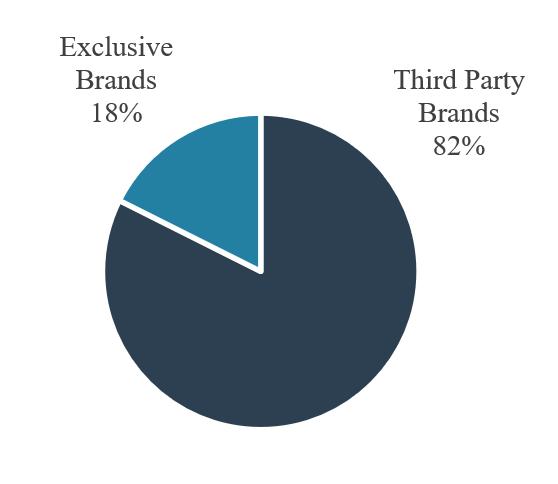
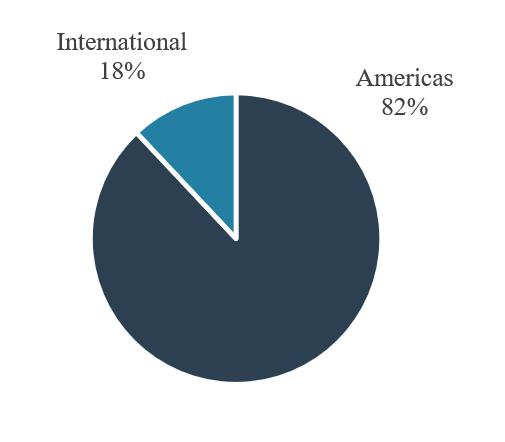
Breakdown of FY2025 Revenue by Product Category and Region
| By Product Type | By Region |
 |
 |
Our History
ADI traces its roots to the Alarm Device Manufacturing Company (“ADEMCO”), founded in 1929 by Maurice Coleman in New York. ADEMCO became a leading maker of intrusion and life safety devices through the mid-20th century. In 1963, ADEMCO was acquired by the Pittsburgh Railway Company, which renamed itself Pittway in 1967 as it diversified around security and related businesses. In 1988 Pittway formed ADEMCO Distribution Inc. to better distribute its growing security portfolio, an operation that later evolved into ADI.
In February 2000, Honeywell International acquired Pittway bringing ADI under the Automation & Control segment. The business operated for almost two decades within Honeywell before becoming a part of Resideo upon its spin-off in October 2018. Since then, ADI has grown organically, while also executing a focused M&A strategy to broaden adjacencies, add services and expand regional coverage. Between 2020 and 2023, ADI executed six acquisitions, deepening category expertise and expanding customer reach into the professional AV, residential AV and data communications categories.
In June 2024, Resideo acquired the Snap One business (“Snap One”) for approximately $1.4 billion and combined ADI’s scale and leadership in professionally-installed low voltage products distribution with Snap One’s strong position and offerings in residential AV, including the innovative Control4 smart home automation platform used in more than 500,000 homes and businesses and the OvrC cloud-based remote management platform empowering more than 60,000 professional installers with cloud-based configuration, project deployment and remote support capabilities. Together, ADI and Snap One provide integrators an increased selection of both third-party products and exclusive brand offerings.
Industry Overview
ADI has a global reach in low-voltage specialty distribution across four interrelated product categories: (i) security, (ii) audio-visual (residential AV and professional AV), (iii) fire/life safety and (iv) data communications, with an increasingly convergent landscape with professionals installing across multiple categories. ADI’s largest geography by revenue is North America where management estimates these four product categories represented a large and growing total addressable industry (“TAI”) of approximately $65 billion in 2025, with security and fire/life safety representing approximately 15%, residential AV representing approximately 10%, professional AV representing approximately 50% and data communications representing approximately 25%. Drivers of demand by product category include:
| ● | Security (represents greater than 50% of total revenue for fiscal year 2025): Demand is driven by growing sophistication of physical and cyber security threats and increased concerns around crime and asset protection, each of which continues to drive adoption and increased security spend across commercial and residential markets. This growth is further augmented by faster tech-led refresh cycles—AI/cloud upgrades in video surveillance, cloud/mobile credentials expanding access control and modernization of intruder alarms. With a well-known brand in North America despite broadline distributors continuing to gain traction with large commercial projects through bundled offerings, management believes ADI is the leading specialty distributor in security, being strongest in the small and midsize business (“SMB”) commercial and residential segments, while select distribution competitors maintain a stronger presence in enterprise grade installations. |
2
| ● | Audio-visual (represents greater than 25% of total revenue for fiscal year 2025) consists of two sub-categories based on the residential and commercial end markets: |
| o | Residential AV: Demand is driven by increasing adoption of products like control, lighting and digital infrastructure, as smart home automation becomes more common. Housing demand continues to outpace supply domestically and more homes are expected to adopt smart home solutions to include a rising number of devices installed per home. While management believes that our category leadership remains strong with our expansive network of local stores that provide quick access to inventory and the availability of exclusive brand products, ADI competes in this fragmented category with multi-regional specialists which have solid local relationships as well as e-commerce companies. Given its size and scale, management believes ADI is the leading specialty distributor in North America in residential AV; however, it remains exposed to other types of competition, including from DIY solutions and customers shifting to direct purchasing from manufacturers or other e-commerce platforms outside our industry. |
| o | Professional AV: Demand is driven by video displays, collaboration technologies, momentum in healthcare (telemedicine, hospital experiences) and demand for immersive experiences in live events, higher education and enterprise. Given that our customer acquisition strategy in the professional AV space is still maturing and there remain challenges such as inventory gaps for large commercial projects, management believes ADI is an emerging player in professional AV, with attractive growth opportunities in SMB commercial applications. |
| ● | Fire/life safety (represents greater than 10% of total revenue for fiscal year 2025): Demand is code and ordinance driven, which creates a durable baseline demand. Fire/life safety also benefits from a strong bundle pull with adjacent security categories (e.g., access control, video) in both commercial and residential businesses, reinforcing our cross-selling opportunities in this industry. These dynamics make fire/life safety a resilient and robust driver for the ADI business. With a line card representing all of the marquee fire brands in the distribution channel, management believes ADI is the leading specialty distributor in North America in fire/life safety. |
| ● | Data Communications (represents less than 5% of total revenue for fiscal year 2025): Demand is driven by more digital connectivity, data center expansion, increasing AI workloads and increased high-security and low-latency operations. Management believes that relative to the security space, ADI is an emerging player in this category, with a more limited assortment and investment and a smaller but growing customer set. |
Competitive Strengths
Our competitive strengths stem from our global footprint and distinct scale, inventory availability and reliability, omnichannel go-to-market platform, deep customer and supplier relationships and exclusive brands. With attractive margins, cash flow generation and a differentiated growth profile, we believe we will continue to be well positioned to organically grow our business and pursue selective M&A opportunities, aligned to our go-forward strategic growth initiatives.
| ● | Preeminent Global Distributor of Security, Fire/Life Safety, AV and Other Low Voltage Products: We are a global leader in professionally installed low-voltage products, including security and residential AV. We believe we offer the industry’s most robust assortment of low-voltage brands—over 500,000 products from over 1,000 suppliers, curated through disciplined category management to meet key customer needs. In 2025, we achieved an NPS of 54, which management believes reflects strong customer satisfaction relative to industry benchmarks. Our position is reinforced by long-standing relationships with top suppliers and premier integrators, high product availability and superior technical sales support. |
| ● | Global Footprint and Reach: ADI has over 200 locations and more than 20 regional distribution centers spanning 17 countries that serve a customer base of over 100,000 professionals. Our extensive global footprint, combined with our strategic supplier relationships and focus on customer service, enables ADI to scale effectively to serve both local and enterprise customers with a range of product and service solutions. Additionally, we believe our global scale affords us meaningful procurement efficiencies. |
| ● | Leading Digital Platform Offering Distinctive Omnichannel Experience: Our digital platform (website and mobile app) provides a seamless purchasing experience for professional buyers, integrating third-party and proprietary AI technologies in dynamic, account-specific pricing, real-time inventory visibility across both stores and distribution centers, delivery date estimation based on item, location and past delivery performance and third-party product search and product recommendations informed by shopping context and user behavior. We also leverage third-party, AI-enabled system design and proposal software to automate key steps in the AV project lifecycle, including bill of materials builders, quote-to-order conversion, real-time order tracking and self-service account management. Omnichannel fulfillment options – such as one-hour store pickup, after-hours lockers and same-day shipping – further enhance the customer experience across store and digital channels. We believe the strength of our digital platform is a key driver of our global reach, supporting a digital customer base of approximately 55,000 customers as of December 31, 2025. In 2023, we generated approximately $700 million or 20% of consolidated revenue from our digital platform, which has grown to approximately $1,086 million or 26% of consolidated revenue in 2024 and approximately $1,415 million or 30% of consolidated revenue in 2025. |
3
| ● | Differentiated Portfolio of Exclusive Brands: We have more than a dozen proprietary and exclusive brands with products and solutions we develop in collaboration with third parties, which may be joint development manufacturers, contract manufacturers and in some instances, original equipment manufacturers under ADI trademarks and brands and sell exclusively through our omnichannel distribution platform. These exclusive brands and services are anchored by our connected platforms Control4 and OvrC and designed to enhance project performance and installer economics. Control4 delivers comprehensive automation by integrating lighting, audio, video, security and climate control into a single, intuitive system while supporting thousands of third-party devices and enabling personalized automation for users. OvrC, our cloud-based remote management platform, allows dealers to monitor, configure and troubleshoot Control4 networks and connected devices remotely, reducing service costs and downtime. These products and services drive higher margins, stickier customer relationships and attachment opportunities (software licenses, services and accessories), and differentiate ADI in the marketplace. For the year ended December 31, 2025, exclusive brand products continued to be a highly margin accretive offering delivering more than 3 times the gross margin of third-party product sales. In 2023, we generated approximately $134 million or 4% of consolidated revenues from exclusive brands, which has grown to approximately $524 million or 12% of revenue in 2024 and approximately $842 million or 18% of revenue in 2025. This marked increase in exclusive brand revenue was primarily driven by the acquisition of Snap One in June 2024. Our exclusive brand products and services are currently concentrated in the residential market, and while such products and services are present in all four of our product categories, a significant percentage is sold in the audio-visual and data communications categories. |
| ● | Robust Financial Position With Attractive Adjusted EBITDA Margin, Cash Flow Generation and Strong Growth Profile: We generated consolidated revenues of $4.8 billion in 2025, 4.4% of which was derived from products supplied by Resideo. Our consolidated revenues in 2025 represents 14% growth as reported, with $446 million of such growth attributable to the Snap One acquisition, and an approximately 5% compound annual growth rate from 2020 (on an organic basis excluding the impact of the Snap One acquisition and other acquisition activity), with a net loss margin of (5.5)% and an Adjusted EBITDA margin of 6.6%. Our fiscal policy and balanced capital allocation approach is designed to support disciplined deleveraging while preserving the capacity to reinvest in our business. We expect to continue to leverage our extensive global footprint, comprehensive product offering, differentiated portfolio of exclusive brands, leading digital platform and omnichannel experience and strong supplier and customer relationships to drive growth above our underlying markets and deliver attractive margins. We continue to invest in technology solutions to bolster the customer experience, increase operating expense productivity, enhance our data-driven operating model and expand profitability. We believe we are well positioned to remain a category leader while expanding into attractive growth verticals. |
| ● | Proven Leadership Team with Operational Momentum and a Culture That Wins: We have a strong management team with extensive experience, both within the industry and across our company. The leadership team has a track record of delivering consistent revenue growth, margin enhancement and strong cash flow. Further, the organization has executed and integrated accretive inorganic growth opportunities and delivered complex digital transformations to further scale the business. Our culture centers on being the indispensable partner for a smarter, safer future. This is accomplished by ensuring we show up, follow through, make it easy to work with us and help each other do our best work so our customers can do theirs. We believe that this combination of leadership depth and values-driven execution will continue to underpin our success and create long-term value for our stakeholders. |
Growth Strategies
Our growth strategies are designed to extend our category leadership, deepen differentiation from our competitors and improve our financial profile:
| ● | Extending Market Leadership Through Best-in-Class Omnichannel Customer Experience: We are unifying our physical and digital “store” with a single, AI-enabled omnichannel customer experience. On the digital front, we are consolidating various transactional platforms, modernizing product data and investing in third-party and proprietary AI technologies to, among other functions, enhance search and product recommendations, automate quote-to-order and other workflows and estimate inventory and delivery dates so that the digital experience can be a true differentiator and shape the customer buying journey. In parallel, we are modernizing our store formats and broadening our in-store merchandising, while our distribution network is being streamlined to enhance service levels and efficiency and create a consistent, high-quality experience across channels, while delivering meaningful cost savings. |
| ● | Deepening Our Exclusive Brand Offerings: We are deepening our exclusive brands portfolio by optimizing our offering around a competitive portfolio of brands, categories and products, with a differentiated positioning in the residential AV product category and increasing relevance to commercial applications. Our product development priorities focus on improved end user interfaces, integrated product quality for faster testing and quicker releases to strengthen differentiation, and disciplined cost engineering to create more value with our investments. We believe these actions will deliver a more robust cadence of differentiated new product introductions while deepening cross-sell and loyalty. |
4
| ● | Scaling in Key Growth Categories – Professional AV and Data Communications: We aim to scale our presence in professional AV and data communications to become a leading category player, leveraging our existing omnichannel platform, overlapping customer base and channel conversion trends to accelerate growth share gains. In professional AV, we are investing in field sales and sales engineering talent to penetrate key accounts and attract premium brands, while also expanding our exclusive brands portfolio to create differentiated project bundles. In data communications, we are increasing our industry relevance through broader product offerings and sales coverage, inventory expansion, targeted marketing investments and deeper category expertise. We believe these initiatives will reinforce our one-stop shop value proposition and deepen our relevance with both existing and new customers. |
| ● | Expanding Service Offerings to Deepen Engagement Across the Value Chain: We aim to build a data-driven services marketplace for professionals, end users and suppliers. For professionals and end users, we are scaling more than twenty differentiated services to increase customer value, including software offerings focused on increased remote monitoring capability, system and network design offerings, device programming and technical support. These offerings are designed to create recurring revenue streams for integrators and ADI, reduce truck rolls and/or improve the end user experience. For suppliers, we are commercializing services that improve planning and sell-through (e.g., data-as-a-service portal that provides visibility into inventory and sales performance). Collectively, these offerings aim to create value for professionals, end users and suppliers—and, in doing so, deepen our partnerships and increase our stickiness across the value chain. |
| ● | Accelerating Growth Through Targeted Acquisitions: We have a history of successful strategic acquisitions to accelerate growth through category expansion. We intend to continue to selectively pursue acquisitions that will broaden our product portfolio, expand our geographic footprint and enhance our position in strategic growth categories. We believe our industry knowledge and track record in integration and execution position us well to continue to pursue disciplined and accretive strategic acquisitions. |
The Separation and Distribution
The Separation and Distribution
On July 30, 2025, Resideo announced its intention to separate its ADI Global Distribution business from the remainder of its businesses. On , 2026, the Resideo Board approved the distribution of 100% of the issued and outstanding shares of common stock of ADI, a newly-formed company that will hold the ADI Global Distribution business.
ADI is currently a wholly-owned subsidiary of Resideo, and in connection with the distribution, we expect that Resideo will complete the Reorganization Transactions, as a result of which ADI will become the parent company of the Resideo operations comprising, and the entities that will conduct, the ADI Global Distribution business. The Resideo Board has approved the distribution of 100% of our issued and outstanding shares of common stock on the basis of share(s) of our common stock for each share of Resideo common stock held as of the close of business on , 2026, the record date for the distribution.
Distributed Securities
Resideo will distribute share(s) of ADI common stock for each share of Resideo common stock held as of the record date for the distribution. Based on approximately shares of Resideo common stock outstanding as of , 2026, ADI expects that a total of approximately shares of ADI common stock will be distributed to Resideo’s common stockholders. We will not issue fractional shares of our common stock in the distribution. The receipt of cash in lieu of fractional shares is described in the section entitled “Material U.S. Federal Income Tax Consequences.”
5
Treatment of Resideo Preferred Stock
Holders of Resideo preferred stock will not be entitled by virtue of their Resideo preferred stock to receive shares of our common stock in the Spin-Off and instead will exchange a portion of the Resideo preferred stock they currently hold for shares of ADI preferred stock. In connection with the Spin-Off, we expect certain terms of the Resideo preferred stock to be amended to be consistent with the terms of the ADI preferred stock described herein. Specifically, we expect the lock-up period applicable to the Resideo preferred stock to be extended to match the Lock-Up Period applicable to the ADI preferred stock, and that Resideo’s right, in certain circumstances, to convert or redeem the Resideo preferred stock will not be exercisable until after the expiration of the Lock-Up Period. As a result, following the Spin-Off, shares of ADI preferred stock and Resideo preferred stock are expected to have substantially similar rights, preferences and privileges and qualifications, limitations and restrictions. The amount of Resideo preferred stock exchanged for ADI preferred stock and the conversion prices of the Resideo preferred stock and ADI preferred stock will be based on the relative equity values of Resideo and ADI as have been determined by the Resideo Board, in consultation with the holders of Resideo preferred stock. As a result, immediately following the Spin-Off, shares of Resideo preferred stock will remain issued and outstanding, shares of Resideo preferred stock will be cancelled and shares of ADI preferred stock will be issued and outstanding. All accrued and unpaid dividends on Resideo preferred stock will be paid in cash immediately prior to the ADI preferred stock exchange and the aggregate liquidation preference of the preferred stock of Resideo and ADI immediately after the Spin-Off will equal the total liquidation preference (defined as the Accumulated Amount in the Resideo Certificate of Designations) of the Resideo preferred stock immediately prior to the Spin-Off.
The ADI preferred stock will be convertible perpetual participating preferred stock of the Company, with an initial conversion price equal to $ , and will accrue dividends at a rate of 7.00% per annum, payable in cash or in kind (by adding the dividend to the Accumulated Amount (as defined in the ADI Certificate of Designations) of such shares). The ADI preferred stock will vote on an as-converted basis together with our common stock. The ADI preferred stock may be converted into our common stock at the Preferred Stockholders’ option at any time. Following the expiration of the Lock-Up Period, we will also be able to convert all (but not less than all) of the outstanding shares of ADI preferred stock if at any time our common stock trading price exceeds 200% of the then-effective conversion price for at least 20 out of 30 trailing trading days. Following the expiration of the Lock-Up Period, we will have the option to redeem the ADI preferred stock for an aggregate redemption price equal to two times the sum of the Accumulated Amount (as defined in the ADI Certificate of Designations) plus any interim accrued and unpaid dividends (calculated at 1X instead of 2X) on such share of ADI preferred stock in effect at the time of redemption. In the event of a change of control, we will have the option to purchase all (but not less than all) of the outstanding shares of ADI preferred stock at a price per share equal to 150% of the sum of the Accumulated Amount plus any interim accrued and unpaid dividends (calculated at 100% instead of 150%) on such share of ADI preferred stock in effect at the time of such purchase. See “Description of Capital Stock—Preferred Stock” and “Certain Relationships and Related Person Transactions—Exchange Agreement, Shareholders Agreement and ADI Preferred Stock Exchange” for more information on ADI preferred stock.
Immediately following the Spin-Off, the CD&R Group will beneficially own shares of our common stock and ADI preferred stock, which, taken together on an as-converted basis, represent approximately % of our total voting power. As a result, the CD&R Group may have the indirect ability to influence our policies and operations, including through its ability to designate up to two directors to our board of directors, and its interests as a preferred equity holder may diverge from, or even conflict with, the interests of the other holders of our common stock. See “Risk Factors—The CD&R Group will hold a significant equity interest in our business and may exercise influence over us, including through its ability to designate up to two directors to our Board, and its interests as a preferred equity holder may diverge from, or even conflict with, the interests of the other holders of our common stock.”
Incurrence of Indebtedness
In connection with the Spin-Off, we expect to incur indebtedness in an aggregate principal amount of approximately $1.0 billion, which is expected to consist of a term credit facility and a series of debt securities. The terms of such indebtedness are subject to change and will be finalized prior to the closing of the Spin-Off. We intend to make a one-time cash dividend of approximately $900 million of the net proceeds of the Financing as partial consideration for the contribution of assets and liabilities to us by Resideo. We will also use the net proceeds to pay related fees and expenses, with any remainder to be retained for general corporate purposes. We expect that the credit agreement governing the term credit facility described above will also contain a revolving credit facility with commitments for borrowings of up to $500 million, which we expect will be undrawn upon completion of the Spin-Off. We expect that Resideo will use these cash proceeds to repay a portion of its outstanding indebtedness and related fees and expenses and, to the extent any proceeds remain after giving effect to such payments, for general corporate purposes. See “Description of Material Indebtedness,” “Capitalization,” “Unaudited Pro Forma Combined Financial Statements,” and “Management’s Discussion and Analysis of Financial Condition and Results of Operations—Capital Resources and Liquidity.” The separation agreement will contain cash adjustment provisions pursuant to which, following completion of the cash payment described above and the Spin-Off, either we or Resideo will make a separate cash payment to the other if our aggregate cash balance at the time of the Spin-Off is determined to be greater or less than the reference cash balance of $150 million. See “The Separation Agreement—Cash Adjustments.”
6
ADI’s Post-Separation Relationship with Resideo
Prior to the completion of the distribution, we are a wholly-owned subsidiary of Resideo, and all of our outstanding shares of common stock are owned by Resideo. Following the separation and distribution, we and Resideo will operate separately, each as a public company.
Prior to the completion of the distribution, we will enter into a separation and distribution agreement with Resideo, which is referred to in this information statement as the “separation agreement.” We will also enter into various other agreements to effect the separation and provide a framework for our relationship with Resideo after the separation, including a commercial product purchase agreement, a transition services agreement, an employee matters agreement, a tax matters agreement and an intellectual property matters agreement. These agreements will provide for the allocation between us and Resideo of the assets, employees, services, liabilities and obligations (including investments, property and employee benefits and tax-related assets and liabilities) of Resideo and its subsidiaries attributable to periods prior to, at and after the separation and will govern certain relationships between us and Resideo after the separation. In exchange for the transfer of the assets and liabilities of Resideo’s ADI Global Distribution business to us, we will, among other things, distribute to Resideo common stockholders share(s) of ADI common stock for each share of Resideo common stock held by such Resideo common stockholders as of the record date for the distribution. For additional information regarding the separation agreement and such other agreements, please refer to the sections entitled “Risk Factors—Risks Relating to the Spin-Off and Our Relationship with Resideo,” “Certain Relationships and Related Person Transactions” and “The Separation and Distribution.”
Reasons for the Separation
The Resideo Board believes that separating the ADI Global Distribution business from the remainder of Resideo is in the best interests of Resideo and its stockholders for certain reasons, including:
| ● | Improved Investor Alignment. The separation is intended to allow investors to separately value each company based on its distinctive investment identity. Our business differs from Resideo’s other businesses in important respects. These differences include each respective business’s core competencies, business model, strategic focus and capital and R&D expenditure needs. Post-separation, investors will be able to evaluate the merits, performance and prospects of each company on a standalone basis, which we believe will lead to a better appreciation of these characteristics, a more efficient valuation of each respective business and, in turn, more efficient access to the capital markets. |
| ● | Enhanced Strategic and Management Focus, with Improved Operational Agility. The separation is intended to allow each company to more effectively pursue its distinct operating priorities and strategies with greater focus and flexibility. Dedicated boards and management teams will concentrate on each of the companies’ own unique opportunities for long-term growth and profitability, while maintaining a commitment to our culture of continuous improvement. |
| ● | Tailored Capital Structures and Capital Allocation Strategies. The separation is intended to allow each business to establish its own optimal capital structure and manage its capital allocation strategy with greater agility and focus. Each company will concentrate financial resources solely on its own operations without having to compete with each other for investment capital. This will enable more efficient, company-specific capital allocation based on profitability, cash flow and growth opportunities, driving innovation and improving growth and returns. |
| ● | Independent Equity Structures and Greater Access to Unique Strategic Opportunities. The separation is intended to create independent equity structures for Resideo and ADI that are aligned with each company’s respective industry and provide each with an enhanced ability to capitalize on unique growth opportunities. In addition, each company will be able to directly access the capital markets and will have more flexibility to pursue growth through selective M&A opportunities that are more closely aligned with each company’s core strategy. |
7
| ● | Enhanced Talent Management, Recruitment and Retention and Alignment of Management Incentives and Performance. The separation is intended to permit each company to more effectively attract, retain and motivate talent, and to offer stock-based compensation that is more closely aligned to its business model and growth strategy. |
The Resideo Board also considered certain potentially negative factors in evaluating the separation, including:
| ● | Loss of Joint Purchasing Power and Increased Costs. As a current part of Resideo, the ADI Global Distribution business benefits from Resideo’s size and purchasing power in procuring certain goods, services and technologies. After the separation, as a separate, independent entity, ADI may be unable to obtain these goods, services and technologies at prices or on terms as favorable as those Resideo obtained prior to the separation. We may also incur costs for certain functions previously performed by Resideo, such as accounting, tax, legal, human resources and other general administrative functions, that are higher than the amounts reflected in our historical combined financial statements, which could cause our profitability to decrease. |
| ● | Disruptions to the Business as a Result of the Separation. The actions required to separate our and Resideo’s respective businesses could disrupt our and Resideo’s operations prior to and/or after the separation. |
| ● | Increased Significance of Certain Costs and Liabilities. Certain costs and liabilities that were otherwise less significant to Resideo as a whole will be more significant for us and Resideo after the separation as stand-alone companies. |
| ● | One-time Costs of the Separation. We (and prior to the separation, Resideo) will incur costs in connection with the transition to being a stand-alone public company that may include accounting, tax, legal and other professional services costs, recruiting and relocation costs associated with hiring or reassigning our personnel and costs to separate information systems. |
| ● | Risk of Failure to Realize Anticipated Benefits of the Separation. We may not achieve the anticipated benefits of the separation for a variety of reasons, including, among others: (i) the separation will require significant amounts of management’s time and effort, which may divert management’s attention from operating and growing our businesses; and (ii) following the separation, we may be more susceptible to market fluctuations, and other events may be more disadvantageous for us than if we were still part of Resideo, because our businesses will be less diversified than Resideo’s businesses prior to the separation. |
| ● | Limitations on Strategic Transactions. Under the terms of the tax matters agreement that we will enter into with Resideo, for a period of two (2) years following the date of the distribution, we will be restricted from taking certain actions that could cause the distribution or certain related transactions (including certain transactions undertaken as part of the Reorganization Transactions) to fail to qualify as tax-free for U.S. federal income tax purposes or other applicable law. These restrictions may limit our ability to pursue certain strategic transactions or engage in other transactions that might increase the value of our businesses. |
The Resideo Board concluded that the potential benefits of the separation outweighed these factors. For more information, please refer to the sections entitled “The Separation and Distribution—Reasons for the Separation” and “Risk Factors.”
Risks Associated with Our Business and the Separation
An investment in our common stock is subject to a number of risks, including risks relating to the separation, the successful implementation of our strategy and the ability to grow our business. The following list of risk factors is not exhaustive. Please read the information in the section entitled “Risk Factors” for a more thorough description of these and other risks.
8
| ● | We operate in highly competitive markets that are continually evolving, and we may not be able to attract new customers or retain existing customers. |
| ● | Weakness in the economy, market trends and other conditions affecting the profitability and financial stability of our customers, our supply chain and our logistics network could negatively impact our sales growth, costs and results of operations. |
| ● | Enhanced tariff, import/export restrictions, or other trade barriers along with recent judicial developments may have an adverse impact on global economic conditions. |
| ● | Challenges in forecasting demand and managing working capital and inventory may negatively affect our cash flow, margins and overall financial performance. |
| ● | If the distribution, together with certain related transactions, does not qualify as a transaction that is generally tax-free for U.S. federal income tax purposes, or if certain internal restructuring transactions do not qualify as transactions that are generally tax-free for applicable tax purposes, we, as well as Resideo and Resideo’s common stockholders, could incur significant U.S. federal income tax liabilities and, in certain circumstances, we could be required to indemnify Resideo for material amounts of taxes and other related amounts pursuant to indemnification obligations under the tax matters agreement. |
| ● | We may be affected by significant restrictions following the distribution, including on our ability to engage in certain desirable capital-raising, strategic or other corporate transactions, pursuant to the agreements we will enter into with Resideo, including the tax matters agreement. |
| ● | Resideo may compete with us. |
| ● | We may not achieve some or all of the expected benefits of the Spin-Off, and the Spin-Off may adversely affect our businesses. |
| ● | Our inability to resolve favorably any disputes that arise between us and Resideo with respect to our past and ongoing relationships may adversely affect our operating results. |
| ● | Resideo’s plan to separate into two independent, publicly traded companies is subject to various risks and uncertainties and may not be completed in accordance with the expected plans or anticipated timeline, or at all, and will involve significant time and expense, which could disrupt or adversely affect our business. |
| ● | As of the date of this information statement, we expect to have outstanding indebtedness at the closing of the Spin-Off of approximately $1.0 billion and the ability to draw additional indebtedness of $500 million under the committed revolving facility under the debt instruments that we expect to be in place upon consummation of the Spin-Off, and in the future we may incur additional indebtedness. This indebtedness could adversely affect our businesses and our ability to meet our obligations and pay dividends. |
| ● | We cannot be certain that an active trading market for our common stock will develop or be sustained after the Spin-Off, and following the Spin-Off, the stock price of our common stock may fluctuate significantly. |
| ● | A significant number of shares of our common stock are or will be eligible for future sale and expected to be freely tradable without restriction, which may cause the market price of our common stock to decline. |
| ● | The ADI preferred stock we expect to issue in connection with the Spin-Off will have rights, preferences and privileges that are not held by, and are preferential to, the rights of our common stock and will reduce the relative voting power of the holders of our common stock. |
| ● | The CD&R Group will hold a significant equity interest in our business and may exercise influence over us, including through its ability to designate up to two directors to our Board, and its interests as a preferred equity holder may diverge from, or even conflict with, the interests of the other holders of our common stock. |
9
| ● | Certain provisions in our certificate of incorporation and bylaws, and of Delaware law, may prevent or delay an acquisition of our company, which could decrease the trading price of our common stock. |
| ● | The combined post-Spin-Off value of one share of Resideo common stock and share(s) of ADI common stock may not equal or exceed the pre-distribution value of one share of Resideo common stock. |
Corporate Information
We were incorporated in Delaware on December 10, 2025 for the purpose of holding Resideo’s ADI Global Distribution business in connection with the separation and the distribution. Prior to the separation, which is expected to occur immediately prior to completion of the distribution, we have had no operations. The address of our principal executive offices is 275 Broadhollow Rd Suite 400, Melville, New York. Our telephone number is (631) 692-1000.
We maintain an Internet website at www.adiglobal.com. Our website, and the information contained therein or connected thereto, is not incorporated by reference into this information statement.
Reason for Furnishing This Information Statement
This information statement is being furnished solely to provide information to stockholders of Resideo who will receive shares of our common stock in the distribution. It is not, and is not to be construed as, an inducement or encouragement to buy or sell any of our securities. The information contained in this information statement is believed by us to be accurate as of the date set forth on its cover. Changes may occur after that date and neither Resideo nor we will update the information except as required by federal securities laws or in the normal course of their and our respective disclosure obligations and practices.
10
SUMMARY HISTORICAL AND UNAUDITED PRO FORMA COMBINED FINANCIAL DATA
The following unaudited summary financial data was derived from our audited annual combined financial statements, which are included elsewhere in this information statement, and from our unaudited pro forma combined financial statements included in the “Unaudited Pro Forma Combined Financial Statements” section of this information statement. Our underlying financial records were derived from the financial records of Resideo for the periods reflected herein. Our historical and pro forma results are presented for informational purposes only, should not be considered indicative of our results of operations, financial position and cash flows for future periods or what they would have been had we been a separate, publicly traded company during the periods presented.
The summary unaudited pro forma combined financial data presented has been prepared to reflect the separation, which is described in “Unaudited Pro Forma Combined Financial Statements.” The unaudited pro forma combined statement of earnings data presented reflects the financial results as if the separation occurred on January 1, 2025, which was the first day of fiscal year 2025. The assumptions used and pro forma adjustments derived from such assumptions are preliminary and based on currently available information and certain assumptions that our management believes are reasonable.
This summary historical and unaudited pro forma combined financial data should be reviewed in combination with “Unaudited Pro Forma Combined Financial Statements,” “Capitalization,” “Management’s Discussion and Analysis of Financial Condition and Results of Operations” and the combined financial statements and accompanying notes included in this information statement. For factors that could cause actual results to differ materially from those presented in the summary historical and pro forma combined financial data, see “Cautionary Statement Concerning Forward-Looking Statements” and “Risk Factors” included elsewhere in this information statement.
| Pro Forma(1) | Historical | |||||||||||
| As of December 31, | As of December 31, | |||||||||||
| ($ in millions) | 2025 | 2025 | 2024 | |||||||||
| Summary Balance Sheet Data: | ||||||||||||
| Cash and cash equivalents | $ | 150 | $ | 124 | $ | 137 | ||||||
| Total assets | 4,207 | 4,152 | 4,095 | |||||||||
| Due from related parties – non-current | - | 13 | 186 | |||||||||
| Long-term debt | 976 | 1,185 | 475 | |||||||||
| Total equity | 1,976 | 1,684 | 2,088 | |||||||||
| Total liabilities and equity | $ | 4,207 | $ | 4,152 | $ | 4,095 | ||||||
| (1) | Pro forma for the Spin-Off and related transactions described in the section of this information statement entitled “The Separation and Distribution.” See “Unaudited Pro Forma Combined Financial Statements.” |
11
| Pro Forma(1) | Historical | |||||||||||||||
| Year ended December 31, | Year ended December 31, | |||||||||||||||
| ($ in millions) | 2025 | 2025 | 2024 | 2023 | ||||||||||||
| Summary Statements of Operations: | ||||||||||||||||
| Net revenue | $ | 4,784 | $ | 4,784 | $ | 4,197 | $ | 3,570 | ||||||||
| Cost of goods sold | 3,719 | 3,719 | 3,346 | 2,902 | ||||||||||||
| Gross Profit | 1,065 | 1,065 | 851 | 668 | ||||||||||||
| Operating expenses | ||||||||||||||||
| Selling, general and administrative expenses | 755 | 752 | 598 | 454 | ||||||||||||
| Intangible asset amortization | 95 | 95 | 55 | 13 | ||||||||||||
| Transaction related expenses | 16 | 16 | 45 | - | ||||||||||||
| Restructuring, impairment and extinguishment costs | 8 | 9 | 22 | 13 | ||||||||||||
| Research and development expenses | 39 | 39 | 17 | - | ||||||||||||
| Total operating expenses | 913 | 911 | 737 | 480 | ||||||||||||
| Income from operations | 152 | 154 | 114 | 188 | ||||||||||||
| Indemnification Agreement expense | - | 364 | 79 | 67 | ||||||||||||
| Other expense (income), net | (2 | ) | (2 | ) | 4 | (5 | ) | |||||||||
| Interest expense | 72 | 50 | 39 | 32 | ||||||||||||
| Interest income | (3 | ) | (8 | ) | (15 | ) | (18 | ) | ||||||||
| (Loss) income before taxes | 85 | (250 | ) | 7 | 112 | |||||||||||
| Provisions for income taxes | 29 | 11 | 25 | 50 | ||||||||||||
| Net (loss) income | $ | 56 | $ | (261 | ) | $ | (18 | ) | $ | 62 | ||||||
| Net (loss) income margin(2) | 1.2 | % | (5.5 | )% | (0.4 | )% | 1.7 | % | ||||||||
| (1) | Pro forma for the Spin-Off. See “Unaudited Pro Forma Combined Financial Statements.” |
| (2) | Calculated as a percentage of revenue. |
| Historical | ||||||||||||
| Year ended December 31, | ||||||||||||
| ($ in millions) | 2025 | 2024 | 2023 | |||||||||
| Other Financial Data (unaudited)(1): | ||||||||||||
| Adjusted EBITDA(1) | $ | 318 | $ | 286 | $ | 238 | ||||||
| Adjusted net income(1) | $ | 181 | $ | 181 | $ | 156 | ||||||
| Adjusted EBITDA margin(1)(2) | 6.6 | % | 6.8 | % | 6.7 | % | ||||||
| Adjusted free cash flow(1) | $ | 19 | $ | 60 | $ | 76 | ||||||
| (1) | For definitions and further information about how we calculate our non-GAAP financial measures, including a reconciliation of Adjusted EBITDA; Adjusted net income; Adjusted EBITDA Margin; and Adjusted free cash flow to the most comparable GAAP measures, please see “Management’s Discussion and Analysis of Financial Condition and Results of Operations—Non-GAAP Financial Measures.” Non-GAAP financial measures are included in this information statement because they are used by management and our board of directors to assess our financial performance. Our non-GAAP financial measures should not be considered in isolation from, or as a substitute for, financial information prepared in accordance with GAAP. |
| (2) | Calculated as a percentage of revenue. |
12
You should carefully consider the risks and uncertainties described below, together with the information included elsewhere in this information statement. The risks and uncertainties described below are those that we have identified as material but are not the only risks and uncertainties facing us. These disclosures reflect our beliefs and opinions as to factors that could materially and adversely affect us and our securities in the future. References to past events are provided by way of example only and are not intended to be a complete listing or a representation as to whether or not such factors have occurred in the past or their likelihood of occurring in the future. Our business is also subject to general risks and uncertainties that affect many other companies, such as market conditions, economic conditions, geopolitical events, changes in laws, regulations or accounting rules, fluctuations in interest rates, terrorism, wars or conflicts, major health concerns, natural disasters or other disruptions of expected business conditions. Additional risks and uncertainties not currently known to us or that we currently believe are immaterial also may impair our business, including our results of operations, liquidity and financial condition.
Risks Relating to Our Business
We operate in highly competitive markets that are continually evolving, and we may not be able to attract new customers or retain existing customers.
We operate in a highly competitive, continually evolving environment, and we compete directly with global, national, regional and local providers of our products, services and solutions, including distributors, manufacturers, service and software providers, retailers and online commerce providers. The most significant competitive factors we face are: the reputation of our Company, the demand for the third-party and exclusive branded products we sell; service and price; product availability; speed and accuracy of delivery; customer and technical support; customer relationships, product performance; reliability and warranty; meeting evolving customer expectations for e-commerce; ease of installation; and sales and marketing programs. In addition to current competitive factors, there have been, and in the future there may be, new market entrants with nontraditional businesses, new business, distribution and customer service models or disruptive technologies and products. We may face competitive pressures from changing consumer preference for simple do-it-yourself solutions rather than adopting professionally installed solutions. In addition, retail outlets, including online commerce, may increase their participation in wholesale distribution markets. To remain competitive, we will need to invest continually in our distribution networks, products and services development, e-commerce technology and experience and marketing. We may not have sufficient resources to continue to make such investments and we may be unable to maintain our competitive position. Our ability to effectively compete and attract new customers and retain existing customers will depend on, among other items, the perceived value and quality of our products, consumer demand for distributed low voltage products, the elasticity of our price increases, our ability to offer new and relevant products, our ability to invest adequately in e-commerce related technologies and deliver e-commerce experiences that meet our customer’s evolving expectations and the effectiveness of our marketing efforts. We may also lose loyal customers to our competitors if we are unable to meet consumer demand in a timely manner. In all such situations, our ability to attract and retain customers could be adversely affected, which could adversely affect our business, financial condition, results of operations and cash flows.
Our offerings are primarily distributed and delivered through our omnichannel platform to a network of professional contractors, installers, and integrators, as well as select online merchants. If retail outlets, including online commerce platforms, increase their presence in wholesale distribution markets, or if customers increasingly purchase our products through these channels rather than through us, our business may be unable to effectively compete, which could adversely affect our business, financial condition, results of operations and cash flows.
Weakness in the economy, market trends and other conditions affecting the profitability and financial stability of our customers, our supply chain and our logistics network could negatively impact our sales growth, costs and results of operations.
Economic, political and industry trends affect our business environment. In particular, our business is affected by the performance and activity of the global new construction and the repair and remodel construction industries. Similarly, the slowing of the housing market may result in reduced demand for the products we distribute. These and other industries and markets we serve have demand that is sensitive to the production activity, capital spending and demand for products and services of our customers. The ongoing uncertainty and volatility in the global macroeconomic environment have affected, and could continue to affect, our visibility toward future performance. While supply chain, trade dynamics and logistics continued to normalize over 2025, uncertainties remain in 2026 including the potential for changes in inflation and interest rates, tariffs, increased labor costs, availability of labor, and reduced consumer spending due to softening labor markets, elevated mortgage rates, unfavorable foreign currency impacts, global conflicts and shifts in energy policies. Many of our customers operate in markets that are subject to fluctuations resulting from market uncertainty, trade and tariff policies, costs of goods sold, supply shortages or reduced availability of raw materials, components and finished goods; capacity constraints or delays at suppliers, third-party contract manufacturers, component vendors and other suppliers, ports and logistics hubs, currency exchange rates, interest rate fluctuations, government spending and government shutdowns, economic downturns, recessions, foreign competition, offshoring of production, oil and natural gas prices, information system outages or cyber incidents, geopolitical developments, labor shortages, work stoppages, natural or human induced disasters, extreme weather, disruptions to transportation infrastructure and networks, outbreaks of pandemic disease, inflation, deflation and a variety of other factors beyond our control. Any of these factors could cause customers to idle, delay purchases, reduce production levels or experience reductions in the demand for their own products or services. Similarly, certain of these factors have in the past, and could in the future, impact our supply chain and logistics network and could cause shipment delays, backlogs, longer lead times and higher transportation, import and export costs.
Any of these events could also reduce the volume of products and services these customers purchase from us or impair the ability of our customers to make full and timely payments and could cause increased pressure on our pricing and terms of sale. Accordingly, a significant or prolonged slowdown in economic activity in the U.S. or any other major world economy, or a segment of any such economy, could negatively impact our sales and results of operations.
13
Any of these factors could similarly impact our supply chain and logistics network and could cause shipment delays, backlogs, longer lead times and higher transportation, import and export costs. See “Risks Relating to Our Business—Disruptions to our supply chain, logistics network, and fulfillment centers, and reliance on third-party contract manufacturers could impair our ability to meet demand and increase our costs.”
Any of these events could also reduce the volume of products and services these customers purchase from us or impair the ability of our customers to make full and timely payments and could cause increased pressure on our pricing and terms of sale. Accordingly, a significant or prolonged slowdown in economic activity in the U.S. or any other major world economy, or a segment of any such economy, could negatively impact our sales and results of operations.
Enhanced tariff, import/export restrictions, or other trade barriers along with recent judicial developments may have an adverse impact on global economic conditions.
We are subject to certain laws and regulations affecting our international operations which, among other things, provide certain preferential duties and tariffs for qualifying imports subject to compliance with the applicable rules of origin and other requirements. There have been, and continue to be, uncertainties with respect to the global economy and trade relations between the U.S. and other countries globally. Implementation of more restrictive trade policies, barriers, or market access policies, or the renegotiation of existing U.S. trade agreements or trade agreements of other countries where we sell or procure large quantities of products and services or procure supplies and other materials incorporated into our products could negatively impact our business, results of operations, cash flows and financial condition. Various modifications to global tariffs, sanctions, and other trade measures have introduced uncertainty in global markets that could adversely affect the business of our customers and suppliers, which could in turn negatively impact our net revenue, cash flows, and results of operations.
In 2025 and 2026, the Trump administration implemented or announced tariffs and other trade actions against certain products and countries where we manufacture, source or sell goods including China, Vietnam, the European Union, Mexico, Canada, Malaysia and Taiwan. In February 2026, the U.S. Supreme Court issued its opinion that the tariffs imposed by the U.S. government under the International Emergency Economic Powers Act (“IEEPA”) were unauthorized, but other tariff types continue to be in effect including newly enacted tariffs under Section 122 of the 1974 Trade Act. Certain of these tariffs and duties increased the costs of some of our imported products and services, resulted in higher freight and logistics expenses and supplier surcharges, and impacted our pricing, sourcing, and inventory strategies. In response to tariffs, we have taken mitigating measures including negotiating decreases with our suppliers, and passing along incurred costs to customers. Although, in the aggregate, the impact to date has not been material to our business, results of operations, or financial condition, if tariffs or duties are expanded or increased, or interpreted by a court or governmental agency to apply to more of our products, this could disrupt our supply chain and lead times, significantly and materially increase product costs, compress margins and adversely affect our business, operating results and financial condition. In addition, the U.S. government has adopted, and may continue to adopt, enforcement postures regarding import classifications, country of origin standards and access to exclusions, which could result in increased tariffs or duties on our products.
In addition, the U.S. federal government and certain states, as well as other foreign governments including the United Kingdom and European Union, have imposed certain restrictions on the licensing, use, and import and export of certain surveillance, networking, telecommunications and other equipment manufactured by certain of our suppliers based in China for our business, which may require us to find additional sources of end user products and result in higher costs. We have in the past had inquiries and claims from the U.S. federal government and a U.S. state Attorney General regarding sales of certain Chinese made products in the U.S., which inquiries and litigation could impact our business reputation.
The continuing adoption or expansion of trade restrictions, the occurrence of a trade war or other governmental action related to tariffs or trade agreements or policies has the potential to adversely impact demand for our products, including as a result of higher consumer prices due to such trade restrictions, and may adversely impact our costs, our customers, our suppliers and the U.S. economy, which in turn could have a material adverse effect on our business, operating results and financial condition.
14
Challenges in forecasting demand and managing working capital and inventory may negatively affect our cash flow, margins and overall financial performance.
Accurate forecasting and disciplined management of inventory, receivables and payables are essential to our performance. Variability in customer demand, channel mix and macroeconomic conditions—together with uncertainty in the volume, timing and type of orders we receive across channels—can make forecasting difficult, and prior growth rates or trends may not be predictive of future results. If our assumptions prove inaccurate or we fail to adjust promptly, we may incur excess, obsolete or insufficient inventory, experience stock-outs or make suboptimal purchasing and production decisions, leading to lower revenue, decreased gross margins, higher carrying and storage costs, increased customer acquisition and retention costs and reduced cash conversion. Additionally, fluctuations in foreign exchange rates and interest rates, supplier price inflation, changes in vendor payment terms and credit risk or collection delays on receivables can affect inventory costs, the value and timing of receivables, and the cost of debt, which may impair working capital efficiency, liquidity, and our ability to fund operations and growth initiatives. Any of these factors could adversely affect our business, financial condition, results of operations and prospects.
Disruptions to our supply chain, logistics network, and fulfillment centers, and reliance on third-party contract manufacturers could impair our ability to meet demand and increase our costs.
Our operations are exposed to supply chain and logistics risks, including shortages or reduced availability of raw materials, product components and finished goods; capacity constraints or delays at suppliers, third-party contract manufacturers, component vendors and other suppliers, ports and logistics hubs or our inability to obtain necessary raw materials and product components, production equipment, or replacement parts; labor disputes, strikes, lockouts or shortages; pandemics or other public health events; natural disasters and extreme weather; disruptions to transportation infrastructure and networks; geopolitical events such as war, civil unrest or terrorism; information system outages or cyber incidents at our or our third-party partners’ facilities or systems; and price inflation in materials, freight and other inputs. These events can lead to shipment delays, backlogs, longer lead times, and higher transportation, import and export costs. Alternative sources or routes may not be available on favorable terms, and our third-party contract manufacturers, component vendors, other suppliers, and shipping and logistics partners may experience delays, capacity constraints, financial distress or insolvency, labor disruptions, or information system outages that impede their performance and our ability to serve customers. Resulting product shortages or delivery delays could cause us to be unable to obtain particular products or sufficient quantities of such products, miss customer delivery schedules, lose sales and market share, incur penalties or expedited freight costs, suffer a competitive disadvantage, and harm our reputation, which in turn could adversely affect our business, operating results and financial condition.
In addition, we rely upon a network of warehouses, stores, and other fulfillment centers to effectively fulfill our orders. If we do not optimize, operate, and manage the expansion capacity of our warehouse fulfillment centers successfully and efficiently, this could result in a disruption to our ability to deliver our products, excess or insufficient fulfillment capacity, an increase in costs or impairment charges or harm our business in other ways. In addition, if we do not have sufficient fulfillment capacity or experience a problem fulfilling orders in a timely manner, our customers may experience delays in receiving their purchases, which could harm our reputation and our relationship with our customers, and our business, results of operations, cash flows, and financial condition.
15
With respect to our exclusive branded products, we rely on a limited number of third-party contract manufacturers to manufacture most of our products and components, and in many cases, one of these manufacturers is our only source for a particular product or product family. Our reliance on contract manufacturers to produce many of our products reduces our control over the assembly process, exposing us to risks, including reduced control over quality assurance, production costs and product supply. Quality control problems, such as the use of materials and delivery of products that do not meet our quality control standards and specifications or comply with applicable laws or regulations, could harm our brand and business or cause end user dissatisfaction. Quality control problems could also result in regulatory action, such as restrictions on importation, products of inferior quality or product stock outages or shortages, harming our sales and creating inventory write-downs for unusable products. In addition, any failure in the proper functioning of embedded firmware and software and the uninterrupted integration with third-party products on which our exclusive brand products and services rely on may harm our brand, operations and business. These risks are heightened because a significant portion of our net revenue comes from exclusive branded products. In the fiscal years ended December 31, 2025 and 2024, approximately 18% and 12% of our net revenue, respectively, were from sales of our exclusive branded products.
Currency exchange rate fluctuations and financial counterparty risks may adversely affect our results.
We are exposed to risks associated with the effects of changes in currency exchange rates as changes in the relative fair values of currencies occur from time to time and may, in some instances, have a material impact on our operations. Approximately 18% and 19% of our 2025 and 2024 net revenue, respectively, was derived outside the U.S., and we expect sales to non-U.S. customers to continue to represent a similar portion of our consolidated net revenue. A significant amount of our expected payment obligations, including pursuant to the tax matters agreement, and our anticipated debt obligations will be denominated in U.S. dollars, which exposes us to foreign exchange risk. We also translate assets, liabilities, revenue, and expenses denominated in non-U.S. dollar currencies into U.S. dollars for our combined financial statements based on applicable exchange rates. Consequently, fluctuations in the value of the U.S. dollar compared to other currencies may have a significant impact on the value of these items in our combined financial statements, even if their value has not changed in their original currency. We do not currently hedge against our currency exposure, though in the future we may choose to.
Loss of key suppliers could decrease sales, profit margins and earnings.
Products supplied by our ten largest third-party product suppliers in 2025 and 2024 accounted for approximately 47% and 49% of our revenue by dollar volume for the respective period. We are party to distribution agreements with these suppliers, with an average term of 3 years as of December 31, 2025. Our standard distribution agreement is not terminable for convenience, requires our suppliers to provide at least 60 days’ written notice of any price increase and provides for volume rebates and prompt payment discounts. In connection with our supplier agreements, we enter into purchase obligations with certain suppliers on occasion. As of December 31, 2025, we had purchase obligations of $78 million, with $78 million payable within 12 months. A significant change in the terms or conditions of sale from a significant supplier has in the past affected and could in the future negatively affect our operating margins, revenues, and/or the level of capital required to fund our operations. The loss of, or a substantial decrease in the availability of, products from any of our key suppliers, a supplier’s change in sales strategy to reduce its reliance on distribution channels, the loss of key preferred supplier agreements or disruptions in a key supplier’s operations could have a material adverse effect on our business. Although we believe our relationships with our key suppliers are strong, they could change their strategies as a result of a change in control, expansion of their direct sales force, changes in the marketplace or other factors beyond our control, including a key supplier becoming financially distressed or experiencing operational or business disruptions, which could materially affect our supply chain, increase our costs or disrupt our ability to deliver products to our customers in a timely and cost-effective manner.
We are subject to the economic, political, regulatory, foreign exchange and other risks of international operations.
Our international revenue represented approximately 18% and 19% of our net revenue for the years ended December 31, 2025 and 2024, respectively. A significant amount of our exclusive branded products are sourced from third-party contract manufacturers located in Asia. In addition, some of our research and development, IT support, software and e-commerce development, customer support and operations and other engineering occurs outside the United States. Our international geographic footprint subjects us to many risks including but not limited to: exchange control regulations; wage and price controls; antitrust/competition regulations; environmental regulations; employment regulations; foreign investment laws; monetary and fiscal policies and protectionist measures that may prohibit acquisitions or joint ventures, establish local content requirements or impact trade volumes; import, export and other trade restrictions (such as embargoes); tariffs; violations by our employees of anti-corruption laws (despite our efforts to mitigate these risks); changes in regulations regarding transactions with state-owned enterprises; nationalization of private enterprises; natural and manmade disasters, hazards and losses; backlash from foreign labor organizations related to our restructuring actions; violence; civil and labor unrest; acts of terrorism; global conflicts; product-related regulatory requirements including certifications, standards and building codes; regulations relating to personal and non-personal data, privacy, artificial intelligence and cybersecurity regulations; and our ability to hire and maintain qualified staff and maintain the safety of our employees in these regions. See “Risks Relating to Legal and Regulatory Matters—Failure to comply with the broad range of standards, laws and regulations in the jurisdictions in which we operate may result in exposure to substantial disruptions, costs and liabilities.”
16
Furthermore, certain non-U.S. entities and assets that are part of our Spin-Off from Resideo may not be transferred prior to the Spin-Off because the entities or assets, as applicable, are subject to foreign government or third-party approvals that we may not receive prior to the Spin-Off. Such approvals may include, but are not limited to, approvals to merge or demerge, to form new legal entities (including obtaining required registrations and/or licenses or permits), and to transfer assets and/or liabilities. It is currently anticipated that all material transfers will occur without delays beyond the closing of the distribution, but we cannot offer any assurance that such transfers will ultimately occur or not be delayed for an extended period of time. To the extent such transfers do not occur prior to the distribution, under the separation agreement, the economic benefits and burdens of owning such assets and/or entities will, to the extent reasonably possible and permitted by applicable law, be provided to the Company.
Current global conflicts and potential conflicts have created substantial uncertainty in the global economy, including sanctions and penalties imposed on certain countries from several governments. We are unable to predict the impact that these actions will have on the global economy or on our financial condition, results of operations and cash flows as of the date of these financial statements.
Our success depends on our ability to maintain the value and reputation of our brand. Failure to achieve and maintain a high level of product and service quality could damage our reputation with customers and negatively impact our results.
We have developed strong and trusted brands that have contributed to the success of our business and we believe our continued success depends on our ability to maintain and grow the value of our brands. Maintaining, promoting and positioning our brands and reputation will depend on, among other factors, the success of our product offerings, product safety, quality assurance, marketing and merchandising efforts, our continued focus on delivering innovative and compelling low voltage products to our customers, e-commerce technology and experience, the proper functioning and versioning of embedded firmware, software, as well as the uninterrupted integration with third-party products and our ability to provide a consistent, high-quality consumer experience.
An important element of our overall strategy is the success and growth of our exclusive brands across various categories and products, with a focus on improved end user interfaces and digital platform enhancements. If we are unable to execute on this growth strategy, our margins and results of operations could be adversely affected. We rely on third-party manufacturers to supply exclusive branded products for our business and a significant percentage of these exclusive branded products are sourced from manufacturers located in Asia. Any potential or perceived quality issues, product defects, recalls, counterfeiting, safety incidents, or failures to meet evolving regulatory or customer requirements could damage our brand, increase warranty and service costs, or result in product liability claims. Furthermore, customers may prefer third-party branded alternatives or resist transitions to our exclusive branded products, and competitive responses may require increased promotional activity, pricing concessions, or investment in channel incentives, each of which could reduce expected profitability. Our growth strategy also depends on continued investment in, and adoption of, our end user interfaces and digital platforms. These initiatives include e-commerce capabilities, digital tools, data analytics, and omnichannel integration designed to improve customer engagement, accelerate product discovery, and enhance attach rates and mix.
17
Product and service quality issues could result in a negative impact on customer confidence in our company, our products and our brand image. We rely on qualified installers and integrators to sell and install many of our products and services for end users and if our solutions are not properly installed, they may fail to operate as intended which could adversely impact our reputation and consumer confidence in our products and services and otherwise expose us to financial liability and adversely affect our business, results of operations and financial condition. If the products we distribute do not meet applicable legal and safety standards or our customers’ expectations regarding safety or quality, or if the products we distribute are improperly designed, manufactured, packaged or labeled, or are otherwise alleged to cause harm or injury, they may be subject to recall and we may experience increased warranty costs or lost sales and increased costs and exposure to legal, financial and reputational risks including litigation and government enforcement action, as well as product liability claims. Any negative publicity, regardless of its accuracy, could have an adverse effect on our business. Brand value is based on perceptions of subjective qualities, and any incident that erodes the loyalty of our customers, suppliers or manufacturers, including changes to our products or packaging, failure of embedded firmware, software, or the uninterrupted integration with third-party products, adverse publicity or a governmental investigation, litigation or regulatory enforcement action, could significantly reduce the value of our brand and adversely affect our business, financial condition, results of operations and prospects.
We may from time to time pursue acquisitions. Our business may be adversely affected if we cannot consummate acquisitions on satisfactory terms, or if we cannot effectively integrate acquired companies or assets.
We may from time to time in the future pursue and consummate acquisitions of companies or assets. Our ability to consummate any future acquisitions will be partially dependent upon the availability of suitable acquisition candidates at favorable prices and upon advantageous terms and conditions. We may not be able to find suitable acquisition candidates to purchase or may be unable to acquire on economically acceptable terms or to receive necessary regulatory approvals or support.
The consummation of any particular acquisition may depend, in part, on our ability to raise the capital necessary to fund such acquisition which may not be available to us at all or on economically advantageous terms. In addition, if we consummate an acquisition, our capitalization and results of operations may change significantly. Future acquisitions could result in gross and/or operating income dilution, the incurring of additional debt or equity issuances and contingent liabilities and an increase in interest and amortization expenses or periodic impairment expenses related to goodwill and other intangible assets and significant charges relating to integration costs.
We may not be successful in effectively identifying all risks of an acquired business, integrating the acquired business or technology into our existing business or realizing the benefits expected at acquisition. Our due diligence may fail to identify all of the liabilities or challenges of an acquired business, product, software, service or technology, including issues related to intellectual property, product quality or product or software architecture, regulatory compliance practices, revenue recognition or other accounting practices or employee, customer or supplier issues. We may not be able to achieve expected operational synergies or savings, or any growth targets identified in acquisition diligence. The successful integration of future acquisitions may also require substantial attention from our senior management and the management of the acquired business, which could decrease the time that they have to manage our existing portfolio, attract customers and develop new products and services or attend to other acquisition opportunities.
18
Risks Relating to Information Technology, Intellectual Property and Data Security and Privacy
We rely on a dependable IT infrastructure and network operations that have adequate cybersecurity functionality.
The efficient operation of our business requires substantial investment in technology infrastructure systems, including enterprise resource planning systems, information systems, supply chain management systems, digital commerce systems, other third-party bolt-on systems critical to support operations and connected solutions platforms and network operations and systems. The failure to acquire, implement, maintain, and upgrade these systems has previously, and may in the future, impact our ability to respond effectively to changing customer expectations, manage our business, scale our solutions effectively, disrupt our ability to fulfill customer orders, or impact our customer service levels, which has in the past, and may in the future, put us at a competitive disadvantage and negatively impact our business, results of operations, financial condition and cash flows. We have experienced delays in certain aspects of the implementation of certain ADI enterprise systems; while we have resolved concerns to date related to the system implementation, we may not be able to successfully implement or consolidate all systems without delays related to resource constraints or additional challenges with the critical implementation process. While we have in the past experienced interruptions of service in our enterprise systems, none of these have been material to date. In addition, in connection with our acquisition of the Snap One business, we are in the process of consolidating and integrating our ADI and Snap One enterprise applications and e-commerce platforms. In connection with certain upgrades to our technology infrastructure systems or acquisitions, we have encountered, and may continue to encounter in the future, concerns and challenges in the implementation and consolidations of IT infrastructure systems, digital experience and e-commerce platforms, including delays related to resource constraints and complexities in the critical implementation process, which have temporarily impacted, and may in the future temporarily impact, our customer service levels and overall performance of our IT infrastructure. Repeated or prolonged interruptions of service, due to cyber threats or problems with our systems or third-party technologies, such as that experienced globally by virtue of the Jira data exfiltration in June 2025, could have a significant negative impact on our reputation and our ability to sell products and services. Our business, results of operations, financial condition and cash flows may be adversely affected if our information systems fail, become unavailable for prolonged periods of time, are corrupted or do not allow us to transmit accurate information. Failure to properly or adequately address these issues, including the failure to fund backups, upgrades and improvements to our systems, could impact our ability to perform necessary business operations, which could adversely affect our reputation, competitive position, business, results of operations, financial condition and cash flows. Our ability to keep our business operating is highly dependent on the proper and efficient operation of our and third-party data centers, networks and data backup systems.
Our IT and engineering systems contain sensitive information, including personal data, trade secrets and other proprietary information. In addition, our connected products potentially expose our business and customers to cybersecurity threats. As a result, we have experienced and may in the future be subject to systems interruption, data corruption, data loss and service and product failures, not only resulting from the failures of our products or services but also from the failures of third-party service providers, natural disasters, power shortages or terrorist attacks, and cyber or other security threats. There is no assurance that the comprehensive security measures we have put in place to protect our IT and engineering systems, services and products against unauthorized access and disclosure of personal data or confidential or trade secret information will be effective in every case.
We have experienced, and expect to continue to experience, cybersecurity threats and incidents, none of which, to our knowledge, have been material to date. The potential consequences to any of our connected solutions platforms, data centers or network operations and systems resulting from a material cyber or other security incident such as a successful ransomware attack or malicious publication of confidential information, trade secrets or personal data include financial loss, reputational and brand impact, negative media coverage, loss of stockholder value, loss of customers, litigation with third parties, including class-action litigation, regulatory investigations, audits or other enforcement actions, theft of intellectual property, fines, regulatory reporting for data breaches and increased cyber and other security protection and remediation costs due to the increasing sophistication and proliferation of threats, which in turn could adversely affect our competitiveness, business, financial condition, results of operations and cash flows. In addition, damages, fines and claims arising from such incidents may not be covered by, or may exceed the amount of, any insurance available or may not be insurable.
19
Our future results and growth are partly dependent upon our ability to develop, maintain and protect our intellectual property.
As of December 31, 2025, we owned approximately 97 worldwide active patents and 25 pending patent applications. We rely on a combination of trademarks, trade names, trade secrets, patents, copyrights and other proprietary rights, as well as contractual arrangements, including licenses, to establish, maintain and protect our intellectual property rights. Many of our exclusive branded products attribute significant value to their brand names. See “Risks Relating to Our Business—We operate in highly competitive markets that are continually evolving, and we may not be able to attract new customers or retain existing customers.” These rights may not prevent competitors from developing similar products or limit challenges to our intellectual property rights. Failure to protect our intellectual property rights or defend against infringement claims could adversely affect our business, financial condition and results of operations.
Our industry experiences significant intellectual property litigation, and we have in the past and could in the future become involved in costly and lengthy litigation involving patents or other intellectual property rights which could adversely affect our business. We have received allegations of patent infringement from third parties, including both operating companies and non-practicing entity patent holders, as well as communications from customers requesting indemnification for allegations brought by third parties. These allegations have resulted in patent litigation relating to certain of our products and may continue to result in new litigation. These proceedings have in the past and could in the future result in financial liability, harm our ability to compete and divert our management’s time and attention. Furthermore, our ability to enforce our intellectual property rights in emerging markets may be limited by legal or practical considerations that have not historically affected our business in markets with more established intellectual property protection systems. We are also monitoring the risk of inadvertent intellectual property rights infringement introduced by evolving technologies such as generative AI. Often, we receive offers to license patents for our use. We believe that we will be able to access any necessary rights through licensing, cross-licensing or other mutually beneficial arrangements, although to the extent we are required but unable to enter into such arrangements on acceptable economic terms, it could adversely impact us, requiring us to take specific actions including ceasing using, selling or manufacturing certain products, services or processes or incurring significant costs and time delays to develop alternative technologies or re-design products.
Our intellectual property rights may not be sufficient to permit us to take advantage of some business opportunities. As a result, we may be required to change our plans or acquire necessary intellectual property rights, which could be costly. Our operations depend in part upon third-party technologies, software and intellectual property. Failure to renew contracts with existing providers or licensors of technology, software, intellectual property or connectivity solutions, or to contract with other providers or licensors on commercially acceptable terms or at all, as well as any failure by such third-party provider to provide such technology solutions, may adversely impact our business, financial condition, results of operations and cash flows.
20
We have in the past relied, and may in the future rely, on AI technologies internally for business purposes and in our products and services. The regulatory framework for AI technologies is rapidly evolving as many federal, state, and foreign government bodies and agencies have introduced or are currently considering additional laws and regulations; to the extent any such laws or regulations apply to our business, or existing laws and regulations are interpreted in ways that would affect the use of AI technologies in our business, we may need to implement additional standards or practices to remain compliant and the operation of our business could be adversely affected.
We have in the past relied, and may in the future rely, on AI technologies internally for business purposes and in the products and services we develop. These technologies are complex and rapidly evolving and building them may require significant investment in infrastructure and personnel with no assurance that we will realize the desired or anticipated benefits. In addition, certain of our products and services may rely on AI technologies, which are complex, subject to increasing litigation and regulatory scrutiny, and may have errors or inadequacies that are not easily detectable. The regulatory framework for AI technologies and automated decision-making is changing rapidly. There are significant risks involved in utilizing AI technologies, machine learning, data analytics and similar tools that collect, aggregate and analyze data or inputs in connection with our business and no assurance can be provided that the usage of such AI technologies will enhance our business or assist our business in being more efficient or profitable. It is possible that new laws and regulations will be adopted in the United States and in non-United States jurisdictions, or that existing laws and regulations may be interpreted in ways that would affect the operation of our products and services and the way in which we use AI technologies. We may not be able to adequately anticipate or respond to these evolving laws and regulations, and, to the extent we expand our business to more jurisdictions, we may need to adjust our offerings in certain jurisdictions if applicable legal frameworks are inconsistent across jurisdictions. The cost to comply with such laws or regulations could be significant and would increase our operating expenses, which could adversely affect our business, financial condition and results of operations.
The use of third-party and proprietary AI technologies in search, software development and system design, among other functions, in our business may expose us to risks as the intellectual property ownership, license rights, and other legal rights, including copyright, may not been fully interpreted by U.S. or foreign courts or been fully addressed by legislation. For example, it may be challenging to ascertain whether the authors of the original software had sufficient rights to support our usage of the tools, data and models underlying such software. In addition to intellectual property risks, the use of this software may exacerbate other risks, including cybersecurity and privacy risks and other rights issues. This could adversely affect our reputation and expose us to legal liability as well as contractual or regulatory risk. Additionally, our reliance on AI technologies could pose ethical concerns and lead to a lack of human oversight and control, which could have negative implications for our customers’ experience and our reputation.
Within our operations, employees leverage AI, including generative AI technologies, to accelerate the creation of new features and reduce overall development time. While these technologies can enhance efficiency, they also present potential intellectual property and privacy risks. Confidential information or trade secrets may inadvertently be disclosed through generative AI interactions, and there is a risk that third-party intellectual property could be inadvertently embedded in AI-generated results. There is also a risk of incorrect, biased or unethical outputs, which can harm our reputation and competitive position and result in regulatory scrutiny or legal liability.
Our products also utilize AI technologies to offer richer insights and more relevant notifications to our customers. For example, our video solutions use AI technologies to identify people, animals, packages and other objects. We believe it is necessary to support these capabilities to remain competitive in the smart home marketplace. Customers may reject AI-powered solutions over fears that their personal data, video footage or usage patterns could be misused or inadequately protected. Our competitors or other third parties may incorporate AI into their products more quickly or successfully than us, which could impair our ability to compete effectively and adversely affect our results and operations. Additionally, there is no guarantee that AI-based features will succeed commercially or even prove technically feasible in all scenarios. AI technologies may generate false alerts or fail to detect real events, undermining customer trust and potentially damaging our reputation.
As the use of AI becomes more prevalent, we anticipate that it will continue to present new or unanticipated ethical, reputational, technical, operational, legal, competitive, and regulatory issues, among others. We expect that our gradual incorporation of AI in our business may require additional resources, including the incurrence of additional costs, to develop and maintain our products and services to minimize potentially harmful or unintended consequences, to comply with applicable and emerging laws and regulations, to maintain or extend our competitive position, and to address any ethical, reputational, technical, operational, legal, competitive, or regulatory issues that may arise as a result of any of the foregoing. Further, a number of aspects of intellectual property protection in the field of AI are currently under development and there is uncertainty and ongoing litigation in different jurisdictions as to the degree and extent of protection warranted for AI and relevant system input and outputs.
21
Risks Relating to Legal and Regulatory Matters
Failure to comply with the broad range of standards, laws and regulations in the jurisdictions in which we operate may result in exposure to substantial disruptions, costs and liabilities.
Applicable laws and regulations impose complex, stringent and costly compliance activities, including but not limited to environmental, health and safety protection standards and permitting, labeling, and other requirements regarding, among other things, electronic and wireless communications, air emissions, wastewater discharges, the use, handling and disposal of hazardous or toxic materials, remediation of environmental contamination, product regulatory regulations and standards such as electronic emissions, radio and other communications regulations, and product safety, communications regulations, producer responsibility and sustainability laws including those mandating disclosure requirements for e-waste, packaging, emissions and batteries, anti-money-laundering and anti-corruption, taxation, trade, import and export, antitrust and competition law concerns, data security, data transfers, data protection and data privacy, consumer protection and regulations regarding labor, employment and benefits matters. We may also be affected by future standards, laws or regulations, including those imposed in response to cybersecurity, artificial intelligence, energy, decarbonization, climate change, product functionality, geopolitical, corporate social responsibility, data privacy, accuracy of third-party product data information, new types of online advertising, telecommunications regulations, product safety and liability risks or similar concerns. We expect that the growth of our business may depend on our development of new technologies in response to such regulations and laws. These standards, laws or regulations may further impact our costs of operation, the sourcing of raw materials and the manufacture, design, redesign and distribution of our products and place restrictions and other requirements on the products and services we can sell. The net revenue and margins of our business are directly impacted by government regulations, including safety, performance, and product certification regulations, particularly those driven by customer demands, as well as changes in trade agreements, tariffs and environmental and energy efficiency standards. We have in the past been, and may in the future be, subject to various claims, including legal and regulatory claims arising in the normal course of business. Such claims may include without limitation employment and benefits, product recall, personal injury, network security, consumer law, breaches of or other non-compliance with cybersecurity, artificial intelligence, data transfers, data protection, data privacy or advertising and marketing regulations, or property damage claims resulting from the use of our products, services or solutions, as well as exposure to hazardous materials, contract disputes or intellectual property disputes. The actual costs of resolving legal claims may be substantially higher or lower than the level of insurance coverage we hold and/or the amounts accrued for such claims or may be excluded from coverage. In the event of unexpected future developments, it is possible that the ultimate resolutions of such matters could be unfavorable.
Various laws and regulations as well as contracts we have entered into with third parties apply to the collection, processing, transfer, disposal, disclosure, and security of personal data and other types of regulated data, including obligations concerning clear, accurate, and transparent data use practices and advertising that is not misleading.
We cannot predict with certainty the outcome of litigation matters, government proceedings or other contingencies and uncertainties.
In the ordinary course of business, we may make certain commitments, including representations, warranties and indemnities relating to current and past operations and issue guarantees of third-party obligations. We have in the past and may in the future be subject to various lawsuits, investigations or disputes arising out of the conduct of our business, including matters relating to public disclosure and reporting, commercial transactions, government contracts, competition and consumer law claims, product liability, marketing, prior acquisitions and divestitures, compliance with laws, labor and employment, employee benefit plans, intellectual property and the environment, health and safety. We have incurred, and may continue to incur, significant costs in connection with some or all of these matters.
While we maintain or may otherwise have access to insurance for certain risks, certain risks may be excluded and the amount of our insurance coverage may not be adequate to cover the total amount of all insured claims, legal fees, costs and liabilities and we may have to satisfy high insurance retentions. The incurrence of significant liabilities for which there is no or insufficient insurance coverage (or where there is available insurance but high retention levels) could adversely affect our liquidity and financial condition, results of operations and cash flows.
22
Risks Relating to the Spin-Off and Our Relationship with Resideo
We have no history of operating as a separate, publicly traded company, and our historical and pro forma financial information is not necessarily representative of the results that we would have achieved as a separate, publicly traded company and may not be a reliable indicator of our future results.
The historical information about us in this information statement refers to our businesses as operated by and integrated with Resideo, and our historical and pro forma financial information included in this information statement is derived from the combined financial results and accounting records of Resideo. The unaudited pro forma combined financial results included in this information statement are presented for informational purposes only and are not necessarily indicative of what our actual financial condition or results of operations would have been had the Spin-Off been completed on the dates indicated. The assumptions used in preparing the pro forma financial information may not prove to be accurate and other factors may affect our financial condition or results of operations. Accordingly, the historical and pro forma financial information included in this information statement does not necessarily reflect the financial condition, results of operations or cash flows that we would have achieved as a separate, publicly traded company during the periods presented or those that we will achieve in the future primarily as a result of the factors described below:
| ● | prior to the Spin-Off, our businesses have been operated by Resideo as part of its broader corporate organization, rather than as a separate, publicly traded company. Resideo or one of its affiliates performed various corporate functions for us such as legal, treasury, accounting, auditing, human resources, investor relations, corporate affairs and finance. Our historical and pro forma financial results reflect allocations of corporate expenses from Resideo for such functions and are likely to be less than the expenses we would have incurred had we operated as a separate publicly-traded company. Following the Spin-Off, our costs related to such functions previously performed by Resideo may therefore increase; |
| ● | currently, our businesses are integrated with the other businesses of Resideo. Historically, we have shared economies of scope and scale in costs, employees, vendor relationships and customer relationships. Although we will enter into transition services agreements with Resideo, these arrangements may not fully capture the benefits that we have enjoyed as a result of being integrated with Resideo and may result in us paying higher charges than in the past for these services. This could have an adverse effect on our results of operations and financial condition following the completion of the Spin-Off; |
| ● | generally, our working capital requirements and capital for our general corporate purposes, including acquisitions and capital expenditures, have historically been satisfied as part of the corporate-wide cash management policies of Resideo. Following the completion of the Spin-Off, we may be more susceptible to market fluctuations or other adverse events than would have been as part of Resideo and, as a result, our results of operations and cash flows may be more volatile, and we may need to obtain additional financing from banks, through public offerings or private placements of debt or equity securities, strategic relationships or other arrangements, which may or may not be available and, if available, may reflect a higher cost of capital; |
| ● | as a current part of Resideo, we enjoy certain benefits from Resideo’s operating diversity, reputation, size, purchasing power, ability to borrow and available capital for investments, and we will lose these benefits after the Spin-Off. As an independent entity, we may be unable to purchase goods, services and technologies, obtain insurance and health care benefits, computer software licenses or other services or licenses or access capital markets on terms as favorable to us as those we obtained as part of Resideo prior to the Spin-Off, and our results of operations may be adversely affected. In addition, our historical combined financial data do not include an allocation of interest expense comparable to the interest expense we will incur as a result of the Reorganization Transactions and the Spin-Off, including interest expense in connection with our incurrence of indebtedness; |
23
| ● | as an independent public company, we will separately become subject to, among other things, the reporting requirements of the Securities Exchange Act of 1934, as amended (the “Exchange Act”), the Sarbanes-Oxley Act of 2002 (the “Sarbanes-Oxley Act”), the Dodd-Frank Act and the regulations of the NYSE and will be required to prepare our stand-alone financial results according to the rules and regulations required by the SEC. These reporting and other obligations will place significant demands on our management and administrative and operational resources. Moreover, to comply with these requirements, we anticipate that we will need to migrate our systems, including information technology systems, implement additional financial and management controls, reporting systems and procedures and hire additional accounting and finance staff. We expect to incur additional annual expenses related to these steps, and those expenses may be significant. If we are unable to implement our financial and management controls, reporting systems, information technology and procedures in a timely and effective fashion, our ability to comply with our financial reporting requirements and other rules that apply to reporting companies under the Exchange Act could be impaired; and |
| ● | some of our customers, prospective customers, suppliers or other companies with whom we conduct business may conclude that our financial stability as a separate, publicly traded company is insufficient to satisfy their requirements for doing or continuing to do business with them, or may require us to provide additional credit support, such as letters of credit or other financial guarantees. Any failure of parties to be satisfied with our financial stability could have a material adverse effect on our business, financial condition, results of operations and cash flows. |
Other significant changes may occur in our cost structure, management, financing and business operations as a result of operating as a company separate from Resideo. For additional information about the past financial performance of our businesses and the basis of presentation of the historical combined financial statements and the unaudited pro forma combined financial results of our businesses, please refer to the sections entitled “Unaudited Pro Forma Combined Financial Statements,” “Summary Historical and Unaudited Pro Forma Combined Financial Data,” “Management’s Discussion and Analysis of Financial Condition and Results of Operations” and the combined financial statements and accompanying notes included elsewhere in this information statement.
Following the Spin-Off, we could incur substantial additional costs and experience temporary business interruptions.
We have historically operated as part of Resideo, and Resideo has provided us with various corporate functions. Following the Spin-Off, Resideo will not provide us with assistance other than those described under “Certain Relationships and Related Person Transactions.” These services do not include every service that we have received from Resideo in the past, and Resideo is only obligated to provide the transition services for limited periods following completion of the Spin-Off. Following the Spin-Off and the cessation of any transition services agreements, we will need to provide internally or obtain from unaffiliated third parties the services we will no longer receive from Resideo. We may be unable to replace these services in a timely manner or on terms and conditions as favorable as those we receive from Resideo, and we may incur substantially higher costs than currently anticipated as a result of the transition.
24
In connection with the separation into two public companies, each of Resideo and ADI will indemnify each other for certain liabilities. If we are required to pay under these indemnities to Resideo, our financial results could be negatively impacted. In addition, there can be no assurance that the Resideo indemnities will be sufficient to insure us against the full amount of liabilities for which Resideo will be allocated responsibility, or that Resideo’s ability to satisfy its indemnification obligation will not be impaired in the future.
Pursuant to the separation agreement and certain other agreements with Resideo, each party will agree to indemnify the other for certain liabilities, whether incurred prior to or after the Spin-Off, in each case for uncapped amounts, as discussed further in “Certain Relationships and Related Person Transactions.” Indemnities that we may be required to provide Resideo are not subject to any cap, may be significant and could negatively impact our business. Any amounts we are required to pay pursuant to these indemnification obligations and other liabilities could require us to divert cash that would otherwise have been used in furtherance of our operating business.
Further, third parties could also seek to hold us responsible for any of the liabilities that Resideo has agreed to retain, and there can be no assurance that the indemnity from Resideo will be sufficient to protect us against the full amount of such liabilities, or that Resideo will be able to fully satisfy its indemnification obligations.
In addition, Resideo’s insurance will not necessarily be available to us for liabilities associated with occurrences of indemnified liabilities prior to the Spin-Off, and in any event Resideo’s insurers may deny coverage to us for liabilities associated with certain occurrences of indemnified liabilities prior to the Spin-Off. Moreover, even if we ultimately succeed in recovering from Resideo or such insurance providers any amounts for which we are held liable, we may be temporarily required to bear these losses. Each of these risks could negatively affect our businesses, financial position, results of operations and cash flows.
If the distribution, together with certain related transactions, does not qualify as a transaction that is generally tax-free for U.S. federal income tax purposes, or if certain internal restructuring transactions do not qualify as transactions that are generally tax-free for applicable tax purposes, we, as well as Resideo and Resideo’s common stockholders, could incur significant U.S. federal income tax liabilities and, in certain circumstances, we could be required to indemnify Resideo for material amounts of taxes and other related amounts pursuant to indemnification obligations under the tax matters agreement. We will also join Resideo’s tax matters agreement with Honeywell, which could require us to indemnify Honeywell for certain material taxes and other related amounts.
The distribution, together with certain related transactions, is intended to qualify as a tax-free “reorganization” under Sections 368(a)(1)(D) and 355 of the Code, and certain internal restructuring transactions are intended to qualify as tax-free for applicable tax purposes. It is a condition to the distribution that Resideo receive a private letter ruling from the IRS and/or an opinion of its outside tax advisors satisfactory to the Resideo board of directors and that such private letter ruling and/or opinion not be withdrawn, rescinded or materially modified; these are separate conditions that the Resideo board may waive in its sole discretion. The IRS private letter ruling and/or opinion will rely on facts, assumptions, representations, statements and undertakings by Resideo and us regarding, among other things, historical and future conduct; if any are inaccurate, incomplete, not satisfied or violated, Resideo may not be able to rely on the IRS private letter ruling and/or the opinion. Notwithstanding any IRS private letter ruling and/or opinion, an IRS audit could determine that the distribution or related transactions are taxable if any of the facts, assumptions, representations, statements or undertakings upon which the ruling or the opinion were based are not correct or have been violated, or if the IRS disagrees with any of the conclusions in the opinion, or for other reasons, including due to changes in facts or post-distribution actions (such as changes in stock ownership), and a court could sustain such a challenge. If the distribution or any related or internal restructuring transaction is taxable, Resideo and/or its stockholders, and we, could incur significant U.S. federal income tax liabilities; in addition, Resideo, we and our respective subsidiaries may incur material tax costs, including non-U.S. taxes, in connection with the reorganization transactions. For a discussion of the tax consequences of the distribution, together with certain related transactions, please refer to the section entitled “Material U.S. Federal Income Tax Consequences.”
25
Under the tax matters agreement, we generally must indemnify Resideo for taxes and related amounts resulting from (a) any inaccuracy or breach of our representations, covenants or undertakings in spin-off related agreements or in documents relating to the IRS ruling or tax opinion, (b) an acquisition of any portion of our equity securities or assets, whether by merger or otherwise and whether or not we participate in or facilitate the transaction, or (c) any other action or failure to act by us. For example, if we or our stockholders engage in transactions that result in a 50% or greater change (by vote or value) in ownership of our stock during the four-year period beginning two years before the spin-off, the spin-off would generally be taxable to Resideo under Section 355(e) (though not to Resideo common stockholders) unless established not to be part of a plan or series of related transactions. In that event, Resideo would recognize gain equal to the excess of the fair market value of our common stock distributed over Resideo’s tax basis in such stock, and we would generally be required to indemnify Resideo for the tax on such gain and related expenses. Any such liabilities and indemnification obligations could be material and could adversely affect our business, financial condition, cash flows and results of operations.
In addition, we will join the tax matters agreement that Resideo executed with Honeywell on October 19, 2018 (the “2018 TMA”) in connection with the separation of Resideo from Honeywell (the “Resideo Spin-Off”) and agree to become bound by the terms and conditions thereof as though an original party thereto. The 2018 TMA provides, among other things, that the joining party will be required to indemnify Honeywell for any taxes (and reasonable expenses) resulting from the failure of the Resideo Spin-Off and related internal transactions to qualify for their intended tax treatment under U.S. federal, state and local income tax law, as well as foreign tax law, where such taxes result from (a) breaches of covenants and representations made and agreed to in connection with the Resideo Spin-Off, (b) the application of certain provisions of U.S. federal income tax law to these transactions or (c) any other action or omission (other than actions expressly required or permitted by the related transaction agreements) that gives rise to these taxes. If Honeywell recovers amounts due from us that were attributable to Resideo’s business, we would need to seek to recover such amounts from Resideo.
For more information, please refer to the section entitled “Certain Relationships and Related Person Transactions—Agreements with Resideo” and “Certain Relationships and Related Person Transactions—Tax Matters Agreements.”
We may be affected by significant restrictions following the distribution, including on our ability to engage in certain desirable capital-raising, strategic or other corporate transactions, pursuant to the agreements we will enter into with Resideo, including the tax matters agreement.
Under current U.S. federal income tax law, a spin-off that otherwise qualifies for tax-free treatment can be rendered taxable to the parent corporation and its stockholders as a result of certain post-spin-off transactions, including certain acquisitions of shares or assets of the spun-off corporation. For example, a spin-off may result in taxable gain to the parent corporation under Section 355(e) of the Code if it were later deemed to be part of a plan (or series of related transactions) pursuant to which one or more persons acquire, directly or indirectly, shares representing a 50 percent or greater interest (by vote or value) in the spun-off corporation. To preserve the tax-free treatment for U.S. federal income tax purposes of the distribution and certain related transactions, and in addition to our indemnity obligations described above, under the tax matters agreement that we will enter into with Resideo, we will be restricted from taking any action that prevents the distribution, together with certain related transactions, from being tax-free for U.S. federal income tax purposes. Under the tax matters agreement, for the two-year period following the distribution, we will be subject to specific restrictions on our ability to enter into certain acquisition, merger, liquidation, sale and stock redemption transactions with respect to our stock. Moreover, we will be subject to restrictions on discontinuing the active conduct of our trade or business, the issuance or sale of stock or other securities (including securities convertible into our stock but excluding certain compensatory arrangements) and sales of assets outside the ordinary course of business. Further, the tax matters agreement will impose similar restrictions on us and our subsidiaries that are intended to prevent certain transactions undertaken as part of the Reorganization Transactions from failing to qualify for their intended tax treatment. These restrictions may limit our ability to pursue certain strategic transactions or other transactions that we may believe to be in the best interests of our stockholders or that might increase the value of our business and may reduce our strategic and operating flexibility. In addition, under the tax matters agreement, we may be required to indemnify Resideo against any such tax liabilities as a result of the acquisition of our stock or assets, even if we do not participate in or otherwise facilitate the acquisition. For more information, please refer to the section entitled “Certain Relationships and Related Person Transactions—Agreements with Resideo” and “Certain Relationships and Related Person Transactions— Tax Matters Agreements.”
26
After the distribution, certain of our executive officers and directors may have actual or potential conflicts of interest because of their equity interest in Resideo.
Because of their current or former positions with Resideo, certain of our executive officers and directors may own equity interests in Resideo. Continuing ownership of shares of Resideo common stock and/or equity awards, as applicable, could create, or appear to create, potential conflicts of interest if we and Resideo face decisions that could have implications for both Resideo and us, after the Spin-Off. For example, potential conflicts of interest could arise in connection with the resolution of any dispute between Resideo and us regarding the terms of the agreements governing the distribution and the relationship with Resideo thereafter. These agreements include the separation agreement, transition services agreement, employee matters agreement, tax matters agreement, intellectual property matters agreement and any commercial agreements between the parties or their affiliates. Potential conflicts of interest may also arise out of any commercial arrangements that we may enter into with Resideo in the future. Our certificate of incorporation will provide that, subject to any contractual provision to the contrary, Resideo and its directors and officers will have no obligation to refrain from engaging in the same or similar business activities or lines of business as we do or doing business with any of our clients or customers. This could further exacerbate any conflicts of interest as neither Resideo nor any officer or director of Resideo will be liable to us or to our stockholders for breach of any fiduciary duty by reason of any of these activities.
As we will not have a non-competition agreement with Resideo, Resideo may compete directly with us, which may adversely affect our businesses.
We will not have a non-competition agreement with Resideo and Resideo will not be restricted from competing with us. If Resideo in the future decides to engage in the type of business we conduct, it may have a competitive advantage over us, which may cause our business, financial condition and results of operations to be materially adversely affected.
We may not achieve some or all of the expected benefits of the Spin-Off, and the Spin-Off may adversely affect our businesses.
We may not be able to achieve the full strategic and financial benefits expected to result from the Spin-Off, or such benefits may be delayed or not occur at all. The Spin-Off is expected to provide the following benefits, among others:
| ● | Improved Investor Alignment. The separation is intended to allow investors to separately value each company based on its distinctive investment identity. Our business differs from Resideo’s other businesses in important respects. These differences include each respective business’ core competencies, business model, strategic focus and capital and R&D expenditure needs. Post-separation, investors will be able to evaluate the merits, performance and prospects of each company on a standalone basis, which we believe will lead to a better appreciation of these characteristics, a more efficient valuation of each respective business and, in turn, more efficient access to the capital markets. |
| ● | Enhanced Strategic and Management Focus, with Improved Operational Agility. The separation is intended to allow each company to more effectively pursue its distinct operating priorities and strategies with greater focus and flexibility. Dedicated boards and management teams will concentrate on each of the companies’ own unique opportunities for long-term growth and profitability, while maintaining a commitment to our culture of continuous improvement. |
27
| ● | Tailored Capital Structures and Capital Allocation Strategies. The separation is intended to allow each business to establish its own optimal capital structure and manage its capital allocation strategy with greater agility and focus. Each company will concentrate financial resources solely on its own operations without having to compete with each other for investment capital. This will enable more efficient, company-specific capital allocation based on profitability, cash flow and growth opportunities, driving innovation and improving growth and returns. |
| ● | Independent Equity Structures and Greater Access to Unique Strategic Opportunities. The separation is intended to create independent equity structures for Resideo and ADI that are aligned with each company’s respective industry and provide each with an enhanced ability to capitalize on unique growth opportunities. In addition, each company will be able to directly access the capital markets and will have more flexibility to pursue growth through selective M&A opportunities that are more closely aligned with each company’s core strategy. |
| ● | Enhanced Talent Management, Recruitment and Retention and Alignment of Management Incentives and Performance. The separation is intended to permit each company to more effectively attract, retain and motivate talent, and to offer stock-based compensation that is more closely aligned to its business model and growth strategy. |
We may not achieve these and other anticipated benefits for a variety of reasons, including, among others:
| ● | Loss of Joint Purchasing Power and Increased Costs. As a current part of Resideo, the ADI Global Distribution business benefits from Resideo’s size and purchasing power in procuring certain goods, services and technologies. After the separation, as a separate, independent entity, ADI may be unable to obtain these goods, services and technologies at prices or on terms as favorable as those Resideo obtained prior to the separation. We may also incur costs for certain functions previously performed by Resideo, such as accounting, tax, legal, human resources and other general administrative functions, that are higher than the amounts reflected in our historical combined financial statements, which could cause our profitability to decrease. |
| ● | Disruptions to the Business as a Result of the Separation. The actions required to separate our and Resideo’s respective businesses could disrupt our and Resideo’s operations after the separation. |
| ● | Increased Significance of Certain Costs and Liabilities. Certain costs and liabilities that were otherwise less significant to Resideo as a whole will be more significant for us and Resideo after the separation as stand-alone companies. |
| ● | One-time Costs of the Separation. We (and prior to the separation, Resideo) will incur costs in connection with the transition to being a stand-alone public company that may include accounting, tax, legal and other professional services costs, recruiting and relocation costs associated with hiring or reassigning our personnel and costs to separate information systems. |
28
| ● | Risk of Failure to Realize Anticipated Benefits of the Separation. We may not achieve the anticipated benefits of the separation for a variety of reasons, including, among others, that: (i) the separation will require significant amounts of management’s time and effort, which may divert management’s attention from operating and growing our businesses; and (ii) following the separation, we may be more susceptible to market fluctuations, and other events may be more disadvantageous for us than if we were still part of Resideo, because our businesses will be less diversified than Resideo’s businesses prior to the separation. |
| ● | Limitations on Strategic Transactions. Under the terms of the tax matters agreement that we will enter into with Resideo, for a period of two (2) years following the date of the distribution, we will be restricted from taking certain actions that could cause the distribution or certain related transactions (including certain transactions undertaken as part of the Reorganization Transactions) to fail to qualify as tax-free for U.S. federal income tax purposes or other applicable law. These restrictions may limit our ability to pursue certain strategic transactions or engage in other transactions that might increase the value of our businesses. |
If we fail to achieve some or all of the benefits expected to result from the Spin-Off, or if such benefits are delayed, our businesses, operating results and financial condition could be adversely affected.
In connection with the Spin-Off, we will enter into a series of transaction agreements which will allocate assets and liabilities, establish indemnification obligations and govern the provision of critical services between us and Resideo.
We will depend on a series of transaction agreements with Resideo following the Spin-Off, including the separation agreement, transition services agreement, employee matters agreement, tax matters agreement, intellectual property matters agreement, a commercial product purchase agreement and related reorganization documents. Our business could be adversely affected if we or Resideo do not perform these agreements as expected, if required consents are not obtained, or when such agreements expire.
While we believe these agreements reflect reasonable commercial terms, because they will be negotiated while we are a wholly-owned subsidiary of Resideo and before we have an independent board of directors and management team, the terms of such agreements may not reflect those that would have been obtained in negotiations with an unaffiliated third party, and we might have achieved more favorable terms in other circumstances. Prior to the distribution and separation, the Resideo board of directors will have the sole and absolute discretion to determine and change the terms of the Spin-Off, including the establishment of the record date for the distribution and the distribution date. These changes could be unfavorable to us. In addition, the Resideo board of directors, in its sole and absolute discretion, may decide not to proceed with the distribution at any time prior to the distribution date.
We will rely on Resideo to perform and pay amounts due under these agreements, including its indemnification obligations. If Resideo fails or is unwilling to perform, we could experience operational disruptions, incur unanticipated costs or losses, or be required to seek alternative arrangements on less favorable terms. For example, under the transition services agreement, we will rely on Resideo for certain corporate and shared services for a limited period. Even if Resideo does perform under the terms of the transition services agreement, these services may not fully meet our needs, our ability to change or reprice them will be limited, and, upon expiration, we may be unable to replace them on comparable terms, which could increase our costs or impair service quality. We will also be obligated to provide certain services to Resideo during the transition period, which could divert management attention and resources from our operations.
29
The transfer to us of contracts, permits and other assets contemplated by the separation agreement may require third-party or governmental consents or provide counterparties with rights that delay, condition or prevent transfer of such assets to us. In some cases, we and Resideo are joint beneficiaries of existing contracts and will need counterparties’ consent to split or assign relevant portions of the contracts. Counterparties may seek to terminate or renegotiate such arrangements on adverse terms or require credit support. If required consents are not obtained on a timely basis, we may not receive the intended benefits of the contracts and permits allocated to us under the separation agreement, and we may need to secure alternative arrangements that could be more costly or of lower quality, which could negatively affect our business, financial condition, results of operations and cash flows.
As these agreements expire, we will need to establish our own systems and services or third-party replacements. Implementing and transitioning to new systems and functions, including information technology, finance, tax, treasury, internal audit, investor relations and other corporate capabilities, is complex, time-consuming and costly. We may not complete these implementations or data transitions on schedule or at expected cost, and any failure or downtime in our systems or in the services Resideo provides during the transition could impair our ability to operate effectively, including paying suppliers and employees, executing transactions and timely performing administrative and financial processes, which could adversely affect our profitability. For more information on our transaction agreements with Resideo, please refer to the section entitled “Certain Relationships and Related Person Transactions.”
Our inability to resolve favorably any disputes that arise between us and Resideo with respect to our past and ongoing relationships may adversely affect our operating results.
Disputes may arise between Resideo and us in a number of areas relating to our ongoing relationships, including:
| ● | labor, tax, employee benefit, indemnification and other matters arising from our Spin-Off from Resideo; |
| ● | employee retention and recruiting; |
| ● | business combinations involving us; and |
| ● | the nature, quality and pricing of services that we and Resideo have agreed to provide each other. |
We may not be able to resolve potential conflicts, and even if we do, the resolution may be less favorable than if we were dealing with an unaffiliated party.
30
Resideo’s plan to separate into two independent, publicly traded companies is subject to various risks and uncertainties and may not be completed in accordance with the expected plans or anticipated timeline, or at all, and will involve significant time and expense, which could disrupt or adversely affect our business.
Resideo’s separation into two independent, publicly traded companies is complex in nature, and unanticipated developments or changes, including changes in the law, the macroeconomic environment, competitive conditions of Resideo’s markets, regulatory approvals or clearances, the uncertainty of the financial markets and challenges in executing the Spin-Off, could delay or prevent the completion of the proposed Spin-Off, or cause the Spin-Off to occur on terms or conditions that are different or less favorable than expected. Additionally, the Resideo board of directors, in its sole and absolute discretion, may decide not to proceed with the distribution at any time prior to the distribution date.
The process of completing the proposed Spin-Off has been and is expected to continue to be time- consuming and involves significant costs and expenses. The Spin-Off costs may be significantly higher than what we currently anticipate and may not yield a discernible benefit if the Spin-Off is not completed or is not well executed, or if the expected benefits of the Spin-Off are not realized. Executing the proposed Spin-Off will also require significant amounts of management’s time and effort, which may divert management’s attention from operating and growing our business. Other challenges associated with effectively executing the Spin-Off include attracting, retaining and motivating employees during the pendency of the Spin-Off and following its completion; addressing disruptions to our supply chain, manufacturing, sales and distribution and other operations resulting from separating Resideo into two independent companies; and separating Resideo’s information systems.
As of the date of this information statement, we expect to have outstanding indebtedness at the closing of the Spin-Off of approximately $1.0 billion and the ability to draw additional indebtedness of $500 million under the committed revolving facility under the debt instruments that we expect to be in place upon consummation of the Spin-Off, and in the future we may incur additional indebtedness. This indebtedness could adversely affect our businesses and our ability to meet our obligations and pay dividends.
As of the date of this information statement, we expect to have outstanding indebtedness at the closing of the Spin-Off of approximately $1.0 billion, and have the ability to draw additional indebtedness of $500 million under the debt instruments that we expect to be in place upon consummation of the Spin-Off. See the section entitled “Description of Material Indebtedness.” This debt could have important, adverse consequences to us and our investors, including:
| ● | requiring a substantial portion of our cash flow from operations to make interest payments; |
| ● | making it more difficult to satisfy other obligations; |
| ● | increasing the risk of a future credit ratings downgrade of our debt, which could increase future debt costs and limit the future availability of debt financing; |
| ● | increasing our vulnerability to general adverse economic and industry conditions; |
| ● | reducing the cash flow available to fund capital expenditures and other corporate purposes and to grow our businesses; |
| ● | limiting our ability to pay dividends; |
| ● | placing us at a competitive disadvantage relative to our competitors that may not be as highly leveraged with debt; |
| ● | limiting our flexibility in planning for, or reacting to, changes in our businesses and industries; and |
| ● | limiting our ability to borrow additional funds as needed or take advantage of business opportunities as they arise, pay cash dividends or repurchase shares of our common stock. |
31
Our cash flow from operations may not be sufficient to service our outstanding debt or to repay the outstanding debt as it becomes due, and we may not be able to borrow money, sell assets or otherwise raise funds on acceptable terms, or at all, to service or refinance our debt.
We may require additional capital in the future to finance our growth and development, upgrade and improve our distribution networks and further our marketing and sales activities, satisfy regulatory and environmental compliance obligations and national approvals requirements, fund acquisitions, pay ADI preferred stock dividends to the extent we choose to settle these dividends in cash and meet general working capital needs. If we incur additional debt, the risks described above could increase. In addition, incurrence of additional indebtedness may result in our failure to maintain credit ratings from independent rating agencies, would adversely affect our cost of capital and could adversely affect our liquidity and access to the capital markets. If our access to capital were to become constrained significantly, or if costs of capital increased significantly, due to lowered credit ratings, increased interest rates, prevailing business conditions, financial leverage, the volatility of the capital markets, decreased investor interest or other factors, our business, financial condition, results of operations and cash flows could be adversely affected and our ability to fund future development and acquisition activities could be impacted. In addition, our actual cash requirements in the future may be greater than expected. Our cash flow from operations may not be sufficient to service our outstanding debt or to repay the outstanding debt as it becomes due, and we may not be able to borrow money, sell assets or otherwise raise funds on acceptable terms, or at all, to service or refinance our debt. See “Capitalization,” “Unaudited Pro Forma Combined Financial Statements,” “Management’s Discussion and Analysis of Financial Condition and Results of Operations—Capital Resources and Liquidity” and “Description of Material Indebtedness.”
The agreements governing our indebtedness will contain restrictions that may limit our flexibility in operating our business.
In connection with the Spin-Off, we expect to incur indebtedness in an aggregate principal amount of approximately $1.0 billion, which we expect to be governed by a credit agreement and an indenture. The terms of such indebtedness are subject to change and will be finalized prior to the closing of the Spin-Off. However, we expect the terms of such credit agreement and indenture to contain covenants that limit our ability to engage in specified types of transactions. These covenants may include restrictions on actions such as:
| ● | incurring additional indebtedness or issuing shares of preferred stock; |
| ● | paying dividends on, or repurchasing, our capital stock; |
| ● | making investments or acquisitions; |
| ● | selling or transferring certain assets; |
| ● | creating liens; |
| ● | consolidating, merging, selling or otherwise disposing of all or substantially all of our assets; and |
| ● | entering into certain transactions with our affiliates. |
32
As a result of these restrictions, we may be limited in how we conduct our business and pursue our strategy, unable to raise additional debt financing to operate during general economic or business downturns or unable to compete effectively or to take advantage of new business opportunities. If market changes, economic downturns or other negative events occur, our ability to comply with these covenants may be impaired. A breach of any of these covenants could result in an event of default under the terms of our indebtedness, giving lenders or holders the right to accelerate the repayment of such debt, which could adversely affect our business, financial condition, results of operations and cash flows. To the extent we have granted collateral to secure the obligations under such indebtedness, the lenders or holders thereof could foreclose on such collateral. For additional information regarding the debt financing, please refer to the section entitled “Description of Material Indebtedness.”
Risks Relating to Our Common Stock and the Securities Market
We cannot be certain that an active trading market for our common stock will develop or be sustained after the Spin-Off, and following the Spin-Off, the stock price of our common stock may fluctuate significantly.
Prior to the completion of the Spin-Off, there has been no public market for our common stock. We anticipate that on or prior to the record date for the distribution, trading of shares of our common stock will begin on a “when-issued” basis and will continue through the distribution date. However, we cannot guarantee that an active trading market will develop or be sustained for our common stock after the Spin-Off, nor can we predict the prices at which shares of our common stock may trade after the Spin-Off. If an active trading market does not develop, you may have difficulty selling your shares of our common stock at an attractive price, or at all. In addition, we cannot predict the prices at which shares of our common stock may trade after the Spin-Off or whether the combined market value of share(s) of our common stock and one share of Resideo common stock will be less than, equal to or greater than the market value of one share of Resideo common stock prior to the distribution.
Until the market has fully evaluated Resideo’s businesses without ADI, the price at which each share of Resideo common stock trades may fluctuate more significantly than might otherwise be typical, even with other market conditions, including general volatility, held constant. Similarly, until the market has fully evaluated our business as a stand-alone entity, the prices at which shares of our common stock trade may fluctuate more significantly than might otherwise be typical, even with other market conditions, including general volatility, held constant. The increased volatility of our stock price following the distribution may have a material adverse effect on our business, financial condition and results of operations.
33
The market price of our common stock may fluctuate significantly due to a number of factors, some of which may be beyond our control, including:
| ● | our quarterly or annual earnings, or those of other companies in our industry; |
| ● | any downgrade, withdrawal, or other adverse action to our ratings by rating agencies; |
| ● | the failure of securities analysts to cover our common stock after the Spin-Off; |
| ● | actual or anticipated fluctuations in our operating results; |
| ● | success or failure of our business strategies; |
| ● | our level of indebtedness, our ability to make payments on or service our indebtedness and our ability to obtain financing as needed; |
| ● | changes in earnings estimated by securities analysts or our ability to meet those estimates; |
| ● | the operating and stock price performance of other comparable companies; |
| ● | announcements by us or our competitors of significant acquisitions or dispositions; |
| ● | changes to the regulatory and legal environment in which we operate; |
| ● | changes in accounting standards, policies, guidance, interpretations or principles; |
| ● | results from any material litigation or government investigation; |
| ● | actual or anticipated fluctuations in commodities prices; |
| ● | overall market fluctuations and domestic and worldwide economic conditions; and |
| ● | other factors described in these “Risk Factors” and elsewhere in this information statement. |
Stock markets in general have experienced volatility that has often been unrelated to the operating performance of a particular company. These broad market fluctuations may adversely affect the trading price of our common stock.
34
There may be substantial and rapid changes in our stockholder base, which may cause our stock price to fluctuate significantly.
Many investors holding shares of Resideo common stock may hold that stock because of a decision to invest in a company with Resideo’s profile. Following the Spin-Off, the shares of ADI common stock held by those investors will represent an investment in a company with a different profile. This may not be aligned with a holder’s investment strategy and may cause the holder to sell the shares rapidly. As a result, the price of ADI common stock may decline or experience volatility as ADI’s stockholder base changes.
A significant number of shares of our common stock are or will be eligible for future sale and expected to be freely tradable without restriction, which may cause the market price of our common stock to decline.
Upon completion of the separation and distribution, ADI will have an aggregate of approximately shares of common stock outstanding. Other than shares held by our affiliates, we expect that virtually all of those shares will be freely tradable without restriction or registration under the Securities Act. We are unable to predict whether large amounts of ADI common stock will be sold in the open market following the Spin-Off. We are also unable to predict whether a sufficient number of buyers of ADI common stock with demand for shares of ADI common stock will exist to purchase such shares of ADI common stock at attractive prices. It is possible that Resideo common stockholders will sell the shares of ADI common stock they receive in the distribution for various reasons. For example, such stockholders may not believe that ADI’s business profile or its level of market capitalization as an independent company fits their investment objectives. The sale of significant amounts of ADI common stock or the perception in the market that this will occur may lower the market price of ADI common stock.
If we are unable to implement and maintain effective internal control over financial reporting or disclosure controls and procedures in the future, investors may lose confidence in the accuracy and completeness of our financial reports and other market disclosures and the market price of our common stock may be negatively affected.
Our financial results previously were included within the combined results of Resideo, and we believe that our reporting and control systems were appropriate for those of subsidiaries of a public company.
However, we were not directly subject to the reporting and other requirements of the Exchange Act. As a result of the distribution, we will be directly subject to reporting and other obligations under the Exchange Act, including the requirements of Section 404 of the Sarbanes-Oxley Act, which will require annual management assessments of the effectiveness of our internal control over financial reporting and a report by our independent registered public accounting firm addressing these assessments. In addition, our independent registered public accounting firm will be required to express an opinion as to the effectiveness of our internal control over financial reporting. At such time, our independent registered public accounting firm may issue a report that is adverse in the event it is not satisfied with the level at which our internal control over financial reporting is documented, designed or operating. In addition, under the Sarbanes Oxley Act, we will also be required to maintain effective disclosure controls and procedures, where previously such controls and procedures were included within Resideo. These reporting and other obligations will place significant demands on our management and administrative and operational resources, including accounting resources. We may not have sufficient time following the Spin-Off to meet these obligations by the applicable deadlines.
35
The process of designing, implementing and testing the internal control over financial reporting and disclosure controls and procedures required to comply with these obligations is time consuming, costly and complicated. If we identify material weaknesses in our internal control over financial reporting, if we are unable to comply with the requirements of Section 404 of the Sarbanes-Oxley Act in a timely manner or to assert that our internal control over financial reporting or disclosure controls and procedures are effective or if our independent registered public accounting firm is unable to express an opinion as to the effectiveness of our internal control over financial reporting, investors may lose confidence in the accuracy and completeness of our financial reports and the market price of our common stock could be negatively affected, and we could become subject to investigations by the stock exchange on which our securities are listed, the SEC or other regulatory authorities, which could limit ADI’s ability to access the global capital markets and could have a material adverse effect on our business, financial condition, results of operations, cash flows or the market price of ADI securities.
Moreover, even if we were to conclude, and our auditors were to concur, that following the Spin-Off our internal control over financial reporting provided reasonable assurance regarding the reliability of financial reporting and the preparation of financial statements for external purposes in accordance with GAAP, because of its inherent limitations, internal control over financial reporting might not prevent or detect fraud or misstatements. This, in turn, could have an adverse impact on trading prices for shares of our common stock, and could adversely affect our ability to access the capital markets.
We cannot guarantee the payment of dividends on our common stock, or the timing or amount of any such dividends.
We have not yet determined whether or the extent to which we will pay any dividends on our common stock. The payment of any dividends in the future, and the timing and amount thereof, to our stockholders will fall within the discretion of our Board. The Board’s decisions regarding the payment of dividends will depend on many factors, such as our financial condition, earnings, capital requirements, debt service obligations, restrictive covenants in our then existing debt agreements, industry practice, legal requirements and other factors that the Board deems relevant. For more information, please refer to the section entitled “Dividend Policy.” Our ability to pay dividends will depend on our ongoing ability to generate cash from operations and on our access to the capital markets. We cannot guarantee that we will pay a dividend in the future or continue to pay any dividends if we commence paying dividends.
Your percentage ownership in us may be diluted in the future.
In the future, your percentage ownership in us may be diluted because of equity issuances for acquisitions, capital market transactions or otherwise, including equity awards that we will be granting to our directors, officers and employees in connection with the Spin-Off. See the section entitled “Executive Compensation—Compensation Discussion and Analysis—Treatment of Outstanding Equity Awards Resulting from the Distribution.” As of the date of this information statement, the exact number of shares of our common stock that will be subject to such equity awards is not determinable, and, therefore, it is not possible to determine the extent to which your percentage ownership in us could be diluted as a result of the grant of such equity awards. In addition, it is anticipated that our Compensation Committee will grant additional equity awards to our employees and directors after the distribution, from time to time, under our equity compensation plans. These additional awards will have a dilutive effect on our earnings per share, which could adversely affect the market price of our common stock.
36
In addition, our certificate of incorporation will authorize us to issue, without the approval of our stockholders, one or more classes or series of preferred stock having such designation, powers, preferences and relative, participating, optional and other special rights, including preferences over our common stock respecting dividends and distributions, as the Board generally may determine. The terms of one or more classes or series of preferred stock could dilute the voting power or reduce the value of our common stock. For example, we could grant the holders of preferred stock the right to elect some number of our directors in all events or on the happening of specified events or the right to veto specified transactions. Similarly, the repurchase or redemption rights or liquidation preferences that we could assign to holders of preferred stock could affect the residual value of our common stock. Please refer to the section entitled “Description of Capital Stock” and to “Risks Relating to Our Common Stock and the Securities Market—The ADI preferred stock we expect to issue in connection with the Spin-Off will have rights, preferences and privileges that are not held by, and are preferential to, the rights of our common stock and will reduce the relative voting power of the holders of our common stock.”
The ADI preferred stock we expect to issue in connection with the Spin-Off will have rights, preferences and privileges that are not held by, and are preferential to, the rights of our common stock and will reduce the relative voting power of the holders of our common stock.
In connection with the Spin-Off, Resideo will enter into an exchange agreement (the “Exchange Agreement”) with the Preferred Stockholders providing for the exchange by the Preferred Stockholders of shares of Resideo preferred stock held by them for shares of ADI preferred stock. See “Certain Relationships and Related Person Transactions—Exchange Agreement, Shareholders Agreement and ADI Preferred Stock Exchange” and “Description of Capital Stock.” We have approved the ADI preferred stock exchange and CD&R Holdings as an “interested stockholder” for purposes of Section 203 of the DGCL such that, without limiting the standstill to which CD&R Holdings is subject, Section 203 of the DGCL will not be applicable to any business combination with CD&R Holdings.
The ADI preferred stock will rank senior to the shares of our common stock with respect to dividend rights and with respect to rights on liquidation, winding-up and dissolution. Holders of shares of ADI preferred stock will be entitled to cumulative dividends which are payable quarterly in arrears, will accrue on a daily basis from the issuance date of such shares and are payable at the Company’s option either (i) in cash or (ii) in kind (by adding the dividend to the Accumulated Amount (as defined in the ADI Certificate of Designations) of such shares), at a rate of 7.00% per annum, subject to adjustment as described elsewhere in this information statement and as set forth in the ADI Certificate of Designations a form of which has been attached as an exhibit to this information statement. Holders of ADI preferred stock are also entitled to receive certain dividends declared or paid on the Company common stock on an as-converted basis. No dividends will be payable to holders of shares of Company common stock unless the full dividends are paid at the same time to the holders of the ADI preferred stock. See “Certain Relationships and Related Person Transactions—Exchange Agreement, Shareholders Agreement and ADI Preferred Stock Exchange.”
37
Certain of the preferential rights belonging to the ADI preferred stock could result in divergent interests between the holders of the ADI preferred stock and our common stockholders. In addition, our obligations to pay regular dividends to the holders of the ADI preferred stock (which we may elect to pay in cash or in-kind) or the exercise of any of our optional redemption rights with respect to the outstanding ADI preferred stock could, if paid in cash, impact our liquidity and reduce the amount of cash available for working capital, capital expenditures, growth opportunities, acquisitions and other general corporate purposes.
The CD&R Group will hold a significant equity interest in our business and may exercise influence over us, including through its ability to designate up to two directors to our Board, and its interests as a preferred equity holder may diverge from, or even conflict with, the interests of the other holders of our common stock.
The CD&R Group will beneficially own shares of our common stock and ADI preferred stock, which, taken together on an as-converted basis, will represent approximately % of our total voting power upon completion of the Spin-Off. As a result, the CD&R Group may have the indirect ability to influence our policies and operations. In addition, under the ADI Certificate of Designations, the CD&R Group is entitled to appoint up to two directors to our Board, subject to specified minimum ownership requirements. Both Nathan Sleeper and William Galvin are currently expected to serve as directors upon completion of the Spin-Off. With such representation on our Board, the CD&R Group has influence over the appointment of management and any action requiring the vote of our board of directors, including significant corporate action such as mergers and sales of substantially all of our assets. Additionally, for so long as the Preferred Stockholders own ADI preferred stock, certain matters will require the approval of the Preferred Stockholders, including: (1) amendments to our certificate of incorporation, the certificate of designations for the ADI preferred stock or our bylaws that would alter or change the terms or the powers, preferences, rights or privileges of the ADI preferred stock as to affect them adversely; (2) authorizing, creating, increasing the authorized amount of or issuing any class or series of equity securities that rank senior to or on par with the ADI preferred stock; (3) increasing or decreasing the authorized number of shares of ADI preferred stock; (4) amending certain debt financing documents to include limitations on our ability to accrue dividends on the preferred stock that are more restrictive in any material respect than those set forth in our existing debt financing documents; or (5) adopting any plan of liquidation or filing any voluntary petition for bankruptcy, receivership or any similar proceeding. The CD&R Group is in the business of making or advising on investments in companies, including businesses that may directly or indirectly compete with certain portions of our business. In addition, the CD&R Group may have an interest in pursuing acquisitions, divestitures, financings or other transactions that, in their judgment, could enhance their overall equity investment and have a negative impact on holders of our common stock as a whole. See “Certain Relationships and Related Person Transactions—Exchange Agreement, Shareholders Agreement and ADI Preferred Stock Exchange.”
38
Certain provisions in our certificate of incorporation and bylaws, and of Delaware law, may prevent or delay an acquisition of our company, which could decrease the trading price of our common stock.
Our certificate of incorporation and bylaws will contain, and Delaware law contains, provisions that are intended to deter coercive takeover practices and inadequate takeover bids and to encourage prospective acquirers to negotiate with the Board rather than to attempt an unsolicited takeover not approved by the Board. These provisions include, among others:
| ● | special meetings of stockholders may be called by (i) the Chairman of our Board, (ii) a majority of our Board or (iii) a stockholder, or a group of stockholders, owning a twenty-five percent (25%) or more “net long position,” as defined in the bylaws, of our outstanding stock for at least 30 days, provided that such stockholder(s) satisfy the requirements set forth in the bylaws; |
| ● | the inability of our stockholders to act by written consent; |
| ● | the inability of our stockholders to aggregate or cumulate votes for a director nominee; |
| ● | rules regarding how stockholders may present proposals or nominate directors for election at stockholder meetings; |
| ● | the right of the Board to issue preferred stock without stockholder approval; |
| ● | the ability of our directors to fill vacancies (including those resulting from an enlargement of the Board) on the Board; |
| ● | the requirement that the affirmative vote of stockholders holding at least a majority of our voting stock then outstanding is required to amend our bylaws and certain provisions in our certificate of incorporation; |
| ● | until the election of directors at our annual stockholder meeting in 2032, our stockholders may remove directors only for cause; and |
| ● | until our annual stockholder meeting in 2032, our Board will be divided into three classes, with each class consisting, as nearly as may be possible, of one-third of the total number of directors, which could have the effect of making the replacement of incumbent directors more time consuming and difficult. |
In addition, because we have not chosen to be exempt from Section 203 of the DGCL, this provision could delay or prevent a change of control that our stockholders may favor. Section 203 provides that, subject to limited exceptions, persons that acquire, or are affiliated with a person that acquires, more than 15% of the outstanding voting stock of a Delaware corporation (an “interested stockholder”) shall not engage in any business combination with that corporation, including by merger, consolidation or acquisitions of additional shares, for a three-year period following the date on which the person became an interested stockholder, unless (i) prior to such time, the board of directors of such corporation approved either the business combination or the transaction that resulted in the stockholder becoming an interested stockholder; (ii) upon consummation of the transaction that resulted in the stockholder becoming an interested stockholder, the interested stockholder owned at least 85% of the voting stock of such corporation at the time the transaction commenced (excluding for purposes of determining the voting stock outstanding (but not the outstanding voting stock owned by the interested stockholder) the voting stock owned by directors who are also officers or held in employee benefit plans in which the employees do not have a confidential right to tender or vote stock held by the plan); or (iii) on or subsequent to such time the business combination is approved by the board of directors of such corporation and authorized at a meeting of stockholders by the affirmative vote of at least two-thirds of the outstanding voting stock of such corporation not owned by the interested stockholder.
39
We believe these provisions will protect our stockholders from coercive or otherwise unfair takeover tactics by requiring potential acquirers to negotiate with the Board and by providing the Board with more time to assess any acquisition proposal. These provisions are not intended to make our company immune from takeovers. However, these provisions will apply even if the offer may be considered beneficial by some stockholders and could delay or prevent an acquisition that the Board determines is not in the best interests of our company and our stockholders. These provisions may also prevent or discourage attempts to remove and replace incumbent directors.
Our certificate of incorporation will provide for an exclusive forum in the Court of Chancery of the State of Delaware for certain disputes between us and our stockholders, and that the federal district courts of the United States will be the exclusive forum for the resolution of any complaint asserting a cause of action under the Securities Act.
Our certificate of incorporation will provide that: (i) unless we consent in writing to the selection of an alternative forum, the Court of Chancery of the State of Delaware (or, if the Court of Chancery does not have, or declines to accept, jurisdiction, the federal court for the District of Delaware) will be the sole and exclusive forum for any current or former stockholder (including a current or former beneficial owner) to bring: (A) any derivative action or proceeding brought on our behalf, (B) any action, suit or proceeding asserting a claim that is based upon a violation of a duty owed by any of our current or former directors, officers or stockholders to us or our stockholders, (C) any action, suit or proceeding asserting a claim against us, or any of our current or former directors, officers or stockholders arising pursuant to any provision of the DGCL (or any successor provision thereto), our certificate of incorporation or bylaws (as either may be amended from time to time), (D) any action, suit or proceeding asserting a claim related to or involving us that is governed by the internal affairs doctrine or (E) any action, suit or proceeding asserting an “internal corporate claim” as that term is defined in Section 115 of the DGCL; (ii) unless we consent in writing to the selection of an alternative forum, the federal district courts of the United States will be the sole and exclusive forum for the resolution of any complaint asserting a cause of action arising under the Securities Act; (iii) any person or entity purchasing or otherwise acquiring or holding any interest in shares of our capital stock will be deemed to have notice of and consented to these provisions; and (iv) failure to enforce the foregoing provisions would cause us irreparable harm, and we will be entitled to equitable relief, including injunctive relief and specific performance, to enforce the foregoing provisions.
The choice of forum provisions may limit a stockholder’s ability to bring a claim in a judicial forum that it finds favorable for disputes with us or any of our current or former directors, officers, other employees, agents or stockholders, which may discourage such claims against us or any of our current or former directors, officers, other employees, agents or stockholders and result in increased costs for investors to bring such a claim. We believe these provisions may benefit us by providing increased consistency in the application of the DGCL and federal securities laws by chancellors and judges, as applicable, particularly experienced in resolving corporate disputes, efficient administration of cases on a more expedited schedule relative to other forums, and protection against the burdens of multi-forum litigation. While the Delaware courts have found similar choice of forum provisions to be facially valid, a stockholder may nevertheless seek to bring a claim in a venue other than those designated in such provisions, and there can be no assurance that such provisions will be enforced by a court in those other jurisdictions. If a court were to find the choice of forum provisions contained in our amended and restated certificate of incorporation to be inapplicable or unenforceable in an action, we may incur additional costs associated with resolving such action in other jurisdictions, which could adversely affect our business, results of operations, financial condition and prospects.
40
The combined post-Spin-Off value of one share of Resideo common stock and share(s) of ADI common stock may not equal or exceed the pre-distribution value of one share of Resideo common stock.
As a result of the Spin-Off, we expect the trading price of shares of Resideo common stock immediately following the Spin-Off to be different from the “regular-way” trading price of Resideo common stock immediately prior to the Spin-Off because the trading price will no longer reflect the value of ADI. There can be no assurance that the aggregate market value of one share of Resideo common stock and share(s) of ADI common stock following the Spin-Off will be higher than, lower than or the same as the market value of a share of Resideo common stock if the Spin-Off did not occur.
General Risk Factors
We depend on the recruitment and retention of qualified personnel, and our failure to attract and retain such personnel could adversely affect our business, financial condition, results of operations and cash flows.
Our future performance is highly dependent upon the continued services of our employees and management who have significant industry expertise, including our IT, software, e-commerce operations, supplier management relations, engineering and design personnel and trained sales force. Our performance is also dependent on the development of additional personnel and the hiring of new qualified personnel for our operations. Competition for qualified personnel in our markets is intense; many locations in which we operate have seen competition for talent and increases in wages, and we may not be successful in attracting or retaining qualified personnel. While none of our U.S. employees are currently covered by a collective bargaining agreement, any attempt by our employees to organize a labor union could also result in increased legal and other associated costs. The loss of key employees, our inability to attract new qualified employees or adequately train employees or the delay in hiring key personnel could negatively affect our business, financial condition, results of operations and cash flows. Additionally, as part of Resideo, we have been able to leverage Resideo’s historical reputation, performance and brand identity to recruit and retain key personnel to run and operate our business. As an independent, publicly traded company, we will need to develop new strategies, and it may be more difficult for us to recruit or retain such key personnel.
Our effective tax rate will be affected by factors including changes in tax rules, and in the interpretation and application of those rules, in the countries in which we operate.
Our future results of operations could be adversely affected by changes in the effective tax rate as a result of changes to the various statutory tax rates and rules to which we are subject and other factors outside our control. Our tax expense includes estimates of tax reserves and reflects other estimates and assumptions, including assessments of our future earnings which could impact the valuation of our deferred tax assets. Changes in tax laws or regulations may adversely impact our provision for income taxes. In December 2022, the European Union (EU) approved a directive requiring member states to incorporate a 15% global minimum tax into their respective domestic laws effective for fiscal years beginning on or after December 31, 2023. In addition, several non-EU countries have proposed and/or adopted legislation consistent with the global minimum tax framework, such as Switzerland. Important details of these minimum tax developments are still to be determined and, in some cases, enactment and timing remain uncertain. Based on current legislation and available guidance, we do not anticipate the Pillar Two global minimum tax to have a material impact on our financial condition, results of operations, cash flows or effective tax rate in this fiscal year. The Company continues to assess the overall impact of potential changes as developments occur, consistent with our practice of monitoring all tax law changes.
41
If our critical accounting estimates are based on assumptions that change or prove to be incorrect, our results of operations could fall below the expectations of our investors and securities analysts, resulting in a decline in the trading price of our common stock.
The preparation of financial statements in conformity with GAAP requires management to make estimates and assumptions that affect the amounts reported in our combined financial statements appearing elsewhere in this information statement. We base our estimates on historical experience and on various other assumptions that we believe to be reasonable under the circumstances, as provided in the section titled “Management’s Discussion and Analysis of Financial Condition and Results of Operations—Critical Accounting Estimates.” The results of these estimates form the basis for making judgments about the carrying values of assets, liabilities and equity, and the amount of revenue and expenses. Significant estimates and judgments involve: revenue recognition, including revenue-related reserves; legal contingencies; valuation of our common stock and equity awards; income taxes; and sales and indirect tax reserves. Our results of operations may be adversely affected if our assumptions change or if actual circumstances differ from those in our assumptions, which could cause our results of operations to fall below the expectations of securities analysts and investors, resulting in a decline in the market price of our common stock.
Our ability to raise capital in the future may be limited and our failure to raise capital may limit our ability to invest in strategic priorities and grow our business.
In the future, we could be required to raise capital through public or private financing or other arrangements. Such financing may not be available on acceptable terms, or at all, and our failure to raise capital when needed could harm our business. We may sell common stock, convertible securities and other equity securities in one or more transactions at prices and in a manner as we may determine from time to time. If we sell any such securities in subsequent transactions, investors in our common stock may be materially diluted. New investors in such subsequent transactions could gain rights, preferences and privileges senior to those of holders of our common stock. Debt financing, if available, may involve restrictive covenants and could reduce our operational flexibility or ability to achieve or maintain profitability. Additionally, our ability to raise additional funds may be adversely impacted by potential worsening global economic conditions and the recent disruptions to, and volatility in, the credit and financial markets in the United States and worldwide, resulting from increased volatility in the trading markets, or otherwise. If we cannot raise funds on acceptable terms, we may be forced to raise funds on undesirable terms, our business may contract or we may be unable to grow our business or respond to competitive pressures, any of which could have an adverse effect on our business, financial condition, results of operations and prospects.
If our goodwill, other intangible assets and long-lived assets become impaired, we may be required to record a significant charge to earnings.
We test, at least annually, the carrying value of goodwill for impairment, as discussed in Note 7. Goodwill and Other Intangible Assets, net to the combined financial statements included elsewhere in this information statement. We review other intangible assets and long-lived assets for impairment whenever events or circumstances indicate that the carrying amount of the assets may not be recoverable. The estimates and assumptions about future results of operations and cash flows made in connection with the impairment testing could differ from future actual results. If the assumptions used in our analysis are not realized or if there was an adverse change in facts and circumstances, it is possible that an impairment expense may need to be recorded in the future. If the fair value of our reporting units falls below their carrying amounts because of reduced operating performance, market declines, changes in the discount rate or other conditions, expenses for impairment may be necessary. Any such expenses may have a material negative impact on our results of operations. While we were a part of Resideo, for the years ended December 31, 2025, 2024 and 2023, there were no material impairment expenses taken.
42
CAUTIONARY STATEMENT CONCERNING FORWARD-LOOKING STATEMENTS
Certain statements included in this information statement, in other documents we file with or furnish to the SEC, in our press releases, webcasts, conference calls, materials delivered to stockholders and other communications, are “forward-looking statements” within the meaning of the U.S. federal securities laws. All statements other than historical factual information are forward-looking statements, including, without limitation, statements regarding: the separation; expected future financial and operating performance of, and future opportunities for, the Company following the separation; anticipated benefits of the separation; the tax treatment of the separation; leadership of the Company following the separation; tax rates, tax provisions, cash flows, pension and benefit obligations and funding requirements, our liquidity position or other financial measures; management’s plans and strategies for future operations, including statements relating to anticipated operating performance, cost reductions, restructuring activities, new product and service developments, competitive strengths or market position, acquisitions, divestitures, strategic opportunities, securities offerings, stock repurchases, dividends and executive compensation; the effects of the separation or the distribution, if consummated, on our business; growth, declines and other trends in markets we sell into, including the expected impact of trade and tariff policies; new or modified laws, regulations and accounting pronouncements; impact of climate-related events or transition activities; outstanding claims, legal proceedings, tax audits and assessments and other contingent liabilities; foreign currency exchange rates and fluctuations in those rates; impact of changes to tax laws; general economic and capital markets conditions, including expected impact of inflation or interest rate changes; impact of geopolitical events and other hostilities; the timing of any of the foregoing; assumptions underlying any of the foregoing; and any other statements that address events or developments that we intend or believe will or may occur in the future. Terminology such as “believe,” “anticipate,” “will,” “should,” “could,” “intend,” “plan,” “expect,” “estimate,” “project,” “target,” “may,” “possible,” “potential,” “forecast” and “positioned” and similar references to future periods are intended to identify forward-looking statements, although not all forward-looking statements are accompanied by such words. Forward-looking statements are based on assumptions and assessments made by our management in light of their experience and perceptions of historical trends, current conditions, expected future developments and other factors they believe to be appropriate. These forward-looking statements are subject to a number of risks and uncertainties, including but not limited to the risks and uncertainties set forth under “Risk Factors.”
Forward-looking statements are not guarantees of future performance and actual results may differ materially from the results, developments and business decisions contemplated by our forward-looking statements. Accordingly, you should not place undue reliance on any such forward-looking statements. Forward-looking statements speak only as of the date of the information statement, document, press release, webcast, call, materials or other communication in which they are made (or such earlier date as may be specified in such statement). Except to the extent required by applicable law, neither Resideo nor we assume any obligation to update or revise any forward-looking statement, whether as a result of new information, future events and developments or otherwise.
43
We have not yet determined the extent to which we will pay any dividends on our common stock. However, we expect that we will be required to make preferred dividend payments under the expected terms of our ADI preferred stock in cash or in-kind. The payment of any dividends on our common stock in the future, and the timing and amount thereof, is within the discretion of the Board. The Board’s decisions regarding the payment of dividends on our common stock will depend on many factors, such as our financial condition, earnings, capital requirements, debt service obligations, restrictive covenants in our then existing debt agreements, industry practice, legal requirements and other factors that our Board deems relevant. Our ability to pay dividends on our common stock will depend on our ongoing ability to generate cash from operations and on our access to the capital markets. We cannot guarantee that we will pay a dividend on our common stock in the future or continue to pay any dividends on our common stock if we commence paying dividends on our common stock.
44
The following table sets forth our cash and equivalents and capitalization as of December 31, 2025:
| ● | on a historical basis; and |
| ● | on a pro forma basis to give effect to the Pro Forma Transactions, as defined in the “Unaudited Pro Forma Combined Financial Statements.” |
The following table sets forth our cash and cash equivalents and capitalization as of December 31, 2025, on a historical basis and a pro forma basis, to give effect to the Spin-Off and the transactions related to the Spin-Off as further described under “Unaudited Pro Forma Combined Financial Statements,” as if they occurred on December 31, 2025. The cash and cash equivalents and capitalization information in the following table may not necessarily reflect what our cash and cash equivalents and capitalization would have been had we been operating as a standalone company as of December 31, 2025. In addition, the information below is not indicative of our future cash and cash equivalents and capitalization.
This table should be read in conjunction with “Unaudited Pro Forma Combined Financial Statements,” “Management’s Discussion and Analysis of Financial Condition and Results of Operations” and our combined financial statements and notes thereto included elsewhere in this information statement.
| As of December 31, 2025 | ||||||||
| Historical | Pro Forma | |||||||
| ($ amounts in millions, except per share data) | ||||||||
| Cash and cash equivalents(1) | $ | 124 | $ | 150 | ||||
| Capitalization: | ||||||||
| Debt: | ||||||||
| Long-term debt (including current portion)(2) | 1,192 | 981 | ||||||
| Total debt | 1,192 | 981 | ||||||
| Equity: | ||||||||
| Common Stock - $0.001 par value, shares authorized, shares issued and outstanding on a pro forma basis(3) | - | - | ||||||
| Series A Cumulative Convertible Participating Preferred Stock - $0.001 par value, shares authorized, shares issued and outstanding on a pro forma basis(4) | - | - | ||||||
| Additional paid-in capital | - | 2,018 | ||||||
| Net Parent investment(5) | 1,726 | - | ||||||
| Accumulated other comprehensive loss, net | (42 | ) | (42 | ) | ||||
| Total equity | 1,684 | 1,976 | ||||||
| Total capitalization | $ | 2,876 | $ | 2,957 | ||||
| (1) | Concurrent with the date of separation, we expect to have $150 million in cash and cash equivalents as reflected on our Pro Forma Combined Balance Sheet. |
| (2) | In connection with the Spin-Off, we expect to incur indebtedness in an aggregate principal amount of approximately $1,000 million with debt issuance costs of $19 million, which is expected to consist of a term credit facility and a series of debt securities. The terms of such indebtedness are subject to change and will be finalized prior to the closing of the separation. We intend to make a one-time cash dividend of approximately $900 million of the net proceeds of the Financing as partial consideration for the contribution of assets and liabilities to us by Resideo. We will also use the net proceeds to pay related fees and expenses, with any remainder to be retained for general corporate purposes. We expect that the credit agreement governing the term credit facility described above will also contain a revolving credit facility with commitments for borrowings of up to $500 million, which we expect will be undrawn upon completion of the Spin-Off. We expect that Resideo will use these cash proceeds to repay a portion of its outstanding indebtedness and related fees and expenses and, to the extent any proceeds remain after giving effect to such payments, for general corporate purposes. See “Description of Material Indebtedness,” “Unaudited Pro Forma Combined Financial Statements,” and “Management’s Discussion and Analysis of Financial Condition and Results of Operations—Capital Resources and Liquidity.” |
| (3) | The number of ADI pro forma shares of common stock issued and outstanding is based on the number of Resideo shares of common stock issued and outstanding as of December 31, 2025, assuming a distribution ratio of share(s) of ADI common stock for each share of Resideo common stock. |
| (4) | The number of ADI pro forma Series A Cumulative Convertible Participating Preferred Stock issued and outstanding is based on the number of Resideo preferred stock issued and outstanding as of December 31, 2025, assuming an exchange by the Preferred Stockholders of shares of Resideo preferred stock held by them for shares of ADI preferred stock. |
| (5) | Reflects the Net parent investment impact as a result of the anticipated post-separation and post-distribution capital structure. |
45
UNAUDITED PRO FORMA COMBINED FINANCIAL STATEMENTS
The following unaudited pro forma combined financial statements (the “unaudited pro forma combined financial statements”) consist of an unaudited pro forma combined statement of operations for the year ended December 31, 2025 and an unaudited pro forma combined balance sheet as of December 31, 2025.
These unaudited pro forma combined financial statements were derived from the Company’s historical combined financial statements included elsewhere in this information statement. The pro forma adjustments give effect to the Spin-Off and related transactions described in the section of this information statement entitled “The Separation and Distribution.” The unaudited pro forma combined Statement of Operations for the year ended December 31, 2025 gives effect to the Spin-Off and related transactions as if they had occurred on January 1, 2025, the first day of fiscal 2025. The unaudited pro forma combined balance sheet gives effect to the Spin-Off and related transactions as if they had occurred on December 31, 2025, our latest statement of financial position date. References to the “Company” or “ADI” in this section and in the following unaudited pro forma combined financial statements and our combined financial statements included in this information statement shall mean Resideo’s ADI Global Distribution business and references to “Resideo” shall mean Resideo Technologies, Inc.
The unaudited pro forma combined financial statements have been prepared to reflect transaction accounting and autonomous entity adjustments to present the financial condition and results of operations as if we were a separate stand-alone entity. In addition, the unaudited pro forma combined financial statements include a presentation of management adjustments that management believes are necessary to enhance an understanding of the pro forma effects of the transaction. The unaudited pro forma combined financial statements give effect to the following transactions, which we refer to as the “Pro Forma Transactions”:
| ● | the impact of the consummation of the Spin-Off and the transactions contemplated by the separation agreement, the tax matters agreement, the transition services agreement, the commercial product purchase agreement, the employee matters agreement, the intellectual property matters agreement, shareholder related agreements and other commercial agreements between ADI and Resideo and the provisions contained therein; |
| ● | the anticipated post-separation capital structure of ADI, including (i) the issuance of approximately shares of our common stock to holders of Resideo common stock, (ii) the issuance of shares of ADI preferred stock to Resideo and the exchange of ADI preferred stock for shares of Resideo preferred stock pursuant to the Exchange Agreement and (iii) the Financing; |
| ● | differences between our audited historical combined balance sheet prepared on a carve-out basis and assets and liabilities expected to be contributed by Resideo to us pursuant to the separation agreement; |
46
| ● | the incremental income and costs, including transaction expenses, that ADI expects to incur as an autonomous entity and that are specifically related to the Spin-Off; and |
| ● | other adjustments described in the notes to the unaudited pro forma combined financial statements. |
The unaudited pro forma combined financial statements were prepared in accordance with Article 11 of Regulation S-X.
The unaudited pro forma combined financial statements are subject to the assumptions and adjustments described in the accompanying notes.
In connection with the separation, we expect to enter into a separation agreement, tax matters agreement, transition services agreement, commercial product purchase agreement, employee matters agreement and other transaction and shareholder related agreements with Resideo, pursuant to which Resideo and we will provide to each other certain specified services on a temporary basis, including various information technology, financial and administrative services. The charges for the transition services are based on arm’s length terms. Any incremental costs expected to be incurred from the transition services agreement are reflected as an autonomous entity adjustment.
Our historical combined financial statements, which were the basis for the unaudited pro forma combined financial statements, were prepared on a carve-out basis and were derived from Resideo’s historical accounting records as we did not operate as a separate, independent company for the periods presented. Accordingly, such financial information reflects an allocation of certain corporate costs, such as corporate executives, finance, legal, audit, mergers and acquisitions, human resources, information technology, insurance, employee benefits, and other expenses that are either specifically identifiable or clearly applicable to ADI Global Distribution. We believe that the methods used to allocate expenses are reasonable; however, the allocations may not be indicative of actual expenses that would have been incurred had we operated as an independent, publicly traded company for the periods presented. See Note 16. Related Party Transactions to the audited combined financial statements included elsewhere in this information statement for further information on the allocation of corporate costs.
The unaudited pro forma combined financial statements are based upon available information and assumptions, including those described in the accompanying notes, that we believe are reasonable and supportable given the information and estimates available at this time. However, these adjustments are subject to change as the terms of the Spin-Off are finalized. The unaudited pro forma combined financial statements have been presented for informational purposes only. The pro forma information is not necessarily indicative of our results of operations or financial condition had the Spin-Off and the related transactions been completed on the dates assumed and should not be relied upon as a representation of our future performance or financial position as a separate public company.
The following unaudited pro forma combined financial statements should be read in conjunction with our historical combined financial statements and accompanying notes included elsewhere in this information statement and the sections of this information statement entitled “Capitalization,” “Management’s Discussion and Analysis of Financial Condition and Results of Operations,” “Certain Relationships and Related Person Transactions,” and “The Separation and Distribution.” For factors that could cause actual results to differ materially from those presented in the unaudited pro forma combined financial statements, see “Cautionary Statement Concerning Forward-Looking Statements” and “Risk Factors” included elsewhere in this information statement.
47
ADI Global Distribution
UNAUDITED PRO FORMA COMBINED BALANCE SHEET
($ and shares in millions, except per share amounts)
| As of December 31, 2025 | ||||||||||||||||||||
| Historical | Transaction Accounting Adjustments | Notes | Autonomous Entity Adjustments | Notes | Pro Forma | |||||||||||||||
| ASSETS | ||||||||||||||||||||
| Current assets: | ||||||||||||||||||||
| Cash and cash equivalents | 124 | 26 | (a) | - | 150 | |||||||||||||||
| Accounts receivable, net | 659 | - | - | 659 | ||||||||||||||||
| Inventories, net | 1,036 | - | - | 1,036 | ||||||||||||||||
| Other current assets | 154 | - | - | 154 | ||||||||||||||||
| Total current assets | 1,973 | 26 | - | 1,999 | ||||||||||||||||
| Property, plant and equipment, net | 107 | - | - | 107 | ||||||||||||||||
| Goodwill | 1,066 | - | - | 1,066 | ||||||||||||||||
| Intangible assets, net | 744 | - | - | 744 | ||||||||||||||||
| Operating lease right-of-use assets | 236 | - | - | 236 | ||||||||||||||||
| Due from related parties - non-current | 13 | (13 | ) | (d) | - | - | ||||||||||||||
| Other assets | 13 | 42 | (k) | - | 55 | |||||||||||||||
| Total assets | 4,152 | 55 | - | 4,207 | ||||||||||||||||
| LIABILITIES AND EQUITY | ||||||||||||||||||||
| Current liabilities: | ||||||||||||||||||||
| Accounts payable | 717 | - | - | 717 | ||||||||||||||||
| Accrued liabilities | 175 | (13 | ) | (b) | - | 162 | ||||||||||||||
| Current portion of operating lease liabilities | 37 | - | - | 37 | ||||||||||||||||
| Due to related parties - current | 68 | (68 | ) | (d) | - | - | ||||||||||||||
| Total current liabilities | 997 | (81 | ) | - | 916 | |||||||||||||||
| Long-term debt | 1,185 | (209 | ) | (b) | - | 976 | ||||||||||||||
| Non-current portion of operating lease liabilities | 209 | - | - | 209 | ||||||||||||||||
| Deferred tax liabilities | 60 | 29 | (k) | - | 89 | |||||||||||||||
| Other liabilities | 17 | 24 | (j) | - | 41 | |||||||||||||||
| Total liabilities | 2,468 | (237 | ) | - | 2,231 | |||||||||||||||
| Equity | ||||||||||||||||||||
| Common stock: $0.001 par value, shares authorized; shares issued and outstanding, pro forma | - | (f) | - | |||||||||||||||||
| Series A Cumulative Convertible Participating Preferred Stock - $0.001 par value, shares authorized, shares issued and outstanding, pro forma | - | (g) | - | |||||||||||||||||
| Additional paid-in capital | - | 2,018 | (i) | - | 2,018 | |||||||||||||||
| Net parent investment | 1,726 | (1,726 | ) | (h) | - | - | ||||||||||||||
| Accumulated other comprehensive loss, net | (42 | ) | - | - | (42 | ) | ||||||||||||||
| Total equity | 1,684 | 292 | - | 1,976 | ||||||||||||||||
| Total liabilities and equity | 4,152 | 55 | - | 4,207 | ||||||||||||||||
See the accompanying notes to the unaudited pro forma combined financial statements.
48
ADI Global Distribution
UNAUDITED PRO FORMA COMBINED STATEMENTS OF EARNINGS
($ and shares in millions, except per share amounts)
| Year Ended December 31, 2025 | ||||||||||||||||||||
| Historical | Transaction Accounting Adjustments | Notes | Autonomous Entity Adjustments | Notes | Pro Forma | |||||||||||||||
| Net revenue | 4,784 | - | - | 4,784 | ||||||||||||||||
| Cost of goods sold | 3,719 | - | - | 3,719 | ||||||||||||||||
| Gross profit | 1,065 | - | - | 1,065 | ||||||||||||||||
| Operating expenses: | ||||||||||||||||||||
| Selling, general and administrative expenses | 752 | - | 3 | (o) | 755 | |||||||||||||||
| Intangible asset amortization | 95 | - | - | 95 | ||||||||||||||||
| Transaction related expenses | 16 | - | - | 16 | ||||||||||||||||
| Restructuring, impairment and extinguishment costs | 9 | (1 | ) | (c) | - | 8 | ||||||||||||||
| Research and development expenses | 39 | - | - | 39 | ||||||||||||||||
| Total operating expenses | 911 | (1 | ) | 3 | 913 | |||||||||||||||
| Income from operations | 154 | 1 | (3 | ) | 152 | |||||||||||||||
| Indemnification Agreement expense | 364 | (364 | ) | (e) | - | - | ||||||||||||||
| Other expense (income), net | (2 | ) | - | - | (2 | ) | ||||||||||||||
| Interest expense | 50 | 22 | (c), (d) | - | 72 | |||||||||||||||
| Interest income | (8 | ) | 5 | (c), (d) | - | (3 | ) | |||||||||||||
| (Loss) income before taxes | (250 | ) | 338 | (3 | ) | 85 | ||||||||||||||
| Provision for income taxes | 11 | 19 | (l) | (1 | ) | (p) | 29 | |||||||||||||
| Net (loss) income | (261 | ) | 319 | (2 | ) | 56 | ||||||||||||||
| Less: preferred stock dividends | - | (n) | ||||||||||||||||||
| Net (loss) income available to common stockholders | (261 | ) | 319 | (2 | ) | 56 | ||||||||||||||
| Net income (loss) per common share | ||||||||||||||||||||
| Basic | (m) | |||||||||||||||||||
| Diluted | (m) | |||||||||||||||||||
| Average common stock and common equivalent shares outstanding | ||||||||||||||||||||
| Basic | (m) | |||||||||||||||||||
| Diluted | (m) | |||||||||||||||||||
See the accompanying notes to the unaudited pro forma combined financial statements.
49
NOTES TO UNAUDITED PRO FORMA COMBINED FINANCIAL STATEMENTS
For further information regarding the historical combined financial statements, please refer to the combined financial statements included elsewhere in this information statement. The unaudited pro forma combined balance sheet as of December 31, 2025 and unaudited pro forma combined statements of operations for the year ended December 31, 2025, include adjustments related to the following ($ in millions):
Transaction Accounting Adjustments:
| (a) | Reflects a pro forma adjustment to cash and cash equivalents for approximately $1,000 million of borrowings expected to be incurred in connection with the separation pursuant to the Financing, net of anticipated debt issuance costs and deferred financing fees of $19 million for a net amount of $981 million. We also expect to make a one-time cash dividend of $900 million of the net proceeds of the Financing to Resideo as partial consideration for assets transferred to us in connection with the separation and a one-time cash adjustment of $55 million pursuant to the separation agreement. The actual one-time cash adjustment is subject to change based on final cash at the spin date. After giving effect to the separation and the Financing, we will retain cash and cash equivalents of $150 million. |
The table below summarizes adjustments to Cash and cash equivalents:
| (in millions) | As of December 31, 2025 | |||
| Cash received from Financing, net | $ | 981 | ||
| Less: cash dividend of net proceeds from Financing to Resideo | (900 | ) | ||
| Less: cash adjustment distribution to Resideo pursuant to separation agreement | (55 | ) | ||
| Total pro forma adjustment to cash and cash equivalents | $ | 26 | ||
| (b) |
Reflects adjustments for indebtedness which is expected to be comprised of a secured term loan facility in an aggregate principal amount of $500 million and senior unsecured notes in an aggregate principal amount of $500 million for a total of $1,000 million. The terms of such indebtedness are subject to change and will be finalized prior to the closing of the Spin-Off, and the pro forma adjustments may change accordingly. The adjustments also assume that we will enter into a secured revolving credit facility in an aggregate committed amount of $500 million and with a maturity of no more than five years. However, the facility is not expected to be utilized at the completion of the Spin-Off.
This adjustment reflects the removal of the allocated long-term debt of $1,185 million, allocated short-term debt of $7 million and allocated accrued interest of $11 million which was attributed to the Company historically due to the Company being jointly and severally liable for these obligations and is not expected to continue following the Spin-Off.
The terms of the revolving credit facility, senior unsecured notes, and secured term loan facility and the distribution to Resideo are subject to change and will be finalized prior to the closing of the Spin-Off, and the pro forma adjustments may change accordingly. |
The table below summarizes the pro forma adjustment to long-term debt:
| (in millions) | As of December 31, 2025 | |||
| Cash received from Financing, net | $ | 981 | ||
| Less: allocated long-term debt | (1,185 | ) | ||
| Less: current portion of net proceeds from Financing | (5 | ) | ||
| Total pro forma adjustment to long-term debt | $ | (209 | ) | |
The table below summarizes the pro forma adjustment to accrued liabilities:
| (in millions) | As of December 31, 2025 | |||
| Current portion of net proceeds from financing | $ | 5 | ||
| Less: allocated short-term debt | (7 | ) | ||
| Less: allocated accrued interest | (11 | ) | ||
| Total pro forma adjustment to accrued liabilities | $ | (13 | ) | |
50
| (c) | Adjustment reflects estimated interest expense for the year ended December 31, 2025 related to the change in capital structure described in notes (a) and (b) above: |
| (in millions) | As of December 31, 2025 | |||
| Interest expense attributable to Financing | $ | 72 | ||
| Less: allocated third-party interest expense | (44 | ) | ||
| Total pro forma adjustment to interest expense attributable to Financing | $ | 28 | ||
Interest expense was calculated utilizing an estimated weighted average interest rate of approximately 6.96% per annum. A 1/8 percent variance in the assumed interest rate on the floating rate indebtedness would change interest expense by $1 million for the year ended December 31, 2025.
In addition, this adjustment reflects the removal of allocated interest income related to cash flow hedges of $2 million and the removal of allocated losses on extinguishment of debt presented in Restructuring, impairment and extinguishment costs of $1 million which was attributed to the Company historically due to the Company being jointly and severally liable for these obligations, which is not expected to continue following the Spin-Off.
| (d) | Reflects settlement of related-party balances not expected to remain post-Spin-Off. The remaining $68 million in Due to related parties – current and the $13 million in Due from related parties – non-current are expected to be settled in cash prior to the closing of the Spin-Off. In addition, this adjustment reflects the removal of interest expense of $6 million and interest income of $3 million associated with these arrangements that were recorded during the year. |
| (e) | Represents the removal of $364 million, recorded in Indemnification Agreement expense related to allocations of Resideo’s obligations under the Indemnification Agreement, which were attributed to the Company as of December 31, 2025, historically due to joint-and-several liability but will not be assumed on a go-forward basis. On August 13, 2025, Resideo made a one-time cash payment to settle its obligations, and the Indemnification Agreement was terminated which enabled the ability to execute the separation. Resideo is no longer required to make any further payments under the Indemnification Agreement and the associated affirmative and negative covenants no longer apply. See “Management’s Discussion and Analysis of Financial Condition and Results of Operations—Capital Resources and Liquidity—Indemnification Agreement.” |
| (f) | Reflects the issuance of shares of our common stock with a par value of $0.001 per share pursuant to the separation agreement. We have assumed the number of outstanding shares of our common stock based on shares of Resideo’s common stock outstanding as of December 31, 2025 and on the basis of share of our common stock for each shares of Resideo common stock. The actual number of shares issued will not be known until the record date for the distribution. |
| (g) | Reflects issuance of shares of ADI preferred stock with a par value of $0.001 per share to Resideo and the exchange of shares of ADI preferred stock for shares of Resideo preferred stock with a carrying value of $ million in connection with the Spin-Off. The actual number of shares of ADI preferred stock issued will not be known until the Spin-Off distribution is approved by the Resideo Board. |
| (h) | Adjustment reflects the reclassification of Parent’s net investment in ADI to Additional paid-in capital. |
| (i) | The Additional paid-in capital adjustments are summarized below: |
| (in millions) | As of December 31, 2025 | |||
| Net parent investment reclassification (h) | $ | 1,726 | ||
| Net impact of cash distribution to Resideo (a) | 26 | |||
| Net assets transferred to ADI (b) (d) (j) (k) | 266 | |||
| ADI common stock issuance (f) | ||||
| ADI preferred stock issuance (g) | ||||
| Total pro forma adjustment to Additional paid-in capital | $ | 2,018 | ||
| (j) | Reflects an adjustment of $24 million for certain liabilities pursuant to the tax matters agreement related to Canada that are expected to be contributed to ADI from Resideo in connection with the Spin-Off. |
| (k) | Reflects an adjustment for deferred tax assets of $25 million and non-current receivables of $17 million within Canada and Germany that are expected to be transferred to ADI from Resideo. Further, certain tax attributes included within the historical combined financial statements may not be transferred to ADI, resulting in a net increase in deferred tax liabilities of $29 million. |
51
| (l) | Reflects the tax effect of transaction pro forma adjustments using the applicable statutory income tax rates within the respective tax jurisdictions for the year ended December 31, 2025. The pro forma taxes have not been adjusted to reflect any change in our effective tax rate subsequent to the distribution. The applicable tax rates could be impacted depending on many factors subsequent to the transaction and may be materially different from the pro forma results. |
| (m) | The number of ADI shares used to compute pro forma basic and diluted earnings per share is based on the number of shares of ADI common stock assumed to be outstanding, based on the number of shares of Resideo common stock used for determination of Resideo’s basic and diluted earnings per share for the year ended December 31, 2025, assuming a distribution ratio of share(s) of ADI common stock for each share of Resideo common stock outstanding. The actual diluted earnings per share following the completion of the Spin-Off will depend on various factors, including employees who may change employment between ADI and Resideo and the impact that will result from the issuance of ADI stock-based compensation awards in connection with the adjustment of outstanding Resideo common stock-based compensation awards held by ADI employees or the grant of new stock-based compensation awards. |
| (n) | The unaudited pro forma condensed financial information assumes the issuance of shares of ADI preferred stock in connection with the Spin-Off as discussed in note (g) above. Accrued and unpaid dividends on the preferred stock are assumed to accrue at an annual rate of 7.00% and are reflected as a reduction to pro forma net income attributable to ADI common stockholders for purposes of computing pro forma basic earnings per share of ADI common stock. The number of dilutive shares of ADI common stock underlying stock-based compensation awards issued in connection with the adjustment of outstanding Resideo common stock-based compensation awards will not be determined until after the distribution date. |
Autonomous Entity Adjustments:
| (o) | Reflects the impact of the transition services agreement, which results in incremental corporate and administrative costs not included in the historical combined financial statements. This adjustment is comprised of a $3 million increase to Selling, general and administrative expense in the unaudited pro forma combined statements of operations for the year ended December 31, 2025. Actual charges that will be incurred pursuant to these executed contracts with third-party vendors could be different from these estimates. |
| (p) | Reflects the income tax impact of the autonomous entity pro forma adjustments for the year ended December 31, 2025. This adjustment was calculated by applying the applicable statutory income tax rates to the pre-tax pro forma adjustments. The applicable tax rates could be impacted (either higher or lower) depending on certain factors subsequent to the separation including the legal entity structure implemented and may be materially different from the pro forma results. |
Management Adjustments:
The Company has elected to present management adjustments to the pro forma financial information and included all adjustments necessary for a fair statement of such information. As a separate public company, ADI expects to incur incremental costs within certain corporate functions including finance, IT, legal, human resources and other general and administrative related functions. The Company received the benefit of economies of scale as a single operating and reportable segment within Resideo; however, in establishing these functions independently, the expenses are expected to be higher than the prior corporate allocation from Resideo reflected within our historical combined financial statements.
52
As a separate public company, ADI expects to incur certain costs in addition to those reflected in the autonomous entity adjustments and described above, including employee related costs, information technology system costs, corporate governance costs, including board of director compensation and expenses, audit and other professional services fees, annual report and proxy statement costs, SEC filing fees, transfer agent fees, consulting and legal fees and stock exchange listing fees. The Company expects to begin recognizing recurring costs at the date of the Spin-Off and one-time costs are expected to be incurred over a period of 12 to 24 months post-separation.
The Company estimated that it would incur approximately $51 million of incremental expense (including $28 million of total one-time expenses and $23 million of recurring costs) for the year ended December 31, 2025 as if the Spin-Off had occurred on January 1, 2025. These incremental expenses are in addition to the $7 million of allocated spin-related transaction expenses within the Combined Statement of Operations.
We estimated these additional dis-synergies of recurring and one-time expenses by assessing the resources and associated recurring costs each function (e.g., finance, information technology, human resources, etc.) will require to stand up and operate as part of a separate publicly traded company. We expect to address any required resources incremental to the services provided by Resideo under the transition services agreement as described in note (o) through additional hiring or incremental vendor and other third-party services spend.
The additional expenses have been estimated based on assumptions that our management believes are reasonable. However, actual additional costs that will be incurred could differ from these estimates and would depend on several factors, including the economic environment, results of contractual negotiations with third party vendors, ability to execute on proposed separation plans and strategic decisions made in areas such as selling and marketing, research and development, information technology and infrastructures. In addition, adverse effects and limitations including those discussed in the section entitled “Risk Factors” to this document may impact actual costs incurred. We may also decide to increase or reduce resources or invest more heavily in certain areas in the future, which may result in further differences between management’s estimates and actual costs incurred in the future.
These management adjustments include forward-looking information that is subject to the safe harbor protections of the Exchange Act. Please see “Cautionary Statement Concerning Forward-Looking Statements.” The tax effect has been determined by applying the respective statutory tax rates to the aforementioned adjustments in jurisdictions where valuation allowances were not required.
For the year ended December 31, 2025:
| ($ in millions except per share amounts) | Net income | Basic earnings per share | Diluted earnings per share | |||||||||
| Unaudited pro forma combined net earnings(1) | 56 | |||||||||||
| Management adjustments | (51 | ) | ||||||||||
| Tax effect | 13 | |||||||||||
| Unaudited pro forma combined net earnings after management adjustments | 18 | |||||||||||
| Weighted average number of shares of common stock outstanding | ||||||||||||
| Basic | ||||||||||||
| Diluted | ||||||||||||
| (1) | As shown in the unaudited pro forma combined statement of earnings available to common stockholders. |
53
MANAGEMENT’S DISCUSSION AND ANALYSIS OF FINANCIAL CONDITION
AND RESULTS OF OPERATIONS
The following discussion and analysis of our financial condition and results of operations is intended to help readers understand the results of our operations and financial condition for the three years ended December 31, 2025, December 31, 2024 and December 31, 2023, and it should be read in conjunction with our combined financial statements and related notes and other financial information included elsewhere in this information statement.
ADI has historically operated as a part of Resideo; consequently, stand-alone financial statements have not historically been prepared. The accompanying combined financial statements have been derived from Resideo’s historical accounting records, including the historical cost basis of assets and liabilities comprising ADI, as well as the historical revenues, direct costs and allocations of indirect costs attributable to the operations of ADI, using the historical accounting policies applied by Resideo. These combined financial statements do not purport to reflect what the financial position, results of operations, comprehensive income or cash flows would have been had ADI operated as a separate, stand-alone entity during the periods presented. As a result, the discussion of our historical results is not necessarily indicative of the results that may be expected in the future.
In addition to historical combined financial information, the following discussion contains forward-looking statements that reflect our plans, estimates and beliefs that involve significant risks and uncertainties. Our actual results could differ materially from those discussed in the forward-looking statements. Factors that could cause or contribute to those differences include those discussed below and elsewhere in this information statement, particularly in “Risk Factors” and “Cautionary Statement Concerning Forward-Looking Statements.”
Overview and Business Trends
ADI is a global specialty distributor of professionally installed low-voltage products serving commercial and residential markets through an omnichannel go-to-market platform. Within North America, ADI is the market-leading distributor in the professionally installed security, fire/life safety and audio-visual product categories. We offer over 500,000 products from more than 1,000 suppliers across key specialty low-voltage categories with strong proximity to our customers with a large network of store locations. ADI sells primarily to professional installers, dealers and integrators. Our global customer base of over 100,000 professionals spans independent contractors, regional and national systems integrators and low-voltage specialists installing security, fire/life safety, AV and data communications products.
Our omnichannel go-to-market platform is underpinned by a digital experience designed to deepen customer engagement and broaden our reach. We combine an extensive third-party product portfolio and deep supplier relationships with a growing suite of exclusive brands and software-based services. These exclusive brands and services are designed to help our customers build stronger businesses, differentiate our offerings and improve the end user experience.
ADI Global Distribution is our sole operating and reportable segment based upon the information used by our chief operating decision maker (“CODM”) in evaluating the performance of our business and allocating resources and capital.
54
Key Factors Affecting Our Performance
We believe our performance and future success depends on a number of factors that present significant opportunities for us but also pose risks and challenges, including those discussed below and in the section entitled “Risk Factors.”
Continued Investment in Non-Residential and Commercial Building
Continued investment in non-residential buildings—whether new construction, repair, or remodel—drives demand for security, connectivity and workplace technology solutions. These products have become essential in modern workplaces and small businesses, and our future growth depends in part on our ability to continue to leverage the investment in non-residential buildings and expand our capabilities in a cost-effective way.
Continued Investment in Residential Building
In our primary North American market, demand for new homes continues to outpace supply. To the extent that such construction continues to accelerate, we expect homes to incorporate more connected technologies for smarter living, fueling demand for professionally installed home technology solutions. Disruptions in the housing market can affect our business if builders encounter difficulties that lead to a decrease in the number of homes they can build and sell or if demand for homes decreases altogether.
Increased Sales of Existing Homes and Renovation Projections
Home sales and repair and remodel projects often serve as catalysts for technology upgrades and installations. While current activity remains below recent historical levels, any rebound in these areas represents a significant opportunity for renewed demand. Any such future opportunity depends on our ability to capitalize on any such growth through disciplined investment in our product portfolio and our omnichannel go-to-market platform.
Increasingly Rapid Technology Replacement Cycles
The rapid adoption of cloud-based solutions and ongoing software innovation are shortening product upgrade cycles. This shorter product lifetime has led to a growing trend of replacing and renovating technology across multiple categories. Our ability to continually invest in digital innovation and to benefit from these shorter product cycles through disciplined capital management could impact our future growth.
Increasing Competition
The regions and industries we serve are highly competitive. We face significant competition from a wide range of companies, including large, diversified companies with broad geographic footprints, as well as smaller, more specialized companies. Our business strength is predicated on our continued delivery of innovative products and services through a single omnichannel go-to-market platform. In order to compete in this environment, we allocate resources to drive innovation in our portfolio through new product launches and extend our global presence so that we can meet expected demand.
55
Continuing Impacts of Macroeconomic Conditions
Our financial performance is influenced by macroeconomic factors underlying end user in the new construction and the repair and remodel construction industries, new home sales, existing home sales, employment rates, interest rates and bank lending standards, rising prices and inflation, impact of tariffs, and supply chain dynamics that can be influenced by geopolitics. The ongoing uncertainty and volatility in the global macroeconomic environment have affected, and could continue to affect, our visibility toward future performance. While supply chain, trade dynamics and logistics continued to normalize over 2025, uncertainties remain in 2026, including the potential for changes in inflation and interest rates, tariffs, increased labor costs, availability of labor, and reduced consumer spending due to softening labor markets, elevated mortgage rates, unfavorable foreign currency impacts, global conflicts and shifts in energy policies. We typically source around a quarter of our products from Mexico which are currently exempt from tariffs under the USMCA or specific commodity exceptions. Tariff impacts related to imported products that are not subject to the USMCA or another exception may be impacted by the new tariff surcharge of at least 10%. We will continue to take actions intended to address the cost impact of any tariffs that affect our business.
In light of the volatility of the global macroeconomic landscape, we employ a variety of strategies aimed at addressing uncertainties like tariffs, inflation, supply chain, labor costs and reduced consumer spend. For example, when macroeconomic conditions result in customer demand shifting away from a certain product category, we reallocate our internal resources and goods purchased towards product categories with consistent or growing demand. Further, our diverse portfolio of product offerings helps guard against volatility as we can thoughtfully deploy our sales and marketing efforts to align with shifting consumer demand profiles and macroeconomic trends. We also regularly assess our supply chain practices, logistics networks and cost profiles of our products to reduce inefficiencies and maintain agility in the face of volatility and other macroeconomic factors.
Separation and Distribution
On July 30, 2025, Resideo announced its intention to separate its ADI Global Distribution business from the remainder of its businesses. On , 2026, the Resideo Board approved the distribution of shares of our common stock on the basis of share(s) of our common stock for each share of Resideo common stock held as of the close of business on , 2026, the record date for the distribution.
Resideo intends to execute the separation through a tax-free pro rata distribution to Resideo common stockholders of shares of common stock of ADI. As part of the separation, Resideo and its subsidiaries expect to conduct an internal reorganization to transfer ADI and its associated assets and liabilities to ADI. Following the distribution, Resideo common stockholders will own 100% of the outstanding shares of our common stock, and ADI will be a separate public company from Resideo.
56
For a further discussion of the conditions pursuant to the separation agreement and the risks and uncertainties associated with the separation and distribution, refer to the following sections of the information statement, “The Separation and Distribution” and “Risk Factors.”
Relationship with Resideo
Prior to the completion of the distribution, we are a wholly-owned subsidiary of Resideo, and all of our outstanding shares of common stock are owned by Resideo. Following the separation and distribution, we and Resideo will operate separately, each as a public company. Historically, we have relied on Resideo to manage certain of our operations and provide certain services, the costs of which have historically been either allocated or directly billed to us. Historical costs for such services may not necessarily reflect the actual expenses we would have incurred, or will incur, as an independent company.
In connection with the Spin-Off, we intend to enter into the separation agreement and certain other agreements with Resideo, including a transition services agreement, an employee matters agreement, a tax matters agreement, an intellectual property matters agreement and a commercial product purchase agreement. See “Certain Relationships and Related Person Transactions—Agreements with Resideo.” We generally expect to be able to utilize Resideo’s services for a transitional period following the Spin-Off before we replace these services over time with services supplied either internally or by third parties, as Resideo is only obligated to provide the transition services for limited periods following completion of the Spin-Off.
The expenses for the services we will receive from Resideo initially and then internally or by third parties may vary from the historical costs directly billed and allocated to us for the same services. Addressing the needs that arise from becoming a stand-alone company will require significant resources, including time and attention from our senior management and others throughout ADI. We will continue to monitor potential separation dis-synergies and we anticipate incurring certain one-time and ongoing costs associated with creating our own capabilities, as further discussed below. As discussed below, we are jointly and severally liable for certain third-party debt instruments and other obligations to which Resideo is a party. Accordingly, a portion of these obligations and the related expenses have been allocated to the Company for the periods presented. These outstanding debt obligations are not expected to transfer to ADI in connection with the Spin-Off. As a result, our actual long-term liability balances upon completion of the Spin-Off are expected to differ from the amounts reflected in the historical combined financial statements. All amounts reflected in our combined financial statements reflect estimated allocations. Refer to Note 9. Long-Term Debt and Note 10. Indemnification Agreement to combined financial statements. Refer to the sections entitled “Unaudited Pro Forma Combined Financial Statements” and “Description of Material Indebtedness” for a description of the indebtedness we expect to be in place upon consummation of the Spin-Off.
57
Future Stand-Alone Company Expenses
As a result of the Spin-Off, we will become subject to the requirements of the federal and state securities laws and stock exchange requirements. We will have to establish additional procedures and practices as a stand-alone public company. As a result, subsequent to the separation, we will incur additional one-time and non-recurring expenses consisting primarily of employee-related costs, costs to establish certain stand-alone functions and information technology systems and other transaction-related costs. Additionally, we will incur incremental costs that arise from becoming a stand-alone public company, including costs related to external reporting, internal audit, treasury, investor relations, board of directors and officers, and stock administration, as well as costs from expanding the services of existing functions, such as information technology, finance, supply chain, human resources, legal, tax, facilities, branding, security, government relations, community outreach and insurance. In line with our long-term cost strategy, we will continue to look for operational cost improvement opportunities as a stand-alone company by utilizing our lean culture and innovative technologies to drive lower costs and increased productivity levels across our business and corporate functions.
Refer to “Unaudited Pro Forma Combined Financial Statements” for additional details.
Results of Operations
This section of the information statement discusses the years ended December 31, 2025, December 31, 2024 and December 31, 2023 and year-over-year comparisons of these periods.
The following table represents results of operations on a combined basis for the periods indicated:
| Years Ended December 31, | ||||||||||||||||
| (in millions, except percentages) | 2025 | 2024 | $ change | % change | ||||||||||||
| Net revenue | $ | 4,784 | $ | 4,197 | $ | 587 | 14.0 | % | ||||||||
| Cost of goods sold | 3,719 | 3,346 | 373 | 11.1 | % | |||||||||||
| Gross profit | 1,065 | 851 | 214 | 25.1 | % | |||||||||||
| Gross profit margin | 22.3 | % | 20.3 | % | 200 bps | |||||||||||
| Operating expenses: | ||||||||||||||||
| Selling, general and administrative expenses | 752 | 598 | 154 | 25.8 | % | |||||||||||
| Intangible asset amortization | 95 | 55 | 40 | 72.7 | % | |||||||||||
| Transaction related expenses | 16 | 45 | (29 | ) | (64.4 | )% | ||||||||||
| Restructuring, impairment and extinguishment costs | 9 | 22 | (13 | ) | (59.1 | )% | ||||||||||
| Research and development expenses | 39 | 17 | 22 | 129.4 | % | |||||||||||
| Total operating expenses | 911 | 737 | 174 | 23.6 | % | |||||||||||
| Income from operations | 154 | 114 | 40 | 35.1 | % | |||||||||||
| Indemnification Agreement expense | 364 | 79 | 285 | 360.8 | % | |||||||||||
| Other (income) expense, net | (2 | ) | 4 | (6 | ) | 150.0 | % | |||||||||
| Interest expense | 50 | 39 | 11 | 28.2 | % | |||||||||||
| Interest income | (8 | ) | (15 | ) | 7 | (46.7 | )% | |||||||||
| (Loss) income before taxes | (250 | ) | 7 | (257 | ) | (3671.4 | )% | |||||||||
| Provision for income taxes | 11 | 25 | (14 | ) | (56.0 | )% | ||||||||||
| Net loss | $ | (261 | ) | $ | (18 | ) | $ | (243 | ) | (1350.0 | )% | |||||
58
| Years Ended December 31, | ||||||||||||||||
| (in millions, except percentages) | 2024 | 2023 | $ change | % change | ||||||||||||
| Net revenue | $ | 4,197 | $ | 3,570 | $ | 628 | 17.6 | % | ||||||||
| Cost of goods sold | 3,346 | 2,902 | 445 | 15.3 | % | |||||||||||
| Gross profit | 851 | 668 | 183 | 27.4 | % | |||||||||||
| Gross profit margin | 20.3 | % | 18.7 | % | 160 bps | |||||||||||
| Operating expenses: | ||||||||||||||||
| Selling, general and administrative expenses | 598 | 454 | 144 | 31.7 | % | |||||||||||
| Intangible asset amortization | 55 | 13 | 42 | 323.1 | % | |||||||||||
| Transaction related expenses | 45 | - | 45 | N/A | ||||||||||||
| Restructuring, impairment and extinguishment costs | 22 | 13 | 9 | 69.2 | % | |||||||||||
| Research and development expenses | 17 | - | 17 | N/A | ||||||||||||
| Total operating expenses | 737 | 480 | 257 | 53.5 | % | |||||||||||
| Income from operations | 114 | 188 | (74 | ) | (39.4 | )% | ||||||||||
| Indemnification Agreement expense | 79 | 67 | 12 | 17.9 | % | |||||||||||
| Other expense (income), net | 4 | (5 | ) | 9 | (180.0 | )% | ||||||||||
| Interest expense | 39 | 32 | 7 | 21.9 | % | |||||||||||
| Interest income | (15 | ) | (18 | ) | 3 | (16.7 | )% | |||||||||
| Income before taxes | 7 | 112 | (105 | ) | (93.8 | )% | ||||||||||
| Provision for income taxes | 25 | 50 | (25 | ) | (50.0 | )% | ||||||||||
| Net (loss) income | $ | (18 | ) | $ | 62 | $ | (81 | ) | (128.5 | )% | ||||||
Net Revenue
2025 compared to 2024
Net revenue for the year ended December 31, 2025 was $4,784 million, an increase of $587 million, or 14.0%, as compared to the same period in 2024, primarily due to $446 million of revenue from the acquisition of Snap One, $66 million from higher sales volumes, $64 million from favorable price and mix shift, and $18 million from favorable currency exchange rates.
2024 compared to 2023
Net revenue for the year ended December 31, 2024 was $4,197 million, an increase of $628 million, or 17.6%, as compared to the same period in 2023, primarily due to $553 million of revenue from the acquisition of Snap One, $98 million from higher volumes and favorable foreign currency fluctuations of $4 million. The increase was partially offset by an unfavorable price impact of $31 million.
Gross Profit
2025 compared to 2024
Gross profit for the year ended December 31, 2025 was $1,065 million, an increase of $214 million, or 25.1%, as compared to 2024, and gross margin was 22.3% for the year ended December 31, 2025, up 200 basis points (“bps”) from the prior year. The increase in gross margin was primarily driven by favorable impacts from the acquisition of Snap One of 150 bps and favorable pricing and mix impacts of 100 bps, partly offset by increased freight and duties of 20 bps, and volume impact of 10 bps.
2024 compared to 2023
Gross profit for the year ended December 31, 2024, was $851 million, an increase of $183 million, or 27.4%, as compared to 2023, and gross margin was 20.3% for the year ended December 31, 2024, up 160 bps from the prior year. The increase in gross margin was primarily driven by favorable impacts from the acquisition of Snap One of 230 bps, partly offset by net impacts from competitive pricing pressure and unfavorable business mix of 60 bps, and freight and duties of 10 bps.
59
Selling, General and Administrative Expenses
2025 compared to 2024
Selling, general and administrative expenses for the year ended December 31, 2025 were $752 million, an increase of $154 million, or 25.8%, as compared to the same period in 2024. The increase was driven mainly by $109 million of incremental operating expenses from the Snap One acquisition, $41 million of inflationary impacts and investment in the business, and $4 million of unfavorable foreign currency exchange rates.
2024 compared to 2023
Selling, general and administrative expenses for the year ended December 31, 2024 were $598 million, an increase of $144 million, or 31.7%, as compared to the same period in 2023. The increase was driven mainly by $141 million of incremental operating expenses from the Snap One acquisition, and $20 million of inflationary impacts and investment in the business. This increase was partially offset by lower employee expenses of $13 million from prior restructuring efforts due to operating expense reduction initiatives.
Intangible Asset Amortization
2025 compared to 2024
Intangible asset amortization for the year ended December 31, 2025 was $95 million, an increase of $40 million as compared to the same period in 2024. The increase was primarily due to additional amortization expense of $36 million associated with the new intangibles acquired in the Snap One acquisition, and $4 million higher amortization primarily related to an increase in capitalized software development.
2024 compared to 2023
Intangible asset amortization for the year ended December 31, 2024 was $55 million, an increase of $42 million as compared to the same period in 2023. The increase was primarily due to additional amortization expense of $41 million associated with the new intangibles recorded in purchase accounting as a result of the Snap One acquisition.
Transaction Related Expenses
2025 compared to 2024
Transaction related expenses for the year ended December 31, 2025 were $16 million, a decrease of $29 million as compared to the same period in 2024. The decrease in costs is primarily due to a $36 million decrease in expenses related to integration costs for the Snap One acquisition, offset by $7 million of expenses incurred in connection with the ADI Spin-Off including third-party advisory, consulting, legal and other incremental separation-related costs.
2024 compared to 2023
Transaction related expenses for the year ended December 31, 2024 were $45 million, an increase of $45 million as compared to the same period in 2023. These costs were attributable to third-party diligence, legal and other third-party advisor fees and integration related costs that were incurred in connection with the Snap One acquisition.
Restructuring, Impairment and Extinguishment Costs
2025 compared to 2024
Restructuring, impairment and extinguishment costs for the year ended December 31, 2025 were $9 million, a decrease of $13 million, or 59.1% compared to 2024, primarily due to fewer restructuring actions.
2024 compared to 2023
Restructuring, impairment and extinguishment costs for the year ended December 31, 2024 were $22 million, an increase of $9 million, or 69.2%, as compared to the same period in 2023. The increase primarily reflects higher restructuring expenses of $14 million related to initiatives undertaken in connection with the Snap One acquisition, and $1 million of allocated debt extinguishment costs associated with Resideo’s multiple credit agreement amendments during the year. This increase was partially offset by a $6 million decrease in impairment expenses recorded in 2023.
60
Research and Development Expenses
2025 compared to 2024
Research and development expenses for the year ended December 31, 2025 were $39 million, an increase of $22 million compared to 2024. The $22 million increase was primarily due to the full-year inclusion of the acquisition of Snap One, including both employee compensation and third-party professional service costs.
2024 compared to 2023
Research and development expenses for the year ended December 31, 2024 were $17 million, up from $0 for the same period in 2023. The expenses resulted from new research and development activities obtained as part of the Snap One acquisition, including both employee compensation and third-party professional service costs.
Indemnification Agreement Expense
2025 compared to 2024
Indemnification agreement expense for the year ended December 31, 2025 was $364 million, an increase of $285 million, or 360.8%, as compared to the same period in 2024. The increase was driven by an additional expense incurred in connection with the termination of the Indemnification Agreement with Honeywell. Refer to Note 10. Indemnification Agreement to the combined financial statements included elsewhere in this information statement for additional information.
2024 compared to 2023
Indemnification agreement expense for the year ended December 31, 2024 was $79 million, an increase of $12 million, or 17.9%, as compared to the same period in 2023. The increase was due to an increase in the amount allocated to the combined financial statements as a result of an increase in amounts estimated to be payable by Resideo under the Indemnification Agreement.
Other (Income) Expense, Net
2025 compared to 2024
Other (income) expense, net for the year ended December 31, 2025 was $2 million of income, an increase of $6 million, as compared to $4 million of expense for the same period in 2024. The change was driven primarily by a $6 million change in the impact of foreign exchange rate fluctuations during the year ended December 31, 2025.
2024 compared to 2023
Other expenses, net for the year ended December 31, 2024 were $4 million of expense, an increase of $9 million, as compared to $5 million of income for the same period in 2023. The change was driven primarily by the impact of foreign exchange rate fluctuations in the year ended December 31, 2024.
Interest Expense
2025 compared to 2024
Interest expense for the year ended December 31, 2025 was $50 million, an increase of $11 million, or 28.2% compared to 2024. The change was due to an increase in the total long-term debt by Resideo through additional borrowings related to the termination of the Indemnification Agreement and the resulting increase in the allocated debt and associated interest expense to the Company. Refer to Note 9. Long-term Debt to the combined financial statements included elsewhere in this information statement for additional information.
61
2024 compared to 2023
Interest expense for the year ended December 31, 2024 was $39 million, an increase of $7 million, or 21.9%, as compared to the same period in 2023. The change was due to an increase in the total long-term debt at Resideo through additional borrowings and the resulting increase in the allocated debt and associated interest expense to the Company. Refer to Note 9. Long-term Debt to the combined financial statements included elsewhere in this information statement for additional information.
Interest Income
2025 compared to 2024
Interest income for the year ended December 31, 2025 was $8 million, a decrease of $7 million, or 46.7%, as compared to the same period in 2024. The change was primarily due to a decrease of $4 million of allocated interest income related to interest rate swaps and $3 million lower interest on related party assets.
2024 compared to 2023
Interest income for the year ended December 31, 2024 was $15 million, a decrease of $3 million, or 16.7%, as compared to the same period in 2023. The change was primarily due to lower interest income on related party assets.
Provision for Income Tax
2025 compared to 2024
Provision for income tax for the year ended December 31, 2025 was $11 million, a decrease of $14 million, or 56.0%, as compared to the same period in 2024. The $14 million decrease in tax expense was primarily driven by $25 million of tax benefit associated with interest expense resulting from the Indemnification Agreement termination, partially offset by a $7 million dollar increase in tax expense from the increase in income before taxes and before the non-deductible costs incurred to terminate the Indemnification Agreement.
The effective tax rate for the year ended December 31, 2025 was (4.2)% as compared to 327.7% in the same period in 2024. The decrease was primarily driven by non-deductible costs incurred to terminate the Indemnification Agreement and the associated interest expense deduction. Excluding these costs, the effective tax rate for 2025 is approximately 29%.
2024 compared to 2023
Provision for income tax for the year ended December 31, 2024 was $25 million, a decrease of $25 million, or 50.0%, as compared to the same period in 2023. The decrease in income tax expense was primarily due to a decrease in income before taxes.
The effective tax rate for the year ended December 31, 2024 was 327.7% as compared to 43.8% in the same period in 2023. The increase was primarily driven by non-deductible indemnification costs, which materially distorted the effective tax rate. Excluding these costs, the effective tax rate for 2024 is approximately 31%.
62
Non-GAAP Financial Measures
In addition to the key operational metrics above and our financial results as reported under U.S. GAAP, we evaluate our operating performance using certain financial measures, including Adjusted net income, Adjusted EBITDA, Adjusted EBITDA margin and Adjusted free cash flow, that are not defined by, or prepared in accordance with, U.S. GAAP. We refer to these measures as “non-GAAP” financial measures. These non-GAAP financial measures are supplemental measures of our performance that we believe help investors to better understand our financial condition and operating results and to analyze business trends by providing measures which management uses to evaluate operating performance. We use these non-GAAP financial measures, in addition to the corresponding U.S. GAAP financial measures, as important supplemental measures of our operating performance that exclude non-cash and other disclosed items that we believe are not indicative of our underlying business, core operating results and the overall health of our company. We believe the use of such non-GAAP financial measures assists investors in understanding the ongoing operating performance of the Company by presenting the financial results between periods on a more comparable basis. These non-GAAP measures should be considered only as supplements to, and should not be considered in isolation or used as a substitute for, financial information prepared in accordance with U.S. GAAP. We further believe that providing this information assists our investors in understanding our operating performance and the methodology used by management to evaluate and measure such performance. In conjunction with our U.S. GAAP results, we use these non-GAAP measures to assess business performance, particularly when comparing performance to past periods. As such, we believe these measures are useful for investors because they facilitate a comparison of financial results from period to period.
Management recognizes that these non-GAAP financial measures have limitations, including that they may be calculated differently by other companies or may be used under different circumstances or for different purposes, thereby affecting their comparability from company to company. In order to compensate for these and the other limitations discussed below, management does not consider these measures in isolation from or as alternatives to the comparable financial measures determined in accordance with U.S. GAAP. Readers should review the reconciliations below and should not rely on any single financial measure to evaluate our business. The reasons we use these non-GAAP financial measures and the reconciliations to their most directly comparable GAAP financial measures follow.
We believe that Adjusted net income, Adjusted EBITDA and Adjusted EBITDA margin, which are adjusted to exclude the effects of unique and/or non-cash items that are not closely associated with ongoing operations, provide management and investors with meaningful measures of our performance that increase the period-to-period comparability by highlighting the results from ongoing operations and the underlying profitability factors. We define Adjusted EBITDA margin as Adjusted EBITDA as a percentage of revenue. We believe Adjusted net income, Adjusted EBITDA and Adjusted EBITDA margin provide management and investors with a more complete understanding of underlying operating results and trends of established, ongoing operations without the effect of charges that do not relate to the core operations of our business, such as the impact of acquisitions, the Indemnification Agreement and foreign currency impacts, as these activities can obscure underlying trends. We believe that Adjusted free cash flow is a useful measure of liquidity and an additional basis for assessing our ability to generate cash.
63
We believe these measures provide additional insight into how our businesses are performing by excluding certain disclosed items that we believe are not representative of our underlying business and operating performance. However, Adjusted net income, Adjusted EBITDA, Adjusted EBITDA margin and Adjusted free cash flow should not be construed as inferring that our future results will be unaffected by the items for which the measures adjust.
The following table provides a reconciliation of net (loss) income, the most closely comparable GAAP financial measure, to Adjusted net income:
Adjusted Net Income
| Years Ended December 31, | ||||||||||||
| 2025 | 2024 | 2023 | ||||||||||
| Net (loss) income | $ | (261 | ) | $ | (18 | ) | $ | 62 | ||||
| Intangible asset amortization | 95 | 55 | 13 | |||||||||
| Indemnification Agreement expense (1) | 364 | 79 | 67 | |||||||||
| Stock-based compensation expense (2) | 24 | 23 | 15 | |||||||||
| Restructuring, impairment and extinguishment costs (3) | 9 | 22 | 13 | |||||||||
| Transaction related expenses (4) | 16 | 45 | - | |||||||||
| Purchase accounting fair value adjustments (5) | - | 9 | - | |||||||||
| Other (6) | (2 | ) | 6 | (5 | ) | |||||||
| Tax effect of applicable non-GAAP adjustments (7) | (64 | ) | (40 | ) | (9 | ) | ||||||
| Adjusted net income | $ | 181 | $ | 181 | $ | 156 | ||||||
| (1) | Consists of charges associated with the Indemnification Agreement that were allocated to the Combined Financial Statements. Refer to Note 10. Indemnification Agreement within the Combined Financial Statements for additional information. |
| (2) | Represents non-cash compensation expenses recognized for stock-based compensation arrangements. |
| (3) | Consists of non-recurring charges associated with restructuring initiatives, primarily related to the Snap One Acquisition in 2024, as well as non-cash asset impairment charges and the allocation of debt extinguishment costs associated with third-party debt instruments. Refer to Note 5. Restructuring within the Combined Financial Statements for additional information. |
| (4) | In 2025, represents $9 million Snap One integration costs and $7 million transaction costs related to the Spin-off. Expenses incurred in 2024 relate to the Snap One Acquisition. |
| (5) | Represents the impact to Cost of goods sold of acquisition-related inventory step-up adjustments recognized in connection with the Snap One Acquisition in 2024. |
| (6) | Represents (a) amounts included in Other Expense on the Combined Statement of Operations and (b) litigation settlements incurred during 2024. |
| (7) | Represents the estimated tax effect of non-GAAP adjustments by applying a flat statutory tax rate of 25%. A one-time tax impact on the Indemnification Agreement of approximately 8% is included for 2025. |
64
The following table provides a reconciliation of net (loss) income and net (loss) income margin, the most closely comparable GAAP financial measures, to Adjusted EBITDA and Adjusted EBITDA margin:
Adjusted EBITDA and Adjusted EBITDA margin
| Years Ended December 31, | ||||||||||||
| 2025 | 2024 | 2023 | ||||||||||
| Net revenue | $ | 4,784 | $ | 4,197 | $ | 3,570 | ||||||
| Net (loss) income | $ | (261 | ) | $ | (18 | ) | $ | 62 | ||||
| Net (loss) income margin | (5.5 | )% | (0.4 | )% | 1.7 | % | ||||||
| Provision for income taxes | 11 | 25 | 50 | |||||||||
| Income before taxes | (250 | ) | 7 | 112 | ||||||||
| Depreciation and amortization | 115 | 71 | 22 | |||||||||
| Interest expense | 50 | 39 | 32 | |||||||||
| Interest income | (8 | ) | (15 | ) | (18 | ) | ||||||
| Indemnification Agreement expense (1) | 364 | 79 | 67 | |||||||||
| Stock-based compensation expense (2) | 24 | 23 | 15 | |||||||||
| Restructuring, impairment and extinguishment costs (3) | 9 | 22 | 13 | |||||||||
| Transaction related expenses (4) | 16 | 45 | - | |||||||||
| Purchase accounting fair value adjustments (5) | - | 9 | - | |||||||||
| Other (6) | (2 | ) | 6 | (5 | ) | |||||||
| Adjusted EBITDA | $ | 318 | $ | 286 | $ | 238 | ||||||
| Adjusted EBITDA margin | 6.6 | % | 6.8 | % | 6.7 | % | ||||||
| (1) | Consists of charges associated with the Indemnification Agreement that were allocated to the Combined Financial Statements. Refer to Note 10. Indemnification Agreement within the Combined Financial Statements for additional information. |
| (2) | Represents non-cash compensation expenses recognized for stock-based compensation arrangements. |
| (3) | Consists of non-recurring charges associated with restructuring initiatives, primarily related to the Snap One Acquisition in 2024, as well as non-cash asset impairment charges and the allocation of debt extinguishment costs associated with third-party debt instruments. Refer to Note 5. Restructuring within the Combined Financial Statements for additional information. |
| (4) | Represents expenses incurred in 2025 for integration costs related to the Snap One Acquisition of $9 million and allocated transaction costs primarily related to third party vendors incurred due to the Spin-off of $7 million. Expenses incurred in 2024 relate to the Snap One Acquisition. |
| (5) | Represents the impact to Cost of goods sold of acquisition-related inventory step-up adjustments recognized in connection with the Snap One Acquisition in 2024. |
| (6) | Represents (a) amounts included in Other Expense reported on the Combined Statement of Operations and (b) litigation settlements incurred during 2024. |
65
The following table provides a reconciliation of net cash flows provided by operating activities, the most closely comparable GAAP financial measure, to Adjusted free cash flow:
Adjusted free cash flow
| Years Ended December 31, | ||||||||||||
| 2025 | 2024 | 2023 | ||||||||||
| Net cash flows (used in) provided by operating activities | $ | (522 | ) | $ | 85 | $ | 103 | |||||
| Less: capital expenditures | (54 | ) | (25 | ) | (27 | ) | ||||||
| Add: allocated portion of the one-time payment made to Honeywell to terminate the Indemnification Agreement | 595 | |||||||||||
| Adjusted free cash flow | $ | 19 | $ | 60 | $ | 76 | ||||||
Capital Resources and Liquidity
As of December 31, 2025, total cash and cash equivalents were $124 million. The cash reflected on our combined balance sheets represents cash accounts legally owned by our subsidiaries and comprises both (a) bank accounts held by local jurisdictions that do not participate in centralized cash pooling arrangements, as well as (b) bank accounts that participate in centralized cash pooling arrangements and are owned by our subsidiaries.
Historically, Resideo has provided cash management and other treasury services to us, the effect of which is presented as Due to related parties – current, Due from related parties – non-current and Net parent investment in the combined financial statements included elsewhere in this information statement. Upon completion of the Spin-Off, we will cease participation in Resideo’s cash pooling process, effectively settle any outstanding related party loan arrangements and our cash and cash equivalents will be held and used solely for our own operations. As a result, our capital structure, long-term commitments and sources of liquidity are expected to change meaningfully from our historical practices. For additional detail regarding changes to our capital structure, see the sections entitled “Unaudited Pro Forma Combined Financial Statements” and “Description of Material Indebtedness” within this information statement.
Our future capital requirements will depend on many factors, including the rate of sales growth, market acceptance of our products, the timing and extent of research and development projects, potential acquisitions of companies or technologies, and the expansion of our sales and marketing activities. We may enter into acquisitions or strategic arrangements in the future, which also could require us to seek additional equity or debt financing. In connection with the Spin-Off, we plan to enter into new financing arrangements described in the section entitled “Description of Material Indebtedness.” In connection with the Spin-Off, we will also be issuing shares of ADI preferred stock which will include an obligation to pay regular dividends to the holders of the ADI preferred stock and will include a conversion feature as described in the section entitled “Description of Capital Stock—Preferred Stock.” Fulfilling our obligations to pay dividends or the exercise of any optional redemption rights with respect to the outstanding ADI preferred stock could, if paid in cash, impact our liquidity and reduce the amount of cash available for working capital, capital expenditures, growth opportunities, acquisitions, and other general corporate purposes. We believe our existing cash at the Spin-Off, cash flows generated from operations and access to capital markets will provide adequate resources to meet the needs of our current and planned operations.
66
To the extent our current liquidity is insufficient to fund future activities, we may need to raise additional funds, such as refinancing or securing new secured or unsecured debt, common or preferred equity, disposing of certain assets to fund our operations, and/or other public or private sources of capital. If we raise additional funds by issuing equity securities, the ownership of our existing stockholders will be diluted. The incurrence of additional debt financing would result in debt service obligations, and any future instruments governing such debt could provide for operating and financial covenants that could restrict our operations. We cannot assure you that we could obtain refinancing or additional financing on favorable terms or at all. See “Risk Factors—General Risk Factors—Our ability to raise capital in the future may be limited and our failure to raise capital may limit our ability to invest in strategic priorities and grow our business.”
With respect to long-term debt of Resideo and the Indemnification Agreement liability, the Company has not historically made cash payments to third parties as such payments are made by Resideo and there is no expectation or requirement for the Company to be obligated to make payments of this nature in the future as the Indemnification Agreement (including the guarantee provided by ADI) has been terminated on August 13, 2025 and, in the case of the long-term debt of Resideo, ADI is not expected to continue to be an obligor or guarantor with respect to these obligations upon the closing of the Spin-Off.
Credit Agreement
A subsidiary of Resideo (the “Borrower”) is the borrower under multiple third-party debt instruments for which we are jointly and severally liable as a guarantor, along with other U.S. subsidiaries of the Borrower. For such arrangements, the Borrower’s long-term third-party debt has been allocated to the Company for each reporting period. The related interest expense, including the effects of the Borrower’s interest rate swaps and interest rate cap, and amortization of deferred financing costs have been allocated to the Company for the periods presented in this information statement. An allocated portion of the Borrower’s unrealized gains or losses on the swaps and interest rate cap were also included within the accumulated other comprehensive loss for all periods presented. The portion of the Borrower’s debt and debt-related items allocated to us is based on what we would reasonably expect to pay on behalf of our co-obligors.
In February 2021, the Borrower entered into an Amendment and Restatement Agreement with JPMorgan Chase Bank N.A. as administrative agent and certain other financial institutions as lenders and/or issuing banks (the “Amendment”), which amended and restated (and refinanced in full) the Borrower’s then existing Credit Agreement dated as of October 25, 2018 (as amended, amended and restated, supplemented or otherwise modified from time to time, including pursuant to the Amendment, the “Credit Agreement”). Pursuant to the Credit Agreement (after giving effect to the Amendment), the Borrower obtained $1.45 billion of senior secured financing, consisting of (i) $950 million of senior secured term B loans, maturing in February 2028 (the “2028 Term B Loans”) and (ii) a $500 million, five-year senior secured revolving credit facility (the “Revolving Credit Facility”).
In March 2022, the Credit Agreement was amended, pursuant to which the Borrower obtained an additional $200 million of 2028 Term B Loans.
In June 2023, the Credit Agreement was amended to replace the interest rate reference rate of LIBOR with the secured overnight financing rate (“SOFR”).
In May 2024, the Credit Agreement was amended to reprice the 2028 Term B Loans by (i) reducing the interest rate margin from 2.25% to 2.00%, (ii) eliminating the SOFR credit spread adjustment, (iii) reducing the SOFR floor from 0.50% to 0% and (iv) reinstating the call protection (which had previously expired) for six months post-amendment.
67
In June 2024, the Credit Agreement was amended, pursuant to which the Borrower obtained a new tranche of senior secured term B loans maturing in June 2031 in an aggregate principal amount of $600 million (the “2031 Term B Loans”).
In December 2024, the Credit Agreement was amended to reprice the 2028 Term B Loans and the 2031 Term B Loans by (i) reducing the interest rate margin from 2.00% to 1.75% and (ii) reinstating the call protection (which had previously expired) for six months post-amendment.
In August 2025, the Credit Agreement was amended, pursuant to which the Borrower obtained a new tranche of senior secured term B loans maturing in August 2032 in an aggregate principal amount of $1,225 million.
The Borrower has entered into certain interest rate swap agreements to effectively convert a portion of the variable-rate debt to fixed-rate debt.
Refer to Note 9. Long-Term Debt to the combined financial statements for a description of the Borrower’s debt obligations and the timing of future principal and interest payments.
Senior Notes
In August 2021, the Borrower issued $300 million in principal amount of 4.00% Senior Notes due in 2029 (the “Senior Notes due 2029”). The Senior Notes due 2029 are senior unsecured obligations of Resideo guaranteed by Resideo’s existing and future domestic subsidiaries, rank equally with all of Resideo’s senior unsecured debt and are senior to all of its subordinated debt.
In July 2024, the Borrower issued $600 million in aggregate principal of 6.50% Senior Notes due 2032 (the “Senior Notes due 2032”). The net proceeds from the Senior Notes due 2032 were used to repay $596 million principal amount of outstanding 2028 Term B Loans.
As of December 31, 2025, the Borrower was in compliance with all covenants related to the Credit Agreement, Senior Notes due 2029 and Senior Notes due 2032.
As of December 31, 2025, Resideo had $3,231 million of long-term debt outstanding under the Credit Agreement, Senior Notes due 2029 and Senior Notes due 2032, of which $18 million is due in the next 12 months.
Indemnification Agreement
Resideo separated from Honeywell in 2018, becoming an independently traded public company as a result of a pro rata distribution of Resideo’s common stock to the stockholders of Honeywell (“Resideo Spin-Off”). In connection with the Resideo Spin-Off, Resideo entered into the Indemnification Agreement for which we were jointly and severally liable along with other subsidiaries of Resideo until the termination thereof on August 13, 2025. Accordingly, a portion of Resideo’s historical obligations under the agreement, and the resulting termination discussed below, has been allocated to us for the periods presented. The related expenses have also been allocated to us for the periods presented. The portion of Resideo’s obligation and related items allocated to us is based on what we would have reasonably expected to pay on behalf of our co-obligors.
68
Pursuant to the Indemnification Agreement, Resideo had an obligation to make cash payments to Honeywell in amounts equal to 90% of Honeywell’s payments, which included amounts billed, with respect to certain environmental claims, remediation and, to the extent arising after the Resideo spin-off, hazardous exposure or toxic tort claims, in each case, including consequential damages (the “liabilities”) in respect to specified Honeywell properties contaminated through historical business operations prior to the Resideo spin-off (“Honeywell Sites”), including the legal and other costs of defending and resolving such liabilities, less 90% of Honeywell’s net insurance receipts relating to such liabilities, and less 90% of the net proceeds received by Honeywell in connection with (i) affirmative claims relating to such liabilities, (ii) contributions by other parties relating to such liabilities and (iii) certain property sales. The amount payable in respect of such liabilities arising in any given year was subject to a cap of $140 million. Indemnification Agreement expenses are presented within Indemnification Agreement expense in the combined financial statements included elsewhere in this information statement. As of December 31, 2025, no allocated portion of the liabilities related to the Indemnification Agreement is presented within the combined balance sheet as the agreement was terminated.
Refer to Note 10. Indemnification Agreement within the combined financial statements included elsewhere in this information statement for additional information.
Cash Flow Summary for the Years Ended December 31, 2025, 2024 and 2023
Our cash flows from operating, investing, and financing activities for the years ended December 31, 2025, 2024 and 2023, as reflected in the combined financial statements are summarized as follows:
| Years Ended December 31, | ||||||||||||||||||||
| 2025 | 2024 | 2023 | $ change (2025 v. 2024) | $ change (2024 v. 2023) | ||||||||||||||||
| Cash provided by (used for): | ||||||||||||||||||||
| Operating activities | $ | (522 | ) | $ | 85 | $ | 103 | $ | (607 | ) | $ | (18 | ) | |||||||
| Investing activities | (68 | ) | (118 | ) | (15 | ) | 50 | (103 | ) | |||||||||||
| Financing activities | 570 | 57 | (42 | ) | 513 | 99 | ||||||||||||||
| Effect of exchange rate changes on cash | 7 | (6 | ) | 4 | 13 | 10 | ||||||||||||||
| Net increase in cash, cash equivalents and restricted cash | $ | (13 | ) | $ | 18 | $ | 50 | $ | (31 | ) | $ | 32 | ||||||||
Operating Activities
Net cash used for operating activities for the year ended December 31, 2025 was $(522) million, a decrease of $607 million compared to the $85 million cash provided by operating activities in the prior year. This change was primarily driven by an increase in cash outflows associated with allocated payments related to the Indemnification Agreement, including the termination payment in the year ended December 31, 2025. The cash outflow associated with the Indemnification Agreement in the year ended December 31, 2025 was $634 million which represented an increase in cash used of $581 million relative to the prior year. The remaining change of $26 million was driven by cash used for other working capital accounts, partially offset by income, excluding the impacts of the Indemnification Agreement, and non-cash add-backs.
Net cash provided by operating activities for the year ended December 31, 2024 was $85 million, a decrease of $18 million compared to the prior year. The decrease was primarily attributable to reductions of $9 million in operating lease liabilities and $12 million in deferred income tax liabilities, partially offset by a decrease in cash used for working capital accounts of $2 million.
Investing Activities
Net cash used for investing activities for the year ended December 31, 2025 was $(68) million, an increase of $50 million, compared to the prior year, primarily driven by a decrease of $201 million in loans made to related parties, partially offset by a decrease of $122 million in proceeds from related-party loan arrangements and an increase of $29 million in capital expenditures.
Net cash used for investing activities for the year ended December 31, 2024 was $(118) million, an increase of $103 million, compared to the prior year, primarily driven by a decrease of $157 million in proceeds from related-party loan arrangements, which was offset by a decrease of $53 million in net loans made to related parties.
69
Financing Activities
Net cash provided by financing activities for the year ended December 31, 2025 was $570 million, an increase of $513 million compared to the prior year, primarily due to an increase in transfers from Resideo in connection to general financing activities of $453 million and $60 million of cash inflow related to net financings associated with cash pooling arrangements.
Net cash provided by financing activities for the year ended December 31, 2024 was $57 million, an increase of $99 million compared to the prior year, primarily due to an increase in transfers from Resideo in connection to general financing activities of $195 million, which was partially offset by an increase of $96 million in cash outflows related to net financings associated with cash pooling arrangements.
Contractual Obligations and Probable Liability Payments
In addition to our long-term debt discussed above, our material cash requirements include the following contractual obligations.
Operating Leases
We have operating lease arrangements for the majority of our stores, distribution centers, offices, engineering sites, automobiles, and certain equipment. As of December 31, 2025, we had operating lease payment obligations of $246 million, with $37 million payable within 12 months.
Purchase Obligations
On occasion, we enter into purchase obligations with certain vendors. As of December 31, 2025, we had purchase obligations of $78 million, with $78 million payable within 12 months.
Off-Balance Sheet Arrangements
We do not engage in any off-balance sheet financial arrangements that have or are reasonably likely to have a material current or future effect on our financial condition, changes in financial condition, net revenue or expenses, results of operations, liquidity, capital expenditures, or capital resources.
Critical Accounting Estimates
Our combined financial statements are prepared in accordance with U.S. GAAP and pursuant to the regulations of the SEC and are based in part on the application of significant accounting policies, many of which require us to make estimates and assumptions. Application of the critical accounting estimates discussed below requires management’s significant judgments and involve a significant level of estimation uncertainty and have had or are reasonably likely to have a material impact on our financial condition and results of operations. We review our estimates and assumptions on an ongoing basis and reflect changes as appropriate when additional information becomes available. We base our estimates and assumptions on pertinent factors we believe are applicable and reasonable under the circumstances, such as forecasts of future performance, which serve as the foundation for determining how to recognize and measure assets and liabilities not readily apparent from other sources. We consider the below critical areas in the application of our accounting policies and estimates that involve a significant level of estimation uncertainty, complex judgment, subjectivity, and have had or are reasonably likely to have a material impact on our financial condition or results of operations and are critical to the understanding of our combined financial statements. Actual results could differ materially from our estimates and assumptions. Refer to Note 2. Summary of Significant Accounting Policies to the combined financial statements included elsewhere in this information statement for a description of our major accounting policies.
Corporate Expense Allocations
The combined financial statements include expense allocations for certain corporate, infrastructure, and shared services expenses provided by Resideo on a centralized basis, including, but not limited to, corporate executives, finance, legal, audit, mergers and acquisitions, human resources, information technology, insurance, employee benefits, costs associated with the Spin-Off and other expenses that are either specifically identifiable or clearly applicable to the Company. These expenses have been allocated to us on the basis of direct usage when identifiable, with the remainder allocated on a pro rata basis using an applicable measure of operating income, headcount, or other allocation methodologies that are considered to be a reasonable reflection of the utilization of services provided or the benefit received by ADI during the periods presented. We consider that such allocations have been made on a reasonable basis; however, these allocations may not be indicative of the actual expense that would have been incurred had we operated as an independent, stand-alone public entity, nor are they indicative of our future expenses. Refer to Note 16. Related Party Transactions to the combined financial statements included elsewhere in this information statement.
70
Goodwill
We review the carrying values of goodwill and identifiable intangibles whenever events or changes in circumstances indicate that such carrying values may not be recoverable and annually, on the first day of the fourth quarter. If the carrying value of a reporting unit exceeds its fair value, we record a goodwill impairment loss as the amount by which the carrying amount of a reporting unit exceeds its fair value, not to exceed the total amount of goodwill allocated to that reporting unit. Refer to Note 7. Goodwill and Other Intangible Assets, net to the combined financial statements included elsewhere in this information statement.
Warranties and Guarantees
Expected warranty costs for products sold are recognized based on an estimate of the amount that eventually will be required to settle such obligations. These accruals are based on factors such as past experience, length of the warranty, and various other considerations. Costs of product recalls, which may include the cost of the product being replaced as well as the customer’s cost of the recall, including labor to remove and replace the recalled part, are accrued as part of the warranty accrual at the time an obligation becomes probable and can be reasonably estimated. We periodically adjust these provisions to reflect actual experience and other facts and circumstances that impact the status of existing claims. Refer to Note 12. Commitments and Contingencies to the combined financial statements included elsewhere in this information statement for additional information.
Revenue
Revenue is measured as the amount of consideration expected to be received in exchange for our products. Allowances for cash discounts, volume rebates, and other customer incentive programs, as well as gross customer returns, among others, are recorded as a reduction of sales at the time of sale based upon the estimated future outcome. Cash discounts, volume rebates and other customer incentive programs are based upon certain percentages agreed upon with various customers, which are typically earned by the customer over an annual period.
Revenue is adjusted for variable consideration, which includes customer volume rebates and prompt payment discounts. We measure variable consideration by estimating expected outcomes using analysis and inputs based upon anticipated performance, historical data, and current and forecasted information. Customer returns are recorded as a reduction to sales on an actual basis throughout the year and also include an estimate at the end of each reporting period for future customer returns related to sales recorded prior to the end of the period. We generally estimate customer returns based upon the time lag that historically occurs between the sale date and the return date, while also factoring in any new business conditions that might impact the historical analysis such as new product introduction. Measurement of variable consideration is reviewed by management periodically and revenue is adjusted accordingly. We do not have significant financing components. Refer to Note 4. Revenue Recognition to the combined financial statements included elsewhere in this information statement.
Third-Party Debt
We are jointly and severally liable for third-party debt of Resideo and, as a result, a portion of Resideo’s debt obligations and related expenses were allocated to the Company based on the amount we would reasonably expect to pay on behalf of the co-obligors. This allocation involved judgment and estimates regarding the timing and amount of future payments. The recognized liability reflected our estimate of amounts that were probable and reasonably estimable. Refer to Note 9. Long-Term Debt to the combined financial statements included elsewhere in this information statement.
Indemnification Agreement
The allocated obligations under the Indemnification Agreement required significant management judgment and estimates. As we were jointly and severally liable for the Indemnification Agreement prior to its termination on August 13, 2025, a portion of Resideo’s obligations and related expenses were allocated to the Company based on the amount we would reasonably expect to pay on behalf of the co-obligors. This allocation involved judgment and estimates regarding the timing and amount of future payments.
On July 30, 2025, Resideo entered into the Termination Agreement with Honeywell to terminate the Indemnification Agreement. Subject to the terms and conditions of the Termination Agreement, Resideo made a pre-tax, one-time cash payment of $1,590 million to Honeywell in August 2025 using proceeds from the incremental term loans and a portion of cash on hand. Resideo is no longer required to make any further payments to Honeywell under the Indemnification Agreement and the associated affirmative and negative covenants no longer apply. Refer to Note 10. Indemnification Agreement to the combined financial statements included elsewhere in this information statement.
71
Income Taxes
Significant judgment is required in evaluating tax positions. We established additional reserves for income taxes when, despite the belief that tax positions are fully supportable, there remain certain positions that do not meet the minimum recognition threshold. The approach for evaluating certain and uncertain tax positions is defined by the authoritative guidance which determines when a tax position is more likely than not to be sustained upon examination by the applicable taxing authority. In the normal course of business, we, along with our subsidiaries, are examined by various federal, state, and foreign tax authorities. We regularly assess the potential outcomes of these examinations and any future examinations for the current or prior years in determining the adequacy of our provision for income taxes. We continually assess the likelihood and amount of potential adjustments and adjust the income tax provision, the current tax liability, and deferred taxes in the period in which the facts that give rise to a change in estimate become known. Refer to Note 14. Income Taxes to the combined financial statements included elsewhere in this information statement.
Other Matters
Litigation and Indemnification Agreement
Refer to Note 10. Indemnification Agreement and Note 12. Commitments and Contingencies to the combined financial statements included elsewhere in this information statement for further discussion.
Recent Accounting Pronouncements
Refer to Note 2. Summary of Significant Accounting Policies to the combined financial statements included elsewhere in this information statement.
Quantitative and Qualitative Disclosures About Market Risk
We are exposed to market risk from foreign currency exchange rates, commodity prices and interest rates, which could affect operating results, financial position, and cash flows. We manage our exposure to these market risks through our regular operating and financing activities.
Interest Rate Risk
While we are not the primary obligor on the underlying debt facilities, we are jointly and severally liable for such arrangements and therefore record an allocated portion of the related obligations in our combined financial statements. Accordingly, we are exposed to interest rate risk on the portion of variable-rate debt allocated to us. Our exposure is affected by the overall terms of the debt structure and is sensitive to changes in the general level of interest rates.
As of December 31, 2025, an increase in interest rates by 100bps would have had an immaterial impact on our annual interest expense. From time to time, we may use interest rate hedging instruments to manage our exposure to interest rate risk; however, we had no such arrangements outstanding as of December 31, 2025.
Foreign Currency Exchange Rate Risk
We are exposed to market risks from changes in currency exchange rates. While we primarily transact with customers and suppliers in the U.S. dollar, we also transact in foreign currencies, including the British Pound, Canadian Dollar, Euro, Mexican Peso, Indian Rupee and Czech Koruna. These exposures may impact total assets, liabilities, future earnings and/or operating cash flows. Our exposure to market risk for changes in foreign currency exchange rates emerges from transactions arising from international trade, foreign currency denominated monetary assets and liabilities and international financing activities between subsidiaries. We rely primarily on natural offsets to address our exposures and may supplement this approach from time to time by entering into hedging contracts. As of December 31, 2025, we have no outstanding foreign currency hedging arrangements.
Commodity Price Risk
While we are exposed to commodity price risk, we attempt to pass through significant changes in component and raw material costs to our customers based on the contractual terms of our arrangements. In limited situations, we may not be fully compensated for such changes in costs.
72
Our Company
ADI is a global specialty distributor of professionally installed low-voltage products serving commercial and residential markets through an omnichannel go-to-market platform. Within North America, ADI is the market-leading distributor in the professionally installed security, fire/life safety and AV product categories. We offer over 500,000 products from more than 1,000 suppliers across key specialty low-voltage categories with strong proximity to our customers with a large network of store locations. Our omnichannel platform is underpinned by a digital experience designed to deepen customer engagement and broaden our reach. We combine an extensive third-party product portfolio and deep supplier relationships with a growing suite of exclusive brands and software-based services. These exclusive brands and services are designed to help our customers build stronger businesses, differentiate our offerings and improve the end user experience. We are headquartered in Melville, New York, with a workforce of over 4,100 associates located in 20 countries. In 2025 and 2024, ADI generated revenues of $4.8 billion and $4.2 billion, net loss of $261 million and $18 million and Adjusted EBITDA of $318 million and $286 million, respectively.
ADI sells primarily to professional installers, dealers and integrators. Our global customer base of over 100,000 professionals spans independent contractors, regional and national systems integrators and low-voltage specialists (security, fire/life safety, AV and data communications). Our customers serve a number of end users, including small and medium businesses, large enterprises and institutions (e.g., in education, retail, hospitality and industrial sectors) and residential homes. We estimate that 67% of our product sales are installed in commercial end markets with the remaining 33% in residential locations. Demand for our products is driven, among other things, by building activity, retrofit/upgrade cycles, building regulations and standards (e.g., fire/life safety codes) and growing adoption of connected technologies in commercial facilities and homes.
We serve our customers through an omnichannel go-to-market platform – leveraging e-commerce and an integrated network of over 200 locations and more than 20 distribution centers spanning 17 countries (including third-party logistics) as well as robust digital storefronts, including our website and mobile app, each of which is designed to meet the needs of professional installers. We believe our global footprint gives us distinct scale and network advantages relative to our low-voltage distribution competitors. Customers benefit from convenient omnichannel access to our robust and expanding product catalog, exclusive and differentiated ADI brands and expert design and technical support to meet complex system requirements. We are continuously expanding our product selection and investing in strengthening our customer experience by adding functionality and features that can boost installer efficiency and profitability.
While ADI operates as a single operating and reportable segment, which reflects our integrated platform and consolidated resource allocation, we are well-diversified across product categories, end markets and regions.
73
Breakdown of FY2025 Revenue by Product Category and Region
| By Product Type | By Region |
 |
 |
Our History
ADI traces its roots to the Alarm Device Manufacturing Company (“ADEMCO”), founded in 1929 by Maurice Coleman in New York. ADEMCO became a leading maker of intrusion and life safety devices through the mid-20th century. In 1963, ADEMCO was acquired by the Pittsburgh Railway Company, which renamed itself Pittway in 1967 as it diversified around security and related businesses. In 1988 Pittway formed ADEMCO Distribution Inc. to better distribute its growing security portfolio, an operation that later evolved into ADI.
In February 2000, Honeywell International acquired Pittway bringing ADI under the Automation & Control segment. The business operated for almost two decades within Honeywell before becoming a part of Resideo upon its spin-off in October 2018. Since then, ADI has grown organically, while also executing a focused M&A strategy to broaden adjacencies, add services and expand regional coverage. Between 2020 and 2023, ADI executed six acquisitions deepening category expertise and expanding customer reach into the professional AV, residential AV and data communications categories.
In June 2024, Resideo acquired Snap One for approximately $1.4 billion and combined ADI’s scale and leadership in professionally-installed low voltage products distribution with Snap One’s strong position and offerings in residential AV, including the innovative Control4 smart home automation platform used in more than 500,000 homes and businesses and the OvrC cloud-based remote management platform empowering more than 60,000 professional installers with cloud-based configuration, project deployment and remote support capabilities. Together, ADI and Snap One provide integrators an increased selection of both third-party products and exclusive brand offerings.
Industry Overview
ADI has a global reach in low-voltage specialty distribution across four interrelated product categories: (i) security, (ii) audio-visual (residential AV and professional AV), (iii) fire/life safety and (iv) data communications, with an increasingly convergent landscape with professionals installing across multiple categories. ADI’s largest geography by revenue is North America where management estimates these four product categories represented a large and growing TAI of approximately $65 billion in 2025, with security and fire/life safety representing approximately 15%, residential AV representing approximately 10%, professional AV representing approximately 50% and data communications representing approximately 25%. Drivers of demand by product category include:
| ● | Security (represents greater than 50% of total revenue for fiscal year 2025): Demand is driven by growing sophistication of physical and cyber security threats and increased concerns around crime and asset protection, each of which continues to drive adoption and increased security spend across commercial and residential markets. This growth is further augmented by faster tech-led refresh cycles—AI/cloud upgrades in video surveillance, cloud/mobile credentials expanding access control and modernization of intruder alarms. With a well-known brand in North America despite broadline distributors continuing to gain traction with large commercial projects through bundled offerings, management believes ADI is the leading specialty distributor in security, being strongest in the SMB commercial and residential segments, while select distribution competitors maintain a stronger presence in enterprise grade installations. |
74
| ● | Audio-visual (represents greater than 25% of total revenue for fiscal year 2025) consists of two sub-categories based on the residential and commercial end markets: |
| o | Residential AV: Demand is driven by increasing adoption of products like control, lighting and digital infrastructure, as smart home automation becomes more common. Housing demand continues to outpace supply domestically and more homes are expected to adopt smart home solutions to include a rising number of devices installed per home. While management believes that our category leadership remains strong with our expansive network of local stores that provide quick access to inventory and the availability of exclusive brand products, ADI competes in this fragmented category with multi-regional specialists which have solid local relationships as well as e-commerce companies. Given its size and scale, management believes ADI is the leading specialty distributor in North America in residential AV; however, it remains exposed to other types of competition, including from DIY solutions, and customers shifting to direct purchasing from manufacturers or other e-commerce platforms outside our industry. |
| o | Professional AV: Demand is driven by video displays, collaboration technologies, momentum in healthcare (telemedicine, hospital experiences) and demand for immersive experiences in live events, higher education and enterprise. Given that our customer acquisition strategy in the professional AV space is still maturing and there remain challenges such as inventory gaps for large commercial projects, management believes ADI is an emerging player in professional AV, with attractive growth opportunities in SMB commercial applications. |
| ● | Fire/life safety (represents greater than 10% of total revenue for fiscal year 2025): Demand is code and ordinance driven, which creates a durable baseline demand. Fire/life safety also benefits from a strong bundle pull with adjacent security categories (e.g., access control, video) in both commercial and residential businesses, reinforcing our cross-selling opportunities in this industry. These dynamics make fire/life safety a resilient and robust driver for the ADI business. With a line card representing all of the marquee fire brands in the distribution channel, management believes ADI is the leading specialty distributor in North America in fire/life safety. |
| ● | Data Communications (represents less than 5% of total revenue for fiscal year 2025): Demand is driven by more digital connectivity, data center expansion, increasing AI workloads and increased high-security and low-latency operations. Management believes that relative to the security space, ADI is an emerging player in this category, with a more limited assortment and investment and a smaller but growing customer set. |
Competitive Strengths
Our competitive strengths stem from our global footprint and distinct scale, inventory availability and reliability, omnichannel go-to-market platform, deep customer and supplier relationships and exclusive brands. With attractive margins, cash flow generation and a differentiated growth profile, we believe we will continue to be well positioned to organically grow our business and pursue selective M&A opportunities, aligned to our go-forward strategic growth initiatives.
| ● | Preeminent Global Distributor of Security, Fire/Life Safety, AV and Other Low Voltage Products: We are a global leader in professionally installed low-voltage products, including security and residential AV. We believe we offer the industry’s most robust assortment of low-voltage brands—over 500,000 products from over 1,000 suppliers, curated through disciplined category management to meet key customer needs. In 2025, we achieved an NPS of 54, which management believes reflects strong customer satisfaction relative to industry benchmarks. Our position is reinforced by long-standing relationships with top suppliers and premier integrators, high product availability and superior technical sales support. |
| ● | Global Footprint and Reach: ADI has over 200 locations and more than 20 regional distribution centers spanning 17 countries that serve a customer base of over 100,000 professionals. Our extensive global footprint, combined with our strategic supplier relationships and focus on customer service, enables ADI to scale effectively to serve both local and enterprise customers with a range of product and service solutions. Additionally, we believe our global scale affords us meaningful procurement efficiencies. |
| ● | Leading Digital Platform Offering Distinctive Omnichannel Experience: Our digital platform (website and mobile app) provides a seamless purchasing experience for professional buyers, integrating third-party and proprietary AI technologies in dynamic, account-specific pricing, real-time inventory visibility across both stores and distribution centers, delivery date estimation based on item, location and past delivery performance and third-party product search and product recommendations informed by shopping context and user behavior. We also leverage third-party, AI-enabled system design and proposal software to automate key steps in the AV project lifecycle, including bill of materials builders, quote-to-order conversion, real-time order tracking and self-service account management. Omnichannel fulfillment options – such as one-hour store pickup, after-hours lockers and same day shipping – further enhance the customer experience across store and digital channels. We believe the strength of our digital platform is a key driver of our global reach, supporting a digital customer base of approximately 55,000 customers, as of December 31, 2025. In 2023, we generated approximately $700 million or 20% of consolidated revenue from our digital platform, which has grown to approximately $1,086 million or 26% of consolidated revenue in 2024 and approximately $1,415 million or 30% of consolidated revenue in 2025. |
75
| ● | Differentiated Portfolio of Exclusive Brands: We have more than a dozen proprietary and exclusive brands with products and solutions we develop in collaboration with third parties, which may be joint development manufacturers, contract manufacturers and in some instances, original equipment manufacturers under ADI trademarks and brands and sell exclusively through our omnichannel distribution platform. These exclusive brands and services are anchored by our connected platforms Control4 and OvrC and designed to enhance project performance and installer economics. Control4 delivers comprehensive automation by integrating lighting, audio, video, security and climate control into a single, intuitive system while supporting thousands of third-party devices and enabling personalized automation for users. OvrC, our cloud-based remote management platform, allows dealers to monitor, configure and troubleshoot Control4 networks and connected devices remotely, reducing service costs and downtime. These products and services drive higher margins, stickier customer relationships and attachment opportunities (software licenses, services and accessories), and differentiate ADI in the marketplace. For the year ended December 31, 2025, exclusive brand products continued to be a highly margin accretive offering delivering more than 3 times the gross margin of third-party product sales. In 2023, we generated approximately $134 million or 4% of consolidated revenues from exclusive brands, which has grown to approximately $524 million or 12% of revenue in 2024 and approximately $842 million or 18% of revenue in 2025. This marked increase in exclusive brand revenue was primarily driven by the acquisition of Snap One in June 2024. Our exclusive brand products and services are currently concentrated in the residential market, and while such products and services are present in all four of our product categories, a significant percentage is sold in the audio-visual and data communications categories. |
| ● | Robust Financial Position With Attractive Adjusted EBITDA Margin, Cash Flow Generation and Strong Growth Profile: We generated consolidated revenues of $4.8 billion in 2025, 4.4% of which was derived from products supplied by Resideo. Our consolidated revenues in 2025 represents 14% growth as reported, with $446 million of such growth attributable to the Snap One acquisition, and an approximately 5% compound annual growth rate from 2020 (on an organic basis excluding the impact of the Snap One acquisition and other acquisition activity), with a net loss margin of (5.5)% and an Adjusted EBITDA margin of 6.6%. Our fiscal policy and balanced capital allocation approach is designed to support disciplined deleveraging while preserving the capacity to reinvest in our business. We expect to continue to leverage our extensive global footprint, comprehensive product offering, differentiated portfolio of exclusive brands, leading digital platform and omnichannel experience and strong supplier and customer relationships to drive growth above our underlying markets and deliver attractive margins. We continue to invest in technology solutions to bolster the customer experience, increase operating expense productivity, enhance our data-driven operating model and expand profitability. We believe we are well positioned to remain a category leader while expanding into attractive growth verticals. |
| ● | Proven Leadership Team with Operational Momentum and a Culture That Wins: We have a strong management team with extensive experience, both within the industry and across our company. The leadership team has a track record of delivering consistent revenue growth, margin enhancement and strong cash flow. Further, the organization has executed and integrated accretive inorganic growth opportunities and delivered complex digital transformations to further scale the business. Our culture centers on being the indispensable partner for a smarter, safer future. This is accomplished by ensuring we show up, follow through, make it easy to work with us and help each other do our best work so our customers can do theirs. We believe that this combination of leadership depth and values-driven execution will continue to underpin our success and create long-term value for our stakeholders. |
Growth Strategies
Our growth strategies are designed to extend our category leadership, deepen differentiation from our competitors and improve our financial profile:
| ● | Extending Market Leadership Through Best-in-Class Omnichannel Customer Experience: We are unifying our physical and digital “store” with a single, AI-enabled omnichannel customer experience. On the digital front, we are consolidating various transactional platforms, modernizing product data and investing in third-party and proprietary AI technologies to, among other functions, enhance search and product recommendations, automate quote-to-order and other workflows and estimate inventory and delivery dates so that the digital experience can be a true differentiator and shape the customer buying journey. In parallel, we are modernizing our store formats and broadening our in-store merchandising, while our distribution network is being streamlined to enhance service levels and efficiency and create a consistent, high-quality experience across channels, while delivering meaningful cost savings. |
76
| ● | Deepening Our Exclusive Brand Offerings: We are deepening our exclusive brands portfolio by optimizing our offering around a competitive portfolio of brands, categories and products, with a differentiated positioning in the residential AV product category and increasing relevance to commercial applications. Our product development priorities focus on improved end user interfaces, integrated product quality for faster testing and quicker releases to strengthen differentiation, and disciplined cost engineering to create more value with our investments. We believe these actions will deliver a more robust cadence of differentiated new product introductions while deepening cross-sell and loyalty. |
| ● | Scaling in Key Growth Categories – Professional AV and Data Communications: We aim to scale our presence in professional AV and data communications to become a leading category player, leveraging our existing omnichannel go-to-market platform, overlapping customer base and channel conversion trends to accelerate growth share gains. In professional AV, we are investing in field sales and sales engineering talent to penetrate key accounts and attract premium brands, while also expanding our exclusive brands portfolio to create differentiated project bundles. In data communications, we are increasing our industry relevance through broader product offerings and sales coverage, inventory expansion, targeted marketing investments and deeper category expertise. We believe these initiatives will reinforce our one-stop shop value proposition and deepen our relevance with both existing and new customers. |
| ● | Expanding Service Offerings to Deepen Engagement Across the Value Chain: We aim to build a data-driven services marketplace for professionals, end users and suppliers. For professionals and end users, we are scaling more than twenty differentiated services to increase customer value, including software offerings focused on increased remote monitoring capability, system and network design offerings, device programming and technical support. These offerings are designed to create recurring revenue streams for integrators and ADI, reduce truck rolls and/or improve the end user experience. For suppliers, we are commercializing services that improve planning and sell-through (e.g., data-as-a-service portal that provides visibility into inventory and sales performance). Collectively, these offerings aim to create value for professionals, end users and suppliers—and, in doing so, deepen our partnerships and increase our stickiness across the value chain. |
| ● | Accelerating Growth Through Targeted Acquisitions: We have a history of successful strategic acquisitions to accelerate growth through category expansion. We intend to continue to selectively pursue acquisitions that will broaden our product portfolio, expand our geographic footprint and enhance our position in strategic growth categories. We believe our industry knowledge and track record in integration and execution position us well to continue to pursue disciplined and accretive strategic acquisitions. |
Materials and Manufacturing
We purchase third-party products from more than 1000 suppliers, which are located and manufacture in markets including the United States, Mexico, Canada, Asia, and the European Union. The main product categories we source from third parties are security, fire/life safety, networking, audio-visual and data communications. In 2025, our ten largest suppliers accounted for approximately 47% of our revenue by dollar volume for the period, and no single supplier accounted for more than 10% of our revenue for the same period, except for one supplier that generated approximately 13.3% of our total revenue in 2025. We are party to our standard written distribution agreements with more than 800 suppliers, with an average term of 3 years. Our standard distribution agreements are not terminable for convenience, require our suppliers to provide at least 60 days’ written notice of any price increase and provide for volume rebates and prompt payment discounts. None of our material distribution agreements are on an exclusive basis. See “Risk Factors—Risks Relating to Our Business—Loss of key suppliers could decrease sales, profit margins and earnings.”
We rely on third-party manufacturers to supply third-party products, and we rely on a limited number of contract manufacturers to produce many of our exclusive branded products. Our exclusive brand manufacturing and supply agreements generally provide for a multi-year minimum supply period and are not terminable for convenience. In some cases, our suppliers may be the sole suppliers of a product or product components. Reliance upon third-parties for product supply and production reduces our control over the assembly process, exposing us to risks, including reduced control over quality assurance, production costs and product supply. Raw material price fluctuations, the ability of key suppliers to meet quality and delivery requirements, and catastrophic events can increase the cost and affect the supply of our products and services and impact our ability to meet commitments to customers. See “Risk Factors—Risks Relating to Our Business—Disruptions to our supply chain, logistics network, and fulfillment centers, and reliance on third-party contract manufacturers could impair our ability to meet demand and increase our costs.” Additionally, a significant percentage of our exclusive branded products and components are sourced from Asia. Such a regional focus introduces political, economic, social, regulatory and legal uncertainties that may harm our relationships with them. See “Risk Factors—Risks Relating to Our Business—We are subject to the economic, political, regulatory, foreign exchange and other risks of international operations.”
Intellectual Property
We have major product and software design and development centers in Lehi, Utah, Charlotte, North Carolina and Belgrade, Serbia.
77
Our deep domain expertise, proprietary technology and brands are protected by a combination of patents, trademarks, copyrights, trade secrets, non-disclosure agreements, contractual provisions and physical and technological safeguards. As of December 31, 2025, we owned approximately 97 worldwide active patents and 25 pending patent applications to protect our research and development investments in new products and services. We have and will continue to protect our products and technology, including by, among other alternatives, asserting our intellectual property rights against third-party infringers. Refer to Note 12. Commitments and Contingencies to the combined financial statements. Our intellectual property program includes structured processes for patents and trademarks to safeguard innovation and brand assets. For patents, we regularly review new products under development, conduct patent mining sessions to identify protectable features and provide training to help employees recognize patentable ideas. A dedicated patent committee meets monthly to evaluate submissions, and we review granted patents with product and engineering managers to confirm their ongoing business value before incurring maintenance costs. For trademarks, we review new products to determine the need for protecting additional trademark rights and conduct regular audits of pending and registered marks to ensure active use and appropriate geographic coverage. These practices help maintain a strong and relevant IP portfolio aligned with our strategic objectives. For a more detailed description of the various intellectual property rights and relationships that affect our business, refer to “Risk Factors—Risks Relating to Information Technology, Intellectual Property and Data Security and Privacy.”
Competition
We compete with global, national, regional and local providers for our distribution of products, as well as direct sales, big box and online sellers with non-traditional business and customer service models. Additionally, we compete with many manufacturers and service providers who have disruptive technologies and products, including large technology companies competing in the connected home space as well as smaller market entrants that offer control capabilities among their products, applications and services and have ongoing development efforts to address the broader connected home market.
Factors influencing our competitive position in the industry include the reputation of our Company, exclusive brands and the third-party brands we sell; price; sales and marketing programs; e-commerce customer experience; product availability; ease of installation; speed and accuracy of delivery; customer and technical support; and product performance.
Seasonal Nature of Business
The effects of climate change, such as extreme weather conditions and events and water scarcity, may exacerbate fluctuations in typical weather patterns, creating financial risks to our business. In addition, the dynamic global and macro-economic conditions and regulatory changes may further disrupt these seasonal patterns. We also historically experience some slight variability in our results of operations and capital requirements from quarter to quarter due to the seasonal nature of our end users’ businesses with a minor increase in revenues due to more active homebuilding, school spending and general construction activities during the second and third quarters. As a result, our revenue may fluctuate on a quarterly basis, and we may have higher capital requirements during these quarters in order to maintain our inventory levels.
Human Capital
As of December 31, 2025, we employed approximately 4,100 employees in 20 countries, of which about 2,693 employees were located in the U.S. and 319 in Mexico. None of our U.S. employees is covered by a collective bargaining agreement and approximately 20% of our non-U.S. employees are covered by national collective labor agreements. We believe relations with our workforce are good.
Talent Acquisition, Management and Development:
We have a robust recruiting model to attract all levels of talent across the regions where we operate, and diversity is one of our core components. Our model includes (1) attract, develop, and retain a diverse workforce, (2) foster a winning culture, and (3) be identified as a company of choice by our customers and the communities we serve. We continue to assess the needs of the business and identify diverse organizations to partner with that promote a pipeline of diverse talent.
78
In 2025, our average time to accepted offer for open roles was 27 days, and we hired approximately 792 employees, of which approximately 140 were warehouse workers. Internally, strategic talent reviews and succession planning occur on an annual basis, globally and across all business areas. In addition, we provide regular trainings to our people managers. Our annual Employee Voice Survey allows each function in our company to better understand engagement across the organization. In 2025, we made enhancements to provide action group owners a deeper understanding of the scores in their groups across various categories.
We conduct three performance review discussions throughout the year and refer to them as the “Pulse.” In 2025, we introduced performance ratings as part of the final “Pulse” conversation. The purpose of the rating is to drive accountability, strengthen our succession planning process and establish “pay-for-performance” standards.
Culture:
ADI culture is centered on a customer first mentality, ensuring we are an indispensable partner to efficiently support customers’ needs. Our seamless omnichannel experience and disciplined category management drive customer satisfaction, reflected in our strong NPS of 54 in 2025. This is accomplished by fostering a collaborative and results oriented ADI culture, so our employees help each other do our best work so we can best help our customers. We believe that this combination of leadership depth and values-driven execution will continue to underpin our success and create long-term value for our shareholders.
Our culture is reflected through four core values:
| ● | Start With The Customer by understanding the customers’ needs and have pride in delivering exceptional experience. |
| ● | Act As One Team by working toward common goals and engaging from a place of humility and respect. |
| ● | Pioneer The Future by embracing change and fostering innovation to fuel growth. |
| ● | Make A Difference by making a long-lasting, positive impact on each other, our customers, our communities and our planet. |
Our leadership actively works to instill a culture of accountability referred to as: See It, Own It, Solve It, Do It.
| ● | See It: Acknowledge the problem. |
| ● | Own it: Take responsibility for it. |
| ● | Solve It: Determine what I can do. |
| ● | Do it: Take action. |
Total Rewards:
Our primary reward strategy is ensuring “pay-for-performance” on an annual basis, as well as over the long term, which drives a mindset of accountability and productivity. Our compensation guiding principles are to structure compensation that is simple, aligned and balanced. We structure and administer our rewards programs in a manner consistent with good governance practices. We believe that the interests of employees must be aligned with our stockholders. We provide comprehensive and competitive benefits that are designed to meet the varying needs of our employees and promote choice. Our package includes paid time off, flexible work schedules, education assistance programs and more.
These actions reinforce our culture that values employees and seeks to attract and retain the talent that we need to win in the market. We believe the combination of our competitive pay-for-performance compensation programs and our comprehensive benefit programs demonstrate our commitment to a compelling total rewards value proposition for our employees.
79
Health and Safety:
Our global Total Case Incident Rate (TCIR), which tracks the number of occupational injuries and illnesses per 100 employees, was 0.55 at the close of 2025. This reflects our continued focus on proactive safety measures. We monitor our health and safety performance through a balanced scorecard of key performance indicators (KPIs), encompassing both reactive incident management and proactive safety measures. In addition to thorough incident investigations and root cause analysis, we leverage data from hazard observations, regular health and safety inspections conducted by line managers and internal audits led by accredited health and safety auditors. These insights enable us to identify and address potential risks before they lead to incidents, reinforcing our ongoing commitment to the well-being of our workforce.
Regulatory Matters
We are subject to various federal, state, local and foreign government requirements relating to environmental, health and safety protection standards and permitting, labeling and other requirements regarding, among other things, electronic and wireless communications, safety, electromagnetic interference and energy efficiency, digital and physical accessibility, government procurement, air emissions, wastewater discharges, the use, handling and disposal of hazardous or toxic materials, remediation of environmental contamination, data privacy and security, cybersecurity, artificial intelligence, import and export requirements, anti-bribery and corruption laws, tax laws (including U.S. taxes on foreign subsidiaries), foreign exchange controls and cash repatriation restrictions, telemarketing, email marketing, other forms of online advertising and consumer protection, product compliance laws, licensing, regulations and potential expansion of regulations on suppliers regarding the sources of supplies or products, working conditions for and compensation of our employees and others. Additionally, government regulations may impose limitations or prohibitions on sales of products manufactured by certain manufacturers. Moreover, we are subject to audits and inquiries in the normal course of business. These and other laws and regulations impact the manner in which we conduct our business and changes in legislation or government policies can affect our worldwide operations, both favorably and unfavorably. For a more detailed description of the various laws and regulations that affect our business, refer to “Risk Factors—Risks Relating to Legal and Regulatory Matters.”
Properties
Our corporate headquarters is located in Melville, New York, where we lease approximately 31,703 square feet of office space pursuant to a lease agreement that expires in May 2032, subject to the terms thereof. The following table shows the types of sites owned or leased by the ADI segment and corporate functions as of December 31, 2025:
| ADI Global Distribution | ||||
| Distribution centers | 21 | |||
| Store Locations | 198 | |||
| Other | 27 | |||
| Totals | 246 | |||
Other sites owned or leased include offices and engineering, lab and storage sites used by one or more of our functions.
The following table shows the regional distribution of these sites:
| Americas | Asia Pacific | EMEA | ||||||||||
| Sites | 191 | 4 | 51 | |||||||||
In addition to the above sites, we partner with third-party logistics that operate warehousing and transportation sites for some of our products.
We believe our properties are adequate and suitable for our business as presently conducted and are adequately maintained.
Legal Proceedings
We are subject to various lawsuits, investigations and disputes arising out of the conduct of our business, including matters relating to commercial transactions, government contracts, product liability, prior acquisitions and divestitures, employment and benefits, intellectual property and the environment, health and safety. We recognize a liability for any contingency that is probable of occurrence and reasonably estimable. We continually assess the likelihood of adverse judgments of outcomes in these matters, as well as potential ranges of possible losses (taking into consideration any insurance recoveries), based on a careful analysis of each matter with the assistance of outside legal counsel and, if applicable, other experts. We do not currently believe that such matters are material to our results of operations.
Refer to Note 12. Commitments and Contingencies to the combined financial statements for information regarding legal proceedings and contingencies, and for a discussion of risks related to legal proceedings and contingencies, refer to “Risk Factors.”
80
Executive Officers
Following the separation of ADI from Resideo, we will be an independent, publicly traded company. The following table sets forth information regarding individuals who are expected to serve as ADI’s executive officers, including their positions, following the completion of the distribution until the earlier of their resignation or removal, and is followed by a biography of each such individual. Additional officers of the Company will be identified prior to completion of the distribution, and the names and biographies of such additional persons will be provided in subsequent amendments to this information statement. While some of these executive officers may be current employees of Resideo, following the distribution, none of these individuals will be employees of Resideo. The information set forth below is as of , 2026.
| Name | Age | Position | ||
| Robert Aarnes | 56 | President and Chief Executive Officer | ||
| Michael Carlet | 58 | Executive Vice President, Chief Financial Officer | ||
| Jeannine Lane | 65 | Executive Vice President, General Counsel, Corporate Secretary and Chief Compliance Officer | ||
| Alicia Copeland | 45 | Executive Vice President, Chief Operating Officer | ||
| Marco Cardazzi | 47 | Executive Vice President, Chief Merchandising Officer | ||
| James Olender | 47 | Executive Vice President, Chief Information Officer |
Robert Aarnes – Prior to the separation of ADI from Resideo, Mr. Aarnes has served as President of the ADI Global Distribution segment of Resideo since 2018. Prior to joining Resideo, Mr. Aarnes served as president of Honeywell’s ADI Global Distribution business since January 2017. Mr. Aarnes served as vice president and general manager of Honeywell’s ADI North America business from November 2014 to January 2017. Mr. Aarnes served as vice president of operations of Honeywell’s ADI North America business from January 2013 to November 2014. Prior to joining Honeywell, Mr. Aarnes served as president and chief executive officer of GUNNAR Optiks, LLC, a company that specializes in developing and manufacturing digital eyewear, from September 2008 to November 2012. Since 2024, Mr. Aarnes serves on the board of directors of MSC Industrial Direct Co., Inc. (NYSE: MSM). Mr. Aarnes received his bachelor’s degree in political science from the United States Naval Academy and his MBA in management from San Diego State University.
We believe Mr. Aarnes is qualified to serve on our Board due to his deep experience and daily insight into our business.
Michael Carlet – Prior to the separation of ADI from Resideo, Mr. Carlet has served as the Chief Financial Officer of Resideo since 2024. Prior to joining Resideo, Mr. Carlet served as the Chief Financial Officer of Snap One Holdings Corp. from 2014 to 2024. Prior to joining Snap One Holdings Corp., Mr. Carlet served as Chief Operating Officer and Chief Financial Officer of the automotive division of Sears Holdings from 2013 to 2014. Prior to Sears, Mr. Carlet spent over 15 years with Driven Brands, Inc., the parent company of Meineke Car Care Centers, Inc., Maaco Franchising, Inc. and other automotive franchise brands, where he served as Chief Financial Officer from 2002 to 2013 and as Controller from 1997 to 2000. He began his career in public accounting with Ernst & Young Global Ltd. Mr. Carlet received his BA in Accounting from the Catholic University of America, and his MBA from Wake Forest University School of Business.
Jeannine Lane – Prior to the separation of ADI from Resideo, Ms. Lane has served as the Executive Vice President, General Counsel and Corporate Secretary of Resideo since 2018. Prior to joining Resideo, Ms. Lane was the Vice President and General Counsel of Honeywell Homes since January 2018. She was the Vice President and General Counsel of Honeywell Security and Fire from 2015 to 2017, Honeywell Fire Business and Honeywell Safety Business from 2014 to 2015, Honeywell Life Safety Business from 2013 to 2014 and Honeywell Security from 2004 to 2013. Prior to Honeywell, Ms. Lane served as the Vice President and General Counsel of Prestone Products Corporation, an automotive consumer car care company. Ms. Lane serves on the board of directors of Janus International Group, Inc. (NYSE: JBI). Ms. Lane holds a bachelor’s degree in English and Political Science from SUNY University at Albany and a Doctorate of Law from Albany Law School.
Alicia Copeland – Prior to the separation of ADI from Resideo, Ms. Copeland has served as the Senior Vice President, Chief Operating Officer of ADI Global, a division of Resideo (“ADI Global”), since March 2026. Ms. Copeland joined ADI Global in 2016 as Vice President of Americas Operations before becoming Vice President of Global Operations, Chief Transformation Officer and Chief Commercial Officer. She serves on the Institute Board of the National Association of Wholesaler-Distributors. Ms. Copeland holds a master’s degree in Industrial Distribution from Texas A&M University and a BS in Organizational Leadership from Pennsylvania State University.
Marco Cardazzi – Prior to the separation of ADI from Resideo, Mr. Cardazzi has served as the Senior Vice President, Chief Merchandising Officer of ADI Global since March 2026. Prior to that, he held multiple leadership roles since he joined ADI Global in 2011, including Chief Marketing Officer from 2024 to 2026, Vice President, Global Marketing from 2017 to 2024, Vice President, North America Marketing from 2015 to 2017 and Senior Product Manager from 2011 to 2015. Prior to ADI Global, he held various product, marketing and operations roles at Global Industrial Company and MSC Industrial Direct Co., Inc. He also served on the Security Industry Association Executive Advisory Board from 2023 to 2026. Mr. Cardazzi holds a BBA in Finance from Baruch College, City University of New York.
81
James Olender – Prior to the separation of ADI from Resideo, Mr. Olender has served as Senior Vice President, Chief Information Officer of ADI Global since May 2026. Prior to joining ADI Global, Mr. Olender served as Chief Information Officer for GE Vernova Inc.’s Wind segment from 2022 to 2025, where he was responsible for global digital strategy and IT operations for the business. Mr. Olender served as Chief Information Officer of Product Management, Commercial, and Engineering at General Electric (“GE”) Power from 2015 to 2022, where he led digital transformation initiatives and enterprise system integrations across the power generation portfolio. Throughout his tenure at GE and GE Vernova Inc., spanning more than 20 years, Mr. Olender held various leadership positions focused on industrial AI, cybersecurity, and large-scale business separations. Mr. Olender holds a BS in Business Administration from the University at Buffalo.
Directors
The following table sets forth information with respect to those persons who are expected to serve on the Board following the completion of the distribution, and is followed by biographies of each such individual. The Resideo Board will continue to evaluate the composition of the Board in order to reflect an appropriate mix of skills, experience and attributes and additional individuals may be added to the Board in the future. The information set forth below is as of , 2026.
| Name | Age | Title | ||
| Michael Kaufmann | 63 | Director, Chairman of the Board | ||
| Robert Aarnes | 56 | Director, President and Chief Executive Officer | ||
| William Galvin | 63 | Director | ||
| Christine Gorjanc | 69 | Director | ||
| Cynthia Hostetler | 63 | Director | ||
| Stephen O. LeClair | 57 | Director | ||
| Nathan Sleeper | 52 | Director | ||
| Brian Walker | 48 | Director |
Michael Kaufmann – Mr. Kaufmann previously served as Chief Executive Officer of Cardinal Health, Inc. (“Cardinal Health”), a globally integrated healthcare services and products company providing customized solutions for hospitals, healthcare systems, pharmacies, ambulatory surgery centers, clinical laboratories, physician offices and patients in the home, from 2018 to 2022. Prior to that, he served as Chief Financial Officer of Cardinal Health from 2014 to 2017 and as Chief Executive Officer of the Pharmaceutical Segment from 2009 to 2014. From 2008 to 2009, Mr. Kaufmann was Group President for the medical distribution businesses of Cardinal Health, and he served in other executive positions with Cardinal Health from 1990 through 2008. Prior to joining Cardinal Health, he worked for almost six years in public accounting with Arthur Andersen LLP. Since leaving Cardinal Health, Mr. Kaufmann has been actively involved as a member of the advisory boards of HealthQuest Capital, a private asset firm that provides capital to transformative healthcare companies, and Celonis SE, a global data process intelligence platform, where he was appointed Chairman of North America in 2024, and as a board member of five different healthcare start-up companies. In addition, Mr. Kaufmann has served on the board of directors of MSC Industrial Direct Co., Inc. (NYSE: MSM) since 2015. Mr. Kaufmann holds a BSBA in Accounting and Management from Ohio Northern University.
We believe Mr. Kaufmann is qualified to serve on our Board due to his broad operational experience and his knowledge and expertise in the industrial distribution sector relevant to our business.
William Galvin – Mr. Galvin has over 35 years of experience as a senior executive and leader in the industrial distribution and supply chain services sector. Mr. Galvin was most recently President and CEO of Anixter International, a global distributor of network and security, electrical and electronic and utility power solutions, which from 1975 to 2020 was a publicly traded company. He joined Anixter in 1984 as part of the sales and marketing team. Mr. Galvin held several senior management positions before becoming CEO in 2018. Mr. Galvin led the organization through significant transformations, focusing on network innovation, sustainability and geographic expansion. He currently sits on the boards of Integrated Power Services and Engineered & Industrial Solutions and serves as a Trustee and Governance Chair for Cristo Rey St. Martin College Prep School. Mr. Galvin holds a BS in Business Administration from Manhattan College. Mr. Galvin is an operating advisor of CD&R.
We believe Mr. Galvin is qualified to serve on our Board due to his experience and expertise in the industrial distribution sector relevant to our business.
Christine Gorjanc – Ms. Gorjanc currently serves on the boards of directors of Polestar Automotive (NASDAQ: PSNY), an electric performance car brand, and Forward Air Corporation (NASDAQ: FRWD), a leading asset-light provider of transportation services including related logistic services, both of which she joined in 2024 and she serves as the chair of both audit committees. From 2019 to 2025, she also served as a member of the board of directors of Juniper Networks, a leader in secure AI driven networks, where she served on the audit committee and as lead director. Ms. Gorjanc also served on the board of directors of Invitae, Inc., a genetic testing and services company, from 2015 to 2024, where she served as chair of the audit committee as well as a member of the compensation committee. Ms. Gorjanc briefly served as the Interim Chief Financial Officer of Invitae, Inc. from July until August 2023. Following her time as Interim Chief Financial Officer, Invitae, Inc. entered into Chapter 11 of the Bankruptcy Code in February 2024. From 2021 to 2022, Ms. Gorjanc also served on the board of directors of Zymergen, Inc., a biotechnology company, and from 2023 until 2024, on the board of directors of Shapeway Holdings, Inc., a publicly-traded digital manufacturing platform. Ms. Gorjanc served as the Chief Financial Officer of Arlo Technologies, Inc., an intelligent cloud infrastructure and mobile app platform company, from 2018 to 2020. She previously served as the Chief Financial Officer of NETGEAR, Inc., a provider of networking products and services from 2008 to 2018, where she also served as Chief Accounting Officer from 2006 to 2008 and Vice President, Finance from 2005 to 2006. Ms. Gorjanc received her BA in Accounting from the University of Texas at El Paso and her MS in Taxation from Golden Gate University.
82
We believe Ms. Gorjanc is qualified to serve on our Board due to her extensive experience in senior leadership roles and her financial expertise.
Cynthia Hostetler – Prior to the separation of ADI from Resideo, Ms. Hostetler has served as a director on the Resideo Board since 2020 and has been chair of the Nominating and Governance Committee and a member of the Finance Committee. Ms. Hostetler has 26 years of leadership experience managing large investment funds (with significant global markets investments), guiding institutional investors and allocating capital resources for businesses. An experienced board member, she currently serves on several mutual fund boards, including as trustee of Invesco Funds, director of TriLinc Global Impact Fund and board member of Investment Company Institute. She has also served on the board of Vulcan Materials Company (NYSE: VMC) since 2014. From 2020 to 2024, she served on the board of Textainer Group Holdings Limited. Ms. Hostetler received her bachelor’s degree from Southern Methodist University and her JD from the University of Virginia School of Law.
We believe Ms. Hostetler is qualified to serve on our Board due to her board expertise in governance, finance, investment management and corporate responsibility.
Stephen O. LeClair – Mr. LeClair previously served as the Executive Chair and Chair of the Board of Core & Main, Inc., a leading specialty distributor with a focus on water, wastewater, storm drainage and fire protection products, and related services. Mr. LeClair served as the Chair of the Board of Core & Main beginning in 2024 and then as the Executive Chair of Core & Main from 2025 until April 1, 2026. Prior to that, Mr. LeClair served as Core & Main’s Chief Executive Officer from August 2017 to March 2025. He also served as president of HD Supply Waterworks and as president of HD Supply Lumber and Building Materials until its divestiture to ProBuild Holdings in 2008. Mr. LeClair joined HD Supply in 2005 as senior director of operations and served as HD Supply’s Chief Operating Officer from 2008 to 2011 and as its President from 2011 to 2017. Prior to that, he was senior vice president of GE Equipment Services. He held progressively responsible roles at GE Appliances and Power Generation in distribution, manufacturing and sales. Mr. LeClair has served on the boards of directors of Dycom Industries Inc. (NYSE: DY) since 2025 and AAON, Inc. (NASDAQ: AAON) since 2017. Mr. LeClair holds a bachelor’s degree in Mechanical Engineering from Union College and an MBA from the University of Louisville.
We believe Mr. LeClair is qualified to serve on our Board due to his deep experience in the industrial distribution sector and his knowledge and expertise of the day-to-day business and operations of a company like ours.
Nathan Sleeper – Prior to the separation of ADI from Resideo, Mr. Sleeper has served as a director on the Resideo Board since 2024. Mr. Sleeper has been with Clayton, Dubilier & Rice, LLC since 2000. He serves as CD&R’s Chief Executive Officer, chairs CD&R’s executive committee and is a member of its investment, operating review, and compliance committees. He also leads the firm’s industrials investment vertical and is responsible for firm operations. Prior to CD&R, he worked in the investment banking division of Goldman Sachs. Since February 2026, Mr. Sleeper has served on the board of Columbus McKinnon Corporation (NASDAQ: CMCO). Previously, Mr. Sleeper served on the boards of public companies, including Beacon Roofing Supply Inc. (formerly NASDAQ: BECN) from 2015 to 2016 and 2018 to 2023, Core & Main, Inc. (NYSE: CNM) from 2021 to 2024 and Atkore International Group Inc. (NYSE: ATKR) from 2016 to 2018, as well as on numerous privately held company boards. Mr. Sleeper received his bachelor’s degree from Williams College and his MBA from Harvard Business School.
We believe Mr. Sleeper is qualified to serve on our Board due to his broad experience in the financial and investment communities and his insight into the industrials markets that are relevant to our business.
Brian Walker – Mr. Walker is the Senior Vice President, Sales and Onsite Services of W.W. Grainger, Inc. (“Grainger”), a large broad line distributor with operations primarily in North America and Japan. Since he joined Grainger in 2006 as Purchasing Manager, Mr. Walker has held many roles of increasing responsibility. Most recently, he served as Chief Product Officer, preceded by Vice President, Digital Architecture and Operations and President of Gamut.com. While headquartered in London, England, he served as Vice President of Strategy and Marketing for Grainger’s Online Business with operations in Canada, Germany, Japan, South Korea, the United Kingdom and the United States. Prior to joining Grainger, Mr. Walker led teams in warehousing, logistics, supply chain and sales operations at McMaster-Carr Supply Company. Currently, Mr. Walker serves on the Board of Trustees of the Illinois Institute of Technology and is a member of Wesleyan University’s President’s Council. Mr. Walker holds a bachelor’s degree in economics from Wesleyan University, a master’s degree in applied statistics from DePaul University and an MBA from the University of Chicago’s Booth School of Business.
We believe Mr. Walker is qualified to serve on our Board due to his deep experience in the distribution sector and the effective implementation and leveraging of digital platforms therein.
83
Our Board Following the Spin-Off and Corporate Governance Guidelines
Majority Voting Standard
Upon completion of the distribution, our bylaws are expected to provide for a majority voting standard for election of directors in uncontested elections, where each director will be elected by the affirmative vote of a majority of the votes cast. The Board is expected to adopt a director resignation policy, under which no incumbent director nominee shall qualify for service as a director unless he or she agrees to submit upon renomination to the Board an irrevocable resignation effective upon such director nominee’s failure to receive a majority of the votes cast in an uncontested election. The Nominating and Governance Committee (excluding the nominee, if applicable) will make a recommendation to the Board as to whether to accept or reject the resignation, or whether other action should be taken. The Board, excluding the nominee, will act on the resignation and publicly disclose its decision in accordance with the bylaws. An election of directors is considered to be contested if there are more nominees for election than positions on the Board to be filled by election at the meeting of stockholders. In a contested election, the required vote would be a plurality of votes cast.
Director Independence
The Board has determined that Messrs. Kaufmann, Galvin, LeClair, Sleeper and Walker and Mses. Gorjanc and Hostetler are independent directors under the applicable rules of the NYSE.
The Board will assess on a regular basis, and at least annually, the independence of directors and, based on the recommendation of the Nominating and Governance Committee, will make a determination as to which members are independent.
Classified Board
Our certificate of incorporation will provide that, until the annual stockholder meeting in 2032, our Board will be divided into three classes, with each class consisting, as nearly as may be possible, of one-third of the total number of directors:
| ● | our Class I directors will be Michael Kaufmann, Robert Aarnes and Christine Gorjanc; |
| ● | our Class II directors will be William Galvin, Cynthia Hostetler and Brian Walker; and |
| ● | our Class III directors will be Stephen O. LeClair and Nathan Sleeper. |
The directors designated as Class I directors will have terms expiring at the first annual meeting of stockholders following the distribution in 2027. At the 2027 annual meeting of stockholders, the successors of the Class I directors shall be elected for a term expiring at the 2030 annual meeting of stockholders and the successors thereof shall be elected for a term expiring at the 2032 annual meeting of stockholders. The directors designated as Class II directors will have terms expiring at the 2028 annual meeting of stockholders. At the 2028 annual meeting of stockholders, the successors of the Class II directors shall be elected for a term expiring at the 2031 annual meeting and the successors thereof shall be elected for a term expiring at the 2032 annual meeting of stockholders. The directors designated as Class III directors will have terms expiring at the 2029 annual meeting of stockholders. At the 2029 annual meeting of stockholders, the successors of the Class III directors shall be elected for a term expiring at the 2032 annual meeting of stockholders. Beginning at the 2032 annual meeting, all of our directors will stand for election each year for annual terms, and our Board will therefore no longer be divided into three classes. Before our Board is declassified, it would take at least two elections of directors for any individual or group to gain control of our Board. Accordingly, while the classified board is in effect, these provisions could discourage a third party from initiating a proxy contest, making a tender offer or otherwise attempting to control us.
Committees of the Board of Directors
Effective immediately prior to the commencement of “when issued” trading of shares of common stock on the NYSE, the Board will have a standing Audit Committee, and effective upon the completion of the separation, the Board will have a standing Compensation Committee and a standing Nominating and Governance Committee.
84
Audit Committee. The initial members of the Audit Committee will be Ms. Gorjanc and Messrs. LeClair and Walker, and Ms. Gorjanc will serve as the Chair of the Audit Committee. The Board has determined that Ms. Gorjanc is an “audit committee financial expert” for purposes of the rules of the SEC. In addition, the Board has determined that Ms. Gorjanc and Messrs. LeClair and Walker are independent, as defined by the rules of the NYSE and Section 10A(m)(3) of the Exchange Act. Rule 10A-3 of the Exchange Act and the NYSE rules require that our Audit Committee have at least one independent member upon the listing of our common stock, have a majority of independent members within 90 days of the date of this information statement and be composed entirely of independent members within one year of the date of this information statement. The Audit Committee typically meets in executive session, without the presence of management, at each regularly scheduled meeting, and reports to the Board on its actions and recommendations at each regularly scheduled Board meeting. The Audit Committee will meet at least quarterly and will assist the Board in:
| ● | appointing and recommending to the stockholders for approval the firm to be engaged as the Company’s independent auditor and will be directly responsible for the compensation, retention and oversight of the independent auditor, including the resolution of disagreements between management and the independent auditor regarding financial reporting; |
| ● | reviewing the results of each external audit and other matters related to the conduct of the audit and advising the Board on whether it recommends that the combined financial statements be included in the annual report on Form 10-K; |
| ● | reviewing with management and the independent auditors, prior to filing, the interim financial results to be included in quarterly reports on Form 10-Q; |
| ● | reviewing and discussing with the independent auditors any identified critical audit matters; |
| ● | evaluating the independent auditor’s performance at least annually; |
| ● | approving all non-audit engagements with the independent auditor; |
| ● | reviewing reports of the independent auditor and the chief internal auditor related to the adequacy of the Company’s internal accounting controls, disclosure processes and its procedures designed to ensure compliance with laws and regulations; |
| ● | considering and reviewing, in consultation with the independent auditor and the chief internal auditor, the scope and plan for forthcoming external and internal audits; |
| ● | reviewing annually the performance of the internal audit group; |
| ● | reviewing annually the effectiveness of the integrity and compliance program; |
| ● | reviewing management’s assessment of the effectiveness of the Company’s internal control over financial reporting; |
| ● | reviewing, approving and establishing procedures for the receipt, retention and treatment of complaints received by the Company regarding accounting, internal accounting controls, auditing matters and for the confidential, anonymous submission by employees of concerns regarding questionable accounting or auditing matters or other legal, ethical, reputational or regulatory concerns; |
| ● | producing the annual Report of the Audit Committee included in the annual proxy statement; and |
| ● | overseeing major financial risks and enterprise exposures and risk assessment and risk management policies, including risks related to cybersecurity, data privacy, primary IT systems of record, artificial intelligence and material litigation instituted against the Company. |
85
Compensation Committee. The initial members of the Compensation Committee will be Messrs. LeClair and Galvin and Ms. Hostetler, and Mr. LeClair will serve as the Chair of the Compensation Committee. The Board has determined that Messrs. LeClair and Galvin and Ms. Hostetler are independent, as defined by the rules of the NYSE and Section 10C(a) of the Exchange Act. In addition, we expect that Messrs. LeClair and Galvin and Ms. Hostetler will qualify as “non-employee directors” for purposes of Rule 16b-3 under the Exchange Act. The Compensation Committee will discharge the Board’s responsibilities relating to the compensation of our executive officers, including setting goals and objectives for, evaluating the performance of, and approving the compensation paid to, our executive officers. The Compensation Committee is also responsible for:
| ● | reviewing and approving the corporate goals and objectives relevant to the compensation of the CEO, evaluating the CEO’s performance relative to these goals and objectives and determining and approving the CEO’s compensation level; |
| ● | reviewing and approving the annual salary and other remuneration of the executive officers; |
| ● | periodically reviewing the operation and structure of the Company’s compensation programs; |
| ● | reviewing proposals for, and determining total share usage under, the Company’s equity compensation programs; |
| ● | overseeing the Company’s plans, policies and programs related to hiring, development and retention of talent; |
| ● | reviewing or taking such action in connection with the bonus, stock, retirement and other benefit plans of the Company and its subsidiaries; |
| ● | establishing and reviewing annual stock ownership guidelines applicable to directors and senior management; |
| ● | advising the Board with respect to proposed changes in Board or committee compensation; |
| ● | reviewing and discussing with management the Compensation Discussion and Analysis and other executive compensation disclosure included in the annual proxy statement; |
| ● | assisting the Board in oversight of the Company’s policies and strategies relating to culture and human capital management; |
| ● | producing the annual Compensation Committee report included in the annual proxy statement; and |
| ● | exercising sole authority to retain and terminate a compensation consultant, as well as approving the consultant’s fees and other terms of engagement. |
Nominating and Governance Committee. The initial members of the Nominating and Governance Committee will be Ms. Hostetler and Messrs. Kaufmann and Sleeper, and Ms. Hostetler will serve as the Chair of the Nominating and Governance Committee. The Board has determined that Ms. Hostetler and Messrs. Kaufmann and Sleeper are independent, as defined by the rules of the NYSE. The Nominating and Governance Committee is responsible for:
| ● | actively seeking individuals qualified to become Board members and recommending them to the full Board for consideration, including evaluating all potential candidates, including those suggested or nominated by third parties; |
| ● | considering director candidates holistically to ensure a diversity of perspectives, taking into consideration factors such as skills, experience, gender, ethnicity, race, nationality and age; |
| ● | making recommendations to the Board on the disclosures in the annual proxy statement on director independence, governance and director nomination matters; |
| ● | overseeing the Company’s new director orientation program and continuing education program for incumbent directors; |
| ● | reviewing and reassessing the adequacy of the Company’s Corporate Governance Guidelines; |
86
| ● | overseeing and reporting to the Board on the Company’s compliance with its programs relating to the Code of Business Conduct; |
| ● | overseeing and reporting to the Board regarding the Company’s insider trading policies and procedures; |
| ● | overseeing and reporting to the Board on the Company’s role as a responsible corporate citizen; and |
| ● | overseeing the annual performance review of the Board and its Committees. |
The Board is expected to adopt a written charter for each of the Audit Committee, the Compensation Committee and the Nominating and Governance Committee. These charters will be posted on our website in connection with the separation.
Compensation Committee Interlocks and Insider Participation
During our fiscal year ended December 31, 2025, we were not a separate or independent company and did not have a Compensation Committee or any other committee serving a similar function. Decisions as to the compensation for that fiscal year of those who will serve as our executive officers were made by Resideo, as described in the sections of this information statement captioned “Executive Compensation” and “Director Compensation.”
Corporate Governance
Stockholder Recommendations for Director Nominees
Our bylaws will contain provisions that address the process by which a stockholder may nominate an individual to stand for election to the Board. We expect that the Board will adopt a policy concerning the evaluation of stockholder recommendations of Board candidates by the Nominating and Governance Committee.
Corporate Governance Guidelines
The Board is expected to adopt a set of Corporate Governance Guidelines in connection with the separation to assist it in guiding our governance practices. These practices will be regularly reevaluated by the Nominating and Governance Committee in light of changing circumstances and best practices to ensure the Guidelines continue to serve our best interests and the best interests of our stockholders. These guidelines will cover a number of areas, including the role of the Board of Directors, Board composition, director independence, director selection, qualification and election, director compensation, executive sessions, key Board responsibilities, CEO evaluation, succession planning, risk management, Board leadership and operations, conflicts of interest, annual Board assessments, Board committees, director orientation and continuing education, Board agenda, materials, information and presentations, director access to management and independent advisers and Board communication with stockholders and others. A copy of our corporate governance guidelines will be posted on our website.
Director Qualification Standards
Our Corporate Governance Guidelines will provide that the Nominating and Governance Committee is responsible for reviewing with the Board the appropriate skills and characteristics required of board members in the context of the makeup of the Board and developing criteria for identifying and evaluating board candidates. We believe that it is important that our directors possess and demonstrate:
| ● | personal and professional integrity and character; |
| ● | prominence and reputation in his or her profession; |
87
| ● | skills, knowledge and expertise (including business or other relevant experience) that in aggregate are useful and appropriate in overseeing and providing strategic direction with respect to our business and serving the long-term interests of our stockholders; |
| ● | the capacity and desire to represent the interests of the stockholders as a whole; and |
| ● | ability to devote sufficient time to overseeing the affairs of ADI. |
The Nominating and Governance Committee will be responsible for recommending to the Board a slate of nominees for election at each annual meeting of stockholders. Nominees may be suggested by directors, members of management, stockholders or, in some cases, by a third-party search firm. The Nominating and Governance Committee will consider a wide range of factors when assessing potential director nominees. This includes consideration of the current composition of the Board, any perceived need for one or more particular areas of expertise, the balance of management and independent directors, the need for committee- specific expertise, the evaluations of other prospective nominees and the qualifications of each potential nominee relative to the attributes, skills and experience described above. The Board does not expect to have a formal or informal policy with respect to diversity but believes that the Board, taken as a whole, should embody a diverse set of skills, knowledge, experiences and backgrounds appropriate in light of our needs, and in this regard expects to subjectively take into consideration the diversity (with respect to race, gender and national origin) of the Board when considering director nominees. The Board does not expect to make any particular weighting of diversity or any other characteristic in evaluating nominees and directors.
A stockholder who wishes to recommend a prospective nominee for the Board should notify the Nominating and Governance Committee in writing using the procedures described in this section under “—Corporate Governance—Stockholder Recommendations for Director Nominees” with whatever supporting material the stockholder considers appropriate. If a prospective nominee has been identified other than in connection with a director search process initiated by the Nominating and Governance Committee, the Nominating and Governance Committee will make an initial determination as to whether to conduct a full evaluation of the candidate. The Nominating and Governance Committee’s determination of whether to conduct a full evaluation will be based primarily on the Nominating and Governance Committee’s view as to whether a new or additional Board member is necessary or appropriate at such time, the likelihood that the prospective nominee can satisfy the evaluation factors described above and any other factors as the Nominating and Governance Committee may deem appropriate. The Nominating and Governance Committee will take into account whatever information is provided to the Nominating and Governance Committee with the recommendation of the prospective candidate and any additional inquiries the Nominating and Governance Committee may in its discretion conduct or have conducted with respect to such prospective nominee.
Board’s Role in Risk Oversight
Our management will have day-to-day responsibility for assessing and managing our risk exposure and the Board and its committees will oversee those efforts, with particular emphasis on the most significant risks facing us. Each committee will report to the full Board on a regular basis, including as appropriate with respect to the committee’s risk oversight activities.
| BOARD/COMMITTEE | PRIMARY AREAS OF RISK OVERSIGHT | |
| Full Board | Risks associated with our strategic plan, acquisition and capital allocation program, capital structure, liquidity, organizational structure and other significant risks and overall risk assessment and risk management policies. | |
| Audit Committee | Risks related to financial controls, legal and compliance risks and major financial, privacy, security and business continuity risks, cybersecurity, artificial intelligence risk management and risk controls. | |
| Compensation Committee | Risks associated with compensation policies and practices and human capital management. | |
| Nominating and Governance Committee | Risks related to corporate governance and board management, succession planning for the CEO and other executive officers and sustainability. |
88
Code of Business Conduct
In connection with the separation, we will adopt a Code of Business Conduct that requires all of our business activities to be conducted in compliance with applicable laws and regulations and ethical principles and values. All of our directors, officers and employees will be required to read, understand and abide by the requirements of the Code of Business Conduct.
These documents will be accessible on our website. Any waiver of the Code of Business Conduct for directors or executive officers may be made only by the Board or a committee of the Board. We will disclose any amendment to, or waiver from, a provision of the Code of Business Conduct for the principal executive officer, principal financial officer, principal accounting officer or controller or persons performing similar functions, on our website within four business days following the date of the amendment or waiver. In addition, we will disclose any waiver from the Code of Business Conduct for our other executive officers and our directors on our website. Our website, and the information contained therein, or connected thereto, is not incorporated by reference into this information statement.
Procedures for Treatment of Complaints Regarding Accounting, Internal Accounting Controls and Auditing Matters
In accordance with the Sarbanes-Oxley Act, we expect that our Audit Committee will adopt procedures for the receipt, retention and treatment of complaints regarding accounting, internal accounting controls and auditing matters and to allow for the confidential, anonymous submission by employees and others of concerns regarding questionable accounting or auditing matters.
Website Disclosure
We intend to disclose any amendment to the Code of Business Conduct that relates to any element of the code of ethics definition enumerated in Item 406(b) of Regulation S-K, and any waiver from a provision of the Code of Business Conduct granted to any of our directors, principal executive officer, principal financial officer, principal accounting officer or controller or any other executive officer, in the “Investors—Corporate Governance” section of our corporate website, www.adiglobal.com, within four business days following the date of such amendment or waiver.
89
Compensation Discussion and Analysis
Introduction
ADI is currently a subsidiary of Resideo and not an independent public company. At the time of the Spin-Off, ADI will have executive compensation programs, policies and practices for its executive officers that are similar in many respects to those of Resideo. After the Spin-Off, the executive compensation programs, policies and practices for our executive officers will be subject to the review and approval of a compensation committee (“Compensation Committee”) of the Board, which will be formed in connection with the Spin-Off. We expect that the executive compensation programs, policies and practices for our executive officers will align incentives more closely with ADI’s performance, strategic initiatives, industry peers, and the long-term interests of our stockholders, which is expected to help us attract, retain, and motivate highly qualified personnel.
For purposes of this Compensation Discussion and Analysis (this “CD&A”) and the disclosure that follows, the following individuals would have constituted the named executive officers of ADI had it been an independent public company during 2025 and, subject to approval of the Resideo Board and our Board, are expected to serve in the capacity set forth next to such individual’s name following the Spin-Off:
| ● | Robert Aarnes, President and Chief Executive Officer; |
| ● | Michael Carlet, Executive Vice President, Chief Financial Officer; |
| ● | Jeannine Lane, Executive Vice President, General Counsel, Corporate Secretary and Chief Compliance Officer; |
| ● | Alicia Copeland, Executive Vice President, Chief Operating Officer; and |
| ● | Marco Cardazzi, Executive Vice President, Chief Merchandising Officer. |
We refer to each of Messrs. Aarnes, Carlet and Cardazzi and Mses. Lane and Copeland as “named executive officers” or “NEOs” for purposes of this CD&A and the disclosure that follows. This CD&A discusses Resideo’s historical compensation programs, policies and practices as applied to Messrs. Aarnes, Carlet and Cardazzi and Mses. Lane and Copeland, which were made by the Compensation and Human Capital Management Committee (the “Resideo CHCMC”) of the Resideo Board or the Resideo management team, as applicable, and outlines certain aspects of ADI’s anticipated post-Spin-Off compensation structure for such NEOs. Neither of Ms. Copeland nor Mr. Cardazzi were executive officers or “named executive officers” of Resideo during 2025.
| NAMED EXECUTIVE OFFICER | POSITION(S) | |
| Robert Aarnes | President and Chief Executive Officer | |
| Michael Carlet | Executive Vice President, Chief Financial Officer | |
| Jeannine Lane | Executive Vice President, General Counsel, Corporate Secretary and Chief Compliance Officer | |
| Alicia Copeland | Executive Vice President, Chief Operating Officer | |
| Marco Cardazzi | Executive Vice President, Chief Merchandising Officer |
Executive Compensation Philosophy and Approach
Resideo Practice
Resideo strives to create a compensation program that rewards for performance and engages its participants by requiring them to focus on driving the business to generate long-term value for its shareholders, thereby building a performance-driven leadership culture. Utilizing this philosophy, Resideo’s executive compensation program has been designed to:
| ● | Provide competitive pay levels using its peer group data for market context; |
| ● | Create sustained increases in shareholder value through incentives designed to drive high performance; |
| ● | Drive revenue growth and margin expansion and accelerate innovation; |
| ● | Reward achievement of near- and long-term business performance targets; |
| ● | Make pay decisions based on an executive’s skills and responsibilities, individual performance, experience, importance to the organization, retention, affordability and internal pay equity; and |
| ● | Deliver compensation in accordance with good governance practices that do not encourage undue risk-taking. Resideo’s executive compensation program for 2025 utilized net revenue and operating income margin as components of its annual incentive plan. At least half of its long-term incentive award is linked to a combination of relative total shareholder return and return on invested capital, which reinforces Resideo’s belief that the interests of its executive team must be intricately linked to shareholder value. |
Going Forward
We anticipate that our executive compensation objectives and approach will initially be similar to Resideo’s. Following the Spin-Off, our Compensation Committee will review these objectives and approach to ensure they meet our business needs and strategic objectives.
90
Commitment to Compensation Best Practices
Resideo Practice
In carrying out its responsibilities, the Resideo CHCMC is committed to regularly reviewing and considering best practices in governance in executive compensation and maintains the following policies and practices that guide Resideo’s ongoing, annual executive compensation program:
| WHAT RESIDEO DOES | WHAT RESIDEO DOES NOT DO | |||
 |
Maintains robust stock ownership guidelines requiring its officers and directors to hold a significant ownership position in Resideo |  |
Allow hedging or pledging of its securities by its directors and employees, including its NEOs | |
|
Provides compensation packages heavily weighted toward equity compensation to align incentives with shareholder interests | |
Backdate or spring-load equity awards | |
|
Ties incentive compensation programs to the metrics that are expected to drive shareholder value | |
Reprice stock options or stock appreciation rights without shareholder approval | |
|
Uses multiple performance metrics for its annual incentive plan with goals directly linked to its annual operating plan that drives its growth plan | |
Offer any compensation programs or policies that reward excessive risk-taking | |
|
Ensures a significant portion of its NEOs’ compensation is variable and based on company performance | |
Provide multi-year guaranteed payments to executive officers | |
|
Grants PSUs that require above-median TSR (55th percentile) to earn the target level of shares | |
Offer tax reimbursement payments or gross-ups on any severance or change in control payments | |
|
Retains an independent compensation consultant, selected by the Resideo CHCMC, to advise on competitive compensation practices | |
Provide any significant perquisites | |
|
Requires a double-trigger for any severance benefits to its NEOs provided in connection with a change in control | |
Enter into or amend an agreement with an executive officer that provides cash severance benefits exceeding 2.99x base plus bonus without advisory shareholder ratification | |
|
Requires its NEOs, where permitted by law, to sign non-competition and intellectual property agreements | |||
|
Sets the annual goals for its CEO with consultation and regular performance evaluations by its independent directors | |||
|
Maintains a compensation recoupment (“clawback”) policy triggered by an accounting restatement of its financial statements, which is applicable to all of its Section 16 officers, including the NEOs | |||
|
Evaluates and manages risk in its compensation programs | |||
Going Forward
We anticipate that our approach to compensation best practices will generally follow the same policies and practices of Resideo described above. Following the Spin-Off, our Compensation Committee will review all aspects of its process and may make adjustments that it believes are appropriate.
91
Peer Group and Market Data
Resideo Practice
With the assistance of its independent compensation consultant, FW Cook, the Resideo CHCMC selected the companies below to include in its peer group based on similar size revenue and market capitalization as well as alignment with Resideo’s current profile, targeting industrial and distribution companies and internet and technology companies and focusing on the connected home. The peer companies generally had reported annual revenues within a range of one-fourth and two times Resideo’s annual revenues and market capitalization within a range of one-fourth and four times Resideo’s market capitalization at the time of analysis. This peer group was determined without regard to the Spin-Off. This peer group was used to support Resideo CHCMC’s 2025 compensation decisions.
| RESIDEO PEER GROUP | ||||
| ● | A.O. Smith Corp. (AOS) | ● | Lennox International Inc. (LII) | |
| ● | Acuity Brands, Inc. (AYI) | ● | Masco (MAS) | |
| ● | ADT Inc. (ADT) | ● | NCR Corporation (VYX) | |
| ● | Allegion plc (ALLE) | ● | Owens Corning (OC) | |
| ● | CommScope Holding Company, Inc. (COMM) | ● | Pentair plc (PNR) | |
| ● | Fortune Brands Home & Sec. (FBIN) | ● | Regal Rexnord Corporation (RRX) | |
| ● | Generac Holdings, Inc. (GNRC) | ● | UFP Industries (UFPI) | |
| ● | Jeld-Wen Holdings, Inc. (JELD) | ● | Watsco, Inc. (WSO) | |
| ● | Juniper Networks, Inc. (JNPR) | |||
In addition, the Resideo CHCMC selected the two alternative peer group sets below in anticipation of the Spin-Off, with the assistance of FW Cook. These companies were selected based on the criteria described above, as applied to both, (1) the remaining business of Resideo as it is expected to exist and operate following the Spin-Off, and (2) ADI Global Distribution on a standalone basis.
| RESIDEO PEER GROUP (POST SPIN-OFF) | ||||
| ● | A.O. Smith Corp. (AOS) | ● | Gibraltar Industries, Inc. (ROCK) | |
| ● | AAON, Inc. (AAON) | ● | Griffon Corporation (GFF) | |
| ● | Acuity Brands, Inc. (AYI) | ● | Itron, Inc. (ITRI) | |
| ● | Alarm.com Holdings Inc. (ALRM) | ● | NCR Voyix Corporation (VYX) | |
| ● | Allegion plc (ALLE) | ● | Pentair plc (PNR) | |
| ● | Atkore Inc. (ATKR) | ● | Regal Rexnord Corporation (RRX) | |
| ● | Fortune Brands Innovations, Inc. (FBIN) | ● | Sunrun Inc. (RUN) | |
| ● | Generac Holdings Inc. (GNRC) | ● | UFP Industries, Inc. (UFPI) | |
| ● | Vistance Networks, Inc. (VISN) | |||
| ADI GLOBAL DISTRIBUTION PEER GROUP (POST SPIN-OFF) | ||||
| ● | Accendra Health, Inc. (ACH) | ● | Henry Schein, Inc. (HSIC) | |
| ● | Adapthealth Corp. (AHCO) | ● | LKQ Corporation (LKQ) | |
| ● | Applied Industrial Technologies, Inc. (AIT) | ● | MSC Industrial Direct Co., Inc. (MSM) | |
| ● | BlueLinx Holdings Inc. (BXC) | ● | ScanSource, Inc. (SCSC) | |
| ● | Boise Cascade Company (BCC) | ● | SiteOne Landscape Supply, Inc. (SITE) | |
| ● | DNOW Inc. (DNOW) | ● | The Andersons, Inc. (ANDE) | |
| ● | DXP Enterprise, Inc. (DXPE) | ● | The Chefs’ Warehouse, Inc. (CHEF) | |
| ● | Watsco, Inc. (WSO) | |||
While the Resideo CHCMC considers peer group information provided by its independent consultant as part of its benchmarking analysis, it also refers to other available resources, including published compensation data from surveys, to fully understand competitive compensation practices in the external marketplace for executive talent.
The Resideo CHCMC reviews the peer group benchmark data as one reference point to guide its compensation decisions, although actual compensation levels may vary based on the Resideo CHCMC’s consideration of other factors described below.
Going Forward
The ADI Global Distribution peer group established by the Resideo CHCMC with the assistance of FW Cook, as described above, will help inform our initial decision-making with respect to the Company’s executive compensation program and ensure that such program supports the Company’s recruitment and retention needs and is fair and efficient. The Resideo CHCMC selected companies for inclusion in this peer group based on (1) the extent to which they compete with the Company for executive talent because they operate in the same industry (or in a similar industry), (2) comparability of revenues and market capitalization, and (3) other qualitative factors such as business fit and complexity.
Following the Spin-Off, our Compensation Committee will review the peer group on a periodic basis and determine whether any changes are appropriate based on its view of the competitive environment in which we operate.
92
Elements of Compensation
Resideo Practice
The following table provides an overview of Resideo’s executive compensation program as applied to its NEOs, including Messrs. Aarnes and Carlet and Ms. Lane.
| BASE SALARY | ● | Salaries are competitive with median market practice for the individual’s role, taking into consideration individual performance, experience, scope of role relative to market benchmarks and other factors | |
| ANNUAL INCENTIVE PLAN | ● | Resideo’s 2025 annual incentives were tied to achieving growth and profitability targets approved by the Resideo Board | |
| ● | Financial metrics for 2025 were Net Revenue and Operating Income as a percentage of Net Revenue (“Operating Income Margin”), each on a constant currency basis | ||
| LONG-TERM INCENTIVES | ● | Target LTI values are generally granted to NEOs through two equity instruments: | |
| ● | Restricted stock units (“RSUs”) representing 50% of the total LTI value for NEOs other than the CEO, who announced his intended retirement from Resideo, vesting annually over three years in equal, one-third installments; and | ||
| ● | Performance stock units (“PSUs”) representing 50% of the total LTI value for NEOs other than the CEO, with potential payout determined based 50% on Resideo’s total shareholder return measured against the total shareholder return of the companies in the S&P 600 Index (“rTSR”) and 50% based on return on invested capital (“ROIC”) during a 3-year performance period. Resideo’s CEO did not receive an LTI award in 2025 due to his intended retirement from Resideo |
Going Forward
We anticipate that our executive compensation program upon the Spin-Off will generally include the same elements as Resideo’s executive compensation programs. Following the Spin-Off, our Compensation Committee will review the primary elements of our executive compensation program, and mix thereof, to ensure they meet our business needs and strategic objectives. This will include a review of base salary as well as short-term and long-term incentive programs and other elements of compensation.
2025 Executive Compensation Decisions
2025 Base Salary
Resideo Practice
Base salaries provide a competitive level of fixed compensation for Resideo’s NEOs, which are aligned with their roles and account for additional factors such as their level of experience and individual performance. The Resideo CHCMC considers competitive fixed cash compensation to be an important foundation of a competitive total compensation program that will both retain and motivate its executives. At least annually, the Resideo CHCMC reviews the competitiveness of base salaries relative to external benchmarks and considers changes, as appropriate, taking into consideration market data as well as other relevant factors, including key elements of the compensation philosophy described above. For 2025, base salaries for Resideo’s NEOs were generally increased to reflect market-based increases of 4%, which generally align with increases provided to other employees in the United States. The fiscal 2025 annual base salaries for Messrs. Aarnes, Carlet and Cardazzi and Mses. Lane and Copeland, including any change from the prior year, are reflected below:
| Name | Title | 2024 Base Salary |
2025 Base Salary |
Percent Increase |
||||||||||
| Robert Aarnes | President and Chief Executive Officer | $ | 643,700 | $ | 670,000 | 4.1 | % | |||||||
| Michael Carlet | Executive Vice President, Chief Financial Officer | $ | 575,000 | $ | 600,000 | 4.3 | % | |||||||
| Jeannine Lane | Executive Vice President, General Counsel, Corporate Secretary and Chief Compliance Officer | $ | 567,600 | $ | 591,000 | 4.1 | % | |||||||
| Alicia Copeland | Executive Vice President, Chief Operating Officer | $ | 395,000 | $ | 442,000 | (1) | 11.9 | % | ||||||
| Marco Cardazzi | Executive Vice President, Chief Merchandising Officer | $ | 335,000 | $ | 347,730 | 3.8 | % | |||||||
| (1) | Ms. Copeland was promoted to SVP, Chief Operating Officer - ADI effective September 12, 2025. Prior to her promotion, the base salary payable to Ms. Copeland was $414,750. |
Going Forward
Following the Spin-Off, we anticipate that our Compensation Committee will establish base salary levels for our executive officers taking into account a review of benchmarking data for similar roles, individual performance, and competitive positioning.
93
2025 Annual Incentive Plan
Resideo Practice
The fiscal 2025 annual incentive plan provided Resideo’s NEOs and Ms. Copeland and Mr. Cardazzi the opportunity to earn a cash bonus with a target amount equal to a specified percentage of the executive’s base salary. Under the 2025 annual incentive plan, Resideo’s NEOs and Ms. Copeland and Mr. Cardazzi were eligible to receive a payout ranging from a threshold payment of 25% to a maximum of 200% of the target award allocated to the achievement of each financial metric. No bonus is paid if performance under both metrics is below threshold. If one metric is below threshold and the other is above threshold, the maximum payout is 90% of target.
In determining the financial metrics used to set performance targets for the 2025 annual incentive compensation awards, the Resideo CHCMC considered, among other factors, the importance of a clear and direct link between its financial results and awards under its annual incentive plan. To that end, for 2025, the Resideo CHCMC selected financial metrics, consisting of Net Revenue and Operating Income Margin, each on a constant currency basis. At the time the performance metrics and goals were set for 2025, the Resideo CHCMC also determined that certain items not contemplated at that time would be excluded from the results determined after the end of the year, including the results of businesses acquired and divested during 2025, unanticipated legal settlements, restructuring and similar unusual events.
The relative weighting of each financial metric and a definition of the metric under Resideo’s 2025 annual incentive plan is set forth below:
| Financial Metric | Weighting | Definition* | ||
| Net Revenue | 50% | The aggregate transaction price recognized from satisfied performance obligations for the products and services provided to Resideo’s customers net of discounts, rebates, other customer incentive programs, and gross customer returns. For purposes of this financial metric, net revenue is determined on a constant currency basis to remove the impact of foreign currency fluctuations. | ||
| Operating Income Margin | 50% | Represents the ratio of operating income to net revenue. |
| * | The financial metrics are reported on a constant currency basis. |
In setting the 2025 financial targets, the Resideo CHCMC was focused on Resideo’s commitment to aligning executive compensation with its financial performance and strategic goals, and incentivizing behaviors aligned with shareholder interests. To this end, the target Goal for Net Revenue for consolidated Resideo and for ADI was set above the actual Net Revenue amount achieved last year. In addition, the target Goal for Operating Income Margin for P&S was set above the actual Operating Income Margin achieved last year for P&S. The target Goal for Net Revenue for P&S was slightly lower compared to the actual amounts achieved last year due primarily to foreign currency exchange impacts. In addition, the target Goal for Operating Income Margin for consolidated Resideo was set below the actual amount achieved last year due to anticipated strategic investments and because a higher percentage of consolidated Operating Income was expected from ADI relative to P&S (which has a lower target Operating Income Margin than P&S) due to the inclusion of a full year of the Snap One business as part of ADI. The target goal for Operating Income Margin for ADI was set below the actual amounts achieved last year due to anticipated cash to be used for strategic investments.
In certifying the level of performance achieved for 2025, the Resideo CHCMC ratified those adjustments previously approved by the Resideo CHCMC when the metrics were set, including impacts of foreign exchange rates, amounts related to restructuring, impairment and extinguishment costs, unanticipated legal settlements, and other adjustments that were not contemplated at the time the goals were originally determined. These adjustments resulted in a $90 million decrease, $46 million decrease, and $44 million decrease in Net Revenue for consolidated Resideo, ADI, and P&S respectively. Operating Income Margin increased by 50 bps, 10 bps, and 50 bps for consolidated Resideo, ADI, and P&S, respectively.
94
| Financial Performance* | For the Period January 1, 2025 – December 31, 2025 | |||||||||||||||||||||||||||
| Total
Resideo Financial Metrics (Weight) | Threshold ($M) | Goal ($M)(1) | Maximum ($M) | Actual ($M) | Financial
Performance % of Goal | Financial Performance Payout % | Weighted Payout % | |||||||||||||||||||||
| Net Revenue (50%) | $ | 6,652 | $ | 7,391 | $ | 8,130 | $ | 7,382 | 99.9 | % | 99.9 | % | 50 | % | ||||||||||||||
| Operating Income Margin (50%) | 7.3 | % | 8.6 | % | 9.9 | % | 8.6 | % | 100.5 | % | 104.0 | % | 52 | % | ||||||||||||||
| Total Resideo | 101.5 | % | ||||||||||||||||||||||||||
| * | Actual results are reported at constant currency. |
| Financial Performance* | For the Period January 1, 2025 – December 31, 2025 | |||||||||||||||||||||||||||
| ADI Global Distribution Financial Metrics (Weight) | Threshold ($M) | Goal ($M)(1) | Maximum ($M) | Actual ($M) | Financial
Performance % of Goal | Financial Performance Payout % | Weighted Payout % | |||||||||||||||||||||
| Net Revenue (50%) | $ | 4,343 | $ | 4,825 | $ | 5,308 | $ | 4,738 | 98.2 | % | 91.0 | % | 45 | % | ||||||||||||||
| Operating Income Margin (50%) | 4.4 | % | 5.2 | % | 6.0 | % | 4.5 | % | 86.0 | % | 53.2 | % | 27 | % | ||||||||||||||
| ADI Total | 72.1 | % | ||||||||||||||||||||||||||
| Total Resideo | 101.5 | % | ||||||||||||||||||||||||||
| Weighted
Total (50% ADI Total/50% Resideo Total) | 86.8 | % | ||||||||||||||||||||||||||
| * | Actual results are reported at constant currency. |
| ** | For Ms. Copeland and Mr. Cardazzi, the financial metrics were weighted 60% on the results of the ADI segment and 40% on Resideo’s consolidated results, which resulted in a weighted payout percentage of 83.8%. |
| Financial Performance* | For the Period January 1, 2025 – December 31, 2025 | |||||||||||||||||||||||||||
| Products & Solutions (P&S)Financial Metrics (Weight) | Threshold ($M) | Goal ($M)(1) | Maximum ($M) | Actual ($M) | Financial
Performance % of Goal | Financial Performance Payout % | Weighted Payout % | |||||||||||||||||||||
| Net Revenue (50%) | $ | 2,309 | $ | 2,566 | $ | 2,823 | $ | 2,644 | 103.1 | % | 130.6 | % | 65 | % | ||||||||||||||
| Operating Income Margin (50%) | 17.3 | % | 20.3 | % | 23.3 | % | 21.1 | % | 104.0 | % | 126.7 | % | 63 | % | ||||||||||||||
| Products and Solutions Total | 128.6 | % | ||||||||||||||||||||||||||
| Total Resideo | 101.5 | % | ||||||||||||||||||||||||||
| Weighted Total (50% Products and Solutions Total/50% Resideo Total) | 115.0 | % | ||||||||||||||||||||||||||
| * | Actual results are reported at constant currency. |
95
The financial metrics for Mr. Carlet and Ms. Lane were based on Resideo’s consolidated results. The financial metrics for Mr. Aarnes’ annual incentive award were weighted 50% on the results of the ADI segment, and 50% on Resideo’s consolidated results. The financial metrics for Mr. Cardazzi and Ms. Copeland were weighted 60% on the results of the ADI segment, and 40% on Resideo’s consolidated results. The Bonus Target percentage for each of Messrs. Aarnes, Carlet and Cardazzi and Ms. Lane remained the same as in 2024. For Ms. Copeland, the Bonus Target percentage was increased from 60% to 70% in September 2025 in connection with Ms. Copeland’s promotion.
To determine the actual 2025 annual incentive cash awards paid to each of Resideo’s NEOs and to Ms. Copeland and Mr. Cardazzi pursuant to Resideo’s 2025 annual incentive plan, the following formula was applied (the base salary amount used in the formula was the NEO’s 2025 base salary rate):

| NEO | 2025 Base Salary | Bonus Target % | Financial Performance Payout Percentage | Annual Incentive Cash Award(1) | ||||||||||||
| Robert Aarnes | $ | 670,000 | 100.00 | % | 86.80 | % | $ | 581,560 | ||||||||
| Michael Carlet | $ | 600,000 | 100.00 | % | 101.50 | % | $ | 609,000 | ||||||||
| Jeannine Lane | $ | 591,000 | 80.00 | % | 101.50 | % | $ | 479,892 | ||||||||
| Alicia Copeland(2) | $ | 442,000 | 62.96 | % | 83.80 | % | $ | 235,892 | ||||||||
| Marco Cardazzi | $ | 347,730 | 50.00 | % | 83.80 | % | $ | 152,984 | ||||||||
| (1) | The amounts actually paid to Ms. Copeland and Mr. Cardazzi in respect of an Annual Incentive Cash Award represent an additional discretionary adjustment of 108% and 105%, respectively. |
| (2) | Ms. Copeland was promoted to SVP, Chief Operating Officer - ADI effective September 12, 2025. Prior to her promotion, the base salary payable to Ms. Copeland was $414,750. In connection with her promotion, Ms. Copeland’s annual incentive target was increased from 60% to 70%. |
Going Forward
Following the Spin-Off, we anticipate that our Compensation Committee will develop an annual incentive plan focused on near-term operational and financial goals that support our unique business objectives, while also allowing for meaningful pay differentiation tied to the performance of individuals and groups.
2025 Long-Term Incentives
Resideo Practice
The goal of Resideo’s LTI plan is to align the compensation of its executives with the interests of shareholders by granting annual equity awards to encourage strong operational and financial performance that results in long-term shareholder value creation. LTI compensation also serves as a retention instrument and provides equity-building opportunities for executives. These equity awards are granted under the Amended and Restated 2018 Stock Incentive Plan of Resideo Technologies, Inc. and its Affiliates (the “Resideo 2018 Stock Incentive Plan”). In determining the target award value for each executive, the Resideo CHCMC considers competitive LTI award information among our peer group companies provided by the independent compensation consultant, taking into consideration the total value of all elements of compensation. Further, the Resideo CHCMC recognizes the importance of LTI awards in providing a compensation package that will motivate and retain executives.
96
The tables below show the mix of annual LTI components for 2025:
| NEOs (Other Than CEO)* (% of Total LTI) | ||||
| Performance Stock Units (PSUs) | 50 | % | ||
| Restricted Stock Units (RSUs) | 50 | % | ||
| * | Resideo’s CEO did not receive an LTI award in 2025 due to his intended retirement from Resideo. |
| Name | 2025 LTI Award Target Value | 2025 PSU Target Value(1) | 2025 RSU Target Value | |||||||||
| Robert Aarnes | $ | 2,200,000 | $ | 1,100,000 | $ | 1,100,000 | ||||||
| Michael Carlet | $ | 2,000,000 | $ | 1,000,000 | $ | 1,000,000 | ||||||
| Jeannine Lane | $ | 1,500,000 | $ | 750,000 | $ | 750,000 | ||||||
| Alicia Copeland | $ | 350,000 | $ | – | $ | 350,000 | ||||||
| Marco Cardazzi | $ | 252,000 | $ | – | $ | 252,000 | ||||||
| (1) | Ms. Copeland and Mr. Cardazzi, who were not named executive officers of Resideo for the year ended December 31, 2025, were not eligible to receive an award of PSUs in 2025. |
The number of shares awarded to an executive for each component of the award is determined by dividing the target value by the average of the closing stock price of a share of Resideo’s common stock on the three market trading days leading up to and including the grant date, rounded down to the nearest cent.
2025 RSUs
The annual RSUs awarded in 2025 will vest ratably over a three-year period, with one-third of the shares vesting on each anniversary of the grant date, subject to the recipient being employed through each vesting date, but continue to vest after retirement.
2025 PSUs
For 2025, the Resideo CHCMC approved the redesign of Resideo’s PSU program to include a component based on the three-year average ROIC and retain the three-year rTSR component, each weighted equally and independent of one another. The performance period for the PSUs granted in 2025 is for the three-year period ending on December 31, 2027 (the “2025 PSUs”) and the maximum payout of the 2025 PSUs is 200% of the target award. This change in design was primarily driven by Resideo’s shareholder engagement conversations, which emphasized the importance to shareholders of linking executive compensation to our financial results, while also remaining aligned with shareholders’ interests by maintaining a performance metric based on Resideo’s stock price through rTSR. The rTSR component for the 2025 PSUs may be earned by comparing Resideo’s total shareholder return (“TSR”) to the TSR of other companies in the S&P 600 Index from the grant date of February 13, 2025 through December 31, 2027. The threshold, target and maximum levels of rTSR achievement that correspond to the number of shares that may be earned are set forth below. Performance below the threshold level will result in no shares being paid for the rTSR component of the 2025 PSUs. In addition, there is a cap on the payout for the rTSR performance measure if Resideo’s TSR is negative for the performance period. Under those circumstances, the maximum payout will be capped at 100% of the target award, regardless of Resideo’s relative performance against the other companies in the S&P 600 Index.
97
The new ROIC metric included in the 2025 PSUs will be earned if certain levels of a three-year average ROIC is achieved. There will be no payout for the ROIC portion of the 2025 PSUs if the performance achieved is below the threshold level set for this component. In addition, there is a flat funding schedule around the target level to recognize the inherent difficulty in goal-setting over a three-year period (with a 98%-102% collar around the target goal). ROIC is defined as Net Operating Profit x (1-tax rate) divided by Total Debt + Other Long-Term Liabilities (excluding any liabilities under the Indemnification Agreement + shareholder equity – excess cash).
| Percentile Rank | Payout as percent of Target shares* | |||||
| Threshold | 25th | 50 | % | |||
| Target | 55th | 100 | % | |||
| Maximum | 75th | 200 | % | |||
| * | Linear interpolations between points |
The Resideo CHCMC established threshold, target and maximum goals for the ROIC performance measure for the 2025 PSUs. The specific ROIC performance goals for the three-year award period are maintained by Resideo as proprietary and confidential. The Resideo CHCMC believes that disclosure of these specific performance goals would represent competitive harm to Resideo as the ROIC goals and results are not publicly disclosed and are competitively sensitive. The Resideo CHCMC believes the attainment of the target performance levels, while uncertain, could be reasonably achieved with strong execution by the Resideo team of the long-term financial plan. Threshold goals represent the minimum level of performance necessary for there to be a payout for the ROIC performance measure and the Resideo CHCMC believes the threshold goals are rigorous, but likely to be achieved. Maximum goals represent the performances at which payouts for the ROIC performance measure are 200% of the target award and reinforces stretch achievements. Even if actual results exceed the maximum goals, the payouts for the ROIC performance measure are capped at 200% of the target award to mitigate any incentive to encourage excessive risk taking across Resideo. Maximum goals represent levels of performance at which the Resideo CHCMC determined a payout of 200% of target would be appropriate. The Resideo CHCMC believes that the maximum goals established are more aggressive goals. Resideo expects to provide disclosure of the actual ROIC goals and performance attained for the 2025 PSUs in the proxy statement for our 2028 Annual Meeting. In addition to approving performance measures, goals and weightings, the Resideo CHCMC also established specific and typical corporate adjustment events and that are consistent with past practice for determining payouts under the 2025 PSUs. The adjustment events include material impacts from acquisitions and divestitures, changes in tax or accounting principles, termination, modification, restructuring or settlement of any agreement with Honeywell entered into at the time Resideo was separated from Honeywell, purchase accounting adjustments, foreign currency exchange rates, restructuring activities, impairment and extinguishment costs, and other adjustments that were not contemplated as part of Resideo’s financial plan at the time the goals were originally determined.
The rTSR and ROIC performance metrics in the 2025 PSUs are measured and paid out independently of each other. As such, if the threshold level of the rTSR is not achieved, but is achieved for ROIC, or vice versa, an amount of the 2025 PSUs would be earned.
2023 PSUs
December 31, 2025 marked the end of the three-year performance period for PSUs granted in February 2023. Those PSUs vested based on the ranking of Resideo’s total shareholder return (“TSR”) over the three-year period from January 1, 2023 through December 31, 2025 as compared to the TSR of the companies in the S&P 600 Index over the same period. The total shares that could have been earned by an executive under these awards range from 50% of the target award for achievement of the minimum level of performance to a maximum of 200% of the target award. Based on Resideo achieving a TSR rank of 78 out of the 527 companies in the S&P 600 Index, which represents a 85.36 percentile ranking, the 2023 PSU awards achieved a payout of 200% of the target award.
98
Special Awards to Mr. Aarnes
The Resideo CHCMC approved a special grant of $5 million in RSUs for Mr. Aarnes in February 2024 for retention. Unlike the standard annual RSU awards, the special RSU awards vest 50% on each of the third and fourth anniversaries of the grant date and do not provide for continued vesting in the event of retirement. The Resideo CHCMC considered a variety of factors when making the decision to provide the special grant, including the outstanding leadership of Mr. Aarnes in driving performance for ADI. For Mr. Aarnes, the acquisition of Snap One, which expanded Resideo’s smart technology portfolio and broadened its distribution capabilities across the residential and commercial markets, expanded his responsibilities significantly. In addition, the Resideo CHCMC felt that Mr. Aarnes’ leadership was critical to the successful integration of the business. The total value of Mr. Aarnes outstanding equity in absolute and relative terms was also considered in the Resideo CHCMC’s decision to make this special award.
Going Forward
Following the Spin-Off, our long-term incentive award program will initially be similar to Resideo’s program, and we will have adopted the 2026 Stock Incentive Plan of ADI Global Distribution Inc. and its Affiliates (the “2026 Equity Plan”), effective as of the effective time of the Distribution. Further, unvested awards under the Resideo 2018 Stock Incentive Plan held by Messrs. Aarnes, Carlet and Cardazzi and Mses. Lane and Copeland (as well as other employees of Resideo transferring to ADI in connection with the Spin-Off) will be converted into comparable awards of equivalent value under the 2026 Equity Plan. For additional information regarding the conversion of such awards, see “—Treatment of Outstanding Equity Awards Resulting from the Distribution” below. Our Compensation Committee will review our program with the goal of ensuring it is effective in attracting, retaining and motivating skilled executives and aligning the interests of management and shareholders.
Other Components of Compensation
Severance Plans
Resideo Practice
Officer Severance Plan
Certain of Resideo’s NEOs, including Messrs. Aarnes and Carlet and Ms. Lane, participate in the Resideo Technologies, Inc. Severance Plan for Designated Officers (the “Resideo Officer Severance Plan”). The Resideo Officer Severance Plan addresses severance for Resideo’s officers upon a termination of employment following a change in control (“CIC”), considered a “double trigger,” and is intended to ensure the continued attention of such officers to their roles and responsibilities without the distraction that may arise from the possibility of a job loss concurrent with a CIC of Resideo. In addition, the Resideo Officer Severance Plan provides for severance payments and benefits that become payable if the employment of one of Resideo’s covered officers is terminated by Resideo without “cause” (as defined in the Resideo Officer Severance Plan), subject to such individual signing and not revoking a release of claims. The Resideo CHCMC adopted the Resideo Officer Severance Plan to provide competitive post-employment compensation arrangements that promote the continued attention, dedication and continuity of the members of Resideo’s senior management team, including its NEOs, and enable Resideo to continue to recruit talented senior executive officers.
The Spin-Off will not constitute a CIC under the Resideo Officer Severance Plan. However, the Resideo CHCMC adopted an amendment to the Resideo Officer Severance Plan (the “Officer Divestiture Amendment”), pursuant to which covered officers would be entitled to certain “double trigger” severance protection in the event of their experiencing a qualifying termination following a “divestiture” (as defined in the Officer Divestiture Amendment and which would include the Spin-Off). Specifically, the Officer Divestiture Amendment provides that, in the event of an executive’s termination by Resideo without “cause” or resignation for “good reason” (as each such term is defined in the Resideo Officer Severance Plan) within 18 months following a divestiture that is consummated prior to December 31, 2027, then the executive would be entitled to receive the same level of enhanced severance benefits that would be available if the transaction were a CIC, as well as full accelerated vesting of any then-unvested awards under the Resideo 2018 Stock Incentive Plan (including any successor award received in substitution or exchange therefor in connection with such divestiture). However, any enhanced severance payable pursuant to the Officer Divestiture Amendment would be payable in the same time and form as if the qualifying termination were not in connection with a transaction (versus the accelerated payment timing that would apply in the event of a qualifying termination that is in connection with a CIC).
Executive Severance Plan
Certain of Resideo’s executives who are not officers, including Ms. Copeland and Mr. Cardazzi during 2025, participate in the Severance Pay Plan for Designated Executive Employees of Resideo Technologies, Inc. (the “Resideo Executive Severance Plan”). The Resideo Executive Severance Plan provides for severance payments that become payable if the employment of a covered executive is involuntarily terminated by Resideo without “cause” (as defined in the Resideo Executive Severance Plan), subject to such individual signing and not revoking a release of claims. Under the Resideo Executive Severance Plan, a covered executive is entitled to nine months of base salary payable in periodic installments. The Resideo CHCMC adopted the Resideo Executive Severance Plan to provide competitive post-employment compensation arrangements that promote the continued attention, dedication and continuity of the members of Resideo’s management team and enable Resideo to recruit and retain talented executives. Unlike the Resideo Officer Severance Plan, the Resideo Executive Severance Plan does not provide for enhanced severance payments or benefits.
99
Going Forward
The Officer Divestiture Amendment requires that the successor in a divestiture transaction (such as ADI) assume the obligations thereunder. Further, following the Spin-Off, we anticipate that our Compensation Committee will develop severance programs to provide competitive post-employment compensation arrangements that promote the continued attention, dedication and continuity of the members of our senior management team, including our NEOs, and enable us to recruit talented senior executive officers going forward.
For additional information regarding the severance benefits provided to Messrs. Aarnes, Carlet and Cardazzi and Mses. Lane and Copeland, see “—Potential Payments Upon Termination or Change in Control Table” below. Following the Spin-Off, Ms. Copeland and Mr. Cardazzi will participate in ADI’s severance plan for officers along with Messrs. Aarnes and Carlet and Ms. Lane but will not be eligible under the Resideo Officer Severance Plan for the enhanced severance payments and benefits provided for thereunder.
Nonqualified Deferred Compensation Plans
Resideo Practice
Resideo’s executive officers (including its NEOs) may choose to participate in the Resideo Supplemental Savings Plan, a nonqualified deferred compensation plan that permits additional tax-deferred retirement savings options. The Resideo Supplemental Savings Plan has two components, the Deferred Incentive Program (“DIP”) and the Supplemental Savings Program (“SSP”). Executive officers can elect to defer up to 100% of their annual incentive award under the DIP component. In addition, under the SSP component, executive officers may also elect to defer eligible compensation that cannot be contributed to the Resideo’s 401(k) plan due to IRS limitations. The amounts contributed to the SSP are eligible for company matching credits, not to exceed 100% of the first 7% contributed combined between the SSP and the Resideo’s 401(k) plan. The participant account balances in the SSP are subject to gains and losses, based on the returns of the Fidelity® U.S. Bond Index Fund.
Going Forward
Following the Spin-Off, we do not anticipate the adoption of any nonqualified deferred compensation plans for our executive officers or other employees in the near term.
Benefits and Perquisites
Resideo Practice
Resideo’s NEOs are eligible to receive the same benefits as its salaried employees in the U.S. Resideo, and the Resideo CHCMC believes this approach is reasonable and consistent with the overall compensation objectives to attract and retain employees. These benefits include medical, dental, vision, disability insurance, a 401(k) plan and other plans and programs made available to other eligible employees in the U.S.
Resideo also provides its NEOs with an annual executive physical paid for by Resideo. These physicals provide a more in-depth review of the health of Resideo’s executive officers. In addition, Resideo pays the lease expense for a remote office for Mr. Aarnes to provide him with the ability to work out of an office in close proximity to his home in Florida on days when he is not on business travel or working from the Company’s headquarters in Melville, New York.
Going Forward
We anticipate that our benefits and perquisites upon the Spin-Off will generally include the same benefits and perquisites as provided by Resideo. Following the Spin-Off, our Compensation Committee will review the benefits and perquisites provided by ADI to ensure they remain competitive and meet our business needs and strategic objectives.
Stock Ownership Guidelines
Resideo Practice
The Resideo CHCMC believes that the interests of Resideo’s executives, including its NEOs, will be more aligned with those of shareholders, and its NEOs will more effectively pursue strategies that promote shareholders’ long-term interests, if such executives hold substantial amounts of Resideo stock. All of Resideo’s executive officers, including its NEOs, are subject to minimum stock ownership guidelines that are administered by the Resideo CHCMC. Under these guidelines, executive officers must hold shares of Resideo common stock or equivalents equal in value to the following multiples of their initial base salary as in effect when the executive becomes subject to the policy (6x base salary, for the CEO, and 3x base salary, for other executive officers). Resideo’s executive officers have five years from the date they become subject to the guidelines to meet the ownership requirement. Shares owned outright, unvested RSU awards and earned performance stock awards are counted toward the ownership requirement. Shares may be sold during the accumulation period if satisfactory progress towards meeting the minimum requirement is demonstrated. As of December 31, 2025, all of Resideo’s executive officers have met the minimum stock ownership requirement.
100
Going Forward
We expect to adopt substantially similar stock ownership guidelines in connection with the Spin-Off.
Incentive Recoupment (“Clawback”) Policy
Resideo Practice
In 2023, the Resideo CHCMC approved a revised Clawback policy to comply with the new NYSE listing standards. Under the policy, in the event Resideo is required to prepare an accounting restatement, it will take reasonable steps to promptly recover any excess incentive-based compensation paid to its current and former executive officers based on any misstated financial reporting measure that was received during the three-year period preceding the date Resideo is required to prepare the restatement.
Going Forward
We expect to adopt a substantially similar clawback policy in connection with the Spin-Off.
Insider Trading Policy
Resideo Practice
The Resideo Board has adopted an insider trading policy governing the purchase, sale, and other transactions in Resideo’s securities by directors, officers and employees of Resideo, and by Resideo itself. Resideo believes its insider trading policy is reasonably designed to promote compliance with insider trading laws, rules and regulations, and applicable NYSE listing standards. Resideo’s insider trading policy is filed with the SEC as an exhibit to our Annual Report on Form 10-K.
Going Forward
We expect to adopt a substantially similar insider trading policy (and related procedures) in connection with the Spin-Off.
Hedging and Pledging Policy
Resideo Practice
It is the policy of Resideo that all of its directors, officers and employees are prohibited from engaging in short sales of Resideo securities and selling or purchasing puts or calls or otherwise trading in or writing options on Resideo securities and using certain financial instruments (including forward sale contracts, equity swaps, collars and exchange funds), holding securities in margin accounts or pledging Resideo securities as collateral, in each case, that are designed to hedge or offset any decrease in the market value of Resideo securities.
Going Forward
We expect to adopt a substantially similar hedging and pledging policy (and related procedures) in connection with the Spin-Off.
Tax Deductibility of Executive Compensation
Resideo Practice
Section 162(m) of the Internal Revenue Code limits the federal income tax deduction for annual individual compensation to $1 million for Resideo’s “covered employees” without any exception for performance-based compensation, subject to a transition rule for certain written binding contracts in effect on November 2, 2017, and not materially modified after that date. Resideo intends to comply with the transition rule for written binding contracts in effect on November 2, 2017, to the extent applicable. The Resideo CHCMC seeks to closely align executive pay with performance, even if there is no longer a “performance-based” provision under Section 162(m), and, in any case, the Resideo CHCMC reserves the ability to structure compensation arrangements to provide appropriate compensation to its executives, even where such compensation is not deductible under Section 162(m).
101
Going Forward
We anticipate that, similar to the approach followed by the Resideo CHCMC, following the Spin-Off, our Compensation Committee will review the tax impact of executive compensation on ADI as well as on our executive officers in addition to taking into account other considerations such as accounting impact, shareholder alignment, market competitiveness, effectiveness and perceived value to employees. Because many different factors influence a well-rounded, comprehensive and effective executive compensation program, some of the compensation provided to our executive officers may not be deductible under Section 162(m).
Executive Compensation Tables
Summary Compensation Table
| Officer Name | Position | Year | Base Salary ($)(1) | Bonus ($)(2) | Stock Awards ($)(3) | Non-Equity Incentive Plan Compensation ($)(4) | Changes in Pension Value and Non Qual. Deferred Comp Earnings ($)(5) | All Other Compensation ($)(6) | Total Compensation ($) | ||||||||||||||||||||||||
| Robert Aarnes | President and Chief Executive Officer | 2025 | 662,818 | - | 2,377,828 | 581,560 | 27,314 | 71,985 | 3,721,505 | ||||||||||||||||||||||||
| 2024 | 638,638 | - | 7,914,367 | 711,289 | 83,990 | 32,071 | 9,380,356 | ||||||||||||||||||||||||||
| 2023 | 616,884 | - | 2,829,023 | 624,900 | 82,242 | 26,222 | 4,179,271 | ||||||||||||||||||||||||||
| Michael Carlet(7) | EVP, Chief Financial Officer | 2025 | 593,173 | 1,286,250 | 2,161,668 | 609,000 | - | 31,410 | 4,681,501 | ||||||||||||||||||||||||
| 2024 | 482,692 | - | 473,351 | 382,854 | - | 6,167 | 1,345,064 | ||||||||||||||||||||||||||
| Jeannine Lane | EVP, General Counsel, Corporate Secretary and Chief Compliance Officer | 2025 | 584,610 | - | 1,621,244 | 597,226 | 20,861 | 52,591 | 2,876,532 | ||||||||||||||||||||||||
| 2024 | 563,131 | - | 1,509,087 | 586,671 | 261,161 | 52,545 | 2,972,595 | ||||||||||||||||||||||||||
| 2023 | 546,692 | - | 1,671,680 | 511,328 | 318,764 | 30,546 | 3,079,010 | ||||||||||||||||||||||||||
| Alicia Copeland | EVP, Chief Operating Officer | 2025 | 416,693 | 60,000 | 862,321 | 235,892 | - | 44,356 | 1,619,262 | ||||||||||||||||||||||||
| Marco Cardazzi | EVP, Chief Merchandising Officer | 2025 | 344,254 | 60,000 | 248,042 | 152,984 | 25,341 | 26,213 | 856,834 | ||||||||||||||||||||||||
| (1) | Represents actual base salary paid in 2025, taking into account any increases based on the timing such increases were actually implemented. |
| (2) | The amount for Mr. Carlet represents a transaction bonus related to the acquisition of Snap One in 2024. The amounts for Mr. Cardazzi and Ms. Copeland represent retention bonuses paid in April and February 2025, respectively. |
102
| (3) | Stock awards granted in 2025 consisted of, for Messrs. Aarnes and Carlet and Ms. Lane, RSU awards and PSU awards and, for Ms. Copeland and Mr. Cardazzi, RSU awards only. The amounts reported in this column represent the aggregate grant date fair value of the RSU awards for fiscal years 2025, 2024, and 2023 and, for Messrs. Aarnes and Carlet and Ms. Lane, of the PSU awards for fiscal years 2025, 2024, and 2023, in each case, as applicable. These amounts were calculated in accordance with the provisions of FASB ASC Topic 718 utilizing the assumptions discussed in Note 8 of the Notes to the Financial Statements in Resideo’s Form 10-K for the year ended December 31, 2025. The fair values of PSU awards differ from the target values described in the Compensation Discussion & Analysis, which are determined based on the closing stock price on the three market trading days leading up to and including the grant date for the target number of units awarded. The value of the 2025 PSUs, if maximum performance is achieved, are as follows: |
| Name | PSUs
Maximum ($) | |||
| Robert Aarnes | 2,590,148 | |||
| Michael Carlet | 2,354,689 | |||
| Jeannine Lane | 1,765,992 | |||
The fair value of the RSUs is based on the average of the high and low prices for Resideo stock on the grant date. The value of the 2025 rTSR PSUs reflect the grant date fair value of the PSUs when granted based on the Monte Carlo simulation model using the assumptions shown in the table below. The value of the ROIC PSUs (50% of the award) is based on the average of the high and low prices of the target number of shares of Resideo stock on the grant date.
| Grant Date | Fair Value | Volatility | Risk Free Rate | |||||||||
| February 12, 2025 | $ | 29.75 | 45.18 | % | 4.28 | % | ||||||
| (4) | The amounts in this column represent the annual incentive payments made to each NEO as described in more detail in “—Compensation Discussion & Analysis —Elements of Compensation” above. The amounts shown were paid shortly after the end of the respective fiscal year. |
| (5) | The amounts in this column represent the aggregate change in the present value of Messrs. Aarnes’ and Cardazzi’s and Ms. Lane’s accumulated benefit under Resideo’s pension plans (as disclosed in the Pension Benefits table below). |
| (6) | The amounts reported in this column include costs for remote office lease (Mr. Aarnes), employer contributions under the 401(k) plan, employer contributions to the executive’s health savings account, the cost of excess life and liability insurance, and costs for executive physicals (Mr. Aarnes and Mses. Lane and Copeland). |
| Name | 401(k)
Company Contributions ($) | Deferred
Compensation Plan Company Contributions ($) | Other Benefits | |||||||||
| Robert Aarnes | 23,500 | - | 48,485 | |||||||||
| Michael Carlet | 23,500 | - | 7,910 | |||||||||
| Jeannine Lane | 23,500 | - | 29,091 | |||||||||
| Alicia Copeland | 23,500 | - | 20,856 | |||||||||
| Marco Cardazzi | 23,500 | - | 2,713 | |||||||||
| (a) | Includes costs paid by Resideo for medical insurance, basic life and accidental death and dismemberment insurance, excess life and liability insurance premiums and, for Mr. Aarnes and Mses. Lane and Copeland, executive physicals. |
| (b) | Included in the amount reported for Mr. Aarnes is $38,275 for lease payments for a remote office. |
| (7) | Mr. Carlet became CFO of Resideo effective as of August 9, 2024. |
103
Grants of Plan-Based Awards — Fiscal Year 2025
The following table summarizes the grants of plan-based awards made to Messrs. Aarnes, Carlet and Cardazzi and Mses. Lane and Copeland during the fiscal year ended December 31, 2025.
| Estimated
Future Payouts Under Non-Equity Incentive Plan Awards | Estimated
Future Payouts Under Incentive Plan Awards | All Other | Grant
Date Fair Value of Stock | |||||||||||||||||||||||||||||||||
| Officer Name | Award Type | Grant Date |
($)(1) | Target ($) | Maximum
($) | Threshold
(#) | Target
(#) | Maximum
(#) | Stock
Awards (#) | and Option Awards ($/sh.)(6) | ||||||||||||||||||||||||||
| Robert Aarnes | AIP(2) | January 1, 2025 | 167,500 | 670,000 | 1,340,000 | - | - | - | - | - | ||||||||||||||||||||||||||
| RSU(3) | February 12, 2025 | - | - | - | - | - | - | 50,667 | 1,082,754 | |||||||||||||||||||||||||||
| PSU(4) | February 12, 2025 | - | - | - | 25,334 | 50,668 | 101,336 | - | 1,295,074 | |||||||||||||||||||||||||||
| Michael Carlet | AIP(2) | January 1, 2025 | 150,000 | 600,000 | 1,200,000 | - | - | - | - | - | ||||||||||||||||||||||||||
| RSU(3) | February 12, 2025 | - | - | - | - | - | - | 46,061 | 984,324 | |||||||||||||||||||||||||||
| PSU(4) | February 12, 2025 | - | - | - | 23,031 | 46,062 | 92,124 | - | 1,177,345 | |||||||||||||||||||||||||||
| Jeannine Lane | AIP(2) | January 1, 2025 | 118,200 | 472,800 | 945,600 | - | - | - | - | - | ||||||||||||||||||||||||||
| RSU(3) | February 12, 2025 | - | - | - | - | - | - | 34,546 | 738,248 | |||||||||||||||||||||||||||
| PSU(4) | February 12, 2025 | - | - | - | 17,273 | 34,546 | 69,092 | - | 882,996 | |||||||||||||||||||||||||||
| Alicia Copeland | AIP(2) | January 1, 2025 | 65,282 | 261,127 | 522,254 | - | - | - | - | - | ||||||||||||||||||||||||||
| RSU(3) | February 12, 2025 | - | - | - | - | - | - | 16,121 | 344,506 | |||||||||||||||||||||||||||
| RSU(5) | July 31, 2025 | - | - | - | - | - | - | 18,500 | 517,815 | |||||||||||||||||||||||||||
| Marco Cardazzi | AIP(2) | January 1, 2025 | 43,466 | 173,865 | 347,730 | - | - | - | - | - | ||||||||||||||||||||||||||
| RSU(3) | February 12, 2025 | - | - | - | - | - | - | 11,607 | 248,042 | |||||||||||||||||||||||||||
| (1) | Represents the payment received for the minimum level of performance required to earn a payout under the plan for 2025. |
| (2) | Annual incentive plan (“AIP”) compensation awarded under the Resideo Bonus Plan for the 2025 performance year, which is paid in early 2026. |
| (3) | Annual RSUs granted under the Resideo 2018 Stock Incentive Plan, which will vest ratably on the first, second and third anniversaries of the grant date. See the Outstanding Equity Awards at 2025 Fiscal Year-End table below for further details on the equity awards listed above. The fair value of the RSUs reflected in the final column was $21.37, the average of the high and low prices for Resideo stock on the date of grant. |
| (4) | Fifty percent (50%) of the PSUs granted under the Resideo 2018 Stock Incentive Plan, which are subject to Resideo’s rTSR ranking against the companies in the S&P 600 Index for the period from February 13, 2025 through December 31, 2027, will pay out in February 2028 if earned. See “—Compensation Discussion and Analysis—2025 Executive Compensation Decisions—2025 Long-Term Incentives—2025 PSUs” above for additional information. The amounts in the Target column for the rTSR PSUs represent the number of shares earned at a ranking of the 55th percentile as compared to the companies in the S&P 600 Index. The amounts in the column labeled Threshold represent the total number of shares that would be earned if both Resideo were to achieve a ranking of the 25th percentile and attainment of 85% of the ROIC goal over the performance period. The amounts in the column labeled Maximum represent the total number of shares that would be earned if Resideo were to achieve a ranking of the 75th percentile or above for the rTSR awards, or, for the ROIC PSUs, which represent fifty percent (50%) of the award, the achievement of 115% of the ROIC goal over the performance period. The fair value reflected in the final column is calculated in accordance with the provisions of FASB ASC Topic 718 as shown in footnote 2 to the Summary Compensation Table above. For the 2025 ROIC PSU awards, the fair value was $21.37, the average of the high and low prices of a share on the date of grant. |
| (5) | This special RSU award was granted under the Resideo 2018 Stock Incentive Plan for retention, and will vest ratably on the first, second and third anniversaries of the grant date. See the Outstanding Equity Awards at 2025 Fiscal Year-End table below for further details on the equity award listed above. The fair value of the RSUs reflected in the final column was $27.99, the average of the high and low prices of a share on the date of grant. |
| (6) | The fair value of the RSUs reflected in the final column is based on the average of the high and low prices for Resideo stock on the grant date. |
104
Outstanding Equity Awards at 2025 Fiscal Year End
The following table summarizes information regarding outstanding equity awards held by Messrs. Aarnes, Carlet and Cardazzi and Mses. Lane and Copeland as of the fiscal year ended December 31, 2025.
| Option Awards | Stock Awards | ||||||||||||||||||||||||||||||||||
| Officer Name | Grant Date | Notes | Number of Securities Underlying Unexercised Options (#) Exercisable | Number of Securities Underlying Unexercised Options (#) Unexercisable | Option Price ($) | Unexercised Option Expiration Date | Number of Shares or Units of Stock That Have Not Vested (#) | Market Value* of Shares or Units That Have Not Vested ($) | Equity Incentive Plan Awards: Number of Unearned Shares, Units or Other Rights That Have Not Vested (#) | Equity Incentive Plan Awards: Market or Payout Value of Unearned Shares, Units or Other Rights | |||||||||||||||||||||||||
| Robert Aarnes | 2/20/2020 | (1) | 107,989 | - | 10.27 | 2/19/2027 | - | - | - | - | |||||||||||||||||||||||||
| 2/14/2023 | (2) | - | - | - | - | 19,267 | 676,657 | - | - | ||||||||||||||||||||||||||
| 2/5/2024 | (3) | - | - | - | - | - | - | 129,334 | 4,542,210 | ||||||||||||||||||||||||||
| 2/5/2024 | (4) | - | - | - | - | 43,111 | 1,514,058 | - | - | ||||||||||||||||||||||||||
| 2/15/2024 | (5) | - | - | - | - | 248,632 | 8,731,956 | - | - | ||||||||||||||||||||||||||
| 2/12/2025 | (6) | - | - | - | - | - | - | 50,668 | 1,779,460 | ||||||||||||||||||||||||||
| 2/12/2025 | (7) | - | - | - | - | - | - | 25,334 | 889,730 | ||||||||||||||||||||||||||
| 2/12/2025 | (8) | - | - | - | - | 50,667 | 1,779,425 | - | - | ||||||||||||||||||||||||||
| Total | 107,989 | - | - | - | 361,677 | 12,702,096 | 205,336 | 7,211,400 | |||||||||||||||||||||||||||
| Michael Carlet | 6/14/2024 | (9) | - | - | - | - | 12,019 | 422,107 | - | - | |||||||||||||||||||||||||
| 6/14/2024 | (10) | - | - | - | - | 23,111 | 811,658 | - | - | ||||||||||||||||||||||||||
| 6/14/2024 | (9) | - | - | - | - | 917 | 32,205 | - | - | ||||||||||||||||||||||||||
| 6/14/2024 | (11) | - | - | - | - | 11,267 | 395,697 | - | - | ||||||||||||||||||||||||||
| 6/14/2024 | (12) | - | - | - | - | 19,499 | 684,805 | - | - | ||||||||||||||||||||||||||
| 8/9/2024 | (13) | - | - | - | - | - | - | 21,140 | 742,437 | ||||||||||||||||||||||||||
| 8/9/2024 | (14) | - | - | - | - | 7,046 | 247,456 | - | - | ||||||||||||||||||||||||||
| 2/12/2025 | (6) | - | - | - | - | - | - | 46,062 | 1,617,697 | ||||||||||||||||||||||||||
| 2/12/2025 | (7) | - | - | - | - | - | - | 23,031 | 808,849 | ||||||||||||||||||||||||||
| 2/12/2025 | (8) | - | - | - | - | 46,061 | 1,617,662 | - | - | ||||||||||||||||||||||||||
| Total | - | - | - | - | 119,920 | 4,211,590 | 90,233 | 3,168,983 | |||||||||||||||||||||||||||
| Jeannine Lane | 2/14/2023 | (2) | - | - | - | - | 11,385 | 399,841 | - | - | |||||||||||||||||||||||||
| 2/5/2024 | (3) | - | - | - | - | - | - | 76,424 | 2,684,011 | ||||||||||||||||||||||||||
| 2/5/2024 | (4) | - | - | - | - | 25,474 | 894,647 | - | - | ||||||||||||||||||||||||||
| 2/12/2025 | (6) | - | - | - | - | - | - | 34,546 | 1,213,256 | ||||||||||||||||||||||||||
| 2/12/2025 | (7) | - | - | - | - | - | - | 17,273 | 606,628 | ||||||||||||||||||||||||||
| 2/12/2025 | (8) | - | - | - | - | 34,546 | 1,213,256 | - | - | ||||||||||||||||||||||||||
| Total | - | - | - | - | 71,405 | 2,507,744 | 128,243 | 4,503,895 | |||||||||||||||||||||||||||
| Alicia Copeland | 2/14/2023 | (2) | - | - | - | - | 2,942 | 103,323 | - | - | |||||||||||||||||||||||||
| 2/5/2024 | (4) | - | - | - | - | 9,719 | 341,331 | - | - | ||||||||||||||||||||||||||
| 2/12/2025 | (8) | - | - | - | - | 16,121 | 566,170 | - | - | ||||||||||||||||||||||||||
| 7/31/2025 | (15) | - | - | - | - | 18,500 | 649,720 | - | - | ||||||||||||||||||||||||||
| Total | - | - | - | - | 47,282 | 1,660,544 | - | - | |||||||||||||||||||||||||||
| Marco Cardazzi | 2/14/2023 | (2) | - | - | - | - | 2,732 | 95,948 | - | - | |||||||||||||||||||||||||
| 8/1/2024 | (16) | - | - | - | - | 4,966 | 174,406 | - | - | ||||||||||||||||||||||||||
| 2/5/2024 | (4) | - | - | - | - | 9,288 | 326,195 | - | - | ||||||||||||||||||||||||||
| 2/12/2025 | (8) | - | - | - | - | 11,607 | 407,638 | - | - | ||||||||||||||||||||||||||
| Total | - | - | - | - | 28,593 | 1,004,186 | - | - | |||||||||||||||||||||||||||
| * | Based on the closing stock price for Resideo stock on December 31, 2025 ($35.12). |
| (1) | These non-qualified stock options were granted on February 20, 2020, and are fully vested. |
105
| (2) | The remaining RSUs vested on February 14, 2026. |
| (3) | These PSUs were awarded on February 5, 2024 and can be earned after the end of the three-year performance period ending on December 31, 2026. The number of PSUs that the NEO will receive is dependent upon the ranking of Resideo’s rTSR as compared to the TSR of the companies in the S&P 600 Index. However, in connection with the Spin-Off, these PSUs will be automatically converted into RSUs under the 2026 Equity Plan, which will cover a number of shares of ADI’s common stock determined in accordance with the treatment discussed in “—Compensation Discussion and Analysis—Treatment of Outstanding Equity Awards Resulting from the Distribution” below. Such converted RSUs under the 2026 Equity Plan will otherwise generally be subject to the same terms and conditions as the PSUs (including the service-based vesting condition through December 31, 2026). The number of PSUs shown is the maximum number of shares that can be earned (on a pre-conversion basis). |
| (4) | The remaining RSUs will vest in equal installments on February 5, 2026 and February 5, 2027. |
| (5) | These RSUs will vest in equal installments on February 15, 2027 and February 15, 2028. |
| (6) | These PSUs were awarded on February 12, 2025 and can be earned after the end of the three-year performance period on December 31, 2027. The number of PSUs that the NEO will receive is dependent upon the ranking of Resideo’s rTSR as compared to the TSR of the companies in the S&P 600 Index. However, in connection with the Spin-Off, these PSUs will be automatically converted into RSUs and PSUs, as applicable, under the 2026 Equity Plan, which shall cover a number of shares of ADI’s common stock determined in accordance with the treatment discussed in “—Compensation Discussion and Analysis—Treatment of Outstanding Equity Awards Resulting from the Distribution” below. Such converted RSUs under the 2026 Equity Plan will otherwise generally be subject to the same terms and conditions as the PSUs (including the service-based vesting condition through December 31, 2027), and the converted PSUs will vest based on ADI’s rTSR. The number of PSUs shown is the maximum number of shares that can be earned (on a pre-conversion basis). |
| (7) | These PSUs were awarded on February 12, 2025 and can be earned after the end of the three-year performance period on December 31, 2027. The number of PSUs that the NEO will receive is dependent upon the achievement of a weighted-average return on invested capital (ROIC) goal for fiscal years 2025, 2026, and 2027. However, in connection with the Spin-Off, these PSUs will be automatically converted into RSUs and PSUs, as applicable, under the 2026 Equity Plan, which shall cover a number of shares of ADI’s common stock determined in accordance with the treatment discussed in “—Compensation Discussion and Analysis—Treatment of Outstanding Equity Awards Resulting from the Distribution” below. Such converted RSUs under the 2026 Equity Plan will otherwise generally be subject to the same terms and conditions as the PSUs (including the service-based vesting condition through December 31, 2027), and the converted PSUs will vest based on ADI’s rTSR. The number of PSUs shown is the target number of shares that can be earned (on a pre-conversion basis). |
| (8) | These RSUs were awarded on February 12, 2025 and vest in equal installments on February 12, 2026, February 12, 2027 and February 12, 2028. |
| (9) | These RSUs were issued upon conversion of previous Snap One stock awards on the date of the acquisition of Snap One and the remaining vested on February 15, 2026. |
| (10) | These RSUs were issued upon conversion of previous Snap One stock awards on the date of the acquisition of Snap One and the remaining will vest in equal installments on February 15, 2026 and February 15, 2027. |
| (11) | These RSUs were issued upon conversion of previous Snap One stock awards on the date of the acquisition of Snap One and vest in equal quarterly installments until fully vested on February 15, 2027. |
| (12) | These RSUs were issued upon conversion of previous Snap One stock awards on the date of the acquisition of Snap One and vest as to one-fourth of the shares on the first anniversary of the grant date and then in equal quarterly installments until fully vested on February 15, 2028. |
| (13) | These PSUs were awarded on August 9, 2024 and can be earned after the end of the three-year performance period ending on December 31, 2026. The number of PSUs that Mr. Carlet will receive is dependent upon the ranking of our rTSR as compared to the TSR of the companies in the S&P 600 Index. However, in connection with the Spin-Off, these PSUs will be automatically converted into RSUs under the 2026 Equity Plan, which will cover a number of shares of ADI’s common stock determined in accordance with the treatment discussed in “—Compensation Discussion and Analysis—Treatment of Outstanding Equity Awards Resulting from the Distribution” below. Such converted RSUs under the 2026 Equity Plan will otherwise generally be subject to the same terms and conditions as the PSUs (including the service-based vesting condition through December 31, 2026). The number of PSUs shown is the maximum number of shares that can be earned (on a pre-conversion basis). |
| (14) | The remaining RSUs will vest in equal installments on August 9, 2026 and August 9, 2027. |
| (15) | These RSUs vest in equal installments on July 31, 2026, July 31, 2027 and July 31, 2028. |
| (16) | The remaining RSUs will vest on August 1, 2026. |
106
Option Exercises and Stock Vested
The following table summarizes information regarding stock options exercised by our NEOs during the fiscal year ended December 31, 2025 and RSU and PSU awards that vested during that same period, as applicable.
| Option Awards | Stock Awards | |||||||||||||||
| Officer Name | # of Shares Acquired on Exercise (#) | Value Realized on Exercise ($) | Number of Shares Acquired on Vesting (#)(1) | Value Realized on Vesting ($)(2) | ||||||||||||
| Robert Aarnes | 47,000 | 833,310 | 221,482 | 7,179,807 | ||||||||||||
| Michael Carlet | - | - | 57,450 | 1,381,921 | ||||||||||||
| Jeannine Lane | 111,507 | 2,153,837 | 101,329 | 3,181,156 | ||||||||||||
| Alicia Copeland | - | - | 15,070 | 343,135 | ||||||||||||
| Marco Cardazzi | 7,079 | 53,331 | 14,979 | 348,296 | ||||||||||||
| (1) | Represents the total number of RSUs that vested during 2025 before share withholding for taxes, including, where applicable, PSUs granted in 2023, which achieved a payment of 200% of the target shares for the performance period ended December 31, 2025, and were settled in February 2026. |
| (2) | Represents the total value of RSUs and PSUs (where applicable) at the vesting date calculated as the average of the high and low prices for Resideo stock on the applicable day of vesting multiplied by the total number of RSUs and PSUs that vested. The individual totals may include multiple vesting transactions during the year. |
Pension Benefits
The following table provides summary information and related disclosures provide information regarding benefits under the Resideo Technologies, Inc. Pension Plan (“RPP”) and the Resideo Supplemental Pension Plan (“SPP”), a nonqualified plan. The RPP and SPP provide pension benefits only to those employees who previously participated in the Honeywell pension plans prior to its spin-off of Resideo (which includes Messrs. Aarnes and Cardazzi and Ms. Lane).
The RPP and SPP benefits depend on the length of a participant’s employment with Resideo and certain predecessor companies. This information is provided in the table below under the column entitled “Number of Years of Service.” A participant’s credited service is generally equal to his or her period of employment with Resideo or an affiliate (or, for periods prior to October 29, 2018, Honeywell International Inc. or a Honeywell affiliate), excluding periods of employment when the participant was not eligible to participate in the RPP or a predecessor Honeywell plan. The column in the table below entitled “Present Value of Accumulated Benefits” represents a financial calculation that estimates the cash value today of the full pension benefit that has been earned by Messrs. Aarnes and Cardazzi and Ms. Lane. It is based on various assumptions, including assumptions about longevity and future interest rates. Additional details about the pension benefits for Messrs. Aarnes and Cardazzi and Ms. Lane follow the table.
| Officer Name | Plan Names | Number of Years of Service (#) | Present Value of Accumulated Benefits ($) | Payments During Last Year ($) | ||||||||||
| Robert Aarnes | Resideo Technologies, Inc. Pension Plan (Qualified component) | 13.0 | 126,201 | - | ||||||||||
| Resideo Technologies, Inc. Supplemental Pension Plan (Non-Qualified component) | 13.0 | 346,687 | - | |||||||||||
| Total | 472,888 | - | ||||||||||||
| Jeannine Lane | Resideo Technologies, Inc. Pension Plan (Qualified component) | 31.3 | 609,137 | - | ||||||||||
| Resideo Technologies, Inc. Supplemental Pension Plan (Non-Qualified component) | 31.3 | 1,140,457 | - | |||||||||||
| Total | 1,749,594 | - | ||||||||||||
| Marco Cardazzi | Resideo Technologies, Inc. Pension Plan (Qualified component) | 14.9 | 144,442 | - | ||||||||||
| Resideo Technologies, Inc. Supplemental Pension Plan (Non-Qualified component) | 14.9 | 32,282 | - | |||||||||||
| Total | 176,724 | - | ||||||||||||
107
Summary Information
The RPP is a tax-qualified pension plan in which employees who were participants in the Honeywell pension plans (prior to Honeywell’s spin-off of Resideo) participate. The RPP complies with tax requirements applicable to broad-based pension plans, which impose dollar limits on the compensation that can be used to calculate benefits and on the amount of benefits that can be provided. As a result, the pensions that can be paid under the RPP for higher-paid employees represent a much smaller fraction of current income than the pensions that can be paid to less highly paid employees. This difference is made up, in part, with supplemental pensions through the SPP. If an NEO who is eligible to receive a benefit under the SPP terminates employment, the NEO’s benefits under the SPP will be paid to the NEO 105 days after his or her termination date.
Pension Benefit Calculation Formulas
Within the RPP and the SPP, a variety of formulas are used to determine pension benefits. Different benefit formulas apply for different groups of employees for historical reasons (e.g., past acquisitions by a predecessor company) and the differences in the benefit formulas for our NEOs reflect this history, as applicable.
The Retirement Earnings Plan (“REP”) formula is used to determine the amount of pension benefits for participants under the RPP and the SPP. Under this formula, benefits are paid as a lump sum equal to (a) 3% or 6% of final average compensation (the average of a participant’s annual compensation for the five calendar years that produces the highest average out of the previous 10 calendar years) multiplied by (b) credited service.
For each pension benefit calculation formula, compensation includes base pay, short-term incentive compensation, payroll-based rewards and recognition and lump-sum incentives. The amount of compensation taken into account under the RPP is limited by tax rules. The amount of compensation taken into account under the SPP is not. The table below describes which formulas are applicable to the relevant NEO:
| NAME | DESCRIPTION OF PENSION BENEFITS/FORMULA | |
| Mr. Aarnes | Mr. Aarnes’ pension benefits under the RPP and the SPP are determined under the 3% REP formula. | |
| Ms. Lane | Ms. Lane’s pension benefits under the RPP and the SPP are determined under the 6% REP formula. | |
| Mr. Cardazzi | Mr. Cardazzi’s pension benefits under the RPP and the SPP are determined under the 3% REP formula. |
Nonqualified Deferred Compensation
| Officer Name | Executive Contributions in 2025 ($)(1) | Registrant Contributions in 2025 ($)(2) | Aggregate Earnings in 2025 ($)(3) | Aggregate Withdrawals and Distributions in 2025 ($) | Aggregate Balance at the End of Fiscal Year 2025 ($)(4) | |||||||||||||||
| Jeannine Lane | 117,334 | - | 7,152 | - | 222,046 | |||||||||||||||
| (1) | The amounts in this column were contributed by Ms. Lane into her account under the deferred compensation plan, which includes amounts reflected in the “Base Salary” column of the Summary Compensation Table. |
| (2) | The amounts in this column are contributions made to Ms. Lane’s account in 2026 for the 2025 calendar year. |
| (3) | The amounts in this column represent changes in Ms. Lane’s account balance, including dividends and interest, during 2025. |
| (4) | Of the balance shown, the following amounts were previously reported in the Summary Compensation Table for Ms. Lane: 2024: $16,419; 2023: $0. |
All SPP and deferred compensation amounts are unfunded and unsecured obligations of Resideo and are subject to the same risks as any of Resideo’s general obligations.
Resideo Supplemental Savings Plan
The Resideo Supplemental Savings Program (“RSSP”) is a nonqualified deferred compensation plan that allows eligible Resideo employees, including its NEOs, to save additional amounts in excess of what is allowed under Resideo’s tax-qualified 401(k) plan due to the annual deferral and compensation limits imposed by the Internal Revenue Code. The RSSP has two components, the DIP and the SSP. Executive officers can elect to defer up to 100% of their annual bonus awards under the DIP component. In addition, executive officers may also participate in the SSP component to defer eligible compensation that cannot be contributed to Resideo’s 401(k) savings plan due to IRS limitations. The amounts contributed to the SSP component are eligible for matching contributions not to exceed 100% of the first 7% contributed combined between the SSP and the 401(k) plan. Matching contributions are always vested.
108
Interest Rate. All funds are invested in the Fidelity U.S. Bond Index Fund, and participant accounts are credited with interest based on the fund’s performance. Matching contributions are also treated as invested in the Fidelity U.S. Bond Index Fund.
Distribution. Amounts transferred from the Honeywell Supplemental Savings Plan or Honeywell Deferred Incentive Plan to the RSSP will follow the same distribution options as applied under the Honeywell plan. For deferrals to the RSSP that started in 2019 or later years, payments will commence at the earlier of the January or July at least six months following the participant’s separation from service; death; or the in-service distribution date elected by the participant. Amounts will be paid to participants in a lump sum or in installment payments for distributions triggered by separation from service or an in-service distribution at the election of the participant. Participant RSSP accounts are distributed in cash only. Participants can make different payment elections under the SSP and the DIP components of the RSSP.
Compensatory Arrangements with NEOs
Resideo is party to an employment agreement with Mr. Carlet, the material terms of which are summarized below.
The summary below excludes payments and benefits generally available to all executive officers under the terms of Resideo’s equity award agreements that are described above. Resideo does not have any individual compensatory arrangements with Messrs. Aarnes or Cardazzi or Mses. Lane or Copeland.
Employment Agreement with Michael Carlet, Executive Vice President, Chief Financial Officer
Resideo entered into an employment agreement with Mr. Carlet, effective August 9, 2024, in connection with his appointment as Chief Financial Officer. Pursuant to the agreement, Mr. Carlet is eligible to receive an annual base salary of $575,000, subject to annual adjustment. Mr. Carlet has a target annual incentive compensation opportunity equal to 100% of his annual base salary. Mr. Carlet’s 2024 annual bonus was pro-rated as follows: (1) for the period January 1, 2024 through August 8, 2024, his target bonus percentage was 85% and payout for this period was based on the Snap One bonus plan metrics and Snap One financial results; and (2) for the period from August 9, 2024 through December 31, 2024, his target bonus percentage was 100% and payout for this period was based on the Resideo Bonus Plan metrics and Resideo financial results. Beginning in 2025, Mr. Carlet would be eligible for annual long-term incentive awards targeted at $2,000,000, which may consist of time-based restricted stock units and performance-based restricted stock units, or some combination thereof. Mr. Carlet received an initial equity award with a grant date value of $400,000 on August 9, 2024, 50% of which was issued as restricted stock units and 50% of which was issued as performance-based restricted stock units with measurements and goals as implemented for the Resideo executive team. The restricted stock units will vest at a rate of one-third of the shares on each of the first, second, and third anniversaries of the grant date, provided in all cases Mr. Carlet continues to be employed by Resideo on such vesting date. In connection with the Spin-Off, Mr. Carlet’s unvested equity awards will be converted into awards underlying ADI common stock under the 2026 Equity Plan, as described in “—Treatment of Outstanding Equity Awards Resulting from the Distribution” below.
See “—Compensation Discussion and Analysis—Material Offer Letters” below for information regarding our go-forward offer letters.
Potential Payments Upon Termination or Change in Control
Resideo Severance Plans
These benefits are determined primarily under the Resideo Officer Severance Plan and the Resideo Executive Severance Plan, each of which has been periodically reviewed and benchmarked against severance practices of companies in Resideo’s approved compensation peer group. Benefits provided under each plan are conditioned on the executive executing a full release of claims. In addition, benefits under the Resideo Officer Severance Plan are conditioned on compliance with certain non-competition and non-solicitation covenants in favor of Resideo. The right to continued severance benefits under the plans ceases in the event of a violation of such covenants. In addition, Resideo has the right to recover certain severance benefits already paid to any executive who violates such restrictive covenants.
In addition to the Resideo Officer Severance Plan and the Resideo Executive Severance Plan, several other benefit plans of Resideo, such as its annual incentive plan, also have provisions that impact these benefits. These benefits ensure that Resideo’s executives are motivated primarily by the needs of the businesses for which they are responsible, rather than circumstances that are outside the ordinary course of business – such as circumstances that might lead to the termination of an executive’s employment or that might lead to a CIC or similar transaction. Generally, this is achieved by assuring that an executive would receive a level of continued compensation if their employment is adversely affected in these circumstances, subject to certain conditions. These benefits help ensure that affected executives act in the best interests of shareholders, even if such actions are otherwise contrary to their personal interests. This is critical because these are circumstances in which the actions of NEOs may have a material impact on shareholder value. Accordingly, Resideo set the level and terms of these benefits in a way it believes is necessary to obtain the desired results. The level of benefit and the rights to benefits are determined by the type of termination event, as described below.
In the case of a CIC, severance benefits under the Resideo Officer Severance Plan (applicable to Messrs. Aarnes and Carlet and Ms. Lane) are payable only in the event that both parts of the “double trigger” are satisfied. That is, (i) there must be a CIC of Resideo, and (ii)(A) the NEO must be involuntarily terminated other than for cause, or (B) the NEO must initiate the termination of his or her own employment for good reason. Similarly, the Resideo 2018 Stock Incentive Plan does not offer single-trigger vesting of equity awards that are assumed or replaced by an acquirer upon a CIC.
109
Notably, the Spin-Off will not constitute a CIC under the Resideo Officer Severance Plan. However, the Resideo CHCMC adopted an amendment to the Resideo Officer Severance Plan to provide enhanced severance protection in connection with the Spin-Off. The Officer Divestiture Amendment provides that NEOs would be entitled to certain “double trigger” severance protection in the event of their experiencing a qualifying termination following a “divestiture” (such as the Spin-Off). See “—Compensation Discussion and Analysis—Other Components of Compensation—Severance Plans” above for additional information regarding the impact of the Officer Divestiture Amendment on severance rights of Messrs. Aarnes and Carlet and Ms. Lane in relation to the Spin-Off.
Equity Awards
Death and Disability – In the case of a recipient’s death or disability, vesting of options and RSUs accelerates in full and a pro rata portion of the PSUs will vest and settle if, and to the extent of, Resideo’s actual achievement of the performance measures during the performance period. The options remain exercisable until the earlier of three years after termination or the original expiration date.
Involuntary Termination Without Cause – If an executive officer, including Messrs. Aarnes and Carlet and Ms. Lane (but not Ms. Copeland or Mr. Cardazzi since they were not executive officers of Resideo during 2025), is subject to an involuntary termination without cause by Resideo, a pro rata portion of his or her options and RSUs will vest immediately upon termination, and a pro rata portion of the PSUs will vest and settle if, and to the extent of, Resideo’s actual achievement of the performance measures during the performance period. The options will remain exercisable until the earlier of one year after termination or the original expiration date.
Voluntary Resignation – If a recipient resigns voluntarily from Resideo (other than as a Retirement as described below), he or she will forfeit any unvested options, RSUs and PSUs, and will have 30 days to exercise any then-vested options.
Retirement – Equity awards generally provide that an award recipient is retirement eligible if he or she is age 55 years or older, has at least 10 years of service to Resideo and also has provided Resideo with at least 6 months’ prior notice that he or she is considering retirement. If an NEO is retirement eligible, his or her employment with Resideo ends as a result of retirement and he or she accepts certain post-employment conditions, RSU awards and options will continue to vest in accordance with the original vesting schedule (and options shall remain exercisable until the earlier of their original expiration date and three (3) years after retirement) and the PSU awards will vest on a pro rata basis, based on actual performance as measured at the end of the performance period.
“Double Trigger” Change in Control – In the event of an involuntary termination without cause or resignation for good reason within 24 months of a CIC, all unvested options and RSUs will vest in full. In the event of an involuntary termination without cause or resignation for good reason within 24 months of a CIC, PSUs will vest in full (i) if the CIC occurs after the end of the performance period, based on actual results and (ii) if the CIC occurs during the performance period, based on target. If the surviving entity in the CIC does not continue, assume, or replace the awards, the options and RSU awards will vest in full immediately, and assuming the performance period has not been completed, the PSU awards will vest in full based on target performance.
“Double Trigger” Divestiture – Under the Resideo Officer Severance Plan (applicable to Messrs. Aarnes and Carlet and Ms. Lane), in the event of an involuntary termination without cause or resignation for good reason within 18 months of a divestiture that is consummated prior to December 31, 2027, all unvested options, RSUs, and PSUs will generally vest in the same manner as if the transaction constituted a CIC (as described above).
110
The following table summarizes estimated payments and benefits to which Messrs. Aarnes, Carlet and Cardazzi and Mses. Lane and Copeland would be entitled upon the hypothetical occurrence of various termination scenarios or a CIC. The information in the table below is based on the assumption, in each case, that the termination of employment occurred on December 31, 2025. Accrued pension and non-qualified deferred compensation benefits, which are described elsewhere in the registration statement of which this information statement forms a part, are not included in the table below in accordance with the applicable disclosure requirements, even though they may become payable at the times specified in the table. Following the Spin-Off, Ms. Copeland and Mr. Cardazzi will participate in ADI’s severance plan for officers along with Messrs. Aarnes and Carlet and Ms. Lane but will not be eligible under the Resideo Officer Severance Plan for the enhanced severance payments and benefits provided for thereunder.
| Payments and Benefits | Named Executive Officer |
Termination by the Company Without Cause ($) |
Termination due to Retirement ($) |
Death ($) |
Disability ($) |
Divestiture, Termination without Cause, or by NEO for Good Reason ($) |
Change-in-Control- Termination of Employment by Company without Cause, or by NEO for Good Reason ($) |
|||||||||||||||||||
| Cash
Severance(1) (Base Salary) |
Robert Aarnes | 1,005,000 | - | - | - | 1,340,000 | 1,340,000 | |||||||||||||||||||
| Michael Carlet | 900,000 | - | - | - | 1,200,000 | 1,200,000 | ||||||||||||||||||||
| Jeannine Lane | 886,500 | - | - | - | 1,182,000 | 1,182,000 | ||||||||||||||||||||
| Alicia Copeland | 331,500 | - | - | - | 331,500 | 331,500 | ||||||||||||||||||||
| Marco Cardazzi | 260,798 | - | - | - | 260,798 | 260,798 | ||||||||||||||||||||
| Annual Incentive Compensation(2) -Year of Termination |
Robert Aarnes | - | - | 670,000 | 670,000 | 1,340,000 | 1,340,000 | |||||||||||||||||||
| Michael Carlet | - | - | 600,000 | 600,000 | 1,200,000 | 1,200,000 | ||||||||||||||||||||
| Jeannine Lane | - | - | 472,800 | 472,800 | 945,600 | 945,600 | ||||||||||||||||||||
| Alicia Copeland(5) | - | - | 278,283 | 278,283 | - | - | ||||||||||||||||||||
| Marco Cardazzi | - | - | 173,865 | 173,865 | - | - | ||||||||||||||||||||
| Outstanding Equity Awards(3) |
Robert Aarnes | - | 18,870,093 | 23,496,271 | 23,496,271 | 23,496,271 | 23,496,271 | |||||||||||||||||||
| Michael Carlet | - | - | 6,200,506 | 6,200,506 | 6,200,506 | 6,200,506 | ||||||||||||||||||||
| Jeannine Lane | - | 6,206,358 | 7,462,122 | 7,462,122 | 7,462,122 | 7,462,122 | ||||||||||||||||||||
| Alicia Copeland(6) | - | - | 1,660,544 | 1,660,544 | - | 1,660,544 | ||||||||||||||||||||
| Marco Cardazzi(6) | - | - | 1,004,186 | 1,004,186 | - | 1,004,186 | ||||||||||||||||||||
| Benefits(4) | Robert Aarnes | 28,513 | - | - | - | 38,017 | 38,017 | |||||||||||||||||||
| Michael Carlet | 28,513 | - | - | - | 38,017 | 38,017 | ||||||||||||||||||||
| Jeannine Lane | 18,237 | - | - | - | 24,316 | 24,316 | ||||||||||||||||||||
| Alicia Copeland | - | - | - | - | - | - | ||||||||||||||||||||
| Marco Cardazzi | - | - | - | - | - | - | ||||||||||||||||||||
| Total | Robert Aarnes | 1,033,513 | 18,870,093 | 24,166,271 | 24,166,271 | 26,214,288 | 26,214,288 | |||||||||||||||||||
| Michael Carlet | 928,513 | - | 6,800,506 | 6,800,506 | 8,638,523 | 8,638,523 | ||||||||||||||||||||
| Jeannine Lane | 904,737 | 6,206,358 | 7,934,922 | 7,934,922 | 9,614,038 | 9,614,038 | ||||||||||||||||||||
| Alicia Copeland | 331,500 | - | 1,938,827 | 1,938,827 | 331,500 | 1,992,044 | ||||||||||||||||||||
| Marco Cardazzi | 260,798 | - | 1,178,051 | 1,178,051 | 260,798 | 1,264,984 | ||||||||||||||||||||
| (1) | For Messrs. Aarnes and Carlet and Ms. Lane, cash severance is governed by the Resideo Officer Severance Plan, as described in “—Compensation Discussion and Analysis—Other Components of Compensation—Severance Plans” above. Cash severance equals 18 months of base salary for a non-transaction involuntary termination, and 24 months of highest base salary plus two times annual incentive compensation for a qualifying termination following a CIC (payable in a lump sum) or a divestiture (payable in installments). For Ms. Copeland and Mr. Cardazzi, cash severance is governed by the Resideo Executive Severance Plan, as described in “—Compensation Discussion and Analysis—Other Components of Compensation—Severance Plans” above. Cash severance equals nine months of base salary for an involuntary termination, regardless of whether such involuntary termination is in connection with a CIC. The Resideo Executive Severance Plan does not provide for “good reason” as a qualifying termination trigger or enhanced severance payments or benefits upon a termination in connection with a CIC. All severance is subject to the individual’s execution and non-revocation of a release of claims. |
111
| (2) | In addition to the amounts reflected in the final two columns, if any of Messrs. Aarnes or Carlet or Ms. Lane is terminated without cause in qualifying situations following a CIC or divestiture, he or she will also be entitled to a pro-rated annual incentive award for the period of employment during the year of termination. |
| (3) | Amounts represent the intrinsic value of RSUs and PSUs (as applicable) as of December 31, 2025 for which the vesting would be accelerated pursuant to the award terms described above. The value included for RSUs and PSUs (as applicable) is the product of the number of units for which vesting would be accelerated and $35.12, the closing price of Resideo common stock on December 31, 2025. |
| (4) | The amounts reflected represent Resideo’s cost for continuation of benefits, such as medical, dental, vision and life insurance, for the “Salary Continuation Period” as defined under the Resideo Officer Severance Plan and Resideo Executive Severance Plan, as applicable. |
| (5) | The amounts reflected represent Ms. Copeland’s entitlement as of December 31, 2025, which reflects her promotion during 2025. |
| (6) | The amounts reflected in the final column represent the “double-trigger” CIC vesting pursuant to the Resideo 2018 Stock Incentive Plan. |
Treatment of Outstanding Equity Awards Resulting from the Distribution
We expect that equity awards outstanding under the Resideo 2018 Stock Incentive Plan and the 2018 Stock Plan for Non-Employee Directors of Resideo Technologies, Inc. (the “Resideo 2018 Director Stock Plan”) will be adjusted in connection with the Distribution with the intent to maintain the economic value of those awards before and after the Spin-Off. Other than stock options, unvested Resideo equity awards held by ADI employees and non-employee directors will be converted into equity awards of ADI, as further described in the table below, with terms, such as the vesting schedule, that will generally continue unchanged.
| Type of Award | Treatment of Award | |
| Stock Options | Resideo stock options held by one ADI employee, whether vested or unvested as of the Distribution, will remain outstanding at Resideo and subject to the terms of the Resideo stock option award agreement and the Resideo 2018 Stock Incentive Plan (including the term, exercisability and vesting schedule, if any), disregarding the effect of any termination of service with Resideo in connection with the Distribution and, following the date of the Distribution, a termination of service with ADI will be deemed a termination of service with Resideo for purposes of such Resideo stock option awards. The exercise price of, and the number of shares subject to, each such stock option award will be adjusted in a manner intended to preserve the intrinsic value of the Resideo stock option award as measured immediately before and immediately after the Distribution, subject to rounding and applicable law. | |
| Unvested Restricted Stock Units (RSUs) | Each RSU award with respect to Resideo common stock that is unvested as of the Distribution held by an ADI employee or non-employee director will be converted into an RSU award with respect to ADI common stock that preserves the economic value of the original unvested Resideo RSU award as measured immediately before and immediately after the Distribution, subject to rounding. Each such converted ADI RSU award will otherwise be subject to the same terms and conditions as those that applied to the Resideo RSU award immediately prior to the Distribution but subject to the terms of the 2026 Equity Plan. | |
| Deferred Restricted Stock Units (“Deferred RSUs”) |
Unvested Deferred RSUs. Each unvested Deferred RSU award with respect to Resideo common stock held by ADI non-employee directors will be treated in the same manner as unvested RSUs described above.
Vested Deferred RSUs (Employees). Each vested Deferred RSU award with respect to Resideo common stock held by ADI employees will remain outstanding at Resideo and be subject to the same terms and conditions (including deferral schedule and permissible payment events) following the Distribution, disregarding the effect of any termination of service with Resideo in connection with the Distribution and, following the date of the Distribution, a termination of service with ADI will be deemed a termination of service with Resideo for purposes of such Deferred RSU awards.
Vested Deferred RSUs (Non-Employee Directors). Each vested Deferred RSU award with respect to Resideo common stock held by ADI non-employee directors will be converted into two RSU awards, one in Resideo common stock and one in ADI common stock, with the resulting post-Distribution RSU awards (collectively, the “New Deferred RSUs”) having a combined intrinsic value immediately following the Distribution equal to the intrinsic value of the existing Resideo Deferred RSU award immediately before the Distribution. The New Deferred RSUs will be subject to the same terms and conditions (including deferral schedule and permissible payment events) following the Distribution, and subject to the terms of the Resideo 2018 Director Stock Plan or the 2026 Equity Plan, as applicable, disregarding the effect of any termination of service with Resideo in connection with the Distribution. Following the date of the Distribution, a non-employee director of ADI will be deemed to experience a separation from service upon ceasing to provide services to the Board for purposes of such New Deferred RSUs. Non-employee directors of Resideo who do not serve on our Board immediately following the Distribution will also receive New Deferred RSUs in the same manner as described above (except that such individual will be deemed to experience a separation from service upon ceasing to provide services to the Resideo Board). |
112
| Performance Stock Units (PSUs) | Each PSU award with respect to Resideo common stock held by an ADI employee will be converted into an award of unvested time- and/or performance-based restricted stock units with respect to ADI common stock that preserves the economic value of the number of Resideo PSUs deemed earned or issued at target, as applicable (collectively, the “ADI Post-Spin Awards”) as follows: with respect to any Resideo PSU (i) granted in 2024, the number of units deemed earned will be based on actual performance measured as of June 30, 2026, which will be converted into a time-based restricted stock unit with respect to ADI common stock; (ii) granted in 2025, (x) 50% of the total number of units subject thereto, which vest based on a return on invested capital metric, will vest based on actual performance measured as of December 31, 2025 and such number of units deemed earned will be converted into a time-based restricted stock unit with respect to ADI common stock, and the remaining 50% of such units will be converted into an unvested time and performance-based restricted stock unit of ADI with vesting terms determined by the Resideo CHCMC, which performance metrics will be based on relative total shareholder return of ADI common stock; and (y) 50% of the total number of units subject thereto, which vest based on relative total shareholder return of ADI common stock, will vest based on actual performance measured as of June 30, 2026 and such number of units deemed earned will be converted into a time-based restricted stock unit with respect to ADI common stock, and the remaining 50% of such units will be converted into an unvested time and performance-based restricted stock unit of ADI with vesting terms determined by the Resideo CHCMC, which performance metrics will be based on relative total shareholder return of ADI common stock; and (iii) granted in 2026, 100% of the target number of units subject thereto will be converted into an unvested time and performance-based restricted stock unit of ADI with vesting terms determined by the Resideo CHCMC. Except as provided above, each ADI Post-Spin Award Former PSU award will otherwise be subject to the same terms and time-based vesting conditions as those that applied to the Resideo PSU award immediately prior to the Distribution but subject to the terms of the 2026 Equity Plan. |
2026 Equity Plan
Prior to the Spin-Off, we expect our Board to adopt, and Resideo, as our sole shareowner, to approve, the 2026 Equity Plan for the benefit of certain of our current and future employees, non-employee directors and other service providers. The following summary of the material terms of the 2026 Equity Plan is qualified in its entirety by reference to the full text of the 2026 Equity Plan, the form of which is incorporated by reference herein and to be filed as Exhibit 10.5 to the Form 10 of which this Information Statement forms a part.
In addition, awards will be issued under the 2026 Equity Plan in connection with the conversion and replacement of awards granted by Resideo prior to the Spin-Off and held by ADI employees, non-employee directors and other service providers, as well as non-employee directors of Resideo as discussed above (“Conversion Awards”). Conversion Awards will be denominated in our common stock following the Distribution and will otherwise be issued in accordance with the Employee Matters Agreement. See “—Treatment of Outstanding Equity Awards Resulting from the Distribution” above.
Purpose of the 2026 Equity Plan. The purpose of the 2026 Equity Plan would be to aid ADI in recruiting and retaining highly qualified employees, non-employee directors and other service providers who are capable of assuring the future success of ADI. We expect that awards of stock-based compensation and opportunities for stock ownership in ADI will provide incentives to our employees, non-employee directors and other service providers to exert their best efforts for the success of our business and thereby align their interests with those of our stockholders.
Shares Available for Awards. If the 2026 Equity Plan is approved by Resideo, as our sole shareholder, and our Board, it is expected that the maximum aggregate number of shares of our common stock that may be issued under all stock-based awards granted under the 2026 Equity Plan would be , which includes the number of shares underlying Conversion Awards. It is expected that the 2026 Equity Plan will contain a limit on the number of shares of common stock available for grant in the form of incentive stock options to . In addition, it is expected that the 2026 Equity Plan will contain an annual limit on the aggregate grant date fair value of awards that may be granted to our non-employee directors of $750,000.
Under the 2026 Equity Plan, it is expected that ADI will have the flexibility to grant different types of equity compensation awards, including stock options, stock appreciation rights, restricted stock, RSUs and other awards based, in whole or in part, on the value of ADI equity, as well as cash-based awards. The grant, vesting, exercise and settlement of awards granted under the 2026 Equity Plan may be subject to the satisfaction of time- or performance-based conditions, as determined at or after the date of grant of an award under the 2026 Equity Plan. Vested RSUs held by non-employee directors may be deferred in accordance with the terms of the 2026 Equity Plan.
In the event of any change in corporate structure that affects our outstanding common stock (e.g., a cash or stock dividend, stock split, reverse stock split, spin-off, recapitalization, merger, reorganization, etc.), our Compensation Committee shall make adjustments that it deems equitable or appropriate, in its sole discretion, including adjustments to the share limits described above, the number and type of shares subject to outstanding awards, or the purchase or exercise price of outstanding awards. In the case of any unusual or nonrecurring event (including events described in the preceding sentence) affecting the Company or changes in applicable laws, regulations, or accounting principles, our Compensation Committee may make adjustments to outstanding awards in order to prevent dilution or enlargement of the benefits intended to be provided under the 2026 Equity Plan.
Shares that are subject to awards that are paid in cash, terminate, lapse or are canceled or forfeited would be available again for grant under the 2026 Equity Plan and would not be counted for purposes of the limits above. Shares that are reacquired by ADI with cash tendered in payment of the exercise price of an award and shares that are tendered or withheld in payment of all or part of the exercise price or tax withholding amount relating to an award will not be added back to the number of shares authorized under the 2026 Equity Plan. In addition, if stock appreciation rights are settled in shares upon exercise, the total number of shares actually issued upon exercise rather than the number of shares subject to the award would be counted against the number of shares authorized under the 2026 Equity Plan.
113
Eligibility. It is expected that employees, non-employee directors and other service providers of ADI or its affiliates would be eligible to receive awards under the 2026 Equity Plan. Certain current and former non-employee directors of Resideo who do not serve on our Board will also be eligible to participate in the 2026 Equity Plan, solely with respect to the grant of New Deferred RSUs (as discussed in “—Compensation Discussion and Analysis—Treatment of Outstanding Equity Awards Resulting from the Distribution” above).
Administration. It is expected that our Compensation Committee would have the authority to administer the 2026 Equity Plan, including the authority to select the persons who receive awards, determine the number of shares subject to the awards and establish the terms and conditions of the awards, consistent with the terms of the 2026 Equity Plan. Subject to the expected provisions of the 2026 Equity Plan, our Compensation Committee may specify the circumstances under which the exercisability or vesting of awards may be accelerated or whether awards or amounts payable under awards may be deferred. Our Compensation Committee may waive or amend the terms of an award, consistent with the terms of the 2026 Equity Plan, but may not reprice a stock option or stock appreciation right, whether through amendment, cancellation and replacement, or exchange for cash or any other awards. Our Compensation Committee would have the authority to interpret the 2026 Equity Plan and establish rules for the administration of the 2026 Equity Plan. It is expected that the 2026 Equity Plan will provide that our Compensation Committee may delegate its powers and duties under the 2026 Equity Plan to one or more directors or other individuals as the committee deems to be advisable, except that only our Compensation Committee or our Board would have authority to grant and administer awards to executive officers and non-employee directors.
The Board may also exercise the powers of our Compensation Committee with respect to the 2026 Equity Plan and awards granted thereunder at any time.
Tax Consequences of Awards. The following is a brief summary of the principal United States federal income tax consequences of awards and transactions under the 2026 Equity Plan for the employees, non-employee directors and other service providers selected to participate in the 2026 Equity Plan (the “Participants”) and the Company. This summary is not intended to be exhaustive and, among other things, does not describe local, state or foreign tax consequences.
Options and Stock Appreciation Rights. A Participant will not recognize any income at the time a stock option or stock appreciation right is granted, nor will the Company be entitled to a deduction at that time. When a stock option is exercised, the Participant will recognize ordinary income in an amount equal to the excess of the fair market value of the shares received as of the date of exercise over the exercise price of the option. When a stock appreciation right is exercised, the Participant will recognize ordinary income in an amount equal to the cash received or, if the stock appreciation right is settled in shares, the shares received as of the date of exercise. The Company generally will be entitled to a corresponding tax deduction in the same time period and amount as the Participant recognizes income.
Restricted Stock and RSUs. A Participant will not recognize any income at the time of grant of a restricted stock unit or share of restricted stock (whether subject to time-based vesting or performance-based vesting), and the Company will not be entitled to a deduction at that time. The Participant will recognize ordinary income in an amount equal to the fair market value of the shares received or, if the restricted stock unit is paid in cash, the amount payable, upon settlement of a restricted stock unit. In the year in which shares of restricted stock are no longer subject to a substantial risk of forfeiture (i.e., in the year that the shares vest), the Participant will recognize ordinary income in an amount equal to the excess of the fair market value of the shares on the date of vesting over the amount, if any, the Participant paid for the shares. Under certain circumstances and if permitted by an individual award, a Participant may elect (within 30 days after being granted restricted stock) to recognize ordinary income in the year of receipt instead of the year of vesting. If such an election is made, the amount of income recognized by the Participant will be equal to the excess of the fair market value of the shares on the date of receipt over the amount, if any, the Participant paid for the shares. The Company generally will be entitled to a corresponding tax deduction in the same time period and amount as the Participant recognizes income.
Other Types of Awards. If other awards are granted under the 2026 Equity Plan, the tax consequences may differ from those described above for stock options, stock appreciation rights, restricted stock and RSUs. As a general matter, the Company typically would be entitled to a tax deduction in respect of any such compensatory awards in the same time period and amount as the Participant recognizes income in respect of such awards.
Withholding of Taxes. The Company has the right to require, prior to the issuance or delivery of shares in settlement of any award, the Participant to pay any taxes required by law.
ADI Severance Plans
Following the Spin-Off, we expect to adopt severance programs that are substantially similar to those currently maintained by Resideo, including the Resideo Officer Severance Plan and Resideo Executive Severance Plan. For additional information regarding the Resideo Officer Severance Plan and Resideo Executive Severance Plan, see “—Compensation Discussion and Analysis—Other Components of Compensation—Severance Plans” above.
114
DIRECTOR COMPENSATION
Following the Spin-Off, we expect that our Compensation Committee will periodically review and make recommendations to the Board regarding the form and amount of compensation for non-employee directors. Directors who are also our employees are expected to receive no compensation for service on the Board. Resideo has approved an initial director compensation program for ADI that is designed to enable continued attraction and retention of highly qualified directors and to address the time, effort, expertise and accountability required of active Board membership. This program is described in further detail below.
Annual Compensation
In general, we believe that annual compensation for non-employee directors should consist of both a cash component, designed to compensate members for their service on the Board and its committees, and an equity component, designed to align the interests of directors and stockholders and, by vesting over time, to create an incentive for continued service on the Board.
| ADI Board of Directors’ Annual Compensation | ||
| Cash Retainer | $90,000 | |
| Board Chairman – Additional Cash Retainer | $120,000 | |
| Board Committee Membership – Additional Cash Retainer |
Audit Committee Chair: $27,500 Audit Committee Member: $12,500 Compensation Committee Chair: $20,000 Compensation Committee Member: $10,000 Other Committee Chair: $15,000 Other Committee Member: $7,500
| |
|
Annual Equity Grants RSUs vest on the earliest of the first anniversary of the date of grant, the next Annual Meeting of Stockholders, the director’s death or disability, or the occurrence of a change in control.
|
Each non-employee director receives an annual restricted stock unit grant with a target value of $150,000 on the date of the Annual Meeting of Stockholders. Directors will receive a full annual equity grant upon the Spin-Off, which will vest upon the first anniversary of the date of grant, as well as a full annual equity grant upon the first Annual Meeting of Stockholders following the Spin-Off, subject to vesting as set forth herein. | |
Cash elements are paid in quarterly installments in arrears and prorated for partial years of service. We do not separately compensate our directors for attending Board or committee meetings.
Director Deferred Compensation Plan
The ADI Deferred Compensation Plan for Non-Employee Directors (the “Director Deferred Compensation Plan”) encourages our directors to defer a portion of their cash compensation to be held in the form of equity or deferred cash, which can only be paid at the end of their tenure on the Board or in other limited circumstances. In addition, non-employee directors are also permitted to defer their annual equity award in accordance with the terms of the 2026 Equity Plan.
Prior to the first day of each calendar year, each non-employee director may (i) elect to defer all of his or her annual cash retainer fees as well as any annual committee and chair fees other than reimbursements otherwise payable to him or her by ADI into deferred stock units (“DSUs”) or deferred cash pursuant to the Director Deferred Compensation Plan, and (ii) elect to defer payment of his or her annual equity grant of RSUs into DSUs, effective once the award has vested in accordance with its terms and conditions. Each DSU under the Director Deferred Compensation Plan, and each vested RSU that a non-employee director has elected to defer under the terms of the 2026 Equity Plan, represents the right to receive one share of our common stock generally on the first day of the seventh calendar month following the date the non-employee director incurs a separation of service from us.
Other Benefits
Non-employee directors will also be provided with $ in business travel accident insurance.
Stock Ownership Guidelines
We expect to adopt a stock ownership policy pursuant to which each non-employee director, while serving as a director of the Board, must hold ADI common stock (including unvested RSUs) with a market value of at least five times the value of the annual cash retainer in effect at the time they became a director before being permitted to sell any ADI common stock holdings, including net shares from vesting of restricted stock unit grants (i.e., shares vested less shares required to pay applicable taxes).
115
CERTAIN RELATIONSHIPS AND RELATED PERSON TRANSACTIONS
Agreements with Resideo
Following the separation and distribution, we and Resideo will operate separately, each as a public company. We will enter into a separation and distribution agreement with Resideo, which is referred to in this information statement as the “separation agreement.” In connection with the separation, we will also enter into various other agreements to effect the separation and provide a framework for our relationship with Resideo after the separation, including a transition services agreement, an employee matters agreement, a tax matters agreement and an intellectual property matters agreement. These agreements will provide for the allocation between us and Resideo of the assets, employees, services, liabilities and obligations (including investments, property and employee benefits and tax-related assets and liabilities) of Resideo and its subsidiaries attributable to periods prior to, at and after our separation from Resideo and will govern certain relationships between us and Resideo after the separation.
The following summaries of each of the agreements listed above are qualified in their entireties by reference to the full text of the applicable agreements, forms of which are filed as exhibits to the registration statement of which this information statement forms a part. When used in this section, “distribution date” refers to the date on which Resideo commences distribution of our common stock to the holders of shares of Resideo common stock.
The Separation Agreement
We intend to enter into a separation agreement with Resideo prior to the distribution of our common stock to Resideo common stockholders. The separation agreement will set forth our agreements with Resideo regarding the principal actions to be taken in connection with the separation. It will also set forth other agreements that govern certain aspects of our relationship with Resideo following the separation and distribution. This summary of the separation agreement is qualified in its entirety by reference to the full text of the agreement, which is incorporated by reference into this information statement.
Transfer of Assets and Assumption of Liabilities
The separation agreement will identify assets to be transferred, liabilities to be assumed and contracts to be allocated to each of Resideo and us as part of the Reorganization Transactions described herein, and will describe when and how these transfers, assumptions and assignments will occur, though many of the transfers, assumptions and assignments will have already occurred prior to the parties’ entering into the separation agreement. The separation agreement will provide for those transfers of assets and assumptions of liabilities that are necessary in connection with the separation so that we and Resideo retain the assets necessary to operate our respective businesses and retain or assume the liabilities allocated in accordance with the separation. The separation agreement will also provide for the settlement or extinguishment of certain liabilities and other obligations between us and Resideo. In particular, the separation agreement will provide that, subject to the terms and conditions contained in the separation agreement:
| ● | “ADI Assets” (as defined in the separation agreement), including, but not limited to, the equity interests of our subsidiaries, assets reflected on our pro forma balance sheet and certain other assets either exclusively or primarily relating to our business, will be retained by or transferred to us or one of our subsidiaries, except as set forth in the separation agreement or one of the other agreements described below; |
| ● | “ADI Liabilities” (as defined in the separation agreement), including, but not limited to, the following will be retained by or transferred to us or one of our subsidiaries: |
| ○ | all liabilities to the extent relating to, arising out of or resulting from (a) the operation or conduct of our ADI Global Distribution business, as conducted at any time prior to, at or after the separation (including, except as set forth in the separation agreement or other ancillary agreements, any liabilities from any act or failure to act by us that creates liability under the separation agreements entered into between Honeywell and Resideo as part of Resideo’s spin-off from Honeywell (the “Honeywell Separation Agreements”) to the extent relating to, arising out of or resulting from the operation or conduct of our business); (b) the operation or conduct of any business conducted by us or any of our subsidiaries at any time after the separation (including, except as set forth in the separation agreement or other ancillary agreements, any liabilities from any act or failure to act by us that creates liability under the Honeywell Separation Agreements to the extent relating to, arising out of or resulting from the operation or conduct of our business); or (c) any ADI Asset, whether arising before, at or after the separation; |
116
| ○ | any and all “ADI Environmental Liabilities” (as defined in the separation agreement); |
| ○ | liabilities (whether accrued, contingent or otherwise) reflected on our pro forma balance sheet; |
| ○ | liabilities (whether accrued, contingent or otherwise) relating to, arising out of or resulting from, any infringement, misappropriation or other violation of any intellectual property of any other person related to the conduct of our business; |
| ○ | any product liability claims or other claims of third parties to the extent primarily relating to, arising out of or resulting from any product developed, manufactured, marketed, distributed, leased or sold by our business; |
| ○ | any liabilities (whether accrued, contingent or otherwise) relating to, arising out of or resulting from any action exclusively related to our ADI Global Distribution business or any action that is not exclusively related to our ADI Global Distribution business to the extent (but solely to the extent) such liabilities relate to our ADI Global Distribution business; |
| ○ | liabilities (whether accrued, contingent or otherwise) relating to, arising out of or resulting from any form, registration statement, schedule or similar disclosure document filed or furnished with the SEC on or after the separation by us or our subsidiaries or as pursuant to any financing arrangements entered into by us or our subsidiaries; and |
| ○ | all liabilities (whether accrued, contingent or otherwise) relating to, arising out of or resulting from disclosure documents filed or furnished with the SEC that are related to us or the separation (including the Form 10 registration statement of which this information statement is a part and this information statement) or as a result of any statements (whether oral or written), press releases or other public disclosures made on or prior to the separation by or on behalf of us or Resideo, including by any officer thereof, in respect of the transactions contemplated by the separation agreement and the other ancillary agreements entered into in connection therewith. |
“ADI Liabilities” do not include any liabilities that are expressly contemplated by separation agreement or any ancillary agreement as liabilities to be assumed by Resideo or its subsidiaries. In addition, the separation agreement provides that the fact that a liability constitutes an “ADI Liability” under the separation agreement does not affect the rights and liabilities of us or Resideo, as applicable, in respect of Resideo products distributed by us pursuant to arrangements between us and Resideo, whether prior to, at or after the separation.
All other assets and liabilities (whether accrued, contingent or otherwise) of Resideo will be assumed and retained by or transferred to Resideo or one of its subsidiaries (other than us or one of our subsidiaries), except as set forth in the separation agreement or one of the other agreements described below and except for other limited exceptions that will result in us retaining or assuming certain other specified liabilities.
The allocation of liabilities with respect to taxes, except for payroll taxes and reporting and other tax matters expressly covered by the employee matters agreement, is solely covered by the tax matters agreement.
Except as expressly set forth in the separation agreement or in any ancillary agreement, all assets will be transferred on an “as is,” “where is” basis and the respective transferees will bear the economic and legal risks that any conveyance will prove to be insufficient to vest in the transferee good title, free and clear of any security interest, that any necessary consents or governmental approvals are not obtained and that any requirements of laws or judgments are not complied with. In general, neither we nor Resideo will make any representations or warranties regarding any assets or liabilities transferred or assumed, any consents or approvals that may be required in connection with such transfers or assumptions or any other matters.
Information in this information statement with respect to the assets and liabilities of the parties following the separation is presented based on the allocation of such assets and liabilities pursuant to the separation agreement, unless the context otherwise requires. Certain of the liabilities and obligations to be assumed by one party or for which one party will have an indemnification obligation under the separation agreement and the other agreements relating to the separation are, and following the separation may continue to be, the legal or contractual liabilities or obligations of another party. Each such party that continues to be subject to such legal or contractual liability or obligation will rely on the applicable party that assumed the liability or obligation or the applicable party that undertook an indemnification obligation with respect to the liability or obligation, as applicable, under the separation agreement, to satisfy the performance and payment obligations or indemnification obligations with respect to such legal or contractual liability or obligation.
117
Cash Adjustments
In connection with the Spin-Off, we intend to make a one-time cash dividend of approximately $900 million of the net proceeds of the Financing as partial consideration for the contribution of assets and liabilities to us by Resideo. Separate from this cash payment, the separation agreement will require Resideo, as promptly as practicable following the separation, to calculate the Company’s aggregate cash balance as of the time of the separation.
The separation agreement will contain cash adjustment provisions, with payment of such adjustments to be made within 5 business days of the determination of the aggregate cash balance. Pursuant to the adjustment provisions, if our aggregate cash balance at the time of the separation is determined to have been greater than the reference cash balance of $150 million, we will pay Resideo the excess and if our aggregate cash balance at the time of the separation is determined to have been less than the reference cash balance of $150 million, Resideo will pay us the shortfall. For the purpose of these cash adjustment provisions, “cash balance” means cash and cash equivalents as defined in the separation agreement. For the purposes of our unaudited pro forma combined financial statements set forth in this information statement, we have assumed a $150 million reference cash balance.
Further Assurances; Separation of Guarantees
To the extent that any transfers of assets or assumptions of liabilities contemplated by the separation agreement have not been consummated on or prior to the date of the distribution, the parties will agree to cooperate with each other to effect such transfers or assumptions while holding such assets or liabilities for the benefit of the appropriate party so that all the benefits and burdens relating to such asset or liability inure to the party entitled to receive or assume such asset or liability. Each party will agree to use reasonable best efforts to take or to cause to be taken all actions, and to do, or to cause to be done, all things reasonably necessary under applicable law or contractual obligations to consummate and make effective the transactions contemplated by the separation agreement and other transaction agreements. Additionally, we and Resideo will use reasonable best efforts (i) to remove us and our subsidiaries as a guarantor of liabilities retained by Resideo and its subsidiaries and (ii) to remove Resideo and its subsidiaries as a guarantor of liabilities to be assumed by us and our subsidiaries.
Shared Contracts
Certain shared contracts are to be assigned or amended to facilitate the separation of our business from Resideo. If such contracts cannot be assigned or amended, the parties are required to take reasonable actions to cause the appropriate party to receive the benefit of the contract for a specified period of time after the separation is complete.
Release of Claims and Indemnification
Except as otherwise provided in the separation agreement or in any ancillary agreement, each party will release and forever discharge the other party and its subsidiaries and affiliates from all pre-separation liabilities. The releases will not extend to obligations or liabilities under any agreements between the parties that remain in effect following the separation pursuant to the separation agreement or any ancillary agreement. These releases will be subject to certain exceptions set forth in the separation agreement, including, but not limited to, liabilities relating to the willful misconduct or fraud of any directors, officers, agents or employees of each party.
The separation agreement will provide for cross-indemnities that, except as otherwise provided in the separation agreement, are principally designed to place financial responsibility for the obligations and liabilities allocated to us under the separation agreement with us and financial responsibility for the obligations and liabilities allocated to Resideo under the separation agreement with Resideo. Specifically, each party will indemnify, defend and hold harmless the other party, its affiliates and subsidiaries and each of its officers, directors, employees and agents for any losses arising out of or due to:
| ● | the liabilities or alleged liabilities the indemnifying party assumed or retained pursuant to the separation agreement; |
| ● | the assets the indemnifying party assumed or retained pursuant to the separation agreement; |
118
| ● | the operation of the indemnifying party’s business, whether prior to, at or after the distribution; and |
| ● | any breach by the indemnifying party of any provision of the separation agreement or any other ancillary agreement unless such other ancillary agreement expressly provides for separate indemnification therein. |
Each party’s aforementioned indemnification obligations will be uncapped; provided that the amount of each party’s indemnification obligations will be subject to reduction by any insurance proceeds (net of premium increases) received by the party being indemnified. The separation agreement will also specify procedures with respect to claims subject to indemnification and related matters. Indemnification with respect to taxes will be governed by the tax matters agreement.
Legal Matters
Except as otherwise set forth in the separation agreement or in any ancillary agreement (or as otherwise described above), each party to the separation agreement will assume the liability for, and control of, all pending, threatened and future legal matters related to its own business or its assumed or retained liabilities and will indemnify the other party for any liability arising out of or resulting from such legal matters.
Dispute Resolution
If a dispute arises between us and Resideo under the separation agreement, the dispute will be submitted for final and binding arbitration administered in accordance with the Commercial Arbitration Rules and Mediation Procedures of the American Arbitration Association to be decided in accordance with, and as otherwise set forth, in the separation agreement.
Insurance
Following the separation, we will be responsible for obtaining and maintaining at our own cost our own insurance coverage. Additionally, with respect to certain claims arising prior to the distribution, we may seek coverage under Resideo’s third-party insurance policies to the extent that the terms of such policies provide for such coverage to our business, and subject to the terms and conditions of such policies, including any limits on coverage or scope, any deductibles and other fees and expenses. If we and Resideo jointly make any claim for coverage under Resideo’s third-party insurance policies for amounts that have been or may in the future be incurred partially by Resideo and partially by us, any insurance recovery resulting therefrom will first be allocated to reimburse us or Resideo for our respective costs, legal and consulting fees, and other out-of-pocket expenses incurred in pursuing such insurance recovery, with the remaining net proceeds from the insurance recovery to be allocated as between us and Resideo in proportion to the relative losses experienced by each in respect of such claim. We will remain liable for all uninsured, uncovered, unavailable or uncollectible amounts, incurred from and after the separation.
Term and Termination
Prior to the distribution, Resideo has the unilateral right to terminate the separation agreement and related agreements. After the distribution, the term of the separation agreement is indefinite and it may only be terminated with the prior written consent of both Resideo and us.
Separation Costs and Expenses
All costs and expenses with respect to the separation incurred prior to the separation will be borne and paid by Resideo, except as provided in the separation agreement or in any of the ancillary agreements.
All costs and expenses with respect to the separation incurred after the separation will be borne and paid by us except to the extent such fees and expenses were incurred in connection with services expressly requested by Resideo in writing.
119
Any costs or expenses incurred in obtaining consents or novation from a third party will be borne by the entity to which such contract is being assigned.
Treatment of Intercompany Loans and Advances
Upon completion of the separation other than as contemplated by the separation agreement, all loans and advances between Resideo or any subsidiary of Resideo (other than us and our subsidiaries), on the one hand, and us or any of our subsidiaries, on the other hand, will be terminated.
Other Matters Governed by the Separation Agreement
Other matters governed by the separation agreement include confidentiality, access to and provision of records, treatment of outstanding guarantees and similar credit support.
Commercial Product Purchase Agreement
We and Resideo will enter into a commercial product purchase agreement, effective upon the distribution, pursuant to which we will purchase certain security and safety products from Resideo for resale through our channel for a period of three years, with a semi-exclusive right to sell certain security products in the United States and Canada (with the exception of certain named distributors). Pricing will be agreed as ordered and in line with typical market prices, except with respect to the security products for which we will be guaranteed a certain fixed price in line with our distribution margins (which fixed price will not impact the price at which customers purchase the product). Pursuant to the commercial product purchase agreement, we will also be obligated to purchase in line with certain minimum commitments based on our sales during calendar year 2026, and the agreement is subject to customary termination rights with the ability to renew without the semi-exclusivity rights.
Transition Services Agreement
We and Resideo will enter into a transition services agreement that will be effective upon the distribution, pursuant to which Resideo and its subsidiaries and we and our subsidiaries will provide to each other, for an interim, transitional period, various services on an arm’s length basis in order to help ensure an orderly transition following the separation and the distribution. The cost of these services will be negotiated between us and Resideo as set forth in the transition services agreement.
The transition services agreement will terminate on the expiration of the term of the last service provided under it, unless earlier terminated by either party under certain circumstances, including but not limited to, in the event of any uncured material breach by the other party or its applicable affiliates. If no term period is provided for a specified service, then such service is to terminate on the second anniversary of the effective date of the transition services agreement. The recipient of a particular service generally can terminate that service prior to the scheduled expiration date, subject to a minimum notice period equal to 30 days.
120
We and Resideo have agreed to perform our respective services in a manner that is substantially consistent with that provided immediately prior to the distribution.
The transition services agreement will generally provide that the applicable service recipient indemnifies the applicable service provider for liabilities that such service provider incurs arising from the provision of services other than liabilities arising from such service provider’s gross negligence or intentional misconduct, and that the applicable service provider indemnifies the applicable service recipient for liabilities that such service recipient incurs arising from such service provider’s gross negligence or intentional misconduct. Subject to certain exceptions, the liabilities of each party providing services under the transition services agreement will generally be limited to the aggregate charges received by the parties in the preceding three months as of the time of calculation. The transition services agreement also will provide that the provider of a service will not be liable to the recipient of such service for any special, indirect, incidental, punitive or consequential or similar damages.
Tax Matters Agreements
In connection with the separation, we and Resideo will enter into a tax matters agreement that will govern the parties’ respective rights, responsibilities and obligations with respect to taxes, including responsibility for tax liabilities, entitlement to tax refunds and other tax benefits, allocation of tax attributes, preparation and filing of tax returns, control of audits and other tax proceedings and other matters relating to taxes.
In general, we will be responsible for any U.S. federal, state, local or foreign taxes (and any related interest, penalties or audit adjustments) imposed with respect to tax returns that include only us and/or any of our subsidiaries. We will generally be responsible for preparing and filing any such tax returns, and will generally have the authority to control tax contests with respect thereto. Further, but only to the extent such taxes exceed a certain indemnification threshold, we will be responsible for any U.S. federal, state, local or foreign taxes (and any related interest, penalties or audit adjustments) relating to our business that are imposed on Resideo (including as a result of any such taxes imposed on Resideo by Honeywell as a result of the 2018 TMA that are allocated to us under the tax matters agreement), including taxes relating to pre-distribution periods reflected on tax returns that include (i) us and/or any of our subsidiaries and (ii) Resideo and/or any of its subsidiaries.
In addition, the tax matters agreement will impose certain restrictions on us and our subsidiaries that will be designed to preserve the tax-free status of the distribution and certain related transactions, as well as the intended tax treatment of certain transactions entered into pursuant to the internal restructuring. We (and our subsidiaries) will be barred from taking any action, or failing to take any action, if such action or failure to act would adversely affect, or could reasonably be expected to adversely affect, the tax-free status or other intended tax treatment of these transactions. In addition, for the two-year period following the distribution, we (and our subsidiaries) will be subject to specific restrictions on our ability to enter into certain capital-raising, strategic or other corporate transactions, including restrictions on: (i) mergers and other acquisition or sale transactions involving our stock, (ii) any corporate transaction which would cause us to undergo a 50% or greater change in our stock ownership (as determined for purposes of Section 355(e) of the Code), (iii) redemptions or repurchases of our stock, (iv) liquidation transactions, (v) discontinuing the active conduct of our trade or business, (vi) issuance or sale of our stock or other securities (including securities convertible into our stock, but excluding certain compensatory arrangements), (vii) sales of assets outside of the ordinary course of business and (viii) amendments to our certificate of incorporation (or other organizational documents) or other actions affecting the voting rights of our common stock.
The tax matters agreement will provide special rules that allocate tax liabilities in the event the distribution, together with certain related transactions, as well as any transaction entered into pursuant to the Reorganization Transactions that is intended to be tax-free for applicable tax law purposes, is not tax-free (or otherwise fails to qualify for its intended tax treatment). In general, under the tax matters agreement, each party is expected to be responsible for any taxes, whether imposed on us or Resideo, that arise from (1) the failure of the distribution, together with certain related transactions, to qualify for tax-free treatment under the Code or (2) the failure of certain related transactions or the internal restructuring to qualify for their intended tax treatment, in each case, to the extent that the failure to so qualify is attributable to post-distribution actions by such party or transactions with respect to such party’s stock, or to a breach of certain representations or covenants made by that party in the tax matters agreement or in any documents relating to the IRS ruling or opinion of outside tax advisors obtained in connection with the distribution, certain related transactions or the internal restructuring.
In addition, effective upon the making of the distribution, we will join the 2018 TMA that Resideo executed with Honeywell on October 19, 2018 in connection with the Resideo Spin-Off and agree to become bound by the terms and conditions thereof as though an original party thereto. The 2018 TMA provides, among other things, for indemnification of Honeywell for any taxes (and reasonable expenses) resulting from the failure of the Resideo Spin-Off and related internal transactions to qualify for their intended tax treatment under U.S. federal, state and local income tax law, as well as foreign tax law, where such taxes result from (a) breaches of covenants and representations made and agreed to in connection with the Resideo Spin-Off, (b) the application of certain provisions of U.S. federal income tax law to these transactions or (c) any other action or omission (other than actions expressly required or permitted by the related transaction agreements) taken by Resideo that gives rise to these taxes.
121
Employee Matters Agreement
We and Resideo will enter into an employee matters agreement that will govern our and Resideo’s compensation and employee benefit obligations with respect to the employees and other service providers of each company, and generally will allocate liabilities and responsibilities relating to employment matters and employee compensation and benefit plans and programs.
Treatment of Outstanding Resideo Equity Awards
See “Executive Compensation—Compensation Discussion and Analysis—Treatment of Outstanding Equity Awards Resulting from the Distribution” for disclosure regarding the treatment of outstanding equity awards under the 2018 Stock Incentive Plan of Resideo Technologies, Inc. and its affiliates and the 2018 Stock Plan for Non-Employee Directors of Resideo Technologies, Inc. in connection with the distribution.
Treatment of Resideo Benefit Plans
The employee matters agreement will provide that, following the completion of the distribution, our employees generally will no longer participate in benefit plans sponsored or maintained by Resideo and will commence participation in our benefit plans, which are described in the section called “Executive Compensation.”
No Hire of Employees
Subject to customary exceptions, neither we nor Resideo will, without the consent of the other party, hire or attempt to hire an employee employed in an executive or senior management capacity at the other party or its subsidiaries, or a former employee who was employed in such capacity within 6 months of the date of hire or attempted hiring, for 18 months following the distribution.
General Matters
The employee matters agreement also will set forth the general principles relating to employee matters, including with respect to the assignment and transfer of employees, the assumption and retention of liabilities and related assets, workers’ compensation, payroll taxes, regulatory filings, leaves of absence, the provision of comparable benefits, employee service credit, the sharing of employee information and the duplication or acceleration of benefits.
Term and Termination
Prior to the distribution, Resideo has the unilateral right to terminate the separation agreement and related agreements, including the employee matters agreement. After the distribution, the term of the employee matters agreement is indefinite and may only be terminated or amended with the prior written consent of both Resideo and us.
Intellectual Property Matters Agreement
We and Resideo will enter into an intellectual property matters agreement pursuant to which Resideo will grant to us a non-exclusive, royalty-free, fully paid-up, worldwide, irrevocable, sublicensable license to use certain intellectual property rights retained by Resideo. We will be able to sublicense our rights in connection with activities relating to our and our subsidiaries’ business but not for independent use by third parties, and we can transfer such rights in connection with certain future business unit and product line divestments.
We will also grant back to Resideo a non-exclusive, royalty-free, fully paid-up, worldwide, irrevocable, sublicensable (subject to the restrictions below) license to continue to use certain intellectual property rights owned by or transferred to us. Resideo will be able to sublicense its rights in connection with activities relating to Resideo’s and its subsidiaries’ retained business but not for independent use by third parties. This license-back will permit Resideo to continue to use certain of our intellectual property rights in the conduct of its remaining businesses. We believe that the license-back will have little impact on our businesses because Resideo’s use of our intellectual property rights is generally limited to products and services that are not part of our businesses.
The intellectual property matters agreement is intended to provide freedom to operate in the event that any of Resideo’s retained intellectual property is used in any of our current businesses, and, as such, applies to all portions of our current businesses. However, we believe there may be relatively little use of such retained intellectual property in our businesses, and as a result, we do not believe that the intellectual property matters agreement has a material impact on any of our businesses.
The term of the intellectual property matters agreement is perpetual.
Exchange Agreement, Shareholders Agreement and ADI Preferred Stock Exchange
In connection with the Spin-Off, Resideo will enter into the Exchange Agreement with the Preferred Stockholders providing for the exchange by the Preferred Stockholders of shares of Resideo preferred stock held by them for shares of ADI preferred stock. The ADI preferred stock will be convertible perpetual participating preferred stock of the Company, with an initial conversion price equal to $ , and accrue dividends at a rate of 7.00% per annum, compounded quarterly (payable in cash or in kind, as described further below). The aggregate number of shares of Company common stock, into which the ADI preferred stock may be converted will initially be equal to based on the initial conversion price.
122
The ADI preferred stock will rank senior to the shares of Company common stock with respect to dividend rights and with respect to rights on liquidation, winding-up and dissolution. Holders of shares of ADI preferred stock will be entitled to cumulative dividends which are payable quarterly in arrears, will accrue on a daily basis from the issuance date of such shares and are payable at the Company’s option either (i) in cash or (ii) in kind (by adding the dividend to the Accumulated Amount (as defined in the ADI Certificate of Designations) of such shares), at a rate of 7.00% per annum, subject to adjustment as described below and as set forth in the ADI Certificate of Designations. Holders of ADI preferred stock are also entitled to receive certain dividends declared or paid on the Company common stock on an as-converted basis. No dividends will be payable to holders of shares of Company common stock unless the full dividends are paid at the same time to the holders of the ADI preferred stock.
Upon the occurrence of a “Triggering Event” (which shall include, but is not limited to, (i) the Company’s failure to pay dividends when required, (ii) the Company’s failure to comply with its obligations under the ADI Certificate of Designations to reserve and keep available for issuance the requisite number of shares of Company common stock issuable upon conversion of the ADI preferred stock, (iii) the Company taking specified restricted actions without the consent of a majority of the holders of the ADI preferred stock or (iv) the Company’s failure to maintain the listing of the Company common stock on the NYSE or another national securities exchange), the dividend rate will become 10.00% per annum for so long as the Triggering Event remains in effect. At any time during which a Triggering Event is occurring, without the consent of the holders representing at least a majority of the then-issued and outstanding shares of ADI preferred stock, no dividends will be declared or paid or set apart for payment, or other distributions declared or made, upon any junior equity securities, including the Company common stock.
Holders of the ADI preferred stock will have the right, at any time and from time to time (including after any notice of redemption given by the Company), at their option, to convert any or all of their ADI preferred stock, in whole or in part, into fully paid and non-assessable shares of Company common stock at the then-effective conversion price, initially equal to $ and subject to adjustment as set forth in the ADI Certificate of Designations and described below. The number of shares of Company common stock into which a share of ADI preferred stock will be convertible will be determined by dividing the sum of the Accumulated Amount (as defined in the ADI Certificate of Designations) plus any interim accrued and unpaid dividends on such share of ADI preferred stock in effect at the time of conversion, by the conversion price in effect at the time of conversion. Following the expiration of the Lock-Up Period, the Company may, at its option exercised by written notice to the holders of ADI preferred stock within 10 business days following the relevant measurement period, require conversion of all (but not less than all) of the outstanding shares of ADI preferred stock to Company common stock if at any time the Company common stock trading price exceeds 200% of the then-effective conversion price for at least 20 out of 30 trailing trading days, subject to the satisfaction of the Common Stock Liquidity Conditions (as defined in the ADI Certificate of Designations).
The conversion price is subject to customary anti-dilution adjustments, including in the event of any stock split, stock dividend, recapitalization or similar event. Subject to certain limitations, following the expiration of the Lock-Up Period, the Company has the option to redeem the outstanding shares of ADI preferred stock, in whole or in part, for an aggregate redemption price equal to the two times (2X) the sum of the Accumulated Amount (as defined in the ADI Certificate of Designations) plus any interim accrued and unpaid dividends (calculated at 1X instead of 2X) on such share of ADI preferred stock in effect at the time of redemption, subject to the satisfaction of the Common Stock Liquidity Conditions (as defined in the ADI Certificate of Designations), provided that such redemption that is for less than all of the then outstanding shares of ADI preferred stock may not result in the CD&R Group’s beneficial ownership of Company common stock (on an as-converted basis) falling below three percent (3.00%) of the Company common stock then outstanding as of such redemption date. In the event of a Change of Control (as defined in the ADI Certificate of Designations), the Company will have the option, pursuant to the terms of the ADI Certificate of Designations, to purchase all (but not less than all) of the outstanding shares of ADI preferred stock at a price per share equal to the 150% of the sum of the Accumulated Amount (as defined in the ADI Certificate of Designations) plus any interim accrued and unpaid dividends (calculated at 100% instead of 150%) on such share of ADI preferred stock in effect at the time of such purchase. Any holder of ADI preferred stock may, prior to any such redemption (including after the Company has given notice of redemption), elect to convert any shares of ADI preferred stock elected to be redeemed by the Company.
Holders of the ADI preferred stock generally will be entitled to vote with the holders of the shares of Company common stock on all matters submitted for a vote of holders of shares of Company common stock (voting together with the holders of shares of Company common stock as one class) and will be entitled to a number of votes equal to the number of votes to which shares of Company common stock issuable upon conversion of such shares of ADI preferred stock would have been entitled (without any limitations based on the Company’s authorized but unissued shares of Company common stock) if such shares of Company common stock had been outstanding at the time of the applicable vote and related record date.
123
Additionally, certain matters will require the approval of the holders of a majority of the outstanding ADI preferred stock, voting as a separate class, including, without limitation, (1) amendments or modifications to the Company’s certificate of incorporation, bylaws or the ADI Certificate of Designations that would adversely affect the ADI preferred stock, (2) authorization, creation, increase in the authorized amount or issuance of any class or series of senior or parity equity securities or any security convertible into, or exchangeable or exercisable for, shares of senior or parity equity securities, (3) any increase or decrease in the authorized number of shares of ADI preferred stock or the issuance of additional shares of ADI preferred stock, (4) amendments to the Company’s debt agreements that would, among other things, adversely affect the Company’s ability to pay dividends in kind on the ADI preferred stock, subject to certain exceptions and (5) adoption of any plan of liquidation, dissolution or winding-up of the Company or filing of any voluntary petition for bankruptcy, receivership or any similar proceeding.
The ADI Certificate of Designations will provide that, upon closing of the Spin-Off, CD&R Holdings (i) may designate two Company directors, for so long as the CD&R Group beneficially owns ADI common stock and ADI preferred stock equal to at least 10% of the outstanding shares of Company common stock, determined on an as-converted basis and calculated in accordance with the ADI Certificate of Designations and (ii) may designate one Company director, for so long as the CD&R Group beneficially owns ADI common stock and ADI preferred stock equal to at least 5.00% but less than 10.00% of the outstanding shares of Company common stock, determined on an as-converted basis and calculated in accordance with the ADI Certificate of Designations.
Pursuant to a Shareholders Agreement (the “Shareholders Agreement”) to be entered into with the Preferred Stockholders and CD&R Channel Holdings II, L.P. (“CD&R Holdings II”), for so long as the CD&R Group holds ADI preferred stock (or shares of Company common stock issued upon conversion of the ADI preferred stock) representing at least 25.00% of the shares of ADI preferred stock initially issued to the CD&R Group at closing of the Spin-Off, the CD&R Group will have customary preemptive rights to participate in future equity and equity-linked issuances by the Company up to the extent necessary to maintain its pro rata ownership percentage in the Company, subject to customary exceptions.
The Shareholders Agreement will provide that, until the later to occur of (i) June 14, 2027 and (ii) 12 months after the date on which CD&R Holdings no longer has a designee on, or the right to designate a person to, the Company’s board, subject to customary exceptions, the Preferred Stockholders will be subject to customary standstill restrictions set forth in the Shareholders Agreement, including restrictions on acquiring additional shares of Company common stock that would cause the Preferred Stockholders to beneficially own more than 19.9% of the then outstanding Company common stock (assuming the conversion into Company common stock of all shares of ADI preferred stock then held by the Preferred Stockholders).
Under the Shareholders Agreement, subject to certain exceptions, during the Lock-Up Period, the Preferred Stockholders are restricted from transferring to a non-affiliate the ADI preferred stock, any shares of Company common stock received upon conversion thereof or any shares of Company common stock owned by them as of immediately following the consummation of the Spin-Off. Upon transfer of any ADI preferred stock to a person not affiliated with the Preferred Stockholders, such ADI preferred stock must be converted into shares of Company common stock at the time of transfer. The Preferred Stockholders are also restricted at any time from transferring the shares of ADI preferred stock initially issued to the Preferred Stockholders, any shares of Company common stock received upon conversion thereof, any shares of Company common stock owned by them as of immediately following the consummation of the Spin-Off or any shares of capital stock of the Company acquired following the consummation of the Spin-Off to certain prohibited transferees, including persons who would beneficially own, following such transfer, five percent (5.00%) or more of any class or series of equity securities of the Company, certain specified competitors and certain potential activist investors, subject to specified exceptions.
Each of the Exchange Agreement and Shareholders Agreement contains customary representations and warranties and covenants of each party related to breaches of its respective representations and warranties and covenants.
124
Registration Rights Agreement
In connection with the Spin-Off and the ADI preferred stock exchange, upon consummation of the Spin-Off, the Company will enter into a registration rights agreement with CD&R Holdings and CD&R Holdings II, pursuant to which the Company will agree to file a resale shelf registration statement for the benefit of CD&R Holdings and CD&R Holdings II and their permitted transferees, and pursuant to which CD&R Holdings and CD&R Holdings II may, subject to any restrictions on transfer imposed by the Shareholders Agreement described above, request that the Company conduct an underwritten offering of, or register, shares of Company common stock or Company common stock received upon conversion of ADI preferred stock held by CD&R Holdings and eligible for registration thereunder (“registrable securities”). CD&R Holdings and CD&R Holdings II will also have customary piggyback registration rights and may request that the Company include their registrable securities in certain future registration statements or offerings of Company common stock by the Company. These registration rights will terminate when CD&R Holdings and CD&R Holdings II no longer own any registrable securities.
Procedures for Approval of Related Person Transactions
The Board is expected to adopt a written policy on related person transactions, under which we will have a written Policy Concerning Related Party Transactions (the “Policy”) regarding the review and approval or ratification of transactions between the Company and related parties. The Policy does not apply to the transactions described above. Each of the agreements between us and Resideo and its subsidiaries that have been entered into prior to the distribution, and any transactions contemplated thereby, will be deemed to be approved and not subject to the terms of such Policy.
The Policy applies to any transaction in which ADI or its subsidiaries are a participant, the amount involved exceeds $120,000 and a related party has a direct or indirect material interest. A related party means any director or executive officer of the Company, any nominee for director, any stockholder known to the Company to be the beneficial owner of more than 5% of any class of the Company’s voting securities and any immediate family member of any such persons. Under the Policy, reviews will be conducted by management to determine which transactions or relationships should be referred to the Audit Committee for consideration. The Audit Committee will then review the material facts and circumstances regarding a transaction and determine whether or not the transaction is fair and reasonable and consistent with the Policy. Under the Policy, any related party transaction will be required to be submitted for prior approval where reasonably possible or, if not approved in advance, submitted for ratification. The Policy will be in addition to the provisions addressing conflicts of interest in our Code of Business Conduct and any similar policies regarding conflicts of interest adopted by the Board. Our directors, executive officers and all other employees will be expected to comply with the Code of Business Conduct.
The definition of “related person transactions” for purposes of the policy covers the transactions that are required to be disclosed under Item 404(a) of Regulation S-K promulgated under the Exchange Act.
125
SECURITY OWNERSHIP OF CERTAIN BENEFICIAL OWNERS AND MANAGEMENT
Before the distribution, all of the outstanding shares of our common stock will be owned beneficially and of record by Resideo. The following tables set forth information with respect to the expected beneficial ownership of our common stock by: (1) each person expected to beneficially own more than five percent of our common stock, (2) each expected director and named executive officer and (3) all of our expected directors and executive officers as a group, in each case based upon the distribution ratio. We based the share amounts on each person’s beneficial ownership of Resideo common stock as of , 2026, assuming a distribution ratio of share(s) of our common stock for each share of common stock of Resideo. Solely for the purposes of this table, we assumed that of our shares of common stock were issued and outstanding as of , 2026, based on Resideo common stock outstanding as of such date and the distribution ratio. The actual number of shares of our common stock to be outstanding following the distribution will be determined on the record date for the distribution. Except as indicated, the address of each director and executive officer shown in the table below is c/o ADI Global Distribution Inc., 275 Broadhollow Rd Suite 400, Melville, New York, 11747.
| Name and address of Beneficial Owner | Amount and Nature of Beneficial Ownership |
% of Class |
||||||
| 5% Beneficial Owner | ||||||||
| CD&R Channel Holdings II, L.P.(1) | ||||||||
| BlackRock, Inc.(2) | ||||||||
| Dimensional Fund Advisors LP(3) | ||||||||
| Directors and Named Executive Officers | ||||||||
| Non-Employee Directors | ||||||||
| Michael Kaufmann | ||||||||
| William Galvin (4) | ||||||||
| Christine Gorjanc | ||||||||
| Cynthia Hostetler(5) | ||||||||
| Stephen O. LeClair | ||||||||
| Nathan Sleeper(6) | ||||||||
| Brian Walker | ||||||||
| Named Executive Officers | ||||||||
| Robert Aarnes(7) | ||||||||
| Michael Carlet(8) | ||||||||
| Jeannine Lane(9) | ||||||||
| Alicia Copeland(10) | ||||||||
| Marco Cardazzi(11) | ||||||||
| All Directors and Executive Officers as a Group (12 persons) | ||||||||
| * | Represents less than 1%. |
126
| (1) | The amount shown and the following information is derived from a Schedule 13D/A filed November 13, 2025 by CD&R Holdings, CD&R Holdings II, CD&R Investment Associates XII, Ltd. (“CD&R Investment Associates”) and CD&R Associates XII, L.P. (“CD&R Associates”), which sets forth their beneficial ownership as of November 13, 2025. According to the Schedule 13D/A, CD&R Holdings II is the beneficial owner of 33,478,322 shares of Resideo common stock (with sole voting power with respect to 0 shares, shared voting power with respect to 33,478,322 shares, sole dispositive power with respect to 0 shares and shared dispositive power with respect to 33,478,322 shares). The shares reported represent (i) 18,517,830 shares of Resideo common stock beneficially owned by CD&R Holdings on an as-converted basis (based on an initial conversion price of Resideo preferred stock of $26.92), which are issuable upon conversion, at the option of the holder, of 498,500 shares of Resideo preferred stock that are held directly by CD&R Holdings, and (ii) 14,960,492 shares of Resideo common stock held directly by CD&R Holdings II. CD&R Holdings II and CD&R Investment Associates may be deemed to beneficially own the shares held by CD&R Holdings because CD&R Holdings is wholly owned by CD&R Holdings II and CD&R Investment Associates is the general partner of CD&R Holdings II, but each of CD&R Holdings II and CD&R Investment Associates expressly disclaims such beneficial ownership. CD&R Investment Associates may be deemed to beneficially own the 14,960,492 shares of Resideo common stock that are held directly by CD&R Holdings II because CD&R Investment Associates is the general partner of CD&R Holdings II, but CD&R Investment Associates expressly disclaims such beneficial ownership. Investment and voting decisions with respect to the securities reported are made by majority vote of an investment committee of limited partners of CD&R Associates that consists of more than ten individuals, each of whom is also an investment professional of CD&R (the “Investment Committee”). All members of the Investment Committee expressly disclaim beneficial ownership of the shares held by CD&R Holdings II. CD&R Investment Associates is managed by a two-person board of directors. Donald J. Gogel and Nathan K. Sleeper, as the directors of CD&R Investment Associates, may be deemed to share beneficial ownership of the reported shares, and they expressly disclaim such beneficial ownership. Taking into account the shares reported, CD&R Holdings beneficially owns 10.9% of the outstanding shares of Resideo common stock and CD&R Holdings II, CD&R Investment Associates and CD&R Associates beneficially own 19.7% of the outstanding shares of Resideo common stock, based on (x) the initial conversion price of Resideo preferred stock of $26.92 and (y) 151,247,101 shares of Resideo common stock outstanding as of February 17, 2026, as reported in Resideo’s Form 10-K, filed February 24, 2026. The business address of CD&R Holdings, CD&R Holdings II, CD&R Investment Associates and CD&R Associates is c/o Maples Corporate Services Limited, P.O. Box 309, Ugland House, South Church Street, George Town, Grand Cayman, KY1-1104, Cayman Islands, British West Indies. |
| (2) | The amount shown and the following information is derived from a Schedule 13G/A filed with the SEC on October 17, 2025, according to which BlackRock, Inc. is the beneficial owner of 19,722,433 shares of Resideo common stock (with sole voting power with respect to 19,389,943 shares, shared voting power with respect to 0 shares, sole dispositive power with respect to 19,722,433 shares and shared dispositive power with respect to 0 shares). The business address of BlackRock, Inc. is 50 Hudson Yards, New York, NY 10001. |
| (3) | The amount shown and the following information is derived from a Schedule 13G filed with the SEC on October 31, 2024, according to which Dimensional Fund Advisors LP, in its capacity as investment adviser to certain managed accounts and investment fund vehicles on behalf of investment advisory clients, is the beneficial owner of 7,894,069 shares of Resideo common stock (with sole voting power with respect to 7,640,645 shares, shared voting power with respect to 0 shares, sole dispositive power with respect to 7,894,069 shares and shared dispositive power with respect to 0 shares). The business address of Dimensional Fund Advisors LP is 6300 Bee Cave Road, Building One, Austin, TX 78746. |
| (4) | Based on shares of ADI preferred stock to be held by a trust of which Mr. Galvin is a trustee. |
| (5) | Based on the distribution ratio, consists of shares of ADI common stock to be held by Ms. Hostetler. |
| (6) | Based on the distribution ratio, consists of shares of ADI common stock subject to restricted stock units to be held by Mr. Sleeper that will vest within 60 days of , 2026. Restricted stock units issued to Mr. Sleeper will be held for the benefit of, and Mr. Sleeper will be obligated to transfer the shares of ADI common stock received in settlement thereof to, CD&R, or an affiliate thereof, and Mr. Sleeper therefore disclaims beneficial ownership of such restricted stock units. |
| (7) | Based on the distribution ratio, consists of (i) shares of ADI common stock to be held by Mr. Aarnes and (ii) shares of ADI common stock issuable pursuant to stock options to be held by Mr. Aarnes that will be exercisable upon completion of the separation. |
| (8) | Based on the distribution ratio, consists of (i) shares of ADI common stock to be held by Mr. Carlet and (ii) shares of ADI common stock subject to restricted stock units to be held by Mr. Carlet that will vest within 60 days of , 2026. |
| (9) | Based on the distribution ratio, consists of shares of ADI common stock to be held by Ms. Lane. |
| (10) | Based on the distribution ratio, consists of (i) shares of ADI common stock to be held by Ms. Copeland and (ii) shares of ADI common stock subject to restricted stock units to be held by Ms. Copeland that will vest within 60 days of , 2026. |
| (11) | Based on the distribution ratio, consists of (i) shares of ADI common stock to be held by Mr. Cardazzi and (ii) shares of ADI common stock subject to restricted stock units to be held by Mr. Cardazzi that will vest within 60 days of , 2026. |
127
THE SEPARATION AND DISTRIBUTION
Background
On July 30, 2025, Resideo announced its intention to separate its ADI Global Distribution business from the remainder of its businesses. On , 2026, the Resideo Board approved the distribution of 100% of the issued and outstanding shares of common stock of ADI, a newly-formed company that will hold the ADI Global Distribution business.
ADI is currently a wholly-owned subsidiary of Resideo, and in connection with the distribution, we expect that Resideo will complete the Reorganization Transactions, as a result of which ADI will become the parent company of the Resideo operations comprising, and the entities that will conduct, the ADI Global Distribution business. The Resideo Board has approved the distribution of 100% of the issued and outstanding shares of our common stock on the basis of share(s) of our common stock for each share of Resideo common stock held as of the close of business on the record date of , 2026.
At Eastern Time, on , 2026, the distribution date, each Resideo common stockholder will receive share(s) of our common stock for each share of Resideo common stock held at the close of business on the record date for the distribution, as described below. Resideo common stockholders will receive cash in lieu of any fractional shares of our common stock that they would have received after application of this ratio. You will not be required to make any payment, surrender or exchange your Resideo common stock or take any other action to receive your shares of our common stock in the distribution. The distribution of our common stock as described in this information statement is subject to the satisfaction or waiver of certain conditions. For a more detailed description of these conditions, see this section under “—Conditions to the Distribution.”
Reasons for the Separation
In 2025, the Resideo Board conducted a review of Resideo’s business portfolio, with the goal of enhancing stockholder value. Recognizing differences in operational and strategic focus across its businesses, the Resideo Board evaluated a range of alternatives for separating the ADI Global Distribution business, including a spin-off, a potential sale transaction and other separation structures, as well as the option of maintaining the existing portfolio and structure.
In conjunction with the consummation of the transaction that resulted in the termination of the Indemnification Agreement, the Resideo Board ultimately concluded that the separation of Resideo’s ADI Global Distribution business from the remainder of its businesses would be in the best interests of Resideo and its stockholders and approved the pursuit of the separation. A wide variety of factors were considered by the board of directors in evaluating the separation, including the following potential benefits:
| ● | Improved Investor Alignment. The separation is intended to allow investors to separately value each company based on its distinctive investment identity. Our business differs from Resideo’s other businesses in important respects. These differences include each respective business’ core competencies, business model, strategic focus and capital and R&D expenditure needs. Post-separation, investors will be able to evaluate the merits, performance and prospects of each company on a standalone basis, which we believe will lead to a better appreciation of these characteristics, a more efficient valuation of each respective business and, in turn, more efficient access to the capital markets. |
| ● | Enhanced Strategic and Management Focus, with Improved Operational Agility. The separation is intended to allow each company to more effectively pursue its distinct operating priorities and strategies with greater focus and flexibility. Dedicated boards and management teams will concentrate on each of the companies’ own unique opportunities for long-term growth and profitability, while maintaining a commitment to our culture of continuous improvement. |
| ● | Tailored Capital Structures and Capital Allocation Strategies. The separation is intended to allow each business to establish its own optimal capital structure and manage its capital allocation strategy with greater agility and focus. Each company will concentrate financial resources solely on its own operations without having to compete with each other for investment capital. This will enable more efficient, company-specific capital allocation based on profitability, cash flow and growth opportunities, driving innovation and improving growth and returns. |
128
| ● | Independent Equity Structures and Greater Access to Unique Strategic Opportunities. The separation is intended to create independent equity structures for Resideo and ADI that are aligned with each company’s respective industry and provide each with an enhanced ability to capitalize on unique growth opportunities. In addition, each company will be able to directly access the capital markets and will have more flexibility to pursue growth through selective M&A opportunities that are more closely aligned with each company’s core strategy. |
| ● | Enhanced Talent Management, Recruitment and Retention and Alignment of Management Incentives and Performance. The separation is intended to permit each company to more effectively attract, retain and motivate talent, and to offer stock-based compensation that is more closely aligned to its business model and growth strategy. |
The Resideo Board also considered the following potentially negative factors in evaluating the separation:
| ● | Loss of Joint Purchasing Power and Increased Costs. As a current part of Resideo, the ADI Global Distribution business benefits from Resideo’s size and purchasing power in procuring certain goods, services and technologies. After the separation, as a separate, independent entity, ADI may be unable to obtain these goods, services and technologies at prices or on terms as favorable as those Resideo obtained prior to the separation. We may also incur costs for certain functions previously performed by Resideo, such as accounting, tax, legal, human resources and other general administrative functions, that are higher than the amounts reflected in our historical combined financial statements, which could cause our profitability to decrease. |
| ● | Disruptions to the Business as a Result of the Separation. The actions required to separate our and Resideo’s respective businesses could disrupt our and Resideo’s operations prior to and after the separation. |
| ● | Increased Significance of Certain Costs and Liabilities. Certain costs and liabilities that were otherwise less significant to Resideo as a whole will be more significant for us and Resideo after the separation as stand-alone companies. |
| ● | One-time Costs of the Separation. We (and prior to the separation, Resideo) will incur costs in connection with the transition to being a stand-alone public company that may include accounting, tax, legal and other professional services costs, recruiting and relocation costs associated with hiring or reassigning our personnel and costs to separate information systems. |
| ● | Risk of Failure to Realize Anticipated Benefits of the Separation. We may not achieve the anticipated benefits of the separation for a variety of reasons, including, among others, that: (i) the separation will require significant amounts of management’s time and effort, which may divert management’s attention from operating and growing our businesses; and (ii) following the separation, we may be more susceptible to market fluctuations, and other events may be more disadvantageous for us than if we were still part of Resideo, because our businesses will be less diversified than Resideo’s businesses prior to the separation. |
| ● | Limitations on Strategic Transactions. Under the terms of the tax matters agreement that we will enter into with Resideo, for a period of two (2) years following the date of the distribution, we will be restricted from taking certain actions that could cause the distribution or certain related transactions (including certain transactions undertaken as part of the Reorganization Transactions) to fail to qualify as tax-free for U.S. federal income tax purposes or other applicable law. These restrictions may limit our ability to pursue certain strategic transactions or engage in other transactions that might increase the value of our businesses. |
While all of the bullets above are considered to be potentially negative factors to us, only the second, third and fourth bullets above are considered to be potentially negative factors to Resideo.
129
The Resideo Board concluded that the potential benefits of the separation outweighed these factors.
Formation of a New Company Prior to the Distribution
We were incorporated in Delaware on December 10, 2025 for the purpose of holding Resideo’s ADI Global Distribution business. As part of the plan to separate these businesses from the remainder of its businesses, in connection with the Reorganization Transactions, Resideo plans to transfer the equity interests of certain entities that operate the ADI Global Distribution business and the assets and liabilities of the ADI Global Distribution business to us, as set forth in the separation agreement.
Reorganization Transactions
As part of the separation, and prior to the distribution, Resideo and its subsidiaries expect to complete an internal reorganization in order to transfer to ADI the ADI Global Distribution business that it will hold following the separation (the “Reorganization Transactions”). Among other things, the Reorganization Transactions are expected to result in ADI owning, directly or indirectly, the operations comprising, and the entities that conduct, the ADI Global Distribution business.
The Reorganization Transactions are expected to include various restructuring transactions pursuant to which (i) the operations, assets and liabilities of Resideo and its subsidiaries used to conduct the ADI Global Distribution business will be separated from the operations, assets and liabilities of Resideo and its subsidiaries used to conduct Resideo’s other businesses and (ii) such ADI Global Distribution business’ operations, assets and liabilities will be contributed, transferred or otherwise allocated to ADI or one of its direct or indirect subsidiaries. These restructuring transactions may take the form of asset transfers, mergers, demergers, dividends, contributions and similar transactions, and may involve the formation of new subsidiaries in U.S. and non-U.S. jurisdictions to own and operate the ADI Global Distribution business in such jurisdictions.
As part of the Reorganization Transactions, Resideo will contribute to ADI certain liabilities and certain assets, including equity interests in entities that are expected to conduct the ADI Global Distribution business.
Following the completion of the Reorganization Transactions and immediately prior to the distribution, ADI will be the parent company of the entities that are expected to conduct the ADI Global Distribution business and Resideo will remain the parent company of the entities that currently conduct all of Resideo’s operations except the ADI Global Distribution business.
When and How You Will Receive the Distribution
With the assistance of Broadridge, Resideo expects to distribute on a pro rata basis our common stock at , Eastern Time, on , 2026, the distribution date, to all holders of outstanding shares of Resideo common stock as of the close of business on , 2026, the record date for the distribution. Broadridge, which currently serves as the transfer agent and registrar for shares of Resideo common stock, will serve as the settlement and distribution agent in connection with the distribution and the transfer agent and registrar for our common stock.
If you own shares of Resideo common stock as of the close of business on the record date for the distribution, our common stock that you are entitled to receive in the distribution will be issued electronically, as of the distribution date, to you in direct registration form or to your bank or brokerage firm on your behalf. If you are a registered holder, Broadridge will then mail you a direct registration account statement that reflects your shares of our common stock. If you hold your shares through a bank or brokerage firm, your bank or brokerage firm will credit your account for the shares. Direct registration form refers to a method of recording share ownership when no physical share certificates are issued to stockholders, as is the case in the distribution. If you sell shares of Resideo common stock in the “regular-way” market up to and including the distribution date, you will be selling your right to receive shares of our common stock in the distribution.
Commencing on or shortly after the distribution date, if you hold physical share certificates that represent your shares of Resideo common stock and you are the registered holder of the shares represented by those certificates, the distribution agent will mail to you an account statement that indicates the number of shares of our common stock that have been registered in book-entry form in your name.
130
Most Resideo common stockholders hold their shares of common stock through a bank or brokerage firm. In such cases, the bank or brokerage firm would be said to hold the shares in “street name” and ownership would be recorded on the bank or brokerage firm’s books. If you hold your shares of Resideo common stock through a bank or brokerage firm, your bank or brokerage firm will credit your account for the shares of our common stock that you are entitled to receive in the distribution. If you have any questions concerning the mechanics of having shares held in “street name,” please contact your bank or brokerage firm.
Holders of Resideo preferred stock will not be entitled by virtue of their Resideo preferred stock to receive shares of our common stock in the Spin-Off and instead will exchange a portion of the Resideo preferred stock they currently hold for shares of ADI preferred stock. In connection with the Spin-Off, we expect certain terms of the Resideo preferred stock to be amended to be consistent with the terms of the ADI preferred stock described herein. Specifically, we expect the lock-up period applicable to the Resideo preferred stock to be extended to match the Lock-Up Period applicable to the ADI preferred stock, and that Resideo’s right, in certain circumstances, to convert or redeem the Resideo preferred stock will not be exercisable until after the expiration of the Lock-Up Period. As a result, following the Spin-Off, shares of ADI preferred stock and Resideo preferred stock are expected to have substantially similar rights, preferences and privileges and qualifications, limitations and restrictions. The amount of Resideo preferred stock exchanged for ADI preferred stock and the conversion prices of the Resideo preferred stock and ADI preferred stock will be based on the relative equity values of Resideo and ADI that are expected immediately following the Spin-Off as determined by the Resideo Board, in consultation with the holders of Resideo preferred stock, in connection with the Resideo Board approving the Spin-Off. As a result, immediately following the Spin-Off, outstanding shares of Resideo preferred stock will remain issued and outstanding, shares of Resideo preferred stock will be cancelled and shares of ADI preferred stock will be issued and outstanding. All accrued and unpaid dividends on Resideo preferred stock will be paid in cash immediately prior to the ADI preferred stock exchange and the aggregate liquidation preference of the preferred stock of Resideo and ADI immediately after the Spin-Off will equal the total liquidation preference (defined as the Accumulated Amount in the Resideo Certificate of Designations) of the Resideo preferred stock immediately prior to the Spin-Off. See “Description of Capital Stock—Preferred Stock” and “Certain Relationships and Related Person Transactions—Exchange Agreement, Shareholders Agreement and ADI Preferred Stock Exchange” for more information on ADI preferred stock.
Immediately following the Spin-Off, the CD&R Group will beneficially own shares of our common stock and ADI preferred stock, which, taken together on an as-converted basis, represent approximately % of our total voting power. As a result, the CD&R Group may have the indirect ability to influence our policies and operations, including through its ability to designate up to two directors to our board of directors, and its interests as a preferred equity holder may diverge from, or even conflict with, the interests of the other holders of our common stock. See “Risk Factors—The CD&R Group will hold a significant equity interest in our business and may exercise influence over us, including through its ability to designate up to two directors to our Board, and its interests as a preferred equity holder may diverge from, or even conflict with, the interests of the other holders of our common stock.”
Transferability of Shares You Receive
Shares of our common stock distributed to holders in connection with the distribution will be transferable without registration under the Securities Act, except for shares received by persons who may be deemed to be our affiliates. Persons who may be deemed to be our affiliates after the distribution generally include individuals or entities that control, are controlled by or are under common control with the Company which may include certain Company executive officers, directors or principal stockholders. Securities held by our affiliates will be subject to resale restrictions under the Securities Act. Our affiliates will be permitted to sell shares of our common stock only pursuant to an effective registration statement or an exemption from the registration requirements of the Securities Act, such as the exemption afforded by Rule 144 under the Securities Act.
Number of Shares of Our Common Stock You Will Receive
For each share of Resideo common stock that you own at the close of business on , 2026, the record date for the distribution, you will receive share(s) of our common stock on the distribution date.
Resideo will not distribute any fractional shares of our common stock to its stockholders. Instead, Broadridge will aggregate fractional shares into whole shares, sell the whole shares in the open market at prevailing market prices and distribute the aggregate cash proceeds (net of discounts and commissions) of the sales pro rata (based on the fractional share such holder would otherwise be entitled to receive) to each holder who otherwise would have been entitled to receive a fractional share in the distribution. The transfer agent, in its sole discretion, without any influence by Resideo or us, will determine when, how, through which broker-dealer and at what price to sell the whole shares. Any broker-dealer used by the transfer agent will not be an affiliate of either Resideo or us. Neither we nor Resideo will be able to guarantee any minimum sale price in connection with the sale of these shares. Recipients of cash in lieu of fractional shares will not be entitled to any interest on the amounts of payment made in lieu of such fractional shares.
We estimate that it will take approximately two weeks from the distribution date for the distribution agent to complete the distributions of the aggregate net cash proceeds. If you hold your shares of Resideo common stock through a bank or brokerage firm, your bank or brokerage firm will receive, on your behalf, your pro rata share of the aggregate net cash proceeds of the sales and will electronically credit your account for your share of such proceeds.
131
Incurrence of Indebtedness
In connection with the Spin-Off, we expect to incur indebtedness in an aggregate principal amount of approximately $1.0 billion, which is expected to consist of a term credit facility and a series of debt securities. The terms of such indebtedness are subject to change and will be finalized prior to the closing of the Spin-Off. We intend to make a one-time cash dividend of approximately $900 million of the net proceeds of the Financing as partial consideration for the contribution of assets and liabilities to us by Resideo. We will also use the net proceeds to pay related fees and expenses, with any remainder to be retained for general corporate purposes. We expect that the credit agreement governing the term credit facility described above will also contain a revolving credit facility with commitments for borrowings of up to $500 million, which we expect will be undrawn upon completion of the Spin-Off. We expect that Resideo will use these cash proceeds to repay a portion of its outstanding indebtedness and related fees and expenses and, to the extent any proceeds remain after giving effect to such payments, for general corporate purposes. See “Description of Material Indebtedness,” “Capitalization,” “Unaudited Pro Forma Combined Financial Statements,” and “Management’s Discussion and Analysis of Financial Condition and Results of Operations—Capital Resources and Liquidity.” The separation agreement will contain cash adjustment provisions pursuant to which, following completion of the cash payment described above and the Spin-Off, either we or Resideo will make a separate cash payment to the other if our aggregate cash balance at the time of the Spin-Off is determined to be greater or less than the reference cash balance of $150 million. See “The Separation Agreement—Cash Adjustments.”
Results of the Distribution
After our separation from Resideo, we will be an independent, publicly traded company. The actual number of shares to be distributed will be determined at the close of business on , 2026, the record date for the distribution. The distribution will not affect the number of outstanding shares of Resideo common stock or any rights of Resideo common stockholders. Resideo will not distribute any fractional shares of our common stock.
We will enter into a separation agreement and other related agreements with Resideo to effect the separation and provide a framework for our relationship with Resideo after the separation. These agreements provide for the allocation between Resideo and us of the assets, employees, services, liabilities and obligations (including investments, property and employee benefits and tax-related assets and liabilities) of Resideo and its subsidiaries attributable to periods prior to, at and after our separation from Resideo and will govern certain relationships between Resideo and us after the separation. For a more detailed description of these agreements, please refer to the section entitled “Certain Relationships and Related Person Transactions.”
Market for Our Common Stock
There is currently no public trading market for our common stock. We have applied to list our common stock on the NYSE under the symbol “ADIG.” We have not and will not set the initial price of our common stock. The initial price will be established by the public markets.
We cannot predict the price at which our common stock will trade after the distribution. In fact, the combined trading prices of share of Resideo common stock and share(s) of our common stock after the distribution (representing the number of shares of our common stock to be received per one share of Resideo common stock in the distribution) may not equal the “regular-way” trading price of a share of Resideo common stock immediately prior to the distribution. The price at which our common stock trades may fluctuate significantly, particularly until an orderly public market develops. Trading prices for our common stock will be determined in the public markets and may be influenced by many factors. Please refer to the section entitled “Risk Factors—Risks Relating to Our Common Stock and the Securities Market.”
Trading Between the Record Date and the Distribution Date
We expect a “when-issued” market in our common stock to develop as early as three trading days prior to the distribution date and continue up to and including the distribution date. “When-issued” trading refers to a sale or purchase made conditionally on or before the distribution date because the securities of the spun-off entity have not yet been distributed. If you own shares of Resideo common stock at the close of business on the record date, you will be entitled to receive shares of our common stock in the Spin-Off. You may trade this entitlement to receive shares of our common stock, without the shares of Resideo common stock you own, on the “when-issued” market. We expect “when-issued” trades of our common stock to settle within two trading days after the distribution date. On the first trading day following the distribution date, we expect that “when-issued” trading of our common stock will end and “regular-way” trading will begin.
132
We also anticipate that, as early as three trading days prior to the distribution date and continuing up to and including the distribution date, there will be two markets in Resideo common stock: a “regular-way” market and an “ex-distribution” market. Shares of Resideo common stock that trade on the regular-way market will trade with an entitlement to receive shares of our common stock in the Spin-Off. Shares that trade on the ex-distribution market will trade without an entitlement to receive shares of our common stock in the Spin-Off. Therefore, if you sell shares of Resideo common stock in the regular-way market up to and including the distribution date, you will be selling your right to receive shares of our common stock in the Spin-Off. However, if you own shares of Resideo common stock at the close of business on the record date and sell shares of Resideo common stock on the ex-distribution market up to and including the distribution date, you will still receive the shares of our common stock that you would otherwise be entitled to receive in the Spin-Off.
If “when-issued” trading occurs, the listing for our common stock is expected to be under a trading symbol different from our regular-way trading symbol. We will announce our “when-issued” trading symbol when and if it becomes available. If the Spin-Off does not occur, all “when-issued” trading will be null and void.
Conditions to the Distribution
The distribution will be effective at Eastern Time, on , 2026, the distribution date, provided that the following conditions will have been satisfied (or waived by Resideo in its sole and absolute discretion), including:
| ● | the Resideo Board shall have approved the Spin-Off and not withdrawn such approval, and shall have declared the dividend of our common stock to Resideo common stockholders; |
| ● | the transfer of assets and liabilities to us in accordance with the separation agreement will have been completed, other than any assets and liabilities intended to transfer after the distribution pursuant to the separation agreement; |
| ● | the receipt by Resideo and continuing validity of a private letter ruling from the IRS and/or an opinion of its outside tax advisors, in each case, satisfactory to the Resideo Board, regarding the qualification of the distribution, together with certain related transactions, as a “reorganization” within the meaning of Sections 368(a)(1)(D) and 355 of the Code, and which ruling and/or opinion, as applicable, shall not have been withdrawn, rescinded or modified in any material respect; |
| ● | the SEC will have declared effective the registration statement on Form 10 of which this information statement forms a part, no stop order suspending the effectiveness of the registration statement will be in effect, no proceedings for such purpose will be pending before or threatened by the SEC and this information statement will have been made available to Resideo common stockholders; |
| ● | all registrations, consents and filings required under the securities or blue sky laws of states or other political subdivisions of the United States or of other foreign jurisdictions in connection with the separation will have been received or made; |
| ● | the agreements relating to the separation will have been duly executed and delivered by the parties; |
| ● | no order, injunction or decree issued by any court of competent jurisdiction or other legal restraint or prohibition preventing the consummation of the separation, the distribution or any of the related transactions will be in effect; |
| ● | the shares of our common stock to be distributed will have been accepted for listing on the NYSE, subject to official notice of distribution; |
| ● | the transactions contemplated by the Exchange Agreement will have been consummated; |
| ● | an independent appraisal firm shall have delivered a solvency opinion relating to Resideo and ADI; |
| ● | the Financing described under the section entitled “Description of Material Indebtedness” will have been completed; and |
| ● | no other event or development will have occurred or exist that, in the judgment of Resideo’s board of directors, in its sole and absolute discretion, makes it inadvisable to effect the separation, the distribution or the other related transactions. |
The satisfaction of the foregoing conditions does not create any obligations on Resideo’s part to effect the separation, and the Resideo Board has reserved the right, in its sole and absolute discretion, to abandon, modify or change the terms of the separation, including by accelerating or delaying the timing of the consummation of all or part of the separation, at any time prior to the distribution date. To the extent that the Resideo Board determines that any modifications by Resideo materially change the material terms of the distribution, Resideo will notify Resideo common stockholders in a manner reasonably calculated to inform them about the modification as may be required by law.
133
MATERIAL U.S. FEDERAL INCOME TAX CONSEQUENCES
The following is a discussion of certain material U.S. federal income tax consequences of the distribution to “U.S. holders” (as defined below) of Resideo common stock. This discussion is based on the Code, U.S. Treasury Regulations promulgated thereunder, rulings and other administrative pronouncements issued by the IRS and judicial decisions, in each case as in effect as of the date of this information statement, and all of which are subject to differing interpretations and change at any time, possibly with retroactive effect. Any such change could affect the accuracy of the statements and conclusions set forth in this information statement. No assurance can be given that the IRS would not assert, or that a court would not sustain, a position contrary to any of the tax consequences described below.
This discussion applies only to U.S. holders of shares of Resideo common stock who hold such shares as a capital asset within the meaning of Section 1221 of the Code (generally, property held for investment). This discussion is based upon the assumption that the separation and the distribution, together with certain related transactions, will be consummated in accordance with the separation agreement and the other agreements related to the separation and as described in this information statement.
This discussion is for general information purposes only and does not constitute tax advice or an opinion of counsel. This discussion does not address all aspects of U.S. federal income taxation that may be relevant to particular holders of Resideo common stock in light of their particular circumstances nor does it address tax considerations applicable to holders that are or may be subject to special treatment under the U.S. federal income tax laws, including, without limitation:
| ● | broker-dealers; |
| ● | tax-exempt organizations; |
| ● | banks or other financial institutions; |
| ● | mutual funds, regulated investment companies or insurance companies; |
| ● | certain former U.S. citizens or long-term residents of the United States; |
| ● | partnerships (or entities or arrangements treated as partnerships for U.S. federal income tax purposes) or other pass-through entities or the owners thereof; |
| ● | traders in securities who elect a mark-to-market method of accounting; |
| ● | holders who acquired Resideo common stock upon the exercise of employee stock options or otherwise as compensation; |
| ● | holders who hold their Resideo common stock as part of a “hedge,” “straddle,” “conversion,” “synthetic security,” “integrated investment,” “constructive sale transaction” or other integrated or risk reduction transaction; |
| ● | holders required to accelerate the recognition of any item of gross income as a result of such income being recognized on an applicable financial statement; or |
| ● | holders whose functional currency is not the U.S. Dollar. |
This discussion also does not address any tax consequences arising under any alternative minimum tax, the unearned Medicare contribution tax pursuant to the Health Care and Education Reconciliation Act of 2010 or the Foreign Account Tax Compliance Act (including the Treasury Regulations promulgated thereunder and intergovernmental agreements entered into pursuant thereto or in connection therewith). In addition, no information is provided with respect to any tax considerations under state, local or non-U.S. laws or U.S. federal laws other than those pertaining to the U.S. federal income tax. This discussion does not address the tax consequences to any person who actually or constructively owns five percent or more of the outstanding shares of Resideo common stock.
134
If a partnership, or any entity or arrangement treated as a partnership for U.S. federal income tax purposes, holds Resideo common stock, the tax treatment of a partner in such partnership will generally depend on the status of the partner and the activities of the partnership. Holders of Resideo common stock that are partnerships and partners in such partnerships should consult their own tax advisors as to the consequences of the distribution.
For purposes of this discussion, a “U.S. holder” is a beneficial owner of Resideo common stock that is, for U.S. federal income tax purposes:
| ● | an individual who is a citizen or a resident of the United States; |
| ● | a corporation (or any other entity or arrangement treated as a corporation) created or organized in or under the laws of the United States, any state thereof or the District of Columbia; |
| ● | an estate, the income of which is subject to U.S. federal income taxation regardless of its source; or |
| ● | a trust, if (1) a court within the United States is able to exercise primary supervision over its administration and one or more U.S. persons have the authority to control all of the substantial decisions of such trust or (2) it has a valid election in effect under applicable Treasury Regulations to be treated as a U.S. person. |
THE FOLLOWING IS A GENERAL DISCUSSION OF MATERIAL U.S. FEDERAL INCOME TAX CONSEQUENCES OF THE DISTRIBUTION UNDER CURRENT LAW AND IS FOR GENERAL INFORMATION PURPOSES ONLY. ALL HOLDERS SHOULD CONSULT THEIR OWN TAX ADVISORS AS TO THE PARTICULAR TAX CONSEQUENCES OF THE DISTRIBUTION TO THEM, INCLUDING THE APPLICABILITY AND EFFECT OF U.S. FEDERAL, STATE, LOCAL, NON-U.S. AND OTHER TAX LAWS.
General
It is a condition to the distribution that Resideo receive a private letter ruling from the IRS and/or an opinion of its outside tax counsel, in each case, satisfactory to the Resideo Board, regarding the qualification of the distribution, together with certain related transactions, as a “reorganization” within the meaning of Sections 368(a)(1)(D) and 355 of the Code, and which ruling and/or opinion, as applicable, shall not have been withdrawn, rescinded or modified in any material respect. The receipt and continued effectiveness of the IRS private letter ruling and/or the opinion of outside tax counsel, as applicable, is a separate condition to the distribution, which may be waived by the Resideo Board in its sole and absolute discretion. The IRS private letter ruling and/or the opinion of Resideo’s outside tax counsel will be based upon and rely on, among other things, various facts and assumptions, as well as certain representations, statements and undertakings of Resideo and ADI, including facts, assumptions, representations, statements and undertakings relating to the past and future conduct of the companies’ respective businesses and other matters. If any of these facts, assumptions, representations and statements are or become inaccurate or incomplete, or if any such undertaking is not complied with, Resideo may not be able to rely on the IRS private letter ruling and/or the opinion of Resideo’s outside tax counsel, and the conclusions reached therein could be jeopardized.
Notwithstanding Resideo’s receipt of the IRS private letter ruling and/or the opinion of its outside tax counsel, the IRS could determine on audit that the distribution or any related transaction is taxable for U.S. federal income tax purposes if it determines that any of the facts, assumptions, representations, statements or undertakings upon which the ruling or the opinion were based are not correct or have been violated, or if it disagrees with any of the conclusions in the opinion, or for other reasons, including as a result of certain changes in the stock ownership of Resideo or ADI after the distribution or other post-distribution actions or transactions. Accordingly, notwithstanding Resideo’s receipt of the IRS private letter ruling and/or the opinion of its outside tax counsel, there can be no assurance that the IRS will not assert that the distribution or any of the related transactions does not qualify for tax-free treatment for U.S. federal income tax purposes, or that a court would not sustain such a challenge. In the event the IRS were to prevail in any such challenge or if the distribution or any related transaction is otherwise determined to be taxable for U.S. federal income tax purposes, Resideo, ADI and/or Resideo’s common stockholders could incur significant U.S. federal income tax liabilities. Please refer to “—Material U.S. Federal Income Tax Consequences if the Distribution, Together with Certain Related Transactions, Qualifies as a Transaction That is Generally Tax-Free under Sections 355 and 368(a)(1)(D) of the Code” below.
135
Material U.S. Federal Income Tax Consequences if the Distribution, Together with Certain Related Transactions, Qualifies as a Transaction That is Generally Tax-Free under Sections 355 and 368(a)(1)(D) of the Code.
If the distribution, together with certain related transactions, qualifies as a transaction that is generally tax-free for U.S. federal income tax purposes under Sections 355 and 368(a)(1)(D) of the Code, the U.S. federal income tax consequences of the distribution generally are as follows:
| ● | no gain or loss will be recognized by (and no amount will be includible in the income of) Resideo as a result of the distribution, other than gain or income arising in connection with certain internal restructurings undertaken in connection with the separation and distribution or with respect to any “excess loss account” or “intercompany transaction” required to be taken into account by Resideo under Treasury Regulations relating to consolidated federal income tax returns; |
| ● | no gain or loss will be recognized by (and no amount will be included in the income of) U.S. holders of Resideo common stock upon the receipt of ADI common stock in the distribution, except with respect to any cash received in lieu of fractional shares (if any) of ADI common stock (as described below); |
| ● | the aggregate tax basis of the Resideo common stock and the ADI common stock received in the distribution (including any fractional share interest in ADI common stock for which cash is received) in the hands of each U.S. holder of Resideo common stock immediately after the distribution will equal the aggregate basis of Resideo common stock held by such U.S. holder immediately before the distribution, allocated between the Resideo common stock and the ADI common stock (including any fractional share interest in ADI common stock for which cash is received) in proportion to the relative fair market value of each on the date of the distribution; and |
| ● | the holding period of the ADI common stock received by each U.S. holder of Resideo common stock in the distribution (including any fractional share interest in ADI common stock for which cash is received) will generally include the holding period at the time of the distribution for the Resideo common stock with respect to which the distribution is made. |
A U.S. holder who receives cash in lieu of a fractional share of ADI common stock in the distribution will generally be treated as having received such fractional share in the distribution and then having sold such fractional share for cash, and will recognize capital gain or loss in an amount equal to the difference between the amount of cash received and such U.S. holder’s adjusted tax basis in such fractional share.
Such gain or loss will be long-term capital gain or loss if the U.S. holder’s holding period for its Resideo common stock exceeds one year at the time of the distribution.
If a U.S. holder of Resideo common stock holds different blocks of Resideo common stock (generally shares of Resideo common stock purchased or acquired on different dates or at different prices), such holder should consult its tax advisor regarding the determination of the basis and holding period of shares of ADI common stock received in the distribution in respect of particular blocks of Resideo common stock.
Material U.S. Federal Income Tax Consequences if the Distribution is Taxable
As discussed above, notwithstanding receipt by Resideo of the private letter ruling from the IRS and/or the opinion of its outside tax counsel, in each case, regarding the qualification of the distribution, together with certain related transactions, as a “reorganization” within the meaning of Sections 368(a)(1)(D) and 355 of the Code, the IRS could assert that the distribution does not qualify for tax-free treatment for U.S. federal income tax purposes. If the IRS were successful in taking this position, some or all of the consequences described above would not apply, and Resideo, ADI and Resideo common stockholders could be subject to significant U.S. federal income tax liability. In addition, certain events that may or may not be within the control of Resideo or ADI could cause the distribution and certain related transactions to not qualify for tax-free treatment for U.S. federal income tax purposes. Depending on these circumstances, ADI may be required to indemnify Resideo for taxes (and certain related losses) resulting from the distribution and certain related transactions not qualifying as tax-free.
136
If the distribution, together with certain related transactions, were to fail to qualify as a transaction that is generally tax-free for U.S. federal income tax purposes under Sections 355 and 368(a)(1)(D) of the Code, in general, for U.S. federal income tax purposes, Resideo would recognize taxable gain as if it had sold the ADI common stock in a taxable sale for its fair market value (unless Resideo and ADI jointly make an election under Section 336(e) of the Code with respect to the distribution, in which case, in general, (1) Resideo would recognize taxable gain as if ADI had sold all of its assets in a taxable sale in exchange for an amount equal to the fair market value of the ADI common stock and the assumption of all of ADI’s liabilities and (2) ADI would obtain a related step up in the basis of its assets), and Resideo common stockholders who receive ADI common stock in the distribution would be subject to tax as if they had received a taxable distribution equal to the fair market value of such shares, which would generally be taxed as a dividend to the extent of the stockholder’s pro rata share of Resideo’s current and accumulated earnings and profits, including Resideo’s taxable gain, if any, on the distribution, then treated as a non-taxable return of capital to the extent of the stockholder’s basis in Resideo common stock and thereafter treated as capital gain from the sale or exchange of Resideo common stock.
Even if the distribution, together with certain related transactions, were to otherwise qualify as a tax-free transaction under Sections 368(a)(1)(D) and 355 of the Code, it may result in taxable gain to Resideo (but not its stockholders) under Section 355(e) of the Code if the distribution were deemed to be part of a plan (or series of related transactions) pursuant to which one or more persons acquire, directly or indirectly, shares representing a 50% or greater interest (by vote or value) in Resideo or ADI. For this purpose, any acquisitions of Resideo or ADI shares within the period beginning two years before the distribution and ending two years after the distribution are presumed to be part of such a plan, although Resideo or ADI may be able to rebut that presumption depending on the circumstances (including by qualifying for one or more safe harbors under applicable Treasury Regulations).
In connection with the distribution, Resideo and ADI will enter into a tax matters agreement pursuant to which ADI will be responsible for certain liabilities and obligations following the distribution. In general, under the terms of the tax matters agreement, if the distribution, together with certain related transactions, were to fail to qualify as a transaction that is generally tax-free for U.S. federal income tax purposes under Sections 355 and 368(a)(1)(D) of the Code (including as a result of Section 355(e) of the Code) or if certain related transactions were to fail to qualify for their intended tax treatment under applicable law, and if such failure were the result of actions taken after the distribution by Resideo or ADI, then the party responsible for such failure will be responsible for all taxes imposed on Resideo or ADI to the extent such taxes result from such actions. However, if such failure was the result of any acquisition of ADI shares, or of certain of ADI’s representations, statements or undertakings being incorrect, incomplete or breached, then ADI will generally be responsible for all taxes imposed a result of such acquisition or breach. For a discussion of the tax matters agreement, see “Certain Relationships and Related Person Transactions—Agreements with Resideo” and “Certain Relationships and Related Person Transactions—Tax Matters Agreements.” Except for a certain indemnification threshold, ADI’s indemnification obligations to Resideo under the tax matters agreement are not expected to be limited in amount or subject to any cap. If ADI is required to pay any taxes or indemnify Resideo and its subsidiaries and officers and directors under the circumstances set forth in the tax matters agreement, ADI may be subject to substantial liabilities.
Information Reporting and Backup Withholding
Payments of cash to U.S. holders of Resideo common stock in lieu of fractional shares of ADI common stock (if any) may be subject to information reporting and backup withholding (currently at a rate of 24%), unless such U.S. holder delivers a properly completed IRS Form W-9 certifying such U.S. holder’s correct taxpayer identification number and certain other information, or otherwise establishes an exemption from backup withholding. Backup withholding is not an additional tax. Amounts withheld under the backup withholding rules may be refunded or credited against a U.S. holder’s U.S. federal income tax liability, provided that the required information is timely furnished to the IRS.
THE FOREGOING DISCUSSION IS A GENERAL DISCUSSION OF MATERIAL U.S. FEDERAL INCOME TAX CONSEQUENCES OF THE DISTRIBUTION UNDER CURRENT LAW. IT IS NOT A COMPLETE ANALYSIS OR DISCUSSION OF ALL POTENTIAL TAX CONSEQUENCES THAT MAY BE IMPORTANT TO PARTICULAR HOLDERS AND IT DOES NOT CONSTITUTE TAX ADVICE. ALL HOLDERS SHOULD CONSULT THEIR OWN TAX ADVISORS AS TO THE PARTICULAR TAX CONSEQUENCES OF THE DISTRIBUTION TO THEM, INCLUDING THE APPLICABILITY AND EFFECT OF U.S. FEDERAL, STATE, LOCAL, NON-U.S. AND OTHER TAX LAWS.
137
DESCRIPTION OF MATERIAL INDEBTEDNESS
Prior to or concurrent with the separation, we expect to incur approximately $1.0 billion of indebtedness and obtain commitments for $500 million in the form of a revolving credit facility in connection with the Financing. We intend to make a one-time cash dividend of approximately $900 million to Resideo that will be funded from the net proceeds of the Financing.
ADI Funding is expected to enter into certain senior credit facilities, which we expect will consist of an aggregate principal amount of up to $1.0 billion that will be available through (i) a seven-year secured term loan facility in an initial aggregate principal amount of up to $500 million (the “Term Facility”), and (ii) a five-year revolving credit facility with committed availability of $500 million, which we expect will be undrawn as of the date we complete the Spin-Off (the “Revolving Facility” and, together with the Term Facility, the “Senior Credit Facilities”). We anticipate that the Senior Credit Facilities will contain customary affirmative and negative covenants that, among other things, limit or restrict our and/or our subsidiaries’ ability, subject to certain exceptions, to incur liens or indebtedness, to make acquisitions and other investments, to merge or engage in other fundamental changes or sell or otherwise dispose of assets, to make dividends or distributions or to make repayments on certain other debt. We also expect to be required to maintain compliance with a leverage ratio under the Revolving Facility. We also anticipate that the Senior Credit Facilities will contain customary events of default.
ADI Funding is also expected to incur senior unsecured notes with terms to be determined, in an aggregate principal amount of $500 million (the “Senior Notes”). We expect that the Senior Notes will be guaranteed initially by ADI and all wholly-owned material domestic restricted subsidiaries of ADI Funding, subject to customary exclusions. The Senior Notes are expected to have terms customary for senior unsecured notes of this type, including customary events of default.
We intend to use the net proceeds of the Financing, in part, to fund a one-time cash dividend to Resideo as partial consideration for the transfer of the assets and liabilities of Resideo to us and to pay related fees and expenses, with the remaining net proceeds to be held in cash and cash equivalents and for general corporate purposes.
The foregoing summarizes some of the currently expected terms of our Senior Credit Facilities and the Senior Notes. However, the foregoing summary does not purport to be complete, and the terms of the Senior Credit Facilities have not yet been finalized and the offering of our Senior Notes has not yet commenced. There may be changes to the expected size and other terms of the Senior Credit Facilities and the Senior Notes, some of which may be material.
138
In connection with the distribution, we will amend and restate our certificate of incorporation and our bylaws. The following is a description of the material terms of, and is qualified in its entirety by, our certificate of incorporation and bylaws, each of which will be in effect upon the consummation of the distribution, the forms of which are filed as exhibits to this information statement. Because this is only a summary, it may not contain all the information that is important to you.
Authorized Capital Stock
Our authorized capital stock consists of shares of common stock, par value $0.001 per share and shares of preferred stock, par value $0.001 per share, of which shares are designated as Series A Cumulative Convertible Participating Preferred Stock. We will issue shares of ADI preferred stock to Resideo in connection with the Spin-Off, which Resideo will in turn exchange with the Preferred Stockholders pursuant to the Exchange Agreement. The number of authorized shares of either the common stock or preferred stock may be increased or decreased (but not below the number of shares thereof then outstanding) by a vote of the stockholders entitled to vote, voting as a single class, subject to the rights of the holders of ADI preferred stock. The common stock is our only class of securities registered under Section 12 of the Securities Exchange Act of 1934, as amended.
Common Stock
Dividend Rights
The holders of shares of our common stock are entitled to receive dividends when, as and if declared by our Board at its discretion out of funds legally available for that purpose, subject to applicable law and the preferential rights of any preferred stock, including the ADI preferred stock, that may be outstanding.
Voting Rights
The holders of our common stock and ADI preferred stock (voting together as one class, with the ADI preferred stock voting on as-converted basis) are entitled to one vote for each share held of record on all matters submitted to a vote of the common stockholders. Corporate actions to be taken by vote of the stockholders generally require the vote of holders of a majority in voting power of the shares of capital stock of the Company entitled to vote on the matter and who are present in person or represented by proxy, except as otherwise required by law or provided in our certificate of incorporation or bylaws. Our certificate of incorporation does not provide for cumulative voting by stockholders in the election of directors. Directors are elected by the affirmative vote of the majority of votes cast, except that if the number of nominees exceeds the number of directors to be elected, the directors are elected by a plurality of the votes cast, up to the number of directors to be elected in such meeting. A majority of the votes cast means that the number of shares voted “for” a director must exceed the number of votes cast “against” that director.
Liquidation Rights
Subject to the preferential liquidation rights of any preferred stock that may be outstanding, including the ADI preferred stock, upon our liquidation, dissolution or winding-up, the holders of our common stock will be entitled to share ratably in our assets legally available for distribution to our stockholders.
Other Rights
The holders of our common stock are not entitled to preemptive rights or preferential rights to subscribe for shares of our capital stock or rights to redeem or convert the holders’ shares of our common stock.
139
Preferred Stock
Our certificate of incorporation authorizes our Board to designate and issue from time to time one or more series of preferred stock without stockholder approval. Our Board may fix the number of shares constituting each such series and the designation of such series, the voting powers (if any) of the shares of such series, and the preferences and relative, participating, optional and other rights, if any, and any qualifications, limitations or restrictions, of the shares of each such series.
As of , 2026, Resideo had 500,000 outstanding shares of Resideo preferred stock. Holders of Resideo preferred stock will not be entitled by virtue of their Resideo preferred stock to receive shares of our common stock in the Spin-Off and will instead exchange a portion of the Resideo preferred stock they currently hold for shares of ADI preferred stock. In connection with the Spin-Off, we expect certain terms of the Resideo preferred stock to be amended to be consistent with the terms of the ADI preferred stock described herein. Specifically, we expect the lock-up period applicable to the Resideo preferred stock to be extended to match the Lock-Up Period applicable to the ADI preferred stock, and that Resideo’s right, in certain circumstances, to convert or redeem the Resideo preferred stock will not be exercisable until after the expiration of the Lock-Up Period. As a result, following the Spin-Off, shares of ADI preferred stock and Resideo preferred stock are expected to have substantially similar rights, preferences and privileges and qualifications, limitations and restrictions. The amount of Resideo preferred stock exchanged for ADI preferred stock and the conversion prices of the Resideo preferred stock and ADI preferred stock will be based on the relative equity values of Resideo and ADI as have been determined by the Resideo Board, in consultation with the holders of Resideo preferred stock. As a result, immediately following the Spin-Off, outstanding shares of Resideo preferred stock will remain issued and outstanding, shares of Resideo preferred stock will be cancelled and shares of ADI preferred stock will be issued and outstanding. All accrued and unpaid dividends on Resideo preferred stock will be paid in cash immediately prior to the ADI preferred stock exchange and the aggregate liquidation preference of the preferred stock of Resideo and ADI immediately after the Spin-Off will equal the total liquidation preference (defined as the Accumulated Amount in the Resideo Certificate of Designations) of the Resideo preferred stock immediately prior to the Spin-Off. The shares of Resideo preferred stock that remain outstanding will continue to have the same rights, preferences and privileges and qualifications, limitations and restrictions set forth in Resideo’s public filings with the SEC except as otherwise specified in this information statement.
For more information on the ADI preferred stock, see “Certain Relationships and Related Person Transactions—Exchange Agreement, Shareholders Agreement and ADI Preferred Stock Exchange.”
Anti-Takeover Provisions
Our certificate of incorporation, our bylaws and the DGCL contain certain provisions that may discourage an unsolicited takeover of the Company or make an unsolicited takeover of the Company more difficult. The following are some of the more significant anti-takeover provisions that are applicable to the Company:
Charter Documents
Classified Board. Our certificate of incorporation provides that, until our annual stockholder meeting in 2032, our Board will be divided into three classes, with each class consisting, as nearly as may be possible, of one-third of the total number of directors. Beginning with the 2032 annual meeting, all directors will be elected to a term of office that expires at the 2033 annual meeting and thereafter each year for annual terms, and our Board will therefore no longer be divided into three classes.
Removal. Subject to the rights of the holders of any outstanding series of preferred stock, our certificate of incorporation provides that (i) until the election of directors at our annual stockholder meeting in 2032, our stockholders may remove directors only for cause and (ii) from and after the election of directors at our annual stockholder meeting in 2032, our stockholders may remove directors with or without cause. Removal requires the affirmative vote of holders of at least a majority of our voting stock entitled generally to vote on the election of directors of the Company.
Blank-Check Preferred Stock. Subject to the rights of the holders of any outstanding series of preferred stock, our certificate of incorporation authorizes our Board to designate and issue, without any further vote or action by the stockholders, preferred stock from time to time in one or more series and, with respect to each such series, to fix the number of shares constituting the series and the designation of the series, the voting powers (if any) of the shares of the series, and the preferences and relative, participating, optional and other rights, if any, and any qualifications, limitations or restrictions, of the shares of such series.
140
No Stockholder Action by Written Consent. Subject to the rights of the holders of any outstanding series of preferred stock, our certificate of incorporation expressly excludes the right of our stockholders to act by written consent. Stockholder action must take place at an annual meeting or at a special meeting of our stockholders.
Special Stockholder Meetings. Our certificate of incorporation and bylaws provide that special meetings of stockholders may be called by (i) the Chairman of our Board, (ii) a majority of our Board or (iii) a stockholder, or a group of stockholders, owning a twenty-five percent (25%) or more “net long position,” as defined in the bylaws, of our outstanding stock for at least 30 days, provided that such stockholder(s) satisfy the requirements set forth in the bylaws.
Requirements for Advance Notification of Stockholder Nominations and Proposals. Under our bylaws, stockholders of record are able to nominate persons for election to our Board or bring other business constituting a proper matter for stockholder action only by providing proper notice to our secretary. In the case of annual meetings, proper notice must be given, generally between 90 and 120 days prior to the first anniversary of the prior year’s annual meeting as first specified in the notice of meeting (without regard to any postponements or adjournments of such meeting after such notice was first sent). In the case of an election of directors to be held at a special meeting, proper notice must be given no earlier than the 90th day prior to the relevant meeting and no later than the later of the 60th day prior to such meeting or the 10th day following the public announcement of the meeting. Our bylaws also specify requirements as to the substance and form of a stockholder’s notice.
No Cumulative Voting. Our certificate of incorporation does not provide for cumulative voting in the election of directors. Accordingly, each share of our voting stock is entitled to one vote for each director seat to be filled, and stockholders may not aggregate or cumulate votes for a single nominee. The absence of cumulative voting may, under certain circumstances, make it more difficult for a minority stockholder or group of stockholders to elect a director nominee without support from a majority of the voting power entitled to vote in the election of directors.
Amendments to Certificate of Incorporation and Bylaws. The DGCL provides that the affirmative vote of holders of a majority of a company’s voting stock then outstanding is required to amend the company’s certificate of incorporation unless the company’s certificate of incorporation provides for a higher threshold, and our certificate of incorporation does not provide for a higher threshold. Our certificate of incorporation provides that our bylaws may be amended by our Board or by the affirmative vote of holders of at least a majority of our voting stock entitled generally to vote in the election of directors of the Company.
Delaware Takeover Statute
In general, Section 203 of the DGCL prohibits a Delaware corporation with a class of voting stock listed on a national securities exchange or held of record by 2,000 or more stockholders from engaging in a “business combination” with an “interested stockholder” for a three-year period following the time that this stockholder becomes an interested stockholder, unless the business combination is approved in a prescribed manner. A “business combination” includes, among other things, a merger, asset or stock sale or other transaction resulting in a financial benefit to the interested stockholder. An “interested stockholder” is a person who, together with affiliates and associates, owns or did own within three years prior to the determination of interested stockholder status, 15% or more of the corporation’s voting stock. Under Section 203 of the DGCL, a business combination between a corporation and an interested stockholder is prohibited unless it satisfies one of the following conditions:
| ● | Before the stockholder became an interested stockholder, the board of directors approved either the business combination or the transaction which resulted in the stockholder becoming an interested stockholder; |
| ● | Upon consummation of the transaction which resulted in the stockholder becoming an interested stockholder, the interested stockholder owned at least 85% of the voting stock of the corporation outstanding at the time the transaction commenced, excluding for purposes of determining the voting stock outstanding shares owned by persons who are directors and also officers and employee stock plans, in some instances; or |
| ● | At or after the time the stockholder became an interested stockholder, the business combination was approved by the board of directors of the corporation and authorized at an annual or special meeting of the stockholders by the affirmative vote of at least two-thirds of the outstanding voting stock which is not owned by the interested stockholder. |
The DGCL permits a corporation to opt out of, or choose not to be governed by, its anti-takeover statute by expressly stating so in its original certificate of incorporation (or subsequent amendment to its certificate of incorporation or bylaws approved by its stockholders). The certificate of incorporation does not contain a provision expressly opting out of the application of Section 203 of the DGCL; therefore, the Company is subject to the anti-takeover statute.
In connection with the Exchange Agreement, we have approved the ADI preferred stock exchange and CD&R Holdings as an “interested stockholder” for purposes of Section 203 of the DGCL such that, without limiting the standstill to which CD&R Holdings is subject, Section 203 of the DGCL will not be applicable to any business combination with CD&R Holdings. See “Risk Factors–Risks Relating to Our Common Stock and the Securities Market–The ADI Preferred stock we expect to issue in connection with the Spin-Off will have rights, preferences and privileges that are not held by, and are preferential to, the rights of our common stock and will reduce the relative voting power of holders of our common stock.”
141
Limitations on Liability, Indemnification of Officers and Directors and Insurance
Section 145 of the DGCL provides that a corporation may indemnify directors and officers against expenses (including attorneys’ fees), judgments, fines and amounts paid in settlement actually and reasonably incurred by such person in connection with any threatened, pending or completed actions, suits or proceedings in which such person is made a party by reason of such person being or having been a director or officer of the registrant. The DGCL provides that Section 145 is not exclusive of other rights to which those seeking indemnification may be entitled under any bylaw, agreement, vote of stockholders or disinterested directors or otherwise. Our bylaws will provide for indemnification by the Company of its directors and officers to the fullest extent permitted by the DGCL or other applicable law.
Section 102(b)(7) of the DGCL permits a corporation to provide in its certificate of incorporation that a director of the corporation shall not be personally liable to the corporation or its stockholders for monetary damages for breach of fiduciary duty as a director, except for liability (i) for any breach of the director’s duty of loyalty to the corporation or its stockholders, (ii) for acts or omissions not in good faith or which involve intentional misconduct or a knowing violation of law, (iii) for unlawful payments of dividends or unlawful stock repurchases, redemptions or other distributions, or (iv) for any transaction from which the director derived an improper personal benefit. Our certificate of incorporation will provide that the Company may, through bylaw provisions, agreements with agents or other persons, votes of stockholders or disinterested directors or otherwise provide indemnification rights to the fullest extent permitted by the DGCL or any other law of the State of Delaware.
We expect to maintain standard policies of insurance under which coverage is provided (a) to our directors and officers against loss rising from claims made by reason of breach of duty or other wrongful act, and (b) to the Company with respect to payments which may be made by the Company to such officers and directors pursuant to the above indemnification provision or otherwise as a matter of law.
Exclusive Forum
Our certificate of incorporation and bylaws will provide that, unless we consent in writing to the selection of an alternative forum, the Court of Chancery of the State of Delaware will be the exclusive forum for any current or former stockholder (including a current or former beneficial owner) to bring the following types of actions or proceedings under Delaware statutory or common law: (i) any derivative action, suit or proceeding brought on our behalf; (ii) any action, suit or proceeding asserting a claim that is based upon a violation of a duty owed by any of our current or former directors, officers or stockholders to us or to our stockholders; (iii) any action, suit or proceeding asserting a claim against us, or any current or former director, officer or stockholder arising pursuant to the Delaware General Corporation Law (or any successor provision thereto), our certificate of incorporation or our bylaws (as either may be amended from time to time); (iv) any action, suit or proceeding asserting a claim against us related to or involving the internal affairs doctrine; or (v) any action asserting an “internal corporate claim” as that term is defined in Section 115 of the Delaware General Corporation Law shall be the Court of Chancery of the State of Delaware (or, if the Court of Chancery does not have, or declines to accept, jurisdiction, the federal court for the District of Delaware).
To the fullest extent permitted by law, if any action, the subject matter of which is within the scope described above, is filed in a court other than the Court of Chancery of the State of Delaware (or, if the Court of Chancery does not have, or declines to accept, jurisdiction, the federal court for the District of Delaware) (a “Foreign Action”), by or on behalf of any current or former stockholder (including a current or former beneficial owner), such stockholder shall be deemed to have consented (x) to the personal jurisdiction of the Court of Chancery (or the federal court for the District of Delaware, as applicable) in connection with any action brought in any such court to enforce the applicable provisions of our certificate of incorporation and bylaws and (y) having service of process made upon such stockholder in any such action by service upon such stockholder’s counsel in the Foreign Action as agent for such stockholder. Our certificate of incorporation and bylaws also provide that unless we consent otherwise in writing, the federal district courts of the United States of America will be the exclusive forum for the resolution of any complaint asserting a cause or causes of action arising under the Securities Act.
Although our certificate of incorporation and bylaws contain the choice of forum provision described above, it is possible that a court could find that such a provision is inapplicable for a particular claim or action or that such provision is unenforceable.
This choice of forum provision may limit a stockholder’s ability to bring a claim in a judicial forum that the stockholder finds favorable for disputes with us or any of our directors, officers, other employees or stockholders, which may discourage lawsuits with respect to such claims or make such lawsuits more costly for stockholders, although our stockholders will not be deemed to have waived our compliance with federal securities laws and the rules and regulations thereunder.
Transfer Agent and Registrar
After the distribution, the transfer agent and registrar for shares of our common stock will be Broadridge Corporate Issuer Solutions, LLC.
142
WHERE YOU CAN FIND MORE INFORMATION
We have filed with the SEC a registration statement on Form 10 with respect to the shares of our common stock being distributed as contemplated by this information statement. This information statement is a part of, and does not contain all of the information set forth in, the registration statement and the exhibits and schedules to the registration statement. For further information with respect to us and our common stock, please refer to the registration statement, including its exhibits and schedules. Statements made in this information statement relating to any contract or other document are not necessarily complete, and you should refer to the exhibits attached to the registration statement for copies of the actual contract or document. The SEC maintains an Internet site that contains reports, proxy and information statements and other information regarding issuers that file electronically with the SEC at www.sec.gov.
As a result of the distribution, we will become subject to the informational requirements of the Exchange Act and will be required to file periodic current reports, proxy statements and other information with the SEC. We intend to furnish our stockholders with annual reports containing financial statements audited by an independent accounting firm.
In addition, following the completion of the distribution, we will make the information filed with or furnished to the SEC available free of charge through our website, www.adiglobal.com, as soon as reasonably practicable after we electronically file such material with, or furnish it to, the SEC. The information contained in, or that can be accessed through, our website is not incorporated by reference and is not part of this information statement.
You should rely only on the information contained in this information statement or to which this information statement has referred you. We have not authorized any person to provide you with different information or to make any representation not contained in this information statement.
143
INDEX TO THE COMBINED FINANCIAL STATEMENTS
F-1
REPORT OF INDEPENDENT REGISTERED PUBLIC ACCOUNTING FIRM
To the shareholders and the Board of Directors of Resideo Technologies, Inc.
Opinion on the Financial Statements
We have audited the accompanying combined balance sheets of ADI Global Distribution (the “Company”), a business of Resideo Technologies, Inc. (“Resideo”), as of December 31, 2025 and 2024, the related combined statements of operations, comprehensive (loss) income, changes in equity, and cash flows, for each of the three years in the period ended December 31, 2025, and the related notes (collectively referred to as the “financial statements”). In our opinion, the financial statements present fairly, in all material respects, the financial position of the Company as of December 31, 2025 and 2024, and the results of its operations and its cash flows for each of the three years in the period ended December 31, 2025, in conformity with accounting principles generally accepted in the United States of America.
Basis for Opinion
These financial statements are the responsibility of the Company’s management. Our responsibility is to express an opinion on the Company’s financial statements based on our audits. We are a public accounting firm registered with the Public Company Accounting Oversight Board (United States) (PCAOB) and are required to be independent with respect to the Company in accordance with the U.S. federal securities laws and the applicable rules and regulations of the Securities and Exchange Commission and the PCAOB.
We conducted our audits in accordance with the standards of the PCAOB and in accordance with auditing standards generally accepted in the United States of America. Those standards require that we plan and perform the audit to obtain reasonable assurance about whether the financial statements are free of material misstatement, whether due to error or fraud. The Company is not required to have, nor were we engaged to perform, an audit of its internal control over financial reporting. As part of our audits, we are required to obtain an understanding of internal control over financial reporting but not for the purpose of expressing an opinion on the effectiveness of the Company’s internal control over financial reporting. Accordingly, we express no such opinion.
Our audits included performing procedures to assess the risks of material misstatement of the financial statements, whether due to error or fraud, and performing procedures that respond to those risks. Such procedures included examining, on a test basis, evidence regarding the amounts and disclosures in the financial statements. Our audits also included evaluating the accounting principles used and significant estimates made by management, as well as evaluating the overall presentation of the financial statements. We believe that our audits provide a reasonable basis for our opinion.
Emphasis of a Matter
As described in Note 1 to the financial statements, the accompanying financial statements have been derived from the historical accounting records maintained by Resideo as if the operations of the Company had been conducted independently from Resideo and were prepared on a stand-alone basis in accordance with the accounting principles generally accepted in the United States of America. These financial statements may not be indicative of what they would have been had the Company operated as an independent, stand-alone entity.
Critical Audit Matter
The critical audit matter communicated below is a matter arising from the current-period audit of the financial statements that was communicated or required to be communicated to the audit committee and that (1) relates to accounts or disclosures that are material to the financial statements and (2) involved our especially challenging, subjective, or complex judgments. The communication of critical audit matters does not alter in any way our opinion on the financial statements, taken as a whole, and we are not, by communicating the critical audit matter below, providing a separate opinion on the critical audit matter or on the accounts or disclosures to which it relates.
F-2
Corporate Allocations – Refer to Note 2 and Note 16 to the Financial Statements
Critical Audit Matter Description
The Company recorded an allocation of expenses related to certain Resideo corporate functions on the basis of direct usage when identifiable, with the remainder allocated on a pro rata basis using an applicable measure of operating income, headcount, or other allocation methodologies reflecting the utilization of services provided or the benefit received by the Company during the periods presented. Additionally, the balance sheet includes certain assets and liabilities held by Resideo that are specifically identifiable or otherwise attributable to the Company (collectively, the “corporate allocations”). The allocation of these expenses, assets, and liabilities requires significant judgement by the Company’s management.
Given the complexity in allocating certain of these expenses, assets, and liabilities and judgements necessary to estimate them, auditing the carve-out adjustments required both extensive audit effort due to the volume and complexity of the adjustments and a high degree of auditor judgement when performing audit procedures and evaluating the results of those procedures.
How the Critical Audit Matter Was Addressed in the Audit
Our audit procedures related to the recording of certain corporate allocations included the following, among others:
| ● | We tested the design and implementation of controls over the allocation of expenses, assets, and liabilities related to certain Resideo corporate functions. |
| ● | We assessed the reasonableness of management’s process for identifying assets, liabilities, and expenses attributable to the Company. |
| ● | We assessed the reasonableness of management’s methods and assumptions for allocating expenses, assets, and liabilities related to certain Resideo corporate functions. |
| ● | We performed detail transaction testing over corporate allocations recorded, including: |
| o | Evaluating the completeness of the corporate allocations recorded. |
| o | For certain of the corporate allocations, testing the source information underlying the determination of the allocation and recalculating the allocation. |
| o | For other corporate allocations, developing an independent expectation of the allocation and comparing such expectation to the amount recorded by management. |
/s/ DELOITTE & TOUCHE LLP
Charlotte, North Carolina
March 31, 2026
We have served as the Company’s auditor since 2025.
F-3
COMBINED BALANCE SHEETS
| December 31, | ||||||||
| (in millions) | 2025 | 2024 | ||||||
| ASSETS | ||||||||
| Current assets: | ||||||||
| Cash and cash equivalents | $ | 124 | $ | 137 | ||||
| Accounts receivable, net | 659 | 608 | ||||||
| Inventories, net | 1,036 | 900 | ||||||
| Other current assets | 154 | 121 | ||||||
| Total current assets | 1,973 | 1,766 | ||||||
| Property, plant and equipment, net | 107 | 95 | ||||||
| Goodwill | 1,066 | 1,055 | ||||||
| Intangible assets, net | 744 | 810 | ||||||
| Operating lease right-of-use assets | 236 | 166 | ||||||
| Due from related parties - non-current | 13 | 186 | ||||||
| Other assets | 13 | 17 | ||||||
| Total assets | $ | 4,152 | $ | 4,095 | ||||
| LIABILITIES AND EQUITY | ||||||||
| Current liabilities: | ||||||||
| Accounts payable | $ | 717 | $ | 656 | ||||
| Accrued liabilities | 175 | 164 | ||||||
| Current portion of obligations payable under Indemnification Agreement | - | 52 | ||||||
| Current portion of operating lease liabilities | 37 | 33 | ||||||
| Due to related parties - current | 68 | 189 | ||||||
| Total current liabilities | 997 | 1,094 | ||||||
| Long-term debt | 1,185 | 475 | ||||||
| Non-current portion of operating lease liabilities | 209 | 140 | ||||||
| Obligations payable under Indemnification Agreement | - | 218 | ||||||
| Deferred tax liabilities | 60 | 64 | ||||||
| Other liabilities | 17 | 16 | ||||||
| Total liabilities | $ | 2,468 | $ | 2,007 | ||||
| COMMITMENTS AND CONTINGENCIES (Note 12) | ||||||||
| Equity | ||||||||
| Net parent investment | 1,726 | 2,158 | ||||||
| Accumulated other comprehensive loss, net | (42 | ) | (70 | ) | ||||
| Total equity | 1,684 | 2,088 | ||||||
| Total liabilities and equity | $ | 4,152 | $ | 4,095 | ||||
The accompanying notes are an integral part of these combined financial statements.
F-4
ADI GLOBAL DISTRIBUTION
COMBINED STATEMENTS OF OPERATIONS
| Years Ended December 31, | ||||||||||||
| (in millions) | 2025 | 2024 | 2023 | |||||||||
| Net revenue | $ | 4,784 | $ | 4,197 | $ | 3,570 | ||||||
| Cost of goods sold | 3,719 | 3,346 | 2,902 | |||||||||
| Gross profit | 1,065 | 851 | 668 | |||||||||
| Operating expenses: | ||||||||||||
| Selling, general and administrative expenses | 752 | 598 | 454 | |||||||||
| Intangible asset amortization | 95 | 55 | 13 | |||||||||
| Transaction related expenses | 16 | 45 | - | |||||||||
| Restructuring, impairment and extinguishment costs | 9 | 22 | 13 | |||||||||
| Research and development expenses | 39 | 17 | - | |||||||||
| Total operating expenses | 911 | 737 | 480 | |||||||||
| Income from operations | 154 | 114 | 188 | |||||||||
| Indemnification Agreement expense | 364 | 79 | 67 | |||||||||
| Other (income) expense, net | (2 | ) | 4 | (5 | ) | |||||||
| Interest expense | 50 | 39 | 32 | |||||||||
| Interest income | (8 | ) | (15 | ) | (18 | ) | ||||||
| (Loss) income before taxes | (250 | ) | 7 | 112 | ||||||||
| Provision for income taxes | 11 | 25 | 50 | |||||||||
| Net (loss) income | $ | (261 | ) | $ | (18 | ) | $ | 62 | ||||
The accompanying notes are an integral part of these combined financial statements.
F-5
ADI GLOBAL DISTRIBUTION
COMBINED STATEMENTS OF COMPREHENSIVE (LOSS) INCOME
| Years Ended December 31, | ||||||||||||
| (in millions) | 2025 | 2024 | 2023 | |||||||||
| Comprehensive (loss) income: | ||||||||||||
| Net (loss) income | $ | (261 | ) | $ | (18 | ) | $ | 62 | ||||
| Other comprehensive income (loss), net of tax: | ||||||||||||
| Foreign exchange translation gain (loss) | 30 | (21 | ) | 14 | ||||||||
| Changes in fair value of effective cash flow hedges | (2 | ) | (4 | ) | (4 | ) | ||||||
| Total other comprehensive income (loss), net of tax | 28 | (25 | ) | 10 | ||||||||
| Comprehensive (loss) income | $ | (233 | ) | $ | (43 | ) | $ | 72 | ||||
The accompanying notes are an integral part of these combined financial statements.
F-6
ADI GLOBAL DISTRIBUTION
COMBINED STATEMENTS OF CASH FLOWS
| Years Ended December 31, | ||||||||||||
| (in millions) | 2025 | 2024 | 2023 | |||||||||
| Cash Flows From Operating Activities: | ||||||||||||
| Net (loss) income | $ | (261 | ) | $ | (18 | ) | $ | 62 | ||||
| Adjustments to reconcile net income to net cash in operating activities: | ||||||||||||
| Depreciation and amortization | 115 | 71 | 22 | |||||||||
| Restructuring, impairment and extinguishment costs | 9 | 22 | 13 | |||||||||
| Stock-based compensation expense | 25 | 23 | 15 | |||||||||
| Deferred income taxes | (1 | ) | (14 | ) | (1 | ) | ||||||
| Operating lease right-of-use-asset amortization | 37 | 26 | 19 | |||||||||
| Other, net | 1 | 4 | 5 | |||||||||
| Changes in assets and liabilities, net of acquired companies: | ||||||||||||
| Accounts receivable, net | (38 | ) | (32 | ) | 11 | |||||||
| Inventories, net | (119 | ) | (120 | ) | (47 | ) | ||||||
| Other current assets | (30 | ) | 5 | (10 | ) | |||||||
| Accounts payable | 44 | 117 | 38 | |||||||||
| Accrued liabilities | (2 | ) | 12 | (12 | ) | |||||||
| Lease liabilities | (33 | ) | (26 | ) | (17 | ) | ||||||
| Due to related parties - current | (4 | ) | - | 2 | ||||||||
| Obligations payable under Indemnification Agreement | (270 | ) | 26 | 14 | ||||||||
| Other, net | 5 | (11 | ) | (11 | ) | |||||||
| Net cash (used in) provided by operating activities | (522 | ) | 85 | 103 | ||||||||
| Cash Flows From Investing Activities: | ||||||||||||
| Capital expenditures | (54 | ) | (25 | ) | (27 | ) | ||||||
| Proceeds from loans with related parties | 1 | 123 | 280 | |||||||||
| Loans made to related parties | (15 | ) | (216 | ) | (269 | ) | ||||||
| Other investing activities, net | - | - | 1 | |||||||||
| Net cash used in investing activities | (68 | ) | (118 | ) | (15 | ) | ||||||
| Cash Flows From Financing Activities: | ||||||||||||
| Net increase (decrease) in due to related parties related to cash pooling arrangements | 8 | (52 | ) | 44 | ||||||||
| Net transfers from/(to) parent | 562 | 109 | (86 | ) | ||||||||
| Net cash provided by (used in) financing activities | 570 | 57 | (42 | ) | ||||||||
| Effect of exchange rate changes on cash and cash equivalents | 7 | (6 | ) | 4 | ||||||||
| Net (decrease) increase in cash and cash equivalents | (13 | ) | 18 | 50 | ||||||||
| Cash and cash equivalents at beginning of year | 137 | 119 | 69 | |||||||||
| Cash and cash equivalents at end of year | $ | 124 | $ | 137 | $ | 119 | ||||||
The accompanying notes are an integral part of these combined financial statements.
F-7
ADI GLOBAL DISTRIBUTION
COMBINED STATEMENTS OF CHANGES IN EQUITY
| (in millions) | Net
Parent Investment | Accumulated Other Comprehensive Loss, net | Total Equity | |||||||||
| Balance as of January 1, 2023 | $ | 842 | $ | (55 | ) | $ | 787 | |||||
| Net income | 62 | - | 62 | |||||||||
| Foreign exchange translation gain - net of taxes | - | 14 | 14 | |||||||||
| Changes in fair value of effective cash flow hedges - net of taxes | - | (4 | ) | (4 | ) | |||||||
| Net transfers to Parent | (35 | ) | - | (35 | ) | |||||||
| Balance as of December 31, 2023 | $ | 869 | $ | (45 | ) | $ | 824 | |||||
| Net loss | (18 | ) | - | (18 | ) | |||||||
| Foreign exchange translation (loss) - net of taxes | - | (21 | ) | (21 | ) | |||||||
| Changes in fair value of effective cash flow hedges - net of taxes | - | (4 | ) | (4 | ) | |||||||
| Net transfers from Parent | 1,307 | - | 1,307 | |||||||||
| Balance as of December 31, 2024 | $ | 2,158 | $ | (70 | ) | $ | 2,088 | |||||
| Net loss | (261 | ) | - | (261 | ) | |||||||
| Foreign exchange translation gain- net of taxes | - | 30 | 30 | |||||||||
| Changes in fair value of effective cash flow hedges - net of taxes | - | (2 | ) | (2 | ) | |||||||
| Net transfers to Parent | (171 | ) | - | (171 | ) | |||||||
| Balance as of December 31, 2025 | $ | 1,726 | $ | (42 | ) | $ | 1,684 | |||||
The accompanying notes are an integral part of these combined financial statements.
F-8
Note 1. Description of the Business and Basis of Presentation
Description of Business
On July 30, 2025, Resideo Technologies, Inc. (“Resideo” or “Parent”) announced its plan to separate its business into two distinct, publicly traded companies. Under the plan, Resideo would execute a spin-off (“Spin-off”) to Resideo shareholders of its ADI Global Distribution business (“ADI,” the “Company,” “we,” or “our”). The Spin-off is expected to be completed through a tax-free pro rata distribution of all of the outstanding shares of common stock of ADI to Resideo shareholders. In connection with the Spin-off, Resideo will also enter into an agreement with preferred stockholders to exchange preferred stock of Resideo for shares of ADI preferred stock.
ADI is a leading, global specialty distributor of professionally installed low-voltage products, including security and audio-visual (“AV”) solutions, serving commercial and residential markets through an omnichannel go-to-market platform. ADI sells primarily to professional installers, dealers, and integrators. We offer an expansive list of products from leading suppliers across key specialty low-voltage categories. ADI complements supplier products with a suite of exclusive brands and services offerings. ADI Global Distribution is our sole reportable segment based upon the information used by our chief operating decision maker (“CODM”) in evaluating the performance of our business and allocating resources and capital.
Basis of Presentation
The Company has historically operated as a part of Resideo; consequently, stand-alone financial statements have not historically been prepared. The accompanying Combined Financial Statements have been derived from Resideo’s historical accounting records, including the historical cost basis of assets and liabilities comprising the Company, as well as the historical revenues, direct costs, and allocations of indirect costs attributable to the operations of the Company. The Combined Financial Statements have been prepared in accordance with accounting principles generally accepted in the United States of America (“U.S. GAAP”) and the Parent’s historical accounting policies. These combined financial statements do not purport to reflect what the financial position, results of operations, comprehensive income or cash flows would have been had the Company operated as a separate, stand-alone entity during the periods presented.
All intercompany transactions within the Company have been eliminated in the Combined Financial Statements. Certain financing transactions with Resideo were deemed to have been settled immediately through net parent investment in the Combined Balance Sheets. Other transactions that were historically cash settled between Resideo and the Company have been included in the Combined Financial Statements as due from related parties or due to related parties, primarily related to cash pooling and intercompany loans. In the Combined Statements of Cash Flows, the cash flows arising from related party loans receivable and payable are reflected in investing activities. The cash flows arising from cash pooling arrangements are reflected in financing activities. Refer to Note 16. Related Party Transactions to the Combined Financial Statements.
The Combined Balance Sheets reflect all of the assets and liabilities of the Company that are specifically identifiable or otherwise attributed to the Company, including net parent investment as a component of equity. Net parent investment represents Resideo’s historical investment in the Company and includes accumulated net income attributable to the Company, and as well as the net effect of transactions with Resideo and its subsidiaries.
Resideo operates a centralized treasury function domestically and internationally, while also maintaining bank accounts in local jurisdictions separate from these centralized treasury functions. Certain of our cash is transferred to Resideo according to centrally managed cash programs and Resideo funds our operations and investing activities, as needed. Cash and cash equivalents and restricted cash in the Combined Balance Sheets represents cash and cash equivalents and restricted cash held by legal entities of the Company. Some of these legal entities participate in the cash pooling and others maintain bank accounts in local jurisdictions, which operate outside the cash pooling arrangements. This arrangement is not reflective of the manner in which the Company would have been able to finance its operations had it been a stand-alone business separate from Resideo during the periods presented.
F-9
Resideo’s third-party debt related to Senior Notes and the Term Loan along with the corresponding interest expense and financial statement impacts of interest rate hedges have been allocated to the Company for the periods presented as the Company was jointly and severally liable for such debt. The Company is not a counterparty to the interest rate hedges and therefore, the asset and liability balances associated with the hedges are not included in the Combined Financial Statements. Refer to Note 9. Long-Term Debt to the Combined Financial Statements.
The Combined Statements of Operations includes expense allocations for certain corporate expenses provided by Resideo on a centralized basis (“Resideo Corporate Costs”), including, but not limited to corporate executives, finance, legal, audit, mergers and acquisitions, human resources, information technology, insurance, employee benefits, costs associated with the Spin-off and other expenses that are either specifically identifiable or clearly applicable to the Company. These expenses have been allocated to the Company on the basis of direct usage when identifiable, with the remainder allocated on a pro rata basis using an applicable measure of operating income, headcount or other allocation methodologies that are considered to be a reasonable reflection of the utilization of services provided or the benefit received by the Company during the periods presented. However, the Resideo Corporate Costs allocations may not be indicative of the actual expense that would have been incurred had the Company operated as an independent, stand-alone public entity, nor are they indicative of the Company’s future expenses. Refer to Note 16. Related Party Transactions to the Combined Financial Statements.
Note 2. Summary of Significant Accounting Policies
We consider the following policies to be beneficial in understanding the judgments involved in the preparation of our Combined Financial Statements and the uncertainties that could impact our financial condition, results of operations and cash flows.
(a) Use of Estimates - The preparation of financial statements in conformity with U.S. GAAP requires management to make estimates and assumptions that affect the reported amounts of assets and liabilities, revenue and expenses, and related disclosures of contingent assets and liabilities in the Combined Financial Statements and accompanying notes. Estimates are used for, but not limited to, provisions for expected credit losses and inventory reserves, revenue recognition, accounting for income taxes, accounting for business combinations, valuation of the reporting unit for purposes of assessing goodwill for impairment, valuation of long-lived asset groups for impairment testing, the useful lives of long-lived assets, accruals for employee benefits, stock-based compensation, warranties, allocation methodology for third-party debt and the Indemnification Agreement obligation, as defined below, and certain contingencies. We base our estimates on historical experience, market participant fair value considerations, projected future cash flows, and various other factors that are believed to be reasonable under the circumstances. Actual future results could differ materially from those estimates.
(b) Business Combinations - Our acquisitions are accounted for under Accounting Standards Codification “ASC” 805, Business Combinations. Accordingly, the assets and liabilities of acquired companies are included in the Combined Balance Sheets from the acquisition date, adjusted to reflect their fair value. Intangible assets are measured and recognized at fair value and amortized over their estimated useful lives. We recognize goodwill equal to the difference between the purchase price and the fair value of identifiable assets and liabilities. Acquisition-related costs are recognized as incurred.
We estimate the fair value of acquired assets and liabilities as of the acquisition date utilizing either a cost or income approach. Determining the fair value of acquired intangible assets involves significant estimates and assumptions, including, but not limited to, forecasted revenue growth rates, customer attrition rates, market-participant discount rates, assumed royalty rates, and income tax rates. The valuation of tangible and intangible assets and liabilities resulting from an acquisition is subject to management review and may change materially between the preliminary allocation and end of the purchase price allocation period, which is a maximum of one year.
Customer relationships are valued using the multi-period excess earnings method. The multi-period excess earnings method estimates the discounted net earnings attributable to the customer relationships that are acquired after considering items, such as possible customer attrition. Estimated useful lives and the length and trend of the projected cash flow period are determined based on the expected attrition of the customer relationships, which is based on our historical experience and future expectations for renewing and extending similar customer relationships.
F-10
Technology and trade names are valued using the relief from royalty method to estimate the cost savings that will accrue to the Company, which would require royalty payments or license fees on revenue earned by using the asset. The useful lives of the assets are determined based on management’s estimate of the period of time the technology or name will be in use.
(c) Cash, Cash Equivalents and Restricted Cash - Cash and cash equivalents may consist of cash on hand, money market instruments, time deposits, and highly liquid investments. All highly liquid investments with original maturities of three months or less are considered cash equivalents. Cash and cash equivalents that are restricted as to the withdrawal or use under terms of certain contractual agreements are recorded in other current assets on the Combined Balance Sheets and are not material. Cash, cash equivalents, and restricted cash are carried at cost, which approximates fair value. The cash reflected on the Combined Balance Sheets represents cash accounts legally owned by the Company’s subsidiaries and comprises both (a) bank accounts held by local jurisdictions that do not participate in centralized cash pooling arrangements as well as (b) bank accounts that participate in centralized cash pooling arrangements and are owned by the Company’s subsidiaries.
(d) Accounts Receivable, net of Allowance for Credit Losses - Accounts receivable are recorded at the invoiced amount, presented net of allowance for credit losses and do not bear interest. We review the adequacy of the allowance for credit losses on an ongoing basis using historical collection trends and aging of receivables. Management also periodically evaluates individual customers’ financial condition, credit history, and the current economic conditions to make adjustments to the allowance when it is considered necessary. Account balances are written off against the allowance after all means of collection have been exhausted and the potential for recovery is considered remote. Allowance for credit losses was immaterial as of December 31, 2025 and 2024.
(e) Concentration of Credit Risk - Credit risk represents the loss that would be recognized at the reporting date if counterparties failed to perform as contracted. We continually monitor the creditworthiness of our customers to which we grant credit terms in the normal course of business. The terms and conditions of credit sales are designed to mitigate or eliminate concentrations of credit risk with any single customer. Management does not believe we are exposed to any significant concentrations of credit risk that arise from cash and cash equivalent investments or accounts receivable.
(f) Inventories - Inventories are stated at the lower of cost or net realizable value with cost being determined using the moving-average method. Inventory reserves are maintained for obsolete and surplus items.
The following table summarizes the details of our inventories, net:
| December 31, | ||||||||
| (in millions) | 2025 | 2024 | ||||||
| Raw materials | $ | 4 | $ | 7 | ||||
| Finished products | 1,032 | 893 | ||||||
| Total inventories, net | $ | 1,036 | $ | 900 | ||||
(g) Property, Plant and Equipment - Property, plant and equipment are stated at cost, less accumulated depreciation. For financial reporting purposes, the straight-line method of depreciation is used over the estimated useful lives. Leasehold improvements are capitalized and amortized using the straight-line method over the shorter of their estimated useful lives or the term of the underlying lease. Depreciation is recognized in cost of sales and selling, general and administrative expenses based on the nature and use of the underlying assets.
The following table summarizes the details of our property, plant and equipment, including useful lives:
| December 31, | ||||||||||
| (in millions) | 2025 | 2024 | Useful Lives | |||||||
| Machinery and equipment | $ | 58 | $ | 51 | 3-16 years | |||||
| Building improvements | 121 | 116 | 5-10 years | |||||||
| Construction in progress | 28 | 12 | NA | |||||||
| Gross property, plant and equipment | 207 | 179 | ||||||||
| Accumulated depreciation | (100 | ) | (84 | ) | ||||||
| Total property, plant and equipment, net | $ | 107 | $ | 95 | ||||||
NA = Not applicable; assets categorized as construction in progress are not depreciated.
F-11
Depreciation expense was $21 million, $16 million and $9 million for the years ended December 31, 2025, 2024 and 2023, respectively. Capital expenditures in accounts payable were $7 million, $5 million and $2 million for the years ended December 31, 2025, 2024 and 2023, respectively.
(h) Impairment of Long-Lived Assets - We assess the recoverability of the carrying amount of property, plant and equipment if events or changes in circumstances indicate that the carrying amount of the related group of assets may not be recoverable. We perform an impairment test primarily utilizing the replacement cost method (a Level 3 valuation method) for the fair value of property, plant and equipment. If the expected undiscounted cash flows are less than the carrying amount of the asset an impairment loss is recognized as the amount by which the carrying amount of the asset exceeds its fair value.
(i) Goodwill and Intangible Assets - We review the carrying values of goodwill whenever events or changes in circumstances indicate that such carrying values may not be recoverable as well as annually, on the first day of the fourth quarter. The fair values calculated for the goodwill impairment test uses the market approach in combination with the income approach. The fair value is a Level 3 valuation based on certain unobservable inputs including estimated future cash flows and discount rates aligned with market-based assumptions that would be utilized by market participants in valuing these assets or prices of similar assets. If the carrying value of a reporting unit exceeds its fair value, we record a goodwill impairment loss as the amount by which the carrying amount of a reporting unit exceeds its fair value, not to exceed the total amount of goodwill allocated to that reporting unit. Refer to Note 7. Goodwill and Other Intangible Assets, net to the Combined Financial Statements.
For definite-lived intangible assets, cost is generally amortized on a straight-line basis over the asset’s estimated economic life. Definite-lived intangible assets are reviewed for impairment whenever events or changes in circumstances indicate that the related carrying amounts may not be recoverable. In these circumstances, they are tested for impairment based on undiscounted cash flows and, if impaired, written down to estimated fair value based on either discounted cash flows or appraised values. See Note 7. Goodwill and Other Intangible Assets, net to the Combined Financial Statements for further information.
(j) Restructuring - We enter into various restructuring initiatives, optimization projects, strategic transactions, and other business activities that may include the recognition of exit or disposal costs. Exit or disposal costs are typically costs of termination benefits, such as severance, and costs associated with the closure or consolidation of operating facilities. Impairment of property and equipment and other current or long-term assets as a result of a restructuring initiative is recognized as a reduction of the appropriate asset. Refer to Note 5. Restructuring to the Combined Financial Statements.
(k) Warranties and Guarantees - Expected warranty costs for products sold are recognized based on an estimate of the amount that will eventually be required to settle such obligations. These accruals are based on factors such as historical experience, warranty period, and various other considerations. Costs of product recalls, which may include the cost of replacing the product as well as the customer’s cost of the recall, including labor to remove and replace the recalled part, are accrued as part of the warranty accrual when an obligation becomes probable and can be reasonably estimated. We periodically adjust these provisions to reflect actual experience and other facts and circumstances that impact the status of existing claims. Refer to Note 12. Commitments and Contingencies to the Combined Financial Statements.
(l) Leases - Lease assets represent our right to use an underlying asset for the lease term and lease liabilities represent our obligation to make lease payments arising from leases. An incremental borrowing rate is used to calculate the present value of the remaining lease payments.
F-12
Each contract is reviewed at inception to determine if it contains a lease and whether the lease qualifies as an operating or financing lease. For short-term leases (leases with a term of one year or less), right-of-use assets or lease liabilities are not recognized in the Combined Balance Sheets. Operating leases are expensed on a straight-line basis over the term of the lease. In determining the lease term, we consider the probability of exercising renewal or early termination options. In addition to the monthly base rent, we are often charged separately for common area maintenance, utilities, and taxes, which are considered non-lease components. These non-lease component payments are expensed as incurred and are not included in operating lease assets or liabilities.
Right-of-use assets are reviewed for impairment whenever events or circumstances indicate that the carrying amount of the assets may not be recoverable in accordance with our long-lived asset impairment assessment policy. We perform an impairment test primarily utilizing the income method to estimate the fair value of right-of-use assets, which incorporates Level 3 inputs such as internal business plans, real estate market capitalization and rental rates, and discount rates. Refer to Note 8. Leases to the Combined Financial Statements.
(m) Revenue Recognition - We enter into contracts that pertain to products, which are accounted for as separate performance obligations and are typically one year or less in duration. A contract’s transaction price is allocated to each distinct performance obligation and recognized as revenue when, or as, the performance obligation is satisfied. For product sales, typically each product sold to a customer represents a distinct performance obligation. Revenue is measured as the amount of consideration expected to be received in exchange for our products. We recognize the majority of our revenue from performance obligations that are satisfied at a point in time, generally when the product has shipped from our facility and control has transferred to the customer. For certain products, it is industry practice that customers take title to products upon delivery, at which time revenue is then recognized. For contracts with multiple performance obligations, the Company allocates the contract’s transaction price to each performance obligation based on the relative stand-alone selling price (“SSP”). Judgment is required to determine the SSP for each distinct performance obligation that is not sold separately. In instances where SSP is not directly observable, the primary method used to estimate the SSP is the expected cost plus an estimated-margin approach. For services, revenue is recognized ratably over the contract period in an amount that reflects the consideration expected to be received in exchange for those services as the customer receives such services on a consistent basis throughout the contract period. Allowances for cash discounts, volume rebates, and other customer incentive programs, as well as gross customer returns, among others, are recorded as a reduction of sales.
Revenue is adjusted for variable consideration, which includes customer volume rebates. We measure variable consideration by estimating expected outcomes using analysis and inputs based upon anticipated performance, historical data, and current and forecasted information. Customer returns are recorded as a reduction to sales on an actual basis throughout the year and also include an estimate at the end of each reporting period for future customer returns related to sales recorded prior to the end of the period. We generally estimate customer returns based upon the time lag that historically occurs between the sale date and the return date, while also factoring in any new business conditions that might impact the historical analysis such as new product introduction. Measurement of variable consideration is reviewed by management periodically and revenue is adjusted accordingly. We do not have significant financing components. Sales, use, and value added taxes collected and remitted to various government authorities are not recognized as revenue and are reported on a net basis. Shipping and handling fees billed to customers are included in revenue. Refer to Note 4. Revenue Recognition to the Combined Financial Statements.
(n) Research and Development - We conduct research and development activities, which consist primarily of the development of new products and solutions as well as enhancements and improvements to existing products that substantially change the product. Research and development costs primarily relate to employee compensation and consulting fees, which are expensed as incurred.
(o) Defined Contribution Plans - Certain eligible employees of the Company participate in the various Parent sponsored defined contribution plans. These plans have various terms depending on the country of employment. For the years ended December 31, 2025, 2024 and 2023, we recognized compensation expense related to the defined contribution plans of $9 million, $10 million and $7 million, respectively.
(p) Stock-Based Compensation Plans - The principal awards issued under our Parent’s stock-based compensation plans, which are described in Note 6. Stock-Based Compensation Plans, are restricted stock units (“RSUs”), performance stock units (“PSUs”) and stock option awards. The cost for such awards is measured at the grant date based on the fair value of the award. Some awards are issued with a market condition, which are valued on the grant date utilizing a Monte Carlo simulation model. Stock options are valued on the grant date using the Black-Scholes option pricing model. The Black-Scholes option pricing model and the Monte Carlo simulation model require estimates of future stock price volatility, expected term, risk-free interest rate, and forfeitures.
F-13
For all stock-based compensation, the fair value of the award is recognized as expense over the requisite service period (generally the vesting period of the equity award) and is included in either selling, general and administrative expenses or restructuring, impairment and extinguishment costs in the Combined Statements of Operations depending on whether the expense relates to our restructuring programs. Our time-based restricted stock awards are typically subject to graded vesting over a service period, while our performance-or market-based awards are typically subject to cliff vesting at the end of the service period.
(q) Pension - A number of the Company’s employees participate in defined benefit pension plans administered and sponsored by the Parent and the Company. The participation of the Company’s employees in these plans is reflected in the Combined Financial Statements under the multi-employer approach with a proportionate allocation of net periodic benefit costs associated with the Company recorded in the Combined Statement of Operations. For the years ended December 31, 2025, 2024 and 2023, the associated costs were immaterial. The allocated service cost related to these plans is recognized in selling, general and administrative expenses. The allocated interest costs and allocated expected return on plan assets related to these plans are recognized in other (income) expense, net in the Combined Statements of Operations.
Certain plans sponsored by the Parent are only comprised of the Company’s employees. The assets, liabilities and associated costs of the defined benefit plans in which only the Company’s employees participate are fully reflected in the Combined Financial Statements. As of December 31, 2025 and 2024, liabilities related to these plans were immaterial and recognized in other liabilities in the Combined Balance Sheets. Pension related assets and service costs were immaterial. The service cost related to these plans is recognized in selling, general and administrative expenses. The interest costs and expected return on plan assets related to these plans are recognized in other (income) expense, net in the Combined Statements of Operations.
(r) Fair Value Accounting - We classify and disclose assets and liabilities that are carried at fair value in one of the following three categories:
Level 1- quoted market prices in active markets for identical assets and liabilities
Level 2 - observable market-based inputs or unobservable inputs that are corroborated by market data
Level 3 - unobservable inputs that are not corroborated by market data
Financial and non-financial assets and liabilities are classified in their entirety based on the lowest level of input that is significant to the fair value measurement.
We conduct business on a multinational basis in a wide variety of foreign currencies. We are exposed to market risks from changes in currency exchange rates. These exposures may impact future earnings and/or operating cash flows. The exposure to market risk for changes in foreign currency exchange rates arises from international trade transactions, foreign currency denominated monetary assets and liabilities, and international financing activities between subsidiaries. We rely on natural offsets to address these market risk exposures. As of December 31, 2025 and 2024, we had no foreign exchange forward or option hedging contracts.
The carrying amounts of cash and cash equivalents, accounts receivable, other current assets, accounts payable, and accrued liabilities approximate fair value because of their short-term maturities.
(s) Foreign Currency Translation and Remeasurement - Assets and liabilities of operations outside the U.S. with a functional currency other than U.S. dollars are translated into U.S. dollars using year-end exchange rates. Revenue, costs, and expenses are translated at the average exchange rates in effect during the year. Foreign currency translation gains and losses are included as a component of accumulated other comprehensive loss, net. Foreign currency remeasurement and transaction gains and losses are included in other (income) expense, net in the Combined Statements of Operations.
(t) Advertising Costs - Advertising costs are expensed as incurred. For the years ended December 31, 2025, 2024 and 2023, advertising costs totaled $13 million, $10 million and $6 million, respectively, and are included in selling, general and administrative expenses.
F-14
(u) Debt and Debt Issuance Costs - Debt is recorded at initial fair value, which reflects the proceeds received, net of debt issuance costs. Debt is subsequently stated at amortized cost. Debt issuance costs related to a recognized debt liability are presented in the Combined Balance Sheets as a direct deduction from the carrying amount of the debt liability, consistent with debt discounts. The Parent’s third-party long-term debt and the related interest expense have been allocated to the Company for the periods presented as the Company was jointly and severally liable for such debt. Refer to Note 9. Long-Term Debt to the Combined Financial Statements for further details.
(v) Indemnification Agreement - Our Parent separated from Honeywell International Inc. (“Honeywell”) in 2018, becoming an independently traded public company as a result of a pro rata distribution of our Parent’s common stock to the stockholders of Honeywell (“the Parent Spin-Off”). In connection with the Parent Spin-Off from Honeywell, our Parent entered into an Indemnification and Reimbursement Agreement (the “Indemnification Agreement”) pursuant to which our Parent had an obligation to make cash payments to Honeywell. As the Company is jointly and severally liable for the obligations under the Parent’s agreement with Honeywell, the expense and liability have been allocated for the periods.
On July 30, 2025, our Parent entered into a definitive agreement with Honeywell to terminate the Indemnification Agreement. As a result, our Parent is no longer required to make any further payments to Honeywell under the Indemnification Agreement. Refer to Note 10. Indemnification Agreement to the Combined Financial Statements for further details.
(w) Interest Expense and Income - The Company presents interest expense and interest income separately within the Combined Statements of Operations. Interest expense and interest income arise from the Company’s treasury activities, including related party transactions with our Parent.
Our Parent’s interest rate derivative agreements are designated as cash flow hedges with hedge effectiveness assessed at inception and quarterly thereafter. As the Company is jointly and severally liable for a portion of the Parent’s debt, an allocated portion of our Parent’s unrealized gains or losses on the related swaps and interest rate hedges were included within the accumulated other comprehensive loss, net for all periods presented. Refer to Note 17. Interest Expense and Interest Income for additional information.
(x) Net Parent Investment - The Company’s equity in the Combined Balance Sheets represents the Parent’s net investment in the Company and is presented as net parent investment. The Combined Statements of Changes in Equity include net cash transfers and intercompany receivables and payables between the Company and other Parent affiliates. Net parent investment also includes assets and liabilities that were historically held at the Parent level but are specifically attributable to the Company. Refer to Note 16. Related Party Transactions for additional information.
(y) Income Taxes - The Company’s operations have historically been included in the Parent’s combined U.S. and non-U.S. income tax returns in most locations. The income tax payables and receivables reflected in the financial statements have been recorded consistently with the stand-alone Company who will retain the income tax payables and receivables on a go forward basis.
Income tax expense included in the Combined Financial Statements has been calculated following the separate return method, which applies ASC 740, Income Taxes, as if the Company was a stand-alone enterprise and a separate taxpayer for the periods presented. The calculation of income taxes on a separate return basis requires considerable judgment and the use of both estimates and allocations that affect the calculation of certain tax liabilities and the determination of the recoverability of certain deferred tax assets, which arise from temporary differences between the tax and financial statement recognition of revenue and expenses. As a result, the Company’s deferred income tax rate and deferred tax balances may differ materially from those in Parent’s historical results.
The provision for income taxes is determined using the asset and liability approach of ASC 740. Under this approach, deferred taxes represent the future tax consequences expected to occur when the reported amounts of assets and liabilities are recovered or paid. Deferred taxes result from differences between the financial statement and tax basis of the Company’s assets and liabilities and are measured using enacted rates in effect for the year in which the temporary differences are expected to be recovered or settled. Valuation allowances are recorded to reduce deferred tax assets when it is more likely than not that a tax benefit will not be realized. The tax carryforwards reflected in the Company’s Combined Financial Statements have been recorded based on the activity of the Company and may differ from the historical tax carryforwards of the Parent.
F-15
(z) Segment Information - We operate as one operating and reportable segment. The segment information is evaluated by the CODM for the purpose of assessing performance and allocating resources. The Company’s CODM is its Chief Executive Officer. Our CODM utilizes net income as the primary measure of segment performance because it reflects the underlying business performance and provides the CODM with a basis for making resource allocation decisions. The CODM uses net income to monitor budget versus actual results, for assessing performance of the segment and as a component in determining management’s compensation. Our CODM does not utilize assets for making resource allocation decisions. The CODM does not receive additional expense information beyond what is presented within the Combined Statements of Operations.
(aa) Accounting Pronouncements - We consider the applicability and impact of all recent accounting standards updates (“ASU”) issued by the Financial Accounting Standards Board (“FASB”). ASUs not listed below were assessed and determined to be either not applicable or are expected to have an immaterial impact on our Combined Financial Statements.
Recent Adopted Accounting Pronouncements
In December 2023, the FASB issued ASU 2023-09, Improvements to Income Tax Disclosures, which includes amendments that further enhance income tax disclosures, primarily through standardization and disaggregation of rate reconciliation categories and income taxes paid by jurisdiction. We adopted annual requirements under ASU 2023-09 on January 1, 2025 which have been incorporated into Note 14. Income Taxes to our Combined Financial Statements on a prospective basis.
In November 2023, the FASB issued ASU 2023-07, Segment Reporting (Topic 280): Improvements to Reportable Segment Disclosures. This ASU requires entities to disclose, on an annual and interim basis, significant segment expenses that are regularly reviewed by the CODM and included within each reported measure of segment profit or loss. The guidance is effective for fiscal years beginning after December 15, 2023, and interim periods within fiscal periods beginning after December 15, 2024, and requires retrospective application to all prior periods presented in the financial statements. The Company adopted annual requirements under ASU 2023-07 on January 1, 2024.
Recent Accounting Pronouncements
In November 2024, the FASB issued ASU 2024-03, Income Statement – Reporting Comprehensive Income - Expense Disaggregation Disclosure (Topic 220): Disaggregation of Income Statement Expenses. This ASU requires entities to disaggregate operating expenses into specific categories, such as purchases of inventory, employee compensation, depreciation, and amortization, to provide enhanced transparency into the nature and function of expenses. The guidance is effective for annual reporting years beginning after December 15, 2026 and interim reporting periods beginning after December 15, 2027. We are currently assessing the impact of adoption on our Combined Financial Statements and related disclosures.
Note 3. Acquisitions
2024
On June 14, 2024, we acquired 100% of the issued and outstanding equity of Snap One Holdings Corp. (“Snap One”), a leading provider of smart-living products, services, and software to professional integrators, for an aggregate purchase price of $1,405 million. This acquisition aligns with our strategic objective to expand our distribution network, market presence, and product portfolio within the smart home and audio-visual sectors, enhancing our competitive positioning in the industry.
The acquisition was funded by the Parent. The net assets acquired in connection with the acquisition are presented in net transfers from/(to) Parent in the Combined Statements of Cash Flows. Refer to Note 16. Related Party Transactions for additional information.
F-16
The acquisition was accounted for using the acquisition method of accounting, and the fair value of the total purchase consideration transferred was $1,405 million, which included $17 million of non-cash share-based compensation award conversions.
During the first quarter of 2025, measurement period adjustments were made to income taxes assets and liabilities within the one-year measurement period. As a result, goodwill related to the acquisition decreased by $5 million, reflecting a net decrease in income tax liabilities. We subsequently finalized the accounting for the acquisition of Snap One and the following table presents the final fair values of assets acquired and liabilities assumed as of the date of acquisition.
| (in millions) | ||||
| Assets acquired: | ||||
| Cash and cash equivalents | $ | 47 | ||
| Accounts receivable | 49 | |||
| Inventories | 240 | |||
| Other current assets | 27 | |||
| Property, plant and equipment | 63 | |||
| Goodwill (1) | 398 | |||
| Intangible assets (2) | 770 | |||
| Operating lease right-of-use assets | 61 | |||
| Other assets | 8 | |||
| Total assets acquired | 1,663 | |||
| Liabilities assumed: | ||||
| Accounts payable | 48 | |||
| Accrued liabilities | 56 | |||
| Current portion of operating lease liabilities | 14 | |||
| Non-current portion of operating lease liabilities | 47 | |||
| Deferred tax liabilities | 71 | |||
| Other liabilities | 22 | |||
| Total liabilities assumed | 258 | |||
| Net assets acquired | $ | 1,405 | ||
| (1) | Of the $398 million goodwill from the acquisition, $90 million is expected to be tax deductible over time. Goodwill is comprised of expected synergies for the combined operations and the assembled workforce acquired in the acquisition. |
| (2) | Includes customer relationships of $590 million, technology of $110 million, and trademarks of $70 million with weighted average useful lives of 12, 7, and 10 years, respectively. |
The Company expensed approximately $34 million of costs related to the acquisition of Snap One during the twelve months ended December 31, 2024. These costs are included in transaction related expenses in the Combined Statements of Operations and consisted primarily of advisory, insurance, and legal fees. The Company assumed $21 million of seller success fees which were paid upon the closing of the acquisition.
Snap One’s contribution in the period post-acquisition for the year ended December 31, 2024 was $553 million of revenue and a $27 million loss in pre-tax income.
The Company expensed $9 million of integration costs in connection with the Snap One acquisition during the year ended December 31, 2025. These costs are recognized in transaction related expenses in the Combined Statements of Operations.
F-17
Unaudited Pro Forma Financial Information
The following unaudited pro forma financial information summarizes the results of operations for the periods indicated as if the Snap One acquisition had been completed on January 1, 2023.
| Years Ended December 31, | ||||||||
| (in millions) | 2024 | 2023 | ||||||
| Net revenue | $ | 4,658 | $ | 4,631 | ||||
| Net loss | (18 | ) | (10 | ) | ||||
The unaudited pro forma financial information includes, where applicable, adjustments for (i) the recognition in cost of goods sold of the inventory step-up, (ii) amortization expense related to acquired intangible assets, (iii) the recognition of acquisition-related costs in the year ended December 31, 2023, (iv) associated tax-related impacts of adjustments and (v) other adjustments. These pro forma adjustments are based on the available information as of the date hereof and upon assumptions that the Company believes are reasonable to reflect the impact of the acquisition with the Company’s historical financial information on a pro forma basis. Adjustments do not include costs related to integration activities, cost savings or synergies that have been or may be achieved by the combined business.
Note 4. Revenue Recognition
Disaggregated Revenue
We have a single operating segment: ADI Global Distribution. Disaggregated revenue information for ADI Global Distribution is presented by region.
A contract’s transaction price is allocated to each distinct performance obligation and recognized as revenue when, or as, the performance obligation is satisfied. For product sales, typically each product sold to a customer represents a distinct performance obligation. We recognize the majority of our revenue from performance obligations that are satisfied at a point in time. Approximately 1% of our revenue is satisfied over time. We have current contract liabilities of $28 million and $26 million recognized in accrued liabilities as of December 31, 2025 and 2024, respectively. We have non-current contract liabilities $11 million and $12 million recognized in other liabilities as of December 31, 2025 and 2024, respectively. The contract liabilities primarily relate to deferred revenues assumed through the acquisition of Snap One. Additionally, contract assets were not material as of December 31, 2025 and 2024.
The timing of satisfaction of performance obligations does not significantly vary from the typical timing of payment. For some contracts, we may be entitled to receive an advance payment.
We have applied the practical expedient to not disclose the value of remaining performance obligations for (i) contracts with an original expected term of one year or less or (ii) contracts for which we recognize revenue in proportion to the amount we have the right to invoice for services performed.
The following tables present revenue by geographic location and product type, as we believe this presentation best depicts how the nature, amount, timing, and uncertainty of net revenue and cash flows are affected by economic factors:
| Years Ended December 31, | ||||||||||||
| (in millions) | 2025 | 2024 | 2023 | |||||||||
| Americas (1) | $ | 4,189 | $ | 3,680 | $ | 3,085 | ||||||
| International (2) | 595 | 517 | 485 | |||||||||
| Total net revenue | $ | 4,784 | $ | 4,197 | $ | 3,570 | ||||||
| (1) | Americas represents North, Central and South America. |
| (2) | International represents all geographies that are not included in Americas. |
| Years Ended December 31, | ||||||||||||
| (in millions) | 2025 | 2024 | 2023 | |||||||||
| Third-party brands | $ | 3,942 | $ | 3,673 | $ | 3,436 | ||||||
| Exclusive brands | 842 | 524 | 134 | |||||||||
| Total net revenue | $ | 4,784 | $ | 4,197 | $ | 3,570 | ||||||
F-18
Note 5. Restructuring
Restructuring, impairment and extinguishment costs consist of the following:
| Years Ended December 31, | ||||||||||||
| (in millions) | 2025 | 2024 | 2023 | |||||||||
| Restructuring expenses | $ | 8 | $ | 21 | $ | 7 | ||||||
| Impairment and extinguishment costs | 1 | 1 | 6 | |||||||||
| Total restructuring, impairment and extinguishment costs | $ | 9 | $ | 22 | $ | 13 | ||||||
We took restructuring actions, including capturing synergies from our Snap One acquisition, to align our cost structure based on our strategic objectives and our outlook of market conditions. The intent of these actions is to lower costs, increase margins, and position us for long-term growth. We expect to execute on our restructuring programs over the next 12 months, and the estimated cost of these remaining actions is approximately $4 million. We may incur additional restructuring expenses associated with these plans or new plans in the future.
Impairment losses are reflected as reductions to the carrying amount of the related assets with corresponding losses recognized in the Combined Statements of Operations. Debt extinguishment costs represent Corporate allocated costs associated with third-party debt.
The following table summarizes the status of our restructuring expenses included within accrued liabilities on the Combined Balance Sheets:
| December 31, | ||||||||
| (in millions) | 2025 | 2024 | ||||||
| Beginning of year | $ | 9 | $ | 3 | ||||
| Charges | 8 | 21 | ||||||
| Usage (1) | (13 | ) | (15 | ) | ||||
| End of year | $ | 4 | $ | 9 | ||||
| (1) | Usage primarily relates to cash payments and shares issued associated with employee termination costs. |
Note 6. Stock-Based Compensation Plans
The Parent’s Stock Incentive Plan, which consists of the Amended and Restated 2018 Stock Incentive Plan of Resideo Technologies, Inc. and its Affiliates and the 2018 Stock Incentive Plan for Non-Employee Directors of Resideo Technologies, Inc., provides for the grant of stock options, stock appreciation rights, restricted stock units, restricted stock, and other stock-based awards.
Our stock-based compensation expense was $27 million, $28 million and $15 million, for the years ended December 31, 2025, 2024 and 2023, respectively. Stock-based compensation expense is included in either selling, general and administrative expenses or restructuring, impairment and extinguishment cost in the Combined Statements of Operations based on the nature of the expense. Stock-based compensation expense recorded in selling, general and administrative expenses was $25 million, $23 million and $15 million for the years ended December 31, 2025, 2024 and 2023, respectively. Stock-based compensation expense recorded in restructuring, impairment and extinguishment costs was $2 million, $5 million and $0 million for the years ended December 31, 2025, 2024 and 2023, respectively.
Restricted Stock Unit and Performance Stock Unit Activity
RSUs are issued to certain key employees and to non-employee directors. These awards entitle the holder to receive one share of the Parent’s common stock for each unit upon vesting. RSUs typically become fully vested over a three-year period following the grant date; however, RSU awards granted to our non-employee directors have a one-year service period. We measure stock-based compensation expense based on the estimated fair value of the award at the grant date.
F-19
PSUs are issued to certain key employees. These awards entitle the holder to receive a specified number of our common stock, dependent on our financial metrics or market conditions, for each unit upon vesting. The number of shares of the Parent’s common stock that may ultimately be issued as settlement for each award may range from 0% to 200% of the target award, subject to the achievement of the Parent’s market-based Total Shareholder Return (“TSR”) relative to the performance of the S&P SmallCap 600 Index over a three-year performance period for a portion of the PSUs. A portion of the PSUs granted in 2025 are separately subject to the achievement of a performance-based return on invested capital (“ROIC”). PSUs typically vest at the end of a three-year period and upon achievement of the performance target.
The fair value of market-based PSUs based on relative TSR was estimated using a Monte Carlo simulation model. For PSUs issued during the years ended December 31, 2025, 2024 and 2023, the calculation of the fair value of these awards was calculated using the following assumptions:
| Years Ended December 31, | ||||||||||||
| 2025 | 2024 | 2023 | ||||||||||
| Expected volatility | 45.2 | % | 45.9 | % | 63.4 | % | ||||||
| Risk-free interest rate % | 4.3 | % | 4.2 | % | 4.2 | % | ||||||
| Expected term (in years) | 2.88 | 2.90 | 2.88 | |||||||||
| Dividend yield (1) | — | — | % | — | % | |||||||
| (1) | The Parent has never declared or paid any cash dividends on its common stock and does not intend to pay cash dividends on its common stock. |
The following table summarizes activity related to our Parent’s Stock Incentive Plan for ADI employees:
| PSUs (1) | RSUs | |||||||||||||||
| (in thousands except for per share amounts) | Number
of Performance Stock Units | Weighted Average Grant Date Fair Value Per Share | Number
of Restricted Stock Units | Weighted Average Grant Date Fair Value Per Share | ||||||||||||
| Non-vested as of January 1, 2025 | 206 | $ | 29.69 | 2,413 | $ | 20.50 | ||||||||||
| Granted | 42 | 26.09 | 586 | 21.76 | ||||||||||||
| Vested | (45 | ) | 36.11 | (1,157 | ) | 20.52 | ||||||||||
| Forfeited | (30 | ) | 36.11 | (182 | ) | 20.64 | ||||||||||
| Non-vested as of December 31, 2025 | 173 | 25.97 | 1,660 | 21.09 | ||||||||||||
| (1) | Includes PSUs at target payout. Final common shares issued may be different based upon the actual achievement versus the performance measure target. |
As of December 31, 2025, unrecognized compensation cost related to unvested awards granted to employees under the Parent’s Stock Incentive Plan is as follows:
| As of December 31, 2025 | ||||||
| (in millions) | Unrecognized Compensation Cost | Weighted-Average Period | ||||
| RSUs | $ | 23 | 1 year, 9 months | |||
| PSUs | 2 | 1 year, 1 month | ||||
| Total unrecognized compensation cost | $ | 25 | ||||
F-20
The fair value of shares vested is as follows:
| Years Ended December 31, | ||||||||||||
| (in millions) | 2025 | 2024 | 2023 | |||||||||
| RSUs | $ | 32 | $ | 16 | $ | 5 | ||||||
| PSUs | 1 | - | 3 | |||||||||
| Total | $ | 33 | $ | 16 | $ | 8 | ||||||
Stock Options
Stock option awards entitle the holder to purchase shares of our Parent’s common stock at a specific price when the options vest. Stock options typically vest over 3 years from the date of grant and expire 7 years from the grant date. There were no stock options granted to employees during the twelve months ended December 31, 2025, 2024 and 2023. For the year ended December 31, 2023, there were no stock options expired or exercised during the year.
The following table summarizes stock option activity related to the Parent’s Stock Incentive Plan:
| Stock Options | ||||||||||||||
| Number
of Stock Options (in thousands) | Weighted Average Exercise Price | Weighted Average Contractual Life | Aggregate Intrinsic Value (1) (in millions) | |||||||||||
| Stock options outstanding and exercisable as of December 31, 2024 | 173 | $ | 11.72 | 2.0 years | $ | 2 | ||||||||
| Exercised | (65 | ) | 15.97 | 1 | ||||||||||
| Stock options outstanding and exercisable as of December 31, 2025 | 108 | $ | 10.27 | 1.1 years | $ | 3 | ||||||||
| (1) | Represents the total intrinsic value (the difference between the fair market value of our Parent’s common stock as of the relevant date and the exercise price, multiplied by the number of in-the-money service-based common stock options) that would have been received by the option holders had all option holders exercised their options on the relevant date. This amount is subject to change based on changes to the fair market value of our Parent’s common stock. |
For the years ended December 31, 2025, 2024 and 2023, there was no unrecognized compensation cost related to stock options granted under the Parent’s Stock Incentive Plan as all stock options were fully vested. Cash received from stock options exercised was not material for all periods presented.
Note 7. Goodwill and Other Intangible Assets, net
Our goodwill balance and changes in carrying value is as follows:
| (in millions) | Goodwill | |||
| Balance as of January 1, 2024 | $ | 660 | ||
| Acquisitions (1) | 403 | |||
| Impact of foreign currency translation | (8 | ) | ||
| Balance as of December 31, 2024 | $ | 1,055 | ||
| Adjustments (1) | (5 | ) | ||
| Impact of foreign currency translation | 16 | |||
| Balance as of December 31, 2025 | $ | 1,066 | ||
| (1) | Refer to Note 3. Acquisitions for additional information. |
F-21
All intangible assets are subject to amortization. These intangible assets consist of the following:
| December 31, 2025 | ||||||||||||||||
| (in millions) | Gross Carrying Amount |
Accumulated Amortization |
Net Carrying Amount |
Useful
Lives |
Weighted Average Amortization | |||||||||||
| Patents and technology | $ | 110 | $ | (28 | ) | $ | 82 | 5 - 10 years | 7 years | |||||||
| Customer relationships | 675 | (140 | ) | 535 | 7 - 15 years | 12 years | ||||||||||
| Trademarks | 74 | (15 | ) | 59 | 10 years | 10 years | ||||||||||
| Software | 109 | (41 | ) | 68 | 3 - 7 years | 5 years | ||||||||||
| Total intangible assets | $ | 968 | $ | (224 | ) | $ | 744 | |||||||||
| December 31, 2024 | ||||||||||||||||
| (in millions) | Gross Amount | Accumulated Amortization | Net Carrying Amount | Useful Lives | Weighted Average Amortization | |||||||||||
| Patents and technology | $ | 110 | $ | (10 | ) | $ | 100 | 5 - 10 years | 7 years | |||||||
| Customer relationships | 675 | (87 | ) | 588 | 7 - 15 years | 12 years | ||||||||||
| Trademarks | 74 | (8 | ) | 66 | 10 years | 10 years | ||||||||||
| Software | 81 | (25 | ) | 56 | 3 - 5 years | 5 years | ||||||||||
| Total intangible assets | $ | 940 | $ | (130 | ) | $ | 810 | |||||||||
Intangible assets are amortized on a straight-line basis or a basis consistent with the expected future cash flows over their expected useful lives. Intangible asset amortization expense was $95 million, $55 million and $13 million during the years ended December 31, 2025, 2024 and 2023, respectively. Refer to Note 16. Related Party Transactions for the allocation of corporate costs related to intangible asset amortization.
The estimated aggregate amortization on these intangible assets for each of the next five years as of December 31, 2025 is as follows:
| (in millions) | Amortization Expense | |||
| 2026 | $ | 95 | ||
| 2027 | $ | 89 | ||
| 2028 | $ | 86 | ||
| 2029 | $ | 76 | ||
| 2030 | $ | 66 | ||
Note 8. Leases
We are party to operating leases for the majority of our stores, distribution centers, offices, engineering sites, automobiles, and certain equipment. Certain real estate leases include variable rental payments which adjust periodically based on inflation. Other variable amounts paid under operating leases, such as taxes and common area maintenance, are charged to selling, general and administrative expenses as incurred. Generally, lease agreements do not contain any material residual value guarantees or material restrictive covenants.
Operating lease expense was $68 million, $52 million and $40 million recognized in selling, general and administrative expenses for the years ended December 31, 2025, 2024 and 2023, respectively.
Total operating lease costs include variable lease costs of $15 million, $12 million and $8 million recognized in selling, general and administrative expenses for the years ended December 31, 2025, 2024 and 2023, respectively.
F-22
The following table summarizes the carrying amounts of our operating leased assets and liabilities along with key inputs used to discount our lease liabilities:
| December 31, | ||||||||
| (in millions, except weighted-average data) | 2025 | 2024 | ||||||
| Operating lease right-of-use assets | $ | 236 | $ | 166 | ||||
| Current portion of operating lease liabilities | $ | 37 | $ | 33 | ||||
| Non-current portion of operating lease liabilities | $ | 209 | $ | 140 | ||||
| Weighted-average remaining term | 7.17 years | 6.05 years | ||||||
| Weighted-average incremental borrowing rate | 5.98 | % | 5.95 | % | ||||
The following table summarizes our future minimum lease payments under our non-cancelable leases as of December 31, 2025:
| (in millions) | Commitments | |||
| 2026 | $ | 49 | ||
| 2027 | 47 | |||
| 2028 | 42 | |||
| 2029 | 35 | |||
| 2030 | 30 | |||
| Thereafter | 104 | |||
| Total lease payments | 307 | |||
| Less: Imputed interest | (61 | ) | ||
| Present value of operating lease liabilities | $ | 246 | ||
Supplemental cash flow information related to operating leases is as follows:
| Years Ended December 31, | ||||||||||||
| (in millions) | 2025 | 2024 | 2023 | |||||||||
| Cash paid for operating lease liabilities | $ | 45 | $ | 25 | $ | 17 | ||||||
| Non-cash activities: operating lease assets obtained in exchange for new operating lease liabilities (1) | $ | 101 | $ | 94 | $ | 10 | ||||||
| (1) | The year ended December 31, 2024 includes $61 million of operating lease assets acquired from the Snap One acquisition. |
As of December 31, 2025 we have additional operating leases that have not yet commenced. Obligations under these leases are not material.
Note 9. Long-Term Debt
Our Parent is the obligor of multiple third-party debt instruments for which subsidiaries of the Company are also jointly and severally liable. Accordingly, a portion of the Parent’s long-term debt and short-term debt was allocated to the Company for the years ended December 31, 2025 and 2024 as the Company was jointly and severally liable for such debt. The related interest expense and unamortized deferred financing costs and loss on extinguishments on the debt have been allocated to the Company for the periods presented. Given the lack of a contractual agreement for the Company to pay a specified amount to Parent (i.e., its co-obligors), the allocation basis was determined based on what the Company would reasonably expect to pay on behalf of its co-obligors. No payments were made by the Company to third-party creditors as payments are made by Parent historically and in each reporting period.
F-23
The outstanding debt of Resideo and the allocations of debt to ADI as of December 31, 2025 and 2024 were as follows:
| December 31, 2025 | December 31, 2024 | |||||||||||||||
| (in millions) | Allocation
to ADI | Total Resideo | Allocation
to ADI | Total Resideo | ||||||||||||
| 4.000% Senior Notes due 2029 | $ | 112 | $ | 300 | $ | 72 | $ | 300 | ||||||||
| 6.500% Senior Notes due 2032 | 224 | 600 | 144 | 600 | ||||||||||||
| Variable rate A&R Term B Facility | $ | 871 | $ | 2,331 | $ | 266 | $ | 1,115 | ||||||||
| Gross debt | 1,207 | 3,231 | 482 | 2,015 | ||||||||||||
| Less: current portion of long-term debt (1) | $ | (7 | ) | $ | (18 | ) | (2 | ) | (6 | ) | ||||||
| Less: unamortized deferred financing costs | (15 | ) | (46 | ) | (5 | ) | (26 | ) | ||||||||
| Total long-term debt | $ | 1,185 | $ | 3,167 | $ | 475 | $ | 1,983 | ||||||||
| (1) | Included within accrued liabilities on the Combined Balance Sheets. |
A&R Credit Agreement
Resideo (“Borrower”) entered into the A&R Credit Agreement to provide an initial seven- year senior secured Term B loan facility in an aggregate principal amount of $950 million with a maturity date of February 2028. In March 2022, the Borrower amended the A&R Credit Agreement adding $200 million in additional term loans. In June 2023, the Borrower amended the A&R Credit Agreement to replace the interest rate reference rate of LIBOR with the secured overnight financing rate (SOFR). Included in the A&R Term B Facility is a five-year senior secured revolving credit facility in an aggregate capacity of $500 million (the A&R Revolving Credit Facility and, together with the A&R Term B Facility, the “A&R Senior Credit Facilities”).
In May 2024, the A&R Term B Facility was amended to (i) reduce the interest rate margin from 2.25% to 2.00%, (ii) eliminate the SOFR credit spread adjustment, and (iii) reduce the SOFR floor from 0.50% to 0%.
In June 2024, the Borrower further amended the A&R Credit Agreement to add $600 million of term loans with a maturity date of May 2031 to partially finance the acquisition of Snap One. The Borrower also extended the term of the A&R Revolving Credit Facility for a new five-year term.
In July 2024, the Borrower issued $600 in aggregate principal of 6.50% Senior Notes due 2032 (“Senior Notes due 2032”). The issue price of the Senior Notes due 2032 was equal to 100% of the principal amount. The net proceeds from the Senior Notes due 2032 were used to repay $596 principal amount of outstanding indebtedness under the Company’s A&R Term B Facility.
In December 2024, the A&R Term B Facility was further amended to reduce the interest rate margin from 2.00% to 1.75%.
In August 2025, the A&R Credit Agreement was further amended. Borrower issued $1,225 million of incremental term loans which mature in August 2032. Net proceeds of $1,198 million were primarily used to fund the termination of the Indemnification Agreement. Refer to Note 10. Indemnification Agreement to the Combined Financial Statements for further discussion.
As a result of the August 2025 amendment, the A&R Term B Facility bears interest at a rate per annum based on Term SOFR plus an interest rate margin of 2.00% per annum. As of December 31, 2025 and December 31, 2024, the weighted average interest rate on the A&R Term B Facility, excluding the impact of the interest rate swaps, was 5.76% and 6.13%, respectively.
The Borrower is obligated to make quarterly principal payments throughout the term of the A&R Term B Facility according to the amortization provisions in the A&R Credit Agreement. In addition to paying interest on outstanding borrowings under the A&R Revolving Credit Facility, the Borrower is required to pay a quarterly commitment fee between 0.25% and 0.35% based on the unused portion of the A&R Revolving Credit Facility depending on the Borrower’s consolidated leverage ratio. Up to $75 million may be utilized under the A&R Revolving Credit Facility for the issuance of letters of credit to the Borrower or any of the Borrower’s subsidiaries. There were no outstanding borrowings and no letters of credit issued under the A&R Revolving Credit Facility.
F-24
The A&R Credit Agreement includes customary affirmative and negative covenants and reporting requirements, including limitations on indebtedness, liens, investments, and other restricted transactions. All obligations under the A&R Credit Agreement are unconditionally guaranteed jointly and severally by the Borrower and substantially all of the direct and indirect wholly owned subsidiaries of the Borrower that are organized under the laws of the U.S. (collectively, the “Guarantors”). The A&R Credit Agreement is secured on a first priority basis by the equity interests of each direct subsidiary of the Borrower, as well as the tangible and intangible personal property and material real property of the Borrower and each of the Guarantors. As of December 31, 2025, the Borrower is in compliance with all covenants.
Senior Notes
In August 2021, the Borrower issued $300 million in principal amount of 4.00% Senior Notes due 2029 (“Senior Notes due 2029”).
In July 2024, the Borrower issued $600 million in aggregate principal of Senior Notes due 2032 (“Senior Notes due 2032” and together with the Senior Notes due 2029, the “Senior Notes”).
The Senior Notes are senior unsecured obligations of our Parent guaranteed by or Parent’s existing and future domestic subsidiaries and rank equally with all of our Parent’s senior unsecured debt and senior to all of Parent’s subordinated debt. The Senior Notes limit the Borrower and restricted subsidiaries’ ability to, among other things, incur additional secured indebtedness; enter into certain sale and leaseback transactions; incur liens; and consolidate, merge or sell all or substantially all of its assets. These covenants are subject to a number of limitations and exceptions. Additionally, upon certain events constituting a change of control together with a ratings downgrade, the holders of the Senior Notes have the right to require the Borrower to offer to repurchase the Senior Notes at a purchase price equal to 101% of their principal amount, plus accrued and unpaid interest, to (but not including) the date of purchase.
Interest Expense Allocation
Interest expense of Resideo and allocations of interest expense to ADI for the years ended December 31, 2025, 2024 and 2023 is as follows:
| Year
Ended December 31, 2025 | ||||||||
| (in millions) | Allocation
to ADI | Total Resideo | ||||||
| Interest expense | $ | 42 | $ | 150 | ||||
| Amortization of deferred financing costs | 2 | 6 | ||||||
| Total interest expense allocation | $ | 44 | $ | 156 | ||||
| Year
Ended December 31, 2024 | ||||||||
| (in millions) | Allocation
to ADI | Total Resideo | ||||||
| Interest expense | $ | 28 | $ | 118 | ||||
| Amortization of deferred financing costs | 1 | 4 | ||||||
| Total interest expense allocation | $ | 29 | $ | 122 | ||||
| Year
Ended December 31, 2023 | ||||||||
| (in millions) | Allocation
to ADI | Total Resideo | ||||||
| Interest expense | $ | 19 | $ | 98 | ||||
| Amortization of deferred financing costs | 1 | 3 | ||||||
| Total interest expense allocation | $ | 20 | $ | 101 | ||||
F-25
Note 10. Indemnification Agreement
Our Parent separated from Honeywell in 2018, becoming an independently traded company as a result of a pro rata distribution of our Parents common stock to the stockholders of Honeywell (“the Parent Spin-Off”). In connection with the Parent Spin-Off from Honeywell, our Parent entered into an Indemnification Agreement pursuant to which our Parent has an obligation to make cash payments associated with Honeywell’s environmental liabilities which were capped at $140 million annually. Prior to the Parent entering into a definitive agreement with Honeywell to terminate the Indemnification Agreement, the Indemnification Agreement extended until the earlier of (1) December 31, 2043; or (2) December 31 of the third consecutive anniversary where the annual reimbursement obligation (including accrued amounts) has been less than $25 million.
Subsidiaries of the Company are jointly and severally liable for our Parent’s obligations for the Indemnification Agreement. As such, an allocated portion of our Parent’s Indemnification Agreement expenses are presented within Indemnification Agreement expense in the Combined Statements of Operations. A portion of the associated liability is presented within current portion of obligations payable under Indemnification Agreement and obligations payable under Indemnification Agreements in the Combined Balance Sheet as of December 31, 2024, as the Company was jointly and severally liable for such agreement until our Parent entered into an agreement with Honeywell in the third quarter of 2025 to terminate it as discussed under “Termination Agreement” below. Given the lack of a contractual agreement for the Company to pay a specified amount to Parent (i.e., its co-obligors), the allocation basis was determined based on what the Company would reasonably expect to pay on behalf of its co-obligors. No payments were made by the Company to Honeywell as payments were made by Parent historically in each applicable reporting period.
Termination Agreement
On July 30, 2025, our Parent entered into a definitive agreement with Honeywell to terminate the Indemnification Agreement (“Termination Agreement”). Our Parent made a pre-tax, one-time cash payment of $1,590 million to Honeywell, which occurred in the third quarter of 2025. In addition, our Parent also paid a regularly scheduled payment of $35 million in the first, second and third quarters of 2025. Upon completion of the pre-tax, one-time cash payment, the Indemnification Agreement was fully terminated. Our Parent is no longer required to make any further payments to Honeywell under the Indemnification Agreement and the associated affirmative and negative covenants will no longer apply. As a result of the Termination Agreement, our Parent recorded $972 million in pre-tax expense in 2025. As of December 31, 2025, the liability in connection with the Indemnification Agreement was fully repaid and is not presented in the Combined Balance Sheet. As the subsidiaries of the Company are jointly and severally liable for our Parent’s obligations during the periods the obligations were outstanding, an allocated portion of the expense is presented within Indemnification Agreement expense, net in the Combined Statements of Operations.
The allocated portion of the Indemnification Agreement is as follows:
| (in millions) | Allocation
to ADI | Total Resideo | ||||||
| Balance as of January 1, 2024 | $ | 243 | $ | 652 | ||||
| Allocation of accruals for liabilities deemed probable and reasonably estimable | 79 | 211 | ||||||
| Change in Honeywell obligation | (52 | ) | (140 | ) | ||||
| Balance as of December 31, 2024 | 270 | 723 | ||||||
| Allocation of accruals for liabilities deemed probable and reasonably estimable | 364 | 972 | ||||||
| Change in Honeywell obligation | (634 | ) | (1,695 | ) | ||||
| Balance as of December 31, 2025 | $ | - | $ | - | ||||
F-26
The allocated portion of the liabilities related to the Indemnification Agreement included in the following balance sheet accounts are as follows:
| December 31, 2024 | ||||||||
| (in millions) | Allocation
to ADI | Total Resideo | ||||||
| Current portion of Obligations payable under Indemnification Agreement | $ | 52 | $ | 140 | ||||
| Obligations payable under Indemnification Agreement | 218 | 583 | ||||||
| Total Indemnification Agreement liability | $ | 270 | $ | 723 | ||||
As of December 31, 2025, the liability in connection with the Indemnification Agreement was fully repaid and is not presented in the Combined Balance Sheet.
The portion of the Indemnification Agreement expense allocated to the Company is presented within Indemnification Agreement expense account in the Combined Statements of Operations.
Indemnification Agreement expense allocated to ADI for the years ended December 31, 2025, 2024 and 2023 are as follows:
| Indemnification Agreement Expense | ||||||||
| (in millions) | Allocation
to ADI | Total Resideo | ||||||
| Year Ended December 31, 2025 | $ | 364 | $ | 972 | ||||
| Year Ended December 31, 2024 | 79 | 211 | ||||||
| Year Ended December 31, 2023 | 67 | 178 | ||||||
Note 11. Accrued Liabilities
Accrued liabilities consist of the following:
| December 31, | ||||||||
| (in millions) | 2025 | 2024 | ||||||
| Compensation, benefit and other employee-related | 45 | 45 | ||||||
| Deferred revenue | 28 | 25 | ||||||
| Customer rebate reserve | 20 | 12 | ||||||
| Other (1) | 82 | 82 | ||||||
| Total accrued liabilities | $ | 175 | $ | 164 | ||||
| (1) | Other includes current portion of long-term debt, accruals for sales allowances, interest, advertising, taxes payable, product warranties, freight payable, restructuring, rent, travel, professional fees, legal reserves and other reserves. |
Note 12. Commitments and Contingencies
Other Matters
We are subject to lawsuits, investigations and disputes arising out of the conduct of our business, including matters relating to commercial transactions, government contracts, product liability, acquisitions and divestitures, employee matters, intellectual property, and environmental, health, and safety matters. We recognize a liability for any contingency that is probable of occurrence and reasonably estimable. We continually assess the likelihood of adverse judgments or outcomes in these matters, as well as potential ranges of possible losses, based on a careful analysis of each matter with the assistance of outside legal counsel and, if applicable, other experts. No such matters are material to our financial statements.
F-27
Warranties and Guarantees
In the normal course of business, we issue product warranties and product performance guarantees. We accrue for the estimated cost of product warranties and product performance guarantees based on contract terms and historical experience at the time of sale. Adjustments to initial obligations for warranties and guarantees are made as changes to the obligations become reasonably estimable. Product warranties and product performance guarantees are included in accrued and other liabilities.
The following table summarizes information concerning recorded obligations for product warranties and product performance guarantees:
| December 31, | ||||||||
| (in millions) | 2025 | 2024 | ||||||
| Beginning balance | $ | 10 | $ | - | ||||
| Accruals for warranties/guarantees issued during the year (1) | 13 | 16 | ||||||
| Settlement/adjustment of warranty/guarantee claims | (14 | ) | (6 | ) | ||||
| Ending balance | $ | 9 | $ | 10 | ||||
| (1) | For the years ended December 31, 2025 and 2024 the increase is primarily due to warranties and guarantees assumed through the acquisition of Snap One. |
Purchase Commitments
Our unconditional purchase obligations include purchase commitments with suppliers and other obligations entered into during the normal course of business regarding the purchase of goods and services. For the years ended December 31, 2025, 2024 and 2023, purchases related to these obligations were $98 million, $98 million and $20 million, respectively.
The following table summarizes the future aggregate payments on these obligations as of December 31, 2025:
| (in millions) | Payments | |||
| 2026 | 78 | |||
| 2027 | - | |||
| 2028 | - | |||
| 2029 | - | |||
| 2030 and thereafter | - | |||
| Total | $ | 78 | ||
Note 13. Other (Income) Expense, net
Other (income) expense, net consists of the following:
| Years Ended December 31, | ||||||||||||
| (in millions) | 2025 | 2024 | 2023 | |||||||||
| Foreign exchange translation (gain)/loss | $ | (3 | ) | $ | 3 | $ | (9 | ) | ||||
| Pension interest cost and expected return | 1 | 1 | 3 | |||||||||
| Other, net | - | - | 1 | |||||||||
| Total other (income) expense, net | $ | (2 | ) | $ | 4 | $ | (5 | ) | ||||
Note 14. Income Taxes
Income tax expense is based on pretax financial accounting income. Deferred income taxes are recognized for the temporary differences between the recorded amounts of assets and liabilities for financial reporting purposes and such amounts for income tax purposes.
F-28
The following is a summary of the components of income (loss) before provision for income taxes:
| Years Ended December 31, | ||||||||||||
| (in millions) | 2025 | 2024 | 2023 | |||||||||
| U.S. | $ | (270 | ) | $ | (16 | ) | $ | 86 | ||||
| Non-U.S. | 20 | 23 | 26 | |||||||||
| Total | $ | (250 | ) | $ | 7 | $ | 112 | |||||
The components of the provision for income taxes consisted of the following for the year ended December 31, 2025:
| (in millions) | Year
Ended December 31, 2025 | |||
| Current: | ||||
| U.S. federal | $ | - | ||
| U.S. state and local | 4 | |||
| Non-U.S. | 8 | |||
| Total current | 12 | |||
| Deferred: | ||||
| U.S. federal | (1 | ) | ||
| U.S. state and local | (1 | ) | ||
| Non-U.S. | 1 | |||
| Total deferred | (1 | ) | ||
| Total income tax expense: | ||||
| U.S. federal | - | |||
| U.S. state and local | 2 | |||
| Non-U.S. | 9 | |||
| Total income tax expense | $ | 11 | ||
The components of the provision for income taxes consisted of the following for the years ended December 31, 2024 and 2023, respectively:
| Years Ended December 31, | ||||||||
| (in millions) | 2024 | 2023 | ||||||
| Current: | ||||||||
| U.S. | $ | 28 | $ | 40 | ||||
| Non-U.S. | 11 | 11 | ||||||
| Total current | 39 | 51 | ||||||
| Deferred: | ||||||||
| U.S. | (13 | ) | (1 | ) | ||||
| Non-U.S. | (1 | ) | - | |||||
| Total deferred | (14 | ) | (1 | ) | ||||
| Total provision | $ | 25 | $ | 50 | ||||
F-29
The reconciliation of income tax computed at the U.S. federal statutory tax rate to the effective income tax rate is as follows for 2025:
| Year Ended December 31, 2025 | ||||||||
| (in millions) | $ | % | ||||||
| U.S. federal statutory income tax rate | $ | (52 | ) | 21.0 | % | |||
| State and local income tax, net of federal (national) income tax effect (1) | 2 | (0.6 | ) | |||||
| Foreign Tax Effects | 5 | (1.9 | ) | |||||
| Effect of Cross-Border Tax Laws | - | - | ||||||
| Tax Credits | (1 | ) | 0.4 | |||||
| Nontaxable or Nondeductible Items | ||||||||
| Non-deductible indemnification costs | 76 | (30.6 | ) | |||||
| Interest expense deduction | (23 | ) | 9.2 | |||||
| §162(m) excess officer compensation | 2 | (0.8 | ) | |||||
| Other Nondeductible Expenses | 1 | (0.3 | ) | |||||
| Other Adjustments | 1 | (0.5 | ) | |||||
| Effective income tax rate | $ | 11 | (4.2 | )% | ||||
| (1) | State Taxes in California, New York, New Jersey, Florida, Georgia, Pennsylvania, and Maryland made up the majority (greater than 50%) of the tax effect in this category. |
The reconciliation of income tax computed at the U.S. federal statutory tax rate to the effective income tax rate is as follows for 2024 and 2023:
| Years Ended December 31, | ||||||||
| (in millions) | 2024 | 2023 | ||||||
| U.S. federal statutory income tax rate | 21.0 | % | 21.0 | % | ||||
| Impact of foreign operations | 21.9 | 1.2 | ||||||
| U.S. state income taxes | 46.0 | 7.0 | ||||||
| Non-deductible indemnification costs | 196.1 | 11.2 | ||||||
| Executive compensation over $1 million | 13.7 | 0.6 | ||||||
| U.S. taxation of foreign earnings | 9.2 | 0.6 | ||||||
| Tax credits | (26.2 | ) | - | |||||
| Change in valuation allowance | 47.0 | 2.4 | ||||||
| Non-taxable income items | (4.0 | ) | (0.1 | ) | ||||
| Other non-deductible expenses | 3.8 | 0.3 | ||||||
| All other items, net | (0.8 | ) | (0.4 | ) | ||||
| Effective income tax rate | 327.7 | % | 43.8 | % | ||||
Deferred income taxes reflect the net impact of temporary differences between the amounts of assets and liabilities recognized for financial reporting purposes and such amounts recognized for income tax purposes. The tax effects of the temporary differences as of December 31, 2025 and 2024 are as follows:
| December 31, | ||||||||
| (in millions) | 2025 | 2024 | ||||||
| Deferred tax assets: | ||||||||
| Operating lease liabilities | $ | 62 | $ | 44 | ||||
| Employee compensation and related reserves | 8 | 11 | ||||||
| Inventory costing and related reserves | 14 | 10 | ||||||
| Capitalized research and development | - | 36 | ||||||
| Other accruals and reserves | 18 | 19 | ||||||
| §163(j) carryforward | 23 | - | ||||||
| Net operating losses, capital losses, and tax credits | 58 | 47 | ||||||
| Other | 5 | 5 | ||||||
| Gross deferred tax assets | 189 | 172 | ||||||
| Valuation allowance | (24 | ) | (24 | ) | ||||
| Total deferred tax assets | $ | 165 | $ | 148 | ||||
| Deferred tax liabilities: | ||||||||
| Intangibles | $ | (142 | ) | $ | (150 | ) | ||
| Property, plant and equipment | (13 | ) | (11 | ) | ||||
| Operating lease assets | (60 | ) | (42 | ) | ||||
| Other | (6 | ) | (5 | ) | ||||
| Total deferred tax liabilities | $ | (220 | ) | $ | (208 | ) | ||
| Net deferred tax liabilities | $ | (55 | ) | $ | (60 | ) | ||
F-30
Valuation allowance
In assessing the need for a valuation allowance, we consider whether it is more likely than not that some portion or all of the deferred tax assets will not be realized. We evaluate our ability to realize the tax benefits associated with deferred tax assets by analyzing the relative impact of all the available positive and negative evidence regarding our forecasted taxable income using both historical and projected future operating results, the reversal of existing taxable temporary differences, taxable income in prior carry-back years (if permitted), and the availability of tax planning strategies. The ultimate realization of deferred tax assets is dependent upon the generation of certain types of future taxable income during the periods in which those temporary differences become deductible. In making this assessment, we consider the scheduled reversal of deferred tax liabilities, our ability to carry back the deferred tax asset, projected future taxable income, and tax planning strategies. A valuation allowance is recorded in each jurisdiction when it is more likely than not that the deferred income tax asset will not be realized. Changes in deferred tax asset valuation allowances typically impact income tax expense.
We maintain a valuation allowance of $24 million against a portion of deferred tax assets. Valuation allowances principally relate to foreign net operating loss carryforwards. As of December 31, 2025, we have deferred tax assets relating to foreign net operating loss carryforwards of $16 million. These tax losses can be carried forward to offset the income tax liabilities on future income in these countries. Cumulative tax losses of $13 million can be carried forward indefinitely, while the remaining $3 million of tax losses must be used during tax years 2025 to 2045.
The rollforward of the valuation allowance on deferred taxes is as follows for the periods indicated:
| December 31, | ||||||||
| (in millions) | 2025 | 2024 | ||||||
| Beginning balance | $ | 24 | $ | 10 | ||||
| Additions | - | 14 | ||||||
| Ending balance | $ | 24 | $ | 24 | ||||
As of December 31, 2025, our total undistributed earnings of foreign affiliates were $84 million, of which $20 million was not considered indefinitely reinvested. While these earnings would not be subject to incremental U.S. tax, if we were to actually distribute these earnings, they could be subject to additional foreign income taxes and/or withholding taxes payable in foreign jurisdictions. Thus, we provide for foreign income taxes payable upon future distributions of the earnings not considered indefinitely reinvested annually. For the year ended December 31, 2025, the tax charge related to earnings that are not considered indefinitely reinvested is not material. Determination of the unrecognized deferred foreign income tax liability related to these undistributed earnings is not practicable due to the complexities associated with this hypothetical calculation.
F-31
Uncertain tax positions
The following table displays the gross unrecognized tax benefit as a result of uncertain tax positions, excluding interest and penalties for the years ended December 31, 2025, 2024 and 2023. It is not anticipated that the total unrecognized tax benefits will change significantly within the next twelve months.
| Years Ended December 31, | ||||||||||||
| (in millions) | 2025 | 2024 | 2023 | |||||||||
| Unrecognized tax benefits at beginning of year | $ | 5 | $ | - | $ | - | ||||||
| Acquisitions | - | 5 | - | |||||||||
| Unrecognized tax benefits at end of year | $ | 5 | $ | 5 | $ | - | ||||||
Included in the balance of unrecognized tax benefits as of December 31, 2025 and 2024 are potential benefits of $5 million that if recognized would affect the effective tax rate.
We report accrued interest and penalties related to unrecognized tax benefits in income tax expense. For the years ended December 31, 2025 and 2024, we recognized no net expense for interest and penalties related to unrecognized tax benefits nor were there any related accruals.
Any movement which impacts the Combined Statements of Operations for an unrecognized tax benefit that is not conveying with the Company in the Transaction is settled to net parent investment. For the years ended December 31, 2025, 2024 and 2023, no amount impacts the Combined Statements of Operations.
Cash paid for taxes
| (in millions) | Year
Ended December 31, 2025 | |||
| U.S. federal | $ | - | ||
| U.S. state and local | 2 | |||
| Foreign | ||||
| Canada | 7 | |||
| Other foreign jurisdictions | 2 | |||
| Total income tax payments, net of refunds expense | $ | 11 | ||
The Company paid $13 million and $11 million of income taxes, net of refunds during the years ended December 31, 2024 and 2023, respectively.
Note 15. Geographic Areas - Financial Data
Revenue and long-lived assets by geography are as follows:
| Net Revenue (1) | Long-Lived Assets (2) | |||||||||||||||||||
| Years Ended December 31, | December 31, | |||||||||||||||||||
| (in millions) | 2025 | 2024 | 2023 | 2025 | 2024 | |||||||||||||||
| U.S. | $ | 3,883 | $ | 3,402 | $ | 2,829 | $ | 288 | $ | 218 | ||||||||||
| Europe | 538 | 502 | 468 | 33 | 28 | |||||||||||||||
| Other International | 363 | 293 | 273 | 22 | 15 | |||||||||||||||
| Total | $ | 4,784 | $ | 4,197 | $ | 3,570 | $ | 343 | $ | 261 | ||||||||||
| (1) | Net revenue is classified according to its country of origin. |
| (2) | Long-lived assets are comprised of property, plant and equipment, net and right-of-use lease assets. |
F-32
Note 16. Related Party Transactions
Allocations of Corporate Costs
The Combined Financial Statements reflect allocations of certain expenses from Parent, including, but not limited to, corporate executives, finance, legal, audit, mergers and acquisitions, human resources, information technology, insurance, employee benefits, costs associated with the Spin-off and other expenses that are either specifically identifiable or clearly applicable to the Company. The allocation methods used include relative percentage of segment operating income, headcount, and other methods that considered the relative time spent based on internal resources. Management believes that the methods used to allocate expenses to the Company are reasonable; however, the allocations may not be indicative of actual expenses that would have been incurred had we operated as an independent, publicly traded company for the periods presented. Actual costs that the Company may have incurred had it been a stand-alone company would depend on a number of factors, including the chosen organizational structure, whether functions were outsourced or performed by our employees and strategic decisions made in areas such as manufacturing, selling and marketing, research and development, information technology and infrastructure.
Amounts recorded in selling, general and administrative expenses were $49 million, $76 million and $47 million for the years ended December 31, 2025, 2024 and 2023, respectively.
Amounts recorded in transaction related expenses were $7 million for the year ended December 31, 2025 and relate to costs incurred by our Parent associated with the Spin-off. There were no allocated transaction related expenses in the years ended December 31, 2024 and 2023.
Amounts recorded in intangible asset amortization were $1 million, $2 million and $2 million for the years ended December 31, 2025, 2024 and 2023, respectively.
Transactions with Parent
Our intercompany arrangements between the Company and Parent are included within these Combined Financial Statements consist of receivables and payables arising from trade transactions as well as related party loan balances associated with the participation of certain of our subsidiaries in the Parent’s centralized cash management programs. Additionally, we have intercompany loans with the Parent and certain of its subsidiaries. Activity related to loans receivables and payables is presented in the Combined Statement of Cash Flows in investing activities and financing activities, respectively.
During the year ended December 31, 2025, certain amounts due from our Parent outstanding as of December 31, 2024 were contributed to our Parent as equity transactions and reflected as a decrease in net parent investment. The total was $53 million and was comprised of related party loans due from our Parent of $185 million and cash pooling arrangement balances due to our Parent of $132 million. This activity is reflected in other non-cash investing and financing activities in the net transfers (to)/from Parent table.
During the normal course of operations, the Company makes inventory purchases from Parent. During the years ended December 31, 2025, 2024 and December 31, 2023, the Company purchased $175 million, $195 million and $285 million of inventory from Parent, respectively. Certain purchases are cash settled and reflected net on the Combined Balance Sheets within due to related parties - current of $1 million and $4 million as of December 31, 2025 and 2024, respectively.
Our payable balance pursuant to the cash pooling arrangements, presented net as due to related parties - current in the Combined Balance Sheets, was $67 million and $185 million as of December 31, 2025 and 2024, respectively. Cash pooling arrangements between the Company and Parent that are not anticipated to be cash settled are reflected in net parent investment in the Combined Balance Sheets and totaled $71 million and $105 million as of December 31, 2025 and 2024. Our receivable balance pursuant to the intercompany loans, presented net within due from related parties - non-current on the Combined Balance Sheets, was $13 million and $186 million as of December 31, 2025 and 2024.
The Company recognized related party interest expense and income from financing transactions with Parent. During the years ended December 31, 2025, 2024 and 2023 the Company recognized $6 million, $10 million and $12 million of related party interest expense, respectively. During the years ended December 31, 2025, 2024 and 2023 the Company recognized $3 million, $6 million and $10 million of related party interest income, respectively.
The Company pays and receives cash interest in connection with the related party loans and cash pooling arrangements. During the years ended December 31, 2025, 2024 and December 31, 2023 the Company paid interest to the Parent of $6 million, $12 million and $14 million, respectively. During the years ended December 31, 2025, 2024 and 2023 the Company received interest from the Parent of $3 million, $5 million and $10 million, respectively.
F-33
Net Transfers (To)/From Parent
Net transfers (to)/from Parent are included within financing activities in the Combined Statements of Cash Flows and within net parent investment in the Combined Statements of Changes in Equity. This activity represents the net effect of transactions between the Company and Resideo.
The components of net transfers (to)/from Parent are as follows:
| Years Ended December 31, | ||||||||||||
| (in millions) | 2025 | 2024 | 2023 | |||||||||
| Net transfers from/(to) Parent as reflected in the Combined Statements of Cash Flows | $ | 562 | $ | 109 | $ | (86 | ) | |||||
| Stock-based compensation expense | 27 | 28 | 15 | |||||||||
| Allocation of depreciation & amortization | 2 | 3 | 3 | |||||||||
| Allocation of third-party debt and cash flow hedges | (709 | ) | (188 | ) | 24 | |||||||
| Acquisitions and investments | - | 1,355 | 9 | |||||||||
| Other non-cash investing and financing activities | (53 | ) | - | - | ||||||||
| Net transfers (to)/from Parent as reflected in the Combined Statements of Changes in Equity | $ | (171 | ) | $ | 1,307 | $ | (35 | ) | ||||
Note 17. Interest Expense and Interest Income
Interest expense consists of the following:
| Years Ended December 31, | ||||||||||||
| (in millions) | 2025 | 2024 | 2023 | |||||||||
| Third-party debt | $ | 44 | $ | 29 | $ | 20 | ||||||
| Related party liabilities | 6 | 10 | 12 | |||||||||
| Total interest expense | $ | 50 | $ | 39 | $ | 32 | ||||||
Interest income consists of the following:
| Years Ended December 31, | ||||||||||||
| (in millions) | 2025 | 2024 | 2023 | |||||||||
| Related party assets | $ | 3 | $ | 6 | $ | 10 | ||||||
| Interest rate hedges | 2 | 6 | 6 | |||||||||
| Interest income on cash and cash equivalents | 3 | 3 | 2 | |||||||||
| Total interest income | $ | 8 | $ | 15 | $ | 18 | ||||||
Note 18. Subsequent Events
The Company evaluated subsequent events for recognition or disclosure through March 31, 2026, the date the Combined Financial Statements were available to be issued.
On February 20, 2026, the U.S. Supreme Court ruled that tariffs imposed by the U.S. government under the IEEPA were unauthorized. The Supreme Court did not address refunds or remedies but instead remanded the matter to the Court of International Trade (“CIT”) to address remedies. The CIT ruled that the government must issue refunds and has given the government at least 45 days to update its systems and processes to manage the refund process with required updates to the court on a weekly basis. In addition, the government has stopped the collection of IEEPA tariffs. However, the government imposed a new tariff surcharge of l0% under the balance of payments statute (19 USC 2132) on all imports with certain exceptions for certain commodities (e.g., electronics, critical minerals) and USMCA qualified products. The new tariffs took effect on February 24, 2026, and will remain in effect for 150 days (the maximum under the statute). Tariffs have not been previously imposed under this statutory provision. While we are taking measures to preserve our rights to refunds through the existing administrative processes, it is still unclear when the government will issue refunds. On a go forward basis, on balance with the new tariffs, the recission of the IEEPA tariffs is not expected to have a material impact to our business.
F-34