Exhibit 96.3
S-K 1300 TECHNICAL REPORT SUMMARY (TRS) FOR AOM AREA-1 Submitted to American Ocean Minerals Corporation February 12, 2026
Exhibit 96.3
S-K 1300 TECHNICAL REPORT SUMMARY (TRS) FOR AOM AREA-1 Submitted to American Ocean Minerals Corporation February 12, 2026

Table of Contents
| I. Executive Summary |
5 | |||
| A. Introduction |
5 | |||
| B. Property Description and Ownership |
5 | |||
| C. Geology and Resource Estimate |
6 | |||
| D. Status of Exploration |
7 | |||
| E. Development and Operations |
8 | |||
| F. Mineral Reserve Estimate |
8 | |||
| G. Capital and Operating Costs |
8 | |||
| H. Economic Analysis |
8 | |||
| I. Permitting Requirements |
8 | |||
| J. Qualified Person’s Conclusions and Recommendations |
8 | |||
| II. Introduction |
9 | |||
| A. Registrant Information |
9 | |||
| B. Terms of Reference and Purpose |
11 | |||
| C. Sources of Information |
11 | |||
| D. Personal Inspection Summary |
11 | |||
| E. Previously Filed Technical Report Summary Reports |
11 | |||
| III. Property Description |
12 | |||
| A. Property Location |
12 | |||
| B. Mineral Rights |
14 | |||
| C. Description of Property Rights |
14 | |||
| D. Royalties and Taxes |
14 | |||
| IV. Accessibility, Climate, Local Resources, Infrastructure and Physiography |
15 | |||
| A. Bathymetry and Seafloor Description |
15 | |||
| B. Access to Property |
15 | |||
| C. Availability of Required Infrastructure |
16 | |||
| V. History |
16 | |||
| VI. Geological Setting, Mineralization, and Deposit |
18 | |||
| A. Regional Geology |
18 | |||
| 1. Basement Rocks |
18 | |||
| 2. Regional Bathymetry |
19 | |||
| 3. Sources of the Metals in Polymetallic Nodules |
19 | |||
| 4. Sedimentation |
19 | |||
| B. Local and Property Geology |
20 | |||
| 1. Mineralization |
20 | |||
|
|
AOM AREA-1 S-K 1300 TECHNICAL REPORT SUMMARY FEBRUARY 12, 2026 | 1 |
| 2. Deposit Type |
21 | |
| VII. Exploration |
22 | |
| A. Exploration Work |
22 | |
| B. Terrain-based Domains |
23 | |
| C. Anticipated Exploration Methods |
23 | |
| VIII. Sample Preparation, Analysis, and Security |
24 | |
| IX. Data Verification |
24 | |
| A. Mineral Resources |
24 | |
| 1. Exploration Data Compilation and Validation |
24 | |
| 2. Limitations on and Adequacy of Data Verification |
26 | |
| X. Mineral Processing and Metallurgical Testing |
27 | |
| A. Candidate processing methods |
27 | |
| XI. Mineral Resource Estimate |
27 | |
| A. Key Assumptions, Parameters, and Methods |
27 | |
| B. Subareas and Block Delineations |
31 | |
| C. Basis for Establishing the Prospects of Economic Extraction of Mineral Resources |
35 | |
| D. Mineral Resource Classification |
36 | |
| E. Assumptions for Multiple Commodity Mineral Resource Estimate |
36 | |
| F. Mineral Resource Uncertainty Discussion |
37 | |
| G. Qualified Person’s Opinion on Factors that are Likely to Influence the Prospect of Economic Extraction |
38 | |
| XII. Mineral Reserve Estimates |
39 | |
| XIII. Mining Methods |
39 | |
| XIV. Processing and Recovery Methods |
39 | |
| XV. Infrastructure |
39 | |
| XVI. Market Studies |
39 | |
| XVII. Environmental Studies, Permiting, and Plans, Nefotiations, or Agreements with Local Indiiduals or Groups |
39 | |
| XVIII. Capital and Operating Costs |
40 | |
| XIX. Economic Analysis |
40 | |
| XX. Adjacent Properties |
40 | |
| XXI. Other Relevant Data and Information |
40 | |
| XXII. Interpretation and Conclusions |
40 | |
| XXIII. Recommendations regarding Mineral Resources |
41 | |
| XXIV. References |
43 | |
| XXV. Reliance on Information Provided by the Registrant |
45 | |
|
|
AOM AREA-1 S-K 1300 TECHNICAL REPORT SUMMARY FEBRUARY 12, 2026 | 2 |
Tables
| Table 1. List of Acronyms |
4 | |||
| Table 2. Inferred Mineral Estimation |
7 | |||
| Table 3. Vertex Coordinates of Sub Areas A-E |
13 | |||
| Table 4. Subareas (geodesic km2), Depths, and Slopes |
15 | |||
| Table 5. Data Screening, Criteria for Elimination |
25 | |||
| Table 6. Station Counts for ISA Resource Estimates |
25 | |||
| Table 7. Inferred Mineral Resources AOM Area 1 |
38 | |||
| Figures | ||||
| Figure 1. Location Maps Area 1 |
6 | |||
| Figure 2. Location Map |
9 | |||
| Figure 3. Area 1 Exploration Application Area |
12 | |||
| Figure 6. Clarion-Clipperton Zone and Current ISA Exploration Contract Areas |
17 | |||
| Figure 7. Isochrons (ages in million years), after Seton et al., 2020 |
18 | |||
| Figure 8. Free Fall Grab Sampler (after Lee et al. 2008) |
22 | |||
| Figure 9. Sample stations used in resource assessment |
26 | |||
| Figure 10. Nodule Abundance |
28 | |||
| Figure 11. Manganese Content |
28 | |||
| Figure 12. Cobalt Content |
29 | |||
| Figure 13. Nickel Content |
29 | |||
| Figure 14. Copper Content |
30 | |||
| Figure 15. Area 1A and Seafloor Slope |
31 | |||
| Figure 16. Subarea B Blocks and Seafloor Slope |
32 | |||
| Figure 17. Subarea C Blocks and Seafloor Slope |
33 | |||
| Figure 18. Subarea D Blocks and Seafloor Slope |
34 | |||
| Figure 19. Subarea E Blocks and Seafloor Slope |
35 | |||
|
|
AOM AREA-1 S-K 1300 TECHNICAL REPORT SUMMARY FEBRUARY 12, 2026 | 3 |
Table 1. List of Acronyms
| AOM | American Ocean Minerals | |
| BC | Box Corer | |
| CCD | Carbonate Compensation Depth, below which carbonate minerals dissolve faster than they accrue | |
| CCZ | The seafloor region between the Clarion and Clipperton Fracture Zones | |
| Co | Cobalt | |
| Cu | Copper | |
| DSHMRA | Deep Seabed Hard Mineral Resources Act | |
| EEZ | Exclusive Economic Zone | |
| ESRI | Environmental Systems Research Institute | |
| EV | Electric vehicle | |
| FFG | Free-fall grab samplers | |
| GEBCO | General Bathymetric Chart of the Oceans | |
| GIS | Geographic Information System; here using the ESRI ArcGIS pro software | |
| ISA | International Seabed Authority of the United Nations | |
| LC | Long Corer | |
| MBES | Multibeam echosounders | |
| Mn | Manganese | |
| My | million years before the present | |
| N | North | |
| Ni | Nickel | |
| NOAA | United States National Atmospheric and Oceanic Administration | |
| S | South | |
| TRS | Technical Report Summary | |
| UNCLOS | United Nations Convention on the Law of the Sea | |
| US | United States (of America) | |
| W | West | |
|
|
AOM AREA-1 S-K 1300 TECHNICAL REPORT SUMMARY FEBRUARY 12, 2026 | 4 |
| I. | EXECUTIVE SUMMARY |
| A. | Introduction |
A very large nickel, manganese, cobalt, and copper resource occurring as polymetallic nodules is located on the seafloor in the Clarion-Clipperton Zone (CCZ) of the north-east Pacific Ocean. American Ocean Minerals Corporation (AOM) is a Delaware Limited Liability Company, undertaking assessment on the technical and economic viability of recovering metals from polymetallic nodules from five non-contiguous Subareas (Subareas A-E, together named “Area 1”, see Figure 1) in the eastern-central Clarion-Clipperton Zone of the northeastern tropical Pacific Ocean, totaling approximately 147,054 km2.
AOM has commissioned WYCO Mineral Advisors (WYCO) to produce a Technical Report Summary (TRS) focused on Mineral Resources in Area 1. The Assessment is based on historical data and is preliminary in nature, and results in only Inferred Mineral Resources.
| B. | Property Description and Ownership |
Four consortia of offshore development companies demonstrated the technical feasibility of collecting, lifting, and converting nodules into metals in the 1970s, but development of the industry was frustrated by the absence of regulation and a governing body. In 1994, the United Nations (UN) established the International Seabed Authority (ISA) pursuant to the UN Convention on the Law of the Sea (UNCLOS). The ISA governs the development of seabed resources for UNCLOS member states in the territories beyond the exclusive economic zones governed by coastal states. This international territory is known as the Area.
At the time of this report, the ISA is yet to finalize the Mining Code, including Regulations on the Exploitation of Mineral Resources in the Area as required under UNCLOS.
In 1980, the Unites States of America (U.S) enacted the Deep Seabed Hard Mineral Resources Act (DSHMRA) 30 U.S.C. §1401 et seq.) authorizing the National Oceanic and Atmospheric Administration (NOAA) to issue licenses for exploration and permits for commercial recovery from the deep seabed. These activities are limited to areas beyond national jurisdiction and are intended to ensure that U.S. entities can participate in seabed mining despite the US not being a party to the UNCLOS or the 1994 Implementation Agreement.
AOM is in the process of applying for a license covering five areas directly under the U.S. regulatory regime governed by DSHMRA. It is important to note the license has not been approved by DSHMRA and is not under an exploration contract issued by the ISA. Subject to regulatory review and approval, AOM anticipates that any future commercial recovery activities would be conducted pursuant to a permit issued by National Oceanic and Atmospheric Administration (NOAA) under the U.S. legal regime.
|
|
AOM AREA-1 S-K 1300 TECHNICAL REPORT SUMMARY FEBRUARY 12, 2026 | 5 |
These applications will have to undergo review and commencement of Commercial Recovery is subject to approval of these licenses under DSHMRA. At the time of writing this report, AOM does not hold any exploration licenses or commercial recovery permits under the DSHMRA framework.
Any reference to activities proposed to be conducted by AOM is inherently uncertain and should be considered forward-looking in nature. No assurance can be given that any permit under DSHMRA will be issued, or that if issued, such permit will contain terms and conditions commercially or operationally viable for the project considered in this assessment.
The proposed license area consists of five non-contiguous Subareas (Subareas A-E, together named “Area 1”, see Figure 1 in the eastern-central Clarion-Clipperton Zone of the northeastern tropical Pacific Ocean, totaling approximately 147,054 km2.
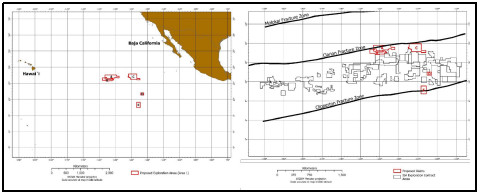
Figure 1. Location Maps AOM AREA-1
| C. | Geology and Resource Estimate |
Seafloor polymetallic nodules occur in all oceans, but the CCZ hosts a relatively high abundance of particularly nickel and copper-rich nodules. The CCZ seafloor forms part of the Abyssal Plains, which are the largest physiographic province on Earth. Polymetallic nodules are hydrogenetic and diagenetic concretions of manganese and ferromanganese oxides with high levels of minor, adsorbed elements, including Co, Ni, Cu, Zn, Ti and other metals.
The depth of the seafloor in Area 1 range mostly from 3,800 m to 6,000 m. The Abyssal Plains are traversed by ridges and are punctuated by inactive volcanoes rising 500 to 2,000 m above the seafloor.
|
|
AOM AREA-1 S-K 1300 TECHNICAL REPORT SUMMARY FEBRUARY 12, 2026 | 6 |
The formation and distribution of polymetallic nodules in the CCZ are primarily controlled by water depth, latitude, and seafloor sediment type. Geological domains identified include volcanic outcrops, volcanic highs, sediment drifts, and high-slope (>10°) areas, which were excluded from resource estimates.
Exploration data underpinning the Mineral Resource estimates comprise historical sampling by Pioneer Contractors using free-fall grab samplers (FFG) and box core (BC) samplers. Nodule abundance is reported on a wet basis with an assumed moisture content of 30% Mineral Resource estimation is based on the 2010 ISA Technical Study #6 “A Geological Model of Polymetallic Nodule Deposits in the Clarion-Clipperton Fracture Zone”. The Mineral Resource classification follows SEC Regulation S-K (subpart 1300), with limited data density and modifying factors resulting in Mineral Resource Estimation. Excluding areas with a greater than 10° slope and using a cutoff grade of 6% kilograms of nodules per square meter Inferred resources shown in Table 2.
Table 2. Inferred Mineral Estimation
| Total Area Km2 |
Mineralized km2* |
Mt Wet Nodules |
Avg. Dry Weight % | |||||||||||||||||||||||||
| Area 1 |
Mn | Co | Ni | Cu | ||||||||||||||||||||||||
| A |
45,380 | 18,861 | 118 | 23 | 0.24 | 1.1 | 1.1 | |||||||||||||||||||||
| B |
20,900 | 11,367 | 73 | 24 | 0.26 | 1.17 | 1.18 | |||||||||||||||||||||
| C |
50,548 | 49,317 | 426 | 26 | 0.24 | 1.2 | 1.03 | |||||||||||||||||||||
| D |
7,525 | 7,525 | 70 | 32 | 0.21 | 1.3 | 1.3 | |||||||||||||||||||||
| E |
22,701 | 22,594 | 160 | 32 | 0.15 | 1.1 | 1.1 | |||||||||||||||||||||
|
|
|
|
|
|
|
|
|
|
|
|
|
|
|
|||||||||||||||
| Totals: |
147,054 | 109,664 | 847 | — | — | — | — | |||||||||||||||||||||
|
|
|
|
|
|
|
|
|
|
|
|
|
|
|
|||||||||||||||
| * | Cutoff Grade of 6 kg/m2 and seafloor slope < 10o |
| D. | Status of Exploration |
Since 1981 and with the implementation of the UN Convention on the Law of the Sea (UNCLOS) additional exploration efforts related to Area 1. Prior to 1981 Pioneer Contractors, (entities that carried out substantial exploration in the Area prior to the entry into force of UNCLOS). Exploration results from Pioneer Contractors were utilized by the ISA between 2005 and 2009 to develop mineral resource estimates. Since then, there has not been additional exploration completed in Area 1. However, it is anticipated that exploration in Area 1 will commence once leases are secured.
|
|
AOM AREA-1 S-K 1300 TECHNICAL REPORT SUMMARY FEBRUARY 12, 2026 | 7 |
| E. | Development and Operations |
The project is not at stage where Development and Operations plans are needed.
| F. | Mineral Reserve Estimate |
The project is not at a stage where Mineral Reserve can be estimated.
| G. | Capital and Operating Costs |
The project is not at the stage where Capital and Operating Costs can be estimated.
| H. | Economic Analysis |
The project is not at a stage where Economic Analysis would be appropriate
| I. | Permitting Requirements |
To obtain an exploration license, NOAA must have a complete administrative record showing that the applicant is eligible and that the proposed exploration plan is environmentally and operationally responsible. Although the exact required “shape” of the submittal depends on NOAA’s implementing text, the substantive elements NOAA expects (and has historically required) include: the applicant’s eligibility and corporate structure; delineation of the requested license area; the detailed exploration plan of work and schedule; the technical capability to conduct exploration and any test mining; the environmental baseline and monitoring plan for exploration activities; safety and pollution prevention controls; and evidence of financial responsibility.
| J. | Qualified Person’s Conclusions and Recommendations |
It is the QP’s opinion that the Mineral Resources Estimate derived from the ISA model is representative of the informing data, and that the data is of sufficient quality to support a Mineral Resource Estimate for Area 1 at an Inferred confidence level. It is important to understand that the “inferred” designation for a mineral resource is fundamentally a guide to help set priorities for subsequent, more detailed exploration work that will be necessary to precede commercial recovery of the resource.
The QP notes that the resources estimate is based on historic work by different parties that may or may not have had various sampling and Quality Assurance/Quality Control (QA/QC) programs which adds a degree of uncertainty with all the samples. However, the work was performed by national and international mining companies, mining companies that would have been expected to be competent in sampling and analysis. Future sampling programs to be carried out by AOM will include a robust QA/QC program.
|
|
AOM AREA-1 S-K 1300 TECHNICAL REPORT SUMMARY FEBRUARY 12, 2026 | 8 |
| II. | INTRODUCTION |
American Ocean Minerals Corporation (AOM) is a Delaware Limited Liability Company duly formed and registered on September 16, 2025. The corporation’s current headquarters and principal place of business is 400 N. Asley Drive, Suite 1900, Tampa, Florida 33602, and its Delaware Registered Agent is likewise A Registered Agent Inc., 8 The Green, Suite A, Dover, Delaware 19901.
The proposed exploration area consists of five non-contiguous Subareas (Subareas A-E, together named “Area 1”, see Figure 2) in the eastern-central Clarion-Clipperton Zone of the northeastern tropical Pacific Ocean, totaling approximately 147,054 km2.
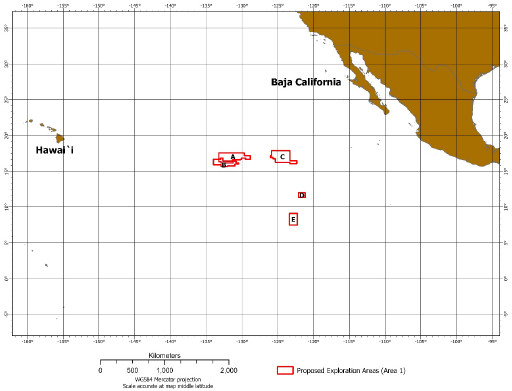
Figure 2. Location map in relation to continents.
| A. | Registrant Information |
This Technical Report Summary (TRS) for Area 1 by WYCO Mineral Advisors with and Dr. Charles Morgan. Charles was the primary author of Sections 9 and 11; and Mr. Christopher Wyatt was the primary author of the other Sections.
|
|
AOM AREA-1 S-K 1300 TECHNICAL REPORT SUMMARY FEBRUARY 12, 2026 | 9 |
Christopher J. Wyatt,
Is a Registered Member, Society for Mining, Metallurgy, and Exploration (SME) (3574500), a Qualified Professional with the Mining & Metallurgical Society of America (MMSA) (1364QP), Member of the Australasian Institute of Mining & Metallurgy (MAusIMM 319010).
He is a graduate of the Colorado School of Mines, M.S. in Mineral Economics, California Polytechnic University, San Luis Obispo, MBA; California Polytechnic University, San Luis Obispo, M.S. in Engineering Management; University of California-Berkeley, B.S. in Mineral Engineering.
He has practiced in the mineral industry across a variety of minerals continuously since 1990. His experience includes exploration and development with Manganese Nodules initially at university and continuously since 2014, including being an author for both NI 43-101 reports and JORC Technical reports on Manganese Nodules in the Pacific Ocean.
Mr. Wyatt is the President of WYCO Mineral Advisors LLC, incorporated in the State of South Dakota.
Signature:

Charles L. Morgan,
Is a registered Member of the Society for Mining, Metallurgy, and Exploration, Member number: 4041112.
Charles Morgan obtained a BA degree in Chemistry from the University of California, San Diego (1971) and a PhD in Oceanography and Limnology from the University of Wisconsin, Madison (1975). Between 1975 and 1984 he worked for Lockheed in California on its deep seabed mining program in the deep northeastern tropical Pacific.
Morgan served as the Technical Chair of the Underwater Mining Institute (UMI) between 1994 and 2015. During that period the UMI (currently renamed the Underwater Minerals Conference) grew from a small annual conference based primarily in the U.S. to a much larger conference held in 13 different countries during this period.
Morgan was appointed by the U.S. State Department in 1997 as the first, and currently only, member from the U.S. on the International Seabed Authority Legal and Technical Commission; he served on the Commission for its first five-year term, ending in 2001. He published several technical papers assessing the ferromanganese nodule resources within the Clarion-Clipperton Zone (e.g. Morgan 1999 and ISA 2009). Morgan is currently the principal in Moana Hohonu Consulting, LLC, incorporated in the State of Hawai`i, USA.
Signature:

|
|
AOM AREA-1 S-K 1300 TECHNICAL REPORT SUMMARY FEBRUARY 12, 2026 | 10 |
| B. | Terms of Reference and Purpose |
The effective date of this TRS report is February 9, 2026. It is the Qualified Person’s opinion that there are no known material changes after this date. This TRS uses US English spelling and a combination of Metric and Imperial units of measure. Ore grades are presented in dry weight percent (wt.%), while metals quantities are stated in metric tons (tonnes) or millions of tonnes (Mt). Except where noted, geographic coordinates in this TRS are presented in metric units using the World Geodetic System (WGS) 1984. All seafloor areas listed are geodesic areas. The purpose of this TRS is to report on Mineral Resources for AOM’s Area 1 Project Area.
| C. | Sources of Information |
Ore grades and ore abundance (kg of polymetallic nodules per m2 of the seafloor) have been extracted from the International Seabed Authority Technical Study #6 (ISA 2010). Dr. Morgan led a team of experts in the development of this study between 2005 and 2009. Seafloor bathymetry was downloaded from the GEBCO 2024 map and seafloor slopes were derived from this map using GIS tools.1
| D. | Personal Inspection Summary |
Dr. Morgan worked for ten years on the Lockheed Ocean Mineral exploration project from 1975 to 1984, including participation in several sampling cruises to the region that recovered thousands of polymetallic nodule samples and several tonnes of nodules for ore assays and metallurgical testing. No direct observation of the deep seafloor was involved.
| E. | Previously Filed Technical Report Summary Reports |
This is the first TRS filed for this property.
| 1 | https://download.gebco.net/ |
|
|
AOM AREA-1 S-K 1300 TECHNICAL REPORT SUMMARY FEBRUARY 12, 2026 | 11 |
| III. | PROPERTY DESCRIPTION |
| A. | Property Location |
Figure 3 shows the Area 1 exploration Subareas and the regional bathymetry. Table 3 lists the coordinates of vertices that delineate each of these Subareas. The Subareas were selected to optimize the resource potential while avoiding potential conflicts with areas currently delineated by the United Nations International Seabed Authority for other purposes.
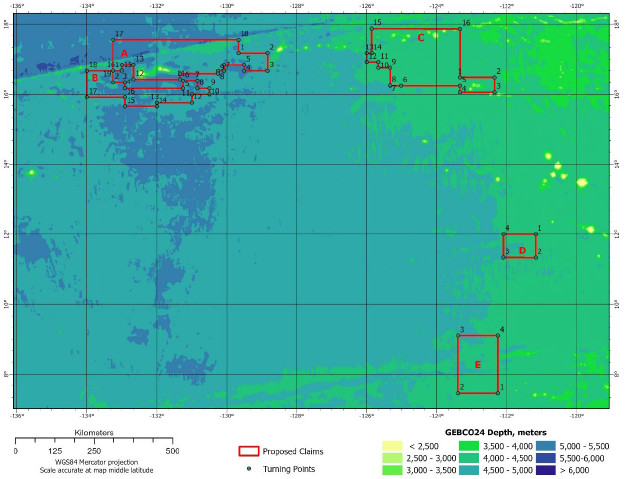
Figure 3. AOM AREA-1 Exploration Application Area
|
|
AOM AREA-1 S-K 1300 TECHNICAL REPORT SUMMARY FEBRUARY 12, 2026 | 12 |
Table 3. Vertex Coordinates of Sub Areas A-E
| Label |
W Longitude |
N Latitude |
Vertices | Label | W Longitude |
N Latitude |
Vertices | |||||||||||||||||||||
| A | 129.6733 | 17.1613 | 1 | C | 123.3284 | 16.4771 | 1 | |||||||||||||||||||||
| A | 128.8376 | 17.1613 | 2 | C | 122.3430 | 16.4771 | 2 | |||||||||||||||||||||
| A | 128.8376 | 16.6699 | 3 | C | 122.3430 | 16.0520 | 3 | |||||||||||||||||||||
| A | 129.4973 | 16.6699 | 4 | C | 123.3300 | 16.0520 | 4 | |||||||||||||||||||||
| A | 129.4973 | 16.8365 | 5 | C | 123.3300 | 16.2350 | 5 | |||||||||||||||||||||
| A | 130.0852 | 16.8365 | 6 | C | 125.3315 | 16.2350 | 6 | |||||||||||||||||||||
| A | 130.0852 | 16.6689 | 7 | C | 125.3315 | 16.7515 | 7 | |||||||||||||||||||||
| A | 130.2523 | 16.6689 | 8 | C | 125.6648 | 16.7515 | 8 | |||||||||||||||||||||
| A | 130.2523 | 16.5865 | 9 | C | 125.6648 | 16.9191 | 9 | |||||||||||||||||||||
| A | 131.3356 | 16.5865 | 10 | C | 125.9972 | 16.9191 | 10 | |||||||||||||||||||||
| A | 131.3356 | 16.4191 | 11 | C | 125.9972 | 17.1619 | 11 | |||||||||||||||||||||
| A | 132.6641 | 16.4191 | 12 | C | 125.8601 | 17.1619 | 12 | |||||||||||||||||||||
| A | 132.6641 | 16.8352 | 13 | C | 125.8601 | 17.8728 | 13 | |||||||||||||||||||||
| A | 133.0020 | 16.8355 | 14 | C | 123.3284 | 17.8633 | 14 | |||||||||||||||||||||
| A | 133.0020 | 16.6688 | 15 | D | 121.1687 | 11.9969 | 1 | |||||||||||||||||||||
| A | 133.2500 | 16.6688 | 16 | D | 121.1687 | 11.3309 | 2 | |||||||||||||||||||||
| A | 133.2500 | 17.5500 | 17 | D | 122.0944 | 11.3309 | 3 | |||||||||||||||||||||
| A | 129.6733 | 17.5500 | 18 | D | 122.0944 | 11.9969 | 4 | |||||||||||||||||||||
| B | 133.2531 | 16.6667 | 1 | E | 122.2500 | 7.4600 | 1 | |||||||||||||||||||||
| B | 133.2531 | 16.3299 | 2 | E | 123.3842 | 7.4600 | 2 | |||||||||||||||||||||
| B | 132.9197 | 16.3299 | 3 | E | 123.3842 | 9.1000 | 3 | |||||||||||||||||||||
| B | 132.9197 | 16.1640 | 4 | E | 122.2500 | 9.1000 | 4 | |||||||||||||||||||||
| B | 131.2469 | 16.1640 | 5 | |||||||||||||||||||||||||
| B | 131.2469 | 16.3799 | 6 | |||||||||||||||||||||||||
| B | 130.8364 | 16.3799 | 7 | |||||||||||||||||||||||||
| B | 130.8364 | 16.1635 | 8 | |||||||||||||||||||||||||
| B | 130.5026 | 16.1635 | 9 | |||||||||||||||||||||||||
| B | 130.5026 | 16.0040 | 10 | |||||||||||||||||||||||||
| B | 131.0034 | 16.0040 | 11 | |||||||||||||||||||||||||
| B | 131.0034 | 15.7571 | 12 | |||||||||||||||||||||||||
| B | 132.0048 | 15.7571 | 13 | |||||||||||||||||||||||||
| B | 132.0048 | 15.6570 | 14 | |||||||||||||||||||||||||
| B | 132.9103 | 15.6570 | 15 | |||||||||||||||||||||||||
| B | 132.9103 | 15.9230 | 16 | |||||||||||||||||||||||||
| B | 134.0000 | 15.9230 | 17 | |||||||||||||||||||||||||
| B | 134.0000 | 16.6667 | 18 | |||||||||||||||||||||||||
|
|
AOM AREA-1 S-K 1300 TECHNICAL REPORT SUMMARY FEBRUARY 12, 2026 | 13 |
| B. | Mineral Rights |
AOM Area-1 LLC (whose parent company is American Ocean Minerals Corporation), under United States sponsorship, seeks the issuance of an exploration license from the National Oceanic and Atmospheric Administration (NOAA), pursuant to the Deep Seabed Hard Mineral Resources Act (DSHMRA), in accordance with the regulations at 15 CFR Part 970. AOM as of the date of this report does not have a license.
| C. | Description of Property Rights |
Area 1 is on the seafloor outside of any national jurisdiction. President Donald Trump signed Executive Order 14285, “Unleashing America’s Offshore Critical Minerals and Resources,” on April 24, 2025, aiming to fast-track U.S. deep seabed mining for critical minerals (e.g., cobalt, nickel, rare earths) in federal waters and promote development in international waters, leveraging the 1980 Deep Seabed Hard Mineral Resources Act (DSHMRA) and establishing the U.S. as a leader. The order directs agencies like NOAA to streamline permits, establishing a new regime for seabed mining.
| D. | Royalties and Taxes |
Under DSHMRA, royalties and taxes payable on any future commercial recovery of polymetallic nodules by U.S. entities in areas beyond national jurisdiction are governed by domestic U.S. law rather than international frameworks such as the ISA, to which the U.S. is not a party. DSHMRA does not prescribe specific royalty rates, it authorizes NOAA to issue exploration licenses and commercial recovery permits, with terms and conditions that may include financial obligations. These obligations are determined on a case-by-case basis during the permitting process and are designed to ensure that U.S. seabed mining activities are conducted responsibly and in alignment with national interests.
NOAA’s regulatory framework under DSHMRA includes provisions for public comment and environmental review but does not currently mandate a fixed royalty or taxation regime akin to ISA’s proposed ad valorem models. As such, financial terms are negotiated individually and may evolve with future legislative or executive directives, such as the April 2025 Executive Order promoting U.S. leadership in seabed mineral recovery.
|
|
AOM AREA-1 S-K 1300 TECHNICAL REPORT SUMMARY FEBRUARY 12, 2026 | 14 |
| IV. | ACCESSIBILITY, CLIMATE, LOCAL RESOURCES, INFRASTRUCTURE AND PHYSIOGRAPHY |
| A. | Bathymetry and Seafloor Description |
Figure 3, above, plots the seafloor depth distribution in the region including Area 1. Table 4 lists the descriptive statistics derived from the GEBCO24 map.
Table 4. Subareas (geodesic km2), Depths, and Slopes
| Sub- Area |
Statistic |
Depth | Slope | |||||||
| A, 45,380 km2 |
Std. Dev. | 435 | 3.4 | |||||||
| Median | -4,882 | 1.4 | ||||||||
| Minimum | -5,644 | 0.0 | ||||||||
| Maximum | -1,968 | 27.2 | ||||||||
| B, 20900 km2 |
Std. Dev. | 187 | 3.0 | |||||||
| Median | -4,983 | 1.0 | ||||||||
| Minimum | -5,292 | 0.0 | ||||||||
| Maximum | -3,176 | 30.2 | ||||||||
| C, 50,578 km2 |
Std. Dev. | 246 | 2.5 | |||||||
| Median | -4,334 | 0.7 | ||||||||
| Minimum | -4,677 | 0.0 | ||||||||
| Maximum | -2,150 | 30.3 | ||||||||
| D, 7,425 km2 |
Std. Dev. | 57 | 0.5 | |||||||
| Median | -4,457 | 0.4 | ||||||||
| Minimum | -4,567 | 0.0 | ||||||||
| Maximum | -4,228 | 5.8 | ||||||||
| E, 22,701 km2 |
Std. Dev. | 116 | 1.5 | |||||||
| Median | -4,412 | 0.5 | ||||||||
| Minimum | -4,990 | 0.0 | ||||||||
| Maximum | -3,700 | 23.5 | ||||||||
| B. | Access to Property |
Area 1 is located outside of any national jurisdiction. It is most easily accessible by ship from various ports in the US and South America. As the deposit does not include any habitable land and is not near coastal waters, all personnel and material are expected to be transported to the project area by ship. Exploration work is being planned to use modern oceanographic survey and sampling techniques deployed from oceanographic survey vessels.
|
|
AOM AREA-1 S-K 1300 TECHNICAL REPORT SUMMARY FEBRUARY 12, 2026 | 15 |
| C. | Availability of Required Infrastructure |
There are multiple vessels and equipment available to perform exploration and sampling activities. Additional infrastructure to harvest and process nodules will be dependent on regulations and future work requirements. It is expected that some infrastructure that currently exists can be used or repurposed. Additionally, multiple companies and governments are in the process of developing infrastructure that may be utilized in the future.
| V. | HISTORY |
Submarine ferromanganese concretions were first discovered in the Kara Sea off Siberia in 1868 (Smith, 1990). During its round-the-world expedition from 1872 to 1876, HMS Challenger collected many small dark-brown balls, rich in manganese and iron, which were named manganese nodules (Murray and Reynard, 1891; Manheim, 1978; Smith, 1990). Since the 1960s, manganese nodules have been recognized as a potential source of nickel, copper, cobalt, and manganese, which are likely to assume increasing importance as land-based deposits of these metals become depleted. Manganese nodules are found on the seabed in many areas and have been comparatively well studied because of their potential economic importance (Mero, 1965).
The Clarion-Clipperton Fracture Zone (CCZ) has been the focus of much international attention for many years (e.g. Mero 1965; McKelvey et al. 1979). To date, the greatest concentrations of nodule deposits have been found in this region. Polymetallic nodule resources contain nickel, cobalt, manganese and copper. While they occur in all oceans, deposits between the Clarion and Clipperton Fracture Zones (see Figure 4) are believed to be among the richest, containing high grade and high abundance nodules. Presently (2025), seventeen exploration contractors with the International Seabed Authority (ISA) have exploration contracts in this area.
As part of its mandate to conduct resource assessments of prospective mineral deposits in the Area, ISA staff met with representatives of the initial seven contractors to discuss ways of improving the results of resource assessments of polymetallic nodule deposits in the CCZ. In the absence of sampling data across much of this vast geographic area, participants in the meeting suggested that if the suspected relationships between high nodule grade and abundance, and factors such as sediments, volcanism, topography and surface water primary productivity etc. could be established, they could be used as proxies for grade and abundance in poorly sampled areas.
They therefore recommended that the ISA should establish a geological model of polymetallic nodule deposits in the CCZ. At the ninth session of the Authority, its Legal and Technical Commission, recognizing that such a model would be useful for prospectors, contractors and the ISA, endorsed this cause of action.
|
|
AOM AREA-1 S-K 1300 TECHNICAL REPORT SUMMARY FEBRUARY 12, 2026 | 16 |
Between 13 and 20 May 2003, the Authority convened a workshop in Nadi, Fiji to consider the data that could be included to develop such a model. It identified candidate proxy variables and devised a program for the development of the model and a Prospector’s guide. Between 2005 and 2009, the team participants met periodically to assess the progress made and to decide on the way forward. Dr. Morgan led the team, and the study was published in 2010 (ISA 2010).
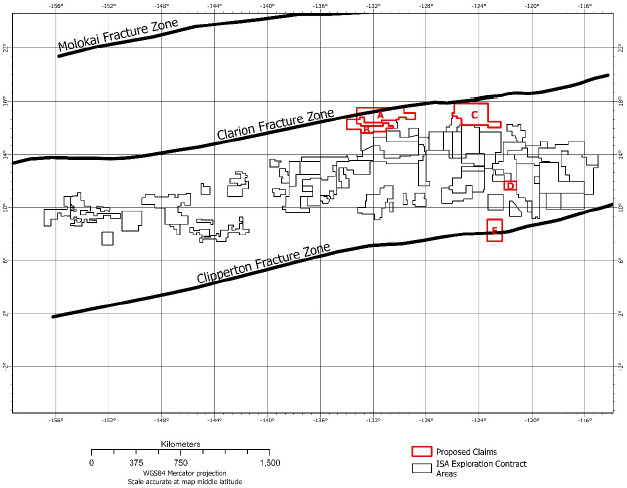
Figure 4. Clarion-Clipperton Zone and Current ISA Exploration Contract Areas.
|
|
AOM AREA-1 S-K 1300 TECHNICAL REPORT SUMMARY FEBRUARY 12, 2026 | 17 |
| VI. | GEOLOGICAL SETTING, MINERALIZATION, AND DEPOSIT |
| A. | Regional Geology |
| 1. | Basement Rocks |
The regional geology of the Clarion Clipperton Zone (CCZ) oceanic plate segment provides boundary conditions for the formation and distribution of polymetallic nodules. These deposits are found in all the world’s oceans, but the CCZ deposits host higher metal contents and seafloor abundance (kg-m-2) than most other deposits discovered to date. The CCZ is a plate segment of Pacific Ocean crust that has been spreading west-southwest since the Cretaceous era but is moving overall to the northwest and is interacting with the plate segments adjacent to the north and south (Parianos 2021). The estimated ages of the basaltic crust underlying the sediments that contain Area 1, based on magnetic lineations, vary between 24 and 40 My (Figure 5).
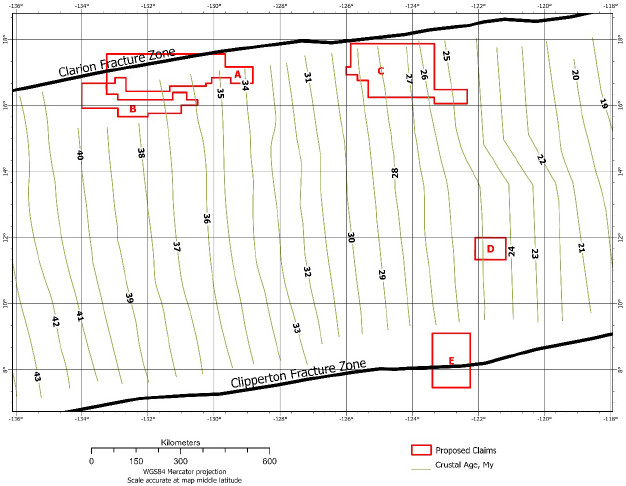
Figure 5. Isochrons (ages in million years), after Seton et al., 2020.
|
|
AOM AREA-1 S-K 1300 TECHNICAL REPORT SUMMARY FEBRUARY 12, 2026 | 18 |
These nodules appear to accrete metal oxides on their surfaces at rates of a few millimeters per million years (Krishnaswami et al., 1982); most nodules in this region appear to have growth rates of about 6 mm/My and have average diameters of 4 to 8 cm (Morgan, 1999), suggesting ages between 3 to 6 My. They are much younger than the underlying crust.
| 2. | Regional Bathymetry |
The seafloor of the CCZ lies mostly between 4,000- and 6,000-meters of water depth. The seafloor is characterized by several seamounts, some of which reach depths of less than 3,000 meters. The wide-spread seafloor spreading fabric, oriented approximately orthogonally to the trend of the bounding fracture zones, provides many flat floored valleys, separated by irregular, often discontinuous ridges a few hundred meters high. As noted above, bathymetry data were downloaded from the GEBCO2 website. The data consists of a 15 arc-second grid of latitude and longitude; this results in a grid point spacing or pixel size of 462.5 m in latitude and a variable size in longitude.
| 3. | Sources of the Metals in Polymetallic Nodules |
Nodule deposits are most abundant in sediments that lie below the Carbonate Compensation Depth (CCD). In shallower depths, deposit growth is impaired by being buried under relatively high sedimentation rates. The primary sources of metals for the nodule deposits of the CCZ are terrigenous or volcanogenic sources on the North and Central American continents and the East Pacific Rise as well as some atmospheric fallout of very fine materials carried by winds from many terrigenous sources.
The metals are adsorbed to the surfaces of fine-grained sediments and carried westward by the North Pacific Current. The sediments are consumed by filter-feeding zooplankton enroute and converted into silt-and sand-sized fecal matter that are large enough to sink to the seafloor in the deep tropical Pacific waters. These fecal pellets can then be metabolized by benthic animal communities and bacterial processes after they reach the sea floor, processes that remove the organic materials that bind the metals and reduce them to cationic species that are readily absorbed by the anionic manganese oxide matrix that constitutes the bulk of these deposits.
| 4. | Sedimentation |
The sediment facies exhibit a unidirectional gradient perpendicular to the fracture zones, trending from predominant carbonate sediments in the southeastern extreme to predominant siliceous red clay in the west-northwest. There are also regional-scale non-conformities, including latitudinal zonation of a variety of young (Pleistocene-Holocene) sediment facies; and a pronounced surface unconformity of Middle Miocene age, denoting an interruption in the sediment accumulation, dislocation and erosion of the earlier accumulated sediments.
| 2 | https://download.gebco.net/ |
|
|
AOM AREA-1 S-K 1300 TECHNICAL REPORT SUMMARY FEBRUARY 12, 2026 | 19 |
A detailed examination of bathymetry and sediment distribution and composition in the eastern CCZ was carried out. The topography of the area is characterized by NW-SE to NNW-SSE trending elongated seabed structures. Two predominant acoustic reflectors delineate Miocene and Oligocene unconformities. The surface sediments consist of Pleistocene-Holocene siliceous silty clay and ooze underlain by Miocene to Pliocene pelagic clay, zeolitic clay and zeolitic crust and hiatuses of Paleo-Pleistocene and Late Miocene ages. The ocean floor is a hilly plain - plateau, crossed by a strictly north-south system of horst and graben structures. The surface relief of this hilly plain is generally less than 100 m in extent, with hills and ridges exceeding 100 m in plains.
The most common sediment types in this region include reddish brown clay zeolitic clay (less than 5% amorphous silica content), slightly siliceous (with 5-10% amorphous silica content), siliceous (10-30% amorphous silica content) silty clay as well as slightly calcareous (5-10% CaCO3 content) and calcareous (10-30% CaCO3 content) silty clay. The uppermost part of the sediment profile features predominantly siliceous, silty clay, which, down core grades into slightly siliceous, silty clay. Calcareous, silty clay and calcareous oozes are observed only in the southern part of the study area. Metal contents in these sediments generally follow the trend of decreasing concentrations- Fe > Mn > Cu > Ni > Zn > Co.
| B. | Local and Property Geology |
Local geology needs to be determined during the first phases of the exploration using the exploration surveying and sampling techniques described below.
| 1. | Mineralization |
Wegorsewski et al. (2015) studied the mineralogy of manganese nodules in this region of the CCZ using X-ray diffraction. Individual nanometer to micrometer thick genetically different (hydrogenetic/diagenetic) layer growth structures were investigated using high-resolution transmission electron microscopy. The main manganese phase detected in nodules of this study was vernadite, a nanocrystalline and turbostratic phyllomanganate with hexagonal layer symmetry. In layer growth structures of hydrogenetic origin, Fe-vernadite dominates.
Layer growth structures of suboxic-diagenetic origin contain three vernadite forms, which are the main Ni and Cu carriers. These Mn-phases were identified based on their structural layer-to-layer distances (7 and 10 Å) and on their capacity to retain these distances when heated. The first form is 7 Å vernadite, which is minor component of the nodules. The
|
|
AOM AREA-1 S-K 1300 TECHNICAL REPORT SUMMARY FEBRUARY 12, 2026 | 20 |
second is a thermally unstable ~10 Å vernadite collapsing between room temperature and 100 °C, and the third is a thermally stable ~10 Å vernadite collapsing between 100 and 300 °C. Todorokite was neither detected in bulk nodules nor in any of the individual suboxic-diagenetic growth structures. Because the mineralogical composition of the nodule is quite homogeneous (only different vernadite-types), it is suggested that the content of Ni and Cu in the individual growth structures is controlled by their availability in the environment during individual growth phases.
A profile through a CCZ nodule revealed that the thermal stability of the vernadites change from younger (thermally unstable vernadites, collapsing <100 °C) to older growth structures (thermally stable 10 Å vernadites, collapsing >100 °C) of the nodule accompanied with changes in type and amount of interlayer cations (e.g., Mg, Na, Ca, K). The stability of the vernadites is probably due to re-organization and incorporation of metals within the interlayer of the crystal structure.
| 2. | Deposit Type |
Polymetallic nodules are hydrogenetic and diagenetic concretions of manganese and ferromanganese oxides with high levels of minor, adsorbed elements, including Co, Ni, Cu, Zn, Ti and other metals. They occur on abyssal plains
|
|
AOM AREA-1 S-K 1300 TECHNICAL REPORT SUMMARY FEBRUARY 12, 2026 | 21 |
| VII. | EXPLORATION |
Polymetallic nodule deposits are fundamentally two-dimensional; the nodules lie on the surface of or partially buried within fine-grained surficial sediments. No drilling is necessary for exploration or subsequent commercial recovery.
| A. | Exploration Work |
Many different oceanographic vessels were used to collect the polymetallic nodule samples from which the ISA mineral resource estimate reported in the 2010 Technical Study #6 were derived. Most of the samples were collected using free fall grab (FFG) samplers. The principal components of FFG samplers are a pair of spring-loaded clamshell net bags for collecting the sample, an air-filled sphere to create buoyancy and containers filled with ballast.
The operation of a FFG sampler is shown schematically in Figure 6. The FFG sampler is released, untethered, over the side of the exploration ship and sinks to the seafloor under the weight of the ballast. When the FFG sampler makes contact with the seafloor ejection of the ballast is triggered which makes the sampler buoyant. As the sampler begins to rise, the clamshell net bags close, capturing the nodules at the land-out point. After it reaches the sea-surface, the FFG sampler is recovered by the boat. FFG samplers are quicker, easier and cheaper to operate for mineral resource samples than box corers (used for biological, geotechnical, mineral and other types of sampling) and so were preferred by the early exploration programs.
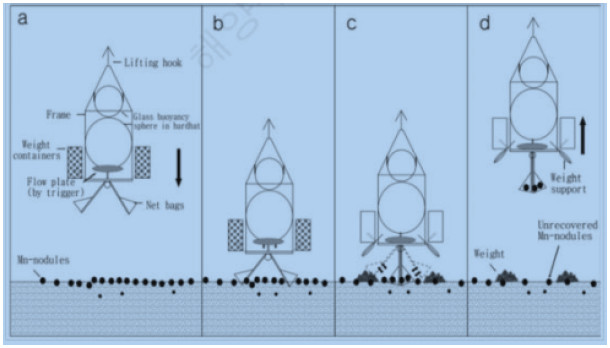
Figure 6. Free Fall Grab Sampler (after Lee et al. 2008).
|
|
AOM AREA-1 S-K 1300 TECHNICAL REPORT SUMMARY FEBRUARY 12, 2026 | 22 |
Analysis of the nodules for metal content was usually done using atomic absorption spectrophotometers. Standardization of the assay results was accomplished using standard pulp samples created and distributed by the U.S. Bureau of Mines and later the U.S. Geological Survey.
| B. | Terrain-based Domains |
Polymetallic nodule deposits of commercial interest occur on sediment-covered abyssal plains that constitute the vast majority of the CCZ. An important aspect of potential future exploration work will be the analysis of the relatively high resolution (compared to GEBCO) bathymetry collected by MBES surveying to distinguish the different components that make up the abyssal plains within Area 1 and to remove from consideration the other facies (e.g. ridges, calderas and other hard substrate or steep slope seafloor) that will not host commercially interesting nodule deposits.
| C. | Anticipated Exploration Methods |
AOM possesses access to exploration equipment. The selection and configuration of this equipment have been undertaken with the intent that ensures that it is not only operationally capable of supporting the full range of planned geophysical, geochemical, and biological investigations within the proposed license areas, but also methodologically aligned with the expectations of U.S. regulators and the international community.
AOM anticipates its exploration and sampling will provide continuity and comparability with legacy U.S. and international datasets. Particular emphasis has been placed on the foundational work of the NOAA Deep Ocean Mining Environmental Study, which established the first systematic environmental baselines for U.S. exploration areas in the CCZ. The equipment and protocols selected by AOM are directly aligned with those earlier methods wherever possible, thereby ensuring that new data can be analyzed within the same interpretive frameworks and contribute to a coherent long-term record of environmental conditions and resource potential.
AOM aims to ensure that its equipment standards are consistent with contemporary international recommendations. AOM guarantees that all data generated will be directly comparable to results submitted by other contemporary explorers for this deep seabed resource, and therefore suitable for integration into shared environmental databases and regional environmental management plans.
The AOM exploration planned toolkit reflects advancements described in recent peer-reviewed literature, particularly in relation to high-resolution multibeam bathymetry (ship-based and from autonomous underwater vehicles), box coring, benthic imaging, and water-column monitoring. By integrating these improvements, AOM anticipates that the proposed exploration program does not merely replicate past efforts but enhances them.
|
|
AOM AREA-1 S-K 1300 TECHNICAL REPORT SUMMARY FEBRUARY 12, 2026 | 23 |
| VIII. | SAMPLE PREPARATION, ANALYSIS, AND SECURITY |
This TRS resource estimate is based on archival data. Detailed descriptions of the process were not available to review. The sampling and analysis were performed by national and international mining companies that are expected to be competent in sampling and analysis.
| IX. | DATA VERIFICATION |
| A. | Mineral Resources |
| 1. | Exploration Data Compilation and Validation |
Datasets used in this TRS use five different proprietary datasets merged into one. They Include:
1. All available data in the Authority’s Central Data Repository (CDR; http://www.isa.org.jm Polymetallic Nodules - Major elements);
2. A dataset used with the permission of the Lockheed-Martin Corporation (Ocean Minerals Company; OMCO);
3. Datasets provided by the Government of the Republic of Korea;
4. Datasets provided by the China Ocean Mineral Resources Research and Development Association (COMRA) of China; and
5. Datasets provided by The Interoceanmetal Joint Organization (IOM), composed of Bulgaria, Cuba, the Czech Republic, Poland, the Russian Federation and Slovakia.
Virtually all the data were obtained from analysis of free-fall grab sampler recoveries, although a few results from box core recoveries are also included. Except for the data extracted from the Authority’s Central Data Repository, the metal content estimates were determined by laboratories set up by the respective Contractors. Abundance (weight of nodules per unit area on the seafloor, (usually with units kg/m2) is estimated simply by dividing the weight of recovered nodules by the surface area covered by the open jaws of the sampler (~0.25 -0.5 m2 coverage). As discussed in Hennigar, Dick and Foell (1986), free fall grab samplers are the best tools available for the first order assessment of nodule abundance, but they consistently underestimate the actual abundance. Thus, the resource assessment values presented here are likely to be underestimated.
Metal content in the samples collected was determined by a variety of methods, including atomic absorption and X-ray fluorescence. During the 1970s and 1980s, the U.S. Bureau of Mines distributed standard nodule samples (labeled “A-1” and “P-1”) that had been extensively analyzed by the Bureau and then mixed into a uniform powder. These standard samples were later transferred to the U.S. Geological Survey after the Bureau closed in 1996. The consortia that were exploring the CCZ deposits at that time all obtained sub-samples of these standards to evaluate the accuracy of their methods. No results of these standard tests are available; however, the fact that the scientists responsible for the analysis protocols were able to use state-of-the-art methods to ensure that their results were as accurate as possible benefited the consortia.
|
|
AOM AREA-1 S-K 1300 TECHNICAL REPORT SUMMARY FEBRUARY 12, 2026 | 24 |
The data acquired were for the area 110° - 160° W Longitude and 0° - 20° North Latitude and subsequently screened to eliminate clearly anomalous values. Table 5 shows the screening criteria.
Table 5. Data Screening, Criteria for Elimination.
| Statistic | Abundance (kg-m-2) |
Mn (%) |
Co (%) |
Ni (%) |
Cu(%) | |||||||||||||||
| Remove if value is below |
0.01 | 10 | 0.02 | 0.3 | 0.2 | |||||||||||||||
| Remove if value is above |
45 | 45 | 0.5 | 2 | 2 | |||||||||||||||
Table 6 lists the sample counts for the entire ISA regional mineral resource estimate.
Table 6. Station Counts for ISA Resource Estimates.
| Variable | CDR | KOREA | OMCO | COMRA | IOM | Totals | ||||||||||||||||||
| Abundance |
253 | 329 | 7,738 | 715 | 790 | 9,825 | ||||||||||||||||||
| Mn |
879 | 258 | 5,875 | 716 | 664 | 8,392 | ||||||||||||||||||
| Co |
711 | 258 | 5,900 | 716 | 664 | 8,249 | ||||||||||||||||||
| Ni |
799 | 258 | 5,923 | 716 | 664 | 8,360 | ||||||||||||||||||
| Cu |
882 | 258 | 5,924 | 714 | 664 | 8,442 | ||||||||||||||||||
Only a limited number of stations from this merged dataset are useful for this TRS. Figure 7 shows the envelopes around the specific sample stations and the blocks used in the resource assessment. The following sections consider the specific data relevant to each of the five Subareas that constitute Area 1.
|
|
AOM AREA-1 S-K 1300 TECHNICAL REPORT SUMMARY FEBRUARY 12, 2026 | 25 |
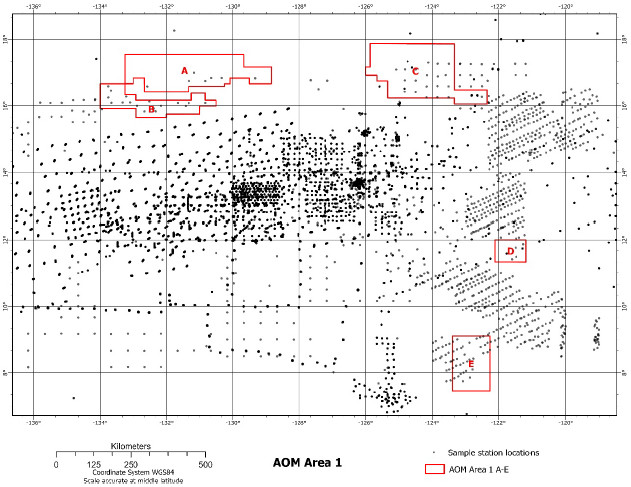
Figure 7. Sample stations used in resource assessment.
| 2. | Limitations on and Adequacy of Data Verification |
Morgan was directly involved in only one of the exploration and sampling programs that formed the basis for collecting the data used in the geological modeling and Mineral Resource estimates for the Project. However, since the other programs were carried out by highly professional private and government scientists, such data used in the resource is deemed adequate for an Inferred Mineral Resources estimate.
|
|
AOM AREA-1 S-K 1300 TECHNICAL REPORT SUMMARY FEBRUARY 12, 2026 | 26 |
| X. | MINERAL PROCESSING AND METALLURGICAL TESTING |
| A. | Candidate processing methods |
This project is not at a stage where a candidate processing method can be determined.
| XI. | MINERAL RESOURCE ESTIMATE |
| A. | Key Assumptions, Parameters, and Methods |
The AOM Area 1 Mineral Resource estimate includes estimation of nodule wet tonnage and the Mn, Co, Ni and Cu dry weight percentages within the polymetallic nodule deposits that occur in Area 1. The estimate is derived using the mineral resource maps published in ISA (2009), Technical Study #6. The estimate is made by georeferencing these maps to the scale used in this TRS and extracting the resource values within AOM 1 A-E. Grid blocks of 0.02° X 0.02° decimal degrees of longitude and latitude (WGS84 coordinate system) were overlain within the Area 1 boundaries. The centers of the blocks located in specific contour intervals were selected individually and given the abundance or metal content value in the middle of the contour interval (e.g., for the abundance interval of 7.5-10 kg/m2, 8.75 kg/m2 was assigned).
The only modifying factor included is the elimination of seafloor areas with slopes greater than 10°. Further exploration with MBES and near-seafloor surveying will be required to identify additional areas where obstacles to mining are smaller than the regional GEBCO maps reveal. Figure 8 - Figure 12 plot Area 1 over the resource maps produced for the ISA Technical Study #6.
|
|
AOM AREA-1 S-K 1300 TECHNICAL REPORT SUMMARY FEBRUARY 12, 2026 | 27 |
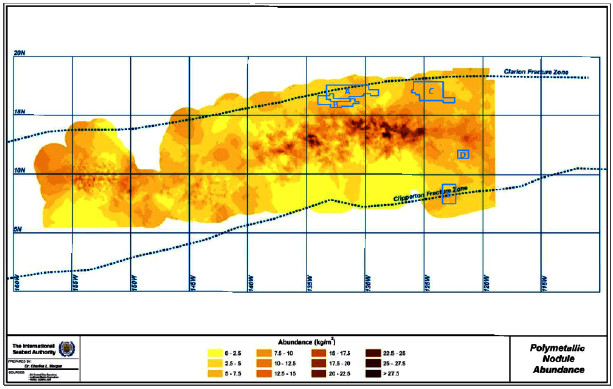
Figure 8. Polymetallic Nodule Abundance.
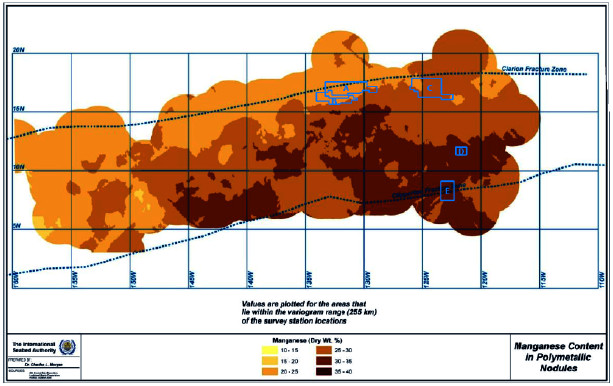
Figure 9. Manganese Content in Polymetallic Nodules.
|
|
AOM AREA-1 S-K 1300 TECHNICAL REPORT SUMMARY FEBRUARY 12, 2026 | 28 |
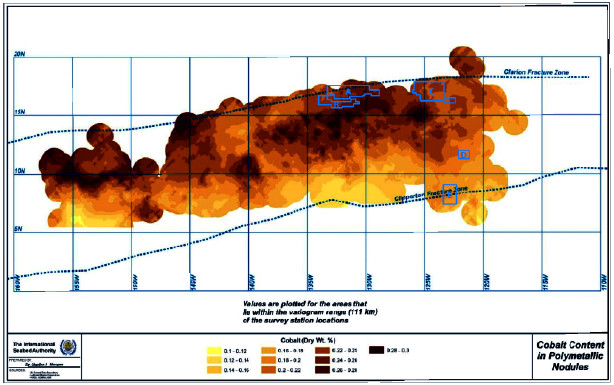
Figure 10. Cobalt Content in Polynetallic Nudules.
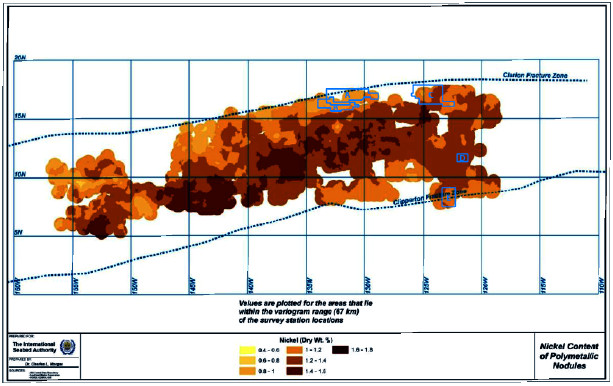
Figure 11. Nickel Content in Polymetallic Nodules.
|
|
AOM AREA-1 S-K 1300 TECHNICAL REPORT SUMMARY FEBRUARY 12, 2026 | 29 |
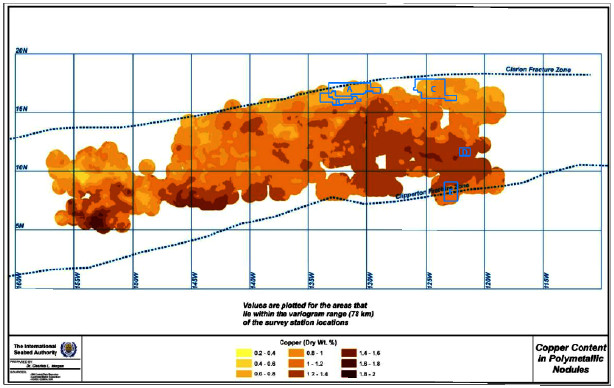
Figure 12. Copper Content in Polymetallic Nodules.
Cobalt values for Area 1A and copper and nickel values for Area 1A and C do not extend through the entire internal areas, so only partial estimates were determined for these areas. Geodesic area determinations were used for all estimate calculations.
|
|
AOM AREA-1 S-K 1300 TECHNICAL REPORT SUMMARY FEBRUARY 12, 2026 | 30 |
| B. | Subareas and Block Delineations |
Figure 13 seafloor slope shows the Clarion Fracture Zone where it passes through this area and also some large calderas in the south and several smaller ones in the east. The >10° slope criterion eliminates these areas from consideration for Mineral Resource Estimation (MRE).
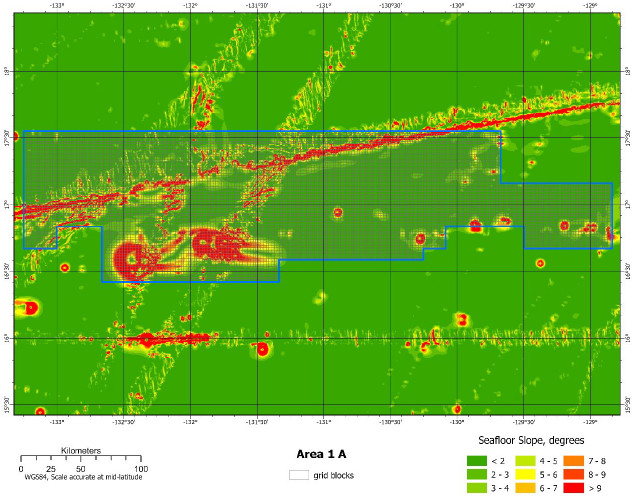
Figure 13. Area 1A and Seafloor Slope.
|
|
AOM AREA-1 S-K 1300 TECHNICAL REPORT SUMMARY FEBRUARY 12, 2026 | 31 |
Area 1B (Figure 14) shows the limitation of the GEBCO map. The linear trends trending east to west and southwest to northeast are the GEBCO inclusion of MBES tracks in the GEBCO grid and demonstrates the need for finer resolution bathymetry for improved resource estimation.
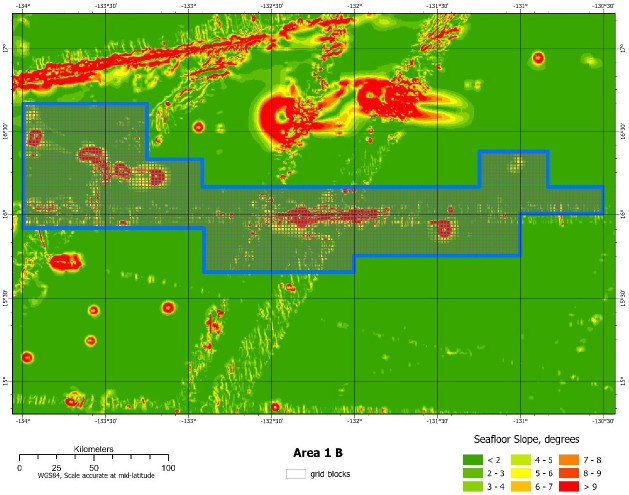
Figure 14. Area 1B and Seafloor Slope.
|
|
AOM AREA-1 S-K 1300 TECHNICAL REPORT SUMMARY FEBRUARY 12, 2026 | 32 |
Figure 15 shows Area 1C. It has the highest fraction of steep slopes of all the Subareas.
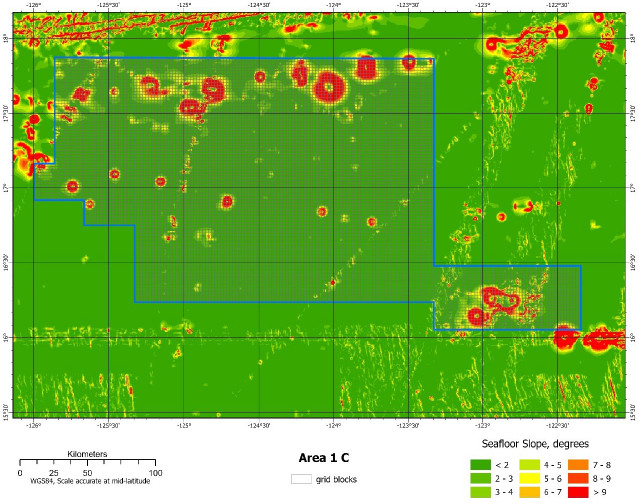
Figure 15. Area 1C and Seafloor Slope.
|
|
AOM AREA-1 S-K 1300 TECHNICAL REPORT SUMMARY FEBRUARY 12, 2026 | 33 |
Figure 16 shows Area 1D, which has no slopes greater than 10° at the GEBCO level of resolution.
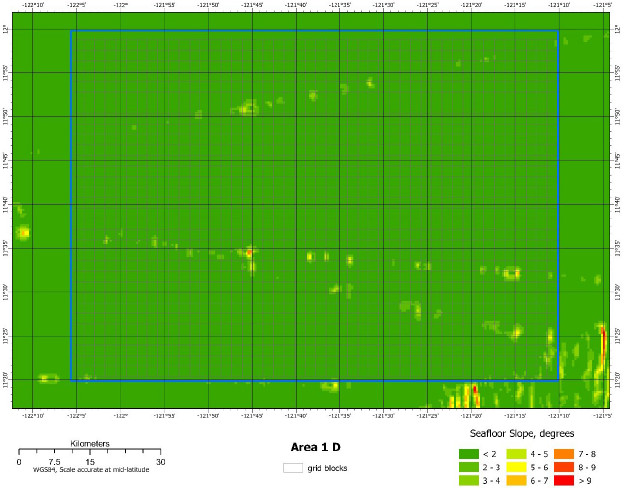
Figure 16. Area 1D Blocks and Seafloor Slope.
|
|
AOM AREA-1 S-K 1300 TECHNICAL REPORT SUMMARY FEBRUARY 12, 2026 | 34 |
The Clipperton Fracture Zone is evident on the north side of the MBES track that passes through the southern portion of Figure 17. The lack of archive station data on the south side of this Subarea has made it impossible to interpolate where the grid blocks do not extend to the southern boundary and were not included in the resource estimation.
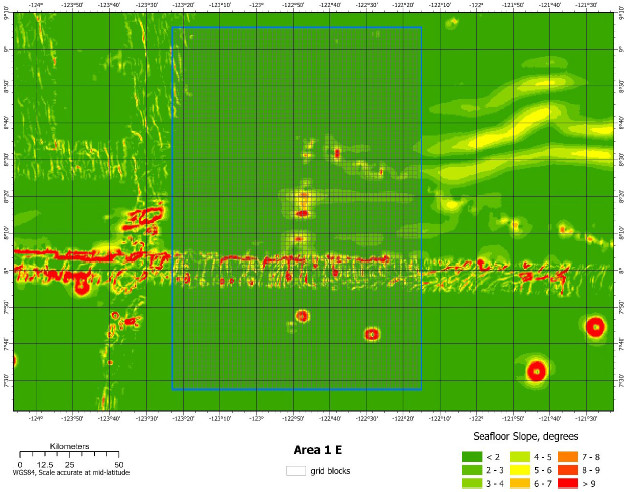
Figure 17. Area 1E Blocks and Seafloor Slope.
| C. | Basis for Establishing the Prospects of Economic Extraction of Mineral Resources |
Based on a range of metal prices for the metals contained in the nodules a cutoff grade of 6 kilograms of nodules per square meter (6kg/m2) was chosen as basis for economic extraction.
|
|
AOM AREA-1 S-K 1300 TECHNICAL REPORT SUMMARY FEBRUARY 12, 2026 | 35 |
| D. | Mineral Resource Classification |
Under S-K 1300 to reflect geological confidence, Mineral Resources are subdivided into the following categories based on increased geological confidence: Inferred, Indicated, and Measured, which are defined under S-K 1300 as:
Inferred Mineral Resource is that part of a mineral resource for which quantity and grade or quality are estimated based on limited geological evidence and sampling. The level of geological uncertainty associated with an inferred mineral resource is too high to apply relevant technical and economic factors likely to influence the prospects of economic extraction in a manner useful for evaluation of economic viability. Because an inferred mineral resource has the lowest level of geological confidence of all mineral resources, which prevents the application of the additional modifying factors not quantified in this TRS in a manner useful for evaluation of economic viability, an inferred mineral resource may not be considered when assessing the economic viability of a mining project, and may not be directly converted to a mineral reserve.
Indicated Mineral Resource is that part of a mineral resource for which quantity and grade or quality are estimated based on adequate geological evidence and sampling. The level of geological certainty associated with an indicated mineral resource is sufficient to allow a qualified person to apply modifying factors in sufficient detail to support mine planning and evaluation of the economic viability of the deposit. Because an indicated mineral resource has a lower level of confidence than the level of confidence of a measured mineral resource, an indicated mineral resource may only be converted to a probable mineral reserve.
Measured Mineral Resource is that part of a mineral resource for which quantity and grade or quality are estimated based on conclusive geological evidence and sampling. The level of geological certainty associated with a measured mineral resource is sufficient to allow a qualified person to apply modifying factors in sufficient detail to support detailed mine planning and final evaluation of the economic viability of the deposit. Because a measured mineral resource has a higher level of confidence than the level of confidence of either an indicated mineral resource or an inferred mineral resource, a measured mineral resource may be converted to a proven mineral reserve or to a probable mineral reserve.
Based on the uncertainty of the QA/QC measures and analytical accuracies associated with the archival abundance and metal content available for this TRS, and the lack of sample density only Inferred Mineral Resources may be defined.
| E. | Assumptions for Multiple Commodity Mineral Resource Estimate |
No metal/mineral equivalents are being used or reported.
|
|
AOM AREA-1 S-K 1300 TECHNICAL REPORT SUMMARY FEBRUARY 12, 2026 | 36 |
| F. | Mineral Resource Uncertainty Discussion |
Mineral Resources are not Mineral Reserves and do not necessarily demonstrate economic viability. There is no certainty that all or any part of this Mineral Resource will be converted into Mineral Reserve.
Inferred Mineral Resources are too speculative geologically to have economic considerations applied to them to enable them to be categorized as mineral reserves.
Mineral Resource estimates may be materially affected by the quality of data, natural geological variability of mineralization and / or metallurgical recovery and the accuracy of the economic assumptions supporting reasonable prospects for economic extraction including metal prices, and mining and processing costs.
The quality of some of the data could not be independently verified. This does not necessarily mean that the data is inaccurate, however, it does increase the level of uncertainty regarding the quality of the data.
The following risks were identified:
| • | Sample coverage is limited. |
| • | Uncertainty around QA/QC programs in place for the historic sampling programs. |
| • | No in situ photos of the sample collection sites are available. |
| • | Original records of the sample collections and survey measurements are not available. |
| • | Secured and signed certificates were not available for analytical measurements. |
Additional sampling and exploration to address the aforementioned points, will allow the evaluation and possible recategorization of part of the Mineral Resources from Inferred to Indicated.
Mineral Resources may also be affected by the estimation methodology and parameters and assumptions used in the grade estimation process including top-cutting (capping) of data or search and estimation strategies although it is the QP’s opinion that there is a low likelihood of this having a material impact on the Mineral Resource estimate.
Table 7 shows Mineral Resource estimate based on the above-described sources, assumptions, and methods. Nodule abundance estimates are customarily listed as “wet” because the minerals are very hygroscopic and the samples are usually weighed soon after recovery at sea. In practice, the nodules lose about 6% of their weight within a few days or weeks, depending on whether or not they are in sealed sample containers, the temperature, and ambient humidity. The normal conversion to determine tonnage estimates is to multiply the wet weight by 0.7, which is the average weight difference after the nodules have been pulped and dried at 110°C for a few hours.
|
|
AOM AREA-1 S-K 1300 TECHNICAL REPORT SUMMARY FEBRUARY 12, 2026 | 37 |
Table 7. Inferred Mineral Resources AOM Area 1
| Area 1 |
Total Area Km2 |
Mineralized km2* |
Mt Wet Nodules |
Avg. Dry Weight % | ||||||||||
| Mn |
Co |
Ni |
Cu | |||||||||||
| A |
45,380 | 18,861 | 118 | 23 | 0.24 | 1.1 | 1.1 | |||||||
| B |
20,900 | 11,367 | 73 | 24 | 0.26 | 1.17 | 1.18 | |||||||
| C |
50,548 | 49,317 | 426 | 26 | 0.24 | 1.2 | 1.03 | |||||||
| D |
7,525 | 7,525 | 70 | 32 | 0.21 | 1.3 | 1.3 | |||||||
| E |
22,701 | 22,594 | 160 | 32 | 0.15 | 1.1 | 1.1 | |||||||
|
|
|
|
|
|
|
| ||||||||
| Totals: |
147,054 | 109,664 | 847 | — | — | — | — | |||||||
|
|
|
|
|
|
|
| ||||||||
| * | km2 with Abundance > 6 kg/m2 and seafloor slope < 10° |
| G. | Qualified Person’s Opinion on Factors that are Likely to Influence the Prospect of Economic Extraction |
It is the QP’s opinion that the Mineral Resource Estimate is representative of the informing data and that the data are of sufficient quality to support this Mineral Resource Estimate to an Inferred confidence level.
Future Mineral Resource Estimates may be materially impacted from changes in geological knowledge as a result of new exploration data.
|
|
AOM AREA-1 S-K 1300 TECHNICAL REPORT SUMMARY FEBRUARY 12, 2026 | 38 |
XII. MINERAL RESERVE ESTIMATES
The project is not at a stage where Mineral Reserve can be estimated.
XIII. MINING METHODS
The project is not at stage where the mining method has been determined.
XIV. PROCESSING AND RECOVERY METHODS
The project is not at stage where the processing and recovery methods have been determined.
XV. INFRASCTRUCTURE
The project is not at the stage where required infrastructure can be determined.
XVI. MARKET STUDIES
The project is not at the stage where market studies are needed
XVII. ENVIRONMENTAL STUDIES, PERMITTING, AND PLANS, NEGOTIATIONS, OR AGREEMENTS WITH LOCAL INDIVIDUALS OR GROUPS
To obtain an exploration license, NOAA the regulatory body must have a complete administrative record showing that the applicant is eligible and that the proposed exploration plan is environmentally and operationally responsible. Although the exact required “shape” of the submittal depends on NOAA’s implementing text, the substantive elements NOAA expects (and has historically required) include: the applicant’s eligibility and corporate structure; delineation of the requested license area; the detailed exploration plan of work and schedule; the technical capability to conduct exploration and any test mining; the environmental baseline and monitoring plan for exploration activities; safety and pollution prevention controls; and evidence of financial responsibility.
|
|
AOM AREA-1 S-K 1300 TECHNICAL REPORT SUMMARY FEBRUARY 12, 2026 | 39 |
XVIII. CAPITAL AND OPERATING COSTS
The project is not at the stage where Capital and Operating Costs can be estimated.
XIX. ECONOMIC ANALYSIS
The project is not at a stage that Economic Analysis would be appropriate
XX. ADJACENT PROPERTIES
Area 1 Subareas are separated by a small buffer of approximately 200 m from international exploration contract holders under ISA jurisdiction as follows:3
| • | Area 1A: Government of the Republic of Korea to the south; |
| • | Area 1B: Government of the Republic of Korea and Deep Ocean Resources Development Ltd. To the north and south, respectively; |
| • | Subarea C: Government of the Republic of Korea and Cook Islands Investment Corporation to the southwest and south, respectively; |
| • | Subarea D: Interoceanmetal Joint Organization to the east; |
| • | Subareas A-D also are all next to ISA Reserved Areas that are available to Developing Nations for applications to obtain exploration contracts. Subarea E has no nearby adjacent neighbors. |
XXI. OTHER RELEVANT DATA AND INFORMATION
It is the opinion of the QP that relevant material and information has been stated in the above sections of this TRS.
XXII. INTERPRETATION AND CONCLUSIONS
The Mineral Resource estimates provided based on historic data should be considered an Inferred Mineral Resource.
| • | Geological and deposit-related knowledge has been appropriately used to develop mineral resource estimation. |
| 3 | https://isa.org.jm/exploration-contracts/polymetallic-nodules/ |
|
|
AOM AREA-1 S-K 1300 TECHNICAL REPORT SUMMARY FEBRUARY 12, 2026 | 40 |
| • | The geological data used is considered reasonably reliable, representative and is fit for purpose in developing this Mineral Resource Estimate. It is believed further exploration will improve the confidence of the Mineral Resource Estimate. |
| • | The archival samples used in the estimation are early prospecting results that, in general, are lower than adjacent area estimates and represent very early and widespread prospecting efforts. A few low abundance samples could have influenced the explorers to work in more detail in other nearby areas. These areas are reported to have high and low nodule abundance areas revealed by greater sampling density. The Area 1 sub areas are in a region of the CCZ that has proven to have high grades and abundance values that are currently part of ISA contract areas. |
| • | Geological interpretation and estimating methodology are appropriate for the style of mineralization and data available to AOM. |
| • | The lack of documented QA/QC programs limits the confidence of the estimation results and that have been considered during the classification of the mineral resources resulting in an Inferred Mineral Resource. |
The Inferred Resource category assigned to the Mineral Resource estimate reflects the confidence of the estimate as described above. Inferred resources have a high level of geological uncertainty and therefore cannot support the use of additional modifying factors required to convert Mineral Resources into Mineral Reserves.
XXIII. RECOMMENDATIONS REGARDING MINERAL RESOURCES
| • | Secure exploration license for Area 1. |
| • | Plan and execute an exploration program. The program should aim to: o Construct updated procedures that describe in sufficient detail the activities of |
| • | capture, administration, and backup of current and future data. |
| • | Improve the local geological knowledge of the deposit to better understand the geological controls on mineralization and include them in future updates of the geological models. This information should be included in future updates of the geological model as well as in grade estimation. |
| • | Meet requirements of DHSRMA |
| • | Refine the geological model should by interpreting the local lithological units. |
| • | Design and implement a samples (pulps) reanalysis campaign with an appropriate QA/QC program, and based on the results obtained, |
|
|
AOM AREA-1 S-K 1300 TECHNICAL REPORT SUMMARY FEBRUARY 12, 2026 | 41 |
| • | Maintain an in-situ deposit and recovered sample photo library for all sampling campaigns going forward. |
| • | Maintain original and/or digitized records of all survey and sample data in a secure database. |
| • | Analysis and testing of samples should be completed by a reputable, and preferably ISO-accredited laboratory, qualified for the element or material to be analyzed or tested. All analytical or other test results should be supported by duly signed certificates or reports issued by the laboratory or testing facility and should be accompanied by a statement of the methods used. |
| • | Conduct replicate sampling at representative stations to confirm the existing nugget variability. |
| • | Continue with infill sampling and photo transects to improve the Mineral Resource confidence and categorization. |
| • | Design and complete increasing scales of metallurgical development and testing. |
| • | Design and complete small and then commercial scale mineral recovery tests. |
| • | Complete additional geotechnical programs to support the development of efficient mineral recovery technologies. |
| • | Geotechnical, metallurgy and detailed local geology should be incorporated into future exploration programs to inform and develop detailed studies that could potential justify progressing the project to commercial production. |
|
|
AOM AREA-1 S-K 1300 TECHNICAL REPORT SUMMARY FEBRUARY 12, 2026 | 42 |
XXIV. REFERENCES
ISA (International Seabed Authority) 2010, A Geological Model of Polymetallic Nodule Deposits in the Clarion-Clipperton Fracture Zone, Technical Study #6, https://isa.org.jm/publications/technical-study-6-a-geological-model-of-polymetallic-nodule-deposits-in-the-clarion-clipperton-fracture-zone/
Krishnaswami, S., Mangini, A., Thomas, J.H., Sharma, P., Cochran, J.K., Turekian, K.K. and Parker, P.D., 1982. 10Be and Th isotopes in manganese nodules and adjacent sediments: nodule growth histories and nuclide behavior. Earth and Planetary Science Letters, 59(2), pp.217-234.
Lee, G.C, Kim, J., Chi, S.B., Ko, Y.T and Ham, D.J., 2008. Examination for correction factor for manganese nodule abundance using the free fall grab and box corer. The Sea: Journal of the Korean Society of Oceanography, Vol 13, No. 3 pp 280-285.
Kuhn, T., Wegorzewski, A., Rühlemann, C. and Vink, A., 2017. Composition, formation, and occurrence of polymetallic nodules. In Deep-sea mining: Resource potential, technical and environmental considerations (pp. 23-63). Cham: Springer International Publishing. Manheim, F.T. 1978, Book review of G. P. Glasby, Marine Manganese Deposits, in Geochemica et Cosmochimica Acta 42(5), p 541
Mero, J.L. 1965, The Mineral Resources of the Sea. Elsevier, Amsterdam, 312 p
Morgan, C.L, 1999, “Resource Estimates of the Clarion-Clipperton Manganese Nodule Deposits” Invited chapter in Cronan, D. S. (ed) Handbook of Marine Mineral Deposits, CRC Publishers, LLC,1999, p. 145-170.
Murray, J. and Renard, A.F. 1891. Report on deep-sea deposits based on the specimens collected during the voyage of HMS Challenger in the years 1872 to 1876. Challenger Reports, 525 p.
Parianos, J.M., 2021, Geology of the Clarion-Clipperton Zone: Fundamental Attributes in Polymetallic Nodule Resource Development, PhD Thesis, University of Évora—Institute for Research and Advanced Training, Portugal, 662 p.
Seton, M., Müller, R. D., Zahirovic, S., Williams, S., Wright, N. M., Cannon, J., et al. 2020. A global data set of present-day oceanic crustal age and seafloor spreading parameters. Geochemistry, Geophysics, Geosystems, 21, e2020GC009214. https://doi.org/10.1029/2020GC009214
Smith, A.J., 1990. FCF Earney Marine Mineral Resources. London and New York (Routledge, Chapman and Hall Ltd.), 1990. xxiv+ 387 pp., 94 figs. Price£ 65.00. Mineralogical Magazine, 54(377), pp.677-677.
Wegorzewski, A.V., Grangeon, S., Webb, S.M., Heller, C. and Kuhn, T., 2020. Mineralogical transformations in polymetallic nodules and the change of Ni, Cu and Co crystal-chemistry upon burial in sediments. Geochimica et Cosmochimica Acta, 282, pp.19-37.
|
|
AOM AREA-1 S-K 1300 TECHNICAL REPORT SUMMARY FEBRUARY 12, 2026 | 43 |
Wegorzewski, A.V., Kuhn, T., Dohrmann, R., Wirth, R. and Grangeon, S., 2015. Mineralogical characterization of individual growth structures of Mn-nodules with different Ni+ Cu content from the central Pacific Ocean. American Mineralogist, 100(11-12), pp.2497-2508.
|
|
AOM AREA-1 S-K 1300 TECHNICAL REPORT SUMMARY FEBRUARY 12, 2026 | 44 |
XXV. RELIANCE ON INFORMATION PROVIDED BY THE REGISTRANT
In preparing this report the QPs have relied on information provided by the registrant AOM, not previously acknowledged relating to the regarding the following aspects:
| • | Legal and Governmental factors and matters outside the expertise of the QPs, such as statutory and regulatory interpretations Sections 3 and 19. |
The QPs consider it is reasonable to rely upon the information provided by the registrant in respect of the above factors as the registrant employs specialist personnel in these areas who have access to information to which the QPs do not.
|
|
AOM AREA-1 S-K 1300 TECHNICAL REPORT SUMMARY FEBRUARY 12, 2026 | 45 |
