As filed with the Securities and Exchange Commission on May 11, 2026.
Registration No. 333-
UNITED STATES
SECURITIES AND EXCHANGE COMMISSION
Washington, D.C. 20549
FORM S-1
REGISTRATION STATEMENT
UNDER
THE SECURITIES ACT OF 1933
WhiteHawk Income Corporation
(Exact name of registrant as specified in its charter)*
* WhiteHawk Income Corporation to be renamed WhiteHawk Minerals Corp. in connection with the consummation of this offering.
| Delaware | 1311 | 88-0862160 | ||
| (State or Other Jurisdiction of Incorporation or Organization) |
(Primary Standard Industrial Classification Code Number) |
(I.R.S. Employer Identification Number) |
2000 Market Street, Suite 910
Philadelphia, PA 19103
(610) 484-3412
(Address, Including Zip Code, and Telephone Number, Including Area Code, of Registrant’s Principal Executive Offices)
Daniel Herz
Chief Executive Officer
2000 Market Street, Suite 910
Philadelphia, PA 19103
(610) 484-3412
(Name, Address, Including Zip Code, and Telephone Number, Including Area Code, of Agent For Service)
Copies to:
| Ryan J. Maierson Christopher D. Lueking Nick S. Dhesi Latham & Watkins LLP 811 Main Street, Suite 3700 Houston, TX 77002 (713) 546-5400 |
Barrie Hananel General Counsel 2000 Market Street, Suite 910 Philadelphia, PA 19103 (610) 484-3412 |
Douglas E. McWilliams Alexandra M. Lewis 845 Texas Avenue, Suite 4700 Houston, TX 77002 |
Approximate date of commencement of proposed sale to the public: As soon as practicable after the effective date of this Registration Statement.
If any of the securities being registered on this Form are to be offered on a delayed or continuous basis pursuant to Rule 415 under the Securities Act of 1933, check the following box. ☐
If this Form is filed to register additional securities for an offering pursuant to Rule 462(b) under the Securities Act, please check the following box and list the Securities Act registration statement number of the earlier effective registration statement for the same offering. ☐
If this Form is a post-effective amendment filed pursuant to Rule 462(c) under the Securities Act, check the following box and list the Securities Act registration statement number of the earlier effective registration statement for the same offering. ☐
If this Form is a post-effective amendment filed pursuant to Rule 462(d) under the Securities Act, check the following box and list the Securities Act registration statement number of the earlier effective registration statement for the same offering. ☐
Indicate by check mark whether the registrant is a large accelerated filer, an accelerated filer, a non-accelerated filer, a smaller reporting company, or an emerging growth company. See the definitions of “large accelerated filer,” “accelerated filer,” “smaller reporting company” and “emerging growth company” in Rule 12b-2 of the Exchange Act.
| Large accelerated filer | ☐ | Accelerated filer | ☐ | |||
| Non-accelerated filer | ☒ | Smaller reporting company | ☐ | |||
| Emerging growth company | ☒ | |||||
If an emerging growth company, indicate by check mark if the registrant has elected not to use the extended transition period for complying with any new or revised financial accounting standards provided pursuant to Section 7(a)(2)(B) of the Securities Act. ☐
The registrant hereby amends this registration statement on such date or dates as may be necessary to delay its effective date until the registrant shall file a further amendment which specifically states that this registration statement shall thereafter become effective in accordance with Section 8(a) of the Securities Act of 1933, as amended, or until the registration statement shall become effective on such date as the Commission, acting pursuant to said Section 8(a), may determine.
The information in this preliminary prospectus is not complete and may be changed. We may not sell these securities until the registration statement filed with the Securities and Exchange Commission is effective. This preliminary prospectus is not an offer to sell these securities and it is not soliciting an offer to buy these securities in any state where the offer or sale is not permitted.
PRELIMINARY PROSPECTUS
Subject to Completion, Dated May 11, 2026.

WhiteHawk Income Corporation
(to be renamed WhiteHawk Minerals Corp.)
Shares
Class A Common Stock
This is the initial public offering of shares of our Class A common stock. We are offering shares of our Class A common stock.
Prior to this offering, there has been no public market for our common stock. The initial public offering price of our common stock is expected to be between $ and $ per share. We intend to apply to list our common stock on the New York Stock Exchange (“NYSE”) under the symbol “WHK.” We intend to change our corporate name to WhiteHawk Minerals Corp. in connection with the closing of this offering. See “Prospectus Summary—Summary of the Transactions” and “Our Organizational Structure.”
To the extent that the underwriters sell more than shares of common stock, the underwriters have the option to purchase, exercisable within 30 days from the date of this prospectus, up to an additional shares from us at the public offering price, less underwriting discounts and commissions.
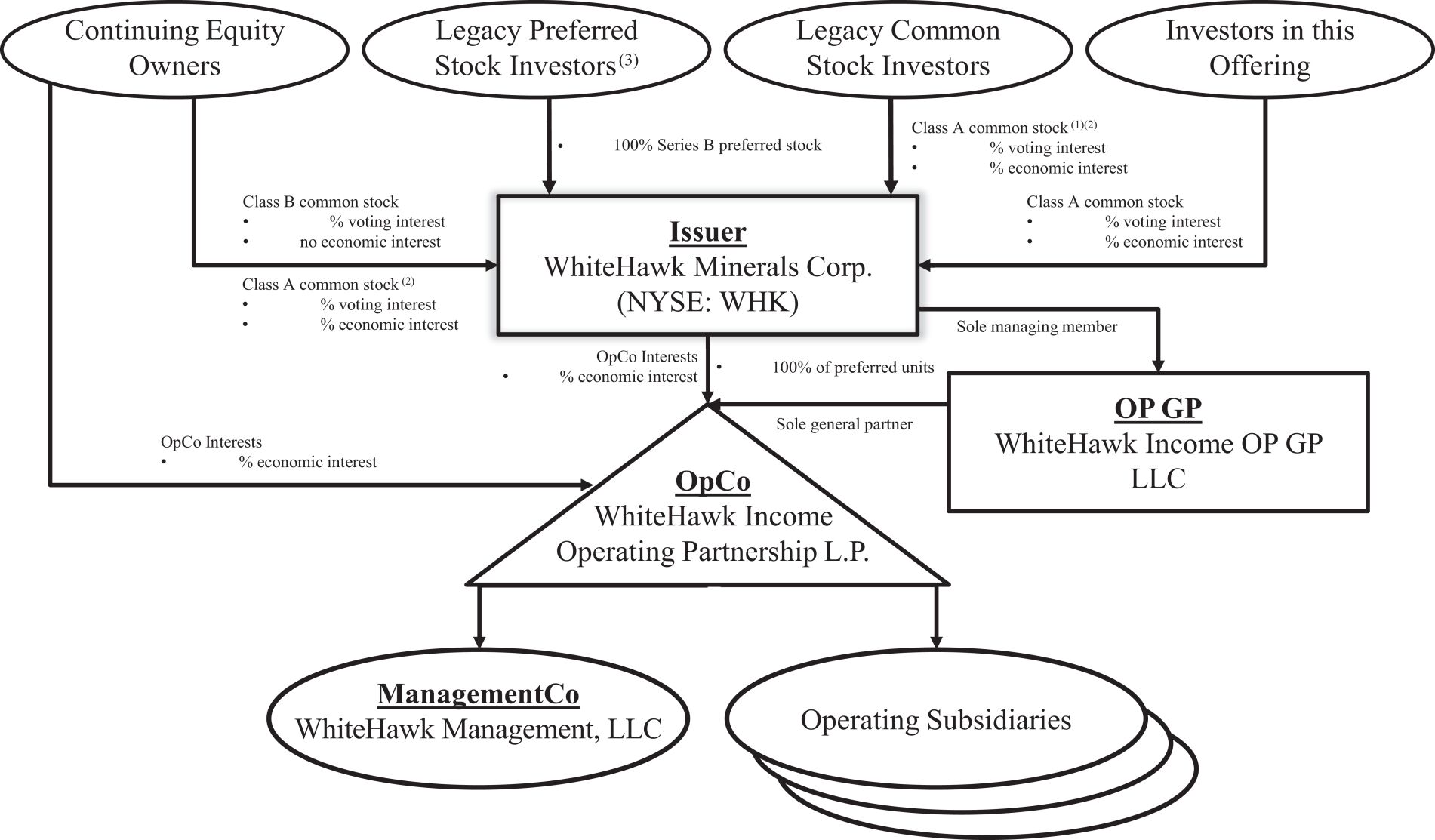
Upon consummation of this offering, we will be a holding company in an organizational structure commonly referred to as an umbrella partnership-C-corporation (or “Up-C”) structure, and our principal assets will consist of (i) direct ownership of % of the common units (“OpCo Interests”) of WhiteHawk Income Operating Partnership L.P. (“WhiteHawk OpCo”) (or approximately % of the OpCo Interests if the underwriters exercise in full their option to purchase additional shares of Class A common stock), which entitle us to a corresponding percentage ownership of the economic interest in WhiteHawk OpCo, and (ii) all of the member interests of WhiteHawk Income OP GP LLC (“OP GP”), the sole general partner of WhiteHawk OpCo, which entitles us to control the business and affairs of WhiteHawk OpCo. See “Risk Factors—Risks Related to Our Capital Structure.” We will operate and control all of the business and affairs of WhiteHawk OpCo and its direct and indirect subsidiaries, and conduct our business through WhiteHawk OpCo. In addition, we will own all of the Series B preferred units of WhiteHawk OpCo.
Following this offering, we will have two series of authorized common stock: shares of Class A common stock, having one vote per share and economic rights, and shares of Class B common stock, having one vote per share and no economic rights (collectively, the “Common Stock”). Holders of Class A and Class B common stock will vote together as a single class on all matters to be presented to our shareholders for their vote or approval, except as otherwise required by applicable law or our Bylaws (as defined herein). Our outstanding Class A common stock and Class B common stock will represent approximately % and %, respectively, of the total voting power of our outstanding Common Stock immediately following this offering, assuming no exercise of the underwriters’ option to purchase additional shares of Class A common stock. See “Description of Capital Stock” and “Our Organizational Structure.”
We are an “emerging growth company” as that term is used in the Jumpstart Our Business Startups Act of 2012 (the “JOBS Act”) and, as such, we have elected to take advantage of certain reduced public company reporting requirements for this prospectus and future filings. See “Risk Factors” and “Prospectus Summary—Emerging Growth Company.”
Investing in our Class A common stock involves risks. See “Risk Factors” starting on page 34.
| Price to Public | Underwriting Discounts and Commissions(1) |
Proceeds to Issuer |
||||||||||
| Per Share |
$ | $ | $ | |||||||||
| Total |
$ | $ | $ | |||||||||
| (1) | See “Underwriting” for additional information regarding underwriter compensation. |
Delivery of the shares of Class A common stock will be made on or about , 2026.
Neither the Securities and Exchange Commission (the “SEC”) nor any state securities commission has approved or disapproved of these securities or determined if this prospectus is truthful or complete. Any representation to the contrary is a criminal offense.
Joint Lead Bookrunners
| Raymond James | Stifel | J.P. Morgan |
Bookrunning Managers
| Capital One Securities | Stephens Inc. |
Prospectus dated , 2026
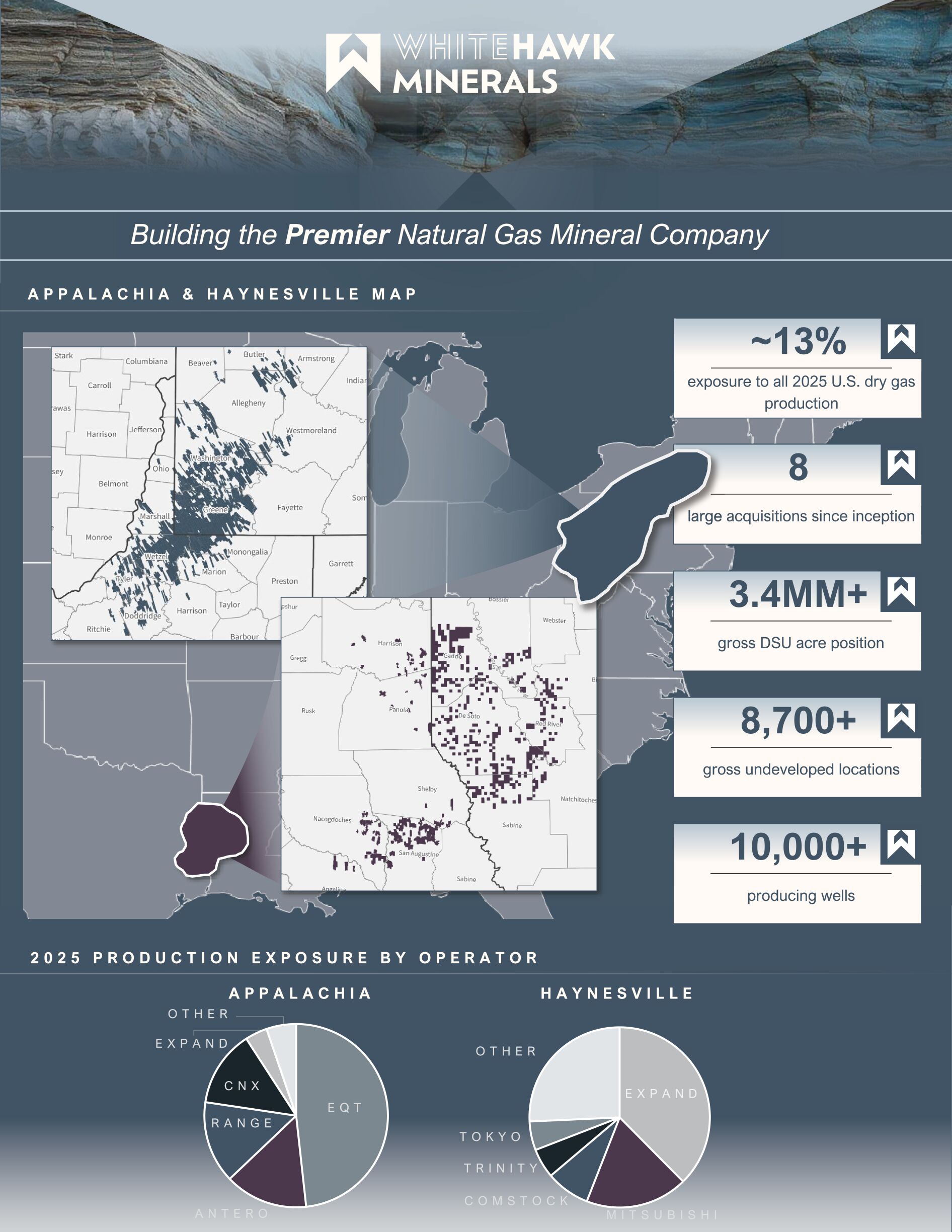
Building the Premier Natural Gas Mineral Company APPALACHIA HAYNESVILLE EQTANTE RORAN GECNX EXPAND OTHER EXPAND MITS UBIS HI COM STOCK TRINITY TOKYO GAS OTHER APPALACHIA & HAYNESVILLE MAP 8,700+ gross undeveloped locations 10,000+ producing wells ~13% exposure to all 2025 U.S. dry gas production 8 large acquisitions since inception 3.4MM+ gross DSU acre position 2025 PRODUCTION EXPOSURE BY OPERATOR 86452-044 07May26 20:02 Page 3
| Page | ||||
| iii | ||||
| 1 | ||||
| 34 | ||||
| 76 | ||||
| 79 | ||||
| 83 | ||||
| 84 | ||||
| 85 | ||||
| 87 | ||||
| UNAUDITED PRO FORMA CONDENSED CONSOLIDATED COMBINED FINANCIAL INFORMATION |
89 | |||
| MANAGEMENT’S DISCUSSION AND ANALYSIS OF FINANCIAL CONDITION AND RESULTS OF OPERATIONS |
95 | |||
| 110 | ||||
| 141 | ||||
| 146 | ||||
| 155 | ||||
| 157 | ||||
| 167 | ||||
| 174 | ||||
| 182 | ||||
| MATERIAL U.S. FEDERAL INCOME TAX CONSIDERATIONS FOR NON-U.S. HOLDERS OF COMMON STOCK |
184 | |||
| 188 | ||||
| 196 | ||||
| 196 | ||||
| 197 | ||||
| 198 | ||||
| F-1 | ||||
| A-1 | ||||
You should rely only on the information contained in this prospectus or in any free writing prospectus we may specifically authorize to be delivered or made available to you. Neither we nor any of the underwriters (or any of our or their respective affiliates) have authorized anyone to provide any information or to make any representations other than those contained in this prospectus, any amendment or supplement to this prospectus or in any free writing prospectus prepared by us or on our behalf or to which we have referred you. Neither we nor the underwriters (or any of our or their respective affiliates) take any responsibility for, and can provide no assurance as to the reliability of, any other information that others may give you. This prospectus is an offer to sell only the shares of Class A common stock offered hereby, but only under circumstances and in jurisdictions where it is lawful to do so. You should assume that the information contained in this prospectus or any free writing prospectus is accurate only as of the date of this prospectus, regardless of the time of delivery of this prospectus or the time of any sale of shares of our Class A common stock. Our business, financial condition, results of operations and prospects may have changed since that date.
For investors outside the United States: Neither we nor any of the underwriters have done anything that would permit this offering or possession or distribution of this prospectus in any jurisdiction where action for that purpose is required, other than in the United States. Persons outside of the United States who come into possession of this prospectus must inform themselves about, and observe any restrictions relating to, the offering of the shares of our Class A common stock and the distribution of this prospectus outside of the United States.
Through and including , 2026 (25 days after the date of this prospectus), all dealers effecting transactions in our Class A common stock, whether or not participating in this offering, may be required to deliver a prospectus. This requirement is in addition to the dealers’ obligation to deliver a prospectus when acting as an underwriter and with respect to an unsold allotment or subscription.
Organizational Structure
In connection with the closing of this offering, we will undertake certain organizational transactions to reorganize our corporate structure. Unless otherwise stated or the context otherwise requires, all information in this prospectus reflects the consummation of the organizational transactions described in the section titled “Our Organizational Structure” and this offering, and the application of the proceeds therefrom, which we refer to collectively as the “Transactions.” Additionally, unless otherwise indicated, share amounts in this prospectus reflecting the consummation of the Transactions do not give effect to OpCo Interests or shares of our Class B common stock that may be issued as a part of the Earnout Amount (as defined herein), as more fully described in the section titled “Certain Relationships and Related Party Transactions—Internalization—Earnout.”
See “Our Organizational Structure” for a diagram depicting our organizational structure after giving effect to the Transactions, including this offering.
Certain Definitions
As used in this prospectus, unless the context otherwise requires, references to:
| | “Contribution Agreement” refers to the contribution agreement we will enter into with WhiteHawk OpCo, the Management Contributor, ManagementCo, WhiteHawk Energy LLC and WhiteHawk Energy Services LLC to effectuate the acquisition of ManagementCo, our current external manager, by WhiteHawk OpCo (the “Internalization”). |
| | “Continuing Equity Owners” refers collectively to the Management Owners who will be holders of OpCo Interests (together with a corresponding number of shares of Class B common stock) immediately following consummation of the Transactions, who may, following the consummation of this offering, exchange at each of their respective options, in whole or in part from time to time, their OpCo Interests (together with a corresponding number of shares of Class B common stock), for, at our election (determined solely by our independent directors (within the meaning of the NYSE rules) who are disinterested), cash or newly-issued shares of our Class A common stock as described in “Certain Relationships and Related Person Transactions—OpCo Agreement—Agreement in Effect Upon Consummation of the Transactions.” |
| | “Exchange” or “NYSE” refers to the New York Stock Exchange. |
| | “Legacy Common Stock Investors” refers, collectively, to the holders of shares of Class A common stock, par value $0.0001 per share, Class I common stock, par value $0.0001 per share, and Class T common stock, par value $0.0001 per share, but excludes Continuing Equity Owners. |
| | “OpCo Interests” refers to the common units of WhiteHawk Income Operating Partnership L.P., including those that we purchase with the net proceeds from this offering. |
| | “Management Contributor” refers to WhiteHawk Minerals LLC. |
| | “Management Owners” refers collectively to the direct and indirect owners of WhiteHawk Management, LLC (“ManagementCo”, “WHIC Manager” or “WhiteHawk Management”) prior to the consummation of the Transactions). Management Owners may also be Continuing Equity Owners. See “Certain Relationships and Related Person Transactions—Contribution Agreement.” |
| | “OpCo Agreement” refers, as applicable, to WhiteHawk OpCo’s amended and restated limited partnership agreement, as currently in effect, or to the amended and restated limited partnership agreement effective immediately prior to the consummation of this offering, and as such agreement may thereafter be amended and/or restated. |
| | “Transactions” refers to the organizational transactions described in the section titled “Our Organizational Structure” and this offering, and the application of the net proceeds therefrom. |
iii
| | “we,” “us,” “our,” the “Company,” “WhiteHawk,” and similar references refer to, prior to this offering, WhiteHawk Income Corporation, and after this offering, WhiteHawk Minerals Corp., and, unless otherwise stated, in each case, all of its direct and indirect subsidiaries, including OP GP and WhiteHawk OpCo. |
We are a holding company and the sole member of WhiteHawk Income OP GP LLC (“OP GP”), the sole general partner of WhiteHawk OpCo. As the sole member of OP GP, we control the business and affairs of WhiteHawk OpCo.
Presentation of Financial Results
WhiteHawk Income Corporation (“WhiteHawk,” the “Company,” “we,” “us” and “our”) was formed in February 2022. On June 23, 2025, pursuant to that certain Agreement and Plan of Merger, dated as of May 8, 2025 (the “PHX Merger Agreement”), by and among WhiteHawk Acquisition, Inc., a Delaware corporation and wholly owned subsidiary of the Company (“WH Acquisition Corp.”), WhiteHawk Merger Sub, Inc., a Delaware corporation (“Merger Sub” and, together with WH Acquisition Corp., the “Company Parties”) and PHX Minerals, Inc. (“PHX”), the Company Parties fully acquired all of the issued and outstanding shares of PHX’s common stock (the “PHX Acquisition”). On March 31, 2025, the Company purchased mineral and royalty interests in the Marcellus Shale (the “Three Rivers Royalty Acquisition” or the “TRR Acquisition”) from Three Rivers Royalty, LLC (the “TRR Seller”). Prior to the Three Rivers Royalty Acquisition, the TRR Seller was a wholly owned subsidiary of San Jacinto Minerals I, LLC (“SJM”).
This prospectus includes historical consolidated financial information of the Company and its subsidiaries as of December 31, 2025 (as restated) and 2024. This prospectus also includes historical financial information of PHX for the years ended December 31, 2024 and 2023 and the three months ended March 31, 2025 and 2024, as well as the carve-out financial statement information of the TRR Seller for the years ended December 31, 2024 and 2023. Historical financial and operating information is not indicative of the results that may be expected in any future periods. For more information, please see the historical consolidated financial statements and related notes thereto included elsewhere in this prospectus. Unless otherwise indicated, the historical financial information presented in this prospectus represents the historical data and information of WhiteHawk, without giving effect to the PHX Acquisition for periods prior to June 23, 2025, the Three Rivers Royalty Acquisition for periods prior to March 31, 2025, the Transactions or other adjustments.
This prospectus also includes certain unaudited pro forma financial information. See “Unaudited Pro Forma Condensed Consolidated Combined Financial Information.” As used herein, except as noted in this prospectus, the term “pro forma” when used with respect to any financial data, refers to the historical data of WhiteHawk, as adjusted after giving effect to (i) the PHX Acquisition, (ii) the Three Rivers Royalty Acquisition and (iii) the Transactions. Pro forma financial data for the year ended December 31, 2025 gives effect to the PHX Acquisition, the Three Rivers Royalty Acquisition and the Transactions as if each had been consummated on January 1, 2025. Pro forma financial data as of December 31, 2025 gives effect to the Transactions as if they had been consummated on December 31, 2025. Pro forma financial data contains certain reclassification adjustments to conform the historical PHX financial statement presentation and the historical TRR Seller financial statement presentation to the Company’s financial statement presentation. The pro forma data is presented for illustrative purposes only and should not be relied upon as an indication of the financial condition or the operating results that would have been achieved if the PHX Acquisition, the Three Rivers Royalty Acquisition and the Transactions had taken place on the specified dates. Future results may vary significantly from the results reflected in such pro forma financial data and should not be relied on as an indication of future results.
Certain monetary amounts, percentages and other figures included in this prospectus have been subject to rounding adjustments. Percentage amounts included in this prospectus have not in all cases been calculated on the basis of such rounded figures, but on the basis of such amounts prior to rounding. For this reason, percentage amounts in this prospectus may vary from those obtained by performing the same calculations using the figures
iv
in our consolidated financial statements included elsewhere in this prospectus. Certain other amounts that appear in this prospectus may not sum due to rounding.
Restatement
On April 22, 2026, we concluded that our audited consolidated financial statements for the fiscal year ended December 31, 2025 could no longer be relied upon as a result of certain material accounting errors identified by management subsequent to the issuance of our audited consolidated financial statements as of and for the fiscal year ended December 31, 2025. Accordingly, the audited consolidated financial statements as of and for the fiscal year ended December 31, 2025 included elsewhere in this prospectus were restated by the Company in order to reflect the correction of the identified errors (the “Misstatements”) related to (i) the recording of management fees and (ii) the misclassification of pre-closing date and post-effective date monies received related to acquisitions (the “Restatement”). For additional information, see “Note 3, Restatement of Financial Statements” to our audited consolidated financial statements as of and for the fiscal year ended December 31, 2025 included elsewhere in this prospectus and “Management’s Discussion and Analysis of Financial Condition and Results of Operations—Internal Controls and Procedures—Material Weaknesses in Internal Control over Financial Reporting.”
Control Considerations
Although management did not, and was not required to, conduct a formal assessment of internal control over financial reporting as of December 31, 2025, as a result of the Misstatements and the Restatement, the Company identified certain material weaknesses in its internal control over financial reporting. As a result of these material weaknesses in internal control over financial reporting, our disclosure controls and procedures were not effective at a reasonable assurance level as of December 31, 2025. Management expects to implement changes to strengthen our internal controls and remediate the material weaknesses. See “Management’s Discussion and Analysis of Financial Condition and Results of Operations—Internal Controls and Procedures—Material Weaknesses in Internal Control over Financial Reporting” for additional information related to the material weaknesses in internal control over financial reporting and our related remediation activities. See “Risk Factors—Risks Related to Our Business—We recently restated our audited consolidated financial statements as of and for the fiscal year ended December 31, 2025 to correct material accounting errors and have identified material weaknesses in our internal control over financial reporting.”
Reserves Estimates and Acreage Presentation
Unless otherwise indicated, operating and reserve information of the Company presented herein does not give effect to the PHX Acquisition or the Three Rivers Royalty Acquisition for the periods prior to the date of such transactions. We provide estimates of our proved reserves in this prospectus as of December 31, 2025 and 2024 based on SEC pricing, meaning the unweighted first day of the month arithmetic average price of natural gas and oil over the 12 months prior to the determination date. The estimates of our proved reserves as of December 31, 2025 were prepared by Cawley, Gillespie & Associates (“CG&A”), independent petroleum engineers. The estimates of our proved reserves as of December 31, 2024 have been prepared by Schaper Energy Consulting, LLC (“Schaper Energy”), independent petroleum engineers. We refer to Schaper Energy and CG&A as our “reserve engineers.” Summaries of their reports are included as exhibits to the registration statement of which this prospectus forms a part. We refer to such reports herein as “our reserve reports.” The estimates of PHX’s proved reserves as of December 31, 2024 were prepared by CG&A, PHX’s independent petroleum engineer. The estimates of the proved reserves of the TRR Seller as of December 31, 2024 have been prepared by Ryder Scott Company, L.P. (“Ryder Scott”), the TRR Seller’s independent petroleum engineer, at the request of SJM as part of their audit process. For additional information regarding our, PHX’s and TRR Seller’s reserves estimates as of December 31, 2025 and 2024, see “Business—Natural Gas, NGL and Oil Data.”
In this prospectus, references to gross DSU acres include both actual and theoretical DSUs. Theoretical DSUs are drilling spacing units that have not yet been formally established but are internally delineated by our engineering
v
and land teams based on operator unitization practices, development patterns in the surrounding area and our reasonable assumptions regarding future well development.
Non-GAAP Financial Measures
This prospectus contains certain financial measures that are not required by or prepared in accordance with generally accepted accounting principles (“GAAP”), including Adjusted EBITDA and Cash Available for Distribution (and their pro forma counterparts). We refer to these measures as “non-GAAP financial measures.” See “Prospectus Summary—Summary Historical and Pro Forma Condensed Consolidated Financial and Other Data—Non-GAAP Financial Measures” for our definitions of these non-GAAP financial measures, information about how and why we use these non-GAAP financial measures and a reconciliation of each of these non-GAAP financial measures to its most directly comparable financial measure calculated in accordance with GAAP.
Trademarks and Trade Names
We own or have rights to various trademarks, service marks and trade names that we use in connection with the operation of our business. This prospectus may also contain trademarks, service marks and trade names of third parties, which are the property of their respective owners. Our use or display of third parties’ trademarks, service marks, trade names or products in this prospectus is not intended to, and does not imply, a relationship with us or an endorsement or sponsorship by or of us. Solely for convenience, the trademarks, service marks and trade names referred to in this prospectus may appear without the TM, SM or ® symbols, but such references are not intended to indicate, in any way, that we will not assert, to the fullest extent under applicable law, our rights or the right of the applicable licensor to these trademarks, service marks and trade names.
Industry and Market Data
The market data and certain other statistical information used throughout this prospectus are based on independent industry publications, government publications and other published independent sources. These sources include reports entitled: Electric Power Monthly, dated December 2025, (the “EIA Electric Monthly”), Short-Term Energy Outlook, dated December 2025 (the “EIA Short-Term Energy Outlook”), Natural Gas Annual, dated December 2025 (the “EIA Natural Gas Annual”), the Liquefied Natural Gas Monthly, dated December 2025 (the “EIA Natural Gas Monthly”), the Annual Report of Domestic Oil and Gas Reserves, U.S. Crude Oil and Natural Gas Proved Reserves, Year-end 2023, dated December 2025 (the “EIA Reserve Report”), Liquefied U.S. Natural Gas Exports, dated December 2025 (the “EIA Natural Gas Exports”), U.S. Liquefaction Capacity, dated December 2025 (the “EIA Liquefaction Report”), by the Energy Information Administration (the “EIA”), a report entitled 2024 Statistical Review of World Energy (the “World Energy Report”) by the Energy Institute, FactSet International LNG Pricing, dated January 2025 (the “International LNG Report”), FactSet Spot Price, dated December 2025 (the “Spot Price Report”) and Upstream Outlook, dated December 2025 (the “Upstream Outlook Report”) by FactSet, as well as data and analytics derived from Enverus Prism®, dated December 31, 2025 (the “Enverus Data”). Although we believe these third-party sources are reliable as of their respective dates, neither we nor the underwriters have independently verified the accuracy or completeness of this information. Some data is also based on our good faith estimates. The industry in which we operate is subject to a high degree of uncertainty and risk due to a variety of factors, including those described in the section entitled “Risk Factors.” These and other factors could cause results to differ materially from those expressed in these publications.
Additionally, this prospectus includes industry and market data and forecasts that we obtained from internal company surveys, publicly available information and industry publications and surveys. Our internal research and forecasts are based on management’s understanding of industry conditions, and such information has not been verified by independent sources. Industry publications and surveys generally state that the information contained therein has been obtained from sources believed to be reliable.
vi
This summary highlights certain significant aspects of our business and this offering. This is a summary of information contained elsewhere in this prospectus, is not complete and does not contain all of the information that you should consider before making your investment decision. You should carefully read the entire prospectus, including the information presented under the sections entitled “Risk Factors” and “Cautionary Note Regarding Forward-Looking Statements” and the consolidated financial statements and related notes thereto, before making an investment decision. This summary contains forward-looking statements that involve risks and uncertainties. Unless the context requires otherwise, references to “our company,” “we,” “us,” “our,” and “WhiteHawk” refer to WhiteHawk Income Corporation and its direct and indirect subsidiaries on a consolidated basis prior to this offering, and WhiteHawk Minerals Corp. and its direct and indirect subsidiaries on a consolidated basis following this offering. This prospectus includes certain terms commonly used in the natural gas and oil industry, which are defined elsewhere in this prospectus in the “Glossary of Natural Gas and Oil Terms” contained in Annex A to this prospectus.
The estimates of our proved reserves as of December 31, 2025 have been prepared by CG&A, our independent reserve engineers. CG&A’s report is included as an exhibit to the registration statement of which this prospectus forms a part. The estimates of our proved reserves as of December 31, 2024 have been prepared by Schaper Energy, our independent reserve engineers. Schaper Energy’s report is included as an exhibit to the registration statement of which this prospectus forms a part. The estimates of PHX’s (as defined herein) proved reserves as of December 31, 2024 have been prepared by CG&A, PHX’s independent reserve engineers. CG&A’s report is included as an exhibit to the registration statement of which this prospectus forms a part. The estimates of the TRR Seller’s proved reserves as of December 31, 2024 have been prepared by Ryder Scott Company, L.P. (“Ryder Scott”), the TRR Seller’s independent reserve engineers. Ryder Scott’s report is included as an exhibit to this registration statement of which this prospectus forms a part.
Our Company
WhiteHawk is focused on being the premier natural gas mineral and royalty business in the United States. We are committed to delivering cash flow and total returns to our investors through the disciplined acquisition, active management and ownership of high-quality mineral and royalty interests. Our assets are concentrated in the Marcellus and Haynesville Shales, which are located in the Appalachian and Haynesville Basins, which are among the most productive and lowest-cost U.S. natural gas basins.1 Upon completion of the offering, we will own the largest, high-quality publicly traded natural gas mineral portfolio in the United States.2 As a mineral and royalty business, we do not pay any drilling-related capital expenditures and only minimal operating expenses on our properties. This results in a high-margin business and allows us to distribute a meaningful portion of our cash flow to investors, while providing them with potential for significant capital appreciation over time.
As of December 31, 2025, our portfolio spans approximately 3.4 million gross DSU acres, including 1.6 million gross DSU acres across the Appalachian and Haynesville Basins and represents an economic interest in approximately 13%3 of all natural gas produced in the United States as of December 31, 2025. Further, we have more than 10,900 producing wells and more than 8,000 remaining identified undeveloped locations as of December 31, 2025. The Appalachian and Haynesville Basins form the core of U.S. natural gas production and are among the most prolific energy-producing regions globally. If measured against sovereign nations, the Appalachian Basin would rank as the world’s second-largest natural gas producer, with daily production of
| 1 | EIA Short-Term Energy Outlook; Enverus Data. |
| 2 | Based upon management’s review of public filings with the SEC, excluding those companies which either derive a majority of their revenue from oil or are oil and NGL weighted in production. |
| 3 | Enverus Data. |
1
approximately 33 Bcf/d, and the Haynesville Basin would rank eighth with daily production of approximately 13 Bcf/d.4 In 2025, the Appalachian and Haynesville Basins together accounted for more than 50%5 of total U.S. dry gas production, providing the foundation of domestic natural gas supply and export growth. Our mineral interests are concentrated in the core of these premier natural gas regions and offer long-term participation in two of the largest, most active and lowest-cost natural gas weighted basins in the United States.6
WhiteHawk’s mineral interests are developed by many of the largest, most active and well-capitalized natural gas operators in the United States, including EQT (NYSE: EQT), Range Resources (NYSE: RRC), CNX Resources (NYSE: CNX), Antero Resources (NYSE: AR), Expand Energy (NASDAQ: EXE), Comstock Resources (NYSE: CRK) and Aethon Energy. In 2025, approximately 18%7 of all wells drilled in the Appalachian and Haynesville Basins were located on acreage in which we hold royalty interests. Our significant footprint across both basins provides alignment and scale with these premier operators. In 2025, EQT was the largest natural gas producer in the Appalachian Basin, and Expand Energy was the largest producer in the Haynesville Basin.8 In the same year, approximately 49% of EQT’s Appalachian production and 57% of Expand Energy’s Haynesville production were sourced from acreage in which we hold royalty interests.9 Because our mineral interests are concentrated within these operators’ active and planned development areas, we can benefit directly from their scale, financial strength and efficiency. Our exposure to leading operators enables us to gain from their continuous development across commodity cycles and provides a resilient base for predictable cash flow growth.
Leveraging our scale and position alongside leading operators, we believe we are well positioned to capitalize on two powerful natural gas demand catalysts: artificial intelligence (“AI”) driven electricity demand growth and expanding U.S. liquefied natural gas (“LNG”) exports. Natural gas remains the most reliable, scalable and cost-effective source of baseload power and accounted for approximately 41%10 of total U.S. electricity generation in 2025. The rapid buildout of AI and cloud-computing infrastructure is projected to create additional demand for natural gas-fired power generation, with a management-estimated 7.8 Bcf/d of total natural gas demand associated with new power plants expected to be constructed by 2031,11 largely within WhiteHawk’s Appalachian Basin footprint. In addition to an increase in domestic demand, global demand for U.S. natural gas is expected to further accelerate through LNG export growth. The EIA projects the United States will nearly double its LNG export capacity from approximately 17 Bcf/d12 in 2025 to nearly 34 Bcf/d by 203113 as European and Asian buyers seek to diversify supply and reduce exposure to higher regional benchmark prices. The Haynesville Basin’s proximity and pipeline connectivity to the Gulf Coast LNG corridor position our mineral interests to benefit directly from this expansion in export capacity and feed-gas demand. Together, accelerating power demand from AI and the continued buildout of LNG export capacity, inclusive of announced projects, are expected to drive a structural step-change in U.S. natural gas demand—driving roughly a 36%14 increase in combined demand by 2031 compared to 2025 levels. WhiteHawk believes it offers public investors direct equity exposure to the powerful tailwinds of AI-driven power demand and expanding U.S. LNG exports without drilling-related capital expenditures.
WhiteHawk is led by one of the most experienced and acquisitive management teams in the minerals and royalties sector. Collectively, our leadership has more than 125 years of industry experience and has completed
| 4 | World Energy Report. |
| 5 | EIA Short-Term Energy Outlook. |
| 6 | Enverus Data. |
| 7 | Enverus Data. |
| 8 | Enverus Data. |
| 9 | Enverus Data. |
| 10 | EIA Electric Monthly. |
| 11 | Assumes 1 gigawatt of capacity equates to 154 mmcf/d of natural gas demand. |
| 12 | EIA Natural Gas Exports. |
| 13 | EIA Electric Monthly. Includes current operating and under construction projects only. |
| 14 | EIA Natural Gas Monthly. |
2
over $31 billion of energy transactions across the upstream, midstream, and minerals and royalty value chain. Members of our team previously served as senior executives or founders of Atlas Energy (NYSE: ATLS), Atlas Pipeline Partners (NYSE: APL) and Falcon Minerals Corporation (NASDAQ: FLMN), each of which were successful public companies that generated substantial shareholder value through disciplined growth, accretive acquisitions and strategic monetizations.
Since its inception, WhiteHawk has completed eight large acquisitions, making it the most active acquirer of natural gas mineral and royalty properties in the United States.15 More importantly, these acquisitions have been highly accretive to shareholders and have resulted in approximately 36%16 cash-on-cash return to our initial investors through 46 months of consecutive cash dividend payments, plus an additional 41% increase in shareholder value through three share dividends through January 1, 2026. We continue to execute a focused consolidation strategy in a fragmented market, targeting accretive acquisitions to expand scale, enhance returns and extend development visibility. Our ability to consistently source, evaluate and close accretive transactions ahead of broader market consolidation underscores WhiteHawk’s leadership as a focused, data-driven consolidator with a proven track record of value creation.
Our History
We were founded in 2022 with a clear mission to build the premier natural gas minerals and royalty platform. Our thesis was that natural gas minerals and royalties represent one of the most efficient and resilient ways to participate in the energy value chain, combining high-margin cash yield with exposure to long-term macro tailwinds in U.S. natural gas demand.
We began executing on a strategy to consolidate high-quality, core-basin mineral and royalty assets from institutional and private equity owners. We identified an estimated $3 – $5 billion of natural gas minerals and royalties in the Appalachian and Haynesville Basins that were held by private equity funds nearing the end of their investment cycles and fund lives with few buyers of scale in the market. This imbalance created an attractive entry point to acquire premium assets at compelling valuations. WhiteHawk was created to capitalize on this opportunity, bringing technical expertise, public market experience and fresh capital to a fragmented sector.
In addition to our strategic acquisitions of larger, consolidated natural gas mineral packages, we launched a dedicated “ground game” in 2025 that has become an important component of our growth strategy. This approach builds on a meaningful track record, including at Falcon Minerals Corporation, where our team successfully executed more than 30 acquisitions through a similar strategy. Leveraging significant in-house land and engineering expertise alongside an established network of regional brokers, we seek to efficiently source and underwrite smaller-scale opportunities that we believe are highly accretive. Since December 2025, we have completed 14 such transactions totaling approximately $39.7 million. We expect the ground game to remain a component of our acquisition strategy, with the goal of adding scale consistent with our existing portfolio quality.
This opportunity may be enhanced by the fragmentation across our existing asset base. With an average net revenue interest of approximately 0.48% across our DSUs and an average royalty rate of approximately 17% as of December 31, 2025, we believe there is more than 33 times our current ownership potentially available for acquisition within our existing footprint.
| 15 | Enverus Data. |
| 16 | Reflects a cash-on-cash return to our initial investors whose share price did not include any selling commissions on investment. Returns to our initial investors whose share price included selling commissions on investment resulted in cash-on-cash returns of approximately 33%. |
3
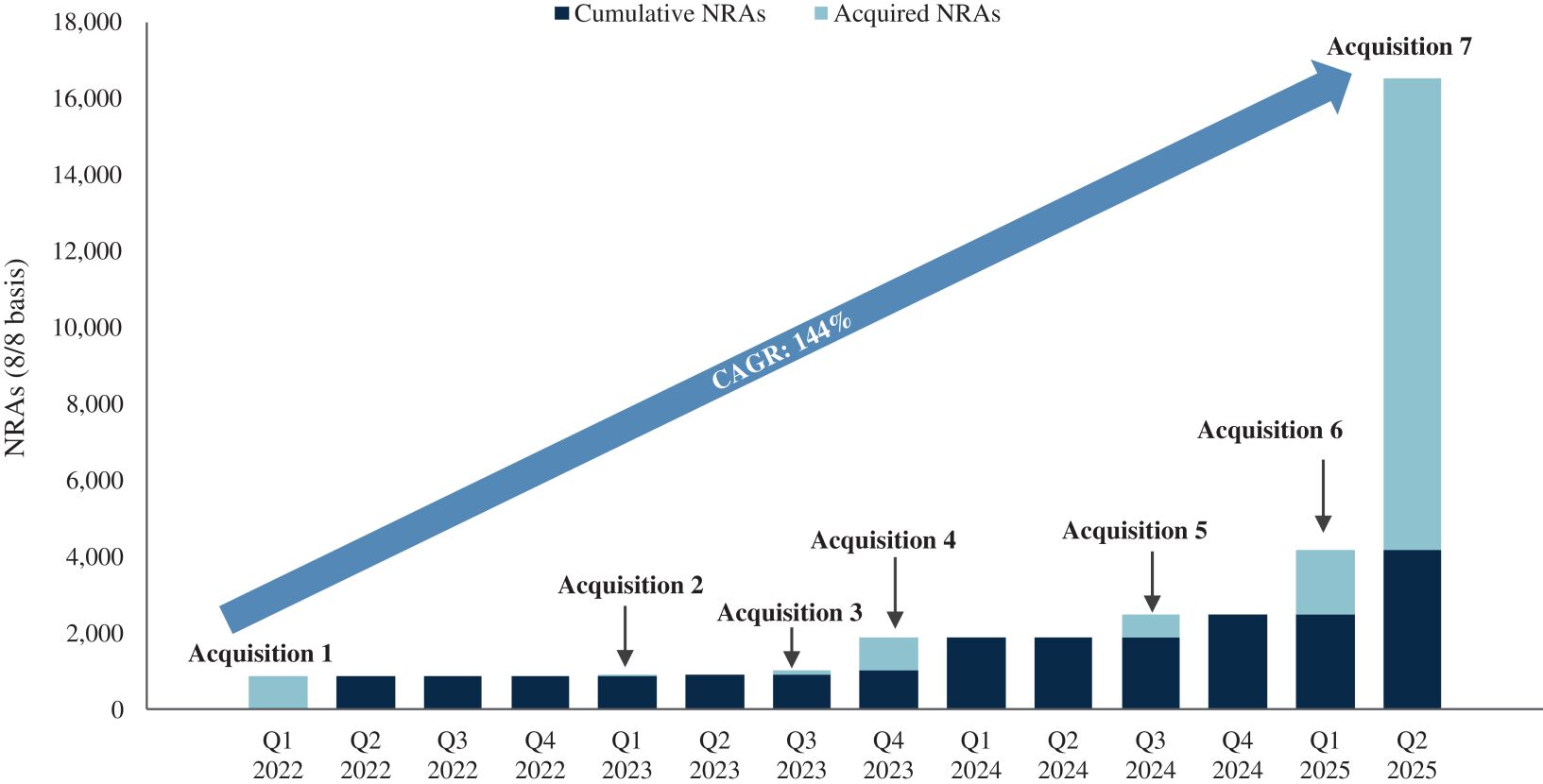
As of December 31, 2025, WhiteHawk has accumulated natural gas mineral and royalty assets across approximately 3.4 million gross DSU acres focused primarily on the Appalachian and Haynesville Basins. From our inception in 2022 through 2025, WhiteHawk has made seven acquisitions and has paid more than 46 consecutive monthly cash dividends, representing approximately 36%17 cash-on-cash return to our initial investors, plus an additional 41% increase in shareholder value through three share dividends through January 1, 2026.
The figure below summarizes our acquisition history with respect to acquired net royalty acres on an 8/8th basis (“NRAs”).
Members of our management team were some of the early pioneers in the Marcellus Shale and, prior to the formation of WhiteHawk, collectively drilled some of the first horizontal wells in the Marcellus Shale. With over 20 years of Appalachian Basin-specific experience, our land and engineering teams specialize in identifying and acquiring high-quality land assets that underpin valuable, long-term mineral and royalty interests. This technical capability, combined with our extensive history of operating in Appalachia, proprietary deal sourcing, and data-driven analysis, allows WhiteHawk to efficiently negotiate and close transactions while maintaining disciplined capital allocation. In addition to utilizing technical analysis, we strive to acquire mineral and royalty interests in properties with top-tier E&P operators. We seek E&P operators that are well-capitalized, have a strong operational track record, and we believe will continue to increase production through the application of the latest drilling and completion techniques across our mineral and royalty interests, and have demonstrated resilience through commodity cycles.
The U.S. natural gas minerals and royalties market remains highly fragmented with many private owners and few scaled aggregators. This structural fragmentation presents a significant opportunity for continued consolidation. WhiteHawk is one of the few active, large mineral buyers focused exclusively on natural gas. Upon completion of this offering, WhiteHawk will be the only public natural gas mineral and royalty company with meaningful, scaled exposure to the Appalachian and Haynesville Basins, allowing WhiteHawk to capitalize on this fragmented market.18 We intend to leverage our position to pursue disciplined, accretive acquisitions that enhance portfolio quality, expand our footprint in premier basins, and drive sustainable growth in cash flow and shareholder returns over time.
| 17 | Reflects a cash-on-cash return to our initial investors whose share price did not include any selling commissions on investment. Returns to our initial investors whose share price included selling commissions on investment resulted in cash-on-cash returns of approximately 33%. |
| 18 | Based upon management’s review of public filings with the SEC, excluding those companies which either derive a majority of their revenue from oil or are oil and NGL weighted in production. |
4
Natural Gas Industry and Future Development
Natural gas is the largest source of U.S. electricity generation and a cornerstone of global energy supply, accounting for approximately 41%19 of total domestic power output in 2025. U.S. natural gas demand has the potential to increase from 107 Bcf/d in 2025 to approximately 148 Bcf/d by 2031, supported by structural growth across LNG exports, power generation expansion, rising electricity demand from data centers and AI, and advanced manufacturing.20
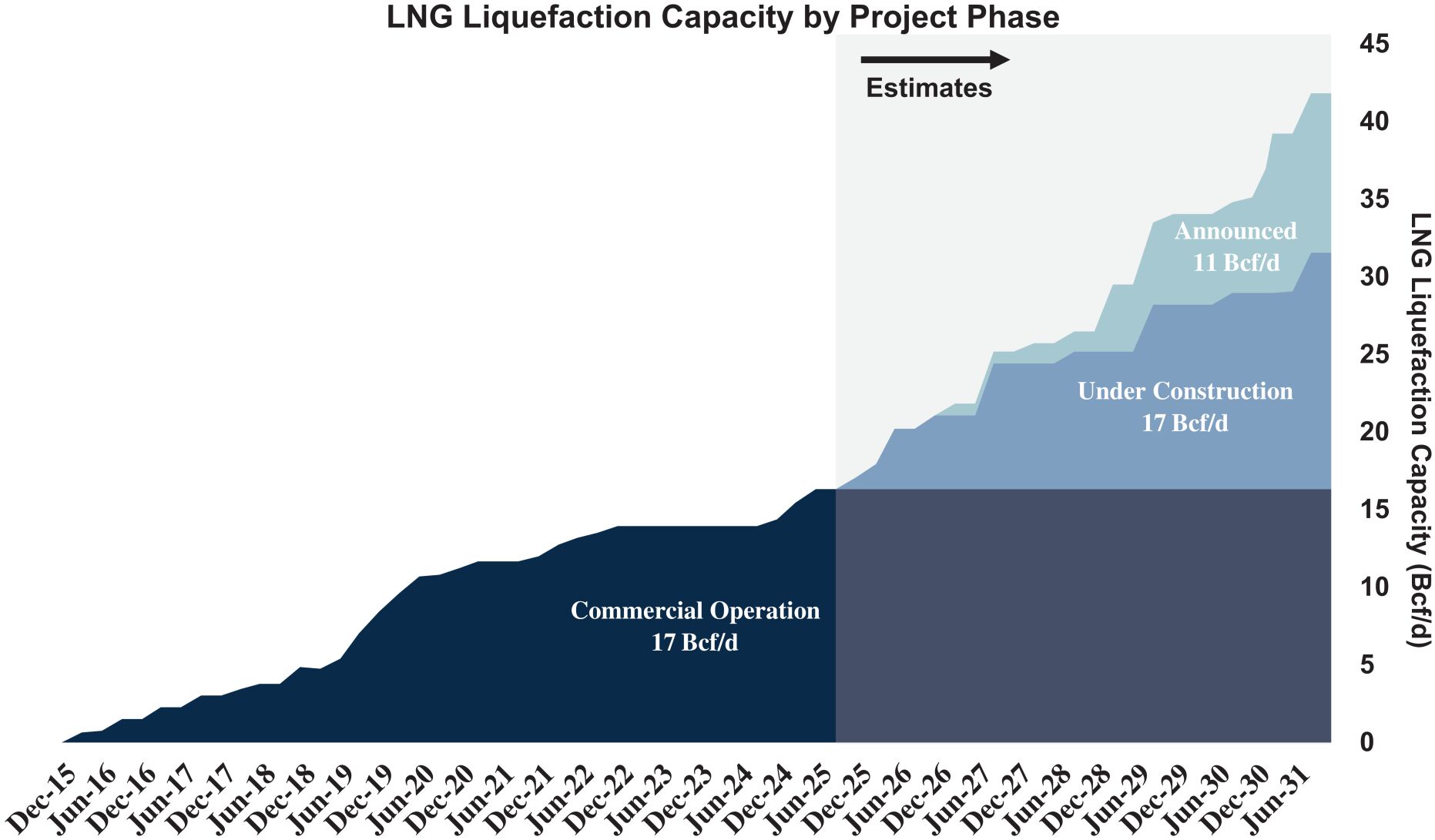
U.S. LNG export capacity could expand to around 45 Bcf/d by 2031, supported by approximately 34 Bcf/d currently operating or under construction and an additional 11 Bcf/d of capacity announced but not currently under construction21. If all export capacity is active by 2031, this would represent a 28% increase in natural gas demand over 2025 levels from LNG exports alone. The continued growth in LNG exports is expected to position the United States as the world’s leading supplier of natural gas to Europe and Asia as international buyers seek secure, competitively priced and transparent alternatives to oil-indexed or regional benchmarks.
The figure below illustrates estimated liquefaction capacity for existing, under construction and announced projects as of December 2025:
Note: Liquefaction Capacity reflects Peak Nameplate Capacity. Commercial Operation includes commissioned projects. Source: EIA Liquefaction Report.
Additionally, as of December 2025, WhiteHawk has identified 21 publicly announced new or planned natural gas power plants in close proximity to WhiteHawk’s Appalachia mineral position, which are estimated to generate natural gas demand of approximately 7.8 Bcf/d by 2031.22
| 19 | EIA Electric Monthly. |
| 20 | Management estimated based on EIA Short-Term Energy Outlook. |
| 21 | EIA Liquefaction Report as supplemented by management’s review of recently announced facilities. |
| 22 | Assumes 1 gigawatt of capacity equates to 154 mmcf/d of natural gas demand. |
5
In addition to the growing LNG export demand, the accelerated buildout of AI and cloud-computing infrastructure is creating a new and durable source of electricity demand, much of which is expected to be met by natural gas-fired power generation due to its reliability, scalability and relatively favorable carbon intensity.
WhiteHawk’s mineral position in the Appalachian Basin lies in close proximity to major data center growth corridors across Virginia, Ohio and Pennsylvania, where WhiteHawk has identified, as of December 2025, publicly announced 28 new data centers representing what management estimates will generate 3.3 Bcf/d of incremental natural gas demand, of which approximately 1.7 Bcf/d is under construction or has achieved FID and approximately 1.6 Bcf/d is in pre-FID and announced stages.23
Together, these structural demand drivers are expected to sustain drilling and development activity on WhiteHawk’s mineral acreage for years to come. With concentrated exposure to some of the most productive natural gas basins in the United States, we believe our mineral and royalty portfolio is well positioned to deliver stable production growth, increase royalty income and durable cash flow, and grow dividends and net asset value per share over the long term.
Our Focus on Key Gas Basins
WhiteHawk’s assets are concentrated in the Appalachian Basin and Haynesville Basin, which collectively represent the core of U.S. natural gas production. Each region combines substantial resource depth, high-quality operators, and access to major infrastructure and end-markets.
Appalachian Basin (Pennsylvania / West Virginia / Ohio)
The Appalachian Basin, located primarily in Pennsylvania, West Virginia and Ohio, constitutes the largest and most prolific natural gas basin in the United States and a critical source of future global natural gas supply, as of December 2025.24 The basin’s scale, consistent reservoir quality and access to infrastructure have made it a cornerstone of U.S. natural gas production and a key driver of the nation’s transition toward cleaner, lower-carbon energy. The Appalachian Basin’s importance to future natural gas growth is underpinned by its vast remaining resource potential and direct connectivity to both domestic and international demand. The basin benefits from an extensive network of gathering, processing and long-haul pipeline infrastructure that links production to major population centers and growing data center markets in the Northeast, Midwest and Northern Virginia, as well as to LNG export markets along the Gulf Coast. Continued expansion of southbound takeaway capacity and LNG facilities is expected to reinforce the region’s role as a primary growth engine for U.S. natural gas supply over the next decade.
In the Appalachian Basin, the Marcellus Shale has transformed the United States from a net importer to a net exporter of natural gas over the past 20 years. During 2025, it accounted for roughly one-third of total U.S. dry gas production, producing at some of the lowest breakeven costs in the United States.25 Exceptional pressure regimes, thick, laterally continuous pay zones and modern completion techniques allow operators to achieve recoveries and sustained productivity that rank among the highest in the industry.26 The Utica Shale provides additional stacked-pay potential that enhances the economic life and development diversity of the basin and already accounted for 8% of total U.S. natural gas production in 2025.27
As of December 31, 2025, WhiteHawk’s interests cover approximately 975,000 gross DSU acres across Southwest Pennsylvania and Northern West Virginia, operated by leading Appalachian Basin producers,
| 23 | Assumes 1 gigawatt of capacity equates to 154 mmcf/d of natural gas demand. |
| 24 | EIA Short-Term Energy Outlook. |
| 25 | EIA Short-Term Energy Outlook. |
| 26 | Enverus Data. |
| 27 | EIA Short-Term Energy Outlook. |
6
including EQT, Range Resources, CNX Resources and Antero Resources. These operators possess deep drilling inventories, strong balance sheets and a proven track record of disciplined development. Throughout 2024 and 2025, approximately 47% of wells turned in line by these operators in the Appalachian Basin were drilled on our acreage.28
The Appalachian Basin forms the foundation of WhiteHawk’s asset base and provides investors with exposure to a region positioned to remain a highly productive source of low-cost, scalable natural gas for the U.S. and global markets for decades to come.
Haynesville Basin (East Texas / North Louisiana)
The Haynesville Basin, located in East Texas and North Louisiana, is one of the largest and most productive natural gas plays in the United States and a cornerstone of future U.S. supply growth. The basin’s combination of exceptional reservoir quality, proximity to demand centers and direct access to the Gulf Coast has positioned it as a critical source of feed gas for the rapidly expanding LNG export market.
Strategically located within 150 miles of the Gulf Coast, the Haynesville Basin provides a direct and cost-advantaged connection between prolific supply and fast-growing global demand. It is estimated that nearly all existing and planned U.S. LNG export terminals—including Sabine Pass, Cameron, Golden Pass, Port Arthur and Plaquemines—source a substantial portion of their feed gas from the Haynesville Basin. This geographic alignment ensures that the basin will remain a key driver of U.S. natural gas export growth for decades as global markets seek cheaper, reliable sources of natural gas and lower-carbon alternatives to coal and oil.
Since its renewed development in 2017, the Haynesville Basin has delivered steady volume growth supported by high-deliverability wells and low full-cycle development costs.29 The basin is characterized by over pressured, laterally extensive shale formations that yield high initial production rates and long-lived reserves.30 Continued advances in lateral lengths, completion designs and multi-well pad efficiencies have enhanced recoveries and reduced breakeven costs, making the Haynesville Basin one of the most economically viable sources of natural gas in the world. In addition to the Haynesville Shale, our acreage also benefits from additional resources from the Cotton Valley and Mid-Bossier formations, which together produced approximately 3.2%31 of U.S. natural gas production in 2025.
As of December 31, 2025, WhiteHawk’s Haynesville interests cover approximately 600,000 gross DSU acres across East Texas and North Louisiana, operated by leading producers such as Expand Energy, Comstock Resources and Aethon Energy. These operators are among the most active and technically proficient in the basin, each maintaining multi-year drilling inventories and robust infrastructure connectivity.
The Haynesville Basin represents another cornerstone of WhiteHawk’s portfolio, providing exposure to one of the highest-margin, infrastructure-advantaged gas plays in the United States. Its proximity to LNG export facilities, industrial corridors and petrochemical complexes along the Gulf Coast positions the basin—and WhiteHawk’s assets within it—at the center of the next phase of global natural gas demand growth.
Mid-Con Region (Anadarko Basin, Oklahoma)
The Mid-Con region, anchored by the Anadarko Basin in Oklahoma and extending into portions of Texas, Arkansas and Kansas, is one of the most historically productive and geologically diverse hydrocarbon basins in the United States. The region has been a major contributor to U.S. natural gas and liquids supply for nearly a century and remains a critical source of stable production, infrastructure access and development optionality.
| 28 | Enverus Data. |
| 29 | EIA Short-Term Energy Outlook. |
| 30 | Upstream Outlook Report. |
| 31 | Enverus Data. |
7
With its combination of legacy production, existing infrastructure and ongoing technical innovation, the Anadarko Basin continues to play an important role in maintaining domestic supply reliability and supporting industrial and power-generation demand across the central United States. The basin’s multi-zone potential and moderate development costs have led to renewed operator activity, as natural gas demand expands through LNG exports and increasing AI-driven electricity demand.32
The Anadarko Basin is characterized by multiple geological formations—including the SCOOP (South Central Oklahoma Oil Province), STACK (Sooner Trend Anadarko Basin Canadian and Kingfisher counties), Woodford Shale and Cherokee Shale, which together provide exposure to both dry gas and liquids-rich zones. These intervals offer extensive development potential through established drilling and completion techniques, allowing operators to target high-return projects across varying commodity price environments. The basin’s mature gathering, processing and takeaway infrastructure ensures efficient market access to the Gulf Coast, Midwest and Mid-Con gas hubs.
As of December 31, 2025, WhiteHawk’s Mid-Con position spans approximately 1.7 million gross DSU acres across the SCOOP, STACK and Arkoma plays, operated by established and well-capitalized producers such as Continental Resources and Devon Energy (NYSE: DVN). These operators maintain deep, de-risked inventories and continue to optimize recovery through longer laterals, tighter spacing and improved completion designs.
Our Mineral and Royalty Interests
Nature of Our Mineral and Royalty Interests
WhiteHawk’s portfolio consists primarily of producing and undeveloped mineral and royalty interests in the Appalachian Basin, Haynesville Basin and Mid-Con region that provide the right to receive a share of production revenue from the sale of natural gas, natural gas liquids (“NGLs”) and oil produced by third-party operators. These interests include fee mineral ownership, non-participating royalty interests and overriding royalty interests.
We own two types of interests: mineral and royalty interests and non-operating working interests. Of the mineral and royalty interests, we own three types: mineral interests, non-participating royalty interests (“NPRIs”) and overriding royalty interests (“ORRIs”). For the year ended December 31, 2025, our mineral and royalty interests accounted for approximately 99% of our royalty revenues and our non-operating working interests accounted for approximately 1% of our royalty revenues. Each of these interests have different rights and obligations as further described below:
| | Mineral Interests: Mineral interests are perpetual real property interests rights of the owner to exploit, mine and/or produce the minerals lying below the surface of the property. When we lease our mineral interests to third-party operators, we retain a royalty interest—the ongoing right to a portion of the revenue from any oil or gas later produced—and receive a one-time payment known as a lease bonus. Typically, the resulting royalty interest is a cost-free percentage of production revenues for minerals extracted from the acreage. Holders of royalty interests are generally not responsible for capital expenditures or lease operating expenses but may be responsible for certain post-production expenses and typically have limited environmental liability. While mineral interests are usually perpetual, gas and oil leases have a set term. Therefore, if drilling stops or no production occurs during that term, the lease ends, and the mineral owner is free to lease the rights again to another party and receive another lease bonus. Royalty interests expire upon the expiration of the gas and oil lease, but the mineral interests would be retained. Mineral interests represented approximately 92% of our mineral and royalty interests as of December 31, 2025. |
| 32 | Enverus Data. |
8
| | Non-Participating Royalty Interest. A NPRI has the same characteristics as a standard royalty interest except that the term “non-participating” indicates that the interest owner has the right to participate in the execution of gas and oil leases but does not share in the bonus or rentals from a gas and oil lease. NPRIs represented approximately 3% of our mineral and royalty interests as of December 31, 2025. |
| | Overriding Royalty Interest. ORRIs are created by carving out the right to receive royalties from a working interest. Like royalty interests, ORRIs do not confer an obligation to make capital expenditures or pay for lease operating expenses and have limited environmental liability; however, ORRIs may be calculated net of post-production expenses, depending on how the ORRI is structured. ORRIs that are carved out of working interests are linked to the same underlying gas and oil lease that created the working interest and, therefore, ORRIs are typically subject to expiration upon the expiration or termination of the underlying gas and oil lease. ORRIs represented approximately 5% of our mineral and royalty interests as of December 31, 2025. |
| | Non-Operating Working Interest. In addition to our mineral and royalty interests, we own certain non-operating working interests acquired in connection with the PHX Acquisition. Non-operating working interest holders have the right to extract minerals from acreage leased pursuant to a gas and oil lease from a mineral interest holder. Holders of working interests are responsible for their pro rata share of capital expenditures and lease operating expenses, but holders of working interests only receive revenues after distributions have first been made to holders of royalty interests and ORRIs. Working interests expire upon the termination or expiration of the underlying gas and oil lease. As of December 31, 2025, our non-operating working interest portfolio consisted of 437 gross (18.1 net) wells located exclusively in the Mid-Con region and accounted for approximately 1% of our royalty revenues. These non-operating working interests represented approximately 7% of our total proved reserves and 3% of our total production for the year ended December 31, 2025. |
The following table presents information as of December 31, 2025 about our mineral and royalty interest acreage by the resource plays we consider most material to our current and future business and accounted for approximately 99% of our royalty revenue for the year ended December 31, 2025.
| Net Mineral Acres |
Average Royalty Rate |
NRA 100% Basis (Mineral Interest)(2) |
NRA 100% Basis (ORRIs)(2) |
NRA 100% Basis (NPRIs)(2) |
Total NRAs 100% Basis(2) |
NRA (1/8th Basis) |
Gross DSU Acres |
Implied Average Net Revenue Interest Across DSUs(1) |
||||||||||||||||||||||||||||
| Appalachian Basin |
20,074 | 16 | % | 3,192 | 227 | 575 | 3,994 | 31,948 | 975,000 | 0.41 | % | |||||||||||||||||||||||||
| Haynesville Basin |
5,943 | 21 | % | 1,248 | 66 | — | 1,314 | 10,513 | 600,000 | 0.22 | % | |||||||||||||||||||||||||
| Mid-Continent Region |
63,256 | 15 | % | 9,691 | 487 | — | 10,177 | 81,419 | 1,700,000 | 0.60 | % | |||||||||||||||||||||||||
| Other |
6,041 | 17 | % | 1,018 | 0.3 | — | 1,018 | 8,146 | 150,000 | 0.68 | % | |||||||||||||||||||||||||
|
|
|
|
|
|
|
|
|
|
|
|
|
|
|
|
|
|
|
|||||||||||||||||||
| Total |
95,314 | 17 | % | 15,149 | 780 | 575 | 16,503 | 132,026 | 3,425,000 | 0.48 | % | |||||||||||||||||||||||||
|
|
|
|
|
|
|
|
|
|
|
|
|
|
|
|
|
|
|
|||||||||||||||||||
| (1) | Calculated as total net royalty acres divided by gross DSU acres. |
| (2) | Within the mineral and royalty industry, ownership is typically standardized to NRAs to compare portfolios on an equivalent basis. NRAs are adjusted either to a 1/8 royalty (12.5%) standardized basis or to a 100% royalty equivalent. |
As of December 31, 2025, our interest covered approximately 3.4 million gross DSU acres and more than 10,900 producing wells. As of December 31, 2025 we held an economic interest in 13% of total U.S. natural gas production and in 2025 we had an interest in 18% of new wells drilled in the Appalachian and Haynesville Basins.33 As of December 31, 2025, the estimated proved natural gas, NGL and crude oil reserves attributable to our interest are
| 33 | Enverus Data. |
9
86% natural gas, 10% NGLs and 4% crude oil, with $293,690 thousand of PV-10. Of these proved reserves, 98% were classified as PD reserves and 2% were classified as undeveloped reserves. For the year ended December 31, 2025, the average net daily production associated with our portfolio was 50,351 Mcfe/d, consisting of 45,442 Mcf/d of natural gas, 577 Bbls/d of NGLs and 241 Bbls/d of oil and on a pro forma basis, average net daily production of 67,255 Mcfe/d, consisting of 59,621 Mcf/d of natural gas, 790 Bbls/d of NGLs and 483 Bbls/d of oil.
We earn most of our revenues through a steady stream of royalties and lease bonuses, all tied to the success of gas and oil production on our acreage. We differ from traditional upstream gas and oil companies as we, and any other royalty interest owner, do not pay for nor operate wells. All of the costs and risks involved in finding, drilling and maintaining wells are borne by the working interest owners. Royalty interest owners generally are only responsible for certain taxes tied to production, such as severance and property taxes, and fees related to transportation or marketing of gas and oil.
Because we do not pay for drilling or bear the risks of dry holes or operational setbacks, we typically enjoy much higher operating margins compared to our third-party operators. Our business model is more capital-light, focusing on management and acquisition of various mineral and royalty interests, rather than the direct, costly development capital necessary for the extraction of resources. This gives us a recurring income stream with less variability in free cash flow than the traditional exploration and production business.
As an active consolidator of mineral and royalty interests, WhiteHawk works closely with third-party operators throughout the lifecycle of each asset—from negotiating and optimizing lease terms at inception, to confirming timely in-pay status as wells are drilled and completed and continuously validating that we receive the correct revenue interest over the life of the well. This engagement has supported improved royalty terms, more favorable pricing provisions, and reduced post-production deductions, enhancing realized revenues and long-term returns.
WhiteHawk’s mineral and royalty ownership model allows the Company to generate stable, capital-efficient cash flow from producing assets while maintaining organic growth potential through the continued development of its undeveloped mineral position without the need to pay for associated drilling capital expenditures. Over time, we have reinvested proceeds from lease bonuses and free cash flow from our assets to expand our footprint in the most economically attractive natural gas basins in the United States while maintaining a conservative balance sheet and disciplined capital strategy.
The following table provides information regarding our gross and net locations by region or basin based on technical parameters as of December 31, 2025. For additional information with respect to our gross and net locations, please see the section titled “Business—Natural Gas, NGL and Oil Data.”
| Gross Undeveloped Location Count(1) | Net Undeveloped Location Count(4) |
Average Lateral Length |
||||||||||||||||||
| Region / Basin |
Included in Proved Reserves(2) |
Other Locations(3) |
Total | Total | (feet) | |||||||||||||||
| Appalachian Basin |
229 | 2,563 | 2,792 | 8.7 | 13,246 | |||||||||||||||
| Haynesville Basin |
94 | 1,487 | 1,581 | 3.1 | 9,267 | |||||||||||||||
| Mid-Continent Basin(5) |
86 | 3,866 | 3,952 | 14.1 | 9,314 | |||||||||||||||
| Other(6) |
21 | 437 | 458 | 2.1 | 9,864 | |||||||||||||||
| (1) | Numbers of gross well locations may vary based on actual lateral lengths drilled by operators. |
| (2) | Includes Proved Undeveloped locations included as part of CG&A’s reserve report dated March 13, 2026 with respect to the Company’s proved reserves as of December 31, 2025. Includes WIPs and permits as defined by management. |
| (3) | Includes locations not included as part of CG&A’s reserve report dated March 13, 2026 with respect to the Company’s proved reserves as of December 31, 2025; however, such locations have been audited and approved by CG&A. Includes other undeveloped locations, as defined by management. |
| (4) | Reflects management’s estimated net revenue interest multiplied by Total Gross Undeveloped Locations as audited by CG&A. |
| (5) | Includes locations in the SCOOP, STACK, Cherokee, Arkoma and Fayetteville. |
| (6) | Includes locations in the Bakken. |
10
Key Operators
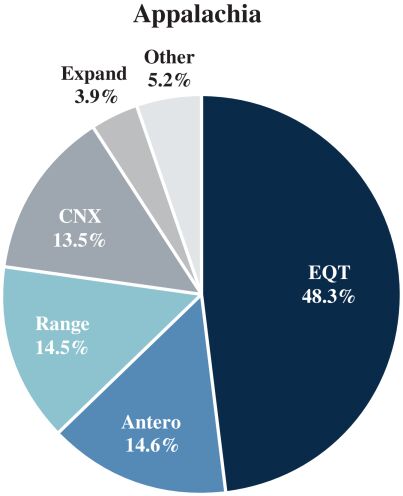
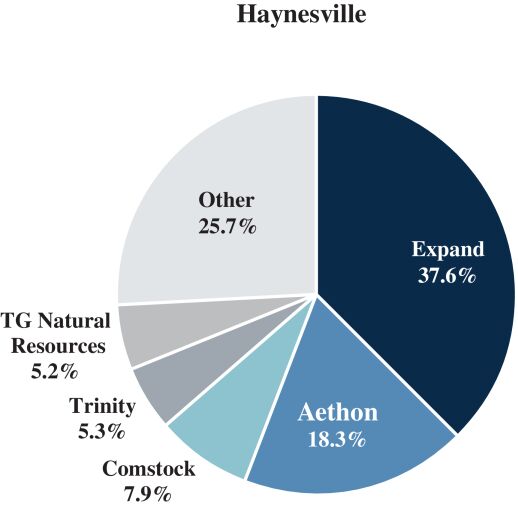
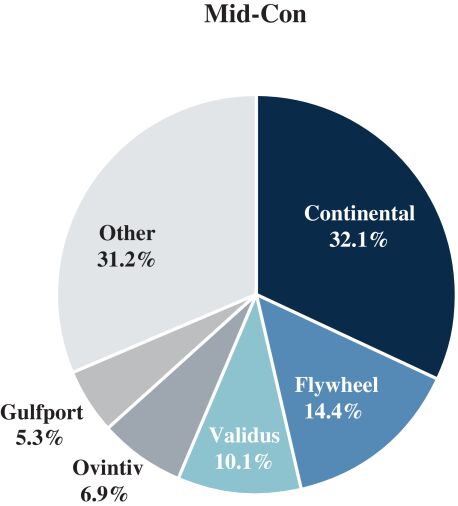
We strive to acquire mineral and royalty interests in properties with top-tier E&P operators that are well capitalized, have a strong operational track record and that we believe will continue to increase production through the application of the latest drilling and completion techniques. Our royalty interests are developed and operated by many of the highest-quality natural gas producers in the United States. The graphs below highlight the portion of production from top operators captured on our position across each region in 2025:34
Collectively, in 2025, these 14 operators listed above controlled more than 79% of WhiteHawk’s leased acreage and represented the leading producers in the Appalachian Basin, Haynesville Basin and Mid-Con region. Their scale, balance-sheet strength and technological capabilities enhance recovery efficiency, reduce breakeven costs and provide reliable long-term development of our mineral interests—directly supporting our ability to pay sustainable dividends to our investors.
Strengths
We believe that the following competitive strengths will allow us to successfully capitalize on our market opportunities, execute our business strategies, and achieve our primary business objectives:
| | Premier, large-scale natural gas mineral and royalty company in America’s most productive gas basins. We have assembled one of the largest pure-play natural gas mineral and royalty portfolios in the United States, spanning approximately 3.4 million gross DSU acres and providing exposure to more than 10,900 producing wells as of December 31, 2025. Our acreage is concentrated in the Appalachian and Haynesville Basins, two of the most productive and lowest-cost sources of natural gas in the United States, which together accounted for more than 50% of total U.S. dry gas production35 and 81% of our royalty revenue in 2025. These basins feature thick, laterally continuous shale intervals, high-pressure reservoirs, and well-developed gathering and long-haul pipeline infrastructure that enable some of the lowest breakeven development economics in the United States. The fact that 11% and 33%36 of Appalachian and Haynesville Basin wells, respectively, were drilled on our acreage in 2025, is indicative that our assets are located in the core development areas of these premier gas plays. We believe our proximity to the core development areas of these basins will provide long-term visibility into drilling activity and sustained royalty cash flow through consistent operator investments and stacked play potential. |
| | High-margin, capital-light business model. WhiteHawk’s business model is designed to generate substantial cash flow as our mineral and royalty interests have no drilling capital expenditure requirements and minimal operating costs. Our mineral and royalty interests allow us to capture the |
| 34 | Enverus Data. Percentages exceed 100% due to rounding. |
| 35 | EIA Short-Term Energy Outlook. |
| 36 | Enverus Data. |
11
| economic benefits of natural gas development without bearing the capital risk or inflationary cost pressures typical of traditional E&P companies because we do not incur drilling, completion, lease operating expenses, or plugging and abandonment obligations at the end of a well’s productive life. This capital-light model enables us to convert a significant portion of our revenue directly into free cash flow. Our recurring costs are limited primarily to production taxes, gathering, processing, and transportation expenses, and modest general and administrative overhead. |
| | High-quality assets supported by top-tier operators with visible development activity. Our mineral interests are operated by leading, well-capitalized E&P companies in some of the most productive and economically attractive natural gas basins in the United States. In 2025, the Appalachian Basin accounted for approximately 38% of the total U.S. natural gas production,37 with WhiteHawk’s acreage operated by premier producers including EQT, Antero Resources, Range Resources and CNX Resources. Combined, these operators accounted for approximately 96% of our royalty revenue in the Appalachian Basin in 2025. The Haynesville Basin contributed approximately 15% of total U.S. natural gas production in 2025,38 with WhiteHawk’s acreage operated by premier producers including Expand Energy, Comstock Resources and Aethon Energy. Combined, these operators accounted for approximately 58% of our royalty revenue in the Haynesville Basin for 2025. As of December 31, 2025, our portfolio includes nearly 430 wells in progress (“WIPs”) and permitted locations, and more than 8,000 remaining identified undeveloped locations. We believe this embedded inventory provides a visible, multi-year growth runway that requires no additional capital investment from us. Our exposure to operators with strong balance sheets, basin-leading drilling productivity, and disciplined capital programs is designed to enhance the stability of our production base and support long-term royalty cash flow generation. |
| | Capturing value from AI-driven electricity demand growth. We are positioned to benefit from the accelerating rise in electricity demand driven by AI and data center expansion, much of which is expected to be met by natural gas. Natural gas is the primary fuel for U.S. power generation accounting for approximately 41%39 of total electricity output in 2025. In line with this trend, our Appalachian Basin acreage is located near 21 publicly announced new or planned natural gas fired power plants representing what management estimates to be approximately 7.8 Bcf/d of total natural gas demand associated with new power plants expected by 2031.40 The ongoing expansion of AI-driven and digital-infrastructure power needs is expected to support long-term natural gas consumption and price stability, encouraging sustained operator investment and development activity on our mineral acreage and providing predictable recurring cash flows that can be distributed to investors. |
| | Positioned to capitalize on LNG export growth. U.S. LNG export capacity is expected to nearly double from approximately 17 Bcf/d in 2025 to nearly 34 Bcf/d by 203141, as European and Asian buyers seek secure, competitively priced supply and diversify away from oil-indexed benchmarks or regional international benchmarks such as JKM (Asia) and TTF (Europe), where the average pricing is 3-4x Henry Hub pricing in the United States for the year 2025.42 In addition, as of December 2025, approximately 28 Bcf/d of incremental LNG capacity is in various stages of regulatory review and development, representing further upside to long-term U.S. export potential.43 The Haynesville Basin’s proximity and pipeline connectivity to the Gulf Coast LNG corridor position our assets to benefit directly from this expansion. Sustained growth in U.S. LNG exports is expected to drive long-term feed-gas demand from the basins where our mineral interests are concentrated, for years to come. |
| 37 | EIA Short-Term Energy Outlook. |
| 38 | EIA Short-Term Energy Outlook. |
| 39 | EIA Electric Monthly. |
| 40 | Assumes 1 gigawatt of capacity equates to 154 mmcf/d of natural gas demand. |
| 41 | EIA Natural Gas Exports. Includes current operating and under construction projects only. |
| 42 | FactSet LNG Pricing. |
| 43 | EIA Liquefaction Report as supplemented by management’s review of recently announced facilities. |
12
| | Proven management team with a track record of public company value creation and accretive growth. Our management team is among the most experienced and acquisitive in the minerals sector, with more than 125 years of combined industry experience and over $31 billion of completed energy transactions across the upstream, midstream, and mineral and royalty value chain. Members of our team previously served as senior executives or founders of Atlas Energy, Atlas Pipeline Partners and Falcon Minerals, each a successful public company that created substantial shareholder value through disciplined growth, accretive acquisitions, and strategic monetization. Since our founding, WhiteHawk has been the most active acquirer of natural gas minerals and royalties, completing eight large transactions across the most prolific gas-oriented basins in the United States.44 Our ability to consistently source, evaluate, and close accretive transactions underscores WhiteHawk’s leadership as a focused, data-driven consolidator with proven expertise in capital allocation, M&A execution and public-market stewardship. |
Strategies
Our primary business objective is to deliver shareholder value through dividends and total return from our mineral interests in premier natural gas-weighted properties. We intend to accomplish this objective by executing the following key strategies:
| | Provide sustained income to investors through strong Cash Available for Distribution generation and cash dividends. We expect initially to pay dividends from our Cash Available for Distribution with the remaining cash flow to be used for additional acquisitions that meet our investment criteria or to maintain our conservative capital structure. As mineral and royalty owners, we benefit from the continued organic development of our acreage and are able to convert a high percentage of our revenues to Cash Available for Distribution (as defined herein). We believe that our mineral and royalty interests are positioned for growth as E&P operators continue to concentrate on the Appalachian Basin, Haynesville Basin and Mid-Con region to meet growing global demand for natural gas. Since our inception in 2022, we have paid 46 consecutive monthly common equity dividends, totaling approximately $30 million and representing a cash-on-cash return of approximately 36%45 to our initial investors through January 1, 2026. We believe our efficient, conservatively levered structure, with low capital intensity and disciplined financial management, provides a sustainable foundation for attractive dividend yields, balance sheet flexibility, and long-term value creation for shareholders. |
| | Strategically source and acquire de-risked, cash-flowing natural gas mineral and royalty interests of scale from long-term partnerships. Our strategy focuses on acquiring high-quality mineral and royalty interests that generate immediate cash flow and offer long-term development visibility. We target assets operated by leading, well-capitalized producers in the core of the Appalachian Basin, Haynesville Basin, and Mid-Con region, where continued drilling activity provides durable revenue growth without direct capital risk exposure. WhiteHawk differentiates itself through a disciplined, partnership-oriented sourcing approach with private-equity sponsors and other institutional owners seeking liquidity from later-life funds. This positions WhiteHawk as one of the few large-scale consolidators of natural gas-weighted minerals, particularly in the Appalachian Basin, which remains underrepresented in public minerals markets. |
| | Pursue disciplined, accretive acquisitions in premier natural gas plays. We intend to grow our portfolio through the disciplined acquisition of high-quality natural gas mineral and royalty interests in the Appalachian Basin, Haynesville Basin and Mid-Con region. By leveraging our management team’s |
| 44 | Enverus Data. |
| 45 | Reflects a cash-on-cash return to our initial investors whose share price did not include any selling commissions on investment. Returns to our initial investors whose share price included selling commissions on investment resulted in cash-on-cash returns of approximately 33%. |
13
| extensive industry relationships, and proprietary geologic and title data, we target assets that can provide accretive growth in shareholder value while strengthening our production and reserve base. Since inception, we have been among the most active consolidators in the natural gas minerals sector, completing seven transactions that have materially increased our scale and enhanced cash flow. These acquisitions have been highly accretive to shareholders and have resulted in approximately 36%46 cash-on-cash return to our initial investors. We believe current market conditions remain highly favorable for consolidation, as fragmented ownership across numerous private sellers continues to create opportunities for accretive acquisitions that meet our investment criteria. |
| | Optimize portfolio to maximize Cash Available for Distribution and maintain diversified exposure. We actively manage our portfolio to prioritize acreage with a strong cash-flow base, visible near-term development, and substantial future inventory. A core component of this strategy is maintaining a broad, diversified mineral footprint across multiple core natural gas basins, encompassing an average NRI of 0.69% in more than 10,900 producing wells, with additional wells consistently in various stages of development across a footprint exceeding 3.4 million gross DSU acres as of December 31, 2025. This scale and diversity provide exposure to the most prolific, lowest-cost natural gas plays in the United States while reducing reliance on any single operator or well. The result is a balanced portfolio designed to generate resilient cash flow and mitigate volatility through commodity cycles. Through disciplined asset management, targeted reinvestment, and continued optimization, we seek to enhance portfolio productivity, strengthen cash flow stability and grow our dividend over time. |
| | Maintain conservative and flexible capital structure to support our business and facilitate long-term operations. We are committed to maintaining a conservative capital structure that will afford us the financial flexibility to execute our business strategies on an ongoing basis. We expect to maintain a prudent level of debt to support our acquisition and growth strategy while preserving balance sheet flexibility. We believe that the combination of cash flow from operations, proceeds from this offering, and selective use of other debt and equity financings will provide us with sufficient liquidity to pursue accretive acquisitions, enhance our cash flow profile, and return capital to our shareholders. We intend to manage our leverage conservatively and finance future acquisitions through cash flow from operations or opportunistically utilizing equity or debt to support disciplined growth. |
| | Commitment to responsible natural gas development and governance excellence. Natural gas, the primary driver of our royalty income, is a critical, lower-emission component of the modern energy mix and remains central to meeting global demand for reliable and affordable power. As a cleaner-burning fuel, it provides consistent and scalable energy that complements renewable energy and supports grid stability. The operators developing our mineral acreage, including EQT, Range Resources, Antero Resources and CNX Resources, have each adopted measurable standards focused on reducing emissions and promoting responsible development. With all of our assets located in the most economic natural gas basins in the United States, we are positioned to benefit from the growing recognition of natural gas as a reliable, cleaner source of energy. We also intend to reinforce the durability of our business through rigorous corporate governance, transparency, and alignment with our shareholders. Our governance framework emphasizes independence, accountability, and disciplined capital allocation. We believe our governance framework reduces our risk profile and sustains investor confidence through commodity cycles. We believe our adherence to governance best practices and partnerships with responsible operators differentiate WhiteHawk as a transparent, sustainable, and income-oriented energy investment capable of delivering attractive returns over the long term. |
| 46 | Reflects a cash-on-cash return to our initial investors whose share price did not include any selling commissions on investment. Returns to our initial investors whose share price included selling commissions on investment resulted in cash-on-cash returns of approximately 33%. |
14
Recent Transactions
PHX Acquisition
Pursuant to the PHX Merger Agreement, by and among the Company Parties and PHX, the Company Parties agreed to acquire in an all-cash transaction all issued and outstanding shares of PHX’s common stock for a purchase price of $4.35 per share, a total value of $194.8 million, including PHX’s net debt.
Subsequently, on June 23, 2025, the Company Parties closed on the PHX Acquisition and fully acquired all of the outstanding shares of PHX’s common stock. The PHX Acquisition increased the Company’s mineral and royalty ownership position by acquiring additional mineral and royalty interests in the Haynesville Shale as well as the SCOOP/STACK, Bakken, Arkoma and others. The PHX Acquisition also increased the Company’s exposure to some of its top third-party operators, including Expand Energy, Comstock Resources and Aethon Energy in the Haynesville Shale, while adding other top operators including Continental Resources and Devon Energy in the SCOOP/STACK region in Oklahoma. As a result of the PHX Acquisition, WhiteHawk added approximately 1.8 million gross DSU acres of premier natural gas mineral and royalty assets, significantly expanding its footprint in the core of the Haynesville Shale in East Texas/North Louisiana and diversifying its portfolio into the SCOOP/STACK region.
Marcellus Assets
On March 31, 2025, the Company purchased in the Three Rivers Royalty Acquisition mineral and royalty interests in the Marcellus Shale for a purchase price of $118.0 million from the TRR Seller. The Company believes these Marcellus Shale assets represent some of the highest quality natural gas reserves in the United States.
Haynesville Assets
On March 2, 2026, the Company and its affiliate entered into a definitive purchase and sale agreement to acquire certain natural gas mineral and royalty interests primarily located in the core of the Haynesville Shale in Louisiana and east Texas (“Haynesville Assets”). The Haynesville Assets cover approximately 150,000 gross DSU acres and will further increase the Company’s exposure to high-quality development across the Haynesville and Mid-Bossier formations. The assets are concentrated in core areas of the basin and are operated by established, well-capitalized operators. The Haynesville Assets acquisition closed on April 3, 2026. We funded the purchase price of the Haynesville Assets acquisition primarily through the issuance of approximately $37.8 million of shares of Series D preferred stock. See “Description of Capital Stock—Preferred Stock—Series D Preferred Stock.” The Company intends to use a portion of the proceeds from this offering to redeem any shares of Series D Preferred Stock outstanding. See “Use of Proceeds.” To the extent the proceeds of this offering are insufficient to redeem the total aggregate principal amount of Series D Preferred Stock outstanding, the Company intends to use cash on hand to fully redeem the total aggregate principal amount of Series D Preferred Stock outstanding.
Summary of the Transactions
In connection with the consummation of the offering, we will consummate the following organizational transactions (the “Transactions”):
| | we will amend and restate our certificate of incorporation (our “amended and restated certificate of incorporation”) to, among other things, (i) change our name to “WhiteHawk Minerals Corp.”; (ii) provide for the reclassification of shares held by the Legacy Common Stock Investors issued and outstanding immediately prior to the offering into one validly issued, fully paid and non-assessable |
15
| share of our Class A common stock, on a one-for-one basis (such reclassification, the “Common Stock Reclassification”); (iii) provide for an adjustment to the number of authorized shares such that our authorized capital stock shall consist of 250,000,000 shares of Class A common stock, par value $0.0001 per share, 100,000,000 shares of Class B common stock, par value $0.0001 per share, and 10,000,000 shares of preferred stock, par value $0.0001 per share; (iv) authorize our board of directors to establish and issue one or more series of preferred stock from time to time and to fix the rights, preferences, privileges and restrictions thereof; (v) provide for the creation of Class B common stock in connection with our anticipated Up-C structure, with shares of Class B common stock to be issued to Continuing Equity Owners, with each share of Class B common stock entitled to one vote per share and no economic rights; and (iv) establish that Legacy Common Stock Investors are prohibited from selling their Class A common stock or related securities for 365 days following the consummation of this offering, or such shorter period as determined by the board of directors, but in no event less than 180 days without the prior written consent of the managing underwriter of this offering; |
| | WhiteHawk OpCo will enter into an amended and restated limited partnership agreement (the “OpCo Agreement”) to, among other things, (i) appoint OP GP as the sole general partner of WhiteHawk OpCo with the authority to manage and control the business and affairs of WhiteHawk OpCo, (ii) authorize the issuance of OpCo Interests to us in exchange for the interests we own in WhiteHawk OpCo prior to this offering as well as the proceeds from this offering, (iii) provide the Continuing Equity Owners with the right to require WhiteHawk OpCo to redeem their OpCo Interests for, at our election (determined solely by our independent directors who are disinterested), cash or newly-issued shares of our Class A common stock on a one-for-one basis (subject to customary adjustments), (iv) provide that, in connection with any redemption or exchange of OpCo Interests, if applicable, a corresponding number of shares of Class B common stock held by the redeeming or exchanging Continuing Equity Owner will automatically be transferred to us for no consideration and canceled, and (v) authorize the issuance to us of such number of Series B preferred units in WhiteHawk OpCo equal to the number of shares of our Series B preferred stock outstanding upon the consummation of the Transactions; |
| | we will enter into a registration rights agreement with certain of our Continuing Equity Owners (the “Registration Rights Agreement”), as further described in “Certain Relationships and Related Person Transactions;” |
| | in connection with and in order to effectuate the Internalization, the Contribution Agreement will be entered into by the parties thereto, pursuant to which, among other things, OpCo will acquire all of the outstanding equity interests in ManagementCo from the Management Owners in exchange for OpCo Interests and shares of Class B common stock. Prior to the closing of this offering, ManagementCo, as our external manager, provided management, acquisition, disposition and oversight functions with respect to us and WhiteHawk OpCo. As a result of the Internalization, ManagementCo will become a wholly owned subsidiary of WhiteHawk OpCo and we will become internally managed; |
| | we will issue shares of our Class A common stock to the purchasers in this offering (or shares if the underwriters exercise in full their option to purchase additional shares of Class A common stock) in exchange for net proceeds of approximately $ million (or approximately $ million if the underwriters exercise in full their option to purchase additional shares of Class A common stock) based upon an assumed initial public offering price of $ per share (which is the midpoint of the estimated price range set forth on the cover page of this prospectus), less the underwriting discount; and |
| | we will use the net proceeds from this offering to purchase newly issued OpCo Interests for approximately $ million directly from WhiteHawk OpCo at the initial public offering price less the underwriting discount. |
16
Immediately following the consummation of the Transactions (including this offering):
| | we will be a holding company and our principal assets will consist of OpCo Interests we acquire or are otherwise issued directly from WhiteHawk OpCo and all the membership interests in OP GP; |
| | as the sole member of OP GP, the sole general partner of WhiteHawk OpCo, we will control the business and affairs of WhiteHawk OpCo; |
| | we will own, directly or indirectly, OpCo Interests, representing approximately % of the economic interest in WhiteHawk OpCo (or OpCo Interests, representing approximately % of the economic interest in WhiteHawk OpCo if the underwriters exercise in full their option to purchase additional shares of Class A common stock); |
| | we will own a number of Series B preferred units in WhiteHawk OpCo equal to the number of shares of Series B preferred stock outstanding after the consummation of the Transactions, representing 100% of the preferred units of WhiteHawk OpCo; |
| | we will no longer have any shares of Series D preferred stock outstanding; |
| | the Continuing Equity Owners will own (i) OpCo Interests, representing approximately % of the economic interest in WhiteHawk OpCo (or OpCo Interests, representing approximately % of the economic interest in WhiteHawk OpCo if the underwriters exercise in full their option to purchase additional shares of Class A common stock) and (ii) shares of our Class B common stock, representing approximately % of the combined voting power of all of our common stock (or shares of our Class B common stock, representing approximately % if the underwriters exercise in full their option to purchase additional shares of Class A common stock); |
| | the purchasers in this offering will own (i) shares of our Class A common stock (or shares of our Class A common stock if the underwriters exercise in full their option to purchase additional shares of Class A common stock), representing approximately % of the combined voting power of all of our common stock and % of the economic interest in us (or approximately % of the combined voting power and % of the economic interest if the underwriters exercise in full their option to purchase additional shares of Class A common stock), and (ii) through our ownership of OpCo Interests, indirectly will hold approximately % of the economic interest in WhiteHawk OpCo (or approximately % of the economic interest in WhiteHawk OpCo if the underwriters exercise in full their option to purchase additional shares of Class A common stock). |
The foregoing description of the Transactions does not give effect to OpCo Interests or shares of our Class B common stock that may be issued as a part of the Earnout Amount (as defined herein), as more fully described in the section titled “Certain Relationships and Related Party Transactions—Internalization—Earnout.”
Following the Transactions, including this offering, we will control the management of WhiteHawk OpCo through our ownership of OP GP. As a result, we will consolidate WhiteHawk OpCo in our consolidated financial statements.
Unless otherwise indicated, this prospectus assumes the shares of Class A common stock are offered at $ per share (the midpoint of the estimated price range set forth on the cover page of this prospectus). For more information regarding the impact of the initial offering price on the share information included throughout this prospectus, see “The Offering.”
Our corporate structure following this offering, as described below, is commonly referred to as an Up-C structure. The Up-C structure will allow the Continuing Equity Owners to retain their equity ownership in WhiteHawk OpCo following the Transactions and to continue to realize tax benefits associated with owning interests in an entity that is treated as a partnership, or “flow-through” entity, for U.S. federal income tax
17
purposes. Investors in this offering will, by contrast, hold their equity ownership in us, a Delaware corporation that is a domestic corporation for U.S. federal income tax purposes, in the form of shares of Class A common stock. One of the tax benefits to the Continuing Equity Owners associated with this structure is that future taxable income of WhiteHawk OpCo that is allocated to the Continuing Equity Owners will be taxed on a flow-through basis and, therefore, will not be subject to corporate taxes at the entity level. Moreover, the Up-C structure permits the Continuing Equity Owners to defer the recognition of taxable gain on their OpCo Interests until they elect to exercise their redemption right (rather than recognizing such gain at the time of this offering). Additionally, because the Continuing Equity Owners may at their election have their OpCo Interests redeemed by WhiteHawk OpCo (or at our option, directly exchanged by us) for newly issued shares of our Class A common stock on a one-for-one basis (subject to customary adjustments, including for stock splits, stock dividends, and reclassifications) or, at our option, for cash, the Up-C structure also provides the Continuing Equity Owners with potential liquidity that holders of non-publicly traded limited liability companies are not typically afforded. Upon any such redemption or exchange of OpCo Interests for shares of Class A common stock, the Company may benefit from certain tax attributes, including potential increases in tax basis that may reduce the amount of tax that would otherwise be payable by us. In connection with any such redemption or exchange of OpCo Interests, a corresponding number of shares of Class B common stock held by the relevant Continuing Equity Owner will automatically be transferred to us for no consideration and be canceled.
For more information regarding the Transactions and our structure, see “Our Organizational Structure.”
Organizational Structure
The diagram below depicts our organizational structure after giving effect to the Transactions, including this offering and proposed use of proceeds, assuming no exercise by the underwriters of their option to purchase additional shares of Class A common stock and does not give effect to the issuance of any OpCo Interests or shares of Class B common stock in respect of the Earnout Amount.
| (1) | Excludes any Continuing Equity Owners who hold Class A common stock as a result of the Common Stock Reclassification (in addition to OpCo Interests and Class B common stock). |
18
| (2) | Legacy Common Stock Investors will be prohibited from selling their Class A common stock or related securities for up to 365 days following the consummation of this offering, or such shorter period as determined by the board of directors, but in no event less than 180 days without the prior written consent of the managing underwriter of this offering. |
| (3) | We intend to use a portion of the proceeds from this offering to redeem any shares of Series D preferred stock outstanding. See “Use of Proceeds.” To the extent the proceeds of offering are insufficient to redeem the total aggregate principal amount of Series D preferred stock outstanding, the Company intends to use cash on hand to fully redeem the total aggregate principal amount of Series D preferred stock outstanding. As a result, following this offering, the only outstanding preferred stock outstanding will be the Series B preferred stock. |
Corporate Information
WhiteHawk Income Corporation was formed on February 18, 2022 and is the issuer of the Class A common stock offered by this prospectus. We intend to change our corporate name to WhiteHawk Minerals Corp. in connection with the closing of this offering. See “—Summary of the Transactions” and “Our Organizational Structure.” Our principal executive offices are located at 2000 Market Street, Suite 910, Philadelphia, PA 19103, and our telephone number is (610) 484-3412. Our corporate website address is https://www.whitehawkenergy.com/. Our website and the information contained on or that can be accessed through our website is not deemed to be incorporated by reference in, and is not considered part of, this prospectus. You should not rely on any such information in making your decision whether to purchase our Class A common stock.
Summary of Risk Factors
Investing in our Class A common stock involves a number of risks. The following is a summary of the principal factors that make an investment in our Class A common stock speculative or risky, all of which are more fully described in the section titled “Risk Factors” included elsewhere in this prospectus. This summary should be read in conjunction with the “Risk Factors” section and should not be relied upon as an exhaustive summary of the material risks facing our business.
| | Our revenues are primarily derived from mineral and royalty payments that are based on the price of natural gas, NGL and oil which is subject to volatility due to factors beyond our control; |
| | Lower natural gas, NGL and oil prices or negative adjustments of natural gas, NGL and oil prices may result in significant impairment charges; |
| | Our derivative activities may limit the cash flows received from natural gas and oil sales; |
| | The development of our properties relies exclusively on our third-party operators and these operators may fail to develop our existing inventory of mineral and royalty acreage; |
| | Drilling for and producing natural gas, NGLs and oil are high-risk activities with many uncertainties; |
| | Our third-party operators may fail to drill sufficient wells to hold acreage before lease expiration which may result in loss of lease and prospective drilling opportunities; |
| | We may experience delays in the receipt of royalty payments and may not be able to terminate leases with defaulting lessees if our third-party operators declare bankruptcy; |
| | We may incur losses as a result of title defects or other issues in the properties we own; |
| | A limited number of third-party operators currently generate a significant portion of our revenue and accounts receivable; |
| | The substantial majority of our business is concentrated in the Appalachian and Haynesville Basins, making us vulnerable to risks associated with such geographic concentration of our assets; |
| | We are subject to risks related to our wells where we are a non-operating working interest owner; |
19
| | Our future success depends on replacing reserves through acquisitions and there may be constraints in our ability to finance acquisitions; |
| | We have experienced significant business and portfolio growth in a short time, and our significant growth rates and financial results may not be sustainable or indicative of future financial performance; |
| | Any acquisition of additional mineral and royalty interests that we complete will be subject to substantial risks; |
| | Our failure to retain our key personnel or attract additional qualified personnel could negatively affect our business strategy; |
| | Our estimated proved reserves are based on many assumptions that may prove to be inaccurate; |
| | Our identified drilling locations are susceptible to uncertainties that could materially alter the occurrence or timing of their drilling and there is no guarantee that our estimates will be materially consistent with actual drilling activities; |
| | We rely on our third-party operators, other third parties and government databases for information regarding our assets and such information may be incorrect, incomplete or lost; |
| | We may be subject to information technology system failures, network disruptions, cyber-attacks or other breaches in data security; |
| | Declining general economic, business or industry conditions, which could have a material adverse effect on our business; |
| | Our industry is highly competitive, and competitive pressures could negatively affect our business; |
| | Exported liquified natural gas could fail to be a competitive source of energy for the United States or international markets; |
| | Our growth strategy is partly dependent upon the continued expansion of electricity demand driven by AI data center development and expectations regarding increased demand may not materialize; |
| | The unavailability, high cost or shortages of equipment, raw materials, supplies or personnel for our third-party operators related to developing and operating our properties; |
| | The marketability of natural gas, NGLs and crude oil is dependent on the availability of equipment and transportation facilities that is outside of our and our third-party operators’ control; |
| | Our third-party operators are subject to significant governmental regulations, and governmental authorities can delay or deny permits and approvals or change legal requirements governing our business, which could restrict their operations, increase costs of conducting our business, and delay our implementation of, or cause us to change, our business strategy; |
| | The development and enactment of climate change legislation as well as increased attention to sustainability may impact our business or the business of our third-party operators; |
| | Future legislative or regulatory changes may have a material adverse effect on our business; |
| | Our use of borrowings to finance our business exposes us to risks and any future indebtedness we may incur could further increase the risks associated with our indebtedness; |
| | We recently restated our audited consolidated financial statements to correct certain errors and have identified material weaknesses in our internal control over financial reporting that caused our management to conclude that we did not maintain effective internal control over financial reporting and disclosure controls and procedures. |
20
| | No market currently exists for our Class A common stock, and an active, liquid trading market for our Class A common stock may not develop, which may cause our Class A common stock to trade at a discount from the initial offering price and make it difficult for you to sell the Class A common stock you purchase; |
| | We cannot predict the effect our dual class structure may have on the market price of our Class A common stock; |
| | Our organizational structure confers certain benefits upon the Continuing Equity Owners that will not benefit holders of our Class A common stock to the same extent that it will benefit the Continuing Equity Owners; |
| | Delaware law and anti-takeover provisions in our governing documents, to be adopted upon the consummation of this offering, may have the effect of delaying or preventing a change of control or changes in our management and may deprive our investors of the opportunity to receive a premium for their shares; |
| | Our ability to pay regular dividends to our stockholders may be limited by our financial condition, results of operations, cash flows, prospects, industry conditions, capital requirements, instruments governing our indebtedness and other factors and restrictions; and |
| | The requirements of being a public company may strain our resources, divert management’s attention and affect our ability to attract and retain qualified board members and officers. |
For a discussion of these and other risks you should consider before making an investment in our common stock, see the section entitled “Risk Factors.”
Emerging Growth Company
We are an “emerging growth company” as defined in Section 2(a) of the Securities Act of 1933, as amended (the “Securities Act”), as modified by the JOBS Act. For as long as we are an emerging growth company, unlike other public companies that do not meet those qualifications, we are not required to:
| | provide an auditor’s attestation report on management’s assessment of the effectiveness of our system of internal control over financial reporting pursuant to Section 404(b) of Sarbanes-Oxley Act of 2002 (the “Sarbanes-Oxley Act”); |
| | provide more than two years of audited financial statements and related management’s discussion and analysis of financial condition and results of operations in a registration statement on Form S-1; |
| | comply with any new requirements adopted by the Public Company Accounting Oversight Board (“PCAOB”) requiring mandatory audit firm rotation or a supplement to the auditor’s report in which the auditor would be required to provide additional information about the audit and the financial statements of the issuer; |
| | provide certain disclosure regarding executive compensation required of larger public companies or hold stockholder advisory votes on executive compensation required by the Dodd-Frank Wall Street Reform and Consumer Protection Act of 2010 (the “Dodd-Frank Act”); or |
| | obtain stockholder approval of any golden parachute payments not previously approved. |
In addition, Section 107 of the JOBS Act also provides that an emerging growth company can use the extended transition period provided in Section 7(a)(2)(B) of the Securities Act for complying with new or revised accounting standards. This permits an emerging growth company to delay the adoption of certain accounting standards until those standards would otherwise apply to private companies. We are choosing to take advantage of this extended transition period and, as a result, we will comply with new or revised accounting standards on the relevant dates on which adoption of such standards is required for private companies.
21
We will cease to be an “emerging growth company” upon the earliest of: (i) the last day of the first fiscal year in which our annual gross revenues are $1.235 billion or more; (ii) the date on which we have issued more than $1.0 billion of non-convertible debt over a three-year period; (iii) the last day of the fiscal year following the fifth anniversary of our initial public offering; or (iv) the date on which we have been deemed a “large accelerated filer,” which will occur as of the end of any fiscal year in which we (A) have an aggregate worldwide market value of voting and non-voting shares of common equity securities held by our non-affiliates of $700 million or more as of the last business day of our most recently completed second fiscal quarter, (B) have been subject to the requirements of Section 13(a) or 15(d) of the Securities Exchange Act of 1934, as amended (the “Exchange Act”), for a period of at least 12 calendar months, (C) have filed at least one annual report pursuant to Section 13(a) or 15(d) of the Exchange Act, and (D) are no longer eligible to use the requirements for “smaller reporting companies,” as defined in the Exchange Act, for our annual and quarterly reports.
22
| Issuer |
WhiteHawk Income Corporation (to be changed to WhiteHawk Minerals Corp. in connection with the closing of the offering). |
| Class A Common stock offered by us |
shares (or shares, if the underwriters exercise in full their option to purchase additional shares). |
| OpCo Interests to be outstanding after this offering |
OpCo Interests, representing an approximately % economic interest in WhiteHawk OpCo (or OpCo Interests, representing an approximately % economic interest in WhiteHawk OpCo, if the underwriters exercise their option to purchase additional shares of Class A common stock in full)). |
| Option to purchase additional shares |
We have granted the underwriters a 30-day option to purchase up to an aggregate of additional shares of our Class A common stock to the extent the underwriters sell more than shares of Class A common stock in this offering. |
| Class A common stock to be outstanding after this offering |
shares (or shares if the underwriters exercise in full their option to purchase additional shares). |
| Shares of Class B common stock to be outstanding immediately after this offering |
shares, representing approximately % of the combined voting power of all of our common stock (or shares, representing approximately % of the combined voting power of all of our common stock if the underwriters exercise in full their option to purchase additional shares of Class A common stock) and no economic interest in WhiteHawk Minerals Corp. |
| OpCo Interests to be held by us immediately after this offering |
OpCo Interests, representing approximately % of the economic interest in WhiteHawk OpCo (or OpCo Interests, representing approximately % of the economic interest in WhiteHawk OpCo if the underwriters exercise in full their option to purchase additional shares of Class A common stock). |
| OpCo Interests to be held directly by the Continuing Equity Owners immediately after this offering |
OpCo Interests, representing approximately % of the economic interest in WhiteHawk OpCo (or OpCo Interests, representing approximately % of the economic interest in WhiteHawk OpCo if the underwriters exercise in full their option to purchase additional shares of Class A common stock). Certain Continuing Equity Owners will also hold an aggregate of shares of Class A common stock after this offering. |
23
| Ratio of shares of Class A common stock to OpCo Interests |
The OpCo Agreement will require that we and WhiteHawk OpCo at all times maintain a one-to-one ratio between the number of shares of Class A common stock issued by us and the number of OpCo Interests owned by us. |
| Ratio of shares of Class B common stock to OpCo Interests |
Our amended and restated certificate of incorporation and the OpCo Agreement will require that we and WhiteHawk OpCo at all times maintain a one-to-one ratio between the number of shares of Class B common stock owned by the Continuing Equity Owners and their respective permitted transferees and the number of OpCo Interests owned by the Continuing Equity Owners and their respective permitted transferees. Immediately after the Transactions, the Continuing Equity Owners will together own % of the outstanding shares of our Class B common stock. |
| Permitted holders of shares of Class B common stock |
Only the Continuing Equity Owners and the permitted transferees of Class B common stock as described in this prospectus will be permitted to hold shares of our Class B common stock. See “Certain Relationships and Related Person Transactions—OpCo Agreement—Agreement in Effect Upon Consummation of the Transactions.” |
| Voting rights |
Holders of shares of our Class A common stock and Class B common stock will vote together as a single class on all matters presented to stockholders for their vote or approval, except as otherwise required by law or our amended and restated certificate of incorporation. Each share of our Class A common stock and Class B common stock entitles its holders to one vote per share on all matters presented to our stockholders generally. See “Description of Capital Stock.” |
| Redemption rights of holders of OpCo Interests |
The Continuing Equity Owners may, subject to certain exceptions, from time to time at each of their options require WhiteHawk OpCo to redeem all or a portion of their OpCo Interests in exchange for, at our election (determined solely by our independent directors (within the meaning of the Exchange rules) who are disinterested), newly-issued shares of our Class A common stock on a one-for-one basis (subject to customary adjustments, including for stock splits, stock dividends, and reclassifications) or a cash payment equal to a volume weighted average market price of one share of our Class A common stock for each OpCo Interest so redeemed, in each case, in accordance with the terms of the OpCo Agreement; provided that, at our election (determined solely by our independent directors (within the meaning of the Exchange rules) who are disinterested), we may effect a direct exchange by us of such Class A common stock or such cash, as applicable, for such OpCo Interests. Simultaneously with the payment of cash or shares of Class A common stock, as applicable, in |
24
| connection with a redemption or exchange of OpCo Interests pursuant to the terms of the OpCo Agreement, a number of shares of our Class B common stock registered in the name of the redeeming or exchanging Continuing Equity Owner and permitted transferees will automatically be transferred to us for no consideration on a one-for-one basis with the number of OpCo Interests so redeemed or exchanged and such shares of Class B common stock will be canceled. See “Certain Relationships and Related Person Transactions—OpCo Agreement—Agreement in Effect Upon Consummation of the Transactions.” |
| Use of proceeds |
We estimate that the net proceeds from the sale of our Class A common stock in this offering, after deducting the underwriting discount and estimated offering expenses payable by us, will be approximately $ (or $ if the underwriters exercise their option to purchase additional shares of Class A common stock in full) based on an assumed initial public offering price of $ per share (the midpoint of the price range set forth on the cover of this prospectus). |
We intend to use the net proceeds from this offering, as well as cash on hand, as follows: (i) approximately $ million to prepay, in whole or in part, the outstanding principal of our Senior Notes, (ii) approximately $ million for the redemption of all of the outstanding shares of our Series D preferred stock, (iii) approximately $ million for the redemption of a portion of our outstanding Series B preferred stock, and (iv) the remainder for other general corporate purposes, including payment of a Liquidity Incentive Fee (as defined herein).
| We are a holding company and our only assets after consummation of this offering will be our ownership of OpCo Interests and membership units in OP GP. Accordingly, we intend to use the net proceeds from this offering to purchase newly issued OpCo Interests from WhiteHawk OpCo at a price per unit equal to the initial public offering price per share of Class A common stock, less estimated underwriting discounts and commissions. In the event the underwriters exercise their option to purchase additional shares of Class A common stock, we intend to use any such additional proceeds in the same manner. See “Use of Proceeds.” |
| Dividend Policy |
We expect to pay quarterly dividends on our Class A common stock in amounts determined from time to time by our board of directors. However, the declaration and payment of any dividends will be at the sole discretion of our board of directors, which may change our dividend policy at any time. Holders of our Class B common stock are not entitled to participate in any dividends declared by our board of directors. Because we are a holding company, our ability to pay cash dividends on our Class A common stock depends on our receipt of cash distributions from WhiteHawk OpCo and our operating |
25
| subsidiaries. Our ability to pay dividends may be restricted by the terms of any future credit agreement or any future debt or preferred equity securities of us. Our ability to pay dividends is also restricted by covenants governing our Senior Notes and Revolving Credit Facility. Our payment of dividends may vary from quarter to quarter, may be significantly reduced or may be eliminated entirely. Future dividend levels will depend on the requirements, regulatory restrictions, any restrictions in financing agreements and other factors deemed relevant by the board. See “Risk Factors—Risks Related to this Offering and Ownership of Our Class A Common Stock—We intend to pay regular dividends to our stockholders, but our ability to do so is subject to the discretion of our board of directors and may be limited ” for additional discussion of factors that could impact our ability to pay dividends. Please read “Dividend Policy.” |
| Directed Share Program |
The underwriters have reserved for sale at the initial public offering price up to % of the Class A common stock being offered by this prospectus for sale to our employees, executive officers, directors, business associates and related persons who have expressed an interest in purchasing Class A common stock in this offering. We do not know if these persons will choose to purchase all or any portion of these reserved shares, but any purchases they do make will reduce the number of shares available to the general public. The sales of shares pursuant to the directed share program will be made by Raymond James & Associates, Inc., an underwriter of this offering. Please read “Underwriting.” |
| Registration Rights Agreement |
Pursuant to the Registration Rights Agreement, we will, subject to the terms and conditions thereof, agree to register the resale of the shares of our Class A common stock that are issuable to certain Continuing Equity Owners in connection with the Transactions. See “Certain Relationships and Related Person Transactions—Registration Rights Agreement” for a discussion of the Registration Rights Agreement. |
| Risk Factors |
Investing in our Class A common stock involves risks. See the “Risk Factors” section of this prospectus beginning on page 34 for a discussion of factors you should carefully consider before investing in our Class A common stock. |
| Listing |
We intend to apply to have our Class A common stock listed on the NYSE under the symbol “WHK.” |
The number of shares of our Class A common stock that will be outstanding upon the completion of the offering excludes:
| | shares of Class A common stock issuable upon exercise of the underwriters’ option to purchase additional shares; |
| | shares of Class A common stock issuable upon the vesting and settlement of restricted stock units outstanding as of ; and |
| | additional shares of Class A common stock reserved for future issuance under our Amended and Restated WhiteHawk Income Corporation 2026 Equity Incentive Plan (the “A&R 2026 |
26
| Plan”) that will become effective on the date our registration statement of which this prospectus forms a part becomes effective, as well as any shares that become issuable pursuant to provisions in the A&R 2026 Plan that automatically increase the share reserve under the A&R 2026 Plan as set forth in “Executive and Director Compensation—Anticipated Changes to our Compensation Program Following This Offering —A&R 2026 Equity Incentive Plan.” |
Except as otherwise indicated, all information in this prospectus assumes or gives effect to:
| | the amendment and restatement of the OpCo Agreement that converts all existing ownership interests in WhiteHawk OpCo into OpCo Interests, as well as the filing of our amended and restated certificate of incorporation; |
| | the completion of the Transactions; |
| | no exercise of the underwriters’ option to purchase up to additional shares of Class A common stock; |
| | an initial public offering price of $ per share (the midpoint of the price range set forth on the cover of this prospectus); |
| | that no shares are purchased under the directed share program; and |
| | our amended and restated certificate of incorporation and our amended and restated bylaws, which will become effective prior to or upon the closing of this offering. |
27
SUMMARY HISTORICAL AND PRO FORMA CONDENSED CONSOLIDATED FINANCIAL
AND OTHER DATA
The following tables present (i) summary historical consolidated financial and other data of the Company and its consolidated subsidiaries and (ii) summary unaudited pro forma condensed consolidated combined financial data for the Company and its subsidiaries.
We derived the summary consolidated balance sheet data as of December 31, 2025 and 2024 and the summary consolidated statements of operations data for the years ended December 31, 2025 and 2024 from our audited consolidated financial statements and related notes thereto included elsewhere in this prospectus (in the case of financial data as of and for the year ended December 31, 2025 as restated in the Restatement). You should read this data together with our consolidated financial statements and related notes included elsewhere in this prospectus and the sections titled “Management’s Discussion and Analysis of Financial Condition and Results of Operations.” Our historical results for any prior period are not necessarily indicative of the results of future operations and should be read in conjunction with “Management’s Discussion and Analysis of Financial Condition and Results of Operations” and the audited consolidated financial statements and notes thereto included elsewhere in this prospectus.
We derived the summary unaudited pro forma condensed consolidated combined balance sheet as of December 31, 2025 and the summary unaudited pro forma condensed consolidated combined statements of operations for the year ended December 31, 2025 from the unaudited pro forma consolidated financial data included elsewhere in this prospectus. The unaudited pro forma consolidated financial information gives pro forma effect to the transactions described under “Unaudited Pro Forma Condensed Consolidated Combined Financial Information.” The unaudited pro forma condensed consolidated financial data includes various estimates that are subject to material change and may not be indicative of what our operations or financial position would have been had this offering and related transactions taken place on the dates indicated, or that may be expected to occur in the future. See “Unaudited Pro Forma Condensed Consolidated Combined Financial Information” for a complete description of the adjustments and assumptions underlying the summary unaudited pro forma condensed consolidated financial data.
Condensed Consolidated Statements of Operations:
| Historical | Pro Forma(1) | |||||||||||
| Years Ended December 31, | ||||||||||||
| 2025 | 2024 | 2025 | ||||||||||
| (As Restated) |
||||||||||||
| (in thousands) | ||||||||||||
| Revenues: |
||||||||||||
| Royalty revenue |
$ | 50,075 | $ | 12,702 | $ | |||||||
| Gain (loss) on commodity derivative instruments |
16,648 | (4,418 | ) | |||||||||
| Lease bonus revenue |
872 | 1,166 | ||||||||||
|
|
|
|
|
|
|
|||||||
| Total revenue |
$ | 67,595 | 9,450 | |||||||||
|
|
|
|
|
|
|
|||||||
| Operating expenses: |
||||||||||||
| General and administrative |
16,585 | 2,792 | ||||||||||
| Management fees |
9,966 | 4,681 | ||||||||||
| Depletion, depreciation and accretion |
24,237 | 10,827 | ||||||||||
|
|
|
|
|
|
|
|||||||
| Total operating expenses |
$ | 50,788 | 18,300 | |||||||||
|
|
|
|
|
|
|
|||||||
28
| Historical | Pro Forma(1) | |||||||||||
| Years Ended December 31, | ||||||||||||
| 2025 | 2024 | 2025 | ||||||||||
| (As Restated) |
||||||||||||
| (in thousands) | ||||||||||||
| Operating income (loss) |
$ | 16,807 | (8,850 | ) | ||||||||
| Other expense: |
||||||||||||
| Loss on extinguishment of debt |
3,839 | 359 | ||||||||||
| Loss on sale of assets |
123 | — | ||||||||||
| Interest expense, net |
19,070 | 3,939 | ||||||||||
|
|
|
|
|
|
|
|||||||
| Income (loss) before income taxes |
$ | (6,225 | ) | (13,148 | ) | |||||||
|
|
|
|
|
|
|
|||||||
| Provision for (benefit from) income taxes |
(2,640 | ) | (1,587 | ) | ||||||||
|
|
|
|
|
|
|
|||||||
| Net income (loss) |
$ | (3,585 | ) | $ | (11,561 | ) | $ | |||||
|
|
|
|
|
|
|
|||||||
| (1) | See unaudited pro forma condensed consolidated combined statement of operations for the year ended December 31, 2025 in “Unaudited Pro Forma Condensed Consolidated Combined Financial Information” for more information. |
Condensed Consolidated Balance Sheet Data:
| Historical | Pro Forma(1) |
|||||||||||
| As of December 31, | ||||||||||||
| 2025 | 2024 | 2025 | ||||||||||
| (As Restated) | ||||||||||||
| (in thousands) | ||||||||||||
| Cash and cash equivalents |
$ | 28,989 | $ | 5,330 | $ | |||||||
| Total assets |
$ | 507,138 | $ | 165,920 | $ | |||||||
|
|
|
|
|
|
|
|||||||
| Total liabilities |
270,722 | 74,128 | ||||||||||
| Total mezzanine equity |
27,662 | 21,225 | ||||||||||
| Total shareholders’ equity |
$ | 208,754 | $ | 70,567 | $ | |||||||
|
|
|
|
|
|
|
|||||||
| (1) | See unaudited pro forma condensed consolidated combined balance sheet as of December 31, 2025 in “Unaudited Pro Forma Condensed Consolidated Combined Financial Information” for more information. |
Non-GAAP Financial Measures
Adjusted EBITDA and Cash Available for Distribution (and their pro forma counterparts) are supplemental non-GAAP financial measures used by our management and by external users of our financial statements such as investors, research analysts and others that our management believes are useful to assess the financial performance of our assets and their ability to sustain dividends and/or share repurchases over the long term without regard to financing methods, capital structure or historical cost basis.
We define Adjusted EBITDA as net income (loss) before interest expense, income taxes, and depreciation, depletion and amortization adjusted for unrealized gains and losses on commodity derivative instruments, non-cash equity-based compensation, if any, accretion of asset retirement obligations, impairment of oil and natural gas properties, if any, gains and losses on sales of assets, if any, loss on extinguishment of debt, transaction costs and other non-cash or non-recurring operating expenses, if any. We reconcile Adjusted EBITDA to net income (loss), its most directly comparable GAAP measure.
We define Cash Available for Distribution as net cash provided by operating activities excluding amortization of debt issuance costs, interest expense, net, transaction costs, deferred taxes, provision for income taxes,
29
management fees, and changes in operating assets and liabilities, plus or minus amounts for certain non-cash operating activities, cash interest expense, cash taxes and cash preferred dividends. We reconcile Cash Available for Distribution to net cash provided by operating activities, its most directly comparable GAAP measure.
We define Pro Forma Adjusted EBITDA as Adjusted EBITDA as adjusted for management fees and the effects of the TRR Acquisition and the PHX Acquisition. We define Pro Forma Cash Available for Distribution as Cash Available for Distribution as adjusted for management fees and the effects of the TRR Acquisition and the PHX Acquisition. While these measures do adjust for management fees that we will no longer incur after the Transactions, they do not reflect the full pro forma effects of the Transactions, which are not known as of the date of this registration statement. These measures will be updated to reflect the full pro forma effects of the Transactions in a subsequent amendment to this registration statement.
Adjusted EBITDA and Cash Available for Distribution (and their pro forma counterparts) do not represent and should not be considered alternatives to, or more meaningful than, their most directly comparable GAAP financial measures or any other measure of financial performance presented in accordance with GAAP as measures of our financial performance. Our non-GAAP financial measures have important limitations as analytical tools because they exclude some but not all items that affect the most directly comparable GAAP financial measure. Our computations of Adjusted EBITDA and Cash Available for Distribution (and their pro forma counterparts) may differ from computations of similarly titled measures of other companies.
The following table presents a reconciliation of Adjusted EBITDA and Cash Available for Distribution (and their pro forma counterparts) to the most directly comparable GAAP financial measures for the periods indicated:
| Historical | Pro Forma(1) |
|||||||||||
| Years Ended December 31, | ||||||||||||
| 2025 | 2024 | 2025 | ||||||||||
| (As Restated) | ||||||||||||
| (in thousands) | ||||||||||||
| Net income (loss) |
$ | (3,585 | ) | $(11,561 | ) | $(541) | ||||||
| Interest expense, net |
19,070 | 3,939 | 19,729 | |||||||||
| Depletion, depreciation and accretion |
24,237 | 10,827 | 36,451 | |||||||||
| Income tax expense (benefit) |
(2,640 | ) | (1,587 | ) | (1,343 | ) | ||||||
| Unrealized loss (gain) on commodity derivative instruments |
(8,121 | ) | 13,134 | (8,121 | ) | |||||||
| Management fees |
— | — | 9,966 | (2) | ||||||||
| Loss on extinguishment of debt |
3,839 | 359 | 3,839 | |||||||||
| Stock-based compensation |
179 | — | 861 | (3) | ||||||||
| Transaction costs |
7,396 | 300 | 11,596 | (4) | ||||||||
| Loss on the sale of assets |
123 | — | (6,306 | ) | ||||||||
|
|
|
|
|
|
|
|||||||
| Adjusted EBITDA |
$ | 40,498 | $ | 15,411 | $ | 66,131 | ||||||
|
|
|
|
|
|
|
|||||||
| (1) | See our Unaudited Pro Forma Condensed Consolidated Combined Financial Information included elsewhere in this prospectus for more information about our pro forma financial measures. Unless otherwise indicated, these measures reflect adjustments for management fees and the effects of the TRR Acquisition and the PHX Acquisition, but do not reflect the full pro forma effects of the Transactions, which are not known as of the date of this registration statement. These measures will be updated to reflect the Transactions in a subsequent amendment to this registration statement. |
| (2) | Reflects inclusion of $6.2 million of Base Management Fees and $3.7 million of Dividend Incentive Fees. After the completion of the Transactions, the Company will no longer incur the Base Management Fees or the Dividend Incentive Fees. |
| (3) | Reflects inclusion of $0.7 million of stock-based compensation expense from the historical statement of operations of PHX Minerals incurred during the period from January 1, 2025 through June 23, 2025 (date of acquisition). |
| (4) | Reflects inclusion of $4.2 million of non-recurring transaction expenses from the historical statement of operations of PHX Minerals incurred during the period from January 1, 2025 through June 23, 2025 (date of acquisition). |
30
The following table presents a reconciliation of Cash Available for Distribution to the most directly comparable GAAP financial measure for the period indicated:
| Historical | Pro Forma(1) |
|||||||||||
| Years Ended December 31, | ||||||||||||
| 2025 | 2024 | 2025(1) | ||||||||||
| (As Restated) | ||||||||||||
| (in thousands) | ||||||||||||
| Net cash provided by operating activities |
$ | 13,577 | $ | 9,447 | 23,088 | (2) | ||||||
| Amortization of debt issuance costs |
(744 | ) | (316 | ) | (744 | ) | ||||||
| Interest expense, net |
19,070 | 3,939 | 19,729 | |||||||||
| Transaction costs |
7,396 | 300 | 11,596 | (3) | ||||||||
| Deferred taxes |
3,508 | 1,587 | 3,508 | |||||||||
| Provision for income taxes |
(2,640 | ) | (1,587 | ) | (1,343 | ) | ||||||
| Management fees |
— | — | 9,966 | (4) | ||||||||
| Changes in operating assets and liabilities |
331 | 2,041 | 331 | |||||||||
| Cash interest expense |
(19,117 | ) | (3,780 | ) | (19,978 | )(5) | ||||||
| Cash income taxes |
(745 | ) | (877 | ) | (1,034 | )(6) | ||||||
| Preferred dividends |
(7,076 | ) | (5,114 | ) | (7,076 | ) | ||||||
|
|
|
|
|
|
|
|||||||
| Cash Available for Distribution |
$ | 13,560 | $ | 5,640 | 38,043 | |||||||
|
|
|
|
|
|
|
|||||||
| (1) | See our Unaudited Pro Forma Condensed Consolidated Combined Financial Information included elsewhere in this prospectus for more information about our pro forma financial measures. Unless otherwise indicated, these measures reflect adjustments for management fees and the effects of the TRR Acquisition and the PHX Acquisition, but do not reflect the full pro forma effects of the Transactions, which are not known as of the date of this registration statement. These measures will be updated to reflect the Transactions in a subsequent amendment to this registration statement. |
| (2) | Reflects inclusion of pro forma income statements changes related to the TRR Acquisition and PHX Acquisition. |
| (3) | Reflects inclusion of $4.2 million of non-recurring transaction expenses from the historical statement of operations of PHX Minerals incurred during the period from January 1, 2025 through June 23, 2025 (date of acquisition). |
| (4) | Reflects inclusion of $6.2 million of Base Management Fees and $3.7 million of Dividend Incentive Fees. After the completion of the Transactions, the Company will no longer incur the Base Management Fees or the Dividend Incentive Fees. |
| (5) | Reflects inclusion of $0.8 million of cash interest expense from the historical statement of operations of PHX Minerals incurred during the period from January 1, 2025 through June 23, 2025 (date of acquisition). |
| (6) | Reflects inclusion of $0.3 million of cash income taxes from the historical statement of operations of PHX Minerals incurred during the period from January 1, 2025 through June 23, 2025 (date of acquisition). |
SUMMARY RESERVE DATA
The following table sets forth (i) estimates of our net proved natural gas, NGL and oil reserves as of December 31, 2025 based on the reserve report prepared by CG&A, (ii) estimates of our net proved natural gas, NGL and oil reserves as of December 31, 2024 based on the reserve report prepared by Schaper Energy, (iii) estimates of the PHX net proved natural gas, NGL and oil reserves as of December 31, 2024 based on the reserve report prepared by CG&A and (iv) estimates of the TRR Seller’s net proved natural gas and oil reserves as of December 31, 2024 based on the reserve report prepared by Ryder Scott. The reserve reports were prepared in accordance with the rules and regulations of the SEC. You should refer to “Risk Factors,” “Business—Our Natural Gas, NGL and Oil Data,” “Business—Our Natural Gas, NGL and Oil Production Prices and Costs,” “Management’s Discussion and Analysis of Financial Condition and Results of Operations” and our historical consolidated financial statements and related notes thereto included elsewhere in this prospectus in evaluating the material presented below. The following table provides (a) our estimated proved reserves as of December 31, 2025 and (b) our, PHX’s and the TRR Seller’s estimated
31
proved reserves, as of December 31, 2024, as applicable, using the provisions of the SEC rules regarding reserve estimation regarding a historical twelve-month pricing average applied prospectively. WhiteHawk’s estimates as of December 31, 2024 do not give effect to the PHX Acquisition and the Three Rivers Royalty Acquisition.
| WhiteHawk(1) | PHX(2) | TRR Seller(3) | Combined WhiteHawk, PHX and TRR Seller(4) |
WhiteHawk(5) | ||||||||||||||||
| December 31, 2024 (dollars in thousands) |
December 31, 2025 |
|||||||||||||||||||
| Estimated proved developed producing reserves: |
||||||||||||||||||||
| Natural gas (MMcf) |
64,783 | 41,648 | 47,103 | 153,534 | 154,137 | |||||||||||||||
| NGLs (MBbls) |
690 | 1,320 | 653 | 2,663 | 2,914 | |||||||||||||||
| Oil (MBbls) |
23 | 943 | 14 | 980 | 1,154 | |||||||||||||||
| Total (MMcfe)(6) |
69,061 | 55,227 | 51,105 | 175,393 | 178,544 | |||||||||||||||
| Estimated proved developed non-producing reserves: |
||||||||||||||||||||
| Natural gas (MMcf) |
469 | 901 | 2,424 | 3,794 | 19,094 | |||||||||||||||
| NGLs (MBbls) |
11 | 2 | 61 | 74 | 459 | |||||||||||||||
| Oil (MBbls) |
0 | 5 | 4 | 9 | 203 | |||||||||||||||
| Total (MMcfe)(6) |
535 | 944 | 2,814 | 4,293 | 23,066 | |||||||||||||||
| Estimated proved undeveloped reserves: |
||||||||||||||||||||
| Natural gas (MMcf) |
16,469 | 6,758 | 0 | 23,227 | 4,149 | |||||||||||||||
| NGLs (MBbls) |
176 | 26 | 0 | 202 | 84 | |||||||||||||||
| Oil (MBbls) |
16 | 99 | 0 | 115 | 35 | |||||||||||||||
| Total (MMcfe)(6) |
17,619 | 7,506 | 0 | 25,125 | 4,864 | |||||||||||||||
| Estimated proved reserves: |
||||||||||||||||||||
| Natural gas (MMcf) |
81,721 | 49,307 | 49,527 | 180,555 | 177,380 | |||||||||||||||
| NGLs (MBbls) |
877 | 1,348 | 714 | 2,939 | 3,457 | |||||||||||||||
| Oil (MBbls) |
39 | 1,047 | 18 | 1,104 | 1,392 | |||||||||||||||
| Total (MMcfe)(6) |
87,213 | 63,677 | 53,919 | 204,809 | 206,473 | |||||||||||||||
| Standardized Measure ($) |
$ | 61,933 | $ | 76,255 | $ | 45,088 | $ | 183,276 | $ | 266,326 | ||||||||||
| PV-10 ($)(7) |
$ | 72,153 | $ | 79,642 | $ | 45,088 | $ | 196,883 | $ | 293,690 | ||||||||||
| (1) | Our estimated reserves were determined using average first-day-of-the-month prices for the prior 12 months in accordance with SEC guidance. For gas volumes, the average Henry Hub spot price calculated in accordance with SEC guidance of $2.13 per MMBtu was adjusted for local basis differential, treating cost, transportation, gas shrinkage and gas heating value (BTU content). For NGLs and oil volumes, the average West Texas Intermediate price calculated in accordance with SEC guidance of $75.48 per barrel as of December 31, 2024 was adjusted for local basis differential, treating cost, transportation and/or crude quality and gravity corrections. All economic factors were held constant throughout the lives of the properties in accordance with SEC guidelines. The average adjusted product prices weighted by production over the remaining lives of the proved properties were $1.788 per Mcf of gas, $26.32 per barrel of NGLs and $65.26 per barrel of oil as of December 31, 2024. |
| (2) | PHX’s estimated reserves were determined using average first-day-of-the-month prices for the prior 12 months in accordance with SEC guidance. For gas volumes, the average Henry Hub spot price calculated in accordance with SEC guidance of $2.13 per MMBtu was adjusted for local basis differential, treating cost, transportation, gas shrinkage and gas heating value (BTU content). For NGLs and oil volumes, the average West Texas Intermediate price calculated in accordance with SEC guidance of $75.48 per barrel as of December 31, 2024 was adjusted for local basis differential, treating cost, transportation and/or crude quality and gravity corrections. All economic factors were held constant throughout the lives of the properties in accordance with SEC guidelines. The average adjusted product prices weighted by production over the remaining lives of the proved properties were $2.051 per Mcf of gas, $20.968 per barrel of NGLs and $73.477 per barrel of oil as of December 31, 2024. |
| (3) | The TRR Seller’s estimated reserves were determined using average first-day-of-the-month prices for the prior 12 months in accordance with SEC guidance. For gas volumes, the average Henry Hub spot price calculated in accordance with SEC guidance of $2.13 per |
32
| MMBtu was adjusted for local basis differential, treating cost, transportation, gas shrinkage and gas heating value (BTU content). For NGLs and oil volumes, the average West Texas Intermediate price calculated in accordance with SEC guidance of $75.48 per barrel as of December 31, 2024 was adjusted for local basis differential, treating cost, transportation and/or crude quality and gravity corrections. All economic factors were held constant throughout the lives of the properties in accordance with SEC guidelines. The average adjusted product prices weighted by production over the remaining lives of the proved properties were $1.44 per Mcf of gas, $23.67 per barrel of NGLs and $71.51 per barrel of oil as of December 31, 2024. |
| (4) | Combined reserve data generally represents the arithmetic sum of the proved reserves attributable to the Company, PHX and the TRR Seller. The proved reserves of PHX and the TRR Seller are based on their respective reserve engineers’ reserve estimation methodologies. Because we will estimate proved reserves in accordance with our own methodologies, the estimates presented herein for PHX and the TRR Seller may not be representative of our future reserve estimates with respect to these properties or the reserve estimates we would have reported if we had owned such properties as of December 31, 2024. |
| (5) | Our estimated reserves were determined using average first-day-of-the-month prices for the prior 12 months in accordance with SEC guidance. For gas volumes, the average Henry Hub spot price calculated in accordance with SEC guidance of $3.387 per MMBtu was adjusted for local basis differential, treating cost, transportation, gas shrinkage and gas heating value (BTU content). For NGLs and oil volumes, the average West Texas Intermediate price calculated in accordance with SEC guidance of $65.34 per barrel as of December 31, 2025 was adjusted for local basis differential, treating cost, transportation and/or crude quality and gravity corrections. All economic factors were held constant throughout the lives of the properties in accordance with SEC guidelines. The average adjusted product prices weighted by production over the remaining lives of the proved properties were $3.03 per Mcf of gas, $22.03 per barrel of NGLs and $62.99 per barrel of oil as of December 31, 2025. |
| (6) | Natural gas equivalents are calculated using a ratio of six thousand cubic feet of natural gas to one barrel of oil, condensate or NGLs, based on approximate relative energy content. This ratio does not represent the current or historical price relationship between natural gas and oil or NGLs. |
| (7) | PV-10 is a non-GAAP financial measure and differs from the standardized measure of discounted future net cash flows, which is the most directly comparable GAAP financial measure. PV-10 is a computation of the standardized measure of discounted future net cash flows on a pre-tax basis. PV-10 is equal to the standardized measure of discounted future net cash flows at the applicable date, before deducting future income taxes, discounted at 10% using SEC rules. We believe that the presentation of PV-10 is relevant and useful to investors because it presents the discounted future net cash flows attributable to our estimated net proved reserves prior to taking into account future corporate income taxes, and it is a useful measure for evaluating the relative monetary significance of our oil and natural gas properties. Further, investors may utilize PV-10 as a basis for comparison of the relative size and value of our reserves to other companies without regard to the specific tax characteristics of such entities. We use PV-10 when assessing the potential return on investment related to our oil and natural gas properties; however, PV-10 is not a substitute for the standardized measure of discounted future net cash flows. PV-10 and the standardized measure of discounted future net cash flows do not purport to represent the fair value of our oil and natural gas reserves. See “Business—Natural Gas, NGL and Oil Data—Proved Reserves—Reconciliation of Standardized Measure to PV-10.” |
33
Investing in our Class A common stock involves a high degree of risk. You should carefully consider each of the following risk factors, as well as other information contained in this prospectus, including the matters addressed under “Cautionary Note Regarding Forward-Looking Statements,” “Management’s Discussion and Analysis of Financial Condition and Results of Operations” and our audited consolidated financial statements and related notes, before investing in our Class A common stock. The occurrence of any of the following risks could have a material adverse effect on our business, financial condition and results of operations, in which case the trading price of our Class A common stock could decline and you could lose all or part of your investment. Some statements in this prospectus, including statements in the following risk factors, constitute forward-looking statements. See the section of this prospectus captioned “Cautionary Note Regarding Forward-Looking Statements.”
Risks Related to Our Business
Our revenues are primarily derived from mineral and royalty payments that are based on the price at which natural gas, NGLs and oil produced by our third-party operators from the acreage underlying our interests are sold. The volatility of these prices due to factors beyond our control could have a material adverse effect on our business, financial condition and results of operations.
The supply of and demand for natural gas, NGLs and oil impact the revenues we realize and, in turn, could materially affect our financial results. Our revenues, operating results, Cash Available for Distribution and the carrying value of our natural gas, NGL and oil properties depend significantly upon the prevailing prices for natural gas, NGLs and oil. Natural gas, NGL and oil prices have historically been, and will likely continue to be, volatile. The prices for natural gas, NGLs and oil are subject to wide fluctuation in response to a number of factors beyond our control, including:
| | global economic conditions and market uncertainty; |
| | changes in the supply of and demand for natural gas, NGLs and oil, both domestically and abroad; |
| | the level of global natural gas and oil exploration and production; |
| | commodity futures trading and the level of prices and expectations about future prices of natural gas and oil; |
| | regional price differentials and differing quality and NGL content of natural gas produced; |
| | the price and quantity of imports and the level of U.S. exports of natural gas, NGLs and oil, including the export of natural gas as LNG; |
| | availability and development of liquefication facilities to support LNG export demand; |
| | actions taken by the Organization of Petroleum Exporting Countries Plus (“OPEC+”) or other major natural gas, NGL and oil producing or consuming countries and the ability of members of OPEC+ to agree to and maintain oil price and production controls; |
| | technological advancements affecting energy consumption and energy supply, including the development of AI data centers and related demand for natural gas power generation; |
| | the impact of ongoing conflict and changing sanctions regimes in oil or natural gas producing regions, such as Iran, Russia and Venezuela; |
| | disruptions to global oil supply and transportation through critical maritime chokepoints, including the Strait of Hormuz, through which a substantial portion of the world’s oil supply transits, due to military conflict, naval blockades, mine deployment, or other hostile actions by state or non-state actors, which could cause significant and rapid fluctuations in global oil prices; |
| | risks associated with operating drilling rights; |
34
| | the cost of exploring for, developing, producing and delivering natural gas and oil; |
| | the proximity, cost, availability and capacity of natural gas, NGLs and oil pipelines and other transportation and processing facilities; |
| | speculative trading in natural gas and crude oil derivative contracts; |
| | conservation and environmental protection efforts and the price and availability of, and competition from, alternative fuels; |
| | events outside of our control such as weather conditions and other natural disasters, the impacts and effects of public health crises, pandemics and epidemics; |
| | changes in U.S. energy policy and other domestic and foreign governmental regulations, taxes, duties and tariffs; and |
| | the continued threat of terrorism, social unrest, and political instability or armed conflict in major natural gas and oil producing regions outside the United States and the impact of military and other actions, including, but not limited to, U.S. military operations in the Middle East and Venezuela. |
These factors and the volatility of the energy markets make it extremely difficult to predict future natural gas, oil and NGL price movements with any certainty. Natural gas and oil prices continued to fluctuate in fiscal year 2025, with the benchmark Henry Hub natural gas spot price increasing approximately 58% in 2025 compared to 2024, while the WTI crude oil benchmark declined approximately 15% over the same period. If the prices of natural gas, NGLs and oil decline, our operations, financial condition and level of expenditures for the development of our natural gas, NGL and oil reserves may be materially and adversely affected, and can include other material negative effects including, but not limited to, the following:
| | significantly decrease the number of wells operators drill on our acreage, or the development of pipelines to transport production, thereby reducing our production and cash flows; |
| | cash flows would be reduced, decreasing cash available for distribution and/or acquisitions to replace reserves and maintain or increase production; |
| | certain reserves may no longer be economic for our operators to produce, leading to lower proved reserves, production and cash flows; |
| | future undiscounted and discounted net cash flows from producing properties would decrease, possibly resulting in recognition of impairment expense; |
| | access to sources of capital, such as equity and debt markets, could be severely limited or unavailable; and |
| | could limit our ability to make scheduled payments on our First Lien Senior Secured Notes (our “Senior Notes”) and our Revolving Credit Facility (our “Revolving Credit Facility”). |
Lower natural gas, NGL and oil prices or negative adjustments to natural gas, NGL and oil reserves may result in significant impairment charges.
The Company follows the successful efforts method of accounting for our natural mineral operations. Under this method, costs to acquire mineral and royalty interests in natural gas mineral properties are capitalized when incurred. We review and evaluate our mineral and royalty interests in natural gas mineral properties for impairment when events or changes in circumstances indicate that the related carrying amounts may not be recoverable. Proved natural gas properties are reviewed for impairment when events and circumstances indicate a potential decline in the fair value of such properties below the carrying value, such as a downward revision of the reserve estimates or lower commodity prices. The factors used to determine fair value include, but are not limited to, estimates of proved reserves, future commodity prices, the timing of future production and a discount rate commensurate with the risk reflective of the lives remaining for the respective natural gas properties. Because of
35
the uncertainty inherent in these factors, we cannot predict when or if future impairment charges will be recorded. If an impairment charge is recognized, cash flows from operating activities is not impacted, but net income and, consequently, stockholders’ equity are reduced. In periods when impairment charges are incurred, it could have a material adverse effect on our results of operations.
Historically, natural gas, NGLs and oil prices have been volatile and may continue to be volatile in the future. During the past five years, the Henry Hub spot market price for natural gas has ranged from a low of $1.21 per MMBtu in November 2024 to a high of $23.86 per MMBtu in February 2021. The posted price for WTI has ranged from a low of negative $36.98 per barrel in April 2020 to a high of $123.64 per barrel in March 2022. As of December 31, 2025, the posted price for WTI was $57.26 per barrel and the Henry Hub spot market price of natural gas was $4.00 per MMBtu. Lower prices not only decrease our revenues, but also potentially impact the amount of natural gas, NGLs and oil that our operators can produce economically. This, in turn, can impact the capital budgets for our operators and their development pace of our properties. We expect commodity price volatility will continue in the future. If these pricing trends persist, our revenues and cash flows could be materially reduced, which could adversely affect our ability to pay dividends, service our debt obligations, and pursue our acquisition strategy. See “Management’s Discussion and Analysis of Financial Condition and Results of Operations” for additional discussion of the impact of commodity prices on our business.
See “Note 2, Summary of Significant Accounting Policies—Mineral Interests in Natural Gas Properties” to the audited consolidated financial statements included elsewhere in this prospectus for further discussion.
Our derivative activities may reduce the cash flows received for natural gas and oil sales.
In order to manage exposure to price volatility on our natural gas and oil production, we currently, and may in the future, enter into natural gas and oil derivative contracts for a portion of our expected production. Natural gas and oil price derivatives may limit the cash flows we actually realize and therefore reduce our ability to fund future projects. None of our natural gas and oil price derivative contracts are designated as hedges for accounting purposes; therefore, all changes in fair value of derivative contracts are reflected in earnings. Accordingly, these fair values may vary significantly from period to period, materially affecting reported earnings. In addition, this type of derivative contract can limit the benefit we would receive from increases in the prices for natural gas and oil. The fair value of our natural gas and oil derivative instruments outstanding as of December 31, 2025 was approximately a net asset of $0.7 million.
There is risk associated with derivative contracts that involves the possibility that counterparties may be unable to satisfy contractual obligations to us. If any counterparty to our derivative instruments were to default or seek bankruptcy protection, it could subject a larger percentage of our future natural gas and oil production to commodity price changes, could adversely affect our cash flows and could have a negative effect on our ability to fund future acquisitions. See “Management’s Discussion and Analysis of Financial Condition and Results of Operations—Quantitative and Qualitative Disclosures about Market Risk.”
The development of our properties in which we own mineral and royalty interests relies exclusively on our various third-party operators. Our third-party operators’ failure to develop our existing inventory of mineral and royalty acreage could have a material adverse effect on our business, financial condition and results of operations.
We depend exclusively on various unaffiliated third-party operators for all of the exploration, development and production of our mineral and royalty interests and a substantial amount of our revenue is derived from royalty payments made by these third-party operators. We are unable to determine with certainty which third-party operators will ultimately operate our properties and there is no guarantee that any particular third-party operator will become or remain the operator on the properties associated with our mineral and royalty interests, and such third-party operators may identify, and subsequently focus their efforts and development on, prospects in which we do not maintain mineral or royalty interests. A reduction in the expected number of wells to be drilled on our
36
acreage by these operators or the failure of our third-party operators to adequately and efficiently develop and operate the wells on our acreage could have a material adverse effect on our business, financial conditions and results of operations. The success and timing of drilling and development activities and whether the operators elect to drill any additional wells on our acreage depends on a number of factors that are largely outside of our control, including:
| | the capital costs required for drilling activities by our third-party operators, which could be significantly more than anticipated; |
| | the ability of our third-party operators to access capital; |
| | prevailing commodity prices; |
| | the availability of suitable drilling equipment, production and transportation infrastructure and qualified operating personnel; |
| | the availability of storage for hydrocarbons; |
| | the operators’ expertise, operating efficiency and financial resources; |
| | approval of other participants in drilling wells; |
| | the operators’ expected return on investment in wells drilled on our acreage as compared to opportunities in other areas; |
| | the selection of technology; |
| | the selection of counterparties for the marketing and sale of production; and |
| | the rate of production of the reserves. |
Our proved undeveloped reserves may not be developed or produced as a result of any number of these factors. Recovery of proved undeveloped reserves requires significant capital expenditures and successful drilling operations, and the decision to pursue development of a proved undeveloped drilling location will be made by our third-party operators and not by us. Our third-party operators may elect not to undertake development activities or may undertake to develop these activities in a delayed or an unanticipated fashion, which may result in significant fluctuations in the revenues generated by our mineral and royalty interests. Third-party operators will make decisions in connection with their operations, which may not be in our best interests and our third-party operators may also reduce capital expenditures devoted to exploration, development and production on our properties in the future, which could negatively impact the revenues we receive. We have limited ability to exercise influence over the operational decisions of our third-party operators, including the setting of capital expenditure budgets and drilling locations and schedules.
Drilling for and producing natural gas, NGLs and oil are high-risk activities with many uncertainties that may materially adversely affect our business, financial condition and results of operations.
Drilling for natural gas and oil invariably involves unprofitable efforts, not only from dry wells, but also from wells that are productive but do not produce sufficient reserves to return a profit after deducting drilling, completion, operating and other costs. In addition, wells that are profitable may not achieve a targeted rate of return. We rely on third-party operators for substantially all of the exploration, development, and production activities on our acreage. Nevertheless, prior to drilling a well, the exploration and development activities used do not allow operators to know conclusively whether natural gas, NGLs and oil are present in commercial quantities.
Cost factors can adversely affect the economics of any project, and the eventual cost of drilling, completing and operating a well is controlled by well operators and existing market conditions. Further, drilling operations may be curtailed, delayed or canceled as a result of numerous factors, including:
| | unexpected drilling conditions; |
37
| | title problems; |
| | pressure or irregularities in formations; |
| | equipment failures or accidents; |
| | fires, explosions, blowouts and surface cratering; |
| | lack of availability to market production via pipelines or other transportation; |
| | adverse weather conditions; |
| | environmental, health or safety hazards or liabilities; |
| | lack of water disposal facilities; |
| | environmental and other governmental regulations; |
| | cost and availability of drilling rigs, equipment, materials and services; and |
| | expected sales price to be received for natural gas, NGLs and oil produced from the wells. |
Acreage must be drilled before lease expiration, generally within three to five years, in order to hold the acreage by production. Our third-party operators’ failure to drill sufficient wells to hold acreage may result in loss of the lease and prospective drilling opportunities.
Leases on natural gas and oil properties typically have a term of three to five years, after which they expire unless, prior to expiration, production is established within the spacing units covering the undeveloped acres. Any reduction in our third-party operators’ drilling programs, either through a reduction in capital expenditures or the unavailability of drilling rigs, could result in the loss of acreage through lease expirations which may terminate our overriding royalty interests derived from such leases. Since our royalties are derived from mineral interests, if production or drilling ceases on the leased property, the lease is typically terminated, subject to certain exceptions, and all mineral rights revert back to us, and we will have to seek new lessees to explore and develop our acreage. There can be no assurance that we will be able to re-lease such properties following termination on favorable terms, or at all. Any such losses of our third-party operators or lessees could materially and adversely affect the growth of our business, financial condition and results of operations.
We may experience delays in the receipt of royalty payments and be unable to replace our third-party operators that do not make required royalty payments, and we may not be able to terminate our leases with defaulting lessees if any of such operators on those leases declare bankruptcy.
We may experience delays in receiving royalty payments from our third-party operators, including as a result of delayed division orders received from our third-party operators. Additionally, most of our operators are also dependent on the availability of external debt and equity financing sources to maintain their drilling programs. If those financing sources are not available to the operators on favorable terms or at all, or if an operator were to otherwise experience financial difficulty, the operator might not be able to make its royalty payments or continue its operations, which could have a material adverse impact on our business. A failure on the part of our third-party operators to make royalty payments typically gives us the right to terminate the lease, repossess the property and enforce payment obligations under the lease. If we repossessed any of our properties, we would seek a replacement operator. However, we might not be able to find a replacement operator and, if we did, we might not be able to enter into a new lease on favorable terms within a reasonable period of time. In addition, the outgoing operator could be subject to a proceeding under Title 11 of the United States Code (the “Bankruptcy Code”), in which case our right to enforce or terminate the lease for any defaults, including non-payment, may be substantially delayed or otherwise impaired. In general, in a proceeding under the Bankruptcy Code, the bankrupt operator would have a substantial period of time to decide whether to ultimately reject or assume the lease, which could prevent the execution of a new lease or the assignment of the existing lease to another operator. If the operator rejected the lease, our ability to collect amounts owed would be substantially delayed, and our ultimate recovery may be only a fraction of the amount owed or nothing. In addition, if we are able to enter into a new lease with a new operator, the replacement operator may not achieve the same levels of production or sell natural gas or oil at the same price as the operator we replaced.
38
We may incur losses as a result of title defects or other issues in the properties we own which could have a material adverse effect on our business, financial condition and results of operations.
We depend in part on acquisitions to grow our reserves, production and cash generated from operations. In connection with these acquisitions, record title to mineral and royalty interests are conveyed to us or our subsidiaries by asset assignment, and we or our subsidiaries become the record owner of these interests. Upon such a change in ownership of mineral and royalty interests, and at regular intervals pursuant to routine audit procedures at each of our third-party operator’s discretion, such third-party operator of the underlying property has the right to investigate and verify the title and ownership of mineral and royalty interests with respect to the properties it operates. Consistent with industry practice, we do not have current abstracts or title opinions on all of our mineral acreage and, therefore, cannot be certain that we have unencumbered title to all of these properties. The third-party operators of our properties could suspend our right to receive royalty payments due to title or other issues and we are not required to, and under certain circumstances we may elect not to, incur the expense of retaining lawyers to examine the title to our mineral and royalty interests. If any title or ownership issues are not resolved to the third-party operator’s reasonable satisfaction in accordance with customary industry standards, the third-party operator may suspend payment of the related royalty. Our failure to cure any title defects that may exist may adversely impact our ability in the future to increase production and reserves. There is no assurance that we will not suffer a monetary loss from title defects or title failure. At any time that a third-party operator puts our assets in pay suspense, we would not receive the applicable mineral or royalty payment owed to us from sales of the underlying natural gas, NGLs and oil related to such mineral interest. Additionally, undeveloped acreage has greater risk of title defects than developed acreage. Leases in the Appalachian Basin, and particularly leases involving gas and oil properties, are particularly vulnerable to title deficiencies due to the nature of the history of land ownership in the area, resulting in extensive and complex chains of title. The existence of a material title deficiency can render an interest worthless and can materially adversely affect our business, financial condition and results of operations. If there are any title defects or defects in assignment of leasehold rights in properties in which we hold an interest, we may suffer a financial loss and it could have a material adverse effect on our business, financial condition and results of operations.
A limited number of operators currently generate a significant portion of our revenue and accounts receivable.
A large portion of our current mineral and royalty interests and lease holdings are serviced by a limited number of third-party operators and, as a result, we generate a significant portion of our revenue and accounts receivable from a limited number of third-party operators. In the year ended December 31, 2025, we received revenue from 365 third-party operators, with approximately 54% of our consolidated revenue coming from the top three third-party operators. Our revenue is generally derived from our diverse holdings of mineral and royalty interests and lease holdings and these mineral and royalty interests generate revenue from the sale of natural gas and crude oil, which is paid monthly to us by various third-party operators once any extracted natural gas and crude oil is delivered by such operators to purchasers.
While our revenue and accounts receivable relating to our mineral rights and lease holdings are derived from a significant number of different units that are subject to different leases and pooling orders from various state oil and gas commissions, the incapacity or loss of one of the operators that generate a significant portion of our revenue and accounts receivable could negatively impact our revenue and accounts receivable and could result in a reduction or delay in revenue generated from the related mineral rights and lease holdings while a replacement operator is selected and designated. Further, we do not always determine or control the rights, payments, discounts or other terms related to leases or the extraction and sale of assets from our mineral rights and lease holdings.
39
Various factors could adversely impact our third-party operators’ ability to control costs, including their operating expenses and capital costs.
Our third-party operators are dependent on various supplies and equipment, as well as qualified personnel, to carry out their extraction operations. An increase in natural gas and oil prices may cause the costs of such materials and services to rise. Furthermore, any shortage, unavailability, or increase in the cost of such supplies, personnel, equipment, and parts could have a material adverse effect on their ability to carry out operations. We cannot predict any future trends in the rate of inflation or interest rates and a significant increase in inflation or interest rates, to the extent we or our third-party operators are unable to recover higher costs through higher commodity prices and revenues or otherwise mitigate the impact of such costs on our or their business, could have a material adverse effect on our business, financial condition and results of operations.
The substantial majority of our business is concentrated in the Appalachian and Haynesville Basins, making us vulnerable to risks associated with concentration of our assets in limited geographic areas.
The substantial majority of our business is concentrated in the Appalachian and Haynesville Basins. As a result, we may be disproportionately exposed to various factors, including, among others:
| | the impact of regional supply and demand factors; |
| | delays or interruptions of production from wells in such areas caused by governmental regulation, including changes to field wide rules; |
| | gathering, processing or transportation capacity constraints; |
| | availability of equipment, facilities, personnel or services market limitations; |
| | adverse weather conditions and natural disasters; |
| | plant closures for scheduled maintenance, resulting in reduced demand for natural gas; and/or |
| | interruption of the processing or transportation of natural gas, NGLs and/or oil. |
This concentration in limited geographic areas also increases our exposure to changes in local laws and regulations, certain lease stipulations designed to protect wildlife, and unexpected events that may occur in the region, such as natural disasters, seismic events, industrial accidents or labor difficulties. Any one of these factors has the potential to cause producing wells to be shut-in, delay operations, decrease cash flows, increase operating and capital costs, and prevent development of leases before expirations. Any of the risks described above could have a material adverse effect on our business, financial condition and results of operations.
In addition, the effect of fluctuations on supply and demand may become more pronounced within specific geographic areas, which may cause these conditions to occur with greater frequency to our properties or magnify the effects of these conditions. Due to the concentrated nature of our properties, a number of our properties could experience any of the same conditions at the same time, resulting in a relatively greater impact on our results of operations than they might have on other companies that have a more diversified portfolio of properties. In addition, we have limited to no control over the marketability of our hydrocarbon sales and rely on third-party operators to market our hydrocarbons which limits our ability to optimize the pricing we receive, especially in instances of regional bottlenecks. As a result of our focus on the Appalachian and Haynesville Basins, we may be less competitive than other companies in bidding to acquire assets that include properties both within and outside of those areas.
We may be subject to risks related to our wells where we are a non-operating working interest owner which could have a material adverse effect on our business, financial condition and results of operations.
Like our mineral and royalty interests, we are dependent upon third-party operators to develop the properties in which we own non-operating working interests. In addition, financial risks are inherent in any operation where
40
we have a non-operating working interest and the cost of drilling, equipping, completing and operating wells is shared by more than one party. We could be responsible for joint activity obligations of a working interest owner, such as nonpayment of expended costs, including costs of regulatory compliance. We may also be liable for damage to the environment caused by our third-party operators. Additionally, if another non-operator fails to pay its share of costs because of its insolvency or otherwise, the third-party operator could require us to pay the proportionate share of the defaulting party’s share of costs. We are also responsible for our proportionate share of the costs associated with plugging, abandoning and reclaiming wells, pipelines and other facilities that we own (or own in part) for production of natural gas and oil reserves. Abandonment and reclamation of these facilities and the costs associated therewith is often referred to as “asset retirement.” We accrue a liability for asset retirement costs associated with these wells, but have not established any cash reserve account for these potential costs in respect of any of our properties. It may be difficult for us to predict such asset retirement costs. If asset retirement is required before economic depletion of our properties or if our estimates of the costs of asset retirement exceed the value of the reserves remaining at any particular time to cover such asset retirement costs, we may have to draw on funds from other sources to satisfy such costs, which may be substantial. The use of other funds to satisfy such asset retirement costs could impair our ability to dedicate our capital to other areas of our business.
Our future success depends on replacing reserves through acquisitions and the exploration and development activities of our operators.
Producing natural gas and oil wells, and associated NGLs, are characterized by declining production rates that vary depending upon reservoir characteristics and other factors. Our natural gas, NGLs and oil reserves and our third-party operators’ production thereof and our cash flows are highly dependent on the successful development and exploitation of our current reserves and our ability to successfully acquire additional reserves that are economically recoverable. We have little to no control over the exploration and development of our properties and the production decline rates of our properties may be significantly higher than currently estimated if the wells on our properties do not produce as expected. We may also not be able to find or acquire additional reserves to replace the current and future production of our properties at economically acceptable terms and we may not have sufficient resources to acquire such reserves.
There is intense competition for acquisition opportunities in our industry which may increase the cost of, or cause us to refrain from, completing acquisitions. The successful acquisition of producing properties requires an assessment of several factors, including recoverable reserves, future oil and natural gas prices and their applicable differentials, operating costs and potential environmental and other liabilities. The accuracy of these assessments is inherently uncertain and we may not be able to identify attractive acquisition opportunities. If we are not able to adequately replace or grow our natural gas, NGLs and oil reserves, our business, financial condition and results of operations would be adversely affected.
Constraints in financing mineral and royalty asset acquisitions, and the risks associated with entering new geographic markets, may adversely affect our business, financial condition, and results of operations.
Our ability to complete acquisitions may be dependent upon, among other things, our ability to obtain debt and equity financing and, in some cases, regulatory approvals. Furthermore, we cannot assure you that we will be able to access the capital markets after this offering or obtain other external capital on terms favorable to us or at all. Additionally, our ability to secure financing or access the capital markets could be adversely affected if financial institutions and institutional lenders elect not to provide funding for fossil fuel energy companies in connection with the adoption of sustainable lending initiatives or are required to adopt policies that have the effect of reducing the funding available to the fossil fuel sector. If we are unable to access capital, we may be unable to complete acquisitions, take advantage of business opportunities or respond to competitive pressures, any of which could have a material adverse effect on business, financial condition and results of operations.
In addition, if we determine to enter into new geographic markets, such entry into new geographic markets may result in the dilution of our resources dedicated to our current geographic focus and we may be subject to
41
additional and unfamiliar legal and regulatory requirements. Compliance with added regulatory requirements may impose substantial additional obligations on us and our management, cause us to expend additional time and resources in compliance activities and increase our exposure to penalties or fines for non-compliance with such additional legal requirements. In addition, possible future acquisitions may be larger and for purchase prices significantly higher than those paid for earlier acquisitions.
No assurance can be given that we will be able to identify suitable mineral and royalty interest acquisition opportunities, negotiate acceptable terms, obtain financing for acquisitions on acceptable terms or successfully acquire identified targets.
We have experienced significant business and portfolio growth in a short time, which may make it difficult for you to evaluate our business and prospects. Our previous growth rates and performance may not be sustainable or indicative of our future growth and financial results, and there can be no assurance that we will be able to achieve the same level of financial performance in the future. If we are unable to manage our business and growth effectively, our business could be materially and adversely affected.
Our business has grown considerably since our founding in 2022. The significant growth in the size and diversity of our mineral and royalty interests and revenue we have experienced since our founding makes evaluation of our business and prospects difficult. There can be no assurance that our growth will continue at a similar pace, or that we will be able to manage our growth effectively. Furthermore, the growth of our business places significant demands on our key personnel, including managing increased numbers of interests, revenue streams, operator relationships, and title administration responsibilities. If we do not effectively manage the increased obligations brought by the growth of our business, we may not be able to execute on our business plan, respond to competitive pressures or take advantage of market opportunities, which could have a material adverse effect on our business, financial condition and results of operations.
Our historical results, including our historical cash-on-cash returns, may not be sustainable, and we cannot assure you that we will achieve similar cash-on-cash returns or continue to pay cash or stock dividends. The historical returns to our investors should not be considered as indicative of the future results of our operations or any returns expected on an investment in our Class A common stock. In addition, we expect our overall general and administrative expenses to continue to increase in the foreseeable future, as we may be required to hire additional personnel and incur additional expenses as a newly public company. These efforts and additional expenses may be more costly than we currently expect, and there is no assurance that we will be able to maintain sufficient operating revenue to offset our operating expenses. Any failure to increase revenue or to manage our costs would adversely impact our business and could prevent us from maintaining positive operating cash flow at all, or on a consistent basis, which would cause our business, financial condition, and results of operations to suffer.
In addition, we may encounter risks and difficulties experienced by companies whose performance is dependent upon newly acquired mineral and royalty interests, such as failing to integrate, or realizing the expected benefits of, such assets. As a result of the foregoing, we may be less successful in achieving consistent results and sustaining the growth of our business, as compared with companies that have longer histories of operations and more stable portfolios of mineral and royalty assets. In addition, we may be less equipped to identify and address risks and hazards in the conduct of our business than those companies that have longer operating histories.
Any acquisition of additional mineral and royalty interests that we complete will be subject to substantial risks.
Any acquisition of mineral and royalty interests involves substantial risks, all of which could have a material adverse effect on our business, financial condition and results of operations. Even if we identify attractive acquisition opportunities, we may not be able to complete such acquisitions or do so on commercially acceptable terms. We also typically bear certain transactional expenses (including professional fees, legal fees and other due diligence-related items) and the costs of investments that are not consummated (i.e. broken deal costs). Any
42
acquisitions of additional mineral and royalty interests that we complete will be subject to substantial risks and we may acquire interests in properties that do not produce as projected. Such risks include, but are not limited to:
| | the validity of our assumptions about estimated reserves, future production, prices, revenues, operating expenses and costs; |
| | a decrease in our liquidity by using a significant portion of our cash generated from operations or borrowing capacity to finance acquisitions; |
| | a significant increase in our interest expense or financial leverage if we incur debt to finance acquisitions; |
| | the inability to effectively manage the integration of acquisitions could adversely impact our ability to achieve the anticipated benefits of our acquisitions and reduce our focus on subsequent acquisitions and current operations; |
| | the assumption of unknown liabilities, losses or costs for which we are not indemnified or for which any indemnity we receive is inadequate; |
| | mistaken assumptions about the overall cost of equity or debt; |
| | our ability to obtain satisfactory title to the assets we acquire; |
| | an inability to hire, train or retain qualified personnel to manage and operate our growing business and assets; and |
| | the occurrence of other significant changes, such as impairment of natural gas and oil properties, goodwill or other intangible assets, asset devaluation or restructuring charges. |
In addition, the due diligence required with respect to a potential natural gas and oil royalty investment may not reveal or highlight all relevant facts that may be necessary or helpful in evaluating such an investment opportunity and its potential risks. In connection with these assessments, we perform a review of the subject properties that we believe to be generally consistent with industry practices. The accuracy of these assessments is inherently uncertain and, as a result, we may assume unknown liabilities, losses or costs for which we are not indemnified or for which any indemnity we receive is inadequate. We may base our decisions on mistaken assumptions about estimated reserves, future production, prices, revenues, the operating expenses and costs our third-party operators would incur to develop the minerals. Our review will not reveal all existing or potential problems including title defects or environmental issues, which, if material, can render an interest worthless, nor will it permit us to become sufficiently familiar with the properties to assess fully their deficiencies and capabilities. Inspections may not always be performed on every well, and environmental problems, such as groundwater contamination, are not necessarily observable even when an inspection is undertaken. Environmental or other regulatory issues may arise with respect to acquired entities or operations years after the acquisitions. Even when problems are identified, the seller may be unwilling or unable to provide effective contractual protection against all or part of such problems. Significant acquisitions and other strategic transactions may involve other risks that may cause our business to be adversely impacted, including diversion of our management’s attention to evaluating and negotiating such transactions. As a result of the foregoing, any acquisition of mineral and royalty interests involves both foreseen and unforeseen risks, all of which could have a material adverse effect on our business, financial condition and results of operations.
We expect to distribute a substantial majority of the cash we generate from operations, which could limit our ability to grow and make acquisitions.
We expect to distribute a substantial majority of the cash we generate from operations each quarter. As a result, we will have limited cash generated from operations to reinvest in our business or to fund acquisitions, and we will rely primarily upon external financing sources, including commercial bank borrowings and the issuance of debt and equity securities, to fund our acquisitions and growth capital expenditures. If we are unable to finance growth externally, our distribution policy will significantly impair our ability to grow.
43
If we issue additional shares of Class A common stock in connection with any acquisitions or growth capital expenditures, the payment of distributions on those additional shares of Class A common stock may increase the risk that we will be unable to maintain or increase our per unit distribution level. The incurrence of additional commercial borrowings or other debt to finance our growth would result in increased interest expense and required principal repayments, which, in turn, may reduce the cash that we have available to distribute to our shareholders. See “Dividend Policy” for more information.
While we expect to distribute a substantial majority of the cash we generate from operations each quarter, there can be no assurance that we will be able to pay dividends at the levels we currently anticipate, or at all. Our ability to pay dividends is subject to significant restrictions and limitations, including:
| | Covenants under our Revolving Credit Facility. Under the Revolving Credit Facility, we may not declare or make any restricted payment (including dividends, distributions in respect of, or redemptions of, our equity interests) except as specifically permitted. Permitted restricted payments include, among others, cash dividends and distributions to holders of our equity interests so long as, both before and immediately after giving pro forma effect to any such restricted payment, (i) no default, event of default or borrowing base deficiency exists or would result therefrom, (ii) Unused Availability (as defined in the Revolving Credit Facility) is at least 10% of the Loan Limit (as defined in the Revolving Credit Facility) and (iii) the Consolidated Net Leverage Ratio (as defined in the Revolving Credit Facility), recomputed on a Pro Forma Basis (as defined in the Revolving Credit Facility), is less than or equal to 3.00 to 1.00; provided that, prior to the discharge of the obligations under the Note Purchase Agreement, such restricted payments are also permitted under the Note Purchase Agreement, as in effect immediately following the amendment to the Note Purchase Agreement. See “Description of Material Indebtedness.” The Revolving Credit Facility also permits Permitted Tax Distributions (as defined in the Revolving Credit Facility), distributions to our parent to fund Public Company Compliance costs and ordinary-course corporate overhead in an aggregate amount not to exceed $3,000,000 per fiscal year, distributions and repurchases pursuant to management or employee equity plans (capped at $1,000,000 per fiscal year), stock-settled dividends, cash payments in lieu of fractional shares and certain other limited exceptions. In addition, the Revolving Credit Facility requires us to maintain, as of the last day of each fiscal quarter (commencing with the first full fiscal quarter ending after the effective date thereof), (i) a Consolidated Net Leverage Ratio for the rolling period then ending of not greater than 3.50 to 1.00 and (ii) a Current Ratio (as defined in the Revolving Credit Facility) of not less than 1.0 to 1.0, and to satisfy minimum hedging requirements that vary based on the Consolidated Net Leverage Ratio, each of which may limit our flexibility to make distributions or otherwise reduce cash that would otherwise be available for dividends. The Revolving Credit Facility also contains a “most favored term” provision pursuant to which any representation, warranty, covenant (including financial covenants), event of default or other term (excluding applicable margin for determining interest rates) in the Note Purchase Agreement that is more restrictive than the corresponding term of the Revolving Credit Facility will be automatically incorporated into the Revolving Credit Facility, with the result that the Revolving Credit Facility will at all times contain restrictions on restricted payments, negative covenants and other matters that are at least as restrictive as those in the Note Purchase Agreement governing our Senior Notes. |
| | Covenants under our Senior Notes. We are currently in negotiations with the lenders under our Note Purchase Agreement and expect to enter into an amendment providing, among other things, more favorable restricted payment covenants in connection with the completion of this offering. However, there can be no guarantee that we will enter into such amendment on terms satisfactory to us or at all. See “—Risks Related to Our Indebtedness—The Revolving Credit Facility and the Note Purchase Agreement restrict our ability to pay cash dividends and make other distributions to our stockholders.” Under the Note Purchase Agreement (prior to effect to the amendment to the Note Purchase Agreement (as described under “Description of Material Indebtedness”)) governing our Senior Notes, we may not make restricted payments (such as dividends or stock redemptions) except as specifically permitted thereby. See “Description of Material Indebtedness.” |
44
| | Delaware law limitations. Under the Delaware General Corporation Law, we may only pay dividends out of surplus (the excess of net assets over capital) or, if there is no surplus, out of net profits for the current and/or immediately preceding fiscal year. |
| | Business and liquidity needs. Our board of directors may determine to reduce or eliminate dividends to fund acquisitions, repay debt, satisfy working capital needs, or address other business requirements. |
Additionally, our ability to pay dividends may be restricted by the terms of any future credit agreement or any future debt or preferred equity securities of us. See “Risk Factors—We intend to pay regular dividends to our stockholders, but our ability to do so is subject to the discretion of our board of directors and may be limited ” and “Description of Material Indebtedness” for additional information regarding restrictions on our ability to pay dividends.
If we fail to retain our key personnel or attract additional qualified personnel, we may not be able to achieve our business strategy which could have a material adverse effect on our business, financial condition and results of operations.
Our future success and ability to implement our business strategy depends, in part, on our ability to attract, train, compensate, motivate and retain key personnel and service providers, and on the continued contributions of members of our management team and key employees or service providers, each of whom would be difficult to replace. We are a relatively new company and rely heavily on our executives and management team for their knowledge of the natural gas and crude oil industry and experience identifying, evaluating and completing acquisitions. The departure of executives or other members of our management or key personnel or key service providers could disrupt our business, as competition for highly skilled individuals with technical expertise is extremely intense within and outside of our markets, and we face challenges identifying, hiring, training and retaining qualified personnel and service providers in many areas of our business. Integrating new key personnel into our team and identifying and coordinating with key service providers could prove disruptive to our operations, require substantial resources and management attention and ultimately prove unsuccessful. The ability to remain competitive by offering competitive compensation packages and programs for growth and development of personnel, with a view to retaining existing talent and attracting new talent, and attracting key service providers, has become increasingly important to our business and its operations in the current climate. We cannot be certain that our labor costs will not increase as a result of a shortage in the supply of skilled, unskilled and technical personnel or any related governmental regulations, or due to the need to recruit and retain key personnel and service providers. Labor shortages and/or an inability to retain our executives, other senior management, and other key personnel, service providers, and talent or to attract and train additional qualified personnel and service providers could limit or delay our ability to implement our business strategy, all of which could have a material adverse effect on our business, financial condition and results of operations.
Our management team and board of directors may also perform similar services for other businesses and thus are not solely focused on our business.
Our officers and directors are not required to, and may not, commit their full time to our affairs, which may result in challenges allocating their time between our operations and the other businesses at which they may serve in similar or other roles. Certain of our officers are engaged in other business endeavors for which he or she may be obligated to contribute significant time and attention. Additionally, certain of our directors may also serve as officers or board members for other entities. For example, prior to this offering, our executive officers served in similar capacities with the manager. If our officers’ and directors’ other business affairs require them to devote substantial amounts of time to such affairs in excess of their current commitment levels, it could limit their ability to devote time to our affairs which may have a negative impact on our business. The other business activities of our officers and directors may create potential conflicts of interest, including situations where they may be presented with investment or business opportunities that could benefit both the Company and another entity with which they are affiliated. In such cases, our officers or directors may be required to determine how to allocate such opportunities, and there can be no assurance that any such determination will be made in our favor. Additionally, our officers and directors may have fiduciary duties to other entities that could conflict with their
45
duties to us. For a complete discussion of our officers’ and directors’ other business affairs, please see the section of this prospectus entitled “Management.”
Our estimated proved reserves are based on many assumptions that may prove to be inaccurate. Any inaccuracies in these reserve estimates or underlying assumptions may materially affect the quantities and present value of our reserves, business, financial condition and results of operations.
It is not possible to measure underground accumulations of natural gas, NGLs and oil with precision. Natural gas, NGL and oil reserve engineering requires subjective estimates of underground accumulations of natural gas, NGLs and oil using assumptions concerning future prices of these commodities, future production levels and operating and development costs. In estimating our reserves, we and our independent petroleum engineer must make various assumptions with respect to many matters that may prove to be incorrect, including:
| | future natural gas, NGL and oil prices; |
| | unexpected complications from offset well development; |
| | production rates; |
| | reservoir pressures, decline rates, drainage areas and reservoir limits; |
| | interpretation of subsurface conditions including geological and geophysical data; |
| | potential for water encroachment or mechanical failures; |
| | levels and timing of capital expenditures, lease operating expenses, production taxes and income taxes, and availability of funds for such expenditures; and |
| | effects of government regulation. |
As a result, estimated quantities of proved reserves, projections of future production rates and the timing of development expenditures may turn out to be incorrect. If any of these assumptions prove to be incorrect, our estimates of reserves, the classifications of reserves based on risk of recovery and our estimates of the future net cash flows from our reserves could change significantly.
Our standardized measure of natural gas and oil reserves is calculated using the 12-month average price calculated as the unweighted arithmetic average of the first-day-of-the-month individual product prices for each month within the 12-month period prior to fiscal year end. These prices and the operating costs in effect as of the date of estimation are held flat over the life of the properties. Production and income tax expenses are deducted from this calculation of future estimated development, with the result discounted at 10% per annum to reflect the timing of future net revenue in accordance with the rules and regulations of the SEC. Since forward-looking prices and costs are not used to estimate discounted future net cash flows from our estimated reserves, the standardized measure of our estimated reserves is not necessarily the same as the current market value of our estimated proved natural gas, NGL and oil reserves. The timing of the development and production on our properties will affect the timing of actual future net cash flows from proved reserves, and thus their actual present value. Over time, we may make material changes to reserve estimates to take into account changes in our assumptions and the results of actual development and production. In addition, the 10% discount factor used when calculating discounted future net cash flows, in compliance with the FASB statement on natural gas and oil producing activities disclosures, may not be the most appropriate discount factor based on interest rates in effect from time to time and risks associated with the Company, or the natural gas and oil industry in general.
The reserve estimates made for fields that do not have a lengthy production history are less reliable than estimates for fields with lengthy records. A lack of production history may contribute to inaccuracy in our estimates of proved reserves, future production rates and the timing of development expenditures. Further, our lack of knowledge of all individual well information known to the well operators such as incomplete well stimulation efforts, restricted production rates for various reasons and up-to-date well production data, etc. may cause differences in our reserve estimates.
46
In addition, the reserve data included in our reserve reports assume that substantial capital expenditures are required to develop the reserves. We cannot be certain that the estimated costs of the development of these reserves are accurate, that development will occur as scheduled or that the results of the development will be as estimated. Delays in the development of our reserves, increases in costs to drill and develop our reserves, or decreases in commodity prices will reduce the future net revenues of our estimated proved undeveloped reserves and may result in some projects becoming uneconomical. Because PUD reserves, under SEC reporting rules, may only be recorded if the wells they relate to are scheduled to be drilled within five years of the date of recording, the removal of PUD reserves that are not developed within this five-year period may be required.
Our identified drilling locations are susceptible to uncertainties that could materially alter the occurrence or timing of their drilling. Further, our estimates of these locations are based on assumptions derived from the publicly available disclosure of our third-party operators and industry-wide results of operations, which may not be accurate or ultimately come to fruition. As a result, there is no guarantee that our estimates will be consistent with potential drilling locations that our third-party operators have identified or that the actual drilling activities of our third-party operators will be materially consistent with those presently identified.
Our management team has identified and scheduled drilling locations in our operating areas over a multi-year period. The potential drilling locations we have identified are based on geologic and other data available to us and our interpretation of such data through our specialized software. Our third-party operators may have reached different conclusions about the potential drilling locations on our properties, and our third-party operators control the ultimate decision as to where and when a well is drilled. As result, such estimates may not be accurate and the ultimate number of wells drilled on our properties may be lower than expected. Whether these locations are ultimately drilled and developed depends on a number of factors, including oil and natural gas prices, assessment of risks, costs, drilling results, reservoir heterogeneities, the availability of equipment and capital, approval by regulators, lease terms, seasonal conditions and the actions of other operators. Because of these uncertainties, we do not know if the drilling locations we have identified will be drilled within our expected timeframe, or at all, or if our third-party operators will be able to economically produce hydrocarbons from these or any other potential drilling locations. The actual drilling activities on our acreage may be materially different from our current expectations, which could adversely affect our business, financial condition and results of operations.
We rely on our third-party operators, other third parties and government databases for information regarding our assets and, to the extent that information is incorrect, incomplete or lost, our financial and operational information and projections may be incorrect.
As an owner of mineral and royalty interests, we rely on our third-party operators to notify us of information regarding production on our properties in a timely and complete manner, as well as the accuracy of information obtained from third parties and government databases. We use this information to evaluate our operations and cash flows, as well as to predict our expected production and possible future locations. To the extent we do not timely receive this information or the information is incomplete or incorrect, our results may be incorrect and our ability to project potential growth may be materially adversely affected. Furthermore, to the extent that we have to update any publicly disclosed results or projections made in reliance on this incorrect or incomplete information, investors could lose confidence in our reported financial information, which would likely have a negative effect on the trading price of our Class A common stock. If any of such third-party or government databases or systems were to fail for any reason, including as a result of a cyber-attack, possible consequences include loss of communication links and inability to automatically process commercial transactions or engage in similar automated or computerized business activities. Any of the foregoing consequences could materially adversely affect our business, financial condition and results of operations.
We may be subject to information technology system failures, network disruptions, cyber-attacks or other breaches in data security.
The natural gas and oil industry has generally become increasingly dependent upon digital technologies to conduct day-to-day operations. As such reliance on technology has increased, so have the risks posed to both us
47
and our third-party operators. Our third-party operators are likely dependent on digital technologies to conduct certain exploration, development, production and processing activities, including interpreting seismic data, managing drilling rigs, production activities and gathering systems, conducting reservoir modeling and estimating reserves. The U.S. government has issued public warnings that indicate that energy assets might be specific targets of cyber security threats. If our third-party operators become the target of cyber-attacks with security breaches of information, their business operations may be substantially disrupted, which could have an adverse effect on our business, financial condition and results of operations. Cyber incidents could also cause operational interruption, compromise our confidential information and damage our reputation.
We and our third-party operators also face increased risk with the growing sophistication of generative AI capabilities, which may improve or expand the existing capabilities of cybercriminals described above in a manner we cannot predict at this time. Further, as cyber-attacks continue to evolve, we may be required to expend significant additional resources to continue to modify or enhance our protective measures or to investigate and remediate any vulnerability to cyber-attacks.
We may be involved in legal proceedings that could result in substantial liabilities.
We may from time to time be involved in various legal and other proceedings, including, without limitation, title, royalty or contractual disputes, regulatory compliance matters and personal injury or property damage matters in the ordinary course of our business. Such legal proceedings are inherently uncertain and their results cannot be predicted. Regardless of the outcome, such proceedings could have an adverse impact on us because of legal costs, diversion of management, and other personnel and other factors. In addition, it is possible that a resolution of one or more such proceedings could result in liability, penalties or sanctions, as well as judgments, consent decrees or orders requiring a change in our business practices, which could materially and adversely affect our business, operating results and financial condition. Accruals for such liability, penalties or sanctions may be insufficient. Judgments and estimates to determine accruals or range of losses related to legal and other proceedings could change from one period to the next, and such changes could be material.
A terrorist attack or armed conflict could harm our business.
Terrorist activities, anti-terrorist activities and other armed conflicts involving the United States or other countries (including the war in Ukraine, ongoing conflict in Iran and the Israel-Hamas conflict) may adversely affect the United States and global economies and could prevent us from meeting our financial and other obligations. If any of these events occur, the resulting political instability and societal disruption could reduce overall demand for natural gas, NGLs and oil, potentially putting downward pressure on demand for our third-party operators’ services and causing a reduction in our revenues. Natural gas, NGL and oil-related facilities, including those of our third-party operators, could be direct targets of terrorist attacks, and, if infrastructure integral to our third-party operators or the purchasers of their production is destroyed or damaged, they may experience a significant disruption in their operations which, in turn, could materially adversely affect our business, financial condition and results of operations. Costs for insurance and other security may increase as a result of these threats, and some insurance coverage may become more difficult to obtain, if available at all.
Declining general economic, business or industry conditions may have a material adverse effect on our results of operations, cash flows and financial position.
Concerns over global economic conditions, energy costs, supply chain disruptions, increased demand, labor shortages, the imposition of new tariffs, geopolitical issues, high levels of inflation, the availability and cost of credit and the U.S. financial market and other factors have contributed to increased global economic uncertainty. The United States experienced a significant increase in inflation beginning in the second half of 2021, and, although inflation has moderated throughout 2024 and 2025, higher interest rates have generally persisted. To the extent elevated inflation and interest rates remain or increase, our third-party operators may experience further cost increases for their labor and operations, including oil field services and equipment. Our third-party operators
48
may also experience supply chain constraints, due to international trade policies or otherwise, and inflationary pressure on their cost structures, which could impact the revenues we receive from them. Our third-party operators also may face shortages of equipment, raw materials, supplies, commodities, labor and services, which may prevent them from executing their development plans on or around our land. These supply chain constraints, trade policies and inflationary pressures may continue to adversely impact our third-party operators’ operating costs and, if they are unable to manage their supply chain, it may impact their ability to procure materials and equipment in a timely and cost-effective manner, if at all, which could materially and adversely affect our business, financial condition and results of operations.
We recently restated our audited consolidated financial statements as of and for the fiscal year ended December 31, 2025 to correct material accounting errors and have identified material weaknesses in our internal control over financial reporting. As a result of the material weaknesses in internal control over financial reporting, our disclosure controls and procedures were not effective at a reasonable assurance level as of December 31, 2025. A failure to maintain effective internal control over financial reporting or disclosure controls and procedures could impact our ability to accurately and timely report our financial results and other material disclosures or otherwise cause us to fail to meet our reporting obligations, which could have a material adverse effect on our operations and investor confidence in our business.
On April 22, 2026, we concluded that our audited consolidated financial statements as of and for the fiscal year ended December 31, 2025 could no longer be relied upon as a result of material accounting errors identified by management subsequent to the issuance of our audited consolidated financial statements for the fiscal year ended December 31, 2025. Accordingly, the audited consolidated financial statements for the fiscal year ended December 31, 2025 included elsewhere in this prospectus were restated by the Company in order to reflect the correction of the identified errors related to (i) the recording of management fees and (ii) the misclassification of pre-closing date and post-effective date monies received related to acquisitions. For additional information, see “Note 3, Restatement of Financial Statements” to our audited consolidated financial statements for the fiscal year ended December 31, 2025 included elsewhere in this prospectus. As a result of the Restatement, we are subject to additional risks and uncertainties, including unanticipated legal and accounting costs, litigation, governmental proceedings or investigations and loss of investor confidence or reputational harm to our business.
Although management did not, and was not required to, conduct a formal assessment of internal control over financial reporting as of December 31, 2025, as a result of the Misstatement and the Restatement, the Company identified certain material weaknesses in its internal control over financial reporting. As a result of the material weaknesses in internal control over financial reporting, our disclosure controls and procedures were not effective at a reasonable assurance level as of December 31, 2025. Management will be implementing changes to strengthen our internal controls and remediate the material weaknesses. See “Management’s Discussion and Analysis of Financial Condition and Results of Operations—Internal Controls and Procedures—Material Weaknesses in Internal Control over Financial Reporting” for additional information related to the material weaknesses in internal control over financial reporting and our related remediation activities.
A material weakness is a deficiency, or a combination of deficiencies, in internal control over financial reporting such that there is a reasonable possibility that a material misstatement of a company’s consolidated interim or annual financial statements will not be prevented or detected on a timely basis. As such, if we do not remediate these material weaknesses in a timely manner, or if additional material weaknesses in our internal control over financial reporting are discovered, they may adversely affect our ability to record, process, summarize and report financial information timely and accurately and, as a result, our consolidated interim or annual financial statements may contain material misstatements or omissions. Additionally, because of its inherent limitations, internal control over financial reporting may not prevent or detect misstatements. Also, projections of any evaluation of effectiveness to future periods are subject to the risk that controls may become inadequate because of changes in conditions, or that the degree of compliance with the policies or procedures may deteriorate.
49
Risks Related to Our Organizational Structure
We are a holding company. Our sole material asset after completion of this offering will be our equity interests in WhiteHawk OpCo and OpCo GP, and we are accordingly dependent upon distributions from WhiteHawk OpCo and our operating subsidiaries to pay taxes and cover our corporate and other overhead expenses.
We are a holding company and will have no material assets other than our equity interests in WhiteHawk OpCo and OpCo GP. We have no independent means of generating revenue or cash flow, and our ability to pay our taxes and operating expenses or declare and pay dividends in the future, if any, will be dependent upon the financial results and cash flows of WhiteHawk OpCo and distributions we receive from WhiteHawk OpCo and our operating subsidiaries. WhiteHawk OpCo will continue to be treated as a partnership for U.S. federal income tax purposes and, as such, generally will not be subject to any entity-level U.S. federal income tax. Instead, any taxable income of WhiteHawk OpCo will be allocated to holders of OpCo Interests, including us. Accordingly, we will incur income taxes on our allocable share of any net taxable income of WhiteHawk OpCo. Under the terms of the OpCo Agreement, WhiteHawk OpCo will be obligated, subject to various limitations and restrictions, including with respect to our debt agreements, to make tax distributions to holders of OpCo Interests, including us. To the extent WhiteHawk OpCo has available cash, we intend to cause WhiteHawk OpCo (a) to generally make pro rata distributions to its unitholders, including us, in an amount at least sufficient to allow unitholders to pay taxes imposed on their allocable share of taxable income of WhiteHawk OpCo to the extent unitholders, including us, do not otherwise receive non-tax distributions from WhiteHawk OpCo in amounts at least sufficient to allow unitholders, including us, to pay such taxes and (b) to reimburse us for our corporate and other overhead expenses through non-pro rata payments that are not treated as distributions under the OpCo Agreement. We are limited, however, in our ability to cause WhiteHawk OpCo and our operating subsidiaries to make these and other distributions to us due to the restrictions under the agreements governing our indebtedness. To the extent that we need funds and WhiteHawk OpCo or our operating subsidiaries are restricted from making such distributions under applicable law or regulation or under the terms of their financing arrangements, or are otherwise unable to provide such funds, it could materially adversely affect our liquidity and financial condition.
As mentioned above, under the OpCo Agreement, we intend to cause WhiteHawk OpCo, from time to time, to make distributions in cash to its unitholders (including us) in amounts at least sufficient to cover the taxes imposed on their allocable share of taxable income of WhiteHawk OpCo to the extent unitholders, including us, do not otherwise receive non-tax distributions from WhiteHawk OpCo in amounts at least sufficient to allow unitholders, including us, to pay such taxes. As a result of (i) potential differences in the amount of net taxable income allocable to us and to the Continuing Equity Owners, (ii) the lower tax rate under current law applicable to corporations as compared to individuals, and (iii) that tax distributions are required to be paid by WhiteHawk OpCo to its common unit holders pro rata in accordance with each common unitholder’s economic interests in WhiteHawk OpCo, these tax distributions may be in amounts that exceed our tax liabilities. Our board of directors will determine the appropriate uses for any excess cash so accumulated, which may include, among other uses, the payment of distributions to our stockholders and the payment of other expenses. However, we will have no obligation to distribute such cash (or other available cash) to our stockholders. In addition, no adjustments to the exchange ratio for common units and corresponding shares of Class A common stock will be made as a result of any cash distribution by us or any retention of cash by us. To the extent we do not distribute such excess cash as distributions on our Class A common stock we may take other actions with respect to such excess cash, for example, holding such excess cash, contributing such cash to WhiteHawk OpCo in exchange for additional common units (or contributing such cash to WhiteHawk OpCo and making corresponding adjustments to the Continuing Equity Owners common units), lending it (or a portion thereof) to WhiteHawk OpCo, or repurchasing outstanding shares of our Class A common stock, some of which may result in shares of our Class A common stock increasing in value relative to the value of common units. The holders of common units may benefit from any value attributable to such cash balances if they acquire shares of Class A common stock in exchange for their common units, notwithstanding that such holders may have participated previously as holders of common units in distributions that resulted in such excess cash balances to us.
50
Changes in effective tax rates or adverse outcomes resulting from examination of our income or other tax returns could adversely affect our results of operations and financial condition.
We are subject to taxation by U.S. federal, state, and local tax authorities. Our future effective tax rates could be subject to volatility or adversely affected by a number of factors, including:
| | allocation of expenses to and among different jurisdictions; |
| | changes to our assessment about our ability to realize, or in the valuation of, our deferred tax assets that are based on estimates of our future results, the prudence and feasibility of possible tax planning strategies, and the economic and political environments in which we do business; |
| | expected timing and amount of the release of any tax valuation allowances; |
| | tax effects of stock-based compensation; |
| | costs related to intercompany restructurings; |
| | changes in tax laws, regulations, or interpretations thereof; |
| | the outcome of current and future tax audits, examinations, or administrative appeals; |
| | lower than anticipated future earnings in jurisdictions where we have lower statutory tax rates and higher than anticipated future earnings in jurisdictions where we have higher statutory tax rates; and |
| | limitations or adverse findings regarding our ability to do business in some jurisdictions. |
Any changes in U.S. taxation may increase our effective tax rate and harm our business, financial condition, and results of operations. In particular, new income or other tax laws or regulations could be enacted at any time, which could adversely affect our business operations and financial performance. Further, existing tax laws and regulations could be interpreted, modified, or applied adversely to us.
If we were deemed to be an investment company under the Investment Company Act of 1940, as amended (the “1940 Act”), including as a result of our ownership of WhiteHawk OpCo, applicable restrictions could make it impractical for us to continue our business as contemplated and could have a material adverse effect on our business.
Under Sections 3(a)(1)(A) and (C) of the 1940 Act, a company generally will be deemed to be an “investment company” for purposes of the 1940 Act if (i) it is, or holds itself out as being, engaged primarily, or proposes to engage primarily, in the business of investing, reinvesting or trading in securities, or (ii) it engages, or proposes to engage, in the business of investing, reinvesting, owning, holding, or trading in securities and it owns or proposes to acquire investment securities having a value exceeding 40% of the value of its total assets (exclusive of U.S. government securities and cash items) on an unconsolidated basis. We do not believe that we are an “investment company,” as such term is defined in either of those sections of the 1940 Act.
We and WhiteHawk OpCo intend to conduct our operations so that we will not be deemed an investment company. As the sole managing member of WhiteHawk OpCo, we will control and operate WhiteHawk OpCo. On that basis, we believe that our interest in WhiteHawk OpCo is not an “investment security” as that term is used in the 1940 Act. However, if we were to cease participation in the management of WhiteHawk OpCo, or if WhiteHawk OpCo itself becomes an investment company, our interest in WhiteHawk OpCo could be deemed an “investment security” for purposes of the 1940 Act.
We and WhiteHawk OpCo intend to conduct our operations so that we will not be deemed an investment company. If it were established that we were an unregistered investment company, there would be a risk that we would be subject to monetary penalties and injunctive relief in an action brought by the U.S. Securities and Exchange Commission (the “SEC”), that we would be unable to enforce contracts with third parties and that third parties could seek to obtain rescission of transactions undertaken during the period it was established that we were an unregistered investment company. If we were required to register as an investment company, restrictions
51
imposed by the 1940 Act, including limitations on our capital structure and our ability to transact with affiliates, could make it impractical for us to continue our business as contemplated and could have a material adverse effect on our business.
Risks Related to Our Industry
Our industry is highly competitive, and competitive pressures could negatively affect our business.
Competition in the natural gas, NGL and oil industry is intense, which may adversely affect our and our third-party operators’ ability to succeed. Many of these companies explore for and produce natural gas, NGLs and crude oil, carry on midstream and refining operations, and market petroleum and other products on a regional, national or worldwide basis. Competition for acquisitions of mineral and royalty interests may increase the cost of, or cause us to refrain from, completing acquisitions. In addition, some of our competitors have significant financial, technical and marketing resources and may also have lower overhead cost structures, and therefore may be able operate at lower costs than us. Our third-party operators’ larger competitors may also be able to absorb the burden of present and future federal, state, local and other laws and regulations more easily than our third-party operators can, which would adversely affect our third-party operators’ competitive position. Our third-party operators may have fewer financial and human resources than many companies in our third-party operators’ industry and may be at a disadvantage in bidding for exploratory prospects and producing oil and natural gas properties. Furthermore, the natural gas and oil industry has experienced recent consolidation amongst some operators, which has resulted in certain instances of combined companies with larger resources. Such combined companies may compete against our third-party operators or, in the case of consolidation amongst our third-party operators, may choose to focus their operations on areas outside of our properties.
Furthermore, a substantial portion of our revenues is directly or indirectly dependent upon our ability to acquire additional properties which is dependent upon our ability to evaluate and select suitable properties and to consummate transactions in a highly competitive environment. As a result of the factors described above, the competitive environment we operate in could have a material adverse effect on our business, financial condition and results of operations.
Failure of exported liquid natural gas to be a competitive source of energy for the United States or international markets could adversely affect our third-party operators and could have a material adverse effect on our business, financial condition and results of operations.
Operations of LNG projects are dependent upon the ability of our third-party operators to deliver LNG supplies from the United States, which is primarily dependent upon LNG being a competitive source of energy internationally. The success of our business plan is dependent, in part, on the extent to which LNG can, for significant periods and in significant volumes, be supplied from North America and delivered to international markets at a lower cost than the cost of alternative energy sources. Through the use of improved exploration technologies, additional sources of natural gas may be discovered outside the United States, which could increase the available supply of natural gas outside the United States and could result in natural gas in those markets being available at a lower cost than LNG exported to those markets. Additionally, insufficient receiving capacity, LNG tanker capacity or political instability in foreign countries that import natural gas may also impede the willingness or ability of LNG purchasers and merchants in such countries to export LNG from the United States. In the United States, due mainly to a historically abundant supply of natural gas and discoveries of substantial quantities of unconventional, or shale, natural gas, imported LNG has not developed into a significant energy source making LNG a competitive source of energy within the United States. However, in addition to natural gas, LNG also competes with other sources of energy, including coal, oil, nuclear, hydroelectric, wind and solar energy. Some of these sources of energy may be available at a lower cost than LNG in certain markets including in the United States.
As a result of these and other factors, LNG may not be a competitive source of energy in the United States or internationally. The failure of LNG to be a competitive supply alternative to local natural gas, oil and other alternative energy sources in markets accessible to our third-party operators could adversely affect the ability of
52
our third-party operators to deliver LNG from the United States or to the United States on a commercial basis. Any significant impediment to the ability to deliver LNG to or from the United States generally could have a material adverse effect on our third-party operators, or the purchasers of their production, and on our business, financial condition and results of operations.
Our growth strategy is partly dependent upon the continued expansion of electricity demand driven by AI data center development. Expectations regarding increased demand for natural gas related to data centers and AI may not materialize, and our business prospects could be harmed if demand for natural gas does not develop as expected or takes longer to develop than we anticipate.
Our growth and success are partly dependent on continued expansion of electricity demand driven by the rapid increase in AI data center development, which has contributed to record power consumption and is expected to continue to drive increased demand for electricity. However, there is no assurance that these forecasts of load growth will be accurate or that the anticipated load growth will occur as projected. Factors such as evolving technology, improvements in energy efficiency, changes in economic conditions, shifts in government policy, regulation or consumer sentiment related to AI usage and development, or project delays or cancellations by data center developers could reduce or slow demand for electricity relative to current expectations. Further, there is no assurance that natural gas will be used to meet such demand. If the anticipated load growth and related increase in demand for natural gas fails to materialize in areas in which we maintain mineral and royalty interests, it could have a material adverse effect on our business, financial condition and results of operations.
The unavailability, high cost or shortages of rigs, equipment, raw materials, supplies or personnel may restrict or result in increased costs for our third-party operators related to developing and operating our properties.
The natural gas, NGL and crude oil industry is cyclical, which can result in shortages of drilling rigs, equipment, raw materials (particularly water and sand and other proppants), supplies and personnel. When shortages occur, the costs and delivery times of rigs, equipment and supplies increase and demand for, and wage rates of, qualified drilling rig crews also rise. We cannot predict whether these conditions will exist in the future and, if so, what their timing and duration will be. In accordance with customary industry practice, our third-party operators rely on independent third-party service providers to provide many of the services and equipment necessary to drill new wells. If our third-party operators are unable to secure a sufficient number of drilling rigs at reasonable costs, our financial condition and results of operations could suffer. In addition, they may not have long-term contracts securing the use of their rigs. Shortages of drilling rigs, equipment, raw materials, supplies, personnel, trucking services, tubulars, hydraulic fracturing and completion services and production equipment could delay or restrict our third-party operators’ exploration and development operations, which in turn could have a material adverse effect on our business, financial condition and results of operations.
The marketability of natural gas, NGLs and crude oil is dependent upon transportation, pipelines and refining facilities, which neither we nor many of our third-party operators control. Any limitation in the availability of those facilities or our third-party operators’ inability to obtain access to such facilities on commercially reasonable terms or otherwise could interfere with our third-party operators’ ability to store, process, transmit and market our third-party operators’ production as well as their plans to develop and sell our reserves, and could harm our business.
The marketability of our third-party operators’ production depends in part on the availability, proximity and capacity of pipelines, tanker trucks and other transportation methods, and processing and refining facilities developed and owned by third parties. Our third-party operators rely, and expect to rely in the future, on these third-party facilities in order to store, process, transmit and sell their production. Neither we nor the majority of our third-party operators control these third-party transportation facilities and our third-party operators’ access to them may be limited or denied. The inability or unwillingness of third parties to provide sufficient facilities and services to our third-party operators on commercially reasonable terms or otherwise could have a material and adverse effect on our third-party operators’ plans to develop and sell our reserves. Additionally, insufficient production from the wells
53
on our acreage or a significant disruption in the availability of third-party transportation facilities or other production facilities could adversely impact our third-party operators’ ability to deliver, to market or produce natural gas, NGLs and crude oil and thereby cause a significant interruption in our third-party operators’ operations. If these facilities are unavailable to our third-party operators on commercially reasonable terms or otherwise, our third-party operators could be forced to shut in some production or delay or discontinue drilling plans and commercial production on our properties following a discovery of hydrocarbons. If these facilities are unable, for any sustained period, to implement acceptable delivery or transportation arrangements or encounter production-related difficulties, they may also be required to shut in or curtail production. In addition, the amount of natural gas, NGLs and oil that can be produced and sold is subject to curtailment in certain other circumstances outside of our or our third-party operators’ control, such as pipeline interruptions due to scheduled and unscheduled maintenance, excessive pressure, physical damage or lack of available capacity on these systems, downstream processing facilities’ failure to accept unprocessed natural gas, tanker truck availability and extreme weather conditions. Also, production from our wells may be insufficient to support the construction of pipeline facilities, and the shipment of our third-party operators’ natural gas, NGLs and crude oil on third-party pipelines may be curtailed or delayed if it does not meet the quality specifications of the pipeline owners. The curtailments arising from these and similar circumstances may last for an extended period of time. In many cases, we and our third-party operators are provided only with limited, if any, notice as to when these circumstances will arise and their duration. Any significant curtailment in gathering system or transportation, processing or refining-facility capacity, or an inability to obtain favorable terms for delivery of the natural gas, NGLs and crude oil produced from our acreage, could reduce our third-party operators’ ability to market the production from our properties and have a material adverse effect on our financial condition, results of operations and cash flows. Our third-party operators’ access to transportation options and the prices our third-party operators receive can also be affected by U.S. federal and state regulation—including regulation of natural gas, NGL and crude oil production, transportation and pipeline safety—as well by general economic conditions and changes in supply and demand. The interstate transportation and sale for resale of natural gas are subject to federal regulation, including regulation of the terms, conditions and rates for interstate transportation, storage and various other matters, primarily by the Federal Energy Regulatory Commission (“FERC”). FERC’s regulations for interstate natural gas transmission in some circumstances may also affect the intrastate transportation of natural gas. Federal and state regulations also govern the price and terms for access to natural gas pipeline transportation. In addition, the third parties on whom our third-party operators rely for transportation services are subject to complex federal, state, tribal and local laws that could adversely affect the cost, manner or feasibility of conducting our business.
Finally, a decrease in access to midstream and operational infrastructure and bottlenecks in processing and transportation could result in a decline in the price of natural gas, NGLs and crude oil, which could have a material adverse effect on our business, financial condition and results of operations.
Risks Related to Legal, Regulatory and Environmental Matters
Our third-party operators are subject to significant governmental regulations, and governmental authorities can delay or deny permits and approvals or change legal requirements governing our business, which could restrict their operations, increase costs of conducting our business, and delay our implementation of, or cause us to change, our business strategy.
The current and future operations of our business and that of the third-party operators on our land are and will be governed by complex and stringent federal, state, local, and other laws and regulations, including but not limited to:
| | laws and regulations governing mineral acquisition, development, production, transportation, marketing and sales; |
| | laws and regulations related to exports, taxes and fees; |
| | labor standards and regulations related to occupational health and safety; and |
| | environmental, health or safety standards and regulations related to waste disposal, pollution clean-up, toxic substances, land use, and protection of the environment and natural resources. |
54
Federal, state and local agencies may assert overlapping authority to regulate in these areas. Under these laws and regulations, we (either directly or indirectly through our third-party operators) could be liable for personal injuries, property and natural resource damages and other damages. Failure to comply with these laws and regulations may result in the suspension or termination of our business and subject us to administrative, civil and criminal penalties. In addition, certain of these laws and regulations may apply retroactively and may impose strict or joint and several liability on us for events or conditions over which we and our predecessors had no control, without regard to fault, legality of the original activities, or ownership or control by third parties.
Companies engaged in exploration activities often experience increased costs and delays in production and other schedules as a result of the need to comply with applicable laws, regulations and permits. Costs of compliance may increase, and operational delays or restrictions may occur, as existing laws and regulations are revised or reinterpreted, or as new laws and regulations become applicable to our business and our third-party operators. Government authorities and other organizations continue to study health, safety and environmental aspects of mineral operations, including those related to air, soil and water quality, ground movement or seismicity, and natural resources. Government authorities have also adopted or proposed new or more stringent requirements for permitting well construction, and public disclosure or environmental review of, or restrictions on, mineral operations. Such requirements or associated litigation could result in potentially significant added costs to comply, delay or curtail the exploration, development, disposal or production activities of our third-party operators, which could have a material adverse effect on our business, financial condition and results of operations.
To operate in compliance with these laws and regulations, our third-party operators must obtain and maintain permits, approvals and certificates from federal, state and local government authorities for a variety of activities. These permits are generally subject to protest, appeal or litigation, which could in certain cases delay or halt projects, production of wells and other operations. Failure to comply with laws and regulations, including obtaining and maintaining permits, approvals and certificates, may result in enforcement actions, including the forfeiture of claims, or orders issued by regulatory or judicial authorities requiring operations to cease or be curtailed, the assessment of administrative, civil, and criminal fines and penalties and liability for noncompliance, costs of corrective action, cleanup or restoration, including capital expenditures, installation of additional equipment, or remedial actions, compensation for personal injury, property damage or other losses, and the imposition of injunctive or declaratory relief restricting or limiting their operations.
Our business may also be adversely affected by seasonal or permanent restrictions on drilling activities designed to protect various wildlife. The Endangered Species Act (“ESA”) and analogous state laws restrict activities that may affect endangered or threatened species or their habitats. Similar protections are offered to migratory birds under the Migratory Bird Treaty Act. Certain of our properties may overlap with the habitat for species listed under the ESA or analogous state laws, and restrictions designed to protect threatened or endangered species or their habitat may limit the abilities of our third-party operators to operate in certain areas and can intensify competition for drilling rigs, oilfield equipment, services, supplies and qualified personnel, which may lead to periodic shortages when drilling is allowed. Permanent restrictions could prohibit drilling or emplacement of pipelines in certain areas or require the implementation of expensive mitigation measures. These restrictions could have a material adverse effect on our business, financial condition and results of operations to the extent they impact our properties, our third-party operators or our mineral and royalty interests.
The development and enactment of climate change legislation and regulation regarding emissions of greenhouse gases (“GHGs”) could adversely affect the mineral industry and reduce demand for the natural gas and oil that our third-party operators produce.
The energy industry is affected from time to time in varying degrees by political developments and a wide range of federal, tribal, state and local statutes, rules, orders and regulations that may, in turn, affect the operations and costs of the companies engaged in the energy industry. While Congress has from time to time considered legislation to reduce emissions of GHGs, comprehensive legislation aimed at reducing GHG emissions has not
55
yet been adopted at the federal level. Notwithstanding the U.S. Environmental Protection Agency’s (“EPA”) recent final rule repealing the “Endangerment Finding” that underlies the majority of its GHG-related regulations, GHG emissions have been regulated by the EPA under previous administrations pursuant to the Clean Air Act of 1970 (as amended, the “CAA”), as well as by state environmental authorities. For example, in December 2023, the EPA finalized stringent emissions control requirements for certain new and existing upstream and midstream natural gas and oil facilities, known as Subparts OOOOb and OOOOc, and failure to comply with these new rules may result in substantial fines and penalties, as well as injunctive relief. However, in March 2025, the EPA announced plans to reconsider Subparts OOOOb and OOOOc and, in November 2025, the EPA finalized an interim final rule extending certain compliance deadlines for certain provisions provided in the rules. Litigation challenging the interim final rule remains pending. In addition, the EPA has adopted rules requiring the monitoring and reporting of GHG emissions from specified onshore and offshore oil and gas production sources in the United States on an annual basis, which may include operations on our properties. In September 2025, the EPA proposed to delay the reporting of GHG emissions for the oil and gas sector until 2034. These proposals are still under consideration and are subject to a number of uncertainties and likely could face legal challenges that would further delay the implementation of any rules, and we cannot predict the ultimate outcome. Litigation challenging the rule rescinding the “Endangerment Finding” is ongoing, and as a result, there is significant uncertainty with respect to regulation of GHG emissions. To the extent new laws or regulations are adopted or issued to address GHG emissions, they could increase compliance costs for our third-party operators or restrict the ability to permit GHG emissions from new or modified sources, which in turn could result in a material adverse impact on our business. In addition, substantial limitations on GHG emissions could adversely affect demand for natural gas, NGLs and oil, which may also adversely affect our business and financial results. Further, the Infrastructure Investment and Jobs Act and the Inflation Reduction Act of 2022 (the “IRA”) include billions of dollars in incentives for the development of renewable energy, clean hydrogen, clean fuels, electric vehicles, investments in advanced biofuels and supporting infrastructure, and carbon capture and sequestration. Additionally, the IRA includes a Waste Emissions Charge for methane emissions from specific types of facilities that emit 25,000 metric tons of carbon dioxide equivalent or more per year, and, although the IRA generally provides for a conditional exemption under certain circumstances, the charge applies to emissions that exceed an established emissions threshold for each type of covered facility. In November 2024, the EPA finalized the Waste Emissions Charge rule. However, in February 2025, Congress repealed the Waste Emissions Charge rule using the Congressional Review Act. In addition, the One Big Beautiful Bill Act, enacted in July 2025, delayed implementation of the charge until 2034. While the EPA cannot reissue its rule implementing the Waste Emissions Charge (either in substantially the same form or in a new rule), the underlying requirement in the IRA remains unchanged. We cannot predict if the Trump administration and/or Congress may take action to repeal or revise this requirement in the IRA. However, compliance with this and other air pollution control and permitting requirements has the potential to delay the development of natural gas and oil projects and increase our third-party operators’ costs of development, with possible significant costs, and adversely affect our business.
Additional GHG regulation could also result from the agreement crafted during the United Nations climate change conference in Paris, France, in December 2015 (the “Paris Agreement”). Under the Paris Agreement, the United States committed to reducing its GHG emissions by 26-28% by the year 2025 as compared with 2005 levels. Moreover, in November 2021, at the U.N. Framework Convention on Climate Change Conference of the Parties (the “Conference of the Parties”), the United States and the European Union advanced a Global Methane Pledge to reduce global methane emissions at least 30% from 2020 levels by 2030, which over 100 countries have signed. At the 27th Conference of the Parties, the United States agreed, in conjunction with the European Union and a number of other partner countries, to develop standards for monitoring and reporting methane emissions to help create a market for low methane intensity natural gas. A decision from the 28th Conference of the Parties serving as a meeting of the Parties to the Paris Agreement calls on countries to contribute to a list of global efforts, taking into account the Paris Agreement and their different national circumstances, pathways and approaches. This list includes a tripling of renewable energy capacity and doubling the global average rate of energy efficiency improvements by 2030; phasing out inefficient fossil fuel subsidies that do not address energy poverty or just transitions, as soon as possible; and transitioning away from fossil fuels in energy systems, in a just, orderly and equitable manner, accelerating action in the 2020s, so as to achieve net zero by 2050 in keeping
56
with the science. However, in January 2025, President Trump announced the United States’ withdrawal from the Paris Agreement, and in January 2026, President Trump announced the United States’ withdrawal from the United Nations Framework Convention on Climate Change. In addition, the Supreme Court’s decision in Loper Bright Enterprises v. Raimondo to overrule Chevron U.S.A. Inc. v. Natural Resources Defense Council, Inc., thus ending the concept of general deference to regulatory agency interpretations of laws, introduces new complexity for federal agencies and administration of climate change policy and regulatory programs. The full impact of these actions remains uncertain at this time but many of these initiatives to address climate change at the international, state and local levels are expected to continue. Consequently, legislation and regulatory programs to address climate change or reduce emissions of GHGs could have a material adverse effect on our business, financial condition and results of operations. In the absence of comprehensive federal climate legislation, a number of state and regional efforts have emerged that are aimed at tracking or reducing GHG emissions by means of cap-and-trade programs, and we cannot predict what or whether states may take further action to regulate GHG emissions following the EPA’s rescission of the “Endangerment Finding.”. These programs typically require major sources of GHG emissions to acquire and surrender emission allowances in return for emitting those GHGs.
Although it is not possible at this time to predict how legislation or new regulations that may be adopted to address GHG emissions would impact us and our third-party operators, any future laws and regulations imposing reporting obligations on, or limiting emissions of GHGs from, such operators’ equipment and operations could require them to incur costs to reduce emissions of GHGs associated with their operations, which could adversely impact our business. In addition, substantial limitations on GHG emissions could adversely affect demand for the natural gas and oil produced from our properties. Restrictions on emissions of methane or carbon dioxide, such as restrictions on venting and flaring of natural gas, that may be imposed in various states, as well as state and local climate change initiatives, such as increased energy efficiency standards or mandates for renewable energy sources, could adversely affect the oil and gas industry. It is not possible at this time to accurately estimate how potential future laws or regulations addressing GHG emissions would impact oil and gas assets. Increasingly, natural gas and oil companies are exposed to litigation risks resulting from climate change. A number of parties have brought suits against natural gas and oil companies in state or federal court, including suits for alleged contributions to, or failure to disclose the impacts of, climate change. While we are not currently party to any such litigation, we or our third-party operators could be named in future actions making similar claims of liability. Moreover, to the extent that societal pressures or political or other factors are involved, it is possible that such liability could be imposed without regard to the company’s causation of or contribution to the asserted damage. Involvement in any such litigation could have a material adverse impact on our business, financial condition and results of operations.
Finally, climate change may have significant physical effects, such as increased frequency and severity of extreme weather events (including storms, freezes, floods, drought, hurricanes and other climatic events) or changes in meteorological and hydrological patterns, that could adversely impact our third-party operators. Such effects may result from damage to our third-party operators’ facilities, including through restrictions on the use of water due to drought and indirect impacts from supply chain disruption and market volatility. These effects may adversely affect our business, financial condition and results of operations.
Increased attention to sustainability-related matters and conservation measures may impact our business or the business of our third-party operators.
Increased attention to climate change, and sometimes conflicting societal expectations on companies to address climate change and consumer demand for alternative forms of energy, may result in increased costs, reduced demand for natural gas, NGLs and oil, reduced profits, increasing administrative, legislative and judicial scrutiny, reputational damage and negative impacts on us or our third-party operators, which may ultimately have adverse impacts on our business, such as our access to capital markets as well as the price of our Class A common stock. Increased attention to climate change and environmental conservation, for example, may result in demand shifts for natural gas and oil products and governmental investigations, private litigation or activist campaigns against us or our third-party operators.
57
While we may elect to pursue certain sustainable energy-related strategies in the future, any such goals are aspirational and may not have the intended impact on our business. We may also receive pressure from investors, lenders or other groups to adopt more aggressive climate or other sustainability-related goals, and we cannot guarantee that we will be able to pursue or implement such goals because of potential costs or technical or operational obstacles. Moreover, failure or a perception (whether or not valid) of failure to pursue or implement such strategies or achieve such goals or commitments, including any GHG emission reduction or carbon intensity goals or commitments, could result in private litigation and damage our reputation, cause investors or consumers to lose confidence in us, and negatively impact our third-party operators. Additionally, to the extent sustainability-related matters negatively impact our reputation, we may not be able to compete as effectively to recruit or retain employees, which may adversely affect our business.
Some organizations that provide information to investors on corporate governance and related matters have developed ratings processes for evaluating companies on their approach to sustainability concerns. Such ratings are used by some investors to inform their investment and voting decisions. While such ratings do not impact all investors’ decisions, unfavorable ratings and any recent activism directed at shifting funding away from companies with energy-related assets could lead to increased negative investor sentiment toward us, our third-party operators and our industry and to the diversion of investment to other industries, which could have a negative impact on our access to and costs of capital. Additionally, certain public statements with respect to sustainability matters, such as emissions reduction claims, are becoming increasingly subject to heightened scrutiny from public and governmental authorities, as well as other parties, related to the risk of potential “greenwashing”—i.e., misleading information or false claims overstating potential benefits. Any alleged claims of greenwashing against us or others in our industry may lead to further negative sentiment and diversion of investments.
Our third-party operators’ exploration and development activities are subject to hazardous operating risks, which could expose our third-party operators to significant liability, delay, suspension or termination of their operations.
Our third-party operators are subject to all of the hazards and operating risks associated with drilling for and production of natural gas, NGLs and crude oil, including the risk of fire, explosions, blowouts, surface cratering, uncontrollable flows of natural gas, NGLs and crude oil and formation water, pipe or pipeline failures, abnormally pressured formations, casing collapses and environmental hazards such as crude oil and NGL spills, natural gas leaks and ruptures or discharges of toxic gases. In addition, their operations will be subject to risks associated with hydraulic fracturing, including any mishandling, surface spillage or potential underground migration of fracturing fluids, including chemical additives. The occurrence of any of these events could result in substantial losses to our third-party operators due to injury or loss of life, severe damage to or destruction of property, natural resources and equipment, pollution or other environmental damage, clean-up responsibilities, regulatory investigations and penalties, suspension of operations and repairs required to resume operations, which in turn could have a material adverse effect on our business, financial condition and results of operations.
The exploration and possible future development phases of the business of the third-party operators we work with are and will be subject to federal, state and local environmental, health and safety regulations. These regulations mandate, among other things, the maintenance of air and water quality standards and land reclamation. They also set out limitations on the generation, transportation, storage and disposal of solid and hazardous waste, impose restrictions on activities to protect certain species and regulate worker health and safety. Future environmental legislation may require stricter standards and enforcement, increased fines and penalties for non-compliance, more stringent environmental assessments and a heightened degree of responsibility for companies and their officers, directors and employees. Future changes in environmental regulations, if any, may adversely affect our third-party operators, and, as a result, our business. If our third-party operators fail to comply with any applicable environmental laws, regulations or permit requirements, they could face regulatory or judicial sanctions. Penalties imposed by either the courts or administrative bodies could delay or stop their operations to develop our minerals or require considerable capital expenditures. Furthermore, certain groups
58
opposed to exploration and mining may attempt to interfere with their operations through the legal or regulatory process or by engaging in disruptive protest activities. The occurrence of any of these risks to our third-party operators could in turn have a material adverse effect on our business, financial condition and results of operations.
Environmental hazards unknown to us, which have been caused by previous or existing owners or operators of our properties, may exist on our properties. Our properties could be located on or near the site of a federal cleanup project, and that environmental cleanup or other environmental restoration procedures could remain pending or mandated by law, which may result in unexpected liabilities, with total costs that are difficult to predict.
The Comprehensive Environmental, Response, Compensation and Liability Act (“CERCLA”) and comparable state statutes impose strict, joint and several liability on current and former owners and operators of sites and on persons who disposed of or arranged for the disposal of hazardous substances found at such sites. It is not uncommon for the government to file claims requiring cleanup actions, demands for reimbursement for government-incurred cleanup costs, or natural resource damages, or for neighboring landowners and other third parties to file claims for personal injury and property damage allegedly caused by hazardous substances released into the environment. The Federal Resource Conservation and Recovery Act (“RCRA”) and comparable state statutes govern the disposal of solid waste and hazardous waste and authorize the imposition of substantial fines and penalties for noncompliance, as well as requirements for corrective actions and financial assurance. CERCLA, RCRA and comparable state statutes can impose liability for clean-up of sites and disposal of substances found on exploration and processing sites long after activities on such sites have been completed.
The CAA restricts the emission of air pollutants from many sources, including drilling and production activities. The drilling and production operations conducted by third parties to develop our minerals may produce air emissions, including fugitive dust and other air pollutants from stationary equipment, storage facilities and the use of mobile sources such as trucks and heavy construction equipment, which are subject to review, monitoring and/or control requirements under the CAA and state air quality laws. In undeveloped properties, our third-party operators may be required to obtain permits before work can begin, and, in properties with existing facilities, our third-party operators may need to incur capital costs in order to remain in compliance. In addition, permitting rules may impose limitations on operators’ production levels or result in additional capital expenditures in order to comply with the rules.
The National Environmental Policy Act requires federal agencies to integrate environmental considerations into their decision-making processes by evaluating the environmental impacts of their proposed actions and assessing alternatives to those actions. If a proposed federal action could significantly affect the environment, the agency must prepare a detailed statement known as an Environmental Impact Statement (“EIS”). The EPA, other federal agencies and any interested third parties will review and comment on the scoping of the EIS and the adequacy of and findings set forth in the draft and final EIS. This process can cause delays in the issuance of required permits, litigation over the adequacy of the EIS or result in changes to a project to mitigate its potential environmental impacts, which can in turn adversely impact the economic feasibility of a proposed project.
The Clean Water Act (the “CWA”) and comparable state statutes impose restrictions and controls on the discharge of pollutants into waters of the United States. The discharge of pollutants into regulated waters is prohibited, except in accordance with the terms of a permit issued by the EPA or an analogous state agency. Such a permit requires the regulated facility to monitor and sample storm water run-off from its operations. The CWA and regulations implemented thereunder also prohibit the discharge of dredged and fill material in certain wetlands and other regulated waters unless authorized by an appropriately issued permit. The CWA and comparable state statutes provide for civil, criminal and administrative penalties for the unauthorized discharge of pollutants and impose liability on parties responsible for those discharges for the costs of cleaning up any environmental damage caused by the discharge and for natural resource damages resulting from the discharge.
59
The Safe Drinking Water Act (the “SDWA”) and the Underground Injection Control (the “UIC”) program promulgated thereunder regulate the drilling and operation of subsurface injection wells. The EPA directly administers the UIC program in some states; in other states, including those in which we own property, the responsibility for the program has been delegated to the state. The UIC program requires that a permit be obtained before drilling a disposal or injection well. Violation of these regulations and/or contamination of groundwater may result in fines, penalties and remediation costs, among other sanctions and liabilities under the SDWA and state laws. In addition, third-party claims may be filed by neighboring landowners and other parties claiming damages for alternative water supplies, property damages, and bodily injury.
There can be no assurance that the defense of such claims by us or our third-party operators will be successful and a successful claim against us or any of the third parties we contract with could have an adverse effect on our business, financial condition and results of operations.
Future legislative or regulatory changes may result in increased costs and decreased revenues, cash flows and liquidity, all of which could have a material adverse effect on our business, financial condition and results of operations.
Companies that operate wells in which we own mineral and royalty interests are subject to extensive federal, state and local regulation. We, as a minerals and royalties interest owner, are therefore indirectly subject to these same regulations. In particular, changes in law or regulation related to hydraulic fracturing or GHGs could significantly increase capital, compliance and operating costs, as well as halt or delay the further development of gas and oil reserves on our properties.
Federal Income Taxation
We are subject to U.S. federal income tax, as well as income or capital-based taxes in various states, and our operating cash flows are sensitive to the amount of income taxes we must pay. Income taxes are assessed on our net income as determined for federal income tax purposes, considering allowable deductions and credits. Changes in the types of earnings that are subject to income tax, the types of items that are considered allowable deductions or the rates assessed on our taxable earnings would all impact our income taxes and resulting operating cash flows.
Further revisions to U.S. tax law, such as any increase in corporate income tax rates, the repeal of the percentage depletion allowance, or the repeal of expensing for intangible drilling costs, could have a material adverse effect on our business. Moreover, the U.S. Department of Treasury has broad authority to issue regulations and interpretative guidance that may significantly impact how we apply U.S. tax law, with a corresponding impact on the results of our operations for the periods affected.
Hydraulic Fracturing and Water Disposal
The vast majority of natural gas and oil wells drilled in recent years have been, and future wells are expected to be, hydraulically fractured as a part of the process of completing the wells and putting them on production, including the wells drilled in which we own an interest. Hydraulic fracturing is a process that involves pumping water, sand and additives at high pressure into rock formations to stimulate natural gas and oil production. In developing plays where hydraulic fracturing, which requires large volumes of water, is necessary for successful development, the demand for water may exceed the supply. Over the past several years, parts of the country have experienced extreme drought conditions. As a result of this severe drought, some local water districts have begun restricting the use of water subject to their jurisdiction for hydraulic fracturing to protect local water supply. Such conditions may be exacerbated by climate change. If our third-party operators are unable to obtain water to use in their operations from local sources, or if our third-party operators are unable to effectively utilize flowback water, they may be unable to economically drill for or produce natural gas, NGLs and crude oil from our properties, which could have a material adverse effect on our business, financial condition and results of operations.
60
In addition to water, hydraulic fracturing fluid contains chemical additives designed to optimize production. Well operators are required in certain states to disclose the components of these additives. Additional states and the federal government may follow with similar requirements or may restrict the use of certain additives. This could result in more costly or less effective development of wells.
The fluid produced from the fractured formation must be either treated for reuse or disposed of by injecting the fluid into disposal wells. Injection well disposal processes have been, and continue to be, studied to determine the extent of correlation between injection well disposal and the occurrence of earthquakes. Certain studies have concluded there is a correlation, and this has resulted in the cessation of or the reduction of injection rates in certain water disposal wells, especially in northern Oklahoma.
Efforts to regulate hydraulic fracturing and fluid disposal continue at the local, state and federal level. For example, the EPA has asserted regulatory authority pursuant to the SDWA UIC program over hydraulic fracturing activities involving the use of diesel and issued guidance covering such activities. New regulations are being considered, including limiting water withdrawals and usage, limiting water disposition, restricting which additives may be used, implementing statewide hydraulic fracturing moratoriums and temporary or permanent bans in certain environmentally sensitive areas. Public sentiment against hydraulic fracturing and fluid disposal and shale production could result in more stringent permitting and compliance requirements. Consequences of any of these regulation efforts could increase capital, compliance and operating costs significantly, as well as delay or halt the further development of gas and oil reserves on our properties.
Any of the above factors could have a material adverse effect on our business, financial condition and results of operations.
Inflation Reduction Act of 2022
The IRA appropriates significant federal funding for renewable energy initiatives. These incentives could accelerate the transition of the U.S. economy towards lower- or zero-carbon emissions alternatives, which could decrease demand for oil and gas. Moreover, the IRA imposes a federal fee on GHG emissions through a Waste Emissions Charge. The IRA amends the federal Clean Air Act to impose a fee on the emission of methane from sources required to report their GHG emissions to the EPA, including those sources in the onshore petroleum and natural gas production and gathering and boosting source categories. However, the One Big Beautiful Bill Act, enacted in July 2025, delays implementation of the charge until 2034. While the EPA cannot reissue its rule implementing the Waste Emissions Charge (either in substantially the same form or in a new rule), the underlying requirement in the IRA remains unchanged. Although we cannot predict if the Trump administration and/or Congress may take action to repeal or revise this requirement of the IRA, compliance with this and other air pollution control and permitting requirements has the potential to delay the development of natural gas projects and increase our third-party operators’ costs of development, which costs could be significant, and in turn have a material adverse effect on our business, financial condition and results of operations.
On January 20, 2025, President Trump issued the “Unleashing American Energy” executive order (EO 14154), which directs federal agencies to suspend the disbursement of funds under the IRA, reassess existing energy policies, and streamline permitting processes for oil and gas development. If fully implemented, EO 14154 is expected to reduce compliance costs, expand development opportunities, and provide more investment certainty. However, while the executive order signals a shift in energy policy, certain provisions of the IRA were enacted through legislation that may require congressional action or judicial review before being fully repealed or modified, and agency actions taken pursuant to EO 14154 have been subject to litigation. We will continue to monitor regulatory developments, potential legal challenges, and legislative actions that may affect the implementation of EO 14154. While the administration’s energy policies appear broadly supportive of the oil and gas industry, ongoing legal and political dynamics may impact the extent to which specific provisions are ultimately enforced or rescinded.
61
Seismic Activity
In response to concerns related to earthquakes in northern and central Oklahoma and Texas near underground disposal wells used for the injection of flowback and produced water (known as “induced seismicity”), regulators in some states, including Oklahoma and Texas, have imposed, or are considering imposing, certain limits on or requirements related to the permitting or operation of produced water disposal wells in areas with increased instances of induced seismic events. States may, from time to time, develop and implement plans directing certain wells in proximity to where seismic incidents have occurred to restrict or suspend well operations. These legislative and regulatory initiatives may result in additional levels of regulation that could lead to operational delays, litigation concerning, and greater opposition to, natural gas and oil activities using injection wells for waste disposal, and increased operating and compliance costs or otherwise adversely affect operations. Increased restrictions may also have a material adverse effect on our third-party operators and operations on our properties, which could have an indirect adverse effect on our business, financial condition and result of operations.
The adoption of derivatives legislation by the U.S. Congress could have an adverse effect on us and our ability to hedge risks associated with our business.
The Dodd-Frank Act required, in part, that the U.S. Commodity Futures Trading Commission (“CFTC”) and the SEC promulgate rules and regulations to establish federal oversight for the over-the-counter (“OTC”) derivatives markets and entities that participate in those markets. Although the CFTC and the SEC have issued final regulations in certain areas, final rules in other areas and the scope of relevant definitions and/or exemptions still remain to be finalized.
Effective March 15, 2021, the CFTC implemented its final rule concerning speculative position limits, adopting new and amended federal spot-month limits for 2025 physical commodity derivatives. Under this rule, certain types of hedging transactions are exempt from these limits on the size of positions that may be held, provided that such hedging transactions satisfy the CFTC’s requirements for certain enumerated “bona fide hedging” transactions or positions.
The CFTC has also adopted final rules regarding aggregation of positions, under which a party that controls the trading of, or owns 10% or more of the equity interests in, another party will have to aggregate the positions of the controlled or owned party with its own positions for purposes of determining compliance with position limits unless an exemption applies. With the implementation of the final aggregation rules and upon the adoption and effectiveness of final CFTC position limits rules, our ability to execute our hedging strategies described above could be limited. It is uncertain at this time whether, when and in what form the CFTC’s proposed new position limits rules may become final and effective.
The CFTC issued a final rule on margin requirements for uncleared swap transactions on January 6, 2016. This final rule was amended on February 24, 2021 to permit the application of a minimum transfer amount of up to $50,000 for each separately managed account of a legal entity that is a counterparty to a swap dealer or a major swap participant in an uncleared swap transaction and to permit the application of separate minimum transfer amounts for initial margin and variation margin.
In addition, the CFTC has issued a final rule authorizing an exemption from the otherwise applicable mandatory obligation to clear certain types of swap transactions through a derivatives clearing organization and to trade such swaps on a regulated exchange, which exemption applies to swap transactions entered into by commercial end-users in order to hedge commercial risks affecting their business. The mandatory clearing requirement currently applies only to certain interest rate swaps and credit default swaps, but the CFTC could act to impose mandatory clearing requirements for other types of swap transactions. The Dodd-Frank Act also imposes recordkeeping and reporting obligations on counterparties to swap transactions and other regulatory compliance obligations.
All of the above regulations could increase the costs to us of entering into financial derivative transactions to hedge or mitigate our exposure to commodity price volatility and other commercial risks affecting our business.
62
The Volcker Rule provisions of Dodd-Frank may also require our current bank counterparties that engage in financial derivative transactions to spin off some of their derivatives activities to separate entities, which separate entities may not be as creditworthy as the current bank counterparties. Under such rules, other bank counterparties may cease their current business as hedge providers. These changes could reduce the liquidity of the financial derivatives markets thereby reducing the ability of entities like us, as commercial end-users, to have access to financial derivatives to hedge or mitigate our exposure to commodity price volatility.
As a result, Dodd-Frank and any new regulations issued thereunder could significantly increase the cost of derivative contracts (including through requirements to post cash collateral), which could adversely affect our capital available for other purposes, materially alter the terms of future swaps relative to the terms of our existing bilaterally negotiated financial derivative contracts and reduce the availability of derivatives to protect against commercial risks we encounter.
If we reduce our use of derivative contracts as a result of the new requirements, our results of operations may become more volatile and cash flows less predictable, which could adversely affect our ability to plan for and fund capital expenditures. Finally, the legislation was intended, in part, to reduce the volatility of natural gas, NGL and oil prices, which some legislators attributed to speculative trading in derivatives and commodity instruments related to natural gas, NGLs and oil. Our revenues could therefore be adversely affected if a consequence of the legislation and regulations is to lower commodity prices. Any of these consequences could have a material adverse effect on our business, financial condition and results of operations.
Restrictions on the ability of our third-party operators to obtain water may have a material adverse effect on our business, financial condition and results of operations.
Water is an essential component of natural gas, NGL and crude oil production during both the drilling and hydraulic fracturing processes. Over the past several years, parts of the country have experienced extreme drought conditions. As a result of this severe drought, some local water districts have begun restricting the use of water subject to their jurisdiction for hydraulic fracturing to protect local water supply. Such conditions may be exacerbated by climate change. If our third-party operators are unable to obtain water to use in their operations from local sources or at commercially reasonable rates, or if our third-party operators are unable to effectively utilize flowback water, they may be unable to economically drill for or produce natural gas, NGLs and crude oil from our properties, which could have a material adverse effect on our business, financial condition and results of operations.
Risks Related to Our Indebtedness
Our use of borrowings to finance our business exposes us to risks.
We use indebtedness as a means to finance our business strategies, which exposes us to the typical risks associated with using leverage. Upon the closing of this offering, we expect our material indebtedness to consist of (i) our Note Purchase Agreement, which we anticipate assigning to WhiteHawk OpCo, paying down to approximately $75.0 million of principal, and amending to become a second lien obligation, and (ii) our new Revolving Credit Facility, providing for an initial aggregate maximum credit amount of $500 million, an initial aggregate elected commitment amount of $150 million and an initial borrowing base of $150 million. See “Description of Material Indebtedness” for further information regarding our outstanding indebtedness. We may continue to strategically utilize long-term indebtedness in connection with the acquisition of additional assets. There can be no assurance that we will have sufficient cash on hand with which to repay any outstanding borrowings. There can also be no assurance that leveraged financing will continue to be available to us on favorable terms or at all. Our stockholders may bear the burden of any increase in our expenses as a result of our use of leverage, including interest expenses. To the extent that we use leverage to finance our assets, our financing costs will reduce cash available for dividends to our stockholders.
63
Our failure to comply with the covenants contained in the Note Purchase Agreement and the Revolving Credit Facility, including as a result of events beyond our control, could result in an event of default that could cause repayment of our Senior Notes and borrowings under the Revolving Credit Facility to be accelerated.
The Note Purchase Agreement (as defined herein) governing our Senior Notes and the Revolving Credit Facility impose, and the agreements governing our future indebtedness may impose, material restrictions on us that limit our operating flexibility, which could harm our long-term interests. These restrictions, subject in certain cases to ordinary course of business and other exceptions, may limit our ability to engage in some transactions, including the following:
| | incurring or guaranteeing additional indebtedness; |
| | paying dividends, redeeming capital stock or making other restricted payments; |
| | making payments in respect of certain second lien/senior notes or junior debt; |
| | making investments, including acquisitions, loans and advances; |
| | entering into burdensome agreements with negative pledge clauses or restrictions on subsidiary distributions; |
| | selling, transferring or otherwise disposing of assets, properties or licenses; |
| | creating liens on assets and capital stock to secure any indebtedness |
| | undergoing a change in control; |
| | merging, consolidating, liquidating, or dissolving; |
| | entering into new lines of business or materially altering our business and the business conducted by certain of our subsidiaries; and |
| | entering into transactions with affiliates. |
In addition to imposing restrictions on our business and operations, the Note Purchase Agreement includes covenants relating to financial ratios and tests, and the Revolving Credit Facility will require us to maintain, as of the last day of each fiscal quarter (commencing with the first full fiscal quarter ending after the closing of this offering), a consolidated net leverage ratio of no greater than 3.50 to 1.00 and a current ratio of no less than 1.00 to 1.00. Any future debt instruments may also include such covenants. The Note Purchase Agreement also requires us to prepay our Senior Notes on a quarterly basis, an amount equal to the lesser of: (A) the difference between the aggregate outstanding principal amount of our Senior Notes and the Target Debt Balance (as defined in the Note Purchase Agreement) as of the date thereof, and (B) any liquidity (calculated on a Distribution PF Basis (as defined in the Note Purchase Agreement)) in excess of the Minimum Liquidity Amount (as defined in the Note Purchase Agreement).
Any failure to comply with the restrictions of our indebtedness, and any subsequent financing agreements, including as a result of events beyond our control, may result in an event of default under these agreements, which in turn may result in defaults or acceleration of obligations under these agreements and other agreements, giving our lenders and other debt holders the right to terminate any commitments they may have made to provide us with further funds and to require us to repay all amounts then outstanding. Our assets and cash flows may not be sufficient to fully repay borrowings under our outstanding debt instruments. In addition, we may not be able to refinance or restructure the payments on the applicable debt. Even if we were able to secure additional financing, it may not be available on favorable terms.
64
Our Revolving Credit Facility and our hedging agreements are secured by substantially all of our assets and is subject to an intercreditor agreement, and our Note Purchase Agreement will be a second lien obligation, which could limit our financial and operating flexibility and expose holders of our Senior Notes to increased risk in the event of an enforcement action.
The Revolving Credit Facility and our obligations under our hedging agreements will be secured by liens on substantially all of WhiteHawk OpCo’s properties and assets, the properties and assets of its subsidiaries, and pledges of the equity interests in all of WhiteHawk OpCo’s present and future subsidiaries (subject to certain exceptions), and will be guaranteed by substantially all of WhiteHawk OpCo’s existing and future direct and indirect subsidiaries, with certain customary or agreed upon exceptions. Upon the closing of this offering, the Note Purchase Agreement is expected to be amended to become a second lien obligation on substantially the same collateral, subject to an intercreditor agreement governing the relative rights and priorities of the first lien secured parties under the Revolving Credit Facility and the second lien secured parties under the Note Purchase Agreement. If we are unable to repay our secured obligations when due, the first lien lenders could foreclose on or otherwise exercise remedies with respect to the collateral prior to the second lien secured parties, and the value of the collateral may not be sufficient to repay all amounts owing under the Revolving Credit Facility and the Note Purchase Agreement. The intercreditor agreement may also restrict the ability of the holders of our Senior Notes to exercise remedies, challenge the first lien liens, or otherwise protect their interests during periods of default or insolvency.
The borrowing base under our Revolving Credit Facility is subject to periodic redetermination and other automatic reductions, which could require us to repay outstanding borrowings on short notice.
The borrowing base under the Revolving Credit Facility is subject to semi-annual redeterminations on April 15 and October 15 of each year, commencing October 15, 2026, based on a review of our proved oil and gas reserves, commodity prices and other factors deemed relevant by the administrative agent. In addition, each of WhiteHawk OpCo and the administrative agent (at the direction of the required lenders) may elect to initiate one interim redetermination between scheduled redeterminations, and we may elect an additional interim redetermination in connection with acquisitions of oil and gas properties representing at least 5% of the then-effective borrowing base. The borrowing base will also be automatically reduced (i) by the borrowing base value of any oil and gas properties disposed of or swap agreements terminated if the aggregate value of such dispositions and terminations since the most recent redetermination exceeds 5% of the then-effective borrowing base and (ii) upon the issuance of any permitted senior notes, by 25% of the aggregate stated principal amount of such notes. A decrease in commodity prices, downward revisions to our reserve estimates, asset dispositions, swap terminations, senior note issuances or changes in the lenders’ lending policies could result in a reduction of our borrowing base. If our outstanding borrowings exceed the redetermined borrowing base, we could be required to repay such excess, which we may be unable to do on a timely basis or at all, and any such mandatory repayment could materially and adversely affect our liquidity, financial condition and results of operations.
The Revolving Credit Facility will require us to maintain specified commodity hedges, which may limit our ability to benefit from favorable commodity prices and expose us to counterparty and other hedging risks.
The Revolving Credit Facility will require us, on the last day of each fiscal quarter, to maintain swap agreements hedging a minimum percentage of our reasonably projected production of crude oil and natural gas from proved developed producing reserves, with required percentages and tenors that vary based on our Consolidated Net Leverage Ratio. If our Consolidated Net Leverage Ratio is at least 1.50 to 1.00, we must hedge at least 50% of reasonably projected production for each of the 24 months following such date; if the ratio is at least 1.00 to 1.00 but less than 1.50 to 1.00, we must hedge at least 50% for 12 months and at least 25% for months 13 through 24; and if the ratio is less than 1.00 to 1.00, we must hedge at least 50% for 12 months; provided that if our natural gas production exceeds 90% of our aggregate production, determined on a barrel of oil equivalent basis, we will not be required to hedge our volumes of crude oil. These required hedging levels may prevent us from realizing the full benefit of increases in commodity prices, may require us to enter into or maintain hedges at unfavorable
65
times or prices, and expose us to counterparty credit risk and mark-to-market volatility. A failure to maintain required hedges would result in an event of default under the Revolving Credit Facility.
The Revolving Credit Facility and the Note Purchase Agreement restrict our ability to pay cash dividends and make other distributions to our stockholders.
The Revolving Credit Facility will permit us to make cash restricted payments to holders of our equity interests only if, both before and immediately after giving effect to any such restricted payment, (i) no default, event of default or borrowing base deficiency exists, (ii) unused availability is at least 10% of the loan limit, (iii) our Consolidated Net Leverage Ratio is less than or equal to 3.00 to 1.00 on a pro forma basis and (iv) such dividends and distributions are permitted by the Note Purchase Agreement, as in effect immediately following the amendment to the Note Purchase Agreement. See “Description of Material Indebtedness.” As a result, our ability to pay cash dividends on, or repurchase, our common stock will depend on our continued compliance with these conditions as well as the other covenants in our debt agreements. If we are unable to satisfy these conditions, we may be unable to pay cash dividends at the levels anticipated at the time of this offering, or at all, which could adversely affect the market price of our common stock.
Despite current indebtedness levels, we may incur substantial additional indebtedness in the future. This could further increase the risks associated with our indebtedness.
We may incur substantial additional indebtedness in the future, which would increase our debt service obligations and could further reduce cash available to invest in additional assets. The terms of our Notes do not fully prohibit us or our subsidiaries from incurring additional indebtedness, subject to limitations. As of December 31, 2025, we had $237.7 million of borrowings outstanding under our Senior Notes. Upon the closing of this offering, we will have borrowing capacity under the Revolving Credit Facility of up to an initial aggregate elected commitment amount of $150 million (with an initial aggregate maximum credit amount of $500 million), subject to borrowing base redeterminations and satisfaction of customary borrowing conditions. The Revolving Credit Facility will also allow us to request that the aggregate elected commitments be increased up to the aggregate maximum credit amount, subject to certain conditions. If new debt is added to our debt levels, or any debt is incurred by our subsidiaries, the related risks that we and our subsidiaries currently face could increase.
Our variable rate indebtedness subjects us to interest rate risk, which could cause our debt service obligations to increase significantly.
Our Notes and borrowings under the Revolving Credit Facility bear interest at variable rates and expose us to interest rate risk. See “Description of Material Indebtedness” for further information regarding our Notes and the Revolving Credit Facility. Borrowings under the Revolving Credit Facility will bear interest, at our option, at a rate equal to either (i) an alternate base rate (the greatest of the Prime Rate, the Federal Funds Rate plus 1/2 of 1.00%, or one-month Term SOFR plus 1.00%) plus an applicable margin ranging from 1.50% to 2.50%, or (ii) Term SOFR plus an applicable margin ranging from 2.50% to 3.50%, in each case based on utilization of the borrowing base, and the unused portion of the Revolving Credit Facility will be subject to a commitment fee ranging from 0.375% to 0.50%. Term SOFR will be subject to a floor of 2.50% while the Senior Notes are in effect and 0.00% thereafter. If interest rates increase, our interest payments would increase even though the amount borrowed remains the same, and our net income and cash flows, including cash available for servicing our indebtedness, would correspondingly decrease. Although we may enter into agreements limiting our exposure to higher interest rates, these agreements may not be effective.
66
Risks Related to this Offering and Ownership of Our Class A Common Stock
As an emerging growth company within the meaning of the Securities Act, we may utilize certain modified disclosure requirements, and we cannot be certain if these reduced requirements will make shares of our Class A common stock less attractive to investors.
We are an emerging growth company, and, for as long as we continue to be an emerging growth company, we may choose to take advantage of exemptions from various reporting requirements applicable to other public companies but not to “emerging growth companies,” including:
| | presenting only two years of audited financial statements; |
| | an exemption from compliance with the auditor attestation requirements of Section 404 of the Sarbanes-Oxley Act; |
| | reduced disclosure about our executive compensation arrangements in our periodic reports, proxy statements and registration statements; and |
| | exemptions from the requirements of holding non-binding advisory votes on executive compensation or golden parachute arrangements. |
We have in this prospectus utilized, and we may in future filings with the SEC continue to utilize, the modified disclosure requirements available to emerging growth companies. As a result, our stockholders may not have access to certain information they may deem important.
In addition, Section 107 of the JOBS Act also provides that an emerging growth company can utilize the extended transition period provided in Section 7(a)(2)(B) of the Securities Act for complying with new or revised accounting standards. Thus, an emerging growth company can delay the adoption of certain accounting standards until those standards would otherwise apply to private companies. We have elected to not “opt out” of this exemption from complying with new or revised accounting standards, and, therefore, we are permitted to adopt new or revised accounting standards at the time private companies adopt the new or revised accounting standards and are permitted to do so until such time that we either (i) irrevocably elect to “opt out” of such extended transition period or (ii) no longer qualify as an emerging growth company. As a result, we will not be subject to the same new or revised accounting standards at the same time as other public companies that are not emerging growth companies or those that have opted out of using such extended transition period, which may make comparison of our financial statements with such other public companies more difficult.
Following this offering, we will remain an emerging growth company until the last day of the fiscal year following the fifth anniversary of the completion of our initial public offering unless, prior to that time, we have more than $1.235 billion in annual gross revenue, have a market value for our Class A common stock held by non-affiliates of more than $700 million as of the last day of our second fiscal quarter of the fiscal year and a determination is made that we are deemed to be a “large accelerated filer,” as defined in Rule 12b-2 promulgated under the Exchange Act, or issue more than $1.0 billion of non-convertible debt over a three-year period, whether or not issued in a registered offering.
We could be subject to claims based on the defective corporate acts ratified by us pursuant to Section 204 of the DGCL.
In connection with our preparation for this offering, we identified that our certificate of incorporation, as filed with the Delaware Secretary of State, did not align with our historical issuances of Class A common stock. As a result, shares of our Class A common stock were issued in excess of the number of authorized shares of Class A common stock under our certificate of incorporation then in effect. We also identified that shares of our Class A common stock and preferred stock may have been issued without obtaining certain required approvals of our board of directors and stockholders, and that our initial board of directors was not properly elected. Because these actions were not authorized and effected in compliance with the DGCL, they constituted “defective corporate acts” within the meaning of Section 204 of the DGCL.
67
On December 29, 2025, our board of directors adopted resolutions ratifying these defective corporate acts in accordance with Section 204 of the DGCL, including the election of our initial board of directors and all historical issuances of our Class A common stock and preferred stock. In connection with the ratification, we filed certificates of validation with the Delaware Secretary of State to reflect the intended number of authorized shares of Class A common stock in our certificate of incorporation, which have been processed and are effective. We delivered notice of the ratification to our stockholders on January 15, 2026, in accordance with the requirements of Section 204 of the DGCL.
Under Section 204 of the DGCL, any claim that any of the ratified defective corporate acts or putative stock is void or voidable due to the failures of authorization (as that term is used in Section 204), or any claim that the Delaware Court of Chancery should declare in its discretion that the ratification thereof not be effective or be effective only on certain conditions, must be brought within 120 days from the date on which notice of the ratification is given. Until such notice is given and the applicable 120-day period has expired, a stockholder or other party may seek to challenge the effectiveness of the ratification and the Delaware Court of Chancery could determine that the ratification was not effective or that additional actions are required to fully validate the defective corporate acts.
If the ratification of these defective corporate acts is successfully challenged, or if we are required to undertake additional corrective actions, we could be subject to further claims, disputes, or liabilities, including with respect to the validity, ownership, or issuance of our outstanding equity securities. Any such claims, disputes, or liabilities could result in significant costs, divert management’s attention, adversely affect our business, financial condition, and results of operations, and adversely affect the rights of our stockholders.
Delaware law and anti-takeover provisions in our governing documents, as well as our existing and future debt agreements, could make an acquisition of our company more difficult, limit attempts by our stockholders to replace or remove our current directors and may deprive our investors of the opportunity to receive a premium for their shares.
Our amended and restated certificate of incorporation, amended and restated bylaws and Delaware law contain provisions that will have the effect of rendering more difficult, delaying or preventing a third party from, acquiring control of us without the approval of our board of directors. Among other things, these provisions:
| | have terms that have the same effect as DGCL Section 203; |
| | provide for a classified board of directors with staggered three-year terms; |
| | authorize the issuance of “blank check” preferred stock, the terms of which are established by our board of directors without any need for action by stockholders, that could be used to implement a stockholder rights plan; |
| | do not permit stockholders to call special meetings of stockholders; |
| | do not permit stockholders to act by written consent; and |
| | establish advance notice procedures, which apply for stockholders to nominate candidates for election to our board of directors or for proposing matters that can be acted on by stockholders at stockholder meetings. |
Further, documents governing our indebtedness impose limitations on our ability to enter into change of control transactions and we anticipate that any documents governing our future indebtedness will also impose such limitations. The occurrence of a change of control transaction could constitute an event of default thereunder and permit acceleration of the indebtedness, thereby impeding our ability to enter into certain transactions.
The foregoing factors could discourage, delay or prevent a transaction involving a change in control of the Company, which could limit the opportunity for our stockholders to receive a premium for their shares of our Class A common stock and could also affect the price that some investors are willing to pay for Class A common stock. See “Description of Capital Stock.”
68
We intend to pay regular dividends to our stockholders, but our ability to do so is subject to the discretion of our board of directors and may be limited by distributions and other payments from OpCo and our operating subsidiaries our financial condition, results of operations, cash flows, prospects, industry conditions, capital requirements, instruments governing our indebtedness and other factors and restrictions our board of directors deems relevant.
After the consummation of this offering, we intend to pay our stockholders regular dividends. However, the payment of dividends and other distributions is at the discretion of our board of directors and our board of directors may, in its discretion, increase, decrease or eliminate the payment of dividends. Our ability to pay dividends depends on many factors, including, but not limited to, financial conditions, results of operations, cash flows, prospects, industry conditions, capital requirements, instruments governing our indebtedness (including those goverinng our Senior Notes and the Revolving Credit Facility), any preferred stock, general business conditions and any other factors that our board of directors may deem relevant in making such a determination. Additionally, because we have no independent means of generating revenue or cash flow and we anticipate that the only source of our earnings will be cash distributions from our operating subsidiaries, our ability to pay dividends is dependent on the ability of our operating subsidiaries to make distributions to OpCo and the ability of OpCo to make distributions to us in an amount sufficient to cover such obligations. In particular, our ability to pay dividends is limited by covenants governing our Senior Notes and Revolving Credit Facility and may be further restricted by the terms of any future debt or preferred securities. See “Description of Material Indebtedness.” Furthermore, our ability to declare and pay dividends to our stockholders is likewise subject to Delaware law (which may limit the amount of funds available for dividends). While we do not currently believe that these restrictions will impair our ability to continue to pay regular cash dividends, there can be no assurance that we will not need or determine to reduce or eliminate the payment of dividends on our Class A common stock in the future. See “Dividend Policy.”
We may issue preferred stock whose terms could adversely affect the voting power or value of our Class A common stock.
Our amended and restated certificate of incorporation will authorize our board of directors to issue, without the approval of our stockholders, one or more classes or series of preferred stock having such designations, preferences, limitations and relative rights, including preferences over our Class A common stock respecting dividends and distributions, as our board of directors may determine. In addition, following this offering, we expect to have shares of Series B preferred stock and Series D preferred stock outstanding. See “Description of Capital Stock.” The terms of one or more classes or series of our preferred stock could adversely impact the voting power or value of our Class A common stock. For example, we might grant holders of a class or series of our preferred stock the right to elect some number of our directors in all events or on the happening of specified events or the right to veto specified transactions. Similarly, the repurchase or redemption rights or liquidation preferences we might assign to holders of our preferred stock could affect the residual value of our Class A common stock.
No market currently exists for our Class A common stock and we cannot assure you that an active market will develop for such stock.
Prior to this offering, there has been no public market for our Class A common stock. The initial public offering price for our Class A common stock has been determined through negotiations among us and the representatives of the underwriters and may not be indicative of the market price of our Class A common stock after this offering or to any other established criteria of the value of our business. If you purchase shares of our Class A common stock, you may not be able to resell those shares at or above the initial public offering price. We cannot predict the extent to which investor interest in us will lead to the development of an active trading market on the NYSE or otherwise or how liquid that market might become. An active public market for our Class A common stock may not develop or be sustained after this offering. If an active public market does not develop or is not sustained, it may be difficult for you to sell your shares of Class A common stock at a price that is attractive to you or at all.
69
We cannot assure you that our stock price will not decline or not be subject to significant volatility after this offering.
The market price of shares of Class A common stock could be subject to significant fluctuations after this offering. The price of our stock may change in response to fluctuations in our results of operations in future periods and also may change in response to other factors, including factors specific to companies in our industry, many of which are beyond our control. As a result, our share price may experience significant volatility and may not necessarily reflect the value of our expected performance and may cause our stockholders to incur losses.
Among the factors that could affect our stock price are:
| | changes in laws or regulations applicable to our industry; |
| | speculation about our business or industry in the press or the investment community; |
| | price and volume fluctuations in the overall stock market; |
| | volatility in the market price and trading volume of companies in our industry or companies that investors consider comparable; |
| | share price and volume fluctuations attributable to inconsistent trading levels of our shares; |
| | sales of Class A common stock by us or our significant stockholders, officers and directors; |
| | the expiration or waiver of the lock-up provision contained in the lock-up agreements and our amended and restated certificate of incorporation; |
| | the development and sustainability of an active trading market for shares of our Class A common stock; |
| | the public’s response to press releases or other public announcements by us or others, including our filings with the SEC, announcements relating to litigation or changes to our key personnel; |
| | the effectiveness of our internal controls over financial reporting; |
| | variations in our quarterly or annual results of operations; |
| | changes in our earnings estimates (if provided) or differences between our actual results of operations and those expected by investors and analysts; |
| | the contents of published research reports about us or our industry or the failure of securities analysts to cover our Class A common stock; |
| | actions by institutional stockholders; |
| | changes in our capital structure, such as future issuances of debt or equity securities; |
| | our entry into new markets; |
| | tax developments in the United States or other markets; |
| | strategic actions by us or our competitors, such as acquisitions, significant contracts, dispositions, strategic relationships, joint ventures, capital commitments or restructurings; and |
| | changes in accounting principles. |
Further, the stock markets have experienced extreme price and volume fluctuations that have affected and continue to affect the market prices of equity securities of many companies. These fluctuations can be unrelated or disproportionate to the operating performance of those companies. In addition, the stock prices of many energy companies have experienced wide fluctuations that have often been unrelated to the operating performance of those companies. These broad market and industry fluctuations, as well as general economic, political and market conditions such as recessions, interest rate changes or international currency fluctuations, may cause the market price of shares of our Class A common stock to decline.
70
We cannot assure you that you will be able to resell any of your shares of Class A common stock at or above the initial public offering price. The initial public offering price will be determined by negotiations between us and the representatives of the underwriters and may not be indicative of prices that will prevail in the trading market, if a trading market develops, after this offering. If the market price of shares of Class A common stock after this offering does not exceed the initial public offering price, you may not realize any return on your investment and may lose some or all of your investment.
Our amended and restated certificate of incorporation will designate the Court of Chancery of the State of Delaware and the federal district courts of the United States as the sole and exclusive forums for certain types of actions and proceedings that may be initiated by our stockholders, which could limit our stockholders’ ability to obtain a favorable judicial forum for disputes with us or our directors, officers or other employees.
Our amended and restated certificate of incorporation will provide that, subject to certain exceptions, unless we consent in writing in advance to the selection of an alternative forum, the Court of Chancery of the State of Delaware will be the sole and exclusive forum for any (i) derivative action or proceeding brought on our behalf, (ii) action asserting a claim of breach of a fiduciary duty or other wrongdoing by any current or former director, officer, employee, agent or stockholder to us or our stockholders, (iii) action asserting a claim arising pursuant to any provision of the DGCL, our amended and restated certificate of incorporation or our amended and restated bylaws or as to which the DGCL confers jurisdiction on the Court of Chancery of the State of Delaware or (iv) action asserting a claim governed by the internal affairs doctrine of the law of the State of Delaware. Pursuant to the Exchange Act, claims or causes of action arising thereunder must be brought in federal district courts of the United States. The exclusive forum provision will provide that the provision will not apply to claims or causes of action arising under the Exchange Act. However, Section 22 of the Securities Act creates concurrent jurisdiction for federal and state courts over all suits brought to enforce a duty or liability created by the Securities Act or the rules and regulations thereunder; accordingly, we cannot be certain that a court would enforce such provision. Our amended and restated certificate of incorporation will further provide that any person or entity purchasing or otherwise acquiring any interest in shares of our capital stock is deemed to have notice of and consented to the provisions of our amended and restated certificate of incorporation described above; however, investors cannot waive compliance with the federal securities laws and the rules and regulations thereunder.
Our amended and restated certificate of incorporation will also provide that, unless we consent in writing to an alternative forum, the federal district courts of the United States will be the sole and exclusive forum for the resolution of any action asserting a claim arising under the Securities Act or the rules and regulations thereunder. Section 22 of the Securities Act creates concurrent jurisdiction for federal and state courts over all suits brought to enforce any duty or liability created by the Securities Act or the rules and regulations thereunder, accordingly we cannot be certain that a court would enforce such a provision. By agreeing to this provision, however, stockholders will not be deemed to have waived our compliance with the federal securities laws and the rules and regulations thereunder.
These choice of forum provisions may limit a stockholder’s ability to bring a claim in a judicial forum that it finds favorable for disputes with us or our directors, officers, employees or other stockholders, which may discourage such lawsuits. While the Delaware courts have determined that such choice of forum provisions are facially valid, a stockholder may nevertheless seek to bring an action in a venue other than those designated in the exclusive forum provisions. In such instance, we would expect to assert the validity and enforceability of our exclusive forum provisions, which may require significant additional costs associated with resolving such action in other jurisdictions, and there can be no assurance that the provisions will be enforced by a court in those other jurisdictions. If a court were to find that the exclusive forum provision in our amended and restated certificate of incorporation to be inapplicable or unenforceable in an action, we may incur further significant additional costs associated with resolving the dispute in other jurisdictions, which could have a material adverse effect on our business, financial condition and results of operations.
71
Claims for indemnification by our directors and officers may reduce our available funds to satisfy successful third-party claims against us and may reduce the amount of money available to us.
Our amended and restated certificate of incorporation and amended and restated bylaws will provide that we will indemnify our directors and officers, in each case, to the fullest extent permitted by Delaware law. Pursuant to our certificate of incorporation, our directors will not be liable to us or any stockholders for monetary damages for any breach of fiduciary duty, except (i) for acts that breach his or her duty of loyalty to us or our stockholders, (ii) for acts or omissions not in good faith or which involve intentional misconduct or a knowing violation of the law, (iii) pursuant to Section 174 of the DGCL, which provides for liability of directors for unlawful payments of dividends of unlawful stock purchase, or (iv) for any transaction from which the director derived an improper personal benefit. Our amended and restated bylaws will also require us, if so requested, to advance expenses that such director or officer incurred in defending or investigating a threatened or pending action, suit or proceeding, provided that such person will return any such advance if it is ultimately determined that such person is not entitled to indemnification by us. Any claims for indemnification by our directors and officers may reduce our available funds to satisfy successful third-party claims against us and may reduce the amount of money available to us.
As a public reporting company, we will be subject to rules and regulations established from time to time by the SEC regarding our disclosure controls and procedures and internal control over financial reporting. If we fail to establish and maintain effective disclosure controls and procedures and internal control over financial reporting, we may not be able to accurately report our financial results, or report them in a timely manner.
As a public reporting company, we will be subject to the rules and regulations established from time to time by the SEC and the national securities exchange on which our securities are listed. These rules and regulations require, among other things, that we establish and periodically evaluate procedures with respect to our internal control over financial reporting. Reporting obligations as a public company are likely to place a considerable strain on our financial and management systems, processes and controls, as well as on our personnel.
In addition, upon becoming a public company, we will be required to comply with the Sarbanes-Oxley Act, which requires, among other things, that we maintain effective disclosure controls and procedures and internal control over financial reporting and, pursuant to Section 404 of the Sarbanes-Oxley Act, furnish a report by management on the effectiveness of our internal control over financial reporting in our second annual report. However, as discussed above, for as long as we are an emerging growth company under the JOBS Act, our independent registered public accounting firm will not be required to attest to the effectiveness of our internal control over financial reporting pursuant to Section 404. We could be an emerging growth company for up to five years. An independent assessment of our internal control over financial reporting could detect problems that our management’s assessment might not. The process of reviewing and improving our internal controls is both costly and challenging and may also require substantial attention from our management team, which could negatively impact other matters that are important to our business.
Although management did not, and was not required to, conduct a formal assessment of internal control over financial reporting as of December 31, 2025, as a result of the Misstatement and the Restatement, the Company identified certain material weaknesses in its internal control over financial reporting. As a result of the material weaknesses in internal control over financial reporting, our disclosure controls and procedures were not effective at a reasonable assurance level as of December 31, 2025. Management will be implementing changes to strengthen our internal controls and remediate the material weaknesses. See “Management’s Discussion and Analysis of Financial Condition and Results of Operations—Internal Controls and Procedures—Material Weaknesses in Internal Control over Financial Reporting” for additional information related to the material weaknesses in internal control over financial reporting and our related remediation activities.
If our senior management is unable to conclude that we have effective disclosure controls and procedures and internal control over financial reporting, or to certify the effectiveness of such controls, and our independent registered public accounting firm cannot render an unqualified opinion on management’s assessment and the effectiveness of our internal control over financial reporting at such time as it is required to do so and material
72
weaknesses in our internal control over financial reporting are identified, we could be subject to regulatory scrutiny, a loss of public and investor confidence and litigation from investors and stockholders, which could have a material adverse effect on our business and our stock price. In addition, if we do not maintain adequate financial and management personnel, processes and controls, we may not be able to manage our business effectively or accurately report our financial performance on a timely basis, which could cause a decline in the price of shares of Class A common stock and have a material adverse effect on our business, financial condition and results of operations. Failure to comply with the Sarbanes-Oxley Act could potentially subject us to sanctions or investigations by the SEC, the exchange upon which our securities are listed or other regulatory authorities, which would require additional financial and management resources.
If securities or industry analysts do not publish research or publish inaccurate or unfavorable research about our business, our stock price and trading volume could decline.
The trading market for our Class A common stock will be influenced by the research and reports that industry or securities analysts publish about us or our business. We do not currently have and may never obtain research coverage by securities and industry analysts. If no securities or industry analysts commence coverage of us, the trading price for our Class A common stock would be negatively impacted. If we obtain securities or industry analyst coverage and if one or more of these analysts cease coverage of our company or fails to publish reports on us regularly, we could lose visibility in the financial markets, which in turn could cause our stock price or trading volume to decline. Moreover, if our results of operations do not meet the expectations of the investor community, or one or more of the analysts who cover our company downgrade our stock, our stock price could decline. As a result, you may not be able to sell shares of our Class A common stock at prices equal to or greater than the initial public offering price.
Becoming a public company will significantly increase our compliance costs and require the expansion and enhancement of a variety of financial and management control systems and infrastructure and the hiring of additional qualified personnel.
Prior to this offering, we have not been subject to the reporting requirements of the Exchange Act, the Sarbanes-Oxley Act, the Dodd-Frank Act or the other rules and regulations of the SEC, or any securities exchange relating to public companies. We are working with our legal, independent accounting and financial advisors to identify those areas in which changes should be made to our financial and management control systems to manage our growth and our obligations as a public company. These areas include financial planning and analysis, tax, corporate governance, accounting policies and procedures, internal controls, internal audit, disclosure controls and procedures and financial reporting and accounting systems. We have made, and will continue to make, significant changes in these and other areas and have begun incurring expenses in preparation for becoming a public company. The expenses that will be required in order to adequately prepare for being, and those required to operate as, a public company could be material. Compliance with the various reporting and other requirements applicable to public companies will also require considerable time and attention of management and we could be required to hire additional qualified personnel into our existing finance, legal, human resources and operations departments to meet such compliance needs.
The requirements of being a public company may strain our resources, divert management’s attention and affect our ability to attract and retain qualified board members and officers, which may divert from our business operations.
As a public company, we are subject to the reporting requirements of the Exchange Act, the listing requirements of the national securities exchange on which our securities are listed and other applicable securities rules and regulations. Compliance with these rules and regulations will increase our legal and financial compliance costs, strain our resources, make some activities more difficult, time-consuming or costly and increase demand on our systems, resources, management and employees. As a public company, we will be required to enhance our investor relations, legal, financial and tax reporting, internal audit, legal, governance, investor relations and
73
corporate communications functions. The Exchange Act requires, among other things, that we file annual, quarterly and current reports with respect to our business and results of operations and maintain effective disclosure controls and procedures and internal control over financial reporting. To maintain and, if required, improve our disclosure controls and procedures and internal control over financial reporting to meet this standard, significant resources and management oversight may be required. As a result, management’s attention may be diverted from other business concerns, which could have a material adverse effect on our business, financial condition and results of operations.
We also expect that being a public company will make it more expensive for us to obtain director and officer liability insurance, and we may be required to choose between reduced coverage and substantially higher costs in order to obtain coverage. These factors could make it more difficult for us to attract and retain qualified executive officers and members of our board of directors, particularly to serve on our audit committee and compensation committee.
Future sales and issuances of our Class A common stock or rights to purchase our Class A common stock (or other equity securities or securities convertible into our Class A common stock), or the perception that future sales by us or our other existing stockholders in the public market following this offering could cause dilution of the percentage of ownership of our stockholders, could cause the market price for our Class A common stock to decline.
After this offering, the sale of shares of our Class A common stock in the public market, or the perception that such sales could occur, could harm the prevailing market price of shares of our Class A common stock. These sales, or the possibility that these sales may occur, also might make it more difficult for us to sell equity securities in the future at a time and at a price that we deem appropriate.
Upon consummation of this offering, we will have a total of shares of our Class A common stock outstanding (or shares if the underwriters exercise in full their option to purchase additional shares). Of the outstanding shares, the shares sold in this offering (or shares if the underwriters exercise in full their option to purchase additional shares) will be freely tradable without restriction or further registration under the Securities Act, other than any shares held by our affiliates. Any shares of our Class A common stock held by our affiliates will be eligible for resale pursuant to Rule 144 under the Securities Act, subject to the volume, manner of sale, holding period and other limitations of Rule 144.
We and our directors and executive officers will enter into lock-up agreements pursuant to which we and they will be subject to certain restrictions with respect to the offer, sale or disposition or hedge of any of our securities for a period of 180 days following the date of this prospectus. Additionally, our amended and restated certificate of incorporation will provide that, subject to certain exceptions, all of the shares of Class A common stock held by the Legacy Common Stock Investors may not be sold, pledged, transferred or otherwise disposed of for 365 days following the consummation of this offering, or such shorter period as determined by the board of directors, but in no event less than 180 days without the prior written consent of the managing underwriter of this offering. Upon the expiration of the lock-up restrictions, shares held by our directors, executive officers and the Legacy Common Stock Investors will be eligible for resale in the public market subject, in the case of shares held by our affiliates, to the volume, manner of sale, holding period and other limitations of Rule 144. The representatives of the underwriters may, in their sole discretion and at any time without notice, release all or any portion of the shares or securities subject to any such lock-up restrictions. See “Underwriting” and “Shares Eligible for Future Sale” for a description of these lock-up restrictions.
In addition, in connection with this offering, we intend to enter into the Registration Rights Agreement with certain of our Continuing Equity Owners. The Registration Rights Agreement will provide such holders with certain registration rights in respect of shares of our Class A common stock held by them, subject to certain conditions. Registration of any of these outstanding shares of Class A common stock would result in such shares becoming freely tradable without compliance with Rule 144 upon effectiveness of the registration statement.
74
Such Continuing Equity Owners party to the Registration Rights Agreement will, subject to the terms of the agreement, determine the timing and amount of sales of their Class A common stock, and such sales could be executed at a time or times that otherwise may not align with our interests and the interests of our other stockholders. See “Certain Relationships and Related Party Transactions” and “Shares Eligible for Future Sale” for a description of these registration rights.
In connection with this offering, we intend to file a registration statement with the SEC on Form S-8 providing for the registration of shares of our Class A common stock issued or reserved for issuance under new and existing equity incentive plans. Subject to the satisfaction of vesting conditions and the expiration of lock-up restrictions, shares issued pursuant to or registered under the registration statement on Form S-8 will be available for resale immediately in the public market without restriction.
We cannot predict the size of future issuances of our Class A common stock or the effect, if any, that future issuances and sales of shares of our Class A common stock will have on the market price of our Class A common stock. In the future, we may issue securities in connection with investments, acquisitions or capital raising activities. In particular, the number of shares of our Class A common stock issued in connection with an investment or acquisition, or to raise additional equity capital, could constitute a material portion of our then-outstanding shares of our Class A common stock. Any such issuance of additional securities in the future, or the perception that such issuances could occur, may result in additional dilution to you, or may adversely impact the price of our Class A common stock.
If you purchase shares of our Class A common stock sold in this offering, you will incur immediate and substantial dilution.
If you purchase Class A common stock in this offering, you will pay more for your shares than the amounts paid by existing stockholders for their shares. As a result, you will incur immediate dilution of $ per share, representing the difference between the assumed initial public offering price of $ per share (the midpoint of the estimated initial public offering price range set forth on the cover of this prospectus) and our pro forma net tangible book value (deficit) per share after giving effect to this offering. See “Dilution.”
Increases in interest rates may cause the market price of our Class A common stock to decline.
An increase in interest rates may cause a corresponding decline in demand for equity investments in general, and in particular, for yield-based equity investments such as our Class A common stock. Any such increase in interest rates or reduction in demand for our Class A common stock resulting from other investment opportunities may cause the trading price of our Class A common stock to decline.
75
CAUTIONARY NOTE REGARDING FORWARD-LOOKING STATEMENTS
The information in this prospectus includes “forward-looking statements.” All statements, other than statements of historical fact, included in this prospectus regarding our strategy, future operations, financial position, estimated revenues and losses, projected costs, prospects, plans and objectives of management are forward-looking statements. When used in this prospectus, the words “may,” “could,” “believe,” “anticipate,” “intend,” “estimate,” “expect,” “project” and similar expressions and the negative of such words and similar expressions are intended to identify forward-looking statements, although not all forward-looking statements contain such identifying words. These forward-looking statements are based on management’s current expectations and assumptions about future events and are based on currently available information as to the outcome and timing of future events. Such statements may be influenced by factors that could cause actual outcomes and results to differ materially from those projected. When considering forward-looking statements, you should keep in mind the risk factors and other cautionary statements described under the heading “Risk Factors” included in this prospectus.
The following important factors, in addition to those discussed elsewhere in this prospectus, could affect the future results of the energy industry in general, and our company in particular, and could cause actual results to differ materially from those expressed in such forward-looking statements:
| | our revenues are primarily derived from mineral and royalty payments that are based on the price of natural gas, NGL and oil which is subject to volatility due to factors beyond our control; |
| | lower natural gas, NGL and oil prices or negative adjustments of natural gas, NGL and oil prices may result in significant impairment charges; |
| | our derivative activities may limit the cash flows received from natural gas and oil sales; |
| | the development of our properties relies exclusively on our third-party operators and these operators may fail to develop our existing inventory of mineral and royalty acreage; |
| | drilling for and producing natural gas, NGLs and oil are high-risk activities with many uncertainties; |
| | our third-party operators may fail to drill sufficient wells to hold acreage before lease expiration which may result in loss of lease and prospective drilling opportunities; |
| | we may experience delays in the receipt of royalty payments and may not be able to terminate leases with defaulting lessees if our third-party operators declare bankruptcy; |
| | we may incur losses as a result of title defects or other issues in the properties we own; |
| | a limited number of third-party operators currently generate a significant portion of our revenue and accounts receivable; |
| | the substantial majority of our business is concentrated in the Appalachian and Haynesville Basins, making us vulnerable to risks associated with such geographic concentration of our assets; |
| | we are subject to risks related to our wells where we are a non-operating working interest owner; |
| | our future success depends on replacing reserves through acquisitions and there may be constraints in our ability to finance acquisitions; |
| | we have experienced significant business and portfolio growth in a short time, and our significant growth rates and financial results may not be sustainable or indicative of future financial performance; |
| | any acquisition of additional mineral and royalty interests that we complete will be subject to substantial risks; |
| | our failure to retain our key personnel or attract additional qualified personnel could negatively affect our business strategy; |
| | our estimated proved reserves are based on many assumptions that may prove to be inaccurate; |
76
| | our identified drilling locations are susceptible to uncertainties that could materially alter the occurrence or timing of their drilling and there is no guarantee that our estimates will be materially consistent with actual drilling activities; |
| | we rely on our third-party operators, other third parties and government databases for information regarding our assets and such information may be incorrect, incomplete or lost; |
| | we may be subject to information technology system failures, network disruptions, cyber-attacks or other breaches in data security; |
| | declining general economic, business or industry conditions, which could have a material adverse effect on our business; |
| | our industry is highly competitive, and competitive pressures could negatively affect our business; |
| | exported liquid natural gas could fail to be a competitive source of energy for the United States or international markets; |
| | our growth strategy is partly dependent upon the continued expansion of electricity demand driven by AI data center development and expectations regarding increased demand may not materialize; |
| | the unavailability, high cost or shortages of equipment, raw materials, supplies or personnel for our third-party operators related to developing and operating our properties; |
| | the marketability of natural gas, NGLs and crude oil is dependent on the availability of equipment and transportation facilities that is outside of our and our third-party operators’ control; |
| | our third-party operators are subject to significant governmental regulations, and governmental authorities can delay or deny permits and approvals or change legal requirements governing our business, which could restrict their operations, increase costs of conducting our business, and delay our implementation of, or cause us to change, our business strategy; |
| | the development and enactment of climate change legislation as well as increased attention to sustainability may impact our business or the business of our third-party operators; |
| | future legislative or regulatory changes may have a material adverse effect on our business; |
| | our use of borrowings to finance our business exposes us to risks and any future indebtedness we may incur could further increase the risks associated with our indebtedness; |
| | Delaware law and anti-takeover provisions in our governing documents, to be adopted upon the consummation of this offering, may have the effect of delaying or preventing a change of control or changes in our management and may deprive our investors of the opportunity to receive a premium for their shares; |
| | our ability to pay regular dividends to our stockholders may be limited by our financial condition, results of operations, cash flows, prospects, industry conditions, capital requirements, instruments governing our indebtedness and other factors and restrictions; and |
| | the requirements of being a public company may strain our resources, divert management’s attention and affect our ability to attract and retain qualified board members and officers. |
Should one or more of the risks or uncertainties described in this prospectus occur, or should underlying assumptions prove incorrect, our actual results and plans could differ materially from those expressed in any forward-looking statements. Moreover, we operate in a very competitive and rapidly changing environment. New risks emerge from time to time. It is not possible for our management to predict all risks, nor can we assess the impact of all factors on our business or the extent to which any factor, or combination of factors, may cause actual results to differ materially from those contained in any forward-looking statements we may make. Although we believe that our plans, intentions and expectations reflected in or suggested by the forward-looking
77
statements we make in this report are reasonable, we can give no assurance that these plans, intentions or expectations will be achieved or occur, and actual results could differ materially and adversely from those anticipated or implied in the forward-looking statements.
Reserve engineering is a process of estimating underground accumulations of natural gas and oil that cannot be measured in an exact way. The accuracy of any reserve estimate depends on the quality of available data, the interpretation of such data and price and cost assumptions made by reserve engineers. In addition, the results of drilling, testing and production activities may justify revisions of estimates that were made previously. If significant, such revisions would change the schedule of any further production and development drilling. Accordingly, reserve estimates may differ significantly from the quantities of natural gas and oil that are ultimately recovered.
All forward-looking statements, expressed or implied, included in this prospectus are expressly qualified in their entirety by this cautionary statement. This cautionary statement should also be considered in connection with any subsequent written or oral forward-looking statements that we or persons acting on our behalf may issue.
Except as otherwise required by applicable law, we disclaim any duty to update any forward-looking statements, all of which are expressly qualified by the statements in this section, to reflect events or circumstances after the date of this prospectus.
78
In connection with the consummation of the offering, we will consummate the Transactions:
| | we will amend and restate our certificate of incorporation (our “amended and restated certificate of incorporation”) to, among other things, (i) change our name to “WhiteHawk Minerals Corp.”; (ii) provide for the Common Stock Reclassification; (iii) provide for an adjustment to the number of authorized shares such that our authorized capital stock shall consist of 250,000,000 shares of Class A common stock, par value $0.0001 per share, 100,000,000 shares of Class B common stock, par value $0.0001 per share, and 10,000,000 shares of preferred stock, par value $0.0001 per share; (iv) authorize our board of directors to establish and issue one or more series of preferred stock from time to time and to fix the rights, preferences, privileges and restrictions thereof; (v) provide for the creation of Class B common stock in connection with our anticipated Up-C structure, with shares of Class B common stock to be issued to Continuing Equity Owners, with each share of Class B common stock entitled to one vote per share and no economic rights; and (vi) establish that Legacy Common Stock Investors are prohibited from selling their Class A common stock or related securities for 365 days following the consummation of this offering, or such shorter period as determined by the board of directors, but in no event less than 180 days without the prior written consent of the managing underwriter of this offering; |
| | WhiteHawk OpCo will enter into an amended and restated limited partnership agreement (the “OpCo Agreement”) to, among other things, (i) appoint OP GP as the sole general partner of WhiteHawk OpCo with the authority to manage and control the business and affairs of WhiteHawk OpCo, (ii) authorize the issuance of OpCo Interests to us in exchange for the interests we own in WhiteHawk OpCo prior to this offering as well as the proceeds from this offering, (iii) provide the Continuing Equity Owners with the right to require WhiteHawk OpCo to redeem their OpCo Interests for, at our election (determined solely by our independent directors who are disinterested), cash or newly-issued shares of our Class A common stock on a one-for-one basis (subject to customary adjustments), (iv) provide that, in connection with any redemption or exchange of OpCo Interests, if applicable, a corresponding number of shares of Class B common stock held by the redeeming or exchanging Continuing Equity Owner will automatically be transferred to us for no consideration and canceled, and (v) authorize the issuance to us of such number of Series B preferred units in WhiteHawk OpCo equal to the number of shares of our Series B preferred stock outstanding upon the consummation of the Transactions; |
| | we will enter into the Registration Rights Agreement with certain Continuing Equity Owners, as further described in “Certain Relationships and Related Person Transactions;” |
| | in connection with and in order to effectuate the Internalization, the Contribution Agreement will be entered into by the parties thereto, pursuant to which, among other things, OpCo will acquire all of the outstanding equity interests in ManagementCo from the Management Owners in exchange for OpCo Interests and shares of Class B common stock. Prior to the closing of this offering, ManagementCo, as our external manager, provided certain management, acquisition, disposition and oversight functions with respect to us and WhiteHawk OpCo. As a result of the Internalization, ManagementCo will become a wholly owned subsidiary of WhiteHawk OpCo and we will become internally managed; |
| | we will issue shares of our Class A common stock to the purchasers in this offering (or shares if the underwriters exercise in full their option to purchase additional shares of Class A common stock) in exchange for net proceeds of approximately $ million (or approximately $ million if the underwriters exercise in full their option to purchase additional shares of Class A common stock) based upon an assumed initial public offering price of $ per share (which is the midpoint of the estimated price range set forth on the cover page of this prospectus), less the underwriting discount; and |
| | we will use the net proceeds from this offering to purchase newly issued OpCo Interests for approximately $ million directly from WhiteHawk OpCo at the initial public offering price less the underwriting discount. |
79
Immediately following the consummation of the Transactions (including this offering):
| | we will be a holding company and our principal asset will consist of OpCo Interests we acquire or are otherwise issued directly from WhiteHawk OpCo; |
| | as the sole member of OP GP, the sole general partner of WhiteHawk OpCo, we will control the business and affairs of WhiteHawk OpCo; |
| | we will own, directly or indirectly, OpCo Interests, representing approximately % of the economic interest in WhiteHawk OpCo (or OpCo Interests, representing approximately % of the economic interest in WhiteHawk OpCo if the underwriters exercise in full their option to purchase additional shares of Class A common stock); |
| | we will own a number of Series B preferred units in WhiteHawk OpCo equal to the number of shares of Series B Preferred Stock outstanding after the consummation of the Transactions, representing 100% of the preferred units of WhiteHawk OpCo; |
| | we will no longer have any shares of Series D preferred stock outstanding; |
| | the Continuing Equity Owners will own (i) OpCo Interests, representing approximately % of the economic interest in WhiteHawk OpCo (or OpCo Interests, representing approximately % of the economic interest in WhiteHawk OpCo if the underwriters exercise in full their option to purchase additional shares of Class A common stock) and (ii) shares of our Class B common stock, representing approximately % of the combined voting power of all of our common stock (or shares of our Class B common stock, representing approximately % if the underwriters exercise in full their option to purchase additional shares of Class A common stock); |
| | the purchasers in this offering will own (i) shares of our Class A common stock (or shares of our Class A common stock if the underwriters exercise in full their option to purchase additional shares of Class A common stock), representing approximately % of the combined voting power of all of our common stock and % of the economic interest in us (or approximately % of the combined voting power and % of the economic interest if the underwriters exercise in full their option to purchase additional shares of Class A common stock), and (ii) through our ownership of OpCo Interests, indirectly will hold approximately % of the economic interest in WhiteHawk OpCo (or approximately % of the economic interest in WhiteHawk OpCo if the underwriters exercise in full their option to purchase additional shares of Class A common stock). |
The foregoing description of the Transactions does not give effect to OpCo Interests or shares of our Class B common stock that may be issued as a part of the Earnout Amount (as defined herein), as more fully described in the section titled “Certain Relationships and Related Party Transactions—Internalization—Earnout.”
Following the Transactions, including this offering, we will control the management of WhiteHawk OpCo through our ownership of OP GP. As a result, we will consolidate WhiteHawk OpCo in our consolidated financial statements.
Unless otherwise indicated, this prospectus assumes the shares of Class A common stock are offered at $ per share (the midpoint of the estimated price range set forth on the cover page of this prospectus). For more information regarding the impact of the initial offering price on the share information included throughout this prospectus, see “The Offering.”
Our corporate structure following this offering, as described below, is an Up-C structure. The Up-C structure will allow the Continuing Equity Owners to retain their equity ownership in WhiteHawk OpCo following the Transactions and to continue to realize tax benefits associated with owning interests in an entity that is treated as a partnership, or “flow-through” entity, for U.S. federal income tax purposes. Investors in this offering will, by contrast, hold their equity ownership in us, a Delaware corporation that is a domestic corporation for U.S. federal income tax purposes, in the form of shares of Class A common stock. One of the tax benefits to the Continuing
80
Equity Owners associated with this structure is that future taxable income of WhiteHawk OpCo that is allocated to the Continuing Equity Owners will be taxed on a flow-through basis and, therefore, will not be subject to corporate taxes at the entity level. Moreover, the Up-C structure permits the Continuing Equity Owners to defer the recognition of taxable gain on their OpCo Interests until they elect to exercise their redemption right (rather than recognizing such gain at the time of this offering). Additionally, because the Continuing Equity Owners may at their election have their OpCo Interests redeemed by WhiteHawk OpCo (or at our option, directly exchanged by us) for newly issued shares of our Class A common stock on a one-for-one basis (subject to customary adjustments, including for stock splits, stock dividends, and reclassifications) or, at our option, for cash, the Up-C structure also provides the Continuing Equity Owners with potential liquidity that holders of non-publicly traded limited liability companies are not typically afforded. Upon any such redemption or exchange of OpCo Interests for shares of Class A common stock, the Company may benefit from certain tax attributes, including potential increases in tax basis that may reduce the amount of tax that would otherwise be payable by us. In connection with any such redemption or exchange of OpCo Interests, a corresponding number of shares of Class B common stock held by the relevant Continuing Equity Owner will automatically be transferred to us for no consideration and be canceled.
For more information regarding the Transactions and our structure, see “Our Organizational Structure.”
Organizational Structure
The diagram below depicts our organizational structure after giving effect to the Transactions, including this offering and proposed use of proceeds, assuming no exercise by the underwriters of their option to purchase additional shares of Class A common stock and does not give effect to the issuance of any OpCo Interests or shares of Class B common stock in respect of the Earnout Amount.
| (1) | Excludes any Continuing Equity Owners who hold Class A common stock as a result of the Common Stock Reclassification (in addition to OpCo Interests and Class B common stock). |
| (2) | Legacy Common Stock Investors will be prohibited from selling their Class A common stock or related securities for up to 365 days following the consummation of this offering, or such shorter period as determined by the board of directors, but in no event less than 180 days without the prior written consent of the managing underwriter of this offering. |
81
| (3) | We intend to use a portion of the proceeds from this offering to redeem any shares of Series D preferred stock outstanding. See “Use of Proceeds.” To the extent the proceeds of offering are insufficient to redeem the total aggregate principal amount of Series D preferred stock outstanding, the Company intends to use cash on hand to fully redeem the total aggregate principal amount of Series D preferred stock outstanding. As a result, following this offering, the only outstanding preferred stock outstanding will be the Series B preferred stock. |
82
We estimate that the net proceeds to us from our sale of shares of Class A common stock in this offering will be approximately $ , after deducting underwriting discounts and commissions and estimated expenses payable by us in connection with this offering. The underwriters also have an option to purchase up to an additional shares of Class A common stock from us. We estimate that the net proceeds to us, if the underwriters exercise their right to purchase the maximum of additional shares of Class A common stock from us, will be approximately $ , after deducting underwriting discounts and commissions and estimated expenses payable by us in connection with this offering. This assumes a public offering price of $ per share of Class A common stock, which is the midpoint of the price range set forth on the cover of this prospectus.
We intend to use the net proceeds from this offering, as well as cash on hand, as follows: (i) approximately $ million to prepay, in whole or in part, the outstanding principal of our Senior Notes, (ii) approximately $ million for the redemption of all of the outstanding shares of our Series D preferred stock, (iii) approximately $ million for the redemption of a portion of our outstanding Series B preferred stock, and (iv) the remainder for other general corporate purposes, including the payment of a Liquidity Incentive Fee of $ million to upon completion of this offering. See “Certain Relationships and Related Person Transactions—Investment Management Agreement.”
We are a holding company and our only assets after consummation of this offering will be our ownership of OpCo Interests and membership units in OP GP. Accordingly, we intend to use the gross proceeds from this offering to purchase newly issued OpCo Interests from WhiteHawk OpCo at a price per unit equal to the initial public offering price per share of Class A common stock, less estimated underwriting discounts and commissions. In the event the underwriters exercise their option to purchase additional shares of Class A common stock, we intend to use any such additional proceeds in the same manner.
As of December 31, 2025, we had $237.7 million of principal outstanding under our Senior Notes. Our Senior Notes bear interest at the adjusted term SOFR rate plus 6.50%, which, as of December 31, 2025, resulted in an interest rate of 10.80% per annum. The Senior Notes mature on June 23, 2030.
Assuming no exercise of the underwriters’ option to purchase additional shares, a $1.00 increase (decrease) in the assumed initial public offering price of $ per share (the midpoint of the price range set forth on the cover of this prospectus) would increase (decrease) the net proceeds to us from this offering by $ , assuming the number of shares offered by us, as set forth on the cover of this prospectus, remains the same and after deducting underwriting discounts and commissions and estimated expenses payable by us.
83
We initially intend to make a significant portion of our Cash Available for Distribution available for dividends. Holders of our Class B common stock are not entitled to participate in any dividends declared by our Board. We aim to balance the return of capital to investors with the selective allocation of capital toward acquisitions that we believe will be accretive to stockholder value while preserving a strong balance sheet through varying commodity price environments. In order to effect this approach, we intend to return capital to our stockholders through quarterly dividends, after retaining cash for debt service, our working capital needs and acquisition activities.
While we expect to pay regular dividends in accordance with this financial philosophy, we have not adopted a formal written dividend policy to pay a fixed amount of cash regularly or to pay any particular amount based on the achievement of, or derivable from, any specific financial metrics, including Cash Available for Distribution. The actual amount of any dividends we pay may fluctuate depending on our cash flow needs, which may be impacted by potential acquisition opportunities and the availability of financing alternatives, the need to service any indebtedness or other liquidity needs and general industry and business conditions, including the impact of commodity prices and the pace of the development of our properties by our third-party operators. Our payment of dividends will be at the sole discretion of our board of directors, which may change our dividend philosophy at any time. Our board of directors will take into account:
| | general economic and business conditions; |
| | our financial condition and operating results; |
| | our cash flows from operations and current and anticipated cash needs; |
| | legal, tax, regulatory and contractual restrictions; and |
| | such other factors as our board of directors may deem relevant. |
Additionally, our ability to pay dividends is restricted by covenants governing our Senior Notes and the Revolving Credit Facility. For a description of the covenants governing our Senior Notes and those contained in the Revolving Credit Facility that restrict our ability to pay dividends, see “Description of Material Indebtedness.” Additionally, our ability to pay dividends may be restricted by the terms of any future credit agreement or any future debt or preferred equity securities of us. Therefore, there can be no assurance that we will pay any dividends to holders of our Class A common stock, or as to the amount of any such dividends. See “Risk Factors—Risks Related to this Offering and Ownership of Our Class A Common Stock—We intend to pay regular dividends to our stockholders, but our ability to do so is subject to the discretion of our board of directors and may be limited by our financial condition, results of operations, cash flows, prospects, industry conditions, capital requirements, instruments governing our indebtedness and other factors and restrictions our board of directors deems relevant.”
84
The following table sets forth our cash and cash equivalents and our capitalization as of December 31, 2025:
| | on an actual basis; and |
| | as adjusted to give effect to (i) the Transactions, (ii) the sale of shares of our Class A common stock in this offering, at an assumed public offering price of $ per share, which is the midpoint of the price range set forth on the cover of this prospectus, after deducting the underwriting discount and estimated offering expenses payable by us, (iii) the application of the net proceeds received by us from this offering as described under “Use of Proceeds” (iv) our entry into the Revolving Credit Facility and the amendment to the Note Purchase Agreement (each as described under “Description of Material Indebtedness”), and (v) the use, if any, of cash on hand to fully redeem the outstanding aggregate principal of the Series D Preferred Stock. |
The following table should be read in conjunction with “Use of Proceeds,” “Unaudited Pro Forma Condensed Consolidated Combined Financial Information,” “Management’s Discussion and Analysis of Financial Condition and Results of Operations,” “Description of Material Indebtedness,” “Description of Capital Stock” and the audited consolidated financial statements and notes thereto included elsewhere in this prospectus.
| As of December 31, 2025 | ||||||||
| Actual | As Adjusted(1) |
|||||||
| (in thousands, except par and share amounts) |
||||||||
| Cash and cash equivalents |
$ | 28,989 | $ | |||||
|
|
|
|
|
|||||
| Total Debt(2): |
||||||||
| Senior Notes |
$ | 237,700 | $ | |||||
| Revolving Credit Facility |
— | |||||||
|
|
|
|
|
|||||
| Mezzanine equity: |
||||||||
| Series B Preferred stock, $0.0001 par value; shares authorized; issued and outstanding |
27,662 | |||||||
| Series D Preferred stock, $0.0001 par value; shares authorized; issued and outstanding(3) |
— | — | ||||||
| Stockholders’ equity: |
||||||||
| Class A common stock, par value $0.0001 per share; no shares authorized, issued and outstanding, actual; shares authorized, shares issued and outstanding, WhiteHawk Income Corporation pro forma |
— | |||||||
| Class B common stock, par value $0.0001 per share; no shares authorized, issued and outstanding, actual; shares authorized, shares issued and outstanding, WhiteHawk Income Corporation pro forma |
— | |||||||
| Class A common stock, $0.0001 par value; 6,000,000 shares authorized; 6,518,383 shares issued and outstanding(4) |
— | |||||||
| Class T common stock, $0.0001 par value; 6,000,000 shares authorized; 66,830 shares issued and outstanding |
— | |||||||
| Class I common stock, $0.0001 par value; 6,000,000 shares authorized; 8,050,883 shares issued and outstanding |
— | |||||||
| Additional paid in capital |
223,900 | |||||||
| Accumulated deficit |
(15,146 | ) | ||||||
|
|
|
|
|
|||||
| Total stockholders’ equity |
208,754 | |||||||
|
|
|
|
|
|||||
| Total capitalization |
$ | $ | ||||||
|
|
|
|
|
|||||
| (1) | Each $1.00 increase or decrease in the public offering price per share would increase or decrease, as applicable, our net proceeds, after deducting the underwriting discount and estimated offering expenses payable by us, by $ million (assuming no exercise of the |
85
| underwriters’ option to purchase additional shares). Similarly, an increase or decrease of one million shares of Class A common stock sold in this offering by us would increase or decrease, as applicable, our net proceeds, after deducting the underwriting discount and estimated offering expenses payable by us, by $ million, based on an assumed initial public offering price of $ per share, which is the midpoint of the price range set forth on the cover of this prospectus. |
| (2) | For a description of our debt, see “Description of Material Indebtedness.” |
| (3) | The Company intends to use a portion of the proceeds from this offering to redeem any shares of Series D Preferred Stock outstanding. See “Use of Proceeds.” To the extent the proceeds of this offering are insufficient to redeem the total aggregate principal amount of Series D Preferred Stock outstanding, the Company intends to use cash on hand to fully redeem the total aggregate principal amount of Series D Preferred Stock outstanding. |
| (4) | Represents pre-Transaction Class A common stock issued and outstanding prior to this offering. |
86
If you invest in our Class A common stock in this offering, your ownership interest will be immediately diluted to the extent of the difference between the initial public offering price per share of our Class A common stock and the pro forma net tangible book value per share of our Class A common stock upon the consummation of this offering. Dilution results from the fact that the per share offering price of our Class A common stock is in excess of the pro forma net tangible book value per share attributable to the Class A common stock held by the existing equity holders.
The Continuing Equity Owners will own OpCo Interests after the Transactions. Because the Continuing Equity Owners do not have any right to receive distributions or dividends from us with respect to any Class B common stock or OpCo Interests held by them, we have presented dilution in pro forma net tangible book value per share both before and after this offering assuming that all of the holders of OpCo Interests (other than us) had their OpCo Interests redeemed or exchanged for newly-issued shares of Class A common stock on a one-for-one basis (rather than for cash) and the transfer to us and cancellation for no consideration of all of their shares of Class B common stock (which are not entitled to receive distributions or dividends, whether cash or stock from us). In order to more meaningfully present the dilutive impact on the investors in this offering. We refer to the assumed redemption or exchange of all OpCo Interests for shares of Class A common stock as described in the previous sentence as the “Assumed Redemption.”
Our actual net tangible book value as of , 2026 was approximately $ , or $ per share of Class A common stock on a fully diluted basis. Actual net tangible book value represents the amount of total tangible assets less total liabilities, and actual net tangible book value per share represents actual net tangible book value divided by the number of shares of Class A common stock outstanding as of .
Our pro forma net tangible book value as of , 2026 was approximately $ , or $ per share of Class A common stock on a fully diluted basis. Pro forma net tangible book value represents the amount of total tangible assets less total liabilities, and pro forma net tangible book value per share represents pro forma net tangible book value divided by the number of shares of Class A common stock outstanding after giving effect to the Transactions.
After giving effect to (i) the Transactions, (ii) the sale of shares of Class A common stock in this offering at the assumed initial public offering price of $ per share (the midpoint of the price range set forth on the cover of this prospectus) and (iii) the application of the net proceeds from this offering as described in “Use of Proceeds,” our pro forma as adjusted net tangible book value as of , 2026 would have been $ , or $ per share of Class A common stock. This amount represents an immediate increase in pro forma as adjusted net tangible book value of $ per share of Class A common stock to our existing equity holders and an immediate dilution in pro forma as adjusted net tangible book value of $ per share of Class A common stock to new investors in this offering.
The following table illustrates this dilution on a per share of Class A common stock basis given the assumptions above:
| Assumed initial public offering price per share |
$ | |||
| Pro forma net tangible book value per share as of , 2026 |
$ | |||
| Increase in pro forma net tangible book value per share attributable to new investors |
$ | |||
| Pro forma as adjusted net tangible book value per share after this offering |
$ | |||
| Dilution in net tangible book value per share to new investors in this offering |
$ |
87
A $1.00 increase (decrease) in the assumed initial public offering price of $ per share, which is the midpoint of the estimated price range set forth on the cover page of this prospectus, would increase (decrease) the pro forma net tangible book value per share after this offering by $ and dilution per share to new Class A common stock investors in this offering by $ assuming that the number of shares offered by us, as set forth on the cover page of this prospectus, remains the same and after deducting the underwriting discount.
If the underwriters exercise in full their option to purchase additional shares of Class A common stock, the pro forma net tangible book value after the offering per share, the pro forma net tangible book value per share to existing stockholders and the dilution in pro forma net tangible book value to new investors would be unchanged, in each case assuming an initial public offering price of $ per share, which is the midpoint of the estimated price range set forth on the cover page of this prospectus.
The following table summarizes, as of December 31, 2025, after giving effect to the Transactions (including this offering and proposed use of proceeds) and the Assumed Redemption, the number of shares of Class A common stock purchased from us, the total consideration paid, or to be paid, to us and the average price per share paid, or to be paid, by Continuing Equity Owners and by the new investors. The calculation below is based on an assumed initial public offering price of $ per share, which is the midpoint of the estimated price range set forth on the cover page of this prospectus, before deducting the underwriting discount.
| Shares Purchased | Total Consideration | Average Price Per Share |
||||||||||||||||||
| Number | Percent | Amount | Percent | |||||||||||||||||
| Continuing Equity Owners |
% | $ | % | $ | ||||||||||||||||
| Investors in this offering |
$ | |||||||||||||||||||
|
|
|
|
|
|
|
|
|
|||||||||||||
| Total |
100.0 | % | $ | 100.0 | % | |||||||||||||||
|
|
|
|
|
|
|
|
|
|||||||||||||
Each $1.00 increase (decrease) in the assumed initial public offering price of $ per share would increase (decrease) the total consideration paid by new investors and the total consideration paid by all stockholders by $ , assuming the number of shares offered by us remains the same and after deducting the underwriting discount.
Except as otherwise indicated, the discussion and the tables above assume no exercise of the underwriters’ option to purchase additional shares of Class A common stock. The number of shares of our Class A common stock outstanding after this offering as shown in the tables above is based on the number of shares outstanding as of December 31, 2025, after giving effect to the Transactions and the Assumed Redemption, and excludes shares of Class A common stock reserved for issuance under the 2026 Plan, including approximately shares of Class A common stock issuable pursuant to the settlement of restricted stock units which we will grant to certain of our directors, executive officers and other employees in connection with this offering. See “Executive Compensation.”
To the extent any of these restricted stock units settle, there will be further dilution to new investors. To the extent all of such outstanding restricted stock units had vested in full and settled as of December 31, 2025, the pro forma net tangible book value per share after this offering would be $ and total dilution per share to new investors would be $ .
If the underwriters exercise in full their option to purchase additional shares of Class A common stock:
| | the percentage of shares of Class A common stock held by the Continuing Equity Owners will decrease to approximately % of the total number of shares of our Class A common stock outstanding after this offering; and |
| | the number of shares of Class A common stock held by new investors in this offering will increase to , or approximately % of the total number of shares of our Class A common stock outstanding after this offering. |
88
UNAUDITED PRO FORMA CONDENSED CONSOLIDATED COMBINED FINANCIAL STATEMENTS
The following unaudited pro forma condensed consolidated combined financial statements (the “pro forma financial statements”) present the historical consolidated financial statements of the Company, and the historical financial statements of PHX, adjusted to give effect to the PHX Acquisition. Additionally, the pro forma financial statements include adjustments associated with the Three Rivers Royalty Acquisition completed by WhiteHawk prior to the PHX Acquisition. On March 31, 2025, the Company purchased mineral and royalty interests in the Marcellus Shale from the TRR Seller. On June 23, 2025, WH Acquisition Corp. and Merger Sub closed on the PHX Merger Agreement and WH Acquisition Corp. fully acquired all of PHX, with PHX continuing as the surviving entity and a wholly owned indirect subsidiary of the Company.
The unaudited pro forma condensed consolidated combined balance sheet gives effect to the Transactions as if they had occurred on December 31, 2025. The PHX Acquisition and Three Rivers Royalty Acquisition are reflected in the historical consolidated balance sheet of WhiteHawk as of December 31, 2025, and, as such, no pro forma adjustments are made for such transactions in the unaudited pro forma condensed consolidated combined balance sheet. The unaudited pro forma condensed consolidated combined statement of operations for the year ended December 31, 2025 gives effect to the PHX Acquisition, the Three Rivers Royalty Acquisition and the Transactions as if each had occurred on January 1, 2025 (the “assumed date”). The pro forma financial statements contain certain reclassification adjustments to (i) conform the historical PHX financial statement presentation to the Company’s financial statement presentation and (ii) conform certain of the Company’s historical amounts to PHX’s financial statement presentation.
The unaudited pro forma financial statements have been prepared in accordance with Article 11 of Regulation S-X as amended by the final rule, Release No. 33-10786, “Amendments to Financial Disclosures about Acquired and Disposed Businesses,” using assumptions set forth in the notes to the unaudited pro forma financial statements. The pro forma financial statements have been adjusted to include transaction accounting adjustments in accordance with GAAP, linking the effects of the PHX Acquisition and the Three Rivers Royalty Acquisition and the adjustments to the PHX historical financial statements and the TRR Seller consolidated carve-out financial statement presentation to the historical consolidated financial statements of the Company. The Company has finalized purchase accounting for the PHX and TRR Seller acquisitions and conformed their accounting policies to those of the Company, and the accompanying unaudited pro forma condensed combined financial information reflects the final purchase price allocations recorded in the Company’s audited consolidated financial statements for the year ended December 31, 2025, with only transaction accounting adjustments presented. The pro forma financial statements and related notes are presented for illustrative purposes only and should not be relied upon as an indication of the financial condition or the operating results that the Company would have achieved if the PHX Acquisition and the Three Rivers Royalty Acquisition had taken place on the assumed date.
The pro forma financial statements do not reflect future events that may have occurred after the consummation of the PHX Acquisition and the Three Rivers Royalty Acquisition, including, but not limited to, the anticipated realization of ongoing savings from potential operating efficiencies, asset dispositions, cost savings or economies of scale that may be achieved with respect to the combined operations. As a result, future results may vary significantly from the results reflected in the pro forma financial statements and should not be relied on as an indication of the Company’s post-combination future results.
89
Unaudited Pro Forma Condensed Consolidated Combined Balance Sheet
As of December 31, 2025
| Historical | ||||||||||||
| WhiteHawk Income Corporation |
Transaction Adjustments |
Pro Forma Combined |
||||||||||
| (As Restated) | ||||||||||||
| (in thousands, except par value and share amounts) |
||||||||||||
| Assets: |
||||||||||||
| Current assets: |
||||||||||||
| Cash and cash equivalents |
$ | 28,989 | $ | |||||||||
| Accounts receivable |
10,176 | |||||||||||
| Short-term derivative receivable |
5,349 | |||||||||||
| Other current assets |
1,410 | |||||||||||
|
|
|
|
|
|
|
|||||||
| Total current assets |
45,924 | |||||||||||
|
|
|
|
|
|
|
|||||||
| Natural gas and oil mineral interests, net |
460,586 | |||||||||||
| Other property and equipment, net |
275 | |||||||||||
| Other assets |
353 | |||||||||||
|
|
|
|
|
|
|
|||||||
| Total assets |
$ | 507,138 | $ | |||||||||
|
|
|
|
|
|
|
|||||||
| Liabilities, mezzanine equity and shareholders’ equity: |
||||||||||||
| Current liabilities: |
||||||||||||
| Accounts payable |
$ | 1,177 | $ | |||||||||
| Accrued liabilities |
1,158 | |||||||||||
| Accrued dividends |
7,516 | |||||||||||
| Operating lease liability, current portion |
176 | |||||||||||
| Senior notes, current portion |
6,275 | |||||||||||
|
|
|
|
|
|
|
|||||||
| Total current liabilities |
16,302 | |||||||||||
|
|
|
|
|
|
|
|||||||
| Long-term debt, net of unamortized debt issuance costs and current portion |
227,985 | |||||||||||
| Deferred tax liability |
21,329 | |||||||||||
| Asset retirement obligation |
316 | |||||||||||
| Operating lease liability, net of current portion |
121 | |||||||||||
| Long-term derivative liability |
4,669 | |||||||||||
|
|
|
|
|
|
|
|||||||
| Total liabilities |
270,722 | |||||||||||
|
|
|
|
|
|
|
|||||||
| Commitments and contingencies |
||||||||||||
| Mezzanine equity: |
||||||||||||
| Series B Preferred stock, $0.0001 par value; 400,000 shares authorized; 35,524 shares issued and outstanding on a historical and pro forma basis, respectively |
27,662 | |||||||||||
| Shareholders’ equity: |
||||||||||||
| Class A common stock, $0.0001 par value; 7,000,000 shares authorized; 6,518,383 shares issued and outstanding on a historical basis and 250,000,000 shares authorized: shares issued and outstanding on a pro forma basis |
— | |||||||||||
| Class T common stock, $0.0001 par value; 100,000 shares authorized; 66,830 and shares issued and outstanding on a historical and pro forma basis, respectively |
— | |||||||||||
| Class I common stock, $0.0001 par value; 9,100,000 shares authorized; 8,050,883 and shares issued and outstanding on a historical and pro forma basis, respectively |
— | |||||||||||
| Class B common stock, $0.0001 par value, 100,000,000 shares authorized; shares issued and outstanding on a pro forma basis |
— | |||||||||||
| Additional paid in capital |
223,900 | |||||||||||
| Non-controlling interests |
— | |||||||||||
| Retained earnings (accumulated deficit) |
(15,146 | ) | ||||||||||
|
|
|
|
|
|
|
|||||||
| Total shareholders’ equity |
208,754 | |||||||||||
|
|
|
|
|
|
|
|||||||
| Total liabilities, mezzanine equity and shareholders’ equity |
$ | 507,138 | $ | |||||||||
|
|
|
|
|
|
|
|||||||
90
Unaudited Pro Forma Condensed Consolidated Combined Statement of Operations
For the Year Ended December 31, 2025
| Historical | Historical | |||||||||||||||||||||||||||||||
| WhiteHawk Income Corporation |
Three Rivers Royalty Adjustments |
As Adjusted for TRR Acquisition |
PHX Minerals | PHX Adjustments |
As Adjusted for TRR Acquisition and PHX Acquisition |
Transaction Adjustments |
Pro Forma Combined |
|||||||||||||||||||||||||
| (As Restated) | ||||||||||||||||||||||||||||||||
| Revenues: |
A | B | ||||||||||||||||||||||||||||||
| Royalty revenue |
$ | 50,075 | $ | 5,616 | $ | 55,691 | $ | 19,569 | $ | (3,421 | ) | $ | 71,839 | $ | ||||||||||||||||||
| Gain (loss) on commodity derivative instruments |
16,648 | — | 16,648 | (596 | ) | — | 16,052 | |||||||||||||||||||||||||
| Lease bonus revenue |
872 | — | 872 | 471 | — | 1,343 | ||||||||||||||||||||||||||
|
|
|
|
|
|
|
|
|
|
|
|
|
|
|
|
|
|||||||||||||||||
| Total revenue |
67,595 | 5,616 | 73,211 | 19,444 | (3,421 | ) | 89,234 | |||||||||||||||||||||||||
|
|
|
|
|
|
|
|
|
|
|
|
|
|
|
|
|
|||||||||||||||||
| Operating expenses: |
||||||||||||||||||||||||||||||||
| Lease operating expenses |
— | — | — | 560 | C | (560 | ) | — | ||||||||||||||||||||||||
| Transportation, gathering and marketing |
— | — | — | 2,138 | C | (2,138 | ) | — | ||||||||||||||||||||||||
| Production and ad valorem taxes |
— | — | — | 723 | C | (723 | ) | — | ||||||||||||||||||||||||
| General and administrative |
16,585 | — | 16,585 | 10,854 | — | 27,439 | ||||||||||||||||||||||||||
| Management fees |
9,966 | — | 9,966 | E | — | — | 9,966 | |||||||||||||||||||||||||
| Depletion, depreciation and accretion |
24,237 | — | 24,237 | 4,907 | D | 7,307 | 36,451 | |||||||||||||||||||||||||
|
|
|
|
|
|
|
|
|
|
|
|
|
|
|
|
|
|||||||||||||||||
| Total operating expenses |
50,788 | — | 50,788 | 19,182 | 3,886 | 73,856 | ||||||||||||||||||||||||||
|
|
|
|
|
|
|
|
|
|
|
|
|
|
|
|
|
|||||||||||||||||
| Operating income (loss) |
16,807 | 5,616 | 22,423 | 262 | (7,307 | ) | 15,378 | |||||||||||||||||||||||||
|
|
|
|
|
|
|
|
|
|
|
|
|
|
|
|
|
|||||||||||||||||
| Other expense: |
||||||||||||||||||||||||||||||||
| Loss on extinguishment of debt |
3,839 | — | 3,839 | — | — | 3,839 | ||||||||||||||||||||||||||
| Loss (gain) on sale of assets |
123 | — | 123 | (6,429 | ) | — | (6,306 | ) | ||||||||||||||||||||||||
| Interest expense, net |
19,070 | — | 19,070 | 659 | — | 19,729 | ||||||||||||||||||||||||||
|
|
|
|
|
|
|
|
|
|
|
|
|
|
|
|
|
|||||||||||||||||
| Income (loss) before income taxes |
(6,225 | ) | 5,616 | (609 | ) | 6,032 | (7,307 | ) | (1,884 | ) | ||||||||||||||||||||||
|
|
|
|
|
|
|
|
|
|
|
|
|
|
|
|
|
|||||||||||||||||
| Provision for (benefit from) income taxes |
(2,640 | ) | — | (2,640 | ) | 1,297 | — | (1,343 | ) | |||||||||||||||||||||||
|
|
|
|
|
|
|
|
|
|
|
|
|
|
|
|
|
|||||||||||||||||
| Net income (loss) |
(3,585 | ) | 5,616 | 2,031 | 4,735 | (7,307 | ) | (541 | ) | |||||||||||||||||||||||
| Net income (loss) attributable to non-controlling interests |
— | — | — | — | — | — | ||||||||||||||||||||||||||
|
|
|
|
|
|
|
|
|
|
|
|
|
|
|
|
|
|||||||||||||||||
| Net income (loss) attributable to common shareholders |
$ | (3,585 | ) | $ | 5,616 | $ | 2,031 | $ | 4,735 | $ | (7,307 | ) | $ | (541 | ) | $ | ||||||||||||||||
|
|
|
|
|
|
|
|
|
|
|
|
|
|
|
|
|
|||||||||||||||||
| Earnings (loss) per common share: |
||||||||||||||||||||||||||||||||
| Common shares—basic and diluted |
$ | (1.30 | ) | $ | ||||||||||||||||||||||||||||
| Weighted average number of shares outstanding: |
||||||||||||||||||||||||||||||||
| Common shares—basic and diluted |
8,378 | |||||||||||||||||||||||||||||||
91
Notes to unaudited pro forma condensed consolidated combined financial statements
1. Basis of Presentation, the Offering and Reorganization
The pro forma financial statements have been derived from the historical financial statements of WhiteHawk (in the case of financial information as of and for the year ended December 31, 2025 as restated in the Restatement). The unaudited pro forma condensed consolidated combined balance sheet gives effect to the Transactions as if they had occurred on December 31, 2025. The PHX Acquisition and Three Rivers Royalty Acquisition are reflected in the historical consolidated balance sheet of WhiteHawk as of December 31, 2025, and, as such no pro forma adjustments are made for such transactions in the unaudited pro forma condensed combined balance sheet. The unaudited pro forma condensed consolidated combined statement of operations for the year ended December 31, 2025 gives effect to the PHX Acquisition, the Three Rivers Royalty Acquisition and the Transactions as if each had occurred on January 1, 2025.
The pro forma financial statements reflect pro forma adjustments that are based on available information and certain assumptions that management believes are reasonable. However, actual results may differ from those reflected in these statements. In management’s opinion, all adjustments known to date that are necessary to present fairly the pro forma information have been made. The pro forma financial statements do not purport to represent what WhiteHawk’s post-combination financial position or results of operations would have been if the transactions had actually occurred on the dates indicated above, nor are they indicative of the Company’s post-combination future financial position or results of operations.
These pro forma financial statements should be read in conjunction with the historical financial statements, and related notes thereto, of WhiteHawk, PHX and TRR for the periods presented, which are included or incorporated by reference in this Registration Statement.
Corporate Reorganization & Offering
In connection with the consummation of the offering, we will consummate the Transactions. We will amend and restate our certificate of incorporation to, among other things, change our name to “WhiteHawk Minerals Corp.”; effect the Common Stock Reclassification; adjust our authorized capital stock to 250,000,000 shares of Class A common stock, 100,000,000 shares of Class B common stock and 10,000,000 shares of preferred stock, each par value $0.0001 per share; authorize our board of directors to establish and fix the terms of one or more series of preferred stock; and create Class B common stock in connection with our anticipated Up-C structure, to be issued to holders of OpCo Interests, with each share entitled to one vote and no economic rights.
WhiteHawk OpCo will enter into the OpCo Agreement to, among other things, appoint OP GP as sole general partner with authority to manage WhiteHawk OpCo’s business and affairs; authorize the issuance of OpCo Interests to us in exchange for the offering proceeds; provide the Continuing Equity Owners with the right to redeem their OpCo Interests for, at our election (determined solely by our disinterested independent directors), cash or newly-issued shares of Class A common stock on a one-for-one basis (subject to customary adjustments), with a corresponding number of shares of Class B common stock automatically transferred to us and canceled; and provide for tax distributions and allocations of income, gain, loss, deduction and credit among holders of OpCo Interests. We will enter into the Registration Rights Agreement with certain of our Continuing Equity Owners, as further described in “Certain Relationships and Related Person Transactions.”
To effectuate the Internalization, the Contribution Agreement will be entered into by the parties thereto, pursuant to which WhiteHawk OpCo will acquire all outstanding equity interests in ManagementCo from the Management Owners in exchange for OpCo Interests and shares of Class B common stock; as a result, ManagementCo will become a wholly owned subsidiary of WhiteHawk OpCo and we will become internally managed.
We will issue shares of our Class A common stock to the purchasers in this offering (or shares if the underwriters exercise in full their option to purchase additional shares) at an assumed initial public offering price of
92
$ per share (the midpoint of the estimated price range set forth on the cover page of this prospectus), less the underwriting discount, for net proceeds of approximately $ million (or approximately $ million if the underwriters exercise in full their option to purchase additional shares), which we will use to purchase newly issued OpCo Interests for approximately $ million directly from WhiteHawk OpCo. Immediately following the consummation of the Transactions (including this offering), we will be a holding company whose principal asset will consist of OpCo Interests acquired directly from WhiteHawk OpCo. As the sole member of OP GP, we will control the business and affairs of WhiteHawk OpCo. We will own, directly or indirectly, OpCo Interests representing approximately % of the economic interest in WhiteHawk OpCo (or OpCo Interests representing approximately % if the underwriters exercise in full their option to purchase additional shares). The Continuing Equity Owners will own OpCo Interests representing approximately % of the economic interest in WhiteHawk OpCo (or approximately % if the underwriters exercise in full their option to purchase additional shares), and shares of our Class B common stock representing approximately % of the combined voting power of all of our common stock (or shares representing approximately % if the underwriters exercise in full their option to purchase additional shares).
The purchasers in this offering will own shares of our Class A common stock (or shares if the underwriters exercise in full their option to purchase additional shares), representing approximately % of the combined voting power and % of the economic interest in us (or approximately % if the underwriters exercise in full their option to purchase additional shares), and through our ownership of OpCo Interests, indirectly approximately % of the economic interest in WhiteHawk OpCo (or approximately % if the underwriters exercise in full their option to purchase additional shares).
2. Unaudited Pro Forma Condensed Consolidated Combined Balance Sheet
Transaction Adjustments
The unaudited pro forma condensed consolidated combined balance sheet as of December 31, 2025 reflects the historical consolidated balance sheet of WhiteHawk, which already includes the effects of the PHX Acquisition and Three Rivers Royalty Acquisition. Accordingly, no pro forma adjustments are presented for these transactions in the balance sheet. Transaction accounting adjustments related to the Transactions will be included in a subsequent amendment to this registration statement.
3. Unaudited Pro Forma Condensed Consolidated Combined Statement of Operations
Three Rivers Royalty Acquisition Adjustments
| A. | Reflects natural gas and oil operations of properties acquired in the Three Rivers Royalty Transaction prior to the effective date of the transaction. |
PHX Adjustments
| B. | Reflects combination of the historical statement of operations of PHX for the period January 1, 2025 through March 31, 2025 and the PHX Minerals Stub Period results of operations for the stub period between April 1, 2025 through June 23, 2025 (date of acquisition). A reconciliation of the adjustments is below (in thousands): |
| PHX Minerals Historical |
PHX Minerals Stub Period |
Adjusted PHX Minerals |
||||||||||
| Revenues: |
||||||||||||
| Natural gas, oil and NGL sales |
$ | 10,433 | $ | 9,135 | $ | 19,569 | ||||||
| Gain (loss) on commodity derivative instruments |
(3,163 | ) | 2,568 | (596 | ) | |||||||
| Lease bonus revenue |
328 | 143 | 471 | |||||||||
|
|
|
|
|
|
|
|||||||
| Total revenue |
7,598 | 11,846 | 19,444 | |||||||||
|
|
|
|
|
|
|
|||||||
93
| PHX Minerals Historical |
PHX Minerals Stub Period |
Adjusted PHX Minerals |
||||||||||
| Operating expenses: |
||||||||||||
| Lease operating expenses |
274 | 286 | 560 | |||||||||
| Transportation, gathering and marketing |
1,104 | 1,034 | 2,138 | |||||||||
| Production and ad valorem taxes |
423 | 301 | 723 | |||||||||
| Depreciation, depletion and amortization |
2,430 | 2,477 | 4,907 | |||||||||
| Interest expense |
452 | 207 | 659 | |||||||||
| General and administrative |
3,754 | 7,100 | 10,854 | |||||||||
| Losses (gain) on asset sales and other |
(6,520 | ) | 90 | (6,429 | ) | |||||||
|
|
|
|
|
|
|
|||||||
| Total operating expenses |
1,917 | 11,495 | 13,412 | |||||||||
|
|
|
|
|
|
|
|||||||
| Income (loss) before provision for income taxes |
5,681 | 351 | 6,032 | |||||||||
|
|
|
|
|
|
|
|||||||
| Provision for income taxes |
1,297 | — | 1,297 | |||||||||
|
|
|
|
|
|
|
|||||||
| Net income |
$ | 4,384 | $ | 351 | $ | 4,735 | ||||||
|
|
|
|
|
|
|
|||||||
| C. | Reflects a pro forma adjustment to reclassify lease operating expenses, transportation, gathering and marketing, and production and ad valorem taxes to conform to WhiteHawk’s presentation. |
| D. | Reflects the pro forma impact to depletion expense associated with the change in fair value adjustment to oil and gas properties as a result of the PHX Acquisition. Pro forma depletion expense was calculated on a consolidated basis as though all such properties were owned for the entire period. This number was then offset by the historical depletion expense related to PHX Minerals. The adjustment under Transaction Adjustments was calculated using the units-of-production method under the successful efforts method of accounting (in thousands): |
| For the year ended December 31, 2025 |
||||
| Depletion expense related to the fair value of oil and gas properties of PHX |
$ | 12,214 | ||
| Less PHX historical depletion expense |
4,907 | |||
|
|
|
|||
| Transaction Adjustments to depletion expense |
$ | 7,307 | ||
|
|
|
| E. | Reflects the management fees expense of WhiteHawk that were paid as compensation for services rendered in the management of the Company. The management fee expenses represent the charge for managing the Company and did not include general and administrative expenses related to operating the business. While a pro forma adjustment has not been made to eliminate the management fees, the Company will no longer incur any management fees after completion of the Transaction. |
Transaction adjustments
Transaction accounting adjustments related to the Transactions will be included in a subsequent amendment to this registration statement.
94
MANAGEMENT’S DISCUSSION AND ANALYSIS OF FINANCIAL CONDITION AND RESULTS OF OPERATIONS
The following discussion and analysis should be read in conjunction with the “Summary—Summary Historical and Pro Forma Financial Data” and the accompanying financial statements and related notes included elsewhere in this prospectus. The following discussion contains forward-looking statements that reflect our future plans, estimates, beliefs and expected performance. The forward-looking statements are dependent upon events, risks and uncertainties that may be outside our control. Our actual results could differ materially from those discussed in these forward-looking statements. Factors that could cause or contribute to such differences include, but are not limited to, market prices for natural gas, NGLs and oil, production volumes, estimates of proved reserves, capital expenditures, economic and competitive conditions, regulatory changes and other uncertainties, as well as those factors discussed below and elsewhere in this prospectus, particularly in “Risk Factors” and “Cautionary Statement Regarding Forward-Looking Statements,” all of which are difficult to predict. In light of these risks, uncertainties and assumptions, the forward-looking events discussed may not occur. We do not undertake any obligation to publicly update any forward-looking statements except as otherwise required by applicable law.
Unless otherwise indicated, the historical financial information in this “Management’s Discussion and Analysis of Financial Condition and Results of Operations” does not give effect to the transactions described in “Corporate Reorganization, the PHX Acquisition or the Three Rivers Royalty Acquisition.”
Overview
We are focused on being the premier natural gas mineral and royalty business in the United States. We are committed to delivering cash flow and total returns to our investors through the disciplined acquisition, active management and ownership of high-quality mineral and royalty interests. Our assets are concentrated in the Marcellus and Haynesville Shales, which are located in the Appalachian and Haynesville Basins, among the most productive and lowest-cost natural gas basins in the United States. Upon completion of the offering, we will own the largest, high-quality publicly traded natural gas mineral portfolio in the United States.47 As a mineral and royalty business, we do not pay any drilling-related capital expenditures and only minimal operating expenses on our properties. This results in a high-margin business and allows us to distribute a meaningful portion of our cash flow to investors, while providing them with potential for significant capital appreciation over time.
Market Conditions and Operational Trends
Historically, natural gas, NGLs and oil prices have been volatile and may continue to be volatile in the future. During the past five years, the Henry Hub spot market price for natural gas has ranged from a low of $1.21 per MMBtu in November 2024 to a high of $23.86 per MMBtu in February 2021. The posted price for WTI has ranged from a low of negative $36.98 per barrel in April 2020 to a high of $123.64 per barrel in March 2022. As of December 31, 2025, the posted price for WTI was $57.26 per barrel and the Henry Hub spot market price of natural gas was $4.00 per MMBtu. Lower prices not only decrease our revenues, but also potentially impact the amount of natural gas, NGLs and oil that our operators can produce economically. This, in turn, can impact the capital budgets for our operators and their development pace of our properties. We expect commodity price volatility will continue in the future.
How We Evaluate Our Operations
We use a variety of operational and financial measures to assess our operations. Among the measures considered by management are the following:
| | volumes of natural gas, NGLs and oil produced; |
| 47 | Based upon management’s review of public filings with the SEC, excluding those companies which either derive a majority of their revenue from oil or are oil and NGL weighted in production. |
95
| | current activity trends including (rigs, producing wells, WIPs, permits and other locations); and |
| | commodity prices and hedging. |
Volumes of Natural Gas, NGLs and Oil Produced
In order to track and assess the performance of our assets, we monitor and analyze our production volumes from the various resource plays that comprise our portfolio of properties. We also regularly compare projected volumes to actual reported volumes and investigate unexpected variances.
Current Activity Trends (Rigs, Producing Wells, WIPs, Permits and Other Locations)
In order to track and assess the performance of our assets, we monitor and analyze the number of rigs currently drilling and in close proximity to our properties. We also constantly monitor the number of producing wells, WIPs, permits and other locations that are applicable to our mineral and royalty interests. This analysis provides us with line of sight to near-, medium- and long-term potential production from the various resource plays that comprise our asset base. Our engineering and land teams employ a rigorous, data-driven technical process to track each well through its full lifecycle—from other locations, to permit, to drilling, to production—ensuring that every well is properly classified, accurately paid and fully captured in our forecasting.
Commodity Prices and Hedging
Commodity prices have historically been volatile and may continue to be volatile in the future. Lower prices not only decrease our revenues, but also potentially the amount of natural gas, NGLs and oil that our operators can produce economically. The prices we receive for natural gas, NGLs and oil are determined by factors affecting global and regional supply and demand dynamics, such as economic and geopolitical conditions, production levels, availability of transportation, weather cycles and other factors. In addition, realized prices are influenced by product quality and proximity to consuming and refining markets. Any differences between realized prices and NYMEX prices are referred to as differentials.
Natural Gas. The NYMEX price quoted at Henry Hub is a widely used benchmark for the pricing of natural gas in the United States. The actual volumetric prices realized from the sale of natural gas differ from the quoted NYMEX price as a result of quality and location differentials.
Quality differentials result from the heating value of natural gas measured in Btus and the presence of impurities, such as hydrogen sulfide, carbon dioxide and nitrogen. Natural gas containing ethane and heavier hydrocarbons has a higher Btu value and will realize a higher volumetric price than natural gas that is predominantly methane, which has a lower Btu value. Natural gas with a higher concentration of impurities will realize a lower volumetric price due to the presence of the impurities in the natural gas when sold or the cost of treating the natural gas to meet pipeline quality specifications.
Natural gas, which currently has a limited global transportation system, is subject to price variances based on local supply and demand conditions and the cost to transport natural gas to end-user markets.
NGLs. NGLs pricing is generally tied to the price of oil, but varies based on differences in liquid components and location.
Oil. The majority of our oil production is sold at prevailing market prices, which fluctuate in response to many factors that are outside of our control. NYMEX light sweet crude oil, commonly referred to as WTI, is the prevailing domestic oil-pricing index. The majority of our oil production is priced at the prevailing market price with the final realized price affected by both quality and location differentials.
The chemical composition of crude oil plays an important role in its refining and subsequent sale as petroleum products. As a result, variations in chemical composition relative to the benchmark crude oil, usually WTI, will
96
result in price adjustments, which are often referred to as quality differentials. The characteristics that most significantly affect quality differentials include the density of the oil, as characterized by its API gravity, and the presence and concentration of impurities, such as sulfur.
Location differentials generally result from transportation costs based on the produced oil’s proximity to consuming and refining markets and major trading points.
Hedging
Our ongoing operations expose us to changes in the market price for natural gas assets. To mitigate the inherent commodity price risk associated with its operations, we use natural gas commodity derivative instruments for a substantial portion of our expected natural gas volumes. The vast majority of our hedge contracts are fixed price swaps, though from time to time, such instruments may also include costless collars and other contractual arrangements. In addition, we hedge basis exposure through basis swaps and similar instruments to manage the differential between the indices and locations at which we price our physical sales and those underlying our financial hedges. We enter into natural gas derivative contracts that contain netting arrangements with each counterparty, and we do not enter into derivative instruments for speculative purposes. For further discussion, see “Note 4—Commodity Derivative Financial Instruments” to our consolidated financial statements included elsewhere in this prospectus.
As of December 31, 2025, our open derivative contracts primarily consisted of fixed-price swap natural gas and oil contracts as well as natural gas costless collar contracts. A fixed-price swap contract between the Company and a counterparty specifies a fixed price for the contract and pays a floating market price to the counterparty over a specified period for a contracted volume. A costless collar contract between the Company and the counterparty specifies a floor and a ceiling commodity price over a specified period for a contracted volume. We have not designated any of our contracts as fair value or cash flow derivatives; accordingly, the changes in fair value of the contracts are included in the consolidated statements of operations in the period of the change. All derivative gains and losses from our derivative contracts have been recognized in revenue in our accompanying consolidated statements of operations. Derivative instruments that have not yet been settled in cash are reflected as either derivative assets or liabilities in our consolidated balance sheets as of December 31, 2025.
Our natural gas fixed price swap transactions and costless collar transactions are settled based upon the first of the month pricing, which settles three business days prior to the first day of the calendar month of the contract period. Payment for natural gas fixed price swap contracts occurs in the month of the contract period.
We also have oil fixed price swap transactions which are settled based upon the average daily prices of the calendar month of the contract period. Payment for oil fixed price swap contracts occurs in the succeeding month.
Our derivative contracts expose us to credit risk in the event of nonperformance by counterparties that may adversely impact the fair value of our commodity derivative assets. While we do not require contract counterparties to post collateral, we do evaluate the credit standing on each counterparty as deemed appropriate. The evaluation includes reviewing a counterparty’s credit rating and latest financial information. As of December 31, 2025, we had one counterparty, which is rated Baa2 or better by Moody’s. For additional information, see “Note 4—Commodity Derivative Financial Instruments” to our consolidated financial statements included elsewhere in this prospectus.
Sources of Our Revenue
A significant portion of our revenues are derived from the mineral royalty payments we receive from our operators based on the sale of natural gas, NGLs and oil produced from our mineral interests. Royalty revenues may vary significantly from period to period as a result of changes in volumes of production sold by our
97
operators, production mix and commodity prices. A portion of our revenue also comes from other royalty and lease bonus payments. Other royalty revenue is comprised of flat rate, shut-in and gas storage payments. Lease bonus revenue includes cash payments received at the beginning of a new lease and extension payments on current leases.
The following table presents the breakdown of our revenues for the following periods:
| Year Ended December 31, |
||||||||
| 2025 | 2024 | |||||||
| Royalty revenue: |
||||||||
| Natural gas sales |
82 | % | 81 | % | ||||
| Natural gas liquids sales |
8 | % | 11 | % | ||||
| Oil |
9 | % | 1 | % | ||||
| Lease bonus |
1 | % | 7 | % | ||||
|
|
|
|
|
|||||
| Total |
100 | % | 100 | % | ||||
|
|
|
|
|
|||||
Principal Components of Our Cost Structure
The following is a description of the principal components of our cost structure. Importantly, as an owner of mineral interests, we are not obligated to fund drilling and completion capital expenditures to bring a well on line, lease operating expenses to produce our natural gas, NGLs and oil or the plugging and abandonment costs at the end of a well’s economic life. All of the aforementioned costs are borne entirely by the E&P operator that has leased our mineral interests.
Depletion
Depletion is the systematic expensing of the capitalized costs incurred to acquire oil and natural gas mineral and royalty properties. We use the successful efforts cost method of accounting, and, as such, all costs associated with successful acquisitions are capitalized and reasonably aggregated and depleted based on a common geological structural feature. Costs associated with unsuccessful acquisitions are expensed. Depletion is the expense recorded based on the cost basis of our properties and the volume of hydrocarbons extracted during each respective period, calculated on a units-of-production basis. Estimates of proved reserves are a major component of our calculation of depletion. We adjust our depletion rates in the fourth quarter of each year based upon the year-end reserve report prepared by Cawley, Gillespie & Associates, Inc., our independent petroleum engineers, unless circumstances indicate that there has been a significant change in reserves or costs.
General and Administrative
General and administrative (“G&A”) expenses are costs incurred for overhead, including payroll and benefits for our personnel costs of maintaining our office locations, costs of managing our properties, audit and other fees for professional services and legal compliance. As a result of becoming a public company, we anticipate incurring incremental G&A expenses as a result of operating as a publicly traded company. These incremental public company G&A expenses include expenses associated with SEC reporting requirements, including annual and quarterly reports, Sarbanes-Oxley Act compliance expenses, expenses associated with listing our Class A common stock on the NYSE, increased independent auditor fees, increased independent reserve engineer fees, increased legal fees, investor relations expenses, registrar and transfer agent fees, director and officer insurance expenses and director and officer compensation. These incremental G&A expenses are not reflected in our historical financial statements included elsewhere in this prospectus.
Interest Expense
We have financed a portion of our working capital requirements and acquisitions with borrowings under our Senior Notes. As a result, we incur interest expense that is affected by both fluctuations in interest rates and our
98
financing decisions. We reflect interest paid to the lenders under our Senior Notes and amortization of debt issuance costs in interest expense in our consolidated statements of operations.
Income Tax Expense
As a corporation, we are subject to U.S. federal income taxes. We are also subject to the Texas margin tax and certain other state income taxes.
Factors Affecting the Comparability of Our Financial Results
Our future results of operations may not be comparable to the historical results of operations of our predecessor for the periods presented, primarily for the reasons described below.
Corporate Reorganization
In connection with the consummation of the offering, we will consummate the Transactions. We will amend and restate our certificate of incorporation to, among other things, change our name to “WhiteHawk Minerals Corp.”; effect the Common Stock Reclassification; adjust our authorized capital stock to 250,000,000 shares of Class A common stock, 100,000,000 shares of Class B common stock and 10,000,000 shares of preferred stock, each par value $0.0001 per share; authorize our board of directors to establish and fix the terms of one or more series of preferred stock; and create Class B common stock in connection with our anticipated Up-C structure, to be issued to holders of OpCo Interests, with each share entitled to one vote and no economic rights.
WhiteHawk OpCo will enter into the OpCo Agreement to, among other things, appoint OP GP as sole general partner with authority to manage WhiteHawk OpCo’s business and affairs; authorize the issuance of OpCo Interests to us in exchange for the offering proceeds; provide the Continuing Equity Owners with the right to redeem their OpCo Interests for, at our election (determined solely by our disinterested independent directors), cash or newly-issued shares of Class A common stock on a one-for-one basis (subject to customary adjustments), with a corresponding number of shares of Class B common stock automatically transferred to us and canceled; and provide for tax distributions and allocations of income, gain, loss, deduction and credit among holders of OpCo Interests. We will enter into the Registration Rights Agreement with certain of our Continuing Equity Owners, as further described in “Certain Relationships and Related Person Transactions.”
To effectuate the Internalization, the Contribution Agreement will be entered into by the parties thereto, pursuant to which WhiteHawk OpCo will acquire all outstanding equity interests in ManagementCo from the Management Owners in exchange for OpCo Interests and shares of Class B common stock; as a result, ManagementCo will become a wholly owned subsidiary of WhiteHawk OpCo and we will become internally managed. We will issue shares of our Class A common stock to the purchasers in this offering (or shares if the underwriters exercise in full their option to purchase additional shares) at an assumed initial public offering price of $ per share (the midpoint of the estimated price range set forth on the cover page of this prospectus), less the underwriting discount, for net proceeds of approximately $ million (or approximately $ million if the underwriters exercise in full their option to purchase additional shares), which we will use to purchase newly issued OpCo Interests for approximately $ million directly from WhiteHawk OpCo.
Immediately following the consummation of the Transactions (including this offering), we will be a holding company whose principal asset will consist of OpCo Interests acquired directly from WhiteHawk OpCo. As the sole member of OP GP, we will control the business and affairs of WhiteHawk OpCo. We will own, directly or indirectly, OpCo Interests representing approximately % of the economic interest in WhiteHawk OpCo (or OpCo Interests representing approximately % if the underwriters exercise in full their option to purchase additional shares). The Continuing Equity Owners will own OpCo Interests representing approximately % of the economic interest in WhiteHawk OpCo (or approximately % if the underwriters exercise in full their option to purchase additional shares), and shares of our Class B common stock representing
99
approximately % of the combined voting power of all of our common stock (or shares representing approximately % if the underwriters exercise in full their option to purchase additional shares). The purchasers in this offering will own shares of our Class A common stock (or shares if the underwriters exercise in full their option to purchase additional shares), representing approximately % of the combined voting power and % of the economic interest in us (or approximately % if the underwriters exercise in full their option to purchase additional shares), and through our ownership of OpCo Interests, indirectly approximately % of the economic interest in WhiteHawk OpCo (or approximately % if the underwriters exercise in full their option to purchase additional shares).
As a result of the Internalization, we expect a meaningful reduction in our operating expenses due to the elimination of management fees and other costs paid to ManagementCo.
Acquisitions
Our financial statements for the year ended December 31, 2025 and 2024 do not include the results of operations for the Three Rivers Royalty Acquisition or the PHX Acquisition prior to the respective dates of acquisition and our financial statements for the year ended December 31, 2024 do not include the assets acquired in the Three Rivers Royalty Acquisition and the PHX Acquisition. As a result, our financial results do not give an accurate indication of what the actual results would have been if such acquisitions had been completed at the beginning of the periods presented or of what our future results are likely to be. For additional discussion of the Three Rivers Royalty Acquisition and the PHX Acquisition, please refer to “Unaudited Pro Forma Condensed Consolidated Combined Financial Information.” Prior to the Three Rivers Royalty Acquisition in which we acquired the remaining 50% undivided interest in the natural gas mineral assets of the TRR Seller, we previously acquired an aggregate 50% undivided interest in the natural gas mineral assets of the TRR Seller which are reflected in our financial statements for the years ended December 31, 2025 and 2024. See “Business—Our Acquisition History.”
Acquisitions are an important part of our growth strategy, and we plan to pursue potential accretive acquisitions of additional natural gas-weighted mineral and royalty interests. We believe we will be well positioned to acquire such assets and, should such opportunities arise, identifying and executing acquisitions will be a key part of our strategy. However, if we are unable to make acquisitions on economically accretive terms, our future growth may be limited, and any acquisitions we may make may reduce, rather than increase, our cash flows and ability to pay dividends to stockholders in the short term.
Public Company Expenses
Following the closing of this offering, we anticipate incurring incremental G&A expenses as a result of operating as a publicly traded company, such as expenses associated with SEC reporting requirements, including annual and quarterly reports, Sarbanes-Oxley Act compliance expenses, expenses associated with listing our Class A common stock on the NYSE, increased independent auditor fees, increased independent reserve engineer fees, increased legal fees, investor relations expenses, registrar and transfer agent fees, director and officer insurance expenses and director and officer compensation expenses. These incremental G&A expenses are not reflected in our historical financial statements. Additionally, we may hire additional employees, including accounting, engineering, land and legal personnel, in order to comply with requirements of being a publicly traded company.
Management Fees
The Company incurred and paid fees under the amended and restated investment management agreement, dated as of October 3, 2025 (the “Investment Management Agreement”), with WhiteHawk Management , an affiliate of WhiteHawk Energy, LLC, of which Daniel Herz is a managing member. Fees incurred under the Investment Management Agreement for the years ended December 31, 2025 and 2024 totaled approximately $10.0 million and $4.7 million, respectively. As noted above, as a result of the Internalization, we expect a meaningful reduction in our operating expenses due to the elimination of management fees and other costs paid to ManagementCo.
100
Restatement of Prior Period Financial Statements
As discussed under the heading “Restatement,” we recently restated our previously issued consolidated financial statements and related notes for the year ended December 31, 2025, which restated financial statements are included elsewhere in this prospectus. Refer to Note 3 in the notes to the audited consolidated financial statements in this prospectus for additional information. The impact of the restatement is reflected in the “Results of Operations” section within this “Management’s Discussion and Analysis of Financial Condition and Results of Operations.”
Results of Operations
Year Ended December 31, 2025 Compared to the Year Ended December 31, 2024
Consolidated Results
The following tables summarize our consolidated revenue and expenses and production data for the years ended December 31, 2025 and 2024:
| Years Ended December 31, | Variance | |||||||||||||||
| 2025 | 2024 | |||||||||||||||
| (As Restated) | ||||||||||||||||
| (dollars in thousands, except for realized prices) | ||||||||||||||||
| Production: |
||||||||||||||||
| Natural gas (Mcf) |
16,586,178 | 7,370,198 | 9,215,980 | 125 | % | |||||||||||
| NGLs (Bls) |
210,677 | 74,350 | 136,327 | 183 | % | |||||||||||
| Oil (Bbls) |
87,970 | 3,750 | 84,220 | * | ||||||||||||
|
|
|
|
|
|||||||||||||
| Equivalents (Mcfe)(1) |
18,378,060 | 7,838,798 | 10,539,262 | 134 | % | |||||||||||
| Equivalents per day (Mcfe / d)(1) |
50,351 | 21,417 | 28,934 | 135 | % | |||||||||||
| Realized prices: |
||||||||||||||||
| Natural gas (per Mcf) |
$ | 2.94 | $ | 1.85 | $ | 1.09 | 59 | % | ||||||||
| NGLs (per Bbl) |
$ | 21.94 | $ | 25.50 | $ | (3.56 | ) |
|
-14 |
% | ||||||
| Oil (per Bbl) |
$ | 60.93 | $ | 54.67 | $ | 6.26 | 11 | % | ||||||||
| Equivalents (per Mcfe) |
$ | 3.20 | $ | 2.01 | $ | 1.19 | 59 | % | ||||||||
| Average Realized Price After Effects of Derivative Settlements: |
||||||||||||||||
| Natural gas (per Mcf) |
$ | 3.45 | $ | 3.04 | $ | 0.41 | 13 | % | ||||||||
| Revenues: |
||||||||||||||||
| Royalty revenue |
$ | 50,075 | $ | 12,702 | $ | 37,373 | 294 | % | ||||||||
| Gain (loss) on commodity derivative instruments |
16,648 | (4,418 | ) | 21,066 | 477 | % | ||||||||||
| Lease bonus revenue |
872 | 1,166 | (294 | ) | -25 | % | ||||||||||
|
|
|
|
|
|||||||||||||
| Total revenue |
67,595 | 9,450 | 58,145 | 615 | % | |||||||||||
|
|
|
|
|
|||||||||||||
| Operating expenses: |
||||||||||||||||
| General and administrative |
16,585 | 2,792 | 13,793 | 494 | % | |||||||||||
| Management fees |
9,966 | 4,681 | 5,285 | 113 | % | |||||||||||
| Depletion, depreciation and accretion |
24,237 | 10,827 | 13,410 | 124 | % | |||||||||||
|
|
|
|
|
|||||||||||||
| Total operating expenses |
50,788 | 18,300 | 32,488 | 178 | % | |||||||||||
|
|
|
|
|
|||||||||||||
| Operating income (loss) |
16,807 | (8,850 | ) | 25,627 | -290 | % | ||||||||||
| Other expense: |
||||||||||||||||
| Loss on extinguishment of debt |
3,839 | 359 | 3,480 | * | ||||||||||||
| Loss on sale of assets |
123 | — | 123 | * | ||||||||||||
| Interest expense, net |
19,070 | 3,939 | 15,131 | 384 | % | |||||||||||
|
|
|
|
|
|||||||||||||
101
| Years Ended December 31, |
Variance | |||||||||||||||
| 2025 | 2024 | |||||||||||||||
| (As Restated) |
||||||||||||||||
| (dollars in thousands, except for realized prices) |
||||||||||||||||
| Total other expense |
23,032 | 4,298 | 18,734 | 436 | % | |||||||||||
|
|
|
|
|
|||||||||||||
| Income (loss) before income taxes |
(6,225 | ) | (13,148 | ) | 6,923 | -53 | % | |||||||||
|
|
|
|
|
|||||||||||||
| Provision for (benefit from) income taxes |
(2,640 | ) | (1,587 | ) | (1,053 | ) | 66 | % | ||||||||
|
|
|
|
|
|||||||||||||
| Net income (loss) |
$ | (3,585 | ) | $ | (11,561 | ) | $ | 7,976 | -69 | % | ||||||
|
|
|
|
|
|||||||||||||
| (1) | Natural gas equivalents are calculated using a ratio of six thousand cubic feet of natural gas to one barrel of oil, condensate or NGLs, based on approximate relative energy content. This ratio does not represent the current or historical price relationship between natural gas and oil or NGLs. |
Revenue
Our consolidated revenues for the year ended December 31, 2025, increased $58.1 million or 615%, as compared to the year ended December 31, 2024. The increase in revenues was primarily due to an increase in natural gas, NGL and oil royalty revenue and an increase in revenue from our commodity derivatives, partially offset by a decrease in lease bonus revenue. The increase in royalty revenues was primarily due to an increase in our production volumes of 134% from the acquisitions of additional mineral and royalty interests.
Natural gas revenues for the year ended December 31, 2025, increased $35.1 million or 258%, compared to the year ended December 31, 2024. Natural gas production volumes increased 125% to 45,442 Mcf/day resulting in a $27.1 million increase in natural gas sales primarily due to acquisitions of additional mineral and royalty interests. Realized natural gas prices increased 59% to $2.94 per Mcf resulting in an increase in revenue of $10.0 million. The increase in revenue was partially offset by an increase in gathering, transportation and marketing expenses of $4.5 million.
NGLs revenues for the year ended December 31, 2025, increased $2.7 million, or 144%, compared to the year ended December 31, 2024. NGLs production volumes increased 183% to 577 BBls/day resulting in an approximately $3.0 million increase in NGLs sales. Realized NGLs prices decreased 14% to $21.94 per Bbl resulting in a decrease in revenue of approximately $0.5 million. The increase in NGL revenue was partially offset by an increase in gathering, transportation and marketing expenses of $0.3 million.
Oil revenues for the year ended December 31, 2025, increased $5.2 million, compared to the year ended December 31, 2024. Oil production volumes increased to 241 Bbl/day resulting in a $5.1 million increase in oil sales. Realized oil prices increased 11% to $60.93 per Bbl resulting in a increase in revenue of approximately $0.5 million. The increase in oil revenue was partially offset by an increase in gathering, transportation and marketing expenses of $0.7 million.
Commodity derivatives gains totaled $16.6 million for the year ended December 31, 2025, as compared to losses of $4.4 million for the year ended December 31, 2024. The increase of $21.1 million for the year ended December 31, 2025 as compared to the year ended December 31, 2024 is due to changes in commodity prices.
Lease bonus revenue decreased, $0.3 million, or 25%, for the year ended December 31, 2025, as compared to the year ended December 31, 2024. When we lease our acreage to an E&P operator, we generally receive a lease bonus payment at the time a lease is executed. These bonus payments are subject to significant variability from period to period based on the particular tracts of land that become available for releasing.
102
Operating expenses
General and administrative expenses for the year ended December 31, 2025, increased $13.8 million, or 494%, as compared to the year ended December 31, 2024. The increase was primarily attributable to an $8.2 million increase in legal and professional expenses related to acquisitions, a $4.5 million increase in employee and director expenses related to the growth of the Company including certain non-recurring acquisition related payments during 2025, $0.2 million increase in franchise taxes, a $0.3 million increase in travel related expenses, a $0.2 million increase in software expense and a $0.1 million increase in rent related expenses.
Management fees for the year ended December 31, 2025, increased $5.3 million, or 113%, compared to the year ended December 31, 2024. Management fees paid to WHIC Manager are calculated as a percentage of assets under management and a percentage of all distributions paid to the Company shareholders and each continue to increase as the Company continues to issue equity and make additional acquisitions.
Depletion, depreciation and accretion for the year ended December 31, 2025, increased $13.4 million, or 124%, compared to the year ended December 31, 2024. The increase was due to a 134% increase in year-over-year production volumes partially offset by a lower depletion rate, which decreased to $1.31 per Mcfe for the year ended December 31, 2025 from $1.38 per Mcfe for the year ended December 31, 2024.
Other Income and Expenses
Interest expense relates to interest incurred on borrowings under our various credit facilities. The increase for the year ended December 31, 2025, of $15.1 million, or 384%, compared to the year ended December 31, 2024 was primarily due to a higher average amount outstanding under our Senior Notes.
For the year ended December 31, 2025, losses on extinguishment of debt totaled $3.8 million. For the year ended December 31, 2024, losses on the extinguishment of debt totaled $0.4 million. During the year ended December 31, 2025, $3.8 million of previously capitalized deferred financing costs were written off when the Company amended and restated the Senior Notes. During the year ended December 31, 2024, $0.4 million of previously capitalized deferred financing costs were written off when the Company extinguished the Term Loan in September 2024 with proceeds received from the Senior Notes.
Liquidity and Capital Resources
Historically, our primary sources of liquidity have been from capital raised from third-party investors, cash flows from operations and proceeds from the issuance of our Senior Notes. Following the completion of this offering, we expect our primary sources of liquidity to be the proceeds retained from this offering, cash flows from operations, and proceeds from any future issuances of debt or equity securities. Future sources of liquidity may also include other credit facilities we may enter into in the future and/or additional issuances of debt or equity securities. Historically, our primary uses of cash have been for the acquisition of mineral and royalty interests, the reduction of outstanding debt balances and the payment of dividends, and we expect our primary uses of cash going forward to be for the acquisition of mineral and royalty interests, the reduction of outstanding debt balances and the payment of dividends. Our ability to generate cash is subject to several factors, some of which are beyond our control, including commodity prices and general economic, financial, legislative, regulatory and other factors. In addition, there can be no assurance that we will pay any dividends to holders of our Class A common stock, or as to the amount of any such dividends. See “Risk Factors—Risks Related to this Offering and Ownership of Our Class A Common Stock—We intend to pay regular dividends to our stockholders, but our ability to do so is subject to the discretion of our board of directors and may be limited by our financial condition, results of operations, cash flows, prospects, industry conditions, capital requirements, instruments governing our indebtedness and other factors and restrictions our board of directors deems relevant.”
We believe internally generated cash flows from operations and access to capital markets will provide us with sufficient liquidity and financial flexibility to meet our cash requirements, including normal operating needs, debt
103
service obligations, our return of capital program, and capital expenditures, for at least the next 12 months and allow us to continue to execute our strategy of acquiring attractive mineral and royalty interests that will position us to grow our cash flows and return capital to our stockholders. As an owner of mineral and royalty interests, we incur the initial cost to acquire our interests but thereafter do not incur any drilling or completion capital expenditures, which are entirely borne by the E&P operators and the other working interest owners. As a result, our only capital expenditures are related to our acquisition of additional mineral and royalty interests, and we have no subsequent capital expenditure requirements related to acquired properties. The amount and allocation of future acquisition-related capital expenditures will depend upon a number of factors, including the number and size of acquisition opportunities, our cash flows from operating, investing and financing activities and our ability to integrate acquisitions. We periodically assess changes in current and projected cash flows, acquisition and divestiture activities, and other factors to determine the effects on our liquidity. Our ability to generate cash flow is subject to a number of factors, many of which are beyond our control, including commodity prices, weather and general economic, financial and competitive, legislative, regulatory and other factors. We believe our cash flows from operations will be sufficient to fund our operating expenses, debt service obligations, and dividend payments for the next 12 months without accessing the capital markets. However, if we require additional capital for acquisitions or other reasons, we may raise such capital through additional borrowings, asset sales, offerings of equity and debt securities or other means. If we are unable to obtain funds needed or on acceptable terms, we may not be able to complete acquisitions that are favorable to us. There can be no assurance that capital markets financing will be available on favorable terms, or at all.
As of December 31, 2025, our cash and cash equivalents was $29.0 million.
Cash Flows for the Year Ended December 31, 2025 Compared to the Year Ended December 31, 2024 (in thousands):
| For the Year Ended December 31, |
||||||||
| 2025 | 2024 | |||||||
| (As Restated) | ||||||||
| Net cash flows provided by (used in): |
||||||||
| Operating activities |
$ | 13,577 | $ | 9,447 | ||||
| Investing activities |
(309,958 | ) | (30,392 | ) | ||||
| Financing activities |
320,040 | 22,061 | ||||||
Operating Activities
Our operating cash flows are impacted by the variability in our revenues and operating expenses, as well as the timing of the related cash receipts and disbursements. Royalty payments may vary significantly from period to period as a result of changes in commodity prices, production mix and volumes of production sold by our E&P operators, as well as the timeliness and accuracy of payments from our E&P operators. These factors are beyond our control and are difficult to predict. Cash flows provided by operating activities for the year ended December 31, 2025 were $13.6 million as compared to $9.4 million for the year ended December 31, 2024. The increase was primarily a result of the increase in our production of 134% to acquisitions and an increase of 59% in our realized prices.
Investing Activities
Cash flows used in investing activities totaled $310.0 million for the year ended December 31, 2025 as compared to $30.4 million for the year ended December 31, 2024, an increase of $279.6 million due to the variance in our acquisitions of oil and gas properties, net of purchase price adjustments.
104
Financing activities
Cash flows provided by financing activities for the year ended December 31, 2025 totaled $320.0 million as compared to cash flows provided by financing activities of $22.1 million for the year ended December 31, 2024.
During the year ended December 31, 2025, cash flows provided by financing activities was primarily related to $172.7 million of proceeds from our Senior Notes, net of repayments and $248.1 million of proceeds raised from the issuance of common and preferred stock. This was partially offset by dividends of $19.5 million paid to common and preferred stockholders during the year ended December 31, 2025, $75.4 million of common and preferred stock redemptions and $5.8 million of deferred financing costs.
During the year ended December 31, 2024, cash flows provided by financing activities was primarily related $45.0 million of additional proceeds from our Senior Notes, net of repayments, and $18.1 million of proceeds raised from the issuance of common and preferred stock. This was partially offset by common and preferred stock redemptions of $25.5 million and dividends of $13.2 million paid to common and preferred stockholders during the year ended December 31, 2024.
Quantitative and Qualitative Disclosure About Market Risk
We are exposed to market risk, including the effects of adverse changes in commodity prices and interest rates and operator credit risk as described below. The primary objective of the following information is to provide quantitative and qualitative information about our potential exposure to market risks. The term “market risk” refers to the risk of loss arising from adverse changes in natural gas and oil prices and interest rates and operator credit risk. The disclosures are not meant to be precise indicators of expected future losses, but rather indicators of reasonably possible losses. This forward-looking information provides indicators of how we view and manage our ongoing market risk exposures.
Commodity Price Risk
Our major market risk exposure is in the pricing applicable to the crude oil, natural gas and NGLs production of our E&P operators, which affects the royalty payments we receive from our E&P operators. Realized pricing is primarily driven by the prevailing worldwide price for crude oil and spot market prices applicable to our natural gas production. Pricing for crude oil, natural gas and NGL production has been volatile historically and we expect this volatility to continue in the future. The prices that our E&P operators receive for production depend on many factors outside of our or their control.
A $0.10 per Mcf change in our realized natural gas price would have resulted in a $1.7 million change in our natural gas revenues for the year ended December 31, 2025. A $1.00 per Bbl change in NGLs and oil prices would have resulted in a $0.3 million change in our NGLs and oil revenues for the year ended December 31, 2025. Royalties on natural gas sales, NGL sales and oil contributed 83%, 8% and 9%, respectively, of our total royalty revenues for the year ended December 31, 2025.
We may enter into derivative instruments from time to time, such as collars, swaps and basis swaps, to partially mitigate the impact of commodity price volatility. These hedging instruments allow us to reduce, but not eliminate, the potential effects of the variability in cash flow from operations due to fluctuations in oil, natural gas and NGL prices and provide increased certainty of cash flows related to certain of our acquisitions. However, these instruments provide only partial price protection against declines in oil, natural gas and NGL prices and may partially limit our potential gains from future increases in prices. Refer to “Note 4—Commodity Derivative Financial Instruments for further information.
Operator Credit Risk
Our principal exposures to credit risk are through receivables generated by the production activities of our operators. The inability or failure of our significant operators to meet their obligations to us or their insolvency or
105
liquidation may adversely affect our financial results. However, we believe the credit risk associated with our operators is acceptable.
Interest Rate Risk
Our primary exposure to interest rate risk results from outstanding borrowings under the Senior Notes which bears interest at a floating rate. The average annual interest rate incurred on our borrowings under the Senior Notes during the year ended December 31, 2025 was 10.8%. We estimate that an increase of 1.0% in the average interest rate during the year ended December 31, 2025 would have resulted in an approximately $1.8 million increase in interest expense.
Critical Accounting Policies and Related Estimates
The discussion and analysis of financial condition and results of operations are based upon our consolidated financial statements, which have been prepared in accordance with GAAP. Our critical accounting policies are described below to provide a better understanding of how we develop our assumptions and judgments about future events and related estimates and how they can impact our financial statements. A critical accounting estimate is one that requires our most difficult, subjective or complex estimates and assessments and is fundamental to our results of operations.
We base our estimates on historical experience and on various other assumptions we believe to be reasonable according to the facts and circumstances at the time the estimates are made. Uncertainties with respect to such estimates and assumptions are inherent in the preparation of financial statements. There can be no assurance that actual results will not differ from those estimates and assumptions. This discussion and analysis should be read in conjunction with our consolidated financial statements and related notes.
Use of Estimates
The preparation of financial statements in conformity with GAAP requires us to make estimates and assumptions that affect the reported amounts of assets and liabilities at the date of the financial statements and the reported amounts of revenues and expenses during the reporting periods. Actual results could differ from those estimates. Changes in estimates are accounted for prospectively.
Our estimates and classification of natural gas and oil reserves are, by necessity, projections based on geologic and engineering data, and there are uncertainties inherent in the interpretation of such data as well as the projection of future rates of production. Reserve engineering is a subjective process of estimating underground accumulations of natural gas and oil that are difficult to measure. The accuracy of any reserve estimate is a function of the quality of available data, engineering, and geological interpretation and judgment. Estimates of economically recoverable natural gas and oil reserves and future net cash flows necessarily depend upon a number of variable factors and assumptions. These factors and assumptions include historical production from the area compared with production from other producing areas, the assumed effect of regulations by governmental agencies, and assumptions governing future natural gas and oil prices. For these reasons, estimates of the economically recoverable quantities of expected natural gas and oil and estimates of the future net cash flows may vary substantially.
Any significant variance in the assumptions could materially affect the estimated quantity of reserves, which could affect the carrying value of our natural gas and oil properties and/or the rate of depletion related to natural gas and oil properties.
Gas and Oil Properties
We use the successful efforts method of accounting for natural gas and oil producing properties, as further defined under Accounting Standards Codification 932, Extractive Activities—Oil and Natural Gas. Under this
106
method, costs to acquire mineral interests in natural gas and oil properties are capitalized. The costs of non-producing mineral interests and associated acquisition costs are capitalized as unproved properties pending the results of leasing efforts and drilling activities of E&P operators on our interests. As unproved properties are determined to have proved reserves, the related costs are transferred to proved gas and oil properties. Capitalized costs for proved natural gas and oil mineral interests are depleted on a unit-of-production basis over total proved reserves. For depletion of proved gas and oil properties, interests are grouped in a reasonable aggregation of properties with common geological structural features or stratigraphic conditions.
Impairment of Gas and Oil Properties
We evaluate our proved properties for impairment whenever events or changes in circumstances indicate that the carrying amount of an asset may not be recoverable. When assessing proved properties for impairment, we compare the expected undiscounted future cash flows of the proved properties to the carrying amount of the proved properties to determine recoverability. If the carrying amount of proved properties exceeds the expected undiscounted future net cash flows, the carrying amount is written down to the properties’ estimated fair value, which is measured as the present value of the expected future net cash flows of such properties. The factors used to determine fair value include estimates of proved reserves, future commodity prices, timing of future production, and a risk-adjusted discount rate. The proved property impairment test is primarily impacted by future commodity prices, changes in estimated reserve quantities, estimates of future production, overall proved property balances, and depletion expense. If pricing conditions decline or are depressed, or if there is a negative impact on one or more of the other components of the calculation, we may incur proved property impairments in future periods.
Unproved gas and oil properties are assessed periodically for impairment of value, and a loss is recognized at the time of impairment by charging capitalized costs to expense. Impairment is assessed based on when facts and circumstances indicate that the carrying value may not be recoverable, at which point an impairment loss is recognized to the extent the carrying value exceeds the estimated recoverable value. Factors used in the assessment include, but are not limited to, commodity price outlooks, current and future operator activity, and analysis of recent mineral transactions in the surrounding area.
Crude Oil, Natural Gas and NGLs Reserve Quantities and Standardized Measure of Gas and Oil
Our estimates of natural gas, crude oil and NGLs reserves and associated future net cash flows are prepared or audited by our independent reservoir engineers. The SEC has defined proved reserves as the estimated quantities of gas and oil which geological and engineering data demonstrate with reasonable certainty to be recoverable in future years from known reservoirs under existing economic and operating conditions. The process of estimating crude oil, natural gas and NGLs reserves is complex, requiring significant decisions in the evaluation of available geological, geophysical, engineering and economic data. The data for a given property may also change substantially over time as a result of numerous factors, including additional development activity, evolving production history and a continual reassessment of the viability of production under changing economic conditions. As a result, material revisions to existing reserve estimates occur from time to time. Although every reasonable effort is made to ensure that reserve estimates reported represent the most accurate assessments possible, the decisions and variances in available data for various properties increase the likelihood of significant changes in these estimates. If such changes are material, they could significantly affect future amortization of capitalized costs and result in impairment of assets that may be material.
There are numerous uncertainties inherent in estimating quantities of proved crude oil, natural gas and NGLs reserves. Crude oil, natural gas and NGLs reserve engineering is a process of estimating underground accumulations of crude oil, natural gas and NGLs that cannot be precisely measured and the accuracy of any reserve estimate is a function of the quality of available data and of engineering and geological interpretation and judgment. Results of drilling, testing and production subsequent to the date of the estimate may justify positive or negative revisions of reserve estimates.
107
Revenue Recognition
We record revenue in the month production is delivered to the purchaser. However, settlement statements for certain natural gas, oil, and natural gas liquids sales from third-party operators may not be received for 30 to 120 days after the date production is delivered. To the extent actual volumes and prices of oil and natural gas sales are unavailable for a given reporting period because of timing or information not received from third parties, the royalties related to expected sales volumes and prices for those properties are estimated and recorded based upon our royalty interest. Where available, historical actual data is used to calculate volume estimates for wells operated by third parties. If historical actual data is not available for these wells, engineering estimates are used to calculate expected volumes. As such, estimated volumes utilized in period end royalty income accruals are subject to revision as additional actual data becomes available and such revisions may have a material impact on our results of operations and our royalty income receivables. Pricing estimates are based upon actual prices realized in an area by adjusting the market price for the average basis differential from market on a basin-by-basin basis. We record the differences between our estimates and the actual amounts received for royalties from third parties in the month that payment is received from the operator. We have existing internal controls for our royalty income estimation process and related accruals, but actual third-party royalty income in future periods could differ materially from estimated amounts. Identified differences between our accrued revenue estimates and actual revenue received historically have not been significant.
Natural gas, NGLs and oil revenues from our mineral and royalty interests are recognized when control transfers at the wellhead.
We also earn revenue related to lease bonuses by leasing our mineral interests to E&P operators. We recognize lease bonus revenue when the lease agreement has been executed and payment is determined to be collectible.
Internal Controls and Procedures
We are not currently required to comply with the SEC’s rules implementing Section 404 of Sarbanes-Oxley, and are therefore not required to make a formal assessment of the effectiveness of our internal control over financial reporting for that purpose. Upon becoming a public company, we will be required to comply with the SEC’s rules implementing Section 302 of Sarbanes-Oxley, which will require our management to certify financial and other information in our quarterly and annual reports and provide an annual management report on the effectiveness of our internal control over financial reporting. We will not be required to have our independent registered public accounting firm attest to the effectiveness of our internal control over financial reporting under Section 404 until our first annual report subsequent to our ceasing to be an “emerging growth company” within the meaning of Section 2(a)(19) of the Securities Act. Notwithstanding that we are not currently required to make such a formal assessment, in the course of preparing our financial statements and building out our internal controls infrastructure, we have in the past identified, and may in the future identify, deficiencies in our internal control over financial reporting, including material weaknesses.
To comply with the requirements of being a public company, we will need to implement additional financial and management controls, reporting systems and procedures and hire additional accounting, finance and legal staff.
Material Weaknesses in Internal Control over Financial Reporting
A material weakness is a deficiency, or a combination of deficiencies, in internal control over financial reporting, such that there is a reasonable possibility that a material misstatement of our annual or interim financial statements will not be prevented or detected in a timely basis.
In connection with the preparation of our unaudited consolidated financial statements for the three months ended March 31, 2026 and 2025, we identified material weaknesses in our internal control over financial reporting. The identified material weaknesses include (i) controls over the quarterly close and account reconciliations process
108
related to the reconciliation of related party balances were not designed at a sufficient level of precision to prevent or detect material misstatements in a timely manner and (ii) controls over business combinations did not contain a control specific to the recording of post combination adjustments related to the business combination effective date.
Remediation steps are being taken to improve our internal control over financial reporting to address the underlying causes of the material weaknesses described above, including designing and implementing increased controls along with increasing oversight and review of controls. Specifically, we plan to institute new and enhanced controls to improve and formalize the level of precision applied to the review of our financial statements, including the development and documentation of detailed review procedures. As part of these planned control enhancements, we intend to establish documented protocols specifying the steps that our review process will entail, including the purpose of each schedule, the complexity of the underlying account(s), the specific items under review (e.g., footing errors, unexpected account balance fluctuations), the degree of judgment involved, and the source of reports and other data points used in the analysis. We also plan to introduce new documentation controls designed to ensure that sufficient supporting evidence exists to substantiate the amounts and balances included in our financial statements and to confirm that management review procedures were performed. We intend to continue evaluating and instituting additional controls and safeguards as necessary to fully remediate the identified material weaknesses.
While we believe that these efforts will improve our internal control over financial reporting, the implementation of these measures is ongoing and will require validation and testing of the design and operating effectiveness of internal controls over a sustained period of financial reporting cycles. If the steps we take do not remediate the material weaknesses in a timely manner, there could continue to be a reasonable possibility that these control deficiencies or others could result in a material misstatement of our annual or interim financial statements that would not be prevented or detected on a timely basis. If we are unable to successfully remediate our existing or any future material weaknesses, the accuracy of our financial reporting may be adversely affected, which could cause investors to lose confidence in our financial reporting and our share price may decline as a result.
Notwithstanding the identified material weaknesses, management believes that the financial statements and related financial information included in this prospectus fairly present, in all material respects, our balance sheets, statements of operations, statements of stockholders’ equity (deficit) and statements of cash flows as of and for the periods presented. We will continue to assess the effectiveness of our internal control over financial reporting and take steps to remediate the known material weaknesses expeditiously.
109
Our Company
WhiteHawk is focused on being the premier natural gas mineral and royalty business in the United States. We are committed to delivering cash flow and total returns to our investors through the disciplined acquisition, active management and ownership of high-quality mineral and royalty interests. Our assets are concentrated in the Marcellus and Haynesville Shales, which are located in the Appalachian and Haynesville Basins, which are among the most productive and lowest-cost U.S. natural gas basins.48 Upon completion of the offering, we will own the largest, high-quality publicly traded natural gas mineral portfolio in the United States.49 As a mineral and royalty business, we do not pay any drilling-related capital expenditures and only minimal operating expenses on our properties. This results in a high-margin business and allows us to distribute a meaningful portion of our cash flow to investors, while providing them with potential for significant capital appreciation over time.
As of December 31, 2025, our portfolio spans approximately 3.4 million gross DSU acres, including 1.6 million gross DSU acres across the Appalachian and Haynesville Basins and represents an economic interest in approximately 13%50 of all natural gas produced in the United States as of December 31, 2025. Further, we have more than 10,900 producing wells and more than 8,000 remaining identified undeveloped locations as of December 31, 2025. The Appalachian and Haynesville Basins form the core of U.S. natural gas production and are among the most prolific energy-producing regions globally. If measured against sovereign nations, the Appalachian Basin would rank as the world’s second-largest natural gas producer, with daily production of approximately 33 Bcf/d, and the Haynesville Basin would rank eighth with daily production of approximately 13 Bcf/d.51 In 2025, the Appalachian and Haynesville Basins together accounted for more than 50%52 of total U.S. dry gas production, providing the foundation of domestic natural gas supply and export growth. Our mineral interests are concentrated in the core of these premier natural gas regions and offer long-term participation in two of the largest, most active and lowest-cost natural gas weighted basins in the United States.53
WhiteHawk’s mineral interests are developed by many of the largest, most active and well-capitalized natural gas operators in the United States, including EQT (NYSE: EQT), Range Resources (NYSE: RRC), CNX Resources (NYSE: CNX), Antero Resources (NYSE: AR), Expand Energy (NASDAQ: EXE), Comstock Resources (NYSE: CRK) and Aethon Energy. In 2025, approximately 18%54 of all wells drilled in the Appalachian and Haynesville Basins were located on acreage in which we hold royalty interests. Our significant footprint across both basins provides alignment and scale with these premier operators. In 2025, EQT was the largest natural gas producer in the Appalachian Basin, and Expand Energy was the largest producer in the Haynesville Basin.55 In the same year, approximately 49% of EQT’s Appalachian production and 57% of Expand Energy’s Haynesville production were sourced from acreage in which we hold royalty interests.56 Because our mineral interests are concentrated within these operators’ active and planned development areas, we can benefit directly from their scale, financial strength and efficiency. Our exposure to leading operators enables us to gain from their continuous development across commodity cycles and provides a resilient base for predictable cash flow growth.
Leveraging our scale and position alongside leading operators, we believe we are well positioned to capitalize on two powerful natural gas demand catalysts: AI driven electricity demand growth and expanding U.S. LNG exports. Natural gas remains the most reliable, scalable and cost-effective source of baseload power and
| 48 | EIA Short-Term Energy Outlook; Enverus Data. |
| 49 | Based upon management’s review of public filings with the SEC, excluding those companies which either derive a majority of their revenue from oil or are oil and NGL weighted in production. |
| 50 | Enverus Data. |
| 51 | World Energy Report. |
| 52 | EIA Short-Term Energy Outlook. |
| 53 | Enverus Data. |
| 54 | Enverus Data. |
| 55 | Enverus Data. |
| 56 | Enverus Data. |
110
accounted for approximately 41%57 of total U.S. electricity generation in 2025. The rapid buildout of AI and cloud-computing infrastructure is projected to create additional demand for natural gas-fired power generation, with a management-estimated 7.8 Bcf/d of total natural gas demand associated with new power plants expected to be constructed by 2031,58 largely within WhiteHawk’s Appalachian Basin footprint. In addition to an increase in domestic demand, global demand for U.S. natural gas is expected to further accelerate through LNG export growth. The United States will nearly double its LNG export capacity from approximately 17 Bcf/d59 in 2025 to nearly 34 Bcf/d by 203160 as European and Asian buyers seek to diversify supply and reduce exposure to higher regional benchmark prices. The Haynesville Basin’s proximity and pipeline connectivity to the Gulf Coast LNG corridor position our mineral interests to benefit directly from this expansion in export capacity and feed-gas demand. Together, accelerating power demand from AI and the continued buildout of LNG export capacity, inclusive of announced projects, are expected to drive a structural step-change in U.S. natural gas demand—driving roughly a 36%61 increase in combined demand by 2031 compared to 2025 levels. WhiteHawk believes it offers public investors direct equity exposure to the powerful tailwinds of AI-driven power demand and expanding U.S. LNG exports without drilling-related capital expenditures.
WhiteHawk is led by one of the most experienced and acquisitive management teams in the minerals and royalties sector. Collectively, our leadership has more than 125 years of industry experience and has completed over $31 billion of energy transactions across the upstream, midstream, and minerals and royalty value chain. Members of our team previously served as senior executives or founders of Atlas Energy (NYSE: ATLS), Atlas Pipeline Partners (NYSE: APL) and Falcon Minerals Corporation (NASDAQ: FLMN), each of which were successful public companies that generated substantial shareholder value through disciplined growth, accretive acquisitions and strategic monetizations.
Since its inception, WhiteHawk has completed eight large acquisitions, making it the most active acquirer of natural gas mineral and royalty properties in the United States.62 More importantly, these acquisitions have been highly accretive to shareholders and have resulted in approximately 36%63 cash-on-cash return to our initial investors through 46 months of consecutive cash dividend payments, plus an additional 41% increase in shareholder value through three share dividends through January 1, 2026. We continue to execute a focused consolidation strategy in a fragmented market, targeting accretive acquisitions to expand scale, enhance returns and extend development visibility. Our ability to consistently source, evaluate and close accretive transactions ahead of broader market consolidation underscores WhiteHawk’s leadership as a focused, data-driven consolidator with a proven track record of value creation.
Our History
We were founded in 2022 with a clear mission to build the premier natural gas minerals and royalty platform. Our thesis was that natural gas minerals and royalties represent one of the most efficient and resilient ways to participate in the energy value chain, combining high-margin cash yield with exposure to long-term macro tailwinds in U.S. natural gas demand.
We began executing on a strategy to consolidate high-quality, core-basin mineral and royalty assets from institutional and private equity owners. We identified an estimated $3 – $5 billion of natural gas minerals and royalties in the Appalachian and Haynesville Basins that were held by private equity funds nearing the end of their investment cycles and fund lives with few buyers of scale in the market. This imbalance created an attractive entry
| 57 | EIA Electric Monthly. |
| 58 | Assumes 1 gigawatt of capacity equates to 154 mmcf/d of natural gas demand. |
| 59 | EIA Natural Gas Exports. Includes current operating and under construction projects only. |
| 60 | EIA Electric Monthly. |
| 61 | EIA Natural Gas Monthly. |
| 62 | Enverus Data. |
| 63 | Reflects a cash-on-cash return to our initial investors whose share price did not include any selling commissions on investment. Returns to our initial investors whose share price included selling commissions on investment resulted in cash-on-cash returns of approximately 33%. |
111
point to acquire premium assets at compelling valuations. WhiteHawk was created to capitalize on this opportunity, bringing technical expertise, public market experience and fresh capital to a fragmented sector.
In addition to our strategic acquisitions of larger, consolidated natural gas mineral packages, we launched a dedicated “ground game” in 2025 that has become an important component of our growth strategy. This approach builds on a meaningful track record, including at Falcon Minerals Corporation, where our team successfully executed more than 30 acquisitions through a similar strategy. Leveraging significant in-house land and engineering expertise alongside an established network of regional brokers, we seek to efficiently source and underwrite smaller-scale opportunities that we believe are highly accretive. Since December 2025, we have completed 14 such transactions totaling approximately $39.7 million. We expect the ground game to remain a component of our acquisition strategy, with the goal of adding scale consistent with our existing portfolio quality.
This opportunity may be enhanced by the fragmentation across our existing asset base. With an average net revenue interest of approximately 0.48% across our DSUs and an average royalty rate of approximately 17% as of December 31, 2025, we believe there is more than 33 times our current ownership potentially available for acquisition within our existing footprint.
As of December 31, 2025, WhiteHawk has accumulated natural gas mineral and royalty assets across approximately 3.4 million gross DSU acres focused primarily on the Appalachian and Haynesville Basins. From our inception in 2022 through 2025, WhiteHawk has made seven acquisitions and has paid more than 46 consecutive monthly cash dividends, representing approximately 36%64 cash-on-cash return to our initial investors, plus an additional 41% increase in shareholder value through three share dividends through January 1, 2026.
The figure below summarizes our acquisition history with respect to acquired NRAs on an 8/8th basis.
Members of our management team were some of the early pioneers in the Marcellus Shale and, prior to the formation of WhiteHawk, collectively drilled some of the first horizontal wells in the Marcellus Shale. With over 20 years of Appalachian Basin-specific experience, our land and engineering teams specialize in identifying and acquiring high-quality land assets that underpin valuable, long-term mineral and royalty interests. This technical capability, combined with our extensive history of operating in Appalachia, proprietary deal sourcing, and data-
| 64 | Reflects a cash-on-cash return to our initial investors whose share price did not include any selling commissions on investment. Returns to our initial investors whose share price included selling commissions on investment resulted in cash-on-cash returns of approximately 33%. |
112
driven analysis, allows WhiteHawk to efficiently negotiate and close transactions while maintaining disciplined capital allocation. In addition to utilizing technical analysis, we strive to acquire mineral and royalty interests in properties with top-tier E&P operators. We seek E&P operators that are well-capitalized, have a strong operational track record, and we believe will continue to increase production through the application of the latest drilling and completion techniques across our mineral and royalty interests, and have demonstrated resilience through commodity cycles.
The U.S. natural gas minerals and royalties market remains highly fragmented with many private owners and few scaled aggregators. This structural fragmentation presents a significant opportunity for continued consolidation. WhiteHawk is one of the few active, large mineral buyers focused exclusively on natural gas. Upon completion of this offering, WhiteHawk will be the only public natural gas mineral and royalty company with meaningful, scaled exposure to the Appalachian and Haynesville Basins, allowing WhiteHawk to capitalize on this fragmented market.65 We intend to leverage our position to pursue disciplined, accretive acquisitions that enhance portfolio quality, expand our footprint in premier basins, and drive sustainable growth in cash flow and shareholder returns over time.
Natural Gas Industry and Future Development
Natural gas is the largest source of U.S. electricity generation and a cornerstone of global energy supply, accounting for approximately 41%66 of total domestic power output in 2025. U.S. natural gas demand has the potential to increase from 107 Bcf/d in 2025 to approximately 148 Bcf/d by 2031, supported by structural growth across LNG exports, power generation expansion, rising electricity demand from data centers and AI, and advanced manufacturing.67
U.S. LNG export capacity could expand to around 45 Bcf/d by 2031, supported by approximately 34 Bcf/d currently operating or under construction and an additional 11 Bcf/d of capacity announced but not currently under construction68. If all export capacity is active by 2031, this would represent a 28% increase in natural gas demand over 2025 levels from LNG exports alone. The continued growth in LNG exports is expected to position the United States as the world’s leading supplier of natural gas to Europe and Asia as international buyers seek secure, competitively priced and transparent alternatives to oil-indexed or regional benchmarks.
| 65 | Based upon management’s review of public filings with the SEC, excluding those companies which either derive a majority of their revenue from oil or are oil and NGL weighted in production. |
| 66 | EIA Electric Monthly. |
| 67 | Management estimate based on EIA Short-Term Energy Outlook. |
| 68 | EIA Liquefaction Report as supplemented by management’s review of recently announced facilities. |
113
The figure below illustrates estimated liquefaction capacity for existing, under construction and announced projects as of December 2025:
Note: Liquefaction Capacity reflects Peak Nameplate Capacity. Commercial Operation includes commissioned projects. Source: EIA Liquefaction Report.
Additionally, as of December 2025, WhiteHawk has identified 21 publicly announced new or planned natural gas power plants in close proximity to WhiteHawk’s Appalachia mineral position, which are estimated to generate natural gas demand of approximately 7.8 Bcf/d by 2031.69
In addition to the growing LNG export demand, the accelerated buildout of AI and cloud-computing infrastructure is creating a new and durable source of electricity demand, much of which is expected to be met by natural gas-fired power generation due to its reliability, scalability and relatively favorable carbon intensity. WhiteHawk’s mineral position in the Appalachian Basin lies in close proximity to major data center growth corridors across Virginia, Ohio and Pennsylvania, where WhiteHawk has identified, as of December 2025, publicly announced 28 new data centers representing what management estimates will generate 3.3 Bcf/d of incremental natural gas demand, of which approximately 1.7 Bcf/d is under construction or has achieved FID and approximately 1.6 Bcf/d is in pre-FID and announced stages.70
Together, these structural demand drivers are expected to sustain drilling and development activity on WhiteHawk’s mineral acreage for years to come. With concentrated exposure to some of the most productive natural gas basins in the United States, we believe our mineral and royalty portfolio is well positioned to deliver stable production growth, increase royalty income and durable cash flow, and grow dividends and net asset value per share over the long term.
| 69 | Assumes 1 gigawatt of capacity equates to 154 mmcf/d of natural gas demand . |
| 70 | Assumes 1 gigawatt of capacity equates to 154 mmcf/d of natural gas demand . |
114
Our Focus on Key Gas Basins
WhiteHawk’s assets are concentrated in the Appalachian Basin, Haynesville Basin and Mid-Continent (“Mid-Con”) region, which collectively represent the core of U.S. natural gas production. Each region combines substantial resource depth, high-quality operators, and access to major infrastructure and end-markets.
Appalachian Basin (Pennsylvania / West Virginia / Ohio)
The Appalachian Basin, located primarily in Pennsylvania, West Virginia and Ohio, constitutes the largest and most prolific natural gas basin in the United States and a critical source of future global natural gas supply, as of December 2025.71 The basin’s scale, consistent reservoir quality and access to infrastructure have made it a cornerstone of U.S. natural gas production and a key driver of the nation’s transition toward cleaner, lower-carbon energy. The Appalachian Basin’s importance to future natural gas growth is underpinned by its vast remaining resource potential and direct connectivity to both domestic and international demand. The basin benefits from an extensive network of gathering, processing and long-haul pipeline infrastructure that links production to major population centers and growing data center markets in the Northeast, Midwest and Northern Virginia, as well as to LNG export markets along the Gulf Coast. Continued expansion of southbound takeaway capacity and LNG facilities is expected to reinforce the region’s role as a primary growth engine for U.S. natural gas supply over the next decade.
In the Appalachian Basin, the Marcellus Shale has transformed the United States from a net importer to a net exporter of natural gas over the past 20 years. During 2025, it accounted for roughly one-third of total U.S. dry gas production, producing at some of the lowest breakeven costs in the United States.72 Exceptional pressure regimes, thick, laterally continuous pay zones and modern completion techniques allow operators to achieve recoveries and sustained productivity that rank among the highest in the industry.73 The Utica Shale provides additional stacked-pay potential that enhances the economic life and development diversity of the basin and already accounted for 8% of total U.S. natural gas production in 2025.74
As of December 31, 2025, WhiteHawk’s interests cover approximately 975,000 gross DSU acres across Southwest Pennsylvania and Northern West Virginia, operated by leading Appalachian Basin producers, including EQT, Range Resources, CNX Resources and Antero Resources. These operators possess deep drilling inventories, strong balance sheets and a proven track record of disciplined development. Throughout 2024 and 2025, approximately 47% of wells turned in line by these operators in the Appalachian Basin were drilled on our acreage.75
The Appalachian Basin forms the foundation of WhiteHawk’s asset base and provides investors with exposure to a region positioned to remain a highly productive source of low-cost, scalable natural gas for the U.S. and global markets for decades to come.
Haynesville Basin (East Texas / North Louisiana)
The Haynesville Basin, located in East Texas and North Louisiana, is one of the largest and most productive natural gas plays in the United States and a cornerstone of future U.S. supply growth. The basin’s combination of exceptional reservoir quality, proximity to demand centers and direct access to the Gulf Coast has positioned it as a critical source of feed gas for the rapidly expanding LNG export market.
Strategically located within 150 miles of the Gulf Coast, the Haynesville Basin provides a direct and cost-advantaged connection between prolific supply and fast-growing global demand. It is estimated that nearly all
| 71 | EIA Short-Term Energy Outlook. |
| 72 | EIA Short-Term Energy Outlook. |
| 73 | Enverus Data. |
| 74 | EIA Short-Term Energy Outlook. |
| 75 | Enverus Data. |
115
existing and planned U.S. LNG export terminals—including Sabine Pass, Cameron, Golden Pass, Port Arthur and Plaquemines—source a substantial portion of their feed gas from the Haynesville Basin. This geographic alignment ensures that the basin will remain a key driver of U.S. natural gas export growth for decades as global markets seek cheaper, reliable sources of natural gas and lower-carbon alternatives to coal and oil.
Since its renewed development in 2017, the Haynesville Basin has delivered steady volume growth supported by high-deliverability wells and low full-cycle development costs.76 The basin is characterized by over pressured, laterally extensive shale formations that yield high initial production rates and long-lived reserves.77 Continued advances in lateral lengths, completion designs and multi-well pad efficiencies have enhanced recoveries and reduced breakeven costs, making the Haynesville Basin one of the most economically viable sources of natural gas in the world. In addition to the Haynesville Shale, our acreage also benefits from additional resources from the Cotton Valley and Mid-Bossier formations, which together produced approximately 3.2%78 of U.S. natural gas production in 2025.
As of December 31, 2025, WhiteHawk’s Haynesville interests cover approximately 600,000 gross DSU acres across East Texas and North Louisiana, operated by leading producers such as Expand Energy, Comstock Resources and Aethon Energy. These operators are among the most active and technically proficient in the basin, each maintaining multi-year drilling inventories and robust infrastructure connectivity.
The Haynesville Basin represents another cornerstone of WhiteHawk’s portfolio, providing exposure to one of the highest-margin, infrastructure-advantaged gas plays in the United States. Its proximity to LNG export facilities, industrial corridors and petrochemical complexes along the Gulf Coast positions the basin—and WhiteHawk’s assets within it—at the center of the next phase of global natural gas demand growth.
Mid-Con Region (Anadarko Basin, Oklahoma)
The Mid-Con region, anchored by the Anadarko Basin in Oklahoma and extending into portions of Texas, Arkansas and Kansas, is one of the most historically productive and geologically diverse hydrocarbon basins in the United States. The region has been a major contributor to U.S. natural gas and liquids supply for nearly a century and remains a critical source of stable production, infrastructure access and development optionality.
With its combination of legacy production, existing infrastructure and ongoing technical innovation, the Anadarko Basin continues to play an important role in maintaining domestic supply reliability and supporting industrial and power-generation demand across the central United States. The basin’s multi-zone potential and moderate development costs have led to renewed operator activity, as natural gas demand expands through LNG exports and increasing AI-driven electricity demand.79
The Anadarko Basin is characterized by multiple geological formations—including the SCOOP (South Central Oklahoma Oil Province), STACK (Sooner Trend Anadarko Basin Canadian and Kingfisher counties), Woodford Shale and Cherokee Shale, which together provide exposure to both dry gas and liquids-rich zones. These intervals offer extensive development potential through established drilling and completion techniques, allowing operators to target high-return projects across varying commodity price environments. The basin’s mature gathering, processing and takeaway infrastructure ensures efficient market access to the Gulf Coast, Midwest and Mid-Con gas hubs.
As of December 31, 2025, WhiteHawk’s Mid-Con position spans approximately 1.7 million gross DSU acres across the SCOOP, STACK and Arkoma plays, operated by established and well-capitalized producers such as Continental Resources, Devon Energy and Ovintiv. These operators maintain deep, de-risked inventories and continue to optimize recovery through longer laterals, tighter spacing and improved completion designs.
| 76 | EIA Short-Term Energy Outlook. |
| 77 | Upstream Outlook Report. |
| 78 | Enverus Data. |
| 79 | Enverus Data. |
116
Our Mineral and Royalty Interests
Nature of Our Mineral and Royalty Interests
WhiteHawk’s portfolio consists primarily of producing and undeveloped mineral and royalty interests in the Appalachian Basin, Haynesville Basin and Mid-Con region that provide the right to receive a share of production revenue from the sale of natural gas, NGLs and oil produced by third-party operators. These interests include fee mineral ownership, non-participating royalty interests and overriding royalty interests.
We own two types of interests: mineral and royalty interests and non-operating working interests. Of the mineral and royalty interests, we own three types: mineral interests, NPRIs and ORRIs. For the year ended December 31, 2025, our mineral and royalty interests accounted for approximately 99% of our royalty revenues and our non-operating working interests accounted for approximately 1% of our royalty revenues. Each of these interests have different rights and obligations as further described below:
| | Mineral Interests: Mineral interests are perpetual real property interests rights of the owner to exploit, mine and/or produce the minerals lying below the surface of the property. When we lease our mineral interests to third-party operators, we retain a royalty interest—the ongoing right to a portion of the revenue from any oil or gas later produced—and receive a one-time payment known as a lease bonus. Typically, the resulting royalty interest is a cost-free percentage of production revenues for minerals extracted from the acreage. Holders of royalty interests are generally not responsible for capital expenditures or lease operating expenses but may be responsible for certain post-production expenses and typically have limited environmental liability. While mineral interests are usually perpetual, gas and oil leases have a set term. Therefore, if drilling stops or no production occurs during that term, the lease ends, and the mineral owner is free to lease the rights again to another party and receive another lease bonus. Royalty interests expire upon the expiration of the gas and oil lease, but the mineral interests would be retained. Mineral interests represented approximately 92% of our mineral and royalty interests as of December 31, 2025. |
| | Non-Participating Royalty Interest. A NPRI has the same characteristics as a standard royalty interest except that the term “non-participating” indicates that the interest owner has the right to participate in the execution of gas and oil leases but does not share in the bonus or rentals from a gas and oil lease. NPRIs represented approximately 3% of our mineral and royalty interests as of December 31, 2025. |
| | Overriding Royalty Interest. ORRIs are created by carving out the right to receive royalties from a working interest. Like royalty interests, ORRIs do not confer an obligation to make capital expenditures or pay for lease operating expenses and have limited environmental liability; however, ORRIs may be calculated net of post-production expenses, depending on how the ORRI is structured. ORRIs that are carved out of working interests are linked to the same underlying gas and oil lease that created the working interest and, therefore, ORRIs are typically subject to expiration upon the expiration or termination of the underlying gas and oil lease. ORRIs represented approximately 5% of our mineral and royalty interests as of December 31, 2025. |
| | Non-Operating Working Interest. In addition to our mineral and royalty interests, we own certain non-operating working interests acquired in connection with the PHX Acquisition. Non-operating working interest holders have the right to extract minerals from acreage leased pursuant to a gas and oil lease from a mineral interest holder. Holders of working interests are responsible for their pro rata share of capital expenditures and lease operating expenses, but holders of working interests only receive revenues after distributions have first been made to holders of royalty interests and ORRIs. Working interests expire upon the termination or expiration of the underlying gas and oil lease. As of December 31, 2025, our non-operating working interest portfolio consisted of 437 gross (18.1 net) wells located exclusively in the Mid-Con region and accounted for approximately 1% of our royalty revenues. These non-operating working interests represented approximately 7% of our total proved reserves and 3% of our total production for the year ended December 31, 2025. |
117
As of December 31, 2025, our interest covered approximately 3.4 million gross DSU acres and more than 10,900 producing wells. As of December 31, 2025 we held an economic interest in 13% of total U.S. natural gas production and in 2025 we had an interest in 18% of new wells drilled in the Appalachian and Haynesville Basins.80 As of December 31, 2025, the estimated proved natural gas, NGL and crude oil reserves attributable to our interest are 86% natural gas, 10% NGLs and 4% crude oil, with $293,690 thousand of PV-10. Of these proved reserves, 98% were classified as PD reserves and 2% were classified as undeveloped reserves. For the year ended December 31, 2025, the average net daily production associated with our portfolio was 50,351 Mcfe/d, consisting of 45,442 Mcf/d of natural gas, 577 Bbls/d of NGLs and 241 Bbls/d of oil and on a pro forma basis, average net daily production of 67,255 Mcfe/d, consisting of 59,621 Mcf/d of natural gas, 790 Bbls/d of NGLs and 483 Bbls/d of oil.
We earn most of our revenues through a steady stream of royalties and lease bonuses, all tied to the success of gas and oil production on our acreage. We differ from traditional upstream gas and oil companies as we, and any other royalty interest owner, do not pay for nor operate wells. All of the costs and risks involved in finding, drilling and maintaining wells are borne by the working interest owners. Royalty interest owners generally are only responsible for certain taxes tied to production, such as severance and property taxes, and fees related to transportation or marketing of gas and oil.
Because we do not pay for drilling or bear the risks of dry holes or operational setbacks, we typically enjoy much higher operating margins compared to our third-party operators. Our business model is more capital-light, focusing on management and acquisition of various mineral and royalty interests, rather than the direct, costly development capital necessary for the extraction of resources. This gives us a recurring income stream with less variability in free cash flow than the traditional exploration and production business.
As an active consolidator of mineral and royalty interests, WhiteHawk works closely with third-party operators throughout the lifecycle of each asset—from negotiating and optimizing lease terms at inception, to confirming timely in-pay status as wells are drilled and completed and continuously validating that we receive the correct revenue interest over the life of the well. This engagement has supported improved royalty terms, more favorable pricing provisions, and reduced post-production deductions, enhancing realized revenues and long-term returns.
WhiteHawk’s mineral and royalty ownership model allows the Company to generate stable, capital-efficient cash flow from producing assets while maintaining organic growth potential through the continued development of its undeveloped mineral position without the need to pay for associated drilling capital expenditures. Over time, we have reinvested proceeds from lease bonuses and free cash flow from our assets to expand our footprint in the most economically attractive natural gas basins in the United States while maintaining a conservative balance sheet and disciplined capital strategy.
| 80 | Enverus Data. |
118
Key Operators
We strive to acquire mineral and royalty interests in properties with top-tier E&P operators that are well capitalized, have a strong operational track record and that we believe will continue to increase production through the application of the latest drilling and completion techniques. Our royalty interests are developed and operated by many of the highest-quality natural gas producers in the United States. The graphs below highlight the portion of production from top operators captured on our position across each region in 2025:81
Collectively, in 2025, these 14 operators listed above controlled more than 79% of WhiteHawk’s leased acreage and represented the leading producers in the Appalachian Basin, Haynesville Basin and Mid-Con region. Their scale, balance-sheet strength and technological capabilities enhance recovery efficiency, reduce breakeven costs and provide reliable long-term development of our mineral interests—directly supporting our ability to pay sustainable dividends to our investors, although there can be no assurance that we will pay any dividends to holders of our Class A common stock, or as to the amount of any such dividends. See “Risk Factors—Risks Related to this Offering and Ownership of Our Class A Common Stock—We intend to pay regular dividends to our stockholders, but our ability to do so is subject to the discretion of our board of directors and may be limited by our financial condition, results of operations, cash flows, prospects, industry conditions, capital requirements, instruments governing our indebtedness and other factors and restrictions our board of directors deems relevant.”
Strengths
We believe that the following competitive strengths will allow us to successfully capitalize on our market opportunities, execute our business strategies, and achieve our primary business objectives:
| | Premier, large-scale natural gas mineral and royalty company in America’s most productive gas basins. We have assembled one of the largest pure-play natural gas mineral and royalty portfolios in the United States, spanning approximately 3.4 million gross DSU acres and providing exposure to more than 10,900 producing wells as of December 31, 2025. Our acreage is concentrated in the Appalachian and Haynesville Basins, two of the most productive and lowest-cost sources of natural gas in the United States, which together accounted for more than 50% of total U.S. dry gas production82 and 81% of our royalty revenue in 2025. These basins feature thick, laterally continuous shale intervals, high-pressure reservoirs, and well-developed gathering and long-haul pipeline infrastructure that enable some of the lowest breakeven development economics in the United States. The fact that 11% and 33%83 of Appalachian and Haynesville Basin wells, respectively, were drilled on our acreage in 2025, is indicative that our assets are located in the core development areas of these premier gas plays. We believe our proximity to the core development areas of these basins will provide long-term visibility into drilling activity and sustained royalty cash flow through consistent operator investments and stacked play potential. |
| | High-margin, capital-light business model. WhiteHawk’s business model is designed to generate substantial cash flow as our mineral and royalty interests have no drilling capital expenditure requirements |
| 81 | Enverus Data. Percentages exceed 100% due to rounding. |
| 82 | EIA Short-Term Energy Outlook. |
| 83 | Enverus Data. |
119
| and minimal operating costs. Our mineral and royalty interests allow us to capture the economic benefits of natural gas development without bearing the capital risk or inflationary cost pressures typical of traditional E&P companies because we do not incur drilling, completion, lease operating expenses, or plugging and abandonment obligations at the end of a well’s productive life. This capital-light model enables us to convert a significant portion of our revenue directly into free cash flow. Our recurring costs are limited primarily to production taxes, gathering, processing, and transportation expenses, and modest general and administrative overhead. |
| | High-quality assets supported by top-tier operators with visible development activity. Our mineral interests are operated by leading, well-capitalized E&P companies in some of the most productive and economically attractive natural gas basins in the United States. In 2025, the Appalachian Basin accounted for approximately 38% of the total U.S. natural gas production,84 with WhiteHawk’s acreage operated by premier producers including EQT, Antero Resources, Range Resources and CNX Resources. Combined, these operators accounted for approximately 96% of our royalty revenue in the Appalachian Basin in 2025. The Haynesville Basin contributed approximately 14% of total U.S. natural gas production in 2025,85 with WhiteHawk’s acreage operated by premier producers including Expand Energy, Comstock Resources and Aethon Energy. Combined, these operators accounted for approximately 58% of our royalty revenue in the Haynesville Basin for 2025. As of December 31, 2025, our portfolio includes nearly 430 WIPs and permitted locations, and more than 8,000 remaining identified undeveloped locations. We believe this embedded inventory provides a visible, multi-year growth runway that requires no additional capital investment from us. Our exposure to operators with strong balance sheets, basin-leading drilling productivity, and disciplined capital programs is designed to enhance the stability of our production base and support long-term royalty cash flow generation. |
| | Capturing value from AI-driven electricity demand growth. We are positioned to benefit from the accelerating rise in electricity demand driven by AI and data center expansion, much of which is expected to be met by natural gas. Natural gas is the primary fuel for U.S. power generation accounting for approximately 41%86 of total electricity output in 2025. In line with this trend, our Appalachian Basin acreage is located near 21 publicly announced new or planned natural gas fired power plants representing what management estimates to be approximately 7.8 Bcf/d of total natural gas demand associated with new power plants expected by 2031.87 The ongoing expansion of AI-driven and digital-infrastructure power needs is expected to support long-term natural gas consumption and price stability, encouraging sustained operator investment and development activity on our mineral acreage and providing predictable recurring cash flows that can be distributed to investors. |
| | Positioned to capitalize on LNG export growth. The EIA estimates U.S. LNG export capacity will nearly double from approximately 17 Bcf/d in 2025 to nearly 34 Bcf/d by 203188, as European and Asian buyers seek secure, competitively priced supply and diversify away from oil-indexed benchmarks or regional international benchmarks such as JKM (Asia) and TTF (Europe), where the average pricing is 3-4x Henry Hub pricing in the United States for the year 2025.89 In addition, as of December 2025, approximately 28 Bcf/d of incremental LNG capacity is in various stages of regulatory review and development, representing further upside to long-term U.S. export potential.90 The Haynesville Basin’s proximity and pipeline connectivity to the Gulf Coast LNG corridor position our assets to benefit directly from this expansion. Sustained growth in U.S. LNG exports is expected to drive long-term feed-gas demand from the basins where our mineral interests are concentrated, for years to come. |
| 84 | EIA Short-Term Energy Outlook. |
| 85 | EIA Short-Term Energy Outlook. |
| 86 | EIA Electric Monthly. |
| 87 | Assumes 1 gigawatt of capacity equates to 154 mmcf/d of natural gas demand. |
| 88 | EIA Natural Gas Exports. Excludes announced projects. |
| 89 | FactSet LNG Pricing. |
| 90 | EIA Liquefaction Report as supplemented by management’s review of recently announced facilities |
120
| | Proven management team with a track record of public company value creation and accretive growth. Our management team is among the most experienced and acquisitive in the minerals sector, with more than 125 years of combined industry experience and over $31 billion of completed energy transactions across the upstream, midstream, and mineral and royalty value chain. Members of our team previously served as senior executives or founders of Atlas Energy, Atlas Pipeline Partners and Falcon Minerals, each a successful public company that created substantial shareholder value through disciplined growth, accretive acquisitions, and strategic monetization. Since our founding, WhiteHawk has been the most active acquirer of natural gas minerals and royalties, completing eight large transactions across the most prolific gas-oriented basins in the United States.91 Our ability to consistently source, evaluate, and close accretive transactions underscores WhiteHawk’s leadership as a focused, data-driven consolidator with proven expertise in capital allocation, M&A execution and public-market stewardship. |
Strategies
Our primary business objective is to deliver shareholder value through dividends and total return from our mineral interests in premier natural gas-weighted properties. We intend to accomplish this objective by executing the following key strategies:
| | Provide sustained income to investors through strong Cash Available for Distribution generation and cash dividends. We expect initially to pay dividends from our Cash Available for Distribution with the remaining cash flow to be used for additional acquisitions that meet our investment criteria or to maintain our conservative capital structure. As mineral and royalty owners, we benefit from the continued organic development of our acreage and are able to convert a high percentage of our revenues to Cash Available for Distribution. We believe that our mineral and royalty interests are positioned for growth as E&P operators continue to concentrate on the Appalachian Basin, Haynesville Basin and Mid-Con region to meet growing global demand for natural gas. Since our inception in 2022, we have paid 46 consecutive monthly common equity dividends, totaling approximately $30 million and representing a cash-on-cash return of approximately 36%92 to our initial investors through January 1, 2026. We believe our efficient, conservatively levered structure, with low capital intensity and disciplined financial management, provides a sustainable foundation for attractive dividend yields, balance sheet flexibility, and long-term value creation for shareholders; however, there can be no assurance that we will pay any dividends to holders of our Class A common stock, or as to the amount of any such dividends. See “Risk Factors—Risks Related to this Offering and Ownership of Our Class A common stock—We intend to pay regular dividends to our stockholders, but our ability to do so is subject to the discretion of our board of directors and may be limited by our financial condition, results of operations, cash flows, prospects, industry conditions, capital requirements, instruments governing our indebtedness and other factors and restrictions our board of directors deems relevant.” |
| | Strategically source and acquire de-risked, cash-flowing natural gas mineral and royalty interests of scale from long-term partnerships. Our strategy focuses on acquiring high-quality mineral and royalty interests that generate immediate cash flow and offer long-term development visibility. We target assets operated by leading, well-capitalized producers in the core of the Appalachian Basin, Haynesville Basin, and Mid-Con region, where continued drilling activity provides durable revenue growth without direct capital risk exposure. WhiteHawk differentiates itself through a disciplined, partnership-oriented sourcing approach with private-equity sponsors and other institutional owners seeking liquidity from later-life funds. This positions WhiteHawk as one of the few large-scale consolidators of natural gas-weighted minerals, particularly in the Appalachian Basin, which remains underrepresented in public minerals markets. |
| 91 | Enverus Data. |
| 92 | Reflects a cash-on-cash return to our initial investors whose share price did not include any selling commissions on investment. Returns to our initial investors whose share price included selling commissions on investment resulted in cash-on-cash returns of approximately 33%. |
121
| | Pursue disciplined, accretive acquisitions in premier natural gas plays. We intend to grow our portfolio through the disciplined acquisition of high-quality natural gas mineral and royalty interests in the Appalachian Basin, Haynesville Basin and Mid-Con region. By leveraging our management team’s extensive industry relationships, and proprietary geologic and title data, we target assets that can provide accretive growth in shareholder value while strengthening our production and reserve base. Since inception, we have been among the most active consolidators in the natural gas minerals sector, completing seven transactions that have materially increased our scale and enhanced cash flow. These acquisitions have been highly accretive to shareholders and have resulted in approximately 36%93 cash-on-cash return to our initial investors. We believe current market conditions remain highly favorable for consolidation, as fragmented ownership across numerous private sellers continues to create opportunities for accretive acquisitions that meet our investment criteria. |
| | Optimize portfolio to maximize Cash Available for Distribution and maintain diversified exposure. We actively manage our portfolio to prioritize acreage with a strong cash-flow base, visible near-term development, and substantial future inventory. A core component of this strategy is maintaining a broad, diversified mineral footprint across multiple core natural gas basins, encompassing an average NRI of 0.69% in more than 10,900 producing wells, with additional wells consistently in various stages of development across a footprint exceeding 3.4 million gross DSU acres as of December 31, 2025. This scale and diversity provide exposure to the most prolific, lowest-cost natural gas plays in the United States while reducing reliance on any single operator or well. The result is a balanced portfolio designed to generate resilient cash flow and mitigate volatility through commodity cycles. Through disciplined asset management, targeted reinvestment, and continued optimization, we seek to enhance portfolio productivity, strengthen cash flow stability and grow our dividend over time. |
| | Maintain conservative and flexible capital structure to support our business and facilitate long-term operations. We are committed to maintaining a conservative capital structure that will afford us the financial flexibility to execute our business strategies on an ongoing basis. We expect to maintain a prudent level of debt to support our acquisition and growth strategy while preserving balance sheet flexibility. We believe that the combination of cash flow from operations, proceeds from this offering, and selective use of other debt and equity financings will provide us with sufficient liquidity to pursue accretive acquisitions, enhance our cash flow profile, and return capital to our shareholders. We intend to manage our leverage conservatively and finance future acquisitions through cash flow from operations or opportunistically utilizing equity or debt to support disciplined growth. |
| | Commitment to responsible natural gas development and governance excellence. Natural gas, the primary driver of our royalty income, is a critical, lower-emission component of the modern energy mix and remains central to meeting global demand for reliable and affordable power. As a cleaner-burning fuel, it provides consistent and scalable energy that complements renewable energy and supports grid stability. The operators developing our mineral acreage, including EQT, Range Resources, Antero Resources and CNX Resources, have each adopted measurable standards focused on reducing emissions and promoting responsible development. With all of our assets located in the most economic natural gas basins in the United States, we are positioned to benefit from the growing recognition of natural gas as a reliable, cleaner source of energy. We also intend to reinforce the durability of our business through rigorous corporate governance, transparency, and alignment with our shareholders. Our governance framework emphasizes independence, accountability, and disciplined capital allocation. We believe our governance framework reduces our risk profile and sustains investor confidence through commodity cycles. We believe our adherence to governance best practices and partnerships with responsible operators differentiate WhiteHawk as a transparent, sustainable, and income-oriented energy investment capable of delivering attractive returns over the long term. |
| 93 | Reflects a cash-on-cash return to our initial investors whose share price did not include any selling commissions on investment. Returns to our initial investors whose share price included selling commissions on investment resulted in cash-on-cash returns of approximately 33%. |
122
Our Acquisition History
We completed our first acquisition in 2022 when we acquired an aggregate 25% undivided interest in the natural gas-weighted mineral and royalty assets of the TRR Seller located in the Appalachian Basin of southwestern Pennsylvania. The assets are primarily located in Washington and Greene counties in Pennsylvania, which WhiteHawk believes represent some of the highest quality natural gas reserves in the United States. This initial position was anchored by best-in-class natural gas operators EQT, Range Resources and CNX Resources. This initial position established our footprint in the Marcellus Shale.
In 2023, we expanded into the Haynesville Shale, acquiring minerals in two separate transactions from Mesa Minerals Partners II, LLC and affiliated entities across northwestern Louisiana and East Texas operated by best-in-class producers including Expand Energy, Aethon Energy and Comstock Resources. This transaction marked a pivotal step in building a diversified, multi-basin platform, pairing Appalachia’s predictable base with Haynesville’s price-responsive growth and direct exposure to Gulf Coast LNG demand. The Mesa acquisitions were completed through two separately negotiated transactions, closing in the first and third quarters of 2023. Later that year, we doubled our Marcellus position through an acquisition of an additional 25% interest in our existing footprint of natural gas mineral and royalty assets from the TRR Seller.
In 2024, we deepened our Appalachian presence with a 20% undivided interest in other natural gas mineral and royalty assets of an affiliate of the TRR Seller, adding acreage in Pennsylvania and West Virginia, and increasing WhiteHawk’s Appalachian footprint to approximately 975,000 gross DSU acres. This acquisition also added more significant exposure to Antero Resources, along with increased exposure to EQT, Range Resources and CNX Resources. The assets are primarily located in Washington and Greene counties in Pennsylvania, and Wetzel and Marshall counties in West Virginia.
In the first quarter of 2025, we acquired additional Marcellus Shale mineral and royalty interests in the acquisition of the remaining 50% interest in natural gas mineral and royalty assets of the TRR Seller. In June 2025, we acquired PHX. The PHX Acquisition increased our mineral and royalty ownership position by acquiring additional mineral and royalty interests in the Haynesville Shale, as well as the SCOOP/STACK, Bakken, Arkoma and others. The PHX Acquisition also increased our exposure to some of its top third-party operators, including Expand Energy, Comstock Resources and Aethon Energy in the Haynesville Shale, while adding other top operators, including Continental Resources and Devon Energy in the SCOOP/STACK region in Oklahoma. As a result of the PHX Acquisition, WhiteHawk added approximately 1.8 million gross DSU acres of premier natural gas mineral and royalty assets, significantly expanding its footprint in the core of the Haynesville Shale in East Texas/North Louisiana and diversifying its portfolio into the SCOOP/STACK region.
Haynesville Assets
On March 2, 2026, the Company and its affiliate entered into a definitive purchase and sale agreement to acquire the Haynesville Assets. The Haynesville Assets cover approximately 150,000 gross DSU acres and will further increase the Company’s exposure to high-quality development across the Haynesville and Mid-Bossier formations. The assets are concentrated in core areas of the basin and are operated by established, well-capitalized operators. The Haynesville Assets acquisition closed on April 3, 2026. We funded the purchase price of the Haynesville Assets acquisition primarily through the issuance of approximately $37.8 million of shares of Series D preferred stock. See “Description of Capital Stock—Preferred Stock—Series D Preferred Stock.”
Natural Gas, NGL and Oil Data
Proved Reserves
Evaluation of Proved Reserves. Our proved reserve estimates as of December 31, 2025 and 2024 are based on reserve reports prepared by CG&A and Schaper Energy, respectively, our independent petroleum engineers. The reports of CG&A and Schaper Energy contain further discussion of the reserves estimates and their preparation procedures.
123
With respect to our 2025 reserve report, the technical person primarily responsible for supervising the preparation of the reserves estimates set forth in the CG&A report is Mr. W. Todd Brooker, P.E., President of Cawley, Gillespie & Associates, Inc. Prior to joining CG&A in 1992, Mr. Brooker worked in Gulf of Mexico drilling and production engineering at Chevron U.S.A. His experience includes extensive projects in conventional and unconventional reservoirs across all major U.S. basins, including oil and gas shales, coalbed methane, waterfloods and complex, faulted structures. His current responsibilities include reserve and economic evaluations, fair market valuations, expert reporting and testimony, field studies, pipeline resource assessments, development planning and acquisition/divestiture analysis. Mr. Brooker graduated with honors from The University of Texas at Austin with a Bachelor of Science in Petroleum Engineering. He is a licensed Professional Engineer in the State of Texas, a member of the Society of Petroleum Engineers (SPE) and serves on the board of the Society of Petroleum Evaluation Engineers (SPEE).
CG&A meets or exceeds the requirements relating to professional qualifications, independence, objectivity and confidentiality set forth in the standards pertaining to estimating and auditing oil and gas reserves information. CG&A does not own an interest in any of our properties and is not employed by us on a contingent basis.
With respect to our 2024 reserve report, the technical person primarily responsible for preparing the reserve estimates set forth in the reserve reports incorporated herein is Mr. Andrew Schaper, P.E., President of Schaper Energy. Prior to joining Schaper Energy, Mr. Schaper acted as the Head of Americas A&D Origination at Bank of America Merrill Lynch in Houston, Texas. Prior to his time at Bank of America Merrill Lynch, Mr. Schaper held positions with Citigroup, Quantum Resources Management LLC and Newfield Exploration Company. He spent the first several years of his career acting as a reservoir engineer in both development and exploratory capacities focused on domestic basins. His experience includes significant projects in both conventional and unconventional resources in every major U.S. producing basin, including gas and oil shale plays, conventional fields, and secondary recovery operations. His current responsibilities include reserve and economic evaluations, fair market valuations, field studies, acquisition/divestiture analysis and expert witness support for the foregoing topics.
Mr. Schaper graduated Summa Cum Laude from Texas A&M University with a Bachelor of Science degree in Electrical Engineering specializing in Power Systems, and holds a Master of Engineering degree in Petroleum Engineering from Texas A&M University, a Master in Business Administration degree from The University of Texas at Austin and a Doctor of Engineering degree in Engineering from Texas A&M University with a focus in Nuclear, Energy & Environmental Engineering. Mr. Schaper is a licensed Professional Engineer in the State of Texas and is a Certified Petroleum Engineer (SPEC®) with the Society of Petroleum Engineers (“SPE”) and a member of the Society of Petroleum Evaluation Engineers (“SPEE”).
Mr. Schaper meets or exceeds the requirements with regard to qualifications, independence, objectivity and confidentiality set forth in the Standards Pertaining to the Estimating and Auditing of Oil and Gas Reserves Information promulgated by the Society of Petroleum Engineers. Schaper Energy does not own an interest in any of our properties, nor is it employed by us on a contingent basis.
The summary of our 2024 report with respect to our proved reserve estimates as of December 2024 is included as an exhibit to the registration statement of which this prospectus forms a part.
We maintain a staff of petroleum engineers who work closely with our management team and our independent petroleum engineers to ensure the integrity, accuracy and timeliness of the data used to calculate our proved reserves relating to our properties. Our management team meets with our independent reserve engineers periodically during the period covered by the proved reserve report to discuss the assumptions and methods used in the proved reserve estimation process. We provide historical information to our independent petroleum engineers for our properties, such as ownership interest, natural gas and oil production, commodity prices and our estimates of our operators’ operating and development costs. John Picton, our Vice President of Engineering, is primarily responsible for overseeing the review of our reserve estimates. Mr. Picton has substantial reservoir and operations experience with more than 15 years of experience. Prior to joining our Company full-time in April
124
2025 and as a consultant since April 2023, Mr. Picton previously held roles at Quantum Energy Partners, Teton Range LLC, Jefferies Financial Group, Inc., LINN Energy, LLC, Occidental Petroleum Corp. and Citation Oil & Gas Corp.
The preparation of our proved reserve estimates were reviewed in accordance with our internal control procedures. These procedures, which are intended to ensure reliability of reserve estimations, include the following:
| | review and verification of historical production data, which data is based on actual production as reported by our operators; |
| | review by Mr. Picton of all of our reported proved reserves, including the review of all significant reserve changes and all new PUDs additions; |
| | review of reserve estimates by Mr. Picton or under his direct supervision; and |
| | direct reporting responsibilities by Mr. Picton to our Chief Operating Officer. |
Estimation of Proved Reserves. In accordance with rules and regulations of the SEC applicable to companies involved in oil and natural gas producing activities, proved reserves are those quantities of oil and natural gas, which, by analysis of geoscience and engineering data, can be estimated with reasonable certainty to be economically producible from a given date forward, from known reservoirs, and under existing economic conditions, operating methods, and government regulations. The term “reasonable certainty” means deterministically, the quantities of oil and/or natural gas are much more likely to be achieved than not, and probabilistically, there should be at least a 90% probability of recovering volumes equal to or exceeding the estimate. All of our proved reserves as of December 31, 2025 and 2024 were estimated using a deterministic method. The estimation of reserves involves two distinct determinations. The first determination results in the estimation of the quantities of recoverable oil and natural gas and the second determination results in the estimation of the uncertainty associated with those estimated quantities in accordance with the definitions established under SEC rules. The process of estimating the quantities of recoverable reserves relies on the use of certain generally accepted analytical procedures. These analytical procedures fall into four broad categories or methods: (i) production performance-based methods; (ii) material balance-based methods; (iii) volumetric-based methods; and (iv) analogy. These methods may be used singularly or in combination by the reserve evaluator in the process of estimating the quantities of reserves. Reserves for proved developed producing wells were estimated using production performance methods for the vast majority of properties. Certain new producing properties with very little production history were forecast using a combination of production performance and analogy to similar production, both of which are considered to provide a reasonably high degree of accuracy. Non-producing reserve estimates, for developed and undeveloped properties, were forecast using analogy methods. This method provides a reasonably high degree of accuracy for predicting proved developed non-producing and PUDs for our properties, due to the abundance of analog data.
To estimate economically recoverable proved reserves and related future net cash flows, we considered many factors and assumptions, including the use of reservoir parameters derived from geological and engineering data that cannot be measured directly, economic criteria based on current costs and the SEC pricing requirements and forecasts of future production rates.
Under SEC rules, reasonable certainty can be established using techniques that have been proven effective by actual production from projects in the same reservoir or an analogous reservoir or by other evidence using reliable technology that establishes reasonable certainty. Reliable technology is a grouping of one or more technologies (including computational methods) that have been field-tested and have been demonstrated to provide reasonably certain results with consistency and repeatability in the formation being evaluated or in an analogous formation. To establish reasonable certainty with respect to our estimated proved reserves, the technologies and economic data used in the estimation of our proved reserves have been demonstrated to yield results with consistency and repeatability, and include production and well test data, downhole completion information, geologic data, electrical logs, radioactivity logs, core data, and historical well cost and operating expense data.
125
Summary of Reserves. The following tables present our estimated net proved reserves as of December 31, 2025 and 2024, based on our proved reserve estimates as of such dates, which have been prepared by CG&A and
Schaper Energy, respectively, our independent petroleum engineering firms, in accordance with the rules and regulations of the SEC. All of our proved reserves are located in the United States. The increase in our estimated net proved reserves over this period was primarily the result of an increase in commodity prices.
The table below summarizes our present value and reserves as of December 31, 2025:
| WhiteHawk(1) | ||||
| (dollars in thousands) | ||||
| Estimated proved developed producing reserves: |
||||
| Natural gas (MMcf) |
154,137 | |||
| NGLs (MBbls) |
2,914 | |||
| Oil (MBbls) |
1,154 | |||
| Total (MMcfe)(2) |
178,544 | |||
| Estimated proved developed non-producing reserves: |
||||
| Natural gas (MMcf) |
19,094 | |||
| NGLs (MBbls) |
459 | |||
| Oil (MBbls) |
203 | |||
| Total (MMcfe)(2) |
23,066 | |||
| Estimated proved undeveloped reserves: |
||||
| Natural gas (MMcf) |
4,149 | |||
| NGLs (MBbls) |
84 | |||
| Oil (MBbls) |
35 | |||
| Total (MMcfe)(2) |
4,864 | |||
| Estimated proved reserves: |
||||
| Natural gas (MMcf) |
177,380 | |||
| NGLs (MBbls) |
3,457 | |||
| Oil (MBbls) |
1,392 | |||
| Total (MMcfe)(2) |
206,473 | |||
| Standardized Measure($) |
$ | 266,326 | ||
| PV-10 ($)(3) |
$ | 293,690 | ||
| (1) | Our estimated reserves were determined using average first-day-of-the-month prices for the prior 12 months in accordance with SEC guidance. For gas volumes, the average Henry Hub spot price calculated in accordance with SEC guidance of $3.387 per MMBtu was adjusted for local basis differential, treating cost, transportation, gas shrinkage and gas heating value (BTU content). For NGLs and oil volumes, the average West Texas Intermediate price calculated in accordance with SEC guidance of $65.34 per barrel as of December 31, 2025 was adjusted for local basis differential, treating cost, transportation and/or crude quality and gravity corrections. All economic factors were held constant throughout the lives of the properties in accordance with SEC guidelines. The average adjusted product prices weighted by production over the remaining lives of the proved properties were $3.03 per Mcf of gas, $22.03 per barrel of NGLs and $62.99 per barrel of oil as of December 31, 2025. |
| (2) | Natural gas equivalents are calculated using a ratio of six thousand cubic feet of natural gas to one barrel of oil, condensate or NGLs, based on approximate relative energy content. This ratio does not represent the current or historical price relationship between natural gas and oil or NGLs. |
| (3) | PV-10 is a non-GAAP financial measure and differs from the standardized measure of discounted future net cash flows, which is the most directly comparable GAAP financial measure. PV-10 is a computation of the standardized measure of discounted future net cash flows on a pre-tax basis. PV-10 is equal to the standardized measure of discounted future net cash flows at the applicable date, before deducting future income taxes, discounted at 10% using SEC rules. We believe that the presentation of PV-10 is relevant and useful to investors because it presents the discounted future net cash flows attributable to our estimated net proved reserves prior to taking into account future corporate income taxes, and it is a useful measure for evaluating the relative monetary significance of our oil and natural gas properties. Further, investors may utilize PV-10 as a basis for comparison of the relative size and value of our reserves to other companies without regard to the specific tax characteristics of such entities. We use PV-10 when assessing the potential return on investment related to our oil and natural gas properties; however, PV-10 is not a substitute for the standardized measure of discounted future net cash flows. PV-10 and the standardized measure of discounted future net cash flows do not purport to represent the fair value of our oil and natural gas reserves. See “—Reconciliation of Standardized Measure to PV-10.” |
126
The table below summarizes our, PHX and the TRR Seller’s present value and reserves as of December 31, 2024:
| WhiteHawk(1) | PHX(2) | TRR Seller(3) |
||||||||||
| (dollars in thousands) | ||||||||||||
| Estimated proved developed producing reserves: |
||||||||||||
| Natural gas (MMcf) |
64,783 | 41,648 | 47,103 | |||||||||
| NGLs (MBbls) |
690 | 1,320 | 653 | |||||||||
| Oil (MBbls) |
23 | 943 | 14 | |||||||||
| Total (MMcfe)(4) |
69,061 | 55,227 | 51,105 | |||||||||
| Estimated proved developed non-producing reserves: |
||||||||||||
| Natural gas (MMcf) |
469 | 901 | 2,424 | |||||||||
| NGLs (MBbls) |
11 | 2 | 61 | |||||||||
| Oil (MBbls) |
0 | 5 | 4 | |||||||||
| Total (MMcfe)(4) |
535 | 944 | 2,814 | |||||||||
| Estimated proved undeveloped reserves: |
||||||||||||
| Natural gas (MMcf) |
16,469 | 6,758 | 0 | |||||||||
| NGLs (MBbls) |
176 | 26 | 0 | |||||||||
| Oil (MBbls) |
16 | 99 | 0 | |||||||||
| Total (MMcfe)(4) |
17,619 | 7,506 | 0 | |||||||||
| Estimated proved reserves: |
||||||||||||
| Natural gas (MMcf) |
81,721 | 49,307 | 49,527 | |||||||||
| NGLs (MBbls) |
877 | 1,348 | 714 | |||||||||
| Oil (MBbls) |
39 | 1,047 | 18 | |||||||||
| Total (MMcfe)(4) |
87,213 | 63,677 | 53,919 | |||||||||
| Standardized Measure($)(5) |
$ | 61,933 | $ | 76,255 | $ | 45,088 | ||||||
| PV-10($)(5) |
$ | 72,153 | $ | 79,642 | $ | 45,088 | ||||||
| (1) | Our estimated reserves were determined using average first-day-of-the-month prices for the prior 12 months in accordance with SEC guidance. For gas volumes, the average Henry Hub spot price calculated in accordance with SEC guidance of $2.13 per MMBtu was adjusted for local basis differential, treating cost, transportation, gas shrinkage and gas heating value (BTU content). For NGLs and oil volumes, the average West Texas Intermediate price calculated in accordance with SEC guidance of $75.48 per barrel as of December 31, 2024 was adjusted for local basis differential, treating cost, transportation and/or crude quality and gravity corrections. All economic factors were held constant throughout the lives of the properties in accordance with SEC guidelines. The average adjusted product prices weighted by production over the remaining lives of the proved properties were $1.788 per Mcf of gas, $26.32 per barrel of NGLs and $65.26 per barrel of oil as of December 31, 2024. Estimates of our reserves were based upon the reserve report prepared by our independent petroleum engineer, Schaper Energy Consulting, LLC. |
| (2) | PHX’s estimated reserves were determined using average first-day-of-the-month prices for the prior 12 months in accordance with SEC guidance. For gas volumes, the average Henry Hub spot price calculated in accordance with SEC guidance of $2.13 per MMBtu was adjusted for local basis differential, treating cost, transportation, gas shrinkage and gas heating value (BTU content). For NGLs and oil volumes, the average West Texas Intermediate price calculated in accordance with SEC guidance of $75.48 per barrel as of December 31, 2024 was adjusted for local basis differential, treating cost, transportation and/or crude quality and gravity corrections. All economic factors were held constant throughout the lives of the properties in accordance with SEC guidelines. The average adjusted product prices weighted by production over the remaining lives of the proved properties were $2.051 per Mcf of gas, $20.968 per barrel of NGLs and $73.477 per barrel of oil as of December 31, 2024. Estimates of PHX’s reserves were based upon the reserve report prepared by PHX’s independent petroleum engineer, Cawley, Gillespie & Associates, Inc. |
| (3) | The TRR Seller’s estimated reserves were determined using average first-day-of-the-month prices for the prior 12 months in accordance with SEC guidance. For gas volumes, the average Henry Hub spot price calculated in accordance with SEC guidance of $2.13 per MMBtu was adjusted for local basis differential, treating cost, transportation, gas shrinkage and gas heating value (BTU content). For NGLs and oil volumes, the average West Texas Intermediate price calculated in accordance with SEC guidance of $75.48 per barrel as of December 31, 2024 was adjusted for local basis differential, treating cost, transportation and/or crude quality and gravity corrections. All economic factors were held constant throughout the lives of the properties in accordance with SEC guidelines. The average adjusted product prices weighted by production over the remaining lives of the proved properties were $1.44 per Mcf of gas, $23.67 per barrel of NGLs and $71.51 per barrel of oil as of December 31, 2024. Estimates of TRR Seller’s reserves were based upon the reserve report prepared by TRR Seller’s independent petroleum engineer, Ryder Scott Company, LP. |
127
| (4) | Natural gas equivalents are calculated using a ratio of six thousand cubic feet of natural gas to one barrel of oil, condensate or NGLs, based on approximate relative energy content. This ratio does not represent the current or historical price relationship between natural gas and oil or NGLs. |
| (5) | PV-10 is a non-GAAP financial measure and differs from the standardized measure of discounted future net cash flows, which is the most directly comparable GAAP financial measure. PV-10 is a computation of the standardized measure of discounted future net cash flows on a pre-tax basis. PV-10 is equal to the standardized measure of discounted future net cash flows at the applicable date, before deducting future income taxes, discounted at 10% using SEC rules. We believe that the presentation of PV-10 is relevant and useful to investors because it presents the discounted future net cash flows attributable to our estimated net proved reserves prior to taking into account future corporate income taxes, and it is a useful measure for evaluating the relative monetary significance of our oil and natural gas properties. Further, investors may utilize PV-10 as a basis for comparison of the relative size and value of our reserves to other companies without regard to the specific tax characteristics of such entities. We use PV-10 when assessing the potential return on investment related to our oil and natural gas properties; however, PV-10 is not a substitute for the standardized measure of discounted future net cash flows. PV-10 and the standardized measure of discounted future net cash flows do not purport to represent the fair value of our oil and natural gas reserves. See “—Reconciliation of Standardized Measure to PV-10.” |
The following table provides information regarding our gross and net drilling locations by basin and reserve category as of December 31, 2025:
| PDP | WIPs | Permits | Other Locations |
Total | ||||||||||||||||
| Basin / Region |
||||||||||||||||||||
| Appalachia |
2,322 | 150 | 79 | 2,563 | 5,114 | |||||||||||||||
| Haynesville |
2,203 | 64 | 30 | 1,487 | 3,784 | |||||||||||||||
| Mid-Continent |
5,492 | 65 | 21 | 3,866 | 9,444 | |||||||||||||||
| Other |
930 | 15 | 6 | 437 | 1,388 | |||||||||||||||
|
|
|
|
|
|
|
|
|
|
|
|||||||||||
| Total Gross Location Count |
10,947 | 294 | 136 | 8,352 | 19,729 | |||||||||||||||
|
|
|
|
|
|
|
|
|
|
|
|||||||||||
| Total Net Location Count |
75.2 | 1.2 | 0.3 | 26.46 | 103.22 | |||||||||||||||
|
|
|
|
|
|
|
|
|
|
|
|||||||||||
Summary of Undeveloped Locations. The following table presents our estimated undeveloped inventory as of December 31, 2025, which have been audited by our independent petroleum engineering firm, CG&A. CG&A’s review considered only technical criteria in reviewing undeveloped locations and did not attempt to determine commerciality of any location or intent by operators to develop such locations identified by the Company. Further, no reserves (except for those presented as part of CG&A’s reserve report dated March 13, 2026, with respect to the Company’s proved reserves as of December 31, 2025) have been quantified beyond identifying numbers of viable undeveloped locations based on their technical review.
We identify drilling locations based on our assessment of current geologic, engineering and land data. This includes DSU formation, current well spacing and typical lateral length information derived from state agencies and operations of the E&P companies drilling our mineral interests. Our extensive inventory includes locations in the Appalachian Basin, Haynesville Basin, Mid-Continent Region and other basins and regions.
The following table provides information regarding our gross and net locations by region or basin based on technical parameters as of December 31, 2025.
| Gross Undeveloped Location Count(1) | Net Undeveloped Location Count(4) |
Average Lateral Length |
||||||||||||||||||
| Region / Basin |
Included in Proved Reserves(2) |
Other Locations(3) |
Total | Total | (feet) | |||||||||||||||
| Appalachian Basin |
229 | 2,563 | 2,792 | 8.7 | 13,246 | |||||||||||||||
| Haynesville Basin |
94 | 1,487 | 1,581 | 3.1 | 9,267 | |||||||||||||||
| Mid-Continent Basin(5) |
86 | 3,866 | 3,952 | 14.1 | 9,314 | |||||||||||||||
| Other(6) |
21 | 437 | 458 | 2.1 | 9,864 | |||||||||||||||
| (1) | Numbers of gross well locations may vary based on actual lateral lengths drilled by operators. |
128
| (2) | Includes Proved Undeveloped locations included as part of CG&A’s reserve report dated March 13, 2026 with respect to the Company’s proved reserves as of December 31, 2025. Includes WIPs and permits as defined by management. |
| (3) | Includes locations not included as part of CG&A’s reserve report dated March 13, 2026 with respect to the Company’s proved reserves as of December 31, 2025; however, such locations have been audited and approved by CG&A. Includes other undeveloped locations, as defined by management. |
| (4) | Reflects management’s estimated net revenue interest multiplied by Total Gross Undeveloped Locations as audited by CG&A. |
| (5) | Includes locations in the SCOOP, STACK, Cherokee, Arkoma and Fayetteville. |
| (6) | Includes locations in the Bakken. |
Reconciliation of Standardized Measure to PV-10. PV-10 is a non-GAAP financial measure and differs from the standardized measure of discounted future net cash flows, which is the most directly comparable GAAP financial measure. PV-10 is a computation of the standardized measure of discounted future net cash flows on a pre-tax basis. PV-10 is equal to the standardized measure of discounted future net cash flows at the applicable date, before deducting future income taxes, discounted at 10% using SEC rules. We believe that the presentation of PV-10 is relevant and useful to investors because it presents the discounted future net cash flows attributable to our estimated net proved reserves prior to taking into account future corporate income taxes, and it is a useful measure for evaluating the relative monetary significance of our oil and natural gas properties. Further, investors may utilize PV-10 as a basis for comparison of the relative size and value of our reserves to other companies without regard to the specific tax characteristics of such entities. We use PV-10 when assessing the potential return on investment related to our oil and natural gas properties; however, PV-10 is not a substitute for the standardized measure of discounted future net cash flows. PV-10 and the standardized measure of discounted future net cash flows do not purport to represent the fair value of our oil and natural gas reserves.
The following table presents a reconciliation of PV-10 to the most directly comparable GAAP financial measure for the period indicated (in thousands):
| Years Ended December 31, |
||||||||
| 2024 | 2025 | |||||||
| Standardized measure |
$ | 61,933 | $ | 266,326 | ||||
| Present value of future income tax discounted 10% |
10,220 | 27,364 | ||||||
| PV-10 of proved reserves |
72,153 | 293,690 | ||||||
PUDs
As of December 31, 2025, we estimated our PUD reserves to be 4,149 MMcf of natural gas, 84 MBbls of NGLs and 35 MBbls of oil, for a total of 4,864 MMcfe. As of December 31, 2024, we estimated our PUD reserves to be 16,469 MMcf of natural gas, 176 MBbls of NGLs and 16 MBbls of oil, for a total of 17,619 MMcfe. PUDs will be converted from undeveloped to developed as the applicable wells begin production.
The following table summarize our changes in PUDs during the year ended December 31, 2025:
| Natural Gas (Mmcf) |
Crude Oil (Mbbl) |
NGL (Mbbl) |
Proved Undeveloped Reserves (MMcfe)(1) |
|||||||||||||
| (unaudited) | ||||||||||||||||
| Balance, December 31, 2024 |
16,469 | 16 | 176 | 17,619 | ||||||||||||
| Acquisitions of reserves |
— | — | — | — | ||||||||||||
| Extensions and discoveries |
2,255 | 20 | 69 | 2,785 | ||||||||||||
| Divestiture of minerals in place |
— | — | — | — | ||||||||||||
| Revisions of previous estimates |
(5,256 | ) | 9 | (68 | ) | (5,602 | ) | |||||||||
| Transfers to estimated proved developed |
(9,319 | ) | (10 | ) | (93 | ) | (9,939 | ) | ||||||||
| Balance, December 31, 2025 |
4,149 | 35 | 84 | 4,864 | ||||||||||||
129
| (1) | Natural gas equivalents are calculated using a ratio of six thousand cubic feet of natural gas to one barrel of oil, condensate or NGLs, based on approximate relative energy content. This ratio does not represent the current or historical price relationship between natural gas and oil or NGLs. |
Changes in PUDs that occurred during 2025 were primarily due to:
| | well additions, extensions and discoveries of approximately 2.8 Bcfe. 2.8 Bcfe was added as proved undeveloped over 232 gross locations due to increased operator activity; |
| | negative revisions of approximately 7.5 Bcfe. 5.3 Bcfe decrease over 228 gross locations being reclassified to non-proved due to changes in operator development. 2.2 Bcfe decrease over 23 locations being reclassified to non-proved due to changes in operator unit configuration; and |
| | positive revisions of approximately 1.1 Bcfe. 1.1 Bcfe increase over 531 gross locations due to wells that were identified as having a WhiteHawk ownership. |
As a mineral and royalty interests owner, we do not incur any capital expenditures or lease operating expenses in connection with the development of our PUDs, which costs are borne entirely by the operator. As a result, during the twelve months ended December 31, 2025, we did not have any expenditures to convert PUDs to proved developed reserves.
We identify drilling locations based on our assessment of current geologic, engineering and land data. This includes DSU formation and current well spacing information derived from state agencies and the operations of the E&P companies drilling our mineral interests. We generally do not have evidence of approval of our operators’ development plans, however we do rely on publicly available information from our third-party operators. As a mineral and royalty company, our PUDs are limited exclusively to locations for which we have public confirmation that the third-party operator has initiated the drilling process for a specific well location. For our purposes, this includes WIPs, where third-party operators have publicly reported a spud date or otherwise confirmed that drilling has commenced, as well as wells that have been drilled but are not yet producing, including those undergoing completion activities. We also include locations covered by approved, publicly available drilling permits where the operator has received regulatory authorization but has not yet commenced drilling. Accordingly, all of our PUDs consist solely of WIPs or permitted locations supported by public operator disclosures, and we do not include speculative or unpermitted future development locations in our PUD inventory. As of December 31, 2025 and 2024, approximately 2% and 20%, respectively, of our total proved reserves were classified as PUDs.
Natural Gas, NGL and Production Prices and Costs
Production and Price History
The following table sets forth information regarding net production of natural gas, NGLs and oil, and certain price and cost information for each of the periods indicated:
| Year Ended December 31, 2024 |
Year Ended December 31, 2025 |
|||||||||||||||
| PHX | TRR Seller | WhiteHawk | ||||||||||||||
| Production: |
||||||||||||||||
| Natural gas (Mcf) |
7,969,948 | 5,826,061 | 7,370,198 | 16,586,178 | ||||||||||||
| NGLs (Bbls) |
133,609 | 67,883 | 74,350 | 210,677 | ||||||||||||
| Oil (Bbls) |
178,357 | 2,513 | 3,750 | 87,970 | ||||||||||||
| Equivalents (Mcfe) |
9,841,746 | 6,248,432 | 7,838,798 | 18,378,060 | ||||||||||||
| Equivalents per day (Mcfe) |
26,964 | 18,209 | 21,417 | 50,351 | ||||||||||||
| Realized Prices |
||||||||||||||||
| Natural gas (Mcf) |
$ | 2.19 | $ | 1.78 | $ | 1.85 | $ | 2.94 | ||||||||
| NGLs (Bbls) |
$ | 21.95 | $ | 25.08 | $ | 25.50 | $ | 21.94 | ||||||||
| Oil (Bbls) |
$ | 74.59 | $ | 63.82 | $ | 54.67 | $ | 60.93 | ||||||||
130
| Year Ended December 31, 2024 |
Year Ended December 31, 2025 |
|||||||||||||||
| PHX | TRR Seller | WhiteHawk | ||||||||||||||
| Equivalents (Mcfe)(1) |
$ | 3.42 | $ | 1.96 | $ | 2.01 | $ | 3.19 | ||||||||
| Average Realized Price After Effects of Derivative Settlements: |
||||||||||||||||
| Natural gas (per Mcf) |
$ | 2.75 | $ | 3.26 | $ | 3.04 | $ | 3.45 | ||||||||
| Average costs (per Mcfe): |
||||||||||||||||
| Transportation, gathering, and marketing |
$ | 0.46 | $ | 0.39 | — | — | ||||||||||
| Depletion, depreciation and accretion |
$ | 0.98 | $ | 0.54 | $ | 1.38 | $ | 1.32 | ||||||||
| Interest expense, net |
$ | 0.26 | $ | 0.31 | $ | 0.50 | $ | 1.04 | ||||||||
| General and administrative |
$ | 1.19 | $ | 0.16 | $ | 0.36 | $ | 0.90 | ||||||||
| Total |
$ | 3.19 | $ | 1.40 | $ | 2.24 | $ | 3.26 | ||||||||
| (1) | Natural gas equivalents are calculated using a ratio of six thousand cubic feet of natural gas to one barrel of oil, condensate or NGLs, based on approximate relative energy content. This ratio does not represent the current or historical price relationship between natural gas and oil or NGLs. |
Productive Wells
Productive wells consist of producing horizontal and vertical wells, wells capable of production and exploratory, development or extension wells that are not dry wells. As of December 31, 2025, we owned mineral and royalty interests in 10,947 gross productive wells and 75.2 net productive wells.
The majority of our mineral and royalty interests are leased to our operators with 94% of our 90,729 leased net mineral acres being held by production as of December 31, 2025. In addition, we had 4,585 net mineral acres that were not leased as of December 31, 2025.
Drilling Results
For the year ended December 31, 2025, 411 gross and 1.4 net wells turned to production. As of December 31, 2025, we owned interests in a total of 10,947 gross productive wells (75.2 net wells), which represents our cumulative producing well count across all of our mineral and royalty interests as of such date, rather than wells turned to production during the year, and our third-party operators turned to production 411 gross and 1.4 net wells on acreage in which we own mineral and royalty interests. As a holder of mineral and royalty interests, we generally are not provided information as to whether any wells drilled on the properties underlying our acreage are classified as exploratory or as developmental wells. We are not aware of any dry holes drilled on the acreage underlying our mineral interests during the relevant periods.
| For the Year Ended December 31, |
||||||||
| 2025 | 2024 | |||||||
| Productive Gross |
411 | 257 | ||||||
| Dry |
0 | 0 | ||||||
| Total |
411 | 257 | ||||||
| Productive Net |
1.4 | 0.59 | ||||||
131
Acreage
The following table sets forth historical information about our developed and undeveloped net mineral acres as of December 31, 2025.
| Net Mineral Acres |
Weighted Avg. Net Revenue Interest |
NRA (1/8th Basis)(1) |
Total NRAs (100% Basis) |
|||||||||||||
| Developed |
52,887 | 0.69 | % | 73,257 | 9,157 | |||||||||||
| Undeveloped |
42,427 | 0.32 | % | 58,769 | 7,346 | |||||||||||
|
|
|
|
|
|
|
|
|
|||||||||
| Total |
95,314 | 0.48 | % | 132,026 | 16,503 | |||||||||||
|
|
|
|
|
|
|
|
|
|||||||||
| (1) | Standardized to a 1/8th royalty: The hypothetical number of acres in which an owner owns a standardized 12.5% royalty interest, calculated by multiplying the actual net mineral acres by the average royalty rate and dividing by 12.5%. For example, an owner who has a 25% royalty interest in 100 acres would own 200 NRAs on a 1/8th basis. |
Regulation of Environmental and Occupational Safety and Health Matters
Natural gas, NGL and oil exploration, development and production operations are subject to stringent laws and regulations governing the discharge of materials into the environment or otherwise relating to protection of the environment, natural resources, and occupational health and safety. These laws and regulations have the potential to impact production by our third-party operators on our properties, including requirements to:
| | obtain permits to conduct regulated activities; |
| | limit or prohibit drilling activities on certain lands lying within wilderness, wetlands, habitats of listed or protected species and other protected areas; |
| | restrict the types, quantities and concentration of materials that can be released into the environment in the performance of drilling and production activities; |
| | initiate investigatory and remedial measures to mitigate pollution from former or current operations, such as restoration of drilling pits and plugging of abandoned wells; |
| | apply specific health and safety criteria addressing worker protection; and |
| | impose substantial liabilities for pollution resulting from operations. |
Failure to comply with environmental laws and regulations may result in the assessment of administrative, civil and criminal sanctions, including monetary penalties, the imposition of strict, joint and several liability, investigatory and remedial obligations and the issuance of injunctions limiting or prohibiting some or all of the operations on our properties. Moreover, these laws, rules and regulations may restrict the rate of natural gas, NGL and oil production below the rate that would otherwise be possible. The regulatory burden on the natural gas and oil industry increases the cost of doing business in the industry and consequently affects profitability. The trend in environmental regulation has been to place more restrictions and limitations on activities that may affect the environment or natural resources and thus, any changes in environmental laws and regulations or re-interpretation of enforcement policies that result in more stringent and costly construction, drilling, water management, completion, emission or discharge limits or waste handling, disposal or remediation obligations could increase the cost to our third-party operators of developing our properties. Moreover, accidental releases or spills may occur in the course of operations on our properties, potentially causing our third-party operators to incur significant costs and liabilities as a result of such releases or spills, including any third-party claims for damage to property, natural resources or persons.
Increased costs or operating restrictions on our properties as a result of compliance with environmental laws could result in reduced exploratory and production activities by our third-party operators on our properties and,
132
as a result, our revenues and results of operations. The following is a summary of certain existing environmental, health and safety laws and regulations, each as amended from time to time, to which operations on our properties by our third-party operators are subject.
Regulation of Transportation
The sale and transportation of our natural gas, NGLs and crude oil is generally undertaken by our third-party operators (or by third parties at the direction of such operators) of our properties. Sales of crude oil, condensate and NGL are not currently regulated and are made at negotiated prices; however, Congress has enacted price controls in the past and could reenact price controls in the future. Sales of crude oil are affected by the availability, terms and cost of transportation. The transportation of oil in common carrier pipelines is also subject to rate regulation. The Federal Energy Regulatory Commission (“FERC”) regulates interstate oil pipeline transportation rates under the Interstate Commerce Act. Intrastate oil pipeline transportation rates are subject to regulation by state regulatory commissions. The basis for intrastate oil pipeline regulation, and the degree of regulatory oversight and scrutiny given to intrastate oil pipeline rates, varies from state to state. Interstate and intrastate common carrier oil pipelines must provide service on a non-discriminatory basis. Under this open access standard, common carriers must offer service to all shippers requesting service on the same terms and under the same rates. When oil pipelines operate at full capacity, access is governed by pro-rationing provisions set forth in the pipelines’ published tariffs.
FERC has endeavored to make natural gas transportation more accessible to natural gas buyers and sellers on an open and non-discriminatory basis. FERC has stated that open access policies are necessary to improve the competitive structure of the interstate natural gas pipeline industry and to create a regulatory framework that will put natural gas sellers into more direct contractual relations with natural gas buyers by, among other things, unbundling the sale of natural gas from the sale of transportation and storage services. Although FERC’s orders do not directly regulate natural gas producers, they are intended to foster increased competition within all phases of the natural gas industry.
Hazardous Substances and Waste Handling
The Comprehensive Environmental Response, Compensation and Liability Act (“CERCLA”), also known as the “Superfund” law, and comparable state laws impose strict, joint and several liability without regard to fault or the legality of the original conduct on certain classes of persons who are considered to be responsible for the release of a “hazardous substance” into the environment. Under CERCLA, these “responsible persons” may include the current or former owner or operator of the site where the release occurred, and entities that transport, dispose of or arrange for the transport or disposal of hazardous substances released at the site. These responsible persons may be subject to joint and several strict liability for the costs of cleaning up the hazardous substances that have been released into the environment, for damages to natural resources and for the costs of certain health studies. CERCLA also authorizes the EPA and, in some instances, third parties to act in response to threats to the public health or the environment and to seek to recover from the responsible classes of persons the costs they incur. It is not uncommon for neighboring landowners and other third-parties to file claims for personal injury and property damage allegedly caused by the hazardous substances released into the environment.
The Resource Conservation and Recovery Act (“RCRA”) and comparable state laws regulate the management, generation, treatment, storage and disposal of hazardous and non-hazardous waste. With federal approval, individual states administer some or all of the provisions of RCRA, sometimes in conjunction with their own, more stringent requirements. Drilling fluids, produced waters and most of the other wastes associated with the exploration, development and production of natural gas, NGLs and oil, if properly handled, are currently exempt from regulation as hazardous waste under RCRA and, instead, are regulated under RCRA’s less stringent non-hazardous waste provisions, state laws or other federal laws. However, it is possible that certain natural gas, NGLs and oil drilling and production wastes now classified as non-hazardous could be classified as hazardous wastes in the future. Any such change could result in an increase in the costs to manage and dispose of such wastes, which could increase the costs of our third-party operators’ operations.
133
Certain of our properties have been used for natural gas and oil exploration and production for many years. Although former third-party operators may have utilized operating and disposal practices that were standard in the industry at the time, petroleum hydrocarbons and wastes may have been disposed of or released on or under our properties, or on or under other offsite locations where these petroleum hydrocarbons and wastes have been taken for recycling or disposal. Our properties and the petroleum hydrocarbons and wastes disposed or released thereon may be subject to CERCLA, RCRA and analogous state laws. Under such laws, the owner or operator could be required to remove or remediate previously disposed wastes, to clean up contaminated property and to perform remedial operations such as restoration of pits and plugging of abandoned wells to prevent future contamination or to pay some or all of the costs of any such action.
Water Discharges and NORM
The Federal Water Pollution Control Act (the “Clean Water Act” or the “CWA”) and analogous state laws impose restrictions and strict controls with respect to the discharge of dredged or fill material and the discharge of pollutants, including spills and leaks of oil, into waters of the United States (“WOTUS”) and state waters, including certain wetlands. The discharge of pollutants into regulated waters is prohibited, except in accordance with the terms of a permit issued by the EPA or an analogous state agency. The discharge of dredged or fill material typically requires a permit issued by the U.S. Army Corps of Engineers (“Corps”).
Federal and state regulatory agencies can impose administrative, civil and criminal penalties for non-compliance with discharge permits or other requirements of the Clean Water Act and analogous state laws and regulations. Spill prevention, control and countermeasure (“SPCC”) plan requirements imposed under the Clean Water Act require appropriate containment berms and similar structures to help prevent the contamination of navigable waters in the event of a hydrocarbon tank spill, rupture or leak and require certain facility operators to develop, implement, and maintain SPCC plans. The Clean Water Act and analogous state laws also require individual permits or coverage under general permits for discharges of storm water runoff from certain types of facilities and requires those facilities to develop and implement stormwater pollution prevention plans. The Oil Pollution Act of 1990, as amended (the “OPA”), amends the Clean Water Act and establishes strict liability and natural resource damages liability for unauthorized discharges of oil into waters of the United States. OPA requires owners or operators of certain onshore facilities to prepare facility response plans for responding to a worst-case discharge of oil into waters of the United States. Uncertainty with respect to water discharges and changes in water regulations, including under the Clean Water Act and the OPA, have the potential to delay or materially modify the issuance of permits which may be required for certain of our third-party operators’ activities.
The scope of federal jurisdictional reach over WOTUS under the CWA has been subject to significant uncertainty and litigation. In September 2023, the EPA and the Corps issued a final rule conforming the regulatory definition of WOTUS to the U.S. Supreme Court’s 2023 decision in Sackett v. EPA, which narrowed the scope of federally jurisdictional waters to “relatively permanent, standing, or continuously flowing bodies of water” and wetlands with a “continuous surface connection” to such waters. However, the rule is currently subject to litigation. As a result, the September 2023 rule is currently in effect in only 24 states, and the EPA and the Corps are using the pre-2015 definition of WOTUS in the other 26 states. In November 2025, the EPA and the Corps issued a proposed rule to further update and narrow the definition of WOTUS. In addition, the U.S. Supreme Court’s 2020 decision in County of Maui v. Hawaii Wildlife Fund held that, in certain cases, certain discharges from a point source to groundwater could fall within the scope of the CWA and require a permit.
Also, in January 2026, the EPA released a proposed rule to revise its CWA Section 401 Certification Rule following a May 2025 memorandum raising concerns with the existing rule implementing Section 401 promulgated in November 2023. Under CWA Section 401, a federal agency may not issue a license or permit to conduct an activity that may result in a discharge into a WOTUS unless a state or authorized Tribe issues or waives Section 401 water quality certification. The January 2026 proposed rule seeks to limit the scope of Section 401 reviews and clarify the regulations to ensure such reviews are completed within the one-year statutory deadline. Eleven states sued the EPA challenging the 2023 CWA Section 401 Certification Rule, alleging that the
134
rule exceeds the EPA’s statutory authority under the CWA, including in State of Louisiana, et al., v. EPA, et al., which has been held in abeyance pending the administration’s review of the rule and litigation. The final rule revising the CWA Section 401 Certification Rule is expected in Spring 2026. However, opponents of the January 2026 proposal are pushing back on these efforts, including EPA efforts to narrow the scope of state authority.
In addition, wastes containing naturally occurring radioactive material (“NORM”) may be generated in connection with our third-party operators’ natural gas and oil production. Certain processes used to produce natural gas and oil may enhance the radioactivity of NORM, which may be present in oilfield wastes. Comprehensive federal regulation does not currently exist for NORM. However, the EPA has studied the impacts of technologically enhanced NORM. NORM is subject primarily to individual state radiation control regulations. In addition, NORM handling and management activities are governed by regulations promulgated by OSHA. These state and OSHA regulations impose certain requirements concerning worker protection, the treatment, storage and disposal of NORM waste and the management of waste piles, containers and tanks containing NORM, as well as restrictions on the uses of land with NORM contamination. Concerns have arisen over traditional NORM disposal practices (including discharge through publicly owned treatment works into surface waters), which may increase the costs associated with management of NORM. To the extent that federal or state regulation increases the compliance costs for NORM disposal, our third-party operators may incur additional costs that may make some properties unprofitable to operate.
Air Emissions
The CAA and comparable state laws restrict the emission of air pollutants from many sources through air emissions permitting programs and impose various monitoring and reporting requirements. CAA regulations include, among others, New Source Performance Standards for the oil and natural gas source category to address emissions of sulfur dioxide, methane and volatile organic compounds and a separate set of emissions standards to address hazardous air pollutants frequently associated with oil and natural gas production and processing activities. These laws and regulations may require our third-party operators to obtain pre-approval for the construction or modification of certain projects or facilities expected to produce or significantly increase air emissions, obtain and strictly comply with stringent air permit requirements or incur development expenses to install and utilize specific equipment or technologies to control emissions. For example, in December 2023, the EPA finalized new rules intended to reduce methane emissions from gas and oil sources. The rules strengthened the existing emissions reduction requirements in regulations known as Subpart OOOOa, expanded reduction requirements for new, modified and reconstructed natural gas and oil sources in Subpart OOOOb, and imposed methane emissions limitations on existing natural gas and oil sources nationwide for the first time in Subpart OOOOc. In Subpart OOOOc, the rules established “Emissions Guidelines,” which required states to develop plans to reduce methane emissions from existing sources that must be at least as effective as presumptive standards set by the EPA. The rules also created a new third-party monitoring program to flag large emissions events, referred to as “super emitters.” Under Subparts OOOOb and OOOOc, the rules established more stringent requirements for new, modified and reconstructed natural gas and oil sources constructed after December 6, 2022, meaning that sources constructed prior to that date will be considered existing sources with later compliance dates. The rules gave states, along with federal tribes that wish to regulate existing sources, until March 2026 to develop and submit their plans for reducing methane emissions from existing sources. The final emissions guidelines under Subpart OOOOc provided until 2029 for existing sources to comply. However, in March 2025, the EPA announced plans to reconsider Subparts OOOOb and OOOOc and, in November 2025, the EPA finalized an interim final rule extending certain compliance deadlines for certain provisions provided in the 2023 rules. Litigation challenging the final interim final rule remains pending.
Additionally, in May 2024, the EPA finalized amendments to the Greenhouse Gas Reporting Program for petroleum and natural gas facilities in accordance with the Inflation Reduction Act. Among other things, the rule expands the emissions events that are subject to reporting requirements to include “other large release events.” The emissions reported under the Greenhouse Gas Reporting Program were intended to be the basis for any Waste Emissions Charges assessed under the Methane Emissions Reduction Program of the Inflation Reduction
135
Act. However, in February 2026, the EPA finalized a rule rescinding the GHG “Endangerment Finding” that underlies these regulations on the basis that the finding, among other reasons, exceeds the EPA’s statutory authority. Litigation challenging the final rule is pending, and as a result there is significant uncertainty with respect to regulation of GHG emissions. Further, in September 2025, the EPA proposed to delay the reporting of GHG emissions under the Greenhouse Gas Reporting Program for the oil and gas sector until 2034. This proposal is still under consideration and is subject to a number of uncertainties and will likely face legal challenges that would further delay the implementation of any rules, and we cannot predict the ultimate outcome.
In November 2024, the EPA finalized a regulation to implement the Inflation Reduction Act’s Waste Emissions Charge. The rule required the EPA to impose and collect a Waste Emissions Charge annually from oil and gas facilities that exceed statutory methane emissions thresholds. However, in February 2025, Congress repealed the Waste Emissions Charge rule using the Congressional Review Act. In addition, the One Big Beautiful Bill Act, enacted in July 2025, delayed implementation of the charge until 2034. While the EPA cannot reissue its rule implementing the Waste Emissions Charge (either in substantially the same form or in a new rule), the underlying requirement in the Inflation Reduction Act remains unchanged. We cannot predict if the Trump Administration and/or Congress may take action to repeal or revise this requirement of the Inflation Reduction Act; however, compliance with this and other air pollution control and permitting requirements has the potential to delay the development of natural gas projects and increase our third-party operators’ costs of development, which costs could be significant. In addition, various states have adopted or are considering adopting new rules to reduce emissions from oil and gas operations in the state, including requirements for more extensive emissions monitoring and reporting. Any such requirements could increase the costs for our third-party operators of development and production on our properties, potentially impairing the economic development of our properties. Obtaining permits has the potential to delay the development of natural gas and oil projects. Federal and state regulatory agencies may impose administrative, civil and criminal penalties for non-compliance with air permits or other requirements of the CAA and associated state laws and regulations.
Climate Change
The threat of climate change continues to attract considerable attention in the United States and around the world, and numerous proposals have been made and could continue to be made at the international, national, regional and state levels of government, and among trade organizations and industry groups to monitor and limit existing emissions of GHGs as well as to restrict or eliminate such future emissions. While Congress has from time to time considered legislation to reduce emissions of GHGs, comprehensive legislation aimed at reducing GHG emissions has not yet been adopted at the federal level, and in February 2026, the EPA issued a final rule rescinding the “Endangerment Finding” that provides the underlying basis for the majority of its GHG regulations. A number of state and regional efforts have emerged that are aimed at tracking or reducing GHG emissions by means of cap-and-trade programs, which typically require major sources of GHG emissions to acquire and surrender emission allowances in return for emitting those GHGs, or by means of emissions reporting or climate risk disclosure requirements. Litigation risks are also increasing, as a number of parties have sought to bring suit against oil and natural gas companies in state or federal court, alleging, among other things, that such companies created public nuisances by producing fuels that contributed to climate change or that companies have been aware of the adverse effects of climate change for some time but defrauded their investors or customers by failing to adequately disclose those impacts. For further discussion regarding these international, federal, and state regulatory and policy initiatives as well as climate change transition and physical risks affecting our and our third-party operators’ businesses see “Risk Factors—Risks Related to Legal, Regulatory and Environmental Matters—The development and enactment of climate change legislation and regulation regarding emissions of GHGs could adversely affect the mineral industry and reduce demand for the natural gas and oil that our third-party operators produce.”
Hydraulic Fracturing Activities
A substantial portion of the production on our properties by our third-party operators involve the use of hydraulic fracturing techniques. Hydraulic fracturing is an important and common practice that is used to stimulate
136
production of natural gas, NGLs and oil from dense subsurface rock formations. The hydraulic fracturing process involves the injection of water, sand and chemical additives under pressure into targeted geological formations to fracture the surrounding rock and stimulate production. Most hydraulic fracturing is currently exempt from the definition of “underground injection” under the SDWA; however, legislation to repeal this exemption and require federal permitting and regulatory control of hydraulic fracturing activities, and to require disclosure of the chemical constituents of the fluids used in the fracturing process, has been proposed in Congress from time to time. This legislation has not been enacted.
Hydraulic fracturing typically is regulated by state natural gas and oil commissions or similar agencies, but the EPA has asserted federal regulatory authority pursuant to the SDWA over certain hydraulic fracturing activities involving the use of diesel fuel in fracturing fluids and issued permitting guidance that applies to such activities. While our third-party operators engaged in hydraulic fracturing do not currently use diesel fuels in their hydraulic fracturing fluids, they may become subject to federal permitting under the SDWA if their fracturing formula changes and may incur significant costs to comply with disposal requirements for hydraulic fracturing fluids and produced water. However, several federal agencies have asserted regulatory authority over certain aspects of the process. For example, the EPA has published an effluent limit guideline final rule prohibiting the discharge of wastewater from onshore unconventional oil and gas extraction facilities to publicly owned wastewater treatment plants. For more information, see “Risk Factors—Risks Related to Legal, Regulatory and Environmental Matters—Future legislative or regulatory changes may result in increased costs and decreased revenues, cash flows and liquidity, all of which could have a material adverse effect on our business, financial condition and results of operations—Hydraulic Fracturing and Water Disposal.”
Endangered Species Act
The Endangered Species Act of 1973, as amended (the “ESA”) and analogous state laws restrict activities that may affect endangered and threatened species or their habitats. Similar protections are offered to migratory birds under the Migratory Bird Treaty Act of 1918, as amended (the “MBTA”) and to eagles under the Bald and Golden Eagle Protection Act. The ESA, MBTA, and similar laws provide for significant penalties for willful or even unintentional violations. The designation of previously unidentified endangered or threatened species could cause our third-party operators to incur additional costs or become subject to operating delays, restrictions or bans in the affected areas. To the extent species are listed under the ESA or similar state laws, or are protected under the MBTA, or previously unprotected species are designated as threatened or endangered in areas where our properties are located, operations on those properties could incur increased costs arising from species protection measures and face delays or limitations with respect to production activities thereon.
National Environmental Policy Act
The National Environmental Policy Act (“NEPA”) is a procedural statute that requires federal agencies to evaluate the environmental impacts of major federal actions that may significantly affect the quality of the environment, which generally includes the granting of a permit or similar authorization by a federal agency. Some states have analogous laws that provide for similar environmental reviews. As part of such reviews, agencies are generally required to consider a broad array of environmental impacts, such as impacts of the proposed action on air quality, water quality, wildlife, cultural resources, geology, socioeconomics, and aesthetics, as well as practicable alternatives to the project. Procedures for implementing NEPA vary at the agency level. In May 2025, the U.S. Department of Interior issued a new “alternative arrangements” policy for NEPA reviews of proposed fossil fuel projects, significantly expediting environmental review. Also in May 2025, the U.S. Supreme Court held in Seven County Infrastructure Coalition v. Eagle County, Colorado that courts must grant agencies “substantial judicial deference” with respect to the scope and content of their NEPA reviews when considering NEPA challenges, and that an agency may decline to evaluate environmental effects from separate projects upstream or downstream from the project at issue. Further, in September 2025, the White House Council on Environmental Quality issued new guidance to federal agencies implementing NEPA, encouraging agencies to limit their NEPA reviews, rely more heavily on sponsor-prepared documents, and
137
streamline the NEPA process. Certain of our third-party operators’ operations may be subject to environmental reviews under NEPA or analogous state laws, which can cause significant delays in approval of permits. As a result of NEPA reviews, agencies may decide to deny permits or other support for a project or to condition permits or approvals on modifications or mitigation measures. Further, authorizations under NEPA are often subject to protest, appeal, or litigation, which may lead to further delays.
Occupational Health and Safety
Nearly all employers, including us and the third-party operators that conduct activities on our properties, are subject to the federal Occupational Safety and Health Act (“OSH Act”) and comparable state statutes, which are intended to protect the health and safety of workers. As a minerals and royalties interest owner, we generally do not conduct field operations or employ on-site personnel; accordingly, our direct OSH Act obligations primarily relate to our corporate and administrative office locations. By contrast, our third-party operators are responsible for day-to-day field activities on our properties and are subject to more comprehensive and stringent requirements under the OSH Act and other federal and state laws applicable to natural gas and oil operations. For example, the Occupational Safety and Health Administration’s hazard communication standard, the EPA’s Risk Management Program, community right-to-know regulations under Title III of the federal Superfund Amendment and Reauthorization Act (also known as the Emergency Planning and Community Right-to-Know Act of 1986), and comparable state statutes require that information be organized and maintained concerning hazardous materials used or produced in operations and that this information be provided to employees, state and local government authorities and citizens. Other OSH Act standards regulate worker safety aspects of operations and workplaces. Failures to comply with OSH Act requirements, including those applicable to our third-party operators, can lead to the imposition of citations and penalties and could have a material adverse effect on our third-party operators’ business, and, in turn, our financial condition and results of operations.
Title to Properties
We are not required to, and under certain circumstances we may elect not to, incur the expense of retaining lawyers to examine the title to our mineral and royalty interests. Our title review is meant to confirm the quantum of mineral and royalty interest owned by a prospective seller, the property’s lease status and royalty amount as well as encumbrances or other related burdens.
In addition to our initial title work, operators often will conduct a thorough title examination prior to leasing and/or drilling a well. Should a third-party operator’s title work uncover any further title defects, either we or such third-party operator will perform curative work with respect to such defects. A third-party operator generally will not commence drilling operations on a property until any material title defects on such property have been cured.
We believe that the title to our assets is satisfactory in all material respects. Although title to these properties is in some cases subject to encumbrances, such as customary interests generally retained in connection with the acquisition of gas and oil interests, non-participating royalty interests and other burdens, easements, restrictions or minor encumbrances customary in the natural gas and oil industry, we believe that none of these encumbrances will materially detract from the value of these properties or from our interest in these properties. See “Risk Factors—Risks Related to Our Business—We may incur losses as a result of title defects or other issues in the properties we own which could have a material adverse effect on our business, financial condition and results of operations.”
Competition
The natural gas and oil business is highly competitive in the exploration for and acquisition of reserves, the acquisition of minerals and natural gas and oil leases and personnel required to find and produce reserves. Many factors beyond our control affect our competitive position. Some of these factors include: the quantity and price of foreign oil imports; domestic supply and deliverability of natural gas, NGL and oil; changes in prices received
138
for natural gas, NGL and oil production; business and consumer demand for refined natural gas, NGL and oil products; and the effects of federal, state and local regulation of the exploration for, production of and sales of natural gas, NGL and oil.
Some of our competitors not only own and acquire mineral and royalty interests but also explore for and produce natural gas and oil and, in some cases, carry on midstream and refining operations and market petroleum and other products on a regional, national or worldwide basis. By engaging in such other activities, our competitors may be able to develop or obtain information that is superior to the information that is available to us. In addition, certain of our competitors may possess financial or other resources substantially larger than we possess. Our ability to acquire additional minerals and properties and to discover reserves in the future will be dependent upon our ability to evaluate and select suitable properties and to consummate transactions in a highly competitive environment.
In addition, natural gas and oil products compete with other forms of energy available to customers, primarily based on price. These alternate forms of energy include wind and solar, electricity, coal, and fuel oils. Changes in the availability or price of natural gas and oil or other forms of energy, as well as business conditions, conservation, legislation, regulations, and the ability to convert to alternate fuels and other forms of energy may affect the demand for natural gas and oil. See “Risk Factors—Risks Related to Our Industry—Our industry is highly competitive, and competitive pressures could negatively affect our business.”
Seasonality of Business
Weather conditions affect the demand for, and prices of, natural gas and can also delay drilling activities, disrupting our overall business plans. Additionally, some of the areas in which our properties are located are adversely affected by seasonal weather conditions, primarily in the winter and spring. During periods of heavy snow, ice or rain, our operators may be unable to move their equipment between locations, thereby reducing their ability to operate our wells, reducing the amount of natural gas and oil produced from the wells on our properties during such times. Furthermore, demand for natural gas is typically higher during the winter, resulting in higher natural gas prices for our natural gas production during our first and fourth quarters. Certain natural gas users utilize natural gas storage facilities and purchase some of their anticipated winter requirements during the summer, which can lessen seasonal demand fluctuations. Seasonal weather conditions can limit drilling and producing activities and other natural gas and oil operations in a portion of our operating areas. Due to these seasonal fluctuations, our results of operations for individual quarterly periods may not be indicative of the results that we may realize on an annual basis.
Human Capital
Overview and Structure
We consider our people to be our most important asset, and seek to structure our hiring practices, compensation and benefits programs, and employee practices and policies to attract, retain, develop and support high-quality personnel. We invest in our employees by providing career growth opportunities and maintaining a focus on corporate ethics.
Headcount
Our workforce consists of full-time employees and consultants. As of December 31, 2025, we had 13 full-time employees and six individuals engaged as consultants. None of our employees are represented by labor unions or covered by any collective bargaining agreements.
Compensation
As part of our efforts to hire and retain highly qualified employees and service providers, we have structured compensation and benefits programs that, we believe, are competitive and sufficiently reward our high
139
performers. In addition to the incentive programs in place for our named executive officers, we have structured a cash bonus program for non-officer employees that is dependent on an employee’s individual performance and our performance as a company.
Healthcare and Other Benefits
We provide a suite of benefits to our employees, including a 401(k) plan with employer matching contributions and medical and dental insurance.
Legal Proceedings
We are party to lawsuits arising in the ordinary course of our business. We cannot predict the outcome of any such lawsuits with certainty, but management believes it is remote that pending or threatened legal matters will have a material adverse impact on our financial condition.
Due to the nature of our business, we are, from time to time, involved in other routine litigation or subject to disputes or claims related to our business activities, including the non-payment of royalties. In the opinion of our management, none of these other pending litigations, disputes or claims against us, if decided adversely, will have a material adverse effect on our business, financial condition and results of operations.
140
Directors and Executive Officers
The following table sets forth the names, ages and titles, as of December 31, 2025, of the individuals who will serve as our executive officers and members of our board of directors at the time of the offering.
| Name |
Age | Position | ||||
| Daniel Herz |
49 | Chief Executive Officer and Chairman | ||||
| Jeffery Smith |
51 | President and Director | ||||
| Jeffrey Slotterback |
44 | Chief Financial Officer, Treasurer, Secretary and Director | ||||
| Michael Downs |
48 | Chief Operating Officer and Director | ||||
| Matthew Heinlein |
31 | Vice President, Head of Corporate Development & Strategy and Director | ||||
| Alan Bigman |
58 | Director | ||||
| Andrew Ceitlin |
52 | Director | ||||
| Peggy Gold |
69 | Director | ||||
Daniel Herz
Daniel Herz has served as Chairman of our board of directors and as our Chief Executive Officer since our inception and has also served as Chief Executive Officer of WhiteHawk Management since June 2021. Mr. Herz has previously served as founder, president and chief executive officer of Falcon Minerals Corporation, a formerly publicly traded company, from August 2018 to June 2021 and served as a director from May 2020 to June 2021. Mr. Herz also served in various positions at the Atlas companies, a publicly traded enterprise, including as president of Atlas Energy Group, LLC from 2015 to 2018, and as chief executive officer of Atlas Resources Partners L.P. and its successor, Titan Energy, LLC from 2015 to 2018. Additionally, Mr. Herz served as vice president and senior vice president of corporate development and strategy from 2004 to 2011 of Atlas Energy, Inc., prior to its $4.3 billion sale to Chevron Corporation, the general partner of Atlas Pipeline Partners, L.P. from 2004 to 2015, until its sale to Targa Resources for $7.7 billion, and the general partner of Atlas Energy, L.P. from 2011 to 2015. From April 2015 to April 2021, Mr. Herz served as a director of Titan Energy and its predecessor. In July 2016, Atlas Resource Partners and certain of its affiliates filed for Chapter 11 prepackaged bankruptcy protection and successfully emerged from bankruptcy in September 2016 with the new name of Titan Energy. Mr. Herz has also served as a director, including as chair of the compensation committee and member of the audit committee, of Presidio Production Company (NYSE: FTW) since March 2026. We believe Mr. Herz’s leadership experience and industry knowledge make him well qualified to serve as a director
Jeffery Smith
Jeffery Smith has served on our board of directors and as our President since our inception and has also served as President of WhiteHawk Management since March 2022. Mr. Smith is co-owner of Badger Creek Holdings, a holding company that owns several companies, including Preferred Capital Securities, LLC, where he has served as its Chief Executive Officer since 2018 after joining the firm in 2016. Mr. Smith previously held several leadership positions at Atlas Energy, L.P. from 2013 to 2016 and at Wells Real Estate from 2002 to 2009. We believe Mr. Smith’s experience in managing businesses and capital markets for over 20 years makes him well qualified to serve as a director.
Jeffrey Slotterback
Jeffrey Slotterback has served on our board of directors and as our Chief Financial Officer, Treasurer and Secretary since our inception and has also served as an executive officer of WhiteHawk Management, LLC, our external manager since March 31, 2022. He has also served as founder and partner of PhiCap Advisors, LLC, a financial and capital advisory firm specializing in clean energy and energy transition capital raises, since its
141
founding in September 2019. From 2016 to 2018, Mr. Slotterback served as a director and chief financial officer of Titan Energy. From August 2015 to December 2021, Mr. Slotterback served as the principal executive officer and chief financial officer for certain Atlas companies, a publicly traded enterprise, including for Atlas Energy Group and Atlas Resource Partners L.P. In July 2016, Atlas Resource Partners, L.P. and certain of its affiliates filed for Chapter 11 prepackaged bankruptcy protection and successfully emerged from bankruptcy in September 2016 with the new name of Titan Energy. Prior to joining Atlas, Mr. Slotterback was also a senior auditor with Deloitte & Touche, LLP from 2004 to 2007. We believe Mr. Slotterback’s financial expertise and experience in the energy sector make him well qualified to serve as a director.
Michael Downs
Michael Downs has served on our board of directors since August 2023 and as our Chief Operating Officer since November 2022. He has also served as a partner of PhiCap Advisors, LLC since its founding in September 2019 and as interim chief financial officer of Zefiro Methane Corp., a publicly traded company, from June 2025 to present. Mr. Downs has previously served as chief operating officer for Falcon Minerals Corporation, a formerly publicly traded company, from October 2018 to June 2022. Prior to joining Falcon, Mr. Downs served as vice president of operations from July 2011 to October 2018 at certain Atlas companies, a publicly traded enterprise, including Atlas Energy Group and Atlas Resource Partners. In July 2016, Atlas Resource Partners and certain of its affiliates filed for Chapter 11 prepackaged bankruptcy protection and successfully emerged from bankruptcy in September 2016 with the new name of Titan Energy. We believe Mr. Downs’s operational experience in energy companies makes him well qualified to serve as a director.
Matthew Heinlein
Matthew Heinlein has served on our board of directors since August 2023 and as our Vice President & Head of Corporate Development & Strategy since our inception. From July 2019 to July 2021, Mr. Heinlein worked at The Blackstone Group where he was involved with several of Blackstone’s investments across the energy industry. Mr. Heinlein also worked at Falcon Minerals Corporation, a formerly publicly traded company, from 2018 to 2019, where he focused on corporate development, financial analyses and acquisition underwriting. He also worked in investment banking at Jefferies from 2016 to 2018, where he focused on mergers and acquisitions and financial advisement to gas and oil companies. We believe Mr. Heinlein’s background in corporate development and finance makes him well qualified to serve as a director.
Alan Bigman
Alan Bigman has served on our board of directors since November 2025. Mr. Bigman has held board positions at numerous public and private companies, including Evolve Transition Infrastructure, a publicly traded oil and gas master limited partnership, from June 2014 to March 2021, Aquadrill LLC, an offshore drilling company later acquired by Seadrill Limited, from May 2021 to April 2023, Arclin USA LLC, a large specialty chemicals and materials company, from May 2017 to September 2021, and JKX Oil and Gas, a foreign publicly traded oil and gas producer, from 2016 to 2017. He also co-founded VistaTex LLC, an independent oil and gas company, in 2010, where he served on the board of directors until its sale to a strategic acquirer in 2014. Mr. Bigman began his career in investment and corporate finance roles at Access Industries and later served as chief financial officer of Basell from 2006 to 2007 and LyondellBasell Industries from 2007 to 2009, one of the largest chemical companies in the world. We believe Mr. Bigman’s experience in finance and corporate governance makes him well qualified to serve as a director.
Andrew Ceitlin
Andrew Ceitlin has served on our board of directors since December 2024. Since October 2022, he has served as senior vice president and general counsel of the Construction Management division of AECOM, a publicly traded company, where he manages the legal departments of Tishman Construction Corporation, Hunt
142
Construction Group, Inc., and Leeding Builders Group and their various subsidiaries. From June 2017 to October 2022, Mr. Ceitlin held various positions at AECOM including vice president, assistant general counsel and senior corporate counsel. We believe Mr. Ceitlin’s legal and compliance experience makes him well qualified to serve as a director.
Peggy Gold
Peggy Gold has served on our board of directors since April 2023. Ms. Gold previously served as vice president and head of investor services for Resource REIT, Inc. from January 2020 until May 2022. From April 2004 to May 2022, Ms. Gold served as executive vice president for Resource Real Estate, Resource REIT’s sponsor, where she focused on capital raising, which included the key accounts, marketing and investor services departments. Ms. Gold’s team was dedicated to supporting the broker-dealer relationships, due diligence process, conferences and seminars. Ms. Gold was also responsible for revenue generation for multiple business lines by building company brand awareness and playing an integral role in product development. We believe Ms. Gold’s experience in investor services and capital raising makes her well qualified to serve as a director.
Board of Directors
Our business and affairs are managed under the direction of our board of directors. Our directors will hold office until the earlier of their death, resignation, retirement, disqualification or removal, or until their successors have been duly elected and qualified.
Our directors will be divided into three classes serving staggered three-year terms. Class I, Class II and Class III directors will serve until our first, second and third annual meetings of stockholders, respectively, following the filing of the amended and restated certificate of incorporation. and will be assigned to Class I, and will be assigned to Class II, and and will be assigned to Class III. At each annual meeting of stockholders held after the initial classification, directors will be elected to succeed the class of directors whose terms have expired.
Any increase or decrease in the number of directors will be distributed among the three classes so that, as nearly as possible, each class will consist of one-third of the directors. This classification of our board of directors may have the effect of delaying or preventing changes in control of the Company. See “Description of Capital Stock—Anti-Takeover Provisions.”
Director Independence
Our board of directors is expected to affirmatively determine that Mr. Bigman, Mr. Ceitlin, Ms. Gold, and are each an “independent director,” as defined under the NYSE rules. In making these determinations, our board of directors will consider the current and prior relationships that each director has with the Company and all other facts and circumstances our board of directors deemed relevant in determining his or her independence, including the beneficial ownership of our capital stock by each director, and the transactions involving them described in the section titled “Certain Relationships and Related Party Transactions.”
Board Committees
Our board of directors will have an audit committee, a compensation committee and a nominating and corporate governance committee. Each committee will have a charter that has been approved by our board of directors and that will be available on our website. Each committee will have the composition and responsibilities described below. Committee members will serve on such committees until their resignations or until otherwise determined by our board of directors.
143
Audit Committee
The primary purposes of our audit committee under the committee’s charter will be to assist our board of directors with oversight of audits of our financial statements, the integrity of our financial statements, our process relating to risk management and the conduct and systems of internal control over financial reporting and disclosure controls and procedures, the qualifications, engagement, compensation, independence and performance of our independent auditor, and the performance of our internal audit function.
Upon the consummation of this offering, the members of our audit committee will be Mr. Bigman, and . Mr. Bigman will serve as the chair of the audit committee. Mr. Bigman qualifies as an “audit committee financial expert” as such term has been defined by the SEC in Item 407(d) of Regulation S-K. Our board of directors is expected to affirmatively determine that Mr. Bigman, and meet the definition of an “independent director” for the purposes of serving on the audit committee under Rule 10A-3 under the Exchange Act and the applicable rules. We intend to comply with these independence requirements for all members of the audit committee within the time periods specified under such rules. The audit committee will be governed by a charter that complies with the rules of the NYSE.
Compensation Committee
The primary purposes of our compensation committee under the committee’s charter will be to assist our board of directors in overseeing our management compensation policies and practices, including determining and approving from time to time the compensation of our independent directors; reviewing, approving and administering compensation and equity compensation policies and programs; and preparing the report of the compensation committee that the rules of the SEC require to be included in our annual meeting proxy statement. See “Executive and Director Compensation” for more information.
Upon the consummation of this offering, the members of our compensation committee will be Ms. Gold, and . Ms. Gold will serve as the chair of the committee. Our board of directors is expected to determine that each of Ms. Gold, and are independent under the applicable NYSE rules, including rules specific to membership on the compensation committee.
Nominating and Corporate Governance Committee
The primary purposes of our nominating and corporate governance committee under the committee’s charter will be to assist our board of directors with oversight of, among other things, identifying and screening individuals qualified to serve as directors and director succession planning; developing, recommending to the board of directors and reviewing the Company’s corporate governance guidelines; coordinating and overseeing the periodic self-evaluation of the board of directors and its committees; and reviewing on a regular basis the overall corporate governance of the Company and recommending improvements to the board of directors where appropriate.
The members of our nominating and corporate governance committee will be Mr. Ceitlin, and . Mr. Ceitlin will serve as the chairperson of the committee. Our board of directors is expected to determine that each of Mr. Ceitlin, and are independent under the applicable NYSE rules.
Risk Oversight
Risk assessment and oversight are an integral part of our governance and management processes. Our board of directors encourages management to promote a culture that incorporates risk management into our corporate strategy and day-to-day business operations. Our board of directors as a whole oversees our risk management function directly, and the standing committees of our board of directors address risks inherent in their respective areas of oversight.
144
Compensation Committee Interlocks and Insider Participation
None of the expected members of our compensation committee is or has been an officer or employee of the Company. None of our executive officers currently serves, or has served during the last year, as a member of the board of directors or compensation committee of any entity that has one or more executive officers serving as the expected member(s) of our board of directors or compensation committee. See the section titled “Certain Relationships and Related Party Transactions” for information about related party transactions involving members of our compensation committee or their affiliates.
Indemnification of Directors and Executive Officers
Our amended and restated certificate of incorporation will provide that we will indemnify our executive officers and directors to the fullest extent permitted by the DGCL. We intend to enter into indemnification agreements with each of our executive officers and directors prior to the completion of this offering. The indemnification agreements will provide the executive officers and directors with contractual rights to indemnification and expense advancement, to the fullest extent permitted under the DGCL. The agreements supplement and further the indemnification provisions set forth in our certificate of incorporation, bylaws and applicable law. We will be the indemnitor of first resort and will advance expenses to indemnified persons within thirty days of receiving a written request, subject to an undertaking to repay if it is ultimately determined that such person is not entitled to indemnification.
Code of Business Conduct and Ethics
Prior to the completion of this offering, we will adopt a code of conduct and ethics that applies to all of our directors, employees and officers. A copy of the code will be available on our website located at www.whitehawkenergy.com. Any amendments or waivers to our code for our principal executive officer, principal financial officer, principal accounting officer or controller, or persons performing similar functions, will be disclosed on our website promptly following the date of such amendment or waiver, as and if required by applicable law.
Corporate Governance Guidelines
We will adopt corporate governance guidelines in accordance with the corporate governance rules of . These guidelines will cover a number of areas including director responsibilities and duties, director elections and re-elections, composition of the board of directors, including director qualifications and board committees, executive sessions, director access to management and, as necessary and appropriate, independent advisors, director orientation and continuing education, board materials, management succession and evaluations of the board of directors and the board’s committees. A copy of our corporate governance guidelines will be posted on our website.
145
EXECUTIVE AND DIRECTOR COMPENSATION
As an emerging growth company as defined under the Securities Act, we are providing this executive compensation disclosure in accordance with the scaled requirements of Item 402 of Regulation S-K, which permit reduced compensation information compared to that required of other registrants. Our reporting obligations extend only to each individual who served in the role of our principal executive officer during the last completed fiscal year, our next two most highly compensated executive officers who were serving as executive officers as of December 31, 2025, and up to two additional individuals, each of whom would have been one of our two most highly compensated executive officers but for the fact that the individual was not serving as an executive officer as of December 31, 2025 (together, our “named executive officers” or “NEOs”). For the year ended December 31, 2025, our NEOs were as follows:
| | Daniel Herz, Chief Executive Officer and Director |
| | Jeffrey Slotterback, Chief Financial Officer, Treasurer, Secretary and Director |
| | Matthew Heinlein, Vice President & Head of Corporate Development & Strategy and Director |
The Company is currently externally managed by WhiteHawk Management LLC, which we refer to in this section as our “Manager” for purposes of this discussion. The Manager is a separate legal entity from us, operating pursuant to its own management agreements. Our Manager is controlled indirectly by WhiteHawk Energy LLC, which is owned and controlled by Mr. Herz (87.5%), Mr. Heinlein (2.5%) and PhiCap Advisors LLC (“PhiCap Advisors”) (10%), a financial and capital advisory firm specializing in clean energy and energy transition capital raises, where Mr. Slotterback is a partner. All of our NEOs also serve as executive officers of the Manager.
During the year ended December 31, 2025, the Company’s day-to-day operations were externally managed by the Manager pursuant to the Investment Management Agreement and the Administrative Services Agreement. As described further below under “Certain Relationships and Related Party Transactions,” we pay the Manager a Base Management Fee and Dividend Incentive Fee, as well as certain management and administrative fees pursuant to the Administrative Services Agreement.
Generally, the purpose of the fees paid by us to the Manager pursuant to the Investment Management Agreement and the Administrative Services Agreement is not to provide compensation to our NEOs, but rather to compensate the Manager for the services and expertise it provides to us. Pursuant to the Administrative Services Agreement, the Company reimburses the Manager for the actual costs and expenses paid for administrative services, which also includes certain compensation paid by the Manager to certain of our executive officers. Specifically, with respect to Mr. Herz, compensation amounts relating to employer 401(k) contributions and certain health benefits are reimbursed by the Company to the Manager as well as salary attributed to Mr. Herz for purposes of his 401(k) plan participation. With respect to Mr. Slotterback, the Company does not reimburse the Manager for any amounts paid by the Manager that are related to compensation or benefits. With respect to Mr. Heinlein, the Company reimburses the Manager for Mr. Heinlein’s annual salary, annual bonus, and 401(k) employer contributions and certain health benefits. All amounts reimbursed by the Company are reflected in the Summary Compensation Table below.
In addition, Messrs. Herz, Slotterback and Heinlein each have an interest in the fees we pay to the Manager as indirect equity holders in the Manager. Messrs. Herz and Heinlein also receive profit distributions through their interests in WhiteHawk Energy LLC. Mr. Slotterback also receives profit distributions as a partner of PhiCap Advisors.
We do not provide any direct compensation or benefits to our NEOs. Any compensation paid to our NEOs for the fiscal year ended December 31, 2025, was paid by and solely in the discretion of the Manager. Any amounts reimbursed by the Company to the Manager for the fiscal year ended December 31, 2025, with respect to compensation and benefits paid to our NEOs are reflected in the table below.
146
Summary Compensation Table
The following table provides summary information concerning the compensation amounts reimbursed by the Company to the Manager with respect to our named executive officers for 2025. As noted above, none of our executive officers are our employees and we did not directly pay any cash compensation to the executive officers for service in 2025. Our named executive officers also did not receive any equity awards or other forms of compensation directly from us in 2025.
| Name and Principal Position |
Year | Salary ($) | Bonus ($) | All Other Compensation ($)(1) |
Total ($)(2) | |||||||||||||||
| Daniel Herz Chief Executive Officer and Director |
2025 | 23,500 | — | $ | 51,938 | $ | 75,438 | |||||||||||||
| Jeffrey Slotterback Chief Financial Officer, Treasurer, Secretary and Director |
2025 | — | — | — | $ | — | ||||||||||||||
| Matthew Heinlein Vice President & Head of Corporate Development & Strategy and Director |
2025 | 300,000 | 760,000 | $ | 56,250 | 1,116,250 | ||||||||||||||
| (1) | Amounts reflect (i) for Mr. Herz, Company reimbursement of $14,000 for employer matching contributions to his 401(k) account and Company reimbursement of $37,938 in respect of certain health benefits and (ii) for Mr. Heinlein, Company reimbursement of $11,500 for employer matching contributions to his 401(k) account and Company reimbursement of $44,750 in respect of certain health benefits. |
| (2) | The Company reimburses only limited benefits for Mr. Herz as well as attributes a nominal salary to him for purposes of 401(k) plan participation, reimburses no compensation for Mr. Slotterback, and reimburses Mr. Heinlein’s full salary, bonus, and benefits. |
Additional Narrative Disclosure Regarding Executive Compensation Matters
Incentive Plan
In order to attract, retain and motivate qualified persons as employees, directors and consultants, we adopted the 2026 Equity Incentive Plan (the “Existing 2026 Plan”), which became effective on January 23, 2026. Through the Existing 2026 Plan, we can facilitate the grant of equity incentives to eligible service providers of our company and affiliates to obtain and retain services of these individuals, which is essential to our long-term success.
We have not previously granted equity awards to our NEOs.
In connection with this offering, we intend to adopt the A&R 2026 Plan, an amendment and restatement of the Existing 2026 Plan that will govern equity-based compensation for directors, officers, employees, consultants and advisors of the Company and its subsidiaries upon the consummation of this offering. The material terms of the A&R 2026 Plan, as it is currently contemplated, are summarized below, which is qualified in its entirety by the text of the A&R 2026 Plan.
Employment Agreements
In connection with the Internalization and the consummation of this offering, we intend to enter into employment agreements with Messrs. Herz and Slotterback.
Employment Agreement of Mr. Herz
The employment agreement of Mr. Herz will provide for the terms of his employment as Chief Executive Officer (the “Herz Employment Agreement”). The Herz Employment Agreement will be effective as of the consummation of this offering (the “Effective Date”), and have an initial term ending on the fifth anniversary of
147
the Effective Date (the “Initial Term”), which will automatically renew for successive one-year periods unless either party provides at least 60 days’ prior written notice of non-renewal. The Herz Employment Agreement is expected to provide for (i) an annual base salary of $ , (ii) a target annual bonus equal to of his annual base salary (the “Target Annual Bonus”) consisting of a combination of cash and/or equity awards as determined by the Board or the Company’s Compensation Committee and (iii) eligibility to participate in the employee benefits programs offered by us to our employees generally.
Pursuant to the Herz Employment Agreement, in the event Mr. Herz’s employment is terminated (i) by us without “cause,” (ii) by Mr. Herz for “good reason” (each as defined in the Herz Employment Agreement) or (iii) as a result of our non-extension of the Herz Employment Agreement, where the notice of such non-extension provided by us pursuant to the Herz Employment Agreement does not include notice that we are waiving enforcement of the noncompetition provision of the Herz Employment Agreement (together with (i) and (ii), a “Qualifying Termination”), he would be entitled to . In the event Mr. Herz is terminated by reason of death or “disability” (as such term is defined in the Herz Employment Agreement), Mr. Herz would be entitled to .
Additionally, in the event Mr. Herz experiences a Qualifying Termination on or within the twenty-four months following a Change in Control (as defined in the A&R 2026 Plan), provided that he has executed and delivered a general release and any period for rescission of such general release has expired without his having rescinded such general release, in addition to the severance benefits described above, he will be entitled to receive .
The Herz Employment Agreement also contains certain restrictive covenants, which require Mr. Herz to preserve and protect certain confidential information and, for a -year period following his termination of employment, to refrain from competing with the company group, soliciting its customers and employees and interfering with its vendors, joint venturers and licensors. Additionally, the Herz Employment Agreement includes a non-disparagement covenant, and requires the execution of a release and continued compliance with the restrictive covenants to receive the severance benefits described above.
The Herz Employment Agreement further provides that if any payments or benefits Mr. Herz would be subject to the excise tax imposed under Section 4999 of the Internal Revenue Code, such payments will be reduced to the extent necessary so that no portion is subject to the excise tax, but only if the after-tax amount of the reduced payments would be greater than or equal to the after-tax amount of the unreduced payments (after accounting for the excise tax).
Employment Agreement of Mr. Slotterback
The employment agreement of Mr. Slotterback will provide for the terms of his employment as Chief Financial Officer, Treasurer, and Secretary (the “Slotterback Employment Agreement”). The Slotterback Employment Agreement will be effective as of the consummation of this offering (the “Effective Date”), and have an initial term ending on the third anniversary of the Effective Date (the “Initial Term”), that will automatically renew for successive one-year periods unless either party provides at least 60 days’ prior written notice of non-renewal. The Slotterback Employment Agreement is expected to provide for (i) an annual base salary of $ , (ii) a target annual bonus equal to of the his annual base salary (the “Target Annual Bonus”) consisting of a combination of cash and/or equity awards as determined by the Board or the Company’s Compensation Committee and (iii) eligibility to participate in the employee benefits programs offered by us to our employees generally.
Pursuant to the Slotterback Employment Agreement, in the event Mr. Slotterback’s employment is terminated (i) by us without “cause,” (ii) by Mr. Slotterback for “good reason” (each as defined in Slotterback Employment Agreement) or (iii) as a result of our non-extension of the Slotterback Employment Agreement, where the notice of such non-extension provided by us pursuant to the Slotterback Employment Agreement does not include
148
notice that we are waiving enforcement of the noncompetition provision of the Slotterback Employment Agreement (together with (i) and (ii), a “Qualifying Termination”), he would be entitled to . In the event Mr. Slotterback is terminated by reason of death or “disability” (as such term is defined in the Slotterback Employment Agreement), Mr. Slotterback would be entitled to .
Additionally, in the event Mr. Slotterback experiences a Qualifying Termination on or within the twenty-four months following a Change in Control, provided that he has executed and delivered a general release and any period for rescission of such general release has expired without his having rescinded such general release, in addition to the severance benefits described above, he will be entitled to receive .
The Slotterback Employment Agreement also contains certain restrictive covenants, which require Mr. Slotterback to preserve and protect certain confidential information and, for a -year period following his termination of employment, to refrain from competing with the company group, soliciting its customers and employees and interfering with its vendors, joint venturers and licensors. Additionally, the Slotterback Employment Agreement includes a non-disparagement covenant, and requires the execution of a release and continued compliance with the restrictive covenants to receive the severance benefits described above.
The Slotterback Employment Agreement further provides that if any payments or benefits Mr. Slotterback would be subject to the excise tax imposed under Section 4999 of the Internal Revenue Code, such payments will be reduced to the extent necessary so that no portion is subject to the excise tax, but only if the after-tax amount of the reduced payments would be greater than or equal to the after-tax amount of the unreduced payments (after accounting for the excise tax).
Outstanding Equity Awards at Fiscal Year-End
As of December 31, 2025, none of our NEOs held outstanding equity awards granted by us.
Retirement Plan
Our named executive officers other than Mr. Slotterback currently participate in a defined contribution 401(k) plan maintained for employees of the Company (the “401(k) Plan”). The Internal Revenue Code allows eligible employees to defer a portion of their compensation, within prescribed limits, on a pre-tax basis through contributions to the 401(k) plan. We believe that providing a vehicle for tax-deferred retirement savings through a 401(k) plan adds to the overall desirability of our compensation package and further incentivizes our employees, including our named executive officers.
Health and Welfare Plans; Perquisites
Our named executive officers are currently eligible to participate in a standard suite of health and welfare plans offered to the Company’s employees, including medical, dental and vision plans.
We did not provide any perquisites or special personal benefits to our named executive officers in fiscal year 2025, but our Compensation Committee may from time to time approve them in the future when our Compensation Committee determines that such perquisites are necessary or advisable to fairly compensate or incentivize our employees.
Potential Payments upon Termination or Change-in-Control
As of December 31, 2025, none of our NEOs were subject to any arrangements that provide for payments or vesting upon a termination of employment or change in control. However, we expect that in connection with this offering, certain of our NEOs may become subject to employment agreements or may be granted equity awards
149
pursuant to the A&R 2026 Plan that will provide for potential payments upon certain terminations of employment or upon a change in control. In addition, as described below under “Certain Relationships and Related Party Transactions—Investment Management Agreement,” our Manager earns a Liquidity Incentive Fee upon a liquidity event for our assets, and a portion of this Liquidity Incentive Fee may be paid to our NEOs by the Manager.
Policies and Practices Related to the Timing of Grants of Certain Equity-Based Awards
The Company does not currently grant awards of stock options, stock appreciation rights or similar option-like instruments and, therefore, does not have a policy or practice relating to the timing of such awards in relation to the disclosure of material non-public information by the Company.
Director Compensation
The following table sets forth information concerning the compensation of the Company’s non-employee directors for 2025. Any director who is an employee receives no additional compensation for services as a director or as a member of a committee of the Company’s board of directors. Non-employee directors were originally eligible to receive an annual retainer of $80,000, with $40,000 paid in cash on a quarterly basis and $40,000 paid in common stock on an annual basis. However, in the third quarter of 2025 we revised our non-employee director compensation program to provide an annual retainer of $100,000, with $50,000 paid in cash on a quarterly basis and $50,000 paid in common stock on an annual basis (which commenced following the adoption of the Existing 2026 Plan). No director equity awards were outstanding at December 31, 2025.
In addition, non-employee directors who serve on the Manager Internalization Committee receive up to $10,000 on a monthly basis not to exceed an annual total of $60,000 (in the aggregate for all directors). We also reimburse our non-employee directors for their travel and other reasonable expenses incurred in attending meetings of our board of directors and committees of the board of directors.
| Name |
Fees Earned or Paid in Cash ($)(1) |
Total ($) | ||||||
| Alan Bigman(2) |
$ | 26,250 | $ | 26,250 | ||||
| Peggy Gold |
$ | 72,808 | $ | 72,808 | ||||
| Andrew Ceitlin |
$ | 68,331 | $ | 68,331 | ||||
| (1) | Represents fees paid to our directors for 2025. |
| (2) | Mr. Bigman commenced service on our board of directors in November 2025. |
In January 2026, we granted awards of restricted stock units to non-employee directors which will vest upon the earlier of (i) the non-employee director’s removal as an independent director by the Company after the one year anniversary of the applicable vesting commencement date of the award or (ii) a “liquidity event” (as defined in the Existing 2026 Plan), including, but not limited to, the listing of the Company’s common stock on a national securities exchange or a quotation through a national quotation system. In addition, such awards will fully accelerate and vest in the event of a director’s termination of service due to such director’s death or disability.
In connection with this offering, we intend to approve and implement a compensation program for our non-employee directors that consists of annual cash retainer fees and equity awards. The program is expected to provide non-employee directors with an annual equity award in years following the completion of this offering, which will vest on the earlier to occur of the first anniversary of the grant date and the date immediately preceding the date of the next annual meeting following the grant date, subject to continued service on our board of directors. Each is expected to be denominated as a restricted stock unit award with an aggregate value of $ . Each non-employee director is also expected to receive an annual cash retainer for his or her services in an amount equal to $ . In addition, certain positions on the board of directors or committees of the board of directors are expected to receive additional retainers, including the chairperson of the
150
audit committee who is expected to receive an additional retainer of $ , the chairperson of the compensation committee who is expected to receive an additional retainer of $ and the chairperson of the governance committee who is expected to receive an additional retainer of $ . Compensation under the program will be subject to annual limits on non-employee director compensation set forth in the A&R 2026 Plan.
In connection with this offering, we intend to grant restricted stock unit awards to directors serving on the Board on the date of this offering, which grants will become effective in connection with the completion of this offering and are expected to have a value of $ . These restricted stock unit awards will vest in full on the first anniversary of the closing of this offering, subject to the director’s continued service through such date.
Equity Plans
Existing 2026 Plan. We currently maintain the Existing 2026 Plan, which provides for certain designated employees, officers, directors, consultants and advisors to be eligible for equity ownership opportunities that are intended to align the interest of such persons with those of our stockholders. We believe that such awards attract, retain and motivate persons who are expected to make important contributions to us. The Existing 2026 Plan is generally administered by our Board and provides for the grant of options, cash-based incentive awards, restricted stock, restricted stock units and other stock-based awards, including stock appreciation rights. As of , 2026 there were shares of our common stock available for issuance under the Existing 2026 Plan and shares subject to outstanding restricted stock units which have been granted under the Existing 2026 Plan. On and after the closing of this offering, the Existing 2026 Plan will be superseded in its entirety by the A&R 2026 Plan.
The restricted stock units granted to certain employees under the Existing 2026 Plan in January 2026 are generally subject to graded, time-based vesting over either three or four years; provided that such award will remain outstanding and eligible to vest for 90 days if the employee is terminated by the Company other than for cause and a change of control (as defined in the Existing 2026 Plan) occurs within such 90 day period, and will accelerate and vest in full in the event of the holder’s termination of service due to death or disability, or in the event the holder’s service is terminated by the Company other than for cause within 90 days of a change of control.
This summary is not a complete description of all provisions of the Existing 2026 Plan and is qualified in its entirety by reference to the Existing 2026 Plan, which is filed as an exhibit to the registration statement of which this prospectus is part.
A&R 2026 Plan. In connection with this offering, we intend to adopt the A&R 2026 Plan, under which we may grant cash and equity-based incentive awards to eligible service providers in order to attract, motivate and retain the talent for which we compete. The material terms of the A&R 2026 Plan that we anticipate adopting are summarized below. This summary is not a complete description of all provisions of the A&R 2026 Plan and is qualified in its entirety by reference to the A&R 2026 Plan, which will be filed as an exhibit to the registration statement of which this prospectus is a part.
Eligibility. Participation in the A&R 2026 Plan will be limited to any (i) individuals employed by the Company (or any successor) or its subsidiaries (collectively, the “Company Group”); provided, that no such employee covered by a collective bargaining agreement will be eligible to participate in the A&R 2026 Plan unless and to the extent that such eligibility is set forth in such collective bargaining agreement or in an agreement or instrument relating thereto; (ii) directors and officers of the Company Group; and (iii) consultants or advisors to the Company Group who may be offered securities registrable pursuant to a registration statement on Form S-8 under the Securities Act, who, in the case of each of clauses (i) through (iii) above has entered into an award agreement or who has received written notification from the Committee or its designee that they have been selected to participate in the A&R 2026 Plan.
151
Administration. The A&R 2026 Plan will be administered by the Compensation Committee of the Board or any properly delegated subcommittee thereof or, if no such committee exists, the Board itself (the “Committee”). The Committee will have broad authority to designate participants, determine the type and terms of awards, interpret the plan, and make all other determinations necessary for administration of the plan.
Share Reserve. The maximum number of shares of Class A common stock that will be available for awards under the A&R 2026 Plan is equal to the sum of (a) a number of shares of Class A common stock equal to 10% of the number of shares of the classes of common stock outstanding on an as-converted basis as of immediately following the offering; and (b) an annual increase on the first day of each calendar year beginning on the January 1st of the first calendar year following the calendar year in which the offering occurs and ending on and including the ninth anniversary of such January 1st, equal to the lesser of (i) 5% of the aggregate number of shares of the classes of common stock outstanding on an as-converted basis on the last day of the immediately preceding calendar year and (ii) such smaller number of shares of Class A common stock as is determined by the Board (the “Overall Share Limit”). No more than a number of shares equal to the initial share reserve pursuant to the foregoing clause (a) may be issued pursuant to the exercise of “incentive stock options” granted under the A&R 2026 Plan.
Shares of common stock subject to awards that are forfeited, repurchased, surrendered, expire or otherwise terminate without issuance in full, or are settled in cash, in each case, in a manner that results in the Company acquiring shares of common stock covered by the award at a price not greater than the price paid by the participant for such shares of common stock or otherwise does not result in the issuance of all or a portion of the shares of common stock subject to such award (including on payment in shares of common stock on exercise of a stock appreciation right), such shares of common stock will, to the extent of such forfeiture, repurchase, surrender, expiration, termination, cash settlement or non-issuance, be added back to the shares available for grant under the A&R 2026 Plan. Awards granted under the A&R 2026 Plan upon the assumption of, or in substitution for, outstanding equity awards previously granted by an entity in connection with a corporate acquisition or combination with the Company will not reduce the shares authorized for grant under the A&R 2026 Plan.
In the event that (i) any option or other award granted under the A&R 2026 Plan is exercised through the tendering of shares of Class A common stock or by the withholding of shares of Class A common stock by the Company, or (ii) withholding tax liabilities arising from such option or other award are satisfied by the tendering of shares of Class A common stock or by the withholding of shares by the Company, then in each such case the shares of Class A common stock so tendered or withheld will be added to the shares of Class A common stock available for grant under the A&R 2026 Plan. The payment of dividend equivalents in cash in conjunction with any outstanding awards will not count against the Overall Share Limit. The following shares of Class A common stock will not be added to the shares of Class A common stock authorized for grant and will not be available for future grants of awards: (i) shares of Class A common stock subject to a stock appreciation right that are not issued in connection with the stock settlement of the stock appreciation right on exercise thereof; and (ii) shares of Class A common stock purchased on the open market by the Company with the cash proceeds from the exercise of options.
Types of Awards. The A&R 2026 Plan will authorize the grant of incentive stock options (“ISOs”), nonqualified stock options, stock appreciation rights (“SARs”), restricted stock, restricted stock units (“RSUs”), and other equity-based awards and cash-based incentive awards. Each award must be evidenced by a written award agreement.
Stock Options and SARs. The A&R 2026 Plan will allow for the grant of stock options, which may be ISOs within the meaning of Section 422 of the Internal Revenue Code (the “Code”) or non-qualified stock options. Stock options must have an exercise price of no less than 100% of the fair market value of a share of Class A common stock on the date of grant (110% in the case of an ISO granted to an employee who, at the time the ISO is granted, owns stock representing more than 10% of the voting power of all classes of stock of the Company
152
Group). The option exercise price is payable in cash, check, cash equivalent and/or shares of common stock valued at the fair market value at the time the option is exercised (provided, that such shares of Class A common stock are not subject to any pledge or other security interest and have been held by the participant for at least six (6) months) or by such other method as the Committee may permit, in its sole discretion. Options typically expire ten years after grant (five years after grant in the case of an ISO granted to a participant who, at the time the ISO is granted, owns stock representing more than 10% of the voting power of all classes of stock of the Company Group) or earlier as may be provided in an award agreement.
The A&R 2026 Plan will also allow for the grant of SARs, which represent the right to receive any appreciation in a share of Class A common stock over a particular time period. These awards may be granted alone or in tandem with options under the A&R 2026 Plan. The strike price of a SAR may not be less than 100% of the fair market value of the underlying share on the date of grant (except with respect to certain substitute SARs granted in connection with a corporate transaction); provided that a SAR granted in tandem with (or in substitution for) an option previously granted shall have a strike price equal to the exercise price of the corresponding option. The term of a SAR may not be longer than ten years.
Restricted Stock. The A&R 2026 Plan will allow for the grant of shares of restricted stock. An award of restricted stock is a grant of shares of Class A common stock which are subject to vesting conditions and transfer restrictions.
RSUs. The A&R 2026 Plan will allow for the grant of RSUs. RSUs represent a right to receive, upon satisfaction of applicable vesting conditions, either a specified number of shares of Class A common stock or a cash payment equal to the fair market value (as of the date on which the applicable restricted period lapses) of a specified number of shares of Class A common stock, at the discretion of the Committee.
Other Equity-Based Awards. The A&R 2026 Plan will allow for the grant of other equity-based awards, including awards that may be settled in shares of Class A common stock, in other property based on the value of a share of common stock, or as dividends on Class A common stock or dividend equivalents in respect of dividends paid on common stock. Any dividend or dividend equivalent otherwise payable in respect of any award under the A&R 2026 Plan that remains subject to vesting conditions at the time of payment of such dividend or dividend equivalent may be retained by the Company and remain subject to the same vesting conditions and risks of forfeiture as the underlying award to which the dividend or dividend equivalent relates.
Cash-Based Incentive Awards. The A&R 2026 Plan will allow for the grant of cash-based incentive awards, which are awards denominated in cash.
Vesting. Awards granted under the A&R 2026 Plan will vest and become exercisable in such manner and on such date or dates or upon such event or events as determined by the Committee, including, without limitation, attainment of performance criteria. The Committee may at any time provide that any award will become immediately vested and fully or partially exercisable, free of some or all restrictions or conditions, or otherwise fully or partially realizable.
Non-Employee Director Compensation Limits. The maximum value of awards granted during a single fiscal year to any non-employee director, for services rendered as a non-employee director, taken together with any cash fees paid to such non-employee director during the fiscal year, may not exceed $750,000 in total value in respect of any fiscal year of the non-employee director’s service on the Board. The Committee may make exceptions to such annual non-employee director compensation limit in extraordinary circumstances, as the Committee may determine in its discretion, provided that the non-employee director receiving such additional compensation may not participate in the decision to award such compensation or in other contemporaneous compensation decisions involving non-employee directors.
Change in Control and Adjustment Event. The A&R 2026 Plan will include provisions addressing the treatment of awards in connection with a Change in Control or other Adjustment Event (each as defined in the A&R 2026
153
Plan). The Committee is authorized to take various actions with respect to outstanding awards whenever the Committee determines that such action is appropriate in order to prevent dilution or enlargement of the benefits or potential benefits intended to be made available under the A&R 2026 Plan or with respect to any award under the A&R 2026 Plan, to facilitate transactions or events or to give effect to changes in applicable laws or accounting principles. Such actions may include substituting or assuming awards, accelerating vesting, canceling awards and making cash payments in settlement, adjusting the number and type of shares subject to awards as well as the exercise price or any applicable performance measures, replacing awards with other rights or property, and providing that awards will terminate following an applicable event.
No Repricing. Except as otherwise permitted under the A&R 2026 Plan in the context of an Adjustment Event, the Committee may not, without stockholder approval (i) reduce the exercise price of any option or the strike price of any SAR; (ii) cancel any outstanding option or SAR and replace it with a new option or SAR (with a lower exercise price or strike price, as the case may be) or other award or cash payment that is greater than the intrinsic value (if any) of the cancelled option or SAR; and (iii) take any other action which is considered a “repricing” for purposes of the stockholder approval rules of any securities exchange or inter-dealer quotation system on which the securities of the Company are listed or quoted.
Transferability. Awards granted under the A&R 2026 Plan are generally not transferable other than by will or the laws of descent and distribution. The Committee may, in its discretion, permit transfers to certain family members, trusts, partnerships or limited liability companies for the benefit of the participant and immediate family members, and charitable organizations.
Clawback. All awards granted under the A&R 2026 Plan are subject to reduction, cancellation, forfeiture or recoupment to the extent necessary to comply with any clawback, forfeiture or similar policy adopted by the Board or the Committee and applicable law.
Amendment and Termination. The Board or Committee may amend, alter, suspend, discontinue or terminate the A&R 2026 Plan at any time, provided that stockholder approval is required for amendments where necessary to comply with applicable regulatory requirements or changes in accounting standards. No amendment that would materially and adversely affect the rights of any participant will be effective without the affected participant’s consent. The A&R 2026 Plan will remain in effect until terminated by the Committee; provided, that an Incentive Stock Option may not be granted under A&R 2026 Plan after ten years from the date the Board adopted the A&R 2026 Plan.
Grant of Awards to Certain Eligible Persons. The Company may provide through the establishment of a formal written policy (which will be deemed a part of the A&R 2026 Plan) or otherwise for the method by which shares of common stock or other securities of the Company may be issued and by which such shares of common stock or other securities and/or payment therefor may be exchanged or contributed among the Company, its subsidiaries, or any of its affiliates, or may be returned to the Company upon any forfeiture of shares of common stock or other securities by the eligible person.
154
The following table shows information as of , 2026 regarding the beneficial ownership of our Class A common stock as adjusted to give effect to this offering by:
| | each person known by us to beneficially own more than 5% of our Class A common stock; |
| | each of our directors and named executive officers; and |
| | all of our directors and executive officers as a group. |
Beneficial ownership of shares is determined under rules of the SEC and generally includes any shares over which a person exercises sole or shared voting or investment power. Except as noted by footnote, and subject to community property laws where applicable, we believe based on the information provided to us that the persons and entities named in the table below have sole voting and investment power with respect to all shares of our Class A common stock shown as beneficially owned by them.
Percentage of beneficial ownership is based on shares of Class A common stock outstanding as of , 2026 and shares of Class A common stock outstanding after giving effect to this offering, assuming no exercise of the underwriters’ option to purchase additional shares, or shares of Class A common stock, assuming the underwriters exercise their option to purchase additional shares in full, and gives effect to the Transactions. The table below does not reflect any shares of Class A common stock that executive officers and directors may purchase in this offering through the directed share program described under “Underwriting—Directed Share Program.” Unvested time-based shares of restricted Class A common stock subject to forfeiture are deemed to be beneficially owned by the holders thereof. Shares of Class A common stock subject to options currently exercisable or exercisable within 60 days of the date of this prospectus are deemed to be outstanding and beneficially owned by the person holding the options for the purposes of computing the percentage of beneficial ownership of that person and any group of which that person is a member, but are not deemed outstanding for the purpose of computing the percentage of beneficial ownership for any other person. Unless otherwise indicated, the address of all listed stockholders is 2000 Market Street, Suite 910, Philadelphia, PA 19103.
| Class A Common Stock Beneficially Owned(1) |
Class B Common Stock Beneficially Owned |
Combined Voting Power(2) |
||||||||||||||||||||||||||||||||||||||||||||||||||||||
| Before this offering |
After this offering (no exercise of over- allotment option) |
After this offering (with full exercise or over- allotment option) |
Before this offering |
After this offering (no exercise of over- allotment option) |
After this offering (with full exercise or over- allotment option) |
After this offering (No exercise of over- allotment option) |
After this offering (with full exercise of over- allotment option) |
|||||||||||||||||||||||||||||||||||||||||||||||||
| Name of beneficial owner |
Number | % | Number | % | Number | % | Number | % | Number | % | Number | % | % | % | ||||||||||||||||||||||||||||||||||||||||||
| 5% Stockholders |
||||||||||||||||||||||||||||||||||||||||||||||||||||||||
| Omega Capital Partners, LP(3) |
||||||||||||||||||||||||||||||||||||||||||||||||||||||||
| Named Executive Officers and Directors |
||||||||||||||||||||||||||||||||||||||||||||||||||||||||
| Daniel Herz |
||||||||||||||||||||||||||||||||||||||||||||||||||||||||
| Jeffery Smith |
||||||||||||||||||||||||||||||||||||||||||||||||||||||||
| Jeffrey Slotterback |
||||||||||||||||||||||||||||||||||||||||||||||||||||||||
| Michael Downs |
||||||||||||||||||||||||||||||||||||||||||||||||||||||||
| Matthew Heinlein |
||||||||||||||||||||||||||||||||||||||||||||||||||||||||
| Peggy Gold |
||||||||||||||||||||||||||||||||||||||||||||||||||||||||
| Andrew Ceitlin |
||||||||||||||||||||||||||||||||||||||||||||||||||||||||
| Alan Bigman |
||||||||||||||||||||||||||||||||||||||||||||||||||||||||
| All directors, director designees and executive officers as a group (8 persons) |
||||||||||||||||||||||||||||||||||||||||||||||||||||||||
155
| * | Represents beneficial ownership of less than 1% of our outstanding Class A common stock. |
| (1) | Reflects Class A common stock (i) owned as a result of the Common Stock Reclassification and (ii) issuable upon exchange of OpCo Interests. Each Continuing Equity Owner will be entitled to redeem their OpCo Interests from time to time at each holder’s option, for shares of Class A common stock on a one-for-one basis. OpCo Interests may also be redeemed in the event that the majority of the holders of OpCo Interests, in connection with an initial public offering, deliver redemption notices, provided that such redemption is pro rata from all members, each at our election (determined solely by our independent directors (within the meaning of the Exchange rules) who are disinterested), for shares of Class A common stock, on a one-for-one basis or, to the extent there is cash available from a secondary offering, a cash payment equal to a volume weighted average market price of one share of Class A common stock, for each OpCo Interest so redeemed, in each case, in accordance with the terms of the OpCo Agreement; provided that, at our election (determined solely by our independent directors (within the meaning of the Exchange rules) who are disinterested), we may effect a direct exchange of such Class A common stock, or such cash, as applicable, for such OpCo Interests. The Continuing Equity Owners may, subject to certain exceptions, exercise such redemption right for as long as their OpCo Interests remain outstanding. See “Certain Relationships and Related Person Transactions—OpCo Agreement.” In this table, beneficial ownership of OpCo Interests has been reflected as beneficial ownership of shares of our Class A common stock for which such OpCo Interests may be exchanged. When an OpCo is exchanged by a Continuing Equity Holder, a corresponding share of Class B common stock automatically be transferred to us for no consideration and canceled. |
| (2) | Represents the percentage of voting power of our Class A common stock and Class B common stock, voting as a single class. Each share of Class A common stock entitles the registered holder thereof to one vote per share, and each share of Class B common stock entitles the registered holder thereof to one vote per share, in each case, on all matters presented to stockholders for a vote generally, including the election of directors. The Class A common stock and Class B common stock will vote as a single class on all matters except as required by law or our amended and restated certificate of incorporation. Our Class B common stock does not have any of the economic rights (including rights to dividends and distributions upon dissolution or liquidation) associated with our Class A common stock. See “Description of Capital Stock.” |
| (3) | Reflects beneficial ownership of shares of Class A common stock held by Omega Capital Partners, LP (“Omega”). By virtue of his position as managing member of the general partner of Omega, Leon Cooperman may be deemed to have sole voting and dispositive power over the shares held by Omega. The business address of Omega is 7118 Melrose Castle Lane, Boca Raton, Florida 33496. |
156
CERTAIN RELATIONSHIPS AND RELATED PARTY TRANSACTIONS
The following are summaries of certain provisions of our related party agreements and are qualified in their entirety by reference to all of the provisions of such agreements. Because these descriptions are only summaries of the applicable agreements, they do not necessarily contain all of the information that you may find useful. Therefore, we urge you to review the agreements in their entirety. Copies of the forms of the agreements have been filed as exhibits to the registration statement of which this prospectus is a part, and are available electronically on the website of the SEC at www.sec.gov.
We believe the terms obtained or consideration that we paid or received, as applicable, in connection with the transactions described below were comparable to terms available or the amounts that we would pay or receive, as applicable, in arm’s-length transactions.
OpCo Agreement
Agreement in Effect Before Consummation of the Transactions
We and OP GP are currently parties to the OpCo Agreement, which governs the business operations of WhiteHawk OpCo and defines the relative rights and privileges associated with the existing units of WhiteHawk OpCo. Under the existing OpCo Agreement, the OP GP has full, exclusive discretion to manage and control the business and affairs of WhiteHawk OpCo, and the day-to-day business operations of WhiteHawk OpCo are overseen and implemented by the OP GP and its Board of Managers. Each Continuing Equity Owner’s rights under the existing OpCo Agreement continue until the effective time of the new OpCo Agreement to be adopted in connection with the Transactions, as described below, at which time the Continuing Equity Owners will continue as limited partners that hold OpCo Interests with the respective rights thereunder.
Agreement in Effect Upon Consummation of the Transactions
In connection with the consummation of the Transactions, WhiteHawk OpCo will amend and restate the OpCo Agreement.
Appointment of General Partner. Under the OpCo Agreement, OP GP will serve as the sole general partner of WhiteHawk OpCo. As the sole member of OP GP, we will control OP GP and, through OP GP, control all of the day-to-day business affairs and decision-making of WhiteHawk OpCo without the approval of any limited partner. As such, we, through our officers and directors, will be responsible for all operational and administrative decisions of WhiteHawk OpCo and daily management of WhiteHawk OpCo’s business. Pursuant to the terms of the OpCo Agreement, OP GP cannot be removed as the sole general partner of WhiteHawk OpCo, and OP GP may not transfer or assign its general partner interest or withdraw from WhiteHawk OpCo, except in connection with a General Partner Change of Control (as defined in the OpCo Agreement) or a reconstitution, conversion or transfer of such interest to one of our wholly-owned subsidiaries. Any vacancy in the position of general partner of WhiteHawk OpCo will be filled by us.
Compensation, Fees and Expenses. OP GP will not be entitled to compensation for its services as the general partner of WhiteHawk OpCo. We will be entitled to reimbursement by WhiteHawk OpCo for reasonable fees and expenses incurred on behalf of WhiteHawk OpCo, including all expenses associated with the Transactions, any subsequent offering of our Class A common stock, being a public company, and maintaining our corporate existence.
Capitalization. The OpCo Agreement authorizes three classes of units: common units, Series B preferred units and Series D preferred units. Common units share pro rata in profits, losses and distributions and (other than those held by us) are subject to the Redemption Right. The Series B and Series D preferred units are issued solely to us, accrue cumulative distributions, carry liquidation preferences, are non-voting and non-convertible (except
157
for an automatic conversion into common units in connection with certain IPO- or Qualifying Offering-funded redemptions). OP GP may cause WhiteHawk OpCo to issue additional units or other equity securities substantially equivalent to a corresponding class or series of our stock.
Distributions. Except to the extent such distributions would render WhiteHawk OpCo insolvent or are otherwise prohibited by law or any of our debt agreements, the OpCo Agreement will require “tax distributions” to be made by WhiteHawk OpCo to its unitholders, pro rata in accordance with economic interests, in an amount at least sufficient to allow its unitholders, including us, to pay taxes imposed on their allocable share of taxable income of WhiteHawk OpCo to the extent its unitholders, including us, do not otherwise receive non-tax distributions from WhiteHawk OpCo in amounts at least sufficient to allow such unitholders, including us, to pay such taxes. The assumed tax rate for purposes of determining tax distributions will be the highest combined U.S. federal, state, and local tax rate that may potentially apply to any one of WhiteHawk OpCo’s unitholders, regardless of the actual, final tax liability of any such partner. The OpCo Agreement will also allow for cash distributions of “Available Cash” (as defined in the OpCo Agreement) to be made by WhiteHawk OpCo (subject to the sole discretion of OP GP) to its unitholders on a pro rata basis. We expect WhiteHawk OpCo may make such distributions periodically and as necessary to enable us to cover our operating expenses and other obligations, including any tax liability, except to the extent such distributions would render WhiteHawk OpCo insolvent or are otherwise prohibited by law or any of our future debt agreements.
Transfer Restrictions. The OpCo Agreement generally does not permit transfers of OpCo Interests by limited unitholders, except for transfers to permitted transferees, transfers pursuant to the Redemption Right (as described below) and transfers approved in writing by OP GP, and other limited exceptions. The OpCo Agreement may impose additional restrictions on transfers that are necessary or advisable so that WhiteHawk OpCo is not treated as a “publicly traded unitholdership” taxable as a corporation for U.S. federal income tax purposes. In the event of a permitted transfer under the OpCo Agreement, such limited partner will be required to simultaneously transfer to such transferee a number of shares of Class B common stock equal to the number of OpCo Interests that were transferred to such transferee. Notwithstanding the foregoing, Continuing Equity Owners will be prohibited from transferring or redeeming their OpCo Interests and corresponding Class B common stock or related securities for 365 days following the consummation of this offering, or such shorter period as determined by the board of directors, but in no event less than 180 days without the prior written consent of the managing underwriter of this offering (the “OpCo Lockup”).
Redemption Right. Subject to certain limitations, including the expiration of the OpCo Lockup, each Continuing Equity Owner will have the right (the “Redemption Right”) to cause WhiteHawk OpCo to redeem all or a portion of their OpCo Interests for, at our election (determined solely by our independent directors who are disinterested), newly-issued shares of our Class A common stock on a one-for-one basis or a cash payment equal to a volume weighted average market price of one share of Class A common stock for each OpCo Interest so redeemed. The Redemption Right may be exercised by a Continuing Equity Owner only three times per calendar quarter and is subject to a minimum redemption number specified in the OpCo Agreement. In connection with any such redemption, a corresponding number of shares of Class B common stock held by the redeeming Continuing Equity Owner will automatically be transferred to us for no consideration and canceled. We may, at our option, effect a direct exchange of cash or Class A common stock for such OpCo Interests in lieu of such a redemption by WhiteHawk OpCo. Whether by redemption or exchange, we are obligated to ensure that at all times the number of OpCo Interests we own equals the number of shares of Class A common stock issued and outstanding (subject to certain exceptions for treasury shares and equity compensation).
Each Continuing Equity Owner’s Redemption Right will be subject to certain customary limitations, including the expiration of any contractual lock-up period relating to the shares of our Class A common stock that may be applicable to such Continuing Equity Owner and the absence of any liens or encumbrances on such OpCo Interests redeemed. We may elect to settle a redemption in cash only to the extent we have consummated a substantially contemporaneous private or public offering of shares of Class A common stock sufficient to fund such cash payment, and if such offering is not consummated by the redemption date, the redemption will instead
158
be settled in shares of our Class A common stock. Additionally, in the case we elect a cash settlement, such Continuing Equity Owner may rescind its redemption request within a specified period of time. Moreover, in the case of a settlement in Class A common stock, such redemption may be conditioned on the closing of an underwritten distribution of the shares of Class A common stock to be issued in connection with such proposed redemption. In the case of a settlement in Class A common stock, such Continuing Equity Owner may also revoke or delay its redemption request if the following conditions exist: (1) any registration statement pursuant to which the resale of the Class A common stock to be registered for such Continuing Equity Owner at or immediately following the consummation of the redemption shall have ceased to be effective; (2) we failed to cause any related prospectus to be supplemented by any required prospectus supplement necessary to effect such redemption; (3) we exercised our right to defer, delay or suspend the filing or effectiveness of a registration statement and such deferral, delay or suspension shall affect the ability of such Continuing Equity Owner to have its Class A common stock registered at or immediately following the consummation of the redemption; (4) such Continuing Equity Owner is in possession of any material non-public information concerning us, the receipt of which results in such Continuing Equity Owner being prohibited or restricted from selling Class A common stock at or immediately following the redemption without disclosure of such information (and we do not permit disclosure); (5) any stop order relating to the registration statement pursuant to which the Class A common stock was to be registered by such Continuing Equity Owner at or immediately following the redemption shall have been issued by the SEC; (6) there shall have occurred a material disruption in the securities markets generally or in the market or markets in which the Class A common stock is then traded; (7) there shall be in effect an injunction, a restraining order or a decree of any nature of any governmental entity that restrains or prohibits the redemption; (8) we shall have failed to comply in all material respects with our obligations under the Registration Rights Agreement, and such failure shall have affected the ability of such Continuing Equity Owner to consummate the resale of the Class A common stock to be received upon such redemption pursuant to an effective registration statement; (9) the redemption date would occur during a black-out period; or (10) such Continuing Equity Owner so elects by written notice to WhiteHawk OpCo no later than three business days prior to the scheduled redemption date.
The OpCo Agreement will require that in the case of a redemption by a Continuing Equity Owner, we contribute cash or shares of our Class A common stock to WhiteHawk OpCo in exchange for an amount of newly-issued OpCo Interests equal to the number of OpCo Interests redeemed from the Continuing Equity Owner. WhiteHawk OpCo will then distribute the cash or shares of our Class A common stock, as applicable, to such Continuing Equity Owner to complete the redemption. In the event of a redemption election by a Continuing Equity Owner, we may, at our option, effect a direct exchange of cash or our Class A common stock for such OpCo Interests in lieu of such a redemption by WhiteHawk OpCo. Whether by redemption or exchange, we are obligated to ensure that at all times the number of OpCo Interests that we own equals the number of our outstanding shares of Class A common stock (subject to certain exceptions for treasury shares and shares underlying certain convertible or exchangeable securities).
Except for certain exceptions, any transferee of OpCo Interests must execute a joinder to the OpCo Agreement and assume all of the obligations of the transferring limited partner with respect to the transferred OpCo Interests, and such transferee shall be bound by any limitations and obligations under the OpCo Agreement. A limited partner shall remain as a limited partner with all rights and obligations until the transferee is admitted as a substitute limited partner in accordance with the OpCo Agreement.
Issuance of OpCo Interests. The OpCo Agreement will authorize the issuance of OpCo Interests to us in exchange for the net proceeds from this offering and any future offerings of our Class A common stock. Each OpCo Interest generally will entitle the holder to a pro rata share of the net profits and net losses and distributions of WhiteHawk OpCo based on the holder’s Percentage Interest.
Maintenance of One-to-One Ratios. The OpCo Agreement requires WhiteHawk OpCo to take all actions with respect to its OpCo Interests, including issuances, reclassifications, distributions, divisions or recapitalizations, such that (1) we at all times maintain a ratio of one OpCo Interest owned by us, directly or indirectly, for each
159
share of Class A common stock issued and outstanding (subject to certain exceptions for treasury stock and equity compensation), and (2) unless otherwise determined by the general partner, WhiteHawk OpCo at all times maintains a one-to-one ratio between the number of shares of Class B common stock issued to and owned by the Continuing Equity Owners and their permitted transferees and the number of OpCo Interests owned by the Continuing Equity Owners and their permitted transferees. WhiteHawk OpCo is prohibited from undertaking any subdivision or combination of the OpCo Interests that is not accompanied by an identical subdivision or combination of our Class A common stock and Class B common stock to maintain such one-to-one ratios.
Issuance of OpCo Interests Upon Exercise of Equity Awards. Upon the exercise of options or other equity awards issued by us, or the issuance of other types of equity compensation by us (such as the issuance of restricted or non-restricted stock, payment of bonuses in stock, or settlement of stock appreciation rights in stock), we will have the right to acquire from WhiteHawk OpCo a number of OpCo Interests equal to the number of shares of our Class A common stock being issued in connection with the exercise of such options or issuance of other types of equity compensation.
Dissolution. The OpCo Agreement will provide that the voluntary dissolution of WhiteHawk OpCo will require the unanimous consent of OP GP and all of the unitholders. In addition to a voluntary dissolution, WhiteHawk OpCo will be dissolved upon a Change of Control Transaction (as defined in the OpCo Agreement) that is not approved by the Majority Unitholders (as defined in the OpCo Agreement), the entry of a decree of judicial dissolution or other circumstances in accordance with Delaware law. Upon a dissolution event, the proceeds of a liquidation will be applied in the following order: (1) first, to pay all of the debts, liabilities and obligations of WhiteHawk OpCo owed to creditors other than the unitholders, including all expenses incurred in connection with the liquidation and winding up of WhiteHawk OpCo; (2) second, to pay all of the debts, liabilities and obligations of WhiteHawk OpCo owed to the unitholders (other than any payments or distributions owed to such unitholders in their capacity as unitholders pursuant to the OpCo Agreement); (3) third, to us in respect of the Series D Preferred Units, in an amount equal to the aggregate liquidation preference for all then-outstanding Series D Preferred Units; (4) fourth, to us in respect of the Series B Preferred Units, in an amount equal to the aggregate liquidation preference for all then-outstanding Series B Preferred Units; and (5) fifth, to the unitholders in respect of their common units pro rata in accordance with their respective Percentage Interests.
Confidentiality. OP GP and each partner agree to maintain the confidentiality of WhiteHawk OpCo’s confidential information. This obligation excludes information independently obtained or developed by the unitholders, information that is in the public domain or otherwise disclosed to a partner, in either such case not in violation of a confidentiality obligation under the OpCo Agreement, or approved for release by written authorization of our Chief Executive Officer, Chief Financial Officer, or General Counsel, or any other officer designated by us.
Indemnification. The OpCo Agreement will provide for indemnification of OP GP, the limited unitholders, and officers of WhiteHawk OpCo or their respective affiliates, to the fullest extent permitted by Delaware law.
Amendments. The OpCo Agreement may generally be amended or modified solely by OP GP. However, certain amendments require additional approvals, including: amendments that modify any partner’s limited liability or increase any partner’s liabilities or obligations, which require the consent of each affected partner; amendments that materially alter or change the rights, preferences or privileges of any class of OpCo Interests in a manner that is different or prejudicial relative to other holders of the same class, which require the approval of the affected holders; and amendments that materially and adversely alter or change the rights, preferences or privileges of OP GP or us, which require the approval of a majority of our independent directors.
Contribution Agreement
In connection with the closing of this offering, we and certain of our subsidiaries expect to enter into the Contribution Agreement with the other parties thereto providing for the contribution of ManagementCo to WhiteHawk OpCo in exchange for OpCo Interests and shares of our Class B common stock. The description of
160
the terms of the Internalization and the Contribution Agreement described herein are subject to the execution of definitive documentation among the parties thereto.
Internalization
Under the terms of the Internalization, we will acquire all of the outstanding interests in ManagementCo from the Management Contributor, and WhiteHawk Energy Services LLC (“WhiteHawk Services”), the company that currently employs the personnel that manages our business on behalf of ManagementCo, will become a wholly-owned subsidiary of ManagementCo. After the closing of the Internalization and the consummation of this offering, we will be internally managed and operated by our executive officers and other employees. We will pay compensation and related employee expenses directly to our employees. In addition, upon the closing of the Transactions, (i) certain Management Owners will enter into employment agreements, as further described in the section titled “Executive and Director Compensation,” and (ii) our obligations under the Investment Management Agreement and Administrative Services Agreement, including the payment of the various management fees under the Investment Management Agreement, will be terminated; provided, that (x) the Liquidity Incentive Fee payable to ManagementCo under the Investment Management Agreement upon the consummation of this offering will be paid in accordance with its terms using the proceeds from this offering and (y) the shares of restricted stock previously issued to ManagementCo under the Investment Management Agreement will remain outstanding in accordance with their terms, in each case without amendment in connection with the Internalization.
Terms of the Contribution Agreement
Purchase Price. Pursuant to the Contribution Agreement, we will acquire ManagementCo from the Management Contributor for a total purchase price of $125.0 million, subject to an adjustment up or down, in each case by a maximum of $15.0 million, depending on the initial public offering price (as adjusted, the “Internalization Price”). We expect that the Management Contributor will distribute the OpCo Interests and Class B common stock received pursuant to the Contribution Agreement to the Management Owners. The number of OpCo Interests to be received by the Management Owners pursuant to the Contribution Agreement will be determined by dividing the Internalization Price by the initial public offering price in this offering. As a result of the foregoing, we will not know the final Internalization Price until we determine the initial offering price per share of this offering. In addition, the Management Owners will receive one share of Class B common stock for each OpCo Interest received. The Class B common stock has the same voting rights as our Class A common stock, but no economic value. The holders of the Class B common stock will not receive distributions from us. Upon any redemption or exchange of the OpCo Interests issued in connection with the Internalization for shares of our Class A common stock, the Company may benefit from certain tax attributes, including potential increases in tax basis that may reduce the amount of tax that would otherwise be payable by us. In connection with any such redemption or exchange of OpCo Interests, a corresponding number of shares of Class B common stock held by the relevant Management Owner will automatically be transferred to us for no consideration and be canceled. See “Our Organizational Structure.”
Earnout. Pursuant to the Contribution Agreement, the Management Owners have agreed that 25% of the Internalization Price (the “Earnout Amount”) is conditioned on us achieving certain Adjusted EBITDA targets (each an “EBITDA Target”) in each of the three 12-month periods from July 1, 2026 to June 30, 2029 (each such 12-month period, an “Earnout Year”) as follows:
| Earnout Year ending: | EBITDA Target: | Earnout Amount received: | ||
| June 30, 2027 | $105.6 million | One-third | ||
| June 30, 2028 | $128.0 million | Up to two-thirds (less any Earnout Amount received in the prior Earnout Year) | ||
| June 30, 2029 | $125.0 million | Up to the entire Earnout Amount (less any Earnout Amount received in the prior two Earnout Years) | ||
161
In addition, if we fail to achieve the EBITDA Target in any Earnout Year, the Management Owners may become entitled to receive a proportionate share of the Earnout Amount if we achieve or surpass the following lower Adjusted EBITDA thresholds (each a “Minimum EBITDA”):
| | $79.2 million for the Earnout Year ending June 30, 2027; |
| | $96.0 million for the Earnout Year ending June 30, 2028; and |
| | $93.8 million for the Earnout Year ending June 30, 2029. |
In this case, the proportion of the Earnout Amount that the Management Owners will be entitled to receive will be based on a percentage based on our actual Adjusted EBITDA for the relevant Earnout Year relative to the difference between the EBITDA Target and the Minimum EBITDA for such Earnout Year.
In addition, if we undergo a change of control (as defined in the Contribution Agreement), the Management Owners will become entitled to receive the full Earnout Amount (to the extent not previously received), regardless of whether the change of control occurs during an Earnout Year or whether any EBITDA Target has been achieved.
If we fail to achieve the Minimum EBITDA for each of the three Earnout Years, the Management Owners will not be entitled to receive any of the Earnout Amount.
Dividend Equivalent Rights. From and after the closing of the Internalization, the Management Owners will be entitled to receive, in respect of the Earnout Amount, dividend and distribution equivalent payments in an amount equal to the dividends and distributions that would have been paid on the OpCo Interests issuable in respect of the Earnout Amount had such OpCo Interests been outstanding from the closing of the Internalization. Any such dividend and distribution equivalent payments not already paid that are attributable to any portion of the Earnout Amount that is ultimately not earned will be forfeited.
Representations, Warranties and Covenants. The Contribution Agreement will contain customary representations, warranties and covenants by the parties and also provide for indemnification, to be paid, if applicable, in the form of OpCo Interests, subject to certain limits, for inaccuracies or breaches of representations and warranties and breaches or failure to perform covenants. Under the terms of the Contribution Agreement, the consummation of the Internalization is subject to certain closing conditions, including:
| | the prior or contemporaneous consummation of the other elements of the Transactions; |
| | execution of employment agreements with certain Management Owners, as further described in the section titled “Executive and Director Compensation”; |
| | the termination of the Investment Management Agreement and Administrative Services Agreement; |
| | the absence of any legal, regulatory or judicial action prohibiting the consummation of the Internalization or the other Transactions; and |
| | consummation of this offering. |
The representations and warranties set forth in the Contribution Agreement will be made solely for the benefit of the parties to the Contribution Agreement. In addition, those representations and warranties (i) will be made only for the purpose of the Contribution Agreement, (ii) will be qualified by the disclosures made to the other party in connection with the Contribution Agreement, (iii) will be subject to certain materiality qualifications contained in the Contribution Agreement that may differ from what may be viewed as material by investors and (iv) will be included in the Contribution Agreement for the purpose of allocating risk between the contracting parties rather than establishing matters as facts and should not be relied upon by persons who are not parties to the Contribution Agreement as statements of factual information.
162
In connection with the Internalization, the Company and the Continuing Equity Owners will enter into the Registration Rights Agreement, which will include customary demand and piggyback registration rights, as further described in “Certain Relationships and Related Person Transactions.”
Lock-Up. The Management Owners will be subject to lock-up restrictions on the OpCo Interests and shares of Class B common stock received in connection with the Internalization. The lock-up applicable to Daniel Herz, Jeff Slotterback and Stephen Pilatzke will be set forth in their respective employment agreements, and the lock-up applicable to all other Management Owners will be on the same terms as the lock-up applicable to other parties in connection with this offering, as further described in the section titled “—OpCo Agreement” and “Underwriting.”
Special Committee
As part of the process of considering an internalization transaction, our board of directors approved the formation of a special committee comprised entirely of independent directors (the “Special Committee”). The Special Committee was represented by its own independent legal and financial advisors. None of the members of the Special Committee are or have been affiliated with ManagementCo. The Special Committee negotiated the terms of the transactions contemplated by the Contribution Agreement and underlying Internalization in an arm’s length transaction.
The foregoing description of the Contribution Agreement and the Registration Rights Agreement, and the transactions contemplated thereby, are summaries and are subject to, and qualified in their entirety by, the full text of the Contribution Agreement and the Registration Rights Agreement, copies of which will be filed as exhibits to this registration statement and will be incorporated by reference herein.
Investment Management Agreement
We entered into the Investment Management Agreement, amended and restated as of October 3, 2025, with WhiteHawk Management. Certain of our directors and officers also serve as officers of WhiteHawk Management including Mr. Herz as chief executive officer, Mr. Smith as president and Mr. Slotterback as chief financial officer. WhiteHawk Management is indirectly controlled by WhiteHawk Energy, which is owned and controlled by Mr. Herz, Mr. Heinlein and PhiCap Advisors, where Mr. Slotterback is a partner. See “Executive and Director Compensation” for more information.
Pursuant to the Investment Management Agreement, WhiteHawk Management has agreed to avail itself to the Company of its experience, source of information, advice, assistance and certain facilities to aid the Company in generating cash flow from its operations with the potential for capital appreciation. WhiteHawk Management’s responsibilities pursuant to the Investment Management Agreement include, but are not limited to: (i) providing necessary investment advisory and management services, (ii) investigating, selecting and, on behalf of the Company, engaging and conducting business with such persons as WhiteHawk Management deems necessary to the proper performance of its obligations thereunder, (iii) locating, analyzing and performing due diligence on and selecting potential assets, (iv) structuring and negotiating terms and conditions of transactions pursuant to which asset acquisitions and dispositions will be made, (v) making asset acquisitions and dispositions on behalf of the Company in compliance with the business strategy and policies of the Company, (vi) arranging for financing and refinancing and making other changes in the asset or capital structure of, and dispose of, reinvest the proceeds from the sale of, or otherwise deal with asset acquisitions, (vii) determining the composition of the Company’s assets, the nature and timing of the changes therein and the manner of implementing such changes, (viii) assisting the Company with asset valuations, (ix) servicing and monitoring the Company’s assets and (x) arranging for the payment of Company expenses. Under the Investment Management Agreement, WhiteHawk Management earns a monthly asset management fee (the “Base Management Fee”), a dividend incentive fee (the “Dividend Incentive Fee”) and an incentive fee upon a liquidity event for our assets (the “Liquidity Incentive Fee”). The listing of our Class A common stock on the in connection with the
163
consummation of this offering will constitute a liquidity event entitling WhiteHawk Management to a Liquidity Incentive Fee pursuant to the Investment Management Agreement, which is equal to 12.5% of the excess proceeds from the liquidity event, calculated after the initial and continuing investors holding shares of WhiteHawk’s Class A common stock or preferred stock, or any combination thereof, receive 100% of their initial invested capital plus a 7.5% annualized non-compounded return.
For the years ended December 31, 2025, 2024 and 2023, we paid WhiteHawk Management $10.0 million, $4.7 million and $2.3 million, respectively, related to WhiteHawk Management’s Base Management Fee and Dividend Incentive Fee. Upon the sale of shares of our Class A common stock in this offering, at an assumed public offering price of $ per share, which is the midpoint of the price range set forth on the cover of this prospectus, WhiteHawk Management will be entitled to receive a Liquidity Incentive Fee of approximately $ .
Administrative Services Agreement
We entered into an administrative services agreement, dated as of March 1, 2022 (the “Administrative Services Agreement”), with WhiteHawk Management. Pursuant to the Administrative Services Agreement, WhiteHawk Management performs and oversees on our behalf the performance of various administrative services that we require. Such administrative services include, but are not limited to, the provision of office facilities and equipment; the provision of clerical, bookkeeping, general ledger accounting, and recordkeeping services; investor services, assistance with tax preparation; regulatory filings; procurement of operational services including agreements with custodians, escrow agents, depositories, transfer agents, accountants, auditors, engineers, environmental experts, tax consultants, advisers, escrow agents, attorneys, marketing contractors, public relations firms, investor communication agents, printers, insurers, banks, independent valuation agents, and any other services, except investment advisory services, as WhiteHawk Management from time to time determines to be necessary or useful to perform its obligations under the Administrative Services Agreement. The Administrative Services Agreement provides for the reimbursement of WhiteHawk Management’s costs and expenses paid for such administrative services. For the years ended December 31, 2025, 2024 and 2023, we paid WhiteHawk Management $6.8 million, $2.1 million and $1.9 million, respectively, for reimbursement for the administrative costs and expenses paid pursuant to the Administrative Services Agreement.
Other Related Party Transactions
Jeffery Smith, our President and director, is the chief executive officer and co-owner of Preferred Capital Securities, LLC (“PCS”). We entered into a dealer manager agreement, dated as of March 18, 2022 (the “Common Stock DMA”), with PCS. Pursuant to the Common Stock DMA, PCS agreed to act as our agent and exclusive distributor in connection with our continuing offer (the “Private Offering”) to accredited investors of our Class A common stock, $0.0001 par value (the “Class A Shares”), Class I common stock, $0.0001 par value (the “Class I Shares”), and Class T common stock, $0.0001 par value (the “Class T Shares”), pursuant to a confidential private placement memorandum (the “Memorandum”). Under the agreement, PCS has agreed to find, on a best efforts basis, purchasers for our Class A Shares, Class I Shares and Class T Shares for cash through broker-dealers or registered investment advisors, all of which are members of the Financial Industry Regulatory Authority, Inc. (“FINRA”), or registered as investment advisors with the SEC or state regulatory authorities, as appropriate.
Under the Common Stock DMA, PCS is entitled to a dealer manager fee of 2.5% of the price of Class A Shares and Class T Shares sold in the Private Offering. In addition, we agreed to pay PCS a selling commission equal to 6.0% of the price of Class A Shares, and 4.0% of Class T Shares sold in the Private Offering. Additionally, a trail commission equal to 0.7% annually will be paid on Class T Shares subject to the restrictions and provisions as described in the Memorandum. For the years ended December 31, 2025, 2024 and 2023, we paid PCS $5.2 million, $0.7 million and $0.9 million, respectively, in compensation for its services under the Dealer Manager Agreement.
164
We also entered into a dealer manager agreement, dated as of February 2, 2024 (the “Preferred Stock DMA” and, together with the Common Stock DMA, the “DMAs”), with PCS. Pursuant to the Preferred Stock DMA, PCS agreed to act as our agent and exclusive distributor in connection with the continuing Private Offering to accredited investors of shares of our Series B preferred common stock, $0.0001 par value (our “Series B Preferred Shares”) pursuant to the Memorandum. Under the Preferred Stock DMA, PCS has agreed to find, on a best efforts basis, purchasers for our Series B Preferred Shares for cash through broker-dealers or registered investment advisors, all of which are members of FINRA or registered as investment advisors with the SEC or state regulatory authorities, as appropriate.
Under the Preferred Stock DMA, PCS is entitled to a dealer manager fee of up to 3.0% of the price per Series B Preferred Share sold in the Private Offering. In addition, we agreed to pay PCS a selling commission of up to 7.0% of the price per Series B Preferred Share sold in the Private Offering. For the years ended December 31, 2025 and 2024, we paid PCS $1.6 million and $0.8 million, respectively, in compensation for its services under the Preferred Stock DMA.
Pursuant to each DMA, no selling commissions or dealer manager fees will be paid in connection with the common stock or preferred stock, as applicable, sold to WhiteHawk Management, its management and their family members, employees and their family members and WhiteHawk Management’s other affiliates. As president of WhiteHawk Management, Mr. Smith is not entitled to any selling commissions or dealer management fees under each DMA.
PhiCap Advisors LLC (“PhiCap”) provides leadership and capital solutions support to the Company through a consulting agreement. In addition, PhiCap owns approximately 10% of WhiteHawk Energy LLC (and receives approximately 20% of the economics of WhiteHawk Energy, LLC), which in turns owns 75% of WhiteHawk Minerals LLC. For the year ended December 31, 2025, the Company paid PhiCap $1.3 million and $0.3 million in consulting fees and reimbursements, respectively. During the year ended December 31, 2024, the Company paid $0.5 million and $0.1 million in consulting fees and reimbursements, respectively.
Employment Agreements
Prior to the consummation of this offering, we intend to enter into employment agreements with certain of our named executive officers. See “Executive and Director Compensation—Additional Narrative Disclosure Regarding Executive Compensation Matters—Employment Agreements” for a description of the employment agreements.
Registration Rights Agreement
In connection with this offering, we intend to enter into the Registration Rights Agreement with the Continuing Equity Owners. Pursuant to the Registration Rights Agreement, we will be required, as soon as practicable after, and in any event within days after, the closing of this offering, to file with the SEC a registration statement registering the resale of all shares of our Class A common stock issuable to the Continuing Equity Owners upon redemption or exchange of their OpCo Interests pursuant to the OpCo Agreement, and to use commercially reasonable efforts to cause such registration statement to be declared effective no later than the earlier of (i) days after the closing of this offering and (ii) the business day after the SEC notifies us that such registration statement will not be reviewed or will not be subject to further review. The Continuing Equity Owners will also have the right, subject to certain conditions (including the expiration of any applicable contractual lock-up), to demand that we effect underwritten offerings of their registrable shares with anticipated aggregate gross proceeds of at least $ million (subject to a limit of two underwritten offerings in any twelve-month period) and to request resale registrations on Form S-3 (subject to the same minimum gross proceeds threshold) when we are eligible to use Form S-3. The Registration Rights Agreement will also provide for customary “piggyback” registration rights for all Continuing Equity Owners, customary cutback provisions on overallotted offerings, customary suspension and blackout rights for the Company (subject to a -day
165
aggregate cap in any 365-day period), customary mutual indemnification and contribution provisions and a covenant that we will pay the Continuing Equity Owners’ registration expenses (including reasonable fees of one counsel for the Demanding Holders, but excluding underwriting discounts and brokerage fees, which the selling Holders will bear). The registration rights will be freely transferable to permitted transferees of the registrable shares.
Director and Officer Indemnification and Insurance
Prior to the consummation of this offering, we intend to enter into separate indemnification agreements with each of our directors and executive officers. The indemnification agreements will provide the executive officers and directors with contractual rights to indemnification, expense advancement and reimbursement, to the fullest extent permitted under the DGCL, subject to certain exceptions contained in those agreements. We have also purchased directors’ and officers’ liability insurance. See “Description of Capital Stock—Limitations on Liability and Indemnification of Officers and Directors.”
Our Policy Regarding Related Party Transactions
In connection with this offering, our board of directors will adopt a written related party transaction policy setting forth the policies and procedures for the review and approval or ratification by the audit committee of related party transactions. This policy will cover, with certain exceptions set forth in Item 404 of Regulation S-K under the Securities Act, any transaction, arrangement or series of transactions or arrangements in which we participate (whether or not we are a party) and a related party has or will have a direct or indirect material interest in such transaction. A related party includes (i) our directors, director nominees or executive officers, (ii) any 5% record or beneficial owner of our Class A common stock or (iii) any immediate family member of the foregoing. In reviewing and approving any related party transaction, the audit committee is tasked to consider all of the relevant facts and circumstances, and consideration of various factors enumerated in the policy.
166
DESCRIPTION OF MATERIAL INDEBTEDNESS
The following is a summary of the material provisions relating to our material indebtedness. The following summary does not purport to be complete and is subject to, and qualified in its entirety by reference to the provisions of the corresponding agreement or instrument, including the definitions of certain terms therein that are not otherwise defined in this prospectus. You should refer to the relevant agreement or instrument for additional information, copies of which are filed as exhibits to the registration statement of which this prospectus is a part.
Senior Notes
On September 17, 2024 we entered into a Note Purchase Agreement with U.S. Bank Trust Company, National Association, as agent, along with the other holders party thereto (as amended, restated, and amended and restated, the “Note Purchase Agreement”) initially evidencing the issuance and purchase of Senior Secured First Lien Notes due 2030 by the certain holders party thereto in an aggregate principal amount of $65.0 million.
As used herein, “Note Purchase Agreement” refers, as applicable, to the Note Purchase Agreement as in effect prior to the consummation of the Transactions, or to the Note Purchase Agreement to be effective after the consummation of the Transactions, and as such agreement may thereafter be amended and/or restated.
Note Purchase Agreement in Effect Upon Consummation of the Transactions
As the final terms of the amendment to the Note Purchase Agreement have not been agreed upon, the final terms may differ from those set forth herein and any such differences may be significant. This summary is not a complete description of all of the terms of the amendment to the Note Purchase Agreement.
Upon the closing of this offering, we anticipate assigning our existing note purchase agreement to WhiteHawk OpCo, paying down the principal on the existing Note Purchase Agreement to approximately $75.0 million and amending the existing Note Purchase Agreement to, among other things, become a second lien obligation to the Revolving Credit Facility and to otherwise amend the terms of the existing Note Purchase Agreement. We expect that the applicable margin under the Note Purchase Agreement will be significantly improved. We expect that the Note Purchase Agreement in effect upon consummation of the Transactions will mature five years after the closing of this offering.
We do not expect the Note Purchase Agreement to include any required prepayments to achieve a Target Debt Balance.
We expect the obligations under the Note Purchase Agreement will be guaranteed by substantially all of WhiteHawk OpCo’s existing and future direct and indirect subsidiaries, with certain customary or agreed upon exceptions. We expect WhiteHawk OpCo and the guarantors to pledge and grant a security interest in substantially all or certain of their assets as collateral for the Note Purchase Agreement.
We expect that the closing of the amendment of the Note Purchase Agreement will be subject to the satisfaction of certain customary conditions, including the absence of any default or event of default and the accuracy of representations and warranties.
We expect that the Note Purchase Agreement will provide for customary representations, warranties and covenants, including, among other things, hedging requirements, limitations on our ability to make investments and acquisitions, indebtedness, liens, dividends and distributions, and certain fundamental transactions. We expect that the Note Purchase Agreement will also require us to maintain certain financial covenants.
We expect that the restricted payments covenants under the amended Note Purchase Agreement to be significantly loosened.
167
We also expect that the Note Purchase Agreement will contain events of default customary for facilities of this nature. Upon the occurrence and during the continuation of an event of default, subject to the terms and conditions of our Note Purchase Agreement, we expect that the holders will be able to declare any outstanding principal balance of our Note Purchase Agreement, together with accrued and unpaid interest, to be immediately due and payable and exercise other remedies.
Note Purchase Agreement in Effect Before Consummation of the Transactions
On September 17, 2024 we entered into the Note Purchase Agreement. On March 31, 2025, we entered into that certain First Amendment to Note Purchase Agreement with certain holders setting forth various amendments to the Note Purchase Agreement including the issuance and purchase of incremental Senior Notes in an aggregate principal amount of $86.0 million. On June 23, 2025, we entered into that certain Second Amendment to Note Purchase Agreement with certain holders setting forth various amendments to the Note Purchase Agreement including the issuance and purchase of incremental Senior Notes in an aggregate principal amount of $100.0 million. On January 27, 2026, we entered into that certain Third Amendment to Note Purchase Agreement with certain holders setting forth various amendments to the Note Purchase Agreement including permitting a like-kind exchange program with respect to certain acquired mineral interests and adding new subsidiaries as guarantors under the Note Purchase Agreement. On March 26, 2026, we entered into that certain Fourth Amendment to Note Purchase Agreement with certain holders setting forth various amendments to the Note Purchase Agreement including increasing the annual general and administrative cost that may be paid. On March 30, 2026, we entered into that certain Fifth Amendment to Note Purchase Agreement with certain holders setting forth various amendments to the Note Purchase Agreement including permitting the issuance of a new series of preferred stock and updating certain ratio tests for permitted distributions. As of December 31, 2025, we had $237.7 million of borrowings outstanding under our Senior Notes. As of December 31, 2025, the adjusted term SOFR rate plus 6.50% on our Senior Notes bore an interest rate of 10.80%.
Under the Note Purchase Agreement, we may not make restricted payments (such as dividends or stock redemptions) except as specifically permitted. Permitted restricted payments include dividends and distributions that satisfy the following conditions:
| | No Default or Event of Default (as defined in the Note Purchase Agreement) has occurred and is continuing or would result from such payment; |
| | After giving pro forma effect to such payment, we are in compliance with the affirmative and negative covenants set forth in the Note Purchase Agreement; |
| | After giving pro forma effect to such payment, we maintain liquidity (calculated on a Distribution PF Basis) of greater than Minimum Liquidity Amount (as defined in the Note Purchase Agreement); |
| | After giving pro forma effect to such payment, we maintain a Consolidated Total Net Leverage Ratio less than (a) from March 31, 2025 through March 31, 2026, 3.75 to 1.00 for Primary Distributions (as defined in the Note Purchase Agreement) and 3.00 to 1.00 for additional common share dividends, (b) from April 1, 2026 through September 30, 2027, 3.25 to 1.00 for Primary Distributions and 3.00 to 1.00 for additional common share dividends, and (c) from October 1, 2027 and thereafter, 2.75 to 1.00 for Primary Distributions and 2.00 to 1.00 for additional common share dividends; |
| | After giving pro forma effect to such payment, we maintain an Asset Coverage Ratio greater than (a) from March 31, 2025 through March 31, 2026, 1.05 to 1.00 for Primary Distributions and 1.20 to 1.00 for additional common share dividends, (b) from April 1, 2026 through September 30, 2027, 1.10 to 1.00 for Primary Distributions and 1.20 to 1.00 for additional common share dividends, and (c) from October 1, 2027 and thereafter, 1.15 to 1.00 for Primary Distributions and 1.35 to 1.00 for additional common share dividends; |
| | For the distribution period beginning October 1, 2027 and thereafter, the aggregate principal amount of Notes outstanding as of such date of distribution is equal to or less than the Target Debt Balance (as defined in the Note Purchase Agreement) as of such date of distribution; |
168
| | Such payment, together with all other restricted payments during the applicable distribution period, does not exceed the Distributable Free Cash Flow (as defined in the Note Purchase Agreement) for such period; and |
| | Such payment is made prior to the applicable CF Sweep Date (as defined in the Note Purchase Agreement) for the relevant distribution period. |
See “—Financial Covenants” for a description of the financial ratios and tests applicable to our Senior Notes.
The proceeds from the various issuances of Senior Notes were used to help fund certain acquisitions, repay existing debt, redeem preferred shares, and for general corporate purposes, including covering related transaction costs.
Interest Rates and Fees
Borrowings under the Note Purchase Agreement bear interest at a rate per annum equal to (a) before June 20, 2025, (i) for any Senior Note other than an ABR Note (as defined in the Note Purchase Agreement), an adjusted term SOFR rate plus 6.25%, or (ii) for an ABR Note, ABR (as defined in the Note Purchase Agreement) plus 5.25%, and (b) on and after June 20, 2025, (i) for any Senior Note other than an ABR Note, an adjusted term SOFR rate plus 6.50%, or (ii) for an ABR Note, ABR plus 5.50%. Interest payments are due on the last day of each fiscal quarter and on the maturity date of our Senior Notes.
Voluntary Prepayments
We may voluntarily prepay, in whole or in part, our Senior Notes on any business day, subject to certain minimum amounts, notice requirements, and the payment of any applicable make-whole amount or prepayment fee as specified in the Note Purchase Agreement.
In connection with the closing of this offering, we intend to use a portion of the net proceeds received to prepay, in whole or in part, the outstanding principal of our Senior Notes.
Mandatory Prepayments
The Note Purchase Agreement requires us to prepay our Senior Notes (i) on a quarterly basis, an amount equal to the lesser of: (A) the difference between the aggregate outstanding principal amount of our Senior Notes and the Target Debt Balance (as defined in the Note Purchase Agreement) as of the date thereof, and (B) any liquidity (calculated on a Distribution PF Basis (as defined in the Note Purchase Agreement)) in excess of the Minimum Liquidity Amount (as defined in the Note Purchase Agreement), (ii) with 100% of the net cash proceeds from certain asset sales and casualty events, subject to reinvestment rights and thresholds, and (iii) with 100% of the proceeds from certain debt issuances and specified equity contributions for any Cure Amount (as defined in the Note Purchase Agreement), in each case subject to notice requirements and certain exceptions. Furthermore, upon the occurrence of a sale of all or substantially all the properties of the Note Parties or a Change in Control (each as defined in the Note Purchase Agreement), we are required to offer to repurchase all outstanding Senior Notes at the applicable redemption price.
Affirmative and Negative Covenants
The Note Purchase Agreement contains a number of customary affirmative and negative covenants. Specifically, we are required to (subject to qualifiers and exceptions) (i) provide annual and quarterly financial statements, compliance certificates, reserve reports, and other requested information to the agent and holders, (ii) maintain our legal existence, rights, and licenses necessary for business operations, (iii) pay all taxes when due (except those contested in good faith), (iv) maintain adequate insurance, (v) comply with all applicable laws (including environmental, sanctions, and anti-corruption regulations), (vi) promptly notify the agent of material events such as defaults or litigation, (vii) maintain proper books and records, (viii) allow inspections of our properties,
169
(ix) ensure collateral coverage, (x) enter into and maintain certain hedging agreements, (xi) use note proceeds only for specified purposes, and (xii) adhere to certain administrative, legal, and operational standards, such as ensuring that new material subsidiaries become guarantors.
Conversely, we may not (i) incur additional debt except as specifically permitted, (ii) create, incur, assume or permit to exist liens except for those securing obligations under the Note Purchase Agreement and other permitted liens, (iii) make restricted payments (such as dividends or redemptions) except as specifically permitted and subject to certain financial tests, (iv) make any investments outside of permitted categories, (v) materially change the nature of the business or operate outside the United States, (vi) engage in mergers, consolidations, or asset sales except as specifically permitted, (vii) engage in certain prohibited transactions with affiliates, (viii) amend our organizational documents in a way materially adverse to the holders, (ix) amend certain material agreements in a way materially adverse to the holders, (x) change our fiscal year-end, (xi) exceed specified leverage ratios or fall below asset coverage ratios, and (xii) comply with other customary restrictive covenants, including limitations on subsidiary formation, hedging activities, negative pledge agreements, and general and administrative costs. We are also required to maintain a passive holding company structure, limiting activities to those directly related to holding equity interests in subsidiaries and fulfilling our obligations under the Note Purchase Agreement.
Final Maturity and Amortization
Our Senior Notes will mature on the earlier of (i) June 23, 2030 and (ii) the date on which all Senior Notes become due and payable in full, whether by acceleration or otherwise. Our Senior Notes are not subject to mandatory amortization, however, they are subject to a quarterly excess cash sweep as set forth therein.
Guarantors
All obligations under the Note Purchase Agreement are guaranteed by WhiteHawk Income Marcellus LLC, WhiteHawk Income Haynesville LLC, WhiteHawk Income OP GP LLC, WhiteHawk Income Operating Partnership L.P., WhiteHawk VF LLC, PHX Minerals LLC, WhiteHawk Acquisition LLC, and our future material subsidiaries.
Security
All obligations under the Note Purchase Agreement are secured, subject to permitted liens and other customary exceptions set forth in the Note Purchase Agreement and related security documents, by a first priority perfected security interest in substantially all of the personal property of us and the guarantors.
Financial Covenants
We are required to maintain a Consolidated Total Net Leverage Ratio (as defined in the Note Purchase Agreement) not greater than (a) 3.50 to 1.00 for the fiscal quarters ending December 31, 2024 and March 31, 2025, (b) 4.00 to 1.00 for the fiscal quarters ending June 30, 2025 through December 31, 2025, (c) 3.50 to 1.00 for the fiscal quarter ending March 31, 2026, June 30, 2026, September 30, 2026, and December 31, 2026, and (d) 3.25 to 1.00 for the fiscal quarter ending March 31, 2027 and each fiscal quarter thereafter, and an Asset Coverage Ratio (as defined in the Note Purchase Agreement) not less than (a) 1.00 to 1.00 beginning with the fiscal quarter ending December 31, 2024 and (b) 1.10 to 1.00 beginning with the fiscal quarter ending March 31, 2027 and each fiscal quarter thereafter.
Events of Default
The holders under the Note Purchase Agreement are permitted to accelerate our Senior Notes, terminate commitments, or exercise other remedies upon the occurrence of certain customary events of default, subject to specified grace periods and exceptions. These events of default include, among others, payment defaults, cross-defaults to material indebtedness, breaches of covenants, material inaccuracies in representations and warranties,
170
bankruptcy or insolvency events, material judgments, defects in the perfection or priority of collateral, events that could reasonably be expected to have a material adverse effect, and changes of control.
Revolving Credit Facility
WhiteHawk OpCo entered into a reserve-based revolving credit facility on May 10, 2026 among WhiteHawk OpCo, as borrower, us, as the parent, OP GP, as the general partner, Capital One, National Association, as administrative agent and a lender, and the other lenders party thereto (the “Revolving Credit Facility”), with the restrictions, covenants and funding obligations under such Revolving Credit Facility to be effective upon the closing of this offering (the “Effective Date”). The Revolving Credit Facility will provide for an initial aggregate maximum credit amount of $500 million, an initial aggregate elected commitment amount of $150 million and an initial borrowing base of $150 million, with a sublimit for the issuance of letters of credit of up to $10 million. The Revolving Credit Facility will mature four years after the Effective Date.
The Revolving Credit Facility will be available (i) to provide working capital and for acquisitions of oil and gas properties permitted under the Revolving Credit Facility, (ii) for general corporate purposes and (iii) to pay fees and expenses related to the loan documents and the offering.
The borrowing base under the Revolving Credit Facility is subject to semi-annual redeterminations on April 15 and October 15 of each year, commencing October 15, 2026. Each redetermination is based on a review of our proved oil and gas reserves, commodity prices and other factors deemed relevant by the administrative agent. In addition, each of WhiteHawk OpCo and the administrative agent (at the direction of the required lenders) may elect to initiate one interim redetermination of the borrowing base between scheduled redeterminations, and WhiteHawk OpCo may elect an additional interim redetermination in connection with acquisitions of oil and gas properties representing at least 5% of the then-effective borrowing base. There can be no assurance that the borrowing base will remain at its initial level, and any reduction in the borrowing base could require us to repay indebtedness in excess of the revised borrowing base.
In addition to scheduled and interim redeterminations, the borrowing base will be automatically reduced (i) by the borrowing base value of any oil and gas properties disposed of or swap agreements terminated if the aggregate value of such dispositions and terminations since the most recent redetermination date exceeds 5% of the then-effective borrowing base and (ii) upon the issuance of any permitted senior notes, by an amount equal to 25% of the aggregate stated principal amount of such notes.
The Revolving Credit Facility will allow us to request that the aggregate elected commitments be increased to up to the aggregate maximum credit amount, subject to certain conditions, by obtaining additional commitments from the existing lenders or by causing a person acceptable to the administrative agent to become a lender, subject to the borrowing base in effect at such time and the terms and conditions set forth in the Revolving Credit Facility.
The incurrence of borrowings and letter of credit issuances under the Revolving Credit Facility will be subject to the satisfaction of certain customary conditions, including the absence of any default or event of default, the accuracy of representations and warranties and the requirement that the Consolidated Cash Balance (as defined in the Revolving Credit Facility) does not exceed the greater of $25,000,000 and 10% of the borrowing base then in effect after giving pro forma effect to such borrowing and the use of proceeds thereof. Further, the effectiveness of the Revolving Credit Facility is conditioned on, among other things, consummation of this offering with minimum gross proceeds of $150 million contributed to WhiteHawk OpCo. The commitments under the Revolving Credit Facility will terminate if the conditions to effectiveness are not satisfied by August 8, 2026.
Borrowings under the Revolving Credit Facility will bear, at our option, interest at (i) a rate per annum equal to the margin plus the greatest of (1) the Prime Rate in effect on such day, (2) the Federal Funds Rate in effect on such day plus 1/2 of 1.00% or (3) Term SOFR for a one month interest period on such day plus 1.00% (provided
171
that in no event shall the Alternate Base Rate be less than 1.00%) or (ii) the margin plus Term SOFR. Term SOFR will be subject to a floor of 2.50% while the Senior Notes are in effect and 0.00% thereafter. The margin will be based on the utilization of the borrowing base and will range from 1.50% to 2.50% for ABR loans and 2.50% to 3.50% for Term SOFR loans. The unused portion of the Revolving Credit Facility is subject to a commitment fee ranging from 0.375% to 0.50%. We will also pay certain ongoing customary fees and expenses under the Revolving Credit Facility. The interest rate amount under the Revolving Credit Facility must at no point exceed the highest lawful rate.
The Revolving Credit Facility will be secured by collateral including (i) substantially all of WhiteHawk OpCo’s properties and assets, and the properties and assets of WhiteHawk OpCo’s subsidiaries and (ii) pledges of the equity interests in all of WhiteHawk OpCo’s present and future subsidiaries (subject to certain exceptions as provided for under the loan documents).
The obligations under the Revolving Credit Facility will be subject to an intercreditor agreement between the administrative agent for the Revolving Credit Facility and the agent for the holders of the notes issued under the Note Purchase Agreement, which governs the relative rights and priorities of the first lien secured parties and the second lien secured parties with respect to the collateral. The intercreditor agreement will also apply to our existing hedge counterparties.
The Revolving Credit Facility will provide for customary representations, warranties and covenants, including, among other things, covenants relating to financial reporting, notices of material events, maintenance of the existence of the business, payment of obligations, hedging requirements, limitations on our ability to make investments and acquisitions, indebtedness, liens, dividends and distributions, and certain fundamental transactions.
The Revolving Credit Facility will also require us to maintain a consolidated net leverage ratio for the rolling period then ending, as of the last day of any fiscal quarter (commencing with the first full fiscal quarter ending after the Effective Date), of no greater than 3.50 to 1.00 and a current ratio as of the last day of any fiscal quarter (commencing with the first full fiscal quarter ending after the Effective Date) of no less than 1.0 to 1.0.
With respect to dividends and distributions, the Revolving Credit Facility will permit us to make cash restricted payments to holders of our equity interests so long as, both before and immediately after giving effect to any such restricted payment, (A) no default, event of default or borrowing base deficiency exists, (B) unused availability is at least 10% of the loan limit and (C) the Consolidated Net Leverage Ratio is less than or equal to 3.00 to 1.00 on a pro forma basis; provided that such dividends and distributions are permitted by the Note Purchase Agreement, as in effect immediately following the amendment to the Note Purchase Agreement. See “Description of Material Indebtedness.”. The Revolving Credit Facility will also permit distributions for tax purposes and other purposes, subject to certain exceptions.
With respect to hedging, the Revolving Credit Facility will require us, on the last day of each fiscal quarter, to maintain swap agreements hedging a minimum percentage of our reasonably projected production of crude oil and natural gas from proved developed producing reserves. The required hedging percentage and tenor varies based on the Consolidated Net Leverage Ratio: if the ratio is at least 1.50 to 1.00, we must hedge at least 50% of reasonably projected production for each of the 24 months following such date; if the ratio is at least 1.00 to 1.00 but less than 1.50 to 1.00, we must hedge at least 50% for 12 months and at least 25% for months 13 through 24; and if the ratio is less than 1.00 to 1.00, we must hedge at least 50% for 12 months ; provided that if our natural gas production exceeds 90% of our aggregate production, determined on a barrel of oil equivalent basis, we will not be required to hedge our volumes of crude oil.
The Revolving Credit Facility will contain events of default customary for facilities of this nature, including, but not limited, to: (i) events of default resulting from our failure or the failure of any credit party to comply with covenants and financial ratios; (ii) the occurrence of a change of control; (iii) the institution of insolvency or similar proceedings against us or any credit party; and (iv) the occurrence of a default under any other material
172
indebtedness we or any guarantor may have. Upon the occurrence and during the continuation of an event of default, subject to the terms and conditions of the Revolving Credit Facility, the lenders will be able to declare any outstanding principal balance of our credit facility, together with accrued and unpaid interest, to be immediately due and payable and exercise other remedies.
The Revolving Credit Facility contains a “most favored terms” provision pursuant to which, if at any time any documentation governing the Note Purchase Agreement includes any representation, warranty, covenant (including financial covenants), event of default or other term excluding applicable margin for determining interest rates that is more restrictive as to the Company, OP GP, WhiteHawk OpCo or any restricted subsidiary than the corresponding terms of the Revolving Credit Facility and the other loan documents thereunder (each, a “More Restrictive Term”), the terms of the Revolving Credit Facility will, without any further action on the part of WhiteHawk OpCo, the administrative agent or any lender, be deemed to be automatically amended to incorporate each such More Restrictive Term, mutatis mutandis, effective as of the date when such More Restrictive Term became effective under the Note Purchase Agreement. As a result, the Revolving Credit Facility will at all times contain restrictions that are at least as restrictive as those set forth in the Note Purchase Agreement, and investors should be aware that the imposition of additional or more restrictive terms in the Note Purchase Agreement will automatically result in corresponding additional or more restrictive terms under the Revolving Credit Facility. Additionally, the Revolving Credit Facility will require that the Senior Notes be paid down to $75 million on the effective date and that they have a maturity date no earlier than 180 days after the maturity date in the Revolving Credit Facility.
173
The following summary describes the material terms of our capital stock as set forth in the amended and restated certificate of incorporation and amended and restated bylaws as they will be in effect upon the consummation of this offering, the certificates of designations of our Series B preferred stock and our Series D preferred stock remaining outstanding following this offering and certain applicable provisions of Delaware law. Because this is only a summary, it does not contain all the information that may be important to you. We urge you to read our amended and restated certificate of incorporation and our amended and restated bylaws, which are included as exhibits to the registration statement of which this prospectus forms a part.
General
Prior to the consummation of this offering, we will file an amended and restated certificate of incorporation and we will adopt our amended and restated bylaws. Our amended and restated certificate of incorporation will authorize capital stock consisting of three classes as follows:
| | shares of Class A common stock, par value $0.0001 per share; |
| | shares of Class B common stock, par value $0.0001 per share; and |
| | shares of preferred stock, par value $0.0001 per share. |
We are selling shares of Class A common stock in this offering ( shares if the underwriters exercise in full their option to purchase additional shares of our Class A common stock). All shares of our Class A common stock outstanding upon consummation of this offering will be fully paid and non-assessable. We are issuing shares of Class B common stock to the Continuing Equity Owners in connection with the Transactions (including this offering and the proposed use of proceeds) for nominal consideration.
The following summary describes the material provisions of our capital stock and certain provisions of our amended and restated certificate of incorporation and our amended and restated bylaws, each of which will become effective prior to the completion of this offering, and of the General Corporation Law of the State of Delaware (the “DGCL”), and is qualified by reference to the amended and restated certificate of incorporation, the amended and restated bylaws and the DGCL. We urge you to read our amended and restated certificate of incorporation and our amended and restated bylaws, which are included as exhibits to the registration statement of which this prospectus forms a part.
Certain provisions of our amended and restated certificate of incorporation and our amended and restated bylaws summarized below may be deemed to have an anti-takeover effect and may delay or prevent a tender offer or takeover attempt that a stockholder might consider in its best interest, including those attempts that might result in a premium over the market price for the shares of common stock.
Common Stock
Class A Common Stock
Holders of shares of our Class A common stock are entitled to one vote for each share held of record on all matters submitted to a vote of stockholders and on which the holders of the Class A common stock are entitled to vote.
Holders of shares of our Class A common stock are entitled to receive dividends when and if declared by our board of directors out of funds legally available therefor, subject to any statutory or contractual restrictions on the payment of dividends and to any restrictions on the payment of dividends imposed by the terms of any outstanding preferred stock.
174
Upon our dissolution or liquidation, after payment in full of all amounts required to be paid to creditors and to the holders of preferred stock having liquidation preferences, if any, the holders of shares of our Class A common stock will be entitled to receive pro rata our remaining assets available for distribution.
Holders of shares of our Class A common stock do not have preemptive, subscription, redemption, or conversion rights. There will be no redemption or sinking fund provisions applicable to the Class A common stock.
Holders of shares of our Class A common stock will vote together with holders of our Class B common stock, as a single class on all matters presented to our stockholders for their vote or approval, except for certain amendments to the amended and restated certificate of incorporation or as otherwise required by applicable law or our amended and restated certificate of incorporation. Any amendment to our amended and restated certificate of incorporation that gives holders of the Class B common stock (i) any rights to receive dividends (subject to certain exceptions) or any other kind of distribution, (ii) any right to convert into or be exchanged for shares of Class A common stock, or (iii) any other economic rights (except for payments in cash in lieu of receipt of fractional stock) shall, in addition to the vote of the holders of shares of any class or series of our capital stock required by law, also require the affirmative vote of the holders of a majority of the voting power of the outstanding shares of Class A common stock voting separately as a class.
Class B Common Stock
Each share of our Class B common stock entitles its holders to one vote per share on all matters presented to our stockholders and on which the holders of the Class B common stock are entitled to vote.
Shares of Class B common stock will be issued in the future only to the extent necessary to maintain a one-to-one ratio between the number of OpCo Interests held by the Continuing Equity Owners and the number of shares of Class B common stock issued to the Continuing Equity Owners. Shares of Class B common stock are transferable only together with an equal number of OpCo Interests. Only permitted transferees of OpCo Interests held by the Continuing Equity Owners will be permitted transferees of Class B common stock. See “Certain Relationships and Related Person Transactions—OpCo Agreement.” Shares of Class B common stock automatically transferred to us upon the redemption or exchange of their OpCo Interests pursuant to the terms of the OpCo Agreement and will be canceled and may not be reissued.
Holders of shares of our Class B common stock will vote together with holders of our Class A common stock, as a single class on all matters presented to our stockholders for their vote or approval, except for certain amendments to our amended and restated certificate of incorporation described below or as otherwise required by applicable law or our amended and restated certificate of incorporation.
Except in certain limited circumstances, holders of our Class B common stock do not have any right to receive dividends or to receive a distribution upon dissolution or liquidation. Additionally, holders of shares of our Class B common stock do not have preemptive, subscription or redemption rights. There will be no redemption or sinking fund provisions applicable to the Class B common stock. Upon the redemption or exchange of an OpCo Interest (together with a share of Class B common stock) for Class A common stock, the shares of Class B common stock will be automatically transferred to us for no consideration and will be canceled and no longer outstanding. Such shares of Class B common stock may not be reissued. Any amendment of our amended and restated certificate of incorporation that gives holders of our Class B common stock (1) any rights to receive dividends or any other kind of distribution, (2) any right to convert into or be exchanged for shares of Class A common stock, or (3) any other economic rights (except for payments in cash in lieu of receipt of fractional stock) will require, in addition to any stockholder approval required by applicable law, the affirmative vote of holders of a majority of the voting power of the outstanding shares of our Class A common stock voting separately as a class.
Upon the consummation of the Transactions (including this offering and the proposed use of proceeds), the Continuing Equity Owners will own, in the aggregate, shares of our Class B common stock.
175
Preferred Stock
Our amended and restated certificate of incorporation that we will file in connection with the consummation of this offering will (i) authorize our board of directors to issue “blank check” preferred stock and (ii) include designations detailing the terms of our existing Series B preferred stock and Series D preferred stock.
Immediately prior to the consummation of this offering, we had shares of Series B preferred stock outstanding and shares of Series D preferred stock outstanding. In connection with this offering, we expect to redeem a portion of our outstanding Series B preferred stock and all of our outstanding Series D preferred stock. See “Use of Proceeds.”
Series B Preferred Stock. Certain key terms of the Series B preferred stock are described below. We refer you to the Series B certificate of designations for a complete description of such terms.
Voting Rights. Series B preferred stock has no voting rights.
Dividends. The Series B preferred stockholders are entitled to a monthly preferred cumulative dividend at an annualized rate of ten percent (10%) until it is redeemed. Payment of such dividends on the Company’s Series B preferred stock is subject to a dividend declaration by our board of directors. Unpaid dividends accrue monthly on a cumulative basis from the most recent date through which dividends have been paid or, if no dividends have been paid, from the date of issuance for each share of Series B preferred stock.
Liquidation and Dissolution. Series B preferred stock will be entitled to be paid out of the funds and assets available for distribution, an amount per share equal to the Stated Value (as defined herein), plus an amount per share that is issuable as the result of accrued or unpaid dividends. After payment to the holders of preferred stock, the remaining funds and assets available for distribution to stockholders shall be distributed among the holders of shares of common stock, pro rata based on the number of shares of common stock held by each such stockholder. The liquidation preference for our Series B preferred stock is as follows: (i) prior or senior to all classes or series of our common stock and any other class or series of common equity securities, if the holders of Series B preferred stock are entitled to the receipt of dividends or of amounts distributable upon liquidation, dissolution or winding up in preference or priority to the holders of shares of such class or series; (ii) on parity with our other classes or series of our preferred equity securities issued in the future if, pursuant to the specific terms of such class or series of equity securities, of which the holders of such preferred stock and the holders of Series B preferred stock are entitled to the receipt of dividends and of amounts distributable upon liquidation, dissolution or winding up in proportion to their respective amounts of accrued and unpaid dividends per share or liquidation preferences, without preference or priority one over the other; and (iii) junior to all our existing and future indebtedness and any other classes or series of preferred stock if, pursuant to the specific terms of such class or series of preferred stock, the holders of such preferred stock are entitled to the receipt of dividends or of amounts distributable upon liquidation, dissolution or winding up in preference or priority to the holders of Series B preferred stock.
Maturity. Shares of the Series B preferred stock have no stated maturity. Shares of the Series B preferred stock will remain outstanding indefinitely unless they are redeemed or repurchased by the Company. The Company is not required to set apart for payment funds to redeem the Series B preferred stock.
Redemption: Holders of Series B preferred stock may redeem such shares at any time subject to a monthly limit of 2% of the number of outstanding Series B preferred shares as of the end of the immediately prior month and a quarterly limit of 5% of the number of outstanding Series B preferred shares as of the end of the prior calendar quarter, subject to redemption fees if redeemed earlier than three years following the issuance date of 10% discount to Stated Value if redeemed in the first year following the date of issuance, 8% discount to Stated Value if redeemed in the second year following the date of issuance and 6% discount to Stated Value if redeemed in the third year following the date of issuance. Following the first anniversary of the date on which a share of Series B preferred stock was issued, the Company may also redeem the Series B preferred stock upon written notice to some or all of the holders for $1,000 per share (the “Stated
176
Value”) plus accrued but unpaid cumulative dividends. Additionally, the redemption of Series B preferred stock will be triggered by: (i) the sale, transfer or other disposition, in a single transaction or series of related transactions of all or substantially all of the Company’s assets; (ii) a merger or consolidation transaction into another entity where immediately following the consummation of such transaction, the Company’s common stockholders will receive the interests of another entity; or (iii) the closing of the transfer (whether by merger, consolidation or otherwise) of the Company’s capital stock if, after such closing, the beneficial owner (as defined under the Exchange Act) would acquire more than 50% of the Company’s outstanding voting securities (or those of a successor entity).
Series D Preferred Stock. Certain key terms of the Series D preferred stock are described below. We refer you to the Series D certificate of designations for a complete description of such terms.
Voting and Consent Rights. Series D preferred stock has no voting rights. However, at any time when any shares of Series D preferred stock are outstanding, the Company shall not do any of the following without the consent of the then-holders of Series D preferred stock: (i) other than pursuant to the Note Purchase Agreement, guarantee, directly or indirectly, or permit any subsidiary to guarantee, directly or indirectly, any indebtedness except for trade accounts of the Company or any subsidiary arising in the ordinary course of business; (ii) incur any indebtedness, other than trade credit incurred in the ordinary course of business or pursuant to the Note Purchase Agreement; and (iii) other than the Series D preferred stock, create or issue or obligate itself to issue shares of, or reclassify, any capital stock unless the same ranks junior to the Series D preferred stock with respect to its special rights, powers and preferences.
Dividends. The Series D preferred stockholders are entitled to a monthly preferred cumulative dividend at an annualized rate of fourteen percent (14%) until December 31, 2027, after which the Series D preferred stockholders are entitled to a monthly preferred cumulative dividend at an annualized rate of eighteen percent (18%), in each case, until the Series D preferred stock is redeemed. Payment of such dividends on the Company’s Series D preferred stock is subject to a dividend declaration by our board of directors. Unpaid dividends accrue monthly on a cumulative basis from the most recent date through which dividends have been paid or, if no dividends have been paid, from the date of issuance for each share of Series D preferred stock.
Liquidation and Dissolution. Series D preferred stock will be entitled to be paid out of the funds and assets available for distribution, an amount per share sufficient to provide for a total return of 8% per share of Series D preferred stock, after giving effect to the payment of all dividends thereon (the “Minimum Return”). After payment to the holders of Series D preferred stock of the Minimum Return, the Series B preferred stock will be entitled to be paid out of the remaining funds and assets available for distribution, an amount per share equal to the Stated Value, plus an amount per share that is issuable as the result of the accrued or unpaid dividends. After payment to the holders of preferred stock, the remaining funds and assets available for distribution to stockholders shall be distributed among the holders of shares of common stock, pro rata based on the number of shares of common stock held by each such stockholder. The liquidation preference for our Series D preferred stock is as follows: (i) prior or senior to all classes or series of our common stock, Series B preferred stock and any other class or series of common equity securities, if the holders of Series D preferred stock are entitled to the receipt of dividends or of amounts distributable upon liquidation, dissolution or winding up in preference or priority to the holders of shares of such class or series; and (ii) junior to all our existing and future indebtedness and any other classes or series of preferred stock if, pursuant to the specific terms of such class or series of preferred stock, the holders of such preferred stock are entitled to the receipt of dividends or of amounts distributable upon liquidation, dissolution or winding up in preference or priority to the holders of Series D preferred stock.
Maturity. Shares of the Series D preferred stock have no stated maturity. Shares of the Series D preferred stock will remain outstanding indefinitely unless they are redeemed or repurchased by the Company. The Company is not required to set apart for payment funds to redeem the Series D preferred stock. However, if the Company does not redeem all of the shares of Series D preferred stock prior to December 31, 2028, the Company shall not be allowed to declare, pay or set aside any distributions or dividends with respect to any
177
class or series of capital stock of the Company until all of the shares of Series D preferred stock have been redeemed and the holders thereof have received the Minimum Return.
Redemption: The Company shall have the right, but not the obligation, to redeem the shares of Series D preferred stock at any time and from time to time for $1,000 per share, plus all accrued but unpaid cumulative dividends thereon, if any (such aggregate amount, the “Redemption Price”). Upon the exercise of the Company’s optional redemption right with respect to any share of Series D preferred stock that is the last share of Series D preferred stock held by a Holder of Series D preferred stock, in addition to the Redemption Price, if applicable, the Company shall pay an additional dividend, if required, such that, together with the payment of the Redemption Price and all dividends paid with respect to such holder in the aggregate, such holder shall have received the Minimum Return (such additional dividend, the “Minimum Return Payment”). Additionally, the redemption of Series D preferred stock will be triggered by: (i) a Deemed Liquidation Event (as defined in our amended and restated certificate of incorporation); (ii) the cessation, or deemed cessation, of business by the Company; (iii) the commencement of any legal proceeding by any judgment creditor against the Company to attach or levy upon any material property of the Company which is not dismissed within forty-five (45) days; (iv) any bankruptcy, insolvency, receivership, liquidation, or dissolution under applicable law or statute; or (v) a general assignment by the Company for the benefit of its creditors.
Authorized but unissued preferred stock. Our board of directors will be authorized to provide for the issuance of additional preferred stock in one or more series and to fix the preferences, powers and relative, participating, optional or other special rights and qualifications, limitations or restrictions thereof, including the dividend rate, conversion rights, voting rights, redemption rights and liquidation preference and to fix the number of shares to be included in any such series without any further vote or action by our stockholders. Any preferred stock so issued may rank senior to our common stock with respect to the payment of dividends or amounts upon liquidation, dissolution or winding up, or both. In addition, any such shares of preferred stock may have class or series voting rights. Unless required by law or by any stock exchange on which our common stock may be listed, the authorized shares of preferred stock will be available for issuance without further action by our stockholders. Delaware law does not require stockholder approval for any issuance of authorized shares. However, the listing requirements of the NYSE which would apply as long as our common stock is listed on the NYSE, require stockholder approval of certain issuances equal to or exceeding 20% of the combined voting power of our common stock. These additional shares of preferred stock may be used for a variety of corporate purposes, including future public offerings to raise additional capital, acquisitions and employee benefit plans. The issuance of preferred stock may enable our board of directors to issue shares to persons friendly to current management, which could render more difficult or discourage an attempt to obtain control of the Company by means of a merger, tender offer, proxy contest or otherwise, and could thereby protect the continuity of our management and possibly deprive stockholders of opportunities to sell their shares of common stock at prices higher than prevailing market prices.
In connection with the completion of this offering, we intend to use a portion of the net proceeds to redeem, in whole or in part, shares of one or more series of our outstanding preferred stock.
Indemnification and Limitations on Directors’ Liability
Our amended and restated certificate of incorporation and amended and restated bylaws provide indemnification for our directors and officers to the fullest extent permitted by the DGCL. Prior to the closing of this offering, we intend to enter into indemnification agreements with each of our directors and officers that may, in some cases, be broader than the specific indemnification provisions contained under Delaware law. In addition, as permitted by Delaware law, our amended and restated certificate of incorporation will include provisions that eliminate the personal liability of our directors and officers for monetary damages for any breach of fiduciary duty as a director or officer, except to the extent such exemption from liability or limitation thereof is not permitted under the DGCL. The effect of this provision is to restrict our rights and the rights of our stockholders in derivative suits to
178
recover monetary damages against a director or officer for breach of fiduciary duties as a director or officer. Our amended and restated certificate of incorporation also provides that the Corporation shall have the power to provide rights to indemnification and advancement of expenses to its current and former officers, directors, employees and agents and to any person who is or was serving at our request as a director, officer, employee or agent of another corporation, partnership, joint venture, trust or other enterprise.
In connection with this offering, we expect to enter into a directors’ and officers’ insurance policy. The policy is expected to insure our directors and officers against unindemnified losses arising from certain wrongful acts in their capacities as directors and officers and reimburse us for those losses for which we have lawfully indemnified the directors and officers. The policy is expected to contain various exclusions that are normal and customary for policies of this type.
Anti-Takeover Provisions
Our amended and restated certificate of incorporation and amended and restated bylaws will contain provisions that may delay, defer or discourage transactions involving an actual or potential change in control of us or change in our management. We expect that these provisions, which are summarized below, will discourage coercive takeover practices or inadequate takeover bids. These provisions will be designed to encourage persons seeking to acquire control of us to first negotiate with our board of directors, which we believe may result in an improvement of the terms of any such acquisition in favor of our stockholders. However, they will also give our board of directors the power to discourage transactions that some stockholders may favor, including transactions in which stockholders might otherwise receive a premium for their shares or transactions that our stockholders might otherwise deem to be in their best interests. Accordingly, these provisions could adversely affect the price of our Class A common stock.
Classified Board of Directors. Our amended and restated certificate of incorporation will provide that our board of directors will be divided into three classes, and with the directors serving three-year terms. Approximately one third of our directors will be elected each year. See “Management—Board of Directors.” The classification of directors will have the effect of making it more difficult for stockholders to change the composition of our board of directors and may prevent a third party who acquires control of a majority of our outstanding voting stock from obtaining control of our board of directors.
Election of Directors. Directors will be elected by a plurality of the votes entitled to be cast. Vacancies created by resignations or otherwise may be filled by vote of the remaining directors. Except as otherwise provided in our amended and restated certificate of incorporation or as required by law, all matters to be voted on by our stockholders other than matters relating to the election and removal of directors must be approved by a majority of the shares cast.
Removal of Directors. The number of directors constituting our board of directors is determined from time to time by our board of directors. Our amended and restated certificate of incorporation will also provide that, subject to any rights of any preferred stock then outstanding, any director may be removed from office at any time but only for cause by the affirmative vote of the holders of at least sixty-six and two-thirds percent (66 2/3%) of the voting power of the shares entitled to vote for the election of directors. In addition, our amended and restated certificate of incorporation will provide that, so long as our board of directors remains classified, any vacancy on the board of directors, including a vacancy that results from an increase in the number of directors, may be filled only by a majority of the directors then in office, even if less than a quorum, or by a sole remaining director. This provision will prevent stockholders from removing incumbent directors without cause and filling the resulting vacancies with their own nominees.
Stockholder Action by Written Consent. Our amended and restated certificate of incorporation will provide that, subject to the rights of any holders of preferred stock to act by written consent instead of a meeting, stockholder
179
action may be taken only at an annual meeting or special meeting of stockholders and may not be taken by written consent instead of a meeting. Failure to satisfy any of the requirements for a stockholder meeting could delay, prevent or invalidate stockholder action.
Special Meetings of Stockholders. Our amended and restated certificate of incorporation and amended and restated bylaws will provide that special meetings of the stockholders may be called only by or at the direction the board of directors, the chairperson of the board of directors, the chief executive officer or president. Our amended and restated bylaws will prohibit the conduct of any business at a special meeting other than as specified in the notice for such meeting. These provisions may have the effect of deferring, delaying or discouraging hostile takeovers or changes in control or management of our company.
Advance Notice of Nominations and Other Business. Our amended and restated bylaws will establish advance notice procedures with respect to stockholder proposals and the nomination of candidates for election as directors, other than nominations made by or at the direction of our board of directors or a committee of our board of directors. In order for any matter to be “properly brought” before a meeting, a stockholder will have to comply with the advance notice requirements. Our amended and restated bylaws will allow the presiding officer at a meeting of the stockholders to adopt rules and regulations for the conduct of meetings, which may have the effect of precluding the conduct of certain business at a meeting if the rules and regulations are not followed. These provisions may also defer, delay or discourage a potential acquiror from conducting a solicitation of proxies to elect the acquiror’s own slate of directors or otherwise attempting to obtain control of our company.
Section 203 of the DGCL. Our amended and restated certificate of incorporation will provide that the Company expressly elects not to be governed by Section 203 of the DGCL. However, our certificate of incorporation will contain provisions that are similar to Section 203 of the DGCL. Specifically, these provisions will prohibit us from engaging in any business combination with any interested stockholder (a stockholder who owns more than 15% of our Class A common stock) for a period of three years after the interested stockholder became such unless: (i) prior to such time the board of directors approved either the business combination or the transaction which resulted in such stockholder becoming an interested stockholder, (ii) upon consummation of the transaction which resulted in the stockholder becoming an interested stockholder, the interested stockholder owned at least 85% of the outstanding voting stock, excluding shares held by directors who are also officers and certain employee stock plans, or (iii) at or subsequent to such time the business combination is approved by the board of directors and by the affirmative vote of at least 66 2/3% of the outstanding voting stock not owned by the interested stockholder.
Amendment of Bylaws and Certificate of Incorporation. Any amendment to our amended and restated certificate of incorporation must first be approved by stockholders. Our amended and restated certificate of incorporation will provide that the affirmative vote of the holders of at least sixty-six and two-thirds percent (66 2/3%) of the voting power of all of the then-outstanding shares of capital stock entitled to vote is required to amend or repeal certain provisions of our certificate of incorporation. Our amended and restated bylaws may be amended by the board of directors. Our stockholders may also adopt, amend or repeal the bylaws, but only by the affirmative vote of the holders of at least sixty-six and two-thirds percent (66 2/3%) of the voting power of all the then-outstanding shares of voting stock.
Exclusive Forum
Our amended and restated certificate of incorporation will provide that, unless we consent in writing to an alternative forum, the Court of Chancery of the State of Delaware shall, to the fullest extent permitted by law, be the sole and exclusive forum for any (i) derivative action or proceeding brought on our behalf, (ii) action asserting a claim of breach of a fiduciary duty or other wrongdoing by any current or former director, officer, employee, agent or stockholder to us or our stockholders, (iii) action asserting a claim arising pursuant to any provision of the DGCL, our amended and restated certificate of incorporation or our amended and restated bylaws or as to which the DGCL confers jurisdiction on the Court of Chancery of the State of Delaware, or (iv) action asserting a claim governed by the internal affairs doctrine of the law of the State of Delaware. Our
180
amended and restated certificate of incorporation will also provide that the foregoing exclusive forum provision does not apply to actions brought to enforce any liability or duty created by the Securities Act or Exchange Act, or any other claim or cause of action for which the federal courts have exclusive jurisdiction. Our amended and restated certificate of incorporation will also provide that, unless we consent in writing to an alternative forum, the federal district courts of the United States of America shall be the sole and exclusive forum for the resolution of any action asserting a claim arising under the Securities Act or the rules and regulations promulgated thereunder. Pursuant to the Exchange Act, claims arising thereunder must be brought in federal district courts of the United States of America. Section 22 of the Securities Act creates concurrent jurisdiction for federal and state courts over all suits brought to enforce any duty or liability created by the Securities Act or the rules and regulations thereunder, accordingly we cannot be certain that a court would enforce such a provision. To the fullest extent permitted by law, any person or entity purchasing or otherwise acquiring or holding any interest in any shares of our capital stock shall be deemed to have notice of and consented to the forum provision in our amended and restated certificate of incorporation. In any case, stockholders will not be deemed to have waived our compliance with the federal securities laws and the rules and regulations thereunder. This provision will not apply to claims arising under the Exchange Act or the rules and regulations promulgated thereunder, but will specify that nothing in the provision will preclude or contract the scope of exclusive federal jurisdiction for claims arising under the Exchange Act or any other claim for which the federal courts have exclusive jurisdiction. These choice of forum provisions may limit a stockholder’s ability to bring a claim in a judicial forum that it finds favorable for disputes with us or our directors, officers, employees or other stockholders, which may discourage such lawsuits. While the Delaware courts have determined that such choice of forum provisions are facially valid, a stockholder may nevertheless seek to bring an action in a venue other than those designated in the exclusive forum provisions. In such instance, we would expect to assert the validity and enforceability of our exclusive forum provisions, which may require significant additional costs associated with resolving such action in other jurisdictions, and there can be no assurance that the provisions will be enforced by a court in those other jurisdictions. Alternatively, if a court were to find the choice of forum provision contained in our amended and restated certificate of incorporation to be inapplicable or unenforceable in an action, we may incur additional costs associated with resolving such action in other jurisdictions, which could have a material adverse effect on our business, financial condition and results of operations.
Listing
We intend to apply to have our Class A common stock listed on NYSE under the symbol “WHK.”
Transfer Agent and Registrar
The transfer agent and registrar for our Class A common stock is .
181
SHARES ELIGIBLE FOR FUTURE SALE
Immediately prior to this offering, there was no public market for our Class A common stock. Future sales of substantial amounts of Class A common stock in the public market (including shares of Class A common stock issuable upon redemption or exchange of OpCo Interests of our Continuing Equity Owners), or the perception that such sales may occur, could adversely affect the market price of our Class A common stock. Although we intend to apply to have our Class A common stock listed on the Exchange, we cannot assure you that there will be an active public market for our Class A common stock.
Upon the closing of this offering, we will have an aggregate of shares of Class A common stock outstanding, assuming the issuance of shares of Class A common stock offered by us in this offering. Of these shares, all shares sold in this offering will be freely tradable without restriction or further registration under the Securities Act, except for any shares purchased by our affiliates, as that term is defined in Rule 144 under the Securities Act, whose sales would be subject to the Rule 144 resale restrictions described below, other than the holding period requirement.
None of the shares of Class A common stock will be restricted securities, as that term is defined in Rule 144 under the Securities Act. Restricted securities are eligible for public sale only if they are registered under the Securities Act or if they qualify for an exemption from registration under the Securities Act, including Rules 144 or 701 under the Securities Act, which are summarized below.
In addition, each OpCo Interest held by our Continuing Equity Owners will be redeemable, at the election of each Continuing Equity Owner, for, at our election (determined solely by our independent directors (within the meaning of the Exchange rules) who are disinterested), newly-issued shares of our Class A common stock on a one-for-one basis or a cash payment equal to a volume weighted average market price of one share of Class A common stock for each OpCo Interest so redeemed, in each case, in accordance with the terms of the OpCo Agreement; provided that, at our election (determined solely by our independent directors (within the meaning of the Exchange rules) who are disinterested), we may effect a direct exchange by WhiteHawk Income Corporation of such Class A common stock or such cash, as applicable, for such OpCo Interests. The Continuing Equity Owners may, subject to certain exceptions, exercise such redemption right for as long as their OpCo Interests remain outstanding. See “Certain Relationships and Related Person Transactions—OpCo Agreement.” Upon consummation of the Transactions, our Continuing Equity Owners will hold OpCo Interests, all of which will be exchangeable for shares of our Class A common stock. The shares of Class A common stock we issue upon such exchanges would be “restricted securities” as defined in Rule 144 unless we register such issuances. However, we will enter into the Registration Rights Agreement with certain of the Continuing Equity Owners that will require us, subject to customary conditions, to register under the Securities Act these shares of Class A common stock. See “Certain Relationships and Related Person Transactions—Registration Rights Agreement.”
Lock-up Arrangements and Registration Rights
We and our directors and executive officers will enter into lock-up agreements pursuant to which we and they will be subject to certain restrictions with respect to the offer, sale or disposition or hedge of our securities for a period of 180 days following the date of this prospectus. Additionally, our amended and restated certificate of incorporation will provide that, subject to certain exceptions, all of the shares of Class A common stock held by the Legacy Common Stock Investors may not be sold, pledged, transferred or otherwise disposed of for 365 days following the consummation of this offering, or such shorter period as determined by the board of directors, but in no event less than 180 days without the prior written consent of the managing underwriter of this offering.
In addition, following the expiration of the lock-up period, certain of the Continuing Equity Owners will have the right under the Registration Rights Agreement, subject to certain conditions, to require us to register the sale of their shares of our Class A common stock under federal securities laws. Registration of these shares under the Securities Act will result in these shares becoming freely tradable immediately upon the effectiveness of such registration, subject to the restrictions of Rule 144. See “Certain Relationships and Related Party Transactions—Registration Rights Agreement.”
182
Following the lock-up periods described above, all of the shares of our Class A common stock that are restricted securities or are held by our affiliates as of the date of this prospectus will be eligible for sale in the public market in compliance with Rule 144 under the Securities Act.
Rule 144
The shares of our Class A common stock sold in this offering will generally be freely transferable without restriction or further registration under the Securities Act, except that any shares of our Class A common stock held by an “affiliate” of ours may not be resold publicly except in compliance with the registration requirements of the Securities Act or under an exemption under Rule 144 or otherwise. Rule 144 permits our Class A common stock that has been acquired by a person who is an affiliate of ours, or has been an affiliate of ours within the past three months, to be sold into the market in an amount that does not exceed, during any three-month period, the greater of:
| | one percent of the total number of shares of our Class A common stock outstanding; or |
| | the average weekly reported trading volume of our Class A common stock for the four calendar weeks prior to the sale. |
Such sales are also subject to specific manner of sale provisions, a six-month holding period requirement, notice requirements and the availability of current public information about us.
Approximately shares of our Class A common stock that are not subject to lock-up arrangements described above will be eligible for sale under Rule 144 immediately upon the closing.
Rule 144 also provides that a person who is not deemed to have been an affiliate of ours at any time during the three months preceding a sale, and who has for at least six months beneficially owned shares of our Class A common stock that are restricted securities, will be entitled to freely sell such shares of our Class A common stock subject only to the availability of current public information regarding us. A person who is not deemed to have been an affiliate of ours at any time during the three months preceding a sale, and who has beneficially owned for at least one year shares of our Class A common stock that are restricted securities, will be entitled to freely sell such shares of our Class A common stock under Rule 144 without regard to the current public information requirements of Rule 144.
Rule 701
Rule 701 generally allows a stockholder who purchased shares of our capital stock pursuant to a written compensatory plan or contract and who is not deemed to have been an affiliate of our company during the immediately preceding 90 days to sell these shares in reliance upon Rule 144, but without being required to comply with the public information, holding period, volume limitation or notice provisions of Rule 144. Rule 701 also permits affiliates of our company to sell their Rule 701 shares under Rule 144 without complying with the holding period requirements of Rule 144. All holders of Rule 701 shares, however, are required to wait until 90 days after the date of this prospectus before selling those shares pursuant to Rule 701, subject to the expiration of the lock-up restrictions described above.
Additional Registration Statements
We intend to file one or more registration statements on Form S-8 under the Securities Act to register shares of our Class A common stock subject to issuance under our equity incentive plans. Such registration statement is expected to be filed soon after the date of this prospectus and will automatically become effective upon filing with the SEC. Accordingly, shares of our Class A common stock registered under such registration statements will be available for sale in the open market, unless such shares are subject to the Rule 144 limitations, vesting restrictions with us or the lock-up restrictions described above.
183
MATERIAL U.S. FEDERAL INCOME TAX CONSIDERATIONS TO NON-U.S. HOLDERS OF CLASS A COMMON STOCK
The following discussion is a summary of the material U.S. federal income tax consequences to Non-U.S. Holders (as defined below) of the ownership and disposition of our Class A common stock issued pursuant to this offering but does not purport to be a complete analysis of all potential tax effects. The effects of other U.S. federal tax laws, such as estate and gift tax laws, and any applicable state, local, or non-U.S. tax laws are not discussed. This discussion is based on the Code, Treasury Regulations promulgated thereunder, judicial decisions, and published rulings and administrative pronouncements of the IRS, in each case in effect as of the date hereof. These authorities may change or be subject to differing interpretations. Any such change or differing interpretation may be applied retroactively in a manner that could adversely affect a Non-U.S. Holder. We have not sought and will not seek any rulings from the IRS regarding the matters discussed below. There can be no assurance the IRS or a court will not take a contrary position to that discussed below regarding the tax consequences of the ownership and disposition of our Class A common stock.
This discussion is limited to Non-U.S. Holders that hold our Class A common stock as a “capital asset” within the meaning of Section 1221 of the Code (generally, property held for investment). This discussion does not address all U.S. federal income tax consequences relevant to a Non-U.S. Holder’s particular circumstances, including the impact of the Medicare contribution tax on net investment income and the alternative minimum tax. In addition, it does not address consequences relevant to Non-U.S. Holders subject to special rules, including, without limitation:
| | U.S. expatriates and former citizens or long-term residents of the United States; |
| | persons holding our Class A common stock as part of a straddle or other risk reduction strategy or as part of a conversion transaction or other integrated investment; |
| | banks, insurance companies, and other financial institutions; |
| | brokers, dealers, or certain electing traders in securities that are subject to a mark-to-market method of tax accounting for their securities; |
| | “controlled foreign corporations,” “passive foreign investment companies,” and corporations that accumulate earnings to avoid U.S. federal income tax; |
| | partnerships or other entities or arrangements treated as partnerships for U.S. federal income tax purposes (and investors therein); |
| | tax-exempt organizations or governmental organizations; |
| | persons deemed to sell our Class A common stock under the constructive sale provisions of the Code; |
| | persons required for U.S. federal income tax purposes to conform the timing of income accruals with respect to our Class A common stock to their financial statements under Section 451(b) of the Code; |
| | persons who hold or receive our Class A common stock pursuant to the exercise of any employee stock option or otherwise as compensation; |
| | tax-qualified retirement plans; and |
| | “qualified foreign pension funds” as defined in Section 897(l)(2) of the Code and entities all of the interests of which are held by qualified foreign pension funds. |
If an entity treated as a partnership for U.S. federal income tax purposes holds our Class A common stock, the tax treatment of an owner of such an entity will depend on the status of the owner, the activities of such entity and certain determinations made at the owner level. Accordingly, entities treated as partnerships for U.S. federal income tax purposes holding our Class A common stock and the owners of such entities should consult their tax advisors regarding the U.S. federal income tax consequences to them.
184
THIS DISCUSSION IS NOT TAX ADVICE. PROSPECTIVE INVESTORS SHOULD CONSULT THEIR TAX ADVISORS WITH RESPECT TO THE APPLICATION OF THE U.S. FEDERAL INCOME TAX LAWS TO THEIR PARTICULAR SITUATIONS AS WELL AS ANY TAX CONSEQUENCES OF THE OWNERSHIP AND DISPOSITION OF OUR CLASS A COMMON STOCK ARISING UNDER THE U.S. FEDERAL ESTATE OR GIFT TAX LAWS OR UNDER THE LAWS OF ANY STATE, LOCAL, OR NON-U.S. TAXING JURISDICTION OR UNDER ANY APPLICABLE INCOME TAX TREATY.
Definition of a Non-U.S. Holder
For purposes of this discussion, a “Non-U.S. Holder” is any beneficial owner of our Class A common stock that is an individual, corporation, estate or trust that is not a “U.S. person.” A U.S. person is any person that, for U.S. federal income tax purposes, is or is treated as any of the following:
| | an individual \who is a citizen or resident of the United States; |
| | a corporation (or other entity treated as a corporation for U.S. federal income tax purposes) created or organized under the laws of the United States, any state thereof, or the District of Columbia; |
| | an estate, the income of which is subject to U.S. federal income tax regardless of its source; or |
| | a trust that (1) is subject to the primary supervision of a U.S. court and the control of one or more “United States persons” (within the meaning of Section 7701(a)(30) of the Code), or (2) has a valid election in effect to be treated as a United States person for U.S. federal income tax purposes. |
Distributions
As described in the section entitled “Dividend policy,” we do not anticipate declaring or paying any dividends on our Class A common stock in the foreseeable future. However, if we do make distributions of cash or property on our Class A common stock, such distributions will constitute dividends for U.S. federal income tax purposes to the extent paid from our current or accumulated earnings and profits, as determined under U.S. federal income tax principles. Amounts not treated as dividends for U.S. federal income tax purposes will constitute returns of capital and first be applied against and reduce a Non-U.S. Holder’s adjusted tax basis in its Class A common stock, but not below zero. Any excess will be treated as capital gain and will be treated as described below under “—Sale or other taxable disposition.”
Subject to the discussion below on effectively connected income, dividends paid to a Non-U.S. Holder will be subject to U.S. federal withholding tax at a rate of 30% of the gross amount of the dividends (or such lower rate specified by an applicable income tax treaty, provided the Non-U.S. Holder furnishes a valid IRS Form W-8BEN or W-8BEN-E (or other applicable documentation) certifying qualification for the lower treaty rate). A Non-U.S. Holder that does not timely furnish the required documentation, but that qualifies for a reduced treaty rate, may obtain a refund of any excess amounts withheld by timely filing an appropriate claim for refund with the IRS. Non-U.S. Holders should consult their tax advisors regarding their entitlement to benefits under any applicable income tax treaty.
If dividends paid to a Non-U.S. Holder are effectively connected with the Non-U.S. Holder’s conduct of a trade or business within the United States (and, if required by an applicable income tax treaty, the Non-U.S. Holder maintains a permanent establishment in the United States to which such dividends are attributable), the Non-U.S. Holder will be exempt from the U.S. federal withholding tax described above. To claim the exemption, the Non-U.S. Holder must furnish to the applicable withholding agent a valid IRS Form W-8ECI, certifying that the dividends are effectively connected with the Non-U.S. Holder’s conduct of a trade or business within the United States. Any such effectively connected dividends will be subject to U.S. federal income tax on a net income basis at the rates and in the manner generally applicable to United States persons (as defined by the Code) unless an applicable income tax treaty provides otherwise. A Non-U.S. Holder that is a corporation also may be subject to a branch profits tax at a rate of 30% (or such lower rate specified by an applicable income tax treaty) on such
185
effectively connected dividends, as adjusted for certain items. Non-U.S. Holders should consult their tax advisors regarding any applicable tax treaties that may provide for different rules.
Sale or other taxable disposition
A Non-U.S. Holder will not be subject to U.S. federal income tax on any gain realized upon the sale or other taxable disposition of our Class A common stock unless:
| | the gain is effectively connected with the Non-U.S. Holder’s conduct of a trade or business within the United States (and, if required by an applicable income tax treaty, the Non-U.S. Holder maintains a permanent establishment in the United States to which such gain is attributable); |
| | the Non-U.S. Holder is a nonresident alien individual present in the United States for 183 days or more during the taxable year of the disposition and certain other requirements are met; or |
| | our Class A common stock constitutes a U.S. real property interest (“USRPI”) by reason of our status as a U.S. real property holding corporation (“USRPHC”) for U.S. federal income tax purposes. |
Gain described in the first bullet point above generally will be subject to U.S. federal income tax on a net income basis at the rates and in the manner generally applicable to United States persons (as defined by the Code) unless an applicable income tax treaty provides otherwise. A Non-U.S. Holder that is a corporation also may be subject to a branch profits tax at a rate of 30% (or such lower rate specified by an applicable income tax treaty) on such effectively connected gain, as adjusted for certain items.
A Non-U.S. Holder described in the second bullet point above will be subject to U.S. federal income tax at a rate of 30% (or such lower rate specified by an applicable income tax treaty) on gain realized upon the sale or other taxable disposition of our Class A common stock, which may be offset by certain U.S.-source capital losses of the Non-U.S. Holder (even though the individual is not considered a resident of the United States), provided the Non-U.S. Holder has timely filed U.S. federal income tax returns with respect to such losses.
With respect to the third bullet point above, we believe that we currently are, and expect to remain for the foreseeable future, a USRPHC for U.S. federal income tax purposes. However, as long as our Class A common stock continues to be regularly traded on an established securities market, only a non-U.S. holder that actually or constructively owns, or owned at any time during the shorter of the five-year period ending on the date of the disposition and the Non-U.S. Holder’s holding period for the Class A common stock, more than 5% of our Class A common stock will be subject to tax with respect to gain realized on the disposition of our Class A common stock as a result of our status as a USRPHC. We anticipate that our Class A common stock will be regularly traded on an established securities market following this offering. However, no assurance can be given in this regard, and no assurance can be given that our Class A common stock will remain regularly traded in the future. If our Class A common stock were not considered to be regularly traded on an established securities market during the calendar year in which the relevant disposition by a Non-U.S. Holder occurred, such holder (regardless of the percentage of our Class A common stock owned) would be subject to U.S. federal income tax on the taxable disposition of our Class A common stock (as described in the preceding paragraph), and a 15% withholding tax would apply to the gross proceeds from such disposition.
Non-U.S. Holders should consult their tax advisors regarding potentially applicable income tax treaties that may provide for different rules.
Information reporting and backup withholding
Payments of dividends on our Class A common stock will not be subject to backup withholding, provided the applicable payor does not have actual knowledge or reason to know the Non-U.S. Holder is a United States person and the Non-U.S. Holder either certifies its non-U.S. status, such as by furnishing a valid IRS Form W-8BEN, W-8BEN-E or W-8ECI, or otherwise establishes an exemption.
186
However, information returns are required to be filed with the IRS in connection with any distributions on our Class A common stock paid to the Non-U.S. Holder, regardless of whether any tax was actually withheld. In addition, proceeds of the sale or other taxable disposition of our Class A common stock within the United States or conducted through certain U.S.-related brokers generally will not be subject to backup withholding or information reporting if the applicable payor receives the certification described above and does not have actual knowledge or reason to know that such Non-U.S. Holder is a United States person or the Non-U.S. Holder otherwise establishes an exemption. Proceeds of a disposition of our Class A common stock conducted through a non-U.S. office of a non-U.S. broker that does not have certain enumerated relationships with the United States generally will not be subject to backup withholding or information reporting.
Copies of information returns that are filed with the IRS may also be made available under the provisions of an applicable treaty or agreement to the tax authorities of the country in which the Non-U.S. Holder resides or is established.
Backup withholding is not an additional tax. Any amounts withheld under the backup withholding rules may be allowed as a refund or a credit against a Non-U.S. Holder’s U.S. federal income tax liability, provided the required information is timely furnished to the IRS.
Additional withholding tax on payments made to foreign accounts
Withholding may be imposed under Sections 1471 to 1474 of the Code (such Sections commonly referred to as the Foreign Account Tax Compliance Act (“FATCA”) on certain types of payments made to non-U.S. financial institutions and certain other non-U.S. entities. Specifically, a 30% withholding may be imposed on dividends on, or (subject to the proposed Treasury Regulations discussed below) gross proceeds from the sale or other disposition of, our Class A common stock paid to a “foreign financial institution” or a “non-financial foreign entity” (each as defined in the Code), unless (1) the foreign financial institution undertakes certain diligence and reporting obligations, (2) the non-financial foreign entity either certifies it does not have any “substantial United States owners” (as defined in the Code) or furnishes identifying information regarding each substantial United States owner, or (3) the foreign financial institution or non-financial foreign entity otherwise qualifies for an exemption from these rules. If the payee is a foreign financial institution and is subject to the diligence and reporting requirements in (1) above, it must enter into an agreement with the U.S. Department of the Treasury requiring, among other things, that it undertake to identify accounts held by certain “specified United States persons” or “United States owned foreign entities” (each as defined in the Code), annually report certain information about such accounts, and withhold 30% on certain payments to non-compliant foreign financial institutions and certain other account holders. Foreign financial institutions located in jurisdictions that have an intergovernmental agreement with the United States governing FATCA may be subject to different rules.
Under the applicable Treasury Regulations and administrative guidance, withholding under FATCA generally applies to payments of dividends on our Class A common stock. While withholding under FATCA would have applied also to payments of gross proceeds from the sale or other disposition of stock, proposed Treasury Regulations eliminate FATCA withholding on payments of gross proceeds entirely. Taxpayers generally may rely on these proposed Treasury Regulations until final Treasury Regulations are issued.
If withholding under FATCA is imposed, a beneficial owner that is not a foreign financial institution generally may obtain a refund of any amounts withheld by filing a U.S. federal income tax return (which may entail significant administrative burden). Prospective investors should consult their tax advisors regarding the potential application of withholding under FATCA to their investment in our Class A common stock.
187
Raymond James & Associates, Inc. and Stifel, Nicolaus & Company, Incorporated are acting as representatives of the underwriters of this offering. Under the terms of an underwriting agreement, which will be filed as an exhibit to the registration statement of which this prospectus forms a part, each of the underwriters named below has severally agreed to purchase from us the respective number of shares of Class A common stock shown opposite its name below:
| Underwriter |
Number of Shares |
|||
| Raymond James & Associates, Inc. |
||||
| Stifel, Nicolaus & Company, Incorporated |
||||
| J.P. Morgan Securities LLC |
||||
| Capital One Securities, Inc. |
||||
| Stephens Inc. |
||||
|
|
|
|||
| Total |
||||
|
|
|
|||
The underwriting agreement provides that the obligation of the underwriters to purchase and accept delivery of the shares of Class A common stock offered by this prospectus are subject to approval by their counsel of certain legal matters and to certain other customary conditions set forth in the underwriting agreement.
The underwriters are obligated to purchase and accept delivery of all of the shares of Class A common stock offered by this prospectus, if any of the shares of Class A common stock are purchased, other than those covered by the underwriters’ option to purchase additional shares described below.
The underwriters initially propose to offer the shares of Class A common stock directly to the public at the public offering price listed on the cover page of this prospectus and to various dealers at that price less a concession not in excess of $ per share of Class A common stock. After the public offering of the shares of Class A common stock, the underwriters may change the public offering price and other selling terms. The shares of Class A common stock are offered by the underwriters as stated in this prospectus, subject to receipt and acceptance by them. The underwriters reserve the right to reject an order for the purchase of the shares of Class A common stock in whole or in part.
Option to Purchase Additional Shares
We have granted the underwriters an option exercisable for 30 days after the date of this prospectus to purchase, from time to time, in whole or in part, up to an aggregate of shares of our Class A common stock from us at the offering price less underwriting discounts and commissions, solely for the purpose of covering overallotments. To the extent that this option is exercised, each underwriter will be obligated, subject to certain conditions, to purchase its pro rata portion of these additional shares based on the underwriter’s percentage underwriting commitment in this offering as indicated in the above table.
188
Discounts and Expenses
The following table summarizes the underwriting discounts and commissions we will pay to the underwriters. These amounts are shown assuming both no exercise and full exercise of the underwriters’ option to purchase additional shares. The underwriting fee is the difference between the initial price to the public and the amount the underwriters pay to us for the shares.
| Paid by the Company |
||||||||
| No Exercise | Full Exercise | |||||||
| Per Share |
$ | $ | ||||||
|
|
|
|
|
|||||
| Total |
$ | $ | ||||||
|
|
|
|
|
|||||
If all the shares are not sold at the initial public offering price following the initial public offering, the representatives may change the offering price and other selling terms.
The expenses of the offering that are payable by us are estimated to be approximately $ (excluding underwriting discounts and commissions). We have agreed to reimburse the underwriters for certain of their expenses in an amount up to $ .
Indemnification
We have agreed to indemnify the underwriters against certain liabilities, including liabilities under the Securities Act, and to contribute to payments that the underwriters may be required to make for these liabilities.
Lock-Up Restrictions
We and our directors and executive officers will enter into lock-up agreements pursuant to which we and they will be subject to certain restrictions with respect to the offer, sale or disposition or hedge of any of our securities for a period of 180 days following the date of this prospectus. Additionally, our amended and restated certificate of incorporation will provide that, subject to certain exceptions, all of the shares of Class A common stock held by the Legacy Common Stock Investors may not be sold, pledged, transferred or otherwise disposed of for 365 days following the consummation of this offering, or such shorter period as determined by the board of directors, but in no event less than 180 days without the prior written consent of the managing underwriter of this offering. Following the expiration of such lock-up restrictions, such stockholders, subject to compliance with the Securities Act or exceptions therefrom, will be able to freely trade their Class A common stock. These restrictions also preclude any hedging collar or other transaction designed or reasonably expected to result in a disposition of shares of Class A common stock or securities convertible into or exercisable or exchangeable for shares of Class A common stock. The representatives may, in their sole discretion and at any time without notice, release all or any portion of the securities subject to these restrictions.
Offering Price Determination
Prior to this offering, there has been no public market for our Class A common stock. The initial public offering price was negotiated between the representatives and us. In determining the initial public offering price of our Class A common stock, the representatives considered:
| | the history and prospects for the industry in which we compete; |
| | our financial information; |
| | the ability of our management and our business potential and earning prospects; |
| | the prevailing securities markets at the time of this offering; and |
189
| | the recent market prices of, and the demand for, publicly traded shares of generally comparable companies. |
Stabilization, Short Positions and Penalty Bids
Until the distribution of the securities offered by this prospectus is completed, rules of the SEC may limit the ability of the underwriters to bid for and to purchase shares of our Class A common stock. As an exception to these rules, the underwriters may engage in transactions effected in accordance with Regulation M under the Exchange Act (“Regulation M”) that are intended to stabilize, maintain or otherwise affect the price of the shares of our Class A common stock. The underwriters may engage in stabilizing transactions, short sales, syndicate covering transactions and penalty bids in accordance with Regulation M.
| | Stabilizing transactions permit bids to purchase the underlying security so long as the stabilizing bids do not exceed a specified maximum. |
| | A short position involves a sale by the underwriters of shares in excess of the number of shares the underwriters are obligated to purchase in the offering, which creates the syndicate short position. This short position may be either a covered short position or a naked short position. In a covered short position, the number of shares involved in the sales made by the underwriters in excess of the number of shares they are obligated to purchase is not greater than the number of shares that they may purchase by exercising their option to purchase additional shares. In a naked short position, the number of shares involved is greater than the number of shares in their option to purchase additional shares. The underwriters may close out any short position by either exercising their option to purchase additional shares and/or purchasing shares in the open market. In determining the source of shares to close out the short position, the underwriters will consider, among other things, the price of shares available for purchase in the open market as compared to the price at which they may purchase shares through their option to purchase additional shares. A naked short position is more likely to be created if the underwriters are concerned that there could be downward pressure on the price of the shares in the open market after pricing that could adversely affect investors who purchase in the offering. |
| | Syndicate covering transactions involve purchases of the Class A common stock in the open market after the distribution has been completed in order to cover syndicate short positions. |
| | Penalty bids permit the representatives to reclaim a selling concession from a syndicate member when the Class A common stock originally sold by the syndicate member is purchased in a stabilizing or syndicate covering transaction to cover syndicate short positions. |
These stabilizing transactions, syndicate covering transactions and penalty bids may have the effect of raising or maintaining the market price of our Class A common stock or preventing or retarding a decline in the market price of the Class A common stock. As a result, the price of the Class A common stock may be higher than the price that might otherwise exist in the open market. These transactions may be effected on the or otherwise and, if commenced, may be discontinued at any time.
Neither we nor any of the underwriters make any representation or prediction as to the direction or magnitude of any effect that the transactions described above may have on the price of the Class A common stock. In addition, neither we nor any of the underwriters make any representation that the representatives will engage in these stabilizing transactions or that any transaction, once commenced, will not be discontinued without notice.
Electronic Distribution
A prospectus in electronic format may be made available on the Internet sites or through other online services maintained by one or more of the underwriters and/or selling group members participating in this offering, or by their affiliates. In those cases, prospective investors may view offering terms online and, depending upon the particular underwriter or selling group member, prospective investors may be allowed to place orders online. The
190
underwriters may agree with us to allocate a specific number of shares for sale to online brokerage account holders. Any such allocation for online distributions will be made by the representatives on the same basis as other allocations.
Other than the prospectus in electronic format, the information on any underwriter’s or selling group member’s web site and any information contained in any other web site maintained by an underwriter or selling group member is not part of the prospectus or the registration statement of which this prospectus forms a part, has not been approved and/or endorsed by us or any underwriter or selling group member in its capacity as underwriter or selling group member and should not be relied upon by investors.
Listing
We intend to apply to list our shares of Class A common stock on the NYSE under the symbol “WHK.”
Stamp Taxes
If you purchase shares of Class A common stock offered in this prospectus, you may be required to pay stamp taxes and other charges under the laws and practices of the country of purchase, in addition to the offering price listed on the cover page of this prospectus.
Other Relationships
The underwriters and certain of their affiliates are full service financial institutions engaged in various activities, which may include securities trading, commercial and investment banking, financial advisory, investment management, investment research, principal investment, hedging, financing and brokerage activities. The underwriters and certain of their affiliates have, from time to time, performed, and may in the future perform, various commercial and investment banking and financial advisory services for the issuer and its affiliates, for which they received or may in the future receive customary fees and expenses.
In the ordinary course of their various business activities, the underwriters and certain of their affiliates may make or hold a broad array of investments and actively trade debt and equity securities (or related derivative securities) and financial instruments (including bank loans) for their own account and for the accounts of their customers, and such investment and securities activities may involve securities and/or instruments of the issuer or its affiliates. If the underwriters or their affiliates have a lending relationship with us, certain of those underwriters or their affiliates may hedge their credit exposure to us consistent with their customary risk management policies. Typically, the underwriters and their affiliates would hedge such exposure by entering into transactions that consist of either the purchase of credit default swaps or the creation of short positions in our securities or the securities of our affiliates, including potentially the shares of Class A common stock offered hereby. Any such credit default swaps or short positions could adversely affect future trading prices of the shares of Class A common stock offered hereby. The underwriters and certain of their affiliates may also communicate independent investment recommendations, market color or trading ideas and/or publish or express independent research views in respect of such securities or instruments and may at any time hold, or recommend to clients that they acquire, long and/or short positions in such securities and instruments.
Directed Share Program
At our request, the underwriters have reserved up to % of the Class A common stock being offered by this prospectus for sale at the initial public offering price to our directors, officers, employees and other individuals associated with us and members of their families. The sales will be made by Raymond James & Associates, Inc., an underwriter of this offering, through a directed share program. We do not know if these persons will choose to purchase all or any portion of these reserved shares, but any purchases they do make will reduce the number of shares available to the general public. Any reserved shares not so purchased will be offered
191
by the underwriters to the general public on the same terms as the other shares of Class A common stock. Participants in the directed share program shall be subject to a three month lock-up with respect to any shares sold to them pursuant to that program. This lock-up will have similar restrictions and an identical extension provision to the lock-up restrictions described above. Any shares sold in the directed share program to our directors or executive officers shall be subject to the lock-up restrictions described above. We have agreed to indemnify the underwriters against certain liabilities and expenses, including liabilities under the Securities Act, in connection with the sales of the shares reserved for the directed share program.
Selling Restrictions
Other than in the United States, no action has been taken by us or the underwriters that would permit a public offering of the securities offered by this prospectus in any jurisdiction where action for that purpose is required. The securities offered by this prospectus may not be offered or sold, directly or indirectly, nor may this prospectus or any other offering material or advertisements in connection with the offer and sale of any such securities be distributed or published in any jurisdiction, except under circumstances that will result in compliance with the applicable rules and regulations of that jurisdiction. Persons into whose possession this prospectus comes are advised to inform themselves about and to observe any restrictions relating to the offering and the distribution of this prospectus. This prospectus does not constitute an offer to sell or a solicitation of an offer to buy any securities offered by this prospectus in any jurisdiction in which such an offer or a solicitation is unlawful.
European Economic Area and United Kingdom
In relation to each Member State of the European Economic Area and the United Kingdom (each, a “Relevant Member State”), no Class A common stock has been offered or will be offered pursuant to the offering to a public in that Relevant Member State prior to the publication of a prospectus in relation to the Class A common stock that has been approved by the competent authority in that Relevant Member State or, where appropriate, approved in another Relevant Member State and notified to the competent authority in that Relevant Member State, all in accordance with the Prospectus Regulation (as defined below), except that offers of shares may be made to the public in that Relevant Member State at any time under the following exemptions under the Prospectus Regulation:
| | to legal entities that are qualified investors as defined under the Prospectus Regulation; |
| | by the underwriters to fewer than 150 natural or legal persons (other than qualified investors as defined in the Prospectus Regulation), subject to obtaining prior consent of each of the representatives of the underwriters for any such offer; or |
| | in any other circumstances falling within Article 1(4) of the Prospectus Regulation, |
provided that no such offer of Class A common stock shall result in a requirement for us or any underwriter to publish a prospectus pursuant to Article 3 of the Prospectus Regulation or supplement a prospectus pursuant to Article 23 of the Prospectus Regulation.
For the purposes of this provision, the expression “offer to the public” in relation to any shares in any Relevant Member State means the communication in any form and by any means of sufficient information on the terms of the offer and any shares to be offered so as to enable an investor to decide to purchase or subscribe for any shares, and the expression “Prospectus Regulation” means Regulation (EU) 2017/1129.
United Kingdom
This prospectus has only been communicated or caused to have been communicated and will only be communicated or caused to be communicated as an invitation or inducement to engage in investment activity
192
(within the meaning of Section 21 of the Financial Services and Markets Act of 2000 (the “FSMA”)) as received in connection with the issue or sale of the Class A common stock in circumstances in which Section 21(1) of the FSMA does not apply to us. All applicable provisions of the FSMA will be complied with in respect to anything done in relation to the Class A common stock in, from or otherwise involving the United Kingdom.
Canada
The securities may be sold only to purchasers purchasing, or deemed to be purchasing, as principal that are accredited investors, as defined in National Instrument 45-106 Prospectus Exemptions or subsection 73.3(1) of the Securities Act (Ontario), and are permitted clients, as defined in National Instrument 31-103 Registration Requirements, Exemptions and Ongoing Registrant Obligations. Any resale of the securities must be made in accordance with an exemption from, or in a transaction not subject to, the prospectus requirements of applicable securities laws.
Securities legislation in certain provinces or territories of Canada may provide a purchaser with remedies for rescission or damages if this prospectus (including any amendment thereto) contains a misrepresentation, provided that the remedies for rescission or damages are exercised by the purchaser within the time limit prescribed by the securities legislation of the purchaser’s province or territory. The purchaser should refer to any applicable provisions of the securities legislation of the purchaser’s province or territory for particulars of these rights or consult with a legal advisor.
Pursuant to section 3A.3 of National Instrument 33-105 Underwriting Conflicts (“NI 33-105”), the underwriters are not required to comply with the disclosure requirements of NI 33-105 regarding underwriter conflicts of interest in connection with this offering.
Notice to Prospective Investors in Switzerland
This prospectus does not constitute an issue prospectus pursuant to Article 652a or Article 1156 of the Swiss Code of Obligations and the securities will not be listed on the SIX Swiss Exchange. Therefore, this prospectus may not comply with the disclosure standards of the listing rules (including any additional listing rules or prospectus schemes) of the SIX Swiss Exchange. Accordingly, the securities may not be offered to the public in or from Switzerland, but only to a selected and limited circle of investors who do not subscribe to the securities with a view to distribution. Any such investors will be individually approached by the underwriters from time to time.
Dubai International Financial Centre
This prospectus relates to an Exempt Offer in accordance with the Offered Securities Rules of the Dubai Financial Services Authority (“DFSA”). This prospectus is intended for distribution only to persons of a type specified in the Offered Securities Rules of the DFSA. It must not be delivered to, or relied on by, any other person. The DFSA has no responsibility for reviewing or verifying any documents in connection with Exempt Offers. The DFSA has not approved this prospectus nor taken steps to verify the information set forth herein and has no responsibility for this prospectus. The securities to which this offering memorandum relates may be illiquid and/or subject to restrictions on their resale. Prospective purchasers of the securities offered should conduct their own due diligence on the securities. If you do not understand the contents of this prospectus, you should consult an authorized financial advisor.
Hong Kong
The shares may not be offered or sold in Hong Kong by means of any document other than (i) in circumstances which do not constitute an offer to the public within the meaning of the Companies (Winding Up and Miscellaneous Provisions) Ordinance (Cap. 32 of the Laws of Hong Kong) (“Companies (Winding Up and
193
Miscellaneous Provisions) Ordinance”) or which do not constitute an invitation to the public within the meaning of the Securities and Futures Ordinance (Cap. 571 of the Laws of Hong Kong) (“Securities and Futures Ordinance”), or (ii) to “professional investors” as defined in the Securities and Futures Ordinance and any rules made thereunder, or (iii) in other circumstances that do not result in the document being a “prospectus” as defined in the Companies (Winding Up and Miscellaneous Provisions) Ordinance, and no advertisement, invitation or document relating to the shares may be issued or may be in the possession of any person for the purpose of issue (in each case whether in Hong Kong or elsewhere), which is directed at, or the contents of which are likely to be accessed or read by, the public in Hong Kong (except if permitted to do so under the securities laws of Hong Kong) other than with respect to shares that are or are intended to be disposed of only to persons outside Hong Kong or only to “professional investors” in Hong Kong as defined in the Securities and Futures Ordinance and any rules made thereunder.
Singapore
This prospectus has not been registered as a prospectus with the Monetary Authority of Singapore. Accordingly, this prospectus and any other document or material in connection with the offer or sale, or invitation for subscription or purchase, of the shares may not be circulated or distributed, nor may the shares be offered or sold, or be made the subject of an invitation for subscription or purchase, whether directly or indirectly, to persons in Singapore other than (i) to an institutional investor (as defined under Section 4A of the Securities and Futures Act, Chapter 289 of Singapore (the “SFA”)) under Section 274 of the SFA, (ii) to a relevant person (as defined in Section 275(2) of the SFA) pursuant to Section 275(1) of the SFA, or any person pursuant to Section 275(1A) of the SFA, and in accordance with the conditions specified in Section 275 of the SFA or (iii) otherwise pursuant to, and in accordance with the conditions of, any other applicable provision of the SFA, in each case subject to conditions set forth in the SFA.
Where the shares are subscribed or purchased under Section 275 of the SFA by a relevant person that is a corporation (which is not an accredited investor (as defined in Section 4A of the SFA)) the sole business of which is to hold investments and the entire share capital of which is owned by one or more individuals, each of whom is an accredited investor, the securities (as defined in Section 239(1) of the SFA) of that corporation shall not be transferable for six months after that corporation has acquired the shares under Section 275 of the SFA except: (i) to an institutional investor under Section 274 of the SFA or to a relevant person (as defined in Section 275(2) of the SFA), (ii) where such transfer arises from an offer in that corporation’s securities pursuant to Section 275(1A) of the SFA, (iii) where no consideration is or will be given for the transfer, (iv) where the transfer is by operation of law, (v) as specified in Section 276(7) of the SFA, or (vi) as specified in Regulation 32 of the Securities and Futures (Offers of Investments) (Shares and Debentures) Regulations 2005 of Singapore (“Regulation 32”).
Where the shares are subscribed or purchased under Section 275 of the SFA by a relevant person that is a trust (where the trustee is not an accredited investor (as defined in Section 4A of the SFA)) whose sole purpose is to hold investments and each beneficiary of the trust is an accredited investor, the beneficiaries’ rights and interest (howsoever described) in that trust shall not be transferable for six months after that trust has acquired the shares under Section 275 of the SFA except: (i) to an institutional investor under Section 274 of the SFA or to a relevant person (as defined in Section 275(2) of the SFA), (ii) where such transfer arises from an offer that is made on terms that such rights or interest are acquired at a consideration of not less than $200,000 (or its equivalent in a foreign currency) for each transaction (whether such amount is to be paid for in cash or by exchange of securities or other assets), (iii) where no consideration is or will be given for the transfer, (iv) where the transfer is by operation of law, (v) as specified in Section 276(7) of the SFA, or (vi) as specified in Regulation 32.
194
Japan
The securities have not been and will not be registered under the Financial Instruments and Exchange Act of Japan (Act No. 25 of 1948, as amended) (the “FIEA”). The securities may not be offered or sold, directly or indirectly, in Japan or to or for the benefit of any resident of Japan (including any person resident in Japan or any corporation or other entity organized under the laws of Japan) or to others for reoffering or resale, directly or indirectly, in Japan or to or for the benefit of any resident of Japan, except pursuant to an exemption from the registration requirements of the FIEA and otherwise in compliance with any relevant laws and regulations of Japan.
195
Latham & Watkins LLP has passed upon the validity of the Class A common stock offered hereby on behalf of us. Certain legal matters related to this offering will be passed upon for the underwriters by Vinson & Elkins L.L.P., Houston, Texas.
The consolidated financial statements of WhiteHawk Income Corporation as of December 31, 2025 and for the year then ended included in this prospectus have been audited by Baker Tilly US, LLP, an independent registered public accounting firm, as stated in their report, which is included herein. Such consolidated financial statements are included in reliance upon the report of such firm given their authority as experts in accounting and auditing.
The consolidated financial statements of WhiteHawk Income Corporation as of December 31, 2024 and for the year then ended included in this prospectus have been audited by Whitley Penn LLP, independent registered public accounting firm, as set forth in their report thereon appearing elsewhere herein, and are included in reliance upon such report given on the authority of such firm as experts in accounting and auditing.
The financial statements of PHX Minerals Inc. at December 31, 2024 and 2023, and for each of the two years in the period ended December 31, 2024, appearing in this Prospectus and Registration Statement have been audited by Ernst & Young LLP, independent registered public accounting firm, as set forth in their report thereon appearing elsewhere herein, and are included in reliance upon such report given on the authority of such firm as experts in accounting and auditing.
The carve-out financial statements of Three Rivers Royalty, LLC at December 31, 2024 and 2023, and for each of the two years ended December 31, 2024, appearing in this Prospectus and Registration Statement have been audited by Plante & Moran, PLLC, an independent auditor, as stated in their report, which report includes an emphasis of matter paragraph related to the carve-out basis of accounting. We have included the financials statements of Three Rivers Royalty, LLC in this prospectus and elsewhere in the registration statement in reliance on the report of Plante & Moran, PLLC, given on their authority as experts in accounting and auditing.
Estimates of our reserves and related future net cash flows related to our properties as of December 31, 2024 included herein and elsewhere in the registration statement were based upon the reserve report prepared by our independent petroleum engineer, Schaper Energy Consulting, LLC. We have included these estimates in reliance on the authority of such firm as an expert in such matters.
Estimates of PHX Minerals, Inc.’s reserves and related future net cash flows related to its properties as of December 31, 2024 included herein and elsewhere in the registration statement were based upon the reserve report prepared by PHX Minerals, Inc.’s independent petroleum engineer, Cawley, Gillespie and Associates, Inc. We have included these estimates in reliance on the authority of such firm as an expert in such matters.
Estimates of Three River Royalty, LLC’s reserves and related future net cash flows related to its properties as of December 31, 2024 included herein and elsewhere in the registration statement were based upon the reserve report prepared by Three River Royalty, LLC’s independent petroleum engineer, Ryder Scott Company, L.P. We have included these estimates in reliance on the authority of such firm as an expert in such matters.
Estimates of our reserves and related future net cash flows related to our properties as of December 31, 2025 included herein and elsewhere in the registration statement were based upon the reserve report prepared by our independent petroleum engineer, Cawley, Gillespie and Associates, Inc. We have included these estimates in reliance on the authority of such firm as an expert in such matters.
Information related to undeveloped locations as of December 31, 2025, included in this prospectus has been audited by Cawley, Gillespie and Associates, Inc. We have included this information in reliance on the authority of such firm as an expert in such matter.
196
CHANGE IN INDEPENDENT REGISTERED PUBLIC ACCOUNTING FIRM
On June 30, 2025, we notified Whitley Penn LLP (“WP”), which had served as our prior independent registered public accounting firm, of our intention to obtain proposals from other accounting firms to perform the audit of our consolidated financial statements as of and for the year ending December 31, 2025 (our “2025 Audit”). On July 1, 2025, we engaged Baker Tilly US, LLP (“BT”) as our independent registered public accounting firm for our 2025 Audit, effective immediately. The decision to dismiss WP and engage BT was approved by our management but has not yet been approved by our board of directors. In connection with this offering, our board of directors will ratify the appointment of BT as our independent registered public accounting firm.
The reports of WP on our consolidated financial statements as of December 31, 2024, and for the years then ended, did not contain adverse opinions or disclaimers of opinion and were not qualified or modified as to uncertainty, audit scope, or accounting principles.
During the year ended December 31, 2024 and the subsequent interim period through June 30, 2025, there were:
| | no “disagreements” (as defined in Item 304(a)(1)(iv) of Regulation S-K and the related instructions thereto) with WP on any matter of accounting principles or practices, financial statement disclosure, or auditing scope or procedure, which disagreements, if not resolved to the satisfaction of WP, would have caused WP to make reference to the subject matter of the disagreements in its report on our financial statements as of December 31, 2024 and 2023, and for the years then ended, and |
| | no “reportable events” (as defined in Item 304(a)(1)(v) of Regulation S-K and the related instructions thereto). |
We provided WP with a copy of the disclosure set forth in this section and requested that WP furnish us with a letter addressed to the SEC stating whether WP agrees with the statements made herein, each as required by applicable SEC rules. A copy of the letter, dated May 11, 2026, furnished by WP in response to that request, is filed as Exhibit 16.1 to the registration statement of which this prospectus is a part.
During the year ended December 31, 2024 and the subsequent interim period through June 30, 2025, when we engaged BT, we did not consult with BT with respect to (i) the application of accounting principles to a specified transaction, either completed or proposed, the type of audit opinion that might be rendered on our financial statements, and neither a written report nor oral advice was provided to us that BT concluded was an important factor considered by us in reaching a decision as to any accounting, auditing, or financial reporting issue, or (ii) any matter that was the subject of a “disagreement” or a “reportable event” (each as defined above).
197
WHERE YOU CAN FIND MORE INFORMATION
We have filed with the SEC a registration statement on Form S-1 under the Securities Act with respect to the shares of our Class A common stock offered by this prospectus. For purposes of this section, the term registration statement means the original registration statement and any and all amendments including the schedules and exhibits to the original registration statement or any amendment. This prospectus, filed as part of the registration statement, does not contain all of the information set forth in the registration statement or the exhibits and schedules thereto as permitted by the rules and regulations of the SEC. For further information about us and our Class A common stock, you should refer to the registration statement, including its exhibits and schedules. This prospectus summarizes provisions that we consider material of certain contracts and other documents to which we refer you. Because the summaries may not contain all of the information that you may find important, you should review the full text of those documents.
This registration statement, including its exhibits and schedules, will be filed with the SEC. The SEC maintains a website at (http://www.sec.gov) from which interested persons can electronically access the registration statement, including the exhibits and schedules to the registration statement. We intend to furnish our stockholders with annual reports containing financial statements audited by our independent auditors.
Upon the closing of this offering, we will be required to file periodic reports, proxy statements, and other information with the SEC pursuant to the Exchange Act. These reports, proxy statements, and other information will be available on the website of the SEC referred to above. We also maintain a website at www.whitehawkenergy.com, through which you may access these materials free of charge as soon as reasonably practicable after they are electronically filed with, or furnished to, the SEC. Information contained on, or that can be accessed through, our website or any subsection thereof is not a part of this prospectus and the inclusion of our website address in this prospectus is an inactive textual reference only.
198
F-1
WHITEHAWK INCOME CORPORATION
CONSOLIDATED FINANCIAL STATEMENTS
YEARS ENDED DECEMBER 31, 2025 AND 2024
WHITEHAWK INCOME CORPORATION
| F-3 | ||||
| F-4 | ||||
| F-5 | ||||
| F-6 | ||||
| Consolidated Statements of Mezzanine Equity and Shareholders’ Equity (as restated) |
F-7 | |||
| F-8 | ||||
| F-9 |
F-2
Report of Independent Registered Public Accounting Firm
To the Shareholders and the Board of Directors of
WhiteHawk Income Corporation
Opinion on the Financial Statements
We have audited the accompanying consolidated balance sheet of WhiteHawk Income Corporation (and subsidiaries) (the “Company”) as of December 31, 2025, the related consolidated statements of operations, mezzanine equity and shareholders’ equity, and cash flows for the year then ended, and the related notes (collectively referred to as the “consolidated financial statements”). In our opinion, the consolidated financial statements present fairly, in all material respects, the consolidated financial position of the Company as of December 31, 2025, and the consolidated results of its operations and its cash flows for the year then ended, in conformity with accounting principles generally accepted in the United States of America.
Restatement of Previously Issued Financial Statements
As discussed in Note 3, the Company has restated its 2025 consolidated financial statements for the correction of errors.
Basis for Opinion
These consolidated financial statements are the responsibility of the Company’s management. Our responsibility is to express an opinion on the Company’s consolidated financial statements based on our audit. We are a public accounting firm registered with the Public Company Accounting Oversight Board (United States) (“PCAOB”) and are required to be independent with respect to the Company in accordance with the U.S. federal securities laws and the applicable rules and regulations of the Securities and Exchange Commission and the PCAOB.
We conducted our audit in accordance with the standards of the PCAOB. Those standards require that we plan and perform the audit to obtain reasonable assurance about whether the consolidated financial statements are free of material misstatement, whether due to error or fraud. The Company is not required to have, nor were we engaged to perform, an audit of its internal control over financial reporting. As part of our audit we are required to obtain an understanding of internal control over financial reporting but not for the purpose of expressing an opinion on the effectiveness of the Company’s internal control over financial reporting. Accordingly, we express no such opinion.
Our audit included performing procedures to assess the risks of material misstatement of the consolidated financial statements, whether due to error or fraud, and performing procedures to respond to those risks. Such procedures included examining, on a test basis, evidence regarding the amounts and disclosures in the consolidated financial statements. Our audit also included evaluating the accounting principles used and significant estimates made by management, as well as evaluating the overall presentation of the consolidated financial statements. We believe that our audit provides a reasonable basis for our opinion.
/s/ Baker Tilly US, LLP
Dallas, Texas
March 31, 2026, except for Note 3, as to which the date is May 6, 2026
We have served as the Company’s auditor since 2025
F-3
REPORT OF INDEPENDENT REGISTERED PUBLIC ACCOUNTING FIRM
To the Shareholders of
WhiteHawk Income Corporation and its subsidiaries:
Opinion on the Financial Statements
We have audited the accompanying consolidated balance sheets of WhiteHawk Income Corporation and subsidiaries (the “Company”) as of December 31, 2024, and the related consolidated statement of operations, statement of mezzanine equity and shareholders’ equity, and cash flows for the year then ended, and the related notes (collectively referred to as the “financial statements”). In our opinion, the financial statements present fairly, in all material respects, the financial position of the Company as of December 31, 2024, and the results of their operations and their cash flows for the year then ended, in conformity with accounting principles generally accepted in the United States of America.
Basis for Opinion
These financial statements are the responsibility of the Company’s management. Our responsibility is to express an opinion on these financial statements based on our audits. We are a public accounting firm registered with the Public Company Accounting Oversight Board (United States) (“PCAOB”) and are required to be independent with respect to the Company in accordance with the U.S. federal securities laws and the applicable rules and regulations of the Securities and Exchange Commission and the PCAOB.
We conducted our audit in accordance with the standards of the PCAOB and in accordance with auditing standards generally accepted in the United States of America. Those standards require that we plan and perform the audit to obtain reasonable assurance about whether the financial statements are free of material misstatement, whether due to error or fraud. The Company is not required to have, nor were we engaged to perform, an audit of its internal control over financial reporting. As part of our audit we are required to obtain an understanding of internal control over financial reporting, but not for the purpose of expressing an opinion on the effectiveness of the entity’s internal control over financial reporting. Accordingly, we express no such opinion.
Our audit included performing procedures to assess the risks of material misstatement of the financial statements, whether due to error or fraud, and performing procedures that respond to those risks. Such procedures included examining, on a test basis, evidence regarding the amounts and disclosures in the financial statements. Our audit also included evaluating the accounting principles used and significant estimates made by management, as well as evaluating the overall presentation of the financial statements. We believe that our audit provide a reasonable basis for our opinion.
Critical Audit Matters
Critical audit matters are matters arising from the current period audit of the financial statements that were communicated or required to be communicated to the audit committee and that: (1) relate to accounts or disclosures that are material to the financial statements and (2) involved our especially challenging, subjective, or complex judgments. We determined that there are no critical audit matters.
We have served as the Company’s auditor since 2022.
/s/ Whitley Penn LLP
Houston, Texas
March 31, 2025
F-4
CONSOLIDATED BALANCE SHEETS
(In thousands, except par value and share amounts)
| December 31, 2025 |
December 31, 2024 |
|||||||
| (As restated) | ||||||||
| Assets: |
||||||||
| Current assets: |
||||||||
| Cash and cash equivalents |
$ | 28,989 | $ | 5,330 | ||||
| Accounts receivable |
10,176 | 4,036 | ||||||
| Short-term derivative asset |
5,349 | 153 | ||||||
| Other current assets |
1,410 | 185 | ||||||
|
|
|
|
|
|||||
| Total current assets |
45,924 | 9,704 | ||||||
|
|
|
|
|
|||||
| Natural gas and oil mineral interests, net - successful efforts method |
460,586 | 155,084 | ||||||
| Other property and equipment, net |
275 | — | ||||||
| Other assets |
353 | 1,132 | ||||||
|
|
|
|
|
|||||
| Total assets |
$ | 507,138 | $ | 165,920 | ||||
|
|
|
|
|
|||||
| Liabilities, mezzanine equity and shareholders’ equity: |
||||||||
| Current liabilities: |
||||||||
| Accounts payable |
$ | 1,177 | $ | 1,274 | ||||
| Accrued liabilities |
1,158 | 1,232 | ||||||
| Accrued dividends |
7,516 | 2,399 | ||||||
| Senior notes, current portion |
6,275 | 6,500 | ||||||
| Operating lease liabilities, current portion |
176 | — | ||||||
|
|
|
|
|
|||||
| Total current liabilities |
16,302 | 11,405 | ||||||
|
|
|
|
|
|||||
| Senior notes, net of unamortized debt issuance costs |
227,985 | 56,284 | ||||||
| Deferred tax liability |
21,329 | — | ||||||
| Operating lease liabilities, net of current portion |
121 | — | ||||||
| Long-term derivative liability |
4,669 | 6,439 | ||||||
| Asset retirement obligation |
316 | — | ||||||
|
|
|
|
|
|||||
| Total liabilities |
270,722 | 74,128 | ||||||
|
|
|
|
|
|||||
| Commitments and contingencies (See Note 14) |
||||||||
| Mezzanine equity: |
||||||||
| Series A Preferred stock, $0.0001 par value; 400,000 shares authorized; 0 and 19,000 issued and outstanding as of December 31, 2025 and December 31, 2024, respectively |
— | 13,308 | ||||||
| Series B Preferred stock, $0.0001 par value; 400,000 shares authorized; 35,524 and 9,823 issued and outstanding as of December 31, 2025 and December 31, 2024, respectively |
27,662 | 7,917 | ||||||
| Shareholders’ equity: |
||||||||
| Class A common stock, $0.0001 par value; 7,000,000 shares authorized; 6,518,383 and 2,635,050 shares issued and outstanding as of December 31, 2025 and December 31, 2024, respectively |
— | — | ||||||
| Class T common stock, $0.0001 par value; 100,000 shares authorized; 66,830 and 38,094 issued and outstanding as of December 31, 2025 and December 31, 2024, respectively |
— | — | ||||||
| Class I common stock, $0.0001 par value; 9,100,000 shares authorized; 8,050,883 and 1,917,690 issued and outstanding as of December 31, 2025 and December 31, 2024, respectively |
— | — | ||||||
| Additional paid in capital |
223,900 | 82,128 | ||||||
| Accumulated deficit |
(15,146 | ) | (11,561 | ) | ||||
|
|
|
|
|
|||||
| Total shareholders’ equity |
208,754 | 70,567 | ||||||
|
|
|
|
|
|||||
| Total liabilities, mezzanine equity and shareholders’ equity |
$ | 507,138 | $ | 165,920 | ||||
|
|
|
|
|
|||||
The accompanying notes are an integral part of these consolidated financial statements.
F-5
CONSOLIDATED STATEMENTS OF OPERATIONS
(In thousands, except per share data)
| Years Ended December 31, | ||||||||
| 2025 | 2024 | |||||||
| (As restated) | ||||||||
| Revenues: |
||||||||
| Royalty revenue |
$ | 50,075 | $ | 12,702 | ||||
| Gain (loss) on commodity derivative instruments |
16,648 | (4,418 | ) | |||||
| Lease bonus revenue |
872 | 1,166 | ||||||
|
|
|
|
|
|||||
| Total revenue |
67,595 | 9,450 | ||||||
| Operating expenses: |
||||||||
| General and administrative |
16,585 | 2,792 | ||||||
| Management fees |
9,966 | 4,681 | ||||||
| Depletion, depreciation and accretion |
24,237 | 10,827 | ||||||
|
|
|
|
|
|||||
| Total operating expenses |
50,788 | 18,300 | ||||||
|
|
|
|
|
|||||
| Operating income (loss) |
16,807 | (8,850 | ) | |||||
| Other expense: |
||||||||
| Loss on extinguishment of debt |
3,839 | 359 | ||||||
| Loss on sale of assets |
123 | — | ||||||
| Interest expense, net |
19,070 | 3,939 | ||||||
|
|
|
|
|
|||||
| Income (loss) before income taxes |
(6,225 | ) | (13,148 | ) | ||||
| Provision for (benefit from) income taxes |
(2,640 | ) | (1,587 | ) | ||||
|
|
|
|
|
|||||
| Net income (loss) |
$ | (3,585 | ) | $ | (11,561 | ) | ||
|
|
|
|
|
|||||
| Earnings(loss) per common share: |
||||||||
| Common shares - basic and diluted |
$ | (1.30) | $ | (3.88) | ||||
| Weighted average number of shares outstanding: |
||||||||
| Common shares - basic and diluted |
8,378 | 4,340 | ||||||
The accompanying notes are an integral part of these consolidated financial statements.
F-6
CONSOLIDATED STATEMENTS OF MEZZANINE EQUITY AND SHAREHOLDERS’ EQUITY
(In thousands)
| Mezzanine Equity | Shareholders’ Equity | |||||||||||||||||||||||||||||||||||||||||||||||||||||||||||
| Series A Preferred Stock |
Series B Preferred Stock |
Series C Preferred Stock |
Class A Common Stock |
Class T Common Stock |
Class I Common Stock |
Additional Paid In Capital |
Retained Earnings (Accumulated Deficit) (As restated) |
Total Shareholders’ Equity (As restated) |
||||||||||||||||||||||||||||||||||||||||||||||||||||
| Shares | Amount | Shares | Amount | Shares | Amount | Shares | Amount | Shares | Amount | Shares | Amount | |||||||||||||||||||||||||||||||||||||||||||||||||
| Balance at December 31, 2023 |
44 | $ | 43,217 | — | $ | — | — | $ | — | 2,279 | $ | — | 38 | $ | — | 1,836 | $ | — | $ | 81,193 | $ | — | $ | 81,193 | ||||||||||||||||||||||||||||||||||||
| Issuance of common stock |
— | — | — | — | — | — | 375 | — | — | — | 82 | — | 11,041 | — | 11,041 | |||||||||||||||||||||||||||||||||||||||||||||
| Common stock redemption |
— | — | — | — | — | — | (19 | ) | — | — | — | — | — | (436 | ) | — | (436 | ) | ||||||||||||||||||||||||||||||||||||||||||
| Issuance of Series B Preferred Stock |
— | — | 10 | 9,654 | — | — | — | — | — | — | — | — | — | — | — | |||||||||||||||||||||||||||||||||||||||||||||
| Redemption of Series A Preferred Stock |
(25 | ) | (25,100 | ) | — | — | — | — | — | — | — | — | — | — | — | — | — | |||||||||||||||||||||||||||||||||||||||||||
| Equity issuance costs |
— | — | — | (1,182 | ) | — | — | — | — | — | — | — | — | (1,428 | ) | — | (1,428 | ) | ||||||||||||||||||||||||||||||||||||||||||
| Common stock dividends |
— | — | — | — | — | — | (8,242 | ) | — | (8,242 | ) | |||||||||||||||||||||||||||||||||||||||||||||||||
| Preferred stock dividends |
— | (4,809 | ) | — | (555 | ) | — | — | — | — | — | — | — | — | — | — | — | |||||||||||||||||||||||||||||||||||||||||||
| Net loss |
— | — | — | — | — | — | — | — | — | — | — | — | (11,561 | ) | (11,561 | ) | ||||||||||||||||||||||||||||||||||||||||||||
|
|
|
|
|
|
|
|
|
|
|
|
|
|
|
|
|
|
|
|
|
|
|
|
|
|
|
|
|
|
|
|||||||||||||||||||||||||||||||
| Balance at December 31, 2024 |
19 | $ | 13,308 | 10 | $ | 7,917 | — | $ | — | 2,635 | $ | — | 38 | $ | — | 1,918 | $ | — | $ | 82,128 | $ | (11,561 | ) | $ | 70,567 | |||||||||||||||||||||||||||||||||||
|
|
|
|
|
|
|
|
|
|
|
|
|
|
|
|
|
|
|
|
|
|
|
|
|
|
|
|
|
|
|
|||||||||||||||||||||||||||||||
| Issuance of common stock |
— | — | — | — | — | — | 3,894 | — | 29 | — | 6,133 | — | 178,162 | 178,162 | ||||||||||||||||||||||||||||||||||||||||||||||
| Common stock redemption |
— | — | — | — | — | — | (11 | ) | — | — | — | — | (267 | ) | (267 | ) | ||||||||||||||||||||||||||||||||||||||||||||
| Issuance of Preferred Stock |
— | — | 25 | 24,920 | 56 | 56,000 | — | — | — | — | — | — | — | — | ||||||||||||||||||||||||||||||||||||||||||||||
| Redemption of Preferred Stock |
(19 | ) | (12,514 | ) | — | (138 | ) | (56 | ) | (51,520 | ) | — | — | — | — | — | — | (10,966 | ) | (10,966 | ) | |||||||||||||||||||||||||||||||||||||||
| Equity issuance costs |
— | — | — | (2,566 | ) | — | — | — | — | — | — | — | — | (6,968 | ) | (6,968 | ) | |||||||||||||||||||||||||||||||||||||||||||
| Common stock dividends |
— | — | — | — | — | — | — | — | — | — | — | (18,368 | ) | (18,368 | ) | |||||||||||||||||||||||||||||||||||||||||||||
| Preferred stock dividends |
— | (794 | ) | (2,471 | ) | — | (4,480 | ) | — | — | — | — | — | — | — | — | ||||||||||||||||||||||||||||||||||||||||||||
| Stock based compensation |
— | — | — | — | — | — | — | — | — | — | — | — | 179 | 179 | ||||||||||||||||||||||||||||||||||||||||||||||
| Net loss (as restated) |
— | — | — | — | — | — | — | — | — | — | (3,585 | ) | (3,585 | ) | ||||||||||||||||||||||||||||||||||||||||||||||
|
|
|
|
|
|
|
|
|
|
|
|
|
|
|
|
|
|
|
|
|
|
|
|
|
|
|
|
|
|
|
|||||||||||||||||||||||||||||||
| Balance at December 31, 2025 (As restated) |
— | $ | — | 35 | $ | 27,662 | — | $ | — | 6,518 | $ | — | 67 | $ | — | 8,051 | $ | — | $ | 223,900 | $ | (15,146 | ) | $ | 208,754 | |||||||||||||||||||||||||||||||||||
|
|
|
|
|
|
|
|
|
|
|
|
|
|
|
|
|
|
|
|
|
|
|
|
|
|
|
|
|
|
|
|||||||||||||||||||||||||||||||
The accompanying notes are an integral part of these consolidated financial statements.
F-7
CONSOLIDATED STATEMENTS OF CASH FLOWS
(In thousands)
| Year Ended | ||||||||
| December 31, 2025 |
December 31, 2024 |
|||||||
| (As restated) | ||||||||
| Cash flow from operating activities: |
||||||||
| Net income (loss) |
$ | (3,585 | ) | $ | (11,561 | ) | ||
| Adjustments to reconcile net income (loss) to net cash provided by operating activities: |
||||||||
| Unrealized (gain) loss on commodity derivative instruments |
(8,122 | ) | 13,134 | |||||
| Depletion, depreciation and accretion |
24,237 | 10,827 | ||||||
| Stock-based compensation |
179 | — | ||||||
| Amortization of debt issuance costs |
744 | 316 | ||||||
| Loss on extinguishment of debt |
3,839 | 359 | ||||||
| Loss on the sale of assets |
123 | — | ||||||
| Deferred income taxes |
(3,508 | ) | (1,587 | ) | ||||
| Changes in operating assets and liabilities (net of assets and liabilities acquired) |
||||||||
| Accounts receivable |
(562 | ) | (1,534 | ) | ||||
| Other current assets |
149 | (126 | ) | |||||
| Other assets |
1,319 | (1,097 | ) | |||||
| Accounts payable |
(836 | ) | 327 | |||||
| Accrued liabilities and other liabilities |
(400 | ) | 389 | |||||
|
|
|
|
|
|||||
| Net cash provided by (used in) operating activities |
13,577 | 9,447 | ||||||
|
|
|
|
|
|||||
| Cash flows from investing activities: |
||||||||
| Purchases of oil and gas properties, net of post-close adjustments |
(115,342 | ) | (30,392 | ) | ||||
| Acquisition of PHX, net of cash |
(194,616 | ) | — | |||||
|
|
|
|
|
|||||
| Net cash provided by (used in) investing activities |
(309,958 | ) | (30,392 | ) | ||||
|
|
|
|
|
|||||
| Cash flows from financing activities: |
||||||||
| Proceeds from Senior Notes |
186,000 | 65,000 | ||||||
| Repayment of Senior Notes |
(13,300 | ) | — | |||||
| Repayment of Term Loan |
— | (20,000 | ) | |||||
| Deferred financing costs |
(5,807 | ) | (2,333 | ) | ||||
| Proceeds from the issuance of common stock, net |
169,737 | 9,613 | ||||||
| Proceeds from the issuance of Series B preferred stock, net |
22,354 | 8,472 | ||||||
| Proceeds from the issuance of Series C preferred stock, net |
56,000 | — | ||||||
| Common stock redemptions |
(267 | ) | (436 | ) | ||||
| Series A Preferred Stock redemptions |
(19,000 | ) | (25,100 | ) | ||||
| Series B Preferred Stock redemptions |
(138 | ) | — | |||||
| Series C Preferred Stock redemptions |
(56,000 | ) | — | |||||
| Dividends paid to Series A Preferred Stock |
(794 | ) | (4,809 | ) | ||||
| Dividends paid to Series B Preferred Stock |
(1,797 | ) | (305 | ) | ||||
| Dividends paid to Series C Preferred Stock |
(4,480 | ) | — | |||||
| Dividends paid to common stock |
(12,468 | ) | (8,041 | ) | ||||
|
|
|
|
|
|||||
| Net cash provided by (used in) financing activities |
320,040 | 22,061 | ||||||
|
|
|
|
|
|||||
| Net increase (decrease) in cash and cash equivalents |
23,659 | 1,116 | ||||||
| Cash and cash equivalents, beginning of period |
5,330 | 4,214 | ||||||
|
|
|
|
|
|||||
| Cash and cash equivalents, end of period |
$ | 28,989 | $ | 5,330 | ||||
|
|
|
|
|
|||||
| Supplemental disclosure of cash flow information: |
||||||||
| Cash paid for interest |
$ | 19,117 | $ | 3,780 | ||||
| Cash paid for income taxes |
$ | 745 | $ | 877 | ||||
| Non-cash investing and financing activities: |
||||||||
| Dividends paid to common stock holders through common stock issuances pursuant to dividend reimbursement plan |
$ | 1,457 | $ | — | ||||
| Common stock dividend |
$ | 57,100 | $ | — | ||||
| Change in dividends declared but not yet paid |
$ | 5,148 | $ | 451 | ||||
The accompanying notes are an integral part of these consolidated financial statements.
F-8
NOTES TO CONSOLIDATED FINANCIAL STATEMENTS
Note 1—Organization and Presentation
Organization and Description of Business
WhiteHawk was formed in February 2022 to acquire, own and manage mineral interests with the objective of generating cash flow from operations that can be distributed to shareholders as dividends and reinvested to expand our base of cash flow generating assets. WhiteHawk is governed by a board of directors (the “Board”). The Company’s primary investment objective is to provide shareholders with current income with the potential for capital appreciation. The Company’s primary business objective is to provide a return to investors by owning and acquiring mineral interests in natural gas resources across the U.S. and distributing a meaningful portion of our cash flow to investors as dividends.
In March 2025, the Company doubled its ownership interests in the natural gas mineral assets of Three Rivers Royalty, LLC (the “Seller”) located in southwestern Pennsylvania by purchasing the remaining 50% undivided interest in the natural gas mineral assets of the Seller for $118.0 million (“Three Rivers Acquisition”).
During 2024, the Company announced the acquisition of additional Marcellus Shale natural gas and royalty assets covering 435,000 gross unit acres across southwestern Pennsylvania and northern West Virginia (“Marcellus Acquisition”) for $30.0 million.
PHX Acquisition
On June 23, 2025, following the completion of the previously announced tender offer, the Company completed the acquisition of PHX Minerals Inc. (“PHX”) through a merger pursuant to the Agreement and Plan of Merger (“Merger Agreement”), dated May 8, 2025, by and among WhiteHawk Merger Sub, Inc., Whitehawk Acquisition, Inc. (“ Merger Parent”) and PHX (“PHX Merger”). Upon completion of the merger, PHX became a wholly owned subsidiary of Merger Parent, a wholly owned subsidiary of the Company. The Company acquired PHX in an all-cash transaction that valued PHX at $4.35 per share, or a total value of approximately $194.8 million, including PHX’s net debt. Refer to “Note 4—PHX Merger” for further information.
Note 2—Summary of Significant Accounting Policies
Basis of Presentation
The accompanying consolidated financial statements of the Company have been prepared in accordance with generally accepted accounting principles (“GAAP”) in the U.S. and pursuant to the rules and regulations of the U.S. Securities and Exchange Commission (“SEC”). All intercompany balances and transactions are eliminated in consolidation.
Principles of Consolidations
These consolidated financial statements reflect the financial condition, results of operations, cash flows and changes in shareholders’ equity of the Company and its consolidated subsidiaries, WhiteHawk Income Marcellus, LLC, WhiteHawk Income Haynesville, LLC, WhiteHawk Acquisition, Inc. and PHX Minerals Inc. for the periods presented. All intercompany balances and transactions are eliminated in consolidation.
Cash and Cash Equivalents
Cash and cash equivalents represent unrestricted cash on hand and include all highly liquid investments purchased with a maturity of three months or less and money market funds. The Company maintains cash and cash equivalents in bank deposit accounts which, at times, may exceed the federally insured limits. The Company has not experienced any significant losses from such investments.
F-9
Use of Estimates
The preparation of consolidated financial statements in conformity with GAAP requires management to make estimates and assumptions that affect the reported amounts of assets and liabilities; disclosure of contingent assets and liabilities at the date of the financial statements; the reported amounts of revenues and expenses during the reporting periods; and the quantities and values of proved oil, natural gas and natural gas liquids (“NGL”) reserves used in calculating depletion and assessing impairment of natural gas mineral properties. Actual results could differ significantly from these estimates. Significant estimates made by management include the quantities of proved oil, natural gas and NGLs reserves, related present value estimates of future net cash flows therefrom, the carrying value of natural gas mineral properties, and estimates of current and deferred income taxes. Other areas requiring estimation include valuation of commodity derivatives and our revenue accrual. While management believes these estimates are reasonable, changes in facts and assumptions or the discovery of new information may result in revised estimates. Actual results could differ from these estimates and it is reasonably possible these estimates could be revised in the near term, and these revisions could be material.
Accounts Receivable
Accounts receivable represents amounts due to the Company, and are uncollateralized, consisting primarily of royalty revenue receivable. Royalty revenue receivable consists of royalties due from operators for oil, natural gas and NGL volumes sold to purchasers. Those purchasers remit payment for production to the operator of the properties and the operator, in turn, remits payment to the Company. Receivables from third parties for which we did not receive actual production information, either due to timing delays or due to the unavailability of data at the time when revenues are recognized, are estimated. The Company routinely reviews outstanding balances, assesses the financial strength of its operators and records a reserve for amounts not expected to be fully recovered, using a current expected credit loss model. The Company write off receivables when there is information that indicates the debtor is facing significant financial difficulty and there is no possibility of recovery. If any recoveries are made from any accounts previously written off, it will be recognized in income in the year of recovery, in accordance with the Company’s accounting policy election. The Company did not record any credit losses for the years ended December 31, 2025, and 2024.
Commodity Derivative Financial Instruments
The Company’s ongoing operations expose it to changes in the market price for natural gas minerals. To mitigate the price risk associated with its operations, the Company uses commodity derivative financial instruments. From time to time, such instruments may include variable-to-fixed-price swaps, costless collars, fixed-price contracts, and other contractual arrangements. The Company does not enter into derivative instruments for speculative purposes.
Derivative instruments are recognized at fair value. If a right of offset exists under master netting arrangements and certain other criteria are met, derivative assets and liabilities with the same counterparty are netted on the consolidated balance sheets. The Company does not specifically designate derivative instruments as fair value or cash flow derivatives, even though they reduce its exposure to changes in natural gas mineral prices; therefore, gains and losses arising from changes in the fair value of the derivative instruments are recognized in revenue on a net basis in the accompanying consolidated statements of operations within gain (loss) on commodity derivative instruments.
Mineral Interests in Natural Gas Properties
The Company follows the successful efforts method of accounting for natural gas mineral operations. Under this method, costs to acquire minerals and interests in natural gas mineral properties are capitalized when incurred. Acquisitions of interests of natural gas mineral properties are considered asset acquisitions and are recorded at cost.
F-10
Acquisition costs of proven mineral interests are amortized using the units of production method over the life of the property, which is estimated using proven reserves. Acquisition costs of mineral interests on unproved properties, where there are no proven reserves, are not amortized. When the associated exploration stage interests are converted to proven reserves, the cost basis is amortized using the units of production methodology over the life of the property, using proven reserves. For purposes of amortization, interests in natural gas mineral properties are grouped in a reasonable aggregation of properties with common geological structural features or stratigraphic condition.
We review and evaluate our mineral interests in natural gas mineral properties for impairment when events or changes in circumstances indicate that the related carrying amounts may not be recoverable. Proved natural gas properties are reviewed for impairment when events and circumstances indicate a potential decline in the fair value of such properties below the carrying value, such as a downward revision of the reserve estimates or lower commodity prices. When such events or changes in circumstances occur, we estimate the undiscounted future cash flows expected in connection with the properties and compare such future cash flows to the carrying amounts of the properties to determine if the carrying amounts are recoverable. If the carrying value of the properties is determined to not be recoverable based on the undiscounted cash flows, an impairment charge is recognized by comparing the carrying value to the estimated fair value of the properties. The factors used to determine fair value include, but are not limited to, estimates of proved, probable and possible reserves, future commodity prices, the timing of future production and a discount rate commensurate with the risk reflective of the lives remaining for the respective natural gas properties. There was no such impairment of proved natural gas mineral properties for the years ended December 31, 2025, or 2024.
Unproved properties are also assessed for impairment periodically on a depletable unit basis when facts and circumstances indicate that the carrying value may not be recoverable, at which point an impairment loss is recognized to the extent the carrying value exceeds the estimated recoverable value. The carrying value of unproved properties, including unleased mineral rights, is determined based on management’s assessment of fair value using factors similar to those previously noted for proved properties, as well as geographic and geologic data. There was no impairment of unproved properties for the years ended December 31, 2025, and 2024.
Upon the sale of a complete depletable unit, the book value thereof, less proceeds or salvage value, is charged to income. Upon the sale or retirement of an individual well, or an aggregation of interests which make up less than a complete depletable unit, the proceeds are credited to accumulated depletion, unless doing so would significantly alter the depletion rate of the depletable unit, in which case a gain or loss would be recorded.
Fair Value of Financial Instruments
Fair value is defined as the price that would be received to sell an asset or paid to transfer a liability in an orderly transaction between market participants at a specified measurement date. Fair value measurements are derived using inputs and assumptions that market participants would use in pricing an asset or liability, including assumptions about risk. GAAP establishes a valuation hierarchy for disclosure of the inputs used to measure fair value. This three-tier hierarchy classifies fair value amounts recognized or disclosed in the consolidated financial statements based on the observability of inputs used to estimate such fair values. The classification within the hierarchy of an asset or liability is determined based on the lowest level input that is significant to the fair value measurement. The hierarchy considers fair value amounts based on observable inputs (Levels 1 and 2) to be more reliable and predictable than those based primarily on unobservable inputs (Level 3). At each balance sheet reporting date, the Company categorizes its assets and liabilities recorded at fair value using this hierarchy.
The amounts reported in the balance sheet for cash equivalents, accounts receivable, accounts payable, and accrued liabilities approximate their fair value because of the short-term maturities of these instruments. The Company’s commodity derivative instruments are classified within Level 2. The fair values of the Company’s commodity derivative instruments are based upon inputs that are either readily available in the public market, such as natural gas futures prices, volatility factors and discount rates, or can be corroborated from active markets.
F-11
Assets and liabilities accounted for at fair value on a non-recurring basis in accordance with Level 3 of the fair value hierarchy include the estimated impairment of oil and natural gas properties, if any, asset retirement obligations and the fair value of royalty interests acquired during each of the years ended December 31, 2025 and 2024.
Debt Issuance Costs
The Company accounts for the costs incurred in connection with borrowings under financing facilities as deferred and amortized over the life of the related financing on a straight-line basis which approximates the effective interest method. As of December 31, 2025 and 2024, the Company has deferred and capitalized costs associated with the Company’s credit agreements of $3.4 million and $2.3 million, respectively. These deferred issuance costs will be amortized on a straight-line basis over the duration of the credit agreements. Debt issuance costs include origination, legal and other fees to obtain or issue debt. Debt issuance costs which are related to a debt liability to be presented in the balance sheet as a direct deduction from the carrying amount of the debt liability.
For the years ended December 31, 2025 and 2024, the Company amortized $0.7 million and $0.3 million, respectively, of deferred debt issuance costs in the accompanying consolidated statements of operations (see Note 8 – Debt).
Leases
The Company determines if an arrangement is a lease at inception by considering whether (1) explicitly or implicitly identified assets have been deployed in the agreement and (2) the Company obtains substantially all of the economic benefits from the use of that underlying asset and directs how and for what purpose the asset is used during the term of the agreement. Operating leases are included in Other assets, and Operating lease liabilities in the consolidated balance sheets. As of December 31, 2025, and December 31, 2024, none of the Company’s leases were classified as financing leases.
Right-of-use (“ROU”) assets represent the Company’s right to use an underlying asset for the lease term and operating lease liabilities represent the Company’s obligation to make lease payments arising from the lease. ROU assets are recognized at commencement date and consist of the present value of remaining lease payments over the lease term, initial direct costs, prepaid lease payments less any lease incentives. Operating lease liabilities are recognized at commencement date based on the present value of remaining lease payments over the lease term. The Company uses the implicit rate, when readily determinable, or its incremental borrowing rate based on the information available at commencement date to determine the present value of lease payments.
The lease terms may include periods covered by options to extend the lease when it is reasonably certain that the Company will exercise that option and periods covered by options to terminate the lease when it is not reasonably certain that the Company will exercise that option. Lease expense for lease payments is recognized on a straight-line basis over the lease term. The Company made an accounting policy election to not recognize leases with terms of less than twelve months on the consolidated balance sheets and recognize those lease payments in the consolidated statements of operations on a straight-line basis over the lease term. In the event that the Company’s assumptions and expectations change, it may have to revise its ROU assets and operating lease liabilities.
Revenue from Contracts with Customers
The Company has the right to receive revenues from natural gas, oil and NGL sales obtained by the operator of the wells in which the Company owns a mineral or royalty interest. Revenue is recognized at the point control of the product is transferred to the purchaser. Virtually all of the pricing provisions in the Company’s contracts are tied to a market index.
F-12
The Company earns lease bonus income by leasing its mineral interests to exploration, development and production companies. The Company recognizes lease bonus income when a lease agreement has been executed and payment is determined to be collectible.
Royalty Income from Oil, Natural Gas and Natural Gas Liquids Sales
The Company’s oil, natural gas and NGL sales contracts are generally structured whereby the producer of the properties in which the Company owns a mineral or royalty interest sells the Partnership’s proportionate share of oil, natural gas and NGL production to the purchaser and the Company collects its percentage royalty based on the revenue generated by the sale of the oil, natural gas and NGL. In this scenario, the Company recognizes revenue when control transfers to the purchaser at the wellhead or at the gas processing facility based on the Company’s percentage ownership share of the revenue, net of any deductions for gathering and transportation.
Transaction Price Allocated to Remaining Performance Obligations
The Company’s right to royalty income does not originate until production occurs and, therefore, is not considered to exist beyond each day’s production. Therefore, there are no remaining performance obligations under any of the Company’s royalty income contracts.
Contract Balances
Under the Company’s royalty income contracts, it generally has the right to receive its interest in the gross proceeds collected by the operator from third-party purchasers of the Company’s production once production has occurred, at which point payment is unconditional. Accordingly, the Company’s royalty income contracts do not give rise to contract assets or liabilities under Accounting Standards Codification 606.
Prior-Period Performance Obligations
The Company records revenue in the month production is delivered to the purchaser. However, settlement statements for certain oil, natural gas and natural gas liquids sales may not be received for 30 to 90 days after the date production is delivered. As a result, the Company is required to estimate the amount of royalty income to be received based upon the Company’s royalty interest. The Company records the differences between its estimates and the actual amounts received for royalties in the month that payment is received from the operator. Any identified differences between its revenue estimates and actual revenue received historically have not been significant. The Company believes that the pricing provisions of its oil, natural gas and natural gas liquids contracts are customary in the industry. To the extent actual volumes and prices of oil and natural gas sales are unavailable for a given reporting period because of timing or information not received from third parties, the royalties related to expected sales volumes and prices for those properties are estimated and recorded.
The disaggregated revenues from sales of natural gas, oil and NGLs for the years ended December 31, 2025 and 2024 were as follows (in thousands):
| Year Ended December 31, |
||||||||
| 2025 | 2024 | |||||||
| Natural gas sales |
$ | 48,720 | $ | 13,656 | ||||
| Oil sales |
5,359 | 205 | ||||||
| NGL sales |
4,622 | 1,896 | ||||||
| Less deductions for gathering, transportation and other |
(8,626 | ) | (3,055 | ) | ||||
|
|
|
|
|
|||||
| Total royalty revenues |
$ | 50,075 | $ | 12,702 | ||||
|
|
|
|
|
|||||
F-13
Revenues from lease bonus payments are recorded upon receipt. The lease bonus is separate from the lease itself and is recognized as revenue to the Company upon receipt of payment. The Company generates lease bonus revenue by leasing its mineral interests to exploration and production companies and includes proceeds from assignments of leasehold interests where the Company retains an interest. A lease agreement represents the Company’s contract with a lessee and generally transfers the rights to develop oil or natural gas, grants the Company a right to a specified royalty interest, and requires that drilling and completion operations commence within a specified time period. Upon signing a lease agreement, no further performance obligation exists for the Company, and therefore, no contract assets or contract liabilities are generated.
Concentration of Revenue
Collectability of the Company’s royalty revenues is dependent upon the financial condition of the Company’s operators, the entities they sell their products to, as well as general economic conditions of the industry. During the years ended December 31, 2025 and 2024, the following operators represented 10% or more of total revenues:
| Year Ended December 31, | ||||||||
| 2025 | 2024 | |||||||
| EQT Production Company |
33 | % | 50 | % | ||||
| Range Resources |
11 | % | 19 | % | ||||
| CNX Gas Company |
10 | % | 13 | % | ||||
|
|
|
|
|
|||||
| Total |
54 | % | 82 | % | ||||
|
|
|
|
|
|||||
Although the Company is exposed to a concentration of credit risk, the Company does not believe the loss of any single operator or entity would materially impact the Company’s operating results as natural gas, crude oil and NGLs are fungible products with well-established markets and numerous purchasers. If multiple entities were to cease making purchases at or around the same time, we believe there would be challenges initially, but there would be ample markets to handle disruption.
Income Taxes
The Company under ASC 740 uses the asset and liability method of accounting for income taxes, under which deferred tax assets and liabilities are recognized for the future tax consequences of (i) temporary differences between the financial statement carrying amounts and the tax bases of existing assets and liabilities and (ii) operating loss and tax credit carryforwards. Deferred income tax assets and liabilities are based on enacted tax rates applicable to the future period when those temporary differences are expected to be recovered or settled. The effect of a change in tax rates on deferred tax assets and liabilities is recognized in income in the period the rate change is enacted. A valuation allowance is provided for deferred tax assets when it is more likely than not the deferred tax assets will not be realized.
ASC 740 prescribes a recognition threshold and a measurement attribute for the financial statement recognition and measurement of tax positions taken or expected to be taken in a tax return. For those benefits to be recognized, a tax position must be more-likely-than-not to be sustained upon examination by taxing authorities. The Company recognizes accrued interest and penalties related to unrecognized tax benefits as income tax expense. No amounts were accrued for the payment of interest and penalties at December 31, 2025. The Company is currently not aware of any issues under review that could result in significant payments, accruals, or material deviation from its position. The Company is subject to income tax examinations by major taxing authorities since inception.
Recent Accounting Pronouncements
In December 2023, the FASB issued ASU 2023-09, Income Taxes (Topic 740): Improvements to Income Tax Disclosures, which requires disaggregated information related to the effective tax rate reconciliation as well
F-14
as information on income taxes paid. This ASU is effective for annual periods beginning after December 15, 2025, and requires prospective application with the option to apply the standard retrospectively. We are currently evaluating the impact of the ASU on our disclosures.
In November 2024, the FASB issued ASU 2024-03, Income Statement (Subtopic 220-40): Reporting Comprehensive Income - Expense Disaggregation Disclosures, which requires disclosure of additional information about specific expense categories underlying certain income statement expense line items. This ASU is effective for annual periods beginning after December 15, 2026, and requires either prospective or retrospective application. We are currently evaluating the impact of the ASU on our disclosures.
Note 3—Restatement of Financial Statements
Subsequent to the issuance of the WhiteHawk Income Corporation’s (the “Company” or “WhiteHawk”) consolidated financial statements as of December 31, 2025 and 2024 and for the years ended December 31, 2025 and 2024 originally dated March 31, 2026 (“Original Report”), the Company identified errors in the financial statements. The first error is related to the reconciliation of the intercompany and related party balances that occurred during the consolidation process (the “Management Fee Misstatement) which resulted in the erroneous recording of a portion of the Base Management Fee (defined below) in accounts receivable instead of management fees. The second error is related to pre-closing and post-effective date monies received related to the Three Rivers Acquisition (defined below) was erroneously recorded as revenue instead of a reduction in the purchase price (the “Three Rivers Acquisition Misstatement” and together the “Misstatements”). The Misstatements impacted the previously issued audited consolidated financial statements as of December 31, 2025 and for the year then ended (the “Restatement Period”). In accordance with ASC 250 – Accounting Changes and Error Corrections, and SEC Staff Accounting Bulletin (“SAB”) No. 99 – Materiality, management concluded the error was material to Company’s consolidated financial statements and required restatement of the consolidated financial statements for the Restatement Period (the “Restatement”).
Restatement Background
While performing closing procedures for the first quarter of 2026, the Company identified the Misstatements. The correction of the Misstatements impacts the previously reported amounts of accounts receivable, other current assets, natural gas and oil mineral interests, royalty revenue, depletion, management fees, provision for income taxes, net loss, net loss per common share, and all related financial statement subtotals and totals.
Impact of Restatement
The following tables present the impact of the Restatement to the specific line items presented in the previously reported audited consolidated financial statements. The amounts labeled “As Previously Reported” were derived from the Original Report. The amounts labeled “Adjustments” represents the impact of correcting the Misstatements identified by the Company. The effects of the Restatement have been corrected in all impacted tables and footnotes throughout the Consolidated Financial Statements herein.
F-15
WhiteHawk Income Corporation
Restated Consolidated Balance Sheet
(amounts in thousands, except for par value and share amounts)
| As of December 31, 2025 | ||||||||||||
| As Previously Reported | Adjustments | As Restated | ||||||||||
| Assets: |
||||||||||||
| Current assets: |
||||||||||||
| Accounts receivable |
12,848 | (2,672 | ) | 10,176 | ||||||||
| Other current assets |
1,148 | 262 | 1,410 | |||||||||
|
|
|
|
|
|
|
|||||||
| Total current assets |
48,334 | (2,410 | ) | 45,924 | ||||||||
|
|
|
|
|
|
|
|||||||
| Natural gas and oil mineral interests, net - successful efforts method |
461,511 | (925 | ) | 460,586 | ||||||||
|
|
|
|
|
|
|
|||||||
| Total assets |
$ | 510,473 | $ | (3,335 | ) | $ | 507,138 | |||||
|
|
|
|
|
|
|
|||||||
| Liabilities, mezzanine equity and shareholders’ equity: |
||||||||||||
| Deferred tax liability |
22,109 | (780 | ) | 21,329 | ||||||||
|
|
|
|
|
|
|
|||||||
| Total liabilities |
271,502 | (780 | ) | 270,722 | ||||||||
|
|
|
|
|
|
|
|||||||
| Accumulated deficit |
(12,591 | ) | (2,555 | ) | (15,146 | ) | ||||||
|
|
|
|
|
|
|
|||||||
| Total shareholders’ equity |
211,309 | (2,555 | ) | 208,754 | ||||||||
|
|
|
|
|
|
|
|||||||
| Total liabilities, mezzanine equity and shareholders’ equity |
$ | 510,473 | $ | (3,335 | ) | $ | 507,138 | |||||
|
|
|
|
|
|
|
|||||||
WhiteHawk Income Corporation
Restated Consolidated Statements of Operations
(amounts in thousands, except per share amounts)
| For the Year Ended December 31, 2025 | ||||||||||||
| As Previously Reported | Adjustments | As Restated | ||||||||||
| Revenues: |
||||||||||||
| Royalty revenue |
$ | 55,691 | $ | (5,616 | ) | $ | 50,075 | |||||
|
|
|
|
|
|
|
|||||||
| Total revenue |
73,211 | (5,616 | ) | 67,595 | ||||||||
| Operating expenses: |
||||||||||||
| Management fees |
9,274 | 692 | 9,966 | |||||||||
| Depletion, depreciation and accretion |
26,948 | (2,711 | ) | 24,237 | ||||||||
|
|
|
|
|
|
|
|||||||
| Total operating expenses |
52,807 | (2,019 | ) | 50,788 | ||||||||
|
|
|
|
|
|
|
|||||||
| Operating income (loss) |
20,404 | (3,597 | ) | 16,807 | ||||||||
|
|
|
|
|
|
|
|||||||
| Income (loss) before income taxes |
(2,628 | ) | (3,597 | ) | (6,225 | ) | ||||||
| Provision for (benefit from) income taxes |
(1,598 | ) | (1,042 | ) | (2,640 | ) | ||||||
|
|
|
|
|
|
|
|||||||
| Net income (loss) |
$ | (1,030 | ) | $ | (2,555 | ) | $ | (3,585 | ) | |||
|
|
|
|
|
|
|
|||||||
| Earnings(loss) per common share: |
||||||||||||
| Common shares - basic and diluted |
$ | (1.00 | ) | $ | (0.30 | ) | $ | (1.30 | ) | |||
| Weighted average number of shares outstanding: |
||||||||||||
| Common shares - basic and diluted |
8,378 | — | 8,378 | |||||||||
F-16
WhiteHawk Income Corporation
Restated Consolidated Statement of Cash Flows
(amounts in thousands)
| As of December 31, 2025 | ||||||||||||
| As Previously Reported | Adjustments | As Restated | ||||||||||
| Cash flow from operating activities: |
||||||||||||
| Net income (loss) |
$ | (1,030 | ) | $ | (2,555 | ) | $ | (3,585 | ) | |||
| Adjustments to reconcile net income (loss) to net cash provided by operating activities: |
||||||||||||
| Depletion, depreciation and accretion |
26,948 | (2,711 | ) | 24,237 | ||||||||
| Deferred income taxes |
(2,728 | ) | (780 | ) | (3,508 | ) | ||||||
| Changes in operating assets and liabilities (net of assets and liabilities acquired) |
||||||||||||
| Accounts receivable |
(3,235 | ) | 2,673 | (562 | ) | |||||||
| Other current assets |
411 | (262 | ) | 149 | ||||||||
|
|
|
|
|
|
|
|||||||
| Net cash provided by (used in) operating activities |
17,212 | (3,635 | ) | 13,577 | ||||||||
|
|
|
|
|
|
|
|||||||
| Cash flows from investing activities: |
||||||||||||
| Purchases of oil and gas properties, net of post-close adjustments |
(118,977 | ) | 3,635 | (115,342 | ) | |||||||
|
|
|
|
|
|
|
|||||||
| Net cash provided by (used in) investing activities |
(313,593 | ) | 3,635 | (309,958 | ) | |||||||
|
|
|
|
|
|
|
|||||||
| Cash flows from financing activities: |
||||||||||||
| Net cash provided by (used in) financing activities |
320,040 | — | 320,040 | |||||||||
|
|
|
|
|
|
|
|||||||
| Net increase (decrease) in cash and cash equivalents |
23,659 | — | 23,659 | |||||||||
| Cash and cash equivalents, beginning of period |
5,330 | — | 5,330 | |||||||||
|
|
|
|
|
|
|
|||||||
| Cash and cash equivalents, end of period |
$ | 28,989 | $ | — | $ | 28,989 | ||||||
|
|
|
|
|
|
|
|||||||
Note 4—PHX Merger
In June 2025, the Company completed the acquisition of certain natural gas and oil mineral interests in the Haynesville, SCOOP/STACK and other basins from PHX pursuant to the Merger Agreement. At closing, Merger Parent completed the acquisition of PHX in an all-cash transaction of approximately $194.8 million plus assumed liabilities whereby PHX became a wholly owned subsidiary of Merger Parent, a wholly owned subsidiary of WhiteHawk.
Under the terms of the Merger Agreement, at closing PHX stockholders received $4.35 in cash, net to the holder thereof, without interest thereon and subject to any applicable tax withholding, for each share of PHX common stock owned.
The PHX Merger was accounted for as a business combination using the acquisition method, and therefore, the acquired interests were recorded based on the fair value of the total assets acquired and liabilities assumed on the acquisition date. The Company completed the determination of the fair value attributable to the identifiable assets acquired and liabilities assumed based on the fair value at the acquisition date. The purchase price allocation was finalized during the year ended December 31, 2025.
F-17
The following table presents the allocation of the purchase price to the assets acquired and liabilities assumed on June 23, 2025, including any measurement period adjustments (in thousands):
| December 31, 2025 |
||||
| Assets acquired: |
||||
| Cash and cash equivalents |
$ | 148 | ||
| Accounts receivable |
5,577 | |||
| Other current assets |
1,374 | |||
| Natural gas mineral interests, net |
214,307 | |||
| Other property and equipment, net |
475 | |||
| Other assets |
539 | |||
|
|
|
|||
| Total assets acquired |
$ | 222,420 | ||
|
|
|
|||
| Liabilities acquired: |
||||
| Accounts payable |
$ | 739 | ||
| Accrued liabilities |
49 | |||
| Operating lease liabilities, current portion |
257 | |||
| Short-term derivative liability |
598 | |||
| Operating lease liabilities, net of current portion |
317 | |||
| Asset retirement obligation |
302 | |||
| Deferred tax liability |
24,837 | |||
| Long-term derivative liability |
558 | |||
|
|
|
|||
| Total liabilities assumed |
$ | 27,657 | ||
|
|
|
|||
| Net assets acquired |
$ | 194,763 | ||
Transaction costs associated with the PHX Merger incurred for the year ended December 31, 2025 was $7.4 million. These costs, which are comprised primarily of advisory, legal and other professional and consulting fees, are included in general and administrative expense on our consolidated statement of operations.
The results of PHX’s operations have been included in our consolidated financial statements since the June 23, 2025 acquisition date. The amount of revenue and direct operating expense resulting from the acquisition included in our consolidated statement of operations from June 23, 2025 through December 31, 2025 was approximately $14.7 million and $1.2 million, respectively.
Pro Forma Financial Information (unaudited)
The unaudited pro forma information for the years ended December 31, 2025 and 2024, gives effect to the PHX Merger as if it had occurred on January 1, 2024 (in thousands, except per share amounts):
| Year Ended | ||||||||
| December 31, 2025 | December 31, 2024 | |||||||
| Total revenues |
$ | 84,153 | $ | 44,021 | ||||
| Pro forma net income (loss) |
$ | 2,753 | $ | (9,239 | ) | |||
| Net income (loss) per share: |
||||||||
| Basic and diluted |
$ | (0.27 | ) | $ | (3.34 | ) | ||
The unaudited pro forma financial information is for informational purposes only and is not intended to represent or to be indicative of the combined results of operations that the Company would have reported had the PHX Merger been completed as of January 1, 2024 and should not be taken as indicative of the Company’s future combined results of income. The actual results may differ significantly from that reflected in the unaudited pro forma financial information for a number of reasons, including, but not limited to, differences in assumptions used to prepare the unaudited pro forma financial information and actual results.
F-18
Note 5—Commodity Derivative Financial Instruments
The Company’s ongoing operations expose it to changes in the market price for natural gas assets. To mitigate the inherent commodity price risk associated with its operations, the Company periodically uses natural gas commodity derivative instruments. From time to time, such instruments may include variable-to-fixed-price swaps, costless collars, fixed-price contracts, and other contractual arrangements. The Company enters into natural gas derivative contracts that contain netting arrangements with each counterparty. The Company does not enter into derivative instruments for speculative purposes.
As of December 31, 2025, the Company’s open derivative contracts consisted of fixed-price swap natural gas contracts and oil contracts as well as natural gas costless collar contracts. A fixed-price swap contract between the Company and a counterparty specifies a fixed price for the contract and pays a floating market price to the counterparty over a specified period for a contracted volume. A costless collar contract between the Company and the counterparty specifies a floor and a ceiling commodity price over a specified period for a contracted volume. The Company has not designated any of its contracts as fair value or cash flow derivatives. Accordingly, the changes in fair value of the contracts are included in the consolidated statements of operations in the period of the change. All derivative gains and losses from the Company’s derivative contracts have been recognized in revenue in the Company’s accompanying consolidated statements of operations. Derivative instruments that have not yet been settled in cash are reflected as either derivative assets or liabilities in the Company’s accompanying consolidated balance sheets as of December 31, 2025 and 2024.
The Company’s oil transactions are settled based upon the average daily prices for the calendar month of the contract period and its natural gas contracts are settled based upon the last day settlement of the first nearby month futures contract of the contract period. Settlement for oil derivative contracts occurs in the succeeding month and natural gas derivative contracts are settled in the production month.
The Company’s derivative contracts expose it to credit risk in the event of nonperformance by counterparties that may adversely impact the fair value of the Company’s commodity derivative assets. While the Company does not require contract counterparties to post collateral, the Company does evaluate the credit standing on each counterparty as deemed appropriate. The evaluation includes reviewing a counterparty’s credit rating and latest financial information.
The Company utilizes the market approach in determining the fair value of its derivative positions by using either Henry Hub, Texas Eastern Transmission Company Market Zone 2 (“TETCO M2”) or West Texas Intermediate (“WTI”) published market prices, independent broker pricing data or broker/dealer valuations. Over-the-counter derivatives with Henry Hub, TETCO M2 or WTI based prices are considered Level 2 due to the impact of counterparty credit risk. The Company’s derivatives are classified within Level 2.
The table below summarizes the fair values and classifications of the Company’s derivative instruments as of December 31, 2025, and 2024 (in thousands):
| As of December 31, 2025 | ||||||||||||||
| Classification |
Balance Sheet Location |
Gross Fair Value |
Effect of Netting |
Net Carrying Value |
||||||||||
| Assets: |
||||||||||||||
| Current asset |
Other current assets | $ | 9,557 | $ | (4,208 | ) | $ | 5,349 | ||||||
| Long-term asset |
Other assets | 5,990 | (5,990 | ) | — | |||||||||
|
|
|
|
|
|
|
|||||||||
| Total assets |
$ | 15,547 | $ | (10,198 | ) | $ | 5,349 | |||||||
|
|
|
|
|
|
|
|||||||||
| Liabilities: |
||||||||||||||
| Current liability |
Other current liabilities | $ | 4,208 | $ | (4,208 | ) | $ | — | ||||||
| Long-term liability |
Other non-current liabilities | 10,659 | (5,990 | ) | 4,669 | |||||||||
|
|
|
|
|
|
|
|||||||||
| Total liabilities |
$ | 14,867 | $ | (10,198 | ) | $ | 4,669 | |||||||
|
|
|
|
|
|
|
|||||||||
F-19
| As of December 31, 2024 | ||||||||||||||
| Classification |
Balance Sheet Location |
Gross Fair Value |
Effect of Netting |
Net Carrying Value |
||||||||||
| Assets: |
||||||||||||||
| Current asset |
Other current assets | $ | 2,080 | $ | (1,927 | ) | $ | 153 | ||||||
| Long-term asset |
Other assets | 1,882 | (1,882 | ) | — | |||||||||
|
|
|
|
|
|
|
|||||||||
| Total assets |
$ | 3,962 | $ | (3,809 | ) | $ | 153 | |||||||
|
|
|
|
|
|
|
|||||||||
| Liabilities: |
||||||||||||||
| Current liability |
Other current liabilities | $ | 1,927 | $ | (1,927 | ) | $ | — | ||||||
| Long-term liability |
Other non-current liabilities | 8,321 | (1,882 | ) | 6,439 | |||||||||
|
|
|
|
|
|
|
|||||||||
| Total liabilities |
$ | 10,248 | $ | (3,809 | ) | $ | 6,439 | |||||||
|
|
|
|
|
|
|
|||||||||
Changes in the fair values of the Company’s derivative instruments are presented on a net basis in the accompanying consolidated statements of operations and consolidated statements of cash flows and consist of the following for the years ended December 31, 2025, and 2024 (in thousands):
| For the Year Ended December 31, |
||||||||
| 2025 | 2024 | |||||||
| Unrealized gain (loss) of open non-hedge derivative instruments |
$ | 8,121 | $ | (13,134 | ) | |||
| Realized gain (loss) on settlement of non-hedge derivative instruments |
8,527 | 8,716 | ||||||
|
|
|
|
|
|||||
| Gain (loss) on commodity derivative instruments |
$ | 16,648 | $ | (4,418 | ) | |||
|
|
|
|
|
|||||
The Company had the following open derivative contracts for as of December 31, 2025:
| Period and Type of Contract |
Volume (MMBtu) |
Weighted Average Price (Per MMBtu) |
||||||
| Natural Gas Fixed Price Swaps: |
||||||||
| 2026 |
||||||||
| First Quarter |
4,428,000 | $ | 4.12 | |||||
| Second Quarter |
4,920,000 | $ | 4.04 | |||||
| Third Quarter |
4,896,000 | $ | 4.06 | |||||
| Fourth Quarter |
5,379,000 | $ | 4.07 | |||||
| 2027 |
||||||||
| First Quarter |
5,092,000 | $ | 3.99 | |||||
| Second Quarter |
4,938,000 | $ | 3.86 | |||||
| Third Quarter |
4,990,000 | $ | 3.86 | |||||
| Fourth Quarter |
5,025,000 | $ | 3.85 | |||||
| 2028 |
||||||||
| First Quarter |
4,374,000 | $ | 3.76 | |||||
| Second Quarter |
3,157,000 | $ | 3.75 | |||||
| Third Quarter |
3,164,000 | $ | 3.65 | |||||
| Fourth Quarter |
3,149,000 | $ | 3.66 | |||||
| 2029 |
||||||||
| First Quarter |
2,273,000 | $ | 3.64 | |||||
| Second Quarter |
533,000 | $ | 3.38 | |||||
F-20
| Period and Type of Contract |
Volume (MMBtu) |
Weighted Average Price (Per MMBtu) |
||||||
| Natural Gas TETCO M2 Fixed Price Swaps: |
||||||||
| 2026 |
||||||||
| First Quarter |
1,959,000 | $ | (0.45) | |||||
| Second Quarter |
1,958,000 | $ | (0.81) | |||||
| Third Quarter |
1,962,000 | $ | (1.02) | |||||
| Fourth Quarter |
1,979,000 | $ | (1.04) | |||||
| 2027 |
||||||||
| First Quarter |
2,035,000 | $ | (0.48) | |||||
| Second Quarter |
1,857,000 | $ | (0.75) | |||||
| Third Quarter |
1,872,000 | $ | (0.99) | |||||
| Fourth Quarter |
1,886,000 | $ | (1.04) | |||||
| 2028 |
||||||||
| First Quarter |
1,551,000 | $ | (0.46) | |||||
| Second Quarter |
667,000 | $ | (0.70) | |||||
| Third Quarter |
667,000 | $ | (0.98) | |||||
| Fourth Quarter |
675,000 | $ | (0.94) | |||||
| 2029 |
||||||||
| First Quarter |
547,000 | $ | (0.43) | |||||
| Second Quarter |
291,000 | $ | (0.61) | |||||
| Period and Type of Contract |
Volume (Bbls) |
Weighted Average Price (Per MMBtu) |
||||||
| WTI Fixed Price Swaps: |
||||||||
| 2026 |
||||||||
| First Quarter |
21,000 | $ | 64.25 | |||||
| Second Quarter |
20,000 | $ | 62.62 | |||||
| Third Quarter |
19,000 | $ | 60.34 | |||||
| Fourth Quarter |
17,000 | $ | 59.50 | |||||
| 2027 |
||||||||
| First Quarter |
16,000 | $ | 59.50 | |||||
| Second Quarter |
16,000 | $ | 59.50 | |||||
| Third Quarter |
15,000 | $ | 59.50 | |||||
| Fourth Quarter |
14,000 | $ | 59.50 | |||||
| 2028 |
||||||||
| First Quarter |
14,000 | $ | 59.50 | |||||
| Period and Type of Contract |
Volume (MMBtu) | Weighted Average Floor Price (Per MMBtu) |
Weighted Average Ceiling Price (Per MMBtu) |
|||||||||
| Natural Gas Collar Contracts: |
||||||||||||
| 2026 |
||||||||||||
| First Quarter |
720,000 | $ | 3.50 | $ | 4.62 | |||||||
| Second Quarter |
225,000 | $ | 3.00 | $ | 3.60 | |||||||
| Third Quarter |
300,000 | $ | 3.00 | $ | 3.60 | |||||||
Note 6—Fair Value Measurements
The Company’s ongoing operations expose it to changes in the market price for natural gas minerals. To mitigate the price risk associated with its operations, the Company uses commodity derivative financial instruments. From time to time, such instruments may include variable-to-fixed-price swaps, costless collars, fixed-price contracts, and other contractual arrangements. The Company does not enter into derivative instruments for speculative purposes.
F-21
Derivative instruments are recognized at fair value. If a right of offset exists under master netting arrangements and certain other criteria are met, derivative assets and liabilities with the same counterparty are netted on the consolidated balance sheets. The Company does not specifically designate derivative instruments as fair value or cash flow derivatives, even though they reduce its exposure to changes in natural gas mineral prices; therefore, gains and losses arising from changes in the fair value of the derivative instruments are recognized on a net basis in the accompanying consolidated statements of operations within gain (loss) on commodity derivative instruments.
Fair value is defined as the price that would be received to sell an asset or paid to transfer a liability in an orderly transaction between market participants at a specified measurement date. Fair value measurements are derived using inputs and assumptions that market participants would use in pricing an asset or liability, including assumptions about risk. GAAP establishes a valuation hierarchy for disclosure of the inputs used to measure fair value. This three-tier hierarchy classifies fair value amounts recognized or disclosed in the consolidated financial statements based on the observability of inputs used to estimate such fair values. The classification within the hierarchy of an asset or liability is determined based on the lowest level input that is significant to the fair value measurement. The hierarchy considers fair value amounts based on observable inputs (Levels 1 and 2) to be more reliable and predictable than those based primarily on unobservable inputs (Level 3). At each balance sheet reporting date, the Company categorizes its assets and liabilities recorded at fair value using this hierarchy.
The amounts reported in the balance sheet for cash equivalents, accounts receivable, accounts payable, and accrued liabilities approximate their fair value because of the short-term maturities of these instruments. The Company’s commodity derivative instruments are classified within Level 2. The fair values of the Company’s commodity derivative instruments are based upon inputs that are either readily available in the public market, such as natural gas futures prices, volatility factors and discount rates, or can be corroborated from active markets. The Company’s asset retirement obligations are based upon significant unobservable, entity-specific data, such as the Company’s own forecasts of future cash outflows for asset retirement and therefore are classified within Level 3.
Certain nonfinancial assets and liabilities, such as assets and liabilities acquired in a business combination, are measured at fair value on a nonrecurring basis on the acquisition date and are subject to fair value adjustments under certain circumstances. Inputs used to determine such fair values are primarily based upon internally developed engineering and geology models, publicly available drilling disclosures, a risk-adjusted discount rate, and publicly available data regarding mineral transactions consummated by other buyers and sellers (Level 3).
Mineral assets not acquired through a business combination are measured at fair value on a nonrecurring basis on the acquisition date. The original purchase price of mineral assets is allocated between proved and unproved properties based on the estimated relative fair values. Inputs used to determine such fair values are primarily based upon internally developed engineering and geology models, publicly available drilling disclosures, a risk-adjusted discount rate, and publicly available data regarding mineral transactions consummated by other buyers and sellers (Level 3).
The following table presents information about the Company’s assets that are measured at fair value on a recurring basis and indicate the fair value hierarchy of the valuation techniques that the Company utilized to determine such fair value as of December 31, 2025 and 2024 (in thousands):
| December 31, 2025 |
Level 1 | Level 2 | Level 3 | Total | ||||||||||||
| Derivative assets (liabilities) – current |
$ | — | $ | 5,349 | $ | — | $ | 5,349 | ||||||||
| Derivative assets (liabilities) – long-term |
— | (4,669 | ) | — | (4,669 | ) | ||||||||||
|
|
|
|
|
|
|
|
|
|||||||||
| Total |
$ | — | $ | 680 | $ | — | $ | 680 | ||||||||
|
|
|
|
|
|
|
|
|
|||||||||
F-22
| December 31, 2024 |
Level 1 | Level 2 | Level 3 | Total | ||||||||||||
| Derivative assets (liabilities) – current |
$ | — | $ | 153 | $ | — | $ | 153 | ||||||||
| Derivative assets (liabilities) – long-term |
— | (6,439 | ) | — | (6,439 | ) | ||||||||||
|
|
|
|
|
|
|
|
|
|||||||||
| Total |
$ | — | $ | (6,286 | ) | $ | — | $ | (6,286 | ) | ||||||
|
|
|
|
|
|
|
|
|
|||||||||
Note 7—Natural Gas Mineral Interests
The Company owns mineral rights across multiple on-shore basins in the United States. The following is a summary of natural gas and oil properties as of December 31, 2025, and 2024 (in thousands):
| As of | ||||||||
| December 31, 2025 |
December 31, 2024 |
|||||||
| Proved properties |
$ | 327,342 | $ | 110,001 | ||||
| Unproved properties |
176,240 | 63,932 | ||||||
|
|
|
|
|
|||||
| Natural gas and oil mineral interests, gross |
$ | 503,582 | $ | 173,933 | ||||
|
|
|
|
|
|||||
| Accumulated depletion |
(42,996 | ) | (18,849 | ) | ||||
|
|
|
|
|
|||||
| Natural gas and oil mineral interests, net |
$ | 460,586 | $ | 155,084 | ||||
|
|
|
|
|
|||||
Note 8 – Debt
The Company’s outstanding debt instruments as of December 31, 2025, and 2024, are as follows (in thousands):
| December 31, | ||||||||
| 2025 | 2024 | |||||||
| Senior notes |
$ | 237,700 | $ | 65,000 | ||||
| Less: current portion |
6,275 | 6,500 | ||||||
| Less unamortized debt issuance costs |
3,440 | 2,216 | ||||||
|
|
|
|
|
|||||
| Total long-term debt, net of unamortized debt issuance costs and current portion |
$ | 227,985 | $ | 56,284 | ||||
|
|
|
|
|
|||||
Term Loan
On August 3, 2023, the Company entered into a term loan agreement that provides for a senior secured term acquisition facility with a maximum amount of $100 million (the “Term Loan”). The Term Loan bore interest on the total outstanding balance at 12% per annum payable quarterly in arrears and is secured by all of the existing and future assets of the Company. The Term Loan was set to mature on December 31, 2025, at which time the full outstanding amount would be payable.
During September 2024, the Company fully repaid the outstanding loan balance. Upon redemption of the Term Loan, the Company recognized a loss on extinguishment of debt of $0.4 million associated with unamortized discount and debt issuance costs.
Senior Notes
On September 17, 2024, the Company issued and sold $65.0 million in senior secured first lien notes (“Senior Notes”). The Senior Notes bears interest on the total outstanding balance at Adjusted Term SOFR plus 6% per annum payable quarterly in arrears and is secured by all of the existing and future assets of the Company.
F-23
The Senior Notes mature on September 17, 2029, at which time the remaining outstanding amount shall be payable. On March 31, 2025, the Company amended the Senior Notes to increase the amount outstanding to $151 million and extended the maturity date to March 31, 2030 (“First Amendment”). On June 23, 2025, the Company amended the Senior Notes to increase the amount outstanding to $251.0 million and extended the maturity date to June 23, 2030 (“Second Amendment”). For the year ended December 31, 2025, the Company recognized a loss on extinguishment of debt of $3.8 million associated with unamortized discount and debt issuance costs related to the original Senior Notes and First Amendment. For the year ended December 31, 2025, the weighted average interest rate related to our borrowings under the Senior Notes was 10.8%. The Senior Notes contain mandatory prepayments of $1.6 million paid in quarterly installments beginning in January 2025. The repayment amount was increased to $6.3 million as a part of the Second Amendment. The mandatory prepayments are subject to a Minimum Liquidity Amount restriction which requires quarterly analysis to determine if prepayment is required. The Senior Notes contain certain covenants pertaining to reporting and financial requirements, as well as negative and affirmative covenants. Proceeds from the Senior Notes were used to extinguish the Term Loan, reduce amounts due to the holders of our Series A Preferred Stock and fund the Marcellus Acquisition. Proceeds from the First Amendment were used to extinguish our Series A Preferred Stock and partially fund the Three Rivers Acquisition. Proceeds from the Second Amendment were used to partially fund the PHX Merger.
Obligations under the Senior Notes are guaranteed by the Company and each of its existing and future, direct and indirect domestic subsidiaries (the “Credit Parties”) and are secured by all the present and future assets of the Credit Parties, subject to customary carve-outs.
The Senior Notes contains various affirmative, negative, and financial maintenance covenants. The Senior Notes also contains a minimum hedging covenant. These covenants, among other things, include restrictions on the Company’s ability to incur additional indebtedness, acquire and sell assets, create liens, enter into certain lease agreements, make investments, make distributions, and require the maintenance of the financial ratios described below through the Fiscal Quarter ending December 31, 2025. The Company was in compliance with the terms and covenants of the Senior Notes at December 31, 2025.
| Financial Covenant |
Required Ratio | |
| Ratio of Consolidated Total Net Leverage, as defined in the Senior Notes | Not greater than 4.0 to 1.0 | |
| Ratio of Asset Coverage, as defined in the Senior Notes | Not less than 1.00 to 1.00 |
Commencing with the Fiscal Quarter ending March 31, 2026, the financial ratios are updated to the following:
| Financial Covenant |
Required Ratio | |
| Ratio of Consolidated Total Net Leverage, as defined in the Senior Notes | Not greater than 3.5 to 1.0 | |
| Ratio of Asset Coverage, as defined in the Senior Notes | Not less than 1.00 to 1.00 |
Commencing with the Fiscal Quarter ending March 31, 2027, the financial ratios are updated to the following:
| Financial Covenant |
Required Ratio | |
| Ratio of Consolidated Total Net Leverage, as defined in the Senior Notes | Not greater than 3.25 to 1.0 | |
| Ratio of Asset Coverage, as defined in the Senior Notes | Not less than 1.10 to 1.00 |
For the years ended December 31, 2025 and 2024, the Company recognized $0.7 million and $0.1 million, respectively, of interest expense attributable to the amortization of debt issuance costs and debt discounts related to the Senior Notes.
F-24
Note 9—Preferred Stock
As of December 31, 2025 and 2024, there were 0 shares and 19,000 shares, respectively, of Series A preferred stock issued and outstanding. As of December 31, 2025 and 2024, there were 35,524 shares and 9,823 shares, respectively, of Series B Preferred Stock issued and outstanding. As of December 31, 2025 and 2024, there were 0 and 0 shares, respectively, of Series C preferred stock issued and outstanding. The Company is authorized to issue 400,000 shares of preferred stock with a par value of $0.0001 per share with such designation, rights and preferences described below.
Series A Preferred Stock
In November 2023, the Company sold 44,100 shares of Series A Preferred Stock (the “Series A Preferred Stock”) at a price of $1,000.00 per share, resulting in gross proceeds of $44.1 million. The Series A Preferred Stock shall, as to the payment of dividends and the distribution of assets upon liquidation, dissolution or winding up of the Company, whether voluntary or involuntary, rank senior to each class or series of the Company’s common stock. The holders of the Series A Preferred Stock shall have no voting rights on any matters which the Company’s stockholders are entitled to vote except for consent for the Company to incur any new indebtedness or for the Company to create or issue any capital stock that ranks senior to the Series A Preferred Stock. Dividends on each share of Series A Preferred Stock shall accrue on a daily basis and be payable monthly in arrears at rate of 14% per year through November 13, 2024, and a rate of 18% per year subsequently. The Company has the right, but not the obligation, to redeem the Series A Preferred Stock, in whole or in part, from time to time, at a redemption price of $1,000 per share plus all accrued and unpaid dividends (“Redemption Price”). At the time of redemption, if the Redemption Price does not exceed a return of not less than 8% per Series A Preferred Share (“Minimum Return Payment”), the Company shall be required to pay an additional dividend to satisfy Minimum Return Payment. In the event that the Company has not redeemed all of the Series A Preferred Shares by November 13, 2025, the Company shall not declare, pay or set aside any dividends on shares of common stock. The Company incurred $0.1 million in expenses related to sale of Series A Preferred Stock which were deducted from the carrying value of the Series A Preferred Stock in the Consolidated Statements of Shareholders’ Equity. The proceeds from the sale of the Series A Preferred Stock were used to purchase an additional 25% of the Marcellus Assets from the Seller. Since the Series A Preferred Stock agreement features certain redemption rights that are considered to be outside the Company’s control and subject to the occurrence of uncertain future events, the Series A Preferred Stock will be presented as mezzanine equity outside of the shareholders’ equity section of the Company’s consolidated balance sheet. The Series A Preferred Stock meets the criteria of a participating security for purposes of calculating earnings per share (See Note 11—Earnings Per Share).
The table below summarizes the monthly dividends related to the Company’s Series A Preferred Stock (in thousands, except annual dividend rate):
| Month Ended |
Preferred Stock Annual Dividend Rate |
Total Cash Dividend |
||||||
| March 31, 2025 |
18 | % | $ | 249 | ||||
| February 28, 2025 |
18 | % | $ | 255 | ||||
| January 31, 2025 |
18 | % | $ | 290 | ||||
| December 31, 2024 |
18 | % | $ | 290 | ||||
| November 30, 2024 |
18 | % | $ | 269 | ||||
| October 31, 2024 |
14 | % | $ | 237 | ||||
| September 30, 2024 |
14 | % | $ | 316 | ||||
| August 31, 2024 |
14 | % | $ | 403 | ||||
| July 31, 2024 |
14 | % | $ | 434 | ||||
F-25
| Month Ended |
Preferred Stock Annual Dividend Rate |
Total Cash Dividend |
||||||
| June 30, 2024 |
14 | % | $ | 431 | ||||
| May 31, 2024 |
14 | % | $ | 458 | ||||
| April 30, 2024 |
14 | % | $ | 460 | ||||
| March 31, 2024 |
14 | % | $ | 500 | ||||
| February 29, 2024 |
14 | % | $ | 489 | ||||
| January 31, 2024 |
14 | % | $ | 523 | ||||
In March 2025, the Company’s Series A Preferred Stock was extinguished with proceeds raised from the Company’s Series C Preferred Stock (as defined below).
Series B Preferred Stock
In February 2024, the Company authorized $50.0 million of its Series B 10% Redeemable Preferred Share class (“Series B Preferred Stock”). Through December 31, 2025, the Company has closed on approximately $22.3 million of net proceeds from the issuance of the Series B Preferred Stock. The Series B Preferred Stock shall, as to the payment of dividends and the distribution of assets upon liquidation, dissolution or winding up of the Company, whether voluntary or involuntary, rank senior to each class or series of the Company’s common stock. The holders of the Series B Preferred Stock shall have no voting rights. Dividends on each share of Series B Preferred Stock shall accrue on a daily basis and be payable monthly in arrears at rate of 10% per year. The Company has the right, but not the obligation, to redeem the Series B Preferred Stock, in whole or in part, from time to time, at a redemption price of $1,000 per share plus all accrued and unpaid dividends (“Redemption Price”). Through December 31, 2025, Company incurred $2.6 million in expenses related to sale of Series B Preferred Stock which were deducted from the carrying value of the Series B Preferred Stock in the Consolidated Statements of Shareholders’ Equity. The net proceeds from issuance of the Series B Preferred Stock will be utilized to redeem the Company’s Series A Preferred Stock. Since the Series B Preferred Stock agreement features certain redemption rights that are considered to be outside the Company’s control and subject to the occurrence of uncertain future events, the Series B Preferred Stock will be presented as mezzanine equity outside of the shareholders’ equity section of the Company’s consolidated balance sheet. The Series B Preferred Stock meets the criteria of a participating security for purposes of calculating earnings per share (See Note 11—Earnings Per Share).
The table below summarizes the monthly dividends related to the Company’s Series B Preferred Stock (in thousands, except annual dividend rate):
| Month Ended |
Preferred Stock Annual Dividend Rate |
Total Cash Dividend |
||||||
| December 31, 2025 |
10 | % | $ | 282 | ||||
| November 30, 2025 |
10 | % | $ | 256 | ||||
| October 31, 2025 |
10 | % | $ | 231 | ||||
| September 30, 2025 |
10 | % | $ | 201 | ||||
| August 31, 2025 |
10 | % | $ | 179 | ||||
| July 31, 2025 |
10 | % | $ | 159 | ||||
| June 30, 2025 |
10 | % | $ | 150 | ||||
| May 31, 2025 |
10 | % | $ | 138 | ||||
| April 30, 2025 |
10 | % | $ | 125 | ||||
| March 31, 2025 |
10 | % | $ | 111 | ||||
F-26
| Month Ended |
Preferred Stock Annual Dividend Rate |
Total Cash Dividend |
||||||
| February 28, 2025 |
10 | % | $ | 95 | ||||
| January 31, 2025 |
10 | % | $ | 85 | ||||
| December 31, 2024 |
10 | % | $ | 69 | ||||
| November 30, 2024 |
10 | % | $ | 64 | ||||
| October 31, 2024 |
10 | % | $ | 58 | ||||
| September 30, 2024 |
10 | % | $ | 49 | ||||
| August 31, 2024 |
10 | % | $ | 40 | ||||
| July 31, 2024 |
10 | % | $ | 31 | ||||
| June 30, 2024 |
10 | % | $ | 24 | ||||
| May 31, 2024 |
10 | % | $ | 19 | ||||
| April 30, 2024 |
10 | % | $ | 13 | ||||
| March 31, 2024 |
10 | % | $ | 2 | ||||
Series C Preferred Stock
In March 2025, the Company sold 56,000 shares of Series C Preferred Stock (the “Series C Preferred Stock”) at a price of $1,000.00 per share, resulting in gross proceeds of $56 million. The Series C Preferred Stock shall, as to the payment of dividends and the distribution of assets upon liquidation, dissolution or winding up of the Company, whether voluntary or involuntary, rank senior to each class or series of the Company’s common stock. The holders of the Series C Preferred Stock shall have no voting rights on any matters which the Company’s stockholders are entitled to vote except for consent for the Company to incur any new indebtedness or for the Company to create or issue any capital stock that ranks senior to the Series C Preferred Stock. Dividends on each share of Series C Preferred Stock shall accrue on a daily basis and be payable monthly in arrears at rate of 14% per year through December 31, 2026, and a rate of 18% per year subsequently. The Company has the right, but not the obligation, to redeem the Series C Preferred Stock, in whole or in part, from time to time, at a redemption price of $1,000 per share plus all accrued and unpaid dividends (“Redemption Price – Series C”). At the time of redemption, if the Redemption Price – Series C does not exceed a return of not less than 8% per Series C Preferred Share (“Minimum Return Payment – Series C”), the Company shall be required to pay an additional dividend to satisfy Minimum Return Payment – Series C. In the event that the Company has not redeemed all of the Series C Preferred Shares by December 31, 2027, the Company shall not declare, pay or set aside any dividends on shares of common stock. The proceeds from the sale of the Series C Preferred Stock were used to purchase an additional 50% of the Marcellus Assets from the Seller. Since the Series C Preferred Stock agreement features certain redemption rights that are considered to be outside the Company’s control and subject to the occurrence of uncertain future events, the Series C Preferred Stock will be presented as mezzanine equity outside of the shareholders’ equity section of the Company’s consolidated statement of changes in mezzanine equity and shareholders’ equity. The Series C Preferred Stock meets the criteria of participating security for purposes of calculating earnings per share (See Note 11—Earnings Per Share).
The table below summarizes the monthly dividends related to the Company’s Series C Preferred Stock (in thousands):
| Month Ended |
Preferred Stock Annual Dividend Rate |
Total Cash Dividend |
||||||
| December 31, 2025 |
14 | % | $ | 526 | ||||
| November 30, 2025 |
14 | % | $ | 193 | ||||
| October 31, 2025 |
14 | % | $ | 200 | ||||
F-27
| Month Ended |
Preferred Stock Annual Dividend Rate |
Total Cash Dividend |
||||||
| September 30, 2025 |
14 | % | $ | 322 | ||||
| August 31, 2025 |
14 | % | $ | 533 | ||||
| July 31, 2025 |
14 | % | $ | 666 | ||||
| June 30, 2025 |
14 | % | $ | 644 | ||||
| May 31, 2025 |
14 | % | $ | 666 | ||||
| April 30, 2025 |
14 | % | $ | 644 | ||||
| March 31, 2025 |
14 | % | $ | 86 | ||||
In December 2025, the Company’s Series C Preferred Stock was extinguished with proceeds raised from the Company’s common stock.
Note 10—Shareholders’ Equity and Dividends
Class A, T, and I Common Stock – As of December 31, 2025, there were 6,518,383 shares of Class A Common Stock issued and outstanding, 66,830 shares of Class T Common Stock issued and outstanding, and 8,050,883 shares of Class I Common Stock issued and outstanding. Holders of the Company’s Class A, T and I Common Stock are entitled to one vote for each share. The Company is authorized to issue 7,000,000 shares, 100,000 shares and 9,100,000 shares of Class A, T and I Common Stock, respectively, each with a par value of $0.0001 per share. The rights and privileges of the Class A,T and I Common Stock are the same, the primary difference between each class of common stock is selling commissions and placement agent fees.
Cash Dividends
The table below summarizes the monthly dividends related to the Company’s common stock through December 31, 2025 (in thousands, except per share data):
| Month Ended |
Total Monthly Dividend Per Common Share |
Total Cash Dividend |
Payment Date |
Stockholders | ||||||||
| December 31, 2025 |
$ | 0.1562 | $ | 2,286 | February 16, 2025 | January 1, 2026 | ||||||
| November 30, 2025 |
$ | 0.1562 | $ | 2,034 | January 15, 2025 | December 1, 2025 | ||||||
| October 31, 2025 |
$ | 0.1562 | $ | 2,019 | December 15, 2025 | November 3, 2025 | ||||||
| September 30, 2025 |
$ | 0.1562 | $ | 2,004 | November 14, 2025 | October 2, 2025 | ||||||
| August 31, 2025 |
$ | 0.1562 | $ | 1,670 | October 15, 2025 | September 2, 2025 | ||||||
| July 31, 2025 |
$ | 0.1562 | $ | 1,557 | September 15, 2025 | August 1, 2025 | ||||||
| June 30, 2025 |
$ | 0.1562 | $ | 1,447 | August 15, 2025 | July 1, 2025 | ||||||
| May 31, 2025 |
$ | 0.1562 | $ | 804 | July 15, 2025 | June 1, 2025 | ||||||
| April 30, 2025 |
$ | 0.1562 | $ | 766 | June 15, 2025 | May 1, 2025 | ||||||
| March 31, 2025 |
$ | 0.1562 | $ | 750 | May 15, 2025 | April 1, 2025 | ||||||
| February 28, 2025 |
$ | 0.1562 | $ | 731 | April 15, 2025 | March 1, 2025 | ||||||
| January 31, 2025 |
$ | 0.1562 | $ | 721 | March 15, 2025 | February 1, 2025 | ||||||
| December 31, 2024 |
$ | 0.1562 | $ | 717 | February 14, 2025 | January 1, 2025 | ||||||
| November 30, 2024 |
$ | 0.1562 | $ | 706 | January 15, 2025 | December 2, 2024 | ||||||
| October 31, 2024 |
$ | 0.1562 | $ | 699 | December 16, 2024 | November 1, 2024 | ||||||
| September 30, 2024 |
$ | 0.1562 | $ | 695 | November 15, 2024 | October 1, 2024 | ||||||
| August 31, 2024 |
$ | 0.1562 | $ | 691 | October 15, 2024 | September 2, 2024 | ||||||
| July 31, 2024 |
$ | 0.1562 | $ | 685 | September 16, 2024 | August 1, 2024 | ||||||
F-28
| Month Ended |
Total Monthly Dividend Per Common Share |
Total Cash Dividend |
Payment Date |
Stockholders | ||||||||
| June 30, 2024 |
$ | 0.1562 | $ | 675 | August 15, 2024 | July 1, 2024 | ||||||
| May 31, 2024 |
$ | 0.1562 | $ | 670 | July 15, 2024 | June 3, 2024 | ||||||
| April 30, 2024 |
$ | 0.1562 | $ | 666 | June 14, 2024 | May 1, 2024 | ||||||
| March 31, 2024 |
$ | 0.1562 | $ | 660 | May 15, 2024 | April 1, 2024 | ||||||
| February 29, 2024 |
$ | 0.1562 | $ | 657 | April 15, 2024 | March 4, 2024 | ||||||
| January 31, 2024 |
$ | 0.1562 | $ | 653 | March 15, 2024 | February 2, 2024 | ||||||
On October 1, 2025, all record holders of WhiteHawk common stock as of September 30, 2025, received a stock dividend equivalent to one additional share for each ten shares currently held, calculated to the number of whole shares. On January 1, 2026, all record holders of WhiteHawk common stock as of December 31, 2025, received a stock dividend equivalent to one additional share for each ten shares currently held, calculated to the number of whole shares.
In connection with the 2025 stock dividends discussed above, the WHIC Manager (defined below) received 358,893 restricted shares related to its dividend incentive fee with a total value of $8.2 million. Fair value was determined using the offering price of the Series I Common Stock. The restricted shares issued to the WHIC Manager shall vest and cease to be restricted on the earlier of (i) the occurrence of a Company Liquidity Event and (ii) January 1, 2031. The dividend incentive fee will be accounted for as stock compensation expense on the Company’s consolidated statement of operating income and cash flows over the vesting period. All share amounts shown in the Company’s financial statements are presented pro forma for the stock dividend.
Note 11—Earnings Per Share
Earnings per share is computed using the two-class method. The two-class method determines earnings per share of common stock and participating securities according to dividends or dividend equivalents and their respective participation rights in undistributed earnings. Participating securities represent preferred stock in which the holders have non-forfeitable rights to receive dividends.
The following table sets forth the calculation of basic and diluted earnings per share for the periods indicated (in thousands, except per share data):
| Years Ended December 31, | ||||||||
| 2025 | 2024 | |||||||
| (As restated) | ||||||||
| Numerator: |
||||||||
| Net income (loss) - basic and diluted |
$ | (3,585 | ) | $ | (11,561 | ) | ||
| Less: Earnings allocated to participating securities |
(7,341 | ) | (5,266 | ) | ||||
|
|
|
|
|
|||||
| Net income (loss) attributable to common stockholders - basic and diluted |
$ | (10,926 | ) | $ | (16,827 | ) | ||
|
|
|
|
|
|||||
| Denominator: |
||||||||
| Weighted average shares outstanding - basic and diluted |
8,378 | 4,340 | ||||||
| Net income (loss) per common share - basic and diluted |
$ | (1.30 | ) | $ | (3.88 | ) | ||
F-29
The Company had the following shares that were excluded from the computation of diluted earnings per share because their inclusion would have been anti-dilutive for the periods presented but could potentially dilute basic earnings per share in future periods:
|
Years Ended December 31, |
||||||||
| 2025 | 2024 | |||||||
| Series A Preferred Stock |
— | 19,000 | ||||||
| Series B Preferred Stock |
35,524 | 9,823 | ||||||
| Restricted stock |
358,893 | — | ||||||
|
|
|
|
|
|||||
| Total |
394,417 | 28,823 | ||||||
|
|
|
|
|
|||||
Note 12—Income Taxes
The Company under ASC 740 uses the asset and liability method of accounting for income taxes, under which deferred tax assets and liabilities are recognized for the future tax consequences of (i) temporary differences between the financial statement carrying amounts and the tax bases of existing assets and liabilities and (ii) operating loss and other carryforwards. Deferred income tax assets and liabilities are based on enacted tax rates applicable to the future period when those temporary differences are expected to be recovered or settled. The effect of a change in tax rates on deferred tax assets and liabilities is recognized in income in the period the rate change is enacted. A valuation allowance is provided for deferred tax assets when it is more likely than not the deferred tax assets will not be realized.
For the years ended December 31, 2025 and 2024, the Company recorded an income tax benefit of $2.6 million and $1.6 million, respectively.
As of December 31, 2025 and 2024, the Company had $21.3 million and $0.0 million, respectively, of net deferred tax liabilities net of valuation allowances. The Company acquired $24.8 million of net deferred tax liabilities as a part of the PHX Merger. These net deferred tax liabilities relate to natural gas assets and other temporary items where the tax basis differs from the GAAP carrying amounts.
As of December 31, 2025, the Company had $11.9 million in federal net operating loss carryforwards and $6.3 million in state net operating loss carryforwards for income tax purposes. The Company acquired all of the federal and state net operating loss carryforwards as part of the acquisition of PHX Minerals Inc. in 2025. As of the date of the financial statements, no limitations were identified that would limit the Company’s ability to utilize the net operating losses in future years. In the event that the Company experiences another ownership change within the meaning of Section 382 of the Internal Revenue Code, our ability to utilize net operating losses and other tax attributes may be limited.
As of December 31, 2025, the Company determined it is more likely than not that it will realize our deferred tax assets, with the exception of a small valuation allowance on state net operating loss carryforwards that are expected to expire before utilization.
At December 31, 2025 and 2024, the Company had prepaid income taxes of $0.4 million and $0.1 million, respectively. The prepaid income taxes are included in other current assets on the consolidated balance sheets.
The Company recognizes accrued interest and penalties related to unrecognized tax benefits as income tax expense. No amounts were accrued for the payment of interest and penalties as of December 31, 2025 and 2024. The Company is currently not aware of any issues under review that could result in significant payments, accruals, or material deviation from its position. The Company is subject to income tax examinations by major taxing authorities since inception.
F-30
The components of the provision for income taxes for the years ended December 31, 2025 and 2024 is as follows:
|
For the Year Ended December 31, |
||||||||
| 2025 | 2024 | |||||||
| (As restated) | ||||||||
| (in thousands) | ||||||||
| Current income tax provision: |
||||||||
| Federal |
$ | 470 | $ | — | ||||
| State |
398 | — | ||||||
|
|
|
|
|
|||||
| Total current income tax provision |
868 | — | ||||||
| Deferred income tax provision: |
||||||||
| Federal |
(3,042 | ) | (1,069 | ) | ||||
| State |
(466 | ) | (518 | ) | ||||
|
|
|
|
|
|||||
| Total deferred income tax provision (benefit) |
(3,508 | ) | (1,587 | ) | ||||
|
|
|
|
|
|||||
| Total provision (benefit) for income taxes |
$ | (2,640) | $ | (1,587 | ) | |||
|
|
|
|
|
|||||
| For the Year Ended December 31, | ||||||||
| 2025 | 2024 | |||||||
| (As restated) | ||||||||
| (in thousands, except effective tax rate) | ||||||||
| Income (loss) before income taxes |
$ | (6,225 | ) | $ | (13,148 | ) | ||
| Income taxes at U.S. statutory rate |
(1,307 | ) | (2,761 | ) | ||||
| State taxes, net of federal benefit |
72 | (525 | ) | |||||
| Federal and state valuation allowance |
(1,842 | ) | 1,853 | |||||
| Federal and state true-ups |
160 | — | ||||||
| Non-deductible acquisition costs |
445 | — | ||||||
| Percentage depletion |
(144 | ) | — | |||||
| Other |
(24 | ) | (154 | ) | ||||
|
|
|
|
|
|||||
| Income tax provision expense (benefit) |
(2,640 | ) | (1,587 | ) | ||||
| Effective tax rate |
42.4 | % | 12.1 | % | ||||
|
For the Year Ended December 31, |
||||||||
| 2025 | 2024 | |||||||
| (As restated) | ||||||||
| (in thousands) | ||||||||
| Deferred tax assets: |
||||||||
| Unrealized (gain) loss on unrealized commodity derivatives |
$ | — | $ | 1,539 | ||||
| Cost depletion |
— | 312 | ||||||
| Statutory depletion carryover |
606 | — | ||||||
| Federal net operating loss carryforward |
2,513 | — | ||||||
| State net operating loss carryforward |
251 | — | ||||||
| Interest expense limitation/carryover |
3,357 | — | ||||||
| Other |
197 | 2 | ||||||
|
|
|
|
|
|||||
| Total deferred tax assets |
6,924 | 1,853 | ||||||
F-31
|
For the Year Ended December 31, |
||||||||
| 2025 | 2024 | |||||||
| (As restated) | ||||||||
| (in thousands) | ||||||||
| Deferred tax liabilities: |
||||||||
| Financial basis of natural gas and oil mineral interests in excess of tax basis |
$ | 27,922 | $ | — | ||||
| Unrealized (gain) loss on commodity derivatives |
169 | — | ||||||
| Other |
152 | |||||||
|
|
|
|
|
|||||
| Total deferred tax liabilities |
28,243 | — | ||||||
|
|
|
|
|
|||||
| Valuation allowance |
(10 | ) | (1,853 | ) | ||||
|
|
|
|
|
|||||
| Net deferred tax assets (liabilities) |
$ | (21,329 | ) | $ | — | |||
|
|
|
|
|
|||||
Note 13—Related Party Transactions
WhiteHawk Management
The Company is managed by WhiteHawk Minerals, LLC, a Delaware limited liability company (the “WHM”), along with its wholly-owned subsidiary, WhiteHawk Management, LLC (collectively, “WHIC Manager”)
With the oversight of the Board, the WHIC Manager is responsible for the investment management function on behalf of WhiteHawk pursuant to the management agreement (“WHIC Management Agreement”). The WHIC Manager is responsible for managing the day-to-day operations of WhiteHawk, including investigating, analyzing, structuring, and negotiating potential investments, monitoring the performance of the assets, and making determinations.
The WHIC Management Agreement may be terminated at any time, without the payment of any penalty by either the Company or the WHIC Manager for “Cause” (as defined in the WHIC Management Agreement) upon thirty (30) days’ prior written notice of the incident giving rise to the Cause and an opportunity to cure the Cause referenced in such notice prior to termination. The WHIC Management Agreement may be terminated at any time, without Cause and without the payment of any penalty: (i) by WhiteHawk upon sixty (60) days’ prior written notice to the WHIC Manager; or (ii) by the WHIC Manager upon not less than one hundred and twenty (120) days’ prior written notice to WhiteHawk.
Under the WHIC Management Agreement, WHIC Manager will earn a monthly asset management fee (the “Base Management Fee”), a dividend incentive fee (the “Dividend Incentive Fee”), and an incentive fee upon a Liquidity Event for the Company’s assets (the “Liquidity Incentive Fee”).
The Base Management Fee is calculated at an annual rate of one and one-half percent (1.5%) of WhiteHawk’s total assets, which will initially be based on the total cost of all WhiteHawk’s assets. The Base Management Fee is payable monthly in arrears and is calculated based on the arithmetic average value of our total assets as of the last day of (1) a calendar month and (2) the immediately preceding calendar month.
The Dividend Incentive Fee entitles the WHIC Manager to earn a fee of 12.5% of all distributions, including all dividends and dividend incentive fees, earned and/or paid out during a calendar month. If in any calendar month the WHIC Manager elects to defer receipt of its Dividend Incentive Fee to a future month (the “Manager Fee Deferral”), then the WHIC Manager will still earn its fee in any calendar month where dividends are paid to the shareholders. Any remaining cash flow of the Company after all base dividends, bonus dividends, and Dividend Incentive Fees have been paid in any given calendar month shall first be used to reimburse the WHIC Manager for any prior period cash flow needs that it has funded or Dividend Incentive Fees that it has earned but not yet been paid, and then shall be retained by WhiteHawk, to be used at the Company’s discretion for additional investment purposes.
F-32
The Liquidity Incentive Fee entitles the WHIC Manager to receive a portion of the proceeds from a WhiteHawk liquidity event after shareholders have received 100% of their initial invested capital plus a 7.5% annualized non-compounded return (the “Hurdle”). The WHIC Manager will receive 12.5% of all amounts above the Hurdle.
During the years ended December 31, 2025, and 2024, the Company paid $10.0 million and $4.7 million, respectively, to the WHIC Manager related to its Base Management Fee and Dividend Incentive Fee, respectively. This is recorded in the management fee expense on the consolidated statements of operations. In addition, the WHIC Manager received restricted stock with a fair value of $8.2 million during the year ended December 31, 2025. The restricted stock issued to the WHIC Manager shall vest and cease to be restricted on the earlier of (i) the occurrence of a Company Liquidity Event and (ii) January 1, 2031.
Preferred Capital Securities
Jeff Smith, our President and director, is the chief executive officer and co-owner of Preferred Capital Securities, LLC (“PCS”). We entered into a dealer manager agreement, dated as of March 18, 2022 (the “Common Stock DMA”), with PCS. Pursuant to the Common Stock DMA, PCS agreed to act as our agent and exclusive distributor in connection with our continuing offer (the “Private Offering”) to accredited investors of our Class A Common Stock, Class I Common Stock, and Class T Common Stock, pursuant to a confidential private placement memorandum (the “Memorandum”). Under the agreement, PCS has agreed to find, on a best efforts basis, purchasers for our Class A, Class I and Class T Common Stock for cash through broker-dealers or registered investment advisors, all of which are members of the Financial Industry Regulatory Authority, Inc. (“FINRA”), or registered as investment advisors with the SEC or state regulatory authorities, as appropriate.
Under the Common Stock DMA, PCS is entitled to a dealer manager fee of 2.5% of the price of Class A and Class T Common Stock sold in the Private Offering. In addition, we agreed to pay PCS a selling commission equal to 6.0% of the price of Class A Common Stock, and 4.0% of Class T Common Stock sold in the Private Offering. Additionally, a trail commission equal to 0.7% annually will be paid on Class T Common Stock subject to the restrictions and provisions as described in the Memorandum. For the years ended December 31, 2025 and 2024 we paid PCS $5.2 million and $0.7 million, respectively, in compensation for its services under the Dealer Manager Agreement.
We also entered into a dealer manager agreement, dated as of February 2, 2024 (the “Preferred Stock DMA” and, together with the Common Stock DMA, the “DMAs”), with PCS. Pursuant to the Preferred Stock DMA, PCS agreed to act as our agent and exclusive distributor in connection with the continuing Private Offering to accredited investors of shares of our Series B preferred common stock, $0.0001 par value (our “Series B Preferred Shares”) pursuant to the Memorandum. Under the Preferred Stock DMA, PCS has agreed to find, on a best efforts basis, purchasers for our Series B Preferred Shares for cash through broker-dealers or registered investment advisors, all of which are members of FINRA or registered as investment advisors with the SEC or state regulatory authorities, as appropriate.
Under the Preferred Stock DMA, PCS is entitled to a dealer manager fee of up to 3.0% of the price per Series B Preferred Share sold in the Private Offering. In addition, we agreed to pay PCS a selling commission of up to 7.0% of the price per Series B Preferred Share sold in the Private Offering. For the years ended December 31, 2025 and 2024, we paid PCS $1.6 million and $0.8 million, respectively, in compensation for its services under the Preferred Stock DMA.
Pursuant to each DMA, no selling commissions or dealer manager fees will be paid in connection with the common stock or preferred stock, as applicable, sold to WhiteHawk Management, its management and their family members, employees and their family members and WhiteHawk Management’s other affiliates. As president of WhiteHawk Management, Mr. Smith is not entitled to any selling commissions or dealer management fees under each DMA.
F-33
PhiCap Advisors LLC
PhiCap Advisors LLC (“PhiCap”) provides leadership and capital solutions support to the Company through a consulting agreement. In addition, PhiCap owns approximately 20% of WhiteHawk Energy LLC (“WhiteHawk Energy”), which in turns owns 75% of WhiteHawk Minerals. For the year ended December 31, 2025, the Company paid PhiCap $1.3 million and $0.3 million, respectively, in consulting fees and reimbursements. During the year ended December 31, 2024, the Company paid $0.5 million and $0.1million, respectively in consulting fees and reimbursements. Approximately $0.1 million of the consulting fees paid to PhiCap are recorded in Additional Paid In Capital due to PhiCap’s fund raising support and the remainder is recorded in general and administrative expense on the consolidated statement of operations.
WhiteHawk Related Party Equity Transactions
Members and employees of the WHIC Manager contributed $2.6 million of the $44.1 million of the proceeds raised through the sale of the Series A Preferred Stock. Members of the WHIC Manager received dividends of less than $0.1 million and $0.3 million, respectively, during the years ended December 31, 2025, and 2024 from the Series A Preferred Stock.
Members and employees of the WHIC Manager contributed $2.6 million of the $56.0 million of the proceeds raised through the sale of the Series C Preferred Stock. Members of the WHIC Manager received dividends of $0.8 million and $0.0 million during the years ended December 31, 2025, and 2024 from the Series C Preferred Stock.
Note 14—Commitments and Contingencies
From time to time, the Company may be involved in various legal proceedings, lawsuits, and other claims in the ordinary course of business. Such matters are subject to many uncertainties, and outcomes are not predictable with assurance. Management does not believe that the resolution of these matters will have a material adverse impact on our financial condition, cash flows or results of operations.
Note 15—Segment
WhiteHawk’s chief operating decision maker (“CODM”) is the Chief Executive Officer (“CEO”). The CEO manages the business as a whole and assesses financial performance as a single enterprise and not on an area-by-area basis. Therefore, the Company identified one reportable segment: natural gas & oil minerals. The natural gas and oil minerals segment acquires, owns and manages high-quality mineral and royalty interests across premium basins in the United States and leases its mineral interests to E&P operators. These leases permit E&P operators to explore for and produce oil, natural gas and natural gas liquids from WhiteHawk’s properties and entitle the Company to receive a percentage of the proceeds from the sales of these commodities. The accounting policies of the oil & natural gas minerals segment are the same as those described in the summary of significant accounting policies. The CODM uses net income from operations generated from segment assets in deciding whether to reinvest profits into the oil & natural gas minerals segment or into other parts of the entity, pay dividends to holders of our common and preferred stock, or make payments on our outstanding debt. The CODM assesses performance of the oil & natural gas minerals segment and decides how to allocate resources based on net income and net income from operations that is reported on the consolidated statements of operations. The measure of segment assets is reported on the consolidated balance sheets as total assets. The CODM evaluates significant expenses and assets based off the consolidated financial statements and does not further disaggregate expenses or assets in deciding how to allocate resources and assess performance. Since the Company operates as a single reporting segment, all required segment reporting disclosures can be found in the consolidated financial statements.
F-34
Note 16—Subsequent Events
The Company evaluated subsequent events and transactions that occurred after the balance sheet date up to the date that the consolidated financial statements were issued.
Dividends Declared
On August 13, 2025, the Company approved the following cash dividends:
| | Base Dividend of $0.1354 per share and Bonus dividend of $0.0208 per share for all I, A, & T-Shares outstanding as of December 1, 2025, payable on January 15, 2026; |
| | Base Dividend of $0.1354 per share and Bonus dividend of $0.0208 per share for all I, A, & T-Shares outstanding as of January 2, 2026, payable on February 13, 2026; |
| | Base Dividend of $0.1354 per share and Bonus dividend of $0.0208 per share for all I, A, & T-Shares outstanding as of February 2, 2026, payable on March 13, 2026; |
On February 10, 2026, the Company approved the following cash dividends:
| | Base Dividend of $0.1354 per share and Bonus dividend of $0.0208 per share for all I, A, & T-Shares outstanding as of March 2, 2026, payable on April 15, 2026; |
| | Base Dividend of $0.1354 per share and Bonus dividend of $0.0208 per share for all I, A, & T-Shares outstanding as of April 1, 2026, payable on May 15, 2026; |
Haynesville acquisition
In March 2026, the Company entered into a definitive purchase and sale agreement to acquire natural gas mineral and royalty interests primarily located in the Haynesville Shale in Louisiana and East Texas (“Haynesville Assets”) for approximately $33.0 million. The transaction is expected to close in April 2026.
In March 2026, the Company authorized 37,780 shares of its Series D Preferred Stock (the “Series D Preferred Stock”) at a price of $1,000.00 per share. Through the date the financial statements are available to be issued, the Company has closed on $36.3 million of gross proceeds from the issuance of the Series D Preferred Stock. The Company plans to use the proceeds raised with the Series D Preferred Stock to purchase the Haynesville Assets.
Note 17—Supplemental Information on Natural gas mineral Operations (Unaudited)
The Company’s natural gas mineral reserves are attributable solely to properties within the United States.
Capitalized natural gas mineral costs
Aggregate capitalized costs related to natural gas mineral production activities with applicable accumulated depreciation, depletion and amortization are as follows:
| As of December 31, | ||||||||
| 2025 | 2024 | |||||||
| (in thousands) | ||||||||
| Proved royalty interest |
$ | 327,342 | $ | 110,001 | ||||
| Unproved royalty interests |
176,240 | 63,932 | ||||||
| Accumulated amortization |
(42,996 | ) | (18,849 | ) | ||||
|
|
|
|
|
|||||
| Net royalty interests in oil and natural gas properties |
$ | 460,586 | $ | 155,084 | ||||
|
|
|
|
|
|||||
F-35
Costs incurred in natural gas mineral activities
Costs incurred in natural gas mineral property acquisitions, exploration and development activities are as follows:
| December 31, | ||||||||
| 2025 | 2024 | |||||||
| (in thousands) | ||||||||
| Acquisition costs: |
||||||||
| Proved properties |
$ | 205,108 | $ | 17,402 | ||||
| Unproved properties |
124,542 | 12,990 | ||||||
|
|
|
|
|
|||||
| Total |
$ | 329,650 | $ | 30,392 | ||||
|
|
|
|
|
|||||
Results of operations from natural gas mineral producing activities
The following table sets forth the revenues and expenses related to the production and sale of natural gas mineral. It does not include any interest costs or general and administrative costs and, therefore, is not necessarily indicative of the contribution to the net operating results of the Company’s natural gas operations.
|
For the Year Ended December 31, |
||||||||
| 2025 | 2024 | |||||||
| (in thousands) | ||||||||
| Royalty income |
$ | 50,075 | $ | 12,702 | ||||
| Depletion |
(24,237 | ) | (10,827 | ) | ||||
| Income tax (expense) benefit |
2,640 | 1,587 | ||||||
|
|
|
|
|
|||||
| Results of operations from natural gas |
$ | 28,478 | $ | 3,462 | ||||
|
|
|
|
|
|||||
Natural gas mineral Reserves
Proved natural gas reserve estimates as of December 31, 2025 were prepared by Cawley, Gillespie & Associates, Inc., independent petroleum engineers. Proved natural gas reserve estimates as of December 31, 2024, were prepared by Schaper Energy Consultants, independent petroleum engineers. Proved reserves were estimated in accordance with guidelines established by the SEC, which require that reserve estimates be prepared under existing economic and operating conditions based upon the 12-month unweighted average of the first-day-of-the-month prices.
There are numerous uncertainties inherent in estimating quantities of proved natural gas mineral reserves. Natural gas mineral reserve engineering is a subjective process of estimating underground accumulations of natural gas mineral that cannot be precisely measured and the accuracy of any reserve estimate is a function of the quality of available data and of engineering and geological interpretation and judgment. Results of drilling, testing and production subsequent to the date of the estimate may justify revision of such estimate. Accordingly, reserve estimates are often different from the quantities of natural gas mineral that are ultimately recovered.
F-36
The changes in estimated proved reserves are as follows:
| Oil (MBbls) |
Natural Gas (MMcf) |
Natural Gas Liquids (MBbls) |
Total (MMcfe) |
|||||||||||||
| Proved Developed and Undeveloped Reserves: |
||||||||||||||||
| As of December 31, 2023 |
18 | 62,421 | 582 | 66,013 | ||||||||||||
| Purchase of reserves in place |
12 | 12,023 | 416 | 14,588 | ||||||||||||
| Extensions and discoveries |
11 | 5,655 | 43 | 5,975 | ||||||||||||
| Revisions of previous estimates |
3 | 8,991 | (89 | ) | 8,475 | |||||||||||
| Production |
(5 | ) | (7,371 | ) | (75 | ) | (7,838 | ) | ||||||||
|
|
|
|
|
|
|
|
|
|||||||||
| As of December 31, 2024 |
39 | 81,719 | 877 | 87,213 | ||||||||||||
|
|
|
|
|
|
|
|
|
|||||||||
| Purchase of reserves in place |
1,210 | 101,193 | 2,338 | 122,484 | ||||||||||||
| Extensions and discoveries |
196 | 15,454 | 286 | 18,345 | ||||||||||||
| Revisions of previous estimates |
34 | (4,400 | ) | 167 | (3,191 | ) | ||||||||||
| Production |
(88 | ) | (16,586 | ) | (210 | ) | (18,378 | ) | ||||||||
|
|
|
|
|
|
|
|
|
|||||||||
| As of December 31, 2025 |
1,391 | 177,380 | 3,458 | 206,473 | ||||||||||||
|
|
|
|
|
|
|
|
|
|||||||||
| Proved Developed Reserves |
||||||||||||||||
| December 31, 2024 |
23 | 65,252 | 701 | 69,594 | ||||||||||||
| December 31, 2025 |
1,356 | 173,231 | 3,373 | 201,609 | ||||||||||||
| Proved Undeveloped Reserves: |
||||||||||||||||
| December 31, 2024 |
16 | 16,469 | 176 | 17,619 | ||||||||||||
| December 31, 2025 |
35 | 4,149 | 84 | 4,864 | ||||||||||||
Revisions of previous estimates represent changes, either increases or decreases, to prior reserve estimates resulting from new information, which is typically obtained through development drilling and production performance, or from changes in economic factors, including commodity prices, operating expenses, and development costs.
For the year ended December 31, 2025, the Company recognized negative revisions of previous estimates of 3,191 Mmcfe, primarily attributable to changes in development timing. Total extensions of 18,345 Mmcfe during the year were primarily attributable to the drilling of 221 wells and the permitting of 95 wells. Purchases of reserves in place of 122,484 Mmcfe were primarily attributable to the PHX Merger and an additional acquisition in the Marcellus Shale.
During the year ended December 31, 2024, the Company’s positive revisions of previous estimates of 8,475 Mmcfe resulted primarily from a change in development timing. The company’s total extensions of 5,975 Mmcfe resulted primarily from the drilling of 183 wells. The purchase of reserves in place of 14,588 Mmcfe was due to an acquisition in the Marcellus Shale.
Standardized Measure of Discounted Cash Flows
The standardized measure of discounted future net cash flows are based on the unweighted average, first-day-of-the-month price. The projections should not be viewed as realistic estimates of future cash flows, nor should the “standardized measure” be interpreted as representing current value to the Company. Material revisions to estimates of proved reserves may occur in the future; development and production of the reserves may not occur in the periods assumed; actual prices realized are expected to vary significantly from those used; and actual costs may vary.
F-37
The following table sets forth the standardized measure of discounted future net cash flows attributable to the Company’s proved natural gas mineral reserves as of December 31, 2025 and 2024:
| December 31, | ||||||||
| 2025 | 2024 | |||||||
| (in thousands) | ||||||||
| Future cash inflows |
$ | 700,567 | $ | 171,733 | ||||
| Future production costs |
(109,293 | ) | (22,608 | ) | ||||
| Future development costs (capital costs) |
(1,271 | ) | — | |||||
| Future income tax expense |
(56,289 | ) | (24,246 | ) | ||||
|
|
|
|
|
|||||
| Future net cash flows |
533,714 | 124,879 | ||||||
| 10% discount to reflect timing of cash flows |
(267,388 | ) | (62,946 | ) | ||||
|
|
|
|
|
|||||
| Standardized measure of discounted cash flows |
$ | 266,326 | $ | 61,933 | ||||
|
|
|
|
|
|||||
In the table below the average first-day-of–the-month price for oil, natural gas and natural gas liquids is presented, all utilized in the computation of future cash inflows:
| December 31, | ||||||||
| 2025 | 2024 | |||||||
| Unweighted Arithmetic Average First-Day-of-the-Month Prices |
||||||||
| Oil (per Bbl) |
$ | 65.34 | $ | 75.48 | ||||
| Natural gas (per Mcf) |
$ | 3.39 | $ | 2.13 | ||||
| Natural gas liquids (per Bbl) |
$ | 25.48 | $ | 29.44 | ||||
Principal changes in the standardized measure of discounted future net cash flows attributable to the Company’s proved reserves are as follows:
| December 31, | ||||||||
| 2025 | 2024 | |||||||
| (in thousands) | ||||||||
| Standardized measure of discounted future net cash flows at the beginning of the period |
$ | 61,933 | $ | 50,663 | ||||
| Net changes in prices and production costs |
44,893 | (2,491 | ) | |||||
| Purchase of minerals in place |
195,062 | 12,081 | ||||||
| Extension and discoveries |
34,223 | 4,951 | ||||||
| Revisions of previous quantity estimates |
(2,640 | ) | 7,017 | |||||
| Natural gas and oil produced during the period |
(50,075 | ) | (12,702 | ) | ||||
| Accretion of discount |
7,215 | 5,684 | ||||||
| Net changes in income taxes |
(17,143 | ) | (3,301 | ) | ||||
| Net changes in timing of production and other |
(7,142 | ) | 31 | |||||
|
|
|
|
|
|||||
| Standardized measure of discounted future net cash flows at the end of the period |
$ | 266,326 | $ | 61,933 | ||||
|
|
|
|
|
|||||
F-38
Report of Independent Registered Public Accounting Firm
To the Stockholders and the Board of Directors of PHX Minerals Inc.
Opinion on the Financial Statements
We have audited the accompanying balance sheets of PHX Minerals Inc. (the Company) as of December 31, 2024 and 2023, the related statements of income, stockholders’ equity and cash flows for each of the two years in the period ended December 31, 2024, and the related notes (collectively referred to as the “financial statements”). In our opinion, the financial statements present fairly, in all material respects, the financial position of the Company at December 31, 2024 and 2023, and the results of its operations and its cash flows for each of the two years in the period ended December 31, 2024, in conformity with U.S. generally accepted accounting principles.
Basis for Opinion
These financial statements are the responsibility of the Company’s management. Our responsibility is to express an opinion on the Company’s financial statements based on our audits. We are a public accounting firm registered with the Public Company Accounting Oversight Board (United States) (PCAOB) and are required to be independent with respect to the Company in accordance with the U.S. federal securities laws and the applicable rules and regulations of the Securities and Exchange Commission and the PCAOB.
We conducted our audits in accordance with the standards of the PCAOB. Those standards require that we plan and perform the audit to obtain reasonable assurance about whether the financial statements are free of material misstatement, whether due to error or fraud. The Company is not required to have, nor were we engaged to perform, an audit of its internal control over financial reporting. As part of our audits we are required to obtain an understanding of internal control over financial reporting but not for the purpose of expressing an opinion on the effectiveness of the Company’s internal control over financial reporting. Accordingly, we express no such opinion.
Our audits included performing procedures to assess the risks of material misstatement of the financial statements, whether due to error or fraud, and performing procedures that respond to those risks. Such procedures included examining, on a test basis, evidence regarding the amounts and disclosures in the financial statements. Our audits also included evaluating the accounting principles used and significant estimates made by management, as well as evaluating the overall presentation of the financial statements. We believe that our audits provide a reasonable basis for our opinion.
Critical Audit Matter
The critical audit matter communicated below is a matter arising from the current period audit of the financial statements that was communicated or required to be communicated to the audit committee and that: (1) relates to accounts or disclosures that are material to the financial statements and (2) involved our especially challenging, subjective or complex judgments. The communication of the critical audit matter does not alter in any way our opinion on the financial statements, taken as a whole, and we are not, by communicating the critical audit matter below, providing a separate opinion on the critical audit matter or on the accounts or disclosures to which it relates.
| Depreciation, Depletion and Amortization of Producing Natural Gas and Oil Working Interest and Overriding Royalty Interest Properties | ||
| Description of the Matter | At December 31, 2024, the cost basis of the Company’s natural gas and oil properties was $274.9 million, and depreciation, depletion and amortization (“DD&A”) expense was $9.6 million for the year then ended. As discussed in Note 1, the Company follows the successful efforts method of accounting for its natural gas and oil producing activities. Depreciation, depletion and amortization of natural gas and oil properties is generally computed using the unit-of-production method primarily on an individual property basis using proved or proved developed reserves, as applicable, as estimated by the Company’s Independent Consulting Petroleum Engineer. The | |
F-39
| Company’s Independent Consulting Petroleum Engineer, with assistance from the Company, prepares estimates of natural gas, crude oil and NGL reserves using standard geological and engineering methods generally recognized in the petroleum industry based on evaluations of in-place hydrocarbon volumes using financial and non-financial inputs. Subjective judgment is required by the Independent Consulting Petroleum Engineer in evaluating data used to estimate natural gas, oil and NGL reserves. Estimating reserves requires the selection of inputs, including historical production, price assumptions, and future operating costs, among others. Auditing the Company’s working interest and overriding royalty interest properties unit-of-production DD&A calculations is subjective because of the use of the work of the Independent Consulting Petroleum Engineer and the determination of the inputs described above used by the engineers in estimating proved natural gas, oil and NGL reserves. | ||
| How We Addressed the Matter in Our Audit | Our audit procedures included, among others, evaluating the professional qualifications and objectivity of the Independent Consulting Petroleum Engineer used to prepare the proved natural gas, oil and NGL reserve estimates. In assessing whether we can use the work of the Independent Consulting Petroleum Engineers, we evaluated the completeness and accuracy of the financial and non-financial data described above used by the engineers in estimating proved natural gas, oil and NGL reserves by agreeing them to source documentation. In addition, we assessed the inputs for reasonableness based on our review of corroborative evidence and consideration of any contrary evidence. We also tested the mathematical accuracy of the DD&A calculations, including comparing the proved natural gas, oil and NGL reserve amounts used in the calculations to the Company’s reserve report. | |
/s/ Ernst & Young LLP
We have served as the Company’s auditor since 1989.
Oklahoma City, Oklahoma
March 12, 2025
F-40
PHX Minerals Inc.
| December 31, | ||||||||
| 2024 | 2023 | |||||||
| Assets |
||||||||
| Current Assets: |
||||||||
| Cash and cash equivalents |
$ | 2,242,102 | $ | 806,254 | ||||
| Natural gas, oil and NGL sales receivables (net of $0 allowance for uncollectable accounts) |
6,128,954 | 4,900,126 | ||||||
| Refundable income taxes |
328,560 | 455,931 | ||||||
| Derivative contracts, net |
— | 3,120,607 | ||||||
| Other |
857,317 | 878,659 | ||||||
|
|
|
|
|
|||||
| Total current assets |
9,556,933 | 10,161,577 | ||||||
| Properties and equipment at cost, based on successful efforts accounting: |
||||||||
| Producing natural gas and oil properties |
223,043,942 | 209,082,847 | ||||||
| Non-producing natural gas and oil properties |
51,806,911 | 58,820,445 | ||||||
| Other |
1,361,064 | 1,360,614 | ||||||
|
|
|
|
|
|||||
| 276,211,917 | 269,263,906 | |||||||
| Less accumulated depreciation, depletion and amortization |
(122,835,668 | ) | (114,139,423 | ) | ||||
|
|
|
|
|
|||||
| Net properties and equipment |
153,376,249 | 155,124,483 | ||||||
| Derivative contracts, net |
— | 162,980 | ||||||
| Operating lease right-of-use assets |
429,494 | 572,610 | ||||||
| Other, net |
553,090 | 486,630 | ||||||
|
|
|
|
|
|||||
| Total assets |
$ | 163,915,766 | $ | 166,508,280 | ||||
|
|
|
|
|
|||||
| Liabilities and Stockholders’ Equity |
||||||||
| Current Liabilities: |
||||||||
| Accounts payable |
$ | 804,693 | $ | 562,607 | ||||
| Derivative contracts, net |
316,336 | — | ||||||
| Current portion of operating lease liability |
247,786 | 233,390 | ||||||
| Accrued liabilities and other |
1,866,930 | 1,215,275 | ||||||
|
|
|
|
|
|||||
| Total current liabilities |
3,235,745 | 2,011,272 | ||||||
| Long-term debt |
29,500,000 | 32,750,000 | ||||||
| Deferred income taxes |
7,286,315 | 6,757,637 | ||||||
| Asset retirement obligations |
1,097,750 | 1,062,139 | ||||||
| Derivative contracts, net |
398,072 | — | ||||||
| Operating lease liability, net of current portion |
448,031 | 695,818 | ||||||
|
|
|
|
|
|||||
| Total liabilities |
41,965,913 | 43,276,866 | ||||||
|
|
|
|
|
|||||
| Stockholders’ equity: |
||||||||
| Voting common stock, par value $0.01666 per share: 75,000,000 shares authorized and 36,796,496 shares issued and outstanding at December 31, 2024; 54,000,500 shares authorized and 36,121,723 shares issued and outstanding at December 31, 2023 |
613,030 | 601,788 | ||||||
| Capital in excess of par value |
44,029,492 | 41,676,417 | ||||||
| Deferred directors’ compensation |
1,323,760 | 1,487,590 | ||||||
| Retained earnings |
77,073,332 | 80,022,839 | ||||||
|
|
|
|
|
|||||
| 123,039,614 | 123,788,634 | |||||||
| Treasury stock, at cost: 279,594 shares at December 31, 2024; 131,477 shares at December 31, 2023 |
(1,089,761 | ) | (557,220 | ) | ||||
|
|
|
|
|
|||||
| Total stockholders’ equity |
121,949,853 | 123,231,414 | ||||||
|
|
|
|
|
|||||
| Total liabilities and stockholders’ equity |
$ | 163,915,766 | $ | 166,508,280 | ||||
|
|
|
|
|
|||||
See accompanying notes.
F-41
PHX Minerals Inc.
| Year Ended December 31, | ||||||||
| 2024 | 2023 | |||||||
| Revenues: |
||||||||
| Natural gas, oil and NGL sales |
$ | 33,690,652 | $ | 36,536,285 | ||||
| Lease bonuses and rental income |
580,804 | 1,068,022 | ||||||
| Gains (losses) on derivative contracts (Note 12) |
299,608 | 6,859,589 | ||||||
|
|
|
|
|
|||||
| 34,571,064 | 44,463,896 | |||||||
| Costs and expenses: |
||||||||
| Lease operating expenses |
1,228,813 | 1,598,944 | ||||||
| Transportation, gathering and marketing |
4,513,381 | 3,674,832 | ||||||
| Production and ad valorem taxes |
1,703,305 | 1,881,737 | ||||||
| Depreciation, depletion and amortization |
9,606,444 | 8,566,185 | ||||||
| Provision for impairment |
52,673 | 38,533 | ||||||
| Interest expense |
2,563,268 | 2,362,393 | ||||||
| General and administrative |
11,670,328 | 11,970,182 | ||||||
| Losses (gains) on asset sales and other |
83,799 | (4,285,170 | ) | |||||
|
|
|
|
|
|||||
| 31,422,011 | 25,807,636 | |||||||
|
|
|
|
|
|||||
| Income before provision for income taxes |
3,149,053 | 18,656,260 | ||||||
| Provision for income taxes |
827,187 | 4,735,460 | ||||||
|
|
|
|
|
|||||
| Net income |
$ | 2,321,866 | $ | 13,920,800 | ||||
|
|
|
|
|
|||||
| Basic and diluted earnings (loss) per common share (Note 7) |
$ | 0.06 | $ | 0.39 | ||||
|
|
|
|
|
|||||
| Weighted average shares outstanding: |
||||||||
| Basic |
36,329,735 | 35,980,309 | ||||||
| Diluted |
36,412,270 | 35,980,309 | ||||||
| Dividends per share of common stock paid in period |
$ | 0.1400 | $ | 0.0975 | ||||
|
|
|
|
|
|||||
See accompanying notes.
F-42
PHX Minerals Inc.
Statements of Stockholders’ Equity
| Voting Common Stock |
Capital in Excess of Par Value |
Deferred Directors’ Compensation |
Retained Earnings |
Treasury Shares |
Treasury Stock |
Total | ||||||||||||||||||||||||||
| Shares | Amount | |||||||||||||||||||||||||||||||
| Balances at December 31, 2022 |
35,938,206 | $ | 598,731 | $ | 43,344,916 | $ | 1,541,070 | $ | 68,925,774 | (300,272 | ) | $ | (4,307,365 | ) | $ | 110,103,126 | ||||||||||||||||
| Net income (loss) |
— | — | — | — | 13,920,800 | — | — | 13,920,800 | ||||||||||||||||||||||||
| Purchase of treasury stock |
— | — | — | — | — | (120,939 | ) | (402,704 | ) | (402,704 | ) | |||||||||||||||||||||
| Restricted stock awards expense |
— | — | 2,205,910 | — | — | — | — | 2,205,910 | ||||||||||||||||||||||||
| Dividends declared |
— | — | — | — | (2,823,735 | ) | — | — | (2,823,735 | ) | ||||||||||||||||||||||
| Distribution of restricted stock to officers and directors |
183,517 | 3,057 | (3,850,079 | ) | — | — | 268,422 | 3,847,022 | — | |||||||||||||||||||||||
| Distribution of deferred directors’ compensation |
— | — | (24,330 | ) | (281,497 | ) | — | 21,312 | 305,827 | — | ||||||||||||||||||||||
| Increase in deferred directors’ compensation charged to expense |
— | — | — | 228,017 | — | — | — | 228,017 | ||||||||||||||||||||||||
|
|
|
|
|
|
|
|
|
|
|
|
|
|
|
|
|
|||||||||||||||||
| Balances at December 31, 2023 |
36,121,723 | $ | 601,788 | $ | 41,676,417 | $ | 1,487,590 | $ | 80,022,839 | (131,477 | ) | $(557,220 | ) | $ | 123,231,414 | |||||||||||||||||
| Net income (loss) |
— | — | — | — | 2,321,866 | — | — | 2,321,866 | ||||||||||||||||||||||||
| Purchase of treasury stock |
— | — | — | — | — | (212,391 | ) | (805,063 | ) | (805,063 | ) | |||||||||||||||||||||
| Restricted stock awards expense |
— | — | 2,287,927 | — | — | — | — | 2,287,927 | ||||||||||||||||||||||||
| Dividends declared |
— | — | — | — | (5,271,373 | ) | — | — | (5,271,373 | ) | ||||||||||||||||||||||
| Distribution of restricted stock to officers and directors |
674,773 | 11,242 | (11,242 | ) | — | — | — | — | — | |||||||||||||||||||||||
| Distribution of deferred directors’ compensation |
— | — | 76,390 | (348,912 | ) | — | 64,274 | 272,522 | — | |||||||||||||||||||||||
| Increase in deferred directors’ compensation charged to expense |
— | — | — | 185,082 | — | — | — | 185,082 | ||||||||||||||||||||||||
|
|
|
|
|
|
|
|
|
|
|
|
|
|
|
|
|
|||||||||||||||||
| Balances at December 31, 2024 |
36,796,496 | $ | 613,030 | $ | 44,029,492 | $ | 1,323,760 | $ | 77,073,332 | (279,594 | ) | $ | (1,089,761 | ) | $ | 121,949,853 | ||||||||||||||||
|
|
|
|
|
|
|
|
|
|
|
|
|
|
|
|
|
|||||||||||||||||
See accompanying notes.
F-43
PHX Minerals Inc.
| Year Ended December 31, | ||||||||
| 2024 | 2023 | |||||||
| Operating Activities |
||||||||
| Net income |
$ | 2,321,866 | $ | 13,920,800 | ||||
| Adjustments to reconcile net income (loss) to net cash provided by operating activities: |
||||||||
| Depreciation, depletion and amortization |
9,606,444 | 8,566,185 | ||||||
| Impairment of producing properties |
52,673 | 38,533 | ||||||
| Provision for deferred income taxes |
528,678 | 4,303,731 | ||||||
| Gain from leasing fee mineral acreage |
(580,805 | ) | (1,067,992 | ) | ||||
| Proceeds from leasing fee mineral acreage |
597,389 | 1,213,913 | ||||||
| Net (gain) loss on sales of assets |
(518,816 | ) | (4,728,758 | ) | ||||
| Directors’ deferred compensation expense |
185,082 | 228,017 | ||||||
| Total (gain) loss on derivative contracts |
(299,608 | ) | (6,859,589 | ) | ||||
| Cash receipts (payments) on settled derivative contracts |
4,297,603 | 2,743,475 | ||||||
| Restricted stock award expense |
2,287,927 | 2,205,910 | ||||||
| Other |
98,104 | 136,412 | ||||||
| Cash provided (used) by changes in assets and liabilities: |
||||||||
| Natural gas, oil and NGL sales receivables |
(1,228,828 | ) | 4,883,870 | |||||
| Income taxes receivable |
127,371 | (455,931 | ) | |||||
| Other current assets |
(3,064 | ) | (45,869 | ) | ||||
| Accounts payable |
252,386 | 69,228 | ||||||
| Other non-current assets |
(22,985 | ) | 206,292 | |||||
| Income taxes payable |
— | (576,427 | ) | |||||
| Accrued liabilities |
376,436 | (610,661 | ) | |||||
|
|
|
|
|
|||||
| Total adjustments |
15,755,987 | 10,250,339 | ||||||
|
|
|
|
|
|||||
| Net cash provided by operating activities |
18,077,853 | 24,171,139 | ||||||
| Investing Activities |
||||||||
| Capital expenditures |
$ | (87,579 | ) | $ | (325,983 | ) | ||
| Acquisition of minerals and overriding royalty interests |
(7,796,983 | ) | (29,735,516 | ) | ||||
| Net proceeds from sales of assets |
527,167 | 9,614,194 | ||||||
|
|
|
|
|
|||||
| Net cash provided by (used in) investing activities |
(7,357,395 | ) | (20,447,305 | ) | ||||
| Financing Activities |
||||||||
| Borrowings under Credit Facility |
3,000,000 | 19,500,000 | ||||||
| Payments of loan principal |
(6,250,000 | ) | (20,050,000 | ) | ||||
| Payments on off-market derivative contracts |
— | (560,162 | ) | |||||
| Purchases of treasury stock |
(805,063 | ) | (402,704 | ) | ||||
| Payments of dividends |
(5,229,547 | ) | (3,520,366 | ) | ||||
|
|
|
|
|
|||||
| Net cash provided by (used in) financing activities |
(9,284,610 | ) | (5,033,232 | ) | ||||
|
|
|
|
|
|||||
| Increase (decrease) in cash and cash equivalents |
1,435,848 | (1,309,398 | ) | |||||
| Cash and cash equivalents at beginning of period |
806,254 | 2,115,652 | ||||||
| Cash and cash equivalents at end of period |
$ | 2,242,102 | $ | 806,254 | ||||
|
|
|
|
|
|||||
| Supplemental Disclosures of Cash Flow Information |
||||||||
| Interest paid (net of capitalized interest) |
$ | 2,611,089 | $ | 2,405,361 | ||||
| Income taxes paid (net of refunds received) |
$ | 318,789 | $ | 1,464,087 | ||||
| Supplemental schedule of noncash investing and financing activities: |
||||||||
| Dividends declared and unpaid |
$ | 155,271 | $ | 113,443 | ||||
| Gross additions to properties and equipment |
$ | 7,893,036 | $ | 30,761,578 | ||||
| Net (increase) decrease in accounts receivable for properties and equipment additions |
(8,474 | ) | (700,079 | ) | ||||
|
|
|
|
|
|||||
| Capital expenditures and acquisitions |
$ | 7,884,562 | $ | 30,061,499 | ||||
F-44
PHX Minerals Inc.
1. SUMMARY OF SIGNIFICANT ACCOUNTING POLICIES
Nature of Business
The Company’s principal line of business is maximizing the value of its existing mineral and royalty assets through active management and expanding its asset base through acquisitions of additional mineral and royalty interests. The Company owns mineral and leasehold properties and other natural gas and oil interests, which are all located in the contiguous United States, primarily in Oklahoma, Texas, Louisiana, North Dakota and Arkansas, with properties located in several other states. The Company’s natural gas, oil and NGL production is from interests in 6,958 wells located principally in Oklahoma, Louisiana, Texas, Arkansas and North Dakota. The Company does not operate any wells. Approximately 52%, 39% and 9% of natural gas, oil and NGL revenues were derived from the sale of natural gas, oil and NGL, respectively, in the year ended December 31, 2024. Approximately 81%, 11% and 8% of the Company’s total sales volumes in the year ended December 31, 2024 were derived from natural gas, oil and NGL, respectively. Substantially all the Company’s natural gas, oil and NGL production is sold through the operators of the wells.
Effective April 1, 2022, the Company changed its state of incorporation from Oklahoma to Delaware through a merger with a wholly owned subsidiary, which was conducted for such purpose (the “Reincorporation”). Other than the change in the state of incorporation, the Reincorporation did not result in any change in the business, physical location, management, or any change in the fair value of the assets and liabilities of PHX Minerals Inc. and its subsidiaries and no gain or loss was recognized in our consolidated financial statements (since the merger was between entities under common control both before and after the merger).
Use of Estimates
Preparation of financial statements in conformity with accounting principles generally accepted in the United States requires management to make estimates and assumptions that affect the amounts and disclosures reported in the financial statements and accompanying notes. Actual results could differ from those estimates.
Of these estimates and assumptions, management considers the estimation of natural gas, crude oil and NGL reserves to be the most significant. These estimates affect the unaudited standardized measure disclosures, as well as DD&A and impairment calculations. The Company’s Independent Consulting Petroleum Engineer, with assistance from the Company, prepares estimates of natural gas, crude oil and NGL reserves on an annual basis. These estimates are based on available geologic and seismic data, reservoir pressure data, core analysis reports, well logs, analogous reservoir performance history, production data and other available sources of engineering, geological and geophysical information. For DD&A purposes, and as required by the guidelines and definitions established by the SEC, the reserve estimates were based on average individual product prices during the 12-month period prior to December 31, determined as an unweighted arithmetic average of the first-day-of-the-month price for each month within such period, unless prices were defined by contractual arrangements, excluding escalations based upon future conditions. For impairment purposes, projected future natural gas, crude oil and NGL prices as estimated by management are used. Natural gas, crude oil and NGL prices are volatile and largely affected by worldwide production and consumption and are outside the control of management. Management uses projected future natural gas, crude oil and NGL pricing assumptions to prepare estimates of natural gas, crude oil and NGL reserves used in formulating management’s overall operating decisions.
As a non-operator of working, royalty and mineral interests, the Company receives actual natural gas, oil and NGL sales volumes and prices more than a month after the information is available to the operators of the wells. Because of the delay in information, the most current available production data is gathered from the
F-45
appropriate operators, as well as public and private sources, and natural gas, oil and NGL index prices are used to estimate the accrual of revenue on these wells. If information is not available from an outside source, the Company utilizes past production receipts, production type curves, and estimated sales price information to estimate its accrual of revenue on all other wells each quarter. The natural gas, oil and NGL sales revenue accrual can be impacted by many variables including rapid production decline rates, production curtailments by operators, the shut-in of wells with mechanical problems and rapidly changing market prices for natural gas, oil and NGL. These variables could lead to an over or under accrual of natural gas, oil and NGL at the end of any particular quarter. Based on past history, the Company’s estimated accrual has been materially accurate.
Basis of Presentation
Certain reclassifications have been made to prior period financials to conform to the current year presentation. These reclassifications have no impact on previous reported total assets, total liabilities, net income (loss), stockholders’ equity, or operating cash flows.
Cash and Cash Equivalents
Cash and cash equivalents consist of all demand deposits and funds invested in short-term investments with original maturities of three months or less.
Natural Gas, Oil and NGL Sales
The Company sells natural gas, oil and NGL to various customers, recognizing revenues as natural gas, oil and NGL is produced and sold.
Accounts Receivable and Concentration of Credit Risk
Substantially all of the Company’s accounts receivable are due from purchasers (operators) of natural gas, oil and NGL. Natural gas, oil and NGL sales receivables are generally unsecured. This industry concentration has the potential to impact our overall exposure to credit risk, in that the purchasers of our natural gas, oil and NGL and the operators of the properties in which we have an interest may be similarly affected by changes in economic, industry or other conditions. During the years ended December 31, 2024, and 2023, the Company did not have any bad debt expense. The Company’s allowance for uncollectible accounts as of the balance sheet dates was not material.
Natural Gas and Oil Producing Activities
The Company follows the successful efforts method of accounting for natural gas and oil producing activities. For working interest properties, intangible drilling and other costs of successful wells and development dry holes are capitalized and amortized. The costs of exploratory wells are initially capitalized, but charged against income, if and when the well does not reach commercial production levels. Natural gas and oil mineral and leasehold costs are capitalized when incurred.
Leasing of Mineral Rights
The Company generates lease bonuses by leasing its mineral interests to exploration and production companies. A lease agreement represents the Company’s contract with a third party and generally conveys the rights to any natural gas, oil or NGL discovered, grants the Company a right to a specified royalty interest and requires that drilling and completion operations commence within a specified time period. Control is transferred to the lessee and the Company has satisfied its performance obligation when the lease agreement is executed, such that revenue is recognized when the lease bonus payment is received. The Company accounts for its lease bonuses as conveyances in accordance with the guidance set forth in ASC 932, and it recognizes the lease bonus
F-46
as a cost recovery with any excess above its cost basis in the mineral being treated as income. The excess of lease bonus above the mineral basis is shown in the lease bonuses and rentals line item on the Company’s Statements of Income.
Derivatives
The Company utilizes derivative contracts to reduce its exposure to fluctuations in the price of natural gas and oil. These derivatives are recorded at fair value on the balance sheet. The Company has elected not to complete the documentation requirements necessary to permit these derivative contracts to be accounted for as cash flow hedges.
Properties and Equipment
Depreciation, Depletion and Amortization
Depreciation, depletion and amortization of the costs of producing natural gas and oil properties are generally computed using the unit-of-production method primarily on an individual property basis using proved or proved developed reserves, as applicable, as estimated by the Company’s Independent Consulting Petroleum Engineer. The Company’s capitalized costs of drilling and equipping all development wells, and those exploratory wells that have found proved reserves, are amortized on a unit-of-production basis over the remaining life of associated proved developed reserves. Leasehold costs for working interest and overriding royalty interest properties are amortized on a unit-of-production basis over the remaining life of associated total proved reserves. Depreciation of furniture and fixtures is computed using the straight-line method over estimated productive lives of five to eight years.
Non-producing natural gas and oil properties include non-producing minerals, which had a net book value of $41,870,046 and $49,226,889 at December 31, 2024 and December 31, 2023, respectively, consisting of perpetual ownership of mineral interests in several states, with 57% of the acreage in Oklahoma, Texas, Louisiana, North Dakota and Arkansas. As mentioned, these mineral rights are perpetual and have been accumulated over the 98-year life of the Company. There are approximately 170,773 net acres of non-producing minerals in more than 5,603 tracts owned by the Company. An average tract contains approximately 30 acres. Since inception, the Company has continually generated an interest in several thousand natural gas and oil wells using its ownership of the fee mineral acres as an ownership basis. There continues to be drilling and leasing activity on these mineral interests each year. Non-producing minerals are considered a long-term investment by the Company, as they do not expire (unlike natural gas and oil leases) and based on past history and experience, management has concluded that a long-term straight-line amortization over 33 years is appropriate. Due to the fact that the Company’s mineral ownership consists of a large number of properties, whose costs are not individually significant, and because virtually all are in the Company’s core operating areas, the minerals are being amortized on an aggregate basis (by mineral deed).
When a new well is drilled on the Company’s mineral acreage, all of the non-producing mineral costs for the associated mineral tract are transferred to producing minerals and are amortized straight-line over a 20-year period (insignificant fields are amortized over a 10-year period). Management has historically chosen to move non-producing mineral costs in this manner, as it is very difficult for the Company, as a non-operator, to predict well spacing and timing of drilling on the Company’s minerals, and future development will deplete these assets over a long period. The straight-line amortization over a 20-year period is appropriate for producing minerals, because current and future development will deplete these assets over a lengthy period that represents the estimated economic life.
Capitalized Interest
During the years ended December 31, 2024 and 2023, no interest was capitalized. Interest of $2,563,268 and $2,362,393, respectively, was charged to expense during those periods.
F-47
Accrued Liabilities
The following table shows the balances for the years ended December 31, 2024 and December 31, 2023, relating to the Company’s accrued liabilities:
| December 31, | December 31, | |||||||
| 2024 | 2023 | |||||||
| Accrued compensation |
$ | 853,963 | $ | 210,379 | ||||
| Revenues payable |
624,837 | 529,025 | ||||||
| Accrued ad valorem |
81,422 | 39,591 | ||||||
| Dividends |
155,271 | 113,443 | ||||||
| Other |
151,437 | 322,837 | ||||||
|
|
|
|
|
|||||
| Total accrued liabilities |
$ | 1,866,930 | $ | 1,215,275 | ||||
The increase in accrued compensation in 2024 is due to timing of payment related to the short-term incentive compensation.
Asset Retirement Obligations
The Company owns interests in natural gas and oil properties, which may require expenditures to plug and abandon the wells upon the end of their economic lives. The fair value of legal obligations to retire and remove long-lived assets is recorded in the period in which the obligation is incurred (typically when the asset is installed at the production location). When the liability is initially recorded, this cost is capitalized by increasing the carrying amount of the related properties and equipment. Over time the liability is increased for the change in its present value, and the capitalized cost in properties and equipment is depreciated over the useful life of the remaining asset. The Company does not have any assets restricted for the purpose of settling asset retirement obligations.
Environmental Costs
As the Company is directly involved in the extraction and use of natural resources, it is subject to various federal, state and local provisions regarding environmental and ecological matters. Compliance with these laws may necessitate significant capital outlays. The Company does not believe the existence of current environmental laws, or interpretations thereof, will materially hinder or adversely affect the Company’s business operations; however, there can be no assurances of future effects on the Company of new laws or interpretations thereof. Since the Company does not operate any wells where it owns an interest, actual compliance with environmental laws is controlled by the well operators, with the Company being responsible for its proportionate share of the costs involved (on working interest wells only). The Company carries liability and pollution control insurance. However, all risks are not insured due to the availability and cost of insurance.
Environmental liabilities, which historically have not been material, are recognized when it is probable that a loss has been incurred and the amount of that loss is reasonably estimable. Environmental liabilities, when accrued, are based upon estimates of expected future costs. At December 31, 2024 and December 31, 2023, there were no such costs accrued and expenses were immaterial for both years.
Earnings (Loss) Per Share of Common Stock
Earnings (loss) per share is calculated using net income (loss) divided by the weighted average number of common shares outstanding, plus unissued, vested directors’ deferred compensation shares during the period.
F-48
Share-based Compensation
The Company recognizes current compensation costs for its Deferred Compensation Plan for Non-Employee Directors (the “Plan”). Compensation cost is recognized for the requisite directors’ fees as earned and unissued stock is recorded to each director’s account based on the fair market value of the stock at the date earned. The Plan provides that only upon retirement, termination or death of the director or upon a change in control of the Company, the shares accrued under the Plan may be issued to the director.
Restricted stock awards to officers and employees provide for either cliff vesting at the end of three years from the date of the awards or time vesting ratably over a three-year period. These restricted stock awards can be granted based on service time only (time-based), subject to certain share price performance standards (market-based) or subject to company performance standards (performance-based). Restricted stock awards to the non-employee directors provide for annual vesting during the calendar year of the award. The fair value of the awards on the grant date is ratably expensed over the vesting period in accordance with accounting guidance.
Income Taxes
The estimation of amounts of income tax to be recorded by the Company involves interpretation of complex tax laws and regulations, as well as the completion of complex calculations, including the determination of the Company’s percentage depletion deduction. Although the Company’s management believes its tax accruals are adequate, differences may occur in the future depending on the resolution of pending and new tax regulations. Deferred income taxes are computed using the liability method and are provided on all temporary differences between the financial basis and the tax basis of the Company’s assets and liabilities.
The Company’s provision for income taxes differs from the statutory rate primarily due to estimated federal and state benefits generated from estimated excess federal and Oklahoma percentage depletion, which are permanent tax benefits. Excess percentage depletion, both federal and Oklahoma, can only be taken in the amount that it exceeds cost depletion which is calculated on a unit-of-production basis.
Both excess federal percentage depletion, which is limited to certain production volumes and by certain income levels, and excess Oklahoma percentage depletion, which has no limitation on production volume, reduce estimated taxable income or add to estimated taxable loss projected for any year. Federal and Oklahoma excess percentage depletion, when a provision for income taxes is expected for the year, decreases the effective tax rate, while the effect is to increase the effective tax rate when a benefit for income taxes is expected for the year. The benefits of federal and Oklahoma excess percentage depletion and excess tax benefits and deficiencies of stock-based compensation are not directly related to the amount of pre-tax income (loss) recorded in a period. Accordingly, in periods where a recorded pre-tax income or loss is relatively small, the proportional effect of these items on the effective tax rate may be significant. The effective tax rate for the year ended December 31, 2024 was 26% as compared to 25% for the year ended December 31, 2023.
The threshold for recognizing the financial statement effect of a tax position is when it is more likely than not, based on the technical merits, that the position will be sustained by a taxing authority. Recognized tax positions are initially and subsequently measured as the largest amount of tax benefit that is more likely than not to be realized upon ultimate settlement with a taxing authority. The Company files income tax returns in the U.S. federal jurisdiction and various state jurisdictions. Subject to statutory exceptions that allow for a possible extension of the assessment period, the Company is no longer subject to U.S. federal, state, and local income tax examinations for fiscal years prior to 2021.
The Company includes interest assessed by the taxing authorities in interest expense and penalties related to income taxes in general and administrative expense on its Statements of Income. For the fiscal years ended December 31, 2024 and 2023, the Company’s interest and penalties were not material. The Company does not believe it has any material uncertain tax positions.
F-49
Recent Accounting Pronouncements
In November 2023, the FASB issued ASU 2023-07, Segment Reporting (Topic 280): Improvements to Reportable Segment Disclosures (“ASU 2023-07”), which requires public entities with a single reportable segment to provide all existing segment disclosures required by ASC 280 on an interim and annual basis, including the title and position of the Chief Operating Decision Maker (“CODM”), and primarily requires disclosing of significant segment expenses that are regularly provided to the CODM. ASU 2023-07 is effective for annual periods beginning after December 15, 2023, and for interim periods beginning after December 15, 2024. We have adopted ASU 2023-07 for the fiscal year 2024 annual financial statements and interim condensed financial statements thereafter and have applied this standard retrospectively for all prior periods presented. Refer to Note 15 — Operating Segment of these financial statements.
Accounting Pronouncements Not Yet Adopted
In December 2023, the FASB issued ASU 2023-09, Income Taxes (Topic 740) Improvements to Income Tax Disclosures. The guidance increases transparency in the income tax disclosure, primarily related to the rate reconciliation and income taxes paid information. The guidance is effective for fiscal years beginning after December 15, 2024, and early adoption is permitted. The Company is currently evaluating the impact this guidance will have on the income tax disclosures.
In November 2024, the FASB issued ASU 2024-03, Income Statement — Reporting Comprehensive Income—Expense Disaggregation Disclosures (Subtopic 220-40): Disaggregation of Income Statement Expenses (“ASU 2024-03”), which requires public entities to disclose additional information about certain expenses included in relevant expense captions on the income statement. ASU 2024-03 is effective for annual periods beginning after December 15, 2026 and for interim periods beginning after December 15, 2027. Management is evaluating the impact of adoption of ASU 2024-03 on the Company’s financial statements and disclosures.
2. LEASES AND COMMITMENTS
Assessment of Leases
The Company determines if an arrangement is a lease at inception by considering whether (i) explicitly or implicitly identified assets have been deployed in the agreement and (ii) the Company obtains substantially all of the economic benefits from the use of that underlying asset and directs how and for what purpose the asset is used during the term of the agreement. As of December 31, 2024, none of the Company’s leases were classified as financing leases. Operating lease liabilities represent the Company’s obligation to make lease payments arising from the lease. The Company entered into a seven-year lease for office space during the quarter ended March 31, 2020, with a commencement date in August 2020. The associated lease liability and ROU asset at December 31, 2024, were $459,654 and $300,816, respectively. The Company has a lease incentive asset of $132,476, which is included in Other, net on the Company’s balance sheets. Additionally, the Company entered into a new five-year lease for office space during the quarter ended March 31, 2022, with a commencement date in July 2022. The associated lease liability and ROU asset at December 31, 2024, were $236,163 and $128,678, respectively. The Company has a lease incentive asset of $95,397, which is included in Other, net on the Company’s balance sheets. Lease costs for the years ended December 31, 2024 and 2023 were $287,763 and $304,163, respectively.
ROU assets represent the Company’s right to use an underlying asset for the lease term, and operating lease liabilities represent the Company’s obligation to make payments arising from the lease. ROU assets are recognized at commencement date and consist of the present value of remaining lease payments over the lease term, initial direct costs and prepaid lease payments less any lease incentives. Operating lease liabilities are recognized at commencement date based on the present value of remaining lease payments over the lease term. The Company uses the implicit rate, when readily determinable, or its incremental borrowing rate based on the information available at commencement date to determine the present value of lease payments.
F-50
The lease terms may include periods covered by options to extend the lease when it is reasonably certain that the Company will exercise that option and periods covered by options to terminate the lease when it is not reasonably certain that the Company will exercise that option. Lease expense for lease payments will be recognized on a straight-line basis over the lease term. The Company made an accounting policy election to not recognize leases with terms, including applicable options, of less than twelve months on the Company’s balance sheets and recognize those lease payments in the Company’s Statements of Income on a straight-line basis over the lease term. In the event that the Company’s assumptions and expectations change, it may have to revise its ROU assets and operating lease liabilities.
The following table represents the maturities of the operating lease liabilities as of December 31, 2024:
| 2025 |
270,845 | |||
| 2026 |
277,723 | |||
| 2027 |
186,004 | |||
| Thereafter |
— | |||
|
|
|
|||
| Total lease payments |
$ | 734,572 | ||
| Less: Imputed interest |
(38,755 | ) | ||
|
|
|
|||
| Total |
$ | 695,817 |
3. REVENUES
Natural gas and oil derivative contracts
See Note 12 for discussion of the Company’s accounting for derivative contracts.
Revenues from Contracts with Customers
Natural gas, oil and NGL sales
Sales of natural gas, oil and NGL are recognized when production is sold to a purchaser and control has transferred. Oil is priced on the delivery date based upon prevailing prices published by purchasers with certain adjustments related to oil quality and physical location. The price the Company receives for natural gas and NGL is tied to a market index, with certain adjustments based on, among other factors, whether a well delivers to a gathering or transmission line, quality and heat content of natural gas, and prevailing supply and demand conditions, so that the price of natural gas fluctuates to remain competitive with other available natural gas supplies. These market indices are determined on a monthly basis. Each unit of commodity is considered a separate performance obligation; however, as consideration is variable, the Company utilizes the variable consideration allocation exception permitted under the standard to allocate the variable consideration to the specific units of commodity to which they relate.
F-51
Disaggregation of natural gas, oil and NGL revenues
The following tables present the disaggregation of the Company’s natural gas, oil and NGL revenues for the years ended December 31, 2024 and 2023.
| Year Ended December 31, 2024 | ||||||||||||
| Royalty Interest | Working Interest | Total | ||||||||||
| Natural gas revenue |
$ | 15,958,989 | $ | 1,494,732 | $ | 17,453,721 | ||||||
| Oil revenue |
12,011,909 | 1,292,015 | 13,303,924 | |||||||||
| NGL revenue |
1,880,830 | 1,052,177 | 2,933,007 | |||||||||
|
|
|
|
|
|
|
|||||||
| Natural gas, oil and NGL sales |
$ | 29,851,728 | $ | 3,838,924 | $ | 33,690,652 | ||||||
| Year Ended December 31, 2023 | ||||||||||||
| Royalty Interest | Working Interest | Total | ||||||||||
| Natural gas revenue |
$ | 17,420,360 | $ | 2,025,900 | $ | 19,446,260 | ||||||
| Oil revenue |
12,306,987 | 1,733,213 | 14,040,200 | |||||||||
| NGL revenue |
1,866,004 | 1,183,821 | 3,049,825 | |||||||||
|
|
|
|
|
|
|
|||||||
| Natural gas, oil and NGL sales |
$ | 31,593,351 | $ | 4,942,934 | $ | 36,536,285 | ||||||
Performance obligations
The Company satisfies the performance obligations under its natural gas, oil and NGL sales contracts upon delivery of its production and related transfer of title to purchasers. Upon delivery of production, the Company has a right to receive consideration from its purchasers in amounts that correspond with the value of the production transferred.
Allocation of transaction price to remaining performance obligations
Natural gas, oil and NGL sales
As the Company has determined that each unit of product generally represents a separate performance obligation, future volumes are wholly unsatisfied, and disclosure of the transaction price allocated to remaining performance obligations is not required. The Company has utilized the practical expedient in ASC 606, which permits the Company to allocate variable consideration to one or more but not all performance obligations in the contract if the terms of the variable payment relate specifically to the Company’s efforts to satisfy that performance obligation and allocating the variable amount to the performance obligation is consistent with the allocation objective under ASC 606. Additionally, the Company will not disclose variable consideration subject to this practical expedient.
Prior-period performance obligations and contract balances
The Company records revenue in the month production is delivered to the purchaser. As a non-operator, the Company has limited visibility into the timing of when new wells start producing, and production statements may not be received for 30 to 90 days or more after the date production is delivered. As a result, the Company is required to estimate the amount of production delivered to the purchaser and the price that will be received for the sale of the product. The expected sales volumes and prices for these properties are estimated and recorded within the natural gas, oil and NGL sales receivables line item on the Company’s balance sheets. The difference between the Company’s estimates and the actual amounts received for natural gas, oil and NGL sales is recorded in the quarter that payment is received from the third party. For the years ended December 31, 2024 and 2023, revenue recognized in these reporting periods related to performance obligations satisfied in prior reporting periods for existing wells was considered a change in estimate.
F-52
As noted above, as a non-operator, there are instances when the Company is limited by the information operators provide. Through cash received on new wells, in the years ended December 31, 2024 and 2023, the Company identified several producing properties on its minerals that had production dates prior to the years ended December 31, 2024 and 2023. Estimates of the natural gas and oil sales related to those properties were made and are reflected in the natural gas, oil and NGL sales on the Company’s Statements of Income and on the Company’s Balance Sheets in natural gas, oil and NGL sales receivables. In connection with obtaining more relevant information on new wells on Company acreage during the years ended December 31, 2024 and 2023, the Company recorded a change in estimate for new wells to natural gas, oil and NGL sales totaling approximately $0.5 million for the year ended December 31, 2024 related to the production periods before January 1, 2024 and approximately $0.9 million for the year ended December 31, 2023 related to the production periods before January 1, 2023.
4. INCOME TAXES
The Company’s provision for income taxes is detailed as follows:
| Year Ended December 31, | ||||||||
| 2024 | 2023 | |||||||
| Current: |
||||||||
| Federal |
$ | 99,719 | $ | 190,914 | ||||
| State |
198,790 | 240,815 | ||||||
|
|
|
|
|
|||||
| 298,509 | 431,729 | |||||||
| Deferred: |
||||||||
| Federal |
525,511 | 3,538,031 | ||||||
| State |
3,167 | 765,700 | ||||||
|
|
|
|
|
|||||
| 528,678 | 4,303,731 | |||||||
|
|
|
|
|
|||||
| $ | 827,187 | $ | 4,735,460 | |||||
|
|
|
|
|
|||||
The difference between the provision for income taxes and the amount which would result from the application of the federal statutory rate to income before provision for income taxes is analyzed below:
| Year Ended December 31, | ||||||||
| 2024 | 2023 | |||||||
| Provision for income taxes at statutory rate |
$ | 661,301 | $ | 3,917,815 | ||||
| Change in valuation allowance |
3,394 | (8,067 | ) | |||||
| Percentage depletion |
(375,145 | ) | (408,729 | ) | ||||
| State income taxes, net of federal provision |
156,818 | 963,063 | ||||||
| Restricted stock tax benefit |
(59,943 | ) | 10,664 | |||||
| Deferred directors’ compensation benefit |
28,230 | 42,018 | ||||||
| Nondeductible compensation |
359,545 | 122,204 | ||||||
| Law change |
— | — | ||||||
| Provision to return adjustments |
40,670 | 190,914 | ||||||
| Other |
12,317 | (94,422 | ) | |||||
|
|
|
|
|
|||||
| $ | 827,187 | $ | 4,735,460 | |||||
|
|
|
|
|
|||||
F-53
Deferred tax assets and liabilities, resulting from differences between the financial statement carrying amounts and the tax basis of assets and liabilities, consist of the following at December 31, 2024 and 2023:
| December 31, | ||||||||
| 2024 | 2023 | |||||||
| Deferred tax liabilities: |
||||||||
| Financial basis in excess of tax basis, principally intangible drilling costs capitalized for financial purposes and expensed for tax purposes |
$ | 12,099,584 | $ | 10,825,555 | ||||
| Derivative contracts |
— | 802,712 | ||||||
|
|
|
|
|
|||||
| Total deferred tax liabilities |
12,099,584 | 11,628,267 | ||||||
| Deferred tax assets: |
||||||||
| State net operating loss carry forwards |
221,690 | 293,701 | ||||||
| Federal net operating loss carry forwards |
1,998,323 | 2,234,275 | ||||||
| Statutory depletion carryover |
239,294 | 417,090 | ||||||
| Asset retirement obligations |
220,560 | 210,447 | ||||||
| Deferred directors’ compensation |
288,962 | 331,879 | ||||||
| Restricted stock expense |
482,607 | 653,959 | ||||||
| Derivative contracts |
172,930 | — | ||||||
| Interest expense limitation/carryover |
1,101,150 | 643,067 | ||||||
| Other |
96,809 | 91,874 | ||||||
|
|
|
|
|
|||||
| Total deferred tax assets |
4,822,325 | 4,876,292 | ||||||
| State NOL valuation allowance |
9,056 | 5,662 | ||||||
|
|
|
|
|
|||||
| Net deferred tax liabilities |
$ | 7,286,315 | $ | 6,757,637 | ||||
|
|
|
|
|
|||||
The federal net operating loss carry forwards can be carried forward indefinitely. Included in state net operating loss carry forwards at December 31, 2024, the Company had a deferred tax asset of $20,946 related to various state income tax net operating loss (“state NOL”) carry-forwards, which begin to expire as of December 31, 2024. The Company has a valuation allowance of $9,056 for the state NOLs, as it is more likely than not that it will not be fully utilized before expiration.
5. DEBT
On September 1, 2021, the Company entered into a $100,000,000 credit facility (the “Credit Facility”) with a group of banks headed by Independent Bank. The Credit Facility has a current borrowing base of $50,000,000 as of December 31, 2024, and a maturity date of September 1, 2028. The Credit Facility is secured by the Company’s personal property and at least 75% of the total value of the proved, developed and producing oil and gas properties. The interest rate is based on either (a) SOFR plus an applicable margin ranging from 2.750% to 3.750% per annum based on the Company’s Borrowing Base Utilization or (b) the greater of (1) the Prime Rate in effect for such day, or (2) the overnight cost of federal funds as announced by the US Federal Reserve System in effect on such day plus one-half of one percent (0.50%), plus, in each case, an applicable margin ranging from 1.750% to 2.750% per annum based on the Company’s Borrowing Base Utilization. The election of Independent Bank prime or SOFR is at the Company’s discretion. The interest rate spread from Independent Bank prime or SOFR will be charged based on the ratio of the loan balance to the borrowing base. The interest rate spread from SOFR or the prime rate increases as a larger percent of the borrowing base is advanced. At December 31, 2024, the effective interest rate was 7.88%.
The Company’s debt is recorded at the carrying amount on its balance sheets. The carrying amount of the Credit Facility approximates fair value because the interest rates are reflective of market rates. Debt issuance costs associated with the Credit Facility are presented in Other, net on the Company’s balance sheets. Total debt
F-54
issuance cost net of amortization as of December 31, 2024, was $325,218. The debt issuance cost is amortized over the life of the Credit Facility.
Determinations of the borrowing base are made semi-annually (usually June and December) or whenever the banks, in their sole discretion, believe that there has been a material change in the value of the Company’s natural gas and oil properties. The Credit Facility contains customary covenants which, among other things, require periodic financial and reserve reporting and place certain limits on the Company’s incurrence of indebtedness, liens, make fundamental changes, and engage in certain transactions with affiliates. The Credit Agreement also restricts the Company’s ability to make certain restricted payments if before or after the Restricted Payment (i) the Available Commitment is less than ten percent (10%) of the Borrowing Base or (ii) the Leverage Ratio on a pro forma basis is greater than 2.50 to 1.00. In addition, the Company is required to maintain certain financial ratios, a current ratio (as described in the Credit Agreement) of no less than 1.0 to 1.0 and a funded debt to EBITDAX (as defined in the Credit Agreement) of no more than 3.5 to 1.0 based on the trailing twelve months. At December 31, 2024, the Company was in compliance with the covenants of the Credit Facility, had $29,500,000 outstanding, and had $20,500,000 of borrowing base availability under the Credit Facility. All capitalized terms in this description of the Credit Facility that are not otherwise defined in this Annual Report have the meaning assigned to them in the Credit Agreement.
6. STOCKHOLDERS’ EQUITY
In May 2014, the Board adopted stock repurchase resolutions (the “Repurchase Program”) to allow management, at its discretion, to purchase the Company’s Common Stock as treasury shares up to an amount equal to the aggregate number of shares of Common Stock awarded pursuant to the 2010 Restricted Stock Plan (“2010 Stock Plan”), as amended, contributed by the Company to its ESOP and credited to the accounts of directors pursuant to the Deferred Compensation Plan for Non-Employee Directors.
Effective in May 2018, the Board approved an amendment to the Company’s existing stock Repurchase Program. As amended, the Repurchase Program continues to allow the Company to repurchase up to $1.5 million of the Company’s Common Stock at management’s discretion. The Board added language to clarify that this is intended to be an evergreen program as the repurchase of an additional $1.5 million of the Company’s Common Stock is authorized and approved whenever the previous amount is utilized. In addition, the number of shares allowed to be purchased by the Company under the Repurchase Program is no longer capped at an amount equal to the aggregate number of shares of Common Stock (i) awarded pursuant to the 2010 Stock Plan, as amended, (ii) contributed by the Company to its ESOP, and (iii) credited to the accounts of directors pursuant to the Deferred Compensation Plan for Non-Employee Directors.
7. EARNINGS PER SHARE (“EPS”)
Basic and diluted earnings per common share is calculated using net income divided by the weighted average number of shares of Common Stock outstanding, including unissued, vested directors’ deferred compensation shares of 288,262 and 261,320, respectively, during the years ended December 31, 2024 and 2023. As of December 31, 2024, there were no participating securities.
For the years ended December 31, 2024 and 2023, the Company excluded restricted stock in the diluted EPS calculation that would have been antidilutive. The average shares outstanding of restricted stock excluded from the diluted EPS was 1,088,269 and 753,336, respectively, for the years ended December 31, 2024 and 2023.
F-55
The following table sets forth the computation of earnings (loss) per share.
| Year Ended December 31, | ||||||||
| 2024 | 2023 | |||||||
| Basic EPS |
||||||||
| Numerator: |
||||||||
| Basic net income (loss) |
$ | 2,321,866 | $ | 13,920,800 | ||||
| Denominator: |
||||||||
| Common Shares |
36,041,473 | 35,718,989 | ||||||
| Unissued, directors’ deferred compensation shares |
288,262 | 261,320 | ||||||
|
|
|
|
|
|||||
| Basic weighted average shares outstanding |
36,329,735 | 35,980,309 | ||||||
| Basic EPS |
$ | 0.06 | $ | 0.39 | ||||
|
|
|
|
|
|||||
| Diluted EPS |
||||||||
| Numerator: |
||||||||
| Basic net income (loss) |
$ | 2,321,866 | $ | 13,920,800 | ||||
|
|
|
|
|
|||||
| Diluted net income (loss) |
2,321,866 | 13,920,800 | ||||||
| Denominator: |
||||||||
| Basic weighted average shares outstanding |
36,329,735 | 35,980,309 | ||||||
| Effects of dilutive securities: |
||||||||
| Unvested restricted stock |
82,535 | — | ||||||
|
|
|
|
|
|||||
| Diluted weighted average shares outstanding |
36,412,270 | 35,980,309 | ||||||
| Diluted EPS |
$ | 0.06 | $ | 0.39 | ||||
|
|
|
|
|
|||||
8. 401K PLAN
Effective January 1, 2021, the Company established a defined contribution 401K plan. The Company began matching up to 5% of 401K contributions in cash starting January 1, 2021.
Contributions to the plan consisted of:
| Year |
Amount | |||
| 2024 |
$ | 166,954 | ||
| 2023 |
$ | 150,843 | ||
9. DEFERRED COMPENSATION PLAN FOR DIRECTORS
Annually, independent directors may elect to be included in the Company’s Deferred Directors’ Compensation Plan for Non-Employee Directors (the “Plan”). The Plan provides that each independent director may individually elect to be credited with future unissued shares of Company Common Stock rather than cash for all or a portion of the annual retainers, and may elect to receive shares, when issued, over annual time periods up to ten years. These unissued shares are recorded to each director’s deferred compensation account at the closing market price of the shares at each quarter end. Only upon a director’s retirement, termination, death or a change-in-control of the Company will the shares recorded for such director under the Plan be issued to the director. The promise to issue such shares in the future is an unsecured obligation of the Company. As of December 31, 2024, there were 292,320 shares recorded under the Plan. The deferred balance outstanding at December 31, 2024, under the Plan was $1,323,760. Expenses totaling $185,082 and $228,017 were charged to the Company’s results of operations for the years ended December 31, 2024 and 2023, respectively, and are included in general and administrative expense in the accompanying Statements of Income.
F-56
10. LONG-TERM INCENTIVE PLAN
In March of 2021, stockholders approved the PHX Minerals Inc. 2021 Long-Term Incentive Plan (the “LTIP”). The LTIP expressly prohibits the payment of dividends or dividend equivalents on any award before the date on which the award vests. Awards under the LTIP will be subject to any clawback or recapture policy that the Company may adopt from time to time or any clawback or recapture provisions set forth in an award agreement.
The fair value of the restricted stock (time-based) was based on the closing price of the shares on their grant date and will be recognized as compensation expense ratably over the vesting period. The fair value of the performance shares (market-based) was estimated on the grant date using a Monte Carlo valuation model that factors in information, including the historical volatility, risk-free interest rate and the probable outcome of the market condition, over the expected life of the performance shares. Vesting of these performance shares is based on the performance of the market price of the Common Stock over the vesting period. Compensation expense for the performance shares is a fixed amount determined at the grant date and is recognized over the vesting period regardless of whether performance shares are awarded at the end of the vesting period. Upon vesting, shares are expected to be issued out of shares held in treasury or the Company’s authorized but unissued shares. Compensation expense for the restricted stock awards is recognized in G&A. Forfeitures of awards are recognized when they occur.
On January 31, 2023, the Company granted shares of Common Stock in the form of time-based and market-based restricted stock to the employees and officers of the Company. Officers were awarded 299,900 market-based shares with a fair value on their award date of $1,541,893. Upon vesting, the market-based shares that do not meet certain performance criteria are forfeited. Both employees and certain officers were also awarded 97,053 time-based shares with a fair value on the award date of $350,362. The shares issued to employees time-vest ratably over a three-year period ending in December of 2025, and the shares awarded to the officers cliff vest at the end of a three-year period ending in December of 2025. All shares granted on January 31, 2023 have voting rights during the vesting period.
On April 20, 2023, the Company granted 92,544 shares of Common Stock in the form of time-based restricted stock to the non-employee directors of the Company, which had a fair value of $243,390. The shares of restricted stock fully vested in December 2023 and had voting rights during the vesting period.
On December 21, 2023, the Company granted 482,339 shares of Common Stock in the form of time-based and market-based restricted stock to the employees and officers of the Company. Officers were awarded 369,114 market-based shares with a fair value on their award date of $1,678,599. Upon vesting, the market-based shares that do not meet certain performance criteria are forfeited. Both employees and certain officers were also awarded 113,225 time-based shares with a fair value on the award date of $381,571. The shares issued to employees time-vest ratably over a three-year period ending in December of 2026, and the shares awarded to the officers cliff vest at the end of a three-year period ending in December of 2026. All shares granted on December 21, 2023 have voting rights during the vesting period.
On December 21, 2023, the Company granted 116,904 shares of Common Stock in the form of time-based restricted stock to the non-employee directors of the Company, which had a fair value of $393,967. The shares of restricted stock fully vested in December 2024 and had voting rights during the vesting period.
On December 16, 2024, the Company granted 465,649 shares of Common Stock in the form of time-based and market-based restricted stock to the employees and officers of the Company. Officers were awarded 347,818 market-based shares with a fair value on their award date of $1,786,802. Upon vesting, the market-based shares that do not meet certain performance criteria are forfeited. Both employees and certain officers were also awarded 117,831 time-based shares with a fair value on the award date of $467,790. The shares issued to employees time-vest ratably over a three-year period ending in December of 2027, and the shares awarded to the
F-57
officers cliff vest at the end of a three-year period ending in December of 2027. All shares granted on December 16, 2024 have voting rights during the vesting period.
On December 16, 2024, the Company granted 82,695 shares of Common Stock in the form of time-based restricted stock to the non-employee directors of the Company, which had a fair value of $328,300. The shares of restricted stock fully vest in December 2025 and have voting rights during the vesting period.
The following table summarizes the Company’s pre-tax compensation expense for the years ended December 31, 2024 and 2023 related to the Company’s market-based, time-based and performance-based restricted stock:
| Year Ended December 31, | ||||||||
| 2024 | 2023 | |||||||
| Market-based, restricted stock |
$ | 1,624,134 | $ | 1,722,814 | ||||
| Time-based, restricted stock |
663,793 | 483,096 | ||||||
|
|
|
|
|
|||||
| Total compensation expense |
$ | 2,287,927 | $ | 2,205,910 | ||||
A summary of the Company’s unrecognized compensation cost for its unvested market-based and time-based restricted stock and the weighted-average periods over which the compensation cost is expected to be recognized are shown in the following table:
| Unrecognized Compensation Cost |
Weighted Average Period (in years) |
|||||||
| Market-based, restricted stock |
$ | 2,605,320 | 1.75 | |||||
| Time-based, restricted stock |
1,080,882 | 2.02 | ||||||
|
|
|
|||||||
| Total |
$ | 3,686,202 | ||||||
Upon vesting, shares are expected to be issued out of shares held in treasury or authorized but unissued shares.
A summary of the status of, and changes in, unvested shares of restricted stock awards is presented below:
| Market-Based Unvested Restricted Awards |
Weighted Average Grant-Date Fair Value |
Time-Based Unvested Restricted Awards |
Weighted Average Grant-Date Fair Value |
|||||||||||||
| Unvested shares as of December 31, 2022 |
705,835 | $ | 3.55 | 153,224 | $ | 5.09 | ||||||||||
| Granted |
669,014 | 4.81 | 419,726 | 3.26 | ||||||||||||
| Vested |
(303,750 | ) | 2.72 | (147,495 | ) | 5.17 | ||||||||||
| Forfeited |
— | — | (7,919 | ) | 3.41 | |||||||||||
|
|
|
|
|
|
|
|
|
|||||||||
| Unvested shares as of December 31, 2023 |
1,071,099 | $ | 4.57 | 417,536 | $ | 3.26 | ||||||||||
| Granted |
458,465 | 4.89 | 210,651 | 3.92 | ||||||||||||
| Vested |
(502,608 | ) | 4.18 | (172,165 | ) | 3.15 | ||||||||||
| Forfeited |
(21,962 | ) | 4.81 | (60,658 | ) | 3.36 | ||||||||||
|
|
|
|
|
|
|
|
|
|||||||||
| Unvested shares as of December 31, 2024 |
1,004,994 | $ | 4.91 | 395,364 | $ | 3.64 | ||||||||||
The fair value of the vested shares for the years ended December 31, 2024 and 2023 was $2,558,348 and $1,539,424, respectively.
F-58
11. PROPERTIES AND EQUIPMENT
Impairment
During the year ended December 31, 2024, the Company recorded impairment of $24,061 related to one field. These assets were written down to their fair market value. The remaining $28,612 of impairment expense was related to leasehold that expired.
During the year ended December 31, 2023, the Company recorded no impairment provisions on producing properties and $38,533 on wells that were assigned back to the operator and the Company wrote off.
A further reduction in natural gas, oil and NGL prices or a decline in reserve volumes may lead to additional impairment in future periods that may be material to the Company.
Acquisitions
| Quarter Ended |
Net royalty acres (1)(2) |
Total Purchase Price (1)(3) |
% Proved / % Unproved |
Area of Interest | ||||
| December 31, 2024 | ||||||||
| 363 | $2.5 million | 85% / 15% | Haynesville | |||||
| September 30, 2024 | ||||||||
| 325 | $3.0 million | 78% / 22% | Haynesville / SCOOP | |||||
| June 30, 2024 | ||||||||
| 96 | $0.9 million | 59% / 41% | Haynesville / SCOOP | |||||
| March 31, 2024 | ||||||||
| 146 | $1.4 million | 5% / 95% | SCOOP | |||||
| December 31, 2023 | ||||||||
| 325 | $4.3 million | 72% / 28% | Haynesville / SCOOP | |||||
| September 30, 2023 | ||||||||
| 974 | $13.4 million | 81% / 19% | Haynesville / SCOOP | |||||
| June 30, 2023 | ||||||||
| 151 | $1.8 million | 29% / 71% | Haynesville / SCOOP | |||||
| March 31, 2023 | ||||||||
| 912 | $10.8 million | 44% / 56% | Haynesville / SCOOP |
| (1) | Excludes subsequent closing adjustments and insignificant acquisitions. |
| (2) | An estimated net royalty equivalent was used for the unleased minerals included in the net royalty acres. |
| (3) | Table excludes transaction costs of $0.1 million and $0.3 million, respectively, that were capitalized during the years ended December 31, 2024 and 2023. |
All purchases made in fiscal years 2023 and 2024 were of mineral and royalty acreage and were accounted for as asset acquisitions.
F-59
Divestitures
| Quarter Ended |
Net mineral acres(1)/Wellbores(2) |
Sale Price (3) |
Gain/(Loss) (3) |
Location | ||||
| December 31, 2024 | ||||||||
| No significant divestitures | ||||||||
| September 30, 2024 | ||||||||
| No significant divestitures | ||||||||
| June 30, 2024 | ||||||||
| 1,005 acres | $0.5 million | $0.4 million | TX | |||||
| March 31, 2024 | ||||||||
| No significant divestitures | ||||||||
| December 31, 2023 | ||||||||
| No significant divestitures | ||||||||
| September 30, 2023 | ||||||||
| 729 acres | $0.3 million | $0.2 million | OK | |||||
| June 30, 2023 | ||||||||
| No significant divestitures | ||||||||
| March 31, 2023 | ||||||||
| 755 acres | $0.3 million | $0.3 million | OK / TX | |||||
| 267 wellbores | $10.7 million | $4.1 million | OK / TX |
| (1) | Number of net mineral acres sold. |
| (2) | Number of gross wellbores associated with working interests sold. |
| (3) | Excludes subsequent closing adjustments and immaterial divestitures. |
Asset Retirement Obligations
The following table shows the activity for the years ended December 31, 2024 and 2023, relating to the Company’s asset retirement obligations:
| Year Ended December 31, | ||||||||
| 2024 | 2023 | |||||||
| Asset retirement obligations as of beginning of the period |
$ | 1,062,139 | $ | 1,916,932 | ||||
| Wells acquired or drilled |
— | — | ||||||
| Wells sold or plugged |
(8,214 | ) | (898,231 | ) | ||||
| Accretion of discount |
43,825 | 43,438 | ||||||
|
|
|
|
|
|||||
| Asset retirement obligations as of end of the period |
$ | 1,097,750 | $ | 1,062,139 | ||||
|
|
|
|
|
|||||
As a non-operator, the Company does not control the plugging of wells in which it has a working interest and is not involved in the negotiation of the terms of the plugging contracts. This estimate relies on information gathered from outside sources as well as relevant information received directly from operators.
12. DERIVATIVES
The Company has entered into fixed swap contracts and costless collar contracts. These instruments are intended to reduce the Company’s exposure to fluctuations in the price of natural gas and oil. Collar contracts set a fixed floor price and a fixed ceiling price and provide payments to the Company if the index price falls below the floor or require payments by the Company if the index price rises above the ceiling. Fixed swap contracts set a fixed price and provide payments to the Company if the index price is below the fixed price or require payments by the Company if the index price is above the fixed price. These contracts cover only a portion of the Company’s natural gas and oil production, provide only partial price protection against declines in natural gas and oil prices and may limit the benefit of future increases in prices.
F-60
On September 2, 2021, the Company settled all of its derivative contracts consisting of both swaps and costless collars with BOKF, NA dba Bank of Oklahoma (“BOKF”) by paying $8.8 million. On September 3, 2021, the Company entered into new derivative contracts with BP Energy Company (“BP”) that had similar terms to the contracts settled with BOKF and received a payment of $8.8 million from BP. The new derivative contracts consisted of all fixed swap contracts and are secured under the Company’s Credit Facility with Independent Bank. Management concluded that the financing element of the new derivative contracts with BP was other than insignificant due to the off-market terms of the fixed swap price. Due to the financing element, the Company is required to report all cash flows associated with these derivative contracts as “cash flows from financing activities” in the statement of cash flows. This requirement relates to all cash flows from these derivatives and not just the portion of the cash flows relating to the financing element of the derivative. All of these derivatives with a financing element settled in 2023. The Company’s derivative contracts that were in place and unsettled as of December 31, 2024 will settle based on the terms below.
Derivative contracts in place as of December 31, 2024
| Fiscal period |
Contract total volume |
Index |
Contract average price | |||
| Natural gas costless collars |
||||||
| 2025 |
1,540,000 Mmbtu | NYMEX Henry Hub | $3.27floor/$4.54ceiling | |||
| 2026 |
1,245,000 Mmbtu | NYMEX Henry Hub | $3.29floor/$4.19ceiling | |||
| Natural gas fixed price swaps |
||||||
| 2025 |
2,200,000 Mmbtu | NYMEX Henry Hub | $3.28 | |||
| 2026 |
215,000 Mmbtu | NYMEX Henry Hub | $3.44 | |||
| Oil Costless Collars |
||||||
| Remaining unsettled from 2024 |
500 Bbls | NYMEX WTI | $67.00floor/$77.00ceiling | |||
| Oil fixed price swaps |
||||||
| Remaining unsettled from 2024 |
5,100 Bbls | NYMEX WTI | $68.42 | |||
| 2025 |
57,800 Bbls | NYMEX WTI | $69.44 | |||
| 2026 |
15,000 Bbls | NYMEX WTI | $68.78 |
The Company’s fair value of derivative contracts was a net liability of $714,408 as of December 31, 2024, and a net asset of $3,283,587 as of December 31, 2023. Realized and unrealized gains and (losses) are recorded in gains (losses) on derivative contracts on the Company’s Statement of Income. Cash receipts in the following table reflect the gain or loss on derivative contracts which settled during the respective periods, and the non-cash gain or loss reflect the change in fair value of derivative contracts as of the end of the respective periods.
| For the Year Ended December 31, |
||||||||
| 2024 | 2023 | |||||||
| Cash received (paid) on settled derivative contracts: |
||||||||
| Natural gas costless collars |
$ | 1,877,875 | $ | 1,516,535 | ||||
| Natural gas fixed price swaps(1) |
2,616,497 | 1,344,580 | ||||||
| Oil costless collars |
(52,530 | ) | 24,330 | |||||
| Oil fixed price swaps(1) |
(144,239 | ) | (328,387 | ) | ||||
|
|
|
|
|
|||||
| Cash received (paid) on settled derivative contracts, net |
$ | 4,297,603 | $ | 2,557,058 | ||||
| Non-cash gain (loss) on derivative contracts: |
||||||||
| Natural gas costless collars |
$ | (1,940,316 | ) | $ | 857,675 | |||
| Natural gas fixed price swaps |
(2,138,259 | ) | 3,119,388 | |||||
| Oil costless collars |
14,577 | (702 | ) | |||||
| Oil fixed price swaps |
66,003 | 326,170 | ||||||
|
|
|
|
|
|||||
| Non-cash gain (loss) on derivative contracts, net |
$ | (3,997,995 | ) | $ | 4,302,531 | |||
|
|
|
|
|
|||||
| Gains (losses) on derivative contracts, net |
$ | 299,608 | $ | 6,859,589 | ||||
|
|
|
|
|
|||||
F-61
| (1) | For the year ended December 31, 2023, excludes $373,745 of cash paid to settle off-market derivative contracts that are not reflected on the Statements of Income. Total cash paid related to off-market derivatives was $560,162 for the year ended December 31, 2023 and is reflected in the Financing Activities section of the Statements of Cash Flows. Cash (paid) or received not related to off-market derivatives is reflected in the Operating Activities section of the Statements of Cash Flows. |
The fair value amounts recognized for the Company’s derivative contracts executed with the same counterparty under a master netting arrangement may be offset. The Company has the choice to offset or not, but that choice must be applied consistently. A master netting arrangement exists if the reporting entity has multiple contracts with a single counterparty that are subject to a contractual agreement that provides for the net settlement of all contracts through a single payment in a single currency in the event of default on, or termination of, any one contract. Offsetting the fair values recognized for the derivative contracts outstanding with a single counterparty results in the net fair value of the transactions being reported as an asset or a liability on the balance sheets. The following table summarizes and reconciles the Company’s derivative contracts’ fair values at a gross level back to net fair value presentation on the Company’s balance sheets at December 31, 2024, and December 31, 2023. The Company has offset all amounts subject to master netting agreements on the Company’s balance sheets at December 31, 2024 and December 31, 2023.
| 12/31/2024 | 12/31/2023 | |||||||||||||||||||||||||||||||
| Fair Value Commodity Contracts |
Fair Value Commodity Contracts |
|||||||||||||||||||||||||||||||
| Current Assets |
Current Liabilities |
Non-Current Assets |
Non-Current Liabilities |
Current Assets |
Current Liabilities |
Non-Current Assets |
Non-Current Liabilities |
|||||||||||||||||||||||||
| Gross amounts recognized |
$ | 596,514 | $ | 912,850 | $ | 398,894 | $ | 796,966 | $ | 3,318,046 | $ | 197,439 | $ | 344,614 | $ | 181,634 | ||||||||||||||||
| Offsetting adjustments |
(596,514 | ) | (596,514 | ) | (398,894 | ) | (398,894 | ) | (197,439 | ) | (197,439 | ) | (181,634 | ) | (181,634 | ) | ||||||||||||||||
|
|
|
|
|
|
|
|
|
|
|
|
|
|
|
|
|
|||||||||||||||||
| Net presentation on Balance Sheets |
$ | — | $ | 316,336 | $ | — | $ | 398,072 | $ | 3,120,607 | $ | — | $ | 162,980 | $ | — | ||||||||||||||||
The fair value of derivative assets and derivative liabilities is adjusted for credit risk. The impact of credit risk was immaterial for all periods presented.
13. FAIR VALUE MEASUREMENTS
Fair value is defined as the amount that would be received from the sale of an asset or paid for the transfer of a liability in an orderly transaction between market participants, i.e., an exit price. To estimate an exit price, a three-level hierarchy is used. The fair value hierarchy prioritizes the inputs, which refer broadly to assumptions market participants would use in pricing an asset or a liability, into three levels.
| Level 1: | Unadjusted quoted prices in active markets that are accessible at the measurement date for identical, unrestricted assets or liabilities. The Company considers active markets as those in which transactions for the assets or liabilities occur with sufficient frequency and volume to provide pricing information on an ongoing basis. | |
| Level 2: | Quoted prices in markets that are not active, or inputs that are observable, either directly or indirectly, for substantially the full term of the asset or liability. This category includes those derivative instruments that the Company values using observable market data. Substantially all of these inputs are observable in the marketplace throughout the full term of the derivative instrument, can be derived from observable data or are supported by observable levels at which transactions are executed in the marketplace. Instruments in this category include non-exchange traded derivatives such as over-the-counter commodity fixed-price swaps and commodity options (i.e. price collars). |
F-62
|
The Company uses an option pricing valuation model for option derivative contracts that considers various inputs including: future prices, time value, volatility factors, counterparty credit risk and current market and contractual prices for the underlying instruments. The values calculated are then compared to the values given by counterparties for reasonableness. | ||
| Level 3: | Measured based on prices or valuation models that require inputs that are both significant to the fair value measurement and unobservable (or less observable) from objective sources (supported by little or no market activity). |
The following table provides fair value measurement information for financial assets and liabilities measured at fair value on a recurring basis.
| Fair Value Measurement at December 31, 2024 | ||||||||||||||||
| Quoted Prices in Active Markets (Level 1) |
Significant Other Observable Inputs (Level 2) |
Significant Unobservable Inputs (Level 3) |
Total Fair Value |
|||||||||||||
| Financial Assets (Liabilities): |
||||||||||||||||
| Derivative Contracts - Swaps |
$ | — | $ | (366,215 | ) | $ | — | $ | (366,215 | ) | ||||||
| Derivative Contracts - Collars |
$ | — | $ | (348,193 | ) | $ | — | $ | (348,193 | ) | ||||||
| Fair Value Measurement at December 31, 2023 | ||||||||||||||||
| Quoted Prices in Active Markets (Level 1) |
Significant Other Observable Inputs (Level 2) |
Significant Unobservable Inputs (Level 3) |
Total Fair Value |
|||||||||||||
| Financial Assets (Liabilities): |
||||||||||||||||
| Derivative Contracts - Swaps |
$ | — | $ | 1,706,042 | $ | — | $ | 1,706,042 | ||||||||
| Derivative Contracts - Collars |
$ | — | $ | 1,577,545 | $ | — | $ | 1,577,545 | ||||||||
The following table presents impairments associated with certain assets that have been measured at fair value on a nonrecurring basis within Level 3 of the fair value hierarchy.
| Year Ended December 31, | ||||||||||||||||
| 2024 | 2023 | |||||||||||||||
| Fair Value | Impairment | Fair Value | Impairment | |||||||||||||
| Producing Properties (a) |
$ | — | $ | 24,061 | $ | — | $ | — | ||||||||
| (a) | At the end of each quarter, the Company assessed the carrying value of its producing properties for impairment if indicators of impairment existed at such time. If indicators of impairment exist, the Company utilizes estimates of future cash flows of proved properties or fair value (selling price) less cost to sell if the property is held for sale. Significant judgments and assumptions in these assessments include estimates of future natural gas, oil and NGL prices using a forward NYMEX curve adjusted for projected inflation, locational basis differentials, drilling plans, expected capital costs and an applicable discount rate commensurate with risk of the underlying cash flow estimates. These assessments identified certain properties with carrying value in excess of their calculated fair values. This table excludes impairments on properties that were written off in the amount of $28,612 and $38,533 for the years ended December 31, 2024 and 2023, respectively. |
At December 31, 2024 and December 31, 2023, the carrying values of cash and cash equivalents, receivables, and payables are considered to be representative of their respective fair values due to the short-term maturities of those instruments. Financial instruments include debt, which the valuation is classified as Level 2 as the carrying amount of the Company’s revolving credit facility approximates fair value because the interest rates
F-63
are reflective of market rates. The estimated current market interest rates are based primarily on interest rates currently being offered on borrowings of similar amounts and terms. In addition, no valuation input adjustments were considered necessary relating to nonperformance risk for the debt agreements.
14. INFORMATION ON NATURAL GAS AND OIL PRODUCING ACTIVITIES
The natural gas and oil producing activities of the Company are conducted within the contiguous United States (principally in Oklahoma, Texas, Louisiana, Arkansas and North Dakota) and represent substantially all of the business activities of the Company.
The following table shows sales to major purchasers, by percentage, through various operators/purchasers during the years ended December 31, 2024 and 2023.
| Year Ended December 31, | ||||||||
| 2024 | 2023 | |||||||
| Company A |
17 | % | 14 | % | ||||
| Company B |
9 | % | 13 | % | ||||
| Company C |
8 | % | 3 | % | ||||
The loss of any of these major purchasers of natural gas, oil and NGL production could have a material adverse effect on the ability of the Company to produce and sell its natural gas, oil and NGL production.
15. OPERATING SEGMENT
An operating segment is defined as a component of a public entity that engages in business activities and for which discrete financial information and operating results are available and regularly reviewed by the CODM in deciding how to allocate resources and assess performance. The Company’s Chief Executive Officer has been determined to be its CODM. The CODM manages the Company’s business activities in a single operating and reportable segment focused on managing the Company’s mineral portfolio and growing its mineral positions in its core focus areas. The financial information and operating results, including net income and total assets, used by the CODM to allocate resources, assess performance, and make key operating decisions are the same as that which is reported by the Company on the Income Statement and Balance Sheet, and the CODM does not use further disaggregated expenses or assets in deciding how to allocate resources and assess performance.
16. SUBSEQUENT EVENTS
Subsequent to December 31, 2024, the Company closed on the divestiture of 165,326 net mineral acres for approximately $8.0 million and paid down an additional $9.8 million in debt. Additionally, the Company announced a $0.04 per share quarterly dividend, payable on March 28, 2025, to stockholders of record on March 17, 2025.
F-64
PHX Minerals Inc.
Supplementary Information
SUPPLEMENTARY INFORMATION ON NATURAL GAS, OIL AND NGL RESERVES (UNAUDITED)
Aggregate Capitalized Costs
The aggregate amount of capitalized costs of natural gas and oil properties and related accumulated depreciation, depletion and amortization as of December 31, 2024 and December 31, 2023 is as follows:
| December 31, 2024 |
December 31, 2023 |
|||||||
| Producing properties |
$ | 223,043,942 | $ | 209,082,847 | ||||
| Non-producing minerals |
50,156,199 | 56,670,341 | ||||||
| Non-producing leasehold |
1,650,712 | 2,150,104 | ||||||
|
|
|
|
|
|||||
| 274,850,853 | 267,903,292 | |||||||
| Accumulated depreciation, depletion and amortization |
(122,030,459 | ) | (113,506,928 | ) | ||||
|
|
|
|
|
|||||
| Net capitalized costs |
$ | 152,820,394 | $ | 154,396,364 | ||||
|
|
|
|
|
|||||
Costs Incurred
For the years ended December 31, 2024 and 2023, the Company incurred the following costs in natural gas and oil producing activities:
| Year Ended December 31, | ||||||||
| 2024 | 2023 | |||||||
| Property acquisition costs |
$ | 7,834,849 | $ | 30,435,595 | ||||
| Development costs |
94,022 | 113,967 | ||||||
|
|
|
|
|
|||||
| $ | 7,928,871 | $ | 30,549,562 | |||||
|
|
|
|
|
|||||
Estimated Quantities of Proved Natural Gas, Oil and NGL Reserves
The following unaudited information regarding the Company’s natural gas, oil and NGL reserves is presented pursuant to the disclosure requirements promulgated by the SEC and the FASB.
Proved natural gas and oil reserves are those quantities of natural gas and oil which, by analysis of geoscience and engineering data, can be estimated with reasonable certainty to be economically producible – from a given date forward, from known reservoirs, and under existing economic conditions, operating methods and government regulations – prior to the time at which contracts providing the right to operate expire, unless evidence indicates that renewal is reasonably certain, regardless of whether deterministic or probabilistic methods are used for the estimation. Existing economic conditions include prices and costs at which economic producibility from a reservoir is to be determined. The price shall be the average price during the 12-month period prior to the ending date of the period covered by the report, determined as an unweighted arithmetic average of the first-day-of-the-month price for each month within such period, unless prices are defined by contractual arrangements, excluding escalations based upon future conditions. The project to extract the hydrocarbons must have commenced, or the operator must be reasonably certain that it will commence the project within a reasonable time. The area of the reservoir considered as proved includes: (i) the area identified by drilling and limited by fluid contacts, if any, and (ii) adjacent undrilled portions of the reservoir that can, with reasonable certainty, be judged to be continuous with it and to contain economically producible natural gas or oil
F-65
on the basis of available geoscience and engineering data. In the absence of data on fluid contacts, proved quantities in a reservoir are limited by the lowest known hydrocarbons as seen in a well penetration unless geoscience, engineering or performance data and reliable technology establishes a lower contact with reasonable certainty. Where direct observation from well penetrations has defined a highest known oil elevation and the potential exists for an associated natural gas cap, proved oil reserves may be assigned in the structurally higher portions of the reservoir only if geoscience, engineering or performance data and reliable technology establish the higher contact with reasonable certainty. Reserves which can be produced economically through application of improved recovery techniques (including, but not limited to, fluid injection) are included in the proved classification when: (i) successful testing by a pilot project in an area of the reservoir with properties no more favorable than in the reservoir as a whole, the operation of an installed program in the reservoir or an analogous reservoir, or other evidence using reliable technology establishes the reasonable certainty of the engineering analysis on which the project or program was based; and (ii) the project has been approved for development by all necessary parties and entities, including governmental entities.
The independent consulting petroleum engineering firm of Cawley, Gillespie and Associates, Inc. (CG&A) of Fort Worth, Texas, prepared the Company’s natural gas, oil and NGL reserves estimates as of December 31, 2024 and December 31, 2023.
The Company’s net proved natural gas, oil and NGL reserves, which are located in the contiguous United States, as of December 31, 2024 and December 31, 2023, have been estimated by the Company’s Independent Consulting Petroleum Engineering Firm. Estimates of reserves were prepared by the use of appropriate geologic, petroleum engineering and evaluation principles and techniques that are in accordance with practices generally recognized by the petroleum industry as presented in the publication of the Society of Petroleum Engineers entitled “Standards Pertaining to the Estimating and Auditing of Oil and Gas Reserves Information (Revision as of February 19, 2007).” The method or combination of methods used in the analysis of each reservoir was tempered by experience with similar reservoirs, stage of development, quality and completeness of basic data and production history.
All of the reserve estimates are reviewed and approved by the Company’s Vice President of Engineering. The Vice President of Engineering, and internal staff work closely with the Independent Consulting Petroleum Engineers to ensure the integrity, accuracy and timeliness of data furnished to them for their reserves estimation process. The Company provides historical information (such as ownership interest, gas and oil production, well test data, commodity prices, operating costs, handling fees and development costs) for all properties to the Independent Consulting Petroleum Engineers. Throughout the year, the Vice President of Engineering and internal staff meet regularly with representatives of the Independent Consulting Petroleum Engineers to review properties and discuss methods and assumptions.
Estimates of reserves were prepared by the use of appropriate geologic, petroleum engineering and evaluation principles and techniques that are in accordance with the reserves definitions of Rules 4–10(a) (1)–(32) of Regulation S–X of the SEC and with practices generally recognized by the petroleum industry as presented in the publication of the Society of Petroleum Engineers (SPE) entitled “Standards Pertaining to the Estimating and Auditing of Oil and Gas Reserves Information (revised June 2019) Approved by the SPE Board on 25 June 2019” and in Monograph 3 and Monograph 4 published by the Society of Petroleum Evaluation Engineers. The method or combination of methods used in the analysis of each reservoir was tempered by experience with similar reservoirs, stage of development, quality and completeness of basic data, and production history. Based on the current stage of field development, production performance, development plans and analyses of areas offsetting existing wells with test or production data, reserves were classified as proved. The proved undeveloped reserves were estimated for locations that have been permitted, are currently drilling, are drilled but not yet completed, or locations where the operator has indicated to the Company its intention to drill.
For the evaluation of unconventional reservoirs, a performance-based methodology integrating the appropriate geology and petroleum engineering data was utilized. Performance-based methodology primarily
F-66
includes (1) production diagnostics, (2) decline-curve analysis, and (3) model-based analysis (if necessary, based on availability of data). Production diagnostics include data quality control, identification of flow regimes and characteristic well performance behavior. These analyses were performed for all well groupings (or type-curve areas). Characteristic rate-decline profiles from diagnostic interpretation were translated to modified hyperbolic rate profiles, including one or multiple b-exponent values followed by an exponential decline. Based on the availability of data, model-based analysis may be integrated to evaluate long-term decline behavior, the effect of dynamic reservoir and fracture parameters on well performance, and complex situations sourced by the nature of unconventional reservoirs. In the evaluation of undeveloped reserves, type-well analysis was performed using well data from analogous reservoirs for which more complete historical performance data were available.
Accordingly, these estimates should be expected to change, and such changes could be material and occur in the near term as future information becomes available.
Net quantities of proved, developed and undeveloped natural gas, oil and NGL reserves are summarized as follows:
| Proved Reserves | ||||||||||||||||
| Natural Gas (MMcf) |
Oil (MBbls) |
NGL (MBbls) |
Total MMcfe |
|||||||||||||
| December 31, 2022 |
61,205 | 1,372 | 1,709 | 79,689 | ||||||||||||
|
|
|
|
|
|
|
|
|
|||||||||
| Revisions of previous estimates |
(4,997 | ) | 30 | (86 | ) | (5,335 | ) | |||||||||
| Acquisitions |
7,323 | 35 | 20 | 7,653 | ||||||||||||
| Divestitures |
(7,296 | ) | (340 | ) | (145 | ) | (10,209 | ) | ||||||||
| Extensions, discoveries and other additions |
7,211 | 158 | 102 | 8,778 | ||||||||||||
| Production |
(7,457 | ) | (183 | ) | (137 | ) | (9,379 | ) | ||||||||
|
|
|
|
|
|
|
|
|
|||||||||
| December 31, 2023 |
55,989 | 1,072 | 1,463 | 71,197 | ||||||||||||
|
|
|
|
|
|
|
|
|
|||||||||
| Revisions of previous estimates |
(4,947 | ) | 10 | (46 | ) | (5,209 | ) | |||||||||
| Acquisitions |
2,367 | 13 | 9 | 2,499 | ||||||||||||
| Divestitures |
(5 | ) | (2 | ) | — | (18 | ) | |||||||||
| Extensions, discoveries and other additions |
3,873 | 132 | 56 | 5,049 | ||||||||||||
| Production |
(7,970 | ) | (178 | ) | (134 | ) | (9,841 | ) | ||||||||
|
|
|
|
|
|
|
|
|
|||||||||
| December 31, 2024 |
49,307 | 1,047 | 1,348 | 63,677 | ||||||||||||
|
|
|
|
|
|
|
|
|
|||||||||
The prices used to calculate reserves and future cash flows from reserves for natural gas, oil and NGL, respectively, were as follows: December 31, 2024 - $2.05/Mcf, $73.48/Bbl, $20.97/Bbl; December 31, 2023 - $2.67/Mcf, $76.85/Bbl, $21.98/Bbl; December 31, 2022 - $6.52/Mcf, $92.74/Bbl, $39.18/Bbl.
The changes in reserves at December 31, 2023, as compared to December 31, 2022, are attributable to:
Revisions of previous estimates from December 31, 2022 to December 31, 2023 that were primarily the result of
| | Negative pricing revisions of 4.8 Bcfe due to natural gas and oil wells reaching their economic limits earlier than was projected in 2022 due to lower commodity prices. |
| | Negative performance revisions of 0.5 Bcfe principally due to steeper decline and lower than expected volumes in wells located in an area with gas takeaway constraints located in the Haynesville Shale. |
Acquisitions and divestitures were the result of
| | The sale of 10.2 Bcfe proved developed, consisting predominately of working interest properties in the Eagle Ford Shale play in Texas and the Arkoma Stack play and Western Anadarko Basin in Oklahoma. |
F-67
| | The acquisition of 7.7 Bcfe, predominately of royalty interest properties in the active drilling programs of the Haynesville Shale play in east Texas and western Louisiana and the Mississippi and Woodford Shale intervals in the SCOOP play in the Ardmore basin of Oklahoma, of which 3.4 Bcfe were proved developed and 4.3 Bcfe were proved undeveloped. |
Extensions, discoveries and other additions from December 31, 2022 to December 31, 2023 that are principally attributable to
| | Reserve extensions, discoveries and other additions of 8.8 Bcfe (comprised of 1.0 Bcfe proved developed and 7.8 Bcfe proved undeveloped reserves) principally resulting from: |
| a) | The Company’s royalty interest ownership in the ongoing development of unconventional natural gas, utilizing horizontal drilling, in the Haynesville Shale play of East Texas and Western Louisiana. |
| b) | The Company’s royalty interest ownership in the ongoing development of unconventional natural gas, oil and NGL utilizing horizontal drilling in the Mississippi and Woodford Shale intervals in the SCOOP play in the Ardmore basin of Oklahoma. |
And production of 9.4 Bcfe from the Company’s natural gas and oil properties.
The changes in reserves at December 31, 2024, as compared to December 31, 2023, are attributable to:
Revisions of previous estimates from December 31, 2023 to December 31, 2024 that were primarily the result of
| | Negative pricing revisions of 4.9 Bcfe primarily due to natural gas and oil wells reaching their economic limits earlier than was projected in 2023 due to lower commodity prices. |
| | Negative performance revisions of 0.3 Bcfe principally due to a pad of working interest wells where production did not return to prior rates post workover. |
Acquisitions and divestitures were the result of
| | The acquisition of 2.5 Bcfe, predominately of royalty interest properties in the active drilling programs of the Haynesville Shale play in east Texas and western Louisiana and the Mississippi and Woodford Shale intervals in the SCOOP play in the Ardmore basin of Oklahoma, of which 1.2 Bcfe were proved developed and 1.3 Bcfe were proved undeveloped. |
Extensions, discoveries and other additions from December 31, 2023 to December 31, 2024 that are principally attributable to
| | Reserve extensions, discoveries and other additions of 5.0 Bcfe (comprised of 2.0 Bcfe proved developed and 3.0 Bcfe proved undeveloped reserves) principally resulting from: |
| a) | The Company’s royalty interest ownership in the ongoing development of unconventional natural gas, utilizing horizontal drilling, in the Haynesville Shale play of East Texas and Western Louisiana. |
| b) | The Company’s royalty interest ownership in the ongoing development of unconventional natural gas, oil and NGL utilizing horizontal drilling in the Mississippi and Woodford Shale intervals in the SCOOP play in the Ardmore basin of Oklahoma. |
F-68
And production of 9.8 Bcfe from the Company’s natural gas and oil properties.
| Proved Developed Reserves | Proved Undeveloped Reserves | |||||||||||||||||||||||
| Natural Gas (MMcf) |
Oil (MBbls) |
NGL (MBbls) |
Natural Gas (MMcf) |
Oil (MBbls) |
NGL (MBbls) |
|||||||||||||||||||
| December 31, 2023 |
44,480 | 937 | 1,363 | 11,509 | 134 | 100 | ||||||||||||||||||
|
|
|
|
|
|
|
|
|
|
|
|
|
|||||||||||||
| December 31, 2024 |
42,549 | 948 | 1,322 | 6,758 | 99 | 26 | ||||||||||||||||||
|
|
|
|
|
|
|
|
|
|
|
|
|
|||||||||||||
The following details the changes in proved undeveloped reserves for 2024 (MMcfe):
| Beginning proved undeveloped reserves |
12,914 | |||
| Proved undeveloped reserves transferred to proved developed |
(8,502 | ) | ||
| Revisions |
(1,152 | ) | ||
| Extensions and discoveries |
2,985 | |||
| Sales |
— | |||
| Purchases |
1,261 | |||
|
|
|
|||
| Ending proved undeveloped reserves |
7,506 |
During fiscal year 2024, total net PUD reserves decreased by 5.4 Bcfe. In fiscal year 2024, a total of 8.5 Bcfe (66% of the beginning balance) was transferred to proved developed. This decrease was partially offset by 3.1 Bcfe (24% of the beginning balance) of positive changes to PUD reserves consisting of acquisitions of 1.3 Bcfe in the Haynesville Shale in Texas and Louisiana and Meramec and Woodford SCOOP play in Oklahoma, additions and extensions of 3.0 Bcfe within the active drilling program areas of (i) the Haynesville Shale in Texas and Louisiana, (ii) the SCOOP Mississippi and Woodford in Oklahoma, (iii) the STACK Meramec and Woodford in Oklahoma, (iv) the Arkoma Woodford in Oklahoma and (v) the Bakken in North Dakota, and negative revisions of 1.2 Bcfe primarily due to permit expirations, as our PUD reserves consist only of wells that are permitted, drilling, or waiting on completion.
The Company anticipates that all current PUD locations will be drilled and converted to PDP within five years of the date they were added. However, PUD locations and associated reserves, which are no longer projected to be drilled within five years from the date they were added to PUD reserves, will be removed as revisions at the time that determination is made. In the event that there are undrilled PUD locations at the end of the five-year period, the Company will remove the reserves associated with those locations from proved reserves as revisions.
Standardized Measure of Discounted Future Net Cash Flows
Accounting Standards prescribe guidelines for computing a standardized measure of future net cash flows and changes therein relating to estimated proved reserves. The Company has followed these guidelines, which are briefly discussed below.
Future cash inflows and future production and development costs are determined by applying the trailing unweighted 12-month arithmetic average of the first-day-of-the-month individual product prices and year-end costs to the estimated quantities of natural gas, oil and NGL to be produced. Actual future prices and costs may be materially higher or lower than the unweighted 12-month arithmetic average of the first-day-of-the-month individual product prices and year-end costs used. For each year, estimates are made of quantities of proved reserves and the future periods during which they are expected to be produced, based on continuation of the economic conditions applied for such year.
F-69
Estimated future income taxes are computed using current statutory income tax rates, including consideration for the current tax basis of the properties and related carry forwards, giving effect to permanent differences and tax credits. The resulting future net cash flows are reduced to present value amounts by applying a 10% annual discount factor. The assumptions used to compute the standardized measure are those prescribed by the FASB and, as such, do not necessarily reflect the Company’s expectations of actual revenue to be derived from those reserves nor their present worth. The limitations inherent in the reserve quantity estimation process, as discussed previously, are equally applicable to the standardized measure computations since these estimates affect the valuation process.
| Year Ended December 31, | ||||||||
| 2024 | 2023 | |||||||
| Future cash inflows |
$ | 206,317,618 | $ | 264,083,714 | ||||
| Future production costs |
(60,622,892 | ) | (67,959,181 | ) | ||||
| Future development and asset retirement costs |
(1,307,480 | ) | (1,224,333 | ) | ||||
| Future income tax expense |
(7,979,227 | ) | (18,437,730 | ) | ||||
|
|
|
|
|
|||||
| Future net cash flows |
136,408,019 | 176,462,470 | ||||||
| 10% annual discount |
(60,153,131 | ) | (76,071,084 | ) | ||||
|
|
|
|
|
|||||
| Standardized measure of discounted future net cash flows |
$ | 76,254,888 | $ | 100,391,386 | ||||
|
|
|
|
|
|||||
Changes in the standardized measure of discounted future net cash flows are as follows:
| Year Ended December 31, | ||||||||
| 2024 | 2023 | |||||||
| Beginning of year |
$ | 100,391,386 | $ | 197,489,635 | ||||
| Changes resulting from: |
||||||||
| Sales of natural gas, oil and NGL, net of production costs |
(26,245,153 | ) | (29,380,772 | ) | ||||
| Net change in sales prices and production costs |
(16,835,611 | ) | (112,688,455 | ) | ||||
| Net change in future development and asset retirement costs |
(41,631 | ) | 171,076 | |||||
| Extensions and discoveries |
9,694,126 | 13,586,306 | ||||||
| Revisions of quantity estimates |
(8,661,885 | ) | (16,554,366 | ) | ||||
| Acquisitions (divestitures) of reserves-in-place |
2,540,234 | (19,144,486 | ) | |||||
| Accretion of discount |
11,001,794 | 24,132,484 | ||||||
| Net change in income taxes |
6,239,421 | 34,208,654 | ||||||
| Change in timing and other, net |
(1,827,793 | ) | 8,571,310 | |||||
|
|
|
|
|
|||||
| Net change |
(24,136,498 | ) | (97,098,249 | ) | ||||
|
|
|
|
|
|||||
| End of year |
$ | 76,254,888 | $ | 100,391,386 | ||||
|
|
|
|
|
|||||
F-70
CONDENSED BALANCE SHEETS
| March 31, 2025 | December 31, 2024 | |||||||
| Assets | (unaudited) | |||||||
| Current assets: |
||||||||
| Cash and cash equivalents |
$ | 2,536,133 | $ | 2,242,102 | ||||
| Natural gas, oil, and NGL sales receivables (net of $0 allowance for uncollectable accounts) |
6,577,696 | 6,128,954 | ||||||
| Refundable income taxes |
80,621 | 328,560 | ||||||
| Other |
721,062 | 857,317 | ||||||
|
|
|
|
|
|||||
| Total current assets |
9,915,512 | 9,556,933 | ||||||
| Properties and equipment at cost, based on successful efforts accounting: |
||||||||
| Producing natural gas and oil properties |
223,655,459 | 223,043,942 | ||||||
| Non-producing natural gas and oil properties |
45,544,346 | 51,806,911 | ||||||
| Other |
1,361,064 | 1,361,064 | ||||||
|
|
|
|
|
|||||
| 270,560,869 | 276,211,917 | |||||||
| Less accumulated depreciation, depletion and amortization |
(120,293,049 | ) | (122,835,668 | ) | ||||
|
|
|
|
|
|||||
| Net properties and equipment |
150,267,820 | 153,376,249 | ||||||
| Operating lease right-of-use assets |
392,263 | 429,494 | ||||||
| Other, net |
509,837 | 553,090 | ||||||
|
|
|
|
|
|||||
| Total assets |
$ | 161,085,432 | $ | 163,915,766 | ||||
|
|
|
|
|
|||||
| Liabilities and Stockholders’ Equity |
||||||||
| Current liabilities: |
||||||||
| Accounts payable |
$ | 656,711 | $ | 804,693 | ||||
| Derivative contracts, net |
3,178,706 | 316,336 | ||||||
| Current portion of operating lease liability |
252,436 | 247,786 | ||||||
| Accrued liabilities and other |
1,420,856 | 1,866,930 | ||||||
|
|
|
|
|
|||||
| Total current liabilities |
5,508,709 | 3,235,745 | ||||||
| Long-term debt |
19,750,000 | 29,500,000 | ||||||
| Deferred income taxes, net |
8,318,416 | 7,286,315 | ||||||
| Asset retirement obligations |
1,098,536 | 1,097,750 | ||||||
| Derivative contracts, net |
480,401 | 398,072 | ||||||
| Operating lease liability, net of current portion |
383,070 | 448,031 | ||||||
|
|
|
|
|
|||||
| Total liabilities |
35,539,132 | 41,965,913 | ||||||
|
|
|
|
|
|||||
| Stockholders’ equity: |
||||||||
| Common Stock, $0.01666 par value; 75,000,000 shares authorized and 36,796,496 issued at March 31, 2025; 75,000,000 shares authorized and 36,796,496 issued at December 31, 2024 |
613,030 | 613,030 | ||||||
| Capital in excess of par value |
44,749,269 | 44,029,492 | ||||||
| Deferred directors’ compensation |
1,313,492 | 1,323,760 | ||||||
| Retained earnings |
79,940,318 | 77,073,332 | ||||||
|
|
|
|
|
|||||
| 126,616,109 | 123,039,614 | |||||||
| Less treasury stock, at cost; 274,478 shares at March 31, 2025, and 279,594 shares at December 31, 2024 |
(1,069,809 | ) | (1,089,761 | ) | ||||
|
|
|
|
|
|||||
| Total stockholders’ equity |
125,546,300 | 121,949,853 | ||||||
|
|
|
|
|
|||||
| Total liabilities and stockholders’ equity |
$ | 161,085,432 | $ | 163,915,766 | ||||
|
|
|
|
|
|||||
(The accompanying notes are an integral part of these condensed financial statements.)
F-71
CONDENSED STATEMENTS OF INCOME
| Three Months Ended March 31, | ||||||||
| 2025 | 2024 | |||||||
| Revenues: | (unaudited) | |||||||
| Natural gas, oil and NGL sales |
$ | 10,433,287 | $ | 7,090,208 | ||||
| Lease bonuses and rental income |
328,203 | 151,718 | ||||||
| Gains (losses) on derivative contracts |
(3,163,178 | ) | 627,492 | |||||
|
|
|
|
|
|||||
| $ | 7,598,312 | $ | 7,869,418 | |||||
| Costs and expenses: |
||||||||
| Lease operating expenses |
273,713 | 332,409 | ||||||
| Transportation, gathering and marketing |
1,103,966 | 843,504 | ||||||
| Production and ad valorem taxes |
422,787 | 392,327 | ||||||
| Depreciation, depletion and amortization |
2,430,207 | 2,356,326 | ||||||
| Interest expense |
452,051 | 714,886 | ||||||
| General and administrative |
3,754,248 | 3,347,037 | ||||||
| Losses (gains) on asset sales and other |
(6,519,747 | ) | 24,212 | |||||
|
|
|
|
|
|||||
| Total costs and expenses |
1,917,225 | 8,010,701 | ||||||
|
|
|
|
|
|||||
| Income (loss) before provision for income taxes |
5,681,087 | (141,283 | ) | |||||
| Provision for income taxes |
1,297,205 | 42,332 | ||||||
|
|
|
|
|
|||||
| Net income (loss) |
$ | 4,383,882 | $ | (183,615 | ) | |||
|
|
|
|
|
|||||
| Basic earnings (loss) per common share (Note 4) |
$ | 0.12 | $ | (0.01 | ) | |||
|
|
|
|
|
|||||
| Diluted earnings (loss) per common share (Note 4) |
$ | 0.12 | $ | (0.01 | ) | |||
|
|
|
|
|
|||||
| Weighted average shares outstanding: |
||||||||
| Basic |
36,808,766 | 36,303,392 | ||||||
| Diluted |
38,009,410 | 36,303,392 | ||||||
| Dividends per share of common stock paid in period |
$ | 0.0400 | $ | 0.0300 | ||||
|
|
|
|
|
|||||
(The accompanying notes are an integral part of these condensed financial statements.)
F-72
STATEMENTS OF STOCKHOLDERS’ EQUITY
Three Months Ended March 31, 2025
| Capital in Excess of Par Value |
Deferred Directors’ Compensation |
Retained Earnings |
Treasury Shares |
Treasury Stock |
Total | |||||||||||||||||||||||||||
| Common Stock | ||||||||||||||||||||||||||||||||
| Shares | Amount | |||||||||||||||||||||||||||||||
| Balances at December 31, 2024 |
36,796,496 | $ | 613,030 | $ | 44,029,492 | $ | 1,323,760 | $ | 77,073,332 | (279,594 | ) | $ | (1,089,761 | ) | $ | 121,949,853 | ||||||||||||||||
| Net income (loss) |
— | — | — | — | 4,383,882 | — | — | 4,383,882 | ||||||||||||||||||||||||
| Restricted stock award expense |
— | — | 681,723 | — | — | — | — | 681,723 | ||||||||||||||||||||||||
| Dividends declared |
— | — | — | — | (1,516,896 | ) | — | — | (1,516,896 | ) | ||||||||||||||||||||||
| Distribution of deferred directors’ compensation |
— | — | 38,054 | (58,006 | ) | — | 5,116 | 19,952 | — | |||||||||||||||||||||||
| Increase in deferred directors’ compensation charged to expense |
— | — | — | 47,738 | — | — | — | 47,738 | ||||||||||||||||||||||||
|
|
|
|
|
|
|
|
|
|
|
|
|
|
|
|
|
|||||||||||||||||
| Balances at March 31, 2025 |
36,796,496 | $ | 613,030 | $ | 44,749,269 | $ | 1,313,492 | $ | 79,940,318 | (274,478 | ) | $ | (1,069,809 | ) | $ | 125,546,300 | ||||||||||||||||
|
|
|
|
|
|
|
|
|
|
|
|
|
|
|
|
|
|||||||||||||||||
| (unaudited) |
||||||||||||||||||||||||||||||||
Three Months Ended March 31, 2024
| Capital in Excess of Par Value |
Deferred Directors’ Compensation |
Retained Earnings |
Treasury Shares |
Treasury Stock |
Total | |||||||||||||||||||||||||||
| Common Stock | ||||||||||||||||||||||||||||||||
| Shares | Amount | |||||||||||||||||||||||||||||||
| Balances at December 31, 2023 |
36,121,723 | $ | 601,788 | $ | 41,676,417 | $ | 1,487,590 | $ | 80,022,839 | (131,477 | ) | $ | (557,220 | ) | $ | 123,231,414 | ||||||||||||||||
| Net income (loss) |
— | — | — | — | (183,615 | ) | — | — | (183,615 | ) | ||||||||||||||||||||||
| Restricted stock award expense |
— | — | 656,656 | — | — | — | 656,656 | |||||||||||||||||||||||||
| Dividends declared |
— | — | — | — | (1,121,314 | ) | — | — | (1,121,314 | ) | ||||||||||||||||||||||
| Distribution of deferred directors’ compensation |
— | — | 70,344 | (107,199 | ) | — | 8,692 | 36,855 | — | |||||||||||||||||||||||
| Increase in deferred directors’ compensation charged to expense |
— | — | — | 45,132 | — | — | — | 45,132 | ||||||||||||||||||||||||
|
|
|
|
|
|
|
|
|
|
|
|
|
|
|
|
|
|||||||||||||||||
| Balances at March 31, 2024 |
36,121,723 | $ | 601,788 | $ | 42,403,417 | $ | 1,425,523 | $ | 78,717,910 | (122,785 | ) | $ | (520,365 | ) | $ | 122,628,273 | ||||||||||||||||
|
|
|
|
|
|
|
|
|
|
|
|
|
|
|
|
|
|||||||||||||||||
| (unaudited) |
||||||||||||||||||||||||||||||||
(The accompanying notes are an integral part of these condensed financial statements.)
F-73
CONDENSED STATEMENTS OF CASH FLOWS
| Three Months Ended March 31, | ||||||||
| 2025 | 2024 | |||||||
| Operating Activities | (unaudited) | |||||||
| Net income (loss) |
$ | 4,383,882 | $ | (183,615 | ) | |||
| Adjustments to reconcile net income (loss) to net cash provided by operating activities: |
||||||||
| Depreciation, depletion and amortization |
2,430,207 | 2,356,326 | ||||||
| Provision for deferred income taxes |
1,032,101 | 25,332 | ||||||
| Gain from leasing fee mineral acreage |
(328,203 | ) | (151,718 | ) | ||||
| Proceeds from leasing fee mineral acreage |
332,331 | 151,718 | ||||||
| Net (gain) loss on sales of assets |
(6,625,686 | ) | (66,500 | ) | ||||
| Directors’ deferred compensation expense |
47,738 | 45,132 | ||||||
| Total (gain) loss on derivative contracts |
3,163,178 | (627,492 | ) | |||||
| Cash receipts (payments) on settled derivative contracts |
(218,479 | ) | 1,669,309 | |||||
| Restricted stock award expense |
681,723 | 656,656 | ||||||
| Other |
25,333 | 35,731 | ||||||
| Cash provided (used) by changes in assets and liabilities: |
||||||||
| Natural gas, oil and NGL sales receivables |
(448,742 | ) | 1,216,455 | |||||
| Other current assets |
202,745 | 207,497 | ||||||
| Accounts payable |
(145,867 | ) | 67,986 | |||||
| Income taxes receivable |
247,939 | 378 | ||||||
| Other non-current assets |
58,642 | 56,338 | ||||||
| Accrued liabilities |
(562,402 | ) | (212,882 | ) | ||||
|
|
|
|
|
|||||
| Total adjustments |
(107,442 | ) | 5,430,266 | |||||
|
|
|
|
|
|||||
| Net cash provided by operating activities |
4,276,440 | 5,246,651 | ||||||
| Investing Activities |
||||||||
| Capital expenditures |
(6,336 | ) | (7,440 | ) | ||||
| Acquisition of minerals and overriding royalty interests |
(630,296 | ) | (1,406,248 | ) | ||||
| Net proceeds from sales of assets |
7,865,103 | 66,500 | ||||||
|
|
|
|
|
|||||
| Net cash provided by (used in) investing activities |
7,228,471 | (1,347,188 | ) | |||||
| Financing Activities |
||||||||
| Borrowings under Credit Facility |
— | 1,000,000 | ||||||
| Payments of loan principal |
(9,750,000 | ) | (3,000,000 | ) | ||||
| Payments of dividends |
(1,460,880 | ) | (1,079,968 | ) | ||||
|
|
|
|
|
|||||
| Net cash provided by (used in) financing activities |
(11,210,880 | ) | (3,079,968 | ) | ||||
|
|
|
|
|
|||||
| Increase (decrease) in cash and cash equivalents |
294,031 | 819,495 | ||||||
| Cash and cash equivalents at beginning of period |
2,242,102 | 806,254 | ||||||
|
|
|
|
|
|||||
| Cash and cash equivalents at end of period |
$ | 2,536,133 | $ | 1,625,749 | ||||
|
|
|
|
|
|||||
| Supplemental Disclosures of Cash Flow Information: |
||||||||
| Interest paid (net of capitalized interest) |
$ | 503,184 | $ | 733,799 | ||||
| Income taxes paid (net of refunds received) |
$ | 17,165 | $ | 16,623 | ||||
| Supplemental Schedule of Noncash Investing and Financing Activities: |
||||||||
| Dividends declared and unpaid |
$ | 56,016 | $ | 41,346 | ||||
| Gross additions to properties and equipment |
$ | 568,026 | $ | 1,406,743 | ||||
| Net increase (decrease) in accounts receivable for properties and equipment additions |
68,606 | 6,945 | ||||||
|
|
|
|
|
|||||
| Capital expenditures and acquisitions |
$ | 636,632 | $ | 1,413,688 | ||||
|
|
|
|
|
|||||
(The accompanying notes are an integral part of these condensed financial statements.)
F-74
NOTES TO CONDENSED FINANCIAL STATEMENTS
(Unaudited)
NOTE 1: Basis of Presentation and Accounting Principles
Basis of Presentation
The accompanying unaudited condensed financial statements of PHX Minerals Inc. have been prepared in accordance with the instructions to Form 10-Q as prescribed by the SEC. Management believes that all adjustments necessary for a fair presentation of the financial position and results of operations and cash flows for the periods have been included. All such adjustments are of a normal recurring nature. The results are not necessarily indicative of those to be expected for a full fiscal year.
Certain amounts and disclosures have been condensed or omitted from these financial statements pursuant to the rules and regulations of the SEC. Therefore, these condensed financial statements should be read in conjunction with the financial statements and related notes thereto included in the Company’s Annual Report on Form 10-K for the fiscal year ended December 31, 2024. Unless indicated otherwise or the context requires, the terms “we,” “our,” “us,” “PHX” or the “Company” refer to PHX Minerals Inc.
Accounting standards that have been issued or proposed by the FASB, or other standards-setting bodies, that do not require adoption until a future date are not expected to have a material impact on the Company’s financial statements upon adoption.
NOTE 2: Revenues
Revenues from contracts with customers
Natural gas, oil and NGL sales
Sales of natural gas, oil and NGL are recognized when production is sold to a purchaser and control of the product has been transferred. Oil is priced on the delivery date based upon prevailing prices published by purchasers with certain adjustments related to oil quality and physical location. The price the Company receives for natural gas and NGL is tied to a market index, with certain adjustments based on, among other factors, whether a well delivers to a gathering or transmission line, quality and heat content of natural gas, and prevailing supply and demand conditions, so that the price of natural gas fluctuates to remain competitive with other available natural gas supplies. These market indices are determined on a monthly basis. Each unit of commodity is considered a separate performance obligation; however, as consideration is variable, the Company utilizes the variable consideration allocation exception permitted under the standard to allocate the variable consideration to the specific units of commodity to which they relate.
Disaggregation of natural gas, oil and NGL revenues
The following table presents the disaggregation of the Company’s natural gas, oil and NGL revenues for the three months ended March 31, 2025 and 2024:
| Three Months Ended March 31, 2025 | ||||||||||||
| Royalty Interest | Working Interest | Total | ||||||||||
| Natural gas revenue |
$ | 6,038,625 | $ | 611,235 | $ | 6,649,860 | ||||||
| Oil revenue |
2,711,565 | 275,141 | 2,986,706 | |||||||||
| NGL revenue |
538,234 | 258,487 | 796,721 | |||||||||
|
|
|
|
|
|
|
|||||||
| Natural gas, oil and NGL sales |
$ | 9,288,424 | $ | 1,144,863 | $ | 10,433,287 | ||||||
F-75
| Three Months Ended March 31, 2024 | ||||||||||||
| Royalty Interest | Working Interest | Total | ||||||||||
| Natural gas revenue |
$ | 3,201,897 | $ | 363,777 | $ | 3,565,674 | ||||||
| Oil revenue |
2,518,321 | 313,875 | 2,832,196 | |||||||||
| NGL revenue |
456,056 | 236,282 | 692,338 | |||||||||
|
|
|
|
|
|
|
|||||||
| Natural gas, oil and NGL sales |
$ | 6,176,274 | $ | 913,934 | $ | 7,090,208 | ||||||
Prior-period performance obligations and contract balances
The Company records revenue in the month production is delivered to the purchaser. As a non-operator, the Company has limited visibility into the timing of when new wells start producing, and production statements may not be received for 30 to 90 days or more after the date production is delivered. As a result, the Company is required to estimate the amount of production delivered to the purchaser and the price that will be received for the sale of the product. The expected sales volumes and prices for these properties are estimated and recorded within the natural gas, oil and NGL sales receivables line item on the Company’s balance sheets. The difference between the Company’s estimates and the actual amounts received for natural gas, oil and NGL sales is recorded in the quarter that payment is received from the third party. For the quarters ended March 31, 2025 and 2024, revenue recognized during the reporting period related to performance obligations satisfied in prior reporting periods for existing wells was considered a change in estimate.
As noted above, as a non-operator, there are instances when the Company is limited by the information operators provide. Through cash received on new wells, in the quarters ended March 31, 2025 and 2024, the Company identified several producing properties on its minerals that had production dates prior to the quarters ended March 31, 2025 and 2024. Estimates of the natural gas and oil sales related to those properties were made and are reflected in the natural gas, oil and NGL sales on the Company’s Statements of Income and on the Company’s Balance Sheets in natural gas, oil and NGL sales receivables.
In connection with obtaining more relevant information on new wells on Company acreage during the quarters ended March 31, 2025 and 2024, the Company recorded a change in estimate for new wells to natural gas, oil and NGL sales totaling $204,141 for the quarter ended March 31, 2025, all of which related to the production periods during the fiscal year ended December 31, 2024, and the Company recorded a change in estimate for new wells to natural gas, oil and NGL sales totaling $447,284 for the quarter ended March 31, 2024, of which $23,159 related to the production periods before January 1, 2023 and $424,125 related to the fiscal year ended December 31, 2023.
Lease bonus revenue
The Company generates lease bonus revenue by leasing its mineral interests to exploration and production companies. A lease agreement represents the Company’s contract with a third party and generally conveys the rights to any natural gas, oil or NGL discovered, grants the Company a right to a specified royalty interest and requires that drilling and completion operations commence within a specified time period. Control is transferred to the lessee and the Company has satisfied its performance obligation when the lease agreement is executed, such that revenue is recognized when the lease bonus payment is received. The Company accounts for its lease bonuses as conveyances in accordance with the guidance set forth in ASC 932 (Extractive Activities—Oil and Gas), and upon leasing, it recognizes the lease bonus as a cost recovery with any excess above its cost basis in the mineral interests being treated as a gain. The excess of lease bonus above the mineral interests basis is shown in the lease bonuses and rental income line item on the Company’s Statements of Income.
Natural gas and oil derivative contracts
See Note 9 for discussion of the Company’s accounting for derivative contracts.
F-76
NOTE 3: Income Taxes
The Company’s provision for income taxes differs from the statutory rate primarily due to estimated federal and state benefits generated from excess federal and Oklahoma percentage depletion, which are permanent tax benefits. Excess percentage depletion, both federal and Oklahoma, can only be taken in the amount that exceeds cost depletion, which is calculated on a unit-of-production basis. The Company completes an evaluation of the expected realization of the Company’s gross deferred tax assets each quarter. Excess tax benefits and deficiencies of stock-based compensation are recognized as provision (benefit) for income taxes in the Company’s Statements of Income.
Both excess federal percentage depletion, which is limited to certain production volumes and by certain income levels, and excess Oklahoma percentage depletion, which has no limitation on production volume, reduce estimated taxable income or add to estimated taxable loss projected for any year. The federal and Oklahoma excess percentage depletion estimates will be updated throughout the year until finalized with detailed well-by-well calculations at fiscal year-end. Depending upon whether a provision for income taxes or a benefit for income taxes is expected for a year, federal and Oklahoma excess percentage depletion will either decrease or increase the effective tax rate, respectively. The benefits of federal and Oklahoma excess percentage depletion and excess tax benefits and deficiencies of stock-based compensation are not directly related to the amount of pre-tax income (loss) recorded in a period. Accordingly, in periods where a recorded pre-tax income or loss is relatively small, the proportional effect of these items on the effective tax rate may be significant.
As of March 31, 2025, the Company completed an evaluation of the expected realization of its gross deferred tax assets. As a result of its evaluation, the Company concluded a valuation allowance was required for certain state deferred tax assets, and for the quarter ended March 31, 2025, there was no change in the Company’s valuation allowance of $9,056 from December 31, 2024. The Company’s effective tax rate for the three months ended March 31, 2025 was a 23% provision as compared to a (30%) provision for the three months ended March 31, 2024. The change in effective tax rate resulted primarily from the increase in net income in the quarter ended March 31, 2025.
NOTE 4: Basic and Diluted Earnings (Loss) Per Common Share (“EPS”)
Basic earnings (loss) per share of Common Stock is calculated using net income (loss) divided by the weighted average number of voting shares of Common Stock outstanding, including unissued, vested directors’ deferred compensation shares, during the period. Diluted earnings (loss) per share of Common Stock is calculated using net income (loss) divided by the weighted average number of voting shares of Common Stock outstanding, including unissued, vested directors’ deferred compensation shares and any other potentially dilutive shares of Common Stock, during the period. There were no participating securities at March 31, 2025.
For the three months ended March 31, 2025 and 2024, the Company excluded restricted stock in the diluted EPS calculation that would have been antidilutive. The average number of restricted stock excluded from the diluted EPS was 849,439 and 946,350 for the three months ended March 31, 2025 and 2024, respectively.
F-77
The following table presents a reconciliation of the components of basic and diluted EPS.
| Three Months Ended March 31, | ||||||||
| 2025 | 2024 | |||||||
| Basic EPS |
||||||||
| Numerator: |
||||||||
| Basic net income (loss) |
$ | 4,383,882 | $ | (183,615 | ) | |||
| Denominator: |
||||||||
| Common Shares |
36,521,563 | 35,998,651 | ||||||
| Unissued, directors’ deferred compensation shares |
287,203 | 304,741 | ||||||
|
|
|
|
|
|||||
| Basic weighted average shares outstanding |
36,808,766 | 36,303,392 | ||||||
| Basic EPS |
$ | 0.12 | $ | (0.01 | ) | |||
|
|
|
|
|
|||||
| Diluted EPS |
||||||||
| Numerator: |
||||||||
| Basic net income (loss) |
$ | 4,383,882 | $ | (183,615 | ) | |||
|
|
|
|
|
|||||
| Diluted net income (loss) |
4,383,882 | (183,615 | ) | |||||
| Denominator: |
||||||||
| Basic weighted average shares outstanding |
36,808,766 | 36,303,392 | ||||||
| Effects of dilutive securities: |
||||||||
| Unvested restricted stock |
1,200,644 | — | ||||||
|
|
|
|
|
|||||
| Diluted weighted average shares outstanding |
38,009,410 | 36,303,392 | ||||||
| Diluted EPS |
$ | 0.12 | $ | (0.01 | ) | |||
|
|
|
|
|
|||||
NOTE 5: Long-Term Debt
The Company has a $100,000,000 credit facility (the “Credit Facility”) with a syndicate of banks led by Independent Bank pursuant to a credit agreement entered into in September 2021 (as amended, the “Credit Agreement”). The Credit Facility had a borrowing base of $50,000,000 and a maturity date of September 1, 2028 as of March 31, 2025. The Credit Facility is secured by the Company’s personal property and at least 75% of the total value of the proved, developed and producing oil and gas properties. The interest rate is based on either (a) SOFR plus an applicable margin ranging from 2.750% to 3.750% per annum based on the Company’s Borrowing Base Utilization or (b) the greater of (1) the Prime Rate in effect for such day, or (2) the overnight cost of federal funds as announced by the U.S. Federal Reserve System in effect on such day plus one-half of one percent (0.50%), plus, in each case, an applicable margin ranging from 1.750% to 2.750% per annum based on the Company’s Borrowing Base Utilization. The election of Independent Bank prime or SOFR is at the Company’s discretion. The interest rate spread from Independent Bank prime or SOFR will be charged based on the ratio of the loan balance to the borrowing base. The interest rate spread from SOFR or the prime rate increases as a larger percent of the borrowing base is advanced. At March 31, 2025, the effective interest rate was 7.54%.
The Company’s debt is recorded at the carrying amount on its balance sheets. The carrying amount of the debt under the Credit Facility approximates fair value because the interest rates are reflective of market rates. Debt issuance costs associated with the Credit Facility are presented in “Other, net” on the Company’s balance sheets. Total debt issuance cost, net of amortization, as of March 31, 2025 was $303,373. The debt issuance cost is amortized over the life of the Credit Facility.
Determinations of the borrowing base under the Credit Facility are made semi-annually (usually in June and December) or whenever the lending banks, in their sole discretion, believe that there has been a material change
F-78
in the value of the Company’s natural gas and oil properties. The Credit Facility contains customary covenants which, among other things, require periodic financial and reserve reporting and place certain restrictions on the Company’s ability to incur debt, grant liens, make fundamental changes and engage in certain transactions with affiliates. The Credit Facility also restricts the Company’s ability to make certain restricted payments if before or after the Restricted Payment (i) the Available Commitment is less than ten percent (10%) of the Borrowing Base or (ii) the Leverage Ratio on a pro forma basis is greater than 2.50 to 1.00. In addition, the Company is required to maintain certain financial ratios, a current ratio (as described in the Credit Facility) of no less than 1.0 to 1.0 and a funded debt to EBITDAX of no more than 3.5 to 1.0 based on the trailing twelve months. At March 31, 2025, the Company was in compliance with the covenants of the Credit Facility, had $19,750,000 in outstanding borrowings and had $30,250,000 available for borrowing under the Credit Facility. All capitalized terms in this description of the Credit Facility that are not otherwise defined in this Form 10-Q have the meaning assigned to them in the Credit Agreement.
NOTE 6: Deferred Compensation Plan for Non-Employee Directors
Annually, non-employee directors may elect to be included in the Deferred Compensation Plan for Non-Employee Directors. This plan provides that each outside director may individually elect to be credited with future unissued shares of Company Common Stock (each such share, a “Deferred Stock Unit”) rather than cash for all or a portion of their annual retainers and Board and committee meeting fees. Directors receive dividends on Deferred Stock Units in the form of additional Deferred Stock Units. These unissued shares are recorded to each director’s deferred compensation account at the closing market price of the shares on the payment dates of the annual retainers and on the dividend payment date, as applicable. Only upon a director’s retirement, termination or death or a change-in-control of the Company will the shares representing Deferred Stock Units recorded for such director be issued under this plan. Directors may elect to receive shares, when issued, over annual time periods of up to ten years. The promise to issue such shares in the future is an unsecured obligation of the Company.
NOTE 7: Long Term Incentive Plan
Compensation expense for restricted stock awards is recognized in G&A. Forfeitures of awards are recognized at the time of forfeiture. The following table summarizes the Company’s pre-tax compensation expense for the three months ended March 31, 2025 and 2024 related to the Company’s market-based and time-based restricted stock:
| Three Months Ended March 31, |
||||||||
| 2025 | 2024 | |||||||
| Market-based, restricted stock |
$ | 511,350 | $ | 480,676 | ||||
| Time-based, restricted stock |
170,373 | 175,980 | ||||||
|
|
|
|
|
|||||
| Total compensation expense |
$ | 681,723 | $ | 656,656 | ||||
A summary of the Company’s unrecognized compensation cost for its unvested market-based and time-based restricted stock and the weighted-average periods over which the compensation cost is expected to be recognized is shown in the following table:
| As of March 31, 2025 | ||||||||
| Unrecognized Compensation Cost |
Weighted Average Period (in years) |
|||||||
| Market-based, restricted stock |
$ | 2,093,970 | 1.87 | |||||
| Time-based, restricted stock |
910,509 | 1.85 | ||||||
|
|
|
|||||||
| Total |
$ | 3,004,479 | ||||||
F-79
NOTE 8: Properties and Equipment
Acquisitions
The Company made the following property acquisitions during the three-month periods ended March 31, 2025 and 2024.
| Quarter Ended |
Net royalty acres (1)(2) |
Total Purchase Price (1) |
% Proved / % Unproved |
Area of Interest | ||||||||||||
| March 31, 2025 |
50 | $ | 0.6 million | 90% /10% | SCOOP | |||||||||||
| March 31, 2024 |
146 | $ | 1.4 million | 5% /95% | SCOOP | |||||||||||
| (1) | Excludes subsequent closing adjustments and insignificant acquisitions. |
| (2) | An estimated net royalty equivalent was used for the unleased minerals included in the net royalty acres. |
All purchases made in the 2025 and 2024 quarters were for mineral and royalty acreage and were accounted for as asset acquisitions.
Divestitures
The Company made the following property divestitures during the three-month periods ended March 31, 2025 and 2024. Revenue and expenses recognized between the effective date and closing date of divestitures are recorded in the Operating Activities section in the Statements of Cash Flows.
| Quarter Ended |
Net mineral acres(1)/ Wellbores(2) |
Sale Price (3) | Gain/(Loss) (3) | Location | ||||||||
| March 31, 2025 |
||||||||||||
| 165,326 acres | $ | 7.9 million | $ | 6.7 million | OK, AR, CO, FL, IN, KS, MT, ND, NM, SD, TX | |||||||
| March 31, 2024 |
||||||||||||
| No significant divestitures | ||||||||||||
| (1) | Number of net mineral acres sold. |
| (2) | Number of gross wellbores associated with working interests sold. |
| (3) | Excludes subsequent closing adjustments and insignificant divestitures. |
Natural Gas, Oil and NGL Reserves
Management considers the estimation of the Company’s natural gas, oil and NGL reserves to be the most significant of its judgments and estimates. Changes in natural gas, oil and NGL reserve estimates affect the Company’s calculation of DD&A, provision for retirement of assets and assessment of the need for asset impairments. On an annual basis, the Company’s Independent Consulting Petroleum Engineer, with assistance from Company staff, prepares estimates of natural gas, oil and NGL reserves based on available geologic and seismic data, reservoir pressure data, core analysis reports, well logs, analogous reservoir performance history, production data and other available sources of engineering, geologic and geophysical information. Between periods in which reserves would normally be calculated, the Company updates the reserve calculations utilizing appropriate prices for the current period. The estimated natural gas, oil and NGL reserves were computed using the 12-month average price calculated as the unweighted arithmetic average of the first-day-of-the-month natural gas, oil and NGL price for each month within the 12-month period prior to the balance sheet date, held flat over the life of the properties. However, projected future natural gas, oil and NGL pricing assumptions are used by management to prepare estimates of natural gas, oil and NGL reserves and future net cash flows used in asset impairment assessments and in formulating management’s overall operating decisions. Natural gas, oil and NGL prices are volatile, affected by worldwide production and consumption, and are outside the control of management.
F-80
Impairment
Company management monitors all long-lived assets, principally natural gas and oil properties, for potential impairment when circumstances indicate that the carrying value of the asset may be greater than its estimated future net cash flows. The evaluations involve significant judgment since the results are based on estimated future events, such as inflation rates; future drilling and completion costs; future sales prices for natural gas, oil and NGL; future production costs; estimates of future natural gas, oil and NGL reserves to be recovered and the timing thereof; the economic and regulatory climates; and other factors. The need to test a property for impairment may result from significant declines in sales prices or unfavorable adjustments to natural gas, oil and NGL reserves. Between periods in which reserves would normally be calculated, the Company updates the reserve calculations to reflect any material changes since the prior report was issued and then utilizes updated projected future price decks current with the period. For the three months ended March 31, 2025 and 2024, management’s assessment resulted in no impairment provisions on producing properties.
NOTE 9: Derivatives
The Company has entered into commodity price derivative agreements, including fixed swap contracts and costless collar contracts. These instruments are intended to reduce the Company’s exposure to short-term fluctuations in the price of natural gas and oil. Fixed swap contracts set a fixed price and provide payments to the Company if the index price is below the fixed price, or require payments by the Company if the index price is above the fixed price. Collar contracts set a fixed floor price and a fixed ceiling price and provide payments to the Company if the index price falls below the floor or require payments by the Company if the index price rises above the ceiling. These contracts cover only a portion of the Company’s natural gas and oil production and provide only partial price protection against declines in natural gas and oil prices. The Company’s derivative contracts are currently with BP Energy Company (“BP”). The derivative contracts with BP are secured under the Credit Facility with Independent Bank (see Note 5: Long-Term Debt). The derivative instruments have settled or will settle based on the prices below:
Derivative Contracts in Place as of March 31, 2025
| Calendar Period |
Contract total volume | Index |
Contract average price | |||||
| Natural gas costless collars |
||||||||
| 2025 |
815,000 Mmbtu | NYMEX Henry Hub | $3.29 floor / $4.36 ceiling | |||||
| 2026 |
1,245,000 Mmbtu | NYMEX Henry Hub | $3.29 floor / $4.19 ceiling | |||||
| Natural gas fixed price swaps |
||||||||
| 2025 |
1,620,000 Mmbtu | NYMEX Henry Hub | $3.18 | |||||
| 2026 |
215,000 Mmbtu | NYMEX Henry Hub | $3.44 | |||||
| Oil fixed price swaps |
||||||||
| 2025 |
46,600 Bbls | NYMEX WTI | $69.55 | |||||
| 2026 |
15,000 Bbls | NYMEX WTI | $68.78 | |||||
F-81
Derivative Settlements during the Three Months Ended March 31, 2025
| Contract period (2) |
Monthly Production volume |
Index |
Contract price |
Settlement (paid) received |
||||||
| Natural gas costless collars |
||||||||||
| January - March 2025 |
90,000 Mmbtu | NYMEX Henry Hub | $3.25 floor / $5.25 ceiling | $ | — | |||||
| January - April 2025 |
30,000 Mmbtu | NYMEX Henry Hub | $3.00 floor / $5.00 ceiling | $ | — | |||||
| January - March 2025 |
30,000 Mmbtu | NYMEX Henry Hub | $3.50 floor / $5.15 ceiling | $ | — | |||||
| January - March 2025 |
25,000 Mmbtu | NYMEX Henry Hub | $3.00 floor / $3.37 ceiling | $ | (21,125 | ) | ||||
| January 2025 |
55,000 Mmbtu | NYMEX Henry Hub | $3.50 floor / $4.40 ceiling | $ | — | |||||
| February 2025 |
25,000 Mmbtu | NYMEX Henry Hub | $3.50 floor / $4.40 ceiling | $ | — | |||||
| March 2025 |
35,000 Mmbtu | NYMEX Henry Hub | $3.50 floor / $4.40 ceiling | $ | — | |||||
| April 2025 |
55,000 Mmbtu | NYMEX Henry Hub | $3.00 floor / $3.75 ceiling | $ | (11,000 | ) | ||||
| Natural gas fixed price swaps |
||||||||||
| January - March 2025 |
60,000 Mmbtu | NYMEX Henry Hub | $4.16 | $ | 91,500 | |||||
| January - March 2025 |
50,000 Mmbtu | NYMEX Henry Hub | $3.51 | $ | (21,250 | ) | ||||
| April 2025 |
100,000 Mmbtu | NYMEX Henry Hub | $3.28 | $ | (67,000 | ) | ||||
| April 2025 |
125,000 Mmbtu | NYMEX Henry Hub | $3.00 | $ | (118,125 | ) | ||||
| April 2025 |
25,000 Mmbtu | NYMEX Henry Hub | $3.23 | $ | (18,000 | ) | ||||
| Oil costless collars |
||||||||||
| December 2024 |
500 Bbls | NYMEX WTI | $67.00 floor / $77.00 ceiling | $ | — | |||||
| Oil fixed price swaps |
||||||||||
| December 2024 |
2,000 Bbls | NYMEX WTI | $69.50 | $ | (396 | ) | ||||
| January - February 2025 |
500 Bbls | NYMEX WTI | $69.50 | $ | (3,653 | ) | ||||
| December 2024 |
500 Bbls | NYMEX WTI | $74.94 | $ | 2,621 | |||||
| January 2025 |
500 Bbls | NYMEX WTI | $74.48 | $ | (309 | ) | ||||
| February 2025 |
500 Bbls | NYMEX WTI | $74.10 | $ | 1,445 | |||||
| December 2024 - February 2025 |
1,000 Bbls | NYMEX WTI | $68.80 | $ | (9,605 | ) | ||||
| December 2024 - February 2025 |
1,600 Bbls | NYMEX WTI | $64.80 | $ | (34,568 | ) | ||||
| January - February 2025 |
2,000 Bbls | NYMEX WTI | $70.90 | $ | (9,014 | ) | ||||
|
|
|
|
||||||||
| Total (paid) received | $ | (218,479 | ) | |||||||
|
|
|
|
||||||||
| (1) | Natural gas derivatives settle at first of the month pricing and oil derivatives settle at a monthly daily average. |
| (2) | Certain April 2025 contracts were settled on March 31, which did not result in additional gains (losses) on derivative contracts on the Statements of Income. |
F-82
The Company has elected not to complete all of the documentation requirements necessary to permit these derivative contracts to be accounted for as cash flow hedges. The Company’s fair value of derivative contracts was a net liability of $3,659,107 as of March 31, 2025, and a net liability of $714,408 as of December 31, 2024. Cash receipts or payments in the following table reflect the gain or loss on derivative contracts which settled during the respective periods, and the non-cash gain or loss reflect the change in fair value of derivative contracts as of the end of the respective periods.
| Three Months Ended March 31, |
||||||||
| 2025 | 2024 | |||||||
| Cash received (paid) on derivative contracts: |
||||||||
| Natural gas costless collars |
$ | (32,125 | ) | $ | 1,107,575 | |||
| Natural gas fixed price swaps |
(132,875 | ) | 555,248 | |||||
| Oil costless collars |
— | (1,219 | ) | |||||
| Oil fixed price swaps |
(53,479 | ) | 7,705 | |||||
|
|
|
|
|
|||||
| Cash received (paid) on derivative contracts, net |
$ | (218,479 | ) | $ | 1,669,309 | |||
| Non-cash gain (loss) on derivative contracts: |
||||||||
| Natural gas costless collars |
$ | (1,210,667 | ) | $ | (759,269 | ) | ||
| Natural gas fixed price swaps |
(1,798,121 | ) | 198,016 | |||||
| Oil costless collars |
— | (94,898 | ) | |||||
| Oil fixed price swaps |
64,089 | (385,666 | ) | |||||
|
|
|
|
|
|||||
| Non-cash gain (loss) on derivative contracts, net |
$ | (2,944,699 | ) | $ | (1,041,817 | ) | ||
|
|
|
|
|
|||||
| Gains (losses) on derivative contracts, net |
$ | (3,163,178 | ) | $ | 627,492 | |||
|
|
|
|
|
|||||
The fair value amounts recognized for the Company’s derivative contracts executed with the same counterparty under a master netting arrangement may be offset. The Company has the choice of whether or not to offset, but that choice must be applied consistently. A master netting arrangement exists if the reporting entity has multiple contracts with a single counterparty that are subject to a contractual agreement that provides for the net settlement of all contracts through a single payment in a single currency in the event of default on or termination of any one contract. Offsetting the fair values recognized for the derivative contracts outstanding with a single counterparty results in the net fair value of the transactions being reported as an asset or a liability in the Company’s balance sheets.
The following table summarizes and reconciles the Company’s derivative contracts’ fair values at a gross level back to net fair value presentation on the Company’s balance sheets at March 31, 2025 and December 31, 2024. The Company has offset all amounts subject to master netting agreements in the Company’s balance sheets at March 31, 2025 and December 31, 2024.
| March 31, 2025 Fair Value (a) Commodity Contracts |
December 31, 2024 Fair Value (a) Commodity Contracts |
|||||||||||||||||||||||||||||||
| Current Assets |
Current Liabilities |
Non-Current Assets |
Non-Current Liabilities |
Current Assets |
Current Liabilities |
Non-Current Assets |
Non-Current Liabilities |
|||||||||||||||||||||||||
| Gross amounts recognized |
$ | 310,102 | $ | 3,488,808 | $ | 94,636 | $ | 575,037 | $ | 596,514 | $ | 912,850 | $ | 398,894 | $ | 796,966 | ||||||||||||||||
| Offsetting adjustments |
(310,102 | ) | (310,102 | ) | (94,636 | ) | (94,636 | ) | (596,514 | ) | (596,514 | ) | (398,894 | ) | (398,894 | ) | ||||||||||||||||
|
|
|
|
|
|
|
|
|
|
|
|
|
|
|
|
|
|||||||||||||||||
| Net presentation on condensed balance sheets |
$ | — | $ | 3,178,706 | $ | — | $ | 480,401 | $ | — | $ | 316,336 | $ | — | $ | 398,072 | ||||||||||||||||
| (a) | See Note 10: Fair Value Measurements for further disclosures regarding fair value of financial instruments. |
F-83
The fair value of derivative assets and derivative liabilities is adjusted for credit risk. The impact of credit risk was immaterial for all periods presented.
NOTE 10: Fair Value Measurements
Fair value is defined as the amount that would be received from the sale of an asset or paid for the transfer of a liability in an orderly transaction between market participants, i.e., an exit price. To estimate an exit price, a three-level hierarchy is used. The fair value hierarchy prioritizes the inputs, which refer broadly to assumptions market participants would use in pricing an asset or a liability, into three levels. Level 1 inputs are unadjusted quoted prices in active markets for identical assets and liabilities. Level 2 inputs are inputs other than quoted prices included within Level 1 that are observable for the asset or liability, either directly or indirectly. If the asset or liability has a specified (contractual) term, a Level 2 input must be observable for substantially the full term of the asset or liability. Level 2 inputs include the following: (i) quoted prices for similar assets or liabilities in active markets; (ii) quoted prices for identical or similar assets or liabilities in markets that are not active; (iii) inputs other than quoted prices that are observable for the asset or liability; or (iv) inputs that are derived principally from or corroborated by observable market data by correlation or other means. Level 3 inputs are unobservable inputs for the financial asset or liability.
The following table provides fair value measurement information for financial assets and liabilities measured at fair value on a recurring basis at March 31, 2025:
| Fair Value Measurement at March 31, 2025 | ||||||||||||||||
| Quoted Prices in Active Markets (Level 1) |
Significant Other Observable Inputs (Level 2) |
Significant Unobservable Inputs (Level 3) |
Total Fair Value |
|||||||||||||
| Financial Assets (Liabilities): |
||||||||||||||||
| Derivative Contracts - Swaps |
$ | — | $ | (2,100,247 | ) | $ | — | $ | (2,100,247 | ) | ||||||
| Derivative Contracts - Collars |
$ | — | $ | (1,558,860 | ) | $ | — | $ | (1,558,860 | ) | ||||||
Level 2 – Market Approach - The fair values of the Company’s swaps and collars are based on a third-party pricing model, which utilizes inputs that are either readily available in the public market, such as natural gas curves and volatility curves, or can be corroborated from active markets. These values are based upon future prices, time to maturity and other factors. These values are then compared to the values given by our counterparties for reasonableness.
At March 31, 2025 and December 31, 2024, the carrying values of cash and cash equivalents, receivables, and payables are considered to be representative of their respective fair values due to the short-term maturities of those instruments. Financial instruments include long-term debt, the valuation of which is classified as Level 2 as the carrying amount of the Company’s debt under the Credit Facility approximates fair value because the interest rates are reflective of market rates. The estimated current market interest rates are based primarily on interest rates currently being offered on borrowings of similar amounts and terms. In addition, no valuation input adjustments were considered necessary relating to nonperformance risk for the debt agreements.
NOTE 11: Commitments and Contingencies
Litigation
The Company may be the subject of threatened or pending legal actions and contingencies in the normal course of conducting our business. The Company provides for costs related to these matters when a loss is probable and the amount can be reasonably estimated. The effect of the outcome of these matters on the Company’s future results of operations and liquidity cannot be predicted because any such effect depends on
F-84
future results of operations and the amount or timing of the resolution of such matters. For certain types of claims, the Company maintains insurance coverage for personal injury and property damage, product liability and other liability coverages in amounts and with deductibles that it believes are prudent, but there can be no assurance that these coverages will be applicable or adequate to cover adverse outcomes of claims or legal proceedings against the Company.
NOTE 12: Operating Segment
An operating segment is defined as a component of a public entity that engages in business activities and for which discrete financial information and operating results are available and regularly reviewed by the “Chief Operating Decision Maker” or “CODM”, in deciding how to allocate resources and assess performance. The Company’s Chief Executive Officer has been determined to be its CODM. The CODM manages the Company’s business activities in a single operating and reportable segment focused on managing the Company’s mineral portfolio and growing its mineral positions in its core focus areas. The financial information and operating results, including net income and total assets, used by the CODM to allocate resources, assess performance, and make key operating decisions are the same as that which is reported by the Company on the Income Statement and Balance Sheet, and the CODM does not use further disaggregated expenses or assets in deciding how to allocate resources and assess performance.
NOTE 13: Subsequent Event
On May 8, 2025, the Company entered into a definitive agreement to be acquired in an all-cash transaction that values the Company at $4.35 per share.
F-85
Three Rivers Royalty, LLC
Financial Report
with Supplemental Information
December 31, 2024
F-86
Three Rivers Royalty, LLC
Contents
| F-88-89 | ||||
| Financial Statements |
||||
| F-90 | ||||
| F-91 | ||||
| F-92 | ||||
| F-93 | ||||
| F-94-103 | ||||
| 104 | ||||
| F-105-107 | ||||
F-87
To the Member
Three Rivers Royalty, LLC
Opinion
We have audited the financial statements of Three Rivers Royalty, LLC (the “Company”), which comprise the balance sheet as of December 31, 2024 and 2023 and the related statements of operations, changes in member’s equity, and cash flows for the years then ended, and the related notes to the financial statements.
In our opinion, the accompanying financial statements present fairly, in all material respects, the financial position of the Company as of December 31, 2024 and 2023 and the results of its operations and its cash flows for the years then ended in accordance with accounting principles generally accepted in the United States of America.
Basis for Opinion
We conducted our audits in accordance with auditing standards generally accepted in the United States of America (GAAS). Our responsibilities under those standards are further described in the Auditor’s Responsibilities for the Audits of the Financial Statements section of our report. We are required to be independent of the Company and to meet our ethical responsibilities in accordance with the relevant ethical requirements relating to our audits. We believe that the audit evidence we have obtained is sufficient and appropriate to provide a basis for our audit opinion.
Emphasis of Matters
As described in Note 10 to the financial statements, subsequent to December 31, 2024, the Company completed the sale of substantially all of the Company’s oil and gas properties. Our opinion is not modified with respect to this matter.
We draw attention to Note 2, which describes the basis of presentation of the accompanying carve-out financial statements. These carve-out financial statements have been derived from the historical accounting records of San Jacinto Minerals, LLC and its consolidated subsidiary and reflect the assets, liabilities, revenue, and expenses as they would have been recorded had the carve-out entity operated as a separate legal entity. Our opinion is not modified with respect to this matter.
Responsibilities of Management for the Financial Statements
Management is responsible for the preparation and fair presentation of the financial statements in accordance with accounting principles generally accepted in the United States of America and for the design, implementation, and maintenance of internal control relevant to the preparation and fair presentation of financial statements that are free from material misstatement, whether due to fraud or error.
In preparing the financial statements, management is required to evaluate whether there are conditions or events, considered in the aggregate, that raise substantial doubt about the Company’s ability to continue as a going concern within one year after the date that the financial statements are issued or available to be issued.
F-88
Three Rivers Royalty, LLC
Auditor’s Responsibilities for the Audits of the Financial Statements
Our objectives are to obtain reasonable assurance about whether the financial statements as a whole are free from material misstatement, whether due to fraud or error, and to issue an auditor’s report that includes our opinion. Reasonable assurance is a high level of assurance but is not absolute assurance and, therefore, is not a guarantee that audits conducted in accordance with GAAS will always detect a material misstatement when it exists. The risk of not detecting a material misstatement resulting from fraud is higher than for one resulting from error, as fraud may involve collusion, forgery, intentional omissions, misrepresentations, or the override of internal control. Misstatements are considered material if there is a substantial likelihood that, individually or in the aggregate, they would influence the judgment made by a reasonable user based on the financial statements.
In performing audits in accordance with GAAS, we:
| | Exercise professional judgment and maintain professional skepticism throughout the audits. |
| | Identify and assess the risks of material misstatement of the financial statements, whether due to fraud or error, and design and perform audit procedures responsive to those risks. Such procedures include examining, on a test basis, evidence regarding the amounts and disclosures in the financial statements. |
| | Obtain an understanding of internal control relevant to the audits in order to design audit procedures that are appropriate in the circumstances but not for the purpose of expressing an opinion on the effectiveness of the Company’s internal control. Accordingly, no such opinion is expressed. |
| | Evaluate the appropriateness of accounting policies used and the reasonableness of significant accounting estimates made by management, as well as evaluate the overall presentation of the financial statements. |
| | Conclude whether, in our judgment, there are conditions or events, considered in the aggregate, that raise substantial doubt about the Company’s ability to continue as a going concern for a reasonable period of time. |
We are required to communicate with those charged with governance regarding, among other matters, the planned scope and timing of the audits, significant audit findings, and certain internal control-related matters that we identified during the audits.
/s/ Plante & Moran, PLLC
Denver, Colorado
January 20, 2026
F-89
December 31, 2024 and 2023
| 2024 | 2023 | |||||||
| Assets | ||||||||
| Current Assets |
||||||||
| Cash |
$ | 489,722 | $ | 298,918 | ||||
| Accounts receivable: |
||||||||
| Royalty receivable |
2,873,470 | 2,159,839 | ||||||
| Related parties (Note 9) |
119,881 | 109,999 | ||||||
| Other |
187 | 7,872 | ||||||
| Commodity derivative instruments |
1,877,511 | 5,293,373 | ||||||
|
|
|
|
|
|||||
| Total current assets |
5,360,771 | 7,870,001 | ||||||
| Oil and Gas Properties - Using the successful efforts method of accounting |
||||||||
| Proved oil and gas properties |
51,674,858 | 48,334,046 | ||||||
| Unproved oil and gas properties |
12,048,527 | 15,367,698 | ||||||
| Less accumulated depreciation, depletion, and amortization |
22,404,879 | 19,015,831 | ||||||
|
|
|
|
|
|||||
| Total oil and gas properties - Net |
41,318,506 | 44,685,913 | ||||||
| Other Assets |
79,167 | 70,000 | ||||||
| Commodity Derivative Instruments |
— | 2,248,448 | ||||||
|
|
|
|
|
|||||
| Total assets |
$ | 46,758,444 | $ | 54,874,362 | ||||
|
|
|
|
|
|||||
| Liabilities and Member’s Equity | ||||||||
| Current Liabilities |
||||||||
| Trade accounts payable |
$ | 152,947 | $ | 522,400 | ||||
| Accrued and other current liabilities |
— | 149,711 | ||||||
|
|
|
|
|
|||||
| Total current liabilities |
152,947 | 672,111 | ||||||
| Guarantee Obligation to Member (Note 5) |
19,540,000 | 20,800,000 | ||||||
| Other Long-term Liabilities |
— | 10,607 | ||||||
| Commodity Derivative Instruments |
429,306 | — | ||||||
|
|
|
|
|
|||||
| Total liabilities |
20,122,253 | 21,482,718 | ||||||
| Commitments and Contingencies (Note 7) |
||||||||
| Member’s Equity |
26,636,191 | 33,391,644 | ||||||
|
|
|
|
|
|||||
| Total liabilities and member’s equity |
$ | 46,758,444 | $ | 54,874,362 | ||||
|
|
|
|
|
|||||
See notes to financial statements.
F-90
Years Ended December 31, 2024 and 2023
| 2024 | 2023 | |||||||
| Revenue |
||||||||
| Natural gas royalty revenue |
$ | 10,356,647 | $ | 16,172,114 | ||||
| Natural gas liquids and oil royalty revenue |
1,866,153 | 2,452,325 | ||||||
| Mineral lease bonuses |
1,614,695 | 2,863,516 | ||||||
| Gain on sale of oil and gas properties |
— | 16,998,752 | ||||||
|
|
|
|
|
|||||
| Total revenue and gain on sale |
13,837,495 | 38,486,707 | ||||||
| Operating Expenses |
||||||||
| Gathering, processing, and transportation |
2,415,621 | 2,900,412 | ||||||
| Depreciation, depletion, and amortization |
3,389,048 | 5,312,943 | ||||||
| General and administrative expenses |
506,751 | 241,268 | ||||||
| General and administrative expenses - Related party (Note 9) |
485,168 | 744,573 | ||||||
|
|
|
|
|
|||||
| Total operating expenses |
6,796,588 | 9,199,196 | ||||||
|
|
|
|
|
|||||
| Operating Income |
7,040,907 | 29,287,511 | ||||||
| Nonoperating (Expense) Income |
||||||||
| (Loss) gain on commodity derivatives |
(158,541 | ) | 20,859,494 | |||||
| Other income |
93,903 | 4,679 | ||||||
| Interest expense |
(2,001,697 | ) | (3,243,013 | ) | ||||
|
|
|
|
|
|||||
| Total nonoperating (expense) income |
(2,066,335 | ) | 17,621,160 | |||||
|
|
|
|
|
|||||
| Net Income |
$ | 4,974,572 | $ | 46,908,671 | ||||
|
|
|
|
|
|||||
See notes to financial statements.
F-91
Statement of Changes in Member’s Equity
Years Ended December 31, 2024 and 2023
| Net Member Investment |
Retained Earnings |
Total Member’s Equity |
||||||||||
| Balance - January 1, 2023 |
$ | (50,985,294 | ) | $ | 97,637,343 | $ | 46,652,049 | |||||
| Net income |
— | 46,908,671 | 46,908,671 | |||||||||
| Distributions to member |
(60,169,076 | ) | — | (60,169,076 | ) | |||||||
|
|
|
|
|
|
|
|||||||
| Balance - December 31, 2023 |
(111,154,370 | ) | 144,546,014 | 33,391,644 | ||||||||
| Net income |
— | 4,974,572 | 4,974,572 | |||||||||
| Distributions to member |
(11,730,025 | ) | — | (11,730,025 | ) | |||||||
|
|
|
|
|
|
|
|||||||
| Balance - December 31, 2024 |
$ | (122,884,395 | ) | $ | 149,520,586 | $ | 26,636,191 | |||||
|
|
|
|
|
|
|
|||||||
See notes to financial statements.
F-92
Years Ended December 31, 2024 and 2023
| 2024 | 2023 | |||||||
| Cash Flows from Operating Activities |
||||||||
| Net income |
$ | 4,974,572 | $ | 46,908,671 | ||||
| Adjustments to reconcile net income to net cash from operating activities: |
||||||||
| Depreciation, depletion, and amortization |
3,389,048 | 5,312,943 | ||||||
| Amortization of deferred financing costs |
90,833 | 56,000 | ||||||
| Unrealized loss (gain) on commodity derivatives |
6,093,616 | (16,863,722 | ) | |||||
| Gain on sale of oil and gas properties |
— | (16,998,752 | ) | |||||
| Changes in operating assets and liabilities that (used) provided cash: |
||||||||
| Royalty receivable |
(713,631 | ) | 5,784,469 | |||||
| Due to/from related parties |
(9,882 | ) | 8,864 | |||||
| Other current assets |
7,686 | 1,849,576 | ||||||
| Accounts payable and accrued and other liabilities |
(529,772 | ) | 681,808 | |||||
|
|
|
|
|
|||||
| Net cash provided by operating activities |
13,302,470 | 26,739,857 | ||||||
| Cash Flows from Investing Activities |
||||||||
| Acquisitions of oil and natural gas mineral rights - Unproved properties |
(21,641 | ) | (1,630,224 | ) | ||||
| Proceeds from sale of oil and natural gas properties - Net |
— | 52,325,588 | ||||||
|
|
|
|
|
|||||
| Net cash (used in) provided by investing activities |
(21,641 | ) | 50,695,364 | |||||
| Cash Flows from Financing Activities |
||||||||
| Payments on guarantee obligation to member |
(1,260,000 | ) | (17,000,000 | ) | ||||
| Debt issuance costs |
(100,000 | ) | — | |||||
| Distributions to member |
(11,730,025 | ) | (60,169,076 | ) | ||||
|
|
|
|
|
|||||
| Net cash used in financing activities |
(13,090,025 | ) | (77,169,076 | ) | ||||
|
|
|
|
|
|||||
| Net Increase in Cash |
190,804 | 266,145 | ||||||
| Cash - Beginning of year |
298,918 | 32,773 | ||||||
|
|
|
|
|
|||||
| Cash - End of year |
$ | 489,722 | $ | 298,918 | ||||
|
|
|
|
|
|||||
| Supplemental Cash Flow Information - Cash paid for interest |
$ | 2,096,058 | $ | 3,222,946 | ||||
See notes to financial statements.
F-93
December 31, 2024 and 2023
Note 1 - Nature of Business
Three Rivers Royalty, LLC (the “Company”), a Texas limited liability company, was formed on September 13, 2015 for the purpose of managing and acquiring mineral and royalty assets for lease and royalty revenue. The Company owns oil and natural gas mineral and royalty interests in the Marcellus shale play in Pennsylvania and West Virginia.
The Company is a wholly owned subsidiary of San Jacinto Minerals, LLC (SJM). The Company sold its oil and gas properties to WhiteHawk Income Marcellus LLC (WhiteHawk) in 2025 (see Note 10).
SJM and its affiliated entities, San Jacinto Minerals II, LLC (SJM II); San Jacinto Minerals III, LLC (SJM III); and San Jacinto Minerals IV, LLC (SJM IV) (collectively, the “SJM Entities”), share common ownership and common management. Under a management services agreement between SJM II and the other SJM Entities (the “MSA”), SJM II is the named employer of those individuals providing services to the SJM Entities. Labor and other shared expenses are allocated amongst the SJM Entities based on the hours spent of such personnel (see Note 9). Direct costs of each of the individual SJM Entities are recorded based on the actual amounts incurred and recorded to the specific entity for which it relates.
In addition, the Company is the guarantor under SJM’s Credit Agreement (see Note 5).
Note 2 - Significant Accounting Policies
Basis of Presentation
The accompanying carve-out financial statements of the Company are presented in accordance with accounting principles generally accepted in the United States of America (GAAP).
These carve-out financial statements of the Company reflect the assets, liabilities, revenue, and expenses directly attributable to the Company, as well as allocations deemed reasonable by management, to present the Company’s financial position, results of operations, changes in member’s equity, and cash flows of the Company on a stand-alone basis. The allocation methodologies have been described within the notes to the financial statements where appropriate, and management considers the allocations to be reasonable.
Use of Estimates
The preparation of financial statements in conformity with GAAP requires management to make estimates and assumptions that affect amounts reported in the financial statements. Actual results could differ from those estimates.
Depreciation, depletion, and amortization (DD&A) and impairment of proved oil and gas properties are determined using estimates of oil and gas reserves. There are numerous uncertainties in estimating the quantity of reserves and in projecting the future rates of production and timing of development expenditures. Oil and gas reserve engineering must be recognized as a subjective process of estimating underground accumulations of oil and gas that cannot be measured in an exact way. The recoverability of unproved oil and gas properties and the allocation of certain expenses not specifically identifiable to the Company’s revenue producing activities are also subject to estimation.
F-94
Three Rivers Royalty, LLC
Notes to Financial Statements
December 31, 2024 and 2023
Note 2 - Significant Accounting Policies (Continued)
Cash
The Company continually monitors its positions with, and the credit quality of, the financial institutions with which it invests. As of and during the years ended December 31, 2024 and 2023, cash balances were primarily held by one financial institution.
Commodity Derivative Instruments
SJM and the Company use commodity derivative instruments to provide a measure of stability to their cash flows in an environment of volatile oil and gas prices and to manage their exposure to oil and gas price volatility. All commodity derivative instruments are initially, and subsequently, measured at estimated fair value and recorded as assets or liabilities on the balance sheet.
SJM is the named counterparty to the commodity derivative contracts pertaining to the Company’s natural gas production and natural gas volumes. As these commodity derivative instruments relate specifically to the Company’s natural gas volumes, the fair values, and the related realized and unrealized gains/losses attributable thereto, have been pushed down to these financial statements for each of the years presented.
SJM and the Company have elected not to designate commodity derivative instruments as cash flow hedges. For commodity derivative instruments that do not qualify as cash flow hedges, changes in the estimated fair value of the contracts are recorded as gains and losses in the statement of operations. When commodity derivative instruments are settled, SJM and the Company recognize realized gains and losses in the statement of operations. Derivative cash flows are reported as cash flows from operating activities in the statement of cash flows (see Note 4).
Deferred Financing Costs
Costs associated with SJM’s revolving line of credit (the “Credit Agreement”) (see Note 5), for which the Company is the named guarantor, have been deferred and amortized to interest expense using the straight-line method over the term of the related financing and are included in other assets on the balance sheet.
Revenue Recognition
The Company’s revenue is primarily derived from the sale of its produced oil and natural gas from wells in which the Company has nonoperated royalty interests.
The Company’s produced oil and natural gas is produced and sold in the Pennsylvania and West Virginia geographic areas. Oil sales for the years ended December 31, 2024 and 2023 were $160,370 and $222,692, respectively. Natural gas sales for the years ended December 31, 2024 and 2023 were $10,356,647 and $16,172,114, respectively. Natural gas liquids sales for the years ended December 31, 2024 and 2023 were $1,705,783 and $2,229,633, respectively. Accounts receivable from royalty revenue were $8,163,666 as of January 1, 2023.
The sales of produced oil and natural gas are made under contracts that the operators of the wells have negotiated with customers, which typically include variable consideration based on monthly pricing tied to
F-95
Three Rivers Royalty, LLC
Notes to Financial Statements
December 31, 2024 and 2023
Note 2 - Significant Accounting Policies (Continued)
local indices and volumes delivered. While revenue is typically recorded at the point in time when control of the produced oil and natural gas transfers to the customer, statements and payment may not be received via the operator of the wells for one to three months after the date the produced oil and natural gas are delivered, and, as a result, the amount of production delivered to the customer and the price that will be received for the sale of the product are estimated utilizing production reports, market indices, and estimated differentials. Estimated revenue due to the Company is recorded within accounts receivable in the accompanying balance sheet until payment is received. Differences between the estimated amounts and the actual amounts received from the sale of the produced oil and natural gas are recorded when known, which is generally when statements and payment are received.
The Company utilizes the practical expedient in ASC 606, which states the Company is not required to disclose the transaction price allocated to remaining performance obligations if the variable consideration is allocated entirely to a wholly unsatisfied performance obligation. As the Company has determined that each unit of product generally represents a separate performance obligation, future volumes are wholly unsatisfied and disclosure of the transaction price allocated to the remaining performance obligations is not required.
The Company also derives revenue from mineral lease bonuses. The Company generates lease bonus revenue by leasing its mineral interests to exploration and production companies. The lease agreements generally transfer the rights to any oil or natural gas discovered, grant the Company a right to a specified royalty interest, and require that drilling and completion operations commence within a specified time period or the lease will expire. The Company recognizes such lease bonus revenue once the lease agreement has been executed, payment is received, and the Company has no further obligation to refund the payment.
Given that the Company does not recognize lease bonus income until a lease agreement has been executed, at which point its performance obligation has been satisfied, and payment is received, the Company does not record revenue for unsatisfied or partially unsatisfied performance obligations as of the end of the reporting period.
Unit-based Compensation
The Company follows authoritative guidance that applies to unit-based awards, which requires entities to recognize compensation expense for awards issued to employees and others. Authoritative guidance also requires unit-based awards to employees and others by a related party or other holder of an economic interest in the entity to be accounted for as unit-based transactions if awards are for services provided by such employee and others (see Note 8).
Concentrations of Credit Risk
The Company’s producing properties are all located in Pennsylvania and West Virginia, and the oil, condensate, natural gas, and natural gas liquids production is sold by various operators based on market index prices. For the years ended December 31, 2024 and 2023, three operators accounted for 99 percent of revenue. As of December 31, 2024 and 2023, three operators accounted for 99 percent of oil and gas revenue receivables. The risk of nonpayment by these purchasers is considered minimal, and the Company does not generally obtain collateral for sales. The Company continually monitors the credit standing of the
F-96
Three Rivers Royalty, LLC
Notes to Financial Statements
December 31, 2024 and 2023
Note 2 - Significant Accounting Policies (Continued)
primary purchasers and assesses the recoverability of the receivables to determine their collectibility. As the receivables are primarily with other entities within the oil and gas industry, such concentration may impact the Company’s credit risk, as these entities may be similarly impacted by economic or other changes within the oil and gas industry.
The Company accrues a reserve for the allowance for credit losses based on management’s current estimate of expected credit losses that includes historical credit loss experience of financial assets with similar risk characteristics, adjusted for management’s current expectation of current conditions and reasonable and supportable forecasts. The risk of nonpayment is considered minimal; therefore, an allowance for doubtful accounts has not been recorded as of December 31, 2024 and 2023.
Oil and Gas Properties
The Company uses the successful efforts method of accounting for its oil and gas producing activities. Under this method of accounting, costs associated with the acquisition, drilling, and equipping of successful exploratory wells and costs of successful and unsuccessful development wells are capitalized and depleted, net of estimated salvage value, using the units of production on a field-by-field basis based upon proved oil and gas reserves. The Company’s proved oil and gas reserve information was computed by applying the average first day of the month oil and gas price during each of the 12-month periods ended December 31, 2024 and 2023. Depletion expense associated with proved oil and gas properties for the years ended December 31, 2024 and 2023 was approximately $3,390,000 and $5,310,000, respectively. Exploration, geological costs, delay rentals, and drilling costs of unsuccessful exploratory wells are charged to expense as incurred.
Costs associated with unevaluated exploratory wells are excluded from the depletable basis until the determination of proved reserves, at which time those costs are reclassified to proved oil and gas properties and are subject to depletion. If it is determined that the exploratory well costs were not successful in establishing proved reserves, such costs are expensed at the time of such determination.
The Company reviews its oil and gas properties for impairment at least annually and whenever events and circumstances indicate a decline in the recoverability of their carrying value. The Company estimates the expected future cash flows of its proved oil and gas properties and compares such cash flows to the carrying amount of the proved oil and gas properties to determine if the amount is recoverable. If the carrying amount exceeds the estimated undiscounted future cash flows, the Company will adjust its proved oil and gas properties to estimated fair value. The factors used to estimate fair value include estimates of proved reserves, future commodity prices adjusted for basis differentials, future production estimates, anticipated capital expenditures, and a discount rate commensurate with the risk associated with realizing the projected cash flows. The discount rate is a rate that management believes is representative of current market conditions and includes estimates for a risk premium and other operational risks. There were no proved oil and gas property impairments during the years ended December 31, 2024 and 2023.
Unproved oil and gas properties are assessed at least annually to determine whether they have been impaired by the drilling of dry holes on or near the related acreage or other circumstances that may indicate a decline in value. When unproved property is determined to be impaired, a loss equal to the portion impaired is recognized. If and when leases for unproved properties expire, the costs thereof are removed from the accounts and charged to expense. There were no unproved property impairments during the years ended December 31, 2024 and 2023.
F-97
Three Rivers Royalty, LLC
Notes to Financial Statements
December 31, 2024 and 2023
Note 2 - Significant Accounting Policies (Continued)
Upon the drilling of successful wells on unproved properties, the Company reclassifies cost basis from unproved to proved properties, at which time that cost basis is subject to depletion.
From time to time, the Company may sell its oil and gas properties. The partial sale of proved properties within an existing field is accounted for as a recovery of basis, and no gain or loss on divestiture is recognized as long as this treatment does not significantly affect the units-of-production depletion rate. The partial sale of unproved property is accounted for as a recovery of cost when substantial uncertainty exists as to the ultimate recovery of the cost applicable to the interest retained. A gain on divestiture activity is recognized to the extent that the sale price exceeds the carrying amount of the unproved property. A gain or loss is recognized for all other sales of proved and unproved properties. The Company had material sales of proved and unproved oil and gas properties during the years ended December 31, 2025 and 2023 (see Note 6).
Income Taxes
The Company is treated as a limited liability company for federal income tax purposes. Consequently, federal income taxes are not payable or provided for by the Company. The members of SJM are taxed individually on their pro rata ownership share of the Company’s earnings. The Company’s net income or loss is allocated among the members in accordance with the Company’s operating agreement.
Beginning on January 1, 2018, new rules apply to Internal Revenue Service (IRS) audits of partnerships. Under these rules, adjustments resulting from an IRS audit may be assessed at the partnership level on behalf of the members. As of December 31, 2024, the Company has no tax years under audit.
Note 3 - Fair Value Measurements
Accounting standards require certain assets and liabilities be reported at fair value in the financial statements and provide a framework for establishing that fair value. The framework for determining fair value is based on a hierarchy that prioritizes the inputs and valuation techniques used to measure fair value.
Fair values determined by Level 1 inputs use quoted prices in active markets for identical assets and liabilities that the Company has the ability to access.
Fair values determined by Level 2 inputs use other inputs that are observable, either directly or indirectly. These Level 2 inputs include quoted prices for similar assets and liabilities in active markets and other inputs, such as interest rates and yield curves, that are observable at commonly quoted intervals.
Level 3 inputs are unobservable inputs, including inputs that are available in situations where there is little, if any, market activity for the related asset or liability. These Level 3 fair value measurements are based primarily on management’s own estimates using pricing models, discounted cash flow methodologies, or similar techniques taking into account the characteristics of the asset or liability.
In instances where inputs used to measure fair value fall into different levels in the above fair value hierarchy, fair value measurements in their entirety are categorized based on the lowest level input that is significant to the valuation. The Company’s assessment of the significance of particular inputs to these fair value measurements requires judgment and considers factors specific to each asset or liability.
F-98
Three Rivers Royalty, LLC
Notes to Financial Statements
December 31, 2024 and 2023
Note 3 - Fair Value Measurements (Continued)
The following tables present information about the Company’s assets and liabilities measured at fair value on a recurring basis at December 31, 2024 and 2023 and the valuation techniques used by the Company to determine those fair values:
| Assets and Liabilities Measured at Fair Value on a Recurring Basis at December 31, 2024 |
||||||||||||||||
| Quoted Prices in Active Markets for Identical Assets (Level 1) |
Significant Other Observable Inputs (Level 2) |
Significant Unobservable Inputs (Level 3) |
Balance at December 31, 2024 |
|||||||||||||
| Commodity derivative instruments asset |
$ | — | $ | 1,877,511 | $ | — | $ | 1,877,511 | ||||||||
|
|
|
|
|
|
|
|
|
|||||||||
| Commodity derivative instruments liability |
$ | — | $ | (429,306 | ) | $ | — | $ | (429,306 | ) | ||||||
|
|
|
|
|
|
|
|
|
|||||||||
| Assets Measured at Fair Value on a Recurring Basis at December 31, 2023 |
||||||||||||||||
| Quoted Prices in Active Markets for Identical Assets (Level 1) |
Significant Other Observable Inputs (Level 2) |
Significant Unobservable Inputs (Level 3) |
Balance at December 31, 2023 |
|||||||||||||
| Commodity derivative instruments asset |
$ | — | $ | 7,541,821 | $ | — | $ | 7,541,821 | ||||||||
|
|
|
|
|
|
|
|
|
|||||||||
The Company’s derivative instruments consist of commodity swaps. The Company estimates the fair values of its commodity swaps under the income valuation technique using a discounted cash flow model. The valuation models require a variety of inputs, including contractual terms, published forward prices, and discount rates, as appropriate. The Company’s estimates of the fair value of commodity derivative instruments include consideration of the counterparty’s creditworthiness, the Company’s creditworthiness, and the time value of money. The consideration of these factors results in an estimated exit price for each derivative asset or liability under a marketplace participant’s view. The Company believes that the valuation methods utilized are appropriate and consistent with the fair value standards and with other market participants. All of the significant inputs are observable, either directly or indirectly; therefore, the Company’s commodity swap instruments are included within the Level 2 fair value hierarchy.
The financial and nonfinancial assets and liabilities are classified based on the lowest level of input that is significant to the fair value measurement. The Company’s policy is to recognize transfers in and/or out of the fair value hierarchy as of the beginning of the reporting period in which the event or change in circumstances caused the transfer.
F-99
Three Rivers Royalty, LLC
Notes to Financial Statements
December 31, 2024 and 2023
Note 4 - Derivative Instruments
As discussed in Note 2, SJM and the Company periodically enter into various commodity derivative instruments to mitigate a portion of the effect of natural gas price fluctuations. SJM and the Company classify the fair value amounts of derivative assets and liabilities as net current or noncurrent derivative assets or net current or noncurrent derivative liabilities, whichever the case may be, by commodity and counterparty.
At December 31, 2024 and 2023, the fair values attributable to commodity derivative instruments in which SJM was the named party to the derivative agreements have been allocated to the Company because such commodity derivatives relate specifically to the Company’s natural gas volumes and are as follows. Subsequent to December 31, 2024, in connection with the sale to WhiteHawk, all outstanding derivatives were extinguished (see Note 10). The fair values as of December 31, 2024 are as follows:
| Product and Type of |
Total Mcf (Natural Gas) |
Settlement Price |
Index |
Settlement Period |
Estimated Fair Value |
|||||||||||||
| Swaps: |
||||||||||||||||||
| Natural gas |
61,000 | $ | 2.3 | Platts IFERC Tetco M2 | 2025 | $ | (14,291 | ) | ||||||||||
| Natural gas |
322,000 | 2.64 | Platts IFERC Tetco M2 | 2025 | (9,446 | ) | ||||||||||||
| Natural gas |
1,810,000 | 3.85 | Platts IFERC Tetco M2 | 2025 | 1,825,946 | |||||||||||||
| Natural gas |
370,000 | 3.87 | NYMEX 1st H Hub | 2025 | 118,972 | |||||||||||||
| Natural gas |
230,000 | 3.74 | NYMEX 1st H Hub | 2025 | (49,472 | ) | ||||||||||||
| Natural gas |
598,000 | -1.00 | Platts IFERC Tetco M2 | 2025 | 5,802 | |||||||||||||
| Natural gas |
255,500 | 2.3 | Platts IFERC Tetco M2 | 2026 | (126,293 | ) | ||||||||||||
| Natural gas |
255,000 | 4.12 | NYMEX 1st H Hub | 2026 | (29,848 | ) | ||||||||||||
| Natural gas |
225,000 | -1.00 | Platts IFERC Tetco M2 | 2026 | (102,474 | ) | ||||||||||||
| Natural gas |
641,000 | 2.4 | Platts IFERC Tetco M2 | 2026 | (170,691 | ) | ||||||||||||
|
|
|
|||||||||||||||||
| Total |
$ | 1,448,205 | ||||||||||||||||
|
|
|
|||||||||||||||||
The fair values as of December 31, 2023 are as follows:
| Product and Type of |
Total Mcf (Natural Gas) |
Settlement Price |
Index |
Settlement Period |
Estimated Fair Value |
|||||||||||||
| Swaps: |
||||||||||||||||||
| Natural gas |
1,830,000 | $ | 3.76 | Platts IFERC Tetco M2 | 2024 | $ | 3,541,909 | |||||||||||
| Natural gas |
1,830,000 | 2.76 | Platts IFERC Tetco M2 | 2024 | 1,751,464 | |||||||||||||
| Natural gas |
1,810,000 | 3.85 | Platts IFERC Tetco M2 | 2025 | 2,084,716 | |||||||||||||
| Natural gas |
370,000 | 3.87 | NYMEX 1st H Hub | 2025 | 163,732 | |||||||||||||
|
|
|
|||||||||||||||||
| Total |
$ | 7,541,821 | ||||||||||||||||
|
|
|
|||||||||||||||||
As of December 31, 2024, the Company had $1,950,720 of gross current commodity instrument assets offset by $73,209 of current liabilities, resulting in a net current commodity derivative asset of $1,877,511. The Company had $429,306 of gross noncurrent commodity derivative liabilities, with no assets offsetting the balance.
F-100
Three Rivers Royalty, LLC
Notes to Financial Statements
December 31, 2024 and 2023
Note 4 - Derivative Instruments (Continued)
As of December 31, 2023, the Company had $5,293,373 of gross current commodity instrument assets, with no liabilities offsetting the balance. The Company had $2,248,448 of gross noncurrent commodity instrument assets, with no liabilities offsetting the balance.
Due to the volatility of natural gas prices, the estimated fair values of SJM’s and the Company’s commodity derivative instruments are subject to large fluctuations from period to period.
The counterparty to SJM and the Company’s derivative instruments is East West Bank. The Company and SJM are not required to post collateral with East West Bank since the Credit Agreement (see Note 5) is collateralized by the Company’s oil and gas assets.
For the years ended December 31, 2024 and 2023, the gains and losses recognized in the statement of operations attributable to derivative instruments are as follows:
| 2024 | 2023 | |||||||
| Realized gain on commodity derivative instruments |
$ | 5,935,075 | $ | 3,995,772 | ||||
| Unrealized (loss) gain on commodity derivative instruments |
(6,093,616 | ) | 16,863,722 | |||||
|
|
|
|
|
|||||
| Total |
$ | (158,541 | ) | $ | 20,859,494 | |||
|
|
|
|
|
|||||
Note 5 - Guarantee Obligation to Member
In December 2016, SJM entered into a credit agreement with East West Bank with a maximum commitment of $75,000,000. The Credit Agreement, as subsequently amended, requires monthly interest payments that bear interest at rates ranging from SOFR plus 2.75 to SOFR plus 3.75 percent, depending on utilization (8.24 percent at December 31, 2024). The borrowing base is redetermined semiannually, and repayment of borrowings is required in the event the redetermined borrowing base is less than outstanding borrowings or on the maturity date.
The Credit Agreement also has an excess cash threshold, where cash balances held by SJM in excess of $4,000,000 on each available cash measurement date are to be used to pay down outstanding amounts under the Credit Agreement. The Credit Agreement contains financial covenants requiring minimum current, maximum leverage, and interest coverage ratios. As of December 31, 2024, SJM was in compliance with these financial covenants. The Credit Agreement contains restrictive covenants, including the limitation of paying distributions, certain transfers of the equity interests in SJM, and incurring additional indebtedness. Additionally, SJM is required to enter into and maintain commodity derivative transactions covering 50 to 90 percent of the anticipated oil and natural gas production, or anticipated receipt of royalties, from its proved developed producing properties. The Credit Agreement is collateralized by all mineral interests of Three Rivers Royalty, LLC. As of December 31, 2024, the outstanding amount borrowed under the Credit Agreement was $19,540,000.
The named borrower on the Credit Agreement is SJM, and the Company is the named guarantor. As the Company’s oil and gas properties are the primary collateral under the Credit Agreement, and the Company’s operations provide substantially all of the cash flows required for debt service, all amounts outstanding under the Credit Agreement as of December 31, 2024 and 2023, and all related interest expense for the years then ended, have been pushed down to the Company’s accompanying balance sheet as an obligation attributable to the Company’s guarantee of amounts outstanding.
F-101
Three Rivers Royalty, LLC
Notes to Financial Statements
December 31, 2024 and 2023
Note 5 - Guarantee Obligation to Member (Continued)
As of December 31, 2024, the borrowing base was $25,000,000 and the maturity date of the Credit Agreement was July 2027. In connection with the 2025 sale of properties to WhiteHawk (see Note 10), all outstanding amounts under the Credit Agreement were repaid and the Credit Agreement was terminated.
Note 6 - Oil and Gas Property Sales
In 2023, the Company sold approximately 33 percent of its interests in its oil and gas properties to WhiteHawk Income Marcellus LLC for net proceeds of approximately $52,300,000. The transaction closed on November 13, 2023. As a part of the sale, the Company sold $20,464,381 of unproved property, which was accounted for as a recovery of basis, and no gain was recognized. Additionally, the Company sold $14,862,456 of proved properties, which resulted in a net gain of $16,998,752.
The results of the oil and gas properties sold in 2023 have not been disclosed separately from continued operations within these financial statements because the sale did not represent a strategic shift in operations for the Company.
Subsequent to December 31, 2024, the remaining oil and gas properties of the Company were sold to WhiteHawk (see Note 10). The Company’s proved and unproved oil and gas properties have not been presented as assets held for sale, as the criteria pertaining to such within the authoritative guidance were not met as of December 31, 2024.
Note 7 - Commitments and Contingencies
The Company is occasionally named a party to lawsuits in the normal course of business. In the opinion of management, the resolution of these lawsuits will not have a material adverse effect on the Company’s financial position or results of operations.
Note 8 - Member’s Equity
The Company was formed in 2015, pursuant to a limited liability company agreement, as amended (the “Agreement”). The Agreement provides for the authorization of one class of common interests, in which SJM is the sole member.
Certain employees of SJM and SJM II (see Note 9) that provide management and administrative services to the Company were granted management incentive units of SJM (the “MIUs”). The MIUs entitle the holders to the right to receive distributions from SJM upon the attainment of specific payout thresholds. MIUs vest upon service conditions or performance conditions related to monetization events. All granted MIUs had de minimis grant-date fair value, and, as such, no compensation expense was required to be recognized by the Company.
Note 9 - Related Party Transactions
As discussed in Note 1, during 2017, SJM entered into the MSA with SJM II, an entity with common ownership and common management, whereby shared management services and general overhead of the SJM Entities are allocated based on time incurred. SJM III and SJM IV subsequently became parties to the MSA. The MSA is subject to automatic annual renewals.
F-102
Three Rivers Royalty, LLC
Notes to Financial Statements
December 31, 2024 and 2023
Note 9 - Related Party Transactions (Continued)
For the years ended December 31, 2024 and 2023, the Company incurred services and shared general overhead from SJM II of approximately $485,000 and $745,000, respectively, all of which has been included in general and administrative expenses on the accompanying statement of operations of the Company. As of December 31, 2024 and 2023, the Company had a receivable due from SJM II totaling approximately $92,000 and $110,000, respectively, which has also been recorded on the Company’s accompanying balance sheet.
Additionally, the Company had a receivable due from SJM III totaling approximately $28,000 as of December 31, 2024, which is included within related party receivables on the accompanying balance sheet. There were no amounts due from SJM III as of December 31, 2023.
During 2017, SJM and SJM II entered into an agreement whereby SJM and the Company’s prospective mineral acquisitions shall be restricted to (1) certain counties within Pennsylvania or within two miles of existing Company mineral interests and (2) amounts less than $2.0 million. Furthermore, SJM and the Company may offer SJM II the right to participate in mineral interest acquisitions.
On March 31, 2025, the Company entered into a definitive purchase and sale agreement (the “PSA”) with WhiteHawk. Under the PSA, substantially all of the remaining oil and gas properties of the Company were sold at a base purchase price of $118,000,000.
Subsequent to year end, SJM and the Company terminated all outstanding commodity derivative instrument contracts. The termination resulted in net cash settlement payments of approximately $2,091,000.
Subsequent to year end, SJM and the Company paid off all amounts outstanding on the Credit Agreement, including all unpaid interest, resulting in payments of approximately $21,600,000.
The Company has evaluated all subsequent events up through and including January 20, 2026, which is the date these financial statements were available to be issued.
F-103
Three Rivers Royalty, LLC
Supplemental Information (Unaudited)
December 31, 2024 and 2023
Supplemental Oil and Gas Information (Unaudited)
Oil and Natural Gas Reserve Quantities
The estimates of proved oil and natural gas reserves and discounted future net cash flows for the Company’s oil and gas properties as of December 31, 2024 and 2023 were prepared using historical data and other information by qualified petroleum engineers engaged by the Company. Users of this information should be aware that the process of estimating quantities of proved oil and natural gas reserves is complex, requiring significant subjective decisions to be made in the evaluation of geologic, engineering, and economic data for each reservoir. The data for any given reservoir may also change substantially over time as a result of numerous factors, including, but not limited to, additional development activity, production history, and continual reassessment of the viability of production under varying economic conditions. As a result, revisions to existing reserve estimates may occur from time to time.
The estimated proved net recoverable reserves presented below include only those quantities of oil and natural gas that geologic and engineering data demonstrate with reasonable certainty to be recoverable in future periods from known reservoirs under existing economic, operating, and regulatory practices. In accordance with SEC’s guidelines, estimates of proved reserves from which present values are derived were based on the unweighted 12-month average price of the first day of the month price for the period and held constant. Proved developed reserves represent only those reserves estimated to be recovered through existing wells. When and if the Company has insight into the development plans for each of the operators in which the Company holds royalty interests, the Company will recognize proved undeveloped reserves. All of the oil and gas reserves set forth herein are in the United States and are proved reserves.
The estimated rounded quantities of proved oil and natural gas reserves and changes in net proved reserves are summarized below for the year ended December 31, 2024:
| Oil (MBbl) | Gas (MMcf) | Liquids (Mbbl) | Total (MMcfe) | |||||||||||||
| Balance - December 31, 2023 |
13 | 43,250 | 520 | 46,448 | ||||||||||||
| Revisions |
(3 | ) | (2,840 | ) | 29 | (2,684 | ) | |||||||||
| Extensions |
11 | 14,943 | 233 | 16,407 | ||||||||||||
| Production |
(3 | ) | (5,826 | ) | (68 | ) | (6,252 | ) | ||||||||
|
|
|
|
|
|
|
|
|
|||||||||
| Balance - December 31, 2024 |
18 | 49,527 | 714 | 53,919 | ||||||||||||
| Proved developed reserves at December 31, 2023 |
13 | 43,250 | 520 | 46,448 | ||||||||||||
| Proved developed reserves at December 31, 2024 |
18 | 49,527 | 714 | 53,919 | ||||||||||||
F-105
Three Rivers Royalty, LLC
Supplemental Information (Unaudited)
December 31, 2024 and 2023
Supplemental Oil and Gas Information (Unaudited) (Continued)
The estimated rounded quantities of proved oil and natural gas reserves and changes in net proved reserves are summarized below for the year ended December 31, 2023:
| Oil (MBbl) | Gas (MMcf) | Liquids (MBbl) | Total (MMcfe) | |||||||||||||
| Balance - December 31, 2022 |
25 | 61,879 | 810 | 66,889 | ||||||||||||
| Revisions |
(3 | ) | 519 | 14 | 585 | |||||||||||
| Extensions |
4 | 13,388 | 78 | 13,880 | ||||||||||||
| Divestitures of reserves |
(10 | ) | (24,131 | ) | (289 | ) | (25,925 | ) | ||||||||
| Production |
(3 | ) | (8,405 | ) | (93 | ) | (8,981 | ) | ||||||||
|
|
|
|
|
|
|
|
|
|||||||||
| Balance - December 31, 2023 |
13 | 43,250 | 520 | 46,448 | ||||||||||||
| Proved developed reserves at December 31, 2022 |
25 | 61,879 | 810 | 66,889 | ||||||||||||
| Proved developed reserves at December 31, 2023 |
13 | 43,250 | 520 | 46,448 | ||||||||||||
During the year ended December 31, 2024, the Company’s total extensions of 16,407 MMcfe resulted primarily from the drilling of 120 new gross wells (0.532 net wells). The Company’s downward revisions of previous estimated quantities of 2,684 were primarily attributable to lower commodity prices and were not significant.
During the year ended December 31, 2023, the Company divested of 25,925 MMcfe from 33 percent of the Company’s interest across 1,324 wells. The Company’s total extensions of 13,880 MMcfe resulted from the drilling of 271 new gross wells (0.345 net wells). The Company’s total downward revisions of previous estimated quantities of 0.585 MMcfe were primarily attributable to lower commodity prices and were not significant.
Standardized Measure
A standardized measure of future net cash flows and changes therein relating to estimated proved reserves is computed in accordance with authoritative accounting guidance. The assumptions used to compute the standardized measure are those prescribed by the Financial Accounting Standards Board and the SEC. These assumptions do not necessarily reflect expectations of actual revenue to be derived from those reserves nor their present value amount. The limitations inherent in the reserve quantity estimation process, as discussed previously, are equally applicable to the standardized measure computations since these reserve quantity estimates are the basis for the valuation process.
Future cash inflows and production and development costs are determined by applying prices and costs, including transportation, quantity, and basis differentials, to the year-end estimated future reserve quantities. The following prices, as adjusted for transportation, quality, and basis differentials, were used in the calculation of the standardized measure:
| 2024 | 2023 | |||||||
| Oil (per Bbl) |
71.95 | 74.95 | ||||||
| Gas (per Mcf) |
1.44 | 1.75 | ||||||
| Liquids (per Bbl) |
23.93 | 25.00 | ||||||
F-106
Three Rivers Royalty, LLC
Supplemental Information (Unaudited)
December 31, 2024 and 2023
Supplemental Oil and Gas Information (Unaudited) (Continued)
Future operating costs are determined based on estimates of expenditures to be incurred in developing and producing the proved reserves in place at the end of the period using year-end costs and assuming continuation of existing economic conditions. The standardized measure presented here does not include the effects of federal income taxes, as the Company is taxed as a partnership and not subject to federal income taxes. The resulting future net cash flows are reduced to present value amounts by applying a 10 percent annual discount factor.
The standardized measure of discounted net cash flows related to the Company’s proved oil and natural gas reserves as of December 31, 2024 and 2023 is as follows:
| 2024 | 2023 | |||||||
| Future cash inflows |
$ | 89,726,000 | $ | 88,555,000 | ||||
| Future production costs |
(72,000 | ) | (44,000 | ) | ||||
|
|
|
|
|
|||||
| Future net cash flows |
89,654,000 | 88,511,000 | ||||||
| 10 percent annual discount for estimated timing of cash flows |
(44,566,000 | ) | (44,193,000 | ) | ||||
|
|
|
|
|
|||||
| Standardized measure of discounted future net cash flows |
$ | 45,088,000 | $ | 44,318,000 | ||||
|
|
|
|
|
|||||
The changes in the standardized measure of the future net cash flows related to proved oil and natural gas reserves for the years ended December 31, 2024 and 2023 are as follows:
| 2024 | 2023 | |||||||
| Balance - Beginning of the year |
$ | 44,318,000 | $ | 190,478,885 | ||||
| Net change in prices and production costs |
(5,458,830 | ) | (99,042,825 | ) | ||||
| Sales of oil and gas produced - Net of production costs |
(9,807,179 | ) | (15,724,027 | ) | ||||
| Extensions |
15,441,863 | 13,520,166 | ||||||
| Divestiture of reserves |
— | (66,193,699 | ) | |||||
| Revisions of previous quantity estimates |
(2,579,131 | ) | 569,946 | |||||
| Accretion of discount |
4,431,800 | 19,047,889 | ||||||
| Changes in timing and other |
(1,258,523 | ) | 1,661,665 | |||||
|
|
|
|
|
|||||
| Standardized measure of future net cash flows - End of year |
$ | 45,088,000 | $ | 44,318,000 | ||||
|
|
|
|
|
|||||
F-107
GLOSSARY OF NATURAL GAS AND OIL TERMS
The following are abbreviations and definitions of certain terms used in this document, which are commonly used in the natural gas and oil industry:
| | Basin. A geographic area. |
| | Bbl. One stock tank barrel of 42 U.S. gallons liquid volume used herein in reference to crude oil, condensate or NGLs. |
| | Bcf/d. Billion cubic feet per day. |
| | British thermal unit or Btu. The quantity of heat required to raise the temperature of a one-pound mass of water from 58.5 to 59.5 degrees Fahrenheit. |
| | Completion. Installation of permanent equipment for hydraulic fracturing for production of natural gas, NGLs or oil. |
| | Condensate. A mixture of hydrocarbons that exists in the gaseous phase at original reservoir temperature and pressure, but that, when produced, is in the liquid phase at surface pressure and temperature. |
| | Developed acreage. The number of acres allocated or assignable to producing wells or wells capable of production. |
| | Development costs. Costs incurred to obtain access to proved reserves and to provide facilities for extracting, treating, gathering and storing natural gas, NGLs and oil. For a complete definition of development costs, refer to the SEC’s Regulation S-X, Rule 4-10(a)(7). |
| | Development project. The means by which petroleum resources are brought to the status of economically producible. As examples, the development of a single reservoir or field, an incremental development in a producing field or the integrated development of a group of several fields and associated facilities with a common ownership may constitute a development project. |
| | Differential. An adjustment to the price of oil or natural gas from an established spot market price to reflect differences in the quality and/or location of oil or natural gas. |
| | Drilling spacing unit or DSU. Areas designated in a spacing order or unit designation as a unit and within which operators drill wellbores to develop our oil and natural gas rights. |
| | Dry gas. Natural gas that occurs in the absence of condensate or liquid hydrocarbons, or gas that has had condensable hydrocarbons removed. |
| | Dry hole or dry well. A well found to be incapable of producing hydrocarbons in sufficient quantities such that proceeds from the sale of such production exceed production expenses and taxes. |
| | E&P. Exploration and production. |
| | Economically producible. The term economically producible, as it relates to a resource, means a resource that generates revenue that exceeds, or is reasonably expected to exceed, the costs of the operation. For a complete definition of economically producible, refer to the SEC’s Regulation S-X, Rule 4-10(a)(10). |
| | EIA. U.S. Energy Information Administration. |
| | Estimated ultimate recovery. The sum of reserves remaining as of a given date and cumulative production as of that date. |
| | Exploratory well. A well drilled to find a new field or to find a new reservoir in a field previously found to be productive of natural gas or crude oil in another reservoir. |
A-1
| | FERC. Federal Energy Regulatory Commission. |
| | FID. Final investment decision by a sponsor whereby such sponsor awards to a qualified contractor an engineering, procurement and construction contract. |
| | Field. An area consisting of a single reservoir or multiple reservoirs all grouped on, or related to, the same individual geological structural feature or stratigraphic condition. The field name refers to the surface area, although it may refer to both the surface and the underground productive formations. For a complete definition of field, refer to the SEC’s Regulation S-X, Rule 4-10(a)(15). |
| | Formation. A layer of rock that has distinct characteristics that differs from nearby rock. |
| | Gross DSU acres. The total acres within a drilling spacing unit, as the case may be, in which a mineral or royalty interest is owned. |
| | Gross well. A well in which a mineral interest is owned. |
| | Held by production. Acreage covered by a mineral lease that perpetuates a company’s right to operate a property as long as the property produces a minimum paying quantity of natural gas, NGLs or oil. |
| | Horizontal drilling. A drilling technique used in certain formations where a well is drilled vertically to a certain depth and then drilled at a right angle within a specified interval. |
| | Henry Hub. Widely used benchmark for the pricing of natural gas in the United States and a distribution hub. |
| | Horizontal well. An oil or gas well that has sections that have been drilled to a horizontal or roughly horizontal inclination from vertical. |
| | Hydraulic fracturing. Process involving the high-pressure injection of water, sand and additives into rock formations to stimulate natural gas and crude oil production. |
| | LNG. Liquefied natural gas. |
| | MBbl. One thousand barrels of crude oil, condensate or NGLs. |
| | Mcf. One thousand cubic feet of natural gas. |
| | Mcfe. One thousand cubic feet of natural gas equivalent, determined by using the ratio of six Mcf of natural gas to one Bbl of crude oil, condensate of natural gas liquids. |
| | Mcf/d. One Mcf per day. |
| | Mcfe/d. One Mcfe per day. |
| | MMBbl. One million barrels of crude oil, condensate or NGLs. |
| | MMBtu. One million British thermal units. |
| | MMcf. One million cubic feet of natural gas. |
| | Net mineral acres. Calculated by multiplying the total gross acres by an owner’s mineral or royalty interest. For example, an owner who owns a 25%, or 1/4th, royalty interest in 100 acres has 25 net mineral acres. |
| | Net production. Production on our properties calculated net to our royalty interests. |
| | Net well. Calculated by multiplying the number of gross wells in which a mineral interest is owned by the net revenue interest in such wells. An owner with a 1.0% net revenue interest in 100 wells would own one gross well (100 multiplied by 1.0% = 1). |
| | NGLs. Natural gas liquids. Hydrocarbons found in natural gas that may be extracted as liquefied petroleum gas and natural gasoline. |
A-2
| | NRAs (1/8 Basis) or net royalty acres (1/8 Basis). The hypothetical number of acres in which an owner owns a standardized 12.5%, or 1/8th, royalty interest based on the actual number of net mineral acres in which such owner has an interest and the average royalty interest such owner has in such net mineral acres. For example, an owner who has a 25%, or 1/4th, royalty interest in 100 net mineral acres would hypothetically own 200 NRAs on a 1/8th basis (100 multiplied by 25% divided by 12.5%). |
| | NRAs (Actual 100% Basis) or net royalty acres (Actual or 100% Basis). The actual number of acres in which an owner owns a standardized 100% royalty interest based on the actual number of net mineral acres in which such owner has an interest and the average royalty interest such owner has in such net mineral acres. For example, an owner who has a 25%, or 1/4th, royalty interest in 100 net mineral acres would own 25 NRAs on an actual or a 100% basis (100 multiplied by 25%). |
| | NRI. Net revenue interest. The net royalty, overriding royalty, production payment and net profits interests in a particular tract or well. |
| | NYMEX. The New York Mercantile Exchange. |
| | Operators. The individual, company or third-party natural gas operators responsible for the development and/or production of an oil or natural gas well or lease. Some of our operators include EQT Corporation (NYSE: EQT), Range Resources Corporation (NYSE: RRC), CNX Resources Corporation (NYSE: CNX), Antero Resources Corporation (NYSE: AR), Expand Energy Corporation (NASDAQ: EXE), Comstock Resources, Inc. (NYSE: CRK) and Aethon Energy Management LLC. |
| | Overriding royalty interest. Interest in the natural gas and oil produced under a lease, or the proceeds from the sale thereof, apportioned out of the working interest, to be received free and clear of all costs of development, operation or maintenance. |
| | PDP. Proved developed producing reserves. |
| | Play. A geographic area with hydrocarbon potential. |
| | Possible reserves. Reserves that are less certain to be recovered than probable reserves. |
| | Probable reserves. Reserves that are less certain to be recovered than proved reserves but that, together with proved reserves, are as likely as not to be recovered. |
| | Production or produced. Volumes of natural gas, NGL and oil that have been both produced and sold. |
| | Productive well. A well that is found to be capable of producing hydrocarbons in sufficient quantities such that proceeds from the sale of the production exceed production expenses and taxes. |
| | Prospect. A specific geographic area that, based on supporting geological, geophysical or other data and also preliminary economic analysis using reasonably anticipated prices and costs, is deemed to have potential for the discovery of commercial hydrocarbons. |
| | Proved developed reserves. Reserves that can be expected to be recovered through (i) existing wells with existing equipment and operating methods or in which the cost of the required equipment is relatively minor compared with the cost of a new well or (ii) through installed extraction equipment and infrastructure operational at the time of the reserves estimate if the extraction is by means not involving a well. |
| | Proved reserves. Those quantities of natural gas, NGLs and crude oil, which, by analysis of geoscience and engineering data, can be estimated with reasonable certainty to be economically producible from a given date forward, from known reservoirs and under existing economic conditions, operating methods and government regulations prior to the time at which contracts providing the right to operate expire, unless evidence indicates renewal is reasonably certain, regardless of whether deterministic or probabilistic methods are used for the estimation. The project to extract the hydrocarbons must have commenced or the operator must be reasonably certain that it will commence the project within a |
A-3
| reasonable time. For a complete definition of proved oil and natural gas reserves, refer to the SEC’s Regulation S-X, Rule 4-10(a)(22). |
| | Proved undeveloped reserves or PUDs. Proved reserves expected to be recovered from new wells on undrilled acreage or from existing wells where a relatively major expenditure is required for recompletion. Undrilled locations can be classified as having proved undeveloped reserves only if a development plan has been adopted indicating that such locations are scheduled to be drilled within five years, unless specific circumstances justify a longer time. |
| | Realized price. The cash market price less all expected quality, transportation and demand adjustments. |
| | Reasonable certainty. A high degree of confidence that quantities will be recovered. For a complete definition of reasonable certainty, refer to the SEC’s Regulation S-X, Rule 4-10(a)(24). |
| | Recompletion. The completion for production of an existing wellbore in another formation from that which the well has been previously completed. |
| | Reliable technology. Reliable technology is a grouping of one or more technologies (including computational methods) that has been field tested and has been demonstrated to provide reasonably certain results with consistency and repeatability in the formation being evaluated or in an analogous formation. |
| | Reserves. Estimated remaining quantities of oil and natural gas and related substances anticipated to be economically producible, as of a given date, by application of development projects to known accumulations. In addition, there must exist, or there must be a reasonable expectation that there will exist, the legal right to produce or a revenue interest in the production, installed means of delivering oil and natural gas or related substances to market and all permits and financing required to implement the project. Reserves should not be assigned to adjacent reservoirs isolated by major, potentially sealing, faults until those reservoirs are penetrated and evaluated as economically producible. Reserves should not be assigned to areas that are clearly separated from a known accumulation by a non-productive reservoir (i.e., absence of reservoir, structurally low reservoir or negative test results). Such areas may contain prospective resources (i.e., potentially recoverable resources from undiscovered accumulations). |
| | Reservoir. A porous and permeable underground formation containing a natural accumulation of producible oil and/or natural gas that is confined by impermeable rock or water barriers and is individual and separate from other reservoirs. |
| | Resources. Quantities of natural gas, NGLs and oil estimated to exist in naturally occurring accumulations. A portion of the resources may be estimated to be recoverable and another portion may be considered to be unrecoverable. Resources include both discovered and undiscovered accumulations. |
| | Royalty. An interest in an oil and natural gas lease that gives the owner the right to receive a portion of the production from the leased acreage (or of the proceeds from the sale thereof), but does not require the owner to pay any portion of the production or development costs on the leased acreage. Royalties may be either landowner’s royalties, which are reserved by the owner of the leased acreage at the time the lease is granted, or overriding royalties, which are usually reserved by an owner of the leasehold in connection with a transfer to a subsequent owner. |
| | Spacing. The distance between wells producing from the same reservoir. Spacing is often expressed in terms of acres, e.g., 40-acre spacing, and is often established by regulatory agencies. |
| | Unconventional. An area believed to be capable of producing natural gas and crude oil occurring in accumulations that are regionally extensive, but may lack readily apparent traps, seals and discrete hydrocarbon water boundaries that typically define conventional reservoirs. These areas tend to have low permeability and may be closely associated with source rock, as is the case with gas and oil shale, |
A-4
| tight gas and oil sands, and coalbed methane, and generally require horizontal drilling, fracture stimulation treatments or other special recovery processes in order to achieve economic production. |
| | Undeveloped acreage. Lease acreage on which wells have not been drilled or completed to a point that would permit the production of commercial quantities of natural gas, NGLs or oil regardless of whether such acreage contains proved reserves. |
| | Unit. The joining of all or substantially all interests in a reservoir or field, rather than a single tract, to provide for development and operation without regard to separate property interests. Also, the area covered by a unitization agreement. |
| | Weighted Average Royalty. The weighted average of our royalty interests is used to approximate the average net royalty acres for our mineral interests. Calculated as the sum of the products of net mineral acres and royalty percentage, divided by the total royalty percentage. |
| | Wellbore. The hole drilled by the bit that is equipped for natural gas production on a completed well. Also called well or borehole. |
| | Working interest. The right granted to the lessee of a property to develop, produce and own natural gas, NGLs, oil or other minerals. The working interest owners bear the exploration, development and operating costs on either a cash, penalty or carried basis. |
| | WIP. Wells-in-progress. |
| | WTI. West Texas Intermediate. |
A-5
Shares
Class A Common Stock
Preliminary Prospectus
Joint Lead Bookrunners
| Raymond James | Stifel | J.P. Morgan |
Bookrunning Managers
| Capital One Securities | Stephens Inc. |
, 2026
Until , 2026 (25 days after the date of this prospectus), all dealers that buy, sell or trade in shares of these securities, whether or not participating in this offering, may be required to deliver a prospectus. This is in addition to the dealers’ obligation to deliver a prospectus when acting as underwriters and with respect to their unsold allotments or subscriptions.
PART II — INFORMATION NOT REQUIRED IN PROSPECTUS
Item 13. Other Expenses of Issuance and Distribution.
The following table sets forth all costs and expenses, other than the underwriting discount, paid or payable by us in connection with the sale of the common stock being registered. All amounts shown are estimates except for the SEC registration fee, FINRA filing fee and the listing fee for .
| Amount to be Paid |
||||
| SEC Registration Fee |
$ | * | ||
| FINRA filing fee |
* | |||
| Stock exchange listing fee |
* | |||
| Printing |
* | |||
| Legal fees and expenses |
* | |||
| Accounting fees and expenses |
* | |||
| Transfer agent and registrar fees |
* | |||
| Miscellaneous expenses |
* | |||
|
|
|
|||
| Total: |
$ * | |||
|
|
|
|||
| * | To be filed by amendment. |
Item 14. Indemnification of Officers and Directors.
Section 102 of the DGCL allows a corporation to provide in its certificate of incorporation that a director or officer of the corporation will not be personally liable to the corporation or its stockholders for monetary damages for breach of fiduciary duty as a director, except where the director or officer breached the duty of loyalty, failed to act in good faith, engaged in intentional misconduct or knowingly violated a law, authorized the payment of a dividend or approved a stock repurchase in violation of Delaware corporate law, obtained an improper personal benefit or, with respect to an officer only, in any action by or in the right of the corporation. Our amended and restated certificate of incorporation, which will become effective upon the closing of this offering, will provide that no director or officer of WhiteHawk Income Corporation shall be personally liable to it or its stockholders for monetary damages for any breach of fiduciary duty as a director or officer, as applicable, to the fullest extent permitted by applicable law as it may be amended.
Section 145 of the DGCL provides that a corporation has the power to indemnify a director, officer, employee, or agent of the corporation, or a person serving at the request of the corporation for another corporation, partnership, joint venture, trust or other enterprise in related capacities (collectively, “Covered Persons”), against expenses (including attorneys’ fees) (and, with respect to actions other than actions brought by or in the right of the corporation, judgments, fines and amounts paid in settlement) actually and reasonably incurred by the person in connection with an action, suit or proceeding to which he or she was or is a party or is threatened to be made a party to any threatened, pending or completed action, suit or proceeding by reason of such position, if such person acted in good faith and in a manner he or she reasonably believed to be in or not opposed to the best interests of the corporation, and, in any criminal action or proceeding, had no reasonable cause to believe his or her conduct was unlawful, except that, in the case of actions brought by or in the right of the corporation, no indemnification shall be made with respect to any claim, issue or matter as to which such person shall have been adjudged to be liable to the corporation unless and only to the extent that the Delaware Court of Chancery or other adjudicating court determines that, despite the adjudication of liability but in view of all of the circumstances of the case, such person is fairly and reasonably entitled to indemnity for such expenses which the Delaware Court of Chancery or such other court shall deem proper.
Our amended and restated bylaws will authorize the indemnification of our officers and directors, to the fullest extent permitted by applicable law, or a Covered Person, including an officer or director, who was or is made or
II-1
is threatened to be made a party or is otherwise involved in any action, suit or proceeding, whether civil, criminal, administrative or investigative, by reason of the fact that he or she, or a person for whom he or she is the legal representative, is or was a director or officer of the Company or, while a director or officer of the Company, is or was serving at the request of the Company as a director, officer, employee or agent of another corporation or of a partnership, limited liability company, joint venture, trust, enterprise or nonprofit entity, including service with respect to employee benefit plans, against all liability and loss suffered and expenses (including attorneys’ fees, judgments, fines, ERISA excise taxes or penalties and amounts paid in settlement) reasonably incurred by such Covered Person. Notwithstanding the preceding sentence, except as otherwise provided in our amended and restated bylaws, the Company shall be required to indemnify a Covered Person in connection with a proceeding (or part thereof) commenced by such Covered Person only if the commencement of such proceeding (or part thereof) by the Covered Person was authorized in the specific case by the board of directors.
We intend to enter into indemnification agreements with each of our executive officers and directors. These agreements, among other things, will require the Company to indemnify each executive officer and director to the fullest extent permitted by Delaware law, including indemnification of expenses, such as attorneys’ fees, judgments, fines and settlement amounts incurred by the director or executive officer in any action or proceeding, including any action or proceeding by or in right of the Company, arising out of the person’s services as a director or executive officer.
Our amended and restated certificate of incorporation also provides that the Corporation shall have the power to provide rights to indemnification and advancement of expenses to its current and former officers, directors, employees and agents and to any person who is or was serving at our request as a director, officer, employee or agent of another corporation, partnership, joint venture, trust or other enterprise.
We expect to maintain standard policies of insurance that provide coverage (i) to our directors and officers against loss rising from claims made by reason of breach of duty or other wrongful act and (ii) to the Company with respect to indemnification payments that it may make to such directors and officers.
In any underwriting agreement we enter into in connection with the sale of common stock being registered hereby, the underwriters will agree to indemnify, under certain conditions, us, our directors, our officers and persons who control us within the meaning of the Securities Act against certain liabilities.
Item 15. Recent Sales of Unregistered Securities.
From January 1, 2023 to May 11, 2026, we made sales or issuances to certain accredited investors of unregistered shares of Class A common stock listed in the table below:
| Date |
Total Shares | Aggregate Offering Price | Aggregate Commissions | |||||||||
| 2/7/2023 |
14,625 | $ | 358,235.00 | $ | 23,499.78 | |||||||
| 2/24/2023 |
49,628 | $ | 1,232,721.50 | $ | 97,281.54 | |||||||
| 3/7/2023 |
8,898 | $ | 222,450.00 | $ | 18,908.25 | |||||||
| 3/22/2023 |
40,524 | $ | 982,305.00 | $ | 54,377.33 | |||||||
| 4/7/2023 |
7,480 | $ | 187,000.00 | $ | 15,895.00 | |||||||
| 4/21/2023 |
20,313 | $ | 500,003.31 | $ | 35,825.08 | |||||||
| 4/28/2023 |
11,600 | $ | 290,000.00 | $ | 24,650.00 | |||||||
| 5/5/2023 |
6,377 | $ | 157,191.50 | $ | 11,261.79 | |||||||
| 5/22/2023 |
10,653 | $ | 259,945.50 | $ | 16,098.64 | |||||||
| 6/5/2023 |
10,168 | $ | 254,200.00 | $ | 21,607.00 | |||||||
| 6/23/2023 |
28,012 | $ | 688,492.00 | $ | 47,422.30 | |||||||
| 6/30/2023 |
11,938 | $ | 293,983.00 | $ | 20,789.58 | |||||||
| 7/21/2023 |
13,895 | $ | 340,932.87 | $ | 22,920.10 | |||||||
| 8/7/2023 |
16,993 | $ | 419,975.88 | $ | 31,136.17 | |||||||
II-2
| Date |
Total Shares | Aggregate Offering Price | Aggregate Commissions | |||||||||
| 8/22/2023 |
19,730 | $ | 493,125.00 | $ | 41,790.94 | |||||||
| 8/28/2023 |
13,823 | $ | 343,980.50 | $ | 27,739.51 | |||||||
| 9/6/2023 |
3,463 | $ | 84,980.50 | $ | 5,724.51 | |||||||
| 9/21/2023 |
23,070 | $ | 576,625.00 | $ | 49,013.13 | |||||||
| 9/29/2023 |
32,947 | $ | 823,675.00 | $ | 70,012.38 | |||||||
| 10/5/2023 |
10,040 | $ | 251,000.00 | $ | 21,335.00 | |||||||
| 10/23/2023 |
38,260 | $ | 956,375.00 | $ | 81,167.20 | |||||||
| 11/7/2023 |
26,289 | $ | 654,991.50 | $ | 53,574.79 | |||||||
| 11/21/2023 |
22,228 | $ | 549,958.00 | $ | 41,348.95 | |||||||
| 12/6/2023 |
5,800 | $ | 145,000.00 | $ | 12,325.00 | |||||||
| 12/21/2023 |
24,766 | $ | 615,466.06 | $ | 48,841.63 | |||||||
| 12/27/2023 |
3,120 | $ | 78,000.00 | $ | 6,630.00 | |||||||
| 1/11/2024 |
8,005 | $ | 199,999.68 | $ | 16,874.97 | |||||||
| 1/26/2024 |
11,400 | $ | 285,000.00 | $ | 24,225.00 | |||||||
| 2/8/2024 |
4,128 | $ | 100,008.00 | $ | 5,500.20 | |||||||
| 2/22/2024 |
24,727 | $ | 614,984.50 | $ | 49,274.61 | |||||||
| 3/8/2024 |
7,950 | $ | 198,499.38 | $ | 16,622.45 | |||||||
| 3/22/2024 |
6,188 | $ | 149,918.00 | $ | 8,247.95 | |||||||
| 3/28/2024 |
5,306 | $ | 130,091.00 | $ | 8,652.28 | |||||||
| 4/4/2024 |
1,000 | $ | 25,000.00 | $ | 2,125.00 | |||||||
| 4/25/2024 |
10,752 | $ | 268,800.00 | $ | 22,848.00 | |||||||
| 4/30/2024 |
2,110 | $ | 49,585.00 | $ | 1,239.63 | |||||||
| 5/8/2024 |
2,400 | $ | 60,000.00 | $ | 5,100.00 | |||||||
| 5/22/2024 |
12,520 | $ | 313,000.00 | $ | 26,605.00 | |||||||
| 6/5/2024 |
6,824 | $ | 164,864.00 | $ | 8,621.36 | |||||||
| 6/19/2024 |
25,270 | $ | 631,750.00 | $ | 53,698.75 | |||||||
| 7/2/2024 |
6,320 | $ | 158,000.00 | $ | 13,430.00 | |||||||
| 7/10/2024 |
39,943 | $ | 991,858.32 | $ | 77,974.99 | |||||||
| 7/24/2024 |
18,600 | $ | 465,000.00 | $ | 39,525.00 | |||||||
| 8/7/2024 |
13,089 | $ | 324,991.50 | $ | 25,524.79 | |||||||
| 8/21/2024 |
11,029 | $ | 269,981.50 | $ | 17,549.54 | |||||||
| 9/4/2024 |
1,600 | $ | 40,000.00 | $ | 3,400.00 | |||||||
| 9/16/2024 |
14,740 | $ | 368,500.00 | $ | 31,322.50 | |||||||
| 9/25/2024 |
13,722 | $ | 342,967.38 | $ | 29,069.80 | |||||||
| 10/9/2024 |
10,372 | $ | 259,256.25 | $ | 21,993.14 | |||||||
| 10/23/2024 |
12,382 | $ | 303,493.00 | $ | 20,103.33 | |||||||
| 11/6/2024 |
8,384 | $ | 209,600.00 | $ | 17,816.00 | |||||||
| 11/21/2024 |
21,370 | $ | 534,250.00 | $ | 45,411.25 | |||||||
| 12/6/2024 |
13,423 | $ | 333,980.50 | $ | 26,889.51 | |||||||
| 12/18/2024 |
38,988 | $ | 942,468.00 | $ | 49,811.70 | |||||||
| 12/30/2024 |
17,315 | $ | 427,452.50 | $ | 31,236.31 | |||||||
| 12/31/2024 |
4,000 | $ | 102,500.00 | $ | 10,625.00 | |||||||
| 1/9/2025 |
7,600 | $ | 190,000.00 | $ | 16,150.00 | |||||||
| 1/23/2025 |
7,368 | $ | 184,200.00 | $ | 15,657.00 | |||||||
| 2/7/2025 |
24,258 | $ | 601,665.00 | $ | 46,643.63 | |||||||
| 2/21/2025 |
17,253 | $ | 423,985.50 | $ | 29,139.64 | |||||||
| 2/28/2025 |
7,255 | $ | 174,992.50 | $ | 8,874.81 | |||||||
| 3/7/2025 |
16,790 | $ | 414,965.00 | $ | 30,774.13 | |||||||
| 3/14/2025 |
120 | $ | 2,756.62 | — | ||||||||
| 3/25/2025 |
25,899 | $ | 642,688.50 | $ | 50,129.21 | |||||||
| 3/28/2025 |
6,000 | $ | 150,000.00 | $ | 12,750.00 | |||||||
II-3
| Date |
Total Shares | Aggregate Offering Price | Aggregate Commissions | |||||||||
| 4/9/2025 |
16,807 | $ | 409,004.50 | $ | 24,265.11 | |||||||
| 4/15/2025 |
257 | $ | 5,875.78 | — | ||||||||
| 4/24/2025 |
32,238 | $ | 789,993.00 | $ | 52,149.83 | |||||||
| 4/30/2025 |
40,508 | $ | 1,006,958.00 | $ | 80,193.95 | |||||||
| 5/8/2025 |
38,486 | $ | 962,150.00 | $ | 81,782.75 | |||||||
| 5/15/2025 |
800 | $ | 18,296.44 | — | ||||||||
| 5/22/2025 |
93,132 | $ | 2,313,939.00 | $ | 183,185.48 | |||||||
| 5/30/2025 |
64,876 | $ | 1,612,327.00 | $ | 128,049.18 | |||||||
| 6/10/2025 |
120,983 | $ | 3,003,455.00 | $ | 235,440.88 | |||||||
| 6/12/2025 |
51,288 | $ | 1,271,988.00 | $ | 98,519.70 | |||||||
| 6/16/2025 |
1,975 | $ | 45,192.62 | — | ||||||||
| 6/20/2025 |
225,805 | $ | 5,575,001.50 | $ | 407,959.04 | |||||||
| 6/27/2025 |
153,126 | $ | 3,749,716.50 | $ | 244,998.41 | |||||||
| 7/2/2025 |
30,877 | $ | 740,009.50 | $ | 32,900.24 | |||||||
| 7/10/2025 |
54,840 | $ | 1,359,831.00 | $ | 105,086.78 | |||||||
| 7/15/2025 |
2,610 | $ | 59,725.84 | — | ||||||||
| 7/16/2025 |
50,260 | $ | 1,239,461.50 | $ | 89,338.04 | |||||||
| 7/25/2025 |
81,885 | $ | 2,014,543.50 | $ | 140,609.59 | |||||||
| 7/31/2025 |
93,594 | $ | 2,323,770.00 | $ | 182,405.25 | |||||||
| 8/5/2025 |
116,315 | $ | 2,862,276.50 | $ | 200,430.91 | |||||||
| 8/15/2025 |
3,421 | $ | 78,276.50 | — | ||||||||
| 8/25/2025 |
109,557 | $ | 2,727,748.50 | $ | 221,352.71 | |||||||
| 8/28/2025 |
210,429 | $ | 5,254,981.50 | $ | 441,274.54 | |||||||
| 9/10/2025 |
207,563 | $ | 5,170,998.50 | $ | 422,542.96 | |||||||
| 9/15/2025 |
4,004 | $ | 91,607.62 | — | ||||||||
| 9/19/2025 |
128,795 | $ | 3,170,688.50 | $ | 223,273.21 | |||||||
| 9/25/2025 |
169,169 | $ | 4,169,814.50 | $ | 298,588.36 | |||||||
| 9/30/2025 |
705,572 | $ | 16,474,713.00 | $ | 329,817.63 | |||||||
| 10/10/2025 |
31,191 | $ | 760,306.50 | $ | 46,325.66 | |||||||
| 10/15/2025 |
4,684 | $ | 107,176.43 | — | ||||||||
| 10/24/2025 |
25,298 | $ | 627,665.00 | $ | 48,853.63 | |||||||
| 10/30/2025 |
13,875 | $ | 346,953.37 | $ | 29,525.10 | |||||||
| 11/10/2025 |
29,963 | $ | 747,480.50 | $ | 62,037.01 | |||||||
| 11/14/2025 |
6,490 | $ | 148,493.73 | — | ||||||||
| 11/25/2025 |
44,123 | $ | 1,092,522.50 | $ | 82,945.06 | |||||||
| 11/30/2025 |
(136 | ) | $ | (3,104.43 | ) | — | ||||||
| 12/10/2025 |
64,314 | $ | 1,595,079.00 | $ | 123,576.98 | |||||||
| 12/15/2025 |
6,761 | $ | 154,687.78 | — | ||||||||
| 12/18/2025 |
33,666 | $ | 839,097.00 | $ | 68,923.43 | |||||||
| 12/30/2025 |
122,229 | $ | 3,024,577.50 | $ | 227,810.44 | |||||||
| 1/15/2026 |
26,337 | $ | 643,709.12 | $ | 41,225.00 | |||||||
| 1/30/2026 |
9,338 | $ | 2 33,450.00 | $ | 19,843.25 | |||||||
| 2/12/2026 |
12,000 | $ | 3 00,000.00 | $ | 25,500.00 | |||||||
| 2/13/2026 |
8,005 | $ | 1 83,158.44 | — | ||||||||
| 2/27/2026 |
35,564 | $ | 8 85,842.00 | $ | 72,234.05 | |||||||
| 3/12/2026 |
8,678 | $ | 2 10,567.50 | $ | 11,898.69 | |||||||
| 3/13/2026 |
8,475 | $ | 1 93,897.98 | — | ||||||||
| 3/31/2026 |
37,601 | $ | 933,645.50 | $ | 73,363.14 | |||||||
| 4/15/2026 |
8,794 | $ | 201,208.49 | — | ||||||||
| 4/16/2026 |
13,560 | $ | 339,000.00 | $ | 28,815.00 | |||||||
| 4/30/2026 |
65,437 | $ | 1,626,994.00 | $ | 129,899.35 | |||||||
| 5/7/2026 |
161,021 | $ | 3,983,019.50 | $ | 298,601.49 | |||||||
II-4
From January 1, 2023 to May 11, 2026, we made sales or issuances to certain accredited investors of unregistered shares of Class I common stock listed in the table below:
| Date |
Total Shares | Aggregate Offering Price | Aggregate Commissions | |||||||||
| 2/7/2023 |
21,853 | $ | 499,996.64 | — | ||||||||
| 2/24/2023 |
50,261 | $ | 1,149,971.68 | — | ||||||||
| 4/21/2023 |
10,927 | $ | 250,009.76 | — | ||||||||
| 4/28/2023 |
4,370 | $ | 99,985.60 | — | ||||||||
| 5/22/2023 |
656 | $ | 15,009.28 | — | ||||||||
| 6/5/2023 |
12,457 | $ | 285,016.16 | — | ||||||||
| 6/30/2023 |
109,266 | $ | 2,500,006.08 | — | ||||||||
| 8/7/2023 |
1,003 | $ | 22,948.64 | — | ||||||||
| 8/28/2023 |
93,968 | $ | 2,149,987.84 | — | ||||||||
| 9/21/2023 |
10,927 | $ | 250,009.76 | — | ||||||||
| 10/23/2023 |
87,413 | $ | 2,000,009.40 | — | ||||||||
| 12/21/2023 |
12,018 | $ | 274,971.84 | — | ||||||||
| 1/26/2024 |
4,371 | $ | 100,008.48 | — | ||||||||
| 4/4/2024 |
4,371 | $ | 100,008.48 | — | ||||||||
| 4/25/2024 |
16,385 | $ | 374,888.80 | — | ||||||||
| 4/30/2024 |
2,840 | $ | 64,979.20 | — | ||||||||
| 5/8/2024 |
13,111 | $ | 299,979.68 | — | ||||||||
| 6/5/2024 |
1,192 | $ | 27,283.50 | — | ||||||||
| 8/7/2024 |
10,927 | $ | 250,009.76 | — | ||||||||
| 11/21/2024 |
28,408 | $ | 649,975.04 | — | ||||||||
| 1/9/2025 |
10,926 | $ | 249,986.88 | — | ||||||||
| 2/7/2025 |
4,371 | $ | 100,008.48 | — | ||||||||
| 2/28/2025 |
10,926 | $ | 249,986.88 | — | ||||||||
| 3/25/2025 |
4,370 | $ | 99,985.60 | — | ||||||||
| 3/28/2025 |
58,740 | $ | 1,343,971.20 | — | ||||||||
| 4/9/2025 |
15,298 | $ | 350,018.24 | — | ||||||||
| 4/15/2025 |
104 | $ | 2,389.39 | — | ||||||||
| 4/24/2025 |
1,092 | $ | 24,984.96 | — | ||||||||
| 5/8/2025 |
21,855 | $ | 500,042.40 | — | ||||||||
| 5/15/2025 |
323 | $ | 7,381.71 | — | ||||||||
| 5/22/2025 |
9,561 | $ | 218,755.68 | — | ||||||||
| 5/30/2025 |
14,641 | $ | 334,986.08 | — | ||||||||
| 6/10/2025 |
585,822 | $ | 13,403,607.36 | — | ||||||||
| 6/12/2025 |
11,579 | $ | 264,927.52 | — | ||||||||
| 6/16/2025 |
432 | $ | 9,878.63 | — | ||||||||
| 6/20/2025 |
114,923 | $ | 2,629,444.36 | — | ||||||||
| 6/23/2025 |
2,788,466 | $ | 63,800,102.08 | — | ||||||||
| 6/27/2025 |
62,216 | $ | 1,423,502.08 | — | ||||||||
| 7/2/2025 |
15,145 | $ | 346,517.60 | — | ||||||||
| 7/10/2025 |
43,705 | $ | 999,970.40 | — | ||||||||
| 7/15/2025 |
720 | $ | 16,480.98 | — | ||||||||
| 7/16/2025 |
93,966 | $ | 2,149,942.08 | — | ||||||||
| 7/25/2025 |
177,271 | $ | 4,055,960.48 | — | ||||||||
| 7/31/2025 |
52,273 | $ | 1,196,006.24 | — | ||||||||
| 8/5/2025 |
227,959 | $ | 5,215,701.92 | — | ||||||||
| 8/15/2025 |
4,824 | $ | 110,365.01 | — | ||||||||
| 8/25/2025 |
51,355 | $ | 1,175,002.40 | — | ||||||||
| 9/10/2025 |
29,753 | $ | 680,748.64 | — | ||||||||
II-5
| Date |
Total Shares | Aggregate Offering Price | Aggregate Commissions | |||||||||
| 9/15/2025 |
5,959 | $ | 136,335.65 | — | ||||||||
| 9/19/2025 |
33,622 | $ | 769,271.36 | — | ||||||||
| 9/25/2025 |
80,221 | $ | 1,835,456.48 | — | ||||||||
| 9/30/2025 |
772,041 | $ | 17,664,298.08 | — | ||||||||
| 10/15/2025 |
6,886 | $ | 157,543.62 | — | ||||||||
| 10/24/2025 |
10,926 | $ | 249,986.88 | — | ||||||||
| 10/30/2025 |
2,668 | $ | 61,051.38 | — | ||||||||
| 11/10/2025 |
4,370 | $ | 99,985.60 | — | ||||||||
| 11/14/2025 |
7,612 | $ | 174,167.73 | — | ||||||||
| 11/30/2025 |
2,016 | $ | 46,133.24 | — | ||||||||
| 12/10/2025 |
32,780 | $ | 750,006.40 | — | ||||||||
| 12/15/2025 |
6,640 | $ | 151,929.59 | — | ||||||||
| 12/18/2025 |
9,614 | $ | 219,968.32 | — | ||||||||
| 12/30/2025 |
10,919 | $ | 249,826.72 | — | ||||||||
| 1/15/2026 |
18,615 | $ | 425,903.75 | — | ||||||||
| 1/30/2026 |
22,943 | $ | 524,935.84 | — | ||||||||
| 2/12/2026 |
5,462 | $ | 124,970.56 | — | ||||||||
| 2/13/2026 |
8,656 | $ | 198,040.10 | — | ||||||||
| 2/27/2026 |
5,465 | $ | 125,039.20 | — | ||||||||
| 3/12/2026 |
10,926 | $ | 249,986.88 | — | ||||||||
| 3/13/2026 |
8,709 | $ | 199,254.31 | — | ||||||||
| 3/31/2026 |
29,524 | $ | 675,509.12 | — | ||||||||
| 4/15/2026 |
8,689 | $ | 198,810.06 | — | ||||||||
| 4/16/2026 |
16,453 | $ | 376,444.64 | — | ||||||||
| 4/30/2026 |
28,408 | $ | 649,975.04 | — | ||||||||
| 5/7/2026 |
140,575 | $ | 3,216,356.00 | — | ||||||||
From January 1, 2023 to May 11, 2026, we made sales or issuances to certain accredited investors of unregistered shares of Class T common stock listed in the table below:
| Date |
Total Shares | Aggregate Offering Price | Aggregate Commissions | |||||||||
| 2/7/2023 |
1,000 | $ | 25,000.00 | $ | 1,625.00 | |||||||
| 3/25/2025 |
6,000 | $ | 150,000.00 | $ | 9,750.00 | |||||||
| 5/15/2025 |
32 | $ | 728.83 | — | ||||||||
| 5/30/2025 |
2,000 | $ | 50,000.00 | $ | 3,250.00 | |||||||
| 6/12/2025 |
2,000 | $ | 50,000.00 | $ | 3,250.00 | |||||||
| 6/16/2025 |
32 | $ | 728.83 | — | ||||||||
| 6/27/2025 |
2,000 | $ | 50,000.00 | $ | 3,250.00 | |||||||
| 7/10/2025 |
2,000 | $ | 50,000.00 | $ | 3,250.00 | |||||||
| 7/15/2025 |
46 | $ | 1,046.21 | — | ||||||||
| 7/25/2025 |
600 | $ | 15,000.00 | $ | 975.00 | |||||||
| 8/5/2025 |
1,200 | $ | 30,000.00 | $ | 1,950.00 | |||||||
| 8/15/2025 |
46 | $ | 1,051.18 | — | ||||||||
| 9/10/2025 |
1,000 | $ | 25,000.00 | $ | 1,625.00 | |||||||
| 9/15/2025 |
60 | $ | 1,370.73 | — | ||||||||
| 9/30/2025 |
5,505 | $ | 125,954.40 | — | ||||||||
| 10/15/2025 |
68 | $ | 1,560.04 | — | ||||||||
| 10/30/2025 |
(55 | ) | $ | (1,256.00 | ) | — | ||||||
| 11/14/2025 |
83 | $ | 1,897.88 | — | ||||||||
| 11/30/2025 |
(19 | ) | $ | (442.20 | ) | — | ||||||
| 12/15/2025 |
68 | $ | 1,555.68 | — | ||||||||
| 1/15/2026 |
68 | $ | 1,566.24 | — | ||||||||
II-6
| Date |
Total Shares | Aggregate Offering Price | Aggregate Commissions | |||||||||
| 2/13/2026 |
76 | $ | 1,734.31 | — | ||||||||
| 3/13/2026 |
76 | $ | 1,745.01 | — | ||||||||
| 4/15/2026 |
77 | $ | 1,756.84 | — | ||||||||
From January 1, 2023 to May 11, 2026, we made sales or issuances to certain accredited investors of unregistered shares of our Series B preferred stock listed in the table below:
| Date |
Total Shares | Aggregate Offering Price | Aggregate Commissions | |||||||||
| 3/20/2024 |
255 | $ | 255,000.00 | $ | 25,500.00 | |||||||
| 3/27/2024 |
1,186 | $ | 1,182,600.00 | $ | 115,200.00 | |||||||
| 4/25/2024 |
699 | $ | 692,910.00 | $ | 63,627.30 | |||||||
| 5/8/2024 |
100 | $ | 100,000.00 | $ | 10,000.00 | |||||||
| 5/22/2024 |
406 | $ | 401,520.00 | $ | 35,985.60 | |||||||
| 6/5/2024 |
135 | $ | 135,000.00 | $ | 13,500.00 | |||||||
| 6/18/2024 |
150 | $ | 150,000.00 | $ | 15,000.00 | |||||||
| 7/2/2024 |
445 | $ | 445,000.00 | $ | 44,500.00 | |||||||
| 7/10/2024 |
434 | $ | 434,000.00 | $ | 43,400.00 | |||||||
| 7/24/2024 |
280 | $ | 280,000.00 | $ | 24,500.00 | |||||||
| 8/7/2024 |
639 | $ | 611,420.00 | $ | 35,492.60 | |||||||
| 8/9/2024 |
20 | $ | 20,000.00 | $ | 2,000.00 | |||||||
| 8/21/2024 |
545 | $ | 524,630.00 | $ | 33,518.90 | |||||||
| 9/4/2024 |
257 | $ | 245,310.00 | $ | 13,659.30 | |||||||
| 9/16/2024 |
356 | $ | 345,080.00 | $ | 24,352.40 | |||||||
| 9/25/2024 |
533 | $ | 525,860.00 | $ | 45,945.80 | |||||||
| 10/9/2024 |
678 | $ | 670,090.00 | $ | 59,652.70 | |||||||
| 10/23/2024 |
185 | $ | 185,000.00 | $ | 18,500.00 | |||||||
| 11/6/2024 |
311 | $ | 299,240.00 | $ | 18,987.20 | |||||||
| 11/21/2024 |
433 | $ | 428,100.00 | $ | 38,253.00 | |||||||
| 12/6/2024 |
55 | $ | 55,000.00 | $ | 5,500.00 | |||||||
| 12/18/2024 |
359 | $ | 340,240.00 | $ | 16,577.20 | |||||||
| 12/30/2024 |
1,362 | $ | 1,326,300.00 | $ | 99,429.00 | |||||||
| 1/9/2025 |
403 | $ | 394,530.00 | $ | 31,575.90 | |||||||
| 1/23/2025 |
568 | $ | 564,640.00 | $ | 53,339.20 | |||||||
| 2/7/2025 |
581 | $ | 572,530.00 | $ | 49,375.90 | |||||||
| 2/21/2025 |
571 | $ | 554,130.00 | $ | 39,723.90 | |||||||
| 3/7/2025 |
1,557 | $ | 1,486,510.00 | $ | 83,095.30 | |||||||
| 3/25/2025 |
726 | $ | 714,380.00 | $ | 60,631.40 | |||||||
| 4/9/2025 |
628 | $ | 594,540.00 | $ | 28,336.20 | |||||||
| 4/24/2025 |
1,047 | $ | 1,011,160.00 | $ | 67,784.80 | |||||||
| 4/30/2025 |
294 | $ | 290,920.00 | $ | 26,227.60 | |||||||
| 5/8/2025 |
338 | $ | 319,940.00 | $ | 15,198.20 | |||||||
| 5/22/2025 |
290 | $ | 285,100.00 | $ | 23,953.00 | |||||||
| 5/29/2025 |
41 | $ | 41,000.00 | $ | 4,100.00 | |||||||
| 5/30/2025 |
339 | $ | 337,530.00 | $ | 32,385.90 | |||||||
| 6/11/2025 |
1,068 | $ | 1,012,840.00 | $ | 49,985.20 | |||||||
| 6/20/2025 |
243 | $ | 236,490.00 | $ | 17,594.70 | |||||||
| 7/10/2025 |
673 | $ | 647,240.00 | $ | 40,767.20 | |||||||
| 7/25/2025 |
690 | $ | 677,820.00 | $ | 56,454.60 | |||||||
| 8/8/2025 |
1,485 | $ | 1,448,950.00 | $ | 111,368.50 | |||||||
| 8/25/2025 |
1,415 | $ | 1,363,550.00 | $ | 88,506.50 | |||||||
| 9/10/2025 |
1,046 | $ | 1,016,460.00 | $ | 74,173.80 | |||||||
II-7
| Date |
Total Shares | Aggregate Offering Price | Aggregate Commissions | |||||||||
| 9/25/2025 |
2,426 | $ | 2,314,420.00 | $ | 127,672.60 | |||||||
| 10/10/2025 |
1,182 | $ | 1,132,510.00 | $ | 67,225.30 | |||||||
| 10/24/2025 |
1,853 | $ | 1,791,190.00 | $ | 121,635.70 | |||||||
| 11/10/2025 |
1,837 | $ | 1,737,810.00 | $ | 81,534.30 | |||||||
| 11/25/2025 |
588 | $ | 566,790.00 | $ | 36,953.70 | |||||||
| 12/10/2025 |
2,370 | $ | 2,253,800.00 | $ | 117,314.00 | |||||||
| 12/18/2025 |
1,026 | $ | 999,680.00 | $ | 75,490.40 | |||||||
| 12/30/2025 |
566 | $ | 552,910.00 | $ | 43,117.30 | |||||||
| 1/15/2026 |
1,376 | $ | 1,325,130.00 | $ | 85,143.90 | |||||||
| 1/30/2026 |
2,309 | $ | 2,241,540.00 | $ | 161,108.40 | |||||||
| 2/12/2026 |
1,321 | $ | 1,244,710.00 | $ | 53,457.70 | |||||||
| 2/27/2026 |
3,202 | $ | 3,107,780.00 | $ | 223,153.40 | |||||||
| 3/12/2026 |
1,981 | $ | 1,881,460.00 | $ | 98,560.00 | |||||||
| 3/19/2026 |
1,285 | $ | 1,285,000.00 | $ | 128,500.00 | |||||||
| 3/31/2026 |
811 | $ | 793,780.00 | $ | 63,880.00 | |||||||
| 4/16/2026 |
567 | $ | 543,200.00 | $ | 32,900.00 | |||||||
| 4/27/2026 |
700 | $ | 700,000.00 | $ | 70,000.00 | |||||||
| 4/30/2026 |
1,676 | $ | 1,652,900.00 | $ | 144,500.00 | |||||||
| 5/7/2026 |
4,684 | $ | 4,616,540.00 | $ | 400,940.00 | |||||||
On November 12, 2023, we made sales or issuances to certain accredited investors of 44,100.00 unregistered shares of our Series A preferred stock for an aggregate offering price of $44,100,000.00 without any selling commissions. On March 27, 2025, we made sales or issuances to certain accredited investors of 56,000.00 unregistered shares of our Series C preferred stock for an aggregate offering price of $56,000,000.00 without any selling commissions.
From March 30, 2026 through May 11, 2026, we made sales or issuances to certain accredited investors of 37,780 unregistered shares of our Series D preferred stock for an aggregate offering price of $37.8 million without any selling commissions.
On December 29, 2025, our board of directors ratified the sales and issuances of the unregistered securities described above in accordance with section 204 of the DGCL. In connection with the ratification, we filed certificates of validation with the Delaware Secretary of State to reflect the intended number of authorized shares of common stock and preferred stock in our certificate of incorporation, which have been processed and are effective. We delivered notice of the ratification to our stockholders on January 15, 2026, in accordance with the requirements of Section 204 of the DGCL.
The transactions described above were made pursuant to Section 4(a)(2) of the Securities Act and/or Rule 506(b) under Regulation D of the Securities Act in that such sales and issuances did not involve a public offering.
Item 16. Exhibits and Financial Statement Schedules.
(a) Exhibits:
| Exhibit No. |
Description | |
| 1.1* | Form of Underwriting Agreement. | |
| 3.1 | Amended and Restated Certificate of Incorporation of the Registrant (in effect prior to the offering). | |
| 3.2 | Amendment to Amended and Restated Certificate of Incorporation of the Registrant (in effect prior to the offering). | |
II-8
II-9
II-10
| Exhibit No. |
Description | |
| 99.3 | Report of Ryder Scott Company, L.P., Independent Petroleum Engineering Consultants, dated March 31, 2026 for Three Rivers Royalty, LLC. | |
| 99.4 | Report of Cawley, Gillespie and Associates, Inc., Independent Petroleum Engineering Consultants for WhiteHawk Income Corporation. | |
| 99.5* | Consent of Director Nominee. | |
| 107 | Filing Fee Table. | |
| * | To be filed by amendment. |
(b) Financial Statement Schedules:
All financial statement schedules are omitted because the information required to be set forth therein is not applicable or is shown in the consolidated financial statements or the notes thereto.
Item 17. Undertakings.
The undersigned registrant hereby undertakes to provide to the underwriters, at the closing specified in the underwriting agreement, certificates in such denominations and registered in such names as required by the underwriters to permit prompt delivery to each purchaser.
Insofar as indemnification for liabilities arising under the Securities Act may be permitted to directors, officers and controlling persons of the registrant pursuant to the foregoing provisions, or otherwise, the registrant has been advised that in the opinion of the SEC such indemnification is against public policy as expressed in the Securities Act and is, therefore, unenforceable. In the event that a claim for indemnification against such liabilities (other than the payment by the registrant of expenses incurred or paid by a director, officer, or controlling person of the registrant in the successful defense of any action, suit or proceeding) is asserted by such director, officer or controlling person in connection with the securities being registered, the registrant will, unless in the opinion of its counsel the matter has been settled by controlling precedent, submit to a court of appropriate jurisdiction the question of whether such indemnification by it is against public policy as expressed in the Securities Act and will be governed by the final adjudication of such issue.
The undersigned registrant hereby undertakes that:
| (1) | For purposes of determining any liability under the Securities Act, the information omitted from the form of prospectus filed as part of this registration statement in reliance upon Rule 430A and contained in a form of prospectus filed by the registrant pursuant to Rule 424(b)(1) or (4) or 497(h) under the Securities Act shall be deemed to be part of this registration statement as of the time it was declared effective. |
| (2) | For the purpose of determining any liability under the Securities Act, each post-effective amendment that contains a form of prospectus shall be deemed to be a new registration statement relating to the securities offered therein, and the offering of such securities at that time shall be deemed to be the initial bona fide offering thereof. |
II-11
Pursuant to the requirements of the Securities Act of 1933, the registrant has duly caused this registration statement to be signed on its behalf by the undersigned, thereunto duly authorized in the City of Philadelphia, State of Pennsylvania, on May 11, 2026.
| WhiteHawk Income Corporation | ||
| By: | /s/ Daniel Herz | |
| Name: Daniel Herz | ||
| Title: Chief Executive Officer | ||
POWER OF ATTORNEY
KNOW ALL PERSONS BY THESE PRESENTS, that each of the undersigned constitutes and appoints each of Daniel Herz and Jeffrey Slotterback, or any of them, each acting alone, their true and lawful attorney-in-fact and agent, with full power of substitution and resubstitution, for such person and in his name, place and stead, in any and all capacities, to sign this registration statement on Form S-1 (including all pre-effective and post-effective amendments and registration statements filed pursuant to Rule 462(b) under the Securities Act of 1933), and to file the same, with all exhibits thereto, and other documents in connection therewith, with the SEC, granting unto said attorneys-in-fact and agents, each acting alone, full power and authority to do and perform each and every act and thing requisite and necessary to be done in and about the premises, as fully to all intents and purposes as he might or could do in person, hereby ratifying and confirming that any such attorney-in-fact and agent, or his substitute or substitutes, may lawfully do or cause to be done by virtue hereof.
Pursuant to the requirements of the Securities Act of 1933, this registration statement has been signed by the following persons in the capacities indicated on May 11, 2026.
| Signature |
Title | |
| /s/ Daniel Herz Daniel Herz |
Chief Executive Officer and Director (Principal Executive Officer) | |
| /s/ Jeffrey Slotterback Jeffrey Slotterback |
Chief Financial Officer, Treasurer, Secretary and Director (Principal Financial and Accounting Officer) | |
| /s/ Jeffery Smith Jeffery Smith |
President and Director | |
| /s/ Michael Downs Michael Downs |
Chief Operating Officer and Director | |
| /s/ Matthew Heinlein Matthew Heinlein |
Vice President, Head of Corporate Development & Strategy and Director | |
| /s/ Alan Bigman Alan Bigman |
Director | |
| Signature |
Title | |
| /s/ Andrew Ceitlin Andrew Ceitlin |
Director | |
| /s/ Peggy Gold Peggy Gold |
Director | |