
As filed with the Securities and Exchange Commission on May 8, 2026
Registration No. 333-
UNITED
STATES
SECURITIES AND EXCHANGE COMMISSION
Washington, D.C. 20549
Form F-1
REGISTRATION STATEMENT
UNDER
THE SECURITIES ACT OF 1933
ROZE
AI INC.
(Exact name of Registrant as specified in its charter)
| British Columbia, Canada | 7373 | Not Applicable | ||
| (State
or other jurisdiction of incorporation or organization) |
(Primary
Standard Industrial Classification Code Number) |
(I.R.S. Employer
Identification Number) |
Rm
B-1710, 14 Sagimakgol-ro 45beon-gil
Jungwon-gu, Seongnam-si, Gyeonggi-do,
Republic of Korea
82-31-736-5308
(Address, including zip code, and telephone number, including area code, of registrant’s principal executive offices)
Cogency
Global Inc.
122 East 42nd Street, 18th Floor
New York, NY 10168
(800) 221-0102
(Name, address, including zip code, and telephone number, including area code, of agent for service)
Copies to:
Ross D. Carmel, Esq.
Jeff Cahlon, Esq.
Sichenzia Ross Ference Carmel LLP
1185 Avenue of the Americas
New York NY 10035
(212) 930-9700
Approximate date of commencement of proposed sale to the public: as soon as practicable after the effective date of this registration statement.
If any of the securities being registered on this Form are to be offered on a delayed or continuous basis pursuant to Rule 415 under the Securities Act of 1933, check the following box. ☒
If this Form is filed to register additional securities for an offering pursuant to Rule 462(b) under the Securities Act, check the following box and list the Securities Act registration statement number of the earlier effective registration statement for the same offering. ☐
If this Form is a post-effective amendment filed pursuant to Rule 462(c) under the Securities Act, check the following box and list the Securities Act registration statement number of the earlier effective registration statement for the same offering. ☐
If this Form is a post-effective amendment filed pursuant to Rule 462(d) under the Securities Act, check the following box and list the Securities Act registration statement number of the earlier effective registration statement for the same offering. ☐
Indicate by check mark whether the registrant is an emerging growth company as defined in Rule 405 of the Securities Act of 1933.
Emerging growth company ☒
If an emerging growth company that prepares its financial statements in accordance with U.S. GAAP, indicate by check mark if the registrant has elected not to use the extended transition period for complying with any new or revised financial accounting standards provided pursuant to Section 7(a)(2)(B) of the Securities Act. ☐
The Registrant hereby amends this registration statement on such date or dates as may be necessary to delay its effective date until the Registrant shall file a further amendment which specifically states that this registration statement shall thereafter become effective in accordance with Section 8(a) of the Securities Act of 1933, as amended, or until the registration statement shall become effective on such date as the U.S. Securities and Exchange Commission, acting pursuant to such Section 8(a), may determine.
The information in this preliminary prospectus is not complete and may be changed. These securities may not be sold until the registration statement filed with the Securities and Exchange Commission is effective. This preliminary prospectus is not an offer to sell these securities and it is not soliciting any offer to buy these securities in any jurisdiction where such offer or sale is not permitted.
SUBJECT TO COMPLETION
PRELIMINARY PROSPECTUS DATED MAY 8, 2026
ROZE AI INC.
19,202,795 Common Shares
This prospectus relates to the registration of the resale of up to 19,202,795 of the common shares, no par value (the “Common Shares”) of Roze AI Inc. by our shareholders identified in this prospectus (the “Registered Shareholders”), including 14,942,795 outstanding common shares, and 4,260,000 common shares issuable upon exercise of warrants, in connection with our direct listing (the “Direct Listing”) on the Nasdaq Capital Market (“Nasdaq”). Unlike an initial public offering, the resale by the Registered Shareholders is not being underwritten on a firm-commitment basis by any investment bank. The Registered Shareholders may, or may not, elect to sell their Common Shares covered by this prospectus, as and to the extent they may determine. The Registered Shareholders may offer, sell or distribute all or a portion of the Common Shares hereby registered publicly or through private transactions at prevailing market prices or at negotiated prices. If the Registered Shareholders choose to sell their Common Shares, we will not receive any proceeds from the sale of Common Shares by the Registered Shareholders. We have engaged RBW Capital Partners LLC (securities and brokerage services offered through Dawson James Securities, Inc.) as our financial advisor (the “Advisor” ), to advise and assist us with respect to certain matters relating to the Direct Listing.
As used in this prospectus and unless otherwise indicated, the terms “we,” “us,” “our,” “Roze AI,” or the “Company” refer to Roze AI Inc., a British Columbia, Canada corporation, and its wholly-owned subsidiary, Roze AI Korea Co., Ltd., a South Korea corporation, and are used to encompass all of the business and operations of Roze AI Inc., including its subsidiary.
In connection with the Direct Listing, we issued to the Advisor 1,064,230 Common Shares (“Advisory Stock”) (see “Corporate History and Structure”). Such shares are registered under this prospectus and the Advisor is a Registered Shareholder. In addition, upon a successful direct listing, we will pay the Advisor a one-time cash advisory fee of $250,000.
We have also engaged the Advisor as a placement agent, all securities offered through Dawson James Securities, Inc., for the sale of our Class C Preferred Shares to accredited investors in a private placement at a price of $8.00 per share, such issuance to occur prior to the date of this prospectus. We will pay the Advisor a placement fee equal to 3.5% of the gross proceeds from the private placement. We have agreements with investors to sell 875,000 Class C Preferred Shares for gross proceeds of $7,000,000. The Class C Preferred Shares have a stated value of $10.00 per share, and will be convertible into Common Shares in an amount determined by the stated value divided by the conversion price. The conversion price, subject to certain adjustments, will be equal to the lower of (i) $8.00, or (ii) 80% of the average of the closing sale price of the Common Shares for the five consecutive trading days immediately preceding the conversion date or other date of determination (the “Variable Price”), but which Variable Price will not be lower than the floor price of $1.00. The Class C Preferred Shares and underlying Common Shares are not being registered under this registration statement. See “Description of Share Capital” on page 96.
We have agreed to file a resale registration statement with respect to the Common Shares underlying the Class C Preferred Shares within 10 days of our Common Shares being listed on Nasdaq.
No public market for our Common Shares currently exists. Further, the listing of our Common Shares on Nasdaq, without a firm-commitment underwritten offering, is a novel method for commencing public trading in Common Shares and, consequently, the trading volume and price of our Common Shares may be more volatile than if Common Shares were initially listed in connection with an initial public offering underwritten on a firm-commitment basis.
On the day that our Common Shares are initially listed on Nasdaq, Nasdaq will begin accepting, but not executing, pre-opening buy and sell orders and will begin to continuously generate the indicative Current Reference Price (as defined below) on the basis of such accepted orders. The Current Reference Price is calculated each second and, during a 10-minute “Display Only” period, is disseminated, along with other indicative imbalance information, to market participants by Nasdaq on its NOII and BookViewer tools. Following the “Display Only” period, a “Pre-Launch” period begins, during which the Advisor, in its capacity as our financial advisor to perform the functions under Nasdaq Rule 4120(c)(8), must notify
Nasdaq that our shares are “ready to trade.” Once the Advisor has notified Nasdaq that Common Shares are ready to trade, Nasdaq will calculate the Current Reference Price for our Common Shares, in accordance with Nasdaq rules. If the Advisor then approves proceeding at the Current Reference Price, Nasdaq will conduct a price validation test in accordance with Nasdaq Rule 4120(c)(8). As part of conducting such price validation test, Nasdaq may consult with the Advisor, if the price bands need to be modified, to select the new price bands for purposes of applying such test iteratively until the validation tests yield a price within such bands. Upon completion of such price validation checks, the applicable orders that have been entered will be executed at such price and regular trading of our Common Shares on Nasdaq will commence. Under Nasdaq rules, the “Current Reference Price” means: (i) the single price at which the maximum number of orders to buy or sell can be matched; (ii) if there is more than one price at which the maximum number of orders to buy or sell can be matched, then it is the price that minimizes the imbalance between orders to buy or sell (i.e. minimizes the number of shares that would remain unmatched at such price); (iii) if more than one price exists under (ii), then it is the entered price (i.e. the specified price entered in an order by a customer to buy or sell) at which our Common Shares will remain unmatched (i.e. will not be bought or sold); and (iv) if more than one price exists under (iii), a price determined by Nasdaq in consultation with the Advisor in its capacity as our financial advisor. In the event that more than one price exists under (iii), the Advisor will exercise any consultation rights only to the extent that it can do so consistent with the anti-manipulation provisions of the federal securities laws, including Regulation M, or applicable relief granted thereunder. Neither we nor the Registered Shareholders will be involved in Nasdaq’s price-setting mechanism, including any decision to delay or proceed with trading, nor will we or they control or influence the Advisor in carrying out its role as a financial adviser. The Advisor will determine when our Common Shares are ready to trade and approve proceeding at the Current Reference Price primarily based on considerations of volume, timing and price. In particular, the Advisor will determine, based primarily on pre-opening buy and sell orders, when a reasonable amount of volume will cross on the opening trade such that sufficient price discovery has been made to open trading at the Current Reference Price. For more information, see “Plan of Distribution” beginning on page 121 of this prospectus.
We have applied to list our Common Shares on the Nasdaq Capital Market under the symbol “ROZE”. We expect our Common Shares to begin trading on Nasdaq on or about [●], 2026.
If our Nasdaq application is not approved or we otherwise determine that we will not be able to secure the listing of our Common Shares on Nasdaq, we will not complete this Direct Listing. This listing of the Common Shares on Nasdaq is a condition to this Direct Listing. We cannot assure that our Nasdaq application will be approved and that our Common Shares will ever be listed on Nasdaq. If Nasdaq does not approve our listing application, we will not be able to consummate the offering and we will terminate this Direct Listing.
We will be a “controlled company” as defined under the Nasdaq Capital Market Company Guide. Mr. Young Jin Cho owns 8,999,744 Common Shares and 61,000,000 Class A Preferred Shares, representing 60% of the total voting power of our Company. Following the Direct Listing, the completion of the private placement, and issuance of 7,250,000 additional Common Shares to Mr. Cho pursuant to his consulting agreement, Mr. Cho will have 62% of the total voting power of our Company. Mr. Cho will have the ability to control matters requiring shareholder approval, including the election of directors, amendment of organizational documents, and approval of major corporate transactions, such as a change in control, merger, consolidation, or sale of assets. See “Management — Controlled Company Exception”.
We are an “emerging growth company” as defined under the federal securities laws and, as such, have elected to comply with certain reduced public company reporting requirements for this prospectus and may elect to do so in future filings. See “Prospectus Summary — Implications of Being an Emerging Growth Company.”
Investing in the Common Shares involves a high degree of risk, including the risk of losing your entire investment. See “Risk Factors” beginning on page 8 to read about factors you should consider before buying the Common Shares.
Neither the Securities and Exchange Commission nor any state securities commission nor any other regulatory body has approved or disapproved of these securities or determined if this prospectus is truthful or complete. Any representation to the contrary is a criminal offense.
Prospectus dated , 2026
TABLE OF CONTENTS
You should rely only on the information contained in this prospectus. Neither we nor any of the Registered Shareholders have authorized anyone to provide any information different from, or in addition to, the information contained in this prospectus. Neither we nor any of the Registered Shareholders take responsibility for, and can provide no assurance as to the reliability of, any other information that others may give you. The Registered Shareholders are offering to sell, and seeking offers to buy, their Common Shares only under the circumstances and in jurisdictions where it is lawful to do so. The information contained in this prospectus is current only as of its date, regardless of the time of delivery of this prospectus or of any sale of our Common Shares. Our business, financial condition, results of operations and prospects may have changed since such date.
Through and including [●], 2026 (the 25th day after the listing date of our Common Shares), all dealers effecting transactions in these securities, whether or not participating in this offering, may be required to deliver a prospectus.
i
Neither we, the Registered Shareholders nor the Advisor have authorized anyone to provide you with any information or to make any representations other than as contained in this prospectus. Neither we, the Registered Shareholders nor the Advisor take responsibility for, nor provide any assurance about the reliability of, any information that others may give you. This prospectus is an offer to sell only the securities offered hereby, and only under circumstances and in jurisdictions where it is lawful to do so. The information contained in this prospectus is accurate only as of the date of this prospectus, regardless of the time of delivery of this prospectus or any sale of the securities. Our business, financial condition, results of operations and prospects may have changed since that date.
For investors outside the United States: neither we, the Registered Shareholders, nor the Advisor have done anything that would permit this offering or possession or distribution of this prospectus in any jurisdiction, other than the United States, where action for that purpose is required. Persons outside the United States who come into possession of this prospectus must inform themselves about, and observe any restrictions relating to, this offering and the distribution of this prospectus outside the United States.
We are incorporated under the laws of British Columbia, Canada and a majority of our outstanding securities are owned by non-U.S. residents. Under the rules of the SEC, we currently qualify for treatment as a “foreign private issuer.” As a foreign private issuer, we will not be required to file periodic reports and financial statements with the SEC, as frequently or as promptly as domestic registrants whose securities are registered under the Securities Exchange Act of 1934, as amended, or the Exchange Act.
Unless otherwise indicated, all financial information contained in this prospectus is prepared and presented in accordance with international financial reporting standards (“IFRS”) as issued by the International Accounting Standards Board (“IASB”).
Certain amounts, percentages and other figures included in this prospectus have been subject to rounding adjustments. Accordingly, amounts, percentages and other figures shown as totals in certain tables or charts may not be the arithmetic aggregation of those that precede them, and amounts and figures expressed as percentages in the text may not total 100% or, when aggregated may not be the arithmetic aggregation of the percentages that precede them.
ii
This summary highlights select information contained elsewhere in this prospectus and does not contain all the information you should consider before making an investment decision. You should read the entire prospectus carefully, including the sections entitled “Risk Factors,” “Cautionary Note Regarding Forward-Looking Statements,” “Management’s Discussion and Analysis of Financial Condition and Results of Operations” and our financial statements and the accompanying notes included elsewhere in this prospectus before making an investment decision. Unless otherwise indicated or the context otherwise requires, all references in this prospectus to “we,” “us,” “our,” the “Company,” “Roze” and similar terms refer to Roze AI Inc. and its consolidated subsidiaries.
Overview
Roze AI Inc. is a holding company incorporated under the laws of British Columbia, Canada. Our operations are conducted by our wholly owned subsidiary in South Korea, Roze AI Korea Co., Ltd.
Roze AI Korea Co., Ltd., formerly ROZETATECH Co., Ltd. (“Roze AI Korea”), was established in 2015 in South Korea by Young Jin Cho, an IT and AI expert and entrepreneur who has led a pioneering IT business in the US and Korea for over 30 years. Roze AI is a disaster prevention technology company specializing in the innovative AI technology platform, called DAP (Disaster AI Platform). Our platform utilizes wireless sensing and monitoring data collection devices which are used in combination with AI data analysis and simulation for the early detection and prevention, suppression, and alert transmission of fire incidents.
Since its incorporation, Roze AI has focused on developing DAP, which is a digital twin AI wireless fire system. Digital twin technology uses real-time data, simulation, and other modeling techniques to generate a virtual representation of a real world object or system.
Our platform has been installed and operated at major government facilities, military bases, government-designated production facilities, and power plants in Korea and verified through long-term testing. After long-term use, including in important national facilities and military bases in Korea, ROZEAI DAP was evaluated as an innovative new technology and certified for its stability and disaster prevention functionality.
On April 23, 2023, we entered into a memorandum of understanding to establish a joint venture with the objective of participating in a U.S. real estate development project promoted by PDI Global LLC, which is a design and development group that provides real estate development solutions, including architectural design, development planning, and construction project management, primarily in the United States and other global markets, with the objective of participating in U.S.-based real estate development projects and supplying Roze AI’s fire prevention and disaster safety solutions. While the parties have discussed forming project-specific consortium or joint venture structures, no business operations under such a joint venture have commenced to date
We currently expect that any initial participation in projects with PDI Global LLC would occur no earlier than the second half of 2026, subject to PDI Global LLC’s underlying project timelines and mutual agreement between the parties.
We do not intend to make any capital investment in this joint venture within the next 12 months. Our collaboration with PDI Global LLC is not structured as an equity or cash investment. Instead, we expect to contribute our technology, products, and services to applicable projects and share in project-level revenues, if any, based on mutually agreed terms.
The specific terms of any such collaboration, including revenue-sharing arrangements, scope of services, and project timelines, will be determined on a project-by-project basis. As of the date of this prospectus, there are no definitive agreements in place, no committed funding obligations, and no material revenues expected to be generated from this arrangement within the next 12 months.
We plan to develop an SoC (System on Chip) that can transmit, receive, and process fire and disaster information in real time. The first version of our Disaster Prevention SoC includes an RF (Radio Frequency) communication module and MCU (Micro Control Unit) that can wirelessly transmit and receive disaster-related data, and through this, it can be connected in real time with various IoT devices and sensors, and control each device.
1
We ultimately plan to develop this SoC into a structure that can supply power semi-permanently without a separate external power source by incorporating energy harvesting technology into it. Through this, we aim to implement an intelligent, low-power disaster response platform that can operate independently even in environments with insufficient power infrastructure.
The completed SoC will be applied to our DAP (Disaster AI Platform) system to provide more stable and continuous disaster prevention functions, and at the same time, we plan to release the SoC itself as a separate product to supply various disaster prevention solution markets such as markets for disaster early warning system, integrated disaster management platforms, disaster data analysis solutions, disaster prevention infrastructure solutions, and disaster risk assessment services by major players such as Honeywell, Siemens, Motorola Solutions, NEC, ABS Group.
Semiconductors go through design, production, assembly, quality control, and manufacturing processes before being released to the market. There are IDM (integrated semiconductor manufacturing) companies that are in charge of all these processes, and foundries and fabless companies that are in charge of specific tasks in the entire process. An “integrated semiconductor manufacturer (IDM)” refers to a company that oversees all semiconductor manufacturing processes. This means that a single company has a fabrication facility, a so-called “Fab,” and is in charge of semiconductor design, wafer processing, packaging, and testing, which can require an investment of several billion dollars. Such companies include TSMC and Samsung Electronics.
We do not have our own semiconductor manufacturing facilities, and instead we intend to conduct business in the so-called Fabless area, focusing on semiconductor chip design based on accumulated disaster prevention technology and original ideas, and all processes, including wafer production, packaging, and testing, except for design, are intended to be outsourced to a production process specialized company called a foundry. We expect that the ownership, business rights, and intellectual property rights of the chips produced by the outsourcing company will be owned by Roze AI.
We have acquired patents for our AI wireless fire detection, prevention, suppression, and alert transmission system in the United States, Korea and other countries for all related patents, and secured vertically integrated disaster prevention IP.
Under this prospectus, 19,202,795 Common Shares are being registered for resale by the Registered Shareholders, including 1,064,230 Common Shares being registered for resale by our financial advisor. No shares are being registered for resale pursuant to registration rights agreements with our Class C Preferred Shares purchasers. We have certain outstanding shares that are not being registered but may be sold publicly pursuant to Rule 144, but such shares will be subject to certain lock-up agreements (see “Shares Eligible for Future Sale”).
Important Information Regarding Recent Financing Activities
We have entered into a securities purchase agreement with accredited investors for the sale by us to the investors in a private placement of an aggregate of 875,000 Class C Preferred Shares at a price of $8.00 per share, such issuance to occur prior to the date of this prospectus. In accordance with such agreement, we will amend our notice of articles and articles to create a new class of Class C Preferred Shares, with an unlimited number of shares, with the following terms.
The Class C Preferred Shares will have a stated value of $10.00 per share, and will be convertible into Common Shares in an amount determined by the stated value divided by the conversion price.
The conversion price will be equal to the lower of (i) $8.00 (the “Fixed Price”), or (ii) 80% of the average of the closing sale price of the Common Shares for the five consecutive trading days immediately preceding the conversion date or other date of determination (the “Variable Price”), but which Variable Price will not be lower than the floor price of $1.00 (the “Floor Price”). The conversion price will be subject to certain adjustments, including if we sell Common Shares at a price lower than the Fixed Price, and in the event of stock splits, stock dividends, and similar transactions (provided that, the Fixed Price will not exceed $8.00 and the Floor Price will not exceed $1.00). The Class C Preferred Shares can not be converted to Common Shares to the extent such conversion would cause the holder to beneficially own more than 4.99% of our outstanding Common Shares.
Holders of Class C Preferred Shares will be entitled to receive, when, as and if declared by the Board of Directors, out of funds of the Company legally available therefor, monthly dividends, at the rate of ninety six cents ($0.96) per share per year, or 12% of the Fixed Price of $8.00 per share, which dividends will be cumulative, and payable in cash or in kind, commencing six months after the date that the Common Shares commence trading on Nasdaq.
2
Holders of Class C Preferred Shares will not have voting rights except as required by law and except that the Company may not amend its articles in a manner adverse to the rights of the holders of the Class C Preferred Shares.
In the event of any liquidation of the Company or any Deemed Liquidation Event (as defined in the articles), holders of Class C Preferred Shares will be entitled to an amount per share equal to the greater of (a) the stated value; or (b) such amount per share as would have been payable had all Class C Preferred Shares been converted into Common Shares immediately prior to such event, prior to any payment with respect to the common shares.
We entered into a registration rights agreement with the investors pursuant to which we agreed to file a registration statement for the resale of the Common Shares issuable upon conversion of the Class C Preferred Shares within 10 days of our Common Shares being listed on Nasdaq.
The below charts set forth the ownership percentages of our Common Shares immediately prior to the effective date of this offering, assuming that (i) all Class C Preferred Shares are converted at the described conversion prices, and (ii) the Company does not issue any other Common Shares. If the actual facts are different from these assumptions (which they are likely to be), the percentage ownership retained by the below stockholder groups will be different. Mr. Young Jin Cho also owns all of our 61,000,000 outstanding Class A Preferred Shares. Each Class A Preferred Share is entitled to one vote.
Assuming an $8.00 conversion price of the Class C Preferred Shares:
| Number of Common Shares | % | |||||||
| 5% owners (excluding shares held by Executive Officers and Directors) | 8,748,890 | 15.4 | % | |||||
| Executive Officers and Directors | 10,332,430 | 18.2 | % | |||||
| Class C Preferred Share Investors | 1,093,750 | 1.9 | % | |||||
| Other Shareholders | 36,562,069 | 64.4 | % | |||||
| Total Outstanding Common Shares | 56,737,139 | 100.0 | % | |||||
Assuming a $1.00 conversion price of the Class C Preferred Shares:
| Number of Common Shares | % | |||||||
| 5% owners (excluding shares held by Executive Officers and Directors) | 8,748,890 | 13.6 | % | |||||
| Executive Officers and Directors | 10,332,430 | 16.0 | % | |||||
| Class C Preferred Share Investors | 8,750,000 | 13.6 | % | |||||
| Other Shareholders | 36,562,069 | 56.8 | % | |||||
| Total Outstanding Common Shares | 64,393,389 | 100.0 | % | |||||
Corporate History and Structure
Roze AI Inc. was incorporated in the British Columbia Province of Canada on April 7, 2023. On April 1, 2025, the Company entered into a share exchange agreement with Roze AI Korea, pursuant to which the stockholders of Roze AI Korea transferred to the Company all of their shares in Roze AI Korea in exchange for Common Shares of the Company, on the basis of 3.3 of our Common Shares for each common share of Roze AI Korea, and 1 Common Share of the Company for each preferred share of Roze AI Korea. As a result of this share exchange, the Company issued an aggregate of 53,211,767 Common Shares to the Roze AI Korea common shareholders, and 649,572 Common Shares to the preferred shareholders of Roze AI Korea, who ceased to be shareholders of Roze AI Korea and instead became shareholders of the Company, and Roze AI Korea became a wholly-owned subsidiary of the Company. The 53,211,767 Common Shares issued to the Roze AI Korea shareholders included 1,064,230 Common Shares issued to the Advisor in exchange for 322,494 common shares of Roze AI Korea that had been issued by Roze AI Korea to the Advisor on February 6, 2025 to establish a strategic advisory relationship focused on a planned direct listing (a written agreement with respect to the Advisor’s engagement and formally memorializing the terms thereof, including the previously completed share issuance, was subsequently executed by the Advisor and Roze AI Inc. on August 4, 2025). In addition:
| ● | The Company issued 782,050 Common Shares to convertible debt holders of Roze AI Korea in exchange for cancellation of convertible debt of $1,459,751 (equivalent to KRW 2,157,307,515) of Roze AI Korea; |
3
| ● | The Company issued 1,000,000 Common Shares to Young Jin Cho, the Company’s CEO pursuant to his consultant agreement; and |
| ● | The Company issued 61,000,000 Class A preferred shares to Mr. Cho, at a purchase price of $0.01 per share. |
On December 19, 2024, we sold all of the outstanding equity interests in our former Vietnam subsidiary, Rozeta Vina Ltd. (“Rozeta Vina”), to our Chief Executive Officer, Mr. Young Jin Cho. As a result of this transaction, Rozeta Vina is no longer a subsidiary of Roze AI Inc. or Roze AI Korea Co., Ltd.
Rozeta Vina is currently engaged in marketing activities for the products and solutions of the Company within the Vietnamese market. As of the date of this filing, Rozeta Vina has not yet generated any revenue; however, the Company anticipates the commencement of sales and product supply in the second half of 2026. Rozeta Vina maintains a collaborative, non-competitive relationship with both the Company and Roze AI Korea. The Company plans to execute a partnership agreement outlining the specific terms of business collaboration.
With respect to the Vietnamese market, the Company does not intend to operate through a locally controlled subsidiary. Instead, we plan to access the market through a partnership-based model utilizing local distributors and strategic partners. Vietnam has experienced increasing demand for wireless fire detection and prevention solutions due to rising apartment penetration and the strengthening of fire safety regulations following amendments to the Vietnamese Fire Safety Law that became effective in July 2025.
In response to these market conditions, we have already obtained relevant local fire safety industry certifications on May 5, 2023 and intend to pursue a phased market entry strategy focused on both public-sector (B2G) and private-sector (B2B) customers. We expect to commence our business operations in the Vietnamese market beginning in the second half of 2026.
The following chart illustrates our corporate structure.

Implications of Being an “Emerging Growth Company”
As a company with less than $1.235 billion in revenue during our last fiscal year, we qualify as an “emerging growth company” as defined in the Jumpstart Our Business Startups Act of 2012 (the “JOBS Act”). An “emerging growth company” may take advantage of reduced reporting requirements that are otherwise applicable to larger public companies. In particular, as an emerging growth company, we:
| ● | may present only two years of audited financial statements and only two years of related Management’s Discussion and Analysis of Financial Condition and Results of Operations; |
| ● | are not required to provide a detailed narrative disclosure discussing our compensation principles, objectives and elements and analyzing how those elements fit with our principles and objectives, which is commonly referred to as the “compensation discussion and analysis”; |
4
| ● | are not required to obtain an attestation and report from our auditors on our management’s assessment of our internal control over financial reporting pursuant to the Sarbanes-Oxley Act of 2002; |
| ● | are not required to obtain a non-binding advisory vote from our shareholders on executive compensation or golden parachute arrangements (commonly referred to as the “say-on-pay,” “say-on frequency,” and “say-on-golden-parachute” votes); |
| ● | are exempt from certain executive compensation disclosure provisions requiring a pay-for-performance graph and chief executive officer pay ratio disclosure; |
| ● | are eligible to claim longer phase-in periods for the adoption of new or revised financial accounting standards under §107 of the JOBS Act; and |
| ● | will not be required to conduct an evaluation of our internal control over financial reporting until our second annual report on Form 20-F following the completion of the Direct Listing. |
We intend to take advantage of all of these reduced reporting requirements and exemptions, including the longer phase-in periods for the adoption of new or revised financial accounting standards under §107 of the JOBS Act. Our election to use the phase-in periods may make it difficult to compare our financial statements to those of non-emerging growth companies and other emerging growth companies that have opted out of the phase-in periods under §107 of the JOBS Act.
Under the JOBS Act, we may take advantage of the above-described reduced reporting requirements and exemptions until we no longer meet the definition of an emerging growth company. The JOBS Act provides that we would cease to be an “emerging growth company” at the end of the fiscal year in which the fifth anniversary of our initial sale of common equity pursuant to a registration statement declared effective under the Securities Act of 1933, as amended (the “Securities Act”) occurred, if we have more than $1.235 billion in annual revenue, have $700 million or more in market value of the Common Shares held by non-affiliates, or issue more than $1 billion in principal amount of non-convertible debt over a three-year period.
Implication of Being a Controlled Company
We will be a “controlled company” within the meaning of Nasdaq Stock Market Rules. As at the date of this prospectus, Mr. Young Jin Cho owns 8,999,744 Common Shares and 61,000,000 Class A Preferred Shares, representing 60% of the total voting power of our Company. Following the Direct Listing, the completion of the private placement, and issuance of 7,250,000 additional Common Shares to Mr. Cho pursuant to his consulting agreement, Mr. Cho will have 62% of the total voting power of our Company. For so long as we are a controlled company, we are permitted to elect not to comply with certain stock exchange rules regarding corporate governance, including the following requirements:
| ● | that a majority of its board of directors consist of independent directors; |
| ● | that its director nominees be selected or recommended for the board’s selection by a majority of the board’s independent directors in a vote in which only independent directors participate or by a nominating committee comprised solely of independent directors, in either case, with a formal written charter or board resolutions, as applicable, addressing the nominations process and such related matters as may be required under the federal securities laws; and |
| ● | that its compensation committee be composed solely of independent directors with a written charter addressing the committee’s purpose and responsibilities. |
5
As a result, you will not have the same protection afforded to shareholders of companies that are subject to these corporate governance requirements.
If we elect to rely on the “controlled company” exemption, a majority of the members of our board of directors might not be independent directors and our nominating and corporate governance and compensation committees might not consist entirely of independent directors after we complete this offering. See “Risk Factors — Risks Related to Our Shares — We will be a “controlled company” within the meaning of Nasdaq rules and we will qualify for and may rely on exemptions from certain corporate governance requirements”.
Summary of Risk Factors
Investing in our Common Shares involves risks. You should carefully read “Risk Factors” beginning on page 8 for an explanation of these risks before investing in our Common Shares. In particular, the following considerations, among others, may offset our competitive strengths or have a negative effect on our growth strategy, which could cause a decline in the price of our Common Shares and result in a loss of all or a portion of your investment.
| ● | Our operating results are likely to vary significantly and be unpredictable. |
| ● | Our historical financial information may not be representative of our results as a public company. |
| ● | If we do not increase the effectiveness of our sales organization, we may have difficulty attracting new customers and/or increasing our sales and our business may be adversely affected. |
| ● | We are dependent on the continued services and performance of our senior management, the loss of any of whom could adversely affect our business, operating results, and financial condition. |
| ● | If our fire detection, monitoring, prevention, early alarm transmitting products do not achieve sufficient market acceptance, our results of operations and competitive position will suffer. |
| ● | If products and services similar to ours are developed by our competitors, our customers and/or potential customers may decide against using our products and services, in favor of those of our competitors, which would have an adverse effect on our business. |
| ● | Our business is subject to the risks of warranty claims, product liability and product defects. |
| ● | Our intellectual property rights may be difficult to enforce and we may be subject to claims by others that we infringe their intellectual property or proprietary technology. |
| ● | We will be a “controlled company” within the meaning of Nasdaq rules and we will qualify for and may rely on exemptions from certain corporate governance requirements. |
Summary of Risks Related Our Direct Listing and Volatility of our Common Shares Following the Offering
We cannot predict the prices at which our Common Shares may trade on Nasdaq following the listing of our Common Shares, and the market price of our Common Shares may fluctuate significantly in response to various factors, some of which are beyond our control. In particular, prior to the opening trade, there will not be a price at which underwriters initially sold Common Shares to the public as there would be in a firm-commitment underwritten initial public offering. The absence of a predetermined initial public offering price could impact the range of buy and sell orders collected by Nasdaq from various broker-dealers. Consequently, upon listing on Nasdaq, the public price of our Common Shares may be more volatile than in a firm-commitment underwritten initial public offering and could decline significantly and rapidly.
6
In addition, because of our novel listing process, individual investors, retail or otherwise, may have greater influence in setting the opening public price and subsequent public prices of our Common Shares on Nasdaq and may participate more in our initial trading than is typical for a firm-commitment underwritten initial public offering. These factors could result in a public price of our Common Shares that is higher than other investors (such as institutional investors) are willing to pay, which could cause volatility in the trading price of our Common Shares and an unsustainable trading price if the price of our Common Shares significantly rises upon listing and institutional investors believe our Common Shares is worth less than retail investors, in which case the price of our Common Shares may decline over time. Further, if the public price of our Common Shares is above the level that investors determine is reasonable for our Common Shares, some investors may attempt to short our Common Shares after trading begins, which would create additional downward pressure on the public price of our Common Shares.
Finally, there can be no assurance that the Registered Shareholders and other existing shareholders (subject to any applicable lock-up agreements and restrictions under applicable securities laws (see “Shares Eligible For Future Sale”)) will not sell all of their Common Shares, resulting in an oversupply of our Common Shares on Nasdaq. In the case of a lack of supply of our Common Shares, the trading price of our Common Shares may rise to an unsustainable level. Further, institutional investors may be discouraged from purchasing our Common Shares if they are unable to purchase a block of our Common Shares in the open market due to a potential unwillingness of our existing shareholders to sell a sufficient amount of Common Shares at the price offered by such institutional investors and the greater influence individual investors have in setting the trading price. If institutional investors are unable to purchase our Common Shares, the market for our Common Shares may be more volatile without the influence of long-term institutional investors holding significant amounts of our Common Shares. In the case of a lack of market demand for our Common Shares, the trading price of our Common Shares could decline significantly and rapidly after our listing. Therefore, an active, liquid and orderly trading market for our Common Shares may not initially develop or be sustained, which could significantly depress the public price of our Common Shares and/or result in significant volatility, which could affect your ability to sell your Common Shares.
Corporate Information
Our headquarters are located at #870 – 409 Granville St., Vancouver, B.C. V6C 1T2, and our phone number is 236-451-2166. Our website address is https://www.rozeai.com. The information contained in, or accessible from, our websites or any other website does not constitute a part of this prospectus or the registration statement of which it forms a part. Our agent for service of process in the United States is Cogency Global Inc. 122 East 42nd Street, 18th Floor, New York, NY 10168, (800) 221-0102.
Market and Industry Data
This prospectus contains references to market data and industry forecasts and projections, which were obtained or derived from publicly available information, reports of governmental agencies, market research reports, and industry publications and surveys. These sources generally state that the information contained therein has been obtained from sources believed to be reliable, but that the accuracy and completeness of that information is not guaranteed. Although we believe such information to be accurate, we have not independently verified the data from these sources. However, we acknowledge our responsibility for all disclosures in this prospectus. Forecasts and other forward-looking information obtained from these sources are subject to the same qualifications and additional uncertainties and risks regarding the other forward-looking statements in this prospectus due to a variety of factors, including those described in this section, the section entitled “Risk Factors,” and elsewhere in this prospectus. These and other factors could cause results to differ materially from those expressed in the forecasts and estimates.
7
An investment in the Common Shares involves a high degree of risk. Before deciding whether to invest in the Common Shares, you should consider carefully the risks described below, together with all of the other information set forth in this prospectus, including the section titled “Management’s Discussion and Analysis of Financial Condition and Results of Operations” and our financial statements and related notes. Our business, financial condition, results of operations or cash flow could be materially and adversely affected as a result of these risks, which could cause the trading price of the Common Shares to decline, resulting in a loss of all or part of your investment. The risks described below and discussed in other parts of this prospectus are not the only ones that we face. Additional risks not presently known to us or that we currently deem immaterial may also affect our business. You should only consider investing in the Common Shares if you can bear the risk of loss of your entire investment.
Risks Related to Our Business and Industry
Our operating results are likely to vary significantly and be unpredictable.
Our operating results have historically varied from period to period, and we expect that they will continue to do so as a result of a number of factors, many of which are outside of our control or may be difficult to predict, including:
| ● | the demand for new construction projects within the locations in which we operate; |
| ● | our ability to successfully integrate our products and/or services into existing structures; |
| ● | economic conditions, including macroeconomic and regional economic challenges resulting, for example, from a recession or other economic downturn, increased inflation or possible stagflation in certain geographies, rising interest rates, or other factors; |
| ● | our ability to attract new customers or provide additional products and/or services to our existing customers; |
| ● | component shortages, including chips and/or their components and other components, and product inventory shortages, including those caused by factors outside of our control, such as epidemics and pandemics, supply chain disruptions, inflation and other cost increases, international trade disputes or tariffs, natural disasters, health emergencies, power outages, civil unrest, labor disruption, international conflicts, terrorism, wars, and critical infrastructure attacks; |
| ● | the level of demand for our products and/or services may render forecasts inaccurate; |
| ● | supplier cost increases and any lack of market acceptance of our price increases designed to help offset any supplier cost increases; |
| ● | the impact to our business, the global economy, disruption of global supply chains and creation of significant volatility and disruption of the financial markets due to factors such as increased inflation or possible stagflation in certain geographies, fluctuating interest rates, international trade disputes or tariffs, and other factors; |
| ● | any actual or perceived inaccuracies or flaws in our detection and sensing devices, our other hardware, or our software; |
| ● | increased expenses, unforeseen liabilities or write-downs and any negative impact on results of operations from any acquisition or equity investment consummated, as well as accounting risks, integration risks related to software plans and software solutions and risks of negative impact by such acquisitions and equity investments on our financial results; |
| ● | investors’ expectations of our performance relating to environmental, social and governance (“ESG”) and commitment to carbon neutrality; |
| ● | certain customer agreements which contain service-level agreements, under which we guarantee against construction defects; |
8
| ● | any decreases in demand, including demand for new construction, and including any such decreases caused by factors outside of our control such as natural disasters and health emergencies, including earthquakes, droughts, fires, power outages, typhoons, floods, pandemics or epidemics and manmade events such as civil unrest, labor disruption, international trade disputes and tariffs, international conflicts, terrorism, wars, and critical infrastructure attacks; |
| ● | the effectiveness of our sales organization, generally or in a particular geographic region, including the time it takes to hire sales personnel, the timing of hiring and our ability to hire and retain effective sales personnel, as well as our efforts to align our sales capacity and market demand; |
| ● | sales execution risk related to effectively selling to all segments of the market, including small- and medium-sized structures, government buildings, and risks associated with the complexity and distraction in selling to all segments, such as increased competition, and the risk that our sales representatives do not effectively sell our products; |
| ● | the timing and degree of our investments in sales and marketing, and the impact of such investments on our operating expenses, operating margin and the productivity, capacity, tenure and effectiveness of execution of our sales and marketing teams; |
| ● | the timing of revenue recognition for our sales, including any impacts resulting from extension of payment terms to distributors and fluctuations in backlog levels, which could result in more variability and less predictability in our quarter-to-quarter revenue and operating results; |
| ● | changes in the requirements, market needs or buying practices and patterns of our distributors, resellers or customers and general changes in the market for new construction; |
| ● | the timing and success of new products, software, or enhancements by us or our competitors, or any other change in the competitive landscape of our industry, including consolidation among our competitors, partners or customers; |
| ● | the deferral of orders from suppliers, customers, or construction managers, owners, etc. in anticipation of new products, services, or enhancements announced by us or our competitors, price decreases, or the acceleration of orders in response to our announced or expected price list increases; |
| ● | compliance with existing laws and regulations; |
| ● | our ability to obtain and maintain permits, clearances, approvals and certifications that are applicable to our ability to conduct business with the Korean government, other international and local governments and other industries and sectors; |
| ● | potential litigation, litigation fees and costs, settlements, judgments and other equitable and legal relief granted related to litigation; |
| ● | decisions by customers to purchase products and/or services similar to ours from newer fire detection, prevention, suppression, and alert transmission product vendors, from larger, more established vendors or from their primary network equipment vendors; |
| ● | price competition and increased competitiveness in our market; |
| ● | our ability to both increase revenue and manage and control operating expenses in order to maintain or improve our operating margins; |
| ● | changes in our estimated annual effective tax rates and the tax treatment of research and development (“R&D”) expenses and the related impact of cash from operations; |
| ● | our partners having insufficient financial resources to withstand changes and challenges in business conditions; |
| ● | disruptions in our channel or termination of our relationship with important partners, including as a result of consolidation among distributors and resellers of security solutions; |
9
| ● | insolvency, credit or other difficulties confronting our key channel partners, which could affect their ability to purchase or pay for our products; |
| ● | future accounting pronouncements or changes in our accounting policies as well as the significant costs that may be incurred to adopt and comply with these new pronouncements; and |
| ● | legislative or regulatory changes, such as with respect to exports, the environment, regional component bans, and requirements for local manufacture. |
Any one of the factors above or the cumulative effect of some of the factors referred to above may result in significant fluctuations in our quarterly financial and other operating results. This variability and unpredictability could result in our failing to meet our internal operating plan or the expectations of securities analysts or investors for any period. If we fail to meet or exceed such expectations for these or any other reasons, the market price of our shares could fall substantially and we could face costly lawsuits, including securities class action suits. Accordingly, in the event of revenue shortfalls, we are generally unable to mitigate the negative impact on margins in the short term.
We have incurred losses since our inception and expect to continue to incur significant expenses in the foreseeable future. Our independent registered public accounting firm is expected to include an explanatory paragraph in its report on our financial statements regarding the existence of substantial doubt (as contemplated by PCAOB standards) about our ability to continue as a going concern.
As a result, there is material uncertainty related to events or conditions that may cast significant doubt on our ability to continue as a going concern, and therefore, we may be unable to realize our assets and discharge our liabilities in the normal course of business. The financial statements do not include any adjustments that might result from the outcome of this uncertainty.
If we are unable to continue as a going concern, or if there is continued doubt about our ability to do so, the value of your investment could be materially and adversely affected.
Risks and uncertainties related to our business include, but are not limited to, the following:
| ● | we have a history of operating losses and will likely incur substantial additional expenses and operating losses in the future. We may continue to be unprofitable for an extended period of time. Our significant operating losses raise substantial doubt about its ability to continue as a going concern and our ability to continue as a going concern is dependent upon our ability to obtain additional financing. Management’s plans in regard to these matters are also described on page 33; |
| ● | our limited operating history makes it difficult to evaluate our results of operations and prospects (see the disclosure beginning on page 33 of this prospectus); |
| ● | our sales generation forecasts are established and promoted with a core driving force of installations of our fire detection, prevention, suppression, and alert transmission system using AI technology for large-scale new buildings, including reconstructed apartment complexes, residential complexes, commercial, and industrial buildings. This revenue strategy has and may be negatively affected by the construction market economy of the regions in which we operate and/or intend to operate. Even when construction projects are won and contracts are signed, a slumping construction market and delayed construction may cause our sales to suffer; |
| ● | during the last two fiscal years, we derived a substantial majority of our revenues from wireless fire detection, prevention, suppression, and alert transmission systems supplied for our B2G and B2B customers; |
| ● | our business could be adversely affected if our customers are not satisfied with the deployment services provided by us. |
Our auditor has expressed substantial doubt about our ability to continue as a going concern.
We have evaluated whether there are certain conditions and events, considered in the aggregate, that raise substantial doubt about the Company’s ability to continue as a going concern within one year after the date that the financial statements are issued.
10
The accompanying consolidated financial statements have been prepared on a going concern basis During the years ended December 31, 2025 and 2024, the Company incurred a net loss of $6,030,257 and $1,444,257, respectively, and as of such dates, the Company had an accumulated deficit of $16,754,384 and $10,857,188. The Company’s ability to continue as a going concern is dependent upon its ability to obtain the necessary financing to meet its obligations and repay its liabilities arising from normal business operations when they come due, to fund possible future acquisitions, and to generate profitable operations in the future, once a merger with an operating company is consummated. Management plans may continue to provide for its capital requirements by issuing additional equity securities and debt and the Company will continue to find possible acquisition targets. The outcome of these matters cannot be predicted at this time and there are no assurances that, if achieved, the Company will have sufficient funds to execute its business plan or generate positive operating results. The consolidated financial statements do not include any adjustments that might result from the outcome of this uncertainty.
If we are unable to secure such financing, we may cease operations and investors in our Common Shares could lose all of their investment.
General economic, credit and capital market conditions could adversely affect our financial performance, our ability to grow or sustain our businesses and our ability to access the capital markets.
We compete, or intend to compete, in various geographic regions. Global economic conditions, and the new building construction markets in any given geographic region, affect our primary businesses. Any future financial distress in the industries and/or markets where we compete could negatively affect our revenues and financial performance in future periods, result in future restructuring charges, and adversely impact our ability to grow or sustain our businesses.
The capital and credit markets provide us with liquidity to operate and grow our businesses beyond the liquidity that operating cash flows provide. A worldwide economic downturn and/or disruption of the credit markets could reduce our access to capital necessary for our operations and executing our strategic plan. If our access to capital were to become significantly constrained, or if costs of capital increased significantly due to lowered credit ratings, prevailing industry conditions, the volatility of the capital markets or other factors; then our financial condition, results of operations and cash flows could be adversely affected.
The industry in which we operate is cyclical and, accordingly, demand for our products and services could be adversely affected by downturns in the industry.
Much of the demand for installation of fire detection, prevention, and suppression solutions is driven by commercial, governmental, and residential construction and industrial facility expansion and maintenance projects and other cyclical factors. Commercial and residential construction projects are heavily dependent on general economic conditions, localized demand for commercial and residential real estate and availability of credit. Government, commercial, and residential real estate markets are prone to significant fluctuations in supply and demand. In addition, most commercial and residential real estate developers rely heavily on project financing in order to initiate and complete projects. Declines in real estate values could lead to significant reductions in the availability of project financing, even in markets where demand may otherwise be sufficient to support new construction. These factors could in turn hamper demand for new fire detection, prevention, and suppression system sales and installations.
Levels of industrial capital expenditures for facility expansions and maintenance turn on general economic conditions, economic conditions within specific industries we serve, expectations of future market behavior and available financing. Additionally, volatility in commodity prices can negatively affect the level of these activities and can result in postponement of capital spending decisions or the delay or cancellation of existing orders.
The businesses of many of our industrial and potential customers may be, to varying degrees, cyclical and have experienced periodic downturns. During such economic downturns, customers in these industries historically have tended to delay major capital projects, including construction, maintenance projects, and upgrades. Any difficulty in accessing these markets and the increased associated costs can have a negative effect on investment in large capital projects, including necessary maintenance and upgrades, even during periods of favorable end-market conditions.
11
Many of our target customers outside of the industrial and commercial sectors, including governmental and institutional customers, may or have experienced budgetary constraints as sources of revenue have been negatively impacted by adverse economic conditions. These budgetary constraints have in the past and may in the future reduce demand for our products and services among governmental and institutional customers.
Reduced demand for our products and services could result in the delay or cancellation of existing orders or lead to excess capacity, which unfavorably impacts our absorption of fixed costs. This reduced demand may also erode average selling prices in the industries we serve. Any of these results could materially and adversely affect our business, financial condition, results of operations and cash flows.
An inability to successfully respond to competition and pricing pressure from other companies in the fire detection, suppression, and prevention business may adversely impact our business.
Our business competes with a number of major U.S. and non-U.S. manufacturers and distributors of fire detection, prevention, and suppression products and services, as well as a large number of smaller, regional competitors. The North American, European and Asian fire detection and suppression markets are highly competitive. The manufacturers in these markets compete on price, quality, technical innovation, service and warranty. If we are unable to remain competitive and maintain market share in the regions and markets we serve, our business, financial condition and results of operations may be adversely affected.
Volatility in commodity prices may adversely affect our results of operations.
Increases in commodity costs can negatively impact the profitability of orders in backlog as prices on such orders are typically fixed; therefore, in the short-term we cannot adjust for changes in certain commodity prices. In these cases, if we are not able to recover commodity cost increases through price increases to our customers on new orders, then such increases will have an adverse effect on our results of operations.
We rely on our direct installation channel for a significant portion of our revenue. Failure to maintain and grow the installed base resulting from direct channel sales could adversely affect our business.
A significant portion of our sales are generated through local sales channels, which are responsible for the installation, maintenance and upgrade services of our fire detection, prevention, suppression, and alert transmission products. If we fail to maintain and grow sales through these channels, our business may be adversely affected.
Our future growth is dependent upon our ability to develop or acquire new technologies that achieve market acceptance with acceptable margins.
Our future success depends on our ability to develop or acquire, manufacture and bring competitive, and increasingly complex, products and services to market quickly and cost-effectively. Our ability to develop or acquire new products and services requires the investment of significant resources. These acquisitions and development efforts divert resources from other potential investments in our businesses, and they may not lead to the development of new technologies, products or services on a timely basis. Moreover, as we introduce new products and services, we may be unable to detect and correct defects in the design of a product or in its application to a specified use, which could result in loss of sales or delays in market acceptance. Even after introduction, new or enhanced products or services may not satisfy customer preferences and product or service failures may cause customers to reject our products and services. As a result, these products and services may not achieve market acceptance and our brand image could suffer. In addition, the markets for our products and services may not develop or grow as we anticipate. As a result, the failure of our technology, products or services to gain market acceptance, the potential for product defects, product quality issues, or the obsolescence of our products and services could significantly reduce our revenues, increase our operating costs or otherwise materially and adversely affect our business, financial condition, results of operations and cash flows.
12
Risks associated with possible business operations outside South Korea could adversely affect our business, financial condition and results of operations.
We primarily operate in South Korea, and are exploring possible business opportunity and feasibility in other countries., some of which are located in emerging markets such as Vietnam. Long-term economic uncertainty in some of the regions of the world in which we operate or may operate in the future, such as Southeast Asia and emerging markets, could result in the disruption of markets and negatively affect cash flows from our operations to cover our capital needs and debt service requirements.
Our businesses operate in regulated industries and are subject to a variety of complex and continually changing laws and regulations.
Our operations and employees are subject to various federal, state and local licensing laws, codes and standards and other laws and regulations of the regions in which we operate. Changes in laws or regulations could require us to change the way we operate or to utilize resources to maintain compliance, which could increase costs or otherwise disrupt operations. In addition, failure to comply with any applicable laws or regulations could result in substantial fines or revocation of our operating permits and licenses. If laws and regulations were to change or if we or our products failed to comply, our business, financial condition and results of operations could be adversely affected.
The system of laws and regulations to which we are subject is complex and includes, in South Korea, the Fire Service Basic Law, Fire Prevention and Safety Management Law, Fire Facility Installation and Management Law, and Fire Facility Construction Business Law. No assurances can be made that we will continue to be found to be operating in compliance with, or be able to detect violations of, any such laws or regulations. In addition, we cannot predict the nature, scope or effect of future regulatory requirements to which our operations might be subject or the manner in which existing laws might be administered or interpreted.
The markets in which we participate are intensely competitive, and if we do not compete effectively, our operating results could be adversely affected.
The markets for fire detection, prevention, suppression, and alert transmissions products and services is highly competitive, with relatively low barriers to entry. Our primary competitor in the Southeast Asian market is Hochiki Corporation, a well-established designer and manufacturer of fire detection and emergency lighting products with long-standing relationships with many customers. Other competitors include Honeywell, Johnson Controls, Siemens, Bosch, which are large conglomerates with operations in our industry, and EMS Firecell, Cygnus Systems, Eurofyre, Ajax Systems, and Notifier. Prospective customers may be hesitant to adopt a new fire detection, prevention, and suppression system such as ours and may prefer to purchase products and services from these larger and more familiar vendors to be deployed on their premises.
These competitors are larger companies and have greater brand recognition, much longer operating histories, larger marketing budgets and significantly greater resources than we do. These vendors, as well as other competitors, may offer products and services on a stand-alone basis at a low price or bundled as part of a larger product sale. In order to take advantage of customer demand for their products and services, they may have greater capacity to expand their products and services through acquisitions and organic development.
Many of our competitors are able to devote greater resources to the development, promotion and sale of their products and services. Furthermore, our current or potential competitors may be acquired by third-parties with greater available resources and the ability to initiate or withstand substantial price competition. In addition, many of our competitors have established marketing relationships, access to larger customer bases and major distribution agreements with consultants, and construction companies and managers. Our competitors may also establish cooperative relationships among themselves or with third-parties that may further enhance their product offerings or resources. If our competitors’ products, services, or technologies become more accepted than our products or services, if they are successful in bringing their products or services to market earlier than ours, or if their products or services are more technologically capable than ours, then our revenues could be adversely affected. In addition, some of our competitors may offer their products and services at a lower price. If we are unable to achieve our target pricing levels, our operating results would be negatively affected. Pricing pressures and increased competition could result in reduced sales, reduced margins, losses or a failure to maintain or improve our competitive market position, any of which could adversely affect our business.
13
If we are not able to provide successful enhancements, new features and modifications, our business could be adversely affected.
If we are unable to provide enhancements and new features for our products and services, or if our current services, or new products and services we may develop in the future fail to achieve market acceptance or fail to keep pace with rapid technological developments, our business could be adversely affected. For example, we are focused on enhancing the features and functionality of our DAP/Digital Twin, which offers such features as AI-based disaster prevention and forecasting, construction of the same system in 3D virtual space, data analysis to simulate the possibility of fire outbreak through our AI algorithm with accumulated data in 3D, and which diagnoses and forecasts the exact spots with high risks of fire outbreak, and on implementing our products and services in pre-existing structures, in addition to our current model of installations in new buildings. The success of any enhancements, new features and products, and capabilities depends on several factors, including the timely completion, introduction and market acceptance of the enhancements, new features, products, or of new capabilities. Failure in this regard may significantly impair our revenue growth. We may not be successful in either developing these modifications and enhancements or in bringing them to market in a timely fashion. In addition, our competitors may develop similar or superior products and/or services, and/or may beat us to the market and gain earlier market acceptance than us. Any failure of our products and services to operate effectively with future construction trends or technologies or the success of our competitors’ products and services could reduce the demand for our products and services, result in user dissatisfaction and adversely affect our business.
Any failure to offer high-quality technical support services may adversely affect our relationships with our customers and our financial results.
Our customer support team provides technical assistance to customers using our products and services. We may be unable to respond quickly enough to accommodate short-term increases in user demand for support services. We also may be unable to modify the format of our support services to compete with changes in support services provided by our competitors. Increased user demand for these services, without corresponding revenues, could increase costs and adversely affect our operating results. In addition, our sales process is highly dependent on our business reputation and on positive recommendations from our existing customers. Any failure to maintain high-quality technical support, or a market perception that we do not maintain high-quality support, could adversely affect our reputation, our ability to effectively sell our current products and services to customers and other future products to existing and prospective customers, and may adversely impact our business, operating results and financial position.
Our growth depends in part on the success of our strategic relationships with third-parties.
In order to grow our business, we anticipate that we will continue to depend on relationships with third parties, such as sales agents, parts and components suppliers, outsourced manufacturers, construction partners such as electrical contractors, and other third-parties. Identifying partners, and negotiating and documenting relationships with them, requires significant time and resources. Our competitors may be effective in providing incentives to third-parties to favor their products or services or to prevent or reduce purchases of our products and services. In addition, acquisitions of our partners by our competitors could result in a decrease in the number of our current and potential customers, as our partners may no longer facilitate the adoption of our products and services by potential customers.
If we are unsuccessful in establishing or maintaining our relationships with third-parties, our ability to compete in the marketplace or to grow our revenues could be impaired and our operating results may suffer. Even if we are successful, we cannot assure you that these relationships will result in increased customer usage of our products or increased revenues.
If our products fail to perform properly, our reputation could be adversely affected, our market share could decline and we could be subject to liability claims.
Our primary products and services are AI based, depend on monitoring, sensing, and analyzing external conditions, are complex, and may contain material defects or errors. Any defects in functionality or that cause interruptions in the functionality of our products and services could result in:
| ● | loss or delayed market acceptance and sales; |
| ● | breach of warranty claims; |
| ● | sales credits or refunds for prepaid amounts related to unused subscription services; |
14
| ● | loss of customers; |
| ● | diversion of development and user service resources; |
| ● | potential liability; and |
| ● | injury to our reputation. |
The costs incurred in correcting any material defects or errors might be substantial and could adversely affect our operating results.
Furthermore, as our services are provided and operated based on wireless communication, the availability or performance of our products could be adversely affected by a number of factors, including customers’ inability to access the Internet, the failure of our network or software systems, security breaches or variability in user traffic for our services. Finally, our construction contracts do not disclaim any liability of the Company in the event of construction defects.
Our future success depends on our ability to retain our management team and to attract and retain qualified personnel.
We are highly dependent on our management team and key employees. We may be unable to replace members of our management team or key employees if we lose their services. Integrating new employees into our team could prove disruptive to our operations, require substantial resources and management attention, and ultimately prove unsuccessful. Any inability to attract and retain sufficient managerial personnel who have critical industry experience and relationships could limit or delay our strategic efforts, which could have a material adverse effect on our business, financial condition, and results of operations.
The loss of the services of any of these persons could impede the achievement of our growth, development, and commercialization objectives. The unexpected loss of the services of one or more of our directors or executive officers and/or advisors, including due to disease, disability, or death, could have a detrimental effect on us.
In addition, we currently rely on consultants and advisors to assist us in formulating our development and commercialization strategy. Our consultants and advisors may be employed by employers other than us and may have commitments under consulting or advisory contracts with other entities that may limit their availability to us.
Our current insurance policy may not provide adequate levels of coverage against all claims and we may incur losses that are not covered by our insurance.
We currently maintain worker’s compensation insurance; however, we do not have any other insurance coverage against potential losses or damages with respect to our business operations or directors and officers liability insurance. Though we intend to obtain other customary insurance, we may be unable to insure against certain types of losses or claims, or the cost of such insurance may be prohibitive. Uninsured losses or claims, if they occur, could have a material adverse effect on our reputation, business, results of operations, financial condition, or prospects.
We require a significant amount of cash to fund our operations and business expansion; if we cannot obtain additional capital on terms satisfactory to us when we need it, our growth prospects and future profitability may be materially and adversely affected.
We require a significant amount of cash to fund our operations, including payments to the cooperating manufacturer for our products. We will also need to raise funds for the expansion of our sales and distribution channels and other investing activities so as to remain competitive.
We believe that our current cash and anticipated cash flow from operations, will be sufficient to meet our anticipated cash needs for the next 12 months, including for working capital and capital expenditures. However, future expansion, market changes, or other developments may cause us to require additional funds. Our ability to obtain external financing is subject to a number of uncertainties, including:
| ● | our future financial condition, results of operations, and cash flows; |
| ● | the state of global credit markets; |
15
| ● | general market conditions for financing activities by companies in our industry; and |
| ● | economic, political, and other conditions in South Korea and elsewhere. |
If we are unable to obtain funding in a timely manner or on commercially acceptable terms, or at all, our growth prospects and future profitability may be materially and adversely affected.
To sustain our ability to support our operating activities, we may have to consider supplementing our available sources of funds through the following sources:
| ● | cash generated from operations; |
| ● | other available sources of financing from Korean banks and other financial institutions; and |
| ● | financial support from the Company’s related parties and shareholders. |
However, there can be no certainty that these additional financings will be available on acceptable terms or at all. If management is unable to execute this plan, there would likely be a material adverse effect on the Company’s business.
We may not be able to manage our expansion of operations effectively.
In anticipation of the growth in demand for our products and services, we plan to expand our business operations significantly. Our ability to meet existing commitments to our customers depends on the successful and timely implementation of our expansion plan. If we are unable to fulfill our commitments to customers on a timely basis or at all, we may lose our customers and our reputation may be damaged.
The success of our business expansion and operational growth depends on factors such as the improvement of our operational and financial systems, enhancement of our internal procedures and controls, and development of the business alliance with existing and potential business partners. If we fail to improve our operational and financial systems, enhance our internal procedures and controls and risk monitoring and management system, and develop business alliances with existing and potential business partners, we may not be able to take advantage of growth opportunities or identify unfavorable business trends, administrative oversights, or other risks that could materially and adversely affect our business, prospects, financial condition, and results of operations. Furthermore, our management will be required to maintain and expand our relationships with our customers, business partners, and other third-parties. We cannot assure you that our current and planned operations, personnel, systems, internal procedures, and controls will be adequate to support our future growth. If we are unable to manage our growth effectively, we may not be able to take advantage of market opportunities, execute our business strategies, or respond to competitive pressures.
A security breach or other significant disruption of our information technology (“IT”) systems or those of our partners, suppliers or manufacturers, caused by cyberattacks or other means, could have a negative impact on our operations, sales, and operating results.
All IT systems are potentially vulnerable to damage, unauthorized access or interruption from a variety of sources, including but not limited to, cyberattacks, cyber intrusions, computer viruses, security breaches, energy blackouts, natural disasters, terrorism, sabotage, war, insider trading and telecommunication failures. A cyberattack or other significant disruption involving our IT systems or those of our outsource partners, suppliers or manufacturers could result in the unauthorized release of proprietary, confidential or sensitive information of ours or our users or result in virus and malware installation on our devices. Such unauthorized access to, or release of, this information or other security breaches could: (i) allow others to unfairly compete with us, (ii) compromise safety or security or compromise the proper function of our products and services, (iii) subject us to claims for breach of contract, tort, and other civil claims, and (iv) damage our reputation. This could cause customers or potential customers to lose confidence in our ability to securely provide our products or services. Any or all of the foregoing could have a negative impact on our business, financial condition and results of operations.
16
Failure of our suppliers, subcontractors, distributors, resellers, and representatives to use acceptable legal or ethical business practices, or to fail for any other reason, could negatively impact our business.
We do not control the labor and other business practices of our suppliers, subcontractors, and third-party sales representatives (“TPSR”), and cannot provide assurance that they will operate in compliance with applicable rules, and regulations regarding working conditions, employment practices, environmental compliance, anti-corruption, and trademark, copyright and patent licensing. If one of our suppliers, subcontractors, distributors, resellers, or TPSRs violates labor or other laws or implements labor or other business practices that are regarded as unethical, our contracts could be canceled, relationships could be terminated, we can be subject to liabilities, and our reputation could be damaged. Any of these events could have a negative impact on our sales and results of operations.
Moreover, any failure of our suppliers, subcontractors, distributors, and TPSR, for any reason, including bankruptcy or other business disruption, could disrupt our supply or distribution efforts and could have a negative impact on our sales and results of operations.
We may not accurately forecast customer demand, the number of sensor and monitoring devices, semiconductor chips, and other components we need, and therefore we may not be able to react to fluctuations in demand for our products, which could result in unsold inventory, lower revenues and declines in our gross margins.
We forecast customer demand based on a number of factors, including customer data, market intelligence and historical data. However, accurate forecasting is a difficult process because actual demand often varies from customer data and projections, unexpected events occur, market intelligence can be wrong and historical data may not be reliable due to the relatively unpredictable nature of our market and of the construction market, which, compared to other industries, is influenced by a greater variety of domestic and international environmental factors. It is critical that we accurately forecast customer demand and the number sensor and monitoring devices, semiconductor chips, and other components we need because if customer demand falls below our forecasts, we may be required to retain excess semiconductor chip and other inventories, which could increase our operating expenses and reduce our gross margins.
If we do not succeed in hiring and retaining candidates with appropriate qualifications, our product development efforts and sales and marketing strategies could be delayed, which could reduce our future revenues and profitability.
Our success depends to a significant extent upon the continued contributions of our key management, technical and R&D personnel, and sales personnel, many of whom would be difficult to replace. The loss of one or more of these employees could seriously harm our business. Our success also depends on our ability to identify, attract and retain qualified technical personnel, particularly research and development engineers, as well as sales, marketing, finance and management personnel. Intense competition for qualified personnel has made retaining our key personnel and recruiting new qualified personnel a challenge and may result in increased compensation costs. If we do not succeed in hiring and retaining candidates with appropriate qualifications, our product development efforts and sales and marketing strategies could be negatively affected, which could reduce our future revenues and profitability.
We are an “emerging growth company” within the meaning of the Securities Act, and if we take advantage of certain exemptions from disclosure requirements available to emerging growth companies, this will make it more difficult to compare our performance with other public companies after this Direct Listing.
We are an “emerging growth company” within the meaning of the Securities Act, as modified by the JOBS Act. Section 102(b)(1) of the JOBS Act exempts emerging growth companies from being required to comply with new or revised financial accounting standards until private companies (that is, those that have not had a Securities Act registration statement declared effective or do not have a class of securities registered under the Exchange Act) are required to comply with the new or revised financial accounting standards. The JOBS Act provides that a company can elect to opt out of the extended transition period and comply with the requirements that apply to non-emerging growth companies but any such an election to opt out is irrevocable. We do not plan to opt out of this extended transition period, which means that when a standard is issued or revised and it has different application dates for public or private companies, we, as an emerging growth company, can adopt the new or revised standard at the time private companies adopt the new or revised standard. This will mean that after this Direct Listing and assuming we become a public company, it will be difficult for investors to compare our financial statements with those of other public companies because of the potential differences in accounting standards used.
17
Our substantial indebtedness, including convertible debt, could adversely affect our business, financial condition, and results of operations.
As of December 31, 2025, we have approximately $6.5 million outstanding under debt agreements, including approximately $2.0 million in debt convertible into shares of Roze AI Korea (see “Liquidity and Capital Resources”). If we are unable to generate sufficient cash flow or obtain additional financing on acceptable terms, we may not be able to meet our obligations under our outstanding debt instruments. In such circumstances, we may be forced to seek additional financing, restructure our existing debt, or take other actions that may not be successful and could materially and adversely impact our business, financial condition, and results of operations.
Risks Relating to this Offering and the Trading Market and Ownership of our Common Shares
The direct listing process differs from an initial public offering underwritten on a firm-commitment basis.
This is not an underwritten initial public offering of Common Shares. This listing of our Common Shares on Nasdaq differs from an underwritten initial public offering in several significant ways, which include, but are not limited to, the following:
| ● | There are no underwriters engaged on a firm-commitment basis. Consequently, prior to the opening of trading on Nasdaq, there will be no traditional book building process and no price at which underwriters initially sold shares to the public to help inform efficient and sufficient price discovery with respect to the opening trades on Nasdaq. Therefore, buy and sell orders submitted prior to and at the opening of trading of our Common Shares on Nasdaq will not have the benefit of being informed by a published price range or a price at which the underwriters initially sold shares to the public, as would be the case in an initial public offering underwritten on a firm-commitment basis. Moreover, there will be no underwriters engaged on a firm-commitment underwritten basis assuming risk in connection with the initial resale of our Common Shares. In an initial public offering underwritten on a firm-commitment basis, the underwriters may engage in “covered” short sales in an amount of shares representing the underwriters’ option to purchase additional shares. To close a covered short position, the underwriters purchase shares in the open market or exercise the underwriters’ option to purchase additional shares. In determining the source of shares to close the covered short position, the underwriters typically consider, among other things, the price of shares available for purchase in the open market as compared to the price at which they may purchase shares through the underwriters’ option to purchase additional shares. Purchases in the open market to cover short positions, as well as other purchases underwriters may undertake for their own accounts, may have the effect of preventing a decline in the market price of shares. Given that there will be no underwriters’ option to purchase additional shares and no underwriters engaging in stabilizing transactions, there could be greater volatility in the public price of our Common Shares during the period immediately following the listing. |
| ● | There is not a fixed number of Common Shares available for sale. Therefore, there can be no assurance that any Registered Shareholders or other existing shareholders will sell any or all of their Common Shares and there may initially be a lack of supply of, or demand for, our Common Shares on Nasdaq. Alternatively, we may have a large number of Registered Shareholders or other existing shareholders who choose to sell their Common Shares in the near term resulting in an oversupply of our Common Shares, which could adversely impact the public price of our Common Shares once listed on Nasdaq and thereafter. |
| ● | We will not conduct a traditional “roadshow” with underwriters prior to the opening of trading on Nasdaq. Instead, we intend to host an investor day, as well as engage in certain other investor education meetings. In advance of the investor day, we will announce the date for such day over financial news outlets in a manner consistent with typical corporate outreach to investors. We will prepare an electronic presentation for this investor day, which will have content similar to a traditional roadshow presentation, and make one version of the presentation publicly available, without restriction, on a website. There can be no guarantees that the investor day and other investor education meetings will have the same impact on investor education as a traditional “roadshow” conducted in connection with a firm-commitment underwritten initial public offering. As a result, there may not be efficient price discovery with respect to our Common Shares or sufficient demand among investors immediately after our listing, which could result in a more volatile public price of our Common Shares. |
18
Such differences from a firm-commitment underwritten initial public offering could result in a volatile trading price for our Common Shares and uncertain trading volume, which may adversely affect your ability to sell any Common Shares that you may purchase.
The Advisor, which owns 1,064,230 Common Shares on the date of the Direct Listing and is acting as placement agent in connection with our private placement, may have a conflict of interest.
Given the Advisor’s dual role as our financial advisor under Nasdaq direct listing rules and its status as a shareholder and placement agent, it may present a conflict of interest. A conflict of interest situation can arise when a person or an entity has interests that may make it difficult to perform their work objectively and effectively. Conflicts of interest may also arise if a person or entity receives personal benefits as a result of their position. Nasdaq will determine the Current Price of our Common Shares in the Direct Listing price in consultation with the Advisor in its capacity as our financial advisor. The Advisor will determine when our Common Shares are ready to trade and approve proceeding at the Current Reference Price primarily based on considerations of volume, timing and price. In particular, the Advisor will determine, based primarily on pre-opening buy and sell orders, when a reasonable amount of volume will cross on the opening trade such that sufficient price discovery has been made to open trading at the Current Reference Price. We have issued the Advisor 1,064,230 Common Shares in connection with the Direct Listing. Such shares are registered under this prospectus and the Advisor is a Registered Shareholder. As the Advisor will receive substantial personal benefit as a result of the Direct Listing, the existence of such financial and personal interests may result in a conflict of interest on the part of the Advisor between what it may believe is best for the Company and its shareholders and what it may believe is best for itself.
Our Common Shares currently have no public market. An active trading market may not develop or continue to be liquid and the market price of our Common Shares may be volatile.
We expect our Common Shares to be listed and traded on Nasdaq. Prior to the listing on Nasdaq, there has not been a public market for any of our securities, and an active market for our Common Shares may not develop or be sustained after the listing, which could depress the market price of our Common Shares and could affect the ability of our shareholders to sell our Common Shares. In the absence of an active public trading market, investors may not be able to liquidate their investments in our Common Shares. An inactive market may also impair our ability to raise capital by selling our Common Shares, our ability to motivate our employees through equity incentive awards and our ability to acquire other companies, products or technologies by using our Common Shares as consideration.
In addition, we cannot predict the prices at which our Common Shares may trade on Nasdaq following the listing of our Common Shares, and the market price of our Common Shares may fluctuate significantly in response to various factors, some of which are beyond our control. In particular, as this listing is taking place through a novel process that is not a firm-commitment underwritten initial public offering, there will be no traditional book building process and no price at which traditional underwriters initially sold shares to the public to help inform efficient price discovery with respect to the opening trades on Nasdaq. On the day that our Common Shares are initially listed on Nasdaq, Nasdaq will begin accepting, but not executing, pre-opening buy and sell orders and will begin to continuously generate the indicative Current Reference Price on the basis of such accepted orders. The Current Reference Price is calculated each second and, during a 10-minute “Display Only” period, is disseminated, along with other indicative imbalance information, to market participants by Nasdaq on its NOII and BookViewer tools. Following the “Display Only” period, a “Pre-Launch” period begins, during which the Advisor, in its capacity as our financial advisor, must notify Nasdaq that our shares are “ready to trade.” Once the Advisor has notified Nasdaq that our Common Shares are ready to trade, Nasdaq will confirm the Current Reference Price for our Common Shares, in accordance with Nasdaq rules. If the Advisor then approves proceeding at the Current Reference Price, the applicable orders that have been entered will be executed at such price and regular trading of our Common Shares on Nasdaq will commence, subject to Nasdaq conducting validation checks in accordance with Nasdaq rules. The Advisor will determine when our Common Shares are ready to trade and approve proceeding at the Current Reference Price primarily based on considerations of volume, timing and price. In particular, the Advisor will determine, based primarily on pre-opening buy and sell orders, when a reasonable amount of volume will cross on the opening trade such that sufficient price discovery has been made to open trading at the Current Reference Price. If the Advisor does not approve proceeding at the Current Reference Price (for example, due to the absence of adequate preopening buy and sell interest), the Advisor will request that Nasdaq delay the open until such a time that sufficient price discovery has been made to ensure a reasonable amount of volume crosses on the opening trade. For more information, see “Plan of Distribution.”
19
Additionally, prior to the opening trade, there will not be a price at which underwriters initially sold Common Shares to the public as there would be in a firm-commitment underwritten initial public offering. The absence of a predetermined initial public offering price could impact the range of buy and sell orders collected by Nasdaq from various broker-dealers. Consequently, upon listing on Nasdaq, the public price of our Common Shares may be more volatile than in a firm-commitment underwritten initial public offering and could decline significantly and rapidly.
Furthermore, because of our novel listing process on Nasdaq, Nasdaq’s rules for ensuring compliance with its initial listing standards, such as those requiring a valuation or other compelling evidence of value, are untested. In the absence of a prior active public trading market for our Common Shares, if the price of our Common Shares or our market capitalization falls below those required by Nasdaq’s eligibility standards, we may not be able to satisfy the ongoing listing criteria and may be required to delist.
In addition, because of our novel listing process, individual investors, retail or otherwise, may have greater influence in setting the opening public price and subsequent public prices of our Common Shares on Nasdaq and may participate more in our initial trading than is typical for a firm-commitment underwritten initial public offering. These factors could result in a public price of our Common Shares that is higher than other investors (such as institutional investors) are willing to pay, which could cause volatility in the trading price of our Common Shares and an unsustainable trading price if the price of Common Shares significantly rises upon listing and institutional investors believe our Common Shares are worth less than retail investors, in which case the price of our Common Shares may decline over time. Further, if the public price of our Common Shares is above the level that investors determine is reasonable for our Common Shares, some investors may attempt to short our Common Shares after trading begins, which would create additional downward pressure on the public price of our Common Shares. To the extent that there is a lack of consumer awareness among retail investors, such a lack of consumer awareness could reduce the value of our Common Shares and cause volatility in the trading price of our Common Shares.
The public price of our Common Shares following the listing also could be subject to wide fluctuations in response to the risk factors described in this prospectus and others beyond our control, including:
| ● | changes in the industries in which we operate; |
| ● | variations in our operating performance and the performance of our competitors in general; |
| ● | actual or anticipated fluctuations in our bi-annual or annual operating results; |
| ● | publication of research reports by securities analysts about us or our competitors or our industry; |
| ● | the public’s reaction to our press releases, our other public announcements and our filings with the SEC; |
| ● | our failure or the failure of our competitors to meet analysts’ projections or guidance that we or our competitors may give to the market; |
| ● | additions and departures of key personnel; |
| ● | changes in laws and regulations affecting our business; |
| ● | commencement of, or involvement in, litigation involving us; |
| ● | changes in our capital structure, such as future issuances of securities or the incurrence of additional debt; |
| ● | the volume of our Common Shares available for public sale; and |
| ● | general economic and political conditions such as recessions, interest rates, fuel prices, foreign currency fluctuations, international tariffs, social, political and economic risks and acts of war or terrorism. |
20
In addition, securities exchanges have experienced price and volume fluctuations that have affected and continue to affect the market prices of equity securities of many companies. Stock prices of many companies have fluctuated in a manner often unrelated to the operating performance of those companies. These fluctuations may be even more pronounced in the trading market for our Common Shares shortly following the listing of our Common Shares on Nasdaq as a result of the supply and demand forces described above. In the past, stockholders have instituted securities class action litigation following periods of market volatility. If we were to become involved in securities litigation, it could subject us to substantial costs, divert resources and the attention of management from our business and harm our business, results of operations and financial condition.
Future sales of our Common Shares by our Registered Shareholders and other existing shareholders could cause our share price to decline.
We currently expect our Common Shares to be listed and traded on Nasdaq. Prior to listing on Nasdaq, there has been no public market for our Common Shares and there has not been a sustained history of trading in our Common Shares in “over-the-counter” markets. While our Common Shares may be sold after our listing on Nasdaq by the Registered Shareholders pursuant to this prospectus or by our other existing shareholders in accordance with Rule 144 under the Securities Act (subject to the terms of any applicable lock-up agreements (see “Shares Eligible for Future Sale”)), unlike a firm-commitment underwritten initial public offering, there can be no assurance that any Registered Shareholders or other existing shareholders will sell any of their Common Shares and there may initially be a lack of supply of, or demand for, Common Shares on Nasdaq. As described herein, certain of our Common Shares outstanding as of the date hereof will be registered under this registration statement. The Registered Shareholders and other existing shareholders may sell all of their Common Shares, resulting in an oversupply of our Common Shares on Nasdaq. In the case of a lack of supply of our Common Shares, the trading price of our Common Shares may rise to an unsustainable level. Further, institutional investors may be discouraged from purchasing our Common Shares if they are unable to purchase a block of our Common Shares in the open market due to a potential unwillingness of our existing shareholders to sell a sufficient amount of Common Shares at the price offered by such institutional investors and the greater influence individual investors have in setting the trading price. If institutional investors are unable to purchase our Common Shares, the market for our Common Shares may be more volatile without the influence of long-term institutional investors holding significant amounts of our Common Shares. In the case of a lack of market demand for our Common Shares, the trading price of our Common Shares could decline significantly and rapidly after our listing. Therefore, an active, liquid and orderly trading market for our Common Shares may not initially develop or be sustained, which could significantly depress the public price of our Common Shares and/or result in significant volatility, which could affect your ability to sell your Common Shares.
The Class C Preferred Shares that we will issue prior to the effective date of this offering contain conversion price reset provisions, which may cause significant dilution to our stockholders.
We have agreed to issue $7.0 million of Class C Preferred Shares prior to the effective date of this offering to unaffiliated third party investors. The issuance of our Common Shares upon the conversion of the Class C Preferred Shares that we will issue prior to the effective date of this offering would dilute the percentage ownership interest of holders of our Common Shares and (subject to any restrictions under applicable securities laws) increase the number of our publicly traded shares, which could depress the market price of our Common Shares.
In addition, the aforementioned Class C Preferred Shares include terms under which, in the event that we in the future issue Common Shares, or securities convertible into or exercisable for Common Shares, at a price per share lower than the conversion price then in effect, the conversion price will be reduced to such lower price, subject to certain exceptions (see “Description of Share Capital”), and reset provisions relating to the conversion price based upon the trading price of our Common Shares on the date of conversion. By reducing the conversion price of such securities, such reset provisions would increase the number of shares issuable upon conversion, resulting in greater dilution to our shareholders.
A significant number of our shares are eligible for sale and their sale or potential sale may depress the market price of our ordinary shares.
Sales of a significant number of our Common Shares in the public market could harm the market price of our Common Shares. 14,942,795 of our outstanding Common Shares (representing a portion of the aggregate 19,202,795 shares included in this prospectus) will be available for immediate resale in the public market upon the Direct Listing. If a significant number of shares were sold, such sales would increase the supply of our Common Shares in the public market, thereby potentially causing a decrease in its price. Some or all of our Common Shares may be offered from time to time in the open market pursuant to effective registration statements and/or compliance with Rule 144 (subject to the terms of any applicable lock-up agreements (see “Shares Eligible for Future Sale”)), which sales could have a depressive effect on the market for our Common Shares (By way of example, we are required to file a resale registration statement within ten days of the Direct Listing to register the Common Shares issuable upon conversion of the Class C Preferred Shares we will be issue prior to the Direct Listing and the Common Shares issued to our Advisor. The sale of a significant portion of such shares when such shares are eligible for public sale may cause the value of our Common Shares to decline in value.
21
An active trading market for our Common Shares may not develop.
Prior to the Direct Listing, there has not been a public market for the Common Shares, and we cannot assure you that an active public market for the Common Shares will develop or be sustained after the Direct Listing. If an active public market for the Common Shares does not develop following the completion of the Direct Listing, the market price and liquidity of the Common Shares may be materially and adversely affected.
Our controlling shareholder has significant voting power and may take actions that may not be in the best interests of our other shareholders.
As of the date of this prospectus, Mr. Young Jin Cho, our controlling shareholder, owns 60% of the total voting power of the Company. Following the Direct Listing, the completion of the private placement, and issuance of 7,250,000 additional Common Shares to Mr. Cho pursuant to his consulting agreement, Mr. Cho will have 62% of the total voting power of our Company. As a result, Mr. Cho will be able to control the management and affairs of our Company and most matters requiring shareholder approval, including the election of directors and approval of significant corporate transactions. The interests of Mr. Cho may not be the same as, or may even conflict with, your interests. For example, Mr. Cho could attempt to delay or prevent a change in control of the Company, even if such change in control would benefit our other shareholders, which could deprive our shareholders of an opportunity to receive a premium for their Common Shares as part of a sale of us or our assets, and might affect the prevailing market price of our Common Shares due to investors’ perceptions that conflicts of interest may exist or arise. As a result, this concentration of ownership may not be in the best interests of our other shareholders.
We will be a “controlled company” within the meaning of Nasdaq rules and we will qualify for and may rely on exemptions from certain corporate governance requirements.
We will be a “controlled company” within the meaning of Nasdaq Stock Market Rules.
Under the Nasdaq rules, a company of which more than 50% of the voting power with respect to the election of directors is held by an individual, a company or a group of persons acting together is a “controlled company” and may elect not to comply with certain stock exchange rules regarding corporate governance, including the following requirements:
| ● | that a majority of its board of directors consists of independent directors; |
| ● | that its director nominees be selected or recommended for the board’s selection by a majority of the board’s independent directors in a vote in which only independent directors participate or by a nominating committee comprised solely of independent directors, in either case, with a formal written charter or board resolutions, as applicable, addressing the nominations process and such related matters as may be required under the federal securities laws; and |
| ● | that its compensation committee is composed solely of independent directors with a written charter addressing the committee’s purpose and responsibilities. |
If we elect to be treated as a controlled company and use these exemptions, you may not have the same protections afforded to stockholders of companies that are subject to all Nasdaq rules regarding corporate governance, which could make our Common Shares less attractive to investors or otherwise harm our stock price.
If securities or industry analysts do not publish research or reports about our business, or if they publish a negative report regarding the Common Shares, the price of the Common Shares and trading volume could decline.
Any trading market for the Common Shares may depend in part on the research and reports that industry or securities analysts publish about us or our business. We do not have any control over these analysts. If one or more of the analysts who cover us downgrade us, the price of the Common Shares would likely decline. If one or more of these analysts cease coverage of us or fail to regularly publish reports on us, we could lose visibility in the financial markets, which could cause the price of the Common Shares and the trading volume to decline.
22
The market price of the Common Shares may be volatile or may decline regardless of our operating performance.
The market price of the Common Shares may fluctuate significantly in response to numerous factors, many of which are beyond our control, including:
| ● | actual or anticipated fluctuations in our revenue and other operating results; |
| ● | the financial projections we may provide to the public, any changes in these projections, or our failure to meet these projections; |
| ● | actions of securities analysts who initiate or maintain coverage of us, changes in financial estimates by any securities analysts who follow our company, or our failure to meet these estimates or the expectations of investors; |
| ● | announcements by us or our competitors of significant products, technical innovations, acquisitions, strategic partnerships, joint ventures, or capital commitments; |
| ● | price and volume fluctuations in the overall stock market, including as a result of trends in the economy as a whole; |
| ● | the trading volume of the Common Shares on Nasdaq; |
| ● | sales of the Common Shares by us, our executive officers and directors, or our shareholders or the anticipation that such sales may occur in the future; |
| ● | rumors and market speculation involving us or other companies in our industry; |
| ● | developments or disputes concerning our intellectual property or other proprietary rights; |
| ● | announced or completed acquisitions of businesses or technologies by us or our competitors; |
| ● | new laws or regulations or new interpretations of existing laws or regulations applicable to our business; |
| ● | changes in tax laws and regulations as well as accounting standards, policies, guidelines, interpretations or principles; |
| ● | any significant change in our management; |
| ● | lawsuits threatened or filed against us; and |
| ● | other events or factors, including those resulting from war or incidents of terrorism, or responses to these events. |
We are an emerging growth company, and the reduced disclosure requirements applicable to emerging growth companies may make our Common Shares less attractive to investors.
We are an “emerging growth company,” as defined in the JOBS Act. For as long as we continue to be an emerging growth company, we may take advantage of certain exemptions and relief from various reporting requirements that are applicable to other public companies that are not emerging growth companies, including (i) not being required to comply with the auditor attestation requirements of Section 404 of the Sarbanes-Oxley Act, (ii) having the option of delaying the adoption of certain new or revised financial accounting standards, (iii) reduced disclosure obligations regarding executive compensation in this prospectus and our periodic reports and proxy statements and (iv) exemptions from the requirements of holding a nonbinding advisory vote on executive compensation and shareholder approval of any golden parachute payments not previously approved. We may take advantage of these exemptions until such time that we are no longer an emerging growth company. Accordingly, the information contained herein may be different than the information you receive from other public companies in which you hold stock. Further, pursuant to Section 107 of the JOBS Act, we have elected to take advantage of the extended transition period for complying with new or revised accounting standards until those standards would otherwise apply to private companies. As a result, our operating results and financial statements may not be comparable to the operating results and financial statements of other companies who have adopted the new or revised accounting standards.
23
We will remain an emerging growth company until the earliest of (i) December 31, 2028, (ii) the last day of the fiscal year in which we have total annual gross revenue of at least $1.235 billion, (iii) the last day of the fiscal year in which we are deemed to be a “large accelerated filer” as defined in Rule 12b-2 under the Exchange Act, which would occur if the market value of our Common Shares held by non-affiliates was $700.0 million or more as of the last business day of the second fiscal quarter of such year or (iv) the date on which we have issued more than $1.0 billion in non-convertible debt securities during the prior three-year period.
It is possible that some investors will find our Common Shares less attractive as a result of the foregoing, which may result in a less active trading market for our Common Shares and higher volatility in our stock price.
We may experience extreme stock price volatility unrelated to our actual or expected operating performance, financial condition, or prospects, making it difficult for prospective investors to assess the rapidly changing value of the Common Shares.
Recently, there have been instances of extreme stock price run-ups followed by rapid price declines and high stock price volatility with a number of recent initial public offerings, especially among companies with relatively smaller public floats. As a relatively small-capitalization company with a relatively small public float, we may experience greater stock price volatility, extreme price run-ups, lower trading volume, and less liquidity than large-capitalization companies after this Direct Listing. In particular, the Common Shares may be subject to immediate and substantial price volatility, low volumes of trades, and large spreads in bid and ask prices. Such volatility, including any stock-run up, may be unrelated to our actual or expected operating performance, financial condition, or prospects, making it difficult for prospective investors to assess the rapidly changing value of the Common Shares.
In addition, if the trading volumes of the Common Shares are low, persons buying or selling in relatively small quantities may easily influence prices of the Common Shares. This low volume of trades could also cause the price of the Common Shares to fluctuate greatly, with large percentage changes in price occurring in any trading day session. Holders of the Common Shares may also not be able to readily liquidate their investment or may be forced to sell at depressed prices due to low volume trading. Broad market fluctuations and general economic and political conditions may also adversely affect the market price of the Common Shares. As a result of this volatility, investors may experience losses on their investment in the Common Shares. A decline in the market price of the Common Shares also could adversely affect our ability to issue additional Common Shares or other securities and our ability to obtain additional financing in the future. No assurance can be given that an active market in the Common Shares will develop or be sustained. If an active market does not develop, holders of the Common Shares may be unable to readily sell the shares they hold or may not be able to sell their shares at all.
We do not intend to pay dividends on our Common Shares for the foreseeable future.
Holders of our Class C Preferred Shares will be entitled to receive, when, as and if declared by the Board of Directors, out of funds of the Company legally available therefor, monthly dividends, at the rate of ninety six cents ($0.96) per share per year, or 12% of the Fixed Price of $8.00 per share, which dividends will be cumulative, and payable in cash or in kind, commencing six months after the date that the Common Shares commence trading on Nasdaq. Subject to the foregoing, we currently intend to retain all of our available funds and any future earnings to fund the operation, development, and growth of our business and, as a result, we do not expect to declare or pay any dividends on our Common Shares in the foreseeable future. Therefore, you should not rely on an investment in the Common Shares as a source for any future dividend income. Accordingly, the return on your investment in the Common Shares will likely depend entirely upon any future price appreciation of the Common Shares. There is no guarantee that the Common Shares will appreciate in value after the Direct Listing or even maintain the price at which you purchased the Common Shares. You may not realize a return on your investment in the Common Shares and you may even lose your entire investment in the Common Shares.
The Common Shares may be delisted, which could negatively impact the price of the Common Shares and your ability to sell them.
We have applied to list the Common Shares on Nasdaq, and we will not proceed with the Direct Listing if the Common Shares are not approved for listing on Nasdaq.
To maintain our listing on Nasdaq following the Direct Listing, we will be required to comply with certain rules of Nasdaq, including those regarding minimum stockholders’ equity, minimum share price, minimum market value of publicly held shares, and various additional requirements. We may not be able to continue to satisfy these requirements and applicable rules. In addition, Nasdaq may use its discretion to deny initial listing, apply additional or more stringent criteria for the initial or continued listing of particular securities, or suspend or delist particular securities based on any event, condition, or circumstance that exists or occurs that makes initial or continued listing of the securities on Nasdaq inadvisable or unwarranted in the opinion of Nasdaq, even though the securities meet all enumerated criteria for initial or continued listing on Nasdaq. If we are unable to satisfy Nasdaq criteria for maintaining our listing, or Nasdaq otherwise determines pursuant to its discretionary authority that in its opinion, the continued listing of our Common Shares is inadvisable, the Common Shares could be subject to delisting.
24
If the Common Shares are delisted from Nasdaq, we could face significant consequences, including:
| ● | a limited availability for market quotations for the Common Shares; |
| ● | reduced liquidity with respect to the Common Shares; |
| ● | a determination that the Common Shares is a “penny stock,” which will require brokers trading in the Common Shares to adhere to more stringent rules and possibly result in a reduced level of trading activity in the secondary trading market for the Common Shares; |
| ● | limited amount of news and analyst coverage; and |
| ● | a decreased ability to issue additional securities or obtain additional financing in the future. |
If we are classified as a passive foreign investment company, United States taxpayers who own our Common Shares may have adverse United States federal income tax consequences.
A non-U.S. corporation such as ourselves will be classified as a passive foreign investment company (“PFIC”) for any taxable year if, for such year, either:
| ● | at least 75% of our gross income for the year is passive income; or |
| ● | the average percentage of our assets (determined at the end of each quarter) during the taxable year which produce passive income or which are held for the production of passive income is at least 50%. |
Passive income generally includes dividends, interest, rents and royalties (other than rents or royalties derived from the active conduct of a trade or business), and gains from the disposition of passive assets.
If we are determined to be a PFIC for any taxable year (or portion thereof) that is included in the holding period of a U.S. taxpayer who holds our Common Shares, the U.S. taxpayer may be subject to increased U.S. federal income tax liability and may be subject to additional reporting requirements.
If, for our 2025 taxable year or for any subsequent year, more than 50% of our assets are assets which produce passive income, we would be deemed a PFIC, which could have adverse U.S. federal income tax consequences for U.S. taxpayers who are shareholders. We will make this determination following the end of any particular tax year.
The classification of certain of our income as active or passive, and certain of our assets as producing active or passive income, and hence whether we are or will become a PFIC, depends on the interpretation of certain United States Treasury Regulations as well as certain IRS guidance relating to the classification of assets as producing active or passive income. Such regulations and guidance are potentially subject to different interpretations. If due to different interpretations of such regulations and guidance the percentage of our passive income or the percentage of our assets treated as producing passive income increases, we may be a PFIC in one or more taxable years.
For a more detailed discussion of the application of the PFIC rules to us and the consequences to U.S. taxpayers if we were or are determined to be a PFIC, see “Material Income Tax Consideration — United States Federal Income Taxation — PFIC.”
U.S. HOLDERS SHOULD CONSULT THEIR OWN TAX ADVISERS ABOUT THE PFIC RULES, THE POTENTIAL APPLICABILITY OF THESE RULES TO THE COMPANY CURRENTLY AND IN THE FUTURE, AND THEIR FILING OBLIGATIONS IF THE COMPANY IS A PFIC.
25
Risks Relating to Our Jurisdiction of Incorporation
Operating outside of the United States presents specific risks to our business, and we have substantial operations outside of the United States.
All our employee and contractor base and operations are located outside the United States, primarily in South Korea. Most of our software development is conducted outside the United States. Risks associated with operations outside the United States include:
| ● | effectively managing and overseeing operations that are distant and remote from corporate headquarters may be difficult and may impose increased operating costs; |
| ● | fluctuating foreign currency rates could restrict sales, increase costs of purchasing, and impact collection of receivables outside of the United States; |
| ● | volatility in foreign credit markets may affect the financial well-being of our customers and suppliers; |
| ● | violations of anti-corruption laws, including the Foreign Corrupt Practices Act and the U.K. Bribery Act could result in large fines and penalties; |
| ● | violations of privacy and data security laws could result in large fines and penalties; and |
| ● | tax disputes with foreign taxing authorities, and any resultant taxation in foreign jurisdictions associated with operations in such jurisdictions, including with respect to transfer pricing practices associated with such operations. |
Certain Canadian legislation contain provisions that may have the effect of delaying or preventing a change in control
Canadian legislation could discourage potential acquisition proposals, delay or prevent a change in control and limit the price that certain investors may be willing to pay for our subordinate voting shares. For instance, a non-Canadian must file an application for review with the Minister responsible for the Investment Canada Act and obtain approval of the Minister prior to acquiring control of a “Canadian business” within the meaning of the Investment Canada Act, where prescribed financial thresholds are exceeded. Furthermore, limitations on the ability to acquire and hold our subordinate voting shares and multiple voting shares may be imposed by the Competition Act (Canada). This legislation permits the Commissioner of Competition, or Commissioner, to review any acquisition or establishment, directly or indirectly, including through the acquisition of shares, of control over or of a significant interest in us. Otherwise, there are no limitations either under the laws of Canada or British Columbia, or in our articles on the rights of non-Canadians to hold or vote our subordinate voting shares and multiple voting shares. Any of these provisions may discourage a potential acquirer from proposing or completing a transaction that may have otherwise presented a premium to our shareholders.
Because we are a corporation incorporated in British Columbia and some of our directors and officers are resident in Canada, it may be difficult for investors in the United States to enforce civil liabilities against us based solely upon the federal securities laws of the United States.
We are a corporation incorporated under the laws of British Columbia with our principal place of business in Vancouver. Some of our directors and officers and the auditors or other experts named herein are residents of Canada or Republic of Korea and all or a substantial portion of our assets and those of such persons are located outside the United States. Consequently, it may be difficult for U.S. investors to effect service of process within the United States upon us or our directors or officers or such auditors who are not residents of the United States, or to realize in the United States upon judgments of courts of the United States predicated upon civil liabilities under the Securities Act. Investors should not assume that Canadian courts or Korean courts: (1) would enforce judgments of U.S. courts obtained in actions against us or such persons predicated upon the civil liability provisions of the U.S. federal securities laws or the securities or blue sky laws of any state within the United States or (2) would enforce, in original actions, liabilities against us or such persons predicated upon the U.S. federal securities laws or any such state securities or blue sky laws.
26
We are subject to risks arising from regulations applicable to companies doing business with the South Korean government.
Our customers include many Korean local government authorities (including provinces, cities and counties). Doing business with such local authorities subjects us to unusual risks, including dependence on the level of government spending and compliance with and changes in governmental procurement and security regulations. Agreements relating to the sale of products to government entities may be subject to termination, reduction or modification, either at the convenience of the government or for failure to perform under the applicable contract. We are subject to potential government investigations of business practices and compliance with government procurement and security regulations, which can be expensive and burdensome. If we were charged with wrongdoing as a result of an investigation, we could be suspended from bidding on or receiving awards of new government contracts, which could have a material adverse effect on the Company’s results of operations.
Our effective tax rate may increase.
There is uncertainty regarding the tax policies of the jurisdictions where we operate, including the potential legislative actions described in these risk factors, which if enacted could result in an increase in our effective tax rate. Additionally, the tax laws of Canada and other jurisdictions could change in the future, and such changes could cause a material increase in our effective tax rate.
If we cease to qualify as a foreign private issuer, we would be required to comply fully with the reporting requirements of the Exchange Act applicable to U.S. domestic issuers, and we would incur significant additional legal, accounting, and other expenses that we would not incur as a foreign private issuer.
As a foreign private issuer, we will be exempt from the rules under the Exchange Act prescribing the furnishing and content of proxy statements, and our executive officers, directors, and principal shareholders will be exempt from the reporting and short-swing profit recovery provisions contained in Section 16 of the Exchange Act. In addition, we will not be required under the Exchange Act to file periodic reports and financial statements with the SEC as frequently or as promptly as United States domestic issuers, and we will not be required to disclose in our periodic reports all of the information that United States domestic issuers are required to disclose. We may cease to qualify as a foreign private issuer in the future, in which case we would incur significant additional expenses that could have a material adverse effect on our results of operations.
Because we are a foreign private issuer and intend to take advantage of exemptions from certain Nasdaq corporate governance standards applicable to U.S. issuers, you will have less protection than you would have if we were a domestic issuer.
Nasdaq listing rules require listed companies to have, among other things, a majority of its board members be independent. As a foreign private issuer, however, we are permitted to follow home country practice in lieu of the above requirements. The corporate governance practice in our home country, Canada, does not require a majority of our board to consist of independent directors. Thus, although a director must act in the best interests of the Company, it is possible that fewer board members will be exercising independent judgment and the level of board oversight on the management of our Company may decrease as a result. In addition, Nasdaq listing rules require U.S. domestic issuers to have an audit committee, a compensation committee and a nominating/corporate governance committee composed entirely of independent directors, and an audit committee with a minimum of three members. We intend to follow home country practice, as permitted by Nasdaq. Accordingly, you would not have the same protections afforded to shareholders of companies that are subject to all of the corporate governance requirements of Nasdaq.
27
Our international operations expose us to risks in international jurisdictions and we may be negatively impacted by export restrictions and trade barriers.
Trade relations between countries where we do business or where our suppliers operate has been volatile. For example, the U.S. Government has imposed export sanctions on certain trading partners and entities which impact the cross-border transfer of technology and software products and announced new licensing requirements which may impact our or our suppliers’ exports. These measures may increase costs and/or reduce distribution in key markets. This in turn could require us to increase prices to our customers which may reduce demand, or, if we are unable to increase prices to adequately address any restrictions, it could result in lower margins on products sold or fewer products sold, which would reduce revenues. Changes in U.S. trade policy have resulted in, and could result in more, U.S. trading partners adopting responsive trade policies, including imposition of increased tariffs, quotas or duties, or imposition of technology or financial sanctions or controls, making it more difficult or costly for us to export our products to those countries. The implementation of a border tax, tariff or higher customs duties on our products could negatively impact our financial performance and/or ability to protect our IP. Such developments could also result in a decrease in the demand for or injunctions on our products, which would have an adverse effect on our revenues and profitability and thereby on or business, results of operations, financial condition and prospects.
Tracing may be more difficult in this Direct Listing unlike in a traditional initial public offering, which may make it more difficult for aggrieved investors to bring securities liabilities claims against us.
Companies that issue false and misleading statements in support of their public stock offerings face penalties under Sections 11 and 12(a)(2) of the Securities Act. Section 11 of the Securities Act imposes civil liability for misstatements or omissions contained in registration statements. Section 12(a)(2) of the Securities Act also imposes such liability but for misstatements or omissions in prospectuses or oral communications. A shareholder bringing a private claim against an issuer must show that such shareholder purchased the stock in reliance on the applicable false or misleading statements in the registration statement or offering documents, a concept known as “tracing.”
In a direct listing, both registered shares and unregistered shares (e.g., those held by employees or early investors) generally enter the public market at the same time. In contrast, traditional IPOs typically use lock-up agreements that prevent unregistered shares from being sold for a set period (often 180 days), meaning nearly all shares traded initially are guaranteed to be from the registration statement. Additionally, modern securities are held in a “fungible bulk” at the Depository Trust Company (DTC), where individual shares are not uniquely identified. Because registered and unregistered shares are identical at this level, tracing a specific purchase back to a specific registration statement is considered virtually impossible in a direct listing. Though we intend to enter into lock-up agreements with holders of unregistered shares, such lock-up agreements may be terminated early under certain circumstances, and in some cases will be subject to certain leak-out provisions.
Investors should consider this risk before making an investment into our Company.
Risks Related to Our Intellectual Property
We could be adversely affected by a failure to protect our intellectual property or the intellectual property of our business partners.
We have intellectual property rights in our brands, such as “Rozetatech,” “ROZEAI”. In addition we hold multiple patents in Korea, two patents in the United States, and one patent recognized under the Patent Cooperation Treaty, along with multiple patent applications.
We regard our intellectual property as critical to our success, and we depend, to a large extent, on our ability to develop and maintain our intellectual property rights. To do so, we rely upon a combination of confidential policies, nondisclosure, and other contractual arrangements and copyrights, software copyrights, trademarks, and other intellectual property laws.
Monitoring and preventing any unauthorized use of our intellectual property is difficult and costly, and any of our intellectual property rights could be challenged or invalidated (which has occurred with respect to one of our patents) circumvented, or misappropriated, or such intellectual property may not be sufficient to provide us with competitive advantages. Litigation or proceedings before governmental authorities, or administrative and judicial bodies may be necessary to enforce our intellectual property rights and to determine the validity and scope of our rights. Our efforts to protect our intellectual property in such litigation and proceedings may be ineffective and could result in substantial costs and diversion of resources and management time, each of which could substantially harm our operating results. Any failure in protecting or enforcing our intellectual property rights could have a material adverse effect on our business, results of operations, financial condition, or prospects.
28
We may be subject to intellectual property claims that create uncertainty about ownership or use of intellectual property essential to our business and divert our managerial and other resources.
Our success depends, in part, on our ability to operate without infringing the intellectual property rights of others. Third parties may, in the future, claim our current or future copyrights, patents, trademarks, technologies, business methods, or processes infringe on their intellectual property rights or challenge the validity of our intellectual property rights. We may be subject to intellectual property infringement claims that would be costly to defend and could limit our ability to use certain critical copyrights, trademarks, or business methods.
The defense and prosecution, if necessary, of intellectual property suits, interference proceedings, and related legal and administrative proceedings can become very costly and may divert our management personnel from their normal responsibilities. We may not prevail in any of these suits or proceedings. An adverse determination of any litigation or defense proceedings could require us to pay substantial compensatory and punitive damages, could restrain us from using critical copyrights, patents, trademarks, business methods, or processes, and could result in us losing or not gaining valuable intellectual property rights.
Furthermore, due to the voluminous amount of discovery frequently conducted in connection with intellectual property litigation, some of our confidential information could be disclosed to competitors during this type of litigation. In addition, public announcements of the results of hearings, motions, or other interim proceedings or developments in the litigation could be perceived negatively by investors and thus have an adverse effect on the trading price of the Common Shares.
We may not be able to effectively enforce our intellectual property rights.
Although our products are generally protected through patents and other forms of intellectual property rights protection, our ability to enforce those rights may vary substantially in both degree and quality among the various jurisdictions in which we operate. As a result, our efforts to protect our intellectual property may not be adequate, and we may be unable to enforce our rights in a timely manner.
Infringement or expiration of our intellectual property rights, or allegations that we have infringed the intellectual property rights of third parties, could negatively affect us.
We rely on a combination of trademarks, trade secrets, patents, and know-how, to establish and protect our proprietary rights. We cannot guarantee, however, that the steps we have taken to protect our intellectual property will be adequate to prevent infringement of our rights or misappropriation of our technology, trade secrets or know-how. For example, effective patent, trademark, copyright and trade secret protection may be unavailable or limited in some of the countries in which we operate. If it became necessary for us to resort to litigation to protect our intellectual property rights, any proceedings could be burdensome and costly, and we may not prevail. Further, adequate remedies may not be available in the event of an unauthorized use or disclosure of our trade secrets and manufacturing expertise. Finally, for those products in our portfolio that rely on patent protection, once a patent has expired, the product is generally open to competition. Products under patent protection usually generate significantly higher revenues than those not protected by patents. If we fail to successfully enforce our intellectual property rights, our competitive position could suffer, which could harm our business, financial condition, results of operations and cash flows.
In addition, we are, from time to time, subject to claims of intellectual property infringement by third parties, including practicing entities and non-practicing entities. Regardless of the merit of such claims, responding to infringement claims can be expensive and time-consuming, and the litigation process is subject to inherent uncertainties, and we may not prevail in litigation matters regardless of the merits of our position. Intellectual property lawsuits or claims may become extremely disruptive if the plaintiffs succeed in blocking the trade of our products and services and they may have a material adverse effect on our business, financial condition, results of operations and cash flows.
29
CAUTIONARY NOTE REGARDING FORWARD-LOOKING STATEMENTS
This prospectus contains forward-looking statements that reflect our current expectations and views of future events, all of which are subject to risks and uncertainties. Forward-looking statements give our current expectations or forecasts of future events. You can identify these statements by the fact that they do not relate strictly to historical or current facts. You can find many (but not all) of these statements by the use of words such as “approximates,” “believes,” “hopes,” “expects,” “anticipates,” “estimates,” “projects,” “intends,” “plans,” “will,” “would,” “should,” “could,” “may,” or other similar expressions in this prospectus. These statements are likely to address our growth strategy, financial results, and financial needs. You must carefully consider any such statements and should understand that many factors could cause actual results to differ from our forward-looking statements. These factors may include inaccurate assumptions and a broad variety of other risks and uncertainties, including some that are known and some that are not. No forward-looking statement can be guaranteed and actual future results may vary materially. Factors that could cause actual results to differ from those discussed in the forward-looking statements include, but are not limited to:
| ● | assumptions about our future financial and operating results, including revenue, income, expenditures, cash balances, and other financial items; |
| ● | our ability to execute our growth strategies, including our ability to meet our goals; |
| ● | current and future economic and political conditions; |
| ● | our capital requirements and our ability to raise any additional financing which we may require; |
| ● | our ability to attract customers and further enhance our brand recognition; |
| ● | our ability to hire and retain qualified management personnel and key employees in order to enable us to develop our business; and |
| ● | other assumptions described in this prospectus underlying or relating to any forward-looking statements. |
We describe certain material risks, uncertainties, and assumptions that could affect our business, including our financial condition and results of operations, under “Risk Factors.” We base our forward-looking statements on our management’s beliefs and assumptions based on information available to our management at the time the statements are made. We caution you that actual outcomes and results may, and are likely to, differ materially from what is expressed, implied or forecast by our forward-looking statements. Accordingly, you should be careful about relying on any forward-looking statements.
The forward-looking statements made in this prospectus relate only to events or information as of the date on which the statements are made in this prospectus. Except as required by law, we undertake no obligation to update or revise publicly any forward-looking statements, whether as a result of new information, future events, or otherwise, after the date on which the statements are made or to reflect the occurrence of unanticipated events. You should read this prospectus and the documents that we refer to in this prospectus and have filed as exhibits to the registration statement, of which this prospectus is a part, completely and with the understanding that our actual future results may be materially different from what we expect.
30
ENFORCEABILITY OF CIVIL LIABILITIES
We are a corporation existing under the Business Corporations Act (British Columbia) (the “BCBCA”). Many of our directors and officers, and some of the experts named in this prospectus, are residents of South Korea or otherwise reside outside the United States, and all or a substantial portion of their assets may be, and a substantial portion our assets, are located outside the United States. We have appointed an agent for service of process in the United States, but it may be difficult for holders of Common Shares who reside in the United States to effect service within the United States upon those directors, officers and experts who are not residents of the United States. It may also be difficult for holders of Common Shares who reside in the United States to realize in the United States upon judgments of courts of the United States predicated upon our civil liability and the civil liability of our directors, officers and experts under the U.S. federal securities laws. We have been advised by our Canadian counsel, Prest Law Corporation that a judgment of a U.S. court predicated solely upon civil liability under U.S. federal securities laws or the securities or “blue sky” laws of any state within the United States, would likely be enforceable in Canada only if the U.S. court in which the judgment was obtained has a basis for jurisdiction in the matter that would be recognized by a Canadian court for the same purposes. We have also been advised by Prest Law Corporation, however, that there is substantial doubt whether an action could be brought in Canada in the first instance on the basis of the liability predicated solely upon U.S. federal securities laws.
Service of process upon directors and officers which reside in Korea may be difficult to obtain within the United States. Furthermore, because substantially all of our assets and substantially all of our Korean directors and officers are located outside the United States, any judgment obtained in the United States against us or any of our Korean directors and officers may not be collectible within the United States.
The Registered Shareholders may, or may not, elect to sell our Common Shares covered by this prospectus. To the extent any Registered Shareholder chooses to sell our Common Shares covered by this prospectus, we will not receive any proceeds from any such sales of our Common Shares.
Since our inception, we have not declared or paid cash dividends on our Common Shares. Holders of our Class C Preferred Shares will be entitled to receive, when, as and if declared by the Board of Directors, out of funds of the Company legally available therefor, monthly dividends, at the rate of ninety six cents ($0.96) per share per year, or 12% of the Fixed Price of $8.00 per share, which dividends will be cumulative, and payable in cash or in kind, commencing six months after the date that the Common Shares commence trading on Nasdaq. Subject to the foregoing, any decision to pay dividends in the future will be subject to a number of factors, including our financial condition, results of operations, the amount of our retained earnings, capital demands, general business conditions, and other factors our board of directors may deem relevant. We currently intend to retain most, if not all, of our available funds and any future earnings to fund the operation, development, and growth of our business, and, as a result, we do not expect to pay any dividends on our Common Shares in the foreseeable future.
31
The following table sets forth our cash and cash equivalents and capitalization as of December 31, 2025, on:
| ● | An actual basis; and |
| ● | An as adjusted basis, giving effect to the sale by us, in a private placement, of 875,000 Class Preferred Shares, at a purchase price of $8.00 per share, after deducting placement agent fees and estimated offering expenses payable by us (see “Prospectus Summary--Important Information Regarding Recent Financing Activities”). |
This table should be read in conjunction with, and is qualified in its entirety by reference to, our financial statements and related notes appearing elsewhere in this prospectus.
| Actual | As adjusted | |||||||
| Cash and cash equivalents | $ | 1,083,913 | $ | 7,737,643 | ||||
| Loan repayable | 4,456,848 | 4,456,848 | ||||||
| Convertible debt | 1,993,282 | 1,993,282 | ||||||
| Total indebtedness | 6,450,130 | 6,450,130 | ||||||
| Stockholders’ equity (deficit): | ||||||||
| Common shares, no par value, unlimited shares authorized; 55,643,389 shares issued and outstanding | - | - | ||||||
| Class A preferred shares, no par value; unlimited shares authorized; 61,000,000 shares issued and outstanding | - | - | ||||||
| Class C preferred shares, no par value; unlimited shares authorized; 0 shares issued and outstanding, actual, 875,000 shares issued and outstanding, as adjusted | - | - | ||||||
| Capital surplus | 15,911,686 | 22,561,175 | ||||||
| Subscription receivables | (4,261 | ) | - | |||||
| Accumulated other comprehensive income | 530,532 | 530,532 | ||||||
| Accumulated deficit | (16,754,384 | ) | (16,754,384 | ) | ||||
| Total stockholders’ equity | $ | (316,427 | ) | $ | 6,337,323 | |||
32
MANAGEMENT’S
DISCUSSION AND ANALYSIS OF
FINANCIAL CONDITION AND RESULTS OF OPERATIONS
The following discussion and analysis of our financial condition and results of operations should be read in conjunction with our financial statements and related notes included elsewhere in this prospectus. This discussion and analysis and other parts of this prospectus contain forward-looking statements based upon current beliefs, plans and expectations that involve risks, uncertainties and assumptions. Our actual results and the timing of selected events could differ materially from those anticipated in these forward-looking statements as a result of several factors, including those set forth under “Risk Factors” and elsewhere in this prospectus. You should carefully read the “Risk Factors” section of this prospectus to gain an understanding of the important factors that could cause actual results to differ materially from our forward-looking statements. Our historical results are not necessarily indicative of the results that may be expected for any period in the future.
Business Summary
Roze AI Inc. is a holding company incorporated under the laws of British Columbia, Canada. Our operations are conducted by our wholly owned subsidiary in South Korea, Roze AI Korea Co., Ltd.
Roze AI Korea Co., Ltd., formerly ROZETATECH Co., Ltd., was established in 2015 in Korea by Young Jin Cho, a leading IT and AI expert and entrepreneur who has led a pioneering IT business in the US and Korea for over 30 years. Roze AI is a disaster prevention technology company specializing in innovative AI technology platform, called DAP (Disaster AI Platform).
Since its inception, Roze AI has focused on developing DAP, a digital twin AI wireless fire system, which has been installed and operated at major government facilities, military bases, government-designated production facilities, and power plants and in other commercial and residential buildings in Korea and verified through long-term testing. After long-term use in the real operational environment, even in important national facilities and military bases in Korea, our DAP was evaluated as an innovative new technology and certified for its stability and disaster prevention functionality.
RESULTS OF OPERATIONS
Financial information in U.S. dollars
Items included in the financial statements of each of the Company’s entities are measured using the currency of the primary economic environment in which the entity operates (“the functional currency”). For convenience, US dollar (USD) amounts presented in the accompanying consolidated financial statements have been translated from Korean Won and Canadian dollar at the exchange rate set for the in the statistical release of the Federal Reserve Board of the United States, while Roze AI Korea’s and Roze AI Inc’s functional currency in Korean Won and in Canadian dollar, respectively. For Vietnam Dong, due to the lack of information in the Federal Reserve Board of the United States, USD dollar (USD) amounts have been translated from Vietnam Dong at the exchange rate set for the in the statistical release of the Seoul Money Brokerage Services.
| 2025 | 2024 | |||||||||||||||||||||||
| Exchange rate to USD 1 | Korean Won | Canadian Dollar | Vietnam Dong | Korean Won | Canadian Dollar | Vietnam Dong | ||||||||||||||||||
| Ending | 1444.55 | 0.73 | NA | 1,477.86 | 0.69 | 0.00003924 | ||||||||||||||||||
| Average | 1421.40 | 0.72 | NA | 1,363.44 | 0.73 | 0.00003991 | ||||||||||||||||||
| ● | Assets and liabilities are translated at the closing date of the consolidated statements of financial position as of December 31, 2025 and 2024, respectively; |
| ● | Income and expenses are translated at average exchange rates for the years ended December 31, 2025 and 2024, respectively, unless the exchange rates fluctuate significantly during the period in which case the exchange rates at the date of the transaction are used; and |
| ● | All resulting exchange differences are recognized in other comprehensive income (loss) (“OCI”) as foreign exchange translation gain (loss) on foreign operations. |
Revenue and Operating Metrics
From 2021 to 2024, the Company’s total revenue increased by 76.8%, from $4,653,330 to $8,225,475, while Average Order Value (“AOV”) increased by 60.9%, from $38,142 to $61,384 over the same period. This growth was primarily attributable to the Company’s transition toward a business model focused on large-scale projects and high-value system solutions, which resulted in an increase in contract size and average transaction value.
33
For the fiscal year 2025, total revenue was $2,295,237 and AOV was $16,754. The year-over-year decrease was primarily attributable to the timing of revenue recognition, as the commencement and execution phases of certain high-margin, large-scale projects were deferred into the subsequent fiscal year. These delays were driven by macroeconomic uncertainties and a slowdown in the construction sector in South Korea. Accordingly, the Company’s revenue and AOV for 2025 reflect initial-stage billings rather than the full contract value of such projects.
As of December 31, 2025, the Company maintained a backlog of contracted projects that had not yet reached full execution or revenue recognition stages, and the Company expects to recognize such projects as revenue in future periods as they progress.
(1) Key Performance Indicators
| ● | Customer Expansion and Revenue Contribution |
In 2025, revenue generated from new customers amounted to $1,375,556, representing 59.9% of total revenue. The total number of active customers was 93, of which 66 (71.0%) were newly acquired.
While the proportion of revenue derived from new customers decreased by 10% from 70.6% in 2024, such decrease was primarily attributable to a relative increase in recurring revenue from existing customers. The Company continues to actively pursue new customer acquisition.
| ● | Operational Metrics and Customer Behavior |
In 2025, the average revenue per new customer was $20,842. The average number of transactions per customer declined from 2.1 in 2021 to 1.58 in 2024 and 1.47 in 2025.
This trend reflects the Company’s transition from a business model focused on small-scale, one-time product sales to one centered on large-scale system installations and customized projects. As a result, the number of transactions per customer has decreased, while contract value and project duration have increased.
(2) KPI Performance Analysis (2021–2025)
From 2021 to 2024, the Company experienced concurrent growth in both revenue and AOV, driven by an increase in project scale and a higher proportion of high-value contracts.
In 2025, revenue decreased to $2,295,237, and AOV declined to $16,754, primarily due to the timing of project execution and revenue recognition rather than a reduction in underlying demand. In particular, macroeconomic conditions and a slowdown in the construction sector in South Korea contributed to delays in the commencement and progression of certain projects.
| ● | Transaction Frequency and Business Model Evolution |
The decline in the average number of transactions per customer is associated with changes in the Company’s business model. Historically, the Company engaged in relatively short-term and repetitive transactions; however, as the business has evolved toward large-scale projects and integrated solutions, the number of transactions has decreased, while contract value and project duration have increased.
| ● | Project Mix and Revenue Recognition Timing |
The Company’s revenue is affected by the stage of completion of its large-scale projects. Such projects typically consist of multiple phases, including design, installation, testing, and final delivery, and revenue is recognized over time or at a point in time based on the satisfaction of performance obligations at each stage.
Accordingly, revenue and AOV in any given period may fluctuate depending on the timing of project commencement and the achievement of key milestones, and such fluctuations may not necessarily correspond to changes in overall contract volume or sales activity.
34
| ● | AOV Trend and Interpretation |
AOV decreased from $61,384 in 2024 to $16,754 in 2025. This decrease reflects the recognition of only initial-stage revenue associated with large-scale projects due to the timing of revenue recognition.
The Company expects that previously secured backlog projects, which experienced temporary delays in commencement and milestone progression, will resume beginning in the second and third quarters of 2026. Accordingly, AOV is expected to enter a gradual recovery trajectory as these projects advance.
| ● | Customer Engagement and Pipeline Development |
During 2025, the Company secured a total of 66 new customers, and the proportion of revenue derived from new customers (59.9%) as well as the share of new customers within the total customer base (71.0%) indicate continued expansion of the Company’s customer base.
The Company establishes customer relationships through project-based engagements, and such relationships may lead to additional projects or repeat contracts in the future.
Sales to related party
Sales to related party decreased by $228,540 from $228,540 in 2024 to nil in 2025 due to exclusion from related party upon the sales of DT Lab Co., Ltd to the 3rd party.
Costs of revenue
Our costs of revenue include costs of finished goods. For the 2025 Fiscal Year, the Company’s cost of revenue was $1,674,119. For the 2024 Fiscal Year, the Company’s cost of revenue was $3,372,603. The reason for the decrease was due to a sharp decrease in sales.
General and administrative expenses
General and administrative expenses for the 2025 and 2024 Fiscal Year was $3,214,846 and $3,968,320, respectively. The decrease in 2025 compared to 2024 is mainly due to lower consulting fees, professional fees and bad debts.
Marketing expenses
Marketing expenses for the 2025 and 2024 Fiscal Year were $556,190 and $779,553, respectively. The decrease in 2025 is mainly due to lower sales compared to 2024.
Research and development expenses
Research and development expenses were $2,392,362 and $988,881 for 2025 and 2024 Fiscal Year, respectively. The increase is mainly due to i) more R&D activities, ii) increase in R&D employees, and iii) fewer government research studies in 2025, and thereby less credits applied to our research and development costs.
Other (expense)/income
Other income for 2025 and 2024 were $52,476 and $58,281, respectively. The change is insignificant.
Finance costs, net
Our finance costs include interest expenses against loans from financial institutions and several convertible bonds. In addition, interest expenses recognized upon the amortization of conversion right adjustment are also included. Net finance costs for 2025 and 2024 were $434,919 and $471,966, respectively. The decrease in net finance costs in 2025 is mainly due to the decrease in convertible debt.
Income tax expenses
Income tax expenses for the 2025 and 2024 Fiscal Year was $nil, respectively.
35
LIQUIDITY AND CAPITAL RESOURCES
Our liquidity and working capital requirements primarily relate to our operating expenses. Historically, we have met our working capital and other liquidity requirements primarily through cash generated from our operations and external funding activities. Going forward, we expect to fund our working capital and other liquidity requirements from various sources, including cash generated from our operations, loans from banking facilities, the net proceeds from this offering and other equity and debt financings as and when appropriate.
Our debt agreements are as follows:
| Financial institution | Purpose | Interest rate (%) | Maturity date | December 31, 2025 $ | ||||||||||
| Current | Industrial bank of Korea | Operating | 7.083 | % | 2026-06-27 | 35,997 | ||||||||
| Industrial bank of Korea | Operating | 6.921 | % | 2026-06-30 | 138,451 | |||||||||
| Industrial bank of Korea | Operating | 6.179 | % | 2026-04-28 | 179,987 | |||||||||
| Industrial bank of Korea | Operating | 7.088 | % | 2026-04-28 | 27,690 | |||||||||
| Industrial bank of Korea | Operating | 8.370 | % | 2026-11-18 | 242,290 | |||||||||
| Industrial bank of Korea | Operating | 6.570 | % | 2026-12-02 | 415,354 | |||||||||
| Industrial bank of Korea | Operating | 6.745 | % | 2026-05-16 | 207,679 | |||||||||
| Total current loan repayable | 1,247,448 | |||||||||||||
| Current portion of long-term loan repayable | Industrial bank of Korea | Operating | 4.897 | % | 2026-03-13 | 380,741 | ||||||||
| Industrial bank of Korea | Operating | 6.934 | % | 2029-01-04 | 69,198 | |||||||||
| Industrial bank of Korea | Facility loan | 3.879 | % | 2026-04-24 | 574,573 | |||||||||
| Industrial bank of Korea | Facility loan | 5.784 | % | 2026-04-24 | 166,142 | |||||||||
| Industrial bank of Korea | Operating | 4.497 | % | 2026-06-19 | 346,129 | |||||||||
| Industrial bank of Korea | Operating | 3.958 | % | 2026-10-23 | 276,903 | |||||||||
| Industrial bank of Korea | Facility loan | 4.546 | % | 2026-05-08 | 232,598 | |||||||||
| Korea Development bank | Operating | 7.710 | % | 2026-10-04 | 560,728 | |||||||||
| SME | Operating | 2.970 | % | 2026-05-24 | 28,833 | |||||||||
| SME | Operating | 2.730 | % | 2027-02-09 | 115,302 | |||||||||
| SME | Operating | 3.220 | % | 2028-10-17 | 57,651 | |||||||||
| Total current portion of long-term loan repayable | 2,808,798 | |||||||||||||
| Long- term loan repayable | Industrial bank of Korea | Operating | 6.934 | % | 2029-01-04 | 144,163 | ||||||||
| SME | Operating | 2.730 | % | 2027-02-09 | 19,217 | |||||||||
| SME | Operating | 3.220 | % | 2028-10-17 | 105,694 | |||||||||
| Hana bank | Facility loan | 5.121 | % | 2027-04-29 | 131,528 | |||||||||
| Total long-term loan repayable | 400,602 | |||||||||||||
36
We also have the following debt convertible in shares of Roze AI Korea outstanding:
| No (Note 1) | Validity period | Total issue amount ($, equivalent to KRW) (Note 2) | Coupon rate | Repayment and interest payment | Conversion period | Conversion Price ($) (Note 3) | ||||||
| 1(Note 4) | April
2021 |to April 2026 |
$
841,331 (KRW 999,997,500) |
1.2% | Face value with yield to maturity of 2.8% on a compound basis and interest payment on a quarterly basis | April
29, 2023 to April 26, 2026 |
$6.31 (KRW 7,500) | ||||||
| 7 | July 16,
2025 to July 15, 2030 |
$
790,885 (KRW 1,099,995,000) |
1.0% | Face value with yield to maturity of 2% on a compound basis | April 1,
2026 to March 31, 2030 |
5.61 (KRW 7,800) | ||||||
| 8 | July 24,
2025 to July 23, 2030 |
$
1,057,622 (KRW 1,450,000,000) |
1.0% | Face value with yield to maturity of 2% on a compound basis | April 1,
2026 to March 31, 2030 |
7.29 (KRW 10,000) | ||||||
| Total | $2,689,838 (KRW 3,549,992,500) |
|||||||||||
| Addition: | $168,173 | Redemption premium | ||||||||||
| Deduction: | ($864,729) | Debt discount and changes from translation in foreign currency | ||||||||||
| Total | $1,993,282 | |||||||||||
| (Note 1) | The sequence number is according to the order of issuance from the initial issuances. |
| (Note 2) | The convertible bonds were issued in Korean won and the US dollars were translated at the agreed exchange rate. |
| (Note 3) | The exchange rate between US dollar and Korean won is agreed on the contract of convertible bond. |
(Note 4) The Company is in discussions with the creditor as to whether the Company repays the principal and interest, the note will be converted into Roze AI Korea’s common shares based on the conversion terms thereof, or to extend the maturity date to the end of May 2026.
The material terms of our debt agreements are as set forth in the tables above. Such agreements do not restrict our ability to ability to raise further capital or enter into any material transaction.
We expect our debt agreements to carry balances beyond the Direct Listing.
Going concern
The accompanying consolidated financial statements have been prepared on a going concern basis. During the years ended December 31, 2025 and 2024, the Company incurred a net loss of $6,030,257 and 1,444,257, respectively.
As of December 31, 2025, our cash and cash equivalents totaled $1,083,913. Based on our current business plan and projected burn rate of $112,162 per month, we expect that our existing capital resources will be sufficient to fund our planned operations through approximately September 2026.
To sustain operations through December 31, 2026, we estimate a total liquidity requirement of at least $1.35 million. This implies that an additional $0.32 million in funding is required, beyond our current cash holdings, to cover research and development (R&D), labor costs, and general administrative expenses.
As noted in the report of our independent registered public accounting firm, substantial doubt has been raised regarding our ability to continue as a going concern and the Company’s plans to address these uncertainties are as follows:
| ● | We have entered into a securities purchase agreement with investors for the sale by us of $7 million in Class C Preferred Shares in a private placement (see “Important Information Regarding Recent Financing Activities’), such issuance to occur prior to the date of this prospectus. The closing of this private placement will resolve the concerns regarding our ability to continue as a going concern. |
37
| ● | Furthermore, the Company intends to further improve cash flow from operations by expanding the scale of B2G and B2B contracts through fiscal year 2026. |
Additionally, the Company expects to meet future capital requirements through strategic partnerships, private placements, and other financing activities.
CASH FLOW STATEMENTS
The following table sets forth a summary of our cash flows for the periods indicated.
| Year Ended December 31, | ||||||||
| 2025 | 2024 | |||||||
| Net cash used in operating activities | $ | (3,011,271 | ) | $ | (1,978,264 | ) | ||
| Net cash used in investing activities | $ | (137,116 | ) | $ | (384,863 | ) | ||
| Net cash provided by financing activities | $ | 1,363,906 | $ | 3,940,098 | ||||
| Effect of exchange rate change in cash | $ | 93,306 | $ | (204,138 | ) | |||
| Net change in cash and cash equivalents | $ | (1,691,175 | ) | $ | 1,372,833 | |||
Cash flow from Operating activities
Net cash used in operating activities was $3,011,271 for the year ended December 31, 2025, compared to $1,978,264 for the ended December 31, 2024, representing an increase in cash outflow of approximately $1,033,007.
The decrease was primarily due to an increased net loss in 2025 of $6,030,257 compared to $1,444,257 in 2024, partially offset by changes in non-cash expenses. Significant non-cash adjustments for 2025 included provision for bad debts of $142,657 (2024 – $450,126), amortization and depreciation of $313,704 (2024 – $241,932), severance costs of $274,399 (2024 – $201,268), and stock-based compensation expense of $261,533 (2024 – $201,216). Financing costs, net, decreased to $163,270 in 2025 from $175,918 in 2024, reflecting partial conversion of convertible bonds in 2025.
Changes in working capital during 2025 were driven by:
| ● | A significant decrease in trade and other receivables of $795,864, compared to an increase of $3,925,003 in 2024, due to lower sales volumes and collection of receivables as of December 31, 2024. |
| ● | An increase in inventory of $807,434, compared to an increase of $1,649,876 in 2024, reflecting use of existing inventory rather than new inventory purchase in 2025. |
| ● | Increases in trade and other payables of $337,521 and payables to related parties of $37,263, compared to $335,192 and $71,290 in 2024, respectively, reflecting stable purchasing activity. |
| ● | Decrease in deferred revenue of $98,886 in 2025 compared to $148,163 in 2024 is mainly due to the sales recognition in 2025. |
Overall, the Company continued to incur net cash outflows from operating activities in 2025. Certain favorable working capital movements including collection of trade and other receivables and decrease in inventory partially offset the impact of net loss.
Cash flow from Investing activities
For the year ended December 31, 2025, net cash used in investing activities was $137,116, compared to $384,863 in 2024, representing a decrease in cash outflows of $247,747. The decrease was primarily driven by no acquisition of investments, while there were $144,640 in acquisitions of investments, net, in 2024, and less purchase of property and equipment by $133,439 compared to 2024.
38
Cash flow from Financing activities
For the year ended December 31, 2025, net cash provided by financing activities was $1,363,906, compared to $3,940,098 in 2024, representing a decrease of $2,576,192. The decrease was primarily due to no proceeds from share issuances and option exercises in 2025, which generated $2,686,466 in 2024, reflecting no share issuances before NASDAQ listing processes. Additionally, the Company received $1,794,002 from the issuance of convertible bonds in 2025, compared to $2,273,667 in 2024.
These inflows were partially offset by significant outflows, including the repayment of loans payable to related parties totaling nil in 2025 ($899,187 in 2024) and repayments of loan payables of $325,278, compared to $318,902 in the prior year. The Company also paid nil during 2025, compared to $612,729 in deferred offering costs during 2024. Additional outflows included repayments of lease liabilities of $227,655 (2024 - $157,788) and an increase in loan receivables of $24,624 (2024 – $36,672), partially offset by collections of loan receivables of $6,754 (2024 - $18,043). In addition, there was an increase in loan receivables from related party of $70,353 in 2025 (nil in 2024).
Overall, the significant financing inflows in 2025 were mainly attributable to the issuance of convertible bonds, and related party borrowings, partially offset by loan repayments, loan receivables from related party, and lease liability repayments.
Off-Balance Sheet Arrangements
The Company currently has no off-balance sheet arrangements.
QUANTITATIVE AND QUALITATIVE DISCLOSURE ABOUT MARKET RISK
Liquidity risk
We are exposed to liquidity risk, which is the risk that we will be unable to provide sufficient capital resources and liquidity to meet our commitments and business needs. Our approach to managing liquidity is to ensure, as far as possible, that it will always have sufficient liquidity to meet its liabilities when due, under both normal and stressed conditions, without incurring unacceptable losses or risking damage to our Company’s reputation. When necessary, we will turn to other financial institutions to obtain short-term funding to meet the liquidity shortage.
Interest rate risk
As of December 31, 2025 and December 31, 2024, we had outstanding bank borrowings of approximately $4,456,848 and $4,669,245, respectively, which will be payable from May 2026 to January 2029. The bank borrowings bear an annual effective interest rate ranging from 2.73% to 8.37%. We are exposed to cash flow interest rate risk through the changes in interest rates related mainly related to our variable-rate lines of credit, short-term bank loans and bank balances. We currently do not have any interest rate hedging policy in relation to fair value interest rate risk and cash flow interest rate risk. Our directors monitor our exposures on an ongoing basis and will consider hedging the interest rate should the need arise. We have not been exposed to material risks due to changes in interest rates. An increase, however, may raise the cost of any debt we incur presently and, in the future, and result in an adverse impact on our income.
Foreign Exchange Risk
Foreign exchange risk is the risk that the value of financial assets or liabilities will fluctuate due to changes in foreign exchange rates. We are exposed to foreign exchange risk from our business which is denominated in currencies other than Korean Won. Consequently, the exchange rate to our currency relative to other foreign currencies may change in a manner that has an adverse effect on the value of that portion of our assets or liabilities denominated in currencies other than Korean Won. Our currency exposure is measured and monitored on a regular basis by the manager.
Contingent Liabilities
We have no material contingent liabilities as of December 31, 2025 or December 31, 2024.
39
Overview
Roze AI Inc. is a holding company incorporated under the laws of British Columbia, Canada. Our operations are conducted by our wholly owned subsidiary in South Korea, Roze AI Korea Co., Ltd.
Roze AI Korea Co., Ltd., formerly ROZETATECH Co., Ltd., was established in 2015 in Korea by Young Jin Cho, an IT and AI expert and entrepreneur who has led a pioneering IT business in the US and Korea for over 30 years. Roze AI is a disaster prevention technology company specializing in our innovative AI technology platform, called DAP (Disaster AI Platform).
Since its incorporation, Roze AI has focused on developing our DAP, a digital twin AI wireless fire system, which has been installed and operated at major government facilities, military bases, government-designated production facilities, and power plants in Korea and verified through long-term testing. After long-term use in real operational environments, including in important national facilities and military bases in Korea, our DAP was evaluated as an innovative new technology and certified for its stability and disaster prevention functionality.
DAP is an artificial intelligence platform that utilizes the Internet of Things (or IoT) and digital twin technology to provide a comprehensive fire and disaster safety platform for fire and disaster monitoring, forecasting, early warning and response, and fire prevention. The platform constructs a 3D virtual representation of the premises that is identical to the system installed in a particular building (which is the function of the digital twin), analyzes the data from the monitoring, data collection, and sensing devices and analyzes the data to simulate the possibility of fire outbreak using an artificial intelligence algorithm in order to diagnose and forecast the exact locations with high risks of fire outbreak.
DAP is composed of three sub-platforms: the Rozeta IoT Platform, the Rozeta Data Platform, and the Rozeta Service Platform. The Rozeta IoT Platform includes robots and advisors, fire detectors, and complex IoT sensors, the Rozeta Data Platform consists of data collection, storage, and processing modules, and the Rozeta Service Platform is comprised of digital twins, dashboards, and a Metaverse environment.
Our platform is fully automated, intelligent, and comprehensive and requires no human intervention
Our platform possesses many advantages over analog fire detectors, which are much more limited than our platform. Analog fire detectors have a limited ability to detect exact ignition points and generally do not forecast or prevent fire or disaster incidents; rather they detect and signal alarms only after a fire outbreak. By contrast, our platform can identify the particular ignition point and forecast potential fire and disaster incidents before an outbreak to decrease response time for faster and more efficient fire suppression, minimizing damage and loss. Our platform is easy to install, with no wiring, has a long life-cycle with a 10-year battery, and is inexpensive to install and maintain.
The Rozeta IoT Platform performs real-time collection of fire and disaster-related data in physical space and is comprised of the following:
| ● | Elements: |
Fire detectors, complex IoT sensors (smoke, temperature, humidity, CO, flame, vibration, current, pressure, etc.), and repeater, alert device and control panel.
| ● | Operation Flow: |
Wireless IoT detector → Wireless repeater → Hybrid Control Panel (HYBRID) → Automatic alert device.
| ● | Technical Features: |
| ● | RF 400~900 MHz ISM band self-network; |
| ● | Semi-permanent operation enabled by energy harvesting technology; |
| ● | Edge computing and local processing for data security and ultra-low latency; |
| ● | Indoor/outdoor integration: applicable to various environments such as factories, hospitals, residential areas, and power plants. |
40
The Rozeta Data Platform is the backbone for processing and analyzing the collected data and is comprised of the following:
| ● | Elements: |
| ● | Data Collection Module: Collects raw data from IoT sensors in real time; |
| ● | Data Storage Module: High-capacity big data storage, compatible with ML/DL algorithms; |
| ● | Data Processing Module: Performs early detection of anomalies using Deep SVDD and control charts (preprocessing → feature extraction → Fire Risk Index calculation). |
| ● | Technical Features: |
| ● | AI calculates risk levels individually for each building and facility; |
| ● | Sensing AI offers superior realism and reliability compared to general-purpose GPT AI; |
| ● | Incorporates actual data and simulations from FDS (Fire Dynamics Simulator); |
| ● | Includes an AI-powered Fire Forecast Engine. |
The Rozeta Service Platform intuitively delivers information to users and facilitates responsive actions and is comprised of the following:
| ● | Digital Twin System: |
| ● | Builds a virtual architectural model that mirrors the actual structure in which our system is installed in 3D (BIM-based); |
| ● | Visualizes the status of detectors and equipment in real time and runs live simulations of fire. |
| ● | Dashboard & HMI: |
| ● | Displays the risk index, equipment abnormalities, alarm trigger status, and more; |
| ● | Enables real-time alerts and data transmission to relevant personnel (e.g., fire departments, building managers, residents) via PSTN, Ethernet, and mobile app integration. |
| ● | Metaverse + VR: RozeVerse™ Metaverse & RozeVR™: |
| ● | RozeVerse: Provides simulation and safety training for fire scenarios within a virtual space; |
| ● | RozeVR: Allows users to realistically experience fire, evacuation, and suppression procedures’ |
These 3 sub-platforms are integrated and function with the following processes & flows:
| Step 1: | A fire risk signal is detected; |
| Step 2: | Real-time detection is performed through fire detectors, complex IoT sensors, and robots and advisors on the IoT platform; |
| Step 3: | The collected data is transmitted to the DAP via wireless repeaters and control panels; |
| Step 4: | A real-time analysis is conducted and the Rozeta Data Platform calculates the Fire Risk Index; |
| Step 5: | Fire data collected from fire risk areas is visualized in real time in 3D through the RozeAI digital twin platform and immediately delivered to building managers or fire departments to support rapid response, and evacuation or response scenarios can be simulated in virtual spaces during normal times. |
| Step 6: | Real-time automatic fire alarm and control commands are sent to relevant personnel and facilities via dashboards and smartphones; and |
| Step 7: | Exit & Evacuation guidance is provided by Metaverse-based simulation. |
41
Each of these platforms are powered by our DAP core competencies, which consist of our analytics module, our algorithm package, and our AI deep learning module.
| Module | Primary Functions | Platform Roles | ||||
| The analytics module serves as the data interpretation engine across all platforms. | ||||||
| Analytics Module | ● | Extracts patterns from real-time IoT sensor data. | ● | In the IoT Platform, it enables smart filtering of noise vs. threat signals. | ||
| ● | Evaluates environmental variables (e.g., temperature, smoke levels, CO concentration) | ● | In the Data Platform, it supports trend analysis and fire risk scoring. | |||
| ● | Translates raw data into actionable insights, such as early signs of fire risks. | ● | In the Service Platform, it powers real-time dashboards and visual warnings. | |||
| The algorithm package is a suite of custom-built algorithms developed to conduct fire risk simulation, prediction, and optimization | ||||||
| Algorithm Package | ● | Includes Deep SVDD (Support Vector Data Description) and Control Chart logic. | ● | Drives Fire Risk Index generation in the Data Platform. | ||
| ● | Supports spatial risk modeling based on heat, vibration, and gas concentrations. | ● | Powers digital twin-based simulation in the Service Platform. | |||
| ● | Enables real-time FDS (Fire Dynamics Simulator) integration. | ● | Supports dynamic evacuation route optimization in the Metaverse environment. | |||
| RozeAI’s AI engine is tailored for fire forecasting and anomaly detection | ||||||
| AI Deep Learning Module | ● | Learns from historical and real-time sensor data. | ● | In the Data Platform, it enables building-specific and facility-specific risk calculation. | ||
| ● | Continuously improves its prediction accuracy using supervised and unsupervised learning. | ● | In the Service Platform, it personalizes alert responses based on learned behavior patterns. | |||
| ● | Distinguishes between normal operations and dangerous anomalies with high reliability. | ● | Enhances the realism and reliability of VR/Metaverse-based simulations. | |||
Since the Company’s establishment in 2015 in Korea as Rozetatech Co., Ltd. (now our subsidiary), Roze AI provides advanced IoT solutions that detect and recognize fire occurrences and possibility in advance and transmit real-time fire alarms through advanced digital sensors and wireless functions for disaster detection such as fire. In addition, it has launched DAP, a disaster prevention platform that combines accumulated data, advanced digital twin technology, and artificial intelligence technology. Our platform has been installed in residential, commercial, and municipal structures, including major national facilities in South Korea, including power plants, military bases, chemical complexes, public housing complexes, and schools.
We have developed a service that detects and predicts disaster risks in real-world sites in advance in a 3D virtual space by converging Digital Twin technology on IIoT (Industrial IoT) technology, and are conducting research and development for the development and commercialization of SoC (system on chip) optimized for AI disaster detection.
42
Roze AI Product Line-up
| Product | Key Features | ||
| Detectors | |||
Wireless smoke detector
Wireless heat detector
Wireless multi-sensor detector |
● | Transmits detected fire outbreak signals to a wireless repeater; | |
| ● | Two-way wireless communication with the repeater; | ||
| ● | Transmits data to the repeater when the battery capacity of the detector is low; | ||
| ● | Reports when the repeater requests a communication inspection; | ||
| ● | No confusion when purchasing due to the use of a standard CR17450 battery without wiring; | ||
| ● | Button and LED to verify wireless communication during installation; | ||
| ● | Button to arbitrarily generate a fire signal (to test the device and to generate a random fire signal for research and development); | ||
| ● | Easy installation via wireless technology; | ||
| ● | Easy identification of installation locations with unique addresses for each detector on the Control Panel. | ||
| Repeater | |||
|
● | Transmits detected fire outbreak signals to a wireless Control Panel; | |
| ● | Two-way wireless communication with the detector and the Control Panel; | ||
| ● | Transmits data to the Control Panel in the event of a main power or standby power failure; | ||
| ● | Reports the status of the detectors when the Control Panel requests a communication inspection; | ||
| ● | Button and LED to verify wireless communication during installation; | ||
| ● | Equipped with input/output terminals to connect transmitters and alarms; | ||
| ● | Steel case manufactured to withstand fire and damage; | ||
| ● | Easy identification of installation locations with unique addresses for each repeater on the Control Panel. | ||
| Control Panel | |||
 |
● | Displays fire outbreak signals, low battery signals, and communication signals received from wireless repeaters on a touchscreen monitor; | |
| ● | Displays all installed repeaters on the screen; | ||
| ● | Displays all installed detectors by each repeater on the screen; | ||
| ● | After selecting all installed repeaters on the touchscreen, the status of the internally connected detector is displayed on the screen by color; | ||
| ● | Displays operating status of all repeaters, transmitters, and alarms connected to the Control Panel on the screen; | ||
| ● | Displays all functions, including wireless connection test, on the touchscreen; | ||
| ● | Monitors and displays the primary role of the wireless Control Panel and detector, repeater, fire situation, and operating status on the screen; | ||
43
| Product | Key Features | ||
 |
● | Displays all records (log files) regarding the operating status on the screen, which is accessible on the Control Panel apparatus; | |
| ● | Centralized monitoring: Upon receiving signals from all fire-related equipment, key indicators of all equipment are displayed on the monitoring screen; | ||
| ● | Centralized control: Allows manual operation of fire alarms, smoke exhaust systems, etc. When a fire occurs, integrated devices such as alarms, fire suppression equipment, and smoke exhaust equipment are automatically activated based on the operation of the detector. | ||
| Wired/Wireless Alert System | |||
 |
● | Displays system status on an LCD screen and manages operation status remotely; | |
| ● | When the main power is cut off, a warning sound is activated, and text messages and phone calls are sent to stakeholders (up to 10 people); | ||
| ● | The system can continue operating for at least 1 hour after the main power is cut off, and various event logs are recorded; | ||
| ● | In the event of a fire, voice alert notifications are sent immediately via phone calls and text messages to the fire department (119) and other stakeholders; | ||
| ● | Simultaneous voice and text alert notifications of a fire incident are sent to the store address and nearby commercial buildings; | ||
| ● | Feature allows firmware to be easily upgraded remotely; | ||
| ● | Manages administrator phone numbers, text messages, transmissions, sensor locations, addresses, and other functions via smartphone app. | ||
| Monitoring System | |||
 |
● | Forms a wireless fire detection alert notification system data server middleware and comprehensive control service for administrators that allows for the monitoring of fire situations through the connection of multiple IoT fire detectors (heat and smoke detectors, wireless transmitters) and wireless IoT notification server apparatuses; | |
| ● | Establishes a data server and operating software for long-term storage of operational data, including fire event and operation data from IoT fire detectors; | ||
| ● | Establishes a control server system operating software that enables remote monitoring of the operating status of IoT fire detectors, contact information modification, and various situations of detection apparatuses in real time, and establishes hardware and server-related middleware; | ||
| ● | Real-time monitoring and identification of fire situations through the proposed wireless IoT fire detection alert notification system service (fire detection, danger notification, on-site alarm, network communication and control via on-site IoT apparatuses and smart devices). | ||
44
Roze AI system and solution
| Roze AIoT fire detection system — Smartcol1 Interconnection | |||
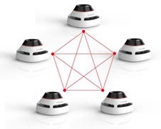 |
● | Detectors are grouped together and mesh linked to issue a fire alarm. | |
| ● | Internal alarms are only possible within the installation area, and up to 20 detectors are linked per group. | ||
| ● | False alarms can be prevented by checking the mutual cross-checking the operation of linked detectors. | ||
| Roze AIoT fire detection system — Smartcol Gateway Obelisk | |||
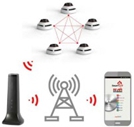 |
● | Smartcol Obelisk is equipped with a gateway function, which enables fire alarm text messages to be sent to pre-registered parties, i.e. fire departments, building managers, neighbors or other relevant parties in the event of a fire, enabling a rapid fire response. | |
| Roze AIoT fire detection system — Smartcol Wallpad & monitoring | |||
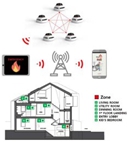 |
● | By adding a monitoring system to the Smartcol Gateway Obelisk configuration, you can check the location and real-time status of the installed detector using a web server.
| |
| ● | Suitable solution for home users. | ||
| ROZE AIoT fire detection system — Smartcol Commercial System Pro | |||
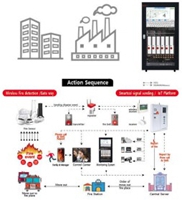 |
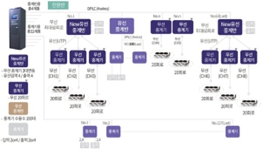 | ||
| ● | Up to 30,000 detectors can be linked to one Control Panel. | ||
| ● | Both wired and wireless repeaters and Control Panels can monitor and detect fires and are suitable for large scaled buildings such as apartment buildings, commercial complexes, warehouses, and factories. | ||
| 1 | “Smartcol” is registered trade name in Korea by Roze AI for its fire detection and prevention system. |
45
| ROZE AIoT fire detection system — Smartcol Infrared & obelisk | |||
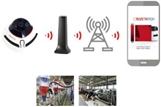 |
● | AI-type video-based fire detection system that can measure temperature by a thermal imaging camera and identify false fire alarms (unwanted fire alerts). | |
| ROZE AIoT fire detection system — Smartcol PIR & Gateway Obelisk | |||
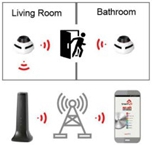 |
● | Detect movement by using a motion sensor. | |
| ● | Can be linked with Smartcol Wallpad & monitoring system. | ||
| ROZE AIoT fire detection system — Smartcol Arc & Gateway Obelisk | |||
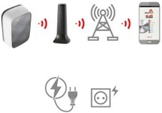 |
● | Electrical leakage detection which functions by applying a leakage detection sensor. | |
| ● | Can be linked with Smartcol Wallpad & monitoring system. | ||
| ROZE AIoT fire detection system — Smartcol Web Monitoring System | |||
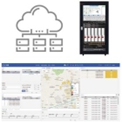 |
● | Monitoring system that can be implemented in various ways, such as standalone method and gateway method. | |
| ● | Cloud server based anytime, anywhere real-time monitoring system via internet connection. | ||
Competitive Strengths
We believe the following competitive strengths are essential for our success and differentiate us from our competitors:
As a pioneer in the field of AI based fire disaster prevention technology, Roze AI has focused on developing disaster prevention technologies and solutions. The Company has developed its own patent-based key element technology and has conducted research and development to expand and secure a strong technology portfolio including the DAP (Disaster AI Platform), DAP Fire4Cast Service, Disaster AI SoC (System on Chip) and next generation 6G related technologies.
46
We believe with respect to our technology, we have the following competitive strengths:
| 1. | DAP (Disaster AI Platform) — an AI-based integrated disaster prevention platform with proven stability and scalability through Korean government-certified excellent technology and tens of thousands of devices are installed and operational. |
| ● | Definition and Use of Artificial Intelligence. |
The AI technology used by the Company is not generative AI, such as large language models designed to generate text or images. Rather, our AI is focused on the analysis of physical environmental data collected from buildings and facilities and may be characterized as “Physical AI” or “Sensing AI.” This form of AI is designed to analyze time-series sensor data, including temperature, smoke, humidity, gas levels, and electrical usage patterns, to identify abnormal conditions and assess the risk of fire or other disasters before an event occurs.
We combine this Physical AI with digital twin technology, which enables us to create a virtual representation of a physical structure and its operating environment. By analyzing airflow, environmental conditions, and risk factors within this digital twin framework, our platform goes beyond simple detection or post-event alerts and provides predictive, prevention-oriented disaster safety solutions.
| ● | In-House Development and Reliance on Third-Party Platforms. |
Our core AI algorithms, Fire Risk Index models, data processing logic, and predictive analytics are developed entirely in-house. We do not rely on, integrate with, or deploy third-party generative AI platforms, including OpenAI, DeepSeek, or similar services, in connection with our core AI functionality.
To enhance development efficiency, we may utilize industry-standard open-source libraries, such as PyTorch or Scikit-learn. These tools are used solely as general-purpose development frameworks and do not form part of our proprietary intellectual property. Our core competitive advantage is derived from our proprietary datasets, internally developed algorithms, and application-specific logic.
| ● | Evolution of AI Capabilities Since 2015. |
When Roze AI Korea Co., Ltd. was founded in 2015, the Company’s technology primarily consisted of an IoT-based fire detection system that transmitted alerts after smoke or heat was detected. This early system was largely reactive in nature and focused on post-event notification.
Over approximately nine years, we have accumulated extensive proprietary datasets derived from real-world fire and non-fire events. As our AI algorithms have evolved and been trained on this growing body of data, our Disaster AI Platform (“DAP”) has transitioned into a predictive system that evaluates pre-ignition risk conditions. The platform now generates a Fire Risk Index, which quantifies fire risk levels and identifies vulnerable areas in advance, enabling proactive risk mitigation.
This technological evolution reflects the Company’s transition from a hardware-centric fire alert solution provider to a data-driven disaster safety platform company. We intend to continue enhancing our AI models and predictive accuracy through ongoing data accumulation, algorithm refinement, and system optimization.
To manage fire risks, DAP collects and analyzes key facility data and AIoT sensor data in real time to monitor the fire risk by location, facility, and fuel, and quantify the fire risk status by applying the fire risk index generated by the Roze AI artificial intelligence algorithm. Through this, DAP can determine the level of fire risk and predict the possibility of fire in advance, named as “Fire4Cast”.
| 2. | Roze AI’s SoC |
| ● | Roze AI’s SoC is a specialized IoT AI chip designed with its own technology and equipped with RF and MCU and is designed to be integrated with artificial intelligence systems to cope with the disasters. |
47
The R&D timeline of Roze AI SoC is as follows:
| Year | Development Stage | Key Development and Review Activities | |||
| 2022 | Initiation of First-Generation SoC Development | — | Initiation of first-generation SoC development for real-time transmission, reception, and processing of fire and disaster information (August 2022) | ||
| — | Commencement of basic architecture design based on RF communication modules and MCU | ||||
| — | Definition of disaster detection and transmission scenarios and establishment of initial technical design direction | ||||
| 2023 | Completion and Initial Implementation of First-Generation SoC | — | Completion of first-generation SoC development and implementation of the initial version (November 2023) | ||
| — | Securing first-generation SoC deliverables, including RF communication and MCU-based functional implementation | ||||
| — | Conducting proof-of-concept (PoC) validation and internal testing for disaster detection and transmission scenarios | ||||
| — | Performing initial verification of fire and disaster data processing and communication stability | ||||
| — | Evaluation of technical integration feasibility with the DAP (Disaster AI Platform) | ||||
| 2024 | Verification and Design Refinement of First-Generation SoC | — | Performance analysis and validation based on internal test results of the first-generation SoC implemented in December 2023 | ||
| — | Identification of technical improvement areas related to disaster and fire data processing accuracy and communication stability | ||||
| — | Initial integrated review of the linkage structure with the DAP and organization of improvement directions | ||||
| — | Review and definition of functional requirements and technical specifications for future expandable SoC development | ||||
| 2025 | SoC Architecture Refinement and Outsourced Manufacturing Review | — | Design improvement review to structurally refine the SoC architecture and enhance stability | ||
| — | Technical and operational review of a foundry-based outsourced manufacturing structure | ||||
| — | Establishment of internal standards for testing and validation processes | ||||
| — | Review of SoC utilization scenarios assuming application in future large-scale integrated projects | ||||
| 2026 | SoC Functional Enhancement and Integrated Testing | — | Performance and stability improvements based on the existing first-generation SoC design | ||
| — | Expansion of interoperability with various IoT sensors and disaster-related devices | ||||
| — | Execution of system-level testing assuming application in large-scale integrated projects | ||||
| — | Review of architectural improvements for low-power design and long-duration operation | ||||
48
| Year | Development Stage | Key Development and Review Activities | |||
| 2027 | Final Completion of SoC Development | — | Final completion of core SoC functions and architecture development | ||
| — | Securing stability and reliability by reflecting results from system-level integrated testing | ||||
| — | Completion of technical validation related to energy efficiency and independent operation architecture | ||||
| — | Final verification of integration structure with the DAP and accuracy of real-time data processing and control functions | ||||
| 2028 | Additional Development and Functional Expansion of SoC | — | Additional feature development and performance enhancement based on the existing SoC architecture | ||
| — | Technical expansion review for various application scenarios, including disaster early warning, integrated monitoring, and data analysis | ||||
| — | Functional improvements and additional development reflecting requirements from external partners and customers | ||||
| 2029 | Expanded Development and Review of Application Scope | — | Review of additional development aligned with mid- to long-term expansion directions for SoC-based disaster response technologies | ||
| — | Evaluation of applicability in global disaster prevention and safety infrastructure environments | ||||
| — | Review of the stability of foundry-based production and supply structures and assessment of phased expansion feasibility | ||||
| ● | Scope and Intended Use of the SoC. |
The SoC currently under development is designed primarily to optimize and enhance the performance of our Disaster AI Platform (“DAP”). The SoC is intended to function as a core component within the DAP ecosystem to strengthen sensor data processing and edge computing capabilities. Our current development efforts are focused on deployment within the DAP platform. Following technical stabilization, we may evaluate limited interoperability with third-party solutions within the broader fire and safety domain.
| ● | Development Stage and Timeline. |
The development of the SoC follows a conventional, multi-phase semiconductor development process. We are currently in the engineering sample stage. Based on our current development roadmap, we expect the transition from the initial prototype phase to the engineering sample stage to take approximately 12 to 18 months, followed by an additional 6 to 12 months for mass production and optimization. Accordingly, we do not expect commercialization of the SoC and any related revenue generation to occur prior to 2027, and we do not expect the SoC to generate material revenue within the next 12 months.
| ● | Estimated Funding Requirements. |
We estimate that the total funding required to complete development of the SoC and prepare it for commercialization will be. Of this amount, we expect to allocate approximately $8.0 million to research and development activities, including semiconductor design intellectual property (IP) licensing, electronic design automation (EDA) tools, and R&D personnel costs. We expect to allocate an additional approximately $1.0 million to mask production and other manufacturing preparation costs associated with mass production.
49
| ● | Relationship to and Enhancements of the DAP Platform. |
The SoC is not intended to replace our existing DAP platform, but rather to complement and enhance it. We expect the integration of a dedicated SoC into the DAP platform to deliver the following benefits:
| — | Performance: Significantly reduced analysis latency for fire-related signals compared to general-purpose chips, enabling ultra-low latency processing and increasing the available response “golden time” prior to fire ignition. |
| — | Reliability: On-device AI processing enables system-level decision-making even in the event of cloud or external network disruptions, thereby reducing the risk of system downtime. In addition, we expect optimized power consumption to substantially extend battery life, which is critical for wireless systems. |
| — | Cost Efficiency: At scale, integration of multiple functions into a single dedicated SoC is expected to reduce hardware costs compared to multi-chip general-purpose architectures. Operational costs are also expected to decrease due to reduced data transmission requirements, resulting in lower cloud computing and communication expenses. |
| ● | Regulatory and Export Considerations. |
The SoC under development is designed primarily for civilian fire safety and disaster prevention applications. At this time, the Company is not aware of any material export control restrictions or regulatory classifications that would materially limit the development or commercialization of the SoC. However, we will continue to monitor applicable export control regimes and regulatory requirements in relevant jurisdictions and will comply with such requirements as necessary.
We believe, with respect to our business development we have the following competitive strengths and differentiation points:
| ● | We have installed our platform in buildings for the Republic of Korean Army, Navy and Air Force bases, the Gimhae International Airport, thermal power plants, chemical plants, POSCO Steelworks, national parks, large hospitals, and other major national infrastructure facilities. In addition, we have been selected as a global leading innovation company by The Ministry of SMEs and Startups in South Korea, won the Innovative Business Award by the Ministry of SMB & Venture of Korea, and awarded as a Future Unicorn ICT Growth company by the South Korean Minister of Science & ICT; |
| ● | We have been verified by South Korean governmental agencies for outstanding performance and designated as a priority purchase product of the Public Procurement Service of Korea; |
| ● | Through collaboration with government agencies and public institutions such as the National Fire Agency, we are participating in the establishment of technology standards related to firefighting and other disasters, and are actively participating in the abolition of various regulations that hinder the development of the firefighting industry. |
| ● | Our core technologies and key solutions are developed 100% in-house. |
Growth Strategies
Roze AI has focused on developing differentiated technologies and products that can resolve the limits of existing fire detection solutions and stimulate new market demand & create value such as AI-applied solutions to increase the safety of living environments. We intend to develop our business by implementing the following strategies through differentiation, qualification and globalization:
| ● | Platforming fire & disaster business ecosystem: |
Integrating Roze AI patented core technologies for fire and disaster detection, prevention, forecasting and management system with industry standards and norms such as AI and upcoming 6G technologies, Roze AI plans to create its comprehensive fire and disaster prevention and forecasting service platform business.
50
| ● | Exploit Opportunities in the Korean market |
In our domestic market, we plan on focusing on the G2B market sector by participating in government projects, such as supplying, operating, and maintaining our fire/disaster prevention and management services to various customer groups by governmental budgets, such as central government/provincial government and public institutes, traditional markets, and armed forces facilities, especially online bidding projects, as Roze AI has been nominated as a PPS (Public Procurement Service) certified solution supplier for safety & fire detection solution sector.
| ● | Go-to-Global |
Based on accumulated technology, know-how, and product competitiveness, we plan to pioneer global markets and, especially in the North American region, actively promote our business through partnerships with overseas business partners. In addition, we plan to strengthen cooperation with construction, real estate development, local governments, and design firms in each region.
We aim to maximize sales and profits through performance-oriented business operations, and to this end, we plan to establish and implement the following business execution strategies.
| ● | B2G (business to government) Korea: |
| ● | We plan to focus and expand our existing B2G sales through Government Online Procurement Bidding as a certified and preferred supplier. |
| ● | We plan to obtain and participate in government budget-supported fire and disaster prevention supply projects. |
| ● | We plan to engage in co-R&D with government agencies and institutes in charge of standardizing and regulating fire/disaster prevention technology and solution supply, to have Roze AI technology become a standard option. |
| ● | We plan to perform government-sponsored R&D projects to develop fire/disaster prevention-related technology development. |
| ● | We plan to propose a bespoke project to local governments to introduce the fire detection prevention solution Ultra-low power LPWAN technologies |
| ● | B2B Korea: |
| ● | We plan to strengthen strategic partnerships and cooperation with residential construction companies to provide our fire detection system to the newly built/renovated residence/apartment as a standard option. |
| ● | We plan to offer retail stores our wireless fire detection solution. |
| ● | Overseas (outside South Korea) business: |
| ● | As of December 31, 2025, all of our sales have been in South Korea. We plan to partner with construction design companies and construction companies overseas to offer our products and services. |
| ● | We plan to explore, develop, and establish overseas business networks by taking advantage of Korean government export promotion supporting programs such as attending overseas exhibitions, dealer conventions, and recruiting local business partners. |
51
Corporate History and Structure
Roze AI Inc. was incorporated under the laws of the British Columbia, Canada on April 7, 2023.
The following chart illustrates our corporate structure.

Our Marketing Channel
Roze AI operates strategic marketing channels that are tailored to three market segments: B2B, B2G, and B2C.
| ● | B2B (Corporate Customers) |
| ● | Target & Goal: |
The company aims to maximize sales and profits in the Korean domestic market through new construction and redevelopment or renovation of existing buildings, including commercial buildings, manufacturing production plants and power plants, large-scale residential complexes and traditional local market complexes. Based on the success of the domestic market, the company will advance into the global market, focusing on emerging markets.
| ● | Approach: |
| ● | Establishing partnerships with architectural design firms, construction companies, and real estate developers; |
| ● | Participating in industry-specific exhibitions and technical seminars (e.g., NFPA (National Fire Protection Association), Secutech); |
| ● | Engaging in bidding processes in collaboration with local construction firms and system integrators (SIs). |
| ● | B2G (Public Sector) |
| ● | Target & Goal: |
Based on differentiated product competitiveness and track record in the B2B market, we will seek to secure a leading position in the Korean public procurement market targeting government agencies, the military, and public institutions, and also strive to develop overseas public procurement markets through collaboration with local business partners.
| ● | Approach: |
| ● | Participating in government procurement and bidding systems in each country; |
| ● | Implementing B2G entry strategies through local government distributors and authorized agents; |
| ● | Utilizing platforms such as Korea’s Public Procurement Service (PPS) Marketplace; |
| ● | Research and address challenges in overseas procurement markets such as US and Vietnam. |
52
| ● | B2C (Individual Consumers) |
| ● | Target: |
Secure stable revenue base through a cloud-based subscription service for wireless fire detection, monitoring and alarm systems targeting individual homes, home offices, and small offices.
| ● | Approach: |
| ● | Foster partnerships with Internet Service Providers to drive subscriptions for the Roze Wireless Fire Monitoring Service as an optional add-on service; |
| ● | Foster partnerships with online commerce platforms and IoT device resellers; |
| ● | Foster partnerships with major North American retail distribution channels (e.g. Costco, Home Depot, Target, Walmart, Best Buy, etc.). |
Roze AI’s projects generally follow the following six-step process from sales & promotional activities to secure projects to completion:
| Step | Action | Description | |||
| Step 1 | Promotion and Sales Engagement | ● | Reach out to potential customers through channel partners or in-house sales teams. | ||
| ● | Provide proposals and technical brochures tailored to client needs. | ||||
| Step 2 | Site (Project) Analysis and Technical Consulting | ● | Conduct on-site visits or analyze customer-provided architectural drawings. | ||
| ● | Design customized solutions based on specific site conditions. | ||||
| Step 3 | Contract Signing and Order Confirmation | ● | Finalize and sign the official contract after negotiating technical and commercial terms. | ||
| ● | Issue an invoice for the initial deposit as per contract terms. | ||||
| Step 4 | Installation and Construction (if required) | ● | Install IoT detectors, Control Panels, and configure network infrastructure on-site. | ||
| ● | Integrate with the DAP cloud platform for operation. | ||||
| Step 5 | Commissioning and Training | ● | Initiate the DAP algorithm and ensure platform connectivity. | ||
| ● | Conduct training sessions for administrators and configure dashboards. | ||||
| Step 6 | Project Completion and Aftercare | ● | Complete final handover and establish a maintenance/support plan. | ||
| ● | Provide regular performance reports for subscription-based customers. | ||||
The billing processes, including issuing invoices to receive payment for the project, are as follows:
| Step | Action | Description | |||
| Step 1 | Contract Finalization or Order Receipt | ● | Receive the signed contract or purchase order (PO) from the client. | ||
| Step 2 | Confirmation of Delivery Schedule and Coordination of Terms | ● | Confirm product delivery dates, installation timeline, and initial commissioning requirements. | ||
| Step 3 | Invoice Issuance | ● | Generate the invoice automatically through the ERP system or issue manually if necessary. | ||
| ● | Invoices include: item descriptions, quantities, unit prices, total amounts, payment due dates, payment terms, etc. | ||||
53
| Step | Action | Description | |||
| Step 4 | Transmission to Customer and Tax Invoice Integration | ● | Send the invoice via email or customer portal. | ||
| ● | Automatically link to the electronic tax invoice system (for domestic transactions). | ||||
| Step 5 | Payment and Deposit Confirmation | ● | Verify receipt of advance payments, milestone payments, or final balance in accordance with the contract terms. | ||
Roze AI selects and partners with external third-party sales representatives or partners who can play a key role in supporting project wins on a project-by-project basis or in specific market segments and leading to final contract signing through the following process:
| Step | Action | Description | |||
| Step 1 | Interview with agent candidates and verification process | ● | Review of successful cases such as project winnings, evaluation of business networks and government procurement project experience, and financial stability of the company for corporate partners. | ||
| Step 2 | Conclusion of agent contract | ● | Determination of contract scope such as definition of roles to be performed, sales commission rate, sales territory, granting of exclusive sales rights, etc. and conclusion of contract. | ||
| Step 3 | Product education and sales training | ● | Education on the overall fire response market, company product education and DAP platform demonstration, company product installation history and field operation know-how, etc. | ||
| Step 4 | Support and cooperation for winning orders and contracts | ● | Support for project proposals, participating in bids, and jointly conducting customer presentations. | ||
| Step 5 | Conclusion of contract and project handover | ● | Final contract to be concluded under the name of Roze AI. | ||
| ● | Payment of sales commission as stipulated in the agent contract. | ||||
Research and Development
Roze AI is actively conducting research and development across the following six core technology areas, centered around the Disaster Digital-Twin AI Platform (DAP), a digital twin-based AI platform. Each technology area is operated as a module modification while being organically integrated to maximize the overall performance, intelligence, and scalability of DAP.
AIoE Device (AI of Everything) - Hyper-Realistic AI-Integrated Detection Device
| ● | Overview |
A multi-functional detection device that integrates artificial intelligence into IoT sensors, capable of detecting various physical data such as fire, gas, temperature, humidity, vibration, carbon monoxide (CO), and electric current.
| ● | Technical Highlights |
| ● | Combines high-precision sensing with embedded AI logic. |
| ● | Integrates with robotic and advisor functionalities to enable real-time risk prediction within buildings. |
| ● | Application Areas: |
| ● | Performs risk diagnosis for commercial buildings, industrial plants, and public infrastructure in B2B environments |
54
Disaster AI Solution — AI Engine for Disaster Prediction
| ● | Overview: |
| ● | The core algorithm powering RozeAI’s flagship Fire Forecast system, designed to predict and detect disaster-related risks in real time. |
| ● | Technical Highlights: |
| ● | Anomaly detection based on Deep SVDD and control chart methodologies. |
| ● | Calculation of a Fire Risk Index for each building using a five-level rating system. |
| ● | Integrated analysis combining FDS (Fire Dynamics Simulator) simulation data with real-world sensor Inputs. |
| ● | Current R&D Focus: |
| ● | Development of a self-correcting, adaptive prediction algorithm. |
| ● | Enhancement of AI capabilities for risk learning and evacuation guidance using large-scale data sets. |
AI ASIC Chip (SoC) - RF + MCU-Based AI Operation Chip
| ● | Overview: |
A dedicated application-specific integrated circuit (ASIC) optimized for the DAP platform, integrating RF communication capabilities and MCU-based AI processing. It serves as a key component for deployment in field terminal devices.
| ● | Technical Highlights: |
| ● | Enables high-speed, low-power wireless communication. |
| ● | Optimized for seamless integration with wireless-based complex IoT sensor networks. |
| ● | Development Direction: |
| ● | Advancing the commercialization of the SoC based on FPGA prototypes. |
DAP Cloud Service — Cloud-Based AI Platform Service
| ● | Overview: |
A comprehensive end-to-end platform that connects sensor data collection, AI-driven analysis, and real-time visualization in a unified cloud environment.
| ● | Service Components: |
| ● | Real-time dashboards and administrator-oriented HMI. |
| ● | 3D simulation powered by digital twin technology. |
| ● | Metaverse-based training environments (RozeVerse™, RozeVR™). |
| ● | R&D Focus Areas: |
| ● | Development of customized UI/UX interfaces tailored to individual buildings. |
| ● | Optimization of the subscription-based SaaS (Software as a Service) delivery model. |
Energy Harvest Chip — Self-Powered Energy Generation Device
| ● | Overview |
A specialized chipset designed to enable self-sustaining sensor nodes that operate without the need for battery replacement.
55
| ● | Technical Highlights: |
| ● | Harvests energy from environmental sources such as vibration, heat, and electromagnetic fields, converting it into usable electrical power. |
| ● | Supports continuous, autonomous operation of wireless IoT sensors. |
| ● | Expected Benefits: |
| ● | Significant reduction in maintenance costs. |
| ● | Enables long-term deployment of detectors in remote or hard-to-access areas. |
QRNG (Quantum Random Number Generator) — Quantum-Based Security Module
| ● | Overview: |
A security module that generates truly random encryption keys based on the principles of quantum mechanics, ensuring the highest level of data protection.
| ● | Technical Highlights: |
| ● | Prevents hacking and unauthorized access during wireless data transmission. |
| ● | Strengthens the security and integrity of AI-powered sensor networks. |
| ● | Ongoing R&D Objectives: |
| ● | Developing automated security token generation when connecting to cloud environments. |
| ● | Implementing end-to-end encrypted communication across all layers of the DAP platform. |
R&D Roadmap
The following table describes our research and development targets:
| R&D Event | Analysis and Planning | Design and Prototyping | Development | Testing | Launch | |||||
| AIoE Device | Completed Q1 2026 | Q3 2026 | Q1 2027 | Q4 2027 | Q2 2029 | |||||
| Disaster AI Solution | Completed Q3 2025 | Completed Q1 2026 | Q3 2026 | Q2 2027 | Q1 2028 | |||||
| AI ASIC Chip (SoC, 1st Version) | Completed Q1 2025 | Competed Q4 2025 | Q4 2026 | Q4 2027 | Q1 2028 | |||||
| DAP Cloud Service | Completed Q4 2025 | Q2 2026 | Q4 2026 | Q2 2027 | Q4 2028 | |||||
| Energy Harvest Chip | Q2 2026 | Q4 2026 | Q2 2027 | Q2 2028 | Q4 2029 | |||||
| QRNG | Q2 2026 | Q4 2026 | Q3 2027 | Q3 2028 | Q4 2029 |
Our Customers
In the Korean domestic market, we strive to secure customers and build a stable sales portfolio through customized business strategies that meet the needs of each segment of B2B, B2G, and B2C. We aim to prevent significant sales dependence on a small number of customers in a specific market area and ensure stable business continuation.
56
In the B2B segment, we focus on the construction and redevelopment/renovation of existing buildings such as commercial buildings, manufacturing plants, power plants, large-scale residential complexes, and traditional local commercial complexes.
For the B2G segment, we target government agencies, the armed forces of South Korea, and public institutions as our target customers based on our differentiated product competitiveness and performance in the B2B market, and are securing a prominent position in the domestic public procurement market.
Our primary customer base consists of public government institutions, the military, and large enterprises. For the fiscal year ended December 31, 2024, two of our major customers collectively accounted for approximately 40% of our total revenue.
Our relationships with these customers are governed by commercial sales agreements entered into in the ordinary course of business. These agreements generally include pricing and payment terms consistent with our standard sales policies and feature customary “termination for convenience” clauses, which allow either party to terminate the contract following a prior notice period.
We have determined that our business is not substantially dependent on any individual agreement with a specific customer. Our AI-driven solutions are not bespoke products tailored to the proprietary requirements of a particular client; rather, they possess standardized scalability that can be broadly applied across various B2B and B2G applications.
To mitigate concentration risk, we are actively expanding our sales pipeline and pursuing entry into international markets. As we execute these growth strategies and secure additional contracts with global partners, we anticipate that our revenue base will become progressively diversified, and the relative contribution from our current major customers will decrease over the next 12 to 24 months.
The Company does not presently generate any material revenue from B2C or other subscription-based services and during the periods covered by the financial statements included in this prospectus, we did not generate any from subscription services. Our revenues to date have been generated primarily from B2G and B2B project-based product sales and solution implementations.
| ● | Near-Term Subscription Revenue Expectations. |
We do not expect to generate material subscription revenue within the next 12 months. Our subscription-based revenue model remains at an early conceptual and planning stage and is not currently a primary driver of near-term revenue growth.
| ● | Relationship Between Subscription Services and the SoC Project. |
The development of our System on Chip (SoC) is a technology-driven initiative intended to enhance product performance, system stability, and long-term operational efficiency. The SoC project is not a prerequisite for the provision of subscription-based services. However, if we commercialize products incorporating the SoC in the future and such products support enhanced data analytics and monitoring capabilities, we may introduce subscription-based services as a supplementary revenue stream.
| ● | Relationship to Customer Diversification Strategy. |
Our exploration of subscription-based services is part of a longer-term strategy to expand beyond a predominantly B2G-focused business model and to broaden our customer base to include B2B and, potentially, B2C customers. Nevertheless, such subscription offerings remain in an early planning stage and are not expected to have a material impact on our financial condition or results of operations during the periods presented or within the next 12 months.
In the B2C sector, we seek to secure a stable revenue base through a cloud-based subscription service for wireless fire detection, monitoring, and alarm systems targeting individual homes, home offices, and small offices through partnerships with Internet service providers.
For overseas customers, we are focusing on developing the emerging Southeast Asian market first, and we expect to secure local customers and achieve visible business results in Vietnam and other countries in the near future.
Major examples of customers in the Korean market include the Korean Army, Navy, and Air Force bases, Gimhae International Airport, thermal power plants, chemical plants, POSCO steel mills, national parks, large hospitals, and universities.
57
Intellectual Property Rights
Currently, we mainly seek to protect our intellectual property rights by relying on Korean, PCT, and United States intellectual property laws and contractual measures. We rely on a combination of trademarks, service marks, patents, domain name registrations, copyright protection, and contractual restrictions to establish and protect our brand name and logos, technologies, marketing designs, and internet domain names.
As of the date of this prospectus, we have registered 20 patents in Korea, the United States, and under the PCT, which expire between 2036 and 2041, and three domain names. We have 22 pending intellectual property applications for patents. The chart below presents information about intellectual property that we have registered or applied for. We have fifteen trademarks in Korea and six product design trademarks in Korea.
| Type | Name | Issuing authority | Application
date |
Status | Expiration
date | |||||
| Patent | Smart Factory Technology – Process Management System of IoT Structures for Distributed PLC | Korean Intellectual Property Office (“KIPO”) | 6/20/2018 | Registered | 3/8/2036 | |||||
| Patent | Wireless Ground Detecting System | KIPO | 11/18/2019 | Registered | 9/12/2038 | |||||
| Patent | Fire Alarm Device | KIPO | 6/10/2020 | Registered | 3/5/2040 | |||||
| Patent | IoT Fire Extinguishing System | KIPO | 11/2/2020 | Registered | 12/19/2038 | |||||
| Patent | Fire Alarm System | KIPO | 11/18/2019 | Registered | 3/22/2039 | |||||
| Patent | Fire Alarm System (Gateway Type)(1) | KIPO | 6/10/2020 | Registered | 8/29/2039 | |||||
| Patent | Fire Alarm System (Redcing Wireless Traffics by ACK Signal Processing) | KIPO | 12/1/2020 | Registered | 2/16/2041 | |||||
| Patent | Fire Detector (Wireless Fire Detector) | KIPO | 6/29/2021 | Registered | 3/13/2040 | |||||
| Patent | Fire Protection Method and Fire Protection System (Digital Twin Smart Advisor) | KIPO | 8/6/2021 | Registered | 9/29/2040 | |||||
| Patent | Fire Protection Method and Fire Protection System | KIPO | 8/6/2021 | Registered | 9/29/2040 | |||||
| Patent | Fire Alarm Apparatus to Prevent unwanted False Alarm | KIPO | 8/6/2021 | Registered | 10/18/2041 | |||||
| Patent | Fire Alarm Apparatus with Traffic Control Functions | KIPO | 9/26/2023 | Registered | 02/16/2041 | |||||
| Patent | Sensor Installation Method Using Wireless Processing Technology | KIPO | 1/14/2022 | Registered | 05/03/2041 | |||||
| Patent | Method for Deriving Fire Risk Optimization Values, Installation Method for Simulation Processing Using the Same, and Fire Alarm System Using the Same | KIPO | 2/24/202 | Registered | 05/03/2041 | |||||
| Patent | Communication Inspection Method and Fire Alarm Device Using the Same | KIPO | 1/14/2022 | Registered | 05/03/2041 | |||||
| Patent | Fire evacuation system and how to operate the fire evacuation system (Optimum Evacuation Route guidance and guidance light system to minimize casualties of rescue seekers in emergency situations during fire or disaster | KIPO | 6/21/2021 | Applied | ||||||
| Patent | Fire prevention system and evaluation tool calculation method using it | KIPO | 11/16/2023 | Registered | 10/18/2041 |
58
| Type | Name | Issuing authority | Application
date |
Status | Expiration
date | |||||
| Patent | Fire alarm device inspection method and fire alarm device | KIPO | 11/16/2023 | Registered | 10/18/2041 | |||||
| Patent | Smoke, sensors, smoke sensor operation method and fire alarm system | KIPO | 1/4/2022 | Applied | ||||||
| Patent | Fire detection device and operation method of fire detection | KIPO | 1/4/2022 | Applied | ||||||
| Patent | Remote imaging device and fire detection system using the same | KIPO | 2/28/2022 | Applied | ||||||
| Patent | Fire detection devices and fire detection systems containing semiconductor chips | KIPO | 3/14/2022 | Applied | ||||||
| Patent | Fire detection device using wireless communication that minimizes power consumption | KIPO | 4/20/2022 | Applied | ||||||
| Patent | Fire detection device using wireless communication that ensures signal reliability | KIPO | 4/20/2022 | Applied | ||||||
| Patent | Fire detectors and fire detection systems | KIPO | 8/11/2022 | Applied | ||||||
| Patent | Fire detection system | KIPO | 10/7/2022 | Applied | ||||||
| Patent | Fire detectors and fire detection systems including them | KIPO | 3/7/2023 | Applied | ||||||
| Patent | Fire protection system using metaverse | KIPO | 3/7/2023 | Applied | ||||||
| Patent | Fire alarm system | PCT | 3/23/2023 | Applied | ||||||
| Patent | Fire alarm system | PCT | 11/1/2022 | Registered | 3/22/2039 | |||||
| Patent | Fire alarm system | PCT | 8/6/2020 | Applied | ||||||
| Patent | Fire alarm apparatus | PCT | 3/4/2021 | Applied | ||||||
| Patent | Fire alarm system preventing unwanted false fire alarm | PCT | 9/29/2021 | Applied | ||||||
| Patent | Fire prevention method and fire prevention system | PCT | 9/29/2021 | Applied | ||||||
| Patent | Fire prevention method and fire prevention system | PCT | 9/29/2021 | Applied | ||||||
| Patent | Fire alarm apparatus with traffic control function | PCT | 1/11/2022 | Applied | ||||||
| Patent | Fire alarm system inspection method and fire alarm system | PCT | 10/18/2022 | Applied | ||||||
| Patent | Fire alarm apparatus and method for the same | PCT | 1/3/2023 | Applied | ||||||
| Patent | Fire Prevention System and Evaluation Tool Calculation Method Using It | PCT | 10/18/2022 | Applied | ||||||
| Patent | Fire detection devices and fire detection systems containing semiconductor chips | PCT | 3/8/2023 | Applied |
59
| Type | Name | Issuing authority | Application
date |
Status | Expiration
date | |||||
| Patent | Fire
Alarm System US 11488.460 B2 Mesh Transmitter Alarm function |
USPTO | 3/4/2021 | Registered | 3/23/2040 | |||||
| Patent | Fire
Alarm Apparatus US 12.183.185. B2 RF signal filtering batch function |
USPTO | 31/12/2024 | Registered | 3/14/2041 |
| (1) | This patent was invalidated as a result of certain litigation. However, we are in further litigation regarding the validity of this patent (Patent No.:10-123763). A final decision has not yet been made in that litigation. Because this litigation pertains to only one of our patents listed above, and it is not related to our core technology, we believe that even an unfavorable decision will not have a material effect on us. |
| Type | Specimen | Issuing authority | Application date | Status | Expiration date | |||||
| Trademark |  |
KIPO | 29/03/2017 | Registered | 02/04/2028 | |||||
 |
KIPO | 29/03/2017 | Registered | 02/04/2028 | ||||||
 |
KIPO | 29/03/2017 | Registered | 02/04/2028 | ||||||
 |
KIPO | 12/03/2021 | Registered | 23/11/2032 | ||||||
 |
KIPO | 12/03/2021 | Registered | 23/11/2032 | ||||||
 |
KIPO | 12/03/2021 | Registered | 23/11/2032 | ||||||
 |
KIPO | 20/07/2021 | Registered | 15/03/2033 | ||||||
 |
KIPO | 25/03/2022 | Registered | 14/02/2034 | ||||||
 |
KIPO | 25/03/2022 | Registered | 14/02/2034 | ||||||
 |
KIPO | 25/03/2022 | Registered | 14/02/2034 | ||||||
 |
KIPO | 25/11/2022 | Registered | 22/03/2033 | ||||||
 |
KIPO | 16/03/2023 | Applied | |||||||
 |
KIPO | 16/03/2023 | Registered | 28/08/2033 |
Competition
Our primary competitors include Wireless Fire (part of Johnson Controls), Honeywell, and Siemens. We also compete with EMS Firecell, Cygnus Systems, Eurofyre, Ajax Systems, and Notifier.
We compete on the basis of effectiveness of AI and fire safety technology.
60
Market Opportunity
| ● | Overview of fire detection systems |
Fire safety remains a paramount concern for any residential houses and commercial buildings and fire detection technologies play a crucial role. As well as being a legal obligation, it is essential for ensuring personal safety and preventing heavy material and financial losses for companies or local authorities. Existing technologies such as smoke, heat, and flame detectors are widely used. However, those devices are not necessarily suitable for all working environments and cannot anticipate the risk of fire.
Selecting the most suitable fire alarm system is vital to protect human lives and preserve assets. When designing a building, whether it’s a hospital, school, or hotel, one of the critical decisions that designers and installers must make is choosing between wired and wireless systems.
| ● | Overview of global fire prevention market |
The overall global fire prevention product market is substantial and projected for continued growth. Various market research firms provide slightly different valuations, but all indicate a multi-billion dollar industry with a positive CAGR.
Grand View Research valued the global fire safety equipment market at USD 49.82 billion in 2022, projecting it to grow at a CAGR of 6.4% from 2023 to 2030. Their report on fire protection systems estimated the market at USD 77.88 billion in 2022, with a projected CAGR of 6.6% from 2023 to 2030.
(Source: Fire Protection System Market Size, Share & Trends Analysis Report 2023-2030)
IMARC Group reported the global fire safety equipment market reached USD 57.8 billion in 2024 and expects it to reach USD 94.1 billion by 2033 (CAGR of 5.28%).
(Source: Fire Safety Equipment Market Report 2025-2033)
Fortune Business Insights valued the global fire protection system market at USD 68.90 billion in 2024, projecting it to grow to USD 111.38 billion by 2032 (CAGR of 6.4%).
(Source: Fire Protection System Market 2025-2032)
| ● | Fire Prevention Market Development (By product) |
| ● | Fire Detection System Market: |
Fire detection equipment refers to a range of devices and systems that are designed to identify the presence of fire or smoke by sensing specific phenomena associated with combustion. Fire detection equipment plays a crucial role in alerting occupants and emergency services to potential fire hazards for timely evacuation and response to ensure safety and the minimization of damage. The fire detection equipment market size has grown from $8.09 billion in 2024 to $8.77 billion in 2025 at a CAGR of 8.4%. It is forecasted to grow to $11.92 billion in 2029 at a CAGR of 8.0%. The forecasted growth in this period may be attributed to the technological advances, growth in the construction market, increasing demand from end-user industries, stringent safety regulations, and increasing adoption of wireless & AI technology in fire detection.
(Source: Fire Detection Equipment Global Market Report 2025, The Business Research Company, Jan. 2025)
| ● | Fire Suppression System Market: |
The global fire suppression system market size is calculated at USD $22.34 billion for the year 2024, grew to USD $23.47 billion in 2025 and is projected to reach around USD $36.53 billion by 2034 at a CAGR of 5.04% between 2024 and 2034. The North America fire suppression system market size was exhibited at USD $8.27 billion in 2024 and is forecasted to grow at a CAGR of 5.16% during the forecast year. The U.S. fire suppression system market size is evaluated at USD $6.94 billion in 2024 and is forecasted to be worth around USD $11.58 billion by 2034, growing at a forecasted CAGR of 5.22% from 2024 to 2034.
(Source: Fire Suppression System Market Size and Forecast 2024 to 2034, Precedence Research, Oct. 2024)
61
| ● | Fire Sprinkler Systems Market: |
The global fire sprinkler systems market was valued at USD $11.52 billion in 2023 and is forecasted to grow up to USD $23.79 billion at a CAGR of over 8.6% from 2024 to 2032. Technological advancements have transformed traditional sprinkler systems into smarter and more efficient equipment. The introduction of advanced sensors and control systems allows for early detection and localized activation of sprinklers, minimizing water damage and maximizing the effectiveness of fire suppression.
(Source: Fire Sprinkler Systems Market for 2024-2032, Global Market Insight, Nay 2024)
| ● | Fire Department Software Market: |
The fire department software market size has grown rapidly in recent years. It is forecasted to grow from $2.61 billion in 2024 to $2.92 billion in 2025 at a CAGR of 11.8%, and is forecasted to grow to $4.53 billion in 2029 at CAGR of 11.6%. The forecasted growth in the forecast period may be attributed to the integration of smart city initiatives, enhancements in mobile technology, increasing cybersecurity concerns, a focus on community risk reduction, and the need for improved resource management.
(Source: Fire Department Software Global Market Report 2025, Global Information Research, Apr. 2025)
| ● | Advantages and Disadvantages of Wired Fire Systems |
Wired fire systems have long been considered a reliable choice for both residential and commercial installations around the globe. However, with the evolution of technology, the market has embraced innovative systems that employ wireless technologies. Wired fire systems are characterized by physical cables connecting all components, such as smoke detectors, alarms, and control panels.
| ● | Reliability: Wired systems offer a stable and consistent connection. Installing them may require construction work, making it advisable to incorporate them during the building phase. |
| ● | Power Supply: These systems are powered directly by the building’s electrical supply, eliminating the need for battery replacements. This ensures continuous operation without concerns about battery life. On the other side, wired systems can be susceptible to physical damage to wires. |
| ● | Compatibility: Wired systems often work well with existing fire devices, but compliance with new regulations might necessitate an overall revision of the fire system. |
| ● | Installation Costs: Installing wired systems demands meticulous planning and involves higher costs due to the need for construction work, masonry, and the purchase of materials and wires. This could result in significant material waste if elements need to be relocated or repositioned. |
| ● | Limited Flexibility: Once cables are in place, effecting changes or expansions to the system can be more complex compared to wireless systems. |
| ● | Advantages and Disadvantages of Wireless Fire Systems |
With advancing technologies, wireless fire systems are becoming increasingly popular and offer the following benefits:
| ● | Ease and Speed of Installation: The absence of cables simplifies installation, reducing the required time. Installing complex fire systems can take just a few days. |
| ● | Less disruption: Implementing wireless fire systems enables uninterrupted business activities within the facilities. |
| ● | Costs: By eliminating the need for cables, installing a wireless fire system is faster and can be cheaper than a wired solution. We estimate savings can be achieved compared to traditional wired systems. |
62
| ● | Flexibility: Wireless systems offer greater flexibility in adding or removing components, adapting to evolving business needs and regulations. These systems provide reports that streamline installation and maintenance procedures. |
| ● | Aesthetics: Without the visual clutter of cables, wireless systems can be more discreet and aesthetically pleasing. |
| ● | Batteries: Wireless fire alarm systems rely on batteries, which must be regularly checked and replaced to ensure uninterrupted functionality. The presence of batteries can pose limitations for some older type devices, while the latest technology advancements generally filled the performance gap. Advances in battery technology and LED lighting mean wireless systems can run for many years without a battery change. |
| ● | Range Limitations: The range between wireless devices may be limited, requiring the use of signal repeaters in larger buildings. |
| ● | Maintenance: Like many home automation products, wireless fire systems require regular maintenance and monitoring, but the most advanced systems offer remote monitoring capabilities. |
Employees
We, through our subsidiary Roze AI Korea, had 56 full-time employees as of December 31, 2025. All of our employees are located in Korea. The following table sets forth the number of our full-time employees categorized by department as of December 31, 2025:
| Department | Numbers of Employees | |||
| Corporate | 2 | |||
| Auditors | 1 | |||
| Advisors | 4 | |||
| Research and Development | 26 | |||
| Marketing | 11 | |||
| Manufacturing and A/S | 6 | |||
| Finance | 4 | |||
| Global business | 2 | |||
| Total | 56 | |||
In addition to our full-time employees, we had 56 contract employees as of December 31, 2025, which contract employees are primarily responsible for assisting in the daily responsibilities of our full-time employees across different departments.
We, through our subsidiary Roze AI Korea, enter into employment agreements with our full-time employees. The Company hires employees by entering into employment contracts for an indefinite period and dismissal of the employee is required to be done by written notice. The employees are prohibited from competing with the Company during their term of employment and for 1 to 3 years after the end of their term of employment, pursuant to the Unfair Competition Prevention and Trade Secret Protection Act in Korea.
We believe that we maintain a good working relationship with our employees and independent contractors, and we have not experienced material labor disputes in the past. None of our employees are represented by labor unions.
63
Facilities
Our principal executive offices are located at Rm B-1710, 14 Sagimakgol-ro 45beon-gil, Jungwon-gu, Seongnam-si, Gyeonggi-do, Republic of Korea, which we own through Roze AI Korea. The details of our properties are as follows:
| Name (Rm. No.) |
Address | Size (m2) | Use purpose | |||
| Headquarter | URim B-1710, 14 Sagimakgol-ro 45beon-gil, Jungwon-gu, Seongnam-si, Gyeonggi-do, Republic of Korea | 78.00 | R&D | |||
| 1709 | Same as above except room number | 81.90 | Manufacturing | |||
| 1607 | Same as above except room number | 122.32 | Sales and administrative | |||
| 1711 | Same as above except room number | 78.00 | Sales and administrative | |||
| 1712 | Same as above except room number | 78.00 | Sales and administrative | |||
| 1713 | Same as above except room number | 78.00 | Sales and administrative | |||
| 1714 | Same as above except room number | 78.00 | Sales and administrative | |||
| 1806 | Same as above except room number | 124.01 | Sales and administrative | |||
| Sales office | Rm. 510, Chuncheon B&I Knowledge Industry Complex, 10, Soyang-gang-ro, Chuncheon-si, Gangwon-do, Republic of Korea | 134.51 | Local sales office |
Seasonality
Our business is not subject to seasonal fluctuations. We enter into business contracts with our customers throughout the year.
Legal Proceedings
We are not currently a party to, and our property is not the subject of, any material legal proceedings.
Regulations
Our business operations are subject to various governmental regulations in South Korea and Canada. The principal regulations affecting our business operations are summarized below.
For South Korea;
| Title of Law | Description | |
| Fire Service Basic Law | The Fire Service Act is a law of the Republic of Korea to protect the lives, bodies, and property of citizens through fire prevention, warning, and suppression, and rescue and emergency activities in fires, disasters, catastrophes, and other emergency situations. | |
| Fire Prevention and Safety Management Law | The “Fire Prevention and Safety Management Law” refers to a set of regulations and legal requirements aimed at preventing fire hazards and ensuring the safety of people and property from fire-related incidents. This law often includes provisions for fire risk assessments, fire safety policies, fire safety management plans, and the maintenance of fire safety equipment. The goal is to prevent fires, control their spread, and reduce the consequences of fire-related emergencies. | |
| Fire Facility Installation and Management Law | The “Act on Installation and Management of Firefighting Systems” in South Korea outlines the regulations for installing and managing firefighting systems in various buildings and structures. It ensures public safety by setting standards for fire prevention and emergency response. The law also covers aspects like performance-oriented design and the seismic design of firefighting systems. | |
| Fire Facility Installation Business Law | The purpose of this Act is to ensure public safety against fire and contribute to the national economy with the sound development of fire-fighting system business and the promotion of fire-fighting technologies by prescribing matters necessary for the management of fire-fighting system installation and fire-fighting technologies. |
We are incorporated under the BCBCA and are subject to applicable Canadian corporate and securities laws. As a technology company, we are also subject to federal and provincial privacy and data protection laws, including PIPEDA and British Columbia’s PIPA, which govern the collection and use of personal information. If we use AI technologies in a commercial context, we may become subject to emerging regulatory frameworks, including the proposed Artificial Intelligence and Data Act. Additionally, we comply with Canadian tax and employment laws applicable to our operations in Canada.
64
The following sets forth information regarding members of the board directors and executive officers of Roze AI Inc. and Roze AI Korea Co., Ltd. as of the date of this prospectus. All directors of our South Korean subsidiary, Roze AI Korea Co., Ltd., as disclosed in this prospectus, are exclusively responsible for the business operations of Roze AI Korea. These individuals do not hold any executive positions, directorships, or authority within Roze AI Inc.
Roze AI Inc. serves as the holding company and the parent entity for global business expansion, maintaining a management structure distinct from that of its Korean subsidiary. All major business activities and corporate decision-making processes of the company are conducted at the holding company level. Accordingly, the officers of the Korean subsidiary do not participate in or exercise influence over the management activities of Roze AI Inc.
| Name | Age | Position(s) | ||
| Young Jin Cho | 58 | Chief Executive Officer/Director | ||
| Seog Hun Cho | 56 | Chief Operating Officer/Vice President/Director | ||
| Seon Ho Lee | 57 | Chief Financial Officer (for Roze AI Korea Co., Ltd) | ||
| Eric Sherb | 39 | Chief Financial Officer (for Roze AI Inc.) | ||
| O Jang Jeong | 56 | Chief Technology Officer-R&D Strategy/Director (for Roze AI Korea Co., Ltd) | ||
| Seung Ju Lee | 51 | Chief Technology Officer-DAP/Director (for Roze AI Korea Co., Ltd) | ||
| Chang Sik Jung | 55 | Chief Technology Officer-SoC & Communication/Director (for Roze AI Korea Co., Ltd) | ||
| Inger Lee | 51 | Independent Director of Roze AI Inc. | ||
| Byeong Ok Go | 59 | Independent Director of Roze AI Inc. | ||
| Daniel Lee | 52 | Independent Director of Roze AI Inc. |
Executive Officers and Directors
Young Jin Cho, Chief Executive Officer and Director
Mr. Cho has been our chief executive officer since inception and founded Roze AI Korea in 2015. Prior to that, he started his career as a semiconductor design engineer in Silicon Valley, USA, and after over 20 years of experience in the IT field, he returned to Korea and founded Roze AI Korea.
He graduated from the Hanyang University, Department of Electronic Engineering/Bachelor of Electronic Engineering
Experience:
2021~Present
| ● | Selected as a procurement innovative product by the Korean Intellectual Property Office of Republic of Korea (Public Procurement Service Fast Track Innovative Product) and as an excellent procurement product (Public Procurement Service of Republic of Korea). |
| ● | Selected as a global ICT future unicorn fostering company by the government of Republic of Korea and selected as one of the 1000 national innovative companies (hosted by the Ministry of Commerce, Industry and Energy of Republic of Korea). |
| ● | Established a local corporation in Canada (ROZETA AI. Inc). |
| ● | Obtained new technology certification from Korea land & housing corporation, a governmental agency,2 and pilot project advancement for government public housing projects. |
| 2 | Korea Land and Housing Corporation (LH) is a public enterprise under the Ministry of Land, Infrastructure and Transport of Republic of Korea and carries out national projects related to land, housing, urban development and housing welfare with the goal of ensuring housing stability and efficient use of land. |
The Korean government holds 85% of the shares and the sales in 2024 were $11.52 billion, and as of Q1 2024, 8,700 employees are working. In 2025, it is planning to supply a large amount of public housing, including approximately 24,000 public housing units and approximately 64,000 public rental housing units.
LH New Technology Certification System is to discover technologies with proven performance and usability that are applicable to construction and housing development projects promoted by LH Corporation.
65
2015~2020:
| ● | Established Rozetatech Co., Ltd. and IoT research center, venture business certified and selected as Good Design (Excellent Industrial Design) by the government of Republic of Korea. |
| ● | Received the Fire Service Commissioner’s Award at the Korea Safety Awards and awarded Excellent Invention Award (hosted by the Korean Intellectual Property Office and Korea Invention Promotion Association). |
| ● | ‘Digital Twin + IoT Technology’ selected as R&D project by the Ministry of SMEs and Startups of Republic of Korea. |
| ● | Digital Twin + IoT Technology’ selected as R&D project by the Ministry of Commerce, Industry and Energy of Republic of Korea. |
1991~2014:
| ● | Nexdial Inc. Established (Silicon Valley, USA) — Cisco VOIP technology development. |
| ● | Co-founded Jungsoft Co., Ltd. in Korea (1991) developed PC-DIC and established JUNGSOFT USA, an American corporation (Silicon Valley, USA), and Jungsoft Co., Ltd. listed on KOSDAQ of Korea. |
| ● | Nexdial Inc. Established (Silicon Valley, USA) — Cisco VOIP technology development. |
Seog Hun Cho, Chief Operating Officer and Director
Mr. Cho has been our chief operating officer since inception and has been with Roze AI Korea since 2015. Prior to that, he served as a new channel development manager of Allianz Financial Group. He studied journalism and broadcasting at Hanyang University, Korea.
Experience:
| ● | Completion of type approval from the National Fire Agency for hybrid (GR type wired and wireless complex Control Panel) system for newly built large apartments. |
| ● | Signed a contract for IoT wireless firefighting construction for large-scale development and construction projects, such as a new public-supported private rental house in Gyeongsangnam-do, Yangjae High-Tech Logistics Complex, real estate redevelopment in Daejeon city. |
| ● | Completed 3 years of Department of Fire and Disaster Prevention at Soongsil University. |
| ● | Acquired professional firefighting facility construction business license and information and communication construction business license. |
| ● | Introduced ERP system (sales, production, inventory, accounting, human resources, management) and establishment of work process. |
| ● | Gained system approved for fully wireless fire detection system Volcano (R-type wireless Control Panel) by the National Fire Agency of Republic of Korea. |
| ● | Involved with Korea’s first IoT wireless fire detection system installed at local market in Busan, Korea. |
| ● | 2015 - Present Roze AI Korea |
| ● | Head of business operation and sales. |
| ● | Overseas business development. |
| ● | Marketing. |
| ● | Customer relations and government-related communication. |
66
| ● | 1998 - 2014 Allianz Korea Inc. |
| ● | Head of sales. |
| ● | Insurance and customer care product and service planning. |
| ● | Corporate customer communications. |
Seon Ho Lee, Chief Financial Officer (for Roze AI Korea Co., Ltd)
Mr. Lee has been chief financial officer of Roze AI Korea since 2016. Prior to that, he was in charge of finance for a KOSDAQ-listed company and has successfully overseen such company’s KOSDAQ listing work.
He Graduated from Ajou University, Department of Business Administration.
Experience:
| ● | Investment-linked research and development fund of KRW 1 billion (Korea Development Bank). |
| ● | First Penguin selection (which is a Korean government fund supporting and offering credit and fund program for innovative SME’s with proven track records and promising technologies). |
| ● | Venture company certification/Establishment of IoT research center of Roze AI Korea. |
| ● | Performed IPO accounting audit and due diligence with Samsung Securities for KOSDAQ listing. |
| ● | 2016 - Present Roze AI Korea |
| ● | IoT/IoE technology research and development. |
| ● | DAP (Disaster AI Platform) system development & upgrade. |
| ● | 2003 - 2015 Saeneul Co., Ltd. |
| ● | Director of Business Management Division, Saeneul Co., Ltd. and Saeneul Home Network Co., Ltd. |
| ● | Customized engineering solution design for Samsung Heavy Industries. |
| ● | 1995 - 2002 Jungsoft Co., Ltd |
| ● | Head of Busienss Management Support Division. |
| ● | Finance, Funding, Human Resources, General Affairs, Purchasing. |
Eric Sherb, Chief Financial Officer (for Roze AI Inc.)
Eric Sherb has served as our Chief Financial Officer since May 2025. He is a CPA with 16 years of experience in accounting advisory, auditing and mergers and acquisitions. Mr. Sherb currently serves as the Chief Financial Officer for SMC Entertainment Inc. (OTC: SMCE), Scienture Holdings, Inc. (NASDAQ: SCNX) and Fatpipe Inc. (NASDAQ: FATN). Mr. Sherb began his career at PricewaterhouseCoopers in New York City in a variety of industries from hedge funds to manufacturing and healthcare (July 2008 to January 2013). Following his time at PricewaterhouseCoopers, Mr. Sherb served as Audit Manager at RBSM LLP (January 2013 to January 2015), and Senior Manager at CFGI (March 2015 to October 2018). Since October 2018, Mr. Sherb has been a founder and owner of EMS Consulting Services, LLC. Mr. Sherb has extensive experience in financial reporting and governance within the capital markets, including IPOs, direct listings, SPAC and de-SPAC transactions. He has served as chief financial officer and provided financial consultancy services for several NASDAQ and OTC clients, most recently. Mr. Sherb has successfully assisted companies with IPO and audit readiness, registration statement filings, and ongoing SEC and PCAOB compliance.
67
Eric Sherb is currently employed as the CFO of Roze AI Inc. pursuant to an employment agreement. While his current role does not require full-time engagement, Mr. Sherb nonetheless holds full authority and responsibility, in his capacity as CFO, over the Company’s financial strategy, financial reporting, accounting policies, and internal control over financial reporting.
The Company expects that Eric Sherb will continue to serve as the CFO of Roze AI Inc. following the completion of the Direct Listing, and does not anticipate any changes to his role or responsibilities following the Direct Listing.
O Jang Jeong, Chief Technology Officer-R&D Strategy (for Roze AI Korea Co., Ltd)
Mr. Jung joined Roze AI Korea in 2016 and has served as an R&D leader of our DAP system. He is a development engineer with over 30 years of experience and know-how in ICT hardware and software integrated engineering solutions in various fields, including semiconductor equipment development and operation management, hard disk drives, automobile black boxes, and home network firmware and operation platform development. At Hyundai Electronics, he worked an engineer in the software and firmware field for over 10 years, and is a leading figure in the firmware field in Korea, responsible for developing electronic circuit design programs and ROM-resident Hangul development. In particular, he contributed to receiving the Minister of Information and Communication Award for developing electronic circuit design programs, and has outstanding technical experience in the hard disk control system field.
He has contributed greatly to the development of our wireless fire detection device operation firmware and fire alarm transmitter and Control Panel operation firmware since he joined the company in 2016, and is leading the research and development organization for the development and commercialization of new technologies in the next-generation IoT and IoE fields.
Experience:
| ● | 2016 - Present Roze AI Korea |
| ● | IoT/IoE technology research and development. |
| ● | DAP (Disaster AI Platform) system development & upgrade. |
| ● | 2003 - 2015 Saeneul Co., Ltd. |
| ● | Home network communication and operation firmware. |
| ● | Car black box PC connection and viewer application. |
| ● | 1995 - 2003 Worked at Jungsoft Co., Ltd. |
| ● | Electronic dictionary development. |
| ● | Development of hard disk and data security program. |
| ● | Development of electronic CAD spider circuit drawing. |
| ● | 1986 - 1995 Hyundai Electronics Co., Ltd. |
| ● | Semiconductor equipment development and maintenance. |
Seung Ju Lee, Chief Technology Officer-DAP (for Roze AI Korea Co., Ltd)
Mr. Lee joined Roze AI Korea in 2015 and has been in charge of the company’s R&D of SoC and wireless communication technology. He is an innovative R&D engineer with deep expertise and extensive experience in IoT, wireless communication, and hardware-based firmware technologies. He has 25 years of technology development experience developing customized solutions for various corporate needs and business characteristics through collaboration with major Korean companies such as Hyundai Heavy Industries and Hyundai Electronics.
He has extensive experience in wireless communication technology and core firmware technology. He is playing a key role in the technology development of RF stability for our AIoT product development, and is contributing to securing the company’s core R&D capabilities to respond to the future SoC and satellite communication fields.
68
Experience:
| ● | 2016 - Present Roze AI Korea |
| ● | RF/wireless communication core technology. |
| ● | Firmware/SoC design. |
| ● | 2008 - 2015 Saeneul Co., Ltd. |
| ● | RF communication-based home automation and security system. |
| ● | Home network communication and operation firmware. |
| ● | 2007 - 1998 Comax Co., Ltd. |
| ● | Schematic & PCB R&D design. |
| ● | Firmware design and development of remote monitoring system. |
| ● | Development of electronic CAD spider circuit drawing |
Chang Sik Jung, Chief Technology Officer (for Roze AI Korea Co., Ltd)
Mr. Jung joined Roze AI in May 2020 as a director and head of Digital Twin Research & Development Lab. He is a veteran research developer who has accumulated diverse research experience and performance in the fields of wireless communication and big data analysis over the past 20 years, and is an expert in the field of big data processing platforms based on advanced statistical analysis algorithms. He is in charge of overall operation of various Korean government ICT projects carried out by the company and also in charge of technology matters for the government procurement market.
He acquired a Bachelor of Industrial Engineering, Hanyang University (February 1995) and a Master of Industrial Engineering from Hanyang University (February 1997)
Experience:
| ● | 2020 - Present Rozetta Tech Co., Ltd. |
| ● | Director of DT Research Center (Overall government R&D project research and development project). |
| ● | 2016 - 2019 Hyosung ITX Co., Ltd. |
| ● | Group Big Data Business/Division Head — AICC (Artificial Intelligence Contact Center Solution). |
| ● | Introduction of big data platform for manufacturing affiliates. |
| ● | 2013 - 2016 Vegas Co., Ltd. |
| ● | Big Data Business Sales Manager (Advanced statistical analysis algorithm and manufacturing analysis consulting business). |
| ● | 1997 - 2013 Hyundai Information Technology Co., Ltd. |
| ● | Head of Communication Business Department and China Business Department (satellite communication, PBX, IVR, CTI, REC business). |
69
Inger Lee Independent Director of Roze AI Inc
Mr. Inger Lee is a financial strategy expert with approximately 15 years of experience in corporate strategic financial decision-making. As the CFO of Jungsoft USA Inc., the U.S. subsidiary of the KOSDAQ-listed company Jungsoft Co., Ltd., he spearheaded the establishment of accounting policies in alignment with global standards and led financial operations, playing a decisive role in the company’s successful expansion into international markets. He has been an Independent Director and chair of the Audit Committee of Roze AI since May 4, 2026.
Education:
| ● | San Francisco State University (Accounting B.A) |
Professional Experience
| ● | Chrisp Co., Ltd. Purchasing/Inventory Specialist (2016-2026) |
| ● | Jungsoft USA Inc. CFO (2013-2016) |
Byeong Ok Go Independent Director of Roze AI Inc.
Director Byeong Ok Go is a distinguished expert in financial regulation and supervision who has dedicated nearly 15 years to establishing transparency and fairness within Korea’s capital markets. Mr. Go has developed expertise in corporate disclosure and accounting supervision by serving in various key positions at the Korea Credit Guarantee Fund (KODIT), a quasi-public institution under the oversight of the Korean government FSC (Financial Services Commission). He has served as an Independent Director and a member of the Audit Committee at Roze AI Inc. since May 4, 2026.
Education
| ● | B.A. in Journalism and Mass Communication, Chung-Ang University (Seoul) |
Professional Experience
| ● | General Branch Manager of Financial Support and Consulting (Seoul), Korea Credit Guarantee Fund (2018 – 2026) |
| ● | SOC Guarantee Department (Project Finance & Government Relations, Daegu Headquarters), Korea Credit Guarantee Fund (2015 – 2018) |
| ● | Guarantee Review Department (Seoul and Daegu Headquarters), Korea Credit Guarantee Fund (2012 – 2014) |
Awards
| ● | Prime Minister’s Citation: Recognized for promoting private investment projects through project financing support. |
Certifications
| ● | Certified Credit Analyst (CCA), National Certification (2001) |
| ● | Corporate Restructuring Expert (CRE) (2023) |
Daniel sung Lee Independent Director of Roze AI Inc.
Daniel sung Lee has been an independent director of Roze AI Inc. since May 4, 2026 and is a member of the Audit Committee of the Board of Directors. Daniel sung Lee is a tax and accounting expert with over 30 years of experience at global accounting firms and Korea’s largest law firms. Mr. Lee received a bachelor’s degree in Economics from the University of California, Santa Barbara.
70
Professional Experience
| ● | Independent Tax Advisor & Consultant (since 2023) |
| ● | Tax Advisor, Kim & Chang (2009 – 2022) |
| ● | Tax Advisor, Bae, Kim & Lee LLC [BKL] (Aug 2008 – Aug 2009) |
| ● | Director, UBS AG, Seoul Branch (Sep 2005 – Aug 2008) |
| ● | Senior Manager, Samil PwC (Oct 2002 – Aug 2005) |
| ● | Tax Specialist, Accenture, USA (2001 – 2002) |
| ● | Staff Accountant, Seiler & Company, LLP, USA (1998 – 2000) |
| ● | Staff Accountant, Arthur Andersen LLP, USA (1996 – 1998) |
Family Relationships
None of our directors or executive officers have a family relationship as defined in Item 401 of Regulation S-K.
Involvement in Certain Legal Proceedings
To the best of our knowledge, none of our directors or executive officers has, during the past ten (10) years, been involved in any legal proceedings as required to be disclosed under Item 401(f) of Regulation S-K.
Board of Directors
The Board of Directors consists of five directors, consisting of two directors who are executive officers and three independent directors. A director is not required to hold any shares in our Company to qualify to serve as a director but must be qualified as required by the BCBCA to become, act or continue to act as a director. Subject to making appropriate disclosures to the Board of Directors in accordance with our Articles.
Committees of the Board of Directors
We are required by Nasdaq to have an audit committee. Nasdaq also requires us to have adopted a charter for this committee. Such committee’s members and functions are described below.
Audit Committee
Our audit committee consists of Inger Lee (chair), Byeong Ok Go, and Daniel sung Lee. We have determined that each of these directors nominees satisfies the “independence” requirements of the Nasdaq Listing Rules and meets the independence standards under Rule 10A-3 under the Exchange Act. We have determined that Inger Lee qualifies as an “audit committee financial expert.” The audit committee will oversee our accounting and financial reporting processes and the audits of our financial statements. The audit committee will be responsible for, among other things:
| ● | selecting the independent registered public accounting firm and pre-approving all auditing and non-auditing services permitted to be performed by the independent registered public accounting firm; |
| ● | reviewing with the independent registered public accounting firm any audit problems or difficulties and management’s responses; |
| ● | reviewing and approving all proposed related party transactions, as defined in Item 404 of Regulation S-K under the Securities Act; |
| ● | discussing the annual audited financial statements with management and the independent registered public accounting firm; |
| ● | reviewing the adequacy and effectiveness of our accounting and internal control policies and procedures and any special steps taken to monitor and control major financial risk exposures; |
71
| ● | annually reviewing and reassessing the adequacy of our audit committee charter; |
| ● | meeting separately and periodically with management and the independent registered public accounting firm; |
| ● | monitoring compliance with our code of business conduct and ethics, including reviewing the adequacy and effectiveness of our procedures to ensure proper compliance; and |
| ● | reporting regularly to the Board of Directors. |
Foreign Private Issuer Exemption
We are a “foreign private issuer,” as defined by the SEC. As a result, in accordance with the rules and regulations of Nasdaq, we may choose to comply with home country governance requirements and certain exemptions thereunder rather than complying with Nasdaq corporate governance standards.
At the time of the Direct Listing, we intend to avail ourselves of certain “foreign private issuer” (FPI) exemptions as permitted under the Nasdaq Stock Market Rules. Specifically, as a corporation incorporated under the laws of British Columbia, Canada, and as further discussed below, we plan to follow our home country practice in lieu of certain Nasdaq corporate governance requirements.
Furthermore, we expect to be a “controlled company” within the meaning of the Nasdaq rules, as Young Jin Cho will hold more than 50% of the voting power for the election of directors. As a controlled company, we may also rely on exemptions from certain corporate governance requirements, such as the requirement to have a majority of independent directors on the board.
We intend to take advantage of the following exemptions afforded to foreign private issuers:
| ● | Exemption from filing quarterly reports on Form 10-Q, from filing proxy solicitation materials on Schedule 14A or 14C in connection with annual or special meetings of shareholders, from providing current reports on Form 8-K disclosing significant events within four days of their occurrence, and from the disclosure requirements of Regulation FD. |
| ● | Exemption from the Nasdaq rules applicable to domestic issuers requiring disclosure within four business days of any determination to grant a waiver of the code of business conduct and ethics to directors and officers. Although we will require board approval of any such waiver, we may choose not to disclose the waiver in the manner set forth in the Nasdaq rules, as permitted by the foreign private issuer exemption. |
Furthermore, Nasdaq Rule 5615(a)(3) provides that a foreign private issuer, such as us, may rely on our home country corporate governance practices in lieu of certain of the rules in the Nasdaq Rule 5600 Series and Rule 5250(d), provided that we nevertheless comply with Nasdaq’s Notification of Noncompliance requirement (Rule 5625), the Voting Rights requirement (Rule 5640), and that we have an audit committee that satisfies Rule 5605(c)(3), consisting of committee members that meet the independence requirements of Rule 5605(c)(2)(A)(ii).
The application of such exceptions requires that we disclose any significant ways in which our corporate governance practices differ from the Nasdaq Rules that we do not follow. When our shares are listed on Nasdaq, we intend to continue to follow Canadian corporate governance practices in lieu of the requirement under Rule 5620(c) of the Nasdaq Rules that a company’s articles provide for a quorum for any meeting of the holders of the company’s common shares that is not less than 33 1/3% of the outstanding common shares of the company. Our Articles provide that a quorum of shareholders is constituted by the holders of at least 5% of the shares entitled to vote at the meeting, present in person or represented by proxy, and at least two persons entitled to vote at the meeting, present in person or represented by proxy. In addition, we do not intend to follow Rule 5635 of the Nasdaq Rules that requires that shareholder approval be required for the Company to issue securities in connection with certain events, such as the acquisition of shares or assets of another company, the establishment of or amendments to equity-based compensation plans for employees, rights issues at or below market price, certain private placements, directed issues at or above market price and issuance of convertible notes. Neither Canadian securities laws nor British Columbia corporate law require shareholder approval for such transactions, except where such transactions constitute a “related party transaction” or “business combination” under Canadian securities laws or where such transaction is structured in a way that requires shareholder approval under the BCBCA, in which case, we intend to follow our home country requirements.
72
If we rely on our home country corporate governance practices in lieu of certain of the rules of Nasdaq, our shareholders may not have the same protections afforded to shareholders of companies that are subject to all of the corporate governance requirements of Nasdaq. If we choose to do so, we may utilize these exemptions for as long as we continue to qualify as a foreign private issuer.
Controlled Company Exception
We also expect to be eligible for, and intend to intend utilize the controlled company exemptions under the Nasdaq corporate governance rules. We will be a “controlled company” within the meaning of Nasdaq rules. As at the date of this prospectus, Mr. Young Jin Cho owns 8,999,744 Common Shares and 61,000,000 Class A Preferred Shares, representing 60% of the total voting power of our Company. Following the Direct Listing, the completion of the private placement, and issuance of 7,250,000 additional Common Shares to Mr. Cho pursuant to his consulting agreement, Mr. Cho will have 62% of the total voting power of our Company. Under the Nasdaq rules, a company of which more than 50% of the voting power with respect to the election of directors is held by an individual, a company or a group of persons acting together is a “controlled company” and may elect not to comply with certain stock exchange rules regarding corporate governance, including the following requirements:
| ● | that a majority of its board of directors consist of independent directors; |
| ● | that its director nominees be selected or recommended for the board’s selection by a majority of the board’s independent directors in a vote in which only independent directors participate or by a nominating committee comprised solely of independent directors, in either case, with a formal written charter or board resolutions, as applicable, addressing the nominations process and such related matters as may be required under the federal securities laws; and |
| ● | that its compensation committee be composed solely of independent directors with a written charter addressing the committee’s purpose and responsibilities. |
Term and Duties of Directors
The directors are appointed at the annual general meeting of shareholders and the term of office for each of the directors will expire at the time of our next annual shareholders meeting.
Our Board is responsible for supervising the management of our business and affairs, including providing guidance and strategic oversight to management. Our Board intends to adopt a formal mandate that includes, among other things:
| ● | appointing and evaluating the performance of our Chief Executive Officer; |
| ● | developing and monitoring corporate goals and performance metrics; |
| ● | overseeing compliance with our code of conduct and enterprise risk management processes; |
| ● | reviewing and approving strategic and business plans, major capital allocations, and non-ordinary course transactions. |
73
Requirement for Directors and Officers to Disclose Interest in a Contract or Transaction
In accordance with the BCBCA, each director and officer must disclose the nature and extent of any interest that he or she has in a material contract or material transaction whether made or proposed with us, if the director or officer is a party to the contract or transaction, is a director or an officer or an individual acting in a similar capacity of a party to the contract or transaction, or has a material interest in a party to the contract or transaction. Subject to certain limited exceptions under the BCBCA, no director may vote on a resolution to approve a material contract or material transaction which is subject to such disclosure requirement.
As of the date hereof, except as otherwise disclosed in this prospectus, to the knowledge of the Board or the management of the Company, there are no material interests, whether direct or indirect, of any informed person of the Company, any proposed director of the Company, or any associate or affiliate of any informed person or proposed director, in any transaction since the commencement of the Company’s most recently completed financial year or in any proposed transaction which has materially affected or would materially affect the Company of any of its subsidiaries.
Exculpation, Insurance and Indemnification of Directors and Officers
Under the BCBCA, a company may indemnify: (i) a current or former director or officer of that company; (ii) a current or former director or officer of another corporation if, at the time such individual held such office, the corporation was an affiliate of the company, or if such individual held such office at the company’s request; or (iii) an individual who, at the request of the company, held, or holds, an equivalent position in another entity (an “indemnifiable person”) against all costs, charges and expenses, including an amount paid to settle an action or satisfy a judgment, reasonably incurred by him or her in respect of any civil, criminal, administrative or other legal proceeding or investigative action (whether current, threatened, pending or completed) in which he or she is involved because of that person’s position as an indemnifiable person, unless: (i) the individual did not act honestly and in good faith with a view to the best interests of such company or the other entity, as the case may be; or (ii) in the case of a proceeding other than a civil proceeding, the individual did not have reasonable grounds for believing that the individual’s conduct was lawful. A company cannot indemnify an indemnifiable person if it is prohibited from doing so under its articles or by applicable law. A company may pay, as they are incurred in advance of the final disposition of an eligible proceeding, the expenses actually and reasonably incurred by an indemnifiable person in respect of that proceeding only if the indemnifiable person has provided an undertaking that, if it is ultimately determined that the payment of expenses was prohibited, the indemnifiable person will repay any amounts advanced. Subject to the aforementioned prohibitions on indemnification, a company must, after the final disposition of an eligible proceeding, pay the expenses actually and reasonably incurred by an indemnifiable person in respect of such eligible proceeding if such indemnifiable person has not been reimbursed for such expenses, and was wholly successful, on the merits or otherwise, in the outcome of such eligible proceeding or was substantially successful on the merits in the outcome of such eligible proceeding. On application from an indemnifiable person, a court may make any order the court considers appropriate in respect of an eligible proceeding, including the indemnification of penalties imposed or expenses incurred in any such proceedings and the enforcement of an indemnification agreement. As permitted by the BCBCA, under Article 21.2, we are required to indemnify our directors and former directors (and such individual’s respective heirs and legal representatives) and permit us to indemnify any person to the extent permitted by the BCBCA.
The BCBCA provides certain protections under Part 5 — Management, Division 5 — Indemnification of Directors and Officers and Payment of Expenses, to our current and former directors and officers, as well as other eligible parties defined in Section 159 of the BCBCA (the “Eligible Parties”, each an “Eligible Party”). The Company will indemnify the Eligible Parties, to the fullest extent permitted by law and subject to certain limitations listed in Section 163 of the BCBCA, against any proceeding in which an Eligible Party or any of the heirs and personal or other legal representatives of the Eligible Party, by reason of the Eligible Party being or having been a director or officer of, or holding or having held a position equivalent to that of a director or officer of, the Company or an associated corporation (a) is or may be joined as a party, or (b) is or may be liable for or in respect of a judgment, penalty or fine in, or expenses related tom, the proceeding.
We maintain insurance policies relating to certain liabilities that our directors and officers may incur in such capacity.
74
EXECUTIVE COMPENSATION
The following table sets forth the amount of compensation, including stock-based compensation, that was paid, earned and/or accrued during the fiscal years ended December 31, 2025 and December 31, 2024, to each of our officers and directors above.
| Name | 2024 Compensation ($) | 2025 Compensation ($) | ||||||
| Directors and Officers | ||||||||
| Young Jin Cho | $ | 103,834 | $ | 72,912 | ||||
| Seog Hun Cho | $ | 86,290 | $ | 69,353 | ||||
| Seon Ho Lee | $ | 88,626 | $ | 64,574 | ||||
| Eric Sherb | $ | - | $ | 60,392 | ||||
| O Jang Jeong | $ | 65,213 | $ | 64,217 | ||||
| Seung Ju Lee | $ | 66,716 | $ | 62,250 | ||||
| Chang Sik Jung | $ | 67,213 | $ | 65,834 | ||||
| Total | $ | 477,892 | $ | 459,532 | ||||
Employment and Services Agreements
Young Jin Cho, Chief Executive Officer
On January 1, 2025 we entered into a management consultant agreement (the “CEO Agreement”) with Young Jin Cho pursuant to which the Company engaged Mr. Cho to serve as its Chief Executive Officer, on an independent contractor basis. The CEO Agreement will be effective for an indefinite term unless terminated pursuant to the terms thereof.
The Company agreed to pay Mr. Cho certain equity awards based on achieving the following milestones:
| (a) | First Milestone (which has been achieved): 1,000,000 Common Shares upon completion of the purchase of all of the outstanding common shares of Roze AI Korea Co Ltd.; |
| (b) | Second Milestone: 1,000,000 Common Shares upon the Company raising aggregate proceeds of $2,000,000; |
| (c) | Third Milestone: 1,000,000 Common Shares upon the Company raising additional proceeds of $2,000,000, for aggregate proceeds of $4,000,000; |
| (d) | Fourth Milestone: 1,000,000 Common Shares upon the Company raising additional proceeds of $2,000,000, for aggregate proceeds of $6,000,000; and |
| (e) | Fifth Milestone: 4,250,000 Common Shares upon the Company’s Common Shares being approved for listing and commencing trading on the Nasdaq Stock Market. |
These 8,250,000 shares will be subject to a one-year lock up agreement.
The CEO Agreement may be terminated by the Company at any time without notice or any payment in lieu thereof, upon the occurrence of certain events, including Mr. Cho’s breach of the CEO Agreement, or negligent performance, or otherwise only upon notice and upon providing Mr. Cho with certain payments, including any fees owed up to the date of termination, a lump sum payment equal to the bonus Mr. Cho would have earned through a 12 month notice period, and certain continuing benefits for a period of 12 months to the extent permitted under applicable plan terms.
75
Eric Sherb, Chief Financial Officer
On April 14, 2025 we entered into an employment agreement with Eric Sherb pursuant to which the Company engaged Mr. Eric Sherb to serve as its Chief Financial Officer. The CFO Agreement commenced on May 1, 2025 and will continue for two years, unless terminated earlier in accordance its terms.
The Company agreed to pay Mr. Sherb monthly cash compensation of $7,500 and equity compensation equivalent to $2,500 per month. The equity compensation of $20,000 to December 31, 2025 has been deferred.
The Company may terminate Mr. Sherb’s employment without cause by providing sixty days’ prior written notice. In addition, the Company may terminate Mr. Sherb’s employment in the event of a material change in the Company’s financial condition or business operations that, in the Company’s sole discretion, renders the continuation of employment impractical or unsustainable. Furthermore, the Company may immediately terminate the employment agreement without notice for cause, as defined in the employment agreement.
Equity Compensation Plan Information
The following table sets forth certain information pertaining to the Company’s equity compensation plan as at the end of December 31, 2025.
| Plan Category | Number of Securities to be Issued Upon Exercise of Outstanding Options, Warrants and Rights | Weighted- Average Exercise Price of Outstanding Options, Warrants and Rights | Number of Securities Remaining Available for Future Issuance Under Equity Compensation Plans | |||
| Equity compensation plans approved by security holders | None | None | None | |||
| Equity compensation plans not approved by security holders | None | None | None |
The Company intends to implement a stock option plan for its officers and employees; however, as of the date of this prospectus, no such plan has been formally adopted or executed.
76
PRINCIPAL AND REGISTERED SHAREHOLDERS
The following table sets forth:
| ● | certain information regarding the beneficial ownership of our voting securities as of the date of this prospectus by (i) each person or group of affiliated persons known by us to be the beneficial owner of more than 5% of our voting securities, (ii) each of our executive officers, (iii) each of our directors and (iv) all of our directors and executive officers as a group. Except as otherwise indicated, all persons listed below have (i) sole voting power and investment power with respect to their Common Shares, except to the extent that authority is shared by spouses under applicable law, and (ii) record and beneficial ownership with respect to their Common Shares; and |
| ● | the number of our Common Shares held by and registered for resale by means of this prospectus for the Registered Shareholders. |
Information concerning the Registered Shareholders may change from time to time and any changed information will be set forth in supplements to this prospectus, if and when necessary. Because the Registered Shareholders may sell all, some, or none of the Common Shares covered by this prospectus, we cannot determine the number of Common Shares that will be sold by the Registered Shareholders, or the amount or percentage of Common Shares that will be held by the Registered Shareholders upon consummation of any particular sale. In addition, the Registered Shareholders listed in the table below may have sold, transferred, or otherwise disposed of, or may sell, transfer, or otherwise dispose of, at any time and from time to time, our Common Shares in transactions exempt from the registration requirements of the Securities Act, after the date on which they provided the information set forth in the table below.
The Registered Shareholders are not entitled to any registration rights with respect to the Common Shares. However, we currently intend to use our reasonable efforts to keep the registration statement effective for a period of 90 days after the effectiveness of the registration statement. We are not party to any arrangement with any Registered Shareholder or any broker-dealer with respect to sales of Common Shares by the Registered Shareholders. However, we have engaged RBW Capital Partners LLC (securities and brokerage services offered through Dawson James Securities, Inc), which is a Registered Shareholder hereunder, as financial advisor with respect to certain other matters relating to our listing. See “Plan of Distribution.”
As of the date of this prospectus, there are 55,643,389 Common Shares and 61,000,000 Class A Preferred Shares issued and outstanding. We will also issue an additional 7,250,000 Common Shares to our chief executive officer shortly after the Direct Listing, pursuant to his consulting agreement and 875,000 Class C Preferred Shares, with a stated value of $10.00 per share, convertible into Common Shares at an initial conversion price of $8.00 per share, prior to the date of this prospectus. In accordance with the rules of the SEC, beneficial ownership includes voting or investment power with respect to securities and includes the Common Shares issuable pursuant to options, warrants and convertible preferred stock that are exercisable or settled within 60 days of the date of this prospectus. Common Shares issuable pursuant to options, warrants and convertible preferred stock are deemed outstanding for computing the percentage of the class beneficially owned by the person holding such securities but are not deemed outstanding for computing the percentage of the class beneficially owned by any other person.
The Registered Shareholders have not, nor have they within the past three years had, any position, office, or other material relationship with us, other than as disclosed in this prospectus. See “Management’s Discussion & Analysis of Financial Results and Condition” and “Related Party Transactions” for further information regarding the Registered Shareholders.
77
| Name and address of Beneficial Owner | Common Shares | Percentage of Common Shares Beneficially Owned | Percentage of Total Voting Power | Common Shares Being Registered Pursuant to this Prospectus | ||||||||||||
| 5% Shareholders: | ||||||||||||||||
| Growth Medium Inc(2) | 3,000,004 | 5.4 | % | 2.6 | % | 3,000,004 | ||||||||||
| MavDB Consulting LLC(3) | 2,968,704 | 5.3 | % | 2.5 | % | 2,968,704 | ||||||||||
| Blueapple Asset Management Ltd(4) | 2,755,182 | 5.0 | % | 2.4 | % | 0 | ||||||||||
| Executive Officers and Directors | ||||||||||||||||
| Young Jin Cho(1) | 16,249,745 | 25.8 | % | 62.4 | % | - | ||||||||||
| Seog Hun Cho(5) | 1,332,685 | 2.4 | % | 1.1 | % | - | ||||||||||
| Eric Sherb | - | - | - | - | ||||||||||||
| Inger Lee | - | - | - | - | ||||||||||||
| Daniel sung Lee | - | - | - | - | ||||||||||||
| Byeong Ok Go | - | - | - | - | ||||||||||||
| Executive Officers and Directors as a Group | 17,582,430 | 28.0 | % | 63.4 | % | - | ||||||||||
| Other Registered Shareholders | ||||||||||||||||
| Meta Vet Inc(6) | 2,333,328 | 4.2 | % | 2.0 | % | 2,333,328 | ||||||||||
| Brae Haven Consulting Ltd(7) | 2,333,328 | 4.2 | % | 2.0 | % | 2,333,328 | ||||||||||
| Centurion Consulting Ltd(8) | 2,333,328 | 4.2 | % | 2.0 | % | 2,333,328 | ||||||||||
| Spruce Enterprises Corp(9) | 795,973 | 1.4 | % | * | 795,973 | |||||||||||
| Dai Young Kim(10) | 1,299,632 | 2.3 | % | 1.1 | % | 313 | ||||||||||
| Tae Hyeong Seong(11) | 25,126 | * | * | 313 | ||||||||||||
| Eun Ju Kim(12) | 628,604 | 1.1 | % | * | 313 | |||||||||||
| Jong Han Jeon(13) | 226,294 | * | * | 313 | ||||||||||||
| Gyu Chang Kim(14) | 100,568 | * | * | 313 | ||||||||||||
| Jong Hwa Kim(15) | 100,568 | * | * | 313 | ||||||||||||
| Seung Woo Jeon(16) | 125,750 | * | * | 313 | ||||||||||||
| In Seob Kim(17) | 121,707 | * | * | 313 | ||||||||||||
| Myo Jin Kang(18) | 126,974 | * | * | 313 | ||||||||||||
| Young Hyun Cho(19) | 272,045 | * | * | 313 | ||||||||||||
| Jung Min Cho(20) | 276,580 | * | * | 313 | ||||||||||||
| Hee Ju Cho(21) | 276,580 | * | * | 313 | ||||||||||||
| Seung Bum Ko(22) | 201,138 | * | * | 313 | ||||||||||||
| Won Woo Ha(23) | 36,036 | * | * | 313 | ||||||||||||
| SANGSANG EBIZ co,Ltd(24) | 349,694 | * | * | 313 | ||||||||||||
| Hyung Sool Oh(25) | 250,625 | * | * | 313 | ||||||||||||
| Hyeon Jong Jang(26) | 100,568 | * | * | 313 | ||||||||||||
| Chang Sook Kim(27) | 124,997 | * | * | 313 | ||||||||||||
| Seung Ju Lee(28) | 66,238 | * | * | 313 | ||||||||||||
| Nak Yoon Jung(29) | 42,725 | * | * | 313 | ||||||||||||
| In Sic Hong(30) | 27,261 | * | * | 313 | ||||||||||||
| Dong Hyun Kim(31) | 27,261 | * | * | 313 | ||||||||||||
| O Jang Jeong(32) | 74,785 | * | * | 313 | ||||||||||||
| Chang Sik Jung(33) | 34,188 | * | * | 313 | ||||||||||||
| Hean Mu Choi(34) | 64,789 | * | * | 313 | ||||||||||||
| Yun Ik Cho(35) | 64,789 | * | * | 313 | ||||||||||||
| Chang Hee Lee(36) | 2,089 | * | * | 313 | ||||||||||||
| Min Su Kim(37) | 32,386 | * | * | 313 | ||||||||||||
| Jung Yoon Shin(38) | 66,485 | * | * | 313 | ||||||||||||
78
| Name and address of Beneficial Owner | Common Shares | Percentage of Common Shares Beneficially Owned | Percentage of Total Voting Power | Common Shares Being Registered Pursuant to this Prospectus | ||||||||||||
| Nam Ju Kong(39) | 8,844 | * | * | 313 | ||||||||||||
| Young Min Jung(40) | 32,386 | * | * | 313 | ||||||||||||
| Jung Woo Lee(41) | 32,386 | * | * | 313 | ||||||||||||
| ASTEC Patners.co(42) | 1,691,940 | * | * | 313 | ||||||||||||
| Sun Ju Lee(43) | 170,455 | * | * | 313 | ||||||||||||
| Soon Bong Park(44) | 97,532 | * | * | 313 | ||||||||||||
| Geun Young Go(45) | 309,840 | * | * | 313 | ||||||||||||
| Joo Hyun Cha(46) | 11,355 | * | * | 313 | ||||||||||||
| Gyoung Mi Song(47) | 42,725 | * | * | 313 | ||||||||||||
| Yong Won Kim(48) | 42,725 | * | * | 313 | ||||||||||||
| Young Seok Ryoo(49) | 8,003 | * | * | 313 | ||||||||||||
| Jin oug Choi(50) | 15,536 | * | * | 313 | ||||||||||||
| Yong Taek Eom(51) | 68,435 | * | * | 313 | ||||||||||||
| Min Hur(52) | 10,685 | * | * | 313 | ||||||||||||
| Cha Keun Lee(53) | 10,685 | * | * | 313 | ||||||||||||
| Eun Gi Jang(54) | 10,685 | * | * | 313 | ||||||||||||
| Nu Ri Choi(55) | 17,794 | * | * | 313 | ||||||||||||
| Myung Hun Jun(56) | 97,109 | * | * | 313 | ||||||||||||
| Yong Sug(57) | 97,109 | * | * | 313 | ||||||||||||
| Sangsang nest Investment Association(58) | 128,255 | * | * | 313 | ||||||||||||
| Min Ho Cho(59) | 32,489 | * | * | 313 | ||||||||||||
| Seo Yeong Shim(60) | 8,844 | * | * | 313 | ||||||||||||
| In Jae Bae(61) | 272,234 | * | * | 313 | ||||||||||||
| Yoon Seok Lee(62) | 27,215 | * | * | 313 | ||||||||||||
| Byung Ju Jin(63) | 480,272 | * | * | 313 | ||||||||||||
| Yong Jun Lee(64) | 165,845 | * | * | 313 | ||||||||||||
| Ye Eun Ryu(65) | 67,511 | * | * | 313 | ||||||||||||
| Jun Hi Bae(66) | 150,467 | * | * | 313 | ||||||||||||
| Mee Ja Kim(67) | 80,045 | * | * | 313 | ||||||||||||
| Bu Chul Kim(68) | 160,090 | * | * | 313 | ||||||||||||
| Jeong Hee Kim(69) | 160,090 | * | * | 313 | ||||||||||||
| Sang Keun Lee(70) | 160,090 | * | * | 313 | ||||||||||||
| Yoo Lim Shin(71) | 320,183 | * | * | 313 | ||||||||||||
| Yoo Song Shin(72) | 320,183 | * | * | 313 | ||||||||||||
| Keum Ok Lee(73) | 320,183 | * | * | 313 | ||||||||||||
| Bang Chul Shin(74) | 320,183 | * | * | 313 | ||||||||||||
| Dong Ki Shin(75) | 80,045 | * | * | 313 | ||||||||||||
| Min Soo Cho(77) | 80,045 | * | * | 313 | ||||||||||||
| Yong Ah Cho(77) | 80,045 | * | * | 313 | ||||||||||||
| Heung Ryeol Jeon(78) | 160,090 | * | * | 313 | ||||||||||||
| Ki Yu Park(79) | 64,037 | * | * | 313 | ||||||||||||
| Jun un Park(80) | 32,017 | * | * | 313 | ||||||||||||
| Gye Nam Kim(81) | 32,017 | * | * | 313 | ||||||||||||
| So Min Park(82) | 32,017 | * | * | 313 | ||||||||||||
| Dong Hong Kim(83) | 32,017 | * | * | 313 | ||||||||||||
| Hyung Jun Kim(84) | 160,090 | * | * | 313 | ||||||||||||
79
| Name and address of Beneficial Owner | Common Shares | Percentage of Common Shares Beneficially Owned | Percentage of Total Voting Power | Common Shares Being Registered Pursuant to this Prospectus | ||||||||||||
| Kyoung Jin Kim(85) | 119,645 | * | * | 313 | ||||||||||||
| Jeong Hyub Seo(86) | 160,090 | * | * | 313 | ||||||||||||
| Architec.Co.Ltd(87) | 32,017 | * | * | 313 | ||||||||||||
| Bo Yeon Lee(88) | 182,985 | * | * | 313 | ||||||||||||
| Su Ok Lee(89) | 56,031 | * | * | 313 | ||||||||||||
| Soon Tae Woo(90) | 21,338 | * | * | 313 | ||||||||||||
| Chang Min Lee(91) | 53,358 | * | * | 313 | ||||||||||||
| Hee Choel Lee(92) | 32,017 | * | * | 313 | ||||||||||||
| Han Soo Jang(93) | 53,374 | * | * | 313 | ||||||||||||
| Jin Sun Yu(94) | 56,031 | * | * | 313 | ||||||||||||
| Kyung Yeon Seo(95) | 40,022 | * | * | 313 | ||||||||||||
| Min Seon Kim(96) | 53,358 | * | * | 313 | ||||||||||||
| Kyoung Su Kim(97) | 266,815 | * | * | 313 | ||||||||||||
| Eun Sook Kang(98) | 56,031 | * | * | 313 | ||||||||||||
| Chan Ho Woo(99) | 56,031 | * | * | 313 | ||||||||||||
| Dong Hui Kim(100) | 80,045 | * | * | 313 | ||||||||||||
| Hyeon Seon Yu(101) | 56,031 | * | * | 313 | ||||||||||||
| Sei Eun Ryu(102) | 24,011 | * | * | 313 | ||||||||||||
| Duke Won Yun(103) | 272,729 | * | * | 313 | ||||||||||||
| Hae Joon Shin(104) | 272,729 | * | * | 313 | ||||||||||||
| Jae Yeong Kim(105) | 272,729 | * | * | 313 | ||||||||||||
| Jeong Sang Yi(106) | 54,546 | * | * | 313 | ||||||||||||
| Yon Hee Lee(107) | 54,546 | * | * | 313 | ||||||||||||
| Ka Youn Jeong(108) | 54,546 | * | * | 313 | ||||||||||||
| Sung Ho Lee(109) | 54,546 | * | * | 313 | ||||||||||||
| So Jung Kim(110) | 90,090 | * | * | 313 | ||||||||||||
| Sangsang Taekyung Investment Association-3(111) | 82,500 | * | * | 313 | ||||||||||||
| Kyung Woo Nam(112) | 44,550 | * | * | 313 | ||||||||||||
| Tae Gab Kim(113) | 99,000 | * | * | 313 | ||||||||||||
| Jong Hyun Oh(114) | 33,000 | * | * | 313 | ||||||||||||
| prowell Resources Corp(115) | 198,000 | * | * | 313 | ||||||||||||
| AEGIS Autolab.co.Ltd(116) | 66,000 | * | * | 313 | ||||||||||||
| Comf. Co., Ltd.(117) | 363,000 | * | * | 313 | ||||||||||||
| Sang Min Kim(118) | 330,000 | * | * | 313 | ||||||||||||
| Jong Jin Suk(119) | 109,999 | * | * | 313 | ||||||||||||
| Myoung Gon Kim(120) | 66,000 | * | * | 313 | ||||||||||||
| Soo Min Kim(121) | 33,000 | * | * | 313 | ||||||||||||
| Young Min Pyo(122) | 33,000 | * | * | 313 | ||||||||||||
| Byung Sook Kim(123) | 79,200 | * | * | 313 | ||||||||||||
| Jae Hoon Lee(124) | 33,000 | * | * | 313 | ||||||||||||
| Sang Soo Kim(125) | 660,000 | 1.2 | % | * | 313 | |||||||||||
| Eun Joo Jung(126) | 16,500 | * | * | 313 | ||||||||||||
| Kun Hyun Chang(127) | 79,200 | * | * | 313 | ||||||||||||
| Min Soo Chang(128) | 52,800 | * | * | 313 | ||||||||||||
| Seung Ho Ryu(129) | 39,600 | * | * | 313 | ||||||||||||
| Il Hwa Kang(130) | 52,800 | * | * | 313 | ||||||||||||
80
| Name and address of Beneficial Owner | Common Shares | Percentage of Common Shares Beneficially Owned | Percentage of Total Voting Power | Common Shares Being Registered Pursuant to this Prospectus | ||||||||||||
| Jin Sook Kim(131) | 39,600 | * | * | 313 | ||||||||||||
| Kyung Ho Lee(132) | 66,000 | * | * | 313 | ||||||||||||
| Gui Hyang Jung(133) | 13,200 | * | * | 313 | ||||||||||||
| Yang Gyu Choi(134) | 33,000 | * | * | 313 | ||||||||||||
| Hee Sook Kim(135) | 33,000 | * | * | 313 | ||||||||||||
| Yong Jeong Shin(136) | 39,600 | * | * | 313 | ||||||||||||
| Sang A Park(137) | 6,600 | * | * | 313 | ||||||||||||
| Byoung Taek Song(138) | 33,000 | * | * | 313 | ||||||||||||
| Liga(139) | 396,000 | * | * | 313 | ||||||||||||
| Myung Suk Song(140) | 99,000 | * | * | 313 | ||||||||||||
| Sung In Seo(141) | 19,800 | * | * | 313 | ||||||||||||
| Chang Hyeon Jin(142) | 33,000 | * | * | 313 | ||||||||||||
| Tae Yong Choi(143) | 33,000 | * | * | 313 | ||||||||||||
| Kwang Gyu Im(144) | 3,300 | * | * | 313 | ||||||||||||
| Seung Chul Lee(145) | 11,002 | * | * | 313 | ||||||||||||
| Soon yeol Kim(146) | 16,500 | * | * | 313 | ||||||||||||
| Soon young Lee(147) | 5,610 | * | * | 313 | ||||||||||||
| Yoon Sik Yoo(148) | 9,428 | * | * | 313 | ||||||||||||
| Yeong Jin Nam(149) | 3,300 | * | * | 313 | ||||||||||||
| Chang Ho Yang(150) | 5,610 | * | * | 313 | ||||||||||||
| Jee won Park(151) | 9,900 | * | * | 313 | ||||||||||||
| Eul Lim Choi(152) | 133,574 | * | * | 313 | ||||||||||||
| Do Seo Gu(153) | 33,000 | * | * | 313 | ||||||||||||
| Hae Suk Chi(154) | 66,000 | * | * | 313 | ||||||||||||
| Se Jun Oh(155) | 19,800 | * | * | 313 | ||||||||||||
| Byung Ho Go(156) | 369,171 | * | * | 313 | ||||||||||||
| JSC&I Co(157) | 66,000 | * | * | 313 | ||||||||||||
| Im Jun Jeong(158) | 33,000 | * | * | 313 | ||||||||||||
| Nanobrid co,Ltd(159) | 33,000 | * | * | 313 | ||||||||||||
| Kyeong Doo Jeong(160) | 33,000 | * | * | 313 | ||||||||||||
| Yeong Sook Kim(161) | 33,000 | * | * | 313 | ||||||||||||
| Heui yeong Jeong(162) | 66,000 | * | * | 313 | ||||||||||||
| Won ho Song(163) | 33,000 | * | * | 313 | ||||||||||||
| Seung Bin Choi(164) | 33,000 | * | * | 313 | ||||||||||||
| Yong Ho Lee(165) | 66,000 | * | * | 313 | ||||||||||||
| Jae Chan Lee(166) | 33,000 | * | * | 313 | ||||||||||||
| Jin Ah Kim(167) | 11,002 | * | * | 313 | ||||||||||||
| Jae Eon Lee(168) | 33,000 | * | * | 313 | ||||||||||||
| Ji Nil Kim(169) | 5,501 | * | * | 313 | ||||||||||||
| Hyeong Cheol Kim(170) | 11,002 | * | * | 313 | ||||||||||||
| In Ah Park(171) | 33,000 | * | * | 313 | ||||||||||||
| Yeoun Shill Ju(172) | 11,002 | * | * | 313 | ||||||||||||
| Se Jung Jang(173) | 5,501 | * | * | 313 | ||||||||||||
| Do Yoon Choi(174) | 13,200 | * | * | 313 | ||||||||||||
| Yoon Sun Oh(175) | 13,200 | * | * | 313 | ||||||||||||
| Ji Hyeon Choi(176) | 33,000 | * | * | 313 | ||||||||||||
81
| Name and address of Beneficial Owner | Common Shares | Percentage of Common Shares Beneficially Owned | Percentage of Total Voting Power | Common Shares Being Registered Pursuant to this Prospectus | ||||||||||||
| Young Sun Jung(177) | 175,890 | * | * | 313 | ||||||||||||
| Kyu Won Lee(178) | 33,000 | * | * | 313 | ||||||||||||
| Kyu Sun Lee(179) | 33,000 | * | * | 313 | ||||||||||||
| Sun Young Lee(180) | 33,000 | * | * | 313 | ||||||||||||
| Hyun Bai Cho(181) | 16,500 | * | * | 313 | ||||||||||||
| See yun Seok(182) | 16,500 | * | * | 313 | ||||||||||||
| kwan Woo Lim(183) | 132,000 | * | * | 313 | ||||||||||||
| Yong Hwan Park(184) | 9,900 | * | * | 313 | ||||||||||||
| Stephan Seunghwae Huh(185) | 37,950 | * | * | 313 | ||||||||||||
| John Hyun Huh(186) | 17,051 | * | * | 313 | ||||||||||||
| Hyun Kyung Shin(187) | 19,800 | * | * | 313 | ||||||||||||
| Chae Hyeon Lee(188) | 6,600 | * | * | 313 | ||||||||||||
| Sun Young Moon(189) | 13,200 | * | * | 313 | ||||||||||||
| Kang Won Lee(190) | 13,200 | * | * | 313 | ||||||||||||
| Yoo Suk Kim(191) | 13,200 | * | * | 313 | ||||||||||||
| Jun Oh Kim(192) | 33,000 | * | * | 313 | ||||||||||||
| Young Sub Yun(193) | 19,800 | * | * | 313 | ||||||||||||
| Kwang Wha Lee(194) | 33,000 | * | * | 313 | ||||||||||||
| Pil Kyoo Park(195) | 9,900 | * | * | 313 | ||||||||||||
| Young Pyo Oh(196) | 13,200 | * | * | 313 | ||||||||||||
| Ge Young Lee(197) | 33,000 | * | * | 313 | ||||||||||||
| Hun Hee Cho(198) | 148,417 | * | * | 313 | ||||||||||||
| Mi sook Go(199) | 46,200 | * | * | 313 | ||||||||||||
| Jae Man Ann(200) | 280,000 | * | * | 313 | ||||||||||||
| Bo Ho Chun(201) | 842,592 | 1.5 | % | * | 313 | |||||||||||
| Won Young Choi(202) | 154,756 | * | * | 313 | ||||||||||||
| MJ COSMETIC(203) | 50,000 | * | * | 313 | ||||||||||||
| Hyang Mi Lee(204) | 70,000 | * | * | 313 | ||||||||||||
| Bum Ho Ha(205) | 280,000 | * | * | 313 | ||||||||||||
| SU MI Ha(206) | 40,000 | * | * | 313 | ||||||||||||
| Ye Jin Hyun(207) | 20,000 | * | * | 313 | ||||||||||||
| Da Woon Yun(208) | 50,000 | * | * | 313 | ||||||||||||
| Hye Sung Park(209) | 62,951 | * | * | 313 | ||||||||||||
| Ki Jae Park(210) | 87,821 | * | * | 313 | ||||||||||||
| Dawson James Securities, Inc. (211) | 1,064,230 | 1.9 | % | * | 1,064,230 | |||||||||||
| Seung Jin Lee(212) | 20,000 | * | * | 20,000 | ||||||||||||
| Adalice Gonzalez Melendez(213) | 313 | * | * | 313 | ||||||||||||
| Adam Schulz(214) | 313 | * | * | 313 | ||||||||||||
| Alex Sklavos(215) | 313 | * | * | 313 | ||||||||||||
| Ali Jassim(216) | 313 | * | * | 313 | ||||||||||||
| Alois Rubenbauer(217) | 313 | * | * | 313 | ||||||||||||
| Aloysius Falussy(219) | 313 | * | * | 313 | ||||||||||||
| Aloysius James Falussy(219) | 313 | * | * | 313 | ||||||||||||
| Amanda Gruwell(220) | 313 | * | * | 313 | ||||||||||||
82
| Name and address of Beneficial Owner | Common Shares | Percentage of Common Shares Beneficially Owned | Percentage of Total Voting Power | Common Shares Being Registered Pursuant to this Prospectus | ||||||||||||
| Amaris Rosenberg(221) | 313 | * | * | 313 | ||||||||||||
| Amaury Nolasco(222) | 313 | * | * | 313 | ||||||||||||
| April Butler(223) | 313 | * | * | 313 | ||||||||||||
| Bailee Schulz(224) | 313 | * | * | 313 | ||||||||||||
| Bernadette Aquilla(225) | 313 | * | * | 313 | ||||||||||||
| Brett Guerin(226) | 313 | * | * | 313 | ||||||||||||
| Brianna Kelly(227) | 313 | * | * | 313 | ||||||||||||
| Brittany Falussy(228) | 313 | * | * | 313 | ||||||||||||
| Brooke Cahoon Barton(229) | 313 | * | * | 313 | ||||||||||||
| Camila Alexandra Cadiz Melendez(230) | 313 | * | * | 313 | ||||||||||||
| Chad Jernigan(231) | 313 | * | * | 313 | ||||||||||||
| Christopher Martin Ensey(232) | 313 | * | * | 313 | ||||||||||||
| Cole Ruggeiro(233) | 313 | * | * | 313 | ||||||||||||
| Curtis Adriance(234) | 313 | * | * | 313 | ||||||||||||
| Daniela R Carabajal(235) | 313 | * | * | 313 | ||||||||||||
| Daya Fernandez(236) | 313 | * | * | 313 | ||||||||||||
| Donald Bonacorsa(237) | 313 | * | * | 313 | ||||||||||||
| Elizabeth Spratlin(238) | 313 | * | * | 313 | ||||||||||||
| Francisco J. Lopez(239) | 313 | * | * | 313 | ||||||||||||
| Francisco Ochoa(240) | 313 | * | * | 313 | ||||||||||||
| Frank Tirado(241) | 313 | * | * | 313 | ||||||||||||
| Gabriel Paul Newman(242) | 313 | * | * | 313 | ||||||||||||
| Gavin Gruwell(243) | 313 | * | * | 313 | ||||||||||||
| George Kaltner(244) | 313 | * | * | 313 | ||||||||||||
| Greg Calabria(245) | 313 | * | * | 313 | ||||||||||||
| Guarav Krishan(246) | 313 | * | * | 313 | ||||||||||||
| Heather Lutz(247) | 313 | * | * | 313 | ||||||||||||
| Helena Glenn(248) | 313 | * | * | 313 | ||||||||||||
| Jaden Franey(249) | 313 | * | * | 313 | ||||||||||||
| James Butler(250) | 313 | * | * | 313 | ||||||||||||
| James Chitty(251) | 313 | * | * | 313 | ||||||||||||
| Jason Ruggeiro(252) | 313 | * | * | 313 | ||||||||||||
| Jennifer Yoos(253) | 313 | * | * | 313 | ||||||||||||
| Jesse Beavers(254) | 313 | * | * | 313 | ||||||||||||
| Jesse Daniels(255) | 313 | * | * | 313 | ||||||||||||
| Jessica Chitty(256) | 313 | * | * | 313 | ||||||||||||
| Joey Lynn Abrignani(257) | 313 | * | * | 313 | ||||||||||||
| John Addison(289) | 313 | * | * | 313 | ||||||||||||
| John Conzelman(259) | 313 | * | * | 313 | ||||||||||||
| John English(260) | 313 | * | * | 313 | ||||||||||||
| John Thomason(261) | 313 | * | * | 313 | ||||||||||||
| Jose Felix Bermudez Melendez(262) | 313 | * | * | 313 | ||||||||||||
| Joshua Kruger(263) | 313 | * | * | 313 | ||||||||||||
| Karl K Nana(264) | 313 | * | * | 313 | ||||||||||||
| Katharina Thomason(265) | 313 | * | * | 313 | ||||||||||||
| Katie Ferrie(266) | 313 | * | * | 313 | ||||||||||||
83
| Name and address of Beneficial Owner | Common Shares | Percentage of Common Shares Beneficially Owned | Percentage of Total Voting Power | Common Shares Being Registered Pursuant to this Prospectus | ||||||||||||
| Katie Fontenot(267) | 313 | * | * | 313 | ||||||||||||
| Kendall Gruwell(268) | 313 | * | * | 313 | ||||||||||||
| Kevin Obarski(269) | 313 | * | * | 313 | ||||||||||||
| Kevin Ross(270) | 313 | * | * | 313 | ||||||||||||
| Laura Como(271) | 313 | * | * | 313 | ||||||||||||
| Lori Landon(272) | 313 | * | * | 313 | ||||||||||||
| Madison Yoos(273) | 313 | * | * | 313 | ||||||||||||
| Marcus Brooks Barton(274) | 313 | * | * | 313 | ||||||||||||
| Marjorie Keister(275) | 313 | * | * | 313 | ||||||||||||
| Mark Alonso(276) | 313 | * | * | 313 | ||||||||||||
| Marlene Montick(277) | 313 | * | * | 313 | ||||||||||||
| Marybeth Bonacorsa(278) | 313 | * | * | 313 | ||||||||||||
| Matthew Landon(279) | 313 | * | * | 313 | ||||||||||||
| Mindy Buxton(280) | 313 | * | * | 313 | ||||||||||||
| Nicholas Bozzo(281) | 313 | * | * | 313 | ||||||||||||
| Nicholas Piazza(282) | 313 | * | * | 313 | ||||||||||||
| Nick Como(283) | 313 | * | * | 313 | ||||||||||||
| Olivia Marcheschi(284) | 313 | * | * | 313 | ||||||||||||
| Raul Vidal(285) | 313 | * | * | 313 | ||||||||||||
| Richard Atkinson(286) | 313 | * | * | 313 | ||||||||||||
| Robert Mantegazza(287) | 313 | * | * | 313 | ||||||||||||
| Roberto Corretjer(288) | 313 | * | * | 313 | ||||||||||||
| Sandy Lipkins(289) | 313 | * | * | 313 | ||||||||||||
| Sarah Addison(290) | 313 | * | * | 313 | ||||||||||||
| Sean Gruwell(291) | 313 | * | * | 313 | ||||||||||||
| Sean Guerin(292) | 313 | * | * | 313 | ||||||||||||
| Sebastian Gruwell(293) | 313 | * | * | 313 | ||||||||||||
| Slava Lobanov(294) | 313 | * | * | 313 | ||||||||||||
| Stephanny Ortiz(295) | 313 | * | * | 313 | ||||||||||||
| Stephen Marcheschi(296) | 313 | * | * | 313 | ||||||||||||
| Steve Cirami(297) | 313 | * | * | 313 | ||||||||||||
| Steve Franey(298) | 313 | * | * | 313 | ||||||||||||
| Steven Hayes(299) | 313 | * | * | 313 | ||||||||||||
| Susan Adriance(300) | 313 | * | * | 313 | ||||||||||||
| Thomas Roy Horton(301) | 313 | * | * | 313 | ||||||||||||
| Tiger Trout Capital Puerto Rico LLC(302) | 313 | * | * | 313 | ||||||||||||
| Timothy Tyler Beavers(303) | 313 | * | * | 313 | ||||||||||||
| Tisa Daniels(304) | 313 | * | * | 313 | ||||||||||||
| Tommy Rubenbauer(305) | 313 | * | * | 313 | ||||||||||||
| Travis James Falussy(306) | 313 | * | * | 313 | ||||||||||||
| Travis Spratlin(307) | 313 | * | * | 313 | ||||||||||||
| Valiangelic Fernandez(308) | 313 | * | * | 313 | ||||||||||||
| Wes Sitar(309) | 313 | * | * | 313 | ||||||||||||
| William Conoly Brown(310) | 313 | * | * | 313 | ||||||||||||
| William Fontenot(311) | 313 | * | * | 313 | ||||||||||||
| David Joshua Bartch(312) | 4,260,000 | 7.1 | % | 3.5 | % | 4,260,000 | ||||||||||
| * | Less than 1%. |
84
| (1) | The address of Young Jin Cho is 641-666 Burrard Street, Vancouver, BC V6C 2X8. Mr. Cho’s Common Share ownership includes 7,250,000 Common Shares Mr. Cho will be issued shortly after the Direct Listing. Mr. Cho also owns all of our 61,000,000 outstanding Class A Preferred Shares. Each Class A Preferred Share is entitled to one vote. Mr. Cho’s percentage of total voting includes these additional 7,250,000 Common Shares and 61,000,000 Class A Preferred Shares. Mr. Cho’s ownership does not include 1,343,981 Common Shares owned by Mr. Cho’s wife. |
| (2) | The address of Growth Medium Inc is Delta Bank Tower, 6th Floor, Suite 604D, Panama City, Republic of Panama. The control person of the shareholder is Bronwen Weylen Comfort Hogan. |
| (3) | The address of MavDB Consulting LLC is 1 Calle Malaga, San Juan, PR 00911, Puerto Rico. The control person of the shareholder is David Joshua Bartch. The shareholder has also subscribed to purchase 125,000 Class C Preferred Shares, which will be convertible into 156,250 Common Shares at an initial conversion price of $8.00, subject to certain adjustments and limitations (see “Description of Share Capital”). The number of Common Shares beneficially owned does not include the shares underlying the Class C Preferred Shares. |
| (4) | The address of Blueapple Asset Management Ltd is 555-409 Granville Street, Vancouver, BC, V6C 1T2, Canada. The control person of the shareholder is Ryan T. Kim |
| (5) | The address of Seoghun Cho is 102-1805, 11 Simingongwon-ro, Busanjin-gu, Busan, 47192, Republic of Korea. |
| (6) | The address of Meta Vet Inc is 550 Burrard St., Suite 2900 Vancouver, BC V6C 0A3. The control person of the shareholder is Melissa Brett |
| (7) | The address of Brae Haven Consulting Ltd is 750 West Pender Street, Suite 401, Vancouver, BC, V6C 2T7, Canada. The control person of the shareholder is Russel Innes. |
| (8) | The address of Centurion Consulting Ltd is 283 Davie St., Suite 206 Vancouver, BC, V6B 5T6, Canada. The control person of the shareholder is Payam Dughestani. |
| (9) | The address of Spruce Enterprises Corp is Suite 2200, 885 West Georgia Street, Vancouver, BC V6C 3E8, Canada. The control person of the shareholder is Mark Henley. |
| (10) | The address of Dai Young Kim is G-104ho, 73-30 Sangtae-gil, Gwangju-si, Gyeonggi-do, 12771, Republic of Korea. |
| (11) | The address of Tae Hyeong Seong is 5F, 16-6 Jinyangho-ro 293beon-gil, Jinju-si, Gyeongsangnam-do, 52676, Republic of Korea. |
| (12) | The address of Eun Ju Kim is 101-703, 22 Dochonnam-ro, Jungwon- gu, Seongnam-si, Gyeonggi-do, 13428, Republic of Korea. |
| (13) | The address of Jong Han Jeon is 215-901, 20 Baegyang-daero 300beon-gil, Busanjin-gu, Busan, 47174, Republic of Korea. |
| (14) | The address of Gyu Chang Kim is 106-2502, 2421 Somun-ri, Munsan- eup, Jinju-si, Gyeongsangnam-do, 52835, Republic of Korea. |
| (16) | The address of Jong Hwa Kim is B Dong 802-ho, 25 Beobwon-ro 11-gil, Songpa-gu, Seoul, 05836, Republic of Korea. |
| (16) | The address of Seung Woo Jeon is 102-401,13 Garak-ro 332beon-gil, Gimhae-si, Gyeongsangnam-do, 50906, Republic of Korea. |
| (17) | The address of In Seob Kim is 107-102, 63 Dukkeobi-ro, Seowon-gu, Cheongju-si, Chungcheongbuk-do, 28631, Republic of Korea. |
| (18) | The address of Myo Jin Kang is 909-802, 19 Baeul 2-ro, Yuseong-gu, Daejeon, 34021, Republic of Korea. |
| (19) | The address of Young Hyun Cho is 1101-101, 61 Baeul 2-ro, Yuseong-gu, Daejeon, 34020, Republic of Korea. |
| (20) | The address of Jung Min Cho is 102-1805,11 Simingongwon-ro, Busanjin-gu, Busan, 47192, Republic of Korea. |
| (21) | The address of Hee Ju Cho is 102-1805,11 Simingongwon-ro, Busanjin-gu, Busan, 47192, Republic of Korea. |
| (22) | The address of Seung Bum Ko is 101-102, 24 Yaeum-ro, Nam-gu, Ulsan, 44754, Republic of Korea. |
| (23) | The address of Won Woo Ha is 7 Yeonghoe-ro, Yeongo-myeon, Goseong-gun, Gyeongsangnam-do, 52900, Republic of Korea. |
| (24) | The address of SANGSANG EBIZ co,Ltd is 1803-ho, STX-Vtower, 128 Gasan digital 1-ro, Geumcheon-gu, Seoul, 08507, Republic of Korea. |
| (25) | The address of Hyung Sool Oh is 201-1303, Sujintown2, 54 Songok-ro, Suji-gu, Yongin-si, Gyeonggi-do, 16823, Republic of Korea. |
| (26) | The address of Hyeon Jong Jang is 84 Beonyeong-ro, Buan-eup, Buan- gun, Jeollabuk-do, 56311, Republic of Korea. |
| (27) | The address of Chang Sook Kim is 2-16 Yongsan 2-ro, Yuseong-gu, Daejeon, 34031, Republic of Korea. |
| (28) | The address of Seung Ju Lee is 501-2103ho, 72 Geumgwang-ro, Jungwon-gu, Seongnam-si, Gyeonggi- do, 13187, Republic of Korea. Seung Ju Lee is an officer of Roze AI Korea. |
| (29) | The address of Nak Yoon Jung is 302-1305, 38 Taejang-ro 7beon-gil, Yeongtong-gu, Suwon-si, Gyeonggi-do, 16685, Republic of Korea. |
| (30) | The address of In Sic Hong is 11 Bakseok-ro, Jungwon-gu, Seongnam-si, Gyeonggi-do, 13228, Republic of Korea. |
| (31) | The address of Dong Hyun Kim is l201-ho, 49-48 Hoedeok-gil 28beon- gil, Gwangju-si, Gyeonggi-do, 12766, Republic of Korea. |
| (32) | The address of O Jang Jeong is 214-1002, 462 Gyeongsu-daero, Dongan-gu, Anyang-si, Gyeonggi-do, 14125, Republic of Korea. O Jang Jeong is an officer of Roze AI Korea. |
| (33) | The address of Chang Sik Jung is 101-201, 82 Mullae-ro, Yeongdeungpo-gu, Seoul, 07295, Republic of Korea. Chang Sik Jung is an officer of Roze AI Korea |
85
| (34) | The address of Hean Mu Choi is 213-304ho, 20 Jangan-ro 359beon-gil, Jangan-gu, Suwon-si, Gyeonggi-do, 16343, Republic of Korea. |
| (35) | The address of Yun Ik Cho is 204-702ho, 34 Burim-ro, Dongan-gu, Anyang-si, Gyeonggi-do, 14101, Republic of Korea. |
| (36) | The address of Chang Hee Lee is 201-ho, 4-24 Miseong 3-gil, Gwanak- gu, Seoul, 08865, Republic of Korea |
| (37) | The address of Min Su Kim is 3602-1006, 53 Wiryesunhwan-ro, Sujeong-gu, Seongnam-si, Gyeonggi-do, 13121, Republic of Korea. |
| (38) | The address of Jung Yoon Shin is 1403-1801, 27 Baegyang-ro, Deogyang-gu, Goyang-si, Gyeonggi- do, 10503, Republic of Korea. |
| (39) | The address of Nam Ju Kong is 103-306, 23 Mujeon 1-gil, Tongyeong- si, Gyeongsangnam-do, 53035, Republic of Korea. |
| (40) | The address of Young Min Jung is 907-503, 136 Ieum 1-ro, Seo -gu, Incheon -si, Republic of Korea. |
| (41) | The address of Jung Woo Lee is 205-903, 201 Dunsan-ro, Seo-gu, Daejeon, 35245, Republic of Korea. |
| (42) | The address of ASTEC Patners.co is 627ho, 10 Bamgogae-ro 1-gil, Gangnam-gu, Seoul, 06349, Republic of Korea. |
| (43) | The address of Sun Ju Lee is 205-1502, 27 gyeongin-ro, 117beon-gil, Bucheon-si, Geonggi-do,Republic of Korea. |
| (44) | The address of Soon Bong Park is 106-1602ho, 205 Suil-ro, Jangan-gu, Suwon-si, Gyeonggi-do, 16293, Republic of Korea. |
| (45) | The address of Geun Young Go is 507-201, 33 Nodaesil-ro, Nam-gu, Gwangju, 61746, Republic of Korea. |
| (46) | The address of Joo Hyun Cha is 303-101, 55 Samsung-ro 38beon-gil, Yangju-si, Gyeonggi-do, 11486, Republic of Korea. |
| (47) | The address of Gyoung Mi Song is 138-904, 270 Sinbanpo-ro, Seocho-gu, Seoul, 06544, Republic of Korea. |
| (48) | The address of Yong Won Kim is 206-1301, 200 Beomeocheon-ro, Suseong-gu, Daegu, 42015, Republic of Korea. |
| (49) | The address of Young Seok Ryoo is 108-202, 16 Bulgwang-ro 2-gil, Eunpyeong-gu, Seoul, 03365, Republic of Korea. |
| (50) | The address of Jin oug Choi is 104-204ho, 10 Sagimakgol-ro 150beon-gil, Jungwon-gu, Seongnam- si, Gyeonggi-do, 13203, Republic of Korea. |
| (51) | The address of Yong Taek Eom is 901-803, 276 Dongtandaerosibeom-gil, Hwaseong-si, Gyeonggi-do, 18477, Republic of Korea. |
| (52) | The address of Min Hur is 305-203, 35 Samgye-ro, Gimhae-si, Gyeongsangnam-do, 50902, Republic of Korea. |
| (53) | The address of Cha Keun Lee is 310 Cheonhye-ro, Bongsu-myeon, Uiryeong-gun, Gyeongsangnam-do, 52101, Republic of Korea. |
| (54) | The address of Eun Gi Jang is 752 Namgang-ro, Uiryeong-eup, Uiryeong-gun, Gyeongsangnam-do, 52154, Republic of Korea. |
| (55) | The address of Nu Ri Choi is 105-2803, 90 Woncho-ro, Danwon-gu, Ansan-si, Gyeonggi-do, 15386, Republic of Korea. |
| (56) | The address of Myung Hun Jun is 215-2302, 261 Songdogukje-daero, Yeonsu-gu, Incheon, 21986, Republic of Korea. |
| (57) | The address of Yong Sug is 203-ho, 32 Bono-ro 7-gil, Sangnok-gu, Ansan-si, Gyeonggi-do, 15561, Republic of Korea. |
| (58) | The address of Sangsang nest Investment Association is 1803-ho, STX-Vtower, 128 Gasan digital 1-ro, Geumcheon-gu, Seoul, 08507, Republic of Korea. |
| (59) | The address of Min Ho Cho is 317-204, 100, Mokdongseo-ro, Yangcheon-gu, Seoul, Republic of Korea. |
| (60) | The address of Seo Yeong Shim is 107-102, 63 Dukkeobi-ro, Seowon-gu, Cheongju-si, Chungcheongbuk-do, 28631, Republic of Korea. |
| (61) | The address of In Jae Bae is 71 Seongseogongdan-ro 21-gil, Dalseo-gu, Daegu, 42705, Republic of Korea. |
| (62) | The address of Yoon Seok Lee is 301-ho, 22 Nonhyeon-ro 64-gil, Gangnam-gu, Seoul, 06231, Republic of Korea. |
| (63) | The address of Byung Ju Jin is 301-ho, 22 Nonhyeon-ro 64-gil, Gangnam-gu, Seoul, 06231, Republic of Korea. |
| (64) | The address of Yong Jun Lee is 5909-105, 24 Wiryedongi-ro, Sujeong- gu, Seongnam-si, Gyeonggi-do, 13644, Republic of Korea. |
| (65) | The address of Ye Eun Ryu is 206dong-1201ho, 14, Naeson-ro, Uiwang-si, Gyeonggi-do, Republic of Korea. |
| (66) | The address of Jun Hi Bae is 306-702, 16 Samseong-ro 59beon-gil, Gunpo-si, Gyeonggi-do, 15873, Republic of Korea. |
| (67) | The address of Mee Ja Kim is Reina-502ho, 23-10, Deungchon-ro 39-gil, Gangseo-gu, Seoul, Republic of Korea. |
| (68) | The address of Bu Chul Kim is Reina-502ho, 23-10, Deungchon-ro 39-gil, Gangseo-gu, Seoul, Republic of Korea. |
| (69) | The address of Jeong Hee Kim is 201dong, 904ho, 175, Daeheung-ro, Mapo-gu, Seoul, Republic of Korea. |
| (70) | The address of Sang Keun Lee is 104dong-703ho, 306, Yeoksam-ro, Gangnam-gu, Seoul, Republic of Korea. |
| (71) | The address of Yoo Lim Shin is 104dong-703ho, 306, Yeoksam-ro, Gangnam-gu, Seoul, Republic of Korea. |
| (72) | The address of Yoo Song Shin is 104dong-703ho, 306, Yeoksam-ro, Gangnam-gu, Seoul, Republic of Korea. |
| (73) | The address of Keum Ok Lee is 104dong-703ho, 306, Yeoksam-ro, Gangnam-gu, Seoul, Republic of Korea. |
| (74) | The address of Bang Chul Shin is 104dong-703ho, 306, Yeoksam-ro, Gangnam-gu, Seoul, Republic of Korea. |
| (75) | The address of Dong Ki Shin is 102dong-1404ho, 345, Songpa-daero, Songpa-gu, Seoul, Republic of Korea. |
| (76) | The address of Min Soo Cho is White House 403ho, 27-9, Jingun 3- gil, Jeju-si, Jeju-do, Republic of Korea. |
86
| (77) | The address of Yong Ah Cho is White House 403ho, 27-9, Jingun 3- gil, Jeju-si, Jeju-do, Republic of Korea. |
| (78) | The address of Heung Ryeol Jeon is 7705dong-1901ho, 100, Wirye-daero 6-gil, Hanam-si, Gyeonggi-do, Republic of Korea. |
| (79) | The address of Ki Yu Park is Samho Villa 2cha-102ho, 115, Donggwang-ro 27-gil, Seocho-gu, Seoul, Republic of Korea. |
| (80) | The address of Jun un Park is Samho Villa 2cha-102ho, 115, Donggwang-ro 27-gil, Seocho-gu, Seoul, Republic of Korea. |
| (81) | The address of Gye Nam Kim is Samho Villa 2cha-102ho, 115, Donggwang-ro 27-gil, Seocho-gu, Seoul, Republic of Korea. |
| (82) | The address of So Min Park is Samho Villa 2cha-102ho, 115, Donggwang-ro 27-gil, Seocho-gu, Seoul, Republic of Korea. |
| (83) | The address of Dong Hong Kim is 602ho, 15, Donggwang-ro 33-gil, Seocho-gu, Seoul, Republic of Korea. |
| (84) | The address of Hyung Jun Kim is 202ho, 18, Dongsan 1-ro, Deogyang- gu, Goyang-si, Gyeonggi-do, Republic of Korea. |
| (85) | The address of Kyoung Jin Kim is 505-604, 103 Gimpohangang 2-ro, Gimpo-si, Gyeonggi-do, 10089, Republic of Korea. |
| (86) | The address of Jeong Hyub Seo is Parkrio-215Dong -2301ho, 435, Olympic-ro, Songpa-gu, Seoul, Republic of Korea. |
| (87) | The address of Architec.Co.Ltd is A dong-2002ho, 583, Yangcheon-ro, Gangseo-gu, Seoul, Republic of Korea. |
| (88) | The address of Bo Yeon Lee is A dong-2002ho, 583, Yangcheon-ro, Gangseo-gu, Seoul, Republic of Korea |
| (89) | The address of Su Ok Lee is 232dong-704ho, 1218, Yangjae-daero, Songpa-gu, Seoul, Republic of Korea. |
| (90) | The address of Soon Tae Woo is 103dong-1104ho, 70, Hwamyeongsindosi-ro, Buk-gu, Busan, Republic of Korea. |
| (91) | The address of Chang Min Lee is 101dong-1503ho, 821, Jungang-daero,C120 Busanjin-gu, Busan, Republic of Korea. |
| (92) | The address of Hee Choel Lee is 101dong-1804ho, 821, Jungang-daero, Busanjin-gu, Busan, Republic of Korea. |
| (93) | The address of Han Soo Jang is 104dong-1902ho, 19 Sinbanpo-ro 15-gil, Seocho-gu, Seoul, Republic of Korea. |
| (94) | The address of Jin Sun Yu is 103dong-2601ho, 185 Suseong-ro, Suseong-gu, Daegu, Republic of Korea. |
| (95) | The address of Kyung Yeon Seo is Bdong-2011ho, 662 Gyeongin-ro, Guro-gu, Seoul, Republic of Korea. |
| (96) | The address of Min Seon Kim is 112dong-1002ho, 15 Haengam-ro, Jinhae-gu, Changwon-si,Gyeongsangnam-do, Republic of Korea. |
| (97) | The address of Kyoung Su Kim is 205dong-1502ho, 27 Gyeongin-ro 117beon-gil, Sosa-gu, Bucheon-si,Gyeonggi-do, Republic of Korea. |
| (98) | The address of Eun Sook Kang is 102dong-4202ho, 172 Dongtanbanseok-ro, Hwaseong-si, Gyeonggi-do, Republic of Korea. |
| (99) | The address of Chan Ho Woo is 102dong-4202ho, 172 Dongtanbanseok-ro, Hwaseong-si, Gyeonggi-do, Republic of Korea. |
| (100) | The address of Dong Hui Kim is 103dong-402ho, 12 Jibeom-ro 39-gil, Suseong-gu, Daegu, Republic of Korea. |
| (101) | The address of Hyeon Seon Yu is 103dong-402ho, 12 Jibeom-ro 39-gil, Suseong-gu, Daegu, Republic of Korea. |
| (102) | The address of Sei Eun Ryu is 208dong-304ho, 23, Apgujeong-ro 29- gil, Gangnam-gu, Seoul, Republic of Korea. |
| (103) | The address of Duke Won Yun is 203dong-801ho, 86-23, Ihyeon-ro 29beon-gil, Giheung-gu, Yongin-si, Gyeonggi-do, Republic of Korea. |
| (104) | The address of Hae Joon Shin is 1403-1801, 27 Baegyang-ro,Deogyang-gu, Goyang-si, Gyeonggi- do, 10503, Republic of Korea. |
| (105) | The address of Jae Yeong Kim is 1dong-405ho, 43 Dokseodang-ro 62- gil, Seongdong-gu, Seoul, 04741,Republic of Korea. |
| (106) | The address of Jeong Sang Yi is Deawon Cantaville 103dong-304ho, 16 Dangjeongyeok-ro, Gunpo-si,Gyeonggi-do, Republic of Korea. |
| (107) | The address of Yon Hee Lee is 103dong-1004ho, 107 Seoun-ro, Seocho-gu, Seoul, Republic of Korea. |
| (108) | The address of Ka Youn Jeong is 103dong-1004ho, 107 Seoun-ro, Seocho-gu, Seoul, Republic of Korea. |
| (109) | The address of Sung Ho Lee is 102dong-1101ho, 70 Saechang-ro, Yongsan-gu, Seoul, Republic of Korea. |
| (110) | The address of So Jung Kim is 205dong-1502ho, 27 Gyeongin-ro 117beon-gil, Sosa-gu, Bucheon-si, Gyeonggi-do, Republic of Korea. |
| (111) | The address of Sangsang Taekyung Investment Association-3 is STX-V Tower 1803ho, 128, Gasan digital 1-ro, Geumcheon-gu, Seoul, Republic of Korea.” |
| (112) | The address of Kyung Woo Nam is 35-15, Jeonmang-daero 57beon-gil, Songhae-myeon, Ganghwa-gun, Incheon, Republic of Korea. |
| (113) | The address of Tae Gab Kim is 113dong-1603ho, Parktown Seoan APT, Sunae2-dong, Bundang-gu, Seongnam-si, Gyeonggi-do, Republic of Korea. |
| (114) | The address of Jong Hyun Oh is 306ho, 19-8 Pyeongchang-ro 19beon- gil, Yangji-myeon, Cheoin-gu, Yongin-si, Gyeonggi-do, Republic of Korea. |
87
| (115) | The address of prowell Resources Corp is 601ho, Daekwang Building, 71-15, Nonhyeon-dong, Gangnam-gu, Seoul, Republic of Korea. |
| (116) | The address of AEGIS Autolab.co.Ltd is 133 Garogongwon-ro, Yangcheon-gu, Seoul, Republic of Korea. |
| (117) | The address of Comf. Co., Ltd. is 2F, 125, Gonghang-daero 36-gil, Gangseo-gu, Seoul, Republic of Korea. |
| (118) | The address of Sang Min Kim is 103dong-2103ho, 651 Samseong-ro, Gangnam-gu, Seoul, Republic of Korea. |
| (119) | The address of Jong Jin Suk is 15-11 Seoseong 4-gil, Sangju-si, Gyeongsangbuk-do, Republic of Korea. |
| (120) | The address of Myoung Gon Kim is 1106dong-304ho, 7 Dongcheon-ro 153beon-gil, Suji-gu, Yongin-si, Gyeonggi-do, Republic of Korea. |
| (121) | The address of Soo Min Kim is 1106dong-304ho, 7 Dongcheon-ro 153beon-gil, Suji-gu, Yongin-si, Gyeonggi-do, Republic of Korea. |
| (122) | The address of Young Min Pyo is 18, Yangjeong-ro, Namyangju-si, Gyeonggi-do, Republic of Korea. |
| (123) | The address of Byung Sook Kim is 808dong-603ho, 9 Hugok-ro, Ilsanseo- gu, Goyang-si, Gyeonggi-do, Republic of Korea. |
| (124) | The address of Jae Hoon Lee is 305-1304, 28 Pyeongchon-daero 180beon-gil, Dongan-gu, Anyang-si, Gyeonggi-do, Republic of Korea. |
| (125) | The address of Sang Soo Kim is 104-1802, 33 Seochojungang-ro 24- gil, Seocho-gu, Seoul, 06603, Republic of Korea. |
| (126) | The address of Eun Joo Jung is 45-7 Gogi-ro 139beon-gil, Suji-gu, Yongin-si, Gyeonggi-do, 16824, Republic of Korea. |
| (127) | The address of Kun Hyun Chang is 107-704, 10 Yeongtong-ro 61beon-gil, Hwaseong-si, Gyeonggi-do, 18377, Republic of Korea. |
| (128) | The address of Min Soo Chang is 706-ho, 24 Gamasan-ro 27-gil, Guro- gu, Seoul, 08298, Republic of Korea. |
| (129) | The address of Seung Ho Ryu is 202-208, 39 Dongjak-daero 39-gil, Dongjak-gu, Seoul, 06995, Republic of Korea. |
| (130) | The address of Il Hwa Kang is 301-ho, 113 Sapyeong-daero 57-gil, Seocho-gu, Seoul, 06536, Republic of Korea. |
| (131) | The address of Jin Sook Kim is 4-1605, 20 Chilgokjungang-daero 52- gil, Buk-gu, Daegu, 41467, Republic of Korea. |
| (132) | The address of Kyung Ho Lee is 915-ho, 209 Gilju-ro, Wonmi-gu, Bucheon-si, Gyeonggi-do, 14538, Republic of Korea. |
| (133) | The address of Gui Hyang Jung is 1403-606, 261 Cheongsu-ro, Suseong- gu, Daegu, 42114, Republic of Korea. |
| (134) | The address of Yang Gyu Choi is 609-1004, 173-88 Gimpohangang 8-ro, Gimpo-si, Gyeonggi-do, 10068, Republic of Korea. |
| (135) | The address of Hee Sook Kim is 112-1804, 17 Dongnimmungongwon- gil, Seodaemun-gu, Seoul, 03733, Republic of Korea. |
| (136) | The address of Yong Jeong Shin is 139-502, 124 Yongjong-ro, Gyeyang- gu, Incheon, 21036, Republic of Korea. |
| (137) | The address of Sang A Park is 135-1801, 80 Seonghyeon-ro, Gwanak-gu, Seoul, 08725, Republic of Korea. |
| (138) | The address of Byoung Taek Song is 135-1801, 80 Seonghyeon-ro, Gwanak-gu, Seoul, 08725, Republic of Korea. |
| (139) | The address of Liga is 4F 402 ho 60, Hakdong-ro 42-gil, Gangnam-gu, Seoul, Republic of Korea. |
| (140) | The address of Myung Suk Song is 201-2203, 19 Jeongjail-ro 213beon-gil, Bundang-gu, Seongnam-si, Gyeonggi- do, 13556, Republic of Korea. |
| (141) | The address of Sung In Seo is 55 Sasang-ro 341beon-gil, Sasang-gu, Busan, 46947, Republic of Korea. |
| (142) | The address of Chang Hyeon Jin is 302-1102, 73 Jeongpyeong-ro, Suji-gu, Yongin-si, Gyeonggi- do, 16839, Republic of Korea. |
| (143) | The address of Tae Yong Choi is 1908ho, 2567 Nambusunhwan-ro, Seocho-gu, Seoul, 06734, Republic of Korea. |
| (144) | The address of Kwang Gyu Im is 8710-1401, 70 Wellbeing town-ro, Yeongtong-gu, Suwon-si, Gyeonggi- do, 16222, Republic of Korea. |
| (145) | The address of Seung Chul Lee is 101-1503, 73 Hanseom-ro, Donghae- si, Gangwon-do, 25767, Republic of Korea. |
| (146) | The address of Soon yeol Kim is 1106-304, 7 Dongcheon-ro 153beon-gil, Suji-gu, Yongin-si, Gyeonggi- do, 16822, Republic of Korea. |
| (147) | The address of Soon young Lee is 401-ho, 24 Sujeongnam-ro 58beon-gil, Sujeong-gu, Seongnam-si, Gyeonggi- do, 13331, Republic of Korea. |
88
| (148) | The address of Yoon Sik Yoo is 403-ho, 27 Ganmaesan-ro 1beon-gil, Paldal-gu, Suwon-si, Gyeonggi-do, 16461, Republic of Korea. |
| (149) | The address of Yeong Jin Nam is 3-906, 40 Yulbong-ro 209beon-gil, Cheongwon-gu, Cheongju-si, Chungcheongbuk-do, 28326, Republic. |
| (150) | The address of Chang Ho Yang is 103-1502, 112 Yeongdeungpo-ro, Yeongdeungpo-gu,Seoul, 07291, Republic of Korea. |
| (151) | The address of Jee won Park is 102-209, 432 Hakdong-ro, Gangnam- gu, Seoul, 06091, Republic of Korea. |
| (152) | The address of Eul Lim Choi is 9-703, 22 Yeouidaebang-ro, Dongjak- gu, Seoul, 07065, Republic of Korea. |
| (153) | The address of Do Seo Gu is 51-2 Hasin-gil, Sanoe-myeon, Boeun- gun, Chungcheongbuk-do, 28903, Republic of Korea. |
| (154) | The address of Hae Suk Chi is 5-2 Singil-ro 38-gil, Yeongdeungpo- gu, Seoul, 07362, Republic of Korea. |
| (155) | The address of Se Jun Oh is 101-903, 25 Dongpangyo-ro 177beon- gil, Bundang-gu, Seongnam-si, Gyeonggi-do, 13525, Republic of Korea. |
| (156) | The address of Byung Ho Go is 55 Beolli 2-gil, Sacheon-si, Gyeongsangnam-do, 52559, Republic of Korea. |
| (157) | The address of JSC&I Co is 4F, 295, Baekjegobun-ro, Songpa-gu, Seoul, Republic of Korea. |
| (158) | The address of Im Jun Jeong is 104-101, 26 Nohae-ro 45-gil, Dobong- gu, Seoul, 01380, Republic of Korea. |
| (159) | The address of Nanobrid co,Ltd is 302-ho, 3F, 388 Songnae-daero, Wonmi-gu, Bucheon-si, Gyeonggi- do, 14502, Republic of Korea. |
| (160) | The address of Kyeong Doo Jeong is 103-1104, 163 Deungchon-ro, Gangseo-gu, Seoul, 07671, Republic of Korea. |
| (161) | The address of Yeong Sook Kim is Small house 3F, 273-29 Goraesan-ro, Joan-myeon, Namyangju-si, Gyeonggi-do, 12279, Republic of Korea. |
| (162) | The address of Heui yeong Jeong is 103-1104, 163 Deungchon-ro, Gangseo-gu, Seoul, 07671, Republic of Korea. |
| (163) | The address of Won ho Song is 721-1001, 67 Deogyeong-daero 535beon-gil, Jangan-gu, Suwon-si, Gyeonggi-do, 16325, Republic of. |
| (164) | The address of Seung Bin Choi is 504-1403, 96 Poilsegeori-ro, Uiwang- si, Gyeonggi-do, 16002, Republic of Korea. |
| (165) | The address of Yong Ho Lee is 202-1001, 179 Buljeong-ro, Bundang- gu, Seongnam-si, Gyeonggi-do, 13603, Republic of Korea. |
| (166) | The address of Jae Chan Lee is 4F, 9 Samjeon-ro 9-gil, Songpa-gu, Seoul, 05567, Republic of Korea. |
| (167) | The address of Jin Ah Kim is 101-ho, 56, Changgyeonggung-ro 35-gil, Jongno-gu, Seoul, Republic of Korea. |
| (168) | The address of Jae Eon Lee is 101-ho, 56, Changgyeonggung-ro 35- gil, Jongno-gu, Seoul, Republic of Korea. |
| (169) | The address of Ji Nil Kim is 101-ho, 56, Changgyeonggung-ro 35- gil, Jongno-gu, Seoul, Republic of Korea. |
| (170) | The address of Hyeong Cheol Kim is 202-ho, 45 Seongbuk-ro 7-gil, Seongbuk-gu, Seoul, 02880, Republic of Korea. |
| (171) | The address of In Ah Park is 202-ho, 45 Seongbuk-ro 7-gil, Seongbuk-gu, Seoul, 02880, Republic of Korea. |
| (172) | The address of Yeoun Shill Ju is 102-302, 46 Arirang-ro 5-gil, Seongbuk-gu, Seoul, 02826, Republic of Korea. |
| (173) | The address of Se Jung Jang is 3F, 35 Sungkyunkwan-ro 16-gil, Jongno-gu, Seoul, 03068, Republic of Korea. |
| (174) | The address of Do Yoon Choi is 103-1503, 10, Misagangbyeonhangang-ro, Hanam-si, Gyeonggi-do, Republic of Korea. |
| (175) | The address of Yoon Sun Oh is 7507-301, 117 Dasanjigeum-ro 146beon-gil, Namyangju-si, Gyeonggi-do, 12284, Republic of Korea. |
| (176) | The address of Ji Hyeon Choi is 609-1004, 173-88 Gimpohangang 8-ro, Gimpo-si, Gyeonggi-do, 10068, Republic of Korea. |
| (177) | The address of Young Sun Jung is 8Dong-1407ho, 120 Seolleung-ro, Gangnam-gu, Seoul, Republic df Korea. |
| (178) | The address of Kyu Won Lee is 712Dong-902ho, 41, Sinnae-ro 17-gil, Jungnang-gu, Seoul, Republic of Korea. |
| (179) | The address of Kyu Sun Lee is Kyu Sun Lee 714Dong-402ho, 41, Sinnae-ro 17-gil, Jungnang-gu, Seoul, Republic of Korea.” |
| (180) | The address of Sun Young Lee is 106Dong 902ho, 669 Yongmasan-ro, Jungnang-gu, Seoul, Republic of Korea. |
| (181) | The address of Hyun Bai Cho is 120Dong-102ho, 107 Hwagok-ro 13-gil, Gangseo-gu, Seoul, Republic of Korea. |
| (182) | The address of See yun Seok is 101Dong-1606ho, 13 Supung-ro, Suji- gu, Yongin-si, Gyeonggi-do,Republic of Korea. |
| (183) | The address of kwan Woo Lim is 105-103, 62 Dongbaek 5-ro, Giheung- gu, Yongin-si, Gyeonggi-do, Republic of Korea. |
| (184) | The address of Yong Hwan Park is 108Dong-2001ho, 2803 Nambusunhwan-ro, Gangnam-gu, Seoul, Republic of Korea. |
89
| (185) | The address of Stephan Seunghwae Huh is 5360 norwood Lane North Polymouth, Minnesota,55442 USA. |
| (186) | The address of John Hyun Huh is 4700 Quantico Lane North Polymouth Minnesota 55446, USA. |
| (187) | The address of Hyun Kyung Shin is 206-1201, 14 Naeson-ro, Uiwang-si, Gyeonggi-do, Republic of Korea. |
| (188) | The address of Chae Hyeon Lee is 206-1201, 14 Naeson-ro, Uiwang-si, Gyeonggi-do, Republic of Korea. |
| (189) | The address of Sun Young Moon is 1303ho, 50-4 Buheungbuk-ro, Bupyeong-gu, Incheon, Republic of Korea. |
| (190) | The address of Kang Won Lee is 202Ho, 15 Gocheok-ro 6-gil, Guro-gu, Seoul,Republic of Korea. |
| (191) | The address of Yoo Suk Kim is 104-1202, 43 Tongil-ro 34-gil, Seodaemun-gu, Seoul, Republic of Korea. |
| (192) | The address of Jun Oh Kim is 2F, 63 Doyak-ro 282beon-gil, Wonmi-gu, Bucheon-si, Gyeonggi-do, Republic of Korea. |
| (193) | The address of Young Sub Yun is 8907-101, 130 Wellbeing town-ro, Yeongtong-gu, Suwon-si, Gyeonggi- do, Republic of Korea. |
| (194) | The address of Kwang Wha Lee is 206Dong-407ho,15 Gwangpyeong-ro 10-gil, Gangnam-gu, Seoul,Republic of Korea. |
| (195) | The address of Pil Kyoo Park is 1107Dong-2002ho, 256 Gaon-ro, Paju- si, Gyeonggi-do, Republic of Korea. |
| (196) | The address of Young Pyo Oh is 101-810, 336 Hosu-ro, Ilsandong-gu, Goyang-si, Gyeonggi-do, Republic of Korea. |
| (197) | The address of Ge Young Lee is 104-703, 306 Yeoksam-ro, Gangnam- gu, Seoul, Republic of Korea. |
| (198) | The address of Hun Hee Cho is 8Dong-1407ho, 120 Seolleung-ro, Gangnam-gu, Seoul, Republic of Korea. |
| (199) | The address of Mi sook Go is 4F, 34, Yeongdeungpo-ro 64-gil, Yeongdeungpo-gu, Seoul, Republic of Korea. |
| (200) | The address of Jae Man Ann is 10-3, Dokseodng-ro, 51-gil, Seongdong-gu, Seoul, Republic of Korea. |
| (201) | The address of Bo Ho Chun is 101-601, 333, Banpo-daero, Seocho- gu, Seoul, Republic of Korea. |
| (202) | The address of Won Young Choi is BORNGREEN CHURCH. 100, Beolmal-ro 80beon-gil, Guri-si, Gyeonggi-do. |
| (203) | The address of MJ COSMETIC is 179, Daedeok-daero, Seo-gu, Daejeon, Republic of Korea. |
| (204) | The address of Hyang Mi Lee is 101-2709 345 Dongdaegu-ro, Suseong-gu, Daegu, Korea. |
| (205) | The address of Bum Ho Ha is 203-1702 ,HoBan VERTIUM The Central 43, Maegok-ro, Gwonseon-gu, Suwon-si, Gyeonggi-do, Republic of Korea. |
| (206) | The address of Su Mi Ha( is 43, Margot-or, Gwonseon-gu, Suwon- si, Gyeonggi-do, Republic of Korea. |
| (207) | The address of Ye Jin Hyun is 208-601, 39, Dalbit 1-ro, Sejong-si, 30064, Republic of Korea. |
| (209) | The address of Da Woon Yun is 153, Yongdangduk-gil, Suncheon-si, Jeollanam-do, Korea. |
| (209) | The address of Hye Sung Park is 104 Ho, 136-102 Dong, Back Seok Ro, Suh Buk Gu, Cheon ahn City, Chungnam, Republic of Korea. |
| (210) | The address of Ki Jae Park is 104-801, 112-11, Gwangjang-ro, Gwangyang-si, Jeollanam-do, Republic of Kor. |
| (211) | The address of Dawson James Securities, Inc. is 600 101 North Federal Highway, Boca Raton, FL, USA 33432. The selling shareholder received its securities as compensation. We have engaged the selling shareholder as our financial advisor in connection with the Direct Listing. |
| (212) | The address of Seung Jin Lee is 22000 chaldecott drive, Richmond, BC, Canada V6V 2S8 |
| (213) | The address of Adalice Gonzalez Melendez is PO BOX 364012, San Juan, PR, USA 00936. |
| (214) | The address of Adam Schulz is 291 lofty lane, North Salt Lake City, UT, USA 84054. |
| (215) | The address of Alex Sklavos is 12 Michael F Street, Locost Valley, NY, USA 11560. |
| (216) | The address of Ali Jassim is 200 Dorado Beach Drive Villa 2280, Dorado, PR, USA 00646. |
| (217) | The address of Alois Rubenbauer is 7000 Bahia Beach Blvd #6146, Rio Grande, PR, USA 00745. |
| (218) | The address of Aloysius Falussy is 6 beach road, Laurel, NY, USA 11948. |
| (219) | The address of Aloysius James Falussy is 1470 Factory Avenue, Mattituck, NY, USA 11952. |
| (220) | The address of Amanda Gruwell is 1975 Marshberry Ct, Trinity, FL, USA 34655. |
| (221) | The address of Amaris Rosenberg is 5121 nesting way apt D, Delray Beach, FL, USA 33484. |
| (222) | The address of Amaury Nolasco is 2305 Laurel Street. Park Boulevard Apt 406, San Juan, PR, USA 00913. |
| (223) | The address of April Butler is 7000 Bahia Beach Blvd, Rio Grande, FL, USA 00745. |
| (224) | The address of Bailee Schulz is 291 lofty lane, North Salt Lake City, UT, USA 84054. |
| (225) | The address of Bernadette Aquilla is 2622 Flowurnoy Circle South Apt 2416, Clearwater, FL, USA 33764. |
90
| (226) | The address of Brett Guerin is PO Box 837, Rincon, PR, USA 00677. |
| (227) | The address of Brianna Kelly is 8120 Twin Lake Drive, Boca Raton, FL, USA 33496. |
| (228) | The address of Brittany Falussy is 24 circle drive, Riverhead, NY, USA 11901. |
| (229) | The address of Brooke Cahoon Barton is 450 Hidden Lake Circle, Bountiful, UT, USA 84010. |
| (230) | The address of Camila Alexandra Cadiz Melendez is 7000 Bahia Beach Blvd, Rio Grande PR USA 00745. |
| (231) | The address of Chad Jernigan is 103 Ave De Diego #2103 South, San Juan, PR, USA 00911. |
| (232) | The address of Christopher Martin Ensey is 7001 Bahia Beach Blvd, Rio Grande, FL, USA 00745. |
| (233) | The address of Cole Ruggeiro is 103 Ave De Diego, #2103 South, San Juan, PR, USA 00911. |
| (234) | The address of Curtis Adriance is 2511 Deer Run E, Clearwater, FL, USA 33761. |
| (235) | The address of Daniela R Carabajal is 5 Millwood Pl, Huntington, NY, USA 11743. |
| (236) | The address of Daya Fernandez is 2139 Imperial Point Dr, Fort Lauderdale, FL, USA 33308. |
| (237) | The address of Donald Bonacorsa is 21 Greis Ave, Nesconset, NY, USA 11767. |
| (238) | The address of Elizabeth Spratlin is 1387 Chadwick Lane, Alburn, AL, USA 36832. |
| (239) | The address of Francisco J. Lopez is Caribe Plaza Ave muñoz Rivera #35 Apt 1402, San Juan, PR, USA 00901. |
| (240) | The address of Francisco Ochoa is URB.Marina Bahia PL 29 MA32, Catano, PR, USA 00962. |
| (241) | The address of Frank Tirado is PO. Box 2014, Canovanas, PR, USA 00729. |
| (242) | The address of Gabriel Paul Newman is 24 circle drive, Riverhead, NY, USA 11901. |
| (243) | The address of Gavin Gruwell is 1975 Marshberry Ct, Trinity, FL, USA 34655. |
| (244) | The address of George Kaltner is 5 Avenida Muñoz Rivera Apartment 901, San Juan, PR, USA 00911. |
| (245) | The address of Greg Calabria is 2599 Dolly Bay Dr, Palm Harbor, FL, USA 34684. |
| (246) | The address of Guarav Krishan is 19939 Linda Drive, Torrance, CA, USA 90503. |
| (247) | The address of Heather Lutz is 4556 Grand Preserve Place, Palm Harbor, FL, USA 34684. |
| (248) | The address of Helena Glenn is 90 W 500 S PMB 137, Bountiful, UT, USA 84010. |
| (249) | The address of Jaden Franey is 22 Peppermill Ct, Commack, NY, USA 11725. |
| (250) | The address of James Butler is 7000 Bahia Beach Blvd, Rio Grande, FL, USA 00745. |
| (251) | The address of James Chitty is 5 Rocklyn Ct, Huntinton, NY, USA 11743. |
| (252) | The address of James F Kenefick is 7000 Bahia Beach Blvd, Rio Grande, FL, USA 00745. |
| (253) | The address of Jennifer Yoos is 14116 Graee Ridge Rd, Yukon, OK, USA 73099. |
| (254) | The address of Jesse Beavers is 1389 Overcash Drive, Dunedin, FL, USA 34698. |
| (255) | The address of Jesse Daniels is 1656 Pennsylvania Ave, Palm Harbor, FL, USA 34683. |
| (256) | The address of Jessica Chitty is 5 Rocklyn Ct, Huntinton, NY, USA 11743. |
| (257) | The address of Joey Lynn Abrignani is 244 fire island Ave, Babylon, NY, USA 11702. |
| (258) | The address of John Addison is Urb. Toa Ville 4 Carr 867, Tow Baja, PR, USA 00949. |
| (259) | The address of John Conzelman is 3824 Vista Azul, San Clemente, CA, USA 92672. |
| (260) | The address of John English is 337 Dorado Beach East, Dorado, PR, USA 00646. |
| (261) | The address of John Thomason is 7000 Bahia Beach Blvd Las Verandas 1206, Rio Grande, PR, USA 00745. |
| (262) | The address of Jose Felix Bermudez Melendez is PO BOX 364012, San Juan, PR, USA 00936. |
| (263) | The address of Joshua Kruger is 56 Calle Kings Ct #3A, San Juan, PR, USA 00911. |
| (264) | The address of Karl K Nana is 182 Villa Oeste, Dorado, PR, USA 00646. |
| (265) | The address of Katharina Thomason is 7000 Bahia Beach Blvd Las Verandas 1206, Rio Grande, PR, USA 00745. |
| (266) | The address of Katie Ferrie is 644 mustang lane NE, Ludowici, GA, USA 31316. |
| (267) | The address of Katie Fontenot is 4602 Sunset Way, Bountiful, UT, USA 84010. |
| (268) | The address of Kendall Gruwell is 1975 Marshberry Ct, Trinity, FL, USA 34655. |
| (269) | The address of Kevin Obarski is 2 Calle Vendig, San Juan, PR, USA 90700. |
| (270) | The address of Kevin Ross is 1401 Kings Highway, Fairfield, CT, USA 06824. |
| (271) | The address of Laura Como is 7420 Brook Hollow Loop Rd, Park City, UT, USA 84098. |
| (272) | The address of Lori Landon is 453 Oak Ridge Rd, Tuckasegee, NC, USA 28783. |
| (273) | The address of Madison Yoos is 11217 NW 100th street, Yukon, OK, USA 73099. |
| (274) | The address of Marcus Brooks Barton is 3258 east fortuna drive, Salt Lake City, UT, USA 84124. |
| (275) | The address of Marjorie Keister is 4556 Grand Preserve Place, Palm Harbor, FL, USA 34684. |
91
| (276) | The address of Mark Alonso is 30862 Steeplechase Dr, San Juan Capistrano, CA, USA 92675. |
| (277) | The address of Marlene Montick is 806 Connecticut View Drive, Oyster Bay, NY, USA 11753. |
| (278) | The address of Marybeth Bonacorsa is 21 Greis Ave, Nesconset, NY, USA 11767. |
| (279) | The address of Matthew Landon is 453 Oak Ridge Rd, Tuckasegee, NC, USA 28783. |
| (280) | The address of Mindy Buxton is 14116 Graee Ridge Rd, Yukon, OK, USA 73099. |
| (281) | The address of Nicholas Bozzo is 1149 E Blaine Ave, Salt Lake City, UT, USA 84105. |
| (282) | The address of Nicholas Piazza is 5 Millwood Pl, Huntington, NY, USA 11743. |
| (283) | The address of Nick Como is 7420 Brook Hollow Loop Rd, Park City, UT, USA 84098. |
| (284) | The address of Olivia Marcheschi is 691 W 3400 S, Bountiful, UT, USA 84010. |
| (285) | The address of Raul Vidal is Caparra Hills Tower PH4 Calle Nogal A1, Guaynado, PR, USA 96800. |
| (286) | The address of Richard Atkinson is 401 E Las Olas Blvd #130-239, Fort Lauderdale, FL, USA 33301. |
| (287) | The address of Robert Mantegazza is 244 fire island Ave, Babylon, NY, USA 11702. |
| (288) | The address of Roberto Corretjer is 2 Madrid Streeet Apt PHK, San Juan, PR, USA 90700. |
| (289) | The address of Sandy Lipkins is 7491 N Federal Highway Suite C5#297, Boca Raton, FL, USA 33487. |
| (290) | The address of Sarah Addison is Urb. Toa Ville 4 Carr 867, Tow Baja, PR, USA 00949. |
| (291) | The address of Sean Gruwell is 1975 Marshberry Ct, Trinity, FL, USA 34655. |
| (292) | The address of Sean Guerin is 952 Bonnie Blue Ln, Columbia, TN, USA 38401. |
| (293) | The address of Sebastian Gruwell is 1975 Marshberry Ct, Trinity, FL, USA 34655. |
| (294) | The address of Slava Lobanov is 954 Ponce de Leon Ave #601, San Juan, PR, USA 00907. |
| (295) | The address of Stephanny Ortiz is 402 Calle Daguao Cond Montecentro, Apto 205, Carolina, PR, USA 98700. |
| (296) | The address of Stephen Marcheschi is 691 W 3400 S, Bountiful, UT, USA 84010. |
| (297) | The address of Steve Cirami is 265 cold spring harbor Rd, Syosset, NY, USA 11792. |
| (298) | The address of Steve Franey is 22 Peppermill Ct, Commack, NY, USA 11725. |
| (299) | The address of Steven Hayes is 29 Wheeler Avenue, Springfield, MA, USAS 01118. |
| (300) | The address of Susan Adriance is 2511 Deer Run E, Clearwater, FL, USA 33761. |
| (301) | The address of Thomas Roy Horton is PO Box 3706, Park City, UT, USA 84060. |
| (302) | The address of Tiger Trout Capital Puerto Rico LLC is 1357 Ashford Avenue, Suite 2-267, San Juan, PR, USA 00907. The control person of the shareholder is Alan Masley. |
| (303) | The address of Timothy Tyler Beavers is 2511 Deer Run E, Clearwater, FL, USA 33761. |
| (304) | The address of Tisa Daniels is 1656 Pennsylvania Ave, Palm Harbor, FL, USA 34683. |
| (305) | The address of Tommy Rubenbauer is 13905 Abbey Ln, Largo, FL, USA 33771. |
| (306) | The address of Travis James Falussy is 54 Cedar Street Riverhead, Riverhead, NY, USA 11901. |
| (307) | The address of Travis Spratlin is 1387 Chadwick Lane, Alburn, AL, USA 36832. |
| (308) | The address of Valiangelic Fernandez is 659 Calle McKinley Apt 8, San Juan, PR, USA 00907. |
| (309) | The address of Wes Sitar is 4 Audubon St, Nesconset, NY, USA 11767. |
| (310) | The address of William Conoly Brown is 7000 Bahia Beach Blvd, Rio Grande, FL, USA 00745. |
| (311) | The address of William Fontenot is 4602 Sunset Way, Bountiful, UT, USA 84010. |
| (312) | Represents shares issuable upon exercise of warrants. The Registered Shareholder is the president of MavDB Consulting LLC. The address of the Registered Shareholder is 1 Calle Malaga, San Juan, PR 00911, Puerto Rico. Does not include shares held by MavDB Consulting LLC. The warrants cannot be exercised to the extent such exercise would result in the holder beneficially owning more than 4.99% of the outstanding Common Shares. The beneficial ownership does not give effect to such limitation. |
92
Set forth below are related party transactions of the Company since January 1, 2023, which are identified in accordance with the rules prescribed under Form F-1.
The related parties of the Company and their relationships to the Company are set forth as follows:
| Name of entity or individual | Relationship | |
| Cho, Youngjin | CEO | |
| Cho, Seoghun | COO (of Roze AI Korea Co., Ltd.) | |
| Lee, Sunho | CFO (of Roze AI Korea Co., Ltd.) | |
| Sherb, Eric | CFO (of Roze AI Inc.) | |
| Jeong, Ojang | CTO (of Roze AI Korea Co., Ltd.) | |
| DT Laboratory Co., Ltd (“DT Lab”) | DT Lab is an entity that was owned by the Roze AI Korea Co., Ltd. COO. DT Lab was sold to a third party on January 13, 2025 and is not included as a related third party as of such date. |
Related party transactions and balances ended as of December 31, 2025, 2024 and 2023 are as follows (all amounts are in USD):
Compensation incurred including salary, incentive, severance, and stock option:
| Name | 2025 | 2024 | 2023 | |||||||||
| Cho, Youngjin | 72,912 | 103,834 | 127,834 | |||||||||
| Cho, Seoghun | 69,353 | 86,290 | 96,781 | |||||||||
| Lee, Sunho | 64,574 | 88,626 | 105,159 | |||||||||
| Sherb, Eric | 60,392 | - | - | |||||||||
| Jeong, Ojang | 64,217 | 65,213 | 67,859 | |||||||||
| Total | 331,448 | 343,963 | 397,633 | |||||||||
Loan balances:
| Name | 2025 | 2024 | 2023 | |||||||||
| Loan to CEO | - | - | 9,460 | |||||||||
| Loan to CFO | 69,226 | - | - | |||||||||
| Loan from CEO | 358,706 | 138 | 364,218 | |||||||||
Other related party transactions:
| Name | 2025 | 2024 | 2023 | |||||||||
| Sales to DT LAB | - | 228,54 | 1,794,744 | |||||||||
| Commission to DT LAB | - | 146,688 | 66,822 | |||||||||
| Issuance of 1,000,000 common shares as consulting fees to CEO | 103,005 | |||||||||||
| Issuance of 61,000,000 Class A preferred shares to CEO | 4,261 | |||||||||||
Balances with related parties:
| Name | 2025 | 2024 | 2023 | |||||||||
| Trade and other payables to Cho, Youngjin | 10,364 | - | 14,098 | |||||||||
| Trade and other payables to Cho, Seoghun | 9,159 | - | 5,577 | |||||||||
| Trade and other payables to Lee, Sunho | 9,077 | - | 17,351 | |||||||||
| Trade and other payables to Jeong, Ojang | 8,066 | - | - | |||||||||
| Trade and other receivables from DT LAB | - | - | - | |||||||||
| Trade and other payables to DT LAB | - | 98,827 | 816 | |||||||||
DT Lab is no longer a related party, as it was sold to a third party on January 13, 2025. Accordingly, there are no disclosable third party transactions with DT Lab following such date.
There is no guarantee of indebtedness provided to key management or other related parties.
93
The expenses incurred to key management in 2025 are as follows (in USD):
| Name | Salary | Bonus | Severance | Total | ||||||||||||
| Cho, Youngjin | 83,298 | - | (10,386 | ) | 72,912 | |||||||||||
| Cho, Seoghun | 70,353 | - | (1,000 | ) | 69,353 | |||||||||||
| Lee, Sunho | 74,645 | - | (10,071 | ) | 64,574 | |||||||||||
| Eric Sherb | 60,392 | - | - | 60,392 | ||||||||||||
| Jeong, Ojang | 62,614 | - | 1,603 | 64,217 | ||||||||||||
| Total | 351,302 | - | (19,854 | ) | 331,448 | |||||||||||
The expenses incurred to key management in 2024 are as follows (in USD):
| Name | Salary | Bonus | Severance | Total | ||||||||||||
| Cho, Youngjin | 79,285 | - | 24,549 | 103,834 | ||||||||||||
| Cho, Seoghun | 71,840 | - | 14,450 | 86,290 | ||||||||||||
| Lee, Sunho | 74,395 | - | 14,231 | 88,626 | ||||||||||||
| Jeong, Ojang | 60,582 | - | 4,631 | 65,213 | ||||||||||||
| Total | 286,102 | - | 57,861 | 343,963 | ||||||||||||
The expenses incurred to key management in 2023 are as follows (in USD):
| Name | Salary | Bonus | Severance | Total | ||||||||||||
| Cho, Youngjin | 92,672 | 13,928 | 21,234 | 127,834 | ||||||||||||
| Cho, Seoghun | 77,903 | 5,510 | 13,368 | 96,781 | ||||||||||||
| Lee, Sunho | 74,612 | 17,142 | 13,405 | 105,159 | ||||||||||||
| Jeong, Ojang | 58,389 | 4,821 | 4,649 | 67,859 | ||||||||||||
| Total | 303,576 | 41,401 | 52,656 | 397,633 | ||||||||||||
Other transactions with related parties in 2025 are as follows (in USD):
| Name | Revenue | R&D expenses | Others | Note | ||||||||||
| Cho, Youngjin | - | - | 103,005 | Issuance of 1,000,000 common shares as consulting fees | ||||||||||
| Cho, Youngjin | - | - | 4,261 | Issuance of 61,000,000 Class A preferred shares | ||||||||||
| Cho, Youngjin | - | - | 358,706 | Borrowed | ||||||||||
| Lee, Sunho | - | - | 69,226 | Loaned | ||||||||||
94
Other transactions with related parties in 2024 are as follows (in USD):
| Name | Revenue | R&D expenses | Others | Note | ||||||||||
| Cho, Youngjin | - | - | 63,962 | Sales of Rozeta Vina shares | ||||||||||
| Cho, Seoghun | - | - | 50,874 | Sales of DT Lab shares | ||||||||||
| DT Lab | 228,540 | 146,688 | - | |||||||||||
Other transactions with related parties in 2023 are as follows (in USD):
| Name | Revenue | R&D Expenses | Others | Note | ||||||||||
| Cho, Youngjin | - | - | 359,668 | Loan received | ||||||||||
| Cho, Seoghun | - | - | - | |||||||||||
| DT Lab | 1,794,744 | 66,822 | - | |||||||||||
As of December 31, 2025, there are no receivables from the above transactions. Payables to related parties are as follows (in USD):
| Account Payables | Loan Payable | |||||||||||||||||||||||
| Name | Dec. 31, 2025 | Dec. 31, 2024 | Dec. 31, 2023 | Dec. 31, 2025 | Dec. 31, 2024 | Dec. 31, 2023 | ||||||||||||||||||
| Cho, Youngjin | 10,364 | - | 14,098 | 207,677 | 138 | 364,218 | ||||||||||||||||||
| Cho, Seoghun | 9,159 | - | 5,577 | - | - | - | ||||||||||||||||||
| Lee, Sunho | 9,077 | - | 17,351 | - | - | - | ||||||||||||||||||
| Jeong, Ojang | 8,066 | |||||||||||||||||||||||
| DT Lab | - | 98,827 | 816 | - | - | - | ||||||||||||||||||
| Total | 36,666 | 98,827 | 37,842 | 207,677 | 138 | 364,218 | ||||||||||||||||||
| Loan receivable | ||||||||||||
| Name | Dec. 31, 2025 | Dec. 31, 2024 | Dec. 31, 2023 | |||||||||
| Cho, Youngjin | - | - | - | |||||||||
| Cho, Seoghun | - | - | - | |||||||||
| Lee, Sunho | 69,226 | - | - | |||||||||
| DT Lab | - | - | - | |||||||||
| Total | 69,226 | - | - | |||||||||
95
The following description of our securities and provisions of our Articles is a summary and does not purport to be complete.
Common Shares
Our authorized share capital, as provided for by our notice of articles, consists of an unlimited number of Common Shares, without par value, of which 55,643,389 shares are issued and outstanding, an unlimited number of Class A Preferred Shares, without par value, 61,000,000 of which are issued and outstanding (all of which are held by our chief executive officer), and an unlimited number of Class B Preferred Shares, without par value, 0 of which are issued and outstanding. All of our outstanding Common Shares are validly issued, fully paid and non-assessable.
Dividends. Our Common Share holders are entitled to receive dividends, as may be declared from time to time and in the sole discretion of the Board. Dividends shall be paid according to the number of Common Shares owned. Dividends may take the form of specific assets or of fully paid shares or of bonds, debentures or other securities of the Company or any other corporation, or in any one or more of those ways. Shareholders are not entitled to notice of any dividend. We have never paid cash dividends on our capital stock and we do not anticipate paying any dividends in the foreseeable future.
Voting Rights. Each Common Share is entitled to one vote at a meeting of shareholders.
Class A Preferred Shares
Dividends. The Class A Preferred Shares will, as to the payment of dividends and return of capital in the event of liquidation, dissolution or winding up of the Company, rank on a parity with the Class B Preferred Shares (if any are outstanding) and rank senior to the Common Shares.
Voting Rights. Holder of Class A Preferred Shares will have one vote per Class A Preferred Share, voting together as a single class with the Common Shares and Class B Preferred Shares (if any are then outstanding) on all matters on which shareholders are entitled to vote at such meeting.
Class B Preferred Shares
Dividends. The Class B Preferred Shares will, as to the payment of dividends and return of capital in the event of liquidation, dissolution or winding up of the Company, rank on a parity with the Class A Preferred Shares and rank senior to the Common Shares.
Voting Rights. Holder of Class B Preferred Shares will have one vote per Class B Preferred Share, voting together as a single class with the Common Shares and Class A Preferred Shares on all matters on which shareholders are entitled to vote at such meeting.
Class C Preferred Shares
We have entered into a securities purchase agreement with accredited investors for the sale by us to the investors in a private placement of an aggregate of 875,000 Class C Preferred Shares at a price of $8.00 per share, such issuance to occur prior to the date of this prospectus. In accordance with such agreement, we will amend our notice of articles and articles to create a new class of Class C Preferred Shares, with an unlimited number of shares, with the following terms.
The Class C Preferred Shares will have a stated value of $10.00 per share, and will be convertible into Common Shares in an amount determined by the stated value divided by the conversion price.
The conversion price will be equal to the lower of (i) $8.00 (the “Fixed Price”), or (ii) 80% of the average of the closing sale price of the Common Shares for the five consecutive trading days immediately preceding the conversion date or other date of determination (the “Variable Price”), but which Variable Price will not be lower than the floor price of $1.00 (the “Floor Price”). The conversion price will be subject to certain adjustments, including if we sell Common Shares at a price lower than the Fixed Price, and in the event of stock splits, stock dividends, and similar transactions (provided that, the Fixed Price will not exceed $8.00 and the Floor Price will not exceed $1.00). The Class C Preferred Shares can not be converted to Common Shares to the extent such conversion would cause the holder to beneficially own more than 4.99% of our outstanding Common Shares.
96
Holders of Class C Preferred Shares will be entitled to receive, when, as and if declared by the Board of Directors, out of funds of the Company legally available therefor, monthly dividends, at the rate of ninety six cents ($0.96) per share per year, or 12% of the Fixed Price of $8.00 per share, which dividends will be cumulative, and payable in cash or in kind, commencing six months after the date that the Common Shares commence trading on Nasdaq.
Holders of Class C Preferred Shares will not have voting rights except as required by law and except that the Company may not amend its articles in a manner adverse to the rights of the holders of the Class C Preferred Shares.
In the event of any liquidation of the Company or any Deemed Liquidation Event (as defined in the articles), holders of Class C Preferred Shares will be entitled to an amount per share equal to the greater of (a) the stated value; or (b) such amount per share as would have been payable had all Class C Preferred Shares been converted into Common Shares immediately prior to such event, prior to any payment with respect to the common shares.
We entered into a registration rights agreement with the investors pursuant to which we agreed to file a registration statement for the resale of the Common Shares issuable upon conversion of the Class C Preferred Shares within 10 days of our Common Shares being listed on Nasdaq.
Registration Number
Our registration number under the BCBCA is BC1409749.
Certain Important Provisions of our Articles and the BCBCA
The following is a summary of certain important provisions of our articles and certain related sections of the BCBCA. Please note that this is only a summary and is not intended to be exhaustive. This summary is subject to, and is qualified in its entirety by reference to, the provisions of our Articles and the BCBCA.
Directors
Power to vote on matters in which a director is materially interested. Under the BCBCA a director who has a material interest in a contract or transaction, whether made or proposed, that is material to us, must disclose such interest to us, subject to certain exceptions such as if the contract or transaction: (i) is an arrangement by way of security granted by us for money loaned to, or obligations undertaken by, the director for our benefit or for one of our affiliates’ benefit; (ii) relates to an indemnity or insurance permitted under the BCBCA; (iii) relates to the remuneration of the director in his or her capacity as director, officer, employee or agent of our company or of one of our affiliates; (iv) relates to a loan to our company while the director is the guarantor of some or all of the loan; or (v) is with a corporation that is affiliated to us while the director is also a director or senior officer of that corporation or an affiliate of that corporation.
A director who holds such disclosable interest in respect of any material contract or transaction into which we have entered or propose to enter may be required to abstain from the meeting while discussions and voting with respect to the matter are taking place. Directors are also required to comply with certain other relevant provisions of the BCBCA regarding conflicts of interest.
Directors’ power to determine the remuneration of directors. The remuneration of our directors is determined by our directors subject to our Articles. If the directors so decide, the remuneration of the directors, if any, will be determined by the shareholders. The remuneration may be in addition to any salary or other remuneration paid to any of our employees (including executive officers) who are also directors.
Director’s power to vote on a proposal, arrangement or contract in which the director is materially interested. A director or senior officer who holds any office or possesses any property, right or interest that could result, directly or indirectly, in the creation of a duty or interest that materially conflicts with that individual’s duty or interest as a director or senior officer, must disclose the nature and extent of the conflict as required by the BCBCA. A director who holds a disclosable interest in a contract or transaction into which the Company has entered or proposes to enter is not entitled to vote on any directors’ resolution to approve that contract or transaction, unless all the directors have a disclosable interest in that contract or transaction, in which case any or all of those directors may vote on such resolution. A director who holds a disclosable interest in a contract or transaction into which the Company has entered or proposes to enter and who is present at the meeting of directors at which the contract or transaction is considered for approval may be counted in the quorum at the meeting whether or not the director votes on any or all of the resolutions considered at the meeting.
Number of shares required for director’s qualification. Directors are not required to hold shares in the Company to qualify for election.
97
Shareholder Meetings
Subject to applicable stock exchange requirements, we must hold a general meeting of our shareholders at least once every year at a time and place determined by our board of directors, provided that the meeting must not be held later than 15 months after the preceding annual general meeting. A meeting of our shareholders may be held anywhere in or outside British Columbia.
A notice to convene a meeting, specifying the date, time and location of the meeting, and, where a meeting is to consider special business, the general nature of the special business must be sent to each shareholder entitled to attend the meeting and to each director not less than 21 days and no more than two months prior to the meeting, although, as a result of applicable securities laws, the minimum time for notice is effectively longer in most circumstances. Under the BCBCA, shareholders entitled to notice of a meeting may waive or reduce the period of notice for that meeting, provided applicable securities laws are met. The accidental omission to send notice of any meeting of shareholders to, or the non-receipt of any notice by, any person entitled to notice does not invalidate any proceedings at that meeting.
Pursuant to our Articles, a quorum for meetings of shareholders is present if two shareholders who, in the aggregate, hold at least 5% of the issued shares entitled to be voted at the meeting are present in person or represented by proxy. If a quorum is not present at the opening of any meeting of shareholders, the meeting stands adjourned to the same day in the next week at the same time and place, unless the meeting is requisitioned by shareholders, in which case the meeting is dissolved. When a quorum is present or represented at any meeting, the vote of the holders of a majority of the stock having voting power present in person or represented by proxy shall be sufficient to elect directors or to decide any question brought before such meeting, unless the question is one upon which by express provision of the statutes or of the Articles, a different vote is required in which case such express provision shall govern and control the decision of such question.
Each shareholder of record of the corporation shall be entitled at each meeting of shareholders to one vote for each share of stock standing in his name on the books of the corporation. Upon the demand of any shareholder, the vote for directors and the vote upon any question before the meeting shall be by ballot.
At any meeting of the shareholders any shareholder may be represented and vote by a proxy or proxies appointed by an instrument in writing. In the event that any such instrument in writing shall designate two or more persons to act as proxies, a majority of such persons present at the meeting, or, if only one shall be present, then that one shall have and may exercise all of the powers conferred by such written instrument upon all of the persons so designated unless the instrument shall otherwise provide. No proxy or power of attorney to vote shall be used to vote at a meeting of the shareholders unless it shall have been filed with the secretary of the meeting when required by the inspectors of election. All questions regarding the qualification of voters, the validity of proxies and the acceptance or rejection of votes shall be decided by the inspectors of election who shall be appointed by the Board of Directors, or if not so appointed, then by the presiding officer of the meeting.
Any action which may be taken by the vote of the shareholders at a meeting may be taken without a meeting if authorized by the written consent of shareholders holding at least a majority of the voting power, unless the provisions of the statutes or of the Articles require a greater proportion of voting power to authorize such action in which case such greater proportion of written consents shall be required.
98
Shareholder Proposals
Under the BCBCA, qualified shareholders holding at least one percent (1%) of our issued voting shares may make proposals for matters to be considered at the annual general meeting of shareholders. Such proposals must be sent to us in advance of any proposed meeting by delivering a timely written notice in proper form to our registered office in accordance with the requirements of the BCBCA and be accompanied by one written statement in support of the proposal. The notice must include information on the business the shareholder intends to bring before the meeting.
Forum Selection
We have not included a forum selection provision in our articles.
Ownership Limitation and Transfer of Shares
Our fully paid Common Shares in registered form and may be freely transferred under our Articles, unless the transfer is restricted or prohibited by another instrument, applicable law or the rules of a stock exchange on which the shares are listed for trade. The ownership or voting of our Common Shares by non-residents of Canada is not restricted in any way by our Articles or the laws of Canada.
Share Transfers
Pursuant to our Articles, a transfer of a share must not be registered unless:
| (a) | Except as exempted by the BCBCA, a duly signed proper instrument of transfer in respect of the share has been received by the Company; |
| (b) | If a share certificate has been issued by the Company in respect of the share to be transferred, that share certificate has been surrendered to the Company; and |
| (c) | if a non-transferable written acknowledgment of the shareholder’s right to obtain a share certificate has been issued by the Company in respect of the share to be transferred, that acknowledgment has been surrendered to the Company. |
Change in Control
Our Articles do not contain restrictions on change in control.
Election of Directors
Our Common Shares do not have cumulative voting rights for the election of directors. As a result, the holders of a majority of the voting power represented at a shareholders meeting have the power to elect all of our directors.
99
The directors shall be elected at the annual meeting of the shareholders by a simple majority vote of holders of our voting shares, participating and voting at such meeting, and each director elected shall hold office until his successor is elected and qualified. However, in the event of any vacancy in the Board, including those caused by an increase in the number of Directors, such vacancy may be filled by a majority of the remaining directors, though less than a quorum, or by a sole remaining director, and each director so elected shall hold office until his successor is elected at an annual or a special meeting of the shareholders.
A vacancy or vacancies in the Board of Directors shall be deemed to exist in case of the death, resignation or removal of any directors, or if the authorized number of directors be increased, or if the shareholders fail at any annual or special meeting of shareholders at which any director or directors are elected to elect the full authorized number of directors to be voted for at that meeting.
The shareholders may elect a director or directors at any time to fill any vacancy or vacancies not filled by the directors. If the Board of Directors accepts the resignation of a director tendered to take effect at a future time, the Board or the shareholders shall have power to elect a successor to take office when the resignation is to become effective.
No reduction of the authorized number of directors shall have the effect of removing any director prior to the expiration of his term of office.
Anti-Takeover Measures
Our Articles do not provide for any anti-takeover measures.
Changes in Capital
Our Articles enable us to increase or reduce our share capital. Any such changes are subject to the provisions of the BCBCA.
We have had no change in share capital in the prior three years other than increasing the number of issued and outstanding Common Shares and Class A Preferred Shares as described elsewhere in this prospectus.
Exchange Controls
The BCBCA and our Articles do not provide for any restriction in connection with the following:
| (1) | the import or export of capital, including the availability of cash and cash equivalents for use by the company’s group; and |
| (2) | the remittance of dividends, interest or other payments to nonresident holders of the company’s securities. |
100
Comparison of Shareholder Rights
We are a corporation governed by the BCBCA. The following discussion summarizes material differences between the rights of holders of our Common Shares and the rights of holders of the common share of a typical corporation incorporated under the laws of the state of Delaware, which result from differences in governing documents and the laws of British Columbia and Delaware. This summary is qualified in its entirety by reference to the DGCL, the BCBCA, and our articles.
| Delaware | British Columbia | |||
| Stockholder/Shareholder Approval of Business Combinations; Fundamental Changes | Under the DGCL, certain fundamental changes such as amendments to the certificate of incorporation, a merger, consolidation, sale, lease, exchange or other disposition of all or substantially all of the property of a corporation not in the usual and regular course of the corporation’s business, or a dissolution of the corporation, are generally required to be approved by the holders of a majority of the outstanding stock entitled to vote on the matter, unless the certificate of incorporation requires a higher percentage.
However, under the DGCL, mergers in which less than 20% of a corporation’s stock outstanding immediately prior to the effective date of the merger is issued generally do not require stockholder approval. In certain situations, the approval of a business combination may require approval by a certain number of the holders of a class or series of shares. In addition, Section 251(h) of the DGCL provides that stockholders of a constituent corporation need not vote to approve a merger if: (i) the merger agreement permits or requires the merger to be effected under Section 251(h) and provides that the merger shall be effected as soon as practicable following the tender offer or exchange offer, (ii) a corporation consummates a tender or exchange offer for any and all of the outstanding stock of such constituent corporation that would otherwise be entitled to vote to approve the merger, provided, however, that such offer may be conditioned on the tender of a minimum number or percentage of shares of the stock of such constituent corporation, or of any class or series thereof, and such offer may exclude any excluded stock and provided further that the corporation may consummate separate offers for separate classes or series of the stock of such constituent corporation, (iii) following the consummation of the offer, the stock irrevocably accepted for purchase or exchange pursuant to such offer and received by the depository prior to expiration of such offer, together with the stock otherwise owned by the consummating corporation or its affiliates and any rollover stock, equals at least such percentage of the shares of stock of such constituent corporation, and of each class or series thereof, that, absent this subsection, would be required to adopt the agreement of merger by this chapter and by the certificate of incorporation of such constituent corporation, (iv) the corporation consummating the offer merges with or into such constituent corporation and (v) each outstanding share of each class or series of stock of the constituent corporation that was the subject of and not irrevocably accepted for purchase or exchange in the offer is to be converted in the merger into, or the right to receive, the same consideration to be paid for the shares of such class or series of stock of the constituent corporation irrevocably purchased or exchanged in such offer.
The DGCL does not contain a procedure comparable to a plan of arrangement under BCBCA. |
Under the BCBCA and our articles, certain changes to our authorized share structure and the change of our name maybe approved by a resolution of the directors of our company. Under the BCBCA and our articles, certain extraordinary company alterations, such as to continuances, into or out of province, certain amalgamations, sales, leases or other dispositions of all or substantially all of the undertaking of a company (other than in the ordinary course of business), liquidations, dissolutions, and certain arrangements are required to be approved by ordinary or special resolution as applicable.
An ordinary resolution is a resolution (i) passed at a shareholders’ meeting by a simple majority, or (ii) passed, after being submitted to all of the shareholders, by being consented to in writing by shareholders who, in the aggregate, hold shares carrying at least two-thirds of the votes entitled to be cast on the resolution.
A special resolution is a resolution (i) passed by not less than two-thirds of the votes cast by the shareholders who voted in respect of the resolution at a meeting duly called and held for that purpose or (ii) passed by being consented to in writing by all shareholders entitled to vote on the resolution.
Holders of common shares vote together at all meetings of shareholders except meetings at which only holders of a particular class are entitled to vote.
Under the BCBCA, an action that prejudices or interferes with a right or special right attached to issued shares of a class or series of shares must be approved by a special separate resolution of the holders of the class or series of shares being affected.
Subject to applicable securities laws, which may impose certain “Issuer bid” or tender offer requirements, under the BCBCA, arrangements with shareholders, creditors and other persons are permitted and a company may make any proposal it considers appropriate “despite any other provision” of the BCBCA. In general, a plan of arrangement is approved by a company’s board of directors and then is submitted to a court for approval. It is customary for a company in such circumstances to apply to a court initially for an interim order governing various procedural matters prior to calling any security holder meeting to consider the proposed arrangement. Plans of arrangement involving shareholders must be approved by a special resolution of shareholders, including holders of shares not normally entitled to vote. The court may, in respect of an arrangement proposed with persons other than shareholders and creditors, require that those persons approve the arrangement in the manner and to the extent required by the court. The court determines, among other things, to whom notice shall be given and whether, and in what manner, approval of any person is to be obtained and also determines whether any shareholders may dissent from the proposed arrangement and receive payment of the fair value of their shares. Following compliance with the procedural steps contemplated in any such interim order (including as to obtaining security holder approval), the court would conduct a final hearing, which would, among other things, assess the fairness of the arrangement and approve or reject the proposed arrangement. |
101
| Delaware | British Columbia | |||
|
The BCBCA does not contain a provision comparable to Section 251(h) of the DGCL. | ||||
| Special
Vote Required for Combinations with Interested Stockholders/ Shareholders |
Section 203 of the DGCL provides (in general) that a corporation may not engage in a business combination with an interested stockholder for a period of three years after the time of the transaction in which the person became an interested stockholder. The prohibition on business combinations with interested stockholders does not apply in some cases, including if: (i) the board of directors of the corporation, prior to the time of the transaction in which the person became an interested stockholder, approves (a) the business combination or (b) the transaction in which the stockholder becomes an interested stockholder; (ii) upon consummation of the transaction which resulted in the stockholder becoming an interested stockholder, the interested stockholder owned at least 85% of the voting stock of the corporation outstanding at the time the transaction commenced; or (iii) the board of directors and the holders of at least two-thirds of the outstanding voting stock not owned by the interested stockholder approve the business combination on or after the time of the transaction in which the person became an interested stockholder.
For the purpose of Section 203, the DGCL, subject to specified exceptions, generally defines an interested stockholder to include any person who, together with that person’s affiliates or associates, (i) owns 15% or more of the outstanding voting stock of the corporation (including any rights to acquire stock pursuant to an option, warrant, agreement, arrangement or understanding, or upon the exercise of conversion or exchange rights, and stock with respect to which the person has voting rights only), or (ii) is an affiliate or associate of the corporation and owned 15% or more of the outstanding voting stock of the corporation at any time within the previous three years. |
The BCBCA does not contain a provision comparable to Section 203 of the DGCL with respect to business combinations. |
102
| Delaware | British Columbia | |||
| Appraisal Rights; Rights to Dissent | Under the DGCL, a stockholder of a corporation participating in some types of major corporate transactions may, under varying circumstances, be entitled to appraisal rights pursuant to which the stockholder may receive cash in the amount of the fair market value of his or her shares in lieu of the consideration he or she would otherwise receive in the transaction.
For example, a stockholder is entitled to appraisal rights in the case of a merger or consolidation if the shareholder is required to accept in exchange for the shares anything other than: (i) shares of stock of the corporation surviving or resulting from the merger or consolidation, or depository receipts in respect thereof; (ii) shares of any other corporation, or depository receipts in respect thereof, that on the effective date of the merger or consolidation will be either listed on a national securities exchange or held of record by more than 2,000 shareholders; (iii) cash instead of fractional shares of the corporation or fractional depository receipts of the corporation; or (iv) any combination of the shares of stock, depository receipts and cash instead of the fractional shares or fractional depository receipts. |
The BCBCA provides that shareholders of a company are entitled to exercise dissent rights in respect of certain matters and to be paid the fair value of their shares in connection therewith. The dissent right is applicable where the company resolves to (i) alter its articles to alter the restrictions on the powers of the company or on the business it is permitted to carry on; (ii) approve certain amalgamations; (iii) approve an arrangement, where the terms of the arrangement or court orders relating thereto permit dissent; (iv) sell, lease or otherwise dispose of all or substantially all of its undertaking; or (v) continue the company into another jurisdiction.
Dissent may also be permitted if authorized by resolution. A court may also make an order permitting a shareholder to dissent in certain circumstances. | ||
| Compulsory Acquisition | Under the DGCL, mergers in which one corporation owns 90% or more of each class of stock of a second corporation may be completed without the vote of the second corporation’s board of directors or shareholders. | The BCBCA provides that if, within 4 months after the making of an offer to acquire shares, or any class of shares, of a company, the offer is accepted by the holders of not less than 90% of the shares (other than the shares held by the offeror or an affiliate of the offeror) of any class of shares to which the offer relates, the offeror is entitled, upon giving proper notice within 5 months after the date of the offer, to acquire (on the same terms on which the offeror acquired shares from those holders of shares who accepted the offer) the shares held by those holders of shares of that class who did not accept the offer. Offerees may apply to the court, within 2 months of receiving notice, and the court may set a different price or terms of payment and may make any consequential orders or directions as it considers appropriate. |
103
| Delaware | British Columbia | |||
| Stockholder/Shareholder Consent to Action Without Meeting | Under the DGCL, unless otherwise provided in the certificate of incorporation, any action that can be taken at a meeting of the stockholders may be taken without a meeting if written consent to the action is signed by the holders of outstanding stock having not less than the minimum number of votes necessary to authorize or take the action at a meeting of the stockholders. | Although it is not customary for public companies to do so, under the BCBCA, shareholder action without a meeting may be taken by a consent resolution of shareholders provided that it satisfies the thresholds for approval in a company’s articles, the BCBCA and the regulations thereunder. A consent resolution is as valid and effective as if it was a resolution passed at a meeting of shareholders. | ||
| Special
Meetings of Stockholders/ Shareholders |
Under the DGCL, a special meeting of shareholders may be called by the board of directors or by such persons authorized in the certificate of incorporation or the bylaws. | Under the BCBCA, the holders of not less than 5% of the issued shares of a company that carry the right to vote at a general meeting may requisition that the directors call a meeting of shareholders for the purpose of transacting any business that may be transacted at a general meeting. Upon receiving a requisition that complies with the technical requirements set out in the BCBCA, the directors must, subject to certain limited exceptions, call a meeting of shareholders to be held not more than 4 months after receiving the requisition. If the directors do not call such a meeting within 21 days after receiving the requisition, the requisitioning shareholders or any of them holding in aggregate not less than 2.5% of the issued shares of the company that carry the right to vote at general meetings may call the meeting. | ||
| Distributions and Dividends; Repurchases and Redemptions | Under the DGCL, subject to any restrictions contained in the certificate of incorporation, a corporation may pay dividends out of capital surplus or, if there is no surplus, out of net profits for the current and/or the preceding fiscal year in which the dividend is declared, as long as the amount of capital of the corporation following the declaration and payment of the dividend is not less than the aggregate amount of the capital represented by issued and outstanding shares having a preference upon the distribution of assets. Surplus is defined in the DGCL as the excess of the net assets over capital, as such capital may be adjusted by the board.
A Delaware corporation may purchase or redeem shares of any class except when its capital is impaired or would be impaired by the purchase or redemption. A corporation may, however, purchase or redeem out of capital shares that are entitled upon any distribution of its assets to a preference over another class or series of its shares if the shares are to be retired and the capital reduced. |
Under the BCBCA, a company may pay a dividend in money or other property unless there are reasonable grounds for believing that the company is insolvent, or the payment of the dividend would render the company insolvent.
The BCBCA provides that no special rights or restrictions attached to a series of any class of shares confer on the series a priority in respect of dividends or return of capital over any other series of shares of the same class.
Under the BCBCA, the purchase or other acquisition by a company of its shares is generally subject to solvency tests similar to those applicable to the payment of dividends (as set out above). Our company is permitted, under its articles, to acquire any of its shares, subject to the special rights and restrictions attached to such class or series of shares and the approval of its board of directors.
Under the BCBCA, subject to solvency tests similar to those applicable to the payment of dividends (as set out above), a company may redeem, on the terms and in the manner provided in its articles, any of its shares that has a right of redemption attached to it. Our common shares are not subject to a right of redemption. |
104
| Delaware | British Columbia | |||
| Vacancies on Board of Director | Under the DGCL, a vacancy or a newly created directorship may be filled by a majority of the directors then in office, although less than a quorum, or by the sole remaining director, unless otherwise provided in the certificate of incorporation or bylaws. Any newly elected director usually holds office for the remainder of the full term expiring at the annual meeting of stockholders at which the term of the class of directors to which the newly elected director has been elected expires. | Under the BCBCA and our articles, a vacancy among the directors created by the removal of a director may be filled by the shareholders at the meeting at which the director is removed or, if not filled by the shareholders at such meeting, by the shareholders or by the remaining directors. In the case of a casual vacancy, the remaining directors may fill the vacancy. Under the BCBCA, between annual general meetings or unanimous resolutions, directors may increase the size of the board of directors by one third of the number of directors appointed at the last annual general meeting or by unanimous resolution.
Under the BCBCA and our articles, if as a result of one or more vacancies, the number of directors in office falls below the number required for a quorum, the remaining directors may appoint as directors the number of individuals that, when added to the number of remaining directors, will constitute a quorum and/or call a shareholders’ meeting to fill any or all vacancies among directors and to conduct such other business that may be dealt with at that meeting, but must not take any other action until a quorum is obtained. | ||
| Constitution and Residency Of Directors | The DGCL does not have residency requirements, but a corporation may prescribe qualifications for directors under its certificate of incorporation or bylaws. | The BCBCA does not place any residency restrictions on the boards of directors. | ||
| Removal of Directors; Terms of Directors | Under the DGCL, except in the case of a corporation with a classified board or with cumulative voting, any director or the entire board may be removed, with or without cause, by the holders of a majority of the shares entitled to vote at an election of directors. | Our articles allow for the removal of a director by special resolution of the shareholders.
According to our articles, all directors cease to hold office immediately before the election or appointment of directors at every annual general meeting, but are eligible for re-election or re-appointment. |
105
| Delaware | British Columbia | |||
| Inspection of Books and Records | Under the DGCL, any holder of record of stock or a person who is the beneficial owner of shares of such stock held either in a voting trust or by a nominee on behalf of such person may inspect the corporation’s books and records for a proper purpose. | Under the BCBCA, directors and shareholders may, without charge, inspect certain of the records of a company. Former shareholders, to the extent permitted under our articles, and former directors may also inspect certain of the records, free of charge, but only those records pertaining to the times that they were shareholders or directors.
Public companies must allow all persons to inspect certain records of the company free of charge. | ||
| Amendment of Governing Documents | Under the DGCL, a certificate of incorporation may be amended if: (i) the board of directors adopts a resolution setting forth the proposed amendment, declares the advisability of the amendment and directs that it be submitted to a vote at a meeting of shareholders; provided that unless required by the certificate of incorporation, no meeting or vote is required to adopt an amendment for certain specified changes; and (ii) the holders of a majority of shares of stock entitled to vote on the matter approve the amendment, unless the certificate of incorporation requires the vote of a greater number of shares.
If a class vote on the amendment is required by the DGCL, a majority of the outstanding stock of the class is required, unless a greater proportion is specified in the certificate of incorporation or by other provisions of the DGCL.
Under the DGCL, the board of directors may amend a corporation’s bylaws if so authorized in the certificate of incorporation. The shareholders of a Delaware corporation also have the power to amend bylaws. |
Under the BCBCA, a company may amend its articles or notice of articles by (i) the type of resolution specified in the BCBCA, (ii) if the BCBCA does not specify a type of resolution, then by the type specified in the company’s articles, or (iii) if the company’s articles do not specify a type of resolution, then by special resolution. The BCBCA permits certain substantive changes to a company’s articles (such as a change in the company’s authorized share structure or a change in the special rights or restrictions that may be attached to a certain class or series of shares) to be changed by the resolution specified in that company’s articles. Our articles provide that certain changes to our share structure and any creation or alteration of special rights and restrictions attached to a series or class of shares be done by way of a directors’ resolution. However, if a right or special right attached to a class or series of shares would be prejudiced or interfered with by such an alteration, the BCBCA requires that holders of such class or series of shares must approve the alteration by a special separate resolution of those shareholders.
Our articles also provide that the shareholders may from time to time, by special resolution, make any alteration to our notice of articles and articles as permitted by the BCBCA. |
106
| Delaware | British Columbia | |||
| Indemnification of Directors and Officers | Under the DGCL, subject to specified limitations in the case of derivative suits brought by a corporation’s stockholders in its name, a corporation may indemnify any person who is made a party to any action, suit or proceeding on account of being a director, officer, employee or agent of the corporation (or was serving at the request of the corporation in such capacity for another corporation, partnership, joint venture, trust or other enterprise) against expenses (including attorneys’ fees), judgments, fines and amounts paid in settlement actually and reasonably incurred by him or her in connection with the action, suit or proceeding, provided that there is a determination that: (i) the individual acted in good faith and in a manner reasonably believed to be in or not opposed to the best interests of the corporation; and (ii) in a criminal action or proceeding, the individual had no reasonable cause to believe his or her conduct was unlawful.
Without court approval, however, no indemnification may be made in respect of any derivative action in which an individual is adjudged liable to the corporation, except to the extent the Court of Chancery or the court in which such action or suit was brought shall determine upon application that, despite the adjudication but in view of all the circumstances of the case, such person is fairly and reasonably entitled to indemnity.
The DGCL requires indemnification of directors and officers for expenses (including attorneys’ fees) actually and reasonably relating to a successful defense on the merits or otherwise of a derivative or third-party action.
Under the DGCL, a corporation may advance expenses relating to the defense of any proceeding to directors and officers upon the receipt of an undertaking by or on behalf of the individual to repay such amount if it shall ultimately be determined that such person is not entitled to be indemnified. |
Under the BCBCA, a company may indemnify: (i) a current or former director or officer of that company; or (ii) a current or former director or officer of another corporation if, at the time such individual held such office, the corporation was an affiliate of the company, or if such individual held such office at the company’s request, against all costs, charges and expenses, including an amount paid to settle an action or satisfy a judgment actually and reasonably incurred by him or her in respect of any legal proceeding or investigative action (whether current, threatened, pending or completed) in which he or she is involved because of that person’s position as an indemnifiable person, unless: (i) the individual did not act honestly and in good faith with a view to the best interests of such company or the other entity, as the case may be; or (ii) in the case of a proceeding other than a civil proceeding, the individual did not have reasonable grounds for believing that the individual’s conduct was lawful. A company cannot indemnify an indemnifiable person if it is prohibited from doing so under its articles. In addition, a company must not indemnify an indemnifiable person in proceedings brought against the indemnifiable person by or on behalf of the company or an associated company. A company may pay, as they are incurred in advance of the final disposition of an eligible proceeding, the expenses actually and reasonably incurred by an indemnifiable person in respect of that proceeding only if the indemnifiable person has provided an undertaking that, if it is ultimately determined that the payment of expenses was prohibited, the indemnifiable person will repay any amounts advanced. Subject to the aforementioned prohibitions on indemnification, a company must, after the final disposition of an eligible proceeding, pay the expenses actually and reasonably incurred by an indemnifiable person in respect of such eligible proceeding if such indemnifiable person has not been reimbursed for such expenses, and was wholly successful, on the merits or otherwise, in the outcome of such eligible proceeding or was substantially successful on the merits in the outcome of such eligible proceeding. On application from us or from an indemnifiable person, a court may make any order the court considers appropriate in respect of an eligible proceeding, including the indemnification of penalties imposed or expenses incurred in any such proceedings and the enforcement of an indemnification agreement. |
107
| Delaware | British Columbia | |||
| As permitted by the BCBCA, our articles require us to indemnify our directors, former directors or alternate directors (and such individual’s respective heirs and legal representatives) and permit us to indemnify any person to the extent permitted by the BCBCA. | ||||
| Limited Liability of Directors | The DGCL permits the adoption of a provision in a corporation’s certificate of incorporation limiting or eliminating the monetary liability of a director to a corporation or its shareholders by reason of a director’s breach of the fiduciary duty of care. The DGCL does not permit any limitation of the liability of a director for: (i) breaching the duty of loyalty to the corporation or its shareholders; (ii) acts or omissions not in good faith; (iii) engaging in intentional misconduct or a known violation of law; (iv) obtaining an improper personal benefit from the corporation; or (v) paying a dividend or approving a stock repurchase that was illegal under applicable law. | Under the BCBCA, a director or officer of a company must (i) act honestly and in good faith with a view to the best interests of the company; (ii) exercise the care, diligence and skill that a reasonably prudent individual would exercise in comparable circumstances; (iii) act in accordance with the BCBCA and the regulations thereunder; and (iv) subject to (i) to (iii), act in accordance with the articles of the company. These statutory duties are in addition to duties under common law and equity.
No provision in a contract or the articles of a company may relieve a director or officer of a company from the above duties.
Under the BCBCA, a director is not liable for certain acts if the director has otherwise complied with his or her duties and relied, in good faith, on (i) financial statements of the company represented to the director by an officer of the company or in a written report of the auditor of the company to fairly reflect the financial position of the company, (ii) a written report of a lawyer, accountant, engineer, appraiser or other person whose profession lends credibility to a statement made by that person, (iii) a statement of fact represented to the director by an officer of the company to be correct, or (iv) any record, information or representation that the court considers provides reasonable grounds for the actions of the director, whether or not that record was forged, fraudulently made or inaccurate or that information or representation was fraudulently made or inaccurate. Further, a director is not liable if the director did not know and could not reasonably have known that the act done by the director or authorized by the resolution voted for or consented to by the director was contrary to the BCBCA. |
108
| Delaware | British Columbia | |||
| Stockholder/Shareholder Lawsuits | Under the DGCL, a stockholder may bring a derivative action on behalf of the corporation to enforce the rights of the corporation; provided, however, that under Delaware case law, the plaintiff generally must be a stockholder not only at the time of the transaction which the subject of the suit, but through the duration of the derivative suit. Delaware law also requires that the derivative plaintiff make a demand on the directors of the corporation to assert the corporate claim before the suit may be prosecuted by the derivative plaintiff, unless such demand would be futile. An individual also may commence a class action suit on behalf of himself or herself and other similarly situated stockholders where the requirements for maintaining a class action have been met. | Under the BCBCA, a shareholder (including a beneficial shareholder) or director of a company and any person who, in the discretion of the court, is an appropriate person to make an application to court to prosecute or defend an action on behalf of a company (a derivative action) may, with judicial leave: (i) bring an action in the name and on behalf of the company to enforce a right, duty or obligation owed to the company that could be enforced by the company itself or to obtain damages for any breach of such right, duty or obligation or (ii) defend, in the name and on behalf of the company, a legal proceeding brought against the company.
Under the BCBCA, the court may grant leave if: (i) the complainant has made reasonable efforts to cause the directors of the company to prosecute or defend the action; (ii) notice of the application for leave has been given to the company and any other person that the court may order; (iii) the complainant is acting in good faith; and (iv) it appears to the court to be in the interests of the company for the action to be prosecuted or defended.
Under the BCBCA, upon the final disposition of a derivative action, the court may make any order it determines to be appropriate. In addition, under the BCBCA, a court may order a company to pay the complainant’s interim costs, including legal fees and disbursements. However, the complainant may be held accountable for the costs on final disposition of the action. | ||
| Oppression Remedy | Although the DGCL imposes upon directors and officers fiduciary duties of loyalty (i.e., a duty to act in a manner believed to be in the best interest of the corporation and its stockholders) and care, there is no remedy under the DGCL that is comparable to the BCBCA’s oppression remedy. | The BCBCA’s oppression remedy enables a court to make an order (interim or final) to rectify the matters complained of if the court is satisfied upon application by a shareholder (as defined below) that the affairs of the company are being conducted or that the powers of the directors are being or have been exercised in a manner that is oppressive, or that some action of the company or shareholders has been or is threatened to be taken which is unfairly prejudicial, in each case to one or more shareholders. The application must be brought in a timely manner. A “shareholder” for the purposes of the oppression remedy includes legal and beneficial owners of shares as well as any other person whom the court considers appropriate. |
109
| Delaware | British Columbia | |||
| The oppression remedy provides the court with extremely broad and flexible jurisdiction to intervene in corporate affairs to protect shareholders. | ||||
| Blank Check Preferred Stock/Shares | Under the DGCL, the certificate of incorporation of a corporation may give the board the right to issue new classes of preferred shares with voting, conversion, dividend distribution, and other rights to be determined by the board at the time of issuance, which could prevent a takeover attempt and thereby preclude shareholders from realizing a potential premium over the market value of their shares.
In addition, the DGCL does not prohibit a corporation from adopting a shareholder rights plan, or “poison pill,” which could prevent a takeover attempt and also preclude shareholders from realizing a potential premium over the market value of their shares. |
Under the BCBCA, when a class of preferred shares has been created and the articles authorize the board of directors to determine the special rights or restrictions attaching to series of shares within that class, the board of directors may be authorized, without shareholder approval, but subject to the provisions of the articles and BCBCA, to determine the maximum number of shares of each series, create an identifying name for each series and attach such special rights or restrictions, including dividend, liquidation and voting rights, as our board of directors may determine, and such special rights or restrictions, including dividend, liquidation and voting rights, may be superior to those of the common shares. Under the BCBCA, each share of a series of shares must have the same special rights or restrictions as are attached to every other share of that series of shares. In addition, the special rights or restrictions attached to shares of a series of shares must be consistent with the special rights or restrictions attached to the class of shares of which the series of shares is part.
The BCBCA does not prohibit a corporation from adopting a shareholder rights plan, or “poison pill,” which could prevent a takeover attempt and also preclude shareholders from realizing a potential premium over the market value of their shares. |
Advance Notification Requirements for Proposals of Stockholders/Shareholders
Delaware corporations typically have provisions in their bylaws that require a stockholder proposing a nominee for election to the board of directors or other proposals at an annual or special meeting of the stockholders to provide notice of any such proposals to the secretary of the corporation in advance of the meeting for any such proposal to be brought before the meeting of the stockholders. In addition, advance notice bylaws frequently require the stockholder nominating a person for election to the board of directors to provide information about the nominee, such as his or her age, address, employment and beneficial ownership of shares of the corporation’s capital stock. The stockholder may also be required to disclose, among other things, his or her name, share ownership and agreement, arrangement or understanding with respect to such nomination.
For other proposals, the proposing stockholder is often required by the bylaws to provide a description of the proposal and any other information relating to such stockholder or beneficial owner, if any, on whose behalf that proposal is being made, required to be disclosed in a proxy statement or other filings required to be made in connection with solicitation of proxies for the proposal and pursuant to and in accordance with the Exchange Act and the rules and regulations promulgated thereunder.
Under the BCBCA, qualified shareholders holding at least one percent (1%) of our issued voting shares or whose shares have a fair market value in excess of CAD$2,000 in the aggregate may make proposals for matters to be considered at the annual general meeting of shareholders. Such proposals must be sent to us in advance of any proposed meeting by delivering a timely written notice in proper form to our registered office in accordance with the requirements of the BCBCA. The notice must include information on the business the shareholder intends to bring before the meeting in the prescribed form. To be a qualified shareholder, a shareholder must currently be and have been a registered or beneficial owner of at least one share of the company for at least two years before the date of signing the proposal.
If the proposal and a written statement in support of the proposal (if any) are submitted at least three months before the anniversary date of the previous annual meeting and the proposal and written statement (if any) meet other specified requirements, then the company must either set out the proposal, including the names and mailing addresses of the submitting person and supporters and the written statement (if any), in the proxy circular of the company or attach the proposal and written statement thereto.
In certain circumstances, the company may refuse to process a proposal.
We have not adopted advance notice provisions in our articles. Director nominations are governed by the Business Corporations Act (British Columbia) and our articles.
110
SHARES ELIGIBLE FOR FUTURE SALE
Prior to the listing of our Common Shares on Nasdaq, there has been no public market for our Common Shares. Sales of a substantial number of shares our Common Shares in the public market following our listing on Nasdaq, or the perception that such sales could occur, could adversely affect the public price of our Common Shares and may make it more difficult for you to sell your shares at a time and price that you deem appropriate. We will have no input if and when any Registered Shareholders may, or may not, elect to sell their shares or the prices at which any such sales may occur.
55,643,389 of our Common Shares are outstanding, 14,942,795 of which are registered for resale under the registration statement of which this prospectus forms a part. We also have outstanding warrants to purchase 4,260,000 Common Shares. These 4,260,000 underlying Common Shares are registered for resale hereunder. Any shares not registered hereunder would be “restricted securities,” as that term is defined in Rule 144 under the Securities Act. Such restricted securities would be eligible for public sale only if they were registered under the Securities Act, including, but not limited to, the shares registered hereunder, or if they qualify for an exemption from registration, including under Rules 144 or 701 under the Securities Act, which are summarized below. Restricted securities also may be sold outside of the United States to non-U.S. persons in accordance with Rule 904 of Regulation S.
In addition, we intend to enter into lock-up agreements with all of our officers, directors and other shareholders, with the exception of those shareholders who are included as selling shareholders in this prospectus, and all of whose shares are included in this prospectus (see “Principal and Registered Shareholders”). With respect to those selling shareholders who have only a portion of the shares they own included in this prospectus, only the shares not covered by this prospectus will be subject to lock-up agreements. All of the lock-up agreements we enter into will be for a period of one year from the date of the Direct Listing, subject to certain leak-out provisions commencing seven months from the Direct Listing for all shareholders who will be subject to lock-up agreements with the exception of our chief executive officer.
Rule 144
In general, under Rule 144 as currently in effect, once we have been subject to and in compliance with public company reporting requirements of Section 13 or Section 15(d) of the Exchange Act for at least 90 days, an eligible shareholder is entitled to sell such shares without complying with the manner of sale, volume limitation, or notice provisions of Rule 144, subject to compliance with the public information requirements of Rule 144. To be an eligible shareholder under Rule 144, such shareholder must not be deemed to have been one of our affiliates for purposes of the Securities Act at any time during the 90 days preceding a sale and who has beneficially owned the Common Shares proposed to be sold for at least six months, including the holding period of any prior owner other than our affiliates. If such a person has beneficially owned the Common Shares proposed to be sold for at least one year, including the holding period of any prior owner other than our affiliates, then such person is entitled to sell such shares without complying with any of the requirements of Rule 144.
In general, under Rule 144, as currently in effect, our affiliates or persons selling Common Shares on behalf of our affiliates are entitled to sell shares 90 days after we become a reporting company. Within any three-month period, such shareholders may sell a number of shares that does not exceed the greater of:
| ● | 1% of the number of Common Shares then outstanding, which will equal approximately shares immediately after our registration; or |
| ● | the average weekly trading volume of our Common Shares during the four calendar weeks preceding the filing of a notice on Form 144 with respect to such sale. |
Sales under Rule 144 by our affiliates or persons selling Common Shares on behalf of our affiliates also are subject to certain manner of sale provisions and notice requirements and to the availability of current public information about us.
Rule 701
Rule 701 generally allows a shareholder who was issued shares under a written compensatory plan or contract and who is not deemed to have been our affiliate during the immediately preceding 90 days, to sell these shares in reliance on Rule 144, but without being required to comply with the public information, holding period, volume limitation, or notice provisions of Rule 144. Rule 701 also permits our affiliates to sell their Rule 701 shares under Rule 144 without complying with the holding period requirements of Rule 144. All holders of Rule 701 shares, however, are required by that rule to wait until 90 days after we become a reporting company before selling those shares under Rule 701.
Subsequent Registration of Common Shares
While none of the Common Shares issuable upon conversion of the Class C Preferred Shares are being registered under the registration statement of which this prospectus forms a part, we have agreed to file a registration statement registering such Common Shares for resale no later than 10 days of our Common Shares being listed on Nasdaq.
111
SALE PRICE HISTORY OF OUR CAPITAL STOCK
We have applied to list our Common Shares on Nasdaq. There has been no prior public market for our Common Shares, and our Common Shares have not traded in private transactions. From inception through September 30, 2025, our subsidiary, Roze AI Korea, raised an aggregate of approximately $17,308,718 in gross proceeds from the sales of its stock at an average price of $0.55 per share. On April 1, 2025, we issued 53,861,339 Common Shares to the shareholders of Roze AI Korea, in exchange for all of the outstanding shares of Roze AI Korea, pursuant to an exchange agreement, on the basis of 3.3 of our Common Shares for each common share of Roze AI Korea, and one Common Share of Roze AI for each preferred share of Roze AI Korea. We have also engaged the Advisor for the sale of convertible Class C Preferred Shares to unaffiliated third parties in a private placement at an initial conversion price of $8.00 per share, such issuance to occur prior to the date of this Prospectus. While the Advisor is expected to consider this information in connection with setting the opening public price of our Common Shares, this information may have little or no relation to broader market demand for our Common Shares and thus the opening public price and subsequent public price of our Common Shares on Nasdaq. As a result, you should not place undue reliance on these historical private sale prices as it may differ materially from the opening public price and subsequent public price of our Common Shares on Nasdaq.
112
MATERIAL U.S. FEDERAL INCOME TAX CONSIDERATIONS
Subject to the limitations and qualifications stated herein, the following discussion sets forth the material U.S. federal income tax considerations relating to the acquisition, ownership and disposition by U.S. Holders (as defined below) of Common Shares. The discussion is based on the U.S. Internal Revenue Code of 1986, as amended (the “Code”), its legislative history, existing and proposed regulations thereunder, published rulings and court decisions, all as currently in effect and all subject to change at any time, possibly with retroactive effect. This summary applies only to U.S. Holders and does not address tax consequences to a non-U.S. Holder (as defined below) investing in Common Shares.
This discussion of a U.S. Holder’s tax consequences addresses only those persons that hold Common Shares as capital assets and does not address the tax consequences to any special class of holders, including without limitation, holders (directly, indirectly or constructively) of 10% or more of the Company’s equity (based on value or voting power), dealers in securities or currencies, banks, tax-exempt organizations, insurance companies, financial institutions, broker-dealers, regulated investment companies, real estate investment trusts, traders in securities that elect the mark-to-market method of accounting for their securities holdings, persons that hold Common Shares that are a hedge or that are hedged against currency or interest rate risks or that are part of a straddle, conversion or “integrated” transaction, persons required to accelerate the recognition of any item of gross income as a result of such income being recognized on an applicable financial statement, persons subject to the “base erosion and anti-avoidance” tax, U.S. expatriates or former long-term residents of the United States, partnerships or other pass-through entities for U.S. federal income tax purposes, U.S. Holders that acquire Common Shares in connection with the exercise of employee stock options or otherwise as compensation for services and U.S. Holders whose functional currency for U.S. federal income tax purposes is not the U.S. dollar. This discussion does not address the effect of alternative minimum taxes, U.S. federal estate and gift tax, the 3.8% Medicare contribution tax on net investment income or any state, local or non-U.S. tax laws applicable to a holder of Common Shares. This discussion does not take into account the individual facts and circumstances of any particular U.S. Holder that may affect the U.S. federal income tax consequences to such U.S. Holder, including specific tax consequences to a U.S. Holder under an applicable tax treaty. Accordingly, this summary is not intended to be, and should not be construed as, legal or U.S. federal income tax advice with respect to any particular U.S. Holder. Each U.S. Holder should consult its own tax advisor regarding the U.S. federal, U.S. state and local, U.S. federal estate and gift, alternative minimum, and non-U.S. tax consequences of the acquisition, ownership and disposition of Common Shares.
This discussion also does not address the U.S. federal income tax considerations applicable to U.S. Holders who are: (a) persons that have been, are, or will be a resident or deemed to be a resident in Canada for purposes of the Income Tax Act (Canada); (b) persons that use or hold, will use or hold, or that are or will be deemed to use or hold securities in connection with carrying on a business in Canada; (c) persons whose securities constitute “taxable Canadian property” under the Income Tax Act (Canada); or (e) persons that have a permanent establishment in Canada for the purposes of the Canada-U.S. Tax Convention.
For purposes of this discussion, a “U.S. Holder” is a beneficial owner of Common Shares that is for U.S. federal income tax purposes: (a) an individual who is a citizen or resident of the United States; (b) a corporation (or other entity taxable as a corporation for U.S. federal income tax purposes) created or organized in or under the laws of the United States, any state thereof or the District of Columbia; (c) an estate the income of which is subject to U.S. federal income taxation regardless of its source; or (d) a trust (i) if a court within the United States can exercise primary supervision over its administration, and one or more U.S. persons have the authority to control all of the substantial decisions of that trust, or (ii) that has a valid election in effect under applicable Treasury regulations to be treated as a U.S. person. The term “non-U.S. Holder” means any beneficial owner of Common Shares acquired that is not a U.S. Holder, a partnership (or an entity or arrangement that is treated as a partnership or other pass-through entity for U.S. federal income tax purposes) or a person holding Common Shares through such an entity or arrangement.
If a partnership or an entity or arrangement that is treated as a partnership for U.S. federal income tax purposes holds Common Shares, the tax treatment of a partner generally will depend upon the status of the partner and the activities of the partnership. Partners in partnerships that hold Common Shares should consult their own tax advisors. You are urged to consult your own independent tax advisor regarding the specific U.S. federal, state, local and non-U.S. income and other tax considerations relating to the acquisition, ownership and disposition of Common Shares.
113
Cash Dividends and Other Distributions on the Common Shares
Subject to the rules described below under the heading “Passive Foreign Investment Company Considerations,” any distributions (including constructive distributions) made with respect to a Common Share, a U.S. Holder generally will be required to include the amount of such distribution in gross income (including the amount of Canadian taxes withheld, if any) as dividend income to the extent of the Company’s current and accumulated earnings and profits (computed using U.S. federal income tax principles). A dividend generally will be taxed to a U.S. Holder at ordinary income tax rates if the Company is a PFIC for the tax year of such distribution or the preceding tax year. To the extent that a distribution exceeds the Company’s current and accumulated “earnings and profits,” such distribution will be treated first as a non-taxable return of capital to the extent of the holder’s adjusted tax basis in such Common Shares and, thereafter, as gain from the sale or exchange of such Common Shares (see “Sale or Disposition” below). There can be no assurance that the Company will maintain calculations of the Company’s earnings and profits in accordance with U.S. federal income tax accounting principles. U.S. Holders should therefore assume that any distribution with respect to the Common Shares will constitute ordinary dividend income. Dividends paid on such Common Shares generally will not be eligible for the dividends received deduction generally allowed to U.S. corporations.
Dividends paid to a non-corporate U.S. Holder by a “qualified foreign corporation” may be subject to reduced rates of taxation if certain holding period and other requirements are met. A qualified foreign corporation generally includes a foreign corporation (other than a foreign corporation that is a PFIC in the taxable year in which the dividend is paid or the preceding taxable year) if (i) its securities are readily tradable on an established securities market in the United States or (ii) it is eligible for benefits under a comprehensive U.S. income tax treaty that includes an exchange of information program and which the U.S. Treasury Department has determined is satisfactory for these purposes. The Common Shares are readily tradable on an established securities market in the United States, the Nasdaq. However, the Company may also be eligible for the benefits of the Canada-U.S. Tax Convention. Accordingly, subject to the PFIC rules discussed below, the Company expects that a non-corporate U.S. Holder should qualify for the reduced rate on dividends so long as the applicable holding period requirements are met. U.S. Holders should consult their own tax advisors regarding the availability of the reduced tax rate on dividends in light of their particular circumstances.
Non-corporate U.S. Holders will not be eligible for reduced rates of taxation on any dividends received from us if the Company is a PFIC in the taxable year in which such dividends are paid or in the preceding taxable year.
A U.S. Holder who pays (whether directly or through withholding) Canadian taxes with respect to dividends paid on the Common Shares may be entitled to receive, at the election of such U.S. Holder, either a deduction or a foreign tax credit for such Canadian taxes paid. Complex limitations apply to the foreign tax credit, including the general limitation that the credit cannot exceed the proportionate share of a U.S. Holder’s U.S. federal income tax liability that such U.S. Holder’s “foreign source” taxable income bears to such U.S. Holder’s worldwide taxable income. In applying this limitation, a U.S. Holder’s various items of income and deduction must be classified, under complex rules, as either “foreign source” or “U.S. source.” In addition, this limitation is calculated separately with respect to specific categories of income. Dividends paid by us generally will constitute “foreign source” income and generally will be categorized as “passive category income.” However, if 50% or more of the Company’s equity (based on voting power or value) is treated as held by U.S. persons, the Company will be treated as a “United States-owned foreign corporation,” in which case dividends may be treated for foreign tax credit limitation purposes as “foreign source” income to the extent attributable to the Company’s non-U.S. source earnings and profits and as “U.S. source” income to the extent attributable to the Company’s U.S. source earnings and profits. Because the foreign tax credit rules are complex, each U.S. Holder should consult its own tax advisor regarding the foreign tax credit rules.
Sale or Disposition on the Common Shares
Subject to the PFIC rules discussed below, a U.S. Holder generally will recognize gain or loss on the taxable sale or exchange of its Common Shares in an amount equal to the difference between the U.S. dollar amount realized on such sale or exchange and the U.S. Holder’s adjusted tax basis in the Common Shares sold or otherwise disposed.
Assuming the Company is not a PFIC and has not been treated as a PFIC during your holding period for Common Shares, such gain or loss will be capital gain or loss and will be long-term gain or loss if the Common Shares have been held for more than one year. Under current law, long-term capital gains of non-corporate U.S. Holders generally are eligible for reduced rates of taxation. The deductibility of capital losses is subject to limitations. Capital gain or loss, if any, recognized by a U.S. Holder generally will be treated as U.S. source income or loss for U.S. foreign tax credit purposes. Consequently, a U.S. Holder may not be able to use the foreign tax credit arising from any Canadian tax imposed on the disposition of Common Shares unless such credit can be applied (subject to applicable limitations) against tax due on other income treated as derived from foreign sources. U.S. Holders are encouraged to consult their own tax advisors regarding the availability of the U.S. foreign tax credit in their particular circumstances.
114
Passive Foreign Investment Company Considerations
Status as a PFIC
The rules governing PFICs can have adverse tax effects on U.S. Holders. The Company generally will be classified as a PFIC for U.S. federal income tax purposes if, for any taxable year, either: (1) 75% or more of its gross income consists of certain types of passive income, or (2) the average value (determined on a quarterly basis), of its assets that produce, or are held for the production of, passive income is 50% or more of the value of all of its assets.
For purposes of the PFIC provisions, “gross income” generally means sales revenues less cost of goods sold, plus income from investments and from incidental or outside operations or sources. Passive income generally includes dividends, interest, rents and royalties (other than certain rents and royalties derived in the active conduct of a trade or business), annuities and gains from assets that produce passive income. If a non-U.S. corporation owns at least 25% by value of the stock of another corporation, the non-U.S. corporation is treated for purposes of the PFIC tests as owning its proportionate share of the assets of the other corporation and as directly receiving its proportionate share of the other corporation’s income.
Additionally, if the Company is classified as a PFIC in any taxable year with respect to which a U.S. Holder owns Common Shares, the Company generally will continue to be treated as a PFIC with respect to such U.S. Holder in all succeeding taxable years, regardless of whether the Company continues to meet the tests described above, unless the U.S. Holder makes the “deemed sale election” described below.
The Company does not believe that it is currently a PFIC and does not anticipate becoming a PFIC in the foreseeable future. Notwithstanding the foregoing, the determination of whether the Company is a PFIC is made annually and depends on the particular facts and circumstances (such as the valuation of its assets, including goodwill and other intangible assets) and also may be affected by the application of the PFIC rules, which are subject to differing interpretations. The Company’s status as PFIC depends upon the composition of its income and assets, which will be affected by how, and how quickly, the Company spends any cash that is raised in any financing transaction. In light of the foregoing, no assurance can be provided that the Company is not currently a PFIC or that it will not become a PFIC in any future taxable year. Prospective investors should consult their own tax advisors regarding the Company’s potential PFIC status.
U.S. Federal Income Tax Treatment of a Shareholder of a PFIC
If the Company is classified as a PFIC for any taxable year during which a U.S. Holder owns Common Shares, the U.S. Holder, absent certain elections (including the mark-to-market and QEF elections described below), generally will be subject to adverse rules (regardless of whether the Company continues to be classified as a PFIC) with respect to (i) any “excess distributions” (generally, any distributions received by the U.S. Holder on its Common Shares in a taxable year that are greater than 125% of the average annual distributions received by the U.S. Holder in the three preceding taxable years or, if shorter, the U.S. Holder’s holding period for the Common Shares) and (ii) any gain realized on the sale or other disposition, including a pledge, of Common Shares.
Under these adverse rules (a) the excess distribution or gain will be allocated ratably over the U.S. Holder’s holding period, (b) the amount allocated to the current taxable year and any taxable year prior to the first taxable year in which the Company is classified as a PFIC will be taxed as ordinary income, (c) the amount allocated to each other taxable year during the U.S. Holder’s holding period in which the Company was classified as a PFIC (i) will be subject to tax at the highest rate of tax in effect for the applicable category of taxpayer for that year and (ii) will be subject to an interest charge at a statutory rate with respect to the resulting tax attributable to each such other taxable year, and (d) loss recognized on the disposition of the Common Shares will not be deductible.
115
If the Company is classified as a PFIC, a U.S. Holder generally will be treated as owning a proportionate amount (by value) of stock or shares owned by the Company in any direct or indirect subsidiaries that are also PFICs and will be subject to similar adverse rules with respect to any distributions the Company receives from, and dispositions the Company makes of, the stock or shares of such subsidiaries. You are urged to consult your tax advisors about the application of the PFIC rules to any of the Company’s subsidiaries.
If the Company is classified as a PFIC and then cease to be so classified, a U.S. Holder may make an election (a “deemed sale election”) to be treated for U.S. federal income tax purposes as having sold such U.S. Holder’s Common Shares on the last day the Company’s taxable year during which the Company was a PFIC. A U.S. Holder that makes a deemed sale election with respect to its Common Shares would then cease to be treated as owning stock in a PFIC by reason of ownership of the Common Shares. However, gain recognized as a result of making the deemed sale election would be subject to the adverse rules described above and loss would not be recognized.
PFIC “Mark-to-Market” Election
In certain circumstances, a U.S. Holder can avoid certain of the adverse rules described above by making a mark-to-market election with respect to its Common Shares, provided that such shares are “marketable.” The Common Shares generally will be marketable if they are “regularly traded” on certain U.S. stock exchanges or on a foreign stock exchange that meets certain conditions. For these purposes, the Common Shares will be considered regularly traded during any calendar year during which they are traded, other than in de minimis quantities, on at least 15 days during each calendar quarter. Any trades that have as their principal purpose meeting this requirement will be disregarded. The Common Shares are listed on the Nasdaq, which is a qualified exchange for these purposes. Consequently, if the Common Shares remain listed on the Nasdaq and are regularly traded, and you are a holder of Common Shares, it is expected the mark-to-market election would be available to you if the Company is a PFIC. There can be no assurance that the shares will be “regularly traded” in subsequent calendar quarters. You should consult your own tax advisor as to the whether a mark-to-market election is available or advisable with respect to the Common Shares.
A U.S. Holder that makes a mark-to-market election must include in gross income, as ordinary income, for each taxable year that the Company is a PFIC an amount equal to the excess, if any, of the fair market value of the U.S. Holder’s Common Shares at the close of the taxable year over the U.S. Holder’s adjusted tax basis in such Common Shares. An electing U.S. Holder may also claim an ordinary loss deduction for the excess, if any, of the U.S. Holder’s adjusted tax basis in its Common Shares over the fair market value of such Common Shares at the close of the taxable year, but this deduction is allowable only to the extent of any net mark-to-market gains previously included in income. A U.S. Holder that makes a mark-to-market election generally will adjust such U.S. Holder’s tax basis in its Common Shares to reflect the amount included in gross income or allowed as a deduction because of such mark-to-market election. Gains from an actual sale or other disposition of Common Shares in a year in which the Company is a PFIC will be treated as ordinary income, and any losses incurred on a sale or other disposition of such Common Shares will be treated as ordinary losses to the extent of any net mark-to-market gains previously included in income.
If the Company is classified as a PFIC for any taxable year in which a U.S. Holder owns Common Shares but before a mark-to-market election is made, the adverse PFIC rules described above will apply to any mark-to-market gain recognized in the year the election is made. Otherwise, a mark-to-market election will be effective for the taxable year for which the election is made and all subsequent taxable years. The election cannot be revoked without the consent of the IRS, unless the Common Shares cease to be marketable, in which case the election is automatically terminated.
A U.S. Holder makes a mark-to-market election by attaching a completed IRS Form 8621 to a timely filed U.S. federal income tax return. Each U.S. Holder should consult its own tax advisor regarding the availability of, and procedure for making, a mark-to-market election.
A mark-to-market election is not permitted for the shares of any of the Company’s subsidiaries that are also classified as PFICs. Prospective investors should consult their own tax advisors regarding the availability of, and the procedure for making, a mark-to-market election.
116
PFIC “QEF” Election
In some cases, a shareholder of a PFIC can avoid the interest charge and the other adverse PFIC consequences described above by obtaining certain information from such PFIC and by making a QEF election to be taxed currently on its share of the PFIC’s undistributed income. The Company does not, however, expect to provide the information regarding its income that would be necessary in order for a U.S. Holder to make a QEF election with respect to Common Shares if the Company is classified as a PFIC.
PFIC Information Reporting Requirements
If the Company is a PFIC in any year, a U.S. Holder will be required to file an annual information return on IRS Form 8621 regarding distributions received on its Common Shares and any gain realized on disposition of such Common Shares. In addition, if the Company is a PFIC, a U.S. Holder generally will be required to file an annual information return with the IRS (also on IRS Form 8621, which PFIC shareholders are required to file with their U.S. federal income tax or information return) relating to their ownership of Common Shares. This new filing requirement is in addition to the pre-existing reporting requirements described above that apply to a U.S. Holder’s interest in a PFIC (which this requirement does not affect).
NO ASSURANCE CAN BE GIVEN THAT THE COMPANY IS NOT CURRENTLY A PFIC OR THAT IT WILL NOT BECOME A PFIC IN THE FUTURE. U.S. HOLDERS SHOULD CONSULT THEIR OWN TAX ADVISORS WITH RESPECT TO THE OPERATION OF THE PFIC RULES AND RELATED REPORTING REQUIREMENTS IN LIGHT OF THEIR PARTICULAR CIRCUMSTANCES, INCLUDING THE ADVISABILITY OF MAKING ANY ELECTION THAT MAY BE AVAILABLE.
Reporting Requirements and Backup Withholding
Under U.S. federal income tax law and applicable Treasury Regulations, certain categories of U.S. Holders must file information returns with respect to their investment in, or involvement in, a non-U.S. corporation. For example, U.S. return disclosure obligations (and related penalties) are imposed on U.S. Holders that hold certain specified foreign financial assets in excess of certain threshold amounts. The definition of specified foreign financial assets includes not only financial accounts maintained in foreign financial institutions, but also, unless held in accounts maintained by a financial institution, any stock or security issued by a non-U.S. person, any financial instrument or contract held for investment that has an issuer or counterparty other than a U.S. person, and any interest in a non-U.S. entity. U.S. Holders may be subject to these reporting requirements unless such U.S. Holder’s Common Shares are held in an account at certain financial institutions. Penalties for failure to file certain of these information returns are substantial.
Payments made within the United States or by a U.S. payor or U.S. middleman of (a) distributions on the Common Shares, and (b) proceeds arising from the sale or other taxable disposition of Common Shares generally may be subject to information reporting and backup withholding, currently at the rate of 24%, if a U.S. Holder (a) fails to furnish such U.S. Holder’s correct U.S. taxpayer identification number (generally on IRS Form W-9), (b) furnishes an incorrect U.S. taxpayer identification number, (c) is notified by the IRS that such U.S. Holder has previously failed to properly report items subject to backup withholding, or (d) fails to certify, under penalty of perjury, that such U.S. Holder has furnished its correct U.S. taxpayer identification number and that the IRS has not notified such U.S. Holder that it is subject to backup withholding. However, certain exempt persons generally are excluded from these information reporting and backup withholding rules. Any amounts withheld under the U.S. backup withholding rules will be allowed as a credit against a U.S. Holder’s U.S. federal income tax liability, if any, or will be refunded, if such U.S. Holder furnishes required information to the IRS in a timely manner. The information reporting and backup withholding rules may apply even if, under the Canada-U.S. Tax Convention, payments may be exempt from the dividend withholding tax rules or otherwise eligible for a reduced withholding rate. Each U.S. Holder should consult its own tax advisor regarding the information reporting and backup withholding rules.
THE ABOVE DISCUSSION DOES NOT COVER ALL TAX MATTERS THAT MAY BE OF IMPORTANCE TO A PARTICULAR INVESTOR. YOU ARE STRONGLY URGED TO CONSULT YOUR OWN TAX ADVISOR ABOUT THE TAX CONSEQUENCES TO YOU OF AN INVESTMENT IN THE COMMON SHARES.
117
CERTAIN CANADIAN FEDERAL INCOME TAX IMPLICATIONS
The following summary describes, as of the date hereof, the principal Canadian federal income tax considerations under the Income Tax Act (Canada) (the “Tax Act”) and the regulations thereunder (the “Regulations”) generally applicable to an investor who acquires Common Shares pursuant to this offering. This summary applies only to an investor who is a beneficial owner of Common Shares and who, for the purposes of the Tax Act, and at all relevant times: (i) deals at arm’s length with the Company, (ii) is not affiliated with the Company; and (iii) acquires and holds the Common Shares as capital property (a “Holder”).
Common Shares will generally be considered to be capital property to a Holder unless they are held in the course of carrying on a business of trading or dealing in securities or were acquired in one or more transactions considered to be an adventure or concern in the nature of trade.
This summary is not applicable to a Holder: (i) that is a “financial institution” for the purposes of the mark-to-market rules contained in the Tax Act, (ii) that is a “specified financial institution” (as defined in the Tax Act); (iii) an interest in which is a “tax shelter investment” for purposes of the Tax Act; (iv) that has made a functional currency reporting election under section 261 of the Tax Act to report its “Canadian tax results” as defined in the Tax Act in a currency other than Canadian currency; (v) that has entered into, or will enter into, a “derivative forward agreement” or “synthetic disposition arrangement” (each as defined in the Tax Act) with respect to the Common Shares; or (vi) that receives dividends on Common Shares under or as part of a “dividend rental arrangement” (as defined in the Tax Act). This summary does not address the deductibility of interest by a Holder who has borrowed money to acquire the Common Shares. Such Holders should consult their own tax advisors.
Additional considerations, not discussed herein, may apply to a Holder that is a corporation resident in Canada, and is or becomes (or does not deal at arm’s length for purposes of the Tax Act with a corporation resident in Canada that is or becomes), as part of a transaction or event or series of transactions or events that includes the acquisition of the Common Shares, controlled by a non-resident person or a group of non-resident persons that do not deal with each other at arm’s length for purposes of the “foreign affiliate dumping” rules in section 212.3 of the Tax Act. Such Holders should consult their own tax advisors.
This summary is based on the current provisions of the Income Tax Act (Canada) and the regulations thereunder (the “Tax Act”), and the current published administrative policies and assessing practices of the Canada Revenue Agency (“CRA”) as of the date hereof. This summary does not account for or anticipate any future changes in law, administrative practice, or judicial interpretation, nor does it consider any provincial, territorial, or foreign tax considerations, which may differ significantly from the Canadian federal income tax considerations discussed herein.
This summary is not exhaustive of all possible Canadian federal income tax considerations applicable to an investment in Common Shares. The following description of income tax matters is of a general nature only and is not intended to be, nor should it be construed to be, legal or income tax advice to any particular Holder. Holders are urged to consult their own tax advisors with respect to the tax consequences applicable to them based on their own particular circumstances.
Taxation of Resident Holders
The following portion of this summary applies to a Holder who, for the purposes of the Tax Act, is or is deemed to be resident in Canada at all relevant times (a “Resident Holder”). A Resident Holder whose Common Shares might not otherwise qualify as capital property may be entitled to make an irrevocable election permitted by subsection 39(4) of the Tax Act to deem the Common Shares, and every other “Canadian security” (as defined in the Tax Act), held by such person, in the taxation year of the election and each subsequent taxation year to be capital property. Resident Holders should consult their own tax advisors regarding this election.
118
Dividends
Dividends received or deemed to be received on the Common Shares will be included in computing a Resident Holder’s income. In the case of an individual (other than certain trusts), such dividends will be subject to the gross-up and dividend tax credit rules normally applicable in respect of “taxable dividends” received from “taxable Canadian corporations” (as such terms are defined in the Tax Act). An enhanced gross-up and dividend tax credit will be available to individuals in respect of “eligible dividends” designated by the Company to the Resident Holder in accordance with the provisions of the Tax Act. There may be limitations on the ability of the Company to designate dividends as eligible dividends.
Dividends received or deemed to be received on the Common Shares by a Resident Holder that is a corporation will be included in computing its income for the taxation year in which such dividends are received, but such dividends will generally be deductible in computing the corporation’s taxable income. In certain circumstances, subsection 55(2) of the Tax Act will treat a taxable dividend received or deemed to be received by a Resident Holder that is a corporation as proceeds of disposition or a capital gain. Resident Holders that are corporations should consult their own tax advisors having regard to their own circumstances.
A Resident Holder that is a “private corporation” as defined in the Tax Act or a “subject corporation” as defined in subsection 186(3) of the Tax Act may be liable under Part IV of the Tax Act to pay a refundable tax on dividends received or deemed to be received on the Common Shares to the extent that such dividends are deductible in computing the Resident Holder’s taxable income for the taxation year. Such Resident Holders should consult their own tax advisors in this regard.
Disposition of Common Shares
A Resident Holder who disposes, or is deemed to dispose, of a Common Share (other than on a disposition to the Company that is not a sale in the open market in the manner in which shares would normally be purchased by any member of the public in an open market) generally will realize a capital gain (or capital loss) in the taxation year of the disposition equal to the amount, if any, by which the proceeds of disposition, net of any reasonable costs of disposition, are greater (or are less) than the adjusted cost base to the Resident Holder of such Common Share immediately before the disposition or deemed disposition. The taxation of capital gains and capital losses is generally described below under the heading “Capital Gains and Capital Losses”.
Capital Gains and Capital Losses
Generally, a Resident Holder is required to include in computing income for a taxation year 50% of the amount of any capital gain (a “taxable capital gain”) realized by the Resident Holder in such taxation year. Subject to and in accordance with the rules contained in the Tax Act, a Resident Holder is required to deduct 50% of the amount of any capital loss (an “allowable capital loss”) realized in a particular taxation year against taxable capital gains realized by the Resident Holder in the year. Allowable capital losses in excess of taxable capital gains realized in a taxation year may be carried back and deducted in any of the three preceding taxation years or carried forward and deducted in any subsequent taxation year against net taxable capital gains realized in such years, to the extent and under the circumstances described in the Tax Act.
The amount of any capital loss realized by a Resident Holder that is a corporation on the disposition or deemed disposition of a Common Share may be reduced by the amount of any dividends received or deemed to have been received by such Resident Holder on such shares, to the extent and under the circumstances described in the Tax Act. Similar rules may apply where a Resident Holder that is a corporation is a member of a partnership or a beneficiary of a trust that owns Common Shares, directly or indirectly, through a partnership or trust. Resident Holders to whom these rules may be relevant should consult their own tax advisors.
Additional Refundable Tax
A Resident Holder that is throughout the relevant taxation year a “Canadian-controlled private corporation” (as defined in the Tax Act) may be liable to pay an additional tax (refundable in certain circumstances) on certain investment income, including any interest, dividends or deemed dividends that are not deductible in computing the Resident Holder’s taxable income and taxable capital gains. Such Resident Holders should consult their own tax advisors.
Alternative Minimum Tax
Generally, a Resident Holder that is an individual (other than certain trusts) that receives or is deemed to have received taxable dividends on the Common Shares or realizes a capital gain on the disposition or deemed disposition of the Common Shares may be liable for alternative minimum tax under the Tax Act. Resident Holders should consult their own tax advisors with respect to the application of alternative minimum tax.
119
Taxation of Non-Resident Holders
The following portion of this summary is generally applicable to Holders who, for the purposes of the Tax Act and at all relevant times: (i) are not resident or deemed to be resident in Canada, and (ii) do not use or hold Common Shares in the course of a business carried on or deemed to be carried on in Canada (“Non-Resident Holders”). Special rules, which are not discussed in this summary, may apply to a Non-Resident Holder that is an insurer carrying on business in Canada and elsewhere or that is an “authorized foreign bank” (as defined in the Tax Act). Such Non-Resident Holders should consult their own tax advisors.
Dividends
Dividends paid or credited or deemed to be paid or credited to a Non-Resident Holder on the Common Shares will generally be subject to Canadian withholding tax at the rate of 25% on the gross amount of the dividend, unless such rate is reduced by the terms of an applicable income tax treaty or convention. Under the Canada-United States Tax Convention (1980), as amended (the “Treaty”), the rate of withholding tax on dividends paid or credited to a Non-Resident Holder who is resident in the U.S. for purposes of the Treaty, is the beneficial owner of the dividends, and is fully entitled to benefits under the Treaty (a “Treaty Holder”) is generally reduced to 15% of the gross amount of the dividend. The rate of withholding tax is further reduced to 5% if the beneficial owner of such dividend is a Treaty Holder that is a company that owns, directly or indirectly, at least 10% of the voting stock of the Company. Non-Resident Holders should consult their own tax advisors regarding the application of the Treaty or any other tax treaty.
Disposition of Common Shares
A Non-Resident Holder will not be subject to tax under the Tax Act in respect of any capital gain realized on a disposition or deemed disposition of a Common Shares, nor will capital losses arising therefrom be recognized under the Tax Act, unless the Common Shares constitute “taxable Canadian property” (as defined in the Tax Act) of the Non-Resident Holder at the time of disposition and the Non-Resident Holder is not entitled to relief under an applicable income tax treaty or convention between Canada and the country in which the Non-Resident Holder is resident.
Provided that the Common Shares are listed on a “designated stock exchange” for the purposes of the Tax Act (which currently includes the Nasdaq), at the time of disposition, the Common Shares generally will not constitute taxable Canadian property of a Non-Resident Holder at that time, unless at any time during the 60 month period immediately preceding the disposition, (i) 25% or more of the issued shares of any class or series of the capital stock of the Company were owned by, or belonged to, any combination of (a) the Non-Resident Holder, (b) persons with whom the Non-Resident Holder did not deal at arm’s length (for purposes of the Tax Act), and (c) partnerships in which the Non-Resident Holder or a person described in (b) holds a membership interest directly or indirectly through one or more partnerships, and (ii) at such time, more than 50% of the fair market value of such shares was derived, directly or indirectly, from any combination of real or immovable property situated in Canada, “Canadian resource property” (as defined in the Tax Act), “timber resource property” (as defined in the Tax Act), or options in respect of, interests in, or for civil law rights in such properties, whether or not such property exists. Notwithstanding the foregoing, the Common Shares may also be deemed to be taxable Canadian property to a Non-Resident Holder for purposes of the Tax Act in certain other circumstances. Non-Resident Holders should consult their own tax advisors as to whether their Common Shares constitute “taxable Canadian property” in their own particular circumstances.
In the event that a Common Share constitutes taxable Canadian property of a Non-Resident Holder and any capital gain that would be realized on the disposition thereof is not exempt from tax under the Tax Act pursuant to an applicable income tax treaty or convention, the income tax consequences discussed above for Resident Holders under “Taxation of Resident Holders — Disposition of Common Shares” and “Capital Gains and Capital Losses” will generally apply to the Non-Resident Holder. Non-Resident Holders whose Common Shares are taxable Canadian property should consult their own tax advisors.
THE FOREGOING SUMMARY IS NOT INTENDED TO CONSTITUTE A COMPLETE DESCRIPTION OF ALL TAX CONSEQUENCES THAT MAY BE RELEVANT TO PARTICULAR HOLDERS OF COMMON SHARES AND IS NOT TAX OR LEGAL ADVICE. HOLDERS OF COMMON SHARES SHOULD CONSULT THEIR OWN TAX ADVISORS AS TO THE PARTICULAR TAX CONSEQUENCES TO THEM OF ACQUIRING, HOLDING AND DISPOSING OF THE COMMON SHARES
120
The Registered Shareholders, and their pledgees, donees, transferees, assignees, or other successors in interest may sell their Common Shares covered hereby pursuant to brokerage transactions on Nasdaq, or other public exchanges or registered alternative trading venues, at prevailing market prices at any time after the Common Shares are listed for trading. We are not party to any arrangement with any Registered Shareholder or any broker-dealer with respect to sales of Common Shares by the Registered Shareholders, except we have engaged a financial advisor with respect to certain other matters relating to the registration of our Common Shares and listing of our Common Shares, as further described below. As such, we do not anticipate receiving notice as to if and when any Registered Shareholder may, or may not, elect to sell their Common Shares or the prices at which any such sales may occur, and there can be no assurance that any Registered Shareholders will sell any or all of their Common Shares covered by this prospectus.
We will not receive any proceeds from the sale of Common Shares by the Registered Shareholders. We will recognize costs related to this direct listing and our transition to a publicly-traded company consisting of professional fees and other expenses. We will expense these amounts in the period incurred and not deduct these costs from net proceeds to the issuer as they would be in an initial public offering.
On the day that our Common Shares are initially listed on Nasdaq, Nasdaq will begin accepting, but not executing, pre-opening buy and sell orders and will begin to continuously generate the indicative Current Reference Price on the basis of such accepted orders. The Current Reference Price is calculated each second and, during a 10-minute “Display Only” period, is disseminated, along with other indicative imbalance information, to market participants by Nasdaq on its NOII and BookViewer tools. Following the “Display Only” period, a “Pre-Launch” period begins, during which the Advisor, in its capacity as our financial advisor, must notify Nasdaq that our Common Shares are “ready to trade.” Once the Advisor has notified Nasdaq that our Common Shares are ready to trade, Nasdaq will confirm the Current Reference Price for our Common Shares, in accordance with Nasdaq rules. If the Advisor then approves proceeding at the Current Reference Price, the applicable orders that have been entered will then be executed at such price and regular trading of our Common Shares on Nasdaq will commence, subject to Nasdaq conducting validation checks in accordance with Nasdaq rules.
Under Nasdaq rules, the Current Reference Price means: (i) the single price at which the maximum number of orders to buy or sell can be matched; (ii) if there is more than one price at which the maximum number of orders to buy or sell can be matched, then it is the price that minimizes the imbalance between orders to buy or sell (i.e. minimizes the number of shares that would remain unmatched at such price); (iii) if more than one price exists under (ii), then it is the entered price (i.e. the specified price entered in an order by a customer to buy or sell) at which our Common Shares will remain unmatched (i.e. will not be bought or sold); and (iv) if more than one price exists under (iii), a price determined by Nasdaq in consultation with the Advisor in its capacity as our financial advisor. In the event that more than one price exists under (iii), the Advisor will exercise any consultation rights only to the extent that it can do so consistent with the anti-manipulation provisions of the federal securities laws, including Regulation M, or applicable relief granted thereunder.
In determining the Current Reference Price, Nasdaq’s cross algorithms will match orders that have been entered into and accepted by Nasdaq’s system. This occurs with respect to a potential Current Reference Price when orders to buy Common Shares at an entered bid price that is greater than or equal to such potential Current Reference Price are matched with orders to sell a like number of Common Shares at an entered asking price that is less than or equal to such potential Current Reference Price. To illustrate, as a hypothetical example of the calculation of the Current Reference Price, if Nasdaq’s cross algorithms matched all accepted orders as described above, and two limit orders remained — a limit order to buy 500 Common Shares at an entered bid price of $10.01 per share and a limit order to sell 200 Common Shares at an entered asking price of $10.00 per share — the Current Reference Price would be selected as follows:
| ● | Under clause (i), if the Current Reference Price is $10.00, then the maximum number of additional shares that can be matched is 200. If the Current Reference Price is $10.01, then the maximum number of additional shares that can be matched is also 200, which means that the same maximum number of additional shares would be matched at the price of either $10.00 or $10.01. |
121
| ● | Because more than one price under clause (i) exists, under clause (ii), the Current Reference Price would be the price that minimizes the imbalance between orders to buy or sell (i.e., minimizes the number of shares that would remain unmatched at such price). Selecting either $10.00 or $10.01 as the Current Reference Price would create the same imbalance in the limit orders that cannot be matched, because at either price 300 shares would not be matched. |
| ● | Because more than one price under clause (ii) exists, under clause (iii), the Current Reference Price would be the entered price at which orders for Common Shares at such entered price will remain unmatched. In such case, choosing $10.01 would cause 300 shares of the 500-share limit order with the entered price of $10.01 to remain unmatched, compared to choosing $10.00, where all 200 shares of the limit order with the entered price of $10.00 would be matched, and no shares at such entered price remain unmatched. Thus, Nasdaq would select $10.01 as the Current Reference Price, because orders for shares at such entered price will remain unmatched. The above example (including the prices) is provided solely by way of illustration. |
The Advisor will determine when our Common Shares are ready to trade and approve proceeding at the Current Reference Price primarily based on considerations of volume, timing and price. In particular, the Advisor will determine, based primarily on pre-opening buy and sell orders, when a reasonable amount of volume will cross on the opening trade such that sufficient price discovery has been made to open trading at the Current Reference Price. If the Advisor does not approve proceeding at the Current Reference Price (for example, due to the absence of adequate pre-opening buy and sell interest), the Advisor will request that Nasdaq delay the opening until such a time that sufficient price discovery has been made to ensure that a reasonable amount of volume crosses on the opening trade. Further, in the highly unlikely event that Nasdaq consults with the Advisor as described in clause (iv) of the definition of Current Reference Price, the Advisor would request that Nasdaq delay the opening to ensure a single opening price within clauses (i), (ii) or (iii) of the definition of the Current Reference Price. Under Nasdaq rules, in the event of such delay, prior to terminating such delay, there will be a 10-minute “Display Only” period during which market participants may enter quotes and orders in our Common Shares in Nasdaq systems. In addition, beginning at 4:00 a.m., market participants may enter orders in Common Shares on Nasdaq. Such orders will be accepted and entered into the system. After the conclusion of the 10-minute “Display Only” period, our Common Shares will enter a “Pre-Launch” period of indeterminate duration. The “Pre-Launch” period will end and our Common Shares will be released for trading by Nasdaq when certain conditions are met, including Nasdaq’s receipt of notice from the Advisor that our Common Shares are ready to trade, after which the Nasdaq system will calculate the Current Reference Price at that time and display it to the Advisor. If the Advisor then approves proceeding, the Nasdaq system will conduct certain validation checks. The Advisor, with concurrence of Nasdaq, may determine at any point during the delay process up through the conclusion of the “Pre-Launch” period to postpone and reschedule the Direct Listing. The Registered Shareholders will not be involved in Nasdaq’s price-setting mechanism and will not coordinate or be in communication with the Advisor including with respect to any decision by the Advisor to delay or proceed with trading.
Similar to a Nasdaq-listed firm-commitment underwritten initial public offering, in connection with the listing of our Common Shares, buyers and sellers who have subscribed will have access to Nasdaq’s Order Imbalance Indicator, or the Net Order Imbalance Indicator, a widely available, subscription-based data feed, prior to submitting buy or sell orders. Nasdaq’s electronic trading platform simulates auctions every second to calculate a Current Reference Price, the number of Common Shares that can be paired off the Current Reference Price, the number of Common Shares that would remain unexecuted at the Current Reference Price and whether a buy-side or sell-side imbalance exists, or whether there is no imbalance, to disseminate that information continuously to buyers and sellers via the Net Order Imbalance Indicator data feed.
However, because this is not an initial public offering being conducted on a firm-commitment underwritten basis, there will be no traditional book building process (that is, an organized process pursuant to which buy and sell interest is coordinated in advance to some prescribed level — the “book”). Moreover, prior to the opening trade, there will not be a price at which underwriters initially sold Common Shares to the public, as there would be in a firm-commitment underwritten initial public offering. The lack of an initial public offering price could impact the range of buy and sell orders collected by Nasdaq from various broker-dealers. Consequently, the public price of our Common Shares may be more volatile than in an initial public offering underwritten on a firm-commitment basis and could, upon being listed on Nasdaq, decline significantly and rapidly.
122
In addition, to list on Nasdaq, we are also required to have at least four registered and active market makers. We expect that the Advisor will act as a registered and active market maker and will engage other market makers.
In addition to sales made pursuant to this prospectus, the Common Shares covered by this prospectus may be sold by the Registered Shareholders in private transactions exempt from the registration requirements of the Securities Act. Under the securities laws of some states, Common Shares may be sold in such states only through registered or licensed brokers or dealers.
A Registered Shareholder may from time to time transfer, distribute (including distributions in kind by Registered Shareholders that are investment funds), pledge, assign, or grant a security interest in some or all the Common Shares owned by it and, if it defaults in the performance of its secured obligations, the transferees, distributees, pledgees, assignees, or secured parties may offer and sell the Common Shares from time to time under this prospectus, or under an amendment to this prospectus under applicable provisions of the Securities Act amending the list of the Registered Shareholders to include the transferee, distributee, pledgee, assignee, or other successors in interest as Registered Shareholders under this prospectus. The Registered Shareholders also may transfer the shares in other circumstances, in which case the transferees, distributes, pledgees, or other successors in interest will be the registered beneficial owners for purposes of this prospectus.
A Registered Shareholder that is an entity may elect to make an in-kind distribution of Common Shares to its members, partners, or stockholders pursuant to the registration statement of which this prospectus forms a part by delivering a prospectus.
If any of the Registered Shareholders utilize a broker-dealer in the sale of the Common Shares being offered by this prospectus, such broker-dealer may receive commissions in the form of discounts, concessions or commissions from such Registered Shareholder or commissions from purchasers of Common Shares for whom they may act as agent or to whom they may sell as principal.
We have engaged RBW Capital Partners LLC (securities and brokerage services offered through Dawson James Securities, Inc.), as our financial advisor to advise and assist us with respect to certain matters relating to the Direct Listing. The services expected to be performed by the Advisor will include providing advice and assistance with respect to defining objectives, analyzing, structuring and planning the Direct Listing and developing and assisting with our investor communication strategy in relation to the Direct Listing. In connection with its engagement as our financial advisor, we issued to the Advisor 1,064,230 Common Shares. Such shares are registered under this prospectus and the Advisor is a Registered Shareholder. In addition, upon a successful direct listing, we will pay the Advisor a one-time cash advisory fee of $250,000. We will also pay the Advisor up to $75,000 for fees and expenses of legal counsel and other out-of-pocket expenses.
We have also engaged the Advisor as a placement agent, for the sale of Class C Preferred Shares to accredited investors in a private placement at a price of $8.00 per share, such issuance to occur prior to the date of this prospectus (see “Description of Share Capital”) We have agreements with investors to sell 875,000 Class C Preferred Shares for gross proceeds of $7,000,000. The Common Shares underlying the Class C Preferred Shares are not registered under this prospectus and the holders thereof are not Registered Shareholders. We will pay the Advisor a placement fee equal to 3.5% of the gross proceeds from the private placement, and to reimburse certain expenses of the placement agent, up to $75,000.
The Advisor will not be engaged to otherwise facilitate or coordinate price discovery activities or the solicitation and/or sales of Common Shares in consultation with us, and will not be permitted to, and will not be instructed by us to, plan or actively participate in any investor education activities, except as described herein.
Prior to the financial advisory services provided by the Advisor to us in connection with the listing of our securities, neither the Advisor nor any affiliates of the Advisor have provided services of any kind to us, except with respect to the private placement as set forth above.
123
We are being represented by Sichenzia Ross Ference Carmel LLP, New York, New York, with respect to certain legal matters as to United States federal securities and New York State law. The validity of the Common Shares offered in this offering and certain other legal matters as to Canadian law will be passed upon for us by Prest Law Corporation.
The financial statements for the fiscal years ended December 31, 2025 and 2024, included in this prospectus have been so included in reliance on the report of TAAD LLP., an independent registered public accounting firm, given on the authority of said firm as experts in auditing and accounting.
WHERE YOU CAN FIND ADDITIONAL INFORMATION
We have filed with the SEC a registration statement on Form F-1, of which this prospectus forms a part, including relevant exhibits, under the Securities Act with respect to the Common Shares. This prospectus, which constitutes a part of the registration statement on Form F-1, does not contain all of the information contained in the registration statement. You should read our registration statements and their exhibits and schedules for further information with respect to us and the Common Shares
Immediately upon the effectiveness of the registration statement of which this prospectus forms a part, we will become subject to periodic reporting and other informational requirements of the Exchange Act as applicable to foreign private issuers. Accordingly, we will be required to file reports, including annual reports on Form 20-F, and other information with the SEC. All information filed with the SEC can be obtained over the internet at the SEC’s website at www.sec.gov.
124
EXPENSES RELATING TO THIS OFFERING
Set forth below is an itemization of the total expenses that we expect to incur in connection with the Direct Listing. With the exception of the SEC registration fee, the FINRA filing fee, and the Nasdaq listing fee, all amounts are estimates.
| Securities and Exchange Commission Registration Fee | $ | 292 | ||
| Nasdaq Listing Fee | $ | 5,000 | ||
| Legal Fees and Expenses | $ | 550,000 | ||
| Accounting Fees and Expenses | $ | 310,000 | ||
| Printing and Engraving Expenses | $ | 50,000 | ||
| Investor Relations Fee | $ | 100,000 | ||
| Miscellaneous Expenses | $ | 80,000 | ||
| Total Expenses | $ | 1,095,292 |
125
F-1

REPORT OF INDEPENDENT REGISTERED PUBLIC ACCOUNTING FIRM
To the Shareholders and the Board of Directors of Roze AI, Inc. and subsidiaries
Opinion on the Financial Statements
We have audited the accompanying consolidated statements of financial position of Roze AI, Inc. and subsidiaries (the “Company”), as of December 31, 2025 and 2024, the related consolidated statements of loss, comprehensive loss, changes in shareholders’ equity (deficit) and cash flows for each of the two years in the period ended December 31, 2025, and related notes (collectively referred to as the “consolidated financial statements”). In our opinion, the consolidated financial statements present fairly, in all material respects, the financial position of the Company as of December 31, 2025 and 2024, and the results of its operations and its cash flows for each of the two years in the period ended December 31, 2025, in conformity with the International Financial Reporting Standards as issued by the International Accounting Standards Board.
Substantial Doubt about the Company’s Ability to Continue as a Going Concern
The accompanying consolidated financial statements have been prepared assuming that the Company will continue as a going concern. As discussed in Note 2 to the consolidated financial statements, the Company’s significant operating losses raise substantial doubt about its ability to continue as a going concern. Management’s plans in regard to these matters are also described in Note 2. The consolidated financial statements do not include any adjustments that might result from the outcome of this uncertainty.
Basis for Opinion
These consolidated financial statements are the responsibility of the Company’s management. Our responsibility is to express an opinion on the Company’s consolidated financial statements based on our audits. We are a public accounting firm registered with the Public Company Accounting Oversight Board (United States) (“PCAOB”) and are required to be independent with respect to the Company in accordance with the U.S. federal securities laws and the applicable rules and regulations of the Securities and Exchange Commission and the PCAOB.
We conducted our audits in accordance with the standards of the PCAOB. Those standards require that we plan and perform the audit to obtain reasonable assurance about whether the consolidated financial statements are free of material misstatement, whether due to error or fraud. The Company is not required to have, nor were we engaged to perform, an audit of its internal control over financial reporting. As part of our audit, we are required to obtain an understanding of internal control over financial reporting but not for the purpose of expressing an opinion on the effectiveness of the Company’s internal control over financial reporting. Accordingly, we express no such opinion.
Our audit included performing procedures to assess the risks of material misstatement of the consolidated financial statements, whether due to error or fraud, and performing procedures that respond to those risks. Such procedures included examining, on a test basis, evidence regarding the amounts and disclosures in the consolidated financial statements. Our audit also included evaluating the accounting principles used and significant estimates made by management, as well as evaluating the overall presentation of the consolidated financial statements. We believe that our audit provides a reasonable basis for our opinion.
/s/ TAAD LLP
We have served as the Company’s auditor since 2024
Diamond Bar, CA
May 8, 2026
F-2
Consolidated Statements
of Financial Position
Expressed in US dollars
As at December 31, 2025 and 2024
| December 31, 2025 | December 31, 2024 | |||||||
| ASSETS | ||||||||
| Current assets | ||||||||
| Cash and short-term deposits (Notes 2, 5 and 6) | $ | 1,083,913 | $ | 2,775,088 | ||||
| Trade and other receivables, net (Notes 2, 5 and 8) | 2,599,647 | 3,441,962 | ||||||
| Interest receivable from related party (Notes 5 and 24) | 1,091 | - | ||||||
| Loan receivables (Note 9) | 75,456 | 50,072 | ||||||
| Loan receivables from related parties (Note 9) | 69,226 | - | ||||||
| Inventory, net (Notes 2, 4 and 10) | 936,118 | 1,691,606 | ||||||
| Prepaid expenses and advances | 12,070 | 19,293 | ||||||
| Deferred offering cost (Note 2) | 2,435,920 | 565,290 | ||||||
| Subtotal of current assets | 7,213,441 | 8,543,311 | ||||||
| Non-current assets | ||||||||
| Non-current loan receivables (Note 9) | 31,913 | 37,690 | ||||||
| Investment in associate (Notes 5 and 7) | 178,630 | 188,226 | ||||||
| Financial assets at fair value through other comprehensive income (Notes 5 and 7) | 24,768 | 24,209 | ||||||
| Property, plant and equipment (Notes 2, 4 and 11) | 1,539,607 | 1,510,770 | ||||||
| Right-of-use assets (Notes 2 and 13) | 391,971 | 272,612 | ||||||
| Long-term deposits (Note 5) | 238,589 | 191,960 | ||||||
| Total assets | $ | 9,618,919 | $ | 10,768,778 | ||||
| LIABILITIES | ||||||||
| Current liabilities | ||||||||
| Trade and other payables (Notes 2, 5 and 14) | $ | 1,871,895 | $ | 1,500,849 | ||||
| Payables to related parties (Notes 5 and 24) | 36,666 | 98,965 | ||||||
| Loan payable to related parties (Notes 5 and 24) | 358,706 | - | ||||||
| Deferred revenue (Note 2) | 101,762 | 194,576 | ||||||
| Loan payable (Notes 5 and 15) | 4,056,246 | 4,012,796 | ||||||
| Current convertible bonds (Notes 2, 5 and 16) | 732,988 | - | ||||||
| Current lease liabilities (Notes 2, 5 and 13) | 191,933 | 110,992 | ||||||
| Subtotal of current liabilities | 7,350,196 | 5,918,178 | ||||||
| Non-current liabilities | ||||||||
| Non-current other payables | 60,876 | 59,504 | ||||||
| Non-current loan payable (Notes 5 and 15) | 400,602 | 656,449 | ||||||
| Convertible bonds (Notes 2, 5 and 16) | 1,260,294 | 2,123,263 | ||||||
| Defined benefit liabilities (Notes 2 and 17) | 661,501 | 586,490 | ||||||
| Non-current lease liabilities (Notes 2, 5 and 13) | 201,877 | 161,236 | ||||||
| Total liabilities | 9,935,346 | 9,505,120 | ||||||
| SHAREHOLDERS’ EQUITY (DEFICIT) | ||||||||
| Common share, no par value, unlimited shares authorized; 55,643,389 shares issued and outstanding at December 31, 2025; 36,150,973 shares issued and outstanding at December 31, 2024 (Notes 2 and 18)* | - | - | ||||||
| Class A preferred shares, no par value; unlimited shares authorized; 61,000,000 shares issued and outstanding at December 31, 2025; nil shares issued and outstanding at December 31, 2024 (Notes 2 and 18) | - | - | ||||||
| Capital surplus (Notes 2 and 18) | 15,911,686 | 11,715,926 | ||||||
| Subscription receivables | (4,261 | ) | - | |||||
| Accumulated other comprehensive income (Note 2) | 530,532 | 404,920 | ||||||
| Accumulated Deficits | (16,754,384 | ) | (10,857,188 | ) | ||||
| Total shareholders’ equity (deficit) | (316,427 | ) | 1,263,658 | |||||
| Total liabilities and shareholders’ equity (deficit) | $ | 9,618,919 | $ | 10,768,778 | ||||
| * | The shares amounts are presented on a retroactive basis. |
The above consolidated statements of financial position should be read in conjunction with the accompanying notes.
F-3
Consolidated Statements
of Loss and Other Comprehensive Loss
Expressed in US dollars
For the years ended December 31, 2025 and 2024
| 2025 | 2024 | |||||||
| Revenue (Note 2) | ||||||||
| Product revenue | $ | 1,852,798 | $ | 7,932,619 | ||||
| Product revenue – related party | - | 228,540 | ||||||
| Service revenue | 442,439 | 64,314 | ||||||
| Total revenues | 2,295,237 | 8,225,473 | ||||||
| Cost and Expenses (Note 19) | ||||||||
| Cost of sales | 1,674,119 | 3,372,603 | ||||||
| General and administrative | 3,214,846 | 3,968,320 | ||||||
| General and administrative – related party | 105,534 | - | ||||||
| Marketing | 556,190 | 779,553 | ||||||
| Research and development | 2,392,362 | 988,881 | ||||||
| Research and development – related party | - | 146,688 | ||||||
| Total cost and expenses | 7,943,051 | 9,256,045 | ||||||
| Operating loss | (5,647,814 | ) | (1,030,572 | ) | ||||
| Other Income (expenses) | ||||||||
| Financing cost, net (Note 20) | (434,919 | ) | (471,966 | ) | ||||
| Others, net | 52,476 | 58,281 | ||||||
| Total other income (expenses) | (382,443 | ) | (413,685 | ) | ||||
| Loss before income tax | (6,030,257 | ) | (1,444,257 | ) | ||||
| Income tax expense (Note 21) | - | - | ||||||
| Net loss | $ | (6,030,257 | ) | $ | (1,444,257 | ) | ||
| Other Comprehensive loss | ||||||||
| Foreign currency translation adjustment | 125,612 | 75,505 | ||||||
| Remeasurement of the net defined benefit liability | 133,061 | (26,346 | ) | |||||
| Total comprehensive loss | $ | (5,771,584 | ) | $ | (1,395,098 | ) | ||
| Weighted average number of shares | ||||||||
| Common shares* | 51,665,156 | 35,567,814 | ||||||
| Loss per common share | ||||||||
| Basic and diluted | (0.12 | ) | (0.04 | ) | ||||
| * | The shares amounts are presented on a retroactive basis. |
The above consolidated statements of loss and comprehensive loss should be read in conjunction with the accompanying notes.
F-4
Consolidated Statements of Changes in Shareholders’ Equity (Deficit)
Expressed in US dollars
For the years ended December 31, 2025 and 2024
| Number of common shares* | Common Shares $ | Number of Class A preferred shares | Class A preferred shares $ | Capital surplus $ | Subscription receivables $ | Other comprehensive income $ | Accumulated deficit $ | Total $ | ||||||||||||||||||||||||||||
| Balance as at January 1, 2024 | 35,501,401 | - | - | - | 8,073,139 | - | 329,415 | (9,386,585 | ) | (984,031 | ) | |||||||||||||||||||||||||
| Share issuance for cash | 649,572 | - | - | - | 2,686,466 | - | - | - | 2,686,466 | |||||||||||||||||||||||||||
| Stock based compensation | - | - | - | - | 183,339 | - | - | - | 183,339 | |||||||||||||||||||||||||||
| Equity component of convertible bonds | - | - | - | - | 767,499 | - | - | - | 767,499 | |||||||||||||||||||||||||||
| Gain on sales of investment in subsidiary | - | - | - | - | 5,483 | - | - | - | 5,483 | |||||||||||||||||||||||||||
| Remeasurement of net defined benefit liabilities | - | - | - | - | - | - | - | (26,346 | ) | (26,346 | ) | |||||||||||||||||||||||||
| Exchange differences on translation | - | - | - | - | - | - | 75,505 | - | 75,505 | |||||||||||||||||||||||||||
| Net loss | - | - | - | - | - | - | - | (1,444,257 | ) | (1,444,257 | ) | |||||||||||||||||||||||||
| Balance as at December 31, 2024 | 36,150,973 | - | - | - | 11,715,926 | - | 404,920 | (10,857,188 | ) | 1,263,658 | ||||||||||||||||||||||||||
| Issuance of common shares to settle payables | 17,710,366 | - | - | - | 1,853,851 | - | - | - | 1,853,851 | |||||||||||||||||||||||||||
| Stock based compensation | - | - | - | - | 160,815 | - | - | - | 160,815 | |||||||||||||||||||||||||||
| Equity component of convertible bonds | - | - | - | - | 578,284 | - | - | - | 578,284 | |||||||||||||||||||||||||||
| Conversion of convertible bonds | 782,050 | - | - | - | 1,495,544 | - | - | - | 1,495,544 | |||||||||||||||||||||||||||
| Stock based compensation – related party | 1,000,000 | - | - | - | 103,005 | - | - | - | 103,005 | |||||||||||||||||||||||||||
| Preferred share issuance for cash to CEO | - | - | 61,000,000 | - | 4,261 | (4,261 | ) | - | - | - | ||||||||||||||||||||||||||
| Remeasurement of net defined benefit liabilities | - | - | - | - | - | - | - | 133,061 | 133,061 | |||||||||||||||||||||||||||
| Exchange differences on translation | - | - | - | - | - | - | 125,612 | - | 125,612 | |||||||||||||||||||||||||||
| Net loss | - | - | - | - | - | - | - | (6,030,257 | ) | (6,030,257 | ) | |||||||||||||||||||||||||
| Balance as at December 31, 2025 | 55,643,389 | - | 61,000,000 | - | 15,911,686 | (4,261 | ) | 530,532 | (16,754,384 | ) | (316,427 | ) | ||||||||||||||||||||||||
| * | The shares amounts are presented on a retroactive basis. |
The above consolidated statements of changes in shareholders’ equity should be read in conjunction with the accompanying notes.
F-5
Consolidated Statements
of Cash Flows
Expressed in US dollars
For the years ended December 31, 2025 and 2024
| 2025 | 2024 | |||||||
| Cash flows related to the following activities: | ||||||||
| Operating activities | ||||||||
| Net loss | $ | (6,030,257 | ) | $ | (1,444,257 | ) | ||
| Items not affecting cash: | ||||||||
| Amortization and depreciation | 313,704 | 241,932 | ||||||
| Allowance for credit losses | 142,657 | 450,126 | ||||||
| Severance | 274,399 | 201,268 | ||||||
| Stock-based compensation expense | 261,533 | 201,216 | ||||||
| Finance income, net | 163,270 | 175,918 | ||||||
| Others, net | 14,163 | (50,263 | ) | |||||
| Net change in working capital items: | ||||||||
| Trade and other receivables | 795,864 | (3,925,003 | ) | |||||
| Prepaid expenses and advances | 7,793 | 21,139 | ||||||
| Inventory | 807,434 | 1,649,876 | ||||||
| Trade and other payables | 337,521 | 335,192 | ||||||
| Payables to related parties | 37,263 | 71,290 | ||||||
| Deferred revenue | (98,886 | ) | 148,163 | |||||
| Non-current other payables | - | (3,510 | ) | |||||
| Severance payment | (37,730 | ) | (56,834 | ) | ||||
| Change in consolidation scope | - | 5,483 | ||||||
| Cash flows used in operating activities | (3,011,272 | ) | (1,978,264 | ) | ||||
| Investing activities | ||||||||
| Purchase of property and equipment | (88,881 | ) | (222,320 | ) | ||||
| Acquisition of investments, net | - | (144,640 | ) | |||||
| Cash paid of non-current deposit | (48,235 | ) | 62,775 | |||||
| Payments to plan assets | - | (80,678 | ) | |||||
| Cash flows used in investing activities | (137,116 | ) | (384,863 | ) | ||||
| Financing activities | ||||||||
| Proceeds from share issuances and option exercises | - | 2,686,466 | ||||||
| Borrowings of bank loan | - | 432,729 | ||||||
| Repayment of bank loan | (325,278 | ) | (318,902 | ) | ||||
| Borrowing from related parties | 140,707 | 554,471 | ||||||
| Repayment of loan to related party | - | (899,187 | ) | |||||
Borrowing to employees | (24,624 | ) | (36,672 | ) | ||||
| Collection of loan from employees | 6,754 | 18,043 | ||||||
| Deferred offering costs | - | (612,729 | ) | |||||
| Issuance of convertible bonds | 1,794,002 | 2,273,667 | ||||||
| Repayment of lease liabilities | (227,655 | ) | (157,788 | ) | ||||
| Net cash provided by financing activities | 1,363,906 | 3,940,098 | ||||||
| Net increase (decrease) in cash and cash equivalents | (1,784,482 | ) | 1,576,971 | |||||
| Effect of exchange rate changes on cash | 93,307 | (204,137 | ) | |||||
| Cash and cash equivalents at the beginning of the year | 2,775,088 | 1,402,254 | ||||||
| Cash and cash equivalents at the end of the year | $ | 1,083,913 | $ | 2,775,088 | ||||
| Supplemental disclosure of cash flow information | ||||||||
| Cash taxes paid, net | $ | 88 | $ | 257 | ||||
| Cash interest paid, net | 271,538 | 309,389 | ||||||
The above consolidated statements of cash flows should be read in conjunction with the accompanying notes.
F-6
Notes to the Consolidated
Financial Statements
Expressed in US dollars
For the years ended December 31, 2025 and 2024
1. Nature of Operations
Roze AI Inc. (the “Company”) was incorporated on April 7, 2023 under the law of British Columbia, Canada. Roze AI Korea Co., Ltd (the “Roze Korea”) was incorporated on December 15, 2015 under the laws of the Republic of Korea. The head office and registered office of the Company is located at B-1710, 2nd Woorim lions valley, 45 Beongil 14, Sagimakgol-ro, Jungwon-gu, Seongnam-si, Gyeonggi-do, Korea. Roze AI Korea Co is mainly involved in i) manufacturing and sales of automatic fire detector and wireless communication device and ii) the design and construction of firefighting systems. As of December 31, 2023, Roze AI Korea owned 100% of Rozeta Vina Ltd located at Vietnam, which was sold to CEO of the Company on December 19, 2024.
Reorganization under common control
On April 1, 2025, the stockholders of Roze AI Korea entered into a share exchange agreement (the “Exchange Agreement”) with the Company pursuant to which the stockholders agreed to transfer to the Company all of their shares of Roze Korea, and, in exchange and as the exclusive consideration therefore, the Company agreed to issue to the stockholders that number of shares of Roze AI Korea’s common stock, without par value. As a result of the Exchange Agreement, the Stockholders ceased to be stockholders of Roze AI Korea and instead became stockholders of the Company, and the Company held 100% of outstanding common stocks of Roze Korea by issuance of 3.3 shares to obtain 1 share of Roze AI Korea. The acquisition of Roze AI Korea was accounted for as a reverse recapitalization among entities under common control since the same controlling shareholders controlled all these entities before and after the transaction. The consolidated financial statements have been prepared as if the existing corporate structure had been in existence throughout all periods. This includes a retrospective presentation for all equity related disclosures, including issued shares and earnings per share, which have been revised to reflect the effects of the reorganization in accordance with IFRS 3 Business Combinations. IFRS 3 Business Combinations requires that a change in the reporting entity from reorganization entities under common control, be retrospectively applied to the financials statements of all prior periods when the financial statements are issued for a period that includes the date the change in reporting entity of the transaction occurred. The consolidation of the Company and its subsidiary has been accounted for at historical cost and prepared on the basis as if the transaction had become effective as of the beginning of the first period presented in the accompanying consolidated financial statements.
Before the Transaction

Upon Completion of the Transaction until December 31, 2025

F-7
Notes to the Consolidated Financial Statements
Expressed in US dollars
For the years ended December 31, 2025 and 2024
2. Summary of significant accounting policies
a. Basis of preparation
These consolidated financial statements have been prepared in accordance with International Financial Reporting Standards (“IFRS”), as issued by the International Accounting Standards Board (“IASB”) and the interpretations of the International Financial Reporting Interpretations Committee (“IFRIC”). As described in Note 1, the consolidated financial statements have been prepared as if the existing corporate structure had been in existence throughout all periods
These consolidated financial statements were authorized for issue by the Directors on April 30, 2026.
b. Going concern
The accompanying consolidated financial statements have been prepared on a going concern basis. During the years ended December 31, 2025 and 2024, the Company incurred a net loss of $6,030,257 and $1,444,257, respectively, as of that date, the Company had accumulated deficit of $16,754,384 and $10,857,188. The Company’s ability to continue as a going concern is dependent upon its ability to obtain the necessary financing to meet its obligations and repay its liabilities arising from normal business operations when they come due, to fund possible future acquisitions, and to generate profitable operations in the future, once a merger with an operating company is consummated. Management plans may continue to provide for its capital requirements by issuing additional equity securities and debt and the Company will continue to find possible acquisition targets. The outcome of these matters cannot be predicted at this time and there are no assurances that, if achieved, the Company will have sufficient funds to execute its business plan or generate positive operating results. The consolidated financial statements do not include any adjustments that might result from the outcome of this uncertainty.
c. Basis of measurement
These consolidated financial statements have been prepared on the historical cost basis except for certain financial instruments that have been measured at fair value. In addition, these financial statements have been prepared using the accrual basis of accounting, except for cash flow information.
d. Basis of Consolidation
These consolidated financial statements include the accounts of the Company and its wholly owned subsidiary over which the Company has control: over Roze AI Korea by 100%. The Company controls an entity when it is exposed to, or has rights to, variable returns from its involvement with the entity and has the ability to affect those returns through its power over the entity. The wholly owned subsidiary of the Company are consolidated from the date control is obtained. All intercompany transactions, balances, income and expenses have been eliminated upon consolidation.
e. Foreign currency translation
i) Functional and presentation currency
Items included in the financial statements of each of the Company’s entities are measured using the currency of the primary economic environment in which the entity operates (“the functional currency”).
ii) Foreign currency Foreign currency transactions
Foreign currency transactions are translated into the functional currency using the exchange rates prevailing at the dates of the transactions. At the end of the reporting period, monetary assets and liabilities denominated in foreign currencies are translated into the functional currency using exchange rates prevailing at the end of the reporting date. Non-monetary items carried at fair value that are denominated in foreign currencies are translated at the rates prevailing at the date when the fair value was determined. Non-monetary items that are measured in terms of historical cost in a foreign currency are not retranslated. Foreign exchange gains and losses are recognized in the consolidated statements of loss and comprehensive loss.
F-8
Notes to the Consolidated Financial Statements
Expressed in US dollars
For the years ended December 31, 2025 and 2024
2. Summary of significant accounting policies (cont.)
iii) Translation from functional currency to presentation currency
The results and financial position of all the Company and its subsidiaries that have a functional currency difference from the presentation currency are translated into the presentation currency as follows:
| 2025 | 2024 | |||||||||||||||||||||||
| Exchange rate to USD 1 | Korean Won | Canadian Dollar | Vietnam Dong | Korean Won | Canadian Dollar | Vietnam Dong | ||||||||||||||||||
| Ending | 1,444.55 | 0.73 | NA | 1,477.86 | 0.69 | 0.00003924 | ||||||||||||||||||
| Average | 1,421.40 | 0.72 | NA | 1,363.44 | 0.73 | 0.00003991 | ||||||||||||||||||
| ● | Assets and liabilities are translated at the closing date of the consolidated statements of financial position as of December 31, 2025 and 2024, respectively; |
| ● | Income and expenses are translated at average exchange rates for the years ended December 31, 2025 and 2024, respectively, unless the exchange rates fluctuate significantly during the period in which case the exchange rates at the date of the transaction are used; and |
| ● | All resulting exchange differences are recognized in other comprehensive income (loss) (“OCI”) as foreign exchange translation gain (loss) on foreign operations. |
f. Segment information
The Company operates and manages its business as a single segment. The Company’s chief operating decision maker is the Chairman. The Company’s chairman assesses the Company’s performance and results of operations on a consolidated basis. The Company generates substantially all of its revenues from customers in Korea. Accordingly, no geographical segments are presented. Substantially all of the Company’s long-lived assets are located in Korea.
g. Cash and cash equivalents
For the purpose of presentation in the consolidated statement of financial position and consolidated statements of cash flows, cash and cash equivalents include cash in hand, deposits held at call with banks and other short-term highly liquid investments with maturities at purchase of three months or less. Any accrued interest earned at the end of the reporting period is recorded within other receivables.
h. Trade and other receivables
Trade receivables are amounts due from customers for products sold or services performed in the ordinary course of business. Most receivables are collected within 3 months from the satisfaction of obligations according to the contracts except for the special cases. If collection of the amounts is expected in one year or less (or in the normal operating cycle of the business if longer), they are classified as current assets, otherwise they are presented as non-current assets.
F-9
Notes to the Consolidated Financial Statements
Expressed in US dollars
For the years ended December 31, 2025 and 2024
2. Summary of significant accounting policies (cont.)
Other receivables include transactions outside the usual operating activities of the Company. Revenue and trade receivables from customers of the corresponding years contributing over 10% of total revenue and trade receivables of the Company are as follows:
| Revenue (Note) | Trade receivables (Note) | |||||||||||||||
| 2025 | 2024 | December 31, 2025 | December 31, 2024 | |||||||||||||
| Customer A | 18.3 | % | - | 0.5 | % | - | ||||||||||
| Customer B | - | 23.7 | % | 40.0 | % | 46.9 | % | |||||||||
| Customer C | - | 26.3 | % | 56.4 | % | 51.5 | % | |||||||||
| Customer D | - | 10.6 | % | - | - | |||||||||||
(Note) % represents the ratio against total revenue or balance of total trade receivables per year.
Due to the short-term nature of the current receivables, their carrying amount is considered to approximate their fair value. For the majority of the non-current receivables, the fair values are also not significantly different to their carrying amounts. Trade and other receivables are recognized initially at their carrying value and subsequently measured at amortized cost using the effective interest rate method, less the provision for impairment through an expected credit loss assessment.
i. Inventory
Inventories are stated at the lower of cost or net realizable value. Inventories are recorded at standard cost and adjusted to approximate weighted-average cost at the end of the reporting period. Net realizable value represents the estimated selling price of inventories less all estimated costs of completion and costs necessary to make the sale.
j. Investment in associates
An associate is an entity over which the Company has significant influence and that is neither a subsidiary nor an interest in a joint venture. Significant influence is the power to participate in the financial and operating policy decisions of the investee but does not control or joint control over those policies. If the Company holds 20% ~ 50% of the voting power of the investee, it is presumed that the Company has significant influence over the investee.
The results and assets and liabilities of associates are incorporated in these consolidated financial statements using the equity method of accounting. If the investment is classified as held for sale, in which case it is accounted for in accordance with IFRS 5 ‘Non-current Assets Held for Sale’, any retained portion of an investment in associates that has not been classified as held for sale shall be accounted for using the equity method until disposal of the portion that is classified as held for sale takes place. After the disposal takes place, the Company shall account for any retained interest in associates in accordance with IFRS 9 ‘Financial Instruments’ unless the retained interest continues to be an associate, in which case the entity uses the equity method.
Under the equity method, an investment in an associate is initially recognized in the consolidated statement of financial position at cost and adjusted thereafter to recognize the Company’s share of the profit or loss and other comprehensive income of the associate. When the Company’s share of losses of an associate exceeds the Company’s interest in that associate (which includes any long-term interests that, in substance, form part of the Company’s net investment in the associate), the Company discontinues recognizing its share of further losses. Additional losses are recognized only to the extent that the Company has incurred legal or constructive obligations or made payments on behalf of the associate.
F-10
Notes to the Consolidated Financial Statements
Expressed in US dollars
For the years ended December 31, 2025 and 2024
2. Summary of significant accounting policies (cont.)
Any excess of the cost of acquisition over the Company’s share of the net fair value of the identifiable assets, liabilities and contingent liabilities of an associate recognized at the date of acquisition is recognized as goodwill, which is included within the carrying amount of the investment. Any excess of the Company’s share of the net fair value of the identifiable assets, liabilities and contingent liabilities over the cost of acquisition, after reassessment, is recognized immediately in profit or loss.
Upon disposal of an associate that results in the Company losing significant influence over that associate, any retained investment is measured at fair value at that date and the fair value is regarded as its fair value on initial recognition as a financial asset in accordance with IFRS 9. The difference between the previous carrying amount of the associate attributable to the retained interest and its fair value is included in the determination of the gain or loss on disposal of the associate.
In addition, the Company accounts for all amounts previously recognized in other comprehensive income in relation to that associate on the same basis as would be required if that associate had directly disposed of the related assets or liabilities. Therefore, if a gain or loss previously recognized in other comprehensive income by that associate would be reclassified to profit or loss on the disposal of the related assets or liabilities, the Company reclassifies the gain or loss from equity to profit or loss (as a reclassification adjustment) when it loses significant influence over that associate.
The requirements of IAS 28’ Investments in Associates and Joint Ventures’ are applied to determine whether it is necessary to recognize any impairment loss with respect to the Company’s investment in an associate. When necessary, the entire carrying amount of the investment (including goodwill) is tested for impairment in accordance with IAS 36 ‘Impairment of Assets’ as a single asset by comparing its recoverable amount (higher of value in use and fair value less costs to sell) with its carrying amount, any impairment loss recognized forms part of the carrying amount of the investment. Any reversal of that impairment loss is recognized in accordance with IAS 36 to the extent that the recoverable amount of the investment subsequently increases.
When the Company transacts with its associate, incomes and losses resulting from the transactions with the associate are recognized in the Company’s consolidated financial statements only to the extent of interests in the associate that are not related to the Company.
k. Financial instruments and risk management
Financial assets
i) Classification
The Company classifies its financial assets in the following measurement categories: those to be measured subsequently at fair value (either through OCI, or through profit or loss) and those to be measured at amortized cost. The classification depends on the Company’s business model for managing the financial assets and the contractual terms of the cash flows.
For assets measured at fair value, gains and losses will either be recorded in profit or loss or OCI. For investments in equity instruments that are not held for trading, this will depend on whether the Company has made an irrevocable election at the time of initial recognition to account for the equity investment at fair value through other comprehensive income (“FVOCI”).
The Company’s financial instruments are all classified at amortized cost. The Company reclassifies financial assets when and only when its business model for managing those assets changes.
F-11
Notes to the Consolidated Financial Statements
Expressed in US dollars
For the years ended December 31, 2025 and 2024
2. Summary of significant accounting policies (cont.)
ii) Measurement
At initial recognition, the Company measures a financial asset at its fair value plus, in the case of a financial asset not at fair value through profit or loss (“FVPL”), transaction costs that are directly attributable to the acquisition of the financial asset. Transaction costs of financial assets carried at FVPL are expensed in the consolidated statements of loss and comprehensive loss.
Subsequent measurement of financial assets depends on the Company’s business model for managing the asset and the cash flow characteristics of the asset. The Company currently classifies all financial assets in the amortized cost category.
Assets that are held for collection of contractual cash flows where those cash flows represent solely payments of principal and interest are measured at amortized cost. Interest income from these financial assets are included in the consolidated statements of loss and comprehensive loss within ‘Finance income, net’ using the effective interest rate method. Any gain or loss arising on derecognition is recognized directly in the consolidated statements of loss and comprehensive loss and presented in ‘Foreign exchange gains and losses’. Impairment losses are presented as a separate line item in the consolidated statements of loss and comprehensive loss.
The Company’s cash and cash equivalents and short-term investments are held at amortized cost and considered to have low credit risk with the loss allowance recognized during the period limited to 12-month expected losses. Management considers ‘low credit risk’ for short-term investments to be an investment grade credit rating with at least one major rating agency.
iii) Impairment
For trade and other receivables, the Company applies the simplified approach permitted by IFRS 9, Financial Instruments (“IFRS 9”), which requires expected lifetime losses to be recognized from initial recognition of the receivables due to the customers’ inability to pay among other factors. The Company assesses, on a forward-looking basis, the expected credit loss (“ECL”) associated with its financial instruments carried at amortized cost. The impairment methodology applied depends on whether there has been a significant increase in credit risk, which outstanding period is more than 2 years.
Financial liabilities
i) Classification
The Company classifies its financial liabilities in the following categories: financial liabilities at FVPL, financial liabilities at FVOCI or amortized cost. The classification depends on the purpose for which the financial liabilities were incurred. Management determines the classification of its financial liabilities at initial recognition.
The Company holds the following financial liabilities at the end of the reporting period:
Financial liabilities at amortized cost
Financial liabilities held by the Company are measured at amortized cost. If payment of the amounts is expected in one year or less they are classified as current liabilities. If not, they are presented as non-current liabilities.
The Company’s accounts payable and accrued liabilities are generally due for settlement within 30 days and therefore are all classified as current. Bank indebtedness is classified as current if it is repayable on demand. Contract liabilities and securitization facility payables are presented as current liabilities unless payment is not due within 12 months after the reporting period.
ii) Measurement
At initial recognition, the Company measures a financial liability at its fair value less transaction costs.
F-12
Notes to the Consolidated Financial Statements
Expressed in US dollars
For the years ended December 31, 2025 and 2024
2. Summary of significant accounting policies (cont.)
Financial liabilities are subsequently carried at amortized cost using the effective interest method should the fair values be deemed to be significantly different to their carrying amounts.
l. Property, plant and equipment
Property, plant and equipment is stated at cost less accumulated amortization and accumulated impairment losses, if any. Cost includes expenditures that are directly attributable to the acquisition of the asset. When a property, plant and equipment asset has significant components with different useful lives, each significant component is depreciated separately. The estimated useful lives and depreciation methods are reviewed at the end of each reporting period, with the effect of any changes in estimate accounted for on a prospective basis. Land is not depreciated and depreciation is calculated on a following useful life and depreciation method per category of property, plant and equipment, which reflects use of inherent future economic benefits over the estimated useful life of the assets:
| Class | Useful life | Depreciation method | ||
| Building | 40 years | Straight-line | ||
| Vehicles | 5 years | Straight-line | ||
| Tools | 5 years | Straight-line | ||
| Facility | 5 years | Straight-line | ||
| Office equipment | 5 years | Straight-line |
An item of property, plant and equipment is derecognized upon disposal or when no future economic benefits are expected to arise from the continued use of the asset. Any gain or loss arising on the disposal or retirement of an item of property, plant and equipment is determined as the difference between the sales proceeds and the carrying amount of the asset and is recognized in statement of loss and other comprehensive loss. Repairs and maintenance costs that do not improve or extend productive life are recognized in statement of loss and other comprehensive loss in the period in which the costs are incurred.
m. Intangible assets
The Company’s intangible assets consist of patent costs and trademark right. The assets are amortized using the straight-line method over the estimated useful lives of the assets as follows:
| Class | Useful life | Depreciation method | ||
| Patent | 5 years | Straight-line | ||
| Trademark right | 5 years | Straight-line |
Research costs are expensed as they are incurred in accordance with IAS 38, Intangible Assets (“IAS 38”). Product development costs are expensed in the year they are incurred and are not recognized as an intangible asset for deferral in accordance with IAS 38. Development costs previously recognized as an expense are not recognized as an asset in a subsequent period.
n. Impairment of non-financial assets
Property and equipment and intangible assets subject to depreciation and amortization respectively are tested for impairment whenever events or changes in circumstances indicate that their carrying amounts may not be recoverable. An impairment loss is recognized for the amount by which the asset’s carrying amount exceeds its recoverable amount. The recoverable amount is the higher of an asset’s fair value less costs of disposal and value in use. For the purposes of assessing impairment, assets are grouped at the lowest levels for which there are separately identifiable cash inflows which are largely independent of the cash inflows from other assets or groups of assets (cash-generating units). Non-financial assets that suffered an impairment are reviewed for possible indicators of reversal at the end of each reporting period.
F-13
Notes to the Consolidated Financial Statements
Expressed in US dollars
For the years ended December 31, 2025 and 2024
2. Summary of significant accounting policies (cont.)
o. Deferred offering costs
Deferred offering costs consist principally of legal, underwriting fees and expenses and other costs incurred through the balance sheet date that are directly related to the initial public offering and that will be charged to shareholder’s equity upon the receipt of the capital raised. Should the initial public offering prove to be unsuccessful, these deferred costs as well as additional expenses to be incurred will be charged to operations. As of December 31, 2025 and December 31, 2024, the Company recorded deferred offering costs of $2,435,920 and $565,290, respectively.
p. Trade and other payables
Accounts payable and accrued liabilities are obligations to pay for goods or services provided to the Company prior to the end of the reporting period which are unpaid. The amounts are unsecured and are usually paid within the agreed terms of the invoice. Purchase and trade payables from vendors of the corresponding years contributing over 10% of total purchase and trade payables of the Company are as follows:
| Purchase (Note) | Trade payables (Note) | |||||||||||||||
| 2025 | 2024 | December 31, 2025 | December 31, 2024 | |||||||||||||
| Company A | 38.2 | % | 51.5 | % | - | - | ||||||||||
| Company B | 26.8 | % | - | 27.5 | % | - | ||||||||||
| Company C | 17.9 | % | - | - | - | |||||||||||
| Company D | 6 | % | 5 | % | 19.0 | % | 37.6 | % | ||||||||
| Company E | - | - | 31.8 | % | 30.3 | % | ||||||||||
| Company F | - | 3.9 | % | - | 17.5 | % | ||||||||||
(Note) % represents the ratio against total purchase of inventory or balance of total trade payables per year.
q. Leases
On the date that the leased asset becomes available for use, the Company recognizes a right-of-use (“ROU”) asset and a corresponding lease obligation. Interest expense associated with the lease obligation is charged to the consolidated statements of loss and comprehensive loss over the duration of the lease. The lease obligation is reduced as payments are made against the principal portion of the lease. The ROU asset is depreciated over the shorter of the asset’s useful life and the lease term on a straight-line basis. Depreciation of the ROU asset is recognized in depreciation and amortization expense and services and materials expenses.
ROU assets and lease obligations are initially measured on a present value basis. Lease obligations are measured as the net present value of the lease payments which may include fixed lease payments, variable lease payments that are based on an index or a rate and expected payments to exercise an extension or termination option, if the Company is reasonably certain to exercise either of those options. ROU assets are measured at cost, which is composed of the amount of the initial measurement of the lease obligation, less any incentives received, plus any lease payments made at, or before, the commencement date and initial direct costs and asset restoration costs, if any. The Company’s incremental borrowing rate is used to determine the present value of the liability and ROU asset arising from a lease if the implicit rate is not readily available.
The Company applies the IFRS 16 practical expedient whereby short-term leases and leases of low-value assets are not recognized on the consolidated statements of financial position and lease payments are instead recognized in the consolidated statements of loss and comprehensive loss as incurred.
F-14
Notes to the Consolidated Financial Statements
Expressed in US dollars
For the years ended December 31, 2025 and 2024
2. Summary of significant accounting policies (cont.)
r. Convertible bonds
Convertible bonds are separated into their liability and equity components on the consolidated statements of financial position. The liability component is initially recognized at fair value, determined as the net present value of future payments of interest and principal, discounted at the market rate for similar non-convertible liabilities at the time of issue. The liability component is recognized at amortized cost, using the effective interest method, until extinguished upon conversion or maturity. If a security or instrument becomes convertible only upon the occurrence of a future event outside the control of the Company, or, is convertible from inception, but contains conversion terms that change upon the occurrence of a future event, then any contingent beneficial conversion feature is measured and recognized when the triggering event occurs and contingency has been resolved. The fair value of the equity component of the convertible bond is estimated using the residual method in which the difference between the face value of the instrument and the fair value of the debt component is allocated as the fair value of the equity component.
s. Provisions
Provisions are recognized when the Company has a present obligation (legal or constructive) 1) as a result of a past event; 2) when it is more probable than not that an outflow of resources embodying economic benefits will be required to settle the obligation; and, 3) when a reliable estimate can be made of the amount of the obligation. The expense relating to any provision is accounted for in the consolidated statements of loss.
If the known expected settlement date exceeds twelve months from the date of recognition, provisions are discounted using a current pre-tax interest rate that reflects the risks specific to the liability. Where discounting is used, the increase in the provision due to the passage of time is recognized as a financial expense. Provisions are reviewed periodically and adjusted as appropriate.
The provisions are related to onerous contracts. These represent firm customer purchase orders in which the unavoidable costs of meeting the obligations under the contract exceed the economic benefits expected to be received under it. The unavoidable costs are the cost of fulfilling the contracts.
t. Share capital
Common shares are classified as equity. Incremental costs directly attributable to the issue of new shares or options are shown in equity as a deduction, net of tax, from the proceeds.
u. Share-based compensation
The Company offers equity-settled share-based compensation plans to its employees and directors, under which the Company receives services as consideration for equity instruments of the Company. The Company accounts for all forms of stock-based compensation using the fair value-based method. The fair value of stock options is determined at the date of the grant using the Binomial Option Pricing Model.
The cumulative expense recognized for equity-settled transactions at each reporting date until the vesting date reflects the extent to which the vesting period has expired and the Company’s best estimate of the number of equity instruments that will ultimately vest. The expense in the consolidated statement of loss for a period represents the movement in cumulative expense recognized at the beginning and end of that period and is credited to “Reserve — stock options.” No expense is recognized for awards that do not ultimately vest because non-market performance and/or service conditions have not been met. Any consideration received by the Company in connection with the exercise of stock options is credited to “Capital stock.” Upon issuance of the shares, amounts recognized in “Reserve — stock options” are transferred to “Capital stock.”
v. Defined benefit pension plans
The Company accrues severance benefits for employees of its Korean subsidiary. Pursuant to the Korean Labor Law, eligible employees with one or more years of service are entitled to severance payments upon the termination of their employment based on their length of service and pay rate.
F-15
Notes to the Consolidated Financial Statements
Expressed in US dollars
For the years ended December 31, 2025 and 2024
2. Summary of significant accounting policies (cont.)
The Company recognizes the defined severance benefits obligation in the consolidated balance sheets with a corresponding adjustment to operating expenses and “Accumulated other comprehensive loss”. The obligations are measured annually, or more frequently if there is a remeasurement event, based on the Company’s measurement date utilizing various assumptions and methodologies. The Company uses certain assumptions including, but not limited to, the selection of the: (i) discount rates; (ii) salary growth rates; and (iii) certain employee-related factors such as turnover, retirement age and mortality. The Company reviews its assumptions and makes modifications to the assumptions based on current rates and trends when appropriate.
Remeasurement, comprising actuarial gains and losses and the return on plan assets (excluding interest), is recognized in other comprehensive income in the period in which they occur. Remeasurement recognized in other comprehensive income is reflected immediately in accumulated deficit and will not be reclassified to profit or loss.
w. Loss per common share
i) Basic loss per common share
Basic loss per common share is calculated by dividing:
| ● | the loss for the period |
| ● | by the weighted average number of common shares outstanding |
ii) Diluted loss per common share
Diluted loss per common share adjusts the figures used in the determination of basic loss per common share to take into account:
| ● | the after-income tax effect of interest and other financing costs associated with dilutive potential common shares, and |
| ● | the weighted average number of additional common shares that would have been outstanding assuming the conversion of all dilutive potential common shares. |
| ● | Shares that could potentially dilute basic net loss per share in the future that were not included in the computation of diluted net loss per share because to do so would have been antidilutive for the years ended December 31, 2025 and 2024 are as follows: |
| (Unit: Number of shares) | ||||||||
| December 31, 2025 | December 31, 2024 | |||||||
| Convertible bond | 419,358 | 915,383 | ||||||
| Stock options | 807,972 | 855,030 | ||||||
| Total | 1,227,330 | 1,770,413 | ||||||
x. Revenue recognition
Revenue is recognized for the Company’s business activities using the methods outlined below:
i) Product revenue
The Company designs, manufactures and sells a range of wireless fire detecting and alarming devices and system. Revenue from the sale of hardware devices is recognized when control of the products has been transferred, this being when the products are shipped to the customer and there is no unfulfilled obligation that could affect the customer’s acceptance of the products. Delivery occurs when the products have been shipped to the customer’s location, and the risks of loss have been transferred to the customer, the price to the customer is fixed or determinable and collectability is reasonably assured. Payment of the transaction price is due upon the product being shipped to the customer in accordance with the agreed credit terms, which is normally 1 to 3 months except for huge project.
F-16
Notes to the Consolidated Financial Statements
Expressed in US dollars
For the years ended December 31, 2025 and 2024
2. Summary of significant accounting policies (cont.)
| Step in model | Revenue from sale of products | |
| Identify the contract | The contractual arrangement executed with the client, specifying the timing, scope and compensation. | |
| Identify distinct performance obligations | Contracts can require delivery and installation performance obligations including installation. | |
| Estimate transaction price | Fixed price is established in contracts with variability associated with price escalation/incentive features. | |
| Allocate transaction price to performance obligations | Total revenue is allocated to single performance obligations. | |
| Recognize revenue as performance obligations are satisfied | Revenue for performance obligations related to delivery of product is recognized at a point in time once control passes to the customer (defined by contractual terms). Revenue for performance obligations related to providing support services is recognized upon the completion of inspection. |
DAP is a software platform embedded in the Company’s products, which cannot be independently sold or activated without them. As the DAP platform and the related products are not distinct, the Company combined the platform and the products into a single bundle of goods and accounted for them as one performance obligation.
ii) Service revenue
The Company provides research and development services for the third partes’ own needs in the private or public sector. Revenues for research and development services are recognized when the relating projects are completed and accepted by the clients. Payment of the transaction price is due from the customer in accordance with the agreed credit terms, which is normally from one to three months from the date of acceptances.
iii) Deferred revenue
Unearned revenue results from cash received or amounts billed to customers in advance of revenue recognized upon the satisfaction of performance obligations, which will be realized within 1 year.
y. Government grant
Grants from the government are recognized at their fair value where there is a reasonable assurance that the grant will be received and the Group will comply with all attached conditions. Government grants related to assets are presented in the statement of financial position by setting up the grant as deferred income that is recognized in profit or loss on a systematic basis over the useful life of the asset. Government grants related to property, plant and equipment are presented deductible from the carrying amount of plant, property and equipment. Grants related to income are deducted in reporting the related expense.
z. Income tax
Income tax expense represents the sum of the tax currently payable and deferred tax.
F-17
Notes to the Consolidated Financial Statements
Expressed in US dollars
For the years ended December 31, 2025 and 2024
2. Summary of significant accounting policies (cont.)
i) Current tax
The tax currently payable is based on taxable profit for the year. Taxable profit differs from profit as reported in the statements of loss and comprehensive loss because of items of income or expense that are taxable or deductible in other years and items that are never taxable or deductible. The Company’s liability for current tax is calculated using tax rates that have been enacted or substantively enacted by the end of the reporting period.
ii) Deferred tax
Deferred tax is recognized on temporary differences between the carrying amounts of assets and liabilities in the financial statements and the corresponding tax bases used in the computation of taxable profit. Deferred tax liabilities are generally recognized for all taxable temporary differences. Deferred tax assets are generally recognized for all deductible temporary differences to the extent that it is probable that taxable profits will be available against which those deductible temporary differences can be utilized.
The carrying amount of deferred tax assets is reviewed at each reporting date and reduced to the extent that it is no longer probable that sufficient taxable profit will be available to allow all or part of the deferred tax asset to be utilized. Unrecognized deferred tax assets are re-assessed at each reporting date and are recognized to the extent that it has become probable that future taxable profits will allow the deferred tax asset to be recovered.
Deferred tax assets and liabilities are measured at the tax rates that are expected to apply in the period in which the liability is settled or the asset realized, based on tax rates and tax laws that have been enacted or substantively enacted by the end of the reporting period. The measurement of deferred tax liabilities and assets reflects the tax consequences that would follow from the manner in which the Company expects, at the end of the reporting period, to recover or settle the carrying amount of its assets and liabilities.
iii) Current and deferred tax for the period
Current and deferred taxes are recognized in statement of loss and other comprehensive loss, except when they relate to items that are recognized in other comprehensive loss or directly in equity, in which case the current and deferred taxes are also recognized in other comprehensive loss or directly in equity respectively.
aa. Related party transaction
If an entity has had related party transactions during the periods covered by the financial statements, IAS 24 requires it to disclose the nature of the related party relationship as well as information about those transactions and outstanding balances, including commitments, necessary for users to understand the potential effect of the relationship on the financial statements. IAS 24 requires an entity to disclose key management personnel compensation in total and by category as defined in the Standard. Parties, which can be an entity or individual, are considered to be related if they have the ability, directly or indirectly, to control the Company or exercise significant influence over the Company in making financial and operational decisions. Entities are also considered to be related if they are subject to common control or common significant influence.
Transactions involving related parties cannot be presumed to be carried out on an arm’s-length basis, as the requisite conditions of competitive, free market dealings may not exist. Representations about transactions with related parties, if made, shall not imply that the related party transactions were consummated on terms equivalent to those that prevail in arm’s-length transactions unless such representations can be substantiated.
F-18
Notes to the Consolidated Financial Statements
Expressed in US dollars
For the years ended December 31, 2025 and 2024
2. Summary of significant accounting policies (cont.)
bb. New and amended standards and interpretations
A number of new standards, and amendments to standards and interpretations, are not yet effective for the year ended December 31, 2025, and have not been early adopted in preparing these consolidated financial statements.
In April 2024, the IASB issued IFRS 18 Presentation and Disclosure in Financial Statements to improve reporting of financial performance. IFRS 18 replaces IAS 1 Presentation of Financial Statements. It carries forward many requirements from IAS 1. IFRS 18 applies to annual reporting periods beginning on or after January 1, 2027. Earlier application is permitted. The standard must be applied retrospectively with restatement of comparative information. The key new concepts introduced in IFRS 18 relate to: the structure of the statement of profit or loss; required disclosures in the financial statements for certain profit or loss performance measures that are reported outside an entity’s financial statements; and enhanced principles on aggregation and disaggregation which apply to the primary financial statements and notes. The Company is currently assessing the impact and efforts related to adopting IFRS 18. The Company expects the standard will primarily affect the presentation and disclosure of information within the consolidated financial statements.
In May 2024, the IASB issued amendments to IFRS 9 and IFRS 7 Classification and Measurement of Financial Instruments. These amendments clarify the date of recognition and derecognition of some financial assets and liabilities, with a new exception for some financial liabilities settled through an electronic cash transfer system; add new disclosures for certain instruments with contractual terms that can change cash flows (such as some instruments with features linked to the achievement of environment, social and governance targets); and update the disclosures for equity instruments designated at fair value through other comprehensive income. These amendments apply to annual reporting periods beginning on or after January 1, 2026. Earlier application is permitted and the amendments are to be applied retrospectively. The Company is currently evaluating the impact these amendments may have on its consolidated financial statements and related disclosures
3. Capital management
The Company’s primary objectives when managing capital are to profitably grow its business while maintaining adequate financing flexibility to fund new investment opportunities and other unanticipated requirements or opportunities that may arise. Profitable growth is defined as earnings growth commensurate with the additional capital being invested in the business in order for the Company to earn an appropriate rate of return on that capital. The Company’s capital structure is comprised of shareholders’ equity and repayable debt. The Company’s objectives when managing its capital structure are to:
| ● | maintain sufficient cash to finance operations; and |
| ● | minimize dilution to shareholders. |
The Company monitors its financing requirements through regular forecasting of its cash position. Financing decisions are based on the timing and extent of expected operating and capital cash outlays. The factors considered when determining whether to issue new debt or equity include the amount of cash estimated to be required, the availability of debt or equity capital and the related costs, and the need to balance value creation for shareholders against the increased liquidity risks associated with debt. The Company may require additional equity and/or debt capital to fund any significant acquisition or development opportunities. The Company’s capital management objectives have not changed over the years presented.
4. Accounting Estimates and Judgements
The preparation of financial statements requires the use of accounting estimates with management also needing to use judgment in applying the Company’s accounting policies. Estimates and judgments are continuously evaluated and are based on historical experience and other factors, including expectations of future events that are believed to be reasonable under the circumstances.
F-19
Notes to the Consolidated Financial Statements
Expressed in US dollars
For the years ended December 31, 2025 and 2024
4. Accounting Estimates and Judgements (cont.)
The following are the most significant accounting estimates that the Company has made in the preparation of the consolidated financial statements:
a) Going concern
See note 2-b.
b) Stock-based compensation
The determination of the fair value of stock options requires the use of a pricing model which requires the estimation of stock price volatility, the expected term of the underlying instruments, the estimation of the risk-free interest rate, and if applicable the resulting number of options that will ultimately vest.
c) Property, plant and equipment and intangible assets
Measurement of property and equipment and intangible assets involves the use of estimates in determining the expected useful lives of those assets and the depreciation and amortization methods used.
d) Standard costing of inventory
By their nature, estimates used in the standard costing of inventory are subject to measurement uncertainty and the effect on the consolidated financial statements of changes in estimates in future periods could be significant.
e) Impairment of financial and non-financial assets
For financial assets, see note 2-l.
The Company assesses at each reporting date whether there is an indication that an asset may be impaired. If any indication exists, the Company estimates the asset’s recoverable amount. If it is not possible to determine the recoverable amount of the individual asset, the Company determines the recoverable amount of the cash-generating units (“CGU”) to which the asset belongs. The recoverable amount of an asset or a CGU is the higher of its fair value less costs to sell and its value in use, where value in use is the present value of the future cash flows expected to be derived from the asset or the CGU. Where the carrying amount of the asset or the CGU exceeds its recoverable amount, the asset is considered impaired and written down to its recoverable amount. The Company evaluates impairment losses for potential reversals when events or changes in circumstances warrant such consideration.
f) Uncertain tax positions
Tax regulations and legislation of which interpretations are made are subject to change. Changes to tax regulations and legislation and other assumptions are subject to measurement uncertainty. The Company is subject to taxes in various jurisdictions and evaluates its positions with respect to applicable tax regulations and legislation which are subject to interpretation. The Company recognizes provisions related to tax uncertainties when appropriate, based on an estimate of the amount that ultimately will be paid to the tax authorities as of the reporting date. To the extent that interpretations change, there may be a significant impact on the consolidated financial statements. See note 2-z.
F-20
Notes to the Consolidated Financial Statements
Expressed in US dollars
For the years ended December 31, 2025 and 2024
5. Financial instruments and risk management
a. Financial instruments
The Company holds the following financial instruments:
The Company does not hold financial liabilities at FVPL as at December 31, 2025 and 2024. The carrying amounts of the financial assets and liabilities, except for lease liabilities, are deemed to be the same as their fair values, due to their short-term nature or the interest receivable is close to current market rates. The Company’s risk exposure to various risks associated with the financial instruments is discussed in Note 5. 2). The maximum exposure to credit risk at the end of the reporting period is the carrying amount of each class of financial assets mentioned above. The details of the Company’s fair values of financial assets and liabilities were as follows:
| Carrying value | December 31, 2025 | |||||||||||||||||||||||
| Financial assets | Fair value through profit or loss $ | Amortized cost $ | Level 1 | Level 2 | Level 3 | Total fair value | ||||||||||||||||||
| Cash and short-term deposit | - | 1,083,913 | - | - | - | - | ||||||||||||||||||
| Trade and other receivables | - | 2,599,647 | - | - | - | - | ||||||||||||||||||
| Trade and other receivables from related party | - | 1,091 | - | - | - | - | ||||||||||||||||||
| Loan receivables | - | 75,456 | - | - | - | - | ||||||||||||||||||
| Loan receivables from related party | - | 69,226 | - | - | - | - | ||||||||||||||||||
| Financial assets at fair value through other comprehensive income | 24,768 | - | - | - | 24,768 | 24,768 | ||||||||||||||||||
| Non-current loan receivables | - | 31,913 | - | - | - | - | ||||||||||||||||||
| Long-term deposit | - | 238,589 | - | - | - | - | ||||||||||||||||||
| Total | 24,768 | 4,099,835 | - | - | 24,768 | 24,768 | ||||||||||||||||||
| Carrying value | December 31, 2025 | |||||||||||||||||||||||
| Financial liabilities | Fair value through profit or loss $ | Amortized cost $ | Level 1 | Level 2 | Level 3 | Total fair value | ||||||||||||||||||
| Trade and other payables | - | 1,932,771 | - | - | - | - | ||||||||||||||||||
| Payables to related parties | - | 395,372 | - | - | - | - | ||||||||||||||||||
| Loan payables to related parties | - | 358,706 | - | - | - | - | ||||||||||||||||||
| Loan payables | - | 4,456,848 | - | - | - | - | ||||||||||||||||||
| Lease liabilities | - | 393,810 | - | - | - | - | ||||||||||||||||||
| Non-current other payables | - | 60,876 | - | - | - | - | ||||||||||||||||||
| Convertible bonds | - | 1,260,294 | - | - | - | - | ||||||||||||||||||
| Total | - | 8,858,677 | - | - | - | - | ||||||||||||||||||
F-21
Notes to the Consolidated Financial Statements
Expressed in US dollars
For the years ended December 31, 2025 and 2024
5. Financial instruments and risk management (cont.)
| Carrying value | December 31, 2024 | |||||||||||||||||||||||
| Financial assets | Fair value through profit or loss $ | Amortized cost $ | Level 1 | Level 2 | Level 3 | Total fair value | ||||||||||||||||||
| Cash and short-term deposit | - | 2,775,088 | - | - | - | - | ||||||||||||||||||
| Trade and other receivables | - | 3,441,962 | - | - | - | - | ||||||||||||||||||
| Loan receivables | - | 50,072 | - | - | - | - | ||||||||||||||||||
| Financial assets at fair value through other comprehensive income | 24,209 | - | - | - | 24,209 | 24,209 | ||||||||||||||||||
| Non-current loan receivables | - | 37,690 | - | - | - | - | ||||||||||||||||||
| Long-term deposit | - | 191,960 | - | - | - | - | ||||||||||||||||||
| Total | 24,209 | 6,496,772 | - | - | 24,209 | 24,209 | ||||||||||||||||||
| Carrying value | December 31, 2024 | |||||||||||||||||||||||
| Financial liabilities | Fair value through profit or loss $ | Amortized cost $ | Level 1 | Level 2 | Level 3 | Total fair value | ||||||||||||||||||
| Trade and other payables | - | 1,560,353 | - | - | - | - | ||||||||||||||||||
| Payables to related parties | - | 98,965 | - | - | - | - | ||||||||||||||||||
| Loan payables | - | 4,669,245 | - | - | - | - | ||||||||||||||||||
| Lease liabilities | - | 272,228 | - | - | - | - | ||||||||||||||||||
| Non-current other payables | - | 59,504 | - | - | - | - | ||||||||||||||||||
| Convertible debts | - | 2,123,263 | - | - | - | - | ||||||||||||||||||
| Total | - | 8,783,558 | - | - | - | - | ||||||||||||||||||
b. Financial risk management
The Company’s risk management includes foreign exchange risk, interest rate risk, credit risk and liquidity risk.
i) Foreign exchange risk
The currency risk is the risk that the fair value or future cash flows of a financial instrument will fluctuate because of changes in foreign exchange rates. The Company’s and its subsidiary’s functional currencies are the Korean Won (“KRW”) and the Vietnam Dong(“VND”), respectively. The Company is exposed to fluctuations in the USD and VND relative to their functional currencies. The Company has not entered into any agreements or purchased any instruments to hedge possible currency risks at this time. Management does not believe this risk is significant.
F-22
Notes to the Consolidated Financial Statements
Expressed in US dollars
For the years ended December 31, 2025 and 2024
5. Financial instruments and risk management (cont.)
ii) Interest rate risk
The interest rate risk is the risk that the fair value or future cash flows of a financial instrument will fluctuate due to changes in market interest rates. The Company is exposed to interest rate fair value risk and cash flow risk arising from its fixed rate long-term debt and variable-rate bank indebtedness respectively. Management does not believe this risk is significant.
Exposure
The Company’s interest rate risk arises from its cash and cash equivalents, short and long-term deposits and loan payables with variable rates which exposes the Company to cash flow interest rate risk. The Company’s other receivables have fixed interest rates.
| December 31, 2025 | December 31, 2024 | |||||||
| $ | $ | |||||||
| Variable rate cash and short-term deposits | 1,083,913 | 2,775,088 | ||||||
| Variable rate loan payables | 4,456,848 | 4,669,245 | ||||||
| Variable interest rate long-term deposits | 79,181 | 61,466 | ||||||
Sensitivity
The net loss of the Company is sensitive to higher/lower interest income from cash and cash equivalents and to higher/lower interest expenses from bank indebtedness as a result of changes in interest rates. For the years ended December 31, 2025 and 2024, if the interest rate had increased/decreased by 100 basis points, with all other variables held constant, the impact on net loss for the periods would not have been significant.
iii) Credit risk
The Company’s exposure to credit risk relates to accounts receivable and loan receivable. The carrying amounts of financial assets represent the maximum credit exposure.
| a) | The credit risk for Cash and cash equivalents is mitigated with the Company holding cash with major financial institutions. |
| b) | The credit risk for investments and deposits is low due to the credit worthiness of the counterparty. |
| c) | The Company minimizes its exposure to credit risk on accounts receivables through individual credit evaluation. The Company performs continuous evaluation of its accounts and records an expected credit loss based on recoverability of receivable from each customer taking into account historic collection of past due accounts. All balances of loan receivables are within due date. Trade receivable aging details before the consideration of provision for allowance for credit losses are as follows: |
| December 31, 2025 | Total | Current | Less than 90 days past due | Less than 180 days past due | Less than 1 year | More than 1 year | ||||||||||||||||||
| $ | $ | $ | $ | $ | $ | |||||||||||||||||||
| Gross carrying amount | 3,134,784 | 2,912,225 | 12,878 | 609 | 207,677 | 1,395 | ||||||||||||||||||
| December 31, 2024 | Total | Current | Less than 90 days past due | Less than 180 days past due | Less than 1 year | More than 1 year | ||||||||||||||||||
| $ | $ | $ | $ | $ | $ | |||||||||||||||||||
| Gross carrying amount | 3,823,807 | 41,651 | 62,154 | 3,718,638 | - | 1,364 | ||||||||||||||||||
F-23
Notes to the Consolidated Financial Statements
Expressed in US dollars
For the years ended December 31, 2025 and 2024
5. Financial instruments and risk management (cont.)
Allowance for credit losses or Impaired trade and other receivables
The creation and release of the allowance for credit losses has been included in ‘sales and marketing expenses’ in the consolidated statements of loss and comprehensive loss. Amounts specifically identified and charged to the loss allowance are generally written off when there is no expectation of recovery.
Individual trade and other receivables which are known to be uncollectible are written off by reducing the carrying amount after consideration of allowance for credit losses, if already recognized before. The Company considers that there is evidence of impairment if any of the following indicators are present:
| ● | significant financial difficulties of the debtor; |
| ● | probability that the debtor will enter bankruptcy or financial reorganization; |
| ● | default or delinquency in payments; and |
| ● | Write off receivables more than 2 years from due date |
Subsequent recoveries of amounts previously written off or recognized as the allowance for credit losses are credited against ‘sales and marketing expenses’ on the consolidated statements of loss and comprehensive loss.
During the year, the following losses were recognized in relation to receivables.
The movement of allowance for credit losses is as follows:
| 2025 | 2024 | |||||||
| $ | $ | |||||||
| Beginning of year | 415,880 | - | ||||||
| Increase | 142,656 | 450,127 | ||||||
| Reversal | - | - | ||||||
| Foreign currency translation effect | 7,303 | (34,247 | ) | |||||
| End of year | 565,839 | 415,880 | ||||||
iv) Liquidity risk
Prudent liquidity risk management implies maintaining sufficient cash and cash equivalents and the availability of funding through an adequate amount of committed credit facilities to meet obligations when due. At the end of the reporting period, the Company held cash and short-term deposits of $1,083,913 (December 31, 2024: $2,775,088) that are readily available for managing liquidity risk. Due to the dynamic nature of the underlying business, the Company maintains flexibility in funding by maintaining availability under an operating facility and securitization facility.
Management maintains a forward-looking cash requirement forecast, comprising cash and cash equivalents, short-term investments, a senior secured operating facility with a Canadian financial institution, and a securitization facility with a Canadian chartered bank. This ensures that funds are readily available to meet financial obligations as they become due, as well as ensuring that adequate funds exist to support strategic business objectives.
The Company has financed its activities primarily through cash flows from operations, short-term investments, bank debt and capital increase. The ability to sustain operations is dependent on successfully commercializing its products, continuing to increase sales and continuing to increase the gross margin of the Company’s products and services and, if required, the ability to raise additional equity or debt.
F-24
Notes to the Consolidated Financial Statements
Expressed in US dollars
For the years ended December 31, 2025 and 2024
5. Financial instruments and risk management (cont.)
Maturity of financial liabilities
The tables below analyze the Company’s financial liabilities into relevant maturity groupings based on their contractual maturities.
The amounts disclosed in the table are the contractual undiscounted cash flows. The undiscounted cash flows equal the carrying value, with the exception of lease liabilities and securitization facility payables.
| As at December 31, 2025 | Less than 1 year | More than 1 year | Total contractual cash flows | Carrying amount | ||||||||||||
| $ | $ | $ | $ | |||||||||||||
| Trade and other payables | 1,871,895 | 60,876 | 1,932,771 | 1,932,771 | ||||||||||||
| Due to related parties | 395,372 | - | 395,372 | 395,372 | ||||||||||||
| Loan payables | 4,056,246 | 400,602 | 4,456,848 | 4,456,848 | ||||||||||||
| Convertible bond | 751,478 | 1,857,117 | 2,608,595 | 1,993,282 | ||||||||||||
| Sub-total | 7,074,991 | 2,318,595 | 9,393,586 | 8,778,273 | ||||||||||||
| Lease liabilities | 212,874 | 223,120 | 453,994 | 393,810 | ||||||||||||
| Total | 7,287,865 | 2,541,715 | 9,847,580 | 9,172,083 | ||||||||||||
| As at December 31, 2024 | Less than 1 year | More than 1 year | Total contractual cash flows | Carrying amount | ||||||||||||
| $ | $ | $ | $ | |||||||||||||
| Trade and other payables | 1,500,849 | 59,504 | 1,560,353 | 1,560,353 | ||||||||||||
| Due to related parties | 98,965 | - | 98,965 | 98,965 | ||||||||||||
| Loan payables | 4,012,796 | 656,449 | 4,669,245 | 4,669,245 | ||||||||||||
| Convertible bond | - | 2,941,335 | 2,941,335 | 2,123,263 | ||||||||||||
| Sub-total | 5,612,610 | 3,657,288 | 9,269,898 | 8,451,826 | ||||||||||||
| Lease liabilities | 121,194 | 173,018 | 294,212 | 272,228 | ||||||||||||
| Total | 5,733,804 | 3,830,306 | 9,564,110 | 8,724,054 | ||||||||||||
6. Cash and cash equivalents
| December 31, 2025 | December 31, 2024 | |||||||
| $ | $ | |||||||
| Cash at bank | 1,083,913 | 2,775,088 | ||||||
7. Financial assets at fair value through other comprehensive income and investment in associates
| a) | Details of financial assets at fair value through other comprehensive income as at December 31, 2025 and 2024 are as follows: |
| December 31, 2025 | December 31, 2024 | |||||||
| $ | $ | |||||||
| Contribution to Fire Guarantee Association | 14,178 | 13,858 | ||||||
| Contribution to Information & Communication Financial Cooperative | 10,590 | 10,351 | ||||||
| Total | 24,768 | 24,209 | ||||||
F-25
Notes to the Consolidated Financial Statements
Expressed in US dollars
For the years ended December 31, 2025 and 2024
7. Financial assets at fair value through other comprehensive income and investment in associates (cont.)
The above contributions are evaluated by the corresponding governmental authorities at each reporting date. However, the acquisition costs are not materially differentiated from the remeasured value of contributions and the acquisition costs of contributions are presented in the financial statements.
| b) | The Company acquired 28% of Sangsang Sports Convergence Investment Association-2 by $198,094 on November 13, 2024. Details of investment in associates as at December 31, 2025 and 2024 are as follows: |
| December 31, 2025 | December 31, 2024 | |||||||
| $ | $ | |||||||
| Sangsang Sports Convergence Investment Association-2 | 178,630 | 188,226 | ||||||
The difference between acquisition cost and book value is due to consideration of net loss and foreign exchange effect for the year ended December 31, 2025 and 2024 by $9,596 and $9,868, respectively.
8. Trade and other receivables, net
| December 31, 2025 | December 31, 2024 | |||||||
| $ | $ | |||||||
| Trade accounts receivable | 3,134,784 | 3,823,807 | ||||||
| Other receivables | 30,702 | 34,035 | ||||||
| Loss allowance | (565,839 | ) | (415,880 | ) | ||||
| Total | 2,599,647 | 3,441,962 | ||||||
9. Loan receivable
| Interest rate % | December 31, 2025 | December 31, 2024 | ||||||||
| $ | $ | |||||||||
| Current loan receivables | 2.0 ~ 5.0 | 75,456 | 50,072 | |||||||
| Loan receivables from related party | 4.6 | 69,226 | - | |||||||
| Non-current loan receivables | 4.6 | 31,913 | 37,690 | |||||||
| Loss allowance | - | - | ||||||||
| Total | 176,595 | 87,762 | ||||||||
The current loan receivables are primarily from employees or minor shareholders, which matured within one year from December 31, 2025. The non-current loan receivables are from employees, which matured in 2027.
10. Inventory
| December 31, 2025 | December 31, 2024 | |||||||
| $ | $ | |||||||
| Raw materials | 431,866 | 447,196 | ||||||
| Work-in-process | 51,849 | 397,746 | ||||||
| Finished goods | 975,565 | 1,052,563 | ||||||
| Less: Inventory allowance | (523,162 | ) | (205,899 | ) | ||||
| Total | 936,118 | 1,691,606 | ||||||
F-26
Notes to the Consolidated Financial Statements
Expressed in US dollars
For the years ended December 31, 2025 and 2024
11. Plant, property and equipment
| January 1, 2025 | Additions | Depreciation | Transfer | Foreign exchange differences | December 31, 2025 | |||||||||||||||||||
| $ | $ | $ | $ | $ | $ | |||||||||||||||||||
| Land | 381,027 | - | - | - | 8,786 | 389,813 | ||||||||||||||||||
| Building | 1,025,332 | - | (29,827 | ) | - | 24,121 | 1,019,626 | |||||||||||||||||
| Vehicles | 1,029 | - | (1,070 | ) | - | 42 | 1 | |||||||||||||||||
| Tools | 25,540 | - | (16,972 | ) | - | 861 | 9,429 | |||||||||||||||||
| Office equipment | 27,099 | 39,071 | (16,180 | ) | - | 393 | 50,383 | |||||||||||||||||
| Facilities | 32,812 | 49,810 | (31,068 | ) | - | 456 | 52,010 | |||||||||||||||||
| Construction in progress | 17,931 | - | - | - | 414 | 18,345 | ||||||||||||||||||
| Total | 1,510,770 | 88,881 | (95,117 | ) | - | 35,073 | 1,539,607 | |||||||||||||||||
As at December 31, 2025 | Cost | Accumulated depreciation | Government subsidy | Net book value | ||||||||||||
| $ | $ | $ | $ | |||||||||||||
| Land | 389,813 | - | - | 389,813 | ||||||||||||
| Building | 1,173,951 | (154,325 | ) | - | 1,019,626 | |||||||||||
| Vehicles | 7,898 | (7,897 | ) | - | 1 | |||||||||||
| Tools | 181,590 | (166,381 | ) | (5,780 | ) | 9,429 | ||||||||||
| Office equipment | 205,220 | (153,354 | ) | (1,483 | ) | 50,383 | ||||||||||
| Facilities | 173,272 | (121,262 | ) | - | 52,010 | |||||||||||
| Construction In Progress | 18,345 | - | - | 18,345 | ||||||||||||
| Total | 2,150,089 | (603,219 | ) | (7,263 | ) | 1,539,607 | ||||||||||
| January 1, 2024 | Additions | Depreciation | Transfer | Foreign exchange differences | December 31, 2024 | |||||||||||||||||||
| $ | $ | $ | $ | $ | $ | |||||||||||||||||||
| Land | 361,144 | 3,199 | - | 67,856 | (51,172 | ) | 381,027 | |||||||||||||||||
| Building | 912,188 | 12,471 | (29,364 | ) | 264,566 | (134,529 | ) | 1,025,332 | ||||||||||||||||
| Vehicles | 2,946 | - | (1,674 | ) | - | (243 | ) | 1,029 | ||||||||||||||||
| Tools | 53,212 | - | (22,700 | ) | - | (4,972 | ) | 25,540 | ||||||||||||||||
| Office equipment | 20,326 | 21,038 | (10,910 | ) | - | (3,355 | ) | 27,099 | ||||||||||||||||
| Facilities | 65,371 | - | (26,330 | ) | - | (6,229 | ) | 32,812 | ||||||||||||||||
| Construction in progress | 175,542 | 185,647 | - | (332,422 | ) | (10,836 | ) | 17,931 | ||||||||||||||||
| Total | 1,590,729 | 222,355 | (90,978 | ) | - | (211,336 | ) | 1,510,770 | ||||||||||||||||
F-27
Notes to the Consolidated Financial Statements
Expressed in US dollars
For the years ended December 31, 2025 and 2024
11. Plant, property and equipment (cont.)
| As at December 31, 2024 | Cost | Accumulated depreciation | Government subsidy | Net book value | ||||||||||||
| $ | $ | $ | $ | |||||||||||||
| Land | 381,027 | - | - | 381,027 | ||||||||||||
| Building | 1,147,491 | (122,159 | ) | - | 1,025,332 | |||||||||||
| Vehicles | 7,720 | (6,691 | ) | - | 1,029 | |||||||||||
| Tools | 177,497 | (142,541 | ) | (9,416 | ) | 25,540 | ||||||||||
| Office equipment | 162,847 | (123,662 | ) | (12,086 | ) | 27,099 | ||||||||||
| Facilities | 121,459 | (88,647 | ) | - | 32,812 | |||||||||||
| Construction in progress | 17,931 | - | - | 17,931 | ||||||||||||
| Total | 2,015,972 | (483,700 | ) | (21,502 | ) | 1,510,770 | ||||||||||
Depreciation expense of $67,562 (December 31, 2024: $62,049) is included in ‘Amortization and depreciation’, $21,577 (December 31, 2024: 27,778) in ‘Cost of Sale’, and $ $5,978 (December 31, 2024: $1,151) in ‘Research and development costs’, respectively, in the consolidated statements of loss and comprehensive loss. The Company believes that there is no impairment on the plant, property and equipment according to the future positive cashflows.
12. Intangible assets
There are no intangible assets for the year ended December 31, 2025. The movement of intangible assets for the year ended December 31, 2024 are as follows:
| January 1, 2024 | Additions | Amortization & Government subsidy | Foreign
exchange differences | December 31, 2024 | ||||||||||||||||
| $ | $ | $ | $ | $ | ||||||||||||||||
| Patents | 745 | - | (706 | ) | (39 | ) | - | |||||||||||||
| As at December 31, 2024 | Cost | Accumulated amortization | Net book value | |||||||||
| $ | $ | $ | ||||||||||
| Patents | 16,107 | (16,107 | ) | - | ||||||||
Amortization expense for the year ended December 31, 2025 by nil (December 31, 2024: $706) is included in ‘Amortization and depreciation’ in the consolidated statements of loss and comprehensive loss.
F-28
Notes to the Consolidated Financial Statements
Expressed in US dollars
For the years ended December 31, 2025 and 2024
13. Lease arrangement
| (a) | The following table presents the operating lease related assets and liabilities recorded on the Company’s balance sheets as of December 31, 2025 and 2024. |
| December 31, 2025 | December 31, 2024 | |||||||
| $ | $ | |||||||
| Right-of-use assets | ||||||||
| Office rent | 158,197 | 108,797 | ||||||
| Vehicles | 233,774 | 163,815 | ||||||
| Total | 391,971 | 272,612 | ||||||
| Lease liabilities | ||||||||
| Current portion | 191,933 | 110,992 | ||||||
| Noncurrent portion | 201,877 | 161,236 | ||||||
| Lease liability, end of year | 393,810 | 272,228 | ||||||
| December 31, 2025 | December 31, 2024 | |||||||
| $ | $ | |||||||
| Additions to right-of-use assets | 332,828 | 171,298 | ||||||
| Depreciation of right-of-use assets | ||||||||
| Office rent | 139,952 | 79,763 | ||||||
| Vehicles | 78,636 | 70,486 | ||||||
| Total | 218,588 | 150,249 | ||||||
| (b) | Range of discount rates for lease liabilities are as follows: |
| December 31, 2025 | December 31, 2024 | |||||||
| $ | $ | |||||||
| Office rent | 3.28%~7.35% | 3.28%~6.00% | ||||||
| Vehicles | 3.28%~8.56% | 3.28%~6.00% |
| (c) | The following table presents the maturity of the Company’s lease liabilities on contractual undiscounted payments as of December 31, 2025 and 2024. |
| December 31, 2025 | December 31, 2024 | |||||||
| $ | $ | |||||||
| Less than 1 year | 212,874 | 121,194 | ||||||
| 1 ~2 years | 109,726 | 95,253 | ||||||
| 2 ~ 3years | 53,120 | 54,768 | ||||||
| More than 3 years | 60,274 | 22,997 | ||||||
| Total | 435,994 | 294,212 | ||||||
| (d) | Material terms of right-of-use assets |
The Company leases real estate mainly for the use of offices with lease terms of 2 to 3 years. The Company does not have purchase options to acquire the leasehold land and buildings or vehicles at the end of the lease terms.
| (e) | Other lease information |
| 2025 | 2024 | |||||||
| $ | $ | |||||||
| Expenses relating to short-term leases | 531 | 29,340 | ||||||
| Total cash outflow for leases | 227,655 | 187,128 | ||||||
| Interest expense on lease liabilities | 24,380 | 15,733 | ||||||
F-29
Notes to the Consolidated Financial Statements
Expressed in US dollars
For the years ended December 31, 2025 and 2024
14. Trade and other payables
| December 31, 2025 | December 31, 2024 | |||||||
| $ | $ | |||||||
| Trade payables | 75,398 | 77,372 | ||||||
| Non-trade payables | 1,368,428 | 1,031,355 | ||||||
| Withholdings | 31,590 | 175,225 | ||||||
| Accrued expenses - employees | 396,479 | 216,897 | ||||||
| Total | 1,871,895 | 1,500,849 | ||||||
Terms and conditions of the above financial liabilities:
| ● | Trade payables are non-interest bearing and are normally settled on 30-day terms. |
| ● | Non-trade payables consist of professional fees, credit cards and are normally settled on 30 to 90 days terms. |
| ● | Withholdings are non-interest bearing and are normally settled in the next month. |
| ● | Accrued expenses consist of annual leaves to be paid to employees and accrued interest payables, which are non-interest bearing. |
15. Loan payable
| Financial institution | Purpose | Interest rate (%) | Maturity date | December 31, 2025 | December 31, 2024 | ||||||||||||
| $ | $ | ||||||||||||||||
| Current | Industrial bank of Korea | Operating | 6.18 ~ 8.37 | April 2026 ~ December, 2026 | 1,247,447 | 1,219,331 | |||||||||||
| Non-current | Industrial bank of Korea | Facility and others | 3.88 ~ 6.93 | March 2026 ~ January 2029 | 2,190,447 | 2,203,186 | |||||||||||
| Korea SMEs and Startups Agency | Operating | 2.73 ~ 3.22 | May 2026 ~ October 2028 | 326,697 | 509,175 | ||||||||||||
| Korea Development Bank | Operating | 7.71 | October, 2026 | 560,728 | 608,989 | ||||||||||||
| Hana Bank | Operating | 5.12 | April, 2027 | 131,529 | 128,564 | ||||||||||||
| Sub-total of non-current loan payables | 3,209,401 | 3,449,914 | |||||||||||||||
| Less: current portion | (2,808,799 | ) | (2,793,465 | ) | |||||||||||||
| Non-current loan payables | 400,602 | 656,449 | |||||||||||||||
The Company provides collaterals totaling $1,167,976 to secure the borrowings. In addition, CEO of the Company and governmental guarantee fund provides guarantees totaling $2,071,607 and $948,392, respectively. In addition, the repayment schedule for the above loan payables for the next 5 years are as follows:
| 2026 | 2027 | 2028 | 2029 | 2030 | Total | |||||||||||||||||||
| $ | $ | $ | $ | $ | $ | |||||||||||||||||||
| Loan payables | 4,056,246 | 277,595 | 117,241 | 5,766 | - | 4,456,848 | ||||||||||||||||||
F-30
Notes to the Consolidated Financial Statements
Expressed in US dollars
For the years ended December 31, 2025 and 2024
16. Convertible bond
| a) | The Company issued several convertible bonds for operating activities with the following conditions: |
| No | Issuance period | Total issue amount ($, equivalent to KRW) (Note) |
Coupon rate | Repayment and interest payment | Conversion period | Conversion Price ($) (Note) |
|||||||||||
| 1 | April 2021 to April 2026 | $ 841,331 (KRW 999,997,500) |
1.2% | Face value with yield to maturity of 2.8% on a compound basis and interest payment on a quarterly basis | April 29, 2023 to April 26, 2026 | $6.31 (KRW 7,500) |
|||||||||||
| 2 | April 16, 2024 to April 15, 2029 | $ 717,401 (KRW 1,000,000,000) |
1.0% | Face value with yield to maturity of 2% on a compound basis | February 1, 2025 to January 31, 2029 | 2.61 (KRW 3,640) |
|||||||||||
| 3 | May 13, 2024 to May 12, 2029 | $ 219,319 (KRW 300,008,800) |
1.0% | Face value with yield to maturity of 2% on a compound basis | February 1, 2025 to January 31, 2029 | 2.66 (KRW 3,640) |
|||||||||||
| 4 | May 31, 2024 to May 30, 2029 | $ 216,539 (KRW 300,000,000) |
1.0% | Face value with yield to maturity of 2% on a compound basis | February 1, 2025 to January 31, 2029 | 2.63 (KRW 3,640) |
|||||||||||
| 5 | June 12, 2024 to June 11, 2029 | $ 362,842 (KRW 500,000,000) |
1.0% | Face value with yield to maturity of 2% on a compound basis | February 1, 2025 to January 31, 2029 | 2.64 (KRW 3,640) |
|||||||||||
| 6 | June 28, 2024 to June 27, 2029 | $ 726,454 (KRW 1,000,000,000) |
1.0% | Face value with yield to maturity of 2% on a compound basis | February 1, 2025 to January 31, 2029 | 3.54 (KRW 4,875) |
|||||||||||
| 7 | July 16, 2025 to July 15, 2030 | $ 790,885 (KRW 1,099,995,000) |
1.0% | Face value with yield to maturity of 2% on a compound basis | April 1, 2026 to March 31, 2030 | 5.61 (KRW 7,800) |
|||||||||||
| 8 | July 24, 2025 to July 23, 2030 | $
1,057,622 (KRW 1,450,000,000) |
1.0% | Face value with yield to maturity of 2% on a compound basis | April 1, 2026 to March 31, 2030 | 7.29 (KRW 10,000) |
|||||||||||
| Total | $4,932,393
(KRW 6,650,001,300) |
||||||||||||||||
(Note) The convertible bonds were issued in Korean won and the US dollars were translated at exchange rate on the issuance date.
F-31
Notes to the Consolidated Financial Statements
Expressed in US dollars
For the years ended December 31, 2025 and 2024
16. Convertible bond (cont.)
| b) | On April 3, 2025, most convertible bonds were converted into common stocks as follows: |
| No | Total issued amount ($, equivalent to KRW) | Number of common stocks | |||||
| 2 | $ 717,401 (KRW 1,000,000,000) | 274,725 | |||||
| 3 | $ 219,319 (KRW 300,008,800) | 82,420 | |||||
| 4 | $ 216,539 (KRW 300,000,000) | 82,416 | |||||
| 5 | $ 362,842 (KRW 500,000,000) | 137,362 | |||||
| 6 | $
726,454 (KRW 1,000,000,000) | 205,127 | |||||
| Total | $2,242,555
(KRW 3,100,008,800) | 782,050 | |||||
| c) | The following table details the balances of the convertible debt at December 31, 2025 and 2024. |
December 31, | December 31, | |||||||
| $ | $ | |||||||
| Face value | 2,689,838 | 3,083,886 | ||||||
| Redemption premium | 168,173 | 188,679 | ||||||
| Changes from translation in foreign currency | (249,416 | ) | (331,230 | ) | ||||
| Less: debt discount | (615,313 | ) | (818,072 | ) | ||||
| Net convertible debt, end of year | 1,993,282 | 2,123,263 | ||||||
| d) | The following table details changes in the face value of convertible debt at December 31, 2025 and 2024. |
December 31, | December 31, | |||||||
| $ | $ | |||||||
| Beginning of period | 2,123,263 | 704,077 | ||||||
| Issuance of convertible debt | 1,270,223 | 1,475,058 | ||||||
| Accretion of convertible debt | 137,072 | 139,337 | ||||||
| Conversion of convertible debt | (1,495,544 | ) | - | |||||
| Changes from translation in foreign currency | (41,732 | ) | (195,209 | ) | ||||
| End of period | 1,993,282 | 2,123,263 | ||||||
F-32
Notes to the Consolidated Financial Statements
Expressed in US dollars
For the years ended December 31, 2025 and 2024
17. Defined benefit liabilities
| a) | Details of net employee defined benefit liability as at December 31, 2025 and 2024 are as follows: |
| 2025 | 2024 | |||||||
| $ | $ | |||||||
| Defined benefit liabilities, beginning of the year | 985,565 | 930,061 | ||||||
| Current service cost | 218,718 | 181,995 | ||||||
| Interest cost | 32,585 | 33,564 | ||||||
| Payments made | (72,203 | ) | (56,834 | ) | ||||
| (Gain)/loss on actuary valuation | (128,737 | ) | 23,846 | |||||
| Differences from translation in foreign currency | 9,687 | (127,067 | ) | |||||
| Defined benefit liabilities, end of year | 1,045,615 | 985,565 | ||||||
| 2025 | 2024 | |||||||
| $ | $ | |||||||
| Plan assets, beginning of the year | (399,075 | ) | (359,749 | ) | ||||
| Additions | (14,657 | ) | (94,970 | ) | ||||
| Payments made | 34,474 | - | ||||||
| Gain on actuary valuation | 4,324 | 2,500 | ||||||
| Differences from translation in foreign currency | (9,180 | ) | 53,144 | |||||
| Plan assets, end of year | (384,114 | ) | (399,075 | ) | ||||
| Net book value, end of year | 661,501 | 586,490 | ||||||
| b) | The principal actuarial assumptions as of December 31, 2025 and 2024 are as follows: |
December 31, | December 31, 2024 | |||||||
| Discount rate | 3.68 | % | 3.41 | % | ||||
| Salary increase rate(*1) | 4.00 | % | 4.00 | % | ||||
| (*1) | The expected future increases in salaries are based on the average salary increase rate excluding the highest and lowest increase rate for the past five years. All assumptions are reviewed at the end of the reporting period. Additionally, the total estimated defined benefit obligation includes actuarial assumptions associated with the long-term characteristics of the defined benefit plan. |
| c) | A sensitivity analysis has been prepared on the liabilities as follows: |
| Sensitivity of discount rate | Current discount rate | Discount + 1% | Discount - 1% | |||||||||
| Defined benefit liabilities | 661,501 | 625,946 | 684,385 | |||||||||
| Discount rate | 3.68 | % | 4.68 | % | 2.68 | % | ||||||
| Sensitivity of salary increase ratio | Current discount rate | Discount + 1% | Discount - 1% | |||||||||
| Defined benefit liabilities | 661,501 | 699,719 | 611,588 | |||||||||
| Salary increase rate | 4.00 | % | 5.00 | % | 3.00 | % | ||||||
| d) | As of December 31, 2025 the maturity of the expected benefit payments are as follows: |
| Within 1 year | 1 year ~ 5 years | 5 years ~ 10 years | 10 years ~ 20 years | After 20 years | Total | |||||||||||||||||||
| $ | $ | $ | $ | $ | $ | |||||||||||||||||||
| Benefits to be paid | 138,333 | 686,290 | 202,664 | 138,317 | 45,330 | 1,210,934 | ||||||||||||||||||
The weighted average duration of the defined benefit obligation is 3.77 years.
F-33
Notes to the Consolidated Financial Statements
Expressed in US dollars
For the years ended December 31, 2025 and 2024
18. Share capital
| a) | Authorized |
The Company is authorized to issue common shares and Class A and B preferred shares with no maximum limit without par value. Class A and B preferred shares have the following rights:
| - | Class A and B preferred Shares shall be entitled to receive dividends prior to the common shares; |
| - | Subject to the Business Corporations Act, the registered holders of the Class A and B preferred Shares shall be entitled to receive notice of, and to attend and vote at, any meeting of the shareholders of the Company and shall have one vote per Class A and B preferred Share, voting together as a single class with the common shares |
| b) | Issued |
| (1) | The numbers of shares are retrospectively presented to reflect the effects of the reorganization. The details of change in the number of issued common and preferred shares for the period from January 1, 2024 to December 31, 2025 are as follows and shares issued in Korean won or Canadian dollars were translated into US dollars at exchange rate on the issuance date: |
| Date | Number of issued common shares | Number of issued Preferred shares | Consideration | |||||||||
| November 11, 2024 | 341,880 | - | $1,431,955 (KRW 1,999,998,000) | |||||||||
| December 13, 2024 | 307,692 | - | $1,254,511 (KRW 1,799,998,200) | |||||||||
| Sub-total shares issued for cash | 649,572 | - | $2,686,466 (KRW 3,799,996,200) | |||||||||
| March 6, 2025 | 9,900,000 | - | $1,024,660 (KRW1,500,000,000) | |||||||||
| March 26, 2025 | 7,810,366 | - | $829,191 (KRW1,183,388,500) | |||||||||
| Sub-total shares issued to settle payables (Note) | 17,710,366 | $1,853,851 (KRW2,683,388,500) | ||||||||||
(Note) Both prices per share for the shares issued to settle payables were $0.1, which do not have par value.
| (2) | After share exchange on April 1, 2025, the Company issued common shares and preferred shares in 2025 as follows: |
| Date | Number of common shares | Number of preferred shares | Consideration | |||||||||
| April 3, 2025 (Note 1) | 782,050 | - | $1,495,544 (CAD115,534) | |||||||||
| April 3, 2025 (Note 2) | 1,000,000 | - | $103,005 (CAD147,462) | |||||||||
| April 3, 2025 (Note 3) | - | 61,000,000 | $4,261 (CAD6,100) | |||||||||
| Total | 1,782,050 | 61,000,000 | $1,602,810 | |||||||||
(Note 1) 782,050 common shares were issued to repay off convertible bonds amounting to $1,495,544, the conversion price was $1.75 ~ $2.35 per share.
(Note 2) The Company issued 1,000,000 Common Shares to Mr. Cho, the Company’s CEO pursuant to his consultant agreement at a fair value of approximately $0.1 per share.
(Note 3) The Company issued 61,000,000 Class A preferred shares to Mr. Cho, the Company’s CEO at a purchase price of $0.0001 per share.
19. Employee compensation and benefit expenses
| 2025 | 2024 | |||||||
| $ | $ | |||||||
| Salaries and wages | 2,274,168 | 2,122,672 | ||||||
| Severances | 250,908 | 201,268 | ||||||
| Employee benefits | 311,264 | 217,637 | ||||||
| Stock compensation to directors and employees | 155,999 | 201,216 | ||||||
| Total employee compensation and benefit expenses | 2,992,339 | 2,742,793 | ||||||
F-34
Notes to the Consolidated Financial Statements
Expressed in US dollars
For the years ended December 31, 2025 and 2024
20. Finance income and costs
| 2025 | 2024 | |||||||
| $ | $ | |||||||
| Finance income | ||||||||
| Interest received/receivable from finance leases and financial assets held for cash management purposes | 15,612 | 12,730 | ||||||
| Finance costs | ||||||||
| Interest and finance charges paid/payable for financial liabilities | (450,531 | ) | (484,696 | ) | ||||
| Finance loss net | (434,919 | ) | (471,966 | ) | ||||
21. Income taxes
| a) | Income tax expense is calculated using the combined federal and provincial statutory income tax rates. The combined provision for taxes in the consolidated statements of loss and comprehensive loss reflects an effective tax rate which differs from the expected statutory rate as follows: |
| 2025 | 2024 | |||||||
| $ | $ | |||||||
| Loss before income taxes | (6,030,257 | ) | (1,440,985 | ) | ||||
| Combined federal and provincial income tax rate | 9.9 | % | 9.9 | % | ||||
| Tax calculated at applicable statutory rates applicable to profits | (651,495 | ) | (139,137 | ) | ||||
| Tax effect Rate Change | - | - | ||||||
| Expenses not deductible for tax, net | 63,012 | 104,797 | ||||||
| Tax Credits | (293,501 | ) | (201,457 | ) | ||||
| Others | 90,598 | 50,708 | ||||||
| Increase in unrecognized deferred tax assets | 791,386 | 185,089 | ||||||
| Income tax expense | - | - | ||||||
| b) | The significant components of the Company’s net future income tax deductions are summarized as follows: |
| 2025 | 2024 | |||||||
| $ | $ | |||||||
| Non-capital loss carry forwards | 1,110,254 | 607,235 | ||||||
| ROU assets | (25,660 | ) | (29,254 | ) | ||||
| Lease liabilities | 25,936 | 29,212 | ||||||
| Conversion right adjustment | (59,085 | ) | (87,786 | ) | ||||
| Redemption premium | 14,958 | 17,926 | ||||||
| Bad debt | 56,018 | 44,509 | ||||||
| Tax Credits | 1,027,852 | 783,020 | ||||||
| Defined benefit liabilities | 65,489 | 62,935 | ||||||
| Others | 3,081 | (340 | ) | |||||
| Increase in unrecognized deferred tax assets | (2,218,843 | ) | (1,427,457 | ) | ||||
| Total future tax deductions | - | - | ||||||
As of December 31, 2025 and 2024, the Company has $2,218,843 and $1,427,457 of unrecognized net deferred tax assets, respectively, for which realization cannot be considered more likely than not at this time. The net change in the unrecognized net deferred tax assets was $791,386 for the year ended December 31, 2025. In assessing the need for a valuation allowance, the Company considers all positive and negative evidence, including scheduled reversals of deferred tax liabilities, projected future taxable income, tax planning strategies, and past financial performance.
F-35
Notes to the Consolidated Financial Statements
Expressed in US dollars
For the years ended December 31, 2025 and 2024
21. Income taxes (cont.)
| c) | Roze AI Korea has NOL carry-forward of $11,291,501(equivalent to KRW 14,829,105,119) and $6,523,604 (equivalent to KRW 8,052,015,998) in 2025 and 2024, respectively, in Korea. The Korea NOLs will begin to expire in 2036. In Canada, the Company has an NOL carry-forward of $349,643 (equivalent to CAD 486,199) and $85,184 (equivalent to CAD 116,671) for 2025 and 2024, respectively. The Canada NOL will begin to expire in 2043. |
22. Interests in subsidiary
Rozeta Vina Ltd in Vietnam, wholly owned by the Company, was sold to the CEO of the Company on December 19, 2024 and was derecognized in the Consolidated financial statements after the share transfer date, while the Company recognized the gain amounting to $5,483 under capital surplus, which resulted from sales by $ 63,962 against net asset of $58,479.
23. Commitments
As at December 31, 2025, major commitments with local financial institutions are as follows:
| Financial institution | Limit | Used amount | ||||||||
| $ | $ | |||||||||
| Working capital loan | Industrial bank of Korea | 2,630,577 | 2,464,581 | |||||||
| Facility loan | Industrial bank of Korea | 973,313 | 973,313 | |||||||
| Facility loan | Hana bank | 131,529 | 131,529 | |||||||
24. Related party transactions
| a) | The following sets forth information are members of our board of directors and corporate auditor, key management. |
| Name | Position(s) | |
| Young Jin Cho | Chief Executive Officer/Executive Director | |
| Seog Hun Cho | Chief Operating Officer/Vice President/Executive Director | |
| Seon Ho Lee | Chief Financial Officer/Vice President/Executive Director | |
| O Jang Jeong | Chief Technology Officer-R&D Strategy/Director | |
| DT Lab Co., Ltd | Other related party (owned by COO) |
| b) | Key management personnel compensation |
Key management includes the Company’s directors and executive officers. The Company’s independent directors can receive compensation in the form of director fees, severances, and stock options. The compensation paid or payable to key management for employee and director services is shown below:
| 2025 | 2024 | |||||||
| $ | $ | |||||||
| Salaries, compensation and employment benefits | 331,448 | 365,391 | ||||||
F-36
Notes to the Consolidated Financial Statements
Expressed in US dollars
For the years ended December 31, 2025 and 2024
24. Related party transactions (cont.)
| ● | Balance of due from related parties as at December 31, 2025 is $69,226 (December 31, 2024: nil) |
| ● | Balance of payables and loan payables to related parties as at December 31, 2025 is $36,666 (December 31, 2024: 98,965) and $358,706 (December 31, 2024: nil) with 3.6% of annual interest rate and due upon demand. |
| ● | On April 3, 2025, 1,000,000 shares without par value, at an approximated fair value of $103,005, were issued to CEO according to the management consultant agreement and 61,000,000 Class A preferred shares without par value, were purchased by CEO at a price of $0.0001 per share. |
| ● | The Company sold shares of DT Lab CO., Ltd to COO by $50,874 on June 4, 2024. |
| c) | Other related party’s transaction |
The Company has one related party, DT Lab Co., Ltd owned by one of key management. DT Lab Co., Ltd was sold to the 3rd party and was excluded from the related party on January 13, 2025. The transactions for year ended December 31, 2024 and balances as of December 31, 2024 are as follows:
| December 31, 2024 | ||||
| $ | ||||
| Transactions: | ||||
| Sales | 228,540 | |||
| R&D expense | 21,442 | |||
| December 31, 2024 | ||||
| $ | ||||
| Balances: | ||||
| Trade and other payables | 98,827 | |||
25. Stock-based compensation
The Company has established a stock-based compensation plan (“stock option plan” or the “plan”) which was approved by shareholders. The purpose of the stock option plan is to provide long-term incentives for directors, officers, employees and certain consultants of the Company to deliver long-term shareholder returns.
Participation in the plan is at the Board of Directors’ discretion and no individual has a contractual right to participate in the plan or to receive any guaranteed benefits. Options granted under the plan are for no consideration and carry no dividend or voting rights. The plan allows for the purchase of one common share for each option granted, at the volume weighted average trading price for five days prior to the date of grant, subject to certain conditions being met.
The number of options that are expected to be exercised depends on the Company’s share price to be listed in stock market in the future. Options granted under the plan vest two years after grant date and have an exercise period of 2 years.
| (USD, except number of options and per stock option amounts) | Number of options | Weighted average exercise price per stock option $ | ||||||
| As at December 31, 2023 | 875,886 | 0.87 | ||||||
| Forfeited during the year of 2024 | (20,856 | ) | 0.87 | |||||
| As at December 31, 2024 | 855,030 | 0.87 | ||||||
| Forfeited during the year of 2025 | (47,058 | ) | 0.87 | |||||
| As at December 31, 2025 | 807,972 | 0.87 | ||||||
| Vested and exercisable at December 31, 2025 | 807,972 | - | ||||||
Stock options outstanding at the end of the year have the following expiry date and exercise prices:
F-37
Notes to the Consolidated Financial Statements
Expressed in US dollars
For the years ended December 31, 2025 and 2024
25. Stock-based compensation (cont.)
| Expiry date – Year ended | Exercise price $ per share | Stock options December 31, 2025 | Stock options December 31, 2024 | |||||||||
| December 31, 2027 | 0.87 | 807,972 | 855,030 | |||||||||
The weighted average remaining contractual life of the options outstanding as at December 31, 2025 is 1.87 years. The Company uses the Binomial model to calculate the stock-based compensation expense during the period. The weighted average assessed fair value of options granted for the period ended December 31, 2023 was $0.49 per share. The valuation at grant date is determined using the Binomial option pricing model that takes into account the exercise price, the term of the option, the share price at grant date and expected price volatility of the underlying share and the expected dividend yield.
The model inputs for the option tranches granted during the year ended December 31, 2023 included:
| December 31, 2023 | ||||
| Risk-free interest rate | 3.90 | % | ||
| Expected life of the option – employees | 4 years | |||
| Expected life of the option – directors | 4 years | |||
| Expected dividend per share | $ | nil | ||
| Expected volatility of the Company’s shares | 49.19 | % | ||
The expected price volatility is based on the historical volatility of comparable companies in Korean stock market due to the lack of the Company historical data.
26. Loss per common share
The effects of potentially dilutive instruments such as stock options and convertible bonds on loss per common share are anti-dilutive and therefore have been excluded from the calculation of diluted loss per common share. The number of common shares from potentially dilutive instruments is 1,227,330 and 1,770,413 as of December 31, 2025 and 2024.
| (USD, except number of shares) | December 31, 2025 | December 31, 2024 | ||||||
| $ | $ | |||||||
| Weighted average shares outstanding – basic and diluted | 51,665,156 | 35,567,815 | ||||||
| Net Loss for the period | (6,030,257 | ) | (1,444,257 | ) | ||||
| Basic and diluted loss per share | (0.12 | ) | (0.04 | ) | ||||
27. Government grants
Changes in government grants for the years ended December 31, 2025 and 2024 are as follows:
| 2025 | 2024 | |||||||
| $ | $ | |||||||
| As of January 1 | 21,502 | 43,968 | ||||||
| Received during the year | 216,257 | 352,095 | ||||||
| Recognized in the statement of profit or loss and other comprehensive income | (231,231 | ) | (370,420 | ) | ||||
| Foreign exchange differences | 735 | (4,141 | ) | |||||
| As of December 31 | 7,263 | 21,502 | ||||||
Government grants have been received for the purchase of certain items of property, plant and equipment or for supports to specific government studies. There are no unfulfilled conditions or contingencies attached to these grants.
F-38
Notes to the Consolidated Financial Statements
Expressed in US dollars
For the years ended December 31, 2025 and 2024
28. Subsequent event
The Company evaluated subsequent events and transactions that occurred after the balance sheet date up to the date that the financial statements were issued. Based upon this review, except as below, the Company did not identify any subsequent events that would have required adjustment or disclosure in the financial statements.
| a. | After December 31, 2025, Roze AI Korea Co., Ltd issued a convertible bond for its operating purposes as followings: |
| No. (Note 1) |
Issuance period | Total issue amount (KRW, equivalent to $) (Note 2) |
Coupon rate | Repayment and interest payment | Conversion period | Conversion Price per share ($) (Note 3) |
|||||||||||||||
| 9 | January
21, 2026 to January 20, 2031 |
$1,055,543 (KRW 497,000,000) |
1.0% | Face value with yield to maturity of 2% on a compound basis | November 1, 2026 to March 31, 2030 | $ 7.0 (KRW 10,150) |
|||||||||||||||
(Note 1) The sequence number is after previously issued convertible bonds issued until December 31, 2025. (See Note 16)
(Note 2) The convertible bonds were issued in Korean won and the US dollars were translated at the agreed exchange rate.
(Note 3) The exchange rate between US dollar and Korean won is agreed on the contract of convertible bond.
| b. | On January 15, 2026, the Company sold its shares of Sangsang Sports Convergence Investment Association-2 to the 3rd party at the acquisition costs amounting to $190,555 after consideration of foreign exchange effects. |
| c. | The Company has entered into agreements with investors for the sale in a private placement of 875,000 Class C Preferred Shares for gross proceeds of $7,000,000. Closing is expected to occur upon the listing of the Company’s common shares on Nasdaq, subject to customary closing conditions. |
| d. | Pursuant to a consulting agreement, the Company will issue 7,250,000 common shares to the Company’s CEO upon the listing of the common shares on Nasdaq and closing of the Company’s private placement. |
| e. | On March 23, 2026, the Company issued warrants to a consultant, which are exercisable during the period commencing from March 23, 2026, and expiring by March 22, 2029 entitling the holder to purchase an aggregate of 4,260,000 Ordinary Shares at a per share price of $8. |
F-39
PART II
INFORMATION NOT REQUIRED IN PROSPECTUS
Item 6. Indemnification of Directors, Officers and Employees
Under the BCBCA, subject to certain limitations set forth in section 163 of the BCBCA, a company may (a) indemnify: an eligible party against all eligible penalties to which the eligible party is or may be liable, and (b) after the final disposition of an eligible proceeding, pay the expenses actually and reasonably incurred by an eligible party in respect of that proceeding.
For the purposes of this section:
“eligible party” means (i) a current or former director or officer of that company; (ii) a current or former director or officer of another corporation if, at the time such individual held such office, the corporation was an affiliate of the company, or if such individual held such office at the company’s request; or (iii) an individual who, at the request of the company, held, or holds, an equivalent position to that of, a director or officer of a partnership, trust, joint venture or other unincorporated entity;
“eligible penalty” means a judgment, penalty or fine awarded or imposed in, or an amount paid in settlement of, an eligible proceeding; and
“eligible proceeding” means a proceeding in which an eligible party or any of the heirs and personal or other legal representatives of the eligible party, by reason of the eligible party being or having been a director or officer of, or holding or having held a position equivalent to that of a director or officer of, the company or an associated corporation (A) is or may be joined as a party, or (B) is or may be liable for or in respect of a judgment, penalty or fine in, or expenses related to, the proceeding.
A company must not indemnify or pay the expense of an eligible party if: (i) in relation to the subject matter of the eligible proceeding, the eligible party did not act honestly and in good faith with a view to the best interests of such company or the other entity, as the case may be; or (ii) in the case of an eligible proceeding other than a civil proceeding, the eligible party did not have reasonable grounds for believing that the eligible party’s conduct was lawful. A company cannot indemnify an eligible party if it is prohibited from doing so under its Articles, by the BCBCA or by other applicable law.
A company may pay, as they are incurred in advance of the final disposition of an eligible proceeding, the expenses actually and reasonably incurred by an eligible party in respect of that proceeding only if the eligible party has provided the company with an undertaking that, if it is ultimately determined that the payment of expenses was prohibited by the BCBCA, the eligible party will repay any amounts advanced. Subject to the aforementioned prohibitions on indemnification, a company must, after the final disposition of an eligible proceeding, pay the expenses actually and reasonably incurred by an eligible party in respect of that proceeding if the eligible party has not been reimbursed for such expenses, and was wholly successful, on the merits or otherwise, in the outcome of such proceeding or was substantially successful on the merits in the outcome of such proceeding.
On application from an eligible party, a court may make any order the court considers appropriate in respect of an eligible proceeding, including the indemnification of an eligible party against any liability incurred by the eligible party in respect of an eligible proceeding, the payment of some or all of the expenses incurred by an eligible party in respect of an eligible proceeding and the enforcement of an indemnification agreement. Subject to the BCBCA, under Section 21 of the Articles, we are required to indemnify our directors and former directors (and such individual’s respective heirs and legal representatives) and we will indemnify any such person to the extent permitted by the BCBCA.
Insofar as indemnification for liabilities under the Securities Act may be permitted to officers, directors or persons controlling the Company pursuant to the foregoing provisions, the Company has been informed that is it is the opinion of the SEC that such indemnification is against public policy as expressed in such Securities Act and is, therefore, unenforceable.
II-1
Item 7. Recent Sales of Unregistered Securities
Set forth below are the sales of all securities by the Company or Roze AI Korea Co Ltd. (“Roze AI Korea”) for the past 3 years which were not registered under the Securities Act.
On February 6, 2025, Roze AI Korea issued 322,494 common shares to RBW Capital Partners LLC (securities and brokerage services offered through Dawson James Securities Inc “Advisor”) to establish a strategic advisory relationship focused on a planned direct listing (a written agreement with respect to Advisor’s engagement and formally memorializing the terms thereof, including the previously completed share issuance, was subsequently executed by Advisor and Roze AI Inc. on August 4, 2025).
On April 1, 2025, the Company issued 53,211,767 Common Shares to the shareholders of Roze AI Korea, in exchange for all of the outstanding common shares of Roze AI Korea, pursuant to an exchange agreement. Such 53,211,767 Common Shares included 1,064,230 Common Shares issued to Advisor in exchange for 322,494 common shares of Roze AI Korea that had been issued by Roze AI Korea to Advisor on February 6, 2025, as set forth above.
On April 1, 2025, the Company issued 649,572 Common Shares to the shareholders of Roze AI Korea, in exchange for all of the outstanding preferred shares of Roze AI Korea, pursuant to an exchange agreement.
On April 3, 2025, the Company issued 782,050 Common Shares to convertible debt holders of Roze AI Korea in exchange for cancellation of in exchange for cancellation of convertible debt of $1,459,751 (equivalent to KRW 2,157,307,515) of Roze AI Korea.
On April 3, 2025, the Company issued 61,000,000 Class A Preferred Shares to Young Jin Cho, the Company’s chief executive officer, for a purchase price of $0.01 per share.
On April 3, 2025, the Company issued 1,000,000 Common Shares to Young Jin Cho, pursuant to a management consultant agreement.
On September 29, 2025, we entered into a securities purchase agreement with accredited investors for the sale by us to the investors of 875,000 Class C Preferred Shares at a purchase price of $8.00 per share.
On March 23, 2026, the Company issued warrants to purchase 4,260,000 common shares with an exercise price of $8.00 to David Joshua Bartch (the president of MavDB Consulting LLC) for services.
In connection with the foregoing, the Company relied upon the exemption from registration provided by Section 4(a)(2) under the Securities Act for transactions not involving a public offering.
Item 8. Exhibits and Financial Statement Schedules
(a) Exhibits
| Exhibit
Number |
Description of Exhibit | |
| 3.1** | Certificate of Incorporation | |
| 3.2** | Notice of Articles to be in effect upon Direct Listing | |
| 3.3** | Articles of Roze AI Inc. to be in effect upon Direct Listing | |
| 5.1* | Opinion of Prest Law Corporation regarding the validity of the Common Shares being registered | |
| 10.1** | Management Consultant Agreement, dated January 1, 2025, between the Company and Young Jin Cho | |
| 10.2** | Share Exchange Agreement, dated April 1, 2025, among the Company, Roze AI Korea Co Ltd. and holders of Koreaco Securities | |
| 10.3** | Direct Listing Engagement Letter between the Company and RBW Capital Partners LLC dated August 4, 2025. | |
| 10.4** | Placement Agent Engagement Letter between the Company and RBW Capital Partners LLC dated August 4, 2025 | |
| 10.5** | Chief Financial Officer Employment Agreement | |
| 10.6** | Form of Securities Purchase Agreement | |
| 10.7** | Form of Registration Rights Agreement | |
| 10.8** | Form of Lock-Up Agreement (chief executive officer) | |
| 10.9** | Form of Lock-Up Agreement (selling shareholders) | |
| 10.10** | Form of Lock-Up Agreement (non-selling shareholder) |
II-2
| Exhibit
Number |
Description of Exhibit | |
| 10.11** | Amendment to Direct Listing Engagement Letter between the Company and RBW Capital Partners LLC dated September 24, 2025 | |
| 10.12** | Amendment to Placement Agent Engagement Letter between the Company and RBW Capital Partners LLC dated September 24, 2025 | |
| 10.13** | Form of Amendment to Articles | |
| 10.14* | Warrant to Purchase Common Shares | |
| 21.1 | List of Subsidiaries: Roze AI Korea Co, Ltd. (Korea) | |
| 23.1* | Consent of TAAD LLP | |
| 23.2* | Consent of Prest Law Corporation (included in Exhibit 5.1) | |
| 24.1 | Power of Attorney (included on signature page) | |
| 99.1* | Code of Business Conduct and Ethics | |
| 99.2* | Audit Committee Charter | |
| 99.3** | Application for Waiver of Requirements of Form 20-F, Item 8.A.4 | |
| 107* | Calculation of Filing Fee Table |
| * | Filed herewith. |
| ** | Previously filed. |
(b) Financial Statement Schedules
Schedules have been omitted because the information required to be set forth therein is not applicable or is shown in the Consolidated Financial Statements or the Notes thereto.
Item 9. Undertakings
The undersigned registrant hereby undertakes:
| 1) | To file, during any period in which offers or sales are being made, a post-effective amendment to this registration statement: |
| (i) | To include any prospectus required by Section 10(a)(3) of the Securities Act; |
| (ii) | To reflect in the prospectus any facts or events arising after the effective date of the registration statement (or the most recent post-effective amendment thereof) which, individually or in the aggregate, represent a fundamental change in the information set forth in the registration statement. Notwithstanding the foregoing, any increase or decrease in volume of securities offered (if the total dollar value of securities offered would not exceed that which was registered) and any deviation from the low or high end of the estimated maximum offering range may be reflected in the form of prospectus filed with the Commission pursuant to Rule 424(b) if, in the aggregate, the changes in volume and price represent no more than 20% change in the maximum aggregate offering price set forth in the “Calculation of Registration Fee” table in the effective registration statement. |
| (iii) | To include any material information with respect to the plan of distribution not previously disclosed in the registration statement or any material change to such information in the registration statement. |
| 2) | That, for the purpose of determining any liability under the Securities Act, each such post-effective amendment shall be deemed to be a new registration statement relating to the securities offered therein, and the offering of such securities at that time shall be deemed to be the initial bona fide offering thereof. |
| 3) | To remove from registration by means of a post-effective amendment any of the securities being registered which remain unsold at the termination of the offering. |
II-3
| 4) | To file a post-effective amendment to the registration statement to include any financial statements required by Item 8.A of Form 20-F at the start of any delayed offering or throughout a continuous offering. Financial statements and information otherwise required by Section 10(a)(3) of the Securities Act need not be furnished, provided that the registrant includes in the prospectus, by means of a post-effective amendment, financial statements required pursuant to this paragraph and other information necessary to ensure that all other information in the prospectus is at least as current as the date of those financial statements. |
| 5) | That, for the purpose of determining any liability under the Securities Act to any purchaser, each prospectus filed by the Registrant pursuant to Rule 424(b) as part of a registration statement relating to an offering, other than registration statements relying on Rule 430B or other than prospectuses filed in reliance on Rule 430A, shall be deemed to be part of and included in the registration statement as of the date it is first used after effectiveness; provided, however, that no statement made in a registration statement or prospectus that is part of the registration statement or made in a document incorporated or deemed incorporated by reference into the registration statement or prospectus that is part of the registration statement will, as to a purchaser with a time of contract of sale prior to such first use, supersede or modify any statement that was made in the registration statement or prospectus that was part of the registration statement or made in any such document immediately prior to such date of first use; |
| 6) | That, for the purpose of determining liability of the registrant under the Securities Act to any purchaser in the initial distribution of the securities: |
The undersigned registrant undertakes that in a primary offering of securities of the undersigned registrant pursuant to this registration statement, regardless of the placement method used to sell the securities to the purchaser, if the securities are offered or sold to such purchaser by means of any of the following communications, the undersigned registrant will be a seller to the purchaser and will be considered to offer or sell such securities to such purchaser:
| (i) | Any preliminary prospectus or prospectus of the undersigned registrant relating to the offering required to be filed pursuant to Rule 424. |
| (ii) | Any free writing prospectus relating to the offering prepared by or on behalf of the undersigned registrant or used or referred to by the undersigned registrant; |
| (iii) | The portion of any other free writing prospectus relating to the offering containing material information about the undersigned registrant or its securities provided by or on behalf of the undersigned registrant; and |
| (iv) | Any other communication that is an offer in the offering made by the undersigned registrant to the purchaser. |
| 7) | Insofar as indemnification for liabilities arising under the Securities Act may be permitted to directors, officers and controlling persons of the registrant pursuant to the foregoing provisions, or otherwise, the registrant has been advised that in the opinion of the SEC such indemnification is against public policy as expressed in the Securities Act and is, therefore, unenforceable. In the event that a claim for indemnification against such liabilities (other than the payment by the registrant of expenses incurred or paid by a director, officer or controlling person of the registrant in the successful defense of any action, suit or proceeding) is asserted by such director, officer or controlling person in connection with the securities being registered, the registrant will, unless in the opinion of its counsel the matter has been settled by controlling precedent, submit to a court of appropriate jurisdiction the question whether such indemnification by it is against public policy as expressed in the Securities Act and will be governed by the final adjudication of such issue. |
| 8) | That, for purposes of determining any liability under the Securities Act, (i) the information omitted from the form of prospectus filed as part of this registration statement in reliance upon Rule 430A and contained in a form of prospectus filed by the registrant pursuant to Rule 424(b) (1) or (4) or 497(h) under the Securities Act shall be deemed to be part of this registration statement as of the time it was declared effective; and (ii) each post-effective amendment that contains a form of prospectus shall be deemed to be a new registration statement relating to the securities offered therein, and the offering of such securities at that time shall be deemed to be the initial bona fide offering thereof. |
II-4
Pursuant to the requirements of the Securities Act, the registrant certifies that it has reasonable grounds to believe that it meets all of the requirements for filing on Form F-1 and has duly caused this registration statement to be signed on its behalf by the undersigned, thereunto duly authorized, in Seongnam-si, Gyeonggi-do, Republic of Korea, on May 8, 2026.
| Roze AI INC. | ||
| By: | /s/ Young Jin Cho | |
| Name: | Young Jin Cho | |
| Title: | Chief Executive Officer | |
POWER OF ATTORNEY
KNOW ALL PERSONS BY THESE PRESENTS, that each person whose signature appears below constitutes and appoints Young Jin Cho as his or her true and lawful attorneys-in-fact, with full power of substitution and re-substitution, for him or her and in his or her name, place and stead, in any and all capacities to sign any and all amendments (including post-effective amendments) to this registration statement and to sign a registration statement pursuant to Section 462(b) of the Securities Act of 1933, as amended, and to file the same with all exhibits thereto, and other documents in connection therewith, with the Securities and Exchange Commission, granting unto said attorneys-in-fact, full power and authority to do and perform each and every act and thing requisite and necessary to be done in and about the premises, as fully to all intents and purposes as he or she might or could do in person, hereby ratifying and confirming all that said attorneys-in-fact or his or her substitute or substitutes, may lawfully do or cause to be done by virtue hereof.
Pursuant to the requirements of the Securities Act of 1933, this registration statement has been signed by the following persons in the capacities and on the dates indicated.
| Signature | Title | Date | ||
| /s/ Young Jin Cho | Chief Executive Officer | May 8, 2026 | ||
| Young Jin Cho | (Principal Executive Officer), Director | |||
| /s/ Seog Hun Cho | Director | May 8, 2026 | ||
| Seog Hun Cho | ||||
| /s/ Eric Sherb | Chief Financial Officer | May 8, 2026 | ||
| Eric Sherb | (Principal Financial and Accounting Officer) | |||
| /s/ Inger Lee | Director | May 8, 2026 | ||
| Inger Lee | ||||
| /s/ Byeong Ok Go | Director | May 8, 2026 | ||
| Byeong Ok Go | ||||
| /s/ Daniel sung Lee | Director | May 8, 2026 | ||
| Daniel sung Lee |
II-5
SIGNATURE OF AUTHORIZED REPRESENTATIVE IN THE UNITED STATES
Pursuant to the Securities Act of 1933 as amended, the undersigned, the duly authorized representative in the United States of America, has signed this registration statement thereto in New York, New York, on May 8, 2026.
| COGENCY GLOBAL INC. | ||
| U.S. Authorized Representative | ||
| By: | /s/ Colleen A. De Vries | |
| Name: | Colleen A. De Vries | |
| Title: | Senior Vice President | |
II-6


