Exhibit (d)
This description of KfW and the Federal Republic of Germany is dated May 7, 2026 and appears as Exhibit (d) to the Annual Report on
Form 18-K of KfW for the fiscal year ended December 31, 2025.
TABLE OF
CONTENTS
1
THIS DOCUMENT (OTHERWISE THAN AS PART OF A PROSPECTUS CONTAINED IN A REGISTRATION STATEMENT FILED
UNDER THE U.S. SECURITIES ACT OF 1933) DOES NOT CONSTITUTE AN OFFER TO SELL OR THE SOLICITATION OF AN OFFER TO BUY ANY SECURITIES OF KFW. THE DELIVERY OF THIS DOCUMENT AT ANY TIME DOES NOT IMPLY THAT THE INFORMATION HEREIN IS CORRECT AS OF ANY TIME
SUBSEQUENT TO ITS DATE.
PRESENTATION OF FINANCIAL AND OTHER INFORMATION
In this description, references to “€”, “euro” or “EUR” are to the single European currency of the
member states of the European Union participating in the euro and references to “U.S. dollars”, “$” or “USD” are to United States dollars. See “The Federal Republic of Germany—General—The
European Union and European Integration” for a discussion of the introduction of the euro.
Unless explicitly stated otherwise,
financial information relating to KfW Group presented herein has been prepared in accordance with IFRS® Accounting Standards, as adopted by the EU (“IFRS Accounting Standards”).
Amounts in tables may not add up due to rounding differences.
On May 6, 2026, the euro foreign exchange reference rate as published by the European Central Bank was EUR 1.00 = U.S. dollar 0.8502 (EUR
1.1762 per U.S. dollar).
In this document, references to the “Federal Republic” and “Germany” are to the Federal
Republic of Germany and references to the “Federal Government” are to the government of the Federal Republic of Germany. The terms “KfW Group” and “group” refer to KfW and its consolidated subsidiaries.
3
RECENT DEVELOPMENTS
KFW
KfW’s Results for the Three Months Ended March 31, 2026
KfW is not required by law to prepare and publish interim
financial statements in conformity with IFRS Accounting Standards applicable to interim financial reporting. Accordingly, KfW only prepares selected interim financial information rather than a full set of interim financial statements. The following
information is based on this selected, unaudited interim financial information, which KfW has prepared on the basis of the recognition and measurement principles of IFRS applicable to interim financial reporting. This information is not necessarily
indicative of the figures of KfW Group for the full year ending December 31, 2026.
KfW Group’s total assets decreased by 1.6%,
or EUR 8.8 billion, from EUR 540.7 billion as of December 31, 2025 to EUR 531.9 billion as of March 31, 2026. KfW Group’s operating result before valuation and promotional activities amounted to EUR 525 million
for the three months ended March 31, 2026, compared to EUR 432 million for the corresponding period in 2025. The main driver for KfW Group’s operating result before valuation and promotional activities during the three-month period
ended March 31, 2026, was net interest income. KfW Group’s operating result before valuation and promotional activities is before (i) risk provisions for lending business, (ii) net gains/losses from securities and investments,
(iii) net gains/losses from hedge accounting and other financial instruments at fair value through profit or loss, and (iv) expenses relating to promotional activities. These valuation effects consisted mainly of the following:
| |
• |
|
expenses from risk provisions in an amount of EUR 36 million for the three months ended
March 31, 2026, compared to expenses in an amount of EUR 34 million for the corresponding period in 2025; |
| |
• |
|
positive effects in an amount of EUR 74 million as market values of securities and equity
investments increased in the three months ended March 31, 2026, compared to positive effects of EUR 25 million for the corresponding period in 20251; |
| |
• |
|
net losses in an amount of EUR 48 million for the three months ended March 31, 2026, due to fair
value changes of derivatives used exclusively for hedging purposes in closed risk positions, compared to net losses in an amount of EUR 120 million for the corresponding period in 20252;
and |
| |
• |
|
expenses relating to promotional activities in an amount of EUR 120 million for the three months ended
March 31, 2026, compared to expenses in an amount of EUR 115 million for the corresponding period in 2025. |
KfW Group’s consolidated result for the three-month period ended March 31, 2026 amounted to a profit of EUR 380 million,
compared to a profit of EUR 117 million for the corresponding period in 2025.
| 1 |
Previous year figure adjusted due to changed presentation of foreign exchange effects of equity investments in
2026. |
| 2 |
KfW generally enters into derivative transactions to economically hedge interest and currency risks in
connection with its financing and funding activities. Some economic hedging relationships entered into do not qualify for hedge accounting or the fair value option under IFRS. In these cases, only the fair value changes in the hedging instrument are
recognized in the consolidated income statement as net gains/losses from other financial instruments at fair value through profit or loss, whereas fair value changes in the hedged instrument are not. As a result, the economic risk-mitigating effect
of such hedging relationships is not reflected in the consolidated income statement. |
4
Promotional Business Volume
The following table sets forth a breakdown of commitments by business sector for the three months ended March 31, 2026, compared to the
corresponding period in 2025.
PROMOTIONAL BUSINESS VOLUME BY
BUSINESS SECTOR*
|
|
|
|
|
|
|
|
|
|
|
|
|
| |
|
Three months ended
March 31, |
|
|
Year-to-Year |
|
| |
|
2026 |
|
|
2025 |
|
|
% change |
|
| |
|
|
|
|
|
|
|
|
|
| |
|
(EUR in millions) |
|
|
(in %) |
|
| SME Bank & Private Clients (Mittelstandsbank & Private Kunden) |
|
|
14,840 |
|
|
|
10,876 |
|
|
|
36 |
|
| Customized Finance & Public Clients (Individualfinanzierung &
Öffentliche Kunden) |
|
|
2,102 |
|
|
|
1,606 |
|
|
|
31 |
|
| KfW Capital |
|
|
150 |
|
|
|
41 |
|
|
|
266 |
|
| Export and Project Finance (KfW IPEX-Bank) |
|
|
4,963 |
|
|
|
4,503 |
|
|
|
10 |
|
| KfW Entwicklungsbank |
|
|
1,788 |
|
|
|
509 |
|
|
|
251 |
|
| DEG – Deutsche Investitions- und Entwicklungsgesellschaft mbH |
|
|
225 |
|
|
|
129 |
|
|
|
74 |
|
| Financial Markets |
|
|
0 |
|
|
|
0 |
|
|
|
0 |
|
|
|
|
|
|
|
|
|
|
|
|
|
|
| Total Promotional Business Volume (1) (2) |
|
|
24,068 |
|
|
|
17,665 |
|
|
|
36 |
|
|
|
|
|
|
|
|
|
|
|
|
|
|
| * |
Amounts in the table may not add up due to rounding differences. |
| (1) |
No adjustments of the total promotional business volume were made for the three months ended March 31, 2025
and March 31, 2026. |
| (2) |
Commitments represent the volume of funds committed for loans and other business transactions (with the
exception of program-based global loans), RegioInnoGrowth (“RIG”) loans and global funding facilities to Landesförderinstitute) in the relevant period, including amounts to be disbursed in future periods, and do not include
amounts disbursed in the relevant period pursuant to commitments made in prior periods. In the case of program-based global loans, RIG loans and global funding facilities to Landesförderinstitute, commitments represent the actual volume
of funds disbursed in the relevant period. |
KfW’s total promotional business volume increased significantly to
EUR 24.1 billion during the three-month period ended March 31, 2026, compared to EUR 17.7 billion for the corresponding period in 2025. All of KfW’s business sectors contributed to this significant increase, with SME
Bank & Private Clients business sector leading in total commitments and KfW Capital and KfW Entwicklungsbank in sectoral growth.
Commitments in the SME Bank & Private Clients business sector amounted to EUR 14.8 billion for the three months ended
March 31, 2026, compared to EUR 10.9 billion for the corresponding period in 2025. This increase was attributable to significant growth in both the SME (EUR 7.0 billion compared to EUR 4.9 billion for the corresponding
period in 2025) and the Private Client segments (EUR 7.9 billion compared to EUR 5.9 billion for the corresponding period in 2025), which had significantly higher commitments related to energy efficiency and renewable energies, primarily
due to higher demand in these segments.
Commitments in the Customized Finance & Public Clients business sector increased
significantly to EUR 2.1 billion for the three-month period ended March 31, 2026, compared to EUR 1.6 billion for the corresponding period in 2025. This significant increase was primarily driven by higher commitments related to
regional and social infrastructure as well as by a higher volume of funding facilities to Landesförderinstitute.
Commitments related to KfW Capital increased significantly to EUR 150 million for the three-month period ended March 31, 2026,
compared to EUR 41 million for the corresponding period in 2025. This significant increase was primarily driven by an increase in investments related to innovation, including those made on a fiduciary basis for the Federal Government with
governmental funds under the Future Fund (Zukunftsfonds) and other venture capital funds investments.
Commitments in KfW’s
Export and Project Finance business sector for the three-month period ended March 31, 2026, amounted to EUR 5.0 billion, compared to EUR 4.5 billion for the corresponding period in 2025. This increase was a result of higher
commitments in the energy, mobility and infrastructure sectors, which were partially offset by lower commitments in the industries and commerce sector.
Commitments related to KfW Entwicklungsbank increased significantly to EUR 1,788 million for the three-month period ended March 31,
2026, compared to EUR 509 million for the corresponding period in 2025 due to increased volumes of funding committed to development and promotional loans.
5
Commitments of DEG increased to EUR 225 million for the three-month period ended
March 31, 2026, compared to EUR 129 million as of March 31, 2025. This increase primarily reflected the weak first quarter of 2025, while commitments in the first quarter of 2026 were at a normal level for the beginning of the year.
Due to the typically lower level of new commitments at the beginning of the year, deviations in the first quarter compared to the previous year are not uncommon for DEG.
Sources of Funds
The volume of
funding raised in the capital markets for the three months ended March 31, 2026 totaled EUR 35.4 billion, of which 53.5% was raised in euro, 25.9% in U.S. dollar and the remainder in eight other currencies.
Capitalization and Indebtedness of KfW Group as of March 31, 2026
|
|
|
|
|
| |
|
(EUR in millions) |
|
| Borrowings |
|
|
|
|
| Short-term funds |
|
|
31,694 |
|
| Bonds and other fixed-income securities |
|
|
422,129 |
|
| Other borrowings |
|
|
24,407 |
|
| Total borrowings |
|
|
478,231 |
|
|
|
| Equity |
|
|
|
|
| Paid-in subscribed capital (1) |
|
|
3,300 |
|
| Capital reserve |
|
|
8,447 |
|
| Reserve from the ERP Special Fund |
|
|
1,191 |
|
| Retained earnings |
|
|
27,936 |
|
| Fund for general banking risks |
|
|
0 |
|
| Revaluation reserve |
|
|
162 |
|
| Total equity |
|
|
41,035 |
|
|
|
|
|
|
| Total capitalization |
|
|
519,266 |
|
|
|
|
|
|
| (1) |
KfW’s equity capital, 80% of which is held by the Federal Government and the remaining 20% by the
Länder, amounted to EUR 3,750 million as of March 31, 2026, of which EUR 3,300 million has been paid in pro rata by the Federal Government and the Länder. |
The capitalization of KfW Group as of March 31, 2026 is not necessarily indicative of its capitalization to be recorded as of
December 31, 2026.
KfW Group’s total equity as of March 31, 2026 was EUR 41,035 million, compared to
EUR 40,623 million as of December 31, 2025. The increase of EUR 412 million in total equity reflected:
| (i) |
KfW Group’s consolidated profit of EUR 380 million for the three months ended March 31, 2026;
and |
| (ii) |
an increase of EUR 31 million of revaluation reserves due to valuation results recognized directly in
equity relating to pensions (EUR 22 million) and own credit risk (EUR 9 million). |
In connection with the phase-in of the analogous application of banking supervisory law to KfW, the provisions of the EU Capital Requirements Regulation (Regulation EU No 575/2013, “CRR”), the German Banking Act
(Kreditwesengesetz) and the German Solvency Regulation (Solvabilitätsverordnung), which require banks to have adequate own funds (Eigenmittel) for the conduct of their business, became applicable to KfW by analogy with
effect from January 1, 2016. In June 2017, KfW received approval from the German Federal Financial Supervisory Authority (Bundesanstalt für Finanzdienstleistungsaufsicht) to calculate its regulatory capital
requirements following the advanced internal ratings-based approach (“IRBA”) for a large part of its portfolio as of June 30, 2017. Due to the implementation of the CRR III in January 2025, a significant part of KfW’s
portfolio migrated from the advanced to the foundation IRBA.
According to Article 92 of the CRR, KfW’s total capital ratio amounted
to 28.5% and its Tier 1 capital ratio amounted to 28.4%, in each case as of March 31, 2026 (not taking into account the interim profit of the year to date)3. The increase of the total capital
ratio and the Tier 1 capital ratio compared to December 31, 2025, when the total capital ratio as well as the Tier 1 capital ratio amounted to 27.7%, was mainly due to the consideration of the interim profit for the second half of the year
2025.
| 3 |
According to Article 26(2) CRR. |
6
THE FEDERAL REPUBLIC OF GERMANY
Overview of Key Economic Figures
The following economic information regarding the Federal Republic of Germany is derived from the public official documents cited below.
Gross Domestic Product (GDP)
GROSS DOMESTIC PRODUCT
(adjusted for price, seasonal and calendar effects)(1)
|
|
|
|
|
|
|
|
|
| Reference period |
|
Percentage change on the
previous quarter |
|
|
Percentage change on the same
quarter in previous year |
|
| 1st quarter 2025 |
|
|
0.4 |
|
|
|
-0.3 |
|
| 2nd quarter 2025 |
|
|
-0.2 |
|
|
|
0.4 |
|
| 3rd quarter 2025 |
|
|
-0.1 |
|
|
|
-0.3 |
|
| 4th quarter 2025 |
|
|
0.2 |
|
|
|
0.4 |
|
| 1st quarter 2026 |
|
|
0.3 |
|
|
|
0.3 |
|
| (1) |
Adjustment for seasonal and calendar effects according to the Census X13 method. |
Germany’s gross domestic product (“GDP”) grew by 0.3% in the first quarter of 2026 compared with the fourth quarter of 2025
after adjusting for price, seasonal and calendar effects, following the increase at the end of 2025 (0.2% in the fourth quarter of 2025 compared with the third quarter of 2025). This was mainly due to an increase in both household and government
final consumption expenditure as well as – according to provisional results available as of April 30, 2026 – growth in exports.
Compared to the first quarter of 2025, price-adjusted GDP in the first quarter of 2026 increased by 0.5%. The price and calendar adjusted GDP
was 0.3% higher than in the same quarter of the previous year.
In addition to calculating data for the first quarter of 2026, the Federal
Statistical Office, in line with its usual practice, also reviewed the results published earlier for 2025 and included new statistical information in the calculation of the results. This resulted in a downward revision of the rate of change of
price-adjusted GDP by 0.1 percentage points for the fourth quarter of 2025. The results remained unchanged in the remaining quarters of the previous year. For the whole year of 2025, the most recent calculations resulted in a 0.3% increase in price
and calendar adjusted GDP instead of the previous 0.4%.
Source: Federal Statistical Office, Gross domestic product in the 1st quarter of 2026 up 0.3% on the previous quarter, press release of April 30, 2026 (https://www.destatis.de/EN/Press/2026/04/PE26_153_811.html?nn=2112).
7
Inflation Rate
INFLATION RATE
(based on overall consumer price index)
|
|
|
|
|
|
|
|
|
| Reference period |
|
Percentage change on the
previous month |
|
|
Percentage change on the same
month in previous year |
|
| April 2025 |
|
|
0.4 |
|
|
|
2.1 |
|
| May 2025 |
|
|
0.1 |
|
|
|
2.1 |
|
| June 2025 |
|
|
0.0 |
|
|
|
2.0 |
|
| July 2025 |
|
|
0.3 |
|
|
|
2.0 |
|
| August 2025 |
|
|
0.1 |
|
|
|
2.2 |
|
| September 2025 |
|
|
0.2 |
|
|
|
2.4 |
|
| October 2025 |
|
|
0.3 |
|
|
|
2.3 |
|
| November 2025 |
|
|
-0.2 |
|
|
|
2.3 |
|
| December 2025 |
|
|
0.0 |
|
|
|
1.8 |
|
| January 2026 |
|
|
0.1 |
|
|
|
2.1 |
|
| February 2026 |
|
|
0.2 |
|
|
|
1.9 |
|
| March 2026 |
|
|
1.1 |
|
|
|
2.7 |
|
| April 2026 |
|
|
0.6 |
|
|
|
2.9 |
|
The inflation rate in Germany is expected to be +2.9% in April 2026. It is measured as the change in the consumer price index (CPI) compared
with the same month a year earlier. Based on preliminary results as of April 29, 2026, the Federal Statistical Office (Destatis) also reports that consumer prices increased by 0.6% on March 2026. The inflation rate excluding food and energy,
often referred to as core inflation, is expected to stand at +2.3% in April 2026. Energy prices are expected to be up 10.1% on the same month of the previous year. This is the largest increase in energy prices since February 2023 (+19.1% on February
2022).
The inflation rate in Germany amounted to 2.7% in March 2026, after 1.9% in February 2026, 2.1% in January 2026 and 1.8% in
December 2025. In March 2026, the most important driver of inflation was the increase in energy and service prices, which was offset in part by a lower than average increase in food prices. The inflation rate excluding food and energy, often
referred to as core inflation, was 2.5% in March 2026, unchanged since January and February of that year.
The total prices of energy
products were 7.2% higher in March 2026 than in March 2025. This was the first year-on-year increase in energy prices since December 2023. In February 2026, prices had
been down 1.9% year on year. Motor fuel prices in March 2026 were up 20.0% on March 2025. The price of heating oil also registered a sharp increase, rising by 44.4%. These marked price increases were largely due to the conflict in the Middle East
and the ensuing price developments on the crude oil market. Despite the increase in the price of heating oil, household energy on the whole was 1.2% less expensive in March 2026 than a year earlier (February 2026:
-3.5%). Year on year, lower prices were recorded for electricity (-4.5%), natural gas including operating costs (-2.9%) and
district heating (-1.2%), for example. This was due, in part, to measures implemented by the Federal Government since the start of the year (including reduced transmission network charges and the abolition of
the gas storage neutrality charge).
Food price increases decelerated in March 2026 and were significantly lower than the overall rate of
inflation, rising by 0.9% year-on-year after a 1.1% increase in February. The increase in prices from March 2025 to March 2026 was driven in particular by price
increases for eggs (+14.8%), sugar, jam, honey and other confectionery (+6.1%, including chocolate: +9.6%), fruit (+4.7%), fresh vegetables (+3.8%) and meat and meat products (+3.6%). By contrast, price decreases were observed particularly for
edible fats and oils (-17.6%, including butter: -29.1%; olive oil: -11.8%). In addition, lower prices were recorded for dairy
products (-5.4%).
Overall goods prices were up by 2.3% year-on-year. Non-durable consumer goods increased by 3.4%, while durable goods increased by 0.5%. Aside from the rise in food prices by 0.9% and energy products by
7.2%, other products were also more expensive, in particular non-alcoholic beverages (+4.3%, including coffee, tea and cocoa: +12.1%) and tobacco products (+6.1%). By contrast, lower prices were recorded, for
example, for major household appliances (-2.8%) and consumer electronics (-5.6%).
Service prices continued their upward trend, increasing by 3.2%
year-on-year. Compared with goods, the price increases for services have been higher than overall inflation since January 2024. Year on year, particularly sharp price
increases were registered for social protection services (+7.0%) and combined passenger transport services (+6.2%), in the latter case due, in particular, to the increase in price of the Germany Ticket at the start of the year. Compared with the
previous year, substantial price increases were also observed in March 2026 for the maintenance and repair of vehicles (+4.8%), water supply and miscellaneous services relating to dwellings (+3.5%), catering services in restaurants, cafés and
the like (+3.3%) and insurance services (+3.2%) Net rents exclusive of heating expenses (+1.9% on the same month of the previous year) continued to be a significant factor contributing to the overall development of prices in March 2026. Only a few
services cost less than in the same month a year earlier, including telecommunications services (-0.1%).
8
Compared to February 2026, the consumer price index increased by 1.1% in March 2026. As a
result of the conflict in the Middle East, energy prices rose significantly (+7.7%) compared with the previous month. In particular, energy prices increased by 7.7% compared to February 2026 as a result of the conflict in the Middle East. This
increase was driven in particular by increases in the prices of motor fuels (+15.6%, including diesel fuel: +22.6%) and heating oil (+43.2%). In addition, higher prices were registered for international flights (+10.0%), package holidays and
clothing (+4.4% in each case), partly due to seasonal factors. Food prices showed very little change (+0.1%). Fresh fruit, for example, was more expensive (+1.3%), but fresh vegetables, in particular, were less expensive (-2.8%, including cucumbers: -19.1%, butterhead or iceberg lettuce: -5.1%).
Sources: Federal Statistical Office, Short-term indicators: Price indices at a glance (consumer prices, retail prices, producer prices, selling prices in
wholesale trade, import prices, export prices). Tables with values and rates of change (https://www.destatis.de/EN/Themes/Economy/Short-Term-Indicators/Prices/pre110.html); Federal Statistical Office, Inflation rate of +2.9% expected in April 2026,
press release of April 29, 2026 (https://www.destatis.de/EN/Press/2026/04/PE26_149_611.html?nn=2112).
9
Unemployment Rate
UNEMPLOYMENT RATE
(percent of unemployed persons in the total labor force according to the
International Labour Organization (ILO) definition) (1)
|
|
|
|
|
|
|
|
|
| Reference period |
|
Original percentages |
|
|
Adjusted
percentages (2) |
|
| March 2025 |
|
|
3.7 |
|
|
|
3.6 |
|
| April 2025 |
|
|
3.8 |
|
|
|
3.7 |
|
| May 2025 |
|
|
3.8 |
|
|
|
3.7 |
|
| June 2025 |
|
|
3.6 |
|
|
|
3.7 |
|
| July 2025 |
|
|
3.9 |
|
|
|
3.8 |
|
| August 2025 |
|
|
3.9 |
|
|
|
3.8 |
|
| September 2025 |
|
|
4.0 |
|
|
|
3.9 |
|
| October 2025 |
|
|
3.6 |
|
|
|
3.9 |
|
| November 2025 |
|
|
3.8 |
|
|
|
3.9 |
|
| December 2025 |
|
|
3.7 |
|
|
|
4.0 |
|
| January 2026 |
|
|
4.2 |
|
|
|
4.0 |
|
| February 2026 |
|
|
4.2 |
|
|
|
4.0 |
|
| March 2026 |
|
|
4.2 |
|
|
|
4.0 |
|
| (1) |
The time series on unemployment are based on the German Labour Force Survey. |
| (2) |
Trend cycle component
(X-13-ARIMA method using JDemetra+; calculation by Eurostat). |
Approximately 42.3 million persons resident in Germany were in employment in March 2026. According to provisional calculations of the
Federal Statistical Office, the seasonally adjusted number of persons in employment decreased by 25,000, or 0.1%, compared to the previous month. In the period from May 2025 to February 2026, employment decreased by an average of 16,000 people month
on month.
Compared to March 2025, the number of employed persons in March 2026 decreased by 174,000
(-0.4%). The downward trend in the year-on-year labor market figures, which has been observed since August 2025, therefore
continued. In both January and February 2026, the year-on-year rate of change stood at -0.3%.
In March 2026, the number of unemployed persons increased by approximately 210,000, or 12.9%, compared to March 2025. Adjusted for seasonal
and irregular effects, the number of unemployed persons in March 2026 stood at 1.8 million, reflecting a decrease of 6,000 people or 0.4% compared to February 2026. Between February 2026 and March 2026, the adjusted unemployment rate was
unchanged at 4.0%.
Sources: Federal Statistical Office, Employment in March 2026 down on the previous month after seasonal adjustment, press release of
April 30, 2026 (https://www.destatis.de/EN/Press/2026/04/PE26_152_132.html?nn=2112); Federal Statistical Office, Genesis-Online Datenbank, Result 13231-0001, Unemployed persons, persons in employment, economically active population,
unemployment rate: Germany, months, original and adjusted data, accessed on April 30, 2026
(https://www-genesis.destatis.de/genesis/online?sequenz=tabelleErgebnis&selectionname=13231-0001&zeitscheiben=2&leerzeilen=false&language=en#abreadcrumb).
10
Current Account and Foreign Trade
CURRENT ACCOUNT AND FOREIGN TRADE
|
|
|
|
|
|
|
|
|
| |
|
(balance in EUR billions) (1) |
|
| Item |
|
January-February 2026 |
|
|
January-February 2025 |
|
| Goods |
|
|
20.7 |
|
|
|
33.0 |
|
| Services |
|
|
-4.8 |
|
|
|
-10.2 |
|
| Primary income |
|
|
11.5 |
|
|
|
22.9 |
|
| Secondary income |
|
|
-5.6 |
|
|
|
-10.8 |
|
|
|
|
|
|
|
|
|
|
| Current account |
|
|
22.0 |
|
|
|
34.9 |
|
|
|
|
|
|
|
|
|
|
| (1) |
Figures may not add up due to rounding. |
Source: Deutsche Bundesbank, Major items of the German balance of payments, April 10, 2026 (https://www.bundesbank.de/resource/blob/810962/2ac374ac7140be331361f568a767c87c/472B63F073F071307366337C94F8C870/aw1e1-1a-data.pdf).
Other Recent Developments
Monetary Policy
On April 30,
2026, the Governing Council of the European Central Bank (“ECB”) again decided to keep each of the three key ECB interest rates – the deposit facility rate, the main refinancing operations rate and the marginal lending facility
rate – unchanged. The Governing Council has maintained the ECB’s key interest rates unchanged since its monetary policy decision of June 5, 2025, which reduced each of these rates by 25 basis points. As of the date of this
amendment, the deposit facility, main refinancing operations and marginal lending facility rates are 2.00%, 2.15% and 2.40%, respectively.
In announcing its decision, the Governing Council noted that the euro area had entered the current period of surging energy prices with
inflation at around the ECB’s two per cent target, and that the economy has shown resilience over recent quarters. The Governing Council stated its view that longer-term inflation expectations remain well anchored, although inflation
expectations over shorter horizons have moved up significantly.
The Governing Council reported that the asset purchase programme (APP)
and pandemic emergency purchase programme (PEPP) portfolios are declining at a measured and predictable pace, as the Eurosystem no longer reinvests the principal payments from maturing securities.
Sources: European Central Bank, Monetary policy decisions, press release of April 30, 2026
(https://www.ecb.europa.eu/press/pr/date/2026/html/ecb.mp260430~81b7179e6f.en.html).
War in Middle East
On February 28, 2026 the United States and Israel commenced military actions against Iran. Israel also commenced military actions against
Hezbollah in Lebanon. On April 8, 2026, Iran, the United States and Israel began a temporary ceasefire; on April 16, 2026, the United States announced that Israel and Lebanon had also agreed to a temporary ceasefire.
Despite the ceasefire, the United States continues a naval blockade of Iranian ports, and Iran continues to restrict the passage of commercial
shipping through the Strait of Hormuz. Diplomatic efforts, including indirect and direct negotiations between Iran and the United States in Islamabad, Pakistan, have not yet produced a permanent resolution of hostilities.
The military and naval actions in Iran, the Persian Gulf and the surrounding Gulf states have driven higher energy prices in Germany and other
parts of the world. In addition, international supply chains have experienced significant disruption. The direct and indirect effects of these developments have the potential to increase inflation significantly and to adversely affect GDP growth in
Germany and other major economies.
As of the date of this annual report, it is not possible to predict the ultimate resolution of the
hostilities in the Middle East or their precise effect on the global and German economies.
Sources: “U.S., Iran and Israel Agree to
Cease-Fire”, The New York Times, April 7, 2026
(https://www.nytimes.com/live/2026/04/07/world/iran-war-trump-news?smid=url-share#f1657559-8135-50c9-ad7f-63636e6a5106);
“Trump says Israel and Lebanon agree to temporary ceasefire”, Al Jazeera, April 16, 2026
(https://www.aljazeera.com/news/2026/4/16/trump-says-israel-and-lebanon-agree-to-temporary-ceasefire);
“US begins blockade of Iran’s ports, Tehran threatens retaliation”, Reuters, April 13, 2026 (updated April 14, 2026)
(https://www.reuters.com/world/middle-east/us-blockade-iran-after-talks-fail-yield-a-deal-2026-04-13/).
11
KFW
GENERAL
Overview
KfW is a public law institution (Anstalt des öffentlichen Rechts) serving domestic and international public policy objectives of
the Federal Government of the Federal Republic. KfW promotes its financing activities under the umbrella brand name KfW Bankengruppe (“KfW Group”).
With total assets of EUR 540.7 billion as of December 31, 2025, including loans and advances of EUR 431.9 billion, KfW is
Germany’s flagship promotional bank and ranks among Germany’s largest financial institutions. KfW’s promotional business volume amounted to EUR 98.0 billion in 2025. For more information on KfW’s promotional business
volume, see the table “Promotional Business Volume by Business Sector” in “Business—Introduction.”
KfW
conducts its business in the following business sectors:
| |
• |
|
SME Bank & Private Clients (Mittelstandsbank & Private Kunden): offers
highly standardized products primarily for small and medium-sized enterprises (“SMEs”), business founders, start-ups, self-employed professionals and private
individuals; |
| |
• |
|
Customized Finance & Public Clients (Individualfinanzierung & Öffentliche
Kunden): provides individual financing solutions for municipal and social infrastructure, and offers corporate loans and project financing as well as customized financing for financial institutions and Landesförderinstitute;
|
| |
• |
|
KfW Capital GmbH & Co. KG (“KfW Capital”) invests in German and European venture capital and
venture debt funds with the aim of improving access to capital for innovative, technology-oriented growth companies in Germany through professionally managed funds. KfW Capital is a legally independent entity wholly owned by KfW;
|
| |
• |
|
Export and Project Finance: KfW IPEX-Bank GmbH (“KfW IPEX-Bank”) offers customized financing for
exports and project and corporate financing worldwide. KfW IPEX-Bank is a legally independent entity wholly owned by KfW; |
| |
• |
|
KfW Entwicklungsbank (KfW Development Bank): is responsible for KfW’s public sector development cooperation
activities; |
| |
• |
|
DEG – Deutsche Investitions- und Entwicklungsgesellschaft mbH (“DEG”): finances private-sector
investments in developing countries. DEG is a legally independent entity wholly owned by KfW; and |
| |
• |
|
Financial Markets: comprises KfW’s treasury, funding, asset management and other capital markets-related
activities. |
In addition, KfW manages its direct and indirect strategic shareholdings, which include a number of
investments made in companies pursuant to Special Federal Mandates (Zuweisungsgeschäfte; “Special Federal Mandates”) by the Federal Government in accordance with article 2 paragraph 4 of the Law Concerning KfW (Gesetz
über die Kreditanstalt für Wiederaufbau, or the “KfW Law”). For more information on KfW’s business sectors and its strategic shareholdings, see “Business.”
KfW’s offices are located at Palmengartenstraße 5-9, 60325 Frankfurt am Main, Germany.
KfW’s telephone number is 00-49-69-74310. KfW also maintains branch offices in Berlin and Bonn, Germany, as well as a
liaison office to the EU in Brussels, Belgium.
Ownership
The Federal Republic holds 80% of KfW’s subscribed capital, and the German federal states (each, a “Land” and together, the
“Länder”) hold the remaining 20%. The KfW Law does not provide for shareholders’ meetings; instead, the Board of Supervisory Directors assumes the responsibilities of a shareholders’ meeting. For more information on the
Board of Supervisory Directors, see “Management and Employees—Board of Supervisory Directors.”
Shares in KfW’s
capital may not be pledged; they may not be transferred to entities other than the Federal Republic or the Länder.
12
Capital contributions have been, and are expected to continue to be, made to KfW in such
proportions as to maintain the relative shares of capital held by the Federal Republic and the Länder.
Legal Status
KfW is organized under the KfW Law as a public law institution with unlimited duration. As a public law institution serving public
policy objectives of the Federal Government, KfW itself is not subject to corporate taxes (although certain of its subsidiaries are), and as a promotional bank, KfW does not seek to maximize profits. KfW does, however, seek to maintain an overall
level of profitability that allows it to strengthen its equity base in order to support its promotional activities. KfW is prohibited under the KfW Law from distributing profits, which are instead allocated to statutory reserves and to separately
reportable reserves. KfW is generally also prohibited under the KfW Law from taking deposits or engaging in the financial commission business.
Relationship with the Federal Republic
Guarantee of the Federal Republic
The KfW Law expressly provides that the Federal Republic guarantees all existing and future obligations of KfW in respect of money borrowed,
bonds and notes issued and derivative transactions entered into by KfW, as well as obligations of third parties that are expressly guaranteed by KfW (KfW Law, article 1a). Under this statutory guarantee (the “Guarantee of the Federal
Republic”), if KfW fails to make any payment of principal or interest or any other amount required to be paid with respect to securities issued by KfW, or if KfW fails to make any payment required to be made under KfW’s guarantee when
that payment is due and payable, the Federal Republic will be liable at all times for that payment as and when it becomes due and payable. The Federal Republic’s obligation under the Guarantee of the Federal Republic ranks equally, without any
preference, with all of its other present and future unsecured and unsubordinated indebtedness. Holders of securities issued by KfW or issued under KfW’s guarantee may enforce this obligation directly against the Federal Republic without first
having to take legal action against KfW. The Guarantee of the Federal Republic is strictly a matter of statutory law and is not evidenced by any contract or instrument. It may be subject to defenses available to KfW with respect to the obligations
covered.
Institutional Liability (Anstaltslast)
KfW is a public law institution (Anstalt des öffentlichen Rechts). Accordingly, under the German administrative law principle of
Anstaltslast, the Federal Republic, as the constituting body of KfW, has an obligation to safeguard KfW’s economic basis. Under Anstaltslast, the Federal Republic must keep KfW in a position to pursue its operations and enable
it, in the event of financial difficulties, through the allocation of funds or in some other appropriate manner, to meet its obligations when due. Anstaltslast is not a formal guarantee of KfW’s obligations by the Federal Republic, and
creditors of KfW do not have a direct claim against the Federal Republic.
Nevertheless, the effect of this legal principle is that
KfW’s obligations, including the obligations to the holders of securities issued by it or issued under KfW’s guarantee, are fully backed by the credit of the Federal Republic. The obligation of the Federal Republic under Anstaltslast
would constitute a charge on public funds that, as a legally established obligation, would be payable without the need for any appropriation or any other action by the German Parliament.
Understanding with the European Commission
In order to clarify that the Federal Republic’s responsibility for KfW’s obligations was and is compatible with EU law prohibitions
against state aid, the German Federal Ministry of Finance and the European Commissioner for Competition held discussions which were formalized in an understanding reached on March 1, 2002. In the understanding with the European Commission, it
was agreed that, in respect of the promotional activities for which KfW is responsible, KfW will continue to benefit from Anstaltslast and the Guarantee of the Federal Republic. The understanding acknowledged that KfW’s role in
providing financing for, in particular, SMEs, risk capital, environmental protection, technology/innovation, infrastructure and housing, as well as its cooperation with developing countries, is of a promotional nature and thus compatible with EU
rules.
In the business sector of Export and Project Finance, the understanding with the European Commission required KfW to transfer to a
legally independent subsidiary that portion of export finance and domestic and international project finance activities which the European Commission deemed to fall outside the scope of the promotional activities of KfW. The transfer of such
activities was to be effected by December 31, 2007, and as from that date, KfW has not been permitted to fund the subsidiary at other than market rates of interest or to extend to the subsidiary any benefits of Anstaltslast or the
Guarantee of the Federal Republic.
13
KfW continues to be permitted, however, to engage directly in the following promotional
export and project finance activities:
| |
• |
|
implementation of international promotional programs, such as the interest-rate subsidized CIRR (Commercial
Interest Reference Rate) and ASU (Aircraft Sector Understanding) schemes, which are recognized as promotional activities in accordance with the Organization for Economic Cooperation and Development (“OECD”) consensus;
|
| |
• |
|
participation in syndicated financing activities outside the EU, the European Economic Area and countries holding
the status of official candidate for EU membership, subject to certain conditions, and sole financing activities in countries in which sufficient sources of financing do not exist; and |
| |
• |
|
participation in projects in the interest of the EU that are co-financed
by the European Investment Bank or similar European financing institutions. |
The European Commission transformed the
understanding into a decision, which the Federal Republic formally accepted. In August 2003, a part of the Promotional Bank Restructuring Act (Förderbankenneustrukturierungsgesetz) implemented the understanding with the European
Commission and amended the KfW Law accordingly.
On January 1, 2008, KfW IPEX-Bank, a limited liability company (Gesellschaft mit
beschränkter Haftung) formed as a wholly owned subsidiary of KfW, commenced operations as a legally independent entity, thus satisfying the requirements set forth in the understanding with the European Commission. KfW IPEX-Bank conducts
those export and project finance activities which the European Commission deemed to fall outside the scope of KfW’s promotional activities directly and on its own behalf. For more information on KfW IPEX-Bank, see “Business—Export
and Project Finance (KfW IPEX-Bank).”
Supervision and Regulation
Supervision
The Federal Ministry
of Finance, acting in consultation with the Federal Ministry for Economic Affairs and Climate Action, exercises legal supervision (Rechtsaufsicht) over KfW, i.e., it supervises KfW’s compliance with applicable laws and may adopt all
necessary measures to ensure such compliance. Legal supervision primarily comprises supervision of compliance with the KfW Law and KfW’s Bylaws, but also with all other applicable laws and regulations, except for certain provisions of bank
regulatory law referenced in the following paragraph and described in “Regulation.” The relevant Federal Ministers are represented on KfW’s Board of Supervisory Directors, which supervises KfW’s overall activities. See below
“Management and Employees—Board of Supervisory Directors.”
In addition to being subject to legal supervision by the
Federal Ministries, in October 2013, KfW became subject to banking-specific supervision exercised by the German Federal Financial Supervisory Authority (Bundesanstalt für Finanzdienstleistungsaufsicht, or “BaFin”). This
supervision was established by a ministerial regulation (KfW–Verordnung, or “KfW Regulation”), which implements an amendment to the KfW Law that became effective in July 2013. The KfW Regulation, while maintaining
KfW’s general exemption from bank regulatory law, specifies those provisions of bank regulatory law which are to apply to KfW by analogy and assigns the supervision of compliance with these provisions to BaFin. In exercising its supervision,
BaFin cooperates with the Deutsche Bundesbank in accordance with normal bank supervisory procedures. For further details, see “Supervision and Regulation—Regulation.”
In addition, to comply with the financial reporting and auditing standards generally applicable to banks in Germany, KfW, under the KfW Law, is
subject to special auditing standards for government-owned entities set forth in the Budgeting and Accounting Act (Haushaltsgrundsätzegesetz). These special auditing standards require that KfW’s annual audit, above and beyond its
normal scope, cover the proper conduct of KfW’s business by its management. The resulting auditor’s report is to enable the Board of Supervisory Directors, the responsible Federal Ministries and the Federal Court of Auditors
(Bundesrechnungshof) to form their own opinion and to take action if required.
Finally, as a government-owned entity, KfW is
subject to audits by the Federal Court of Auditors (Bundesrechnungshof) with regard to its economical use of funds pursuant to the Budgeting and Accounting Act (Haushaltsgrundsätzegesetz).
14
Regulation
Overview of KfW’s Regulatory Status
KfW is generally exempt from bank regulatory laws and regulations, as it qualifies neither as a “credit institution” or
“financial services institution” within the meaning of the German Banking Act (Gesetz über das Kreditwesen, or “KWG”), nor as a “credit institution” within the meaning of relevant EU directives and
regulations, including in particular the EU Capital Requirements Directive (Directive 2013/36/EU, as amended) (“CRD”) and the EU Capital Requirements Regulation (Regulation (EU) No. 575/2013, as amended) (“CRR”).
However, by operation of the KfW Regulation, which has been in effect since January 1, 2016, considerable portions of the KWG and the CRR, including relevant implementing rules and regulations, apply by analogy to KfW.
The KfW Regulation takes into account KfW’s special status as an entity not generally engaged in deposit taking, characterized by a low-risk profile in its lending business and benefiting from the Guarantee of the Federal Republic. It therefore provides for certain modifications and exceptions in connection with the analogous application of the
relevant rules and regulations.
The analogous application of EU and national bank regulatory law imposed by the KfW Regulation is without
prejudice to KfW’s status as a “public sector entity” within the meaning of article 4 paragraph 1 no. 8 of the CRR. This status confers certain advantages to KfW’s refinancing activities because exposures to public sector
entities held by banks are privileged as to capital requirements, large exposures limitations and liquidity measurement under EU and national bank regulatory law. Securities issued by KfW, such as bonds and notes, are eligible in the EU as level 1
assets pursuant to article 10 paragraph 1 lit. (c) (v) of the Commission Delegated Regulation (EU) 2015/61 of October 10, 2014 (“Delegated Regulation”), subject to all other requirements stated in the Delegated Regulation being
met.
Bank Regulatory Rules and Regulations Applied by Analogy
By operation of the KfW Regulation, bank regulatory requirements for corporate governance set forth in Sections 25c through 25d of the KWG
apply to KfW by analogy. To comply with these requirements, certain adjustments were made to the committee structure of KfW’s Board of Supervisory Directors in 2014. For more information on the committee structure of KfW’s Board of
Supervisory Directors, see “Management and Employees—Board of Supervisory Directors.”
Since January 1, 2018, the bank
regulatory requirements for remuneration policies set forth in Section 25a of the KWG and further specified in the German Remuneration Regulation for Credit Institutions (Institutsvergütungsverordnung, or “IVV”) apply to
KfW.
The capital adequacy regime set forth in part 2 titles I through III and part 3 titles I through VI of the CRR has become applicable
to KfW by analogy virtually in its entirety with effect from January 1, 2016, including the calculation of regulatory own funds and own funds requirements on a consolidated basis. KfW is also subject to the capital buffers regime introduced by CRD
and transposed into national law in Sections 10c through 10i of the KWG. In June 2017, KfW received approval from BaFin to calculate its regulatory capital requirements in accordance with the Advanced Internal Ratings-Based Approach
(“IRBA”) for the vast majority of its portfolio as of June 30, 2017. The IRBA exists in two variants: Foundation IRBA and Advanced IRBA. The Foundation IRBA allows banks to use their own internal ratings for credit risk assessment,
while other key risk parameters, such as loss given default, are set by regulators. The Advanced IRBA permits banks to internally estimate all relevant risk components, including probability of default, loss given default, exposure at default, and
maturity enabling a more comprehensive and customized risk measurement. Due to the implementation of the EU Capital Requirements Regulation III (Regulation (EU) No. 2024/1623 amending Regulation (EU) No. 575/2013) (“CRR III”)
in January 2025, a significant part of KfW’s portfolio migrated from the Advanced IRBA to the Foundation IRBA. According to article 92 of the CRR, KfW’s total capital ratio as well as its Tier 1 capital ratio amounted to 27.7%, in each
case as of December 31, 2025 (not taking into account the interim profit of the second half of 2025)4. The decrease of the total capital ratio and the Tier 1 capital ratio compared to
December 31, 2024, when the total capital ratio amounted to 30.3% and the Tier 1 capital ratio amounted to 30.2%, was mainly due to the regulatory adjustment resulting from implementation of the CRR III. This decrease was offset in part by the
interim profit for the second half of 2024 and the first half of 2025.
In connection with the application of the appropriate requirements
of the capital adequacy regime, the overall capital requirement for KfW Group’s total capital ratio as of December 31, 2025 was 14.7%, consisting of a total supervisory review and evaluation process capital requirement
(“TSCR”) of 10.5% plus a Capital Conservation Buffer of 2.5%, a buffer for Other Systemically Important Institutions (O-SIIs) in Germany of 1.0%, a systemic risk buffer of 0.02% for risk weighted
assets in Norway, which was reciprocally introduced by BaFin in response to the imposition of such a risk buffer for German banks by the Norwegian Central Bank, and a Countercyclical Capital Buffer of 0.65%. The TSCR for KfW Group includes a
supervisory review and evaluation process (“SREP”) surcharge, which is generally meant to reflect the specific risk situation of an individual bank. On March 6, 2025, KfW Group’s SREP surcharge was set at 2.0%. In January
2026, BaFin increased the surcharge to 2.25% overall, applicable as of January 28, 2026. In addition, the TSCR for KfW Group includes an additional surcharge for certain findings from standard audits by Deutsche Bundesbank and BaFin. As of
December 31, 2025, this surcharge amounted to 0.5% overall.
| 4 |
According to article 26(2) CRR. |
15
As of January 1, 2016, KfW, by analogy, became subject to the large-exposures regime of part
IV of the CRR as supplemented by the KWG and relevant implementing rules and regulations. Under this regime, exposures to any one client or group of connected clients are limited to 25% of eligible own funds and exposures exceeding 10% of eligible
own funds are subject to special internal monitoring requirements and a reporting obligation to the German bank supervisory authorities.
In addition, KfW has been applying the provisions concerning leverage ratio with effect from January 1, 2016 by analogy. Under this regime, the
ratio of KfW’s Tier 1 capital to the carrying value of assets and off-balance sheet exposures is calculated on a consolidated basis. The leverage ratio is monitored internally and has been part of the
prudential requirements since June 2021.
According to a decision made by BaFin in December 2015, certain provisions of the CRR such as own
funds requirements, large exposures and leverage need only be considered at the group level (i.e., on a consolidated basis) and not at the entity level.
Although it was already subject to the German Anti-Money Laundering Act (Geldwäschegesetz), on January 1, 2016 KfW also became
subject to the provisions of the KWG concerning money laundering, terrorist financing and other criminal offences at the group and entity levels.
Finally, the bank regulatory requirements for risk management systems set forth in the KWG and in the German Minimum Requirements for Risk
Management (Mindestanforderungen an das Risikomanagement, or “MaRisk”) became applicable to KfW by analogy with effect from January 1, 2016, and provide for sound systems for risk strategy planning, the implementation of risk
management and financial and operational controls as well as requirements for credit decision-making processes. Certain exemptions are granted in this context for Special Federal Mandates, i.e., those activities which KfW carries out as requested by
the Federal Government, usually at the Federal Republic’s economic risk.
The KfW Regulation does not encompass the application of
the liquidity regime set forth in the CRR and the KWG. On the same grounds, KfW is generally exempt from EU and national disclosure requirements and from the EU Bank Recovery and Resolution Directive (Directive 2014/59/EU).
The Finanzmarktdigitalisierungsgesetz (Financial Market Digitalization Act – FinmadiG) of December 27, 2024, which came into
effect on December 30, 2024, amended the KfW Regulation. The amendment extended the regulatory framework to be complied with by KfW to include EU Regulation 2022/2554 on digital operational resilience in the financial sector (DORA).
Supervisory Structure and Enforcement Powers
The supervision of KfW’s compliance with bank regulatory laws and regulations is assigned to BaFin in cooperation with Deutsche
Bundesbank in accordance with BaFin’s general risk-oriented supervisory review and evaluation process. In this context, Deutsche Bundesbank undertakes the ongoing audit and analysis of banks with regard to both their financial stability and
the adequacy of their internal governance and risk-management systems. Deutsche Bundesbank receives and preprocesses relevant data, while final decision- making and the exercise of enforcement powers are reserved for BaFin.
For purposes of supervision, the KfW Regulation has subjected KfW by analogy to the reporting and information requirements generally applicable
to banks in Germany, with the exception of the automated access to client account details, with effect from January 1, 2016. After a transition period agreed with the supervisory authorities, KfW implemented a fully-fledged regulatory reporting
system as of January 1, 2020.
In addition, the KfW Regulation subjects KfW by analogy to certain enforcement powers of BaFin, which
comprise, among other matters, the right to demand, under certain circumstances, increases of regulatory own funds and/or a reduction of regulatory risk, or to demand changes in the senior management of KfW.
16
Since KfW does not qualify as a regulated entity under national or EU bank regulatory law,
KfW did not become subject to the changes in the national and EU bank supervisory structure that have taken effect in recent years. In particular, KfW is not subject to supervision by the ECB pursuant to Council Regulation (EU) No. 1024/2013
establishing the European Single Supervisory Mechanism (“SSM”). KfW IPEX-Bank was included in the ECB’s comprehensive assessment of large banks conducted in 2014 in cooperation with national supervisory authorities of member states
participating in the SSM. According to a decision of the ECB in September 2014, KfW IPEX-Bank did not qualify as a significant credit institution at that time. By legal notice dated November 11, 2024, KfW IPEX-Bank was informed it is now
classified as a significant institution and therefore has been supervised directly by ECB from January 1, 2025 onwards. The primary reason for this change is the fact that, as of December 31, 2023, KfW IPEX-Bank’s total assets, as
measured before consolidation under IFRS® Accounting Standards as adopted by the EU (“IFRS Accounting Standards”), had increased to EUR 32.8 billion. For more information on
KfW IPEX-Bank, see “Business—Export and Project Finance (KfW IPEX-Bank).” For more information on the SSM, see “Federal Republic of Germany—Monetary and Financial System—Financial System—European Financial
System—European System of Financial Supervision and European Banking Union.”
Corporate Background
KfW was established in 1948 by the Administration of the Combined Economic Area, the immediate predecessor of the Federal Republic. Originally,
KfW’s purpose was to distribute and lend funds of the European Recovery Program (the “ERP”), which is also known as the Marshall Plan. Even today, several of KfW’s programs to promote the German and European economies are
supported using funds to subsidize interest rates from the so-called “ERP Special Fund.” KfW has expanded and internationalized its operations over the past decades. In 1994, following the
reunification of the Federal Republic and the former German Democratic Republic (“GDR”), KfW assumed the operations of the former central bank of the GDR (Staatsbank), which was located in Berlin, Germany.
In September 2001, KfW acquired DEG from the Federal Republic. DEG is a limited liability company that acts as the German development finance
institution for the promotion of private enterprises in developing countries and emerging economies. For more information on DEG, see “Business—DEG—Deutsche Investitions- und Entwicklungsgesellschaft mbH.”
In 2003, Deutsche Ausgleichsbank (“DtA”), which was based in Bonn, Germany, merged into KfW. DtA was formed in 1950 as a public law
institution and promotional bank, and was particularly active in the area of lending to SMEs and start-up businesses. The merger was accomplished through the Promotional Bank Restructuring Act and was designed
to restructure and simplify promotional banking in the Federal Republic and harmonize it with the understanding reached with the European Commission.
Sustainable Promotion
KfW Group has set sustainable promotion as its primary strategic objective and aims to improve economic,
social and environmental conditions around the world, with an emphasis on promotion of the German economy. For more information on KfW’s strategic objectives, see “Combined Management Report — Basic Information on KfW Group —
Strategic Objectives 2030” included in Exhibit (e) to this annual report. Against this background, KfW supports the sustainability goals of the Federal Republic, the EU and the international community and is taking action to help
implement the Federal Government’s National Sustainable Development Strategy, to achieve the United Nations’ Agenda 2030 objectives together with its Sustainable Development Goals (“SDGs”) and to put the Paris Agreement into
practice. In addition, the “Policy Statement of KfW and its Subsidiaries on Human Rights and its Human Rights Strategy” from 2023 reflects the crucial importance of human rights for all of KfW’s activities. Apart from financing
investments for a more sustainable economy, KfW, on its own initiative and in cooperation with other financial market participants, strives to set benchmarks and standards for credit and capital markets, to act as a driving force for national and
international sustainability initiatives and to offer its expertise to political decision-makers in Germany, Europe and worldwide.
KfW’s sustainability mission statement, which reflects a holistic approach to addressing the challenge of transitioning to a sustainable
society, lays out the framework for KfW’s five sustainability action areas: banking business, bank operation, sustainability management, sustainability communications and employee relations. For more information on KfW’s approach to
employee relations, see “Management and Employees—Employees.”
17
Banking Business
In its financing activities, KfW focuses on the social and economic megatrends of “climate change and the environment,”
“globalization,” “social change,” as well as “digitalization and innovation.” Due to the particular importance of the “climate change and the environment” megatrend, KfW has been aiming to maintain an
environmental ratio of at least 38% for its new commitments since 2020 as part of its strategic management system. In 2025, the environmental ratio, adjusted for loan facilities related to the energy crisis, was 51% (compared to 44% in 2024).
KfW’s environmental ratio reflects the percentage of KfW’s loan commitments for activities in the fields of climate protection (such as renewable energy, energy-efficient projects, sustainable mobility or climate change adaptation) and
the protection of resources and environment (such as waste avoidance, wastewater treatment, air pollution control or noise protection) in relation to KfW’s overall new loan commitments for a certain period. To qualify for the calculation of
the environmental ratio, the loan commitments taken into account also have to fulfill certain minimum requirements, for example, in terms of CO2 or energy reductions to be achieved by the
projects which are financed with these commitments. KfW’s business faced increased loan demand in 2025. Almost every business unit surpassed its target in terms of the adjusted environmental ratio. This balancing effect was mainly driven by a
higher number of environmental-related commitments. As a result, the overall KfW ratio increased compared to the level of 2024, surpassing the strategic benchmark of at least 38%. In addition, KfW is committed to contributing to the achievement of
each of the 17 SDGs, which are part of the United Nations’ Agenda 2030 for Sustainable Development, under its promotional and financing mandate. To create transparency, KfW has developed a group-wide reporting method by mapping new commitments
to the SDGs. While new commitments in 2025 contributed to all 17 SDGs, the most significant contributions were made to SDG 7 “Affordable and Clean Energy”, SDG 13 “Climate Action” and SDG 8 “Decent Work and Economic
Growth.”
In terms of customers, important target groups for KfW’s activities include Germany’s small and medium-sized enterprises, private households, municipalities, developing countries, as well as export and project finance borrowers. KfW takes ecological and social factors into account in every financing decision
based on specific sustainability guidelines, which are in place for all its business sectors. In the case of promotional and project financing in developing countries and emerging economies, as well as in all export and project finance activities
around the world, KfW regularly applies internationally recognized environmental and social standards (Environmental and Social Impact Appraisal). KfW refuses to fund projects that could conceivably cause unacceptable environmental or social harm,
and the group-wide Exclusion List of KfW Group applies to all new financing and promotional activities. In 2021, KfW introduced science-based sector guidelines in accordance with the targets of the Paris Climate Agreement as an additional element to
steer KfW’s new financing activities in particularly greenhouse-gas-intensive sectors. Initially, these Paris-compatible sector guidelines were aligned with the
1.65°C climate target. In 2022, KfW revised the sector guidelines to align with the 1.5°C climate target with the aim of providing even more targeted support for the transformation process towards greenhouse gas neutrality. The revised
sector guidelines covering the sectors automotive, iron and steel production, building, power generation, aviation and shipping were implemented at the beginning of 2023. In December 2023, KfW introduced an additional sector guideline for the oil
and gas sector.
Sustainability also plays an important role in KfW’s various capital market activities, be it in its role as a green
bond issuer or in connection with the sustainable management of its liquidity portfolio. For more information, see “Business—Financial Markets.”
KfW is conscious of the fact that environmental and climate risks, as well as risks arising from poor governance and insufficient social
considerations, can have a significant impact on its risk positions, as well as on economic and financial systems in general. As a consequence, KfW strives to continuously improve the assessment of its risk positions with a view to gaining a clear
picture of the significance of environmental, climate, governance and social aspects as risk drivers. To this end, KfW has over recent years improved and implemented several risk instruments relating to the identification, assessment, steering and
reporting of environmental, social and governance (“ESG”) risks. In line with European and Germany regulatory requirements, KfW will further develop these instruments in the coming years.
The Combined Non-financial Report in accordance with the German Commercial Code (Handelsgesetzbuch) for KfW and KfW Group for the
financial year 2025, to be published in April 2026, was prepared in accordance with the European Sustainability Reporting Standards (ESRS, Commission Delegated Regulation (EU) 2023/2772, as amended), with the sole formal exemption of the publication
in the combined management report (ESRS 1.110). Using the ESRS as the main framework for the preparation is voluntary for KfW Group for 2025 due to the delayed transposition of the Corporate Sustainability Reporting Directive (CSRD, Directive (EU)
2022/2464, as amended) into German law.
Banking Operations
The regulatory framework applicable to KfW’s activities explicitly includes compliance with legal rules and regulations relating to
environmental, social and economic matters, as well as the prevention of money laundering, terrorist financing, corruption, fraud, breaches of data protection, insider trading and embargo provisions. In addition, as a public law institution, KfW
adheres to the principles of the Federal Government’s Public Corporate Governance Code. Furthermore, KfW is a corporate member of Transparency International and DEG represents KfW Group in its capacity as a supporting member of the Extractive
Industries Transparency Initiative. While adverse environmental impacts caused by KfW’s banking operations are limited, KfW strives to reduce the ecological footprint of its banking operations and addresses the remaining greenhouse gas
emissions of KfW Group by purchasing high-value Clean Development Mechanism (CDM) credits on the market and discontinuing them for perpetuity. Among other matters, KfW’s contract conditions require that suppliers and potential subcontractors
comply with the prohibition of child and forced labor and afford protection against inhumane working conditions. Within the scope of possibilities provided by public procurement law, KfW includes social, ecological and innovative aspects in its
Europe-wide tenders.
18
Sustainability Management System and Sustainability Communications
KfW’s sustainability management system establishes responsibilities and procedures to further develop sustainability matters within KfW
Group. Overall responsibility for the group’s sustainability strategy and communication rests with KfW’s Chief Executive Officer who is supported by KfW’s Chief Sustainability Officer and sustainability officers and managers at the
business sector, central unit and site levels. Specific sustainability guidelines for the business sectors and relevant central units set out detailed rules.
To ensure continuous progress of the group-wide sustainability commitment, beginning in 2023, KfW’s strategic objectives have included as
one of its key targets its ranking among the top three development and promotional banks’ ESG Ratings within a peer group, which comprises the top 10 rated development and promotional banks across the peer groups of each of three main ESG
Rating agencies.
KfW regularly interacts openly with its stakeholders about aspects of its business activity related to sustainability
with a view to refining its own sustainability goals and enabling stakeholders to address relevant topics. In this context, KfW’s sustainability reporting, which also fulfills statutory requirements, and KfW’s Sustainability Portal are
important communication channels.
Financial Statements and Auditors
The consolidated financial statements of KfW included in Exhibit (e) to this annual report have been prepared in accordance with IFRS
Accounting Standards and the additional requirements of German commercial law pursuant to § 315e (1) of the German Commercial Code (Handelsgesetzbuch) and supplementary provisions of the KfW Law. IFRS Accounting Standards differ in
certain significant respects from accounting principles generally accepted and financial reporting practices followed in the United States (“U.S. GAAP”), and, as a result, KfW’s consolidated financial statements included in Exhibit
(e) to this annual report may differ substantially from financial statements prepared in accordance with U.S. GAAP.
Pursuant to the
KfW Law, KfW’s unconsolidated annual financial statements as well as its consolidated financial statements are examined by a Wirtschaftsprüfer (Certified Public Accountant) who is appointed by the Federal Minister of Finance at the
proposal of the Board of Supervisory Directors in consultation with the Federal Court of Auditors (Bundesrechnungshof). KfW’s external auditor for the fiscal year ended December 31, 2025 is Deloitte GmbH
Wirtschaftsprüfungsgesellschaft (“Deloitte”).
The annual audit is conducted in accordance with German Generally Accepted
Auditing Standards.
The auditor’s report of Deloitte for the fiscal year ended December 31, 2025, dated March 3, 2026,
refers to a combined management report (zusammengefasster Lagebericht). The examination of, and the auditor’s report upon, this combined management report are required under German generally accepted accounting principles. This
examination was not made in accordance with U.S. generally accepted auditing standards (“U.S. GAAP”) or U.S. attestation standards. Therefore, Deloitte does not provide any opinion on such examination, on the combined management report
or on the financial statements included in Exhibit (e) to this annual report in accordance with U.S. GAAP or U.S. attestation standards. A reprint of the auditor’s report can be found starting on page 174 of Exhibit (e) to this
annual report.
19
BUSINESS
Introduction
KfW conducts its business in the following business sectors:
| |
• |
|
SME Bank & Private Clients (Mittelstandsbank & Private Kunden);
|
| |
• |
|
Customized Finance & Public Clients (Individualfinanzierung & Öffentliche
Kunden); |
| |
• |
|
Export and Project Finance (KfW IPEX-Bank); |
| |
• |
|
KfW Entwicklungsbank (KfW Development Bank); |
The following table sets forth the relative size of each of the business sectors in terms of commitments for each of the years indicated.
PROMOTIONAL BUSINESS VOLUME BY BUSINESS SECTOR*
|
|
|
|
|
|
|
|
|
|
|
|
|
| |
|
Year ended
December 31 |
|
|
Year to Year |
|
| |
|
2025 |
|
|
2024 |
|
|
% change |
|
| |
|
|
|
|
|
|
|
|
|
| |
|
(EUR in millions) |
|
|
(in %) |
|
| SME Bank & Private Clients (Mittelstandsbank & Private
Kunden) |
|
|
49,059 |
|
|
|
35,816 |
|
|
|
37 |
|
| Customized Finance & Public Clients (Individualfinanzierung &
Öffentliche Kunden) |
|
|
12,212 |
|
|
|
41,570 |
|
|
|
-71 |
|
| KfW Capital |
|
|
748 |
|
|
|
1,590 |
|
|
|
-53 |
|
| Export and Project Finance (KfW IPEX-Bank) |
|
|
24,181 |
|
|
|
23,916 |
|
|
|
1 |
|
| KfW Entwicklungsbank (KfW Development Bank) |
|
|
9,960 |
|
|
|
7,839 |
|
|
|
27 |
|
| DEG |
|
|
2,350 |
|
|
|
2,470 |
|
|
|
-5 |
|
| Financial Markets |
|
|
0 |
|
|
|
0 |
|
|
|
0 |
|
|
|
|
|
|
|
|
|
|
|
|
|
|
| Total promotional business volume (1) (2) |
|
|
97,961 |
|
|
|
112,831 |
|
|
|
-13 |
|
|
|
|
|
|
|
|
|
|
|
|
|
|
| * |
Amounts in the table may not add up due to rounding differences. |
| (1) |
Total promotional business volume for the full year ended December 31, 2025 has been adjusted for commitments of
EUR 548 million, compared to EUR 369 million for the corresponding period in 2024, made by KfW IPEX-Bank relating to export and project finance and refinanced under certain promotional programs of SME Bank. |
| (2) |
Commitments represent the volume of funds committed for loans and other business transactions (with the
exception of global funding facilities and program-based global loans to Landesförderinstitute) in the relevant period, including amounts to be disbursed in future periods, and do not include amounts disbursed in the relevant period
pursuant to commitments made in prior periods. In the case of global funding facilities and program-based global loans to the Landesförderinstitute, commitments represent the actual volume of funds disbursed in the relevant period.
|
20
The following table shows the relative size of each of the seven business sectors in terms
of percentage of commitments outstanding and economic capital required as of December 31, 2025. In general, a lower percentage in economic capital required compared to the percentage of commitments outstanding illustrates a below average risk
associated therewith. The percentage of economic capital required of the business sector Financial Markets also includes the economic capital required for treasury activities.
RELATIVE SIZE OF EACH BUSINESS SECTOR
|
|
|
|
|
|
|
|
|
| |
|
As of December 31, 2025 |
|
| |
|
Commitments
outstanding |
|
|
Economical capital
required (1) |
|
| |
|
% of total |
|
| SME Bank & Private Clients (Mittelstandsbank & Private
Kunden) |
|
|
48 |
% |
|
|
7 |
% |
| Customized Finance & Public Clients (Individualfinanzierung &
Öffentliche Kunden) |
|
|
17 |
% |
|
|
2 |
% |
| Export and Project Finance (KfW IPEX-Bank) |
|
|
16 |
% |
|
|
22 |
% |
| Financial Markets |
|
|
10 |
% |
|
|
12 |
% |
| KfW Entwicklungsbank (KfW Development Bank) |
|
|
7 |
% |
|
|
4 |
% |
| DEG |
|
|
2 |
% |
|
|
9 |
% |
| KfW Capital |
|
|
0 |
% |
|
|
2 |
% |
|
|
|
|
|
|
|
|
|
| Total (in EUR billions) |
|
|
628.9 |
|
|
|
17.5 |
|
|
|
|
|
|
|
|
|
|
| (1) |
The balance of economic capital required relates to group functions. The economic capital required has been
calculated based on a solvency level of 99.90%. For more information concerning economic capital required of KfW Group, see “Combined Management Report—Risk report—Risk management approach of KfW Group (overview)—Internal
capital adequacy assessment process—Economic risk-bearing capacity” included in Exhibit (e)
to this annual report. |
Domestic Promotional Business
General
To support the economic
and policy objectives of the Federal Government, KfW offers a broad range of financing programs in Germany and, to a limited extent, elsewhere in Europe, as well as grants funded from the federal budget for domestic promotional purposes. KfW’s
main domestic finance activities are conducted by the business sectors SME Bank & Private Clients, Customized Finance & Public Clients, and by KfW Capital. Certain further promotional activities undertaken in connection with
KfW’s green bond portfolio and ABS portfolio targeting the domestic market are reported under the Financial Markets business sector.
Under the KfW Law, KfW must generally involve banks or other financing institutions when granting financing. Therefore, KfW involves commercial
banks in the handling of its loans by extending loans to commercial banks, which, in turn, on-lend the funds to the ultimate borrowers. To a limited extent, however, KfW is allowed to grant financing directly
to ultimate borrowers (e.g., for the financing of municipalities). By lending to commercial banks, KfW, in principle, insulates itself from credit exposure to ultimate borrowers and gains the benefit of the commercial banks’ knowledge of their
customers as well as their administrative and servicing expertise. KfW monitors its exposures to, and the credit standing of, each bank or other financing institution to which it lends. As of December 31, 2025, KfW had extended loans to
approximately 140 commercial banks in its domestic business sectors. In 2025, 60% (2024: 60%) of KfW’s total interbank exposure (exposure at default) was attributable to KfW’s ten largest banking group counterparties. Most of this
exposure relates to KfW’s on-lending business, while the portion deriving from other business transactions – including derivatives, securities, money market and global loan transactions – is
much more limited.
KfW offers two different models for processing KfW loans to commercial banks. KfW’s traditional and most
important model for handling its lending business is based on individual loan applications by each borrower within the framework of specified loan or mezzanine capital instruments. Under the other model, KfW extends global funding facilities and
program-based global loans to Landesförderinstitute, as well as non-program-based global loans to selected financial institutions in Germany and Europe.
21
Individual Loans
KfW defines detailed formal eligibility requirements for each individual loan that it extends to a commercial bank, as well as for each loan
the commercial bank on-lends to the ultimate borrower under each of KfW’s lending programs. Borrowers generally do not apply directly to KfW for a loan, but rather may only apply for a KfW loan through a
commercial bank. This intermediate bank appraises the financial and business situation of the applicant, takes collateral for the loan and assumes liability for repayment to KfW. KfW loans on-lent by
commercial banks are normally collateralized by liens on real property or other assets, or are guaranteed by the Federal Republic or by one of the Länder. The processing of individual loans within KfW’s lending programs is characterized
by two formally separate loan approvals – first by the intermediate bank and then by KfW. KfW’s loan approval, however, in most cases depends solely on a review of the individual loan application in order to assess compliance with the
requirements defined for each respective lending program. In recent years, KfW has modernized its application and approval process for loans with the aim of attaining a more efficient, automated and accelerated process. For this purpose, KfW has
developed a digital online platform for its standardized loan programs. The online platform provides immediate feedback as to KfW’s approval of loans in the form of electronic confirmations for most applications, and electronic confirmations
after manual processing by KfW for more complex products (for instance, environmental programs for SMEs, municipal enterprises, businesses, and non-profit organizations). Since the beginning of 2020, all of
KfW’s standardized domestic, commercial and non-direct municipal products are offered exclusively via the online platform. All intermediate banks have access to the online platform and use it for their
application processes.
KfW applies either a fixed-rate pricing model or a risk-adjusted pricing model to the loans it grants. Under the
fixed-rate pricing model, the commercial banks to which KfW lends are permitted to on-lend these funds at fixed spreads over the applicable interest rate payable to KfW. This fixed-rate pricing model is
applied to housing investment and some lending programs for start-up financing. It is also applied to education lending programs. Under the risk-adjusted pricing model, KfW establishes pricing categories based
on a combination of the borrower’s creditworthiness and the collateral securing the loan. Under each lending program, KfW sets maximum interest rates for each pricing category. The on-lending banks
assess the risk profile of the ultimate borrower and the collateral securing the loan to determine the applicable pricing category for each loan and the applicable maximum interest rate for the pricing category. KfW’s role in the pricing
process is limited to verifying that banks derive the appropriate maximum interest rate from the ultimate borrower’s creditworthiness and the collateral provided.
Under KfW’s traditional SME lending programs, the on-lending banks are liable to KfW and bear the
risk of customer default as described above. In recent years, KfW has constantly been reworking and renewing its SME financing programs to increase its support for SMEs. Under some of those lending programs, to which the risk-adjusted pricing model
applies, KfW offers the option of a partial exemption from liability to on-lending banks. If the on-lending bank applies for an exemption from liability, KfW bears the
risk not retained by the bank and the risk margin is shared pro rata between KfW and the bank. The risk-adjusted pricing model applies to most of SME Bank & Private Clients lending programs. In addition, mezzanine capital offered by SME
Bank & Private Clients and its special programs for investments by micro-enterprises are designed so that KfW assumes direct exposure to the credit risk of the ultimate borrowers, which in turn is covered or compensated in different ways:
by means of risk premiums included in the interest rate charged to the ultimate borrowers, or by means of guarantees from the Federal Government.
Global Loans and Global Funding Facilities
Global loans and global funding facilities differ from KfW’s individual loans primarily in terms of simplified processing, the lack of a
requirement for formal loan approval by KfW with respect to each individual ultimate borrower and, in general, a higher degree of flexibility for the on-lending Landesförderinstitute and selected
financial institutions. KfW expects the receiving institutions to on-lend funds within a reasonable period of time. In contrast to KfW’s individual loans, global loans and global funding facilities offer
greater loan-structure flexibility. As a result, these instruments, when compared with KfW’s traditional lending programs, carry lower administrative costs for both KfW and the on-lending institutions.
Accordingly, ultimate borrowers generally benefit from favorable interest rates.
KfW offers different kinds of global loans and global
funding facilities: program-based global loans and global funding facilities to Landesförderinstitute and non-program-based global loans to selected financial institutions in Germany and Europe.
Most Landesförderinstitute are independent public law institutions and benefit from explicit statutory guarantees by the respective Land. Each Landesförderinstitut is responsible for promotional matters within its federal
state.
Landesförderinstitute use KfW’s program-based global loans to finance specified investments relating to SMEs,
housing projects and municipal infrastructure projects in their respective Land within the framework of cooperative loan programs of the respective Landesförderinstitut and KfW. The conditions of each cooperative loan program are
required to comply with the conditions of the relevant KfW program. The funds to Landesförderinstitute are generally extended in the form of lump sums, which are then broken down and granted to ultimate borrowers as individual loans.
Moreover, KfW extends global funding facilities exclusively to Landesförderinstitute for their own promotional funding
purposes, thus offering flexibility with respect to the use of funds extended in their promotional business without a direct link to any of KfW’s lending programs.
22
In 2023 KfW launched a new type of global loans to Landesförderinstitute, the
RegioInnoGrowth (“RIG”) loans. These loans, which are part of the Future Fund (Zukunftsfonds)/ERP, are intended to provide equity and equity-like capital to start-ups and growth-oriented
SMEs with innovative business models.
KfW also extends non-program-based global loans to selected
financial institutions in Germany and elsewhere in Europe, which these institutions on-lend as individual loans and leases to finance SMEs, housing projects and energy efficiency projects. In 2023, KfW began
to extend global loans which are designed to promote SME-leasing investments in sustainable and energy efficiency projects.
Germany Fund
In December 2025,
the Federal Government and KfW initiated the Germany Fund (Deutschlandfonds). The Germany Fund was created to establish a comprehensive framework designed to facilitate large-scale investments by private and municipal enterprises across
Germany. To support this initiative, the federal government is providing approximately EUR 30 billion in public funds and guarantees. This public capital aims to catalyze total investments of around EUR 130 billion in key future sectors of
the German economy.
The Germany Fund focuses on driving private investment, primarily in industry and small and medium-sized enterprises, venture capital and energy infrastructure. Key activities include significant future investments in new technologies and production facilities, the expansion of renewable energy sources,
heating networks, electricity grids, as well as the extraction of raw materials. The fund is, moreover, tasked with supporting innovative technologies in deep tech, artificial intelligence and biotechnology and with supporting the development of
solutions to enhance national defense capabilities.
The financing opportunities offered by the Germany Fund are accessible to industrial
firms, medium-sized businesses, start-ups, growth-stage companies, private and municipal energy providers and enterprises within the defense and raw materials sectors.
Rather than functioning as a single investment fund, the Germany Fund operates as an umbrella structure. This structure encompasses various tailored programs designed to meet the diverse needs of target groups. For more information, see “KfW
Capital”.
KfW Measures to Mitigate the Economic Impact in Germany of Russia’s Invasion of Ukraine
While KfW’s direct exposures in Ukraine and Russia are limited and tightly managed, developments related to Russia’s invasion of
Ukraine have affected KfW’s business and earnings position. For information on the impact of Russia’s invasion of Ukraine on KfW’s net assets, financial and earnings position, see “Combined Management Report—Economic
Report” in Exhibit (e) to this annual report.
Special Federal Mandates by the Federal Government
Against the background of Russia’s invasion of Ukraine, which led to further increases in energy prices and highlighted Germany’s
dependency on energy imports from Russia, the Federal Government requested that KfW engage in a number of activities under Special Federal Mandates with full protection of KfW. These activities aim to stabilize and secure the energy supply in
Germany, strengthen the resilience of Germany’s economy and are thus in the public interest as required by the KfW Law. These activities are being carried out at the Federal Republic’s economic risk.
KfW’s activities under Special Federal Mandates are of an unplanned nature and do not change KfW’s consistent strategic focus on
sustainability targets in its banking business. They must therefore be clearly distinguished from KfW’s promotional activities as a digital transformation and promotional bank of the Federal Government and the Länder. As of
December 31, 2025, these activities, which were mainly conducted in 2022, in particular comprised support measures for systemically important companies in the energy sector that were significantly impacted by the supply reductions and
significantly higher gas and electricity prices resulting from Russia’s invasion of Ukraine. Debt financing has been committed for gas replacement purchases, to cover short-term liquidity requirements within the scope of
“margining” (i.e., the provision of collateral that is mandatory when trading in energy) and to finance the procurement of natural gas for the fulfilment of certain statutorily required levels of natural gas reserves in natural gas
storage facilities throughout Germany. As of December 31, 2024, these activities by KfW had led to commitments of EUR 8.5 billion and disbursements to EUR 4.6 billion. As of December 31, 2025, commitments were EUR 0 million, and
disbursements declined to EUR 850 million. KfW has also been mandated to engage in equity financing, see “Strategic Shareholdings—KfW’s Shareholdings Pursuant to Special Federal Mandates of the Federal Government—German
LNG Terminal GmbH” below.
23
Furthermore, at the end of 2022, the Federal Government mandated KfW to act as paying agent
in connection with compensatory payments to utility companies for loss of revenues owed to such companies by the Federal Government in connection with government support measures aimed at reducing the burden of high energy costs for end consumers of
natural gas and district heating. KfW’s role in making the compensatory payments is strictly limited to the payments’ disbursement, with the Federal Government providing KfW with the funds necessary to make such payments in advance.
Commitments in this context amounted to EUR 0.7 billion in 2024 and EUR 1.1 billion in 2025.
In the aggregate, activities under
Special Federal Mandates due to Russia’s invasion of Ukraine have led to commitments in an aggregate amount of EUR 1.1 billion in 2025 (EUR 9.2 billion in 2024).
Against this background, in November 2022, the German Economic Stabilization Fund (Wirtschaftsstabilisierungsfonds – WSF) was
authorized to provide loans to KfW to cover KfW’s refinancing needs stemming from its support of companies in the energy sector under Special Federal Mandates with unallocated funds from the WSF’s credit authorization of up to EUR
100 billion, which was granted to KfW in March 2020 in the context of the COVID-19 pandemic with a view to refinancing KfW’s commitments under the KfW Special Program. In addition, the WSF was
authorized to provide financing to KfW under a EUR 200 billion credit authorization, which it has been granted to cover funding requirements in connection with a EUR 200 billion protective shield announced by the Federal Government in
September 2022, to the extent that KfW is mandated by the Federal Government in connection with the protective shield. Refinancing through the WSF in 2025 totaled EUR 6.9 billion, of which EUR 4.9 billion were related to the KfW Special
Program and EUR 2.0 billion were related to the support of companies in the energy sector. The WSF is administered by the Federal Finance Agency (Bundesfinanzagentur) and its refinancing is ensured by the Federal Finance Agency, as part
of the Federal Government’s established money and capital market approach to financing the Federal Budget, and the Federal Government’s special funds.
Depending on further developments with respect to Russia’s invasion of Ukraine, the Federal Government may in principle request KfW to
engage in further activities under Special Federal Mandates at any time.
SME Bank & Private Clients
KfW’s SME Bank & Private Clients business sector supports SMEs, large-scale enterprises, business founders, start-ups and self-employed professionals, and offers financing for various purposes to companies in different stages of development. Additionally, this business sector extends housing-related loans and grants as
well as financing for education to private individuals. Financing is provided primarily by means of loan programs (2025: EUR 43.2 billion; 2024: EUR 32.4 billion), mezzanine programs (2025: EUR 119 million; 2024: EUR 45 million) and
grant-based programs (2025: EUR 5.8 billion; 2024: EUR 3.4 billion).
In 2025, SME Bank & Private Clients committed financing
to improve social living conditions and to support the German economy in an amount of EUR 49.1 billion (2024: EUR 35.8 billion). The following table shows commitments by fields of promotional activity for each of the years indicated.
SME BANK & PRIVATE CLIENTS COMMITMENTS*
|
|
|
|
|
|
|
|
|
|
|
|
|
|
|
|
|
|
|
|
|
|
|
|
|
|
|
| |
|
|
|
Year ended December 31 |
|
|
|
|
|
|
Year to Year |
| |
|
|
|
2025 |
|
|
|
|
|
|
|
|
2024 |
|
|
|
|
|
|
% change |
| |
|
|
|
(EUR in billions) |
|
|
|
|
|
(in %) |
|
|
| SME Bank |
|
|
|
|
23.5 |
|
|
|
|
|
|
|
|
|
13.4 |
|
|
|
|
|
|
|
|
75 |
|
|
| Start-up financing and general investment |
|
|
|
|
7.0 |
|
|
|
|
|
|
|
|
|
6.5 |
|
|
|
|
|
|
|
|
8 |
|
|
| Innovation |
|
|
|
|
2.7 |
|
|
|
|
|
|
|
|
|
1.5 |
|
|
|
|
|
|
|
|
80 |
|
|
| Environmental investment |
|
|
|
|
13.8 |
|
|
|
|
|
|
|
|
|
5.4 |
|
|
|
|
|
|
|
|
>100 |
|
|
| Private Clients |
|
|
|
|
25.5 |
|
|
|
|
|
|
|
|
|
22.4 |
|
|
|
|
|
|
|
|
14 |
|
|
| Housing investment programs |
|
|
|
|
6.2 |
|
|
|
|
|
|
|
|
|
6.4 |
|
|
|
|
|
|
|
|
-3 |
|
|
| Education programs |
|
|
|
|
1.6 |
|
|
|
|
|
|
|
|
|
1.6 |
|
|
|
|
|
|
|
|
0 |
|
|
| Environmental investment |
|
|
|
|
17.7 |
|
|
|
|
|
|
|
|
|
14.4 |
|
|
|
|
|
|
|
|
23 |
|
|
|
|
|
|
|
|
|
|
|
|
|
|
|
|
|
|
|
|
|
|
|
|
|
|
|
|
|
| Total commitments (1) |
|
|
|
|
49.1 |
|
|
|
|
|
|
|
|
|
35.8 |
|
|
|
|
|
|
|
|
37 |
|
|
|
|
|
|
|
|
|
|
|
|
|
|
|
|
|
|
|
|
|
|
|
|
|
|
|
|
|
| * |
Amounts in the table may not add up due to rounding differences. |
| (1) |
Commitments represent the volume of funds committed for loans and other business transactions (with the
exception of program-based global loans to Landesförderinstitute) in the relevant year, including amounts to be disbursed in future years, and do not include amounts disbursed in the relevant year pursuant to commitments made in prior
years. In the case of program-based global loans to the Landesförderinstitute, commitments represent the actual volume of funds disbursed in the relevant period. |
The commitment volume in SME Bank in 2025 increased significantly compared to 2024. This development was mainly due to much higher demand for
renewable energy and energy efficiency/CO2 reduction loans.
In 2025, commitments
in Environmental investment for Private Clients increased by 23% compared to 2024.
24
SME Bank
SME Bank primarily offers loan programs. Under some loan programs, SME Bank offers a partial exemption from liability to on-lending banks. If an on-lending bank applies for an exemption from liability, KfW bears the risk not retained by the bank and the risk margin is shared pro rata between KfW
and the bank. As KfW assumes part of the credit risk of the loan, it reserves the right to review and, if necessary, to revise the on-lending bank’s assessment of the borrower’s creditworthiness by
applying KfW’s own rating standards. However, KfW strives to follow the assessment of the on-lending bank whenever possible.
From time to time SME Bank also offers mezzanine capital products. These products take the form of unsecured subordinated loans, which contain
equity-like elements, combining characteristics of debt and equity capital. In these financings, on-lending banks are not liable to SME Bank for the subordinated loans. The interest rate of these loans takes
into account the prevailing rates in the capital markets as well as the borrower’s credit standing and collateral securing the loans. The borrower’s creditworthiness is first assessed by the
on-lending bank. As it does when offering partial exemptions from liability, KfW reserves the right to review and, if necessary, revise this assessment. The only mezzanine product that SME Bank offered during
the 2025 fiscal year – ERP Mezzanine for Innovation – was terminated on June 30, 2025 due to a lack of market demand.
Start-up Financing and General Investment Programs
SME Bank provides
start-up financing and financial support for general investments for a wide range of purposes, such as investments in property and buildings, in plants or in machinery and equipment. In 2025, commitments in
this field amounted to EUR 7.0 billion compared to EUR 6.5 billion in 2024. KfW regards this result as satisfactory in view of the moderate growth of new lending in Germany.
Innovation Programs
SME Bank provides
financing for innovations by extending funds in the form of loans and grants for research, development, and digitalization activities. Commitments in the field of innovation financing amounted to EUR 2.7 billion in 2025, an increase by 80%
compared to 2024 (EUR 1.5 billion). With effect from July 1, 2025, KfW redesigned the product range for innovation financing. SME Bank replaced the then-existing ERP Promotion for Innovation and Digitalization program with two new loan programs
intended to strengthen digitalization and innovation in SMEs: the ERP promotional loan for digitalization and the ERP promotional loan for innovation. Both promotional loan programs, complemented by the ERP promotional grant, offer companies a
versatile and low-threshold financing option, which is expected to lead to increased funding for future technologies. The minimum loan amount has been lifted, enabling smaller companies in particular to invest
in digitalization and innovation projects.
The levels of funding in both loan programs – the ERP promotional loan for digitalization
and the ERP promotional loan for innovation – are based on incentives. They are divided into three stages. Funding levels are tied to the degree of digitization or innovation and the size of the project in relation to the company’s
annual turnover. With increasing complexity and innovative strength of the project, the interest rate advantages as well as the amount of the supplementary ERP promotional grant increase.
The newly introduced basic promotion stage (stage one) is targeted at smaller companies that want to implement simple digitalization
measures or product or process innovations. The LevelUp promotion (stage two) applies to more demanding projects with a higher degree of digitalization or innovation. The HighEnd promotion (stage three) is available for
forward-looking projects - for example, in the field of artificial intelligence - or for projects that are large in relation to the company’s turnover, making these programs particularly accessible for smaller companies.
The supplementary ERP promotional grant, launched in February 2025, rounds off the promotion offerings. The amount of the grant is 3% of the
loan paid out for the LevelUp promotion and 5% for the HighEnd promotion, up to a maximum of EUR 0.2 million.
Environmental Investment Programs
SME Bank finances environmental protection projects, in particular for measures aiming at increasing energy and resource efficiency,
reducing greenhouse gas emissions, or intensifying the use of renewable energy sources. Commitments under SME Bank’s environmental investment programs more than doubled to EUR 13.8 billion in 2025 compared to EUR 5.4 billion in 2024.
Demand for renewable energy programs was strong, amounting to EUR 9.2 billion in 2025 (2024: EUR 7.0 million). A lower EU reference rate enabled KfW to offer interest rates in line with market conditions, which led to a surge in demand and catch-up effects. Moreover, KfW’s SME Climate Protection Facility (KfW Klimaschutzoffensive für Unternehmen) contributed to the growth in commitments in 2025. Commitments rose to EUR
1.9 billion in 2025 compared to EUR 1.6 billion in 2024.
25
Private Clients
Housing Investment Programs
Housing
investment programs in Private Clients provide funds for the promotion of home ownership and the accessibility to or within existing homes. Some of these programs are promoted by federal grants or subsidized through interest rate reductions paid for
by federal funds. Commitments in 2025 slightly decreased to EUR 6.2 billion from EUR 6.4 billion in 2024.
Education Programs
Private Clients supports students and employees in higher education and advanced occupational training with direct loans. Some of these
programs are covered by a credit guarantee of the Federal Government and Länder. In 2025, KfW’s commitments remained stable at EUR 1.6 billion (2024: EUR 1.6 billion). Commitments under the KfW Student Loan Program amounted to EUR
0.3 billion in 2025 (2024: EUR 0.2 billion).
Environmental Investment Programs
The environmental investment programs increased by 23% to EUR 17.7 billion in 2025 compared to EUR 14.4 billion in 2024. The subsidy
for heating system replacement, introduced in 2024, contributed significantly to this growth (2025: EUR 5.5 billion; 2024: EUR 3.1 billion).
In order to reduce the construction backlog, KfW and the Federal Ministry for Housing, Urban Development and Building are resuming a temporary
promotion for new buildings that meet the Efficiency House 55 standard (“EH55”). The promotion was integrated into KfW’s existing Climate-friendly Construction promotional program. From December 16, 2025 onwards, private and
commercial investors with planned projects that have already received a building permit can submit applications for KfW promotional loans through their banks. Interest on these loans is subsidized through federal government funds. Commitments
for EH55 projects amounted to EUR 1.3 billion in 2025.
Customized Finance & Public Clients
KfW’s Customized Finance & Public Clients (Individualfinanzierung & Öffentliche Kunden)
business sector provides individual financing solutions for municipal and social infrastructure projects, offers corporate loans and project financing and grants global funding instruments to the Landesförderinstitute and other financial
institutions.
The following table shows Customized Finance & Public Clients’ commitments by field of promotional activity
for each of the years indicated:
CUSTOMIZED FINANCE & PUBLIC CLIENTS
COMMITMENTS*
|
|
|
|
|
|
|
|
|
|
|
|
|
|
|
|
|
|
|
|
|
|
|
|
|
|
|
|
|
|
|
|
|
| |
|
|
|
Year ended December 31 |
|
|
|
|
|
|
|
Year to Year |
|
| |
|
|
|
2025 |
|
|
|
|
|
|
|
|
|
2024 |
|
|
|
|
|
|
|
% change |
|
| |
|
|
|
|
|
|
|
|
|
|
|
|
|
|
|
|
|
|
|
|
|
|
|
|
|
|
| |
|
|
|
(EUR in millions) |
|
|
|
|
(in %) |
|
|
|
|
| Municipal infrastructure programs |
|
|
|
|
7,809 |
|
|
|
|
|
|
|
|
|
|
|
4,556 |
|
|
|
|
|
|
|
|
|
71 |
|
|
|
|
|
| Corporate loans and project finance |
|
|
|
|
433 |
|
|
|
|
|
|
|
|
|
|
|
33,117 |
|
|
|
|
|
|
|
|
|
-99 |
|
|
|
|
|
| Global funding facilities to Landesförderinstitute (1) |
|
|
|
|
2,594 |
|
|
|
|
|
|
|
|
|
|
|
2,811 |
|
|
|
|
|
|
|
|
|
-8 |
|
|
|
|
|
| Program for the refinancing of export loans |
|
|
|
|
351 |
|
|
|
|
|
|
|
|
|
|
|
760 |
|
|
|
|
|
|
|
|
|
-54 |
|
|
|
|
|
| Global loans to selected financial institutions |
|
|
|
|
1,025 |
|
|
|
|
|
|
|
|
|
|
|
325 |
|
|
|
|
|
|
|
|
|
>100 |
|
|
|
|
|
|
|
|
|
|
|
|
|
|
|
|
|
|
|
|
|
|
|
|
|
|
|
|
|
|
|
|
|
|
|
|
|
|
| Total commitments (2) |
|
|
|
|
12,212 |
|
|
|
|
|
|
|
|
|
|
|
41,570 |
|
|
|
|
|
|
|
|
|
-71 |
|
|
|
|
|
|
|
|
|
|
|
|
|
|
|
|
|
|
|
|
|
|
|
|
|
|
|
|
|
|
|
|
|
|
|
|
|
|
| * |
Amounts in the table may not add up due to rounding differences. |
| (1) |
Including global loans to Landesförderinstitute to support start-ups and small enterprises through
RIG loans. |
| (2) |
Commitments represent the volume of funds committed for loans and other business transactions (with the
exception of global funding facilities and program-based global loans to Landesförderinstitute) in the relevant period, including amounts to be disbursed in future periods, and do not include amounts disbursed in the relevant period
pursuant to commitments made in prior periods. In the case of global funding facilities and program-based global loans to the Landesförderinstitute, commitments represent the actual volume of funds disbursed in the relevant period.
|
Commitments in the business sector Customized Finance & Public Clients amounted to EUR 12.2 billion in
2025. This decrease from EUR 41.6 billion in 2024 is particularly attributable to the decline in commitments made in connection with Special Federal Mandates (2025: EUR 1.1 billion; 2024: EUR 33.2 billion). With regard to the core
business, commitments increased from EUR 8.4 billion to EUR 11.2 billion.
26
Municipal Infrastructure Programs
Customized Finance & Public Clients provides financing for investments in municipal and social infrastructure, either as direct loans
to municipalities (i.e., local and municipal authorities and municipal special-purpose associations) or through KfW’s ordinary on-lending scheme involving commercial banks. The latter is used for
infrastructure investments by private companies that are majority-owned by municipal authorities and social investments made by non-profit organizations. Some of the municipal infrastructure programs are
subsidized by federal funds. In total, commitments for municipal infrastructure programs increased significantly to EUR 7.8 billion in 2025 from EUR 4.6 billion in 2024. This increase was largely due to strong demand for IKK
(Investitionskredite für Kommunen, Investment Loans for Municipalities) (2025: EUR 3.6 billion; 2024: EUR 2.8 billion) and IKU (Investitionskredite für kommunale und soziale Unternehmen, Investment Loans for Municipal
and Social Enterprises) (2025: EUR 1.0 billion; 2024: EUR 19 million). In 2024, the IKU had been subject to restrictions resulting from the high EU reference rate. Moreover, the loan programs for Sustainable Mobility contributed significantly
to growth (2025: EUR 1.4 billion; 2024: EUR 0.3 billion).
Global Loans and Global Funding Facilities
The following table shows Customized Finance & Public Clients’ commitments* designated to global loans and global funding
facilities for each of the years indicated:
|
|
|
|
|
|
|
|
|
|
|
|
|
|
|
|
|
|
|
|
|
|
|
|
|
|
|
| |
|
|
|
Year ended December 31 |
|
|
|
|
|
|
Year to Year |
| |
|
|
|
2025 |
|
|
|
|
|
|
|
|
2024 |
|
|
|
|
|
|
% change |
| |
|
|
|
(EUR in millions) |
|
|
|
|
|
|
|
|
(in %) |
|
|
| Global funding facilities to Landesförderinstitute (1) |
|
|
|
|
2,594 |
|
|
|
|
|
|
|
|
|
2,811 |
|
|
|
|
|
|
|
|
-8 |
|
|
| Program-based global loans to Landesförderinstitute |
|
|
|
|
1,496 |
|
|
|
|
|
|
|
|
|
1,076 |
|
|
|
|
|
|
|
|
39 |
|
|
| Non program-based global loans to selected financial institutions in Germany and Europe |
|
|
|
|
1,025 |
|
|
|
|
|
|
|
|
|
325 |
|
|
|
|
|
|
|
|
>100 |
|
|
|
|
|
|
|
|
|
|
|
|
|
|
|
|
|
|
|
|
|
|
|
|
|
|
|
|
|
| Total commitments (2) |
|
|
|
|
5,115 |
|
|
|
|
|
|
|
|
|
4,212 |
|
|
|
|
|
|
|
|
21 |
|
|
|
|
|
|
|
|
|
|
|
|
|
|
|
|
|
|
|
|
|
|
|
|
|
|
|
|
|
| * |
Amounts in the table may not add up due to rounding differences. |
| (1) |
Including global loans to Landesförderinstitute to support
start-ups and small enterprises through RIG loans. |
| (2) |
Commitments represent the volume of funds committed for loans and other business transactions (with the
exception of global funding facilities and program-based global loans to Landesförderinstitute) in the relevant period, including amounts to be disbursed in future periods, and do not include amounts disbursed in the relevant period
pursuant to commitments made in prior periods. In the case of global funding facilities and program-based global loans to the Landesförderinstitute, commitments represent the actual volume of funds disbursed in the relevant period.
|
Customized Finance & Public Clients also grants global loans to selected financial institutions in Germany in
order to refinance leasing contracts to SMEs, as well as to selected financial institutions in Europe in order to cooperate in the field of European SME financing. These financial institutions in turn use the proceeds of the global loans to extend
individual loans and leases to SMEs. In 2025, non program-based global loans to selected financial institutions in Germany and Europe increased to EUR 1.0 billion compared to EUR 325 million in 2024. This amount was fully attributable to
the refinancing of leasing contracts.
The decrease in Global Funding Facilities to Landesförderinstitute was due to lower
refinancing demands by Landesförderinstitute.
Program for the Refinancing of Export Loans
Customized Finance & Public Clients offers commercial banks long-term refinancing of export loans covered by an official export credit
guarantee of the Federal Government referred to as “Hermes Cover.” These guarantees are managed by Euler Hermes Aktiengesellschaft (“HERMES”) on behalf and for the account of the Federal Government. For more information on
HERMES, see “Export and Project Finance (KfW IPEX-Bank)—Business.” In 2025, KfW made commitments of EUR 0.4 billion (2024: EUR 0.8 billion) under this program.
Corporate Loans and Project Finance
Customized Finance & Public Clients provides corporate loans, project financing and some equity financing. In 2025, KfW’s
commitments amounted to EUR 433 million. In 2024, excluding commitments of EUR 32.5 billion under Special Federal Mandates - EUR 24 billion of which were in support of the development of a national hydrogen core network and EUR
8.5 billion of which were in connection with the support of companies in the energy sector - KfW’s commitments in corporate loans and project financing totaled EUR 617 million.
27
KfW Capital
KfW Capital, KfW’s venture capital subsidiary, was incorporated as a legally independent entity on August 31, 2018. KfW
Capital’s general partner, KfW Capital Verwaltungs GmbH, is wholly-owned by KfW Capital and was incorporated on August 9, 2018. KfW acts as the limited partner and ultimately is the sole owner of KfW Capital. In the course of 2021, KfW Capital
obtained a license as a Class 2 investment firm, i.e., a medium-sized investment firm (Mittleres Wertpapierinstitut) pursuant to the German Securities Institution Act
(Wertpapierinstitutsgesetz, WpIG), the German law based on the EU Investment Firm Directive 2019/2034 (IFD) and Investment Firm Regulation 2019/2033 (IFR). As a medium-sized investment firm, KfW Capital
is subject to this specific regulatory regime.
The original business objective of KfW Capital was to invest in German and European venture
capital and venture debt funds with the aim of improving access to capital for innovative technology-oriented growth companies in Germany through professionally managed funds with a minimum fund size of EUR 50 million. Since 2021, KfW Capital
has also been mandated on behalf of the Federal Government to promote future technologies through the Future Fund (Zukunftsfonds). Under the Future Fund, KfW Capital invests its own funds at its own risk (“Future Fund KfW
Capital”) as well as government funds on a fiduciary basis (“Future Fund Federal Republic”). Furthermore, KfW Capital invests government funds from the Future Fund (Zukunftsfonds) in funds with fund sizes below EUR
50 million under the Emerging Manager Facility as well as in funds with fund sizes below and above EUR 50 million under the Impact Facility. Since the launch of the Germany Fund (Deutschlandfonds) in December 2025, programs under
the Future Fund have been marketed as part of the Germany Fund. As one of the first initiatives of the Germany Fund, in December 2025, KfW Capital initiated the co-investment program Scale-up Direct. Under this program, KfW Capital invests (through a Special Purpose Vehicle) in companies utilizing a funding mix of own funds, the ERP Special Fund and government funds from the Future Fund in a
fixed matching ratio of 15:15:70. Via Scale-up Direct, KfW Capital can co-invest into single companies together with its General Partner base, with maximum investments
of up to EUR 50 million or 25% of a company’s capital and voting rights. For the coming years, the targeted average investment volume of KfW Capital’s own funds is around EUR 400 million per year. KfW Capital intends to invest
up to a maximum of EUR 75 million into a fund’s capital and to acquire a maximum of 19.99% of a fund’s capital and voting rights (under the Emerging Manager Facility, the ERP/Zukunftsfonds Growth Facility and the Impact
Facility, KfW Capital can acquire a maximum of 25% of a fund’s capital and voting rights).
Commitments related to KfW Capital
decreased to EUR 748 million in 2025, compared to EUR 1.6 billion in 2024. The higher figure in 2024 was primarily due to one-time investments made by KfW Capital on a fiduciary basis (Future Fund
Federal Republic) in HTGF Opportunity as well as the Deep Tech Climate Fund in that year. Apart from the fiduciary investments under the Future Fund Federal Republic program, commitments of KfW Capital in 2025 mainly reflected investments of EUR
204 million under the ERP/Zukunftsfonds Growth Facility, EUR 2.2 million in own funds under Scale-up Direct (both Future Fund KfW Capital) and EUR 178 million via the ERP Venture Capital
Fund investment program. Investments under the Future Fund program of the Federal Republic are guaranteed by the Federal Republic and funding for these programs is refinanced by KfW.
The following table shows the commitments of KfW Capital for each of the years indicated:
KFW CAPITAL COMMITMENTS*
|
|
|
|
|
|
|
|
|
|
|
|
|
| |
|
Year ended December 31 |
|
|
Year to Year |
|
| |
|
2025 |
|
|
2024 |
|
|
% change |
|
| |
|
(EUR in millions) |
|
|
(in %) |
|
| High-Tech Start-up Fund |
|
|
1 |
|
|
|
1 |
|
|
|
0 |
|
| ERP Venture Capital Fund Investments |
|
|
178 |
|
|
|
202 |
|
|
|
-12 |
|
| Future Fund KfW Capital |
|
|
206 |
|
|
|
179 |
|
|
|
15 |
|
| of which ERP/Zukunftsfonds Growth Facility |
|
|
204 |
|
|
|
119 |
|
|
|
72 |
|
| of which Scale-up Direct KfW Capital |
|
|
2 |
|
|
|
0 |
|
|
|
>100 |
|
| of which Green Transition Facility |
|
|
0 |
|
|
|
60 |
|
|
|
-100 |
|
| Future Fund Federal Republic |
|
|
363 |
|
|
|
1,208 |
|
|
|
-70 |
|
| of which GFF EIF Growth Facility |
|
|
266 |
|
|
|
233 |
|
|
|
14 |
|
| of which HTGF Opportunity |
|
|
0 |
|
|
|
500 |
|
|
|
-100 |
|
| of which Deep Tech Climate Fonds |
|
|
0 |
|
|
|
430 |
|
|
|
-100 |
|
| of which Emerging Manager Facility |
|
|
23 |
|
|
|
7 |
|
|
|
>100 |
|
| of which ERP/Zukunftsfonds Growth Facility (Opportunity Funds) |
|
|
26 |
|
|
|
39 |
|
|
|
-33 |
|
| of which Scale-up Direct Future Fund |
|
|
10 |
|
|
|
0 |
|
|
|
100 |
|
| of which Scale-up Direct
ERP-Special Fund |
|
|
2 |
|
|
|
0 |
|
|
|
>100 |
|
| of which Impact Funds |
|
|
35 |
|
|
|
0 |
|
|
|
>100 |
|
|
|
|
|
|
|
|
|
|
|
|
|
|
| Total commitments (1) |
|
|
748 |
|
|
|
1,590 |
|
|
|
-53 |
|
|
|
|
|
|
|
|
|
|
|
|
|
|
| * |
Amounts in the table may not add up due to rounding differences. |
| (1) |
Commitments represent the volume of funds committed for loans and other business transactions in the relevant
year, including amounts to be disbursed in future years, and do not include amounts disbursed in the relevant year pursuant to commitments made in prior years. |
28
Export and Project Finance (KfW IPEX-Bank)
Corporate Background
KfW IPEX-Bank
conducts export and project finance activities which the European Commission deemed to fall outside the scope of KfW’s promotional activities directly and on its own behalf, while it conducts the promotional export and project finance
activities in its own name on behalf of KfW on a trust basis. KfW provides funding for KfW IPEX-Bank at market rates based on the ratings assigned to KfW IPEX-Bank by international rating agencies. As of January 1, 2008, and in accordance with
the understanding reached between the European Commission and the Federal Republic, KfW IPEX-Bank commenced operations as a legally independent entity wholly-owned by KfW. For more information, see “General—Relationship with the Federal
Republic—Understanding with the European Commission.”
Total assets of KfW IPEX-Bank (IFRS Accounting Standards, before
consolidation) amounted to EUR 40.5 billion as of December 31, 2025 (December 31, 2024: EUR 38.3 billion). Total outstanding loans and guarantees (including promotional activities) for KfW’s business sector Export and Project Finance
amounted to EUR 66.4 billion as of December 31, 2025 (December 31, 2024: EUR 65.6 billion). KfW IPEX-Bank is headquartered in Frankfurt am Main, Germany, and maintains a branch office in London, United Kingdom, a subsidiary in Singapore
and representative offices in eight locations outside Germany. As of December 31, 2025, KfW IPEX-Bank employed 997 persons, excluding managing directors but including temporary personnel (December 31, 2024: 1,002).
In 2022, KfW IPEX-Bank Asia Ltd., a wholly-owned subsidiary of KfW IPEX-Bank, commenced its business activities in Singapore with a share
capital of SGD 16.5 million under a merchant bank license issued by the Monetary Authority of Singapore (MAS). IPEX Asia Ltd. is fully consolidated under the existing profit transfer agreement between KfW IPEX-Bank and KfW Beteiligungsholding
GmbH, a wholly-owned subsidiary of KfW, described below.
In accordance with the understanding with the European Commission, KfW IPEX-Bank
has obtained a banking license and is subject to the KWG and the corporate tax regime. KfW IPEX-Bank is approved as an IRBA bank under the Basel II rules by the relevant German supervisory authorities – BaFin and the Deutsche Bundesbank. From
the beginning of 2025, KfW IPEX-Bank has qualified as a significant credit institution and, as a result, has been under direct supervision by the ECB. For additional information on KfW IPEX-Bank and the SSM, see
“KfW—General—Supervision and Regulation—Regulation—Supervisory Structure and Enforcement Powers.” For more information on the SSM, see “Federal Republic of Germany—Monetary and Financial
System—Financial System— European Financial System—European System of Financial Supervision and European Banking Union.”
KfW IPEX-Bank (controlled company; including its fully consolidated subsidiary IPEX Asia Ltd.) signed a profit transfer agreement with KfW
Beteiligungsholding GmbH (controlling company) in order to form a corporate income tax (CIT) fiscal unity. Under this profit transfer agreement, KfW IPEX-Bank is required to transfer its entire annual profit under applicable German commercial law to
KfW Beteiligungsholding GmbH effective from the end of the fiscal year ended December 31, 2016.
Business
KfW IPEX-Bank focuses on supporting the internationalization and the competitiveness of internationally active German and European companies
and offers project, export and trade financing. It provides medium and long-term investment and export financing in the form of amortizing loans, guarantees or leasing financing as well as project, object and acquisition financing. KfW IPEX-Bank
also offers derivative instruments to allow its clients to hedge interest and currency risk and instruments for short-term trade financing, such as participations in letters of credit.
With the consent of the Federal Government, KfW delegated the mandate of the management of the Shipping CIRR Program and the ERP (European
Recovery Program) Export Financing Program to KfW IPEX-Bank. Both programs are executed by KfW IPEX-Bank, applying strict ethical walls. The programs offer fixed interest rate loans to buyers based on the CIRR (Commercial Interest Reference Rate),
which is a minimum interest rate prescribed by the OECD for officially supported financings in order to ensure competitive neutrality. The Shipping CIRR Program is open to banks financing ships built in German shipyards and offers a refinancing
option through KfW. The ERP Export Financing Program supports lending for German exports to emerging and developing countries combined with fixed refinancing through KfW. These loans are supported through the ERP. In the past, lending of CIRR based
loans in the ERP Program was provided through KfW IPEX-Bank and via AKA Ausfuhrkredit-Gesellschaft mbH, both as lenders of record.
29
Since January 2017, all banks eligible for buyer credit cover (Hermes cover) may directly
apply to the ERP Export Financing Program.
KfW, on behalf of the Federal Ministry for Economic Affairs and Energy , has launched the
Africa CIRR export financing program (“Africa CIRR”). The program aims to strengthen economic cooperation with Africa. Specifically, Africa CIRR is designed to support loans to finance large-volume German exports and to promote the
economy in African buyer countries. All credit institutions eligible to apply for buyer credit cover from the Federal Republic (so-called Hermes cover) are eligible for the Africa CIRR. The Federal Republic
mandated KfW and KfW designated KfW IPEX-Bank to administer the program.
KfW IPEX-Bank’s principal customers are German and European
companies (and their customers) with international operations and larger medium-sized companies in basic and manufacturing industries as well as in the retail, health, telecommunications, power/renewables,
water, shipping, aviation, rail, transport and social infrastructure sectors. KfW IPEX-Bank’s business model comprises four future-oriented sectors: (1) the energy sector aiming at the transformation of the energy industry, primarily via
wind power, solar energy and hydrogen, as well as water and waste management infrastructure; (2) the mobility sector striving for the transformation of the maritime and aviation industries, as well as climate-friendly mobility and transport;
(3) the infrastructure sector supporting the roll-out of digital infrastructure, charging infrastructure, grid-based energy infrastructure, air and sea ports, as well as the construction industry, among
others; and (4) the industry & commerce sector for metal and mining, commodity trading, financial institutions, and the automotive industry and retail, among others. In addition, KfW IPEX-Bank will continue to provide structured
financing for exports and infrastructure, as well as financing for global climate change mitigation and raw materials supplies in Europe.
Traditionally, the bulk of loans extended by KfW IPEX-Bank has been used for export and project financing to buyers of German or European
exports. In recent years, KfW IPEX-Bank has increasingly extended loans to finance direct investments by German enterprises and other corporate purposes linked to the internationalization of German companies. In addition, KfW IPEX-Bank co-finances large-scale infrastructure projects and means of transport (e.g., airplanes and vessels) in the German and European transport sector. KfW IPEX-Bank also provides, as part of its core business, financing
for environment and climate protection projects. Finally, KfW IPEX-Bank’s loans are also used to secure sources of raw materials for the German and European industry.
KfW IPEX-Bank’s loans are generally extended directly to the ultimate borrower, and KfW IPEX-Bank grants a significant portion of these
loans at its own risk. KfW IPEX-Bank regularly cooperates with other financial institutions by way of consortia and syndications. In some cases, KfW IPEX-Bank may arrange for commercial banks to assume the risk on portions of loans made by KfW
IPEX-Bank through risk-participations, for which KfW IPEX-Bank pays a fee to the bank assuming the risk. KfW IPEX-Bank is eligible to act as on-lending bank under certain of KfW’s promotional programs.
In 2025, KfW IPEX-Bank refinanced loan commitments for export and project finance under KfW’s promotional programs in an amount of EUR 0.5 billion (2024: EUR 0.4 billion).
From time to time, KfW IPEX-Bank also enters into framework loan agreements with non-German banks,
which enable such banks to extend loans to their customers for the purpose of importing equipment from German or other European exporters. Because the amounts of individual loans are usually small, the related transaction costs are relatively high.
The framework agreements help to reduce these transaction costs.
Loans extended by KfW IPEX-Bank are usually secured by collateral and
often benefit from a payment guarantee or other security arrangement. Loans extended to finance direct investments may benefit from an investment guarantee against political risk by the Federal Republic if the host country risk is assessed to be
substantial.
A portion of export finance loans extended by KfW IPEX-Bank is guaranteed by the Federal Republic through HERMES, the
official German export credit insurer. HERMES insurance covers up to 95% – in some instances even up to 100% – of KfW IPEX-Bank’s export and project finance business risk, so that the risk of the portion covered is the equivalent
of the Federal Government’s risk. HERMES also provides coverage for related deliveries from other, mainly European, countries provided that they do not exceed a certain portion of the total delivery for which an export finance loan was
extended. Furthermore, KfW IPEX-Bank’s financing frequently benefits from a guarantee by a foreign export credit agency or a government instrumentality in the buyer’s country.
For borrowers in other European and OECD countries where the country risk is not considered high, KfW IPEX-Bank has been increasingly extending
loans on the basis of ordinary banking collateral (e.g., mortgages on aircraft or ships) without seeking the benefit of HERMES or similar coverage. In addition, even when HERMES coverage is sought, KfW IPEX-Bank often extends loans on which the
insured portion is less than 95%. As of December 31, 2025, outstanding loans and guarantees (including promotional activities) outside Germany for KfW’s business sector Export and Project Finance amounted to EUR 49.1 billion, of
which EUR 6.8 billion, or 14%, were export finance loans which are fully or partly guaranteed by HERMES.
30
Commitments
The following table shows commitments in KfW’s business sector Export and Project Finance for each of the years indicated:
EXPORT AND PROJECT FINANCE COMMITMENTS*
|
|
|
|
|
|
|
|
|
|
|
|
|
|
|
|
|
|
|
|
|
| |
|
Year ended December 31 |
|
|
Year to Year |
|
| |
|
2025 |
|
|
2024 |
|
|
% change |
|
| |
|
(EUR in millions) |
|
|
(in % of total) |
|
|
(EUR in millions) |
|
|
(in % of total) |
|
|
(in %) |
|
| Commercial business |
|
|
19,377 |
|
|
|
80 |
|
|
|
18,098 |
|
|
|
76 |
|
|
|
7 |
|
| Promotional business (conducted on behalf of KfW) |
|
|
4,803 |
|
|
|
20 |
|
|
|
5,818 |
|
|
|
24 |
|
|
|
-17 |
|
|
|
|
|
|
|
|
|
|
|
|
|
|
|
|
|
|
|
|
|
|
| Total commitments (1) |
|
|
24,181 |
|
|
|
100 |
|
|
|
23,916 |
|
|
|
100 |
|
|
|
1 |
|
|
|
|
|
|
|
|
|
|
|
|
|
|
|
|
|
|
|
|
|
|
| * |
Amounts in the table may not add up due to rounding differences. |
| (1) |
Commitments represent the volume of funds committed for loans and other business transactions in the relevant
year, including amounts to be disbursed in future years, and do not include amounts disbursed in the relevant year pursuant to commitments made in prior years. |
In 2025, total commitments of the Export and Project Finance business sector, at EUR 24.2 billion, remained relatively stable compared to
the prior-year level of EUR 23.9 billion. As in 2024, the 2025 figure included commitments under the CIRR scheme for bank refinancing, which is supported by the federal budget. With the consent of the Federal Government, KfW has delegated the
mandate for the CIRR scheme for bank refinancing to KfW IPEX-Bank.
Despite ongoing global geopolitical tensions, strong demand for
sustainable transformation of businesses and business models, as well as demand for innovative technologies, provided numerous projects for KfW IPEX-Bank’s customers. This, in turn, enabled KfW IPEX-Bank to make commitments at levels slightly
higher to those of the prior year. All four of KfW IPEX-Bank’s sectors contributed to total new commitments.
Commitments by Sector
The following table shows KfW IPEX-Bank’s total commitments* for the years indicated and commitments by sector for 2025:
|
|
|
|
|
|
|
|
|
|
|
|
|
| |
|
Year ended December 31 |
|
|
Year to Year |
|
| |
|
2025 |
|
|
2024 |
|
|
% change |
|
| |
|
(EUR in millions) |
|
|
(in %) |
|
| Mobility |
|
|
6,748 |
|
|
|
7,219 |
|
|
|
-7 |
|
| Energy |
|
|
6,691 |
|
|
|
4,400 |
|
|
|
52 |
|
| Industries and Commerce |
|
|
5,762 |
|
|
|
5,698 |
|
|
|
1 |
|
| Infrastructure |
|
|
4,854 |
|
|
|
5,055 |
|
|
|
-4 |
|
| CIRR scheme for bank refinancing (Ship + Africa + ERP finance) |
|
|
126 |
|
|
|
1,543 |
|
|
|
-92 |
|
|
|
|
|
|
|
|
|
|
|
|
|
|
| Total commitments |
|
|
24,181 |
|
|
|
23,916 |
|
|
|
1 |
|
|
|
|
|
|
|
|
|
|
|
|
|
|
| * |
Amounts in the table may not add up due to rounding differences. |
Transformation and sustainability-linked projects created numerous financing opportunities for KfW IPEX-Bank, e.g., energy transition projects
and digital infrastructure innovation projects. Commitments (excluding those under the CIRR scheme for bank refinancing) amounted to EUR 24.1 billion in 2025. The highest commitment volumes were achieved in the Mobility sector with EUR
6.7 billion; in Energy, also with EUR 6.7 billion; in Industry and Commerce with EUR 5.8 billion; and in Infrastructure with EUR 4.9 billion.
Commitments under the CIRR scheme for bank refinancing decreased significantly to EUR 126 million (2024: EUR 1.5 billion).
31
Commitments by Geographic Area
In 2025, KfW IPEX-Bank’s commitments were reported for the following three regions: (1) Germany; (2) Europe (excluding Germany, but
including Russia and Turkey); and (3) the rest of the world. In 2025, KfW IPEX-Bank’s commitments for project and export financing (excluding the CIRR scheme for bank refinancing) within Germany decreased to EUR 6.6 billion from EUR
7.5 billion in 2024. In 2025, commitments in Europe (excluding Germany, but including Russia and Turkey) increased to EUR 9.3 billion from EUR 8.0 billion in 2024. KfW IPEX-Bank’s commitments in the rest of the world increased
to EUR 8.2 billion in 2025 compared to commitments of EUR 6.9 billion in 2024. Commitments under the CIRR scheme for bank refinancing (2025: EUR 126 million; 2024: EUR 1.5 billion) are trans-regional.
Commitments by Product
The following
table shows KfW IPEX-Bank’s commitments* by product for each of the years indicated:
|
|
|
|
|
|
|
|
|
|
|
|
|
| |
|
Year ended December 31 |
|
|
Year to Year |
|
| |
|
2025 |
|
|
2024 |
|
|
% change |
|
| |
|
(EUR in millions) |
|
|
(in %) |
|
| Corporate transactions (for German or European export companies) |
|
|
16,557 |
|
|
|
16,565 |
|
|
|
0 |
|
| Thereof |
|
|
|
|
|
|
|
|
|
|
|
|
| Loans (term loans and bullet) |
|
|
10,130 |
|
|
|
9,911 |
|
|
|
2 |
|
| Trade finance |
|
|
1,959 |
|
|
|
1,644 |
|
|
|
19 |
|
| Revolving credit facilities for cash drawings |
|
|
2,364 |
|
|
|
3,066 |
|
|
|
-23 |
|
| Guarantees |
|
|
2,104 |
|
|
|
1,721 |
|
|
|
22 |
|
| Lease finance |
|
|
0 |
|
|
|
222 |
|
|
|
—100 |
|
| Project finance (1) |
|
|
6,107 |
|
|
|
4,555 |
|
|
|
34 |
|
| Acquisition finance (1) |
|
|
264 |
|
|
|
509 |
|
|
|
-48 |
|
| Asset finance (1) |
|
|
1,034 |
|
|
|
744 |
|
|
|
39 |
|
| Loans to funds |
|
|
92 |
|
|
|
0 |
|
|
|
>100 |
|
| CIRR scheme for bank refinancing (ship + ERP + Africa) |
|
|
126 |
|
|
|
1,543 |
|
|
|
-92 |
|
|
|
|
|
|
|
|
|
|
|
|
|
|
| Total commitments |
|
|
24,181 |
|
|
|
23,916 |
|
|
|
1 |
|
|
|
|
|
|
|
|
|
|
|
|
|
|
| * |
Amounts in the table may not add up due to rounding differences. |
| (1) |
The product categories project finance, asset finance and acquisition finance may also include loans,
guarantees, lease finance or revolving credit facilities that are not attributed to any sub-category under the corporate transactions product category. |
Funding
The funds for KfW
IPEX-Bank’s commitments are mainly provided by KfW through borrowings in the capital markets. KfW provides funding to KfW IPEX-Bank’s international project and export finance business at market rates based on the ratings assigned to KfW
IPEX-Bank by international rating agencies. For those areas of export finance which the European Commission has deemed to fall within the scope of the promotional activities of KfW, funds from the ERP Special Fund may also be used to subsidize
interest rates. In 2025, EUR 125 million of loan disbursements were supported by the ERP Special Fund (2024: EUR 16 million).
The
terms of export and project finance loans funded in the capital markets are based on the cost of funds to KfW, plus a margin intended to cover the administrative cost of the loan, the credit risk and a return on capital. Because the Federal Republic
is a member of the OECD, loans financed with funds from the ERP Special Fund or under the CIRR scheme for the shipping industry are required to comply with OECD regulations, which provide for minimum interest rates and maximum credit periods.
Margins on these loans are generally intended to cover all the risks of such loans as well as administrative costs and a return on capital. In addition, KfW IPEX-Bank charges customary banking fees for reserving and providing financing and for
processing. Loans denominated in currencies other than euros are hedged through matched funding or other mechanisms.
KfW
Entwicklungsbank (KfW Development Bank)
Under the brand name KfW Entwicklungsbank, KfW acts as the Federal Republic’s
international development bank, extending loans and disbursing grants mainly to foreign public sector borrowers and recipients. In 2025, approximately 28% of these loans and grants were refinanced from federal budget funds provided to KfW. All of
KfW’s international development activities are made according to instructions from the Federal Government or, in the case of mandates, i.e., grants funded by governmental or supranational entities and distributed using KfW’s expertise
and channels, from the respective donor. Mandates and all funds from the Federal Government involved in loan commitments and grants do not, by their nature, appear on KfW’s consolidated statement of financial position.
KfW extends financial cooperation (Finanzielle Zusammenarbeit, “FZ”) loans in three ways:
| |
• |
|
Traditional Financial Cooperation Loans (FZ-Standardkredite),
extended for the account of the Federal Republic; |
32
| |
• |
|
Financial Cooperation Development Loans (FZ-Entwicklungskredite),
in which KfW offers its own funds as an additional source of financing. For these loans, federal budget funds at low interest rates or grant funds are combined with funds from KfW that are refinanced in the capital markets. As of December 31, 2025,
approximately 98% of outstanding commitments refinanced with KfW funds were guaranteed either by a special guarantee facility of the Federal Republic or by export credit agencies. Interest rates and related terms of Financial Cooperation Development
Loans are significantly more favorable to the borrower than market terms and, therefore, meet the requirements for recognition as official development assistance (“ODA”); and |
| |
• |
|
Financial Cooperation Promotional Loans (FZ-Förderkredite),
funded solely through funds raised by KfW in the capital markets. These loans may meet the requirements for recognition as ODA as they offer more favorable terms to the borrower than market terms. As of December 31, 2025, approximately 89% of
outstanding Financial Cooperation Promotional Loans were guaranteed by a special guarantee facility of the Federal Republic. |
Generally, interested foreign governments submit applications for financial cooperation to the Federal Government, which then asks KfW to
appraise the proposed projects. In the case of Financial Cooperation Promotional Loans, project sponsors may submit their proposals directly to KfW. KfW maintains a staff of economists, engineers and other specialists to assist in the appraisal and
development of projects. KfW receives fees from the Federal Republic for loans and grants extended for the account of the Federal Government and Financial Cooperation Development Loans, calculated as a percentage of outstanding loans and grants, as
far as they are financed out of the federal budget. Based on KfW’s appraisal and its recommendation, the Federal Republic decides whether it will fund a particular project. Upon a favorable decision and upon determination of the terms and
conditions of financing, KfW enters into a loan or grant agreement with the recipient country or, if applicable, the individual agency responsible for the project, in which case the obligations under that agreement would then usually be fully
guaranteed by the respective recipient country.
Financial cooperation loans and grants are generally disbursed according to the progress
of the relevant project, and KfW monitors the utilization of funds to ensure compliance with the provisions of the loan or grant agreement.
The following table shows KfW Entwicklungsbank’s commitments for each of the years indicated:
KFW ENTWICKLUNGSBANK COMMITMENTS*
|
|
|
|
|
|
|
|
|
|
|
|
|
| |
|
Year ended December 31 |
|
|
Year to Year |
|
| |
|
2025 |
|
|
2024 |
|
|
% change |
|
| |
|
(EUR in millions) |
|
|
(in %) |
|
| Loan commitments |
|
|
6,701 |
|
|
|
4,690 |
|
|
|
43 |
|
| of which federal funds |
|
|
222 |
|
|
|
238 |
|
|
|
-7 |
|
| of which KfW’s funds refinanced in the capital markets |
|
|
6,479 |
|
|
|
4,452 |
|
|
|
46 |
|
| Grant commitments |
|
|
2,555 |
|
|
|
2,680 |
|
|
|
-5 |
|
| Mandates |
|
|
703 |
|
|
|
469 |
|
|
|
50 |
|
|
|
|
|
|
|
|
|
|
|
|
|
|
| Total commitments |
|
|
9,960 |
|
|
|
7,839 |
|
|
|
27 |
|
|
|
|
|
|
|
|
|
|
|
|
|
|
| * |
Amounts in the table may not add up due to rounding differences. |
Total commitments of KfW Entwicklungsbank increased by 27% to EUR 10.0 billion in 2025 from EUR 7.8 billion in 2024. The relative
share of loan commitments that were refinanced in the capital markets increased to 97% in 2025, from 95% in 2024.
In 2025, Asia accounted
for 24% of KfW Entwicklungsbank’s commitments (2024: 21%); Sub-Saharan Africa accounted for 22% (2024: 26%); Middle East/North Africa accounted for 17% (2024: 19%); Europe/Caucasus accounted for 21%
(2024: 16%); Latin America accounted for 14% (2024: 13%); and trans-regional commitments accounted for 2% (2024: 5%).
33
The following table shows KfW Entwicklungsbank’s commitments* by sector for each of
the years indicated and as a percentage of its total commitments:
|
|
|
|
|
|
|
|
|
|
|
|
|
|
|
|
|
|
|
|
|
| |
|
Year ended December 31 |
|
|
Year to Year |
|
| |
|
2025 |
|
|
2024 |
|
|
|
|
|
% change |
|
| |
|
(EUR in millions) |
|
|
(in % of total) |
|
|
(EUR in millions) |
|
|
(in % of total) |
|
|
(in %) |
|
| Economic infrastructure |
|
|
4,718 |
|
|
|
47 |
|
|
|
2,635 |
|
|
|
34 |
|
|
|
79 |
|
| Social infrastructure |
|
|
3,187 |
|
|
|
32 |
|
|
|
3,836 |
|
|
|
49 |
|
|
|
-17 |
|
| Financial sector |
|
|
909 |
|
|
|
9 |
|
|
|
662 |
|
|
|
8 |
|
|
|
37 |
|
| Production sector |
|
|
340 |
|
|
|
3 |
|
|
|
363 |
|
|
|
5 |
|
|
|
-6 |
|
| Others (1) |
|
|
805 |
|
|
|
8 |
|
|
|
343 |
|
|
|
4 |
|
|
|
135 |
|
|
|
|
|
|
|
|
|
|
|
|
|
|
|
|
|
|
|
|
|
|
| Total commitments |
|
|
9,960 |
|
|
|
100 |
|
|
|
7,839 |
|
|
|
100 |
|
|
|
27 |
|
|
|
|
|
|
|
|
|
|
|
|
|
|
|
|
|
|
|
|
|
|
| * |
Amounts in the table may not add up due to rounding differences. |
| (1) |
Consists mainly of commitments made for multi-sector projects and emergency assistance in crisis situations.
|
DEG – Deutsche Investitions- und Entwicklungsgesellschaft mbH
DEG, a German limited liability company, is a legally independent entity founded in 1962. DEG is based in Cologne, Germany. In 2001, KfW
acquired DEG from the Federal Republic. Since then, KfW has been DEG’s sole shareholder and DEG has been fully consolidated in KfW’s consolidated financial statements. As of December 31, 2025, DEG maintained 12 representative
offices in developing countries or emerging economies. In 2025, DEG employed an average of 760 persons (2024: 753). As of December 31, 2025, DEG’s total assets (IFRS Accounting Standards, before consolidation) amounted to EUR 8.9 billion
(2024: EUR 9.2 billion).
DEG’s activities focus on corporates, project finance, financial institutions and funds investing in
Africa, Asia, Latin America, and Central and Eastern Europe. DEG promotes private enterprise structures, thus contributing to sustainable economic growth, lasting improvement in the living conditions of the local population and the global
Sustainable Development Goals. To this end, DEG provides long-term financing for private enterprises investing in developing countries. In addition, DEG offers customized consultancy services, for example, in the areas of environmental management,
corporate governance, resource efficiency or training and skills.
DEG conducts its activities in accordance with the principles of
subsidiarity, thus in cooperation with commercial banks rather than in competition with them. It does not provide subsidized financing, but instead offers financing solely on commercial terms and conditions (apart from smaller state support programs
within the framework of the support for German companies in developing and emerging countries). DEG also seeks to mobilize other partners in order to raise additional capital for its clients’ investments.
Serving public policy objectives of the Federal Government, DEG has been granted a favorable tax status under which only part of DEG’s
activities is subject to CIT. DEG does not distribute profits but instead re-channels them into new investments.
DEG’s obligations do not benefit from the Guarantee of the Federal Republic or from Anstaltslast, and while DEG’s
indebtedness is reflected in KfW’s consolidated statement of financial position, its debt represents obligations of DEG and not of KfW. KfW and DEG have a refinancing agreement in place, pursuant to which KfW acts as sole issuer in the capital
markets and provides DEG with mid- and long-term capital market funds according to DEG’s capital needs. In addition, internal agreements have been reached concerning the respective fields of business activities, the mutual use of offices
abroad, joint public relations activities and joint usage of several information technology services.
The following table shows
DEG’s commitments for each of the years indicated:
DEG COMMITMENTS*
|
|
|
|
|
|
|
|
|
|
|
|
|
| |
|
Year ended December 31 |
|
|
Year to Year |
|
| |
|
2025 |
|
|
2024 |
|
|
% change |
|
| |
|
(EUR in millions) |
|
|
(in %) |
|
| Loans |
|
|
1,808 |
|
|
|
1,918 |
|
|
|
-6 |
|
|
|
|
|
|
|
|
|
|
|
|
|
|
| Equity participations |
|
|
316 |
|
|
|
417 |
|
|
|
-24 |
|
|
|
|
|
|
|
|
|
|
|
|
|
|
| Mezzanine financing |
|
|
226 |
|
|
|
135 |
|
|
|
67 |
|
|
|
|
|
|
|
|
|
|
|
|
|
|
| Total commitments |
|
|
2,350 |
|
|
|
2,470 |
|
|
|
-5 |
|
|
|
|
|
|
|
|
|
|
|
|
|
|
| * |
Amounts in the table may not add up due to rounding differences. |
Financial Markets
KfW’s Financial Markets business sector comprises the group’s treasury activities, including its funding activities and its
financial asset management. Furthermore, this business sector manages KfW’s asset-backed securities (“ABS”) as well as KfW’s green bond portfolio, which are all part of KfW’s promotional activities, as well as other
capital markets-related activities currently consisting of privatization initiatives relating to Deutsche Telekom AG (“Deutsche Telekom”) and Deutsche Post AG (“Deutsche Post”).
34
Funding
KfW’s principal sources of funds are the international financial markets and public funds, with the majority of lending in its business
sectors being financed from funds raised by KfW in the international financial markets. KfW Group’s consolidated balance sheet total assets at December 31, 2025 amounted to EUR 540.7 billion. EUR 486.1 billion, or 89.9% of this
amount, was financed through borrowings (i.e., from financial market funds or public funds). In addition, as of December 31, 2025, KfW had EUR 22.6 billion in liabilities held in trust (for which the Federal Government mostly provides the
funding and assumes all risks), which do not appear on KfW’s consolidated statement of financial position. In line with the focus on mid-term and long-term loans within its loan portfolio resulting from
its promotional business, as of December 31, 2025, 81% of KfW’s consolidated total borrowings outstanding had remaining maturities of one year or more.
Financial-Market Funds
KfW raises
short-term and long-term funds in the international financial markets through the issuance of bonds and notes (including commercial paper) and by incurring promissory note loans (Schuldscheindarlehen). Long-term funding with initial
maturities of more than one year (“capital-market funding”) represents the most important source of funding. Short-term borrowings with initial maturities of less than one year in the form of commercial paper (“money-market
funding”) are primarily used for purposes of KfW’s liquidity management. As of December 31, 2025, the percentage of capital-market funding outstanding out of total financial-market funds outstanding was 89%.
All amounts stated in connection with KfW’s capital-market and money-market funding transactions or funding volume are, unless stated
otherwise, based on net proceeds to KfW, which are calculated as principal amount less discount and underwriting commissions, if any.
Capital-Market Funding. KfW’s capital-market funding policy pursues a dual objective: to achieve the most favorable terms
possible for funds raised in the capital markets; and to minimize, to the extent practicable, the effects of changes in interest rates and foreign exchange rates mainly through interest rate and currency risk hedging instruments and, to a more
limited extent, by matching funding liabilities with loan assets. In order to achieve favorable terms for funds raised, KfW maintains an active presence in all major capital markets and utilizes a broad range of funding instruments in various
currencies, covering a wide range of maturities.
KfW’s capital-market funding instruments comprise three categories of instruments:
| (1) |
Benchmark bonds issued under KfW’s benchmark programs (in euro or U.S. dollar, under KfW’s European
medium-term note program or its SEC-registered debt shelf). |
| (2) |
Bonds publicly placed outside the benchmark programs. |
| (3) |
Bonds sold in “private placements,” a term KfW uses in the commercial sense to refer to sales to a
specific investor or a limited number of investors. |
With effect from January 1, 2026, bonds in each of the three
categories above have included green bonds that otherwise meet the criteria of the relevant category. Green bonds are bonds whose proceeds are linked to investments currently financed by KfW in the project categories Renewable Energy, Green
Buildings (formerly Energy Efficiency), Clean Transportation, Biodiversity and Climate Protection Programme for Corporates. Prior to 2026, KfW had classified all green bonds separately in a fourth category. KfW has not applied this change in
categorization retrospectively.
In 2025, benchmark bonds accounted for a funding volume of EUR 42.2 billion, or 59%, of KfW’s
total capital-market funding, while bonds placed publicly outside the benchmark programs accounted for EUR 9.8 billion, or 14%. The volume of bonds sold in private placements and of green bonds amounted to EUR 5.0 billion, or 7%, and EUR
14.0 billion, or 20%, respectively. Total capital-market funding in 2025 amounted to EUR 71.0 billion (2024: EUR 78.1 billion). With respect to refinancing its funding requirements resulting from the KfW Special Program and from its
support of companies in the energy sector under Special Federal Mandates, KfW has had access to an additional source of financing through the German Economic Stabilization Fund (Wirtschaftsstabilisierungsfonds – WSF). Refinancing
through the WSF in 2025 totaled EUR 6.9 billion, of which EUR 4.9 billion related to the KfW Special Program and EUR 2.0 billion related to the support of companies in the energy sector.
KfW expects its volume of long-term funding to be raised in the capital markets in 2026 to be in a range of EUR 75 billion to EUR
80 billion, of which EUR 15 billion is expected to be green bonds.
35
In 2025, KfW conducted three new bond issuances as well as ten re-openings (13 transactions in total in 2025) in an aggregate principal amount of EUR 27 billion under its euro benchmark program. Also in 2025, KfW conducted five new bond issuances in an aggregate principal
amount of USD 17 billion under its U.S. dollar benchmark program.
KFW’S BENCHMARK
BOND ISSUANCES IN 2025
|
|
|
|
|
|
|
|
|
|
|
|
|
| |
|
Aggregate principal
amount in billions |
|
|
Maturity at issuance (in years) |
|
|
Interest rate
in % per annum |
|
| KfW U.S. $-Benchmark I/2025 |
|
|
USD 3.0 |
|
|
|
5 |
|
|
|
4.625 |
|
| KfW U.S. $-Benchmark II/2025 |
|
|
USD 3.0 |
|
|
|
3 |
|
|
|
3.875 |
|
| KfW U.S. $-Benchmark III/2025 |
|
|
USD 5.0 |
|
|
|
5 |
|
|
|
3.750 |
|
| KfW U.S. $-Benchmark IV/2025 |
|
|
USD 3.0 |
|
|
|
2 |
|
|
|
4.000 |
|
| KfW U.S. $-Benchmark V/2025 |
|
|
USD 3.0 |
|
|
|
3 |
|
|
|
3.500 |
|
| KfW Euro-Benchmark (Dual Tranche I/2025) |
|
|
EUR 6.0 |
|
|
|
3 |
|
|
|
2.375 |
|
| KfW Euro-Benchmark (Dual Tranche II/2025) |
|
|
EUR 3.0 |
|
|
|
10 |
|
|
|
2.750 |
|
| KfW Euro-Benchmark V/2025 |
|
|
EUR 3.0 |
|
|
|
3 |
|
|
|
2.125 |
|
| KfW Euro-Benchmark VI/2025 |
|
|
EUR 3.0 |
|
|
|
5 |
|
|
|
2.500 |
|
| KfW Euro-Benchmark V/2019 (re-opening) |
|
|
EUR 1.0 |
|
|
|
1 |
|
|
|
0.000 |
|
| KfW Euro-Benchmark V/2024 (re-opening) |
|
|
EUR 1.0 |
|
|
|
2 |
|
|
|
2.750 |
|
| KfW Euro-Benchmark IV/2023 (re-opening) |
|
|
EUR 1.0 |
|
|
|
2 |
|
|
|
2.875 |
|
| KfW Euro-Benchmark II/2024 (re-opening) |
|
|
EUR 1.0 |
|
|
|
9 |
|
|
|
2.625 |
|
| KfW Euro-Benchmark I/2025 (re-opening) |
|
|
EUR 1.0 |
|
|
|
3 |
|
|
|
2.375 |
|
| KfW Euro-Benchmark V/2023 (re-opening) |
|
|
EUR 1.0 |
|
|
|
3 |
|
|
|
3.125 |
|
| KfW Euro-Benchmark IV/2024 (re-opening) |
|
|
EUR 1.0 |
|
|
|
4 |
|
|
|
2.625 |
|
| KfW Euro-Benchmark V/2025 (re-opening) |
|
|
EUR 1.0 |
|
|
|
3 |
|
|
|
2.125 |
|
| KfW Euro-Benchmark VI/2022 (re-opening) |
|
|
EUR 1.0 |
|
|
|
4 |
|
|
|
2.875 |
|
| KfW Euro-Benchmark II/2025 (re-opening) |
|
|
EUR 3.0 |
|
|
|
10 |
|
|
|
2.750 |
|
In 2025, KfW’s total new capital-market funding was raised in ten different currencies and 164 separate
capital markets transactions. KfW’s core currencies are the euro and the U.S. dollar, which together accounted for 83% of KfW’s total new capital-market funding in 2025 (2024: 86%). The percentage of new funds raised in euros, which
continues to be KfW’s most significant funding currency, remained stable at 62% in 2025 (2024: 62%). The percentage of new funds raised in U.S. dollars decreased to 22% in 2025 (2024: 25%). The percentage of new funds raised in pounds sterling
also remained stable at 9% in 2025 (2024: 9%), which made it KfW’s third most significant funding currency in 2025.
KFW’S TOTAL NEW CAPITAL-MARKET FUNDING
VOLUME 2025 BY CURRENCIES*
|
|
|
|
|
|
|
|
|
| |
|
EUR in billions |
|
|
In % of total |
|
| Euro (EUR) |
|
|
48.1 |
|
|
|
61.8 |
|
| U.S. dollar (USD) |
|
|
16.9 |
|
|
|
21.6 |
|
| Pound sterling (GBP) |
|
|
7.1 |
|
|
|
9.1 |
|
| Australian dollar (AUD) |
|
|
1.7 |
|
|
|
2.2 |
|
| Hong Kong dollar (HKD) |
|
|
1.6 |
|
|
|
2.1 |
|
| Other currencies (1) |
|
|
2.5 |
|
|
|
3.2 |
|
|
|
|
|
|
|
|
|
|
| Total |
|
|
77.9 |
|
|
|
100 |
|
|
|
|
|
|
|
|
|
|
| * |
Amounts in the table may not add up due to rounding differences. |
| (1) |
CHF, CNY, DKK, NOK and SEK. |
In connection with its green bond issuances, KfW has a Green Bond Framework in place that reflects international best practices and is aligned
with the 2021 edition of the “Green Bond Principles” (including June 2022 Appendix 1) supported by the International Capital Market Association (“ICMA”). In December 2023, KfW published an updated Green Bond Framework on its
website, which is applicable to issuances of green bonds by KfW from January 1, 2024 onwards. Under the updated Green Bond Framework, the proceeds from such green bond issuances may be linked to promotional loan programs and to financing
provided by KfW in the context of international cooperation and project and export finance in the eligible project categories Renewable Energy, Green Buildings (formerly Energy Efficiency), Clean Transportation, Biodiversity and Climate Protection
Programme for Corporates. Through its green bond issuances, KfW aims to broaden its investor base by addressing socially responsible investors and to enhance the capital markets’ infrastructure for financing environmental projects that have
the reduction of greenhouse gas emissions as their common objective. Net proceeds from the sale of its green bonds and requests for disbursements under the eligible environmental projects are tracked by KfW in an appropriate manner. KfW provides
investors with information regarding the use of proceeds in terms of disbursements on a regular basis on its website. Unless otherwise indicated, information available on, or accessible through, KfW’s website is not incorporated herein by
reference. In 2025, KfW conducted ten new green bond issuances in eight currencies as well as eight re-openings. In total, green bonds accounted for net proceeds of EUR 14.0 billion, or 20.0%, of
KfW’s total capital-market funding.
36
The most important sources of capital-market funding for KfW are bond and note issuances
followed by promissory note loans. As of December 31, 2025, the amount of outstanding bonds and notes issued by KfW totaled EUR 406.7 billion, representing a EUR 16.3 billion decrease from EUR 423.0 billion outstanding as of
December 31, 2024.
Of outstanding borrowings, promissory note loans continue to be KfW’s second most important capital-market
funding instrument, with a book value of EUR 17.9 billion as of December 31, 2025. Of this amount, EUR 17.0 billion was recognized as financial liabilities at amortized cost (of which EUR 1.3 billion as liabilities to banks and
EUR 15.7 billion as liabilities to customers) and EUR 0.9 billion was recognized as financial liabilities at fair value (of which EUR 0.3 billion as liabilities to banks and EUR 0.6 billion as liabilities to customers). The
decrease in the book value of promissory note loans from EUR 26.0 billion in 2024 to EUR 17.9 billion in 2025 is largely due to decreased refinancing via the WSF. Promissory note loans are a special instrument of the German capital
markets, under which the lending entity (generally a bank, insurance company or public pension fund) receives a certificate evidencing its loan to the borrower and the terms of such loan. Maturities on promissory note loans range from one to 30
years, thereby providing a high degree of flexibility to both the borrower and the lender. Transferable only by way of assignment, promissory note loans have only limited liquidity in the interbank secondary market.
The following table sets forth summary information concerning KfW’s outstanding bonds and notes as well as promissory note loans with an
initial maturity of more than one year and issued in the capital markets.
INFORMATION ON
ISSUANCES OF FUNDED DEBT OF KFW GROUP
(AS OF DECEMBER 31, 2025)
|
|
|
|
|
|
|
|
|
|
|
|
|
|
|
|
|
|
|
|
|
|
|
|
|
|
|
|
|
|
|
|
|
|
|
|
|
| Currency |
|
Number of
transactions |
|
Interest type |
|
Average
interest
rate in %
per annum
(1) (2) |
|
Years of issue |
|
Maturities |
|
Average years to
maturity (2) |
|
|
Aggregate
principal amount
outstanding
in applicable
currency |
|
|
Aggregate
principal amount
outstanding
in EUR (3) |
|
| AUD |
|
|
|
|
15 |
|
|
|
|
FIXED |
|
3.90 |
|
2016-2025 |
|
2026-2035 |
|
|
|
|
|
|
2.39 |
|
|
|
|
|
|
|
15,880,000,000.00 |
|
|
|
9,032,478,243.56 |
|
| CAD |
|
|
|
|
4 |
|
|
|
|
FIXED |
|
2.46 |
|
2006-2023 |
|
2026-2037 |
|
|
|
|
|
|
1.98 |
|
|
|
|
|
|
|
1,953,225,000.00 |
|
|
|
1,214,088,140.23 |
|
| CHF |
|
|
|
|
4 |
|
|
|
|
FIXED |
|
1.27 |
|
2007-2025 |
|
2030-2037 |
|
|
|
|
|
|
7.93 |
|
|
|
|
|
|
|
720,000,000.00 |
|
|
|
773,029,847.54 |
|
| CNY |
|
|
|
|
19 |
|
|
|
|
FIXED |
|
2.53 |
|
2021-2025 |
|
2026-2030 |
|
|
|
|
|
|
0.84 |
|
|
|
|
|
|
|
12,394,000,000.00 |
|
|
|
1,506,649,485.79 |
|
| DKK |
|
|
|
|
1 |
|
|
|
|
FIXED |
|
0.00 |
|
2025-2025 |
|
2032-2032 |
|
|
|
|
|
|
6.75 |
|
|
|
|
|
|
|
850,000,000.00 |
|
|
|
113,805,245.75 |
|
| EUR |
|
|
|
|
409 |
|
|
|
|
FIXED |
|
1.47 |
|
1999-2025 |
|
2026-2055 |
|
|
|
|
|
|
4.46 |
|
|
|
|
|
|
|
300,024,667,013.45 |
|
|
|
300,024,667,013.45 |
|
| EUR |
|
|
|
|
15 |
|
|
|
|
FLOATING |
|
3.46 |
|
2004-2025 |
|
2026-2034 |
|
|
|
|
|
|
2.73 |
|
|
|
|
|
|
|
1,125,858,495.34 |
|
|
|
1,125,858,495.34 |
|
| GBP |
|
|
|
|
21 |
|
|
|
|
FIXED |
|
3.67 |
|
2000-2025 |
|
2026-2037 |
|
|
|
|
|
|
2.28 |
|
|
|
|
|
|
|
27,266,803,000.00 |
|
|
|
31,247,768,737.11 |
|
| HKD |
|
|
|
|
33 |
|
|
|
|
FIXED |
|
3.38 |
|
2023-2025 |
|
2026-2031 |
|
|
|
|
|
|
2.48 |
|
|
|
|
|
|
|
16,489,000,000.00 |
|
|
|
1.802,785,795.50 |
|
| JPY |
|
|
|
|
5 |
|
|
|
|
FIXED |
|
1.63 |
|
2006-2008 |
|
2026-2038 |
|
|
|
|
|
|
3.75 |
|
|
|
|
|
|
|
136,290,000,000.00 |
|
|
|
740,344,396.76 |
|
| JPY |
|
|
|
|
73 |
|
|
|
|
FLOATING |
|
3.91 |
|
2002-2019 |
|
2027-2049 |
|
|
|
|
|
|
12.92 |
|
|
|
|
|
|
|
31,100,000,000.00 |
|
|
|
168,939,105.87 |
|
| NOK |
|
|
|
|
15 |
|
|
|
|
FIXED |
|
4.05 |
|
2005-2025 |
|
2026-2036 |
|
|
|
|
|
|
2.84 |
|
|
|
|
|
|
|
42,500,000,000.00 |
|
|
|
3,588,617,748.88 |
|
| NZD |
|
|
|
|
2 |
|
|
|
|
FIXED |
|
2.16 |
|
2018-2021 |
|
2028 |
|
|
|
|
|
|
2.40 |
|
|
|
|
|
|
|
190,000,000.00 |
|
|
|
93,228,655.54 |
|
| SEK |
|
|
|
|
12 |
|
|
|
|
FIXED |
|
2.18 |
|
2011-2025 |
|
2026-2031 |
|
|
|
|
|
|
3.02 |
|
|
|
|
|
|
|
19,650,000,000.00 |
|
|
|
1,815,829,598.48 |
|
| USD |
|
|
|
|
53 |
|
|
|
|
FIXED |
|
3.63 |
|
2006-2025 |
|
2026-2046 |
|
|
|
|
|
|
3.06 |
|
|
|
|
|
|
|
85,944,486,024.34 |
|
|
|
73,144,243,424.97 |
|
| USD |
|
|
|
|
1 |
|
|
|
|
FLOATING |
|
5.31 |
|
2023 |
|
2026 |
|
|
|
|
|
|
0.83 |
|
|
|
|
|
|
|
1.000,000,000.00 |
|
|
|
851,063,829.79 |
|
| ZAR |
|
|
|
|
16 |
|
|
|
|
FIXED |
|
7.16 |
|
2020-2022 |
|
2028-2031 |
|
|
|
|
|
|
3.86 |
|
|
|
|
|
|
|
3,741,000,000.00 |
|
|
|
192,399,672.91 |
|
| Total |
|
|
|
|
698 |
|
|
|
|
|
|
|
|
|
|
|
|
|
|
|
|
|
3.97 |
|
|
|
|
|
|
|
|
|
|
|
427,435,797,437.48 |
|
| (1) |
Interest rate of floating rate note means the applicable interest rate as of December 31, 2025. For floating
rate notes with interest rates that are fixed in arrears, the latest fixed interest rate was used. Zero coupon bonds are included in the calculation with their average effective interest rates. |
| (2) |
Averages have been calculated on a capital-weighted basis taking into account the aggregate principal amount
outstanding in euro. |
| (3) |
Conversion into euro at the spot rate using the ECB reference rates on December 31, 2025. |
Money-Market Funding. KfW issues commercial paper under two commercial paper programs: the EUR 90 billion multicurrency commercial
paper program and the USD 30 billion commercial paper program. As of December 31, 2025, KfW Group’s commercial paper outstanding totaled EUR 53.9 billion (December 31, 2024: EUR 32.5 billion).
37
Public Funds
As of December 31, 2025, the proportion of public funds in KfW Group’s borrowings was 4%. The most important source of public funds
for KfW is the budget of the Federal Republic. Total long-term and short-term borrowings from funds provided by the federal budget (excluding loans on a trust basis) amounted to EUR 17.5 billion as of December 31, 2025 (December 31, 2024: EUR
26.1 billion). KfW Group’s long-term and short-term borrowings from the ERP Special Fund amounted to EUR 307 million as of December 31, 2025 (December 31, 2024: EUR 342 million). Public funds are made available to KfW Group for use
in special categories of KfW’s domestic activities and certain export and project finance transactions with developing countries.
Public funds are particularly important in the area of financial cooperation, where KfW Entwicklungsbank extends loans and disburses grants to
foreign public sector borrowers and recipients in developing countries and emerging economies. Federal budget funds constituted approximately 28% of the sources of funding for KfW Entwicklungsbank’s commitments in 2025. Funds from the Federal
Government involved in loan commitments and grants of KfW Entwicklungsbank do not, by their nature, appear on KfW’s consolidated statement of financial position. For more information see “KfW Entwicklungsbank (KfW Development
Bank).”
Derivatives
KfW generally enters into derivatives transactions for hedging purposes in connection with its financing and funding activities. Accordingly, a
substantial majority of its derivatives are interest- or currency-related derivatives. KfW Group does not enter into derivatives for trading purposes and does not facilitate the purchase of derivatives on behalf of any entities outside the group
through brokerage or similar agency activities.
The following tables provide detailed information on the group’s derivatives
exposures:
KFW GROUP’S DERIVATIVES EXPOSURE *
|
|
|
|
|
|
|
|
|
|
|
|
|
|
|
|
|
|
|
|
|
|
|
|
|
| |
|
Notional value |
|
|
Fair value |
|
|
Fair value |
|
| |
|
As of December 31 |
|
|
As of December 31, 2025 |
|
|
As of December 31, 2024 |
|
| |
|
2025 |
|
|
2024 |
|
|
Positive |
|
|
Negative |
|
|
Positive |
|
|
Negative |
|
| |
|
|
|
|
|
|
|
|
|
|
|
|
|
|
|
|
|
|
| |
|
(EUR in millions) |
|
|
(EUR in millions) |
|
|
(EUR in millions) |
|
| Interest-related derivatives |
|
|
644,511 |
|
|
|
675,658 |
|
|
|
2,535 |
|
|
|
4,631 |
|
|
|
2,807 |
|
|
|
6,559 |
|
| Currency-related derivatives (1) |
|
|
150,768 |
|
|
|
150,258 |
|
|
|
1,161 |
|
|
|
5,937 |
|
|
|
6,854 |
|
|
|
2,710 |
|
| Credit derivatives as protection buyer |
|
|
0 |
|
|
|
0 |
|
|
|
0 |
|
|
|
0 |
|
|
|
0 |
|
|
|
0 |
|
| Miscellaneous |
|
|
0 |
|
|
|
0 |
|
|
|
0 |
|
|
|
0 |
|
|
|
0 |
|
|
|
0 |
|
| Total derivatives (2)(3) |
|
|
795,278 |
|
|
|
825,916 |
|
|
|
3,696 |
|
|
|
10,568 |
|
|
|
9,661 |
|
|
|
9,269 |
|
| Embedded derivatives accounted for separately |
|
|
— |
|
|
|
— |
|
|
|
149 |
|
|
|
2 |
|
|
|
87 |
|
|
|
5 |
|
|
|
|
|
|
|
|
|
|
|
|
|
|
|
|
|
|
|
|
|
|
|
|
|
|
| Total balance sheet items “derivatives designated for hedge
derivatives” |
|
|
795,278 |
|
|
|
825,916 |
|
|
|
3,845 |
|
|
|
10,570 |
|
|
|
9,748 |
|
|
|
9,275 |
|
|
|
|
|
|
|
|
|
|
|
|
|
|
|
|
|
|
|
|
|
|
|
|
|
|
| * |
Amounts in the table may not add up due to rounding differences. |
| (1) |
Includes cross-currency swaps. |
| (2) |
Includes derivative financial instruments which are offered by KfW’s wholly-owned subsidiary KfW IPEX-Bank
to its customers as hedging instruments in connection with, and related to, financing in the context of its export and project financing activities. In order to hedge the risk arising from these derivative transactions, KfW IPEX-Bank enters into
hedging transactions with KfW. In the context of centralizing and aggregating market-facing hedging activities within the group at the parent level, KfW, in turn, hedges itself with corresponding offsetting transactions in the market to the extent
necessary. These risk-mitigating hedging transactions entered into by KfW are also disclosed. |
| (3) |
Includes derivative contracts in closed risk positions entered into in connection with Special Federal Mandates.
|
|
|
|
|
|
|
|
|
|
| |
|
As of December 31 |
|
| |
|
2025 |
|
|
2024 |
|
| |
|
|
|
|
|
|
| |
|
(EUR in millions) |
|
| Total positive fair value |
|
|
3,696 |
|
|
|
9,661 |
|
| Total positive fair value after netting (1) |
|
|
312 |
|
|
|
8,061 |
|
| Collateral received |
|
|
234 |
|
|
|
7,692 |
|
| of which cash collateral |
|
|
234 |
|
|
|
7,692 |
|
|
|
|
|
|
|
|
|
|
| Total positive fair value after netting and collaterals |
|
|
77 |
|
|
|
369 |
|
|
|
|
|
|
|
|
|
|
| (1) |
Presents the effects of netting agreements that do not fulfill the offsetting criteria under IFRS Accounting
Standards. Due to the strict criteria for offsetting financial instruments under IAS 32, KfW Group’s consolidated statement of financial position only reflects netting effects with respect to derivatives within a central counterparty clearing.
|
KfW Group’s derivatives activities are reflected in its consolidated statement of financial position in the line
items “Financial assets at fair value”, “Financial liabilities at fair value” and “Derivatives designated for hedge accounting.” For additional information on KfW Group’s derivatives exposure, see notes 8,
9, 39, 40, 49, 50, 58, 59 and 60 to the financial statements included in Exhibit (e) to this annual report. For more information on interest and currency risks related to derivatives as well as counterparty default risks, see “Combined
Management Report—Risk report—Types of risk—Credit risk” and “—Market price risk,” respectively, included in Exhibit (e) to this annual report.
38
Asset Management
As of December 31, 2025, KfW Group held securities and investments in an amount of EUR 43.3 billion (December 31, 2024: EUR 43.1 billion).
See “Combined Management Report—Economic report—Development of net assets of KfW Group” included in Exhibit (e) to this annual report for more information concerning securities and investments. EUR 35.6 billion
(notional amount), or 82%, of all securities and investments were held in the form of fixed-income securities for liquidity purposes in KfW’s liquidity portfolio. Equity participations held directly or indirectly by KfW amounted to EUR
5.6 billion. The remaining securities and investments were securities held as a surrogate for loans or as equity investments in the context of KfW Group’s promotional business (e.g., KfW’s green bond portfolio, KfW’s ABS
portfolio, or DEG’s direct investments).
Liquidity Portfolio
KfW pursues a conservative liquidity management strategy. For this purpose, KfW holds financial assets in its liquidity portfolio in a notional
amount of EUR 35.6 billion as of December 31, 2025 (December 31, 2024: EUR 35.6 billion). The bulk of securities held in this portfolio is denominated in euro. KfW purchases medium-term securities issued by banks, primarily covered bonds
(Pfandbriefe), bonds of public sector issuers and supranational institutions or agencies as well as ABS and ABCP investments. The bulk of euro-denominated bonds included in KfW’s liquidity portfolio is eligible as collateral with the
ECB and enables KfW to enter into repurchase agreements in refinancing operations within the European System of Central Banks via the Deutsche Bundesbank. For financial reporting purposes, securities denominated in U.S. dollar or GBP were converted
into euro at the currency exchange rate as of December 31, 2025. In addition to these securities, as of December 31, 2025, KfW held money-market assets (overnight and term loans as well as reverse repurchase transactions) for liquidity
management purposes in an amount of EUR 41.2 billion (December 31, 2024: EUR 26.6 billion).
As a signatory to the United
Nations-supported “Principles for Responsible Investment” (PRI), KfW is committed to managing its liquidity portfolio in a sustainable manner. KfW uses exclusion criteria for its liquidity portfolio that are based on the exclusion list
of KfW Group. ESG risks are evaluated in a structured manner using an ESG risk profile tool and taken into account in the internal rating process.
Equity Investments and Shares in Non-Consolidated Subsidiaries
The portfolio of equity investments and shares in non-consolidated subsidiaries increased by EUR
0.5 billion to EUR 5.6 billion in 2025 (December 31, 2024: EUR 5.1 billion). This increase was due to portfolio growth at KfW Capital.
Green Bond Portfolio
As of
December 31, 2025, the promotional green bond portfolio’s notional volume amounted to EUR 1.7 billion (December 31, 2024: EUR 2.1 billion). KfW’s promotional green bond activities ended as of December 31, 2023. The remaining
outstanding portfolio volume will decrease gradually with amortizations.
ABS Portfolio
In 2025, KfW made no new investments in ABS. Its existing ABS portfolio has matured and, as of December 31, 2025, KfW’s promotional
ABS portfolio amounted to EUR 0 million. (December 31, 2024: EUR 5 million). KfW’s capital markets-based promotional activities for SMEs ended as of December 31, 2019. The remaining outstanding portfolio volume will decrease gradually
with amortizations.
Privatization Initiatives
The Federal Government mandated KfW to take measures with respect to the privatization of Deutsche Telekom and Deutsche Post.
Pursuant to a Special Federal Mandate, KfW has acquired and sold shares of both Deutsche Telekom and Deutsche Post in various transactions
since 1997. In furtherance of the privatization initiatives of the Federal Government, KfW sold those shares through German and international public offerings, private placements, block trades, exchangeable bonds and other transactions. Pursuant to
an arms-length agreement with the Federal Government, KfW is protected against the market risk of these transactions. The agreement provides that KfW will receive a percentage of any market value increase in the shares acquired and sold, plus a fee
for its services.
39
As of December 31, 2025, KfW’s total ownership interest in Deutsche Telekom remained
unchanged compared to December 31, 2024 at approximately 696.8 million ordinary shares. This represented a stake of approximately 14.2% in Deutsche Telekom (December 31, 2024: 14.0%).
As of December 31, 2025, KfW’s total ownership interest in Deutsche Post remained unchanged compared to December 31, 2024 at
approximately 203.9 million ordinary shares. This represented a stake of approximately 17.7% in Deutsche Post (December 31, 2024: 17.0%).
Given the agreement with the Federal Government described above, KfW’s holdings in shares of Deutsche Post and Deutsche Telekom are
presented on KfW’s consolidated statement of financial position as Financial Assets at Fair Value, which are classified as “Loans and advances to customers – FVM.”
Loan Facility to Greece Mandated by the Federal Government
KfW supports the Federal Republic in conducting EU-wide financial support measures for Greece. In 2010,
the Federal Government gave KfW a Special Federal Mandate to participate in a loan facility to Greece on behalf of the Federal Republic. All risks resulting from this loan facility are covered by a guarantee of the Federal Republic. As of
December 31, 2025, the total amount outstanding of this loan to Greece amounted to EUR 7.6
billion (December 31, 2024: EUR 9.1 billion).
Strategic Shareholdings
KfW manages a number of direct and indirect strategic shareholdings, which include wholly-owned subsidiaries as well as shareholdings in other
companies taken in the ordinary course of KfW’s business as well as a number of investments made in companies pursuant to Special Federal Mandates.
KfW’s Subsidiaries and Other Shareholdings
KfW’s most important strategic shareholdings are DEG (100%) and KfW Capital (100%), which are both directly held by KfW, as well as KfW
IPEX-Bank (100%), which is held indirectly via KfW’s wholly-owned subsidiary KfW Beteiligungsholding GmbH. For a description of these entities and their operations, see “KfW Capital”, “Export and Project Finance (KfW
IPEX-Bank)” and “DEG – Deutsche Investitions- und Entwicklungsgesellschaft mbH” above.
Furthermore, KfW directly
holds stakes in Finanzierungs- und Beratungsgesellschaft mbH (100%), tbg Technologie-Beteiligungs- Gesellschaft mbH (100%), Berliner Energieagentur GmbH (25%), Elia Group (0.25%), True Sale International GmbH (7.7%) and the European Investment Fund
(2.3%). In June 2019, KfW participated in a capital increase of Elia System Operator SA/NV and acquired a 0.25% stake in the company at its own risk. Elia System Operator SA/NV was renamed Elia Group SA/NV in 2023 and is the 100% holding company of
Eurogrid International NV/SA which holds 80% of Eurogrid GmbH. For information on KfW’s 20% shareholding in Eurogrid GmbH, see “— KfW’s Shareholdings Pursuant to Special Federal Mandates of the Federal Government —
50Hertz Transmission GmbH”.
KfW’s Shareholdings Pursuant to Special Federal Mandates of the Federal Government
KfW’s investments in Airbus SE, 50Hertz Transmission GmbH, BioNTech SE (“BioNTech”), HENSOLDT AG (“Hensoldt”),
TransnetBW GmbH, German LNG Terminal GmbH and TenneT GmbH & Co. KG (“TenneT”), as well as KfW’s investments in Deutsche Telekom and Deutsche Post (see “Financial Markets— Privatization Initiatives”), were
made pursuant to a Special Federal Mandate in accordance with article 2 paragraph 4 of the KfW Law, which authorizes the Federal Government to direct KfW to take measures in connection with matters in which the Federal Republic has an interest.
These investments were made at the Federal Republic’s economic risk and the opportunities and risks of these investments lie with the Federal Republic.
The stakes in BioNTech (0.6%), Hensoldt (25.1%) and German LNG Terminal GmbH (50.0%) are held directly by KfW. KfW’s shareholding in
Airbus SE (9.12%) is held indirectly via various entities. KfW’s shareholding in 50Hertz Transmission GmbH (20.0%) is held indirectly via a subsidiary of KfW (Selent Netzbetreiber GmbH). KfW’s shareholding in TransnetBW GmbH (24.95%) is
also held via a subsidiary of KfW (Expand Netzbetreiber GmbH). Furthermore, KfW has entered into an agreement to acquire a 25.1% stake in TenneT. Assuming completion of this acquisition, KfW expects this stake to be held by its subsidiary Scopello
GmbH.
40
Airbus SE
In 2007, KfW, together with 14 other investors, agreed to jointly acquire from DaimlerChrysler group (now
Mercedes-Benz Group) a stake of, at that time, 7.5% in European Aeronautic Defence and Space Company N.V. (“EADS”), the economic interest of which was held through the special purpose vehicle
Dedalus GmbH & Co. KGaA (“Dedalus”). In connection with a further reduction by the Daimler group (now Mercedes-Benz Group) of its stake in EADS in December 2012, the Federal Government,
which regards the ownership structure of EADS as a matter of strategic national interest, agreed on a revised government shareholding agreement with EADS, France and Spain, which allows the Federal Government to directly or indirectly own an equity
stake of up to 12% in EADS. In this context, the Federal Government mandated KfW to directly or indirectly acquire and hold an equity stake of up to 12% in EADS on behalf of the Federal Republic.
At the beginning of April 2013, France, Germany and Spain entered into a supplemental shareholders’ agreement, which provided for the
dissolution of the Dedalus consortium and for KfW and the remaining investors to hold their respective equity stakes in EADS directly and indirectly through Gesellschaft zur Beteiligungsverwaltung GZBV mbH & Co. KG (“GZBV”). At
the end of 2013, GZBV increased its equity stake in EADS by buying approximately 1.87 million shares. In 2015, EADS transformed its legal form into a European company (Societas Europaea) and changed its legal name to Airbus Group SE. In
April 2017, following approval by the annual general meeting, the legal name was changed into Airbus SE. As of December 31, 2025, KfW held, through GZBV, an equity stake of approximately 9.12% in Airbus SE. Together with the other
investors’ interests in GZBV, GZBV held a total equity stake of 10.82% in Airbus SE.
50Hertz Transmission GmbH
In July 2018, the Federal Government gave KfW a Special Federal Mandate to acquire a 20% shareholding in Eurogrid International CVBA/SCRL
(“Eurogrid International”, now Eurogrid International SA/NV). The transaction closed in August 2018. Under the mandate, all economic risks resulting from KfW’s investment are covered by a guarantee of the Federal Republic. At the
time of the acquisition, Eurogrid International indirectly held all shares in the German transmission systems operator 50Hertz Transmission GmbH via its wholly-owned subsidiary Eurogrid GmbH.
In June 2019, KfW swapped its 20% equity stake in Eurogrid International for a 20% equity stake in Eurogrid GmbH in accordance with the Special
Federal Mandate. This share swap was executed to simplify the holding structure. KfW’s stake in Eurogrid GmbH is now held via Selent Netzbetreiber GmbH, a wholly-owned subsidiary of KfW. The German transmission system operator 50Hertz
Transmission GmbH is a wholly-owned subsidiary of Eurogrid GmbH, incorporated in Berlin, Germany.
In July 2022, the Federal Government
gave KfW a further Special Federal Mandate to contribute an amount of EUR 50 million via KfW’s wholly-owned subsidiary Selent Netzbetreiber GmbH into the capital reserves of Eurogrid GmbH. The amount was provided to Eurogrid GmbH on
August 5, 2022.
In July 2023, the Federal Government gave KfW a further Special Federal Mandate to contribute an amount of EUR
24 million via KfW’s wholly-owned subsidiary Selent Netzbetreiber GmbH into the capital reserves of Eurogrid GmbH. This amount was provided to Eurogrid GmbH on August 9, 2023.
In July 2024, the Federal Government gave KfW a further Special Federal Mandate to contribute, via KfW’s wholly-owned subsidiary Selent
Netzbetreiber GmbH, EUR 120 million into the capital reserves of Eurogrid GmbH. This amount was provided to Eurogrid GmbH on August 23, 2024.
In October 2025, the Federal Government gave KfW a further Special Federal Mandate to contribute, via KfW’s wholly-owned subsidiary
Selent Netzbetreiber GmbH, EUR 120 million into the capital reserves of Eurogrid GmbH. This amount was provided to Eurogrid GmbH on October 24, 2025.
Each of the July 2022, July 2023, July 2024 and October 2025 Special Federal Mandates was made pursuant to and in accordance with the original
Special Federal Mandate of July 2018.
BioNTech SE
In June 2020, the Federal Government gave KfW a Special Federal Mandate to make an investment of approximately EUR 300 million through the
acquisition of a stake in biopharmaceutical company CureVac AG (“CureVac”), which, following subsequent reorganization measures, resulted in a shareholding in CureVac. In June 2025, BioNTech publicly announced a voluntary public exchange
offer for 100% of the shares in CureVac. Pursuant to a Special Federal Mandate, KfW entered into a Tender and Support Agreement with BioNTech on July 31, 2025, and tendered its shares in CureVac to BioNTech in exchange for BioNTech American
Depositary Shares (“ADSs”). On December 3, 2025, BioNTech announced that the minimum condition of the public exchange offer had been satisfied. On December 16, 2025, KfW received BioNTech ADSs in exchange for its shares in
CureVac. Following the completion of the compulsory acquisition (squeeze-out) of the remaining CureVac shares by BioNTech in January 2026, the takeover of CureVac has been finalized. All costs and risks
associated with the transaction are borne by the Federal Republic of Germany. KfW will hold the BioNTech ADSs on a fiduciary basis and at the economic risk of the Federal Government.
41
HENSOLDT AG
In March 2021, the Federal Government gave KfW a Special Federal Mandate to acquire 25.1% of the outstanding shares in Hensoldt. Hensoldt is a
stock corporation under German law with its registered seat in Taufkirchen, Germany, which focuses on electronic sensor solutions and optronics. The acquisition was completed in May 2021. In December 2023, the Federal Government gave KfW a further
Special Federal Mandate, pursuant to and in accordance with the original Special Federal Mandate of March 2021, to acquire new shares in Hensoldt’s capital increase announced on December 7, 2023,
pro-rata to their 25.1% shareholding.
TransnetBW GmbH
In November 2023, the Federal Government gave KfW a Special Federal Mandate to acquire a 24.95% stake in TransnetBW GmbH held by EnBW
Übertragungsnetz Immobilien GmbH & Co. KG (“UENI”). At the time of the acquisition, UENI directly held all shares in the German transmission systems operator TransnetBW GmbH. KfW’s stake in TransnetBW GmbH is held via
Expand Netzbetreiber GmbH, a wholly-owned subsidiary of KfW.
German LNG Terminal GmbH
In August 2022, the Federal Government gave KfW a Special Federal Mandate to acquire a 50.0% equity participation in German LNG Terminal GmbH
(“GLNG”) and to provide subsequent pro rata payments to the capital reserve of GLNG. To this end, KfW has entered into a share purchase agreement and a shareholders’ agreement with Gasunie LNG Holding B.V. and GBV
Zweiunddreißigste Gesellschaft für Beteiligungsverwaltung mbH, a wholly owned subsidiary of RWE AG, regarding the equity participation and subsequent pro rata payments to the capital reserve. GLNG is a project company that is developing a
liquefied natural gas (LNG) import facility in Brunsbüttel, Germany. The closing of the transaction took place in July 2023.
TenneT
GmbH & Co. KG
Pursuant to a Special Federal Mandate of the Federal Government, KfW entered into a sale and share purchase
agreement on February 3, 2026 with the Dutch state-owned companies TenneT Holding B.V. and TransTenneT B.V. to acquire a 25.1% equity participation in TenneT through KfW’s wholly-owned subsidiary Scopello GmbH. TenneT has its registered
seat in Bayreuth, Germany and serves as the parent company of the TenneT Germany Group (“TenneT Germany”). TenneT Germany is a large electricity transmission system operator and operates critical infrastructure in Germany. Completion of
the acquisition is subject to customary closing conditions and regulatory approvals.
Raw Materials Fund
In October 2024, the Federal Government gave KfW a Special Federal Mandate to conduct investments under the scope of the German Raw Material
Fund (“GRMF”) to strengthen the supply of raw materials to German companies as well as increase the resilience of supply chains and of the country’s economy as a whole. Under the scope of the GRMF, a number of strategic investments
based on individual Special Federal Mandates by the Federal Government will be made.
The first of these strategic investments is a 14.5%
(EUR 150 million) equity participation in Vulcan (“Vulcan”). Vulcan is developing Projekt Lionheart, which aims to enable the production of approximately 24,000 tpa battery-quality lithium hydroxide, along with over 275 GWh of power and
up to 560 GWh per annum of renewable heat production in Germany. To this end, KfW has entered into an investment agreement and a shareholders’ agreement with, among other parties, Vulcan and Vulcan Energy Resources Ltd. regarding the equity
participation. After closing, which is expected in the first half of 2026, pro rata payments to the capital reserve up to the investment amount will be paid based on the progress of construction.
42
CAPITALIZATION
CAPITALIZATION OF KFW GROUP AS OF
DECEMBER 31, 2025
|
|
|
|
|
| |
|
(EUR in millions) |
|
| Borrowings |
|
|
|
|
| Short-term funds |
|
|
54,995 |
|
| Bonds and other fixed-income securities |
|
|
406,707 |
|
| Other borrowings (1) |
|
|
24,351 |
|
|
|
|
|
|
| Total borrowings |
|
|
486,054 |
|
|
|
| Equity |
|
|
|
|
| Paid-in subscribed capital (2) |
|
|
3,300 |
|
| Capital reserve |
|
|
8,447 |
|
| Reserve from the ERP Special Fund |
|
|
1,191 |
|
| Retained earnings |
|
|
27,555 |
|
| Fund for general banking risks |
|
|
0 |
|
| Revaluation reserve |
|
|
131 |
|
|
|
|
|
|
| Total equity |
|
|
40,623 |
|
|
|
|
|
|
| Total capitalization |
|
|
526,677 |
|
|
|
|
|
|
| (1) |
Includes long-term and short-term borrowings from the ERP Special Fund of EUR 307 million.
|
| (2) |
KfW’s equity capital, 80% of which is held by the Federal Republic and the remaining 20% by the
Länder, amounted to EUR 3,750 million in 2025, of which EUR 3,300 million has been paid in pro rata by the Federal Republic and the Länder. |
43
MANAGEMENT AND EMPLOYEES
The bodies of KfW are the Executive Board (Vorstand) and the Board of Supervisory Directors (Verwaltungsrat).
Executive Board
The Executive Board is responsible for the day-to-day conduct
of KfW’s business and the administration of its assets. Typically, members of the Executive Board are initially appointed for a maximum of three years by the Board of Supervisory Directors. After the first term each member may be repeatedly
reappointed for, or his or her term of office may be repeatedly extended by, up to five years by the Board of Supervisory Directors. Each member of the Executive Board is responsible for certain aspects of KfW’s activities but shares the
responsibility for actions taken by the Executive Board.
The following biographical information on the current members of the Executive
Board includes their dates of birth, the year in which they were appointed, their terms of office, their current positions and their areas of responsibility.
For information on the remuneration of the Executive Board, see note 69 to the financial statements included in Exhibit (e) to this annual
report.
Stefan Wintels
Date
of birth: November 17, 1966
Stefan Wintels joined KfW’s Executive Board as Co-CEO in
October 2021 and became the sole CEO in November 2021. He is in charge of the General Secretariat, Group Communications, Internal Auditing, Financial Markets, Group Development and Economics, Legal Affairs, as well as KfW Capital. Mr. Wintels
was appointed until September 2029.
Prior to joining KfW, Mr. Wintels worked at Citigroup for 20 years from 2001 to 2021 in various
leadership roles. Most recently, he was the Global Co-Head Financial Institutions Group and a member of the Global BCMA Executive Committee. Before that, he was Vice Chairman of Citigroup in Germany,
Citi’s Chief Country Officer for Germany as well as Chief Executive Officer of Citigroup Global Markets Europe AG until March 2020.
Stefan Wintels began his professional career in 1994 at Deutsche Bank AG and left in 2001 as Managing Director at Deutsche Bank’s
Corporate Development / Group Strategy Department.
He received a Master’s degree in Business Administration from the Technische
Universität Berlin and participated in the second year of a two year MBA program at the University of Illinois, Urbana-Champaign.
Stefan Wintels also chairs the supervisory board of KfW Capital, Frankfurt am Main, Germany. In addition, he is a member of the supervisory
boards of Deutsche Post AG, Bonn, Germany and of Deutsche Telekom AG, Bonn, Germany.
Melanie Kehr
Date of birth: November 17, 1974
Melanie Kehr became a member of KfW’s Executive Board in March 2019. She is in charge of KfW’s Domestic Promotional Business
(Individual Financing Solutions & Public Clients, SME Bank & Private Clients), Information Technology and Operations. Ms. Kehr joined KfW as General Manager in September 2018. Ms. Kehr was appointed until August 2027.
Ms. Kehr studied Business Administration at the University of Bielefeld, Germany, and also holds a Master’s degree in Economics
from Purdue University, Indiana, USA. In 1999, she started her professional career at the consulting firm Andersen Consulting Unternehmensberatung GmbH (renamed Accenture in 2001) where she became Managing Director for Industry Financial Services in
2012. In 2014, she was appointed Group Chief Information Officer of Bayerische Landesbank, Munich, Germany, and served in this position until July 2018.
Ms. Kehr is also a member of the supervisory board of Deka Bank Deutsche Girozentrale, Frankfurt am Main, Germany.
44
Christiane Laibach
Date of birth: November 9, 1961
Christiane Laibach joined KfW’s Executive Board in June 2021. She leads the international financing activities consisting of KfW
Entwicklungsbank and the two affiliates KfW IPEX GmbH (Export and Project Finance) and KfW DEG mbH. Ms. Laibach was originally appointed until May 2027, but will retire early after 36 years at KfW Group. The consensual resignation from office
effective end of July 31, 2026, was discussed in the meeting of the Presidial and Nomination Committee (Präsidial- und Nominierungsausschuss) of KfW’s Board of Supervisory Directors on December 4, 2025.
Prior to joining KfW’s Executive Board she was member of DEG’s Management Board for six years, the last year as CEO. From 2008 to
2015 she was part of KfW-IPEX Bank’s Management Board, including Chief Risk and Financial Officer. She has been holding leadership positions at KfW Group for 25 years after having joined in 1990,
including as global head of aviation for seven years.
Ms. Laibach holds a Master’s degree in Economics from University of
Mainz, Germany, and completed the Executive Management Program at Wharton Business School, Philadelphia, USA.
Ms. Laibach also chairs
the supervisory board of KfW IPEX GmbH. Further, she serves as first deputy chair of the supervisory board of DEG – Deutsche Investitions- und Entwicklungsgesellschaft mbH, Cologne, Germany.
Bernd Loewen
Date of birth:
October 23, 1965
Bernd Loewen joined KfW as a member of KfW’s Executive Board in July 2009. He is in charge of Finance, Human
Resources, Central Services, Organization and Consulting, as well as Transaction Management. Mr. Loewen acts as Chief Financial Officer of KfW after initially running both the risk and finance departments at KfW up to the separation of the CRO
and CFO functions as of January 1, 2016. Mr. Loewen was appointed until June 2027.
After graduating with a Business
Administration degree from the University of Muenster, Germany, he started his professional career at an auditing firm and completed the tax consultant exam. Subsequently, Mr. Loewen joined the Corporate Development department at COMMERZBANK
Aktiengesellschaft, Frankfurt am Main, Germany, before moving on to Equity Derivatives Trading. From 2002 onwards, Bernd Loewen worked as Co-Managing Director at Commerz Capital Markets Corporation, a
subsidiary of COMMERZBANK Aktiengesellschaft, in New York, USA. In 2005, he was appointed Member of the Management Board of mBank (formerly BRE Bank SA), a Polish subsidiary of COMMERZBANK Aktiengesellschaft and relocated from New York to Warsaw,
Poland.
Mr. Loewen is also a member of the supervisory board of DEG – Deutsche Investitions- und Entwicklungsgesellschaft mbH,
Cologne, Germany.
Dr. Stefan Peiß
Date of Birth: April 30, 1969
Dr. Stefan Peiß became a member of KfW’s Executive Board in January 2016. He is in charge of Credit Risk Management, Risk
Controlling, Compliance and Non-Financial Risks, and he acts as Chief Risk Officer of KfW. Dr. Peiß was appointed until December 2029.
Dr. Peiß studied business administration at the Ludwig-Maximilians-Universität in Munich, Germany, where he also obtained a
doctorate in political science (Dr. oec. publ.) from the university’s Institute for Risk Management and Insurance. In 1995, he started his career in the Real Estate Department of Bayerische Landesbank, Germany. He then transferred to the
Risk Management Department, where he held management positions as Head of Team (client portfolio and strategic controlling) and Head of Department (portfolio controlling and controlling systematics, risk controlling trading activities). In 2007,
Dr. Peiß became Head of the Risk Operations Division, and in 2008, he was promoted to Head of Group Risk Control Division. Dr. Peiß joined KfW in 2009 as Senior Vice President and Head of Risk Management and Controlling.
Dr. Peiß serves as deputy chairman of the supervisory board of KfW IPEX-Bank, Frankfurt am Main, Germany and serves as deputy
chairman of KfW Capital’s supervisory board, Frankfurt am Main, Germany.
45
Board of Supervisory Directors
The Board of Supervisory Directors generally has 37 members and consists of the Federal Minister of Finance; the Federal Minister for Economic
Affairs and Energy; the Federal Minister for Foreign Affairs; the Federal Minister of Agriculture, Food and Regional Identity; the Federal Minister of Transport; the Federal Minister for Economic Cooperation and Development; the Federal Minister for
the Environment, Climate Action, Nature Conservation and Nuclear Safety; seven members appointed by the Bundesrat; seven members appointed by the Bundestag; five representatives of commercial banks; two industry representatives; one representative
each of the local municipalities, agricultural, skilled crafts, trade and housing sectors; and four representatives of the trade unions. The representatives of the commercial banks, industry, the local municipalities, agricultural, skilled crafts,
trade and housing sectors, and the trade unions are appointed by the Federal Government after consultation with their constituencies.
The
Federal Minister of Finance and the Federal Minister for Economic Affairs and Energy serve as Chairman and Deputy Chairman of the Board of Supervisory Directors on a
year-by-year rotating basis, with the latter chairing for the year 2026. The term of office of all Federal Ministers on KfW’s Board of Supervisory Directors
corresponds to their term of office as Federal Minister of such Federal Ministry, while the other members of the Board of Supervisory Directors are personally appointed for a term of three years.
The Board of Supervisory Directors supervises the overall conduct of KfW’s business and the administration of its assets. It may give the
Executive Board general directives. In particular, the Board of Supervisory Directors (via its Risk and Credit Committee) generally must approve, among other things, loans to members of management bodies (Organkredite), short-term financing,
loan commitments to a single borrower exceeding EUR 50 million for non-investment grade or unrated borrowers, certain unsecured loans and loan commitments exceeding EUR 100 million to investment
grade borrowers. The Board of Supervisory Directors may reserve the right to approve other transactions or types of transactions. However, it is not authorized to represent KfW or to commit funds on KfW’s behalf.
KfW’s Board of Supervisory Directors’ committee structure comprises a Presidial and Nomination Committee (Präsidial- und
Nominierungsausschuss), a Remuneration Committee (Vergütungskontrollausschuss), a Risk and Credit Committee (Risiko- und Kreditausschuss) and an Audit Committee (Prüfungsausschuss). The Presidial and Nomination
Committee is responsible for dealing with legal and administrative matters as well as fundamental business and corporate policy issues. It may make decisions on the Board of Supervisory Directors’ behalf in urgent matters
(Eilentscheidung). Additionally, it regularly assesses the Executive Board and the Board of Supervisory Directors, provides recommendations for suitable candidates to the Executive Board and may assist the responsible federal agencies in
appointing members to the Board of Supervisory Directors. The Remuneration Committee is responsible for dealing with the systems of remuneration for the Executive Board and KfW employees and their consequences for KfW’s risk, capital and
liquidity management and advises the Presidial and Nomination Committee with respect to the remuneration paid to the members of the Executive Board. The Risk and Credit Committee advises the Board of Supervisory Directors regarding, in particular,
the current and future overall risk tolerance and strategy of KfW. It is responsible for approving loans and equity investments at the operational level that exceed certain thresholds as set forth in KfW’s Bylaws, as well as for authorizing
the issuance of debt securities, borrowings in foreign currencies and swap transactions. The Audit Committee monitors in particular the accounting process and the effectiveness of the risk management system, especially the internal control system
and the internal audit system. It monitors the performance of the audits of the annual financial statements and the timely correction of any errors identified by the auditor. Furthermore, the Audit Committee provides recommendations to the Board of
Supervisory Directors regarding the approval of the annual unconsolidated financial statements and the adoption of the annual consolidated financial statements. The Presidial and Nomination Committee and the Remuneration Committee will generally be
chaired by the Chairperson of the Board of Supervisory Directors. The Risk and Credit Committee and the Audit Committee will generally be chaired by a representative of the banking sector.
46
As of March 26, 2026, the members of the Board of Supervisory Directors were:
|
|
|
| Name |
|
Position |
| Reem Alabali-Radovan |
|
Federal Minister for Economic Cooperation and Development |
|
|
| Thomas Bareiß |
|
Member of Parliament; appointed by the Bundestag |
|
|
| Dr. Danyal Bayaz |
|
Minister of Finance of the State of Baden-Württemberg; appointed by the Bundesrat |
|
|
| Katharina Beck |
|
Member of Parliament; appointed by the Bundestag |
|
|
| Dr. André Berghegger |
|
Managing Director of the German Association of Towns and Municipalities (DStGB); representative of the municipalities |
|
|
| Gero Bergmann |
|
Member of the Board of Management of BayernLB; representative of the mortgage banks |
|
|
| Stefan Evers |
|
Mayor and Senator for Finance of the State of Berlin; appointed by the Bundesrat |
|
|
| Yasmin Fahimi |
|
Chair of the Confederation of German Trade Unions (DGB), representative of the trade unions |
|
|
| Robert Feiger |
|
Chair of the Federal Executive Committee of the IG Bauen-Agrar-Umwelt Trade Union (IG Bau); representative of the trade unions |
|
|
| Dr. Heiko Geue |
|
Minister of Finance of the State of Mecklenburg-Vorpommern; appointed by the Bundesrat |
|
|
| Tanja Gönner |
|
CEO and Director General of the Federation of German Industries (BDI); representative of the industry |
|
|
| Olav Gutting |
|
Member of Parliament; appointed by the Bundestag |
|
|
| Marion Höllinger |
|
Member of the Board of Directors of the Association of German Banks (BdB); representative of the commercial banks |
|
|
| Dr. Dirk Jandura |
|
President of the Federation of German Wholesale, Foreign Trade and Services (BGA); representative of the wholesale and foreign trade sector |
|
|
| Andrea Kocsis |
|
Deputy Chair of ver.di — United Services Trade Union; representative of the trade unions |
|
|
| Lars Klingbeil |
|
Federal Minister of Finance; Deputy Chair in 2026 |
|
|
| Stefan Körzell |
|
Member of the Executive Board of the German Confederation of Trade Unions (DGB); representative of the trade unions |
|
|
| Prof. Dr. R. Alexander Lorz |
|
Minister of the State Hessian Ministry of Finance; appointed by the Bundesrat |
|
|
| Dr. Jan-Marco Luczak |
|
Member of Parliament; appointed by the Bundestag |
|
|
| Dr. Helena Melnikov |
|
Chief Executive of the German Chamber of Commerce and Industry (DIHK); representative of the industry |
|
|
| Rainer Neske |
|
Chair of the Board of Managing Directors at Landesbank Baden-Württemberg (LBBW); representative of credit institutions prominent in the field of industrial credit |
|
|
| Dr. Marcus Optendrenk |
|
Minister of Finance of the State of North Rhine-Westphalia; appointed by the Bundesrat |
|
|
| Christian Piwarz |
|
State minister of finance of the State of Saxony; appointed by the Bundesrat |
|
|
| Daniel Quinten |
|
Member of the Board of Managing Directors of the National Association of German Cooperative Banks (BVR); representative of the cooperative banks |
|
|
| Alois Rainer |
|
Federal Minister of Agriculture, Food and Regional Identity |
|
|
| Katherina Reiche |
|
Federal Minister for Economic Affairs and Energy; Chair in 2026 |
|
|
| Dr. Thorsten Rudolph |
|
Member of Parliament; appointed by the Bundestag |
47
|
|
|
| Name |
|
Position |
| Joachim Rukwied |
|
President of the German Farmers’ Association (DBV); representative of the agricultural sector |
|
|
| Dirk Salewski |
|
President of the German Federal Association of Free Real Estate and Housing Companies (BFW); representative of the housing sector |
|
|
| Frank Schäffler |
|
Member of Parliament; appointed by the Bundestag |
|
|
| Jan Wenzel Schmidt |
|
Member of Parliament; appointed by the Bundestag |
|
|
| Carsten Schneider |
|
Federal Minister for the Environment, Climate Action, Nature Conservation and Nuclear Safety |
|
|
| Patrick Schnieder |
|
Federal Minister of Transport |
|
|
| Martin Schöffel |
|
State Secretary in the Bavarian State Ministry of Finance and Regional Identity; appointed by the Bundesrat |
|
|
| Karolin Schriever |
|
Executive Member of the Board of the German Savings Banks Association (DSGV); representative of the savings banks |
|
|
| Holger Schwannecke |
|
Secretary General of the German Confederation of Skilled Crafts (ZDH); representative of the skilled crafts sector |
|
|
| Dr. Johann Wadephul |
|
Federal Foreign Minister |
For information concerning the remuneration of the Board of Supervisory Directors, see note 68 to the
financial statements included in Exhibit (e) to this annual report.
Employees
In 2025, KfW Group employed5 an average of 8,699 persons (excluding members of the
Executive Board, trainees, interns and employees on parental leave, but including temporary personnel and local personnel in KfW’s representative offices) (2024: 8,493 persons). Approximately 29.5% of KfW’s staff (excluding local
personnel in KfW’s representative offices) are covered by collective bargaining agreements. KfW provides employee benefits such as pensions to its employees.
Of KfW Group’s staff, approximately 18.4% are engaged in KfW’s domestic business activities, 26.8% in promotion of developing
countries and emerging economies (KfW Entwicklungsbank and DEG), 11.5% in Export and Project Finance (KfW IPEX-Bank), and the remaining balance in KfW’s accounting, disbursements, collateral, funding and lending support departments and in
general administrative and staff functions.
KfW Group has defined employee relations as one of its key sustainability action areas and
attaches great importance to treating its employees with respect and appreciation. Because KfW recognizes that its success is based on its skilled and motivated staff, employer attractiveness, including by achieving top positions in the main
employer rankings, has been defined as one of the key targets within KfW Group’s strategic objectives. KfW believes that a fair remuneration system, group-wide diversity and equal opportunities for the professional development of all
employees, irrespective of gender, origin, ethnicity, religion, disability, age, sexual identity or social background, provide a solid basis for achieving this target. KfW emphasizes the importance of achieving target quotas for women in leadership
positions and a good work-life balance. As a future-oriented organization, KfW offers a variety of part-time work and mobile work options as well as professional development and training opportunities and supports responsible health management.
For more information concerning KfW Group’s employees, see note 68 to the financial statements included in Exhibit (e) to this
annual report.
| 5 |
These figures are adjusted by employees on parental leave. KfW has not applied this adjustment retrospectively.
As a result, the figures for 2025 are not fully comparable with the corresponding figures published in previous reports filed by KfW. |
48
THE FEDERAL REPUBLIC OF GERMANY
The following information regarding the Federal Republic is derived from the public official documents cited below. Certain information is
preliminary.
GENERAL
Area, Location and Population
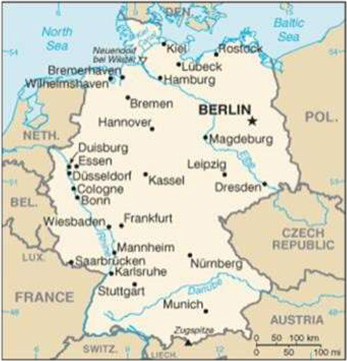
The Federal Republic is situated in central Europe and comprises an area of approximately 358,000 square
kilometers (about 138,000 square miles). According to a first estimate of the Federal Statistical Office, approximately 83.5 million people were living in Germany at the end of 2025, which represents a slight decrease of approximately 100,000
people compared to the end of 2024. These population figures are extrapolated from figures from the 2022 census, published on June 25, 2024. As a result of the 2022 census, the population figure as of May 15, 2022, was revised downward by
approximately 1.3 million, from 84.0 million (based on the 2011 census) to 82.7 million inhabitants. Net immigration (defined as immigration minus emigration) was again positive in 2025, but was of insufficient magnitude to prevent
the population from shrinking for the first time since 2020. According to the first estimate, in 2025 between 220,000 and 260,000 more people came to Germany than left the country. Thus, net immigration fell by at least 40% in 2025 compared to 2024
(430,183 people) and was at a level similar to that of 2020. In contrast, as in all years since German reunification in 1990, more people died than were born in 2025, which had a dampening effect on population growth. In 2025, the number of births
fell again compared to 2024 and is expected to be between 640,000 and 660,000 (2024: 677,117), whereas the number of deaths remained stable at around 1.00 million (2024: 1.01 million), resulting in a birth deficit (difference between births and
deaths) of between 340,000 and 360,000. At the end of 2024, approximately 17.4% of the total population was concentrated in metropolitan areas with more than 500,000 inhabitants; the largest of these areas were (in descending order) Berlin, Hamburg,
Munich, Cologne and Frankfurt am Main.
Sources: Statistisches Bundesamt, Bundesländer mit Hauptstädten nach Fläche, Bevölkerung und
Bevölkerungsdichte am 31.12.2024 (23.09.2025) (https://www.destatis.de/DE/Themen/Laender-Regionen/Regionales/Gemeindeverzeichnis/Administrativ/02-bundeslaender.html); Statistisches Bundesamt,
Bevölkerung Deutschlands nimmt im Jahr 2025 um rund 100 000 Personen ab, press release of January 29, 2026 (https://www.destatis.de/DE/Presse/Pressemitteilungen/2026/01/PD26_032_124.html); Zensus 2022, Zensus 2022: 82,7 Millionen
Einwohnerinnen und Einwohner, press release of June 25, 2024 (https://www.zensus2022.de/DE/Aktuelles/PM_Zensus_2022_Bevoelkerungszahl_Ergebnisveroeffentlichung.html); Statistisches Bundesamt, Städte (Alle Gemeinden mit Stadtrecht) nach
Fläche, Bevölkerung und Bevölkerungsdichte am 31.12.2024 (23.09.2025) (https://www.destatis.de/DE/Themen/Laender-Regionen/Regionales/Gemeindeverzeichnis/Administrativ/05-staedte.html).
G-1
The following table shows selected key demographic figures for the Federal Republic for the
years stated.
POPULATION (1)
|
|
|
|
|
|
|
|
|
|
|
|
|
|
|
|
|
|
|
|
|
| |
|
2024 |
|
|
2023 |
|
|
2022 |
|
|
2021 |
|
|
2020 |
|
| |
|
(number of persons) |
|
| Total population |
|
|
83,577,140 |
|
|
|
83,456,045 |
|
|
|
83,118,501 |
|
|
|
83,237,124 |
|
|
|
83,155,031 |
|
| Age distribution |
|
|
(percent of total population) |
|
| Under 20 |
|
|
18.6 |
|
|
|
18.8 |
|
|
|
18.8 |
|
|
|
18.5 |
|
|
|
18.4 |
|
| 20-40 |
|
|
24.2 |
|
|
|
24.5 |
|
|
|
24.5 |
|
|
|
24.4 |
|
|
|
24.5 |
|
| 40-60 |
|
|
26.6 |
|
|
|
26.8 |
|
|
|
27.3 |
|
|
|
27.7 |
|
|
|
28.1 |
|
| 60-80 |
|
|
23.2 |
|
|
|
22.6 |
|
|
|
22.2 |
|
|
|
22.0 |
|
|
|
21.8 |
|
| 80 and more |
|
|
7.2 |
|
|
|
7.2 |
|
|
|
7.2 |
|
|
|
7.3 |
|
|
|
7.1 |
|
| (1) |
Based on census 2011. |
Source: Statistisches Bundesamt, Bevölkerung, Bevölkerungsstand, Bevölkerung nach Altersgruppen (ab 2011)
(https://www.destatis.de/DE/Themen/Gesellschaft-Umwelt/Bevoelkerung/Bevoelkerungsstand/Tabellen/liste-altersgruppen-basis-2022.html).
Without the surplus resulting from net immigration, the total population would have decreased every year since German reunification in 1990
because more people died than were born in each year. These developments are expected to continue, together with the continued aging of the population. According to the 16th coordinated population projection of the Federal Statistical Office
published in December 2025 and covering the period until 2070, the share of people of retirement age (which will be 67 years from 2031 onwards) will rise to one quarter by the year 2035. The number of people of working age (20 to 66 years), which
currently comprises 51.2 million people, will decrease to between 45.4 and 48.0 million until 2040 years, which may result in a downward pressure on Germany’s growth potential in the long term. The number of those aged 80 or over
will remain relatively stable until the early 2030s, amounting to around 6.0 million. Subsequently, this elderly population is expected to increase strongly, along with the related need for long-term care. If net immigration remains at the
average of the period from 1990 to 2031 (350,000 persons per year), around 81 million people would live in Germany in 2070. However, with a low level of net immigration of 150,000 people per year, which was the average of the years from 1955 to
1989, the population would decrease to just below 69 million people in 2070.
Sources: Statistisches Bundesamt, Bevölkerung Deutschlands nimmt
im Jahr 2025 um rund 100 000 Personen ab, press release of January 29, 2026 (https://www.destatis.de/DE/Presse/Pressemitteilungen/2026/01/PD26_032_124.html); Federal Statistical Office, By 2035, one quarter of Germany’s population will be
aged over 67 or over, press release of December 11, 2025 (https://www.destatis.de/EN/Press/2025/12/PE25_446_12.html); Bevölkerungsvorausberechnung: 16. Koordinierte Bevölkerungsvorausberechnung, Annahmen und Ergebnisse (in German
only, https://www.destatis.de/DE/Themen/Gesellschaft-Umwelt/Bevoelkerung/Bevoelkerungsvorausberechnung/annahmen_ergebnisse_16te_kBv.html).
Government
The Federal Republic is a federated republic whose constitution is codified in the Grundgesetz of 1949. The
capital of the Federal Republic is Berlin. The Federal Republic consists of 16 federal states (Länder). The Länder have legislative sovereignty over matters not expressly reserved to the legislative, executive and judicial bodies of the
Federal Republic.
The Grundgesetz provides for a Federal President (Bundespräsident), two Houses of Parliament (the
Bundestag and the Bundesrat, the latter consisting of representatives of the 16 Länder governments), a Chancellor (Bundeskanzler) and a Federal Constitutional Court (Bundesverfassungsgericht). The Chancellor heads the Federal
Government (Bundesregierung), consisting of the Chancellor and the Federal Ministers. The Bundespräsident acts as head of state.
General elections for the Bundestag are generally held every four years on the basis of an electoral system of proportional representation.
The most recent general election to the 21st Bundestag was held approximately seven months earlier than initially planned on February 23, 2025, following the termination of the previous governing coalition and the decision of the
Bundespräsident to dissolve the 20th Bundestag at the proposal of the Bundeskanzler on December 27, 2024.
Sources: The Federal
Returning Officer, Bundestag Election 2025, Election to the 21st German Bundestag on 23 February 2025 (https://www.bundeswahlleiterin.de/en/info/presse/mitteilungen/bundestagswahl-2021/52_21_endgueltiges-ergebnis.html).
A political party is not entitled to party representation in the Bundestag unless it receives at least 5% of the votes cast or three direct
mandates, awarded to the candidate with the most votes in a given electoral district, in a general election. Upon proposal by the Bundespräsident, the Chancellor is elected by and is responsible to the Bundestag.
G-2
Political Parties
The political parties currently represented in the Bundestag are: the Christian Democratic Union (CDU) and its Bavarian sister party, the
Christian Social Union (CSU); the Alternative for Germany (AfD); the Social Democratic Party (SPD); the Greens (Bündnis 90/Die Grünen); the Left-Wing Party (Die Linke) and the Südschleswigscher Wählerverband (SSW), which
participates in the distribution of seats of the Bundestag as a party representing the Danish minority in the Federal State of Schleswig-Holstein, to which the threshold of five percent of votes cast or three direct mandates for participation in the
Bundestag does not apply.
Since 1949, the Federal Republic has been governed by ten Chancellors over 21 electoral periods. The most
recent general election, held on February 23, 2025, resulted in a coalition between CDU/CSU and SPD. On May 6, 2025 the Bundestag elected Friedrich Merz (CDU) Chancellor for the first time.
Sources: “Verantwortung für Deutschland” – Koalitionsvertrag zwischen CDU, CSU und SPD (https://www.spd.de/regierungsbildung);
Deutscher Bundestag, Friedrich Merz mit 325 Stimmen zum Bundeskanzler gewählt (https://www.bundestag.de/dokumente/textarchiv/2025/kw19-de-kanzlerwahl-1062470)
The following table shows the results of the five most recent general elections for the Bundestag.
ELECTION RESULTS TO THE GERMAN BUNDESTAG
|
|
|
|
|
|
|
|
|
|
|
|
|
|
|
|
|
|
|
|
|
|
|
|
|
|
|
|
|
|
|
|
|
|
|
|
|
|
|
|
|
| |
|
2025
Elections |
|
|
2021
Elections |
|
|
2017
Elections |
|
|
2013
Elections |
|
|
2009
Elections |
|
| |
|
% of
Votes |
|
|
Seats |
|
|
% of
Votes |
|
|
Seats |
|
|
% of
Votes |
|
|
Seats |
|
|
% of
Votes |
|
|
Seats |
|
|
% of
Votes |
|
|
Seats |
|
| CDU/CSU |
|
|
28.6 |
|
|
|
208 |
|
|
|
24.2 |
|
|
|
197 |
|
|
|
33.0 |
|
|
|
246 |
|
|
|
41.5 |
|
|
|
311 |
|
|
|
33.8 |
|
|
|
239 |
|
| AfD |
|
|
20.8 |
|
|
|
152 |
|
|
|
10.4 |
|
|
|
83 |
|
|
|
12.6 |
|
|
|
94 |
|
|
|
4.7 |
|
|
|
— |
|
|
|
— |
|
|
|
— |
|
| SPD |
|
|
16.4 |
|
|
|
120 |
|
|
|
25.7 |
|
|
|
206 |
|
|
|
20.5 |
|
|
|
153 |
|
|
|
25.7 |
|
|
|
193 |
|
|
|
23.0 |
|
|
|
146 |
|
| Bündnis 90/Die Grünen |
|
|
11.6 |
|
|
|
85 |
|
|
|
14.7 |
|
|
|
118 |
|
|
|
8.9 |
|
|
|
67 |
|
|
|
8.4 |
|
|
|
63 |
|
|
|
10.7 |
|
|
|
68 |
|
| Die Linke |
|
|
8.8 |
|
|
|
64 |
|
|
|
4.9 |
|
|
|
39 |
|
|
|
9.2 |
|
|
|
69 |
|
|
|
8.6 |
|
|
|
64 |
|
|
|
11.9 |
|
|
|
76 |
|
| SSW(1) |
|
|
0.2 |
|
|
|
1 |
|
|
|
0.1 |
|
|
|
1 |
|
|
|
— |
|
|
|
— |
|
|
|
— |
|
|
|
— |
|
|
|
— |
|
|
|
— |
|
| FDP |
|
|
4.3 |
|
|
|
— |
|
|
|
11.4 |
|
|
|
91 |
|
|
|
10.7 |
|
|
|
80 |
|
|
|
4.8 |
|
|
|
— |
|
|
|
14.6 |
|
|
|
93 |
|
| Others |
|
|
9.4 |
|
|
|
— |
|
|
|
8.6 |
|
|
|
— |
|
|
|
5.0 |
|
|
|
— |
|
|
|
6.2 |
|
|
|
— |
|
|
|
6.0 |
|
|
|
— |
|
|
|
|
|
|
|
|
|
|
|
|
|
|
|
|
|
|
|
|
|
|
|
|
|
|
|
|
|
|
|
|
|
|
|
|
|
|
|
|
|
|
| Total |
|
|
|
|
|
|
630 |
|
|
|
|
|
|
|
735 |
|
|
|
|
|
|
|
709 |
|
|
|
|
|
|
|
631 |
|
|
|
|
|
|
|
622 |
|
|
|
|
|
|
|
|
|
|
|
|
|
|
|
|
|
|
|
|
|
|
|
|
|
|
|
|
|
|
|
|
|
|
|
|
|
|
|
|
|
|
| (1) |
SSW (Südschleswigscher Wählerverband), representing the Danish minority in the federal state of
Schleswig-Holstein, is exempt from the threshold of five percent of votes cast or three direct mandates for representation in the Bundestag. |
Sources: The Federal Returning Officer, Bundestag election 2025
(https://www.bundeswahlleiterin.de/en/bundestagswahlen/2025/ergebnisse/bund-99.html); The Federal Returning Officer, Bundestag Election 2021 (Repeat election in parts of Berlin on 11 February 2024),
Results (https://www.bundeswahlleiterin.de/en/info/presse/mitteilungen/bundestagswahl-2021/52_21_endgueltiges-ergebnis.html);The Federal Returning Officer, Bundestag election 2017, Results
(https://www.bundeswahlleiterin.de/bundestagswahlen/2017/ergebnisse/bund-99.html); The Federal Returning Officer, Bundestag election 2013, Results, Germany
(http://www.bundeswahlleiterin.de/en/bundestagswahlen/2017/ergebnisse/bund-99.html); The Federal Returning Officer, Bundestag election 2009, Election to the 17th German Bundestag on 27 September 2009
(https://www.bundeswahlleiterin.de/en/bundestagswahlen/2009.html).
International Organizations
In addition to the EU, the Federal Republic is a member of various major multilateral institutions, including the United Nations, the
International Monetary Fund (“IMF”), the International Bank for Reconstruction and Development and the International Development Association, the Council of Europe, the Organization for Economic Cooperation and Development and the North
Atlantic Treaty Organization (“NATO”). Furthermore, the Federal Republic is a signatory to the General Agreement on Tariffs and Trade and a member of the World Trade Organization (“WTO”). It is also a shareholder of, among
others, the European Investment Bank (“EIB”), the European Bank for Reconstruction and Development, the Asian Infrastructure Investment Bank and the European Atomic Energy Community.
The European Union and European Integration
The Federal Republic was one of the six founding members of the European Coal and Steel Community in 1951, which later developed into the EU.
Since its foundation, the EU has grown considerably. Following the withdrawal of the United Kingdom from the EU on January 31, 2020, 27 countries currently form part of the EU. These include Austria, Belgium, Bulgaria, Croatia, Cyprus, the
Czech Republic, Denmark, Estonia, Finland, France, Germany, Greece, Hungary, Ireland, Italy, Latvia, Lithuania, Luxembourg, Malta, the Netherlands, Poland, Portugal, Romania, the Slovak Republic, Slovenia, Spain and Sweden (together, the “EU
Member States”).
G-3
According to provisional data, the aggregate population of the 27 EU Member States was
approximately 450 million as of January 1, 2025. Active formal accession negotiations are currently being conducted with Montenegro, Serbia, Albania, North Macedonia, Ukraine, Moldova and Bosnia and Herzegovina.
While Türkiye is a key strategic partner of the EU on issues including migration, security, counter-terrorism, and trade, accession
negotiations with Türkiye have not progressed in recent years. Kosovo applied for EU membership in December 2022 and remains a potential candidate. In December 2023 the European Council decided to open accession negotiations with the candidate
country Ukraine. In addition, in 2023 Georgia was granted candidate status by the European Council, on the understanding that it will take relevant steps, as set out in the European Commission recommendation dated November 2023. In December 2024 the
European Council suspended the EU accession process as the Georgian government showed insufficient political commitment. In March and June 2024 accession negotiations with the candidate countries Bosnia and Herzegovina and Moldova were started.
In November 2023, the European Commission adopted the Growth Plan for the Western Balkans to accelerate the accession process of the Western
Balkans. In October 2024, the European Commission approved the Reform Agendas of Albania, Kosovo, Montenegro, North Macedonia and Serbia, which qualified these countries for the Growth Plan’s benefits ahead of their full integration into the
EU. Funds under the Reform and Growth Facility for the Western Balkans were disbursed to Albania, Moldova, Montenegro, North Macedonia in Fall 2025 and to Serbia in January 2026.
Sources: European Union, Principles, countries, history, History of the EU
(https://european-union.europa.eu/principles-countries-history/history-eu_en); European Union Principles, countries, history, History of the EU, History of the European Union
1945-59 (https://european-union.europa.eu/principles-countries-history/history-eu/1945-59_en); European Union, Principles,
countries, history, EU countries
(https://european-union.europa.eu/principles-countries-history/eu-countries_en#the-27-member-countries-of-the-eu);
Statistical Office of the European Communities, Total population (https://ec.europa.eu/eurostat/databrowser/view/tps00001/default/table?lang=en);European Commission, Enlargement Policy
(https://enlargement.ec.europa.eu/enlargement-policy_en ), European Commission, Enlargement, Bosnia and Herzegovina
(https://enlargement.ec.europa.eu/countries/bosnia-and-herzegovina_en); European Commission, Enlargement, Kosovo
(https://enlargement.ec.europa.eu/enlargement-policy/kosovo_en), European Commission, Enlargement Policy, Growth Plan for the Western Balkans
(https://enlargement.ec.europa.eu/enlargement-policy/growth-plan-western-balkans_en).
Political Integration
The EU is
based on treaties that are binding agreements between the EU Member States and have been approved voluntarily and democratically by all EU Member States. The treaties set out the EU’s objectives, the rules governing the EU institutions, the
way decisions are taken and the relationship between the EU and the EU Member States. Treaties are amended from time to time to make the EU more efficient and transparent, to prepare for the accession of candidate countries as new EU Member States
and to introduce new areas of cooperation. Under the treaties currently in place, EU institutions can adopt legislation, which, depending on the subject matter, either becomes directly applicable law or requires further implementation by the EU
Member States.
The EU’s three main institutions are the Council of the EU (representing the governments of the EU Member States)
(the “Council”), the Parliament (elected by and representing the citizens of the EU Member States) and the European Commission (the executive body of the EU). In addition, the European Council, which consists of the heads of state or
government of the EU Member States, the European Council President and the President of the European Commission, defines the EU’s overall political direction and priorities. It is not one of the EU’s legislating institutions, but rather
sets the EU’s policy agenda, traditionally by adopting conclusions during European Council meetings which identify issues of concern and actions to take.
Article 50 of the Treaty on European Union provides for a mechanism for the voluntary and unilateral withdrawal of an EU Member State from the
EU. Pursuant to Article 50, the withdrawal process is initiated by a notification from the EU Member State wishing to withdraw to the European Council. The EU treaties cease to apply to an EU Member State from the later of the date of entry into
force of an agreement setting out arrangements for the EU Member State’s withdrawal, or within two years of the notification of the withdrawal. The European Council may, in agreement with the EU Member State concerned, unanimously decide to
extend the period beyond two years.
EU Sanctions. Restrictive measures, also known as sanctions, are an essential tool of
the EU’s Common Foreign and Security Policy. All restrictive measures adopted by the EU are fully compliant with its obligations under international law, including those pertaining to human rights and fundamental freedoms. The first step in
adopting restrictive measures is through a proposal by the High Representative of the Union for Foreign Affairs and Security Policy. The Common Foreign and Security Policy Council resolves thereafter on any restrictive measures by way of a decision
binding on EU Member States. Any restrictive measures which include economic or financial sanctions additionally require the adoption of an accompanying Council regulation. Regulations are directly applicable within the EU and are binding on
individuals and entities, including economic operators. Decisions and regulations on sanctions must be adopted unanimously by the Council. The regulation defines the precise scope of the measures and details of their implementation. In April 2024,
the Council gave final approval to introduce criminal offences and penalties for EU sanctions’ violation. This policy change gained particular traction in the context of Russia’s invasion of Ukraine.
G-4
As part of the EU response to Russia’s invasion of Ukraine, the EU adopted a set of
comprehensive restrictive measures against Russia and Russian individuals in addition to the prior sanctions that were imposed after the illegal annexation of Crimea in 2014. In addition, sanctions were issued against Belarus in response to their
involvement in this invasion and against Iran in relation to the manufacturing and supply of drones as well as North Korea in response to its nuclear- and ballistic missile-related activities and its military support. The sanctions imposed comprise,
among others, individual and economic sanctions. In March 2026, 1,985 Russian individuals, including Russian President Vladimir Putin and Russian Foreign Minister Sergey Lavrov, and 687 entities were subjected to an asset freeze and/or a travel ban
because their actions undermined Ukraine’s territorial integrity, sovereignty and independence. The lists of sanctioned persons and entities are kept under constant review and are subject to periodic renewals by the Council. The economic
sanctions, which target exchanges with Russia and Belarus and Iran in specific economic sectors, include restricted access to EU capital markets for certain Russian banks and companies, a ban on transactions with the Russian Central Bank and the
Central Bank of Belarus, a ban of a number of Russian and Belarusian banks from the SWIFT messaging network, a prohibition on the provision of euro-denominated banknotes to Russia and Belarus, a prohibition on the provision of crypto-wallets to
Russia, a prohibition on the use the Russian ‘system for Transfer of Financial Messages’, a ban on coal and other solid-fossil-fuel imports from Russia, a dynamic price cap related to the maritime transport of crude oil, a ban on use of
EU airspace and EU airports by Russian-owned, Russian-registered or Russian-controlled aircraft, a ban on exports to and imports from Russia of raw materials, goods and technology in various sectors, a ban on exports to Russia of dual-use goods, an export and import ban on arms and a prohibition on the provision of certain services to Russia or Russian persons, including the provision of software for the management of enterprises. The EU has
introduced a ban on access to EU ports for vessels to prevent the circumvention of sanctions. In December 2025 the Council prohibited the transfers of immobilized Central Bank of Russia assets back to Russia and allowed for an unlimited asset
freeze.
Sources: European Commission, Europe in 12 lessons by Pascal Fontaine
(https://op.europa.eu/en/publication-detail/-/publication/a5ba73c6-3c6a-11e8-b5fe-01aa75ed71a1); EUR-Lex, Treaties
currently in force (https://eur-lex.europa.eu/collection/eu-law/treaties/treaties-force.html); European Council, Council of the European Union, The European Council
(https://www.consilium.europa.eu/en/european-council/) EUR-Lex, Consolidated versions of the Treaty on European Union, Article 50
(https://eur-lex.europa.eu/eli/treaty/teu_2016/art_50/oj); European Council, Council of the European Union, Policies, Why the EU adopts sanctions, accessed on March 5, 2026
(https://www.consilium.europa.eu/en/policies/why-sanctions/); European Council, Council of the European Union, Policies, EU sanctions against Russia
(https://www.consilium.europa.eu/en/policies/sanctions-against-russia/); European Council, Council of the European Union, Policies, Russia’s war of aggression against Ukraine: Council sanctions 9 shadow fleet enablers (https://www.consilium.europa.eu/en/press/press-releases/2025/12/15/russia-s-war-of-aggression-against-ukraine-council-sanctions-9-shadow-fleet-enablers/
); European Council, Council of the European Union, Policies, EU sanctions against Belarus (https://www.consilium.europa.eu/en/policies/sanctions-against-belarus/); European Council, Council of the European
Union, Policies, EU sanctions against Iran (https://www.consilium.europa.eu/en/policies/sanctions-against-iran/); European Council, Council of the European Union, Policies, EU sanctions against North Korea
(https://www.consilium.europa.eu/en/policies/sanctions-against-north-korea/); European Commission, EU adopts 18th package of sanctions against Russian (https://ec.europa.eu/commission/presscorner/detail/en/ip_25_1840); European Council, Council of
the European Union, Council decides to prohibit transfers of immobilised Central Bank of Russia assets back to Russia
(https://www.consilium.europa.eu/en/press/press-releases/2025/12/12/council-decides-to-prohibit-transfers-of-immobilised-central-bank-of-russia-assets-back-to-russia/)
Economic Integration
From its inception, the EU has had the fundamental objective, in line with its predecessors, of economic integration of its member states.
After a long process, a single market that provides for the free movement of goods and services, persons and capital among the EU Member States was established as of January 1, 1993. The integration of the EU Member States’ economies and
the completion of a single market are also promoted by a European competition policy, which aims at creating a level-playing field for EU Member States’ companies, thereby promoting economic efficiency, and by a European consumer policy. In
addition, various liberalization and harmonization measures are being implemented, for example in the telecommunication and energy sectors. In the financial sector, the single market has been fostered by providing for the free movement of capital
and the freedom to perform banking services throughout the EU under the “single passport,” which enables financial institutions to provide financial services throughout the EU based on a single license obtained in one EU Member State.
The EU promotes economic integration with regional aid, which is designed to focus development efforts on certain disadvantaged regions and sections of population of the EU. Another important policy area for the EU has been agriculture and
fisheries.
State Aid. EU Member States may generally only grant state aid to companies within the narrow framework of the
EU’s regulations and procedures on state aid in order to safeguard a level playing field within the single market. Nevertheless, state aid is permissible for Important Projects of Common European Interest (“IPCEI”) if the European
Commission approves that the positive effects of state aid outweigh its distortive effects. IPCEI are large-scale, cross-border projects that address a market failure or systemic challenge by fostering breakthrough innovation or strategic
infrastructure with significant benefits for the entire European Union. In addition, to enable EU Member States to support their national economies in the development of clean energy, industrial decarbonization and clean technology, the European
Commission adopted a new framework for state aid measures accompanying the Clean Industrial Deal (“Clean Industrial Deal State Aid Framework”) in June 2025. This framework replaced the Temporary Crisis and Transition Framework that was
adopted in the context of Russia’s invasion of Ukraine. The Clean Industrial Deal State Aid Framework, with a maturity until the end of 2030, provides for several types of aid that may be granted by the EU Member States to accelerate
decarbonization and enhance the competitiveness of the European Union. It allows for the provision of liquidity support in the form of state guarantees and subsidized loans, which help ensure that sufficient liquidity remains available to
businesses. In particular, state aid may be granted to accelerate the roll-out of renewable energy, to support electricity costs for energy-intensive users and to decarbonize industrial production processes.
G-5
The EU Budget and the EU Recovery Instrument. The EU’s expenditures are
governed by a long-term budget, also referred to as multiannual financial framework (“MFF”). The MFF is meant to ensure that the EU’s expenditures develop in an orderly manner and within the limits of its own resources. It aims to
align spending with policy priorities, to increase predictability of EU finances for co-financers and beneficiaries, to ensure EU budgetary discipline and to facilitate the adoption of the annual EU budget. It
sets overall spending limits by determining annual maximum amounts for commitment appropriations, which cover commitments made to spend funds over one or more years in certain expenditure categories and for payment appropriations.
The regulation laying down the MFF of the EU for the years 2021 to 2027 was formally adopted in December 2020. The long-term EU budget provides
EUR 1,216 billion (in current prices) in commitment appropriations. The temporary extraordinary Next Generation EU recovery instrument (the “EU Recovery Instrument”) amounts up to EUR 807 billion (in current prices), which is
specifically aimed at addressing the socioeconomic consequences of the COVID-19 pandemic. Together with the EUR 64.6 billion to finance EU priorities following the 2024 revisions, this allows the EU to
provide an unprecedented amount of approximately EUR 2.07 trillion to help repair the economic and social damage caused by the COVID-19 pandemic in Europe and support the transition towards a modern and more
sustainable Europe, including the green and digital transitions. In September 2025 the Commission presented its proposal for the next MFF for the years 2028-2034, amounting to almost EUR 2,000 billion. The new MFF aims to streamline EU funding
by consolidating the number of financial programs and increasing flexibility to react faster to unexpected crises. It focuses on boosting European competitiveness through strategic investments in clean technology and simplified national partnership
plans for targeted regional impact. Discussions on the proposals have progressed at both technical and political levels in the General Affairs Council, with adoption targeted for the end of 2026.
The most important component of the EU Recovery Instrument is the Recovery and Resilience Facility (“RRF”), with up to EUR
577 billion (in current prices) in loans and grants available to support reforms and investments undertaken by the EU Member States. The balance of the funds under the EU Recovery Instrument is being employed through existing EU instruments and
assistance programs. To access the RRF, EU Member States are required to submit national recovery and resilience plans which are assessed by the European Commission and then approved by the Council of the EU on a case-by-case basis. An EU Member State may request further disbursements up to twice a year upon reaching certain agreed milestones and targets. Under the RRF, all milestones must be achieved by
31 August 2026, with the final disbursements by the European Commission to be completed by 31 December 2026. As of March 2026, the European Commission had disbursed EUR 395.5 billion to EU Member States under the RRF, thereof EUR
239 billion were in the form of grants and EUR 156.5 billion in the form of loans. In February 2023, the European Parliament and the Council adopted an amending regulation to include REPowerEU chapters in the RRF. The purpose of REPowerEU
is to strengthen the strategic autonomy of the EU by diversifying its energy supplies and ending its dependency on Russian fossil fuel imports in response to the energy crisis of 2022. The 2026 EU budget, which was adopted by the Council and the
European Parliament in November 2025, amounts to EUR 192.8 billion in commitment appropriations and EUR 190.1 billion in payment appropriations.
To implement the EU Recovery Instrument, the EU’s Own Resources Decision, which defines how the EU budget is financed and was adopted by
the Council on December 14, 2020, pursuant to the special legislative procedure applicable thereto, was ratified by all EU Member States in accordance with their own constitutional requirements. Under the Own Resources Decision, the European
Commission is authorized, on an exceptional basis, to temporarily borrow up to EUR 750 billion (in 2018 prices) on the capital markets. In June 2023, the Commission proposed to amend the Own Resources Decision to include revenues from emissions
trading, resources generated via the carbon border adjustment mechanism, which aims to put a fair price on the carbon emitted during the production of carbon intensive goods that are entering the EU, and to encourage cleaner industrial production in
non-EU countries, and temporary statistical own resources based on company profits. In July 2025 the European Commission proposed to amend the system of own resources by additional resources including an
annual lump-sum contribution from companies tax resident in the EU, pending Council approval since then. In first half of 2025, the Commission raised EUR 85.8 billion via long-term EU bonds. While the
proceeds from the EU bonds mainly benefited the EU Recovery Instrument, EUR 3.1 billion were used for the disbursement under the Ukraine facility and EUR 7 billion under the macro-financial assistance (MFA) under the G7 ERA initiative. At
the end June 2025, the overall outstanding amount of EU bonds reached EUR 661.2 billion, of which EUR 75.1 billion were raised through NextGenerationEU green bonds. In addition, EUR 75.1 billion of short-term debt in EU bills was
outstanding. The European Commission has announced plans to issue long-term EU bonds in an amount of EUR 70 billion in second half of 2025, to be complemented by short-term EU bills.
G-6
Sources: European Commission, Europe in 12 lessons by Pascal Fontaine
(https://op.europa.eu/en/publication-detail/-/publication/a5ba73c6-3c6a-11e8-b5fe-01aa75ed71a1); European Banking Authority, Regulation and policy, Passporting and supervision of branches (https://eba.europa.eu/regulation-and-policy/passporting-and-supervision-branches); European Commission, Competition Policy,
State Aid (https://competition-policy.ec.europa.eu/state-aid_en); European Commission, Competition Policy, State Aid, Important Projects of Common European Interest (IPCEI)
(https://competition-policy.ec.europa.eu/state-aid/ipcei_en); European Commission, Competition Policy, State Aid, Clean Industrial Deal State Aid Framework (CISAF) (https://competition-policy.ec.europa.eu/about/contribution-clean-just-and-competitive-transition/clean-industrial-deal-state-aid-framework-cisaf_en);
European Council, Council of the European Union, Policies, The EU’s annual budget (https://www.consilium.europa.eu/en/policies/eu-annual-budget/); European Council, Council of the
European Union, Policies, The EU long-term budget (The EU long-term budget), Timeline - EU long-term budget 2021-2027
(https://www.consilium.europa.eu/en/policies/eu-long-term-budget/timeline-long-term-eu-budget-2021-2027/ ); European Commission,
The 2021-2027 EU budget – What’s new? (https://commission.europa.eu/strategy-and-policy/eu-budget/long-term-eu-budget/2021-2027/whats-new_en#revision-of-the-eu-budget-2021-2027);
European Council, Council of the European Union, The EU long-term budget (https://www.consilium.europa.eu/en/policies/eu-long-term-budget/
);European Commission, Strategy and policy, EU budget, The 2028-2034 EU budget for a stronger Europe (https://commission.europa.eu/strategy-and-policy/eu-budget/long-term-eu-budget/eu-budget-2028-2034_en); European Commission, Strategy and policy,
Recovery Plan for Europe (https://commission.europa.eu/strategy-and-policy/recovery-plan-europe_en); European Council, Council Decision (EU, Euratom) 2020/2053 (https://eur-lex.europa.eu/legal-content/EN/TXT/HTML/?uri=CELEX:32020D2053); European Union, Proposal for a COUNCIL DECISION on the system of own resources of the European Union and repealing Decision (EU, Euratom)
2020/2053 (https://eur-lex.europa.eu/legal-content/EN/TXT/?uri=CELEX%3A52025PC0574&qid=1753797262498 ); European Commission, Revenue, The next generation of EU own resources
(https://commission.europa.eu/strategy-and-policy/eu-budget/long-term-eu-budget/2021-2027/revenue/next-generation-eu-own-resources_en); European Commission, Recovery
and Resilience Scoreboard(https://ec.europa.eu/economy_finance/recovery-and-resilience-scoreboard/index.html); European Commission, Business, Economy, Euro, Economic
recovery, Recovery and Resilience Facility (https://commission.europa.eu/business-economy-euro/economic-recovery/recovery-and-resilience-facility_en); European Council,
Council of the European Union, EU recovery plan: Council adopts REPowerEU, press release of February 21, 2023
(https://www.consilium.europa.eu/en/press/press-releases/2023/02/21/eu-recovery-plan-council-adopts-repowereu/); European Commission, REPowerEU
(https://commission.europa.eu/strategy-and-policy/priorities-2019-2024/european-green-deal/repowereu-affordable-secure-and-sustainable-energy-europe_en);
European Council, Council of the European Union, EU budget for 2026 (https://www.consilium.europa.eu/en/policies/eu-annual-budget/2026-budget/); Official Journal of the European
Union, Definitive adoption (EU, Euratom) 2025/31 of the European Union’s annual budget for the financial year 2026 (https://eur-lex.europa.eu/legal-content/EN/TXT/?uri=OJ:L_202600072); European
Commission, Half-yearly report on the implementation of borrowing, debt management and related lending operations pursuant to Article 13 of Commission Implementing Decision C(2023)8010, September 24, 2025
(https://commission.europa.eu/document/download/7338c8a8-7a0d-4bae-8e7c-611503cce235_en?filename=H1%202025%20Half-yearly%20report%20on%20the%20implementation%20of%20borrowing%2C%20debt%20management%20and%20related%20lending%20operations.pdf);
European Commission, Half-yearly report on the implementation of borrowing, debt management and related lending operations pursuant to Article 13 of Commission Implementing Decision C(2023)8010, September 24, 2025
(https://eur-lex.europa.eu/legal-content/EN/TXT/?uri=CELEX%3A52025DC0588&qid=1773739968125 ).
Trade. The EU is responsible for trade matters with third-party countries. In the area of trade in goods, the EU has exclusive
competence. Furthermore, the EU’s responsibilities also cover trade in services, the commercial aspects of intellectual property (such as patents), public procurement and foreign direct investment, whereas in the case of portfolio investments,
investment protection and investment dispute settlement, the competence is shared between the EU and the EU Member States.
In particular,
the EU is responsible for negotiating and concluding international trade agreements as well as identifying trade barriers and unfair trade practices by trading partners and adopting appropriate countermeasures. Trade agreements are negotiated by the
European Commission upon authorization of the Council. Once the European Commission completes negotiations, the Council and the European Parliament examine the final negotiated agreement and decide whether or not to approve it. Trade agreements
regulating areas of mixed responsibility between the EU and the EU Member States can only be concluded after ratification by all EU Member States.
As part of the EU’s response to Russia’s Invasion of Ukraine, the EU has imposed comprehensive economic sanctions, including trade
restrictions. For more information on the trade restrictions, see “Political Integration—EU Sanctions”.
In December
2024, the European Commission reached a political agreement with the MERCOSUR countries Argentina, Brazil, Paraguay and Uruguay on increasing bilateral trade and investment by lowering tariff and non-tariff
trade barriers, by creating more stable and predictable rules for trade and investment, and by fostering the sustainable development of both regions in terms of climate change and social standards. Additionally, the MERCOSUR deal was extended by
bilateral safeguards to strengthen protections for EU farmers. On 17 January 2026, the European Union and MERCOSUR signed the Partnership Agreement (EMPA) and the Interim Trade Agreement (iTA). MERCOSUR represents a significant market for the
EU, with goods exports amounting to EUR 55.2 billion and EUR 29.2 billion in services. In February 2026, the Commission announced it would proceed with the provisional application of the agreement, as authorized by the Council of the
European Union, while the ratification of the agreement by the European Parliament is pending, awaiting a legal opinion from the European Court of Justice.
In January 2026, the EU and India concluded the largest Free Trade Agreement ever concluded by either side. The deal reduces tariffs in value
of 96.6% of EU goods exports to India and privileged access to the Indian services market. Trade in services between the EU and India reached EUR 59.7 billion in 2023, up from EUR 30.4 billion in 2020.
G-7
The European Union and the United States have the world’s largest bilateral trade,
with trade in goods and services of EUR 1.6 trillion (in 2023). Under his “America First” agenda, US President Trump introduced restrictive trade measures on certain European exports during the first half of 2025. However, in July 2025,
the EU and the United States reached a trade agreement, reaffirming in a joint statement their commitment to a reciprocal, fair, and balanced trade relationship. The Framework Agreement will now be incorporated into EU law, pending final approval by
the European Parliament. Following the United States Supreme Court ruling in February 2026, which declared the use of the International Emergency Economic Powers Act (IEEPA) to impose tariffs illegal, the EU paused legislative work on the trade
deal. On March 26, 2026 the European Parliament resumed the process under the condition of additional safeguards. These include a “sunrise clause”, ensuring that the EU will reduce tariffs on U.S. imports only when the United States
has fulfilled its own commitments.
In March 2026, the European Union and Australia concluded negotiations for a free trade agreement,
alongside the adoption of a new security and defense partnership. The deal is the latest addition to the EU’s agreements with the strategic Indo-Pacific region. Beyond trade liberalization, the deal secures the EU access to critical raw
materials, bolstering the resilience of European supply chains against global instability. The agreement is currently entering the beginning of the ratification process.
Sources: European Commission, EU trade relationships by country/region, Making trade policy
(https://policy.trade.ec.europa.eu/eu-trade-relationships-country-and-region/making-trade-policy_en); European Commission, Trade
and Economic Security, EU-Mercosur agreement
(https://policy.trade.ec.europa.eu/eu-trade-relationships-country-and-region/countries-and-regions/mercosur/eu-mercosur-agreement_en);
European Commission, Trade and Economic Security, Questions and answers on the EU-Mercosur partnership agreement *
(https://ec.europa.eu/commission/presscorner/detail/en/qanda_24_6245); European Commission, Trade, The EU-Mercosur trade agreement
(https://commission.europa.eu/topics/trade/eu-mercosur-trade-agreement_en); European Commission, Trade and Economic Security, EU-India agreements (https://policy.trade.ec.europa.eu/eu-trade-relationships-country-and-region/countries-and-regions/india/eu-india-agreements_en);
European Commission, EU and India conclude landmark Free Trade Agreement, press release from January 27, 2026 (t); European Commission, Trade and Economic Security, United States (https://policy.trade.ec.europa.eu/eu-trade-relationships-country-and-region/countries-and-regions/united-states_en);
European Commission, Memo on EU countermeasures on US tariffs, EU countermeasures on US steel and aluminum tariffs explained (https://ec.europa.eu/commission/presscorner/detail/en/qanda_25_750); The White House,
President Donald J. Trump on Trade, Fact Sheet, February 13, 2025 (https://www.whitehouse.gov/fact-sheets/2025/02/fact-sheet-president-donald-j-trump-announces-fair-and-reciprocal-plan-on-trade/); The White House, President Donald J. Trump on
Trade, Fact Sheet, April 2, 2025 (https://www.whitehouse.gov/fact-sheets/2025/04/fact-sheet-president-donald-j-trump-declares-national-emergency-to-increase-our-competitive-edge-protect-our-
sovereignty-and-strengthen-our-national-and-economic-security/);
European Commission, Statement by President von der Leyen on the deal on tariffs and trade with the United States, press release from July 27, 2025
(https://ec.europa.eu/commission/presscorner/detail/en/statement_25_1915); European Commission, Trade and Economic Security, Joint Statement on a United States-European Union framework on an agreement on reciprocal, fair and balanced trade from
August 21, 2025
(https://policy.trade.ec.europa.eu/news/joint-statement-united-states-european-union-framework-agreement-reciprocal-fair-and-balanced-trade-2025-08-21_en);
European Parliament, News, EU–US trade legislation: legislative work on hold following US Supreme Court ruling (https://www.europarl.europa.eu/news/en/press-room/20260223IPR36005/eu-us-trade-legislation-legislative-work-on-hold-following-supreme-court-ruling); European Parliament, EU US trade deal: MEPs
set conditions for lowering tariffs on US products, press release from March 26, 2026 (https://www.europarl.europa.eu/news/en/press-room/20260323IPR38830/eu-us-trade-deal-meps-set-conditions-for-lowering-tariffs-on-us-products);
European Commission, EU and Australia strengthen relations with Security and Defence Partnership and Trade Agreement, press release from March 24, 2026
(https://ec.europa.eu/commission/presscorner/detail/en/ip_26_645); European Commission, Questions and answers on the EU-Australia Trade Agreement
(https://ec.europa.eu/commission/presscorner/detail/en/qanda_26_648).
EU Response to the Energy Crisis. Since the fall
of 2022, and significantly exacerbated by Russia’s invasion of Ukraine, Europe has been facing an unprecedented energy crisis involving hikes in energy prices and disruptions to energy supply. In response, the EU Member States implemented
several measures on the national and supranational levels to ensure affordable and competitive energy for EU consumers, increase the EU’s energy security and preparedness in the event of emergencies, and strengthen the energy resilience and
autonomy of EU Member States. In early 2022, the heads of the EU Member States had jointly decided to phase out the EU’s dependency on Russian fossil fuels. In this context, the European Commission initiated the REPowerEU plan discussed above
under “—The “EU Budget and the EU Recovery Instrument” put in place the Temporary Crisis and Transition Framework discussed above under “—State Aid”. The joint action was successful. Several European
emergency energy rules have therefore ended. For instance, the market correction mechanism, that was intended to limit episodes of extraordinarily high gas prices in the EU, and the emergency regulation for joint purchasing (Aggregate EU) of natural
gas have ended. Aggregate EU has since been replaced by a permanent framework within the EU Energy and Raw Materials Platform to facilitate long-term demand aggregation. Other introduced measures have been extended to further secure the gas supply
and strengthen energy market resilience , such as the measure for accelerating the deployment of renewable energy and the continuation of coordinated demand-reduction measures for gas. In July 2025, the Council agreed to a two-year extension of the gas reserve filling rules until the end of 2027, while enabling more flexibility to adapt to changing market conditions. In January 2026, the Council reaffirmed its commitment to fully
phasing out imports of Russian LNG and pipeline gas by the end of 2026 and autumn 2027, respectively.
Sources: European Council, Council of the European
Union, Policies, Energy prices and security of supply, accessed on May 3, 2024
(https://www.consilium.europa.eu/en/policies/energy-prices-and-security-of-supply);
European Commission, Energy, Actions and measures of energy supply
(https://energy.ec.europa.eu/topics/markets-and-consumers/actions-and-measures-energy-prices_en#accelerating-renewables-permitting);
European Council, Council of the European Union, Gas storage: Council greenlights 2-year extension of reserves filling rules to safeguard winter supply (https://www.consilium.europa.eu/en/press/press-releases/2025/07/18/gas-storage-council-greenlights-2-year-extension-of-reserves-filling-rules-to-safeguard-winter-supply/).
G-8
European Defense. The changed security situation in Europe at the beginning of
2025 prompted the EU to strengthen its defense capabilities and enhance the readiness of the European defense industry over the long term. In March 2025 the European Commission and the High Representative for Foreign Affairs published a White Paper
for European Defense that sets out a vision to significantly foster European defense readiness. The White Paper is backed by the ReArm Europe Plan/Readiness 2030. The Plan outlines measures for mobilizing up to EUR 800 billion to support the
defense investments of EU Member States. For creating a fiscal space of up to EUR 650 billion on the EU Member State level the Commission called for a coordinated activation of the national escape clause. See “EU Economic Governance
– Stability and Growth Pact”. In May 2025 the Council adopted a new EU financial instrument called Security Action for Europe (“SAFE”) that is supposed to provide EU Member States with up to EUR 150 billion of loans
backed by the headroom of the EU budget. The funds will be raised by the EU on capital markets to offer EU Member States loans with advantageous financing terms. SAFE is intended to support member states in making rapid and significant increases in
their defense investments through common procurement. In February 2026, the Council authorized SAFE defense funding for 16 EU member states making EUR 14.4 billion available of pre-financing. As of March
2026, the Council is evaluating the national defense investment plans for another three countries. In addition, private capital will be mobilized by accelerating the Savings and Investment Union and through the European Investment Bank to support
European rearmament. In addition, the Commission proposed in June 2025 a Defense Readiness Omnibus. This package contains measures that will help simplify rules to speed up the development of defense capabilities and infrastructure by Member States
and industry awaiting enforcement. In December 2025, the Council adopted the European Defense Industry Program (EDIP) providing EUR 1.5 billion in EU grants for the period 2025-2027. EU member states have significantly increased their defense
expenditure to EUR 381 billion in 2025, representing 2.1% of EU’s GDP — up from 1.9% in 2024.
Sources: European Commission, Future of
European Defense, Acting on defence to protect Europeans (https://commission.europa.eu/topics/defence/future-european-defence_en); European Commission, Press statement by President von der Leyen on the defence package, press release from
March 4, 2025 (https://ec.europa.eu/commission/presscorner/detail/en/statement_25_673); European Council, Council of the European Union, Security Action for Europe (SAFE) (https://www.consilium.europa.eu/en/policies/safe/); European Commission,
Commission unveils Savings and Investments Union strategy to enhance financial opportunities for EU citizens and businesses, press release from March 19, 2025 (https://ec.europa.eu/commission/presscorner/detail/en/ip_25_802); European Council,
Council of the European Union, European defence readiness(https://www.consilium.europa.eu/en/policies/european-defence-readiness/); European Council, Council of the European Union, EU defence in numbers
(https://www.consilium.europa.eu/en/policies/defence-numbers/); European Council, Council of the European Union, SAFE: Council clears path for financial assistance to eight member states and concluding the Canada agreement (https://www.consilium.europa.eu/en/press/press-releases/2026/02/11/safe-council-clears-path-for-financial-assistance-to-eight-member-states-and-concluding-the-canada-agreement/)
Monetary Integration
The Federal Republic is a signatory to and has ratified the Treaty on European Union of February 1992 (also known as the “Maastricht
Treaty”). The Maastricht Treaty was the basis for the establishment of the European Economic and Monetary Union (“EMU”). The EMU led, in turn, to the adoption of irrevocable conversion rates between the euro and the national
currencies of the initial participating member states on December 31, 1998, and the introduction of the euro as the single European currency in the euro area on January 1, 1999. On January 1, 2002, banknotes and coins denominated in
euro were introduced as legal tender to replace the national currencies in the twelve member states forming the euro area at that time (Austria, Belgium, Finland, France, Germany, Greece, Ireland, Italy, Luxembourg, the Netherlands, Portugal and
Spain). Slovenia, Malta, Cyprus, Slovakia, Estonia, Latvia, Lithuania and Croatia subsequently joined the euro area. On January 1 2026, Bulgaria joined as newest member the euro area.
The ECB was established on June 1, 1998, as part of the European System of Central Banks (“ESCB”). According to the Maastricht
Treaty, the primary objective of the ESCB is to maintain price stability. Without prejudice to the objective of price stability, the ESCB supports the general economic policies of the EU. See “—Monetary and Financial System” for
more information on the ECB and ESCB as well as on the European financial system. The Eurosystem, consisting of the ECB and the national central banks of those EU Member States whose currency is the euro (“Euro Area Member States”),
assumed sole responsibility for the monetary policy in the euro area on January 1, 1999.
Sources: European Union, Principles, countries, history,
Principles and values, Founding agreements, Treaty on European Union – Maastricht Treaty
(https://european-union.europa.eu/principles-countries-history/principles-and-values/founding-agreements_en); European Central Bank, About us, Our history, arts and
culture, Our history, Economic and Monetary Union (EMU) (https://www.ecb.europa.eu/ecb/history-arts-culture/history/emu/html/index.en.html); European Central Bank, The euro, Our money (https://www.ecb.europa.eu/euro/intro/html/index.en.html);
European Central Bank, Monthly Bulletin, 10th Anniversary of the ECB (https://www.ecb.europa.eu/pub/pdf/other/10thanniversaryoftheecbmb200806en.pdf).
EU Economic Governance
The EU
economic governance framework aims to detect, prevent and correct problematic economic trends such as excessive government deficits or public debt levels, which can stunt growth and put economies at risk. The framework consists of the following main
components.
G-9
Stability and Growth Pact. To strengthen the monitoring and coordination of
national fiscal and economic policies, the EU Member States established the Stability and Growth Pact (“SGP”) in 1997. In February 2024, the European Parliament and Council agreed to reform the economic governance rules of the SGP, based
on a March 2023 proposal by the European Commission. The main objective of the new framework is to strengthen the EU Member States’ sound finances, debt sustainability and promote sustainable and inclusive growth. Under the new framework, EU
Member States are given a timeframe within which, through a combination of fiscal adjustment, growth-enhancing reforms and priority investments, their debt level is to be put on a sufficiently downward path. The SGP reference values of 3% for the
GDP budget deficit and 60% for the GDP debt level remain in force. The new rules were adopted by the Parliament on April 23, 2024 and by the Council of the EU on April 29, 2024. They came into effect with their publication in the Official
Journal of the EU on April 30, 2024.
As of 2025, fiscal surveillance is fully governed by the reformed framework, with the newly
established medium-term fiscal-structural plans and their respective net expenditure paths serving as the primary basis for monitoring and enforcement.
The new framework requires EU Member States to set up a medium-term fiscal-structural plan for the next four or five years, the so-called adjustment period is extendable to up to seven years. The net expenditure path is intended to be the single operational indicator for the national plans. After the initial submission of the medium-term
fiscal structural plans, the plans will be assessed by the European Commission and endorsed by the Council. Every April, EU Member States will be required to submit a progress report on the medium-term structural plan, which replaces the Stability
and Convergence Programmes of the SGP. In addition, to ensure the coordination of fiscal policies among Euro Area Member States, governments are required by European economic governance rules to submit their draft budgetary plans for the following
year to the European Commission by October 15 of each year. The European Commission will then assess whether the Members States’ draft budgetary plans are consistent with their net expenditure paths, pursuant to the new regulation.
The preventive arm of the SGP binds EU Member States to their commitments towards sound fiscal policies. In this respect the new framework
introduces risk-based surveillance which differentiates between EU Member States and their fiscal situation. For EU Member States with a government deficit greater than 3% of GDP or a public debt level greater than 60% of GDP, the European
Commission will issue a country-specific “reference trajectory” and a corresponding level of the structural primary balance to be reached by the end of the adjustment process. This primary structural balance target is defined as the
cyclically adjusted general government balance net of temporary measures and net of interest expenditure. Quantitative safeguards are intended to ensure declining debt and to provide a safety margin below the Maastricht Treaty deficit reference
value of 3% of GDP in order to create fiscal buffers. Thus, the new rules replace the 1/20 debt reduction requirement for EU Member States with a debt level above 60% of GDP.
The corrective arm of the SGP consists of the excessive deficit procedure (“EDP”). The EDP ensures the correction of excessive
budget deficits (defined as a deficit greater than 3% of GDP), excessive public debt levels (defined as a debt ratio greater than 60% of GDP without an adequate diminishing trend) or excessive control account deviations (defined as deviations from
the “reference trajectory” in the EU Member State’s net expenditure). EU Member States that fail to respect the SGP’s preventive or corrective rules may ultimately face sanctions. For Euro Area Member States, these could take
the form of warnings and financial sanctions including fines. In addition, all EU Member States could face a suspension of commitments or payments from the EU’s structural and investment funds if they fail to abide by the corrective rules. The
SGP contains rules for exceptional situations. In particular, in case of an unusual event outside the control of the EU Member State concerned, which has a major impact on the financial position of its general government, or in periods of severe
economic downturn for the euro area or the EU as a whole, upon proposal of the European Commission and endorsement of the Council, EU Member States are allowed to depart from the budgetary requirements that would normally apply, provided that this
does not endanger fiscal sustainability in the medium-term. When applied in the case of a severe economic downturn for the euro area or the EU as a whole, this rule is referred to as the “general escape clause.”
The “general escape clause” under the SGP was deactivated at the end of 2023, after having been activated in March 2020 to permit
EU Member States to deal adequately with the effects of the COVID-19 pandemic and extended in May 2022 after Russia’s invasion of Ukraine created downside risks to economic activity. As of March 2026,
Austria, Belgium, Finland, France, Italy, Malta, Poland, Slovakia, Hungary and Romania are subject to an ongoing excessive deficit procedure.
In the context of the European Commission’s ReArm Europe Plan/ Readiness 2030 the Commission invited the EU Member States to activate the
national escape clause to accommodate increased defense expenditure within the SGP on March 19, 2025. The National Escape Clause allows an EU Member State to deviate from its net expenditure path as set by the Council in the context of its
medium-term fiscal structural plan. The coordinated activation limits the deviation to up to a maximum of 1.5% of GDP for each year for a period of up to four years for defense related expenditure. According to the Commission’s proposal, EU
Member States’ excess expenditure for defense takes into account the increase in defense expenditure since 2021. As of March 2026, the Council activated the flexibility in EU fiscal rules to increase defense spending for Belgium, Bulgaria,
Croatia, Czechia, Denmark, Estonia, Finland, Greece, Hungary, Latvia, Lithuania, Poland, Portugal, Slovakia, Slovenia, Germany and Austria. See also “—European Defense” and “—Public Finance—Germany’s General
Government Deficit/Surplus and General Government Gross Debt.”
G-10
Sources: European Commission, Economy and Finance, Economic and fiscal governance (https://economy-finance.ec.europa.eu/economic-and-fiscal-governance_en); European Commission, Commission welcomes political agreement on a new economic governance framework
fit for the future, press release of February 10, 2024 (https://ec.europa.eu/commission/presscorner/detail/en/ip_24_711); European Commission, Regulation of the European Parliament and the Council on the effective coordination of economic
policies and the multilateral budgetary surveillance and repealing Council Regulation (EC) No 1466/97 (https://eur-lex.europa.eu/legal-content/EN/TXT/HTML/?uri=CELEX:52023PC0240); European Commission, Vade
Mecum on the Stability & Growth Pact 2019 edition, pages 25 and 44 (https://economy-finance.ec.europa.eu/system/files/2019-04/ip101_en.pdf); European Commission, Fiscal policy guidance for 2024:
Promoting debt sustainability and sustainable and inclusive growth, press release of March 8, 2023 (https://ec.europa.eu/commission/presscorner/detail/%20en/ip_23_1410); European Commission, Economy and Finance, Economic and fiscal governance,
Stability and Growth Pact
(https://economy-finance.ec.europa.eu/economic-and-fiscal-governance/stability-and-growth-pact_en);
European Commission, Economy and Finance, Economic and fiscal governance, Stability and Growth Pact, Annual draft budgetary plans (DBPs) of euro area countries (https://economy-finance.ec.europa.eu/economic-and-fiscal-governance/stability-and-growth-pact/annual-draft-budgetary-plans-dbps-euro-area-countries_en);
European Commission, Economy and Finance, Economic and fiscal governance, Stability and Growth Pact, The preventive arm
(https://economy-finance.ec.europa.eu/economic-and-fiscal-governance/stability-and-growth-pact/preventive-arm_en);
European Commission, Economy and Finance, Economic and fiscal governance, Stability and Growth Pact, The corrective arm / Excessive Deficit Procedure
(https://economy-finance.ec.europa.eu/economic-and-fiscal-governance/stability-and-growth-pact/corrective-arm-excessive-deficit-procedure_en);
European Council, Council of the European Union, Statement of EU ministers of finance on the Stability and Growth Pact in light of the COVID-19 crisis, press release
of March 23, 2020 (https://www.consilium.europa.eu/en/press/press-releases/2020/03/23/statement-of-eu-ministers-of-finance-on-the-stability-and-growth-pact-in-light-of-the-covid-19-crisis/);
European Commission, 2022 European Semester - Spring Package, Communication from the Commission of May 23, 2022 (https://commission.europa.eu/system/files/2022-05/2022_european_semester_spring_package_communication_en.pdf); European Parliament, New EU fiscal rules approved by MEPs, press release of April 23, 2024 (https://www.europarl.europa.eu/news/en/press-room/20240419IPR20583/new-eu-fiscal-rules-approved-by-meps);
European Council, Council of the European Union, Economic governance review: Council adopts reform of fiscal rules, press release of April 29, 2024
(https://www.consilium.europa.eu/en/press/press-releases/2024/04/29/economic-governance-review-council-adopts-reform-of-fiscal-rules/);
EUR-Lex, Regulation (EU) 2024/1263 of the European Parliament and of the Council of 29 April 2024 on the effective coordination of economic policies and on multilateral budgetary surveillance and
repealing Council Regulation (EC) No 1466/97 (https://eur-lex.europa.eu/eli/reg/2024/1263/oj); EUR-Lex, Council Regulation (EU) 2024/1264 of 29 April 2024 amending
Regulation (EC) No 1467/97 on speeding up and clarifying the implementation of the excessive deficit procedure (https://eur-lex.europa.eu/eli/reg/2024/1264/oj); EUR-Lex,
Council Directive (EU) 2024/1265 of 29 April 2024 amending Directive 2011/85/EU on requirements for budgetary frameworks of the Member States (https://eur-lex.europa.eu/eli/dir/2024/1265/oj); European
Commission, Commission unveils the White Paper for European Defence and the ReArm Europe Plan/Readiness 2030, press release of March 19, 2025 (https://ec.europa.eu/commission/presscorner/detail/en/ip_25_793); European Commission, Communication
from the Commission
(https://defence-industry-space.ec.europa.eu/document/download/a57304ce-1a98-4a2c-aed5-36485884f1a0_en?filename=Communication-on-the-national-escape-clause.pdf);
European Council, Council of the European Union, National escape clause for defence expenditure
(https://www.consilium.europa.eu/en/policies/national-escape-clause-for-defence-expenditure-nec/).
Macroeconomic Imbalance Procedure. Established in 2011, the macroeconomic imbalance procedure (“MIP”) is a
surveillance mechanism for the EU and the EU Member States that aims to identify potential economic risks early on, prevent the emergence of harmful macroeconomic imbalances and correct any existing excessive imbalances. EU Member States’
medium-term fiscal-structural plans described above under “—Stability and Growth Pact” are required to ensure the delivery of investments and reforms to correct the imbalances identified under the MIP. The preventive arm of the
procedure relies on an early warning system that uses a scoreboard of indicators and in-depth country reviews. This preventive arm allows the European Commission and the Council to provide preventive
recommendations to the respective EU Member State at an early stage. In case of an EU Member State with excessive macroeconomic imbalances, the corrective arm may open an excessive imbalance procedure, under which the EU Member State concerned will
have to submit a revised fiscal-structural plan and regular progress reports. The enforcement regime within the corrective arm comprises the option of imposing financial sanctions for Euro Area Member States, including fines of up to 0.1% of such
Euro Area Member State’s GDP, if a Euro Area Member State repeatedly does not comply with its obligations.
In the 2025 surveillance
cycle, seven EU Member States, excluding Germany, were found to be experiencing imbalances or excessive imbalances. Consequently, during the 2026 surveillance cycle, these EU Member States, and additionally Estonia will be subject to an in-depth review in the context of the MIP (see also “—Stability and Growth Pact” and “—The Economy—International Economic Relations—Germany’s Current Account Surplus
and the Macroeconomic Imbalance Procedure”).
Sources: European Commission, Economy and Finance, Economic and fiscal governance, Macroeconomic
Imbalance Procedure, Dealing with macroeconomic imbalances
(https://economy-finance.ec.europa.eu/economic-and-fiscal-governance/macroeconomic-imbalance-procedure/dealing-macroeconomic-imbalances_en); European Commission,
Publications, 2026 European Semester: Alert Mechanism report (https://commission.europa.eu/publications/2026-european-semester-alert-mechanism-report_en); European Commission, Regulation of the European Parliament and the Council on the effective
coordination of economic policies and the multilateral budgetary surveillance and repealing Council Regulation (EC) No 1466/97 (https://eur-lex.europa.eu/legal-content/EN/TXT/HTML/?uri=CELEX:52023PC0240).
Financial Assistance in the EU
EU countries experiencing or threatened by financing difficulties can request access to several financial assistance mechanisms. The main ones
are described below.
G-11
Temporary Financial Stability Mechanism. In May 2010, the EU and Euro Area
Member States established a temporary stability mechanism to safeguard the financial stability amid severe tensions in euro area sovereign debt markets, consisting of the European Financial Stabilisation Mechanism (“EFSM”) and the
European Financial Stability Facility (“EFSF”). Through the EFSM the European Commission is allowed to borrow up to a total of EUR 60 billion on behalf of the EU under an implicit EU budget guarantee. The EFSF was created as a
temporary institution and since July 1, 2013 no longer engages in new financing programs. As of March 2026, the EFSF had outstanding loans to Ireland, Portugal and Greece of approximately EUR 163 billion. Debt securities issued by the EFSF
to finance these loans are backed by irrevocable and unconditional guarantees and over-guarantees extended by the Euro Area Member States. The Federal Republic accounts for approximately 29% of the guarantees according to the contribution key. The
EFSF will be dissolved and liquidated when all financial assistance provided to Euro Area Member States and all funding instruments issued by the EFSF have been repaid in full.
Sources: European Commission, Economy and Finance, EU financial assistance, How is financial assistance provided?(https://economy-finance.ec.europa.eu/eu-financial-assistance/how-financial-assistance-provided_en); European Commission, Economy and Finance, EU financial assistance, Euro area countries, European
Financial Stabilisation Mechanism (EFSM) (https://economy-finance.ec.europa.eu/eu-financial-assistance/euro-area-countries/european-financial-stabilisation-mechanism-efsm_en); European Commission, Economy and
Finance, EU financial assistance, Euro area countries, European Financial Stability Facility (EFSF)
(https://economy-finance.ec.europa.eu/eu-financial-assistance/euro-area-countries/european-financial-stability-facility-efsf_en); European Stability Mechanism, Financial Assistance, Programme Database,
Programme Overview (https://www.esm.europa.eu/financial-assistance/programme-database/programme-overview); European Stability Mechanism, Explainers, Guarantees by EFSF Countries (https://www.esm.europa.eu/about-us/explainers#guarantees-by-efsf-countries).
European Stability Mechanism. Since October 2012, the European Stability Mechanism (“ESM”), which was established as
an intergovernmental organization under public international law by the Euro Area Member States, has been assisting in preserving the financial stability of the EMU. As of July 1, 2013, it assumed the tasks fulfilled by the EFSF and the EFSM
and is currently the primary support mechanism for Euro Area Member States experiencing or threatened by severe financing problems, if such assistance is deemed essential to safeguard financial stability in the euro area as a whole. The ESM issues
bonds or other debt instruments on the financial markets to raise capital to provide assistance, subject to certain conditions, to Euro Area Member States. Unlike the EFSF, which is based upon guarantees by Euro Area Member States, the ESM has total
subscribed capital of EUR 708.5 billion provided by Euro Area Member States, which provides it with a lending capacity of EUR 500 billion. EUR 81 billion of the ESM’s subscribed capital is in the form of paid-in capital with the balance of EUR 627.5 billion being callable capital. The contribution of each Euro Area Member State is based on the paid-in capital for the ECB.
On this basis, the Federal Republic’s contribution amounts to approximately 27% of the aggregate contributions to the ESM. The Federal Republic contributed approximately EUR 22 billion of paid-in
capital to the ESM.
Financial assistance from the ESM is activated upon a request from a Euro Area Member State to the chairperson of the
ESM’s board of governors and is provided subject to strict conditions appropriate to the instrument chosen. The initial instruments available to the ESM have been modeled upon those available to the EFSF and include the extension of loans to a
Euro Area Member State in financial difficulties, interventions in the primary and secondary debt markets, action based on a precautionary program, and the extension of loans to governments, or since December 2014 directly to affected financial
institutions, for the purposes of recapitalizing financial institutions. Each instrument is to be linked to a memorandum of understanding which sets forth the conditions for financial support as well as the monitoring and surveillance procedures
established to ensure the Euro Area Member State is progressing towards financial stability. In principle, decisions under the ESM are taken by mutual agreement. However, in the event that the European Commission and the ECB conclude that an urgent
decision related to financial assistance is needed because the financial and economic sustainability of the euro area is threatened, the mutual agreement rule is replaced by a qualified majority of 85%. Given its voting rights of approximately 27%,
the Federal Republic may veto any decision even under the emergency voting rule. As of March 2026, the ESM had loans in an aggregate principal amount of approximately EUR 72 billion outstanding to Spain, Cyprus and Greece.
Sources: European Stability Mechanism, Who we are, History (https://www.esm.europa.eu/about-us/history); European
Commission, Economy and Finance, EU financial assistance, Euro area countries, European Stability Mechanism (ESM)
(https://economy-finance.ec.europa.eu/eu-financial-assistance/euro-area-countries/european-stability-mechanism-esm_en); European Stability Mechanism, Who we are (https://www.esm.europa.eu/about-us#headline-who_we_are); European Stability Mechanism, Explainers, The ESM, Capital Structure
(https://www.esm.europa.eu/about-us/explainers#capital-structure); European Stability Mechanism, How we decide, ESM shareholders and their representatives in governing and oversight bodies (https://www.esm.europa.eu/about-us/governance#sharesandcapital); European Stability Mechanism, Explainers, The ESM, Basic information
(https://www.esm.europa.eu/about-us/explainers#basic-information); European Stability Mechanism, Financial Assistance, Financial assistance instruments, Lending toolkit
(https://www.esm.europa.eu/financial-assistance/lending-toolkit); European Stability Mechanism, Explainers, Lending, Policy conditions attached to loans
(https://www.esm.europa.eu/about-us/explainers#are-policy-conditions-always-tied-to-esm-loans-);
European Stability Mechanism, Explainers, The ESM, ESM decision making
(https://www.esm.europa.eu/about-us/explainers#esm-decision-making); European Stability Mechanism, Financial Assistance, Programme Database, Programme Overview
(https://www.esm.europa.eu/financial-assistance/programme-database/programme-overview).
G-12
On January 27 and February 8, 2021, the Euro Area Member States signed an
agreement amending the treaty establishing the ESM. The reform establishes a common backstop to the Single Resolution Fund (“SRF”) in the form of a credit line from the ESM to replace the direct recapitalization instrument for financial
institutions, providing a financial safety net for bank resolutions in the European banking union (the “Banking Union”), which will help to protect financial stability (see “—Monetary and Financial System—Financial
System— European Financial System—European System of Financial Supervision and European Banking Union” for more information on the Banking Union and the SRF). The maximum amount of ESM loans to the SRF is set at EUR
68 billion. The credit line may only be used as a last resort and to the extent that it is fiscally neutral in the medium term, i.e., it is repaid through ex-post contributions by banks over a period of
three to five years. Moreover, the revised ESM Treaty envisages the introduction of single-limb collective action clauses for bonds with maturities of more than a year issued by governments of Euro Area Member States, which, if required, would
facilitate orderly and predictable sovereign debt restructuring. Furthermore, the reformed ESM Treaty enables the ESM to have a stronger role in future economic adjustment programs and crisis prevention. The reform clarified that ESM precautionary
instruments provide support to Euro Area Member States with sound fundamentals that could be affected by an adverse shock beyond their control in order to safeguard the financial stability of the euro area as a whole. The enforcement of the reformed
ESM Treaty however remains pending, until the parliaments of all Euro Area Member States have ratified the reformed ESM Treaty.
Sources: ESM, About us,
ESM Reform (https://www.esm.europa.eu/about-esm/esm-reform); ESM, About ESM, ESM Treaty Reform - Explainer (https://www.esm.europa.eu/about-esm/esm-treaty-reform-explainer#ui-id-5); European Union, Terms of Reference of the 2022 CAC (https://economic-financial-committee.europa.eu/system/files/2021-04/EA%20Model%20CAC%20-%20Draft%20Terms%20of%20Reference.pdf); ESM, ESM Treaty Reform – Explainer (https://www.esm.europa.eu/about-us/esm-reform/esm-treaty-reform-explainer); European Council, Council of the European Union,
Documents & Publications, Agreement Amending the Treaty Establishing the European Stability Mechanism (ESM) (https://www.consilium.europa.eu/en/documents-publications/treaties-agreements/agreement/?id=2019035&DocLanguage=en).
Statistical Standards
Statistical Standard for the National Accounts
Since August 2014, the Federal Statistical Office has been calculating the German national accounts in accordance with the European System of
National and Regional Accounts 2010 (ESA 2010) which, in turn, is based on the System of National Accounts (SNA 2008) of the United Nations. In 2024, a major revision of the National Accounts, harmonized Europe-wide, took place in Germany. The main
purpose of the revision was to refine results by introducing new data sources, a new classification of private consumption expenditure and new calculation methods. The entire national accounting system was reviewed and revised and, where necessary,
new findings were integrated into the calculations. To avoid breaks in time series, the results for Germany were recalculated from 1991 onwards. The revised results were published for the first time in July 2024.
Sources: Statistisches Bundesamt, National Accounts, ESA 2010 methods and sources for the German GNI and its components, published on April 6, 2022
(https://www.destatis.de/EN/Themes/Economy/National-Accounts-Domestic-Product/Publications/Downloads-National-Accounts- Domestic-P
roduct/esa-2010-methods.html?nn=214136 ); Statistisches Bundesamt, National
accounts, domestic product, Major Revision of National Accounts 2024
(https://www.destatis.de/EN/Themes/Economy/National-Accounts-Domestic-Product/InfoRevision2024.html).
Statistical Standard for the Balance of Payments
Since July 2014, the methodological concept of the German balance of payments statistics follows the sixth edition of the Balance of Payments
and International Investment Position Manual (“BPM6”), the revised standard of the IMF. The application of BPM6 is binding for EU Member States by virtue of a regulation adopted by the European Commission. Balance of payments data since
1971 have been recalculated in accordance with BPM6. In July 2025 the IMF released the seventh edition of the Balance of Payments and International Investment Position Manual. Within the EU it is planned for its Member States to apply the new
standards in the balance of payments in 2029.
Source: Bundesbank, Statistics, External Sector, Balance of Payments, Methodological notes (https://www.bundesbank.de/en/statistics/external-sector/balance-of-payments/methodological-notes-794532); International Monetary Fund, Release of New Standards for
Macroeconomic Statistics (BPM7)
(https://www.imf.org/en/publications/policy-papers/issues/2025/07/10/release-of-new-standards-for-macroeconomic-statistics-bpm7-568453);
Bundesbank, Update of the sixth edition of the Balance of Payments and International Investment Position Manual (BPM6) (https://www.bundesbank.de/en/statistics/external-sector/external-sector/update-of-the-sixth-edition-of-the-balance-of-payments-
and-international-investment-position-manual-bpm6—845666).
Statistical Disclosure Standards of the International Monetary Fund
Since February 2015, the Federal Republic has met the Special Data Dissemination Standard Plus (“SDDS Plus”) of the IMF relating to
coverage, periodicity and timeliness of economic data. The SDDS Plus was created in 2012 as an extension of the existing Special Data Dissemination Standard. By providing comparable economic and financial data, it is designed to improve the
transparency of the financial sector and its international interdependencies and thus contributes to the identification of risks at an early stage. Although adherence by member countries to the SDDS Plus is voluntary, it carries a commitment
requiring members to observe the standard and to provide certain information to the IMF about their practices in disseminating economic and financial data.
Source: Bundesbank, Statistics, Set of indicators, SDDS Plus (Special Data Dissemination Standard) (https://www.bundesbank.de/en/statistics/sets-of-indicators/sdds-plus/sdds-plus-795798).
G-13
THE ECONOMY
Overview
Since 1945, the Federal Republic’s economic system has developed into a social market economy, combining the free initiative of the
individual with progressive social principles. The Grundgesetz guarantees freedom of private enterprise and private property, provided that these basic rights are not exercised against the public good. The state mainly has a regulatory
function in the market economy, setting the general framework of conditions within which market processes take place.
Key Economic Figures
The German economy is one of the world’s largest economies, with an annual GDP of EUR 4,469.9 billion in 2025. In 2025,
price-adjusted GDP increased by 0.2% against the backdrop of Russia’s ongoing invasion of Ukraine and the tariffs imposed by the US. Compared to the level of 1991, which represents the first full year after German reunification on
October 3, 1990, price-adjusted GDP increased by 48.3%. Productivity gains contributed to the growth in price-adjusted GDP since 1991, given that price-adjusted GDP per employee has risen by 25.4% since 1991. In calculating price-adjusted GDP,
the Federal Statistical Office (Statistisches Bundesamt) uses a chain index based on the previous year’s prices. In 2025, the GDP per capita at current prices was EUR 53,516 while the GDP per person employed at current prices was EUR
97,210.
Source: Statistisches Bundesamt, Fachserie 18, Reihe 1.4 – Detaillierte Jahresergebnisse (March 2026), Tables 2.1.1 and 2.1.4.
As in many advanced economies, the services sector of the Federal Republic has become the largest contributor to GDP (in terms of gross value
added). In 2025, services accounted for 71.2% of gross value added, measured at current prices, compared to 62.2% in 1991. The two most important subsectors were “trade, transport, accommodation and food services,” accounting for 16.6%
in 2025, compared to 16.1% in 1991, and “public services, education, health,” accounting for 20.5% of gross value added in 2025, compared to 16.3% in 1991. The production sector (excluding construction) generated 22.9% of gross value
added compared to 30.6% in 1991. Construction contributed 4.9% to gross value added in 2025, compared to 6.1% in 1991, and agriculture, forestry and fishing accounted for 1.2% of gross value added in 2024, compared to 1.0% in 1991.
Source: Statistisches Bundesamt, Fachserie 18, Reihe 1.4 – Detaillierte Jahresergebnisse (March 2026), Tables 3.2.1
In 2025, private final consumption expenditure totaled 53.2%, gross capital formation amounted to 20.3% and government final consumption
expenditure equaled 22.5%, in each case of GDP at current prices. Exports and imports of goods and services accounted for 40.4% and 38.1% of GDP at current prices, respectively. In 2022, Germany’s trade surplus decreased substantially because
of the deterioration of terms of trade as a result of Russia’s invasion of Ukraine. In 2023, the trade surplus rebounded substantially and was almost as high as in 2021. In 2025, the trade balance (according to national accounts) showed a
surplus equal to 2.4% of GDP (2024: 3.8% of GDP).
Source: Statistisches Bundesamt, Fachserie 18, Reihe 1.4 – Detaillierte Jahresergebnisse (March
2026), Table 2.3.1.
Russia’s invasion of Ukraine at the end of February 2022 and the subsequent extreme rise in energy prices
and its knock-on effects on consumer price inflation have dampened economic activity in Germany. The tariffs imposed by the US on Germany since April 2025 have also had a noticeable negative impact. In 2025,
annual price-adjusted GDP was 0.2% higher than in 2024. Household final consumption expenditure increased by a price-adjusted 1.6% compared to 2024. Exports decreased by 0.4%, while imports increased by 3.6%, all on a price-adjusted basis.
Accordingly, the growth contribution of net exports was -1.5 percentage points. Gross fixed capital formation decreased by 0.2%, in price-adjusted terms. Government final consumption expenditure increased by
0.3% on a price-adjusted basis.
Source: Statistisches Bundesamt, Fachserie 18, Reihe 1.4 – Detaillierte Jahresergebnisse (March 2026), Tables
2.3.2.
The annual average rate of registered unemployment (as computed under the “national definition” of the Federal
Employment Agency (Bundesagentur für Arbeit) increased from 6.0% in 2024 to 6.3% in 2025. Based on the internationally comparable method of calculation promulgated by the International Labour Organization (“ILO”), which is
referred to as the “ILO definition,” the annual average unemployment rate increased from 3.1% in 2024 to 3.5% in 2025. For an explanation of the differences between the national definition and the ILO definition, see
“—Employment and Labor.” Inflation as measured by the percentage change in the national consumer price index (“CPI”) was 2.2% in 2025, the same as in 2024. General government gross debt stood at EUR 2,838.2 billion
at year-end 2025, compared to EUR 2,693.8 billion at year-end 2024.
Sources: Bundesagentur für Arbeit, Tabellen, Arbeitslosigkeit im Zeitverlauf: Entwicklung der Arbeitslosenquote (Jahreszahlen) 2025, Tabelle 2.1,
(https://statistik.arbeitsagentur.de/SiteGlobals/Forms/Suche/Einzelheftsuche_Formular.html?nn=1610104&topic_f=laender-heft); Statistisches Bundesamt, Fachserie 18, Reihe 1.4 – 2025 (March 2026), Table 3.1.2 and Table 2.1.10; Deutsche
Bundesbank, Time Series BBGFS1.A.BJ9059, General government debt as defined in the Maastricht Treaty - Germany – overall.
G-14
The following table shows selected key economic figures for the Federal Republic for each of
the years indicated.
KEY ECONOMIC FIGURES
|
|
|
|
|
|
|
|
|
|
|
|
|
|
|
|
|
|
|
|
|
| |
|
2025 |
|
|
2024 |
|
|
2023 |
|
|
2022 |
|
|
2021 |
|
|
|
|
|
|
|
|
|
|
|
|
|
|
|
|
|
|
|
|
|
|
| |
|
(EUR in billions, unless otherwise indicated) |
|
| GDP - at current prices |
|
|
4,469.9 |
|
|
|
4,329.0 |
|
|
|
4,219.3 |
|
|
|
3,989.4 |
|
|
|
3,682.3 |
|
| (change from previous year in %) |
|
|
3.3 |
|
|
|
2.6 |
|
|
|
5.8 |
|
|
|
8.3 |
|
|
|
6.7 |
|
| GDP - price-adjusted, chain-linked index (2020=100), not adjusted for calendar effects |
|
|
104.6 |
|
|
|
104.4 |
|
|
|
104.9 |
|
|
|
105.8 |
|
|
|
103.9 |
|
| (change from previous year in %) |
|
|
0.2 |
|
|
|
-0.5 |
|
|
|
-0.9 |
|
|
|
1.8 |
|
|
|
3.9 |
|
| GDP - price-adjusted, chain-linked index (2020=100), adjusted for calendar effects |
|
|
104.8 |
|
|
|
104.4 |
|
|
|
104.9 |
|
|
|
105.6 |
|
|
|
103.7 |
|
| (change from previous year in %) |
|
|
0.4 |
|
|
|
-0.5 |
|
|
|
-0.7 |
|
|
|
1.9 |
|
|
|
3.9 |
|
| Unemployment rate (ILO definition) (in
%)(1) |
|
|
3.5 |
|
|
|
3.1 |
|
|
|
2.8 |
|
|
|
2.9 |
|
|
|
3.3 |
|
| Inflation
(year-to-year change in the consumer price index (CPI) in %) |
|
|
2.2 |
|
|
|
2.2 |
|
|
|
5.9 |
|
|
|
6.9 |
|
|
|
3.1 |
|
| Balance of payments - current account |
|
|
202.7 |
|
|
|
255.1 |
|
|
|
232.4 |
|
|
|
162.5 |
|
|
|
254.4 |
|
| General government gross debt(2) |
|
|
2,838.2 |
|
|
|
2,693.8 |
|
|
|
2,630.5 |
|
|
|
2,569.0 |
|
|
|
2,501.7 |
|
| (1) |
Unemployed persons, available and seeking work. |
| (2) |
Definition according to Maastricht Treaty. |
Sources: Statistisches Bundesamt, Fachserie 18, Reihe 1.2 - 4. Vierteljahr 2025 (February 2026), Tables 1.1 and 1.11; Statistisches Bundesamt, Consumer price
indices, Consumer price index - overall index and by 12 divisions, Change on previous year
(https://www.destatis.de/EN/Themes/Economy/Prices/Consumer-Price-Index/Tables/Consumer-prices-12-divisions.html#242118); Deutsche Bundesbank, Balance of payments
statistics, 14-03-2025, Table I. Major items of the balance of payments
(https://www.bundesbank.de/resource/blob/810958/da8cfebd71cf676ea6ee3046fd5f9fb2/472B63F073F071307366337C94F8C870/i-wichtige-posten-data.pdf); Deutsche Bundesbank, Statistics, General government debt as
defined in the Maastricht Treaty - Germany - overall (https://www.bundesbank.de/dynamic/action/en/statistics/time-series-databases/time-series-databases/745582/745582?listId=www_v27_web011_21a&tsId=BBGFS1.A.BJ9059&dateSelect=2023).
Economic Outlook
The economic situation in Germany has clouded over in recent months. At the beginning of the year, the economy already showed signs of cooling.
By the end of the first quarter, the military conflict in the Middle East and the related restrictions on commercial shipping through the Strait of Hormuz had led to shortages and price increases for energy and other commodities, affecting
businesses and private households in Germany. Against this background, the federal government now expects only a modest rise in real gross domestic product (GDP) of 0.5 percent for the current year. Assuming the conflict eases soon, these
headwinds should gradually diminish later in the year, allowing fiscal impulses to become noticeable. Real GDP is projected to grow by 0.9 percent in 2027, and inflation is expected at 2.7 percent this year and 2.8 percent next year.
In addition to the conflict in the Middle East, international trade is also being burdened by protectionist measures and fragmentation.
German export performance remains weak, partly due to reduced competitiveness. The recovery of the German economy is therefore being driven primarily by domestic demand. With rising real incomes, private consumption continues to support the German
economy despite the erosion of purchasing power caused by energy price shocks resulting from the conflict in the Middle East. Fiscal impulses are likely to stimulate gross investment, while government spending, especially on infrastructure and
defense, is likely to contribute to overall economic revival. Further economic development depends largely on how the conflict in the Middle East evolves and is subject to considerable uncertainty.
Sources: Bundesministerium für Wirtschaft und Klimaschutz, Pressemitteilung, Geopolitische Krisen verzögern Erholung –
Frühjahrsprojektion der Bundesregierung, April 22, 2026 (https://www.bundeswirtschaftsministerium.de/Redaktion/DE/Pressemitteilungen/2026/04/geopolitische-krisen-verzoegern-erholung.html)
General Economic Policy
The Federal Government views structural reforms as central to strengthening Germany’s economic recovery and growth potential. To this
end, it is pursuing six interrelated core priorities: First, cutting unnecessary bureaucracy to foster new economic dynamism, aiming for more efficient regulatory frameworks without lowering important standards. Second, safeguarding fiscal
sustainability by prioritizing investments and reviewing subsidies for effectiveness. Third, strengthening intergenerational fairness by improving opportunities for upward mobility and participation, including for skilled workers from abroad.
Fourth, promoting equal living conditions, especially by supporting structurally weak regions, to secure social cohesion and acceptance of the social market economy. Fifth, closer integration of economic and security policy and further development
of industrial policy to increase resilience to international risks and technological autonomy. Sixth, strengthening Europe as a common economic area by removing market barriers, advancing trade agreements, and protecting against unfair practices.
G-15
Given a sizeable investment backlog, a need to expand defense spending and a considerable
underutilization of the economy, constitutional amendments and the establishment of the Special Fund for Infrastructure and Climate Neutrality (SVIK) in March 2025 have expanded fiscal room for maneuver. An investment initiative has been launched
focusing on transport, digital, energy, and hospital infrastructure as well as housing. For 2026, significant increases in investment and various relief measures for energy and transmission costs are planned to provide cyclical stimulus.
Improvements to the tax system and an investment-promoting package of measures are strengthening Germany as a business location and are intended to incentivize private investment. In parallel, reform commissions are being set up to further improve
location conditions for businesses in a targeted way.
The Federal Government aims for clear, targeted, and efficient regulation and
intends to regularly evaluate existing regulations to limit lawmaking processes to what is essential. Planning and permitting procedures are to be accelerated, for example through a reconfiguration of federal relations and a reform of procedural
law. Regarding tax-funded social benefits, the government’s Commission on Welfare State Reform has developed proposals for modernization and cutting red tape.
Public infrastructure is a decisive locational factor but in recent years has been burdened by deficiencies and investment backlogs. With the
Special Fund for Infrastructure and Climate Neutrality, the federal government is providing €500 billion for the modernization of public infrastructure, thereby relying on comprehensive monitoring, expedited approvals, and partnerships
with states and municipalities. In addition, private investment is to be stimulated, for example via the Germany Fund (Deutschlandfonds).
Regulation of new technologies must become more innovation friendly. The previously risk-averse approach has hampered innovation, particularly
in key technologies such as artificial intelligence (AI) and genetic engineering, leading to value creation moving abroad. Startups face particular challenges, especially limited access to capital and relatively small capital markets by
international standards. The Federal Government therefore aims to deepen the Capital Markets Union and provide startups with better access to venture capital.
A secure, affordable, and environmentally compatible energy supply remains essential; energy costs in Germany are still high by international
standards and require adjustments for greater cost efficiency, digitalization, and more flexible electricity demand. Moreover, the ramp-up of the hydrogen market is being supported through public support for a
hydrogen core-network and pragmatic regulation to strengthen investment and supply security.
The availability of qualified workers is also
of central importance. A decline in the labor force due to demographic aging is dampening potential growth, while skills shortages and changing qualification requirements due to digitalization and AI pose additional challenges. The Federal
Government is focusing on measures to increase employment, particularly among women, older people, and the unemployed, for example through the Aktivrente (active retirement), expanding childcare, and reforming basic income support. In
addition, immigration from third countries is being specifically promoted through the establishment of a digital “Work-and-Stay Agency.”
The tax and social contribution burden on labor in Germany is relatively high and, if it increases further, could impair the labor supply from
inside and outside the country as well as competitiveness. The Federal Government is therefore focusing on sustainable financing of the social insurance systems and has appointed several expert commissions for this purpose. Measures such as the
National Continuing Education Strategy and the Alliance for Initial and Continuing Training are being supported to provide more flexibility and productive adjustment in the labor market.
With regard to international order and security, Germany aims to assume a leading role within the EU, particularly in expanding free trade and
trade relations. Agreements already concluded should be ratified promptly, and new partnerships—for example with India and ASEAN states—should be advanced. At the same time, trade barriers in the single market should be dismantled, the
integration of the Capital Markets Union deepened, and a harmonized legal framework established to facilitate corporate growth. These measures strengthen resilience and growth by increasing the ability to absorb external and internal shocks.
The structural transformation of German industry is shaped by changing demand patterns and growing risks for economic security and supply
chains. In principle, companies and businesses themselves are called upon to factor altered risk situations into their strategic decisions. However, some potential risks, from a macroeconomic perspective, far exceed the direct private costs. In such
cases, the state bears responsibility—for example by protecting critical infrastructure, adopting EU preference arrangements for strategic sectors, and forging international raw materials partnerships. Energy cost relief and the national
economic security strategy are central measures in this context as well.
G-16
For regionally balanced economic development, the Federal Government is relying on the Joint
Task “Improvement of Regional Economic Structures” (GRW), whose relaunch from 2026 will create additional investment incentives and simplify access to funding.
The Federal Government is committed to maintaining and strengthening global climate protection ambitions. Germany was among the 197 states at
the World Climate Conference in Paris in 2015, which committed to limiting global warming to well below 2°C, preferably to 1.5°C, and to achieving greenhouse gas neutrality worldwide by the second half of the century. At the national level,
the Federal Climate Protection Act (Bundes-Klimaschutzgesetz, “KSG”) provides the central legal framework for climate protection policy in Germany. In terms of greenhouse gas reduction targets, the KSG prescribes a reduction
target of at least 65% for 2030 compared to 1990 levels, an interim reduction target of at least 88% for 2040 and greenhouse gas neutrality by 2045; after 2050, negative emissions are to be achieved across all sectors. The Federal Government
continues to rely on a mix of instruments with carbon pricing, as well as targeted relief for citizens and companies to cushion social hardships and measures to promote investment in climate-friendly alternatives. The focus is, on the one hand, on
the targeted expansion of network infrastructure, such as heating and hydrogen network or electric vehicle charging infrastructure. In addition, the federal government is returning the revenue from CO2 pricing to citizens and businesses by, among
other things, introducing unbureaucratic and socially tiered relief measures and subsidies for housing and mobility. Competitive disadvantages compared to countries with lower decarbonization efforts are to be limited by the EU carbon border
adjustment mechanism, with Germany advocating for a more effective and less bureaucratic design.
Overall, the Federal Government is
pursuing a reform agenda that reduces red tape, advances innovation and digitalization, modernizes infrastructure, and makes the energy supply more affordable. Finally, the labor market is being made more flexible and work incentives are being
strengthened to offset negative effects from demographic change. The reform agenda aims to increase potential growth and competitiveness while aligning social, economic, and environmental goals.
Sources: Bundesministerium für Wirtschaft und Klimaschutz, Annual Economic Report 2026
(https://www.bundeswirtschaftsministerium.de/mwg-internal/de5fs23hu73ds/progress?id=aHTlDxuZDqkQKZFCgMBpmgtSj8OC3n3khRsjQqCsHiE,&dl)
For further information on the Federal Republic’s fiscal situation and prospects, see “—Public Finance—Germany’s
General Government Deficit/Surplus and General Government Gross Debt” and “—Public Finance—Fiscal Outlook.” For information on government measures to stabilize Germany’s financial system, see
“—Monetary and Financial System—Financial System—German Financial System.” For information on government budgets, see “—Public Finance.”
Gross Domestic Product
The following tables show the structure of the Federal Republic’s GDP at current prices by use and origin for each of the years indicated
along with changes over the respective preceding period.
STRUCTURE OF GDP — USE
|
|
|
|
|
|
|
|
|
|
|
|
|
|
|
|
|
|
|
|
|
|
|
|
|
|
|
|
|
|
|
|
|
|
|
|
|
| |
|
2025 |
|
|
2024 |
|
|
2023 |
|
|
2022 |
|
|
2021 |
|
|
2025 |
|
|
2024 |
|
|
2023 |
|
|
2022 |
|
| |
|
(EUR in billions) |
|
| Domestic uses |
|
|
4,364.6 |
|
|
|
4,165.4 |
|
|
|
4,051.7 |
|
|
|
3,890.8 |
|
|
|
3,493.8 |
|
|
|
4.8 |
|
|
|
2.8 |
|
|
|
4.1 |
|
|
|
11.4 |
|
| Final private consumption |
|
|
2,377.9 |
|
|
|
2,283.0 |
|
|
|
2,218.5 |
|
|
|
2,094.0 |
|
|
|
1,841.7 |
|
|
|
4.2 |
|
|
|
2.9 |
|
|
|
5.9 |
|
|
|
13.7 |
|
| Final government consumption |
|
|
1,006.4 |
|
|
|
951.8 |
|
|
|
905.2 |
|
|
|
868.2 |
|
|
|
817.2 |
|
|
|
5.7 |
|
|
|
5.1 |
|
|
|
4.3 |
|
|
|
6.2 |
|
| Gross fixed capital formation |
|
|
908.0 |
|
|
|
885.7 |
|
|
|
894.1 |
|
|
|
861.8 |
|
|
|
780.0 |
|
|
|
2.5 |
|
|
|
-0.9 |
|
|
|
3.8 |
|
|
|
10.5 |
|
| Machinery and equipment |
|
|
267.2 |
|
|
|
267.1 |
|
|
|
277.4 |
|
|
|
264.0 |
|
|
|
235.6 |
|
|
|
0.0 |
|
|
|
-3.7 |
|
|
|
5.1 |
|
|
|
12.0 |
|
| Construction |
|
|
461.8 |
|
|
|
450.7 |
|
|
|
453.0 |
|
|
|
446.6 |
|
|
|
404.2 |
|
|
|
2.5 |
|
|
|
-0.5 |
|
|
|
1.4 |
|
|
|
10.5 |
|
| Other products |
|
|
179.0 |
|
|
|
168.0 |
|
|
|
163.7 |
|
|
|
151.2 |
|
|
|
140.1 |
|
|
|
6.6 |
|
|
|
2.6 |
|
|
|
8.3 |
|
|
|
7.9 |
|
| Change in inventories(1) |
|
|
72.4 |
|
|
|
45.0 |
|
|
|
33.9 |
|
|
|
66.8 |
|
|
|
54.9 |
|
|
|
— |
|
|
|
— |
|
|
|
— |
|
|
|
— |
|
| Net exports(1) |
|
|
105.3 |
|
|
|
163.5 |
|
|
|
167.6 |
|
|
|
98.6 |
|
|
|
188.5 |
|
|
|
— |
|
|
|
— |
|
|
|
— |
|
|
|
— |
|
| Exports |
|
|
1,807.4 |
|
|
|
1,793.7 |
|
|
|
1,812.9 |
|
|
|
1,820.3 |
|
|
|
1,565.7 |
|
|
|
0.8 |
|
|
|
-1.1 |
|
|
|
-0.4 |
|
|
|
16.3 |
|
| Imports |
|
|
1,702.1 |
|
|
|
1,630.1 |
|
|
|
1,645.3 |
|
|
|
1,721.7 |
|
|
|
1,377.2 |
|
|
|
4.4 |
|
|
|
-0.9 |
|
|
|
-4.4 |
|
|
|
25.0 |
|
|
|
|
|
|
|
|
|
|
|
|
|
|
|
|
|
|
|
|
|
|
|
|
|
|
|
|
|
|
|
|
|
|
|
|
|
|
| Gross domestic product |
|
|
4,469.9 |
|
|
|
4,329.0 |
|
|
|
4,219.3 |
|
|
|
3,989.4 |
|
|
|
3,682.3 |
|
|
|
3.3 |
|
|
|
2.6 |
|
|
|
5.8 |
|
|
|
8.3 |
|
|
|
|
|
|
|
|
|
|
|
|
|
|
|
|
|
|
|
|
|
|
|
|
|
|
|
|
|
|
|
|
|
|
|
|
|
|
| (1) |
Percentage changes are not presented due to the potentially changing signs of these net positions.
|
Source: Statistisches Bundesamt, Fachserie 18, Reihe 1.2 – 4. Vierteljahr 2025 (February 2026), Tables 3.1 and 3.9.
G-17
STRUCTURE OF GDP — ORIGIN
|
|
|
|
|
|
|
|
|
|
|
|
|
|
|
|
|
|
|
|
|
|
|
|
|
|
|
|
|
|
|
|
|
|
|
|
|
| |
|
2025 |
|
|
2024 |
|
|
2023 |
|
|
2022 |
|
|
2021 |
|
|
2025 |
|
|
2024 |
|
|
2023 |
|
|
2022 |
|
|
|
|
|
|
|
|
|
|
|
|
|
|
|
|
|
|
|
|
|
|
|
|
|
|
|
|
|
|
|
|
|
|
|
|
|
|
| |
|
(EUR in billions) |
|
|
(change in %) |
|
| Gross value added of all economic sectors: |
|
|
4,044.8 |
|
|
|
3,921.3 |
|
|
|
3,853.9 |
|
|
|
3,591.9 |
|
|
|
3,294.1 |
|
|
|
3.1 |
|
|
|
1.7 |
|
|
|
7.3 |
|
|
|
9.0 |
|
| Agriculture, forestry and fishing |
|
|
39.0 |
|
|
|
39.6 |
|
|
|
39.2 |
|
|
|
39.7 |
|
|
|
27.8 |
|
|
|
-1.6 |
|
|
|
1.0 |
|
|
|
-1.2 |
|
|
|
42.9 |
|
| Production sector (excluding construction) |
|
|
924.7 |
|
|
|
916.1 |
|
|
|
943.4 |
|
|
|
845.8 |
|
|
|
764.2 |
|
|
|
0.9 |
|
|
|
-2.9 |
|
|
|
11.5 |
|
|
|
10.7 |
|
| Construction |
|
|
199.9 |
|
|
|
193.2 |
|
|
|
187.2 |
|
|
|
173.9 |
|
|
|
162.2 |
|
|
|
3.5 |
|
|
|
3.2 |
|
|
|
7.6 |
|
|
|
7.3 |
|
| Trade, transport, accommodation and food services |
|
|
673.3 |
|
|
|
657.3 |
|
|
|
647.1 |
|
|
|
641.9 |
|
|
|
545.8 |
|
|
|
2.4 |
|
|
|
1.6 |
|
|
|
0.8 |
|
|
|
17.6 |
|
| Information and communication |
|
|
196.7 |
|
|
|
191.3 |
|
|
|
185.7 |
|
|
|
168.2 |
|
|
|
167.8 |
|
|
|
2.8 |
|
|
|
3.0 |
|
|
|
10.3 |
|
|
|
0.3 |
|
| Financial and insurance services |
|
|
158.9 |
|
|
|
152.7 |
|
|
|
149.2 |
|
|
|
135.0 |
|
|
|
138.8 |
|
|
|
4.1 |
|
|
|
2.4 |
|
|
|
10.5 |
|
|
|
-2.7 |
|
| Real estate activities |
|
|
392.4 |
|
|
|
387.3 |
|
|
|
374.4 |
|
|
|
346.1 |
|
|
|
339.7 |
|
|
|
1.3 |
|
|
|
3.4 |
|
|
|
8.2 |
|
|
|
1.9 |
|
| Business services |
|
|
493.6 |
|
|
|
480.1 |
|
|
|
465.2 |
|
|
|
429.7 |
|
|
|
397.0 |
|
|
|
2.8 |
|
|
|
3.2 |
|
|
|
8.3 |
|
|
|
8.2 |
|
| Public services, education, health |
|
|
827.3 |
|
|
|
770.5 |
|
|
|
733.6 |
|
|
|
692.0 |
|
|
|
651.1 |
|
|
|
7.4 |
|
|
|
5.0 |
|
|
|
6.0 |
|
|
|
6.3 |
|
| Other services |
|
|
139.2 |
|
|
|
133.3 |
|
|
|
128.9 |
|
|
|
119.6 |
|
|
|
99.7 |
|
|
|
4.4 |
|
|
|
3.4 |
|
|
|
7.8 |
|
|
|
19.9 |
|
| Taxes on products offset against subsidies on products |
|
|
425.1 |
|
|
|
407.7 |
|
|
|
365.4 |
|
|
|
397.5 |
|
|
|
388.3 |
|
|
|
4.3 |
|
|
|
11.6 |
|
|
|
-8.1 |
|
|
|
2.4 |
|
|
|
|
|
|
|
|
|
|
|
|
|
|
|
|
|
|
|
|
|
|
|
|
|
|
|
|
|
|
|
|
|
|
|
|
|
|
| Gross domestic product |
|
|
4,469.9 |
|
|
|
4,329.0 |
|
|
|
4,219.3 |
|
|
|
3,989.4 |
|
|
|
3,682.3 |
|
|
|
3.3 |
|
|
|
2.6 |
|
|
|
5.8 |
|
|
|
8.3 |
|
|
|
|
|
|
|
|
|
|
|
|
|
|
|
|
|
|
|
|
|
|
|
|
|
|
|
|
|
|
|
|
|
|
|
|
|
|
Source: Statistisches Bundesamt, Fachserie 18, Reihe 1.2 – 4. Vierteljahr 2025 (February 2026), Tables 1.14 and 2.1.
Sectors of the Economy
Production Sector
Following German
reunification in 1990, industry in the eastern Länder (i.e., the territory of the former German Democratic Republic), has undergone a restructuring process. Today, the German production sector is characterized by a balanced mix of small, medium
and large enterprises, and is almost entirely privately owned. Measured by its share in value added, 58.5% of the production sector is geographically concentrated in the western Länder of Bavaria,
Baden-Württemberg and North Rhine-Westphalia. The main segments of the production sector relate to the manufacturing of motor vehicles, machinery and equipment, electrical and optical equipment, basic
metals and fabricated metal products, as well as chemicals and chemical products. In 2025, the production sector’s aggregate contribution to gross value added at current prices was 22.9% (excluding construction) and 27.8% (including
construction), respectively. Its price- adjusted gross value added (excluding construction) decreased by 0.8% year-on-year in 2025.
Sources: Volkswirtschaftliche Gesamtrechnungen der Länder, Reihe 1, Länderergebnisse Band 1 (February 2025), Table 2.3; Statistisches Bundesamt,
Fachserie 18, Reihe 1.2 –4. Vierteljahr 2025 (February 2026), Tables 2.1 and 2.2.
OUTPUT IN
THE PRODUCTION SECTOR (1)
(2021 = 100)
|
|
|
|
|
|
|
|
|
|
|
|
|
|
|
|
|
| |
|
2025 |
|
|
2024 |
|
|
2023 |
|
|
2022 |
|
| Production sector, total |
|
|
91.7 |
|
|
|
92.7 |
|
|
|
97.0 |
|
|
|
98.7 |
|
| Industry (2) |
|
|
92.8 |
|
|
|
93.9 |
|
|
|
98.6 |
|
|
|
99.1 |
|
| of which: |
|
|
|
|
|
|
|
|
|
|
|
|
|
|
|
|
| Intermediate goods (3) |
|
|
84.7 |
|
|
|
86.1 |
|
|
|
90.7 |
|
|
|
96.3 |
|
| Capital goods (4) |
|
|
99.4 |
|
|
|
100.5 |
|
|
|
106.4 |
|
|
|
101.1 |
|
| Durable goods (5) |
|
|
84.8 |
|
|
|
87.5 |
|
|
|
93.5 |
|
|
|
101.0 |
|
| Nondurable goods (6) |
|
|
95.3 |
|
|
|
94.7 |
|
|
|
95.6 |
|
|
|
100.1 |
|
| Energy (7) |
|
|
83.6 |
|
|
|
82.3 |
|
|
|
84.8 |
|
|
|
98.7 |
|
| Construction (8) |
|
|
90.9 |
|
|
|
92.5 |
|
|
|
95.6 |
|
|
|
96.7 |
|
| (1) |
Adjusted for working-day variations. |
G-18
| (2) |
Manufacturing sector, unless assigned to the main grouping energy, plus mining and quarrying.
|
| (3) |
Including mining and quarrying except energy-producing goods. |
| (4) |
Including manufacture of motor vehicles and components. |
| (5) |
Consumption goods that have a long-term use, such as furniture. |
| (6) |
Consumption goods that have a short-term use, such as food. Including printing and service activities related to
printing. |
| (7) |
Electricity, gas, steam and hot water supply, mining and quarrying of energy-producing materials, and especially
manufacture of refined petroleum products. |
| (8) |
Comprises the economic classifications “Site preparation” and “Building of complete
constructions or parts thereof; civil engineering.” |
Source: Deutsche Bundesbank, Monatsbericht März 2025, Table XI.2.
Services Sector
As in
most other industrialized countries, the services sector, which comprises “trade, transport, accommodation and food services,” “information and communication,” “financial and insurance services,” “real
estate activities,” “business services,” “public services, education, health” as well as “other services,” has expanded in recent years and is currently the largest contributor to gross value added. In 2025,
the services sector’s aggregate contribution to gross value added at current prices was 71.2%, compared to 62.2% in 1991. Within the services sector, “public services, education, health” represented the largest subsector in terms
of contribution to total gross value added at current prices, contributing 20.5% in 2025 after 16.3% in 1991.
Source: Statistisches Bundesamt, Fachserie
18, Reihe 1.2 – 2025 (February 2026), Table 2.1.
Employment and Labor
Labor market conditions deteriorated slightly in 2025 due to economic stagnation. In 2025, the average unemployment rate according to the
national definition was 6.3%, compared to 6.0% in 2024. Under the ILO definition, the average unemployment rate was 3.5% in 2025 compared to 3.1% in 2024. The number of persons resident in Germany who were either employed or self-employed was
45.8 million in 2025, the same as in 2024.
Sources: Bundesagentur für Arbeit, Tabellen, Arbeitslosigkeit im Zeitverlauf: Entwicklung der
Arbeitslosenquote (Jahreszahlen) 2025, Tabelle 2.1, (https://statistik.arbeitsagentur.de/SiteGlobals/Forms/Suche/Einzelheftsuche_Formular.html?nn=1610104&topic_f=laender-heft); Statistisches Bundesamt, Fachserie 18, Reihe 1.4 – 2025 (March
2026), Table 3.1.2.
The following table presents data with respect to employment and unemployment for each of the years indicated. The
ILO definition and the national definition of unemployment differ in various ways. Further, the national definition of unemployment is applied to administrative data whereas unemployment according to the ILO is measured using surveys.
EMPLOYMENT AND UNEMPLOYMENT
|
|
|
|
|
|
|
|
|
|
|
|
|
|
|
|
|
|
|
|
|
| |
|
2025 |
|
|
2024 |
|
|
2023 |
|
|
2022 |
|
|
2021 |
|
| Employed (in thousands)–ILO definition |
|
|
45,830 |
|
|
|
45,830 |
|
|
|
45,782 |
|
|
|
45,469 |
|
|
|
44,909 |
|
| Unemployed (in thousands)–ILO definition
(1) |
|
|
1,652 |
|
|
|
1,490 |
|
|
|
1,342 |
|
|
|
1,355 |
|
|
|
1,517 |
|
| Unemployment rate (in %)–ILO definition |
|
|
3.5 |
|
|
|
3.1 |
|
|
|
2.8 |
|
|
|
2.9 |
|
|
|
3.3 |
|
| Unemployed (in thousands)–national definition
(2) |
|
|
2,948 |
|
|
|
2,787 |
|
|
|
2,609 |
|
|
|
2,418 |
|
|
|
2,613 |
|
| Unemployment rate (in %)–national definition
(3) |
|
|
6.3 |
|
|
|
6.0 |
|
|
|
5.7 |
|
|
|
5.3 |
|
|
|
5.7 |
|
| (1) |
Unemployed persons, available and seeking work. |
| (2) |
Registered unemployed persons, available and seeking work (but including persons working up to 15 hours per
week). |
| (3) |
As a percentage of the total work force (excluding armed forces). |
Sources: Bundesagentur für Arbeit, Monatsbericht zum Arbeits- und Ausbildungsmarkt: Dezember und das Jahr 2025, Table 9; Statistisches Bundesamt,
Fachserie 18, Reihe 1.2 – 4. Vierteljahr 2025 (February 2026), Table 1.11.
G-19
The following table presents data with respect to the employment rate broken down by gender
and age for 2024
EMPLOYMENT RATE – BREAKDOWN BY GENDER
AND AGE
|
|
|
|
|
|
|
|
|
|
|
|
|
| |
|
2025 |
|
| (Age in years) |
|
Total |
|
|
Men |
|
|
Women |
|
| 15 to 19 |
|
|
28.5 |
|
|
|
30.0 |
|
|
|
26.8 |
|
| 20 to 24 |
|
|
70.6 |
|
|
|
72.1 |
|
|
|
69.0 |
|
| 25 to 29 |
|
|
81.9 |
|
|
|
84.0 |
|
|
|
79.7 |
|
| 30 to 34 |
|
|
83.9 |
|
|
|
88.7 |
|
|
|
78.8 |
|
| 35 to 39 |
|
|
85.1 |
|
|
|
89.7 |
|
|
|
80.3 |
|
| 40 to 44 |
|
|
86.1 |
|
|
|
89.7 |
|
|
|
82.5 |
|
| 45 to 49 |
|
|
87.2 |
|
|
|
89.8 |
|
|
|
84.5 |
|
| 50 to 54 |
|
|
85.8 |
|
|
|
88.4 |
|
|
|
83.2 |
|
| 55 to 59 |
|
|
83.3 |
|
|
|
86.4 |
|
|
|
80.2 |
|
| 60 to 64 |
|
|
67.5 |
|
|
|
71.6 |
|
|
|
63.5 |
|
| 65 to 69 |
|
|
22.8 |
|
|
|
26.3 |
|
|
|
19.7 |
|
| 15 to 64 |
|
|
77.2 |
|
|
|
80.2 |
|
|
|
74.1 |
|
| 65 and older |
|
|
10.2 |
|
|
|
13.1 |
|
|
|
7.8 |
|
|
|
|
|
|
|
|
|
|
|
|
|
|
| Total |
|
|
59.8 |
|
|
|
64.4 |
|
|
|
55.5 |
|
|
|
|
|
|
|
|
|
|
|
|
|
|
Source: Statistisches Bundesamt, Erwerbsbeteiligung, Erwerbstätige und Erwerbstätigenquote nach Geschlecht und
Alter, Ergebnis des Mikrozensus 2025 (https://www.destatis.de/DE/Themen/Arbeit/Arbeitsmarkt/Erwerbstaetigkeit/Tabellen/erwerbstaetige-erwerbstaetigenquote.html).
The following table presents data with respect to the structure of employment by economic sector for 2025 and 2015.
STRUCTURE OF EMPLOYMENT – ECONOMIC SECTORS
|
|
|
|
|
|
|
|
|
| |
|
2025 |
|
|
2015 |
|
| |
|
(Percent of total) |
|
| Agriculture, forestry and fishing |
|
|
1.2 |
|
|
|
1.5 |
|
| Production sector (excluding construction) |
|
|
17.2 |
|
|
|
18.7 |
|
| of which: manufacturing |
|
|
15.8 |
|
|
|
17.4 |
|
| Construction |
|
|
5.6 |
|
|
|
5.6 |
|
| Trade, transport, accommodation and food services |
|
|
21.9 |
|
|
|
22.8 |
|
| Information and communication |
|
|
3.4 |
|
|
|
2.8 |
|
| Financial and insurance services |
|
|
2.4 |
|
|
|
2.7 |
|
| Real estate activities |
|
|
1.1 |
|
|
|
1.1 |
|
| Business services |
|
|
13.4 |
|
|
|
13.5 |
|
| Public services, education, health |
|
|
26.9 |
|
|
|
24.3 |
|
| Other services |
|
|
6.8 |
|
|
|
6.9 |
|
| Total (1) |
|
|
100.0 |
|
|
|
100.0 |
|
|
|
|
|
|
|
|
|
|
| (1) |
Figures may not add up due to rounding. |
Source: Statistisches Bundesamt, Fachserie 18, Reihe 1.4 – 2025 (March 2026), Table 2.2.9.
The following table shows changes in the annual wage level per employee and unit labor costs per hour worked for each of the years indicated.
WAGE TRENDS AND LABOR COSTS
|
|
|
|
|
|
|
|
|
|
|
|
|
|
|
|
|
|
|
|
|
| |
|
2025 |
|
|
2024 |
|
|
2023 |
|
|
2022 |
|
|
2021 |
|
| Gross wages and salaries per employee in EUR |
|
|
48,017 |
|
|
|
45,933 |
|
|
|
43,674 |
|
|
|
41,027 |
|
|
|
39,317 |
|
| Change from previous year in % |
|
|
4.5 |
|
|
|
5.2 |
|
|
|
6.5 |
|
|
|
4.3 |
|
|
|
3.3 |
|
| Unit labor costs per hour worked Index (2020=100) |
|
|
122.5 |
|
|
|
117.2 |
|
|
|
111.0 |
|
|
|
103.2 |
|
|
|
99.4 |
|
| Change from previous year in % |
|
|
4.5 |
|
|
|
5.6 |
|
|
|
7.6 |
|
|
|
3.8 |
|
|
|
-0.6 |
|
Source: Statistisches Bundesamt, Fachserie 18, Reihe 1.2 – 4. Vierteljahr 2025 (February 2026), Tables 2.17 and 2.20.
About one-seventh of the German work force consists of members of unions. The German Trade
Union Federation (Deutscher Gewerkschaftsbund) serves as an umbrella organization for eight such unions. At the end of 2024, approximately 5.6 million persons were members of a union under the umbrella of the German Trade Union
Federation, which is considerably less compared to the 11.8 million members in 1991, the first full year after German reunification. One major reason contributing to the strong decline since 1991 is the significant decline in manufacturing
employment in the eastern Länder after reunification.
G-20
Each member union typically covers employees of an entire industry, regardless of the
precise type of work done by those employees (the “one union, one industry” principle). As a result, employers usually deal with only one negotiating partner on the labor side in each specific industry. The unions and employers of each
specific industry enter into collective labor agreements (Tarifverträge) without government intervention. The collective labor agreements often apply to all employees of a given industry, regardless of whether or not a particular
employee is a member of a union, so long as the employer is a member of the relevant association of employers, which is often the case. Despite their binding character, collective labor agreements in many cases contain
opt-out clauses (Öffnungsklauseln) allowing for company-specific adjustments to be negotiated between the employer and the works council at the specific company. Moreover, there is a range of
additional possibilities to deviate from these agreements. Many employers in the eastern Länder are not members of employers’ associations, which means that wages are individually negotiated, often resulting in wage levels that are lower
than those provided for by the collective labor agreements.
Sources: Institut der deutschen Wirtschaft,
IW-Kurzbericht 14/2026 (https://www.iwkoeln.de/fileadmin/user_upload/Studien/Kurzberichte/PDF/2026/IW-Kurzbericht_2026-Gewerkschaftlicher-Organisationsgrad.pdf); DGB,
Mitgliederzahlen 2020-2024 (https://www.dgb.de/der-dgb/geschichte-des-dgb/mitgliederzahlen/), European Trade Union Institute,
National Industrial Relations, Countries, Germany, Trade Unions (https://www.worker-participation.eu/National-Industrial-Relations/Countries/Germany); Bundeszentrale für politische Bildung, kurz&knapp, Lexika, Handwörterbuch des
politischen Systems, Tarifpolitik/Tarifautonomie
(https://www.bpb.de/kurz-knapp/lexika/handwoerterbuch-politisches-system/202193/tarifpolitik-tarifautonomie/).
Social Security, Social Protection, and Social Policy
The comprehensive system of social security and protection in effect in the Federal Republic includes in particular health insurance, long-term
care insurance, retirement and disability pensions, participation benefits and benefits for medical rehabilitation, protection against the effects of occupational accidents and diseases by means of the mandatory occupational accident insurance,
unemployment benefits, compensation for workers in short-time work schemes (Kurzarbeit), family benefits, benefits and rehabilitation for persons with disabilities, allowances to orphans and to single persons with dependents, and the
provision of general public assistance to persons in need. The majority of the German population is covered by mandatory statutory pensions and health insurance. Hospitals and institutions caring for children and handicapped persons are operated by
municipalities, churches, charitable institutions, and private providers.
Most of these social services are mainly funded through social
security contributions from employers and employees, and a smaller part is funded through direct contributions by the Federal Republic, the Länder, municipalities and other public institutions, depending notably upon whether the respective
social service is provided by an insurance-based system funded through contributions or a social-assistance-like program funded through taxes.
The Federal Republic’s statutory pension insurance system operates on a
pay-as-you-go basis, with contributions from current employers and employees funding payments to current retired persons.
Generally, most employed and some self-employed and other persons are subject to mandatory insurance in the statutory retirement system. Certain persons, including employed members of particular professions (including some freelance professions) may
apply for exemption, while others, as in the case of civil servants, are automatically exempt from mandatory participation in the statutory pension insurance system. Instead, exempted persons have to contribute to professional or public pension
schemes or, in the case of civil servants and similar groups, they will benefit from special pension schemes for civil servants. Furthermore, the Retirement Funds Act (Altersvermögensgesetz) aims to ensure the long-term viability of the
statutory pension insurance system by decreasing payments from the statutory pension insurance while encouraging insured persons to also sign up for designated privately funded or occupational pension schemes, for which certain bonus payments and
tax incentives are provided.
Statutory health insurance coverage must remain available to all persons fulfilling the applicable
eligibility criteria. Within the statutory health insurance system, insured persons may choose among a large number of statutory health insurance funds that have developed historically. Persons whose gross income exceeds certain thresholds as well
as civil servants, self-employed persons and members of certain professions may opt out of the statutory system and choose private health insurance coverage, which, in case of opting-out, is obligatory as
well. Contributions to the statutory health insurance system are based solely on the insured person’s income situation and are independent of the insured person’s gender, age and medical risk. By contrast, contributions towards private
health insurance coverage are mainly calculated based on age, medical risk and the desired level of coverage.
Pursuant to the
Citizen’s Benefit Act (Bürgergeld-Gesetz), basic income support for jobseekers underwent a reform with effect from January 1, 2023. The citizen’s benefit (Bürgergeld) is a cash benefit which jobseekers and
their families receive from job centers to ensure their ability to cover their essential living expenses. Pursuant to the reform, in order to provide a reliable safety net for claimants of the citizen’s benefit, among others, the current rate
of inflation will be taken into account to a greater extent in the annual process of reviewing citizen’s benefit amounts.
G-21
In 2025, social security revenue, as shown in the national accounts, amounted to EUR
936.0 billion, and expenditure was EUR 937.7 billion. The social security budget thus incurred a deficit of EUR 1.7 billion in 2025, after a deficit of EUR 11.8 billion in 2024.
Sources: Federal Ministry of Labour and Social Affairs, Citizen’s benefits: Basic income support for jobseekers (https://www.bmas.de/SharedDocs/Downloads/EN/PDF-Publikationen/a430e-buergergeld-englisch-pdf.pdf? blob=publicationFile&v=5); Statistisches Bundesamt, Fachserie 18, Reihe 1.4 – 2025 (March 2026),
Table 3.4.3.7.
In light of a changing population structure, the Federal Government has already implemented structural reforms to the
statutory pension system in order to safeguard its long-term sustainability. In addition, the Federal Republic has implemented reforms of the statutory pension insurance, which, since 2012, have gradually raised the regular retirement age by two
years to the age of 67. For example, the 1964 birth cohort will reach the regular retirement age of 67 in 2031.
To increase the
sustainability of the health care system, the Federal Republic has implemented several structural reform measures to strengthen competition among providers in order to improve the efficiency and quality of health care services.
Sources: Bundesministerium der Gesundheit, Themen, Krankenversicherung, Finanzierung, Gesundheitsfonds
(https://www.bundesgesundheitsministerium.de/gesundheitsfonds.html); European Commission, Employment, Social Affairs & Inclusion, Germany - Pensions including survivors’ pensions, Survivors’ benefits
(https://ec.europa.eu/social/main.jsp?catId=1111&intPageId=4554&langId=en).
International Economic Relations
International economic relations are of major importance to the German economy. In 2025, exports and imports of goods and services
amounted to 40.4 % and 38.1 % of GDP at current prices, respectively. The Federal Republic supports the EU in pursuing a liberal foreign trade policy aimed at dismantling tariffs and other barriers to trade. The responsibility for trade
matters (particularly WTO and free trade agreements) in the EU rests with the European Commission. For further information on the EU’s responsibility for trade matters,
see “—General—The European Union and European
Integration—Economic Integration.”
Source: Statistisches Bundesamt, Fachserie 18, Reihe 1.2 – 2025 (February 2026), Table 3.1.
Because of the openness of the Federal Republic’s economy, German growth and employment depend particularly on open markets and
foreign trade. Accordingly, the Federal Government supports efforts to reduce trade barriers. The strengthening of the multilateral trading system, with the WTO at its center, is a priority both for Germany and the EU. Bilaterally, the Federal
Government and the European Commission champion ambitious, balanced and comprehensive free trade agreements in order to strengthen the international competitiveness of the European economy and thus growth and employment in Europe, while also
contributing to sustainable development. An example of these agreements is the EU-Mercosur Agreement, which was signed on 17 January 2026 in the form of a partnership agreement and a separate interim
trade agreement, creating one of the largest free trade areas in the world with over 700 million people. In addition, the Federal Government strongly supports ongoing negotiations of the EU for free trade agreements with India, the ASEAN
countries and others. At the same time, the EU should continue to make rigorous use of its instruments to protect against market-distorting trade practices – where this is in the interest of the overall economy.
Sources: Bundesministerium für Wirtschaft und Klimaschutz, Annual Economic Report 2026
(https://www.bundeswirtschaftsministerium.de/mwg-internal/de5fs23hu73ds/progress?id=aHTlDxuZDqkQKZFCgMBpmgtSj8OC3n3khRsjQqCsHiE,&dl)
Balance of Payments
Germany’s current account surplus fell sharply in 2025, dropping by €52 billion to €203 billion. In relation to GDP,
the surplus decreased by 11⁄2 percentage points to 41⁄2% of GDP in 2025,
reaching its second-lowest level in 20 years. The main factor behind this was a smaller surplus in the trade in goods. The main reason for the decline in the goods trade surplus was a significant increase in goods imports across the board. Imports
from outside the euro area—including China—rose particularly sharply. Trade with China thus accounted for the bulk of the decline in the current account balance.
Source: Deutsche Bundesbank, Monatsbericht März 2026, Chapter: Die deutsche Zahlungsbilanz für das Jahr 2025.
According to data prepared by the Deutsche Bundesbank, applying the annual averages of a broad monthly indicator of Germany’s price
competitiveness compared to 60 trading partners based on consumer price indices, Germany’s price competitiveness has been relatively stable since 1999, fluctuating within a range of approximately 10% of the average indicator value in the
period from 1999 to 2025. In 2025, price competitiveness decreased somewhat compared to 2024, the indicator increased by 1.2%. The euro appreciated against the U.S. dollar by 4.4%. Variations in the exchange rates should be viewed in light of the
fact that the Euro Area Member States account for a major part of German exports (39% in 2025).
G-22
Source: Deutsche Bundesbank, Monatsbericht März 2026, Statistical Annex, Tables XII.3, XII.9 XII.11.
The following table shows the Federal Republic’s balance of payments for each of the years indicated.
BALANCE OF PAYMENTS (BALANCES)
|
|
|
|
|
|
|
|
|
|
|
|
|
|
|
|
|
|
|
|
|
| |
|
2025 |
|
|
2024 |
|
|
2023 |
|
|
2022 |
|
|
2021 |
|
| |
|
(EUR in millions) |
|
| Current account |
|
|
|
|
|
|
|
|
|
|
|
|
|
|
|
|
|
|
|
|
| Trade in goods (1) |
|
|
184,186 |
|
|
|
236,745 |
|
|
|
225,374 |
|
|
|
125,694 |
|
|
|
187,660 |
|
| Services (2) |
|
|
-73,520 |
|
|
|
-70,658 |
|
|
|
-60,939 |
|
|
|
-33,722 |
|
|
|
3,833 |
|
| Primary income |
|
|
160,774 |
|
|
|
158,358 |
|
|
|
134,424 |
|
|
|
138,965 |
|
|
|
122,860 |
|
| Secondary income |
|
|
-68,698 |
|
|
|
-69,331 |
|
|
|
-66,418 |
|
|
|
-68,397 |
|
|
|
-59,947 |
|
| Total current account |
|
|
202,743 |
|
|
|
255,115 |
|
|
|
232,441 |
|
|
|
162,541 |
|
|
|
254,406 |
|
| Capital account (3) |
|
|
-28,231 |
|
|
|
-22,235 |
|
|
|
-23,643 |
|
|
|
-20,043 |
|
|
|
-3,480 |
|
| Financial account |
|
|
|
|
|
|
|
|
|
|
|
|
|
|
|
|
|
|
|
|
| Net German investment abroad (increase: +) |
|
|
802,629 |
|
|
|
517,531 |
|
|
|
301,104 |
|
|
|
318,021 |
|
|
|
816,110 |
|
| Net foreign investment in Germany (increase: +) |
|
|
539,441 |
|
|
|
268,148 |
|
|
|
112,972 |
|
|
|
151,667 |
|
|
|
611,042 |
|
| Net financial account
(net lending: + / net borrowing: -) |
|
|
263,188 |
|
|
|
249,383 |
|
|
|
188,133 |
|
|
|
166,354 |
|
|
|
205,068 |
|
| Net errors and omissions (4) |
|
|
88,676 |
|
|
|
16,503 |
|
|
|
-20,666 |
|
|
|
23,856 |
|
|
|
-45,858 |
|
| (1) |
Including supplementary trade items. |
| (2) |
Including the freight and insurance costs of foreign trade. |
| (3) |
Including net acquisition/disposal of non-produced non-financial assets. |
| (4) |
Statistical errors and omissions, resulting from the difference between the balance on the financial account and
the balances on the current account and the capital account. |
Source: Deutsche Bundesbank, Balance of payments statistics, 13-03-2026, Table I. Major items of the balance of payments
(https://www.bundesbank.de/resource/blob/810958/da8cfebd71cf676ea6ee3046fd5f9fb2/472B63F073F071307366337C94F8C870/i-wichtige-posten-data.pdf); Deutsche Bundesbank, Balance of payments statistics, 13-03-2026, Table IV. Financial account 1. Overview a) Total
(https://www.bundesbank.de/resource/blob/811000/c16ebc6097db0e247730f33f2018a01e/472B63F073F071307366337C94F8C870/iv-kapitalbilanz-data.pdf).
Balance of Trade
The following
tables show information relating to foreign trade of the Federal Republic for each of the years indicated.
TRADE
IN GOODS (1)
|
|
|
|
|
|
|
|
|
|
|
|
|
|
|
|
|
|
|
|
|
| |
|
2025 |
|
|
2024 |
|
|
2023 |
|
|
2022 |
|
|
2021 |
|
| |
|
(EUR in millions) |
|
| Exports of goods |
|
|
1,354,309 |
|
|
|
1,361,557 |
|
|
|
1,399,779 |
|
|
|
1,401,388 |
|
|
|
1,221,066 |
|
| Imports of goods |
|
|
1,170,123 |
|
|
|
1,124,811 |
|
|
|
1,174,405 |
|
|
|
1,275,694 |
|
|
|
1,033,406 |
|
|
|
|
|
|
|
|
|
|
|
|
|
|
|
|
|
|
|
|
|
|
| Trade balance |
|
|
184,186 |
|
|
|
236,745 |
|
|
|
225,374 |
|
|
|
125,694 |
|
|
|
187,660 |
|
|
|
|
|
|
|
|
|
|
|
|
|
|
|
|
|
|
|
|
|
|
| (1) |
Including supplementary trade items. |
Source: Deutsche Bundesbank, Balance of payments statistics, 11-04-2025,
Table I. Major items of the balance of payments (https://www.bundesbank.de/resource/blob/810958/da8cfebd71cf676ea6ee3046fd5f9fb2/472B63F073F071307366337C94F8C870/i-wichtige-posten-data.pdf).
In 2024 the Federal Republic’s principal export goods were: (1) motor vehicles, trailers and semi-trailers, (2) machinery and
equipment, (3) computer, electronic and optical products and (3) chemicals and chemical products. The principal import goods were: (1) motor vehicles, trailers and semi-trailers (2) computer, electronic and optical products,
(3) electrical equipment and (4) machinery and equipment. The Federal Republic has relatively few resources of industrial raw materials. As a result, it largely depends on imports to satisfy its demand for raw materials. This dependence on
foreign supplies is particularly significant in the case of metals such as copper, tungsten, niobium, rare earth, rock phosphate, lithium carbonate, bauxite, manganese, titanium, and tin. The Federal Republic imports about 68% of its energy
requirements, including 98% of its oil and 95% of its natural gas requirements.
Sources: Statistisches Bundesamt, Statistischer Bericht
Außenhandel - Dezember 2025 (February 2026), Tables 51000-05 and 51000-06
(https://www.destatis.de/DE/Themen/Wirtschaft/Aussenhandel/Publikationen/Downloads-Aussenhandel/statistischer-bericht-aussenhandel- 2070100251125.xlsx?__blob=publicationFile&v=2); Bundesanstalt für Geowissenschaften und Rohstoffe,
Deutschland – Rohstoffsituation 2024 (https://www.bgr.bund.de/DE/Themen/Rohstoffe/Downloads/Downloads-MR/rohsit-2024.html)
G-23
Germany’s Current Account Surplus and the Macroeconomic Imbalance Procedure
Within the framework of the Macroeconomic Imbalance Procedure (MIP), in November 2025, the European Commission published the Alert Mechanism
Report 2026. It notes that Germany’s current account surplus remained elevated in 2024, reflecting persistently weak domestic demand, but is on a decreasing trend due to a significant worsening of export performance. Productivity has stagnated
and competitiveness indicators are mixed, with unit labor costs growth slightly above the euro area average but the real effective exchange rate appreciation in line with the euro area average in 2024. House prices decreased slightly in 2024 but
there are signs of housing supply constraints. The scoreboard reading for Germany shows that three indicators were beyond their indicative thresholds in 2024, namely the export performance against advanced economies, unit labor costs, and –
albeit only narrowly – government debt. However, no in-depth review of Germany will be conducted in 2026 as Germany was not identified as experiencing excessive imbalances.
The Federal Government supports the European Commission in the implementation of the MIP. However, the Federal Government points out that
German foreign direct investments abroad increase the current account balance, as does the interest and capital income generated from past foreign direct investments. Furthermore, the current account surplus is the result of market-based decisions
by companies and individuals that determine supply and demand. The German economy’s specialization in the export of capital goods also plays a key role in the high surplus. Finally, an increase in public investment and defense spending after
the reforms of the German debt brake in March 2025 will further reduce the current account surplus over the next years.
For general
information on the MIP, see “—General—The European Union and European Integration—EU Economic Governance— Macroeconomic Imbalance Procedure.”
Sources: European Commission, Report from the Commission to the European Parliament, the Council, the European Central Bank and the European Economic and
Social Committee, Alert Mechanism Report 2026, November 2025 (https://commission.europa.eu/document/download/59b1f3b6-c752-4a86-937e-c09597b3d1c5_en?filename=COM_2025_956_1_EN.pdf); European Commission, Commission Staff Working Document Accompanying
the document, Alert Mechanism Report 2026, November 2025 (https://commission.europa.eu/document/download/7e90444e-12c2-4702-b60e-719eb04b5eb3_en?filename=SWD_2025_956_1_EN.pdf); Bundesministerium der Finanzen, Monatsbericht des BMF März 2017,
Analysen und Berichte, Der deutsche Leistungsbilanzsaldo – Entwicklung und wirtschaftspolitische Implikationen (https://www.bundesfinanzministerium.de/Monatsberichte/2017/03/Inhalte/Kapitel-3-Analysen/3-2-Der-deutsche-Leistungsbilanzsaldo.html).
G-24
COMPOSITION OF EXPORTED AND
IMPORTED GOODS
|
|
|
|
|
|
|
|
|
| |
|
2025 |
|
| |
|
Imports |
|
|
Exports |
|
|
|
|
|
|
|
|
|
|
| |
|
(Percent of total) |
|
| Products of agriculture and hunting |
|
|
3.1 |
|
|
|
0.7 |
|
| Products of forestry |
|
|
0.1 |
|
|
|
0.0 |
|
| Fish and products of fishing |
|
|
0.1 |
|
|
|
0.0 |
|
| Coal and lignite |
|
|
0.3 |
|
|
|
0.0 |
|
| Crude petroleum and natural gas |
|
|
4.7 |
|
|
|
0.1 |
|
| Metal ores |
|
|
0.7 |
|
|
|
0.0 |
|
| Other mining and quarrying products |
|
|
0.1 |
|
|
|
0.1 |
|
| Food products |
|
|
5.9 |
|
|
|
5.3 |
|
| Beverages |
|
|
0.6 |
|
|
|
0.5 |
|
| Tobacco products |
|
|
0.4 |
|
|
|
0.2 |
|
| Textiles |
|
|
0.9 |
|
|
|
0.7 |
|
| Wearing apparel |
|
|
3.0 |
|
|
|
1.6 |
|
| Leather and related products |
|
|
1.3 |
|
|
|
0.9 |
|
| Wood and of products of wood and cork, except furniture; articles of straw and plaiting
materials |
|
|
0.6 |
|
|
|
0.5 |
|
| Paper and paper products |
|
|
1.2 |
|
|
|
1.4 |
|
| Coke and refined petroleum products |
|
|
1.8 |
|
|
|
1.2 |
|
| Chemicals and chemical products |
|
|
7.4 |
|
|
|
8.6 |
|
| Basic pharmaceutical products and pharmaceutical preparations |
|
|
5.9 |
|
|
|
7.5 |
|
| Rubber and plastic products |
|
|
3.0 |
|
|
|
3.4 |
|
| Other non-metallic mineral products |
|
|
0.9 |
|
|
|
1.1 |
|
| Basic metals |
|
|
5.4 |
|
|
|
5.0 |
|
| Fabricated metal products, except machinery and equipment |
|
|
2.9 |
|
|
|
3.2 |
|
| Computer, electronic and optical products |
|
|
10.5 |
|
|
|
8.7 |
|
| Electrical equipment |
|
|
8.3 |
|
|
|
7.1 |
|
| Machinery and equipment not elsewhere classified |
|
|
7.6 |
|
|
|
13.7 |
|
| Motor vehicles, trailers and semi-trailers |
|
|
10.9 |
|
|
|
16.3 |
|
| Other transport equipment |
|
|
3.4 |
|
|
|
3.7 |
|
| Furniture |
|
|
1.0 |
|
|
|
0.7 |
|
| Energy |
|
|
0.6 |
|
|
|
0.4 |
|
| Other goods |
|
|
7.3 |
|
|
|
7.2 |
|
|
|
|
|
|
|
|
|
|
| Total |
|
|
100.0 |
|
|
|
100.0 |
|
|
|
|
|
|
|
|
|
|
Source: Statistisches Bundesamt, Außenhandel – Statistischer Bericht – Dezember 2025 (25.02.2026), Tables 51000-05, 51000-06 (https://www.destatis.de/DE/Themen/Wirtschaft/Aussenhandel/Publikationen/Downloads-Aussenhandel/statistischer-bericht-aussenhandel-2070100251125.html);
calculation of percentages by KfW based on import and export values in EUR thousands, respectively; figures may not add up to total due to rounding.
G-25
FOREIGN TRADE (SPECIAL TRADE)
BY GROUPS OF COUNTRIES AND COUNTRIES (1)
|
|
|
|
|
|
|
|
|
|
|
|
|
| |
|
2025 |
|
|
2024 |
|
|
2023 |
|
|
|
|
|
|
|
|
|
|
|
|
|
|
| |
|
(EUR in millions) |
|
| Exports to: |
|
|
|
|
|
|
|
|
|
|
|
|
| Total |
|
|
1,563,965 |
|
|
|
1,549,577 |
|
|
|
1,575,209 |
|
| of which: |
|
|
|
|
|
|
|
|
|
|
|
|
| United States |
|
|
147,063 |
|
|
|
161,427 |
|
|
|
157,930 |
|
| France |
|
|
117,228 |
|
|
|
115,151 |
|
|
|
119,825 |
|
| The Netherlands |
|
|
112,426 |
|
|
|
109,343 |
|
|
|
111,835 |
|
| China (2) |
|
|
81,267 |
|
|
|
89,934 |
|
|
|
97,346 |
|
| Italy |
|
|
83,461 |
|
|
|
80,271 |
|
|
|
85,403 |
|
| United Kingdom |
|
|
79,859 |
|
|
|
80,324 |
|
|
|
78,427 |
|
| Austria |
|
|
79,982 |
|
|
|
76,440 |
|
|
|
80,355 |
|
| Switzerland |
|
|
73,848 |
|
|
|
67,964 |
|
|
|
66,780 |
|
| Belgium/Luxembourg |
|
|
65,443 |
|
|
|
65,077 |
|
|
|
67,497 |
|
| New industrial countries and emerging markets of Asia (3) |
|
|
55,010 |
|
|
|
58,590 |
|
|
|
60,971 |
|
| Spain |
|
|
59,135 |
|
|
|
53,758 |
|
|
|
54,037 |
|
| Japan |
|
|
21,015 |
|
|
|
21,572 |
|
|
|
20,238 |
|
| Imports from: |
|
|
|
|
| Total |
|
|
1,362,315 |
|
|
|
1,306,690 |
|
|
|
1,357,465 |
|
| of which: |
|
|
|
|
|
|
|
|
|
|
|
|
| China (2) |
|
|
170,951 |
|
|
|
156,847 |
|
|
|
156,831 |
|
| The Netherlands |
|
|
96,613 |
|
|
|
93,049 |
|
|
|
102,911 |
|
| United States |
|
|
94,270 |
|
|
|
91,828 |
|
|
|
94,634 |
|
| Italy |
|
|
72,541 |
|
|
|
67,232 |
|
|
|
71,323 |
|
| France |
|
|
69,113 |
|
|
|
66,928 |
|
|
|
69,872 |
|
| New industrial countries and emerging markets of Asia (3) |
|
|
62,379 |
|
|
|
62,083 |
|
|
|
66,716 |
|
| Switzerland |
|
|
55,543 |
|
|
|
52,582 |
|
|
|
51,757 |
|
| Belgium/Luxembourg |
|
|
50,906 |
|
|
|
50,897 |
|
|
|
56,141 |
|
| Austria |
|
|
53,702 |
|
|
|
51,953 |
|
|
|
53,744 |
|
| Spain |
|
|
39,122 |
|
|
|
39,470 |
|
|
|
38,636 |
|
| United Kingdom |
|
|
38,577 |
|
|
|
36,183 |
|
|
|
36,770 |
|
| Japan |
|
|
22,073 |
|
|
|
22,591 |
|
|
|
25,568 |
|
| (1) |
Exports (f.o.b.) by country of destination, imports (c.i.f.) by country of origin. Special trade consists mainly
of goods that are imported into the Federal Republic for use, consumption, adaptation or processing, as well as goods that are produced, manufactured, adapted or processed in the Federal Republic and subsequently exported. |
| (3) |
Includes Brunei Darussalam, Hong Kong, Indonesia, Malaysia, Philippines, Singapore, South Korea, Taiwan and
Thailand. |
Source: Deutsche Bundesbank, Monatsbericht März 2026, Table XII.3.
G-26
Foreign Direct Investment
The following table presents data with respect to foreign direct investment stocks at year-end 2023.
FOREIGN DIRECT INVESTMENT STOCKS AT YEAR-END 2023
|
|
|
|
|
|
|
|
|
| |
|
Outward (1) |
|
|
Inward (2) |
|
|
|
|
|
|
|
|
|
|
| |
|
(EUR in billions) |
|
| Total (3) |
|
|
1,617.5 |
|
|
|
726.1 |
|
| Selected countries and regions |
|
|
|
|
|
|
|
|
| European Union |
|
|
618.3 |
|
|
|
431.9 |
|
| of which: European Monetary Union |
|
|
460.1 |
|
|
|
403.4 |
|
| United Kingdom |
|
|
100.3 |
|
|
|
52.5 |
|
| Switzerland |
|
|
3.4 |
|
|
|
51.0 |
|
| Russia |
|
|
7.7 |
|
|
|
1.9 |
|
| United States |
|
|
436.3 |
|
|
|
89.9 |
|
| Canada |
|
|
24.4 |
|
|
|
1.5 |
|
| Central America |
|
|
30.5 |
|
|
|
12.2 |
|
| South America |
|
|
38.8 |
|
|
|
2.6 |
|
| Asia |
|
|
235.4 |
|
|
|
59.6 |
|
| of which: China |
|
|
115.8 |
|
|
|
4.5 |
|
| of which: India |
|
|
25.4 |
|
|
|
0.6 |
|
| of which: Japan |
|
|
16.3 |
|
|
|
33.7 |
|
| Australia |
|
|
23.1 |
|
|
|
3.3 |
|
| Africa |
|
|
13.0 |
|
|
|
2.6 |
|
| Selected economic sectors of investment object |
|
|
|
|
|
|
|
|
| Manufacturing |
|
|
396.2 |
|
|
|
162.7 |
|
| of which: Chemicals and chemical products |
|
|
92.3 |
|
|
|
21.6 |
|
| of which: Pharmaceutical products |
|
|
46.8 |
|
|
|
17.9 |
|
| of which: Machinery and equipment |
|
|
45.1 |
|
|
|
20.3 |
|
| of which: Motor vehicles, trailers and semi-trailers |
|
|
107.9 |
|
|
|
7.5 |
|
| Electricity, gas, steam and air conditioning supply |
|
|
13.0 |
|
|
|
40.4 |
|
| Wholesale and retail trade; repair of motor vehicles and motor cycles |
|
|
46.2 |
|
|
|
71.7 |
|
| Information and communication |
|
|
11.4 |
|
|
|
49.6 |
|
| Financial and insurance activities |
|
|
820.0 |
|
|
|
262.7 |
|
| Real estate activities |
|
|
6.0 |
|
|
|
38.5 |
|
| Professional, scientific and technical activities |
|
|
268.4 |
|
|
|
55.3 |
|
| (1) |
German foreign direct investment abroad. |
| (2) |
Foreign direct investment in Germany. |
| (3) |
Primary and secondary direct investment (consolidated). |
Source: Deutsche Bundesbank, Direktinvestitionsstatistiken, II. Bestandsangaben über Direktinvestitionen (nach dem Erweiterten Richtungsprinzip)
(https://www.bundesbank.de/de/statistiken/aussenwirtschaft/direktinvestitionen/direktinvestitionsstatistiken-804078), Tables 1I.1.b, II.2.b.
G-27
MONETARY AND FINANCIAL SYSTEM
The ESCB and the Eurosystem
The ESCB comprises the ECB and the national central banks of all EU Member States, while the Eurosystem consists only of the ECB and the
national central banks of the Euro Area Member States.
The Eurosystem is responsible for the single monetary policy for the euro area. Its
decision-making bodies are the Governing Council and the Executive Board of the ECB. The national central banks of the EU Member States that are not part of the Eurosystem are represented in the General Council of the ECB, but have no voting right
in the decision-making process, particularly with respect to monetary policy. The ESCB’s primary objective is to maintain price stability. Without prejudice to this objective, the ESCB supports the general economic policies of the EU.
The Deutsche Bundesbank – Germany’s national central bank within the ESCB – has the responsibility of implementing the single
monetary policy in Germany and continues to perform various other tasks, including operating cashless payment systems, cash management and playing an important role in banking and financial market supervision, as further described below under the
caption “— Financial System.”
Sources: European Central Bank, Annual Report 2016, pages
101-107 (https://www.ecb.europa.eu/pub/pdf/annrep/ar2016en.pdf); European Central Bank, About us, Our Organisation: ECB, ESCB and the Eurosystem (https://www.ecb.europa.eu/ecb/orga/escb/html/index.en.html);
Deutsche Bundesbank, Tasks (https://www.bundesbank.de/en/tasks).
Monetary Policy
Monetary Policy Instruments of the ESCB and the ECB
To achieve its operational goals, the ESCB conducts open market operations, offers standing facilities and requires credit institutions to
maintain minimum reserves in accounts with the ESCB. Open market operations play an important role in the ESCB’s monetary policy for the purposes of steering interest rates and managing the liquidity situation in the market. Available open
market operations are short-term and longer-term reverse transactions, outright transactions, the issuance of debt certificates or foreign exchange swaps, and the collection of fixed-term deposits. Standing facilities are designed to provide or
absorb overnight liquidity, and the imposition of minimum reserve requirements allows the ESCB to stabilize money market interest rates, create (or enlarge) a structural liquidity shortage. In addition, the ECB can also provide forward guidance,
i.e., it can provide information about its future monetary policy intentions, based on its assessment of the outlook for price stability. In March 2024, the ECB completed the review of its operational framework for the implementation of monetary
policy. The Governing Council agreed to continue to provide liquidity through a broad mix of instruments, including short-term and longer-term refinancing operations and, at a later stage, structural longer- term credit operations and a structural
portfolio of securities.
Sources: European Central Bank, Monetary policy & markets, Instruments, The Eurosystem’s instruments
(https://www.ecb.europa.eu/mopo/implement/html/index.en.html); European Central Bank, Monetary policy & markets, Decisions, statements & accounts (https://www.ecb.europa.eu/mopo/decisions/html/index.en.html).
Monetary Policy Strategy and Prices
The ECB presented its updated monetary strategy in June 2025, following the revision in 2021. Its primary goal is to maintain medium-term price
stability, which is defined as a year-on-year increase in the harmonized index of consumer prices for the euro area of 2%. The 2% target is symmetric. This means that
the ECB considers negative and positive deviations from the target to be equally undesirable. Appropriately forceful or persistent monetary policy action in response to large, sustained deviations of inflation from the target in either direction is
required, to avoid deviations becoming entrenched through de-anchored inflation expectations. ECB policy rates are considered to be the primary monetary instrument, but the choice of other policy tools such as
asset purchasing programs can also be appropriate, particularly when policy rates are close to the lower bound or to preserve the functioning of monetary policy transmission. To respond flexibly to new challenges, the Governing Council may create
new policy instruments. The use of all policy instruments is to be subjected to a comprehensive proportionality assessment. The Governing Council seeks to achieve price stability over the medium term. This allows for short-term deviations of
inflation from its target, provides the necessary flexibility and makes it possible to take other considerations into account. Monetary policy decisions, including the evaluation of the proportionality of its decisions and potential side effects,
are based on two interdependent analyses: (1) analysis and assessment of short-to medium- term developments in inflation, economic growth and employment (economic analysis); and (2) analysis of the
transmission of monetary policy to the economy and financial developments (monetary and financial analysis). Scenario and sensitivity analysis are used to take into account not only the most likely path for inflation and the economy but also related
risks and uncertainties.
Sources: European Central Bank, Monetary policy & markets, Monetary policy strategy, The ECB’s monetary policy
strategy statement (2025) (The ECB’s monetary policy strategy statement (2025); European Central Bank, Economic Analysis
(https://www.ecb.europa.eu/mopo/devel/ecana/html/index.en.html); European Central Bank, Monetary and financial analysis
(https://www.ecb.europa.eu/mopo/devel/monan/html/index.en.html).
G-28
The following table shows price trends in Germany for the periods indicated.
PRICE TRENDS
|
|
|
|
|
|
|
|
|
|
|
|
|
|
|
|
|
|
|
|
|
| |
|
2025 |
|
|
2024 |
|
|
2023 |
|
|
2022 |
|
|
2021 |
|
|
|
|
|
|
|
|
|
|
|
|
|
|
|
|
|
|
|
|
|
|
| |
|
(change from previous year in %) |
|
| Harmonized index of consumer prices (HICP) |
|
|
2.3 |
|
|
|
2.5 |
|
|
|
6.0 |
|
|
|
8.7 |
|
|
|
3.2 |
|
| Consumer price index (CPI) |
|
|
2.2 |
|
|
|
2.2 |
|
|
|
5.9 |
|
|
|
6.9 |
|
|
|
3.1 |
|
| Index of producer prices of industrial products sold on the domestic market (1) |
|
|
-1.2 |
|
|
|
-1.8 |
|
|
|
0.2 |
|
|
|
29.8 |
|
|
|
9.6 |
|
| (1) |
Excluding value-added tax. |
Source: Statistisches Bundesamt, Preise, Verbraucherpreisindizes, Harmonisierter Verbraucherpreisindex, Jahresdurchschnitte, Veränderung zum Vorjahr
(https://www.destatis.de/DE/Themen/Wirtschaft/Preise/Verbraucherpreisindex/Tabellen/Harmonisierter-Verbraucherpreisindex.html); Statistisches Bundesamt, Preise, Verbraucherpreisindizes, Verbraucherpreise, Jahresdurchschnitte, Veränderung zum
Vorjahr (https://www.destatis.de/DE/Themen/Wirtschaft/Preise/Verbraucherpreisindex/Tabellen/Verbraucherpreise-12Kategorien.html); Deutsche Bundesbank, Monatsbericht Dezember 2023, Table XI.7; Deutsche Bundesbank, Monatsbericht Februar 2026, Table
XI.7.
Official Foreign Exchange Reserves
The following table shows the breakdown of the Federal Republic’s official foreign exchange reserves as of the end of the years
indicated.
OFFICIAL FOREIGN EXCHANGE RESERVES OF
THE FEDERAL REPUBLIC (1)
|
|
|
|
|
|
|
|
|
|
|
|
|
|
|
|
|
|
|
|
|
| |
|
As of December 31, |
|
| |
|
2025 |
|
|
2024 |
|
|
2023 |
|
|
2022 |
|
|
2021 |
|
| |
|
(EUR in millions) |
|
| Gold |
|
|
395,215 |
|
|
|
270,580 |
|
|
|
201,335 |
|
|
|
184,036 |
|
|
|
173,821 |
|
| Special drawing rights |
|
|
46,528 |
|
|
|
50,888 |
|
|
|
48,766 |
|
|
|
48,567 |
|
|
|
46,491 |
|
| Foreign currency balances |
|
|
31,851 |
|
|
|
33,970 |
|
|
|
33,376 |
|
|
|
34,404 |
|
|
|
32,649 |
|
| Reserve position in the IMF |
|
|
8,201 |
|
|
|
8,267 |
|
|
|
8,782 |
|
|
|
9,480 |
|
|
|
8,426 |
|
|
|
|
|
|
|
|
|
|
|
|
|
|
|
|
|
|
|
|
|
|
| Total |
|
|
481,795 |
|
|
|
363,705 |
|
|
|
292,259 |
|
|
|
276,488 |
|
|
|
261,387 |
|
|
|
|
|
|
|
|
|
|
|
|
|
|
|
|
|
|
|
|
|
|
| (1) |
External position of the Deutsche Bundesbank in the EMU. Assets and liabilities
vis-à-vis all EMU member countries and non-EMU member countries. |
Source: Deutsche Bundesbank, Monatsbericht Februar 2026, Table XII.7.
The Federal Republic’s foreign reserve assets are managed by the Deutsche Bundesbank. Upon joining the monetary union, Euro Area Member
States transferred foreign reserve assets consisting of foreign currency reserves and gold to the ECB in proportion to their share in the subscribed capital. At the end of 2025, the ECB’s reserves amounted to a euro equivalent of EUR
116.8 billion. Bulgaria’s adoption of the euro on 1 January 2026 was accompanied by an obligation for the Bulgarian National Bank to transfer additional foreign reserve assets amounting to EUR 1.48 billion to the ECB. The ECB
manages the foreign reserve assets transferred to it. The foreign reserve assets not transferred to the ECB continue to be held and managed by the national central banks of the Euro Area Member States. In order to ensure consistency within the
single monetary and foreign exchange policies of the EMU, the ECB monitors and coordinates market transactions conducted with those assets.
Sources:
European Central Bank, Annual Report 1998, page 74 (https://www.ecb.europa.eu/pub/pdf/annrep/ar1998en.pdf); European Central Bank, Annual Accounts 2025, 1.3.1 Balance Sheet
(https://www.ecb.europa.eu/press/annual-reports-financial-statements/annual/annual-accounts/html/ecb.annualaccounts2025~ba3b593c99.en.html#toc16 );European
Central Bank, Decision (EU) 2026/115 as of December 31, 2025
(https://eur-lex.europa.eu/legal-content/EN/TXT/HTML/?uri=OJ:L_202600115#ntr11-L_202600115EN.000101-E0011).
G-29
External Positions of Banks
The following table shows the external assets and liabilities of the Deutsche Bundesbank and the banks (monetary financial institutions) of the
Federal Republic as of the end of each of the years indicated.
EXTERNAL FINANCIAL ASSETS
AND LIABILITIES BY SECTOR
|
|
|
|
|
|
|
|
|
|
|
|
|
|
|
|
|
|
|
|
|
| |
|
2025 |
|
|
2024 |
|
|
2023 |
|
|
2022 |
|
|
2021 |
|
|
|
|
|
|
|
|
|
|
|
|
|
|
|
|
|
|
|
|
|
|
| |
|
(EUR in billions) |
|
| Deutsche Bundesbank |
|
|
|
|
| Assets |
|
|
1,556.4 |
|
|
|
1,464.4 |
|
|
|
1,455.8 |
|
|
|
1617.1 |
|
|
|
1592.8 |
|
| of which: clearing accounts within ESCB (1) |
|
|
1,023.5 |
|
|
|
1,046.3 |
|
|
|
1,093.4 |
|
|
|
1,269.1 |
|
|
|
1,260.7 |
|
| Liabilities (2) |
|
|
702.7 |
|
|
|
732.2 |
|
|
|
779.8 |
|
|
|
919.4 |
|
|
|
1,009.5 |
|
|
|
|
|
|
|
|
|
|
|
|
|
|
|
|
|
|
|
|
|
|
| Net position |
|
|
833.7 |
|
|
|
741.2 |
|
|
|
675.9 |
|
|
|
697.6 |
|
|
|
583.3 |
|
| Banks |
|
|
|
|
|
|
|
|
|
|
|
|
|
|
|
|
|
|
|
|
| Loans to foreign banks |
|
|
1,410.4 |
|
|
|
1,305.9 |
|
|
|
1,166.9 |
|
|
|
926.6 |
|
|
|
1,100.7 |
|
| Loans to foreign non-banks |
|
|
1,198.2 |
|
|
|
1,066.7 |
|
|
|
960.4 |
|
|
|
913.7 |
|
|
|
871.2 |
|
| Loans from foreign banks |
|
|
990.4 |
|
|
|
962.3 |
|
|
|
923.8 |
|
|
|
998.4 |
|
|
|
914.6 |
|
| Loans from foreign non-banks |
|
|
435.5 |
|
|
|
403.2 |
|
|
|
380.6 |
|
|
|
370.3 |
|
|
|
288.2 |
|
| (1) |
Consists mainly of net claims from the interbank payment system for the real-time processing of cross-border
transfers throughout the EMU (TARGET2). |
| (2) |
Including estimates of currency in circulation abroad. |
Source: Deutsche Bundesbank, Monatsbericht März 2026, Tables IV.4 and XII.7.
Foreign Exchange Rates and Controls
Since its introduction in 1999, the euro has become the second most widely used currency internationally. It is recognized by the IMF as a
freely usable currency. Neither currency transactions nor capital market transactions require licenses or other permissions. However, in both cases entities or individuals providing related services on a commercial basis must be licensed. Gold may
be imported and exported freely, subject only to the levy of VAT on some transactions.
Sources: International Monetary Fund, Selected Decisions and
Selected Documents of the IMF, Forty-Fourth Issue—Freely Usable Currencies, as updated December 31, 2024 (https://www.elibrary.imf.org/downloadpdf/display/book/9798229008341/9798229008341.pdf); Bank for International Settlements,
Triennial Central Bank Survey, OTC Foreign exchange turnover in April 2025, September 2025, Table “OTC foreign exchange turnover by instrument, currency, counterparty and country”, page 1
(https://www.bis.org/statistics/rpfx25_fx_annex.pdf ); Bundesanstalt für Finanzdienstleistungsaufsicht, Banken, Finanzdienstleister und Wertpapierinstitute, Markteintritt, Wertpapierdienstleistungen, as updated on September 12, 2024
(https://www.bafin.de/DE/Aufsicht/BankenFinanzdienstleister/Markteintritt/Wertpapierdienstleistungen/wertpapierdienstleistungen_node.html#doc19645032bodyText1); Bundesanstalt für Finanzdienstleistungsaufsicht, Banken, Finanzdienstleister und
Wertpapierinstitute, Markteintritt, Finanzdienstleistungen, as updated on November 11, 2025 (https://www.bafin.de/DE/Aufsicht/BankenFinanzdienstleister/Markteintritt/Finanzdienstleistungen/finanzdienstleistungen_artikel.html); International
Monetary Fund, Annual Report on Exchange Arrangements and Exchange Restrictions 2023, published on December 19, 2024, page 1890
(https://www.elibrary.imf.org/display/book/9798400260391/9798400260391.xml?cid=lk-com-dsp-imf.org).
The following table shows the annual average exchange rates for selected currencies in relation to the euro for the years indicated.
ANNUAL AVERAGE EXCHANGE RATES OF THE
EURO (1)
|
|
|
|
|
|
|
|
|
|
|
|
|
|
|
|
|
|
|
|
|
| |
|
2025 |
|
|
2024 |
|
|
2023 |
|
|
2022 |
|
|
2021 |
|
| U.S. dollars per euro |
|
|
1.1300 |
|
|
|
1.0824 |
|
|
|
1.0813 |
|
|
|
1.0530 |
|
|
|
1.1827 |
|
| Pound sterling per euro |
|
|
0.85679 |
|
|
|
0.84662 |
|
|
|
0.86979 |
|
|
|
0.85276 |
|
|
|
0.85960 |
|
| Japanese yen per euro |
|
|
169.04 |
|
|
|
163.85 |
|
|
|
151.99 |
|
|
|
138.03 |
|
|
|
129.88 |
|
| Swiss franc per euro |
|
|
0.9370 |
|
|
|
0.9526 |
|
|
|
0.9718 |
|
|
|
1.0047 |
|
|
|
1.0811 |
|
| Chinese yuan per euro |
|
|
8.1185 |
|
|
|
7.7875 |
|
|
|
7.6600 |
|
|
|
7.0788 |
|
|
|
7.6282 |
|
| (1) |
Calculated from daily values. |
Source: Deutsche Bundesbank, Monatsbericht Februar 2026, Table XII.9.
G-30
Financial System
German Financial System
Overview. As of December 31, 2025, 1,256 monetary financial institutions in Germany reported an aggregate balance sheet
total of EUR 10,998 billion to the Deutsche Bundesbank. According to the Deutsche Bundesbank’s classification, these institutions included:
| |
• |
|
227 commercial banks, with an aggregate balance sheet total of EUR 5,273.2 billion; |
| |
• |
|
342 savings banks, with an aggregate balance sheet total of EUR 1,619.5 billion; |
| |
• |
|
the six regional institutions of those savings banks, including DekaBank Deutsche Girozentrale (the central asset
managing institution of the German savings banks) and five Landesbanken (German public law financial institutions traditionally focusing on the banking business for and in the Land in which they operate), with an aggregate balance sheet total of EUR
906 billion; |
| |
• |
|
17 special-purpose credit institutions, including KfW, KfW IPEX-Bank, promotional banks of the federal states
(Landesförderinstitute), and, since July 2016, DZ BANK AG Deutsche Zentral-Genossenschaftsbank, Frankfurt am Main (DZ Bank), the only remaining central institution of German credit cooperatives, with an aggregate balance sheet total of EUR
1,524 billion; |
| |
• |
|
645 credit cooperatives, with an aggregate balance sheet total of EUR 1,237.8 billion;
|
| |
• |
|
6 mortgage banks, with an aggregate balance sheet total of EUR 177.2 billion; |
| |
• |
|
13 building and loan associations, with an aggregate balance sheet total of EUR 260.3 billion; and
|
| |
• |
|
131 subsidiaries and branches of foreign banks located in the Federal Republic with an aggregate balance sheet
total of EUR 2,116 billion. These institutions, which are majority-owned by foreign banks, are also included in the totals of the other categories of banks listed above. |
Source: Deutsche Bundesbank, Monthly Report February 2026, Table IV.2
(https://publikationen.bundesbank.de/caas/v1/media/988404/data/825f9fcee0b314336d07b4f8cecbb07b)
The KWG currently regulates all banks
except for the Deutsche Bundesbank and KfW (although it does regulate KfW IPEX-Bank).
Many important provisions of the KWG have become
applicable by analogy to KfW with effect from January 1, 2016. For more information on the application of the KWG to KfW, see “KfW—General—Supervision and Regulation—Regulation.” German commercial banking
institutions operate as “universal” banks and are not restricted by law or otherwise from offering a complete range of diverse financial services.
Supervision. BaFin is responsible for the integrated supervision of financial services. Its primary objective is to ensure the
proper functioning, stability and integrity of Germany as a financial center in the context of European integration and international cooperation, as well as to strengthen collective consumer protection through its regulatory actions. BaFin, which
is subject to the legal and technical oversight of the Federal Ministry of Finance, operates exclusively in the public interest. It aims to counteract risks to the assets entrusted to financial institutions, including banks and insurance companies
(solvency supervision), and to safeguard fair and transparent conditions in the markets (market supervision). In addition, BaFin has an investor protection role in that it seeks to prevent unauthorized financial business from being carried out.
The Deutsche Bundesbank is closely involved in the ongoing supervision of credit institutions by BaFin and has been assigned a substantial
number of the ongoing operational tasks in banking supervision. Furthermore, until December 31, 2025, the German Federal Agency for Financial Market Stabilization (Bundesanstalt für Finanzmarktstabilisierung, or “FMSA”)
supervised two wind-up institutions, Erste Abwicklungsanstalt and FMS Wertmanagement, as well as Portigon AG (the legal successor of former Landesbank WestLB, which is in the process of being wound-up), all of which were founded under its auspices in order to stabilize the financial market (see “—Wind-up Institutions”). On January 1, 2026,
legal supervision was transferred to the Federal Ministry of Finance.
In November 2014, the SSM – as one of the pillars of the
Banking Union – became operational. Under the SSM, the ECB is the central prudential supervisor of financial institutions in the euro area as well as in non-euro area EU Member States that choose to join
the SSM. The ECB directly supervises the most significant banks, while the national supervisors continue to monitor the remaining banks. The ECB and the national supervisors work closely together to ensure the banks’ compliance with EU banking
regulations and to be able to address issues early on.
G-31
In order to facilitate the timely identification of macroprudential risks to financial
stability, the Financial Stability Committee (Ausschuss für Finanzstabilität, or “FSC”), which consists of representatives of the Federal Ministry of Finance, the Deutsche Bundesbank and BaFin, was established in March
2013 based on the Financial Stability Act (Gesetz zur Überwachung der Finanzstabilität, Finanzstabilitätsgesetz). On basis of the Financial Stability Act and due to its macroeconomic and financial market expertise, the Deutsche
Bundesbank is responsible for contributing towards safeguarding financial stability and tasked with analyzing all relevant factors in order to identify threats to financial stability. If appropriate, the Deutsche Bundesbank may propose and submit
warnings or recommendations for corrective measures to the FSC, which may pass resolutions with respect thereto and publish them if appropriate. The recipients of such warnings or recommendations are required to report on the implementation of
corrective measures. In addition, the FSC is tasked with discussing issues relevant for financial stability, coordinating and strengthening the cooperation of its members during times of crisis, discussing how to deal with warnings or
recommendations issued by the European Systemic Risk Board (“ESRB”) and reporting to the Bundestag on a yearly basis.
For
instance, based on the assessment of the risk situation in Germany as well as the development of supporting indicators, BaFin decided to increase the ratio of the national anticyclical capital buffer to 0.75% from the first quarter of 2022 onwards.
The associated requirements for hard equity became applicable as of February 1, 2023. In January 2026, BaFin confirmed that the national anticyclical capital buffer of 0.75% remains appropriate. BaFin decided on April 30, 2025 to lower the
sectoral systemic risk buffer for residential mortgage loans from 2 % to 1 % as of May 1, 2025. Vulnerabilities in the German residential real estate market have eased in an orderly manner but have not yet completely dissolved. In
light of the changed risk environment, the FSC welcomed the decision of BaFin.
Sources: Bundesministerium der Justiz, Gesetz über das Kreditwesen (https://www.gesetze-im-internet.de/kredwg/index.html); Federal Financial Supervisory Authority, BaFin, Functions & history
(https://www.bafin.de/EN/DieBaFin/AufgabenGeschichte/aufgabengeschichte_node_en.html); Deutsche Bundesbank, Tasks, Banking supervision (https://www.bundesbank.de/en/tasks/banking-supervision); Federal Financial Supervisory Authority, BaFin,
Supervisory Guideline — Guideline on carrying out and ensuring the quality of the ongoing monitoring of credit and financial services institutions by the Deutsche Bundesbank, May 21, 2013, revised on December 19, 2016.
(https://www.bafin.de/SharedDocs/Veroeffentlichungen/EN/Aufsichtsrecht/Richtlinie/rl_130521_aufsichtsrichtlinie_en.html); Federal Agency for Financial Market Stabilisation, FMSA (https://www.fmsa.de/en/); Portigon AG: Unternehmensinformationen (https://www.portigon.de/portigon-ag/unternehmensinformationen.html); European Union, EUR-Lex, Single supervisory mechanism
(https://eur-lex.europa.eu/EN/legal-content/glossary/single-supervisory-mechanism.html ); Deutsche Bundesbank, Tasks, Financial and monetary system, Financial and monetary stability, Macroprudential
surveillance by the G-FSC (https://www.bundesbank.de/en/tasks/financial-and-monetary-system/financial-and-monetary-stability/macroprudential-surveillance-g-fsc-/macroprudential-surveillance-by-the-g-fsc-625732);
Federal Financial Supervisory Authority, BaFin, Law & Regulation, Allgemeinverfügung zur Anordnung eines Kapitalpuffers für systemische Risiken
nach § 10e Kreditwesengesetz published on April 30, 2025 (https://www.bafin.de/SharedDocs/Veroeffentlichungen/DE/Aufsichtsrecht/Verfuegung/vf_250430_allgvfg_kapitalpuffer.html?nn=19659504); Federal Financial Supervisory Authority, BaFin,
Companies, Banks & financial services providers, Capital requirements, Countercyclical capital buffer, updated on January 1, 2026
(https://www.bafin.de/EN/Aufsicht/BankenFinanzdienstleister/Eigenmittelanforderungen/Kapitalpuffer/antizyklischer_kapitalpuffer_artikel_en.html),. German Financial Stability Committee welcomes the Federal Financial Supervisory Authority’s
decision to reduce the sectoral sys-temic risk buffer to 1%
(https://www.afs-bund.de/afs/Content/EN/News/FSC-activities/2025/2025-04-30-reduce-sectoral-systemic-risk-buffer.html).
Bank Recovery and Resolution. Between January 1, 2015, and December 31,
2017, the FMSA (see “—Supervision”) acted as the German national resolution authority for banks. The FMSA was thus responsible for the recovery and resolution of all banks in Germany under the European Bank Recovery and Resolution
Directive (“BRRD”), which were not directly supervised by the ECB within the framework of the SSM (see “—European Financial System—European System of Financial Supervision and European Banking Union”). The BRRD
was adopted in May 2014 to provide authorities with comprehensive and effective arrangements to deal with failing banks at the national level and with cooperation arrangements to tackle cross-border banking failures. The BRRD includes rules to set
up national resolution funds, which must be established by each EU Member State, and it requires banks to prepare recovery plans to overcome financial distress. Since the establishment of the SRF at the European level in 2016, the contributions
raised by the national resolution authorities of participating Member States have in great part been transferred to the SRF pursuant to the intergovernmental agreement on the transfer and mutualisation of contributions to the SRF.
On January 1, 2018, FMSA’s duties deriving from its role as the national resolution authority were integrated into BaFin as a new
and independently operating division. At the same time, FMSA’s responsibilities of administering and managing the Financial Market Stabilization Fund (“Sondervermögen Finanzmarktstabilisierungsfonds,” or
“FMS”) were incorporated into the Federal Republic of Germany – Finance Agency (Bundesrepublik Deutschland – Finanzagentur GmbH). The FMS was originally created during the financial crisis on October 17,
2008. Until the Single Resolution Mechanism (“SRM”) became fully operational on January 1, 2016, and functionally replaced the FMS, the latter was responsible for stabilizing German banks by extending guarantees and injecting
capital. All guarantees granted were repaid without any default. Capital measures provided by the FMS amounting to EUR 13.1 billion were still outstanding as of December 31, 2024.
G-32
For more information on the SRF and the SRM, see “—European Financial
System—European System of Financial Supervision and European Banking Union.”
Sources: Federal Financial Supervisory Authority, Companies,
Bank resolution (https://www.bafin.de/EN/Aufsicht/Abwicklung/Aufgaben_NAB_node_en.html); Federal Financial Supervisory Authority, Companies, Banks & financial services providers, Measures, Recovery and resolution
(https://www.bafin.de/EN/Aufsicht/BankenFinanzdienstleister/Massnahmen/SanierungAbwicklung/sanierung_abwicklung_node_en.html); European Commission, Banking & insurance, Banking regulation, Bank recovery and resolution (https://finance.ec.europa.eu/banking/banking-regulation/bank-recovery-and-resolution_en); Bundesministerium der Jusitz und für Verbraucherschutz, Verordnung über
die Erhebung der Beiträge zum Restrukturierungsfonds für Kreditinstitute
(https://www.gesetze-im-internet.de/rstruktfv_2015/index.html#BJNR126800015BJNE000200000); Council of the European Union, Agreement on the Transfer and Mutualisation of
Contributions to the Single Resolution Fund (https://data.consilium.europa.eu/doc/document/ST%208457%202014%20INIT/EN/pdf); FSMA – Federal Agency for Financial Market Stabilisation (https://www.fmsa.de/en/); Bundesrepublik Deutschland –
Finanzagentur GmbH, FMS, Financial Market Stabilisation Fund (https://www.deutsche-finanzagentur.de/en/stabilisation-measures/financial-market-stabilisation-fund/overview)
Wind-up Institutions. In the wake of the global financial crisis, two wind-up institutions (Abwicklungsanstalten) for troubled German banks were established. The first wind-up institution, Erste Abwicklungsanstalt, was established in
December 2009 to liquidate a portfolio of EUR 77.5 billion assumed from WestLB. It assumed a second portfolio consisting of an asset portfolio worth EUR 72.3 billion and a trading portfolio with a market value of approximately EUR
52.1 billion following the restructuring of WestLB. As of September 30, 2025, the combined portfolios had been reduced to EUR 8.0 billion.
The second wind-up institution, FMS Wertmanagement, assumed a portfolio of EUR 175.7 billion from
Hypo Real Estate Group in October 2010 to support restructuring efforts. In December 2014, FMS Wertmanagement acquired DEPFA Bank plc (“DEPFA”), which, as of December 31, 2013, had consolidated total assets amounting to EUR
49.1 billion from Hypo Real Estate Holding AG. In November 2021, FMS Wertmanagement closed the sale of DEPFA to BAWAG P.S.K. AG. As of December 31, 2025, FMS Wertmanagement’s portfolio had a nominal value of EUR 36,6billion.
Sources: Erste Abwicklungsanstalt, Geschäftsbericht 2025
(https://aa1.de/wp-content/uploads/2026/04/GB-2025_de.pdf); FMS Wertmanagement AöR, Annual Report 2025 (https://www.fms-wm.de/images/GB%20Unterseite/GB%202025/Geschaftsbericht%20FMS-WM%2031.12.2025.pdf.
European Financial System
European System of Financial Supervision and European Banking Union. The European system of financial supervision became
operational on January 1, 2011. At the macro-financial level, the ESRB was established, which provides macro-prudential oversight of the financial system. The ESRB’s role is to monitor and assess potential risks to the stability of the
financial system. If necessary, it will issue risk warnings and recommendations for remedial action and will monitor their implementation. The ESRB is chaired by the President of the ECB.
At the micro-financial level, three supervisory authorities were established:
| |
• |
|
the European Banking Authority; |
| |
• |
|
the European Insurance and Occupational Pensions Authority; and |
| |
• |
|
the European Securities and Markets Authority. |
The three European Supervisory Authorities (“ESAs”) cooperate with the supervisory authorities of the EU Member States. National
authorities are responsible for the day-to-day supervision of individual financial institutions, whereas the ESAs are responsible for ensuring that a single set of
harmonized rules and consistent supervisory practices are applied by supervisory authorities of the EU Member States. The ESAs have, for example, the power to settle disputes among national financial supervisors by imposing legally binding mediation
and to impose temporary bans on risky financial products or activities.
One of the key elements of the Banking Union, which was
established in the wake of the European sovereign debt crisis, is the SSM composed of the ECB and the national supervisory authorities of participating EU Member States, which, as of March 2026, are the Euro Area Member States. The main aims of the
SSM, which became operational in November 2014, are to contribute to the safety and soundness of credit institutions and the stability of the European financial system and to ensure consistent supervision. In its role within the SSM, the ECB
directly supervises 112 significant banks and banking groups, which represent over 80 % of the total assets on the aggregated balance sheets of all credit institutions under its supervision. For the remaining banks, the ECB is responsible for
setting and monitoring the supervisory standards and for working closely with the national competent authorities in the supervision of these banks.
Another key element of the Banking Union is the SRM which was established by a regulation adopted in July 2014 and became fully operational
starting January 1, 2016 with the purpose of ensuring the orderly resolution of failing banks. The SRM consists of the Single Resolution Board (“SRB”) and the national resolution authorities of participating Member States. The SRB
has broad powers in cases of bank resolution and manages the SRF. The SRB is responsible for the planning and resolution phases of failures of cross-border banks and banks directly supervised by the ECB, while national resolution authorities are
responsible for all other banks under the BRRD. However, the SRB will always be responsible if the resolution of a bank requires access to the SRF. The SRF was built up over a period of eight years since 2016 and reached its target level of at least
1% of the amount of covered deposits of all credit institutions authorized in all the participating EU Member States at the end of 2023. As of December 31, 2025, the financial means available in the SRF amounted to EUR 81 billion, which
are fully mutualized between participating EU Member States. The SRB continues to assess on an annual basis whether the available financial means have diminished below the target level of at least 1% in the relevant contribution period. In such
event, further contributions to the SRF may be required. Banks have been making annual contributions to the SRF calculated on the basis of their liabilities, excluding own funds and covered deposits, and adjusted for risk. Companies defined in
article 2 paragraph 5 of the EU Capital Requirements Directive IV (CRD IV), including KfW, are not required to contribute to the fund. As part of its pending reform, the ESM would be given the function of a backstop for the SRF. The backstop would
be provided through public funds to offer immediate support and confidence to the market and would almost double the size of the SRF. The funds would have to be repaid by all banks of the Banking Union in the following years.
G-33
In response to the global economic and financial crisis, regulatory authorities and central
banks launched a comprehensive regulatory reform program. As a result, in December 2010, the Basel Committee on Banking Supervision launched a first package, typically referred to as Basel III, of new standards on bank capital adequacy and liquidity
to enhance the banking regulatory framework. In order to implement Basel III into EU law, previous EU capital requirement directives were replaced by the Capital Requirements Regulation (CRR), a regulation establishing prudential requirements, and
the Capital Requirements Directive IV (CRD IV), a directive governing access to deposit-taking activities, both of which entered into force on January 1, 2014 and have since been gradually implemented in the EU Member States. Further measures
were implemented by changes to CRR and CRD adopted by the European legislators in 2019 as described below. A second reform package was endorsed by the Basel Committee on Banking Supervision in December 2017 to finalize the post-crisis reforms. It
aims to reduce excessive variability in the calculation of risk-weighted assets. In October 2021, the European Commission presented legislative proposals for further amendments to the CRR and CRD, and to finalize the implementation of the Basel III
regulatory reforms in the EU as described below.
In May 2019, European legislators adopted a package of revised rules aimed at reducing
risks in the EU banking sector. Most new rules started to apply in mid-2021. The package comprised two regulations and two directives, relating to bank capital requirements (amendments to CRR (CRR II) and CRD
(CRD V)) and the recovery and resolution of banks in difficulty (amendments to BRRD and the Single Resolution Mechanism Regulation (SRMR)) and implemented reforms agreed at the international level following the 2007-2008 financial crisis to
strengthen the banking sector and to address outstanding challenges to financial stability. Among the core measures agreed to reduce risk in the banking system, the package enhances the framework for bank resolution. It requires global-systemically
important institutions (G-SIIs) to have more loss-absorbing and recapitalization capacity by setting the minimum requirements with respect to the amount and quality of own funds and eligible liabilities (MREL)
to ensure an effective and orderly “bail-in” process. It also provides provisional safeguards and possible additional actions for resolution authorities. Additionally, the package strengthens bank
capital requirements to reduce incentives for excessive risk taking, by including a binding leverage ratio, a binding net stable funding ratio, and setting risk sensitive rules for trading in securities and derivatives.
In December 2023, the final elements for the implementation of Basel III in the EU were agreed by the Council and Parliament. The amended CRR
rules (CRR III) and the provisions of the renewed CRD (CRD VI) entered into force on in 2024. One of the main elements of the banking package is the introduction of the output floor, which works as a lower limit on the capital requirements that
banks calculate when using their internal models and aims to reduce the excessive variability of banks’ capital requirements, as calculated with internal models. The legislative package also implements the Basel standard in relation to credit
risks, market risks and operational risks, while taking into account specific features of the EU banking sector. Furthermore, the amendment strengthens the provisions related to environmental, social and governance risks as well as the rules
applicable to the suitability of bank managers and key function holders (ie., the fit and proper assessment). While most of the Basel III requirements set out in the amended CRR and CRD became applicable from January 1, 2025, the European
Commission has, by means of a delegated act, postponed the application of the market risk rules under the Fundamental Review of the Trading Book until January 1, 2027. This decision was justified by delays or deviations
in the Basel III implementation by other major global jurisdictions.
Sources: European Commission, Regulation, Supervision, European
system of financial supervision (https://finance.ec.europa.eu/regulation-and-supervision/european-system-financial-supervision_en); European Central Bank, About,
European System of Financial Supervision (https://www.bankingsupervision.europa.eu/about/esfs/html/index.en.html); Federal Financial Supervisory Authority, European Supervision, Microprudential Supervision
(https://www.bafin.de/EN/Internationales/EuropaeischeAufsicht/Mikro/mikro-aufsicht_node_en.html;jsessionid=0B170CB0AAF147A286FA5A3057404506.internet971); European Commission, Banking & insurance, Banking Union
(https://finance.ec.europa.eu/banking/banking-union_en); European Council, Council of the European Union, Policies, Banking Union (https://www.consilium.europa.eu/en/policies/banking-union/); European Central Bank, ECB assumes responsibility for
euro area banking supervision, press release of November 4, 2014 (https://www.ecb.europa.eu/press/pr/date/2014/html/pr141104.en.html); European Central Bank, About, Single Supervisory Mechanism
(https://www.bankingsupervision.europa.eu/about/thessm/html/index.en.html); European Central Bank - Banking Supervision, List of supervised entities
(https://www.bankingsupervision.europa.eu/ecb/pub/pdf/ssm.listofsupervisedentities202602.en.pdf?ff15bbcb3c1ce8605c4f52f5cf24d5ac); Single Resolution Board, About, The SRB in the Banking Union, Single Resolution Mechanism (https://www.srb.europa.eu/en/content/single-resolution-mechanism-srm); European Commission, Single Resolution Mechanism to come into effect for the Banking Union, press release of December 31, 2015
(https://ec.europa.eu/commission/presscorner/detail/en/IP_15_6397); Single Resolution Board, Resolution, What is a bank resolution?, Banks under the SRB’s remit (https://www.srb.europa.eu/en/content/banks-under-srbs-remit); Single Resolution
Board, The Single Resolution Fund (https://www.srb.europa.eu/en/single-resolution-fund); Single Resolution Board, News and Media, For the third year, the SRB will not impose Single Resolution Fund levies , press release of February 13, 2026 (https://www.srb.europa.eu/en/content/third-year-srb-will-not-impose-single-resolution-fund-levies); Bundesministerium
der Justiz, Gesetz zur Errichtung eines Restrukturierungsfonds für Kreditinstitute (https://www.gesetze-im-internet.de/rstruktfg/); European Stability Mechanism,
About us, ESM Reform (https://www.esm.europa.eu/about-esm/esm-reform); European Banking Authority, Activities, Implementing Basel III in Europe, The Basel framework: the
global regulatory standards for banks (https://www.eba.europa.eu/activities/basel-framework-global-regulatory-standards-banks); Bank for International Settlements, Committees & associations, Basel Committee on Banking Supervision, Basel
III: Finalising Post-Crisis Reforms (https://www.bis.org/bcbs/publ/d424.htm); European Council, Council of the European Union, Banking Union: Council adopts measures to reduce risk in the banking system, press release of May 14, 2019 (https://www.consilium.europa.eu/en/press/press-releases/2019/05/14/banking-union-council-adopts-measures-to-reduce-risk-in-the-banking-system/);
European Commission, Banking Package 2021: new EU rules to strengthen banks’ resilience and better prepare for the future, press release of October 27, 2021
(https://ec.europa.eu/commission/presscorner/api/files/document/print/en/ip_21_5401/IP_21_5401_EN.pdf); European Commission, Latest updates on the banking package, supplementary information of December 14, 2023 (https://finance.ec.europa.eu/news/latest-updates-banking-package-2023-12-14_en); European Council, Council of the European Union, Basel III reforms: new EU rules to increase banks’ resilience to
economic shocks, press release of May 30, 2025
(https://www.consilium.europa.eu/en/press/press-releases/2024/05/30/basel-iii-reforms-new-eu-rules-to-increase-banks-resilience-to-economic-shocks/);
European Commission, Commission seeks input on Basel III market risk rules for banks, News Article of November 6,2025 (https://finance.ec.europa.eu/news/commission-seeks-input-basel-iii-market-risk-rules-banks-2025-11-06_en).
G-34
Securities Market
The Federal Republic’s securities market is among Europe’s largest. Trading in listed securities is not legally or otherwise
confined to the stock exchanges. It is estimated, however, that most transactions in equity securities are executed through stock exchanges. By contrast, debt securities, although typically listed, are predominantly traded over-the-counter.
Highly developed secondary markets, combined
with the distribution capabilities of an extensive network of financial institutions, provide the basis for the Federal Republic’s position in the world’s capital markets. Equity and debt issues are generally underwritten and distributed
through banking syndicates, which typically include commercial banks as well as certain regional and specialized institutions. In Germany, the regulated securities markets are situated in Berlin, Dusseldorf, Frankfurt am Main, Hamburg, Hanover,
Munich and Stuttgart. Additional regulated financial markets include the European Energy Exchange in Leipzig, an energy and energy-related commodities exchange, and the Eurex Terminbörse in Frankfurt am Main, a derivatives exchange market. All
of the above are recognized as regulated markets of the EU according to Article 56 of Directive 2014/65/EU on Markets in Financial Instruments and comply with globally accepted regulatory standards.
Based on total turnover on German securities exchanges, the Frankfurt Stock Exchange, operated by Deutsche Börse AG, is by far the most
important stock exchange in the Federal Republic.
Sources: European Union, Directive 2014/65/EU of May 15, 2014
(https://eur-lex.europa.eu/legal-content/EN/TXT/?uri=CELEX:32014L0065); European Securities and Markets Authority, MiFID/UCITS/AIFMD/EUSEF/EUVECA/ECSPR entities
(https://registers.esma.europa.eu/publication/searchRegister?core=esma_registers_upreg); Deutsche Börse Group, Markets & Services, Trading, Frankfurt Stock Exchange, The Frankfurt Stock Exchange
(https://www.deutsche-boerse.com/dbg-en/markets-services/trading/frankfurt-stock-exchange/management-board).
G-35
PUBLIC FINANCE
Receipts and Expenditures
The Federal Government, each of the Länder governments and each of the municipalities (Gemeinden) have separate budgets. The federal
budget is the largest single public budget.
The fiscal year of the Federal Republic is the calendar year. The annual federal budget is
passed by an act of Parliament. On the basis of a proposal prepared by the Ministry of Finance, the Federal Government introduces the federal budget bill to the Parliament, generally in the summer of each year. The proposal has to pass through three
Bundestag sessions, the budget committee of the Bundestag, and the Bundesrat, which deliberates on the proposal twice. The final vote on the proposal is taken by the Bundestag in its third session.
In addition to the federal, Länder and municipal budgets, there are separate budgets for the social security funds and various special
funds (Sondervermögen) of the federal administration and the Länder, as well as other extra-budgetary entities at all levels of government that are created for specific public purposes. General government, as defined in the national
accounts, comprises all these different levels of government activity.
Total consolidated general government revenue, as presented in the
national accounts, amounted to EUR 2,140.2 billion in 2025, with tax revenue of EUR 1,031.543 billion and net social contributions of EUR 822.9 billion.
Source: Statistisches Bundesamt, Fachserie 18, Reihe 1.4 – 2025 (February 2026), Table 3.4.3.2.
In 2025, VAT and the taxes on income and wealth, as presented in the national accounts, amounted to EUR 310.6 billion and EUR
571.4 billion, respectively. These joint taxes are distributed among the Federal Government, the Länder governments and municipal authorities, according to predetermined formulae. In addition to joint taxes, the Federal Government, the
Länder governments and the municipal authorities each levy special taxes, for example, on tobacco and beer.
Source: Statistisches Bundesamt,
Fachserie 18, Reihe 1.4 – 2025 (February 2026), Table 3.4.3.16.
Consolidated general government expenditure in 2025, as
presented in the national accounts, amounted to a total of EUR 2,259.3 billion. The most significant consolidated general government expenditures were monetary social benefits (EUR 749.5 billion), social benefits in kind (EUR 414.9 billion) and
employee compensation (EUR 384.3 billion). Other significant consolidated general government expenditures included intermediate consumption (EUR 289.1 billion), gross capital formation (EUR 144.8 billion), subsidies (EUR 53.9 billion) and interest
on public debt (EUR 49.5 billion).
Source: Statistisches Bundesamt, Fachserie 18, Reihe 1.4 – 2025 (February 2026), Table 3.4.3.2.
GENERAL GOVERNMENT ACCOUNTS (1)
|
|
|
|
|
|
|
|
|
|
|
|
|
|
|
|
|
|
|
|
|
| |
|
2025 |
|
|
2024 |
|
|
2023 |
|
|
2022 |
|
|
2021 |
|
|
|
|
|
|
|
|
|
|
|
|
|
|
|
|
|
|
|
|
|
|
| |
|
(EUR in billions) |
|
| Federal Government, Länder governments and municipalities |
|
|
|
|
|
|
|
|
|
|
|
|
|
|
|
|
|
|
|
|
| Revenue |
|
|
1,355.8 |
|
|
|
1,305.5 |
|
|
|
1,253.1 |
|
|
|
1,239.9 |
|
|
|
1,155.7 |
|
| of which: Current taxes (2) |
|
|
1.031.5 |
|
|
|
996.6 |
|
|
|
962.0 |
|
|
|
965.4 |
|
|
|
896.7 |
|
| Expenditure |
|
|
1,473.2 |
|
|
|
1,409.0 |
|
|
|
1,367.1 |
|
|
|
1,324.8 |
|
|
|
1,274.7 |
|
|
|
|
|
|
|
|
|
|
|
|
|
|
|
|
|
|
|
|
|
|
| Balance |
|
|
-117.4 |
|
|
|
-103.5 |
|
|
|
-114.0 |
|
|
|
-84.9 |
|
|
|
-119.1 |
|
| Social security funds |
|
|
|
|
|
|
|
|
|
|
|
|
|
|
|
|
|
|
|
|
| Revenue |
|
|
936.0 |
|
|
|
865.6 |
|
|
|
827.9 |
|
|
|
812.4 |
|
|
|
781.7 |
|
| Expenditure |
|
|
937.7 |
|
|
|
877.5 |
|
|
|
819.1 |
|
|
|
803.6 |
|
|
|
779.3 |
|
|
|
|
|
|
|
|
|
|
|
|
|
|
|
|
|
|
|
|
|
|
| Balance |
|
|
-1.7 |
|
|
|
-11.8 |
|
|
|
8.8 |
|
|
|
8.8 |
|
|
|
2.4 |
|
| General government |
|
|
|
|
|
|
|
|
|
|
|
|
|
|
|
|
|
|
|
|
| Revenue |
|
|
2,140.2 |
|
|
|
2,024.4 |
|
|
|
1,926.2 |
|
|
|
1,863.1 |
|
|
|
1,749.2 |
|
| Expenditure |
|
|
2,259.3 |
|
|
|
2,139.7 |
|
|
|
2,031.4 |
|
|
|
1,939.2 |
|
|
|
1,865.8 |
|
|
|
|
|
|
|
|
|
|
|
|
|
|
|
|
|
|
|
|
|
|
| Balance |
|
|
-119.1 |
|
|
|
-115.3 |
|
|
|
-105.2 |
|
|
|
-76.1 |
|
|
|
-116.6 |
|
|
|
|
|
|
|
|
|
|
|
|
|
|
|
|
|
|
|
|
|
|
| (1) |
Definition according to the national accounts. |
| (2) |
Excluding taxes of domestic sectors paid to EU. |
Source: Statistisches Bundesamt, Fachserie 18, Reihe 1.4 - 2025 (March 2026), Tables 3.4.3.2, 3.4.3.3 and 3.4.3.7.
G-36
FEDERAL GOVERNMENT ACCOUNTS (1)
|
|
|
|
|
|
|
|
|
|
|
|
|
|
|
|
|
|
|
|
|
| |
|
2025 |
|
|
2024 |
|
|
2023 |
|
|
2022 |
|
|
2021 |
|
|
|
|
|
|
|
|
|
|
|
|
|
|
|
|
|
|
|
|
|
|
| |
|
(EUR in billions) |
|
| Revenue |
|
|
593.0 |
|
|
|
580.3 |
|
|
|
551.0 |
|
|
|
534.2 |
|
|
|
505.7 |
|
| of which: Current taxes (2) |
|
|
485.7 |
|
|
|
471.5 |
|
|
|
450.9 |
|
|
|
449.0 |
|
|
|
422.3 |
|
| Expenditure |
|
|
672.5 |
|
|
|
641.2 |
|
|
|
643.7 |
|
|
|
645.3 |
|
|
|
637.8 |
|
|
|
|
|
|
|
|
|
|
|
|
|
|
|
|
|
|
|
|
|
|
| Balance |
|
|
-79.6 |
|
|
|
-60.9 |
|
|
|
-92.7 |
|
|
|
-111.2 |
|
|
|
-132.1 |
|
|
|
|
|
|
|
|
|
|
|
|
|
|
|
|
|
|
|
|
|
|
| (1) |
Definition according to the national accounts. |
| (2) |
Excluding taxes of domestic sectors paid to EU. |
Source: Statistisches Bundesamt, Fachserie 18, Reihe 1.4 - 2025 (March 2026), Table 3.4.3.4.
GENERAL GOVERNMENT EXPENDITURE: BREAKDOWN BY
FUNCTIONS (1)
|
|
|
|
|
|
|
|
|
|
|
|
|
|
|
|
|
|
|
|
|
| |
|
2025 |
|
|
2024 |
|
|
2023 |
|
|
2022 |
|
|
2021 |
|
|
|
|
|
|
|
|
|
|
|
|
|
|
|
|
|
|
|
|
|
|
| |
|
(EUR in billions) |
|
| General public services |
|
|
284.0 |
|
|
|
277.9 |
|
|
|
256.3 |
|
|
|
232.9 |
|
|
|
219.5 |
|
| Defense |
|
|
68.8 |
|
|
|
58.6 |
|
|
|
52.7 |
|
|
|
46.1 |
|
|
|
41.9 |
|
| Public order and safety |
|
|
74.4 |
|
|
|
70.7 |
|
|
|
67.8 |
|
|
|
63.0 |
|
|
|
60.8 |
|
| Economic affairs |
|
|
248.0 |
|
|
|
234.6 |
|
|
|
246.6 |
|
|
|
223.2 |
|
|
|
240.4 |
|
| Environmental protection |
|
|
24.6 |
|
|
|
24.5 |
|
|
|
23.2 |
|
|
|
20.5 |
|
|
|
20.0 |
|
| Housing and community amenities |
|
|
20.5 |
|
|
|
20.5 |
|
|
|
18.3 |
|
|
|
18.8 |
|
|
|
15.4 |
|
| Health |
|
|
354.4 |
|
|
|
329.3 |
|
|
|
312.2 |
|
|
|
329.2 |
|
|
|
313.3 |
|
| Recreation, culture and religion |
|
|
47.1 |
|
|
|
46.0 |
|
|
|
42.1 |
|
|
|
39.8 |
|
|
|
37.4 |
|
| Education |
|
|
207.3 |
|
|
|
194.6 |
|
|
|
187.9 |
|
|
|
174.0 |
|
|
|
163.7 |
|
| Social protection |
|
|
930.4 |
|
|
|
883.2 |
|
|
|
824.4 |
|
|
|
791.8 |
|
|
|
753.4 |
|
|
|
|
|
|
|
|
|
|
|
|
|
|
|
|
|
|
|
|
|
|
| Total expenditure |
|
|
2,259.3 |
|
|
|
2,139.7 |
|
|
|
2,031.4 |
|
|
|
1,939.2 |
|
|
|
1,865.8 |
|
|
|
|
|
|
|
|
|
|
|
|
|
|
|
|
|
|
|
|
|
|
| (1) |
Definition according to the national accounts. |
Source: Statistisches Bundesamt, Fachserie 18, Reihe 1.4 - 2025 (March 2026), Table 3.4.3.11.
Germany’s General Government Deficit/Surplus and General Government Gross Debt
Germany’s General Government Deficit/Surplus and General Government Gross Debt
For purposes of the EU Member States’ reports to the European Commission under the EDP, the general government or
“Maastricht” deficit/surplus refers to the difference between consolidated public sector revenue and consolidated public sector expenditure and is the balancing item “net borrowing/net lending” of the general government
(central government, state government, local government and social security funds) as defined in ESA 2010. After seven annual surpluses in a row, the German general government budget balance turned negative in 2020 due to the impact of the COVID-19 pandemic. Following a general government deficit of 4.4% in 2020, 3.2% in 2021, 1.9% in 2022, 2.5% in 2023, 2.7% in 2024, the German general government deficit amounted to EUR 119.1 billion or again
2.7% of nominal GDP in 2025, which, for the fourth year in a row, was below the EU’s 3% reference value for the general government deficit. The German general government gross
debt-to-GDP ratio increased from 62.2% in 2024 to 63.5 in 2025, which is above the EU’s respective reference value of 60%.
On March 23, 2020, the respective Ministers of Finance of the EU Member States agreed with the assessment of the European Commission that
the condition for the use of the general escape clause under the SGP – a severe economic downturn in the euro area or the EU as a whole – had been fulfilled. The activated general escape clause allowed Germany and the other EU Member
States to depart from the budgetary requirements that would normally apply under the European fiscal framework to tackle the economic consequences of the COVID-19 pandemic. The general escape clause continued
to apply in 2023, against the backdrop of the economic consequences of Russia’s invasion of Ukraine but was deactivated at the end of 2023 in line with the fiscal policy guidance for 2024 published by the European Commission on March 8,
2023.
G-37
Sources: Statistisches Bundesamt, Fachserie 18, Reihe 1.2 – 4. Vierteljahr 2025 (February 2026),
Table 1.10; EUR-lex, Consolidated Version of the Treaty on the Functioning of the European Union
(https://eur-lex.europa.eu/legal-content/EN/TXT/PDF/?uri=CELEX:02016E/TXT-20200301&from=EN); Deutsche Bundesbank, General government debt as defined in the
Maastricht Treaty as a % of GDP - Germany – overall (https://www.bundesbank.de/dynamic/action/en/statistics/time-series-databases/time-series-databases/745582/745582?tsId=BBGFS1.A.BJ9959&listId=www_v27_web011_21a&dateSelect=2023);
European Council, Council of the European Union, Statement of EU ministers of finance on the Stability and Growth Pact in light of the COVID-19 crisis, press release of March 23, 2020 (https://www.consilium.europa.eu/en/press/press-releases/2020/03/23/statement-of-eu-ministers-of-finance-on-the-stability-and-growth-pact-in-light-of-the-covid-19-crisis/);
European Commission, Fiscal policy guidance for 2024: Promoting debt sustainability and sustainable and inclusive growth, press
release of March 8, 2023 (https://ec.europa.eu/commission/presscorner/detail/en/ip_23_1410); Deutsche Bundesbank, German general government debt up in 2025 by €144 billion to €2.8 trillion; debt ratio up from 62.2% to 63%, press
release of March 31, 2026 (https://www.bundesbank.de/en/press/press-releases/deutsche-staatsschulden-992720).
On March 19,
2025 the European Commission published a White Paper for European Defense and the ReArm Europe Plan/Readiness 2030, a package designed to increase Europe’s own defense capabilities rapidly and substantially against the backdrop of the changed
security situation in Europe. Among other things, the European Commission invites EU Member States to activate the national escape clause of the SGP with respect to additional defense expenditure of up to 1.5% of GDP each year for a period of four
years. The activation of the national escape clause allows Germany and the other EU Member States to increase their defense expenditure accordingly without triggering an EDP. On April 30, 2025 the European Commission confirmed that Germany is
among the EU Member States that have submitted a request to activate the national escape clause (NEC). The NEC was finally activated on October 10, 2025 by the Council of the EU. For further information, see also “General—The
European Union and European Integration—EU Economic Governance—Stability and Growth Pact.”
Source: European Commission, Commission
unveils the White Paper for European Defence and the ReArm Europe Plan/Readiness 2030, press release of March 19, 2025 (https://ec.europa.eu/commission/presscorner/detail/en/ip_25_793); European Commission, 12 Member States request activation
of the national escape clause in a coordinated move to boost defense spending, press release of April 30, 2025 (https://ec.europa.eu/commission/presscorner/detail/en/ip_25_1121); Council of the EU, Economic governance: Council approves
Germany’s fiscal expenditure path and its flexibility to increase defence spending, press release of October 10, 2025 (https://www.consilium.europa.eu/en/press/press-releases/2025/10/10/economic-governance-council-approves-germany-s-fiscal-expenditure-path-and-its-flexibility-to-increase-defence-spending/)
The following table shows historical information on the Federal Republic’s
general government deficit/surplus and debt as a percentage of GDP.
THE FEDERAL
REPUBLIC’S FISCAL MAASTRICHT CRITERIA
|
|
|
|
|
|
|
|
|
|
|
|
|
|
|
|
|
|
|
|
|
| |
|
2025 |
|
|
2024 |
|
|
2023 |
|
|
2022 |
|
|
2021 |
|
| |
|
(% of GDP) |
|
| General government deficit (-) / surplus (+) |
|
|
-2.7 |
|
|
|
-2.7 |
|
|
|
-2.5 |
|
|
|
-1.9 |
|
|
|
-3.2 |
|
| General government gross debt |
|
|
63.5 |
|
|
|
62.2 |
|
|
|
62.3 |
|
|
|
64.4 |
|
|
|
67.9 |
|
Sources: Statistisches Bundesamt, Fachserie 18, Reihe 1.2 – 4. Vierteljahr 2025 (February 2026), Table 1.10; Deutsche
Bundesbank, Time series BBK01.BJ9959: General government debt as defined in the Maastricht Treaty as a % of GDP - Germany - overall
(https://www.bundesbank.de/dynamic/action/en/statistics/time-series-databases/time-series-databases/745582/745582?tsId=BBGFS1.A.BJ9959&listId=www_v27_web011_21a&dateSelect=2023).
Germany’s constitutional budget rule
As regards national fiscal rules, the German constitutional budget rule known as the “debt brake” (Schuldenbremse) provides
for a structural budget deficit of no more than 0.35% of GDP at the federal level and – prior to the reform in March 2025 – structurally balanced Länder budgets. The Bundestag suspended the debt brake for the years 2020, 2021, 2022
and 2023 in order to enable the financing of governmental measures taken in connection with the COVID-19 pandemic and Russia’s invasion of Ukraine. For the federal budget for 2024, however, the regular
debt ceiling of the debt brake applied again. In response to Russia’s invasion of Ukraine, the Federal Government established a Special Fund for the Federal Armed Forces (Sondervermögen Bundeswehr) with its own credit authorization
of up to EUR 100 billion on a one-off basis in 2022. This one-off credit authorization is exempted from the debt brake. The Special Fund has been used to supplement
the defense section of the Federal Budget to achieve the guideline of the NATO of spending at least 2% of GDP each year on defense.
G-38
Sources: Bundesministerium der Finanzen, Fiskalregeln
(https://www.bundesfinanzministerium.de/Web/DE/Themen/Oeffentliche_Finanzen/Stabilitaetspolitik/Fiskalregeln/fiskalregeln.html); Bundesministerium der Finanzen, Kompendium zur Schuldenregel des Bundes (Schuldenbremse), February 25, 2022 (https://www.bundesfinanzministerium.de/Content/DE/Standardartikel/Themen/Oeffentliche_Finanzen/Schuldenbremse/kompendium-zur-schuldenbremse-des-bundes.pdf?__blob=publicationFile&v=1);
Bundesministerium der Finanzen, BMF-Monatsbericht September 2021, Abrechnung der grundgesetzlichen Regel zur Begrenzung der Neuverschuldung 2020 (https://www.bundesfinanzministerium.de/Monatsberichte/2021/09/Downloads/monatsbericht-2021-09-deutsch.pdf?__
blob=publicationFile&v=1);Bundesministerium der Finanzen,
BMF-Monatsbericht September 2022, Abrechnung der grundgesetzlichen Regel zur Begrenzung der Neuverschuldung (Schuldenbremse) 2021
(https://www.bundesfinanzministerium.de/Monatsberichte/2022/09/Downloads/monatsbericht-2022-09-deutsch.pdf?__blob=publicationFile&v=1);Bundesministerium der
Finanzen, BMF-Monatsbericht September 2023, Abrechnung der grundgesetzlichen Regel zur Begrenzung der Neuverschuldung (Schuldenbremse) 2022
(https://www.bundesfinanzministerium.de/Monatsberichte/2023/09/Downloads/monatsbericht-2023-09-deutsch.pdf?__blob=publicationFile&v=1); Bundesministerium der
Finanzen, BMF-Monatsbericht September 2024, Abrechnung der Schuldenbremse 2023
(https://www.bundesfinanzministerium.de/Monatsberichte/Ausgabe/2024/09/Inhalte/Kapitel-3-Analysen/3-2-abrechnung-der-schuldenbremse-2023.html);
Bundesministerium der Finanzen, BMF-Monatsbericht Februar 2024, Sollbericht 2024: Ausgaben und Einnahmen des Bundeshaushalts (https://www.bundesfinanzministerium.de/Monatsberichte/Ausgabe/2024/02/Inhalte/Kapitel-3-Analysen/3-1-sollbericht-2024.html);
Bundesministerium der Finanzen, Sondervermögen Bundeswehr: Investitionen in unsere Freiheit, press release of March 16, 2022
(https://www.bundesfinanzministerium.de/Content/DE/Pressemitteilungen/Finanzpolitik/2022/03/2022-03-16-sondervermoegen-bundeswehr.html?
cms_pk_kwd=16.03.2022_Sonderverm%C3%B6gen+Bundeswehr+Investitionen+in+unsere+Freiheit&cms_pk_campaign=Newsletter-16.03.2022); Deutscher Bundestag, Dokumente, Textarchiv, 2022, Grundgesetzänderung
für das Sondervermögen beschlossen (https://www.bundestag.de/dokumente/textarchiv/2022/kw22-de-grundgesetzaenderung-897760); Bundesrat, Bundesrat kompakt
– Das Wichtigste zur Sitzung, Ausgewählte Tagesordnungspunkte der 1022. Sitzung am 10.06.2022, Bundeswehrsondervermögen – Mindestlohn – Rente – Pflegebonus, TOP 24A Bundeswehr
(https://www.bundesrat.de/DE/plenum/bundesrat-kompakt/22/1022/1022-node.html).
In view of the changed security situation in Europe and
the corresponding need for significantly higher defense expenditure, Germany decided to reform the debt brake. The reform exempts defense-related expenditure (including civil protection, intelligence services, cyber security and support for
countries which are attacked in violation of international law) which in total exceeds 1% of GDP from the debt ceiling of the debt brake; allows the Länder to run structural budget deficits of 0.35% of GDP, in line with the debt rules that
apply to the Federal Government (instead of the previously-required structurally balanced budgets of the Länder); and establishes the Special Fund for Infrastructure and Climate Neutrality (Sondervermögen für Infrastruktur und
Klimaneutralität; the “Special Fund”)). To finance additional infrastructure investments by the Federal Government and the Länder in key areas such as energy and transport infrastructure and education over 12 years, the
Special Fund has its own one-off credit authorization of up to EUR 500 billion, which is exempt from the limits of the debt brake. The resources from the Special Fund can be drawn down only if they are
used in addition to the investments in the federal budget. To ensure this, the investment ratio in the federal budget must not fall below an appropriate level. An amount of EUR 100 billion from the Special Fund will be allocated to the Climate
and Transformation Fund (KTF), with a further EUR 100 billion being made available to the Länder. The reform of the debt brake was approved by the Bundestag on March 18, 2025 and by the Bundesrat on March 24, 2025, in each case
with the majority of at least two thirds, the majority necessary to amend the Grundgesetz. Following publication in the Federal Law Gazette (Bundesgesetzblatt), the reform came into force on March 25, 2025.
Sources: Deutscher Bundestag, 20. Wahlperiode, Gesetzentwurf der Fraktionen der SPD und CDU/CSU, Entwurf eines Gesetzes zur Änderung des Grundgesetzes,
Drucksache 20/15096, 10.03.2025 (https://dserver.bundestag.de/btd/20/150/2015096.pdf); Deutscher Bundestag, 20. Wahlperiode, Beschlussempfehlung und Bericht des Haushaltsausschusses (8.Ausschuss) a) zu dem Gesetzentwurf der Fraktionen der SPD und
CDU/CSU – Drucksache 20/15096 – Entwurf eines Gesetzes zur Änderung des Grundgesetzes (Artikel 109, 115 und 143h) b) zu dem Gesetzentwurf der Fraktion BÜNDNIS 90/DIE GRÜNEN – Drucksache 20/15098 – Entwurf eines
Gesetzes zur Änderung des Grundgesetzes (Artikel 109 und 115) c) zu dem Gesetzentwurf der Fraktion der FDP – Drucksache 20/15099 – Entwurf eines Gesetzes zur Errichtung eines Verteidigungsfonds für Deutschland und zur
Änderung des Grundgesetzes (Artikel 87a), Drucksache 20/15117, 16.03.2025 (https://dserver.bundestag.de/btd/20/151/2015117.pdf); Deutscher Bundestag, Haushalt, Mehrheit für Reform der Schuldenbremse: 512 Abgeordnete stimmen mit Ja (https://www.bundestag.de/dokumente/textarchiv/2025/kw12-de-sondersitzung-1056916); Bundesrat, Bundesrat KOMPAKT Das Wichtigste zur
Sitzung, Ausgewählte Tagesordnungspunkte der 1052. Sitzung am 21.03.2025, Bundesrat macht Weg frei für Sondervermögen und Lockerung der Schuldenbremse
(https://www.bundesrat.de/DE/plenum/bundesrat-kompakt/25/1052/1052-pk.html); Bundesgesetzblatt, Gesetz zur Änderung des Grundgesetzes (Artikel 109, 115 und 143h), BGBl. 2025 / Nr. 94 vom 24.03.2025
(https://www.recht.bund.de/bgbl/1/2025/94/VO.html); Bundesministerium der Finanzen, Das Sondervermögen für Infrastruktur und Klimaneutralität
(https://www.bundesfinanzministerium.de/Web/DE/Themen/Oeffentliche_Finanzen/SVIK/sondervermoegen-infrastruktur-klimaneutralitaet.html).
Fiscal Outlook
Based on the reformed rules of the SGP, which came into force in 2024, the EU Member States must present a general
government net expenditure path for the coming years in so-called medium-term fiscal-structural plans (“MTPs”). These MTPs are assessed by the European Commission. Once the MTPs have been adopted
by the Council, the net expenditure path is considered a binding fiscal commitment, which is used to monitor compliance with the fiscal requirements of the reformed SGP. On July 16, 2025, the federal cabinet adopted the German medium-term
fiscal-structural plan for the years from 2025 to 2029. This is Germany’s first medium-term fiscal-structural plan. It includes a fiscal commitment for the years from 2025 to 2029 that is expressed in terms of a net expenditure path, that is,
maximum permissible growth rates for net nationally financed primary expenditure. On October 10, 2025, the Council of the EU approved Germany’s fiscal expenditure path.
Source: Federal Ministry of Finance, German Medium-Term Fiscal-Structural Plan
(https://www.bundesfinanzministerium.de/Content/EN/Standardartikel/Press_Room/Publications/Brochures/medium-term-fiscal-structural-plan.html), Council of the EU, Economic governance: Council approves Germany’s fiscal expenditure path and its
flexibility to increase defense spending, press release of October 10, 2025 (https://www.consilium.europa.eu/en/press/press-releases/2025/10/10/economic-governance-council-approves-germany-s-fiscal-expenditure-path-and-its-flexibility-to-
increase-defence-spending/).
G-39
The following table presents the European Commission’s projection for key fiscal
indicators in the years 2026 and 2027, as set out in the European Commission’s Autumn Forecast 2024, compared to the results for these key fiscal indicators in the years 2023 to 2025. The Autumn Forecast was published in November 2025.
GENERAL GOVERNMENT BUDGETARY PROSPECTS (1)
|
|
|
|
|
|
|
|
|
|
|
|
|
|
|
|
|
|
|
|
|
| |
|
2027 |
|
|
2026 |
|
|
2025 |
|
|
2024 |
|
|
2023 |
|
| |
|
(% of GDP) |
|
| Revenue |
|
|
47.7 |
|
|
|
47.4 |
|
|
|
47.9 |
|
|
|
46.8 |
|
|
|
45.7 |
|
| Expenditure |
|
|
51.5 |
|
|
|
51.4 |
|
|
|
50.5 |
|
|
|
49.4 |
|
|
|
48.1 |
|
| General government deficit (-) / surplus (+) |
|
|
-3.8 |
|
|
|
-4.0 |
|
|
|
-2.7 |
|
|
|
-2.7 |
|
|
|
-2.5 |
|
| Interest expenditure |
|
|
1.2 |
|
|
|
1.2 |
|
|
|
1.1 |
|
|
|
1.1 |
|
|
|
0.9 |
|
| Primary balance (2) |
|
|
-2.6 |
|
|
|
-2.8 |
|
|
|
-1.6 |
|
|
|
-1.6 |
|
|
|
-1.6 |
|
| General government gross debt |
|
|
67.0 |
|
|
|
65.2 |
|
|
|
63.5 |
|
|
|
62.2 |
|
|
|
62.3 |
|
| (1) |
Figures may not add up due to rounding. |
| (2) |
General government deficit (-) / surplus (+) excluding interest expenditure. |
Source: European Commission, European Economic Forecast, Autumn 2025
(https://economy-finance.ec.europa.eu/mwg-internal/de5fs23hu73ds/progress?id=2gLThP61PTnuhCIO6FsSOSHUbocHPzjX2aqXS9ioDH8,&dl), Tables 32-36 and 40; Statistisches
Bundesamt, Fachserie 18, Reihe 1.4 – 2024 (March 2025), Tables 2.1.12; Deutsche Bundesbank, Time series BBGFS1.A.BK9190; BBGFS1.A.BK9182; BBK01.BJ9959
(https://www.bundesbank.de/dynamic/action/en/statistics/time-series-databases/time-series-databases/743796/743796?openNodeId=1749498&treeAnchor=FINANZEN).
Tax Structure
Income
Tax
Significant sources of revenue for the general government are the various types of income taxes. Income taxation for employees
and self-employed persons is based on a progressive tax scale with marginal tax rates ranging from 14% to 45% subject to the amount of taxable income. Employees pay taxes on their income from employment in the form of wage taxes. Self-employed
persons typically pay estimated taxes during the year before filing their annual income tax return. Income generated by partnerships (Personengesellschaften) is not subject to tax at the partnership level, but at the level of the partners.
The partners pay tax on this income according to their individual income tax brackets.
Income generated by corporations is subject to
corporate income tax (Körperschaftsteuer) at a flat rate of 15%.
Capital income received by domestic taxpayers (all types of
income from capital as well as private shareholders’ net gains from sales of shares in corporations) is subject to a final uniform tax rate of 25% (Abgeltungsteuer), taking into consideration an allowance (Sparerpauschbetrag) of
EUR 1,000 (EUR 2,000 for married couples).
In addition to the various types of income tax, a solidarity surcharge of 5.5% is imposed on
the applicable income tax liability. From January 1, 2021, onwards, the additional tax burden resulting from the solidarity surcharge has been abolished for approximately 90% of income taxpayers for the benefit of low and middle incomes.
Sources: Bundesministerium der Justiz und für Verbraucherschutz, Bundesamt für Justiz, Einkommensteuergesetz (https://www.gesetze-im-internet.de/estg/index.html); Bundesministerium der Justiz und für Verbraucherschutz, Bundesamt für Justiz, Körperschaftsteuergesetz (https://www.gesetze-im-internet.de/kstg_1977/index.html); Bundesministerium der Justiz und für Verbraucherschutz, Bundesamt für Justiz, Solidaritätszuschlaggesetz 1995, § 4 Zuschlagssatz (https://www.gesetze-im-internet.de/solzg_1995/__4.html); Bundesministerium der Finanzen, Monatsbericht Januar 2024, Analysen und Berichte, Die wichtigsten steuerlichen
Änderungen 2024
(https://www.bundesfinanzministerium.de/Monatsberichte/Ausgabe/2024/01/Inhalte/Kapitel-3-Analysen/3-1-wichtigste-steuerliche-aenderungen-2024.html).
VAT and Consumption Taxes
VAT serves as a significant source of revenue. VAT is a general consumption tax that is imposed on the value of most goods and services. The
standard rate applicable to most goods and services is 19%. Certain items that are classified as necessities, such as food (except food and beverages in restaurants) and books, are subject to a reduced rate of 7%.
Against the backdrop of Russia’s invasion of Ukraine and rising energy prices, the VAT rate for the supply of gas via the natural gas
grid and district heating was temporarily reduced from 19% to 7% from October 1, 2022 until March 31, 2024. Similarly, initially in connection with the COVID-19 pandemic, the VAT rate for restaurant
and catering services was temporarily reduced from 19% to 7% from July 1, 2020 until December 31, 2023. The reduced VAT rate for restaurant and catering services, but excluding beverages, was
re-introduced on January 1, 2026.
G-40
In addition to the VAT, there are specific consumption taxes. The most significant specific
consumption taxes relate to energy and tobacco.
Sources: Bundesministerium der Justiz und für Verbraucherschutz, Bundesamt für Justiz,
Umsatzsteuergesetz (https://www.gesetze-im-internet.de/ustg_1980/index.html); Bundesministerium der Justiz und für Verbraucherschutz, Bundesamt für Justiz,
Umsatzsteuergesetz, § 12 Steuersätze (https://www.gesetze-im-internet.de/ustg_1980/__12.html); Die Bundesregierung, Im Bundesrat beschlossen –
Umsatzsteuer auf Gas wird reduziert, published on October 26, 2022
(https://www.bundesregierung.de/breg-de/aktuelles/steuersenkung-gas-2125486); Bundesministerium der Justiz, Energiesteuergesetz (https://www.gesetze-im-internet.de/energiestg/); Bundesministerium der Justiz, Tabaksteuergesetz
(https://www.gesetze-im-internet.de/tabstg_2009/index.html); Bundesministerium der Finanzen, Die wichtigsten steuerlichen Änderungen 2026 (https://www.bundesfinanzministerium.de/Content/DE/Standardartikel/Themen/Steuern/das-aendert-sich-2026.html).
Energy Taxation and Emissions Trading
In addition to its primary purpose of revenue generation, the energy tax regime also aims to encourage energy conservation and to mitigate
climate change by providing incentives for a reduction of carbon emissions. Furthermore, it aims to allocate the burden of taxes and contributions more equally among labor, capital and natural resources. Key points of this tax regime are an
electricity tax and a energy tax on motor fuels and heating fuels. The electricity tax rate is EUR 20.50 per megawatt-hour. The energy tax rates vary depending on the specific energy product, e.g., 654.50 EUR/1000 l for petrol containing sulfur at a
maximum of 10 mg/kg and 470.40 EUR/1000 l for diesel fuel containing sulfur at a maximum of 10 mg/kg.
In addition to the EU’s
Emissions Trading System (ETS) for carbon emissions applied to the manufacturing and energy industries, Germany has introduced a national ETS for carbon emissions of the transportation and buildings sector from 2021 onwards, starting with a price on
carbon emissions initially set at EUR 25 per ton in 2021, EUR 30 per ton in 2022 and rising incrementally thereafter. However, following Russia’s invasion of Ukraine and its impact on energy prices for households and companies, the projected
price increase on carbon emissions was temporarily adjusted to EUR 30 per ton in 2023 for one year (EUR 5 less per ton than previously planned) but then returned to the originally planned price path from 2024 onwards. In 2026, allowances will be
auctioned within a price range of EUR 55 (minimum) to EUR 65 (maximum) per ton of carbon emissions. From 2028 on, the price of CO2 will be determined by market forces in the emissions
certificates market under the European emissions trading system. with certificates being auctioned off to fuel sellers.
Sources: Bundesministerium der
Justiz und für Verbraucherschutz, Bundesamt für Justiz, Stromsteuergesetz (https://www.gesetze-im-internet.de/stromstg/index.html); Bundesministerium der
Justiz, Stromsteuergesetz, § 3 Steuertarif (https://www.gesetze-im-internet.de/stromstg/__3.html); Bundesministerium der Justiz und für Verbraucherschutz,
Bundesamt für Justiz, Energiesteuergesetz (https://www.gesetze-im-internet.de/energiestg/), Bundesministerium der Justiz und für Verbraucherschutz, Bundesamt
für Justiz, Energiesteuergesetz, § 2 Steuertarif (https://www.gesetze-im-internet.de/energiestg/__2.html), The Federal Government, Effectively reducing CO2
emissions (https://www.bundesregierung.de/breg-en/issues/climate-action/effectively-reducing-co2-1795850); Federal Ministry for
Economic Affairs and Climate Action, Robert Habeck: “We are taking a more cautious approach to carbon pricing, reducing the burden on households and companies” – 2023 increase in carbon price postponed, press release of
October 28, 2022 (https://www.bmwk.de/Redaktion/EN/Pressemitteilungen/2022/10/20221028-robert-habeck-we-are-taking-a-more-cautious-approach-to-carbon-pricing-reducing-the-burden-on-households-and-companies.html);
Die Bundesregierung, Der Klima und Transformationsfonds 2024 – Entlastung schaffen, Zukunftsinvestitionen sichern, Transformation gestalten,
December 22, 2023
(https://www.bundesregierung.de/breg-de/aktuelles/der-klima-und-transformationsfonds-2024-2250738),
Bundesministerium für Wirtschaft und Energie, Energie, Der CO2 Preis: Wichtiger Beitrag zum Klimaschutz (https://www.energiewechsel.de/KAENEF/Redaktion/DE/Dossier/co2-preis.html); European
Commission, ETS2 Buildings, road transport and additional sectors
(https://climate.ec.europa.eu/eu-action/carbon-markets/ets2-buildings-road-transport-and-additional-sectors_en#:~:text=The%20ETS2%20will%
20become%20fully,monitor%20and%20report%20their%20emissions).
Trade Tax
Trade tax (Gewerbesteuer) is levied at the municipal level and is imposed on businesses and their objective earning power. The trade tax
rate varies and depends on the municipality that levies the tax. Basis of assessment are the profits of a business enterprise as determined under income tax law or corporation tax law, increased or decreased by certain adjustments. The result is
multiplied by the basic federal rate (Gewerbesteuermesszahl) to achieve the base amount for the trade tax (Steuermessbetrag), which is then multiplied by the municipal multiplier (Hebesatz). Beyond a required minimum level of
200% for the municipal multiplier, municipalities have discretion to fix the municipal tax collection rate. Based on a weighted average municipal multiplier of 406.67% in 2023 the average trade tax rate in 2023 amounted to 14.23%.
Sources: Bundesministerium der Justiz und für Verbraucherschutz, Gewerbesteuergesetz
(https://www.gesetze-im-internet.de/gewstg/index.html); Bundesministerium der Finanzen, Die wichtigsten Steuern im internationalen Vergleich 2024, Ausgabe 2025,
Übersicht 4, page 14
(https://www.bundesfinanzministerium.de/Content/DE/Downloads/Broschueren_Bestellservice/steuern-im-internationalen-vergleich-2024.pdf?__blob=publicationFile&v=8).
G-41
The following table provides an overview of the annual tax revenues of the general
government divided by categories for each of the years indicated, as presented in the national accounts.
TAXES (1)
|
|
|
|
|
|
|
|
|
|
|
|
|
|
|
|
|
|
|
|
|
| |
|
2025 |
|
|
2024 |
|
|
2023 |
|
|
2022 |
|
|
2021 |
|
| |
|
(EUR in billions) |
|
| Current taxes |
|
|
1,031.5 |
|
|
|
996.6 |
|
|
|
962.0 |
|
|
|
965.4 |
|
|
|
896.7 |
|
| Taxes on production and imports |
|
|
460.1 |
|
|
|
443.8 |
|
|
|
428.7 |
|
|
|
434.3 |
|
|
|
410.7 |
|
| of which: VAT |
|
|
310.6 |
|
|
|
298.8 |
|
|
|
291.5 |
|
|
|
292.2 |
|
|
|
260.3 |
|
| Current taxes on income and wealth |
|
|
571.4 |
|
|
|
552.8 |
|
|
|
533.3 |
|
|
|
531.1 |
|
|
|
486.1 |
|
| of which: Wage tax |
|
|
302.6 |
|
|
|
287.3 |
|
|
|
274.7 |
|
|
|
273.9 |
|
|
|
257.1 |
|
| Assessed income tax |
|
|
75.1 |
|
|
|
71.5 |
|
|
|
70.2 |
|
|
|
79.2 |
|
|
|
68.4 |
|
| Non-assessed taxes on earnings |
|
|
58.5 |
|
|
|
58.1 |
|
|
|
49.1 |
|
|
|
41.2 |
|
|
|
39.4 |
|
| Corporate tax |
|
|
42.9 |
|
|
|
44.6 |
|
|
|
48.5 |
|
|
|
49.8 |
|
|
|
44.3 |
|
| Trade tax (Gewerbesteuer) |
|
|
76.2 |
|
|
|
75.3 |
|
|
|
75.0 |
|
|
|
71.0 |
|
|
|
61.1 |
|
| Capital taxes |
|
|
15.4 |
|
|
|
10.0 |
|
|
|
9.3 |
|
|
|
9.2 |
|
|
|
9.8 |
|
|
|
|
|
|
|
|
|
|
|
|
|
|
|
|
|
|
|
|
|
|
| Tax revenue of general government |
|
|
1,047.0 |
|
|
|
1,006.6 |
|
|
|
971.3 |
|
|
|
974.6 |
|
|
|
906.5 |
|
| Taxes of domestic sectors to EU |
|
|
5.9 |
|
|
|
5.6 |
|
|
|
5.6 |
|
|
|
6.7 |
|
|
|
5.3 |
|
|
|
|
|
|
|
|
|
|
|
|
|
|
|
|
|
|
|
|
|
|
| Taxes |
|
|
1,052.9 |
|
|
|
1,012.2 |
|
|
|
977.0 |
|
|
|
981.3 |
|
|
|
911.8 |
|
|
|
|
|
|
|
|
|
|
|
|
|
|
|
|
|
|
|
|
|
|
| (1) |
Definition according to the national accounts. |
Source: Statistisches Bundesamt, Fachserie 18, Reihe 1.4 - 2025 (March 2026), Table 3.4.3.16.
Government Participations
The Federal Republic and its various special funds held direct participations in 117 public and private enterprises as of December 31,
2024.
The following table shows information on the Federal Republic’s significant direct and indirect majority and minority
participations (including those held through special funds) as of December 31, 2024.
PARTICIPATIONS OF
THE FEDERAL REPUBLIC
|
|
|
|
|
|
|
|
|
| Enterprises |
|
Total nominal capital
of enterprise |
|
|
Participation of the
Federal Republic |
|
| |
|
(EUR in millions) |
|
|
(%) |
|
| Significant majority participations: |
|
|
|
|
|
|
|
|
| Deutsche Bahn AG |
|
|
2,150 |
|
|
|
100.0 |
|
| KfW Kreditanstalt für Wiederaufbau |
|
|
3,750 |
|
|
|
80.0 |
|
| Hypo Real Estate Holding GmbH (1) |
|
|
112 |
|
|
|
100.0 |
|
| Uniper SE (2) |
|
|
416 |
|
|
|
99.1 |
|
| SEFE Securing Energy for Europe GmbH (3) |
|
|
226 |
|
|
|
100.0 |
|
| Significant minority participations exceeding 25%: |
|
|
|
|
|
|
|
|
| Deutsche Telekom AG |
|
|
12,765 |
|
|
|
27.8 |
|
| Flughafen München GmbH |
|
|
307 |
|
|
|
26.0 |
|
| (1) |
Participations held by a special fund. |
| (2) |
Held indirectly through UBG Uniper Beteiligungsholding GmbH. |
| (3) |
Held indirectly through SEEHG Securing Energy for Europe Holding GmbH. |
Source: Bundesministerium der Finanzen, Beteiligungsbericht des Bundes 2024
(https://www.bundesfinanzministerium.de/Content/DE/Downloads/Broschueren_Bestellservice/beteiligungsbericht-des-bundes-2024.pdf?__blob=publicationFile&v=4).
G-42
In December 2022, following approval by the European Commission under EU state aid rules,
the Federal Government acquired 99.1% of the share capital of energy company Uniper SE (“Uniper”) with the aim of securing the energy supply in Germany. Unless otherwise approved by the European Commission, the Federal Government is
obliged to reduce its stake in Uniper to a maximum of 25% plus one share by 2028 at the latest. Uniper provides critical energy infrastructure in Germany and plays a key role in the supply of electricity and natural gas. As a result of
Russia’s invasion of Ukraine and the subsequent halt in the supply of Russian natural gas to Germany, Uniper faced existential difficulties. Due to Uniper’s central role for the energy supply in Germany, the Federal Government decided on
initial support measures in July 2022, which were adapted based on further developments in September 2022. In this context, Uniper had already received substantial support from KfW in the form of credit lines. Funds provided by KfW were since
substituted by equity and repaid in part. Another company that was transferred to state ownership as a measure to safeguard energy security in Germany is SEFE. The European Commission confirmed these capital measures under state aid rules in
December 2022. Specifically, the European Commission authorized the Federal Government to inject EUR 6.3 billion of additional equity into the company by substituting an existing KfW loan subject to certain competition-related conditions.
Sources: Bundesministerium der Finanzen, Bundesministerium für Wirtschaft und Klimaschutz, Einstieg des Bundes bei Energieversorger Uniper SE vollzogen,
joint press release of December 22, 2022
(https://www.bundesfinanzministerium.de/Content/DE/Pressemitteilungen/Finanzpolitik/2022/12/2022-12-22-einstieg-bund-bei-uniper-vollzogen.html);
Federal Ministry for Economic Affairs and Climate Action, European Commission approves equity capital for reorientation of SEFE, press release of December 20, 2022 (https://www.bmwk.de/Redaktion/EN/Pressemitteilungen/2022/12/20221220-european-commission-approves-equity-capital-for-reorientation-of-sefe.html).
Direct Debt of the Federal Government
As of December 31, 2024, the principal amount of the Federal Government’s direct debt totaled EUR 1,828.6 billion . For further
information on the principal amount of the outstanding direct debt, see “Tables and Supplementary Information—I. Direct Debt of the Federal Government— Summary of the Principal Amount of the Outstanding Direct Debt of the Federal
Government.”
The Federal Government raises funds primarily through the issuance of bonds and notes. Euro-denominated bonds and notes
issued by the Federal Republic are evidenced by book entry and no certificates are issued.
In addition to its own direct debt obligations,
the Federal Government and its special funds had outstanding guarantees in an aggregate amount of EUR 621.5 billion as of December 31, 2024. Of this amount, EUR 111.0 billion were outstanding in the form of export credit insurance,
which is handled by HERMES on behalf of and for the account of the Federal Government. Furthermore, EUR 22.4 billion of the aggregate amount were outstanding in the form of a guarantee for a loan to Greece according to the German Financial
Stability Act, and EUR 86.8 billion of the aggregate amount were outstanding in the form of a guarantee for the European Stability Mechanism.
Source: Bundesministerium der Finanzen, Finanzbericht 2026, Übersicht 8.1.3, pages 295-296.
(https://www.bundesfinanzministerium.de/Content/DE/Downloads/Broschueren_Bestellservice/finanzbericht-2026.html).
For more detailed
information regarding the Federal Government’s debt and guarantees, see “—Tables and Supplementary Information.”
For information on the Federal Government’s liability as of December 31, 2025 for capital subscriptions to various international
financial organizations, see the table “—Tables and Supplementary Information—III. Liabilities to International Financial Organizations.”
G-43
TABLES AND SUPPLEMENTARY INFORMATION
I. DIRECT DEBT OF THE FEDERAL GOVERNMENT
SUMMARY OF THE PRINCIPAL AMOUNT OF THE OUTSTANDING
DIRECT DEBT OF THE FEDERAL GOVERNMENT
|
|
|
|
|
| |
|
Aggregate
principal amount
outstanding as of
December 31, 2025 |
|
| |
|
(EUR in millions) |
|
| Federal Bonds (Bundesanleihen) |
|
|
1,311,500 |
|
| Federal Notes (Bundesobligationen) |
|
|
270,500 |
|
| Federal Treasury Notes (Bundesschatzanweisungen) |
|
|
146,500 |
|
| Treasury Discount Paper (Unverzinsliche Schatzanweisungen) |
|
|
96,000 |
|
| Inflation-linked Securities (Inflationsindexierte Bundeswertpapiere) |
|
|
66,250 |
|
| Green Federal Bonds (Grüne Bundesanleihen) |
|
|
63,000 |
|
| Green Five-year Federal Notes (Grüne Bundesobligationen) |
|
|
16,250 |
|
| Borrowers’ note loans (Schuldscheindarlehen) |
|
|
3,895 |
|
| Old debt (1) |
|
|
3,584 |
|
| Repurchased debt |
|
|
-196,609 |
|
|
|
|
|
|
| Total |
|
|
1,780,870 |
|
|
|
|
|
|
| (1) |
Mainly equalization and covering claims of the Deutsche Bundesbank, other banks and insurance companies in
connection with the currency reform of 1948. |
Source: Monthly Report of the Federal Ministry of Finance, January 2026, Table
“Entwicklung der Kreditaufnahme des Bundes ohne Darlehensfinanzierung im Dezember 2025”, page 62, and table “Entwicklung von Umlaufvolumen und Eigenbestände an Bundeswertpapieren im Dezember 2025”, page 64
(https://www.bundesfinanzministerium.de/Content/DE/Downloads/Broschueren_Bestellservice/Monatsberichte/2026/monatsbericht-2026-01.html).
G-44
DEBT TABLES
1. FEDERAL BONDS (1)
|
|
|
|
|
|
|
|
|
|
|
|
|
|
|
|
|
| Title |
|
Interest rate |
|
|
Year of issue |
|
|
Maturity |
|
|
Aggregate
principal amount
outstanding as of
December 2025 |
|
| |
|
(% per annum) |
|
|
|
|
|
|
|
|
(EUR in millions) |
|
| 6.5% Bonds of the Federal Republic of 1997 |
|
|
6.50 |
|
|
|
1997 |
|
|
|
2027 |
|
|
|
13,750 |
|
| 5.625% Bonds of the Federal Republic of 1998 |
|
|
5.625 |
|
|
|
1998 |
|
|
|
2028 |
|
|
|
17,000 |
|
| 4.75% Bonds of the Federal Republic of 1998 |
|
|
4.75 |
|
|
|
1998 |
|
|
|
2028 |
|
|
|
13,750 |
|
| 6.25% Bonds of the Federal Republic of 2000 |
|
|
6.25 |
|
|
|
2000 |
|
|
|
2030 |
|
|
|
11,750 |
|
| 5.5% Bonds of the Federal Republic of 2000 |
|
|
5.50 |
|
|
|
2000 |
|
|
|
2031 |
|
|
|
21,500 |
|
| 4.75% Bonds of the Federal Republic of 2003 |
|
|
4.75 |
|
|
|
2003 |
|
|
|
2034 |
|
|
|
24,500 |
|
| 4% Bonds of the Federal Republic of 2005 |
|
|
4.00 |
|
|
|
2005 |
|
|
|
2037 |
|
|
|
28,250 |
|
| 4.25% Bonds of the Federal Republic of 2007 |
|
|
4.25 |
|
|
|
2007 |
|
|
|
2039 |
|
|
|
19,250 |
|
| 4.75% Bonds of the Federal Republic of 2008 |
|
|
4.75 |
|
|
|
2008 |
|
|
|
2040 |
|
|
|
23,000 |
|
| 3.25% Bonds of the Federal Republic of 2010 |
|
|
3.25 |
|
|
|
2010 |
|
|
|
2042 |
|
|
|
22,000 |
|
| 2.5% Bonds of the Federal Republic of 2012 |
|
|
2.50 |
|
|
|
2012 |
|
|
|
2044 |
|
|
|
34,500 |
|
| 2.5% Bonds of the Federal Republic of 2014 |
|
|
2.50 |
|
|
|
2014 |
|
|
|
2046 |
|
|
|
36,250 |
|
| 0.5% Bonds of the Federal Republic of 2016 |
|
|
0.50 |
|
|
|
2016 |
|
|
|
2026 |
|
|
|
33,500 |
|
| 0% Bonds of the Federal Republic of 2016 |
|
|
0.00 |
|
|
|
2016 |
|
|
|
2026 |
|
|
|
32,500 |
|
| 0.25% Bonds of the Federal Republic of 2017 |
|
|
0.25 |
|
|
|
2017 |
|
|
|
2027 |
|
|
|
30,500 |
|
| 0.5% Bonds of the Federal Republic of 2017 |
|
|
0.50 |
|
|
|
2017 |
|
|
|
2027 |
|
|
|
32,500 |
|
| 1.25% Bonds of the Federal Republic of 2017 |
|
|
1.25 |
|
|
|
2017 |
|
|
|
2048 |
|
|
|
41,000 |
|
| 0.5% Bonds of the Federal Republic of 2018 |
|
|
0.50 |
|
|
|
2018 |
|
|
|
2028 |
|
|
|
28,500 |
|
| 0.25% Bonds of the Federal Republic of 2018 |
|
|
0.25 |
|
|
|
2018 |
|
|
|
2028 |
|
|
|
28,500 |
|
| 0.25% Bonds of the Federal Republic of 2019 |
|
|
0.25 |
|
|
|
2019 |
|
|
|
2029 |
|
|
|
29,500 |
|
| 0.00% Bonds of the Federal Republic of 2019 |
|
|
0.00 |
|
|
|
2019 |
|
|
|
2029 |
|
|
|
29,500 |
|
| 0.00% Bonds of the Federal Republic of 2019 |
|
|
0.00 |
|
|
|
2019 |
|
|
|
2050 |
|
|
|
45,500 |
|
| 0.00% Bonds of the Federal Republic of 2020 |
|
|
0.00 |
|
|
|
2020 |
|
|
|
2030 |
|
|
|
28,000 |
|
| 0.00% Bonds of the Federal Republic of 2020 |
|
|
0.00 |
|
|
|
2020 |
|
|
|
2035 |
|
|
|
23,750 |
|
| 0.00% Bonds of the Federal Republic of 2020 |
|
|
0.00 |
|
|
|
2020 |
|
|
|
2027 |
|
|
|
22,000 |
|
| 0.00% Bonds of the Federal Republic of 2020 |
|
|
0.00 |
|
|
|
2020 |
|
|
|
2030 |
|
|
|
33,500 |
|
| 0.00% Bonds of the Federal Republic of 2021 |
|
|
0.00 |
|
|
|
2021 |
|
|
|
2028 |
|
|
|
27,000 |
|
| 0.00% Bonds of the Federal Republic of 2021 |
|
|
0.00 |
|
|
|
2021 |
|
|
|
2031 |
|
|
|
28,000 |
|
| 0.00% Bonds of the Federal Republic of 2021 |
|
|
0.00 |
|
|
|
2021 |
|
|
|
2031 |
|
|
|
32,000 |
|
| 0.00% Bonds of the Federal Republic of 2021 |
|
|
0.00 |
|
|
|
2021 |
|
|
|
2036 |
|
|
|
27,250 |
|
| 0.00% Bonds of the Federal Republic of 2021 |
|
|
0.00 |
|
|
|
2021 |
|
|
|
2052 |
|
|
|
34,500 |
|
| 0.00% Bonds of the Federal Republic of 2022 |
|
|
0.00 |
|
|
|
2022 |
|
|
|
2032 |
|
|
|
31,000 |
|
| 1.70% Bonds of the Federal Republic of 2022 |
|
|
1.70 |
|
|
|
2022 |
|
|
|
2032 |
|
|
|
28,000 |
|
| 1.00% Bonds of the Federal Republic of 2022 |
|
|
1.00 |
|
|
|
2022 |
|
|
|
2038 |
|
|
|
31,250 |
|
| 2.10% Bonds of the Federal Republic of 2022 |
|
|
2.10 |
|
|
|
2022 |
|
|
|
2029 |
|
|
|
26,000 |
|
| 1.80% Bonds of the Federal Republic of 2022 |
|
|
1.80 |
|
|
|
2022 |
|
|
|
2053 |
|
|
|
33,500 |
|
| 2.30% Bonds of the Federal Republic of 2023 |
|
|
2.30 |
|
|
|
2023 |
|
|
|
2033 |
|
|
|
38,250 |
|
| 2.60% Bonds of the Federal Republic of 2023 |
|
|
2.60 |
|
|
|
2023 |
|
|
|
2033 |
|
|
|
30,500 |
|
| 2.40% Bonds of the Federal Republic of 2023 |
|
|
2.40 |
|
|
|
2023 |
|
|
|
2030 |
|
|
|
28,000 |
|
| 2.20% Bonds of the Federal Republic of 2024 |
|
|
2.20 |
|
|
|
2024 |
|
|
|
2034 |
|
|
|
35,000 |
|
| 2.50% Bonds of the Federal Republic of 2024 |
|
|
2.50 |
|
|
|
2024 |
|
|
|
2054 |
|
|
|
26,500 |
|
| 2.60% Bonds of the Federal Republic of 2024 |
|
|
2.60 |
|
|
|
2024 |
|
|
|
2041 |
|
|
|
18,000 |
|
| 2.60% Bonds of the Federal Republic of 2024 |
|
|
2.60 |
|
|
|
2024 |
|
|
|
2034 |
|
|
|
35,000 |
|
| 2.50% Bonds of the Federal Republic of 2025 |
|
|
2.50 |
|
|
|
2025 |
|
|
|
2035 |
|
|
|
35,000 |
|
| 2.50% Bonds of the Federal Republic of 2025 |
|
|
2.50 |
|
|
|
2025 |
|
|
|
2032 |
|
|
|
11,000 |
|
| 2.60% Bonds of the Federal Republic of 2025 |
|
|
2.60 |
|
|
|
2025 |
|
|
|
2035 |
|
|
|
33,500 |
|
| 2.90% Bonds of the Federal Republic of 2025 |
|
|
2.90 |
|
|
|
2025 |
|
|
|
2056 |
|
|
|
18,000 |
|
|
|
|
|
|
|
|
|
|
|
|
|
|
|
|
|
|
| Total Federal Bonds |
|
|
|
|
|
|
|
|
|
|
|
|
|
|
1,311,500 |
|
|
|
|
|
|
|
|
|
|
|
|
|
|
|
|
|
|
| (1) |
Federal Bonds (Bundesanleihen) are evidenced by book entry, and no certificates are issued. Maturities
are 7 to 30 years. No redemption prior to maturity; including principal strips. |
G-45
2. GREEN FEDERAL BONDS (1)
|
|
|
|
|
|
|
|
|
|
|
|
|
|
|
|
|
| Title |
|
Interest rate |
|
|
Year of issue |
|
|
Maturity |
|
|
Aggregate
principal amount
outstanding as of
December 2025 |
|
| |
|
(% per annum) |
|
|
|
|
|
|
|
|
(EUR in millions) |
|
| 0.00% Green Bonds of the Federal Republic of 2020 |
|
|
0.00 |
|
|
|
2020 |
|
|
|
2030 |
|
|
|
11,000 |
|
| 0.00% Green Bonds of the Federal Republic of 2021 |
|
|
0.00 |
|
|
|
2021 |
|
|
|
2031 |
|
|
|
9,500 |
|
| 0.00% Green Bonds of the Federal Republic of 2021 |
|
|
0.00 |
|
|
|
2021 |
|
|
|
2050 |
|
|
|
12,750 |
|
| 2.30% Green Bonds of the Federal Republic of 2023 |
|
|
2.30 |
|
|
|
2023 |
|
|
|
2033 |
|
|
|
12,000 |
|
| 1.80% Green Bonds of the Federal Republic of 2023 |
|
|
1.80 |
|
|
|
2023 |
|
|
|
2053 |
|
|
|
12,000 |
|
| 2.50% Green Bonds of the Federal Republic of 2025 |
|
|
2.50 |
|
|
|
2025 |
|
|
|
2035 |
|
|
|
5,750 |
|
|
|
|
|
|
|
|
|
|
|
|
|
|
|
|
|
|
| Total Green Federal Bonds |
|
|
|
|
|
|
|
|
|
|
|
|
|
|
63,000 |
|
|
|
|
|
|
|
|
|
|
|
|
|
|
|
|
|
|
| (1) |
Federal Bonds (Bundesanleihen) are evidenced by book entry, and no certificates are issued. Maturities
are 7 to 30 years. No redemption prior to maturity; including principal strips. |
3.
INFLATION-LINKED SECURITIES (1)
|
|
|
|
|
|
|
|
|
|
|
|
|
|
|
|
|
| Title |
|
Interest rate |
|
|
Year of issue |
|
|
Maturity |
|
|
Aggregate
principal amount
outstanding as of
December 2025 |
|
| |
|
(% per annum) |
|
|
|
|
|
|
|
|
(EUR in millions) |
|
| 0.50% Inflation-linked Bonds of the Federal Republic of 2014 |
|
|
0.50 |
|
|
|
2014 |
|
|
|
2030 |
|
|
|
22,150 |
|
| 0.10% Inflation-linked Bonds of the Federal Republic of 2015 |
|
|
0.10 |
|
|
|
2015 |
|
|
|
2026 |
|
|
|
19,200 |
|
| 0.10% Inflation-linked Bonds of the Federal Republic of 2015 |
|
|
0.10 |
|
|
|
2015 |
|
|
|
2046 |
|
|
|
14,250 |
|
| 0.10% Inflation-linked Bonds of the Federal Republic of 2021 |
|
|
0.10 |
|
|
|
2021 |
|
|
|
2033 |
|
|
|
10,650 |
|
|
|
|
|
|
|
|
|
|
|
|
|
|
|
|
|
|
| Total Inflation-linked Securities |
|
|
|
|
|
|
|
|
|
|
|
|
|
|
66,250 |
|
|
|
|
|
|
|
|
|
|
|
|
|
|
|
|
|
|
| (1) |
Inflation-linked Securities (Inflationsindexierte Bundeswertpapiere) are evidenced by book entry, and no
certificates are issued. Maturities are 5 to 30 years. No redemption prior to maturity. |
4. FEDERAL
NOTES (1)
|
|
|
|
|
|
|
|
|
|
|
|
|
|
|
|
|
| Title |
|
Interest rate |
|
|
Year of issue |
|
|
Maturity |
|
|
Aggregate
principal amount
outstanding as of
December 2025 |
|
| |
|
(% per annum) |
|
|
|
|
|
|
|
|
(EUR in millions) |
|
| 0.00% Bonds of 2021-Series 183 |
|
|
0.00 |
|
|
|
2021 |
|
|
|
2026 |
|
|
|
28,000 |
|
| 0.00% Bonds of 2021-Series 184 |
|
|
0.00 |
|
|
|
2021 |
|
|
|
2026 |
|
|
|
24,000 |
|
| 0.00% Bonds of 2022-Series 185 |
|
|
0.00 |
|
|
|
2022 |
|
|
|
2027 |
|
|
|
22,000 |
|
| 1.30% Bonds of 2022-Series 186 |
|
|
1.30 |
|
|
|
2022 |
|
|
|
2027 |
|
|
|
30,000 |
|
| 2.20% Bonds of 2023-Series 187 |
|
|
2.20 |
|
|
|
2023 |
|
|
|
2028 |
|
|
|
25,000 |
|
| 2.40% Bonds of 2023-Series 188 |
|
|
2.40 |
|
|
|
2023 |
|
|
|
2028 |
|
|
|
29,500 |
|
| 2.10% Bonds of 2024-Series 189 |
|
|
2.10 |
|
|
|
2024 |
|
|
|
2029 |
|
|
|
25,000 |
|
| 2.50% Bonds of 2024-Series 190 |
|
|
2.50 |
|
|
|
2024 |
|
|
|
2029 |
|
|
|
24,000 |
|
| 2.40% Bonds of 2025-Series 191 |
|
|
2.40 |
|
|
|
2025 |
|
|
|
2030 |
|
|
|
32,000 |
|
| 2.20% Bonds of 2025-Series 192 |
|
|
2.20 |
|
|
|
2025 |
|
|
|
2030 |
|
|
|
31,000 |
|
|
|
|
|
|
|
|
|
|
|
|
|
|
|
|
|
|
| Total Federal Notes |
|
|
|
|
|
|
|
|
|
|
|
|
|
|
270,500 |
|
|
|
|
|
|
|
|
|
|
|
|
|
|
|
|
|
|
| (1) |
Federal Notes (Bundesobligationen) are evidenced by book entry, and no certificates are issued.
Maturities are approximately five years. No redemption prior to maturity. |
5. GREEN FEDERAL
NOTES (1)
|
|
|
|
|
|
|
|
|
|
|
|
|
|
|
|
|
| Title |
|
Interest rate |
|
|
Year of issue |
|
|
Maturity |
|
|
Aggregate
principal amount
outstanding as of
December 2025 |
|
| |
|
(% per annum) |
|
|
|
|
|
|
|
|
(EUR in millions) |
|
| 1.30% Green Bonds of 2022 |
|
|
1.30 |
|
|
|
2022 |
|
|
|
2027 |
|
|
|
9,750 |
|
| 2.10% Green Bonds of 2024 |
|
|
2.10 |
|
|
|
2024 |
|
|
|
2029 |
|
|
|
6,500 |
|
|
|
|
|
|
|
|
|
|
|
|
|
|
|
|
|
|
| Total Federal Notes |
|
|
|
|
|
|
|
|
|
|
|
|
|
|
16,250 |
|
|
|
|
|
|
|
|
|
|
|
|
|
|
|
|
|
|
| (1) |
Federal Notes (Bundesobligationen) are evidenced by book entry, and no certificates are issued.
Maturities are approximately five years. No redemption prior to maturity. |
G-46
6. FEDERAL TREASURY NOTES (1)
|
|
|
|
|
|
|
|
|
|
|
|
|
|
|
|
|
| Title |
|
Interest rate |
|
|
Year of issue |
|
|
Maturity |
|
|
Aggregate
principal amount
outstanding as of
December 2025 |
|
| |
|
(% per annum) |
|
|
|
|
|
|
|
|
(EUR in millions) |
|
| 2.50% Notes of 2024 |
|
|
2.50 |
|
|
|
2024 |
|
|
|
2026 |
|
|
|
19,000 |
|
| 2.90% Notes of 2024 |
|
|
2.90 |
|
|
|
2024 |
|
|
|
2026 |
|
|
|
19,000 |
|
| 2.70% Notes of 2024 |
|
|
2.70 |
|
|
|
2024 |
|
|
|
2026 |
|
|
|
19,000 |
|
| 2,00% Notes of 2024 |
|
|
2.00 |
|
|
|
2024 |
|
|
|
2026 |
|
|
|
19,000 |
|
| 2.20% Notes of 2025 |
|
|
2.20 |
|
|
|
2025 |
|
|
|
2027 |
|
|
|
18,500 |
|
| 1.70% Notes of 2025 |
|
|
1.70 |
|
|
|
2025 |
|
|
|
2027 |
|
|
|
18,000 |
|
| 1.90% Notes of 2025 |
|
|
1.90 |
|
|
|
2025 |
|
|
|
2027 |
|
|
|
19,000 |
|
| 2.00% Notes of 2025 |
|
|
2.00 |
|
|
|
2025 |
|
|
|
2027 |
|
|
|
15,000 |
|
|
|
|
|
|
|
|
|
|
|
|
|
|
|
|
|
|
| Total Federal Treasury Notes |
|
|
|
|
|
|
|
|
|
|
|
|
|
|
146,500 |
|
|
|
|
|
|
|
|
|
|
|
|
|
|
|
|
|
|
| (1) |
Federal Treasury Notes (Bundesschatzanweisungen) are evidenced by book-entry, and no certificates are
issued. Maturities are two years. No redemption prior to maturity. |
7. TREASURY DISCOUNT
PAPER (1)
|
|
|
|
|
|
|
|
|
|
|
|
|
|
|
|
|
| Title |
|
Interest rate |
|
|
Year of issue |
|
|
Maturity |
|
|
Aggregate
principal amount
outstanding as of
December 2025 |
|
| |
|
(% per annum) |
|
|
|
|
|
|
|
|
(EUR in millions) |
|
| Treasury Discount Paper |
|
|
1.80 to 2.40 |
|
|
|
2025 |
|
|
|
2026 |
|
|
|
96,000 |
|
| (1) |
Treasury Discount Papers (Unverzinsliche Schatzanweisungen) are issued at a discount and repaid at par
value on the maturity date. No interest payments are made during the term of the paper. The papers are auctioned and intended for institutional investors. Currently, the initial maturity is twelve months. No redemption is permitted prior to
maturity. |
| (2) |
Reflects annual interest rate paid to the holder by way of the initial issue discount. No redemption is
permitted prior to maturity. |
8. BORROWERS’ NOTE LOANS (1)
|
|
|
|
|
|
|
|
|
|
|
|
|
|
|
|
|
| Title |
|
Interest rate |
|
|
Year of issue |
|
|
Maturity |
|
|
Aggregate
principal amount
outstanding as of
December 2025 |
|
| |
|
(% per annum) |
|
|
|
|
|
|
|
|
(EUR in millions) |
|
| Borrower’s note loans (Schuldscheindarlehen) |
|
|
3.50 to 5.05 |
|
|
|
2003 to 2007 |
|
|
|
2026 to 2037 |
|
|
|
3,895 |
|
| (1) |
Borrowers’ note loans (Schuldscheindarlehen) are an instrument of the German capital market where
the lending entity, generally an institutional investor, receives a certificate evidencing its loan to the borrower and the term of such loans. The certificate generally authorizes at least three assignments. No redemption is permitted prior to
maturity. |
Source for Debt Table 1 to 8: Federal Republic of Germany – Finance Agency, “German Government Securities and
Financing Instruments“
(https://www.deutsche-finanzagentur.de/fileadmin/user_upload/Institutionelle-investoren/berichtswesen/einzelaufstellung_en.xlsx).
9. OTHER LIABILITIES
|
|
|
|
|
|
|
|
|
|
|
|
|
|
|
|
|
| Title |
|
Interest rate |
|
|
Year of issue |
|
|
Maturity |
|
|
Aggregate
principal amount
outstanding as of
December 2025 |
|
| |
|
(% per annum) |
|
|
|
|
|
|
|
|
(EUR in millions) |
|
| Old debt (1) |
|
|
0.00 to 3.00 |
|
|
|
Various |
|
|
|
Various |
|
|
|
3,584 |
|
| (1) |
Includes mainly equalization and covering claims of the Deutsche Bundesbank, other banks and insurance companies
in connection with the currency reform of 1948 as well as liabilities of the Federal Government to repay amounts received from the Investitionshilfeabgabe, a special duty levied on income, the proceeds of which were to be used to promote
investments. |
Source: Bundesministerium der Finanzen, Monatsbericht Januar 2026, Table “Entwicklung der Kreditaufnahme des Bundes
(Haushalt und Sondervermögen ohne Darlehensfinanzierung) im Dezember 2025”, page 62 (https://www.bundesfinanzministerium.de/Monatsberichte/Ausgabe/2026/01/Inhalte/Kapitel-3-Wirtschafts-und-Finanzlage/3-4-kreditaufnahme-des-bundes.html
- doc514026bodyText2).
G-47
II. GUARANTEES BY THE FEDERAL
GOVERNMENT (1)
|
|
|
|
|
|
|
|
|
| |
|
Aggregate principal
amount outstanding as
of December, 31 |
|
| Purpose of Guarantees |
|
2024 |
|
|
2023 |
|
| |
|
(EUR in millions) |
|
| Export finance loans (including rescheduled loans) (2) |
|
|
111,034 |
|
|
|
113,080 |
|
| Untied loans; direct foreign investments by German companies; Loans of the European Investment
Bank to non-EU borrowers |
|
|
38,988 |
|
|
|
39,757 |
|
| Loans in connection to market organization and stocking measures |
|
|
0 |
|
|
|
0 |
|
| Loans to domestic corporations and for projects of other domestic purpose |
|
|
225,667 |
|
|
|
355,654 |
|
| Contributions to international financing institutions |
|
|
80,603 |
|
|
|
75,512 |
|
| Co-financing of bilateral projects of German financial
co-operation |
|
|
32,588 |
|
|
|
31,603 |
|
| Successor agencies to Treuhandanstalt |
|
|
1,009 |
|
|
|
1,009 |
|
| Interest compensation guarantees |
|
|
15,00 |
|
|
|
15,00 |
|
|
|
|
|
|
|
|
|
|
| Total guarantees pursuant to the 2020 German Budget Act |
|
|
504,890 |
|
|
|
631,614 |
|
|
|
|
|
|
|
|
|
|
| Guarantee for a loan to Greece according to the German Financial Stability Act |
|
|
22,400 |
|
|
|
22,400 |
|
| Loan guarantees under the Act on Guarantees pertaining to the European Financial Stability
Facility |
|
|
86,778 |
|
|
|
89,152 |
|
| Warranties in connection with the SURE-Warranty Act as of July 10, 2020 |
|
|
6,384 |
|
|
|
6,384 |
|
|
|
|
|
|
|
|
|
|
| Warranties in connection with the Law on Insolvency Protection through Travel Protection Funds
(Reisesicherungsfondsgesetz - RSG) of June 25, 2021. |
|
|
0 |
|
|
|
0 |
|
|
|
|
|
|
|
|
|
|
| Total guarantees |
|
|
620,451 |
|
|
|
749,550 |
|
|
|
|
|
|
|
|
|
|
| (1) |
Does not include guarantees under the KfW Law with respect to money borrowed, bonds issued and derivative
transactions entered into by KfW. For information relating to KfW’s borrowings, see “KfW—Business—Financial Markets—Funding.” |
| (2) |
Includes export finance loans extended by KfW IPEX-Bank guaranteed by the Federal Republic through HERMES, the
official German export credit insurer. For information relating to loans extended by KfW IPEX-Bank benefiting from HERMES coverage, see “KfW—Business—Export and Project Finance (KfW IPEX- Bank)—Business.”
|
Source: Bundesministerium der Finanzen, Finanzbericht 2026, Overview 8.1.3, page 295
(https://www.bundesfinanzministerium.de/Content/DE/Downloads/Broschueren_Bestellservice/finanzbericht-2026.html).
G-48
SUBSCRIPTIONS OR COMMITMENTS BY
THE FEDERAL REPUBLIC
TO INTERNATIONAL
ORGANIZATIONS AS OF END OF DECEMBER 2025
|
|
|
|
|
|
|
|
|
| Name of organization |
|
Subscription or
commitment by the
Federal Republic (1) |
|
|
Amount paid in |
|
| |
|
(EUR in millions) |
|
| IMF (2) |
|
|
37,277.2 |
|
|
|
37,277.2 |
|
| International Bank for Reconstruction and Development (IBRD) (3) |
|
|
14,304.7 |
|
|
|
1,043.5 |
|
| International Development Association (IDA) (3) |
|
|
30,577.6 |
|
|
|
30,577.6 |
|
| International Finance Corporation (IFC) (3) |
|
|
1,261.39 |
|
|
|
1,261.39 |
|
| European Investment Bank (EIB) (4) |
|
|
48,539.2 |
|
|
|
4,329.4 |
|
| African Development Bank (AfDB) (3) |
|
|
11,950.4 |
|
|
|
408.2 |
|
| African Development Fund (AfDF) (3) |
|
|
5,100.5 |
|
|
|
4,888.7 |
|
| Asian Development Bank (AsDB) (3) |
|
|
5,764.4 |
|
|
|
288.3 |
|
| Asian Development Fund (AsDF) (3) |
|
|
1,927.0 |
|
|
|
1,834.6 |
|
| Inter-American Development Bank (IDB) (3) |
|
|
3,242.6 |
|
|
|
233.2 |
|
| Inter-American Investment Corporation (IIC) (3) |
|
|
26.1 |
|
|
|
26.1 |
|
| Fund for Special Operations (FSO) (3) |
|
|
— |
|
|
|
— |
|
| International Fund for Agricultural Development (IFAD) (3) |
|
|
776.8 |
|
|
|
683.4 |
|
| Caribbean Development Bank (CDB) (3) |
|
|
102.6 |
|
|
|
22.63 |
|
| Special Development Fund of the Caribbean Development Bank (SDF) (3) |
|
|
119.2 |
|
|
|
116.2 |
|
| European Bank for Reconstruction and Development (EBRD) (4)(5) |
|
|
2,655.96 |
|
|
|
553.97 |
|
| Council of Europe Development Bank (CEB) (4)(6) |
|
|
1,689.63 |
|
|
|
209.85 |
|
| Asian Infrastructure Investment Bank (AIIB) (3) |
|
|
4,484.2 |
|
|
|
896.8 |
|
| (1) |
Subscriptions are in part committed in USD, SDR or EUR. SDR or EUR commitments are converted to USD at year-end exchange rates, except that certain SDR commitments are converted at the fixed conversion rate of SDR 1 = USD 1.39959. |
| (2) |
Quota in SDR: 26,634.4 Mio. SDR. As of December 31, 2025, 1 SDR is valued at USD 1.369500. Source:
computation provided by the Ministry of Finance based on data provided by the IMF; the subscription (quota) is fully paid in by the Deutsche Bundesbank. The foreign currency part of the quota (25% of the subscription) and the Deutsche
Bundesbank’s further contributions to the IMF’s financing are part of the foreign currency reserves of the Deutsche Bundesbank. |
| (3) |
Source: computation provided by the Ministry of Finance and the Ministry for Economic Cooperation and
Development. |
| (4) |
Source: computation provided by the Ministry of Finance based on euro exchange rate of the European Central Bank
of EUR 1 per USD 1.0389 in effect on December 31, 2024. |
| (5) |
Capital increase pending completion. The Federal Republic committed to the subscription of new shares in an
amount of EUR 343.6 million/USD 356.966 million. |
| (6) |
Capital increase pending completion. The Federal Republic committed to new
paid-in capital of EUR 50.168 million/USD 52.120 million for 2025 and 2026. |
G-49