® Designing Proteins Delivering Medicines Results from Phase 1 Study of XmAb942 & TL1A Pipeline Update May 5, 2026
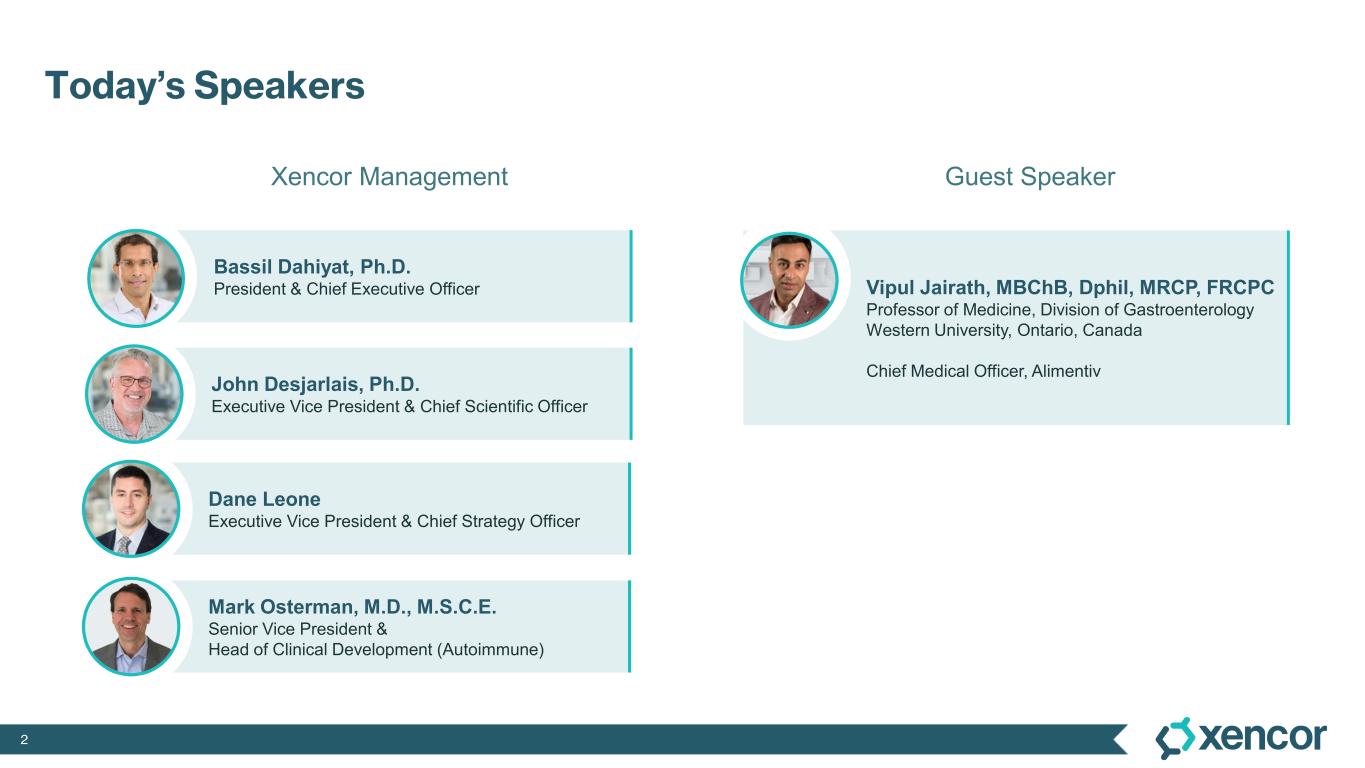
2 Today’s Speakers Bassil Dahiyat, Ph.D. President & Chief Executive Officer Xencor Management Guest Speaker Vipul Jairath, MBChB, Dphil, MRCP, FRCPC Professor of Medicine, Division of Gastroenterology Western University, Ontario, Canada Chief Medical Officer, Alimentiv John Desjarlais, Ph.D. Executive Vice President & Chief Scientific Officer Dane Leone Executive Vice President & Chief Strategy Officer Mark Osterman, M.D., M.S.C.E. Senior Vice President & Head of Clinical Development (Autoimmune)
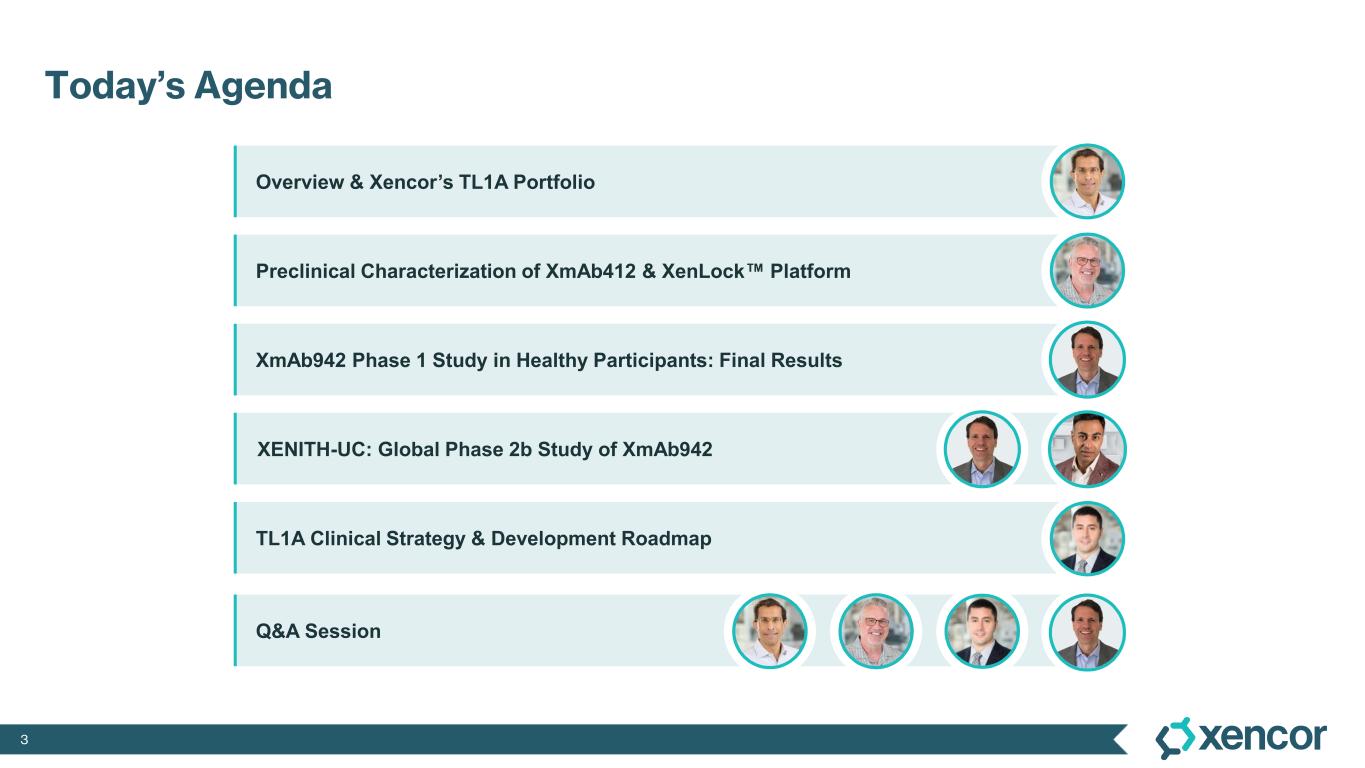
3 Today’s Agenda Overview & Xencor’s TL1A Portfolio TL1A Clinical Strategy & Development Roadmap Preclinical Characterization of XmAb412 & XenLock Platform XmAb942 Phase 1 Study in Healthy Participants: Final Results XENITH-UC: Global Phase 2b Study of XmAb942 Q&A Session
4 Forward-Looking Statements Certain statements contained in this presentation, other than statements of historical fact, may constitute forward-looking statements within the meaning of the Private Securities Litigation Reform Act of 1995. Such statements include, but are not limited to, statements regarding Xencor's development plans and timelines; potential regulatory actions; expected use of cash resources; the timing and results of clinical trials; the plans and objectives of management for future operations; and the potential markets for Xencor's product and development candidates. Forward-looking statements are based on the current expectations of management and upon what management believes to be reasonable assumptions based on information currently available to it, and involve numerous risks and uncertainties, many of which are beyond Xencor's control. These risks and uncertainties could cause future results, performance or achievements to differ significantly from the results, performance or achievements expressed or implied by such forward-looking statements. Such risks include, but are not limited to, potential delays in development timelines or negative preclinical or clinical trial results, reliance on third parties for development efforts and changes in the competitive landscape including changes in the standard of care for treatment of diseases for which we are developing product candidates, as well as other risks described in Xencor's f ilings with the Securities and Exchange Commission. Xencor expressly disclaims any duty, obligation or undertaking to update or revise any forward-looking statements contained herein to reflect any change in Xencor's expectations with regard thereto of any subsequent change in events, conditions or circumstances on which any such statements are based, except in accordance with applicable securities laws. For all forward-looking statements, we claim the protection of the safe harbor for forward looking statements contained in the Private Securities Litigation Reform Act of 1995. Disclaimer: We use our trademarks and our logo in this presentation. This presentation also includes trademarks, tradenames and service marks that are the property of other organizations. Solely for convenience, trademarks and tradenames referred to in this presentation appear without the “®” and “TM” symbols, but those references are not intended to indicate, in any way, that we will not assert, to the fullest extent under applicable law, our rights or that the applicable owner will not assert its rights, to these trademarks and tradenames.
5 ® Overview & Xencor’s TL1A Portfolio Bassil Dahiyat, Ph.D. President & Chief Executive Officer
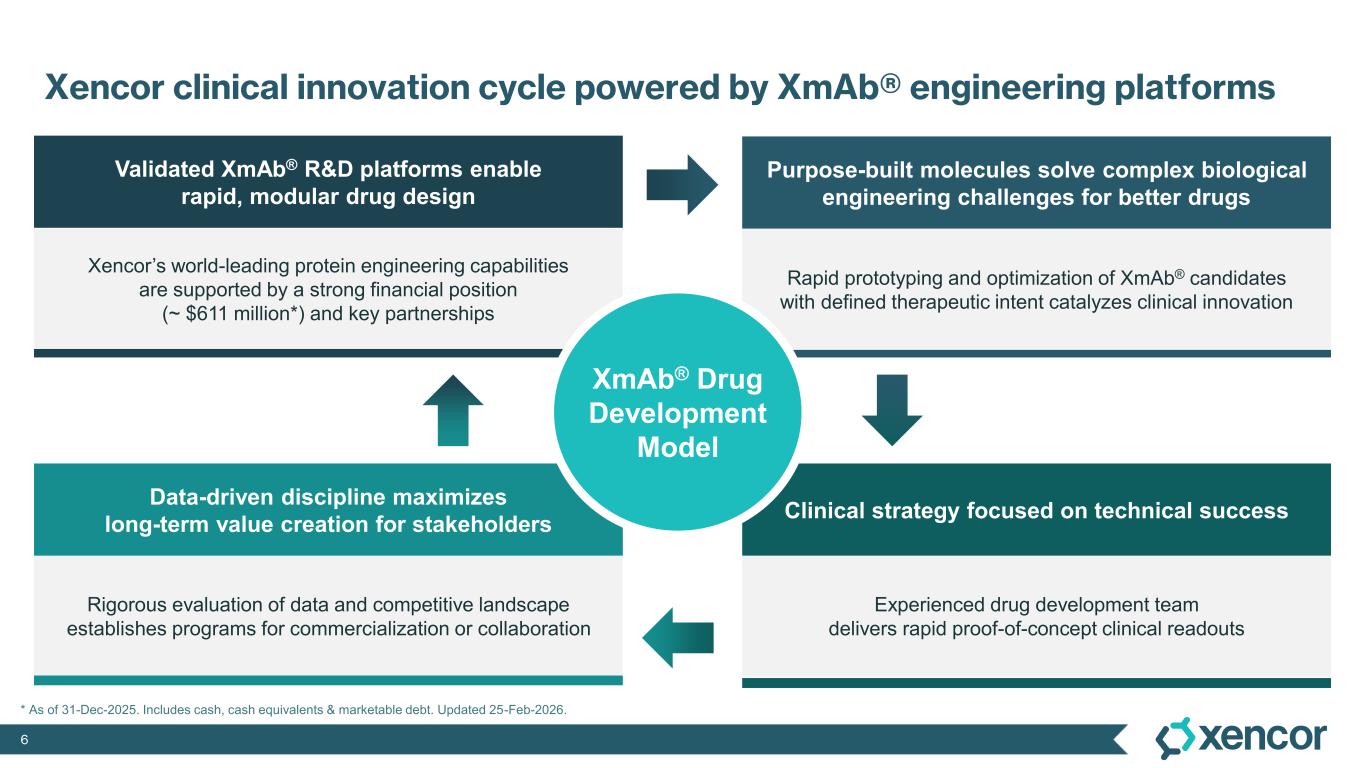
6 Xencor’s world-leading protein engineering capabilities are supported by a strong financial position (~ $611 million*) and key partnerships Experienced drug development team delivers rapid proof-of-concept clinical readouts Rapid prototyping and optimization of XmAb® candidates with defined therapeutic intent catalyzes clinical innovation Rigorous evaluation of data and competitive landscape establishes programs for commercialization or collaboration Xencor clinical innovation cycle powered by XmAb® engineering platforms Validated XmAb® R&D platforms enable rapid, modular drug design Purpose-built molecules solve complex biological engineering challenges for better drugs Data-driven discipline maximizes long-term value creation for stakeholders Clinical strategy focused on technical success XmAb® Drug Development Model * As of 31-Dec-2025. Includes cash, cash equivalents & marketable debt. Updated 25-Feb-2026.
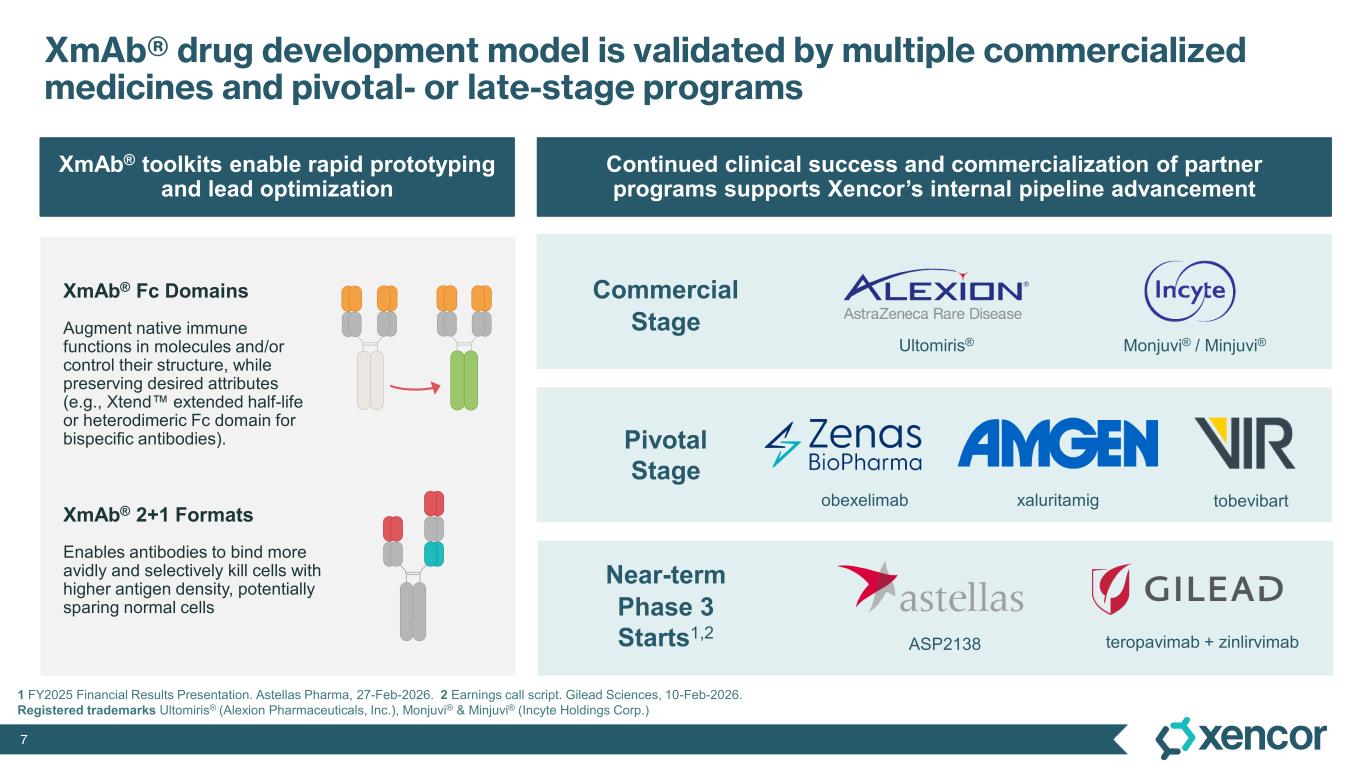
7 XmAb® Fc Domains Augment native immune functions in molecules and/or control their structure, while preserving desired attributes (e.g., Xtend extended half-life or heterodimeric Fc domain for bispecific antibodies). XmAb® drug development model is validated by multiple commercialized medicines and pivotal- or late-stage programs XmAb® toolkits enable rapid prototyping and lead optimization Continued clinical success and commercialization of partner programs supports Xencor’s internal pipeline advancement 1 FY2025 Financial Results Presentation. Astellas Pharma, 27-Feb-2026. 2 Earnings call script. Gilead Sciences, 10-Feb-2026. Registered trademarks Ultomiris® (Alexion Pharmaceuticals, Inc.), Monjuvi® & Minjuvi® (Incyte Holdings Corp.) Ultomiris® Monjuvi® / Minjuvi® Commercial Stage Pivotal Stage Near-term Phase 3 Starts1,2 XmAb® 2+1 Formats Enables antibodies to bind more avidly and selectively kill cells with higher antigen density, potentially sparing normal cells obexelimab xaluritamig tobevibart ASP2138 teropavimab + zinlirvimab
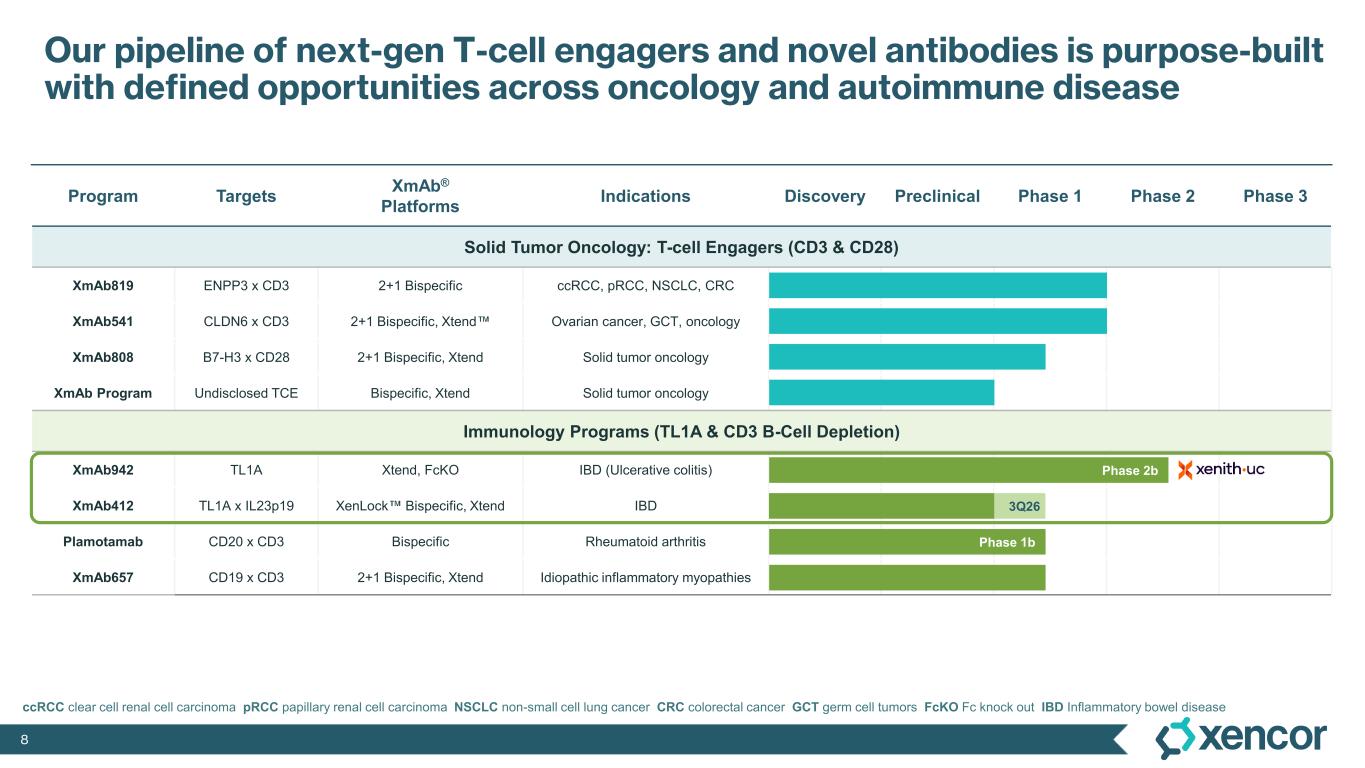
8 Program Targets XmAb® Platforms Indications Discovery Preclinical Phase 1 Phase 2 Phase 3 Solid Tumor Oncology: T-cell Engagers (CD3 & CD28) XmAb819 ENPP3 x CD3 2+1 Bispecific ccRCC, pRCC, NSCLC, CRC XmAb541 CLDN6 x CD3 2+1 Bispecific, Xtend Ovarian cancer, GCT, oncology XmAb808 B7-H3 x CD28 2+1 Bispecific, Xtend Solid tumor oncology XmAb Program Undisclosed TCE Bispecific, Xtend Solid tumor oncology Immunology Programs (TL1A & CD3 B-Cell Depletion) XmAb942 TL1A Xtend, FcKO IBD (Ulcerative colitis) XmAb412 TL1A x IL23p19 XenLock Bispecific, Xtend IBD Plamotamab CD20 x CD3 Bispecific Rheumatoid arthritis XmAb657 CD19 x CD3 2+1 Bispecific, Xtend Idiopathic inflammatory myopathies ccRCC clear cell renal cell carcinoma pRCC papillary renal cell carcinoma NSCLC non-small cell lung cancer CRC colorectal cancer GCT germ cell tumors FcKO Fc knock out IBD Inflammatory bowel disease Phase 1b Our pipeline of next-gen T-cell engagers and novel antibodies is purpose-built with defined opportunities across oncology and autoimmune disease Phase 2b 3Q26
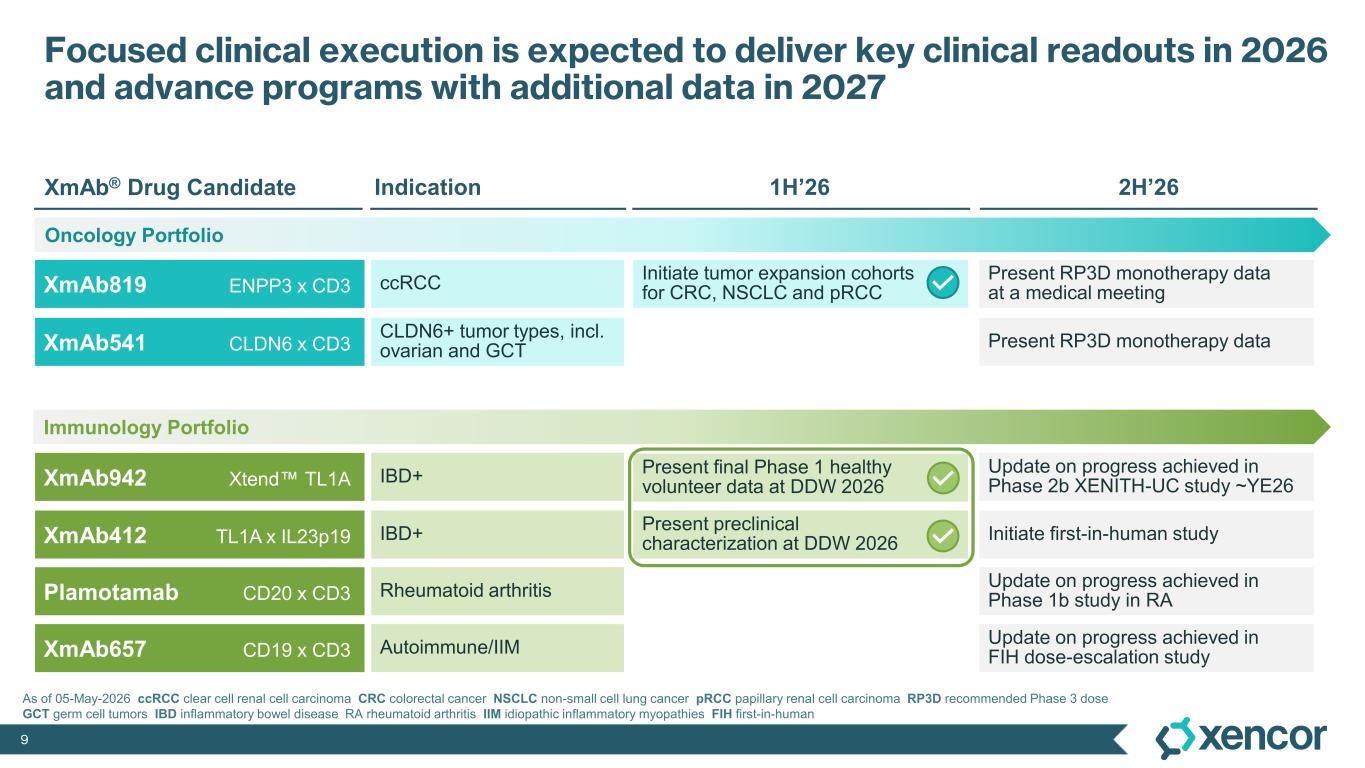
9 Focused clinical execution is expected to deliver key clinical readouts in 2026 and advance programs with additional data in 2027 XmAb® Drug Candidate Indication Oncology Portfolio 1H’26 2H’26 Immunology Portfolio As of 05-May-2026 ccRCC clear cell renal cell carcinoma CRC colorectal cancer NSCLC non-small cell lung cancer pRCC papillary renal cell carcinoma RP3D recommended Phase 3 dose GCT germ cell tumors IBD inflammatory bowel disease RA rheumatoid arthritis IIM idiopathic inflammatory myopathies FIH first-in-human XmAb819 ENPP3 x CD3 ccRCC Initiate tumor expansion cohorts for CRC, NSCLC and pRCC Present RP3D monotherapy data at a medical meeting CLDN6+ tumor types, incl. ovarian and GCTXmAb541 CLDN6 x CD3 Present RP3D monotherapy data XmAb942 Xtend TL1A IBD+ Present final Phase 1 healthy volunteer data at DDW 2026 Update on progress achieved in Phase 2b XENITH-UC study ~YE26 XmAb412 TL1A x IL23p19 IBD+ Present preclinical characterization at DDW 2026 Initiate first-in-human study Plamotamab CD20 x CD3 Rheumatoid arthritis Update on progress achieved in Phase 1b study in RA XmAb657 CD19 x CD3 Autoimmune/IIM Update on progress achieved in FIH dose-escalation study
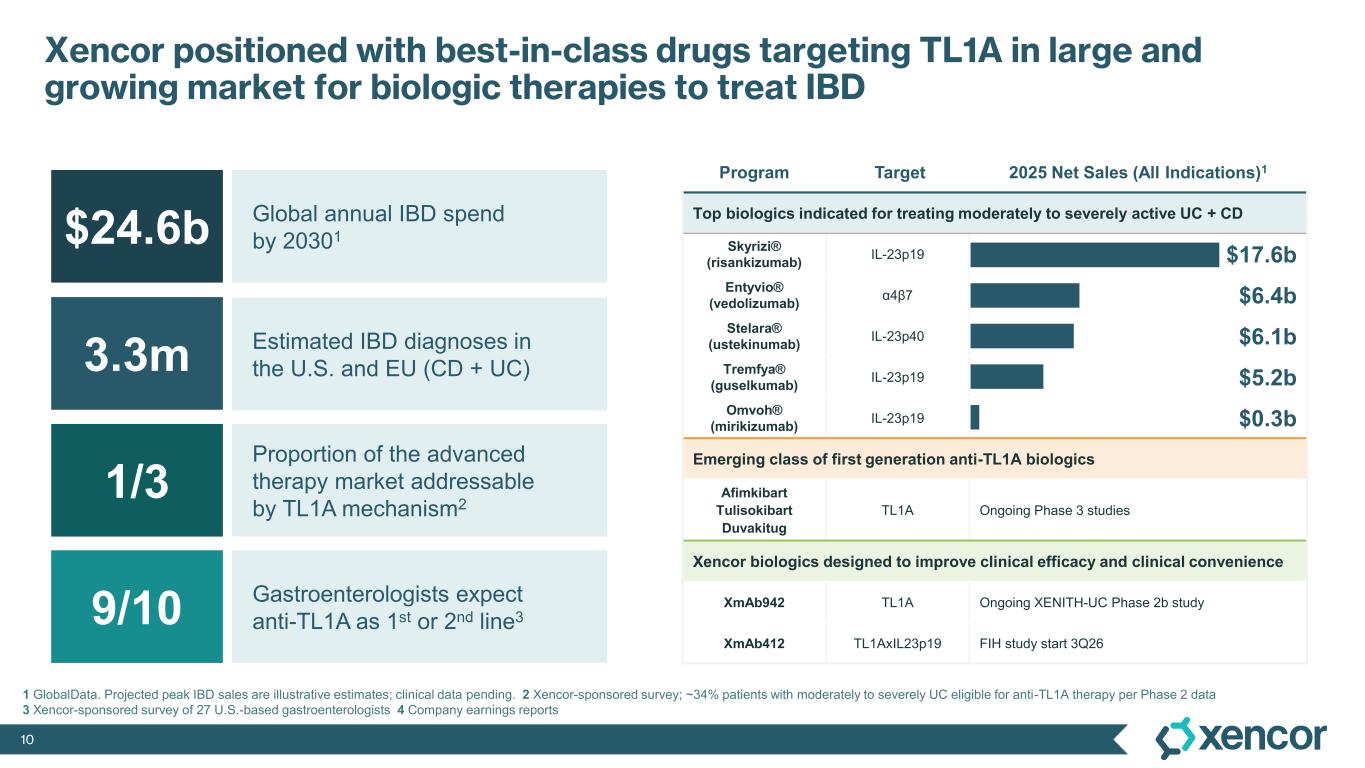
10 Xencor positioned with best-in-class drugs targeting TL1A in large and growing market for biologic therapies to treat IBD Program Target 2025 Net Sales (All Indications)1 Top biologics indicated for treating moderately to severely active UC + CD Skyrizi® (risankizumab) IL-23p19 $17.6b Entyvio® (vedolizumab) α4β7 $6.4b Stelara® (ustekinumab) IL-23p40 $6.1b Tremfya® (guselkumab) IL-23p19 $5.2b Omvoh® (mirikizumab) IL-23p19 $0.3b Emerging class of first generation anti-TL1A biologics Afimkibart Tulisokibart Duvakitug TL1A Ongoing Phase 3 studies Xencor biologics designed to improve clinical efficacy and clinical convenience XmAb942 TL1A Ongoing XENITH-UC Phase 2b study XmAb412 TL1AxIL23p19 FIH study start 3Q26 1 GlobalData. Projected peak IBD sales are illustrative estimates; clinical data pending. 2 Xencor-sponsored survey; ~34% patients with moderately to severely UC eligible for anti-TL1A therapy per Phase 2 data 3 Xencor-sponsored survey of 27 U.S.-based gastroenterologists 4 Company earnings reports $24.6b 3.3m 1/3 9/10 Global annual IBD spend by 20301 Estimated IBD diagnoses in the U.S. and EU (CD + UC) Proportion of the advanced therapy market addressable by TL1A mechanism2 Gastroenterologists expect anti-TL1A as 1st or 2nd line3
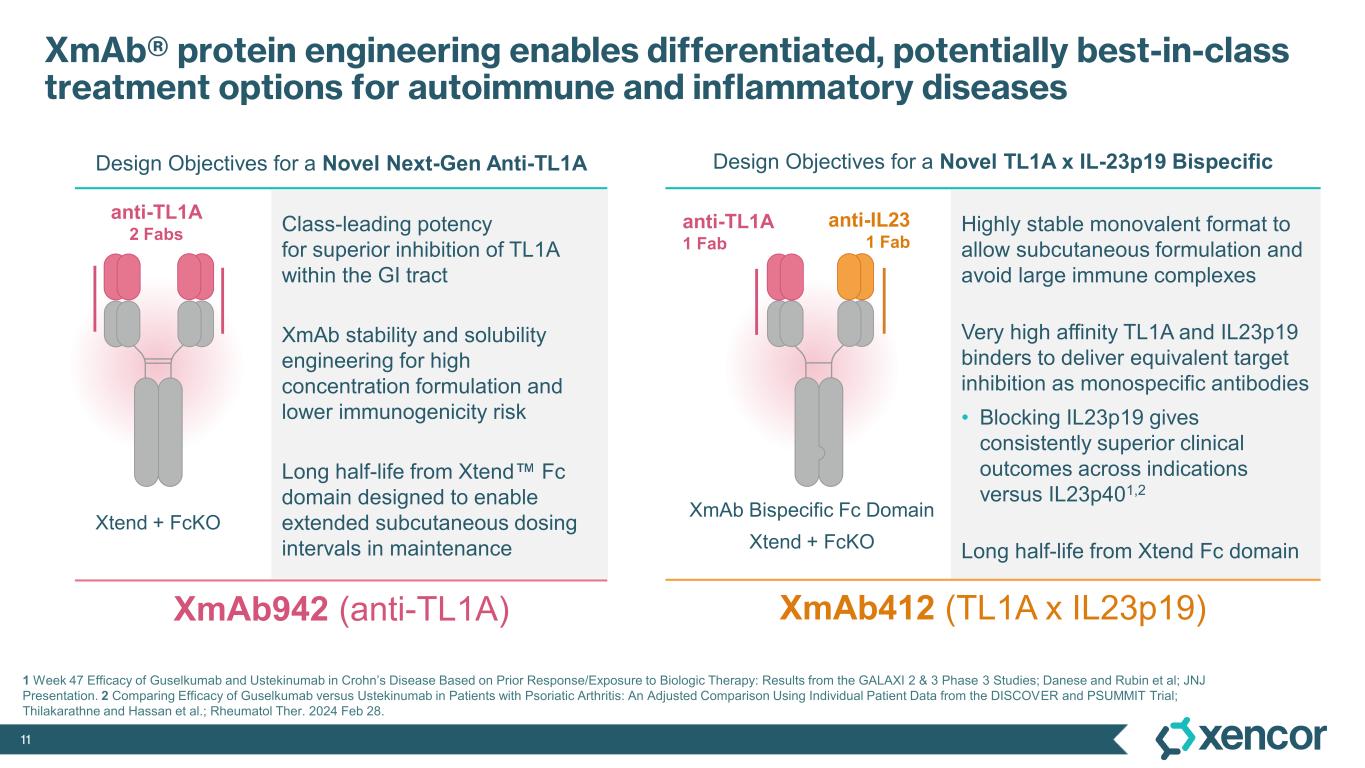
11 Class-leading potency for superior inhibition of TL1A within the GI tract XmAb stability and solubility engineering for high concentration formulation and lower immunogenicity risk Long half-life from Xtend Fc domain designed to enable extended subcutaneous dosing intervals in maintenance Highly stable monovalent format to allow subcutaneous formulation and avoid large immune complexes Very high affinity TL1A and IL23p19 binders to deliver equivalent target inhibition as monospecific antibodies • Blocking IL23p19 gives consistently superior clinical outcomes across indications versus IL23p401,2 Long half-life from Xtend Fc domain XmAb® protein engineering enables differentiated, potentially best-in-class treatment options for autoimmune and inflammatory diseases Design Objectives for a Novel Next-Gen Anti-TL1A Design Objectives for a Novel TL1A x IL-23p19 Bispecific Xtend + FcKO XmAb Bispecific Fc Domain anti-TL1A 2 Fabs anti-TL1A 1 Fab anti-IL23 1 Fab Xtend + FcKO 1 Week 47 Efficacy of Guselkumab and Ustekinumab in Crohn’s Disease Based on Prior Response/Exposure to Biologic Therapy: Results from the GALAXI 2 & 3 Phase 3 Studies; Danese and Rubin et al; JNJ Presentation. 2 Comparing Efficacy of Guselkumab versus Ustekinumab in Patients with Psoriatic Arthritis: An Adjusted Comparison Using Individual Patient Data from the DISCOVER and PSUMMIT Trial; Thilakarathne and Hassan et al.; Rheumatol Ther. 2024 Feb 28. XmAb942 (anti-TL1A) XmAb412 (TL1A x IL23p19)
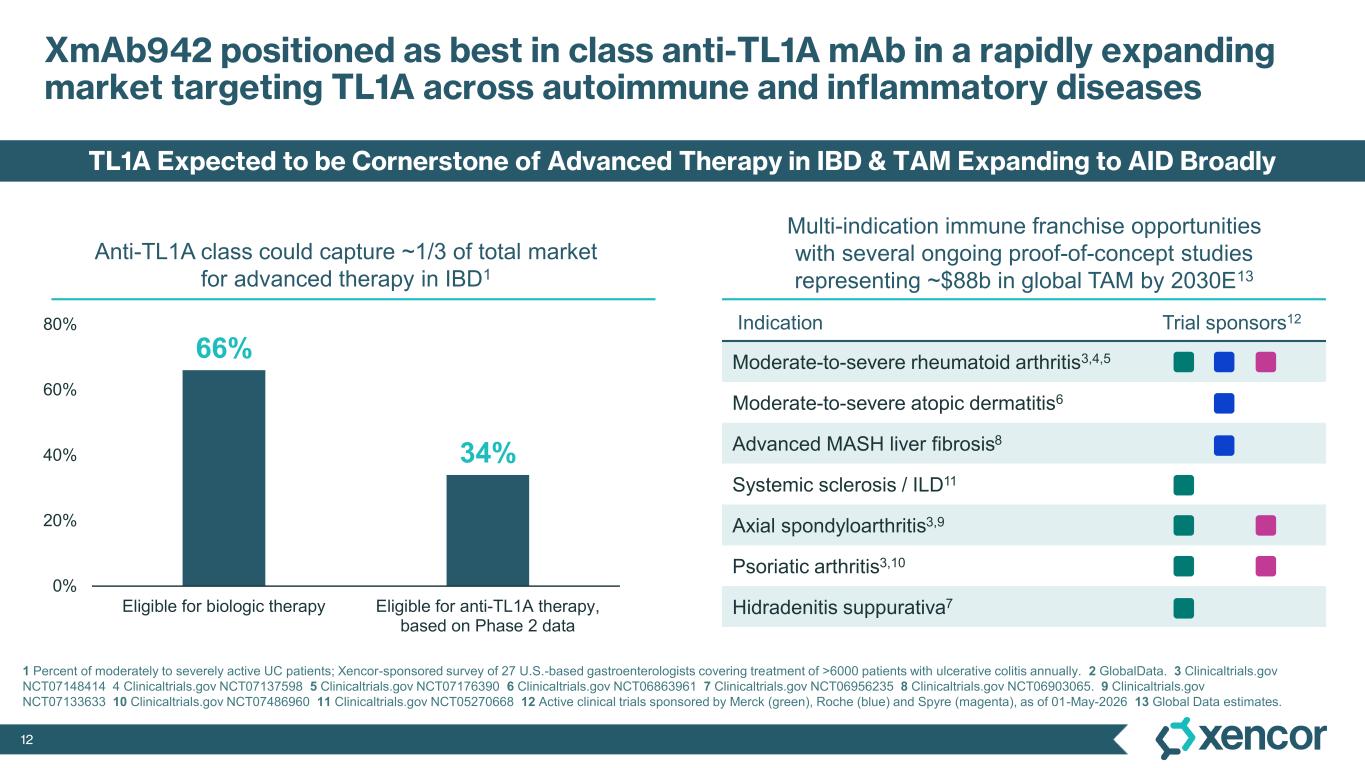
12 Moderate-to-severe rheumatoid arthritis3,4,5 1 Percent of moderately to severely active UC patients; Xencor-sponsored survey of 27 U.S.-based gastroenterologists covering treatment of >6000 patients with ulcerative colitis annually. 2 GlobalData. 3 Clinicaltrials.gov NCT07148414 4 Clinicaltrials.gov NCT07137598 5 Clinicaltrials.gov NCT07176390 6 Clinicaltrials.gov NCT06863961 7 Clinicaltrials.gov NCT06956235 8 Clinicaltrials.gov NCT06903065. 9 Clinicaltrials.gov NCT07133633 10 Clinicaltrials.gov NCT07486960 11 Clinicaltrials.gov NCT05270668 12 Active clinical trials sponsored by Merck (green), Roche (blue) and Spyre (magenta), as of 01-May-2026 13 Global Data estimates. XmAb942 positioned as best in class anti-TL1A mAb in a rapidly expanding market targeting TL1A across autoimmune and inflammatory diseases Anti-TL1A class could capture ~1/3 of total market for advanced therapy in IBD1 TL1A Expected to be Cornerstone of Advanced Therapy in IBD & TAM Expanding to AID Broadly Multi-indication immune franchise opportunities with several ongoing proof-of-concept studies representing ~$88b in global TAM by 2030E13 Systemic sclerosis / ILD11 Advanced MASH liver fibrosis8 Hidradenitis suppurativa7 Psoriatic arthritis3,10 Axial spondyloarthritis3,9 Moderate-to-severe atopic dermatitis6 Trial sponsors12Indication 66% 34% 0% 20% 40% 60% 80% Eligible for biologic therapy Eligible for anti-TL1A therapy, based on Phase 2 data
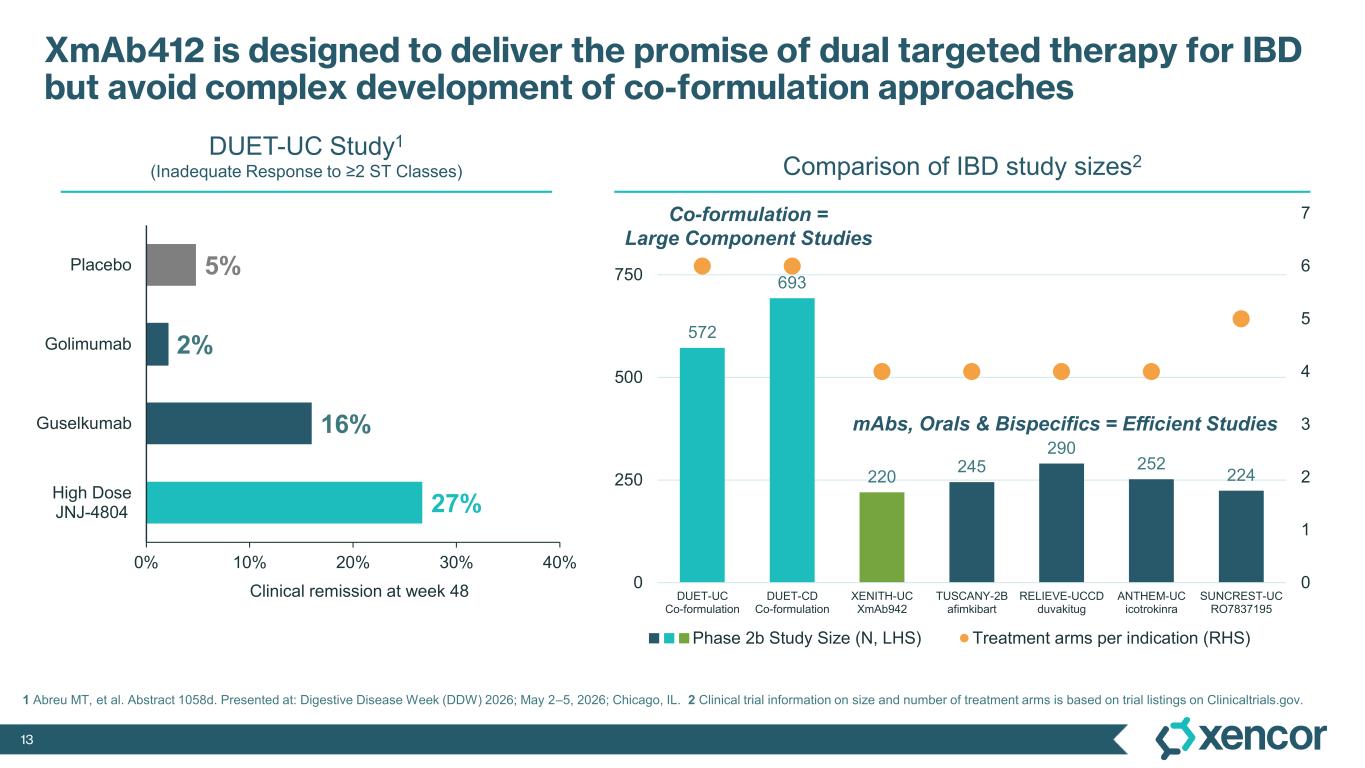
13 XmAb412 is designed to deliver the promise of dual targeted therapy for IBD but avoid complex development of co-formulation approaches DUET-UC Study1 (Inadequate Response to ≥2 ST Classes) 27% 16% 2% 5% 0% 10% 20% 30% 40% High Dose JNJ-4804 Guselkumab Golimumab Placebo Clinical remission at week 48 1 Abreu MT, et al. Abstract 1058d. Presented at: Digestive Disease Week (DDW) 2026; May 2–5, 2026; Chicago, IL. 2 Clinical trial information on size and number of treatment arms is based on trial listings on Clinicaltrials.gov. Comparison of IBD study sizes2 572 693 220 245 290 252 224 0 1 2 3 4 5 6 7 0 250 500 750 DUET-UC Co-formulation DUET-CD Co-formulation XENITH-UC XmAb942 TUSCANY-2B afimkibart RELIEVE-UCCD duvakitug ANTHEM-UC icotrokinra SUNCREST-UC RO7837195 Phase 2b Study Size (N, LHS) Treatment arms per indication (RHS) Co-formulation = Large Component Studies mAbs, Orals & Bispecifics = Efficient Studies
14 ® Preclinical Characterization of XmAb412 & XenLock Platform John Desjarlais, Ph.D. EVP & Chief Scientific Officer
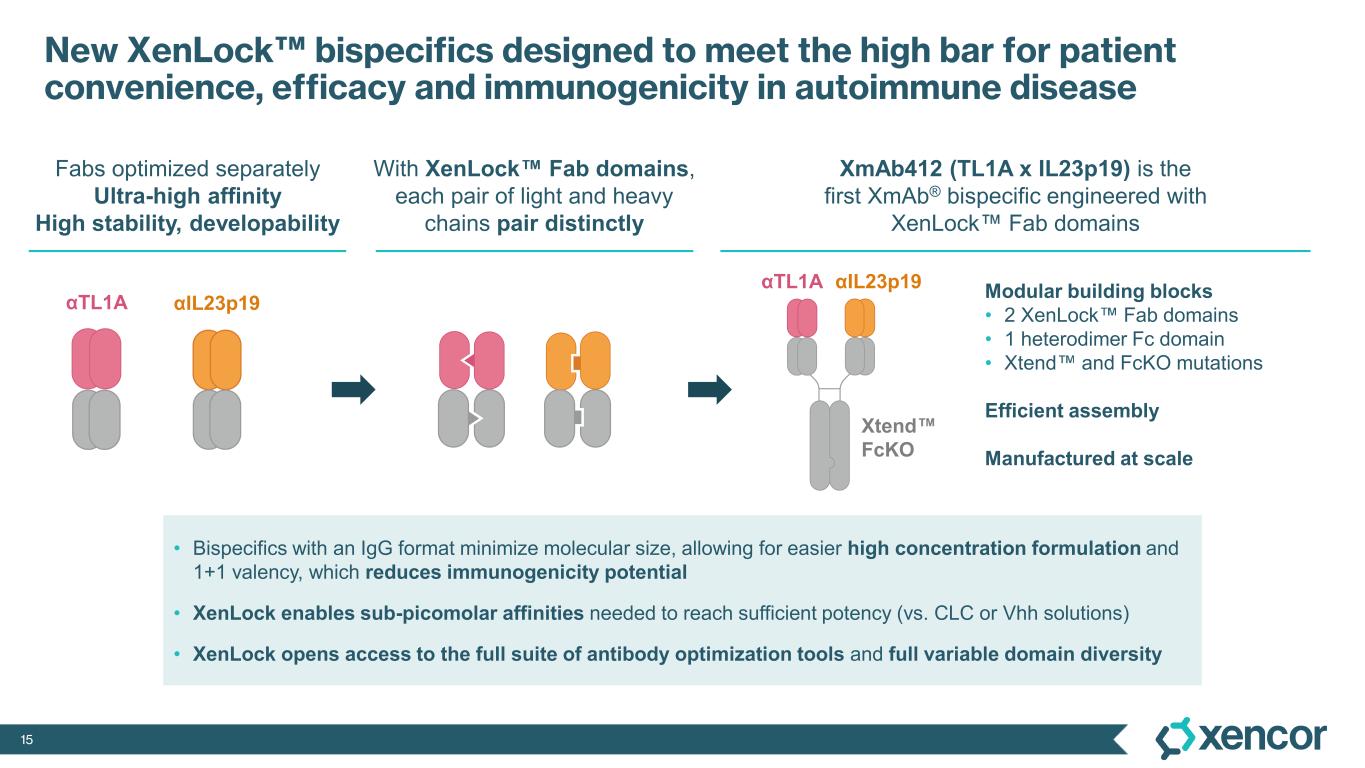
15 New XenLock bispecifics designed to meet the high bar for patient convenience, efficacy and immunogenicity in autoimmune disease • Bispecifics with an IgG format minimize molecular size, allowing for easier high concentration formulation and 1+1 valency, which reduces immunogenicity potential • XenLock enables sub-picomolar affinities needed to reach sufficient potency (vs. CLC or Vhh solutions) • XenLock opens access to the full suite of antibody optimization tools and full variable domain diversity With XenLock Fab domains, each pair of light and heavy chains pair distinctly Modular building blocks • 2 XenLock Fab domains • 1 heterodimer Fc domain • Xtend and FcKO mutations Efficient assembly Manufactured at scale αTL1A αIL23p19 Xtend FcKO αTL1A αIL23p19 XmAb412 (TL1A x IL23p19) is the first XmAb® bispecific engineered with XenLock Fab domains Fabs optimized separately Ultra-high affinity High stability, developability
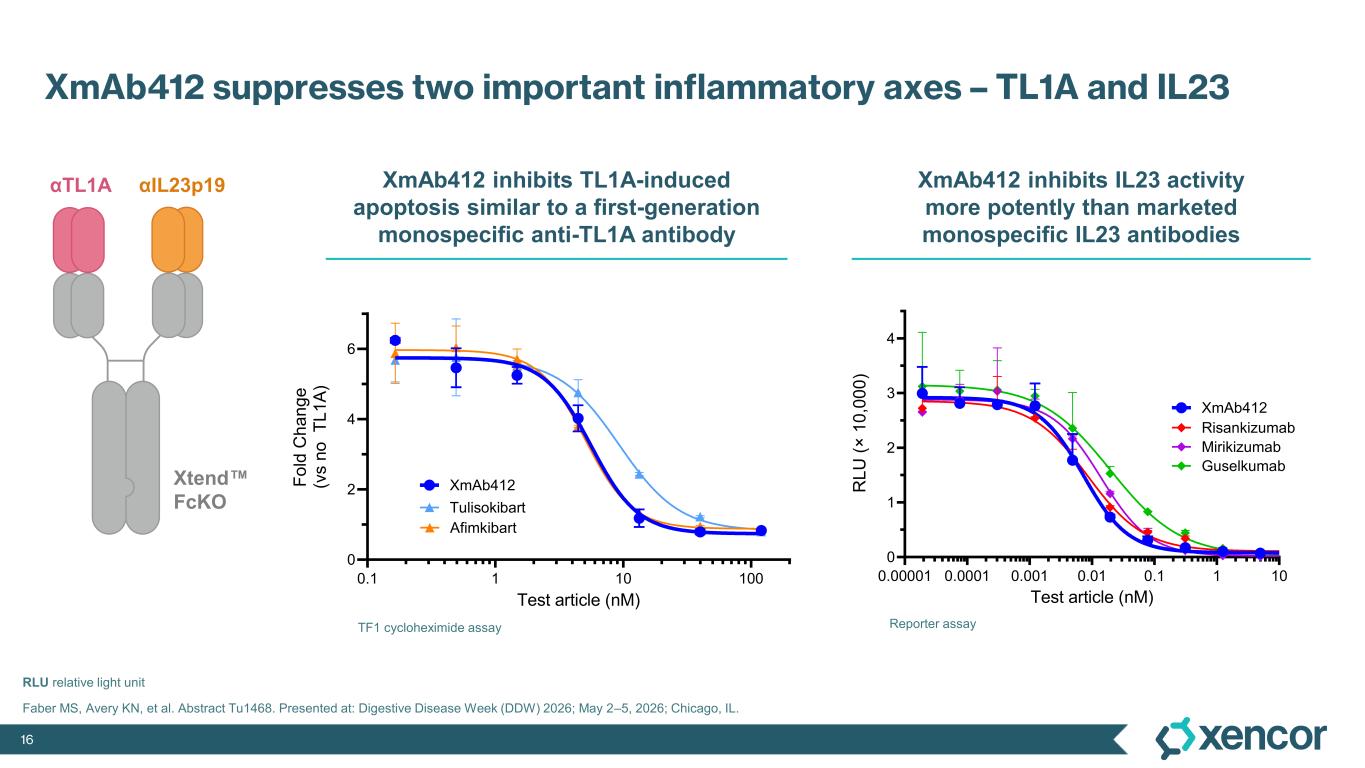
16 XmAb412 suppresses two important inflammatory axes – TL1A and IL23 RLU relative light unit 0.1 1 10 100 0 2 4 6 Test article (nM) F o ld C h a n g e (v s n o T L 1 A ) XmAb412 Afimkibart Tulisokibart XmAb412 inhibits TL1A-induced apoptosis similar to a first-generation monospecific anti-TL1A antibody 0.00001 0.0001 0.001 0.01 0.1 1 10 0 1 2 3 4 Test article (nM) R L U ( × 1 0 ,0 0 0 ) Risankizumab Mirikizumab Guselkumab XmAb412 XmAb412 inhibits IL23 activity more potently than marketed monospecific IL23 antibodies TF1 cycloheximide assay Reporter assay Faber MS, Avery KN, et al. Abstract Tu1468. Presented at: Digestive Disease Week (DDW) 2026; May 2–5, 2026; Chicago, IL. αTL1A αIL23p19 Xtend FcKO
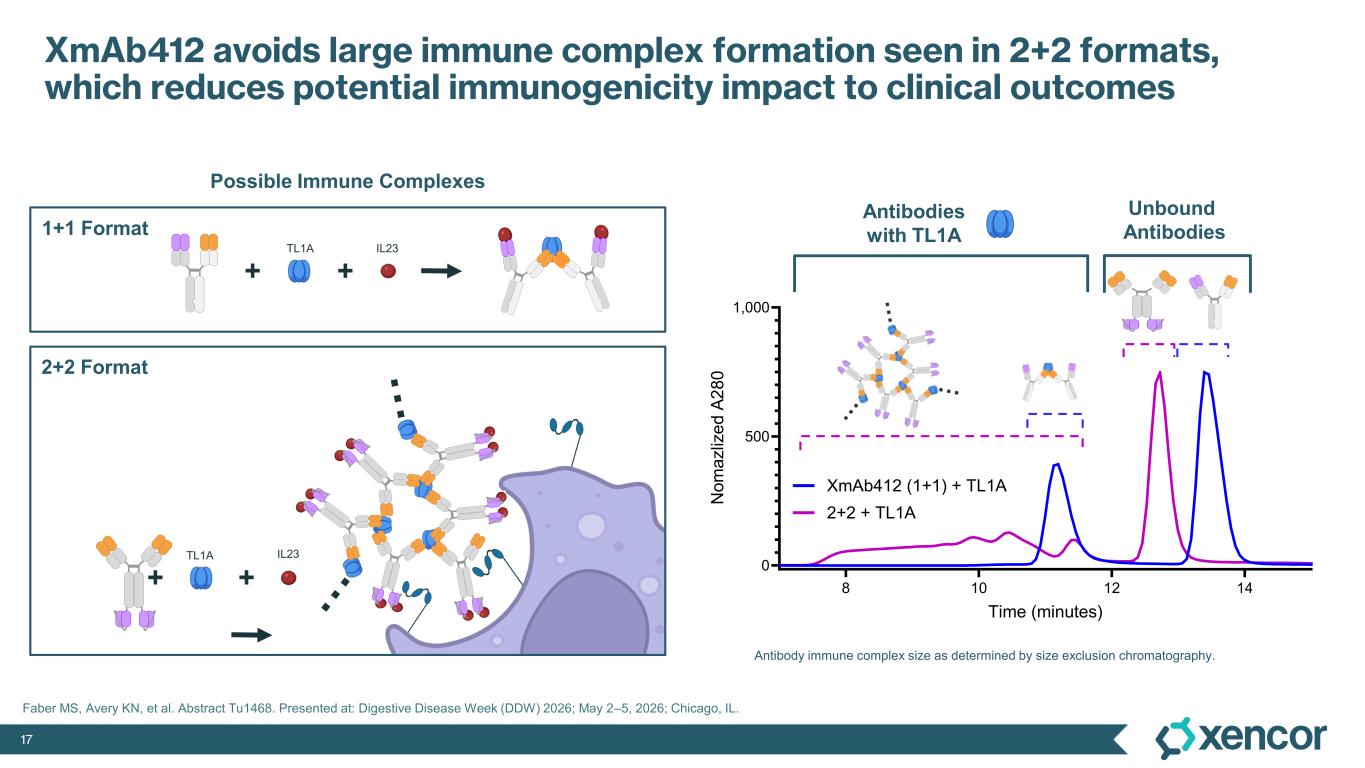
17 8 10 12 14 0 500 1,000 Time (minutes) N o m a z liz e d A 2 8 0 XmAb412 avoids large immune complex formation seen in 2+2 formats, which reduces potential immunogenicity impact to clinical outcomes Antibody immune complex size as determined by size exclusion chromatography. Unbound Antibodies Antibodies with TL1A ++ TL1A IL23 Possible Immune Complexes 1+1 Format TL1A IL23 ++ 2+2 Format XmAb412 (1+1) + TL1A 2+2 + TL1A Faber MS, Avery KN, et al. Abstract Tu1468. Presented at: Digestive Disease Week (DDW) 2026; May 2–5, 2026; Chicago, IL.
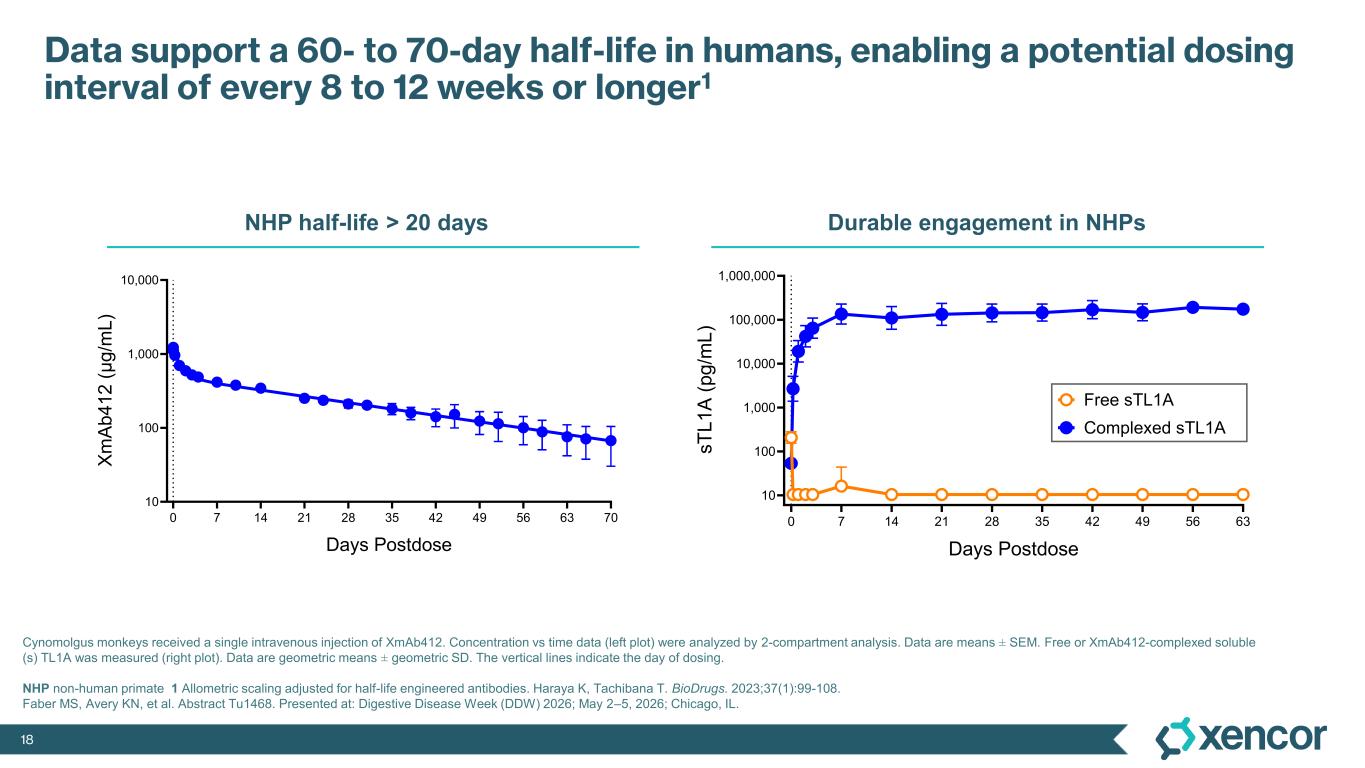
18 Data support a 60- to 70-day half-life in humans, enabling a potential dosing interval of every 8 to 12 weeks or longer1 0 7 14 21 28 35 42 49 56 63 70 10 100 1,000 10,000 Days Postdose X m A b 4 1 2 ( μ g /m L ) 0 7 14 21 28 35 42 49 56 63 10 100 1,000 10,000 100,000 1,000,000 Days Postdose s T L 1 A ( p g /m L ) Free sTL1A Complexed sTL1A Cynomolgus monkeys received a single intravenous injection of XmAb412. Concentration vs time data (left plot) were analyzed by 2-compartment analysis. Data are means ± SEM. Free or XmAb412-complexed soluble (s) TL1A was measured (right plot). Data are geometric means ± geometric SD. The vertical lines indicate the day of dosing. NHP non-human primate 1 Allometric scaling adjusted for half-life engineered antibodies. Haraya K, Tachibana T. BioDrugs. 2023;37(1):99-108. Faber MS, Avery KN, et al. Abstract Tu1468. Presented at: Digestive Disease Week (DDW) 2026; May 2–5, 2026; Chicago, IL. NHP half-life > 20 days Durable engagement in NHPs
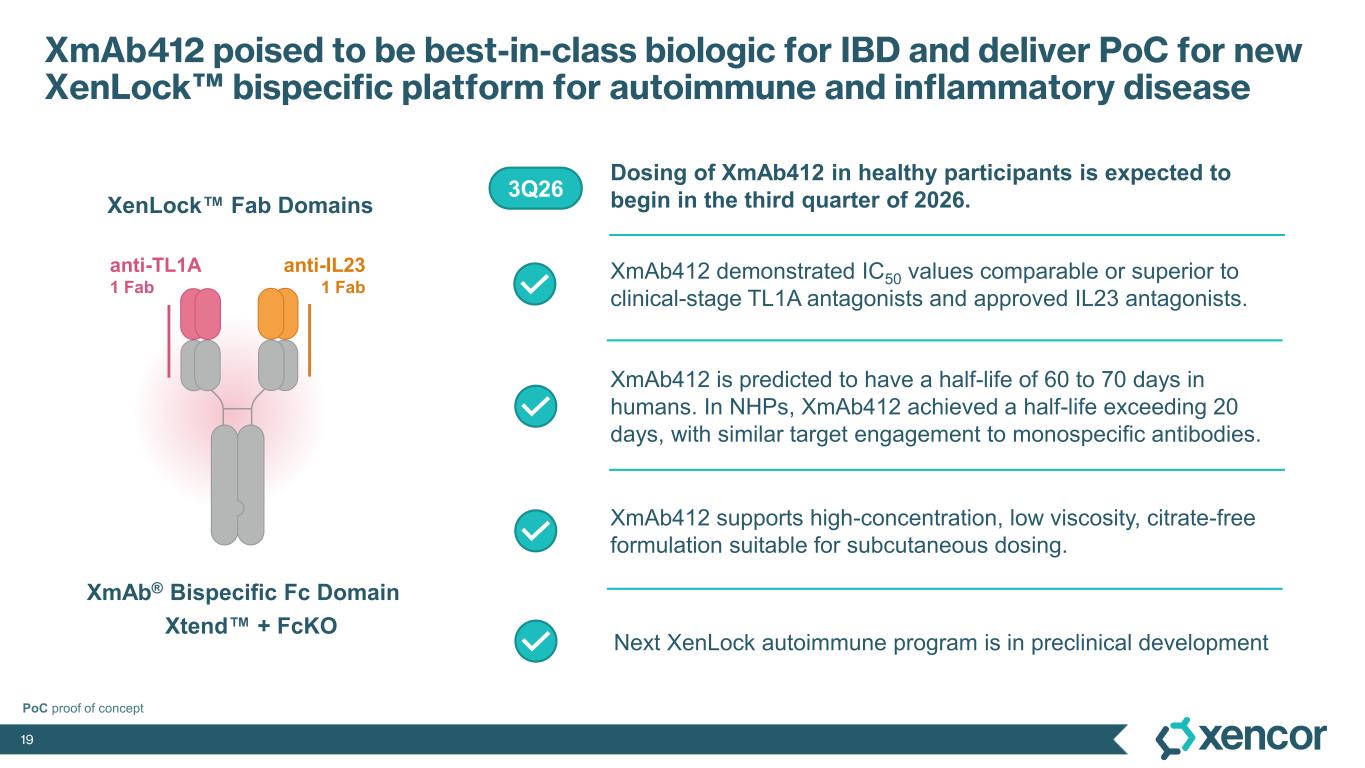
19 XmAb412 poised to be best-in-class biologic for IBD and deliver PoC for new XenLock bispecific platform for autoimmune and inflammatory disease XmAb® Bispecific Fc Domain anti-TL1A 1 Fab anti-IL23 1 Fab Xtend + FcKO XenLock Fab Domains XmAb412 demonstrated IC50 values comparable or superior to clinical-stage TL1A antagonists and approved IL23 antagonists. XmAb412 is predicted to have a half-life of 60 to 70 days in humans. In NHPs, XmAb412 achieved a half-life exceeding 20 days, with similar target engagement to monospecific antibodies. XmAb412 supports high-concentration, low viscosity, citrate-free formulation suitable for subcutaneous dosing. Dosing of XmAb412 in healthy participants is expected to begin in the third quarter of 2026. 3Q26 Next XenLock autoimmune program is in preclinical development PoC proof of concept
20 ® XmAb942 Phase 1 Study in Healthy Participants Final Results Mark Osterman, M.D., M.S.C.E SVP & Head of Clinical Development (Autoimmune)
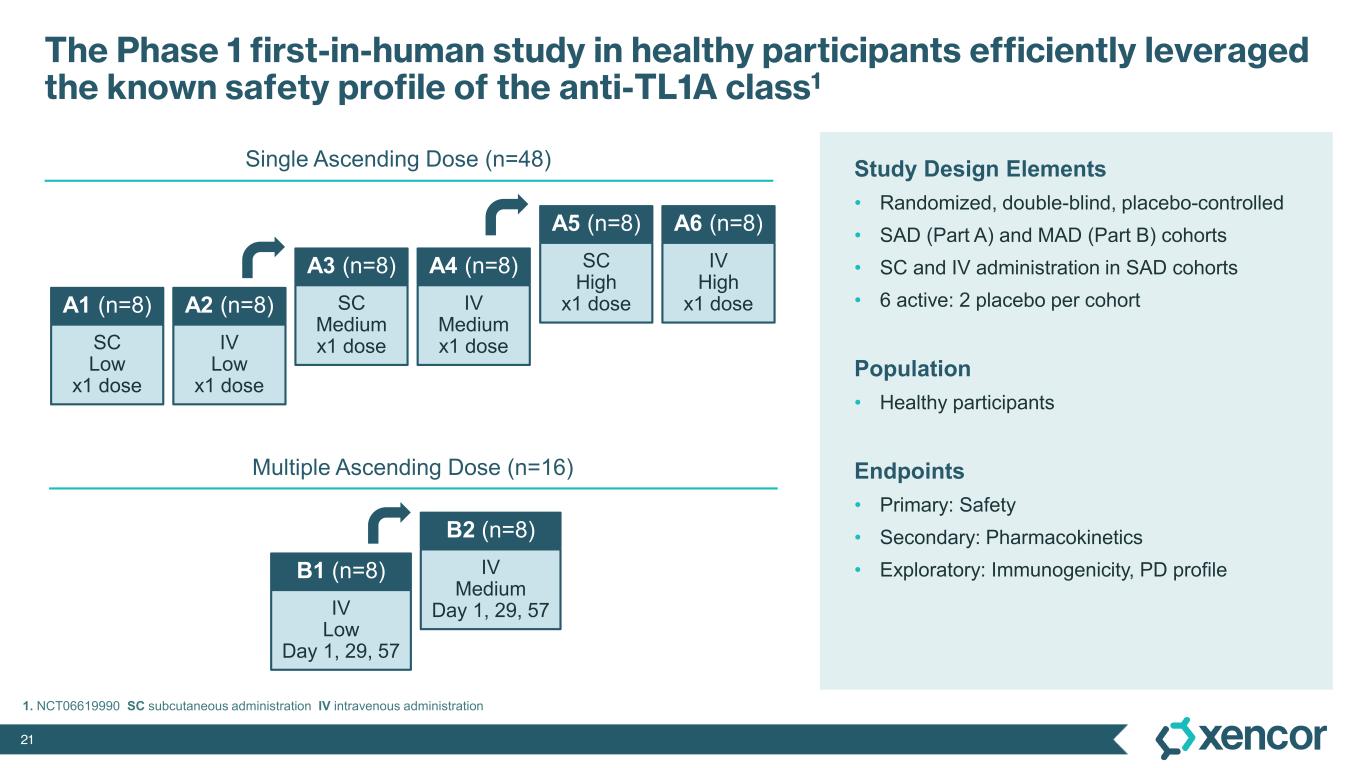
21 Single Ascending Dose (n=48) The Phase 1 first-in-human study in healthy participants efficiently leveraged the known safety profile of the anti-TL1A class1 Multiple Ascending Dose 6 active:2 placebo per cohort Study Design Elements • Randomized, double-blind, placebo-controlled • SAD (Part A) and MAD (Part B) cohorts • SC and IV administration in SAD cohorts • 6 active: 2 placebo per cohort Population • Healthy participants Endpoints • Primary: Safety • Secondary: Pharmacokinetics • Exploratory: Immunogenicity, PD profile 1. NCT06619990 SC subcutaneous administration IV intravenous administration SC Medium x1 dose A3 (n=8) IV Medium x1 dose A4 (n=8) SC Low x1 dose A1 (n=8) IV Low x1 dose A2 (n=8) SC High x1 dose A5 (n=8) IV High x1 dose A6 (n=8) IV Low Day 1, 29, 57 B1 (n=8) IV Medium Day 1, 29, 57 B2 (n=8) ltiple Ascendi g Dose (n=16)
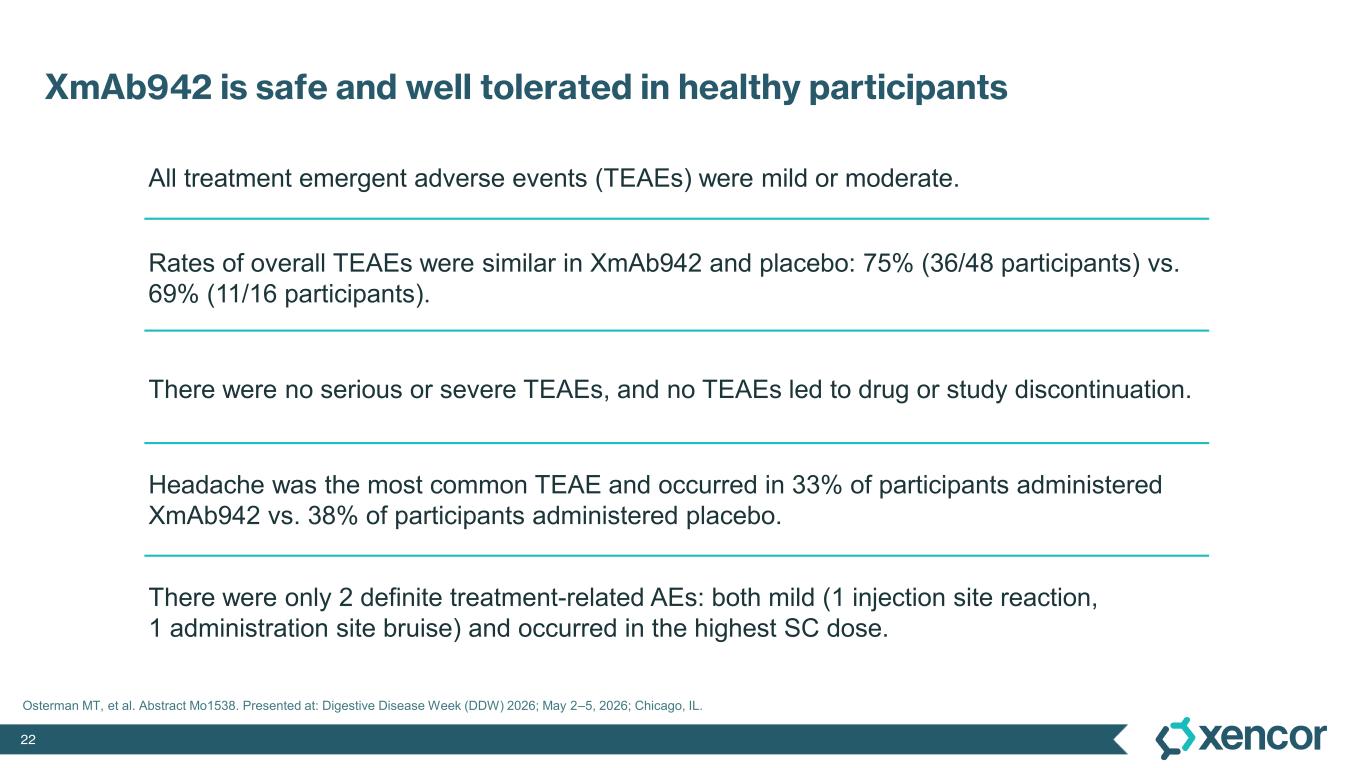
22 XmAb942 is safe and well tolerated in healthy participants There were no serious or severe TEAEs, and no TEAEs led to drug or study discontinuation. Rates of overall TEAEs were similar in XmAb942 and placebo: 75% (36/48 participants) vs. 69% (11/16 participants). All treatment emergent adverse events (TEAEs) were mild or moderate. Headache was the most common TEAE and occurred in 33% of participants administered XmAb942 vs. 38% of participants administered placebo. There were only 2 definite treatment-related AEs: both mild (1 injection site reaction, 1 administration site bruise) and occurred in the highest SC dose. Osterman MT, et al. Abstract Mo1538. Presented at: Digestive Disease Week (DDW) 2026; May 2–5, 2026; Chicago, IL.
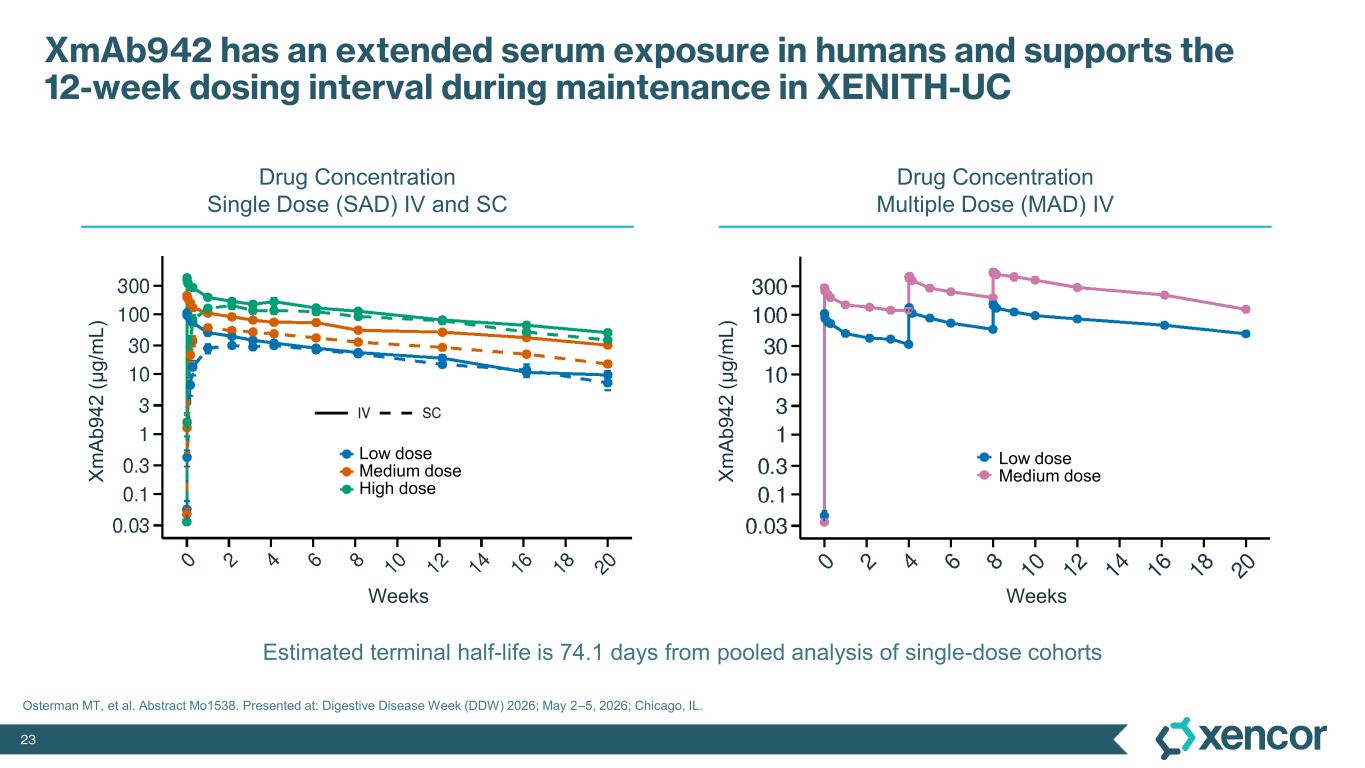
23 XmAb942 has an extended serum exposure in humans and supports the 12-week dosing interval during maintenance in XENITH-UC Estimated terminal half-life is 74.1 days from pooled analysis of single-dose cohorts Drug Concentration Single Dose (SAD) IV and SC Drug Concentration Multiple Dose (MAD) IV X m A b 9 4 2 ( μ g /m L ) X m A b 9 4 2 ( μ g /m L ) Weeks Weeks Osterman MT, et al. Abstract Mo1538. Presented at: Digestive Disease Week (DDW) 2026; May 2–5, 2026; Chicago, IL. Low dose Medium dose High dose Low dose Medium dose
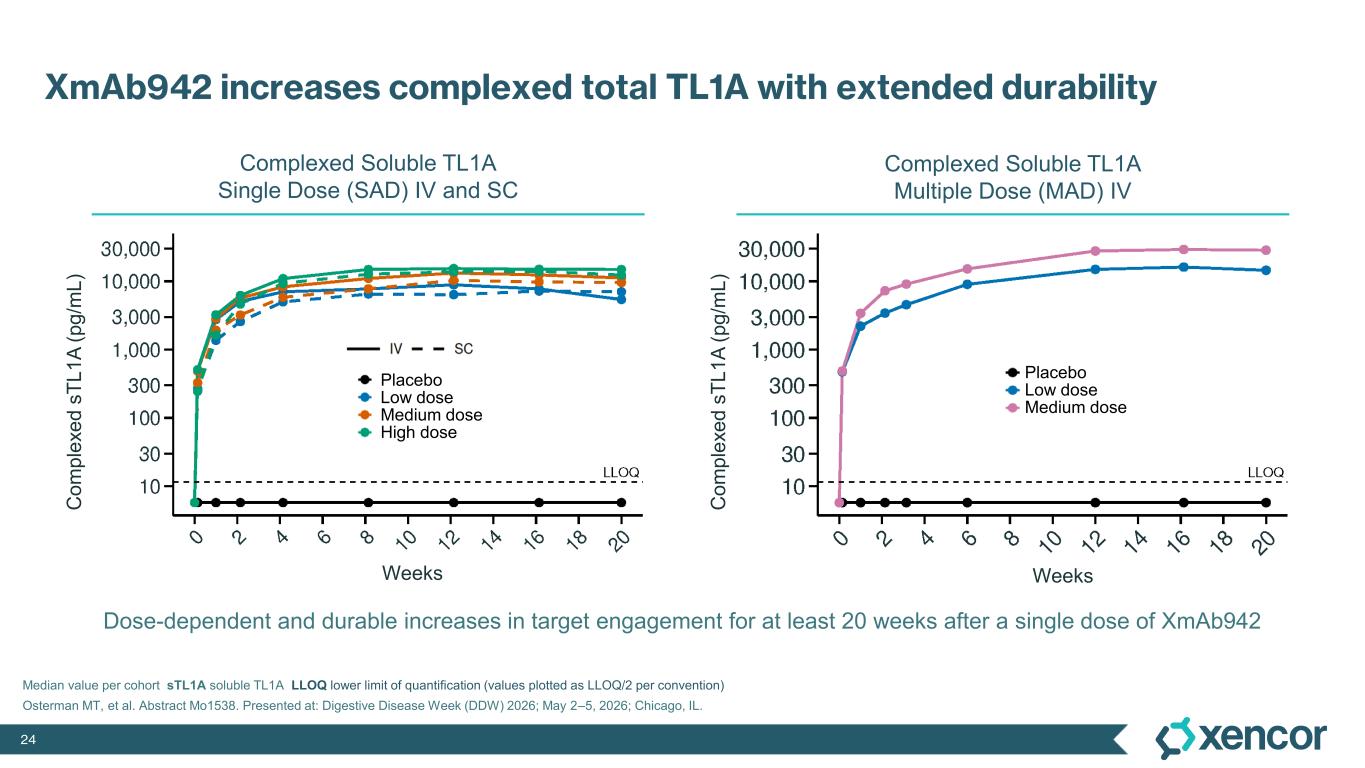
24 XmAb942 increases complexed total TL1A with extended durability Dose-dependent and durable increases in target engagement for at least 20 weeks after a single dose of XmAb942 Complexed Soluble TL1A Single Dose (SAD) IV and SC Complexed Soluble TL1A Multiple Dose (MAD) IV Weeks Weeks C o m p le x e d s T L 1 A ( p g /m L ) C o m p le x e d s T L 1 A ( p g /m L ) Median value per cohort sTL1A soluble TL1A LLOQ lower limit of quantification (values plotted as LLOQ/2 per convention) Osterman MT, et al. Abstract Mo1538. Presented at: Digestive Disease Week (DDW) 2026; May 2–5, 2026; Chicago, IL. Placebo Low dose Medium dose High dose Placebo Low dose Medium dose
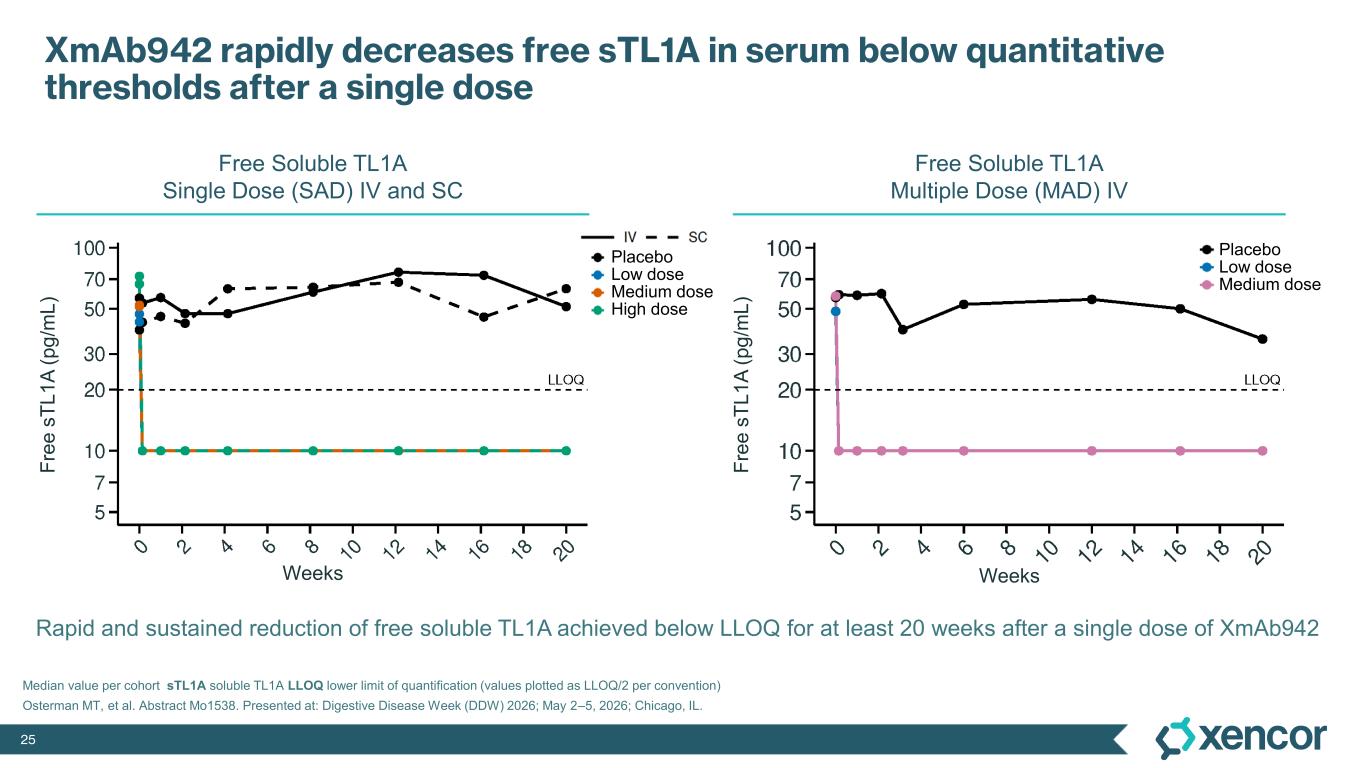
25 XmAb942 rapidly decreases free sTL1A in serum below quantitative thresholds after a single dose Rapid and sustained reduction of free soluble TL1A achieved below LLOQ for at least 20 weeks after a single dose of XmAb942 Median value per cohort sTL1A soluble TL1A LLOQ lower limit of quantification (values plotted as LLOQ/2 per convention) Free Soluble TL1A Single Dose (SAD) IV and SC Free Soluble TL1A Multiple Dose (MAD) IV F re e s T L 1 A ( p g /m L ) F re e s T L 1 A ( p g /m L ) Weeks Weeks Osterman MT, et al. Abstract Mo1538. Presented at: Digestive Disease Week (DDW) 2026; May 2–5, 2026; Chicago, IL. Placebo Low dose Medium dose High dose Placebo Low dose Medium dose
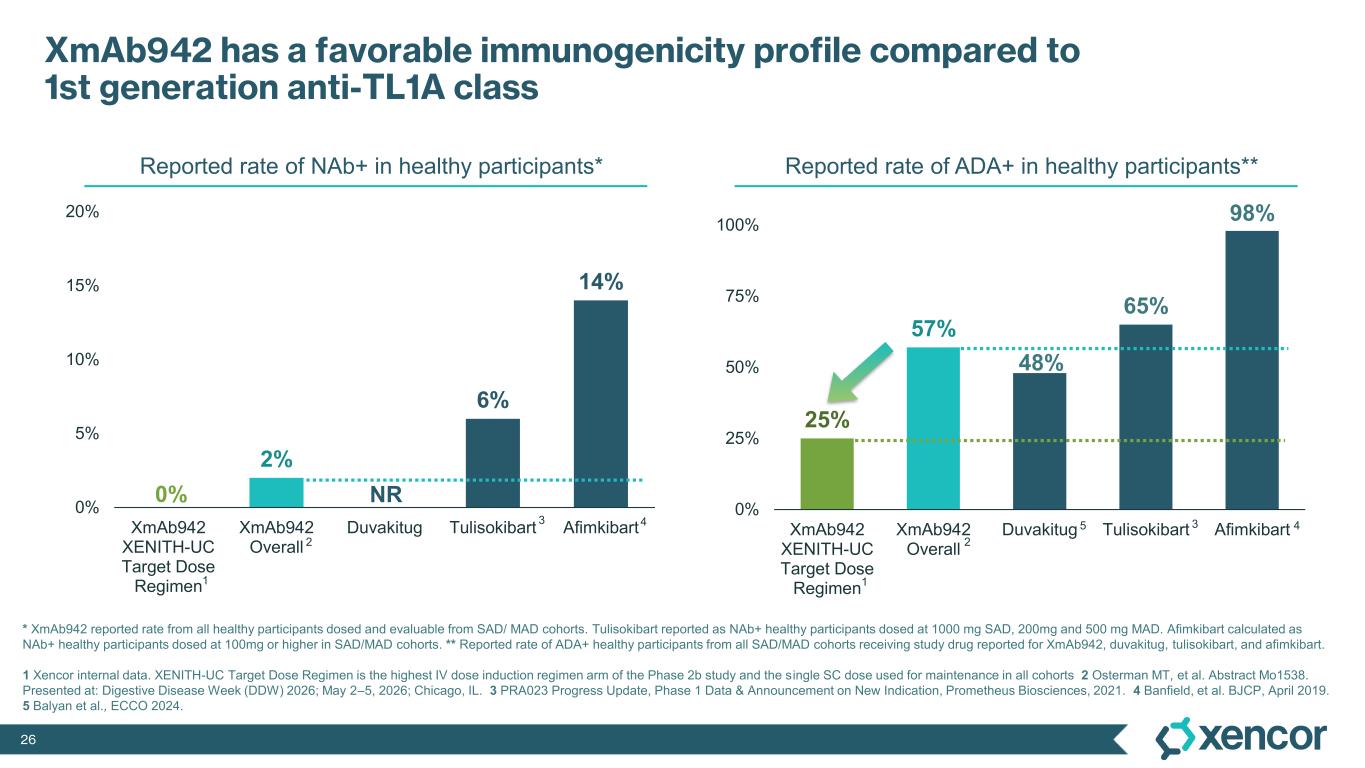
26 XmAb942 has a favorable immunogenicity profile compared to 1st generation anti-TL1A class * XmAb942 reported rate from all healthy participants dosed and evaluable from SAD/ MAD cohorts. Tulisokibart reported as NAb+ healthy participants dosed at 1000 mg SAD, 200mg and 500 mg MAD. Afimkibart calculated as NAb+ healthy participants dosed at 100mg or higher in SAD/MAD cohorts. ** Reported rate of ADA+ healthy participants from all SAD/MAD cohorts receiving study drug reported for XmAb942, duvakitug, tulisokibart, and afimkibart. 1 Xencor internal data. XENITH-UC Target Dose Regimen is the highest IV dose induction regimen arm of the Phase 2b study and the single SC dose used for maintenance in all cohorts 2 Osterman MT, et al. Abstract Mo1538. Presented at: Digestive Disease Week (DDW) 2026; May 2–5, 2026; Chicago, IL. 3 PRA023 Progress Update, Phase 1 Data & Announcement on New Indication, Prometheus Biosciences, 2021. 4 Banfield, et al. BJCP, April 2019. 5 Balyan et al., ECCO 2024. 0% 2% 6% 14% 0% 5% 10% 15% 20% XmAb942 XENITH-UC Target Dose Regimen XmAb942 Overall Duvakitug Tulisokibart Afimkibart NR Reported rate of NAb+ in healthy participants* 25% 57% 48% 65% 98% 0% 25% 50% 75% 100% XmAb942 XENITH-UC Target Dose Regimen XmAb942 Overall Duvakitug Tulisokibart Afimkibart Reported rate of ADA+ in healthy participants** 1 1 2 2 5 3 4 3 4
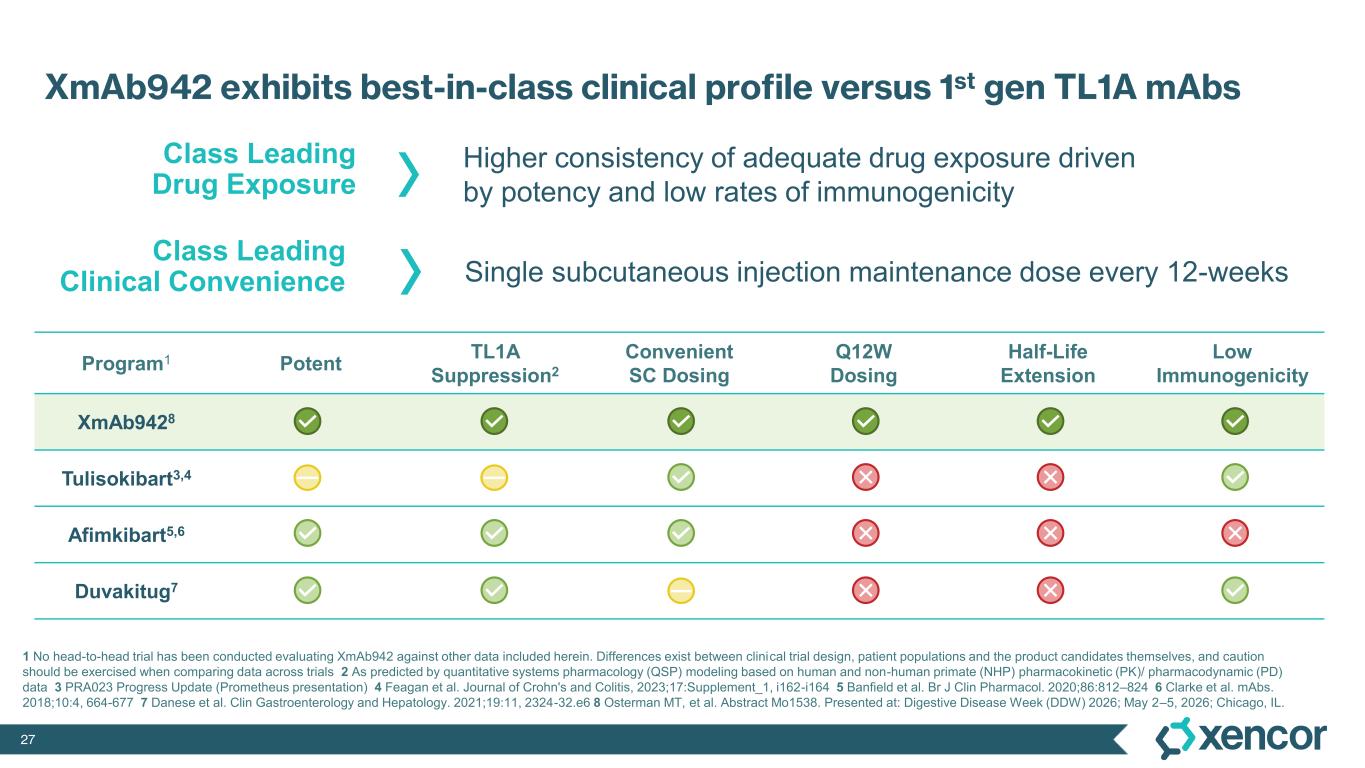
27 XmAb942 exhibits best-in-class clinical profile versus 1st gen TL1A mAbs Program1 Potent TL1A Suppression2 Convenient SC Dosing Q12W Dosing Half-Life Extension Low Immunogenicity XmAb9428 Tulisokibart3,4 Afimkibart5,6 Duvakitug7 1 No head-to-head trial has been conducted evaluating XmAb942 against other data included herein. Differences exist between clinical trial design, patient populations and the product candidates themselves, and caution should be exercised when comparing data across trials 2 As predicted by quantitative systems pharmacology (QSP) modeling based on human and non-human primate (NHP) pharmacokinetic (PK)/ pharmacodynamic (PD) data 3 PRA023 Progress Update (Prometheus presentation) 4 Feagan et al. Journal of Crohn's and Colitis, 2023;17:Supplement_1, i162-i164 5 Banfield et al. Br J Clin Pharmacol. 2020;86:812–824 6 Clarke et al. mAbs. 2018;10:4, 664-677 7 Danese et al. Clin Gastroenterology and Hepatology. 2021;19:11, 2324-32.e6 8 Osterman MT, et al. Abstract Mo1538. Presented at: Digestive Disease Week (DDW) 2026; May 2–5, 2026; Chicago, IL. ── ─ Class Leading Drug Exposure Class Leading Clinical Convenience Higher consistency of adequate drug exposure driven by potency and low rates of immunogenicity Single subcutaneous injection maintenance dose every 12-weeks
28 ® XENITH-UC: Global Phase 2b Study of XmAb942 Mark Osterman, M.D., M.S.C.E. SVP & Head of Clinical Development (Autoimmune) Vipul Jairath, MBChB, DPhil, MRCP, FRCPC Professor of Medicine, Division of Gastroenterology Western University, Ontario, Canada Chief Medical Officer, Alimentiv
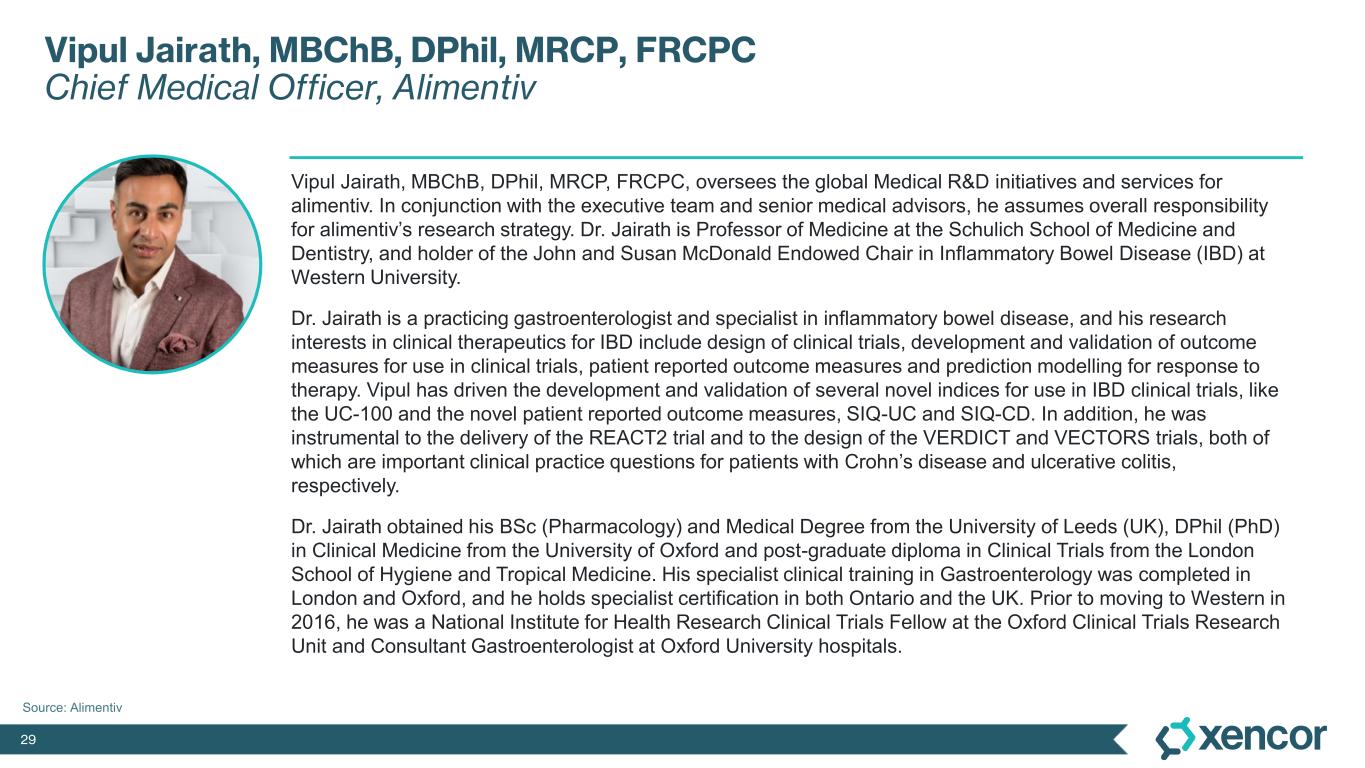
29 Vipul Jairath, MBChB, DPhil, MRCP, FRCPC, oversees the global Medical R&D initiatives and services for alimentiv. In conjunction with the executive team and senior medical advisors, he assumes overall responsibility for alimentiv’s research strategy. Dr. Jairath is Professor of Medicine at the Schulich School of Medicine and Dentistry, and holder of the John and Susan McDonald Endowed Chair in Inflammatory Bowel Disease (IBD) at Western University. Dr. Jairath is a practicing gastroenterologist and specialist in inflammatory bowel disease, and his research interests in clinical therapeutics for IBD include design of clinical trials, development and validation of outcome measures for use in clinical trials, patient reported outcome measures and prediction modelling for response to therapy. Vipul has driven the development and validation of several novel indices for use in IBD clinical trials, like the UC-100 and the novel patient reported outcome measures, SIQ-UC and SIQ-CD. In addition, he was instrumental to the delivery of the REACT2 trial and to the design of the VERDICT and VECTORS trials, both of which are important clinical practice questions for patients with Crohn’s disease and ulcerative colitis, respectively. Dr. Jairath obtained his BSc (Pharmacology) and Medical Degree from the University of Leeds (UK), DPhil (PhD) in Clinical Medicine from the University of Oxford and post-graduate diploma in Clinical Trials from the London School of Hygiene and Tropical Medicine. His specialist clinical training in Gastroenterology was completed in London and Oxford, and he holds specialist certification in both Ontario and the UK. Prior to moving to Western in 2016, he was a National Institute for Health Research Clinical Trials Fellow at the Oxford Clinical Trials Research Unit and Consultant Gastroenterologist at Oxford University hospitals. Vipul Jairath, MBChB, DPhil, MRCP, FRCPC Chief Medical Officer, Alimentiv Source: Alimentiv
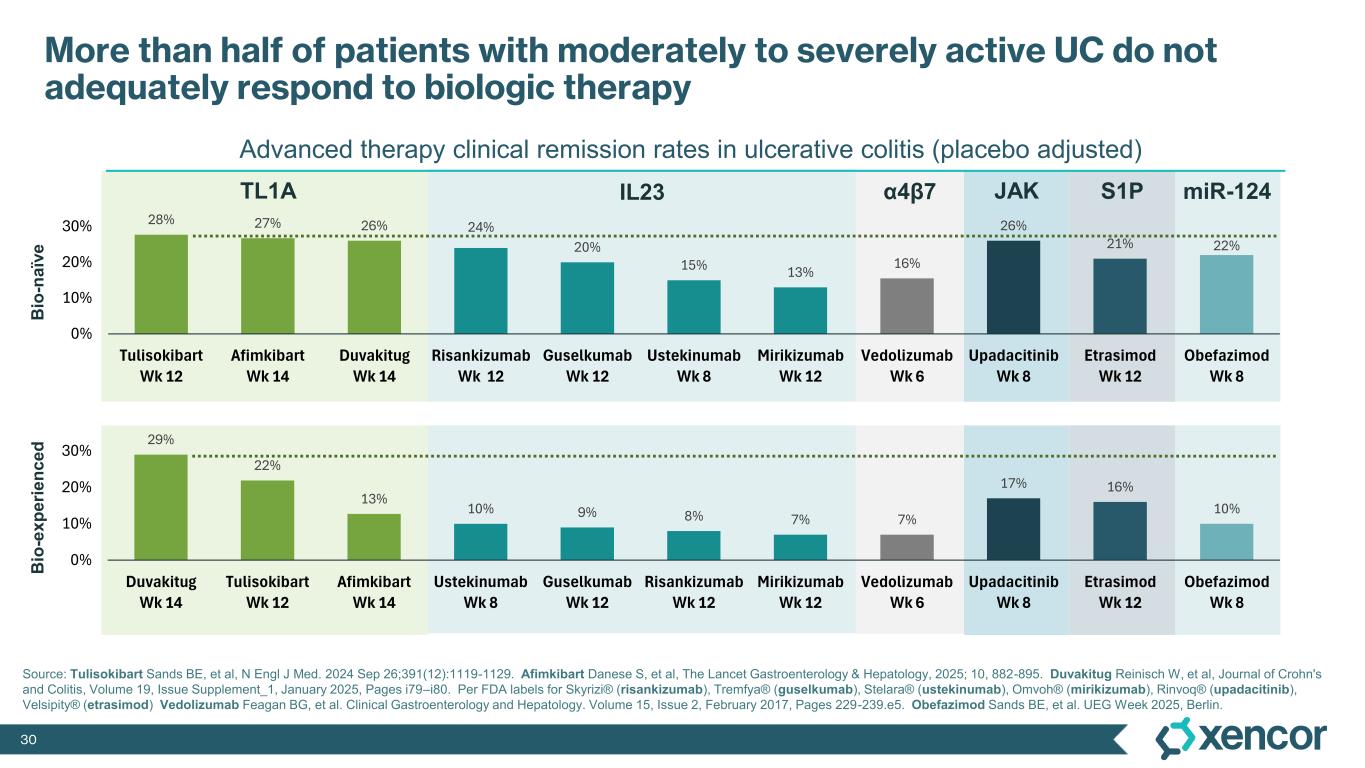
30 More than half of patients with moderately to severely active UC do not adequately respond to biologic therapy 29% 22% 13% 10% 9% 8% 7% 7% 17% 16% 10% 0% 10% 20% 30% 40% Duvakitug Wk 14 Tulisokibart Wk 12 Afimkibart Wk 14 Ustekinumab Wk 8 Guselkumab Wk 12 Risankizumab Wk 12 Mirikizumab Wk 12 Vedolizumab Wk 6 Upadacitinib Wk 8 Etrasimod Wk 12 Obefazimod Wk 8 28% 27% 26% 24% 20% 15% 13% 16% 26% 21% 22% 0% 10% 20% 30% 40% Tulisokibart Wk 12 Afimkibart Wk 14 Duvakitug Wk 14 Risankizumab Wk 12 Guselkumab Wk 12 Ustekinumab Wk 8 Mirikizumab Wk 12 Vedolizumab Wk 6 Upadacitinib Wk 8 Etrasimod Wk 12 Obefazimod Wk 8 Advanced therapy clinical remission rates in ulcerative colitis (placebo adjusted) TL1A IL23 α4β7 S1PJAK miR-124 B io -n a ïv e B io -e x p e ri e n c e d Source: Tulisokibart Sands BE, et al, N Engl J Med. 2024 Sep 26;391(12):1119-1129. Afimkibart Danese S, et al, The Lancet Gastroenterology & Hepatology, 2025; 10, 882-895. Duvakitug Reinisch W, et al, Journal of Crohn's and Colitis, Volume 19, Issue Supplement_1, January 2025, Pages i79–i80. Per FDA labels for Skyrizi® (risankizumab), Tremfya® (guselkumab), Stelara® (ustekinumab), Omvoh® (mirikizumab), Rinvoq® (upadacitinib), Velsipity® (etrasimod) Vedolizumab Feagan BG, et al. Clinical Gastroenterology and Hepatology. Volume 15, Issue 2, February 2017, Pages 229-239.e5. Obefazimod Sands BE, et al. UEG Week 2025, Berlin.
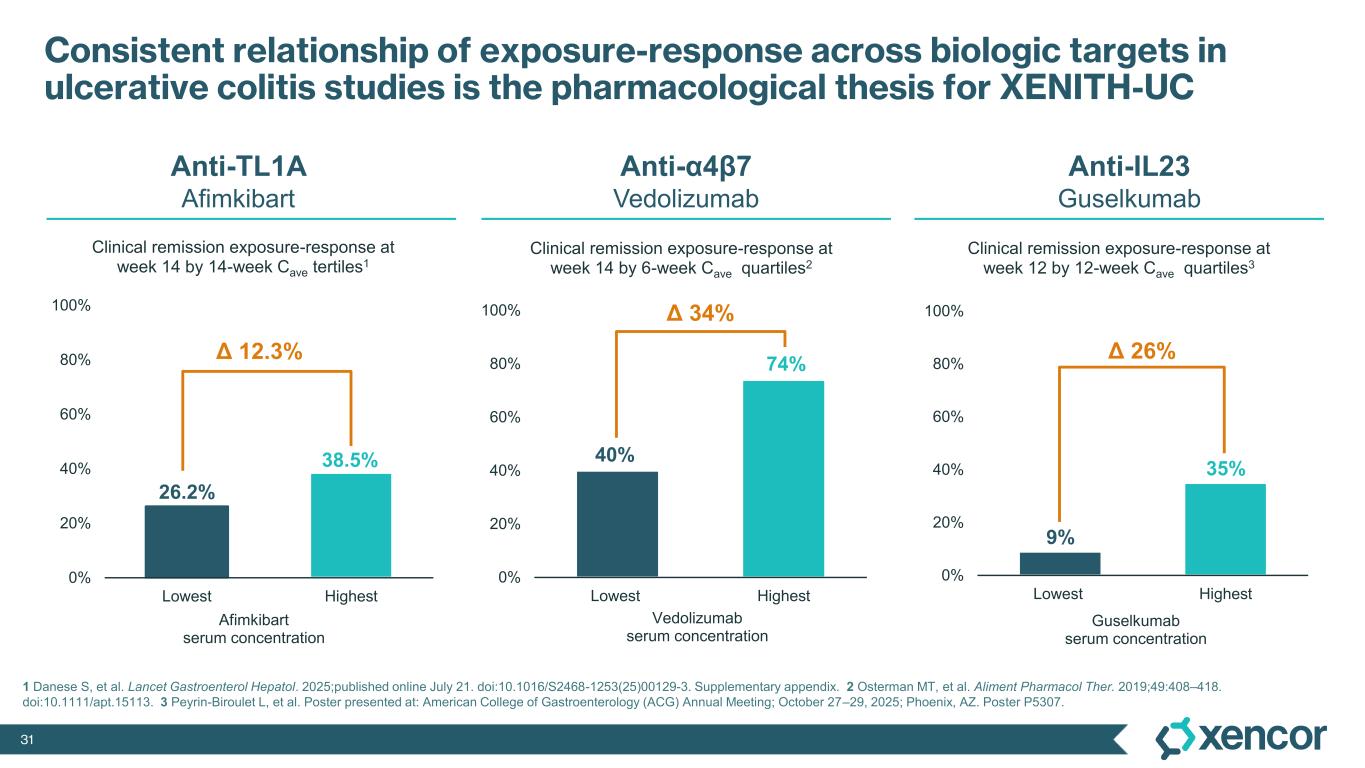
31 Consistent relationship of exposure-response across biologic targets in ulcerative colitis studies is the pharmacological thesis for XENITH-UC 40% 74% 0% 20% 40% 60% 80% 100% Lowest Highest Vedolizumab serum concentration Clinical remission exposure-response at week 14 by 6-week Cave quartiles2 9% 35% 0% 20% 40% 60% 80% 100% Lowest Highest Guselkumab serum concentration Clinical remission exposure-response at week 12 by 12-week Cave quartiles3 26.2% 38.5% 0% 20% 40% 60% 80% 100% Lowest Highest Afimkibart serum concentration Clinical remission exposure-response at week 14 by 14-week Cave tertiles1 Anti-TL1A Afimkibart Anti-α4β7 Vedolizumab Anti-IL23 Guselkumab Δ 12.3% Δ 34% Δ 26% 1 Danese S, et al. Lancet Gastroenterol Hepatol. 2025;published online July 21. doi:10.1016/S2468-1253(25)00129-3. Supplementary appendix. 2 Osterman MT, et al. Aliment Pharmacol Ther. 2019;49:408–418. doi:10.1111/apt.15113. 3 Peyrin-Biroulet L, et al. Poster presented at: American College of Gastroenterology (ACG) Annual Meeting; October 27–29, 2025; Phoenix, AZ. Poster P5307.
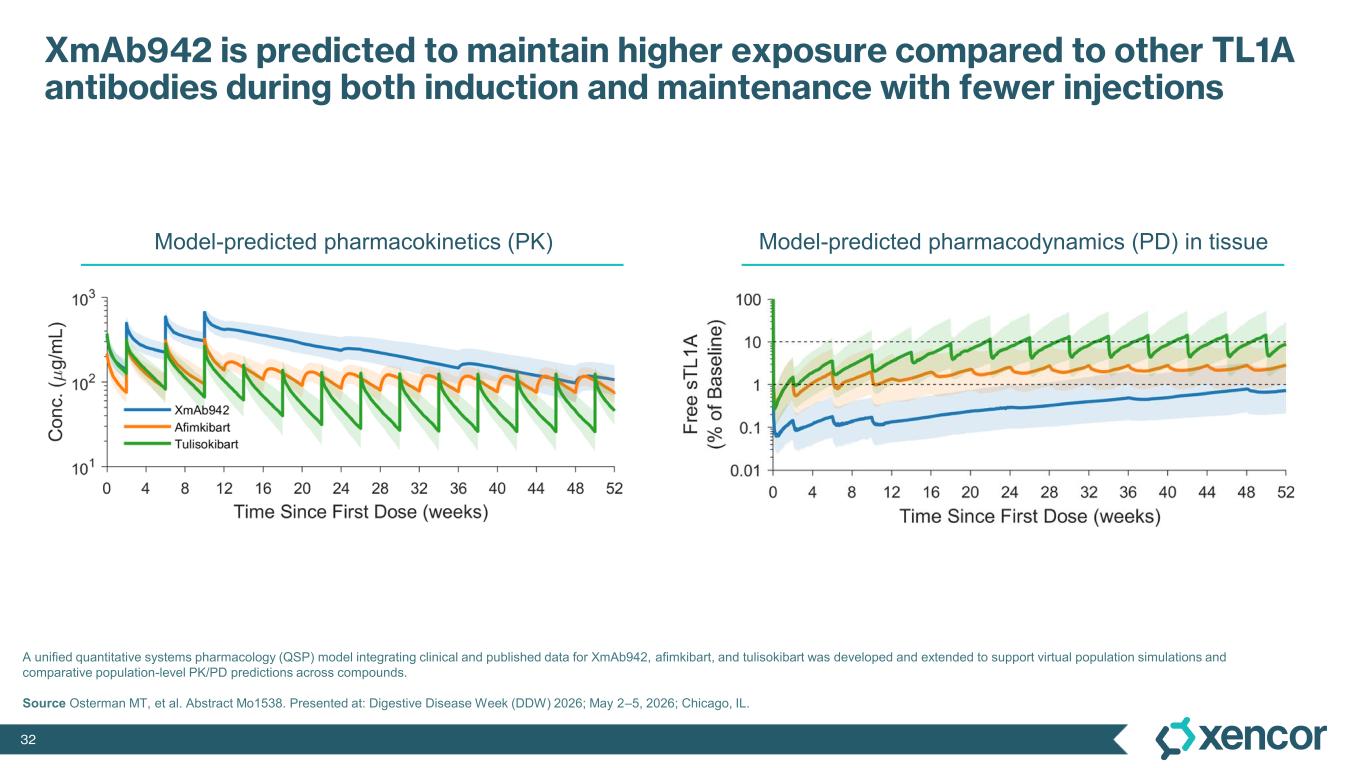
32 XmAb942 is predicted to maintain higher exposure compared to other TL1A antibodies during both induction and maintenance with fewer injections Model-predicted pharmacokinetics (PK) Model-predicted pharmacodynamics (PD) in tissue A unified quantitative systems pharmacology (QSP) model integrating clinical and published data for XmAb942, afimkibart, and tulisokibart was developed and extended to support virtual population simulations and comparative population-level PK/PD predictions across compounds. Source Osterman MT, et al. Abstract Mo1538. Presented at: Digestive Disease Week (DDW) 2026; May 2–5, 2026; Chicago, IL.
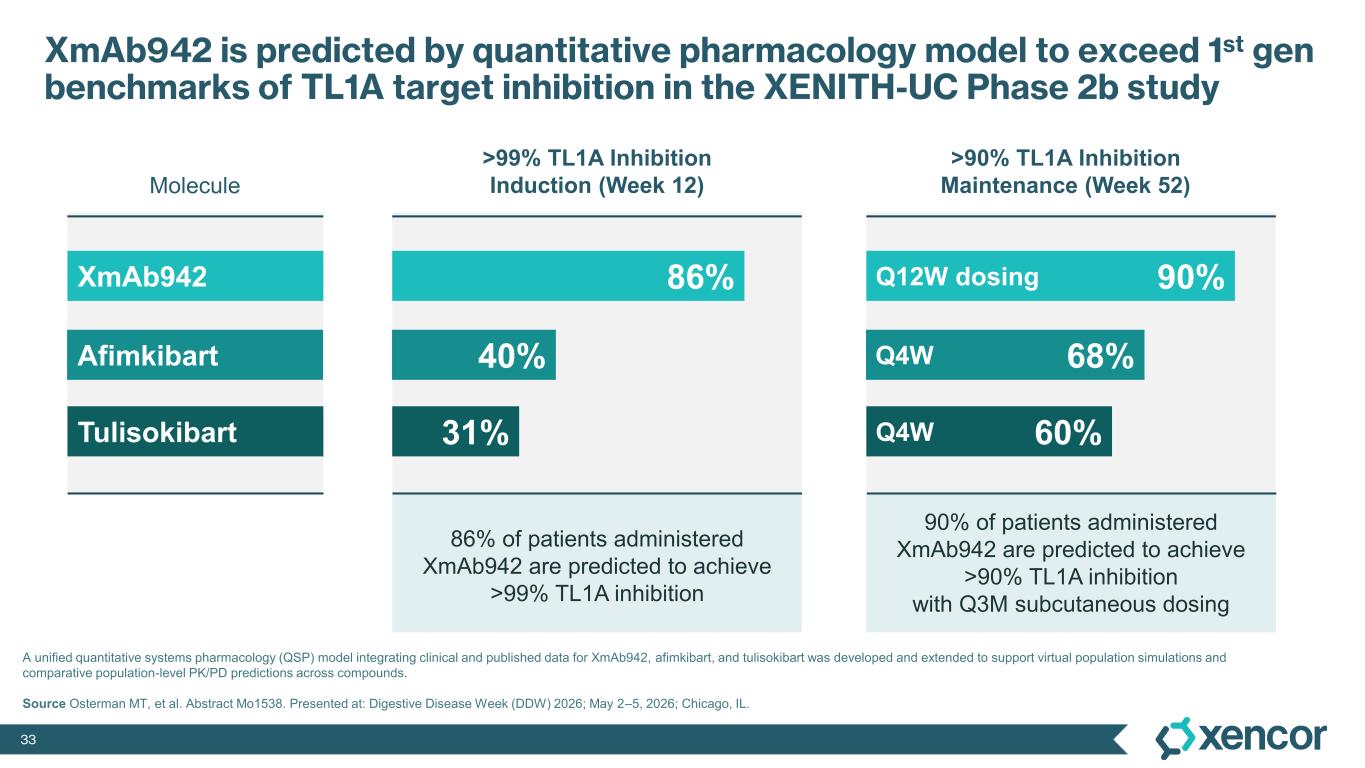
33 XmAb942 is predicted by quantitative pharmacology model to exceed 1st gen benchmarks of TL1A target inhibition in the XENITH-UC Phase 2b study 31% 40% 86% 68% 60% 90%XmAb942 Afimkibart Tulisokibart >99% TL1A Inhibition Induction (Week 12) >90% TL1A Inhibition Maintenance (Week 52) Q12W dosing Q4W Q4W 86% of patients administered XmAb942 are predicted to achieve >99% TL1A inhibition 90% of patients administered XmAb942 are predicted to achieve >90% TL1A inhibition with Q3M subcutaneous dosing Molecule A unified quantitative systems pharmacology (QSP) model integrating clinical and published data for XmAb942, afimkibart, and tulisokibart was developed and extended to support virtual population simulations and comparative population-level PK/PD predictions across compounds. Source Osterman MT, et al. Abstract Mo1538. Presented at: Digestive Disease Week (DDW) 2026; May 2–5, 2026; Chicago, IL.
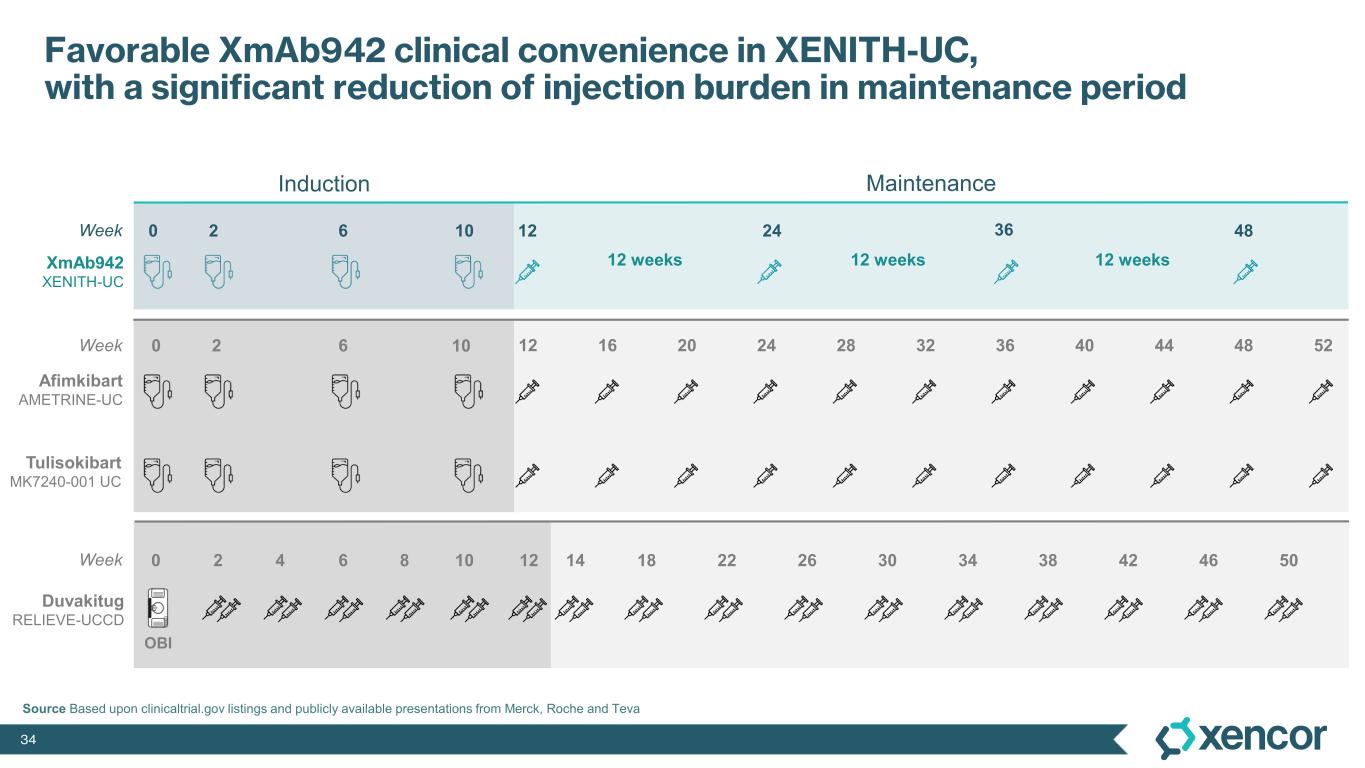
34 Favorable XmAb942 clinical convenience in XENITH-UC, with a significant reduction of injection burden in maintenance period XmAb942 XENITH-UC Afimkibart AMETRINE-UC Induction Maintenance Tulisokibart MK7240-001 UC Duvakitug RELIEVE-UCCD 12 weeks 0 OBI 12 weeks 12 weeks 2 6 10 12 3624 48 0 2 6 10 124 8 14 16 4028 5220 4432 18 22 26 30 34 38 42 46 50 12 3624 48 Source Based upon clinicaltrial.gov listings and publicly available presentations from Merck, Roche and Teva 0 2 6 10 Week Week Week
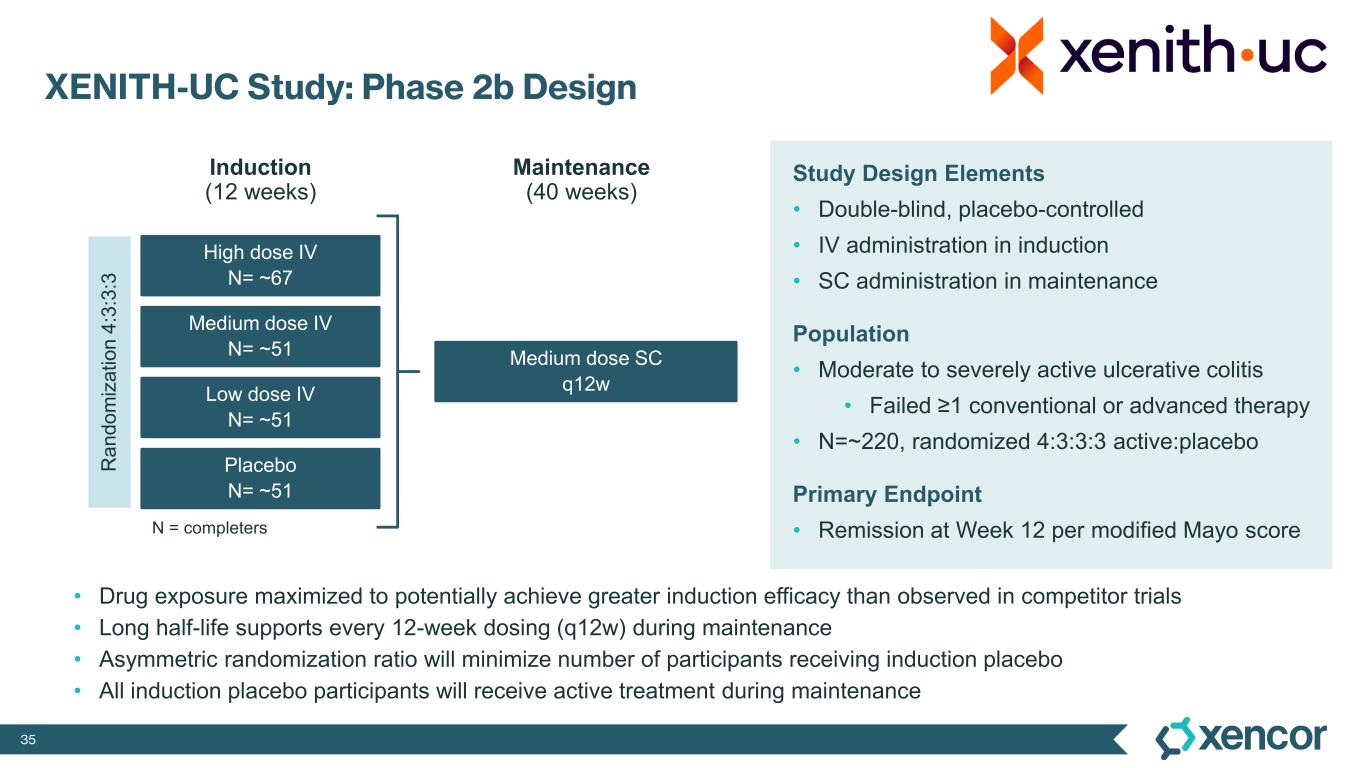
35 XENITH-UC Study: Phase 2b Design High dose IV N= ~67 Medium dose IV N= ~51 Low dose IV N= ~51 Placebo N= ~51 Medium dose SC q12w Induction (12 weeks) R a n d o m iz a ti o n 4 :3 :3 :3 Maintenance (40 weeks) N = completers Study Design Elements • Double-blind, placebo-controlled • IV administration in induction • SC administration in maintenance Population • Moderate to severely active ulcerative colitis • Failed ≥1 conventional or advanced therapy • N=~220, randomized 4:3:3:3 active:placebo Primary Endpoint • Remission at Week 12 per modified Mayo score • Drug exposure maximized to potentially achieve greater induction efficacy than observed in competitor trials • Long half-life supports every 12-week dosing (q12w) during maintenance • Asymmetric randomization ratio will minimize number of participants receiving induction placebo • All induction placebo participants will receive active treatment during maintenance
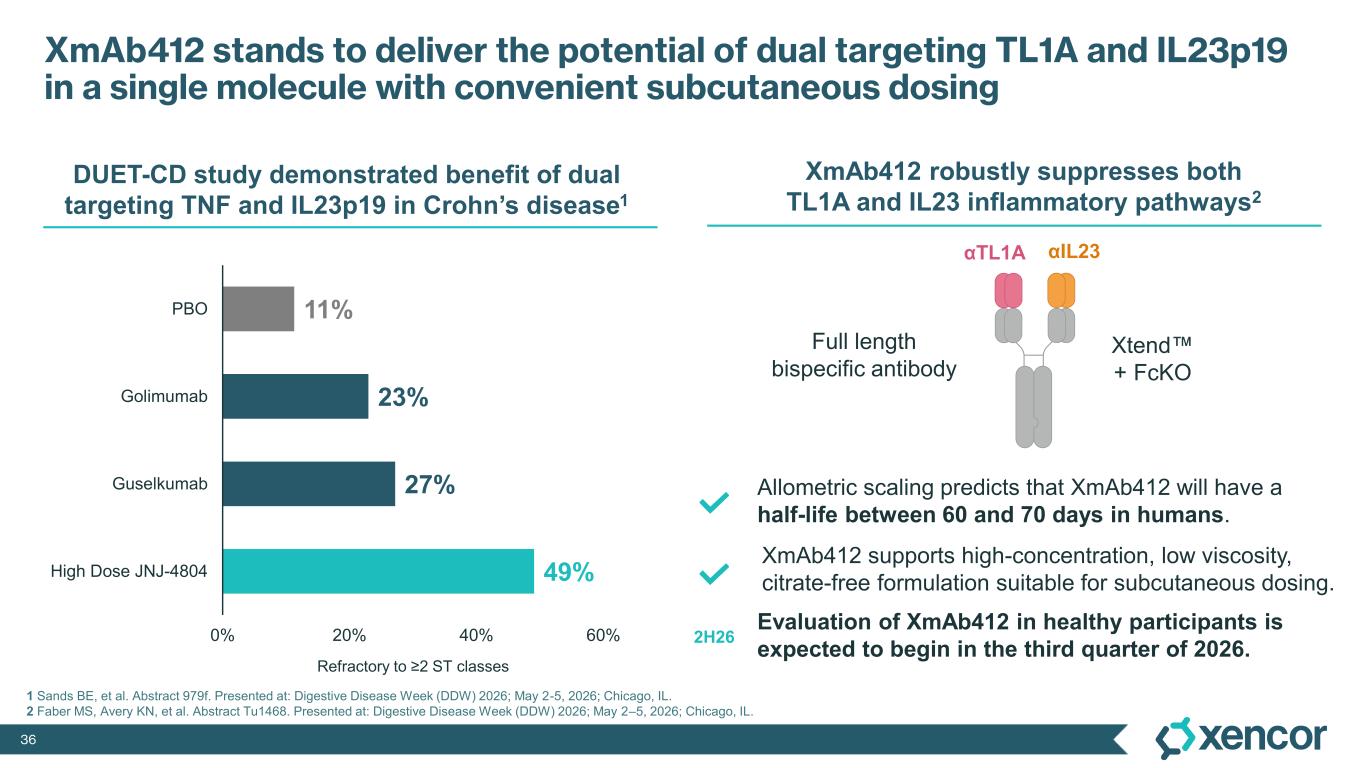
36 XmAb412 stands to deliver the potential of dual targeting TL1A and IL23p19 in a single molecule with convenient subcutaneous dosing 49% 27% 23% 11% 0% 20% 40% 60% High Dose JNJ-4804 Guselkumab Golimumab PBO DUET-CD study demonstrated benefit of dual targeting TNF and IL23p19 in Crohn’s disease1 Full length bispecific antibody Xtend + FcKO XmAb412 robustly suppresses both TL1A and IL23 inflammatory pathways2 1 Sands BE, et al. Abstract 979f. Presented at: Digestive Disease Week (DDW) 2026; May 2-5, 2026; Chicago, IL. 2 Faber MS, Avery KN, et al. Abstract Tu1468. Presented at: Digestive Disease Week (DDW) 2026; May 2–5, 2026; Chicago, IL. Evaluation of XmAb412 in healthy participants is expected to begin in the third quarter of 2026. Allometric scaling predicts that XmAb412 will have a half-life between 60 and 70 days in humans. XmAb412 supports high-concentration, low viscosity, citrate-free formulation suitable for subcutaneous dosing. Refractory to ≥2 ST classes 2H26 αTL1A αIL23
37 ® TL1A Clinical Strategy & Development Roadmap Dane Leone EVP & Chief Strategy Officer
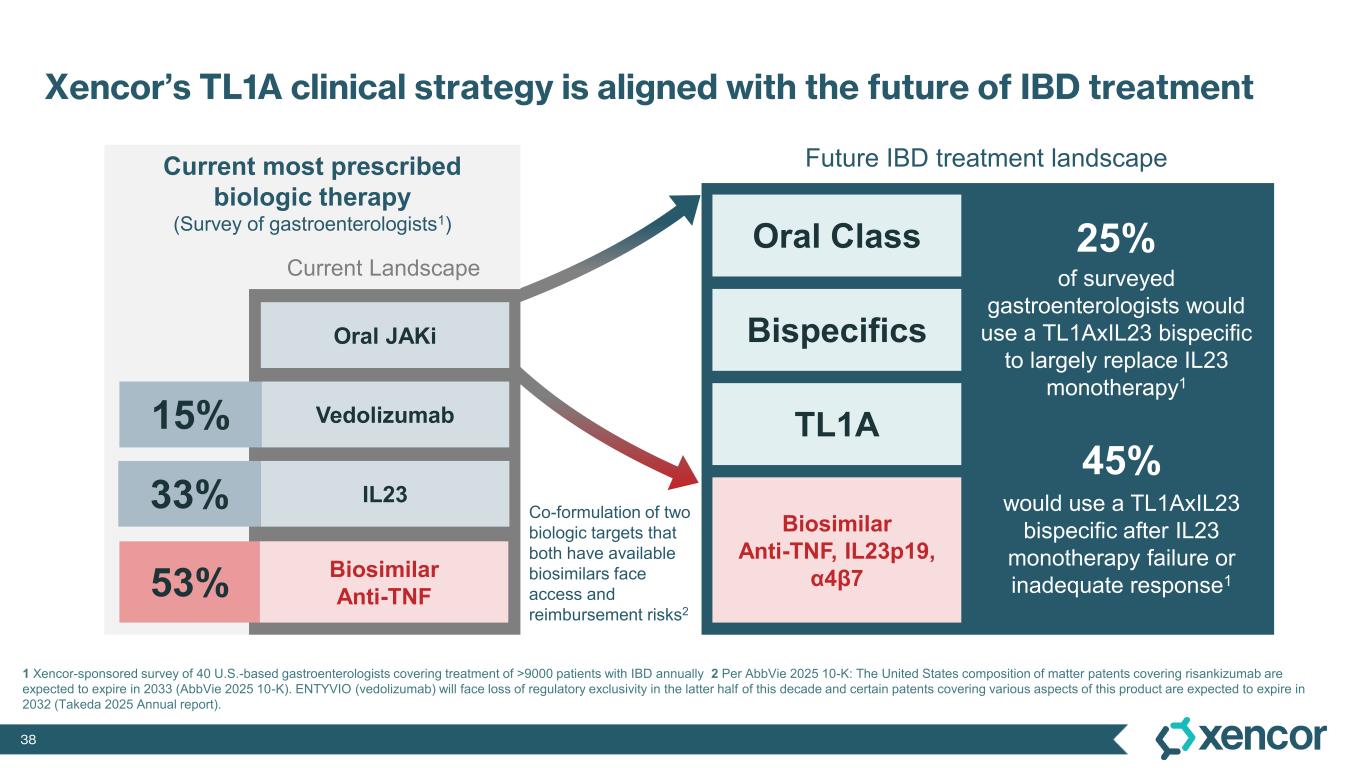
38 Xencor’s TL1A clinical strategy is aligned with the future of IBD treatment Future IBD treatment landscape 1 Xencor-sponsored survey of 40 U.S.-based gastroenterologists covering treatment of >9000 patients with IBD annually 2 Per AbbVie 2025 10-K: The United States composition of matter patents covering risankizumab are expected to expire in 2033 (AbbVie 2025 10-K). ENTYVIO (vedolizumab) will face loss of regulatory exclusivity in the latter half of this decade and certain patents covering various aspects of this product are expected to expire in 2032 (Takeda 2025 Annual report). Current most prescribed biologic therapy (Survey of gastroenterologists1) of surveyed gastroenterologists would use a TL1AxIL23 bispecific to largely replace IL23 monotherapy1 would use a TL1AxIL23 bispecific after IL23 monotherapy failure or inadequate response1 Co-formulation of two biologic targets that both have available biosimilars face access and reimbursement risks2 IL23 Biosimilar Anti-TNF Vedolizumab Oral Class TL1A Bispecifics Biosimilar Anti-TNF, IL23p19, α4β7 15% 33% 53% Oral JAKi Current Landscape 25% 45%
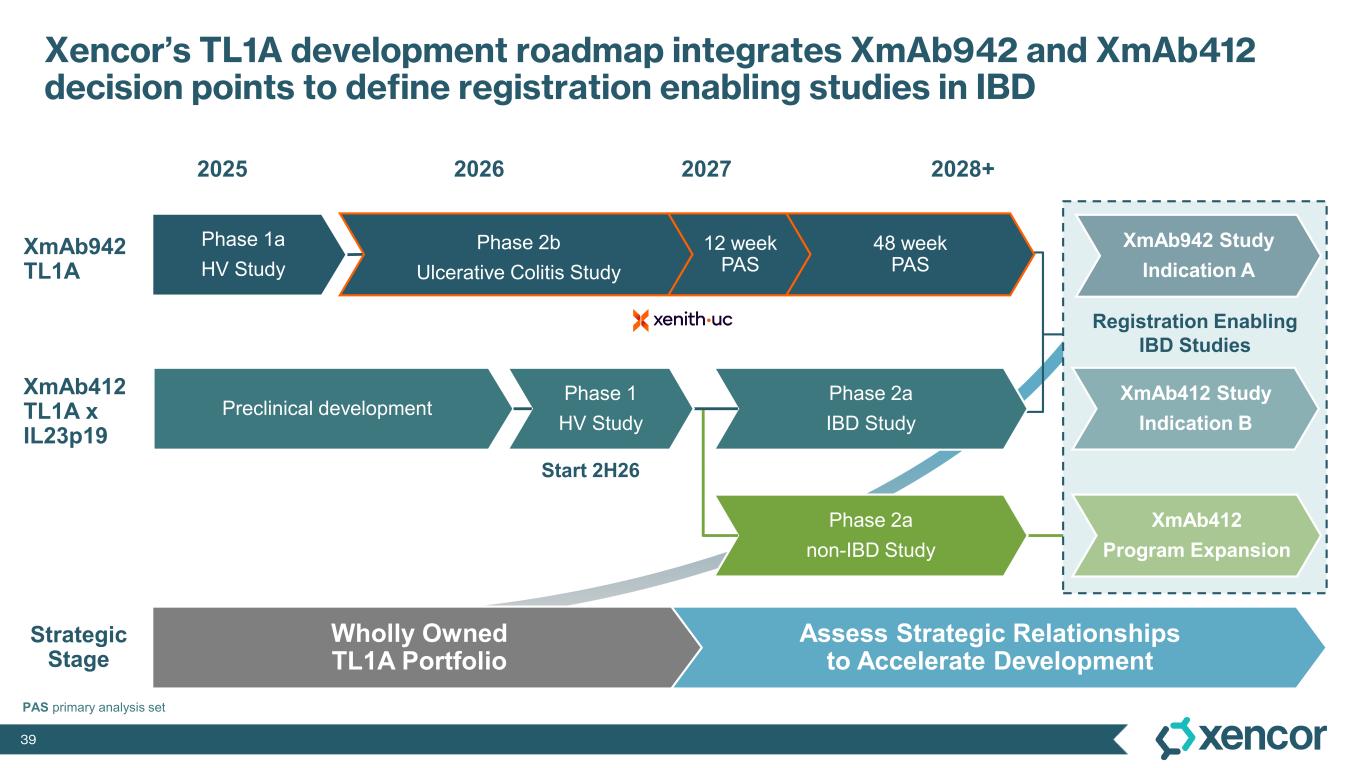
39 20262025 2027 Assess Strategic Relationships to Accelerate Development Xencor’s TL1A development roadmap integrates XmAb942 and XmAb412 decision points to define registration enabling studies in IBD XmAb942 TL1A XmAb412 TL1A x IL23p19 Strategic Stage Phase 2a IBD Study Phase 2a non-IBD Study 2028+ XmAb412 Program Expansion XmAb412 Study Indication B XmAb942 Study Indication A Registration Enabling IBD Studies Phase 1a HV Study Preclinical development Phase 1 HV Study Phase 2b Ulcerative Colitis Study Wholly Owned TL1A Portfolio 12 week PAS 48 week PAS Start 2H26 PAS primary analysis set
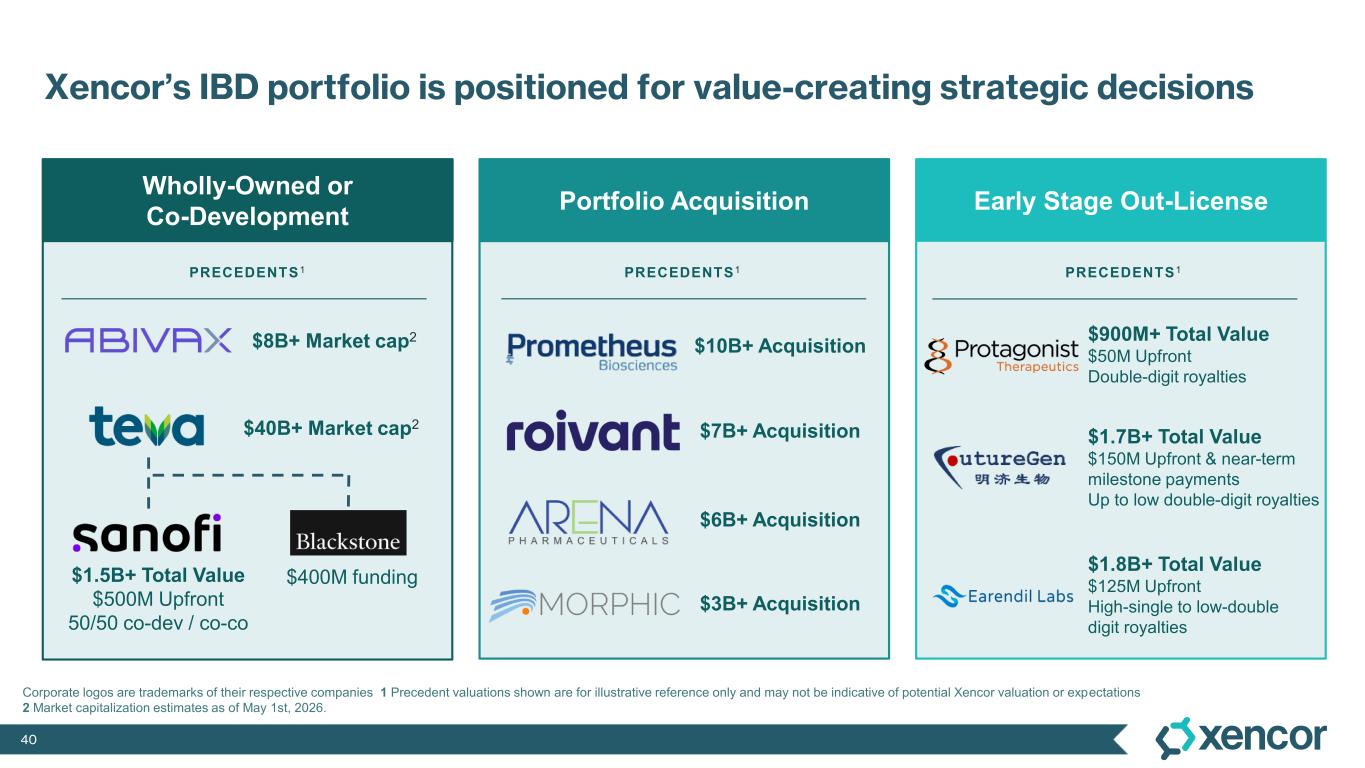
40 Corporate logos are trademarks of their respective companies 1 Precedent valuations shown are for illustrative reference only and may not be indicative of potential Xencor valuation or expectations 2 Market capitalization estimates as of May 1st, 2026. Xencor’s IBD portfolio is positioned for value-creating strategic decisions Wholly-Owned or Co-Development PRECEDENTS1 $8B+ Market cap2 $1.5B+ Total Value $500M Upfront 50/50 co-dev / co-co $400M funding $40B+ Market cap2 Portfolio Acquisition PRECEDENTS1 $10B+ Acquisition $7B+ Acquisition $6B+ Acquisition $3B+ Acquisition Early Stage Out-License PRECEDENTS1 $1.7B+ Total Value $150M Upfront & near-term milestone payments Up to low double-digit royalties $1.8B+ Total Value $125M Upfront High-single to low-double digit royalties $900M+ Total Value $50M Upfront Double-digit royalties
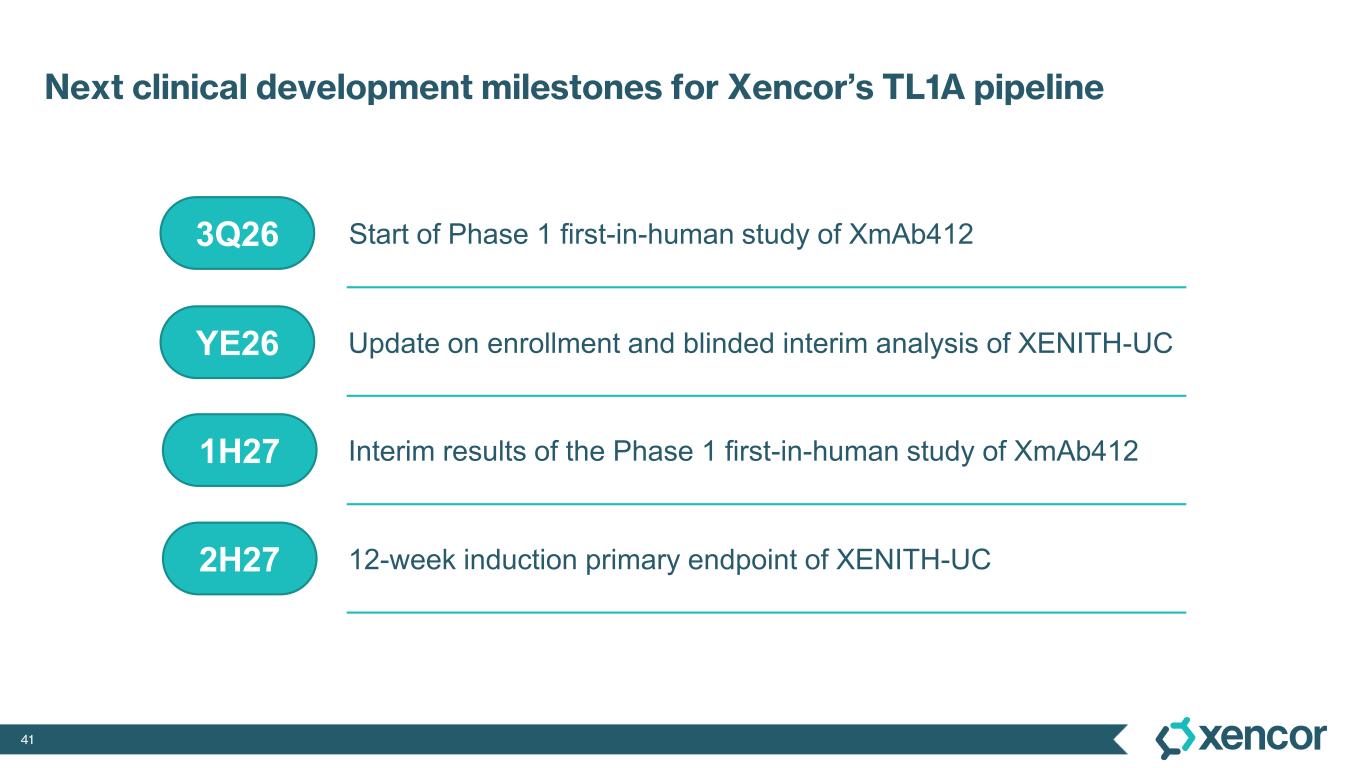
41 Next clinical development milestones for Xencor’s TL1A pipeline Start of Phase 1 first-in-human study of XmAb412 Update on enrollment and blinded interim analysis of XENITH-UC Interim results of the Phase 1 first-in-human study of XmAb412 12-week induction primary endpoint of XENITH-UC 3Q26 YE26 1H27 2H27
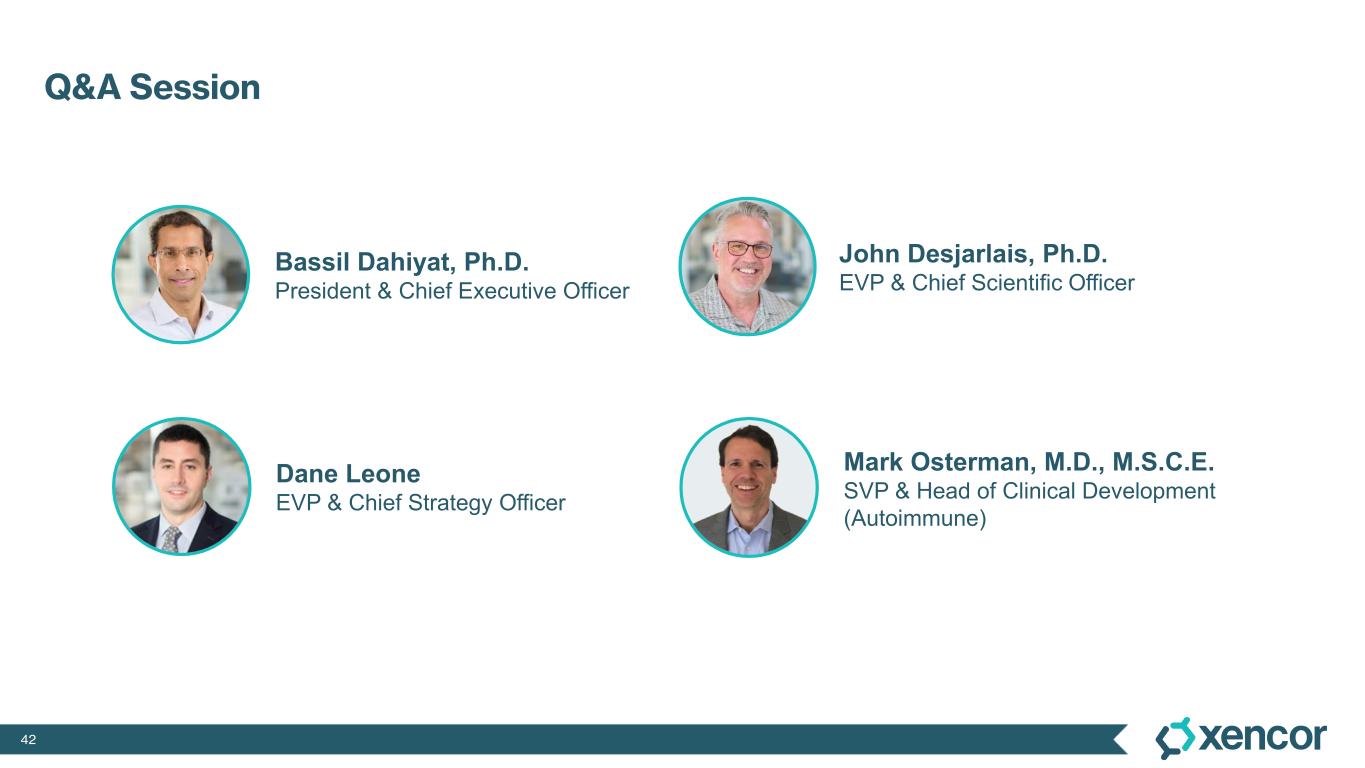
42 Dane Leone EVP & Chief Strategy Officer Mark Osterman, M.D., M.S.C.E. SVP & Head of Clinical Development (Autoimmune) Q&A Session Bassil Dahiyat, Ph.D. President & Chief Executive Officer John Desjarlais, Ph.D. EVP & Chief Scientific Officer
® Designing Proteins Delivering Medicines Results from Phase 1 Study of XmAb942 & TL1A Pipeline Update May 5, 2026