Execution Version
AMENDED AND RESTATED OPERATING AGREEMENT
OF GRID GROWTH VENTURES, LLC
A DELAWARE LIMITED LIABILITY COMPANY
THE INTERESTS REPRESENTED BY THIS AMENDED AND RESTATED OPERATING AGREEMENT HAVE NOT BEEN REGISTERED WITH THE SECURITIES AND EXCHANGE COMMISSION UNDER THE SECURITIES ACT OF 1933, AS AMENDED, OR OTHER SIMILAR FEDERAL OR STATE STATUTES IN RELIANCE UPON EXEMPTIONS FROM REGISTRATION AS PROVIDED IN THOSE STATUTES. THE SALE OR OTHER DISPOSITION OF THE INTERESTS IS RESTRICTED, AS SET FORTH IN THIS AMENDED AND RESTATED OPERATING AGREEMENT, AND IN ANY EVENT IS PROHIBITED UNLESS THE BOARD OF MANAGERS RECEIVES AN OPINION OF COUNSEL SATISFACTORY TO THE BOARD OF MANAGERS AND ITS COUNSEL THAT SUCH SALE OR OTHER DISPOSITION CAN BE MADE WITHOUT REGISTRATION UNDER THE SECURITIES ACT OF 1933, AS AMENDED, AND UNDER APPLICABLE STATE STATUTES. EACH MEMBER REPRESENTS THAT IT WILL NOT SELL OR OTHERWISE DISPOSE OF ITS INTEREST WITHOUT REGISTRATION OR OTHER COMPLIANCE WITH THE AFORESAID STATUTES AND THE RULES AND REGULATIONS THEREUNDER AND THE TERMS AND PROVISIONS OF THIS AMENDED AND RESTATED OPERATING AGREEMENT.
AMENDED AND RESTATED OPERATING AGREEMENT
OF GRID GROWTH VENTURES, LLC
TABLE OF CONTENTS
Page
1. DEFINITIONS 5
2. ORGANIZATION 25
2.1 Formation 25
2.2 Name 25
2.3 Principal Place of Business 25
2.4 Registered Office; Registered Agent 25
2.5 Term 25
2.6 Purposes 26
2.7 Powers 26
2.8 Qualification in Other Jurisdictions 26
2.9 Independent Activities; Disclaimer of Duties; Release 26
2.10 Statutory Requirements 28
2.11 Members; Interest 28
2.12 No State Law Partnership 29
3. CAPITAL. 29
3.1 Maintenance of Capital Accounts 29
3.2 Liability of Members 30
3.3 Other Matters 30
3.4 Capital Contributions for Budgeted Expenditures 30
3.5 Capital Contributions for Exigent Expenditures and Non-Budgeted Expenditures 31
3.6 Capital Call Notices 31
4. INTELLECTUAL PROPERTY RIGHTS. 31
4.1 No Grant of Licenses 31
4.2 Disclosure of Certain Know-How 31
5. DISTRIBUTIONS AND ALLOCATIONS 32
5.1 In General 32
5.2 Distributions on Termination of the Company 32
5.3 Incorrect Payments 32
5.4 Distributions in Kind 32
5.5 Amounts Withheld 33
5.6 Allocations of Profits and Losses 33
5.7 Regulatory Allocations 33
5.8 Curative Allocations 35
5.9 Limitation on Loss Allocations 35
5.10 Special Allocation of Gain or Loss on Contributed Property 36
5.11 Transfer of Interests in Profits and Capital 36
5.12 Deemed Income or Gain 36
5.13 Recapture Items 36
5.14 Other Allocation Rules 37
TABLE OF CONTENTS
(continued)
Page
6. ACCOUNTING AND TAX MATTERS 37
6.1 Fiscal Year 37
6.2 Method of Accounting 37
6.3 Adjusted Basis of Company Assets 37
6.4 Tax Returns 37
6.5 Tax Matters 39
6.6 Amendments 43
6.7 Tax Elections 43
6.8 Financial Accounting 44
6.9 Cooperation 44
7. BOARD OF MANAGERS 44
7.1 Board of Managers 44
7.2 Composition 44
7.3 Term of Managers 45
7.4 Resignation; Removal; Vacancies 45
7.5 Meetings 46
7.6 Power, Authority and Voting 48
7.7 Reserved Matters 48
7.8 Fundamental Reserved Matters 50
7.9 Budgets 52
7.10 Subsidiary Companies 53
8. OFFICERS AND COMMITTEES 54
8.1 Officers 54
8.2 Committees 56
9. MEMBERS, MEETINGS OF THE MEMBERS 57
9.1 Meetings of Members 57
9.2 Action Without Meetings 57
9.3 Voting 57
9.4 Meetings by Telephone or Other Technology 57
9.5 Third Party Dealings With Members 57
10. COMPLIANCE WITH CERTAIN LAWS AND STANDARDS OF CONDUCT 58
10.1 Compliance with Laws 58
10.2 Compliance with Certain Codes of Conduct 58
10.3 Regulatory Compliance 59
10.4 Other Requirements 60
10.5 Regulatory Affiliate 60
11. INSURANCE 60
12. INITIAL PROJECTS, PROPOSED PJM PROJECTS AND COMPANY PROJECTS 60
12.1 Initial Projects 60
12.2 Proposal of Projects by Members 61
12.3 Right of Members to Pursue a New PJM Project, Project Enhancements or New JV Project 61
TABLE OF CONTENTS
(continued)
Page
12.4 Upgrades and Improvements 62
12.5 Financing 62
12.6 PJM Award Cooperation 62
13. PLANNING COSTS 62
13.1 Planning Costs Reimbursement 62
13.2 Cost Pass Through 62
14. AFFILIATE AGREEMENTS, WAIVER OF CONFLICTS 62
14.1 Affiliate Agreements 62
14.2 Transition Services 63
14.3 Related Party Matters 63
14.4 Waiver of Conflicts 64
15. ADMISSION OF MEMBERS; TRANSFERS OF INTERESTS; WITHDRAWAL OF A MEMBER 64
15.1 Admission of New Members 64
15.2 Transfers of Interests by Members 65
15.3 Withdrawal of a Member 69
16. PREEMPTIVE RIGHTS 69
17. DEFAULT, REMEDIES, DISSOLUTION AND TERMINATION 69
17.1 Events of Default 69
17.2 Remedies 70
17.3 Indemnification; Limitation of Liability 74
17.4 Causes of Dissolution 75
17.5 Winding Up 75
17.6 Liquidation Proceeds 75
17.7 Rights of Members 75
18. REPRESENTATIONS AND WARRANTIES OF EACH MEMBER 76
18.1 Organization and Good Standing 76
18.2 Enforceability; Authority; No Conflict; Third Party Approvals 76
18.3 Litigation 76
19. DISPUTE RESOLUTION 77
19.1 Senior Executives 77
19.2 Continuing Dispute Arbitration 78
20. CONFIDENTIALITY 80
20.1 Confidentiality Obligation; Permitted Disclosures 80
20.2 Exceptions 81
20.3 Legally Required Disclosures 81
20.4 Survival 82
21. COMPANY RECORDS, REPORTS 82
21.1 Company Records 82
TABLE OF CONTENTS
(continued)
Page
21.2 Registered Office 82
21.3 Examination of Records 82
21.4 Reports 83
21.5 Member Cooperation 83
22. GENERAL PROVISIONS 83
22.1 Applicable Law 84
22.2 WAIVER OF RIGHT TO JURY TRIAL 84
22.3 Binding Agreement 84
22.4 Notices 84
22.5 Construction 84
22.6 Entire Agreement 84
22.7 Severability 85
22.8 Other Instruments 85
22.9 Waiver of Partition 85
22.10 Amendments 85
22.11 Waivers 85
22.12 Counterparts 85
22.13 Fair Market Value Determination 85
22.14 Injunctive Relief and Specific Performance 86
22.15 Limitation on Liability 86
EXHIBITS
Exhibit A – Members
Exhibit B – Capital Call Notice
Exhibit C – Subsidiary Companies
APPENDICES
Appendix I – Initial Projects and New PJM Projects
Appendix II – Illustrative Example of New PJM Project Scope
SCHEDULES
Schedule 14.2 – Transition Services
AMENDED AND RESTATED OPERATING AGREEMENT
OF GRID GROWTH VENTURES, LLC
This Amended and Restated Operating Agreement of Grid Growth Ventures, LLC (the “Company”) is made and entered into as of February 13, 2026 (the “Effective Date”) by and among the Members listed on Exhibit A hereto and all other Persons who shall in the future become Members in accordance with the provisions hereof, all in accordance with and pursuant to the provisions of the Act.
RECITALS
A. On September 29, 2025, the Company was formed by filing a Certificate of Formation (as amended and restated from time to time, the “Certificate of Formation”).
B. The Members are parties to the Operating Agreement of the Company, dated as of December 5, 2025 (the “Existing Agreement”).
C. The Members desire to amend and restate the Existing Agreement in its entirety as set forth in this Agreement.
NOW, THEREFORE, in consideration of the premises and mutual promises contained in this Agreement (the mutuality, adequacy and sufficiency of which are hereby acknowledged), the parties agree as follows:
1. DEFINITIONS.
Capitalized terms used in this Agreement have the meanings set forth below:
1.1 “Acceptable Transferee” means a Person that (a) is Creditworthy, (b) if such Person is acquiring an Interest prior to the Lock-Up Date through a Transfer other than a Permitted Transfer, has or is an Affiliate of a Person that has at least five (5) years of experience as the operator or Controlling owner of 230 kilovolt or higher voltage electric transmission projects, (c) if such Person is acquiring an Interest through a Transfer other than a Permitted Transfer, is not a Prohibited Transferee, (d) is not subject to an ongoing bankruptcy proceeding or criminal or fraud investigation or proceeding and (e) is not owned or Controlled by an entity organized and existing under the laws of a country or territory that is subject to or the target of any Sanctions or trade embargoes imposed, administered or enforced from time to time by OFAC or the U.S. Department of State. For so long as NATCo II is Controlled by Brookfield Corporation, Brookfield Asset Management Ltd., or Brookfield Infrastructure Partners L.P., at the time of and immediately following an applicable Transfer (together with any related transactions), NATCo II is deemed to be a Person who satisfies the requirements set forth in the foregoing clause (b).
1.2 “Act” means the Delaware Limited Liability Company Act and any successor statute, as amended from time to time.
1.3 “Adjusted Capital Account Deficit” means, with respect to any Member, the deficit balance, if any, in such Member’s Capital Account as of the end of the relevant Allocation Year, after giving effect to the following adjustments: (a) any amounts that such Member is obligated to restore pursuant to this Agreement or is deemed to be obligated to restore pursuant to Treasury Regulations Section 1.704-1(b)(2)(ii)(c) or pursuant to the penultimate sentence of either of Treasury Regulations Sections
1.704-2(i)(5) or 1.704-2(g)(1) shall be treated as added back to the Member’s Capital Account; and (b) the items described in Treasury Regulations Section 1.704-1(b)(2)(ii)(d)(4), (5) and (6) shall be treated as reducing the Member’s Capital Account. The foregoing definition of Adjusted Capital Account Deficit is intended to comply with the provisions of Treasury Regulations Section 1.704-1(b)(2)(ii)(d) and shall be interpreted consistently therewith.
1.4 “Administrative Services Agreements” has the meaning set forth in Section 14.1.1.
1.5 “Affiliate” of a specified Person means any other Person other than a natural person, directly or indirectly Controlling, Controlled by, or under common Control with the Person specified. For purposes of this Agreement, NATCo II shall be deemed to be an Affiliate of FET so long as it owns at least a thirty percent (30%) interest in FET and is Controlled by Brookfield Corporation, Brookfield Asset Management Ltd., or Brookfield Infrastructure Partners L.P., provided that for the purposes of the definition of Change in Control and Article 15, NATCo II shall only be deemed to be an Affiliate of FET if it Controls FET. For purposes of Section 1.34, Section 2.9 and Article 20, Evergy shall be deemed to be an Affiliate of Transource so long as it owns a ten percent (10%) interest in Transource. Following a Member Partner Ownership Change, notwithstanding anything to the contrary contained in this Agreement, neither NATCo II nor any of its Affiliates nor Evergy shall be deemed to be an Affiliate of FET or Transource, respectively, for the purposes of the definition of Change in Control and Article 15, unless (a) the second anniversary of the Effective Date shall have occurred, (b) NATCo II, and/or its Affiliates that are Controlled by Brookfield Corporation, Brookfield Asset Management Ltd., or Brookfield Infrastructure Partners L.P. or Evergy directly or indirectly Controls FET or Transource, respectively and (c) the Reference Assets’ Cost Basis of the Company multiplied by the Percentage Interest held by FET or Transource, respectively, is an amount that is less than forty percent (40%) of the Reference Assets’ Cost Basis of FET or Transource, respectively.
1.6 “Affiliate Agreement” means any agreement, contract or binding arrangement between a member of the Company Group, on the one hand, and any Member or any of its Affiliates, on the other hand.
1.7 “Agreement” means this Amended and Restated Operating Agreement, as it may be further amended, supplemented or otherwise modified from time to time.
1.8 “Allocation Year” means (a) the period commencing on the Effective Date and ending on December 31, 2026, (b) any subsequent twelve (12) month period commencing on January 1 and ending on December 31 or (c) any portion of the period described in clauses (a) or (b) for which the Company is required to allocate Profits, Losses, and other items of Company income, gain, loss, or deduction pursuant to Article 5 hereof, unless the Company is required by Section 706 of the Code to use a different Tax year, in which case “Allocation Year” shall mean such different Tax year (or relevant portion thereof).
1.9 “Annual Company Budget” means the then current annual budget by month (and any amendment thereto) for the Company Group for the current calendar year, and for informational purposes only, the four (4) calendar years thereafter, in each case as approved by the Board of Managers in accordance with Section 7.9 or as otherwise effective as a Rollover Budget pursuant to Section 7.9.5.
1.10 “Annual O&M Budget” means the then current budget (and any amendment thereto) with respect to the operation and maintenance costs of all Company Projects for the current calendar year, in each case as approved by the Board of Managers in accordance with Section 7.9 or as otherwise effective as a Rollover Budget pursuant to Section 7.9.5.
1.11 “Anti-Corruption Laws” means (a) the U.S. Foreign Corrupt Practices Act of 1977, as amended; and (b) any other Applicable Law concerning or relating to bribery or corruption imposed, administered or enforced by any Governmental Authority.
1.12 “Anti-Money Laundering Laws” means any Applicable Law concerning or relating to money laundering, any predicate crime to money laundering or any record keeping, disclosure or reporting requirements related to money laundering imposed, administered or enforced by any Governmental Authority.
1.13 “Applicable Law” means any statute, law, ordinance, executive order, rule, regulation or code, approval, permit, license, franchise, judgment, order, decree, injunction, or writ, or guideline or notice having force of law of any Governmental Authority applicable to a specified Person or specified property, as in effect from time to time.
1.14 “Board Observer” has the meaning set forth in Section 7.2.
1.15 “Board of Managers” or “Board” has the meaning set forth in Section 7.1.
1.16 “Book Value” means, with respect to any asset, such asset’s adjusted basis for federal income Tax purposes, except as follows: (a) the initial Book Value of any asset (other than cash) contributed by a Member to the Company will be the gross Fair Market Value of such asset; (b) the Book Value of all Company assets will be adjusted to equal their respective gross Fair Market Values as of the following times: (i) the contribution of more than a de minimis amount of assets to the Company by a new or an existing Member as consideration for any Interest; (ii) the distribution by the Company to a Member of more than a de minimis amount of Company assets as consideration in respect of any Interest of such Member; (iii) the liquidation of the Company within the meaning of Treasury Regulations Section 1.704-1(b)(2)(ii)(g); (iv) in connection with the grant of any Interest in the Company (other than a de minimis interest) as consideration for the provision of services to or for the benefit of the Company by an existing Member acting in a member capacity, or by a new Member acting in a member capacity or in anticipation of being a Member; and (v) the acquisition of any Interest in the Company upon the exercise of a noncompensatory option in accordance with Treasury Regulations Section 1.704-1(b)(2)(iv)(s); provided, however, that adjustments pursuant to clauses (i), (ii), (iv) and (v) of this sentence will be made only if the Board of Managers reasonably determines that such adjustments are necessary or appropriate to reflect the relative economic interests of the Members in the Company; (c) the Book Value of any Company asset distributed to any Member will be the gross Fair Market Value of such asset on the date of distribution; (d) the Book Values of the Company assets will be increased (or decreased) to reflect any adjustments to the adjusted basis of such assets pursuant to Section 734(b) or Section 743(b) of the Code, but only to the extent that such adjustments are taken into account in determining Capital Accounts pursuant to Treasury Regulations Section 1.704-1(b)(2)(iv)(m) and clause (f) of the definition of “Profits” and “Losses” or Section 5.7.7; provided, however, that Book Values will not be adjusted to the extent that an adjustment pursuant to clause (b) is required in connection with a transaction that would otherwise result in an adjustment pursuant to this clause (d); and (e) if the Book Value of any Company asset has been determined or adjusted pursuant to clause (a), (b)
or (d) above, such Book Value will thereafter be adjusted by the Depreciation taken into account with respect to such asset for purposes of computing Profits and Losses (and not by the depreciation, amortization or other cost recovery deductions allowable with respect to that asset for federal income Tax purposes).
1.17 “Budgets” means, collectively, any Company Project Budget and the then current Annual O&M Budget and Annual Company Budget.
1.18 “Business Day” means any day other than a Saturday, Sunday or other day on which commercial banks located in New York, New York are authorized or required by law to close.
1.19 “Capital Account” means, with respect to any Member, the capital account maintained for such Member in accordance with the provisions of Section 3.1.
1.20 “Capital Call” means a capital call issued by the Board of Managers for each Member to make Capital Contributions pursuant to the terms hereof.
1.21 “Capital Call Notice” has the meaning set forth in Section 3.6.
1.22 “Capital Contributions” means, with respect to any Member, the amount of money and the initial Book Value of any non-cash property contributed to the Company with respect to the Interests held by such Member.
1.23 “Capital Expenditure Proposal” has the meaning set forth in Section 19.2.6(a).
1.24 “Capital Structure and Financing Policy” means the capital structure and financing policy of the Company and any member of the Company Group as adopted by the Members as a Fundamental Reserved Matter in accordance with Section 7.8 (consistent with the targeted regulatory capital structure as reflected in the applicable attachment H of the PJM Open Access Transmission Tariff), as may be modified or amended as a Fundamental Reserved Matter in accordance with Section 7.8.
1.25 “Cash Distribution Policy” means the policy regarding cash distributions as approved by the Members as a Fundamental Reserved Matter in accordance with Section 7.8, as may be modified or amended by the Members as a Fundamental Reserved Matter in accordance with Section 7.8.
1.26 “Certificate of Formation” has the meaning set forth in the Recitals.
1.27 “Change in Control” means any event or series of events in which a Member ceases to be Controlled by (a) the Person Controlling such Member prior to such event or series of events or (b) an Affiliate of the Person Controlling such Member prior to such event or series of events, including through any Person becoming the beneficial owner of fifty percent (50%) or more of the combined voting power of the voting securities of any Member; provided, however, that (except for the purpose of Section 14.2) a Member Partner Ownership Change shall not be deemed a Change in Control.
1.28 “Code” means the Internal Revenue Code of 1986, as amended.
1.29 “Company” has the meaning set forth in the Preamble.
1.30 “Company Business” has the meaning set forth in Section 2.6.4.
1.31 “Company Group” means the Company and each of its Subsidiaries, collectively.
1.32 “Company Minimum Gain” means “partnership minimum gain”, as that term is defined in Treasury Regulations Section 1.704-2(b)(2) with respect to the Company.
1.33 “Company Project” means (a) the Initial Projects (subject to Section 12.1), (b) any Project Enhancement (subject to Section 12.2) approved to be undertaken by the Company Group (including, as applicable, as a Fundamental Reserved Matter in accordance with Section 7.8), (c) any New PJM Project (subject to Section 12.2) approved to be undertaken by the Company Group as a Fundamental Reserved Matter in accordance with Section 7.8 and (d) any New JV Project (subject to Section 12.2) approved to be undertaken by the Company Group as a Fundamental Reserved Matter in accordance with Section 7.8.
1.34 “Company Project Budget” means the then current budget (and any amendment thereto) with respect to the development and construction of a Company Project, including a schedule of the capital expenditures required to complete a Company Project on an annual basis (the “Proposed Capital Expenditures”), in each case as approved by the Board of Managers in accordance with Section 7.9 or as otherwise effective as a Rollover Budget pursuant to Section 7.9.5.
1.35 “Confidential Information” means all confidential or proprietary information or knowledge of a Person, whether or not it constitutes a trade secret under Applicable Law, including: (a) non-public information regarding research, development, products, services, or markets or marketing; (b) non-public information regarding financial condition or results of operations, business plans, budgets, financial projections, forecasts or estimates, or financing sources and methods; (c) non-public information concerning inventions (whether or not patentable), discoveries, unpublished works, software, data compilations, improvements, developments, designs, concepts, techniques, or know-how; (d) non-public information concerning past, present, and potential suppliers, or customers, their personnel, purchasing, selling methods, business methods, prices, capacities, requirements, or credit or credit policies; (e) non-public information regarding the skills and compensation of past, present, and potential employees and other personnel; (f) non-public information concerning advice received from attorneys, accountants, and other advisers; (g) non-public information concerning pending, threatened, or contemplated litigation or administrative proceedings; (h) other non-public, commercially valuable information which the recipient knew was confidential at the time of its receipt; (i) with respect to a Member or its Affiliates, such Person’s proprietary information related to system planning, technical operations, engineering, construction, maintenance and procurement matters for transmission systems and transmission projects, including critical energy/electric infrastructure information (CEII) or customer information; (j) with respect to a Member or its Affiliates, such Person’s information provided to PJM or any of its agents, contractors, consultants or representatives that is deemed confidential pursuant to the provisions of Section 18.17 of the Amended and Restated Operating Agreement of PJM,; and (k) all “Confidential Information” under the Confidentiality Agreement. For the avoidance of doubt, Confidential Information does not include the information described in Section 20.2.
1.36 “Confidentiality Agreement” means that certain Confidentiality Agreement, between Transource and FET, dated June 9, 2025.
1.37 “Continuing Dispute” means a dispute, claim or controversy, including the inability of the Members, the Board of Managers or any committee to agree on a vote or other decision, that has continued for more than thirty (30) days among the Members or Managers concerning the business or affairs of the Company or relating to or arising out of this Agreement.
1.38 “Continuing Dispute Arbitration” has the meaning set forth in Section 19.1.2.
1.39 “Continuing Dispute Arbitration Matter” means any Continuing Dispute with respect to (a) whether (i) an action is required or necessary to comply with Applicable Law, the Related Party Standard or covenants of any third-party financing agreement to which any member of the Company Group is a party or (ii) an expenditure constituted an Exigent Expenditure, (b) the Board of Managers’ failure to approve an Annual Company Budget as a result of the disagreement of one Manager with respect to any Proposed Capital Expenditure, (c) at any time prior to the Lock-Up Date, the legal interpretation of the language of any provision of this Agreement, or (d) the determination of the aggregate amount of cash to be distributed in accordance with the Cash Distribution Policy or the calculation of the resulting distributions payable to each Member; provided, that the failure to approve (i) any Reserved Matter (other than as described in clause (b) above) or any Fundamental Reserved Matter; or (ii) any other action requiring a vote of the Board of Managers or the Members, in either case in accordance with this Agreement, shall not be a Continuing Dispute Arbitration Matter.
1.40 “Continuing Dispute Arbitration Parties” means the Members of the Company that are parties to the Continuing Dispute Arbitration.
1.41 “Continuing Dispute Arbitrator” has the meaning set forth in Section 19.2.3.
1.42 “Continuing Dispute Notice” has the meaning set forth in Section 19.1.1.
1.43 “Contribution Failure Date” has the meaning set forth in Section 17.2.1.
1.44 “Control” (including its correlative meanings, “Controlled by” and “under common Control with”) shall mean possession, directly or indirectly, of the power to direct or cause the direction of management or policies (whether through ownership of securities or partnership or other ownership interests, by contract or otherwise).
1.45 “Credit Rating” means, with respect to any Person, each of the ratings given to such Person’s senior, unsecured, non-credit enhanced, long-term debt obligations by Standard & Poor’s or Moody’s, as applicable.
1.46 “Creditworthy” means, with respect to any Person, either (a) (i) a Credit Rating of at least “BBB-” from Standard & Poor’s; provided that if such Credit Rating is “BBB-” such Person shall not be on “CreditWatch Negative”; or (ii) a Credit Rating of at least “Baa3” from Moody’s; provided that if such Credit Rating is “Baa3” such Person shall not be on “Review for possible downgrade”; or (b) a tangible net worth or liquid assets or uncalled capital commitments of at least the higher of (I) $500,000,000 and (II) an
amount equal to one hundred fifty percent (150%) of the applicable Member’s Percentage Interest multiplied by the aggregate outstanding projected development and construction costs contained in all Company Project Budgets for Company Projects that have not yet been Placed-In-Service (other than those Company Projects that have been permanently abandoned or terminated). A Person that is not otherwise Creditworthy shall be deemed Creditworthy if its obligations under this Agreement are guaranteed pursuant to a guaranty agreement that is reasonably acceptable to the Non-Transferring Members by a Creditworthy Person that is either a direct or indirect parent entity of such Person or has otherwise received adequate and sufficient consideration for such guaranty.
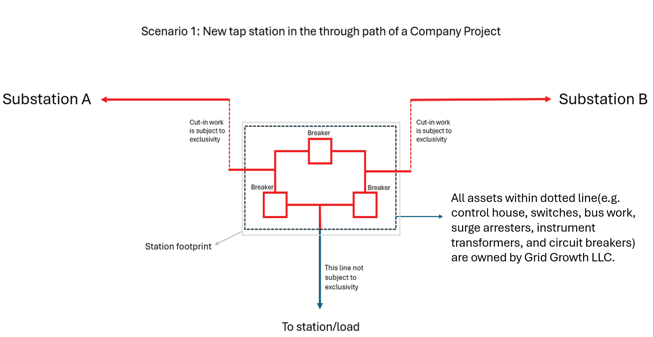
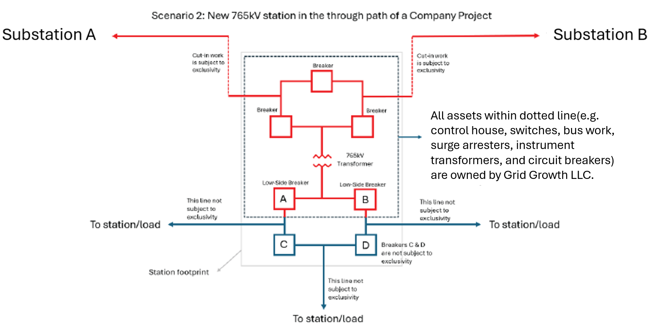
1.47 “Cut-In Work” means the applicable infrastructure and cut-in lines, connecting Company Projects and any New JV Substations.
1.48 “Damages” has the meaning set forth in Section 17.3.1.
1.49 “Defaulting Member” means a Member with respect to which an Event of Default has occurred and is continuing.
1.50 “Depreciation” means, for each Allocation Year, an amount equal to the depreciation, amortization, or other cost recovery deduction allowable for federal income Tax purposes with respect to an asset for such Allocation Year, except that (a) with respect to a Company asset the Book Value of which differs from its adjusted basis for U.S. federal income Tax purposes and which difference is being eliminated by use of the “remedial allocation method” as defined in Treasury Regulations Section 1.704-3(d), Depreciation for such period shall be the amount of the book basis recovered for such period under the rules prescribed in Treasury Regulations Section 1.704-3(d)(2), and (b) if the Book Value of an asset differs from its adjusted basis for federal income Tax purposes at the beginning of such Allocation Year, Depreciation will be an amount that bears the same ratio to such beginning Book Value as the federal income Tax depreciation, amortization, or other cost recovery deduction allowable with respect to such asset for such Allocation Year bears to such beginning adjusted Tax basis; provided, however, that if the federal income Tax depreciation, amortization, or other cost recovery deduction allowable for such Allocation Year is zero, Depreciation will be determined with reference to such beginning Book Value using any reasonable method selected by the Board of Managers.
1.51 “Designated Alternate” has the meaning set forth in Section 7.5.7.
1.52 “Designated Entity” means any member of the Company Group that is named by PJM as being pre-qualified as eligible to be a party to a Designated Entity Agreement related to a Company Project.
1.53 “Designated Entity Agreement” means an agreement between the Designated Entity and PJM, with the terms and conditions of the agreement governing the construction period of the transmission project and defining specific rights and obligations of the Designated Entity and PJM, with the form of such agreement found in the PJM Open Access Transmission Tariff, Attachment KK.
1.54 “Designated Individual” has the meaning given to such term in Treasury Regulations Section 301.6223-1(b)(3) or any successor Treasury Regulations.
1.55 “Designating Member” means, with respect to any Manager, the Member that appointed or designated such Manager in accordance with Section 7.2.
1.56 “Dilution Contribution” has the meaning set forth in Section 17.2.2(a).
1.57 “Direct Transfer” means a Transfer that is a (a) direct transfer of an Interest by a Member whether absolute or conditional, voluntary or involuntary, including by sale, assignment, put, transfer, pledge, hypothecation, court order, distribution, settlement, exchange, waiver, abandonment, gift, alienation or disposal, or (b) transfer of equity interests in any Member, including the legal or beneficial ownership thereof, by any means direct or indirect, absolute or conditional, voluntary or involuntary, including by sale, assignment, put, transfer, pledge, hypothecation, mortgage or other encumbrance, court order, operation of law, distribution, settlement, exchange, waiver, abandonment, gift, alienation or disposal (including any Change in Control), if the Company’s Reference Assets’ Cost Basis multiplied by the Percentage Interest held by such Member is an amount that is more than eighty percent (80%) of the Reference Assets’ Cost Basis of the Person whose equity interests are being Transferred.
1.58 “Effective Date” has the meaning set forth in the Preamble.
1.59 “Election Out” means the election provided by Section 6221(b) of the Code to have Subchapter C of Chapter 63 of Subtitle F of the Code not apply or any analogous election under state or local law.
1.60 “Encumbrance” means any lien, security interest, mortgage, deed of trust, pledge, hypothecation, assignment, easement, right-of-way, servitude, other encumbrance, equitable interest, charge, claim, restrictive covenant, voting trust or transfer restrictions or other restriction or matter affecting title to the involved property.
1.61 “Event of Default” has the meaning set forth in Section 17.1.
1.62 “Evergy” means Evergy Transmission Company, LLC (f/k/a GPE Transmission Holding Company, LLC) and its Affiliates.
1.63 “Exigent Expenditure” means (except with respect to expenditures duly incurred in accordance with any Affiliate Agreement) amounts necessary to be incurred by a member of the Company Group (a) in order to respond to an Exigent Situation or to avoid an Exigent Situation in a manner that is consistent with Good Utility Practice, but only to the extent such expenditures are reasonably designed to ameliorate the consequences, or an immediate threat of any of the consequences, of the circumstances set forth in the definition of “Exigent Situation” or (b) to comply with any change in Applicable Law or with any order or any other legally binding requirement or directive of a Governmental Authority issued following the approval of the applicable Company Project Budget in accordance with Section 7.9 and any legally binding change thereto, in a manner that is consistent with Good Utility Practice, but only to the extent such expenditures are reasonably designed to address any immediate circumstance of non-compliance with respect thereto.
1.64 “Exigent Expenditure Cap” has the meaning set forth in Section 7.7.2.
1.65 “Exigent Situation” means, with respect to the business of a member of the Company Group, (a) any abnormal system condition or abnormal situation requiring immediate action to maintain the system, frequency, loading within acceptable limits or voltage or to
prevent loss of firm load, material equipment damage or tripping of system elements that would reasonably be expected to materially and adversely affect reliability of an electric system, (b) any other occurrence or condition that requires immediate action to prevent or mitigate an immediate and material threat to the safety of Persons or the operational integrity of the assets and business of a member of the Company Group, (c) any other condition or occurrence requiring prompt implementation of emergency procedures as defined by the applicable transmission grid operator or distribution or transmitting utility or (d) any immediate circumstance of non-compliance with respect to any change in Applicable Law or any order or any other legally binding requirement or directive of a Governmental Authority following the approval of the applicable Company Project Budget by the Board of Managers in accordance with Section 7.9 and any legally binding change thereto.
1.66 “Existing Agreement” has the meaning set forth in the Recitals.
1.67 “Failed Contribution” has the meaning set forth in Section 17.2.2(a).
1.68 “Failed Contribution Loan” has the meaning set forth in Section 17.2.2(b).
1.69 “Fair Market Value” means, with respect to any asset (including an Interest), the price at which the asset would change hands between a willing buyer and a willing seller that are not affiliated parties, neither being under any compulsion to buy or to sell, and both having knowledge of the relevant facts and taking into account the full useful life of the assets. Fair Market Value shall be determined by the Board of Managers in accordance with the foregoing, subject to Section 22.13.
1.70 “FDI Law” means any Applicable Law concerning or relating to foreign investment or national security.
1.71 “FERC” means the Federal Energy Regulatory Commission or any successor thereto.
1.72 “FET” means FirstEnergy Transmission, LLC.
1.73 “Fiscal Year” has the meaning set forth in Section 6.1.
1.74 “Fundamental Reserved Matter” has the meaning set forth in Section 7.8.
1.75 “Funding Member” has the meaning set forth in Section 17.2.2(a).
1.76 “GAAP” means generally accepted accounting principles for U.S. companies in effect from time to time.
1.77 “General Exceptions to Enforceability” means limitations on or exceptions to the enforceability of an agreement or instrument by (a) bankruptcy, insolvency, fraudulent conveyance, reorganization, moratorium, or other similar laws affecting creditors’ rights, or (b) general principles of equity relating to the availability of equitable remedies (regardless of whether such agreement or instrument is sought to be enforced in a proceeding at law or in equity).
1.78 “Good Utility Practice” means any of the practices, methods and acts engaged in or approved by a significant portion of the electric transmission industry in the United States during the relevant time period or any of the practices, methods and acts which, in the exercise of reasonable judgment in light of the facts known at the time the decision was
made, could have been expected to accomplish the desired result at a reasonable cost consistent with good business practices, reliability, safety and expedition. Good Utility Practice is not intended to be limited to the optimum practice, method or act to the exclusion of all others, but rather is intended to include a spectrum of generally accepted practices, methods or acts, including those practices required by Federal Power Act Section 215(a)(4); and any disallowance of any portion of a cost or expense by a regulator for cost recovery based on a prudency or other regulatory review shall not be conclusive as to whether such cost or expense was incurred in accordance with Good Utility Practice.
1.79 “Governing Documents” means, with respect to a particular Person: (a) if a corporation, the articles or certificate of incorporation, the bylaws and any stockholders agreement or voting agreement; (b) if a general partnership, the partnership agreement and any statement of partnership; (c) if a limited partnership, the limited partnership agreement and the certificate of limited partnership; (d) if a limited liability company, the articles of organization and operating agreement or similar charter documents; (e) if another type of Person, any other charter or similar document promulgated, adopted, or filed in connection with the creation, formation, or organization of the Person; and (f) any amendment or supplement to any of the foregoing.
1.80 “Governmental Approvals” means licenses, certificates, permits, franchises, orders, approvals, determinations and authorizations of Governmental Authorities having applicable and valid jurisdiction.
1.81 “Governmental Authority” means any national, federal, state, regional, foreign, tribal, local, or municipal governmental body; and any governmental, regulatory, or administrative agency, commission, body, agency, instrumentality or non-governmental body administering, regulating or having general oversight over electricity, power or the transmission thereof, including any regional transmission organization, independent system operator and any market monitor thereof, or other authority exercising or entitled to exercise any executive, judicial, legislative, administrative, regulatory, or taxing authority or power, including any court or other tribunal.
1.82 “Income Tax Return” has the meaning set forth in Section 6.4.1.
1.83 “Indebtedness” means, with respect to any Person, (a) all indebtedness of such Person, whether or not contingent, for borrowed money or in respect of any loans or advances, (b) all other indebtedness of such Person evidenced by bonds, debentures, notes or other similar instruments or debt securities (excluding trade accounts payables constituting short term liabilities under GAAP), (c) the maximum amount of all direct or contingent obligations of such Person arising under letters of credit (including standby and commercial), bankers’ acceptances, bank guaranties, surety bonds and similar instruments, (d) all guarantees of the obligations of any other Person, (e) net obligations of such Person under any hedging arrangement, and (f) any accrued interest, premiums and penalties with respect to any of the foregoing.
1.84 “Indemnitee” has the meaning set forth in Section 17.3.1.
1.85 “Independent Evaluator” has meaning set forth in Section 22.13.
1.86 “Initial Percentage Interest” means, in respect of any Member, its Percentage Interest as of the Effective Date. For the avoidance of doubt, the Initial Percentage Interest of the
initial Members are as follows: Transource—fifty percent (50%) and FET—fifty percent (50%).
1.87 “Initial Projects” has the meaning set forth in Section 12.1.
1.88 “Interest” means a membership interest in the Company held by a Person, including any and all benefits to which the holder of such an Interest may be entitled as provided in this Agreement, together with all obligations of such Person to comply with the terms and provisions of this Agreement and Applicable Law.
1.89 “JPA” means that certain Joint Proposal Agreement dated as of August 15, 2025, by and between Transource Energy, LLC and FirstEnergy Transmission, LLC, as may be amended.
1.90 “Late Payment Rate” means an annual rate of interest equal to the lesser of: (a) the “prime rate” as published in The Wall Street Journal under the caption “Money Rates” in effect on the date a payment hereunder is due plus two percent (2%) and (b) the maximum rate of interest permitted by Applicable Law.
1.91 “License Agreements” has the meaning set forth in Section 14.1.4.
1.92 “Lock-Up Date” means the earliest of (a) the sixth anniversary of the Effective Date, (b) the date upon which the Initial Projects listed on Appendix I with project numbers 1, 2, 3 and 4 have all been Placed-In-Service and (c) such other date as may be approved by the Members collectively holding a Percentage Interest equal to or in excess of eighty-five percent (85%).
1.93 “Manager” has the meaning set forth in Section 7.2.
1.94 “Material Governmental Filing” means any filing, reply, brief, answer, settlement or other correspondence or agreement with any Governmental Authority that is required to be escalated to the Board of Managers for approval pursuant to the currently in place Regulatory Plan and Procedures Policy; provided, that, if no Regulatory Plan and Procedures Policy is in effect, all filings, replies, briefs, answers, settlements or other correspondence or agreements with any Governmental Authority shall be considered Material Governmental Filings and be subject to Section 7.7.5.
1.95 “Member Employed Representative” means a committee member or officer who is also an employee of a Member or any Affiliate of a Member.
1.96 “Member Executives” has the meaning set forth in Section 19.1.1.
1.97 “Member Minimum Gain” means “partner nonrecourse debt minimum gain” (as that term is defined in Treasury Regulations Section 1.704-2(i)(2)) with respect to the Company.
1.98 “Member Nonrecourse Debt” has the same meaning as the term “partner nonrecourse debt” in Section 1.704-2(b)(4) of the Treasury Regulations.
1.99 “Member Nonrecourse Deductions” has the same meaning as the term “partner nonrecourse deductions” in Sections 1.704-2(i)(1) and 1.704-2(i)(2) of the Treasury Regulations.
1.100 “Member Obligation” means the obligation, if any, of a Member to the extent required by the terms of this Agreement to (a) make Capital Contributions or (b) pay any other amount due and owing to the Company pursuant to this Agreement.
1.101 “Member Partner Ownership Change” means (a) with respect to FET, the acquisition of equity securities of FET by NATCo II or an Affiliate of NATCo II resulting in such party’s ownership of fifty percent (50%) or more of the combined voting power of the voting interests of FET, so long as (i) FirstEnergy Corp. owns, directly or indirectly, at least a thirty percent (30%) equity interest in FET and the responsibility to manage the day-to-day operations of FET and (ii) NATCo II or such applicable Affiliate is Controlled by Brookfield Corporation, Brookfield Asset Management Ltd., or Brookfield Infrastructure Partners L.P., in each case, at the time of and immediately following such acquisition (together with any related transactions) and (b) with respect to Transource, the acquisition of equity securities of Transource by Evergy, directly or indirectly, resulting in its ownership of fifty percent (50%) or more of the combined voting power of the voting interests of Transource, so long as (i) American Electric Power Company, Inc. owns, directly or indirectly, at least a thirty percent (30%) equity interest in Transource and the responsibility to manage the day-to-day operations of Transource and (ii) Evergy is Controlled by Evergy, Inc., in each case, at the time of and immediately following such acquisition (together with any related transactions), provided that, should FirstEnergy Corp. or American Electric Power Company, Inc., respectively, fail to own, directly or indirectly, at least a thirty percent (30%) equity interest in, or have the responsibility to manage the day-to-day operations of, FET and Transource, respectively, the conditions that resulted in such failure shall constitute a Change in Control (and shall qualify as a “transfer of equity interests” for the purposes of clause (c) in the proviso in the definition of “Transfer”) as of the date of such failure, notwithstanding anything to the contrary contained in this Agreement. For the avoidance of doubt but without modifying the preceding sentence, nothing contained in this Agreement shall impose an affirmative obligation on FirstEnergy Corp. or American Electric Power Company, Inc. to maintain, directly or indirectly, at least a thirty percent (30%) equity interest in, and the responsibility to manage the day-to-day operations of, FET and Transource, respectively.
1.102 “Members” means those Persons holding Interests.
1.103 “Minority Member” has the meaning set forth in Section 19.2.6(b).
1.104 “Minority Member Capital Expenditure Proposal” has the meaning set forth in Section 19.2.6(b).
1.105 “Moody’s” means Moody’s Investors Service, Inc. (or any successor to its ratings business).
1.106 “NATCo II” means North American Transmission Company II L.P.
1.107 “NATCo II Restricted Affiliates” means Brookfield Super-Core Infrastructure Partners GP LLC together with its controlled investment vehicles.
1.108 “NERC” means the North American Electric Reliability Corporation (including any of the eight (8) designated regional entities) or any successor electric reliability organization certified by FERC.
1.109 “New JV Project” means, other than the Initial Projects, (a) any new lines not described in the definition of “New PJM Projects” and (b) any new development opportunities, components and facilities which are neither Project Enhancements nor New PJM Projects, in each case, as proposed by any Member and approved by the Members as a Fundamental Reserved Matter in accordance with Section 7.8.
1.110 “New JV Substation” means any new substation connected directly to a Company Project including infrastructure up to, but excluding, the low side breaker(s) of any such substation; provided, that in the case of a 765 kV step down transformer, such transformer and the breaker(s) protecting it shall be considered part of the “New JV Substation”; provided, further that, for the avoidance of doubt, any substation that is owned by a Member or any of its Affiliates prior to February 13, 2026 shall not constitute a “New JV Substation,” and shall not be deemed to constitute a “New JV Substation” as a result of any relocation (whether involving partial or complete re-construction) or reconfiguration of such substation and regardless of whether such relocated or reconfigured substation utilizes the same or different name.
1.111 “New PJM Projects” means (a) other than the Initial Projects, the project development opportunities, components and facilities submitted on or prior to December 31, 2027 to PJM by the Company, any member of the Company Group or any Member or an Affiliate of a Member, in each case in accordance with the proposals under the heading “New PJM Project” on Appendix I and (b) any New JV Substation and any Cut-In Work. An illustrative example of the scope of New PJM Projects intended to be addressed by clause (b) in this definition is set forth in Appendix II; provided that if the scope of a New JV Substation or Cut-In Work determined by reference to the illustrative examples set forth in Appendix II would reasonably be expected to result in material regulatory or operational inefficiencies with respect to such New JV Substation or Cut-In Work, the Members shall, in good faith, discuss altering the scope of the illustrative example set forth in Appendix II. For the avoidance of doubt, New PJM Projects shall not include (i) any project development opportunities, components and facilities submitted after December 31, 2027 to PJM by any Member or its Affiliates, (ii) any new lines not described in clauses (a) or (b) of this definition and (iii) any development opportunities, components and facilities which are neither Project Enhancements nor described in clauses (a) or (b) of this definition.
1.112 “New Securities” means any Interests or other equity interests in the Company, other than (a) any arrangement approved by the Board of Managers for the return of income or capital to the Members, (b) any equity split, equity dividend or any similar recapitalization, or (c) any issuance of Interest pursuant to Section 3.6 or 17.2.2(a).
1.113 “Non-Budgeted Expenditure” means any amount that, in the exercise of reasonable judgment in light of the facts known at the time, would or would reasonably be expected to cause the aggregate amount of the Annual Company Budget to be exceeded, other than any Exigent Expenditure.
1.114 “Non-Income Tax Return” has the meaning set forth in Section 6.4.2.
1.115 “Non-Party Members” has the meaning set forth in Section 14.3.2.
1.116 “Non-Transferring Member” means, with respect to a Transfer or proposed Transfer, each Member other than the Transferring Member.
1.117 “Nonrecourse Deductions” has the meaning as determined under Treasury Regulations Section 1.704-2(b)(1).
1.118 “Nonrecourse Liability” has the meaning set forth in Section 1.704-2(b)(3) of the Treasury Regulations.
1.119 “OFAC” means the U.S. Office of Foreign Assets Control.
1.120 “Officer Authority Policies” has the meaning set forth in Section 8.1.1.
1.121 “Partnership Audit Rules” means the new partnership audit rules enacted under the Bipartisan Budget Act of 2015, Code Sections 6221 through 6241, including any amendments thereto or other Code provisions with respect to the same subject matter as Code Sections 6221 through 6241, and any regulations promulgated under any such Sections and any administrative guidance with respect thereto and any analogous provision of state or local law.
1.122 “Partnership Representative” means the Person then designated by the Board of Managers to act on behalf of the Company as the “partnership representative” within the meaning of that term in Code Section 6223(a) (as amended by the Bipartisan Budget Act of 2015 and as subsequently amended) or with respect to the Tax law of any state or foreign jurisdiction, as a representative pursuant to a provision of law of such state or foreign jurisdiction corresponding to Code Section 6223(a) and shall also include the person through whom a Partnership Representative acts.
1.123 “Percentage Interest” means, in respect of any Member or Members, its or their relative ownership of the Interests of the Company, expressed as a percentage, which shall be deemed to be equal to the Interests that such Member or Members owns or own divided by the total number of Interests then outstanding. Each Member’s Percentage Interest as of the Effective Date is set forth opposite the name of each Member under the column “Percentage Interest” on Exhibit A, which shall be adjusted from time to time in accordance with this Agreement.
1.124 “Permitted Activities” has the meaning set forth in Section 2.9.1(a).
1.125 “Permitted Encumbrance” means (a) Encumbrances for Taxes not yet delinquent or for Taxes that the taxpayer is contesting in good faith through appropriate proceedings so long as adequate reserves are maintained in accordance with GAAP, (b) Encumbrances of lessors, lessees, sublessors, sublessees, licensors or licensees to the extent arising or incurred in the ordinary course of business, (c) Encumbrances arising under the Indebtedness authorized by the Board of Managers or Members as required herein, (d) mechanics liens and similar liens for labor, materials, or supplies relating to obligations as to which there is no breach or default on the part of the Company or any of its Subsidiaries, as the case may be, or the validity or amount of which is being contested in good faith through appropriate proceedings so long as adequate reserves are maintained on the financial statements in accordance with GAAP, (e) zoning, building codes, and other land use Applicable Laws regulating the use or occupancy of real property or the activities conducted thereon that are imposed by any Governmental Authority having jurisdiction over such real property, in each case that do not adversely impact in any material respect the current use, occupancy or operation of the owned or leased real property of the Company and its Subsidiaries, and are not violated by the then-current use, occupancy or activity conducted thereon by the Company or any of its Subsidiaries, as applicable, which does not in any material respect affect the value or current use
thereof, (f) easements, servitudes, covenants, conditions, restrictions, and other similar matters of record affecting title to any assets of the Company or any of its Subsidiaries and other title defects that do not or would not reasonably be expected to, individually or in the aggregate, materially impair the use or occupancy of such assets in the operation of the business of the Company and its Subsidiaries, and (g) Encumbrances arising under Applicable Laws of general applicability, other than to the extent such Encumbrances arise from or relate to any applicable Person’s failure to comply with any such Applicable Law.
1.126 “Permitted Transfer” means any Transfer of equity interests in any Member if the Company’s Reference Assets’ Cost Basis multiplied by the Percentage Interest held by such Member is an amount that is less than forty percent (40%) of the Reference Assets’ Cost Basis of the Person whose equity interests are being Transferred. Notwithstanding the foregoing, prior to the second anniversary of the Effective Date, no Transfer shall be a Permitted Transfer.
1.127 “Person” means an individual, trust, estate, corporation, partnership, joint venture, limited liability company, business trust, unincorporated association, or a government or agency or political subdivision thereof.
1.128 “PJM” means PJM Interconnection, L.L.C. or any successors thereto.
1.129 “PJM Window” means the 2025 PJM Regional Transmission Expansion Plan Window.
1.130 “Placed-In-Service” means, with respect to a Company Project, the date that (a) the Company or the applicable member of the Company Group demonstrated that the applicable Company Project is complete in accordance with the Scope of Work in Schedule B of the applicable Designated Entity Agreement and (b) such Company Project meets the criteria outlined in Schedule D of the applicable Designated Entity Agreement.
1.131 “Planning Costs” means, with respect to each Member, reasonably incurred and documented costs and expenditures, including third party costs (such as consultants or subject matter experts or submission, evaluation and other costs paid for as required by PJM), legal fees and travel expenditures, in each case incurred on or after May 1, 2025 and prior to the Effective Date executed by such Member or its Affiliate and a member of the Company Group relating to (a) the organization and formation of the members of the Company Group and the negotiation and documentation of the definitive agreements relating to the Company, including the JPA, this Agreement and any Affiliate Agreements to be entered into pursuant to Article 14, (b) planning for and submitting to PJM proposals and responses related to the Initial Projects or any New PJM Projects during the PJM Window, and (c) planning or evaluating any Company Project; provided, that Planning Costs shall not include any costs or expenditures of a Member or an Affiliate of such Member that are recovered by such party under an Affiliate Agreement.
1.132 “Preemptive Right Notice Period” has the meaning set forth in Article 16.
1.133 “Preemptive Right Participation Notice” has the meaning set forth in Article 16.
1.134 “Proceeding” means any action, arbitration proceeding, audit, hearing, investigation, litigation, or suit (in each such case whether civil, criminal, administrative, judicial, or investigative and whether formal or informal, public, or private) commenced, brought, conducted, or heard by or before any Governmental Authority or arbitrator.
1.135 “Profits” or “Losses” means, for each Allocation Year, an amount equal to the Company’s taxable income or loss (as the case may be) for such Allocation Year, determined in accordance with Section 703(a) of the Code (but including in taxable income or loss, for this purpose, all items of income, gain, loss, expense, or deduction required to be stated separately pursuant to Section 703(a)(1) of the Code), with the following adjustments: (a) any income of the Company exempt from federal income Tax and not otherwise taken into account in computing Profits or Losses pursuant to this definition will be taken into account in computing such taxable income or loss; (b) any expenditures of the Company described in Section 705(a)(2)(B) of the Code (or treated as expenditures described in Section 705(a)(2)(B) of the Code pursuant to Treasury Regulations Section 1.704-1(b)(2)(iv)(i)) and not otherwise taken into account in computing Profits or Losses pursuant to this definition will be taken into account in computing such taxable income or loss; (c) in the event the Book Value of any Company asset is adjusted in accordance with clause (b) or (c) of the definition of “Book Value” above, the amount of such adjustment will be taken into account as gain (if the adjustment increases the Book Value of the asset) or loss (if the adjustment decreases the Book Value of the asset) from the disposition of such asset for purposes of computing Profits or Losses; (d) gain or loss resulting from any disposition of any asset of the Company with respect to which gain or loss is recognized for federal income Tax purposes will be computed by reference to the Book Value of the asset disposed of, notwithstanding that the adjusted federal income Tax basis of such asset differs from its Book Value; (e) in lieu of the depreciation, amortization and other cost recovery deductions taken into account in computing such taxable income or loss, Depreciation for such Allocation Year will be taken into account; (f) to the extent that an adjustment to the adjusted federal income Tax basis of any Company asset pursuant to Section 734(b) of the Code is required, pursuant to Treasury Regulations Section 1.704-1(b)(2)(iv)(m)(4), to be taken into account in determining Capital Accounts as a result of a distribution other than in liquidation of a Member’s interest in the Company, the amount of such adjustment will be treated as an item of gain (if the adjustment increases the basis of the asset) or loss (if the adjustment decreases such basis) from the disposition of such asset and will be taken into account for purposes of computing Profits or Losses; and (g) notwithstanding any other provision of this definition, any items that are specially allocated pursuant to this Agreement will not be taken into account in computing Profits or Losses. The amounts of the items of Company income, gain, loss, expense, or deduction available to be specially allocated hereunder shall be determined by applying rules analogous to those set forth in clauses (a) through (f) of this definition.
1.136 “Prohibited Transferee” means any Person on the Prohibited Transferees List (including any of such Person’s Affiliates, successors or assigns).
1.137 “Prohibited Transferees List” means the list of Prohibited Transferees maintained by the Company, which may only be updated by the Members as a Fundamental Reserved Matter in accordance with Section 7.8; provided, that, if there are three (3) or more Members, if a Member has entered into an agreement or made a public announcement regarding its intent to effect a Third Party Transfer, the Prohibited Transferees List shall not be updated until such time as such transferring Member has implemented such Transfer or concluded its sale process.
1.138 “Project Development Agreements” has the meaning set forth in Section 14.1.1.
1.139 “Project Enhancements” means upgrades, expansions, enhancements or improvements to any Company Project or any component or facility thereof, including ordinary course route modifications of Company Projects (but not route extensions that are outside of the terminal ends of any Company Project). For the avoidance of doubt Project Enhancements shall not include any items set forth in clauses (i) and (ii) of the last sentence of the definition of New PJM Projects.
1.140 “Project Services Agreements” has the meaning set forth in Section 14.1.3.
1.141 “Projected Affiliate Agreement Costs” means all costs and expenditures anticipated to be incurred or accrued by any member of the Company Group pursuant to the applicable Affiliate Agreement for the current calendar year.
1.142 “Proposed Capital Expenditure” has the meaning set forth the definition of Company Project Budget.
1.143 “Pull-In Election” has the meaning set forth in Section 6.5.2(i).
1.144 “Purchase Remedy Notice” has the meaning set forth in Section 17.2.3(a).
1.145 “Push-Out Election” has the meaning set forth in Section 6.5.2(g).
1.146 “Qualified Designee” means, for the purposes of qualification to serve on the Board of Managers or as a Designated Alternate or Board Observer, any officer, member of a board of managers or directors, or employee of the applicable Member or any Affiliate who Controls such Member or in the case of Transource, Evergy and in the case of FET, NATCo II; provided, in each case, that a “Qualified Designee” shall not include (a) any manager, director, officer, employee or other Person affiliated with a Prohibited Transferee, (b) any Person convicted by a court or equivalent tribunal of any felony (or equivalent crime in the applicable jurisdiction) or of any misdemeanor (or equivalent crime in the applicable jurisdiction) that involves financial dishonesty or moral turpitude or (c) any Person that is reasonably likely to create a material regulatory or reputational risk to any member of the Company Group based on a good-faith determination by the Board of Managers.
1.147 “Qualified Person” means, with respect to any Continuing Dispute Arbitration, an individual who (a) within the last ten (10) years has not been employed or retained (other than as a mediator or arbitrator) by any Member or any Affiliate of a Member, (b) has experience in the construction and operation of high voltage electric transmission facilities and (c) is knowledgeable professionally regarding the matters that are the subject of such Continuing Dispute Arbitration.
1.148 “Rate Base Amount” means an amount equal to the net book value of the utility plant of the Company Group, taken as a whole, as determined based on the most recently filed FERC Form 1s for each Member of the Company Group.
1.149 “Reference Assets’ Cost Basis” means an amount equal to (a) the book value of total property, plant, and equipment net of accumulated depreciation, as defined and maintained in accordance with GAAP, included in the consolidated financial statements of a Person plus (b) in the event a Person directly or indirectly holds a non-consolidated investment (i.e., an investment accounted for as an equity method investment in accordance with GAAP), an amount equal to (i) the Person’s direct or indirect ownership interest share in the non-consolidated investee multiplied by (ii) the book value of total
property, plant, and equipment net of accumulated depreciation, as defined and maintained in accordance with GAAP, of that non-consolidated investee. Notwithstanding the foregoing, until the Lock-Up Date, the Company’s Reference Assets’ Costs Basis shall be an amount equal to the aggregate amount of capital expenditures required to complete the Company Projects as set forth in all Company Project Budgets.
1.150 “Regulatory Affiliate” means, with respect to matters subject to the jurisdiction of a Governmental Authority, an “affiliate” as defined by Applicable Law relevant to such Governmental Authority.
1.151 “Regulatory Allocations” has the meaning set forth in Section 5.8.
1.152 “Regulatory Imposition” has the meaning set forth in Section 15.2.3.
1.153 “Regulatory Plan and Procedures Policy” means the plan and policy relating to the process for the review, approval and submission of applicable Governmental Approvals, regulatory proceedings, rate cases and rate filings, adopted by the Members as a Fundamental Reserved Matter in accordance with Section 7.8, and as may be modified or amended from time to time as a Reserved Matter in accordance with Section 7.7.
1.154 “Related Party Matter” means any proposal or potential course of action by a member of the Company Group (a) related to a material breach under an Affiliate Agreement (including bringing a claim in respect of such breach, the waiver or release of such breach or a decision to ratify any action taken by a service provider not in material compliance with its agreed parameters or the subsequent exercise of remedies in respect of such breach), or (b) related to the defense of claims brought against a member of the Company Group by a Member or any Affiliate thereof under an Affiliate Agreement.
1.155 “Related Party Standard” has the meaning set forth in Section 14.3.
1.156 “Released Party” has the meaning set forth in Section 2.9.3.
1.157 “Releasors” has the meaning set forth in Section 2.9.3.
1.158 “Representatives” means a Person’s respective directors, managers, officers, employees, Affiliates, Regulatory Affiliates, agents, lenders, attorneys, and other advisors. With respect to Transource, “Representatives” shall include Evergy and its Representatives. With respect to FET, “Representatives” shall include NATCo II and its Representatives.
1.159 “Required Contribution Date” has the meaning set forth in Section 3.6.
1.160 “Reserved Matter” has the meaning set forth in Section 7.7.
1.161 “Reserved Matter Threshold Interest” has the meaning set forth in Section 7.7.
1.162 “Review Year” has the meaning set forth in Section 6.5.2(g).
1.163 “ROFO Decision Date” has the meaning set forth in Section 15.2.4(b).
1.164 “ROFO Eligible Member” has the meaning set forth in Section 15.2.4(a).
1.165 “Rollover Budget” has the meaning set forth in Section 7.9.5.
1.166 “Sale Offer” has the meaning set forth in Section 15.2.4(a).
1.167 “Sale Period” has the meaning set forth in Section 15.2.4(c).
1.168 “Sanctioned Person” means a Person named on the list of Specially Designated Nationals or Blocked Persons maintained by OFAC available at https://sanctionslist.ofac.treas.gov/Home/SdnList, or as otherwise published from time to time or any other Sanctions-related list of designated Persons maintained by an applicable Governmental Authority described in the definition of “Sanctions”.
1.169 “Sanctions” means any sanctions imposed, administered or enforced from time to time by OFAC, the U.S. Department of State, His Majesty’s Treasury, the United Nations, the European Union or any agency or subdivision of any of the foregoing, including any regulations, rules and executive orders issued in connection therewith; provided, however, and for the avoidance of doubt, no Person shall be deemed to be subject to Sanctions by reason of any generally applicable tariff, tax, or other duty levied under or by U.S. customs laws against their country of domicile or legal formation.
1.170 “Standard & Poor’s” means Standard & Poor’s Financial Services LLC, a division of S&P Global (or any successor to its ratings business).
1.171 “Standards of Conduct” means (a) (i) FERC’s standards of conduct for transmission providers codified at 18 C.F.R. Part 358 and the rules, regulations, and orders issued by FERC pertaining thereto, and (ii) any applicable or relevant requirements under NERC standards, including but not limited to, protection of Critical Energy/Electric Infrastructure Information (as such terms are defined under FERC rules and regulations), Critical Infrastructure Protection (CIP) requirements, and receipt and storage of other non-public information containing sensitive information regarding the Company Group’s transmission system and the safety and reliability of the bulk-electric system (as that term is defined under the Federal Power Act, as amended, and FERC); and (b) the policies, procedures and internal compliance practices of any member of the Company Group or its Subsidiaries governing internal compliance regarding clause (a) of this definition or as may be designated by the chief compliance officer(s) (as such term is defined by under 18 CFR 358.8(c)(2)) for the Company Group.
1.172 “Subject Interests” has the meaning set forth in Section 15.2.4(a).
1.173 “Subsidiary” means, with respect to any Person, any entity of which a majority of the total voting power of shares of stock entitled (without regard to the occurrence of any contingency) to vote in the election of directors, managers or trustees thereof is at the time owned or Controlled, directly or indirectly, by such Person or one or more of the other Subsidiaries of such Person or a combination thereof or any partnership, association or other entity of which a majority of the partnership or other similar ownership interest is at the time owned or Controlled, directly or indirectly, by such Person or one or more Subsidiaries of such Person or a combination thereof. For purposes of this definition, a Person is deemed to have a majority ownership interest in a partnership, limited liability company, association or other business entity if such Person is allocated a majority of the gains or losses of such partnership, limited liability company, association or other entity or is or controls the managing director or general partner of such partnership, limited liability company, association or other business entity.
1.174 “Subsidiary Company” means each of the companies set forth on Exhibit C on the date hereof and any future Subsidiary of the Company.
1.175 “Tax” means any and all federal, state, provincial, local, non-U.S. and other taxes, levies, fees, imposts, duties and similar governmental charges (including any interest, fines, assessments, penalties, deficiency assessments or additions to tax imposed in connection therewith or with respect thereto) including (a) taxes imposed on, or measured by, net income, gross income, franchise, profits or gross receipts and (b) ad valorem, value added, capital gains, sales, goods and services, use, real or personal property (tangible and intangible), capital stock, license, branch, payroll, withholding, employment, social security (or similar), unemployment, disability, occupational, abandoned or unclaimed property (escheat), excise, compensation, utility, severance, production, stamp, registration, occupation, premium, windfall profits, excess profits, fuel, gas import, environmental, transfer and gains, lease, service, service use, alternative or add on minimum and estimated taxes and customs duties.
1.176 “Tax Return” means any return, report, information return, attachment, declaration, election, claim for refund or other document (including any schedule, statement or related or supporting information) filed or supplied or required to be filed or supplied to any Governmental Authority with respect to Taxes of any kind or nature.
1.177 “Third Party Approval” means any consent, approval, permit, license, franchise, or other authorization, or a variance or exemption therefrom or waiver thereof, from a Governmental Authority or other Person.
1.178 “Third Party Claim” has the meaning set forth in Section 17.3.2(b).
1.179 “Third Party Transfer” means any Transfer other than (a) a Transfer to an Affiliate of a Transferring Member pursuant to Section 15.2.2 or (b) a Transfer made pursuant to Section 17.2.3.
1.180 “Threshold Interest” means a Member that holds a Percentage Interest equal to or in excess of fifteen percent (15%).
1.181 “Transfer” means any disposition or binding commitment to dispose of all or a portion of any Interest, including the legal or beneficial ownership thereof, by any means, direct or indirect, absolute or conditional, voluntary or involuntary, including by sale, assignment, put, transfer, pledge, hypothecation, mortgage or other encumbrance, court order, operation of law, distribution, settlement, exchange, waiver, abandonment, gift, alienation or disposal (including any Change in Control); provided, however, that notwithstanding the foregoing, in no event will a “Transfer” for any purpose under this Agreement include (a) any direct or indirect transfer of equity interests in a Member that does not result in a Change in Control of such Member (which would include any direct or indirect transfer of equity interests in FET by NATCo II or in Transource by Evergy at any time prior to the acquisition of Control in FET by NATCo II or in Transource by Evergy, respectively; provided, for the avoidance of doubt neither party is deemed to Control the applicable Member as of the Effective Date), (b) any direct or indirect transfer of equity interests in American Electric Power Company, Inc. or FirstEnergy Corp., or any successors thereto, as applicable, or (c) any direct or indirect transfer of equity interests in any Member if the Company’s Reference Assets’ Cost Basis multiplied by the Percentage Interest held by such Member is an amount that is less than eight percent (8%) of the Reference Assets’ Cost Basis of the Person whose equity interests are being transferred.
1.182 “Transferring Member” means any Member or its Affiliates undertaking or proposing to undertake a Transfer.
1.183 “Transource” means Transource Energy, LLC.
1.184 “Treasury Regulations” means the income Tax regulations promulgated under the Code, as amended and in effect from time to time, and, in the case of any specific Treasury Regulations, any successor regulations thereto.
2. ORGANIZATION.
2.1 Formation. The Company was formed on September 29, 2025 as a Delaware limited liability company by the execution and filing of the Certificate of Formation with the Secretary of State of the State of Delaware under and pursuant to the Act. The Board of Managers shall cause to be executed all necessary certificates and documents, and shall make all such filings and recordings, and shall cause to be done all other acts, as may be necessary or appropriate from time to time to comply with all requirements for the continued existence and operation of a limited liability company in the State of Delaware. The rights, powers, duties, obligations and liabilities of the Members (in their respective capacities as such) shall be determined pursuant to the Act and this Agreement. To the extent that the rights, powers, duties, obligations and liabilities of any Member (in its capacity as such) are different by reason of any provision of this Agreement than they would be in the absence of such provision, this Agreement shall, to the extent permitted by the Act, control.
2.2 Name. The name of the Company is “Grid Growth Ventures, LLC”; provided, however, that (a) the Company’s business may be conducted under one or more assumed names deemed advisable by the Board of Managers, subject to any restrictions imposed by Applicable Law and (b) the Board of Managers in its sole discretion may change the name of the Company at any time and from time to time.
2.3 Principal Place of Business. The principal place of business of the Company shall be at such place as the Board of Managers may designate from time to time, which need not be in the State of Delaware, and the Company shall maintain its books and records at such principal place of business. The Company may have such other offices (within or without the State of Delaware) as the Board of Managers may designate from time to time.
2.4 Registered Office; Registered Agent. The registered agent of the Company is The Corporation Trust Company, and the registered office of the Company within the State of Delaware is Corporation Trust Center, 1209 Orange Street, Wilmington, New Castle County, Delaware 19801. The Board of Managers may change the registered office and/or the registered agent of the Company in accordance with the Act.
2.5 Term. The term of the Company commenced when the Certificate of Formation was filed with the Delaware Secretary of State. The Company shall continue until the Company is dissolved under Article 17 of this Agreement.
2.6 Purposes. The Company is organized for the purposes of:
2.6.1 designing, developing, constructing, owning, operating and financing Company Projects;
2.6.2 holding, directly or indirectly, an interest in members of the Company Group responsible for designing, developing, constructing, owning, operating and financing Company Projects;
2.6.3 entering, or causing the members of the Company Group to enter into, contracts, agreements or understandings for any or all of the purposes and activities described in this Section 2.6; and
2.6.4 conducting any other purpose or activity approved as a Fundamental Reserved Matter in accordance with Section 7.8, provided such other purpose or activity is permissible under Applicable Law (actions contemplated by this Section 2.6, collectively, the “Company Business”).
2.7 Powers. Subject to all of the terms, covenants, conditions and limitations contained in this Agreement, the Company shall have the power and authority to do any and all acts and things necessary, appropriate, proper, advisable, desirable, incidental to or convenient for the furtherance and accomplishment of the purposes and activities described in Section 2.6 and for the protection and benefit of the Company.
2.8 Qualification in Other Jurisdictions. The Board of Managers shall take any and all actions reasonably necessary to perfect and maintain the status of the Company as a limited liability company under the laws of the State of Delaware. Before conducting business in any jurisdiction other than the State of Delaware where qualification is necessary, the Board of Managers shall use its reasonable efforts to cause the Company to comply (to the extent that procedures for doing so are available and such compliance is reasonably within the control of the Board of Managers in the relevant jurisdiction) with all requirements necessary to qualify the Company as a foreign limited liability company in such jurisdiction. At the request of the Board of Managers (or its designee), each Member shall use its reasonable efforts to execute, acknowledge, swear to and deliver all certificates and other instruments conforming with this Agreement that are necessary or appropriate to qualify, continue or terminate the Company as a foreign limited liability company in each such jurisdiction in which the Company may conduct business from time to time.
2.9 Independent Activities; Disclaimer of Duties; Release.
2.9.1 Independent Activities of the Board of Managers and Members.
(a) To the maximum extent permitted by Applicable Law, any Member and any Member’s Affiliates (other than any member of the Company Group) may, notwithstanding this Agreement, engage in whatever activities it chooses, whether or not the same are competitive with those of the Company Group, without having or incurring any obligation to offer any interest in such activities to the Company or any other Member, provided no Member or its Affiliates shall engage in the design, development, construction, ownership, operation or
financing of any Company Project, Project Enhancement or New PJM Project, except as permitted pursuant to this Agreement (including Sections 12.3 and 12.4); provided, however, that in connection with NATCo II being an Affiliate of FET, for purposes of the foregoing proviso, “Affiliate” shall include only NATCo II Restricted Affiliates with respect to NATCo II. Without limitation of the foregoing, each of the Members and their respective Affiliates may, in its discretion, (i) undertake transmission projects alone or with any other Person or Persons without proposing that such projects be undertaken by the Company Group (other than any Company Project, Project Enhancement or New PJM Project, except as permitted pursuant to this Agreement (including Sections 12.3 and 12.4)), (ii) engage in the same or similar activities or line of business as the Company Group or develop or market any services or activities that compete directly or indirectly with those of the Company Group and (iii) beneficially own securities of or develop a business relationship with any Person engaged in the same or similar activities or line of business as, or otherwise in competition with, the Company Group (the activities, projects and relationships described in this Section 2.9.1(a) are collectively referred to as “Permitted Activities”).
(b) Without limiting this Section 2.9.1 in any way, neither the Company nor any Member or any Affiliates of any Member by virtue of this Agreement shall have any rights in or to any Permitted Activity or the income or profits derived therefrom of any other Member, regardless of whether or not such Permitted Activity was presented to or otherwise became known to any other Member as a direct or indirect result of its connection with the Company. No Member or any of its Affiliates, Managers or Member Employed Representatives shall have any obligation to present or offer any project or other Permitted Activity to the Company, even if the project or other Permitted Activity is one that the Company might reasonably be deemed to have pursued or had the ability or desire to pursue if granted the opportunity to do so, and no Member or any Affiliate thereof, Manager or Member Employed Representative shall be liable to the Company or any other Member by reason of the fact that such Member or any Affiliate, Manager or Member Employed Representative thereof pursues or acquires such business opportunity, directs such business opportunity to another Person, or fails to present such business opportunity or information regarding such business opportunity to the Company.
2.9.2 Disclaimer of Certain Duties. Each Member acknowledges its express intent, and agrees with each other Member for the mutual benefit of the Members, that to the maximum extent permitted by Applicable Law:
(a) no Member shall have any fiduciary or other duty to the Company, any other Member, any Manager, committee member, officer or any other Person that is a party to or is otherwise bound by this Agreement other than the implied contractual covenant of good faith and fair dealing;
(b) no Manager, committee member or officer, in his or her capacity as a Manager, committee member or officer, shall have any fiduciary or other duty to the Company, any Member or any other Manager,
committee member, officer or any other Person that is a party to or is otherwise bound by this Agreement, other than the implied contractual covenant of good faith and fair dealing; and
(c) the provisions of this Section 2.9.2 shall apply for the benefit of each Member, Manager, committee member and officer. No standard of care, duty or other legal restriction or theory of liability shall limit or modify the right of each Member, Manager or Company Representative to act, and, in the case of each Member, to direct the Managers or committee members appointed by such Member to vote in the manner determined by such Member, Manager or committee member, other than those expressly set forth in this Agreement.
2.9.3 Release. To the maximum extent permitted by Applicable Law, each Member and the Company (the “Releasors”) hereby releases and forever discharges each Member, Manager, committee member and officer (each, a “Released Party”) from all liabilities that any Released Party might owe, under the Act or otherwise, to the Releasors based on (a) any action or omission by such Released Party in its capacity as a member, manager, committee member or representative of the Company (other than any fraud or willful misconduct of the Released Party or breaches of the implied contractual covenant of good faith and fair dealing) constituted a breach or violation of any standard of care or duty applicable to the Released Parties, or (b) the ground that any decision of any Released Party to grant or withhold any vote, consent or approval constituted a breach or violation of any standard of care or duty, other than the implied contractual covenant of good faith and fair dealing, applicable to the Released Parties.
2.9.4 Covenant Not to Sue. Each Releasor hereby irrevocably covenants to refrain from, directly or indirectly, asserting any claim, or commencing, joining in, prosecuting, participating in, funding any part of, instituting or causing to be commenced, prosecuted, funded or instituted, any suit or other proceeding of any kind against any Released Party based upon any matter released or purported to be released by Section 2.9.3 above.
2.9.5 Fiduciary Duties. To the extent permitted by Applicable Law, the provisions of this Section 2.9 constitute an agreement to modify and eliminate fiduciary duties.
2.10 Statutory Requirements. The Company’s organizer has caused the Certificate of Formation to be executed and filed with the Secretary of State of the State of Delaware. The Board of Managers may file an amendment to the Certificate of Formation or restated Certificate of Formation and any other certificates of amendment as may be authorized by the Board of Managers (except any certificate of dissolution, which shall require consent in accordance with this Agreement). Any amendments to this Agreement shall be subject to the provisions of Section 22.10.
2.11 Members; Interest. The name, mailing address and Percentage Interest of each Member are set forth on Exhibit A hereto as the same may be changed from time to time as expressly mandated or permitted under this Agreement.
2.12 No State Law Partnership. The Members and the Company intend that the Company not be a partnership (including a limited partnership) or joint venture, and that no Member be a partner or joint venturer of any other Member by virtue of this Agreement, for any purposes, and neither this Agreement nor any other document entered into by the Company or any Member relating to the subject matter hereof shall be construed to suggest otherwise. Notwithstanding the immediately preceding sentence, the Members intend that the Company shall be treated as a partnership for federal income Tax and, if applicable, state and local income Tax purposes, and each Member and the Company shall file all Tax Returns, and otherwise take all Tax and financial reporting positions, in a manner consistent with such treatment. Neither the Members nor the Company shall make any election under Treasury Regulations Section 301.7701-3, or any comparable provisions of state or local law, to treat the Company as an entity other than a partnership for federal income Tax or state or local income Tax purposes.
3. CAPITAL.
3.1 Maintenance of Capital Accounts. A separate Capital Account shall be established and maintained for each Member reflecting such Member’s Capital Contributions and adjusted for distributions and for allocations of Profits, Losses, and items of income, gain, loss, expenditure and deduction of the Company under this Agreement in accordance with Sections 704(b) of the Code, the Treasury Regulations promulgated thereunder and the following provisions:
3.1.1 To such Member’s Capital Account there will be credited the amount of such Member’s Capital Contributions, such Member’s distributive share of Profits and other items of income or gain specially allocated hereunder, and the amount of any Company liabilities that are assumed by such Member or that are secured by any Company assets distributed to such Member.
3.1.2 To such Member’s Capital Account there will be debited the amount of cash and the Book Value of any other property of the Company distributed to such Member pursuant to any provision of this Agreement, such Member’s distributive share of Losses and other items of loss, expenditure and deduction specially allocated hereunder, and the amount of any liabilities of such Member that are assumed by the Company or that are secured by any property contributed by such Member to the Company.
3.1.3 In determining the amount of any liability for purposes of this Section 3.1, there will be taken into account Section 752(c) of the Code and any other applicable provisions of the Code and the Treasury Regulations.
3.1.4 The Board of Managers shall also make (A) any adjustments that are necessary or appropriate to maintain equality between the Capital Accounts of the Members and the amount of Company capital reflected on the Company’s balance sheet, as computed for book purposes, in accordance with Treasury Regulations Section 1.704-1(b)(2)(iv)(q), and (B) any appropriate modifications in the event that unanticipated events might otherwise cause this Agreement not to comply with Treasury Regulations Sections 1.704-1(b) and 1.704-2.
3.1.5 In the event that Interests are transferred, the transferee will succeed to the Capital Account of the transferor to the extent such Capital Account relates to the Interests so transferred.
3.1.6 No Member shall make any withdrawals from its Capital Account without the prior consent of the Board of Managers. Except as otherwise provided in this Agreement, no Member shall be obligated to restore a deficit in the Member’s Capital Account solely by reason of such negative Capital Account balance.
3.2 Liability of Members. Except as required by the Act, as otherwise agreed to in writing between the Company and a Member (including as agreed to in any applicable subscription agreement) or as expressly set forth in this Agreement, no Member shall have any personal liability whatsoever in such Member’s capacity as a Member, whether to the Company, to any of the other Members, to the creditors of the Company or to any other third party, for the debts, commitments or other obligations of the Company or for any losses of the Company.
3.3 Other Matters.
3.3.1 Except as otherwise provided in this Agreement, no Member shall demand or receive a return of its Capital Contributions or withdraw capital from the Company without the consent of all Members. Under circumstances requiring a return of any Capital Contributions, no Member shall have the right to receive property other than cash except as may be specifically provided herein.
3.3.2 No Member shall receive any interest on, or salary or drawing with respect to, its Capital Contributions or its Capital Account except as otherwise provided in this Agreement or under a separate written agreement approved in writing by all Members providing therefor.
3.3.3 Except as otherwise provided by this Agreement or by an assumption agreement, no Member shall be liable for the debts, liabilities, contracts or any other obligations of the Company in its capacity as a Member. Except as otherwise provided by this Agreement, by any other agreements among the Members, or by applicable state law, a Member shall be liable only to make Capital Contributions as required pursuant to Sections 3.4, 3.5 and 13, and shall not be required to lend any funds to the Company.
3.4 Capital Contributions for Budgeted Expenditures. Each Member shall be required to make Capital Contributions to fund expenditures anticipated to be incurred in accordance with the Annual Company Budget. On a quarterly basis, the Board of Managers shall cause the Company to issue a Capital Call Notice for Capital Contributions for budgeted expenditures for an amount necessary to cover the Company’s aggregate projected expenditures (inclusive of all contingencies) during the subsequent calendar quarter (and until the next anticipated date on which quarterly capital contributions for budgeted expenditures shall be due) taking into account available capacity under any credit facility of any member of the Company Group, as applicable. For the avoidance of doubt, the total amount of Capital Contributions required to be made by the Members pursuant to a Capital Call Notice issued pursuant to this Section 3.4 shall not exceed the total projected expenditures (inclusive of all contingencies) in the Annual Company Budget.
3.5 Capital Contributions for Exigent Expenditures and Non-Budgeted Expenditures. Each Member shall be required to make additional Capital Contributions to fund the aggregate amount of any Exigent Expenditure or Non-Budgeted Expenditure if and solely to the extent (a) the Board of Managers approves a Capital Call for an Exigent Expenditure as a Reserved Matter in accordance with Section 7.7, (b) the Board of Managers approves a Capital Call for a Non-Budgeted Expenditure as a Reserved Matter in accordance with Section 7.7, or (c) if there are three (3) or more Members, the Board of Managers by the affirmative vote of the Managers representing Members who collectively hold a Percentage Interest equal to or in excess of sixty percent (60%) approve a Capital Call for an Exigent Expenditure (i) which has been approved by the Board of Managers as a Reserved Matter in accordance with Section 7.7 or (ii) for an aggregate amount, together with any other Exigent Expenditures not previously approved (or subsequently ratified) by the Board of Managers in accordance with Section 7.7, not to exceed the Exigent Expenditure Cap.
3.6 Capital Call Notices. Capital Contributions required pursuant to Section 3.4 and Section 3.5 shall be made by the Members pursuant to a capital call notice issued by the Company that shall be substantially in the form of Exhibit B attached hereto (a “Capital Call Notice”). The Company shall issue a Capital Call Notice quarterly for the Capital Contributions set forth in Section 3.4, or, as applicable, promptly following approval of Capital Contribution set forth in Section 3.5. Each Member shall make a Capital Contribution to the Company equal to the total amount required in a Capital Call Notice multiplied by such Member’s Percentage Interest and shall make its Capital Contribution no later than the date specified in the Capital Call Notice for such approved Capital Call Notice (the “Required Contribution Date”), which date shall be no earlier than the date that is eighteen (18) Business Days after the date the Capital Call Notice is issued, except in the case of Capital Call Notices for Exigent Expenditures. Upon the Required Contribution Date, the Company shall issue to each contributing Member the amount of additional Interests that can be purchased for such contributed amount at a price per Interest equal to one hundred dollars ($100.00) and each Member’s respective Percentage Interests will be adjusted accordingly, to the extent applicable.
4. INTELLECTUAL PROPERTY RIGHTS.
4.1 No Grant of Licenses. Except as required by Applicable Law, nothing in this Agreement shall constitute, or be deemed to constitute: (a) a grant by any Member or any of its Affiliates to the Company or any other Member or its Affiliates of a license to use the trademark, service mark, trade name, patent, copyright, trade secret or similar or other intellectual property belonging to such Member or its Affiliates or (b) a limitation on any remedy that might be available to a Member or any of its Affiliates for any infringement of such trademark, service mark, trade name, patent, copyright, trade secret or similar or other intellectual property.
4.2 Disclosure of Certain Know-How. Subject to the conditions set forth in Article 20 and the terms of the License Agreements, each Member shall use commercially reasonable efforts to provide to the Company information sufficient to allow the Company to practice and use any trade secrets and know-how of such Member related to the design, engineering, construction, commissioning, ownership, repair, replacement, modification, operation or maintenance of any Company Project to the extent such trade secrets and know-how are needed, or may be needed in connection with the design, engineering,
construction, commissioning, ownership, repair, replacement, modification, operation or maintenance of any Company Project. Any such trade secrets and know-how will be provided upon the reasonable request of the Company. ANY SUCH TRADE SECRETS AND KNOW-HOW WILL BE PROVIDED ON AN “AS-IS” AND “WHERE-AS” BASIS WITHOUT WARRANTY OF ANY KIND, EXPRESS OR IMPLIED, INCLUDING (A) ANY WARRANTY OF MERCHANTABILITY, FITNESS FOR A PARTICULAR USE AND PURPOSE, NO-INFRINGEMENT OR TITLE AND (B) WARRANTIES ARISING UNDER STATUTE OR OTHERWISE AT LAW OR FROM A COURSE OF DEALING OR COURSE OF PERFORMANCE. NO MEMBER REPRESENTS OR WARRANTS THAT IT OR ITS AFFILIATES OWNS SUCH TRADE SECRETS OR KNOW-HOW.
5. DISTRIBUTIONS AND ALLOCATIONS.
5.1 In General. Except as otherwise specifically provided in this Agreement or as may be otherwise agreed to in writing by all Members and subject to the Act, all cash determined to be available as of the end of each calendar quarter in accordance with the Cash Distribution Policy shall be distributed (a) within three (3) Business Days after the Required Contribution Date or (b) in the event no Capital Call Notice is issued in accordance with Section 3.4 at the applicable meeting of the Board, within fifteen (15) Business Days after the end of such calendar quarter. Such distribution shall be made in accordance with the Members’ respective Percentage Interests as of the end of each such calendar quarter; provided that, in the case of distributions to be paid in respect of any period during which the Percentage Interest of the Members changed, such distributions shall be prorated to reflect the Percentage Interest of the Members on each day of such measurement period, and the Company and the Members shall take such action as necessary to effectuate such proration.
5.2 Distributions on Termination of the Company. Distributions on termination of the Company shall be made in accordance with Article 17.
5.3 Incorrect Payments. To the extent any payment made to a Member is incorrectly paid, any Member who receives more than should have been paid to such Member shall promptly contribute to the Company the amount of any such incorrect payment, and any such repaid amounts shall be redistributed pursuant to this Agreement. If the Member fails to contribute such incorrect payment to the Company within fifteen (15) days of receiving written notice of such incorrect payment (unless such failure is due to a good faith dispute as to whether there was, in fact, an incorrect payment made), such failure shall be considered a failure to make an additional Capital Contribution pursuant to this Agreement. Any dispute between the Members with respect to an incorrect payment shall be deemed a Continuing Dispute and resolved in accordance with Article 19.
5.4 Distributions in Kind. After a Company Project is placed in-service, any Member shall be permitted to submit a written proposal to the Board of Managers indicating its belief that it would be more advantageous to the Members or their Affiliates to own such Company Project in a “divided interest” structure, rather than through a member of the Company Group. Upon receipt of such a proposal, the Board of Managers shall meet within thirty (30) days to consider such written proposal. If a plan to distribute the assets and liabilities constituting a Company Project to the Members is approved by the Members as a Fundamental Reserved Matter in accordance with Section 7.8, after presentation by the
Board of Managers, such assets and liabilities of the Company shall be distributed in kind to the Members entitled thereto in “divided interests” in the same proportions as such Members would have been entitled to receive cash distributions from the Company.
5.5 Amounts Withheld. Notwithstanding any other provision of this Agreement, the Company shall comply with any withholding requirements under any Applicable Law and shall remit amounts withheld to, and file required forms with, applicable taxing authorities. Each Member hereby authorizes the Company or an applicable withholding agent to withhold from or pay on behalf of or with respect to such Member any amount of U.S. federal, state, local or non-U.S. Taxes that the Company determines in good faith is required to be withheld or paid on behalf of such Member with respect to any amount distributable or allocable to such Member pursuant to this Agreement or otherwise attributable to such Member, including Taxes paid or withheld, directly or indirectly, in respect of payments or allocations to the Company to the extent attributable to such Member and including any liability for Taxes, penalties, additions to Tax or interest imposed on or borne by the Company (or any entity in which the Company directly or indirectly owns an interest) with respect to a Member, as determined by the Board of Managers, including under the Partnership Audit Rules or any state or local pass-through entity Tax, whether elective or mandatory. Any amount paid or payable on behalf of or with respect to a Member pursuant to this Section 5.5 shall be treated as having been distributed to such Member as an advance against the next distribution(s) that would otherwise be made to such Member, and such amount shall be satisfied by offset from such next distribution(s) or, at the Company’s option, shall be promptly reimbursed to the Company by such Member. Each Member shall furnish the Company with such information as may reasonably be requested by the Company from time to time to determine whether withholding is required. To the fullest extent permitted by Applicable Law, each Member hereby agrees to indemnify and hold harmless the Company and the other Members from and against all liability for Taxes (including, without limitation, penalties, additions to Tax, interest and reasonable expenses in connection therewith) imposed on or payable by the Company with respect to any amount distributable or allocable or otherwise attributable to such Member except to the extent such liabilities arise due to the fraud, bad faith, willful misconduct or gross negligence of the Company or other Members. Each Member’s obligations hereunder will survive the dissolution of the Company and the Transfer by such Member of all or any portion of the Interests held by such Member.
5.6 Allocations of Profits and Losses.
5.6.1 After giving effect to the special allocations set forth in Section 5.7 and Section 5.8, Profits for any Allocation Year shall be allocated among the Members in proportion to their respective Percentage Interest.
5.6.2 After giving effect to the special allocations set forth in Section 5.7, Section 5.8 and Section 5.9, Losses for any Allocation Year shall be allocated among the Members in proportion to their respective Percentage Interest.
5.7 Regulatory Allocations. The following special allocations shall be made for each Company Allocation Year in the following order:
5.7.1 Nonrecourse Deductions. Notwithstanding any other provision of this Agreement to the contrary, Nonrecourse Deductions will be allocated to the Members in proportion to their respective Percentage Interests. Solely for
purposes of determining a Member’s proportionate share of the “excess nonrecourse liabilities” of the Company within the meaning of Treasury Regulations Section 1.752-3(a)(3), the Members’ interests in Company profits shall be in proportion to their respective Percentage Interests.
5.7.2 Company Minimum Gain. Notwithstanding any other provision of this Agreement to the contrary, except as provided in Treasury Regulations Section 1.704-2(f), in the event that there is a net decrease in Company Minimum Gain during a Company Allocation Year, each Member will be allocated items of income and gain for such Allocation Year (and, if necessary, subsequent Allocation Years) in an amount equal to such Member’s share of the net decrease in Company Minimum Gain, determined in accordance with Treasury Regulations Section 1.704-2(f). Allocations pursuant to the previous sentence shall be made in proportion to the respective amounts required to be allocated to each Member pursuant thereto. The items to be so allocated shall be determined in accordance with Treasury Regulations Sections 1.704-2(f)(6) and 1.704-2(j)(2). This Section 5.7.2 is intended to comply with the minimum gain chargeback requirement of Treasury Regulations Section 1.704-2(f) and will be interpreted and applied in a manner consistent therewith.
5.7.3 Member Nonrecourse Deductions. Notwithstanding any other provision of this Agreement to the contrary, any Member Nonrecourse Deductions will be allocated to the Member who (in his, her or its capacity, directly or indirectly, as lender, guarantor, or otherwise) bears the economic risk of loss with respect to the loan to which such partner nonrecourse deductions are attributable in accordance with Treasury Regulations Section 1.704-2(i).
5.7.4 Member Minimum Gain Chargeback. Notwithstanding any other provision of this Agreement, except as provided in Treasury Regulations Section 1.704-2(i)(4), if during a Company Allocation Year there is a net decrease in Member Minimum Gain attributable to Member Nonrecourse Debt, each Member who has a share of the Member Minimum Gain attributable to such Member Nonrecourse Debt, determined in accordance with Treasury Regulations Section 1.704-2(i)(5), shall be specially allocated items of Company income and gain for such Allocation Year (and, if necessary, subsequent Allocation Years) in an amount equal to such Member’s share of the net decrease in Member Nonrecourse Debt, determined in accordance with Treasury Regulations Section 1.704-2(i)(4). Allocations pursuant to the previous sentence shall be made in proportion to the respective amounts required to be allocated to each Member pursuant thereto. The items to be so allocated shall be determined in accordance with Treasury Regulations Sections 1.704-2(i)(4) and 1.704-2(j)(2). This Section 5.7.4 is intended to comply with the partner nonrecourse debt minimum gain chargeback requirement of Treasury Regulations Section 1.704-2(i)(4) and will be interpreted and applied in a manner consistent therewith.
5.7.5 Qualified Income Offset. In the event any Member unexpectedly receives any adjustments, allocations or distributions described in Treasury Regulations Sections 1.704-1(b)(2)(ii)(d)(4), (5) or (6), items of Company income and gain shall be specially allocated to such Member in an amount and manner sufficient to eliminate, to the extent required by Treasury Regulations, the Adjusted Capital Account Deficit of the Member as quickly as possible; provided, that, an allocation pursuant to this Section 5.7.5 shall be made only
if and to the extent that such Member would have an Adjusted Capital Account Deficit after all other special allocations provided for in this Section 5.7 have been tentatively made as if this Section 5.7.5 were not in this Agreement.
5.7.6 Gross Income Allocation. In the event any Member has an Adjusted Capital Account Deficit at the end of any Company Allocation Year, each Member shall be specially allocated items of Company income and gain in the amount of such excess as quickly as possible to eliminate such Adjusted Capital Account Deficit; provided that an allocation pursuant to this Section 5.7.6 shall be made only if and to the extent that any such Member would have an Adjusted Capital Account Deficit in excess of such sum after all other allocations provided for in Section 5.7 have been tentatively made as if this Section 5.7.6 and Section 5.7.5 were not in this Agreement.
5.7.7 Section 734(b) or 743(b) Adjustments. To the extent an adjustment to the adjusted federal income Tax basis of any Company property pursuant to Section 734(b) or Section 743(b) of the Code is required, pursuant to Treasury Regulations Section 1.704-1(b)(2)(iv)(m), to be taken into account in determining Capital Accounts, the amount of such adjustment to the Capital Accounts shall be treated as an item of gain (if the adjustment increases the basis of the asset) or loss (if the adjustment decreases such basis) and such gain or loss shall be specially allocated to the Members in a manner consistent with the manner in which their Capital Accounts are required to be adjusted pursuant to such Section of the Treasury Regulations.
5.8 Curative Allocations. The allocations set forth in Section 5.7 and Section 5.9 (the “Regulatory Allocations”) are intended to comply with certain requirements of the Treasury Regulations. It is the intent of the Members that, to the extent possible, all Regulatory Allocations shall be offset either with other Regulatory Allocations or with special allocations of other items of Company income, gain, loss, expenditure, or deduction pursuant to this Section 5.8. Accordingly, and notwithstanding any other provisions of Article 5 (other than the Regulatory Allocations), the Board of Managers shall make such offsetting special allocations of Company income, gain, loss, expenditure, or deduction among the Members (in the same year, and, to the extent necessary, subsequent years) in a manner consistent with Treasury Regulations Sections 1.704-1(b) and 1.704-2 and otherwise as the Board of Managers deems appropriate so that, following such offsetting allocations, each Member’s Capital Account balance is, to the extent possible, equal to the Capital Account balance such Member would have had if the Regulatory Allocations were not part of the Agreement and all Company items were allocated pursuant to Article 5; provided, however, that offsetting allocations shall not be made with respect to Regulatory Allocations under Section 5.7.1 and Section 5.7.3 to the extent that such allocations are expected to be offset by future Regulatory Allocations under Section 5.7.2 or Section 5.7.4.
5.9 Limitation on Loss Allocations. Losses allocated to any Member pursuant to Section 5.6 hereof shall not exceed the maximum amount of Losses that can be so allocated without causing or increasing an Adjusted Capital Account Deficit at the end of any Allocation Year. In the event that some but not all of the Members would have an Adjusted Capital Account Deficit as a consequence of an allocation of Losses pursuant to Section 5.6 hereof, then the limitation set forth in this Section 5.9 shall be applied on a Member by Member basis and Losses not allocable to any Member as a result of such limitation shall be allocated to the other Members in proportion to their respective positive Capital
Account balances so as to allocate the maximum permissible Losses to each Member under Treasury Regulations Section 1.704-1(b)(2)(ii)(d).
5.10 Special Allocation of Gain or Loss on Contributed Property. Except as otherwise provided in this Section 5.10, for federal, state and local income Tax purposes each item of income, gain, loss and deduction of the Company shall be allocated to the Members in the same manner as such items are allocated for book purposes pursuant to this Agreement. In the event Section 704(c) of the Code or the principles of Section 704(c) of the Code applicable under Section 1.704-1(b)(2)(iv) of the Treasury Regulations require allocations of income, gain, deduction or loss in a manner different than that set forth above, the provisions of Section 704(c) of the Code and the Treasury Regulations thereunder shall control such allocations among the Members. Any item of Company income, gain, loss and deduction with respect to any property (other than cash) that has been contributed or is deemed to have been contributed by a Member to the capital of the Company and which is required or permitted to be allocated to such Member for income Tax purposes under Section 704(c) of the Code so as to take into account the variation between the federal income Tax basis of such property and its Fair Market Value at the time of its contribution shall be allocated solely for income Tax purposes in the manner so required or permitted under Section 704(c) of the Code using the “remedial allocation method” as described in Treasury Regulations Section 1.704-3(d), unless the Members unanimously approve another method as a Fundamental Reserved Matter in accordance with Section 7.8. In the event the Book Value of any Company asset is adjusted in accordance with Section 1.704-1(b)(2)(iv)(f) of the Treasury Regulations, subsequent allocations of income, gain, loss and deduction with respect to such asset shall take account of any variation between the adjusted basis of such asset for federal income Tax purposes and its Book Value in a manner consistent with this Section 5.10. Except as otherwise provided herein, any elections or other decisions relating to such allocations shall be made by the Board of Managers in any manner that reasonably reflects the purpose and intention of this Agreement. Allocations pursuant to this Section 5.10 are solely for federal, state, and local income Taxes and shall not affect, or in any way be taken into account in computing, any Member’s Capital Account or share of Profits, Losses, other items, or distributions pursuant to any provision of this Agreement.
5.11 Transfer of Interests in Profits and Capital. Upon the Transfer of an Interest in accordance with Article 15, Profits, Losses and any other allocable items attributable to the Transferred Interest shall, for federal income Tax purposes, be allocated between the transferor and the transferee of such Interest based on the number of days that each such Person was the owner of the Interest, in a manner determined by the Board of Managers to be consistent with the requirements of Section 706 of the Code and Treasury Regulations or rulings promulgated thereunder unless the Board of Managers, the transferor, and the transferee agree to use another method permitted under Section 7.06 of the Code and the Treasury Regulations or rulings promulgated thereunder. A transferee of an Interest in the Company shall succeed to the Capital Account of the transferor Member to the extent they relate to the transferred Interest.
5.12 Deemed Income or Gain. If, and to the extent that, any Member is deemed to recognize income or gain as a result of any transaction between the Member and the Company pursuant to Sections 482, 483, 1272-1274, or 7872 of the Code, or any similar provision now or hereafter in effect, any corresponding resulting loss or deduction of the Company shall be allocated to the Member who was allocated such income or gain.
5.13 Recapture Items. Any portion of any income or gain attributable to the sale or other disposition of any depreciable Company property required to be recaptured as ordinary income shall, to the maximum extent possible in accordance with Section 704 of the Code and the Treasury Regulations thereunder, be allocated among the Members for Tax
purposes in the same ratio as the deductions giving rise to such recapture were allocated. Any recapture of Tax credit shall be allocated among the Members in accordance with Treasury Regulations Section 1.704-1(b)(4)(ii).
5.14 Other Allocation Rules.
5.14.1 The Members are aware of the income Tax consequences of the allocations made by this Agreement and hereby agree to be bound by the provisions of this Agreement in reporting their shares of Company income and loss for income Tax purposes, unless otherwise required by Applicable Law.
5.14.2 To the extent permitted by Section 1.704-2(h)(3) of the Treasury Regulations, the Members shall endeavor to treat distributions made in accordance with Section 5.1 as having been made from the proceeds of a Nonrecourse Liability or a Member Nonrecourse Debt only to the extent that such distributions would cause or increase an Adjusted Capital Account Deficit for any Member as of the end of the Allocation Year in which such distribution occurs.
5.14.3 Subject to Section 7.7 and Section 7.8, all matters concerning the computation of Capital Accounts, the allocation of items of Company income, gain, loss, deduction and expense for all purposes of this Agreement and the adoption of any accounting procedures not expressly provided for by the terms of this Agreement shall be determined by the Board of Managers.
6. ACCOUNTING AND TAX MATTERS.
6.1 Fiscal Year. The fiscal year of the Company shall be (a) the calendar year ending on December 31 or (b) such other period as approved by the Board of Managers as a Reserved Matter in accordance with Section 7.7 (the “Fiscal Year”).
6.2 Method of Accounting. The books of the Company, for financial reporting purposes, shall each be kept using the accrual method of accounting in accordance with GAAP.
6.3 Adjusted Basis of Company Assets. Each Member shall, to the extent applicable, provide the Company with the information reasonably requested by the Company for the Company to be able to determine the Company’s adjusted basis in the Company’s assets.
6.4 Tax Returns.
6.4.1 The Board of Managers shall prepare, or cause to be prepared, and timely file (on behalf of the Company), taking into account any applicable extensions, all federal and state income Tax Returns (including K-1s) (in each case, an “Income Tax Return”) required to be filed by the Company and each Subsidiary of the Company. Each Member shall furnish to the Board of Managers all pertinent information in its possession relating to the Company’s, or any Subsidiary of the Company’s, operations that is reasonably necessary to enable the Company’s, or any Subsidiary of the Company’s, Income Tax Returns to be timely prepared and filed. The Board of Managers shall prepare, or cause to be prepared, the Company’s Income Tax Returns on a basis consistent with this Agreement, except to the extent an inconsistency is required by Applicable Law or is the result of any final determination under a federal or state income Tax audit or administrative or judicial proceeding of
such a federal or state Income Tax Return for a prior period making an adjustment to an item of such federal or state Income Tax Return (provided, that, such audit or administrative or judicial proceeding is prosecuted by the Company materially in the manner required by this Section 6.4). The Board of Managers shall furnish to the Members, by no later than one hundred eighty (180) days following each Fiscal Year, the Income Tax Returns proposed to be filed by the Board of Managers. The Board of Managers shall furnish to the Members reasonable estimates (broken down by item, character and source) of income, loss, deduction or credit no later than seventy-five (75) days after the end of the Fiscal Year. The Members shall have thirty (30) days to review and comment on such proposed Income Tax Returns and undisputed and reasonable comments will be incorporated into such Income Tax Returns. If a proposed Income Tax Return is objected to by any Member within thirty (30) days of receipt, the Members shall negotiate in good faith and use reasonable efforts to resolve any dispute in connection with such comments. If the Members are unable to agree on any such revisions within ten (10) days after receipt of an objection, then the Board of Managers shall submit such Tax Return, together with copies of all relevant workpapers used in preparation thereof, to a nationally recognized firm of independent public accountants or, if related to a legal matter, a law firm, in each case, mutually agreed upon by the Members. The determination of such independent expert, and the Income Tax Return as completed by such expert, shall be final and binding on the Members, and the Board of Managers shall cause such final Income Tax Return to be filed. The Company shall bear the costs of the preparation and filing of its Tax Returns, including the fees of the independent expert. Copies of filed Income Tax Returns shall be delivered to the Members within thirty (30) days of filing.
6.4.2 The Board of Managers shall prepare, or cause to be prepared, and timely file (on behalf of the Company), taking into account any applicable extensions, any Tax Returns required to be filed by the Company and each Subsidiary of the Company that are not otherwise an Income Tax Return, including Tax Returns related to sales, use, property, and similar Taxes (in each case, a “Non-Income Tax Return”). Each Member shall furnish to the Board of Managers all pertinent information in its possession relating to the Company’s, or any Subsidiary of the Company’s, operations that is reasonably necessary to enable the Company’s, or any Subsidiary of the Company’s, Non-Income Tax Returns to be timely prepared and filed. The Company shall bear the costs of the preparation and filing of its Non-Income Tax Returns.
6.4.3 Section 754 Election. In connection with a Transfer of an Interest by a Member, at the reasonable request of such Member, to the extent a valid election under Section 754 of the Code (and any corresponding provisions of state and local law) is not in effect for the Company, the Board of Managers shall cause the Company to make such election(s) in the prescribed time and manner required for such election(s) to be effective commencing for the taxable year of such Transfer unless the Board of Managers determines that such election will have, or could reasonably be expected to have, significant adverse consequences for any other Member (other than by reason of increased accounting or bookkeeping costs for the Company) in which case the Board of Managers shall have the authority to, but shall not be required to, cause the Company to make such election(s). Notwithstanding the foregoing, the Board of Managers shall not be required to, but is authorized to, cause such
election(s) to be made if the Transfer is of less than a ten percent (10%) Percentage Interest.
6.5 Tax Matters.
6.5.1 Statute of Limitations. The Company may, if approved as a Fundamental Reserved Matter in accordance with Section 7.8, (a) extend the statute of limitations with respect to adjustments to the Company’s federal, state or local Tax Returns, (b) if permitted by applicable law and procedures adopted by the applicable taxing authority, permit a Member or Members to represent the Company in proceedings with taxing authorities or courts of competent jurisdiction in Tax matters affecting the Company, and (c) execute (or, if permitted by applicable law and procedures adopted by the applicable taxing authority, permit a Member or Members to execute) any agreements or other documents relating to or affecting such Tax matters, including agreements or other documents that bind the Company with respect to such Tax matters or otherwise affect the rights of the Company.
6.5.2 Tax Controversies.
(a) The Partnership Representative shall initially be Transource. Except as otherwise provided herein, the Partnership Representative is hereby directed and authorized to take whatever steps it, in its reasonable discretion, deems necessary or desirable to perfect such designation, including filing any forms or documents with the Internal Revenue Service, taking such other action as may from time to time be required under the Treasury Regulations and directing the Board of Managers to take or approve any of the foregoing actions. If a Designated Individual is required to be appointed under the Partnership Audit Rules, the Partnership Representative shall designate the individual to serve as the Designated Individual and such Designated Individual shall be subject to replacement by the Partnership Representative in accordance with the Code and the Treasury Regulations. Any Designated Individual shall be approved by the Board of Managers. The Board of Managers may require the Partnership Representative to replace a Designated Individual.
(b) A Member who is appointed as Partnership Representative will remain as the Partnership Representative so long as it retains a Reserved Matter Threshold Interest, unless (i) any Member requests in writing that the current Partnership Representative not serve as the Partnership Representative, (ii) the Partnership Representative resigns by giving written notice to the Board of Managers, with resignation to take effect upon receipt of such notice or at such later time as is specified in the notice, or (iii) the Partnership Representative has engaged in or committed fraud, willful breach, or willful misconduct or exhibited gross negligence; provided that notwithstanding the foregoing, the Partnership Representative shall not be removed or be permitted to resign unless and until a replacement Partnership Representative has been approved in writing by the Board of Managers as a Reserved Matter in accordance with Section 7.7 and such replacement is permitted under the Partnership Audit Rules.
(c) The resignation of the Partnership Representative does not affect any rights such Person has as a Member and does not constitute a withdrawal or resignation of a Member. The Board of Managers shall fill any vacancy of the Partnership Representative occurring for any reason. If a Manager or any other Member resigns as the Partnership Representative, another Person shall be elected by a vote of the Members who collectively hold a Percentage Interest equal to or in excess of eighty-five percent (85%). Any Person that the Partnership Representative designates to interact with the Internal Revenue Service shall be treated as, and subject to the requirements and obligations of, the Partnership Representative for purposes of this Section 6.5.2. Each Person treated as a Partnership Representative and Designated Individual shall be entitled to such indemnification, exculpation and payment of expenses as is available to a Manager, as set forth in this Agreement. Each Member shall take all actions required to cause such designations to be effective under the Partnership Audit Rules. For the avoidance of doubt, however, for each taxable year for which it is eligible, the Company shall make an Election Out.
(d) In the event that the Company is unable to make the Election Out and subject to the provisions of this Section 6.5, the Partnership Representative shall be authorized and required to represent the Company, at the Company’s expense, in connection with all examinations of the Company’s affairs by taxing authorities, including resulting administrative and judicial proceedings.
(e) The Partnership Representative shall give written notice to all Members of any audit or review of the Company by the Internal Revenue Service and shall provide each Member with copies of any material correspondence received from, or issued to, the Internal Revenue Service or any other taxing authority with respect to Company Tax proceedings. Each Member shall be permitted to observe and participate in Company Tax proceedings to the extent permitted by the Internal Revenue Service or other applicable taxing authority. Each Member agrees to cooperate with the Partnership Representative, and to do or refrain from doing any or all things reasonably required by the Partnership Representative to conduct such proceedings.
(f) Notwithstanding any provision in this Agreement to the contrary, with respect to any taxable years of the Company subject to the Partnership Audit Rules, the Partnership Representative shall not take any of the following actions without the prior approval of the Members as a Fundamental Reserved Matter in accordance with Section 7.8:
(i) Enter into any agreement with the Internal Revenue Service or any state or local taxing authority to extend the period for assessing any Tax that is attributable to any item that may be the subject of an audit of a Company Tax Return;
(ii) File an amended return with respect to any taxable year;
(iii) Settle any audit of a Company Tax Return with the Internal Revenue Service or any state or local taxing authority concerning the adjustment of any partnership item;
(iv) Make an election under Code Section 6226(a) or request any modification to an imputed underpayment under Code Section 6225 inconsistent with the requirements of Section 6.5.2(g);
(v) File a request for administrative adjustment under Code Section 6227 with the Internal Revenue Service or any taxing authority at any time or file a petition for judicial review with respect to any such request;
(vi) Commence or settle any court case or other judicial or administrative proceeding, or take any other action which would have the effect of finally resolving a Tax matter affecting the rights of the Company and/or the Members with respect to any Company Tax Return;
(vii) Intervene in any action brought by any Member for judicial review of a final adjustment of any Company Tax item; or
(viii) Take any other action that would have the effect of finally resolving a Tax matter affecting the rights of the Company or any Member.
(g) If the Internal Revenue Service adjusts any items of Company taxable income, gain, loss, deduction or credit for a given year (a “Review Year”), and if the Company is permitted under Section 6226(a) of the Code and Treasury Regulations to either pay Tax at the Company level or to elect to pass the adjustment through to the Members (a “Push-Out Election”), the Board of Managers shall determine whether to make a Push-Out Election. If such a Push-Out Election is made, the Company shall furnish to each Member for the year under audit a statement reflecting the Member’s share of the adjusted items as determined in the written notice of final partnership adjustment, and each such Member shall take such adjustment into account as required under Section 6226(b) of the Code and shall be liable for any related interest, penalty, addition to Tax, or additional amount. Any Member that fails to report its share of such adjustments on its Tax Return for its taxable year including the date of the Company’s statement as described immediately above shall indemnify and hold harmless the Company against any Tax collected by the Internal Revenue Service from the Company as a result of the Member’s failure. In the event a Member (or former Member) fails to pay any amount it is obligated to pay pursuant to this Section 6.5.2(g) by the deadline established by the Board of Managers: (i) the unpaid amount shall accrue interest at the Late Payment Rate, compounded quarterly; (ii) the Board of Managers may reduce subsequent distributions to such Member by such amount; and (iii) such Member (or former Member) shall be liable to the Company for any costs and damages incurred as a result of the delay in payment (without regard as to whether the Company could have mitigated any such costs or damages).
(h) In any case where an adjustment of Company taxable income, gain, loss, deduction or credit for a Review Year results in the payment of Tax by the Company (because no Push-Out Election was made or because no Push-Out Election was available), it is intended that the Members shall bear the economic responsibility for the payment of the Tax, penalty and interest paid by the Company in proportion to the manner in which such adjustments made by the Internal Revenue Service or other taxing authority would have been allocated to the Members based on their interests in the Company in the Review Year. If the Partnership Representative does not make a Push-Out Election for any reason, and the Company is held directly liable for any additional income Tax, interest, penalty or additional amount under the Code or other Applicable Law as a result of an adjustment to any of the Company’s federal, state or local Income Tax Returns, each Member shall be required, upon thirty (30) calendar days written demand from the Partnership Representative, to pay the Company its share (as reasonably determined by a certified public accountant engaged by the Partnership Representative on behalf of the Company in accordance with the intent set forth in the first sentence of this Section 6.5.2(h)) of any additional Tax, interest, penalty and additional amount penalty due (taking into account the effect of any Pull-In Election made by any Member pursuant to Section 6.5.2(i)). If a Person who was a Member of the Company in the Review Year has withdrawn from the Company, such former Member shall remain obligated to indemnify the Company and the other Members for such former Member’s proportionate share of the Tax, penalties and interest paid by the Company with respect to the Review Year. In the event a Member (or former Member) fails to pay any amount it is obligated to pay pursuant to this Section 6.5.2(h) by the deadline established by the Board of Managers: (i) the unpaid amount shall accrue interest at the Late Payment Rate, compounded quarterly; (ii) the Board of Managers may reduce subsequent distributions to such Member by such amount; and (iii) such Member (or former Member) shall be liable to the Company for any costs and damages incurred as a result of the delay in payment (without regard as to whether the Company could have mitigated any such costs or damages).
(i) The Partnership Representative shall permit all Members who elect to do so to participate in the “pull-in” procedure under Section 6225(c)(2)(B) of the Code and Treasury Regulations thereunder (a “Pull-In Election”). Any Member may participate, and no Member shall be obligated to participate, in any such Pull-In Election. Any economic benefit or burden associated with participating in such procedure will inure to the benefit of or be borne by each Member participating in the procedure to the extent attributable to such Member. For the avoidance of doubt, no Person shall have the right to require any Member to amend a Tax Return pursuant to Section 6225(c)(2) of the Code nor prevent any Member from doing so, and the Partnership Representative shall take all actions reasonably necessary to effectuate any determination of any Member pursuant to this Section 6.5.2(i).
(j) Notwithstanding any other provision of this Agreement, (i) any Person who ceases to be a Member shall be treated as a Member for purposes of this Section 6.5 and (ii) the obligations of a Member pursuant to this Section 6.5 shall survive any redemption or Transfer of an Interest and the termination of this Agreement or the dissolution of the Company.
6.5.3 Liability of Partnership Representative. Any cost or expenditure incurred by the Partnership Representative in connection with its duties, including the preparation for or pursuance of administrative or judicial proceedings, will be paid by the Company. To the maximum extent permitted by Applicable Law, each of the Company and the Members hereby releases and forever discharges the Partnership Representative from any and all liabilities to the extent caused by or resulting from any act or omission performed or omitted by such Person in its capacity as a tax matters partner or partnership representative pursuant to this Agreement; provided, however, that the foregoing release and discharge shall not apply to any liability to the extent caused by, or resulting from, a Person’s fraudulent acts, gross negligence or intentional misconduct. In performing its duties related to the Company, the Partnership Representative shall be entitled to rely on information, opinions, reports and statements, including financial statements and other financial data prepared or presented by third parties on behalf of the Company (including legal counsel, accountants and financial advisors), unless such Partnership Representative has knowledge concerning the matter in question that would cause such reliance to be unreasonable.
6.6 Amendments. The Members covenant and agree to negotiate in good faith to amend this Agreement to the extent reasonably necessary to implement applicable Treasury Regulations and/or other guidance promulgated with respect to partnership Tax audits.
6.7 Tax Elections.
6.7.1 Subject to Section 7.7 and Section 7.8, the Board of Managers shall make the following federal income Tax elections on the appropriate Company Tax Returns:
(a) To the extent permitted under Section 706 of the Code, to elect the calendar year as the Company’s taxable year;
(b) To elect the accrual method of accounting; and
(c) To elect to amortize any organizational and start-up expenses of the Company ratably over a period of one hundred eighty (180) months as permitted by Section 709(b) of the Code.
6.7.2 Neither the Company nor any Member may make an election for the Company to be excluded from the application of the provisions of subchapter K of chapter 1 of subtitle A of the Code or any similar provisions of Applicable Law of any state. No Member, Manager, officer or agent of the Company is authorized to, or may, file Internal Revenue Service Form 8832 (or such alternative or successor form) to elect to have the Company classified as a corporation for federal income Tax purposes under Treasury Regulations Section 301.7701-3. The Board of Managers shall, in addition, affirmatively take such action within its control as may be necessary or required to maintain
the status of the Company as a partnership for federal, state and local income Tax purposes.
6.7.3 Based upon current knowledge of the facts pertaining to the Company Business as of the Effective Date, the Company will not report any contemplated transactions in respect thereof to the Internal Revenue Service as a “reportable transaction” pursuant to Section 6111 of the Code, the relevant Treasury Regulations and any other administrative authorities or pronouncements, in each case as they exist on the Effective Date (provided, however, that if such facts or laws change in a manner affecting the reportability of any such transactions, the specific covenant within this proviso shall not be applicable to the Company).
6.7.4 The Board of Managers may make such other Tax elections for the Company, as it deems appropriate, unless such Tax election is (a) expressly prohibited by this Section 6.7, (b) inconsistent with any requirements of Section 6.5, or (c) inconsistent with the provisions of Section 7.8.18.
6.8 Financial Accounting. Each Member may report the transactions contemplated hereby for financial accounting purposes in such manner as the Member and its accountants may determine appropriate.
6.9 Cooperation. Subject to the provisions of Article 6, each Member shall provide the other Members, Company and each Subsidiary of the Company with such assistance as may reasonably be requested in connection with the preparation of any Tax Return, any audit, proceeding, action or other examination by any Governmental Authority relating to liability for any Taxes with respect to the operations of a member of the Company Group.
7. BOARD OF MANAGERS.
7.1 Board of Managers. The business and affairs of the Company shall be managed under the direction and control of the board of managers (the “Board of Managers” or the “Board”). Subject to all of the terms, covenants, conditions and limitations contained in this Agreement and any other agreement entered into by the Company and subject to the limitations imposed by Applicable Law, including the Act, the Board of Managers shall have the power, on behalf of the Company, to do or to direct to be done all things necessary or convenient to carry out the business and affairs of the Company, and, subject to the limitations contained in this Agreement, including with respect to any Reserved Matter or Fundamental Reserved Matter, shall have the right and authority to delegate all or a portion of such power. The Board of Managers shall act as the “manager” of the Company under the Act, subject to the provisions of Article 7.
7.2 Composition. The Board of Managers shall consist of the number of Persons (which shall be individuals) entitled to be appointed by each Member as set forth in this Section 7.2 (each a “Manager”). Each Member (who, for the avoidance of doubt, shall be deemed a “Designating Member”) and their respective permitted transferees pursuant to Article 15 shall have the right to appoint one (1) Manager for so long as it (together with its Affiliates) holds a Threshold Interest. In the event a Member (together with its Affiliates) no longer holds a Threshold Interest, it shall no longer be entitled to appoint a Manager and any previously appointed Manager shall be deemed automatically removed. Each
Manager shall be a Qualified Designee; provided that the Members may consent to the appointment of an individual proposed as a Manager who is not a Qualified Designee as a Fundamental Reserved Matter in accordance with Section 7.8. Each Member, and their respective permitted transferees pursuant to Article 15, shall have the right to appoint one (1) Person (which shall be an individual and a Qualified Designee) to serve as an observer of the Board (a “Board Observer”) for so long as such Member (together with its Affiliates) holds a Percentage Interest equal to or in excess of five percent (5%). In the event a Member holds a Percentage Interest less than five percent (5%), it shall no longer be entitled to appoint any Board Observer and any previously appointed Board Observer shall be deemed automatically removed. Each Board Observer shall have the right to receive written notice of, attend and participate in all meetings of the Board of Managers (and any committee thereof) and to receive all information provided to Managers at the same time and in the same manner as provided to such Managers; provided, however, that the Board of Managers shall be entitled to withhold access to any portion of the information from any Board Observer and to exclude any Board Observer from any portion of any meeting of the Board of Managers (or any committee thereof) if the Board of Managers determines in good faith that withholding access to such information or excluding attendance at such meeting (a) is reasonably necessary to preserve an attorney-client privilege of the Company or the Board of Managers or (b) where the Board of Managers is considering a particular matter or transaction for approval and it is reasonably expected to implicate a conflict of interest between the Board Observer and the Company; provided, further, that the Member shall be notified of any intent to exclude its Board Observer(s) in advance of any meeting from which any Board Observer is to be excluded; and provided, further, that any Board Observer that is excluded shall be excluded only for such portion of the meeting during which such matter or transaction is being discussed. For the avoidance of doubt, the Board of Managers may invite any Person to attend a meeting of the Board of Managers, and any such Person shall be permitted to attend, whether or not a Board Observer.
7.3 Term of Managers. Each Manager shall serve until the earlier of such Manager’s resignation or such Manager’s removal by the Designating Member of such Manager in accordance with Section 7.4.
7.4 Resignation; Removal; Vacancies. A Manager may be removed at any time and for any reason or no reason by the Designating Member of such Manager. If a Manager is convicted by a court or equivalent tribunal of any felony (or equivalent crime in the applicable jurisdiction), or of any misdemeanor (or equivalent crime in the applicable jurisdiction) that involves financial dishonesty or moral turpitude, then the Member that appointed such Manager shall, unless the other Members consent to such Manager remaining a Manager, promptly remove such Manager. If a Manager is no longer a Qualified Designee, the Member appointing such Manager shall, unless the other Members consent to such Manager remaining a Manager, promptly remove such Manager. Delivery of a written notice to the Company by a Member designating for removal a Manager appointed by such Member shall conclusively and with immediate effect constitute the removal of such Manager, without the necessity of further action by the Company, the Board of Managers, or by the applicable removed Manager. In the event a vacancy on the Board of Managers occurs as a result of the death, disability, resignation or removal of a Manager or otherwise, such vacancy shall be filled by the Designating Member of such Manager. The Designating Member shall provide written notice to the other Members at any time that a Manager of such Designating Member is removed or replaced.
7.5 Meetings.
7.5.1 Meetings. Regular meetings of the Board of Managers shall be held on an annual basis or more frequently as determined by the Board of Managers, on such dates and at such times as may be determined by the Board of Managers. Special meetings of the Board of Managers may be called at any time by any Manager. Subject to Section 7.5.5, all meetings of the Board of Managers shall be held at the principal place of business of the Company or at such other place within or without the State of Delaware as shall be specified in the notice of such meeting. The Secretary or his or her designee shall record minutes of each meeting and, prior to the next regularly scheduled meeting, provide to each Manager a copy of such minutes.
7.5.2 Notice of Meetings. Unless waived, written notice of the place and time of any regular or special meeting of the Board of Managers, together with the proposed meeting agenda and meeting materials, shall be delivered by the Secretary, or by the Manager that called a special meeting pursuant to Section 7.5.1, to each Manager not less than five (5) days before the date of the meeting, unless the Board of Managers, acting reasonably, determines that there is a significant and time sensitive matter that requires shorter notice to be given, in which case a meeting of the Board of Managers may be called by giving at least two (2) Business Days’ written notice to each Manager; provided that such proposed agenda shall not limit the actions the Board of Managers may take at such meeting. Notice of the time and place of meetings shall be delivered personally or by telephone to each Manager or sent by email to any email address of the Manager in the records of the Company. A Manager may waive notice of a Board of Managers meeting (including any agenda and materials) by delivering a written waiver to the Board of Managers. A Manager’s attendance at or participation in a meeting waives any required notice of such meeting, unless at the beginning of such meeting or promptly upon his or her arrival, such Manager objects to holding the meeting or transacting business at the meeting, and does not thereafter vote for or assent to action taken at the meeting.
7.5.3 Quorum. Except as otherwise provided in this Agreement and without modifying the voting requirements for Reserved Matters and Fundamental Reserved Matters, the presence of all of the Managers of the Company (in person or by proxy) at any regular or special meeting shall constitute a quorum for the transaction of business; provided, that if there are three (3) or more Managers and a quorum fails at an attempted meeting, the quorum required for the next meeting called with proper notice shall only require the presence of the Managers that attended the meeting at which a quorum failed to be met as long as such Managers represent Members who collectively hold the Percentage Interest necessary to approve the actions being voted on by the Board of Managers at such meeting.
7.5.4 Action by Written Consent.
(a) The following provisions apply if there are two (2) Managers: Any action required or permitted to be taken at a meeting of the Managers may be taken without a meeting, without prior notice, and without a vote, if: (a) the action is evidenced by a written consent describing the action taken; (b) the written consent is signed by all Managers; and (c)
the written consent is delivered to the Company for inclusion in the records of the Company. Any action taken by the written consent of the Managers shall have the same force and effect as if taken by the Managers at a meeting.
(b) The following provisions apply if there are three (3) or more Managers: Any action required or permitted to be taken at a meeting of the Managers may be taken without a meeting, without prior notice, and without a vote, if: (a) the action is evidenced by a written consent describing the action taken; (b) the written consent is signed by Managers representing Members owning or holding the Percentage Interest that would be sufficient to take the action at a meeting of the Managers at which the requisite number of Managers representing Members holding the required Percentage Interest and entitled to vote on the matter were present and voted; and (c) the written consent is delivered to the Company for inclusion in the records of the Company. Any action taken by the written consent of the Managers shall have the same force and effect as if taken by the Managers at a meeting.
7.5.5 Meeting by Telephone or Other Electronic Means. To the fullest extent permitted by Applicable Law, Managers may participate in any meeting of the Board of Managers by means of a conference telephone, over the internet or similar communication equipment by which all Managers participating in the meeting can hear each other at the same time. Such participation shall constitute presence in person at the meeting.
7.5.6 Electronic Voting. Any vote capable of being cast at a meeting of the Board of Managers may be cast by means of an electronic vote so long as such electronic voting system ensures accuracy and the Board of Managers is informed that a vote is being taken.
7.5.7 Delegation. Each Manager, at any time, shall be entitled to designate or otherwise appoint a Person as a proxy, with full power of substitution for and in the name of such Manager, to attend meetings of the Board of Managers (or meetings of committees of the Board of Managers) in lieu of such Manager and to vote and otherwise act on his or her behalf at any meeting of the Board of Managers in the event that he or she is unable to attend for any reason, with all powers the unavailable Manager would possess if personally present (a “Designated Alternate”); provided that such Designated Alternate must be a Qualified Designee. If practicable, such Manager shall provide reasonable prior written notice to the Secretary prior to the date of the meeting which he or she will be unable to attend. For the avoidance of doubt, a Manager and its Designated Alternate may not both function as a Manager at any meeting of the Board of Managers (or committee thereof).
7.6 Power, Authority and Voting. Except as provided in Sections 7.7, 7.8, 14.3 or 17.2 or as otherwise provided in this Agreement:
7.6.1 the Board of Managers, acting as a group, or through the officers of the Company, has sole authority to manage the Company and is authorized to make any contracts, enter into any transactions, make and obtain any commitments and take any and all actions on behalf of the Company to conduct or further the Company’s business. Any action taken by the Board of Managers or officers of the Company on behalf of the Company in accordance with the provisions of this Agreement shall constitute the act of and shall serve to bind the Company. Except as otherwise specifically provided in this Agreement or by written agreement or written resolution of the Board of Managers, (a) no Manager or group of Managers will have any actual, implied or apparent authority to enter into contracts on behalf of, or to otherwise bind, the Company, or take any action or incur any obligation, liability, debt, cost or expenditure in the name of or on behalf of the Company or conduct any business of the Company, and (b) no Manager will have the power or authority to delegate to any Person such Manager’s rights and powers as a Manager to manage the business and affairs of the Company;
7.6.2 (a) if there are two (2) Members, each Manager shall have one vote on all matters submitted to the Board of Managers, and (b) if there are three (3) or more Members, each Manager appointed by a Member shall be entitled to vote in proportion with such Member’s Percentage Interest in all decisions of the Board of Managers;
7.6.3 except as otherwise provided in this Agreement, (a) if there are two (2) Members, any action by the Board of Managers shall require unanimous approval by both Managers, and (b) if there are three (3) or more Members, any action by the Board of Managers shall require the affirmative vote of the Managers representing Members who, together with any Affiliates of such Members, hold a Percentage Interest equal to or in excess of sixty percent (60%) in the aggregate; provided, however, that the Board of Managers shall not be authorized to cause or permit the Company to take action on any Reserved Matter or Fundamental Reserved Matter unless approved in accordance with Section 7.7 or Section 7.8; and
7.6.4 no Member who is not an agent specifically authorized by the Board of Managers with respect to such action shall take any action to bind the Company.
7.7 Reserved Matters. Notwithstanding anything to the contrary set forth in this Agreement, but subject to Section 14.3 and Section 17.2.1, the following actions with respect to any member of the Company Group shall require the affirmative vote of each Manager representing Members who, together with any Affiliates of such Members, holds a Percentage Interest equal to or in excess of thirty-five percent (35%) in the aggregate (each such action, a “Reserved Matter” and such required Percentage Interest, the “Reserved Matter Threshold Interest”):
7.7.1 (a) acquiring assets of a Person for more than the greater of (i) one-third of one percent (.33%) of the Rate Base Amount and (ii) ten million dollars ($10,000,000.00) in any calendar year in any transaction or series of related transactions in any calendar year or (b) selling, transferring or disposing assets
of any member of the Company Group having a Fair Market Value in excess of the greater of (i) one-third of one percent (.33%) of the Rate Base Amount and (ii) ten million dollars ($10,000,000.00) in the aggregate in any calendar year in any transaction or series of related transactions, in each case of (a) or (b) other than as expressly accounted for in a Budget;
7.7.2 incurring any Exigent Expenditures in excess of thirty-five million dollars ($35,000,000.00) (the “Exigent Expenditure Cap”);
7.7.3 issuing any Capital Call Notices for any Exigent Expenditure in excess of the Exigent Expenditure Cap (unless such Exigent Expenditure has been approved pursuant to Section 7.7.2) or for any Non-Budgeted Expenditure;
7.7.4 incurring or refinancing Indebtedness of (a) the Company or (b) any Subsidiary Company if, in the case of this clause (b), such incurrence or refinancing would reasonably be expected to cause such Subsidiary Company to deviate from the Capital Structure and Financing Policy;
7.7.5 making (a) any Material Governmental Filing, or (b) material decisions relating to the conduct of any Proceeding to which the Company or a Subsidiary Company is a party, where it could reasonably be expected to (i) result in liability of or adverse impact to the Company in excess of ten million dollars ($10,000,000.00), or (ii) have an adverse effect on any the activities of the Company or any Subsidiary Company in any material respect, or on any Member in any material respect, other than in such Member’s capacity as a Member; provided that any Tax Proceeding shall be governed by Section 6.5 of this Agreement;
7.7.6 changing the Fiscal Year;
7.7.7 modifying or amending the Company’s Regulatory Plan and Procedures Policy;
7.7.8 creating any material Encumbrances other than Permitted Encumbrances;
7.7.9 entering into, cancelling, terminating, materially amending or waiving any material rights under any contract, agreement or binding arrangement that (a) is restricted by or inconsistent with the Company Policies or (b) in the exercise of reasonable judgment in light of the facts known at the time (i) is inconsistent with or would reasonably be expected to cause the aggregate amount of the Annual Company Budget or any Company Project Budget to be exceeded, (ii) would reasonably be expected to have an adverse impact on any of the activities of any member of the Company Group in any material respect, or (iii) would reasonably be expected to have an adverse and disproportionate impact on any Member in any material respect in relation to the other Members;
7.7.10 adjusting the Book Value of assets of the Company;
7.7.11 appointing, naming or, except as provided for in the last sentence of Section 8.1.5, removing officers of the Company;
7.7.12 creating committees of the Board of Managers or delegating any authority thereto;
7.7.13 (a) employing any individual or entering into or amending the terms of such employment and (b) compensation decisions with respect to any Managers, employees or officers of the Company or any Subsidiary Company;
7.7.14 knowingly taking any action reasonably expected to give rise to a breach or default under a material contract of the Company or any Subsidiary Company (provided, the foregoing shall not impose any affirmative requirement or duty on the Board of Managers to take any action with respect to a material contract and shall in no way limit or restrict the exercise by any Manager or Member of its voting rights including with respect to any other Reserved Matter or any Fundamental Reserved Matter);
7.7.15 designating any Partnership Representative;
7.7.16 adopting, modifying or amending or terminating any Officer Authority Policy; and
7.7.17 entering into any agreement or arrangement to do any of the above.
7.8 Fundamental Reserved Matters. Notwithstanding anything to the contrary set forth in this Agreement, but subject to Sections 12.3 and 14.1, the following actions with respect to any member of the Company Group shall require the affirmative vote of each Member who, together with any Affiliates of such Member, holds a Percentage Interest equal to or in excess of fifteen percent (15%) in the aggregate (each such action, a “Fundamental Reserved Matter”):
7.8.1 entering into any Designated Entity Agreement with PJM with respect to the Initial Projects or any New PJM Projects; provided, that no vote may be taken to enter into any Designated Entity Agreement with respect to an Initial Project unless and until the applicable Company Project Budget for such Initial Project has been approved in accordance with Section 7.9 and the Affiliate Agreements for such Initial Project (other than the applicable Project Services Agreements) have been approved and entered into as a Fundamental Reserved Matter in accordance with this Section 7.8;
7.8.2 approving any Project Enhancement which is reasonably expected to require expenditures in excess of 1% of the Rate Base Amount in any calendar year;
7.8.3 approving any New PJM Project or New JV Project as a Company Project;
7.8.4 amending this Agreement or the organizational document of any Subsidiary Company other than ministerial amendments;
7.8.5 the listing of any equity interests of a member of the Company Group (or a successor to a member of the Company Group, including by merger, conversion or other reorganization) on any stock exchange;
7.8.6 making non-pro rata repurchases or redemptions of equity;
7.8.7 selling, transferring or otherwise disposing of all or substantially all of the assets of any member of the Company Group or any Company Project;
7.8.8 selling, transferring or otherwise disposing of any Subsidiary Company;
7.8.9 entering into a joint venture or acquiring an equity interest or making any investment in any other Person or business, including by any direct or indirect Subsidiary Company in one or a series of related transactions;
7.8.10 causing or permitting any distribution or dividend other than pro rata in proportion to the Member’s Percentage Interests;
7.8.11 establishing or materially modifying accounting policies or reporting practices except as required by GAAP or, to the extent applicable, FERC accounting requirements;
7.8.12 engaging in any business other than the business described in Sections 2.6.1, 2.6.2 and 2.6.3 or amending or modifying the definition of Company Business;
7.8.13 appointing an individual to the Board of Managers proposed as a Manager who is not a Qualified Designee;
7.8.14 filing a petition seeking relief, or consenting to the entry of a decree or order for relief in an involuntary case, under the bankruptcy, rearrangement, reorganization or other debtor relief Applicable Laws of the United States or any state or any other competent jurisdiction or a general assignment for the benefit of its creditors by the Company or any of its Subsidiary Company;
7.8.15 merging, liquidating or dissolving the Company;
7.8.16 issuing any New Securities, causing or permitting any arrangement for the return of income or capital to the Members, except as contemplated by Section 5, or causing or permitting any equity split, equity dividend or any similar recapitalization;
7.8.17 undertaking or causing any (a) reorganization of the Company or any Subsidiary Company, or (b) conversion of a member of the Company Group that is a limited liability company from a limited liability company or changing the Company’s or any Subsidiary Company’s status for U.S. federal, state or local income Tax purposes as a partnership or disregarded entity;
7.8.18 approving (a) any material change in methods of accounting for income Tax, (b) any material Tax elections affecting the income, deductions, or credits allocable to a Member in respect of its ownership interest in the Company (for the avoidance of doubt, this Section 7.8.18 shall not include an election under Section 754 of the Code, which election shall be governed by Section 6.4), (c) any of the actions referenced in Section 6.5.1, and (d) any actions to be taken by the Partnership Representative pursuant to Section 6.5.2(f);
7.8.19 making any contribution to any charitable organization, political candidate or parties, religious organization, society, educational institution or foundation;
7.8.20 engaging or terminating the Company’s auditor;
7.8.21 distributing the assets and liabilities constituting a Company Project to the Members in kind;
7.8.22 except with respect to a Related Party Matter as contemplated by Section 14.3, entering into, cancelling, terminating, materially amending or waiving any material rights under any Affiliate Agreement; provided, that in the event an Affiliate Agreement is to be terminated or is terminated in connection with, or as a result of, a Member ceasing to be a Member of the Company, neither the Manager appointed by the departing Member nor the Manager appointed by the incoming Member shall have the right to vote on the termination of such Affiliate Agreement or the entry into any replacement Affiliate Agreement under this Section 7.8.22;
7.8.23 adopting or terminating the Company’s Regulatory Plan and Procedures Policy;
7.8.24 adopting, modifying, amending or terminating the Company’s (a) Capital Structure and Financing Policy or (b) Cash Distribution Policy;
7.8.25 adding, removing or replacing any Person as a Prohibited Transferee; and
7.8.26 entering into any agreement or arrangement to do any of the above.
7.9 Budgets.
7.9.1 Annual Company Budget. The Annual Company Budget shall include, for each calendar year covered by the Annual Company Budget, (a) each Company Project Budget (including any contingencies included therein), (b) the Annual O&M Budget (including any contingencies included therein), (c) a schedule of funds (including Capital Contributions) required for such calendar year, and (d) for informational purposes only, projected consolidated monthly financial statements (balance sheet, income statement, and statements of cash flows) for such calendar year.
7.9.2 Company Project Budgets. The Members acknowledge that they have approved the Company Project Budgets for the Initial Projects. For the avoidance of doubt, the Members agree and acknowledge that the Company Project Budgets support the development of the Initial Projects awarded by PJM as contemplated by the proposals submitted to PJM on behalf of any member of the Company Group. In connection with any Project Enhancement, New JV Project or New PJM Project approved to be undertaken by the Company Group as a Fundamental Reserved Matter in accordance with Section 7.8, the Company shall promptly prepare or revise, as applicable, a Company Project Budget for approval by the Board of Managers in accordance with Section 7.9.
7.9.3 Projected Affiliate Agreement Costs. No later than June 30th of each year, each Member shall, or shall cause each of its Affiliates that is a counterparty to any Affiliate Agreement to, deliver to the Company the Projected Affiliate Agreement Costs for the next succeeding calendar year.
7.9.4 Annual Company Budget Approval Process. Within sixty (60) days after the execution of Designated Entity Agreements with PJM with respect to the
Initial Projects, the Company shall propose for approval by the Board of Managers an Annual Company Budget containing each of the other items required to be included in the Annual Company Budget pursuant to Section 7.9.1. Until such approval, the Annual Company Budget shall consist of the applicable portion of each Company Project Budget, notwithstanding the absence of any items required to be included in the Annual Company Budgets pursuant to Section 7.9.1. No later than September 30th of each calendar year, the Company shall propose, for approval by the Board of Managers, the Annual Company Budget containing each of the items required to be included in the Annual Company Budgets pursuant to Section 7.9.1. A meeting of the Board of Managers shall be held no later than October 31st of each calendar year to approve the Annual Company Budget for the next succeeding calendar year.
7.9.5 Rollover Budget. In the event the Annual Company Budget is not approved by the Board of Managers prior to the start of the applicable calendar year, the Company shall be operated in accordance with a rollover budget (the “Rollover Budget”) consisting of, to the extent such component was not otherwise agreed, the following: (a) subject to a determination in accordance with Section 19.2.6, the capital expenditures (including contingencies) for the applicable subsequent year as provided for in the most recently approved Company Project Budget, (b) the line items from the Annual O&M Budget for the previous calendar year to be performed in the subsequent calendar year, with an increase to each such line item of four percent (4%), (c) financing assumptions consistent with the Capital Structure and Financing Policy and (d) revenue assumptions consistent with the Regulatory Plan and Procedures Policy. Until a new Annual Company Budget is agreed upon, the Rollover Budget shall constitute the Annual Company Budget.
7.9.6 Budget Supplement. The Annual Company Budget shall be automatically adjusted to incorporate any Company Project Budget for a Company Project or any amendment or adjustment to the Annual O&M Budget or a Company Project Budget, in each case approved by the Board of Managers.
7.9.7 Approval of Budgets by the Board of Managers. (a) If there are two (2) Managers, the budgets described in this Section 7.9 must be approved unanimously by both Managers, and (b) if there are three (3) or more Managers, the budgets described in this Section 7.9 must be approved by the affirmative vote of each Manager representing Members who, together with any Affiliates of such Members, holds a Reserved Matter Threshold Interest.
7.10 Subsidiary Companies.
7.10.1 Each Manager shall have the right (a) to observe the meetings of the board or an equivalent governing body of any Subsidiary Company, and (b) to receive a copy of all materials provided to the members of the board or equivalent governing body of such Subsidiary Company; provided, that, to the extent the Company does not Control a Subsidiary Company, such rights shall be limited to the extent the Company may exercise such rights with respect to such Subsidiary Company.
7.10.2 In its capacity as a managing member, equityholder or direct or indirect owner of any Subsidiary Company, the Company shall ensure that such Subsidiary Company does not take any action with respect to any matter which, if taken by the Company, would require approval, as applicable, of the Board of Managers or the Members as a Reserved Matter or a Fundamental Reserved Matter or otherwise, without obtaining such approval of the Board of Managers or the Members, as applicable.
8. OFFICERS AND COMMITTEES.
8.1 Officers.
8.1.1 In General; Limitations on Authority. For the purpose of supervising the day-to-day operations of the Company, the Board of Managers shall appoint officers of the Company. The officers of the Company, who shall be employees, officers or directors of the Members, shall include a President, a Treasurer, and a Secretary, and may include such executive officers, Vice Presidents and other officers or assistant officers as the Board of Managers may from time to time deem necessary and appoint, as a Reserved Matter in accordance with Section 7.7. The duties and authorities of the President, Treasurer, Secretary and Vice President are set forth in Section 8.1.2. Notwithstanding anything to the contrary contained in this Agreement, no officer shall take any action (a) with respect to any matter which requires approval of the Board of Managers (including any Reserved Matter) or the Members (including any Fundamental Reserved Matter) or (b) is restricted by or inconsistent with the governance and risk policies established by the Board of Managers, including pursuant to that certain delegation of authority approved as of the Effective Date (such limitations and policies, the “Officer Authority Policies”). More than one office may be held by the same Person. Each officer will have only such authority and perform only such duties as set forth below or as the Board of Managers may delegate to such officer from time to time pursuant to a written resolution.
8.1.2 Officers.
(a) President. The President shall have full responsibility and authority for management of the day-to-day operations of the Company, subject to the authority of the Board of Managers, and shall exercise the duties and have the powers usually pertaining to the office held by the President of a company. The President may sign and execute, in the name of the Company, deeds, mortgages, bonds, contracts, governmental filings and other instruments, except in cases where the signing and the execution thereof shall be expressly delegated by the Board of Managers or by this Agreement to some other officer or agent of the Company. The President may assign powers and duties to any other executives consistent with the Officer Authority Policy. The President may, by instrument in writing, delegate authority to any employee, representative, or agent to sign and execute in the name of the Company deeds, mortgages, bonds, contracts or other instruments except where the signing and execution of such documents shall be expressly delegated by the Board of Managers to some other officer or agent of the Company. In addition, the President shall perform all duties incident to the office of the President and such other duties as
from time to time may be assigned to him or her by the Board of Managers.
(b) Vice Presidents. Each Vice President, if any, shall have such powers and duties as may from time to time be assigned to him or her by the President or the Board of Managers. Any Vice President may sign and execute in the name of the Company deeds, mortgages, bonds, contracts, governmental filings or other instruments, except where the signing and execution of such documents shall be expressly delegated by the Board of Managers or the President to some other officer or agent of the Company. Each Vice President may, by instrument in writing, delegate authority to any employee, representative, or agent to sign and execute in the name of the Company deeds, mortgages, bonds, contracts, governmental filings or other instruments, except where the signing and execution of such documents shall be expressly delegated by the Board of Managers or the President to some other officer or agent of the Company.
(c) Treasurer. The Treasurer shall have charge of and be responsible for all funds, securities, receipts and disbursements of the Company, and shall deposit all monies and securities of the Company in such banks and depositories as shall be designated by the Board of Managers. The Treasurer shall be responsible for: (i) maintaining adequate financial accounts and records in accordance with generally accepted accounting practices; (ii) the preparation of financial statements and facilitating the development of draft operating budgets for approval by the Board of Managers; (iii) subject to Section 6.4, the preparation and filing of all Tax Returns required by Applicable Law; and (iv) the performance of all duties incident to the office of Treasurer and such other duties as from time to time may be assigned to him or her by the Board of Managers or the President. The Treasurer may sign and execute in the name of the Company deeds, mortgages, notes, bonds, contracts or other instruments authorized by the Board of Managers, except in cases where the signing and the execution thereof shall be expressly delegated by the Board of Managers or by this Agreement to some other officer or agent of the Company.
(d) Secretary. The Secretary shall act as secretary of all meetings of the Board of Managers. The Secretary shall keep and preserve the minutes of all such meetings in permanent books. The Secretary shall see that all notices required to be given by the Company are duly given and served; shall have charge of the books, records and papers of the Company relating to its organization and management as a Company; shall see that all reports, statements and other documents required by Applicable Law (except Tax Returns) are properly filed; and shall in general perform all the duties incident to the office of Secretary and such other duties as from time to time may be assigned to the Secretary by the Board of Managers or the President.
(e) Other Executives. Any other executives, if any, shall have such powers and duties as may from time to time be assigned to him or her by the President or the Board of Managers. Such executives may sign and execute in the name of the Company deeds, mortgages, bonds,
contracts, governmental filings or other instruments, except where the signing and execution of such documents shall be expressly delegated by the Board of Managers or the President to some other officer or agent of the Company. Any other executive may, by instrument in writing, delegate authority to any employee, representative, or agent to sign and execute in the name of the Company deeds, mortgages, bonds, contracts, governmental filings or other instruments, except where the signing and execution of such documents shall be expressly delegated by the Board of Managers or the President to some other officer or agent of the Company.
8.1.3 Appointment and Term of Office. The officers of the Company shall be appointed annually by the Board of Managers as it shall determine, and new offices may be created by, and filled at any meeting of, the Board of Managers. Each officer shall hold office for a period of one (1) year or until such officer’s successor has been duly elected and qualified or until such officer’s death, resignation as provided in Section 8.1.4 or removal by the Board of Managers as provided in Section 8.1.5; provided, that, if there are three (3) or more Managers, following the conclusion of the President’s term of office, death, resignation as provided in Section 8.1.4 or removal by the Board of Managers as provided in Section 8.1.5, his or her successor shall not be an employee, officer or director of the same Member as such President.
8.1.4 Resignation. Any officer or assistant officer may resign at any time by giving written notice to the Board of Managers, if any, or to the President or Secretary of the Company. A resignation shall take effect at the time specified therein, and unless otherwise specified therein, shall become effective upon delivery. The acceptance of such resignation shall not be necessary to make it effective unless so specified in the resignation.
8.1.5 Removal. Any officer or assistant officer may be removed by the Board of Managers with or without cause whenever in its judgment the best interests of the Company would be served thereby. In addition, starting on the day of the occurrence of a Defaulting Member’s Event of Default, the non-Defaulting Members, voting together, shall have the right to remove each officer of the Company that is an employee, officer or director of the Defaulting Member or one of its Affiliates.
8.2 Committees. The Board of Managers may create one or more committees of the Board of Managers, delegate responsibilities, duties and powers to such one or more committees, and appoint Managers to serve thereon; provided, that, for so long as the Member is entitled to appoint a Manager, such Member shall be entitled to appoint one (1) member of any such committee(s). For the avoidance of doubt, in no event will any committee be
permitted to take or approve any such actions requiring the action or approval of the Board of Managers or the Members pursuant to this Agreement.
9. MEMBERS, MEETINGS OF THE MEMBERS.
9.1 Meetings of Members. Members shall meet at such times and places as agreed to by the Members.
9.2 Action Without Meetings. Any action required or permitted to be taken at a meeting of the Members may be taken without a meeting without prior notice, and without a vote, if: (a) the action is evidenced by a written consent describing the action taken; (b) the written consent is signed, (i) if there are two (2) Members, by both Members, or (ii) if there are three (3) or more Members, by Members owning or holding the Percentage Interests that would be sufficient to take such action at a meeting of the Members at which all Interests outstanding and entitled to vote on the matter were present and voted; and (c) the written consent is delivered to the Company for inclusion in the records of the Company. Any action taken by the written consent of the Members shall have the same force and effect as if taken by the Members at a meeting.
9.3 Voting. Except as otherwise provided in this Agreement, any action by the Members requires, (a) if there are two (2) Members, unanimous approval thereof by both Members, and (b) if there are three (3) or more Members, by the affirmative vote of Members who collectively hold a Percentage Interest equal to or in excess of sixty percent (60%).
9.4 Meetings by Telephone or Other Technology. Any or all Members may participate in a meeting by, or conduct the meeting through the use of, telephone or any other means of communication by which either: (a) all participating Members may simultaneously hear each other during the meeting; or (b) all communication during the meeting is immediately transmitted to each participating Member, and each participating Member is able to immediately send messages to all other participating Members. If a meeting will be conducted through the use of any means described in this Section 9.4, all participating Members shall be informed that a meeting is taking place at which official business may be transacted. A Member participating in a meeting by any means described in this Section 9.4 is deemed to be present in Person at the meeting.
9.5 Third Party Dealings With Members. Except as permitted by this Agreement, no Member will have any right or authority to take any action on behalf of the Company with respect to third parties.
Affiliate Aggregation for Governance Matters. Notwithstanding anything to the contrary contained in this Agreement, in the event of a partial Transfer of an Interest to an Affiliate or any other acquisition of an Interest by an Affiliate of a Member, there shall be no increase in the number of Managers and the Member and its Affiliate shall agree among themselves as to who will serve as the Manager to be appointed or designated in accordance with Section 7.2. Each Member and its Affiliates shall only be entitled to exercise such voting, appointment, removal, approval, consent or other governance rights collectively and not independently, and such Member shall deliver to the other Members
evidence in form and substance reasonably acceptable to such other Members that such Member has been duly authorized to act on behalf of such Affiliates with respect to such rights and each other Member and Manager shall be entitled to conclusively rely on such evidence.
10. COMPLIANCE WITH CERTAIN LAWS AND STANDARDS OF CONDUCT.
10.1 Compliance with Laws. The Company shall not, and shall cause its Subsidiaries not to, and shall use its commercially reasonable efforts to ensure that the Company Group’s respective Representatives shall not in the course of their actions for, or on behalf of, any member of the Company Group:
10.1.1 offer promise, provide or authorize the provision of any money, property, contribution, gift, entertainment or other thing of value, directly or knowingly indirectly, to any government official, to unlawfully influence official action or secure an improper advantage, or to unlawfully encourage the recipient to improperly influence or affect any act or decision of any Governmental Authority, in each case, in order to assist any member of the Company Group in obtaining or retaining business, or otherwise act in violation of any applicable Anti-Corruption Laws;
10.1.2 violate any applicable Anti-Money Laundering Laws; or
10.1.3 engage in any unlawful dealings or transactions with or for the benefit of any Sanctioned Person or otherwise violate Sanctions; or violate any applicable FDI Law.
10.2 Compliance with Certain Codes of Conduct.
10.2.1 In no event shall the Company be permitted to engage in any activity which would violate any codes or standards of conduct imposed on it by the regulations or orders of FERC, any state public utility commission, or any similar regulatory authority of another jurisdiction. The Members agree to comply with any such codes and standards of conduct imposed on them, including any restrictions on disclosure of information to Affiliates or Regulatory Affiliates.
10.2.2 All Persons serving on the Board of Managers, as Designated Alternates, or as members of any committee shall at all times comply with and be bound by the obligations of the members of the Company Group under the Standards of Conduct.
10.2.3 Any Member who receives Interests in a Third Party Transfer shall cause each of its Managers, Designated Alternates, and members of any committee of the Board of Managers to complete training on the Standards of Conduct or to provide evidence that their annual required training on the Standards of Conduct was completed within the first thirty (30) days of their appointment to their position as a Manager, Designated Alternate, or member of any committee of the Board of Managers if necessary and then, thereafter, ensure on an annual basis that each such Person maintains full compliance with the Standards of Conduct compliance obligations for so long as such Person remains a Manager, Designated Alternate, or member of any committee of the Board of Managers, as applicable. Notwithstanding anything in this Agreement to the contrary, each Member who received Interests in a Third Party Transfer and the Company acknowledges and agrees that: (a) the Company and/or the
Board of Managers may withhold access to (including by excluding him or her from the relevant portion of any Board of Managers or committee meeting regarding) material non-public transmission function information subject to the Standards of Conduct until the applicable Person has satisfied the Standards of Conduct compliance obligations set forth in this Section 10.2 and (b) no member of the Company Group shall be required to disclose or otherwise provide any information or materials to any Person to the extent such information is required to be kept confidential by the Standards of Conduct in accordance with Applicable Law.
10.3 Regulatory Compliance.
10.3.1 The Company shall at all times be operated in and conduct its business in a manner which complies in all material respects with all Applicable Laws. The Members shall reasonably cooperate, and, to the extent necessary and appropriate, each Member shall cause each of its Regulatory Affiliates to reasonably cooperate, with all regulatory proceedings reasonably necessary for the Company Group to conduct its business. No Member, Manager, Designated Alternate, committee member or officer shall be permitted to proceed with any act under this Agreement unless and until appropriate regulatory approval for such act, if necessary, has been obtained. This Agreement shall at all times be interpreted consistently with this Section 10.3.
10.3.2 In accordance with the Regulatory Plan and Procedures Policy, the Company shall, or shall cause the applicable member of the Company Group to, (a) prepare and file applications seeking all Governmental Approvals required to be obtained in the name of a member of the Company Group, (b) diligently prosecute applications to obtain such approvals, (c) exercise all commercially reasonably efforts to obtain such Governmental Approvals, and (d) with respect to any regulatory proceedings, ensure that all rate cases and rate filings follow the methodology for cost recovery contemplated in the Regulatory Plan and Procedures Policy.
10.3.3 Without limiting the generality of Section 10.3.2, each Member shall, and shall cause its Affiliates to, as necessary or appropriate, (a) respond as promptly as practicable to any inquiries or requests issued by any Governmental Authority in respect of the Company Group and (b) reasonably cooperate with the other Members in the regulatory review process of matters related to the Company Group; provided, that a Member shall not be obligated pursuant to this Section 10.3.3 to disclose Confidential Information except to the extent that it is otherwise required to disclose such Confidential Information (i) by Applicable Law or (ii) by any Governmental Authority. Any such disclosures shall be subject to the disclosure process set forth in Section 20.3 of this Agreement. No Member shall oppose (nor shall it permit any of its Affiliates to oppose), obstruct or otherwise interfere with the efforts of another Member to obtain any Governmental Approval required by a member of the Company Group.
10.3.4 Each Member agrees, on behalf of itself and its Affiliates, that it shall not (a) oppose the right of any other Member or of any such Member’s Affiliates, to participate in any regulatory proceedings concerning a Company Project, (b) file any pleading or other document in any such proceedings without first giving the other Members a reasonable opportunity to review and comment on such pleading or document, or (c) engage in substantive communications with
any Governmental Authority regarding any member of the Company Group or the Company Projects without providing the other Members with reasonably advance notice of the proposed communication and a reasonable opportunity to participate therein, except to the extent providing such advance notice is prohibited by Applicable Law.
10.4 Other Requirements.
10.4.1 The Company shall promptly notify the Members of (a) any allegations of misconduct by any member of the Company Group or any actions, suits or proceedings by or before any Governmental Authority to which any member of the Company Group becomes a party, or to which the Company becomes aware that any Representative of the Company Group (in relation to such Representative’s actions for, or on behalf of, any member of the Company Group) is a party, in each case, relating to any material breach or suspected material breach of any Applicable Law, including any applicable Anti-Corruption Laws, Anti-Money Laundering Laws, Sanctions or FDI Laws or (b) any fact or circumstances of which it becomes aware that would reasonably be expected to result in a breach of this Section 10.4.
10.4.2 The Company and its Subsidiaries shall implement and maintain policies and procedures and a system of internal controls to ensure compliance by the Company, its Subsidiaries, their respective managers, directors, officers, employees and agents (in their capacity as such) and Affiliates with Anti-Corruption Laws, Anti-Money Laundering Laws, Sanctions and FDI Laws.
10.5 Regulatory Affiliate. Notwithstanding anything to the contrary, Article 10 shall not require any Member or any Regulatory Affiliate of a Member to take any action, which in the exercise of reasonable judgment in light of the facts known at the time a decision is made, would reasonably be expected to have an adverse effect (including regulatory or reputational risks to such Member or its Regulatory Affiliate) on such Member or its Regulatory Affiliate in any material respect. Where “Affiliate” or “Regulatory Affiliate” are used in Section 10.2, Section 10.3, or Section 10.5, in connection with NATCo II being an Affiliate of FET, such terms shall include only NATCo II Restricted Affiliates with respect to NATCo II.
11. INSURANCE.
The Company or other applicable members of the Company Group will maintain insurance with responsible and reputable insurance companies or associations in such amounts and covering such risks as is usually carried by companies of similar size and credit standing engaged in similar business and owning similar property, provided that such insurance is and remains available to the Company or such member of the Company Group at commercially reasonable rates and, where applicable, such insurance policies shall include each Member as an additional insured thereunder.
12. INITIAL PROJECTS, PROPOSED PJM PROJECTS AND COMPANY PROJECTS.
12.1 Initial Projects. The initial Company Projects and the members of the Company Group that will own such Company Project are identified and described on Appendix I (the “Initial Projects”). For the avoidance of doubt, the Initial Projects that are awarded to a member of the Company Group by PJM are Company Projects unless the execution by the Company or any other member of the Company Group of the Designated Entity
Agreement for any such Initial Project fails to be approved by the Members as a Fundamental Reserved Matter in accordance with Section 7.8.
12.2 Proposal of Projects by Members. After the Effective Date, the Members shall consider whether any New PJM Projects, and may consider whether any New JV Project, should be undertaken by a member of the Company Group. A proposal for a New PJM Project or New JV Project to become a Company Project shall include such detail as is reasonably necessary to enable the Members to evaluate the proposal, including cost estimates, required regulatory approvals and cost recovery. A New PJM Project or New JV Project shall become a Company Project only if (a) it is approved by the Members as a Fundamental Reserved Matter in accordance with Section 7.8 prior to submission to PJM, (b) it is awarded to a member of the Company Group by PJM and (c) the execution by the Company or any other member of the Company Group of the Designated Entity Agreement for such New PJM Project or New JV Project is approved by the Members as a Fundamental Reserved Matter in accordance with Section 7.8. To the extent that a proposal for a New PJM Project or New JV Project is subject to the PJM Regional Transmission Expansion Plan proposal and designation process, the approval of the Members must occur prior to submission of a proposal for the New PJM Project or New JV Project to PJM and such New PJM Project or New JV Project shall become a Company Project when PJM designates a member of the Company Group as the Designated Entity for such project and the Members approve the execution of such Designated Entity Agreement as a Fundamental Reserved Matter in accordance with Section 7.8. For the avoidance of doubt, notwithstanding an award by PJM to any other member of the Company Group, with respect to (i) Initial Projects (which, for the avoidance of doubt, are owned as set forth under the column “GGV Project Company” on Appendix I), (ii) the project development opportunities, components and facilities submitted on or prior to December 31, 2027 to PJM by the Company, any member of the Company Group or any Member or an Affiliate of a Member of a Member, in each case in accordance with the proposals under the heading “New PJM Project” on Appendix I and (iii) any New JV Substation and any Cut-In Work with respect to facilities or components owned by Grid Growth EHV Holdings, LLC or its applicable Subsidiary, any 765 kV-related development opportunity, component or facility located in the State of Ohio that becomes a Company Project shall be owned by Grid Growth EHV Holdings, LLC or its applicable Subsidiary.
12.3 Right of Members to Pursue a New PJM Project, Project Enhancements or New JV Project. If the Company determines not to pursue an Initial Project, New PJM Project or Project Enhancement, as evidenced by, among other things, the (a) dissolution of the Company, (b) failure by the Members to approve a New PJM Project or Project Enhancement as a Fundamental Reserved Matter in accordance with Section 7.8, or (c) failure by the Members to approve the execution of a Designated Entity Agreement for such project (after the Members use commercially reasonable efforts to address and resolve any concerns raised by any Member with respect to such Designated Entity Agreement), any Member that voted in favor of, as applicable, the New PJM Project or Project Enhancement becoming a Company Project and the execution of a Designated Entity Agreement for such project shall have the independent right to pursue such Initial Project, New PJM Project or Project Enhancement; provided, in the case of a Project Enhancement, such Project Enhancement can be pursued independently from the Company without unreasonably interfering with the conduct of the Company Business. If the Members fail to approve the execution of a Designated Entity Agreement for an Initial Project, New PJM Project or Project Enhancement despite commercially reasonable efforts to address and resolve any concerns raised by any Member with respect to such Designated Entity Agreement, any Member not voting in favor of
pursuing an Initial Project, New PJM Project or Project Enhancement shall reasonably cooperate with the Members voting in favor of, as applicable, pursuing such Initial Project, New PJM Project or Project Enhancement to enable the pursuit of such projects by the Members that voted in favor of such projects; provided, that such reasonable cooperation shall not require such Member to incur any material costs or hardship unless such costs are reimbursed or such hardship is reasonably alleviated in each case by the Member or Members that have elected to pursue any such projects. For the avoidance of doubt, until a New JV Project is approved as a Company Project by the Members as a Fundamental Reserved Matter in accordance with Section 7.8, any Member shall be permitted to independently pursue such New JV Project.
12.4 Upgrades and Improvements. The Company shall undertake, or shall cause a member of the Company Group to undertake, and shall be responsible for, all Project Enhancements, subject to any applicable approval of such Project Enhancement and the funding required therefor by the Board of Managers or the Members.
12.5 Financing. The Company may, and may cause the members of the Company Group individually or as a group to, obtain third party financing for the Company Projects on commercially reasonable terms in accordance with the Capital Structure and Financing Policy or as otherwise approved by the Board of Managers as a Reserved Matter in accordance with Section 7.7.
12.6 PJM Award Cooperation. Each Member and the Company shall reasonably cooperate, and, to the extent necessary and appropriate, each Member shall cause each of its Affiliates to reasonably cooperate, to effect the assignment of project development opportunities, components and facilities awarded in the PJM Open Window by PJM to any Member or member of the Company Group that in the Members’ good faith determination were instead to be pursued by, as applicable, a member of the Company Group or a Member or its Affiliates outside of the Company Group (as previously indicated in the JPA).
13. PLANNING COSTS.
13.1 Planning Costs Reimbursement. The Members and their Affiliates shall be entitled to reimbursement by the Company for their respective Planning Costs. The Board of Managers shall cause the Company to reimburse the Members using available cash on hand or approve Capital Call Notices necessary to obtain Capital Contributions for the Company sufficient to reimburse the Members and their Affiliates for such Planning Costs and the Members shall be required to make Capital Contributions in accordance with such Capital Call Notices to fund the aggregate amount of Planning Costs. The Company shall reimburse each Member for its Planning Costs promptly following the funding of the Capital Contributions therefor.
13.2 Cost Pass Through. Planning Costs shall be on a cost pass through basis without any markup or profit.
14. AFFILIATE AGREEMENTS, WAIVER OF CONFLICTS.
14.1 Affiliate Agreements. The Members shall negotiate and enter into the Affiliate Agreements described below on or as promptly as practicable following the Effective Date where applicable, and may enter into such additional services agreements, in each case only as approved as a Fundamental Reserved Matter in accordance with Section 7.8.
14.1.1 Administrative Services Agreements. As of the Effective Date, each member of the Company Group has entered into administrative services agreements with the Members or their Affiliates, as applicable, to provide certain administrative, management, oversight and support functions for each member of the Company Group (such agreements, the “Administrative Services Agreements”).
14.1.2 Project Development Agreements. As of the Effective Date, each member of the Company Group has entered into project development agreements with the Members or their Affiliates, as applicable, to provide construction management, siting, development services and certain other administrative, management, oversight and support functions for each applicable Company Project until each such Company Project is Placed-In-Service (such agreements, the “Project Development Agreements”).
14.1.3 Project Services Agreements. The Company shall enter into project services agreements with the Members or their Affiliates, as applicable, to provide operation and maintenance services and certain other administrative, management, oversight and support functions for each applicable Company Project, from and after the date that each such Company Project is Placed-In-Service (such agreements approved as a Fundamental Reserved Matter in accordance with Section 7.8 and entered into by a member of the Company Group, the “Project Services Agreements”).
14.1.4 License Agreements. The Company and each Member or its applicable Affiliate shall enter into agreements containing provisions for the license of intellectual property at no cost to any member of the Company Group (such agreements approved as a Fundamental Reserved Matter in accordance with Section 7.8 and entered into by a member of the Company Group, the “License Agreements”), which License Agreements shall provide for the continued license, at no additional cost, of applicable intellectual property in scope and duration reasonably necessary for the Company to develop, construct and operate any Company Project that is in the process of being developed, constructed or operated as the case may be at the time that a Member who is or whose Affiliate is party to a License Agreement ceases to be a Member of the Company.
14.2 Transition Services. Any Affiliate Agreement entered into by a member of the Company Group shall provide for notice and termination rights and certain transition service obligations of the service provider as the Board of Managers deems necessary to reasonably protect the continuity of the Company Business (both in terms of the services provided under the applicable Affiliate Agreement and the costs related thereto during such transition period) and as set forth on Schedule 14.2 in the event of a Change in Control of a Member or in the event of a Direct Transfer. For the avoidance of doubt and notwithstanding anything herein to the contrary, the requirements of Schedule 14.2 shall apply in respect of any (a) Change in Control, even if such Change in Control is not deemed to be a Transfer and (b) Transfer, even if such Transfer is a Permitted Transfer.
14.3 Related Party Matters.
14.3.1 The Board of Managers shall have the right, with the unanimous consent of only the Managers designated by the Members who are not, and whose Affiliates are not, a party to or is not otherwise bound or obligated by the
applicable Affiliate Agreement, to cause the Company to undertake and pursue all Related Party Matters to the extent such undertaking or pursuit (a) complies with Good Utility Practice, (b) furthers the interests of the Company Projects and (c) would be no less favorable to the Company in all material respects than would be reasonably expected in an arms’ length transaction with an unaffiliated Person (the “Related Party Standard”) and shall adhere to the Related Party Standard in determining whether to undertake a Related Party Matter. The Company shall provide reasonable prior written notice to each of the Members before undertaking any Related Party Matter.
14.3.2 The following provisions apply if there are three (3) or more Members: If any of the non-Defaulting Members holding a Percentage Interest equal to or in excess of the Threshold Interest who are not, and whose Affiliates are not, a party to or is not otherwise bound or obligated by such Affiliate Agreement (the “Non-Party Members”) reasonably believes in good faith that (a) the Company is not diligently undertaking or pursuing any Related Party Matter in accordance with the Related Party Standard or (b) the Company undertaking any Related Party Matter would be consistent with the Related Party Standard and the Board of Managers has not caused the Company to act with respect to such Related Party Matter, then, in each case, any such Non-Party Member may request, by delivering written notice to the Board, that the Company undertake (or not undertake, as applicable) such Related Party Matter. After being requested by a Non-Party Member to undertake (or not undertake, as applicable) a Related Party Matter and after consideration by the Board of Managers, the Company shall provide written notice thereof to the Members, which notice shall set forth the Board of Managers’ decision whether to undertake (or not undertake, as applicable) such Related Party Matter as requested by such Non-Party Member. If any non-Defaulting Member reasonably believes in good faith that the Board of Managers’ decision with respect to a Related Party Matter does not satisfy the Related Party Standard, then such Member may invoke the Continuing Dispute process set forth pursuant to Article 19.
14.4 Waiver of Conflicts. The Members hereby waive any and all conflicts of interest claims that any Member may have with respect to the execution of the Affiliate Agreements approved pursuant to Section 14.1.
15. ADMISSION OF MEMBERS; TRANSFERS OF INTERESTS; WITHDRAWAL OF A MEMBER.
15.1 Admission of New Members. In connection with any Transfer permitted hereunder or the issuance of any Interest to a Person who is not a member of the Company before the issuance, in accordance with this Agreement, the Board of Managers shall admit a transferee or Person acquiring such Interests without any further action of any Member, and such transferee or such Person acquiring such interests will be deemed a Member of the Company. Transfers by Members in accordance with Article 15 shall entitle each applicable transferee to the rights and obligations of the transferor under this Agreement. Any proposed transferee must agree in writing to be bound by the terms and conditions of this Agreement.
15.2 Transfers of Interests by Members. Except as expressly provided in Article 15, no Transfer of any Interests shall be permitted, unless unanimously agreed by all the Non-Transferring Members who, together with any Affiliates, each hold a Percentage Interest equal to or in excess of the Threshold Interest. Notwithstanding the foregoing, but subject to Sections 15.2.2, 15.2.3. and 15.2.4, no consent shall be required if such Transfer is (a) a Third Party Transfer and made in accordance in Section 15.2.2, (b) to an Affiliate and made in accordance with Section 15.2.1, or (c) to a Member and made pursuant to Section 17.2.3.
15.2.1 Transfers to Affiliates. Any Transfer to one or more Affiliates of a Transferring Member shall not require consent of any Non-Transferring Members at any time; provided, that (a) such Affiliate must be an Acceptable Transferee and (b) such Transfer must satisfy the conditions set forth in Section 15.2.3. Prior to any Transfer to an Affiliate, the Transferring Member must give the other Members at least twenty (20) days prior written notice of such proposed Transfer. For the avoidance of doubt, no Member shall be permitted to consummate a Transfer to an Affiliate if the primary purpose of such Transfer is to avoid the restrictions set forth in Section 15.2.2 or Section 15.2.4.
15.2.2 Third Party Transfers. Any Third Party Transfer shall not require consent of any Non-Transferring Members, provided, that: (a) such Transfer must not be a Direct Transfer to be made at any time prior to the Lock-Up Date, (b) the proposed transferee must be an Acceptable Transferee, (c) such Transfer must satisfy the conditions set forth in Section 15.2.3 and (d) the Transferring Member shall have complied in all respects with the requirements set forth in Section 15.2.4.
15.2.3 Conditions to Transfer. No Transfer may be effected if such Transfer (a) would adversely affect in any material respect any member of the Company Group or the Non-Transferring Members or their respective Affiliates with respect to its or their financial condition, operating results, or compliance with material agreements of any member of the Company Group, (b) would create a material risk of a materially adverse Tax consequence, including a withholding or Tax payment obligation, (c) would cause a member of the Company Group to be in violation of Applicable Law or (d) would cause a Governmental Authority to impose conditions that would reasonably be expected to have or impose a materially adverse regulatory consequence or condition on or for a member of the Company Group or the Non-Transferring Members or their respective Affiliates (a “Regulatory Imposition”), unless each non-Transferring Member agrees, in its sole discretion, as a Member of the Company or on its own behalf, as applicable, to accept such Regulatory Imposition.
15.2.4 Right of First Offer.
(a) Prior to any Third Party Transfer other than a Permitted Transfer, the Transferring Member must first deliver a written offer to sell (the “Sale Offer”) to each other Non-Transferring Member who is not a Defaulting Member (any such Member, a “ROFO Eligible Member”) the Interests it proposes to Transfer (such Interests to be offered for sale to the ROFO Eligible Members pursuant to this Section 15.2.4(a), the “Subject Interests”) in accordance with the procedures set forth in this Section 15.2.4. For the avoidance of doubt, the ROFO Eligible
Members shall not be restricted from discussing with each other the terms of the proposed Transfer or any potential Sale Offer.
(b) (I) The following provisions apply if there are two (2) Members: The Sale Offer shall set forth the cash price and all of the other material terms and conditions at which such Transferring Member is willing to Transfer the Subject Interests, which notice shall constitute a binding offer to the ROFO Eligible Member to Transfer the Subject Interests on the terms set forth therein. Any such Sale Offer shall be firm, not subject to withdrawal and prepared and delivered in good faith. On or before the date that is sixty (60) days following its receipt of any Sale Offer (the “ROFO Decision Date”), the ROFO Eligible Member shall notify the Transferring Member of its acceptance or rejection of the Sale Offer. The execution of definitive transaction agreements for the purchase of the Subject Interests and the closing of the purchase and sale of the Subject Interests shall take place as promptly as practicable. The Transferring Member shall represent and warrant to the ROFO Eligible Member accepting a Sale Offer that (A) the Transferring Member has full right, title and interest in and to the Subject Interests, (B) the Transferring Member has all the necessary power and authority and has taken all necessary action to Transfer the Subject Interests to the ROFO Eligible Member as contemplated by this Section 15.2.4, (C) the Subject Interests are free and clear of any and all liens other than those arising as a result of or under the terms of this Agreement and those arising under securities laws of general applicability pertaining to limitations on the transfer of unregistered securities and (D) other customary representations and warranties.
(II) The following provisions apply if there are three (3) or more Members: The Sale Offer shall set forth the cash price and all of the other material terms and conditions at which such Transferring Member is willing to Transfer the Subject Interests, which notice shall constitute a binding offer to the ROFO Eligible Members to Transfer the Subject Interests on the terms set forth therein. Any such Sale Offer shall be firm, not subject to withdrawal and prepared and delivered in good faith. On or before the ROFO Decision Date, each ROFO Eligible Member shall notify the Transferring Member (with a copy to the other ROFO Eligible Members) of its acceptance or rejection of the Sale Offer. If a ROFO Eligible Member accepts a Transferring Member’s Sale Offer before or on the ROFO Decision Date, each other ROFO Eligible Member shall have the right, exercisable prior to the later of (i) the ROFO Decision Date and (ii) three (3) Business Days following the ROFO Eligible Member’s notice of acceptance of the Transferring Member’s Sale Offer, to deliver a binding written offer indicating its willingness to participate in the Sale Offer on the same terms (which shall be deemed to be an acceptance of the Sale Offer). The execution of definitive transaction agreements for the purchase of the Subject Interests and the closing of the purchase and sale of the Subject Interests shall take place as promptly as practicable, and the Subject Interests shall be allocated among all ROFO Eligible Members accepting a Sale Offer pro rata in proportion to their respective Interests (without consideration of the Interests held by any Member that does not accept a Sale Offer),
provided, however, that Members accepting a Sale Offer will automatically be deemed to have accepted an allocation to establish a fifty percent (50%) Percentage Interest for each of the remaining Members unless otherwise agreed in writing by such Members if (i) such Sale Offer would result in there being only two (2) Members, (ii) the pro rata allocation of Subject Interests to Members accepting the Sale Offer would result in a Member exceeding a fifty percent (50%) Percentage Interest and (iii) as of the ROFO Decision Date, the difference between the two such Members’ Percentage Interests is equal to or less than nine percent (9%). The Transferring Member shall represent and warrant to the ROFO Eligible Members accepting a Sale Offer that (A) the Transferring Member has full right, title and interest in and to the Subject Interests, (B) the Transferring Member has all the necessary power and authority and has taken all necessary action to Transfer the Subject Interests to the ROFO Eligible Members as contemplated by this Section 15.2.4, (C) the Subject Interests are free and clear of any and all liens other than those arising as a result of or under the terms of this Agreement and those arising under securities laws of general applicability pertaining to limitations on the transfer of unregistered securities and (D) other customary representations and warranties.
(c) If no ROFO Eligible Member accepts a Sale Offer on or before the ROFO Decision Date, then the Transferring Member shall, for a period of one hundred eighty (180) days commencing on the earlier of (i) the ROFO Decision Date and (ii) the delivery of a written notice by all ROFO Eligible Members to the Transferring Member rejecting the offer(s) set forth in the Sale Offer(s) (if any) (such one hundred eighty (180)-day period, the “Sale Period”), be entitled to sell the Subject Interests to any one third party at a price greater than or equal to the price set forth in the Sale Offer and upon other terms and conditions (excluding price) that are not more favorable in the aggregate to the acquiror than those specified in the Sale Offer, subject to the other terms of this Section 15.2.4. Any sale process to Transfer the Subject Interests to one or more third parties shall, to the maximum extent permitted by Applicable Laws and the applicable rules of any stock exchange, not be publicly announced prior to the execution of a definitive agreement and shall be run in accordance with customary practices to ensure a confidential sale process, including requiring potential third party acquirors to enter into nondisclosure agreements protecting the Confidential Information of the Company, its Members and the Subsidiary Companies to the maximum extent possible. If such Transfer to any third party is not completed prior to the expiration of the Sale Period, then the process initiated by the delivery of the Sale Offer shall lapse, and the Transferring Member shall be required to repeat the process set forth in this Section 15.2.4 before entering into any agreement with respect to, or consummating, any Transfer of Interests to any third party; provided that if a definitive agreement providing for the consummation of such sale is executed within the Sale Period but such Transfer has not been consummated at the expiration of the Sale Period solely as a result of a failure to receive the requisite authorization, approval or consent of any Governmental Authority in respect of such Transfer, then the Sale Period shall be
extended for an additional one hundred fifty (150) days solely to the extent necessary to permit the receipt of all such authorizations, approvals or consents which are in process but have not been received from the relevant Governmental Authority as of the original expiration date of the Sale Period and the consummation of the Transfer provided for in such definitive agreement; provided, further, that upon the expiration of the additional one hundred fifty (150) day period, such extended Sale Period shall be automatically extended for an additional period not to exceed in the aggregate one year from the date of execution of the definitive agreement for such Transfer if the Transferring Member is using reasonable best efforts in seeking such authorizations, approvals and consents.
(d) Each Member acknowledges that: (i) the right of first offer provided in this Section 15.2.4 is, subject to Section 15.2.2 and Section 15.2.3, a material part of the bargained for consideration under this Agreement, (ii) the inability of a Member to exercise its right of first offer under this Agreement, except where such Member is a Defaulting Member, would result in a substantial economic detriment to such Member and (iii) the exercise of the right of first offer would not hamper the efforts of any Member seeking to transfer its Interests under this Agreement.
(e) Any Member may exercise its right of first offer as provided in this Section 15.2.4 through an Affiliate of the Member designated by the Member; provided such Affiliate is an Acceptable Transferee. Notwithstanding anything to the contrary in this Agreement, after the Lock-up Date, NATCo II, together with its Affiliates, may be designated by FET as a Member, to exercise FET’s rights as provided in this Section 15.2.4 so long as NATCo II owns at least a thirty percent (30%) interest in FET and is Controlled by Brookfield Corporation, Brookfield Asset Management Ltd., or Brookfield Infrastructure Partners L.P., at the time of and immediately following its acceptance of a Sale Offer and the closing of the purchase and sale of the Subject Interests.
15.2.5 Prohibited Transfers. Any purported Transfer of any Interests that is not in compliance with Article 15 shall be null and void and of no force or effect; provided that if the Company is required to recognize any such Transfer, the Interests Transferred shall be strictly limited to the transferor’s right to allocations and distributions as provided by this Agreement with respect to the Interests Transferred, which allocations and distributions may be applied (without limiting any other legal or equitable rights of the Company) to satisfy any debts or liabilities for damages that the transferor or transferee may have to the Company, and shall not include the right to any information or accounting of the affairs of the Company, the right to inspect the books or records of the Company and/or any of the other rights of a Member under the Act or this Agreement.
15.3 Withdrawal of a Member. No Member may withdraw from membership in the Company prior to the dissolution and winding up of the Company.
16. PREEMPTIVE RIGHTS.
The Company hereby grants to each Member the right to purchase such Member’s Percentage Interest of all (or any part) of any New Securities that the Company may from time to time issue after the Effective Date; provided, however, that a Defaulting Member shall not have such right while it is a Defaulting Member. In the event an issuance of New Securities (in a single transaction or a series of related transactions) is approved as a Fundamental Reserved Matter in accordance with Section 7.8, the Company shall give to each Member written notice of its intention to issue New Securities (the “Preemptive Right Participation Notice”), describing the amount and type of New Securities, the cash purchase price and the general terms upon which it proposes to issue such New Securities. Each non-Defaulting Member shall have ten (10) Business Days from the date of receipt of any such Preemptive Right Participation Notice (the “Preemptive Right Notice Period”) to agree in writing to purchase for cash up to such Member’s Percentage Interest of such New Securities for the price and upon the terms and conditions specified in the Preemptive Right Participation Notice by giving written notice to the Company and stating therein the quantity of New Securities to be purchased (not to exceed such Member’s Percentage Interest) as well as the maximum amount of New Securities it would purchase. If any Member fails to so respond in writing within the Preemptive Right Notice Period, then such Member shall forfeit the right hereunder to purchase its Percentage Interest of such New Securities and the Company will allocate the rights to purchase such New Securities to any other Member that indicated it would purchase New Securities in excess of its Percentage Interest of such New Securities based on its relative Percentage Interest. Subject to obtaining the requisite authorization, approval or consent of any Governmental Authority, the closing of any purchase by any Member pursuant to this Article 16 shall be consummated concurrently with the consummation of the issuance or sale described in the Preemptive Right Participation Notice. The Company shall be free to complete the proposed issuance or sale of New Securities described in the Preemptive Right Participation Notice with respect to any New Securities not elected to be purchased pursuant to this Article 16 in accordance with the terms and conditions set forth in the Preemptive Right Participation Notice (except that the amount of New Securities to be issued or sold by the Company may be reduced).
17. DEFAULT, REMEDIES, DISSOLUTION AND TERMINATION.
17.1 Events of Default. It shall be an “Event of Default” under this Agreement if:
17.1.1 a Member fails to make any required Capital Contribution by the Required Contribution Date (such date, the “Contribution Failure Date”), the Company or any non-Defaulting Member subsequently delivers a written notice of the occurrence of such failure to the applicable Member and such Member does not fund the required Capital Contribution within a ten (10) Business Day period thereafter;
17.1.2 a Member breaches any of its other material obligations under this Agreement and fails to cure such breach (if capable of being cured) within thirty (30) days of receipt of written notice of such breach from the Board of Managers or any other Member; provided, that if such breach is not curable within such thirty (30) day period, such period shall be extended so long as the breaching Member is acting in good faith and using diligent efforts to cure such breach for a period not to exceed an additional thirty (30) days;
17.1.3 any Transfer by a Member (or its Affiliates) is made or a definitive agreement providing for the Transfer is entered into by a Member (or its Affiliates), other than pursuant to and in accordance with the terms and conditions of this Agreement; or
17.1.4 a Member files a voluntary petition for bankruptcy or is adjudged bankrupt or insolvent, or has entered against such Member an order for relief, in any bankruptcy or insolvency proceeding.
17.2 Remedies.
17.2.1 If an Event of Default occurs and is continuing, the Company and any non-Defaulting Member may pursue all available remedies. In addition to any other rights and remedies provided under this Agreement, upon the occurrence and during the continuation of an Event of Default, a Defaulting Member’s voting rights, including those of its designated Manager, and those with respect to Reserved Matters as set forth in Section 7.7, shall be suspended; provided that voting rights with respect to Fundamental Reserved Matters as set forth in Section 7.8 shall continue to be effective, and any cash that would have been distributed to the Defaulting Member in accordance with Section 5.1 shall be instead distributed to the non-Defaulting Member (in the case of an Event of Default pursuant set forth in Section 17.1.1), or the Company (in the case of any other Event of Default, and distributions of cash to such Member shall recommence after the applicable Event of Default and the material effects thereof have been cured (if capable of being cured)).
17.2.2 Capital Contribution and Loans. If the Event of Default is described in Section 17.1.1:
(a) Any non-Defaulting Member shall have the right, but not the obligation, to elect, in its sole discretion at any time after the Event of Default, but subject to obtaining required Third Party Approvals, to deliver to the Company within sixty (60) days after occurrence of the Event of Default, all or any portion of (subject to Section 17.2.2(c)) the capital contribution which the Defaulting Member has failed to contribute (net of any Capital Contributions made or deemed to be made by the Defaulting Member pursuant to Section 17.2.2(d) or Section 17.2.1) (the “Failed Contribution”). Upon receipt of the contribution of any portion or all of a Failed Contribution (a “Dilution Contribution”) by any non-Defaulting Member (each, a “Funding Member”), the Company shall issue to such Funding Member(s) the amount of additional Interests that can be purchased for such contributed amount at a price per Interest equal to one hundred dollars ($100.00), and each Member’s respective Percentage Interests will be adjusted accordingly. For the avoidance of doubt and assuming there were no additional issuances of Interests after the Contribution Failure Date, such adjustment would result in (i) the Percentage Interest of each Funding Member being adjusted to equal the sum of (x) the Percentage Interest of such Funding Member immediately prior to the Contribution Failure Date plus (y) a percentage amount equal to the quotient (expressed as a percentage) of (a) the amount of the applicable Dilution Contribution made by such Funding Member divided by (b) the sum of the total Capital Contributions made or deemed to be made by all of the Members (including the applicable Dilution Contribution and all other Dilution Contributions) through and including the date that the Funding Member(s) made the Dilution Contribution(s); and (ii) the Percentage Interest of the Defaulting Member being reduced to equal (x) the Percentage Interest of such
Defaulting Member immediately prior to the Contribution Failure Date less (y) the total percentage amount added to the Percentage Interests of the Funding Members pursuant to the foregoing clause (i). Upon the making of any Dilution Contribution, the Defaulting Member shall be deemed to have cured its failure to make the applicable Capital Contribution solely with respect to the amount of any such Capital Contribution made by the non-Defaulting Member pursuant to this Section 17.2.2(b).
(b) Any non-Defaulting Members shall have the right, but not the obligation, to elect, in its sole discretion at any time after the Event of Default, to advance to the Company within sixty (60) days after occurrence of the Event of Default all or any portion of (subject to Section 17.2.2(c)) the Failed Contribution on behalf of the Defaulting Member, which advance shall be treated as a loan by the non-Defaulting Members to the Defaulting Member (a “Failed Contribution Loan”) at an interest rate equal to the prime rate of interest per annum published in The Wall Street Journal under “Money Rates”, as such rate may be in effect from time to time, as of the date such amount was advanced plus two percent (2%). Upon the making of any Failed Contribution Loan, the Defaulting Member shall be deemed to have cured its failure to make the applicable Capital Contribution solely with respect to the amount of any such Capital Contribution made by the non-Defaulting Member pursuant to this Section 17.2.2(b). Subject to the terms of this Agreement, each Failed Contribution Loan shall be repaid out of any subsequent distributions made pursuant to Section 5.1 to which the Defaulting Member would otherwise be entitled under this Agreement, and such payments shall be applied first to the payment of accrued but unpaid interest on each such Failed Contribution Loan and then to the payment of the outstanding principal until such Failed Contribution Loan is paid in full.
(c) For the avoidance of doubt, if there are three (3) or more Members, a non-Defaulting Member shall not be permitted to contribute or advance more than its pro rata share of the Failed Contribution in proportion to its respective Interests (without consideration of the Defaulting Member’s Interests), unless a non-Defaulting Member does not elect to contribute or advance its maximum portion of any Failed Contribution, in which case, the remaining non-Defaulting Members may make up such shortfall and contribute or advance the remainder of the Failed Contribution or Failed Contribution Loan pro rata in proportion to their respective Interests (without consideration of the Defaulting Member’s or the Member’s not contributing or advancing their full Percentage Interest).
(d) Notwithstanding anything to the contrary in this Section 17.2, to the extent the non-Defaulting Members have not exercised their rights under this Section 17.2.2 to make Capital Contributions or a Failed Contribution Loan in respect of one hundred percent (100%) of such Failed Contribution, the Defaulting Member may at any time make one or more Capital Contributions to the Company in an aggregate amount up to the portion of the Failed Contribution that was not
funded by the non-Defaulting Members as a Capital Contribution or a Failed Contribution Loan in accordance with this Section 17.2.2, following which (i) the Defaulting Member shall be deemed to have cured its failure to pay the applicable Capital Call solely with respect to the amount of any such Capital Contribution made by the Defaulting Member pursuant to this Section 17.2.2(d) and (ii) the Company shall issue to such Defaulting Member the amount of additional Interests that can be purchased for such contributed amount at a price per Interest equal to one hundred dollars ($100.00), and each Member’s respective Percentage Interests will be adjusted accordingly, to the extent applicable. Any distributions made to the non-Defaulting Members pursuant to Section 17.2.1 shall be deemed to be a Capital Contribution by the Defaulting Member under this Section 17.2.2(d).
17.2.3 Purchase Remedy.
(a) Without limiting Section 17.2.1, if there is an Event of Default as described in Section 17.1.1 with respect to the failure to make required Capital Contributions which, together with any other Capital Contributions not made by such Member but net of any amounts that were contributed by or deemed to be contributed by, or contributed on behalf of such Member pursuant to Section 17.2.2(d), equals or exceeds fifty million dollars ($50,000,000), each non-Defaulting Member, shall have the right, but not the obligation, to elect in its sole discretion upon written notice to the Defaulting Member (with a copy to the other non-Defaulting Members) within sixty (60) days after the Event of Default (the “Purchase Remedy Notice”), but subject to obtaining Third Party Approvals, to purchase all, but not less than all, of the Defaulting Member’s Interest at a price equal to (i) prior to the Lock-Up Date ninety percent (90%) of the aggregate Capital Contributions made or deemed to be made by such Defaulting Member (other than, for the avoidance of doubt, any amounts that were contributed by or deemed to be contributed by, or contributed on behalf of such Member in accordance with Section 17.2.2(d)), or (ii) if on or after the Lock-Up Date, ninety percent (90%) of the Fair Market Value of such Defaulting Member’s Interest (in each case determined and measured as of the date the Defaulting Member’s Interests are transferred to the non-Defaulting Members) less (A) any other amounts owed to the Company by the Defaulting Member and (B) all third party costs reasonably incurred by the non-Defaulting Members to acquire the Defaulting Member’s Interests and to obtain all Third Party Approvals, both payable in cash to the Defaulting Member within thirty (30) days after delivery of the Purchase Remedy Notice. If there are three (3) or more Members, the Defaulting Member’s Interests and price therefor shall be allocated among the non-Defaulting Members providing the Purchase Remedy Notice in proportion to their respective Percentage Interests determined prior to the sale subject to the Purchase Remedy Notice.
(b) The thirty (30) day time period referred to in Section 17.2.3(a) shall be extended for such period of time as is necessary for the non-Defaulting Members delivering the Purchase Remedy Notice to obtain
Third Party Approvals so long as each such non-Defaulting Member is diligently pursuing obtaining any such Third Party Approvals.
(c) At the closing of the transfer of the Defaulting Member’s Interests to the non-Defaulting Members, the Defaulting Member shall (i) sign such documents as may reasonably be requested by the non-Defaulting Members in order to consummate the transfer, (ii) represent and warrant that (A) it has good title to its Interests, (B) there are no Encumbrances on such Interests (other than Permitted Encumbrances), (C) it has due authority to transfer the Interests, (D) the agreement transferring such Interests is valid and enforceable against the Defaulting Member and (E) the transfer of the Interests does not violate Applicable Law in any material respect and (iii) disclose in writing the existence and nature of any pending or, to the Defaulting Member’s knowledge, threatened litigation or arbitration or any audit or investigation initiated by any Governmental Authority against the Defaulting Member or the Company with respect to the Defaulting Member’s Interests. In the event the Defaulting Member discloses the existence of any pending or threatened litigation or other Proceeding required to be disclosed herein or the non-Defaulting Members delivering the Purchase Remedy Notice reasonably determine that any representation or warranty required by clause (ii) herein is inaccurate in any material respect, such non-Defaulting Members may, in their sole discretion, withdraw their election to purchase the Defaulting Member’s Interests and pursue any other remedies that are available to them under this Agreement or Applicable Law.
(d) The provisions of Section 17.2.3 shall not be applicable to an Event of Default that results from a Member’s breach of the confidentiality obligations contained in Article 20 unless such Member’s breach is an intentional breach.
17.2.4 With respect to any Proceedings that result from or are required in connection with any non-Defaulting Member’s exercise of any of the remedies provided for herein, the Defaulting Member shall cooperate with each such non-Defaulting Member to the extent reasonably requested to effectuate each non-Defaulting Member’s remedy election and the Defaulting Member shall not oppose or in any way interfere with, directly or indirectly, such Proceedings.
17.2.5 The exercise of any of the remedies set forth in this Section 17.2 shall be in all cases subject to receipt of all necessary Third Party Approvals. Each applicable non-Defaulting Member and, if applicable, the Defaulting Member, shall diligently and in good faith pursue all necessary Third Party Approvals.
17.3 Indemnification; Limitation of Liability.
17.3.1 Indemnification by the Company. Subject to Section 17.3.2, the Company shall indemnify, defend and hold harmless each Member (including any Person who has been but is no longer a Member), each Member’s Affiliates and the officers, directors, employees, agents and Representatives of each Member and its Affiliates, the Managers, the committee members, officers and employees of the Company, and the heirs, executors, successors and assigns of each of the foregoing (individually an “Indemnitee”) from and against all claims, demands, actions, suits, damages, liabilities, losses, costs and expenses (including reasonable attorneys’ fees and out-of-pocket disbursements), judgments, fines, settlements and other amounts (collectively “Damages”) to the extent caused by, resulting from or arising out of or in connection with any claim, action, suit or proceeding or threat thereof, made or instituted, in which such Indemnitee may be involved or be made a party (a) by reason of such Indemnitee being, or having been in the past, a Member, an Affiliate of a Member or an officer, director, employee, agent or Representative of a Member or its Affiliate, or a Manager, committee member, officer or employee of the Company or (b) by reason of any action alleged to have been taken or omitted by such Indemnitee in such capacity, or by such Indemnitee acting on behalf of the Company, provided that, in each case, an Indemnitee shall only be entitled to indemnification hereunder to the extent such Indemnitee’s conduct did not constitute bad faith, willful misconduct or gross negligence. The termination of any proceeding by settlement, judgment, order, conviction or upon a plea of nolo contendere or its equivalent shall not, of itself, create a presumption that such Indemnitee’s conduct constituted bad faith, willful misconduct or gross negligence, by such Indemnitee.
17.3.2 Survival; Limitations; Procedures.
(a) The indemnification obligations contained in Article 17 shall survive any dissolution of the Company until its affairs have been fully wound up and all of its properties and assets distributed in accordance with this Agreement.
(b) If the Company is obligated hereunder to indemnify any Indemnitee from any claim, suit, action or proceeding brought by any other person or entity (a “Third Party Claim”), the Indemnitee shall give written notice as promptly as is reasonably practicable to the Company of such Third Party Claim; provided that the failure of the Indemnitee to give written notice shall not relieve the Company of its obligations under Article 17 except to the extent (if any) that the Company shall have been materially prejudiced thereby. The Company shall have the right to control the defense and settlement of such Third Party Claim with counsel reasonably acceptable to the Indemnitee; provided that (i) such Indemnitee may retain counsel at its expense to assist in the defense and settlement of such Third Party Claim, and (ii) no compromise or settlement of such Third Party Claim may be effected by the Company without the Indemnitee’s consent, not to be unreasonably withheld, conditioned or delayed, unless (x) there is no finding or admission of any violation of Applicable Law or any violation of the rights of the Indemnitee and no adverse effect on any other claim that may be made against the Indemnitee and (y) the sole relief provided with respect to
any Indemnitee is monetary damages that are paid in full by the Company.
(c) Non-Exclusive Provisions. The indemnification provided by, or granted pursuant to, this Section 17.3 shall not be deemed exclusive of any other rights to which those seeking indemnification may be entitled.
17.4 Causes of Dissolution. The Company shall be dissolved upon the earliest to occur of the following:
17.4.1 the sale or other disposition of all or substantially all of the Company’s property;
17.4.2 the unanimous agreement of the Members that the Company should be dissolved; or
17.4.3 the entry of a decree of judicial dissolution under Section 18-802 of the Act.
17.5 Winding Up. Upon the dissolution of the Company, the Company shall continue solely for the purposes of winding up its affairs in an orderly manner, liquidating its assets and satisfying the claims of its creditors and Members. No Member shall take any action with respect to the Company that is inconsistent with, or not necessary to or appropriate for, the winding up of the Company’s business and affairs. Each Member shall repay any Member Obligation which it owes the Company. The Board of Managers (or, in the event there are no remaining members of the Board of Managers, any Person designated by the Members) shall be responsible for overseeing the winding up of the Company and shall take full account of the Company’s liabilities and property. The Company property shall be liquidated as promptly as is consistent with obtaining the fair value thereof.
17.6 Liquidation Proceeds. The proceeds from the liquidation, to the extent sufficient therefor, shall be applied and distributed in the following order:
17.6.1 first, to the payment and discharge of all of the Company’s debts and liabilities to creditors other than the Members;
17.6.2 second, to the payment and discharge of all of the Company’s debts and liabilities to the Members (including with respect to any Failed Contribution Loans); and
17.6.3 after giving effect to all allocations (including those under Section 5.6), all distributions (including those under Section 5.1) and all Capital Contributions for all periods, all remaining cash and property (including any cash determined to be available for distribution in accordance with the Cash Distribution Policy and liquidation proceeds) shall be distributed to the Members pro rata in accordance with the positive balances in their Capital Accounts.
17.7 Rights of Members. Except as otherwise provided in this Agreement, each Member shall look solely to the assets of the Company for the return of its Capital Contributions and shall have no right or power to demand or receive property other than cash from the Company. Except as otherwise provided in this Agreement, no Member shall have priority over any other Members as to the return of its Capital Contributions, distributions or allocations.
18. REPRESENTATIONS AND WARRANTIES OF EACH MEMBER.
18.1 Organization and Good Standing. Such Member is an entity, duly organized, validly existing, and in good standing under the under the laws of its jurisdiction of organization, with full corporate power and authority to conduct its business as it is now being conducted and to own or use the properties and assets that it purports to own or use.
18.2 Enforceability; Authority; No Conflict; Third Party Approvals.
18.2.1 This Agreement constitutes the legal, valid, and binding obligation of such Member, enforceable against such Member in accordance with its terms, except as such enforceability may be limited by General Exceptions to Enforceability. The execution and delivery by such Member of this Agreement has been duly authorized by all necessary action by such Member’s governing bodies.
18.2.2 Neither the execution and delivery of this Agreement by such Member nor the consummation of or performance by such Member of its obligations hereunder will:
(a) violate or breach (i) any provision of any of the Governing Documents of such Member or (ii) any resolution adopted by the governing bodies of such Member;
(b) violate or breach in any material respect any Applicable Law applicable to such Member or result in a material breach of or constitute a default (or an event that, with notice or lapse of time or both, would become a default) under any material contract to which such Member is a party or its assets are bound; or
(c) result in the imposition or creation of any Encumbrance upon or with respect to any of the Company’s assets, other than Permitted Encumbrances.
18.2.3 Such Member is not required to give any notice to or obtain any other Third Party Approval from any Person in connection with its execution and delivery of this Agreement which, if not given or obtained, would materially impair such Member’s ability to perform its material obligations under this Agreement.
18.3 Litigation. There is no pending, or to such Member’s knowledge threatened, Proceeding against such Member or any of its Affiliates that challenges, or seeks to restrain, delay, or prohibit the execution, delivery, and performance of this Agreement. There is not in effect any order, judgment, or decree of any Governmental Authority against such Member or any of its Affiliates enjoining, barring, suspending, prohibiting, or otherwise limiting the right of such Member to execute and deliver this Agreement or to perform its material obligations hereunder.
19. DISPUTE RESOLUTION.
19.1 Senior Executives.
19.1.1 If any non-Defaulting Member reasonably determines that a Continuing Dispute exists, such Member may, by written notice (a “Continuing Dispute Notice”) to the other Members, refer such Continuing Dispute to a senior executive group comprised of senior executive members of the Member or the parent entity of such Member (the “Member Executives”) to engage in good faith discussions to reach resolution for an additional thirty (30) days. Each such Continuing Dispute Notice shall describe in reasonable detail the nature of the Continuing Dispute. Each Member shall cause the individuals it designates to resolve the Continuing Dispute promptly to consult and negotiate in good faith with the individuals designated by the other Members in an effort to resolve such Continuing Dispute.
19.1.2 If (a) the Member Executives are unable to resolve such Continuing Dispute pursuant to Section 19.1.1 and (b) such Continuing Dispute constitutes a Continuing Dispute Arbitration Matter, a non-Defaulting Member may commence an arbitration (a “Continuing Dispute Arbitration”) by delivering written notice to the other Members stating its intent to commence such Continuing Dispute Arbitration; provided, however, that the foregoing shall not prohibit the Company from taking any action that is the subject of a Continuing Dispute Arbitration Matter, after any required approvals as provided in Section 7.6, 7.7, 7.8, or otherwise, as applicable.
19.1.3 If (x) the Member Executives are unable to resolve such Continuing Dispute pursuant to Section 19.1.1 and (y) such Continuing Dispute does not constitute a Continuing Dispute Arbitration Matter and is not described in Section 19.1.4, then the Members will thereafter be entitled to pursue all such remedies as may be available to them pursuant to the terms hereof.
19.1.4 If (x) the Member Executives are unable to resolve a Continuing Dispute pursuant to Section 19.1.1 and (y) such Continuing Dispute relates to an item listed in Section 6.5.2(f), such dispute shall be resolved in the manner described in Section 6.4.1 for disputes relating to Tax Returns.
19.1.5 Without limiting any rights or remedies that may otherwise be available to the Members pursuant to this Agreement or the Act, the procedures set forth in Article 19 shall constitute the exclusive remedy to resolve a Continuing Dispute, provided, however, that nothing contained in Article 19 shall limit a Member or the Company’s right to bring (a) actions seeking to enforce this agreement to arbitrate Continuing Dispute Arbitration Matters, (b) actions seeking injunctive relief, specific performance or equitable relief, or (c) post-arbitration actions seeking to enforce an arbitration award.
19.2 Continuing Dispute Arbitration.
19.2.1 Any Continuing Dispute Arbitration shall be administered by the American Arbitration Association using its Commercial Arbitration Rules as in effect as of the date the arbitration is commenced.
19.2.2 No later than fifteen (15) days after issuance of a written notice to commence a Continuing Dispute Arbitration pursuant to Section 19.1.2, each Continuing Dispute Arbitration Party shall submit the name of a Qualified Person in writing to each other Continuing Dispute Arbitration Party. Any Continuing Dispute Arbitration Party that fails to submit the name of a Qualified Person within such period shall be deemed to have waived its right to designate a Qualified Person.
19.2.3 All of the Qualified Persons designated by the Continuing Dispute Arbitration Parties pursuant to Section 19.2.2 shall, within ten (10) days of their designation (or such longer period as may be agreed among the Continuing Dispute Arbitration Parties), select a single Qualified Person (the “Continuing Dispute Arbitrator”) to resolve the Continuing Dispute Arbitration Matter; provided, however, that if only one Continuing Dispute Arbitration Party designates a Qualified Person or if all Continuing Dispute Arbitration Parties submitting names of Qualified Persons submit the name of the same Qualified Person, such Qualified Person shall serve as the Continuing Dispute Arbitrator. The Qualified Persons shall notify each Continuing Dispute Arbitration Party of the name of the Continuing Dispute Arbitrator promptly upon designation of such Continuing Dispute Arbitrator.
19.2.4 No Member or any of its Affiliates, nor any of their respective employees, agents, counsel, consultants or other Representatives, shall be permitted to have any ex parte communications with the Continuing Dispute Arbitrator. The Continuing Dispute Arbitrator shall be advised of this restriction and shall notify all Continuing Dispute Arbitration Parties of any such attempted ex parte communications.
19.2.5 With respect to any Continuing Dispute Arbitration Matter set forth in the clause (a) of the definition of Continuing Dispute Arbitration Matter, the Continuing Dispute Arbitrator shall have the power to award any appropriate remedy consistent with the objectives of the arbitration and subject to, and consistent with, all Applicable Laws to the Company and its Subsidiaries (including, for the avoidance of doubt, the necessity of obtaining any requisite authorization, approval or consent of any Governmental Authority necessary to implement the appropriate remedy).
19.2.6
(a) If there are only two (2) Members, with respect to any Continuing Dispute Arbitration Matter set forth in clause (b) of the definition of Continuing Dispute Arbitration Matter, one or both Members may elect to submit to the Continuing Dispute Arbitrator a plan to address the subject matter of such Proposed Capital Expenditure (which plan may assert that no capital expenditures are required) (the “Capital Expenditure Proposal”), and such Continuing Dispute Arbitrator shall only have the power and authority to determine whether one or
both of the Capital Expenditure Proposals are reasonably likely to cause the Company or its Subsidiaries to satisfy its or their obligations under (i) Applicable Law, (ii) the applicable Designated Entity Agreement, or (iii) any material contract to which the Company or any of its Subsidiaries is a party. In the event the Continuing Dispute Arbitrator determines that only one of the Capital Expenditure Proposals is reasonably likely to satisfy the Company’s or such Subsidiaries’ obligations described above, the addition of such compliant Proposed Capital Expenditure to the Annual Company Budget and Company Project Budget shall require the approval of only one Manager. In the event the Continuing Dispute Arbitrator determines that both of the Capital Expenditure Proposals are reasonably likely to satisfy the Company’s or such Subsidiaries’ obligations described above, the Continuing Dispute Arbitrator shall select the Capital Expenditure Proposal with the lower dollar value, and such Capital Expenditure Proposal shall automatically be added to the Annual Company Budget and Company Project Budget without further approval by the Members.
(b) If there are three (3) or more Members, with respect to any Continuing Dispute Arbitration Matter set forth in clause (b) of the definition of Continuing Dispute Arbitration Matter, the Member whose designated Manager (the “Minority Member”) has failed to approve such Proposed Capital Expenditure shall submit to the Continuing Dispute Arbitrator an alternative plan to address the subject matter of such Proposed Capital Expenditure (which plan may assert that no capital expenditures are required) (the “Minority Member Capital Expenditure Proposal”), and such Continuing Dispute Arbitrator shall only have the power and authority to determine whether the Minority Member Capital Expenditure Proposal is reasonably likely to cause the Company or its Subsidiaries to satisfy its or their obligations under (i) Applicable Law, (ii) the applicable Designated Entity Agreement, or (iii) any material contract to which the Company or any of its Subsidiaries is a party. In the event that the Continuing Dispute Arbitrator determines that the Minority Member Capital Expenditure Proposal is not reasonably likely to satisfy the Company’s or such Subsidiaries’ obligations described above, the addition of the Proposed Capital Expenditure Proposal to the Annual Company Budget and Company Project Budget shall require the approval of Managers representing Members who, together with any Affiliates of such Members, hold a Percentage Interest equal to or in excess of sixty percent (60%) in the aggregate. If the Continuing Dispute Arbitrator finds that a violation of (A) Applicable Law, (B) applicable Designated Entity Agreement, or (C) any material contract to which the Company or any of its Subsidiaries is a party is not reasonably likely as a result of the failure to approve the Proposed Capital Expenditure, the addition of any capital expenditures to the Annual Company Budget and Company Project Budget shall require approval by the Board of Managers in accordance with Section 7.9; provided, however, the Minority Member may not withhold consent for any capital expenditure items that were included in the applicable Minority Member Capital Expenditure Proposal.
19.2.7 The Members shall instruct the Continuing Dispute Arbitration to resolve any Continuing Dispute Arbitration Matter as soon as reasonably practical in accordance with the Commercial Arbitration Rules of the American Arbitration Association as in effect as of the date the arbitration is commenced. The Continuing Dispute Arbitrator’s reasoned decision shall be memorialized in a written award.
19.2.8 Each Continuing Dispute Arbitration Party shall pay the fees and expenses of the Qualified Person selected by it (and if multiple Continuing Dispute Arbitration Parties select the same Qualified Person, shall equally share the fees and expenses of such Qualified Person). The Continuing Dispute Arbitration Parties shall equally share the fees and expenses of the Continuing Dispute Arbitrator.
19.2.9 All discussions, negotiations and proceedings under this Section 19.2, and all evidence given or discovered pursuant hereto, will be maintained in strict confidence by all Members, except where disclosure is required by Applicable Law or necessary or advisable in order for a Member to assert any legal rights or remedies, including the filing of a complaint with a court or, based on the advice of counsel, such disclosure is determined to be necessary or advisable under Applicable Laws relating to securities or the rules of any stock exchange on which any of such Member’s securities are traded. Disclosure of the existence of any arbitration or of any award rendered therein may be made as part of any action in court for interim or provisional relief or to confirm or enforce such award.
19.2.10 Any settlement discussions occurring and negotiating positions taken by any Member in connection with the procedures under this Section 19.2 will be subject to Rule 408 of the Federal Rules of Civil Procedure and shall not be admissible as evidence in any proceeding relating to the subject matter of this Agreement.
19.2.11 The fact that the dispute resolution procedure specified in this Section 19.2 has been or may be invoked will not excuse any Member or Manager from performing its obligations or taking any actions under this Agreement, and during the pendency of any such procedure, all Members and Managers must continue to perform their respective obligations in good faith.
20. CONFIDENTIALITY.
20.1 Confidentiality Obligation; Permitted Disclosures. The Company, on behalf of itself and the entire Company Group, agrees that the Company Group shall hold in strict confidence and shall not disclose or use any Confidential Information of any Member or any Affiliate of such Member, and each Member agrees that it shall hold in strict confidence and shall not disclose or use any Confidential Information of the Company Group or the other Members or the Affiliates of such Members.
Notwithstanding the foregoing, a recipient shall be entitled to disclose Confidential Information to its Representatives for purposes of pursuing the business of the Company Group, meeting its obligations and exercising its rights hereunder, and with respect to the Members, as may otherwise be deemed appropriate by the Members in connection with their direct or indirect ownership of the Company Group, provided that the Representatives shall be informed of the confidentiality obligations provided herein. Each recipient shall be responsible for any breach of the confidentiality obligations under this Agreement by its Representatives. Further, so long as such disclosure is not reasonably expected to create a risk of a materially adverse regulatory consequence for a member of the Company Group or cause a member of the Company Group to be in violation of Applicable Law, a recipient shall also be entitled to disclose Confidential Information to the extent such disclosure: (a) is necessary as part of any regulatory proceeding (including regulatory filings with PJM) in which the Company Group or a Regulatory Affiliate is a party subject to a protective order or such other remedy as the disclosing party may consider appropriate in the circumstances; (b) is required to be disclosed by stock exchange requirements applicable to the recipient or its Affiliates; (c) solely with respect to the Confidential Information related to the Company Group and not the other Members or the Affiliates of such Members, is related to a Member’s investment and is made by the Company Group in the ordinary course of its business and pursuant to its customary investor relations process; (d) is necessary or otherwise reasonably deemed appropriate in connection with any dispute resolution commenced pursuant to this Agreement or any litigation commenced in respect of this Agreement; (e) is disclosed to an entity whose primary business is the issuance of credit ratings, provided the information is disclosed pursuant to a confidentiality agreement (which agreement shall be no less restrictive than the recipient’s obligations under this Agreement) and is disclosed solely for the purpose of developing a credit rating and the entity’s ratings are publicly available; (f) is disclosed to a prospective purchaser of an Interest, provided the information is disclosed pursuant to a confidentiality agreement (which agreement shall be no less restrictive than the recipient’s obligations under this Agreement) and is disclosed on a need to know basis; or (g) is disclosed to a prospective merger partner of a Member or its Affiliates or prospective purchaser, investor or lender of a Member or its Affiliates, provided the information is disclosed pursuant to a confidentiality agreement (which agreement shall be no less restrictive than the recipient’s obligations under this Agreement) and is disclosed on a need to know basis and such Member agrees to be responsible for any breach of the confidentiality obligations under this Agreement by such prospective merger partner, purchaser, investor or lender.
20.2 Exceptions. Notwithstanding anything to the contrary in Article 20, Confidential Information will not include information that: (a) has become part of the public domain other than by acts or omissions of the recipient or its Representatives, (b) has been furnished or made known to the recipient by third Persons (other than those acting on behalf of the disclosing party) as a matter of legal right and without relevant restriction on disclosure or use, (c) was in the recipient’s possession prior to disclosure by the disclosing party and was not previously acquired by the recipient or its Representatives directly or indirectly from the disclosing party, or (d) is independently developed by Representatives of the recipient without access to Confidential Information.
20.3 Legally Required Disclosures. Under circumstances other than those provided in Section 20.1, if the Company or any Member to whom Confidential Information is transmitted is required pursuant to Applicable Law or otherwise becomes legally compelled to disclose any of the Confidential Information or the fact that the Confidential Information has been made available to it, such party shall (unless prohibited by Applicable Law from doing so) promptly advise the disclosing party in order that the disclosing party may seek a
protective order or such other remedy as the disclosing party may consider appropriate in the circumstances. In any event, the compelled party may disclose only that portion of the Confidential Information that such party is legally required to disclose in the judgment of the party’s legal counsel without any liability to the disclosing party hereunder and such disclosure shall not be a breach of this Section 20.3.
20.4 Survival. The provisions of Article 20 with respect to the confidentiality obligations of the Members shall survive a termination of this Agreement and the dissolution and winding up of the Company.
21. COMPANY RECORDS, REPORTS.
21.1 Company Records. The Company shall keep and maintain the following records in its principal office in the United States in a commercially reasonable manner consistent with the manner in which similar books and records are kept and maintained by the Members or make them available in that office within ten (10) days after the date of receipt of a written request:
21.1.1 a current list that states the name and mailing address of each Member and Interests and Percentage Interests in the Company owned by each Member;
21.1.2 copies of the federal, state, and local information or Income Tax Returns for each of the Company’s six (6) most recent Tax years;
21.1.3 a copy of the Certificate of Formation and this Agreement, all amendments or restatements, and executed copies of any powers of attorney; and
21.1.4 a written statement of:
(a) the amount of the cash Capital Contributions and a description and statement of the agreed value of any other Capital Contributions made by each Member;
(b) the date on which each Member in the Company became a Member; and
(c) correct and complete books and records of account of the Company.
21.2 Registered Office. The Company shall keep and make available to Members on reasonable request the street address of its principal United States office in which the records required by this Section are maintained or shall be available.
21.3 Examination of Records. A Member, upon written request stating the purpose, may (a) examine and copy, in person or by the Member’s Representative, at any reasonable time, for any proper purpose, and at the Member’s expense, records required to be kept under Article 21 and other information regarding the business, affairs, and financial condition of the Company as is reasonable for the Person to examine and copy, (b) meet and consult with officers, other managers of the Company Group and Representatives of the Company Group regarding their business and activities, and (c) inspect and make copies of and take extracts from any written reports of the Company Group; provided that, in the case of the Member, any Person gaining access to such information regarding the
Company Group pursuant to this Section 21.3 and Section 21.4 shall agree to hold in strict confidence, not make any disclosure of, and not use for purposes other than good faith administration of the Member’s continuing investment, all information regarding a member of the Company Group that is not otherwise publicly available. Each Member shall reimburse the Company for all documented out-of-pocket costs and expenses incurred by the Company in connection with such Member’s exercise of its inspection and information rights pursuant to this Section 21.3.
21.4 Reports. The Board of Managers shall cause to be prepared and delivered to each Member: (a) no later than fifteen (15) Business Days after the end of each month, a trial balance for such month; (b) no later than fifteen (15) Business Days after the end of each month, financial statements including balance sheet and income statement for such month; (c) no later than fifteen (15) Business Days after the end of each month, a forecast of the financial statements, including capital spending by Company Project and capital contributions, by month for the remainder for the then current calendar year; (d) no later than sixty (60) days after the end of each quarter, unaudited quarterly financial statements in a format as mutually agreed by the Members and statements of capital accounts of each Member of the Company relative to the budget; (e) no later than October 31st of each year, an updated forecast of Tax information for the current Tax year and forecast of Tax information for the forthcoming Tax year (such information to be consistent with the types of information provided to the Members in connection with the preparation and filing of the Company’s Tax Returns); (f) no later than one hundred five (105) days after the end of each calendar year, audited financial statements for the Company for such year; (g) on an annual basis, as soon as reasonably practicable after the approval thereof by the Board of Managers, financial forecasts for each member of the Company Group for the Fiscal Year, which shall be in such manner and form as approved by the Board of Managers, and which shall include a projection of income and a projected cash flow statement for each fiscal quarter in such Fiscal Year and a projected balance sheet as of the end of each fiscal quarter in such Fiscal Year; (h) on an annual basis, as soon as reasonably practicable after the approval thereof by the Board of Managers, the annual budget and business plan (if applicable) for each member of the Company Group; (i) the Income Tax Returns and other documents required to be so delivered pursuant to Section 6.4.1 in the time prescribed by such Section; (j) no later than five (5) Business Days after the end of each calendar quarter, notice of any known material variance to the existing forecast described in Section 21.4(c) above; and (k) any other information regarding the Company Group reasonably requested by a Member; provided, however, that the Company shall not be unreasonably required pursuant to this clause (k) to create data or information that is not already in existence or to provide information that is not customarily prepared by the Company.
21.5 Member Cooperation. Each Member shall reasonably cooperate with the Company and the other Members to provide such documentation and information as necessary or reasonably requested by the Company or another Member in order for the Company or such other Member to comply with Applicable Law with respect to the business of the Company and the Subsidiary Companies; provided, that no Member shall be required to furnish information (a) that is subject to an attorney-client or other legal privilege, (b) that, in such Member’s reasonable and good faith determination, is proprietary, confidential or competitively sensitive to the Member or (c) the provision of which would violate any Applicable Law.
22. GENERAL PROVISIONS.
22.1 Applicable Law. This Agreement, and any claim, action, suit, investigation or proceeding of any kind whatsoever, including a counterclaim, cross-claim or defense, regardless of the legal theory under which such liability or obligation may be sought to be imposed, whether sounding in contract or tort, or whether at law or in equity, or otherwise under any legal or equitable theory, that may be based upon, arising out of or related to this Agreement or the negotiation, execution or performance of this Agreement or the transactions contemplated hereby shall be governed by, construed, and enforced in accordance with the internal laws of the State of Delaware applicable to agreements executed and performed entirely within such State without regards to conflicts of law principles of the State of Delaware or any other jurisdiction that would cause the Applicable Laws of any jurisdiction other than the State of Delaware to apply.
22.2 WAIVER OF RIGHT TO JURY TRIAL. TO THE FULLEST EXTENT PERMITTED BY LAW, AND AS SEPARATELY BARGAINED-FOR CONSIDERATION, EACH PARTY HEREBY WAIVES ANY RIGHT TO TRIAL BY JURY IN ANY ACTION, SUIT, PROCEEDING, OR COUNTERCLAIM OF ANY KIND ARISING OUT OF OR RELATING TO THIS AGREEMENT.
22.3 Binding Agreement. Subject to the restrictions on Transfers set forth in Article 15, this Agreement shall be binding upon and shall inure to the benefit of the Members and their respective successors and permitted assigns.
22.4 Notices. Except as otherwise expressly provided herein, all notices, demands and other communications to be given or delivered under or by reason of the provisions of this Agreement shall be in writing and shall be deemed to have been given (a) when personally delivered, (b) when transmitted by electronic mail (unless if transmitted after 5:00 p.m. Eastern time or other than on a Business Day, then on the next Business Day) in which case such notice shall be deemed to have been given when the recipient transmits manual written acknowledgment of successful receipt, which the recipient shall have an affirmative duty to furnish promptly after successful receipt, (c) when sent by internationally-recognized courier in which case it shall be deemed to have been given at the time of actual recorded delivery, or (d) the third Business Day following the day on which the same is sent by certified or registered mail, postage prepaid, in each case, to the respective Member at the number, electronic mail address or street address, as applicable, set forth on Exhibit A, or at such other number, electronic mail address or street address as such Member may specify by written notice to the other Member:
22.5 Construction. The section headings in this Agreement are for convenient reference only, and will be given no substantive or interpretive effect. The language used in this Agreement shall be deemed to be the language chosen by the Members to express their mutual intent, and no rule of strict construction shall be applied against any Person. With respect to all terms used in this Agreement, words used in the singular include the plural and words used in the plural include the singular. The word “including” means “including, without limitation,” and the words “herein”, “hereby”, “hereto” and “hereunder” refer to this Agreement as a whole. Unless the context otherwise requires, references herein to Sections, Schedules and Exhibits mean the Sections of, and the Schedules and Exhibits attached to, this Agreement. The use of a Section number herein without reference to sub-sections shall be deemed to be a reference to the entire section, including all sub-sections.
22.6 Entire Agreement. This Agreement, together with the Certificate of Formation, contains the entire agreement between the Members hereto relative to the formation and operation of the Company. This Agreement supersedes any prior understanding or oral or written
agreement (including the Existing Agreement) between the Members respecting the subject matter of this Agreement.
22.7 Severability. If any one or more of the provisions contained in this Agreement, or the application thereof to any Member or the Company or to circumstances that may arise hereunder, shall for any reason be held to be invalid, illegal, or unenforceable in any respect, the remainder of this Agreement and the application of such provision to other Persons or circumstances shall not be affected thereby and shall be enforced to the greatest extent permitted by Applicable Law.
22.8 Other Instruments. The Members covenant and agree that they shall execute such other and further instruments and documents as are or may become necessary or convenient to effectuate and carry out the purposes of the Company consistent with this Agreement.
22.9 Waiver of Partition. To the maximum extent permitted under Applicable Law, each Member hereby waives the right, if any, to partition the property and/or any other assets of the Company or Subsidiary Company.
22.10 Amendments. Except as otherwise specifically provided in this Agreement, no amendment, modification, or change of this Agreement, or any part thereof, shall be valid and effective unless made in writing and signed by all of the Members.
22.11 Waivers. No waiver of this Agreement, or any part hereof, shall be binding unless made in writing and signed by the party to be charged with such waiver. No waiver of any breach or condition of this Agreement shall be deemed to be a waiver of any subsequent breach or other condition whether of like or different nature.
22.12 Counterparts. This Agreement may be executed in counterparts, each of which shall be deemed an original, and all of which, taken together, shall constitute but one and the same instrument, which may be sufficiently evidenced by one counterpart. This Agreement shall become effective when each Member shall have received a counterpart hereof signed by the other Members. The Members agree that the delivery of this Agreement may be effected by means of an exchange of electronically transmitted signatures.
22.13 Fair Market Value Determination. Upon request by any Member, so long as such Member (together with, if applicable, any Affiliate thereof) holds a Percentage Interest equal to or in excess of fifty percent (50%) of such Member’s Initial Percentage Interest, within five Business Days after receiving written notice of the Board of Managers’ determination of the Fair Market Value of Interests or other assets under this Agreement (which determination shall be provided by the Company to each Member promptly following the determination thereof), the Company shall select a nationally recognized independent valuation firm with no existing or prior business or personal relationship with any Member or any of its Affiliates in the three-year period immediately preceding the date of engagement pursuant to this Section 22.13 (the “Independent Evaluator”) to determine such Fair Market Value. Each of the Company and the requesting Member
shall submit their respective views of the Fair Market Value of the Interests or the relevant asset(s) to the Independent Evaluator, and each Member shall receive copies of all information provided to the Independent Evaluator by the other Members. The Members shall request that the final Independent Evaluator’s determination of the Fair Market Value of such Interests or asset(s) be set forth in a detailed written report addressed to the Company and the requesting Member within thirty (30) days following the Company’s selection of such Independent Evaluator and such determination shall be final, conclusive and binding. In rendering its decision, the Independent Evaluator shall determine which of the positions of the Company and the requesting Member submitted to the Independent Evaluator is, in the aggregate, more accurate (which report shall include a worksheet setting forth the material calculations used in arriving at such determination), and, based on such determination, adopt either the Fair Market Value determined by the Company or the requesting Member. Any fees and expenses of the Independent Evaluator incurred in resolving the disputed matter(s) shall be borne by the party whose positions were not adopted by the Independent Evaluator. Notwithstanding the foregoing, the Board of Managers’ determination of Fair Market Value under this Agreement shall be conclusive and relied upon by the Members in carrying out their obligations hereunder, unless the Independent Evaluator process is invoked hereunder and the Independent Evaluator determines otherwise. The pendency of this process shall not excuse the performance of any obligations of a Member hereunder.
22.14 Injunctive Relief and Specific Performance. The Members agree that irreparable damage, for which monetary relief, even if available, shall not be an adequate remedy, would occur in the event that the covenants in this Agreement are not performed in accordance with their specific terms or are otherwise breached. It is accordingly agreed that (a) the Members shall be entitled to seek, from any court of competent jurisdiction in either Columbus, Ohio or Akron, Ohio, an injunction or injunctions, specific performance or other equitable relief, to prevent breaches of this Agreement and to enforce specifically the terms and provisions of this Agreement without proof of damages or otherwise, this being in addition to any other remedy to which they are entitled under this Agreement, and (b) the right of specific performance and other equitable relief is an integral part of this Agreement and the business and legal understandings between the Members with respect to the Company, and without that right, none of the Members would have entered into this Agreement. The Members acknowledge and agree that any Member pursuing an injunction or injunctions or other Proceeding to prevent breaches of this Agreement and to enforce specifically the terms and provisions of this Agreement in accordance with this Section 22.14 shall not be required to provide any bond or other security in connection with any such Proceeding. The remedies available to the Members pursuant to this Section 22.14 shall be in addition to any other remedy to which they may be entitled at law or in equity, and the election to pursue an injunction or specific performance shall not restrict, impair or otherwise limit any Member from seeking to collect or collecting Damages. Each of the Members agrees that it shall not oppose the granting of an injunction, specific performance and other equitable relief on the basis that any other Member has an adequate remedy at law or in arbitration or that any award of specific performance is not an appropriate remedy for any reason at law or in equity.
22.15 Limitation on Liability. NOTWITHSTANDING ANYTHING TO THE CONTRARY CONTAINED HEREIN, NO CLAIMS SHALL BE MADE BY ANY MEMBER HERETO OR ANY OF ITS AFFILIATES, OFFICERS, DIRECTORS, EMPLOYEES, ATTORNEYS OR AGENTS AGAINST THE COMPANY, ITS MANAGERS, COMMITTEE MEMBERS OR OFFICERS OR ANY OTHER MEMBER OR ANY OF
ITS AFFILIATES, OFFICERS, DIRECTORS, EMPLOYEES, ATTORNEYS OR AGENTS FOR ANY SPECIAL, INDIRECT, CONSEQUENTIAL OR PUNITIVE DAMAGES (WHETHER OR NOT THE CLAIM THEREFOR IS BASED ON CONTRACT, TORT, DUTY IMPOSED BY LAW OR OTHERWISE), IN CONNECTION WITH, ARISING OUT OF OR IN ANY WAY RELATED TO THE TRANSACTIONS CONTEMPLATED BY THIS AGREEMENT OR ANY ACT OR OMISSION OR EVENT OCCURRING IN CONNECTION THEREWITH; AND EACH MEMBER HEREBY WAIVES, RELEASES AND AGREES NOT TO SUE UPON ANY SUCH CLAIM FOR ANY SUCH SPECIAL, INDIRECT, CONSEQUENTIAL OR PUNITIVE DAMAGES, WHETHER OR NOT ACCRUED AND WHETHER OR NOT KNOWN OR SUSPECTED TO EXIST IN ITS FAVOR. THE FOREGOING SHALL NOT BE CONSTRUED AS LIMITING AN OBLIGATION OF THE COMPANY HEREUNDER TO INDEMNIFY AND HOLD HARMLESS AN INDEMNIFIED PARTY AGAINST CLAIMS OR ACTIONS ASSERTED BY THIRD PARTIES. THE OBLIGATIONS OF THE MEMBERS UNDER THIS AGREEMENT ARE OBLIGATIONS OF THE MEMBERS ONLY AND NO RECOURSE SHALL BE AVAILABLE UNDER THIS AGREEMENT AGAINST ANY OFFICER, DIRECTOR, MANAGER, MEMBER, PARTNER, OR AFFILIATE OF ANY MEMBER. NOTWITHSTANDING THE FORGOING IN NO EVENT SHALL THE LIMITATIONS OF LIABILITY, RELEASES OR WAIVERS PROVIDED IN THIS SECTION 22.15 APPLY TO THE EXTENT THE ACT OR OMISSION OR EVENT OCCURRING IN CONNECTION THEREWITH WAS ATTRIBUTABLE TO SUCH MEMBER’S FRAUD, GROSS NEGLIGENCE, OR WILLFUL MISCONDUCT.
[Signature Pages Follow]
IN WITNESS WHEREOF, the Members have executed this Agreement to be effective as set forth herein.
| | |
TRANSOURCE ENERGY, LLC |
|
By: |
Name: |
Title: |
| | |
FIRSTENERGY TRANSMISSION, LLC |
|
By: |
Name: |
Title: |
[Signature Page to Amended and Restated Operating Agreement of Grid Growth Ventures, LLC]
EXHIBIT A
MEMBERS
| | | | | |
Member Name
And Mailing Address | Percentage Interest |
Transource Energy, LLC 8500 Smith’s Mill Road New Albany, OH 43054 Attention: Evan K. Dean Email: edean@aep.com
With copy to:
Associate General Counsel – Transactions American Electric Power Service Corporation 1 Riverside Plaza Columbus, OH 43215 Email: legalnotices@aep.com | 50% |
FirstEnergy Transmission, LLC c/o FirstEnergy Corp. 341 White Pond Drive Akron, OH 44320 Attention: Mark Mroczynski, President Email: mmroczynski@firstenergycorp.com | 50% |
EXHIBIT B
FORM OF CAPITAL CALL NOTICES
[__________ _____], 20__
| | | | | |
| Transource Energy, LLC | FirstEnergy Transmission, LLC |
| [c/o] | [c/o] |
| [name] | [name] |
| [address] | [address] |
| [phone] | [phone] |
|
|
| Percentage Interest |
|
|
ACTION REQUIRED
Capital Call Notice
Grid Growth Ventures, LLC
This is your Capital Call Notice for funding in accordance with the Amended and Restated Operating Agreement of Grid Growth Ventures, LLC (the “Operating Agreement”). Set out below is the total amount being called from the Members by this Capital Call Notice in accordance with the Operating Agreement.
In accordance with Section [3.4] [3.5] of the Operating Agreement, you are each required to contribute the total amount set out below (multiplied by your respective Member’s Percentage Interest) to the Company.
| | | | | |
| [_________, 202__] Capital Call Amount to the Company | $ |
In accordance with Section 3.1 of the Amended and Restated Operating Agreement of Grid Growth EHV Holdings, LLC (“Grid Growth EHV”), dated as of the date hereof, the Company and Transource are each required to contribute the total amount set out below (multiplied by its respective interest in Grid Growth EHV) to Grid Growth EHV.
| | | | | |
| [_________, 202__] Capital Call Amount to Grid Growth EHV | $ |
Payment must be received on or prior to ____________. Payment must be made by wire transfer as follows:
Bank:
Bank Address: [●]
ABA: 000-000-000
Account Name: Grid Growth Ventures, LLC Account Number: 000000000000
Reference: Grid Growth Ventures, LLC
Bank:
Bank Address: [●]
ABA: 000-000-000
Account Name: [Grid Growth EHV] Account Number: 000000000000
Reference: [●]
If you have any questions about this capital call, please call ______________ at [__] at (---) ____________
Sincerely,
cc: name
EXHIBIT C
SUBSIDIARY COMPANIES
•Grid Growth Ohio EHV, LLC
•Grid Growth EHV Holdings, LLC
•Grid Growth Ohio, LLC
•Grid Growth West Virginia, LLC
•Grid Growth Virginia, LLC
•Grid Growth Virginia Development, Inc.
APPENDIX I
INITIAL PROJECTS AND NEW PJM PROJECTS
Initial Projects
| | | | | | | | | | | | | | | | | |
| Initial Project Number | Proposal ID | PJM Baseline Upgrade ID | Description | GGV Project Company | Required ISD |
| 1. | 2025-W1-570 | b4068.3-4 | Teddy (Melissa) - Ohio /Indiana Border 765 kV Line
Construct a 77 mile long 765kV AC overhead transmission line between the Ohio /Indiana Border and the proposed Teddy (Melissa) 765 kV Substation. | Grid Growth OH EHV, LLC | 6/1/2030 |
| 2. | 2025-W1-570 | b4068.7-8 | Teddy (Melissa) - Marysville 765 kV Line
Construct a 765kV AC overhead transmission line between the proposed 765 kV Teddy (Melissa) substation and the existing 765 kV Marysville substation. | Grid Growth OH EHV, LLC | 6/1/2030 |
| 3. | 2025-W1-570 | b4068.19 | Guernsey - Conesville 765 kV Line
Construct a new 32 mile long single circuit 765 kV AC overhead transmission line between the existing Guernsey 765 kV Substation and the new 765 kV Conesville Substation. | Grid Growth OH EHV, LLC | 6/1/2030 |
| 4. | 2025-W1-570 | b4068.26 | West Millersport - Adkins 765 kV
Construct a new 38 mile long single circuit 765kV AC overhead transmission line between the new 765 kV West Millersport substation and the new 765 kV Adkins substation. | Grid Growth OH EHV, LLC | 6/1/2030 |
| 5. | 2025-W1-570 | b4068.11-14 | Teddy (Melissa) - Beatty 345 kV Line
Construct a new double circuit 345 kV line between the proposed Teddy (Melissa) 345 kV substation and existing Beatty 345 kV substation on a shared structure with Teddy (Melissa) - Cole single circuit 345 kV. | Grid Growth Ohio, LLC | 6/1/2030 |
New PJM Projects
Projects Submitted in 2025 PJM Window
| | | | | | | | |
| No. | Proposal ID | Summary |
1. | 2025-W1-334 | Construct 765/345kV West Glade Run Substation: West Glade Run 765 kV will be constructed as a four-breaker ring bus by looping in the Marysville - Flatlick 765 kV Line and contain two 765/345 kV transformers. West Glade Run 345 kV will be constructed as an eleven breaker and a half substation. Install shunt reactors on 765 kV line exits. Install two 150 MVAR capacitors in 345kV yard at West Glade Run. |
| | | | | | | | |
| No. | Proposal ID | Summary |
2. | 2025-W1-334 | Construct new West Glade Run – Beatty 345 kV Line: Build approximately 17 miles of new 345 kV line from Beatty (AEP) Substation to West Glade Run Substation by rebuilding Beatty - Deer Creek 138 kV end-of-life corridor (~11 miles) as double circuit 345kV and 138kV and greenfield construction (~6 miles). |
3. | 2025-W1-334 | Construct two new West Glade Run – Hayden 345 kV Lines: Build approximately 15 miles of new double circuit 345 kV lines from Hayden (AEP) Substation to West Glade Run Substation. The two new 345 kV Lines will share a common tower. |
4. | 2025-W1-334 | Construct Belmont – West Millersport 765 kV Line: Construct ~81-mile Belmont - West Millersport 765 kV Line to interconnect into the proposed Belmont 765 kV yard and West Millersport 765 kV yard. |
5. | 2025-W1-334 | Construct West Millersport – Vassell 765 kV Line: Construct ~38-mile West Millersport - Vassell 765 kV Line to interconnect into the proposed West Millersport 765 kV yard and the expanded Vassell 765 kV yard. |
6. | 2025-W1-239 | Cut and loop existing Greene - Madison 345 kV Line into Teddy (Melissa) 345 kV yard: Loop the Greene (DP&L) - Madison (AEP) 345 kV line into the new 345 kV switchyard at Teddy (Melissa) Substation on shared double circuit structures (13.5 miles) |
7. | 2025-W1-239 | Construct Belmont – West Millersport 765 kV Line: Construct ~81-mile Belmont - West Millersport 765 kV Line to interconnect into the proposed Belmont 765 kV yard and West Millersport 765 kV yard. |
8. | 2025-W1-239 | Construct West Millersport – Vassell 765 kV Line: Construct ~38-mile West Millersport - Vassell 765 kV Line to interconnect into the proposed West Millersport 765 kV yard and the expanded Vassell 765 kV yard. |
9. | 2025-W1-938 | Construct Lea Anna 765 kV Station: Construct the Lea Anna 765 kV Station in breaker-and-a-half configuration at the approximate coordinates of (37.7620,-77.7648) and loop in the Joshua Falls – Yeat 765 kV Line. |
10. | 2025-W1-938 | Construct Ladysmith 765/500 kV Station: Construct the new Ladysmith 765/500 kV Station in a ring bus configuration adjacent to the existing Ladysmith Substation at the approximate coordinates of (38.0467,-77.5501). This station will include two 765/500kV transformers and will accommodate the connection of the proposed Lea Anna - Ladysmith 765 kV Line and the proposed Ladysmith - Bristers 765 kV Line. |
11. | 2025-W1-938 | Construct Lea Anna - Ladysmith 765 kV Line: Construct new 43-mile 765 kV line from the proposed Lea Anna 765 kV Station in Hanover County, VA to the proposed Ladysmith 765 kV Station in Caroline County, VA. |
12. | 2025-W1-938 | Construct Bristers 765 kV Station: Construct the new Bristers 765 kV Station in a ring bus configuration, located at the approximate coordinates of (38.5629,-77.5954). Install two 765/500 kV transformers and interconnect into the existing Bristers Substation. |
13. | 2025-W1-938 | Construct Ladysmith - Bristers 765 kV Line: 37-mile 765 kV line will be constructed from the proposed Ladysmith 765 kV Station in Caroline County, VA to the proposed Bristers 765 kV Station in Fauquier County, VA. |
| | | | | | | | |
| No. | Proposal ID | Summary |
14. | 2025-W1-938 | Construct Morrisville 765 kV Station: Construct the new Morrisville 765 kV Station in a ring bus configuration, located at the approximate coordinates of (38.5009,-77.7087). Install two 765/500 kV transformers and interconnect into the existing Morrisville Substation. |
15. | 2025-W1-938 | Construct Lea Anna - Morrisville 765 kV Line: Construct approximately 54-mile 765 kV line from the proposed Lea Anna 765 kV Station in Hanover County, VA to the proposed Morrisville 765 kV Station in Fauquier County, VA. |
16. | 2025-W1-938 | Construct the new Rogers Rd 765/500 kV Station: Construct the new Rogers Rd 765 kV Station in a breaker-and-a-half configuration adjacent to the existing Rogers Rd Substation, at the approximate coordinates of (36.7231,-77.6554). This station will include two 765/500kV transformers and accommodate the interconnection of the proposed Centerville - Rogers Rd 765 kV Line, the Rogers Rd - Perkins Rd 765 kV Line, and the 765/500 kV transformation at Rogers Rd Substation. |
17. | 2025-W1-938 | Construct the new Centerville Rd 765 kV Station: Construct Centerville Rd 765 kV Station in a ring bus configuration near Axton Substation, at the approximate coordinates of (36.6489,-79.6998) and loop in the existing Jacksons Ferry - Axton 765kV Line. This 765 kV station will accommodate the construction of the Centerville Rd - Rogers Rd 765 kV Line. |
18. | 2025-W1-938 | Construct Centerville Rd - Rogers Rd 765 kV Line: Construct approximately 152-mile Centerville Rd - Rogers Rd 765 kV Line and interconnect into the proposed Centerville Rd 765kV Station in Henry County, VA and Rogers Rd 765 kV station in Greensville County, VA. |
19. | 2025-W1-938 | Construct Perkins Rd 765/500 kV Station: Construct the Perkins Rd 765/500 kV Station in a breaker-and-a-half configuration at the approximate coordinates of (37.0890,-77.4334). This station will include two 765/500kV transformers and will accommodate the connection of the proposed Rogers Rd - Perkins Rd 765 kV Line, the proposed Perkins Rd - Lea Anna 765 kV Line, and looping in the Cunningham – Elmont, Midlothian - North Anna, Carson – Midlothian, and the Carson – Rawlings 500 kV Lines. |
20. | 2025-W1-938 | Construct Rogers Rd - Perkins Rd 765 kV Line: Construct approximately 32-mile 765 kV line from the proposed Rogers Rd 765 kV Station in Greensville County, VA to the proposed Perkins Rd 765 kV Station in Dinwiddie County, VA. |
21. | 2025-W1-938 | Construct Perkins Rd - Lea Anna 765 kV Line: Construct approximately 56-mile 765 kV line from the proposed Perkins Rd 765 kV Station in Dinwiddie County, VA to the proposed Lea Anna 765 kV Station in Hanover County, VA. |
22. | 2025-W1-938 | Construct the new Lea Anna 500 kV Station: Construct the Lea Anna 500 kV Switchyard in breaker-and-a-half configuration at the approximate coordinates of (37.7620,-77.7648). Install (2) 765/500 kV transformers to interconnect into the proposed Lea Anna 765 kV Station. Loop the Cunningham – Elmont 500 kV Line and Midlothian - North Anna 500 kV Line into the Lea Anna 500kV Station. |
| | | | | | | | |
| No. | Proposal ID | Summary |
23. | 2025-W1-938 | Construct Creekward 500 kV Station: Construct Creekward 500 kV Switchyard in 3-breaker ring bus configuration at the approximate coordinates of (37.2383,-77.0786). Loop in the Surry – Chickahominy 500 kV Line. |
24. | 2025-W1-938 | Construct Carson - Creekward 500 kV Line: Construct approximately 36-mile 500 kV line from Carson 500 kV Substation in Dinwiddie County, VA to the proposed Creekward 500 kV Station in Prince George County, VA. |
25. | 2025-W1-781 | Construct Durandal – Starfruit 765 kV line: Construct 41-mile long 765kV overhead transmission line between the proposed Starfruit 765/230kV Station and the proposed Valley Link Durandal 765/500kV Station. |
26. | 2025-W1-781 | Construct Starfruit - Lodi 765 kV line: construct 42-mile long single circuit 765kV AC overhead transmission line between the proposed Starfruit 765/230kV Station and the proposed Lodi 765/500kV Station. |
27. | 2025-W1-781 | Construct Starfruit 765/230 kV station: Construct a new 765/230kV double breaker double bus station with four 765 kV breakers and one 765/230 kV transformer to interconnect with the proposed Valley Link Durandal Station and the existing Dominion Farmville Station. |
28. | 2025-W1-781 | Construct Lodi 765/500 kV station: Construct a 765/500 kV greenfield station to interconnect with the existing Cunningham 500 kV and proposed Starfruit stations. Install five 500 kV breakers in a breaker-and-a-half configuration, one 765/500 kV transformer, and one 765 kV line breaker |
29. | 2025-W1-781 | Construct Kaladin 500/230 kV station: Construct a new 500/230 kV substation to interconnect to the existing North Anna 500 kV and Gordonsville 230 kV substations. Install four 500 kV breakers in a breaker-and-a-half configuration and one 500/230 kV transformer. |
30. | 2025-W1-781 | Construct Cunningham – Lodi 500kV: Construct a 2-mile long single circuit 500kV overhead transmission line between the existing Cunningham Station and the proposed Lodi Station. |
31. | 2025-W1-781 | Construct Kaladin – Lodi 500 kV Line: Construct a 24.5 mile long single circuit 500kV overhead transmission line between the proposed Kaladin 500/230kV Station and the proposed Lodi 765/500kV Station. |
32. | 2025-W1-781 | Construct Kaladin – North Anna 500 kV Line: Construct a 32.5 mile long 500kV single circuit overhead transmission line between the proposed Kaladin 500/230kV Station and the existing North Anna 500kV Station. |
33. | 2025-W1-781 | Construct Kaladin – Morrisville 500 kV line: Construct a 43.5 mile long single circuit 500kV overhead transmission line between the proposed Kaladin 500/230kV Station and the existing Morrisville 500kV Station. |
34. | 2025-W1-331 | Construct Durandal – Starfruit 765 kV line: Construct 41-mile long 765kV overhead transmission line between the proposed Starfruit 765/230kV Station and the proposed Valley Link Durandal 765/500kV Station. |
35. | 2025-W1-331 | Construct Starfruit - Lodi 765 kV line: Construct 42-mile long single circuit 765kV AC overhead transmission line between the proposed Starfruit 765/230kV Station and the proposed Lodi 765/500kV Station. |
| | | | | | | | |
| No. | Proposal ID | Summary |
36. | 2025-W1-331 | Construct Starfruit 765/230 kV station: Construct a new 765/230 kV double breaker double bus station with four 765 kV breakers and one 765/230 kV transformer to interconnect with the proposed Valley Link Durandal Station and the existing Dominion Farmville Station. |
37. | 2025-W1-331 | Construct Lodi 765/500 kV station: Construct a 765/500 kV greenfield station to interconnect with the existing Cunningham 500 kV station and proposed Starfruit 765/230kV station. Install five 500 kV breakers in a breaker-and-a-half configuration, one 765/500 kV transformer, and one 765 kV line breaker. |
38. | 2025-W1-331 | Construct Kaladin 500/230 kV station: Construct a new 500/230 kV substation to interconnect to the existing North Anna 500 kV and Gordonsville 230 kV substations. Install four 500 kV breakers in a breaker-and-a-half configuration and one 500/230 kV transformer. |
39. | 2025-W1-331 | Construct Cunningham – Lodi 500kV: Construct a 2-mile long single circuit 500kV overhead transmission line between the existing Cunningham Station and the proposed Lodi Station. |
40. | 2025-W1-331 | Construct Kaladin – Lodi 500 kV Line: Construct a 24.5 mile long single circuit 500kV overhead transmission line between the proposed Kaladin 500/230kV Station and the proposed Lodi 765/500kV Station. |
41. | 2025-W1-331 | Construct Kaladin – North Anna 500 kV Line: Construct a 32.5 mile long 500kV single circuit overhead transmission line between the proposed Kaladin 500/230kV Station and the existing North Anna 500kV Station. |
42. | 2025-W1-331 | Construct Kaladin – Morrisville 500 kV line: Construct a 43.5 mile long single circuit 500kV overhead transmission line between the proposed Kaladin 500/230kV Station and the existing Morrisville 500kV Station. |
43. | 2025-W1-331 | Construct Bagpipe 765/500 kV Station: Construct a 765 kV greenfield station in a double-breaker double-bus configuration, with six 765 kV breakers and two 765/500 kV transformers to interconnect with the existing Heritage 500kV station and the proposed Dominion Vontay 765/500kV Station. |
44. | 2025-W1-331 | Construct Bagpipe – Vontay 765 kV line: Construct a 73.6-mile long single circuit 765kV overhead transmission line between the proposed Bagpipe 765/500 Station and the Proposed Dominion Vontay 765/500kV Station. |
APPENDIX II
ILLUSTRATIVE EXAMPLE OF NEW PJM PROJECT SCOPE
Schedule 14.2
Each Project Services Agreement shall provide that it cannot be terminated by any party other than the Company prior to the two year anniversary of the date of any (a) Change in Control in which the applicable service provider that is party to a Project Service Agreement ceases to be an Affiliate of a Member or (b) Direct Transfer.
Each Project Services Agreement shall provide that the services performed by any applicable Affiliates of FirstEnergy Corp. or American Electric Power Company, Inc. with respect to such Affiliate Agreement will continue to be performed by an Affiliate of FirstEnergy Corp. or American Electric Power Company, Inc. during the time periods set forth above.
Each Affiliate Agreement shall provide that upon its termination any unassigned warranties and indemnities required to be assigned thereunder shall be assigned on or prior to the termination of such Affiliate Agreement to the applicable member of the Company Group.