
Exhibit 11.1
CODE OF CONDUCT AND ETHICS

LETTER FROM THE EXECUTIVES Founded in 2012 in Vitória, PicPay offers a complete and secure portfolio of financial services designed to facilitate people's relationship with money and to be their primary everyday account, both for individuals and for their businesses. The company operates across five business areas: Financial Services for Individuals, Financial Services for Legal Entities, PicPay Store, Crypto, and Investments. It is important to emphasize that PicPay is a company committed to operating ethically, with integrity, and in full compliance with applicable laws and any other relevant regulations governing its activities. Therefore, it is essential that all PicPay employees and the audience with whom we interact are aware of and aligned with our purpose and values, and that they adhere to all the principles and behaviors set forth in the Code of Conduct and Ethics (CODEC). In this way, we will continue to grow based on our guidelines and a culture of harmony and success, with a strong focus on ethics and integrity. Eduardo Chedid Presidente do PicPay
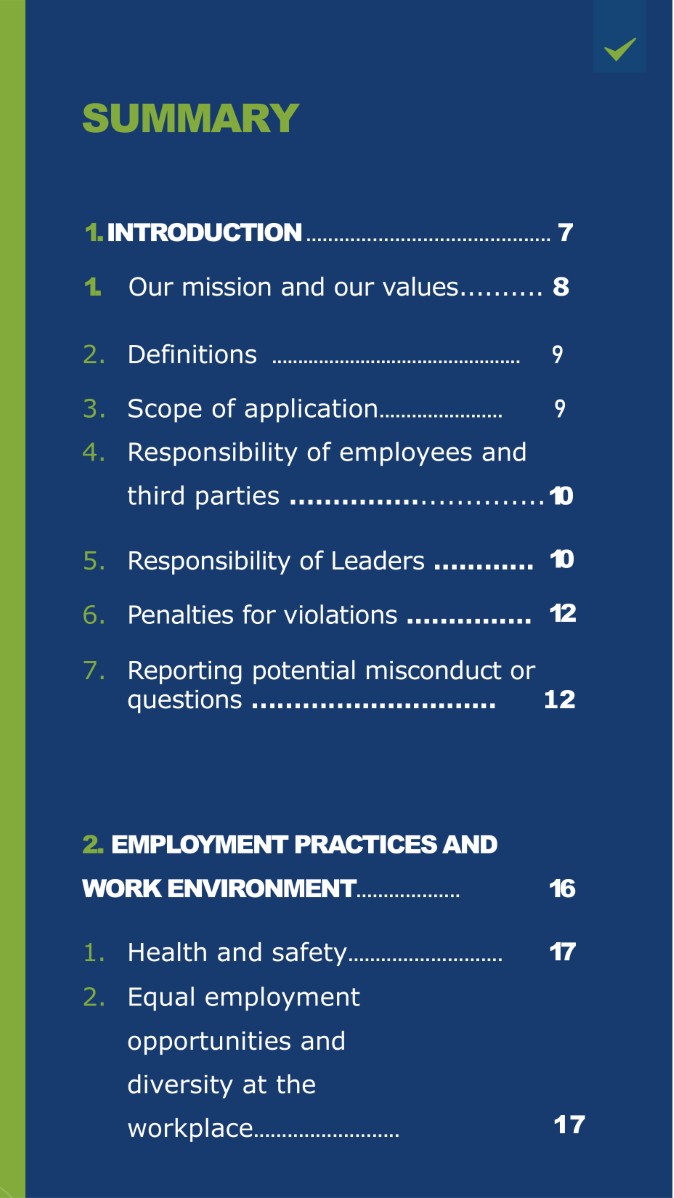
1.INTRODUCTION............................................ 7 1. Our mission and our values.......... 8 2. Definitions ................................................ 9 3. Scope of application....................... 9 4. Responsibility of employees and third parties .............................10 10 12 5. Responsibility of Leaders ............ 6. Penalties for violations ............... 7. Reporting potential misconduct or questions ............................. 12 2. EMPLOYMENT PRACTICES AND WORK ENVIRONMENT................... 16 17 1. Health and safety............................ 2. Equal employment opportunities and diversity at the workplace.......................... SUMMARY 17
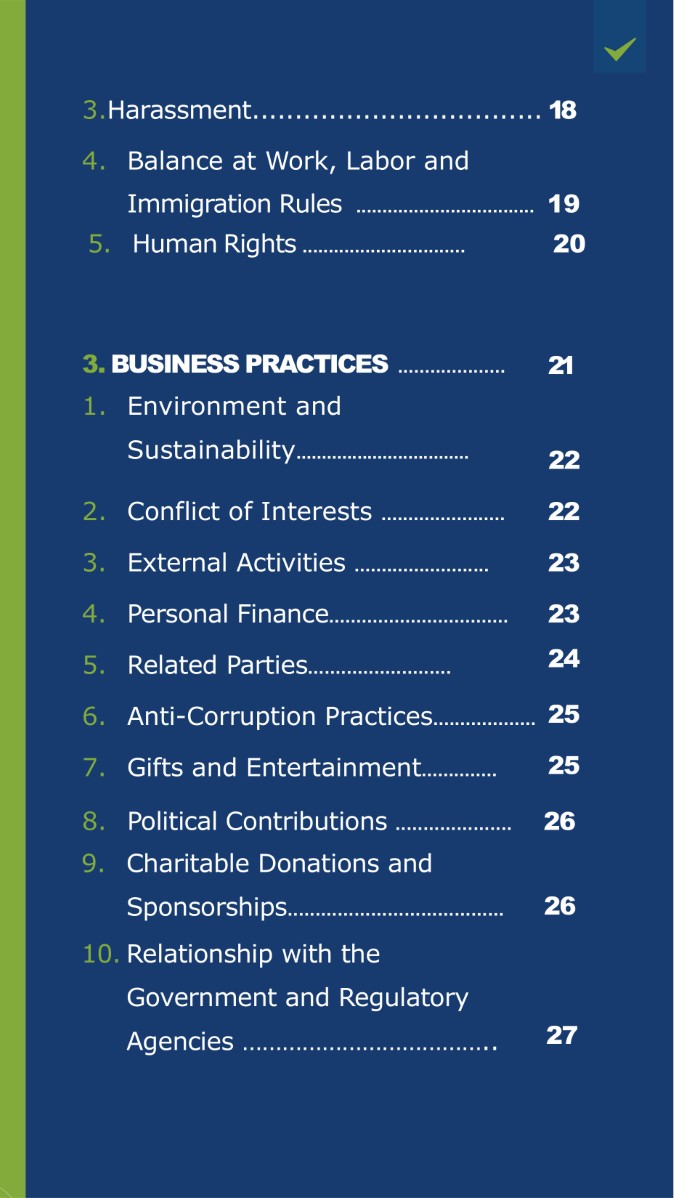
3.Harassment.................................. 18 4. Balance at Work, Labor and Immigration Rules .................................. 19 5. Human Rights ............................... 20 21 3. BUSINESS PRACTICES .................... 1. Environment and Sustainability.................................. 22 2. Conflict of Interests ....................... 22 3. External Activities ......................... 23 4. Personal Finance................................. 23 5. Related Parties.......................... 24 6. Anti-Corruption Practices................... 25 7. Gifts and Entertainment.............. 25 8. Political Contributions ..................... 26 9. Charitable Donations and Sponsorships....................................... 10. Relationship with the Government and Regulatory Agencies ...................................... 26 27
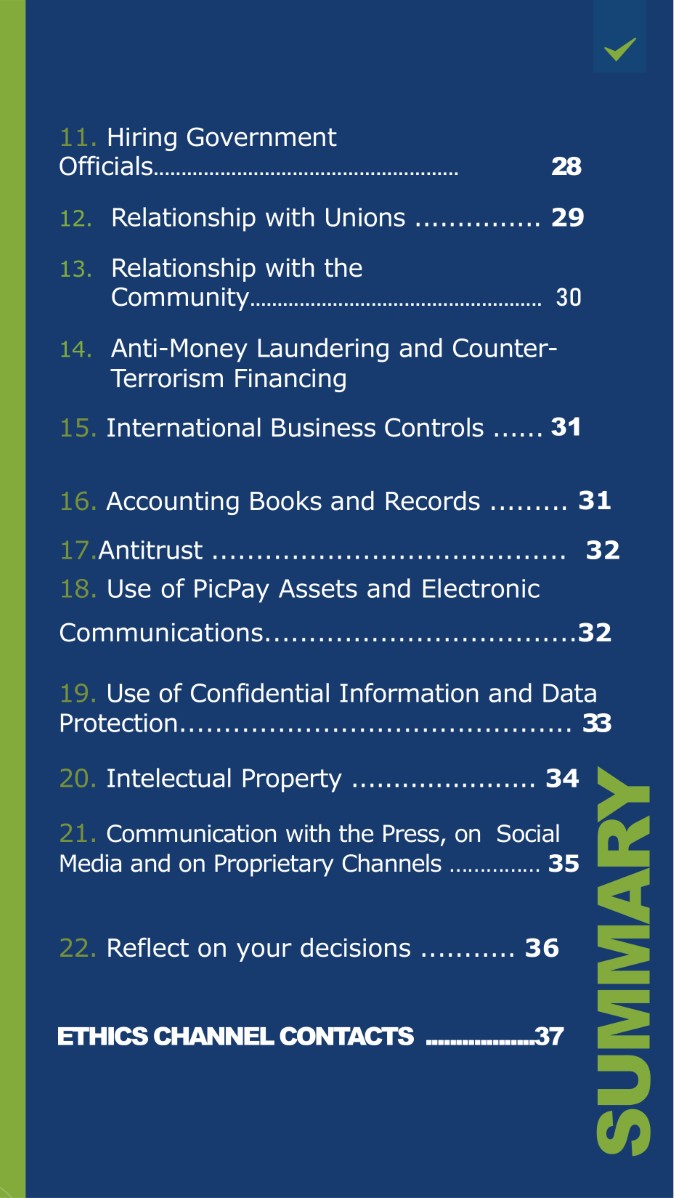
11. Hiring Government Officials....................................................... 28 12. Relationship with Unions ............... 29 13. Relationship with the Community..................................................... 30 14. Anti-Money Laundering and Counter- Terrorism Financing 15. International Business Controls ...... 31 16. Accounting Books and Records ......... 31 17.Antitrust ........................................ 32 18. Use of PicPay Assets and Electronic Communications...................................32 19. Use of Confidential Information and Data Protection............................................ 33 20. Intelectual Property ...................... 34 21. Communication with the Press, on Social Media and on Proprietary Channels ............... 35 22. Reflect on your decisions ........... 36 ETHICS CHANNEL CONTACTS ..................37 SUMMARY
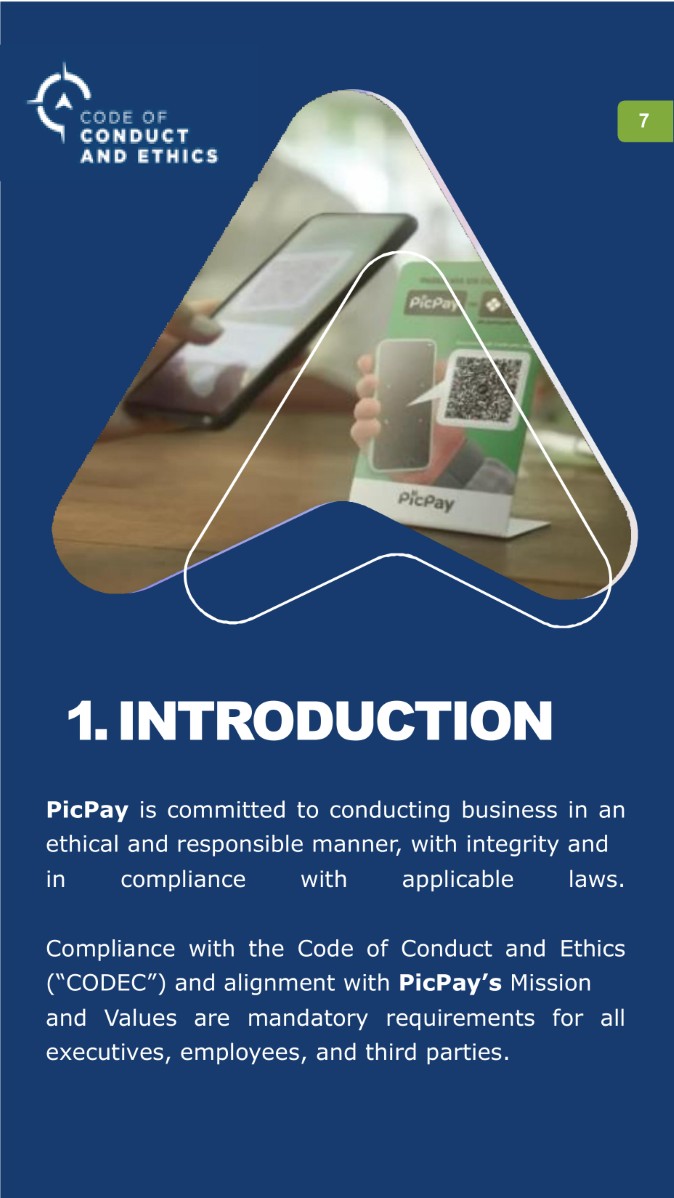
1.INTRODUCTION PicPay is committed to conducting business in an ethical and responsible manner, with integrity and in compliance with applicable laws. Compliance with the Code of Conduct and Ethics ("CODEC") and alignment with PicPay's Mission and Values are mandatory requirements for all executives, employees, and third parties. 7
OUR MISSION AND VALUES "To be the best at everything we set out to do, with absolute focus on our activities, ensuring the best products and services for our customers, strength and reliability for our suppliers, profitability for our shareholders, and the opportunity for a better future for all employees." MISSION VALUES 1.1 Ownership Mindset Determination Discipline Avaiability Transparency Humility Simplicity 8
The Code of Conduct and Ethics (CODEC) applies to all employees and third parties. For certain areas, an Industry-Specific Code of Conduct may also apply, linked to this Code of Conduct and Ethics, with the purpose of complementing responsibilities and defining specific standards of conduct for professionals operating in those áreas. DEFINITIONS SCOPE OF APPLICATION 1.2 1.3 9 "Misconduct" means any violation or suspected violation of this Code, policies, procedures and processes, or applicable laws or regulations. "Leader" or "Leaders" means any executive or employee with responsibility for supervising PicPay's business activities or the activities of other employees. "Employee" or "Employees" means all PicPay employees hired on a fixed-term basis, indefinite term basis, or as interns, executive-officers, as well as members of the Board of Directors. "Third Parties" means any business partner, outsourced company, supplier, service provider, independent contractor, and related parties. "PicPay" consists of the following companies: PicS N.V., PicPay Instituição de Pagamento S.A., PicPay Bank – Banco Múltiplo S.A., PicPay Invest Distribuidora de Títulos e Valores Mobiliários Ltda., Crednovo SEP S.A., and other controlled companies.
All individuals must: (a) act ethically; (b) read, understand, and comply with the Code; (c) comply with all applicable laws and regulations; (d) understand the policies, procedures, and processes applicable to their activities; and (e) complete all required training and obtain the necessary certifications. RESPONSIBILITY OF EMPLOYEES AND THIRD PARTIES 1.4 10 In addition to their responsibilities as Employees, Leaders are responsible for creating an environment that promotes compliance with the CODEC. Leaders must lead by example and are responsible for encouraging and engaging their teams to comply with the CODEC guidelines, demonstrating with conviction the proper application of the CODEC and PicPay's policies. Monitoring the integrity of Employees is as important as monitoring their performance. Leaders must also foster an environment in which Employees are encouraged to express dissenting opinions and to seek guidance and support regarding the CODEC, policies, and ethical conduct. RESPONSIBILITY OF LEADERS 1.5
Leaders are expected to: ●Demonstrate through words and actions that ethics are paramount.; ●Lead by example; ●Ensure that ethics always prevail, even when in conflict with a business goal or objective; ●Ensure open communication, encouraging Employees to ask questions about the Mission, Values, and the CODEC; ●Guide Employees on the CODEC guidelines to prevent unethical conduct; ●Upon becoming aware of any Misconduct, immediately contact the Compliance department and cooperate in good faith with such department in the event of investigations; ●Recognize Employees who report potential misconduct as defenders of the Mission, Values, and the CODEC; ●Avoid any form of retaliation against those who report potential Misconduct or cooperate with an investigation; and ●Encourage Employees to report violations, whether they are involved. If an Employee admits their own misconduct, this attitude may be considered in any disciplinary process 11
12 Failure to comply with the CODEC or with PicPay's policies will subject the offender to disciplinary measures, which may include fines, contract termination, and other consequences, as permitted by law. In the case of third parties, any violation of the guidelines set forth in the CODEC, once investigated and confirmed, will constitute a breach of trust and may result in contract termination. Penalties for violations 1.6 If employees or third parties have questions about the CODEC or become aware of a potential misconduct, they should preferably contact the Ethics Channel or the Compliance or Human Resources departments. REPORTING POTENTIAL MISCONDUCT OR QUESTIONS 1.7
13 Reporting concerns or complaints is a fundamental part of PicPay's Compliance Program. PicPay seeks to be informed of all employees' concerns so that it can address them appropriately. If an employee becomes aware of or suspects a violation of the CODEC, company policies, or the law, such concerns must be reported immediately, unless prohibited by law. It is not necessary to know whether a specific action constitutes a violation; however, it is necessary to raise concerns and report any situation that may represent a violation. Employees must not delegate the responsibility of reporting such concerns to others. Nothing in this CODEC prevents employees from reporting potential violations of the law to government authorities. The Ethics Channel is the tool through which potential violations of the CODEC, company policies, internal procedures, and applicable legislation may be reported to PicPay. All reports will be forwarded and handled internally by an autonomous and impartial team, always ensuring confidentiality and professional secrecy. Everyone may access the Ethics Channel, which is available not only to PicPay employees, but also to customers, suppliers, service providers, partners, affected communities, or any citizen who wishes to make contact. PicPay encourages its stakeholders to use the Ethics Channel in good faith, with responsibility and a commitment to honesty, to provide the company with useful information to identify potential irregularities.
14 The Ethics Channel is an important tool within PicPay's Compliance Program and operates as follows: Reports may be submitted through the communication channels (website, telephone, email, or directly to PicPay's Compliance professionals). Reports may be made anonymously or with identification, at the discretion of the reporting party. In the case of reports submitted through the Ethics Channel, an independent and specialized company will receive the report, conduct a preliminary assessment, and forward the information for appropriate handling by PicPay's Compliance professionals. After a complete and impartial analysis of the facts, the case is closed, and a response is recorded for the reporting party. Always remember to note the protocol number and monitor the progress of the report, as well as to provide additional information, if necessary or requested. Cooperationion with Investigations Everyone has a duty to cooperate with any internal or external investigations regarding allegations of improper conduct and must provide honest and accurate information. Never alter or destroy documents or evidence to prevent or interfere with any investigation.
Non-Retaliation The handling of reports and internal investigations will observe the principles of objectivity, confidentiality, impartiality, and independence, and reporting parties will be protected against any retaliation or negative consequences. Acts of retaliation will not be tolerated. While it is PicPay's desire to address matters internally, nothing in CODEC or any other policy of PicPay or agreement with PicPay should discourage you from (i) reporting, cooperating, communicating or filing a charge or complaint with the U.S. Securities and Exchange Commission (the "SEC") or any other governmental or law enforcement entity concerning possible violations of any legal or regulatory requirement, including any violation of the securities laws, antitrust or competition laws, environmental laws or any other federal, state or foreign law, rule or regulation, to the appropriate regulatory authority; or (ii) making disclosures, including providing documents or other information to any governmental entity that are protected under the whistleblower provisions of any applicable law or regulation without notice to or approval of PicPay, so long as (1) such communications and disclosures are consistent with applicable law and (2) the information disclosed was not obtained through a communication that was subject to the attorney-client privilege (unless disclosure of that information would otherwise be permitted by an attorney pursuant to the applicable federal law, attorney conduct rules or otherwise). CODEC should not be construed to prohibit you from testifying, participating or otherwise assisting in any state or federal administrative, judicial or legislative proceeding or investigation. PicPay will not limit your right to receive an award for providing information to the SEC or any other government agency pursuant to the whistleblower provisions of any applicable law or regulation. Any provisions of any agreement between PicPay and any employee or former employee that is inconsistent with the above language or that may limit the ability of any person to receive an award under the whistleblowing provisions of applicable law is deemed invalid and will not be enforced by PicPay. Employees shall not discharge, demote, suspend, threaten, harass or in any other manner discriminate or retaliate against any other employee because any person (i) makes a good faith report of a violation; (ii) reports or makes disclosures to, or cooperates, communicates, or filed charges or complaints with the SfEC or any other governmental or law enforcement entity; or (iii) seeks or receives a whistleblower award for providing information to the SEC or any other government agency pursuant to the whistleblower provisions of any applicable law or regulation. 15

12 Any waiver or amendment of CODEC for any executive officer, the principal financial officer, the principal accounting officer, the controller or any person performing similar functions or director in each case, of PicS N.V. may be made only by the Board of Directors of PicS N.V. and will be promptly disclosed as required by law or the requirements of the SEC and the Nasdaq Stock Market LLC. Contact the Ethics Channel Website:https://www.canaldeetica.com.br/picpay Phone: +55 0800 591 1875 E-mail:picpay@canaldeetica.com.br Available 24 hours a day, 7 days a week. WAIVER AND AMENDMENTS 1.8

2. EMPLOYMENT PRACTICES AND WORK ENVIRONMENT PicPay's employment practices are guided by a commitment to treat all Employees in a safe and respectful manner, in compliance with applicable laws and regulations. PicPay expects third parties to share the same principles regarding employment practices and the work environment. 16
PicPay is committed to providing a safe work environment. Each employee is responsible for observing the safety rules and practices applicable to their work. Employees are also responsible for taking the necessary precautions to protect themselves and their coworkers, including immediately reporting accidents, injuries, and unsafe practices or conditions. PicPay is also committed to providing a workplace free from the risks associated with the use of drugs and alcohol. Employees must perform their duties free from the use of any substance that may impair their performance or compromise workplace safety, including illicit drugs and alcohol. PicPay is committed to ensuring that all candidates have equal employment opportunities, regardless of race, color, ethnicity, nationality, age, gender, religion, disability, sexual orientation, or any other status protected by law. HEALTH AND SAFETY EQUAL EMPLOYMENT OPPORTUNITIES AND DIVERSITY AT THE WORKPLACE 2.1 2.2 17
HARRASSMENT 2.3 18 PicPay also develops and maintains a diverse and inclusive workforce, recognizing that a diverse combination of backgrounds, skills, and experiences maximizes our ability to achieve our objectives and provides us with a sustained competitive advantage. PicPay will ensure that only legitimate job-related requirements and procedures are used with respect to recruitment, selection, promotion, transfer, and disciplinary measures, including termination, compensation, benefits, job classification, dismissal, training, and educational programs. PicPay is committed to providing a workplace free from violence and moral and sexual harassment. PicPay will not tolerate harassment by its employees or by third parties providing services to the company. Harassment encompasses a wide range of offensive behaviors, whether verbal, written, or physical. Such behaviors interfere with an individual's work performance and create an intimidating and hostile environment. 18
19 PicPay complies with all applicable labor laws. Employees must never request that other employees or third parties violate such laws (for example, requesting that an employee work additional hour without proper compensation). PicPay recognizes employees' right to participate in the political process or in any association as private individuals. However, employees may only engage in such activities outside of working hours and using their own resources. Employees must not use PicPay's time, resources, facilities, assets, or the company's name for such purposes without prior express written authorization. PicPay is also committed to hiring only individuals who are legally authorized to work in the country in which they are seeking employment. BALANCE AT WORK, LABOR AND IMMIGRATION 2.4
20 HUMAN RIGHTS 2.5 PicPay prohibits the use of child or forced labor and will not tolerate the exploitation of children, corporal punishment, or any form of abuse or conditions analogous to slavery. All individuals are equal before the law and, without distinction, are entitled to equal protection against any discrimination or incitement that violates the Universal Declaration of Human Rights.

3. BUSINESS PRACTICIES Employees and third parties must conduct business in an ethical, fair, and transparent manner with clients, consumers, suppliers, and competitors. 21
PicPay operates in compliance with all applicable environmental laws and is committed to supporting the economic, social, and cultural development of the communities in which it conducts business. All PicPay employees and third parties must respect the environment and use resources responsibly, including water, paper, and energy, avoiding waste and acting with socio-environmental responsibility. ENVIRONMENT AND SUSTAINABILITY 3.1 22 Employees must act in the best interests of the company while working at PicPay. A conflict of interest may arise whenever the personal or professional interests of an individual or group of employees are not aligned with PicPay's best interests. All employees must disclose to PicPay any potential conflicts of interest of which they are aware. CONFLICT OF INTERESTS 3.2
PicPay understands that an employee who directly or indirectly engages in any other activity or external business that may compete with PicPay's interests, or that is related to their professional activities, may give rise to a conflict of interest. In such cases, the employee must document the approval to engage in such activity from the head of the relevant area (Statutory Director or equivalent) and submit it to the Human Resources department, so that it is kept in the employee's personnel file, as well as to the Compliance department. EXTERNAL ACTIVITIES 3.3 23 PicPay encourages its employees to use financial resources responsibly, maintaining balanced personal finances and avoiding delinquency. Speculative investments and situations involving exposure to risk in general should be avoided, as they may impact on the employee's professional performance, create financial pressure, or negatively affect the appropriate use of time. PERSONAL FINANCE 3.4
Related Parties are individuals or legal entities that, directly or indirectly, control PicPay, are controlled by PicPay or have influence over PicPay. Relationships between related parties are common for the conduct of business and for corporate strategy; however, it is necessary to observe the limits established by local legislation, avoiding potential conflicts of interest and harm to PicPay's reputation. Transactions with related parties must be carried out under market conditions and with transparency, always in PicPay's best interests. Transactions with related parties may be subject to specific policies, procedures, and additional approvals. RELATED PARTIES 3.5 24 BUSINESS ETHICS
The offering of corporate gifts and entertainment for legitimate business purposes must be reasonable and comply with PicPay's internal policies. The offering of cash or cash equivalents is not permitted. Gifts and entertainment involving public officials are subject to additional policies, procedures, and approvals. Employees must not accept a gift if they believe that such action is intended to influence them or could, in fact, result in the influence of a business decision. For further information, please refer to the applicable policy. GIFTS AND ENTERTAINMENT 3.7 25 PicPay has zero tolerance for any form of bribery or corruption. Bribery and corruption involve receiving, providing, offering, or promising, directly or through third parties, anything of value to entities or agents, whether public or private, for the purpose of improperly influencing their actions or obtaining an undue advantage. PicPay prohibits anyone acting on its behalf from offering or receiving bribes or improper payments. ANTI-CORRUPTION PRACTICIES 3.6
It is prohibited to make, on behalf of PicPay, any contributions in the form of money, goods, or services to political campaigns or causes. Employees' individual right to engage in civic matters and to participate, as citizens, in political processes will be respected. However, such participation must take place outside working hours, and, in such circumstances, it must be made clear that any political expressions are personal and not those of the company. Philanthropic donations to non-profit organizations and to employees are permitted in limited circumstances, in accordance with internal policies. Donations and sponsorships involving public entities must comply with local legislation and be previously approved by the Compliance area. PILITICAL CONTRIBUTIONS CHARITABLE DONATIONS AND SPONSORSHIPS 3.8 3.9 26
PicPay operates transparently in its interactions with public officials. Employees must avoid any interaction that may create the appearance of impropriety or unlawful conduct. Any form of fraud is strictly prohibited. Payments to government agents or authorities are prohibited unless expressly permitted by law and approved under PicPay's governance framework. PicPay fully cooperates with national and foreign inspection authorities. No employee shall obstruct the actions, inspections, or investigations of any authority, and all employees must fully cooperate with such activities as required by law. If any employee receives a notice, request for information or documents, or is contacted by a public entity, the Compliance area must be immediately notified. 27 RELATIONSHIP WITH THE GOVERMENT AND REGULATORY AGENCIES 3.10
28 HIRING GOVERNMENT OFFICIALS 3.11 PicPay may only hire a current or former public official, civil servant, or individuals related to them after duly verifying that the engagement is permitted by law and does not create the impression that the contract is intended for an improper purpose. PicPay respects employees' right to freedom of association, collective bargaining, and the formation of labor unions. The management of labor relations is guided by a commitment to dialogue and transparent negotiation, grounded in mutual respect, compliance with applicable legislation, and adherence to the ethical and integrity guidelines set forth in this Code of Conduct and Ethics (CODEC). RELATIONSHIP WITH UNIONS 3.12
29 PicPay maintains ongoing channels of communication with the community, as it understands that strong and transparent engagement helps identify the specific characteristics and needs of each community. This openness is reflected in actions and initiatives that benefit the community, such as PicPay-led programs, as an authentic and open relationship with communities adds further value to the business and generates mutual benefits for all involved. RELANTIONSHIP WITH THE COMMUNITY 3.13
PicPay complies with all applicable anti-money laundering (AML) laws and discloses information as required by law. Money laundering is an attempt by individuals or organizations to conceal the proceeds of their crimes, making such proceeds appear legitimate. Likewise, PicPay also complies with counter terrorist financing (CTF) regulations when there is an intent to cause social terror or to endanger individuals or assets, as well as to disrupt public order. All employees and third parties must remain attentive to suspicious activities with such purposes and report them, as soon as they are identified, to the AML area. ANTI-MONEY LAUNDERING AND CONTER-TERRORISM FINANCING 3.14 30
INTERNAL BUSINESS CONTROLS 3.15 31 PicPay maintains transparent, accurate, and complete accounting and financial records in compliance with applicable laws, accounting standards, internal controls, and accounting policies. False, misleading, or incomplete accounting records are strictly prohibited. ACCONTING BOOKS AND RECORDS 3.16 PicPay complies with all applicable laws related to its business segments concerning international trade, including economic sanctions and embargoes that restrict or prohibit trade and transactions with certain countries, organizations, entities, and individuals. Employees must take appropriate measures to ensure that international transactions are not prohibited by such sanctions or embargoes.
32 PicPay is committed to a policy of lawful competition based on the merits of its products and services. The focus is on meeting customers' needs rather than limiting competitors' opportunities. Employees must not engage in conduct that may reduce free and fair competition, such as agreements with other companies or the manipulation of bidding or procurement processes. Employees must not offer, request, or exchange information with competitors regarding prices, proposals, market shares, or other relevant competitive information. ANTITRUST 3.17 PicPay's assets made available to employees, including credit cards, equipment, facilities, electronic devices, and information technology systems, must be used responsibly and solely for legitimate business purposes. USE OF PICPAY ASSESTS AND ELETRONIC COMMUNICATIONS 3.18
33 All employees and third parties must ensure the protection of non-public information to which they may have access while working for PicPay. Such information may include details about the organization, prices, profits, suppliers, customer data, or employee data, among others. Confidential information may only be shared with individuals outside PicPay in accordance with internal policies and applicable legislation. PicPay reserves the right to inspect, monitor, and control the use of these assets at any time, including email systems and other forms of electronic communication. Any information generated, received, or stored in any of these systems is the property of PicPay. In addition, employees are prohibited from using PicPay's assets to promote inappropriate content or content unrelated to their work. USE OF CONFIDENTIAL INFORMATION AND DATA PROTECTION 3.19
34 Specifically, regarding personal data, PicPay respects the privacy of its employees, customers, suppliers, and other third parties, using the data obtained solely for legitimate business purposes and always in compliance with applicable legislation and related policies. In case of questions regarding the use of personal data, please consult the Privacy team. Employees must protect the Intellectual Property (IP) of PicPay and third parties, including copyrights, patents, trademarks, and trade secrets. To the extent permitted by law or contract, PicPay shall hold the IP rights arising from employees' activities while they are employed by PicPay. Employees must not use IP rights in a manner inconsistent with PicPay's ownership rights. In case of questions, please consult the Institutional Legal team. INTELECTUAL PROPERTY 3.20
PicPay is committed to providing transparent, accurate, and truthful communications to the public. Employees must not interact with the press or speak on behalf of PicPay unless previously authorized in accordance with applicable policies. PicPay respects the privacy and freedom of expression of its employees and third parties. However, social media must not be used to disclose opinions or information on behalf of PicPay. Any employee who uses social media must do so responsibly and, in a manner, consistent with PicPay's values, in order to avoid negative impacts on the Company's image and reputation. No communication tool—including websites, podcasts, intranet platforms, corporate radio, or similar channels—may be created in the name of PicPay without prior approval from the Communications team. Obeying the law, both in letter and in spirit, is the foundation on which PicPay's ethical standards are built. All Employees must respect and obey the laws of the cities, states and countries in which the Company operates. Although not all employees are expected to know the details of these laws, it is important to know enough to determine when to seek advice from supervisors, managers or other appropriate personnel. Employees should strive to identify and raise potential issues before they lead to problems, and should ask about the application of CODEC whenever in doubt. Any questions relating to how these policies should be interpreted or applied should be addressed to the General Counsel. COMMUNICATIONS WITH THE PRESS, ON SOCIAL MEDIA AND ON PROPRIETARY CHANNELS 3.21 35
36 In certain situations, the appropriate outcome of a decision is obvious and the decision can be made easily. However, in many cases, the appropriate outcome is not so clear, or we may face time constraints and internal pressures. When faced with a difficult situation, the following questions can help us make the right decision: 1. Is it legal? 2. Is it consistent with the Company's policies? 3. Would I feel comfortable if this became public? 4. Does it reflect PicPay's values? A "no" answer to at least one of these questions means that the decision or action is unethical, inappropriate, or could cause serious negative consequences for the Company and the employee and therefore, should not be adopted. In case of doubt regarding the answer to any of these questions, please consult the Compliance team. REFLECT ON YOUR DECISIONS 3.22
36 It is PicPay's policy to make full, fair, accurate, timely and understandable disclosure in compliance with all applicable laws and regulations in all reports and documents it files with, or submits to, the SEC and all other governmental, quasi-governmental and self- regulatory bodies and in all other public communications made by PicPay. Employees shall not knowingly falsify information, misrepresent material facts, or omit material facts, necessary to avoid misleading the Company's independent registered public accounting firm or investors. Employees shall never take any action to coerce, manipulate, mislead, or fraudulently influence PicPay's independent registered public accounting firm in the performance of its audit or review PicPay's financial statements. TIMELY AND TRUTHFUL PUBLIC DISCLOSURE 3.23

36 Employees are prohibited by PicPay policy and by law from buying or selling publicly traded securities for any purpose at a time when in possession of "material non- public information." This conduct is known as "insider trading." If you have any question about whether a particular transaction may constitute insider trading and what you need to do in such case, you should consult PicPay's Insider Trading Policy. INSIDER TRADING 3.24

ETHICS CHANNEL CONTACTS 37 ETHICS CHANNEL COMPLIANCE The PicPay Group Ethics Channel was established to provide a confidential and secure communication channel for our employees, customers, and third parties to report suspected or actual violations of our values, beliefs, standards, Code of Conduct and Ethics (CODEC), or applicable legislation. Website: https://www.canaldeetica.com.br/picpay Phone: +55 0800 591 1875 Email:picpay@canaldeetica.com.br Available 24 hours a day, 7 days a week.