v3.26.1
Pay vs Performance Disclosure
12 Months Ended
Dec. 31, 2025
USD ($)
Dec. 31, 2024
USD ($)
Dec. 31, 2023
USD ($)
Dec. 31, 2022
USD ($)
Dec. 31, 2021
USD ($)
Pay vs Performance Disclosure          
Pay vs Performance Disclosure, Table

Pay Versus Performance Table

As required by Item 402(v) of Regulation S-K, we are providing information regarding the relationship between executive compensation and our financial performance for each of the last five completed fiscal years. In determining the “compensation actually paid” to our named executive officers (“NEOs”), we are required to make various adjustments to amounts that have been reported in the Summary Compensation Table in previous years, as the SEC-mandated calculation for compensation actually paid differs from that required for the Summary Compensation Table. The table below summarizes both the compensation values reported in our Summary Compensation Table, as well as the compensation actually paid, as calculated in accordance with 402(v) of Regulation S-K, for the 2021, 2022, 2023, 2024, and 2025 fiscal years. Note that for our NEOs other than our principal executive officer (the “PEO”), compensation is reported as an average.


Value of initial fixed $ 100 investment based on:


Year

Summary
compensation
table total
for PEO - Yamini
Rangan ($)

Compensation
actually
paid to PEO -
Yamini Rangan
($)(1)


Summary
compensation
table total for
PEO - Brian
Halligan ($)

Compensation
actually paid
to PEO - Brian
Halligan ($)(1)


Average
summary
compensation
table total for
non- PEO
NEOs ($)

Average
compensation
on actually
paid to non-
PEO NEOs
($)(2)


Total
shareholder
return ($)(3)

Peer group
total
shareholder
return ($)(4)

Net Income
(in thousands)
($)(5)

Constant currency revenue growth (%) (6)

Annual
recurring
revenue
 (in
thousands)
($)(7)

2025

20,126,620

(2,304,999)


N/A

N/A


7,325,699

1,773,091


101

258

45,911

18.2%

3,516,775

2024

24,857,546

31,871,616


N/A

N/A


6,314,257

7,810,359


176

201

4,628

20.8%

2,945,744

2023

25,881,704

49,560,889


N/A

N/A


6,272,830

12,304,618

(7)

366

221

(176,295)

25.2%

2,442,240

2022

11,765,439

(7,912,847)


N/A

N/A


2,520,841

(5,284,187)

(7)

182

133

(112,749)

39.1%

1,990,913

2021

7,318,462

22,913,424

(10)

2,996,527

16,490,831

(10)

3,116,941

12,026,911

(8)

416

207

(77,837)

44.6%

1,495,038


(1)
The amounts reported represent the “compensation actually paid” to our PEOs, computed in accordance with Item 402(v) of Regulation S-K, but do not reflect the actual amount of compensation earned by or paid to our PEOs in the applicable year. In accordance with Item 402(v) of Regulation S-K, the following adjustments were made to the amount reported for our PEOs in the “Total” column of the Summary Compensation Table for each year to calculate compensation actually paid:


Year


Summary Compensation Table Total for PEO ($)


Summary Compensation Table Value of Equity Awards ($)(a)


Equity Award Adjustments($)(b)


Compensation Actually Paid to PEO ($)


2025 – Yamini Rangan


20,126,620


(18,675,770

)


(3,755,849

)


(2,304,999

)

2024 – Yamini Rangan


24,857,546


(23,716,796

)


30,730,866


31,871,616


2023 – Yamini Rangan


25,881,704


(25,881,703

)


49,560,888


49,560,889


2022 – Yamini Rangan


11,765,439


(11,738,152

)


(7,940,134

)


(7,912,847

)

2021 – Yamini Rangan


7,318,462


(6,669,726

)


22,264,688


22,913,424


2021 – Brian Halligan


2,996,527


(2,994,888

)


16,489,192


16,490,831


(a)
The amounts reported represent the sum of the amounts reported in the “Stock Awards” and “Option Awards” columns of the Summary Compensation Table for the applicable fiscal year.
(b)
The equity award adjustments for each fiscal year include the following: (i) the addition of the year-end fair value of any equity awards granted in the year that are outstanding and unvested as of the end of the year; (ii) for any awards granted in prior years that are outstanding and unvested as of the end of the fiscal year, the addition (or subtraction, if applicable) of the change in fair value between the end of the prior fiscal year and the end of the applicable fiscal year; (iii) for awards that are granted and vest in the same fiscal year, the addition of the fair value of such awards as of the vesting date; (iv) for awards granted in prior years that vest during the fiscal year, the addition (or subtraction, if applicable) of the change in fair value between the end of the prior fiscal year and the vesting date of such awards; and (v) for awards granted in prior years that fail to meet the applicable vesting conditions during the fiscal year, the subtraction of the fair value of such awards at the end of the prior fiscal year. The valuation assumptions used to calculate fair values varied from those disclosed at the time of grant. The fair value of RSUs and PSUs used to arrive at compensation actually paid is measured using the closing common stock price on the date of remeasurement. The fair value of stock option awards used to arrive at compensation actually paid is measured using a binomial lattice model, as this valuation methodology is expected to yield a more accurate value of in-the-money options. This contrasts to our use of the Black-Scholes option pricing model for stock options at the time of grant (i.e., at-the-money). The assumptions used in estimating the fair value of stock options awards are as follows:


Year

Volatility

Risk-free Rate

Early Exit Multiple

Dividend Yield

 2025

49.2% - 53.1%

3.7% - 4.5%

2.0

0.0%

 2024

49.5% - 53.4%

3.6% - 4.6%

2.0

0.0%

 2023

45.9% - 53.2%

3.4% - 4.8%

2.0

0.0%

 2022

44.4% - 52.6%

1.4% - 3.9%

2.0

0.0%

 2021

42.1% - 46.8%

0.7% - 1.7%

2.0

0.0%


The amounts deducted or added in calculating the equity award adjustments are as follows:


Year


Year End Fair Value of Equity Awards ($)


Year over Year Change in Fair Value of Outstanding and Unvested Equity Awards ($)


Fair Value as of Vesting Date of Equity Awards Granted and Vested in the Year($)


Year over Year Change in Fair Value of Equity Awards Granted in Prior Years that Vested in the Year ($)


Fair Value at the End of the Prior Year of Equity Awards that Failed to Meet Vesting Conditions in the Year ($)


Total Equity Award
Adjustments ($)


2025 – Yamini Rangan


9,598,293


(10,062,611

)


1,184,900


(4,476,431

)


(3,755,849

)

2024 – Yamini Rangan


23,628,864


4,992,092


2,124,212


(14,302

)


30,730,866


2023 – Yamini Rangan


35,975,385


6,936,595


2,960,040


3,688,868


49,560,888


2022 – Yamini Rangan


5,490,606


(10,369,549

)


1,596,398


(4,657,589

)


(7,940,134

)

2021 – Yamini Rangan


8,012,630


9,652,349


1,202,902


3,396,807


22,264,688


2021 – Brian Halligan


4,555,670


7,633,629


898,486


3,401,407


16,489,192


(2)
The amounts reported represent the average “compensation actually paid” to the NEOs other than our PEOs as a group, computed in accordance with Item 402(v) of Regulation S-K. The amounts do not reflect the actual average amount of compensation earned by or paid to such NEOs as a group in the applicable year. In accordance with Item 402(v) of Regulation S-K, the following adjustments were made to the average of the amounts reported in the “Total” column of the Summary Compensation Table for the NEOs as a group (excluding our PEOs) for each year to determine the compensation actually paid, using the same methodology described above in footnote 1:


Year


Average Reported Summary Compensation Table Total for Non-PEO NEOs ($)


Average Summary Compensation Table Value of Equity Awards ($)(a)


Average Equity Award Adjustments ($)(b)


Average Compensation Actually Paid to Non-PEO NEOs ($)


 2025


7,325,699


(6,886,478

)


1,333,870


1,773,091


 2024


6,314,257


(5,928,882

)


7,424,984


7,810,359


 2023


6,272,830


(5,941,920

)


11,973,708


12,304,618


 2022


2,520,841


(2,311,060

)


(5,493,968

)


(5,284,187

)

 2021


3,116,941


(2,624,682

)


11,534,652


12,026,911


(a)
The amounts reported represent the average of the sum of the amounts reported in the “Stock Awards” and “Option Awards” columns in the Summary Compensation Table for the applicable fiscal year.
(b)
The equity award adjustments for each fiscal year include the amounts, methodology, and assumptions noted in footnote 1(b). The amounts deducted or added in calculating the equity award adjustments are as follows for the non-PEO NEOs:


Year


Year End Fair Value of Equity Awards ($)


Year over Year Change in Fair Value of Outstanding and Unvested Equity Awards ($)


Fair Value as of Vesting Date of Equity Awards Granted and Vested in the Year ($)


Year over Year Change in Fair Value of Equity Awards Granted in Prior Years that Vested in the Year ($)


Fair Value at the End of the Prior Year of Equity Awards that Failed to Meet Vesting Conditions in the Year ($)


Total Equity Award Adjustments ($)


2025


3,258,355


(1,894,737

)


791,762


(821,510

)


1,333,870


2024


5,907,216


1,055,064


530,697


(67,993

)


7,424,984


2023


7,917,232


1,739,396


1,370,130


946,950


11,973,708


2022


893,769


(2,932,292

)


300,275


(2,444,657

)


(1,311,063

)


(5,493,968

)

2021


3,992,368


4,684,468


787,675


2,070,141


11,534,652


(3)
Total shareholder return (“TSR”) represents the cumulative total return of an investment of $100 in our common stock. The measurement period for calculating TSR begins on December 31, 2020 and ends on the last day of the applicable fiscal year and has been calculated consistently with the information presented in the stock performance
graph in our 2025 Form 10-K. The company did not pay any dividends in the period from December 31, 2020 to December 31, 2025.
(4)
Represents the weighted peer group TSR. The peer group used for this purpose is the Nasdaq Computer Index, a published industry index that is used in the stock performance graph included in the 2025 Form 10-K. The measurement period is consistent with that used for TSR described in the footnote above.
(5)
The dollar amounts reported represent the amount of net income reflected in the company’s audited financial statements for the applicable fiscal year.
(6)
We chose constant currency revenue growth (“Revenue CC Growth”) as our Company Selected measure for evaluating Pay Versus Performance. Constant currency revenue is defined as the percentage increase in GAAP revenue growth year-over-year, adjusted for the impact of foreign exchange rates. It is calculated by converting current and comparative prior period revenue from currencies other than the U.S. Dollar into the U.S. Dollar at constant exchange rates rather than actual exchange rates in effect during the respective period. For example, 2025 Revenue CC Growth is calculated by applying 2024 exchange rates to 2025 GAAP revenue from currencies other than the U.S. Dollar, instead of using exchange rates in effect during 2025, and comparing that to 2024 GAAP revenue to determine year-over-year growth. While we consider numerous financial and non-financial performance measures for the purpose of evaluating and determining executive compensation, we consider Revenue CC Growth, which is the measure used to determine achievement of PSU awards, to be one of the most important performance measures used to link compensation actually paid to the PEO and other NEOs.
(7)
Annual Recurring Revenue (“ARR”) is presented as a supplemental measure. ARR is defined as the annual value of our customer subscription contracts as of the specified point in time excluding any commissions owed to our partners. For each Hub, this is the sum of customer ARR for the Starter, Basic, Professional and Enterprise subscriptions, plus applicable contacts (marketing only), Seats, or Add-Ons (e.g., reporting or ads). For multi-product customers, their ARR would be distributed across based on the value of each SKU/Hub for which they pay. In 2022, we began including our payments revenue run rate, defined as, on an annualized basis, the trailing three months of payments revenue, into the annual value of our customer subscription contracts. ARR can differ from revenue due to several factors. ARR is converted into U.S. dollars at fixed rates that are held consistent over time and may vary from those used for revenue or deferred revenue. ARR would exclude any impact for bad debt and partner commissions (as noted above) and would also differ from revenue due to timing of revenue recognition. While we consider numerous financial and non-financial performance measures for the purpose of evaluating and determining executive compensation, we consider ARR, which is one of the measures used to determine annual cash incentive compensation for our PEO and other NEOs, to be one of the most important performance measures.
(8)
Non-PEO NEOs for 2025 include Ms. Bueker, Mr. Halligan, Ms. Fisher and Mr. Shah. Ms. Fisher, our CLO and Secretary, joined on February 3, 2025 and was appointed an executive officer on December 31, 2025. Mr. Halligan transitioned to a non-employee director of the company on May 8, 2025. Ms. Bueker and Mr. Shah served as NEOs for the entirety of 2025.
(9)
Non-PEO NEOs for 2023 and 2024 include Ms. Bueker, Mr. Halligan, Ms. Harvey Dawson, and Mr. Shah. They served as NEOs for the entirety of 2023 and 2024.
(10)
Non-PEO NEOs for 2022 include Ms. Bueker, Mr. Halligan, Mr. Kelleher, Ms. Harvey Dawson, and Mr. Shah. Mr. Kelleher previously served as our General Counsel and Secretary and stepped down effective September 6, 2022. Ms. Harvey Dawson joined as Chief Legal Officer effective November 9, 2022. The remaining non-PEO NEOs served as NEOs for the entirety of 2022.
(11)
Non-PEO NEOs for 2021 include Ms. Bueker, Mr. Kelleher, and Mr. Shah. They served as NEOs for the entirety of 2021.
(12)
On September 7, 2021, Mr. Halligan transitioned from his role as Chairperson of the Board, CEO, and President and became Executive Chairperson of the Board, while Ms. Rangan transitioned from her prior role as Chief Customer Officer and succeeded Mr. Halligan as the company’s CEO. Full year compensation for Mr. Halligan and Ms. Rangan are included within the PEO column for 2021.
       
Company Selected Measure Name Annualrecurringrevenue        
Named Executive Officers, Footnote For 2025, our named executive officers were:


Name

Title

Yamini Rangan


Chief Executive Officer (“CEO”), President, and Director

Kate Bueker


Chief Financial Officer (“CFO”) and Treasurer

Erika Fisher


Chief Legal Officer (“CLO”) and Secretary

Dharmesh Shah


Co-founder, Chief Technology Officer, and Director

Brian Halligan (1)

Co-founder, Director, and Former Executive Chairperson of the Board


(1) Mr. Halligan transitioned to a non-employee director of the company, effective May 8, 2025.

       
Peer Group Issuers, Footnote
(4)
Represents the weighted peer group TSR. The peer group used for this purpose is the Nasdaq Computer Index, a published industry index that is used in the stock performance graph included in the 2025 Form 10-K. The measurement period is consistent with that used for TSR described in the footnote above.
       
Adjustment To PEO Compensation, Footnote
(1)
The amounts reported represent the “compensation actually paid” to our PEOs, computed in accordance with Item 402(v) of Regulation S-K, but do not reflect the actual amount of compensation earned by or paid to our PEOs in the applicable year. In accordance with Item 402(v) of Regulation S-K, the following adjustments were made to the amount reported for our PEOs in the “Total” column of the Summary Compensation Table for each year to calculate compensation actually paid:

Year


Summary Compensation Table Total for PEO ($)


Summary Compensation Table Value of Equity Awards ($)(a)


Equity Award Adjustments($)(b)


Compensation Actually Paid to PEO ($)


2025 – Yamini Rangan


20,126,620


(18,675,770

)


(3,755,849

)


(2,304,999

)

2024 – Yamini Rangan


24,857,546


(23,716,796

)


30,730,866


31,871,616


2023 – Yamini Rangan


25,881,704


(25,881,703

)


49,560,888


49,560,889


2022 – Yamini Rangan


11,765,439


(11,738,152

)


(7,940,134

)


(7,912,847

)

2021 – Yamini Rangan


7,318,462


(6,669,726

)


22,264,688


22,913,424


2021 – Brian Halligan


2,996,527


(2,994,888

)


16,489,192


16,490,831


(a)
The amounts reported represent the sum of the amounts reported in the “Stock Awards” and “Option Awards” columns of the Summary Compensation Table for the applicable fiscal year.
(b)
The equity award adjustments for each fiscal year include the following: (i) the addition of the year-end fair value of any equity awards granted in the year that are outstanding and unvested as of the end of the year; (ii) for any awards granted in prior years that are outstanding and unvested as of the end of the fiscal year, the addition (or subtraction, if applicable) of the change in fair value between the end of the prior fiscal year and the end of the applicable fiscal year; (iii) for awards that are granted and vest in the same fiscal year, the addition of the fair value of such awards as of the vesting date; (iv) for awards granted in prior years that vest during the fiscal year, the addition (or subtraction, if applicable) of the change in fair value between the end of the prior fiscal year and the vesting date of such awards; and (v) for awards granted in prior years that fail to meet the applicable vesting conditions during the fiscal year, the subtraction of the fair value of such awards at the end of the prior fiscal year. The valuation assumptions used to calculate fair values varied from those disclosed at the time of grant. The fair value of RSUs and PSUs used to arrive at compensation actually paid is measured using the closing common stock price on the date of remeasurement. The fair value of stock option awards used to arrive at compensation actually paid is measured using a binomial lattice model, as this valuation methodology is expected to yield a more accurate value of in-the-money options. This contrasts to our use of the Black-Scholes option pricing model for stock options at the time of grant (i.e., at-the-money). The assumptions used in estimating the fair value of stock options awards are as follows:


Year

Volatility

Risk-free Rate

Early Exit Multiple

Dividend Yield

 2025

49.2% - 53.1%

3.7% - 4.5%

2.0

0.0%

 2024

49.5% - 53.4%

3.6% - 4.6%

2.0

0.0%

 2023

45.9% - 53.2%

3.4% - 4.8%

2.0

0.0%

 2022

44.4% - 52.6%

1.4% - 3.9%

2.0

0.0%

 2021

42.1% - 46.8%

0.7% - 1.7%

2.0

0.0%


The amounts deducted or added in calculating the equity award adjustments are as follows:


Year


Year End Fair Value of Equity Awards ($)


Year over Year Change in Fair Value of Outstanding and Unvested Equity Awards ($)


Fair Value as of Vesting Date of Equity Awards Granted and Vested in the Year($)


Year over Year Change in Fair Value of Equity Awards Granted in Prior Years that Vested in the Year ($)


Fair Value at the End of the Prior Year of Equity Awards that Failed to Meet Vesting Conditions in the Year ($)


Total Equity Award
Adjustments ($)


2025 – Yamini Rangan


9,598,293


(10,062,611

)


1,184,900


(4,476,431

)


(3,755,849

)

2024 – Yamini Rangan


23,628,864


4,992,092


2,124,212


(14,302

)


30,730,866


2023 – Yamini Rangan


35,975,385


6,936,595


2,960,040


3,688,868


49,560,888


2022 – Yamini Rangan


5,490,606


(10,369,549

)


1,596,398


(4,657,589

)


(7,940,134

)

2021 – Yamini Rangan


8,012,630


9,652,349


1,202,902


3,396,807


22,264,688


2021 – Brian Halligan


4,555,670


7,633,629


898,486


3,401,407


16,489,192


Non-PEO NEO Average Total Compensation Amount $ 7,325,699 $ 6,314,257 $ 6,272,830 $ 2,520,841 $ 3,116,941
Non-PEO NEO Average Compensation Actually Paid Amount $ 1,773,091 7,810,359 12,304,618 (5,284,187) 12,026,911
Adjustment to Non-PEO NEO Compensation Footnote
(2)
The amounts reported represent the average “compensation actually paid” to the NEOs other than our PEOs as a group, computed in accordance with Item 402(v) of Regulation S-K. The amounts do not reflect the actual average amount of compensation earned by or paid to such NEOs as a group in the applicable year. In accordance with Item 402(v) of Regulation S-K, the following adjustments were made to the average of the amounts reported in the “Total” column of the Summary Compensation Table for the NEOs as a group (excluding our PEOs) for each year to determine the compensation actually paid, using the same methodology described above in footnote 1:


Year


Average Reported Summary Compensation Table Total for Non-PEO NEOs ($)


Average Summary Compensation Table Value of Equity Awards ($)(a)


Average Equity Award Adjustments ($)(b)


Average Compensation Actually Paid to Non-PEO NEOs ($)


 2025


7,325,699


(6,886,478

)


1,333,870


1,773,091


 2024


6,314,257


(5,928,882

)


7,424,984


7,810,359


 2023


6,272,830


(5,941,920

)


11,973,708


12,304,618


 2022


2,520,841


(2,311,060

)


(5,493,968

)


(5,284,187

)

 2021


3,116,941


(2,624,682

)


11,534,652


12,026,911


(a)
The amounts reported represent the average of the sum of the amounts reported in the “Stock Awards” and “Option Awards” columns in the Summary Compensation Table for the applicable fiscal year.
(b)
The equity award adjustments for each fiscal year include the amounts, methodology, and assumptions noted in footnote 1(b). The amounts deducted or added in calculating the equity award adjustments are as follows for the non-PEO NEOs:


Year


Year End Fair Value of Equity Awards ($)


Year over Year Change in Fair Value of Outstanding and Unvested Equity Awards ($)


Fair Value as of Vesting Date of Equity Awards Granted and Vested in the Year ($)


Year over Year Change in Fair Value of Equity Awards Granted in Prior Years that Vested in the Year ($)


Fair Value at the End of the Prior Year of Equity Awards that Failed to Meet Vesting Conditions in the Year ($)


Total Equity Award Adjustments ($)


2025


3,258,355


(1,894,737

)


791,762


(821,510

)


1,333,870


2024


5,907,216


1,055,064


530,697


(67,993

)


7,424,984


2023


7,917,232


1,739,396


1,370,130


946,950


11,973,708


2022


893,769


(2,932,292

)


300,275


(2,444,657

)


(1,311,063

)


(5,493,968

)

2021


3,992,368


4,684,468


787,675


2,070,141


11,534,652


Equity Valuation Assumption Difference, Footnote The valuation assumptions used to calculate fair values varied from those disclosed at the time of grant. The fair value of RSUs and PSUs used to arrive at compensation actually paid is measured using the closing common stock price on the date of remeasurement. The fair value of stock option awards used to arrive at compensation actually paid is measured using a binomial lattice model, as this valuation methodology is expected to yield a more accurate value of in-the-money options. This contrasts to our use of the Black-Scholes option pricing model for stock options at the time of grant (i.e., at-the-money). The assumptions used in estimating the fair value of stock options awards are as follows:


Year

Volatility

Risk-free Rate

Early Exit Multiple

Dividend Yield

 2025

49.2% - 53.1%

3.7% - 4.5%

2.0

0.0%

 2024

49.5% - 53.4%

3.6% - 4.6%

2.0

0.0%

 2023

45.9% - 53.2%

3.4% - 4.8%

2.0

0.0%

 2022

44.4% - 52.6%

1.4% - 3.9%

2.0

0.0%

 2021

42.1% - 46.8%

0.7% - 1.7%

2.0

0.0%


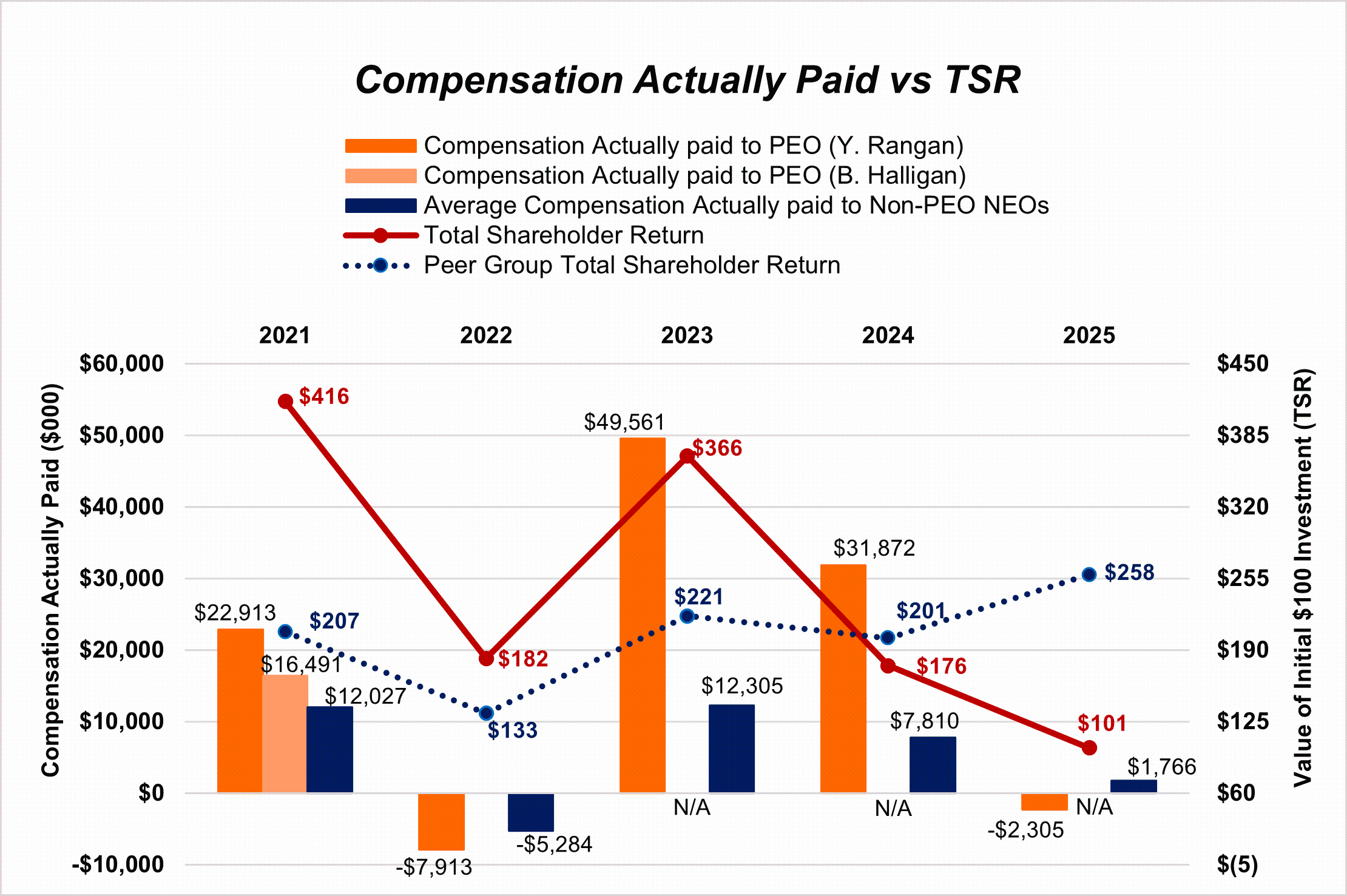
Compensation Actually Paid vs. Total Shareholder Return

Relationship Between Compensation Actually Paid, Total Shareholder Return, and Peer Group Total Shareholder Return

The graph below shows the relationship between the PEO and Average Non-PEO NEO compensation actually paid, the company’s cumulative TSR (assuming an initial fixed investment of $100 on December 31, 2020), and the company’s Peer Group (Nasdaq Computer Index) cumulative TSR (assuming an initial fixed investment of $100 on December 31, 2020), for the fiscal years ended December 31, 2021, 2022, 2023, 2024, and 2025:
img1874701_29.gif

       
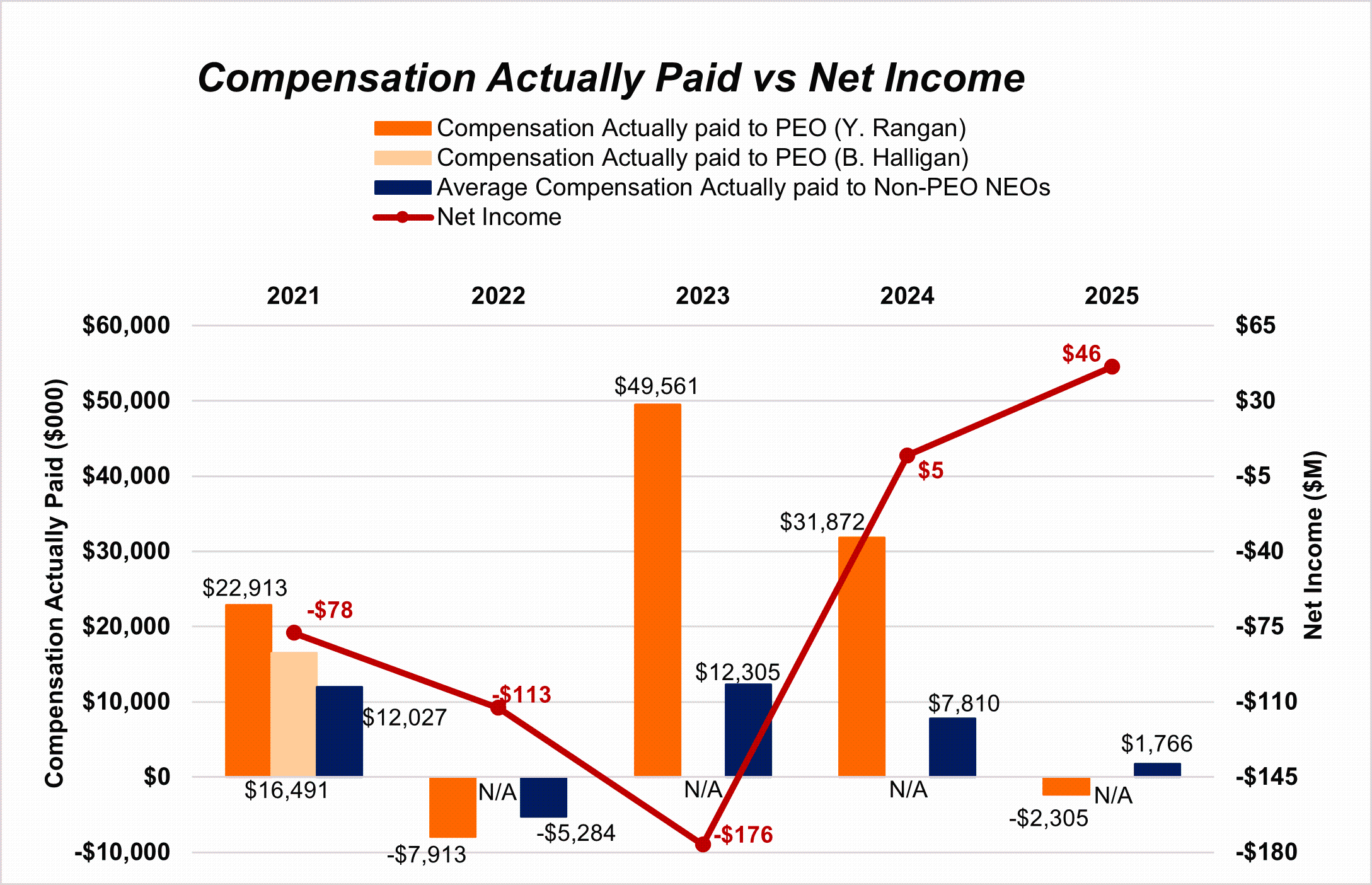
Compensation Actually Paid vs. Net Income

Relationship Between Compensation Actually Paid and Net Income

The graph below shows the relationship between the PEO and Average Non-PEO NEO compensation actually paid and net income (loss) for the fiscal years ended December 31, 2021, 2022, 2023, 2024 and 2025:
img1874701_30.gif

       
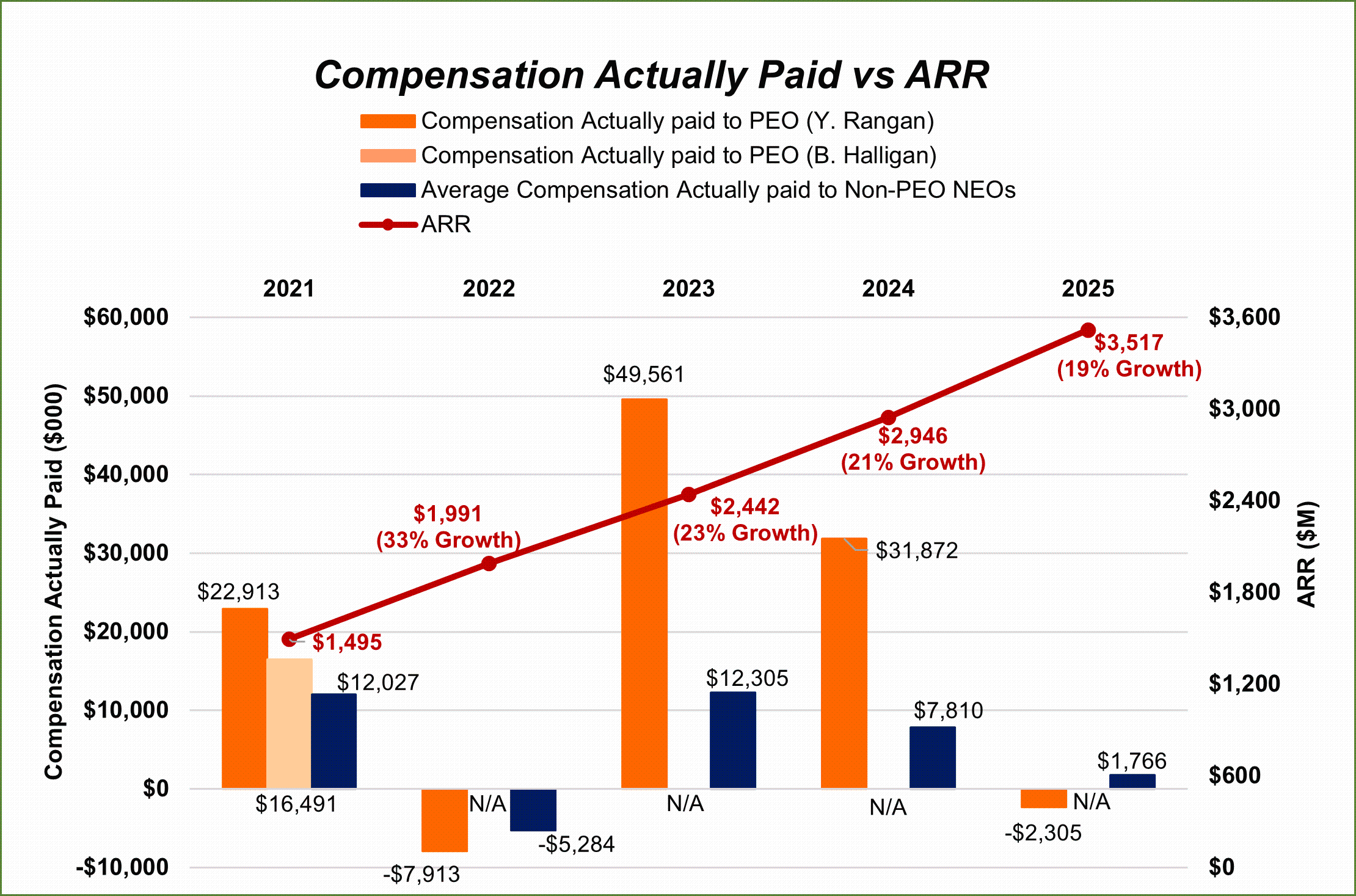
Compensation Actually Paid vs. Company Selected Measure

Relationship Between Compensation Actually Paid and ARR


The graph below reflects the relationship between the PEO and Average Non-PEO NEO compensation actually paid and ARR for the fiscal years ended December 31, 2021, 2022, 2023, 2024, and 2025. Please note that we have also included an additional supplemental disclosure showing growth percentage of ARR within the chart below.
 

img1874701_32.gif

       
Total Shareholder Return Vs Peer Group
(3)
Total shareholder return (“TSR”) represents the cumulative total return of an investment of $100 in our common stock. The measurement period for calculating TSR begins on December 31, 2020 and ends on the last day of the applicable fiscal year and has been calculated consistently with the information presented in the stock performance
graph in our 2025 Form 10-K. The company did not pay any dividends in the period from December 31, 2020 to December 31, 2025.
       
Tabular List, Table

Compensation for our NEOs is determined based on a variety of factors, as further discussed in the Compensation Discussion and Analysis section of this Proxy Statement. The tabular list of financial performance measures included and

defined below is used by the company to link executive compensation actually paid to company performance. We did not use any other metrics to directly link executive compensation actually paid to company performance in 2025.

1)
Revenue CC Growth is defined as the percentage increase in GAAP revenue growth year-over-year, adjusted for the impact of foreign exchange rates.
2)
ARR is defined as the annual value of our customer subscription contracts as of the specified point in time, excluding any commissions owed to our partners.
3)
Non-GAAP Operating Income (Loss) is defined as operating income (loss), calculated in accordance with GAAP, excluding our stock-based compensation expense, the amortization of acquired intangibles, acquisition-related expenses, gains/losses on the termination of operating leases, loss on disposal of fixed assets, and restructuring charges.
       
Total Shareholder Return Amount $ 101 176 366 182 416
Peer Group Total Shareholder Return Amount 258 201 221 133 207
Net Income (Loss) $ 45,911,000 $ 4,628,000 $ (176,295,000) $ (112,749,000) $ (77,837,000)
Company Selected Measure Amount 3,516,775,000 2,945,744,000 2,442,240,000 1,990,913,000 1,495,038,000
PEO Name Yamini Rangan Yamini Rangan Yamini Rangan Yamini Rangan Yamini Rangan and Brian Halligan
Measure:: 1          
Pay vs Performance Disclosure          
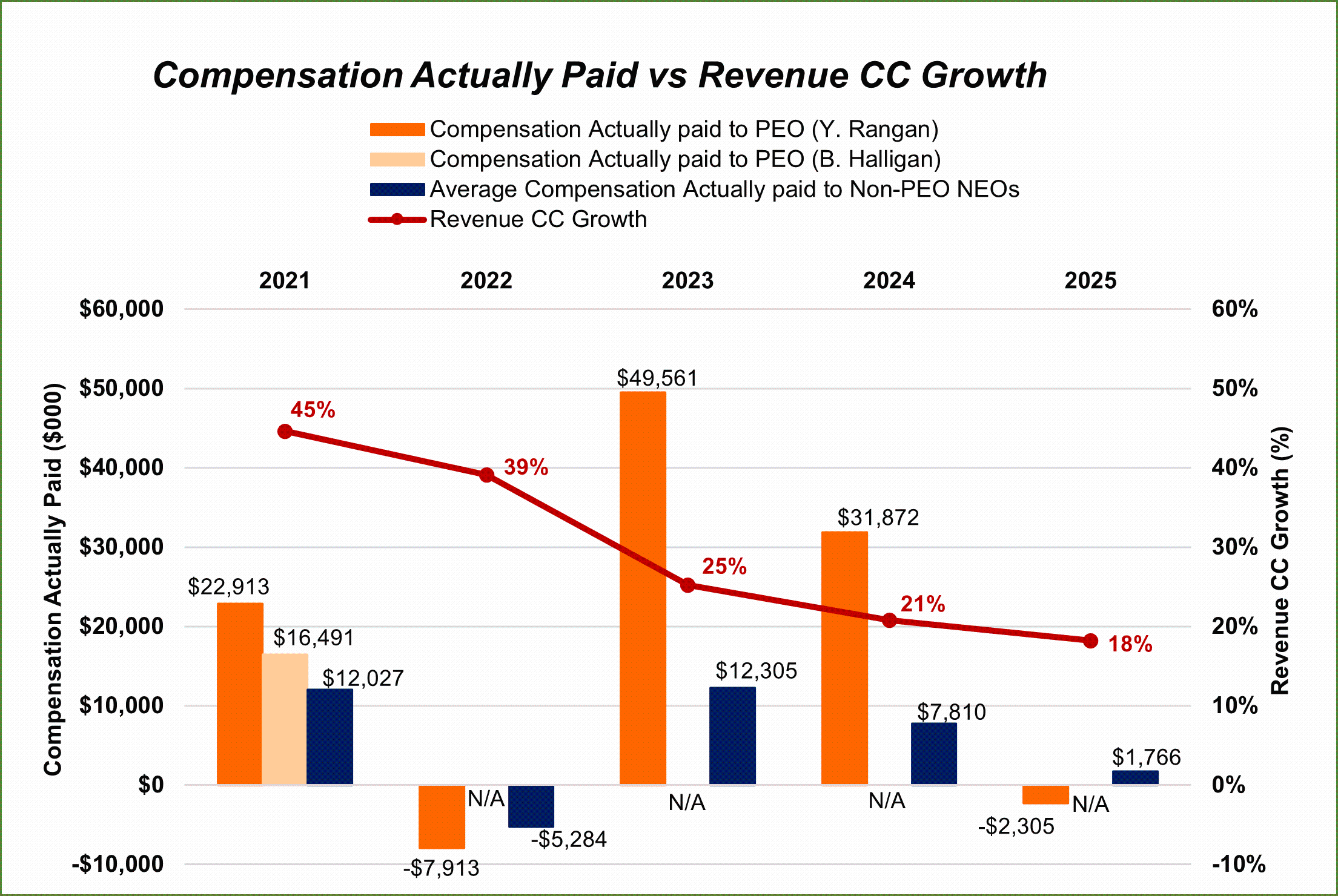
Compensation Actually Paid vs. Other Measure

Relationship Between Compensation Actually Paid and Constant Currency Revenue Growth


The graph below reflects the relationship between the PEO and Average Non-PEO NEO compensation actually paid and Revenue CC Growth for the fiscal years ended December 31, 2021, 2022, 2023, 2024, and 2025.
 

img1874701_31.gif

       
Other Performance Measure, Amount 0.182 0.208 0.252 0.391 0.446
Name Revenue CC Growth is defined as the percentage increase in GAAP revenue growth year-over-year, adjusted for the impact of foreign exchange rates.        
Measure:: 2          
Pay vs Performance Disclosure          
Name ARR is defined as the annual value of our customer subscription contracts as of the specified point in time, excluding any commissions owed to our partners.        
Measure:: 3          
Pay vs Performance Disclosure          
Name Non-GAAP Operating Income (Loss)        
Non-GAAP Measure Description

The GAAP financial measures most directly comparable to Revenue CC Growth and Non-GAAP Operating Income (Loss), and a reconciliation of the differences between these non-GAAP measures and the comparable GAAP financial measures, are attached to this Proxy Statement as Appendix A.

       
Yamini Rangan          
Pay vs Performance Disclosure          
PEO Total Compensation Amount $ 20,126,620 $ 24,857,546 $ 25,881,704 $ 11,765,439 $ 7,318,462
PEO Actually Paid Compensation Amount (2,304,999) 31,871,616 49,560,889 (7,912,847) 22,913,424
Brian Halligan          
Pay vs Performance Disclosure          
PEO Total Compensation Amount         2,996,527
PEO Actually Paid Compensation Amount         16,490,831
PEO | Yamini Rangan | Equity Awards Adjustments          
Pay vs Performance Disclosure          
Adjustment to Compensation, Amount (3,755,849) 30,730,866 49,560,888 (7,940,134) 22,264,688
PEO | Yamini Rangan | Year-end Fair Value of Equity Awards Granted in Covered Year that are Outstanding and Unvested          
Pay vs Performance Disclosure          
Adjustment to Compensation, Amount 9,598,293 23,628,864 35,975,385 5,490,606 8,012,630
PEO | Yamini Rangan | Year-over-Year Change in Fair Value of Equity Awards Granted in Prior Years That are Outstanding and Unvested          
Pay vs Performance Disclosure          
Adjustment to Compensation, Amount (10,062,611) 4,992,092 6,936,595 (10,369,549) 9,652,349
PEO | Yamini Rangan | Vesting Date Fair Value of Equity Awards Granted and Vested in Covered Year          
Pay vs Performance Disclosure          
Adjustment to Compensation, Amount 1,184,900 2,124,212 2,960,040 1,596,398 1,202,902
PEO | Yamini Rangan | Change in Fair Value as of Vesting Date of Prior Year Equity Awards Vested in Covered Year          
Pay vs Performance Disclosure          
Adjustment to Compensation, Amount (4,476,431) (14,302) 3,688,868 (4,657,589) 3,396,807
PEO | Yamini Rangan | Summary Compensation Table Value of Equity Awards          
Pay vs Performance Disclosure          
Adjustment to Compensation, Amount (18,675,770) (23,716,796) (25,881,703) (11,738,152) (6,669,726)
PEO | Brian Halligan | Equity Awards Adjustments          
Pay vs Performance Disclosure          
Adjustment to Compensation, Amount         16,489,192
PEO | Brian Halligan | Year-end Fair Value of Equity Awards Granted in Covered Year that are Outstanding and Unvested          
Pay vs Performance Disclosure          
Adjustment to Compensation, Amount         4,555,670
PEO | Brian Halligan | Year-over-Year Change in Fair Value of Equity Awards Granted in Prior Years That are Outstanding and Unvested          
Pay vs Performance Disclosure          
Adjustment to Compensation, Amount         7,633,629
PEO | Brian Halligan | Vesting Date Fair Value of Equity Awards Granted and Vested in Covered Year          
Pay vs Performance Disclosure          
Adjustment to Compensation, Amount         898,486
PEO | Brian Halligan | Change in Fair Value as of Vesting Date of Prior Year Equity Awards Vested in Covered Year          
Pay vs Performance Disclosure          
Adjustment to Compensation, Amount         3,401,407
PEO | Brian Halligan | Summary Compensation Table Value of Equity Awards          
Pay vs Performance Disclosure          
Adjustment to Compensation, Amount         (2,994,888)
Non-PEO NEO | Equity Awards Adjustments          
Pay vs Performance Disclosure          
Adjustment to Compensation, Amount 1,333,870 7,424,984 11,973,708 (5,493,968) 11,534,652
Non-PEO NEO | Year-end Fair Value of Equity Awards Granted in Covered Year that are Outstanding and Unvested          
Pay vs Performance Disclosure          
Adjustment to Compensation, Amount 3,258,355 5,907,216 7,917,232 893,769 3,992,368
Non-PEO NEO | Year-over-Year Change in Fair Value of Equity Awards Granted in Prior Years That are Outstanding and Unvested          
Pay vs Performance Disclosure          
Adjustment to Compensation, Amount (1,894,737) 1,055,064 1,739,396 (2,932,292) 4,684,468
Non-PEO NEO | Vesting Date Fair Value of Equity Awards Granted and Vested in Covered Year          
Pay vs Performance Disclosure          
Adjustment to Compensation, Amount 791,762 530,697 1,370,130 300,275 787,675
Non-PEO NEO | Change in Fair Value as of Vesting Date of Prior Year Equity Awards Vested in Covered Year          
Pay vs Performance Disclosure          
Adjustment to Compensation, Amount (821,510) (67,993) 946,950 (2,444,657) 2,070,141
Non-PEO NEO | Prior Year End Fair Value of Equity Awards Granted in Any Prior Year that Fail to Meet Applicable Vesting Conditions During Covered Year          
Pay vs Performance Disclosure          
Adjustment to Compensation, Amount       (1,311,063)  
Non-PEO NEO | Summary Compensation Table Value of Equity Awards          
Pay vs Performance Disclosure          
Adjustment to Compensation, Amount $ (6,886,478) $ (5,928,882) $ (5,941,920) $ (2,311,060) $ (2,624,682)