Exhibit 99.(H)(23)
WisdomTree Rules-Based Methodology
| Last Updated February 2026 |
The 2026 reconstitution schedule is set as noted below:
| · | The screening date for the Global (including Emerging Markets), ex-State-Owned Enterprises and Developed International Equity Indexes will be September 30, 2026 |
| o | The International Weighting Date will be October 6, 2026 and the International Reconstitution Date will be October 15, 2026. |
| o | The Emerging Market and Global Weighting Dates will be October 16, 2026 and the Emerging Market and Global Reconstitution Dates will be October 27, 2026. |
| · | The screening date for the India, U.S. Dividend and Core Equity Indexes will be November 30, 2026 |
| o | The U.S. Weighting Date will be December 9, 2026 and the U.S. Reconstitution Date will be December 16, 2026. |
| o | The India Weighting Date will be December 4, 2026 and the India Reconstitution Date will be December 15, 2026. |
| Page 1 of 192 |
| U.S. DIVIDEND INDEXES | 4-16 |
| WisdomTree U.S. Dividend Index | |
| WisdomTree U.S. LargeCap Dividend Index | |
| WisdomTree U.S. MidCap Dividend Index | |
| WisdomTree U.S. SmallCap Dividend Index | |
| WisdomTree U.S. High Dividend Index | |
| WisdomTree U.S. Quality Dividend Growth Index | |
| WisdomTree U.S. SmallCap Quality Dividend Growth Index |
| CORE EQUITY INDEXES | 17-24 |
| WisdomTree U.S. LargeCap Index | |
| WisdomTree U.S. MidCap Index | |
| WisdomTree U.S. SmallCap Index |
| U.S. MULTIFACTOR INDEX | 25-30 |
| WisdomTree U.S. Multifactor Index |
| INTERNATIONAL DIVIDEND INDEXES | 31-53 |
| WisdomTree International Equity Index | |
| WisdomTree Dynamic International Equity Index | |
| WisdomTree International High Dividend Index | |
| WisdomTree True Developed International Index | |
| WisdomTree International MidCap Dividend Index | |
| WisdomTree International SmallCap Dividend Index | |
| WisdomTree Dynamic International SmallCap Equity Index | |
| WisdomTree International Quality Dividend Growth Index | |
| WisdomTree International Hedged Quality Dividend Growth Index | |
| WisdomTree Europe Equity Index | |
| WisdomTree Europe Hedged Equity Index | |
| WisdomTree Europe SmallCap Equity Index | |
| WisdomTree Europe Hedged SmallCap Equity Index | |
| WisdomTree Europe SmallCap Dividend Index | |
| WisdomTree Europe Quality Dividend Growth Index | |
| WisdomTree Japan Dividend Index | |
| WisdomTree Japan Hedged Equity Index | |
| WisdomTree Japan SmallCap Dividend Index | |
| WisdomTree Japan SmallCap Equity Index | |
| WisdomTree Japan Hedged SmallCap Equity Index |
| EMERGING MARKETS DIVIDEND INDEXES | 54-64 |
| WisdomTree Emerging Markets Dividend Index | |
| WisdomTree Emerging Markets High Dividend Index | |
| WisdomTree Emerging Markets SmallCap Dividend Index |
| Page 2 of 192 |
| EX-STATE-OWNED ENTERPRISES INDEXES | 65-74 |
| WisdomTree Emerging Markets ex-State-Owned Enterprises Index | |
| WisdomTree China ex-State-Owned Enterprises Index | |
| WisdomTree True Emerging Markets Index |
| INDIA INDEXES | 75-87 |
| WisdomTree India Earnings Index | |
| WisdomTree India Equity Index | |
| WisdomTree India Hedged Equity Index |
| GLOBAL DIVIDEND INDEXES | 88-97 |
| WisdomTree Global Dividend Index |
| WisdomTree Global High Dividend Index |
| GLOBAL EX–US QUALITY INDEX | 98-105 |
| Global ex–US Quality Growth Index |
| CYBERSECURITY INDEX | 106-112 |
| WisdomTree Team8 Cybersecurity Index |
| BIOREVOLUTION INDEX | 113-118 |
| WisdomTree BioRevolution Index |
| ARTIFICIAL INTELLIGENCE & INNOVATION INDEX | 119-126 |
| WisdomTree Artificial Intelligence & Innovation Index | |
| BATTERY VALUE CHAIN AND INNOVATION INDEX | 127-1344 |
| WisdomTree Battery Value Chain and Innovation Index |
| QUALITY GROWTH INDEXES | 135-141 |
| WisdomTree U.S. Quality Growth Index | |
| WisdomTree U.S. MidCap Quality Growth Index | |
| WisdomTree U.S. SmallCap Quality Growth Index |
| NEW ECONOMY REAL ESTATE INDEX | 142-147 |
| WisdomTree New Economy Real Estate Index |
| WISDOMTREE OPPORTUNITIES INDEXES | 148-162 |
| WisdomTree European Opportunities Equity Index | |
| WisdomTree European Opportunities Index | |
| WisdomTree Japan Opportunities Equity Index |
| WisdomTree Japan Opportunities Index |
| WisdomTree GeoAlpha Opportunities Index |
| Page 3 of 192 |
| WISDOMTREE DEFENSE INDEXES | 163-172 |
| WisdomTree European Defense Index | |
| WisdomTree Asia Defense Index | |
| WisdomTree Global Defense Index |
| QUANTUM COMPUTING INDEX | 173-179 |
| WisdomTree Quantum Computing Index |
| INTERNATIONAL LARGECAP INDEX | 180-184 |
| WisdomTree U.S. Adaptive Moving Average Index |
| ADAPTIVE MOVING AVERAGE INDEXES | 185-190 |
| WisdomTree U.S. Adaptive Moving Average Index | |
| WisdomTree International Adaptive Moving Average Index |
| Page 4 of 192 |
Methodology Guide for US Dividend Indexes
| 1. | Overview and Description |
WisdomTree U.S. Dividend Index (“DI”), WisdomTree U.S. LargeCap Dividend Index (“LargeCap Dividend Index”), WisdomTree U.S. MidCap Dividend Index (“MidCap Dividend Index”),WisdomTree U.S. SmallCap Dividend Index (“SmallCap Dividend Index”), WisdomTree U.S. High Dividend Index (“High Dividend Index”), WisdomTree U.S. Quality Dividend Growth Index (“Quality Dividend Growth Index”) and WisdomTree U.S. SmallCap Quality Dividend Growth Index (“SmallCap Quality Dividend Growth Index”) (collectively, the “Domestic Dividend Indexes”) were developed by WisdomTree, Inc. (“WT”) to define the dividend-paying segments of the U.S. stock market and to serve as performance benchmarks for equity income investors.
| · | The DI measures the performance of investable U.S.-based companies that pay regular cash dividends on shares of common stock. All of the other Domestic Dividend Indexes, defined below, are derived from the DI. |
| · | The LargeCap Dividend Index is comprised of dividend-paying companies from the large-capitalization segment of the DI. |
| · | The MidCap Dividend Index is comprised of dividend-paying companies from the mid-capitalization segment of the DI. |
| · | The SmallCap Dividend Index is comprised of dividend-paying companies from the small-capitalization segment of the DI. |
| · | The High Dividend Index is comprised of the high-yielding companies within the DI. |
| · | The Quality Dividend Growth Index is comprised of dividend-paying stocks with growth characteristics. |
| · | The SmallCap Quality Dividend Growth Index is comprised of dividend-paying companies from the small-capitalization segment of the DI with growth characteristics. |
Each Index is reconstituted annually, at which time each component’s weight is adjusted, if necessary, to reflect its dividend-weighting in the Index. Dividend weighting is defined as each component’s projected cash dividends to be paid over the coming year divided by the sum of the projected cash dividends to be paid by all the components in the Index over the same period. This quotient is the percentage weight assigned to each component in the Index at the annual reconstitution. Projected cash dividends to be paid is calculated by multiplying a company’s indicated annual dividend per share by common shares outstanding. Each Index is calculated to seek to capture price appreciation and total return, which assumes dividends are reinvested in the components of the Index. Each Index is calculated using available primary market prices.
| Page 5 of 192 |
| 2. | Index Governance |
The Indexes are overseen by the WisdomTree U.S. Dividend Index Committee (the “Committee”), a standing index committee of WisdomTree, Inc. (“WisdomTree”), ticker WT. The Committee will be composed of not less than three members. The Committee is responsible for making broad decisions with respect to the implementation, ongoing management, operation, and administration of the Index. WisdomTree designed this methodology to achieve the Index’s objective. The primary function of the Committee is to seek to ensure the Index methodology is implemented correctly. In such role, the Index Committee selects all constituents meeting the eligibility criteria described herein in its discretion. In addition, any changes to or deviations from this methodology are intended to enable the Index to continue to achieve its objective and will be made in the sole judgment and discretion of the Index Committee.
The Committee meetings generally will be held at a semi-annual cadence or as needed in relation to the reconstitution and/or rebalance frequency of the Index or as circumstances require. The composition of the Committee may be changed from time to time.
| 3. | Key Features |
| 3.1. | Membership Criteria |
To be eligible for inclusion in the Domestic Dividend Indexes, a company must list its shares on a U.S. stock exchange, conduct its Primary Business Activities1 in the United States and pay regular cash dividends on shares of its common stock in the 12 months preceding the annual reconstitution, which takes place in December. Companies must have a market capitalization of at least $100 million by the “Screening Date” (i.e., after the close of trading on the last trading day in November) and shares of such companies must have had a median daily trading dollar volume of at least $100,000 for the three months preceding the Screening Date.
1 The country in which a company conducts its Primary Business Activities is determined based on the following factors: country of organization or incorporation, country in which a company’s headquarters is located, the country to which a company has the greatest risk exposure (“Country of Risk”), and the country from which a company generates the most significant portion of its revenue or to which it allocates the greatest resources. WT may determine to consider additional or different factors depending on the nature of a company’s business and operations.
| Page 6 of 192 |
Common stocks, REITs, tracking stocks, and holding companies are eligible for inclusion in the Domestic Dividend Indexes. ADRs, GDRs, EDRs, limited partnerships, limited liability companies, royalty trusts, and Business Development Companies (BDCs), preferred stocks, closed-end funds, exchange-traded funds, and derivative securities such as warrants and rights are not eligible for inclusion in the Indexes.2 The publicly traded security for WisdomTree, Inc. (NYSE: WT), is also not eligible for inclusion in any of WisdomTree’s equity indexes.
In addition, companies that fall within the bottom decile of a composite risk factor score are not eligible for inclusion in the Domestic Dividend Indexes. The composite risk factor score is used to eliminate potentially higher risk companies that would have otherwise been eligible for inclusion in the Indexes. The composite risk factor score is an equally weighted score of the two factors described below.
| 1) | Quality Factor – determined by static observations and trends of return on equity (ROE), return on assets (ROA), gross profits over assets and cash flows over assets. Scores are calculated within industry groups. |
| 2) | Momentum Factor – determined by stocks’ risk adjusted total returns over historical periods (6 and 12 months) |
Companies that fall within the top 5% ranked by dividend yield and also the bottom ½ of the composite risk factor score are not eligible for inclusion.
| 3.2. | Base Date and Base Value |
Indexes covering entire regions were established with a base value of 300 on May 31, 2006. Market-cap segment and high dividend indexes were established with a base value of 200 on May 31, 2006.
The WisdomTree U.S. Quality Dividend Growth Index and WisdomTree U.S. SmallCap Quality Dividend Growth Index were established with a base value of 200 on April 11, 2013.
| 3.3. | Calculation and Dissemination |
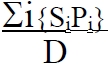
The following formula is used to calculate the index levels for the Domestic Dividend Indexes:
2 Beginning with the December 2006 reconstitution, Mortgage REITs will no longer be eligible for inclusion in the WisdomTree Domestic and International Dividend Indexes.
| Page 7 of 192 |
Si = Number of shares in the index for security i.
Pi = Price of security i
D = Divisor
The Domestic Dividend Indexes are calculated whenever the US exchanges are open for trading.
If trading is suspended while one of the exchanges is still open, the last traded price for that stock is used for all subsequent Index computations until trading resumes. If trading is suspended before the opening, the stock’s adjusted closing price from the previous day is used to calculate the Index. Until a particular stock opens, its adjusted closing price from the previous day is used in the Index computation. Index values are calculated on both a price and total-return basis, in U.S. dollars. The price Index is updated on a real time basis, while the total return Index is calculated and disseminated on an end-of-day basis. Price index values are calculated and disseminated every 15 seconds to the Securities Industry Automation Corporation (SIAC) so that such Index Values can print to the Consolidated Tape.
| 3.4 | Weighting |
The Domestic Dividend Indexes are modified capitalization-weighted Indexes that employ a transparent weighting formula to magnify the effect that dividends play in the total return of the Indexes. The initial weight of a component in the Index at the annual reconstitution is equal to the dollar value of the company’s cash dividends to be paid in the coming year based on the company’s indicated annual dividend per share. To calculate the weighting factor – Cash Dividends to be paid – indicated annual dividend per share is multiplied by common shares outstanding.3 Thus, each component’s weight in the Index at the “U.S. Weighting Date” (defined below) reflects its share of the total Dividend Stream projected to be paid in the coming year by all of the component companies in the Index. The dividend stream will be adjusted for constituents with dividend yields greater than 12% at the screening date. The dividend stream of these capped securities will be their market cap multiplied by 12%.
For the size segment dividend indexes (total, large, mid and small caps) and high dividend cuts of the market, companies that fall within the top two deciles of the composite risk factor will have their dividend stream multiplied by 1.5 while all other dividends will remain unadjusted.
Companies will be weighted in the index based on this adjusted dividend stream.
3 Special Dividends are not included in the computation of Index weights.
| Page 8 of 192 |
The U.S. Weighting Date is when component weights are set, and it occurs immediately after the close of trading on the relevant date. New components and component weights take effect before the opening of trading the day following the “U.S. Reconstitution Date.” Please refer to the Reconstitution Schedule on page 1 for specific dates.
Should any company achieve a weighting equal to or greater than 24.0% of the Index, its weighting will be reduced to 20.0% at the close of the current calendar quarter, and the weights of all other components in the Index will be rebalanced proportionally. Moreover, should the “collective weight” of Index component securities whose individual current weights equal or exceed 5.0% of the Index, when added together, equal or exceed 50.0% of the Index, the weightings in those component securities will be reduced so that their collective weight equals 40.0% of the Index at the close of the current calendar quarter, and other components in the Index will be rebalanced proportionally to reflect their relative weights before the adjustment. Further iterations of these adjustments may occur until no company or group of companies violates these rules.
The capping rules described below are applied concurrently and, in a manner, designed to seek to minimize deviation from a component’s initial or intended weighting in an Index.
The following capping rule applies to all Domestic Dividend Indexes, unless specified otherwise below:
| · | Should the components assigned to any sector (except the Real Estate sector) achieve an aggregate weight greater than 25% of an Index, the aggregate weight of the component companies will be reduced to 25% as of the annual Screening Date. The Real Estate sector will be capped at 10%. |
In the case of the WisdomTree U.S. Dividend Index the following caps apply:
| · | The Real Estate sector will be capped at 5%. |
| · | Should the ratio of a component company’s weight relative to its weight in a market capitalization weighted version of the Index exceed 3x or fall below 0.33x, the weight of the company will be reduced or increased to meet the 3x or 0.33x thresholds, respectively. |
In the case of the WisdomTree U.S. LargeCap Dividend Index the following caps apply:
| · | Should the ratio of a security’s weight relative to its weight in a market capitalization weighted version of the index reach above 3x or fall below 0.33x, the weight of the company will be reduced or increased to meet the 3x or 0.33x thresholds, respectively. |
| Page 9 of 192 |
In the case of the WisdomTree U.S. MidCap Dividend Index and the U.S. SmallCap Dividend Index the following caps apply:
| · | Should the ratio of a security’s weight relative to its weight in a market capitalization weighted version of the index reach above 2.5x or fall below 0.4x, the weight of the company will be reduced or increased to meet the 2.5x or 0.4x thresholds, respectively. |
In the case of the WisdomTree U.S. High Dividend Index the following caps apply:
| · | The maximum weight of any individual component is capped at 5% on the annual rebalance. |
| · | Should the ratio of a security’s weight relative to its weight in a market capitalization weighted version of the index reach above 3x or fall below 0.33x, the weight of the company will be reduced or increased to meet the 3x or 0.33x thresholds, respectively. |
| · | Sector exposures will be capped at the lesser of 25% or 3x their weight in a market capitalization version of the initial universe of eligible securities prior to the final selection of highest dividend yielding companies as detailed in section 5.5 below. The Real Estate sector will be capped at 5%. |
In the case of the WisdomTree U.S. Quality Dividend Growth Index, the following capping rules are applied:
| · | The maximum weight of any individual security is capped at 8% on the annual rebalance prior to the introduction of sector caps and the weights of all other components will be adjusted. |
| · | Should the ratio of a security’s weight relative to its weight in a market capitalization weighted version of the index reach above 3x or fall below 0.33x, the weight of the company will be reduced or increased to meet the 3x or 0.33x thresholds, respectively. |
| · | Sector exposures will be capped at the lesser of 20% or 2x their weight in a market capitalization version of the initial universe of eligible securities prior to the final selection of 300 companies as detailed in section 5.6 below. The Information Technology sector will be capped at 30%. The Real Estate sector will be capped at 10%. |
| Page 10 of 192 |
In the case of the WisdomTree U.S. SmallCap Quality Dividend Growth Index the following caps apply:
| · | The maximum weight of any individual security is capped at 2% on the annual rebalance and the weights of all other components will be adjusted. |
| · | Should the ratio of a security’s weight relative to its weight in a market capitalization weighted version of the index reach above 2.5x or fall below 0.4x, the weight of the company will be reduced or increased to meet the 2.5x or 0.4x thresholds, respectively. |
| · | Should any sector achieve a weight equal to or greater than 25% of the Index, weight of companies will be reduced to 25% as of the annual Screening Date. Real Estate sector will be capped at 10%. |
The weights of individual components or groups of components may fluctuate above or below the specified caps during the year intra annual rebalance dates. The weights will be reset at each annual rebalance date.
The following liquidity adjustment factors will be applied to all Indexes after the capping rules described above have been applied:
A further volume screen requires that a calculated volume factor (the median daily dollar volume for three months preceding the Screening Date / weight of security in each index) shall be greater than $200 million to be eligible for each index. If a security’s volume factor falls below $200 million at the annual screening, but is currently in the Index, it will remain in the Index. The securities’ weight will be adjusted downwards by an adjustment factor equal to its volume factor divided by $400 million.
In the event a security has a calculated volume factor (average daily volume traded over the preceding three months / weight in the index) that is less than $400 million, its weight will be reduced such that weight after volume adjustment = weight before adjustment x calculated volume factor
/ $400 million. The implementation of the volume factor may cause an increase in the holding, sector and country weights above the specified caps.
| Page 11 of 192 |
| 3.5 | Dividend Treatment |
Normal dividend payments are not taken into account in the price Index, whereas they are reinvested and accounted for in the total return Index. Special dividends are reinvested and accounted for in the total return Index.
| 3.6 | Multiple Share Classes |
In the event a component company issues multiple classes of shares of common stock, each class of share will be included in any broad-based Index, provided that dividends are paid on that share of stock. In the event such a component company qualified for inclusion in the “High Dividend” cut from these broad-based Indexes, only the share class of that company with the highest dividend yield would be selected for inclusion. Conversion of a share class into another share class results in the deletion of the share class being phased out and an increase in shares of the surviving share class, provided that the surviving share class is in the Index. For all Mid and Small cap cuts, if a security has multiple listed share classes and the total market capitalization of the listed share classes is greater than largest market capitalization cutoff of that index, the security would not be eligible for that index. At least one share class will be eligible for inclusion in either large, mid or small size cut based on total market value of the company.
| 4. | Index Maintenance |
Index Maintenance includes monitoring and implementing the adjustments for company deletions, stock splits, stock dividends, spin-offs, or other corporate actions. Some corporate actions, such as stock splits, stock dividends, and rights offerings require changes in the index shares and the stock prices of the component companies in the Domestic Dividend Indexes. Some corporate actions, such as stock issuances, stock buybacks, warrant issuances, increases or decreases in dividend per share between reconstitutions, do not require changes in the index shares or the stock prices of the component companies in the Domestic Dividend Indexes. Other corporate actions, such as special dividends, may require Index divisor adjustments. Any corporate action, whether it requires divisor adjustments or not, will be implemented after the close of trading on the day prior to the ex-date of such corporate action. Whenever possible, changes to the Index’s components, such as deletions as a result of corporate actions, will be announced at least two business days prior to their implementation date.
| Page 12 of 192 |
| 4.1. | Component Changes |
Additions
Additions to the Domestic Dividend Indexes are made at the annual reconstitution according to the inclusion criteria defined above. Changes are implemented before the opening of trading on the first trading day following the “U.S. Reconstitution Date.” Please refer to the Reconstitution Schedule on page 1 for specific dates.
In the case of the WisdomTree U.S. Dividend Index and the WisdomTree U.S. LargeCap Dividend Index:
The DI will check for dividend initiators on a quarterly basis (following the close of trading in February, May and August), in addition to the annual screening in November. If initiators are within the 300 largest component companies by market capitalization, they will be added to the Indexes within the first 8 trading days of the following month. Added components will be weighted as specified in section 2.4. with weights of existing components adjusted proportionally.
In the case of the WisdomTree U.S. Quality Dividend Growth Index:
Dividend initiators to be included in the DI on a quarterly basis, will be ranked using the criteria specified in section 5.6. Companies that rank in the top 300 by this criteria will be added to the Index within the first 8 trading days of the following month. Added components will be weighted as specified in section 2.4. with weights of existing components adjusted proportionally.
No additions are made to any of the remaining Domestic Dividend Indexes between annual reconstitutions.
Deletions
Shares of companies that are de-listed or acquired by a company outside of the Index are deleted from the Index and the weights of the remaining components are adjusted proportionately to reflect the change in composition of the Index. A component company that cancels its dividend payment is deleted from the Index and the weights of the remaining components are adjusted proportionately to reflect the change in the composition of the Index. A component company that files for bankruptcy is deleted from the Index and the weights of the remaining components are adjusted proportionately to reflect the change in the composition of the Index. If a component company is acquired by another company in the Index for stock, the acquiring company’s shares and weight in the Index are adjusted to reflect the transaction after the close of trading on the day prior to the execution date.4 A component company that is no longer primarily listed in the U.S. or that no longer conducts its Primary Business Activities in the U.S. will be removed from the Index and the weights of the remaining components will be adjusted proportionately to reflect the change in the composition of the Index. Component companies that reclassify their shares (e.g., that convert multiple share classes into a single share class) remain in the Index, although index shares are adjusted to reflect the reclassification.
4 Companies being acquired will be deleted from the WisdomTree Indexes immediately before the effective date of the acquisition or upon notice of a suspension of trading in the stock of the company that is being acquired. In cases where an effective date is not publicly announced in advance, or where a notice of suspension of trading in connection with an acquisition is not announced in advance, WisdomTree reserves the right to delete the company being acquired based on best available market information.
| Page 13 of 192 |
Spin-Offs and IPOs
Should a company be spun-off from an existing component company and pay a regular cash dividend, it will be ineligible for inclusion in the Domestic Dividend Indexes until the next annual reconstitution, provided it meets all other Index eligibility requirements. Spin-off shares of publicly traded companies that are included in the same Indexes as their parent company are increased to reflect the spin-off and the weights of the remaining components will be adjusted proportionately to reflect the change in the composition of the Index. Companies that go public in an Initial Public Offering (IPO), pay a regular cash dividend, and meet all other eligibility requirements may be considered for inclusion in a Domestic Dividend Index at the next annual reconstitution of such Index.
| 5. | Index Divisor Adjustments |
Changes in the Index’s market capitalization due to changes in composition, weighting or corporate actions result in a divisor change to maintain the Index’s continuity. By adjusting the divisor, the Index value retains its continuity before and after the event. Corporate actions that require divisor adjustments will be implemented prior to the opening of trading on the effective date. In certain instances where information is incomplete, or the completion of an event is announced too late to be implemented prior to the ex-date, the implementation will occur as of the close of the following day or as soon as practicable thereafter. For corporate actions not described herein, or combinations of different types of corporate events and other exceptional cases, WisdomTree reserves the right to determine the appropriate implementation method.
Companies that are acquired, de-listed, file for bankruptcy, move their Primary Business Activities outside of the U.S. or that cancel their dividends in the intervening weeks between the Screening Date and the U.S. reconstitution date are not included in the Domestic Dividend Indexes, and the weights of the remaining components are adjusted accordingly.
| Page 14 of 192 |
| 6. | Selection Parameters for the Domestic Dividend Indexes |
| 6.1. | Selection parameters for the WisdomTree U.S. Dividend Index are defined in 3.1. Companies that pass this selection criteria as of the Screening Date are included in the DI. The component companies are assigned weights in the Index as defined in section 3.4. and annual reconstitution of the Index takes effect as defined in section 4.1. |
| 6.2. | The WisdomTree U.S. LargeCap Dividend Index is created by selecting the 300 largest component companies of the DI by market capitalization. The component companies are assigned weights in the Index as defined in section 3.4, and annual reconstitution of the Index takes effect as defined in section 4.1. |
| 6.3. | The WisdomTree U.S. MidCap Dividend Index is created based on a defined percentage of the remaining market capitalization of the DI, once the 300 largest companies by market capitalization have been removed. The companies that comprise the top 75% of the remaining market capitalization are selected for inclusion in the MidCap Dividend Index. The component companies are assigned weights in the Index as defined in section 3.4., and annual reconstitution of the Index takes effect as defined in section 4.1. |
| 6.4. | The WisdomTree U.S. SmallCap Dividend Index is created based on a defined percentage of the remaining market capitalization of the DI, once the 300 largest companies by market capitalization have been removed. The companies that comprise the bottom 25% of the remaining market capitalization are selected for inclusion in the SmallCap Dividend Index. The component companies are assigned weights in the Index as defined in section 3.4., and annual reconstitution of the Index takes effect as defined in section 4.1. |
| 6.5. | The WisdomTree U.S. High Dividend Index is comprised of the highest-yielding companies within the DI. On the Screening Date, companies within the DI with market capitalizations of at least $200 million and median daily dollar volumes of at least $200,000 for the prior three months are eligible for inclusion. Component companies are split into Real Estate and ex-Real Estate groups according to their GICS sector classification and then ranked by indicated annual dividend yield within those two groups. Companies that rank in the top 30% by indicated annual dividend yield are selected for inclusion. To be deleted from the Index, companies must rank outside of the top 35% by dividend yield. The component companies are assigned weights in the Index as defined in section 3.4., and annual reconstitution of the Index takes effect as defined in section 4.1. |
| Page 15 of 192 |
| 6.6. | The WisdomTree U.S. Quality Dividend Growth Index is created as a subset of the DI. On the Screening Date, companies within the DI with market capitalizations of at least $2 billion and an earnings yield greater than the dividend yield are eligible for inclusion. Eligible companies are ranked on a composite score of two fundamental factors: growth and quality, which are equally weighted. The growth factor is determined by a company's ranking based on a 50% weight in its median analyst earnings growth forecast, a 25% weight in its trailing 5-year earnings growth and a 25% weight in its trailing 5-year sales growth. The quality factor is determined by a company’s ranking based on 50% its historical three-year average return on equity and 50% its historical three-year average return on assets. Companies with negative equity and therefore undefined return on equity will be given a median score as long as they’ve shown dividend growth over the past 5 years. Companies that rank in the top 250 companies by this combined ranking will be selected for inclusion, the number of securities will be further reduced to 200 removing the smallest 50 by initial weighting as defined in section 3.4. Eligible companies for the WisdomTree U.S. Quality Dividend Growth Index must not be a member of the WisdomTree U.S. SmallCap Dividend Index. |
| 6.7. | The WisdomTree U.S. SmallCap Quality Dividend Growth Index is created as a subset of the WisdomTree U.S. SmallCap Dividend Index (WTSDI). On the Screening Date, companies with earnings yield greater than the dividend yield are eligible for inclusion. These companies are ranked using a weighted combination of three ranking factors: 50% weighted to the rank of medium-term estimated earnings growth, 25% weighted to the rank of the historical three-year average return on equity, and 25% weighted to rank of the historical three-year average return on assets. Companies with negative equity and therefore undefined return on equity will be given a median score as long as they’ve shown dividend growth over the past 5 years. Companies that rank in the top 50% by this combined ranking will be selected for inclusion. Companies that lack medium-term earnings growth estimates will be eligible for the Index but their composite rank for ultimate selection in the index will be the average ranks of their Return on Equity (ROE) and Return on Assets (ROA). |
| Page 16 of 192 |
Methodology Guide for Core Equity Methodology
| 1. | Overview and Description |
WisdomTree U.S. LargeCap Index (“LargeCap Index”), WisdomTree U.S. MidCap Index (“MidCap Index”) and WisdomTree U.S. SmallCap Index (“SmallCap Index”) (collectively, the “Core Equity Indexes”) were developed by WisdomTree, Inc. (“WT”) to define the universe of profitable companies in the U.S. stock market.
| · | The LargeCap Index is comprised of companies with positive earnings from the large-capitalization segment of the investment universe. |
| · | The MidCap Index is comprised of companies with positive earnings from the mid-capitalization segment of the investment universe. |
| · | The SmallCap Index is comprised of companies with positive earnings from the small-capitalization segment of the investment universe. |
Each Index is reconstituted annually, at which time each component’s weight is adjusted, if necessary, to reflect its share of the Earnings Stream during the prior four fiscal quarters. The Earnings Stream is defined as cumulative earnings over the prior four fiscal quarters for each component in the Index. The percentage weight assigned to each component in the Index at the annual reconstitution is calculated by dividing the cumulative earnings each component company has generated in its last four reported fiscal quarters by the sum of all the earnings generated by all the component companies in the Index over the same period. Each Index is calculated to seek to capture price appreciation and total return, which assumes dividends are reinvested in the components of the Index. Each Index is calculated using available primary market prices.
| Page 17 of 192 |
| 2. | Index Governance |
| 2.1. | The WisdomTree Core Equity Indexes are overseen by the WisdomTree Core Equity Index Committee (the “Committee”), a standing index committee of WisdomTree, Inc. (“WisdomTree”), ticker WT. The Committee will be composed of not less than 3 members. The Committee is responsible for making broad decisions with respect to the implementation, ongoing management, operation and administration of the Index. The primary function of the Committee is to make sure the Index rules are implemented correctly and comprehensively, provided that the published Index composition shall be as determined by the Committee. Furthermore, the Committee may determine to rebalance each Index more frequently in response to volatility in the market, shifts in exposure away from underlying earnings, or other similar circumstances. |
The Committee meetings will generally be held on an annual basis or such frequency in relation to the reconstitution and/or rebalance frequency of the Index, and may be held more frequently as circumstances require.
The composition of the Committee may from time to time be changed to reflect changes in market conditions.
| 3. | Key Features |
| 3.1. | Membership Criteria |
To be eligible for inclusion in the Core Equity Indexes, a company must be under coverage by the market management team of the third party independent index calculation agent, must list its shares on a U.S. stock exchange, conduct its Primary Business Activities5 in the United States and have positive cumulative earnings over the four fiscal quarters preceding the annual reconstitution, which takes place in December.
Companies must have a market capitalization of at least $100 million by the “Screening Date” (after the close of trading on the last trading day in November); shares of such companies need to have had a median daily trading dollar volume of at least $200,000 for each of the six months preceding the Screening Date; and component companies need to have had a P/E ratio of at least 2 as of the Screening Date.
5 The country in which a company conducts its Primary Business Activities is determined based on the following factors: country of organization or incorporation, country in which a company’s headquarters is located, the country to which a company has the greatest risk exposure (“Country of Risk”), and the country from which a company generates the most significant portion of its revenue or to which it allocates the greatest resources. WT may determine to consider additional or different factors depending on the nature of a company’s business and operations.
| Page 18 of 192 |
Common stocks, REITs, tracking stocks and holding companies are eligible for inclusion in the Core Equity Indexes. ADRs, GDRs and EDRs, limited partnerships, limited liability companies, royalty trusts, and Business Development Companies (BDCs), preferred stocks, closed-end funds, exchange-traded funds, and derivative securities such as warrants and rights are not eligible for inclusion in the Indexes. The publicly traded security for WisdomTree, Inc. (NYSE: WT), is also not eligible for inclusion in any of WisdomTree’s equity indexes.
In addition, companies that fall within the bottom decile of a composite risk factor score are not eligible for inclusion in the Core Equity Indexes. The composite risk factor is used to eliminate potentially higher risk companies that would have otherwise been eligible for inclusion in the Indexes. The composite risk factor score is an equally weighted score of the two factors described below.
| 1) | Quality Factor – determined by static observations and trends of return on equity (ROE), return on assets (ROA), gross profits over assets and cash flows over assets. Scores are calculated within industry groups. |
| 2) | Momentum Factor – determined by stocks’ risk adjusted total returns over historical periods (6 and 12 months) |
| 3.2 | Base Date and Base Value |
The WisdomTree U.S. LargeCap Index, the WisdomTree U.S. MidCap Index and the WisdomTree U.S. SmallCap Index were established with a base value of 200 on January 31, 2007.
| 3.3 | Calculation and Dissemination |
The following formula is used to calculate the index levels for the Core Equity Indexes:
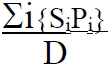
Si = Number of shares in the index for security i.
Pi = Price of security i
D = Divisor
The Core Equity Indexes are calculated every weekday.
| Page 19 of 192 |
If trading is suspended while one of the exchanges is still open, the last traded price for that stock is used for all subsequent Index computations until trading resumes. If trading is suspended before the opening, the stock’s adjusted closing price from the previous day is used to calculate the Index. Until a particular stock opens, its adjusted closing price from the previous day is used in the Index computation. Index values are calculated on both a price and total-return basis, in U.S. dollars. The price Index is updated on a real time basis, while the total return Index is calculated and disseminated on an end-of-day basis. Price index values are calculated and disseminated every 15 seconds.
| 3.4 | Weighting |
The Core Equity Indexes are modified capitalization-weighted Indexes that employ a transparent weighting formula to magnify the effect that earnings play in the total return of the Indexes. The initial weight of a component in the Index at the annual reconstitution is based on the companies’ earnings stream during the last four fiscal quarters. To calculate the weighting factor – Earnings Stream – WisdomTree uses cumulative earnings generated over the prior four reported quarters, as of November 30th of each year. Thus, each component’s weight in the Index at the “U.S. Weighting Date” (defined below) reflects its share of the total Earnings Stream recorded over the prior four quarters by all of the component companies in the Index. The U.S. Weighting Date is when component weights are set, and it occurs immediately after the close of trading on the relevant date. New components and component weights take effect before the opening of trading the day following the “U.S. Reconstitution Date.” Please refer to the Reconstitution Schedule on page 1 for specific dates.
Should any company achieve a weighting equal to or greater than 24.0% of the Index, its weighting will be reduced to 20.0% at the close of the current calendar quarter, and the weights of all other components in the Index will be rebalanced proportionally. Moreover, should the “collective weight” of Index component securities whose individual current weights equal or exceed 5.0% of the Index, when added together, equal or exceed 50.0% of the Index, the weightings in those component securities will be reduced so that their collective weight equals 40.0% of the Index at the close of the current calendar quarter, and other components in the Index will be rebalanced proportionally to reflect their relative weights before the adjustment. Further iterations of these adjustments may occur until no company or group of companies violates these rules.
The capping rules described below are applied concurrently and, in a manner, designed to seek to minimize deviation from a component’s initial or intended weighting in an Index.
| Page 20 of 192 |
The following capping rule applies to all Core Equity Indexes, unless specified otherwise below:
| · | Should any sector achieve a weight that is more than 5% above or below the weight of the sector in a market capitalization weighted version of the index, the weight of the companies will be reduced or increased to meet the +/-5% threshold, respectively. |
Should the ratio of a component company’s initial weight relative to its weight in a market capitalization weighted version of the index exceed 3x or fall below 0.33x, the weight of the company will be reduced or increased to meet the 3x or 0.33x thresholds, respectively. The weights may fluctuate above the specified caps during the year but will be reset at each annual rebalance date.
The following liquidity adjustment factors will be applied to all Indexes after the capping rules described above have been applied:
| · | A further volume screen requires that a calculated volume factor (the median daily dollar volume for three months preceding the Screening Date / weight of security in each index) is greater than $200 million to be eligible for each index. If a security’s volume factor falls below $200 million at the annual screening, but is currently in the Index, it will remain in the Index. The securities’ weight will be adjusted downwards by an adjustment factor equal to its volume factor dividend by $400 million. |
| · | In the event a security has a calculated volume factor (average daily volume traded over the preceding three months / weight in the index) that is less than $400 million, its weight will be reduced such that weight after volume adjustment = weight before adjustment x calculated volume factor / $400 million. The implementation of the volume factor may cause an increase in the sector weights above the specified caps. |
| Page 21 of 192 |
| 3.5 | Dividend Treatment |
Normal dividend payments are not taken into account in the price Index, whereas they are reinvested and accounted for in the total return Index. However, special dividends require index divisor adjustments to prevent the distribution from distorting the price Index.
| 3.6 | Multiple Share Classes |
In the event a component company issues multiple classes of shares of common stock, the most liquid share class, based on the average daily trading volume as described in section 2.1, will be included in the index. Conversion of a share class in the Index into another share class not in the Index results in the conversion of the share class being phased out into the surviving share class. For all Mid and Small cap cuts, if a security has multiple listed share classes and the total market capitalization of the listed share classes is greater than largest market capitalization cutoff of that index, the security would not be eligible for that index. At least one share class will be eligible for inclusion in either large, mid or small size cut based on total market value of the company.
| 4. | Index Maintenance |
Index Maintenance includes monitoring and implementing the adjustments for company deletions, stock splits, stock dividends, spins-offs, or other corporate actions. Some corporate actions, such as stock splits, stock dividends, and rights offerings require changes in the index shares and the stock prices of the component companies in the Core Equity Indexes. Some corporate actions, such as stock issuances, stock buybacks, warrant issuances, increases or decreases in earnings between reconstitutions, restatements of earnings between reconstitutions, do not require changes in the index shares or the stock prices of the component companies in the Core Equity Indexes. Other corporate actions, such as special dividends, may require Index divisor adjustments. Any corporate action, whether it requires divisor adjustments or not, will be implemented after the close of trading on the day prior to the ex-date of such corporate action, or when the Index Calculation Agent typically applies such corporate actions. Whenever possible, changes to the Index’s components, such as deletions as a result of corporate actions, will be announced at least two business days prior to their implementation date.
| 4.1. | Component Changes |
Additions
Additions to the Core Equity Indexes are made at the annual reconstitution according to the inclusion criteria defined above. Changes are implemented before the opening of trading on the first business day following the “U.S. Reconstitution Date.” Please refer to the Reconstitution Schedule on page 1 for specific dates. No additions are made to any of the Core Equity Indexes between annual reconstitutions, except in the cases of certain spin-off companies, defined below.
| Page 22 of 192 |
Deletions
Shares of companies that are de-listed or acquired by a company outside of the Index are deleted from the Index and the weights of the remaining components are adjusted proportionately to reflect the change in composition of the Index. A component company that files for bankruptcy is deleted from the Index and the weights of the remaining components are adjusted proportionately to reflect the change in the composition of the Index. If a component company is acquired by another company in the Index for stock, the acquiring company’s shares and weight in the Index are adjusted to reflect the transaction after the close of trading on the day prior to the execution date. A component company that is no longer primarily listed in the U.S. or that no longer conducts its Primary Business Activities in the U.S. will be removed from the Index and the weights of the remaining components will be adjusted proportionately to reflect the change in the composition of the Index. Component companies that reclassify their shares (e.g., that convert multiple share classes into a single share class) remain in the Index, although index shares are adjusted to reflect the reclassification.
Spin-Offs and IPOs
Should a company be spun-off from an existing component company, it is allowed to stay in the Core Equity Index that its parent company is in until the next annual reconstitution. Companies that go public in an Initial Public Offering (IPO) and have positive cumulative earnings after four fiscal quarters of operations and meet all other eligibility requirements may be considered for inclusion in a Core Equity Index at the next annual reconstitution of such Index.
Index Divisor Adjustments
Changes in the Index’s market capitalization due to changes in composition, weighting or corporate actions result in a divisor change to maintain the Index’s continuity. By adjusting the divisor, the Index value retains its continuity before and after the event. Corporate actions that require divisor adjustments will be implemented prior to the opening of trading on the effective date. In certain instances where information is incomplete, or the completion of an event is announced too late to be implemented prior to the ex-date, the implementation will occur as of the close of the following day or as soon as practicable thereafter. For corporate actions not described herein, or combinations of different types of corporate events and other exceptional cases, WisdomTree reserves the right to determine the appropriate implementation method.
| Page 23 of 192 |
Companies that are acquired, de-listed, file for bankruptcy, move their Primary Business Activities outside of the U.S. or that cancel their dividends in the intervening weeks between the Screening Date and the U.S. reconstitution date are not included in the Core Equity Indexes, and the weights of the remaining components are adjusted accordingly.
| 5. | Selection Parameters for the Core Equity Indexes |
| 5.1. | The WisdomTree U.S. LargeCap Index is created by selecting the 500 largest component companies of the TI by market capitalization. The component companies are assigned weights in the Index as defined in section 2.4, and the annual reconstitution of the Index takes effect as defined in section 3.1 |
| 5.2. | The WisdomTree U.S. MidCap Index is created based on a defined percentage of the remaining market capitalization of the TI, once the 500 largest companies by market capitalization have been removed. The companies that comprise the top 75% of the remaining market capitalization are selected for inclusion in the MidCap Index. The component companies are assigned weights in the Index as defined in section 2.4., and the annual reconstitution of the Index takes effect as defined in section 3.1. |
| 5.3. | The WisdomTree U.S. SmallCap Index is created based on a defined percentage of the remaining market capitalization of the TI, once the 500 largest companies by market capitalization have been removed. The companies that comprise the bottom 25% of the remaining market capitalization are selected for inclusion in the SmallCap Index. The component companies are assigned weights in the Index as defined in section 2.4., and the annual reconstitution of the Index takes effect as defined in section 3.1. |
| Page 24 of 192 |
Methodology Guide for U.S. Multifactor Index
| 1. | Index Overview and Description |
The WisdomTree U.S. Multifactor Index [referred to as “the Index”] was developed by WisdomTree, Inc. (WT). WisdomTree U.S. Multifactor Index is comprised of 200 U.S. companies with the highest composite scores based on two fundamental factors, value and quality measures, and two technical factors, momentum and correlation.
The Index is reconstituted on a quarterly basis (following the close of trading on the eighth business day in March, June, September and December).
The Index is calculated to capture price appreciation and total return, which assumes dividends are reinvested into the Index. The Index is calculated using primary market prices and calculated in U.S. dollars.
| 2. | Key Features |
| 2.1. | Membership Criteria |
To be eligible for inclusion in the Index, component companies must be under coverage by the market management team of the third-party independent index calculation agent, must list shares on a U.S. stock exchange, conduct its Primary Business Activities6 in the United States. Companies must have had a median daily dollar volume of at least $1,000,000 for each of the three months preceding the Screening Date (after the close of trading on the last trading day in February, May, August, November). Common stocks, REITs, tracking stocks and holding companies are eligible for inclusion. ADRs, GDRs and EDRs, limited partnerships, limited liability companies, royalty trusts, and Business Development Companies (BDCs), preferred stocks, closed-end funds, exchange-traded funds, and derivative securities such as warrants and rights are not eligible. Companies that have pending acquisitions or mergers are excluded from the initial universe. The publicly traded security for WisdomTree, Inc. (NYSE: WT), is also not eligible for inclusion in any of WisdomTree’s equity indexes.
6 The country in which a company conducts its Primary Business Activities is determined based on the following factors: country of organization or incorporation, country in which a company’s headquarters is located, the country to which a company has the greatest risk exposure (“Country of Risk”), and the country from which a company generates the most significant portion of its revenue or to which it allocates the greatest resources. WT may determine to consider additional or different factors depending on the nature of a company’s business and operations.
| Page 25 of 192 |
Top 800 companies by market capitalization that meet the selection criteria are assigned a score for each of the following factors. Factors are equal-weighted at 25%.
| 1) | Value Factor – determined by fundamental valuation ratios, i.e. sales to price, book to price, earnings to price, estimated earnings to price, EBITDA to enterprise value, operating cash flow to price. Scores are calculated within industry groups. |
| 2) | Quality Factor – determined by static observations and trends of return on equity (ROE), return on assets (ROA), gross profits over assets and cash flows over assets. Scores are calculated within industry groups. |
| 3) | Momentum Factor – determined by stocks’ risk adjusted total returns over historical periods (6 and 12 months) |
| 4) | Low Correlation Factor – incorporates diversification potential of stocks that are less correlated to the market over historical periods (6 and 12 months). |
The score for each factor is used to calculate an overall factor score that is used to rank and select the top 25% for inclusion into the Index. The highest ranking multifactor scoring companies will be selected, subject to maximum and minimum constraints on number of components within a sector in seeking sector diversification.
| 2.2 | Base Date and Base Value |
The WisdomTree U.S. Multifactor Index was established with a base value of 200 on June 9, 2017.
| 2.3 | Calculation and Dissemination |
The following formula is used to calculate the index levels for the U.S. Multifactor Index:
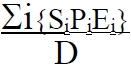
Si = Number of shares in the index for security i.
Pi = Price of security i
Ei = Cross rate of currency of Security i vs. USD. If security price in USD, Ei = 1
D = Divisor
| Page 26 of 192 |
The Index is calculated whenever the U.S. stock exchanges are open. If trading is suspended while the exchange the component company trades on is still open, the last traded price for that stock is used for all subsequent Index computations until trading resumes. If trading is suspended before the opening, the stock’s adjusted closing price from the previous day is used to calculate the Index. Until a particular stock opens, its adjusted closing price from the previous day is used in the Index computation. Index values are calculated on both a price and total-return basis, in U.S. dollars. The price Index and total return Indexes are calculated and disseminated on an end-of-day basis.
| 2.4 | Weighting |
The WisdomTree U.S. Multifactor Index is weighted by a combination of the company overall factor score and inverse volatility over the prior 12 months.
The Weighting Date is when component weights are set, and it occurs after the close of the third business day of the rebalance month. The changes will go into effect after the close of trading on the eighth business day of the rebalance month.
The Index will be modified should the following occur. Should any company achieve a weighting equal to or greater than 24.0% of its Index, its weighting will be reduced to 20.0% at the close of the current calendar quarter, and other components in the Index will be rebalanced. Moreover, should the “collective weight” of Index component securities whose individual current weights equal or exceed 5.0% of the Index, when added together, equal or exceed 50.0% of the Index, the weightings in those component securities will be reduced so that their collective weight equals 40.0% of the Index at the close of the current calendar quarter, and other components in the Index will be rebalanced to reflect their relative weights before the adjustment. Further iterations of these adjustments may occur until no company or group of companies violates these rules.
The following capping rules are applied in this order:
| · | The maximum weight of any individual security is capped at 4% on the quarterly rebalance prior to the introduction of sector caps and the weights of all other components will be adjusted proportionally. |
| · | Sectors are weighted to be sector neutral relative to the sector weights in the starting universe. |
| Page 27 of 192 |
The following liquidity adjustment factors will be applied after the capping rules above have been applied:
A further volume screen requires that a calculated volume factor (the median daily dollar volume for three months preceding the Screening Date / weight of security in each index) shall be greater than $200 million to be eligible for each index. If a security’s volume factor falls below $200 million at the annual screening, but is currently in the Index, it will remain in the Index. The securities’ weight will be adjusted downwards by an adjustment factor equal to its volume factor divided by $400 million.
In the event a security has a calculated volume factor (average daily volume traded over the preceding three months / weight in the index) that is less than $400 million, its weight will be reduced such that weight after volume adjustment = weight before adjustment x calculated volume factor
/ $400 million. The implementation of the volume factor may cause an increase in the holding, sector and country weights above the specified caps.
| 2.5 | Dividend Treatment |
Normal dividend payments are not taken into account in the price Index, whereas they are reinvested and accounted for in the total return Index. However, special dividends that are not reinvested in the total return index require index divisor adjustments to prevent the distribution from distorting the price index.
| 2.6 | Multiple Share Classes |
In the event a component company issues multiple classes of shares of common stock, the share class with the highest average daily volume will be included. Conversion of a share class into another share class results in the deletion of the share class being phased out and an increase in shares of the surviving share class, provided that the surviving share class is in the Index.
| 3. | Index Maintenance |
Index Maintenance includes monitoring and implementing the adjustments for company deletions, stock splits, stock dividends, spins-offs, or other corporate actions. Some corporate actions, such as stock splits, stock dividends, and rights offerings require changes in the index shares and the stock prices of the component companies in the Indexes. Some corporate actions, such as stock issuances, stock buybacks, warrant issuances, increases or decreases in dividend per share between reconstitutions, do not require changes in the index shares or the stock prices of the component companies in the Index. Other corporate actions, such as special dividends and entitlements, may require Index divisor adjustments. Any corporate action, whether it requires divisor adjustments or not, will be implemented after the close of trading on the day prior to the ex-date of such corporate actions. Whenever possible, changes to the Index’s components, such as deletions as a result of corporate actions, will be announced at least two business days prior to their implementation date.
| Page 28 of 192 |
| 3.1. | Component Changes |
Additions
Additions to the Indexes are made at the reconstitution according to the inclusion criteria defined above. Changes are implemented following the close of trading on the eighth business day in March, June, September and December. No additions are made to the Index between reconstitutions, except in the cases of certain spin-off companies defined below.
Deletions
Shares of companies that are de-listed or acquired by a company outside of the Indexes are deleted from the Index and the weights of the remaining components are adjusted proportionately to reflect the change in composition of the Index. A component company that files for bankruptcy is deleted from the Index and the weights of the remaining components are adjusted proportionately to reflect the change in the composition of the Index. If a component company is acquired by another company in the Index for stock, the acquiring company’s shares and weight in the Index are adjusted to reflect the transaction after the close of trading on the day prior to the execution date.7 Component companies that reclassify their shares (i.e. that convert multiple share classes into a single share class) remain in the Index, although index shares are adjusted to reflect the reclassification.
| 3.2. | Spin-Offs and IPOs |
Should a company be spun-off from an existing component company, it is allowed to stay in the Index that its parent company is in until the next reconstitution. Spin-off shares of publicly traded companies that are included in the same indexes as their parent company are increased to reflect the spin-off and the weights of the remaining components will be adjusted proportionately to reflect the change in the composition of the Index. Companies that go public in an Initial Public Offering (IPO) and meet all other eligibility requirements may be considered for inclusion in the Index at the next reconstitution.
7 Companies being acquired will be deleted from the WisdomTree indexes immediately before the effective date of the acquisition or upon notice of a suspension of trading in the stock of the company that is being acquired. In cases where an effective date is not publicly announced in advance, or where a notice of suspension of trading in connection with an acquisition is not announced in advance, WisdomTree reserves the right to delete the company being acquired based on best available market information.
| Page 29 of 192 |
| 4. | Index Divisor Adjustments |
Changes in the Index’s market capitalization due to changes in composition, weighting or corporate actions result in a divisor change to maintain the Index’s continuity. By adjusting the divisor, the Index value retains its continuity before and after the event. Corporate actions that require divisor adjustments will be implemented prior to the opening of trading on the effective date. In certain instances where information is incomplete, or the completion of an event is announced too late to be implemented prior to the ex-date, the implementation will occur as of the close of the following day or as soon as practicable thereafter. For corporate actions not described herein, or combinations of different types of corporate events and other exceptional cases, WisdomTree reserves the right to determine the appropriate implementation method.
Companies that are acquired, de-listed, file for bankruptcy, or move their Primary Business Activities outside of the U.S. in the intervening weeks between the Screening Date and the Reconstitution Date are not included in the Indexes, and the weights of the remaining components are adjusted accordingly.
| 5. | Selection Parameters |
Selection parameters for the WisdomTree U.S. Multifactor Index are defined in section 2.1. Companies that pass these selection criteria as of the Screening Date are included in the Index. The component companies are assigned weights in the Index as defined in section 2.4., and reconstitution of the Index takes effect as defined in section 3.1.
| Page 30 of 192 |
Methodology Guide for International Dividend Indexes
| 1. | Index Overview and Description |
WT has created a family of international indexes that track the performance of dividend-paying companies in developed markets.
The International developed market indexes are sometimes referred to as the “International Dividend Indexes.”
| · | WisdomTree International Equity Index measures the stock performance of investable companies that pay regular cash dividends on shares of common stock and that conduct its Primary Business Activities8 in Japan, the 15 European countries, Australia, Israel, Hong Kong and Singapore. |
| · | The WisdomTree Dynamic International Equity Index is designed to remove from index performance the impact of changes to the value of foreign currencies relative to U.S. dollar with a hedge ratio ranging from 0 to 100% on a monthly basis. |
| · | The WisdomTree International High Dividend Index comprises high dividend yielding stocks from the WisdomTree International Equity Index. |
| · | The WisdomTree True Developed International Index is comprised of the dividend-paying companies from the large-capitalization segment of the WisdomTree International Equity Index and eligible dividend-paying companies with Primary Business Activities9 in South Korea, Poland, and Taiwan. |
| · | The WisdomTree International MidCap Dividend Index is comprised of the dividend-paying companies from the mid-capitalization segment of the WisdomTree International Equity Index. |
| · | The WisdomTree International SmallCap Dividend Index is comprised of the dividend-paying companies from the small-capitalization segment of the WisdomTree International Equity Index. |
8 The country in which a company conducts its Primary Business Activities is determined based on the following factors: country of organization or incorporation, country in which a company’s headquarters is located, the country to which a company has the greatest risk exposure (“Country of Risk”), and the country from which a company generates the most significant portion of its revenue or to which it allocates the greatest resources. WT may determine to consider additional or different factors depending on the nature of a company’s business and operations.
9 The country in which a company conducts its Primary Business Activities is determined based on the following factors: country of organization or incorporation, country in which a company’s headquarters is located, the country to which a company has the greatest risk exposure (“Country of Risk”), and the country from which a company generates the most significant portion of its revenue or to which it allocates the greatest resources. WT may determine to consider additional or different factors depending on the nature of a company’s business and operations.
| Page 31 of 192 |
| · | The WisdomTree Dynamic International SmallCap Equity Index is designed to remove from index performance the impact of changes to the value of foreign currencies relative to U.S. dollar with a hedge ratio ranging from 0 to 100% on a monthly basis. |
| · | The WisdomTree International Quality Dividend Growth Index comprises dividend-paying developed market companies with growth characteristics. |
| · | The WisdomTree International Hedged Quality Dividend Growth Index is designed to remove from index performance the impact of changes to the value of foreign currencies relative to U.S. dollar. |
| · | The WisdomTree Europe Equity Index comprises of dividend-paying companies included in the WisdomTree International Equity Index that conduct their Primary Business Activities in Europe, traded in Euros and derive at least 50% of their revenue from countries outside of Europe. To be deleted from the Index, companies must derive less than 47% of their revenue from countries outside of Europe. |
| · | The WisdomTree Europe Hedged Equity Index is designed to remove from index performance the impact of changes to the value of Euro relative to U.S. dollar. |
| · | WisdomTree Europe SmallCap Equity Index comprises of dividend-paying companies included in the WisdomTree International Equity Index that conduct their Primary Business Activities in Europe and traded in Euros. |
| · | The WisdomTree Europe Hedged SmallCap Equity Index is designed to remove from index performance the impact of changes to the value of Euro relative to |
U.S. dollar.
| · | The WisdomTree Europe SmallCap Dividend Index (“ESC”) is comprised of the dividend-paying companies from the small-capitalization segment of the European companies in the WisdomTree International Equity Index. |
| · | The WisdomTree Europe Quality Dividend Growth Index is derived from the WisdomTree International Equity Index and is comprised of dividend paying European companies with growth characteristics. |
| · | The WisdomTree Japan Dividend Index (“JDI”) measures the performance of investable Japanese companies that pay regular cash dividends on shares of common stock and have less than 80% of revenue come from Japan. |
| · | The WisdomTree Japan Hedged Equity Index is designed to remove from index performance the impact of changes to the value of Japanese Yen relative to U.S. dollar. |
| Page 32 of 192 |
| · | The WisdomTree Japan SmallCap Dividend Index (“JSC”) is comprised of the dividend-paying companies from the small-capitalization segment of the Japanese companies within the WisdomTree International Equity Index. |
| · | The WisdomTree Japan SmallCap Equity Index is comprised of the dividend-paying companies from the small-capitalization segment of the Japanese companies within the WisdomTree International Equity Index. |
| · | The WisdomTree Japan Hedged SmallCap Equity Index is designed to remove from index performance the impact of changes to the value of Japanese Yen relative to U.S. dollar. |
At the International Reconstitution Date each year, the International Dividend Indexes are reconstituted, with each components’ weight adjusted, if necessary, to reflect its dividend-weighting in its respective Index.
All of the International Dividend Indexes are calculated to seek to capture price appreciation and total return, which assumes dividends are reinvested in the components of the Index. The International Dividend Indexes will be calculated using available primary market prices. The International Dividend Indexes are calculated in U.S. dollars.
Hedged Equity Indexes
For U.S. investors, international equity investments include two components of return. The first is the return attributable to stock prices in the non-U.S. market or markets in which an investment is made. The second is the return attributable to the value of non-U.S. currencies in these markets relative to U.S. dollar. Hedged Equity Indexes are designed to remove from index performance the impact of their respective currencies relative to U.S. dollar.
In this sense, the Indexes “hedge” against fluctuations in the relative value of non-
U.S. currencies against the U.S. dollar. The Indexes are designed to have higher returns than their equivalent non-currency hedged indexes when the U.S. Dollar is going up in value relative to foreign currencies. Conversely, the Indexes are designed to have lower returns than their equivalent non-hedged indexes when the U.S. dollar is falling in value relative to foreign currencies (e.g., Euro is rising relative to U.S. dollar). Calculation of the Indexes is discussed in section 2.3.
Dynamic Hedged Equity Indexes
The Dynamic Hedged Equity Indexes described above are designed to add a dynamic currency hedge that ranges from 0 to 100% for each currrency.
| Page 33 of 192 |
On a monthly basis the hedge ratio for any individual currency can be adjusted to either 0.00%, 16.7%, 33.3%, 50%, 66.67%, 83.3%, or 100% and are determined by the following signals10:
| · | Momentum: 16.7% of the total hedge ratio is determined by momentum. When the one-month average of the currency’s spot price versus U.S. dollar is weaker than that of the three-month (i.e. the targeted currency is depreciating), the hedge ratio of 16.7% is applied. |
| · | Interest Rate Differentials: 16.7% of the total hedge ratio is determined by measuring the difference in interest rates, as implied in one month FX forwards, between each currency and U.S. dollar. If the implied interest rate in the United States is higher than that within the targeted currency, a further 16.7% hedge ratio is applied for that currency on this signal. |
| · | Low Volatility: 16.7% of the total hedge ratio is determined by a volatility signal that provides unhedged exposure to the lowest volatility currencies. |
| o | The full 16.7% hedge ratio for this signal is applied for the top two thirds currencies with the highest 24-month return volatilities. |
| o | There is no hedge ratio applied for the remaining currencies. |
| · | Time-series momentum: 50% of the total hedge ratio for all currencies is determined by the overall broad trend in the U.S. dollar. |
| o | A hedge ratio of 0% is applied to all currencies if the weighted average momentum of all currencies is below 33% (i.e. less than 33% of the weight of the Index has a Momentum hedge signal). |
| o | A hedge ratio of 50% is applied to all currencies if the weighted average momentum of all currencies is above 66%. (i.e. more than 66% of the weight of the Index has a Momentum hedge signal) |
| o | A hedge ratio of 25% is applied to all currencies otherwise. |
When the dynamic hedges are added, the Indexes are designed to have higher (or similar subject to costs) returns than their equivalent non-currency hedged indexes when U.S. Dollar is going up in value relative to foreign currencies. Conversely, the Indexes are designed to have lower (or similar subject to costs) returns than their equivalent non-hedged indexes when U.S. dollar is falling in value relative to foreign currencies (e.g., foreign currencies are rising relative to U.S. dollar). Calculation of the Indexes is discussed in section 2.3.
10 Israeli Shekels (ILS) and Singapore Dollars (SGD) are hedged at 50% and Hong Kong Dollars (HKD) hedged at 0% on a monthly basis.
| Page 34 of 192 |
| 2. | Key Features |
| 2.1. | Membership Criteria |
To be eligible for inclusion in the above mentioned International Dividend Indexes, component companies must be under coverage by the market management team of the third-party independent index calculation agent and must meet the minimum liquidity requirements established by WT. To be included in any of the International Dividend Indexes, shares of such component securities must have traded at least 250,000 shares per month for each of the six months preceding the “International Screening Date” (after the close of trading on the last trading day in September).
In addition, companies that fall within the bottom decile of a composite risk factor score are not eligible for inclusion in the Domestic Dividend Indexes. The composite risk factor score is used to eliminate potentially higher risk companies that would have otherwise been eligible for inclusion in the Indexes. The composite risk factor score is an equally weighted score of the two factors described below.
| 1) | Quality Factor – determined by static observations and trends of return on equity (ROE), return on assets (ROA), gross profits over assets and cash flows over assets. Scores are calculated within industry groups. |
| 2) | Momentum Factor – determined by stocks’ risk adjusted total returns over historical periods (6 and 12 months) |
Companies that fall within the top 5% ranked by dividend yield and also the bottom ½ of the composite risk factor score are not eligible for inclusion.
The score for each factor is used to calculate an overall factor score, i.e. composite risk score, that is used to eliminate potentially higher risk companies that would have otherwise been eligible for inclusion.
WisdomTree applies a Foreign Investment Screen to exclude companies that are not available to be purchased or transacted in by foreign investors (or certain segments of foreign investors) or cannot continue to be reasonably purchased or transacted in by foreign investors (or certain segments of foreign investors) as determined by the third party independent calculation agent and a data point referred to as “Degree of Open Freedom” (DOF) or by WisdomTree based generally on the guiding principles set forth below. The first test of a stock’s investability is determining whether the market is open to foreign institutions. The third-party calculation agent determines the extent to which and the mechanisms foreign institutions can use to buy and sell shares on local exchanges and repatriate capital, capital gains, and dividend income without undue constraint. Once determined that a market is open to foreign investors, the third-party calculation agent then investigates each security that may be a candidate for inclusion. Each class of share is reviewed to determine whether there are any corporate bylaw, corporate charter, or industry limitations on foreign ownership of the stock. The DOF is the variable that ranges from zero to one and indicates the amount of the security foreigners may legally own (0.00 indicates that none of the stock is legally available, 1.00 indicates that 100% of the shares are available). Any company with a DOF of 0 will not be eligible for the WisdomTree Indexes.
| Page 35 of 192 |
WisdomTree International Equity Index
In the case of WisdomTree International Equity Index, component companies must list their shares on one of the stock exchanges in Europe (i.e., Austria, Belgium, Denmark, Finland, France, Germany, Ireland, Italy, Netherlands, Norway, Portugal, Spain, Sweden, Switzerland, or the United Kingdom), the Tokyo Stock Exchange, on stock exchanges in Australia, Hong Kong, Israel or Singapore. Companies that conduct their Primary Business Activities in Europe, Japan, Australia, Hong Kong, Israel, or Singapore and have paid at least $5 million in gross cash dividends on shares of their common stock in the annual cycle prior to the annual reconstitution. Companies must have a market capitalization of at least $100 million on the International Screening Date and shares of such companies must have had a median daily dollar volume of at least $100,000 for three months preceding the International Screening Date. Common stocks, REITs, tracking stocks, and holding companies are eligible for inclusion. ADRs, GDRs and EDRs, limited partnerships, royalty trusts, passive foreign investment companies, preferred stocks, closed-end funds, exchange-traded funds, and derivative securities such as warrants and rights are not eligible. The selection and weighting methodology for the WisdomTree Dynamic International Equity Index is identical to the selection and weighting methodology used for the WisdomTree International Equity Index.
WisdomTree International High Dividend Index
The WisdomTree International High Dividend Index comprises high dividend yielding stocks from the WisdomTree International Equity Index. In addition to being a member of this Index, companies must also have market capitalizations of at least $200 million at the International Screening Date and median daily dollar volumes of at least $200,000 for the three months prior to the International Screening Date, ranked by dividend yield. Companies ranking in the top 30% by highest dividend yield and top 80% by composite risk score are selected for inclusion.
To be deleted from the index, companies must rank outside of the top 35% by dividend yield. The selection and weighting methodology for the WisdomTree International Hedged High Dividend Index is identical to the selection and weighting methodology used for the WisdomTree International High Dividend Index.
| Page 36 of 192 |
WisdomTree True Developed International Index
The WisdomTree True Developed International Index is derived by i) selecting the 300 largest companies by market capitalization from the WisdomTree International Equity Index and ii) those companies from the WisdomTree Emerging Markets Dividend Index with Primary Business Activities11 in South Korea, Poland, and Taiwan, whose market capitalization exceeds the smallest company selected from the WisdomTree International Equity Index.
WisdomTree International MidCap Dividend Index
The WisdomTree International MidCap Dividend Index is derived from the WisdomTree International Equity Index using the same selection methodology previously described for the domestic midcap dividend index.
WisdomTree International SmallCap Dividend Index
The WisdomTree International SmallCap Dividend Index is derived from the WisdomTree International Equity Index using the same selection methodology previously described for the domestic smallcap dividend index. The selection and weighting methodology for the WisdomTree Dynamic International SmallCap Equity Index is identical to the selection and weighting methodology used for the WisdomTree International SmallCap Dividend Index.
WisdomTree International Quality Dividend Growth Index
WisdomTree International Quality Dividend Growth Index is derived from the WisdomTree International Equity Index. Component companies must list their shares on one of the major stock exchanges in Europe (i.e., Austria, Belgium, Denmark, Finland, France, Germany, Ireland, Italy, Netherlands, Norway, Portugal, Spain, Sweden, Switzerland, or the United Kingdom), the Tokyo Stock Exchange, on the major stock exchanges in Australia, Hong Kong, Singapore or Israel. Companies that conduct their Primary Business Activities in Europe, Japan, Australia, Hong Kong, Israel, or Singapore and have paid at least $5 million in gross cash dividends on shares of their common stock in the annual cycle prior to the annual reconstitution. Companies must have a market capitalization of at least $1 billion on the International Screening Date, earnings yield greater than the dividend yield and shares of such companies must have had a median daily dollar volume of at least $100,000 for three months preceding the International Screening Date. Eligible companies for the WisdomTree International Quality Dividend Growth Index must not be a member of the WisdomTree International SmallCap Dividend Index.
11 The country in which a company conducts its Primary Business Activities is determined based on the following factors: country of organization or incorporation, country in which a company’s headquarters is located, the country to which a company has the greatest risk exposure (“Country of Risk”), and the country from which a company generates the most significant portion of its revenue or to which it allocates the greatest resources. WT may determine to consider additional or different factors depending on the nature of a company’s business and operations.
| Page 37 of 192 |
Eligible companies are ranked using a weighted combination of three factors: 50% weighted to the rank of medium-term estimated earnings growth, 25% weighted to the rank of the historical three-year average return on equity, and 25% weighted to the rank of the historical three-year average return on assets. Companies with negative equity and therefore undefined return on equity will be given a median score as long as they’ve shown dividend growth over the past 5 years. Companies classified in the Banks Industry will be ranked using a weighted combination of two factors: 50% weighted to the rank of medium-term estimated earnings growth, and 50% historical three-year average return on equity; the highest ranking 20% from the European and ex-European regions will be selected for inclusion. The rest of the 300 companies to be included will be selected by their combined ranking. Companies that lack medium-term earnings growth estimates will be eligible for the Index but their composite rank for ultimate selection in the index will be the average ranks of their Return on Equity (ROE) and Return on Assets (ROA) for the purposes of stock ranking criteria. Common stocks, REITs, tracking stocks, and holding companies are eligible for inclusion. ADRs, GDRs and EDRs, limited partnerships, royalty trusts, passive foreign investment companies, preferred stocks, closed-end funds, exchange-traded funds, and derivative securities such as warrants and rights are not eligible. The selection and weighting methodology for the WisdomTree International Hedged Quality Dividend Growth Index and the WisdomTree Dynamic International Quality Dividend Growth Index is identical to the selection and weighting methodology used for the WisdomTree International Quality Dividend Growth Index.
| Page 38 of 192 |
WisdomTree Europe Equity Index
WisdomTree Europe Equity Index component companies must list their shares on one of the major stock exchanges in Europe (i.e., Austria, Belgium, Finland, France, Germany, Ireland, Italy, Netherlands, Portugal or Spain). Companies must conduct their Primary Business Activities in Europe and trade in Euros, derive at least 50% of their revenue from countries outside of Europe12 and have paid at least $5 million in gross cash dividends on shares of their common stock in the annual cycle prior to the annual reconstitution. Companies must have a market capitalization of at least $1 billion on the International Screening Date and shares of such companies must have had a median daily dollar volume of at least $100,000 for three months preceding the International Screening Date. To be deleted from the Index, companies must derive less than 47% of their revenue from countries outside of Europe. Common stocks, REITs, tracking stocks, and holding companies are eligible for inclusion. Companies that are do not conduct their Primary Business Activities in Europe are excluded. American Depository Receipts (ADRs), Global Depository Receipts (GDRs) and European Depository Receipts (EDRs), limited partnerships, royalty trusts, passive foreign investment companies, preferred stocks, closed-end funds, exchange-traded funds, and derivative securities such as warrants and rights are not eligible. 13 The selection and weighting methodology for the WisdomTree Europe Hedged Equity Index is identical to the selection and weighting methodology used for the WisdomTree Europe Equity Index.
WisdomTree Europe SmallCap Equity Index
WisdomTree Europe SmallCap Equity Index component companies must list their shares on one of the major stock exchanges in Europe (i.e., Austria, Belgium, Finland, France, Germany, Ireland, Italy, Netherlands, Portugal or Spain). Companies must conduct their Primary Business Activities in Europe, trade in Euros and have paid at least $5 million in gross cash dividends on shares of their common stock in the annual cycle prior to the annual reconstitution. Companies must have a market capitalization of at least $100 million on the International Screening Date and shares of such companies must have had a median daily dollar volume of at least $100,000 for three months preceding the International Screening Date. Common stocks, REITs, tracking stocks, and holding companies are eligible for inclusion. Companies that do not conduct their Primary Business Activities in Europe are excluded. ADRs, GDRs and EDRs, limited partnerships, royalty trusts, passive foreign investment companies, preferred stocks, closed-end funds, exchange-traded funds, and derivative securities such as warrants and rights are not eligible. New additions to the index are those companies that rank in the bottom 10% of total market capitalization of the European companies traded in Euros within the WisdomTree International Equity Index as of the International Screening Date. To be deleted from the index, companies must rank outside of the bottom 13% of total market capitalization of the European companies traded in Euros within the WisdomTree International Equity Index as of the International Screening Date. The selection and weighting methodology for the WisdomTree Europe Hedged SmallCap Equity Index is identical to the selection and weighting methodology used for the WisdomTree Europe SmallCap Equity Index.
12 With Europe defined in broad fashion as developed and emerging markets Europe.
13 Beginning with the December 2006 reconstitution, Mortgage REITs were no longer eligible for inclusion in the WisdomTree Domestic and International Dividend Indexes. For the WisdomTree International Dividend Indexes, this rule change took effect at the June 2007 reconstitution.
| Page 39 of 192 |
WisdomTree Europe SmallCap Dividend Index
In the case of ESC component companies must have their shares listed on a stock exchange in one of the following countries: Austria, Belgium, Denmark, Finland, France, Germany, Ireland, Italy, Netherlands, Norway, Portugal, Spain, Sweden, Switzerland, or the United Kingdom (“Europe”). Companies must conduct their Primary Business Activities in one of these European countries and have paid at least $5 million in gross cash dividends on shares of their common stock in the annual cycle prior to the annual reconstitution. Companies need to have a market capitalization of at least $100 million on the International Screening Date and shares of such companies need to have had a median daily dollar volume of at least $100,000 for three months preceding the International Screening Date. Common stocks, REITs, tracking stocks, and holding companies are eligible for inclusion. ADRs, GDRs and EDRs, limited partnerships, royalty trusts, passive foreign investment companies, preferred stocks, closed-end funds, exchange-traded funds, and derivative securities such as warrants and rights are not eligible.14 The WisdomTree Europe SmallCap Dividend Index is derived from the WisdomTree International Equity Index by selecting European companies using the same selection methodology previously described for the domestic smallcap dividend index. To be deleted from the Index, companies must fall outside of the bottom 30% of the total market capitalization of securities after the 300 largest European companies are removed.
WisdomTree Europe Quality Dividend Growth Index
In the case of the WisdomTree Europe Quality Dividend Growth Index component companies must have their shares listed on a stock exchange in one of the following countries: Austria, Belgium, Denmark, Finland, France, Germany, Ireland, Italy, Netherlands, Norway, Portugal, Spain, Sweden, Switzerland, or the United Kingdom (“Europe”). Companies must conduct their Primary Business Activities in one of these European countries and have paid at least $5 million in gross cash dividends on shares of their common stock in the annual cycle prior to the annual reconstitution. Companies need to have a market capitalization of at least $1 billion on the International Screening Date, earnings yield greater than the dividend yield and shares of such companies need to have had a median daily dollar volume of at least $200,000 for each of the three months preceding the International Screening Date.
14 Beginning with the December 2006 reconstitution, Mortgage REITs will no longer be eligible for inclusion in the WisdomTree Domestic and International Dividend Indexes. For the WisdomTree International Dividend Indexes this rule change will take effect at the June 2007 reconstitution.
| Page 40 of 192 |
Eligible companies are ranked using a weighted combination of three factors: 50% weighted to the rank of medium-term estimated earnings growth, 25% weighted to the rank of the historical three-year average return on equity, and 25% weighted to the rank of the historical three-year average return on assets. Companies with negative equity and therefore undefined return on equity will be given a median score as long as they’ve shown dividend growth over the past 5 years. Companies classified in the Banks Industry will be ranked using a weighted combination of two factors: 50% weighted to the rank of medium-term estimated earnings growth, and 50% historical three-year average return on equity; the highest ranking 20% from the European region will be selected for inclusion. The rest of the 300 companies to be included will be selected by their combined ranking Common stocks, REITs, tracking stocks, and holding companies are eligible for inclusion. ADRs, GDRs and EDRs, limited partnerships, royalty trusts, passive foreign investment companies, preferred stocks, closed-end funds, exchange-traded funds, and derivative securities such as warrants and rights are not eligible.
WisdomTree Japan Dividend Index
In the case of WisdomTree Japan Dividend Index, component companies must list their shares on the Tokyo Stock Exchange. Companies must conduct their Primary Business Activities in Japan and have paid at least $5 million in gross cash dividends on shares of their common stock in the annual cycle prior to the annual reconstitution and have less than 80% of revenue from Japan. Companies need to have a market capitalization of at least $100 million on the International Screening Date and shares of such companies need to have had a median daily dollar volume of at least $100,000 for three months preceding the International Screening Date. To be deleted from the Index, companies must derive more than 82% of their revenue from Japan. Common stocks, REITs, tracking stocks, and holding companies are eligible for inclusion. ADRs, GDRs and EDRs, limited partnerships, royalty trusts, passive foreign investment companies, preferred stocks, closed-end funds, exchange-traded funds, and derivative securities such as warrants and rights are not eligible. The selection and weighting methodology for the WisdomTree Japan Hedged Equity Index is identical to the selection and weighting methodology used for the WisdomTree Japan Dividend Index.
WisdomTree Japan SmallCap Dividend Index
The WisdomTree Japan SmallCap Dividend Index is created by removing the 300 largest companies by market capitalization from Japanese companies within the WisdomTree International Equity Index. Component companies must list their shares on the Tokyo Stock Exchange. Companies must conduct their Primary Business Activities in Japan and have paid at least $5 million in gross cash dividends on shares of their common stock in the annual cycle prior to the annual reconstitution. Companies need to have a market capitalization of at least $100 million on the International Screening Date and shares of such companies need to have had a median daily dollar volume of at least $100,000 for three months preceding the International Screening Date. Common stocks, REITs, tracking stocks, and holding companies are eligible for inclusion. ADRs, GDRs and EDRs, limited partnerships, royalty trusts, passive foreign investment companies, preferred stocks, closed-end funds, exchange-traded funds, and derivative securities such as warrants and rights are not eligible.
| Page 41 of 192 |
WisdomTree Japan SmallCap Equity Index
In the case of WisdomTree Japan SmallCap Equity Index, component companies must list their shares on the Tokyo Stock Exchange. Companies must conduct their Primary Business Activities in Japan and have paid at least $5 million in gross cash dividends on shares of their common stock in the annual cycle prior to the annual reconstitution. Companies need to have a market capitalization of at least $100 million on the International Screening Date and shares of such companies need to have had a median daily dollar volume of at least $100,000 for three months preceding the International Screening Date. Companies must fall outside of the three hundred largest securities by market capitalization from this primary starting screening universe. Common stocks, REITs, tracking stocks, and holding companies are eligible for inclusion. ADRs, GDRs and EDRs, limited partnerships, royalty trusts, passive foreign investment companies, preferred stocks, closed-end funds, exchange-traded funds, and derivative securities such as warrants and rights are not eligible. The selection and weighting methodology for the WisdomTree Japan Hedged SmallCap Equity Index is identical to the selection and weighting methodology used for the WisdomTree Japan SmallCap Equity Index.
For purposes of both selection and weighting the following definitions would apply:
Gross Cash Dividends are based on dividends paid over latest annual cycle as determined by the ex-date of the dividends. In the case of Australia, gross dividends do not reflect the franking credit for Australian investors. The currency rate used to translate the dividends to U.S. dollars is the exchange rate on the screening date. Shares outstanding for the total dividend calculation are based on the shares outstanding at the time of each dividend payment.
Liquidity and market cap screens are based on the shares outstanding of the security in question for each company.
| Page 42 of 192 |
Base Date and Base Value
Index |
Base Date |
Base Value | |
| WisdomTree International Equity Index | 5/31/2006 | 300 | |
| WisdomTree Dynamic International Equity Index | 10/30/2015 | 200 | |
| WisdomTree International High Dividend Index | 5/31/2006 | 200 | |
| WisdomTree True Developed International Index | 5/31/2006 | 200 | |
| WisdomTree International MidCap Dividend Index | 5/31/2006 | 200 | |
| WisdomTree International SmallCap Dividend Index | 5/31/2006 | 200 | |
| WisdomTree Dynamic International SmallCap Equity Index | 10/31/2015 | 200 | |
| WisdomTree International Quality Dividend Growth Index | 11/29/2013 | 200 | |
| WisdomTree International Hedged Quality Dividend Growth Index |
11/29/2013 |
200 | |
| WisdomTree Europe Equity Index | 6/29/2012 | 200 | |
| WisdomTree Europe Hedged Equity Index | 6/29/2012 | 200 | |
| WisdomTree Europe SmallCap Equity Index | 1/30/2015 | 200 | |
| WisdomTree Europe Hedged SmallCap Equity Index | 1/30/2015 | 200 | |
| WisdomTree Europe SmallCap Dividend Index | 5/31/2006 | 200 | |
| WisdomTree Europe Quality Dividend Growth Index | 2/28/2014 | 200 | |
| WisdomTree Japan Dividend Index | 5/31/2006 | 300 | |
| WisdomTree Japan Hedged Equity Index | 1/29/2010 | 100 | |
| WisdomTree Japan SmallCap Dividend Index | 5/31/2006 | 200 | |
| WisdomTree Japan SmallCap Equity Index | 4/30/2013 | 200 | |
| WisdomTree Japan Hedged SmallCap Equity Index | 4/30/2013 | 200 |
| 2.2. | Calculation and Dissemination |
The following formula is used to calculate the index levels for the International Dividend Indexes:
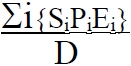
Si = Number of shares in the index for security i.
Pi = Price of security i
Ei = Cross rate of currency of Security I vs. USD. If security price in USD, Ei = 1
D = Divisor
Hedged Equity Indexes
The total returns for the Indexes are calculated once a day on a daily basis to remove the impact of currency and uses a WM/Reuters 1-month forward rate to do so.
| Page 43 of 192 |
Dynamic Hedged Equity Indexes
The Indexes use quantitative signals to determine hedge ratios on the currency exposure on a monthly basis. Hedge ratios are varied each month between 0% and 100%. The hedged indexes—when hedge ratios are 100% — are designed to approximate the investable return available to
U.S. based investors that seek to neutralize currency fluctuations as a source of the international index returns.
Starting from the month end of April 2015, all WisdomTree Currency-Hedged Indices will be calculated using forward amounts and foreign currency weights determined one business day prior to the month end—in accordance with the standard currency hedged calculations of WisdomTree’s independent index calculation agent. The precise calculation for the daily hedged currency index equals:
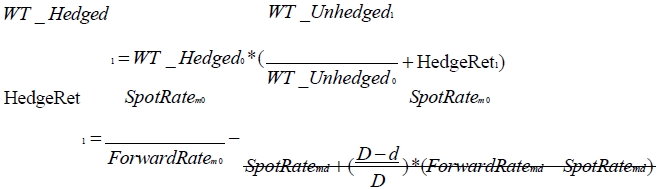
Where Forward Rate = WM/Reuters 1-month forward rate in foreign currency per U.S. dollar
Spot Rate = Spot Rate in foreign currency per U.S. dollar.
For each month m, there are d= 1, 2, 3, .. D calendar days so md is day d for month m and m0 is one business day prior to the month end of month m-1.
D=Total # days In Month
md= d day of Month m
WT_Hedged0 – previous month-end
WT_Unhedged0 – previous month-end
HedgeRet has a hedge ratio applied to it when determining what percentage of the currency is hedged. This is a ratio WisdomTree will send to the calculation agent every month.
| Page 44 of 192 |
| 2.3. | The International Dividend Indexes are calculated every weekday. If trading is suspended while the exchange the component company trades on is still open, the last traded price for that stock is used for all subsequent Index computations until trading resumes. If trading is suspended before the opening, the stock’s adjusted closing price from the previous day is used to calculate the Index. Until a particular stock opens, its adjusted closing price from the previous day is used in the Index computation. Index values are calculated on both a price and total-return basis, in U.S. dollars. The price and total return Indexes are calculated and disseminated on an end-of-day basis. |
| Page 45 of 192 |
| 2.4. | Weighting |
The International Dividend Indexes are modified capitalization-weighted indices that employ a transparent weighting formula to magnify the effect that dividends play in the total return of the Indexes. The initial weight of a component in the Index at the annual reconstitution is derived by multiplying the U.S. dollar value of the company’s annual gross dividend per share by the number of common shares outstanding for that company, “The Cash Dividend Factor.” 15 The Cash Dividend Factor is calculated for every component in the Index and then summed. Each component’s weight, at the International Weighting Date, is equal to its Cash Dividend Factor divided by the sum of all Cash Dividend Factors for all the components in that Index. The dividend stream will be adjusted for constituents with dividend yields greater than 12% at the screening date. The dividend stream of these capped securities will be their market cap multiplied by 12%. The International Weighting Date is when component weights are set, and it occurs immediately after the close of trading on the relevant date. New components and component weights take effect before the opening of trading the day following the “International Reconstitution Date.” Please refer to the Reconstitution Schedule on page 1 for specific dates.
For the size segment dividend indexes (total, large, mid and small caps) and high dividend cuts of the market, companies that fall within the top two deciles of the composite risk factor will have their dividend stream multiplied by 1.5 while all other dividends will remain unadjusted.
Companies will be weighted in the index based on this adjusted dividend stream.
All Indexes will be modified should the following occur. Should any company achieve a weighting equal to or greater than 24.0% of its Index, its weighting will be reduced to 20.0% at the close of the current calendar quarter, and the weight of all other components in the Index will be rebalanced proportionally. Moreover, should the “collective weight” of Index component securities whose individual current weights equal or exceed 5.0% of the Index, when added together, equal or exceed 50.0% of the Index, the weightings in those component securities will be reduced so that their collective weight equals 40.0% of the Index at the close of the current calendar quarter, and other components in the Index will be rebalanced proportionally to reflect their relative weights before the adjustment. Further iterations of these adjustments may occur until no company or group of companies violates these rules.
15 Special Dividends are not included in the computation of Index weights.
| Page 46 of 192 |
The capping rules described below are applied concurrently and, in a manner, designed to seek to minimize deviation from a component’s initial or intended weighting in an Index.
The following capping rule applies to all International Dividend Indexes, unless specified otherwise below:
| · | Should any country achieve a weight equal to or greater than 25% of the indexes, the weight of companies will be reduced to 25% as of the annual Screening Date. |
| · | Should any sector achieve a weight equal to or greater than 25% of the Indexes, weight of companies will be reduced to 25% as of the annual Screening Date. Real Estate sector will be capped at 15%. |
| · | Should the ratio of a component company’s weight relative to its weight in a market capitalization weighted version of the Index exceed 5x or fall below 0.20x, the weight of the company will be reduced or increased to meet the 5x or 0.20x thresholds, respectively. |
For the International Equity Index, the following capping rules apply:
| · | Financials sector will be capped at 20%. |
| · | The weighted average WisdomTree Style Score of the Index should be at least 15 (see Appendix A for details). |
For the International High Dividend Index, the following capping rules apply:
| · | The maximum weight of any individual security is capped at 5% on the annual rebalance, prior to the implementation of the sector and country caps, and the weights of all other components will be adjusted. |
| Page 47 of 192 |
For the International Quality Dividend Growth Index, the following capping rules apply:
| · | The maximum weight of any individual security is capped at 5%. |
| · | Country exposures will be adjusted to remain within +/- 5% of the market capitalization weight of the initial universe of eligible securities. |
| · | Sector exposures will be adjusted to remain within +/- 10% of the market capitalization weight of the initial universe of eligible securities. |
For the Europe Equity Index, the following capping rules apply:
| · | The maximum weight of any individual security is capped at 5% on the annual rebalance prior to the introduction of country and sector caps. |
For the Europe SmallCap Equity Index, the following capping rules apply:
| · | The maximum weight of any individual security is capped at 2% on the annual rebalance prior to the introduction of country and sector caps. |
For the Europe SmallCap Dividend Index, the following capping rules apply:
| · | Should any country achieve a weight equal to or greater than 30% of the indexes, the weight of companies will be reduced to 30% as of the annual Screening Date. |
For the Japan Dividend Index, the following capping rules apply:
| · | The maximum weight of any individual security is capped at 5% on the annual rebalance, prior to the implementation of the sector caps, and the weights of all other components will be adjusted. |
| Page 48 of 192 |
For the Japan SmallCap Dividend Index and Japan SmallCap Equity Index, the following capping rules apply:
| · | The maximum weight of any individual security is capped at 2% on the annual rebalance, prior to the implementation of the sector caps, and the weights of all other components will be adjusted. |
For the Europe Quality Dividend Growth Index, the following capping rules apply:
| · | The maximum weight of any individual security is capped at 5% on the annual rebalance, prior to the implementation of the sector caps, and the weights of all other components will be adjusted. |
| · | Country exposures will be adjusted to remain within +/- 5% of the market capitalization weight of the initial universe of eligible securities. |
| · | Sector exposures will be adjusted to remain within +/- 10% of the market capitalization weight of the initial universe of eligible securities. |
The weights of individual components or groups of components may fluctuate above or below the specified caps during the year intra annual rebalance dates. The weights will be reset at each annual rebalance date.
The following liquidity adjustment factors will be applied to all Indexes after the capping rules described above have been applied:
| · | A further volume screen requires that a calculated volume factor (the median daily dollar volume for three months preceding the Screening Date / weight of security in each index) shall be greater than $200 million to be eligible for each index. In the case of the Japan SmallCap Dividend Index and Japan SmallCap Equity Index, the calculated volume factor shall be greater than $100 million. If a security’s volume factor falls below $200 million or $100 million for the Japan SmallCap Dividend Index and the Japan SmallCap Equity Index at the annual screening, but is currently in the Index, it will remain in the Index. The securities’ weight will be adjusted downwards by an adjustment factor equal to its volume factor divided by $400 million. |
| Page 49 of 192 |
| · | In the event a security has a calculated volume factor (average daily volume traded over the preceding three months / weight in the index) that is less than $400 million, its weight will be reduced such that weight after volume adjustment = weight before adjustment x calculated volume factor / $400 million. The implementation of the volume factor may cause an increase in the holdings, sector and country weights above the specified caps. |
| · | For the Europe SmallCap Dividend Index, in the event a security has a calculated volume factor (average daily volume traded over the preceding three months / weight in the index) that is less than $200 million, its weight will be reduced such that weight after volume adjustment = weight before adjustment x calculated volume factor / $200 million. The implementation of the volume factor may cause an increase in the holdings, sector and country weights above the specified caps. |
| 2.5. | Dividend Treatment |
Normal dividend payments are not taken into account in the price Index, whereas they are reinvested and accounted for in the total return Index.16 However, special dividends that are not reinvested in the total return index require index divisor adjustments to prevent the distribution from distorting the price index.
| 2.7 | Multiple Share Classes |
16 For the International total return indexes, where information is available about both gross and net dividends, the Indexes assume re-investment of net dividends.
| Page 50 of 192 |
In the event a component company issues multiple classes of shares of common stock, each class of share will be included in any broad-based Index, provided that dividends are paid on that share of stock. In the event such a component company qualified for inclusion in the “High Dividend” or Dividend ex-Financial select cuts from these broad-based Indexes, only the share class of that company with the highest dividend yield would be selected for inclusion. Conversion of a share class into another share class results in the deletion of the share class being phased out and an increase in shares of the surviving share class, provided that the surviving share class is in the Index. For all Mid and Small cap cuts, if a security has multiple listed share classes and the total market capitalization of the listed share classes is greater than largest market capitalization cutoff of that index, the security would not be eligible for that index. At least one share class will be eligible for inclusion in either large, mid or small size cut based on total market value of the company.
| 3. | Index Maintenance |
Index Maintenance includes monitoring and implementing the adjustments for company deletions, stock splits, stock dividends, spins-offs, or other corporate actions. Some corporate actions, such as stock splits, stock dividends, and rights offerings require changes in the index shares and the stock prices of the component companies in the International Dividend Indexes. Some corporate actions, such as stock issuances, stock buybacks, warrant issuances, increases or decreases in dividend per share between reconstitutions, do not require changes in the index shares or the stock prices of the component companies in the International Dividend Indexes. Other corporate actions, such as special dividends and entitlements, may require Index divisor adjustments. Any corporate action, whether it requires divisor adjustments or not, will be implemented after the close of trading on the day prior to the ex-date of such corporate actions.
Whenever possible, changes to the Index’s components, such as deletions as a result of corporate actions, will be announced at least two business days prior to their implementation date.
| 3.1. | Component Changes |
Additions
Additions to the International Dividend Indexes are made at the annual reconstitution according to the inclusion criteria defined above. Changes are implemented before the opening of trading on the first day following the closing of trading on the International Reconstitution Date. No additions are made to any of the International Dividend Indexes between annual reconstitutions.
| Page 51 of 192 |
Deletions
Shares of companies that are de-listed or acquired by a company outside of the Index are deleted from the Index and the weights of the remaining components are adjusted proportionately to reflect the change in composition of the Index. A component company that cancels its dividend payment is deleted from the Index and the weights of the remaining components are adjusted proportionately to reflect the change in the composition of the Index. A component company that files for bankruptcy is deleted from the Index and the weights of the remaining components are adjusted proportionately to reflect the change in the composition of the Index. If a component company is acquired by another company in the Index for stock, the acquiring company’s shares and weight in the Index are adjusted to reflect the transaction after the close of trading on the day prior to the execution date.17 Component companies that reclassify their shares (i.e. that convert multiple share classes into a single share class) remain in the Index, although index shares are adjusted to reflect the reclassification.
| 3.2. | Spin-Offs and IPOs |
Should a company be spun-off from an existing component company and pay a regular cash dividend, it will be ineligible for inclusion in the International Dividend Indexes until the next annual reconstitution, provided it meets all other Index eligibility requirements. Spin-off shares of publicly traded companies that are included in the same indexes as their parent company are increased to reflect the spin-off and the weights of the remaining components will be adjusted proportionately to reflect the change in the composition of the Index. Companies that go public in an Initial Public Offering (IPO), pay a regular cash dividend, and meet all other eligibility requirements may be considered for inclusion in an International Dividend Index at the next annual reconstitution.
Index Divisor Adjustments
Changes in the Index’s market capitalization due to changes in composition, weighting or corporate actions result in a divisor change to maintain the Index’s continuity. By adjusting the divisor, the Index value retains its continuity before and after the event. Corporate actions that require divisor adjustments will be implemented prior to the opening of trading on the effective date. In certain instances where information is incomplete, or the completion of an event is announced too late to be implemented prior to the ex-date, the implementation will occur as of the close of the following day or as soon as practicable thereafter. For corporate actions not described herein, or combinations of different types of corporate events and other exceptional cases, WisdomTree reserves the right to determine the appropriate implementation method.
17 Companies being acquired will be deleted from the WisdomTree indexes immediately before the effective date of the acquisition or upon notice of a suspension of trading in the stock of the company that is being acquired. In cases where an effective date is not publicly announced in advance, or where a notice of suspension of trading in connection with an acquisition is not announced in advance, WisdomTree reserves the right to delete the company being acquired based on best available market information.
| Page 52 of 192 |
Companies that are acquired, de-listed, file for bankruptcy, move their Primary Business Activities outside of a defined country or that cancel their dividends in the intervening weeks between the International Screening Date and the International Reconstitution Date are not included in the International Dividend Indexes, and the weights of the remaining components are adjusted accordingly.
| 4. | Selection Parameters for International Dividend Indexes |
| 4.1. | Selection parameters for the WisdomTree International Dividend Indexes are defined in section 2.1. Companies that pass the selection criteria as of the International Screening Date are included in Indexes. The component companies are assigned weights in the Indexes as defined in section 2.4., and annual reconstitution of the Indexes takes effect as defined in section 3.1. |
| Page 53 of 192 |
Methodology Guide for Emerging Market Dividend Indexes
| 1. | Index Overview and Description |
WisdomTree, Inc. (WT) created a family of international indexes that track the performance of dividend-paying companies in emerging markets presently consisting of the: WisdomTree Emerging Markets Dividend Index (“EMDI”), the WisdomTree Emerging Markets High Dividend Index (“EMDI HDI”), and the WisdomTree Emerging Markets SmallCap Dividend Index (“EMSC”).
The emerging market indexes described above are referred to collectively as the “Emerging Market Dividend Indexes.”
| · | The WisdomTree Emerging Markets Dividend Index measures the stock performance of companies that pay regular cash dividends on shares of common stock with market capitalizations of at least $200 million at the Emerging Market Screening Date and median daily dollar volumes of at least $200,000 for each of the six months prior to the Emerging Markets Screening Date and that conduct their Primary Business Activities18 in the following 18 emerging market nations: Brazil, Chile, China, Czech Republic, Hungary, India, Indonesia, Korea, Malaysia, Mexico, Philippines, Poland, Russia, South Africa, Taiwan, Thailand, Turkey, and Saudi Arabia (“Emerging Market Countries”). Securities must have positive earnings over the past year and have paid at least $5 million in gross cash dividends on shares of their common stock in the annual cycle prior to the annual reconstitution in October. In the case of China, only companies that are incorporated or domiciled in China and that trade on the Hong Kong Stock Exchange are eligible for inclusion. In India, only securities whose foreign ownership restriction limits have yet to be breached are eligible for inclusion in the index. Local exchange shares are included in the index for all countries with the exception of Russia, which include only American Depository Receipts (ADRs) or Global Depositary Receipts (GDRs). Passive foreign investment companies (PFICs) are excluded, as are limited partnerships, limited liability companies, royalty trusts, preferred stock, rights, and other derivative securities. |
| · | The WisdomTree Emerging Markets High Dividend Index is a fundamentally weighted index that measures the performance of high dividend yield stocks within the emerging markets. |
| · | The WisdomTree Emerging Markets SmallCap Dividend Index is a fundamentally weighted index that measures the performance of primarily small cap stocks selected from the WisdomTree Emerging Markets Dividend Index. Companies are weighted in the Index based on annual cash dividends paid. |
18 The country in which a company conducts its Primary Business Activities is determined based on the following factors: country of organization or incorporation, country in which a company’s headquarters is located, the country to which a company has the greatest risk exposure (“Country of Risk”), and the country from which a company generates the most significant portion of its revenue or to which it allocates the greatest resources. WT may determine to consider additional or different factors depending on the nature of a company’s business and operations.
| Page 54 of 192 |
In October of each year, the Emerging Market Dividend Indexes are reconstituted, with each components’ weight adjusted, if necessary, to reflect its dividend-weighting in its respective Index.
Each Index is calculated to seek to capture price appreciation and total return, which assumes dividends are reinvested in the components of the Index. Each Index is calculated using available primary market prices. Each Index is calculated in U.S. dollars.
| 2. | Key Features |
| 2.1. | Membership Criteria |
To be eligible for inclusion in the above mentioned Emerging Market Dividend Indexes, component companies must be under coverage by the market management team of the third-party independent index calculation agent and must meet the minimal liquidity requirements established by WT. To be included in any of the Emerging Market indexes, shares of such component securities need to have traded at least 250,000 shares per month for each of the six months preceding the “Emerging Market Screening Date” (after the close of trading on the last trading day in September).
In the case of EMDI, EMDI HDI, and EMSC component companies must have their shares listed on a stock exchange in one of the following countries: Brazil, Chile, China, Czech Republic, Hungary, India, Indonesia, Korea, Malaysia, Mexico, Philippines, Poland, Russia, South Africa, Taiwan, Thailand, Turkey, or Saudia Arabia. Securities must conduct their Primary Business Activities in one of these Emerging Market Countries and have paid at least $5 million in gross cash dividends on shares of their common stock in the annual cycle prior to the annual reconstitution in October. In the case of China, only companies that are incorporated or domiciled in China and that trade on the Hong Kong Stock Exchange are eligible for inclusion. In addition, approximately 100 largest Chinese domestic listed companies by dividend market capitalization that are part of the connect program and meet index requirements will be selected for inclusion in the Emerging Markets Dividend Index. In India, only securities whose foreign ownership restriction limits have yet to be breached are eligible for inclusion in the index. Local exchange shares are included in the index for all countries with the exception of Russia, which include only American Depository Receipts (ADRs) or Global Depositary Receipts (GDRs).
| Page 55 of 192 |
Securities must have a market capitalization of at least $200 million on the “Emerging Market Screening Date” (after the close of trading on the last trading day in September) and securities need to have had a median daily trading dollar volume of at least $200,000 for each of the six months preceding the Emerging Market Screening Date. Common stocks, REITs, tracking stocks, and holding companies are eligible for inclusion. ADRs or GDRs are eligible in Russia but no other country. Security types that are excluded from the index are: Limited partnerships, royalty trusts, passive foreign investment companies, preferred stocks, closed-end funds, exchange-traded funds, and derivative securities such as warrants and rights.
In addition, companies that fall within the bottom decile of a composite risk factor score are not eligible for inclusion in the Emerging Markets Dividend Indexes. The composite risk factor score is used to eliminate potentially higher risk companies that would have otherwise been eligible for inclusion in the Indexes. The composite risk factor score is an equally weighted score of the two factors described below.
| 1) | Quality Factor – determined by static observations and trends of return on equity (ROE), return on assets (ROA), gross profits over assets and cash flows over assets. Scores are calculated within industry groups. |
| 2) | Momentum Factor – determined by stocks’ risk adjusted total returns over historical periods (6 and 12 months) |
Companies that fall within the top 5% ranked by dividend yield and also the bottom ½ of the composite risk factor score are not eligible for inclusion.
The screening and weighting for the eligible Chinese domestic listed companies will follow the same logic but will be done separately from the rest of the eligible companies. Chinese domestic listed companies that don’t have enough data to compute a composite risk score will still be eligible for inclusion if they meet other screens but will receive a median score for weighting purposes.
The WisdomTree Emerging Markets High Dividend Index is derived from the WisdomTree Emerging Markets Dividend Index. Companies are ranked by dividend yield as of the index measurement date. Companies ranking in the top 30% by highest dividend yield are selected for new additions to the index. In addition, approximately 100 Chinese domestic listed companies by highest dividend yield that are part of the connect program and meet index requirements will be selected for inclusion.
To be deleted from the index, companies must rank outside of the top 35% by dividend yield.
The WisdomTree Emerging Markets SmallCap Dividend Index is derived from the WisdomTree Emerging Markets Dividend Index. New additions to the index are those companies that rank in the bottom 10% of total market capitalization of the WisdomTree Emerging Markets Dividend Index as of the Emerging Market Screening Date. In addition, approximately 100 largest Chinese domestic listed companies that are part of the connect program and meet index requirements will be selected for inclusion based on bottom 10% market capitalization cutoff of the WisdomTree Emerging Markets Dividend Index without A shares. To be deleted from the index, companies must rank outside of the bottom 13% of total market capitalization of the WisdomTree Emerging Markets Dividend Index as of the Emerging Market Screening Date.
| Page 56 of 192 |
WisdomTree applies a Foreign Investment Screen to exclude companies that are not available to be purchased or transacted in by foreign investors (or certain segments of foreign investors) or cannot continue to be reasonably purchased or transacted in by foreign investors (or certain segments of foreign investors), as determined by the third party independent calculation agent, and a data point referred to as “Degree of Open Freedom” (DOF) or by WisdomTree based generally on the guiding principles set forth below. The first test of a stock’s investability is determining whether the market is open to foreign institutions. The third-party independent calculation agent determines the extent to which and the mechanisms foreign institutions can use to buy and sell shares on local exchanges and repatriate capital, capital gains, and dividend income without undue constraint. Once determined that a market is open to foreign investors, the third-party independent calculation agent then investigates each security that may be a candidate for inclusion. Each class of share is reviewed to determine whether there are any corporate bylaw, corporate charter, or industry limitations on foreign ownership of the stock. The DOF is the variable that ranges from zero to one and indicates the amount of the security foreigners may legally own (0.00 indicates that none of the stock is legally available, 1.00 indicates that 100% of the shares are available). Any company with a DOF of 0 will not be eligible for the WisdomTree Indexes.
For purposes of both selection and weighting the following definitions would apply:
Gross Cash Dividends are based on dividends paid over latest annual cycle as determined by the ex-date of the dividends. The currency rate used to translate the dividends to U.S. dollars is the exchange rate on the screening date. Shares outstanding for the total dividend calculation are based on the shares outstanding at the time of each dividend payment.
Liquidity and market cap screens are based on the shares outstanding of the security in question for each company.
| Page 57 of 192 |
| 2.2. | Base Date and Base Value |
A base value for the WisdomTree Emerging Market Dividend Index was set at 300 on the close of trading on May 31, 2007. A base value for the WisdomTree Emerging Markets High Dividend Index was set at 200 at the close of trading on May 31, 2007. A base value for the WisdomTree Emerging Markets SmallCap Dividend Index was set at 100 at the close of trading on May 31, 2007.
| 2.3. | Calculation and Dissemination |
The following formula is used to calculate the index levels for the Emerging Markets Indexes:
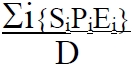
Si = Number of shares in the index for security i.
Pi = Price of security i
Ei = Cross rate of currency of Security i vs. USD. If security price in USD,
Ei = 1
D = Divisor
The Emerging Market Dividend Indexes are calculated every weekday. If trading is suspended while the exchange the component company trades on is still open, the last traded price for that stock is used for all subsequent Index computations until trading resumes. If trading is suspended before the opening, the stock’s adjusted closing price from the previous day is used to calculate the Index. Until a particular stock opens, its adjusted closing price from the previous day is used in the Index computation. Index values are calculated on both a price and total-return basis, in U.S. dollars and disseminated on an end-of-day basis.
| 2.4. | Weighting |
The Emerging Market Dividend Indexes are modified capitalization-weighted indices that employ a transparent weighting formula to magnify the effect that dividends play in the total return of the Indexes.
The initial weight of a component in the Index at the annual reconstitution is derived by multiplying the U.S. dollar value of the security’s annual dividend per share by the number of common shares outstanding for that security, “The Cash Dividend Factor.” The Cash Dividend Factor includes multiplying the same two factors above by a third factor developed by Standard & Poor’s called the “Investability Weighting Factor” (IWF). The IWF is used to scale the dividends generated of each company by factors that impose restrictions on shares available to be purchased. The Cash Dividend Factor is calculated for every component in the Index and then summed. Each component’s weight, at the International Weighting Date, is equal to its Cash Dividend Factor divided by the sum of all Cash Dividend Factors for all the components in that Index. The dividend stream will be adjusted for constituents with dividend yields greater than 12% at the screening date. The dividend stream of these capped securities will be their market cap multiplied by 12%.
| Page 58 of 192 |
For the size segment dividend indexes (total, large, mid and small caps) and high dividend cuts of the market, companies that fall within the top two deciles of the composite risk factor will have their dividend stream multiplied by 1.5 while all other dividends will remain unadjusted.
Companies will be weighted in the index based on this adjusted dividend stream.
With the objective of managing turnover for the WisdomTree Emerging Markets SmallCap Dividend Index, current constituents whose initial weight at rebalance is within +/- 0.20% of their current Index weight, will not be adjusted and will maintain their current weight at rebalance.
The Emerging Market Weighting Date is when component weights are set, and it occurs immediately after the close of trading on the relevant date.
New components and component weights take effect before the opening of trading the day following the “Emerging Markets Reconstitution Date.” Please refer to the Reconstitution Schedule on page 1 for specific dates.
All Indexes will be modified should the following occur. Should any company achieve a weighting equal to or greater than 24.0% of its Index, its weighting will be reduced to 20.0% at the close of the current calendar quarter, and all other components in the Index will be rebalanced.
Moreover, should the “collective weight” of Index component securities whose individual current weights equal or exceed 5.0% of the Index, when added together, equal or exceed 50.0% of the Index, the weightings in those component securities will be reduced proportionately so that their collective weight equals 40.0% of the Index at the close of the current calendar quarter, and all other components in the Index will be rebalanced in proportion to their index weightings before the adjustment. Further iterations of these adjustments may occur until no company or group of companies violates these rules.
The capping rules described below are applied concurrently and, in a manner, designed to seek to minimize deviation from a component’s initial or intended weighting in an Index.
The following capping rule applies to the WisdomTree Emerging Markets Dividend Indexes, unless specified otherwise below:
| · | Should any country achieve a weight equal to or greater than 25% of the index, the weight of companies will be reduced to 25% as of the annual Emerging Market Screening Date. Chinese domestic stock market exposure will be treated separately and will be capped at 5%. |
| Page 59 of 192 |
| · | Should any sector achieve a weight equal to or greater than 25% of the index, the weight of companies will be reduced to 25% as of the annual Emerging Market Screening Date. Real Estate sector will be capped at 15%. |
| · | Should the ratio of a component company’s weight relative to its weight in a market capitalization weighted version of the Index exceed 10x or fall below 0.1x, the weight of the company will be reduced or increased to meet the 10x or 0.1x thresholds, respectively. |
For the Emerging Markets High Dividend Index the following capping rules are applied:
| · | The maximum weight in the top held security will be capped at 5% prior to the implementation of the sector and country caps. |
The weights of individual components or groups of components may fluctuate above or below the specified caps during the year intra annual rebalance dates. The weights will be reset at each annual rebalance date.
The following liquidity adjustment factors will be applied to all Indexes after the capping rules described above have been applied:
| · | A further volume screen requires that a calculated volume factor (the median daily dollar volume for three months preceding the Screening Date / weight of security in each index) shall be greater than $200 million to be eligible for each index. If a security’s volume factor falls below $200 million at the annual screening, but is currently in the Index, it will remain in the Index. The securities’ weight will be adjusted downwards by an adjustment factor equal to its volume factor divided by $400 million. |
| · | In the event a security has a calculated volume factor (average daily volume traded over the preceding three months / weight in the index) that is less than $400 million, its weight will be reduced such that weight after volume adjustment = weight before adjustment x calculated volume factor / $400 million. The implementation of the volume factor may cause an increase in the sector and country weights above the specified caps. |
| Page 60 of 192 |
| 2.5. | Dividend Treatment |
Normal dividend payments are not taken into account in the price Index, whereas they are reinvested and accounted for in the total return Index. However, special dividends from non-operating income require index divisor adjustments to prevent the distribution from distorting the price index.
| 2.6 | Multiple Share Classes |
In the event a component company issues multiple classes of shares of common stock, each class of share will be included in any broad-based Index, provided that dividends are paid on that share of stock and that the stock passes all other inclusion requirements. In the event such a component company qualified for inclusion in the “High Dividend” cut from these broad-based Indexes, the share class of that company with the greater liquidity, based on the average daily trading volume as described in section 2.1, would be selected for inclusion. Conversion of a share class into another share class results in the deletion of the share class being phased out and an increase in shares of the surviving share class, provided that the surviving share class is in the Index. For the Small cap cuts, if a security has multiple listed share classes and the total market capitalization of the listed share classes is greater than largest market capitalization cutoff of that index, the security would not be eligible for that index. For Emerging Markets SmallCap Dividend Index, the market capitalization of Chinese domestic listed equities will be considered for companies with multiple share classes.
| 3. | Index Maintenance |
Index Maintenance includes monitoring and implementing the adjustments for company additions and deletions, stock splits, stock dividends, corporate restructurings, spin-offs, or other corporate actions. Some corporate actions, such as stock splits and stock dividends, require changes in the common shares outstanding and the stock prices of the component companies in the Emerging Market Dividend Indexes. Other corporate actions, such as special dividends, require index divisor adjustments as well. Any corporate action, whether it requires divisor adjustments or not, will be implemented after the close of trading on the day prior to the ex-date of such corporate actions. Whenever possible, changes to the Index’s components will be announced at least two business days prior to their implementation date.
| Page 61 of 192 |
| 3.1. | Component Changes |
Additions
Additions to the Emerging Market Dividend Indexes are made at the annual reconstitution according to the inclusion criteria defined above. Changes are implemented before the opening of trading on the first trading day following the “Emerging Market and Global Reconstitution Date.” Please refer to the Reconstitution Schedule on page 1 for specific dates. No additions are made to any of the Emerging Market Dividend Indexes between annual reconstitutions.
Deletions
Shares of companies that are de-listed or acquired by a company outside of the Index are deleted from the Index and the weights of the remaining components are adjusted proportionately to reflect the change in composition of the Index. A component company that cancels its dividend payment is deleted from the Index and the weights of the remaining components are adjusted proportionately to reflect the change in the composition of the Index. A component company that files for bankruptcy is deleted from the Index and the weights of the remaining components will be adjusted proportionately to reflect the change in the composition of the Index. If a company moves their Primary Business Activities outside of a defined country, it will be removed from the Index and the weights of the remaining components are adjusted proportionately to reflect the change in the composition of the Index. If a component company is acquired by another company in the Index for stock, the acquiring company’s shares and weight in the Index are adjusted to reflect the transaction after the close of trading on the day prior to the execution date. Component companies that reclassify their shares (i.e. that convert multiple share classes into a single share class) remain in the Index, although index shares are adjusted to reflect the reclassification.
| 3.2. | Spin-Offs and IPOs |
Should a company be spun-off from an existing component company and pay a regular cash dividend, it will be ineligible for inclusion in the Emerging Market Indexes until the next annual reconstitution, provided it meets all other Index eligibility requirements. Spin-off shares of publicly traded companies that are included in the same indexes as their parent company are increased to reflect the spin-off and the weights of the remaining components will be adjusted proportionately to reflect the change in the composition of the Index. Companies that go public in an Initial Public Offering (IPO), and that pay a regular cash dividend, and that meet all other eligibility requirements may be considered for inclusion in an Emerging Market Index at the next annual reconstitution of such Index
| Page 62 of 192 |
| 4. | Index Divisor Adjustments |
Corporate actions may affect the share capital of component stocks and therefore trigger increases or decreases in the Index value. To avoid distortion, the divisor is adjusted accordingly. Changes in the Index’s market capitalization due to changes in composition, weighting or corporate actions result in a divisor change to maintain the Index’s continuity. By adjusting the divisor, the Index value retains its continuity before and after the event. Corporate actions that require divisor adjustments will be implemented prior to the opening of trading on the effective date. In certain instances where information is incomplete, or the completion of an event is announced too late to be implemented prior to the ex-date, the implementation will occur as of the close of the following day or as soon as practicable thereafter. For corporate actions not described herein, or combinations of different types of corporate events and other exceptional cases, WisdomTree reserves the right to determine the appropriate implementation method.
Companies that are acquired, de-listed, file for bankruptcy, move their Primary Business Activities outside of a defined country or that cancel their dividends in the intervening weeks between the Emerging Markets Screening Date and the Emerging Markets Reconstitution Date are not included in the Emerging Market Indexes, and the weights of the remaining components are adjusted accordingly.
| 5. | Selection Parameters for Emerging Market Indexes |
| 5.1 | Selection parameters for the WisdomTreeSM Emerging Markets Dividend Index are defined in section 2.1. Companies that pass this selection criteria as of the Emerging Market Screening Date are included in the Index. The component companies are assigned weights in the Index as defined in section 2.4., and annual reconstitution of the Index takes effect as defined in section 3.1. |
| 5.2 | Selection parameters for the WisdomTreeSM Emerging Markets High Dividend Index are defined in section 2.1. Companies that pass this selection criteria as of the Emerging Market Screening Date are included in the Index. A company will only be deleted from the index if its dividend yield ranking falls outside of the top 35% of companies. The component companies are assigned weights in the Index as defined in section 2.4., and annual reconstitution of the Index takes effect as defined in section 3.1. |
| Page 63 of 192 |
| 5.3 | Selection parameters for the WisdomTree Emerging Markets SmallCap Dividend Index are defined in section 2.1. A company will only be deleted from the index if it falls outside the bottom 13% of the total market capitalization of the WisdomTree Emerging Markets Dividend Index. Companies that pass this selection criteria as of the Emerging Market Screening Date are included in the Index. The component companies are assigned weights in the Index as defined in section 2.4., and annual reconstitution of the Index takes effect as defined in section 3.1. |
| Page 64 of 192 |
Methodology Guide for ex-State-Owned Enterprises Indexes
| 1. | Index Overview and Description |
WisdomTree, Inc. (WT) has created the WisdomTree Emerging Markets–ex-State-Owned Enterprises Index, the WisdomTree China ex-State-Owned Enterprises Index, and the WisdomTree True Emerging Markets Index [referred to as “the Indexes”].
| · | The WisdomTree Emerging Markets ex-State-Owned Enterprises Index is comprised of emerging market stocks that are not state-owned enterprises. State owned enterprises are defined as government ownership of more than 20% of a company’s shares outstanding. |
| · | The WisdomTree China ex-State-Owned Enterprises Index is derived from the WisdomTree Emerging Markets ex-State-Owned Enterprises Index and is comprised of Chinese companies that are not state owned. |
| · | The WisdomTree True Emerging Markets Index is derived from the WisdomTree Emerging Markets ex-State-Owned Enterprises Index and is comprised emerging market stocks that are not listed or incorporated in China, Taiwan or Korea and that are not state owned. |
The Indexes are modified float-adjusted market capitalization weighted and are reconstituted annually in October of each year. “Float-adjusted” means that the share amounts used in calculating the Indexes reflect only shares available to investors.
Each of the Indexes is calculated to seek to capture price appreciation and total return, which assumes dividends are reinvested into the components of the Indexes. Each The Indexes is are calculated using available primary market prices. The Indexes are calculated in U.S. dollars.
| 2. | Key Features |
| 2.1. | Membership Criteria |
To be eligible for inclusion in the WisdomTree Emerging Markets ex-State-Owned Enterprises Index component companies must be under coverage by the market management team of the third party independent index calculation agent, must conduct their Primary Business Activities19 and have their shares listed on a stock exchange in one of the following countries: Argentina, Brazil, Chile, China, Czech Republic, Hungary, India, Indonesia, Korea, Malaysia, Mexico, Philippines, Poland, Russia, South Africa, Taiwan, Thailand, Turkey, or Saudia Arabia. Companies that are domiciled or incorporated in China and trading primarily on a U.S. stozck exchange are also eligible for inclusion. In addition, one hundred largest Chinese domestic companies by float adjusted market capitalization that are part of the connect program and meet index requirements will be selected for inclusion20. In India, only securities whose foreign ownership restriction limits have yet to be breached are eligible for inclusion in the index. In all other cases, local exchange shares are included in the index for all countries with the exception of Argentina and Russia, which includes only American Depository Receipts (ADRs) or Global Depositary Receipts (GDRs). Limited partnerships are excluded, as are limited liability companies, royalty trusts, preferred stock, rights, and other derivative securities.
19 The country in which a company conducts its Primary Business Activities is determined based on the following factors: country of organization or incorporation, country in which a company’s headquarters is located, the country to which a company has the greatest risk exposure (“Country of Risk”), and the country from which a company generates the most significant portion of its revenue or to which it allocates the greatest resources. WT may determine to consider additional or different factors depending on the nature of a company’s business and operations.
20 Chinese domestic listed equities were added during the special reconstitution in August 2017, in lieu of the annual reconstitution in October
| Page 65 of 192 |
To be eligible for inclusion in the WisdomTree China ex-State-Owned Enterprises Index, component companies must conduct their Primary Business Activities in China and have their shares listed on the Hong Kong stock exchange. Companies that conduct their Primary Business Activities in China and trading primarily on a U.S. stock exchange are also eligible for inclusion. In addition, one hundred largest Chinese domestic companies by float adjusted market capitalization that are part of the connect program and meet index requirements will be selected for inclusion.
To be eligible for inclusion in the WisdomTree True Emerging Markets Index component companies must conduct their Primary Business Activities and have their shares listed on a stock exchange in one of the following countries: Argentina, Brazil, Chile, Czech Republic, Hungary, India, Indonesia, Malaysia, Mexico, Philippines, Poland, Russia, South Africa, Thailand, Turkey, or Saudia Arabia. In India, only securities whose foreign ownership restriction limits have yet to be breached are eligible for inclusion in the index. In all other cases, local exchange shares are included in the index for all countries with the exception of Argentina and Russia, which includes only American Depository Receipts (ADRs) or Global Depositary Receipts (GDRs). Limited partnerships are excluded, as are limited liability companies, royalty trusts, preferred stock, rights, and other derivative securities.
To be eligible for inclusion in the Indexes, component companies must meet the minimum liquidity requirements established by WT. To be included in the Indexes, shares of such component securities need to have a float-adjusted market capitalization of at least $1 billion as of the Index “Screening Date” (after the close of trading on the last trading day in September). Companies must have an average daily trading volume of at least $100,000 for three months preceding the Index Screening Date and trading of at least either 250,000 shares per month or $25 million notional for each of the six months preceding the Index Screening Date.
| Page 66 of 192 |
WT applies a Foreign Investment Screen to exclude companies that are not available to be purchased or transacted in by foreign investors (or certain segments of foreign investors) or cannot continue to be reasonably purchased or transacted in by foreign investors (or certain segments of foreign investors), as determined by the third party independent calculation agent, and a data point referred to as “Degree of Open Freedom” (DOF) or by WT based generally on the guiding principles set forth below. The first test of a stock’s investability is determining whether the market is open to foreign institutions. The third party independent calculation agent determines the extent to which and the mechanisms foreign institutions can use to buy and sell shares on local exchanges and repatriate capital, capital gains, and dividend income without undue constraint. Once determined that a market is open to foreign investors, the third party independent calculation agent then investigates each security that may be a candidate for inclusion. Each class of share is reviewed to determine whether there are any corporate bylaw, corporate charter, or industry limitations on foreign ownership of the stock. The DOF is the variable that ranges from zero to one and indicates the amount of the security foreigners may legally own (0.00 indicates that none of the stock is legally available, 1.00 indicates that 100% of the shares are available). Any company with a DOF of 0 will not be eligible for the Indexes.
| 2.2 | Base Date and Base Value |
WisdomTree Emerging Markets ex-State-Owned Enterprises Index was established with a base value of 200 on August 15, 2014. The first annual reconstitution took place in 2015.
WisdomTree China ex-State-Owned Enterprises Index was established with a base value of 200 on March 31, 2015.
WisdomTree True Emerging Markets Index was established with a base value of 200 on May 2, 2022.
| 2.3 | Calculation and Dissemination |
The following formula is used to calculate the index levels for the Indexes:
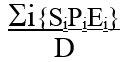
Si = Number of shares in the index for security i. Pi = Price of security i
Ei = Cross rate of currency of Security i vs. USD. If security price in USD, Ei = 1
D = Divisor
| Page 67 of 192 |
The Indexes are calculated every weekday. If trading is suspended while the exchange the component company trades on is still open, the last traded price for that stock is used for all subsequent Index computations until trading resumes. If trading is suspended before the opening, the stock’s adjusted closing price from the previous day is used to calculate the Indexes. Until a particular stock opens, its adjusted closing price from the previous day is used in the Index computation. Index values are calculated on both a price and total-return basis, in U.S. dollars. The Price and total return Indexes are calculated and disseminated on an end-of-day basis.
| 2.4 | Weighting |
The companies in the Indexes are weighted by float-adjusted market capitalization. “Float-adjusted” means that the share amounts used in calculating the Index reflect only shares available to investors. Shares held by control groups, public companies and government agencies are excluded. The initial weight of a component in the Index at the annual reconstitution is derived by multiplying the company’s market capitalization by a second factor developed by Standard & Poor’s called the “Investability Weighting Factor” (IWF). The IWF is used to scale the market capitalization of each company by restrictions on shares available to be purchased. This “Float-adjusted Factor” is calculated for every component in the Index and then summed. Each component’s weight, at the Weighting Date, is equal to its Float-adjusted Factor divided by the sum of all Float-adjusted Factors for all the components in that Index. The Emerging Market Weighting Date is when component weights are set, and it occurs immediately after the close of trading on the relevant date. New components and component weights take effect before the opening of trading the day following the “Emerging Markets Reconstitution Date.” Please refer to the Reconstitution Schedule on page 1 for specific dates.
All Indexes will be modified should the following occur. Should any company achieve a weighting equal to or greater than 24.0% of its Index, its weighting will be reduced to 20.0% at the close of the current calendar quarter, and the weights of all other components in the Index will be rebalanced proportionally. For the WisdomTree China ex-State-Owned Enterprises Index, should any company achieve a weighting equal to or greater than 20% of the Index, its weighting will be reduced at the close of the current calendar quarter to the initial 10% cap, and other components in the Index will be rebalanced.
| Page 68 of 192 |
Moreover, should the “collective weight” of Index component securities whose individual current weights equal or exceed 5.0% of the Index, when added together, equal or exceed 50.0% of the Index, the weightings in those component securities will be reduced so that their collective weight equals 40.0% of the Index at the close of the current calendar quarter, and other components in the Index will be rebalanced proportionally to reflect their relative weights before the adjustment. Further iterations of these adjustments may occur until no company or group of companies violates these rules.
The following capping and weight re-distribution rules are applied in this order:
WisdomTree Emerging Markets ex-State-Owned Enterprises Index
| · | The country weights after the State-Owned Enterprises have been removed will be adjusted by a Country Factor such that the float-adjusted market capitalization weights equal the float-adjusted market capitalization of the universe prior to the State-Owned Enterprises being removed. The Country Factor of the universe prior to the removal of State-Owned Enterprises is calculated including 10% of China A shares’ float-adjusted market capitalization. The maximum Country Factor is set at 3.0, or no country’s weight can be increased more than 3x after state owned enterprises have been removed. |
| · | After the previous country adjustment is implemented, should any sector have a weight that is 3% higher or lower than its original starting universe float-adjusted market capitalization weight, its weight will be adjusted by a factor to 3% higher or lower than its original starting universe weight. |
| · | Chinese domestic stock market exposure will be capped at 7.5% and any additional weight will be distributed proportionally among China H shares. |
WisdomTree China ex-State-Owned Enterprises Index
| · | The maximum weight in the top held security will be capped at 10% prior to the implementation of the sector caps. Security caps are implemented at a company level, not share class. |
| · | Chinese domestic stock market exposure will be capped at 33%. |
| · | Should any sector achieve a weight equal to or greater than 30% of the Indexes, weight of companies will be proportionally reduced to 30% as of the annual Screening Date. |
| Page 69 of 192 |
Should any sector or domestic market exposure exceed their initial cap by more than 5%, the said capping rule will be reapplied at the end of the process.
WisdomTree True Emerging Markets Index
| · | Should any country achieve a weight equal to or greater than 35% of the index, the weight of companies will be reduced to 35% as of the annual Screening Date. |
| · | The maximum weight in the top held security will be capped at 5%. Security caps are implemented at a company level, not share class. |
The weights of individual components or groups of components may fluctuate above or below the specified caps during the year intra annual rebalance dates. The weights will be reset at each annual rebalance date.
The following liquidity adjustment factors will be applied to all the Indexes after the capping rules described above top holding, country and sector caps have been applied:
| · | A further volume screen requires that a calculated volume factor (the median daily dollar volume for three months preceding the Screening Date / weight of security in each index) shall be greater than $200 million to be eligible for each index. If a security’s volume factor falls below $200 million at the annual screening, but is currently in the Index, it will remain in the Index. The security’s weight will be adjusted downwards by an adjustment factor equal to its volume factor divided by $400 million. |
| · | In the event a security has a calculated volume factor (average daily volume traded over the preceding three months / weight in the index) that is less than $400 million, its weight will be reduced such that weight after volume adjustment = weight before adjustment x calculated volume factor / $400 million. The implementation of the volume factor may cause an increase in the sector and country weights above the specified caps. |
| 2.5 | Dividend Treatment |
Normal dividend payments are not taken into account in the price Index, whereas they are reinvested and accounted for in the total return Index.21 However, special dividends that are not reinvested in the total return Index require Index divisor adjustments to prevent the distribution from distorting the price Index.
21 For the International total return indexes, where information is available about both gross and net dividends, the Indexes assume re-investment of net dividends.
| Page 70 of 192 |
| 2.6 | Multiple Share Classes |
In the event a component company issues multiple classes of shares of common stock, each class of share will be included. Conversion of a share class into another share class results in the deletion of the share class being phased out and an increase in shares of the surviving share class, provided that the surviving share class is in the Index.
| 3. | Index Maintenance |
Index Maintenance includes monitoring and implementing the adjustments for company deletions, stock splits, stock dividends, spins-offs, or other corporate actions. Some corporate actions, such as stock splits, stock dividends, and rights offerings require changes in the index shares and the stock prices of the component companies in the Index. Some corporate actions, such as stock issuances, stock buybacks, warrant issuances, and increases or decreases in dividend per share between reconstitutions, do not require changes in the index shares or the stock prices of the component companies in the Index. Other corporate actions, such as special dividends and entitlements, may require Index divisor adjustments. Any corporate action, whether it requires divisor adjustments or not, will be implemented after the close of trading on the day prior to the ex-date of such corporate actions. Whenever possible, changes to the Index’s components, such as deletions as a result of corporate actions, will be announced at least two business days prior to their implementation date.
IWF Changes
(1) The timing of adjustments to share counts or investable weight factors depends on the event causing the change, the public availability of source data, local market practices, and whether the change is larger than 5% of the float-adjusted share count.
(2) Changes of less than 5% of the float-adjusted shares are accumulated and made quarterly on the third Friday of March, June, September and December.
(3) Changes to the Index constituent’s float-adjusted shares of 5% or more:
| · | Changes due to mergers or acquisitions of publicly held companies are implemented when the transaction occurs, even if both of the companies are not in the same headline index, and regardless of the size of the change. The share change is applied so that it coincides with the deletion date of the target company if both the acquirer and the target are in the same Index. |
| Page 71 of 192 |
| · | Changes due to secondary public offerings (also known as placements), tender offers, Dutch auctions, exchange offers, bought deal equity offerings, or prospectus offerings are done as soon as reasonably possible after the data are verified. |
| · | Other changes of 5% or more (for example, due to company stock repurchases, private placements, redemptions, exercise of options, warrants, conversion of preferred stock, notes, debt, equity participations, at-the-market stock offerings or other recapitalizations) are made weekly. |
If a 5% or more change in shares outstanding causes a company’s IWF to change by 5 percentage points or more, the IWF is updated at the same time as the share change. IWF changes resulting from partial tender offers are considered on a case-by-case basis.
Exception: when total shares outstanding increase by more than 5%, but the new share issuance is directed to a strategic or major shareholder, it implies that there is no change in float-adjusted shares. However, in such instances, total shares outstanding and resulting IWF change will be implemented regardless of whether the float-adjusted shares change by more than 5%.
| 3.1. | Component Changes |
Additions
Additions to the Index are made at the annual reconstitution according to the inclusion criteria defined above. Changes are implemented before the opening of trading on the first trading day following the “Emerging Market and Global Reconstitution Date.” Please refer to the Reconstitution Schedule on page 1 for specific dates. No additions are made to the Indexes between annual reconstitutions, except in the cases of certain
spin-off companies, defined below.
Deletions
Shares of companies that are de-listed or acquired by a company outside of the Index are deleted from the Index and the weights of the remaining components are adjusted proportionately to reflect the change in composition of the Index. A component company that files for bankruptcy is deleted from the Index and the weights of the remaining components are adjusted proportionately to reflect the change in the composition of the Index. If a component company is acquired by another company in the Index for stock, the acquiring company’s shares and weight in the Index are adjusted to reflect the transaction after the close of trading on the day prior to the execution date.22 Component companies that reclassify their shares (i.e. that convert multiple share classes into a single share class) remain in the Index, although index shares are adjusted to reflect the reclassification.
22 Companies being acquired will be deleted from the WisdomTree indexes immediately before the effective date of the acquisition or upon notice of a suspension of trading in the stock of the company that is being acquired. In cases where an effective date is not publicly announced in advance, or where a notice of suspension of trading in connection with an acquisition is not announced in advance, WTI reserves the right to delete the company being acquired based on best available market information.
| Page 72 of 192 |
WT applies a Foreign Investment Screen to exclude companies that are not available to be purchased or transacted in by foreign investors (or certain segments of foreign investors) or cannot continue to be reasonably purchased or transacted in by foreign investors (or certain segments of foreign investors) as determined by WT, generally based on the principles set forth above describing index eligibility.
| 3.2. | Spin-Offs and IPOs |
Should a company be spun-off from an existing component company, it will be ineligible for inclusion in the indexes that its parent company is in until the next annual reconstitution. Spin-off shares of publicly traded companies that are included in the same Indexes as their parent company are increased to reflect the spin-off and the weights of the remaining components will be adjusted proportionately to reflect the change in the composition of the Index. Companies that go public in an Initial Public Offering (IPO) and meet all other eligibility requirements may be considered for inclusion in the Indexes at the next annual reconstitution.
| 4. | Index Divisor Adjustments |
Changes in the Index’s market capitalization due to changes in composition, weighting or corporate actions result in a divisor change to maintain the Index’s continuity. By adjusting the divisor, the Index value retains its continuity before and after the event. Corporate actions that require divisor adjustments will be implemented prior to the opening of trading on the effective date. In certain instances where information is incomplete, or the completion of an event is announced too late to be implemented prior to the ex-date, the implementation will occur as of the close of the following day or as soon as practicable thereafter. For corporate actions not described herein, or combinations of different types of corporate events and other exceptional cases, WT reserves the right to determine the appropriate implementation method.
Companies that are acquired, de-listed, file for bankruptcy or re-incorporate outside of a defined domicile in the intervening weeks between the Screening Date and the Reconstitution Date are not included in the Indexes, and the weights of the remaining components are adjusted accordingly.
| Page 73 of 192 |
| 5. | Selection Parameters |
Selection parameters for the Indexes are defined in section 2.1. Companies that pass this selection criterion as of the Screening Date are included in the Indexes. The component companies are assigned weights in the Indexes as defined in section 2.4., and annual reconstitution of the Indexes takes effect as defined in section 3.1.
| Page 74 of 192 |
METHODOLOGY GUIDE FOR INDIA EARNINGS INDEX
| 1. | Index Overview and Description |
Wisdomtree, Inc. (WT) has created indexes that track the performance of earnings-generating companies in emerging markets, presently consisting of the WisdomTree India Earnings Index (“IEI”). The WisdomTree India Earnings Index measures the stock performance of companies incorporated in India that pass WT’s selection, liquidity and market capitalization requirements. The IEI is reconstituted annually on the “India Reconstitution Date”, with each components’ weight adjusted based on the earnings generated by each component company, adjusted for an investable weighting factor that takes into account shares available to be purchased by foreign investors.
The India Earnings Index is calculated to seek to capture price appreciation and total return, which assumes dividends are reinvested in the components of the Index. The IEI is calculated using available primary market prices. The IEI is calculated in U.S. dollars.
| 2. | Index Governance |
| 2.1. | The WisdomTree India Earnings Index is overseen by the WisdomTree India Index Committee (the “Committee”), a standing index committee of WisdomTree, Inc. (“WisdomTree”), ticker WT. The Committee will be composed of not less than 3 members. The Committee is responsible for making broad decisions with respect to the implementation, ongoing management, operation and administration of the Index. The primary function of the Committee is to make sure the Index rules are implemented correctly and comprehensively, provided that the published Index composition shall be as determined by the Committee. Furthermore, the Committee may determine to rebalance the Index more frequently in response to volatility in the market, shifts in exposure away from underlying earnings, or other similar circumstances. |
The Committee meetings will generally be held on an annual basis or such frequency in relation to the reconstitution and/or rebalance frequency of the Index, and may be held more frequently as circumstances require.
The composition of the Committee may from time to time be changed to reflect changes in market conditions.
| 3. | Key Features |
| 3.1. | Membership Criteria |
To be eligible for inclusion in the IEI, component companies must be covered by WisdomTree’s independent index calculation agent and must meet the minimal liquidity requirements established by WT. To be included in the IEI, shares of such component securities need to have traded at least 250,000 shares per month for each of the six months preceding the “Screening Date” for the India Earnings Index (after the close of trading on the last trading day in November).
| Page 75 of 192 |
Eligible component companies must have their shares listed on the Bombay (Mumbai) Stock Exchange, must be incorporated in India and have earned at least $5 million in the 12 months prior to the annual reconstitution in November. Only securities whose foreign ownership restriction limits have yet to be breached are eligible for inclusion in the index. Companies need to have a market capitalization of at least $200 million on the “Indian Screening Date” (after the close of trading on the last trading day in November); shares of such companies need to have had a median daily dollar volume of at least $200,000 for each of the six months preceding the Indian Screening Date; components need to have had a P/E ratio of at least 2 as of the Indian Screening Date. Common stocks, tracking stocks and holding companies, including real estate holding companies, are eligible for inclusion. Security types that are excluded from the index are: limited partnerships, royalty trusts, passive foreign investment companies (PFICS), ADRs, preferred stocks, closed-end funds, exchange-traded funds, and derivative securities such as warrants and rights.
| 3.2. | Base Date and Base Value |
The base value for the IEI was set at 200, as of November 30, 2007.
| 3.3. | Calculation and Dissemination |
The following formula is used to calculate the index levels for the India Earnings Index:
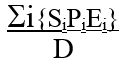
Si = Number of shares in the index for security i.
Pi = Price of security i
Ei = Cross rate of currency of Security i vs. USD. If security price in USD, Ei = 1
D = Divisor
The Index is calculated every weekday. If trading is suspended while the exchange the component company trades on is still open, the last traded price for that stock is used for all subsequent Index computations until trading resumes. If trading is suspended before the opening, the stock’s adjusted closing price from the previous day is used to calculate the Index. Until a particular stock opens, its adjusted closing price from the previous day is used in the Index computation. Index values are calculated on both a price and total-return basis, in U.S. dollars and disseminated on an end-of-day basis.
| Page 76 of 192 |
| 3.4. | Weighting |
The IEI is a modified capitalization-weighted index that employs a transparent weighting formula to magnify the effect that earnings play in the total return of the Index. The initial weight of a component in the Index at the annual reconstitution is based on reported net income in the most recent 12 months prior to the annual reconstitution. The reported net income number is then multiplied by a second factor developed by the third party independent calculation agent called the “Investability Weighting Factor” (IWF). The IWF is used to scale the earnings generated for each company by restrictions on shares available to be purchased. This “Earnings Factor” is then calculated for every component in the Index and then summed. Each component’s weight, at the “India Weighting Date” (defined below) for the India Earnings Index, is equal to its Earnings Factor divided by the sum of all Earnings Factors for all the components in that Index. The Weighting Date for the India Earnings Index is when component weights are set, it occurs immediately after the close of trading on the relevant date. New Component weights take effect before the opening of trading the day following the “India Reconstitution Date.” Please refer to the Reconstitution Schedule on page 1 for specific dates.
The Index will be modified should the following occur. Should any company achieve a weighting equal to or greater than 24.0% of its Index, its weighting will be reduced to 20.0% at the close of the current calendar quarter, and other components in the Index will be rebalanced.
Moreover, should the “collective weight” of Index component securities whose individual current weights equal or exceed 5.0% of the Index, when added together, equal or exceed 50.0% of the Index, the weightings in those component securities will be reduced proportionately so that their collective weight equals 40.0% of the Index at the close of the current calendar quarter, and other components in the Index will be rebalanced in proportion to their index weightings before the adjustment. Further iterations of these adjustments may occur until no company or group of companies violates these rules.
The following capping rules are applied:
| 1) | Should any sector achieve a weight equal to or greater than 25% of the Index, weight of companies will be proportionally reduced to 25% as of the annual Screening Date. |
| Page 77 of 192 |
| 2) | A further volume screen requires that a calculated volume factor (the median daily dollar volume for three months preceding the Screening Date/ weight of security in each index) shall be greater than $200 million to be eligible for each index. If a security’s volume factor falls below $200 million at the annual screening, but is currently in the Index, it will remain in the Index. The securities’ weight will be adjusted downwards by an adjustment factor equal to its volume factor divided by $400 million. |
| 3) | In the event a security has a calculated volume factor (average daily volume traded over the preceding three months / weight in the index) that is less than $400 million, its weight will be reduced such that weight after volume adjustment = weight before adjustment x calculated volume factor / $400 million. The implementation of the volume factor may cause an increase in the sector weights above the specified caps. |
The weights may fluctuate above the specified caps during the year but will be reset at each annual rebalance date.
| 3.5. | Dividend Treatment |
Normal dividend payments are not taken into account in the price Index, whereas they are reinvested and accounted for in the total return Index. However, special dividends from non-operating income require index divisor adjustments to prevent the distribution from distorting the price index.
| 3.6. | Multiple Share Classes |
In the event a component company issues multiple share classes of common stock, the most liquid share class will be included in the Index. Conversion of a share class into another share class not in the Index results in the conversion of the share class being phased out into the surviving share class.
| 4. | Index Maintenance |
Index Maintenance includes monitoring and implementing the adjustments for company additions and deletions, stock splits, stock dividends, corporate restructurings, spins-offs, or other corporate actions. Some corporate actions, such as stock splits and stock dividends, require changes in the common shares outstanding and the stock prices of the component companies in IEI. Some corporate actions, such as stock issuances, stock buybacks, warrant issuances, increases or decreases in earnings between reconstitutions, do not require changes in the index shares or the stock prices of the component companies of the IEI. Other corporate actions, such as special dividends, may require index divisor adjustments. Any corporate action, whether it requires divisor adjustments or not, will be implemented after the close of trading on the day prior to the ex-date of such corporate actions, or when the Index Calculation Agent typically applies such corporate actions. Whenever possible, changes to the Index’s components, such as deletions as a result of corporate actions, will be announced at least two business days prior to their implementation date.
| Page 78 of 192 |
| 4.1. | Component Changes |
Additions
Additions to the IEI are made at the annual reconstitution according to the inclusion criteria defined above. Changes are implemented before the opening of trading the day following the “India Reconstitution Date”. No additions are made to the IEI between annual reconstitutions, except in the cases of certain Spin-Off companies defined below.
Deletions
Shares of companies that are de-listed or acquired by a company outside of the Index are deleted from the Index and the weights of the remaining components are adjusted proportionately to reflect the change in composition of the Index. A component company that files for bankruptcy is deleted from the Index and the weights of the remaining components are adjusted proportionately to reflect the change in the composition of the Index. If a company re-incorporates outside of a defined domicile it is deleted from the Index and the weights of the remaining components are adjusted proportionately to reflect the change in the composition of the Index. If a component company is acquired by another company in the Index for stock, the acquiring company’s shares and weight in the Index are adjusted to reflect the transaction after the close of trading on the day prior to the execution date. Component companies that reclassify their shares (i.e. that convert multiple share classes into a single share class) remain in the Index, although index shares are adjusted to reflect the reclassification.
| 4.2. | Spin-Offs and IPOs |
Should a company be spun-off from an existing component company it is allowed to stay in the IEI until the next annual reconstitution. The weights of the remaining components are adjusted proportionately to reflect the change in the composition of the Index. Companies that go public in an Initial Public Offering (IPO) and that meet all other Index inclusion requirements must wait until the next annual reconstitution to be included in the IEI.
| Page 79 of 192 |
| 5. | Index Divisor Adjustments |
Changes in the Index’s market capitalization due to changes in composition, weighting or corporate actions result in a divisor change to maintain the Index’s continuity. By adjusting the divisor, the Index value retains its continuity before and after the event. Corporate actions that require divisor adjustments will be implemented prior to the opening of trading on the effective date. In certain instances where information is incomplete, or the completion of an event is announced too late to be implemented prior to the ex-date, the implementation will occur as of the close of the following day or as soon as practicable thereafter. For corporate actions not described herein, or combinations of different types of corporate events and other exceptional cases, WT reserves the right to determine the appropriate implementation method.
Companies that are acquired, de-listed or that re-incorporate outside of a defined domicile in the intervening weeks between the Screening Date and the Reconstitution Date for the India Earnings Index are not included in the IEI, and the weights of the remaining components are adjusted accordingly.
| 6. | Selection Parameters for the WisdomTree India Earnings Index |
| 6.1 | Selection parameters for the WisdomTree India Earnings Index are defined in section 3.1 Companies that pass this selection criterion as of the Screening Date for the India Earnings Index are included in the Index. The component companies are assigned weights in the Index as defined in section 3.4., and annual reconstitution of the Index takes effect as defined in section 4.1. |
| Page 80 of 192 |
METHODOLOGY GUIDE FOR INDIA EQUITY INDEX
| 1. | Index Overview and Description |
The WisdomTree India Equity Index [referred to as “IEQ”] was developed by WisdomTree, Inc. (WT). The WisdomTree India Equity Index measures the stock performance of the 75 largest companies incorporated in India that pass WT’s selection, liquidity and market capitalization requirements. The IEQ is reconstituted annually on the “India Reconstitution Date”, with each components’ weight adjusted based on its float-adjusted market capitalization, adjusted for an investable weighting factor that takes into account shares available to be purchased by foreign investors.
The India Equity Index is calculated to capture price appreciation and total return, which assumes dividends are reinvested into the Index. The IEQ is calculated using primary market prices. The IEQ is calculated in U.S. dollars. The WisdomTree India Hedged Equity Index [referred to as “IEH”] is designed to remove from index performance the impact of changes to the value of Indian Rupee relative to U.S. dollar.
The Index is reconstituted on an annual basis23.
| 2. | Index Governance |
| 2.1. | The WisdomTree India Equity and WisdomTree India Hedged Equity Indexes are overseen by the WisdomTree India Index Committee (the “Committee”), a standing index committee of WisdomTree, Inc. (“WisdomTree”), ticker WT. The Committee will be composed of not less than 3 members. The Committee is responsible for making broad decisions with respect to the implementation, ongoing management, operation and administration of the Index. The primary function of the Committee is to make sure the Index rules are implemented correctly and comprehensively, provided that the published Index composition shall be as determined by the Committee. Furthermore, the Committee may determine to rebalance each Index more frequently in response to volatility in the market, shifts in exposure away from certain sectors, or other similar circumstances. |
The Committee meetings will generally be held on an annual basis or such frequency in relation to the reconstitution and/or rebalance frequency of the Index, and may be held more frequently as circumstances require.
The composition of the Committee may from time to time be changed to reflect changes in market conditions.
23 Annual rebalance commencing September 2024.
| Page 81 of 192 |
| 3. | Key Features |
| 3.1. | Membership Criteria |
To be eligible for inclusion in the IEQ, component companies must be covered by WisdomTree’s independent index calculation agent and must meet the minimal liquidity requirements established by WT. To be included in the IEQ, shares of such component securities need to have traded at least 250,000 shares per month for each of the six months preceding the “Screening Date” for the India Equity Index (after the close of trading on the last trading day in November).
Eligible component companies must have their shares listed on the Bombay (Mumbai) Stock Exchange and must be incorporated in India. Only securities whose foreign ownership restriction limits have yet to be breached are eligible for inclusion in the index. Companies need to have a market capitalization of at least $200 million on the “Indian Screening Date” (after the close of trading on the last trading day in November); shares of such companies need to have had a median daily dollar volume of at least $200,000 for each of the six months preceding the Indian Screening Date. Common stocks, tracking stocks and holding companies, including real estate holding companies, are eligible for inclusion.
Security types that are excluded from the index are: limited partnerships, royalty trusts, passive foreign investment companies (PFICS), ADRs, preferred stocks, closed-end funds, exchange-traded funds, and derivative securities such as warrants and rights.
The top 75 companies by market capitalization that meet the selection criteria are selected as Index constituents.
| 3.2. | Base Date and Base Value |
The WisdomTree India Equity Index and WisdomTree India Hedged Equity Index were established with a base value of 200 on February 29, 2024.
| 3.3. | Calculation and Dissemination |
The following formula is used to calculate the index levels for the WisdomTree India Equity Index:
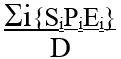
Si = Number of shares in the index for security i.
Pi = Price of security i
Ei = Cross rate of currency of Security i vs. USD. If security price in USD, Ei = 1
D = Divisor
| Page 82 of 192 |
The WisdomTree India Hedged Equity Index is designed to approximate the investable return available to U.S. based investors that seek to neutralize fluctuations on the Indian Rupee (INR). The total returns for the Index is calculated once a day on a daily basis to remove the impact of currency and uses a WM/Reuters 1-month forward rate to do so.
The WisdomTree India Hedged Equity Index will be calculated using forward amounts and foreign currency weights determined one business day prior to the month end—in accordance with the standard currency hedged calculations of WisdomTree’s independent index calculation agent. The precise calculation for the daily hedged currency index equals:
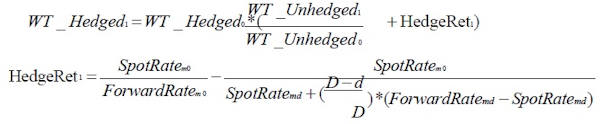
Where Forward Rate = WM/Reuters 1-month forward rate in foreign currency per U.S. dollar
Spot Rate = Spot Rate in foreign currency per U.S. dollar.
For each month m, there are d= 1, 2, 3, .. D calendar days so md is day d for month m and m0 is one business day prior to the month end of month m-1.
D=Total # days In Month
md= d day of Month m
WT_Hedged0 – previous month-end
WT_Unhedged0 – previous month-end
The Indexes are calculated whenever the stock exchanges are open. If trading is suspended while the exchange the component company trades on is still open, the last traded price for that stock is used for all subsequent Index computations until trading resumes. If trading is suspended before the opening, the stock’s adjusted closing price from the previous day is used to calculate the Index. Until a particular stock opens, its adjusted closing price from the previous day is used in the Index computation. Index values are calculated on both a price and total-return basis and disseminated on an end-of-day basis.
| Page 83 of 192 |
| 3.4. | Weighting |
The WisdomTree India Equity Index is weighted by float-adjusted market capitalization. “Float-adjusted” means that the share amounts used in calculating the Index reflect only shares available to investors. Shares held by control groups, public companies and government agencies are excluded. The initial weight of a component in the Index at the annual reconstitution is derived by multiplying the company’s market capitalization by a second factor developed by Standard & Poor’s called the “Investability Weighting Factor” (IWF). The IWF is used to scale the market capitalization of each company by restrictions on shares available to be purchased. This “Float-adjusted Factor” is calculated for every component in the Index and then summed. Each component’s weight, at the “India Weighting Date” (defined below), is equal to its Float-adjusted Factor divided by the sum of all Float-adjusted Factors for all the components in that Index. The India Weighting Date is when component weights are set and it occurs after the close of trading on the relevant date. The changes take effect before the opening of trading the day following the “India Reconstitution Date.” Please refer to the Reconstitution Schedule on page 1 for specific dates.
| · | The maximum weight of any individual security is capped at 10% on the annual rebalance and the weights of all other components will be adjusted proportionally. |
| · | Should any sector achieve a weight equal to or greater than 30% of the Index’s, weight of companies will be proportionally reduced to 30%. |
Should the “collective weight” of Index component securities whose individual current weights equal or exceed 5.0% of the Index, when added together, equal or exceed 50.0% of the Index, the weightings in those component securities will be reduced so that their collective weight equals 40.0% of the Index at the close of the current calendar quarter, and other components in the Index will be rebalanced to reflect their relative weights before the adjustment. Further iterations of these adjustments may occur until no company or group of companies violates these rules.
The following liquidity adjustment factors will be applied:
A further volume screen requires that a calculated volume factor (the median daily dollar volume for three months preceding the Screening Date/ weight of security in each index) shall be greater than $200 million to be eligible for each index. If a security’s volume factor falls below $200 million at the annual screening, but is currently in the Index, it will remain in the Index. The securities’ weight will be adjusted downwards by an adjustment factor equal to its volume factor divided by $400 million.
| Page 84 of 192 |
In the event a security has a calculated volume factor (average daily volume traded over the preceding three months / weight in the index) that is less than $400 million, its weight will be reduced such that weight after volume adjustment = weight before adjustment x calculated volume factor / $400 million. The implementation of the volume factor may cause an increase in the sector weights above the specified caps.
| 3.5 | Dividend Treatment |
Normal dividend payments are not taken into account in the price Index, whereas they are reinvested and accounted for in the total return Index. However, special dividends that are not reinvested in the total return index require index divisor adjustments to prevent the distribution from distorting the price index.
| 3.6 | Multiple Share Classes |
In the event a component company issues multiple classes of shares of common stock, the share class with the highest average daily volume will be included. Conversion of a share class into another share class results in the deletion of the share class being phased out and an increase in shares of the surviving share class, provided that the surviving share class is in the Index.
| 4. | Index Maintenance |
Index Maintenance includes monitoring and implementing the adjustments for company additions and deletions, stock splits, stock dividends, corporate restructurings, spins-offs, or other corporate actions. Some corporate actions, such as stock splits and stock dividends, require changes in the common shares outstanding and the stock prices of the component companies in IEQ. Some corporate actions, such as stock issuances, stock buybacks, warrant issuances, do not require changes in the index shares or the stock prices of the component companies of the IEQ. Other corporate actions, such as special dividends, may require index divisor adjustments. Any corporate action, whether it requires divisor adjustments or not, will be implemented after the close of trading on the day prior to the ex-date of such corporate actions, or when the Index Calculation Agent typically applies such corporate actions. Whenever possible, changes to the Index’s components, such as deletions as a result of corporate actions, will be announced at least two business days prior to their implementation date.
| Page 85 of 192 |
| 4.1. | Component Changes |
Additions
Additions to the IEQ are made at the annual reconstitution according to the inclusion criteria defined above. Changes are implemented before the opening of trading the day following the “India Reconstitution Date”. No additions are made to the IEQ between annual reconstitutions, except in the cases of certain Spin-Off companies defined below.
Deletions
Shares of companies that are de-listed or acquired by a company outside of the Index are deleted from the Index and the weights of the remaining components are adjusted proportionately to reflect the change in composition of the Index. A component company that files for bankruptcy is deleted from the Index and the weights of the remaining components are adjusted proportionately to reflect the change in the composition of the Index. If a company re-incorporates outside of a defined domicile it is deleted from the Index and the weights of the remaining components are adjusted proportionately to reflect the change in the composition of the Index. If a component company is acquired by another company in the Index for stock, the acquiring company’s shares and weight in the Index are adjusted to reflect the transaction after the close of trading on the day prior to the execution date. Component companies that reclassify their shares (i.e. that convert multiple share classes into a single share class) remain in the Index, although index shares are adjusted to reflect the reclassification.
| 4.2. | Spin-Offs and IPOs |
Should a company be spun-off from an existing component company it is allowed to stay in the IEQ until the next annual reconstitution. The weights of the remaining components are adjusted proportionately to reflect the change in the composition of the Index. Companies that go public in an Initial Public Offering (IPO) and that meet all other Index inclusion requirements must wait until the next annual reconstitution to be included in the IEQ.
| 5. | Index Divisor Adjustments |
Changes in the Index’s market capitalization due to changes in composition, weighting or corporate actions result in a divisor change to maintain the Index’s continuity. By adjusting the divisor, the Index value retains its continuity before and after the event. Corporate actions that require divisor adjustments will be implemented prior to the opening of trading on the effective date. In certain instances where information is incomplete, or the completion of an event is announced too late to be implemented prior to the ex-date, the implementation will occur as of the close of the following day or as soon as practicable thereafter. For corporate actions not described herein, or combinations of different types of corporate events and other exceptional cases, WT reserves the right to determine the appropriate implementation method.
| Page 86 of 192 |
Companies that are acquired, de-listed or that re-incorporate outside of a defined domicile in the intervening weeks between the Screening Date and the Reconstitution Date for the India Equity Index are not included in the IEQ, and the weights of the remaining components are adjusted accordingly.
| 6. | Selection Parameters |
Selection parameters for the WisdomTree India Equity Index are defined in section 3.1. Companies that pass this selection criterion as of the Screening Date for the India Equity Index are included in the Index. The component companies are assigned weights in the Index as defined in section 3.4, and annual reconstitution of the Index takes effect as defined in section 4.1.
| Page 87 of 192 |
Methodology Guide for Global Dividend Indexes
| 1. | Overview and Description |
The WisdomTree Global Dividend Indexes were developed by WisdomTree, Inc. (“WT”) to measure the performance of dividend-paying stocks in the global markets.
| · | The Global Dividend Index comprises companies included in the WisdomTree U.S. Dividend Index, which measures the performance of dividend paying companies in the United States; and the WisdomTree Global ex-U.S. Dividend Index, which measures the performance of dividend-paying companies in developed and emerging markets outside the U.S. |
The Global High Dividend Index comprises high dividend yielding stocks from the WisdomTree Global Dividend Index. In addition to being a member of this Index, companies must also have a market capitalization of at least $2 billion as of the Screening Date (defined below) to be eligible for the Index. Each Index is reconstituted annually, at which time each component’s weight is adjusted to reflect its dividend-weighting in the Index. Dividend weighting is generally defined as each component’s cash dividends paid in the prior annual cycle divided by the sum of the cash dividends paid by all the components in the Index over the same period. This quotient is the percentage weight assigned to each component in the Index at the annual reconstitution. Each of the Indexes is calculated to capture price appreciation and total return, which assumes dividends are reinvested into the Indexes. The Indexes are calculated using primary market prices.
For U.S. investors, international equity investments include two components of return. The first is the return attributable to stock prices in the non-U.S. market or markets in which an investment is made. The second is the return attributable to the value of non-U.S. currencies in these markets relative to U.S. dollar.
| 2. | Key Features |
| 2.1. | Membership Criteria |
To be included in the WisdomTree Global Dividend Index, companies must be included in one of the following WisdomTree indexes:
| 1) | The WisdomTree U.S. Dividend Index: (United States) |
| 2) | The WisdomTree Global ex-U.S. Dividend Index: (Developed World, outside the U.S., and Emerging Markets) |
| Page 88 of 192 |
The selection methodologies for these indexes are listed below.
| a. | WisdomTree U.S. Dividend Index: |
To be eligible for inclusion in the Domestic Dividend Indexes, a company must list its shares on a U.S. stock exchange, conduct its Primary Business Activities24 in the United States and pay regular cash dividends on shares of its common stock. Companies need to have a market capitalization of at least $100 million by the “Screening Date” (after the close of trading on the last trading day in November) and shares of such companies need to have had a median daily dollar volume of at least $100,000 for three months preceding the Screening Date. Common stocks, REITs, tracking stocks, and holding companies are eligible for inclusion. ADRs, GDRs and EDRs are excluded, as are limited partnerships, limited liability companies, royalty trusts, and Business Development Companies (BDCs). Preferred stocks, closed-end funds, exchange-traded funds, and derivative securities such as warrants and rights are not eligible.25
| b. | WisdomTree Global ex-U.S. Dividend Index: |
In the developed world, component companies must be under coverage by the market management team of the third party independent index calculation agent and must list their shares on one of the stock exchanges in Europe (i.e., Austria, Belgium, Denmark, Finland, France, Germany, Ireland, Italy, Netherlands, Norway, Portugal, Spain, Sweden, Switzerland, or the United Kingdom), the Tokyo Stock Exchange, or on stock exchanges in Australia, Israel, Hong Kong, Singapore or Canada. Companies must conduct their Primary Business Activities in Europe, Israel, Japan, Australia, Hong Kong, Singapore or Canada and have paid at least $5 million in gross cash dividends on shares of their common stock in the annual cycle prior to the annual reconstitution. Companies must have a market capitalization of at least $100 million on the “Global Screening Date” (after the close of trading on the last trading day in September) and shares of such companies must have had a median daily dollar volume of at least $100,000 for three months preceding the Global Screening Date. Shares of such component securities need to have traded at least 250,000 shares per month for each of the six months preceding the Global Screening Date. Common stocks, REITs, tracking stocks, and holding companies are eligible for inclusion. ADRs, GDRs and EDRs, limited partnerships, royalty trusts, passive foreign investment companies, preferred stocks, closed-end funds, exchange-traded funds, and derivative securities such as warrants and rights are not eligible.
24 The country in which a company conducts its Primary Business Activities is determined based on the following factors: country of organization or incorporation, country in which a company’s headquarters is located, the country to which a company has the greatest risk exposure (“Country of Risk”), and the country from which a company generates the most significant portion of its revenue or to which it allocates the greatest resources. WT may determine to consider additional or different factors depending on the nature of a company’s business and operations.
25 Mortgage REITs are not eligible for inclusion in the WisdomTree Domestic and International Dividend Indexes.
| Page 89 of 192 |
In the developing world, component companies must be under coverage by the market management team of the third party independent index calculation agent and must have their shares listed on a stock exchange in one of the following countries: Brazil, Chile, China, Czech Republic, Hungary, India, Indonesia, Korea, Malaysia, Mexico, Philippines, Poland, Russia, South Africa, Taiwan, Thailand, Turkey, or Saudia Arabia. Securities must conduct their Primary Business Activities in one of these Emerging Market Countries and have positive earnings over the past year. In the case of China, companies that are incorporated or domiciled in China and traded on the Hong Kong Stock Exchange are eligible for inclusion. In India, only securities whose foreign ownership restriction limits have yet to be breached are eligible for inclusion in the index. Companies must have paid at least $5 million in gross cash dividends on shares of their common stock in the annual cycle prior to the annual reconstitution in October. Securities need to have a market capitalization of at least $200 million on the “Global Screening Date” (after the close of trading on the last trading day in September) and securities need to have had a median daily dollar volume of at least $200,000 for each of the six months preceding the Global Screening Date. Shares of such component securities need to have traded at least 250,000 shares per month for each of the six months preceding the Global Screening Date. Local exchange shares are included in the index for all countries with the exception of Russia, which include only American Depository Receipts (ADRs) or Global Depositary Receipts (GDRs). Common stocks, REITs, tracking stocks, and holding companies are eligible for inclusion. ADRs or GDRs are eligible in Russia but no other country. Security types that are excluded from the index are: Limited partnerships, royalty trusts, passive foreign investment companies, preferred stocks, closed-end funds, exchange-traded funds, and derivative securities such as warrants and rights.
In addition, companies that fall within the bottom decile of a composite risk factor score are not eligible for inclusion in the Global Dividend Index. The composite risk factor score is used to eliminate potentially higher risk companies that would have otherwise been eligible for inclusion in the Indexes. The composite risk factor score is an equally weighted score of the two factors described below.
| 1) | Quality Factor – determined by static observations and trends of return on equity (ROE), return on assets (ROA), gross profits over assets and cash flows over assets. Scores are calculated within industry groups. |
| 2) | Momentum Factor – determined by stocks’ risk adjusted total returns over historical periods (6 and 12 months) |
Companies that fall within the top 5% ranked by dividend yield and also the bottom ½ of the composite risk factor score are not eligible for inclusion.
| Page 90 of 192 |
WisdomTree applies a Foreign Investment Screen to exclude companies that are not available to be purchased or transacted in by foreign investors (or certain segments of foreign investors) or cannot continue to be reasonably purchased or transacted in by foreign investors (or certain segments of foreign investors), as determined by the third party independent calculation agent, and a data point referred to as “Degree of Open Freedom” (DOF) or by WisdomTree based generally on the guiding principles set forth below. The first test of a stock’s investability is determining whether the market is open to foreign institutions. The third party independent calculation agent determines the extent to which and the mechanisms foreign institutions can use to buy and sell shares on local exchanges and repatriate capital, capital gains, and dividend income without undue constraint. Once determined that a market is open to foreign investors, the calculation agent then investigates each security that may be a candidate for inclusion. Each class of share is reviewed to determine whether there are any corporate bylaw, corporate charter, or industry limitations on foreign ownership of the stock. The DOF is the variable that ranges from zero to one and indicates the amount of the security foreigners may legally own (0.00 indicates that none of the stock is legally available, 1.00 indicates that 100% of the shares are available). Any company with a DOF of 0 will not be eligible for the WisdomTree Indexes.
WisdomTree Global High Dividend Index
The Global High Dividend Index comprises high dividend yielding stocks from the WisdomTree Global Dividend Index. In addition to being a member of this Index, companies must also have a market capitalization of at least $2 billion as of the Screening Date (defined below) to be eligible for inclusion. The resulting universe of companies after the market cap screen is applied is ranked by dividend yield and the top 30% of companies from each region, i.e. the U.S., developed and emerging markets, ranked by highest dividend yield, are selected as additions to the Index.
To be deleted from the index, companies must rank outside of the top 35% by dividend yield. The selection and weighting methodology for the WisdomTree Global Hedged High Dividend Index is identical to the selection and weighting methodology used for the WisdomTree Global High Dividend Index.
For purposes of both selection and weighting the following definitions apply: Gross Cash Dividends are generally based on dividends paid over latest annual cycle as determined by the ex-date of the dividends. In the case of Australia, gross dividends do not reflect the franking credit for Australian investors. The currency rate used to translate the dividends to U.S. dollars is the exchange rate on the screening date. Shares outstanding for the total dividend calculation are based on the shares outstanding at the time of each dividend payment. Liquidity and market cap screens are based on the shares outstanding of the security in question for each company.
| Page 91 of 192 |
| 2.2. | Base Date and Base Value |
| Index | Base Date | Base Value |
| WisdomTree Global Dividend Index | 6/30/2008 | 300 |
| WisdomTree Global High Dividend Index | 11/30/2007 | 200 |
| 2.3. | Calculation and Dissemination |
The following formula is used to calculate the index levels for the Indexes:
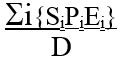
Si = Number of shares in the index for security i.
Pi = Price of security i
Ei = Cross rate of currency of Security i vs. USD. If security price in USD, Ei = 1
D = Divisor
The Global Dividend Indexes are calculated every weekday. If trading is suspended while one of the exchanges is still open, the last traded price for that stock is used for all subsequent Index computations until trading resumes. If trading is suspended before the opening, the stock’s adjusted closing price from the previous day is used to calculate the Indexes. Until a particular stock opens, its adjusted closing price from the previous day is used in the Index computation. Index values are calculated on both a price and total-return basis, in U.S. dollars. The total return Indexes are calculated and disseminated on an end-of-day basis.
| 2.4 | Weighting |
The Global Dividend Indexes are modified capitalization-weighted Indexes that employ a transparent weighting formula to magnify the effect that dividends play in the total return of the Indexes.
The initial weight of a component in the Index at the annual reconstitution is derived by multiplying the U.S. dollar value of the security’s annual dividend per share by the number of common shares outstanding for that security, “The Cash Dividend Factor.” For securities listed in the United States and Canada, their indicated dividend per share is multiplied by the number of common shares outstanding to determine “The Cash Dividend Factor.” For Emerging Markets securities, the “Cash Dividend Factor” includes multiplying the same two factors above by a third factor developed by Standard & Poor’s called the “Investability Weighting Factor” (IWF). The IWF is used to scale the dividends generated of each company by factors that impose restrictions on shares available to be purchased. The Cash Dividend Factor is calculated for every component in the Index and then summed. Each component’s weight, at the Weighting Date, is equal to its Cash Dividend Factor divided by the sum of all Cash Dividend Factors for all the components in that Index. The Global Weighting Date is when component weights are set, and it occurs immediately after the close of trading on the relevant date. New components and component weights take effect before the opening of trading the day following the “Global Reconstitution Date.” Please refer to the Reconstitution Schedule on page 1 for specific dates.
| Page 92 of 192 |
WisdomTree Indexes will apply a dividend stream adjustment for constituents with dividend yields greater than 12% at the screening date. The dividend stream of these capped securities will be their market cap multiplied by 12%.
For the size segment dividend indexes (total, large, mid and small caps) and high dividend cuts of the market, companies that fall within the top two deciles of the composite risk factor will have their dividend stream multiplied by 1.5 while all other dividends will remain unadjusted.
Companies will be weighted in the index based on this adjusted dividend stream.
Should any company achieve a weighting equal to or greater than 24.0% of the Index, its weighting will be reduced to 20.0% at the close of the current calendar quarter, and all other components in the Index will be rebalanced. Moreover, should the “collective weight” of Index component securities whose individual current weights equal or exceed 5.0% of the Index, when added together, equal or exceed 50.0% of the Index, the weightings in those component securities will be reduced so that their collective weight equals 40.0% of the Index at the close of the current calendar quarter, and other components in the Index will be rebalanced to reflect their relative weights before the adjustment. Further iterations of these adjustments may occur until no company or group of companies violates these rules.
The following capping rules are applied to all WisdomTree Global Dividend Indexes unless otherwise specified:
| · | Should the ratio of a component company’s weight relative to its weight in a market capitalization weighted version of the Index exceed 5x or fall below 0.20x, the weight of the company will be reduced or increased to meet the 5x or 0.20x thresholds, respectively. |
| Page 93 of 192 |
The following capping rules are applied to the WisdomTree Global Dividend Index:
| · | Should any sector achieve a weight equal to or greater than 25% of the Indexes, weight of companies will be reduced to 25% as of the annual Screening Date. Real Estate sector will be capped at 15%. |
The following capping rules are applied to the WisdomTree Global High Dividend Index:
| · | Individual company weights start out with the Cash Dividend Factor described in weighting section 2.4 above. |
| · | The regional weights will be adjusted by a Regional Factor such that the regional weights are equal to the float-adjusted market capitalization weight of the universe of dividend and non-dividend payers of the regional allocations of the U.S., developed and emerging markets that meet the general liquidity and market cap criteria for the base index. |
| · | Should any sector achieve a weight equal to or greater than 25% of the Indexes, weight of companies will be reduced to 25% as of the annual Screening Date. Real Estate sector will be capped at 15%. |
The weights may fluctuate above the specified caps during the year, but will be reset at each annual rebalance date.
Note: all sector cappings are conducted based on the GICS sector classifications.
The following liquidity adjustment factors will be applied to all the Indexes after country and sector caps have been applied:
| · | A further volume screen requires that a calculated volume factor (the median daily dollar volume for three months preceding the Screening Date / weight of security in each index) shall be greater than $200 million to be eligible for each index. If a security’s volume factor falls below $200 million at the annual screening, but is currently in the Index, it will remain in the Index. The securities’ weight will be adjusted downwards by an adjustment factor equal to its volume factor divided by $400 million. |
| · | In the event a security has a calculated volume factor (average daily volume traded over the preceding three months / weight in the index) that is less than $400 million, its weight will be reduced such that weight after volume adjustment = weight before adjustment x calculated volume factor / $400 million. The implementation of the volume factor may cause an increase in the sector and country weights above the specified caps. |
| Page 94 of 192 |
| 2.5 | Dividend Treatment |
Normal dividend payments are not taken into account in the price Index, whereas they are reinvested and accounted for in the total return Index. However, special dividends that are not reinvested in the total return Index require index divisor adjustments to prevent the distribution from distorting the price Index.
| 2.6 | Multiple Share Classes |
In the event a component company issues multiple classes of shares of common stock, each class of share will be included in the Indexes, provided that dividends are paid on that share of stock and that the stock passes all other inclusion requirements. For the Global High Dividend Index, in the event a component company issues multiple classes of shares of common stock, the share class of that company with the greater liquidity, based on the average daily trading volume as described in section 2.1, would be selected for inclusion. Conversion of a share class into another share class results in the deletion of the share class being phased out and an increase in shares of the surviving share class, provided that the surviving share class is in the Index. For the Small cap cuts, if a security has multiple listed share classes and the total market capitalization of the listed share classes is greater than largest market capitalization cutoff of that index, the security would not be eligible for that index.
| 3. | Index Maintenance |
Index Maintenance includes monitoring and implementing the adjustments for company deletions, stock splits, stock dividends, spins-offs, or other corporate actions. Some corporate actions, such as stock splits, stock dividends, and rights offerings require changes in the index shares and the stock prices of the component companies in the Indexes. Some corporate actions, such as stock issuances, stock buybacks, warrant issuances, increases or decreases in dividend per share between reconstitutions, do not require changes in the index shares or the stock prices of the component companies in the Indexes. Other corporate actions, such as special dividends, may require Index divisor adjustments. Any corporate action, whether it requires divisor adjustments or not, will be implemented after the close of trading on the day prior to the ex-date of such corporate actions. Whenever possible, changes to the Index’s components, such as deletions as a result of corporate actions, will be announced at least two business days prior to their implementation date.
| Page 95 of 192 |
| 3.1. | Component Changes |
Additions
Additions to the Indexes are made at the annual reconstitution according to the inclusion criteria defined above. Changes are implemented before the opening of trading on the first trading day following the “Emerging Market and Global Reconstitution Date.” Please refer to the Reconstitution Schedule on page 1 for specific dates. No additions are made to the Indexes between annual reconstitutions.
Deletions
Shares of companies that are de-listed or acquired by a company outside of the Index are deleted from the Index and the weights of the remaining components are adjusted proportionately to reflect the change in composition of the Index. A component company that cancels its dividend payment is deleted from the Index and the weights of the remaining components are adjusted proportionately to reflect the change in the composition of the Index. A component company that files for bankruptcy is deleted from the Index and the weights of the remaining components are adjusted proportionately to reflect the change in the composition of the Index. If a component company is acquired by another company in the Index for stock, the acquiring company’s shares and weight in the Index are adjusted to reflect the transaction after the close of trading on the day prior to the execution date.26 A component company that moves its Primary Business Activities outside of the defined countries identified above is deleted from the Index and the weights of the remaining components are adjusted proportionately to reflect the change in the composition of the Index. Component companies that reclassify their shares (i.e. that convert multiple share classes into a single share class) remain in the Index, although index shares are adjusted to reflect the reclassification.
| 3.2. | Spin-Offs and IPOs |
Should a company be spun-off from an existing component company and pay a regular cash dividend, it is not allowed into the Index until the next annual reconstitution, provided it meets all other Index inclusion requirements. Spin-off shares of publicly traded companies that are included in the same Index as their parent company are increased to reflect the spin-off and the weights of the remaining components are adjusted proportionately to reflect the change in the composition of the Index. Companies that go public in an Initial Public Offering (IPO) and that pay a regular cash dividend and that meet all other inclusion requirements must wait until the next annual reconstitution to be included in the Index.
26 Companies being acquired will be deleted from the WisdomTree indexes immediately before the effective date of the acquisition or upon notice of a suspension of trading in the stock of the company that is being acquired. In cases where an effective date is not publicly announced in advance, or where a notice of suspension of trading in connection with an acquisition is not announced in advance, WisdomTree reserves the right to delete the company being acquired based on best available market information.
| Page 96 of 192 |
| 4. | Index Divisor Adjustments |
Changes in the Index’s market capitalization due to changes in composition, weighting or corporate actions result in a divisor change to maintain the Index’s continuity. By adjusting the divisor, the Index value retains its continuity before and after the event. Corporate actions that require divisor adjustments will be implemented prior to the opening of trading on the effective date. In certain instances where information is incomplete, or the completion of an event is announced too late to be implemented prior to the ex-date, the implementation will occur as of the close of the following day or as soon as practicable thereafter. For corporate actions not described herein, or combinations of different types of corporate events and other exceptional cases, WisdomTree reserves the right to determine the appropriate implementation method.
Companies that are acquired, de-listed, file for bankruptcy, move its Primary Business Activities outside of a defined country or that cancel their dividends in the intervening weeks between the Global Screening Date and the reconstitution date are not included in the Indexes, and the weights of the remaining components are adjusted accordingly.
| 5. | Selection Parameters |
| 5.1. | Selection parameters for the Indexes are defined in section 2.1. Companies that pass the selection criteria as of the Global Screening Date are included in the Indexes. The component companies are assigned weights in the Indexes as defined in section 2.4. and annual reconstitution of the Indexes takes effect as defined in section 3.1. |
| Page 97 of 192 |
Methodology Guide for Global ex–US Quality Growth index
| 1. | Overview and Description |
WisdomTree Global ex-US Quality Growth Index (“WTGDXG”) was developed by WisdomTree, Inc. (“WT”) to measure the performance of companies that have high profitability and growth characteristics in the emerging and developed markets outside the U.S.
The Index is calculated to capture price appreciation and total return, which assumes dividends are reinvested into the Indexes. The Indexes are calculated using primary market prices.
The Indexes are reconstituted on a semi-annual basis (following the close of trading on the third Friday in April and before the opening of trading the day following the “Emerging Markets Reconstitution Date.” Please refer to the Reconstitution Schedule on page 1 for specific dates.).
| 2. | Index Governance |
The Index is overseen by the Quality Growth Index Committee (the “Committee”), a standing index committee of WisdomTree, Inc. (WT). The Committee will be composed of not less than 3 members. The Committee is responsible for making broad decisions with respect to the implementation, ongoing management, operation, and administration of the Index. The primary function of the Committee is to make sure Index rules are implemented correctly and comprehensively, provided that the published Index composition shall be as determined by the Committee.
The Committee meetings will generally be held on a semi-annual basis or such frequency in relation to the reconstitution and/or rebalance frequency of the Index and may be held more frequently as circumstances require. The composition of the Committee may from time to time be changed to reflect changes in market conditions. Furthermore, the Committee may determine to rebalance the Index more frequently in response to volatility in the market, shifts in underlying constituent market capitalization, or other similar circumstances.
| Page 98 of 192 |
| 3. | Key Features |
| 3.1. | Membership Criteria |
To be eligible for inclusion in the WTGDXG, a company must be covered by WisdomTree’s independent index calculation agent. In the developed world, component companies must list their shares on one of the stock exchanges in Europe (i.e., Austria, Belgium, Denmark, Finland, France, Germany, Ireland, Italy, Netherlands, Norway, Portugal, Spain, Sweden, Switzerland, or the United Kingdom), the Tokyo Stock Exchange, or on stock exchanges in Australia, Israel, Hong Kong, Singapore or Canada. Companies must conduct their Primary Business Activities27 in Europe, Israel, Japan, Australia, Hong Kong, Singapore or Canada. Companies must have a market capitalization of at least $100 million on the “Screening Date” (after the close of trading on the last trading day in March and September) and shares of such companies must have had a median daily dollar volume of at least $100,000 for three months preceding the Screening Date. Shares of such component securities need to have traded at least 250,000 shares per month for each of the six months preceding the Screening Date. In the developing world, component companies must be under coverage by the market management team of the third party independent index calculation agent and must have their shares listed on a stock exchange in one of the following countries: Brazil, Chile, China, Czech Republic, Hungary, India, Indonesia, Korea, Malaysia, Mexico, Philippines, Poland, Russia, Saudia Arabia, South Africa, Taiwan, Thailand, or Turkey. Securities must conduct their Primary Business Activities28 in one of these Emerging Market Countries and have positive earnings over the past year. In the case of China, companies that are incorporated or domiciled in China and traded on the Hong Kong Stock Exchange are eligible for inclusion. In India, only securities whose foreign ownership restriction limits have yet to be breached are eligible for inclusion in the index. Securities need to have a market capitalization of at least $200 million on the “Screening Date” and securities need to have had a median daily dollar volume of at least $200,000 for each of the six months preceding the Screening Date. Shares of such component securities need to have traded at least 250,000 shares per month for each of the six months preceding the Screening Date. Local exchange shares are included in the index for all countries with the exception of Russia, which include only American Depository Receipts (ADRs) or Global Depositary Receipts (GDRs). Common stocks, REITs, tracking stocks, and holding companies are eligible for inclusion. EDRs, limited partnerships, royalty trusts, passive foreign investment companies, preferred stocks, closed-end funds, exchange-traded funds, and derivative securities such as warrants and rights are not eligible.
27 The country in which a company conducts its Primary Business Activities is determined based on the following factors: country of organization or incorporation, country in which a company’s headquarters is located, the country to which a company has the greatest risk exposure (“Country of Risk”), and the country from which a company generates the most significant portion of its revenue or to which it allocates the greatest resources. WT may determine to consider additional or different factors depending on the nature of a company’s business and operations.
28 The country in which a company conducts its Primary Business Activities is determined based on the following factors: country of organization or incorporation, country in which a company’s headquarters is located, the country to which a company has the greatest risk exposure (“Country of Risk”), and the country from which a company generates the most significant portion of its revenue or to which it allocates the greatest resources. WT may determine to consider additional or different factors depending on the nature of a company’s business and operations.
| Page 99 of 192 |
On the Screening Date, the 300 largest European, 200 largest Developed ex Europe, 450 largest Emerging Markets ex-China A and 50 largest China A shares companies as measured Market Capitalization are eligible for inclusion. Eligible companies are ranked within each region, i.e. Europe, Developed ex Europe, Emerging Markets ex-China A and China A using a weighted combination of two fundamental factors: growth and quality which are equally weighted. The Index is comprised of companies with highest composite scores within each region targeting a total of 200 securities.
| · | The growth and quality factor scores are determined as follows: The growth factor is determined by a company's ranking based on a 50% weight in its median analyst earnings growth forecast, a 25% weight in its trailing 5-year EBITDA (i.e., earnings before interest, taxes, depreciation and amortization) growth and a 25% weight in its trailing 5-year sales growth. The quality factor is determined by a company's ranking based on a 50% weight to each of its trailing 3-year average return on equity and trailing 3-year average return on assets. The Index constituents are determined by an Index Committee that looks at companies to identify equity stocks on the above-referenced measures. |
WisdomTree applies a Foreign Investment Screen to exclude companies that are not available to be purchased or transacted in by foreign investors (or certain segments of foreign investors) or cannot continue to be reasonably purchased or transacted in by foreign investors (or certain segments of foreign investors), as determined by the third party independent calculation agent, and a data point referred to as “Degree of Open Freedom” (DOF) or by WisdomTree based generally on the guiding principles set forth below. The first test of a stock’s investability is determining whether the market is open to foreign institutions. The third party independent calculation agent determines the extent to which and the mechanisms foreign institutions can use to buy and sell shares on local exchanges and repatriate capital, capital gains, and dividend income without undue constraint. Once determined that a market is open to foreign investors, the third party independent calculation agent then investigates each security that may be a candidate for inclusion. Each class of share is reviewed to determine whether there are any corporate bylaw, corporate charter, or industry limitations on foreign ownership of the stock. The DOF is the variable that ranges from zero to one and indicates the amount of the security foreigners may legally own (0.00 indicates that none of the stock is legally available, 1.00 indicates that 100% of the shares are available). Any company with a DOF of 0 will not be eligible for the WisdomTree Indexes.
| Page 100 of 192 |
Liquidity and market cap screens are based on the shares outstanding of the security in question for each company.
| 3.2 | Base Date and Base Value |
The Index was established with a base value of 200 on June 30, 2008.
| 3.3 | Calculation and Dissemination |
The following formula is used to calculate the index levels for the Global ex-US Quality Growth Index:
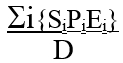
Si = Number of shares in the index for security i.
Pi = Price of security i
Ei = Cross rate of currency of Security i vs. USD. If security price in USD, Ei = 1
D = Divisor
The WTGDXG is calculated every weekday. If trading is suspended while the exchange the component company trades on is still open, the last traded price for that stock is used for all subsequent Index computations until trading resumes. If trading is suspended before the opening, the stock’s adjusted closing price from the previous day is used to calculate the Index. Until a particular stock opens, its adjusted closing price from the previous day is used in the Index computation. Index values are calculated on both a price and total-return basis, in U.S. dollars and disseminated on an end-of-day basis.
| 3.4 | Weighting |
The Index is a market-capitalization weighted index.
The maximum weight of any individual security is capped at 7.5% during the semi-annual rebalance and the weights of all other components will be adjusted proportionally.
The Weighting Date is when component weights are set and it occurs after the close of the second Friday in April and the Emerging Market Weighting Date. The changes will go into effect after the close of trading on the third Friday in April and before the opening of trading the day following the “Emerging Markets Reconstitution Date.” Please refer to the Reconstitution Schedule on page 1 for specific dates.
| Page 101 of 192 |
Should any company achieve a weighting equal to or greater than 24.0% of its Index, its weighting will be reduced to 20.0% at the close of the current calendar quarter, and the weight of all other components in the Index will be rebalanced proportionally. Moreover, should the “collective weight” of Index component securities whose individual current weights equal or exceed 5.0% of the Index, when added together, equal or exceed 50.0% of the Index, the weightings in those component securities will be reduced proportionately so that their collective weight equals 40.0% of the Index at the close of the current calendar quarter, and all other components in the Index will be rebalanced in proportion to their index weightings before the adjustment. Further iterations of these adjustments may occur until no company or group of companies violates these rules.
The following liquidity adjustment factors will be applied:
A further volume screen requires that a calculated volume factor (the median daily dollar volume for three months preceding the Screening Date
/ weight of security in each index) shall be greater than $400 million to be eligible for each index.
In the event a security has a calculated volume factor (average daily volume traded over the preceding three months / weight in the index) that is less than $400 million, its weight will be reduced such that weight after volume adjustment = weight before adjustment x calculated volume factor
/ $400 million.
The weights may fluctuate above the specified caps during the year, but will be reset at each semi-annual rebalance date.
| 3.5 | Dividend Treatment |
Normal dividend payments are not taken into account in the price Index, whereas they are reinvested and accounted for in the total return Index. However, special dividends from non-operating income require index divisor adjustments to prevent the distribution from distorting the price index.
| 3.6 | Multiple Share Classes |
In the event a component company issues multiple classes of shares of common stock, the share class with the highest average daily volume will be included. Conversion of a share class into another share class results in the deletion of the share class being phased out and an increase in shares of the surviving share class, provided that the surviving share class is in the Index.
| Page 102 of 192 |
| 4. | Index Maintenance |
Index Maintenance includes monitoring and implementing the adjustments for company additions and deletions, stock splits, stock dividends, corporate restructurings, spins-offs, or other corporate actions. Some corporate actions, such as stock splits and stock dividends, require changes in the common shares outstanding and the stock prices of the component companies in the Index. Other corporate actions, such as special dividends, require index divisor adjustments as well. Any corporate action, whether it requires divisor adjustments or not, will be implemented after the close of trading on the day prior to the ex-date of such corporate action. Whenever possible, changes to the Index’s components will be announced at least two business days prior to their implementation date.
| 4.1. | Component Changes |
Additions
Additions to the WTGDXG are made at the semi-annual reconstitution according to the inclusion criteria defined above. Changes are implemented following the close of trading on the third Friday in April and before the opening of trading the day following the “Emerging Markets Reconstitution Date.” Please refer to the Reconstitution Schedule on page 1 for specific dates. No additions are made to the WTGDXG between semi-annual reconstitutions.
Deletions
Shares of companies that are de-listed or acquired by a company outside of the Index are deleted from the Index and the weights of the remaining components are adjusted proportionately to reflect the change in composition of the Index. A component company that files for bankruptcy is deleted from the Index and the weights of the remaining components are adjusted proportionately to reflect the change in the composition of the Index. If a company moves its Primary Business Activities outside of a defined country, it is deleted from the Index and the weights of the remaining components are adjusted proportionately to reflect the change in the composition of the Index. If a component company is acquired by another company in the Index for stock, the acquiring company’s shares and weight in the Index are adjusted to reflect the transaction after the close of trading on the day prior to the execution date.29 Component companies that reclassify their shares (i.e. that convert multiple share classes into a single share class) remain in the Index, although index shares are adjusted to reflect the reclassification.
29 Companies being acquired will be deleted from the WisdomTree index immediately before the effective date of the acquisition or upon notice of a suspension of trading in the stock of the company that is being acquired. In cases where an effective date is not publicly announced in advance, or where a notice of suspension of trading in connection with an acquisition is not announced in advance, WisdomTree reserves the right to delete the company being acquired based on best available market information.
| Page 103 of 192 |
| 4.2. | Spin-Offs and IPOs |
Should a company be spun-off from an existing component company, it is allowed to stay in the Index that its parent company is in until the next reconstitution. Spin-off shares of publicly traded companies that are included in the same indexes as their parent company are increased to reflect the spin-off and the weights of the remaining components are adjusted proportionately to reflect the change in the composition of the Index. Companies that go public in an Initial Public Offering (IPO) and that meet all other Index inclusion requirements must wait until the next reconstitution to be included in the Index.
| 5. | Index Divisor Adjustments |
Corporate actions may affect the share capital of component stocks and therefore trigger increases or decreases in the Index value. To avoid distortion, the divisor is adjusted accordingly. Changes in the Index’s market capitalization due to changes in composition, weighting or corporate actions result in a divisor change to maintain the Index’s continuity. By adjusting the divisor, the Index value retains its continuity before and after the event. Corporate actions that require divisor adjustments will be implemented prior to the opening of trading on the effective date. In certain instances where information is incomplete, or the completion of an event is announced too late to be implemented prior to the ex-date, the implementation will occur as of the close of the following day or as soon as practicable thereafter. For corporate actions not described herein, or combinations of different types of corporate events and other exceptional cases, WisdomTree reserves the right to determine the appropriate implementation method.
Companies that are acquired, de-listed, file for bankruptcy, or move its Primary Business Activities outside of a defined country in the intervening weeks between the Screening Date and the Reconstitution Date are not included in the Index, and the weights of the remaining components are adjusted accordingly.
| Page 104 of 192 |
| 6. | Selection Parameters for the Global ex-US Quality Dividend Growth Index |
| 6.1. | Selection parameters for the WisdomTree Global ex-US Quality Growth Index are defined in 3.1. Companies that pass this selection criteria as of the Screening Date are included in the WTGDXG . The component companies are assigned weights in the Index as defined in section 3.4. and the semi-annual reconstitution of the Index takes effect as defined in section 4.1. |
| Page 105 of 192 |
Methodology Guide for Cybersecurity Index
| 1. | Index Overview and Description |
The WisdomTree Team8 Cybersecurity Index [referred to as “the Index”] is designed to track the performance of companies primarily involved in providing cyber security-oriented products. The Index was developed by WisdomTree , Inc. (“WT”), in collaboration with third party specialists in the cyber security sector.
The Index is reconstituted on semi-annual basis following the close of trading on the third Friday in March and September.
The Index is calculated to capture price appreciation and total return, which assumes dividends are reinvested into the Index. The Index is calculated using primary market prices and calculated in U.S. dollars.
| 2. | Key Features |
| 2.1. | Membership Criteria |
To be eligible for inclusion in the Index, component companies must be under coverage by the market management team of the third-party independent index calculation agent, must list shares on eligible stock exchanges and derive at least 50% of their revenue from providing primarily cyber security oriented products.
In the developed world, component companies must list their shares on one of the stock exchanges in the U.S., Europe (i.e., Austria, Belgium, Denmark, Finland, France, Germany, Ireland, Italy, Netherlands, Norway, Portugal, Spain, Sweden, Switzerland, or the United Kingdom), the Tokyo Stock Exchange, or on stock exchanges in Australia, Israel, Hong Kong, Singapore or Canada.
In the developing world, component companies must have their shares listed on a stock exchange in one of the following countries: Brazil, Chile, China, Czech Republic, Hungary, Indonesia, Korea, Malaysia, Mexico, Philippines, Poland, Russia, South Africa, Taiwan, Thailand, Turkey, or Saudi Arabia. Securities must conduct their Primary Business Activities30 in one of these Emerging Market Countries. In the case of China, companies that are incorporated or domiciled in China and trade on one of the stock exchanges in the developed world are eligible for inclusion. In addition, Chinese domestic listed companies that are part of the connect program31 and meet index requirements will be selected for inclusion.
30 The country in which a company conducts its Primary Business Activities is determined based on the following factors: country of organization or incorporation, country in which a company’s headquarters is located, the country to which a company has the greatest risk exposure (“Country of Risk”), and the country from which a company generates the most significant portion of its revenue or to which it allocates the greatest resources. WT may determine to consider additional or different factors depending on the nature of a company’s business and operations.
31 Stock Connect is a unique collaboration between the Hong Kong, Shanghai and Shenzhen Stock Exchanges, which allows international and Mainland Chinese investors to trade securities in each other’s markets through the trading and clearing facilities of their home exchange. First launched in November 2014, the scheme now covers over 2,000 eligible equities in Shanghai, Shenzhen and Hong Kong.
| Page 106 of 192 |
Companies need to have market capitalization of at least $300 million and a median daily dollar volume greater than $1,000,000 for each of the three months preceding the Screening Date (after the close of trading on the last trading day in February and August).
Common stocks, REITs, tracking stocks, holding companies, ADRs, GDRs and EDRs are eligible for inclusion. Limited partnerships, limited liability companies, royalty trusts, Business Development Companies (BDCs) and mortgage REITs are excluded. Preferred stocks, closed-end funds, passive foreign investment companies, exchange-traded funds, and derivative securities such as warrants and rights are not eligible. The publicly traded security for WisdomTree, Inc. (NYSE: WT), is also not eligible for inclusion in any of WisdomTree’s equity indexes.
Growth Score:
The index utilizes a “Growth Score” as defined by WT. The “Revenue CAGR” for each company is calculated as the compound average annual revenue growth over the trailing three years. If a security was recently listed or if the data is missing, then 2- or 1-year growth rates will be used.
WT assigns each company the following Growth Scores:
| · | “Growing Fast” – companies with a Revenue CAGR of 20% or higher |
| · | “Growing” – companies that are not in the index with at least 7% Revenue CAGR, or companies that are currently in the index with a Revenue CAGR of 5% or higher. |
| · | “N/A” - any other company |
Focus Score:
The Index also utilizes a “Focus Score” which is developed by WT in collaboration with third party specialists in the cyber security sector, which captures the perceived degree of a company’s overall involvement across development themes in cyber security.
| Page 107 of 192 |
Based on the number of Development Themes along which a company scores a “High Exposure” (“Highs”), WT defines a company’s Focus Score to be
| · | “Broad Focus” if Highs is 3 or above |
| · | “Narrow Focus” if Highs is 1 or 2 |
| · | “N/A” if Highs is zero |
Screening Criteria for Growth and Focus Scores
Companies being rated as “Growing Fast” or “Growing” in Growth Score and not being rated as “N/A” by Focus Score will be selected for inclusion. This means:
| · | Any new company entering the index must have at least 7% Revenue CAGR. |
| · | Companies that are currently in the index with a Revenue CAGR below 5% will be excluded during the rebalance. |
Furthermore, if less than 25 companies pass both Growth and Focus screens, the remaining companies from “Broad Focus” and “Narrow Focus” will be ranked by Revenue CAGR. Companies with higher Revenue CAGR will be selected for inclusion.
| 2.2 | Base Date and Base Value |
The WisdomTree Team8 Cybersecurity Index was established with a base value of 200 on October 30, 2020.
| 2.3 | Calculation and Dissemination |
The following formula is used to calculate the index levels for the Cybersecurity Index:
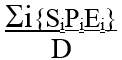
Si = Number of shares in the index for security i.
Pi = Price of security i
Ei = Cross rate of currency of Security i vs. USD. If security price in USD, Ei = 1
D = Divisor
The Index is calculated whenever the stock exchanges are open. If trading is suspended while the exchange the component company trades on is still open, the last traded price for that stock is used for all subsequent Index computations until trading resumes. If trading is suspended before the opening, the stock’s adjusted closing price from the previous day is used to calculate the Index. Until a particular stock opens, its adjusted closing price from the previous day is used in the Index computation. Index values are calculated on both, price and total-return basis, in U.S. dollars, and disseminated on an end-of-day basis.
| Page 108 of 192 |
| 2.4 | Weighting |
Companies are assigned a Weight Factor based on their Focus and Growth Scores:
| · | 1.33 for companies with scores of “Broad Focus” and “Growing Fast” |
| · | 0.75 for companies with “Narrow Focus” and “Growing” |
| · | 1 for all other companies |
Companies are weighted to reflect their proportionate share of the Weighting Factor, subject to the following “5/37.5 rule” and liquidity adjustment:
5%/37.5% rule – the collective weights of companies with over 5% weight is capped at 37.5% at the index rebalance.
Liquidity adjustment - In the event a company has a calculated volume factor (average daily volume traded over the preceding three months / weight in the index) that is less than $400 million, its weight will be reduced such that weight after volume adjustment = weight before adjustment x calculated volume factor / $400 million.
The Weighting Date is when component weights are set, and it occurs after the close of trading on Thursday prior to the second Friday of the rebalance month. The changes will go into effect after the close of trading on the third Friday of the rebalance month.
Should the “collective weight” of Index component securities whose individual current weights equal or exceed 5.0% of the Index, when added together, equal or exceed 50.0% of the Index, the weightings in those component securities will be reduced so that their collective weight equals 40.0% of the Index at the close of the current calendar quarter, and other components in the Index will be rebalanced to reflect their relative weights before the adjustment. Further iterations of these adjustments may occur until no company or group of companies violates these rules.
| 2.5 | Dividend Treatment |
Normal dividend payments are not taken into account in the price Index, whereas they are reinvested and accounted for in the total return Index. However, special dividends that are not reinvested in the net total return index require index divisor adjustments to prevent the distribution from distorting the price index.
| Page 109 of 192 |
| 2.6 | Tax Rates |
The WisdomTree Team8 Cybersecurity total return index is calculated on a net basis. Net return indices reflect the return to an investor where dividends are reinvested after the deduction of a withholding tax. The tax rate applied is the rate to non-resident institutions that do not benefit from double taxation treaties and is determined by the independent calculation agent in accordance with their methodology.
| 2.7 | Multiple Share Classes |
In the event a component company issues multiple classes of shares of common stock, the share class with the highest average daily volume will be included. Conversion of a share class into another share class results in the deletion of the share class being phased out and an increase in shares of the surviving share class, provided that the surviving share class is in the Index.
| 3. | Index Maintenance |
Index Maintenance includes monitoring and implementing the adjustments for company deletions, stock splits, stock dividends, spins-offs, or other corporate actions. Some corporate actions, such as stock splits, stock dividends, and rights offerings require changes in the index shares and the stock prices of the component companies in the Index. Some corporate actions, such as stock issuances, stock buybacks, warrant issuances, increases or decreases in dividend per share between reconstitutions, do not require changes in the index shares or the stock prices of the component companies in the Index. Other corporate actions, such as special dividends and entitlements, may require Index divisor adjustments. Any corporate action, whether it requires divisor adjustments or not, will be implemented after the close of trading on the day prior to the ex-date of such corporate actions. Whenever possible, changes to the Index’s components, such as deletions as a result of corporate actions, will be announced at least two business days prior to their implementation date.
| 3.1. | Component Changes |
Additions
Additions to the Index are made at reconstitution according to the inclusion criteria defined above. Changes are implemented following the close of trading on the third Friday in March and September. No additions are made to the Index between reconstitutions, except in the cases of certain spin-off companies defined below.
| Page 110 of 192 |
Deletions
Shares of companies that are de-listed or acquired by a company outside of the Index are deleted from the Index and the weights of the remaining components are adjusted proportionately to reflect the change in composition of the Index. A component company that files for bankruptcy is deleted from the Index and the weights of the remaining components are adjusted proportionately to reflect the change in the composition of the Index. If a component company is acquired by another company in the Index for stock, the acquiring company’s shares and weight in the Index are adjusted to reflect the transaction after the close of trading on the day prior to the execution date.32 Component companies that reclassify their shares (i.e., that convert multiple share classes into a single share class) remain in the Index, although index shares are adjusted to reflect the reclassification.
| 3.2. | Spin-Offs and IPOs |
Should a company be spun-off from an existing component company, it is allowed to stay in the Index that its parent company is in until the next reconstitution. Spin-off shares of publicly traded companies that are included in the same indexes as their parent company are increased to reflect the spin-off and the weights of the remaining components are adjusted proportionately to reflect the change in the composition of the Index. Companies that go public in an Initial Public Offering (IPO) and that meet all other Index inclusion requirements must wait until the next reconstitution to be included in the Index.
| 4. | Index Divisor Adjustments |
Changes in the Index’s market capitalization due to changes in composition, weighting or corporate actions result in a divisor change to maintain the Index’s continuity. By adjusting the divisor, the Index value retains its continuity before and after the event. Corporate actions that require divisor adjustments will be implemented prior to the opening of trading on the effective date. In certain instances where information is incomplete, or the completion of an event is announced too late to be implemented prior to the ex-date, the implementation will occur as of the close of the following day or as soon as practicable thereafter. For corporate actions not described herein, or combinations of different types of corporate events and other exceptional cases, WT reserves the right to determine the appropriate implementation method.
32 Companies being acquired will be deleted from the Index immediately before the effective date of the acquisition or upon notice of a suspension of trading in the stock of the company that is being acquired. In cases where an effective date is not publicly announced in advance, or where a notice of suspension of trading in connection with an acquisition is not announced in advance, WisdomTree reserves the right to delete the company being acquired based on best available market information.
| Page 111 of 192 |
Companies that are acquired, de-listed, file for bankruptcy, or move its Primary Business Activities outside of a defined country in the intervening weeks between the Screening Date and the Reconstitution Date are not included in the Index, and the weights of the remaining components are adjusted accordingly.
| 5. | Selection Parameters |
Selection parameters for the WisdomTree Team8 Cybersecurity Index are defined in section 2.1. Companies that pass these selection criteria as of the Screening Date are included in the Index. The component companies are assigned weights in the Index as defined in section 2.4., and reconstitution of the Index takes effect as defined in section 3.1.
| Page 112 of 192 |
Methodology guide for biorevolution Index
| 1. | Index Overview and Description |
The WisdomTree BioRevolution Index [referred to as “the Index”] is designed to track the performance of companies that will be significantly transformed by advancements in genetics and biotechnology. These advancements include, but are not limited to, the application of genetic technologies to prevent and treat disease; the applications of human genetic technologies to new classes of consumer products personalized for each individual; the transformation of agriculture, aquaculture, and food production, creating healthier and more sustainable models for feeding the growing global population; biological re-engineering used to produce an increasing percentage of the physical inputs needed for manufacturing; and/or DNA as a storage solution (collectively, “BioRevolution Activities”).
| 2. | Index Governance |
The Index is overseen by the WisdomTree BioRevolution Index Committee (the “Committee”), a standing index committee of WisdomTree, Inc. (“WisdomTree”), ticker WT. The Committee will be composed of not less than 3 members. The Committee is responsible for making broad decisions with respect to the implementation, ongoing management, operation and administration of the Index. The primary function of the Committee is to make sure the Index rules are implemented correctly and comprehensively, provided that the published Index composition shall be as determined by the Committee. Furthermore, the Committee may determine to rebalance the Index more frequently in response to volatility in the market, shifts in exposure away from certain sectors, or other similar circumstances.
The Committee meetings will generally be held on a quarterly basis or such frequency in relation to the reconstitution and/or rebalance frequency of the Index, and may be held more frequently as circumstances require.
The composition of the Committee may from time to time be changed to reflect changes in market conditions.
| 3. | Key Features |
| 3.1. | Membership Criteria |
To be eligible for inclusion in the Index, component companies must be under coverage by the market management team of the third-party independent index calculation agent and must list shares on eligible stock exchanges.
| Page 113 of 192 |
Component companies must conduct their Primary Business Activities33 and have their shares listed on a stock exchange in one of the following countries: United States, Austria, Belgium, Denmark, Finland, France, Germany, Ireland, Italy, Netherlands, Norway, Portugal, Spain, Sweden, Switzerland, United Kingdom, Japan, Australia, Israel, Hong Kong, Singapore or Canada. Companies listed in Japan must list their shares on the Tokyo Stock Exchange.
Companies need to have market capitalization of at least $300 million and a median daily dollar volume greater than $1,000,000 for each of the three months preceding the Screening Date (after the close of trading on the last trading day in March and September).
Common stocks, REITs, tracking stocks, holding companies, ADRs, GDRs and EDRs are eligible for inclusion. Limited partnerships, limited liability companies, royalty trusts, Business Development Companies (BDCs) and mortgage REITs are excluded. Preferred stocks, closed-end funds, passive foreign investment companies, exchange-traded funds, and derivative securities such as warrants and rights are not eligible. The publicly traded security for WisdomTree is not eligible for inclusion in any of WisdomTree’s equity indexes.
Eligible companies must be involved in BioRevolution Activities. The key sectors listed below are used as guidelines to determine if a company is primarily involved in BioRevolution Activities. A company’s engagement in these sectors is indicated via applicable language in its Annual Report, 10K or equivalent report, as well as via exposure to relevant industry classifications.
Human Health – the application of genetic technologies to prevent and treat disease, leading to significant enhancements to human health, wellbeing, and longevity; the applications of human genetic technologies to new classes of consumer products personalized for each individual.
Agriculture and Food – the transformation of agriculture, aquaculture, and food production, creating healthier and more sustainable models for feeding the growing global population.
33 The country in which a company conducts its Primary Business Activities is determined based on the following factors: country of organization or incorporation, country in which a company’s headquarters is located, the country to which a company has the greatest risk exposure (“Country of Risk”), and the country from which a company generates the most significant portion of its revenue or to which it allocates the greatest resources. WT may determine to consider additional or different factors depending on the nature of a company’s business and operations.
| Page 114 of 192 |
Materials, Chemicals, and Energy – biological re-engineering used to produce an increasing percentage of the physical inputs needed for manufacturing.
Biological Machines and Interfaces – DNA as a storage solution.
Qualitative and quantitative characteristics of eligible companies are evaluated by the Committee. Companies that are representative of the aforementioned BioRevolution Activities and sectors are selected for inclusion in the Index by the Committee.
| 3.2 | Base Date and Base Value |
The Index was established with a base value of 200 on April 30, 2021.
| 3.3 | Calculation and Dissemination |
The following formula is used to calculate the index levels for the BioRevolution Index:
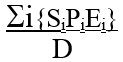
Si = Number of shares in the index for security i.
Pi = Price of security i
Ei = Cross rate of currency of Security i vs. USD. If security price in USD, Ei = 1
D = Divisor
The Index is calculated to capture price appreciation and total return, which assumes dividends are reinvested into the Index. The Index is calculated using primary market prices and calculated in U.S. dollars.
The Index is calculated whenever the stock exchanges are open. If trading is suspended while the exchange the component company trades on is still open, the last traded price for that stock is used for all subsequent Index computations until trading resumes. If trading is suspended before the opening, the stock’s adjusted closing price from the previous day is used to calculate the Index. Until a particular stock opens, its adjusted closing price from the previous day is used in the Index computation. Index values are calculated on both, price and total-return basis, in U.S. dollars, and disseminated on an end-of-day basis.
| Page 115 of 192 |
| 3.4 | Weighting |
The Index is a modified equally weighted index. The Committee makes strategic decisions regarding the weight allocated to the selected BioRevolution sectors and stocks based on quantitative and qualitative criteria.
The Weighting Date is when component weights are set, and it occurs after the close of trading on Thursday prior to the second Friday of the rebalance month. The Index is reconstituted on a semi-annual basis following the close of trading on the third Friday in April and October.
Should the “collective weight” of Index component securities whose individual current weights equal or exceed 5.0% of the Index, when added together, equal or exceed 50.0% of the Index, the weightings in those component securities will be reduced so that their collective weight equals 40.0% of the Index at the close of the current calendar quarter, and other components in the Index will be rebalanced to reflect their relative weights before the adjustment. Further iterations of these adjustments may occur until no company or group of companies violates these rules.
| 3.5 | Dividend Treatment |
Normal dividend payments are not taken into account in the price Index, whereas they are reinvested and accounted for in the total return Index. However, special dividends that are not reinvested in the net total return index require index divisor adjustments to prevent the distribution from distorting the price index.
| 3.6 | Multiple Share Classes |
In the event a component company issues multiple classes of shares of common stock, the share class with the highest average daily volume will be included. Conversion of a share class into another share class results in the deletion of the share class being phased out and an increase in shares of the surviving share class, provided that the surviving share class is in the Index.
| 4. | Index Maintenance |
Index Maintenance includes monitoring and implementing the adjustments for company deletions, stock splits, stock dividends, spins-offs, or other corporate actions. Some corporate actions, such as stock splits, stock dividends, and rights offerings require changes in the index shares and the stock prices of the component companies in the Index. Some corporate actions, such as stock issuances, stock buybacks, warrant issuances, increases or decreases in dividend per share between reconstitutions, do not require changes in the index shares or the stock prices of the component companies in the Index. Other corporate actions, such as special dividends and entitlements, may require Index divisor adjustments. Any corporate action, whether it requires divisor adjustments or not, will be implemented after the close of trading on the day prior to the ex-date of such corporate actions. Whenever possible, changes to the Index’s components, such as deletions as a result of corporate actions, will be announced at least two business days prior to their implementation date.
| Page 116 of 192 |
| 4.1. | Component Changes |
Additions
Additions to the Index are made at reconstitution according to the inclusion criteria defined above. Changes are implemented following the close of trading on the third Friday in April and October. No additions are made to the Index between reconstitutions, except in the cases of certain spin-off companies defined below or as otherwise determined by the Committee consistent with the criteria herein.
Deletions
Shares of companies that are de-listed or acquired by a company outside of the Index are deleted from the Index and the weights of the remaining components are adjusted proportionately to reflect the change in composition of the Index. A component company that files for bankruptcy is deleted from the Index and the weights of the remaining components are adjusted proportionately to reflect the change in the composition of the Index. If a component company is acquired by another company in the Index for stock, the acquiring company’s shares and weight in the Index are adjusted to reflect the transaction after the close of trading on the day prior to the execution date.34 Component companies that reclassify their shares (i.e., that convert multiple share classes into a single share class) remain in the Index, although index shares are adjusted to reflect the reclassification. The Committee may remove a company it has determined to be in extreme financial distress if the Committee deems the removal necessary to protect the integrity of the Index. If removed, its weight will be reallocated to the remaining constituents in the Index.
34 Companies being acquired will be deleted from the Index immediately before the effective date of the acquisition or upon notice of a suspension of trading in the stock of the company that is being acquired. In cases where an effective date is not publicly announced in advance, or where a notice of suspension of trading in connection with an acquisition is not announced in advance, WisdomTree reserves the right to delete the company being acquired based on best available market information.
| Page 117 of 192 |
| 4.2. | Spin-Offs and IPOs |
Should a company be spun-off from an existing component company, it is allowed to stay in the Index that its parent company is in until the next reconstitution. Spin-off shares of publicly traded companies that are included in the same indexes as their parent company are increased to reflect the spin-off and the weights of the remaining components are adjusted proportionately to reflect the change in the composition of the Index. Companies that go public in an Initial Public Offering (IPO) and that meet all other Index inclusion requirements must wait until the next reconstitution to be included in the Index or as otherwise determined by the Committee consistent with the criteria herein.
| 5. | Index Divisor Adjustments |
Changes in the Index’s market capitalization due to changes in composition, weighting or corporate actions result in a divisor change to maintain the Index’s continuity. By adjusting the divisor, the Index value retains its continuity before and after the event. Corporate actions that require divisor adjustments will be implemented prior to the opening of trading on the effective date. In certain instances where information is incomplete, or the completion of an event is announced too late to be implemented prior to the ex-date, the implementation will occur as of the close of the following day or as soon as practicable thereafter. For corporate actions not described herein, or combinations of different types of corporate events and other exceptional cases, the Committee reserves the right to determine the appropriate implementation method.
Companies that are acquired, de-listed, file for bankruptcy, or move its Primary Business Activities outside of a defined country in the intervening weeks between the Screening Date and the Reconstitution Date are not included in the Index, and the weights of the remaining components are adjusted accordingly.
| 6. | Selection Parameters |
Selection parameters for the Index are defined in section 3.1. Companies that pass these selection criteria as of the Screening Date are included in the Index unless otherwise determined by the Committee. The component companies are assigned weights in the Index as defined in section 3.4., and reconstitution of the Index takes effect as defined in section 4.1.
| Page 118 of 192 |
Methodology guide for Artificial Intelligence & Innovation Index
| 1. | Index Overview and Description |
The WisdomTree Artificial Intelligence & Innovation Index (referred to as “the Index”) is designed to track the performance of companies primarily involved in the investment theme of Artificial Intelligence and Innovation.
The Index focuses on artificial intelligence technology in the following categories:
Software – companies that provide artificial intelligence software to enable artificial intelligence and machine learning capabilities to be applied in the client domain.
Semiconductors – companies that produce semiconductors or semiconductor equipment and technology.
Other Hardware – companies that produce or develop hardware and technology essential for artificial intelligence applications that are not classified as semiconductors (collectively, "Artificial Intelligence Activities").
Innovation is defined as companies that introduce a new, creative, or different (i.e., “innovative”) technologically enabled product or service in seeking to potentially change an industry landscape, as well as companies that service those Innovative technologies, particularly those related to artificial intelligence.
The Index is calculated to capture price appreciation and total return, which assumes dividends are reinvested into the Index. The Index is calculated using primary market prices and calculated in U.S. dollars.
The Index is reconstituted on a quarterly basis following the close of trading on the third Friday in February, May, August and November.
| 2. | Index Governance |
The Index is overseen by the WisdomTree Artificial Intelligence [and Innovation] Index Committee (the “Committee”), a standing index committee of WisdomTree, Inc. (“WisdomTree”), ticker WT. The Committee will be composed of not less than 3 members. The Committee is responsible for making broad decisions with respect to the implementation, ongoing management, operation, and administration of the Index. The primary function of the Committee is to make sure the Index rules are implemented correctly and comprehensively, provided that the published Index composition shall be as determined by the Committee. Furthermore, the Committee may determine to rebalance the Index more frequently in response to volatility in the market, shifts in exposure away from certain sectors, or other similar circumstances. The Committee meetings will generally be held on a quarterly basis or such frequency in relation to the reconstitution and/or rebalance frequency of the Index and may be held more frequently as circumstances require. The composition of the Committee may from time to time be changed to reflect changes in market conditions.
| Page 119 of 192 |
| 3. | Key Features |
| 3.1. | Membership Criteria |
To be eligible for inclusion in the Index, component companies must be under coverage by the market management team of the third-party independent index calculation agent and must list shares on eligible stock exchanges.
Component companies must conduct their Primary Business Activities35 and have their shares listed on a stock exchange in one of the following countries:
Developed Market countries: Australia, Austria, Belgium, Canada, Denmark, Finland, France, Germany, Hong Kong, Ireland, Israel, Italy, Japan, Netherlands, New Zealand, Norway, Portugal, Singapore, Spain, Sweden, Switzerland, the UK, and the US.
Emerging Market countries: Argentina, Brazil, Chile, China, Colombia, Czech Republic, Egypt, Greece, Hungary, India, Indonesia, Korea, Kuwait, Malaysia, Mexico, Pakistan, Peru, Philippines, Poland, Qatar, Russia, Saudi Arabia, South Africa, Taiwan, Thailand, Turkey, and United Arab Emirates.
In the case of China, component companies must be incorporated or domiciled in China and have their shares listed on the Hong Kong stock exchange or are trading primarily on a U.S. stock exchange are eligible for inclusion. In addition, Chinese domestic companies that are part of the connect program and meet index requirements are also eligible for inclusion.
35 The country in which a company conducts its Primary Business Activities is determined based on the following factors: country of organization or incorporation, country in which a company’s headquarters is located, the country to which a company has the greatest risk exposure (“Country of Risk”), and the country from which a company generates the most significant portion of its revenue or to which it allocates the greatest resources. WT may determine to consider additional or different factors depending on the nature of a company’s business and operations.
| Page 120 of 192 |
Companies need to have market capitalization of at least $100 million and a median daily dollar volume greater than $1,000,000 for each of the three months preceding the Screening Date (after the close of trading on the last trading day in January, April, July and October). Common stocks, REITs, tracking stocks, holding companies, ADRs, GDRs and EDRs are eligible for inclusion. Limited partnerships, limited liability companies, royalty trusts, Business Development Companies (BDCs) and mortgage REITs are excluded. Preferred stocks, closed-end funds, passive foreign investment companies, exchange-traded funds, and derivative securities such as warrants and rights are not eligible. The publicly traded security for WisdomTree is not eligible for inclusion in any of WisdomTree’s equity indexes. Eligible companies must be involved in Artificial Intelligence Activities or Innovation.
The key activities and hardware listed below are used as guidelines to determine if a company is primarily involved in Artificial Intelligence Activities. A company’s engagement in these activities and hardware is indicated via applicable language in its company description, Annual Report, 10K or equivalent report, earnings call transcripts, patent submissions, news and press releases, as well as via exposure to relevant industry classifications. These Artificial Intelligence Activities will be assigned to the following three categories (“the Categories”):
Software – Companies that provide artificial intelligence software to their clients to enable AI and machine learning capabilities to be applied in the client domain. These include but are not limited to software platforms and tools for natural language processing, speech recognition, robotics process automation, computer vision and image processing, conversational bots and virtual assistants, and data science and analytics.
Semiconductors – Companies that produce semiconductors or semiconductor equipment and technology critical to the AI hardware vertical. These include but are not limited to various types of integrated circuits such as GPUs and ASICs for efficient computation, memory devices for the necessary data storage and transfer, as well as equipment and technology for semiconductor manufacturing and design.
Other Hardware – Companies that produce or develop hardware and technology essential for artificial intelligence applications that are not classified as semiconductors. These include but are not limited to the devices and technology for robotics, industrial automation, and autonomous driving.
Qualitative and quantitative characteristics of eligible companies are evaluated by the Committee. Companies that are representative of the aforementioned Artificial Intelligence Activities and Innovation are selected for inclusion in the Index by the Committee.
| Page 121 of 192 |
| 3.2 | Base Date and Base Value |
The Index was established with a base value of 200 on November 9, 2021.
| Page 122 of 192 |
| 3.3 | Calculation and Dissemination |
The following formula is used to calculate the index levels for the Artificial Intelligence & Innovation Index:
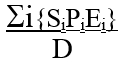
Si = Number of shares in the index for security i.
Pi = Price of security i
Ei = Cross rate of currency of Security i vs. USD. If security price in USD, Ei = 1
D = Divisor
The Index is calculated to capture price appreciation and total return, which assumes dividends are reinvested into the Index. The Index is calculated using primary market prices and calculated in U.S. dollars.
The Index is calculated whenever the stock exchanges are open. If trading is suspended while the exchange the component company trades on is still open, the last traded price for that stock is used for all subsequent Index computations until trading resumes. If trading is suspended before the opening, the stock’s adjusted closing price from the previous day is used to calculate the Index. Until a particular stock opens, its adjusted closing price from the previous day is used in the Index computation. Index values are calculated on both, price and total-return basis, in U.S. dollars, and disseminated on an end-of-day basis.
| 3.4 | Weighting |
The Index is a hierarchical, multi-category, modified equal-weighted index. The Committee makes strategic decisions regarding the weight allocated to each of the Artificial Intelligence Activities and Innovation themes based upon market forecasts, equal weighting the constituent stocks which are selected for inclusion based upon quantitative and qualitative criteria.
The Weighting Date is when component weights are set, and it occurs after the close of trading on Thursday prior to the second Friday of the rebalance month.
Should the “collective weight” of Index component securities whose individual current weights equal or exceed 5.0% of the Index, when added together, equal or exceed 50.0% of the Index, the weightings in those component securities will be reduced so that their collective weight equals 40.0% of the Index at the close of the current calendar quarter, and other components in the Index will be rebalanced to reflect their relative weights before the adjustment. Further iterations of these adjustments may occur until no company or group of companies violates these rules.
| Page 123 of 192 |
The Index is reconstituted on a quarterly basis following the close of trading on the third Friday in February, May, August and November.
| 3.5 | Dividend Treatment |
Normal dividend payments are not taken into account in the price Index, whereas they are reinvested and accounted for in the total return Index. However, special dividends that are not reinvested in the net total return index require index divisor adjustments to prevent the distribution from distorting the price index.
| 3.6 | Multiple Share Classes |
In the event a component company issues multiple classes of shares of common stock, the share class with the highest average daily volume will be included. Conversion of a share class into another share class results in the deletion of the share class being phased out and an increase in shares of the surviving share class, provided that the surviving share class is in the Index.
| 4. | Index Maintenance |
Index Maintenance includes monitoring and implementing the adjustments for company deletions, stock splits, stock dividends, spins-offs, or other corporate actions. Some corporate actions, such as stock splits, stock dividends, and rights offerings require changes in the index shares and the stock prices of the component companies in the Index. Some corporate actions, such as stock issuances, stock buybacks, warrant issuances, increases or decreases in dividend per share between reconstitutions, do not require changes in the index shares or the stock prices of the component companies in the Index. Other corporate actions, such as special dividends and entitlements, may require Index divisor adjustments. Any corporate action, whether it requires divisor adjustments or not, will be implemented after the close of trading on the day prior to the ex-date of such corporate actions. Whenever possible, changes to the Index’s components, such as deletions as a result of corporate actions, will be announced at least two business days prior to their implementation date.
| Page 124 of 192 |
| 4.1. | Component Changes |
Additions
Additions to the Index are made at reconstitution according to the inclusion criteria defined above. Changes are implemented following the close of trading on the third Friday in February, May, August and November. No additions are made to the Index between reconstitutions, except in the cases of certain spin-off companies defined below or as otherwise determined by the Committee consistent with the criteria herein.
Deletions
Shares of companies that are de-listed or acquired by a company outside of the Index are deleted from the Index and the weights of the remaining components are adjusted proportionately to reflect the change in composition of the Index. A component company that files for bankruptcy is deleted from the Index and the weights of the remaining components are adjusted proportionately to reflect the change in the composition of the Index. If a component company is acquired by another company in the Index for stock, the acquiring company’s shares and weight in the Index are adjusted to reflect the transaction after the close of trading on the day prior to the execution date.
Component companies that reclassify their shares (i.e., that convert multiple share classes into a single share class) remain in the Index, although index shares are adjusted to reflect the reclassification. The Committee may remove a company it has determined to be in extreme financial distress if the Committee deems the removal necessary to protect the integrity of the Index. If removed, its weight will be reallocated to the remaining constituents in its Category or Activity.
| 4.2. | Spin-Offs and IPOs |
Should a company be spun-off from an existing component company, it is allowed to stay in the Index that its parent company is in until the next reconstitution. Spin-off shares of publicly traded companies that are included in the same indexes as their parent company are increased to reflect the spin-off and the weights of the remaining components are adjusted proportionately to reflect the change in the composition of the Index. Companies that go public in an Initial Public Offering (IPO) and that meet all other Index inclusion requirements must wait until the next reconstitution to be included in the Index or as otherwise determined by the Committee consistent with the criteria herein.
| Page 125 of 192 |
| 5. | Index Divisor Adjustments |
Changes in the Index’s market capitalization due to changes in composition, weighting or corporate actions result in a divisor change to maintain the Index’s continuity. By adjusting the divisor, the Index value retains its continuity before and after the event. Corporate actions that require divisor adjustments will be implemented prior to the opening of trading on the effective date. In certain instances where information is incomplete, or the completion of an event is announced too late to be implemented prior to the ex-date, the implementation will occur as of the close of the following day or as soon as practicable thereafter. For corporate actions not described herein, or combinations of different types of corporate events and other exceptional cases, the Committee reserves the right to determine the appropriate implementation method. Companies that are acquired, de-listed, file for bankruptcy, or move their Primary Business Activities outside of a defined country in the intervening weeks between the Screening Date and the Reconstitution Date are not included in the Index, and the weights of the remaining components are adjusted accordingly.
| 6. | Selection Parameters |
Selection parameters for the Index are defined in section 3.1. Companies that pass these selection criteria as of the Screening Date are included in the Index unless otherwise determined by the Committee. The component companies are assigned weights in the Index as defined in section 3.4, and reconstitution of the Index takes effect as defined in section 4.1.
| Page 126 of 192 |
Methodology guide for Battery Value Chain and Innovation Index
| 1. | Index Overview and Description |
The WisdomTree Battery Value Chain and Innovation Index [referred to as “the Index”] is designed to track the performance of companies primarily involved in Battery and Energy Storage Solutions (“BESS”) and Innovation. The Index was developed by WisdomTree, Inc. (“WT”), in collaboration with third party specialists at BESS.
BESS can be defined as technology that captures electrical energy in chemical form. These technologies are positioned to benefit from the fact that both, chemical and electrical energy, have an electron as the carrier, which limits the conversion loss.
Innovation is defined as the introduction of new, creative, or different (i.e., “innovative”) technologically enabled products or services with the potential to change the industry landscape.
The Index is reconstituted on semi-annual basis (following the close of trading on the third Friday in May and November).
The Index is calculated to capture price appreciation and total return, which assumes dividends are reinvested into the Index. The Index is calculated using primary market prices and calculated in U.S. dollars.
| 2. | Key Features |
| 2.1. | Membership Criteria |
To be eligible for inclusion in the Index, component companies must be under coverage by the market management team of the third-party independent index calculation agent, must list shares on eligible stock exchanges and be classified as a BESS or Innovation company, and derive 50% of revenue from one or more of the Battery Value Chain Activities (as defined below) or Innovation. In the developed world, component companies must list their shares on one of the stock exchanges in the U.S., Europe (i.e., Austria, Belgium, Denmark, Finland, France, Germany, Ireland, Italy, Netherlands, Norway, Portugal, Spain, Sweden, Switzerland, or the United Kingdom), the Tokyo Stock Exchange, or on stock exchanges in Australia, Israel, New Zealand, Hong Kong, Singapore or Canada. In the developing world, component companies must have their shares listed on a stock exchange in one of the following countries: Brazil, Chile, China, Czech Republic, Hungary, Indonesia, Korea, Malaysia, Mexico, Philippines, Poland, Russia, South Africa, Taiwan, Thailand, Turkey, or Saudia Arabia. Securities must conduct their Primary Business Activities36 in one of these Emerging Market Countries. In the case of China, companies that are incorporated or domiciled in China and trade on one of the stock exchanges in the developed world are eligible for inclusion. In addition, Chinese domestic listed companies that are part of the connect program37 and meet Index requirements will be selected for inclusion.
36 The country in which a company conducts its Primary Business Activities is determined based on the following factors: country of organization or incorporation, country in which a company’s headquarters is located, the country to which a company has the greatest risk exposure (“Country of Risk”), and the country from which a company generates the most significant portion of its revenue or to which it allocates the greatest resources. WT may determine to consider additional or different factors depending on the nature of a company’s business and operations.
37 Stock Connect is a unique collaboration between the Hong Kong, Shanghai and Shenzhen Stock Exchanges, which allows international and Mainland Chinese investors to trade securities in each other’s markets through the trading and clearing facilities of their home exchange. First launched in November 2014, the scheme now covers over 2,000 eligible equities in Shanghai, Shenzhen and Hong Kong.
| Page 127 of 192 |
Companies need to have market capitalization of at least $250 million and a median daily dollar volume of at least $1,000,000 for each of the three months preceding the Screening Date (after the close of trading on the last trading day in April and October).
If a security was recently listed and does not have 3-months of trading history, the data available since listing will be used to extrapolate a 3-month average daily traded value. Common stocks, REITs, tracking stocks, holding companies, ADRs, GDRs and EDRs are eligible for inclusion. Limited partnerships, limited liability companies, royalty trusts, Business Development Companies (BDCs) and mortgage REITs are excluded. Preferred stocks, closed-end funds, passive foreign investment companies, exchange-traded funds, and derivative securities such as warrants and rights are not eligible. The publicly traded security for WisdomTree, Inc., ticker WT, is not eligible for inclusion in any of WisdomTree’s equity indexes.
The Index classifies the BESS value chain into 4 categories (i.e., Raw Materials, Manufacturing, Enablers and/or Emerging Technology) (collectively, “Battery Value Chain Activities”), partitioned into 12 sectors, which are further divided into 37 sub-sectors38.
Raw Materials - companies that focus on raw battery materials mining, such as Lithium, Nickel or extract chemicals for instance Lithium Carbonate, Cobalt Chemicals specifically used for BESS.
Manufacturing - companies that process battery materials, cell, pack and build components such as Anode, Cathode for BESS.
38 As of January 2022.
| Page 128 of 192 |
Enablers - companies that develop the battery building block components for BESS such as grid edge or charging infrastructure.
Emerging Technologies - companies that use new battery storage technologies such as Lithium Air, Hydrogen Fuel Cell or develop new applications for instance wireless charging.
The Index utilizes an intensity rating, developed by WisdomTree in collaboration with third-party specialists at BESS (“Intensity Rating”), which captures the perceived degree of a company’s overall involvement across the BESS value chain.
This BESS Intensity Rating is calculated as sub-sector score multiplied by the company revenue exposure score:
| o | Sub-sector score: the scores are calculated based on 3 factors with the following weights, Size –10%; Exposure – 50%; Growth – 40%: |
| Ø | Size score: quantitative measure based on the relative value of the market |
| Ø | Exposure score: quantitative measure based on percentage of demand in BESS as an end-use |
| Ø | Growth score: qualitative and quantitative measure based on the percentage relative to sub-sector growth |
| o | Company revenue exposure score: based on the company’s percentage of revenue from each sub-sector |
Each company from the universe is also assigned a Composite Risk Score, which is calculated as the average of the below two factor scores:
| o | Quality Factor – determined by return on equity, return on assets, gross profits over assets and cash flows over assets |
| o | Momentum Factor – determined by the stocks’ risk adjusted total returns over historical periods (i.e., 6 and 12 months) |
Companies are ranked based on the Intensity Rating and Composite Risk Score, respectively. Stocks that do not fall within the bottom 20% of the Intensity Rating are selected for inclusion, subject to a minimum of 75 stocks. Furthermore, stocks ranked within the top 33.3% of each category will also be included, if those stocks have not been selected in the previous step. Companies that fall within the bottom 10% of the eligible universe based on the Composite Risk Score, will be removed from the selection.
Security additions and deletions are reviewed and rebalanced on semi-annual basis in May and November.
| Page 129 of 192 |
| 2.2 | Base Date and Base Value |
The WisdomTree Battery Value Chain and Innovation Index was established with a base value of 200 on November 19, 2021.
| 2.3 | Calculation and Dissemination |
The following formula is used to calculate the index levels for the Battery Value Chain and Innovation Index:
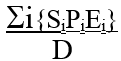
Si = Number of shares in the index for security i.
Pi = Price of security i
Ei = Cross rate of currency of Security i vs. USD. If security price in USD, Ei = 1
D = Divisor
The Index is calculated whenever the stock exchanges are open. If trading is suspended while the exchange the component company trades on is still open, the last traded price for that stock is used for all subsequent Index computations until trading resumes. If trading is suspended before the opening, the stock’s adjusted closing price from the previous day is used to calculate the Index. Until a particular stock opens, its adjusted closing price from the previous day is used in the Index computation. Index values are calculated on both, price and total-return basis, in U.S. dollars, and disseminated on an end-of-day basis.
| 2.4 | Weighting |
The target weight of each category is calculated as the average of the following weights:
| o | Each of the 4 categories (i.e., Raw Materials, Manufacturing, Enablers and Emerging Technology) is equal-weighted at 25%. |
| o | Each category then receives a second weight from the average score of their underlying sub-sectors. |
Each company will then be weighted within the category based on the Intensity Rating multiplied by the sub-sector density function: (log(N)+1)/N, where N is the number of selected stocks from its sub-sector.
The Weighting Date is when component weights are set, and it occurs after the close of trading on Thursday prior to the second Friday of the rebalance month. The changes will go into effect after the close of trading on the third Friday of the rebalance month.
| Page 130 of 192 |
At each rebalance, the maximum weight of any security in the Index is capped at 3.5% and the minimum weight at 0.15%. Country exposure is capped at 25% except for U.S., which is capped at 50%.
Additionally, the Index is expected to allocate at least 50% of its weight to companies that meet the definition of Battery Value Chain Activities.
Should the “collective weight” of Index component securities whose individual current weights equal or exceed 5.0% of the Index, when added together, equal or exceed 50.0% of the Index, the weightings in those component securities will be reduced so that their collective weight equals 40.0% of the Index at the close of the current calendar quarter, and other components in the Index will be rebalanced to reflect their relative weights before the adjustment. Further iterations of these adjustments may occur until no company or group of companies violates these rules.
The following liquidity adjustment factor will be applied:
In the event a security has a calculated volume factor (average daily volume traded over the preceding three months / weight in the Index) that is less than $400 million, its weight will be reduced such that weight after volume adjustment = weight before adjustment x calculated volume factor
/ $400 million.
| 2.5 | Dividend Treatment |
Normal dividend payments are not taken into account in the price Index, whereas they are reinvested and accounted for in the total return Index. However, special dividends that are not reinvested in the net total return index require index divisor adjustments to prevent the distribution from distorting the price index.
| 2.8 | Tax Rates |
The WisdomTree Battery Value Chain and Innovation Total Return index is calculated on a net basis. Net return indices reflect the return to an investor where dividends are reinvested after the deduction of a withholding tax. The tax rate applied is the rate to non-resident institutions that do not benefit from double taxation treaties and is determined by the independent index calculation agent in accordance with their methodology.
| Page 131 of 192 |
| 2.9 | Multiple Share Classes |
In the event a component company issues multiple classes of shares of common stock, the share class with the highest average daily volume will be included. Conversion of a share class into another share class results in the deletion of the share class being phased out and an increase in shares of the surviving share class, provided that the surviving share class is in the Index.
| 3. | Index Maintenance |
Index Maintenance includes monitoring and implementing the adjustments for company deletions, stock splits, stock dividends, spins-offs, or other corporate actions. Some corporate actions, such as stock splits, stock dividends, and rights offerings require changes in the index shares and the stock prices of the component companies in the Index. Some corporate actions, such as stock issuances, stock buybacks, warrant issuances, increases or decreases in dividend per share between reconstitutions, do not require changes in the index shares or the stock prices of the component companies in the Index. Other corporate actions, such as special dividends and entitlements, may require Index divisor adjustments. Any corporate action, whether it requires divisor adjustments or not, will be implemented after the close of trading on the day prior to the ex-date of such corporate actions. Whenever possible, changes to the Index’s components, such as deletions as a result of corporate actions, will be announced at least two business days prior to their implementation date.
| 3.1. | Component Changes |
Additions
Additions to the Index are made at reconstitution according to the inclusion criteria defined above. Changes are implemented following the close of trading on the third Friday in May and November. No additions are made to the Index between reconstitutions, except in the cases of certain spin-off companies defined below.
Deletions
Shares of companies that are de-listed or acquired by a company outside of the Index are deleted from the Index and the weights of the remaining components are adjusted proportionately to reflect the change in composition of the Index. A component company that files for bankruptcy is deleted from the Index and the weights of the remaining components are adjusted proportionately to reflect the change in the composition of the Index. If a component company is acquired by another company in the Index for stock, the acquiring company’s shares and weight in the Index are adjusted to reflect the transaction after the close of trading on the day prior to the execution date.39 Component companies that reclassify their shares (i.e., that convert multiple share classes into a single share class) remain in the Index, although index shares are adjusted to reflect the reclassification.
39 Companies being acquired will be deleted from the Index immediately before the effective date of the acquisition or upon notice of a suspension of trading in the stock of the company that is being acquired. In cases where an effective date is not publicly announced in advance, or where a notice of suspension of trading in connection with an acquisition is not announced in advance, WisdomTree reserves the right to delete the company being acquired based on best available market information.
| Page 132 of 192 |
| 3.2. | Spin-Offs and IPOs |
Should a company be spun-off from an existing component company, it is allowed to stay in the Index that its parent company is in until the next reconstitution. Spin-off shares of publicly traded companies that are included in the same indexes as their parent company are increased to reflect the spin-off and the weights of the remaining components are adjusted proportionately to reflect the change in the composition of the Index. Companies that go public in an Initial Public Offering (IPO) and that meet all other Index inclusion requirements must wait until the next reconstitution to be included in the Index.
| 4. | Index Divisor Adjustments |
Changes in the Index’s market capitalization due to changes in composition, weighting or corporate actions result in a divisor change to maintain the Index’s continuity. By adjusting the divisor, the Index value retains its continuity before and after the event. Corporate actions that require divisor adjustments will be implemented prior to the opening of trading on the effective date. In certain instances where information is incomplete, or the completion of an event is announced too late to be implemented prior to the ex-date, the implementation will occur as of the close of the following day or as soon as practicable thereafter. For corporate actions not described herein, or combinations of different types of corporate events and other exceptional cases, WT reserves the right to determine the appropriate implementation method.
Companies that are acquired, de-listed, file for bankruptcy, or move its Primary Business Activities outside of a defined country in the intervening weeks between the Screening Date and the Reconstitution Date are not included in the Index, and the weights of the remaining components are adjusted accordingly.
| Page 133 of 192 |
| 5. | Selection Parameters |
Selection parameters for the WisdomTree Battery Value Chain and Innovation Index are defined in section 2.1. Companies that pass these selection criteria as of the Screening Date are included in the Index. The component companies are assigned weights in the Index as defined in section 2.4., and reconstitution of the Index takes effect as defined in section 3.1.
| Page 134 of 192 |
Methodology Guide for the WisdomTree U.S. Quality Growth Index
| 1. | Index Overview and Description |
The WisdomTree U.S. Quality Growth Index (“LargeCap Index”), the WisdomTree U.S. MidCap Quality Growth Index (“MidCap Index”), and the WisdomTree U.S. SmallCap Quality Growth Index (“SmallCap Index”) [referred to collectively as “the Indexes”] were developed by WisdomTree, Inc. (WT). The Indexes are comprised of companies that have high profitability and growth characteristics.
The Indexes are calculated to capture price appreciation and total return, which assumes dividends are reinvested into the Index. The Indexes are calculated using primary market prices and calculated in U.S. dollars.
The Indexes are reconstituted on a semi-annual basis (following the close of trading on the eighth business day in June and December40).
| 2. | Index Governance |
The Indexes are overseen by the Quality Growth Index Committee (the “Committee”), a standing index committee of WisdomTree, Inc. (WT). The Committee will be composed of not less than 3 members. The Committee is responsible for making broad decisions with respect to the implementation, ongoing management, operation, and administration of the Indexes. The primary function of the Committee is to make sure Index rules are implemented correctly and comprehensively, provided that the published Index composition shall be as determined by the Committee.
The Committee meetings will generally be held on a semi-annual basis or such frequency in relation to the reconstitution and/or rebalance frequency of the Indexes and may be held more frequently as circumstances require. The composition of the Committee may from time to time be changed to reflect changes in market conditions. Furthermore, the Committee may determine to rebalance each Index more frequently in response to volatility in the market, shifts in underlying constituent market capitalization, or other similar circumstances.
| 3. | Key Features |
| 3.1. | Membership Criteria |
To be eligible for inclusion in the Indexes, component companies must be under coverage by the market management team of the third party independent index calculation agent, must list shares on a U.S. stock exchange, conduct their Primary Business Activities41 in the United States.
40 Semi-annual rebalance commencing November 2022 for the WisdomTree U.S. Quality Growth Index and November 2023 for the WisdomTree U.S. MidCap Quality Growth Index and the WisdomTree U.S. SmallCap Quality Growth Index.
41 The country in which a company conducts its Primary Business Activities is determined based on the following factors: country of organization or incorporation, country in which a company’s headquarters is located, the country to which a company has the greatest risk exposure (“Country of Risk”), and the country from which a company generates the most significant portion of its revenue or to which it allocates the greatest resources. WT may determine to consider additional or different factors depending on the nature of a company’s business and operations.
| Page 135 of 192 |
Companies need to have market capitalization of at least $100 million and had a median daily dollar volume of at least $1,000,000 for each of the three months preceding the Screening Date (after the close of trading on the last trading day in May and November). Common stocks, REITs, tracking stocks and holding companies are eligible for inclusion. ADRs, GDRs and EDRs are excluded, as are limited partnerships, limited liability companies, royalty trusts, Business Development Companies (BDCs), and mortgage REITs. Preferred stocks, closed-end funds, exchange-traded funds, and derivative securities such as warrants and rights are not eligible. Companies that have pending acquisitions or mergers are excluded from the initial universe. The publicly traded security for WisdomTree, Inc., ticker WT, is not eligible for inclusion in any of WisdomTree’s equity indexes.
Eligible companies are ranked on a composite score of two fundamental factors: growth and quality, which are equally weighted. Each Index is comprised of the companies with the highest composite scores.
| · | The growth and quality factor scores for the LargeCap Index are determined as follows: The growth factor is determined by a company's ranking based on a 50% weight in its median analyst earnings growth forecast, a 25% weight in its trailing 5-year EBITDA (i.e., earnings before interest, taxes, depreciation and amortization) growth and a 25% weight in its trailing 5-year sales growth. The quality factor is determined by a company's ranking based on a 50% weight to each of its trailing 3-year average return on equity and trailing 3-year average return on assets. The Index constituents are determined by an Index Committee that looks at companies to identify equity stocks on the above-referenced measures. |
| · | The growth and quality factor scores for the Mid-Cap and Small-Cap Indexes are determined as follows: The growth factor is determined by a company's ranking based on a 40% weight in its trailing 3-year earnings growth, a 40% weight in its trailing 3-year sales growth, and a 20% weight in its median analyst earnings growth forecast. The quality factor is determined by a company's ranking based on a 50% weight to each of its trailing 3-year average return on equity and trailing 3-year average return on assets. The Index constituents are determined by an Index Committee that looks at companies to identify equity stocks on the above-referenced measures. |
| Page 136 of 192 |
For the Mid-Cap and Small-Cap Indexes, all issuers (including REITs) assigned to the Real Estate sector, Utilities sector, and Banks industry are ineligible. Note: Sectors based on the GICS sector classifications.
| 3.2 | Base Date and Base Value |
The WisdomTree U.S. Quality Growth Index was established with a base value of 200 on November 30, 2022.
The WisdomTree U.S. MidCap Quality Growth Index and the WisdomTree U.S. SmallCap Quality Growth Index were established with a base value of 200 on November 30, 2023.
| 3.3 | Calculation and Dissemination |
The following formula is used to calculate the index levels for the Indexes:
Si{SiPiEi}
D
Si = Number of shares in the index for Security i
Pi = Price of Security i
Ei = Cross rate of currency of Security i
vs. USD. If security price in USD, Ei = 1
D = Divisor
The Indexes are calculated whenever the stock exchanges are open. If trading is suspended while the exchange the component company trades on is still open, the last traded price for that stock is used for all subsequent Index computations until trading resumes. If trading is suspended before the opening, the stock’s adjusted closing price from the previous day is used to calculate the Index. Until a particular stock opens, its adjusted closing price from the previous day is used in the Index computation. Index values are calculated on both a price and total-return basis, in U.S. dollars. The price and total return Indexes are calculated and disseminated on an end-of-day basis.
| 3.4 | Weighting |
The Indexes are market-capitalization weighted indexes.
The maximum weight of any individual security is capped as follows at the semi-annual rebalance and the weights of all other components will be adjusted proportionally
| · | LargeCap Index: Individual securities are capped at 15% |
| Page 137 of 192 |
| · | MidCap Index and SmallCap Index: Individual securities are capped at 5% |
The Weighting Date is when component weights are set and it occurs after the close of the third business day of the rebalance month. The changes will go into effect after the close of trading on the eighth business day of the rebalance month.
Should the “collective weight” of Index component securities whose individual current weights equal or exceed 5.0% of the Index, when added together, equal or exceed 50.0% of the Index, the weightings in those component securities will be reduced so that their collective weight equals 40.0% of the Index at the close of the current calendar quarter, and other components in the Index will be rebalanced to reflect their relative weights before the adjustment. Further iterations of these adjustments may occur until no company or group of companies violates these rules.
The following liquidity adjustment factors will be applied:
A further volume screen requires that a calculated volume factor (the median daily dollar volume for three months preceding the Screening Date / weight of security in each index) shall be greater than $400 million to be eligible for each index.
In the event a security has a calculated volume factor (average daily volume traded over the preceding three months / weight in the index) that is less than $400 million, its weight will be reduced such that weight after volume adjustment = weight before adjustment x calculated volume factor
/ $400 million.
| 3.5 | Dividend Treatment |
Normal dividend payments are not taken into account in the price Index, whereas they are reinvested and accounted for in the total return Index. However, special dividends that are not reinvested in the total return index require index divisor adjustments to prevent the distribution from distorting the price index.
| 3.6 | Multiple Share Classes |
In the event a component company issues multiple classes of shares of common stock, the share class with the highest average daily volume will be included. Conversion of a share class into another share class results in the deletion of the share class being phased out and an increase in shares of the surviving share class, provided that the surviving share class is in the Index.
| Page 138 of 192 |
| 4. | Index Maintenance |
Index Maintenance includes monitoring and implementing the adjustments for company deletions, stock splits, stock dividends, spins-offs, or other corporate actions. Some corporate actions, such as stock splits, stock dividends, and rights offerings require changes in the index shares and the stock prices of the component companies in the Index. Some corporate actions, such as stock issuances, stock buybacks, warrant issuances, increases or decreases in dividend per share between reconstitutions, do not require changes in the index shares or the stock prices of the component companies in the Index. Other corporate actions, such as special dividends and entitlements, may require Index divisor adjustments. Any corporate action, whether it requires divisor adjustments or not, will be implemented after the close of trading on the day prior to the ex-date of such corporate actions. Whenever possible, changes to the Index’s components, such as deletions as a result of corporate actions, will be announced at least two business days prior to their implementation date.
| 4.1. | Component Changes |
Additions
Additions to the Index are made at the reconstitution according to the inclusion criteria defined above. Changes are implemented following the close of trading on the eighth business day in June and December. No additions are made to the Index between reconstitutions, except in the cases of certain spin-off companies defined below.
Deletions
Shares of companies that are de-listed or acquired by a company outside of the Index are deleted from the Index and the weights of the remaining components are adjusted proportionately to reflect the change in composition of the Index. A component company that files for bankruptcy is deleted from the Index and the weights of the remaining components are adjusted proportionately to reflect the change in the composition of the Index. If a component company is acquired by another company in the Index for stock, the acquiring company’s shares and weight in the Index are adjusted to reflect the transaction after the close of trading on the day prior to the execution date. Component companies that reclassify their shares (i.e., that convert multiple share classes into a single share class) remain in the Index, although index shares are adjusted to reflect the reclassification.
| Page 139 of 192 |
| 4.2. | Spin-Offs and IPOs |
Should a company be spun-off from an existing component company it is allowed to stay in the Index that its parent company is in until the next reconstitution. Spin-off shares of publicly traded companies that are included in the same indexes as their parent company are increased to reflect the spin-off and the weights of the remaining components are adjusted proportionately to reflect the change in the composition of the Index. Companies that go public in an Initial Public Offering (IPO) and that meet all other Index inclusion requirements must wait until the next reconstitution to be included in the Index.
| 5. | Index Divisor Adjustments |
Changes in the Index’s market capitalization due to changes in composition, weighting or corporate actions result in a divisor change to maintain the Index’s continuity. By adjusting the divisor, the Index value retains its continuity before and after the event. Corporate actions that require divisor adjustments will be implemented prior to the opening of trading on the effective date. In certain instances where information is incomplete, or the completion of an event is announced too late to be implemented prior to the ex-date, the implementation will occur as of the close of the following day or as soon as practicable thereafter. For corporate actions not described herein, or combinations of different types of corporate events and other exceptional cases, WTI reserves the right to determine the appropriate implementation method.
Companies that are acquired, de-listed, file for bankruptcy, or move its Primary Business Activities outside of a defined country in the intervening weeks between the Screening Date and the Reconstitution Date are not included in the Index, and the weights of the remaining components are adjusted accordingly.
| 6. | Selection Parameters |
| 6.1. | The WisdomTree U.S. Quality Growth Index is created by selecting the top 100 scoring companies from a starting universe of the 500 largest preliminary eligible companies by market capitalization as defined in section 3.1. Companies that pass these selection criteria as of the Screening Date are included in the Index. The component companies are assigned weights in the Index as defined in section 3.4., and reconstitution of the Index takes effect as defined in section 4.1. |
| Page 140 of 192 |
| 6.2. | The WisdomTree U.S. MidCap Quality Growth Index is created by selecting the top 30% scoring companies from a starting universe of mid-cap companies. The mid-cap universe is based on a defined percentage of the remaining market capitalization of the total universe once the 500 largest preliminary eligible companies by market capitalization are excluded. The companies that comprise the top 60% of the remaining market capitalization are defined as mid-caps. The top 30% scoring companies from this mid-cap universe are selected as defined in section 3.1. Companies that pass these selection criteria as of the Screening Date are included in the Index. The component companies are assigned weights in the Index as defined in section 3.4., and reconstitution of the Index takes effect as defined in section 4.1. |
| 6.3. | The WisdomTree U.S. SmallCap Quality Growth Index is created by selecting the top 30% scoring companies from a starting universe of small-cap companies. The small-cap universe is based on a defined percentage of the remaining market capitalization of the total universe once the 500 largest preliminary eligible companies by market capitalization are excluded. The companies that comprise the bottom 40% of the remaining market capitalization are defined as small-caps. The top 30% scoring companies from this small-cap universe are selected as defined in section 3.1. Companies that pass these selection criteria as of the Screening Date are included in the Index. The component companies are assigned weights in the Index as defined in section 3.4., and reconstitution of the Index takes effect as defined in section 4.1. |
| Page 141 of 192 |
Methodology Guide for New Economy Real Estate Index
| 1. | Index Overview and Description |
The WisdomTree New Economy Real Estate Index [referred to as “the Index”] is designed to track the performance of global companies from developed markets and involved in new economy real estate industry.
The Index is reconstituted on a semi-annual basis in March and September.
The Index is calculated to capture price appreciation and total return, which assumes dividends are reinvested into the Index. The Index is calculated using primary market prices and calculated in U.S. dollars.
| 2. | Index Governance |
The Index is overseen by the WisdomTree New Economy Real Estate Index Committee (the “Committee”), a standing index committee of WisdomTree, Inc. (“WisdomTree”), ticker WT. The Committee will be composed of not less than 3 members. The Committee is responsible for making broad decisions with respect to the implementation, ongoing management, operation and administration of the Index. The primary function of the Committee is to make sure the Index rules are implemented correctly and comprehensively, provided that the published Index composition shall be as determined by the Committee.
The Committee meetings will generally be held on a semi-annual basis or such frequency in relation to the reconstitution and/or rebalance frequency of the Index, and may be held more frequently as circumstances require. The composition of the Committee may from time to time be changed to reflect changes in market conditions.
| 3. | Key Features |
| 3.1. | Membership Criteria |
To be eligible for inclusion in the Index, component companies must be under coverage by the market management team of the third-party independent index calculation agent and must list shares on eligible stock exchanges.
Component companies must conduct their Primary Business Activities42 and have their shares listed on a stock exchange in one of the following developed countries: United States, Austria, Belgium, Denmark, Finland, France, Germany, Ireland, Italy, Netherlands, Norway, Portugal, Spain, Sweden, Switzerland, United Kingdom, Japan, Australia, Israel, Hong Kong, Singapore or Canada. Companies listed in Japan must list their shares on the Tokyo Stock Exchange.
42 The country in which a company conducts its Primary Business Activities is determined based on the following factors: country of organization or incorporation, country in which a company’s headquarters is located, the country to which a company has the greatest risk exposure (“Country of Risk”), and the country from which a company generates the most significant portion of its revenue or to which it allocates the greatest resources. WT may determine to consider additional or different factors depending on the nature of a company’s business and operations.
| Page 142 of 192 |
Companies need to have market capitalization of at least $500 million and a median daily dollar volume greater than $1,000,000 for each of the three months preceding the Screening Date (after the close of trading on the last trading day in February and August). Companies comprising the Index also will derive at least 50% of their revenues or profits from, or invest at least 50% of their assets in, products or services related to the “new economy” real estate activities, as that term is described below.
Common stocks, REITs, tracking stocks, holding companies, ADRs, GDRs and EDRs are eligible for inclusion. Limited partnerships, limited liability companies, royalty trusts, Business Development Companies (BDCs) and mortgage REITs are excluded. Preferred stocks, closed-end funds, passive foreign investment companies, exchange-traded funds, and derivative securities such as warrants and rights are not eligible. The publicly traded security for WisdomTree, Inc., ticker WT, is not eligible for inclusion in any of WisdomTree’s equity indexes.
Eligible companies must be involved in “new economy” real estate activities. “New economy” real estate activities include companies that are classified as (a) digital and industrial economy infrastructure, and (b) next-generation digital infrastructure, as listed below. The key sectors listed below are used as guidelines to determine if a company is primarily involved in such activities. A company’s engagement in these sectors is indicated via applicable language in its company description, Annual Report, 10K or equivalent report, earnings call transcripts, patent submissions, news and press releases, as well as via exposure to relevant industry classifications.
| a. | Digital and Industrial Economy Infrastructure, which include but not limit to telecommunication tower sector (including cable and fiber assets), data centers, healthcare and life sciences, modern logistics and ecommerce, as well as other industrial and specialized infrastructures. |
| b. | Next-generation digital infrastructure, which include but not limit to blockchain-enabled, and digital infrastructures hosting cryptocurrency mining, or providing High performance computing (HPC) facilities. |
| Page 143 of 192 |
Qualitative and quantitative characteristics of eligible companies are evaluated by the Committee. Companies that are representative of the aforementioned new economy real estate activities and sectors are selected for inclusion in the Index by the Committee, subject to a minimum of 50 stocks. To satisfy this minimum number of components for diversification purposes, companies with lower market capitalization or trading volume than the screening criteria mentioned above may be selected for inclusion.
| 3.2 | Base Date and Base Value |
The Index was established with a base value of 200 on December 31, 2024.
| 3.3 | Calculation and Dissemination |
The following formula is used to calculate the index levels for the Index:
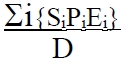
Si = Number of shares in the index for security i.
Pi = Price of security i
Ei = Cross rate of currency of Security i vs. USD.
If security price in USD, Ei = 1
D = Divisor
The Index is calculated to capture price appreciation and total return, which assumes dividends are reinvested into the Index. The Index is calculated using primary market prices and calculated in U.S. dollars.
The Index is calculated whenever the stock exchanges are open. If trading is suspended while the exchange the component company trades on is still open, the last traded price for that stock is used for all subsequent Index computations until trading resumes. If trading is suspended before the opening, the stock’s adjusted closing price from the previous day is used to calculate the Index. Until a particular stock opens, its adjusted closing price from the previous day is used in the Index computation. Index values are calculated on both, price and total-return basis, in U.S. dollars, and disseminated on an end-of-day basis.
| Page 144 of 192 |
| 3.4 | Weighting |
The Index is a modified market capitalization weighted index.
| · | The Index has target weight allocation for “digital and industrial economy infrastructure” and “next-generation digital infrastructure” categories at 90% and 10%, respectively. |
| · | Within each category, companies are weighted by market capitalization, subject to the capping and liquidity adjustment criteria described below. The maximum weight of any security from Next-generation Digital Infrastructure category will be capped at 2.5% |
Capping - at each rebalance, the maximum weight of any single security is capped at 7.5%. In addition, the sum of all securities over 5% shall not exceed 35% at rebalance.
Liquidity adjustment - In the event a company has a calculated volume factor (median daily volume traded over the preceding three months / weight in the index) that is less than $400 million, its weight will be reduced such that the weight after volume adjustment equals the weight before adjustment x calculated volume factor / $400 million.
The Weighting Date is when component weights are set, and it occurs after the close of trading on Thursday prior to the second Friday of the rebalance month. The Index is reconstituted on a semi-annual basis following the close of trading on the third Friday in March and September.
| 3.5 | Dividend Treatment |
Normal dividend payments are not taken into account in the price Index, whereas they are reinvested and accounted for in the total return Index. However, special dividends that are not reinvested in the net total return index require index divisor adjustments to prevent the distribution from distorting the price index.
| 3.6 | Multiple Share Classes |
In the event a component company issues multiple classes of shares of common stock, the share class with the highest median daily volume will be included. Conversion of a share class into another share class results in the deletion of the share class being phased out and an increase in shares of the surviving share class, provided that the surviving share class is in the Index.
| Page 145 of 192 |
| 4. | Index Maintenance |
Index Maintenance includes monitoring and implementing the adjustments for company deletions, stock splits, stock dividends, spins-offs, or other corporate actions. Some corporate actions, such as stock splits, stock dividends, and rights offerings require changes in the index shares and the stock prices of the component companies in the Index. Some corporate actions, such as stock issuances, stock buybacks, warrant issuances, increases or decreases in dividend per share between reconstitutions, do not require changes in the index shares or the stock prices of the component companies in the Index. Other corporate actions, such as special dividends and entitlements, may require Index divisor adjustments. Any corporate action, whether it requires divisor adjustments or not, will be implemented after the close of trading on the day prior to the ex-date of such corporate actions. Whenever possible, changes to the Index’s components, such as deletions as a result of corporate actions, will be announced at least two business days prior to their implementation date.
| 4.1 | Component Changes |
Additions
Additions to the Index are made at reconstitution according to the inclusion criteria defined above. Changes are implemented following the close of trading on the third Friday in March and September. No additions are made to the Index between reconstitutions, except in the cases of certain spin-off companies defined below or as otherwise determined by the Committee consistent with the criteria herein.
Deletions
Shares of companies that are de-listed or acquired by a company outside of the Index are deleted from the Index and the weights of the remaining components are adjusted proportionately to reflect the change in composition of the Index. A component company that files for bankruptcy is deleted from the Index and the weights of the remaining components are adjusted proportionately to reflect the change in the composition of the Index. If a component company is acquired by another company in the Index for stock, the acquiring company’s shares and weight in the Index are adjusted to reflect the transaction after the close of trading on the day prior to the execution date.43 Component companies that reclassify their shares (i.e., that convert multiple share classes into a single share class) remain in the Index, although index shares are adjusted to reflect the reclassification. The Committee may remove a company it has determined to be in extreme financial distress if the Committee deems the removal necessary to protect the integrity of the Index. If removed, its weight will be reallocated to the remaining constituents in the Index.
43 Companies being acquired will be deleted from the Index immediately before the effective date of the acquisition or upon notice of a suspension of trading in the stock of the company that is being acquired. In cases where an effective date is not publicly announced in advance, or where a notice of suspension of trading in connection with an acquisition is not announced in advance, WisdomTree reserves the right to delete the company being acquired based on best available market information.
| Page 146 of 192 |
| 4.2. | Spin-Offs and IPOs |
Should a company be spun-off from an existing component company, it is allowed to stay in the Index that its parent company is in until the next reconstitution. Spin-off shares of publicly traded companies that are included in the same indexes as their parent company are increased to reflect the spin-off and the weights of the remaining components are adjusted proportionately to reflect the change in the composition of the Index. Companies that go public in an Initial Public Offering (IPO) and that meet all other Index inclusion requirements must wait until the next reconstitution to be included in the Index or as otherwise determined by the Committee consistent with the criteria herein.
| 5. | Index Divisor Adjustments |
Changes in the Index’s market capitalization due to changes in composition, weighting or corporate actions result in a divisor change to maintain the Index’s continuity. By adjusting the divisor, the Index value retains its continuity before and after the event. Corporate actions that require divisor adjustments will be implemented prior to the opening of trading on the effective date. In certain instances where information is incomplete, or the completion of an event is announced too late to be implemented prior to the ex-date, the implementation will occur as of the close of the following day or as soon as practicable thereafter. For corporate actions not described herein, or combinations of different types of corporate events and other exceptional cases, the Committee reserves the right to determine the appropriate implementation method.
Companies that are acquired, de-listed, file for bankruptcy, or move their Primary Business Activities outside of a defined country in the intervening weeks between the Screening Date and the Reconstitution Date are not included in the Index, and the weights of the remaining components are adjusted accordingly.
| 6. | Selection Parameters |
Selection parameters for the Index are defined in section 3.1. Companies that pass these selection criteria as of the Screening Date are included in the Index unless otherwise determined by the Committee. The component companies are assigned weights in the Index as defined in section 3.4., and reconstitution of the Index takes effect as defined in section 4.1.
| Page 147 of 192 |
Methodology Guide for WisdomTree Opportunities Indexes
| 1. | Index Overview and Description |
WisdomTree, Inc. (WT) has created the WisdomTree European Opportunities Equity Index (referred to as “EUOE”) and WisdomTree European Opportunities Index (referred to as “EUOP”), WisdomTree Japan Opportunities Equity Index (referred to as “JPOE”) and WisdomTree Japan Opportunities Index (referred to as “JPOP”), and WisdomTree GeoAlpha Opportunities Index (referred to as “GEOP”) [together referred to as “the Indexes”].
• The EUOE and EUOP are designed to track the performance of European companies focused on both value stocks and companies benefiting from geopolitical and global policy shifts. The EUOE and EUOP are calculated to capture price appreciation and total return, which assumes dividends are reinvested into the Index. The EUOE is calculated in U.S. dollars. The EUOP is designed to remove from index performance the impact of changes to the value of foreign currencies relative to U.S. dollar with a hedge ratio ranging from 0 to 100% on a monthly basis.
• The JPOE and JPOP are each designed to track the performance of Japanese companies with a focus on both value stocks and companies benefitting from geopolitical and global policy shifts. The JPOE and JPOP are calculated to capture price appreciation and total return, which assumes dividends are reinvested into the Index. The JPOE is calculated in U.S. dollars. The JPOP is designed to remove from Index performance the impact of changes in the value of the Yen relative to the U.S. dollar with a hedge ratio ranging from 0 to 100% on a monthly basis.
• The GEOP is designed to track the performance of companies primarily benefiting from geopolitical and global policy shifts. The GEOP focuses on the following categories of geopolitical and global policy shifts: Geopolitical Events, Fiscal and Monetary Policy Shifts, Innovations in Technology, and Shifting Consumer Preferences. The GEOP is calculated to capture price appreciation and total return, which assumes dividends are reinvested into the Index. The Index is calculated in U.S. dollars using primary market prices
The EUOE, EUOP, JPOE and JPOP Indexes will be reconstituted on a quarterly basis (following the close of trading on the eighth business day in March, June, September and December). The Screening Date for each index will be the last business day in February, May, August and November. The GEOP Index will be reconstituted on a monthly basis. The Screening Date for each index will be the last business day of each month. The Committee may determine to rebalance and/or reconstitute the Index more frequently in response to volatility in the market, shifts in exposure away from certain sectors, geopolitical events (such as kinetic conflicts, cyber attacks, and tariffs) or other similar circumstances. Constituent turnover in each Index will be capped at 20% per rebalance.
| Page 148 of 192 |
| 2. | Index Governance |
The Indexes are overseen by the WisdomTree Opportunities Index Committee (the “Committee”), a standing index committee of WisdomTree, Inc. (“WisdomTree”), ticker WT. The Committee will be composed of not less than three members. The Committee is responsible for making broad decisions with respect to the implementation, ongoing management, operation, and administration of the Index. WisdomTree designed this methodology to achieve the Index’s objective. The primary function of the Committee is to seek to ensure the Index methodology is implemented correctly. In such role, the Index Committee selects all constituents meeting the eligibility criteria described herein in its discretion. In addition, any changes to or deviations from this methodology are intended to enable the Index to continue to achieve its objective and will be made in the sole judgment and discretion of the Index Committee.
The Committee meetings generally will be held at a quarterly cadence or as needed in relation to the reconstitution and/or rebalance frequency of the Index or as circumstances require. The composition of the Committee may be changed from time to time.
| 3. | Key Features |
| 3.1. | Membership Criteria |
To be eligible for inclusion in the EUOE and EUOP: component companies must be under coverage by the market management team of the third-party independent index calculation agent and must list shares on eligible stock exchanges. Component companies must conduct their Primary Business Activities44 and have their shares listed on a stock exchange in one of the following countries: Austria, Belgium, Czech Republic, Denmark, Finland, France, Germany, Greece, Hungary, Ireland, Italy, Norway, Poland, Portugal, Spain, Sweden, Switzerland, Turkey, and United Kingdom (collectively, “Europe”).
44 The country in which a company conducts its Primary Business Activities is determined based on the following factors: country of organization or incorporation, country in which a company’s headquarters is located, the country to which a company has the greatest risk exposure (“Country of Risk”), and the country from which a company generates the most significant portion of its revenue or to which it allocates the greatest resources. WT may determine to consider additional or different factors depending on the nature of a company’s business and operations.
| Page 149 of 192 |
Companies must have a median daily dollar volume greater than $100,000 for each of the three months preceding the Screening Date and trade at least 250,000 shares per month for each of the preceding six months Common stocks, REITs, tracking stocks, and holding companies are eligible for inclusion. ADRs, GDRs and EDRs, limited partnerships, royalty trusts, passive foreign investment companies, preferred stocks, closed-end funds, exchange-traded funds, and derivative securities such as warrants and rights are not eligible.
Companies in the bottom 15% of this universe by market capitalization are excluded.
The EUOE and EUOP are based on a rules-based methodology overseen and implemented by the WisdomTree European Opportunities Index Committee (the “Index Committee”). The Index Committee will categorize securities into two buckets.
| · | 2/3 of the Index will be allocated to European securities that provide a high “total shareholder yield”, evidenced by return of capital to shareholders through either dividend distributions and/or the repurchase of shares (“buybacks”) |
| · | 1/3 of the Index will be allocated to equities that have exposures to thematic opportunities from developments in the geopolitical space, technology trends, and macro-economic conditions. |
Total Shareholder Yield:
The Index selects approximately two-thirds of its securities based on Total Shareholder Yield based on the below process to screen European securities from its eligible universe:
Companies that fall within the bottom quintile of a composite risk factor score are not eligible for inclusion. The composite risk factor score is used to eliminate potentially higher risk companies that would have otherwise been eligible for inclusion in the Index. The composite risk factor score is an equally weighted score of the two factors described below:
1) Quality Factor – determined by static observations and trends of return on equity (ROE), return on assets (ROA), gross profits over assets and cash flows over assets. Scores are calculated within industry groups.
| 2) | Momentum Factor – determined by stocks’ risk adjusted total returns over historical periods (6 and 12 months) |
Companies that fall within the top 5% ranked by dividend yield and also the bottom ½ of the composite risk factor score are not eligible for inclusion. Companies are also screened out based on year-over-year changes in the company’s share count. Companies that rank in the bottom 50% on changes in share count (greater reduction in shares outstanding earning a higher ranking) are not eligible for inclusion. Rankings are calculated within sector. Companies that rank outside of the top 30% of the eligible universe on shareholder yield are not eligible for inclusion. Rankings are calculated within sector.
| Page 150 of 192 |
Thematic Opportunities:
For companies not selected based on total shareholder yield, the Committee will consider several factors including revenues generated from non-Allied countries45, management commentary related to geopolitics, and other qualitative and quantitative factors for inclusion in the Index. As described below, eligible companies must have exposure to geopolitical events, fiscal and monetary policy shifts, innovative solutions, or shifting consumer preferences as determined by the Index Committee.
The key activities listed below are used as guidelines to determine if a company is exposed to geopolitical events and shifts in global policy.
A company’s exposure to geopolitical and global policy shifts are indicated via applicable language in its company description, Annual Report, 10K or equivalent report, earnings call transcripts, patent submissions, news and press releases, as well as exposure to relevant industry classifications. These will be assigned to the following categories (“the Categories”):
1) Geopolitical events – Companies positioned to benefit from geopolitical considerations including but not limited to supply chain changes, tax policies, defense spending and alliances, or trade and tariff policies. Under typical circumstances the index will allocate 25-50% to this category.
2) Fiscal and monetary policy shifts – Companies better positioned for the raising and lowering of interest rates by central banks, different fiscal spending programs, and currency and policy interventions. Under typical circumstances the index will allocate 5-25% to this category.
3) Innovations in Technology – Companies across a range of sectors including but not limited to the Technology and Energy sectors that are participating in innovative46 solutions. Under typical circumstances the index will allocate 5-25% to this category.
45 Alliances considered include NATO, Major Non-NATO Allies (MNNAs) as designated by the US State Department with Mexico and India included due to their relevance in the geopolitical theme and their inclusion in United States-Mexico-Canada Agreement (USMCA) and the Quad. These alliances (collectively “Allies”) are integral to the future of geopolitics and the outlook for trade.
46 Innovation is defined as companies that introduce a new, creative, or different (i.e., “innovative”) technologically enabled product or service in seeking to potentially change an industry landscape, as well as companies that service those Innovative technologies, particularly those related to shifts to geopolitics and government policies.
| Page 151 of 192 |
4) Shifting Consumer Preferences – Companies positioned to benefit from changes in global consumer habits. Under typical circumstances the index will allocate 5-15% to this category.
Typically, the Index will be comprised of 75-125 securities. The securities in the Index will be weighted according to shareholder yield, liquidity, and market capitalization considerations. The Index generally will be reconstituted on a quarterly basis. The Committee may determine to rebalance and/or reconstitute the Index more frequently in response to volatility in the market, shifts in exposure away from certain sectors, geopolitical events (such as kinetic conflicts, cyber-attacks, and tariffs) or other similar circumstances. Qualitative and quantitative characteristics of eligible companies are evaluated by the Committee. Companies that are representative of the aforementioned geopolitical and global policy shifts are selected for inclusion in the Index by the Committee
To be eligible for inclusion in the JPOE and JPOP: component companies must be under coverage by the market management team of the third-party independent index calculation agent and must list shares on eligible stock exchanges. Component companies must conduct their Primary Business Activities47, and have their shares listed, in Japan.
Companies must have a median daily dollar volume greater than $100,000 for each of the three months preceding the Screening Date and trade at least 250,000 shares per month for each of the preceding six months.
Common stocks, real estate investment trusts (“REITs”), tracking stocks, and holding companies are eligible for inclusion in each Index. ADRs, GDRs, EDRs, limited partnerships, royalty trusts, passive foreign investment companies, preferred stocks, closed-end funds, exchange-traded funds, and derivatives, such as warrants and rights, are not eligible for inclusion. Companies with a market capitalization below USD $100 million are excluded.
For each Index, the Committee will categorize eligible securities into one of the four allocation categories described below:
1) 0-45% of the Index will be allocated to securities of Japanese companies that are strategic holdings of Berkshire Hathaway (i.e., companies for which Berkshire Hathaway owns more than 5% of the shares outstanding) on the screening date as evidenced by publicly available regulatory filings.
47 The country in which a company conducts its Primary Business Activities is determined based on the following factors: country of organization or incorporation, country in which a company’s headquarters is located, the country to which a company has the greatest risk exposure (“Country of Risk”), and the country from which a company generates the most significant portion of its revenue or to which it allocates the greatest resources. WT may determine to consider additional or different factors depending on the nature of a company’s business and operations.
| Page 152 of 192 |
2) 15-33% of the Index will be allocated to Japanese securities that provide a high “total shareholder yield”, as evidenced by high return of capital to shareholders through either dividend distributions or the repurchase of shares (“buybacks”) combined with favorable earnings and dividend growth characteristics.
3) 15-33% of the Index will be allocated to Japanese securities classified as “Corporate Governance Improvers”, evidenced by low valuation ratio (such as a Low Price to Book ratio) and favorable earnings and dividend growth characteristics.
4) 15-33% of the Index will be allocated to securities that have exposures to thematic opportunities from developments in the geopolitical space, technology trends, and macro-economic conditions.
Strategic Holdings of Berkshire Hathaway:
Each Index allocates approximately 0-45% of its weight to Japanese companies in which Berkshire Hathaway owns more than 5% of shares outstanding according to their latest regulatory filings.
Total Shareholder Yield:
Each Index allocates approximately 15-33% of its weight based on total shareholder yield, determined as described below, to screen Japanese securities from its eligible universe, excluding those classified as long-term strategic holdings of Berkshire Hathaway.
Companies with a total shareholder yield ranked outside of the top 30% of the eligible universe are not eligible for inclusion. Companies with a growth score (composed of trailing three-year growth of earnings and shareholder distributions) ranked outside of the top 50% of the eligible universe are not eligible for inclusion.
Corporate Governance Improvers:
Each Index allocates approximately 15-33% of its weight to securities determined to be Corporate Governance Improvers based on the process described below. This category excludes those companies classified as strategic holdings of Berkshire Hathaway and as high total shareholder yield companies.
Companies with a growth score (composed of trailing three-year growth of earnings and shareholder distributions) ranked outside of the top 30% of the eligible universe are not eligible for inclusion. Companies with a Book-to-Price metric ranked outside of the top 50% of the eligible universe are not eligible for inclusion.
| Page 153 of 192 |
Thematic Opportunities:
For companies not selected based on the three previously mentioned categories, the Committee will consider several factors including revenues generated from non-Allied countries48, management commentary related to geopolitics, and other qualitative and quantitative factors for inclusion in the Index. As described below, eligible companies must have exposure to geopolitical events, fiscal and monetary policy shifts, innovative solutions, or shifting consumer preferences as determined by the Committee.
The key activities listed below are used as guidelines to determine if a company is exposed to geopolitical events and shifts in global policy. References to a company’s exposure to geopolitical and global policy shifts in its company description, Annual Report, Form 10-K or equivalent report, earnings call transcripts, patent submissions, news and press releases, as well as exposure to relevant industry classifications. These will be assigned to the following categories (the “Categories”):
1) Geopolitical events – Companies positioned to benefit from geopolitical considerations including but not limited to supply chain changes, tax policies, defense spending and alliances, or trade and tariff policies. Under typical circumstances, an Index will allocate 25-50% to this Category.
2) Fiscal and monetary policy shifts – Companies better positioned for the raising and lowering of interest rates by central banks, different fiscal spending programs, and currency and policy interventions. Under typical circumstances, an Index will allocate 5-25% to this category.
3) Innovations in technology – Companies across a range of sectors including but not limited to the Technology and Energy Sectors that are participating in innovative49 solutions (i.e., new, creative, or different technologically-enabled products or services that could change an industry landscape). Under typical circumstances, an Index will allocate 5-25% to this category.
4) Shifting consumer preferences – Companies positioned to benefit from changes in global consumer habits. Under typical circumstances, an Index will allocate 5-15% to this category.
Typically, the JPOE and JPOE will be comprised of 100-150 securities.
48 Alliances considered include NATO, Major Non-NATO Allies (MNNAs) as designated by the US State Department with Mexico and India included due to their relevance in the geopolitical theme and their inclusion in United States-Mexico-Canada Agreement (USMCA) and the Quad. These alliances (collectively “Allies”) are integral to the future of geopolitics and the outlook for trade.
49 Innovation is defined as companies that introduce a new, creative, or different (i.e., “innovative”) technologically enabled product or service in seeking to potentially change an industry landscape, as well as companies that service those Innovative technologies, particularly those related to shifts to geopolitics and government policies.
| Page 154 of 192 |
To be eligible for inclusion in the GEOP: component companies must be under coverage by the market management team of the third-party independent index calculation agent and must list shares on eligible stock exchanges. Component companies must conduct their Primary Business Activities50 and have their shares listed on a stock exchange in one of the following countries: Argentina, Australia, Austria, Belgium, Brazil, Canada, Chile, China (including Hong Kong-listed shares, A-shares with specific inclusion criteria), Colombia, Czech Republic, Denmark, Egypt, Finland, France, Germany, Greece, Hong Kong, Hungary, India, Indonesia, Ireland, Israel, Italy, Japan, Kuwait, Malaysia, Mexico, Netherlands, New Zealand, Norway, Pakistan, Peru, Philippines, Portugal, Poland, Qatar, Saudi Arabia, Singapore, South Africa, South Korea, Spain, Sweden, Switzerland, Taiwan, Thailand, Turkey, United Arab Emirates, United Kingdom, United States.
Companies need to have market capitalization of at least $1 billion, a median daily dollar volume greater than $100,000 for each of the three months preceding the Screening Date (last day in February, May, August and November) and trade at least 250,000 shares per month for each of the preceding six months. Common stocks, REITs, tracking stocks, holding companies, ADRs, GDRs, exchange-traded funds and EDRs are eligible for inclusion. Interests of limited partnerships, limited liability companies, royalty trusts, Business Development Companies (BDCs) and mortgage REITs are excluded. Preferred stocks, closed-end funds, passive foreign investment companies, and derivative securities such as warrants and rights are not eligible for inclusion. The publicly traded security for WisdomTree is not eligible for inclusion in any of WisdomTree’s equity indexes.
Non-US companies are screened against inclusion in NATO, Major Non-NATO Allies (MNNAs) as designated by the US State Department with Mexico and India included due to their relevance in the geopolitical theme and their inclusion in United States-Mexico-Canada Agreement (USMCA) and the Quad. These alliances (collectively “Allies”) are integral to the future of geopolitics and the outlook for trade. The Committee will only consider companies domiciled in an Allies territory for inclusion in the Index.
For non-US companies, the Committee will consider several factors including revenues generated from non-Allied countries51, management commentary related to geopolitics, and other qualitative and quantitative factors for inclusion in the Index. US companies are screened for revenues generated from non-allies. As described below, eligible companies must have exposure to geopolitical events, fiscal and monetary policy shifts, innovative solutions, or shifting consumer preferences as determined by the Index Committee.
50 The country in which a company conducts its Primary Business Activities is determined based on the following factors: country of organization or incorporation, country in which a company’s headquarters is located, the country to which a company has the greatest risk exposure (“Country of Risk”), and the country from which a company generates the most significant portion of its revenue or to which it allocates the greatest resources. WT may determine to consider additional or different factors depending on the nature of a company’s business and operations.
51 Alliances considered include NATO, Major Non-NATO Allies (MNNAs) as designated by the US State Department with Mexico and India included due to their relevance in the geopolitical theme and their inclusion in United States-Mexico-Canada Agreement (USMCA) and the Quad. These alliances (collectively “Allies”) are integral to the future of geopolitics and the outlook for trade.
| Page 155 of 192 |
The key activities listed below are used as guidelines to determine if a company is exposed to geopolitical events and shifts in global policy.
A company’s exposure to geopolitical and global policy shifts are indicated via applicable language in its company description, Annual Report, 10K or equivalent report, earnings call transcripts, patent submissions, news and press releases, as well as exposure to relevant industry classifications. These will be assigned to the following categories (“the Categories”):
1) Geopolitical Events – Companies positioned to benefit from geopolitical considerations including but not limited to supply chain changes, tax policies, defense spending and alliances, or trade and tariff policies. Under typical circumstances the index will allocate 25-50% to this category.
2) Fiscal and Monetary Policy Shifts – Companies better positioned for the raising and lowering of interest rates by central banks, different fiscal spending programs, and currency and policy interventions. Under typical circumstances the index will allocate 5-25% to this category.
3) Innovations in Technology – Companies across a range of sectors including but not limited to the Information Technology and Energy sectors that are participating in innovative52 solutions. Under typical circumstances the index will allocate 5-25% to this category.
4) Shifting Consumer Preferences – Companies positioned to benefit from changes in global consumer habits. Under typical circumstances the index will allocate 5-15% to this category.
Qualitative and quantitative characteristics of eligible companies are evaluated by the Committee. Companies that are representative of the aforementioned geopolitical and global policy shifts are selected for inclusion in the GEOP by the Committee. The GEOP will have between 50 and 100 constituents.
52 Innovation is defined as companies that introduce a new, creative, or different (i.e., “innovative”) technologically enabled product or service in seeking to potentially change an industry landscape, as well as companies that service those Innovative technologies, particularly those related to shifts to geopolitics and government policies.
| Page 156 of 192 |
Dynamic Currency Management
For the EUOP and JPOP, the Index Committee seeks to manage the Fund’s currency risk by dynamically hedging currency fluctuations in the relative value of the applicable foreign currencies against the U.S. dollar, ranging from a 0% to 100% hedge. The Investment Committee will determine if a currency hedge will be implemented based on the following signals:
1) Momentum: The one-month average of the currency’s spot price versus the U.S. dollar is weaker than that of the three-month average (i.e., the targeted currency is depreciating).
2) Interest Rate Differentials: The difference in interest rates, as implied in one month FX forwards, between each currency and the
U.S. dollar.
3) Geopolitical Events and Fiscal & Monetary Policy Shifts: Geopolitical considerations including but not limited to supply chain changes, tax policies, defense spending and alliances, trade and tariff policies, central bank mandated changes in interest rates, different fiscal spending programs, and currency and policy interventions.
| 4) | Time-series momentum: Overall broad trends in the U.S. dollar. |
| 3.2 | Base Date and Base Value |
The EUOE and EUOP were established with a base value of 200 on April 30, 2025.
The JPOE and JPOP were established with a base value of 200 on April 30, 2025.
The GEOP was established with a base value of 200 on April 30, 2025.
| 3.3 | Calculation and Dissemination |
The following formula is used to calculate the index levels for the Index:
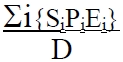
Si = Number of shares in the index for security i.
Pi = Price of security i
Ei = Cross rate of currency of Security i vs. USD. If security price in USD, Ei = 1
D = Divisor
The EUOP and JPOP are designed to approximate the investable return available to U.S. based investors that seek to neutralize fluctuations on foreign currencies. The total returns for the EUOP and JPOP are calculated once a day on a daily basis to remove the impact of currency and uses a WM/Reuters 1-month forward rate to do so.
| Page 157 of 192 |
The EUOP and JPOP will be calculated using forward amounts and foreign currency weights determined one business day prior to the month end—in accordance with the standard currency hedged calculations of WisdomTree’s independent index calculation agent. The precise calculation for the daily hedged currency index equals:
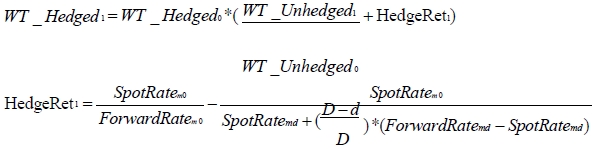
Where Forward Rate = WM/Reuters 1-month forward rate in foreign currency per U.S. dollar
Spot Rate = Spot Rate in foreign currency per U.S. dollar.
For each month m, there are d= 1, 2, 3, .. D calendar days so md is day d for month m and m0 is one business day prior to the month end of month m-1.
D=Total # days In Month
md= d day of Month m
WT_Hedged0 – previous month-end WT_Unhedged0 – previous month-end
HedgeRet has a hedge ratio applied to it when determining what percentage of the currency is hedged. This is a ratio WisdomTree will send to the calculation agent every month.
The Indexes are calculated whenever the stock exchanges are open. If trading is suspended while the exchange the component company trades on is still open, the last traded price for that stock is used for all subsequent Index computations until trading resumes. If trading is suspended before the opening, the stock’s adjusted closing price from the previous day is used to calculate the Index. Until a particular stock opens, its adjusted closing price from the previous day is used in the Index computation. Index values are calculated on both a price and total-return basis and disseminated on an end-of-day basis.
| Page 158 of 192 |
| 3.4 | Weighting |
The EUOE, EUOP, JPOE and JPOP will be fundamentally weighted according to shareholder yield, liquidity, and market capitalization considerations.
Each company included in the GEOP is assigned a GeoAlpha Thematic Intensity Score based on their exposure to each of the 4 selection activities: Geopolitical Events, Fiscal and Monetary Policy Shifts, Innovations in Technology, and Shifting Consumer Preferences. The GEOP is weighted by market capitalization adjusted by the GeoAlpha
| Page 159 of 192 |
Thematic Intensity Score. The maximum weight of any security will be capped at 5%.
Liquidity adjustment - In the event a company has a calculated volume factor (median daily volume traded over the preceding three months / weight in the index) that is less than $400 million, its weight will be reduced such that the weight after volume adjustment equals the weight before adjustment x calculated volume factor / $400 million.
The Weighting Date is when component weights are set, and it occurs after the close of the third business day of the rebalance month. The changes will go into effect after the close of trading on the eighth business day of the rebalance month.
Moreover, should the “collective weight” of Index component securities whose individual current weights equal or exceed 5.0% of the Indexes, when added together, equal or exceed 50.0% of the Index, the weightings in those component securities will be reduced so that their collective weight equals 40.0% of the Index at the close of the current calendar quarter, and other components in the Index will be rebalanced proportionally to reflect their relative weights before the adjustment. Further iterations of these adjustments may occur until no company or group of companies violates these rules.
| 3.5 | Dividend Treatment |
Normal dividend payments are not taken into account in the price Index, whereas they are reinvested and accounted for in the total return Index. However, special dividends that are not reinvested in the total return Index require Index divisor adjustments to prevent the distribution from distorting the price Index.
| 3.6 | Multiple Share Classes |
In the event a component company issues multiple classes of shares of common stock, the share class with the highest median daily volume will be included. Conversion of a share class into another share class results in the deletion of the share class being phased out and an increase in shares of the surviving share class, provided that the surviving share class is in the Index.
| Page 160 of 192 |
| 4. | Index Maintenance |
Index Maintenance includes monitoring and implementing the adjustments for company deletions, stock splits, stock dividends, spins-offs, or other corporate actions. Some corporate actions, such as stock splits, stock dividends, and rights offerings require changes in the index shares and the stock prices of the component companies in the Indexes. Some corporate actions, such as stock issuances, stock buybacks, warrant issuances, increases or decreases in dividend per share between reconstitutions, do not require changes in the index shares or the stock prices of the component companies in the Indexes. Other corporate actions, such as special dividends and entitlements, may require Index divisor adjustments.
Any corporate action, whether it requires divisor adjustments or not, will be implemented after the close of trading on the day prior to the ex-date of such corporate actions. Whenever possible, changes to the Indexes’ components, such as deletions as a result of corporate actions, will be announced at least two business days prior to their implementation date.
| 4. | Component Changes |
Additions
Additions to the Indexes are made at the quarterly reconstitution according to the inclusion criteria defined above. Changes are implemented before the opening of trading on the first day following the closing of trading on the 8th business day in the rebalance month. No additions are made to the Indexes between reconstitutions, except in the cases of certain Spin-Off companies defined below.
Deletions
Shares of companies that are de-listed or acquired by a company outside of the Indexes are deleted from the Indexes and the weights of the remaining components are adjusted proportionately to reflect the change in composition of the Indexes. A component company that files for bankruptcy is deleted from the Indexes and the weights of the remaining components are adjusted proportionately to reflect the change in the composition of the Indexes. If a company re-incorporates outside of a defined domicile it is deleted from the Indexes and the weights of the remaining components are adjusted proportionately to reflect the change in the composition of the Indexes. If a component company is acquired by another company in the Index for stock, the acquiring company’s shares and weight in the Indexes are adjusted to reflect the transaction after the close of trading on the day prior to the execution date. Component companies that reclassify their shares (i.e. that convert multiple share classes into a single share class) remain in the Indexes, although index shares are adjusted to reflect the reclassification.
| 4.2. | Spin-Offs and IPOs |
Should a company be spun-off from an existing component company it is allowed to stay in the Indexes until the next quarterly reconstitution. The weights of the remaining components are adjusted proportionately to reflect the change in the composition of the Index. Companies that go public in an Initial Public Offering (IPO) and that meet all other Index inclusion requirements must wait until the next quarterly reconstitution to be included in the Indexes.
| Page 161 of 192 |
| 5. | Index Divisor Adjustments |
Changes in the Indexes’ market capitalization due to changes in composition, weighting or corporate actions result in a divisor change to maintain the Indexes’ continuity. By adjusting the divisor, the Index value retains its continuity before and after the event. Corporate actions that require divisor adjustments will be implemented prior to the opening of trading on the effective date. In certain instances where information is incomplete, or the completion of an event is announced too late to be implemented prior to the ex-date, the implementation will occur as of the close of the following day or as soon as practicable thereafter. For corporate actions not described herein, or combinations of different types of corporate events and other exceptional cases, WT reserves the right to determine the appropriate implementation method.
Companies that are acquired, de-listed, file for bankruptcy, or move their Primary Business Activities outside of a defined country in the intervening weeks between the Screening Date and the Reconstitution Date are not included in the Index, and the weights of the remaining components are adjusted accordingly.
| 6. | Selection Parameters |
Selection parameters for the Index are defined in section 3.1. Companies that pass these selection criteria as of the Screening Date are included in the Index unless otherwise determined by the Committee. The component companies are assigned weights in the Index as defined in section 3.4., and reconstitution of the Index takes effect as defined in section 4.1.
| Page 162 of 192 |
Methodology Guide for WisdomTree Defense Indexes
| 1. | Index Overview and Description |
WisdomTree, Inc. (WT) has created the WisdomTree Europe Defense Index (referred to as “EUDF”), WisdomTree Asia Defense Index (referred to as “ASDF”) and WisdomTree Global Defense Index (referred to as “GLDF”) [together referred to as “the Indexes”].
• The EUDF is designed to track the performance of European companies primarily involved in the defense industry. The Index is calculated to capture price appreciation and total return, which assumes dividends are reinvested into the Index. The Index is calculated using primary market prices and calculated in U.S. Dollars (USD).
• The ASDF is designed to track the performance of Asian companies primarily involved in the defense industry. The Index is calculated to capture price appreciation and total return, which assumes dividends are reinvested into the Index. The Index is calculated using primary market prices and calculated in U.S. Dollars (USD).
• The GLDF is designed to track the performance of companies around the globe primarily involved in the defense industry. The Index is calculated to capture price appreciation and total return, which assumes dividends are reinvested into the Index. The Index is calculated using primary market prices and calculated in U.S. Dollars (USD).
The EUDF, ASDF and GLDF will be reconstituted on a quarterly basis (following the close of trading on the third Friday in March, June, September and December). The Screening Date for each index will be the last business day in February, May, August and November.
| 2. | Index Governance |
The Indexes are overseen by the WisdomTree Defense Index Committee (the “Committee”), a standing index committee of WisdomTree, Inc. (“WisdomTree”), ticker WT. The Committee will be composed of not less than three members. The Committee is responsible for making broad decisions with respect to the implementation, ongoing management, operation, and administration of the Index. The primary function of the Committee is to seek to ensure the Index rules are implemented correctly and comprehensively.
The Committee meetings generally will be held at a quarterly cadence or as needed in relation to the reconstitution and/or rebalance frequency of the Index or as circumstances require. The composition of the Committee may be changed from time to time.
| Page 163 of 192 |
| 3. | Key Features |
| 3.1. | Membership Criteria |
To be eligible for inclusion in the EUDF: component companies must be under coverage by the market management team of the third-party independent index calculation agent. Component companies must conduct their Primary Business Activities53 and have their shares listed on a stock exchange in one of the following developed or emerging European countries which must be a signatory to the Treaty on the Non-Proliferation of Nuclear Weapons (commonly known as the Non-Proliferation Treaty or “NPT”): Austria, Belgium, Denmark, Finland, France, Germany, Ireland, Italy, Netherlands, Norway, Portugal, Spain, Sweden, Switzerland, United Kingdom, Czech Republic, Hungary, or Poland.
Companies need to have a market capitalization of at least $200 million by the “Screening Date” and a median daily dollar volume greater than $1 million for the three months preceding the Screening Date. Common stocks, REITs, tracking stocks, holding companies, ADRs, GDRs and EDRs are eligible for inclusion. Limited partnerships, limited liability companies, royalty trusts, Business Development Companies (BDCs) and mortgage REITs are excluded. Preferred stocks, closed-end funds, passive foreign investment companies, exchange-traded funds, and derivative securities such as warrants and rights are not eligible. The publicly traded security for WisdomTree, Inc., ticker WT, is not eligible for inclusion in any of WisdomTree’s equity indexes.
Eligible companies need to be involved in the defense industry and derive at least 10% of their revenue from such business activities. Defense industry revenue is defined as revenue generated from sales of military equipment and services to governments and their representatives.
A company’s engagement in these activities is indicated via applicable language in its company description, Annual Report, Form10K or equivalent report, earnings call transcripts, patent submissions, news and press releases, as well as via exposure to relevant industry classifications.
WisdomTree maintains a database of companies with exposure to defense and related business activities which is regularly reviewed. The classification and inclusion of companies is derived from WisdomTree’s database by the Committee.
53 The country in which a company conducts its Primary Business Activities is determined based on the following factors: country of organization or incorporation, country in which a company’s headquarters is located, the country to which a company has the greatest risk exposure (“Country of Risk”), and the country from which a company generates the most significant portion of its revenue or to which it allocates the greatest resources. WT may determine to consider additional or different factors depending on the nature of a company’s business and operations.
| Page 164 of 192 |
Companies that meet the aforementioned criteria are included in the Index. The Index will have between 20 and 100 constituents. To satisfy this minimum number of components for diversification purposes, companies with lower revenue exposure from defense industry or with lower market capitalization and volume than the screening criteria mentioned above may be selected for inclusion.
To be eligible for inclusion in the ASDF: component companies must be under coverage by the market management team of the third-party independent index calculation agent. Component companies must conduct their Primary Business Activities54, and have their shares listed on a stock exchange in one of the following developed or emerging Asia Pacific countries: Australia, Japan, Singapore, India, Indonesia, Korea, Malaysia, Philippines, Taiwan, and Thailand.
Companies need to have a market capitalization of at least $200 million by the “Screening Date” and a median daily dollar volume greater than $1 million for the three months preceding the Screening Date. Common stocks, REITs, tracking stocks, holding companies, ADRs, GDRs and EDRs are eligible for inclusion. Limited partnerships, limited liability companies, royalty trusts, Business Development Companies (BDCs) and mortgage REITs are excluded. Preferred stocks, closed-end funds, passive foreign investment companies, exchange-traded funds, and derivative securities such as warrants and rights are not eligible. The publicly traded security for WisdomTree, Inc., ticker WT, is not eligible for inclusion in any of WisdomTree’s equity indexes.
Eligible companies need to be involved in the defense industry and derive at least 10% of their revenue from such business activities. Defense industry revenue is defined as revenue generated from sales of military equipment and services to governments and their representatives.
A company’s engagement in these activities is indicated via applicable language in its company description, Annual Report, Form 10K or equivalent report, earnings call transcripts, patent submissions, news and press releases, as well as via exposure to relevant industry classifications.
WisdomTree maintains a database of companies with exposure to defense and related business activities which is regularly reviewed. The classification and inclusion of companies is derived from WisdomTree’s database by the Committee.
54 The country in which a company conducts its Primary Business Activities is determined based on the following factors: country of organization or incorporation, country in which a company’s headquarters is located, the country to which a company has the greatest risk exposure (“Country of Risk”), and the country from which a company generates the most significant portion of its revenue or to which it allocates the greatest resources. WT may determine to consider additional or different factors depending on the nature of a company’s business and operations.
| Page 165 of 192 |
Companies that meet the aforementioned criteria are included in the Index. The Index will have between 20 and 100 constituents. To satisfy this minimum number of components for diversification purposes, companies with lower revenue exposure from defense industry or with lower market capitalization and volume than the screening criteria mentioned above may be selected for inclusion.
To be eligible for inclusion in the GLDF: component companies must be under coverage by the market management team of the third-party independent index calculation agent. Component companies must conduct their Primary Business Activities55 and have their shares listed on a stock exchange in one of the following countries: Australia, Austria, Belgium, Brazil, Canada, Chile, Czech Republic, Denmark, Finland, France, Germany, Hungary, India, Indonesia, Ireland, Israel, Italy, Japan, Korea, Malaysia, Mexico, Netherlands, Norway, Philippines, Poland, Portugal, Saudi Arabia, Singapore, South Africa, Spain, Sweden, Switzerland, Taiwan, Thailand, United Kingdom, and the United States.
Companies need to have a market capitalization of at least $200 million by the “Screening Date” and a median daily dollar volume greater than $1 million for the three months preceding the Screening Date. Common stocks, REITs, tracking stocks, holding companies, ADRs, GDRs and EDRs are eligible for inclusion. Limited partnerships, limited liability companies, royalty trusts, Business Development Companies (BDCs) and mortgage REITs are excluded. Preferred stocks, closed-end funds, passive foreign investment companies, exchange-traded funds, and derivative securities such as warrants and rights are not eligible. The publicly traded security for WisdomTree, Inc., ticker WT, is not eligible for inclusion in any of WisdomTree’s equity indexes.
Eligible companies need to be involved in the defense industry and derive at least 25% of their revenue from such business activities. Defense industry revenue is defined as revenue generated from sales of miliary equipment and services to governments and their representatives.
A company’s engagement in these activities is indicated via applicable language in its company description, Annual Report, Form 10-K or equivalent report, earnings call transcripts, patent submissions, news and press releases, as well as via exposure to relevant industry classifications.
55 The country in which a company conducts its Primary Business Activities is determined based on the following factors: country of organization or incorporation, country in which a company’s headquarters is located, the country to which a company has the greatest risk exposure (“Country of Risk”), and the country from which a company generates the most significant portion of its revenue or to which it allocates the greatest resources. WT may determine to consider additional or different factors depending on the nature of a company’s business and operations.
| Page 166 of 192 |
WisdomTree maintains a database of companies with exposure to defense and related business activities which is regularly reviewed. The classification and inclusion of companies is derived from WisdomTree’s database by the Committee.
Companies that meet the aforementioned criteria are included in the Index. The Index will have between 20 and 100 constituents. To satisfy this minimum number of components for diversification purposes, companies with lower revenue exposure from defense industry or with lower market capitalization and volume than the screening criteria mentioned above may be selected for inclusion.
| 3.2 | Base Date and Base Value |
The EUDF was established with a base value of 200 on February 28, 2025.
The ASDF was established with a base value of 200 on February 28, 2025.
The GLDF was established with a base value of 200 on February 28, 2025.
| 3.3 | Calculation and Dissemination |
The following formula is used to calculate the index levels for the Indexes:
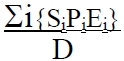
Si = Number of shares in the index for security i.
Pi = Price of security i
Ei = Cross rate of currency of Security i vs. USD.
If security price in USD, Ei = 1
D = Divisor
The Indexes are calculated to capture price appreciation and total return, which assumes dividends are reinvested into the Indexes. The Indexes are calculated using primary market prices and calculated in USD.
The Indexes are calculated whenever the stock exchanges are open. If trading is suspended while the exchange the component company trades on is still open, the last traded price for that stock is used for all subsequent Index computations until trading resumes. If trading is suspended before the opening, the stock’s adjusted closing price from the previous day is used to calculate the Index. Until a particular stock opens, its adjusted closing price from the previous day is used in the Index computation. Index values are calculated on both a price and total-return basis and disseminated on an end-of-day basis.
| Page 167 of 192 |
| 3.4 | Weighting |
For EUDF: Each selected company is assigned an Exposure Score based on the revenue exposure to defense activities, i.e., Exposure Score equals to 3 for companies with over 50% revenue exposure, 2 for companies with 25% to 50% revenue exposure, and 1 for companies 10% to 25% revenue exposure.
The Index is weighted by market capitalization56 adjusted by the Exposure Score, subject to the capping and liquidity adjustment criteria described below.
Capping - at each rebalance, the maximum weight of any security with an Exposure Score equals to 3 is capped at 12.5%, and other securities are capped at 4.5%. The combined weight of companies with Exposure Score equal to 3 and weight above 5% will be capped at 45%.
Liquidity Adjustment - In the event a company has a calculated volume factor (median daily volume traded over the preceding three months / weight in the index) that is less than $300 million, its weight will be reduced such that the weight after volume adjustment equals the weight before adjustment x calculated volume factor / $300 million.
The Weighting Date is when component weights are set, and it occurs after the close of trading on Thursday prior to the second Friday of the rebalance month. The changes will go into effect after the close of trading on the third Friday of the rebalance month. Moreover, should the “collective weight” of Index component securities whose individual current weights equal or exceed 5.0% of the Index, when added together, equal or exceed 50.0% of the Index at the close of the current calendar quarter, the index will undergo a reweighting as specified above.
For ASDF: Each selected company is assigned an Exposure Score based on the revenue exposure to defense activities, i.e., Exposure Score equals to 3 for the companies with over 50% revenue exposure, 2 for companies with 25%-50% revenue exposure, and1 for the companies with 10% to 25% revenue exposure.
The Index is weighted by market capitalization57 adjusted by the Exposure Score, subject to the capping and liquidity adjustment criteria described below.
56 For securities from Emerging Markets, their market capitalization is multiplied by a second factor called the “Investability Weighting Factor” (IWF). The IWF is used to scale the market capitalization generated for each company by restrictions on shares available to be purchased.
57 For securities from Emerging Markets, their market capitalization is multiplied by a second factor called the “Investability Weighting Factor” (IWF). The IWF is used to scale the market capitalization generated for each company by restrictions on shares available to be purchased.
| Page 168 of 192 |
Capping - at each rebalance, the maximum weight of any security with an Exposure Score equals to 3 is capped at 7.5%, and other securities are capped at 4%. The combined weight of companies with Exposure Score equal to 3 and weight above 5% will be capped at 45%.
Liquidity Adjustment - In the event a company has a calculated volume factor (median daily volume traded over the preceding three months / weight in the index) that is less than $300 million, its weight will be reduced such that the weight after volume adjustment equals the weight before adjustment x calculated volume factor / $300 million.
The Weighting Date is when component weights are set, and it occurs after the close of trading on Thursday prior to the second Friday of the rebalance month. The changes will go into effect after the close of trading on the third Friday of the rebalance month. Moreover, should the “collective weight” of Index component securities whose individual current weights equal or exceed 5.0% of the Index, when added together, equal or exceed 50.0% of the Index at the close of the current calendar quarter, the index will undergo a reweighting as specified above.
For GLDF: Each selected company is assigned an Exposure Score based on the revenue exposure to defense activities, i.e., Exposure Score equals to 2 for companies with over 50% revenue exposure and 1 for companies with 25% to 50% revenue exposure.
The Index is weighted by market capitalization58 adjusted by the Exposure Score, subject to the capping and liquidity adjustment criteria described below.
Securities will be classified into three regions: U.S., Europe, and Other Markets. Other Markets are defined as markets outside the U.S. and Europe that are investable for defense. The regions within the Index will be weighted according to the following factors:
1) Macro: Each region (i.e., US/Europe/Other Markets) receives a macro score based on factors such as government defense budget growth and priorities, sovereign security threats such as geopolitical tensions and terror threats, and the regional companies’ average capital Investment and R&D Activities.
58 For securities from Emerging Markets, their market capitalization is multiplied by a second factor called the “Investability Weighting Factor” (IWF). The IWF is used to scale the market capitalization generated for each company by restrictions on shares available to be purchased.
| Page 169 of 192 |
2) Momentum: The Index defines a momentum score for each region by looking at the crossings of the 3-month and 12-month moving average of the relative performance of the region compared to a global market capitalization weighted equity benchmark. Depending on the momentum scores, each region’s Weighting Factor will be adjusted and in the range of 0.5 to 1.5.
The weight of each region is capped at 70% and floored at 10%. The Index will have between 20 and 100 constituents with a maximum weight of 5% for Exposure Score 2 securities and 2.5% for Exposure 1 securities. The securities will be weighted by multiplying market capitalization by the exposure score.
Liquidity Adjustment. In the event a company has a calculated volume factor (median daily volume traded over the preceding three months / weight in the index) that is less than $300 million, its weight will be reduced such that the weight after volume adjustment equals the weight before adjustment x calculated volume factor / $300 million.
The Weighting Date is when component weights are set, and it occurs after the close of trading on Thursday prior to the second Friday of the rebalance month. The changes will go into effect after the close of trading on the third Friday of the rebalance month. Moreover, should the “collective weight” of Index component securities whose individual current weights equal or exceed 5.0% of the Index, when added together, equal or exceed 50.0% of the Index at the close of the current calendar quarter, the index will undergo a reweighting as specified above.
| 3.5 | Dividend Treatment |
Normal dividend payments are not taken into account in the price Index, whereas they are reinvested and accounted for in the total return Index. However, special dividends that are not reinvested in the total return Index require Index divisor adjustments to prevent the distribution from distorting the price Index.
| 3.6 | Multiple Share Classes |
In the event a component company issues multiple classes of shares of common stock, the share class with the highest median daily volume will be included. Conversion of a share class into another share class results in the deletion of the share class being phased out and an increase in shares of the surviving share class, provided that the surviving share class is in the Index.
| Page 170 of 192 |
| 4. | Index Maintenance |
Index Maintenance includes monitoring and implementing the adjustments for company deletions, stock splits, stock dividends, spins-offs, or other corporate actions. Some corporate actions, such as stock splits, stock dividends, and rights offerings require changes in the index shares and the stock prices of the component companies in the Indexes. Some corporate actions, such as stock issuances, stock buybacks, warrant issuances, increases or decreases in dividend per share between reconstitutions, do not require changes in the index shares or the stock prices of the component companies in the Indexes. Other corporate actions, such as special dividends and entitlements, may require Index divisor adjustments.
Any corporate action, whether it requires divisor adjustments or not, will be implemented after the close of trading on the day prior to the ex-date of such corporate actions. Whenever possible, changes to the Indexes’ components, such as deletions as a result of corporate actions, will be announced at least two business days prior to their implementation date.
| 4.1 | Component Changes |
Additions
Additions to the Indexes are made at their respective reconstitution according to the inclusion criteria defined above. Changes are implemented following the close of trading on the third Friday in March, June, September and December. No additions are made to the Indexes between quarterly reconstitutions, except in the cases of certain Spin-Off companies defined below.
Deletions
Shares of companies that are de-listed or acquired by a company outside of the Indexes are deleted from the Indexes and the weights of the remaining components are adjusted proportionately to reflect the change in composition of the Indexes. A component company that files for bankruptcy is deleted from the Indexes and the weights of the remaining components are adjusted proportionately to reflect the change in the composition of the Indexes. If a company re-incorporates outside of a defined domicile it is deleted from the Indexes and the weights of the remaining components are adjusted proportionately to reflect the change in the composition of the Indexes. If a component company is acquired by another company in the Index for stock, the acquiring company’s shares and weight in the Indexes are adjusted to reflect the transaction after the close of trading on the day prior to the execution date. Component companies that reclassify their shares (i.e. that convert multiple share classes into a single share class) remain in the Indexes, although index shares are adjusted to reflect the reclassification.
| Page 171 of 192 |
| 4.2. | Spin-Offs and IPOs |
Should a company be spun-off from an existing component company it is allowed to stay in the Indexes until the next quarterly reconstitution. The weights of the remaining components are adjusted proportionately to reflect the change in the composition of the Index. Companies that go public in an Initial Public Offering (IPO) and that meet all other Index inclusion requirements must wait until the next quarterly reconstitution to be included in the Indexes.
| 5. | Index Divisor Adjustments |
Changes in the Indexes’ market capitalization due to changes in composition, weighting or corporate actions result in a divisor change to maintain the Indexes’ continuity. By adjusting the divisor, the Index value retains its continuity before and after the event. Corporate actions that require divisor adjustments will be implemented prior to the opening of trading on the effective date. In certain instances where information is incomplete, or the completion of an event is announced too late to be implemented prior to the ex-date, the implementation will occur as of the close of the following day or as soon as practicable thereafter. For corporate actions not described herein, or combinations of different types of corporate events and other exceptional cases, WT reserves the right to determine the appropriate implementation method.
Companies that are acquired, de-listed, file for bankruptcy, or move their Primary Business Activities outside of a defined country in the intervening weeks between the Screening Date and the Reconstitution Date are not included in the Index, and the weights of the remaining components are adjusted accordingly.
| 6. | Selection Parameters |
Selection parameters for the Index are defined in section 3.1. Companies that pass these selection criteria as of the Screening Date are included in the Index unless otherwise determined by the Committee. The component companies are assigned weights in the Index as defined in section 3.4., and reconstitution of the Index takes effect as defined in section 4.1.
| Page 172 of 192 |
Methodology Guide for WisdomTree Quantum Computing Index
| 1. | Index Overview and Description |
The WisdomTree Classiq Quantum Computing Index (referred to as “the Index”) is designed to track the performance of companies involved in Quantum Computing activities from global developed and emerging markets as described below. Quantum Computing refers to a confluence of advances in technology that use quantum mechanics principles to process information, potentially solving complex problems beyond the capabilities of classical computers by leveraging quantum bits (“qubits”) that can exist in multiple states simultaneously. The Index is reconstituted and rebalanced on a quarterly basis in February, May, August, and November.
The Index is calculated to capture price appreciation and total return, which assumes dividends are reinvested into the Index. The Index is calculated in U.S. dollars using the primary market prices of constituents.
| 2. | Index Governance |
The Index is overseen by the WisdomTree Quantum Computing Index Committee (the “Committee”), a standing index committee composed of WisdomTree, Inc. (“WisdomTree”) personnel. The composition of the Committee may from time to time be changed. The Committee will be composed of not less than three (3) members. The Committee is responsible for making broad decisions with respect to the implementation, ongoing management, operation and administration of the Index. The primary function of the Committee is to make sure the Index rules are implemented correctly and comprehensively, provided, however, that the Committee has ultimate discretion with respect to both the contents of this Methodology and the composition of the published Index.
Meetings of the Committee generally will be held on a quarterly basis or with such frequency as determined appropriate by the Committee.
| 3. | Key Features |
| 3.1. | Membership Criteria |
To be eligible for inclusion in the Index, companies meet the criteria described in this Section as of the close of trading on the last trading day in January, April, July and October (each, a “Screening Date”).
Component companies must be covered by the third-party independent index calculation agent.
| Page 173 of 192 |
Component companies must conduct their Primary Business Activities and have their shares listed on a stock exchange in one of the following developed countries: United States, Austria, Belgium, Denmark, Finland, France, Germany, Ireland, Italy, Netherlands, Norway, Portugal, Spain, Sweden, Switzerland, United Kingdom, Japan (Tokyo Stock Exchange), Australia, Israel, Hong Kong, Singapore or Canada. Companies listed in Japan must list their shares on the Tokyo Stock Exchange. For Emerging Market Countries, component companies must conduct their Primary Business Activities and have their shares listed on a stock exchange in one of the following countries: Brazil, Chile, China, Czech Republic, Hungary, Korea, Mexico, Poland, South Africa, Taiwan or Thailand. In the case of Chinese companies, to be eligible for inclusion in the Index, component companies must be incorporated or domiciled in China and, except as noted below, have their shares listed on a stock exchange in the developed world. Chinese domestic listed companies that are part of the Stock Connect program59 and meet the eligibility criteria described above are also eligible for inclusion in the Index.
Component companies must have had a market capitalization of at least
$200 million and a median daily dollar volume greater than $1,000,000 in each of the last three months preceding a Screening Date.
Common stocks, REITs, tracking stocks, holding companies, ADRs, GDRs and EDRs are eligible for inclusion. Limited partnerships, limited liability companies, royalty trusts, Business Development Companies (BDCs) and mortgage REITs are excluded. Preferred stocks, closed-end funds, passive foreign investment companies, exchange-traded funds, and derivative securities such as warrants and rights are not eligible. The publicly traded security for WisdomTree, Inc., ticker WT, is not eligible for inclusion in any of WisdomTree’s equity indexes.
Component companies must be involved in Quantum Computing Activities. Based on WisdomTree’s assessment, the business activities listed below currently are reflective of the Quantum Computing space (“Quantum Computing Activities”). The list below is not exhaustive and may be modified from time to time based on WisdomTree’s or the Committee’s evaluation of the Quantum Computing space and related information.
| 1. | Quantum chips and qubit technology providers, |
| 2. | Quantum software and algorithm providers, |
| 3. | Quantum annealing and simulation providers, |
59 Stock Connect is a unique collaboration between the Hong Kong, Shanghai and Shenzhen Stock Exchanges, which allows international and Mainland Chinese investors to trade securities in each other’s markets through the trading and clearing facilities of their home exchange. First launched in November 2014, the scheme now covers over 2,000 eligible equities in Shanghai, Shenzhen and Hong Kong.
| Page 174 of 192 |
| 4. | Quantum-as-a-Service providers, |
| 5. | Post-quantum cryptography providers, |
| 6. | Quantum networking and communications providers, |
| 7. | Advanced computing providers, |
8. Providers of tools and infrastructure, as well as semiconductors, materials, and components to companies involved in the development of Quantum computing technologies.
A company’s involvement in Quantum Computing Activities is assessed via the company’s description as presented in and Annual Report, 10K or equivalent report, earnings call transcripts, patent submissions, news and press releases, as well as via exposure to relevant industry classifications and revenue derived from Quantum Computing Activities. WisdomTree maintains a database of companies with exposure to Quantum Computing Activities which is regularly reviewed. The data in the database is derived from a variety of sources, including unrelated third-party data providers.
The Committee assigns each component company a Relevancy Score and a Purity Classification based on the nature and significance of its Quantum Computing Activities, and, where applicable, revenue derived from those activities.
The Relevancy Score is set at 3, 2, or 1, reflecting high, medium, or low relevancy of the company’s involvement in Quantum Computing Activities and significance of those activities for the progress of Quantum Computing.
The Purity Classification is specified as ‘Pure’ or ‘Diversified’, depending on the business focus and, where applicable, concentration of revenue derived from Quantum Computing Activities.
Companies that meet the aforementioned criteria are included in the Index, subject to a minimum of 25 stocks.
| 3.2 | Base Date and Base Value |
The Index was established with a base value of 200 on April 30, 2025.
| 3.3 | Calculation and Dissemination |
The following formula is used to calculate the index levels for the Index:
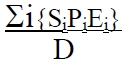
Si = Number of shares in the index for security i.
Pi = Price of security i
Ei = Cross rate of currency of Security i vs. USD. If security price in USD, Ei = 1
D = Divisor
| Page 175 of 192 |
The Index is calculated to capture price appreciation and total return, which assumes dividends are reinvested into the Index. The Index is calculated using primary market prices and calculated in USD.
The Index is calculated whenever the stock exchanges are open. If trading is suspended while the exchange the component company trades on is still open, the last traded price for that stock is used for all subsequent Index computations until trading resumes. If trading is suspended before the opening, the stock’s adjusted closing price from the previous day is used to calculate the Index. Until a particular stock opens, its adjusted closing price from the previous day is used in the Index computation. Index values are calculated on both a price and total-return basis and disseminated on an end-of-day basis.
| 3.4 | Weighting |
Each component company is initially equally weighted, with subsequent Relevancy and Purity adjustments applied in a two-step process as follows:
| · | Relevancy Adjustment: Companies with a Relevancy Score of 3 are upweighted by a factor of 1.3, while those with a Relevancy Score of 1 are down weighted by a factor of 0.7. |
| · | Purity Adjustment: Weights are further adjusted based on the Purity Classification, with companies classified as ‘Pure’ being upweighted by a factor of 1.3 and companies classified as ‘Diversified’ being down weighted by a factor of 0.7. |
Following these adjustments, all weights are normalized to ensure the total weight of the Index sums to 100%.
Final weights are subject to the capping and liquidity constraints described below.
Capping - at each rebalance, the maximum weight of any security in the Index is capped at 15%.
Liquidity adjustment - In the event a company has a calculated volume factor (median daily volume traded over the preceding three months / weight in the index) that is less than $400 million, its weight will be reduced such that the weight after volume adjustment equals the weight before adjustment x calculated volume factor / $400 million.
| Page 176 of 192 |
The Weighting Date is when component weights are set, and it occurs after the close of trading on Thursday prior to the second Friday of the rebalance month. The changes will go into effect after the close of trading on the third Friday of the rebalance month. Moreover, should the “collective weight” of Index component securities whose individual current weights equal or exceed 5.0% of the Index, when added together, equal or exceed 50.0% of the Index at the close of the current calendar quarter, the index will undergo a reweighting as specified above.
| 3.5 | Dividend Treatment |
Normal dividend payments are not taken into account in the price Index, whereas they are reinvested and accounted for in the total return Index. However, special dividends that are not reinvested in the total return Index require Index divisor adjustments to prevent the distribution from distorting the price Index.
| 3.6 | Multiple Share Classes |
In the event a component company issues multiple classes of shares of common stock, the share class with the highest median daily volume will be included. Conversion of a share class into another share class results in the deletion of the share class being phased out and an increase in shares of the surviving share class, provided that the surviving share class is in the Index.
| 4. | Index Maintenance |
Index Maintenance includes monitoring and implementing the adjustments for company deletions, stock splits, stock dividends, spins-offs, or other corporate actions. Some corporate actions, such as stock splits, stock dividends, and rights offerings require changes in the index shares and the stock prices of the component companies in the Index. Some corporate actions, such as stock issuances, stock buybacks, warrant issuances, increases or decreases in dividend per share between reconstitutions, do not require changes in the index shares or the stock prices of the component companies in the Index. Other corporate actions, such as special dividends and entitlements, may require Index divisor adjustments.
Any corporate action, whether it requires divisor adjustments or not, will be implemented after the close of trading on the day prior to the ex-date of such corporate actions. Whenever possible, changes to the Index’s components, such as deletions as a result of corporate actions, will be announced at least two business days prior to their implementation date.
| 4.1 | Component Changes |
Additions
Additions to the Index are made at reconstitution according to the inclusion criteria defined above. Changes are implemented following the close of trading on the third Friday in February, May, August, and November. No additions are made to the Index between reconstitutions, except in the cases of certain spin-off companies defined below or as otherwise determined by the Committee consistent with the criteria herein.
| Page 177 of 192 |
Deletions
Shares of companies that are de-listed or acquired by a company outside of the Index are deleted from the Index and the weights of the remaining components are adjusted proportionately to reflect the change in composition of the Index. A component company that files for bankruptcy is deleted from the Index and the weights of the remaining components are adjusted proportionately to reflect the change in the composition of the Index. If a component company is acquired by another company in the Index for stock, the acquiring company’s shares and weight in the Index are adjusted to reflect the transaction after the close of trading on the day prior to the execution date. Component companies that reclassify their shares (i.e., that convert multiple share classes into a single share class) remain in the Index, although index shares are adjusted to reflect the reclassification. The Committee may remove a company it has determined to be in extreme financial distress if the Committee deems the removal necessary to protect the integrity of the Index. If removed, its weight will be reallocated to the remaining constituents in the Index.
| 4.2. | Spin-Offs and IPOs |
Should a company be spun-off from an existing component company, it is allowed to stay in the Index that its parent company is in until the next reconstitution. Spin-off shares of publicly traded companies that are included in the same indexes as their parent company are increased to reflect the spin-off and the weights of the remaining components are adjusted proportionately to reflect the change in the composition of the Index. Companies that go public in an Initial Public Offering (IPO) and that meet all other Index inclusion requirements must wait until the next reconstitution to be included in the Index or as otherwise determined by the Committee consistent with the criteria herein.
| 5. | Index Divisor Adjustments |
| 5.1. | Changes in the Index’s market capitalization due to changes in composition, weighting or corporate actions result in a divisor change to maintain the Index’s continuity. By adjusting the divisor, the Index value retains its continuity before and after the event. Corporate actions that require divisor adjustments will be implemented prior to the opening of trading on the effective date. In certain instances where information is incomplete, or the completion of an event is announced too late to be implemented prior to the ex-date, the implementation will occur as of the close of the following day or as soon as practicable thereafter. For corporate actions not described herein, or combinations of different types of corporate events and other exceptional cases, the Committee reserves the right to determine the appropriate implementation method. |
| Page 178 of 192 |
Companies that are acquired, de-listed, file for bankruptcy, or move their Primary Business Activities outside of a defined country in the intervening weeks between the Screening Date and the Reconstitution Date are not included in the Index, and the weights of the remaining components are adjusted accordingly.
| 6. | Selection Parameters |
Selection parameters for the Index are defined in section 3.1. Companies that pass these selection criteria as of the Screening Date are included in the Index unless otherwise determined by the Committee. The component companies are assigned weights in the Index as defined in section 3.4., and reconstitution of the Index takes effect as defined in section 4.1.
| Page 179 of 192 |
Methodology Guide for WisdomTree International LargeCap Index
| 1. | Index Overview and Description |
The WisdomTree International LargeCap Index (referred to as “the Index”) is designed to track the performance of the largest companies in the international developed market as described below. The Index is assessed annually in November and reconstitution and rebalance occurs following the close of on the eighth business day in December.
The Index is calculated to capture price appreciation and total return, which assumes dividends are reinvested into the Index. The Index is calculated in U.S. dollars using the primary market prices of constituents.
| 2. | Index Governance |
The Index is overseen by the WisdomTree Core Equity Index Committee (the “Committee”), a standing index committee composed of WisdomTree, Inc. (“WisdomTree”) personnel. The composition of the Committee may from time to time be changed. The Committee will be composed of not less than three (3) members. The Committee is responsible for making broad decisions with respect to the implementation, ongoing management, operation and administration of the Index. The primary function of the Committee is to make sure the Index rules are implemented correctly and comprehensively, provided, however, that the Committee has ultimate discretion with respect to both the contents of this Methodology and the composition of the published Index.
Meetings of the Committee generally will be held on a quarterly basis or with such frequency as determined appropriate by the Committee.
| 3. | Key Features |
| 3.1. | Membership Criteria |
To be eligible for inclusion in the Index, companies must be under coverage by the market management team of the third-party independent index calculation agent and must have traded at least 250,000 shares per month for each of the six months preceding the “Screening Date” (after on the last trading day in November).
Component companies must list their shares on one of the stock exchanges in Europe (i.e., Austria, Belgium, Denmark, Finland, France, Germany, Ireland, Italy, Netherlands, Norway, Portugal, Spain, Sweden, Switzerland, or the United Kingdom), the Tokyo Stock Exchange, on stock exchanges in Australia, Hong Kong, Israel or Singapore.
| Page 180 of 192 |
Companies that conduct their Primary Business Activities60 in Europe, Japan, Australia, Hong Kong, Israel, or Singapore and have a market capitalization of at least $100 million on the Screening Date and shares of such companies must have had a median daily dollar volume of at least $100,000 for three months preceding the Screening Date. Common stocks, REITs, tracking stocks, and holding companies are eligible for inclusion. ADRs, GDRs and EDRs, limited partnerships, royalty trusts, passive foreign investment companies, preferred stocks, closed-end funds, exchange-traded funds, and derivative securities such as warrants and rights are not eligible.
Approximately, the top 500 companies by market capitalization that meet the selection criteria are selected as Index constituents.
| 3.2 | Base Date and Base Value |
The Index was established with a base value of 200 on April 30, 2021.
| 3.3 | Calculation and Dissemination |
The following formula is used to calculate the index levels for the Index:
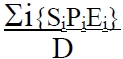
Si = Number of shares in the index for security i.
Pi = Price of security i
Ei = Cross rate of currency of Security i vs. USD.
If security price in USD, Ei = 1
D = Divisor
The Index is calculated to capture price appreciation and total return, which assumes dividends are reinvested into the Index. The Index is calculated using primary market prices and calculated in USD.
The Index is calculated whenever the stock exchanges are open. If trading is suspended while the exchange the component company trades on is still open, the last traded price for that stock is used for all subsequent Index computations until trading resumes. If trading is suspended before the opening, the stock’s adjusted closing price from the previous day is used to calculate the Index. Until a particular stock opens, its adjusted closing price from the previous day is used in the Index computation. Index values are calculated on both a price and total-return basis and disseminated on an end-of-day basis.
60 The country in which a company conducts its Primary Business Activities is determined based on the following factors: country of organization or incorporation, country in which a company’s headquarters is located, the country to which a company has the greatest risk exposure (“Country of Risk”), and the country from which a company generates the most significant portion of its revenue or to which it allocates the greatest resources. WT may determine to consider additional or different factors depending on the nature of a company’s business and operations.
| Page 181 of 192 |
| 3.4 | Weighting |
The WisdomTree International LargeCap Index is a market-capitalization weighted index.
The Weighting Date is when component weights are set and it occurs on the third business day of the rebalance month. The changes will go into effect after the close of trading on the eighth business day of the rebalance month.
Should the “collective weight” of Index component securities whose individual current weights equal or exceed 5.0% of the Index, when added together, equal or exceed 50.0% of the Index, the weightings in those component securities will be reduced so that their collective weight equals 40.0% of the Index at the close of the current calendar quarter, and other components in the Index will be rebalanced to reflect their relative weights before the adjustment. Further iterations of these adjustments may occur until no company or group of companies violates these rules.
| 3.5 | Dividend Treatment |
Normal dividend payments are not taken into account in the price Index, whereas they are reinvested and accounted for in the total return Index. However, special dividends that are not reinvested in the total return Index require Index divisor adjustments to prevent the distribution from distorting the price Index.
| 3.6 | Multiple Share Classes |
In the event a component company issues multiple classes of shares of common stock, the share class with the highest median daily volume will be included. Conversion of a share class into another share class results in the deletion of the share class being phased out and an increase in shares of the surviving share class, provided that the surviving share class is in the Index.
| 4. | Index Maintenance |
Index Maintenance includes monitoring and implementing the adjustments for company deletions, stock splits, stock dividends, spins-offs, or other corporate actions. Some corporate actions, such as stock splits, stock dividends, and rights offerings require changes in the index shares and the stock prices of the component companies in the Index. Some corporate actions, such as stock issuances, stock buybacks, warrant issuances, increases or decreases in dividend per share between reconstitutions, do not require changes in the index shares or the stock prices of the component companies in the Index. Other corporate actions, such as special dividends and entitlements, may require Index divisor adjustments.
| Page 182 of 192 |
Any corporate action, whether it requires divisor adjustments or not, will be implemented after the close of trading on the day prior to the ex-date of such corporate actions. Whenever possible, changes to the Index’s components, such as deletions as a result of corporate actions, will be announced at least two business days prior to their implementation date.
| 4.1 | Component Changes |
Additions
Additions to the Index are made at the reconstitution according to the inclusion criteria defined above. Changes are implemented following the close of trading on the eighth business day in December. No additions are made to the Index between reconstitutions, except in the cases of certain spin-off companies defined below.
Deletions
Shares of companies that are de-listed or acquired by a company outside of the Index are deleted from the Index and the weights of the remaining components are adjusted proportionately to reflect the change in composition of the Index. A component company that files for bankruptcy is deleted from the Index and the weights of the remaining components are adjusted proportionately to reflect the change in the composition of the Index. If a component company is acquired by another company in the Index for stock, the acquiring company’s shares and weight in the Index are adjusted to reflect the transaction after the close of trading on the day prior to the execution date. Component companies that reclassify their shares (i.e., that convert multiple share classes into a single share class) remain in the Index, although index shares are adjusted to reflect the reclassification.
| 4.2. | Spin-Offs and IPOs |
Should a company be spun-off from an existing component company, it is allowed to stay in the Index that its parent company is in until the next reconstitution. Spin-off shares of publicly traded companies that are included in the same indexes as their parent company are increased to reflect the spin-off and the weights of the remaining components are adjusted proportionately to reflect the change in the composition of the Index. Companies that go public in an Initial Public Offering (IPO) and that meet all other Index inclusion requirements must wait until the next reconstitution to be included in the Index.
| Page 183 of 192 |
| 5. | Index Divisor Adjustments |
| 5.1. | Changes in the Index’s market capitalization due to changes in composition, weighting or corporate actions result in a divisor change to maintain the Index’s continuity. By adjusting the divisor, the Index value retains its continuity before and after the event. Corporate actions that require divisor adjustments will be implemented prior to the opening of trading on the effective date. In certain instances where information is incomplete, or the completion of an event is announced too late to be implemented prior to the ex-date, the implementation will occur as of the close of the following day or as soon as practicable thereafter. For corporate actions not described herein, or combinations of different types of corporate events and other exceptional cases, the Committee reserves the right to determine the appropriate implementation method. |
Companies that are acquired, de-listed, file for bankruptcy, or move their Primary Business Activities outside of a defined country in the intervening weeks between the Screening Date and the Reconstitution Date are not included in the Index, and the weights of the remaining components are adjusted accordingly.
| 6. | Selection Parameters |
Selection parameters for the Index are defined in section 3.1. Companies that pass these selection criteria as of the Screening Date are included in the Index unless otherwise determined by the Committee. The component companies are assigned weights in the Index as defined in section 3.4., and reconstitution of the Index takes effect as defined in section 4.1.
| Page 184 of 192 |
Methodology Guide for WisdomTree Adaptive Moving Average Indexes
| 1. | Index Overview and Description |
WisdomTree, Inc. (WT) has created the WisdomTree US Adaptive Moving Average Index (referred to as “WAMA”) and WisdomTree International Adaptive Moving Average Index (referred to as “WIMA”) [together referred to as “the Indexes”].
• The WAMA is designed to provide exposure to U.S. equity securities and U.S. Treasury bills adapting, on a daily basis, to rising and falling trends in the U.S. equity market. The Index is calculated to capture price appreciation and total return, which assumes dividends are reinvested into the Index. The Index is calculated using primary market prices and calculated in U.S. Dollars (USD).
• The WIMA is designed to provide exposure to developed international equity securities and U.S. Treasury bills adapting, on a daily basis, to rising and falling trends in the developed international equity market. The Index is calculated to capture price appreciation and total return, which assumes dividends are reinvested into the Index. The Index is calculated using primary market prices and calculated in U.S. Dollars (USD).
| 2. | Index Governance |
The Index is overseen by the WisdomTree Core Equity Index Committee (the “Committee”), a standing index committee composed of WisdomTree, Inc. (“WisdomTree”) personnel. The composition of the Committee may from time to time be changed. The Committee will be composed of not less than three (3) members. The Committee is responsible for making broad decisions with respect to the implementation, ongoing management, operation and administration of the Index. The primary function of the Committee is to make sure the Index rules are implemented correctly and comprehensively, provided, however, that the Committee has ultimate discretion with respect to both the contents of this Methodology and the composition of the published Index.
Meetings of the Committee generally will be held on a quarterly basis or with such frequency as determined appropriate by the Committee.
| Page 185 of 192 |
| 3. | Key Features |
| 3.1. | Membership Criteria |
Eligible securities for inclusion in the WAMA, include equity constituents of the WisdomTree 500 Index and U.S. Treasury bills. The WisdomTree 500 Index is a market-capitalization weighted index composed of equity securities of U.S. large-capitalization companies. A company is considered a U.S. company if it conducts its Primary Business Activities61 in the U.S.
Eligible securities for inclusion in the WIMA, include equity constituents of the WisdomTree International LargeCap Index and U.S. Treasury bills. The WisdomTree International LargeCap Index is a market-capitalization weighted index composed of equity securities of international large-capitalization companies. To be eligible for inclusion in the WisdomTree International LargeCap Index, a company must conduct its Primary Business Activities62 and list its shares on a securities exchange operating in one or more of the following developed countries: Austria, Belgium, Denmark, Finland, France, Germany, Ireland, Italy, Netherlands, Norway, Portugal, Spain, Sweden, Switzerland, the United Kingdom, Israel, Japan, Australia, Hong Kong, and Singapore.
| 3.2 | Base Date and Base Value |
The Indexes were established with a base value of 200 on February 27, 2026.
| 3.3 | Calculation and Dissemination |
The following formula is used to calculate the index levels for the Indexes:
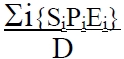
Si = Number of shares in the index for security i.
Pi = Price of security i
Ei = Cross rate of currency of Security i vs. USD.
If security price in USD, Ei = 1
D = Divisor
The Indexes are calculated to capture price appreciation and total return, which assumes dividends are reinvested into the Indexes. The Indexes are calculated using primary market prices and calculated in USD.
61 The country in which a company conducts its Primary Business Activities is determined based on the following factors: country of organization or incorporation, country in which a company’s headquarters is located, the country to which a company has the greatest risk exposure (“Country of Risk”), and the country from which a company generates the most significant portion of its revenue or to which it allocates the greatest resources. WT may determine to consider additional or different factors depending on the nature of a company’s business and operations.
62 The country in which a company conducts its Primary Business Activities is determined based on the following factors: country of organization or incorporation, country in which a company’s headquarters is located, the country to which a company has the greatest risk exposure (“Country of Risk”), and the country from which a company generates the most significant portion of its revenue or to which it allocates the greatest resources. WT may determine to consider additional or different factors depending on the nature of a company’s business and operations.
| Page 186 of 192 |
The Indexes are calculated whenever the stock exchanges are open. If trading is suspended while the exchange the component company trades on is still open, the last traded price for that stock is used for all subsequent Index computations until trading resumes. If trading is suspended before the opening, the stock’s adjusted closing price from the previous day is used to calculate the Indexes. Until a particular stock opens, its adjusted closing price from the previous day is used in the Indexes computation. Index values are calculated on both a price and total-return basis and disseminated on an end-of-day basis.
| 3.4 | Weighting |
The WAMA seeks to adapt to rising and falling trends in the U.S. equity market by allocating its weightings among U.S. equity securities or U.S. Treasury bills as indicated by a price trend signal developed by WisdomTree. This signal determines the Index’s constituent allocation by applying a “moving average crossover” analysis to the total returns of the WisdomTree 500 Index, which generates a ratio comparing the WisdomTree 500 Index’s closing price on a given day with its average closing price over the last 200 days. Where the ratio is above 1.01 for two consecutive trading days, the Index allocates 100% of its weight to the WisdomTree 500 Index. Where the ratio is at or below 1.01 for two consecutive trading days, the Index allocates 100% of its weight to U.S. Treasury bills. Once 100% of the Index’s weight is allocated to the WisdomTree 500 Index, that allocation will be maintained as long as the ratio remains above 1.01. Similarly, once 100% of the Index’s weight is allocated to U.S. Treasury bills, that allocation will be maintained as long as the ratio remains at or below 1.01. The moving average crossover ratio is calculated on each business day, with the Index changing its allocation (i.e., reconstituting) to the WisdomTree International 500 Index or U.S. Treasury bills, as needed in response to the ratio. To enhance responsiveness during market downturns, the Index incorporates a breadth overlay. This measure captures the percentage of WisdomTree 500 Index constituents that are trading above their respective 200-day average closing price. When 100% of the Index weight is allocated to U.S. Treasury bills and more than 15% of the constituents of the WisdomTree 500 Index cross above their respective 200-day average closing price, the Index reallocates 100% of its weight to the WisdomTree 500 Index. If the market price of the WisdomTree 500 Index drops by more than 5% since the Index’s allocation to the WisdomTree 500 Index, a stop-loss mechanism is applied, which causes the Index to allocate to 100% of its weight to U.S. Treasury bills at market close on the day following the day on which the stop-loss threshold is breached.
| Page 187 of 192 |
The WIMA seeks to adapt to rising and falling trends in the international equity market by allocating its weightings among international equity securities or U.S. Treasury bills as indicated by a price trend signal developed by WisdomTree. This signal determines the Index’s constituent allocation by applying a “moving average crossover” analysis to the total returns of the WisdomTree International LargeCap Index, which generates a ratio comparing the WisdomTree International LargeCap Index’s closing price on a given day with its average closing price over the last 200 days. Where the ratio is above 1.01 for two consecutive trading days, the Index allocates 100% of its weight to the WisdomTree International LargeCap Index. Where the ratio is at or below 1.01 for two consecutive trading days, the Index allocates 100% of its weight to U.S. Treasury bills. Once 100% of the Index’s weight is allocated to the WisdomTree International LargeCap Index, that allocation will be maintained as long as the ratio remains above 1.01. Similarly, once 100% of the Index’s weight is allocated to U.S. Treasury bills, that allocation will be maintained as long as the ratio remains at or below 1.01. The moving average crossover ratio is calculated on each business day, with the Index changing its allocation (i.e., reconstituting the Index) to the WisdomTree International LargeCap Index or U.S. Treasury bills, as needed in response to the ratio. To enhance responsiveness during market downturns, the Index incorporates a breadth overlay. This measure captures the percentage of WisdomTree International LargeCap Index constituents that are trading above their respective 200-day average closing price. When 100% of the Index weight is allocated to U.S. Treasury bills and more than 15% of the constituents of the WisdomTree International LargeCap Index cross above their respective 200-day average closing price, the Index reallocates 100% of its weight to the WisdomTree International LargeCap Index. If the market price of the WisdomTree International LargeCap Index drops by more than 5% since the Index’s allocation to the WisdomTree International LargeCap Index, a stop-loss mechanism is applied, which causes the Index to allocate to 100% of its weight to U.S. Treasury bills at market close on the day following the day on which the stop-loss threshold is breached.
| 3.5 | Dividend Treatment |
Normal dividend payments are not taken into account in the price Indexes, whereas they are reinvested and accounted for in the total return Indexes. However, special dividends that are not reinvested in the total return Indexes require Index divisor adjustments to prevent the distribution from distorting the price Indexes.
| Page 188 of 192 |
| 3.6 | Multiple Share Classes |
In the event a component company issues multiple classes of shares of common stock, the share class with the highest median daily volume will be included. Conversion of a share class into another share class results in the deletion of the share class being phased out and an increase in shares of the surviving share class, provided that the surviving share class is in the Indexes.
| 4. | Index Maintenance |
Index Maintenance includes monitoring and implementing the adjustments for company deletions, stock splits, stock dividends, spins-offs, or other corporate actions. Some corporate actions, such as stock splits, stock dividends, and rights offerings require changes in the index shares and the stock prices of the component companies in the Indexes. Some corporate actions, such as stock issuances, stock buybacks, warrant issuances, increases or decreases in dividend per share between reconstitutions, do not require changes in the index shares or the stock prices of the component companies in the Indexes. Other corporate actions, such as special dividends and entitlements, may require Index divisor adjustments.
Any corporate action, whether it requires divisor adjustments or not, will be implemented after the close of trading on the day prior to the ex-date of such corporate actions. Whenever possible, changes to the Index’s components, such as deletions as a result of corporate actions, will be announced at least two business days prior to their implementation date.
| 4.1. | Spin-Offs and IPOs |
Should a company be spun-off from an existing component company, it is allowed to stay in the Indexes that its parent company is in until the next reconstitution. Spin-off shares of publicly traded companies that are included in the same indexes as their parent company are increased to reflect the spin-off and the weights of the remaining components are adjusted proportionately to reflect the change in the composition of the Index. Companies that go public in an Initial Public Offering (IPO) and that meet all other Index inclusion requirements must wait until the next reconstitution to be included in the Indexes or as otherwise determined by the Committee consistent with the criteria herein.
| 5. | Index Divisor Adjustments |
| 5.1. | Changes in the Index’s market capitalization due to changes in composition, weighting or corporate actions result in a divisor change to maintain the Index’s continuity. By adjusting the divisor, the Index value retains its continuity before and after the event. Corporate actions that require divisor adjustments will be implemented prior to the opening of trading on the effective date. In certain instances where information is incomplete, or the completion of an event is announced too late to be implemented prior to the ex-date, the implementation will occur as of the close of the following day or as soon as practicable thereafter. For corporate actions not described herein, or combinations of different types of corporate events and other exceptional cases, the Committee reserves the right to determine the appropriate implementation method. |
| Page 189 of 192 |
| 6. | Selection Parameters |
Selection parameters for the Indexes are defined in section 3.1. Companies that pass these selection criteria as of the Screening Date are included in the Index unless otherwise determined by the Committee. The components are assigned weights in the Index as defined in section 3.4.
| Page 190 of 192 |
Appendix A
WisdomTree Style Score
WisdomTree assigns a Style Score to individual companies using the process below. The Style score is aimed at classifying companies along a spectrum from Value to Growth.
| 1. | Companies are assigned to a Geographic Region and Market Size (Geography and Size) group depending on Primary Business Activity and Market Capitalization. A total of 18 groups are created. |
| 2. | A Value score is calculated for each company by equally weighting the below seven metrics and normalizing across Geography and Size groups: |
P/E Ratio, Fwd. P/E Ratio, P/S Ratio, Fwd. P/S Ratio, P/OCF Ratio, EV/EBIT Ratio and P/B Ratio
| 3. | A Growth score is calculated for each company by equally weighting the below eight metrics and normalizing across Geography and Size groups: |
Trailing 5yr Sales Growth, Trailing 5yr Earnings Growth, Trailing 5yr Operating Cash Flow Growth, Trailing 3yr Sales Growth, Trailing 3yr Earnings Growth, Trailing 3yr Operating Cash Flow Growth, Estimated Sales Growth and Estimated Earnings Growth.
| 4. | A Style score is calculated for each company be subtracting a company’s Value score from its Growth score. Style scores are then re-scaled aiming to assign roughly one-third of the total Geographic Market Capitalization to Value, Core or Growth. A Style score of less than 10 would mean a company is classified as Value, while a score of greater than 20 would mean a company is classified as Growth. Scores between 10 and 20 would mean a company is classified as Core. |
| Page 191 of 192 |
You cannot invest directly in an index. A fund or portfolio may differ significantly from the securities included in the index. WisdomTree, its affiliates and their independent providers are not liable for any informational errors, incompleteness or delays or for any actions taken in reliance on information contained herein. Additional Index information is available at www.wisdomtree.com/investments.
Page 192 of 192