
February 12, 2026 First Quarter 2026 Investor Presentation
1 Forward–looking statements Certain statements contained in this Presentation that are not historical in nature may be considered forward-looking statements within the meaning of the Private Securities Litigation Reform Act of 1995. These forward-looking statements include, without limitation, statements regarding the Company’s future plans, results, strategies, and expectations, including expectations around changing economic markets. These statements can generally be identified by the use of the words and phrases “may,” “will,” “should,” “could,” “would,” “goal,” “plan,” “potential,” “estimate,” “project,” “believe,” “intend,” “anticipate,” “expect,” “target,” “aim,” “predict,” “continue,” “seek,” and other variations of such words and phrases and similar expressions. These forward-looking statements are not historical facts, and are based upon management’s current expectations, estimates, and projections, many of which, by their nature, are inherently uncertain and beyond the Company’s control. The inclusion of these forward-looking statements should not be regarded as a representation by the Company or any other person that such expectations, estimates, and projections will be achieved. Accordingly, the Company cautions shareholders and investors that any such forward-looking statements are not guarantees of future performance and are subject to risks, assumptions, and uncertainties that are difficult to predict. Actual results may prove to be materially different from the results expressed or implied by the forward-looking statements. A number of factors could cause actual results to differ materially from those contemplated by the forward- looking statements including, without limitation, (1) current and future economic conditions, including the effects of inflation, interest rate fluctuations, changes in the economy or global supply chain, supply-demand imbalances affecting local real estate prices, and high unemployment rates in the local or regional economies in which the Company operates and/or the US economy generally, (2) changes or the lack of changes in government interest rate policies and the associated impact on the Company’s business, net interest margin, and mortgage operations, (3) increased competition for deposits, (4) changes in the quality or composition of the Company’s loan or investment portfolios, including adverse developments in borrower industries or in the repayment ability of individual borrowers or issuers of investment securities, or the impact of interest rates on the value of our investment securities portfolio, (5) any deterioration in commercial real estate market fundamentals, (6) the Company’s ability to identify potential candidates for, consummate, and achieve synergies from acquisitions, including risks that cost savings and other synergies from completed or future mergers may not be realized (or may be less than or delayed from expectations), challenges in integrating acquired businesses, disruptions to customer, employee, or other relationships, diversion of management attention, and the ability to effectively manage larger or more complex operations post- transaction; (7) the Company’s ability to manage any unexpected outflows of uninsured deposits and avoid selling investment securities or other assets at an unfavorable time or at a loss, (8) the Company’s ability to successfully execute its various business strategies, (9) changes in state and federal legislation, regulations or policies applicable to banks and other financial service providers, including legislative developments, (10) the effectiveness of the Company’s controls and procedures to detect, prevent, mitigate and otherwise manage the risk of fraud or misconduct by internal or external parties, including attempted physical-security and cybersecurity attacks, denial-of-service attacks, hacking, phishing, social-engineering attacks, malware intrusion, data-corruption attempts, system breaches, identity theft, ransomware attacks, environmental conditions, and intentional acts of destruction, (11) the Company’s dependence on information technology systems of third party service providers and the risk of systems failures, interruptions, or breaches of security, (12) the impact, extent and timing of technological changes, (13) concentrations of credit or deposit exposure, (14) the impact of natural disasters, pandemics, acts of war or terrorism, or other catastrophic events, (15) events giving rise to international or regional political instability, including the broader impacts of such events on financial markets and/or global macroeconomic environments, and/or (16) general competitive, economic, political, and market conditions. Further information regarding the Company and factors which could affect the forward- looking statements contained herein can be found in the Company’s Annual Report on Form 10-K for the fiscal year ended December 31, 2024, and in any of the Company’s subsequent filings with the SEC. Many of these factors are beyond the Company’s ability to control or predict. If one or more events related to these or other risks or uncertainties materialize, or if the underlying assumptions prove to be incorrect, actual results may differ materially from the forward-looking statements. Accordingly, shareholders and investors should not place undue reliance on any such forward-looking statements. Any forward-looking statement speaks only as of the date of this Presentation, and the Company undertakes no obligation to publicly update or review any forward-looking statement, whether as a result of new information, future developments or otherwise, except as required by law. New risks and uncertainties may emerge from time to time, and it is not possible for the Company to predict their occurrence or how they will affect the Company. The Company qualifies all forward-looking statements by these cautionary statements.
2 Use of non-GAAP financial measures This Presentation contains certain financial measures that are not measures recognized under U.S. generally accepted accounting principles (“GAAP”) and therefore are considered non-GAAP financial measures. These non-GAAP financial measures may include, without limitation, adjusted net income, adjusted diluted earnings per common share, adjusted pre-tax pre-provision net revenue, consolidated and segment adjusted revenue, consolidated and segment adjusted noninterest expense and adjusted noninterest income, consolidated and segment adjusted efficiency ratio (tax-equivalent basis), adjusted return on average assets and equity, and adjusted pre-tax pre-provision return on average assets. Each of these non-GAAP metrics excludes certain income and expense items that the Company’s management considers to be adjusted in nature. The Company refers to these non-GAAP measures as adjusted measures. Also, the Company presents tangible assets, tangible common equity, tangible book value per common share, tangible common equity to tangible assets, on-balance sheet liquidity to tangible assets, return on average tangible common equity, and adjusted return on average tangible common equity. Each of these non-GAAP metrics excludes the impact of goodwill and other intangibles. The Company’s management uses these non-GAAP financial measures in their analysis of the Company’s performance, financial condition and the efficiency of its operations as management believes such measures facilitate period-to-period comparisons and provide meaningful indications of its operating performance as they eliminate both gains and charges that management views as non-recurring or not indicative of operating performance. Management believes that these non-GAAP financial measures provide a greater understanding of ongoing operations and enhance comparability of results with prior periods as well as demonstrate the effects of significant non-adjusted gains and charges in the current and prior periods. The Company’s management also believes that investors find these non-GAAP financial measures useful as they assist investors in understanding the Company’s underlying operating performance and in the analysis of ongoing operating trends. In addition, because intangible assets such as goodwill and the other items excluded each vary extensively from company to company, the Company believes that the presentation of this information allows investors to more easily compare the Company’s results to the results of other companies. However, the non- GAAP financial measures discussed herein should not be considered in isolation or as a substitute for the most directly comparable or other financial measures calculated in accordance with GAAP. Moreover, the manner in which the Company calculates the non-GAAP financial measures discussed herein may differ from that of other companies reporting measures with similar names. Investors should understand how such other banking organizations calculate their financial measures with names similar to the non-GAAP financial measures the Company has discussed herein when comparing such non-GAAP financial measures. See the corresponding non-GAAP reconciliation tables below in this Presentation for additional discussion and reconciliation of these measures to the most directly comparable GAAP financial measures.
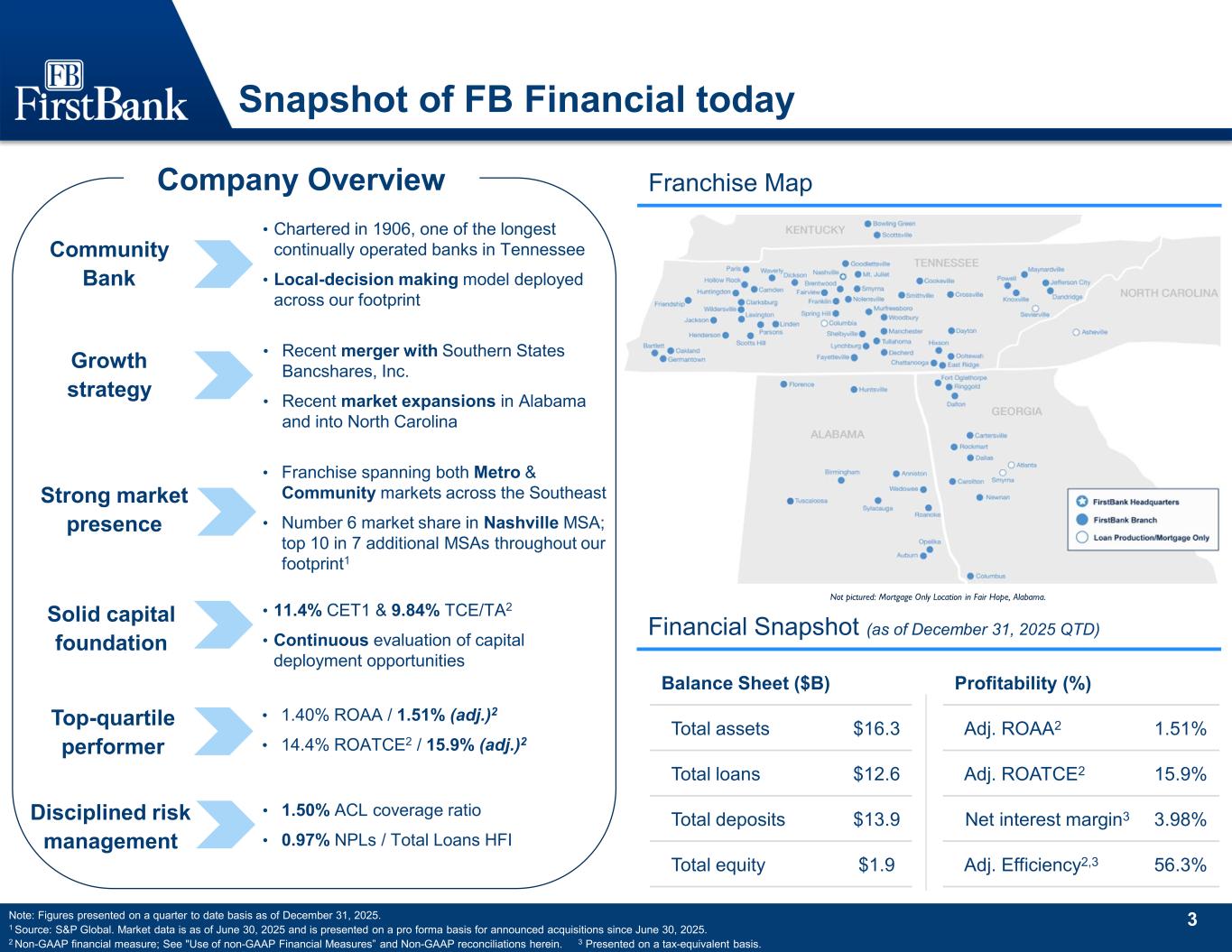
3 Snapshot of FB Financial today Note: Figures presented on a quarter to date basis as of December 31, 2025. 1 Source: S&P Global. Market data is as of June 30, 2025 and is presented on a pro forma basis for announced acquisitions since June 30, 2025. 2 Non-GAAP financial measure; See "Use of non-GAAP Financial Measures” and Non-GAAP reconciliations herein. 3 Presented on a tax-equivalent basis. Company Overview Community Bank Solid capital foundation Growth strategy Disciplined risk management Top-quartile performer • 11.4% CET1 & 9.84% TCE/TA2 • Continuous evaluation of capital deployment opportunities • 1.40% ROAA / 1.51% (adj.)2 • 14.4% ROATCE2 / 15.9% (adj.)2 • Recent merger with Southern States Bancshares, Inc. • Recent market expansions in Alabama and into North Carolina • 1.50% ACL coverage ratio • 0.97% NPLs / Total Loans HFI • Chartered in 1906, one of the longest continually operated banks in Tennessee • Local-decision making model deployed across our footprint Balance Sheet ($B) Total assets $16.3 Total loans $12.6 Total deposits $13.9 Total equity $1.9 Profitability (%) Adj. ROAA2 1.51% Adj. ROATCE2 15.9% Net interest margin3 3.98% Adj. Efficiency2,3 56.3% Strong market presence • Franchise spanning both Metro & Community markets across the Southeast • Number 6 market share in Nashville MSA; top 10 in 7 additional MSAs throughout our footprint1 Financial Snapshot (as of December 31, 2025 QTD) Franchise Map Not pictured: Mortgage Only Location in Fair Hope, Alabama.
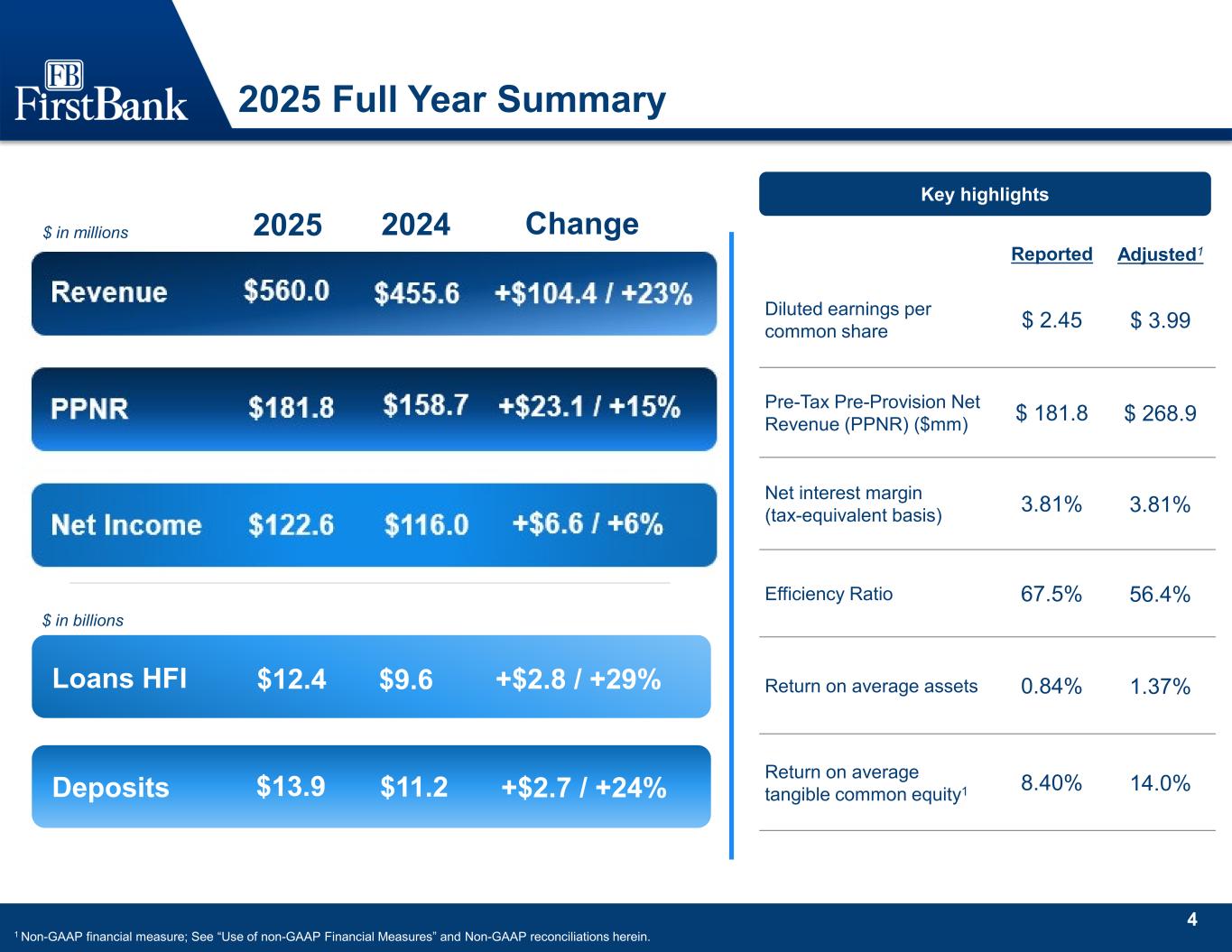
4 2025 Full Year Summary 1 Non-GAAP financial measure; See “Use of non-GAAP Financial Measures” and Non-GAAP reconciliations herein. Key highlights Reported Adjusted1 Diluted earnings per common share $ 2.45 $ 3.99 Pre-Tax Pre-Provision Net Revenue (PPNR) ($mm) $ 181.8 $ 268.9 Net interest margin (tax-equivalent basis) 3.81% 3.81% Efficiency Ratio 67.5% 56.4% Return on average assets 0.84% 1.37% Return on average tangible common equity1 8.40% 14.0% 2025 2024 Change Revenue $560.0 $455.6 +$104.4 / +23% $181.8 Net Income $122.6 $116.0 +$6.6 / +6% PPNR Loans HFI $12.4 $9.6 +$2.8 / +29% Deposits $13.9 $11.2 +$2.7 / +24% $ in millions $ in billions
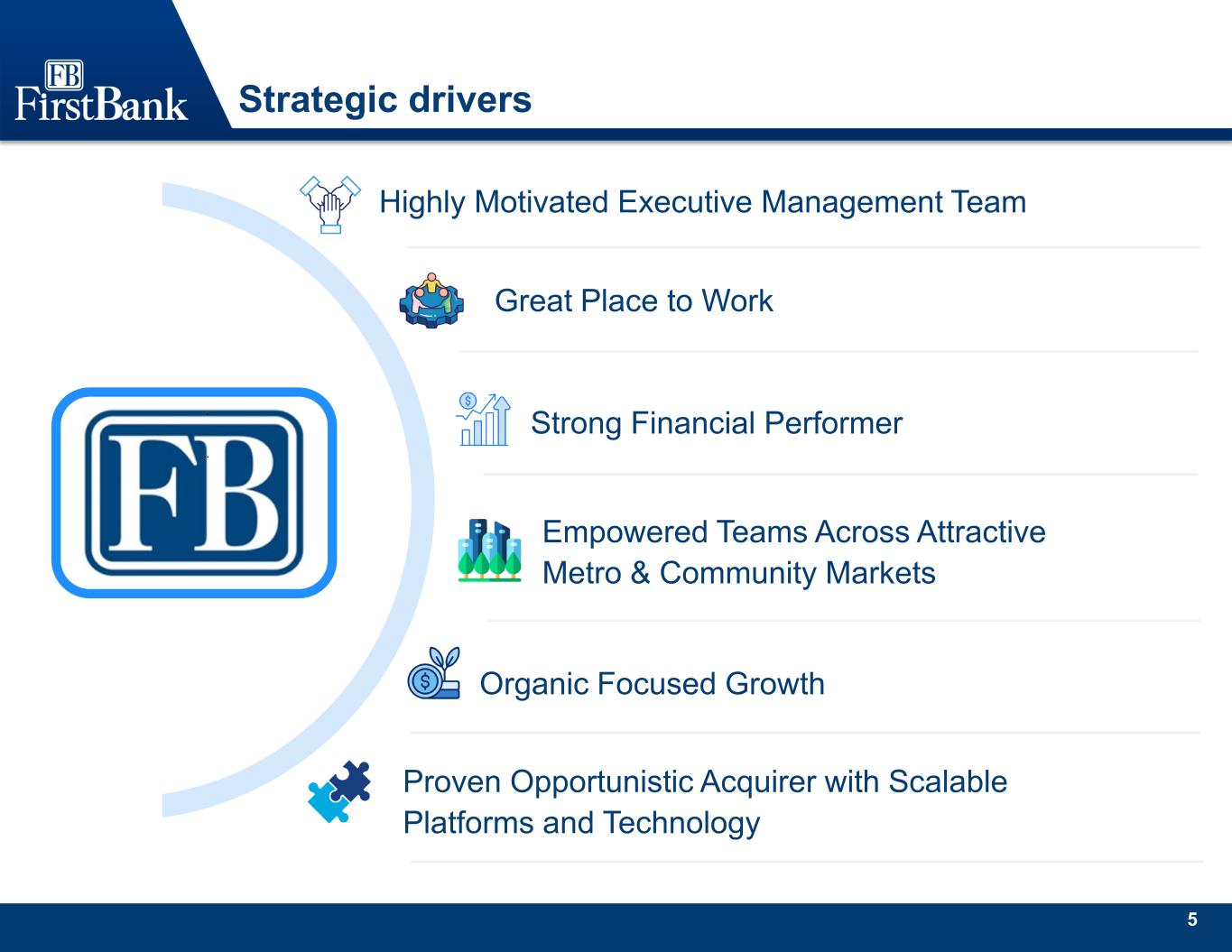
5 Strategic drivers Highly Motivated Executive Management Team Great Place to Work Strong Financial Performer Empowered Teams Across Attractive Metro & Community Markets Organic Focused Growth Proven Opportunistic Acquirer with Scalable Platforms and Technology
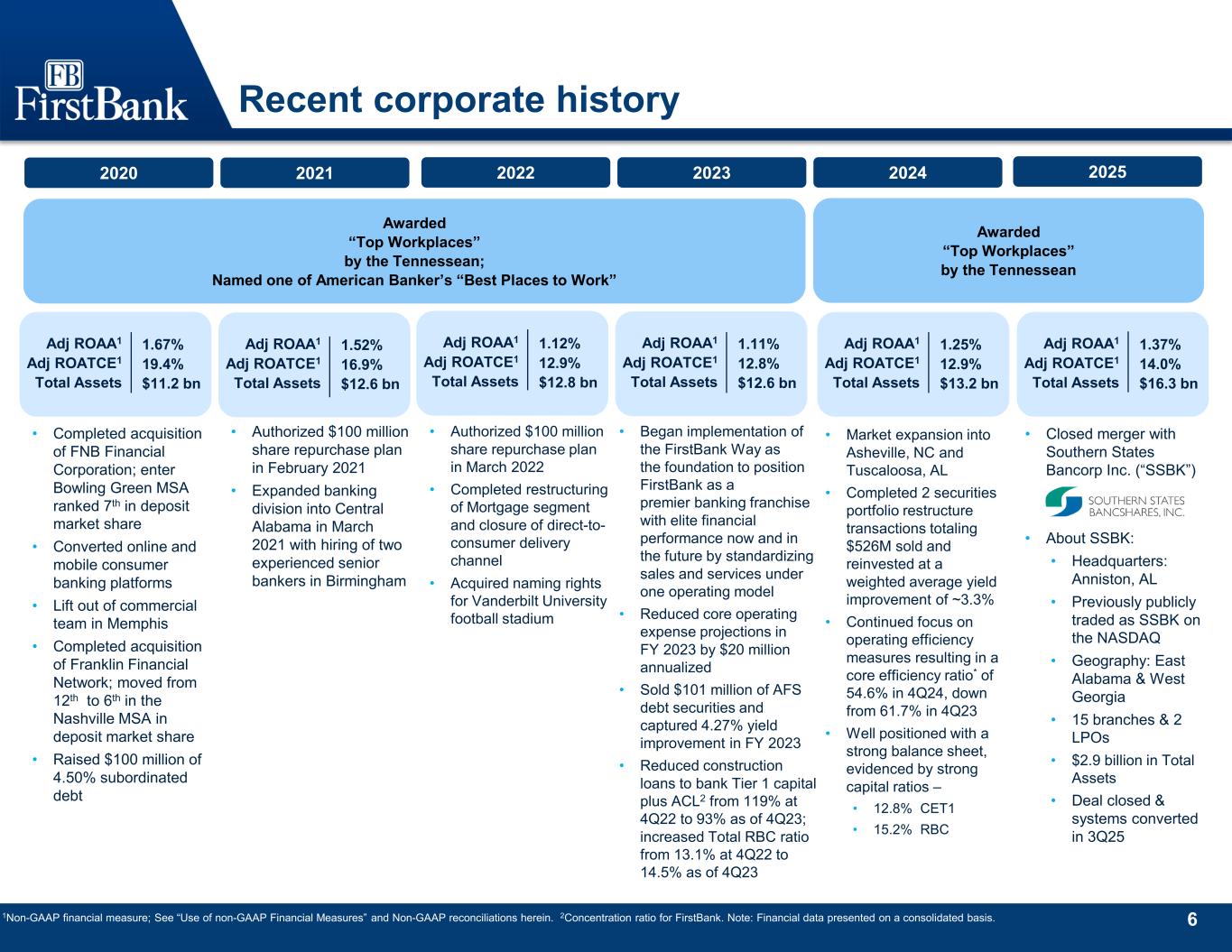
6 Recent corporate history 2021 Awarded “Top Workplaces” by the Tennessean; Named one of American Banker’s “Best Places to Work” 2020 • Completed acquisition of FNB Financial Corporation; enter Bowling Green MSA ranked 7th in deposit market share • Converted online and mobile consumer banking platforms • Lift out of commercial team in Memphis • Completed acquisition of Franklin Financial Network; moved from 12th to 6th in the Nashville MSA in deposit market share • Raised $100 million of 4.50% subordinated debt 2022 • Authorized $100 million share repurchase plan in February 2021 • Expanded banking division into Central Alabama in March 2021 with hiring of two experienced senior bankers in Birmingham 2023 • Authorized $100 million share repurchase plan in March 2022 • Completed restructuring of Mortgage segment and closure of direct-to- consumer delivery channel • Acquired naming rights for Vanderbilt University football stadium 2024 • Began implementation of the FirstBank Way as the foundation to position FirstBank as a premier banking franchise with elite financial performance now and in the future by standardizing sales and services under one operating model • Reduced core operating expense projections in FY 2023 by $20 million annualized • Sold $101 million of AFS debt securities and captured 4.27% yield improvement in FY 2023 • Reduced construction loans to bank Tier 1 capital plus ACL2 from 119% at 4Q22 to 93% as of 4Q23; increased Total RBC ratio from 13.1% at 4Q22 to 14.5% as of 4Q23 • Market expansion into Asheville, NC and Tuscaloosa, AL • Completed 2 securities portfolio restructure transactions totaling $526M sold and reinvested at a weighted average yield improvement of ~3.3% • Continued focus on operating efficiency measures resulting in a core efficiency ratio* of 54.6% in 4Q24, down from 61.7% in 4Q23 • Well positioned with a strong balance sheet, evidenced by strong capital ratios – • 12.8% CET1 • 15.2% RBC Awarded “Top Workplaces” by the Tennessean 2025 • Closed merger with Southern States Bancorp Inc. (“SSBK”) • About SSBK: • Headquarters: Anniston, AL • Previously publicly traded as SSBK on the NASDAQ • Geography: East Alabama & West Georgia • 15 branches & 2 LPOs • $2.9 billion in Total Assets • Deal closed & systems converted in 3Q25 1Non-GAAP financial measure; See “Use of non-GAAP Financial Measures” and Non-GAAP reconciliations herein. 2Concentration ratio for FirstBank. Note: Financial data presented on a consolidated basis. Adj ROAA1 Adj ROATCE1 Total Assets 1.67% 19.4% $11.2 bn Adj ROAA1 Adj ROATCE1 Total Assets 1.11% 12.8% $12.6 bn Adj ROAA1 Adj ROATCE1 Total Assets 1.12% 12.9% $12.8 bn Adj ROAA1 Adj ROATCE1 Total Assets 1.52% 16.9% $12.6 bn Adj ROAA1 Adj ROATCE1 Total Assets 1.25% 12.9% $13.2 bn Adj ROAA1 Adj ROATCE1 Total Assets 1.37% 14.0% $16.3 bn
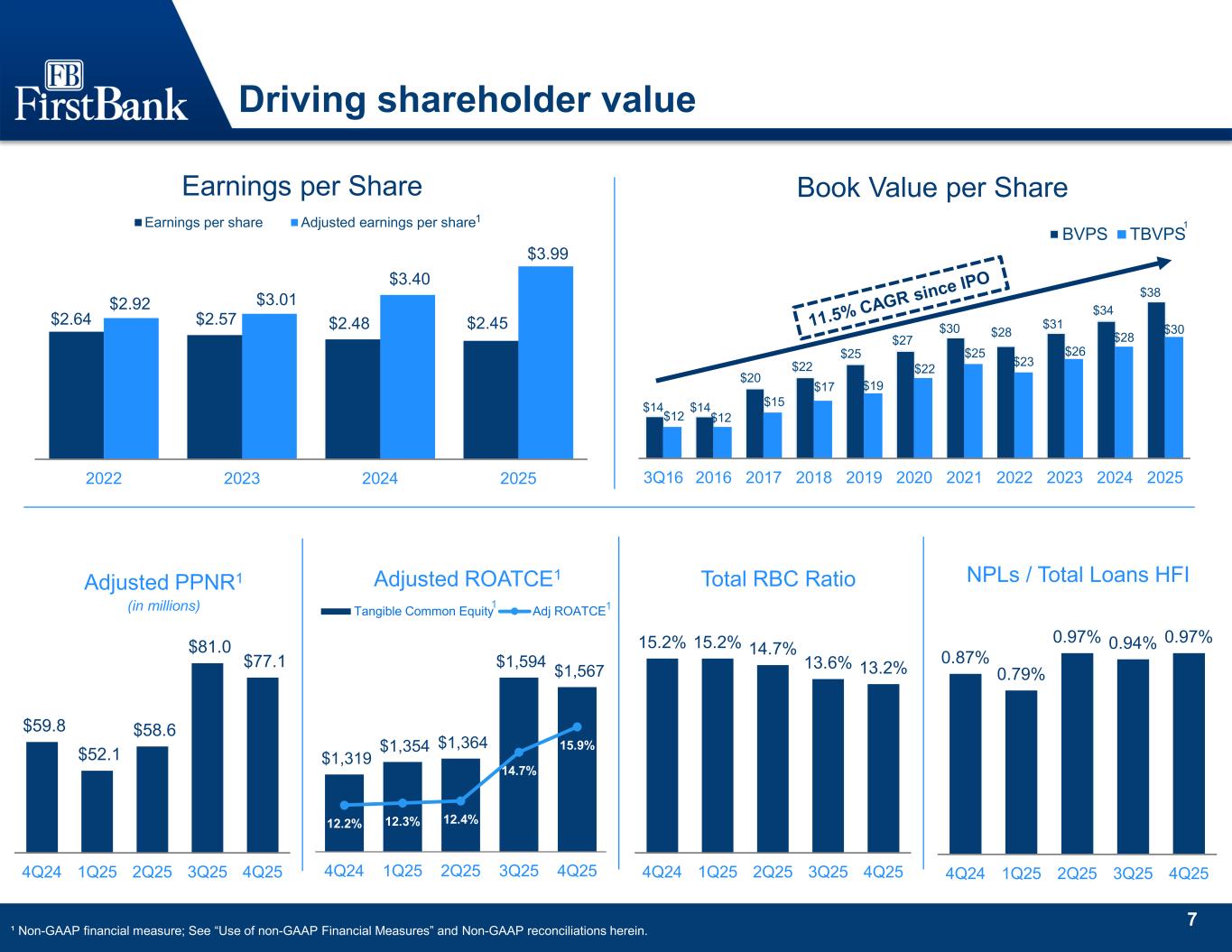
7 Driving shareholder value ¹ Non-GAAP financial measure; See “Use of non-GAAP Financial Measures” and Non-GAAP reconciliations herein. $2.64 $2.57 $2.48 $2.45 $2.92 $3.01 $3.40 $3.99 2022 2023 2024 2025 Earnings per share Adjusted earnings per share Earnings per Share $14 $14 $20 $22 $25 $27 $30 $28 $31 $34 $38 $12 $12 $15 $17 $19 $22 $25 $23 $26 $28 $30 3Q16 2016 2017 2018 2019 2020 2021 2022 2023 2024 2025 BVPS TBVPS 15.2% 15.2% 14.7% 13.6% 13.2% 4Q24 1Q25 2Q25 3Q25 4Q25 0.87% 0.79% 0.97% 0.94% 0.97% 4Q24 1Q25 2Q25 3Q25 4Q25 $59.8 $52.1 $58.6 $81.0 $77.1 4Q24 1Q25 2Q25 3Q25 4Q25 Book Value per Share Total RBC Ratio NPLs / Total Loans HFIAdjusted ROATCE1Adjusted PPNR1 (in millions) 1 1 $1,319 $1,354 $1,364 $1,594 $1,567 12.2% 12.3% 12.4% 14.7% 15.9% 4Q24 1Q25 2Q25 3Q25 4Q25 Tangible Common Equity Adj ROATCE11
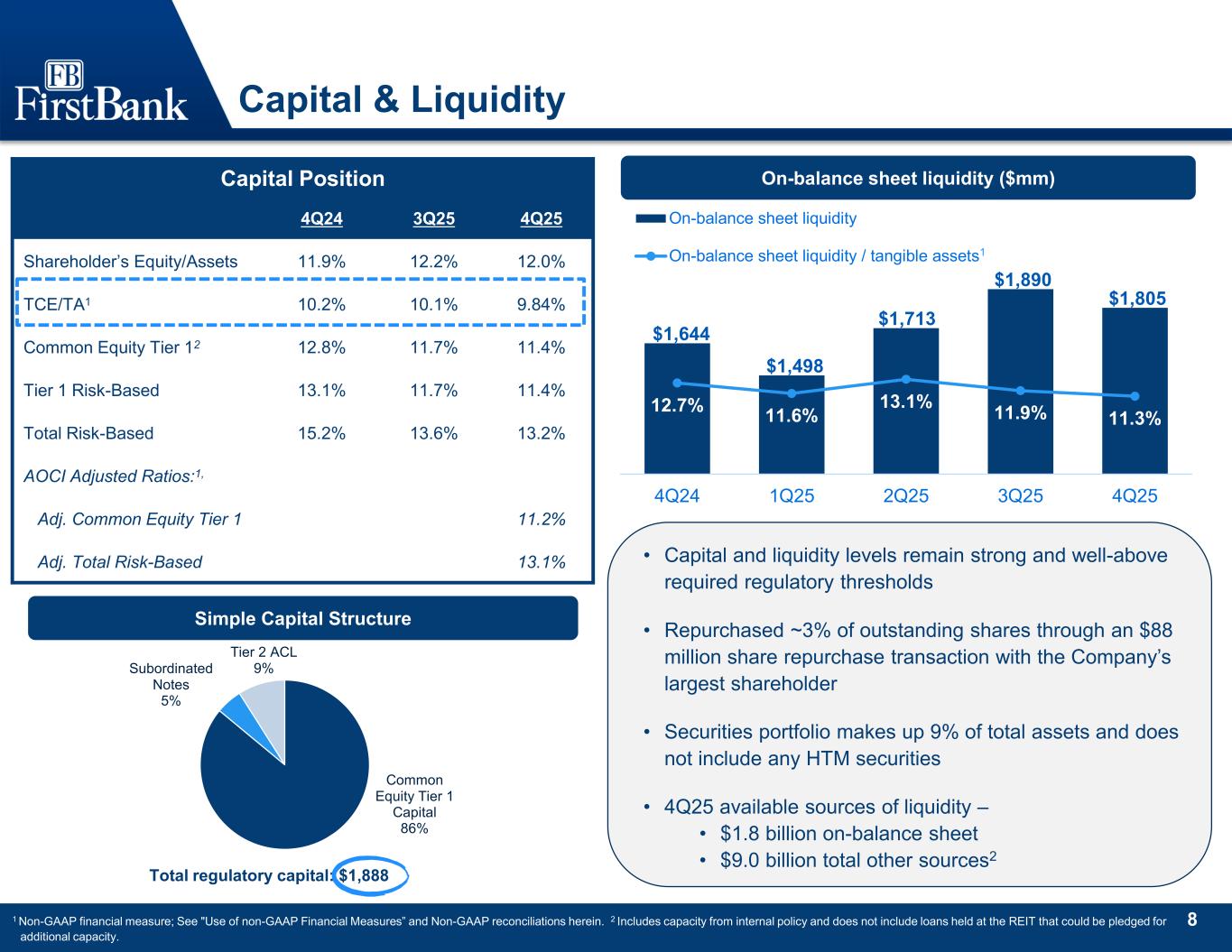
8 Capital & Liquidity Simple Capital Structure Common Equity Tier 1 Capital 86% Subordinated Notes 5% Tier 2 ACL 9% Total regulatory capital: $1,888 1 Non-GAAP financial measure; See "Use of non-GAAP Financial Measures” and Non-GAAP reconciliations herein. 2 Includes capacity from internal policy and does not include loans held at the REIT that could be pledged for additional capacity. On-balance sheet liquidity ($mm) $1,644 $1,498 $1,713 $1,890 $1,805 12.7% 11.6% 13.1% 11.9% 11.3% 4Q24 1Q25 2Q25 3Q25 4Q25 On-balance sheet liquidity On-balance sheet liquidity / tangible assets Capital Position 4Q24 3Q25 4Q25 Shareholder’s Equity/Assets 11.9% 12.2% 12.0% TCE/TA1 10.2% 10.1% 9.84% Common Equity Tier 12 12.8% 11.7% 11.4% Tier 1 Risk-Based 13.1% 11.7% 11.4% Total Risk-Based 15.2% 13.6% 13.2% AOCI Adjusted Ratios:1, Adj. Common Equity Tier 1 11.2% Adj. Total Risk-Based 13.1% 1 • Capital and liquidity levels remain strong and well-above required regulatory thresholds • Repurchased ~3% of outstanding shares through an $88 million share repurchase transaction with the Company’s largest shareholder • Securities portfolio makes up 9% of total assets and does not include any HTM securities • 4Q25 available sources of liquidity – • $1.8 billion on-balance sheet • $9.0 billion total other sources2
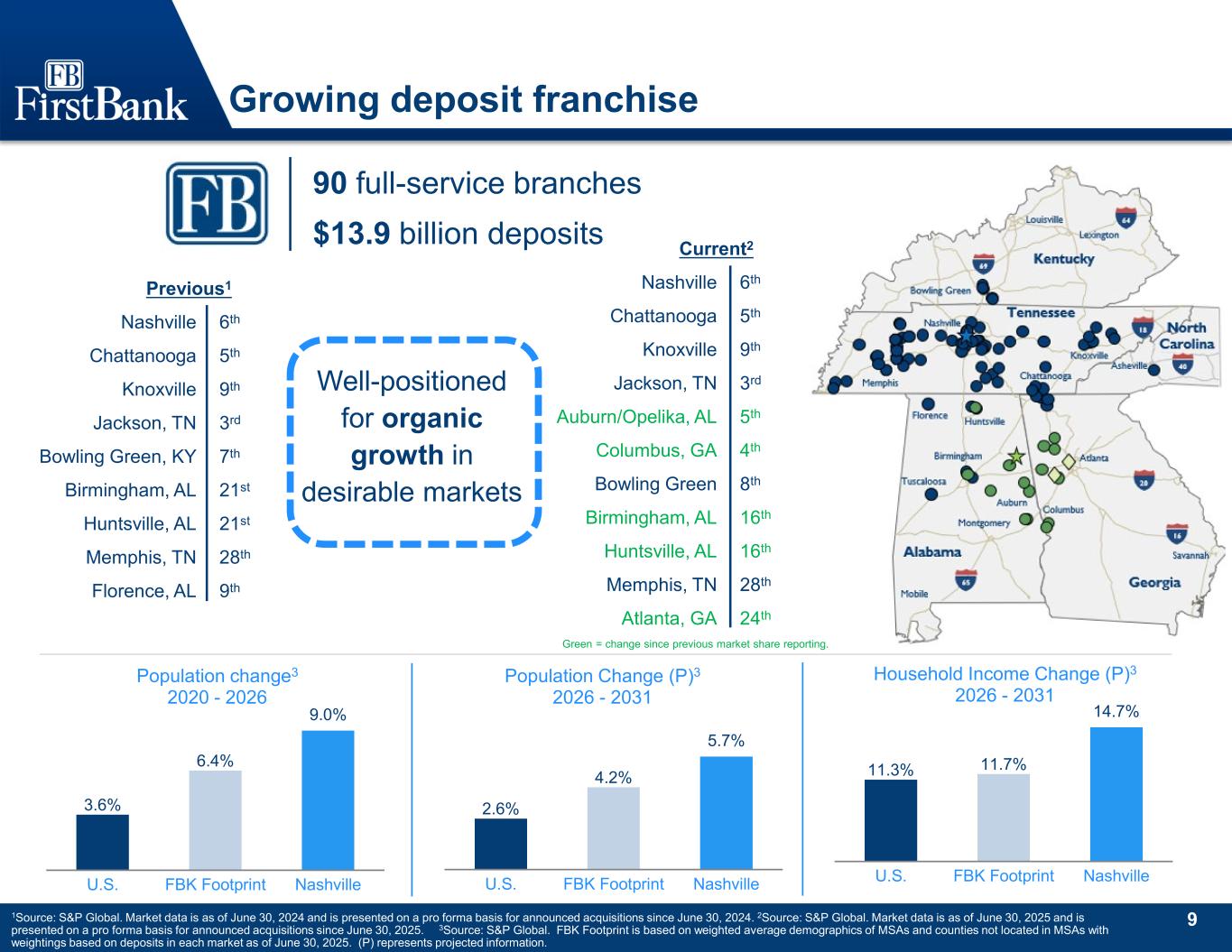
9 Well-positioned for organic growth in desirable markets Growing deposit franchise 1Source: S&P Global. Market data is as of June 30, 2024 and is presented on a pro forma basis for announced acquisitions since June 30, 2024. 2Source: S&P Global. Market data is as of June 30, 2025 and is presented on a pro forma basis for announced acquisitions since June 30, 2025. 3Source: S&P Global. FBK Footprint is based on weighted average demographics of MSAs and counties not located in MSAs with weightings based on deposits in each market as of June 30, 2025. (P) represents projected information. 3.6% 6.4% 9.0% U.S. FBK Footprint Nashville Population change3 2020 - 2026 2.6% 4.2% 5.7% U.S. FBK Footprint Nashville Population Change (P)3 2026 - 2031 11.3% 11.7% 14.7% U.S. FBK Footprint Nashville Household Income Change (P)3 2026 - 2031 90 full-service branches $13.9 billion deposits Previous1 Nashville 6th Chattanooga 5th Knoxville 9th Jackson, TN 3rd Bowling Green, KY 7th Birmingham, AL 21st Huntsville, AL 21st Memphis, TN 28th Florence, AL 9th Current2 Nashville 6th Chattanooga 5th Knoxville 9th Jackson, TN 3rd Auburn/Opelika, AL 5th Columbus, GA 4th Bowling Green 8th Birmingham, AL 16th Huntsville, AL 16th Memphis, TN 28th Atlanta, GA 24th Green = change since previous market share reporting.
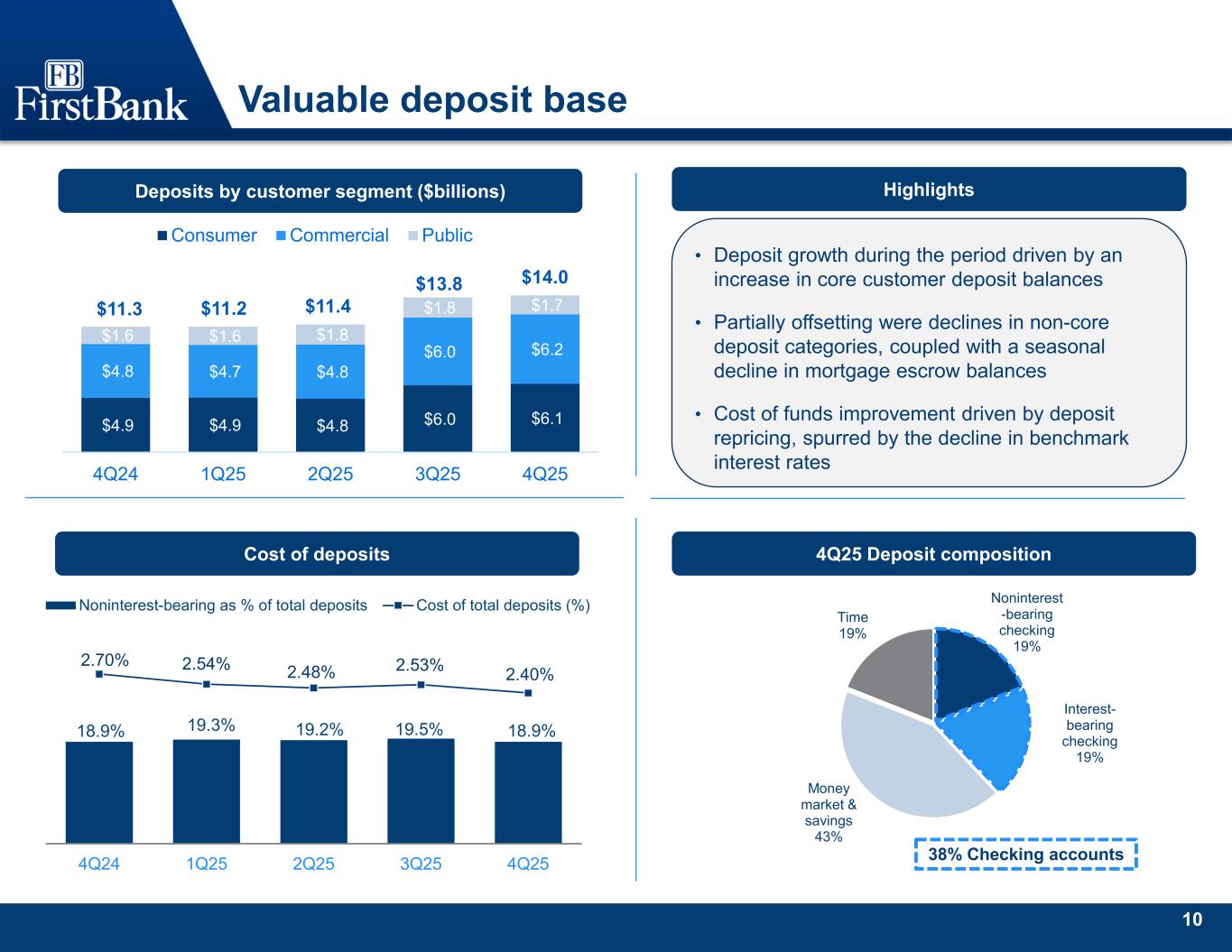
10 Valuable deposit base Cost of deposits 18.9% 19.3% 19.2% 19.5% 18.9% 2.70% 2.54% 2.48% 2.53% 2.40% 0.00% 0.50% 1.00% 1.50% 2.00% 2.50% 3.00% 0.0% 5.0% 10.0% 15.0% 20.0% 25.0% 30.0% 35.0% 4Q24 1Q25 2Q25 3Q25 4Q25 Noninterest-bearing as % of total deposits Cost of total deposits (%) Deposits by customer segment ($billions) • Deposit growth during the period driven by an increase in core customer deposit balances • Partially offsetting were declines in non-core deposit categories, coupled with a seasonal decline in mortgage escrow balances • Cost of funds improvement driven by deposit repricing, spurred by the decline in benchmark interest rates Highlights Noninterest -bearing checking 19% Interest- bearing checking 19% Money market & savings 43% Time 19% 38% Checking accounts 4Q25 Deposit composition $4.9 $4.9 $4.8 $6.0 $6.1 $4.8 $4.7 $4.8 $6.0 $6.2 $1.6 $1.6 $1.8 $1.8 $1.7 $11.3 $11.2 $11.4 $13.8 $14.0 4Q24 1Q25 2Q25 3Q25 4Q25 Consumer Commercial Public Total
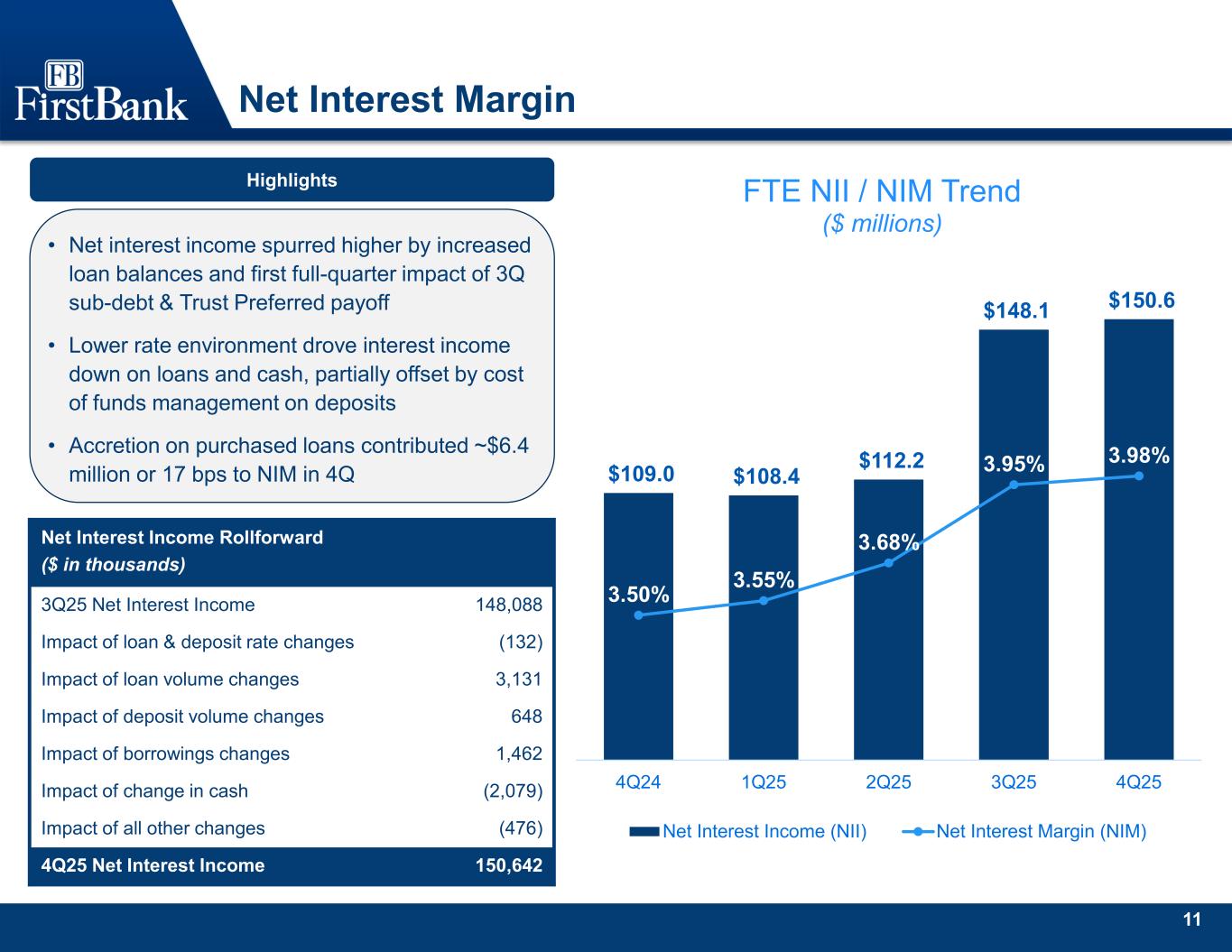
11 Net Interest Margin $109.0 $108.4 $112.2 $148.1 $150.6 3.50% 3.55% 3.68% 3.95% 3.98% 4Q24 1Q25 2Q25 3Q25 4Q25 FTE NII / NIM Trend ($ millions) Net Interest Income (NII) Net Interest Margin (NIM) Highlights Net Interest Income Rollforward ($ in thousands) 3Q25 Net Interest Income 148,088 Impact of loan & deposit rate changes (132) Impact of loan volume changes 3,131 Impact of deposit volume changes 648 Impact of borrowings changes 1,462 Impact of change in cash (2,079) Impact of all other changes (476) 4Q25 Net Interest Income 150,642 • Net interest income spurred higher by increased loan balances and first full-quarter impact of 3Q sub-debt & Trust Preferred payoff • Lower rate environment drove interest income down on loans and cash, partially offset by cost of funds management on deposits • Accretion on purchased loans contributed ~$6.4 million or 17 bps to NIM in 4Q
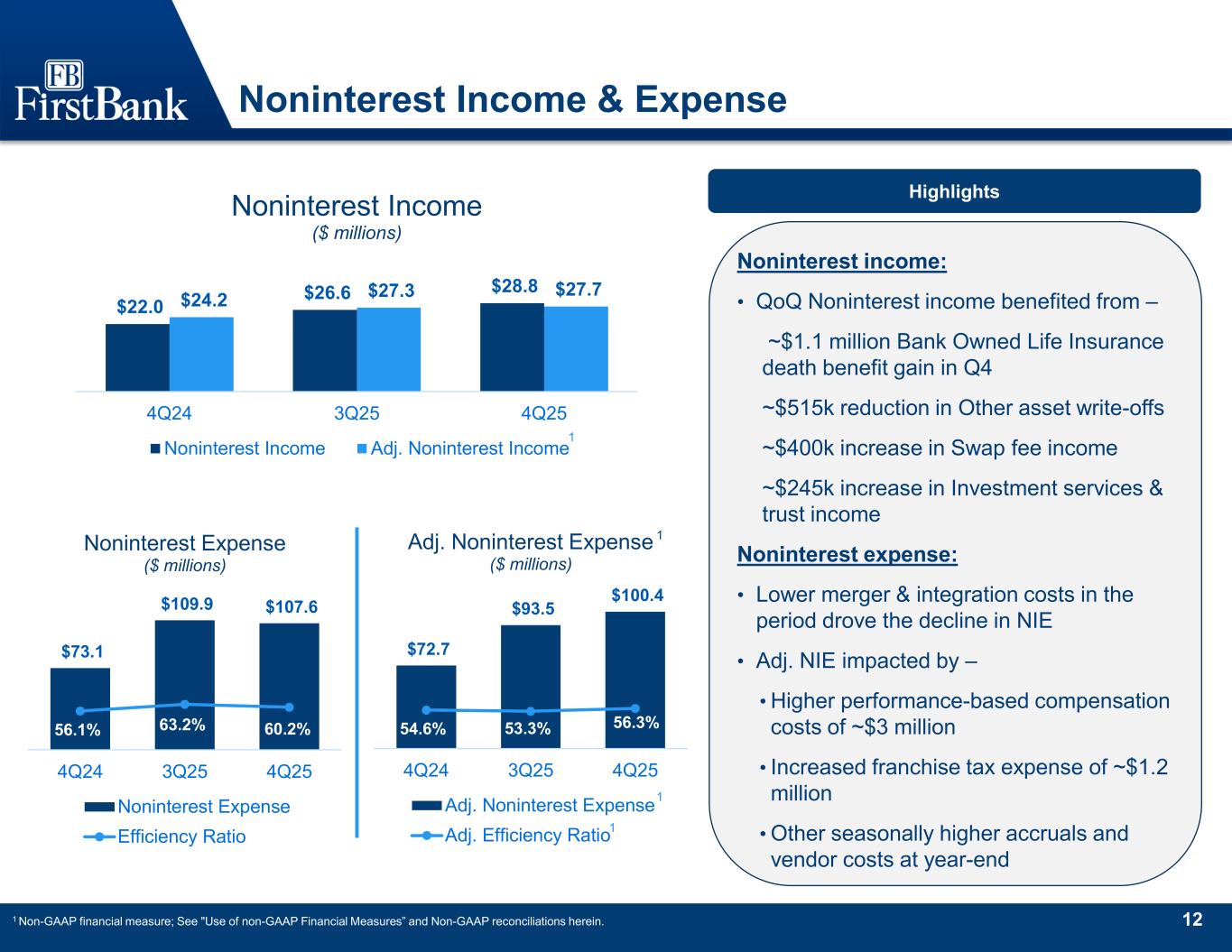
12 Noninterest Income & Expense $73.1 $109.9 $107.6 56.1% 63.2% 60.2% 4Q24 3Q25 4Q25 Noninterest Expense ($ millions) Noninterest Expense Efficiency Ratio $72.7 $93.5 $100.4 54.6% 53.3% 56.3% 4Q24 3Q25 4Q25 Adj. Noninterest Expense ($ millions) Adj. Noninterest Expense Adj. Efficiency Ratio $22.0 $26.6 $28.8 $24.2 $27.3 $27.7 4Q24 3Q25 4Q25 Noninterest Income ($ millions) Noninterest Income Adj. Noninterest Income Highlights 1 1 Non-GAAP financial measure; See "Use of non-GAAP Financial Measures” and Non-GAAP reconciliations herein. 1 1 1 Noninterest income: • QoQ Noninterest income benefited from – ~$1.1 million Bank Owned Life Insurance death benefit gain in Q4 ~$515k reduction in Other asset write-offs ~$400k increase in Swap fee income ~$245k increase in Investment services & trust income Noninterest expense: • Lower merger & integration costs in the period drove the decline in NIE • Adj. NIE impacted by – • Higher performance-based compensation costs of ~$3 million • Increased franchise tax expense of ~$1.2 million • Other seasonally higher accruals and vendor costs at year-end
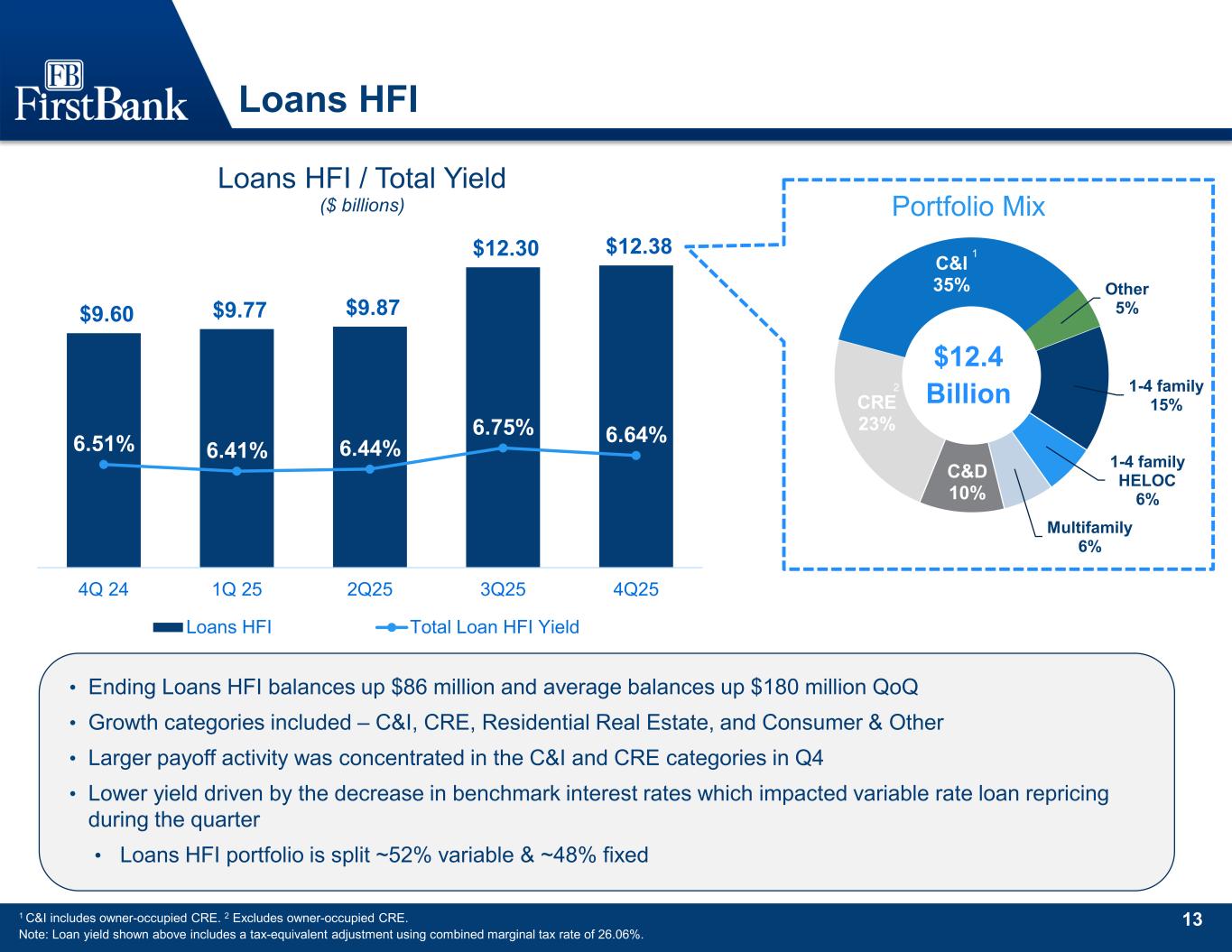
13 Loans HFI $9.60 $9.77 $9.87 $12.30 $12.38 6.51% 6.41% 6.44% 6.75% 6.64% 4Q 24 1Q 25 2Q25 3Q25 4Q25 Loans HFI / Total Yield ($ billions) Loans HFI Total Loan HFI Yield 1-4 family 15% 1-4 family HELOC 6% Multifamily 6% C&D 10% CRE 23% C&I 35% Other 5% Portfolio Mix $12.4 Billion 1 C&I includes owner-occupied CRE. 2 Excludes owner-occupied CRE. Note: Loan yield shown above includes a tax-equivalent adjustment using combined marginal tax rate of 26.06%. 1 2 • Ending Loans HFI balances up $86 million and average balances up $180 million QoQ • Growth categories included – C&I, CRE, Residential Real Estate, and Consumer & Other • Larger payoff activity was concentrated in the C&I and CRE categories in Q4 • Lower yield driven by the decrease in benchmark interest rates which impacted variable rate loan repricing during the quarter • Loans HFI portfolio is split ~52% variable & ~48% fixed
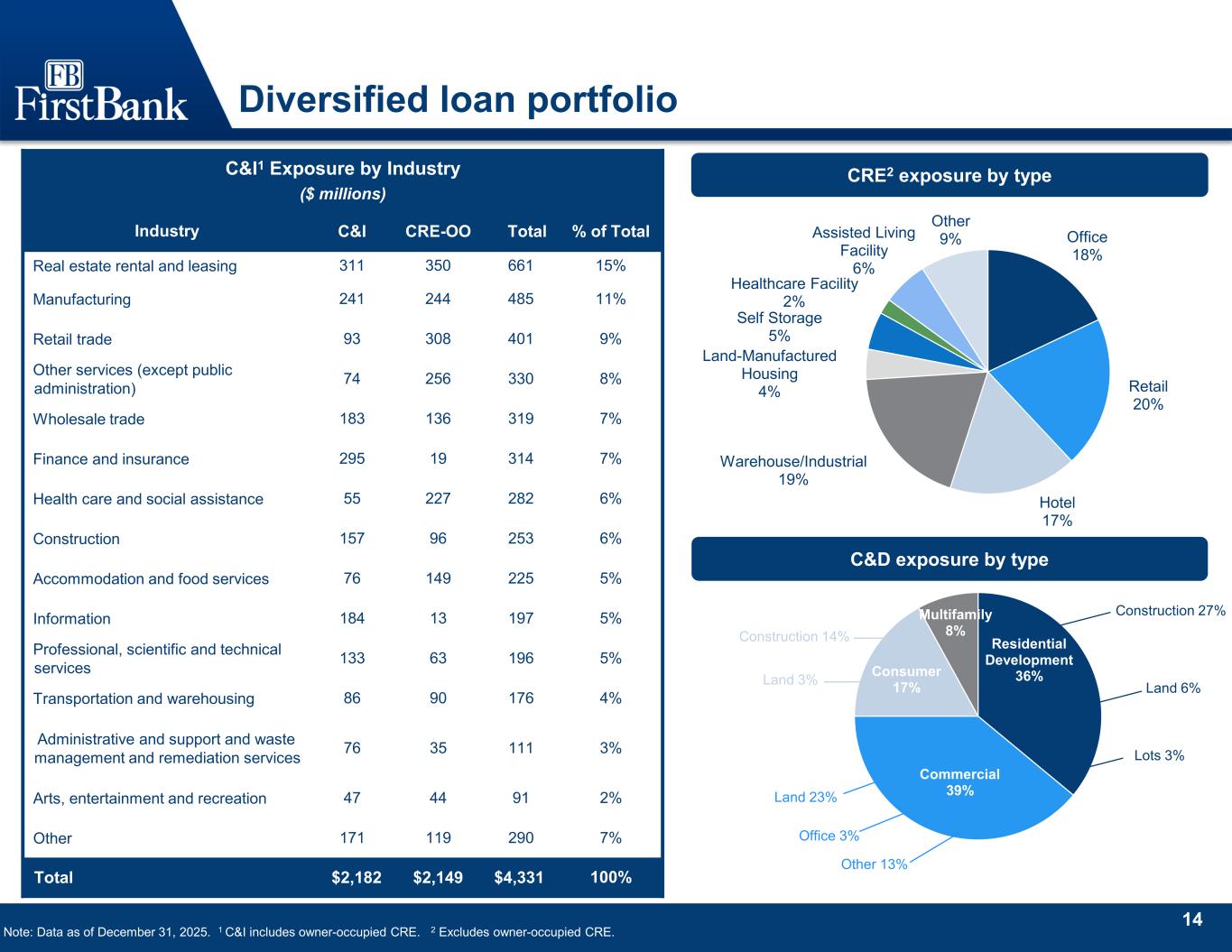
14 Office 18% Retail 20% Hotel 17% Warehouse/Industrial 19% Land-Manufactured Housing 4% Self Storage 5% Healthcare Facility 2% Assisted Living Facility 6% Other 9% Residential Development 36% Commercial 39% Consumer 17% Multifamily 8% Construction 27% Land 6% Lots 3% Diversified loan portfolio CRE2 exposure by type Note: Data as of December 31, 2025. 1 C&I includes owner-occupied CRE. 2 Excludes owner-occupied CRE. C&D exposure by type C&I1 Exposure by Industry ($ millions) Industry C&I CRE-OO Total % of Total Real estate rental and leasing 311 350 661 15% Manufacturing 241 244 485 11% Retail trade 93 308 401 9% Other services (except public administration) 74 256 330 8% Wholesale trade 183 136 319 7% Finance and insurance 295 19 314 7% Health care and social assistance 55 227 282 6% Construction 157 96 253 6% Accommodation and food services 76 149 225 5% Information 184 13 197 5% Professional, scientific and technical services 133 63 196 5% Transportation and warehousing 86 90 176 4% Administrative and support and waste management and remediation services 76 35 111 3% Arts, entertainment and recreation 47 44 91 2% Other 171 119 290 7% Total $2,182 $2,149 $4,331 100% Land 23% Office 3% Other 13% Construction 14% Land 3%
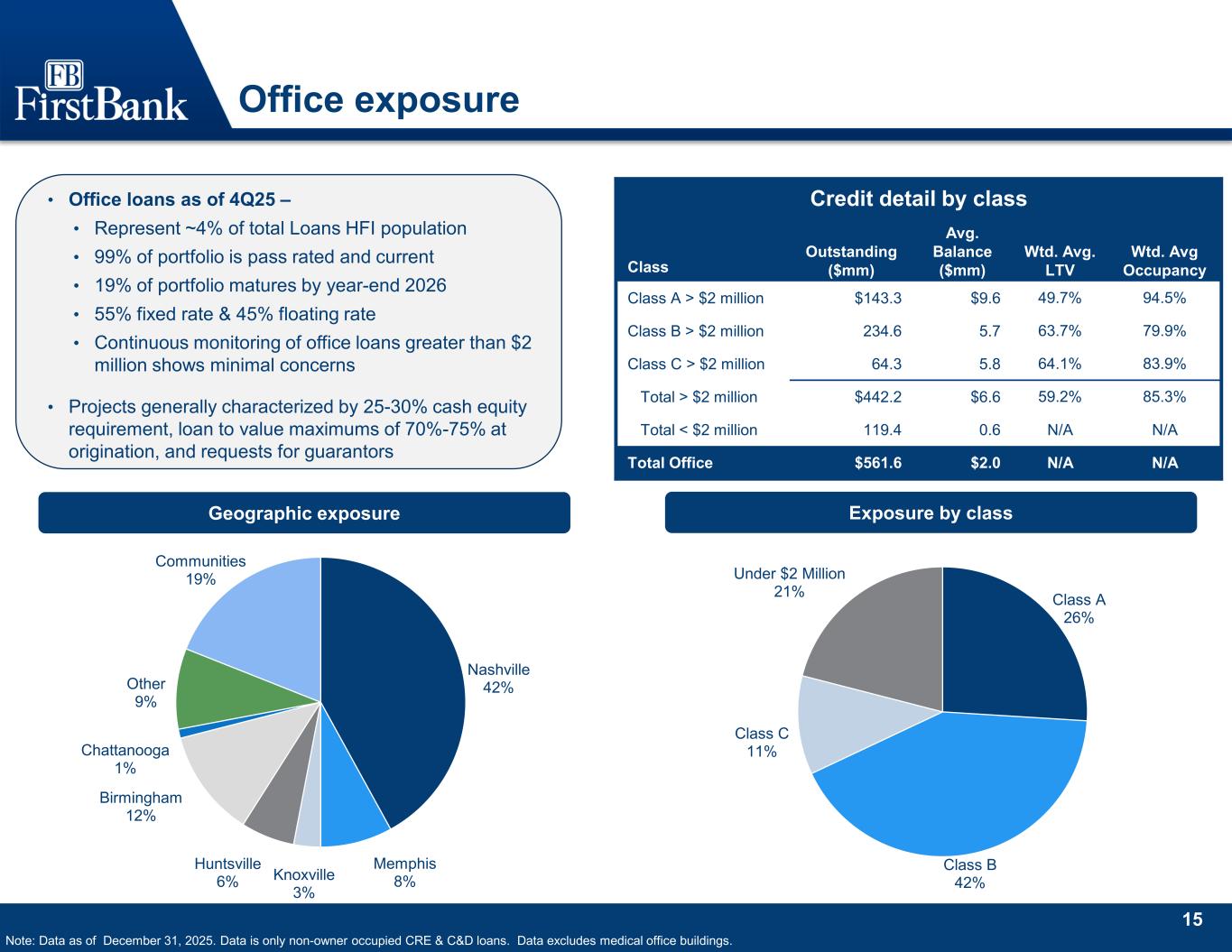
15 Nashville 42% Memphis 8%Knoxville 3% Huntsville 6% Birmingham 12% Chattanooga 1% Other 9% Communities 19% Class A 26% Class B 42% Class C 11% Under $2 Million 21% Office exposure • Office loans as of 4Q25 – • Represent ~4% of total Loans HFI population • 99% of portfolio is pass rated and current • 19% of portfolio matures by year-end 2026 • 55% fixed rate & 45% floating rate • Continuous monitoring of office loans greater than $2 million shows minimal concerns • Projects generally characterized by 25-30% cash equity requirement, loan to value maximums of 70%-75% at origination, and requests for guarantors Geographic exposure Note: Data as of December 31, 2025. Data is only non-owner occupied CRE & C&D loans. Data excludes medical office buildings. Credit detail by class Class Outstanding ($mm) Avg. Balance ($mm) Wtd. Avg. LTV Wtd. Avg Occupancy Class A > $2 million $143.3 $9.6 49.7% 94.5% Class B > $2 million 234.6 5.7 63.7% 79.9% Class C > $2 million 64.3 5.8 64.1% 83.9% Total > $2 million $442.2 $6.6 59.2% 85.3% Total < $2 million 119.4 0.6 N/A N/A Total Office $561.6 $2.0 N/A N/A Exposure by class
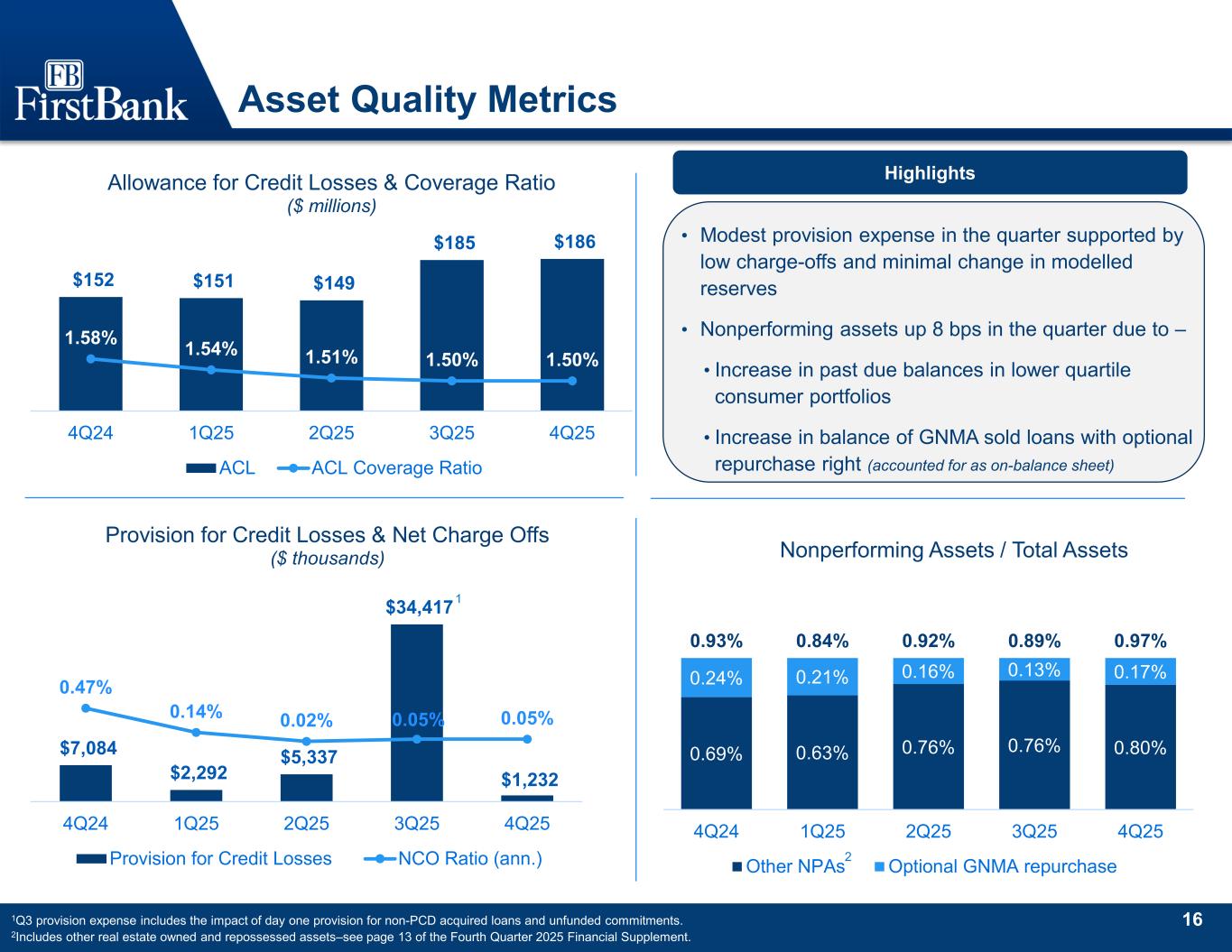
16 Asset Quality Metrics 0.69% 0.63% 0.76% 0.76% 0.80% 0.24% 0.21% 0.16% 0.13% 0.17% 0.93% 0.84% 0.92% 0.89% 0.97% 4Q24 1Q25 2Q25 3Q25 4Q25 Nonperforming Assets / Total Assets Other NPAs Optional GNMA repurchase • Modest provision expense in the quarter supported by low charge-offs and minimal change in modelled reserves • Nonperforming assets up 8 bps in the quarter due to – • Increase in past due balances in lower quartile consumer portfolios • Increase in balance of GNMA sold loans with optional repurchase right (accounted for as on-balance sheet) $152 $151 $149 $185 $186 1.58% 1.54% 1.51% 1.50% 1.50% 4Q24 1Q25 2Q25 3Q25 4Q25 Allowance for Credit Losses & Coverage Ratio ($ millions) ACL ACL Coverage Ratio 1Q3 provision expense includes the impact of day one provision for non-PCD acquired loans and unfunded commitments. 2Includes other real estate owned and repossessed assets–see page 13 of the Fourth Quarter 2025 Financial Supplement. Highlights 2 $7,084 $2,292 $5,337 $34,417 $1,232 0.47% 0.14% 0.02% 0.05% 0.05% 4Q24 1Q25 2Q25 3Q25 4Q25 Provision for Credit Losses & Net Charge Offs ($ thousands) Provision for Credit Losses NCO Ratio (ann.) 1
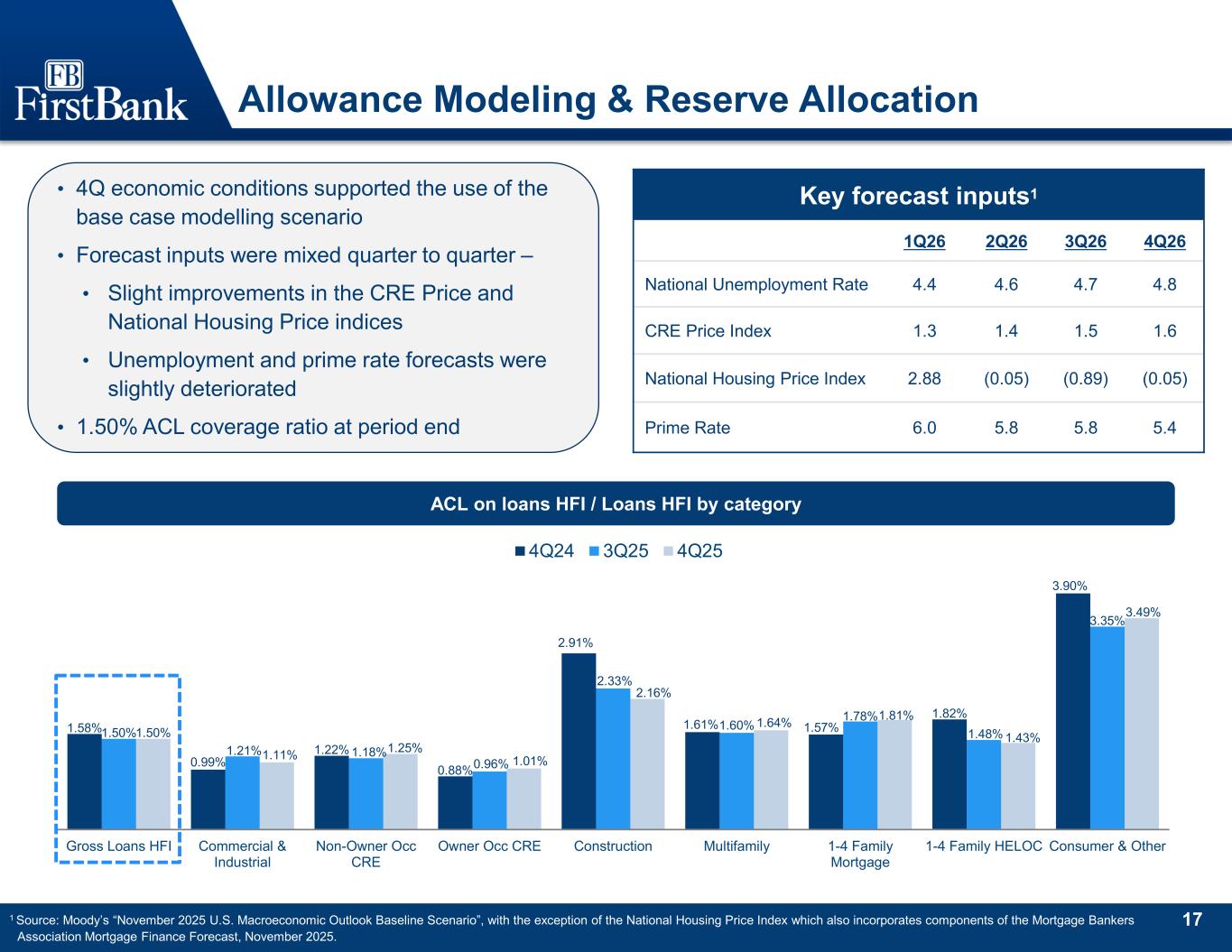
17 1.58% 0.99% 1.22% 0.88% 2.91% 1.61% 1.57% 1.82% 3.90% 1.50% 1.21% 1.18% 0.96% 2.33% 1.60% 1.78% 1.48% 3.35% 1.50% 1.11% 1.25% 1.01% 2.16% 1.64% 1.81% 1.43% 3.49% Gross Loans HFI Commercial & Industrial Non-Owner Occ CRE Owner Occ CRE Construction Multifamily 1-4 Family Mortgage 1-4 Family HELOC Consumer & Other 4Q24 3Q25 4Q25 Allowance Modeling & Reserve Allocation ACL on loans HFI / Loans HFI by category • 4Q economic conditions supported the use of the base case modelling scenario • Forecast inputs were mixed quarter to quarter – • Slight improvements in the CRE Price and National Housing Price indices • Unemployment and prime rate forecasts were slightly deteriorated • 1.50% ACL coverage ratio at period end Key forecast inputs1 1Q26 2Q26 3Q26 4Q26 National Unemployment Rate 4.4 4.6 4.7 4.8 CRE Price Index 1.3 1.4 1.5 1.6 National Housing Price Index 2.88 (0.05) (0.89) (0.05) Prime Rate 6.0 5.8 5.8 5.4 1 Source: Moody’s “November 2025 U.S. Macroeconomic Outlook Baseline Scenario”, with the exception of the National Housing Price Index which also incorporates components of the Mortgage Bankers Association Mortgage Finance Forecast, November 2025.
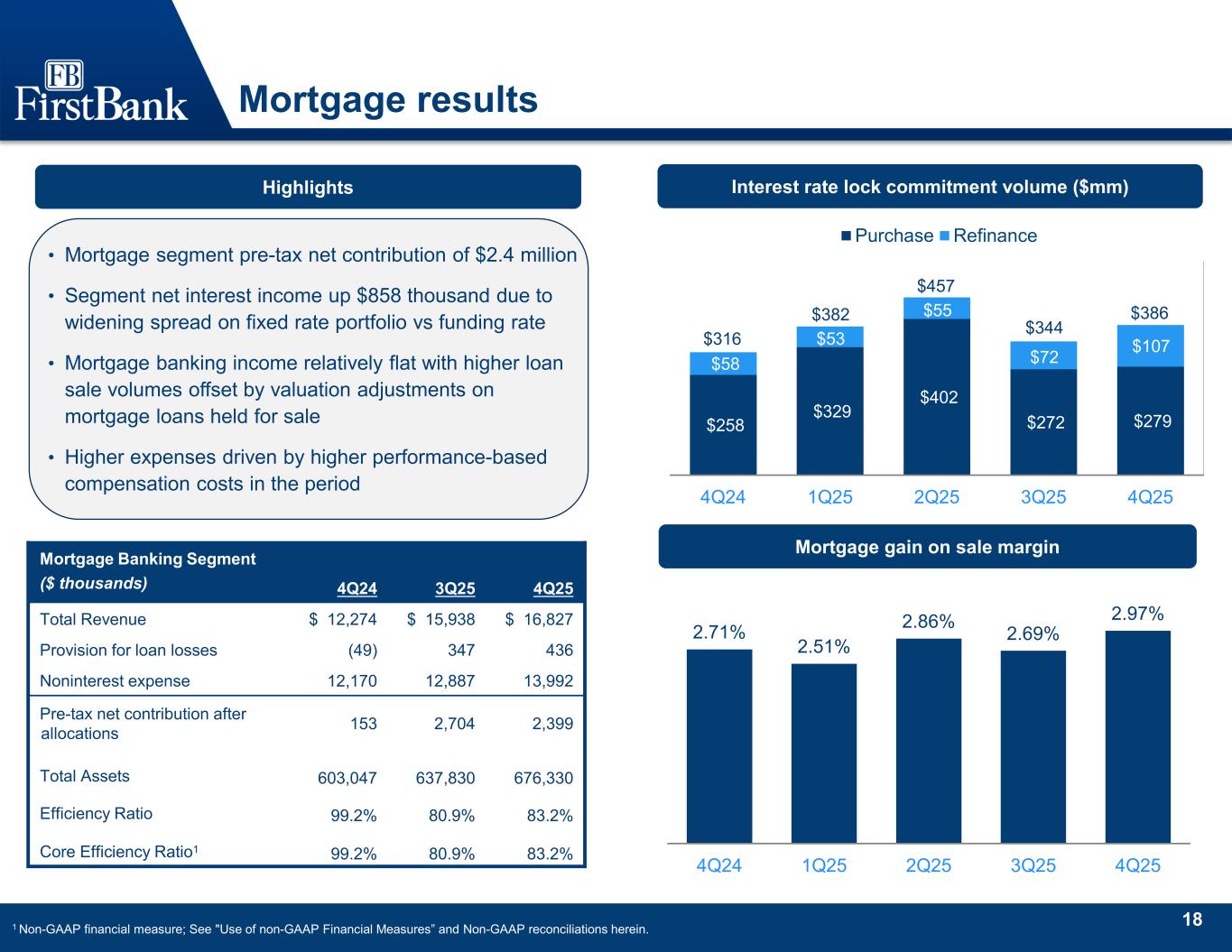
18 Mortgage results • Mortgage segment pre-tax net contribution of $2.4 million • Segment net interest income up $858 thousand due to widening spread on fixed rate portfolio vs funding rate • Mortgage banking income relatively flat with higher loan sale volumes offset by valuation adjustments on mortgage loans held for sale • Higher expenses driven by higher performance-based compensation costs in the period 2.71% 2.51% 2.86% 2.69% 2.97% 4Q24 1Q25 2Q25 3Q25 4Q25 Interest rate lock commitment volume ($mm) Mortgage gain on sale margin $258 $329 $402 $272 $279 $58 $53 $55 $72 $107 $316 $382 $457 $344 $386 4Q24 1Q25 2Q25 3Q25 4Q25 Purchase Refinance Highlights Mortgage Banking Segment ($ thousands) 4Q24 3Q25 4Q25 Total Revenue $ 12,274 $ 15,938 $ 16,827 Provision for loan losses (49) 347 436 Noninterest expense 12,170 12,887 13,992 Pre-tax net contribution after allocations 153 2,704 2,399 Total Assets 603,047 637,830 676,330 Efficiency Ratio 99.2% 80.9% 83.2% Core Efficiency Ratio1 99.2% 80.9% 83.2% 1 Non-GAAP financial measure; See "Use of non-GAAP Financial Measures” and Non-GAAP reconciliations herein.
19 Appendix
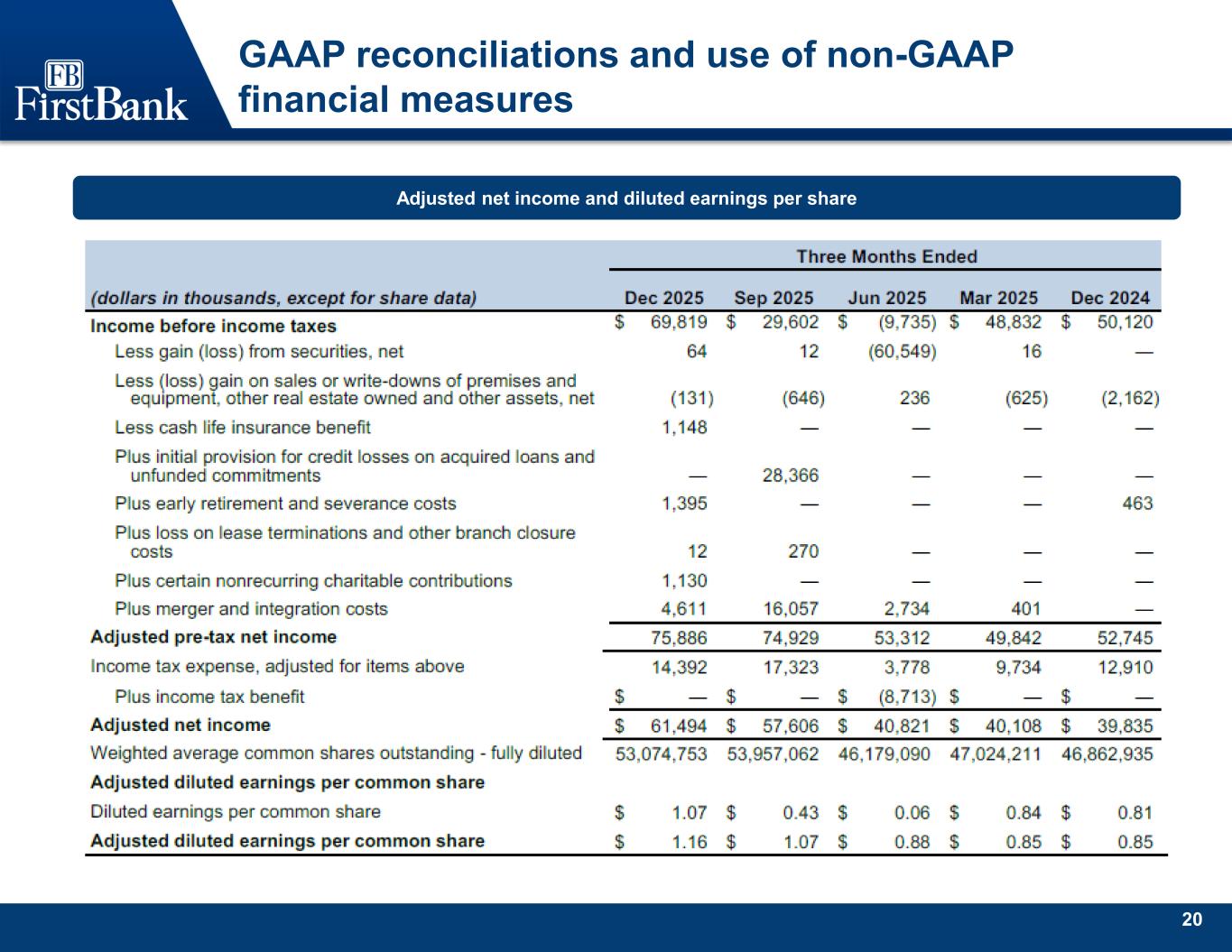
20 GAAP reconciliations and use of non-GAAP financial measures Adjusted net income and diluted earnings per share
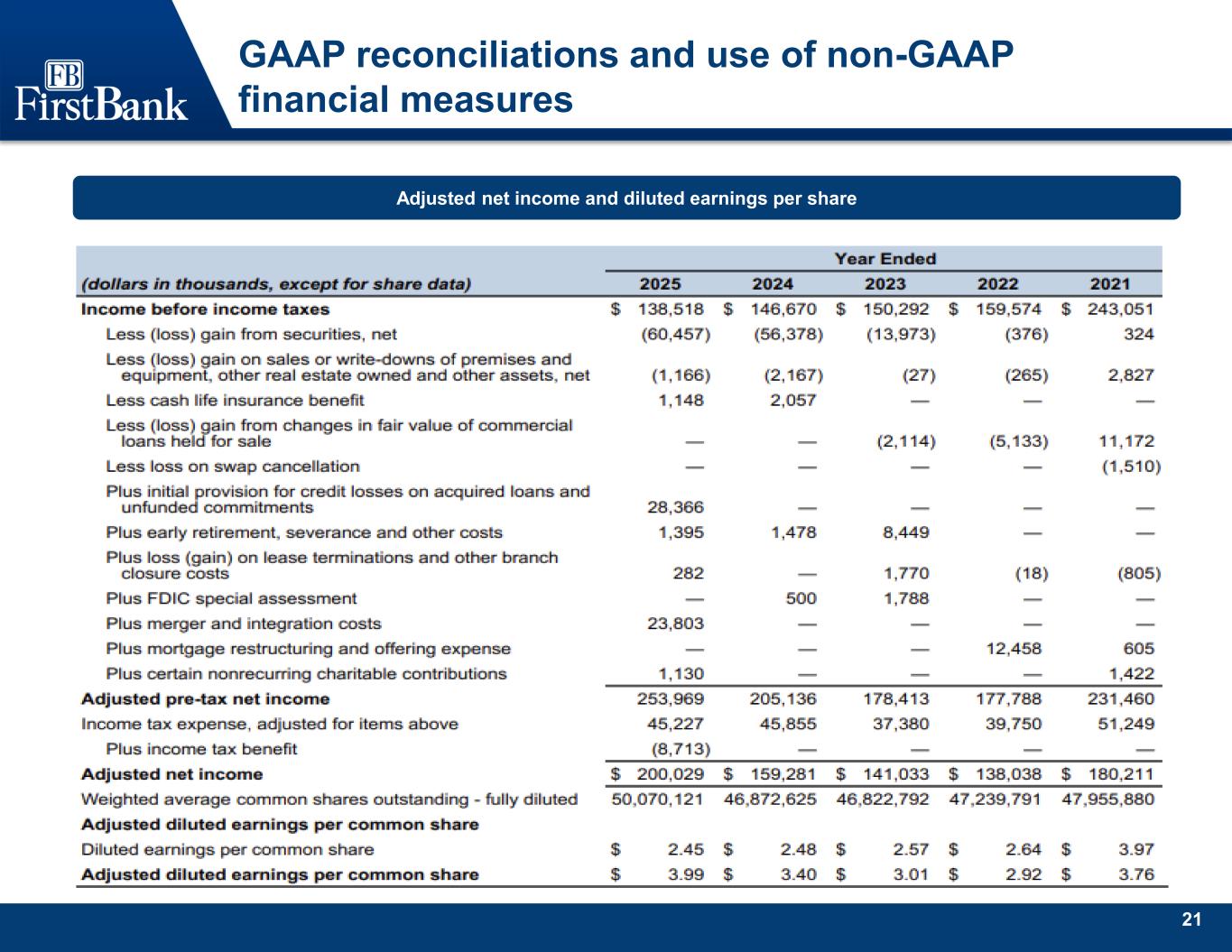
21 GAAP reconciliations and use of non-GAAP financial measures Adjusted net income and diluted earnings per share
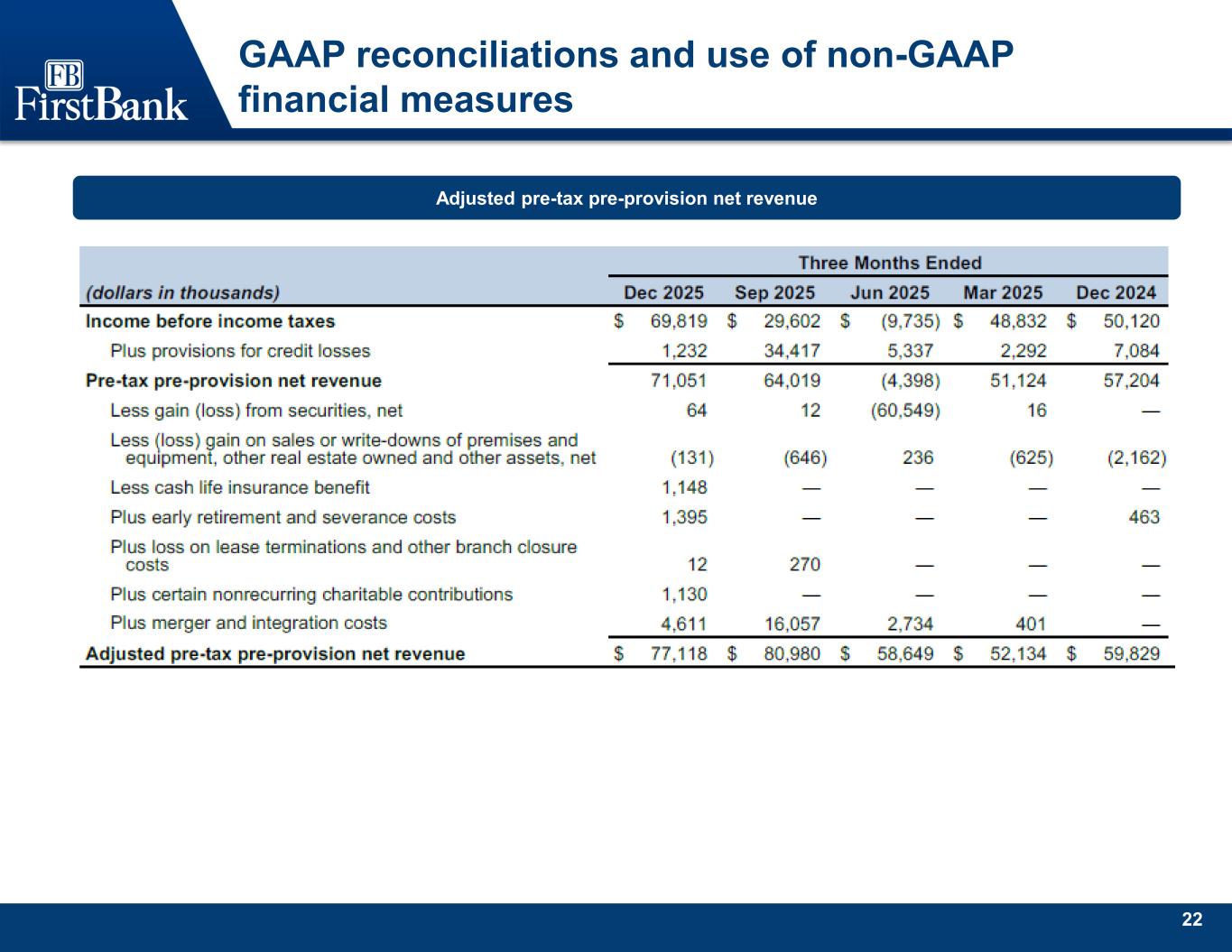
22 GAAP reconciliations and use of non-GAAP financial measures Adjusted pre-tax pre-provision net revenue
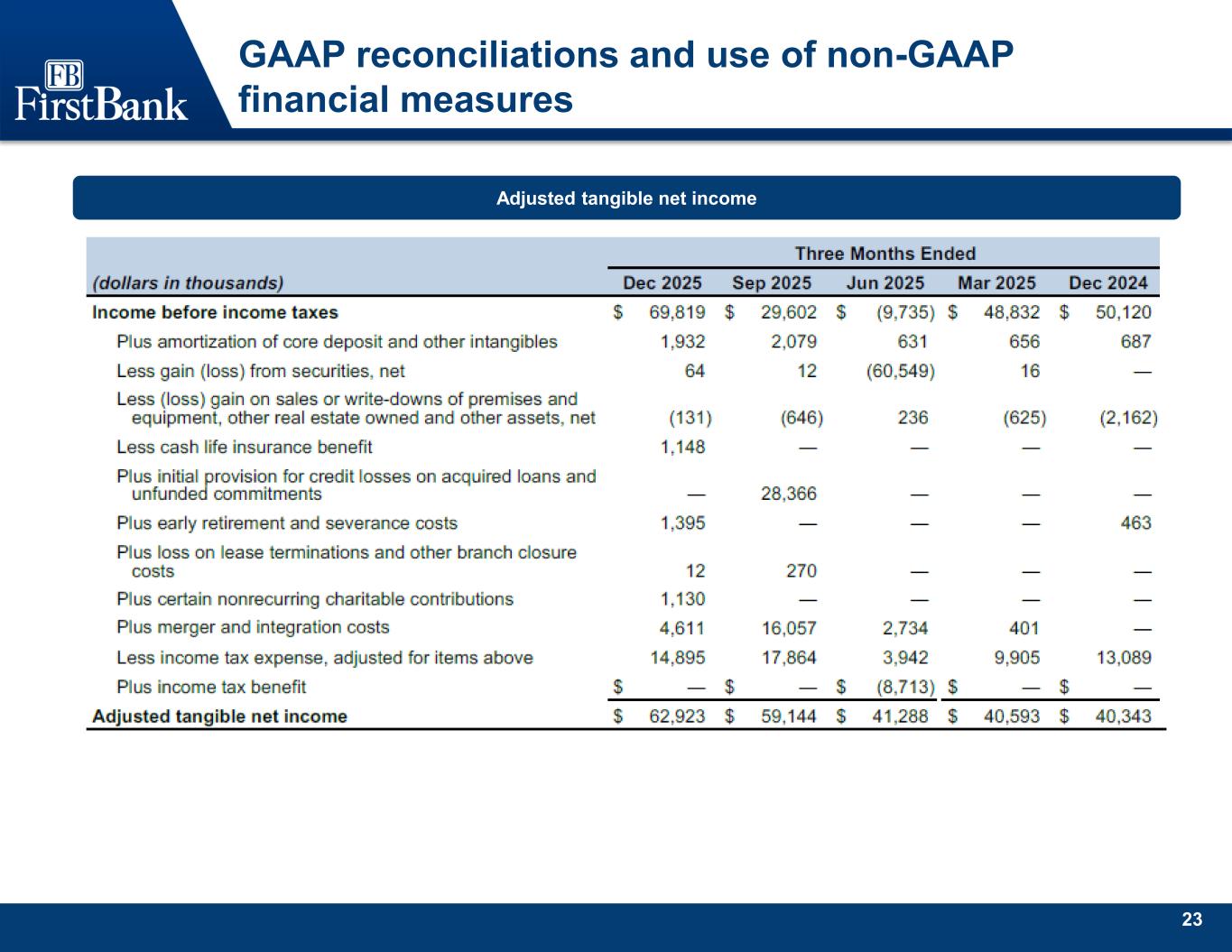
23 GAAP reconciliations and use of non-GAAP financial measures Adjusted tangible net income
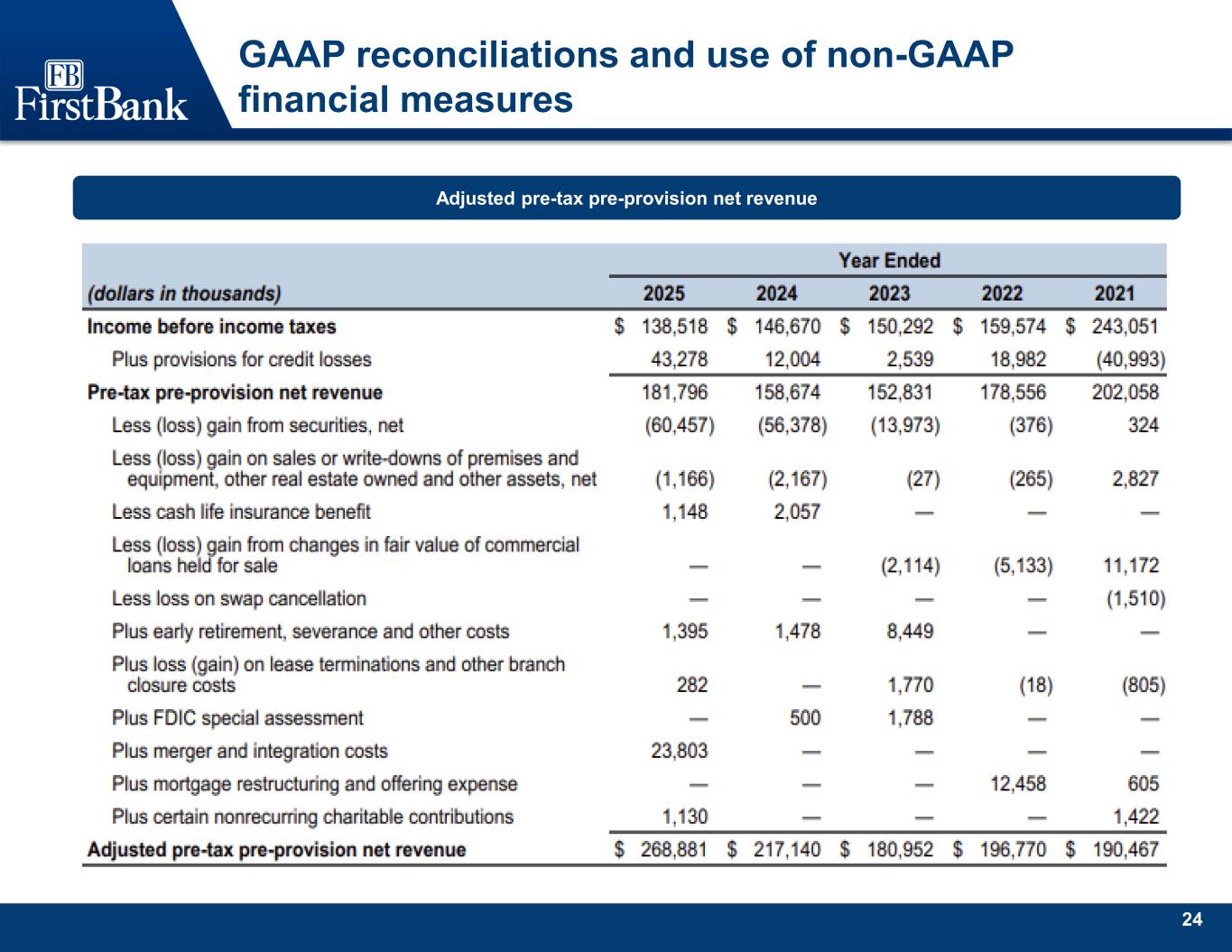
24 GAAP reconciliations and use of non-GAAP financial measures Adjusted pre-tax pre-provision net revenue
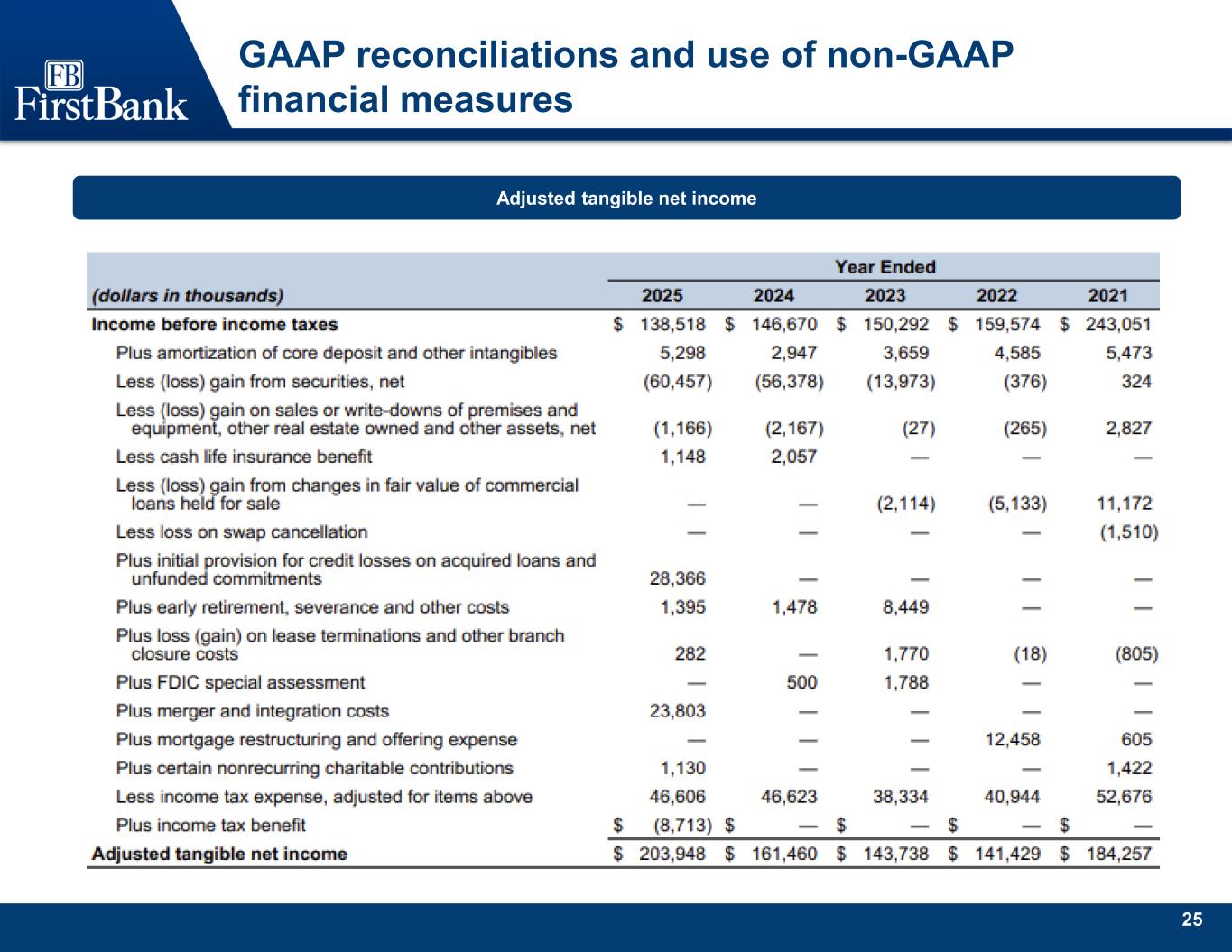
25 GAAP reconciliations and use of non-GAAP financial measures Adjusted tangible net income
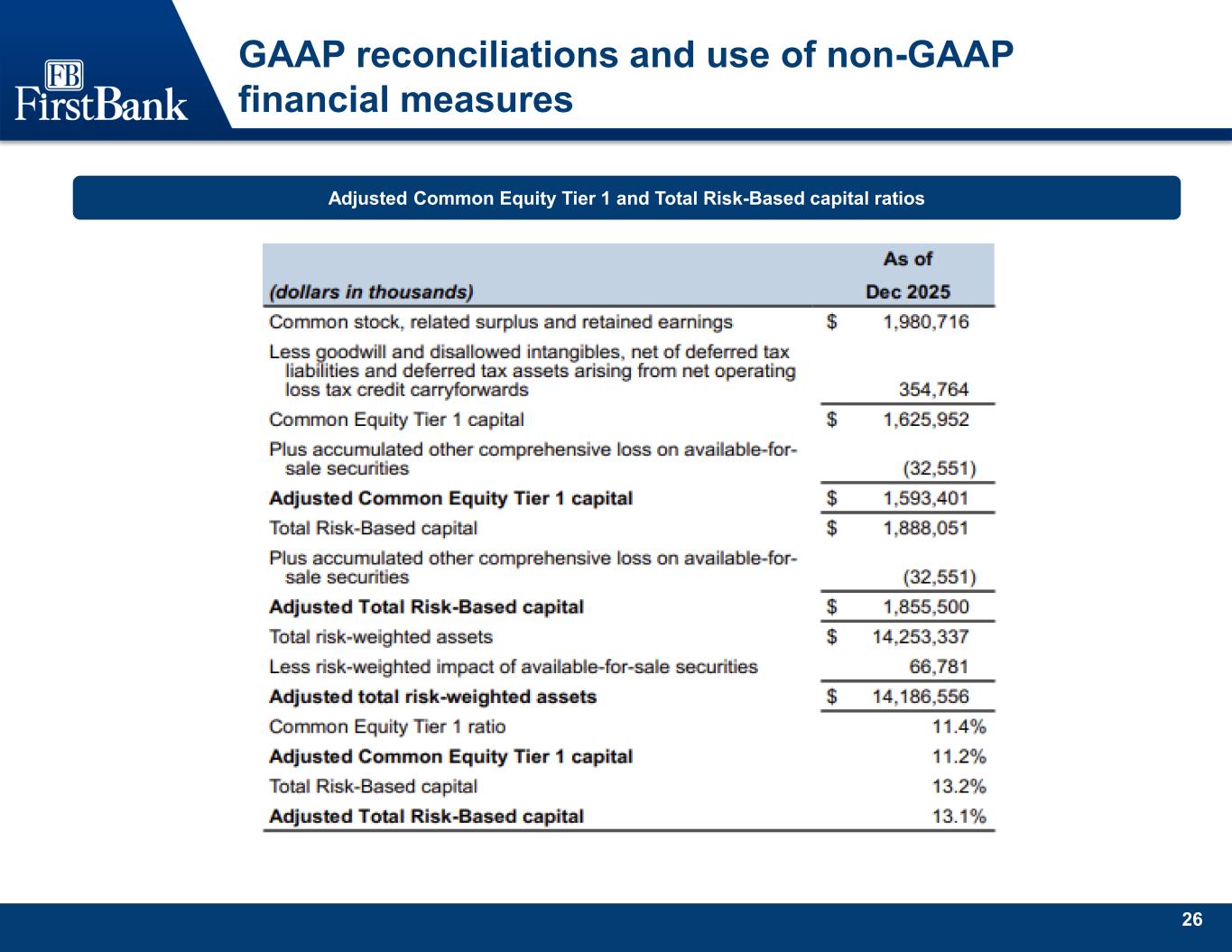
26 GAAP reconciliations and use of non-GAAP financial measures Adjusted Common Equity Tier 1 and Total Risk-Based capital ratios
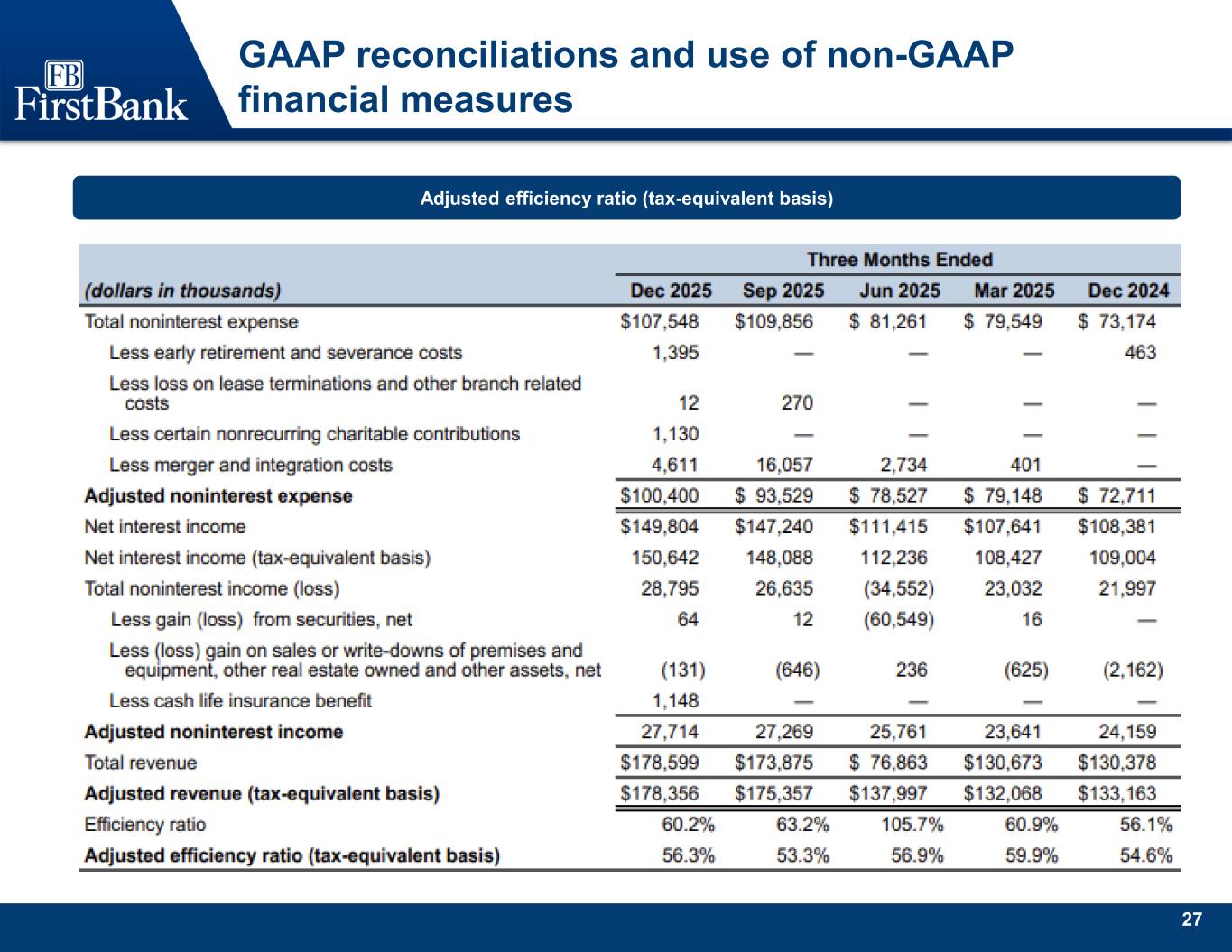
27 GAAP reconciliations and use of non-GAAP financial measures Adjusted efficiency ratio (tax-equivalent basis)
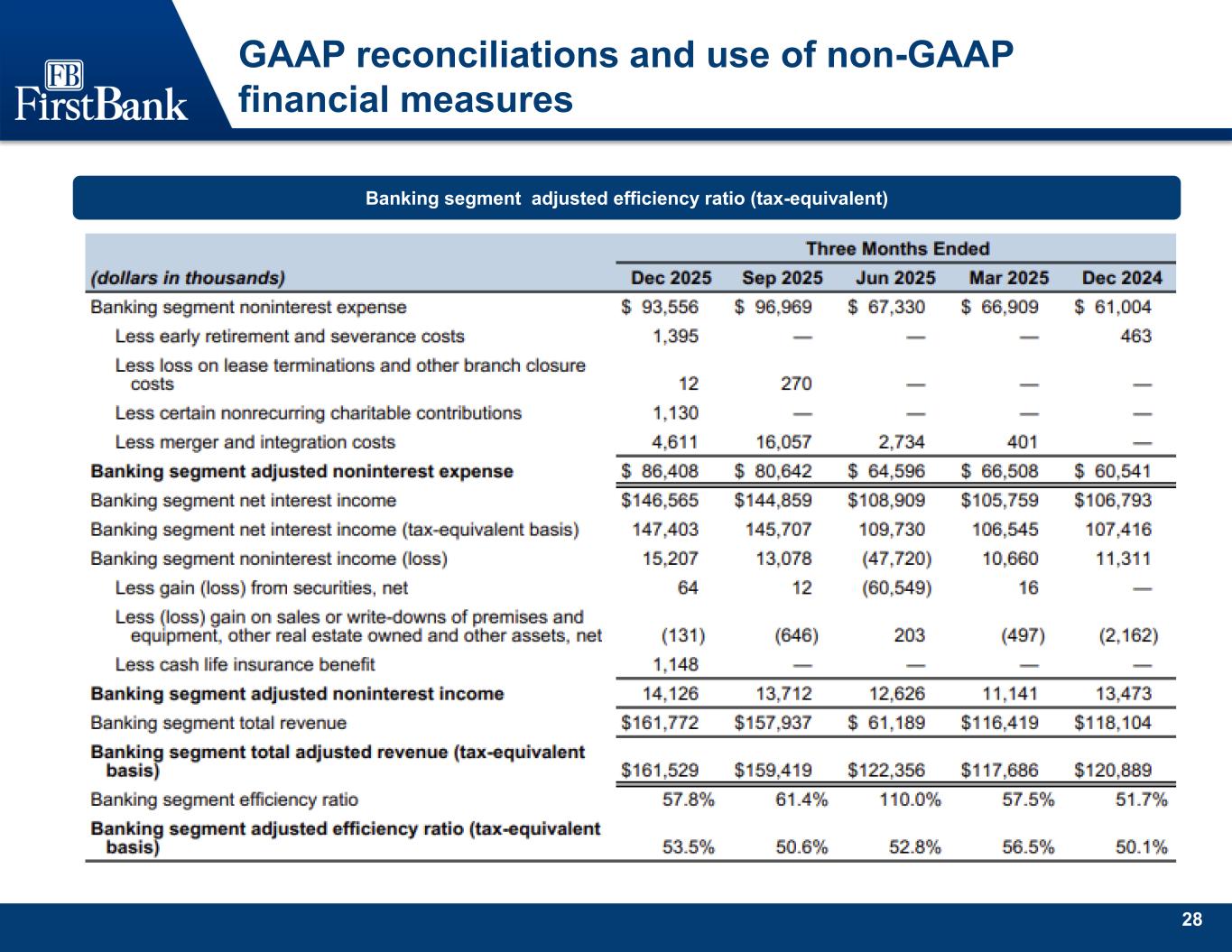
28 GAAP reconciliations and use of non-GAAP financial measures Banking segment adjusted efficiency ratio (tax-equivalent)
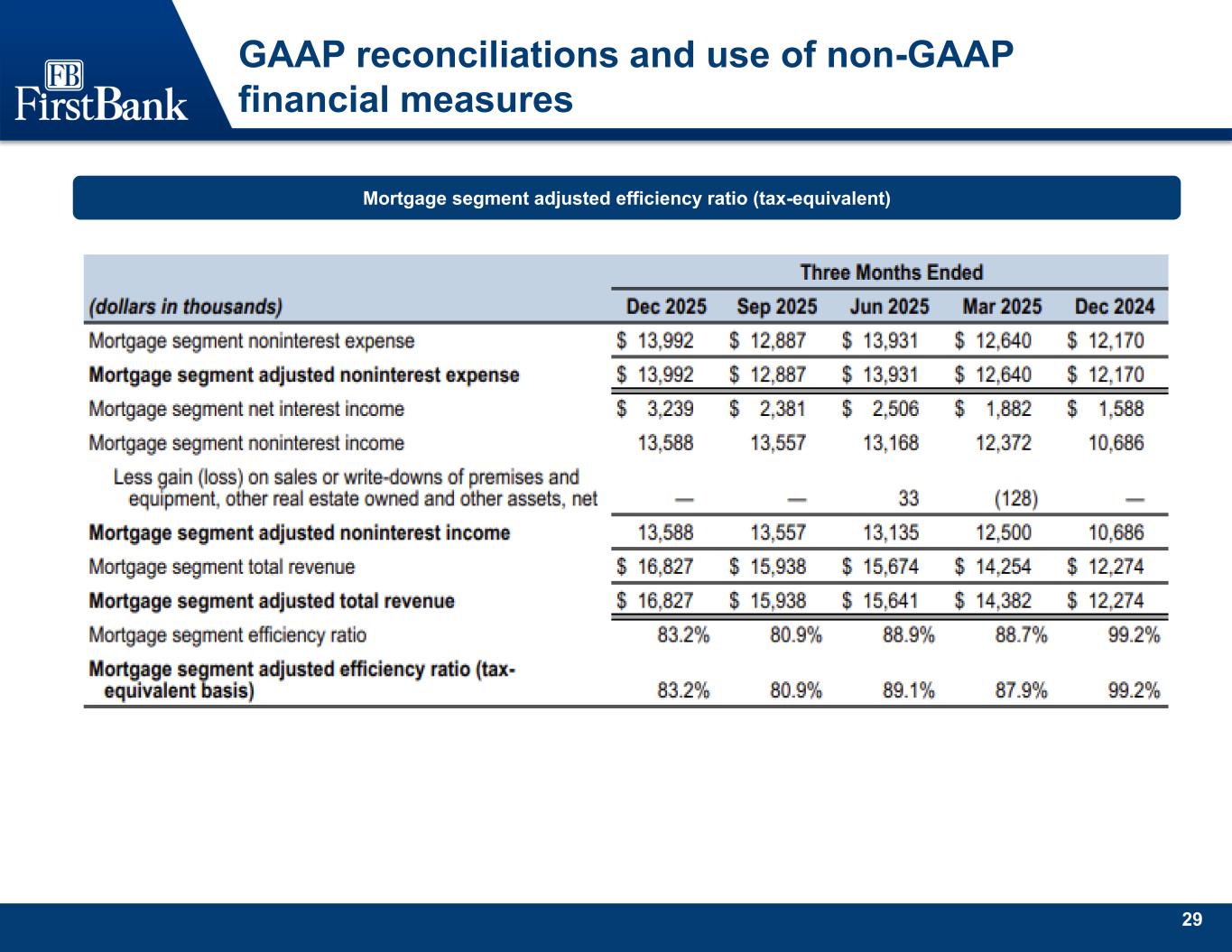
29 GAAP reconciliations and use of non-GAAP financial measures Mortgage segment adjusted efficiency ratio (tax-equivalent)
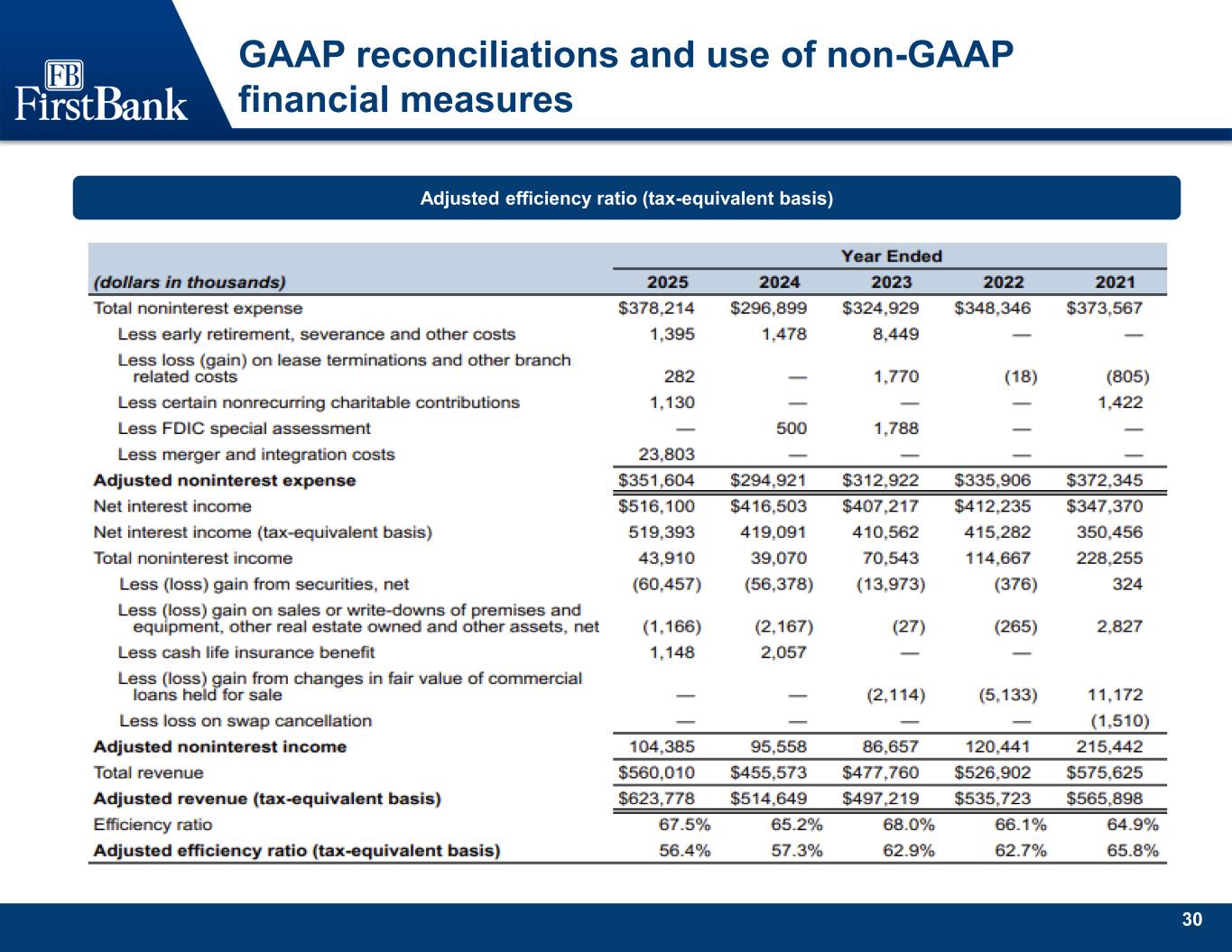
30 GAAP reconciliations and use of non-GAAP financial measures Adjusted efficiency ratio (tax-equivalent basis)
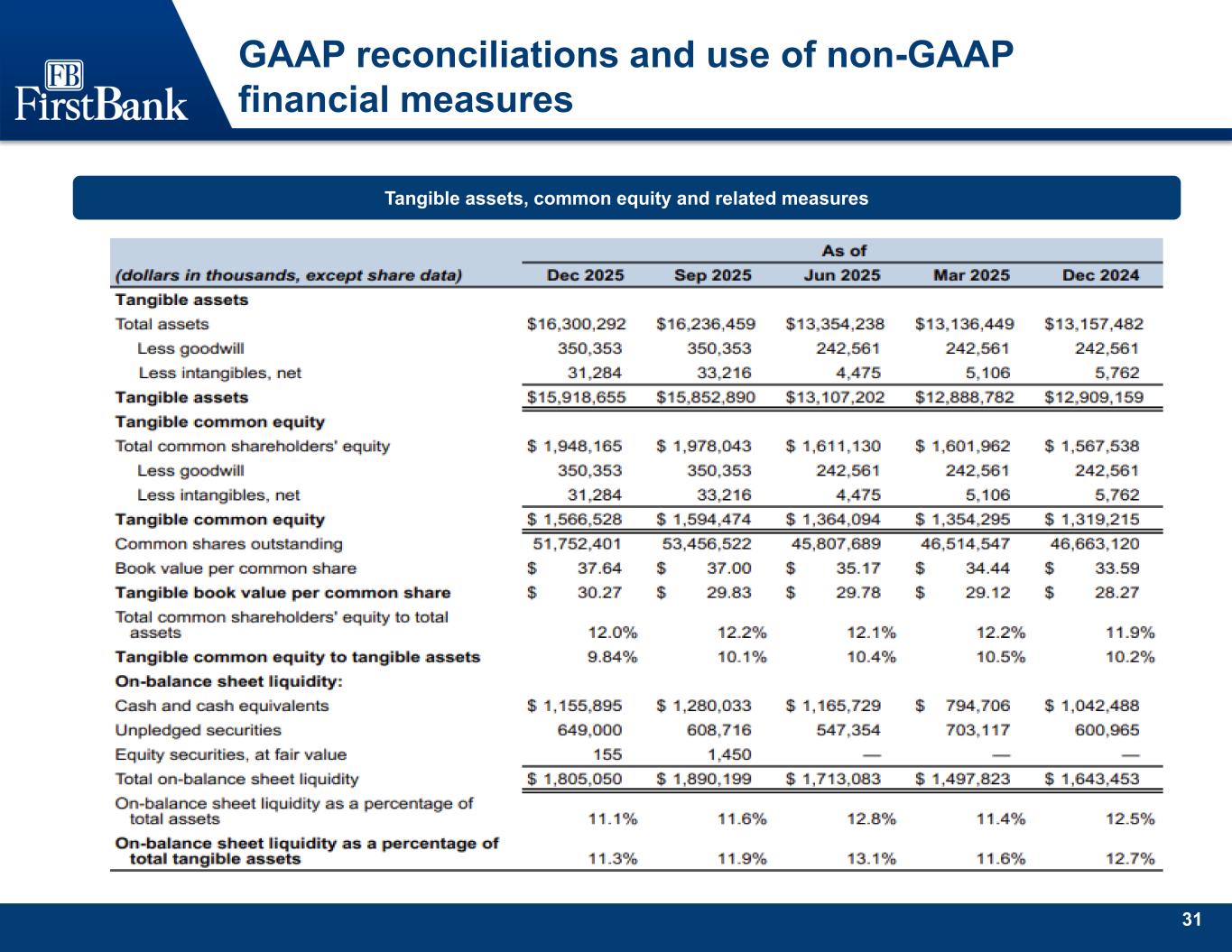
31 GAAP reconciliations and use of non-GAAP financial measures Tangible assets, common equity and related measures
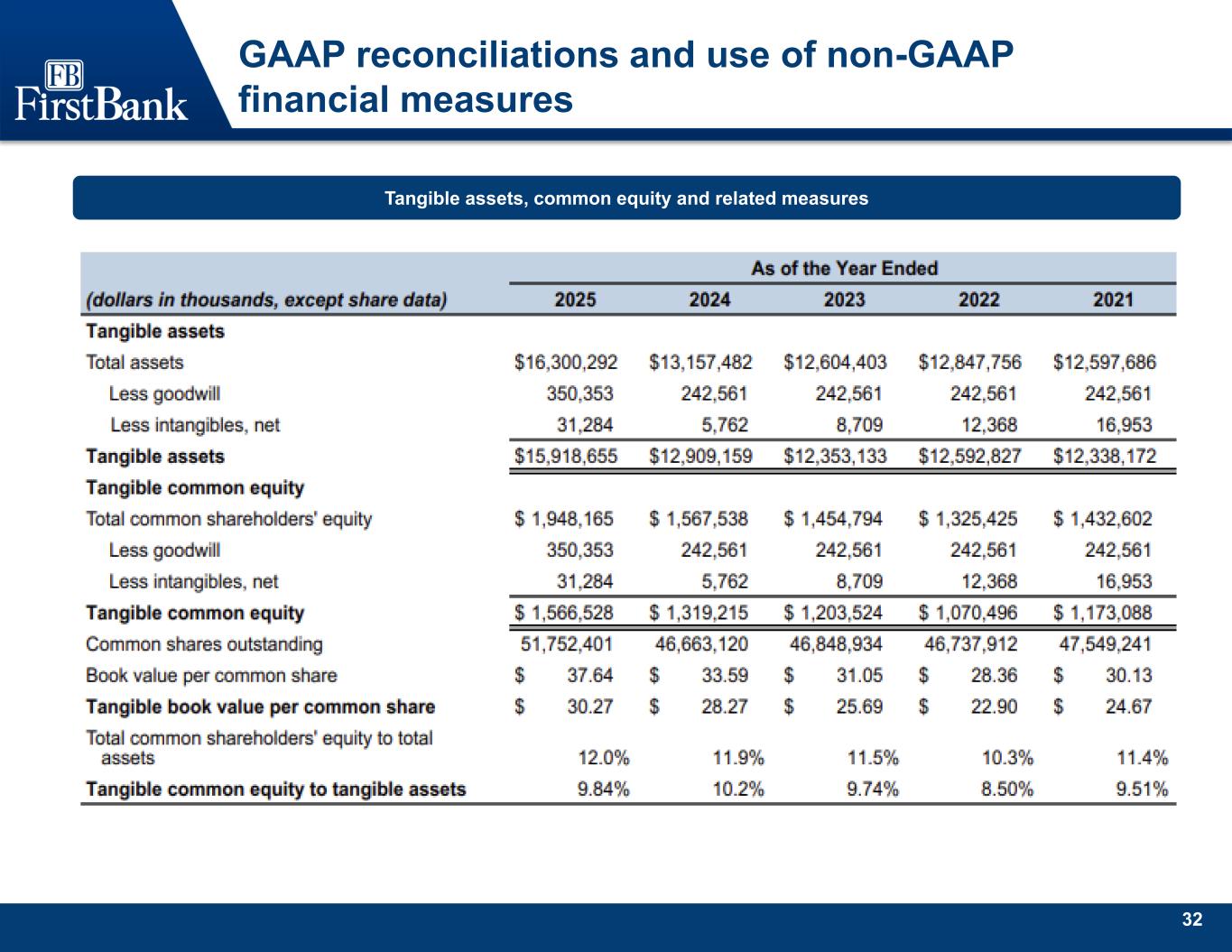
32 GAAP reconciliations and use of non-GAAP financial measures Tangible assets, common equity and related measures
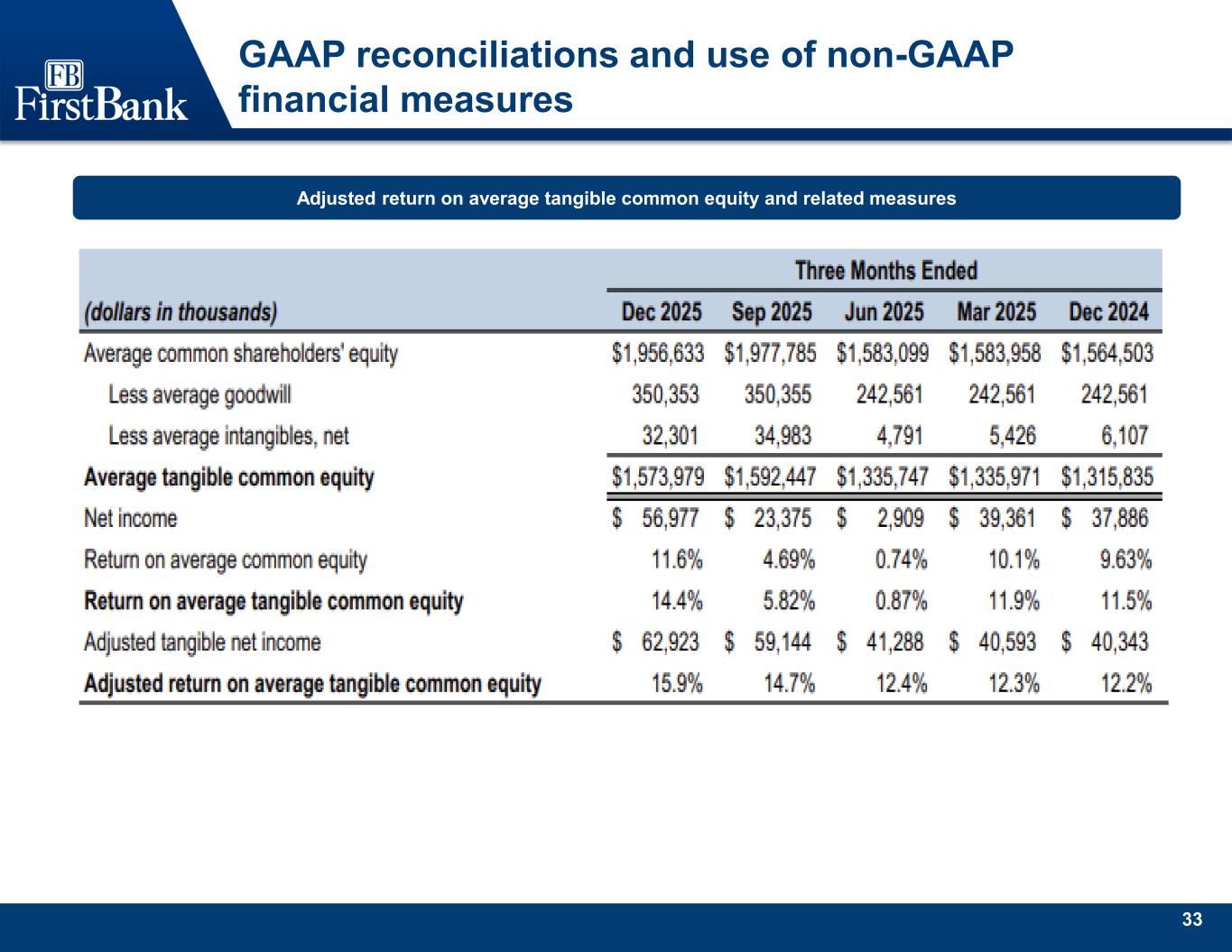
33 GAAP reconciliations and use of non-GAAP financial measures Adjusted return on average tangible common equity and related measures
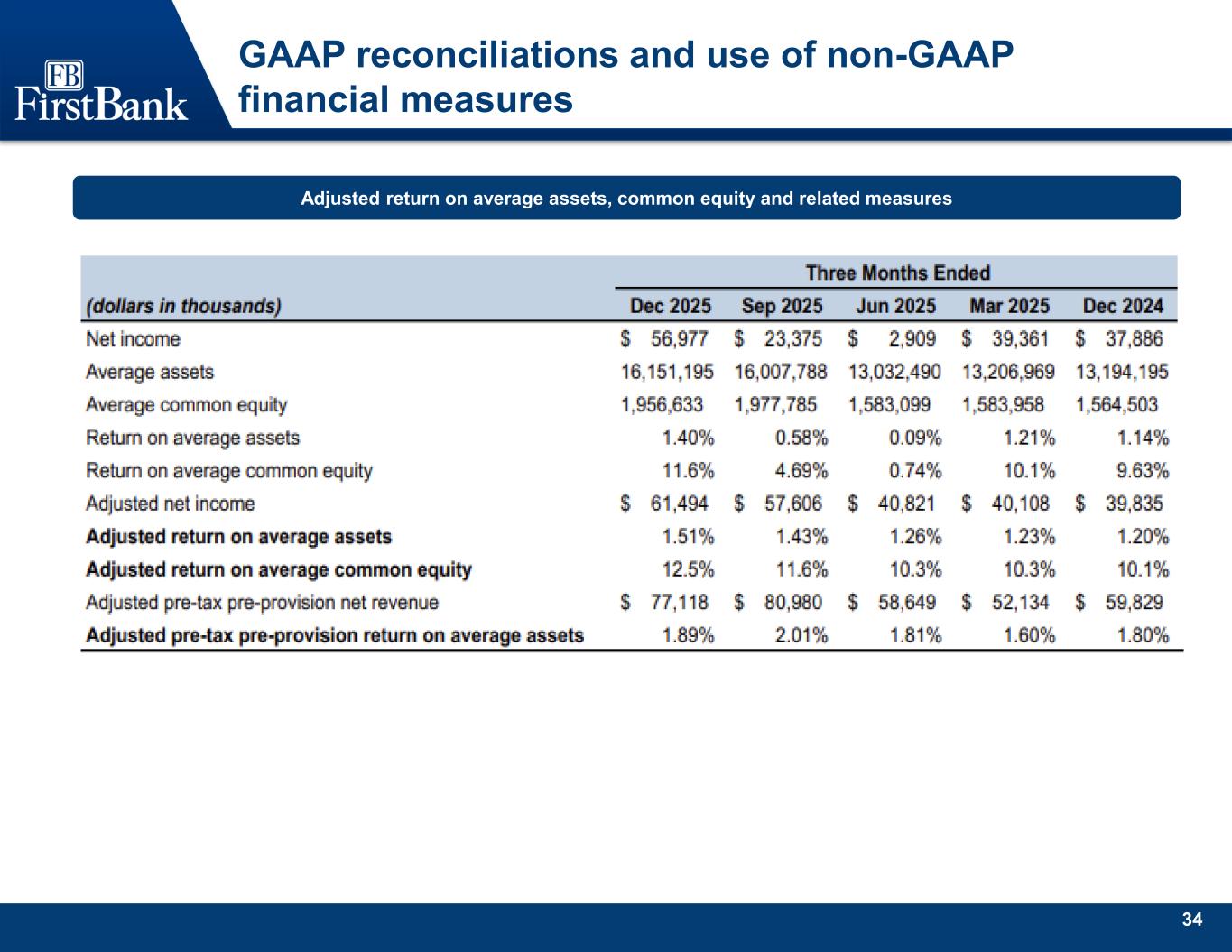
34 GAAP reconciliations and use of non-GAAP financial measures Adjusted return on average assets, common equity and related measures
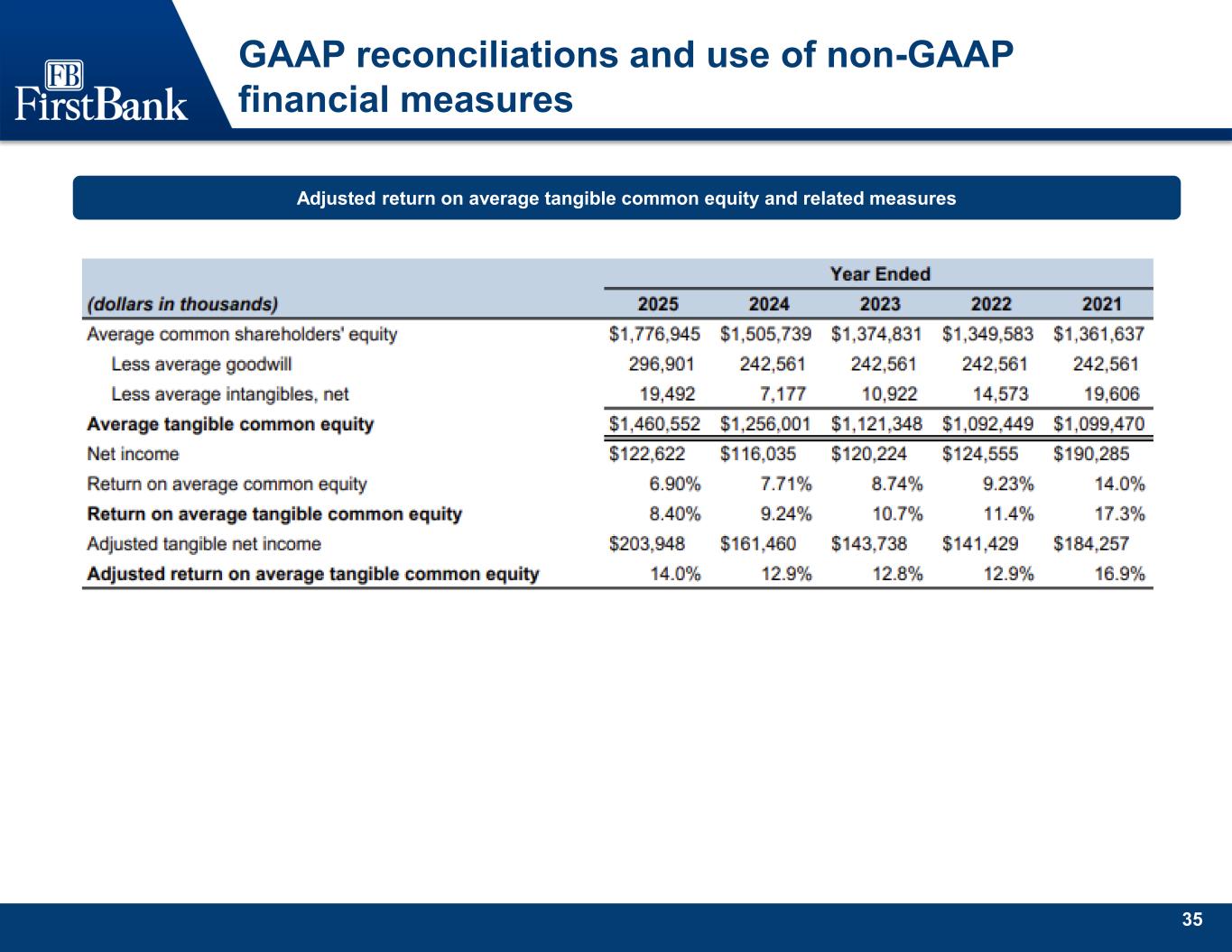
35 GAAP reconciliations and use of non-GAAP financial measures Adjusted return on average tangible common equity and related measures
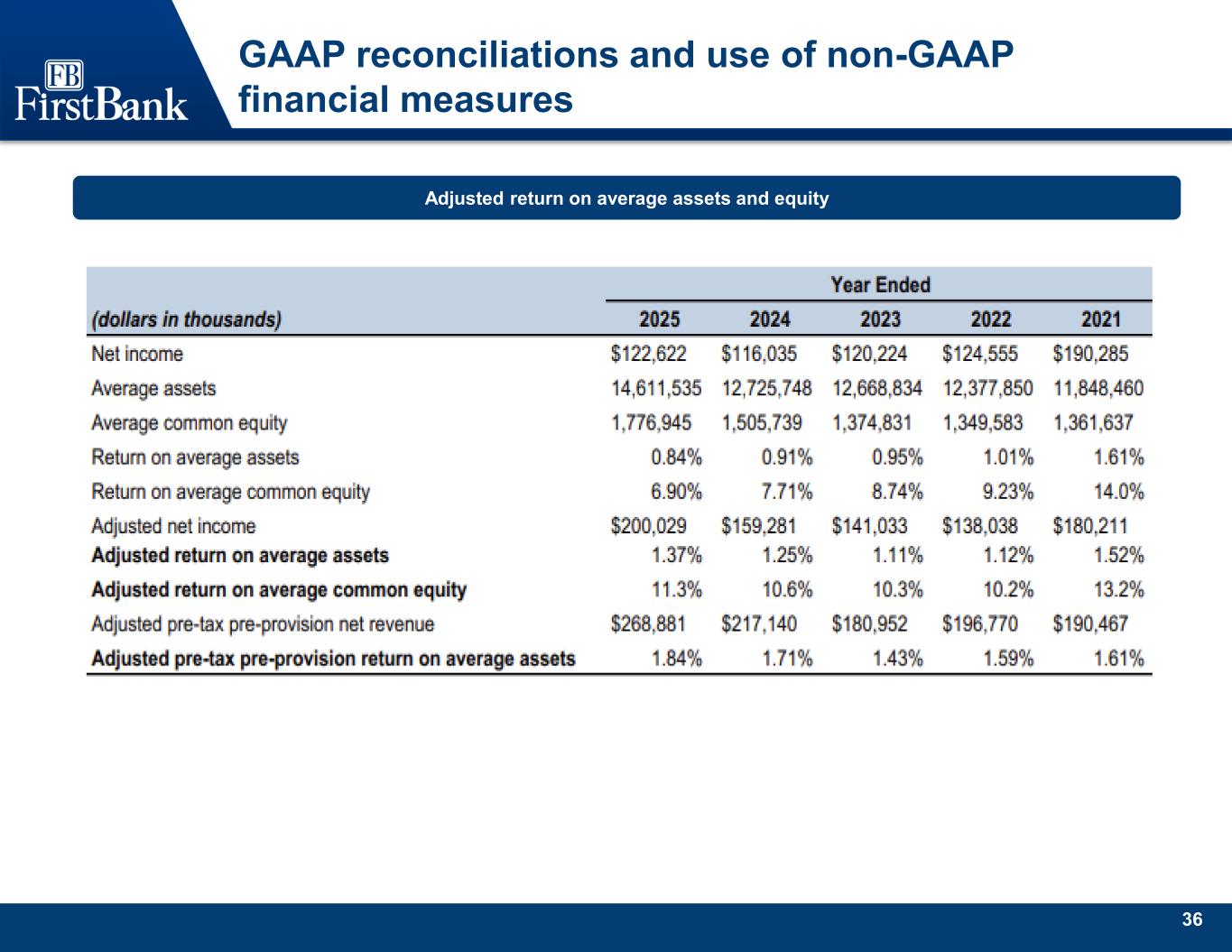
36 GAAP reconciliations and use of non-GAAP financial measures Adjusted return on average assets and equity